This lesson focuses on connected speech patterns like linking, reduction, and elision to help students decode fast-paced native English.

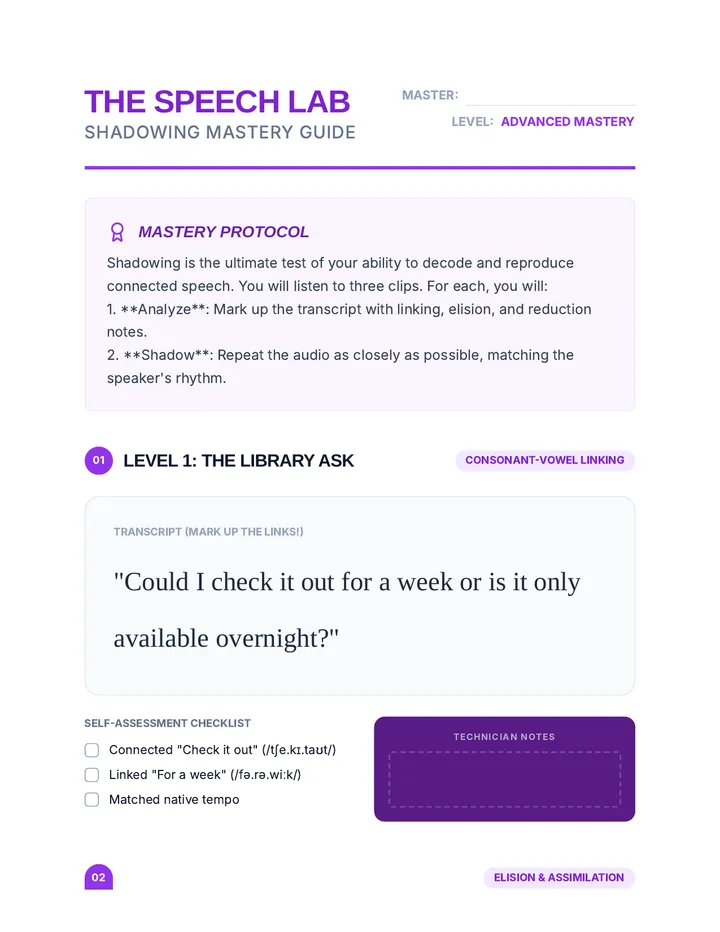
Students engage in a 'shadowing' technique, repeating audio immediately after hearing it to internalize the rhythm and flow of connected speech. This active processing reinforces their ability to predict and process sound streams.
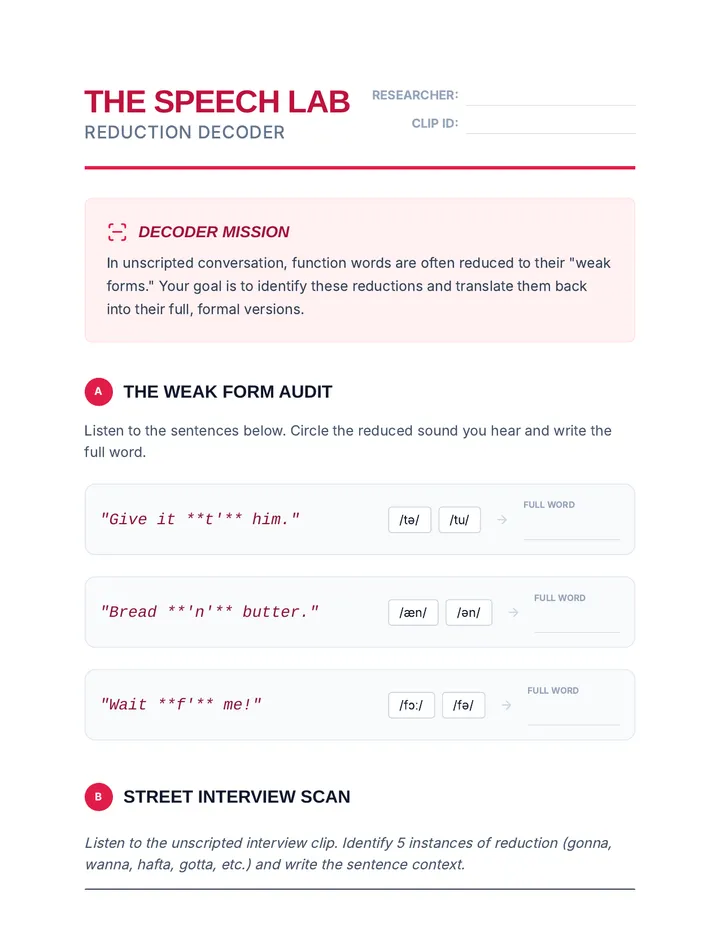
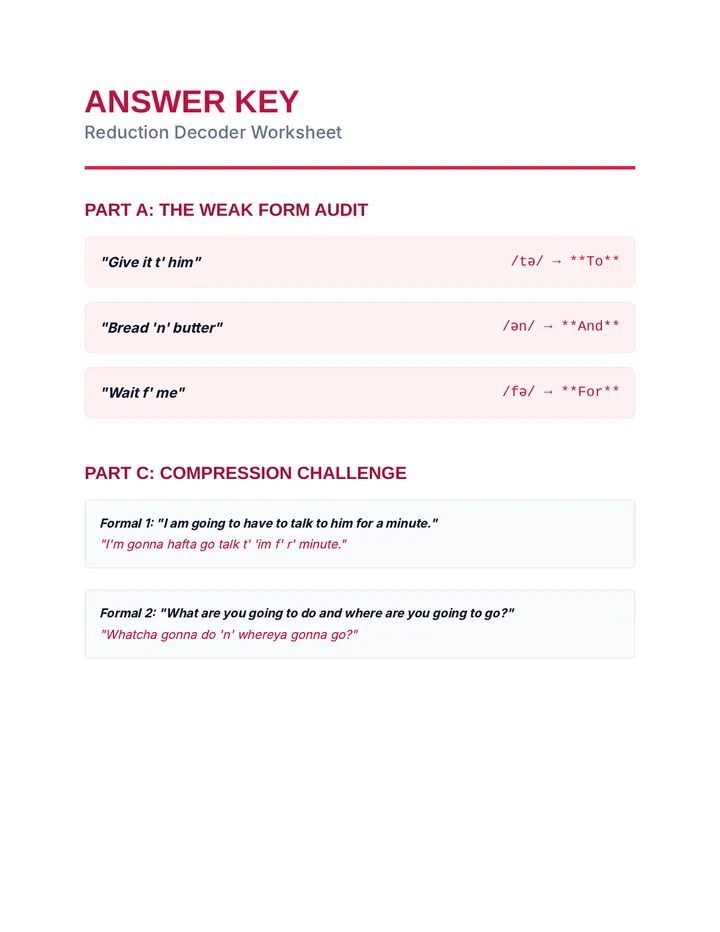
Focusing on function words, this lesson tackles common reductions like 'gonna,' 'wanna,' and weak forms of auxiliary verbs. Students analyze unscripted interviews to catch these reductions in context.
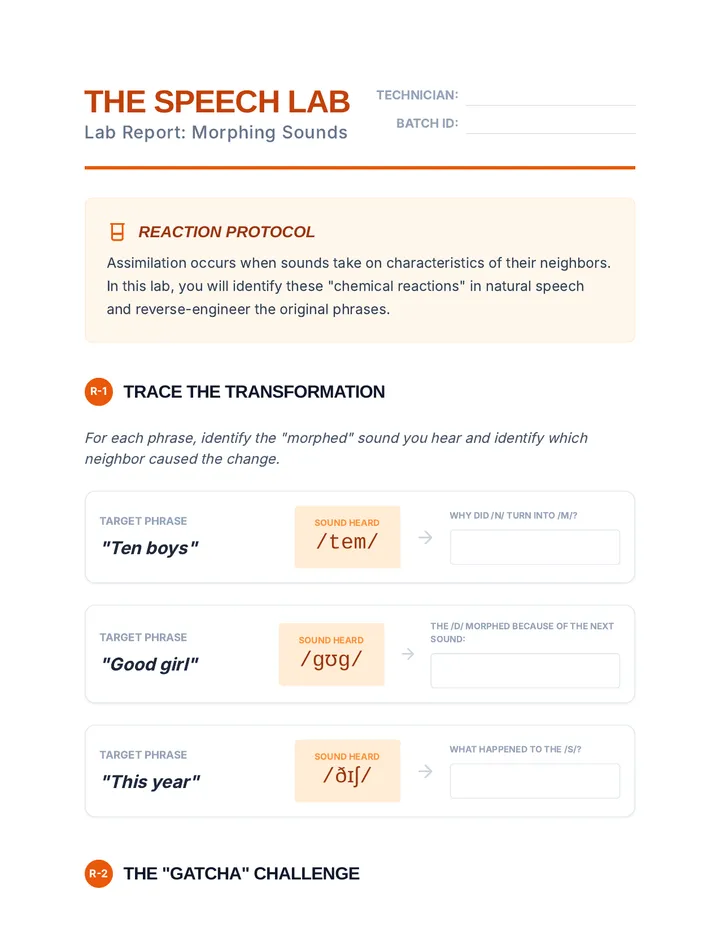
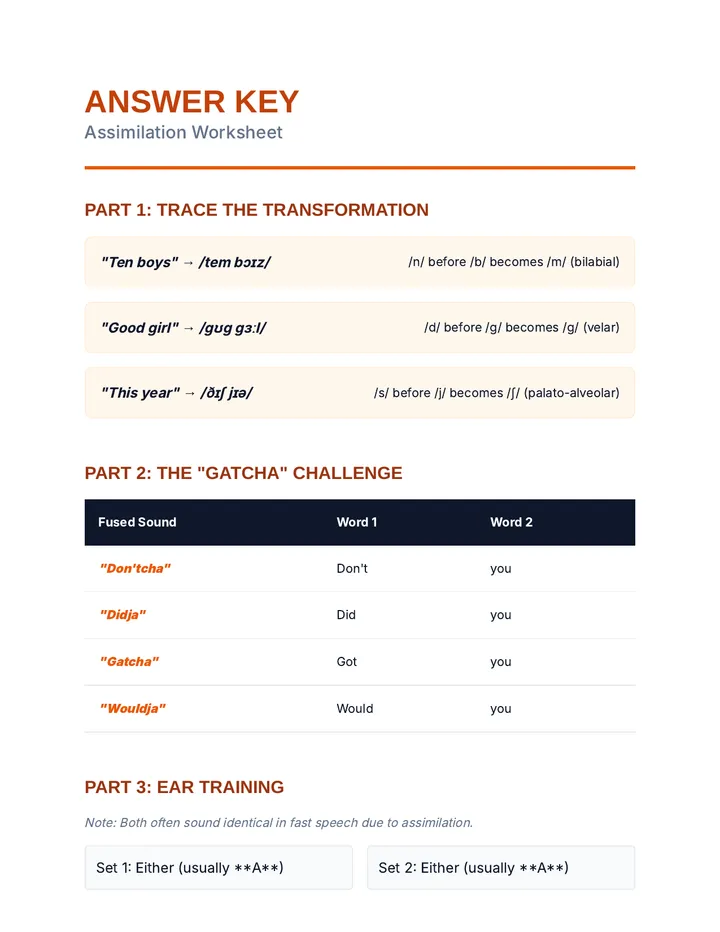
Students learn how sounds influence their neighbors (e.g., 'hand bag' becoming 'hambag'). The lesson uses minimal pair discrimination and dictation exercises to train ears to recognize words despite phonological changes.
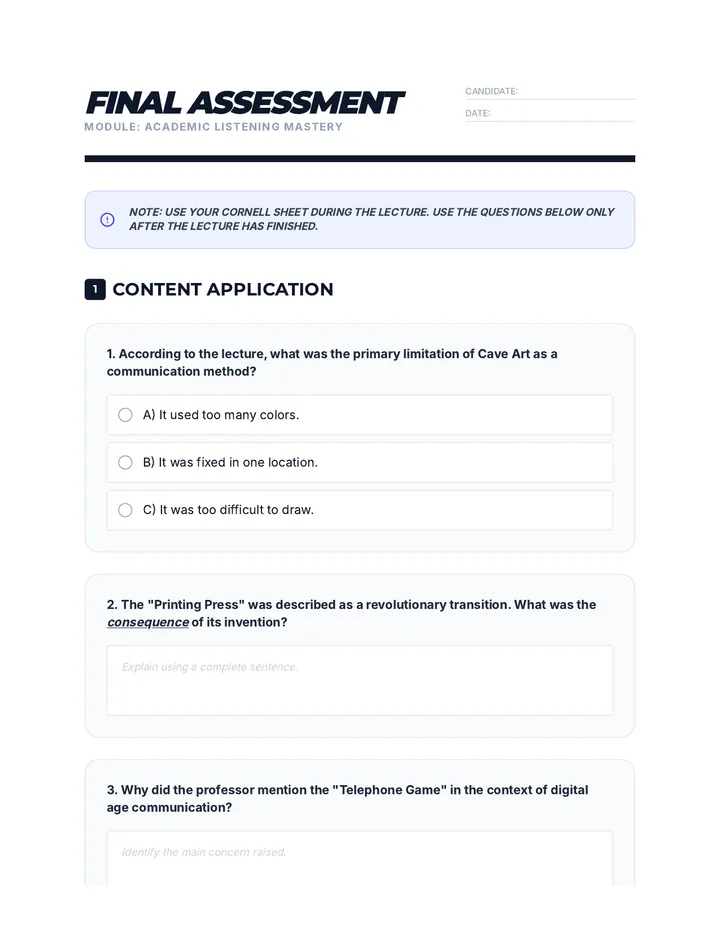
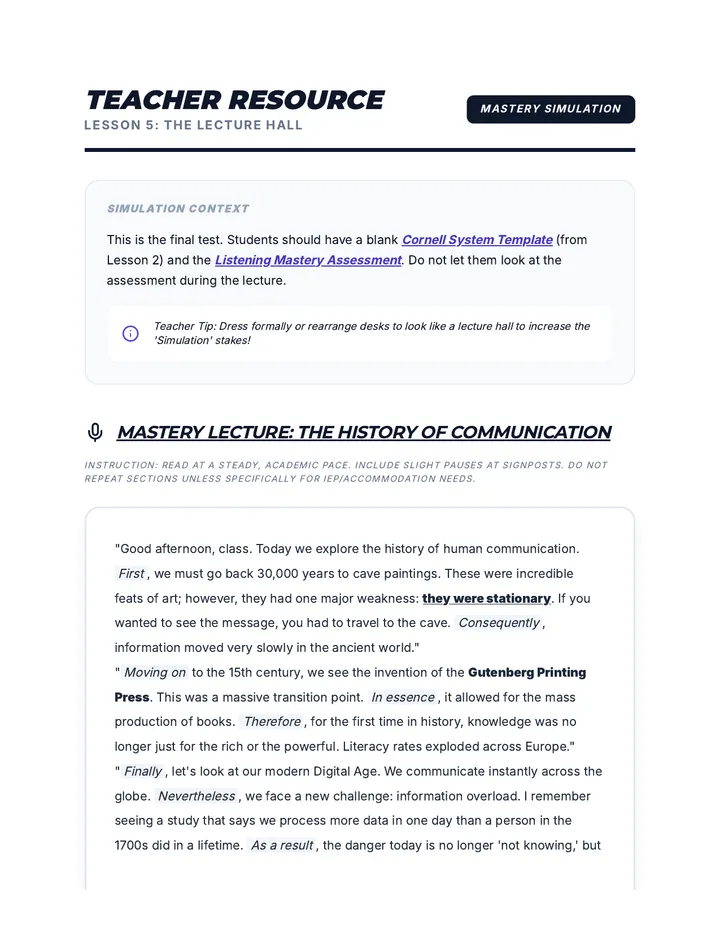
Students participate in a university-style mini-lecture simulation. They apply all learned strategies—signpost identification, Cornell note-taking, and synthesis—to capture information and complete a formal assessment.
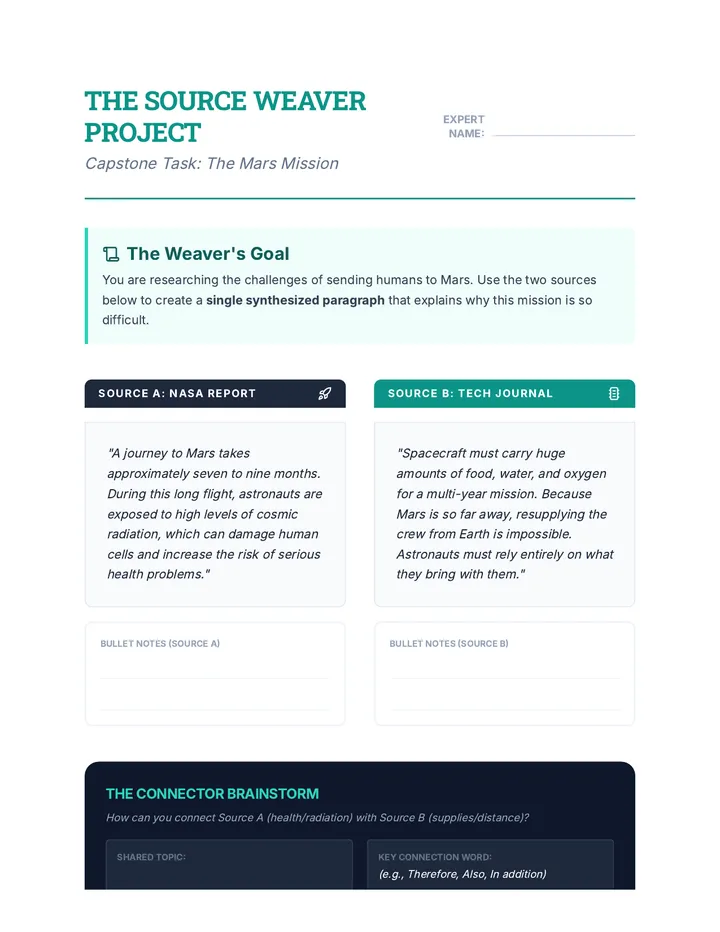
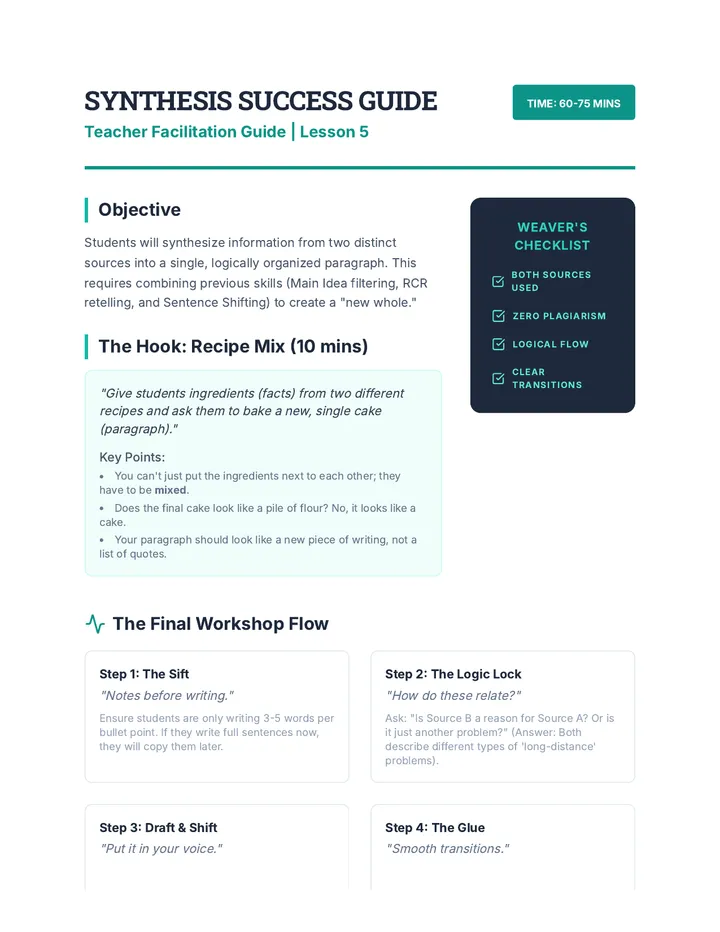
The capstone activity where students combine information from two different sources into a single, logically organized paragraph.
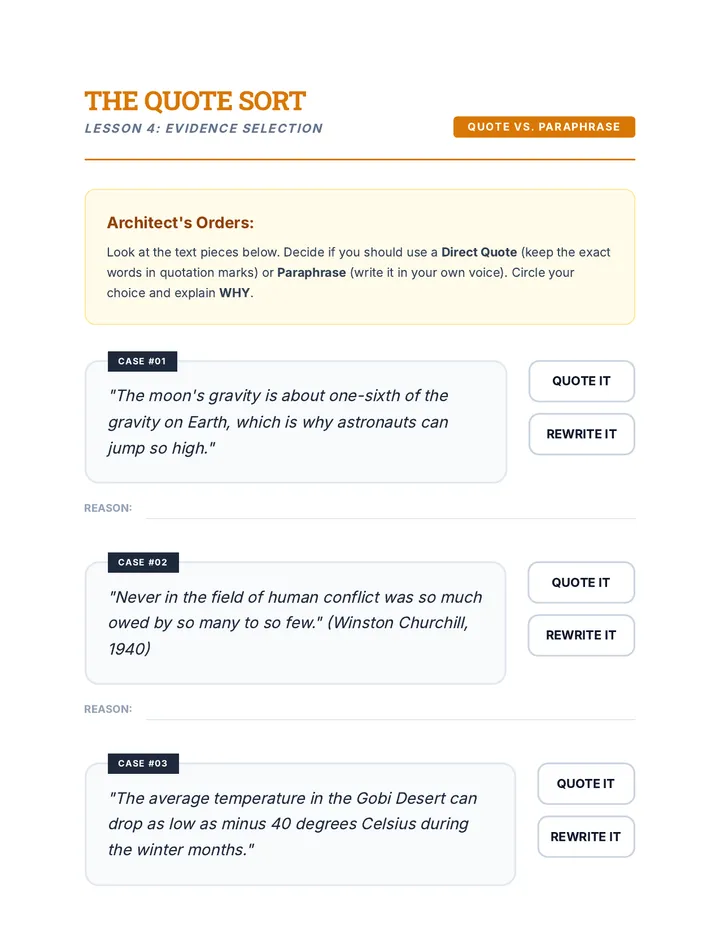
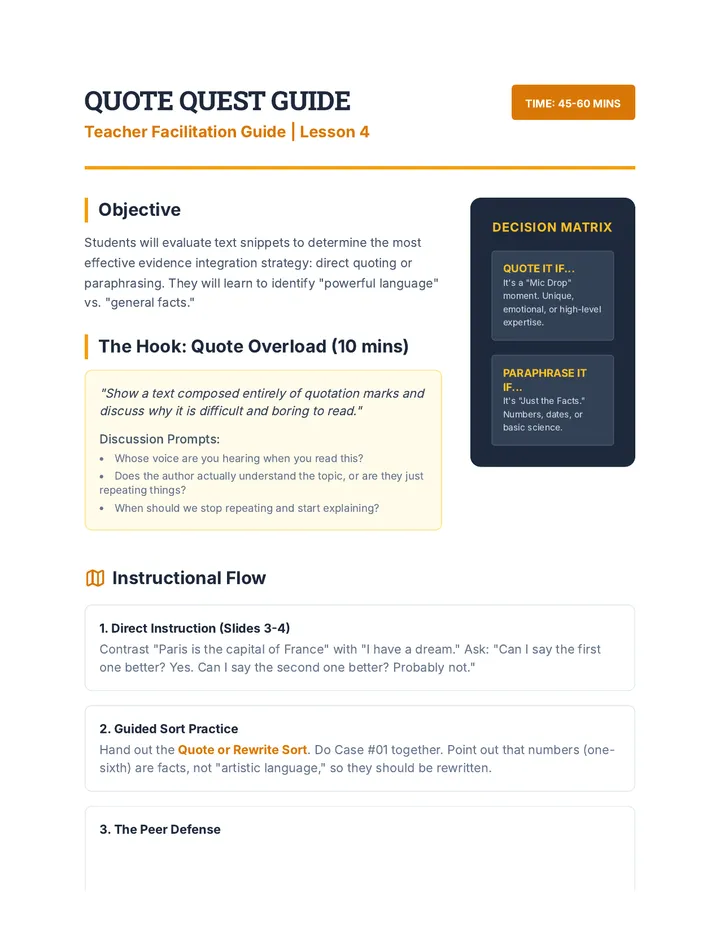
Distinguishes between when to use direct quotes for impact and when to paraphrase for factual clarity.
Guided practice in rewriting sentences using synonyms and grammatical shifts, such as changing active to passive voice, while maintaining original meaning.
Focuses on the 'Read, Cover, Recite' method to separate conceptual understanding from the original text's linguistic structure through oral retelling.
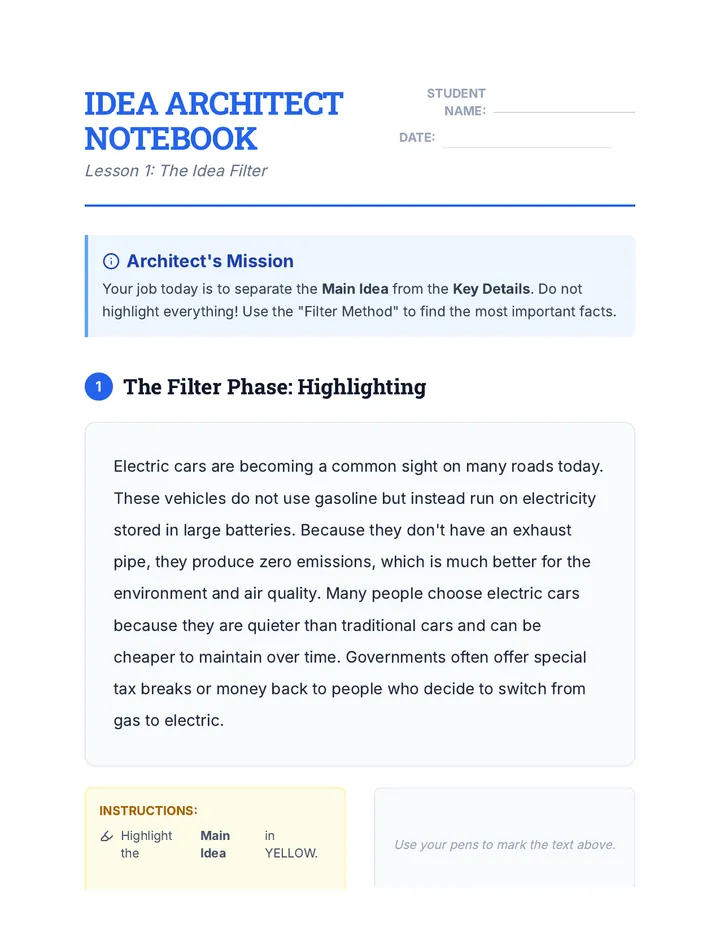
Students learn to separate core concepts from 'fluff' using effective highlighting and note-taking strategies, moving away from copying full sentences.
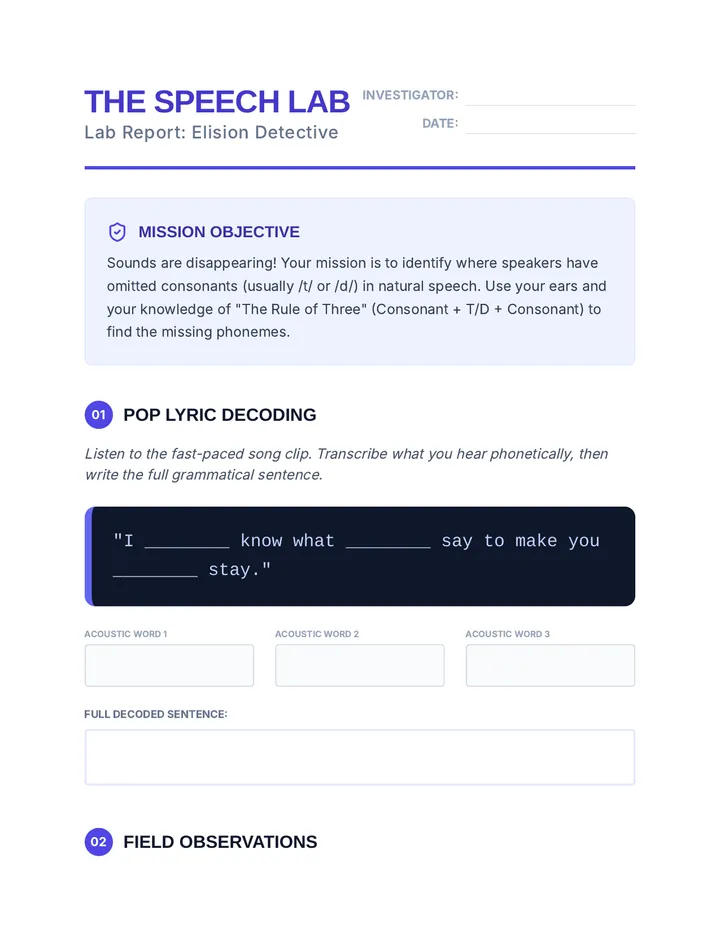
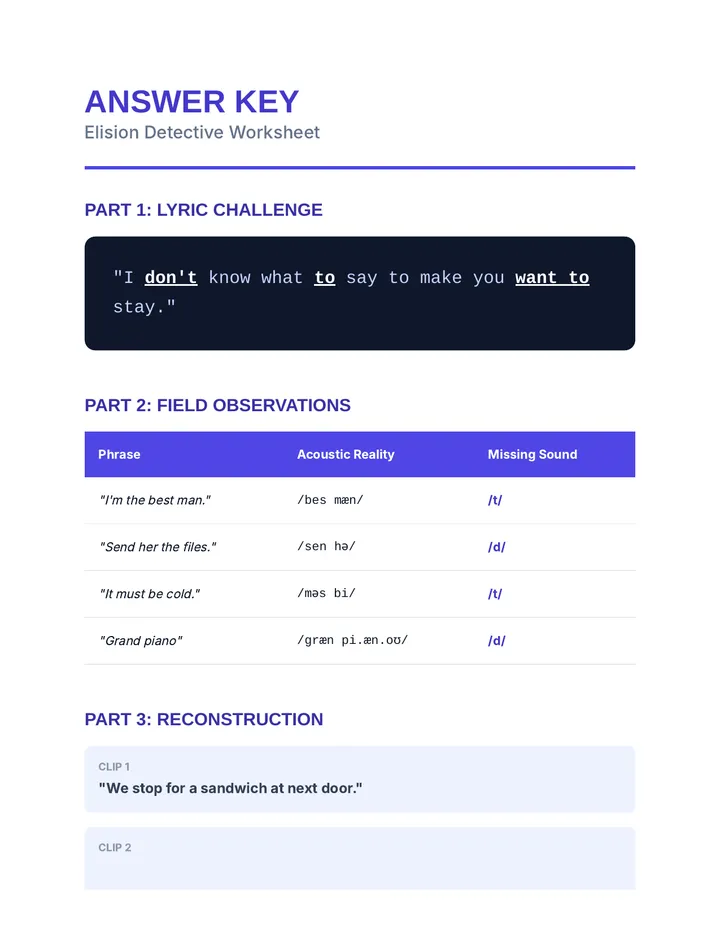
This lesson covers the phenomenon of elision, where sounds (particularly /t/ and /d/) disappear in rapid speech. Students practice listening to high-speed dialogues to identify words that have been 'swallowed' by the speaker.