Una lección interactiva de 30 minutos para introducir a los estudiantes de primaria en las cuatro cualidades del sonido: altura, intensidad, duración y timbre, mediante experimentos prácticos y un juego auditivo.
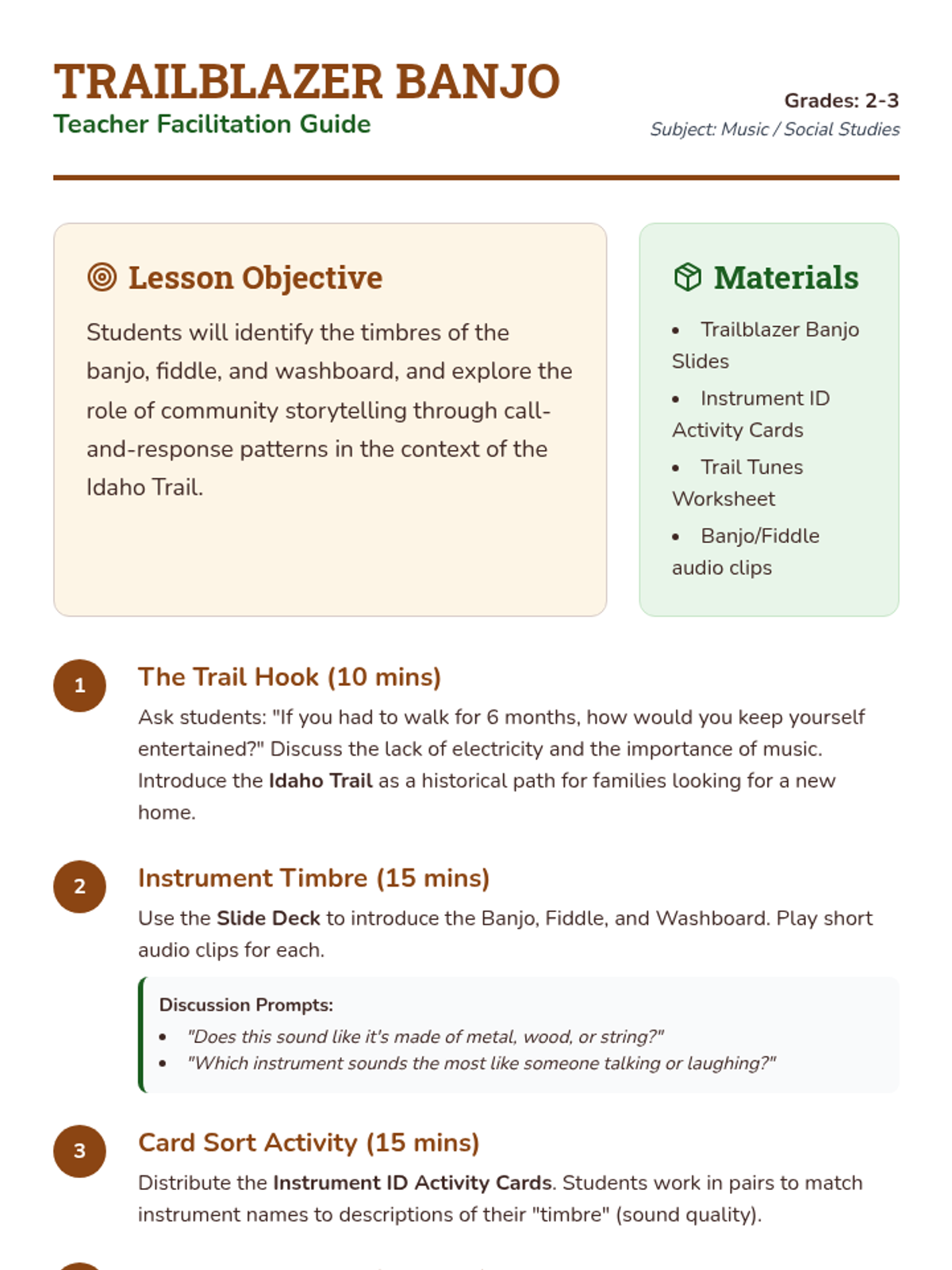
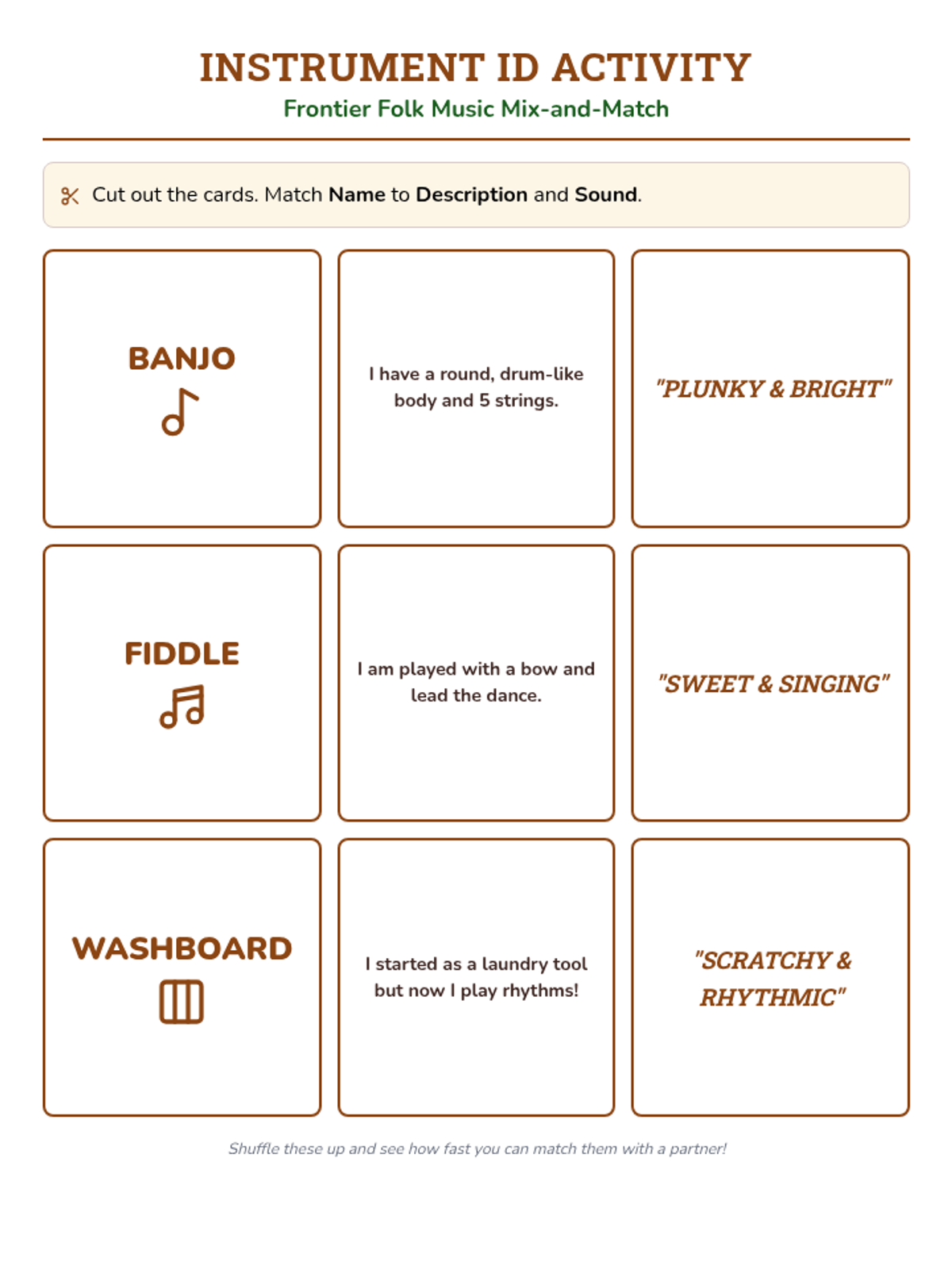
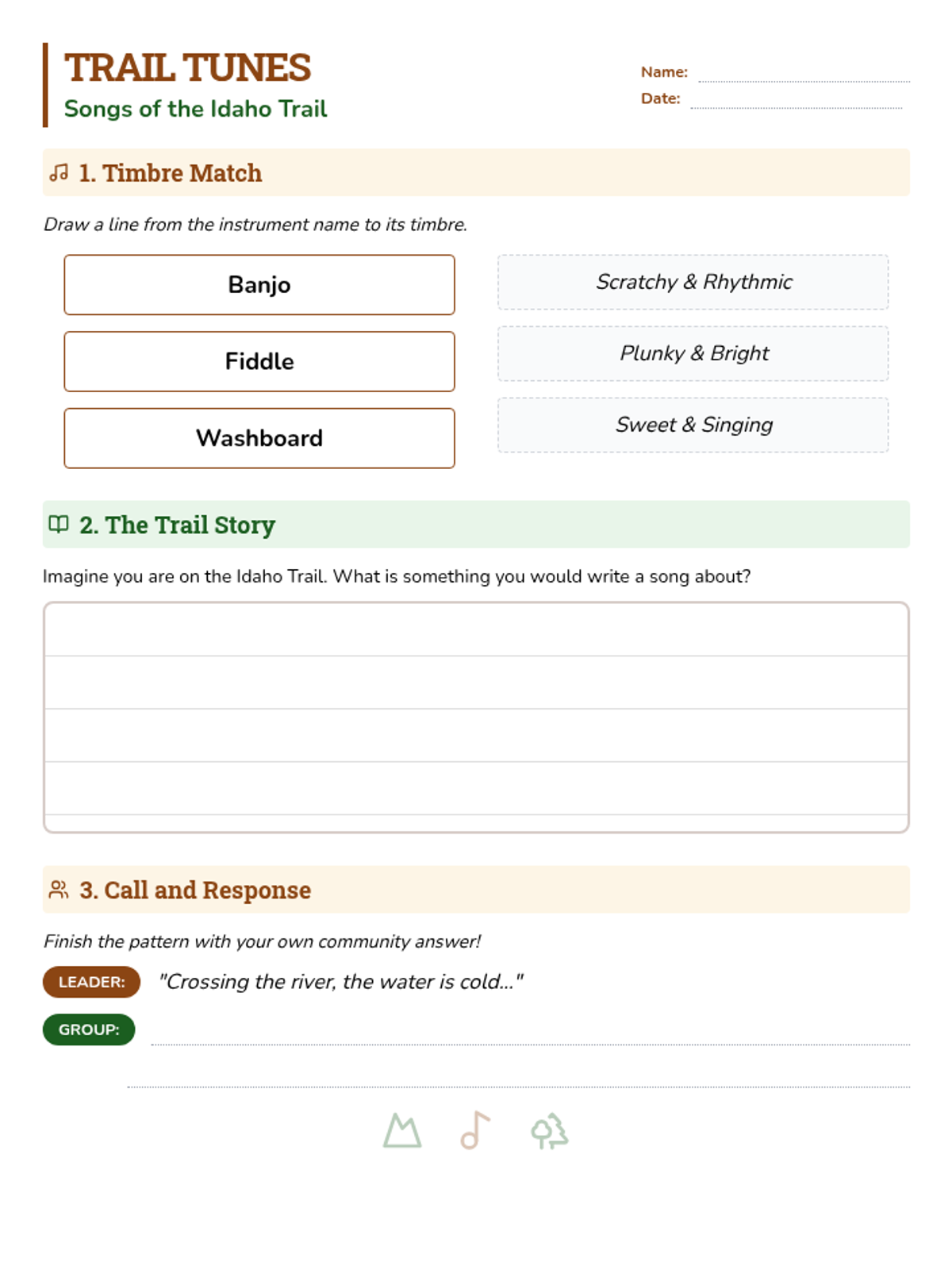
Second and third graders explore the history of American folk music on the Idaho Trail, focusing on the unique sounds of the banjo, fiddle, and washboard while practicing call-and-response.
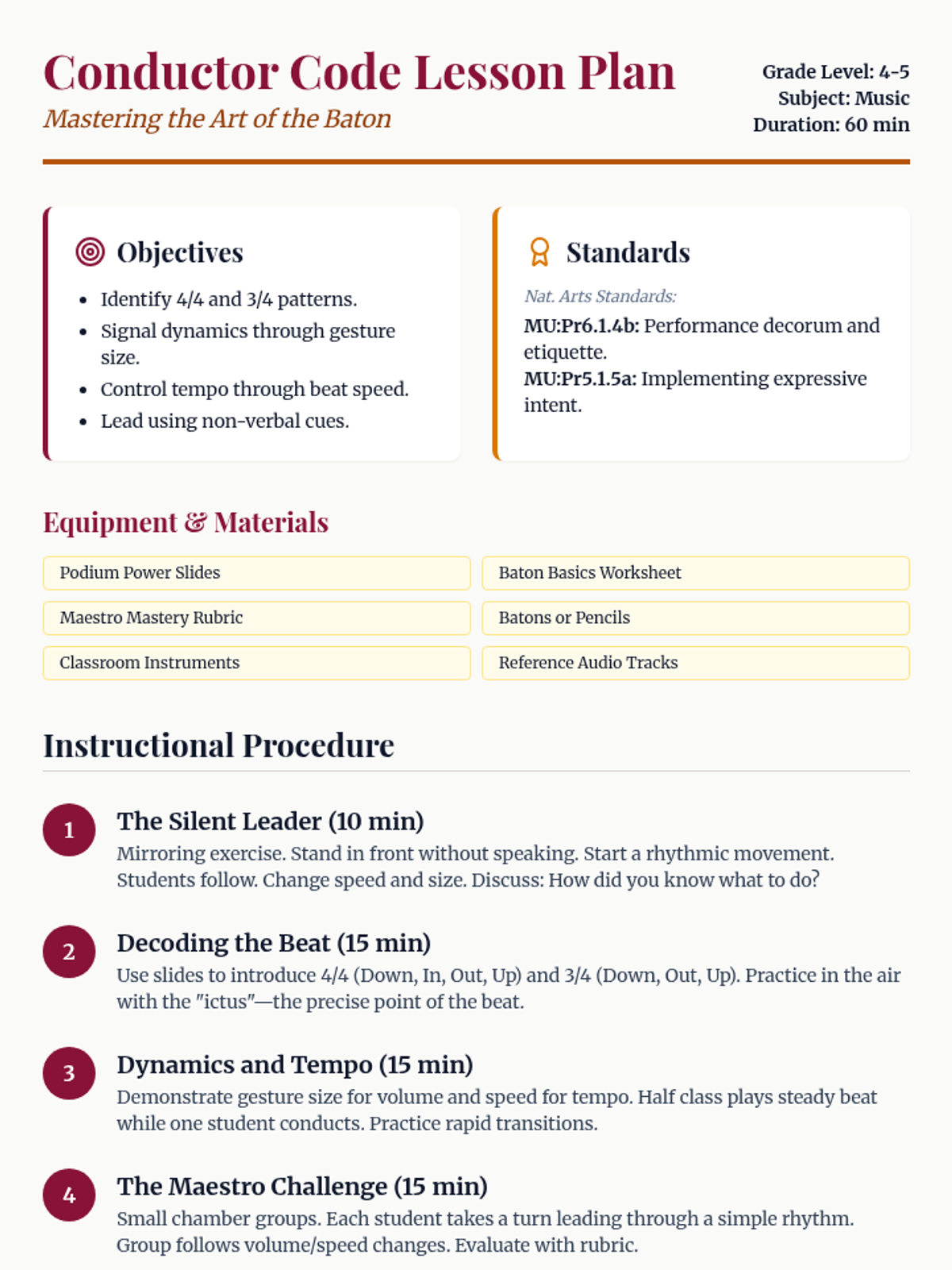
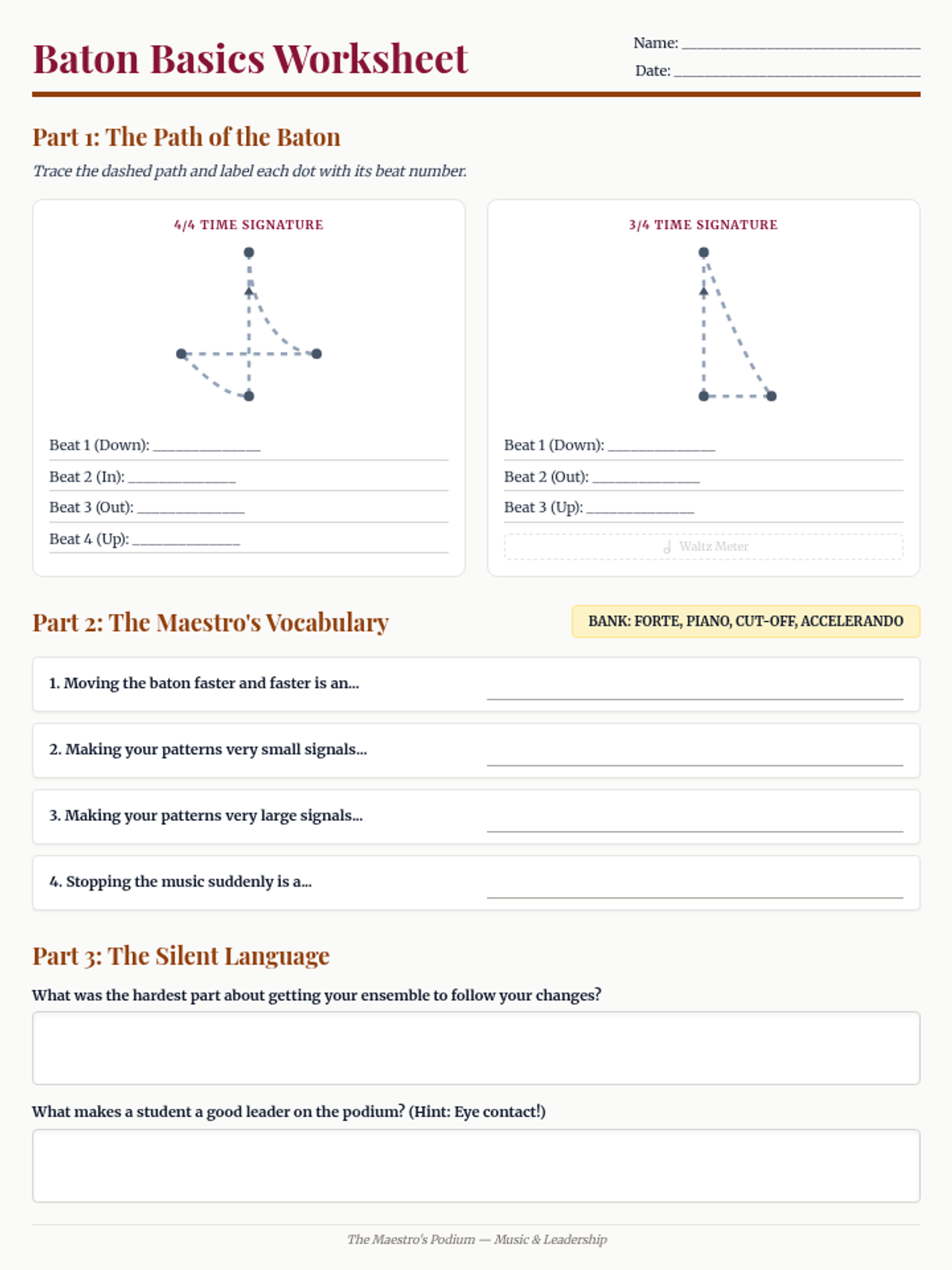
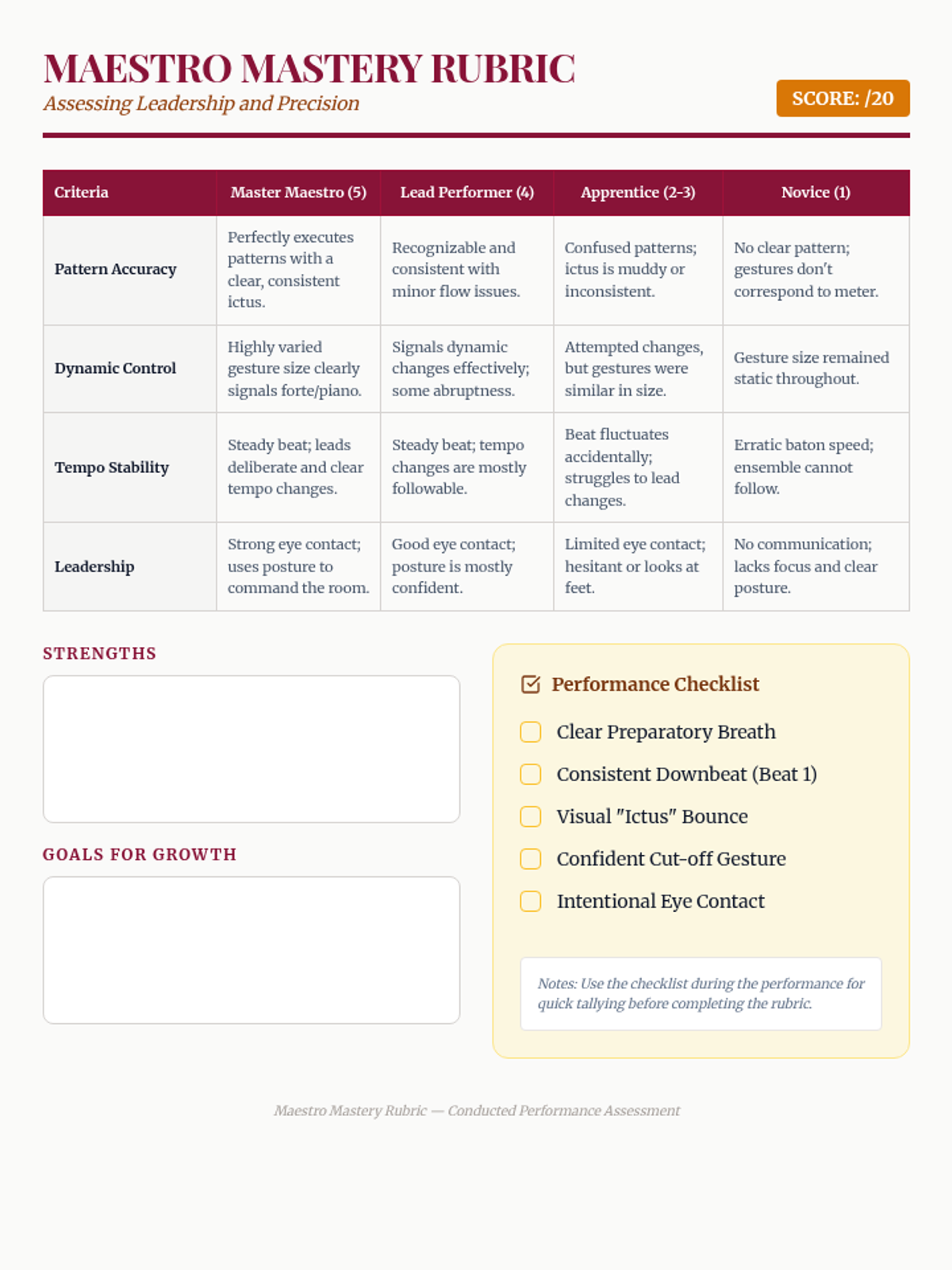
Students explore the art of conducting, learning to lead an ensemble through 4/4 and 3/4 time signatures while controlling dynamics and tempo with physical gestures. This lesson emphasizes leadership, non-verbal communication, and collaborative music-making.
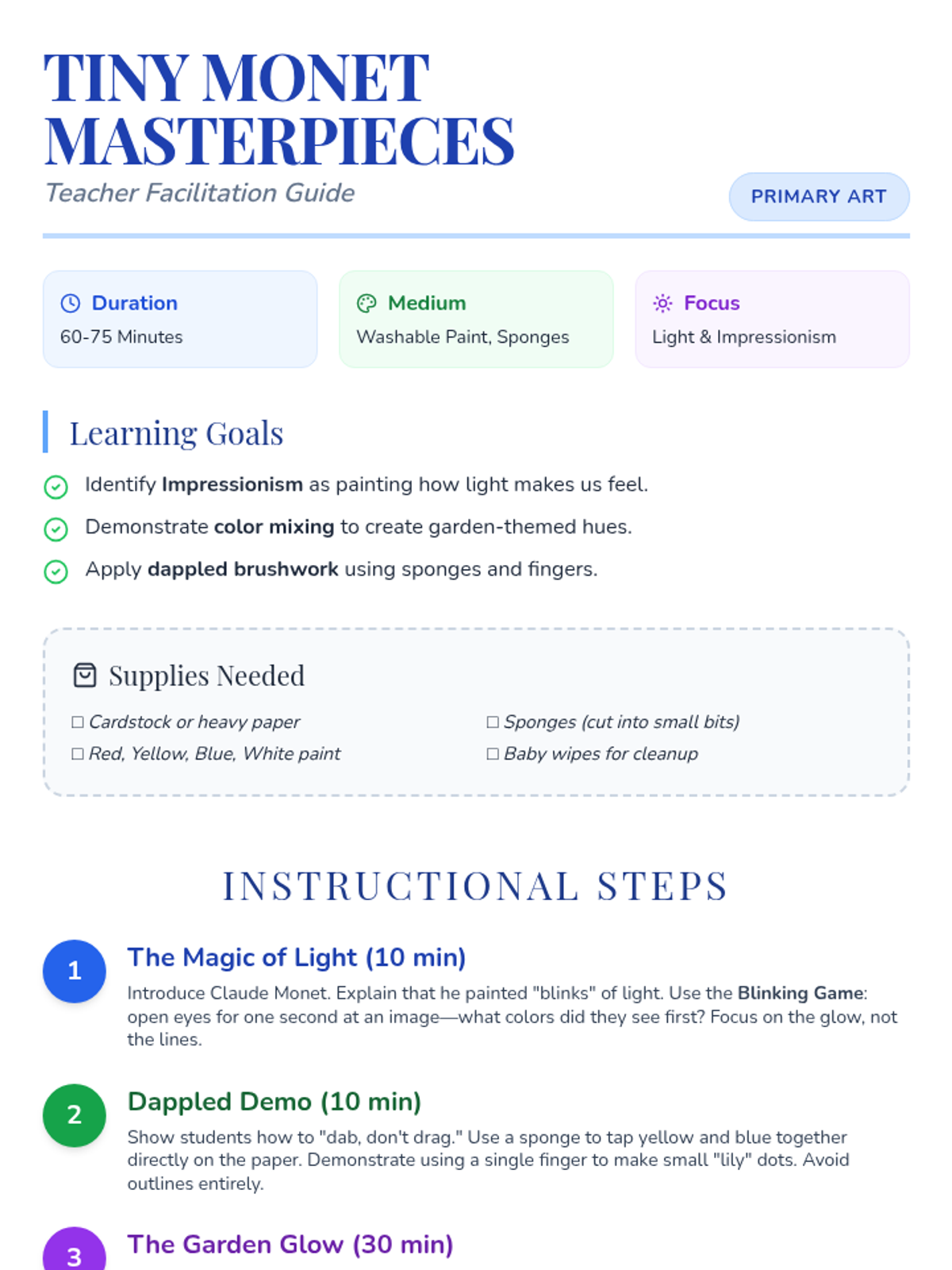
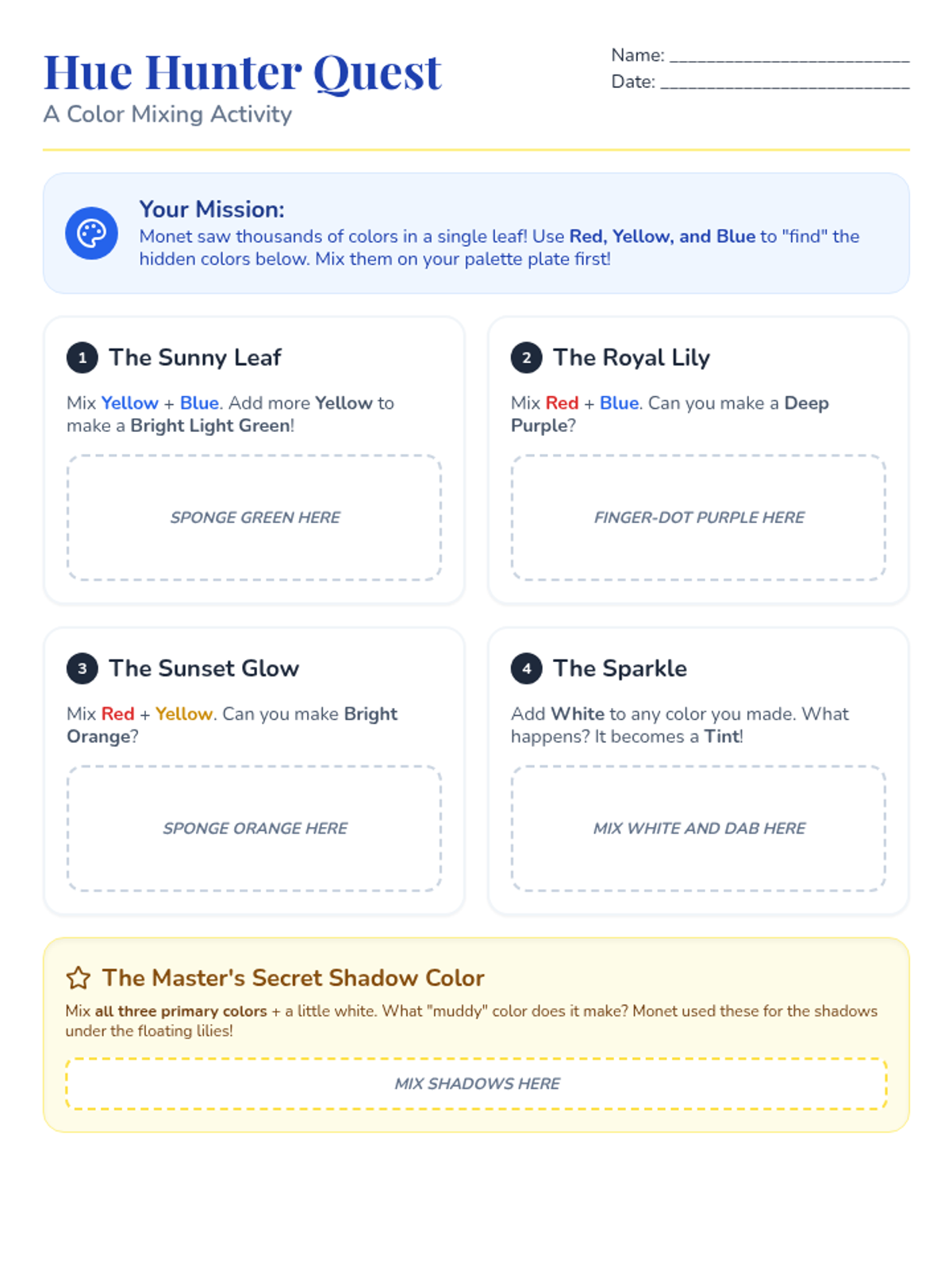
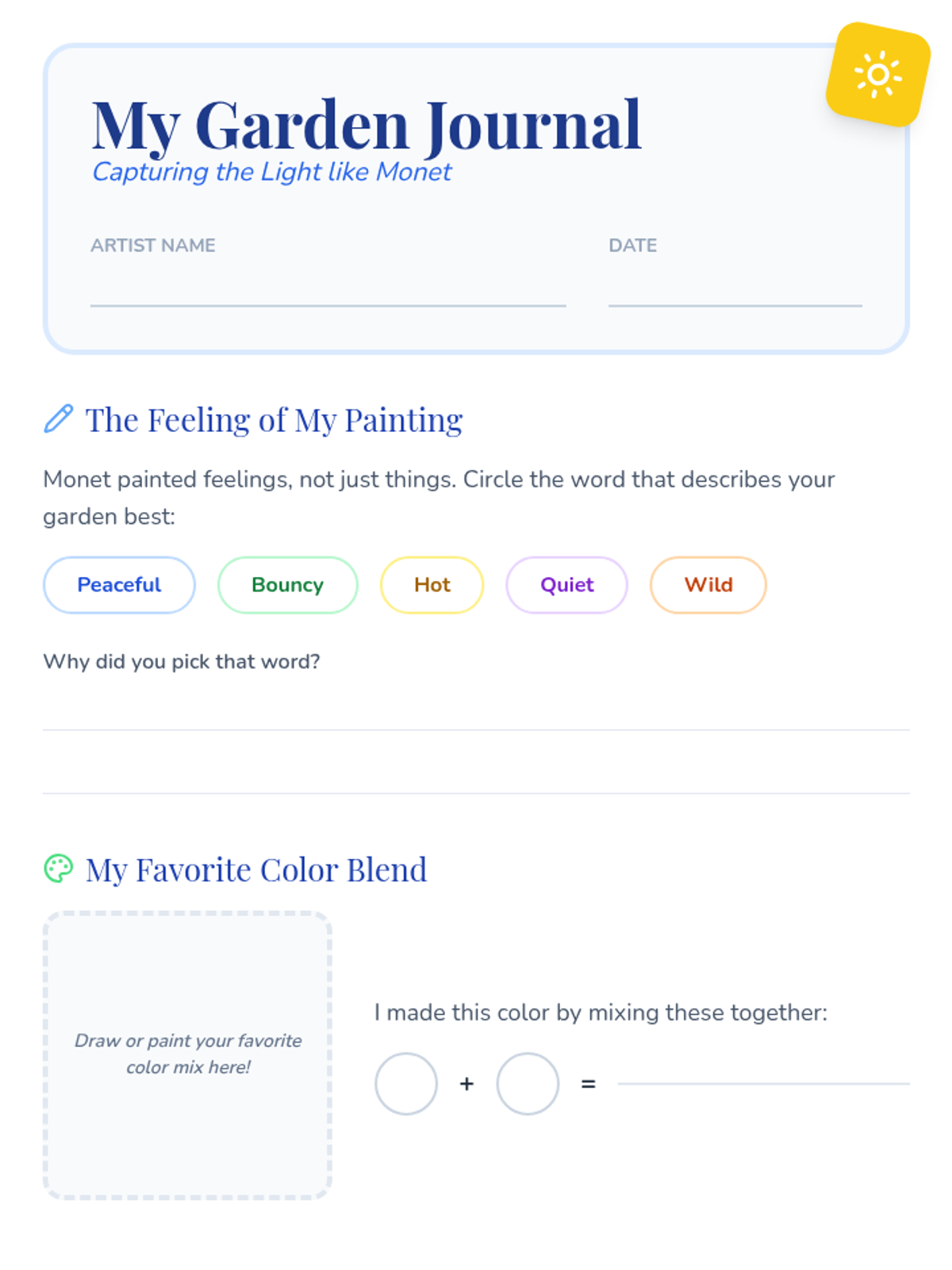
A primary art lesson introducing Impressionism through the works of Claude Monet. Students explore light, color mixing, and dappled textures using finger painting and sponge techniques to create their own garden masterpieces.
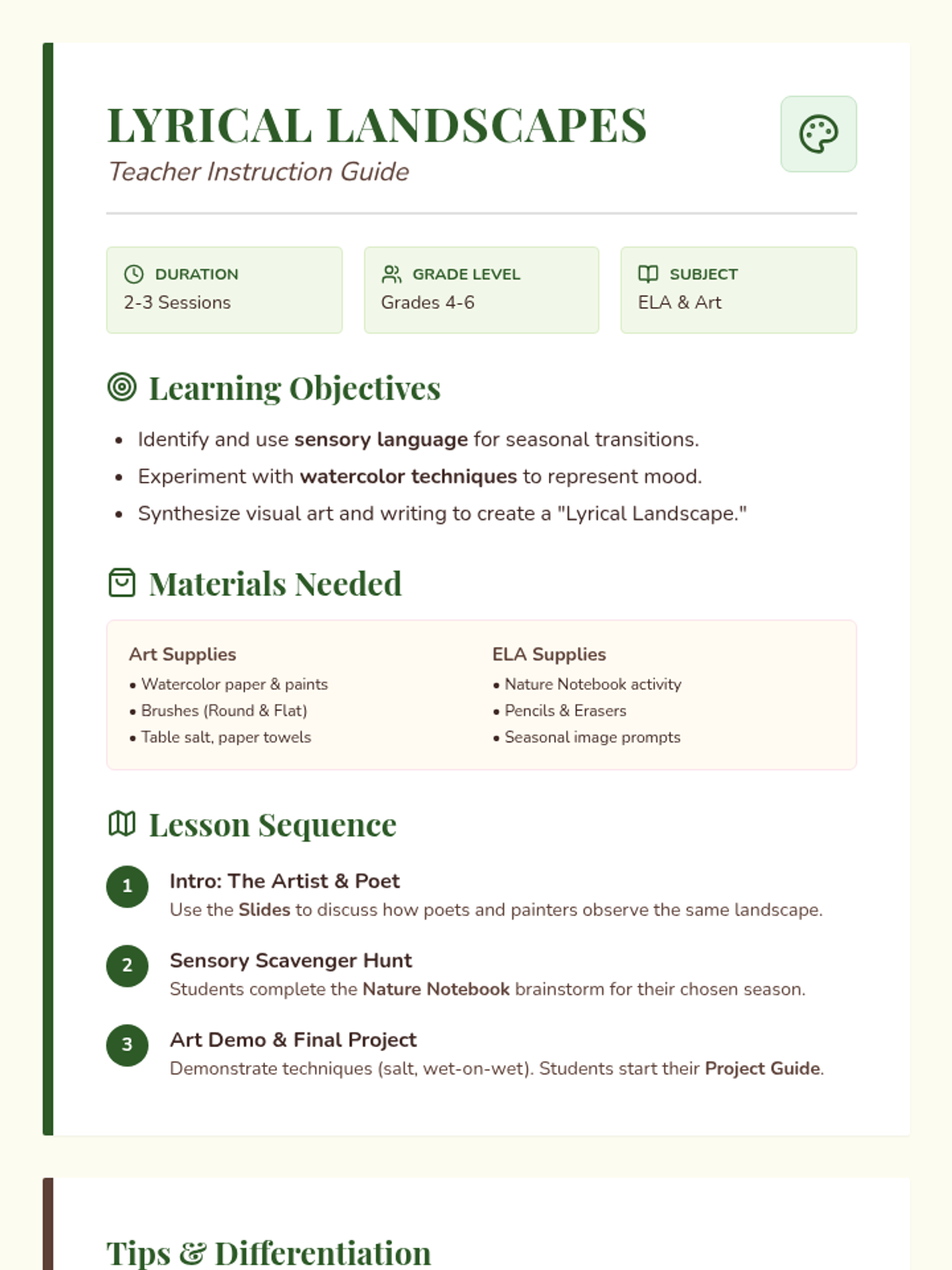
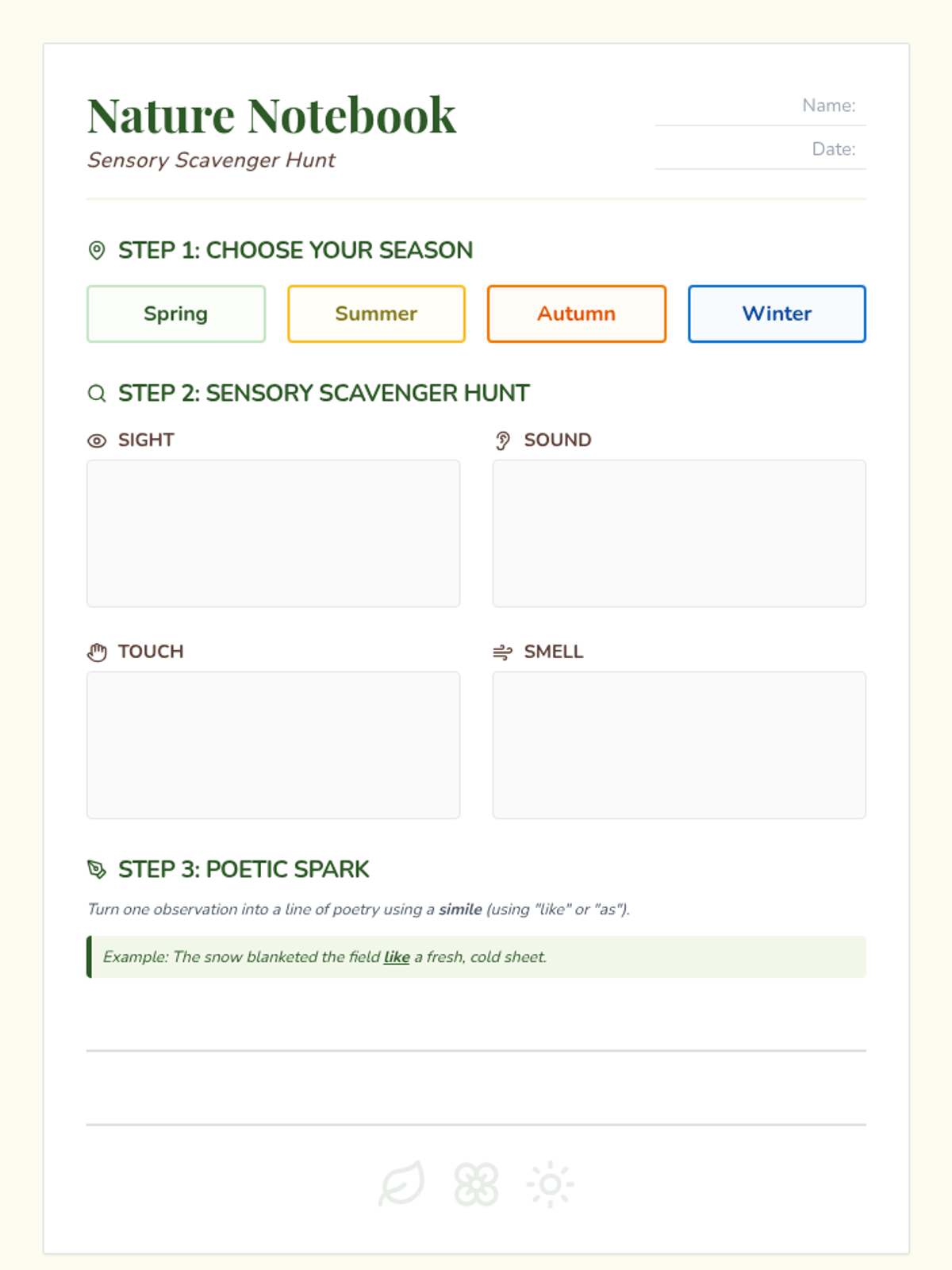
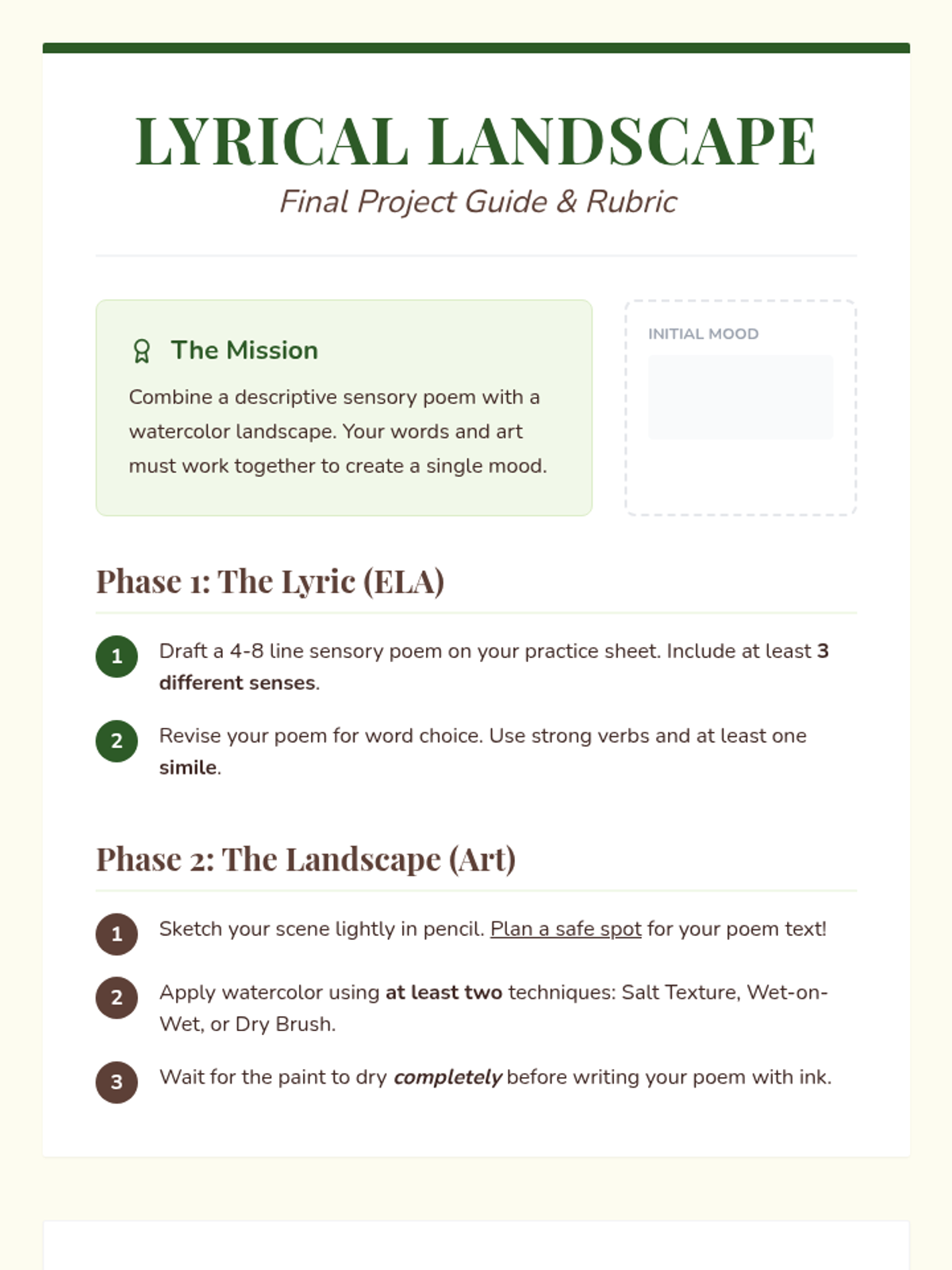
An interdisciplinary ELA and Art lesson where students explore the changing seasons of New England through sensory poetry and watercolor painting techniques. Students will learn to translate sensory observations into descriptive language and visual art.
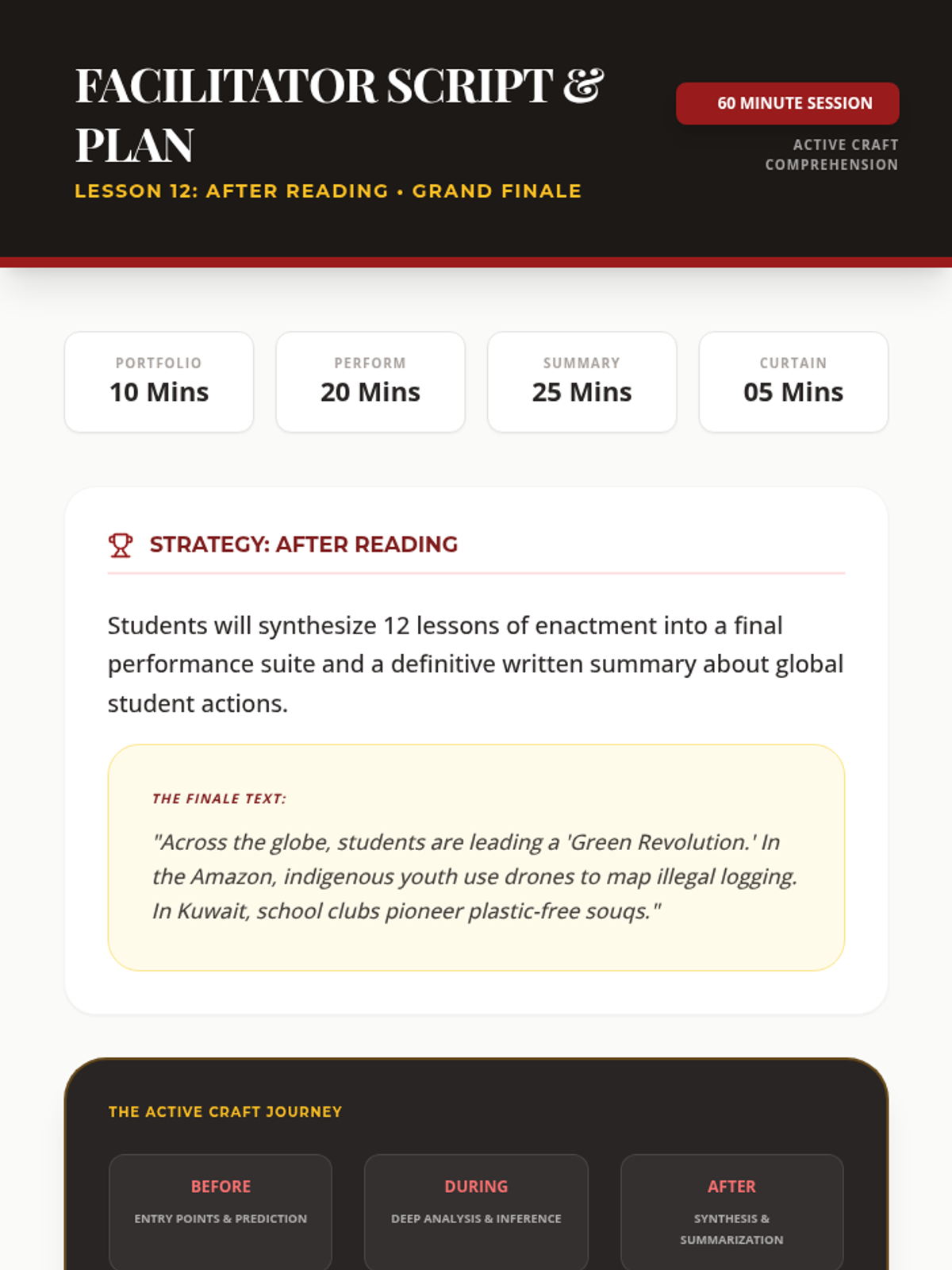
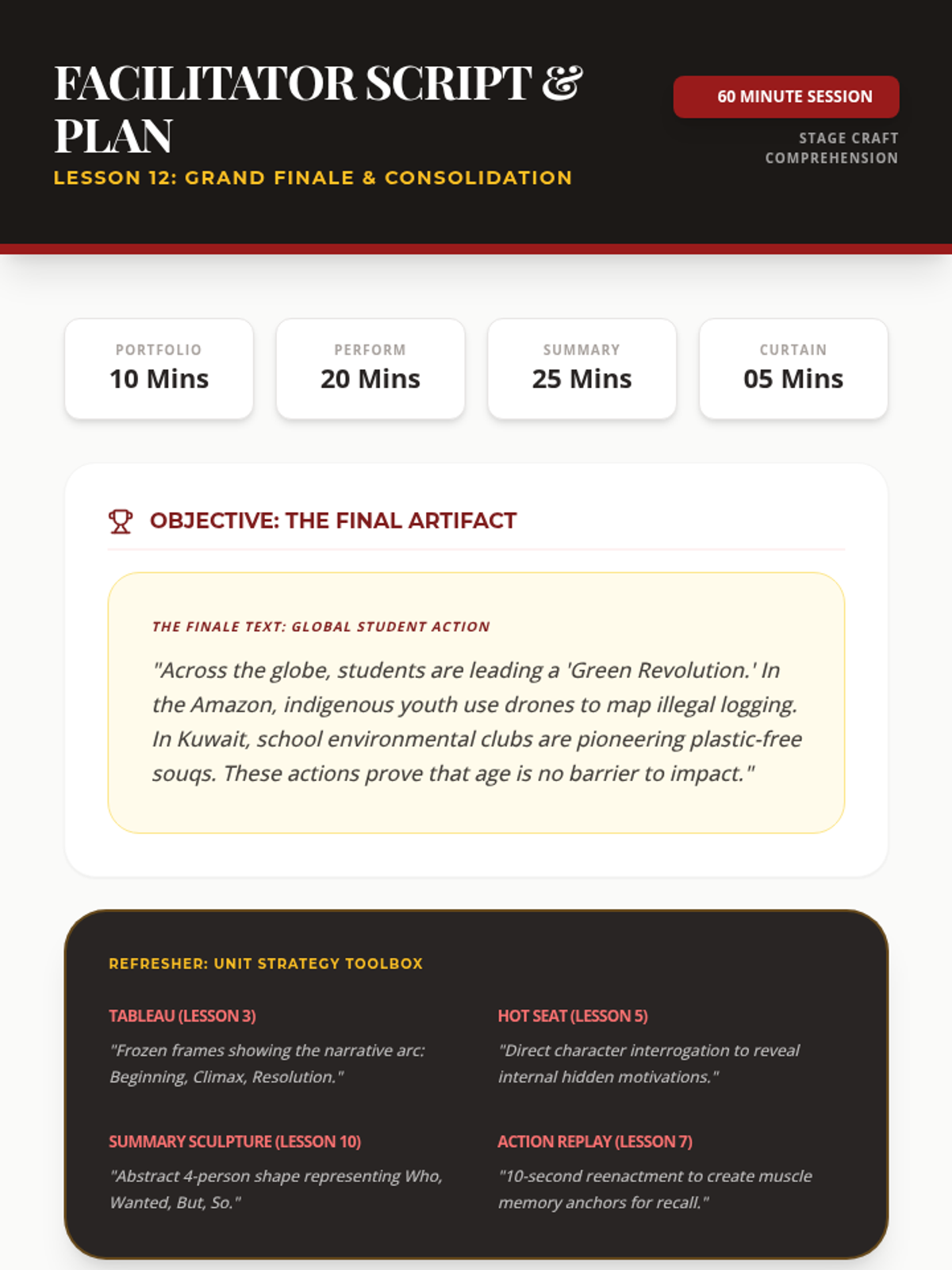
After Reading Strategy: Consolidating skills into a final performance and assessment about students’ actions around the world.
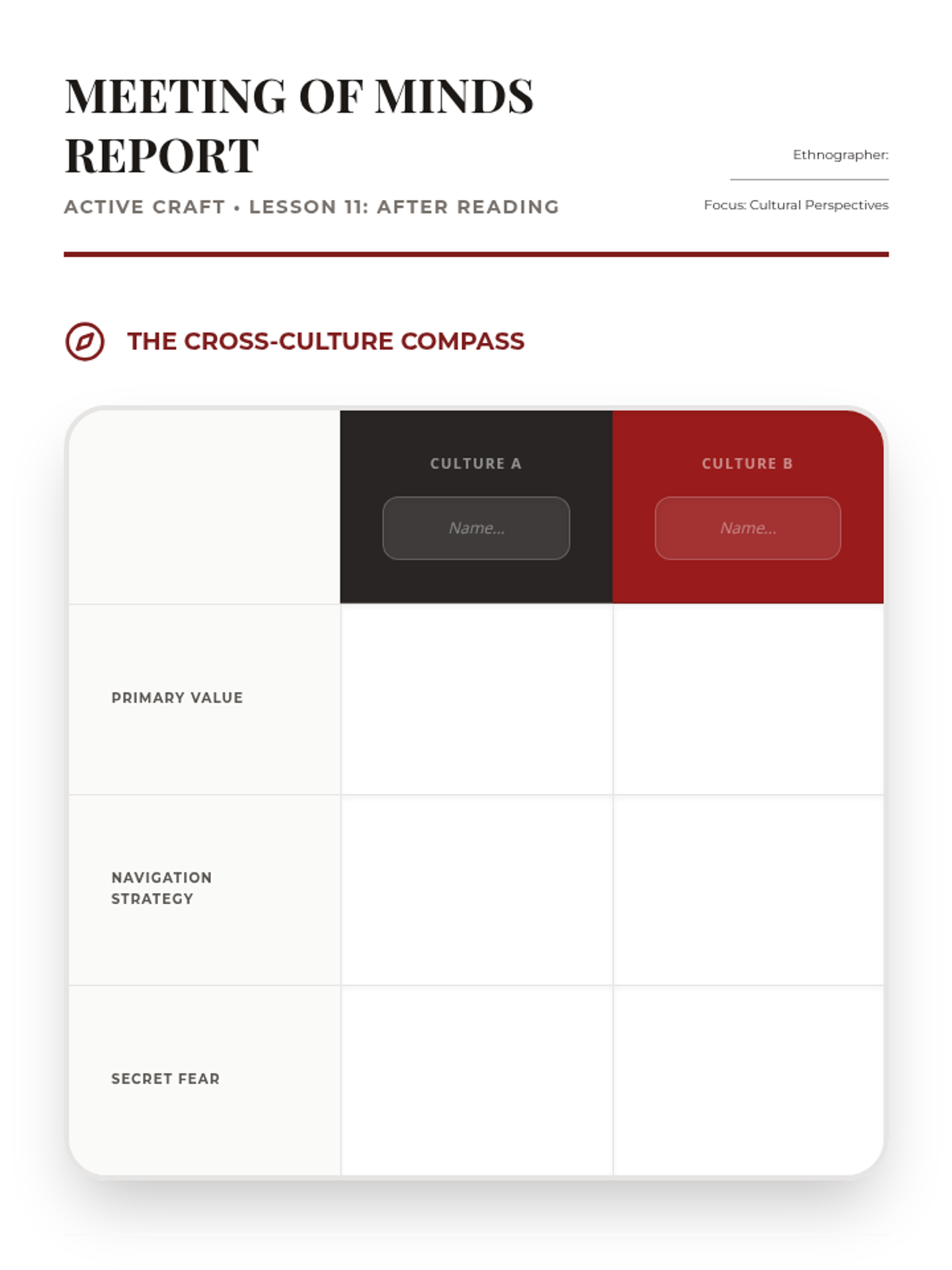
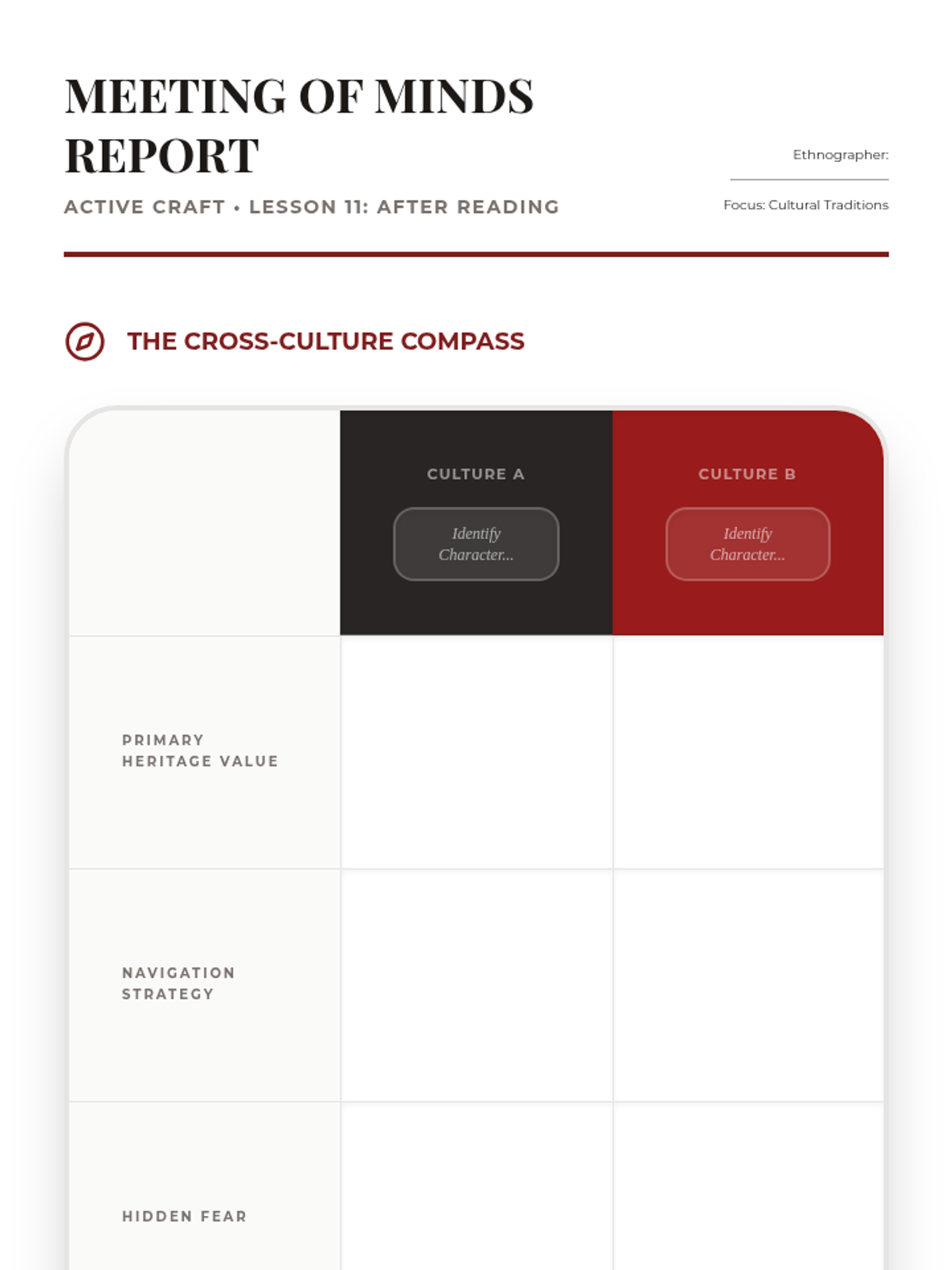
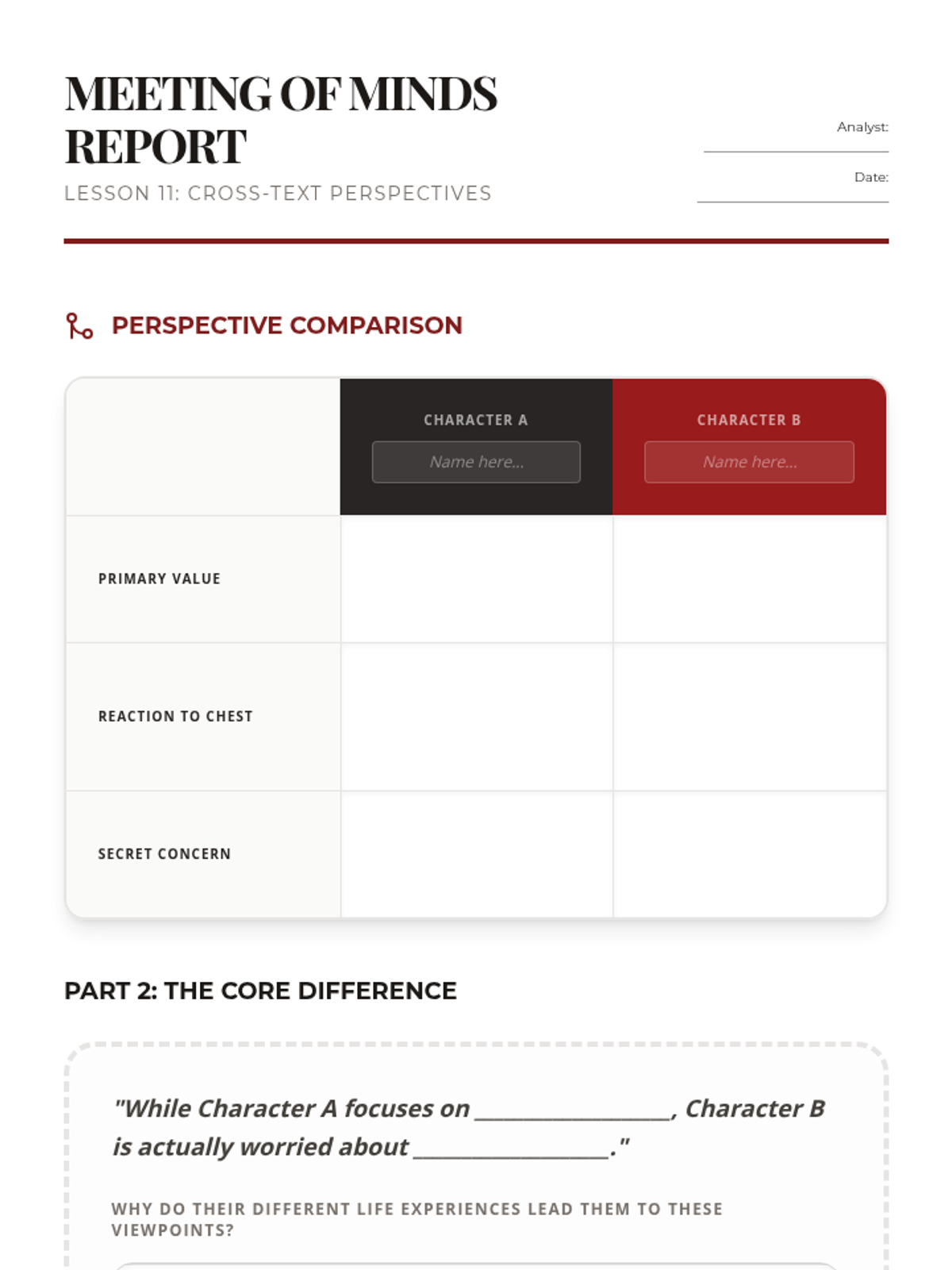
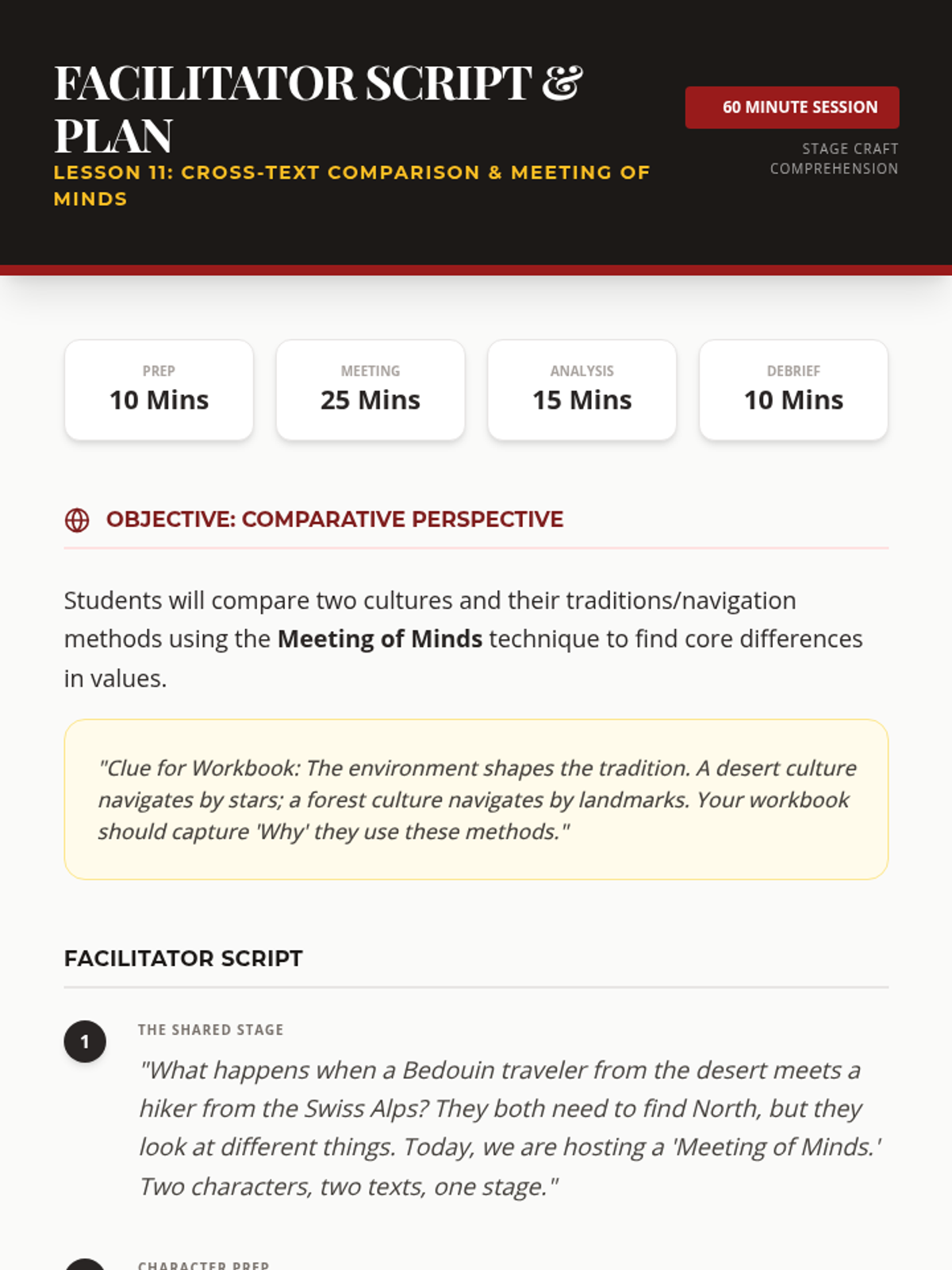
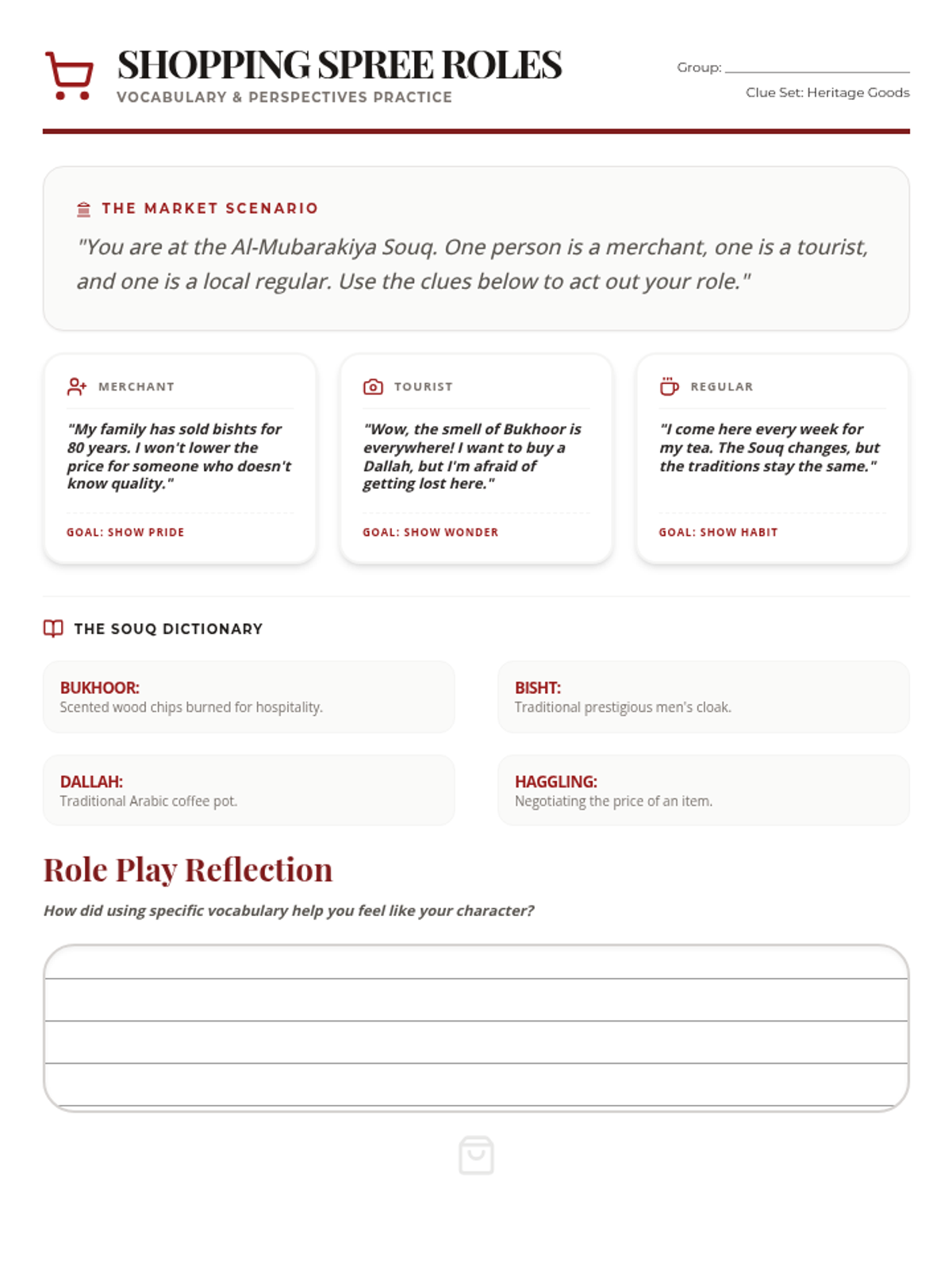
After Reading Strategy: Comparing cultures, traditions, and navigation (directions) using role-play to evaluate perspectives across texts.
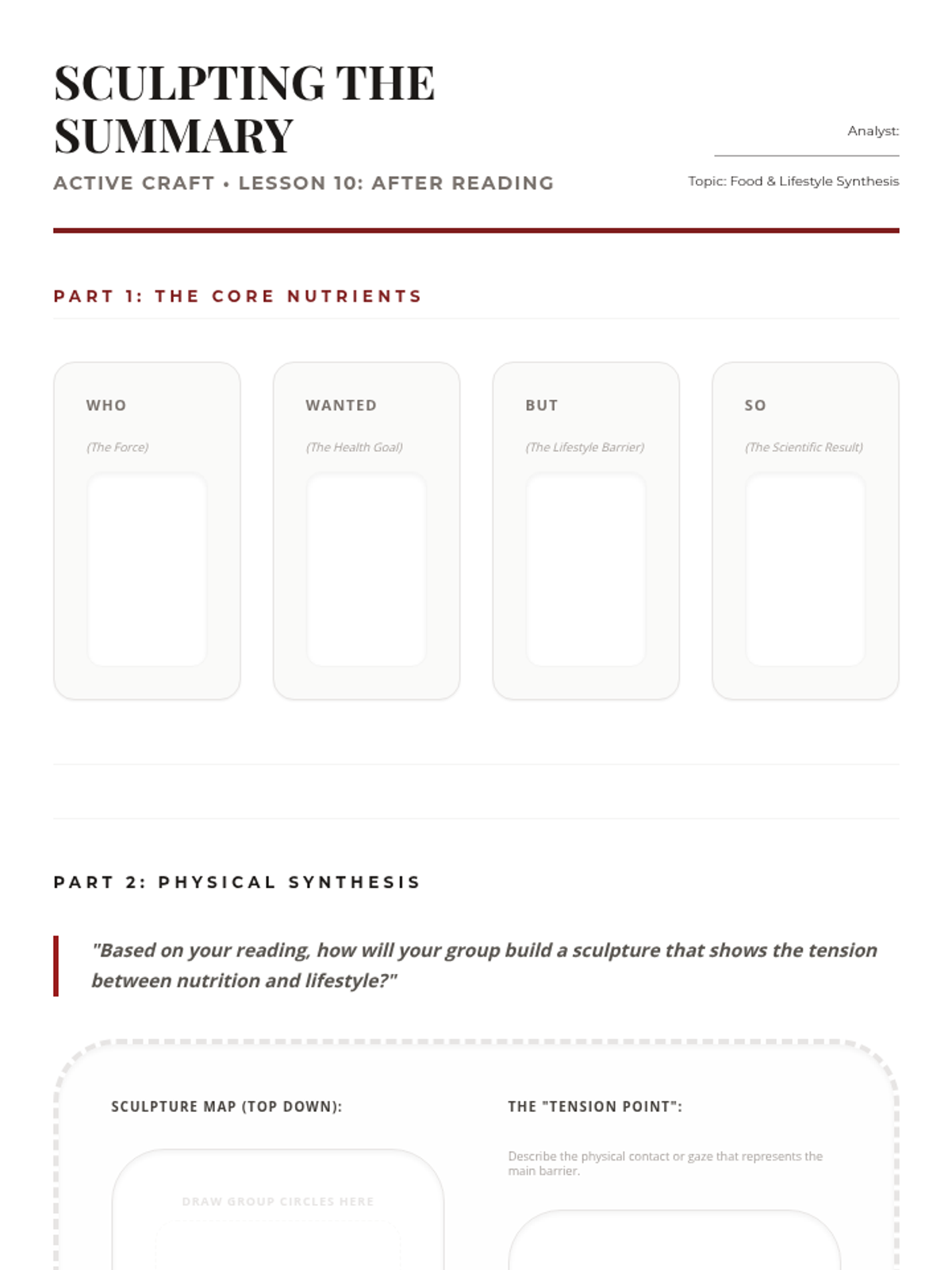
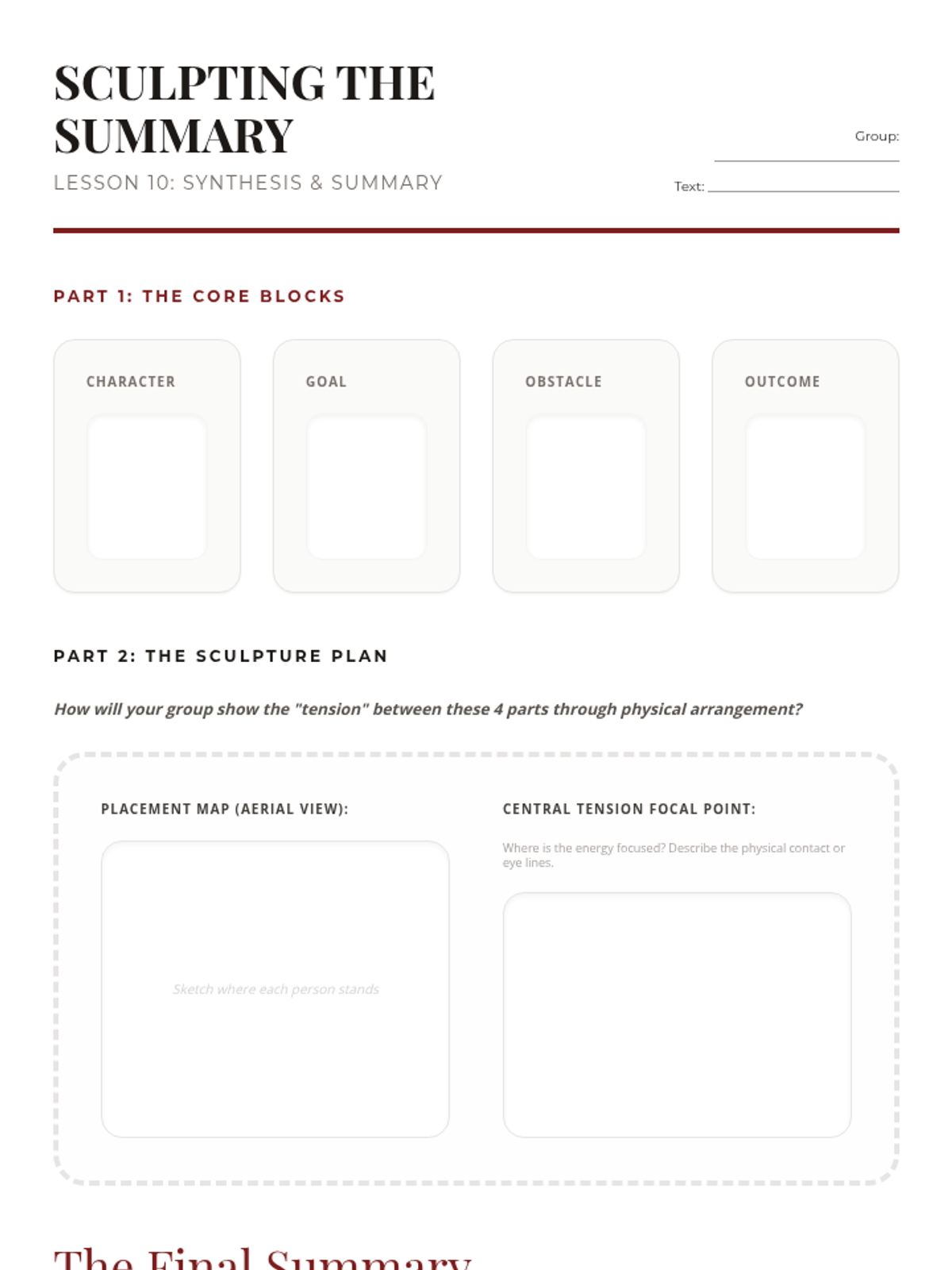
After Reading Strategy: Synthesizing information into 'Summary Sculptures' focused on food items and healthy lifestyles.
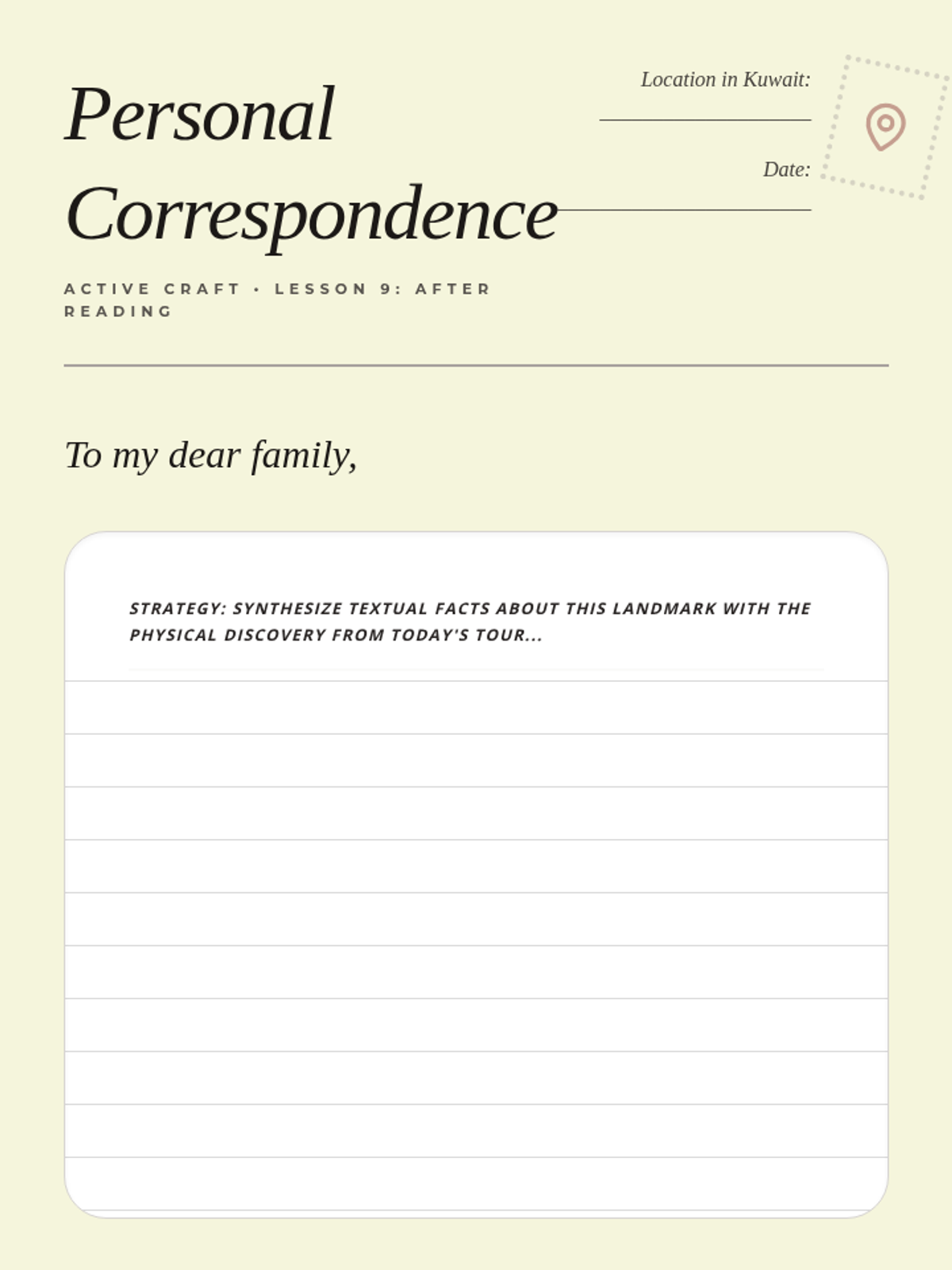
After Reading Strategy: Writing from the perspective of characters visiting cultural and educational places in Kuwait to synthesize meaning.
Before Reading Strategy: Practicing fluency and previewing text through weather forecast 'Radio Dramas' and climate reports.
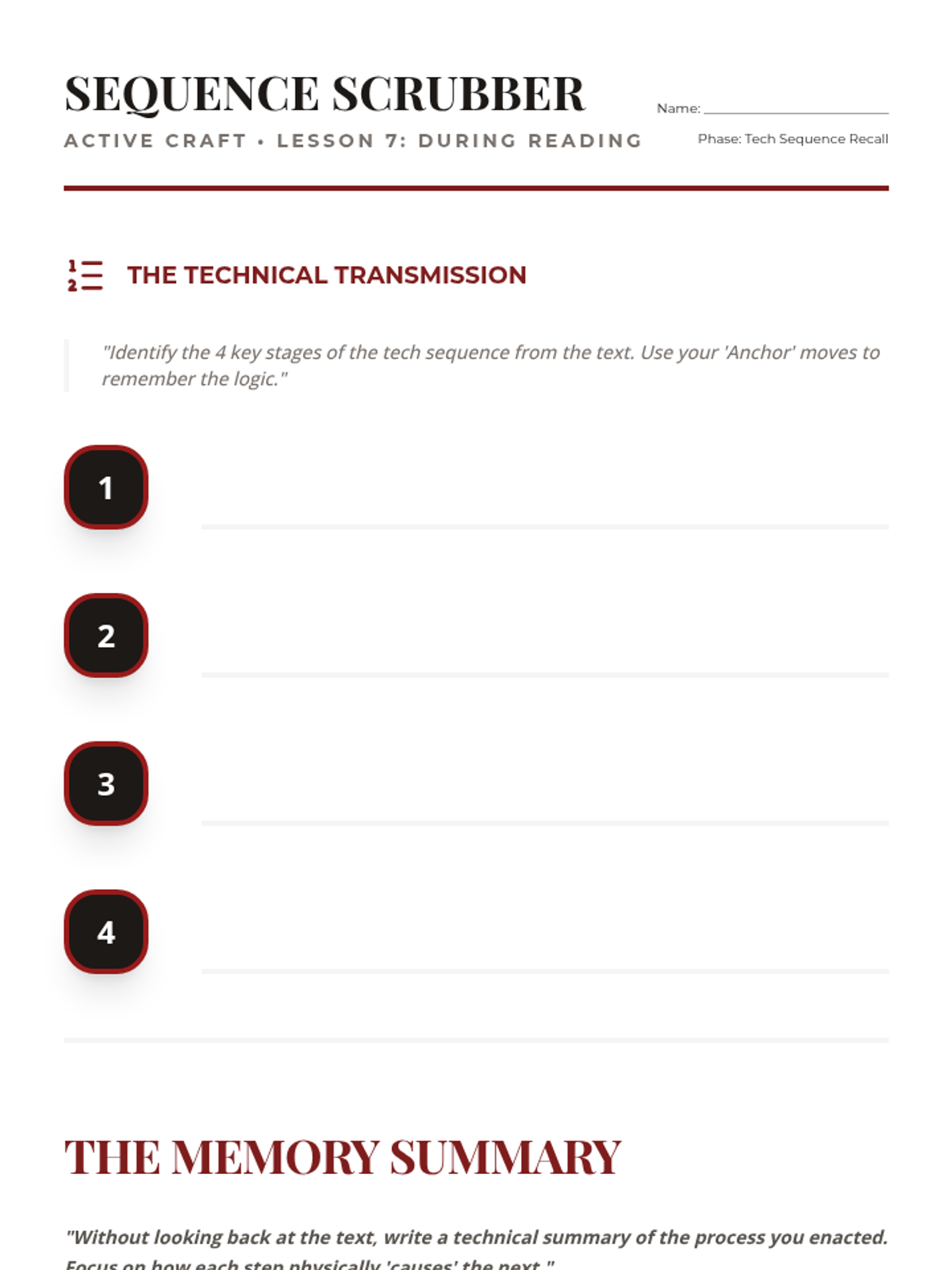
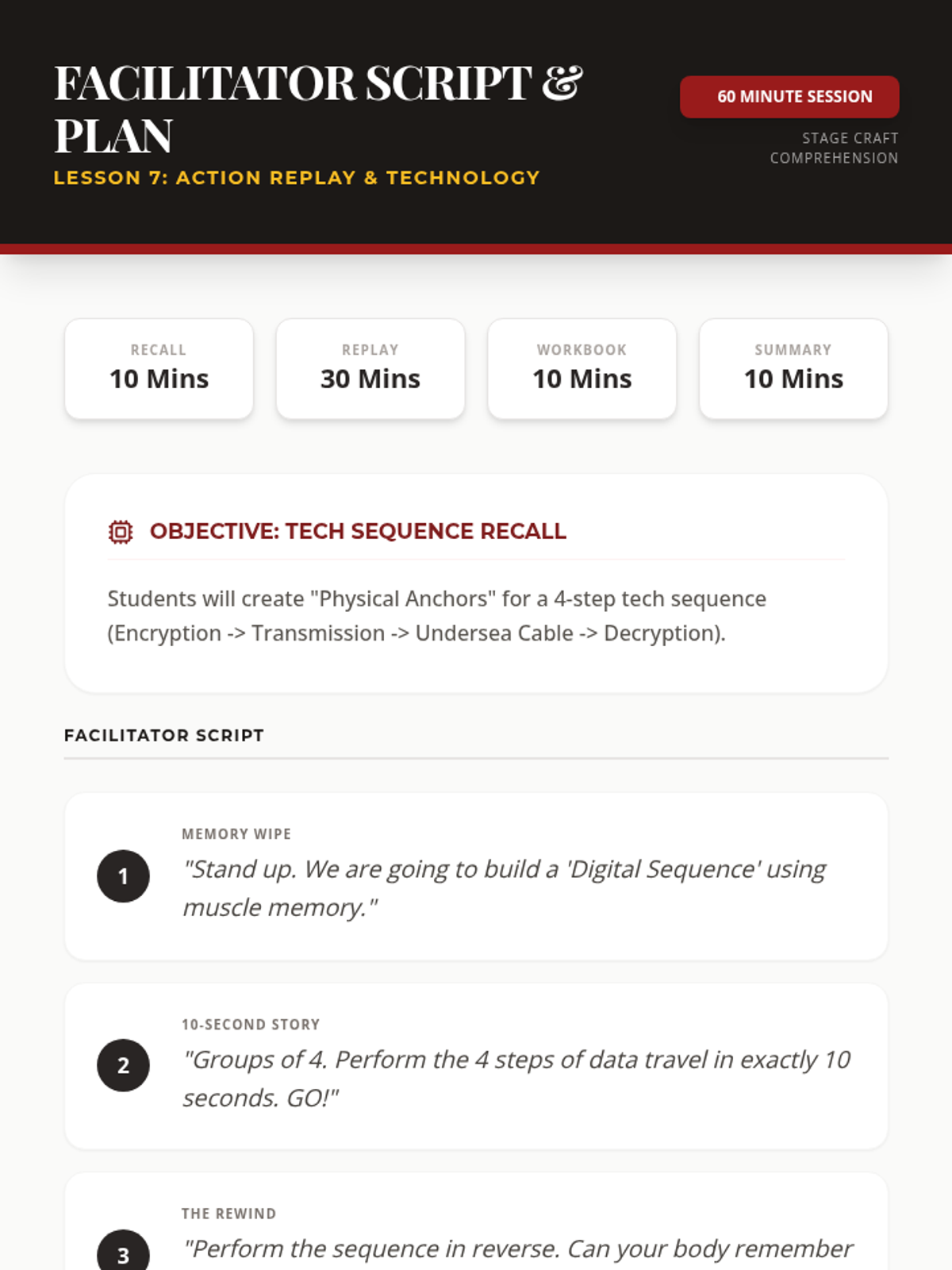
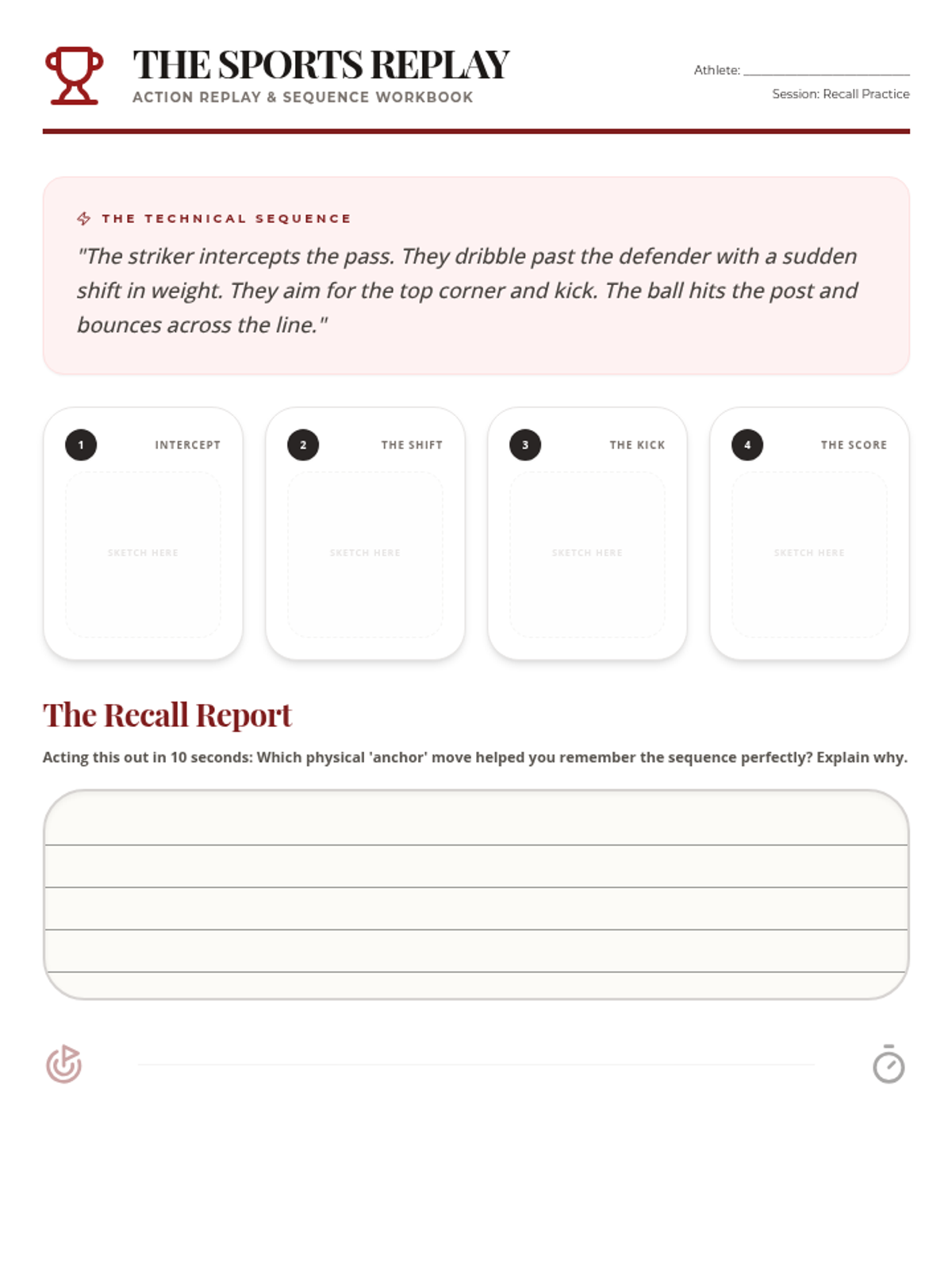
During Reading Strategy: Using reenactment to boost recall of the history of technology and modern hobbies.
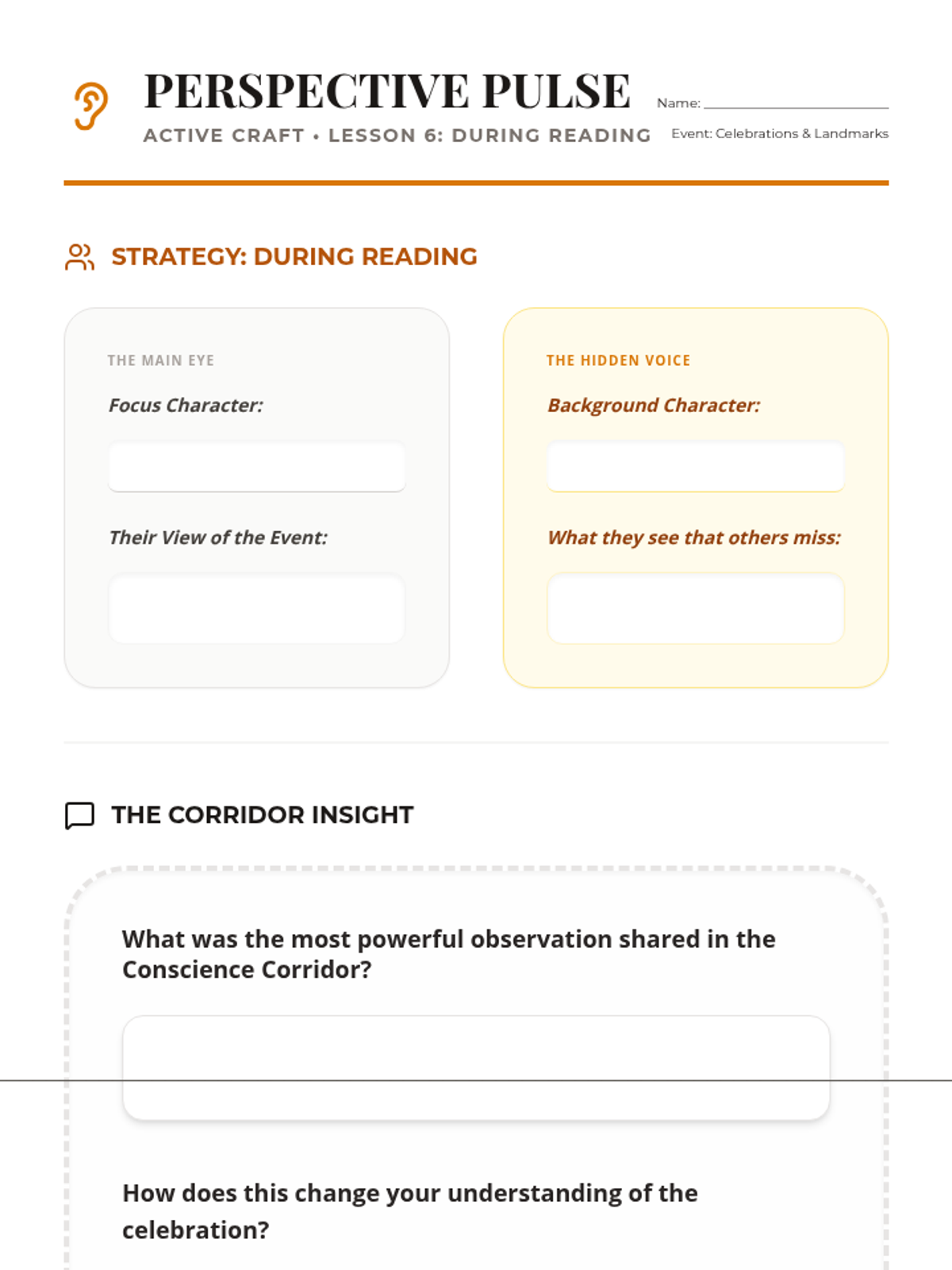
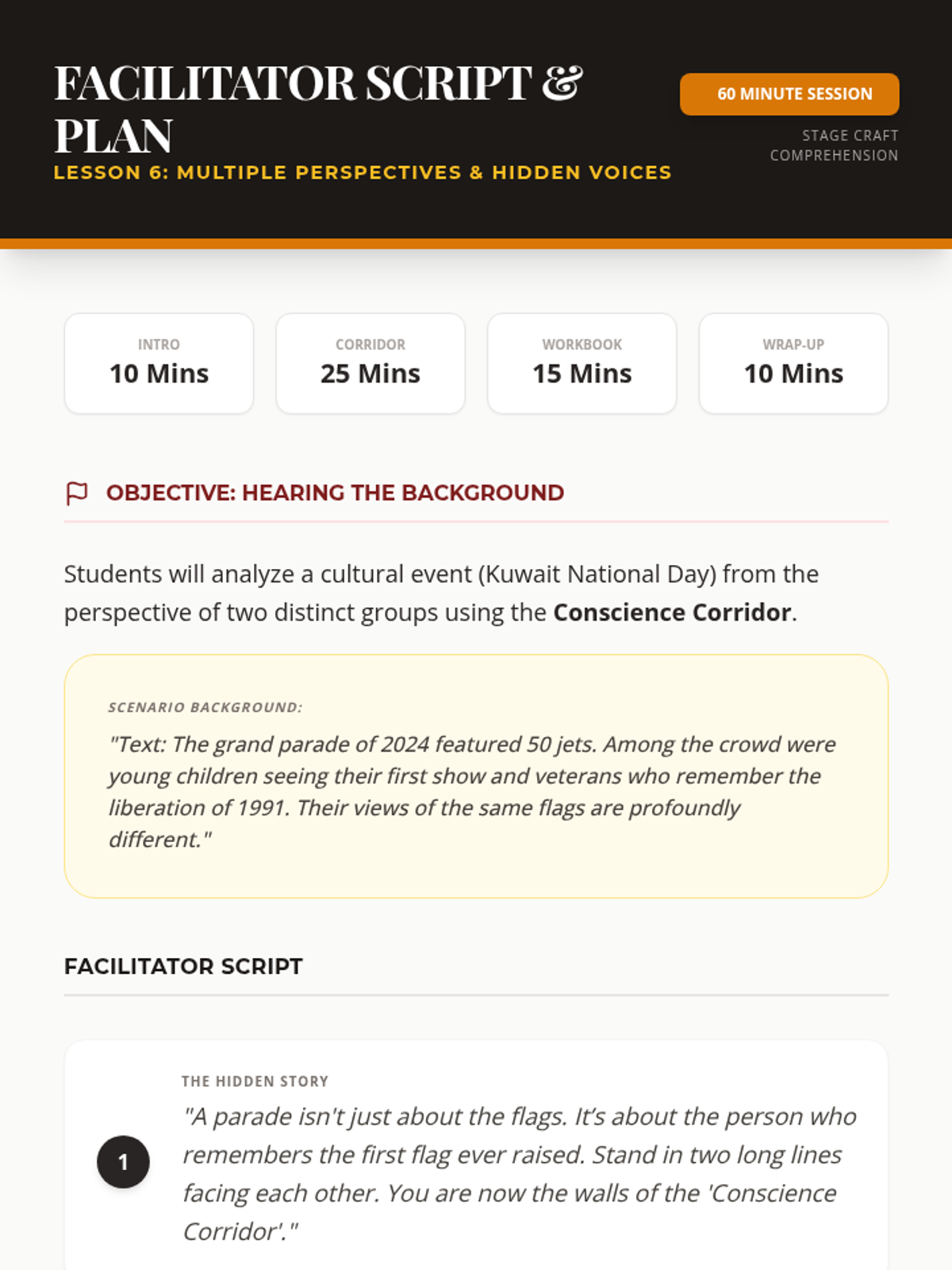
During Reading Strategy: Exploring multiple viewpoints within global celebrations and cultural events.
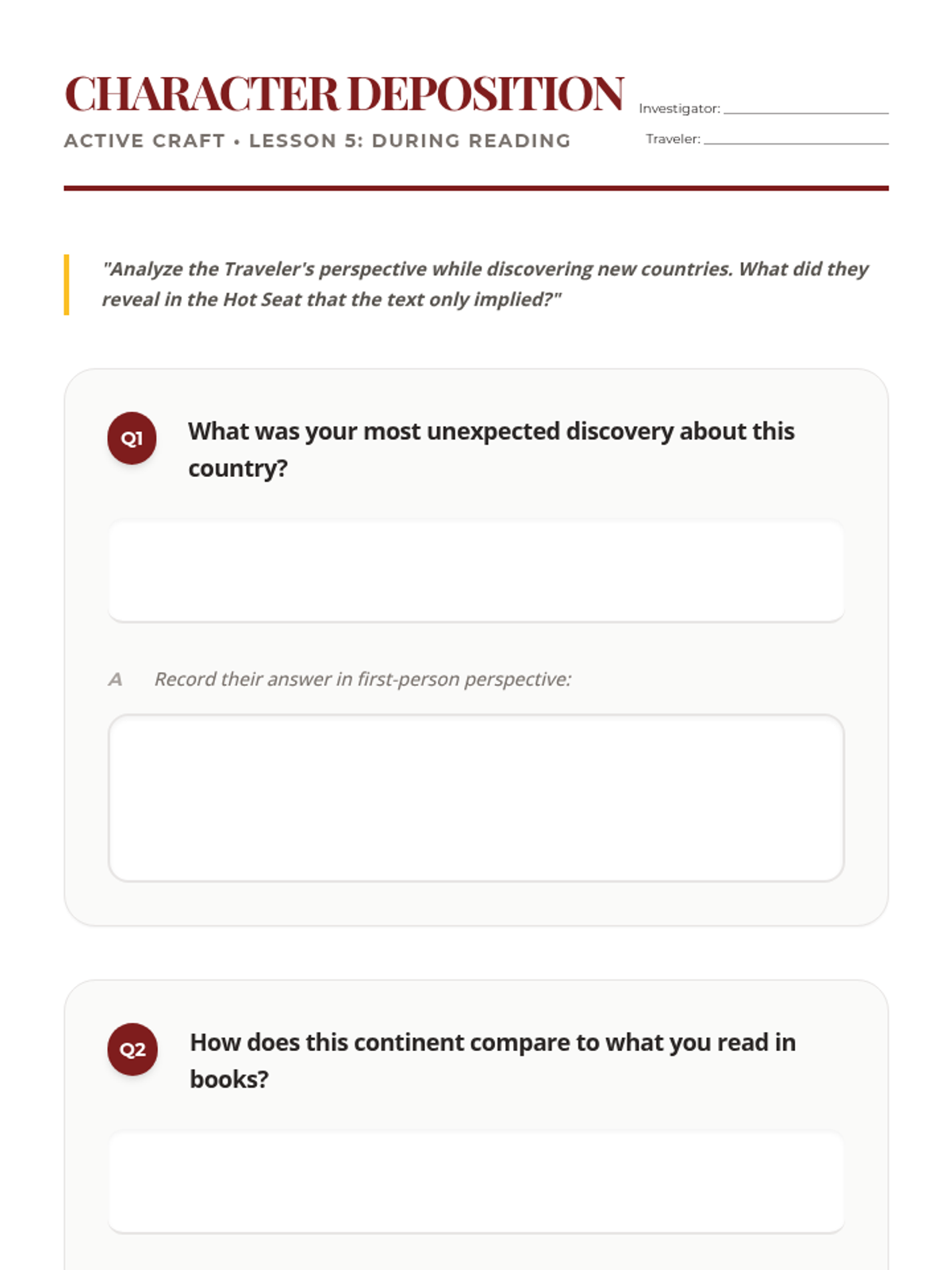
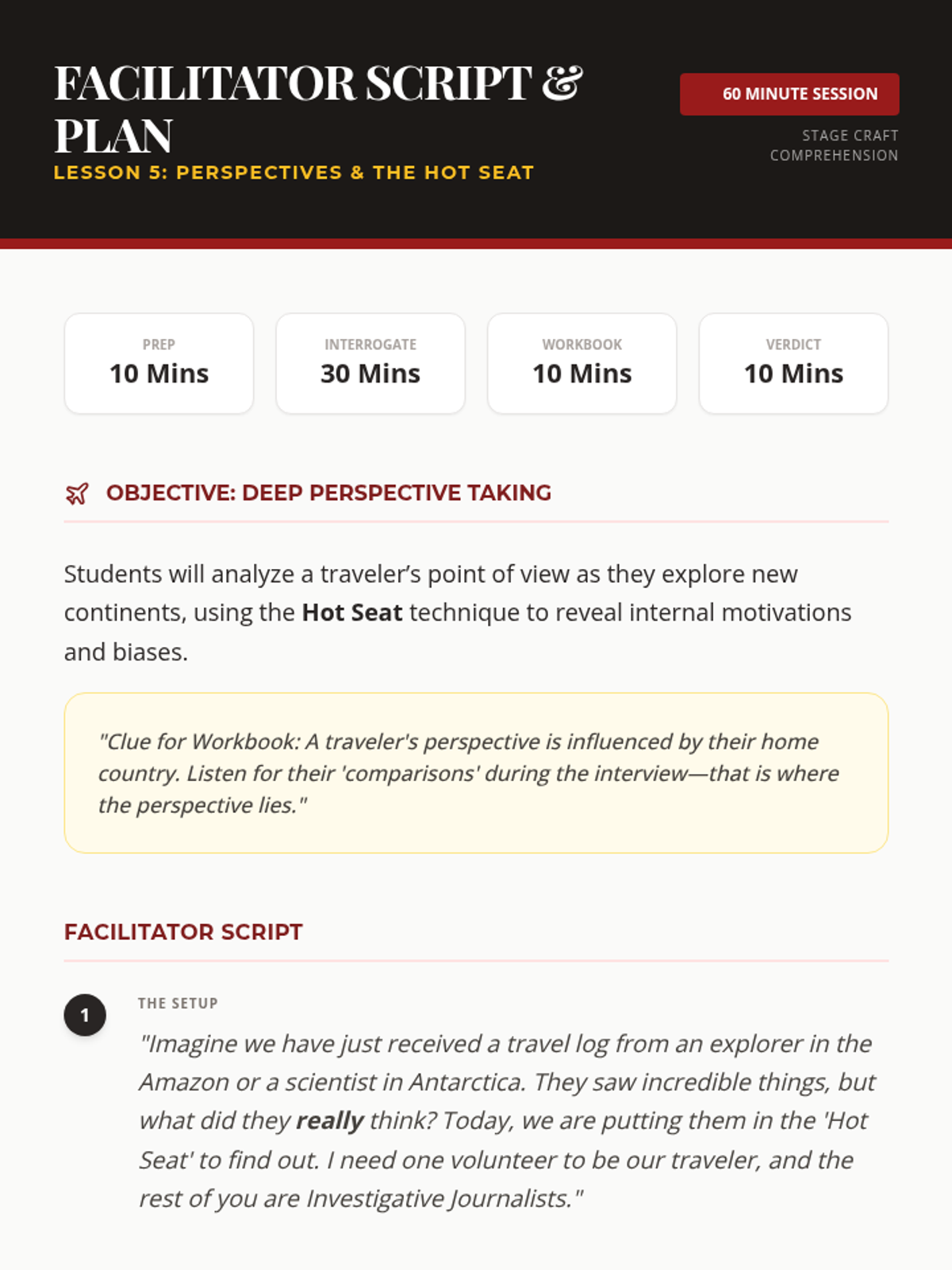
During Reading Strategy: Diving deep into traveler perspectives through the 'Hot Seat' technique while discovering countries.
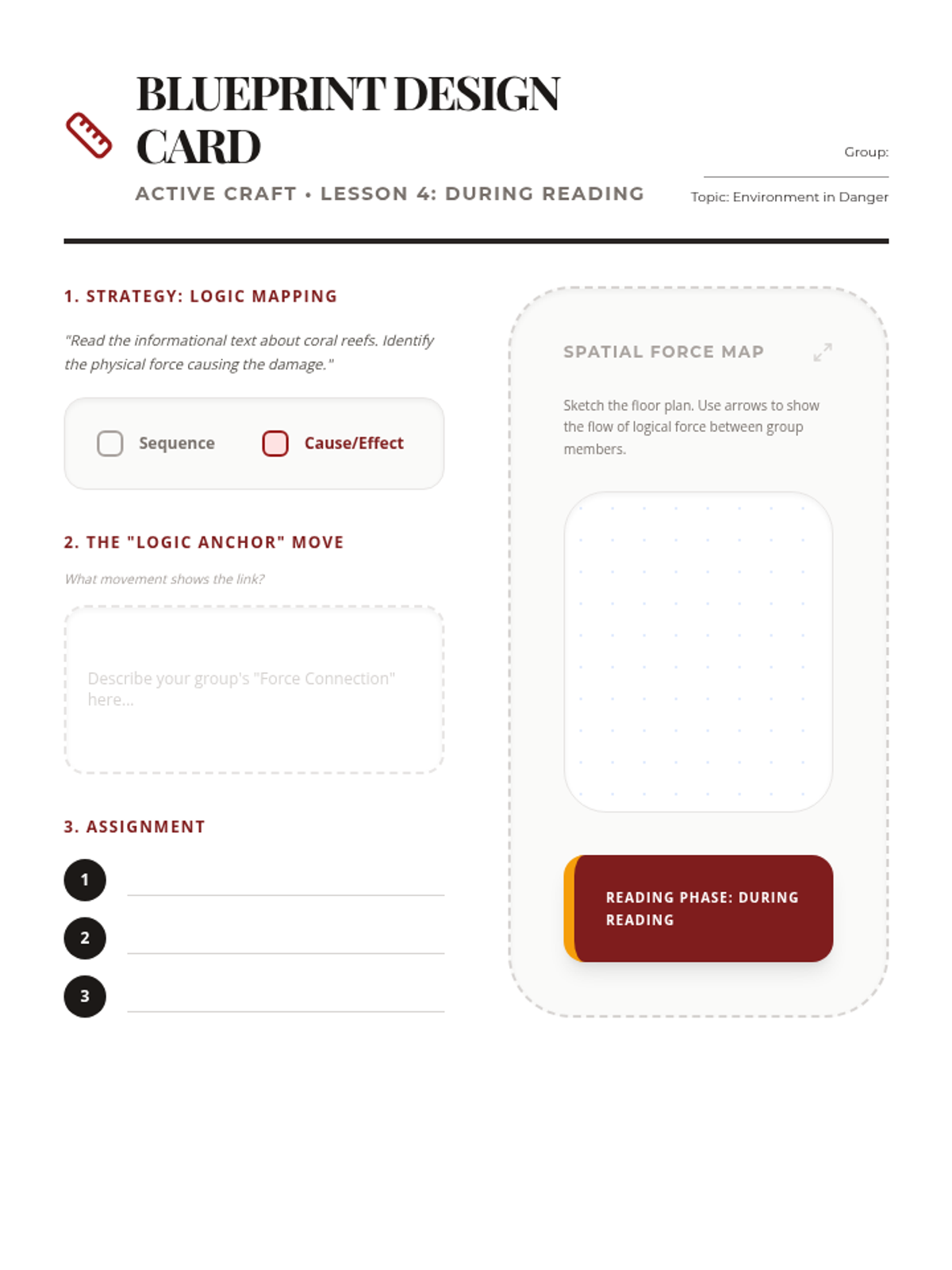
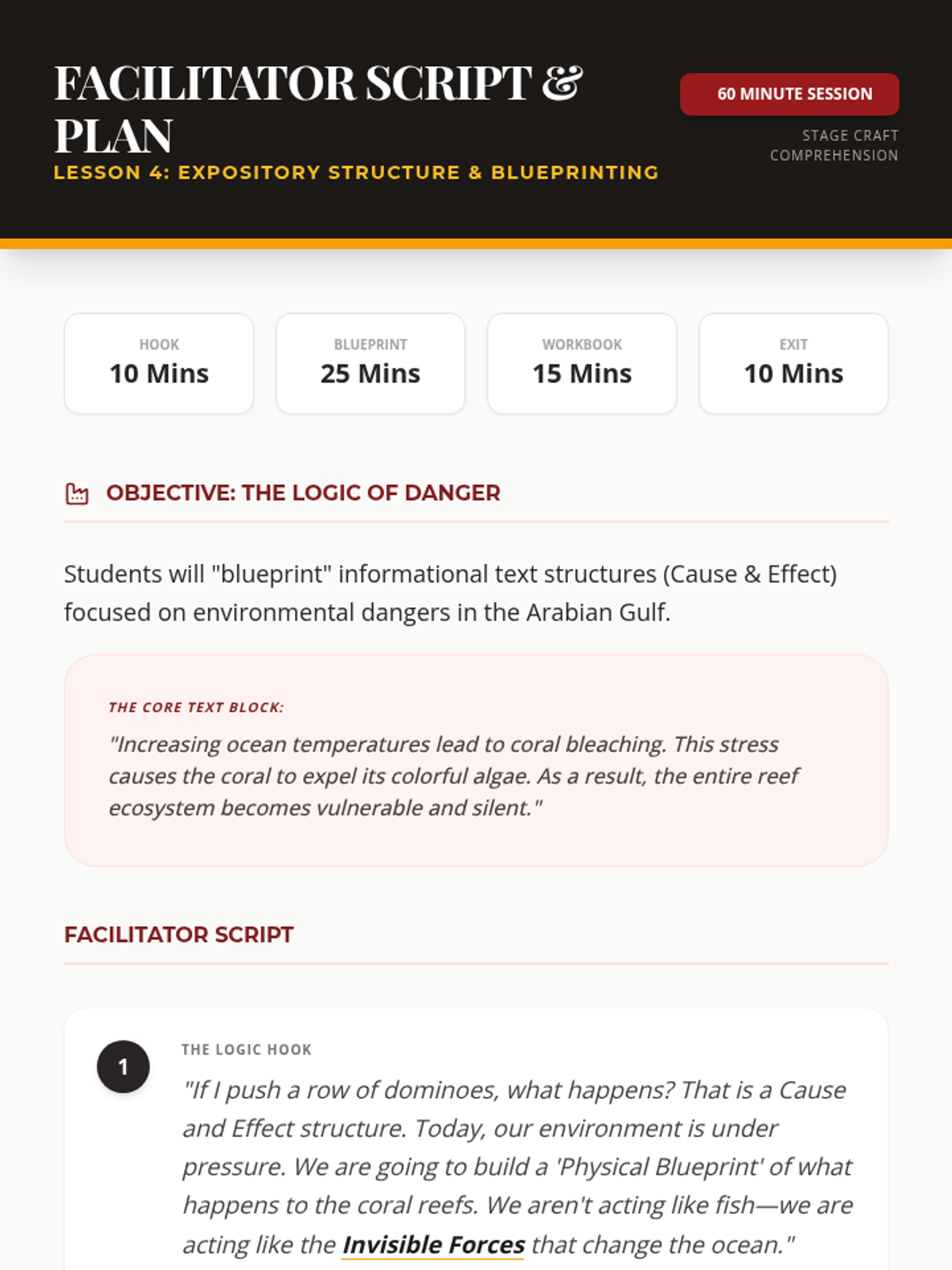
During Reading Strategy: Using physical poses to represent informational text structures like cause/effect focused on environmental danger.
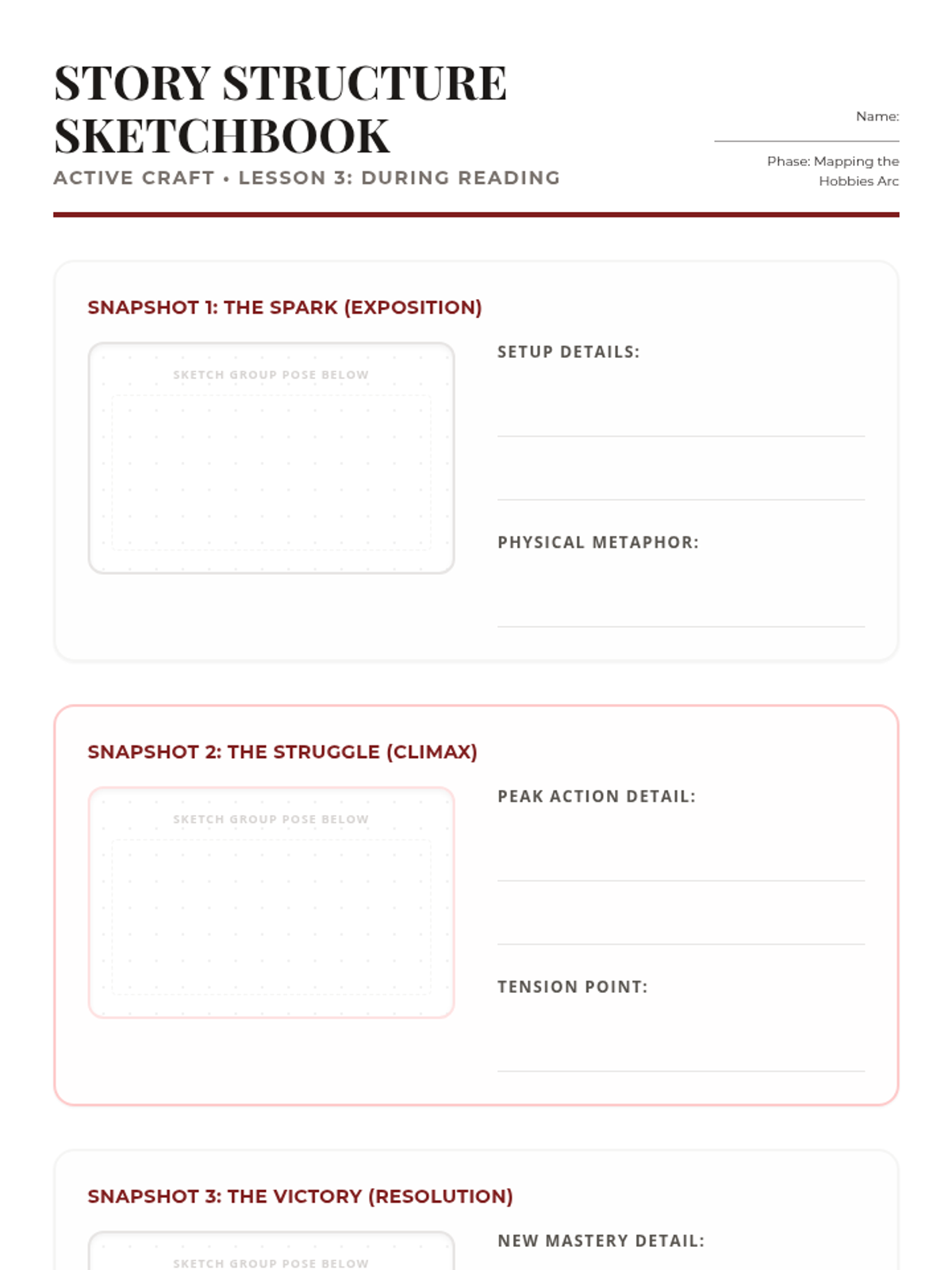
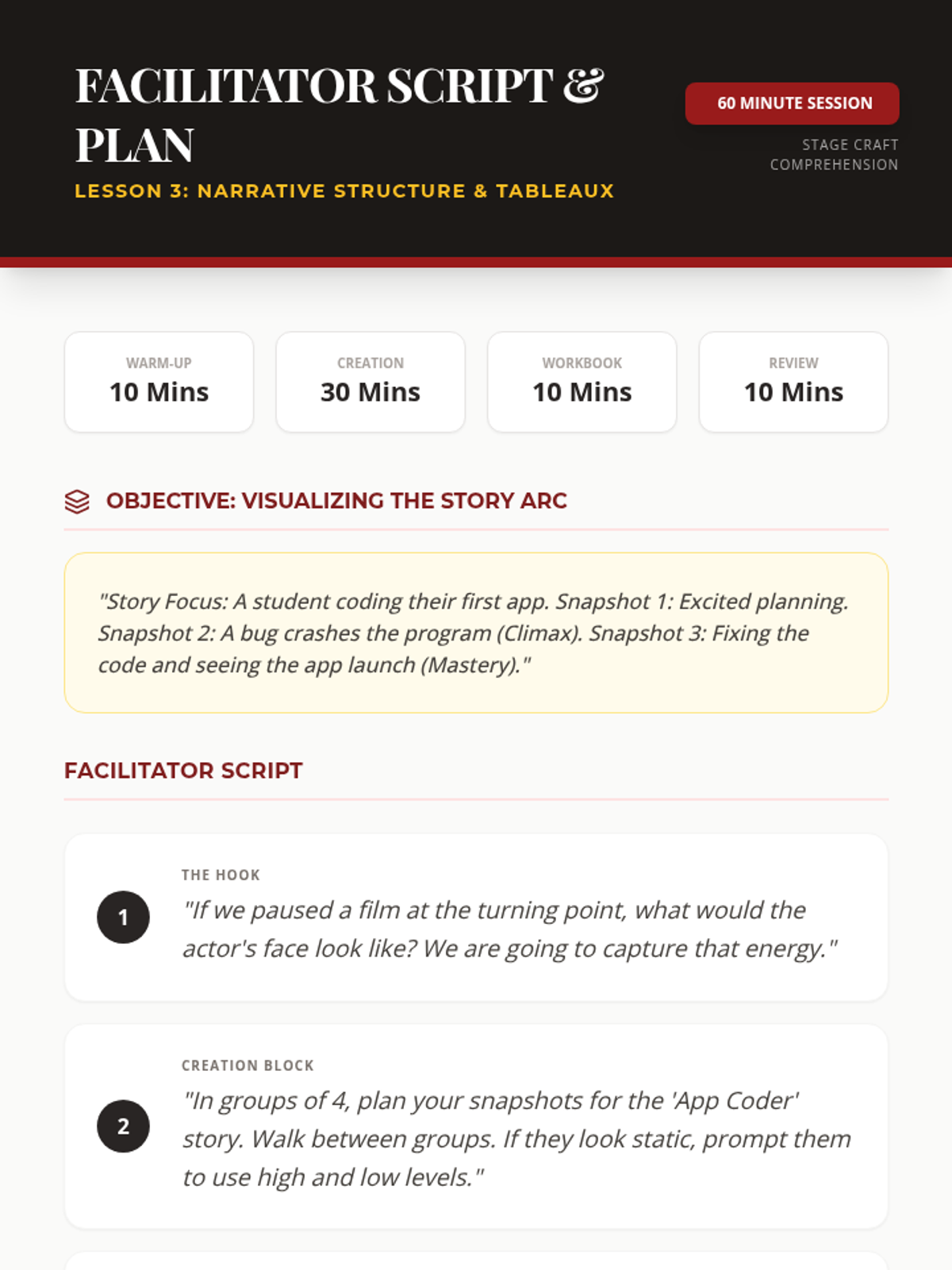
During Reading Strategy: Creating frozen tableaus to represent narrative story arcs centered on the joy of hobbies.
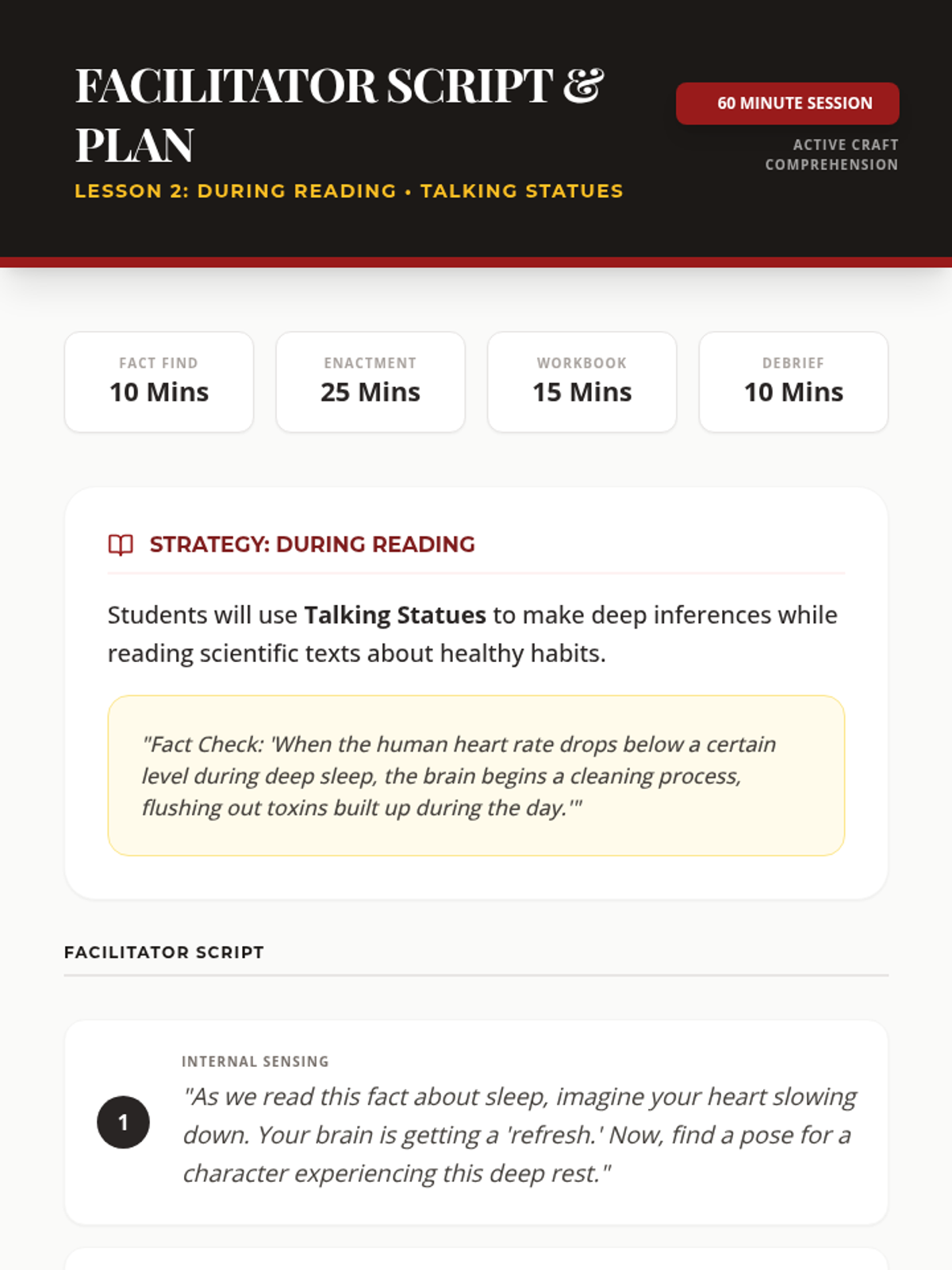
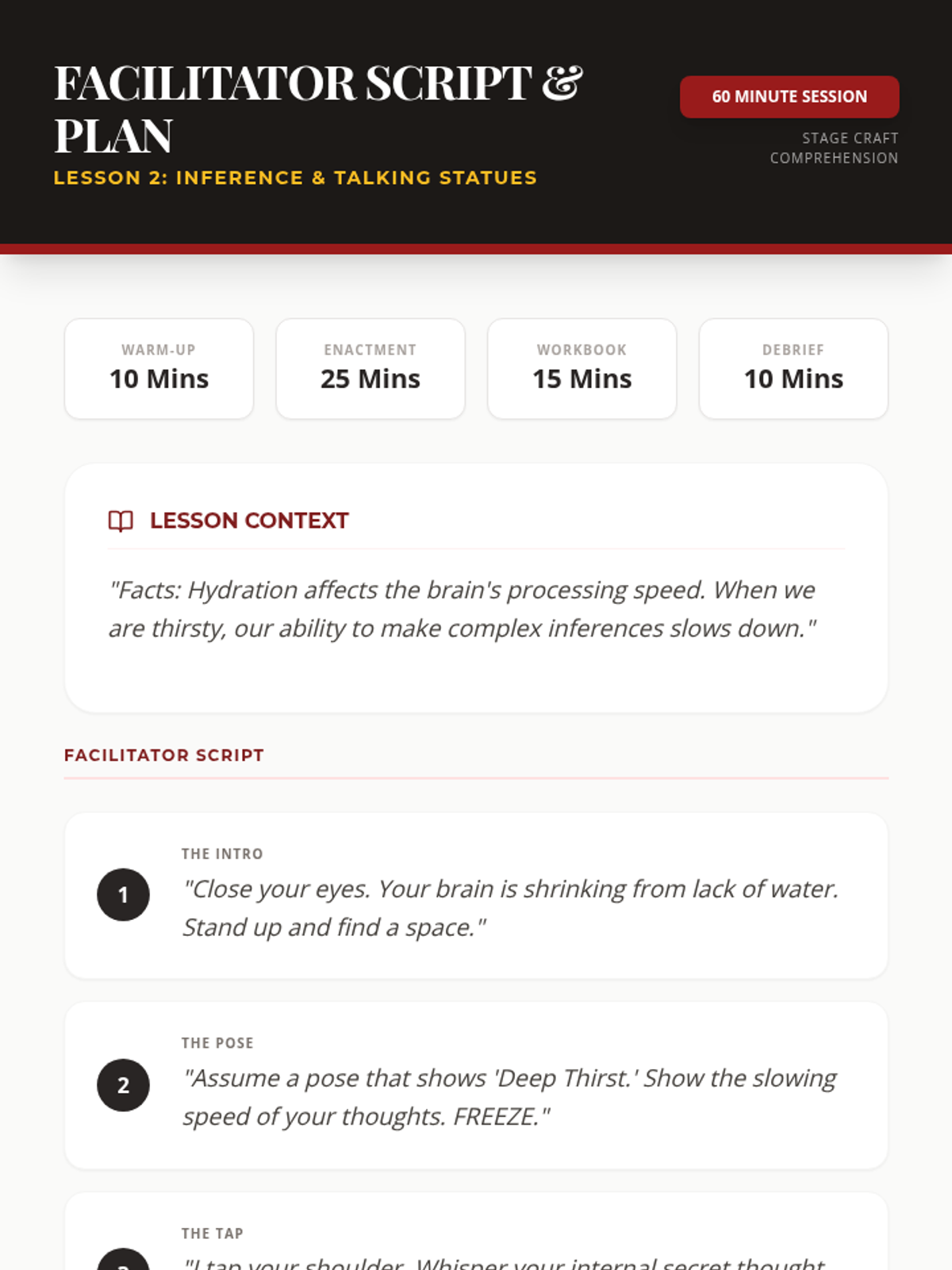
During Reading Strategy: Using 'Talking Statues' to make inferences about healthy habits and scientific facts about health.
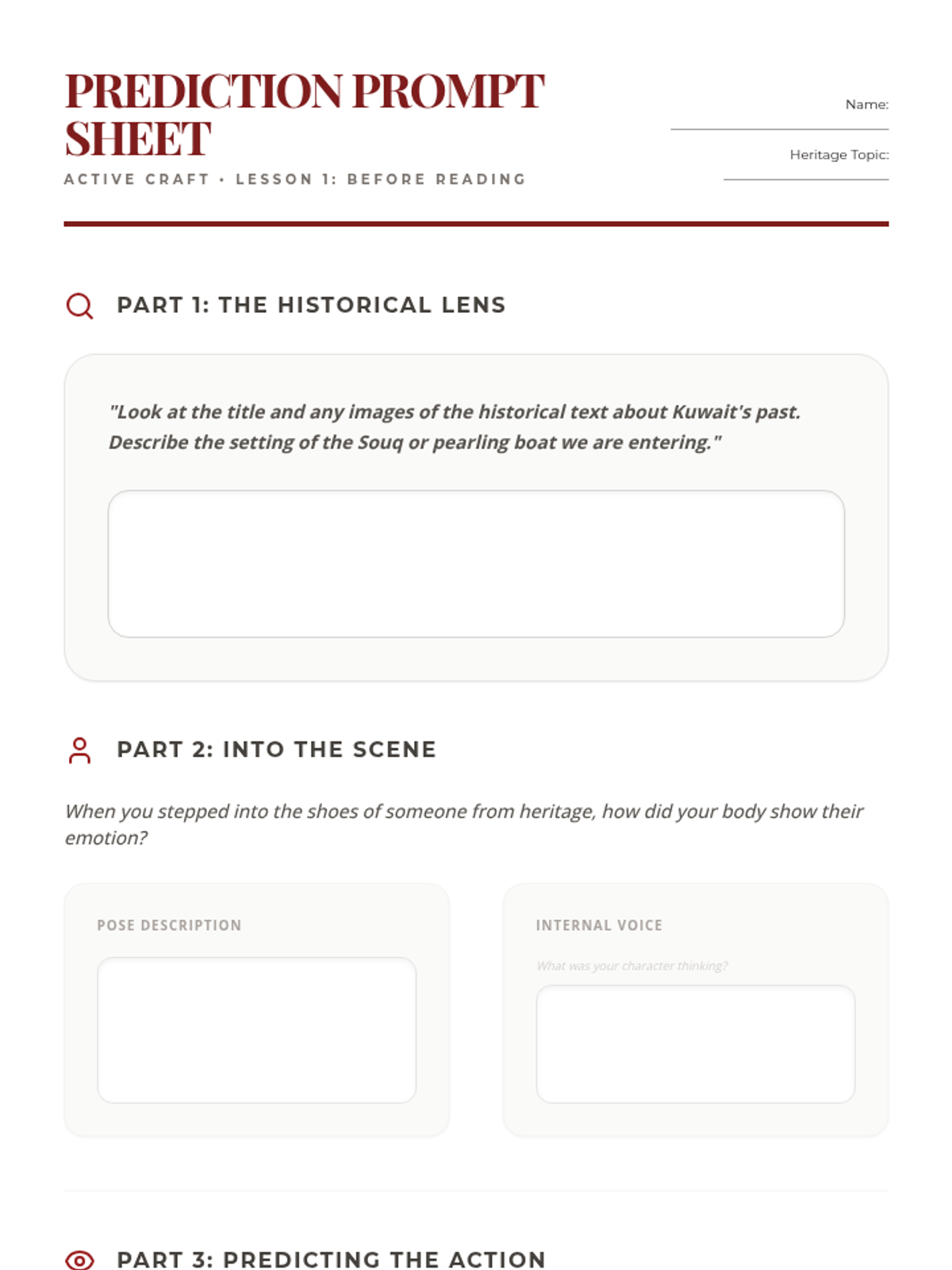
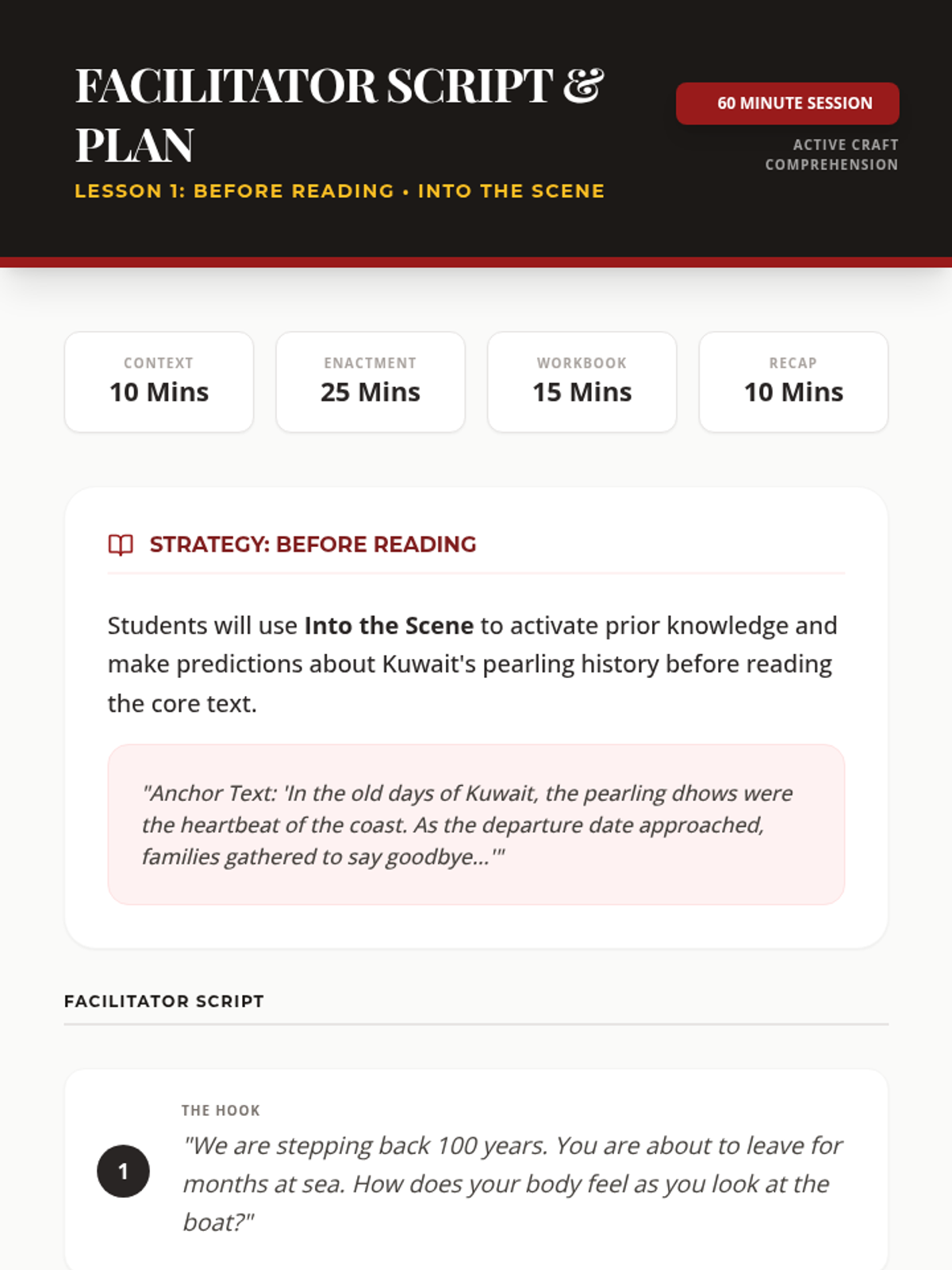
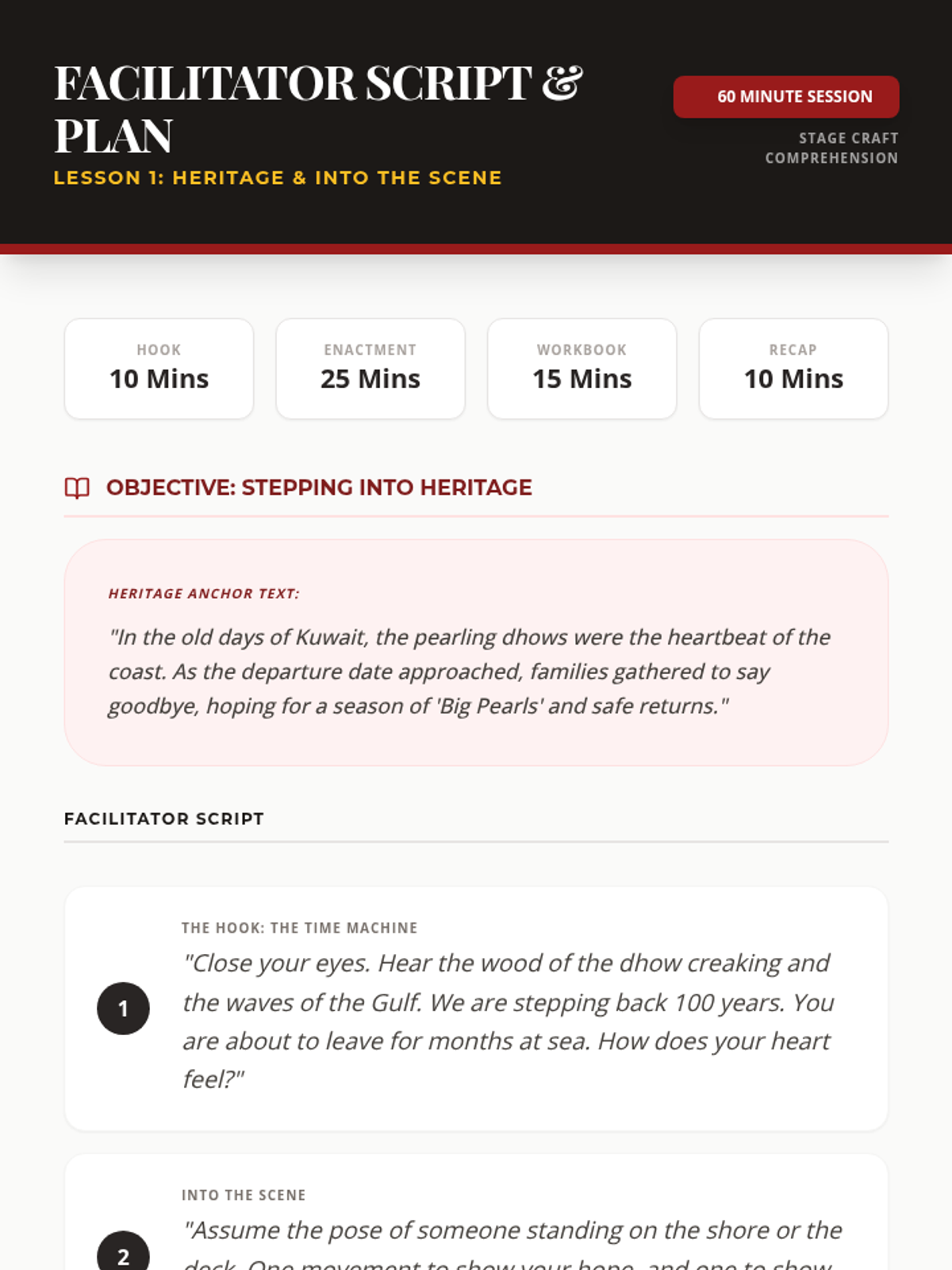
Before Reading Strategy: Introduction to enactment as a tool for prediction and frontloading, focused on Kuwaiti heritage and life in the past.
Consolidating skills into a final performance about students’ actions around the world.
Comparing cultures, traditions, and navigation (directions) using role-play.
Synthesizing information into 'Summary Sculptures' focused on food items and healthy lifestyles.
Writing from the perspective of characters visiting cultural and educational places in Kuwait.
Practicing fluency through weather forecast 'Radio Dramas' and climate reports.
Using reenactment to boost recall of the history of technology and modern hobbies.
Exploring multiple viewpoints within global celebrations and cultural events.
Diving deep into traveler perspectives through the 'Hot Seat' technique while discovering countries.
Using physical poses to represent informational text structures like cause/effect focused on environmental danger.
Creating frozen tableaus to represent narrative story arcs centered on the joy of hobbies.
Using 'Talking Statues' to make inferences about healthy habits and scientific facts about health.
Introduction to enactment as a tool for prediction, focused on Kuwaiti heritage and life in the past.
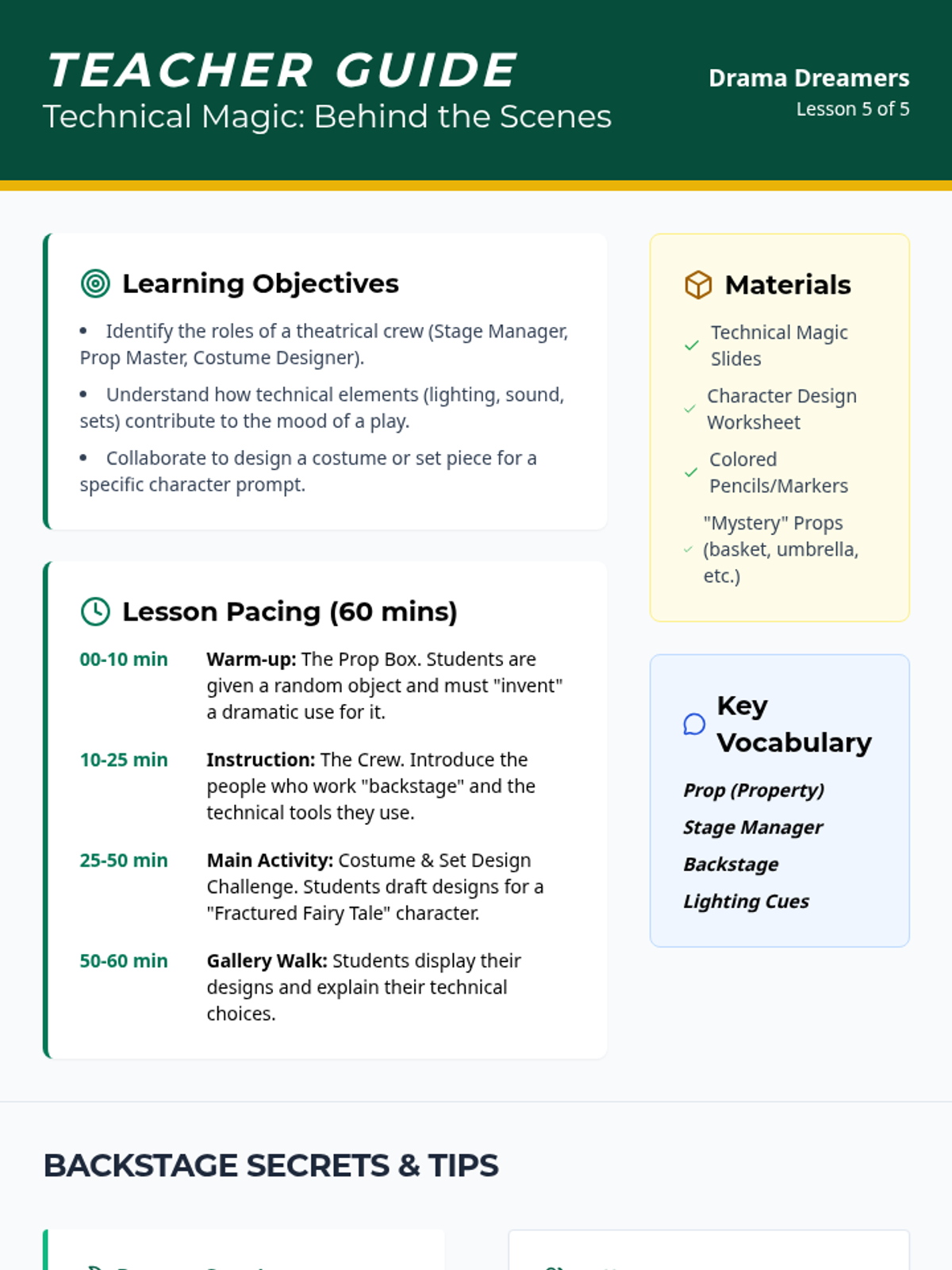
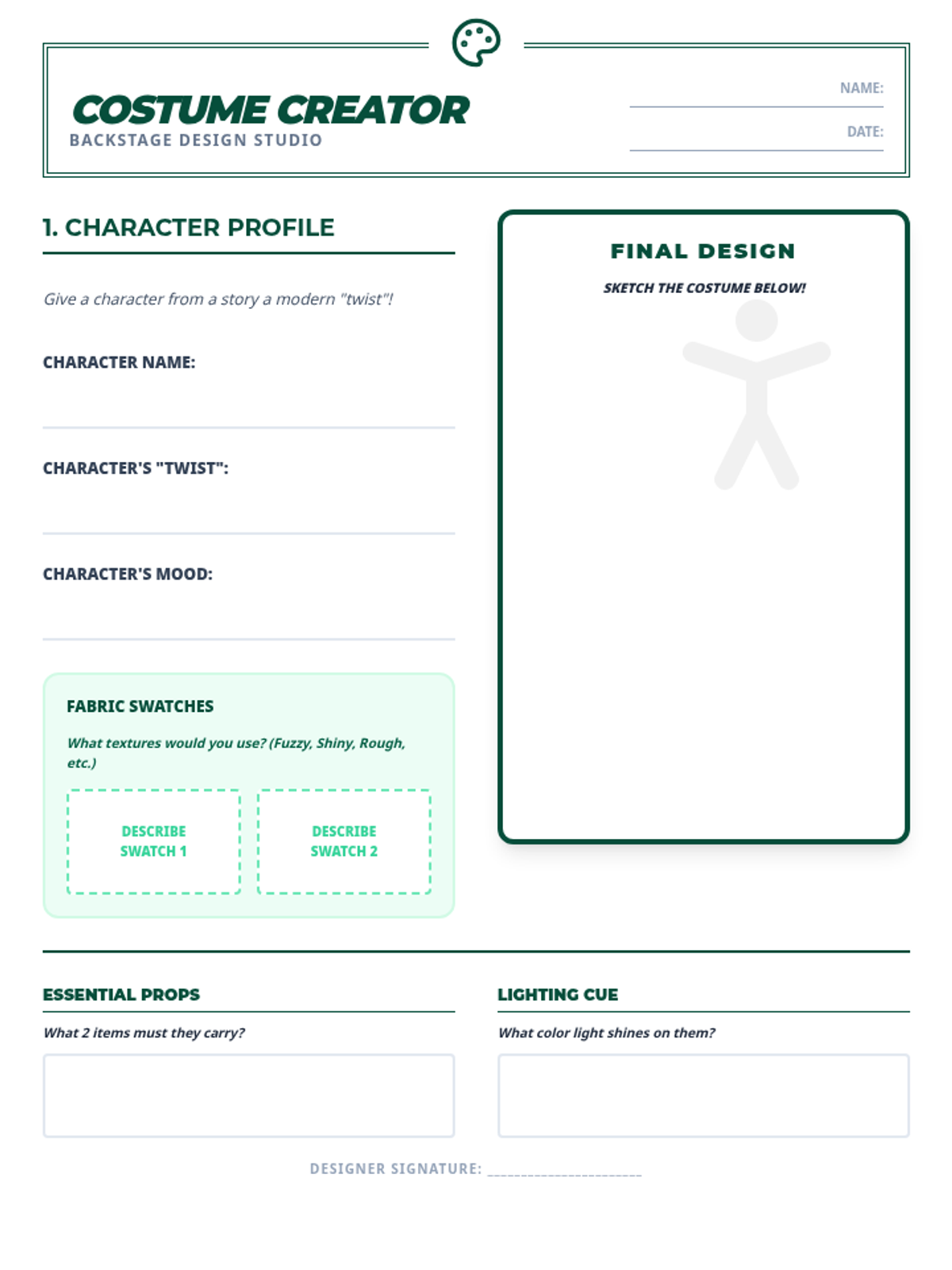
An exploration of the "Behind the Scenes" heroes, from costume designers to stage managers, and the technical magic that brings a play to life.
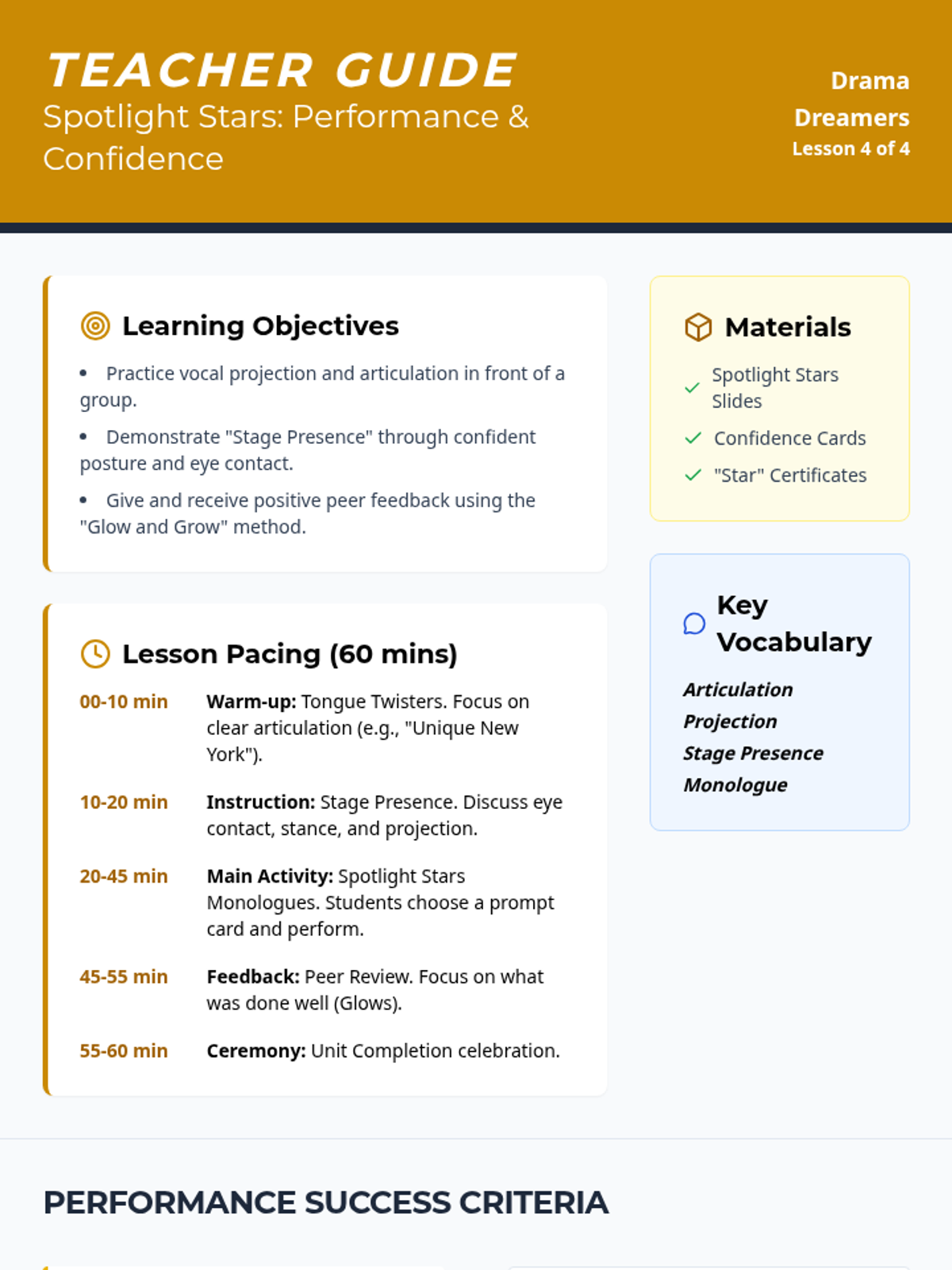
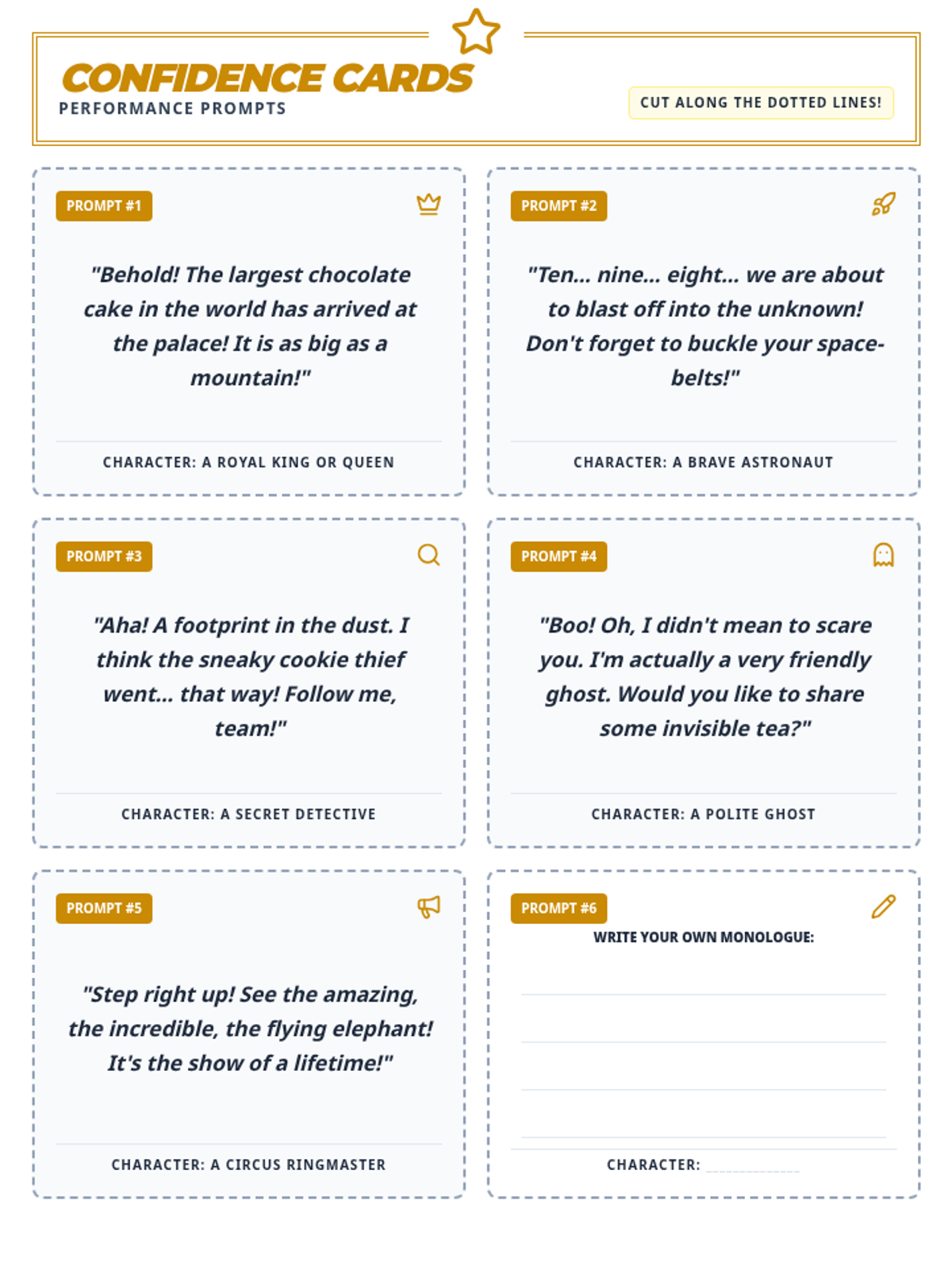
Focusing on presence and projection, students practice short speeches and monologues to build performance confidence.
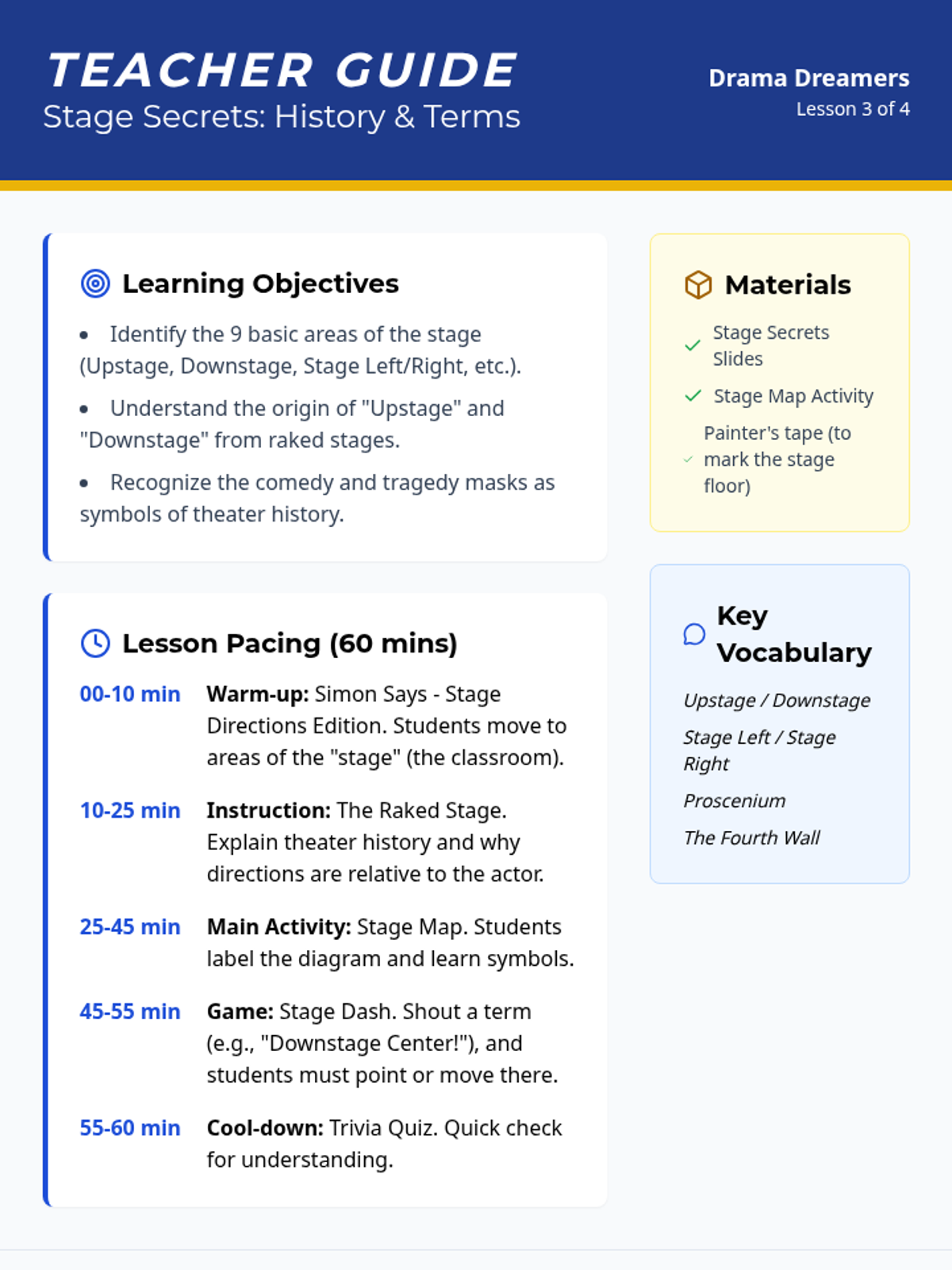
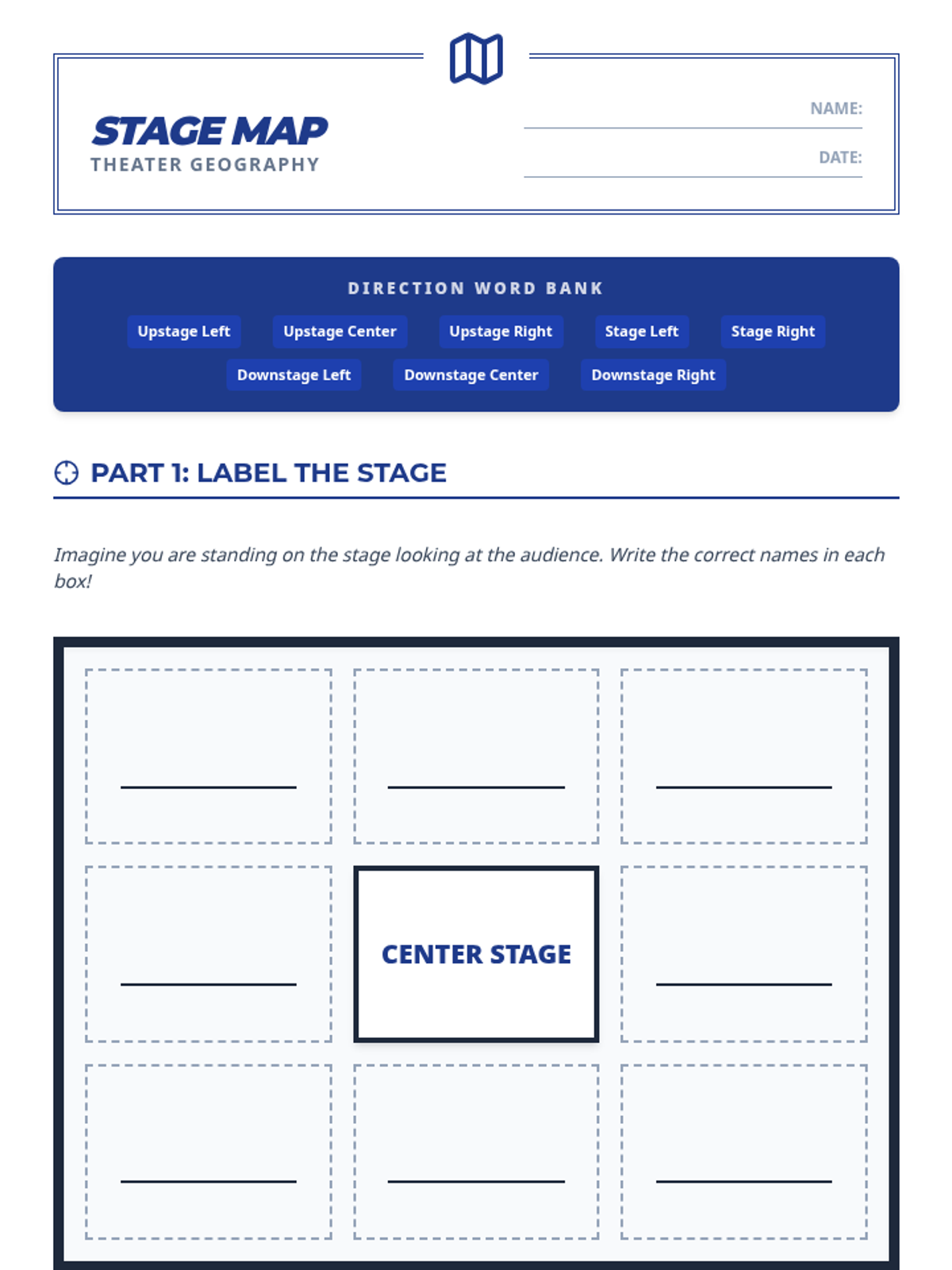
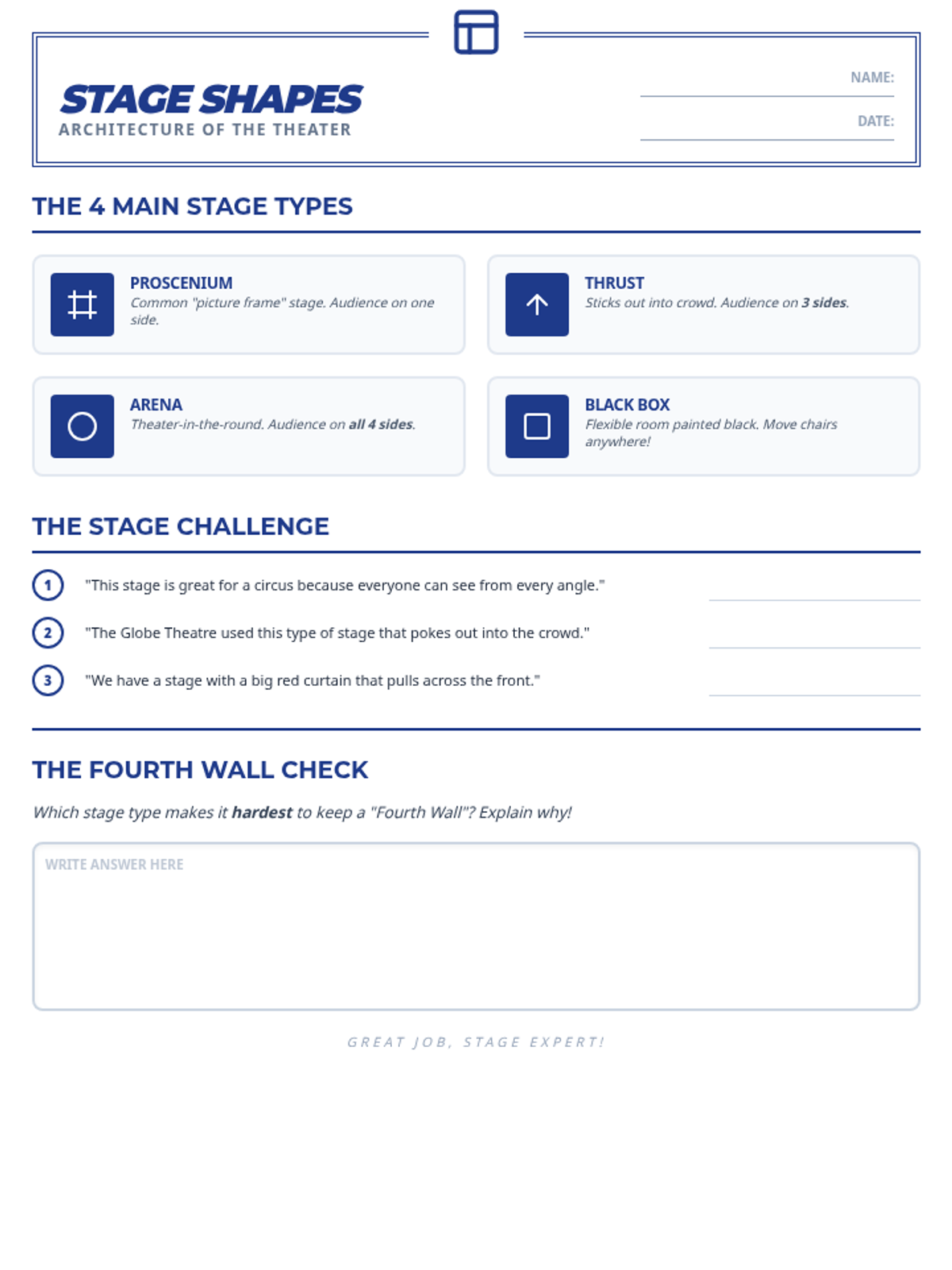
A journey through theater history and the technical language of the stage, from Ancient Greece to modern stage directions.
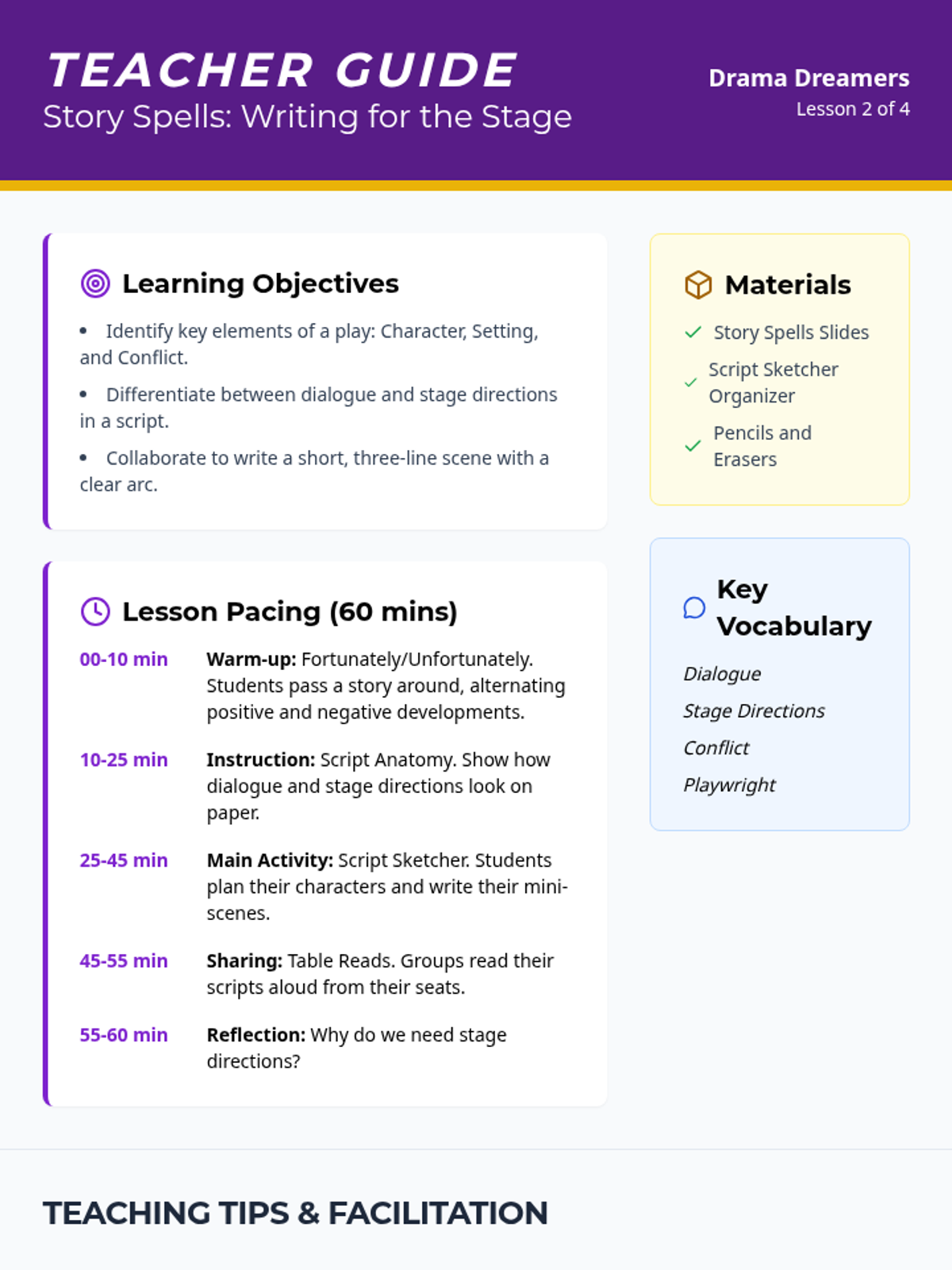
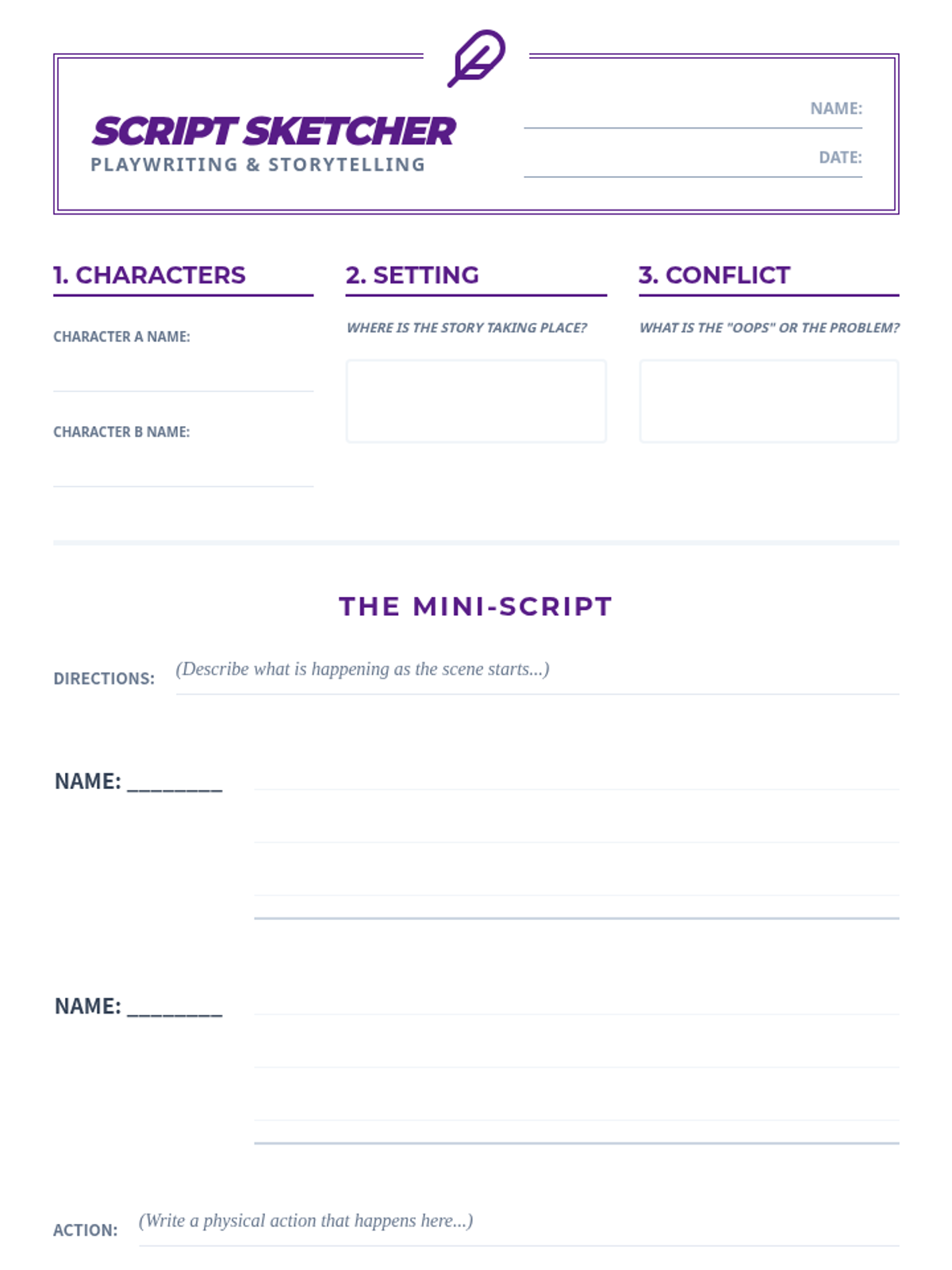
An introduction to the structure of plays, including characters, settings, and dialogue, where students draft their own short scenes.
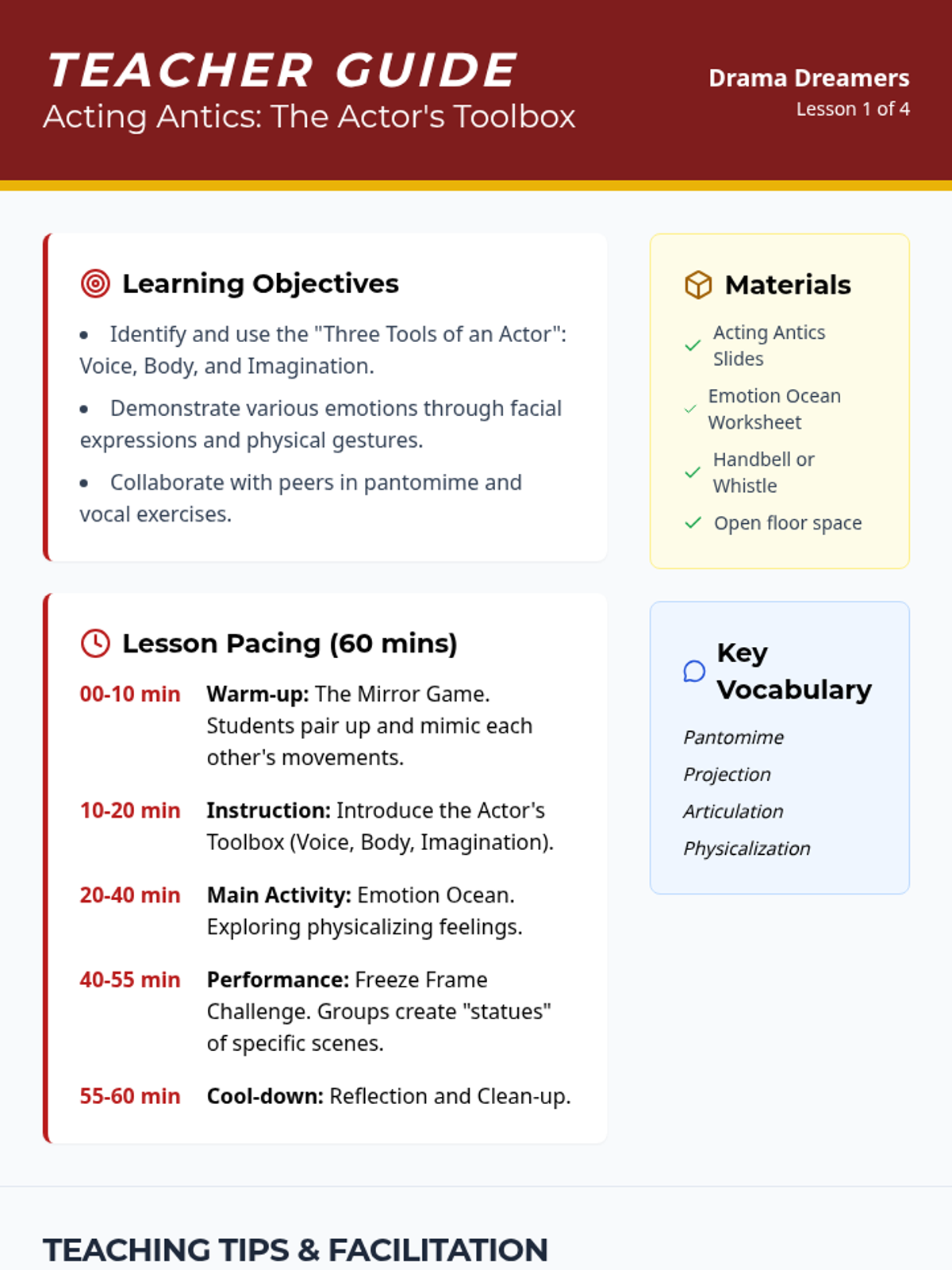
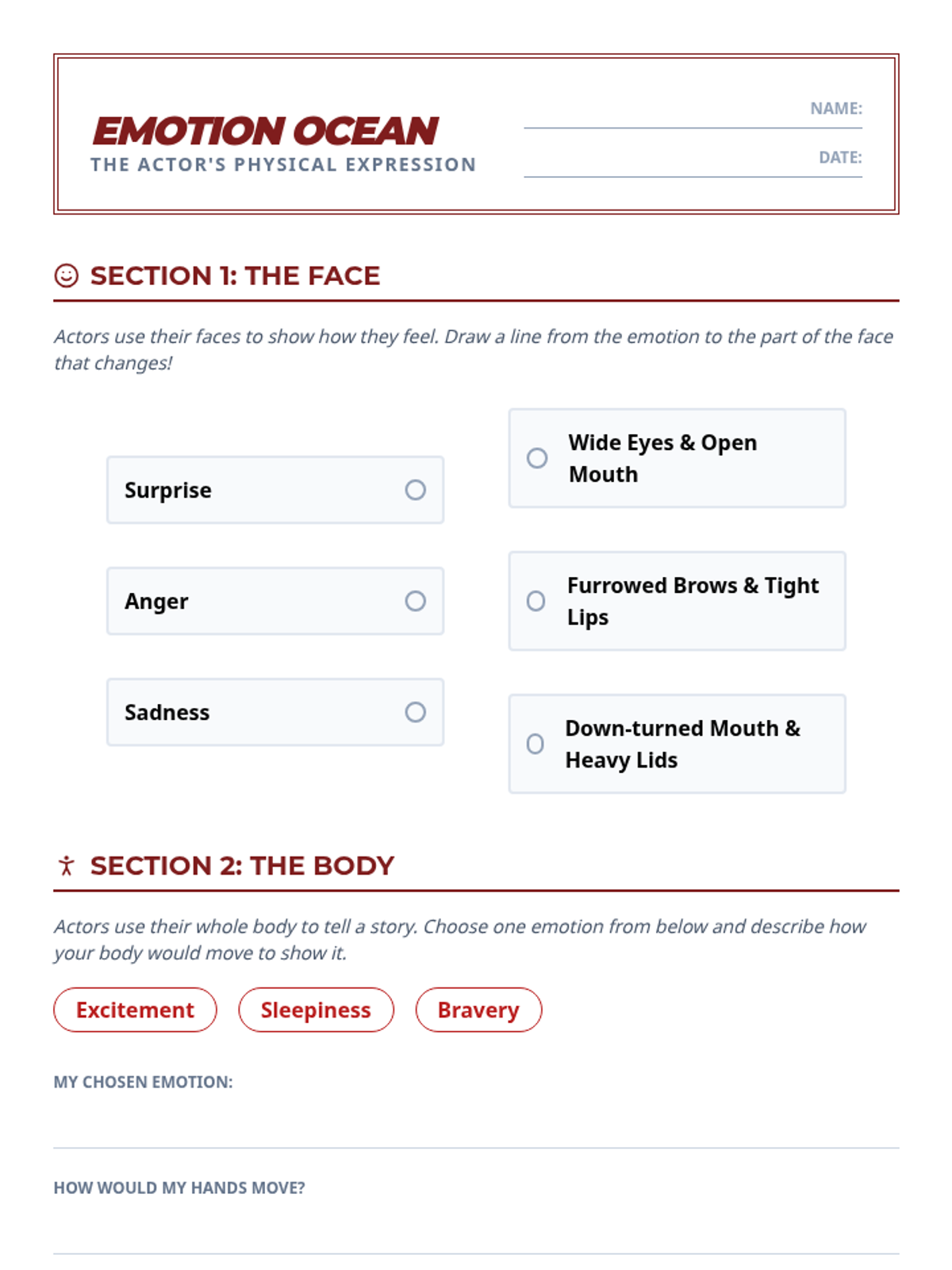
Students explore the core tools of an actor: voice, body, and imagination through games and expressive exercises.
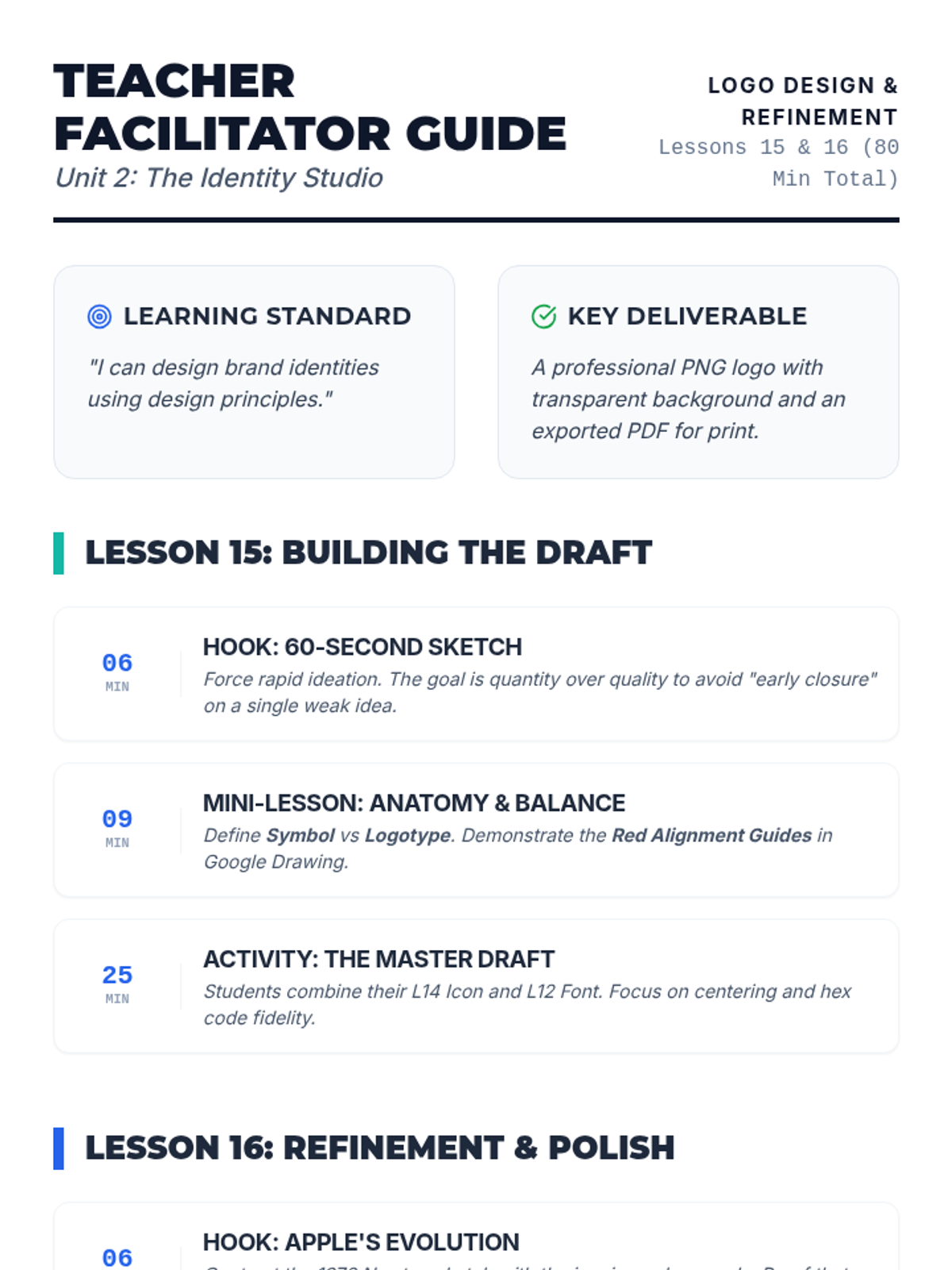
Students refine their logo drafts by applying principles of negative space and contrast, creating color and black-and-white versions for professional export.
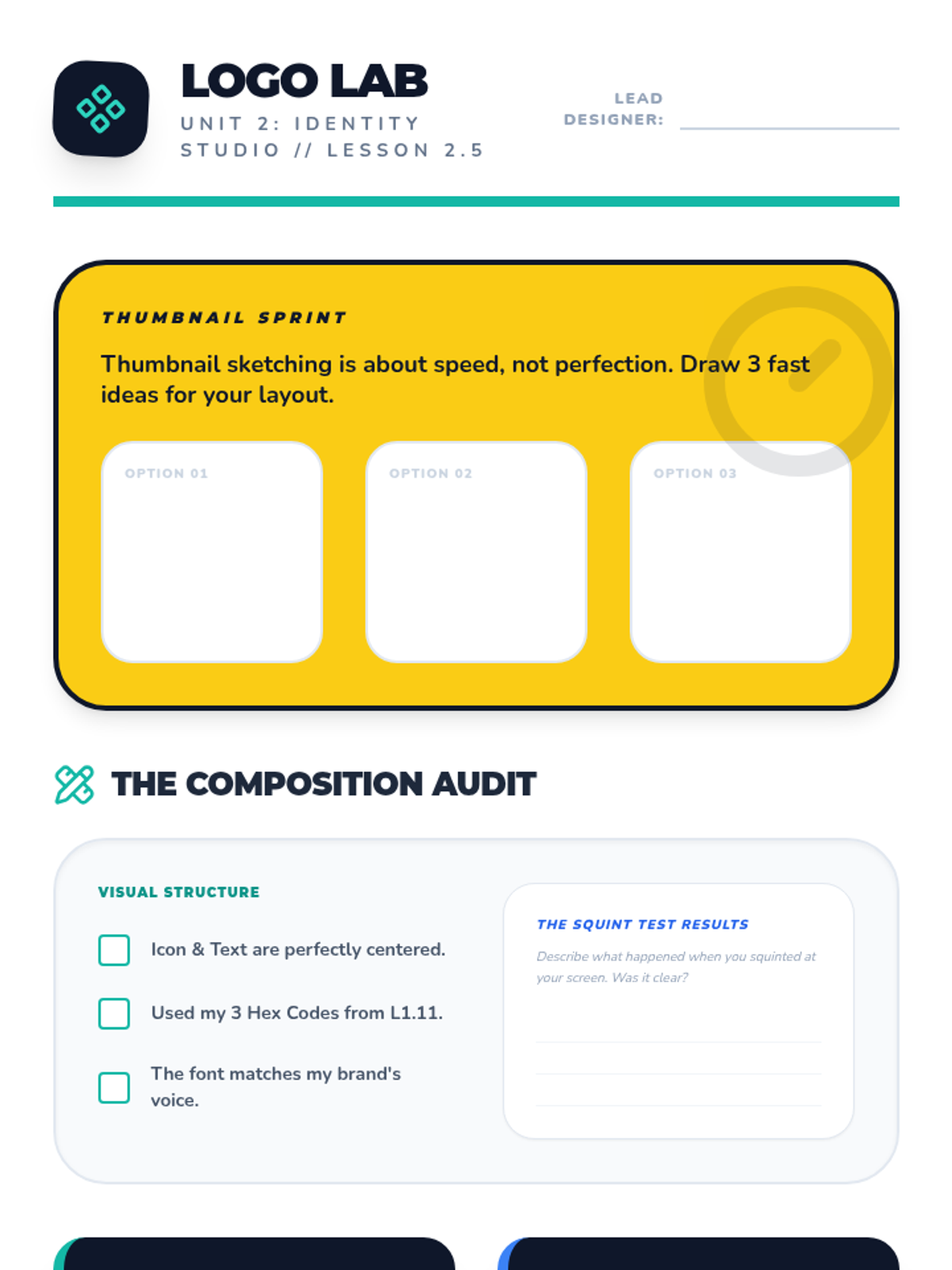
Students combine their icon and typography choices to build an official brand logo draft, focusing on balance, alignment guides, and the 'Squint Test' for simplicity.
Students master custom shape creation using polyline and curve tools, exploring line weights and the importance of vector scalability for professional branding.
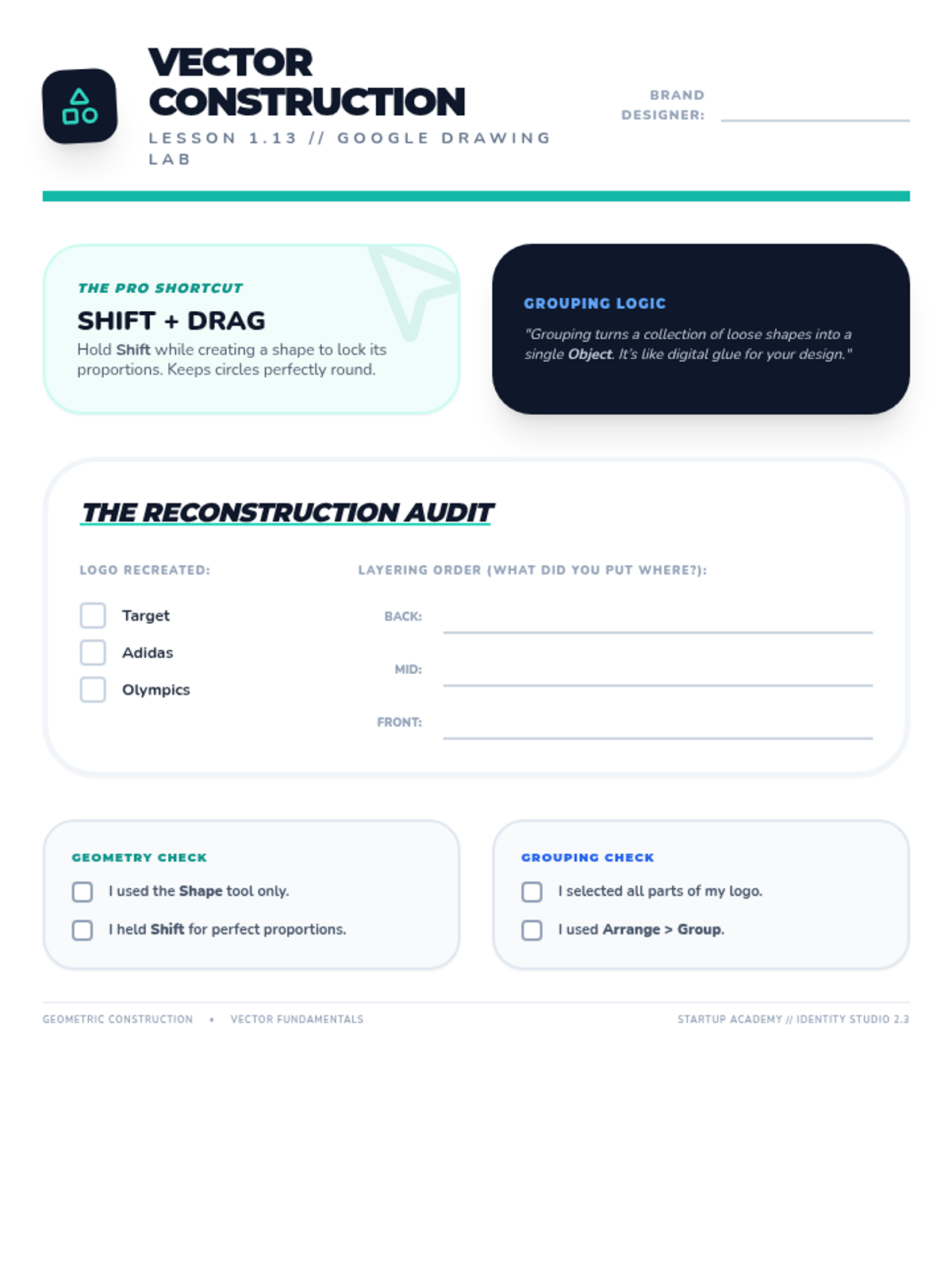
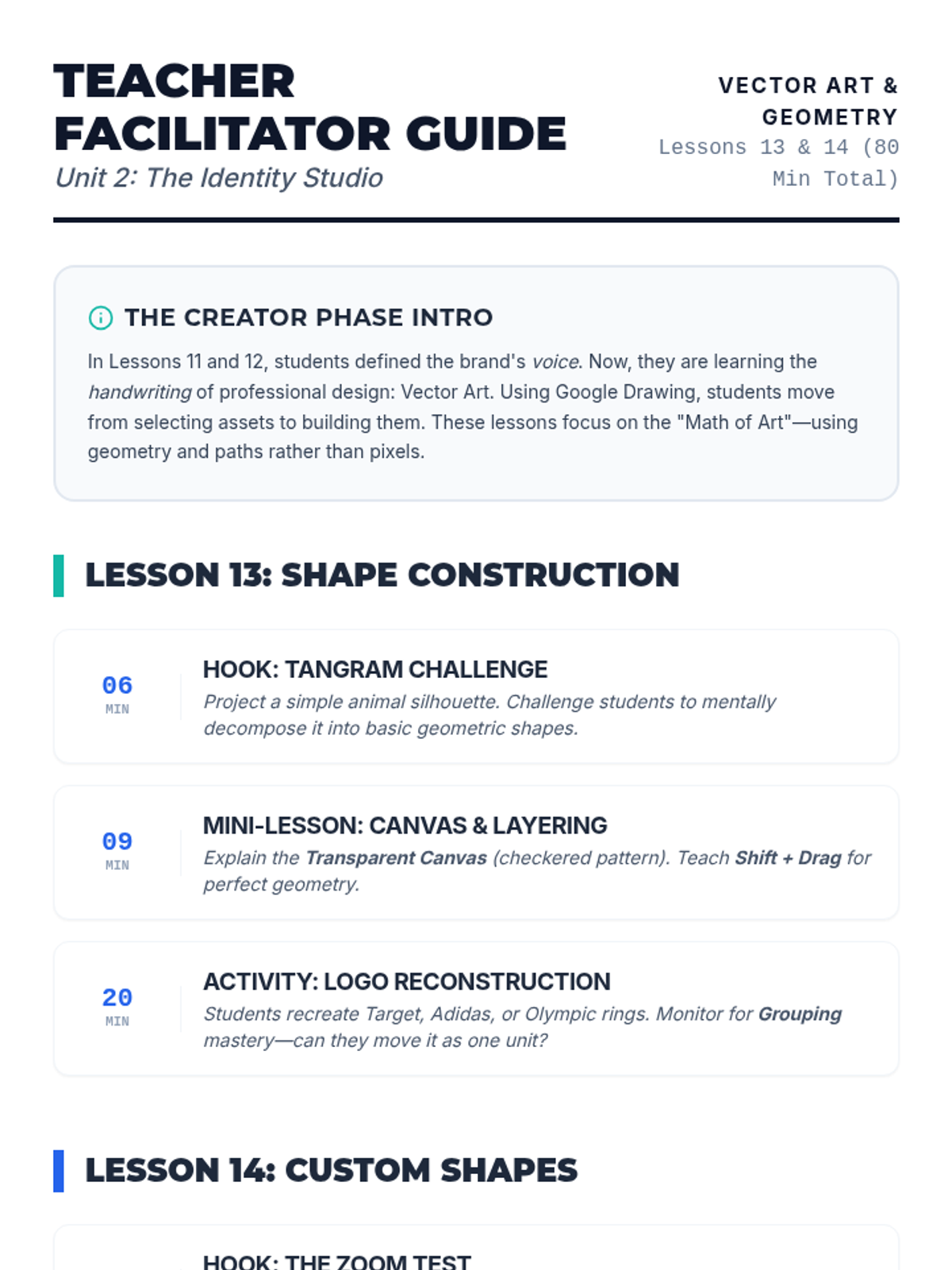
Students move from curating to creating, using Google Drawing to build complex objects with simple geometric shapes while learning the fundamentals of vector design and layering.
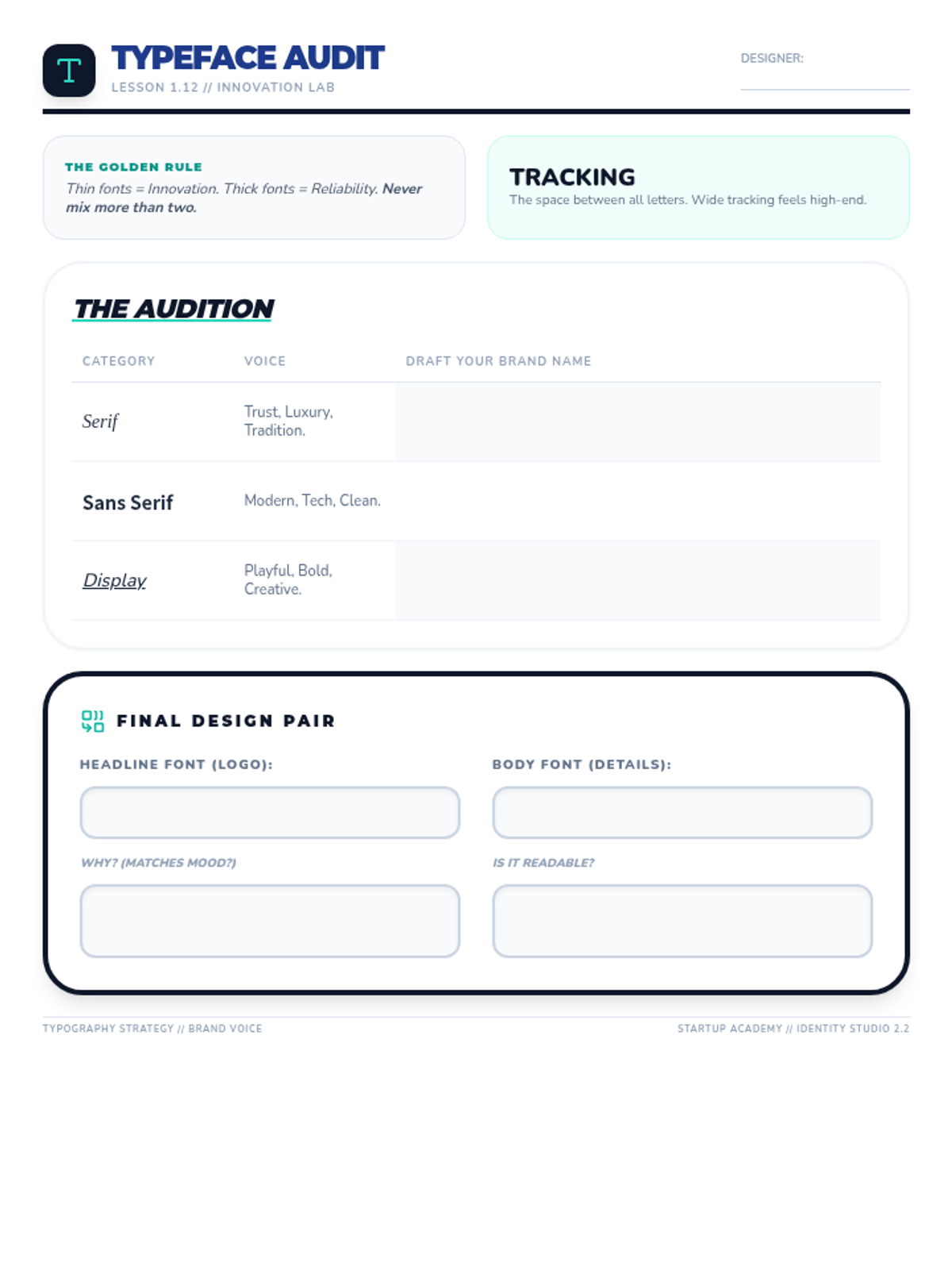
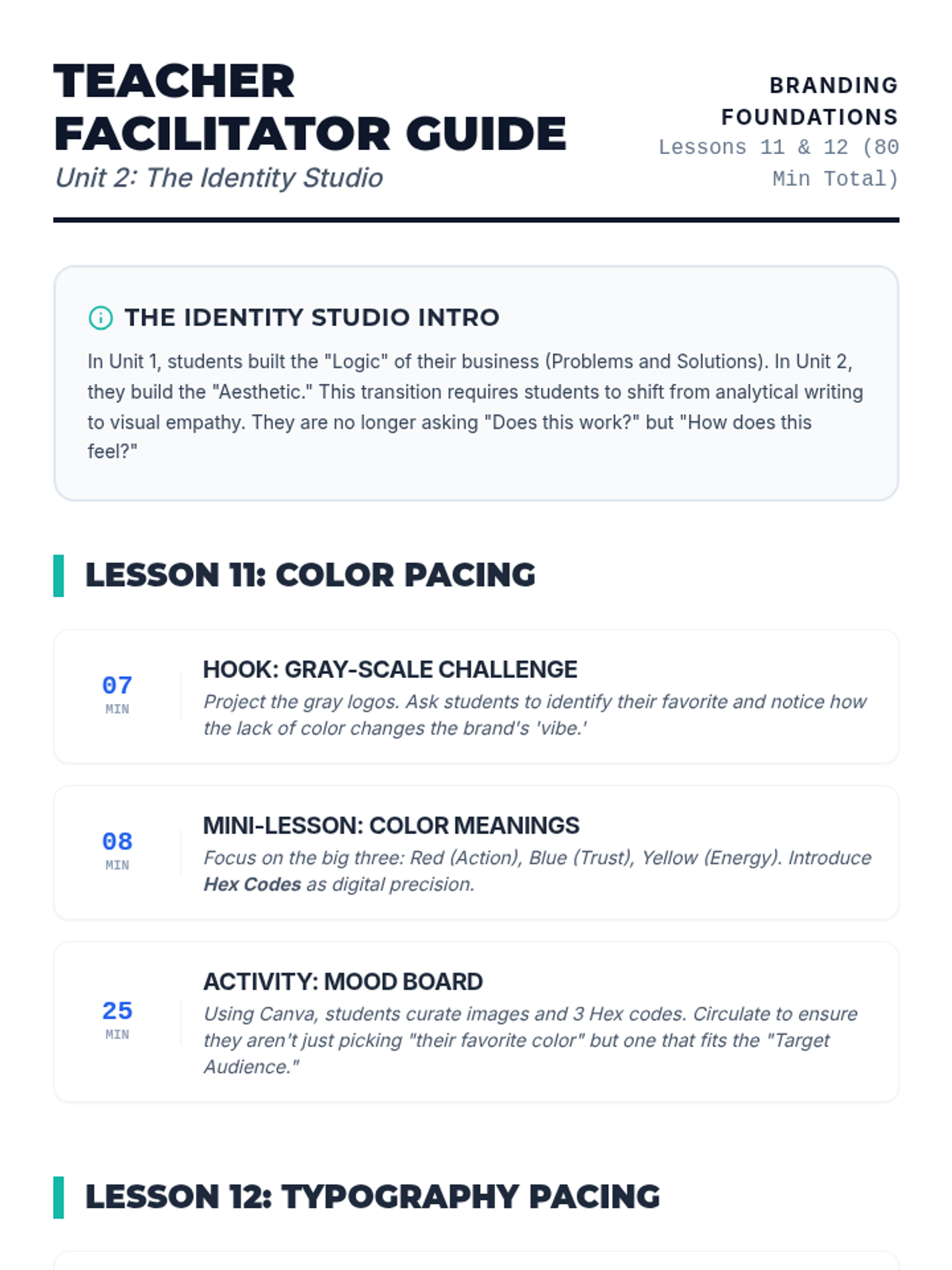
Students learn how font choices communicate a brand's tone of voice, distinguishing between serif, sans serif, and display fonts to select a pair that fits their business identity.
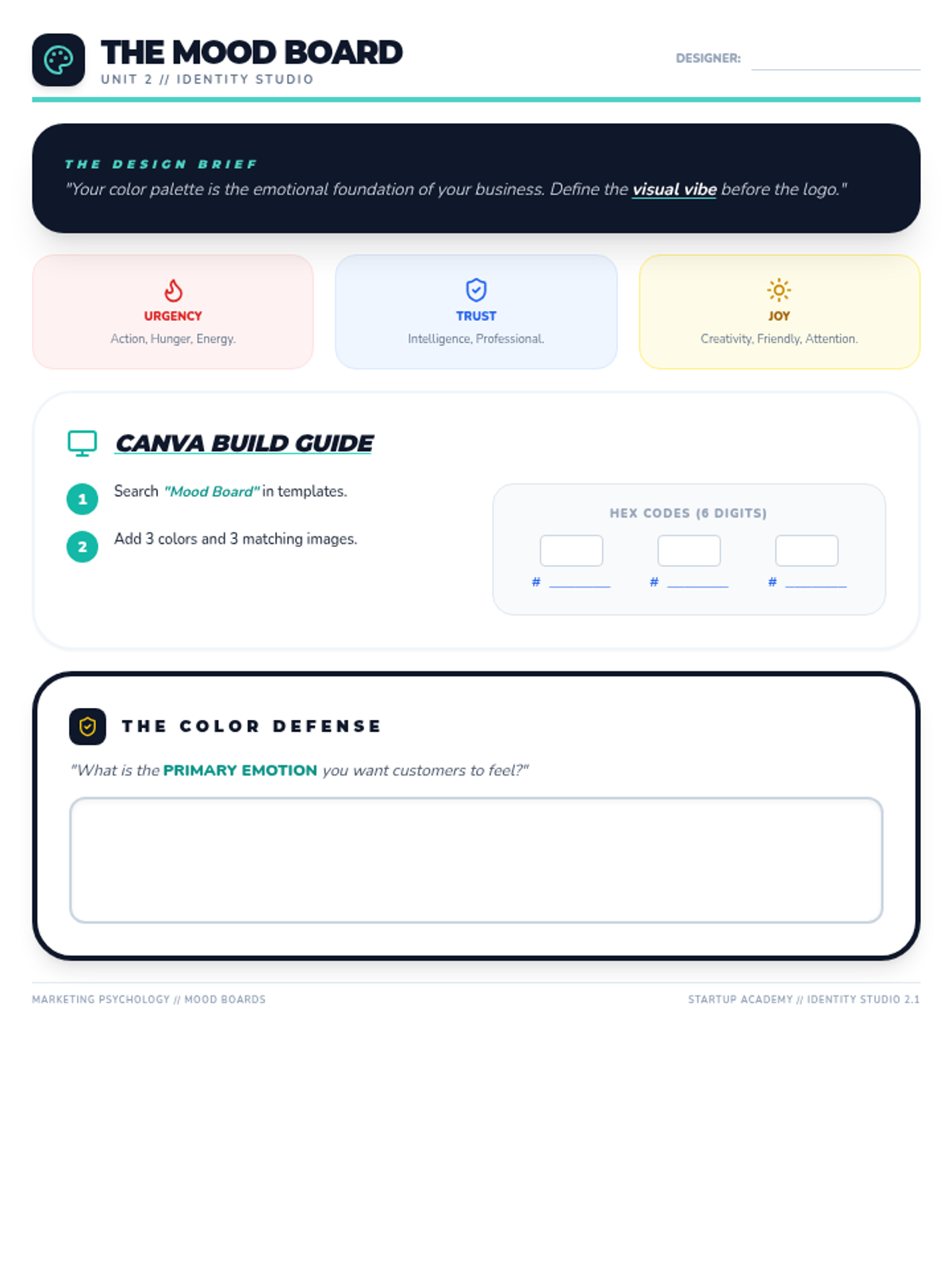
Students explore the emotional impact of color in branding, learning to use Hex codes and curated imagery to build a brand mood board that reflects their product's personality.
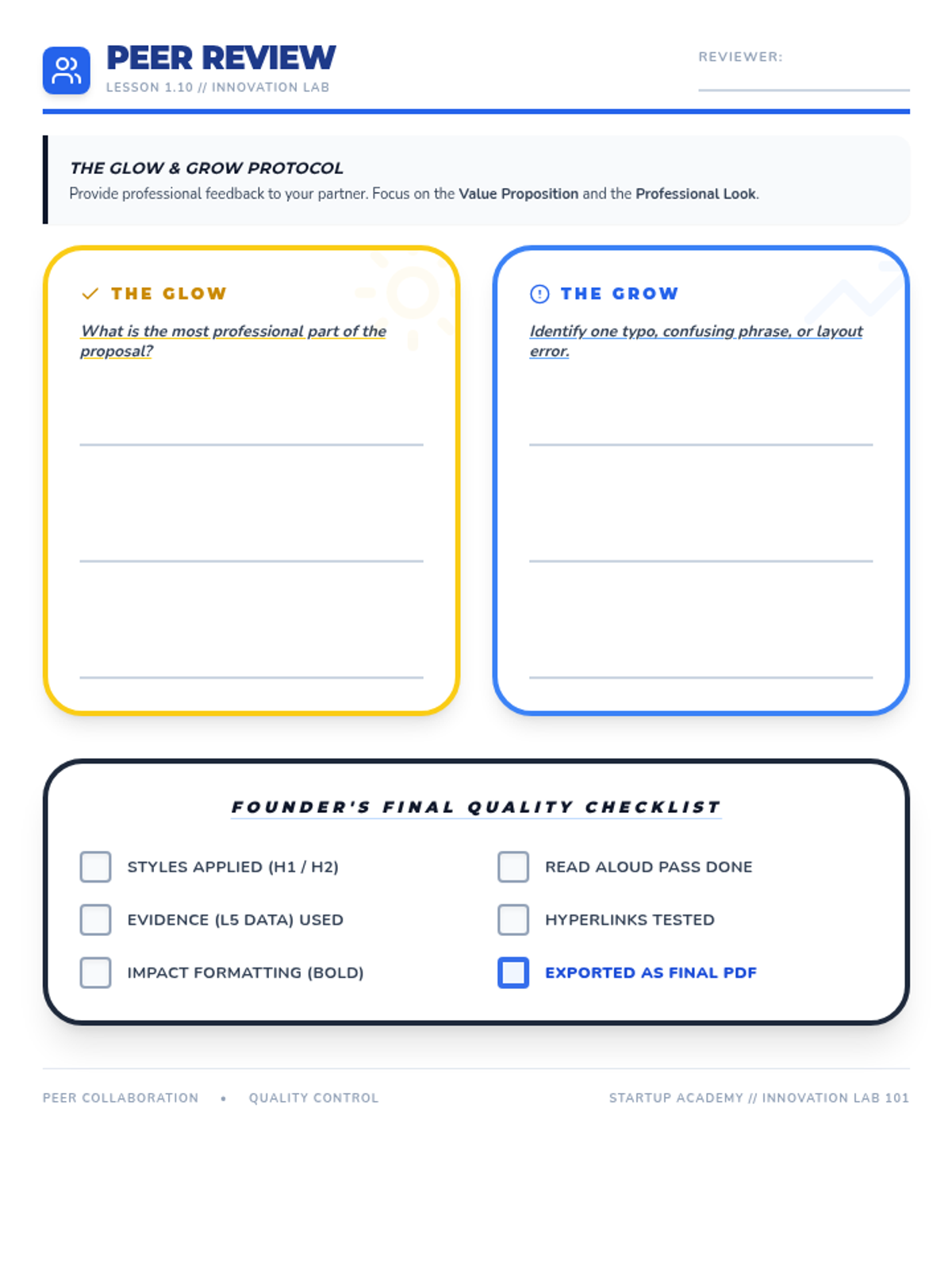
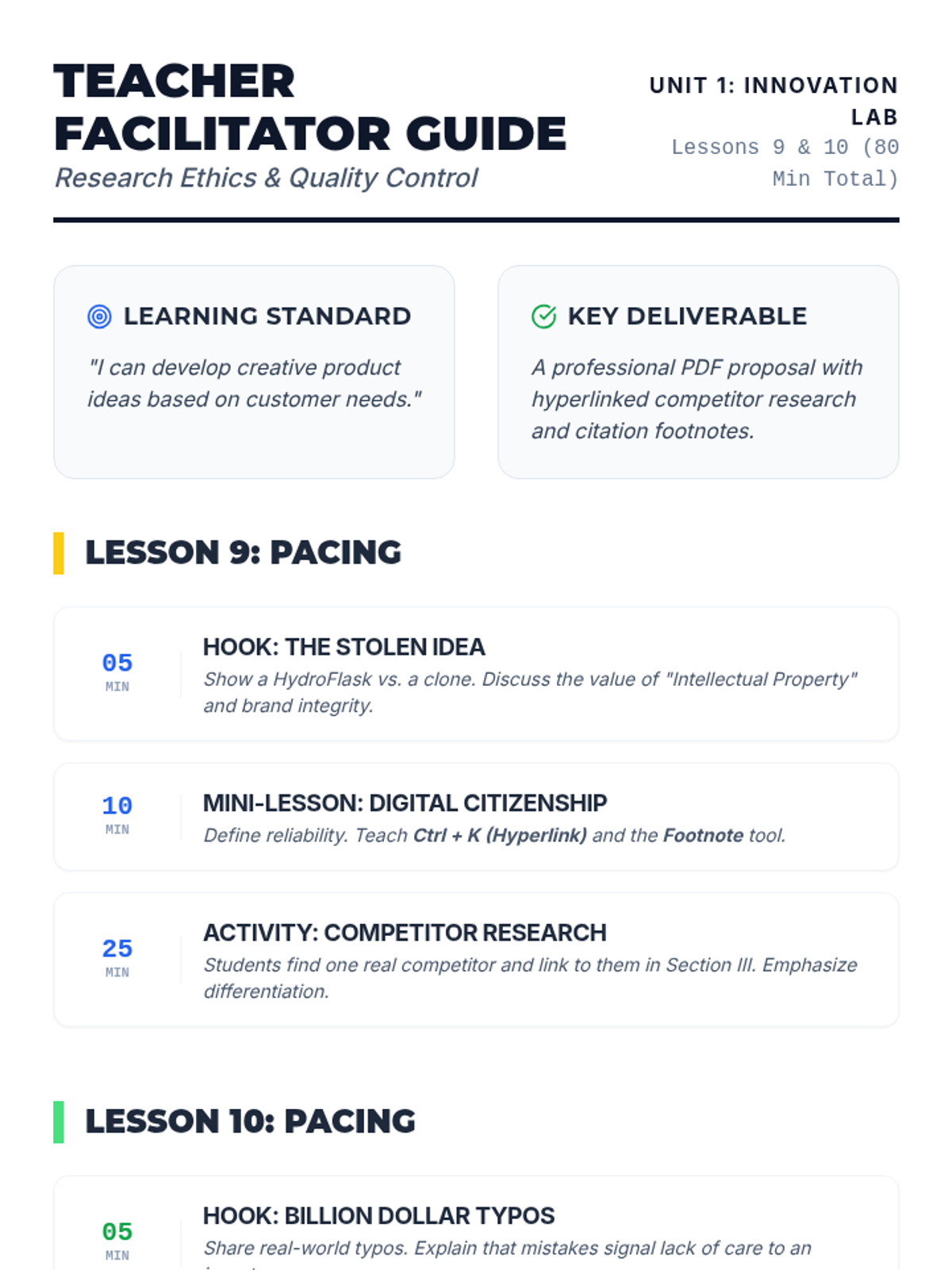
Students perform quality control on their business proposals through peer review, grammar tools, and text-to-speech auditing before exporting their final work as professional PDFs.
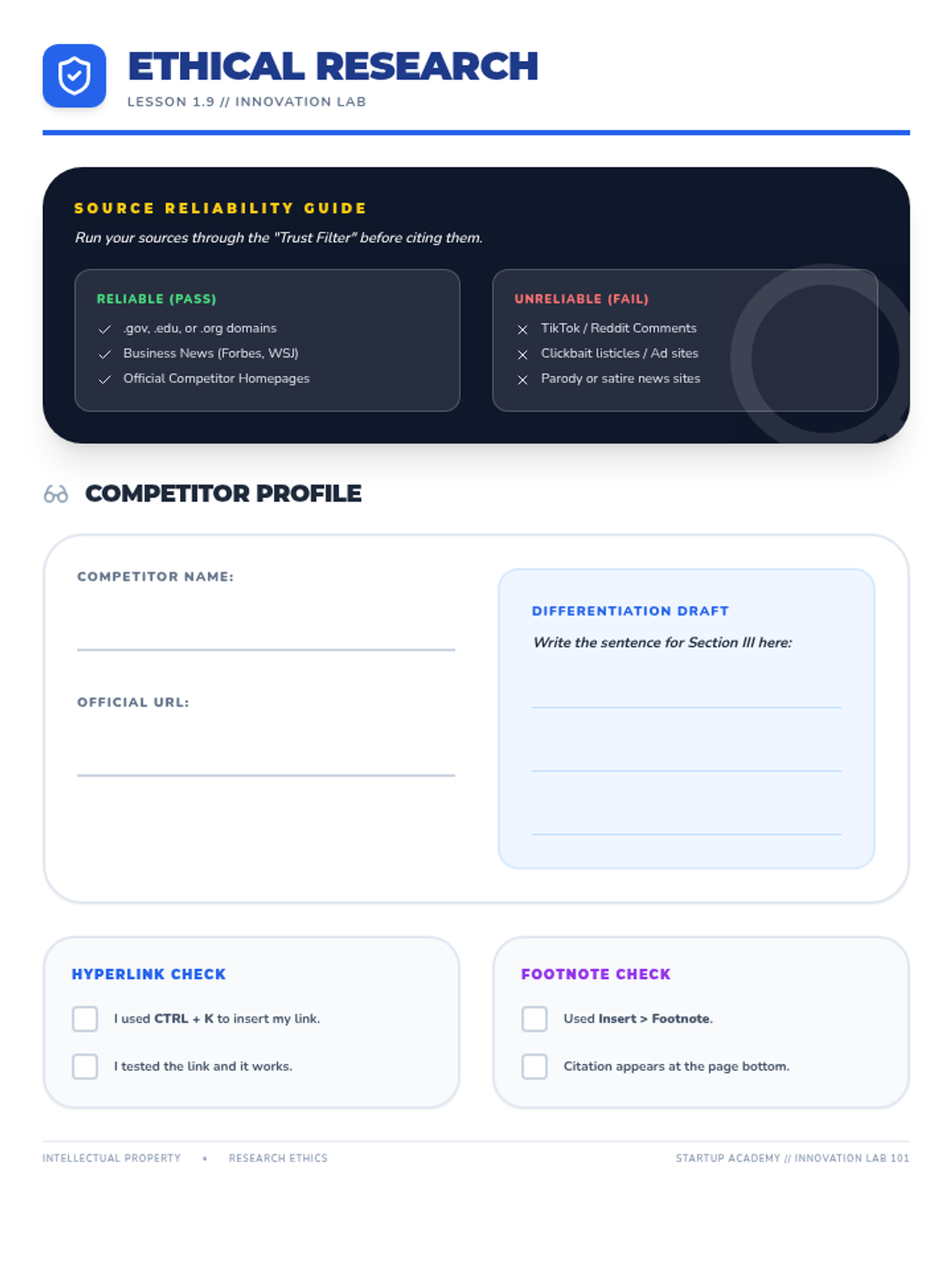
Students learn about intellectual property, source reliability, and technical citation skills like hyperlinking and footnotes to perform ethical competitor research.
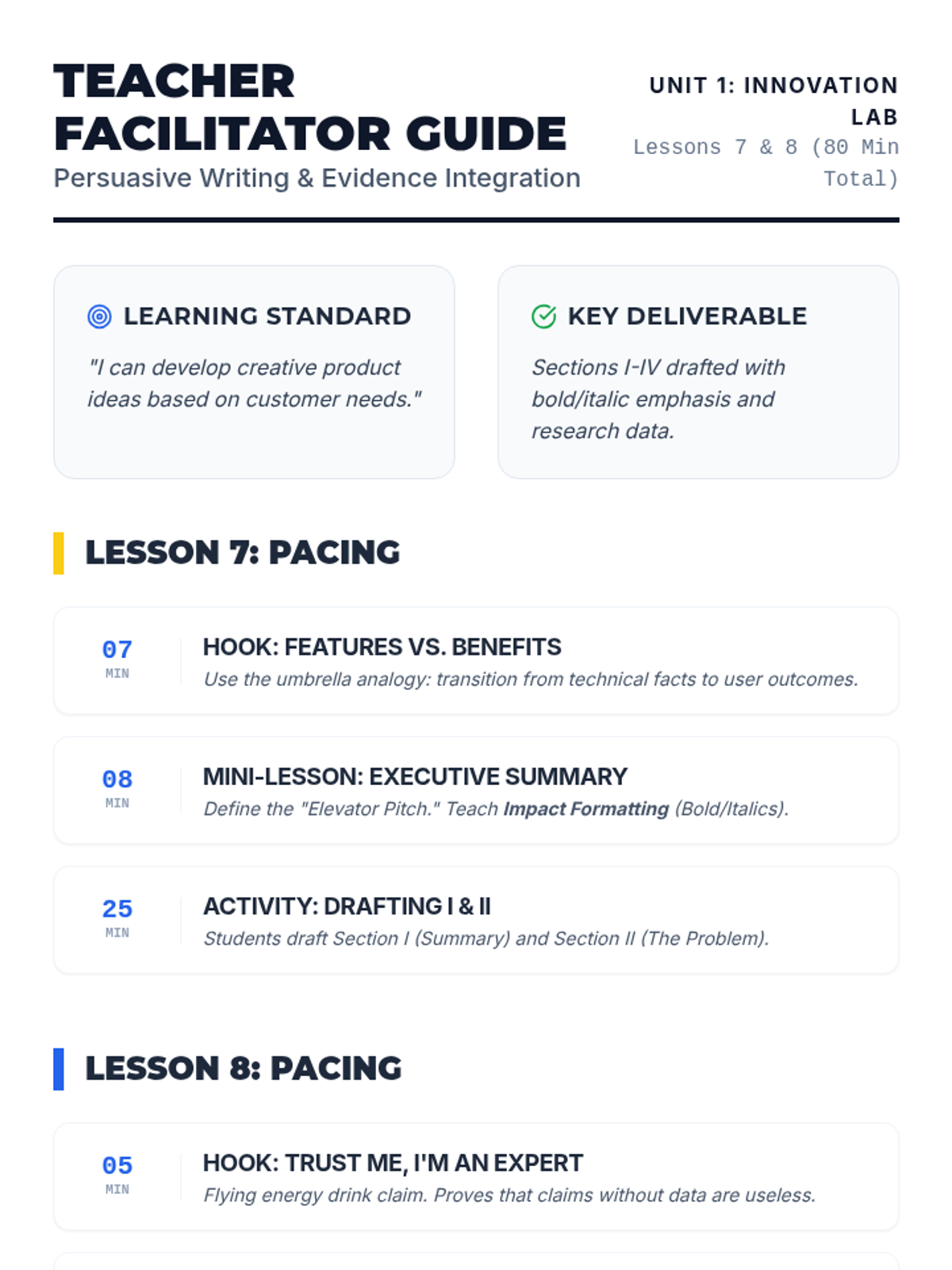
Students integrate market research data and customer testimonials into their formal proposals, using evidence to validate their product concepts and finalizing the Solution section.
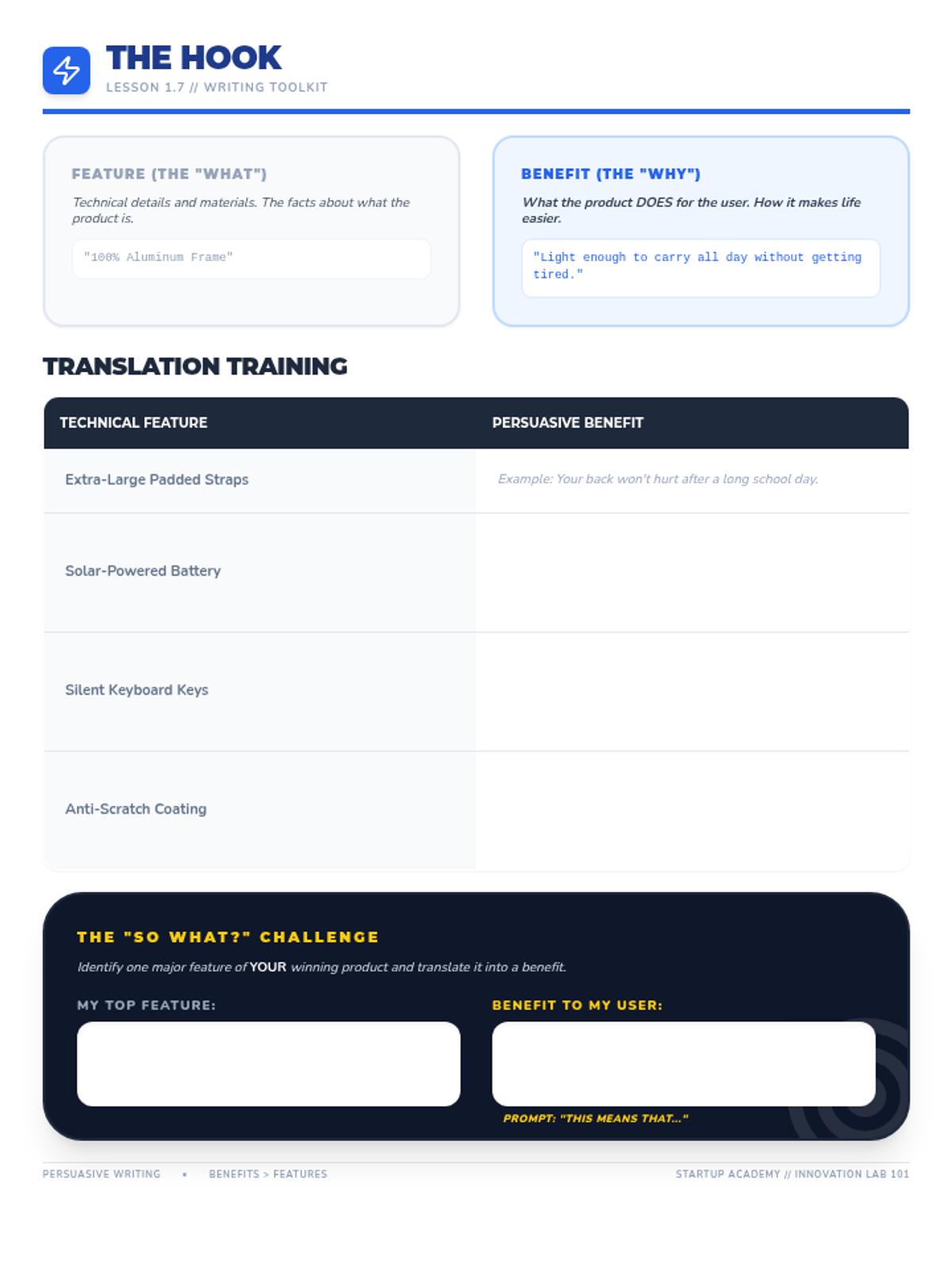
Students learn to distinguish between product features and customer benefits, drafting the Executive Summary and Problem sections of their business proposal using persuasive formatting.
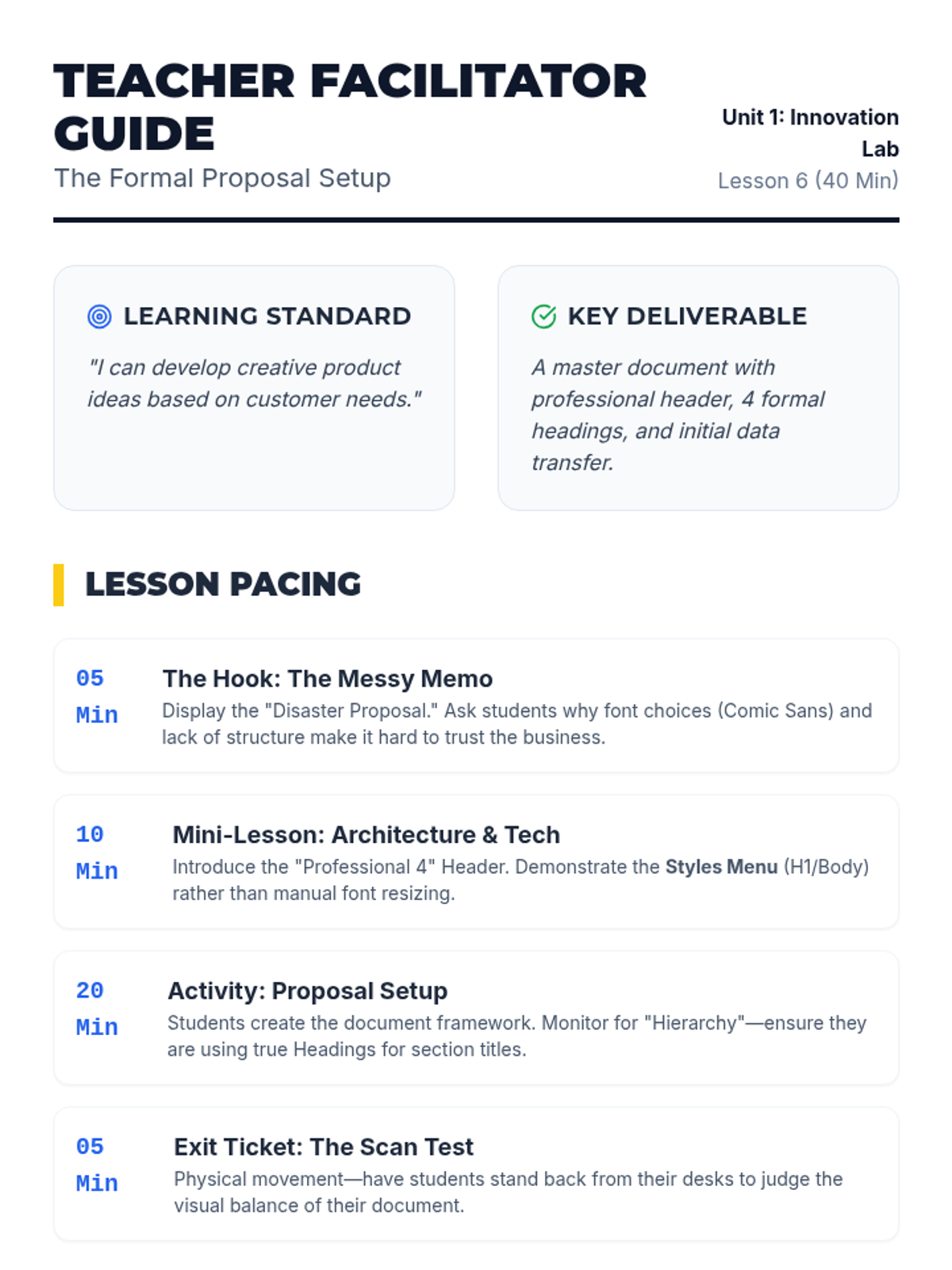
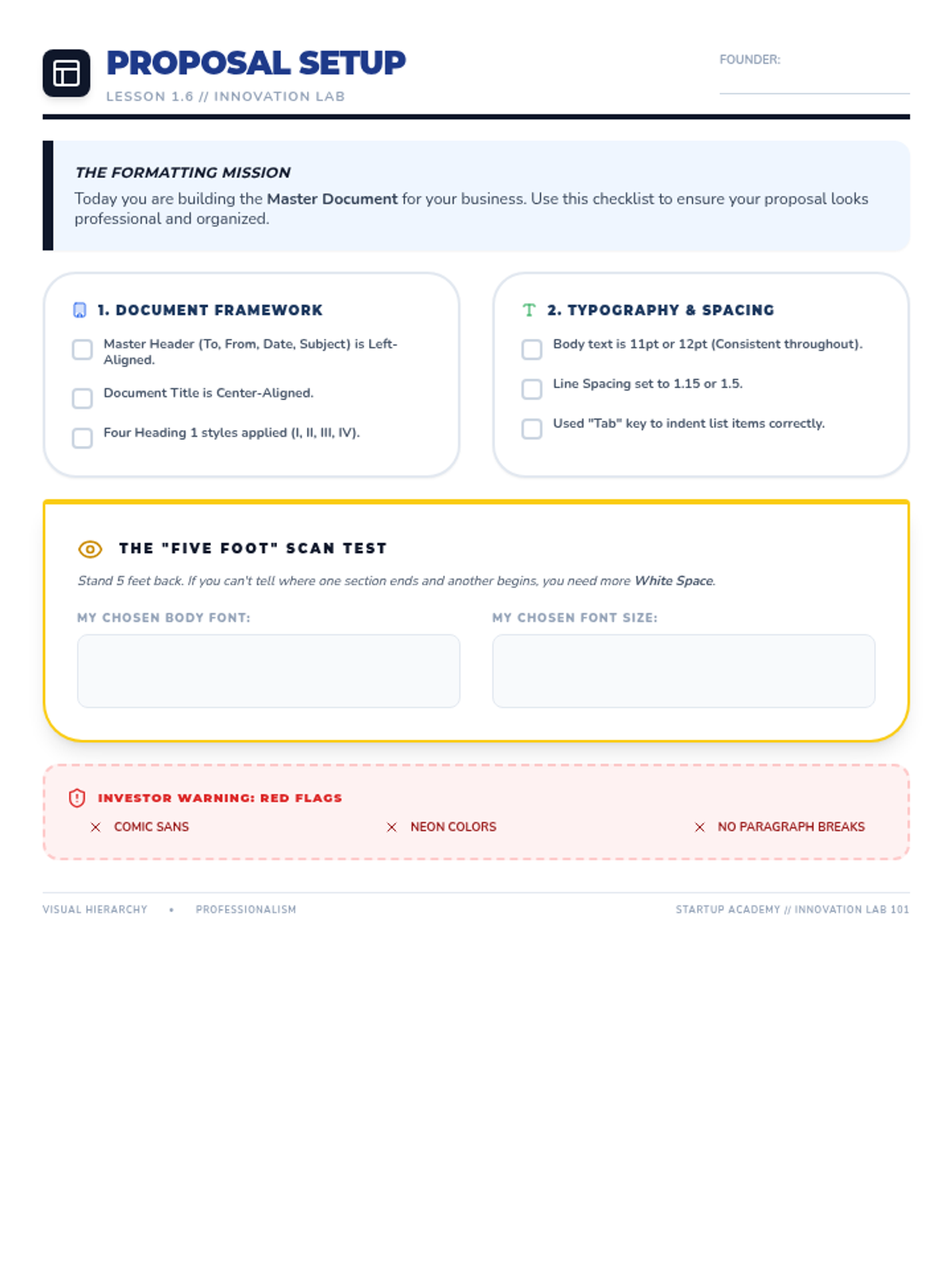
Students learn the importance of professional document formatting and hierarchy, setting up a formal business proposal template with structured headings and standardized typography.
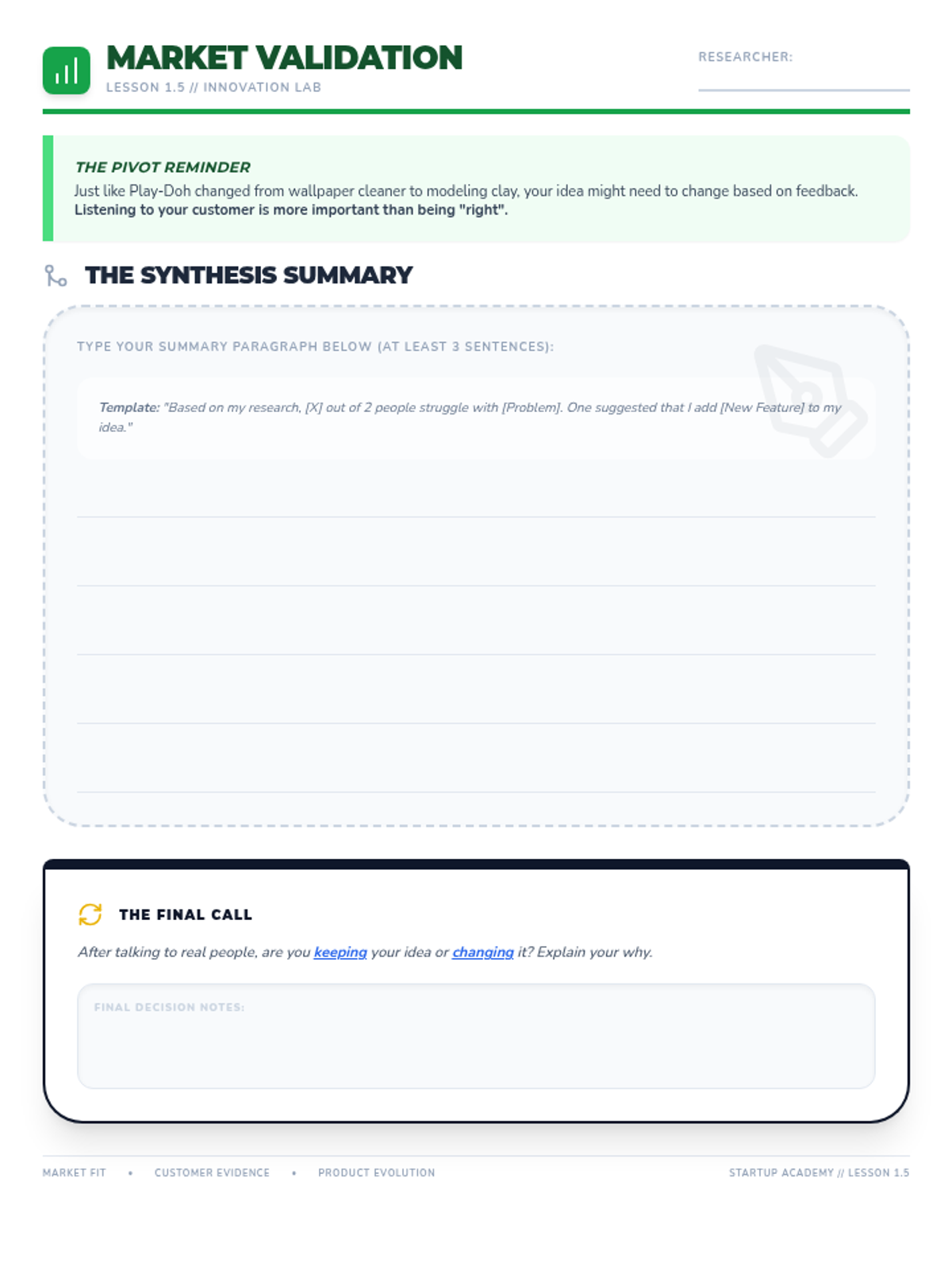
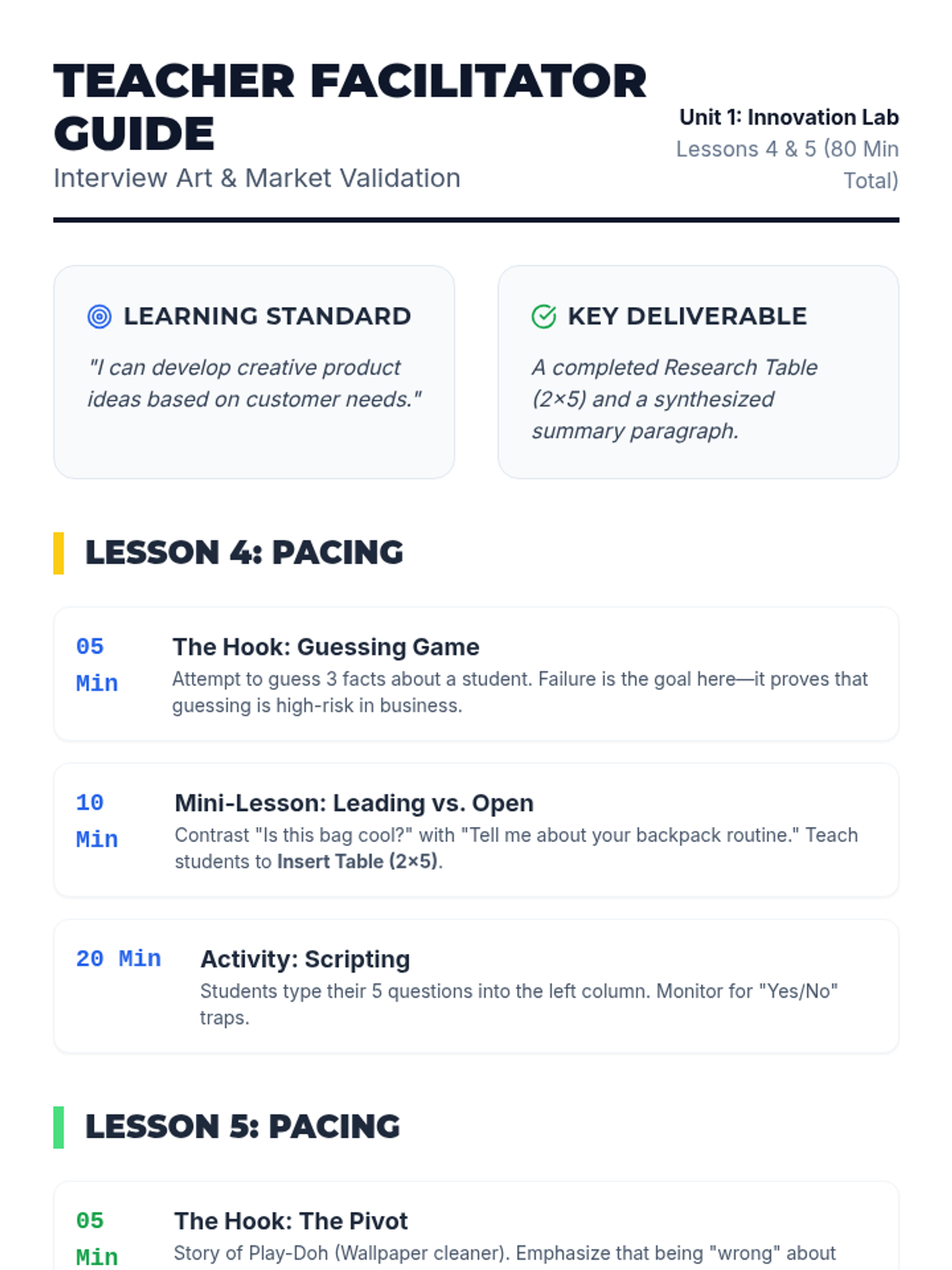
Students conduct a market research sprint, interviewing classmates to validate their product ideas and learning to 'pivot' based on real user feedback and data synthesis.
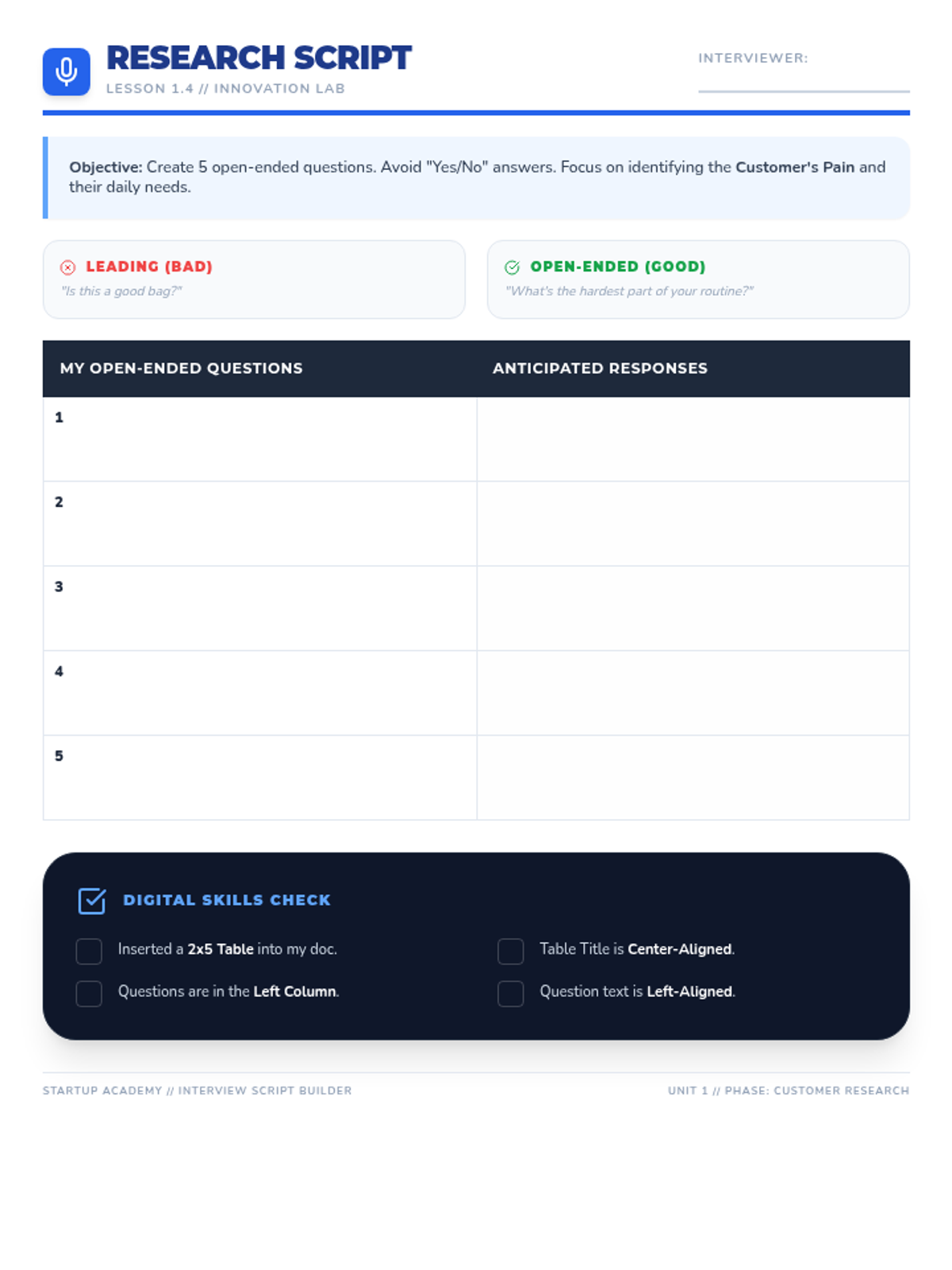
Students learn the difference between leading and open-ended questions, developing a research table and interview script to gather unbiased feedback from potential customers.