Lenny LearningLenny
Create
Explore
Workspace
LoginSign up
MathEnglish Language ArtsScience & EngineeringSocial StudiesGlobal LanguagesHealth & Physical EducationSpecial EducationCounseling & Life SkillsArts & CreativityESL
Lenny LearningLenny
Lenny Learning
About
Training
Pricing
Support
Contact
© 2026 Lenny Learning Inc.

Engineering & AI

SequencesLessonsMaterialsVideos
  1. Science & Engineering

Engineering & AI

SequencesLessonsMaterialsVideos

Mechanical and electrical engineering fundamentals combined with machine learning, robotics, and CAD design. Examines AI ethics and systems thinking within the context of modern technical problem-solving.

Science & EngineeringLife ScienceLiving ThingsAnimalsPlantsBody SystemsTraitsAdaptationsCellsEcosystemsHeredityGenes to TraitsCell DivisionPhysicsComparing MaterialsShapes and PropertiesMagnetsMagnetismLightSoundLight and SoundMatterStates of MatterChanges of StateMixturesPhysical and Chemical ChangeHeating and CoolingHeat and Thermal EnergyEnergyForce and MotionElectrical CircuitsAtoms and MoleculesPeriodic TableMotion in One DimensionMotion in Two DimensionsScalars and VectorsForces and Laws of MotionCircular Motion and GravityMomentum and ImpulseWork, Energy, and PowerWavesElectromagnetic WavesGeometric OpticsElectricity and MagnetismSimple Harmonic MotionThermodynamicsNuclear PhysicsEarth Science & AstronomyWeatherWater CycleRocks and MineralsFossilsEarth's FeaturesEarth's ResourcesEarth's StructureWeather and ClimateEarth EventsFossils and Geologic TimePlate TectonicsHuman ImpactsAstronomyChemistryUnits and MeasurementAtomic StructurePeriodic TrendsChemical BondingNomenclatureMolecular StructureIntermolecular ForcesThe MoleStoichiometryProperties of GasesSolutionsChemical ReactionsBalancing EquationsEnergy ChangesRates of ReactionsEquilibriumAcids and BasesQuantum ModelBiologyClassificationCell StructureThe Chemistry of LifeBiomoleculesCellular TransportCell EnergyCell Growth and DivisionDNAProtein SynthesisMeiosis and Sexual ReproductionPatterns of InheritanceMulticellular OrganismsEvolutionEcologyBiodiversityComputer ScienceAlgorithms and Computational ThinkingProgramming LanguagesComputing SystemsNetworks and InternetData AnalysisCybersecurityAI and Machine LearningSoftware Design and DevelopmentBlockchainEngineering & AIDesigning ExperimentsEngineering PracticesDesign ThinkingEngineering Design ProcessMechanical EngineeringElectrical EngineeringMaterials and StructuresCAD and 3D DesignRoboticsArtificial Intelligence BasicsVibe CodingMachine LearningAI Ethics and SocietySystems ThinkingEntrepreneurship & InnovationEntrepreneurial MindsetBusiness Idea DevelopmentBusiness Plan BasicsMarketing & Customer DiscoveryFinancial Management for Startups
Designing ExperimentsStatistical methodologies for testing AI models, including variable isolation and hypothesis formulation. Builds systematic frameworks for data collection and performance evaluation to ensure robust engineering outcomes.
Engineering PracticesIterative design cycles, rigorous testing protocols, and documentation standards for artificial intelligence lifecycles. Addresses reliability, scalability, and ethical compliance within technical engineering workflows.
Design ThinkingEmpathy mapping, rapid prototyping, and iterative testing frameworks for human-centered engineering. Guides the transition from problem identification to scalable AI and hardware solutions.
Engineering Design ProcessSystematic problem-solving frameworks including defining constraints, prototyping, and iterative testing. Connects traditional methodologies with AI-enhanced modeling and predictive analysis for solution refinement.
Mechanical EngineeringKinematics, thermodynamics, and structural analysis applied to machine design and manufacturing. Integrates artificial intelligence for predictive maintenance and automated robotic systems.
Electrical EngineeringCircuit theory, electromagnetism, and digital logic design. Addresses power generation, signal processing, and the development of electronic hardware and systems.
Materials and StructuresGenerative design algorithms and predictive modeling for optimizing material properties and structural integrity. Connects traditional mechanics with machine learning for advanced stress analysis and performance forecasting.
CAD and 3D DesignParametric modeling, 3D sketching, and technical drawing techniques for product development. Incorporates AI-driven generative design and simulation to optimize structural integrity and manufacturing workflows.
RoboticsKinematics, sensor integration, and control systems for autonomous machines. Develops skills in mechanical design, circuit construction, and AI-driven navigation.
Artificial Intelligence BasicsCore principles of machine learning, neural networks, and algorithmic logic. Examines data processing techniques, automation models, and the societal implications of intelligent systems.
Vibe CodingNatural language programming and high-level software development using large language models. Equips developers to build functional applications by prioritizing iterative prompting and intent-based logic over manual syntax.
Machine LearningSupervised, unsupervised, and reinforcement learning algorithms for predictive modeling and pattern recognition. Examines neural networks, data preprocessing, and model evaluation techniques to develop autonomous systems.
AI Ethics and SocietyEthical frameworks, algorithmic bias, and data privacy in automated systems. Examines the societal impact of machine learning and strategies for responsible AI governance.
Systems ThinkingInterconnected components, feedback loops, and holistic design principles for complex technical environments. Examines emergent behaviors and unintended consequences within artificial intelligence and large-scale engineering projects.
No videos found
There are no videos available for this topic yet.
No videos found
There are no videos available for this topic yet.
Video
Solving Water Pollution: Prevention vs. Removal Strategies

Solving Water Pollution: Prevention vs. Removal Strategies

This video provides a comprehensive overview of strategies to combat water pollution, focusing specifically on the Chesapeake Bay watershed. It distinguishes between two primary approaches: prevention (keeping pollution out) and removal (cleaning pollution up). The host explains how nutrient pollution creates 'dead zones' that harm aquatic life and disrupt local economies, using real-world examples to illustrate the connection between human activities and environmental health. The content explores specific technologies and methods for each strategy. For prevention, it covers individual actions like managing pet waste and large-scale engineering solutions like permeable pavement and buffer strips. For removal, it discusses dredging, floating barriers, and biological treatments. The video emphasizes the challenges of cleaning moving water and explains why prevention is generally considered the 'gold standard' in environmental management. This resource is highly valuable for teaching environmental science, ecology, and critical thinking. It moves beyond simple definitions to explore the complexities of environmental decision-making, asking students to consider cost-benefit analyses and the competing needs of various stakeholders such as farmers, fishers, and local governments. It sets the stage for discussions on sustainability and civic responsibility.

Miacademy & MiaPrep Learning ChannelMiacademy & MiaPrep Learning Channel

9mins 1s

Video
How Engineers Solve Problems with the Design Process

How Engineers Solve Problems with the Design Process

This engaging educational video introduces young students to the concept of engineering and the engineering design process. Hosted by Jessi and her robot rat friend Squeaks at 'The Fort,' the video breaks down the complex idea of engineering into a simple, relatable definition: engineers are people who design solutions to problems. Using clear visuals and energetic narration, it transforms the abstract title of 'engineer' into an actionable mindset that students can adopt. The content focuses heavily on the four-step Engineering Design Process: Ask, Imagine, Create, and Improve. It illustrates these steps first through a theoretical example of building a bridge to connect two cities, and then through a practical, humorous real-time problem—Jessi has an itchy back she can't reach. This shift from the macro (civil engineering) to the micro (personal problem solving) helps students understand that engineering principles apply to problems of all sizes. For educators, this video serves as an excellent foundational text for STEAM curriculums. It provides a shared vocabulary ('solution,' 'model,' 'improve') and a structured framework for tackling design challenges. It effectively sets the stage for hands-on classroom activities by ending with a 'cliffhanger' that invites students to participate in the 'Imagine' phase of designing a back scratcher, making it a perfect launchpad for a maker-space project or design challenge.

SciShow KidsSciShow Kids

5mins 7s

Video
Designing the Perfect Treehouse Using Engineering

Designing the Perfect Treehouse Using Engineering

In this engaging episode of Crash Course Kids, host Sabrina introduces young learners to the connection between architecture and the engineering design process. Through a relatable personal problem—the need for a quiet, private space away from family distractions—Sabrina explores how to define a problem, research solutions, and ultimately choose a design path. The video distinguishes between modifying existing spaces (engineering) and creating entirely new ones (architecture), using a treehouse as the central case study. The content dives deep into the planning phase of engineering, introducing critical concepts like "variables" (factors that change the outcome) and "failure points" (limits where a solution stops working). Students watch Sabrina evaluate different prototypes, such as a cardboard box and a blanket fort, before settling on a treehouse. She then analyzes the variables involved in building it, such as the tree's size and the structure's weight, to ensure safety and functionality. This video is an excellent resource for STEM and science classrooms introducing design thinking. It provides a clear, practical example of how abstract concepts like variables and failure points apply to real-world construction. Teachers can use this to launch projects on structural engineering, soundproofing experiments, or architectural design challenges, helping students understand that successful building requires careful planning and testing before construction begins.

Crash Course KidsCrash Course Kids

4mins 27s

Video
Solving Human Problems with Nature's Secrets: A Guide to Biomimicry

Solving Human Problems with Nature's Secrets: A Guide to Biomimicry

This video introduces the fascinating concept of biomimicry, exploring how scientists and engineers act as "nature's detectives" to solve complex human problems. It defines biomimicry as the process of taking inspiration from nature's time-tested strategies—perfected over millions of years—to innovate new technologies. The narrative connects the biological features of plants and animals directly to modern engineering marvels, demonstrating that the best ideas often come from the wild. The video covers several distinct examples of bio-inspired innovation. It explains how bird flight inspired early aviation and the principles of aerodynamics, how the bumps on humpback whale fins led to more efficient wind turbines, and how the kingfisher's beak helped solve noise pollution issues for Japanese bullet trains. Other examples include drones modeled after bees, antimicrobial surfaces inspired by shark skin, self-cleaning materials based on lotus leaves, and the invention of Velcro (hook-and-loop fasteners) derived from burrs. For educators, this video is an excellent resource for bridging the gap between biology and engineering (STEM). It encourages students to observe the natural world critically and ask questions about structure and function. The content supports lessons on adaptation, physics (aerodynamics), and the engineering design process, showing students that science is often interdisciplinary and that nature acts as a vast library of solutions waiting to be discovered.

Next Generation ScienceNext Generation Science

6mins 32s

Video
How Engineers Define Success and Evaluate Solutions

How Engineers Define Success and Evaluate Solutions

This engaging video from Crash Course Kids introduces students to a critical step in the engineering design process: defining success. Host Sabrina Cruz shifts the focus from identifying problems to evaluating solutions, explaining that a solution is only "successful" if it meets specific criteria relative to the problem. Using a mix of historical examples like the telephone and lightbulb, alongside a humorous hypothetical scenario involving a canyon and a tent, the video makes abstract engineering concepts concrete and relatable. The content explores the concept of 'criteria'—the specific standards a solution must meet. Through the narrative of trying to cross a deep canyon, students learn how to create a checklist of requirements: safety (getting across alive), accessibility (using available resources), and reusability. The video contrasts a fantasy solution (Superman) with a practical one (a hang glider made from a tent) to demonstrate how engineers must work within constraints rather than relying on impossible fixes. For educators, this video serves as an excellent launchpad for STEM challenges and design thinking units. It provides a clear framework for students to judge their own designs, moving them beyond just "building something cool" to building something that actually solves the defined problem within given constraints. It effectively bridges the gap between brainstorming and prototyping by introducing the necessary step of evaluating potential solutions against a rubric of needs.

Crash Course KidsCrash Course Kids

3mins 59s

Video
Designing with Nature: An Introduction to Biomimicry

Designing with Nature: An Introduction to Biomimicry

This educational video introduces the fascinating concept of biomimicry—the practice of looking to nature for inspiration to solve human engineering and design problems. It begins by explaining the role of scientists and engineers in creating solutions, then pivots to present nature as the ultimate research and development lab, having refined survival strategies over millions of years. The narration seamlessly connects biological adaptations, such as an owl's silent flight or a gecko's sticky feet, to potential human applications. The video provides several concrete, historical examples of biomimicry to ground the concept in reality. It details the famous story of George de Mestral inventing Velcro after observing burdock seeds stuck to his dog's fur, and explains how the aerodynamics of the Kingfisher bird's beak inspired the noise-reducing nose cone of Japan's high-speed Shinkansen trains. It further explores how aquatic animals like whales and sharks have influenced the design of wind turbines and swimsuits through their streamlined bodies and unique skin textures. For educators, this resource serves as an excellent bridge between biology and physical science/engineering. It illustrates the Next Generation Science Standards (NGSS) concepts regarding structure and function, adaptation, and engineering design. The video concludes with a call to action, encouraging students to identify local problems and look to the natural world for innovative solutions, making it a perfect launchpad for STEM design challenges.

Next Generation ScienceNext Generation Science

4mins 28s

Video
Problem Solving with Engineering and Teamwork

Problem Solving with Engineering and Teamwork

In this engaging episode of Sci Kids!, host Anthony Brown helps two puppet friends, Bill and Web the ducks, resolve a disagreement about an engineering challenge. The ducks discover a mysterious red button high up in an observatory that they cannot reach, prompting them to use engineering skills to solve the problem. Through their attempts to build a "button pusher," viewers are introduced to the fundamental steps of the engineering design process: identifying a problem, designing a solution, and testing it. The video explores key themes of problem-solving, material properties, and the importance of iteration and collaboration. It contrasts the ducks' two initial designs—one that is strong but too heavy, and another that is lightweight but too flimsy—to teach students about analyzing strengths and weaknesses in a design. The narrative also includes a historical connection to the Wright brothers, illustrating how real-world inventors test and improve their designs over time. For educators, this video serves as an excellent hook for STEM lessons focused on the engineering design process or properties of materials. It models constructive feedback and shows how combining different ideas (collaboration) can lead to a superior solution. The content is specifically tailored for early elementary students, making abstract concepts like "engineering" and "iteration" accessible through humor, clear visuals, and relatable characters.

SciShow KidsSciShow Kids

3mins 53s

Video
Designing a Back Scratcher: The Engineering Process Explained

Designing a Back Scratcher: The Engineering Process Explained

In this engaging episode of SciShow Kids, host Jessi and her robot rat friend Squeaks explore the final steps of the engineering design process: Create, Test, and Improve. Faced with the relatable problem of an itchy back that she cannot reach, Jessi demonstrates how engineers take their plans from paper to reality. The video recaps the initial "Ask" and "Imagine" phases before diving into building prototypes using household items like rulers, forks, modeling dough, and tape. The narrative focuses heavily on the value of failure in the design process. When the first two prototypes fail—one is too short, and the other falls apart—the video frames these moments not as mistakes, but as data points for improvement. This introduces young learners to the concept of iteration, showing how combining the best features of previous designs (the length of a ruler and the strength of tape) leads to a successful solution. This video is an excellent resource for introducing early elementary students to STEM concepts and the Engineering Design Process. It demystifies the abstract idea of engineering by applying it to a simple, tangible problem. Teachers can use this video to launch a classroom design challenge, encourage resilience during hands-on activities, and model how to analyze why a design failed in order to make the next version better.

SciShow KidsSciShow Kids

4mins 31s

Video
How Engineers Test Solutions with Variables and Trials

How Engineers Test Solutions with Variables and Trials

This educational video uses a bowling analogy to explain the engineering design process, specifically focusing on how to test solutions through trials. The host, Sabrina, breaks down complex concepts like variables, constants, criteria, and outcomes into manageable parts by demonstrating how an engineer would approach the problem of getting a strike at a bowling alley. The video explores key scientific inquiry themes including the importance of isolating variables to ensure fair testing, defining success criteria before testing begins, and the necessity of keeping other factors constant. It demonstrates the iterative nature of testing, showing how engineers perform multiple trials, analyze the results against their established criteria, and adjust their approach based on data. For educators, this resource provides a clear, visual model for teaching the experimental method and engineering design. It is particularly useful for introducing students to the vocabulary of experimentation (isolate, constant, trial) and showing why changing only one variable at a time is crucial for scientific validity. The bowling metaphor makes abstract procedural steps concrete and relatable for elementary and middle school students.

Crash Course KidsCrash Course Kids

3mins 1s

Video
How Wind Energy Works: Experiments and Turbines

How Wind Energy Works: Experiments and Turbines

This engaging science video introduces elementary students to the concept of energy, specifically focusing on wind energy as an "invisible" force that can do work. Through a mix of colorful animation and live-action demonstrations, the video explains what energy is—defined as the ability to do work or make something happen—and categorizes different types including light, heat, electrical, water, and wind energy. The narrative is driven by a friendly egg character named Roly and a human science teacher who conducts experiments to make abstract concepts concrete. The core of the video takes place in a "Wind Lab Research Center," where the host uses a standard household fan to simulate wind. He conducts two primary experiments: first, testing how wind affects objects of different masses (a hammer, dollar bill, pen, water bottle, and plastic egg) to demonstrate force; and second, constructing a homemade wind turbine using plastic spoons to show how wind energy can be harnessed to lift a weight. The video concludes with an animated sequence explaining the real-world application of these concepts, showing how large wind turbines generate electricity that travels through power lines to our homes. For educators, this video is an excellent resource for STEM lessons regarding force, motion, and renewable energy. It provides a perfect template for classroom experiments that demonstrate the relationship between mass and force. The clear, step-by-step explanation of how wind turbines convert kinetic energy into electricity makes complex infrastructure relatable to young learners. The "spoon turbine" project serves as a practical engineering challenge that can be easily replicated in a classroom setting.

Kids AcademyKids Academy

7mins 1s

Video
How Engineers Find and Fix Failure Points

How Engineers Find and Fix Failure Points

This video explores the engineering design process, specifically focusing on how engineers identify and resolve "failure points" to create safe and effective solutions. Hosted by Sabrina Cruz, the episode uses engaging animations and real-world examples to explain that failure isn't a negative outcome in engineering, but a necessary step in testing limits. It breaks down how engineers create plans, build models, and conduct trials by isolating variables to find exactly where a design stops working. Key themes include the definition of a "failure point," the importance of strategic planning over random guessing, and the scientific method's role in engineering through isolating variables. The video illustrates these concepts through a relatable example of testing a model bridge's weight capacity and a historical reference to the Tacoma Narrows Bridge collapse. It emphasizes iteration—using failure data to redesign and improve the solution. For educators, this resource is an excellent tool to introduce the "Test and Improve" phase of the engineering cycle. It helps destigmatize failure, framing it as critical data collection. Teachers can use the bridge testing demonstration to launch hands-on STEM challenges where students must intentionally test their designs to the breaking point to understand their limits. It also bridges science and engineering by showing how controlled experiments (trials) are used to validate design choices.

Crash Course KidsCrash Course Kids

4mins 2s

Video
Why Engineers Change One Variable at a Time

Why Engineers Change One Variable at a Time

In this engaging episode of Crash Course Kids, host Sabrina Cruz uses the analogy of a mobile video game to explain the fundamental engineering concepts of variables and outcomes. The video breaks down the scientific method of testing solutions, specifically focusing on why it is critical to isolate variables during an experiment to understand cause and effect. Through a "Catbot" slingshot game, viewers see a practical demonstration of how changing launch angle versus pull strength affects the result.

Crash Course KidsCrash Course Kids

3mins 18s

Video
How Engineers Use Variables to Solve Problems

How Engineers Use Variables to Solve Problems

This educational video introduces students to the critical concept of variables within the engineering design process. Using the relatable framework of asking "What If" questions, the host explains how engineers identify and manipulate different factors to test the success of their solutions. The video distinguishes between variables that can be controlled (like the weight or design of a prototype) and those that cannot (like gravity or wind), providing a clear foundation for scientific testing. The content reviews the standard engineering process—from defining a problem to building a prototype—before focusing specifically on how variables influence outcomes. Through animated examples involving bouncing balls and a hang glider attempting to cross a gorge, the video demonstrates practical applications of these abstract concepts. It emphasizes that identifying variables allows engineers to predict potential failures and refine their designs before real-world implementation. For educators, this video serves as an excellent bridge between general problem-solving and specific scientific methodology. It simplifies the often-confusing topic of variables (independent, dependent, and constants) by framing them as "conditions we can change" versus "conditions we can't." This makes it highly useful for preparing students for science fair projects, STEM challenges, or any unit focusing on experimental design and the scientific method.

Crash Course KidsCrash Course Kids

3mins 55s

Video
How to Engineer a Robot Rescue Mission

How to Engineer a Robot Rescue Mission

In this engaging episode of Crash Course Kids, host Sabrina Cruz introduces students to the engineering design process through a relatable real-world problem: she dropped her phone down a storm drain. Instead of panicking, she uses this scenario to demonstrate how engineers define problems, brainstorm solutions, and design technologies to overcome challenges. The video breaks down complex concepts like isolating variables and conducting trials into accessible, bite-sized explanations.

Crash Course KidsCrash Course Kids

4mins 27s

Video
How to Build a Mars Helicopter Model

How to Build a Mars Helicopter Model

Join Anthony and his robot pal Squeaks to explore the fascinating engineering behind NASA's Ingenuity helicopter, the first machine designed to fly on Mars. This engaging video breaks down the science of flight, comparing how helicopters work on Earth versus the unique challenges posed by the thin Martian atmosphere. Viewers learn how scientists solved these problems using specific design features like lightweight materials and extra-long, fast-spinning blades. The video transitions from theory to practice by guiding students through a hands-on STEM activity: building their own paper helicopter models. It demonstrates the importance of scientific modeling and introduces the engineering design process, encouraging viewers to test, observe, and iterate on their designs—just like real NASA engineers. This resource is an excellent tool for introducing elementary students to concepts of aerodynamics, planetary science, and engineering. It seamlessly connects complex space exploration topics with a simple, accessible classroom craft, making it perfect for lessons on the scientific method, variables, and the perseverance required in problem-solving.

SciShow KidsSciShow Kids

6mins 41s

Video
Designing Fair Tests with Variables

Designing Fair Tests with Variables

In this engaging episode of Crash Course Kids, host Sabrina Cruz dives deeper into the engineering design process by exploring how to test multiple solutions to a single problem. Picking up from a previous experiment involving a carnival ring toss game, the video demonstrates that engineers often need to find alternative methods to achieve a goal when resources or conditions change. The narrative guides viewers through setting up fair tests by identifying criteria and variables, illustrating how changing one variable at a time is crucial for scientific validity. The core themes of the video are the scientific method, fair testing, and data organization. It explicitly defines and demonstrates the relationship between independent variables (the thing you change), controlled variables (the things you keep the same), and the desired outcome. The video also emphasizes the importance of using data tables to track results across different trials, teaching students that organization is a key part of the engineering process. This video is an excellent resource for upper elementary science classrooms introducing the concepts of variables and experimental design. By using the relatable and visual example of a ring toss game, it makes abstract concepts like "isolating variables" concrete and understandable. Teachers can use this to introduce a hands-on experiment, model how to create data tables, or reinforce the rule of only changing one variable at a time during investigations.

Crash Course KidsCrash Course Kids

4mins 44s

Video
How Engineers Test Solutions with Variables and Criteria

How Engineers Test Solutions with Variables and Criteria

This educational video from Crash Course Kids explores the critical engineering concepts of testing solutions through variables and criteria. Using relatable analogies like a slingshot mobile game and bowling, the host explains how engineers verify if their solutions actually work. The narrative demystifies the abstract concept of a "fair test" by demonstrating why changing multiple factors at once makes it impossible to know what caused a specific result. The video breaks down two main scientific method components: "criteria" (the rules for success) and "isolating variables" (changing only one thing at a time). It walks viewers through an investigation where human error acts as an uncontrolled variable, leading to the engineering solution of using a ramp to ensure consistency. Visual aids include animated diagrams, definitions of key terms, and character-driven scenarios that make these technical concepts accessible. Teachers can use this video to introduce or reinforce the scientific method and engineering design process. It is particularly useful for explaining the difference between independent and controlled variables—often a stumbling block for students. The clear examples provide a perfect launchpad for classroom experiments where students must design their own fair tests, emphasizing the importance of consistency and measurable success criteria.

Crash Course KidsCrash Course Kids

4mins 38s

Video
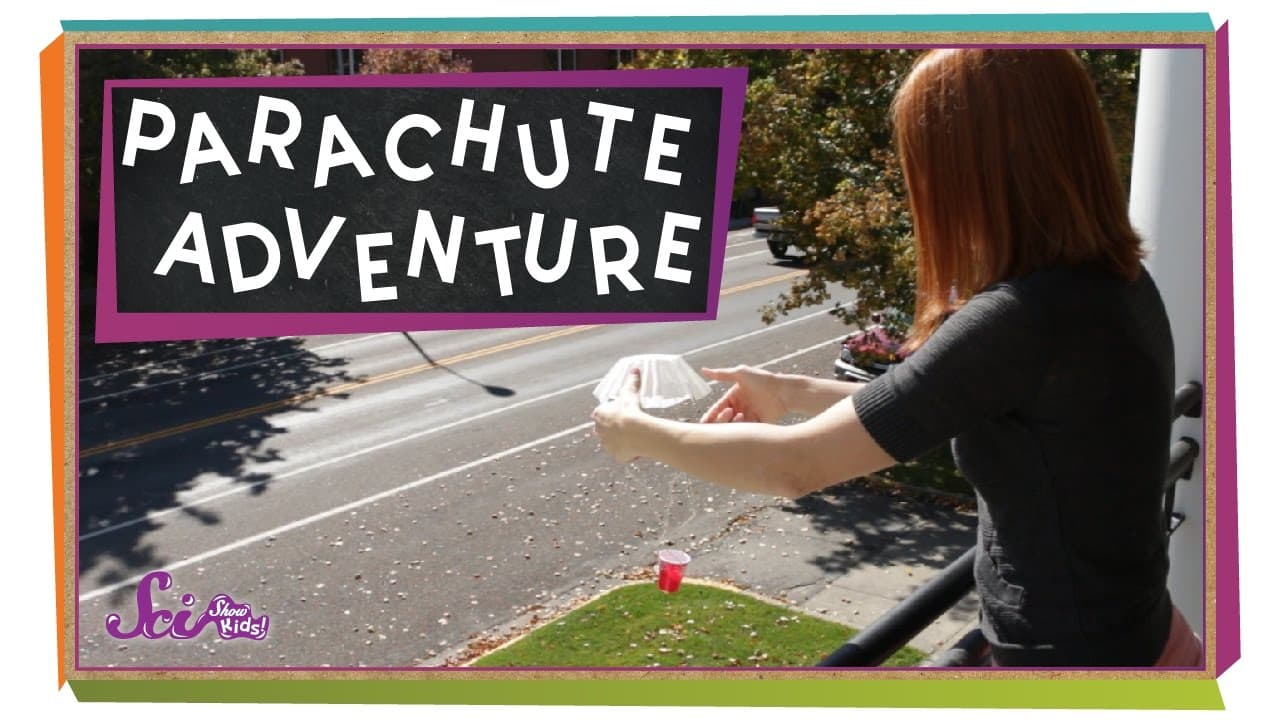
Building Parachutes to Explore Air Resistance

Building Parachutes to Explore Air Resistance

This engaging educational video from SciShow Kids introduces young learners to the physics concept of "drag" (air resistance) through the lens of how parachutes work. Hosted by Jessi and her robot friend Squeaks, the video explains that air is made of tiny particles that push back against moving objects, creating a force that slows them down. It uses clear animations and relatable examples, like the feeling of wind on a swing, to make this invisible force concrete for students. The second half of the video transitions into a practical STEM activity where viewers are guided step-by-step to build their own miniature parachutes using household items like coffee filters, string, and cups. The host demonstrates the scientific method by conducting controlled drop tests: first dropping the cup without a parachute, then with one, and finally testing the parachute's load-bearing limit with a heavy toy. The experiment concludes with a "failure" when the heavy toy falls too fast, providing a perfect setup for discussing engineering iteration and variable testing. This resource is highly valuable for elementary science classrooms as it seamlessly blends conceptual physics with hands-on engineering. It encourages inquiry-based learning by modeling prediction, observation, and the importance of refining designs when they don't work as expected. Teachers can use this video to launch units on forces and motion, properties of matter, or the engineering design process.

SciShow KidsSciShow Kids

4mins 47s

Video
How Engineers Design Effective Trials

How Engineers Design Effective Trials

This video from Crash Course Kids guides students through the engineering design process, specifically focusing on how to plan and conduct effective trials. Using a relatable carnival ring toss analogy, the host explains how engineers don't just guess—they methodically test solutions to ensure they meet specific outcomes. The video reviews foundational concepts from previous episodes, such as defining criteria and identifying variables, before combining them into a comprehensive testing strategy. The content breaks down the trial design process into four clear steps: deciding on criteria for success, identifying all possible variables, isolating a single variable to test, and identifying failure points. Through animated demonstrations, viewers see what happens when variables are controlled versus when they are not, and how failure points help engineers understand the limits of their solutions. For educators, this resource is an excellent tool for demystifying the scientific method and experimental design. It provides a concrete, step-by-step framework that students can apply to their own hands-on science experiments. The clear distinction between ‘controlling variables’ and ‘isolating variables’ is particularly useful for helping students understand fair testing protocols in upper elementary science projects.

Crash Course KidsCrash Course Kids

4mins 35s

Video
How Engineers Use Failure to Succeed

How Engineers Use Failure to Succeed

This educational video from Crash Course Kids explores the critical role of failure within the engineering design process. Hosted by Sabrina, the video reframes the concept of failure not as a negative outcome, but as a necessary step in finding successful solutions. It introduces the specific engineering term "failure point"—the limit at which a solution stops working—and explains how identifying these points early saves time, money, and lives. Key themes include the iterative nature of the design process, the importance of testing variables, and structural engineering. The video uses accessible analogies, such as a bowling ramp experiment and a wooden bridge crossing, to illustrate abstract concepts. It also features a historical case study of the Tacoma Narrows Bridge (Galloping Gertie) to demonstrate real-world consequences of unidentified failure points. For educators, this video is an excellent resource for STEM curriculums, specifically for introducing the engineering mindset. It helps dismantle student anxiety around making mistakes by normalizing failure as data collection. It serves as a perfect launchpad for lessons on bridge building, stress testing materials, or social-emotional learning discussions about resilience and perseverance in academic pursuits.

Crash Course KidsCrash Course Kids

4mins 6s

Video
Designing the Perfect Treehouse Using Engineering

Designing the Perfect Treehouse Using Engineering

In this engaging episode of Crash Course Kids, host Sabrina introduces young learners to the connection between architecture and the engineering design process. Through a relatable personal problem—the need for a quiet, private space away from family distractions—Sabrina explores how to define a problem, research solutions, and ultimately choose a design path. The video distinguishes between modifying existing spaces (engineering) and creating entirely new ones (architecture), using a treehouse as the central case study. The content dives deep into the planning phase of engineering, introducing critical concepts like "variables" (factors that change the outcome) and "failure points" (limits where a solution stops working). Students watch Sabrina evaluate different prototypes, such as a cardboard box and a blanket fort, before settling on a treehouse. She then analyzes the variables involved in building it, such as the tree's size and the structure's weight, to ensure safety and functionality. This video is an excellent resource for STEM and science classrooms introducing design thinking. It provides a clear, practical example of how abstract concepts like variables and failure points apply to real-world construction. Teachers can use this to launch projects on structural engineering, soundproofing experiments, or architectural design challenges, helping students understand that successful building requires careful planning and testing before construction begins.

Crash Course KidsCrash Course Kids

4mins 27s

Video
How Science Helps Us Solve Everyday Problems

How Science Helps Us Solve Everyday Problems

This engaging video introduces students to the fundamental definition of science as a method of asking and answering questions through evidence. Hosted by a relatable presenter in a lab coat, the video uses everyday scenarios—like a flickering lightbulb, a rainy forecast, and a leaky umbrella—to demonstrate how scientific thinking applies to daily life. It breaks down complex disciplines like astronomy, meteorology, and material science into accessible examples that show how science explains the world around us. The content highlights four key functions of science: understanding the world, predicting future events, solving problems, and making informed decisions. Through the narrative of a single rainy day, students see how physicists, chemists, and engineers contribute to common objects like umbrellas. The video effectively illustrates the iterative nature of science, showing how testing different materials (fabric vs. plastic wrap) leads to better solutions. Teachers can use this video to launch a unit on the scientific method or the nature of science. It is particularly valuable for helping students recognize that science isn't just about laboratories and test tubes, but a mindset used to navigate everyday challenges. The video provides built-in pause points for reflection and note-taking, making it an interactive tool for classroom discussion about observation, hypothesis testing, and critical thinking.

Miacademy & MiaPrep Learning ChannelMiacademy & MiaPrep Learning Channel

10mins 17s

Video
How Native Science and Western Science Work Together

How Native Science and Western Science Work Together

This video explores the intersection of Indigenous "ways of knowing" and Western science, challenging the historical dismissal of Native knowledge as merely folklore. Hosted by Che Jim, the episode investigates how Native American observation, storytelling, and technological innovation—such as the complex engineering of Chumash canoes and the astronomical alignment of Medicine Wheels—constitute a rigorous scientific method that predates modern Western practices. The narrative introduces the Mi'kmaw concept of "Etuaptmumk" or "Two-Eyed Seeing," which advocates for viewing the world through both the lens of Indigenous wisdom and the lens of Western science to create a more complete understanding of reality. The video covers key themes including Native American technological inventions (kayaks, lacrosse, tomols), the validity of oral history in archaeology, and the critical role of Indigenous land management in combatting climate change. Specific examples highlighted include NASA astronaut Nicole Mann, the first Native woman in space who brought her cultural perspective to the ISS, and the Confederated Salish and Kootenai Tribes' successful management of the National Bison Range using traditional controlled burns to restore biodiversity. For educators, this video serves as a powerful tool to bridge science and social studies. It provides concrete examples of how diverse cultural perspectives enrich scientific discovery and environmental conservation. Teachers can use this resource to discuss the scientific method, the history of technology, environmental science, and the importance of integrating Traditional Ecological Knowledge (TEK) with modern scientific practices to solve global challenges like biodiversity loss and climate change.

CrashCourseCrashCourse

8mins 53s

Video
Building Foil Boats to Explore Buoyancy and Displacement

Building Foil Boats to Explore Buoyancy and Displacement

This engaging educational video from SciShow Kids features puppet hosts Bill and Webb, along with real-life kid demonstrators, exploring the physics of why boats float. The video breaks down the scientific concept of displacement using clear analogies, such as how water level rises when entering a bathtub, to explain how objects push water aside to create buoyancy. It simplifies complex physics principles into accessible terms suitable for young learners. The content transitions from theory to a practical STEM engineering challenge where students learn to construct simple canoes using aluminum foil and tape. The hosts guide viewers through the testing process, adding marbles to the foil boats one by one to test their load-bearing capacity until they sink. This demonstrates the relationship between the weight of the boat (plus cargo) and the weight of the displaced water. Teachers can use this video to introduce units on density, buoyancy, and engineering design. It serves as a perfect primer for a hands-on "sink or float" classroom activity or a boat-building competition. The video encourages inquiry-based learning by asking viewers to predict outcomes, observe results, and understand the specific mechanical reasons behind why the boats eventually fail.

SciShow KidsSciShow Kids

3mins 35s

Video
How Engineers Solve Problems: The Design Process for Kids

How Engineers Solve Problems: The Design Process for Kids

This engaging, compilation-style educational video introduces young students to the fundamental concepts of engineering and the engineering design process (Ask, Imagine, Create, Improve). Hosted by Jessi and her robot mouse friend Squeaks, the video uses relatable, kid-friendly problems—like an itchy back that can't be reached or bubbles that pop too fast—to demonstrate how engineers think and work. The video breaks down complex methodologies into simple, actionable steps, showing that engineering is about solving problems through creativity, testing, and resilience. The video explores several key STEM themes, including the iterative nature of design, the importance of prototyping and modeling, and the use of simple machines like levers and pulleys. It features distinct segments that cover different aspects of engineering: building a backscratcher to learn the design process, constructing stomp rockets to understand propulsion and aerodynamics, creating Rube Goldberg machines to explore cause-and-effect chain reactions, and mixing bubble solutions to learn about material science and testing variables. Collaboration is also highlighted as a critical skill through a segment featuring puppet characters Bill and Web. For educators, this video is a goldmine of hands-on lesson starters. It provides a shared vocabulary for the design process that can be applied to any project-based learning activity. The clear examples of "improving" a design teach students that failure is not a stopping point but a necessary step in innovation. Whether used to introduce a unit on simple machines, launch a rocket-building competition, or simply inspire creative problem-solving, this video offers versatile classroom applications across the K-3 science curriculum.

SciShow KidsSciShow Kids

28mins 27s

Video
How to Think Like a Scientist

How to Think Like a Scientist

This engaging video lesson demystifies the concept of being a scientist, moving beyond visual stereotypes like lab coats and bubbling beakers to focus on the cognitive processes that actually define scientific work. The video breaks down the core components of scientific thinking: maintaining curiosity, making detailed observations using the five senses, gathering evidence, remaining objective, and collaborating with others. It uses clear on-screen definitions and relatable examples, such as observing insects near a puddle, to make these abstract concepts concrete for students. Key themes explored include the critical distinction between subjective opinions (e.g., "that bug is creepy") and objective observations (e.g., "that bug has green wings"), the role of curiosity in driving discovery, and the importance of teamwork in the scientific community. The video also introduces the concept of fieldwork, validating that science happens everywhere, not just inside a laboratory. For educators, this resource serves as an excellent foundation for the beginning of the school year or the start of a science unit. It provides a structured interactive moment where students practice making observations, allowing for immediate formative assessment. The clear distinction made between opinion and fact offers a tangible way to teach scientific writing and documentation skills, essential for lab reports and inquiry-based projects in elementary and middle grades.

Miacademy & MiaPrep Learning ChannelMiacademy & MiaPrep Learning Channel

8mins 25s

Video
Why Engineers Change One Variable at a Time

Why Engineers Change One Variable at a Time

In this engaging episode of Crash Course Kids, host Sabrina Cruz uses the analogy of a mobile video game to explain the fundamental engineering concepts of variables and outcomes. The video breaks down the scientific method of testing solutions, specifically focusing on why it is critical to isolate variables during an experiment to understand cause and effect. Through a "Catbot" slingshot game, viewers see a practical demonstration of how changing launch angle versus pull strength affects the result.

Crash Course KidsCrash Course Kids

3mins 18s

Video
4 Fun Indoor Science Experiments: Oobleck, Potions, Paint & Forts

4 Fun Indoor Science Experiments: Oobleck, Potions, Paint & Forts

In this engaging compilation of four hands-on science activities, Jessi and her robot rat friend Squeaks demonstrate how to turn a stuck-inside day into an exciting laboratory adventure. The video guides young viewers through creating Oobleck (a non-Newtonian fluid), mixing "potions" to understand solutions versus suspensions, creating homemade watercolor paints using a chemical reaction, and engineering blanket forts to learn about physics and tension. Each segment is practical, easy to follow, and uses common household items. The video explores fundamental scientific concepts across chemistry, physics, and engineering. Key topics include states of matter (solids, liquids, and things in between), the properties of mixtures (dissolving vs. separating), chemical reactions (acids and bases fizzing), color theory, and physical forces like tension that hold structures together. The content seamlessly blends fun activities with rigorous scientific vocabulary and explanation. For educators, this video is a treasure trove of ready-to-use classroom demonstrations or stations. It is ideal for introducing units on matter, mixtures, or simple machines/forces. The step-by-step instructions allow teachers to pause and have students predict outcomes or follow along in real-time. It transforms abstract concepts like "suspension" or "tension" into tangible, memorable experiences that students can touch, see, and build themselves.

SciShow KidsSciShow Kids

16mins 1s

Video
How Engineers Solve Problems and Build Prototypes

How Engineers Solve Problems and Build Prototypes

This engaging video introduces young learners to the engineering design process through a relatable narrative featuring Jessi and her robot mouse friend, Squeeks. When Squeeks faces the problem of trying to invite too many friends over to play one by one, Jessi guides him—and the viewers—through using engineering principles to find a better solution. They define the problem, identify constraints (like the need for friends to both see and hear the signal), brainstorm ideas, and build a prototype using LEGO bricks and sensors. The video covers key STEM themes including the definition of engineering, the importance of collaboration ('two heads are better than one'), the concept of a prototype as an early model, and the role of sensors in robotics. It also emphasizes the iterative nature of design, showing that the first solution (a small model) often leads to questions about how to scale up or improve the design for the real world. For educators, this video serves as an excellent hook for elementary engineering units. It demystifies the term 'engineer' by framing it simply as problem-solving to make life better. The clear visual demonstration of inputs (color bricks) and outputs (flag raising/lowering) provides a tangible example of cause-and-effect and basic coding logic without needing screens. It is particularly useful for launching design challenges or introducing the vocabulary of the design cycle.

SciShow KidsSciShow Kids

5mins 55s

Video
How Engineers Find and Fix Failure Points

How Engineers Find and Fix Failure Points

This video explores the engineering design process, specifically focusing on how engineers identify and resolve "failure points" to create safe and effective solutions. Hosted by Sabrina Cruz, the episode uses engaging animations and real-world examples to explain that failure isn't a negative outcome in engineering, but a necessary step in testing limits. It breaks down how engineers create plans, build models, and conduct trials by isolating variables to find exactly where a design stops working. Key themes include the definition of a "failure point," the importance of strategic planning over random guessing, and the scientific method's role in engineering through isolating variables. The video illustrates these concepts through a relatable example of testing a model bridge's weight capacity and a historical reference to the Tacoma Narrows Bridge collapse. It emphasizes iteration—using failure data to redesign and improve the solution. For educators, this resource is an excellent tool to introduce the "Test and Improve" phase of the engineering cycle. It helps destigmatize failure, framing it as critical data collection. Teachers can use the bridge testing demonstration to launch hands-on STEM challenges where students must intentionally test their designs to the breaking point to understand their limits. It also bridges science and engineering by showing how controlled experiments (trials) are used to validate design choices.

Crash Course KidsCrash Course Kids

4mins 2s

Video
Designing Fair Tests with Variables

Designing Fair Tests with Variables

In this engaging episode of Crash Course Kids, host Sabrina Cruz dives deeper into the engineering design process by exploring how to test multiple solutions to a single problem. Picking up from a previous experiment involving a carnival ring toss game, the video demonstrates that engineers often need to find alternative methods to achieve a goal when resources or conditions change. The narrative guides viewers through setting up fair tests by identifying criteria and variables, illustrating how changing one variable at a time is crucial for scientific validity. The core themes of the video are the scientific method, fair testing, and data organization. It explicitly defines and demonstrates the relationship between independent variables (the thing you change), controlled variables (the things you keep the same), and the desired outcome. The video also emphasizes the importance of using data tables to track results across different trials, teaching students that organization is a key part of the engineering process. This video is an excellent resource for upper elementary science classrooms introducing the concepts of variables and experimental design. By using the relatable and visual example of a ring toss game, it makes abstract concepts like "isolating variables" concrete and understandable. Teachers can use this to introduce a hands-on experiment, model how to create data tables, or reinforce the rule of only changing one variable at a time during investigations.

Crash Course KidsCrash Course Kids

4mins 44s

Video
How Engineers Test Solutions with Variables and Criteria

How Engineers Test Solutions with Variables and Criteria

This educational video from Crash Course Kids explores the critical engineering concepts of testing solutions through variables and criteria. Using relatable analogies like a slingshot mobile game and bowling, the host explains how engineers verify if their solutions actually work. The narrative demystifies the abstract concept of a "fair test" by demonstrating why changing multiple factors at once makes it impossible to know what caused a specific result. The video breaks down two main scientific method components: "criteria" (the rules for success) and "isolating variables" (changing only one thing at a time). It walks viewers through an investigation where human error acts as an uncontrolled variable, leading to the engineering solution of using a ramp to ensure consistency. Visual aids include animated diagrams, definitions of key terms, and character-driven scenarios that make these technical concepts accessible. Teachers can use this video to introduce or reinforce the scientific method and engineering design process. It is particularly useful for explaining the difference between independent and controlled variables—often a stumbling block for students. The clear examples provide a perfect launchpad for classroom experiments where students must design their own fair tests, emphasizing the importance of consistency and measurable success criteria.

Crash Course KidsCrash Course Kids

4mins 38s

Video
How Engineers Choose the Best Solution

How Engineers Choose the Best Solution

This educational video continues an exploration of the engineering design process by focusing on the critical phase of evaluating potential solutions. Following up on a previous brainstorming session about how to cross a deep gorge, the host guides viewers through a logical assessment of three proposed ideas: a balloon airlift inspired by the movie 'Up', a Mary Poppins-style umbrella float, and a hang glider made from a tent. The video systematically tests each idea against specific criteria, weighing strengths (pros) against weaknesses (cons) to determine feasibility and safety. The content highlights key engineering concepts such as defining strengths and weaknesses, thinking logically, and the importance of safety in design. It emphasizes that while creative brainstorming encourages 'wild' ideas, the evaluation phase requires grounding those ideas in reality and physics. The narrative demonstrates that not all solutions are created equal and that engineers must rigorously question their designs before moving to the testing phase. For educators, this video serves as an excellent model for teaching critical thinking and decision-making skills within STEM curricula. It moves beyond simple brainstorming to the more analytical aspect of engineering, showing students how to critique their own ideas without discouragement. The clear use of checklists and visual demonstrations makes abstract evaluative processes concrete, helping students understand why testing and iteration are essential parts of solving problems effectively.

Crash Course KidsCrash Course Kids

5mins 30s

Video
Building Parachutes to Explore Air Resistance

Building Parachutes to Explore Air Resistance

This engaging educational video from SciShow Kids introduces young learners to the physics concept of "drag" (air resistance) through the lens of how parachutes work. Hosted by Jessi and her robot friend Squeaks, the video explains that air is made of tiny particles that push back against moving objects, creating a force that slows them down. It uses clear animations and relatable examples, like the feeling of wind on a swing, to make this invisible force concrete for students. The second half of the video transitions into a practical STEM activity where viewers are guided step-by-step to build their own miniature parachutes using household items like coffee filters, string, and cups. The host demonstrates the scientific method by conducting controlled drop tests: first dropping the cup without a parachute, then with one, and finally testing the parachute's load-bearing limit with a heavy toy. The experiment concludes with a "failure" when the heavy toy falls too fast, providing a perfect setup for discussing engineering iteration and variable testing. This resource is highly valuable for elementary science classrooms as it seamlessly blends conceptual physics with hands-on engineering. It encourages inquiry-based learning by modeling prediction, observation, and the importance of refining designs when they don't work as expected. Teachers can use this video to launch units on forces and motion, properties of matter, or the engineering design process.

SciShow KidsSciShow Kids

4mins 47s

Video
Engineering Challenge: Designing a Raft for a Worm

Engineering Challenge: Designing a Raft for a Worm

In this engaging episode of SciShow Kids, host Jessi and her puppet friends—Squeaks the robot mouse, Sam the bat, and Juniper the worm—tackle a real-world engineering challenge. The group is preparing for a lake vacation, but Juniper needs a way to float on the water since Squeaks lost his toy boat. Instead of giving up, they decide to "think like engineers" to design and build a custom raft that meets Juniper's specific needs using everyday materials found around their fort.

SciShow KidsSciShow Kids

5mins 35s

Video
The Story of the Impossible Golden Gate Bridge

The Story of the Impossible Golden Gate Bridge

This engaging educational video tells the incredible story of the Golden Gate Bridge, famously known as "The Impossible Bridge." Hosted by an energetic narrator, the video takes students on a journey from the initial skepticism surrounding the project to its triumphant completion. It explores the geographical and environmental challenges of the San Francisco Bay, the economic context of the Great Depression, and the innovative engineering solutions that made the bridge a reality. Students learn about different types of bridges, the specific components of a suspension bridge, and the massive scale of materials used in construction. The content highlights key themes of persistence, ingenuity, and problem-solving. It details how Chief Engineer Joseph Strauss spent over a decade overcoming opposition and securing funding. The video also emphasizes the human element, discussing the diverse workforce comprised of unemployed citizens during the Depression and the revolutionary safety measures introduced, such as hard hats and safety nets, which saved nearly 20 lives. The narrative underscores how human determination can overcome seemingly insurmountable physical and economic obstacles. For the classroom, this video serves as an excellent anchor for lessons in social studies, history, and STEM. It provides a concrete example of how engineering intersects with geography and economics. Teachers can use the video to spark discussions about the importance of infrastructure, the history of the 1930s, or the physics of bridge construction. The visual explanations of how suspension bridges work and the dramatic statistics about the bridge's cables make complex engineering concepts accessible to young learners.

Miacademy & MiaPrep Learning ChannelMiacademy & MiaPrep Learning Channel

15mins 56s

Video
How Engineers Design Effective Trials

How Engineers Design Effective Trials

This video from Crash Course Kids guides students through the engineering design process, specifically focusing on how to plan and conduct effective trials. Using a relatable carnival ring toss analogy, the host explains how engineers don't just guess—they methodically test solutions to ensure they meet specific outcomes. The video reviews foundational concepts from previous episodes, such as defining criteria and identifying variables, before combining them into a comprehensive testing strategy. The content breaks down the trial design process into four clear steps: deciding on criteria for success, identifying all possible variables, isolating a single variable to test, and identifying failure points. Through animated demonstrations, viewers see what happens when variables are controlled versus when they are not, and how failure points help engineers understand the limits of their solutions. For educators, this resource is an excellent tool for demystifying the scientific method and experimental design. It provides a concrete, step-by-step framework that students can apply to their own hands-on science experiments. The clear distinction between ‘controlling variables’ and ‘isolating variables’ is particularly useful for helping students understand fair testing protocols in upper elementary science projects.

Crash Course KidsCrash Course Kids

4mins 35s

Video
How to Build a Solar Oven from a Pizza Box

How to Build a Solar Oven from a Pizza Box

In this engaging episode of SciShow Kids, host Anthony and his robot friend Squeaks explore how to harness the power of the sun to cook food by building a solar oven. The video guides viewers through the engineering design process, identifying problems and finding solutions using common household materials like a pizza box, aluminum foil, and plastic wrap. It simplifies complex physics concepts by demonstrating how different materials interact with heat and light to create a functional oven. The video covers key scientific themes including solar energy, insulation, reflection, and absorption. Anthony explains how tin foil acts as an insulator to trap heat and a reflector to bounce sunlight, while plastic wrap serves as a window to let light in without letting heat escape. The lesson also touches on thermodynamics by demonstrating why dark colors are better for cooking than light colors, providing a comprehensive look at heat transfer suitable for young learners. This resource is highly valuable for STEM instruction as it combines physical science concepts with a practical, hands-on engineering project. Teachers can use this video to introduce renewable energy, the properties of light and heat, or the engineering design cycle. It serves as a perfect launchpad for a class project where students build their own ovens, test different variables, and enjoy the 'fruits' of their labor—like solar-cooked s'mores or pizza bagels.

SciShow KidsSciShow Kids

5mins 11s

Video
How to Design and Engineer Your Own City

How to Design and Engineer Your Own City

This engaging educational video introduces students to the complex world of urban planning through the lens of the engineering design process. Host Sabrina Cruz challenges viewers to graduate from smaller engineering projects like treehouses to a massive undertaking: designing an entire city. The video breaks down this seemingly overwhelming task into manageable steps, guiding students to define the problem by identifying human needs such as safety, health, sustainability, and fun, while also respecting the natural environment. The content covers key aspects of city design, including selecting a geographical location (mountains, coast, desert) and understanding how that choice impacts resources like water. It explores the necessity of zoning for neighborhoods and the strategic placement of essential infrastructure like schools, hospitals, grocery stores, and airports. Additionally, it highlights the importance of transportation systems, encouraging students to think about how residents will move around via buses, subways, bike paths, and sidewalks. Ideally suited for upper elementary and middle school classrooms, this video serves as a perfect launchpad for cross-curricular projects combining science, geography, and civics. It transforms abstract concepts of civil engineering into a concrete creative challenge. Teachers can use this resource to spark discussions about local community needs, environmental stewardship, and the specific steps engineers take to solve large-scale societal problems.

Crash Course KidsCrash Course Kids

4mins 13s

Video
Step-by-Step: How Engineers Solve Problems

Step-by-Step: How Engineers Solve Problems

This engaging educational video breaks down the Engineering Process into a series of actionable steps that engineers use to solve problems. Hosted by Sabrina Cruz, the video demystifies how everyday marvels like telephones, air conditioning, and bridges are created. It emphasizes that engineering is not just about building, but about a structured cycle of defining problems, researching history, designing solutions, and rigorously testing prototypes.

Crash Course KidsCrash Course Kids

5mins 17s

Video
Problem Solving with Engineering and Teamwork

Problem Solving with Engineering and Teamwork

In this engaging episode of Sci Kids!, host Anthony Brown helps two puppet friends, Bill and Web the ducks, resolve a disagreement about an engineering challenge. The ducks discover a mysterious red button high up in an observatory that they cannot reach, prompting them to use engineering skills to solve the problem. Through their attempts to build a "button pusher," viewers are introduced to the fundamental steps of the engineering design process: identifying a problem, designing a solution, and testing it. The video explores key themes of problem-solving, material properties, and the importance of iteration and collaboration. It contrasts the ducks' two initial designs—one that is strong but too heavy, and another that is lightweight but too flimsy—to teach students about analyzing strengths and weaknesses in a design. The narrative also includes a historical connection to the Wright brothers, illustrating how real-world inventors test and improve their designs over time. For educators, this video serves as an excellent hook for STEM lessons focused on the engineering design process or properties of materials. It models constructive feedback and shows how combining different ideas (collaboration) can lead to a superior solution. The content is specifically tailored for early elementary students, making abstract concepts like "engineering" and "iteration" accessible through humor, clear visuals, and relatable characters.

SciShow KidsSciShow Kids

3mins 53s

Video
How Science Transformed Our World

How Science Transformed Our World

This video explores the profound impact of science on human history, contrasting the bleak realities of the past with modern improvements in life expectancy, health, and quality of life. Through historical examples like the Malthusian catastrophe prediction and the Black Death, the host illustrates how scientific advancements—specifically in medicine, agriculture, and technology—have allowed humanity to overcome obstacles once thought insurmountable.

Miacademy & MiaPrep Learning ChannelMiacademy & MiaPrep Learning Channel

15mins 13s

No videos found
There are no videos available for this topic yet.
Video
Building Blanket Forts with the Science of Tension

Building Blanket Forts with the Science of Tension

In this engaging episode of SciShow Kids, host Jessi and her robot friend Squeaks explore the physics behind a favorite childhood pastime: building blanket forts. The video transforms a fun rainy-day activity into an introductory engineering lesson by explaining how structures stay standing. Jessi demonstrates two specific methods for constructing forts—the basic draped sheet and the 'tent' style using a string—while explaining the scientific principles that make them work. The content focuses heavily on physical science concepts, specifically the idea of 'forces' (pushes and pulls) and 'tension' (a pulling force). The video draws a clear parallel between the mechanics of a blanket fort and the engineering of massive suspension bridges, showing students that the same physical laws apply to both. It introduces key vocabulary like 'tension,' 'anchors,' and 'engineers' in a highly accessible context. For educators, this video serves as an excellent hook for STEM challenges and physical science units. It provides a concrete, low-stakes environment for students to experiment with forces. Teachers can use this video to launch a classroom engineering design challenge where students must plan, build, and test structures, applying the concept of tension to create stability. It validates play as a form of scientific experimentation.

SciShow KidsSciShow Kids

3mins 16s

Video
How Temporary Tattoos Stick to Your Skin

How Temporary Tattoos Stick to Your Skin

In this engaging episode of SciShow Kids, host Jessi and her robot rat friend Squeaks explore the science behind temporary tattoos. The video breaks down the seemingly magical process of transferring an image from paper to skin, turning a fun childhood activity into a lesson on materials science and engineering. Jessi demonstrates the step-by-step application process while explaining the specific purpose of each layer involved in making the tattoo stick. The video focuses on the mechanics of adhesion and the specific chemical properties of materials. Key topics include the structure of a temporary tattoo (sandwiched layers), the role of silicone release layers (similar to sticker backings), and the function of water in activating the transfer process. It introduces concepts like 'transfer,' 'silicone,' and 'adhesive' in a way that is accessible to young learners, using clear visual diagrams to show what happens at a microscopic level when water is applied. For educators, this video serves as an excellent practical application of science in everyday life. It can be used to introduce units on states of matter, properties of materials (sticky vs. slippery), or procedural writing. The visual breakdown of layers helps students visualize complex structures, while the hands-on nature of the topic invites immediate classroom experimentation and observation, making abstract concepts concrete and relatable.

SciShow KidsSciShow Kids

3mins 13s

Video
Choosing Materials Based on Their Properties

Choosing Materials Based on Their Properties

In this engaging science video, Jesse helps students understand the physical properties of matter by solving practical problems around his house. He explores the concept of 'properties'—observable and measurable qualities of materials—by comparing glass, plastic, and wood to determine the best material for new windows. He breaks down how we identify these properties using our five senses and various scientific tools like scales, rulers, and thermometers. The video illustrates the definition of properties such as transparency, durability, flexibility, weight, and texture. It demonstrates how these specific characteristics make certain materials suitable for specific jobs while others would fail. For example, the video contrasts transparent materials needed for windows against opaque materials, and waterproof materials needed for rain protection against absorbent ones. This resource is highly valuable for early elementary science classrooms introducing the properties of matter. It models the scientific process of observation and decision-making based on evidence. Teachers can use this video to launch lessons on material science, sensory observation, or engineering design challenges where students must select appropriate materials for a specific task based on their physical properties.

Miacademy & MiaPrep Learning ChannelMiacademy & MiaPrep Learning Channel

6mins 35s

Video
The Science of Glass: From Sand to Fiber Optics

The Science of Glass: From Sand to Fiber Optics

This educational video provides a comprehensive overview of glass as a material, tracing its lifecycle from raw natural resources to sophisticated modern technology. It begins by situating glass within the broader context of materials science, before diving into the specific manufacturing process that transforms silica sand, soda ash, and limestone into the clear, hard substance we recognize. The narration explains the physical changes that occur during heating and cooling, providing a clear link between raw ingredients and finished products. The video explores key themes such as the physical properties of matter—specifically transparency, opacity, and translucency—and how these properties dictate function. It covers engineering concepts like tempering glass for safety in automobiles and showers, illustrating how altering a material's structure can change its behavior when broken. Additionally, the video bridges the gap between ancient uses of glass, such as stained glass art, and cutting-edge applications like fiber optic cables that power the internet. For educators, this resource serves as an excellent anchor for lessons on states of matter, material science, and engineering design. It visually demonstrates abstract concepts like "properties of materials" through concrete examples like lenses, windows, and cables. Teachers can use this video to spark discussions on why specific materials are chosen for specific objects, the relationship between structure and function, and the evolution of technology from purely structural uses to data transmission.

Next Generation ScienceNext Generation Science

3mins 22s

Video
How Engineers Use Failure to Succeed

How Engineers Use Failure to Succeed

This educational video from Crash Course Kids explores the critical role of failure within the engineering design process. Hosted by Sabrina, the video reframes the concept of failure not as a negative outcome, but as a necessary step in finding successful solutions. It introduces the specific engineering term "failure point"—the limit at which a solution stops working—and explains how identifying these points early saves time, money, and lives. Key themes include the iterative nature of the design process, the importance of testing variables, and structural engineering. The video uses accessible analogies, such as a bowling ramp experiment and a wooden bridge crossing, to illustrate abstract concepts. It also features a historical case study of the Tacoma Narrows Bridge (Galloping Gertie) to demonstrate real-world consequences of unidentified failure points. For educators, this video is an excellent resource for STEM curriculums, specifically for introducing the engineering mindset. It helps dismantle student anxiety around making mistakes by normalizing failure as data collection. It serves as a perfect launchpad for lessons on bridge building, stress testing materials, or social-emotional learning discussions about resilience and perseverance in academic pursuits.

Crash Course KidsCrash Course Kids

4mins 6s

Video
From Sheep to Sweater: The Story of Wool

From Sheep to Sweater: The Story of Wool

Join Jessi and Squeaks at the Fort as they explore the fascinating journey of how a sheep's fluffy coat becomes a warm, cozy sweater. This educational video breaks down the entire wool manufacturing process, starting from the pastures where sheep are raised to the factories where raw fleece is transformed into usable yarn. It explains why animals grow wool, how farmers harvest it without hurting the animals, and the specific mechanical steps involved in processing the fibers. The video covers key themes in agriculture, manufacturing, and material science. It introduces students to the concept of animal adaptations (growing wool for winter warmth) and the seasonal cycles of farming. Technologically, it demystifies the industrial process by explaining specific machinery and techniques like shearing, carding, roving, and spinning, providing a clear farm-to-table (or farm-to-closet) narrative. For educators, this resource is an excellent tool for units on clothing, farm life, or sequencing industrial processes. It makes the abstract concept of textile manufacturing concrete through clear visuals and relatable analogies, such as comparing shearing to a human haircut. The video also introduces specific vocabulary like 'lanolin' and 'carding,' helping students build a foundation for understanding how raw natural materials are engineered into the products they use every day.

SciShow KidsSciShow Kids

4mins 33s

Video
The Science of Building the Perfect Sandcastle

The Science of Building the Perfect Sandcastle

This engaging video from SciShow Kids explores the science and engineering behind building the perfect sandcastle. Host Jessi breaks down the process into four actionable steps, transforming a simple beach activity into a lesson on physics and structural engineering. The video explains why dry sand crumbles and how water acts as a binding agent to hold grains together, providing a clear, age-appropriate explanation of surface tension without getting bogged down in complex jargon. The content covers key scientific concepts such as the composition of sand, the role of water in creating cohesive forces between grains, and the importance of drainage and compression. Through clear animations, the video illustrates how microscopic water bridges form between sand grains to act like glue. It also emphasizes the engineering principle of building a strong, wide base to support taller structures, drawing parallels to real-world architecture like skyscrapers. For educators, this video serves as an excellent launchpad for lessons on matter, mixtures, and introductory physics. It encourages hands-on inquiry and problem-solving, making it perfect for STEM challenges where students must determine the optimal sand-to-water ratio. The video effectively combines play with scientific principles, helping students understand that the physical world follows rules that, when understood, can help them build better and stronger structures.

SciShow KidsSciShow Kids

3mins 43s

Video
How Engineers Build Strong Bridges

How Engineers Build Strong Bridges

In this engaging episode of SciShow Kids, host Jessi and her robot friend Squeaks explore the fascinating world of structural engineering to answer a viewer's question: "Why are bridges so strong?" The video breaks down complex engineering concepts into digestible lessons, using clear analogies, real-world examples, and physical demonstrations. It explains how engineers design structures to withstand heavy loads by utilizing specific shapes and materials. The video introduces three primary types of bridges: beam bridges, truss bridges, and suspension bridges. Through a failed experiment with a simple cardboard beam bridge, students learn about weight limits and structural failure. The narrative then pivots to solutions, highlighting how triangles are the secret weapon of strength in truss bridges and how the force of tension is harnessed in suspension bridges like the Golden Gate Bridge. This resource is highly valuable for elementary science and STEM classrooms. It provides a foundational understanding of physics concepts like force, tension, and compression without being overwhelming. Teachers can use this video to launch bridge-building challenges, geometry lessons about the strength of shapes, or social studies units on community infrastructure and the role of engineers.

SciShow KidsSciShow Kids

3mins 45s

Video
Building Tall Towers: The Power of Pyramids

Building Tall Towers: The Power of Pyramids

In this engaging engineering episode from SciShow Kids, host Jessi and her robot mouse friend Squeaks explore the physics of stability through a hands-on cup-stacking challenge. The video demonstrates the difference between unstable vertical stacks and stable pyramid structures, using clear visuals and simple analogies to explain why a wide base is crucial for building tall structures. The lesson moves from a failed attempt at a single column to a successful pyramid design, introducing the concept of weight distribution. Key themes include structural engineering, balance, geometry, and the scientific method of trial and error. The video explicitly connects abstract physics concepts to the students' own bodies (standing on one foot vs. two) and real-world architecture (skyscrapers). It breaks down the "why" behind structural failures in a way that is accessible to young learners. This video is an excellent resource for early elementary classrooms introducing STEM challenges or basic physics. It provides a perfect launchpad for low-cost, hands-on building activities using simple materials like plastic cups. Teachers can use it to introduce engineering vocabulary like "stable," "base," and "collapse," while encouraging students to predict outcomes and test their own designs.

SciShow KidsSciShow Kids

4mins 6s

Video
How to Engineer a Perfectly Balanced Snowman

How to Engineer a Perfectly Balanced Snowman

Join Jessi and Squeaks in this engaging winter-themed science lesson that explores the engineering principles behind building a snowman. The video uses the fun challenge of stacking snowballs to introduce young learners to fundamental concepts of physics and structural engineering, specifically focusing on balance, support, and stability. Through a series of animated experiments, viewers see why certain structures fail and others succeed based on how weight is distributed. The content specifically focuses on the role of 'Building Engineers' and how they design structures to stay upright. By testing three different stacking combinations—putting the smallest ball on the bottom, mixing sizes randomly, and finally placing the largest at the base—the video demonstrates the importance of a wide foundation. Visual diagrams highlight surface area and contact points to explain why top-heavy structures topple over while bottom-heavy ones remain stable. This resource is an excellent classroom tool for early elementary students to bridge the gap between play and scientific thinking. It transforms a common winter activity into a hands-on lesson about center of gravity and structural integrity. Teachers can use this video to launch STEM challenges involving stacking, building towers, or understanding why skyscrapers and pyramids are shaped the way they are.

SciShow KidsSciShow Kids

3mins 9s

Video
Choosing the Right Materials: Properties of Matter

Choosing the Right Materials: Properties of Matter

This educational video introduces students to the scientific concept of materials and their properties through engaging storytelling and practical examples. Using the familiar fairy tale of "The Three Little Pigs," the host explains how specific properties like mass, malleability, and hardness determine why certain materials (like brick) are better suited for specific tasks (like building a strong house) than others. The video breaks down complex vocabulary into easy-to-understand definitions supported by visual aids and comparisons. The lesson expands beyond the fairy tale to introduce an engineering challenge: building a raft to cross a river. This scenario introduces more advanced properties such as density and solubility. Students watch a demonstration comparing how metal, styrofoam, and concrete behave in water, leading to a discussion about density and buoyancy. The host emphasizes how engineers use these properties to make decisions, such as designing rockets that are both sturdy and lightweight. In the classroom, this video serves as an excellent foundation for units on matter, engineering design, or environmental science. It not only teaches scientific vocabulary but also introduces the concept of trade-offs, noting that while styrofoam is good for floating, it is man-made and harmful to the environment because it takes centuries to decompose. This invites discussions about sustainability alongside engineering utility.

Miacademy & MiaPrep Learning ChannelMiacademy & MiaPrep Learning Channel

11mins 10s

Video
How Airplanes Fly: The Four Forces of Flight

How Airplanes Fly: The Four Forces of Flight

This engaging animated science video introduces students to the fundamental physics of flight through the character of Captain Sophie. Set within the 'Lighthouse Lab' universe, the video uses clear visuals and real-world examples to break down complex aerodynamic concepts into digestible information for elementary and middle school students. The narrative structure follows a pilot preparing for takeoff, making the abstract physics concepts concrete and relatable. The core of the video explores the four acting forces on an airplane: Lift, Weight, Thrust, and Drag. It provides a step-by-step explanation of how wing shape creates pressure differences to generate lift (Bernoulli's principle), how material selection impacts weight, how engines generate thrust, and how aerodynamic design minimizes drag. The video utilizes both animation and stock footage of real manufacturing and aircraft to bridge theory with reality. For educators, this resource serves as an excellent primer for units on forces and motion, engineering, or transportation. It simplifies the invisible interactions of air pressure and friction, making it a perfect launchpad for STEM activities like paper airplane design, wind tunnel experiments, or discussions about engineering trade-offs between weight and strength.

Next Generation ScienceNext Generation Science

4mins 2s

Video
Engineering a Gingerbread House

Engineering a Gingerbread House

In this festive and educational episode of SciShow Kids, host Jessi and her robot mouse friend Squeaks explore the engineering principles behind building a gingerbread house. Rather than just jumping into decoration, they approach the project like engineers, discussing the importance of planning, creating models, and understanding material properties. The video breaks down complex concepts like structural integrity and material science into bite-sized, relatable examples using cookies and icing. The video covers key scientific themes such as the properties of matter (hardness, texture, state changes), the engineering design process (planning and modeling), and physics concepts like force and stress. It explains how heat changes the properties of dough to make it suitable for construction and how the consistency of icing acts as a binding agent. It also introduces the concept of stress on a structure, illustrating how weight and gravity affect stability. This video is an excellent classroom resource for introducing STEM concepts to young learners during the winter season. It provides a practical, real-world application for abstract ideas like "properties" and "forces." Teachers can use this video to launch hands-on engineering challenges, inspire discussions about why buildings stand up, or as a multimedia anchor for lessons on matter and its interactions.

SciShow KidsSciShow Kids

5mins 46s

Video
The Story of the Impossible Golden Gate Bridge

The Story of the Impossible Golden Gate Bridge

This engaging educational video tells the incredible story of the Golden Gate Bridge, famously known as "The Impossible Bridge." Hosted by an energetic narrator, the video takes students on a journey from the initial skepticism surrounding the project to its triumphant completion. It explores the geographical and environmental challenges of the San Francisco Bay, the economic context of the Great Depression, and the innovative engineering solutions that made the bridge a reality. Students learn about different types of bridges, the specific components of a suspension bridge, and the massive scale of materials used in construction. The content highlights key themes of persistence, ingenuity, and problem-solving. It details how Chief Engineer Joseph Strauss spent over a decade overcoming opposition and securing funding. The video also emphasizes the human element, discussing the diverse workforce comprised of unemployed citizens during the Depression and the revolutionary safety measures introduced, such as hard hats and safety nets, which saved nearly 20 lives. The narrative underscores how human determination can overcome seemingly insurmountable physical and economic obstacles. For the classroom, this video serves as an excellent anchor for lessons in social studies, history, and STEM. It provides a concrete example of how engineering intersects with geography and economics. Teachers can use the video to spark discussions about the importance of infrastructure, the history of the 1930s, or the physics of bridge construction. The visual explanations of how suspension bridges work and the dramatic statistics about the bridge's cables make complex engineering concepts accessible to young learners.

Miacademy & MiaPrep Learning ChannelMiacademy & MiaPrep Learning Channel

15mins 56s

Video
How Science Helps Us Solve Everyday Problems

How Science Helps Us Solve Everyday Problems

This engaging video introduces students to the fundamental definition of science as a method of asking and answering questions through evidence. Hosted by a relatable presenter in a lab coat, the video uses everyday scenarios—like a flickering lightbulb, a rainy forecast, and a leaky umbrella—to demonstrate how scientific thinking applies to daily life. It breaks down complex disciplines like astronomy, meteorology, and material science into accessible examples that show how science explains the world around us. The content highlights four key functions of science: understanding the world, predicting future events, solving problems, and making informed decisions. Through the narrative of a single rainy day, students see how physicists, chemists, and engineers contribute to common objects like umbrellas. The video effectively illustrates the iterative nature of science, showing how testing different materials (fabric vs. plastic wrap) leads to better solutions. Teachers can use this video to launch a unit on the scientific method or the nature of science. It is particularly valuable for helping students recognize that science isn't just about laboratories and test tubes, but a mindset used to navigate everyday challenges. The video provides built-in pause points for reflection and note-taking, making it an interactive tool for classroom discussion about observation, hypothesis testing, and critical thinking.

Miacademy & MiaPrep Learning ChannelMiacademy & MiaPrep Learning Channel

10mins 17s

Video
Exploring Winter: Seasons, Snow Science, and Animal Adaptations

Exploring Winter: Seasons, Snow Science, and Animal Adaptations

This comprehensive winter-themed compilation from SciShow Kids, hosted by Jessi and her robot rat friend Squeaks, explores the science behind the winter season through five distinct segments. The video covers a wide range of topics, starting with the astronomical reasons for Earth's seasons and moving into the meteorology of snowflake formation. It also delves into the physics of building stable snowmen and the biology of animal adaptations, specifically how Arctic animals change their coats to survive and hide in the snow. finally, it discusses practical ways humans can help local bird populations during the freezing months. Key themes include Earth Science (axial tilt and orbits), meteorology (crystallization and water vapor), engineering (balance and stability), and biology (adaptation, camouflage, and hibernation). The video uses clear animations to illustrate abstract concepts like the Earth's hemisphere tilt and the hexagonal molecular structure of ice, making them accessible to young learners. It connects these scientific principles to familiar winter activities and observations, such as playing in the snow and watching wildlife. For educators, this video is an excellent resource for a broad 'Winter' unit or can be segmented for specific science lessons. It explains why seasons occur without misconceptions, introduces geometry through nature via snowflakes, and encourages engineering thinking through snowman construction. The segment on animal adaptations provides concrete examples of camouflage and survival strategies, while the final section promotes environmental stewardship by teaching students how to support local wildlife.

SciShow KidsSciShow Kids

16mins 10s

Video
Building Foil Boats to Explore Buoyancy and Displacement

Building Foil Boats to Explore Buoyancy and Displacement

This engaging educational video from SciShow Kids features puppet hosts Bill and Webb, along with real-life kid demonstrators, exploring the physics of why boats float. The video breaks down the scientific concept of displacement using clear analogies, such as how water level rises when entering a bathtub, to explain how objects push water aside to create buoyancy. It simplifies complex physics principles into accessible terms suitable for young learners. The content transitions from theory to a practical STEM engineering challenge where students learn to construct simple canoes using aluminum foil and tape. The hosts guide viewers through the testing process, adding marbles to the foil boats one by one to test their load-bearing capacity until they sink. This demonstrates the relationship between the weight of the boat (plus cargo) and the weight of the displaced water. Teachers can use this video to introduce units on density, buoyancy, and engineering design. It serves as a perfect primer for a hands-on "sink or float" classroom activity or a boat-building competition. The video encourages inquiry-based learning by asking viewers to predict outcomes, observe results, and understand the specific mechanical reasons behind why the boats eventually fail.

SciShow KidsSciShow Kids

3mins 35s

Video
How a Dog Walk Led to the Invention of Velcro

How a Dog Walk Led to the Invention of Velcro

This engaging episode of SciShow Kids explores the fascinating origin story of Velcro and introduces young learners to the concept of biomimicry. Hosted by Jessi and her robot rat friend Squeaks, the video explains how Swiss engineer George de Mestral was inspired to invent Velcro after observing how sticky burrs attached to his dog's fur during a walk. Through clear animations and microscopic close-ups, the video demonstrates the hook-and-loop mechanism that makes both burrs and Velcro effective.

SciShow KidsSciShow Kids

4mins 1s

Video
How Everyday Materials Are Made and Used

How Everyday Materials Are Made and Used

This comprehensive educational video provides a detailed exploration of common materials found in our everyday world, including wood, paper, rubber, metal, ceramics, glass, fabric, and plastic. It systematically breaks down each material category, explaining where it originates—whether from natural sources like trees and minerals or synthetic sources like fossil fuels—and how it is processed into usable forms. The narration clearly connects raw materials to the finished products students encounter daily, demystifying the manufacturing processes behind items like tires, windows, and clothing. Key themes include the relationship between a material's physical properties and its function, such as why metal is used for bridges while glass is used for windows. The video delves into specific characteristics like durability, flexibility, transparency, and conductivity. Significantly, it also addresses the environmental impact of material choices, contrasting sustainable forestry practices with the ecological challenges posed by single-use plastics and the importance of recycling. For educators, this video serves as an excellent anchor for physical science units on matter and its interactions. It supports classroom applications ranging from basic sorting and classification activities for younger students to more complex discussions about sustainability, engineering design choices, and the lifecycle of products for older elementary students. The clear visual examples and structured format make it easy to pause and discuss specific sections, facilitating deep learning about why engineers and designers choose specific materials for specific jobs.

Next Generation ScienceNext Generation Science

10mins 7s

Video
Building Pillow Forts to Learn About Compression

Building Pillow Forts to Learn About Compression

In this engaging episode of SciShow Kids, host Jessi explores the physics of building forts, specifically focusing on the force of compression. Following a previous lesson on tension (pulling forces) used in sheet forts, this video introduces compression (pushing forces) as the key to building sturdy structures with cushions and furniture. Using accessible analogies like squeezing a spring or sitting on a chair, the video breaks down complex physics concepts into bite-sized, understandable pieces for young learners. The video covers key themes of forces, material science, and structural engineering. It visually demonstrates how compression works through animations of chair legs bearing weight and humorous hypothetical scenarios, such as a chair made of raw spaghetti. The narrative transitions from theory to practice by showing a real-world demonstration of a child constructing a tunnel and a walled fort using sofa cushions, highlighting how the materials must withstand the compression forces to keep the structure standing. This video is an excellent resource for K-3 classrooms to bridge the gap between play and physical science. It turns a common childhood activity—building forts—into a hands-on engineering challenge. Teachers can use this video to introduce Newton's laws in a simplified way, discuss the properties of materials (rigid vs. squishy), and inspire STEM challenges where students must design and build their own structures that can withstand compressive forces.

SciShow KidsSciShow Kids

4mins

Video
Building Blanket Forts with the Science of Tension

Building Blanket Forts with the Science of Tension

In this engaging episode of SciShow Kids, host Jessi and her robot friend Squeaks explore the physics behind a favorite childhood pastime: building blanket forts. The video transforms a fun rainy-day activity into an introductory engineering lesson by explaining how structures stay standing. Jessi demonstrates two specific methods for constructing forts—the basic draped sheet and the 'tent' style using a string—while explaining the scientific principles that make them work. The content focuses heavily on physical science concepts, specifically the idea of 'forces' (pushes and pulls) and 'tension' (a pulling force). The video draws a clear parallel between the mechanics of a blanket fort and the engineering of massive suspension bridges, showing students that the same physical laws apply to both. It introduces key vocabulary like 'tension,' 'anchors,' and 'engineers' in a highly accessible context. For educators, this video serves as an excellent hook for STEM challenges and physical science units. It provides a concrete, low-stakes environment for students to experiment with forces. Teachers can use this video to launch a classroom engineering design challenge where students must plan, build, and test structures, applying the concept of tension to create stability. It validates play as a form of scientific experimentation.

SciShow KidsSciShow Kids

3mins 16s

Video
Exploring Space: Hubble, the ISS, and the James Webb Telescope

Exploring Space: Hubble, the ISS, and the James Webb Telescope

This educational video provides a concise yet comprehensive overview of humanity's presence in the solar system, moving from a broad look at our planetary neighborhood to specific human-made instruments orbiting in space. It begins by establishing the scale of the solar system, identifying the sun, planets, moons, and asteroids, before zooming in on Earth. The narrative then expands outward, introducing three critical pieces of space technology: the Hubble Space Telescope, the International Space Station (ISS), and the James Webb Space Telescope (JWST). A key focus of the video is illustrating the relative distances of these objects from Earth. Using clear animations and on-screen metrics (in both kilometers and miles), it visually demonstrates the vast difference between the Low Earth Orbit of the Hubble and ISS compared to the distant orbit of the Moon and the even more distant vantage point of the James Webb Telescope. This visual comparison helps students grasp the concept of space scale and orbital mechanics in an accessible way. For educators, this resource serves as an excellent bridge between lessons on the solar system and units on space exploration technology. It introduces complex concepts like the L2 Lagrange point and orbital distances with simple visuals, making it a valuable tool for discussing how astronomers study the universe. The video highlights themes of engineering marvels and international cooperation, providing multiple entry points for classroom discussion.

Next Generation ScienceNext Generation Science

1min 58s

Video
How to Build a Mars Helicopter Model

How to Build a Mars Helicopter Model

Join Anthony and his robot pal Squeaks to explore the fascinating engineering behind NASA's Ingenuity helicopter, the first machine designed to fly on Mars. This engaging video breaks down the science of flight, comparing how helicopters work on Earth versus the unique challenges posed by the thin Martian atmosphere. Viewers learn how scientists solved these problems using specific design features like lightweight materials and extra-long, fast-spinning blades. The video transitions from theory to practice by guiding students through a hands-on STEM activity: building their own paper helicopter models. It demonstrates the importance of scientific modeling and introduces the engineering design process, encouraging viewers to test, observe, and iterate on their designs—just like real NASA engineers. This resource is an excellent tool for introducing elementary students to concepts of aerodynamics, planetary science, and engineering. It seamlessly connects complex space exploration topics with a simple, accessible classroom craft, making it perfect for lessons on the scientific method, variables, and the perseverance required in problem-solving.

SciShow KidsSciShow Kids

6mins 41s

Video
How to Engineer a Robot Rescue Mission

How to Engineer a Robot Rescue Mission

In this engaging episode of Crash Course Kids, host Sabrina Cruz introduces students to the engineering design process through a relatable real-world problem: she dropped her phone down a storm drain. Instead of panicking, she uses this scenario to demonstrate how engineers define problems, brainstorm solutions, and design technologies to overcome challenges. The video breaks down complex concepts like isolating variables and conducting trials into accessible, bite-sized explanations.

Crash Course KidsCrash Course Kids

4mins 27s

Video
How Engineers Use Variables to Solve Problems

How Engineers Use Variables to Solve Problems

This educational video introduces students to the critical concept of variables within the engineering design process. Using the relatable framework of asking "What If" questions, the host explains how engineers identify and manipulate different factors to test the success of their solutions. The video distinguishes between variables that can be controlled (like the weight or design of a prototype) and those that cannot (like gravity or wind), providing a clear foundation for scientific testing. The content reviews the standard engineering process—from defining a problem to building a prototype—before focusing specifically on how variables influence outcomes. Through animated examples involving bouncing balls and a hang glider attempting to cross a gorge, the video demonstrates practical applications of these abstract concepts. It emphasizes that identifying variables allows engineers to predict potential failures and refine their designs before real-world implementation. For educators, this video serves as an excellent bridge between general problem-solving and specific scientific methodology. It simplifies the often-confusing topic of variables (independent, dependent, and constants) by framing them as "conditions we can change" versus "conditions we can't." This makes it highly useful for preparing students for science fair projects, STEM challenges, or any unit focusing on experimental design and the scientific method.

Crash Course KidsCrash Course Kids

3mins 55s

Video
Surviving the Red Planet: Challenges of Living on Mars

Surviving the Red Planet: Challenges of Living on Mars

This educational video explores the scientific and logistical challenges of human colonization on Mars, contrasting the Red Planet's harsh environment with Earth's ideal life-sustaining conditions. It takes viewers on a visual journey from the lush biodiversity of Earth to the barren, dusty landscapes of Mars, explaining the fundamental requirements for life—such as breathable air, liquid water, and suitable temperatures—and how Mars lacks these essentials.

Next Generation ScienceNext Generation Science

7mins 14s

Video
Building a Solar Updraft Tower to Explore Heat Energy

Building a Solar Updraft Tower to Explore Heat Energy

In this engaging episode of SciShow Kids, host Jessi and her robot rat friend Squeaks introduce young learners to the power of solar energy through a hands-on engineering project. Starting with a simple observation about the warmth of the sun, the video explains the concept of solar power and how it can be converted into electricity or heat. The core of the video demonstrates how to build a "Solar Updraft Tower" using recycled tin cans, a pinwheel, and common household items, effectively turning sunlight into mechanical motion.

SciShow KidsSciShow Kids

4mins 31s

Video
Why Engineers Change One Variable at a Time

Why Engineers Change One Variable at a Time

In this engaging episode of Crash Course Kids, host Sabrina Cruz uses the analogy of a mobile video game to explain the fundamental engineering concepts of variables and outcomes. The video breaks down the scientific method of testing solutions, specifically focusing on why it is critical to isolate variables during an experiment to understand cause and effect. Through a "Catbot" slingshot game, viewers see a practical demonstration of how changing launch angle versus pull strength affects the result.

Crash Course KidsCrash Course Kids

3mins 18s

Video
How Engineers Find and Fix Failure Points

How Engineers Find and Fix Failure Points

This video explores the engineering design process, specifically focusing on how engineers identify and resolve "failure points" to create safe and effective solutions. Hosted by Sabrina Cruz, the episode uses engaging animations and real-world examples to explain that failure isn't a negative outcome in engineering, but a necessary step in testing limits. It breaks down how engineers create plans, build models, and conduct trials by isolating variables to find exactly where a design stops working. Key themes include the definition of a "failure point," the importance of strategic planning over random guessing, and the scientific method's role in engineering through isolating variables. The video illustrates these concepts through a relatable example of testing a model bridge's weight capacity and a historical reference to the Tacoma Narrows Bridge collapse. It emphasizes iteration—using failure data to redesign and improve the solution. For educators, this resource is an excellent tool to introduce the "Test and Improve" phase of the engineering cycle. It helps destigmatize failure, framing it as critical data collection. Teachers can use the bridge testing demonstration to launch hands-on STEM challenges where students must intentionally test their designs to the breaking point to understand their limits. It also bridges science and engineering by showing how controlled experiments (trials) are used to validate design choices.

Crash Course KidsCrash Course Kids

4mins 2s

Video
How Engineers Test Solutions with Variables and Trials

How Engineers Test Solutions with Variables and Trials

This educational video uses a bowling analogy to explain the engineering design process, specifically focusing on how to test solutions through trials. The host, Sabrina, breaks down complex concepts like variables, constants, criteria, and outcomes into manageable parts by demonstrating how an engineer would approach the problem of getting a strike at a bowling alley. The video explores key scientific inquiry themes including the importance of isolating variables to ensure fair testing, defining success criteria before testing begins, and the necessity of keeping other factors constant. It demonstrates the iterative nature of testing, showing how engineers perform multiple trials, analyze the results against their established criteria, and adjust their approach based on data. For educators, this resource provides a clear, visual model for teaching the experimental method and engineering design. It is particularly useful for introducing students to the vocabulary of experimentation (isolate, constant, trial) and showing why changing only one variable at a time is crucial for scientific validity. The bowling metaphor makes abstract procedural steps concrete and relatable for elementary and middle school students.

Crash Course KidsCrash Course Kids

3mins 1s

Video
Solving Water Pollution: Prevention vs. Removal Strategies

Solving Water Pollution: Prevention vs. Removal Strategies

This video provides a comprehensive overview of strategies to combat water pollution, focusing specifically on the Chesapeake Bay watershed. It distinguishes between two primary approaches: prevention (keeping pollution out) and removal (cleaning pollution up). The host explains how nutrient pollution creates 'dead zones' that harm aquatic life and disrupt local economies, using real-world examples to illustrate the connection between human activities and environmental health. The content explores specific technologies and methods for each strategy. For prevention, it covers individual actions like managing pet waste and large-scale engineering solutions like permeable pavement and buffer strips. For removal, it discusses dredging, floating barriers, and biological treatments. The video emphasizes the challenges of cleaning moving water and explains why prevention is generally considered the 'gold standard' in environmental management. This resource is highly valuable for teaching environmental science, ecology, and critical thinking. It moves beyond simple definitions to explore the complexities of environmental decision-making, asking students to consider cost-benefit analyses and the competing needs of various stakeholders such as farmers, fishers, and local governments. It sets the stage for discussions on sustainability and civic responsibility.

Miacademy & MiaPrep Learning ChannelMiacademy & MiaPrep Learning Channel

9mins 1s

Video
How Engineers Solve Problems and Build Prototypes

How Engineers Solve Problems and Build Prototypes

This engaging video introduces young learners to the engineering design process through a relatable narrative featuring Jessi and her robot mouse friend, Squeeks. When Squeeks faces the problem of trying to invite too many friends over to play one by one, Jessi guides him—and the viewers—through using engineering principles to find a better solution. They define the problem, identify constraints (like the need for friends to both see and hear the signal), brainstorm ideas, and build a prototype using LEGO bricks and sensors. The video covers key STEM themes including the definition of engineering, the importance of collaboration ('two heads are better than one'), the concept of a prototype as an early model, and the role of sensors in robotics. It also emphasizes the iterative nature of design, showing that the first solution (a small model) often leads to questions about how to scale up or improve the design for the real world. For educators, this video serves as an excellent hook for elementary engineering units. It demystifies the term 'engineer' by framing it simply as problem-solving to make life better. The clear visual demonstration of inputs (color bricks) and outputs (flag raising/lowering) provides a tangible example of cause-and-effect and basic coding logic without needing screens. It is particularly useful for launching design challenges or introducing the vocabulary of the design cycle.

SciShow KidsSciShow Kids

5mins 55s

Video
How Wind Energy Works: Experiments and Turbines

How Wind Energy Works: Experiments and Turbines

This engaging science video introduces elementary students to the concept of energy, specifically focusing on wind energy as an "invisible" force that can do work. Through a mix of colorful animation and live-action demonstrations, the video explains what energy is—defined as the ability to do work or make something happen—and categorizes different types including light, heat, electrical, water, and wind energy. The narrative is driven by a friendly egg character named Roly and a human science teacher who conducts experiments to make abstract concepts concrete. The core of the video takes place in a "Wind Lab Research Center," where the host uses a standard household fan to simulate wind. He conducts two primary experiments: first, testing how wind affects objects of different masses (a hammer, dollar bill, pen, water bottle, and plastic egg) to demonstrate force; and second, constructing a homemade wind turbine using plastic spoons to show how wind energy can be harnessed to lift a weight. The video concludes with an animated sequence explaining the real-world application of these concepts, showing how large wind turbines generate electricity that travels through power lines to our homes. For educators, this video is an excellent resource for STEM lessons regarding force, motion, and renewable energy. It provides a perfect template for classroom experiments that demonstrate the relationship between mass and force. The clear, step-by-step explanation of how wind turbines convert kinetic energy into electricity makes complex infrastructure relatable to young learners. The "spoon turbine" project serves as a practical engineering challenge that can be easily replicated in a classroom setting.

Kids AcademyKids Academy

7mins 1s

Video
Designing Fair Tests with Variables

Designing Fair Tests with Variables

In this engaging episode of Crash Course Kids, host Sabrina Cruz dives deeper into the engineering design process by exploring how to test multiple solutions to a single problem. Picking up from a previous experiment involving a carnival ring toss game, the video demonstrates that engineers often need to find alternative methods to achieve a goal when resources or conditions change. The narrative guides viewers through setting up fair tests by identifying criteria and variables, illustrating how changing one variable at a time is crucial for scientific validity. The core themes of the video are the scientific method, fair testing, and data organization. It explicitly defines and demonstrates the relationship between independent variables (the thing you change), controlled variables (the things you keep the same), and the desired outcome. The video also emphasizes the importance of using data tables to track results across different trials, teaching students that organization is a key part of the engineering process. This video is an excellent resource for upper elementary science classrooms introducing the concepts of variables and experimental design. By using the relatable and visual example of a ring toss game, it makes abstract concepts like "isolating variables" concrete and understandable. Teachers can use this to introduce a hands-on experiment, model how to create data tables, or reinforce the rule of only changing one variable at a time during investigations.

Crash Course KidsCrash Course Kids

4mins 44s

Video
How to Build a Rube Goldberg Machine

How to Build a Rube Goldberg Machine

In this engaging episode of SciShow Kids, host Jessi and her robot rat friend Squeaks introduce young learners to the whimsical world of Rube Goldberg machines. The video begins with a practical demonstration of a "cheese serving machine" that the duo has invented, which utilizes a complex chain reaction to perform the simple task of putting cheese on a table. Through this fun example, the video breaks down the mechanics behind the machine, specifically highlighting simple machines like levers and pulleys, and explains how energy is transferred from one object to another in a chain reaction. The video seamlessly transitions from physical science to engineering history by introducing Rube Goldberg, the real-life cartoonist and engineer famous for drawing overly complicated machines for simple tasks. Key themes explored include the physics of simple machines (levers, fulcrums, pulleys), the concept of a chain reaction, and the Engineering Design Process (Idea, Design, Gather, Build). It also touches on an important Social-Emotional Learning (SEL) concept for young engineers: persistence, emphasizing that inventions often require multiple attempts before they work correctly. For educators, this video serves as an excellent launchpad for STEM units on motion, force, and engineering design. It demystifies technical concepts by showing them in action and provides a clear, four-step framework for students to create their own inventions. The content encourages creativity and critical thinking, challenging students to look at everyday objects as potential components of a larger machine. It is particularly useful for introducing the "Design" phase of engineering, showing actual blueprints and planning before building.

SciShow KidsSciShow Kids

5mins 56s

Video
How Do Submarines Dive and Surface?

How Do Submarines Dive and Surface?

In this engaging episode of SciShow Kids, host Jessi and her robot friend Squeaks explore the science behind how submarines function. Starting with a viewer question, the video breaks down complex physics concepts like density and buoyancy into age-appropriate explanations, using clear analogies and demonstrations to show how an object can change from floating to sinking and back again. The video covers key scientific themes including density (described as how heavy something is for its size), the mechanics of ballast tanks, and the requirements for human survival underwater, such as air supply. It also touches upon marine biology by illustrating the types of sea creatures scientists might observe while exploring the ocean depths. For educators, this resource provides a perfect bridge between physical science and engineering. It offers replicable classroom experiments—like the jar demonstration—that make abstract concepts concrete. The video encourages inquiry-based learning and helps students understand that scientific principles can be applied to build machines that explore the world around us.

SciShow KidsSciShow Kids

4mins 29s

Video
Choosing Materials Based on Their Properties

Choosing Materials Based on Their Properties

In this engaging science video, Jesse helps students understand the physical properties of matter by solving practical problems around his house. He explores the concept of 'properties'—observable and measurable qualities of materials—by comparing glass, plastic, and wood to determine the best material for new windows. He breaks down how we identify these properties using our five senses and various scientific tools like scales, rulers, and thermometers. The video illustrates the definition of properties such as transparency, durability, flexibility, weight, and texture. It demonstrates how these specific characteristics make certain materials suitable for specific jobs while others would fail. For example, the video contrasts transparent materials needed for windows against opaque materials, and waterproof materials needed for rain protection against absorbent ones. This resource is highly valuable for early elementary science classrooms introducing the properties of matter. It models the scientific process of observation and decision-making based on evidence. Teachers can use this video to launch lessons on material science, sensory observation, or engineering design challenges where students must select appropriate materials for a specific task based on their physical properties.

Miacademy & MiaPrep Learning ChannelMiacademy & MiaPrep Learning Channel

6mins 35s

Video
How Temporary Tattoos Stick to Your Skin

How Temporary Tattoos Stick to Your Skin

In this engaging episode of SciShow Kids, host Jessi and her robot rat friend Squeaks explore the science behind temporary tattoos. The video breaks down the seemingly magical process of transferring an image from paper to skin, turning a fun childhood activity into a lesson on materials science and engineering. Jessi demonstrates the step-by-step application process while explaining the specific purpose of each layer involved in making the tattoo stick. The video focuses on the mechanics of adhesion and the specific chemical properties of materials. Key topics include the structure of a temporary tattoo (sandwiched layers), the role of silicone release layers (similar to sticker backings), and the function of water in activating the transfer process. It introduces concepts like 'transfer,' 'silicone,' and 'adhesive' in a way that is accessible to young learners, using clear visual diagrams to show what happens at a microscopic level when water is applied. For educators, this video serves as an excellent practical application of science in everyday life. It can be used to introduce units on states of matter, properties of materials (sticky vs. slippery), or procedural writing. The visual breakdown of layers helps students visualize complex structures, while the hands-on nature of the topic invites immediate classroom experimentation and observation, making abstract concepts concrete and relatable.

SciShow KidsSciShow Kids

3mins 13s

Video
How Engineers Test Solutions with Variables and Criteria

How Engineers Test Solutions with Variables and Criteria

This educational video from Crash Course Kids explores the critical engineering concepts of testing solutions through variables and criteria. Using relatable analogies like a slingshot mobile game and bowling, the host explains how engineers verify if their solutions actually work. The narrative demystifies the abstract concept of a "fair test" by demonstrating why changing multiple factors at once makes it impossible to know what caused a specific result. The video breaks down two main scientific method components: "criteria" (the rules for success) and "isolating variables" (changing only one thing at a time). It walks viewers through an investigation where human error acts as an uncontrolled variable, leading to the engineering solution of using a ramp to ensure consistency. Visual aids include animated diagrams, definitions of key terms, and character-driven scenarios that make these technical concepts accessible. Teachers can use this video to introduce or reinforce the scientific method and engineering design process. It is particularly useful for explaining the difference between independent and controlled variables—often a stumbling block for students. The clear examples provide a perfect launchpad for classroom experiments where students must design their own fair tests, emphasizing the importance of consistency and measurable success criteria.

Crash Course KidsCrash Course Kids

4mins 38s

Video
How We Plan to Survive on Mars

How We Plan to Survive on Mars

Join host Jessi and her robot friend Squeaks as they explore the exciting possibilities and significant challenges of sending humans to live on Mars. This engaging video breaks down the complex scientific hurdles of interplanetary travel into kid-friendly concepts, using the premise of planning a "Mars Fort" to discuss essential survival needs like air, water, and shelter. The video covers key scientific themes including planetary atmospheres, the search for water on the Red Planet, the effects of low gravity on the human body, and the logistical difficulties of communication across vast distances. It introduces real-world technology like the Perseverance Rover and the International Space Station to show how scientists are currently solving these problems. For educators, this resource serves as an excellent launchpad for units on space exploration, human biology, or engineering design. It encourages critical thinking by presenting space travel not just as an adventure, but as a series of problems to be solved through science, technology, and collaboration. The content is perfectly paced for elementary students, connecting abstract space concepts to their daily lives.

SciShow KidsSciShow Kids

5mins 14s

Video
How Artificial Intelligence Evolved From Chess Bots to Deep Learning

How Artificial Intelligence Evolved From Chess Bots to Deep Learning

This educational video traces the explosive evolution of computing power and artificial intelligence, moving from the hardware revolution of the 1960s to the software revolution of the modern era. It begins by explaining Moore's Law and the exponential growth of computing hardware, setting the stage for the development of early "Symbolic AI." The narrative uses the history of computer chess—from the 1957 Bernstein program to Deep Blue's victory over Kasparov—to illustrate the limitations of hard-coded logic and the transition to machine learning. The video then demystifies complex modern AI concepts, specifically Neural Networks and Deep Learning. Using the chess engine Stockfish as a case study, it explains how neural networks function like a human brain using nodes and weighted connections, rather than rigid instructions. It introduces the "Transformer" architecture that enables General Purpose AI (like Large Language Models) to process vast amounts of data simultaneously, leading to rapid advancements in capabilities ranging from writing code to generating video. Finally, the video explores how we measure AI progress through "Benchmarks" and "Scaling Laws." It explains the mathematical observation that increasing data and computing power consistently yields better performance, a principle driving the current AI boom. The content is highly relevant for computer science, history of technology, and social studies classrooms, offering a clear framework for understanding how AI works, how it has changed over time, and the trajectory of its future development.

CrashCourseCrashCourse

12mins 49s

Video
How to Build Simple Electrical Circuits

How to Build Simple Electrical Circuits

This educational video provides a clear, step-by-step demonstration of how to build simple electrical circuits. Hosted in the "Lighthouse Lab," the presenter guides viewers through the process of connecting basic components—batteries, wires, a light bulb, and a switch—to create a functional circuit. The video visualizes the concept of a complete path for electrical current, moving from a basic loop to more complex arrangements involving control mechanisms and increased power sources.

Next Generation ScienceNext Generation Science

4mins 48s

Video
What Are Satellites and What Do They Do?

What Are Satellites and What Do They Do?

Join Jessi and Squeaks the Robot Rat in this engaging introduction to satellites and space exploration. The video begins with a mystery as the duo spots a steady, moving light in the night sky, leading to an investigation into what satellites are and how to identify them. It distinguishes between natural satellites, like the Moon, and the artificial ones launched by humans, explaining their basic construction including computers, solar panels, and scientific instruments. The content explores the history of space flight, introducing Sputnik as the first human-made satellite launched in 1957, and contrasts it with the thousands of satellites orbiting today. It breaks down the critical jobs these machines perform, from monitoring Earth's climate and tracking weather patterns to enabling GPS navigation and global communication. The video makes complex technology relatable by showing how students use satellite tech in their daily lives through phones and television. Finally, the video tours the largest artificial satellite in existence: the International Space Station (ISS). Students get a glimpse into astronaut life, learning that people live and conduct experiments in space for months at a time. This resource is excellent for elementary science units on space, technology, or Earth systems, helping students understand the connection between what they see in the sky and the technology they use on the ground.

SciShow KidsSciShow Kids

3mins 37s

Video
How Wind Energy Works: Experiments and Turbines

How Wind Energy Works: Experiments and Turbines

This engaging science video introduces elementary students to the concept of energy, specifically focusing on wind energy as an "invisible" force that can do work. Through a mix of colorful animation and live-action demonstrations, the video explains what energy is—defined as the ability to do work or make something happen—and categorizes different types including light, heat, electrical, water, and wind energy. The narrative is driven by a friendly egg character named Roly and a human science teacher who conducts experiments to make abstract concepts concrete. The core of the video takes place in a "Wind Lab Research Center," where the host uses a standard household fan to simulate wind. He conducts two primary experiments: first, testing how wind affects objects of different masses (a hammer, dollar bill, pen, water bottle, and plastic egg) to demonstrate force; and second, constructing a homemade wind turbine using plastic spoons to show how wind energy can be harnessed to lift a weight. The video concludes with an animated sequence explaining the real-world application of these concepts, showing how large wind turbines generate electricity that travels through power lines to our homes. For educators, this video is an excellent resource for STEM lessons regarding force, motion, and renewable energy. It provides a perfect template for classroom experiments that demonstrate the relationship between mass and force. The clear, step-by-step explanation of how wind turbines convert kinetic energy into electricity makes complex infrastructure relatable to young learners. The "spoon turbine" project serves as a practical engineering challenge that can be easily replicated in a classroom setting.

Kids AcademyKids Academy

7mins 1s

Video
How Wind Turbines Generate Clean Energy

How Wind Turbines Generate Clean Energy

This educational video provides a clear and concise overview of wind energy, explaining how wind turbines function to generate electricity. It begins by establishing the importance of electricity in modern life before diving into the mechanics of energy conversion—specifically how kinetic energy from wind is transformed into electrical power through generators. The video utilizes clear diagrams to illustrate the internal components of a wind turbine, making complex engineering concepts accessible to students. Beyond just the mechanics, the video explores the broader implications of wind energy. It introduces the concept of "wind farms" and how they can power entire cities. Crucially, it discusses the environmental benefits of wind power as a clean, renewable resource that doesn't produce emissions. This sets the stage for discussions about sustainable living and alternative energy sources. The video concludes by presenting a balanced view, addressing the disadvantages of wind turbines, including their potential impact on wildlife like birds and bats, noise pollution, and high maintenance costs. This balanced perspective is excellent for critical thinking exercises, allowing students to weigh the pros and cons of renewable energy technologies and understand that engineering solutions often involve trade-offs.

Next Generation ScienceNext Generation Science

1min 45s

Video
How Solar Panels Power Our Homes: From Sunlight to Electricity

How Solar Panels Power Our Homes: From Sunlight to Electricity

This educational video provides a clear and concise explanation of how solar energy is harvested, converted, and utilized in modern homes and businesses. It breaks down the technical process of photovoltaic generation, explaining the critical difference between Direct Current (DC) and Alternating Current (AC), and the role of inverters in making solar power compatible with the electrical grid. The video also introduces the concept of battery storage to manage energy demand during non-sunlight hours. Beyond the technical mechanics, the video explores the broader implications of adopting solar technology. It balances the discussion by highlighting key advantages—such as environmental sustainability, cost savings, and technological advancements—against significant challenges like weather dependence, high initial installation costs, and the environmental concerns surrounding panel disposal. For educators, this resource serves as an excellent primer for units on renewable energy, electricity, or environmental science. It simplifies complex electrical concepts like AC/DC conversion into digestible visuals, making it accessible for upper elementary and middle school students. The balanced presentation of pros and cons also makes it a valuable tool for critical thinking exercises regarding energy policy and sustainability.

Next Generation ScienceNext Generation Science

3mins 30s

Video
How Electricity Powers Our Daily Lives

How Electricity Powers Our Daily Lives

This engaging educational video introduces young learners to the fundamental role electricity plays in modern daily life. Narrated with a friendly and accessible tone, it guides viewers through common household applications of electricity, from kitchen appliances like blenders and toasters to the technology used to watch the video itself. The content bridges the gap between abstract energy concepts and tangible experiences, helping students recognize the invisible force powering their world. The video explores two primary sources of electricity: mains electricity generated at power stations and portable energy stored in batteries. It visually demonstrates how power travels through wires to homes and introduces various battery types used in toys, flashlights, and mobile devices. A significant portion is dedicated to electric vehicles, highlighting how battery technology has scaled up to power cars, connecting the concept of small batteries to large-scale transportation engineering. Ideal for early elementary science curriculums, this resource serves as an excellent hook for units on energy, technology, or community infrastructure. It provides clear visual examples that teachers can use to facilitate discussions about energy conservation, the difference between mains and battery power, and the evolution of technology. The relatable scenarios allow students to immediately connect the lesson to their own homes and habits.

Next Generation ScienceNext Generation Science

2mins 4s

Video
How a Simple Series Circuit Works

How a Simple Series Circuit Works

This educational video provides a clear and concise demonstration of a simple series circuit, serving as an excellent introduction to basic electricity concepts for elementary students. It uses a physical model consisting of a battery pack, a knife switch, and a light bulb connected by wires to visually demonstrate how electric current flows. The video clearly defines what a series circuit is by emphasizing the single path available for the current. The content covers essential terminology including components, series circuits, and the function of a switch. It explicitly demonstrates the difference between an 'open' circuit (where the path is broken and the light is off) and a 'closed' circuit (where the path is complete and the light is on). The narration is paced slowly to allow students to connect the spoken definitions with the physical actions occurring on screen. For educators, this video is a valuable tool for visualizing abstract electrical concepts. It bridges the gap between definitions and reality by showing real-world components. It is particularly useful for introducing the counter-intuitive terminology of 'open' and 'closed' switches before students attempt to build their own circuits in a hands-on lab setting.

Next Generation ScienceNext Generation Science

1min 12s

Video
How Simple Electrical Circuits Work

How Simple Electrical Circuits Work

This educational video provides a clear and concise introduction to the fundamental components and mechanics of a simple electrical circuit. Through clear narration and illustrative animations, it breaks down the essential parts of a circuit—the energy source (battery), output device (light bulb), connectors (copper wires), and control mechanism (switch)—explaining the specific role each plays in the system.

Next Generation ScienceNext Generation Science

1min 26s

Video
How Magnets Work and Why We Use Them

How Magnets Work and Why We Use Them

This educational video provides a comprehensive introduction to magnets, exploring their fundamental properties, different classifications, and wide-ranging applications in modern technology. The video begins by defining magnets through their ability to attract specific metals like iron and steel, visualizing the invisible magnetic fields that surround them. It breaks down the three primary types of magnets—permanent, temporary, and electromagnets—explaining how each functions differently, from the simple magnets on a refrigerator to the powerful electromagnets used in junkyards and roller coasters. The content delves into the physics of magnetic poles, illustrating the core rule that opposite poles attract while like poles repel. This segment uses clear visual demonstrations with bar magnets and iron filings to make abstract concepts concrete for young learners. The video also clarifies common misconceptions by distinguishing between magnetic and non-magnetic materials, showing tests on plastic, wood, and glass to reinforce understanding of material properties. Finally, the video connects these scientific concepts to the real world by highlighting how magnets are essential to everyday life and advanced engineering. Students learn about magnets in computers, earbuds, electric cars, and MRI machines, culminating in an exciting look at Maglev trains that float above tracks. This resource is excellent for elementary science units on forces and motion, offering clear definitions, engaging examples, and a built-in quiz to assess student comprehension.

Next Generation ScienceNext Generation Science

8mins 16s

Video
What Do Engineers Do and How They Solve Problems

What Do Engineers Do and How They Solve Problems

This engaging educational video introduces students to the world of engineering, defining engineers as curious problem solvers who design and build the technologies we use every day. Hosted by Jessi from SciShow Kids, the video breaks down the core purpose of engineering: understanding how things work to create solutions for specific problems. It introduces the fundamental 'Three Questions' that all engineers ask: What is the problem? Who has the problem? And why is it important to solve? The content categorizes engineering into five distinct fields, making the broad concept accessible to young learners. It covers Civil Engineers (using the Golden Gate Bridge as a historical case study), Mechanical Engineers (machines and tools), Electrical Engineers (electronics), Software Engineers (computers and code), and Aerospace Engineers (flight and space). Each category is illustrated with relatable real-world examples, from microwaves to bicycles. For educators, this video serves as an excellent launchpad for STEM units, career exploration, or design thinking projects. It provides a clear framework for the engineering design process and helps students see the 'hidden' work behind everyday objects. The video encourages critical thinking by asking students to identify problems in their own world and imagine what future engineers might need to build.

SciShow KidsSciShow Kids

4mins 7s

Video
How Moving Water Becomes Electricity: Understanding Hydropower

How Moving Water Becomes Electricity: Understanding Hydropower

This educational video provides a clear and concise explanation of hydroelectricity, detailing how the kinetic energy of moving water is converted into electrical energy. It draws a helpful analogy to wind turbines to introduce the concept before diving into the mechanics of dams, generators, and power grids. The visual narrative follows the journey of water from natural rivers to massive dams, through the internal machinery of power plants, and finally out to the electrical grid that powers cities and homes. Key themes explored include renewable energy sources, energy transformation (kinetic to electrical), and the environmental impact of human engineering. The video offers a balanced view by highlighting the significant advantages of hydropower—such as its renewability and lack of air pollution—while also honestly addressing the disadvantages, specifically the disruption of local ecosystems and the impact on aquatic life caused by damming and diverting natural water courses. For educators, this video serves as an excellent resource for science units on energy, natural resources, and environmental stewardship. It simplifies complex engineering concepts through clear visuals and narration, making it accessible for elementary and middle school students. The balanced presentation of pros and cons naturally lends itself to classroom discussions about the trade-offs involved in sustainable energy production, encouraging critical thinking beyond just the mechanics of how things work.

Next Generation ScienceNext Generation Science

1min 56s

Video
How Renewable Energy Combats Climate Change

How Renewable Energy Combats Climate Change

This educational video provides a comprehensive overview of the relationship between fossil fuel consumption, the greenhouse effect, and climate change, while presenting renewable energy as a critical solution. It begins by establishing humanity's historical reliance on coal, oil, and gas, visually demonstrating how these finite resources power modern civilization but come at an environmental cost. The narrative explains the mechanics of the greenhouse effect using clear animations, showing how accumulated gases trap heat and lead to global warming consequences like extreme weather and rising sea levels. The video then pivots to solutions, defining and exploring renewable energy sources such as solar, wind, and hydroelectric power. It clearly distinguishes between finite fossil fuels and sustainable renewable resources that generate power without significant emissions. Beyond large-scale infrastructure, the content emphasizes the role of technology and individual action, highlighting electric vehicles, green building practices, and personal energy conservation habits. For educators, this video serves as an excellent anchor for units on environmental science, earth systems, or sustainability. It breaks down complex atmospheric processes into digestible visuals and connects global problems to local, actionable solutions. It is particularly useful for introducing the vocabulary of climate science and inspiring discussions about how technology and personal choices contribute to a greener future.

Next Generation ScienceNext Generation Science

4mins

Video
How Electric Circuits and Switches Work

How Electric Circuits and Switches Work

In this engaging episode of SciShow Kids, host Jessi and her robot mouse friend Squeaks explore the fundamental concepts of electricity and circuits through the lens of a common household object: a flashlight. The video breaks down how electricity flows from a power source (battery) to a device (light bulb) and explains why a continuous path is necessary for the device to work. It uses clear visual analogies, such as comparing the word "circuit" to "circle" and likening electrical flow to a train on tracks, to make abstract physics concepts accessible to young learners. The video covers key topics including power sources, electrical paths, open and closed circuits, and the function of switches. A significant portion of the video features a live demonstration where Jessi builds a physical circuit using wires, a battery, a light bulb, and a button switch. This hands-on segment clearly illustrates how connecting components allows electricity to flow and how a switch functions by physically "breaking" that path to stop the flow. For educators, this video serves as an excellent introduction to physical science and engineering units on energy. It provides a visual and practical foundation for understanding how everyday electronics function. The content supports learning objectives related to cause and effect, systems thinking, and basic circuit building. It effectively demystifies the "magic" of electricity, empowering students to understand the mechanics behind the devices they use daily, from toys to refrigerators.

SciShow KidsSciShow Kids

4mins 42s

Video
Exploring How Systems Work in Nature and Machines

Exploring How Systems Work in Nature and Machines

This educational video provides a comprehensive introduction to the concept of "systems" in science, suitable for upper elementary and middle school students. It defines a system as a whole made up of independent parts that work together to perform a specific function. Through clear analogies—such as a robot dog, a bicycle, a sports team, and an orchestra—the narrator illustrates how individual components must cooperate for the entire system to succeed, and how the failure of a single part can disrupt the whole. The video explores both biological and mechanical systems in detail. It breaks down the human body into its major subsystems (respiratory, digestive, circulatory, skeletal, and muscular), explaining the specific role of each and how they rely on one another to keep a person alive. It then transitions to plant biology, visualizing the root and shoot systems, including the specialized transport tissues of xylem and phloem. Finally, it touches upon man-made systems like electrical circuits and green energy technologies. Teachers can use this video as a foundational tool to introduce the Crosscutting Concept of "Systems and System Models" found in the Next Generation Science Standards (NGSS). It effectively bridges the gap between visible, mechanical systems (like a bike chain) and abstract biological processes (like nutrient transport in plants), making complex ideas accessible. The visuals allow for pause-and-discuss moments regarding anatomy, engineering, and the interdependence of components within any structure.

Next Generation ScienceNext Generation Science

7mins 12s

Video
How Astronauts Live and Work in Space

How Astronauts Live and Work in Space

This engaging video takes students on a virtual field trip to the International Space Station (ISS) to discover what life is really like for astronauts orbiting the Earth. Hosted by Jessi from SciShow Kids, the video breaks down complex aerospace concepts into kid-friendly explanations, covering how astronauts get to space, how the station powers itself with solar energy, and the layout of the station which includes bedrooms, bathrooms, and a laboratory. It highlights the unique challenges of living in microgravity, such as the need for special hygiene practices and rigorous daily exercise to prevent muscle loss. The video explores key themes of adaptation, basic human needs, and scientific inquiry. It contrasts life on Earth with life in space, focusing on gravity, water conservation, and daily routines. Significant attention is given to the scientific work performed on the ISS, including experiments with plants, animals, and advanced robotics like Robonaut 2. The concept of spacewalks is also introduced, explaining the necessity of spacesuits for external repairs. For educators, this video provides an excellent foundation for STEM lessons regarding space exploration, physics, and human biology. It effectively demystifies the astronaut experience, making it relatable to young learners by comparing the ISS to a "big house" with a kitchen and bedrooms. Teachers can use this resource to spark discussions about engineering challenges, the importance of renewable energy (solar panels), and how the human body reacts to different environments, inspiring future interest in science and technology careers.
SciShow KidsSciShow Kids

3mins 15s

Video
How Hot Air Balloons Fly and Function

How Hot Air Balloons Fly and Function

In this engaging episode of Lighthouse Lab, host Halle takes students on a virtual journey to understand the science and engineering behind hot air balloons. The video combines live-action hosting with clear animations to break down the mechanics of flight, transitioning from a field setting to a laboratory environment to explain the core concepts before demonstrating a launch. It provides a accessible introduction to aerodynamics and states of matter. The content focuses on two main areas: the anatomy of a hot air balloon and the physics of lift. Viewers learn about the three essential components—the envelope, the burner, and the basket—and the specific materials used. Crucially, the video simplifies the complex concept of density, using particle animations to show how heating air causes it to expand and become less dense than the surrounding cooler air, generating lift. It also explains how pilots navigate vertically by controlling the temperature using the burner and top vents. This video is an excellent resource for elementary and middle school science classrooms introducing units on matter, energy, or forces. It provides a practical, real-world application for abstract concepts like density and thermal expansion. Teachers can use this video to anchor lessons on particle theory, to illustrate how heat changes matter, or as a case study in engineering design.

Next Generation ScienceNext Generation Science

3mins 55s

Video
How to Build a Mars Helicopter Model

How to Build a Mars Helicopter Model

Join Anthony and his robot pal Squeaks to explore the fascinating engineering behind NASA's Ingenuity helicopter, the first machine designed to fly on Mars. This engaging video breaks down the science of flight, comparing how helicopters work on Earth versus the unique challenges posed by the thin Martian atmosphere. Viewers learn how scientists solved these problems using specific design features like lightweight materials and extra-long, fast-spinning blades. The video transitions from theory to practice by guiding students through a hands-on STEM activity: building their own paper helicopter models. It demonstrates the importance of scientific modeling and introduces the engineering design process, encouraging viewers to test, observe, and iterate on their designs—just like real NASA engineers. This resource is an excellent tool for introducing elementary students to concepts of aerodynamics, planetary science, and engineering. It seamlessly connects complex space exploration topics with a simple, accessible classroom craft, making it perfect for lessons on the scientific method, variables, and the perseverance required in problem-solving.

SciShow KidsSciShow Kids

6mins 41s

Video
Building Blanket Forts with the Science of Tension

Building Blanket Forts with the Science of Tension

In this engaging episode of SciShow Kids, host Jessi and her robot friend Squeaks explore the physics behind a favorite childhood pastime: building blanket forts. The video transforms a fun rainy-day activity into an introductory engineering lesson by explaining how structures stay standing. Jessi demonstrates two specific methods for constructing forts—the basic draped sheet and the 'tent' style using a string—while explaining the scientific principles that make them work. The content focuses heavily on physical science concepts, specifically the idea of 'forces' (pushes and pulls) and 'tension' (a pulling force). The video draws a clear parallel between the mechanics of a blanket fort and the engineering of massive suspension bridges, showing students that the same physical laws apply to both. It introduces key vocabulary like 'tension,' 'anchors,' and 'engineers' in a highly accessible context. For educators, this video serves as an excellent hook for STEM challenges and physical science units. It provides a concrete, low-stakes environment for students to experiment with forces. Teachers can use this video to launch a classroom engineering design challenge where students must plan, build, and test structures, applying the concept of tension to create stability. It validates play as a form of scientific experimentation.

SciShow KidsSciShow Kids

3mins 16s

Video
Exploring Space: Hubble, the ISS, and the James Webb Telescope

Exploring Space: Hubble, the ISS, and the James Webb Telescope

This educational video provides a concise yet comprehensive overview of humanity's presence in the solar system, moving from a broad look at our planetary neighborhood to specific human-made instruments orbiting in space. It begins by establishing the scale of the solar system, identifying the sun, planets, moons, and asteroids, before zooming in on Earth. The narrative then expands outward, introducing three critical pieces of space technology: the Hubble Space Telescope, the International Space Station (ISS), and the James Webb Space Telescope (JWST). A key focus of the video is illustrating the relative distances of these objects from Earth. Using clear animations and on-screen metrics (in both kilometers and miles), it visually demonstrates the vast difference between the Low Earth Orbit of the Hubble and ISS compared to the distant orbit of the Moon and the even more distant vantage point of the James Webb Telescope. This visual comparison helps students grasp the concept of space scale and orbital mechanics in an accessible way. For educators, this resource serves as an excellent bridge between lessons on the solar system and units on space exploration technology. It introduces complex concepts like the L2 Lagrange point and orbital distances with simple visuals, making it a valuable tool for discussing how astronomers study the universe. The video highlights themes of engineering marvels and international cooperation, providing multiple entry points for classroom discussion.

Next Generation ScienceNext Generation Science

1min 58s

Video
How Wind Energy Works: Experiments and Turbines

How Wind Energy Works: Experiments and Turbines

This engaging science video introduces elementary students to the concept of energy, specifically focusing on wind energy as an "invisible" force that can do work. Through a mix of colorful animation and live-action demonstrations, the video explains what energy is—defined as the ability to do work or make something happen—and categorizes different types including light, heat, electrical, water, and wind energy. The narrative is driven by a friendly egg character named Roly and a human science teacher who conducts experiments to make abstract concepts concrete. The core of the video takes place in a "Wind Lab Research Center," where the host uses a standard household fan to simulate wind. He conducts two primary experiments: first, testing how wind affects objects of different masses (a hammer, dollar bill, pen, water bottle, and plastic egg) to demonstrate force; and second, constructing a homemade wind turbine using plastic spoons to show how wind energy can be harnessed to lift a weight. The video concludes with an animated sequence explaining the real-world application of these concepts, showing how large wind turbines generate electricity that travels through power lines to our homes. For educators, this video is an excellent resource for STEM lessons regarding force, motion, and renewable energy. It provides a perfect template for classroom experiments that demonstrate the relationship between mass and force. The clear, step-by-step explanation of how wind turbines convert kinetic energy into electricity makes complex infrastructure relatable to young learners. The "spoon turbine" project serves as a practical engineering challenge that can be easily replicated in a classroom setting.

Kids AcademyKids Academy

7mins 1s

Video
The Science of Flying: Planes, Birds, and Wind

The Science of Flying: Planes, Birds, and Wind

This comprehensive educational video demystifies the science of flight to help alleviate anxiety about flying. Through three distinct segments, hosts Jessi and Anthony explain the physics of how airplanes stay aloft, compare the different wing structures of animals found in nature, and explore how wind patterns affect flight and the Earth itself. The narrative is anchored by Squeaks the robot mouse, who is nervous about his first airplane trip, providing a relatable emotional hook for young viewers. The video covers a wide range of scientific topics including aerodynamics (thrust and lift), biology (comparative anatomy of bird, insect, and penguin wings), meteorology (global and local wind patterns), and paleontology (the extinct Quetzalcoatlus). It uses clear animations and real-world analogies to explain complex concepts like air pressure, the jet stream, and erosion. A key theme throughout is how understanding how things work can help overcome fear. Teachers can use this video to support lessons in physics, life sciences, and earth systems. It offers excellent opportunities to discuss the relationship between form and function in animal adaptations, the physical forces of flight, and the powerful effects of wind. Additionally, the video serves as a strong social-emotional learning tool for discussing travel anxiety and strategies for managing nervousness through knowledge.

SciShow KidsSciShow Kids

22mins 26s

Video
How Wind Turbines Generate Clean Energy

How Wind Turbines Generate Clean Energy

This educational video provides a clear and concise overview of wind energy, explaining how wind turbines function to generate electricity. It begins by establishing the importance of electricity in modern life before diving into the mechanics of energy conversion—specifically how kinetic energy from wind is transformed into electrical power through generators. The video utilizes clear diagrams to illustrate the internal components of a wind turbine, making complex engineering concepts accessible to students. Beyond just the mechanics, the video explores the broader implications of wind energy. It introduces the concept of "wind farms" and how they can power entire cities. Crucially, it discusses the environmental benefits of wind power as a clean, renewable resource that doesn't produce emissions. This sets the stage for discussions about sustainable living and alternative energy sources. The video concludes by presenting a balanced view, addressing the disadvantages of wind turbines, including their potential impact on wildlife like birds and bats, noise pollution, and high maintenance costs. This balanced perspective is excellent for critical thinking exercises, allowing students to weigh the pros and cons of renewable energy technologies and understand that engineering solutions often involve trade-offs.

Next Generation ScienceNext Generation Science

1min 45s

Video
How Levers Work and Their Three Classes

How Levers Work and Their Three Classes

This educational video provides a clear and structured explanation of levers as simple machines. It begins by defining the basic components of a lever—the rigid bar and the fulcrum—and explains the trade-off between the effort force applied and the distance traveled. The narration simplifies the physics of mechanical advantage, showing how moving the fulcrum or the point of effort changes the force required to move a load.

Next Generation ScienceNext Generation Science

1min 57s

Video
How Simple Machines Create Mechanical Advantage

How Simple Machines Create Mechanical Advantage

This video provides an engaging and clear introduction to the physics of simple and compound machines, focusing on the concept of mechanical advantage. The lesson begins by contrasting a human jump with the height achievable on a swing, using this analogy to explain how simple machines allow us to "smear out" effort over a longer distance to achieve a greater result with less immediate force. The narrator systematically breaks down the six classic simple machines: the inclined plane, pulley, wheel and axle, lever, wedge, and screw.

Miacademy & MiaPrep Learning ChannelMiacademy & MiaPrep Learning Channel

8mins 45s

Video
4 Fun Indoor Science Experiments: Oobleck, Potions, Paint & Forts

4 Fun Indoor Science Experiments: Oobleck, Potions, Paint & Forts

In this engaging compilation of four hands-on science activities, Jessi and her robot rat friend Squeaks demonstrate how to turn a stuck-inside day into an exciting laboratory adventure. The video guides young viewers through creating Oobleck (a non-Newtonian fluid), mixing "potions" to understand solutions versus suspensions, creating homemade watercolor paints using a chemical reaction, and engineering blanket forts to learn about physics and tension. Each segment is practical, easy to follow, and uses common household items. The video explores fundamental scientific concepts across chemistry, physics, and engineering. Key topics include states of matter (solids, liquids, and things in between), the properties of mixtures (dissolving vs. separating), chemical reactions (acids and bases fizzing), color theory, and physical forces like tension that hold structures together. The content seamlessly blends fun activities with rigorous scientific vocabulary and explanation. For educators, this video is a treasure trove of ready-to-use classroom demonstrations or stations. It is ideal for introducing units on matter, mixtures, or simple machines/forces. The step-by-step instructions allow teachers to pause and have students predict outcomes or follow along in real-time. It transforms abstract concepts like "suspension" or "tension" into tangible, memorable experiences that students can touch, see, and build themselves.

SciShow KidsSciShow Kids

16mins 1s

Video
How to Build a Rube Goldberg Machine

How to Build a Rube Goldberg Machine

In this engaging episode of SciShow Kids, host Jessi and her robot rat friend Squeaks introduce young learners to the whimsical world of Rube Goldberg machines. The video begins with a practical demonstration of a "cheese serving machine" that the duo has invented, which utilizes a complex chain reaction to perform the simple task of putting cheese on a table. Through this fun example, the video breaks down the mechanics behind the machine, specifically highlighting simple machines like levers and pulleys, and explains how energy is transferred from one object to another in a chain reaction. The video seamlessly transitions from physical science to engineering history by introducing Rube Goldberg, the real-life cartoonist and engineer famous for drawing overly complicated machines for simple tasks. Key themes explored include the physics of simple machines (levers, fulcrums, pulleys), the concept of a chain reaction, and the Engineering Design Process (Idea, Design, Gather, Build). It also touches on an important Social-Emotional Learning (SEL) concept for young engineers: persistence, emphasizing that inventions often require multiple attempts before they work correctly. For educators, this video serves as an excellent launchpad for STEM units on motion, force, and engineering design. It demystifies technical concepts by showing them in action and provides a clear, four-step framework for students to create their own inventions. The content encourages creativity and critical thinking, challenging students to look at everyday objects as potential components of a larger machine. It is particularly useful for introducing the "Design" phase of engineering, showing actual blueprints and planning before building.

SciShow KidsSciShow Kids

5mins 56s

Video
How Gears Work: Direction, Force, and Speed

How Gears Work: Direction, Force, and Speed

This concise educational video provides a clear, foundational overview of gears as simple machines. It defines what gears are—wheels with interlocking teeth—and visually demonstrates their three primary functions: changing the direction of force, multiplying applied force (mechanical advantage), and multiplying speed. The narration is supported by high-quality close-ups of various gear mechanisms in action, ranging from simple plastic models to heavy industrial machinery. The video explores key mechanical concepts including the relationship between gear size and speed/force. It explains how turning a smaller gear to drive a larger one creates more force but less speed, while the reverse increases speed. The content concludes by connecting these abstract physical principles to concrete, everyday objects like bicycles, fishing reels, watches, and can openers, helping students recognize engineering in their daily lives. For educators, this resource serves as an excellent introduction or review for a unit on simple machines, physics, or engineering. Its short runtime makes it a perfect "hook" to start a lesson or a visual anchor to reinforce textbook definitions. The clear visual evidence of counter-rotation and speed differences allows teachers to pause and ask predictive questions, making it a valuable tool for developing observational skills in STEM subjects.

Next Generation ScienceNext Generation Science

1min 8s

Video
What Are Satellites and What Do They Do?

What Are Satellites and What Do They Do?

Join Jessi and Squeaks the Robot Rat in this engaging introduction to satellites and space exploration. The video begins with a mystery as the duo spots a steady, moving light in the night sky, leading to an investigation into what satellites are and how to identify them. It distinguishes between natural satellites, like the Moon, and the artificial ones launched by humans, explaining their basic construction including computers, solar panels, and scientific instruments. The content explores the history of space flight, introducing Sputnik as the first human-made satellite launched in 1957, and contrasts it with the thousands of satellites orbiting today. It breaks down the critical jobs these machines perform, from monitoring Earth's climate and tracking weather patterns to enabling GPS navigation and global communication. The video makes complex technology relatable by showing how students use satellite tech in their daily lives through phones and television. Finally, the video tours the largest artificial satellite in existence: the International Space Station (ISS). Students get a glimpse into astronaut life, learning that people live and conduct experiments in space for months at a time. This resource is excellent for elementary science units on space, technology, or Earth systems, helping students understand the connection between what they see in the sky and the technology they use on the ground.

SciShow KidsSciShow Kids

3mins 37s

Video
Building a Solar Updraft Tower to Explore Heat Energy

Building a Solar Updraft Tower to Explore Heat Energy

In this engaging episode of SciShow Kids, host Jessi and her robot rat friend Squeaks introduce young learners to the power of solar energy through a hands-on engineering project. Starting with a simple observation about the warmth of the sun, the video explains the concept of solar power and how it can be converted into electricity or heat. The core of the video demonstrates how to build a "Solar Updraft Tower" using recycled tin cans, a pinwheel, and common household items, effectively turning sunlight into mechanical motion.

SciShow KidsSciShow Kids

4mins 31s

Video
How Do Submarines Dive and Surface?

How Do Submarines Dive and Surface?

In this engaging episode of SciShow Kids, host Jessi and her robot friend Squeaks explore the science behind how submarines function. Starting with a viewer question, the video breaks down complex physics concepts like density and buoyancy into age-appropriate explanations, using clear analogies and demonstrations to show how an object can change from floating to sinking and back again. The video covers key scientific themes including density (described as how heavy something is for its size), the mechanics of ballast tanks, and the requirements for human survival underwater, such as air supply. It also touches upon marine biology by illustrating the types of sea creatures scientists might observe while exploring the ocean depths. For educators, this resource provides a perfect bridge between physical science and engineering. It offers replicable classroom experiments—like the jar demonstration—that make abstract concepts concrete. The video encourages inquiry-based learning and helps students understand that scientific principles can be applied to build machines that explore the world around us.

SciShow KidsSciShow Kids

4mins 29s

Video
How Airplanes Take Off and Fly

How Airplanes Take Off and Fly

In this engaging episode of Sci Kids!, host Jessi and her robot mouse friend Squeaks prepare for Squeaks' first-ever airplane ride. Because Squeaks is feeling nervous about flying, Jessi uses science to explain exactly how airplanes work, turning a scary unknown experience into an exciting opportunity for observation. The video breaks down the mechanics of flight into simple, digestible concepts using a mix of live-action explanation, real-world footage, and clear animations. The content focuses on two primary forces of flight: thrust and lift. It explains the function of jet engines in creating forward motion (thrust) and how the unique curved shape of airplane wings manipulates air pressure to create upward motion (lift). Students are introduced to the concept that air, though invisible, exerts pressure and can be used to move heavy objects. The video also touches on pilot controls and wing flaps. This video is an excellent resource for early elementary science classrooms introducing forces and motion. It provides a concrete, real-world application for abstract concepts like force, pressure, and speed. Beyond the physics, it serves as a valuable social-emotional learning tool, demonstrating how knowledge and understanding can help manage anxiety and fear about new experiences.

SciShow KidsSciShow Kids

4mins 31s

Video
How Hubble and James Webb Telescopes Explore the Universe

How Hubble and James Webb Telescopes Explore the Universe

This educational video provides a fascinating comparative overview of two of humanity's most important scientific instruments: the Hubble Space Telescope and the James Webb Space Telescope (JWST). It begins by exploring our historical fascination with the night sky before introducing the Hubble, detailing its 1990 launch, its low Earth orbit, and its role as a "giant camera" that has revolutionized our understanding of the universe. The video showcases iconic imagery captured by Hubble, including the Pillars of Creation, the Ultra Deep Field, and the Sombrero Galaxy, explaining the scientific significance of each.

Next Generation ScienceNext Generation Science

5mins 34s

Video
How to Build a Zoetrope and Make Cartoons Move

How to Build a Zoetrope and Make Cartoons Move

This engaging instructional video explores the science behind animation by guiding students through the process of building their own zoetrope. Hosted by Jessi and her robot mouse friend Squeaks, the video demystifies how cartoons work, explaining that they are actually a series of static drawings shown in rapid succession to create an illusion of movement. The content bridges the gap between art and science, demonstrating how the brain processes visual information to perceive continuity where none exists. The video covers key concepts such as optical illusions, the mechanics of animation, and the specific history and function of the zoetrope. It introduces vocabulary like 'cyclical' and explains the two distinct illusions required for animation to work: the brain ignoring the black spaces between frames (persistence of vision) and the brain connecting separate images into fluid motion (beta movement). The narrative follows a clear 'make-and-learn' structure, moving from theory to a practical, step-by-step DIY engineering project. For educators, this video serves as an excellent anchor for STEAM lessons, combining engineering, math, art, and science. It provides clear, measure-specific instructions for creating a working scientific instrument using common classroom materials. The video is particularly valuable for teaching about the properties of light and vision, the importance of precision in measurement (math application), and the creative process of designing looping narratives in art.

SciShow KidsSciShow Kids

5mins 31s

Video
How Mars Rovers Explore the Red Planet

How Mars Rovers Explore the Red Planet

Join Jessi and her robot mouse friend Squeaks in this engaging exploration of how scientists and engineers explore Mars using robotic rovers. Starting with a simple analogy using a remote-controlled car, the video explains the complex engineering feats required to send robots to the Red Planet. It introduces viewers to famous rovers like Spirit, Opportunity, Curiosity, and Perseverance, detailing their scientific missions to find evidence of water and potential ancient life on Mars. The video focuses heavily on the engineering design process, highlighting two major challenges: landing safely on the surface and generating power. Viewers learn about innovative solutions engineers created, such as giant airbags for bouncing landings versus the 'sky crane' jetpack for heavier rovers. It also compares solar power solutions with internal fuel sources, teaching students that there are often multiple ways to solve a single problem. This resource is excellent for introducing elementary students to space exploration and engineering concepts. It specifically addresses the 'how' and 'why' of robotic exploration, making high-level concepts accessible through clear visuals and relatable comparisons (like bicycle helmets protecting heads). Teachers can use this video to spark interest in STEM careers, introduce the engineering design cycle, or launch a unit on the solar system.

SciShow KidsSciShow Kids

6mins 48s

Video
How Engineers Solve Problems: The Design Process for Kids

How Engineers Solve Problems: The Design Process for Kids

This engaging, compilation-style educational video introduces young students to the fundamental concepts of engineering and the engineering design process (Ask, Imagine, Create, Improve). Hosted by Jessi and her robot mouse friend Squeaks, the video uses relatable, kid-friendly problems—like an itchy back that can't be reached or bubbles that pop too fast—to demonstrate how engineers think and work. The video breaks down complex methodologies into simple, actionable steps, showing that engineering is about solving problems through creativity, testing, and resilience. The video explores several key STEM themes, including the iterative nature of design, the importance of prototyping and modeling, and the use of simple machines like levers and pulleys. It features distinct segments that cover different aspects of engineering: building a backscratcher to learn the design process, constructing stomp rockets to understand propulsion and aerodynamics, creating Rube Goldberg machines to explore cause-and-effect chain reactions, and mixing bubble solutions to learn about material science and testing variables. Collaboration is also highlighted as a critical skill through a segment featuring puppet characters Bill and Web. For educators, this video is a goldmine of hands-on lesson starters. It provides a shared vocabulary for the design process that can be applied to any project-based learning activity. The clear examples of "improving" a design teach students that failure is not a stopping point but a necessary step in innovation. Whether used to introduce a unit on simple machines, launch a rocket-building competition, or simply inspire creative problem-solving, this video offers versatile classroom applications across the K-3 science curriculum.

SciShow KidsSciShow Kids

28mins 27s

Video
How Engineers Solve Problems and Build Prototypes

How Engineers Solve Problems and Build Prototypes

This engaging video introduces young learners to the engineering design process through a relatable narrative featuring Jessi and her robot mouse friend, Squeeks. When Squeeks faces the problem of trying to invite too many friends over to play one by one, Jessi guides him—and the viewers—through using engineering principles to find a better solution. They define the problem, identify constraints (like the need for friends to both see and hear the signal), brainstorm ideas, and build a prototype using LEGO bricks and sensors. The video covers key STEM themes including the definition of engineering, the importance of collaboration ('two heads are better than one'), the concept of a prototype as an early model, and the role of sensors in robotics. It also emphasizes the iterative nature of design, showing that the first solution (a small model) often leads to questions about how to scale up or improve the design for the real world. For educators, this video serves as an excellent hook for elementary engineering units. It demystifies the term 'engineer' by framing it simply as problem-solving to make life better. The clear visual demonstration of inputs (color bricks) and outputs (flag raising/lowering) provides a tangible example of cause-and-effect and basic coding logic without needing screens. It is particularly useful for launching design challenges or introducing the vocabulary of the design cycle.

SciShow KidsSciShow Kids

5mins 55s

Video
How to Engineer a Robot Rescue Mission

How to Engineer a Robot Rescue Mission

In this engaging episode of Crash Course Kids, host Sabrina Cruz introduces students to the engineering design process through a relatable real-world problem: she dropped her phone down a storm drain. Instead of panicking, she uses this scenario to demonstrate how engineers define problems, brainstorm solutions, and design technologies to overcome challenges. The video breaks down complex concepts like isolating variables and conducting trials into accessible, bite-sized explanations.

Crash Course KidsCrash Course Kids

4mins 27s

Video
Exploring What Robots Are and What They Do

Exploring What Robots Are and What They Do

This engaging episode of SciShow Kids, hosted by Jessi and her robot rat friend Squeaks, introduces young learners to the fascinating world of robotics. It begins by debunking the common misconception that all robots look like metal humans, explaining instead that robots come in many shapes and sizes designed for specific tasks. The video defines a robot as a machine created by people to do jobs that are often too boring, repetitive, or dangerous for humans to perform safely. The content explores a wide variety of real-world applications for robots, ranging from factory arms that assemble cars and wrap candy to intrepid explorers working in extreme environments like volcanoes and the deep ocean. Significant attention is given to space robotics, specifically highlighting Mars rovers like Curiosity and Opportunity, as well as the humanoid robot Robonaut 2 aboard the International Space Station. The video also introduces ASIMO, a robot that can walk and dance, and touches on domestic robots like vacuum cleaners. For educators, this video serves as an excellent foundational resource for STEM lessons on engineering and technology. It provides a clear, age-appropriate definition of robotics and introduces the career of a 'roboticist.' Teachers can use this video to spark discussions about human limitations versus machine capabilities, the ethics of automation, and the future of space exploration. It effectively connects abstract engineering concepts to tangible examples students might recognize in their daily lives or the news.

SciShow KidsSciShow Kids

4mins 8s

Video
Designing Mars Rovers with the Engineering Process

Designing Mars Rovers with the Engineering Process

In this engaging episode of SciShow Kids, Jessi and her puppet friends, Squeaks and Sam, introduce young learners to the engineering design process through the lens of Mars exploration. The video begins with a relatable problem—fixing a remote control car to handle bumpy terrain—and seamlessly bridges this concept to real-world challenges faced by NASA engineers designing Mars rovers. Viewers learn how the Curiosity rover's wheel damage led to design improvements for the Perseverance rover, illustrating how engineers iterate to solve problems.

SciShow KidsSciShow Kids

5mins 26s

Video
How Mars Rovers Explore the Red Planet

How Mars Rovers Explore the Red Planet

Join Jessi and her robot mouse friend Squeaks in this engaging exploration of how scientists and engineers explore Mars using robotic rovers. Starting with a simple analogy using a remote-controlled car, the video explains the complex engineering feats required to send robots to the Red Planet. It introduces viewers to famous rovers like Spirit, Opportunity, Curiosity, and Perseverance, detailing their scientific missions to find evidence of water and potential ancient life on Mars. The video focuses heavily on the engineering design process, highlighting two major challenges: landing safely on the surface and generating power. Viewers learn about innovative solutions engineers created, such as giant airbags for bouncing landings versus the 'sky crane' jetpack for heavier rovers. It also compares solar power solutions with internal fuel sources, teaching students that there are often multiple ways to solve a single problem. This resource is excellent for introducing elementary students to space exploration and engineering concepts. It specifically addresses the 'how' and 'why' of robotic exploration, making high-level concepts accessible through clear visuals and relatable comparisons (like bicycle helmets protecting heads). Teachers can use this video to spark interest in STEM careers, introduce the engineering design cycle, or launch a unit on the solar system.

SciShow KidsSciShow Kids

6mins 48s

Video
Searching for Ancient Oceans on Mars

Searching for Ancient Oceans on Mars

Join Anthony and his robot mouse friend Squeaks as they explore the Red Planet and the fascinating mission of the Perseverance rover. This engaging science video breaks down how scientists use robotic explorers to study Mars, specifically looking for evidence that the dry, dusty planet once hosted massive oceans of liquid water. Through clear comparisons between Earth and Mars, the video explains complex geological concepts in a way young learners can easily grasp. The content focuses on three main scientific themes: space exploration technology (rovers and helicopters), states of matter (water as ice vs. liquid), and geology (erosion and landforms). Viewers learn how scientists use 'Earth analogues'—like the Grand Canyon and river deltas—to interpret mysterious features on the Martian surface. The video visually demonstrates how water shapes land, explaining how ancient riverbeds and shorelines on Mars provide clues to its watery past. For educators, this resource is an excellent tool for connecting Earth science concepts to planetary exploration. It naturally bridges lessons on landforms, erosion, and the water cycle with excitement about space technology. The visual explanations of how deltas form and how erosion works serve as perfect introductions to hands-on stream table experiments or comparative planetology units.

SciShow KidsSciShow Kids

4mins 40s

Video
How Different Spacecraft Help Us Explore the Universe

How Different Spacecraft Help Us Explore the Universe

This educational video introduces students to the diverse array of spacecraft used by astronomers and engineers to explore the universe. It categorizes space exploration technology into two main groups: uncrewed spacecraft (robots) and crewed spacecraft (humans). The presenter, Caroline, breaks down specific types within these categories, including satellites, probes, rovers, space shuttles, landers, and space stations, explaining the unique function and design of each.

Miacademy & MiaPrep Learning ChannelMiacademy & MiaPrep Learning Channel

8mins 55s

Video
How We Explore Space: Telescopes, Satellites, and Rovers

How We Explore Space: Telescopes, Satellites, and Rovers

This educational video provides a comprehensive overview of the history, methods, and technologies humanity has developed to explore the cosmos. Starting with our innate curiosity about the stars, the narration guides viewers through the evolution of space exploration tools, from early optical telescopes to the advanced James Webb Space Telescope. It categorizes exploration into distinct methods: ground-based telescopes, orbiting satellites, deep-space probes, planetary rovers, and human space missions.

Next Generation ScienceNext Generation Science

12mins 4s

Video
Solving Human Problems with Nature's Secrets: A Guide to Biomimicry

Solving Human Problems with Nature's Secrets: A Guide to Biomimicry

This video introduces the fascinating concept of biomimicry, exploring how scientists and engineers act as "nature's detectives" to solve complex human problems. It defines biomimicry as the process of taking inspiration from nature's time-tested strategies—perfected over millions of years—to innovate new technologies. The narrative connects the biological features of plants and animals directly to modern engineering marvels, demonstrating that the best ideas often come from the wild. The video covers several distinct examples of bio-inspired innovation. It explains how bird flight inspired early aviation and the principles of aerodynamics, how the bumps on humpback whale fins led to more efficient wind turbines, and how the kingfisher's beak helped solve noise pollution issues for Japanese bullet trains. Other examples include drones modeled after bees, antimicrobial surfaces inspired by shark skin, self-cleaning materials based on lotus leaves, and the invention of Velcro (hook-and-loop fasteners) derived from burrs. For educators, this video is an excellent resource for bridging the gap between biology and engineering (STEM). It encourages students to observe the natural world critically and ask questions about structure and function. The content supports lessons on adaptation, physics (aerodynamics), and the engineering design process, showing students that science is often interdisciplinary and that nature acts as a vast library of solutions waiting to be discovered.

Next Generation ScienceNext Generation Science

6mins 32s

Video
How Astronauts Live and Work in Space

How Astronauts Live and Work in Space

This engaging video takes students on a virtual field trip to the International Space Station (ISS) to discover what life is really like for astronauts orbiting the Earth. Hosted by Jessi from SciShow Kids, the video breaks down complex aerospace concepts into kid-friendly explanations, covering how astronauts get to space, how the station powers itself with solar energy, and the layout of the station which includes bedrooms, bathrooms, and a laboratory. It highlights the unique challenges of living in microgravity, such as the need for special hygiene practices and rigorous daily exercise to prevent muscle loss. The video explores key themes of adaptation, basic human needs, and scientific inquiry. It contrasts life on Earth with life in space, focusing on gravity, water conservation, and daily routines. Significant attention is given to the scientific work performed on the ISS, including experiments with plants, animals, and advanced robotics like Robonaut 2. The concept of spacewalks is also introduced, explaining the necessity of spacesuits for external repairs. For educators, this video provides an excellent foundation for STEM lessons regarding space exploration, physics, and human biology. It effectively demystifies the astronaut experience, making it relatable to young learners by comparing the ISS to a "big house" with a kitchen and bedrooms. Teachers can use this resource to spark discussions about engineering challenges, the importance of renewable energy (solar panels), and how the human body reacts to different environments, inspiring future interest in science and technology careers.
SciShow KidsSciShow Kids

3mins 15s

Video
Exploring Mars with Robots and Rovers

Exploring Mars with Robots and Rovers

Join Jessi and Squeaks from SciShow Kids as they embark on an imaginary journey to our planetary neighbor, Mars. This engaging video introduces young learners to the Red Planet, comparing its similarities to Earth—like day length and seasons—while highlighting the extreme challenges that make it difficult for humans to visit, such as the lack of breathable air, freezing temperatures, and the immense distance from home. The video simplifies complex astronomical concepts like planetary orbits and travel time, making them accessible for early elementary students. The content transitions from the challenges of human travel to the successes of robotic exploration. It details the history of machines on Mars, explaining the difference between stationary landers and mobile rovers like Curiosity and Opportunity. A highlight is the explanation of the "rocker-bogie system," a clever engineering design that allows rovers to traverse the rocky Martian terrain without tipping over. The video also touches on future missions and the possibility of humans eventually exploring the planet in person. For educators, this video serves as a perfect launchpad for units on the solar system, engineering, or space exploration. It naturally prompts discussions about basic human needs (air, food, warmth) compared to robotic capabilities. The specific focus on rover mechanics offers a unique opportunity to introduce simple machines and engineering design challenges in the classroom, while the segment on orbital alignment provides a tangible way to teach about how planets move around the sun.

SciShow KidsSciShow Kids

4mins 43s

Video
Exploring Space: Hubble, the ISS, and the James Webb Telescope

Exploring Space: Hubble, the ISS, and the James Webb Telescope

This educational video provides a concise yet comprehensive overview of humanity's presence in the solar system, moving from a broad look at our planetary neighborhood to specific human-made instruments orbiting in space. It begins by establishing the scale of the solar system, identifying the sun, planets, moons, and asteroids, before zooming in on Earth. The narrative then expands outward, introducing three critical pieces of space technology: the Hubble Space Telescope, the International Space Station (ISS), and the James Webb Space Telescope (JWST). A key focus of the video is illustrating the relative distances of these objects from Earth. Using clear animations and on-screen metrics (in both kilometers and miles), it visually demonstrates the vast difference between the Low Earth Orbit of the Hubble and ISS compared to the distant orbit of the Moon and the even more distant vantage point of the James Webb Telescope. This visual comparison helps students grasp the concept of space scale and orbital mechanics in an accessible way. For educators, this resource serves as an excellent bridge between lessons on the solar system and units on space exploration technology. It introduces complex concepts like the L2 Lagrange point and orbital distances with simple visuals, making it a valuable tool for discussing how astronomers study the universe. The video highlights themes of engineering marvels and international cooperation, providing multiple entry points for classroom discussion.

Next Generation ScienceNext Generation Science

1min 58s

Video
How Wind Turbines Generate Clean Energy

How Wind Turbines Generate Clean Energy

This educational video provides a clear and concise overview of wind energy, explaining how wind turbines function to generate electricity. It begins by establishing the importance of electricity in modern life before diving into the mechanics of energy conversion—specifically how kinetic energy from wind is transformed into electrical power through generators. The video utilizes clear diagrams to illustrate the internal components of a wind turbine, making complex engineering concepts accessible to students. Beyond just the mechanics, the video explores the broader implications of wind energy. It introduces the concept of "wind farms" and how they can power entire cities. Crucially, it discusses the environmental benefits of wind power as a clean, renewable resource that doesn't produce emissions. This sets the stage for discussions about sustainable living and alternative energy sources. The video concludes by presenting a balanced view, addressing the disadvantages of wind turbines, including their potential impact on wildlife like birds and bats, noise pollution, and high maintenance costs. This balanced perspective is excellent for critical thinking exercises, allowing students to weigh the pros and cons of renewable energy technologies and understand that engineering solutions often involve trade-offs.

Next Generation ScienceNext Generation Science

1min 45s

Video
4 Fun Indoor Science Experiments: Oobleck, Potions, Paint & Forts

4 Fun Indoor Science Experiments: Oobleck, Potions, Paint & Forts

In this engaging compilation of four hands-on science activities, Jessi and her robot rat friend Squeaks demonstrate how to turn a stuck-inside day into an exciting laboratory adventure. The video guides young viewers through creating Oobleck (a non-Newtonian fluid), mixing "potions" to understand solutions versus suspensions, creating homemade watercolor paints using a chemical reaction, and engineering blanket forts to learn about physics and tension. Each segment is practical, easy to follow, and uses common household items. The video explores fundamental scientific concepts across chemistry, physics, and engineering. Key topics include states of matter (solids, liquids, and things in between), the properties of mixtures (dissolving vs. separating), chemical reactions (acids and bases fizzing), color theory, and physical forces like tension that hold structures together. The content seamlessly blends fun activities with rigorous scientific vocabulary and explanation. For educators, this video is a treasure trove of ready-to-use classroom demonstrations or stations. It is ideal for introducing units on matter, mixtures, or simple machines/forces. The step-by-step instructions allow teachers to pause and have students predict outcomes or follow along in real-time. It transforms abstract concepts like "suspension" or "tension" into tangible, memorable experiences that students can touch, see, and build themselves.

SciShow KidsSciShow Kids

16mins 1s

Video
Solving Water Pollution: Prevention vs. Removal Strategies

Solving Water Pollution: Prevention vs. Removal Strategies

This video provides a comprehensive overview of strategies to combat water pollution, focusing specifically on the Chesapeake Bay watershed. It distinguishes between two primary approaches: prevention (keeping pollution out) and removal (cleaning pollution up). The host explains how nutrient pollution creates 'dead zones' that harm aquatic life and disrupt local economies, using real-world examples to illustrate the connection between human activities and environmental health. The content explores specific technologies and methods for each strategy. For prevention, it covers individual actions like managing pet waste and large-scale engineering solutions like permeable pavement and buffer strips. For removal, it discusses dredging, floating barriers, and biological treatments. The video emphasizes the challenges of cleaning moving water and explains why prevention is generally considered the 'gold standard' in environmental management. This resource is highly valuable for teaching environmental science, ecology, and critical thinking. It moves beyond simple definitions to explore the complexities of environmental decision-making, asking students to consider cost-benefit analyses and the competing needs of various stakeholders such as farmers, fishers, and local governments. It sets the stage for discussions on sustainability and civic responsibility.

Miacademy & MiaPrep Learning ChannelMiacademy & MiaPrep Learning Channel

9mins 1s

Video
Surviving the Red Planet: Challenges of Living on Mars

Surviving the Red Planet: Challenges of Living on Mars

This educational video explores the scientific and logistical challenges of human colonization on Mars, contrasting the Red Planet's harsh environment with Earth's ideal life-sustaining conditions. It takes viewers on a visual journey from the lush biodiversity of Earth to the barren, dusty landscapes of Mars, explaining the fundamental requirements for life—such as breathable air, liquid water, and suitable temperatures—and how Mars lacks these essentials.

Next Generation ScienceNext Generation Science

7mins 14s

Video
How We Plan to Survive on Mars

How We Plan to Survive on Mars

Join host Jessi and her robot friend Squeaks as they explore the exciting possibilities and significant challenges of sending humans to live on Mars. This engaging video breaks down the complex scientific hurdles of interplanetary travel into kid-friendly concepts, using the premise of planning a "Mars Fort" to discuss essential survival needs like air, water, and shelter. The video covers key scientific themes including planetary atmospheres, the search for water on the Red Planet, the effects of low gravity on the human body, and the logistical difficulties of communication across vast distances. It introduces real-world technology like the Perseverance Rover and the International Space Station to show how scientists are currently solving these problems. For educators, this resource serves as an excellent launchpad for units on space exploration, human biology, or engineering design. It encourages critical thinking by presenting space travel not just as an adventure, but as a series of problems to be solved through science, technology, and collaboration. The content is perfectly paced for elementary students, connecting abstract space concepts to their daily lives.

SciShow KidsSciShow Kids

5mins 14s

Video
How Moving Water Becomes Electricity: Understanding Hydropower

How Moving Water Becomes Electricity: Understanding Hydropower

This educational video provides a clear and concise explanation of hydroelectricity, detailing how the kinetic energy of moving water is converted into electrical energy. It draws a helpful analogy to wind turbines to introduce the concept before diving into the mechanics of dams, generators, and power grids. The visual narrative follows the journey of water from natural rivers to massive dams, through the internal machinery of power plants, and finally out to the electrical grid that powers cities and homes. Key themes explored include renewable energy sources, energy transformation (kinetic to electrical), and the environmental impact of human engineering. The video offers a balanced view by highlighting the significant advantages of hydropower—such as its renewability and lack of air pollution—while also honestly addressing the disadvantages, specifically the disruption of local ecosystems and the impact on aquatic life caused by damming and diverting natural water courses. For educators, this video serves as an excellent resource for science units on energy, natural resources, and environmental stewardship. It simplifies complex engineering concepts through clear visuals and narration, making it accessible for elementary and middle school students. The balanced presentation of pros and cons naturally lends itself to classroom discussions about the trade-offs involved in sustainable energy production, encouraging critical thinking beyond just the mechanics of how things work.

Next Generation ScienceNext Generation Science

1min 56s

Video
How Different Spacecraft Help Us Explore the Universe

How Different Spacecraft Help Us Explore the Universe

This educational video introduces students to the diverse array of spacecraft used by astronomers and engineers to explore the universe. It categorizes space exploration technology into two main groups: uncrewed spacecraft (robots) and crewed spacecraft (humans). The presenter, Caroline, breaks down specific types within these categories, including satellites, probes, rovers, space shuttles, landers, and space stations, explaining the unique function and design of each.

Miacademy & MiaPrep Learning ChannelMiacademy & MiaPrep Learning Channel

8mins 55s

Video
How Hubble and James Webb Telescopes Explore the Universe

How Hubble and James Webb Telescopes Explore the Universe

This educational video provides a fascinating comparative overview of two of humanity's most important scientific instruments: the Hubble Space Telescope and the James Webb Space Telescope (JWST). It begins by exploring our historical fascination with the night sky before introducing the Hubble, detailing its 1990 launch, its low Earth orbit, and its role as a "giant camera" that has revolutionized our understanding of the universe. The video showcases iconic imagery captured by Hubble, including the Pillars of Creation, the Ultra Deep Field, and the Sombrero Galaxy, explaining the scientific significance of each.

Next Generation ScienceNext Generation Science

5mins 34s

Video
How and Why We Store Water

How and Why We Store Water

This educational video provides a comprehensive overview of why and how human societies store water, moving from individual household solutions to massive municipal infrastructure. It explains the fundamental problem of water availability versus demand, illustrating how storage systems bridge the gap during periods of low rainfall or drought. The video effectively contrasts rural, off-grid water solutions like rainwater tanks with urban infrastructure like reservoirs and dams. The content explores several key themes including resource management, civil engineering, and the multi-purpose nature of water infrastructure. Beyond simple storage for drinking, the video details how dams and reservoirs serve critical roles in hydroelectric power generation, flood control, agricultural irrigation, and recreational activities like fishing and boating. It emphasizes the concept of reliability in essential services. For educators, this video serves as an excellent anchor for lessons on Earth Science, sustainability, and human geography. It visually connects abstract concepts like "municipal water supply" to concrete examples, making it easy for students to understand the journey of water from a cloud to their tap. It provides a springboard for discussions about water conservation, the engineering challenges of modern cities, and the importance of preparing for environmental changes.

Next Generation ScienceNext Generation Science

2mins 21s

Video
Explosive Earth: How Volcanoes and Earthquakes Shape History

Explosive Earth: How Volcanoes and Earthquakes Shape History

This high-energy educational video explores the powerful geological forces of volcanoes and earthquakes, blending scientific explanation with gripping historical narratives. Hosted by an engaging presenter, the video takes students on a tour through history's most significant natural disasters, from the burial of Pompeii in 79 AD to the explosive Krakatoa eruption of 1883 and the 1994 Northridge earthquake. It vividly illustrates how tectonic plates move, how magma breaks through the Earth's crust, and the devastating impact these events can have on human civilization. Key themes include the dual nature of these geological forces—both destructive and creative. While the video details the catastrophe of events like the Minoan collapse and the destruction of Port Royal, it also highlights the benefits that draw people to these volatile regions, such as geothermal energy in Iceland and rich volcanic soil for coffee farming in Guatemala and Hawaii. The content seamlessly bridges the gap between Earth Science and Human Geography by examining how societies adapt to these risks through technology like seismometers and earthquake-resistant engineering. For educators, this video serves as an excellent anchor for units on Plate Tectonics, Earth History, or Geography. Its humor and fast-paced editing keep students engaged, while the clear visual diagrams of the Earth's layers, volcano types (shield vs. stratovolcano), and building dampeners provide concrete models for complex concepts. It offers natural entry points for discussions on engineering resilience, historical analysis of primary sources, and the environmental factors that influence human settlement patterns.

Miacademy & MiaPrep Learning ChannelMiacademy & MiaPrep Learning Channel

13mins 6s

Video
How We Explore Space: Telescopes, Satellites, and Rovers

How We Explore Space: Telescopes, Satellites, and Rovers

This educational video provides a comprehensive overview of the history, methods, and technologies humanity has developed to explore the cosmos. Starting with our innate curiosity about the stars, the narration guides viewers through the evolution of space exploration tools, from early optical telescopes to the advanced James Webb Space Telescope. It categorizes exploration into distinct methods: ground-based telescopes, orbiting satellites, deep-space probes, planetary rovers, and human space missions.

Next Generation ScienceNext Generation Science

12mins 4s

Video
How Storm Drains Work and Where Runoff Goes

How Storm Drains Work and Where Runoff Goes

In this engaging episode of SciShow Kids, host Anthony and his robot mouse friend Squeaks explore what happens to rainwater after it hits the ground. The video explains why puddles form on roads and sidewalks, introducing the concept of "impermeable surfaces" that cannot absorb water. It details the engineering behind roads and storm drains, showing how they are designed to direct water away from streets to keep drivers safe.

SciShow KidsSciShow Kids

4mins 55s

Video
How Water Pollution Impacts Health and Food Systems

How Water Pollution Impacts Health and Food Systems

This comprehensive environmental science video explores the critical connection between water quality and human health. The lesson begins by illustrating the immediate impact of water pollution through a relatable scenario of a municipal water shutoff due to nitrate contamination. It then delves into the specific health risks posed by various pollutants—including bacteria, agricultural nitrogen, heavy metals, and microplastics—explaining how each affects different bodily systems, from red blood cells to hormonal balance. The video provides a detailed look at how human society manages these risks through wastewater treatment systems and legislation. Viewers are taken through the mechanical and biological stages of cleaning wastewater (screening, microbial breakdown, and UV/chemical disinfection) and introduced to the Clean Water Act of 1972. The content emphasizes that while technology and laws help, urbanization and paving over natural land continue to challenge our water systems. Finally, the lesson shifts focus to the ocean, explaining why wastewater treatment doesn't protect the seafood we eat. It introduces the complex ecological concepts of bioaccumulation and biomagnification, using mercury in the marine food web as a primary example. Students learn how toxins concentrate as they move from phytoplankton to top predators like tuna, eventually impacting humans. The video concludes with actionable steps students can take to reduce water pollution in their daily lives.

Miacademy & MiaPrep Learning ChannelMiacademy & MiaPrep Learning Channel

10mins 10s

Video
The Future of Clean Air: Innovations, Policy, and Personal Action

The Future of Clean Air: Innovations, Policy, and Personal Action

This educational video provides a comprehensive look at the past, present, and future of air quality management. It begins with an engaging hook about using pigeons equipped with sensors to monitor pollution, transitioning into a historical overview of the Clean Air Act of 1970 and its significant impact on reducing pollutants in the US. The video explains that air quality management is an ongoing process that requires adapting to new scientific evidence and industrial changes.

Miacademy & MiaPrep Learning ChannelMiacademy & MiaPrep Learning Channel

10mins 22s

Video
How Reusable Rockets Launch and Land

How Reusable Rockets Launch and Land

This animated video explains the concept and mechanics of reusable launch vehicles, demystifying how modern rockets can travel to space and return safely to Earth. Narrated in a kid-friendly tone, it breaks down the complex engineering feat of space travel into clear, distinct stages—from liftoff and atmosphere exit to stage separation and the precise landing of the booster on a sea-based barge.

Next Generation ScienceNext Generation Science

2mins 25s

Video
How Electric Circuits and Switches Work

How Electric Circuits and Switches Work

In this engaging episode of SciShow Kids, host Jessi and her robot mouse friend Squeaks explore the fundamental concepts of electricity and circuits through the lens of a common household object: a flashlight. The video breaks down how electricity flows from a power source (battery) to a device (light bulb) and explains why a continuous path is necessary for the device to work. It uses clear visual analogies, such as comparing the word "circuit" to "circle" and likening electrical flow to a train on tracks, to make abstract physics concepts accessible to young learners. The video covers key topics including power sources, electrical paths, open and closed circuits, and the function of switches. A significant portion of the video features a live demonstration where Jessi builds a physical circuit using wires, a battery, a light bulb, and a button switch. This hands-on segment clearly illustrates how connecting components allows electricity to flow and how a switch functions by physically "breaking" that path to stop the flow. For educators, this video serves as an excellent introduction to physical science and engineering units on energy. It provides a visual and practical foundation for understanding how everyday electronics function. The content supports learning objectives related to cause and effect, systems thinking, and basic circuit building. It effectively demystifies the "magic" of electricity, empowering students to understand the mechanics behind the devices they use daily, from toys to refrigerators.
SciShow KidsSciShow Kids

4mins 42s

Video
Why We Explore Space: Benefits for Earth

Why We Explore Space: Benefits for Earth

This engaging educational video explores the practical reasons behind space exploration, moving beyond simple curiosity to concrete benefits for life on Earth. It explains how looking outward helps us look inward, detailing how satellites provide a critical "bird's-eye view" for monitoring weather, natural disasters, and climate change. The video also introduces the concept of comparative planetology, showing how studying craters on the Moon or atmospheres on other planets helps scientists understand Earth's own geological and atmospheric history. Key themes include the interconnectedness of Earth systems, the role of satellites in modern communication and navigation, and the concept of "spinoff technology." The narrator highlights specific examples of space-age inventions that have trickled down to everyday use, such as memory foam, camera phones, water purification systems, and cordless vacuums. This resource is highly valuable for bridging the gap between abstract astronomy concepts and students' daily lives. It answers the common student question "Why do we spend money on space?" by demonstrating tangible returns on investment. Teachers can use this video to introduce units on space technology, Earth systems science, or the nature of scientific innovation, prompting discussions on how scientific research often leads to unexpected practical applications.

Miacademy & MiaPrep Learning ChannelMiacademy & MiaPrep Learning Channel

7mins 50s

Video
How to Design and Engineer Your Own City

How to Design and Engineer Your Own City

This engaging educational video introduces students to the complex world of urban planning through the lens of the engineering design process. Host Sabrina Cruz challenges viewers to graduate from smaller engineering projects like treehouses to a massive undertaking: designing an entire city. The video breaks down this seemingly overwhelming task into manageable steps, guiding students to define the problem by identifying human needs such as safety, health, sustainability, and fun, while also respecting the natural environment. The content covers key aspects of city design, including selecting a geographical location (mountains, coast, desert) and understanding how that choice impacts resources like water. It explores the necessity of zoning for neighborhoods and the strategic placement of essential infrastructure like schools, hospitals, grocery stores, and airports. Additionally, it highlights the importance of transportation systems, encouraging students to think about how residents will move around via buses, subways, bike paths, and sidewalks. Ideally suited for upper elementary and middle school classrooms, this video serves as a perfect launchpad for cross-curricular projects combining science, geography, and civics. It transforms abstract concepts of civil engineering into a concrete creative challenge. Teachers can use this resource to spark discussions about local community needs, environmental stewardship, and the specific steps engineers take to solve large-scale societal problems.
Crash Course KidsCrash Course Kids

4mins 13s

Video
How Renewable Energy Combats Climate Change

How Renewable Energy Combats Climate Change

This educational video provides a comprehensive overview of the relationship between fossil fuel consumption, the greenhouse effect, and climate change, while presenting renewable energy as a critical solution. It begins by establishing humanity's historical reliance on coal, oil, and gas, visually demonstrating how these finite resources power modern civilization but come at an environmental cost. The narrative explains the mechanics of the greenhouse effect using clear animations, showing how accumulated gases trap heat and lead to global warming consequences like extreme weather and rising sea levels. The video then pivots to solutions, defining and exploring renewable energy sources such as solar, wind, and hydroelectric power. It clearly distinguishes between finite fossil fuels and sustainable renewable resources that generate power without significant emissions. Beyond large-scale infrastructure, the content emphasizes the role of technology and individual action, highlighting electric vehicles, green building practices, and personal energy conservation habits. For educators, this video serves as an excellent anchor for units on environmental science, earth systems, or sustainability. It breaks down complex atmospheric processes into digestible visuals and connects global problems to local, actionable solutions. It is particularly useful for introducing the vocabulary of climate science and inspiring discussions about how technology and personal choices contribute to a greener future.

Next Generation ScienceNext Generation Science

4mins

Video
How Artificial Intelligence Evolved From Chess Bots to Deep Learning

How Artificial Intelligence Evolved From Chess Bots to Deep Learning

This educational video traces the explosive evolution of computing power and artificial intelligence, moving from the hardware revolution of the 1960s to the software revolution of the modern era. It begins by explaining Moore's Law and the exponential growth of computing hardware, setting the stage for the development of early "Symbolic AI." The narrative uses the history of computer chess—from the 1957 Bernstein program to Deep Blue's victory over Kasparov—to illustrate the limitations of hard-coded logic and the transition to machine learning. The video then demystifies complex modern AI concepts, specifically Neural Networks and Deep Learning. Using the chess engine Stockfish as a case study, it explains how neural networks function like a human brain using nodes and weighted connections, rather than rigid instructions. It introduces the "Transformer" architecture that enables General Purpose AI (like Large Language Models) to process vast amounts of data simultaneously, leading to rapid advancements in capabilities ranging from writing code to generating video. Finally, the video explores how we measure AI progress through "Benchmarks" and "Scaling Laws." It explains the mathematical observation that increasing data and computing power consistently yields better performance, a principle driving the current AI boom. The content is highly relevant for computer science, history of technology, and social studies classrooms, offering a clear framework for understanding how AI works, how it has changed over time, and the trajectory of its future development.

CrashCourseCrashCourse

12mins 49s