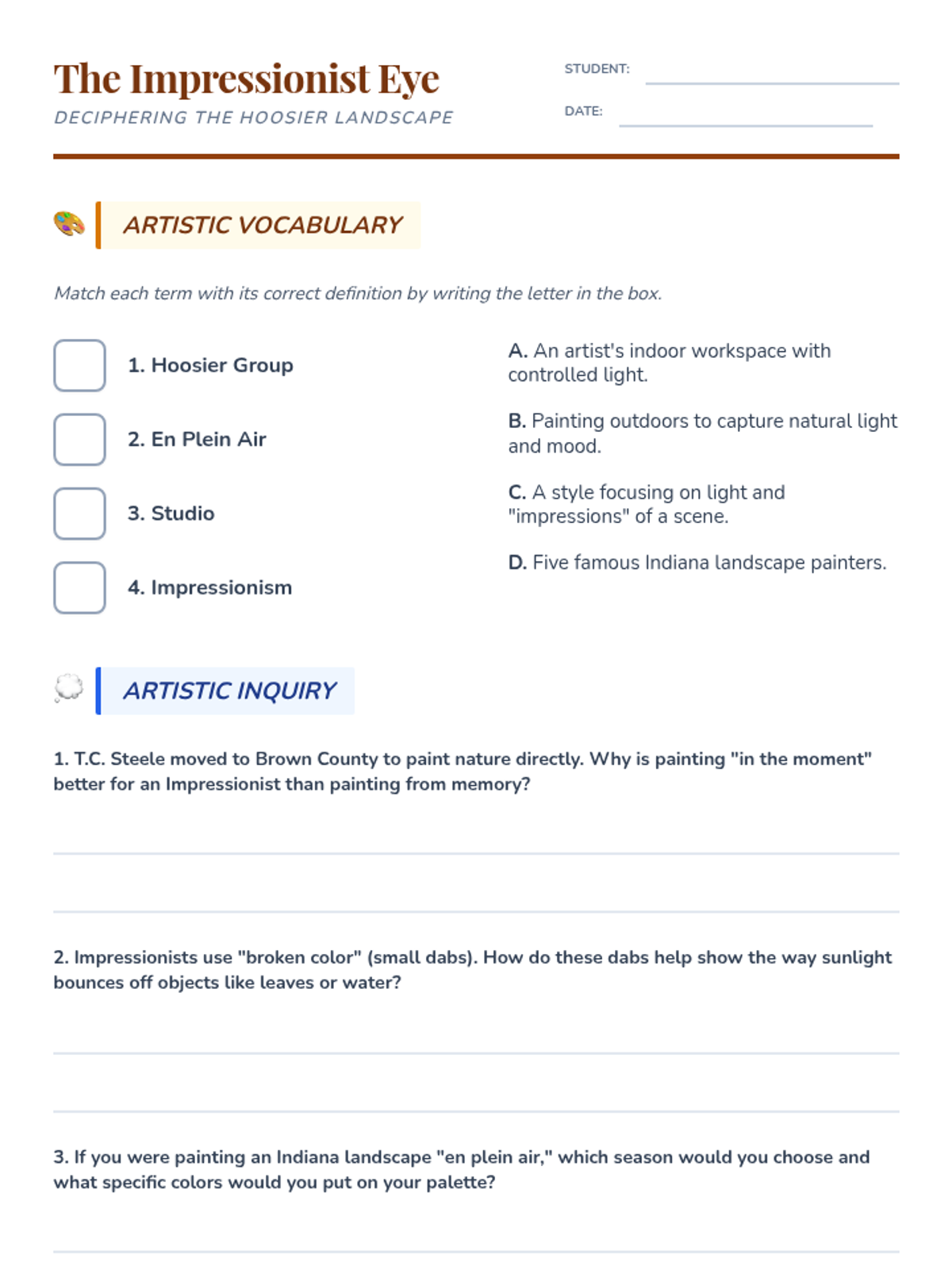
An inquiry-based exploration of monoprinting and collography for 6th-grade students, focusing on the element of chance, tactile textures, and the difference between relief and unique prints.
Une formation immersive de 12 heures destinée aux professeurs-documentalistes pour maîtriser les codes de la littérature adolescente actuelle et concevoir des stratégies de médiation innovantes au CDI.
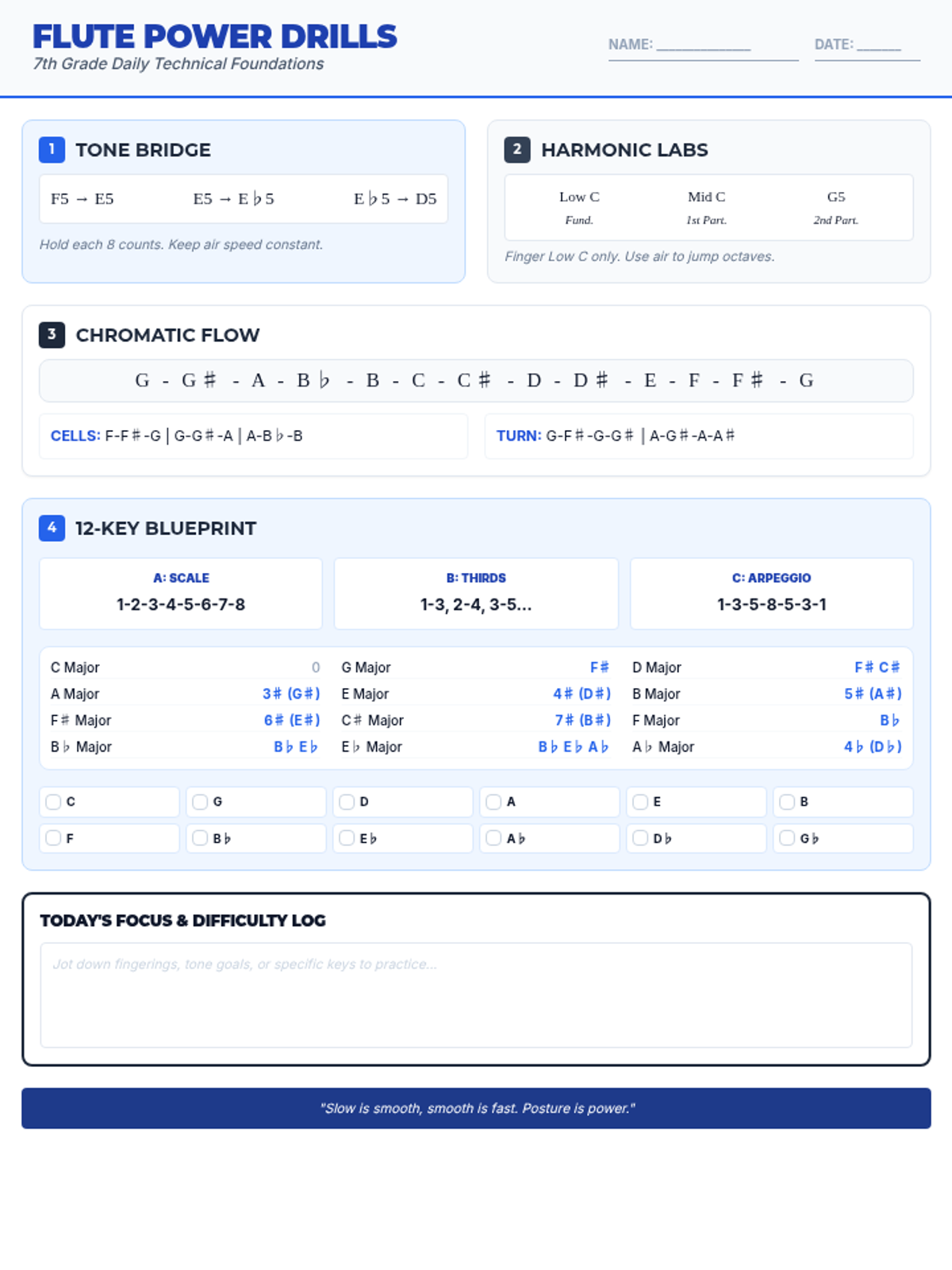
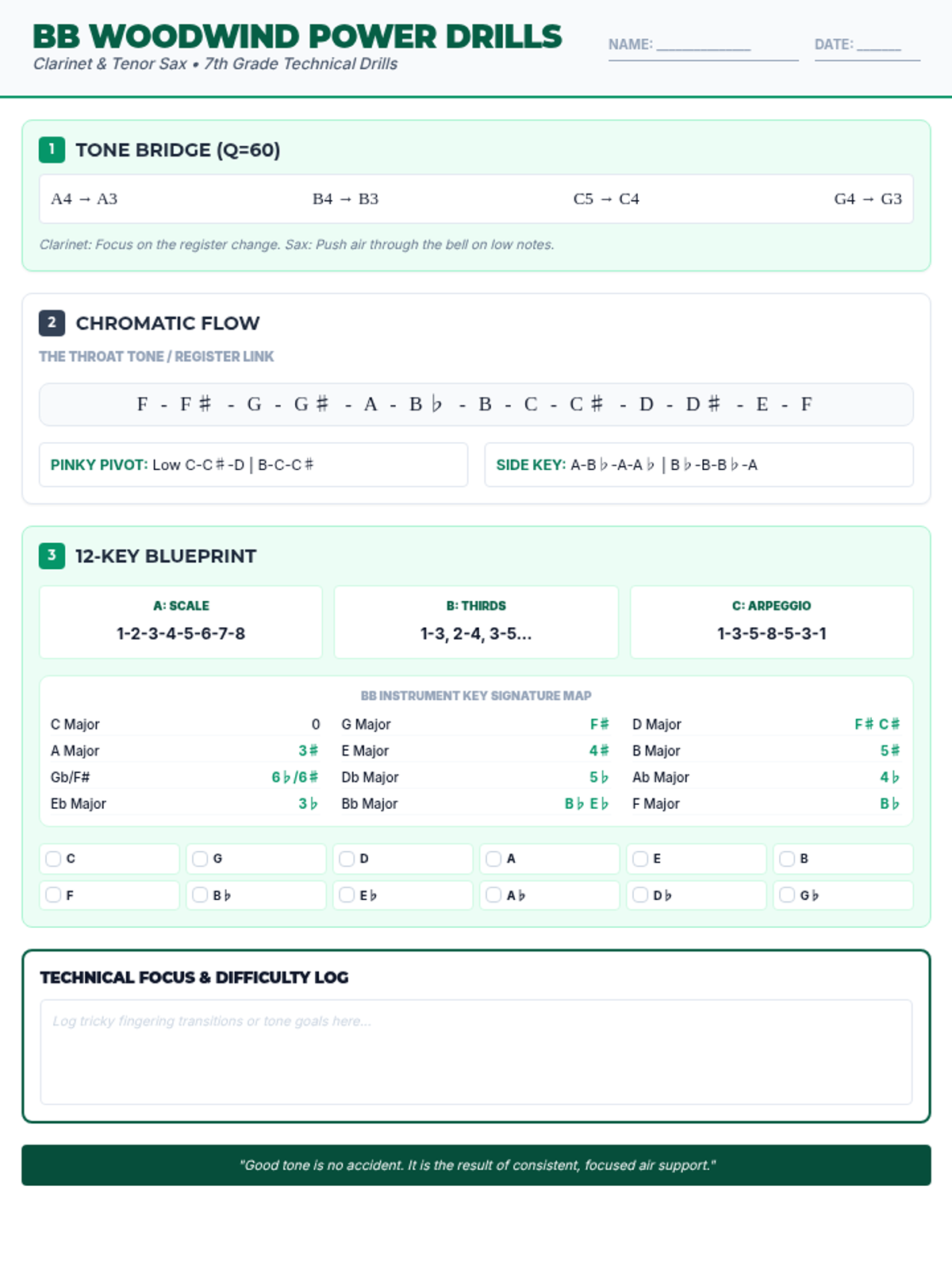
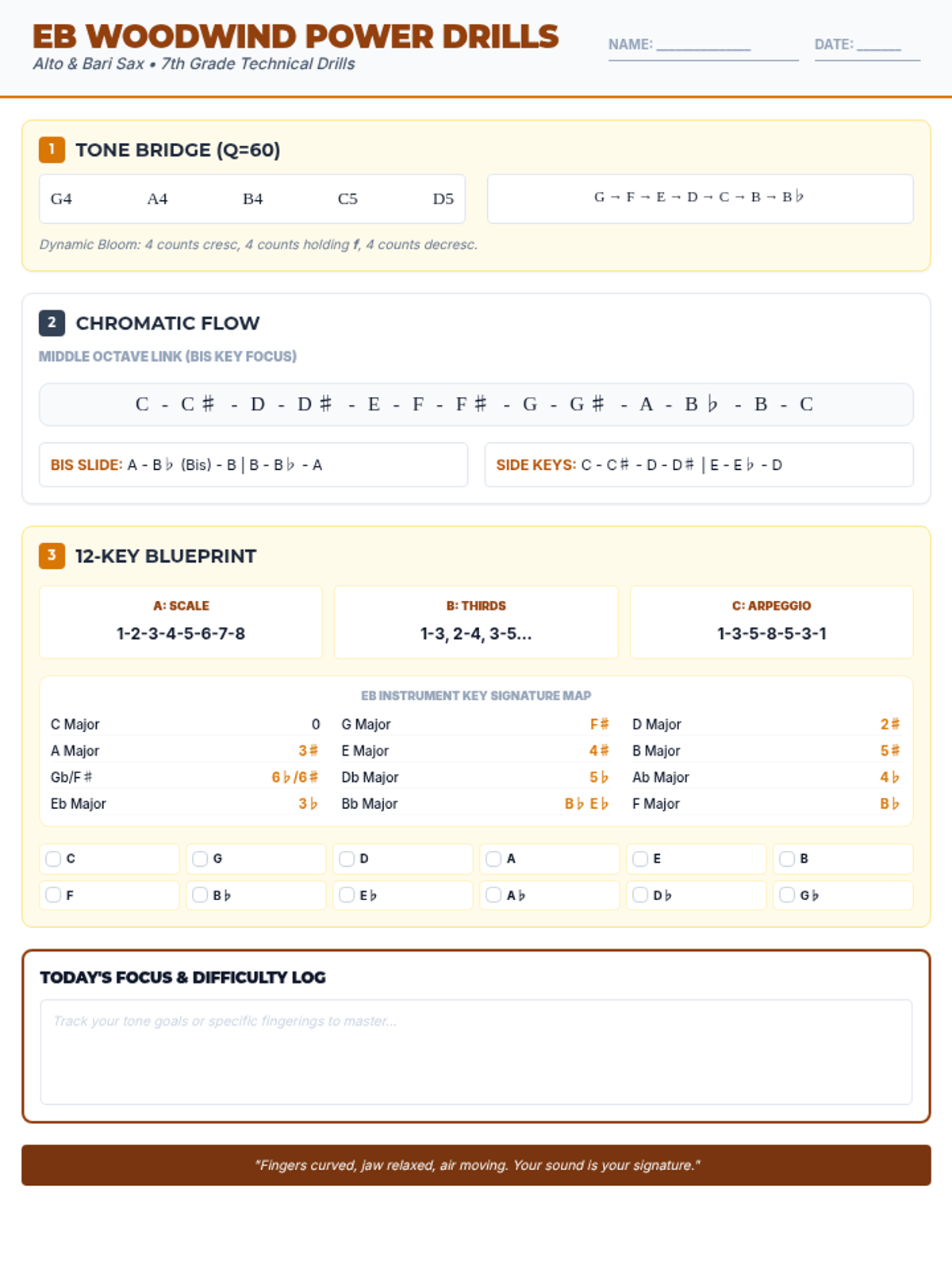
A comprehensive unit for middle school band students to master the chromatic scale, focusing on note identification, enharmonics, and instrument-specific fingerings through a 'blueprint' technical aesthetic.
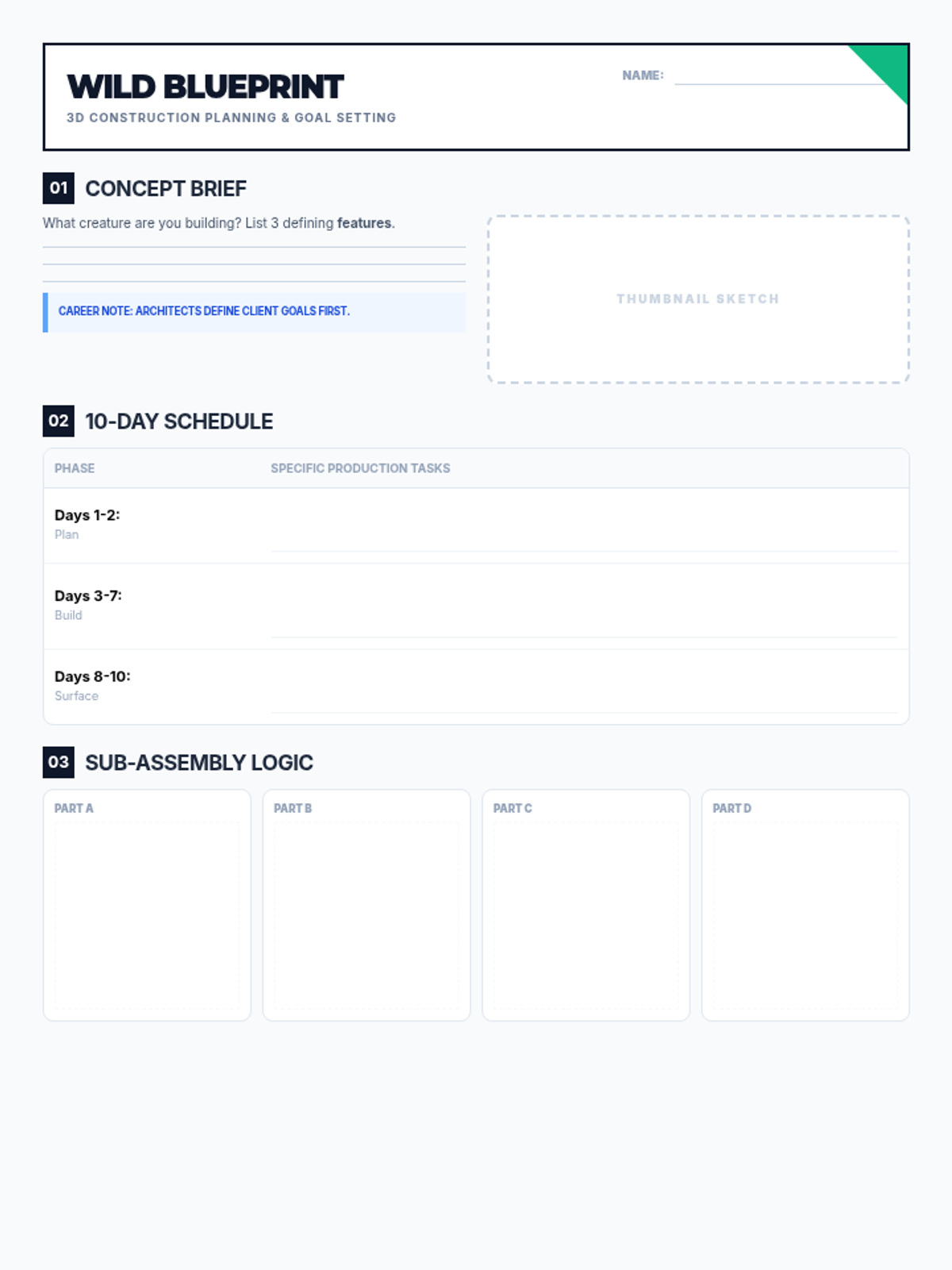
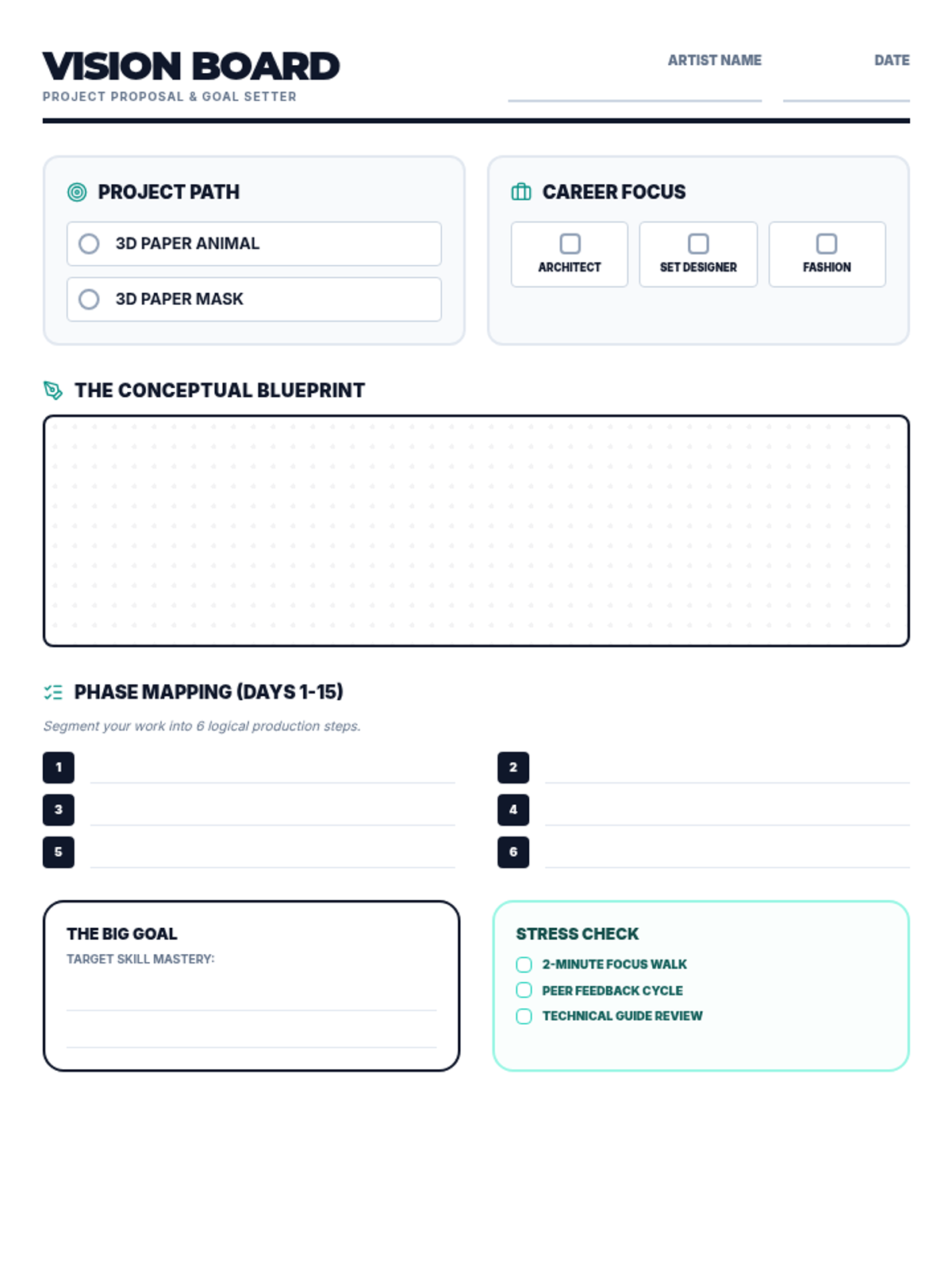
A comprehensive workshop sequence on goal setting and visual manifestation.
This sequence explores how technology—from the electric guitar to digital software—transformed music from the mid-20th century to today, focusing on genre evolution, song structure, and production.
This sequence investigates how the technological explosion of the 20th and 21st centuries, from the electric guitar to AI, redefined music genres and creation. Students analyze production techniques, listen for layers, and explore the concept of technology as a musical instrument.
This project-based sequence takes students on a global tour as ethnomusicologists, examining how geography and culture influence musical instruments and sounds. Students classify instruments using the Hornbostel-Sachs system and explore rhythms and scales from Africa, Asia, and Latin America.
A 5th-grade music history sequence exploring the development of Jazz and Blues, from African call-and-response roots to the birth of Rock n' Roll. Students investigate structural forms like the 12-bar blues, concepts like syncopation and improvisation, and the cultural resilience behind the music.
This sequence analyzes how technology in the 20th and 21st centuries revolutionized music production and consumption. Students trace the evolution from early Rock 'n' Roll amplification to electronic synthesis and digital sampling, culminating in a creative project where they design music for the future.
A 4th-grade music appreciation sequence exploring the connection between geography, natural resources, and musical traditions across West Africa, Indonesia, the Andes, and the Caribbean. Students develop rhythmic skills and cultural understanding through active workshops and comparative analysis.
A chronological journey through the Baroque, Classical, Romantic, and Modern eras of Western Art Music, focusing on critical listening and historical context.
This sequence traces the evolution of contemporary music from 19th-century African American spirituals through the development of the Blues, Jazz, and Rock & Roll. Students investigate how cultural exchange, technology, and social struggles shaped the sounds we listen to today, culminating in a musical genealogy project.
A chronological exploration of Western music history for 7th-grade students, connecting the innovations of the Baroque, Classical, Romantic, and Jazz eras to modern sampling and production techniques. Students develop critical listening skills and analyze how historical structures influence contemporary genres like pop, hip-hop, and EDM.
Students investigate how costumes and properties (props) function as tools for character development and storytelling. The sequence guides students through the process of distinguishing between prop types, exploring costume psychology, fabricating safe props, and mastering backstage organization.
A 5-lesson sequence for 5th-grade students focusing on the iterative process of playwriting, from the first table read to a final, polished performance-ready script. Students develop skills in auditory analysis, dialogue refinement, conciseness, and collaboration.
Students learn to translate narrative fiction into dramatic scripts by analyzing storytelling modes, converting internal thoughts to external actions, and drafting their own theatrical adaptations of fables.
A 5-lesson series on playwriting for 7th graders, focusing on building deep characters, creating high-stakes conflict, and the iterative process of drafting and revision through table reads.
This project-based sequence guides students through the structural engineering of a narrative, moving from a raw premise to a developed one-act play. Students analyze the dramatic arc and apply these concepts to their own original scripts, focusing on pacing, high-stakes storytelling, and professional formatting.