A 5-lesson sequence for Pre-K students exploring the connection between nature, pictographs, and the art of Chinese calligraphy through hands-on brush painting and sensory play.
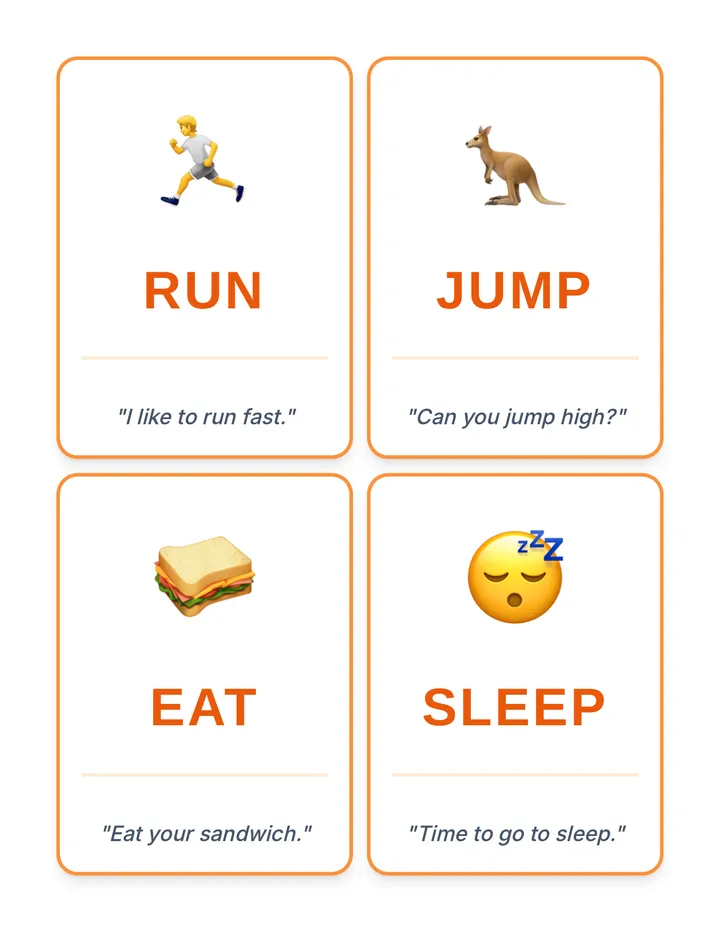
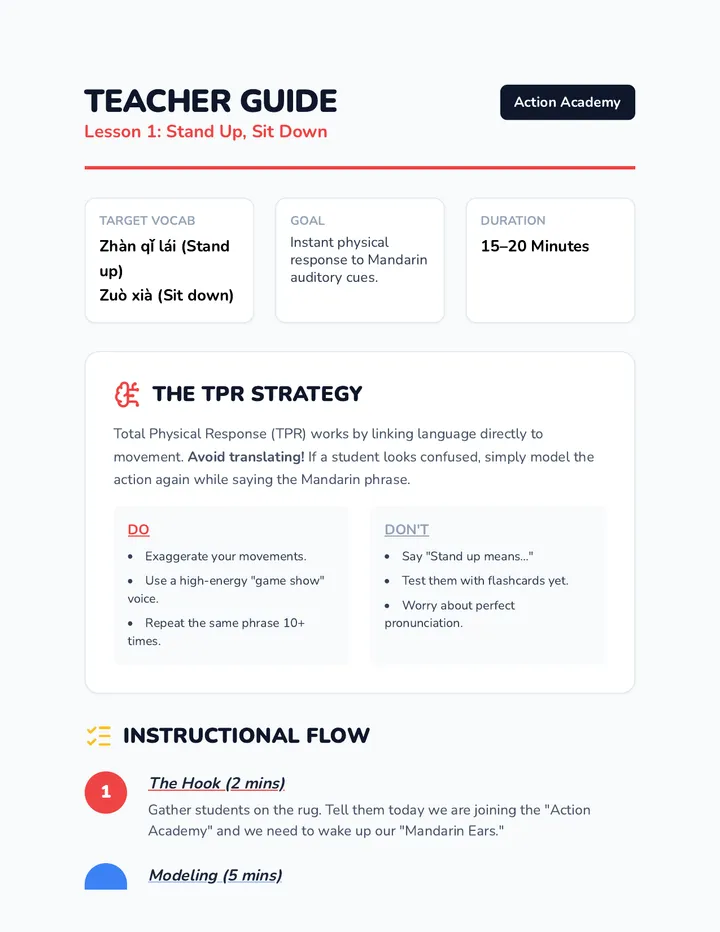
A high-energy Mandarin Chinese sequence for Pre-K students using the Total Physical Response (TPR) method. Students learn to respond to physical commands and action verbs through games and movement, building direct meaning without translation.
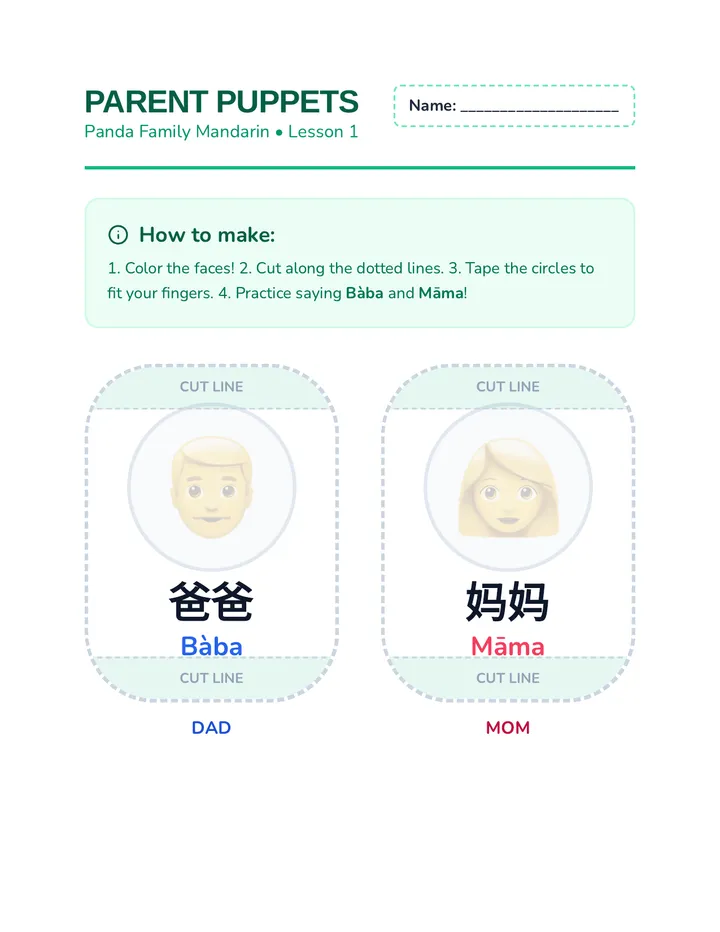
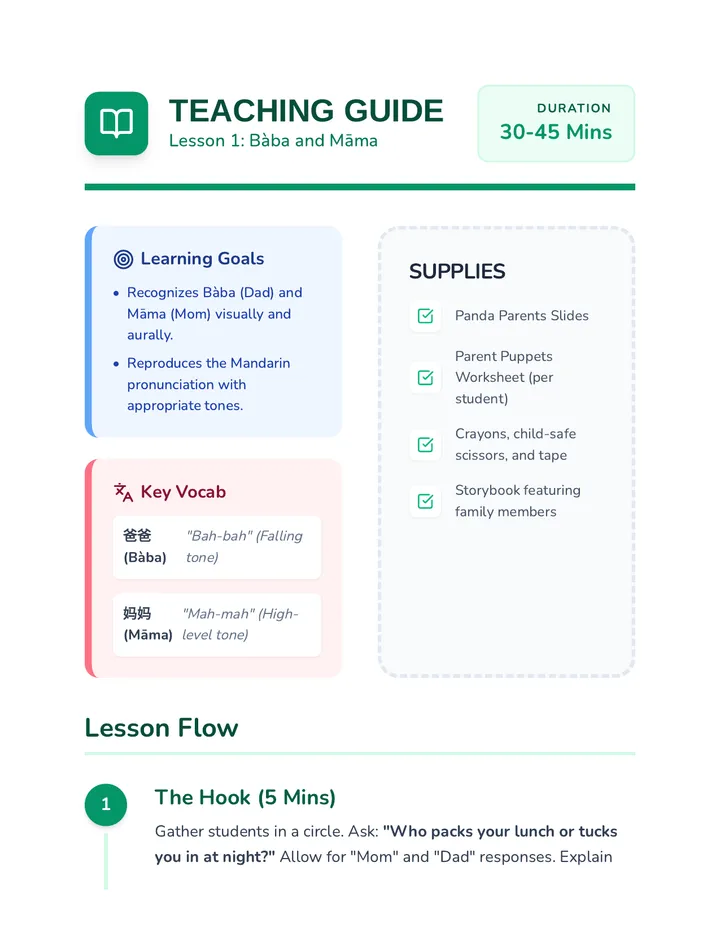
A foundational Mandarin Chinese sequence for Pre-K students focused on identifying family members. Students learn vocabulary for parents, siblings, and grandparents through interactive games, songs, and visual inquiry.
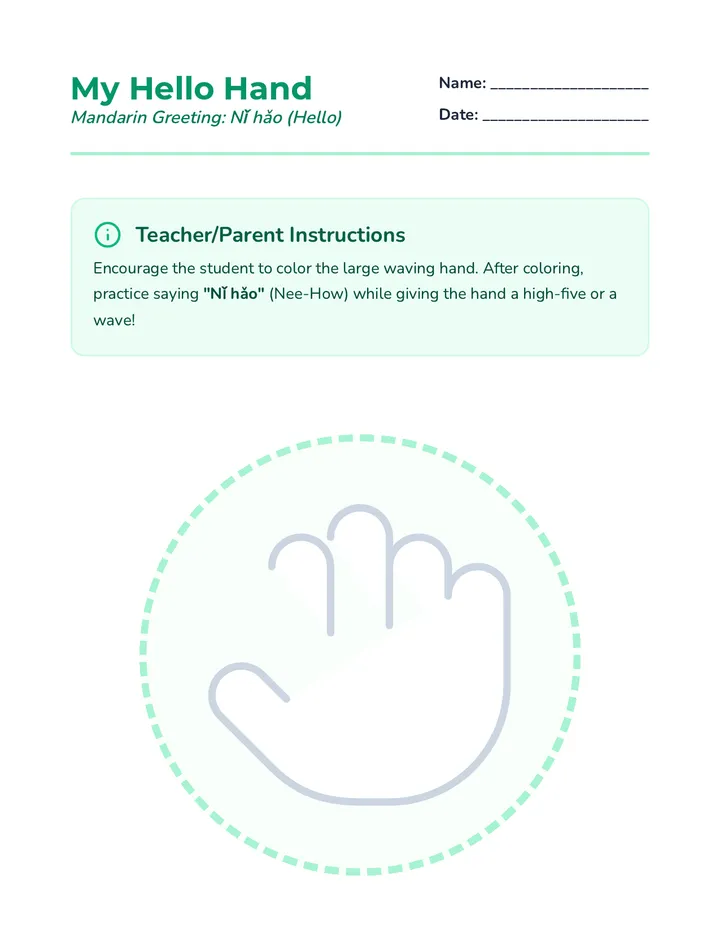
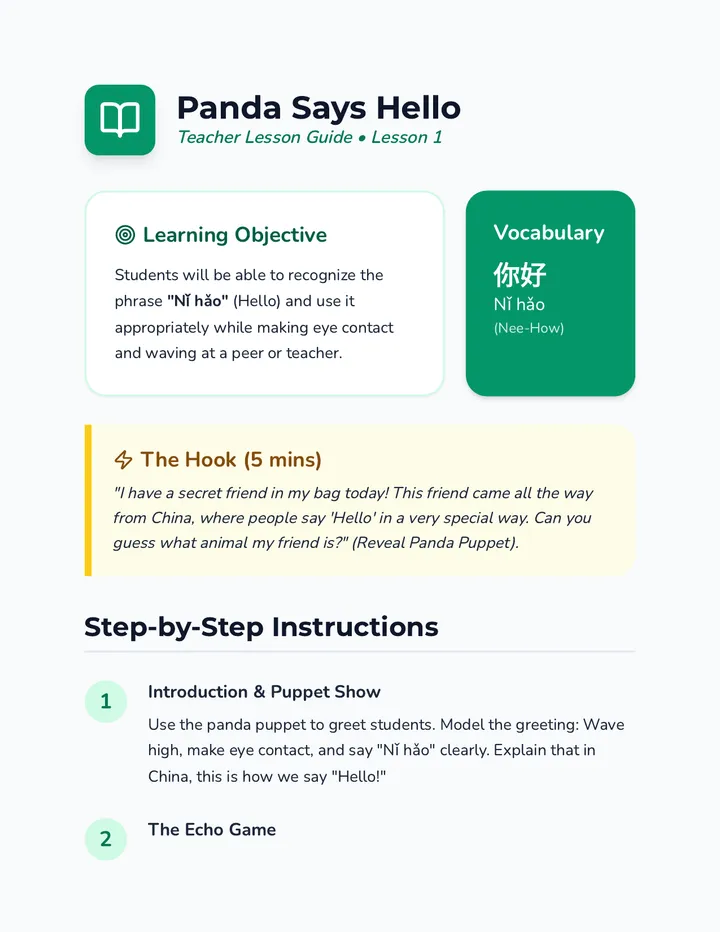
A Pre-K sequence focused on teaching basic Mandarin greetings and social etiquette through play, puppets, and a final tea party synthesis. Students learn phrases for hello, goodbye, thank you, and sorry in a culturally immersive environment.
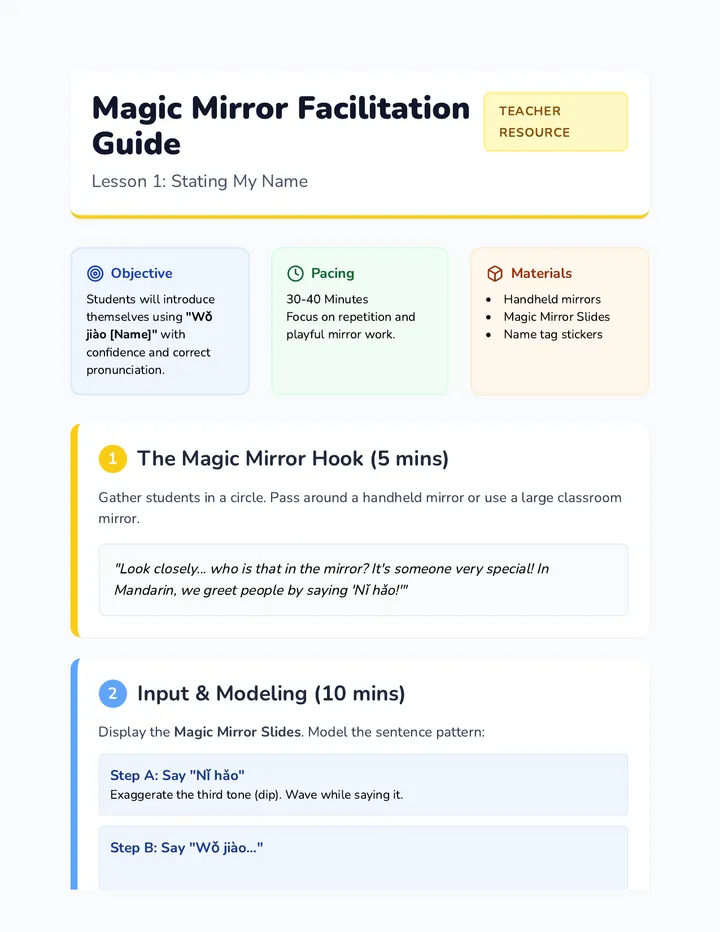
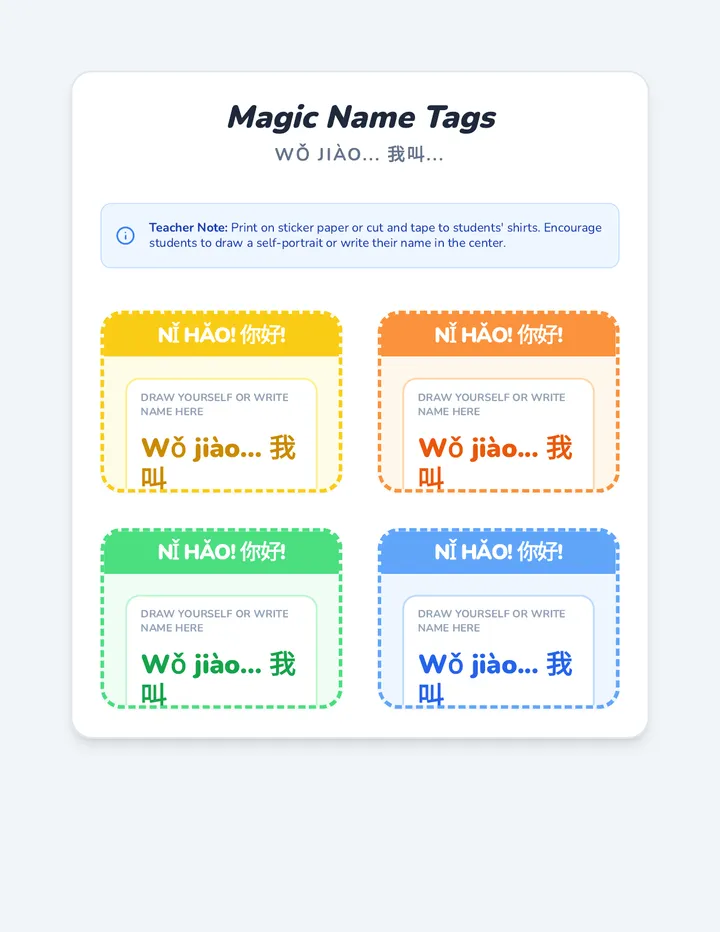
A 5-lesson sequence for Pre-K students to learn basic self-introduction in Mandarin Chinese, covering name, gender, age, and personal preferences using simple sentence patterns.
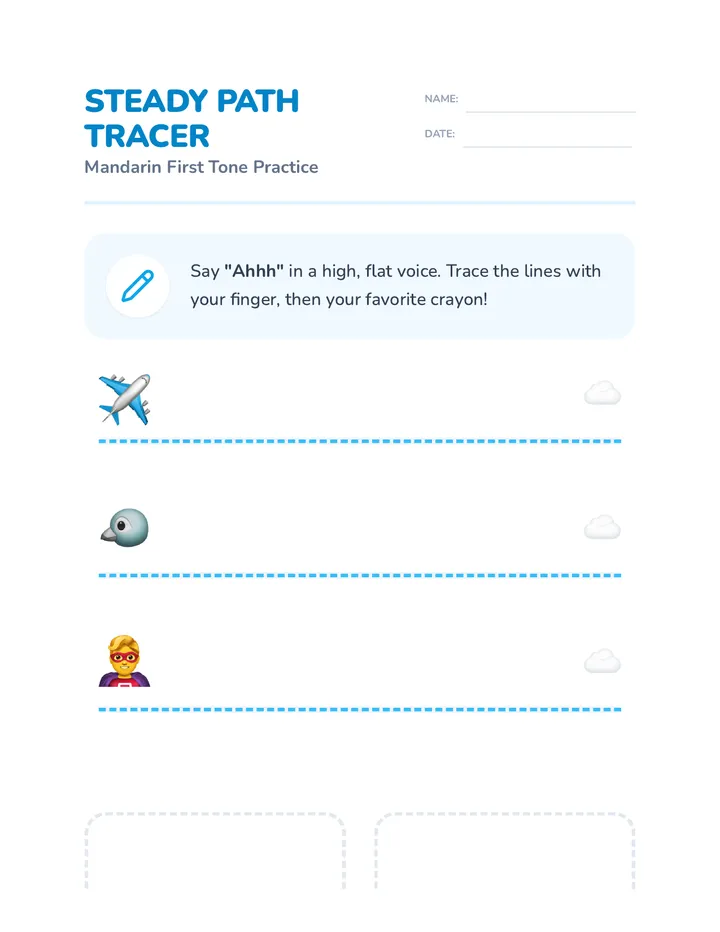
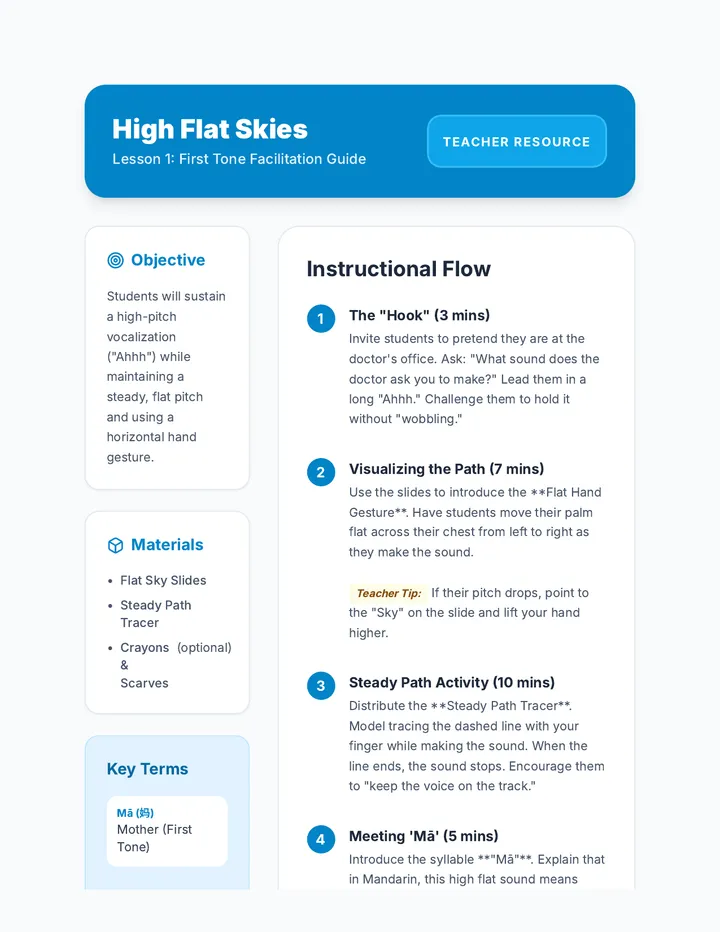
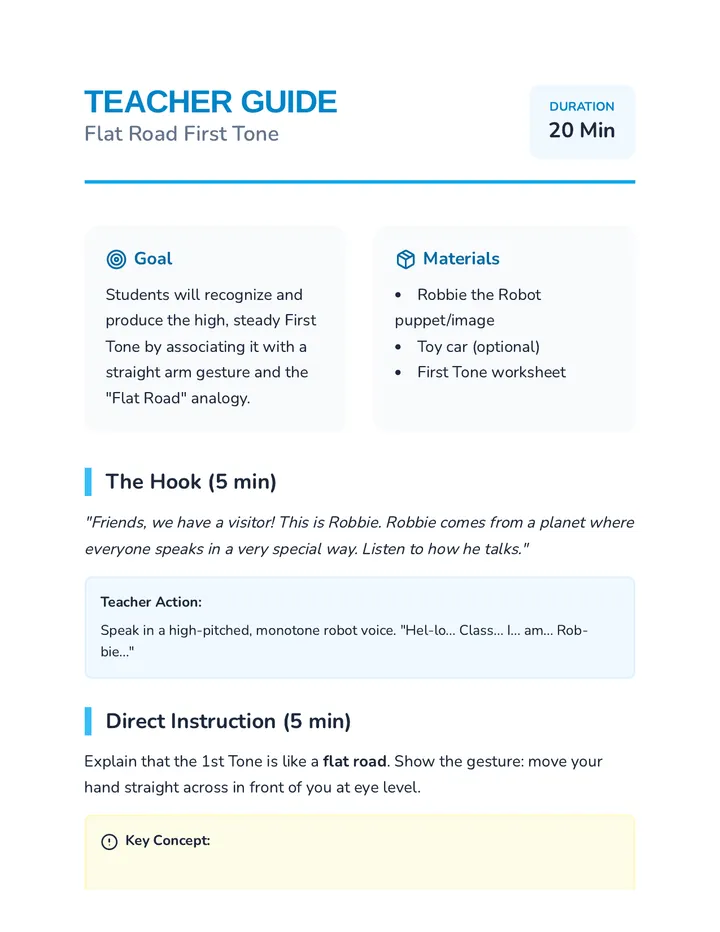
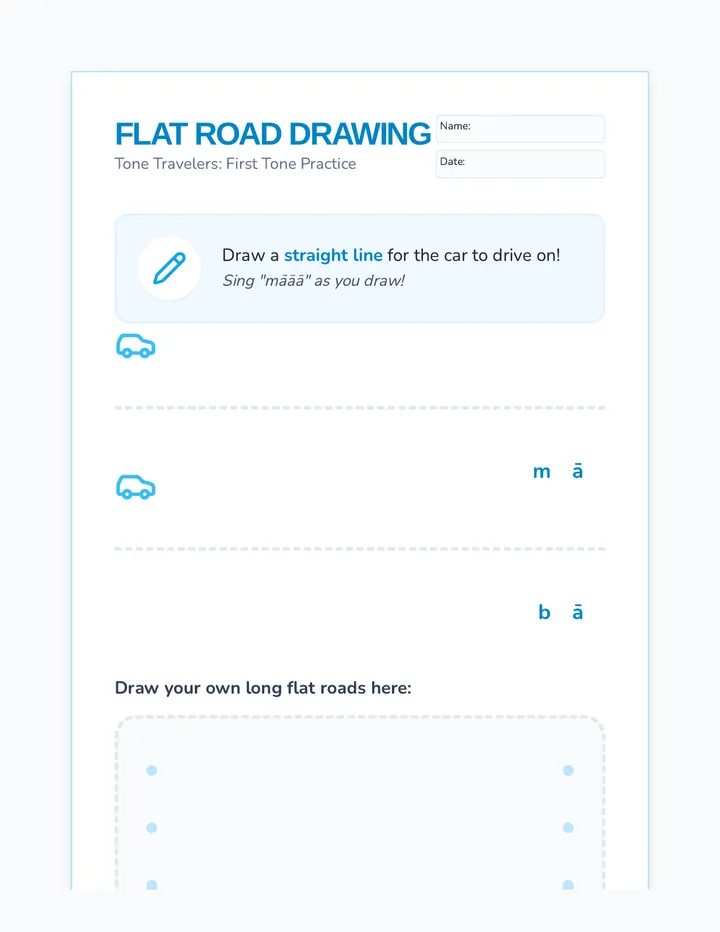
A foundational sequence for Pre-K learners to explore the four tones of Mandarin Chinese through auditory play, physical movement, and vocal exploration. Students learn to associate pitch changes with meaning using relatable sounds like questioning 'Huh?' or firm 'No!' gestures.
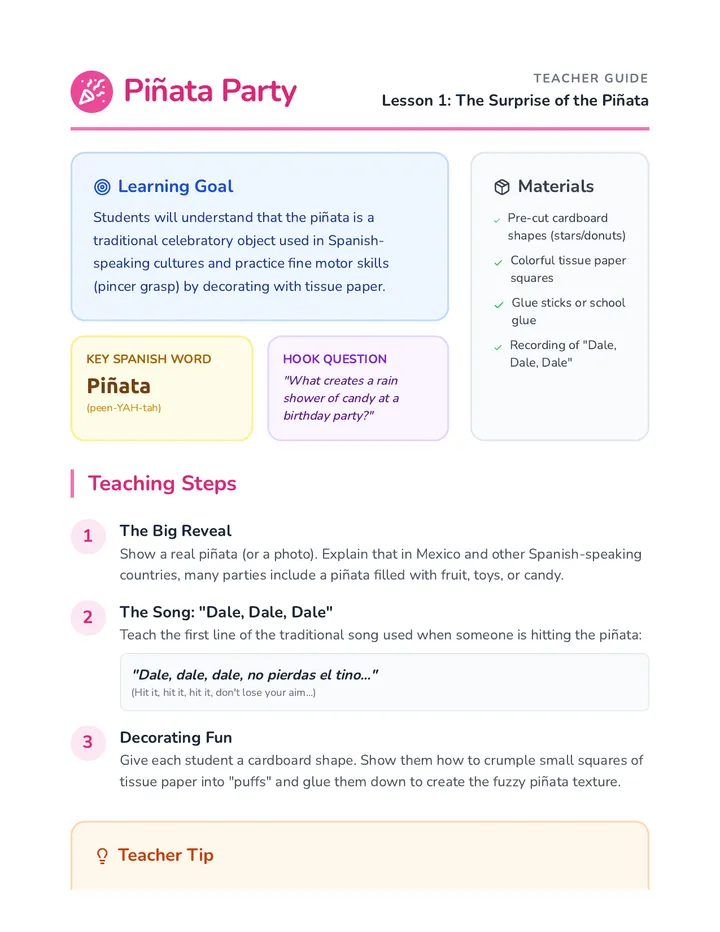
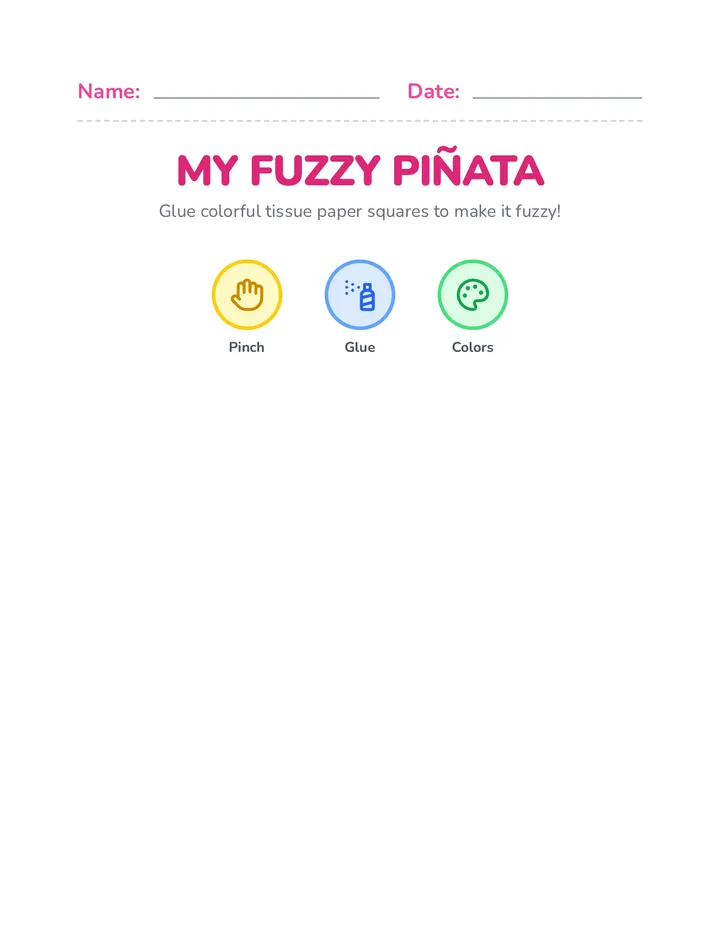
A vibrant, Pre-K focused sequence exploring Spanish and Latin American holidays and traditions. Through hands-on crafts like piñatas, masks, and crowns, students learn about cultural celebrations while developing fine motor skills and emotional expression.
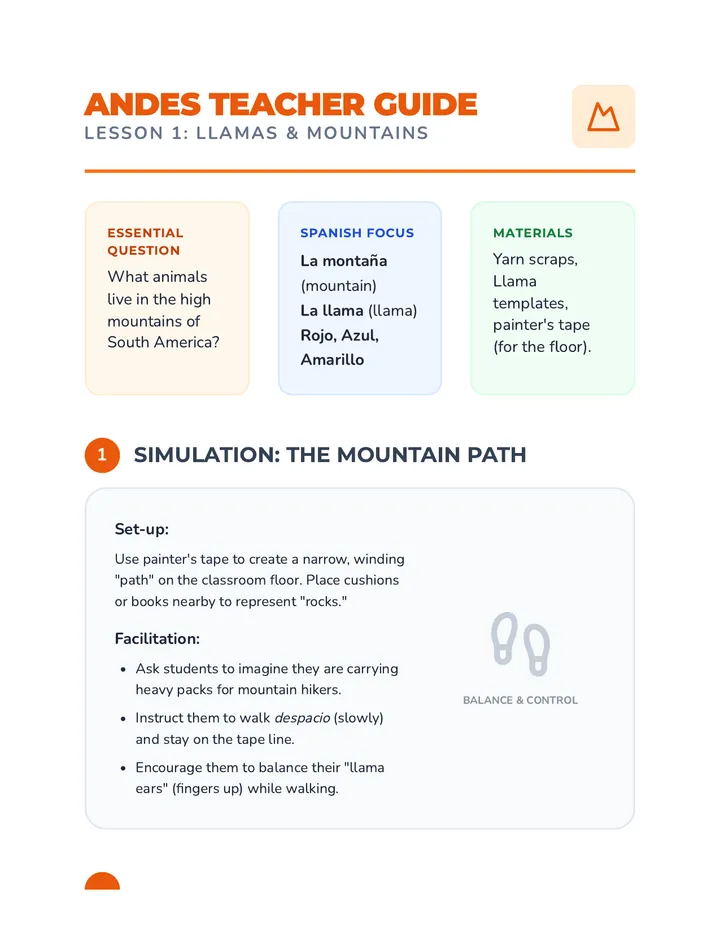
A Pre-K sequence exploring the diverse animals and landscapes of Latin America through sensory play, movement, and creative arts. Students 'travel' to the Andes, Amazon, and Caribbean to learn about unique habitats and the creatures that call them home.
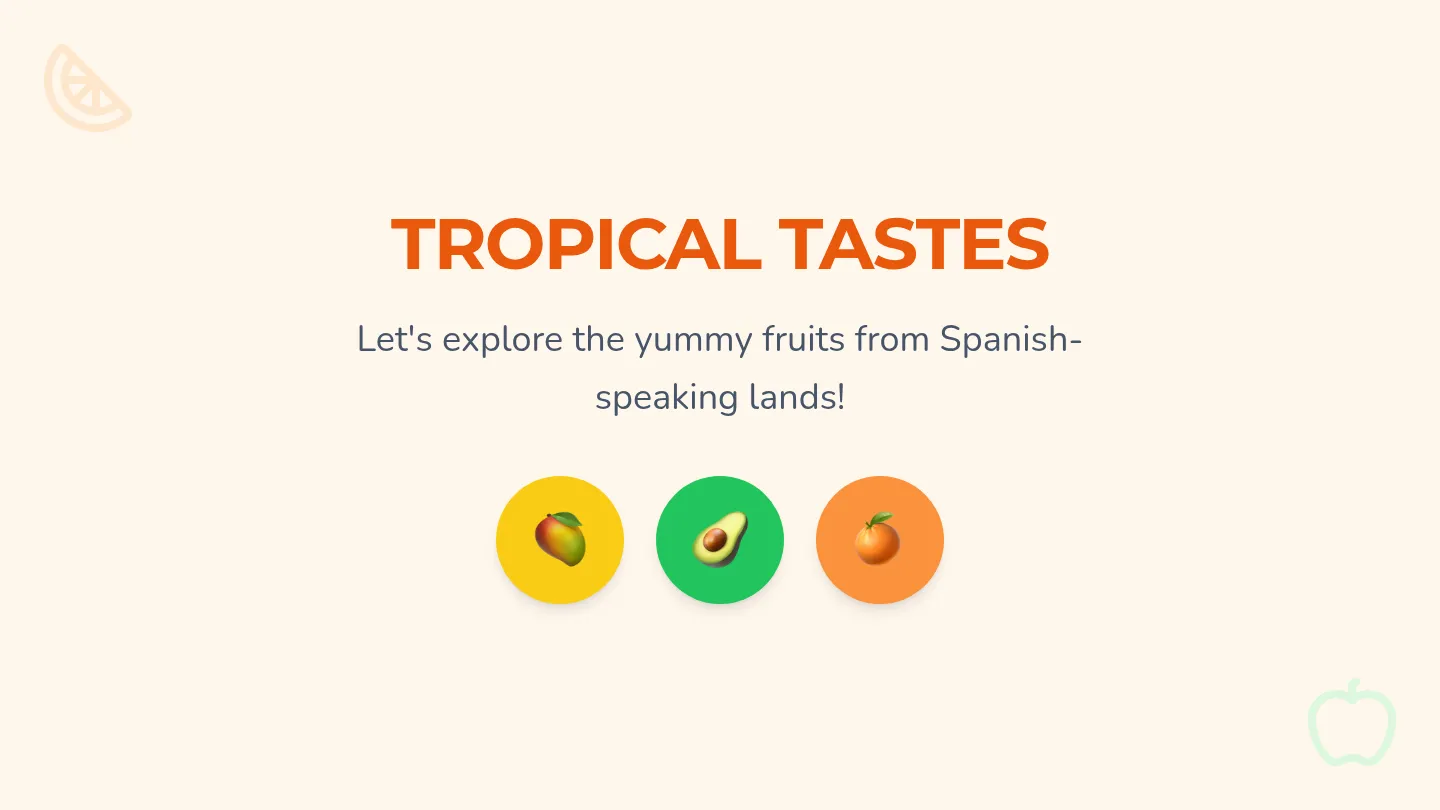
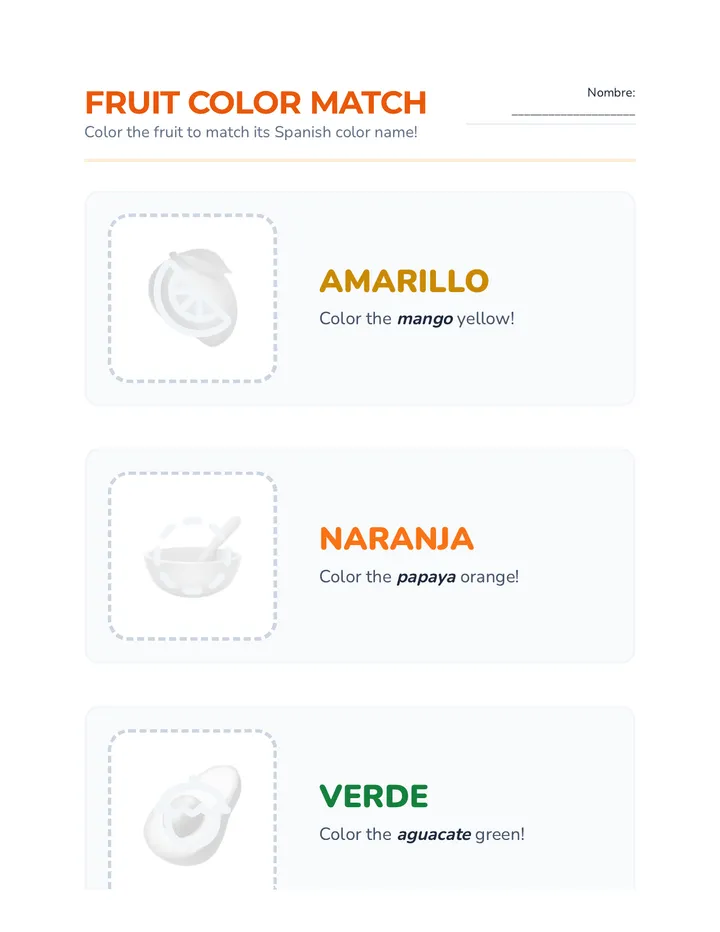
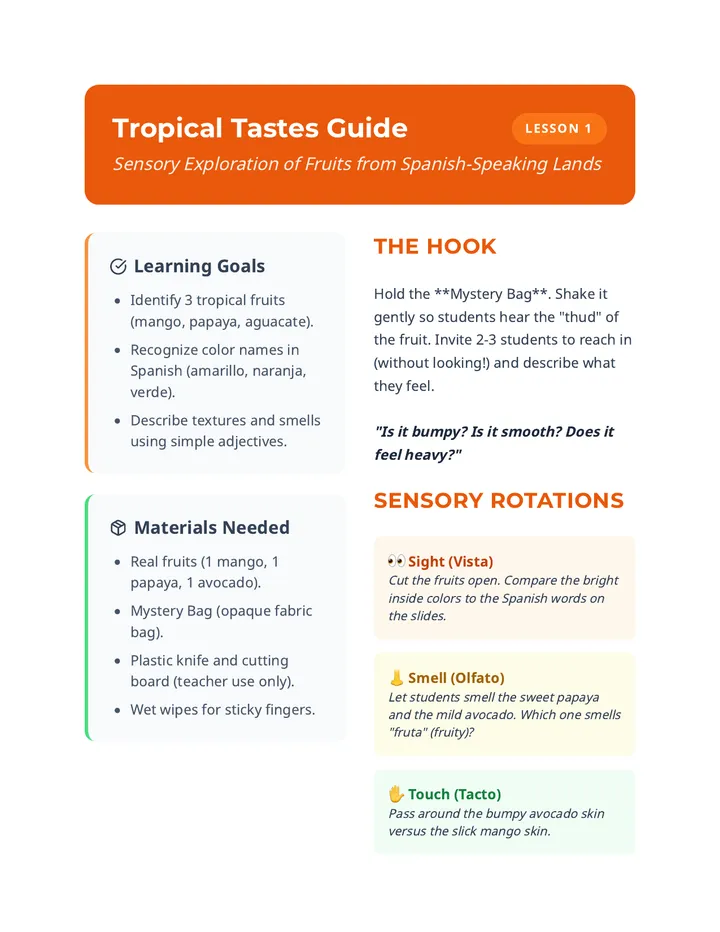
A sensory-rich exploration of Spanish and Latin American culinary traditions designed for Pre-K learners. Students discover tropical fruits, the corn-to-tortilla process, the vibrant colors of paella, market spices, and the social importance of family meals.
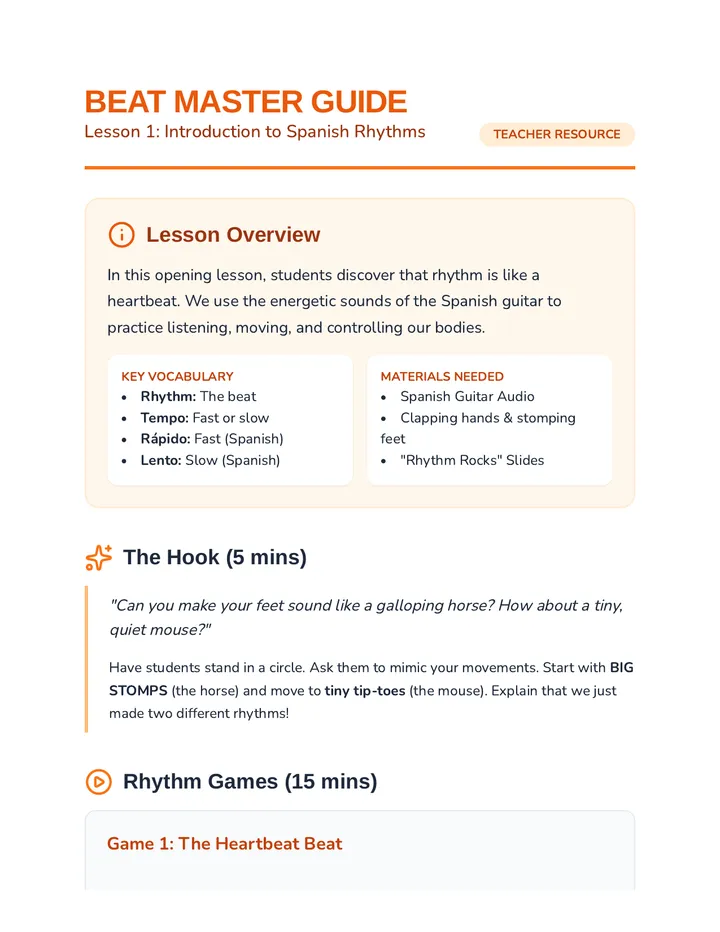
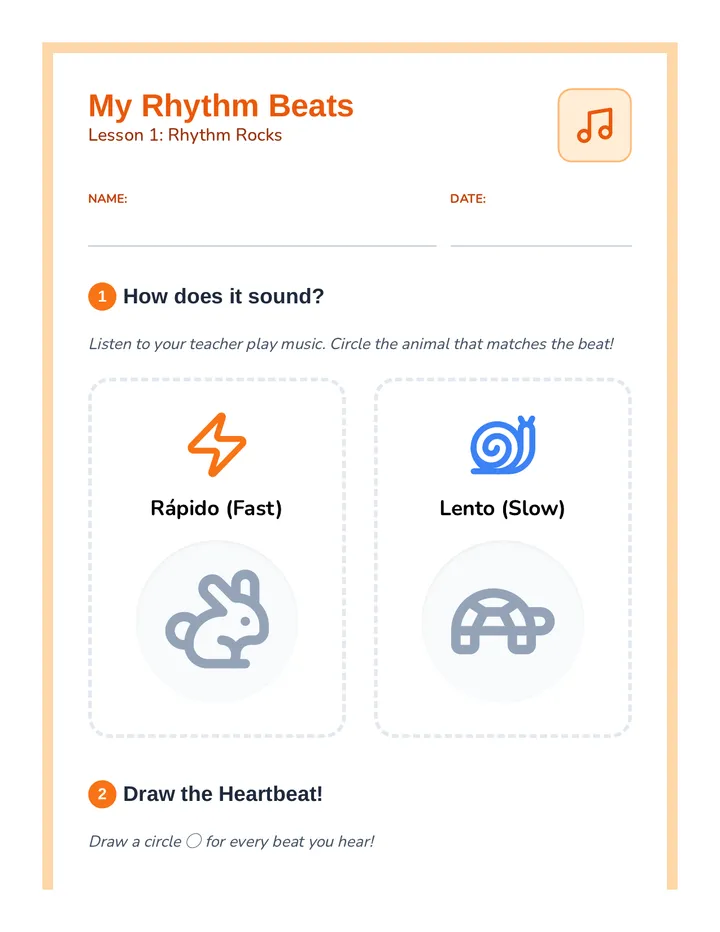
A vibrant Pre-K sequence introducing Spanish-speaking cultures through music, rhythm, and movement. Students explore Flamenco, Salsa, and Mariachi through kinesthetic activities and simple percussion.
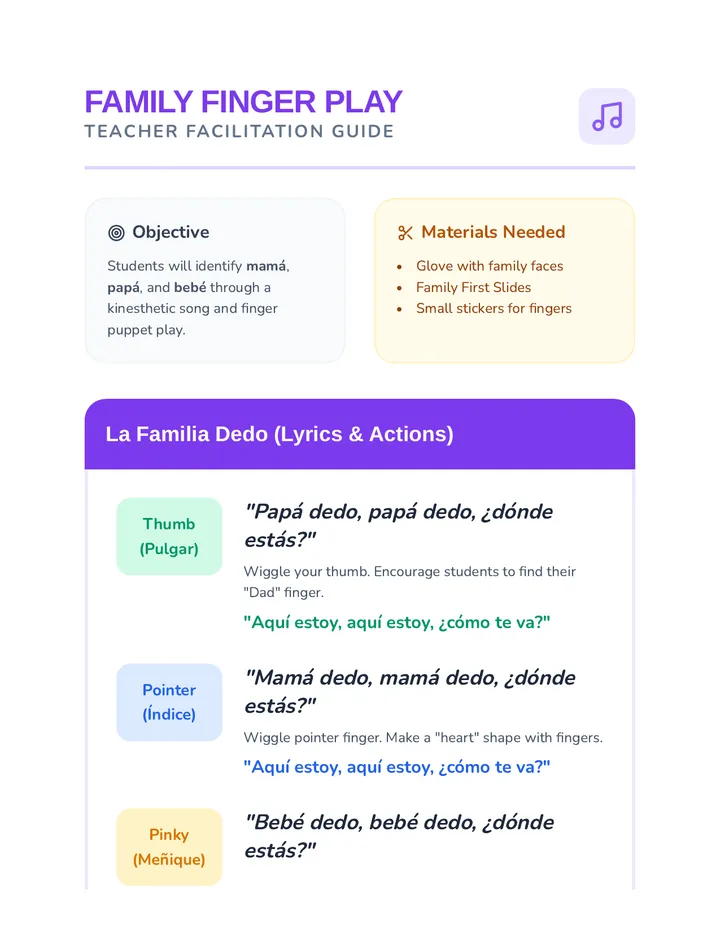
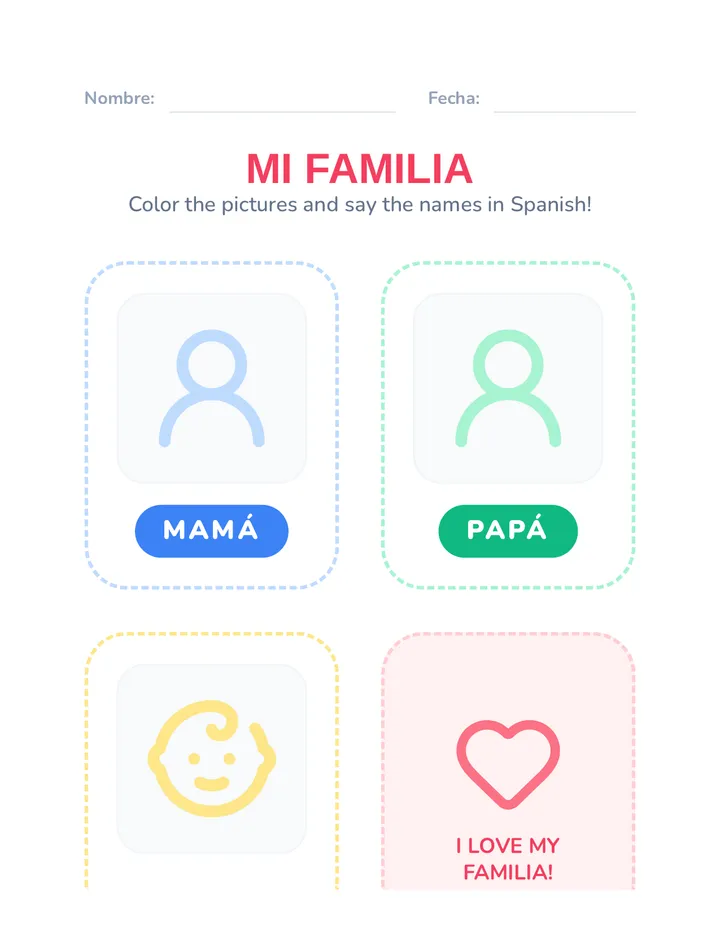
A fun, interactive Spanish vocabulary sequence for Pre-K students focusing on family members and pets. Through songs, games, and creative projects, children learn to name the most important people and animals in their lives.
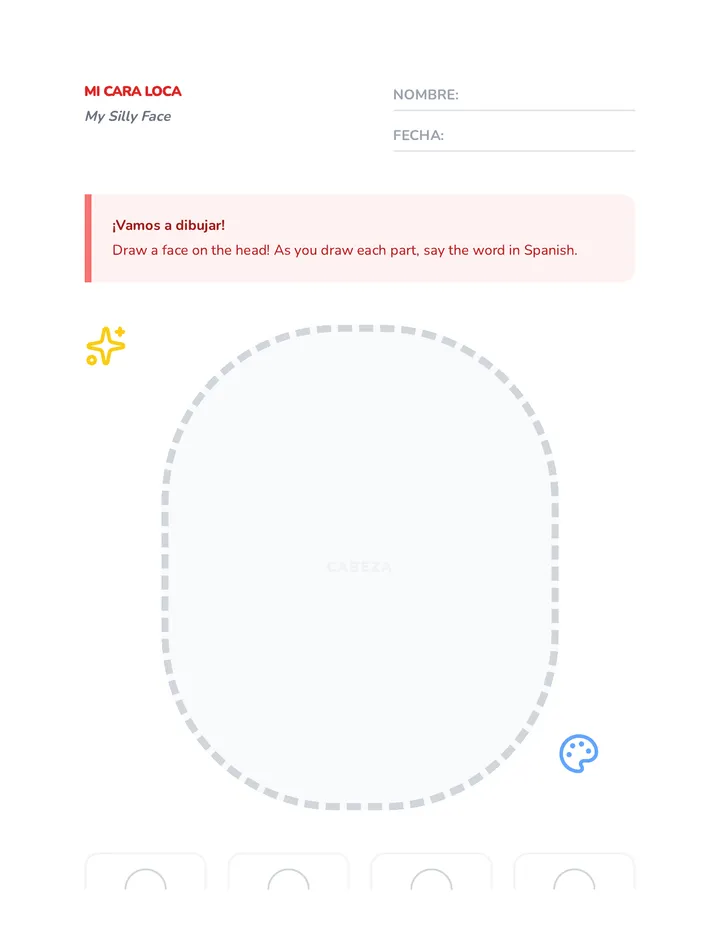
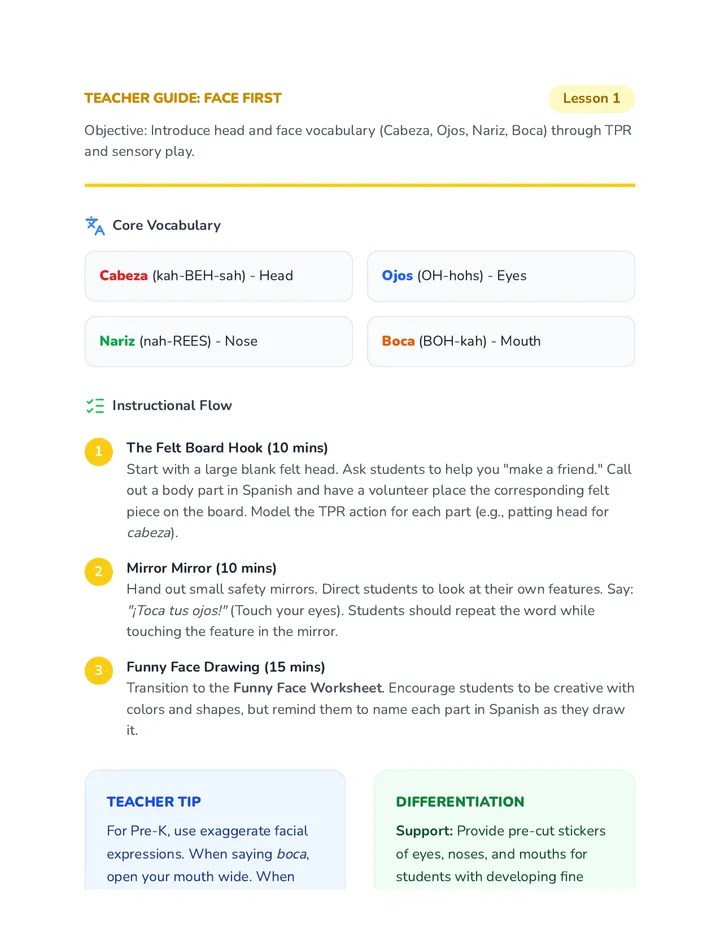
A physical and interactive Spanish vocabulary sequence for Pre-K students focusing on body parts and movement through Total Physical Response (TPR). Students learn through songs, games, and creative activities, culminating in a 'Simón Dice' challenge.
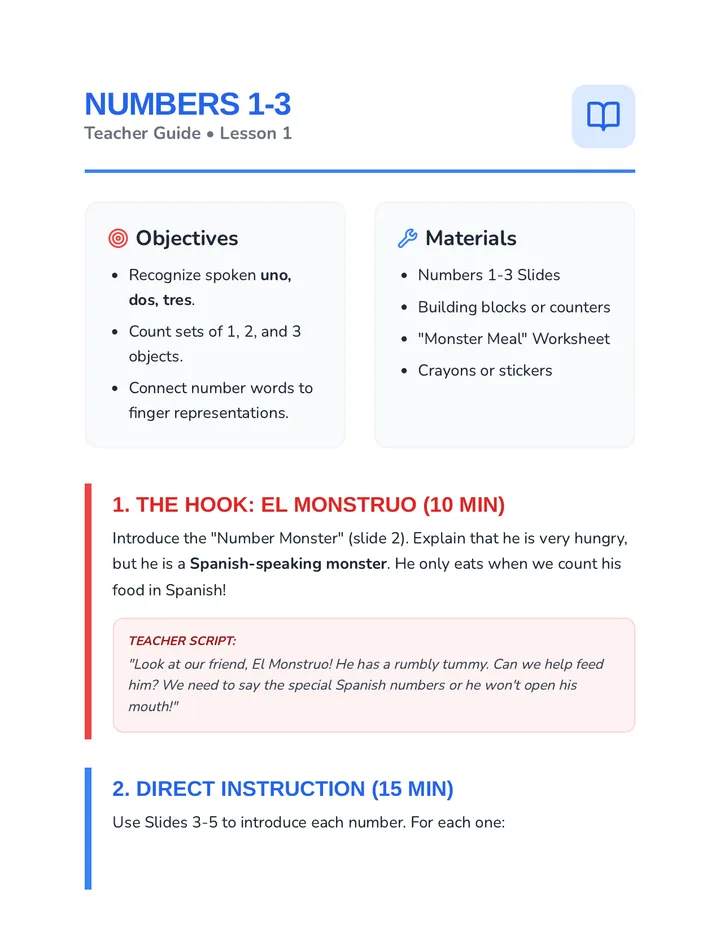
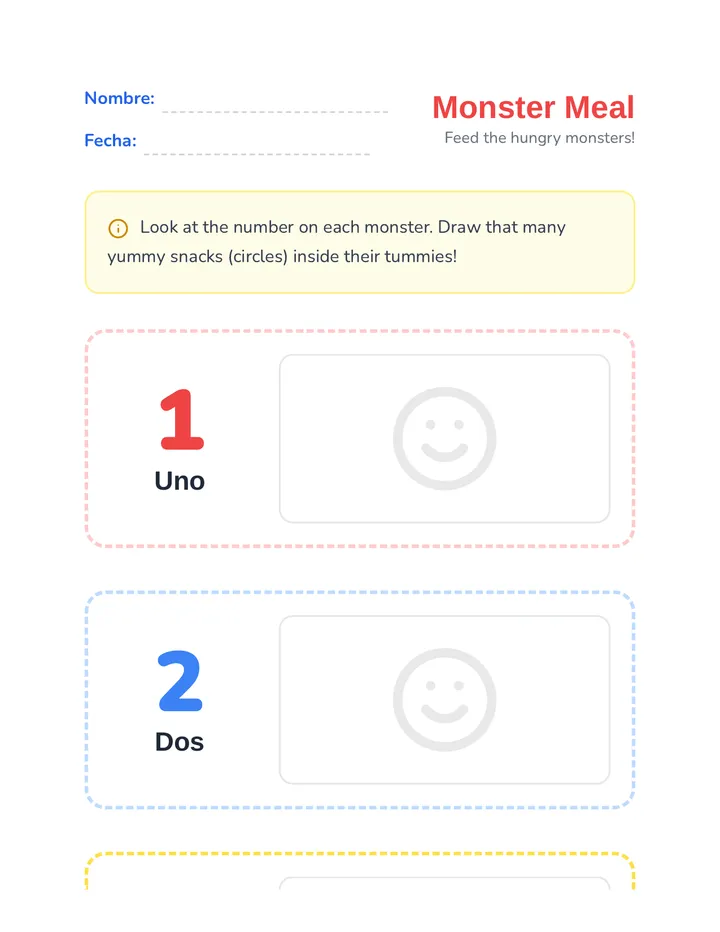
This Pre-K sequence introduces Spanish numbers 1-10 through multisensory activities, movement, and play. Students will learn to recognize, say, and count quantities using 'uno' through 'diez'.
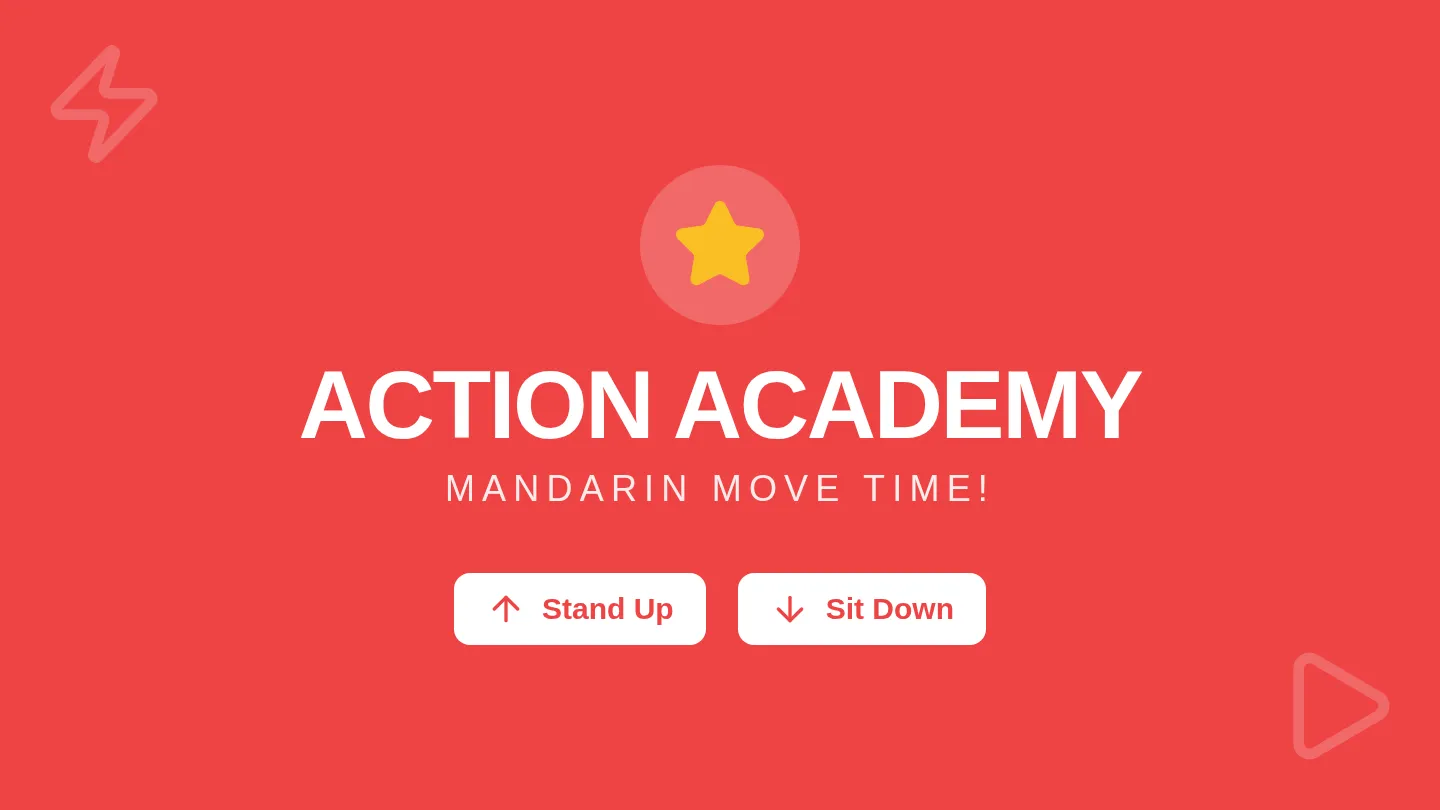
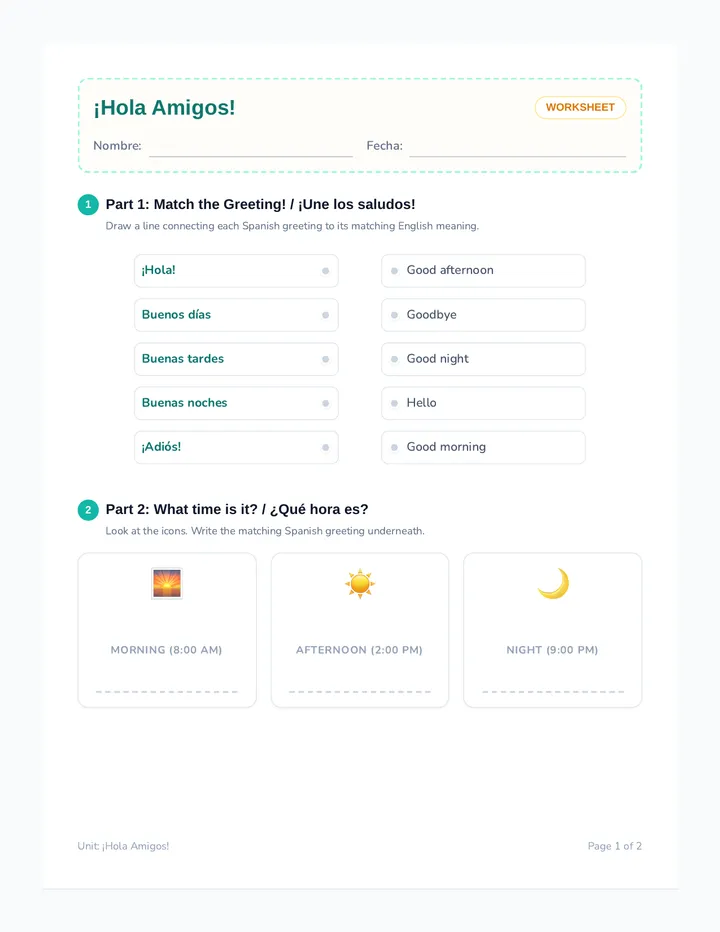
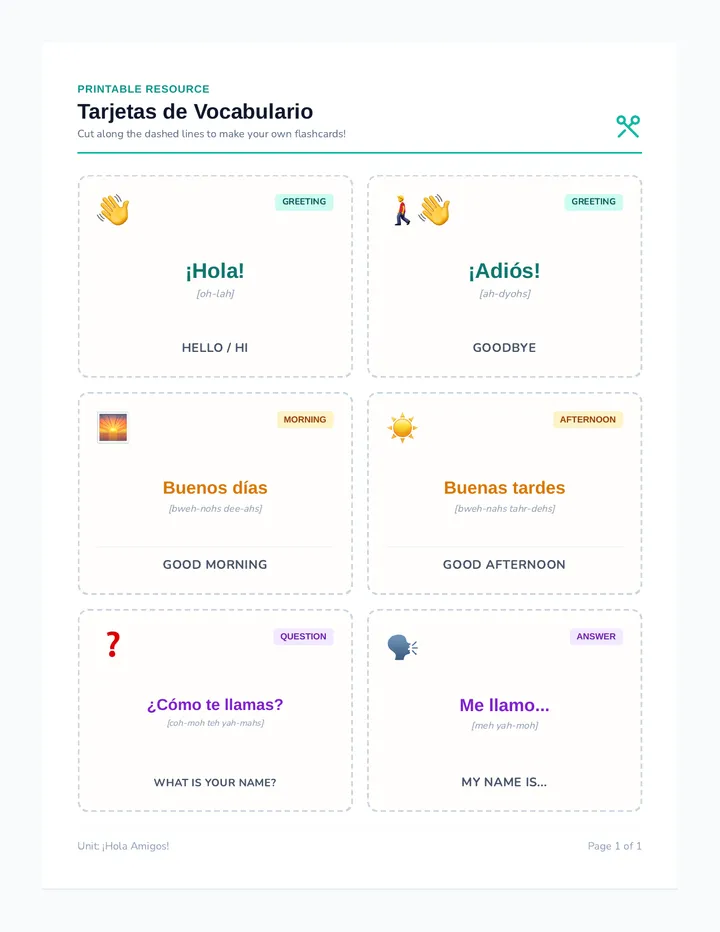
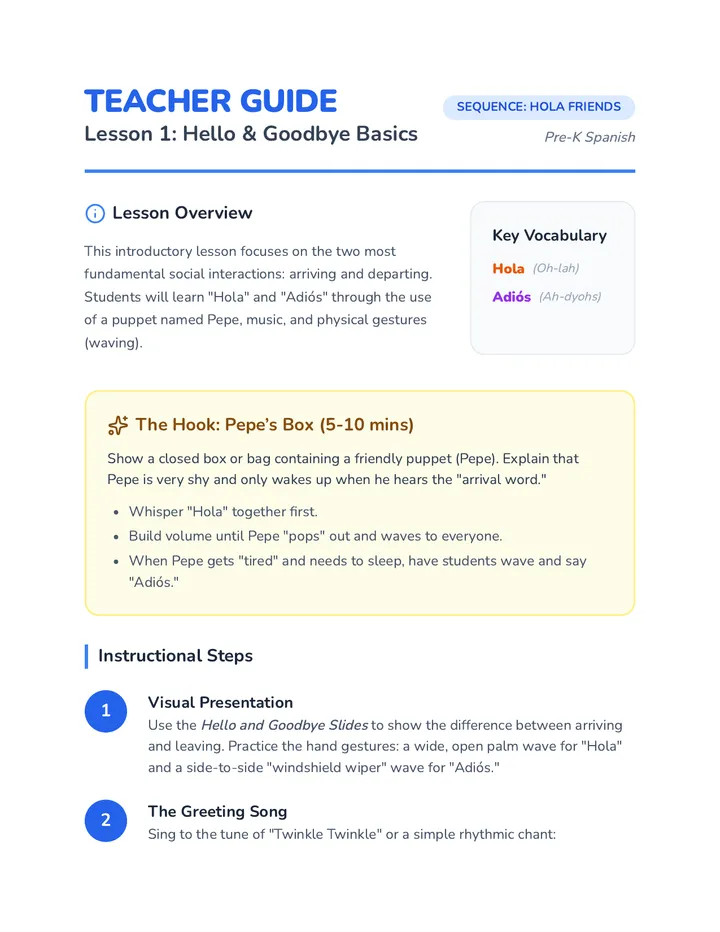
A foundational Spanish sequence for Pre-K students focusing on greetings, introductions, emotions, and manners through play, song, and social interaction.
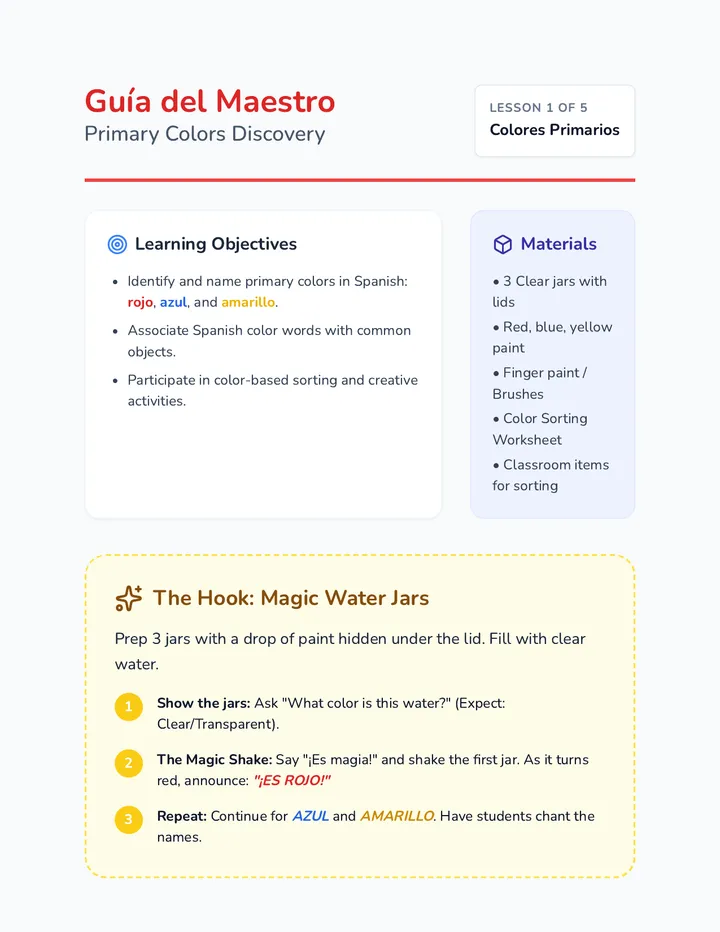
A fun and immersive Spanish vocabulary sequence for Pre-K students focusing on identifying colors and geometric shapes through creative projects and visual exploration.
An immersive sequence for Pre-K students exploring Chinese cultural traditions through sensory-rich activities, stories, and hands-on crafts. Students learn about the Lunar New Year, artistic brushwork, polite social customs, and the collaborative dragon dance.
A physical and auditory introduction to the four Mandarin tones for Pre-K learners, using movement, animal analogies, and games to make pitch concrete.
This sequence explores Chinese culinary traditions and table manners through sensory play, fine motor activities, and cultural simulations. Pre-K students will learn about staple foods, dumpling preparation, chopstick use, tea rituals, and communal dining etiquette.
A sensory-rich introduction to major Chinese festivals for Pre-K students, focusing on colors, sounds, and symbols through play-based learning.
This sequence introduces Pre-K students to traditional Chinese social etiquette and family respect (Xiao). Students learn through role-play, games, and art to greet others, use two hands for giving/receiving, understand family roles, and practice patience by serving elders first.
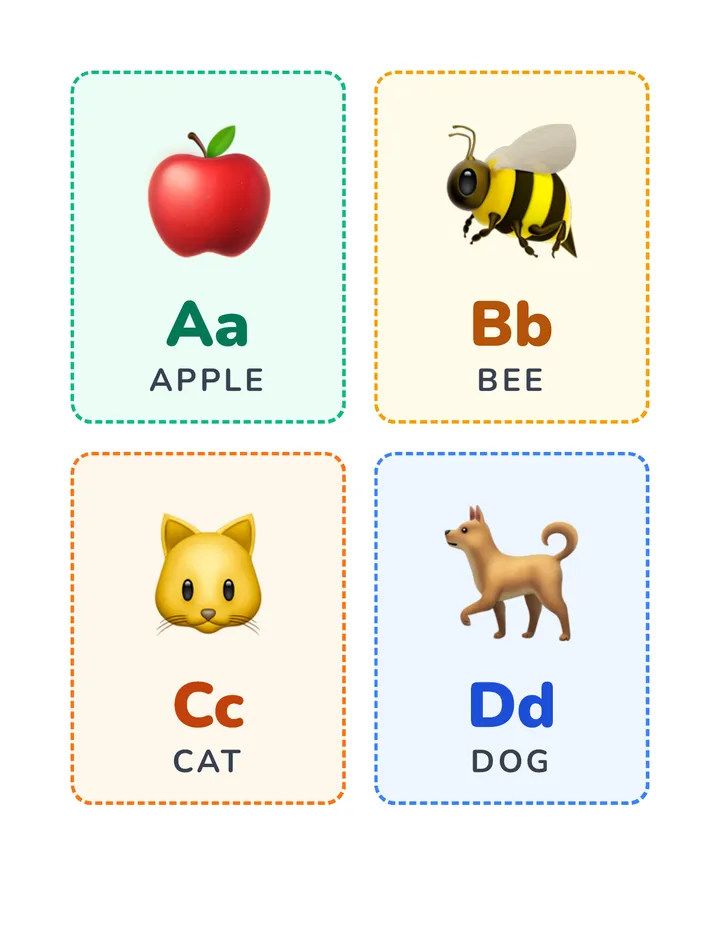
A Pre-K Mandarin Chinese sequence that uses animal associations (Bee, Puppy, Horse, Rooster) to teach the four tones through auditory differentiation and vocal mimicry. Students move from animal sounds to linguistic pitch patterns, anchoring abstract tones in concrete personas.