Mindful breathing and body scan meditation techniques integrated with daily self-care routines. Develops strategies for balancing life demands and advocating for personal wellness needs.
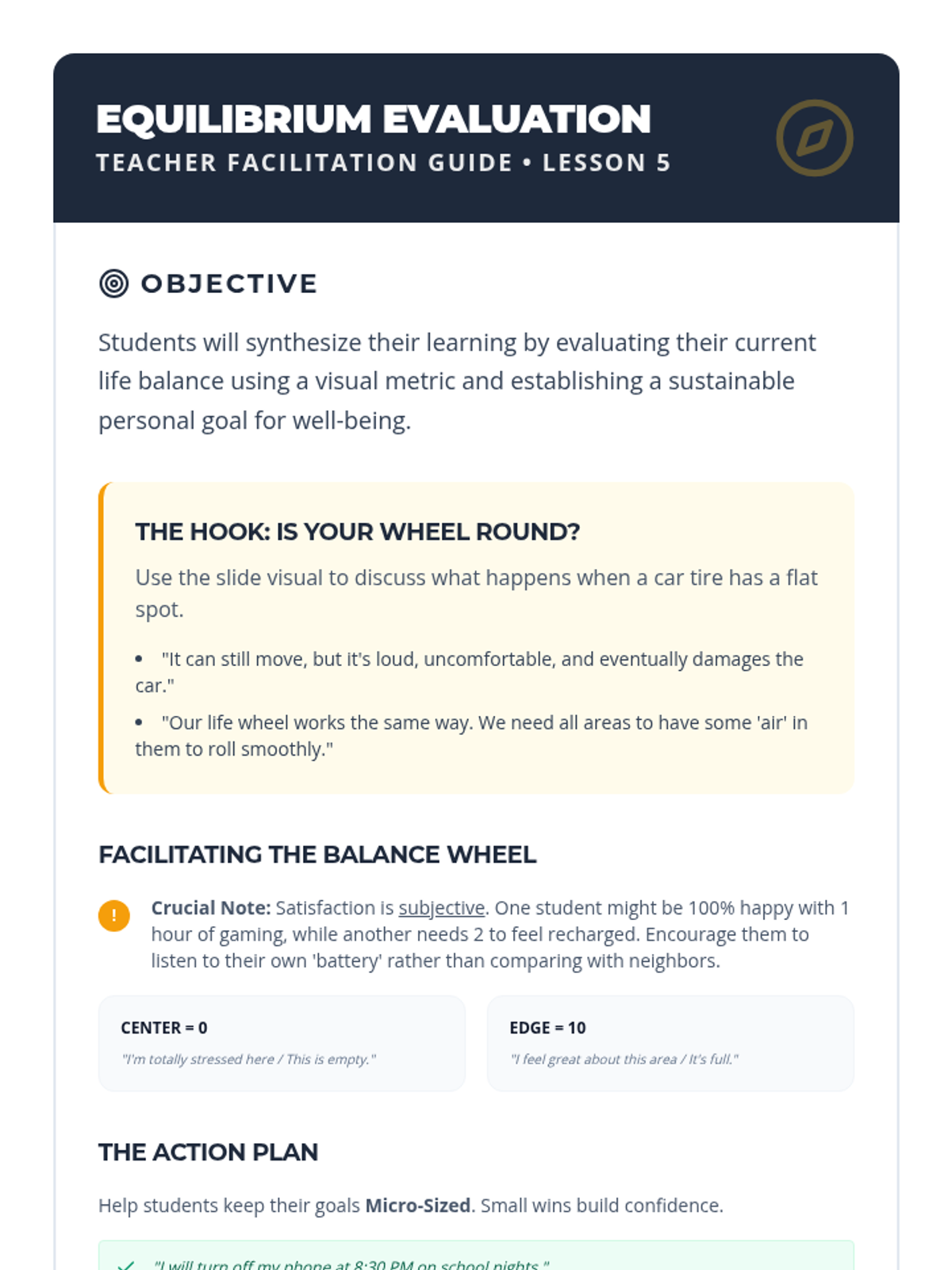
Teacher guide for Lesson 5, providing instructions for the 'Balance Wheel' workshop and strategies for effective goal-setting and student accountability.
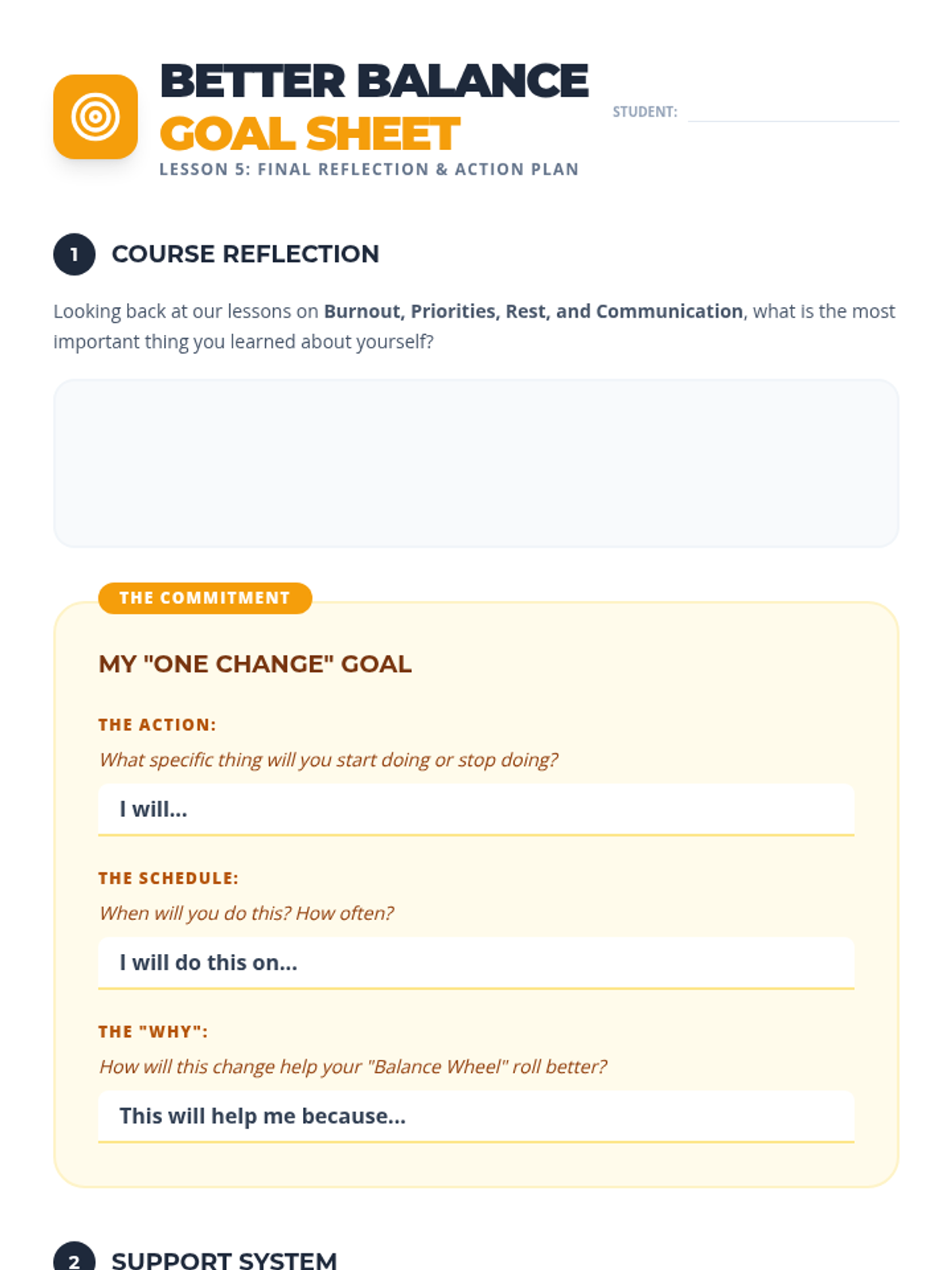
Goal setting and reflection sheet for Lesson 5, where students commit to a specific change to improve their life balance.
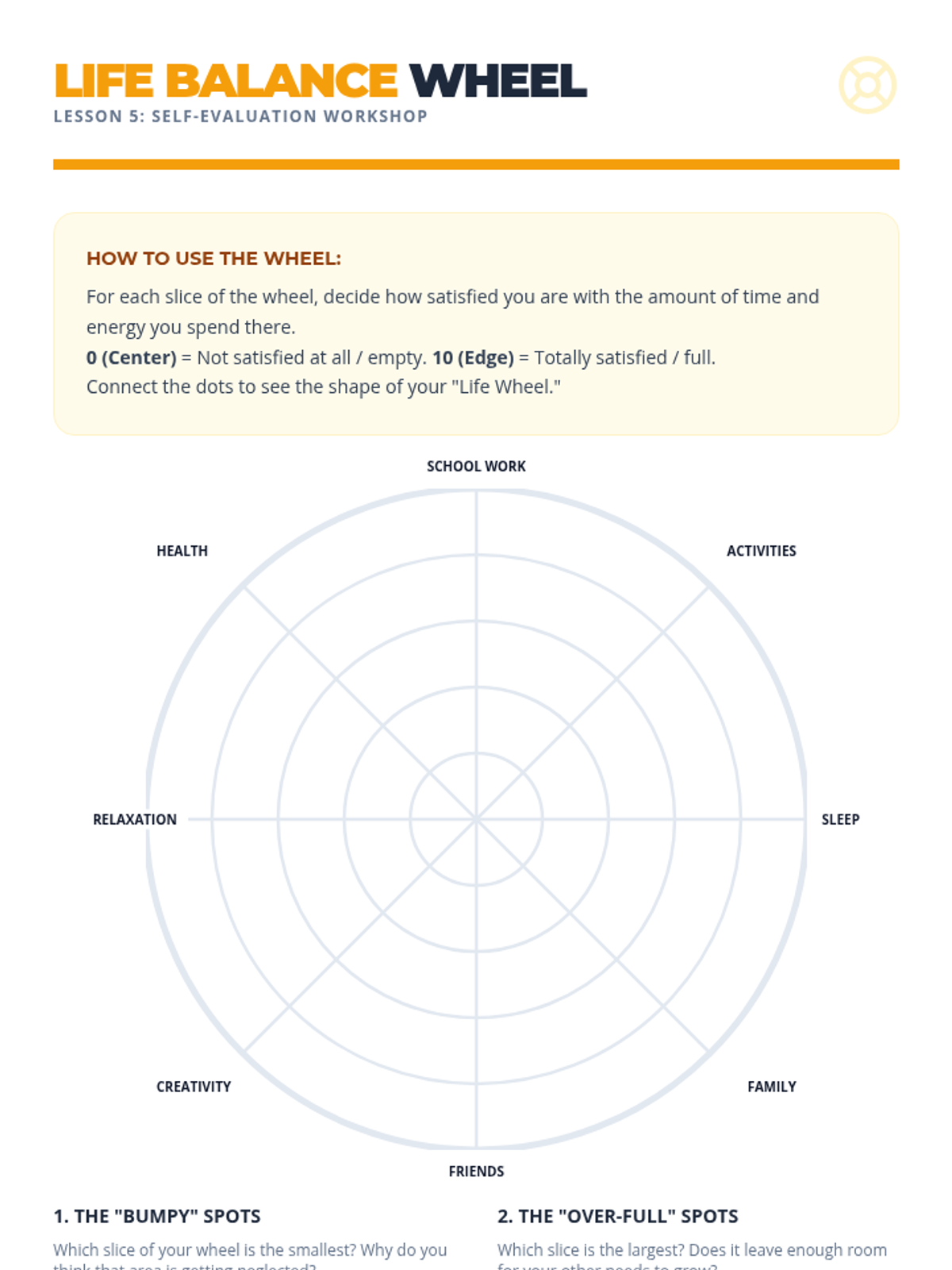
Visual reflection worksheet for Lesson 5, allowing students to map their current life balance across eight key areas.
Final slide deck for Lesson 5, introducing the 'Balance Wheel' concept and guiding students through personal reflection and goal setting.
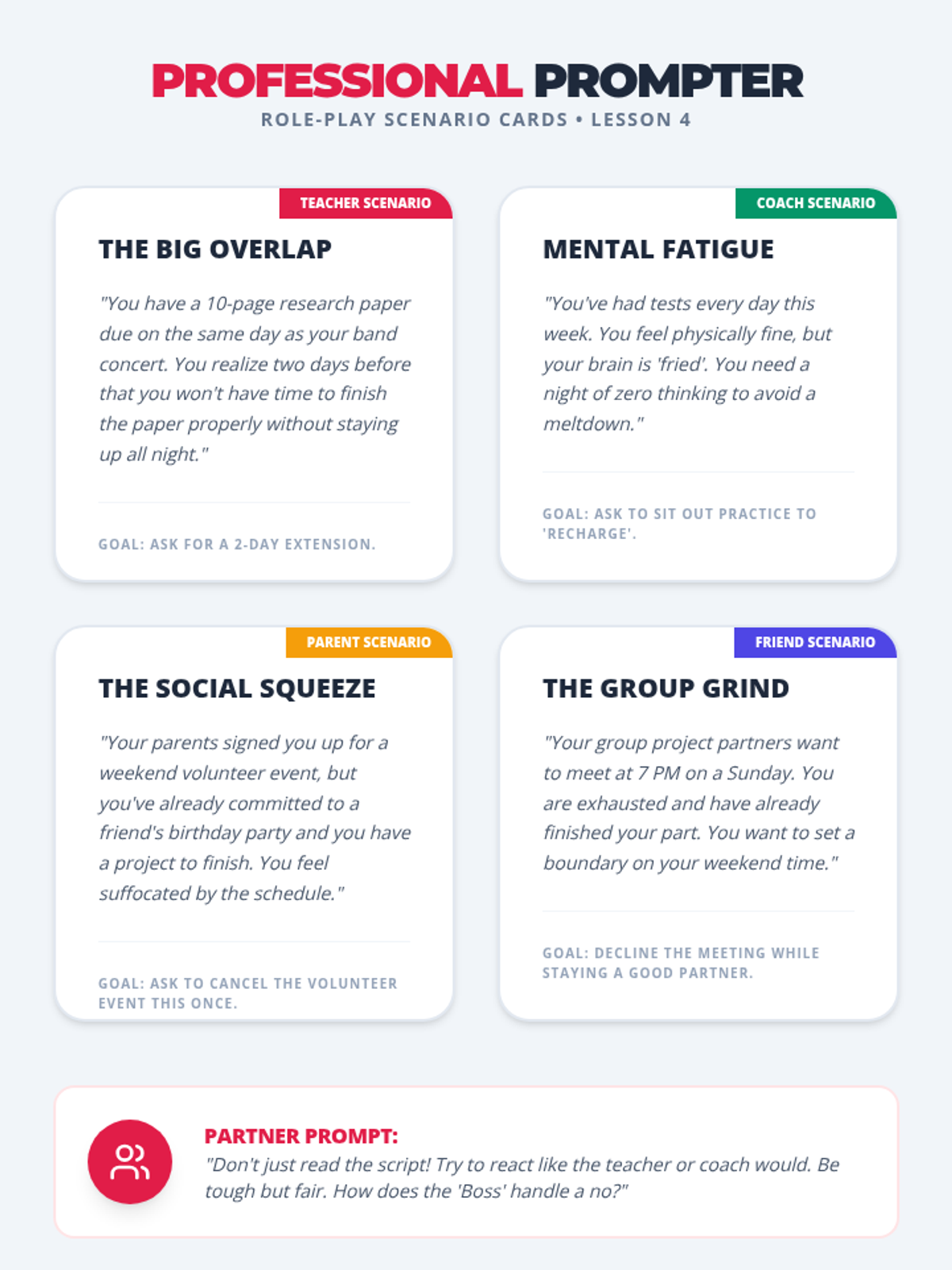
Role-play scenario cards for Lesson 4, providing students with specific situations to practice their communication and boundary-setting skills.
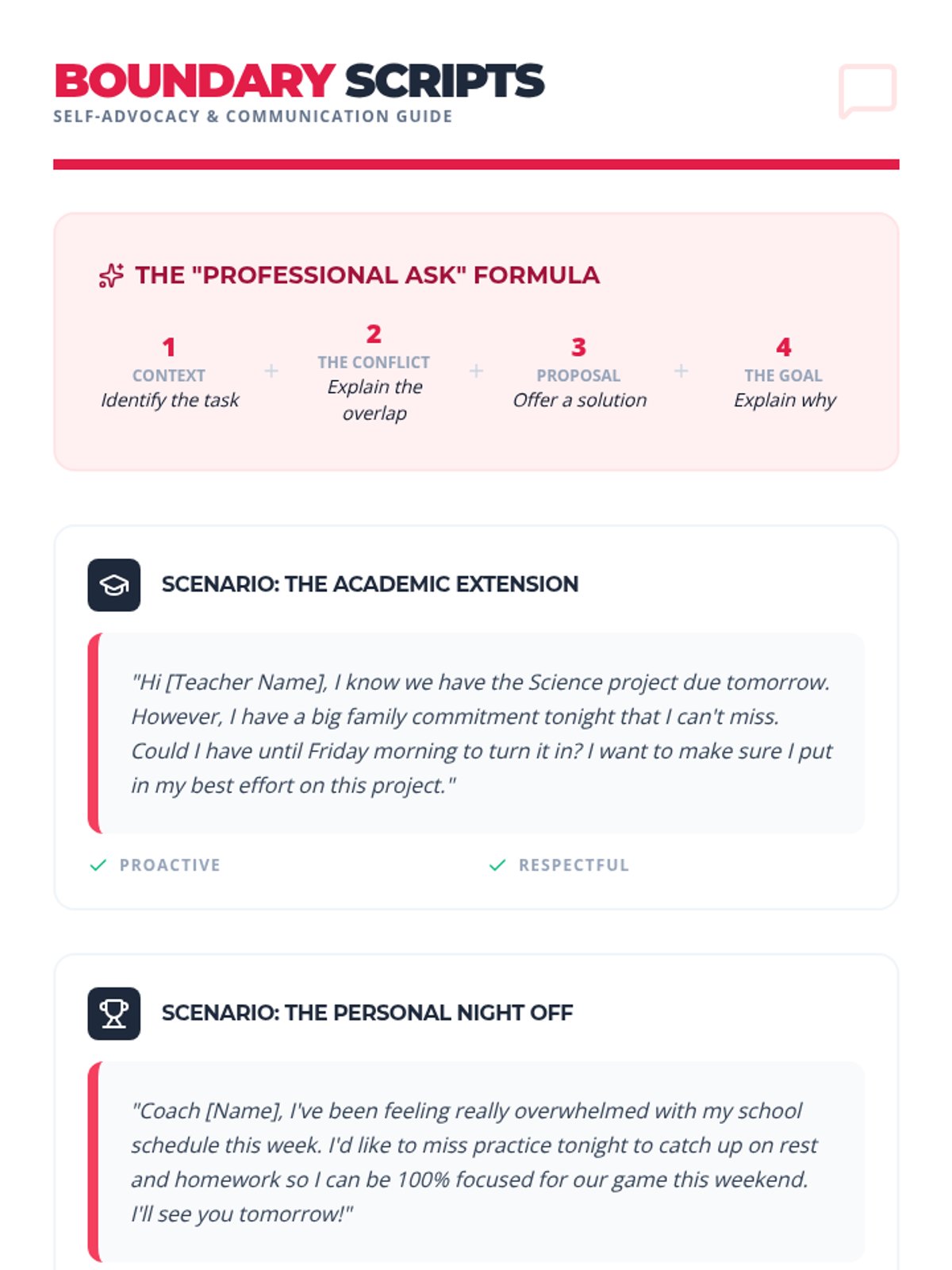
A handout containing communication scripts for students to practice setting boundaries with teachers, coaches, and parents.
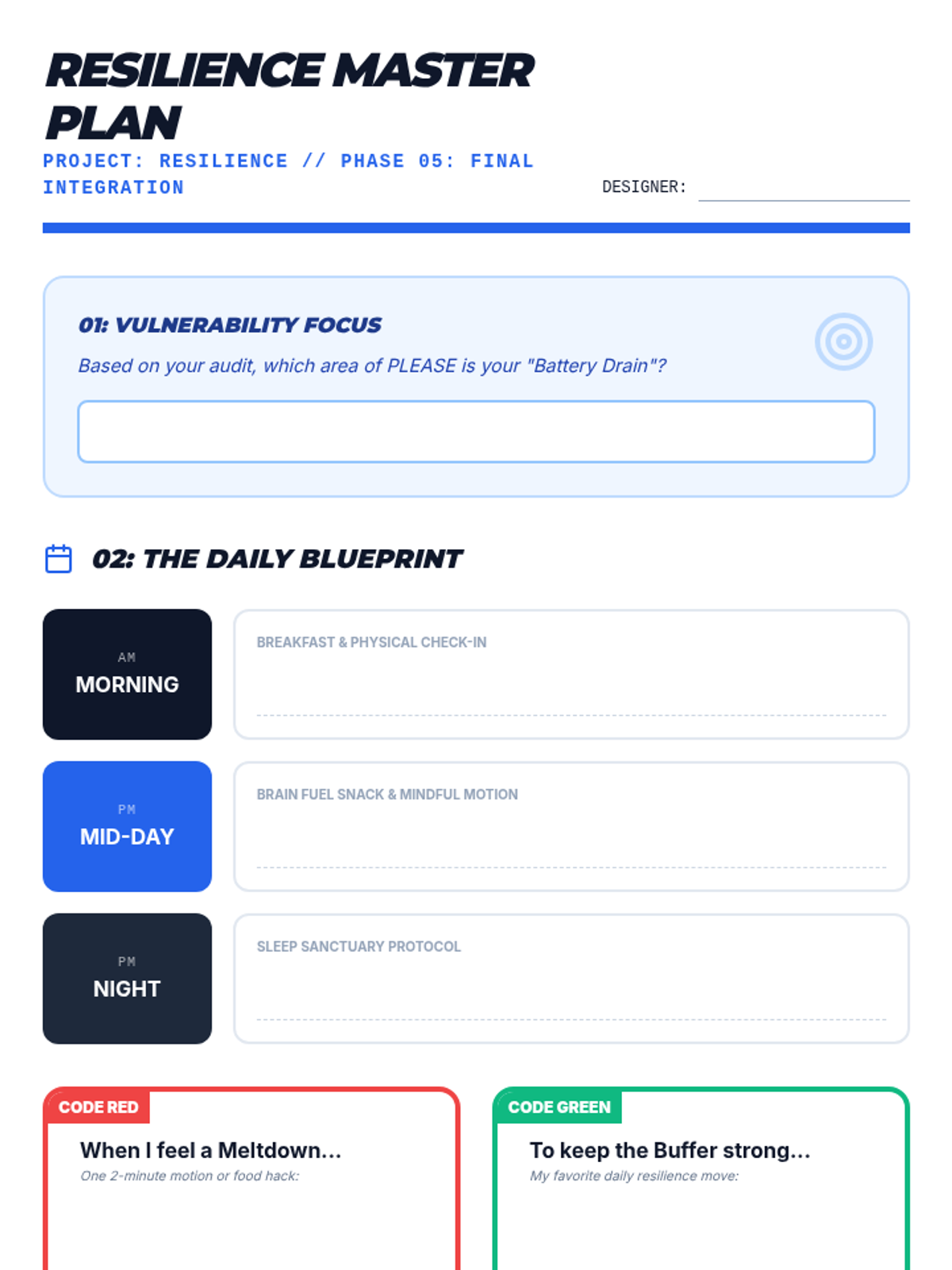
A comprehensive final project document where students synthesize their PLEASE routine, track their habits over 7 days, and write a letter of intent to their future selves.
Slide deck for Lesson 4, teaching students how to proactively communicate boundaries and request extensions using professional scripts.
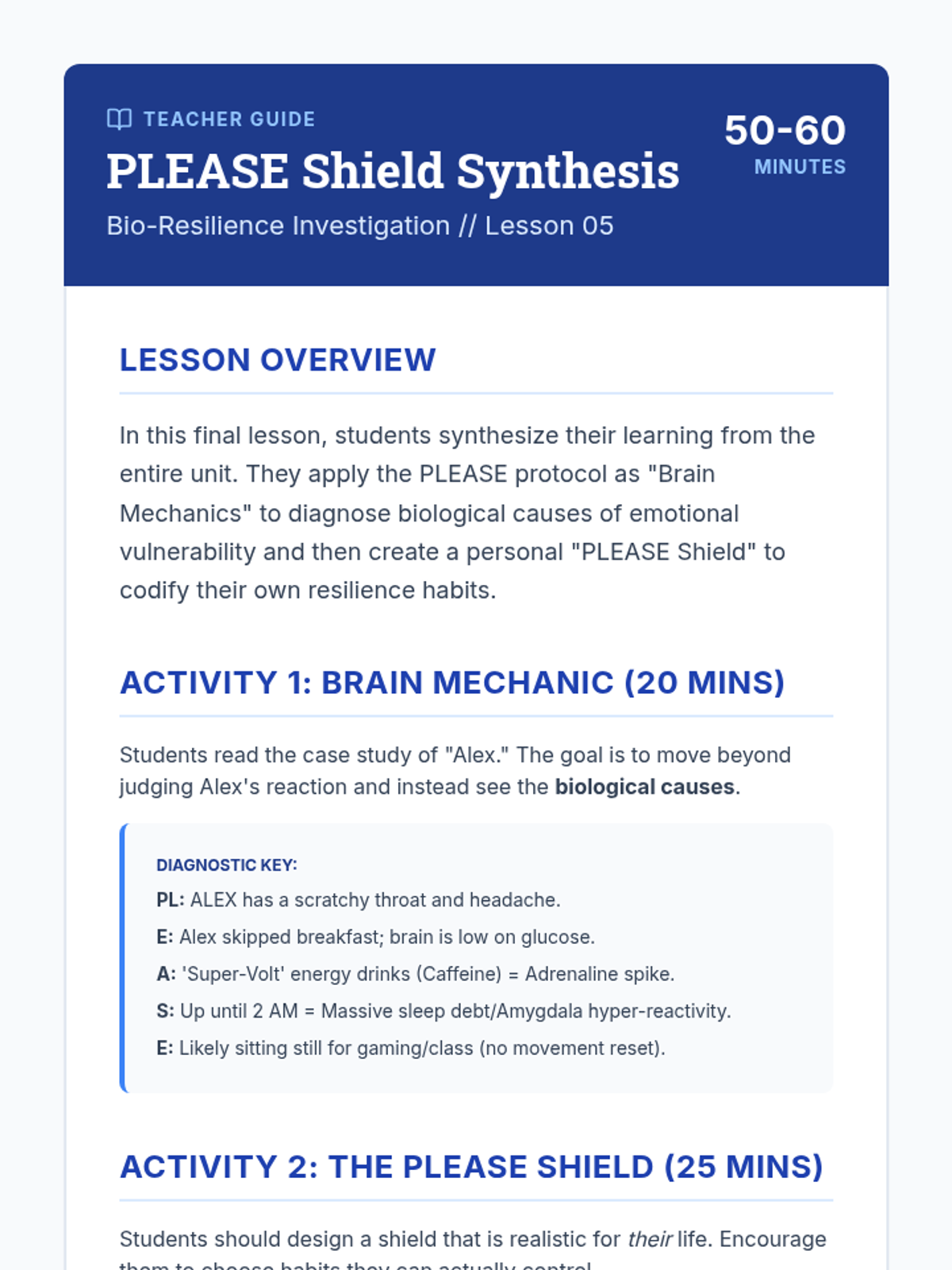
A teacher facilitation guide for Lesson 5, including a diagnostic key for the Brain Mechanic activity and project success criteria.
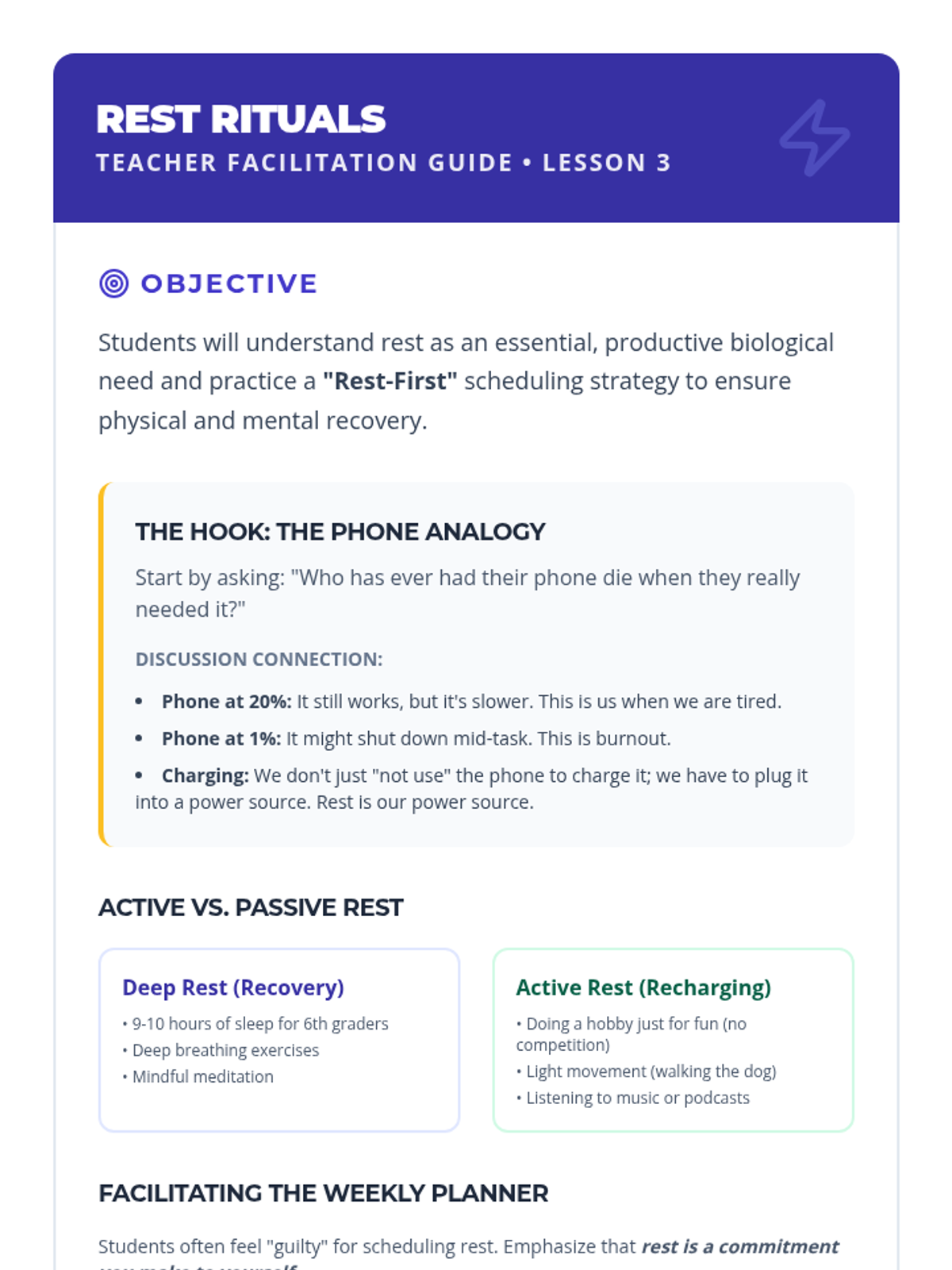
Teacher guide for Lesson 3, detailing the phone battery analogy and providing step-by-step instructions for the 'Rest-First' scheduling workshop.
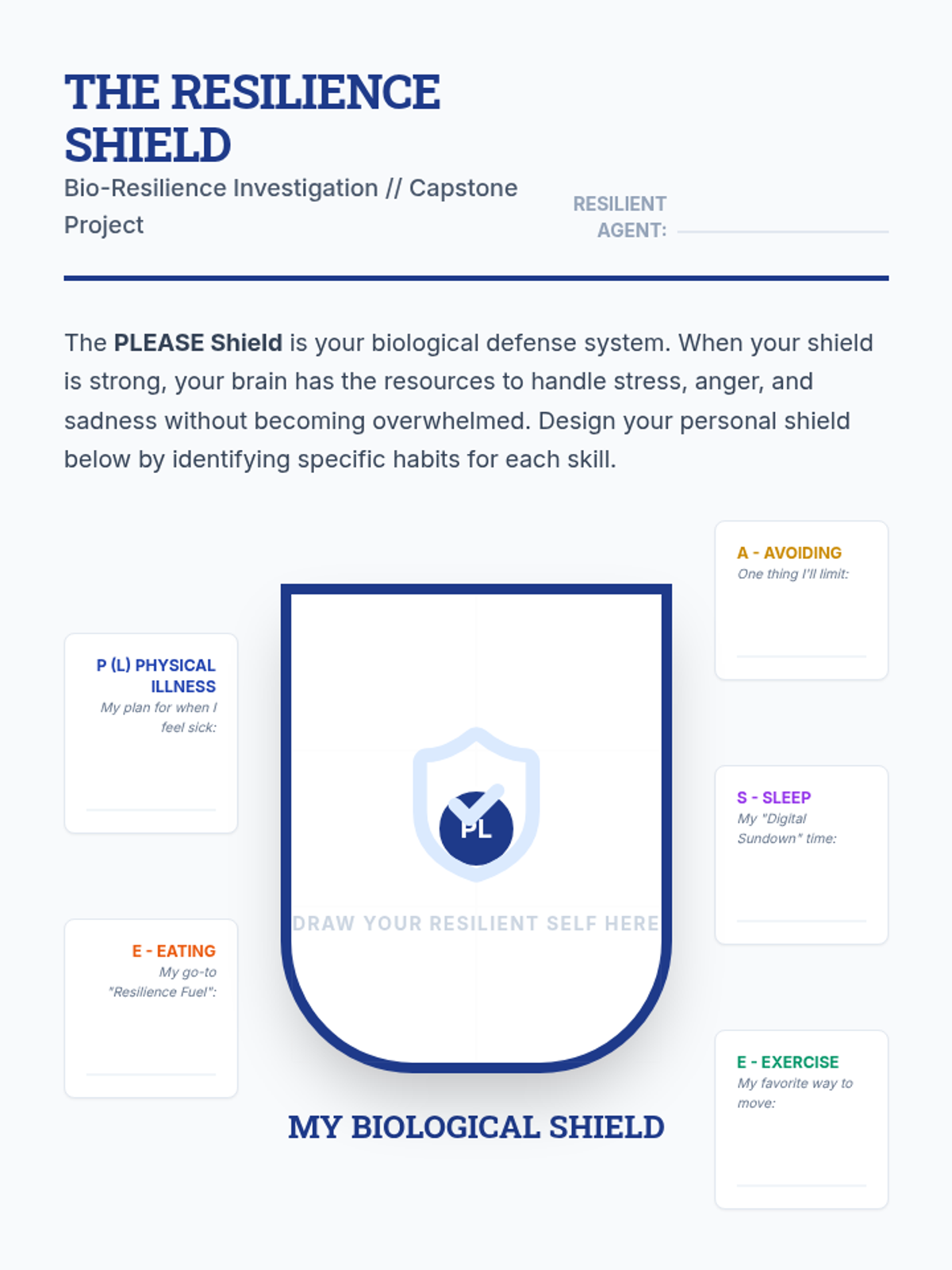
A student project worksheet for designing a personal 'PLEASE Shield' by identifying specific physical health habits that build emotional resilience.
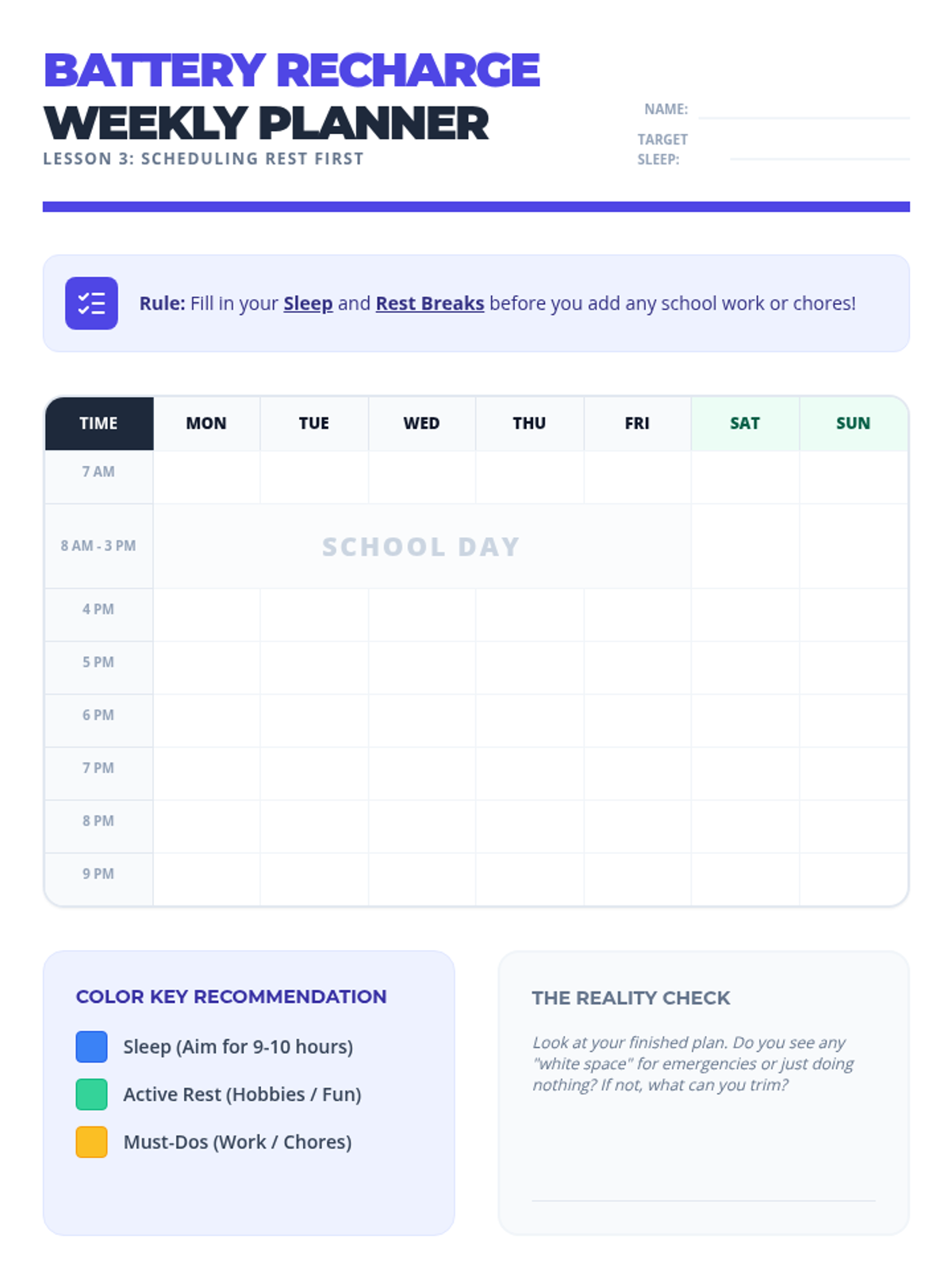
A weekly planner template designed for students to practice 'Rest-First' scheduling, prioritizing sleep and downtime before other commitments.
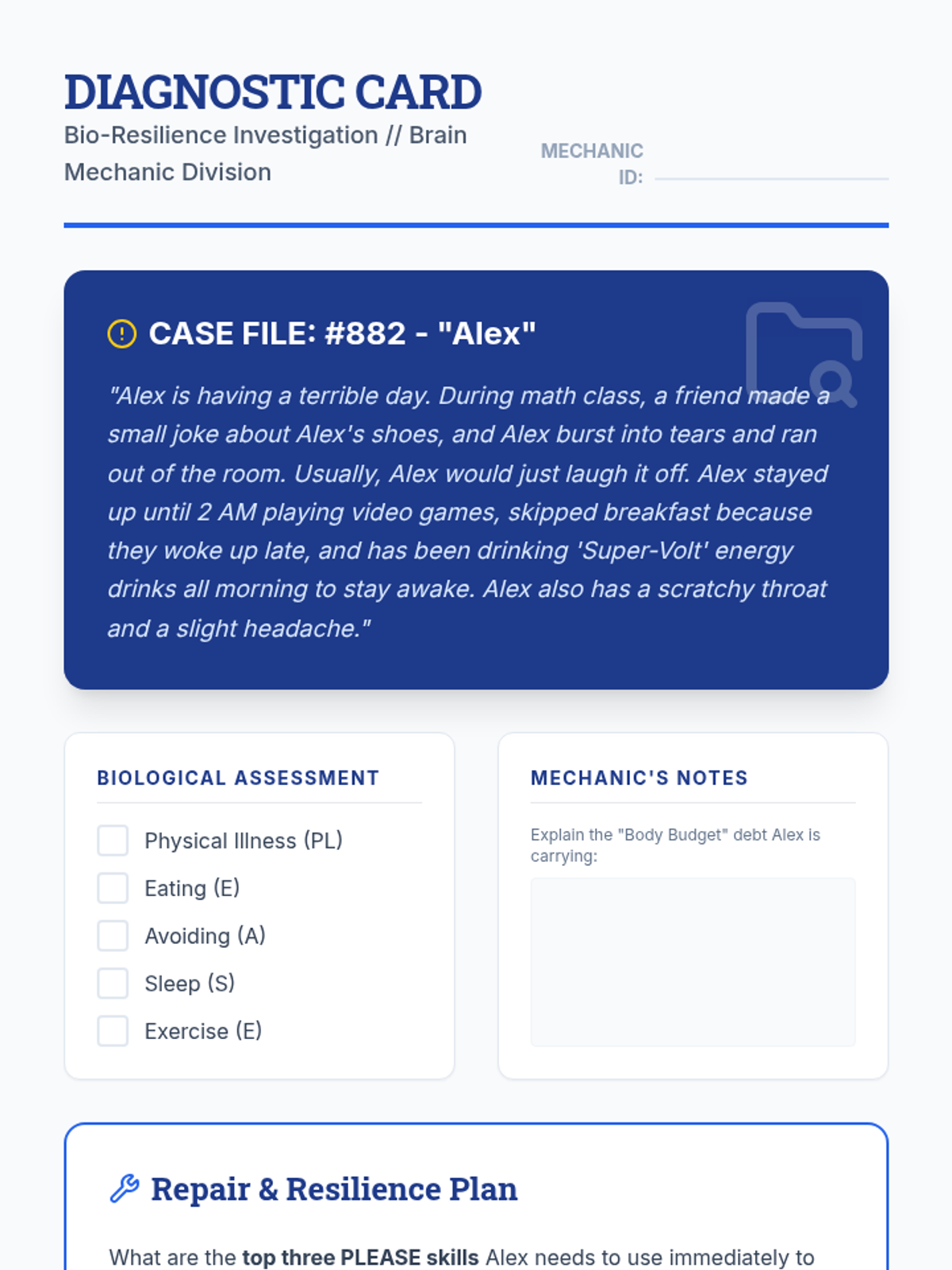
A student diagnostic worksheet where they act as 'Brain Mechanics' to identify and fix biological causes of emotional vulnerability in a fictional character.
A slide deck for the final lesson that synthesizes the PLEASE skills and introduces the Resilience Master Plan, Visual Tracker, and Letter to Self activities.
Visual slides explaining the whole PLEASE acronym and framing the final project as a 'Brain Mechanic' mission.
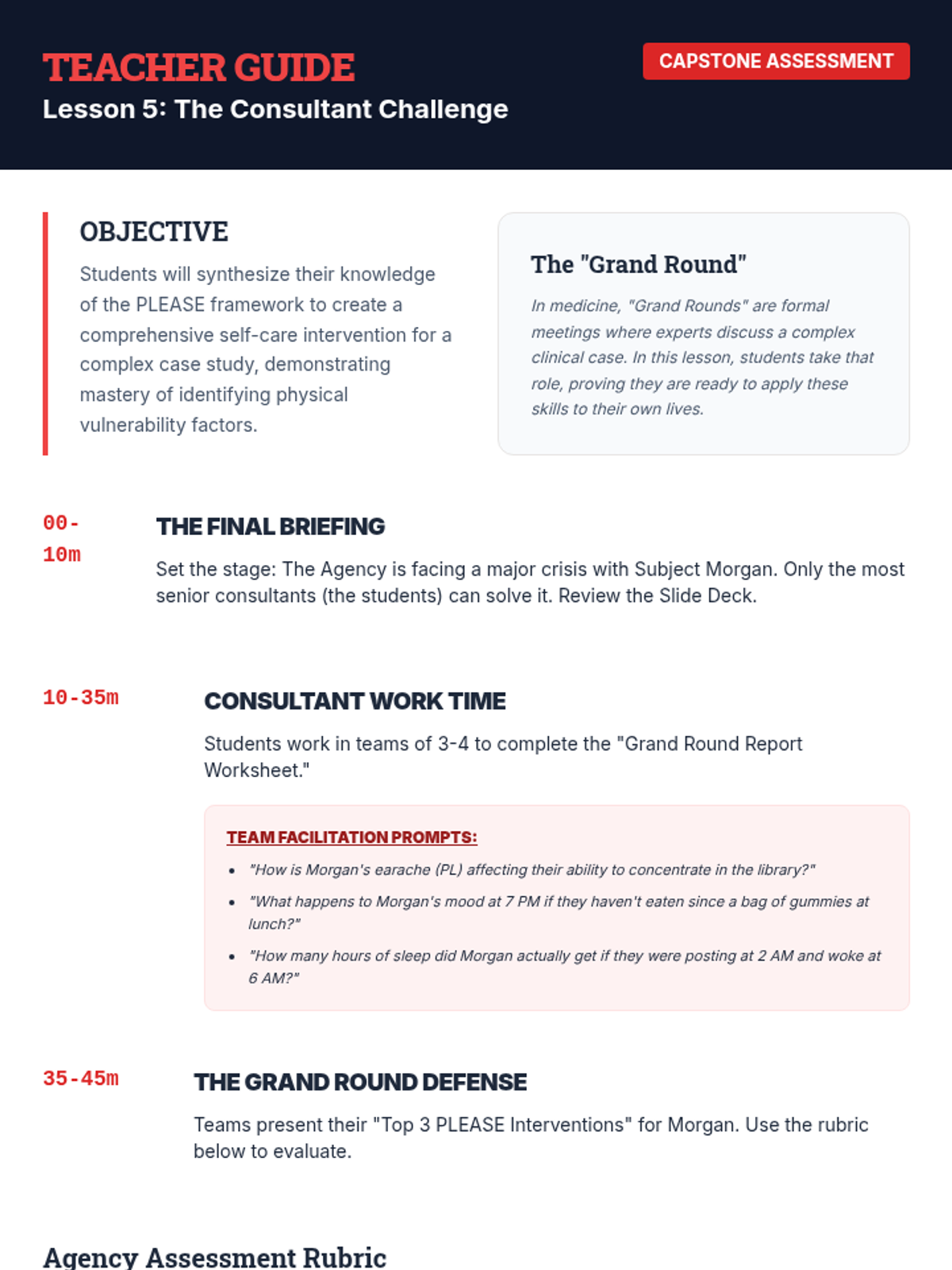
Teacher guide for Lesson 5, including a grading rubric and facilitation tips for the 'Grand Round' final challenge.
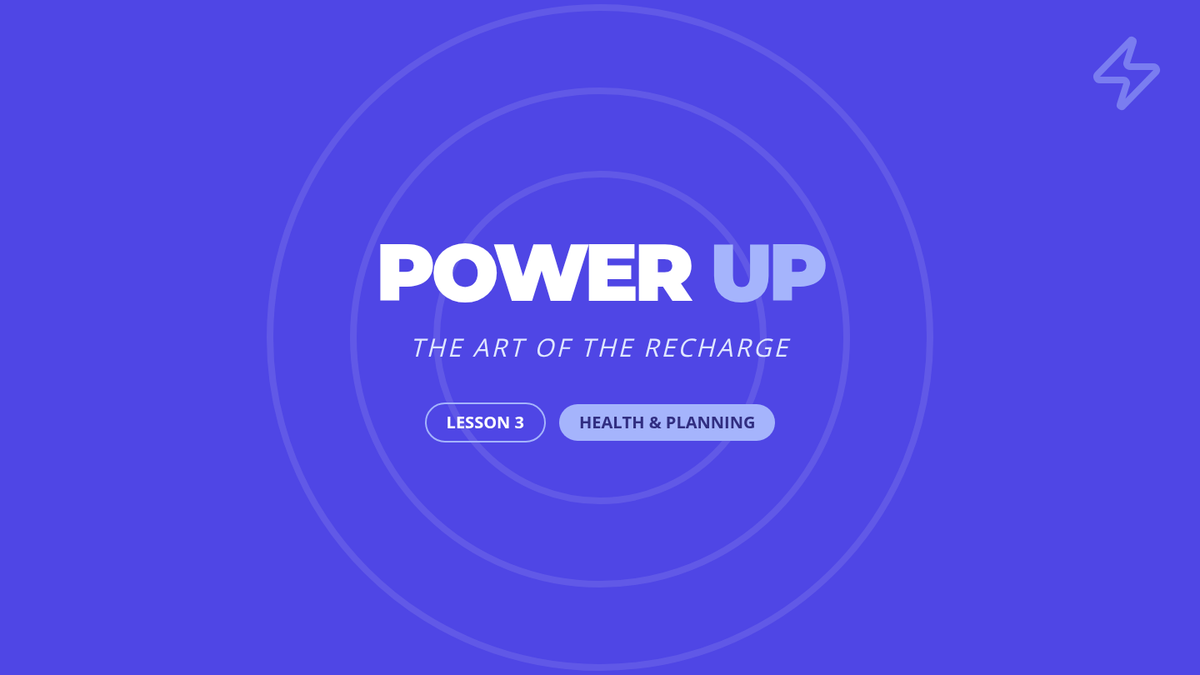
Slide deck for Lesson 3, focusing on the importance of rest and self-care using the phone battery analogy and the 'Rest-First' scheduling strategy.
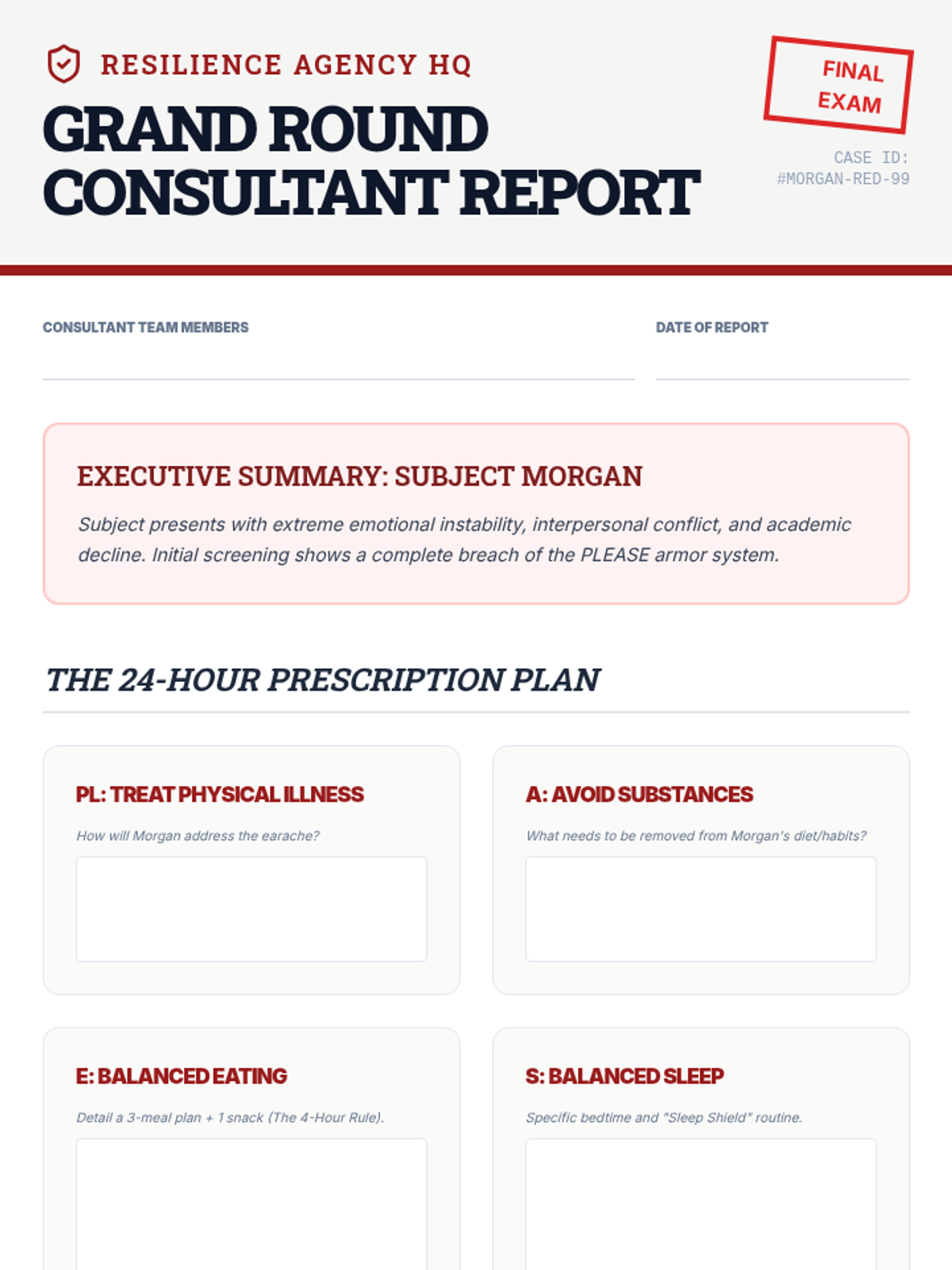
A comprehensive case study report where students act as lead consultants to apply the full PLEASE framework to a complex behavioral scenario (Subject Morgan).
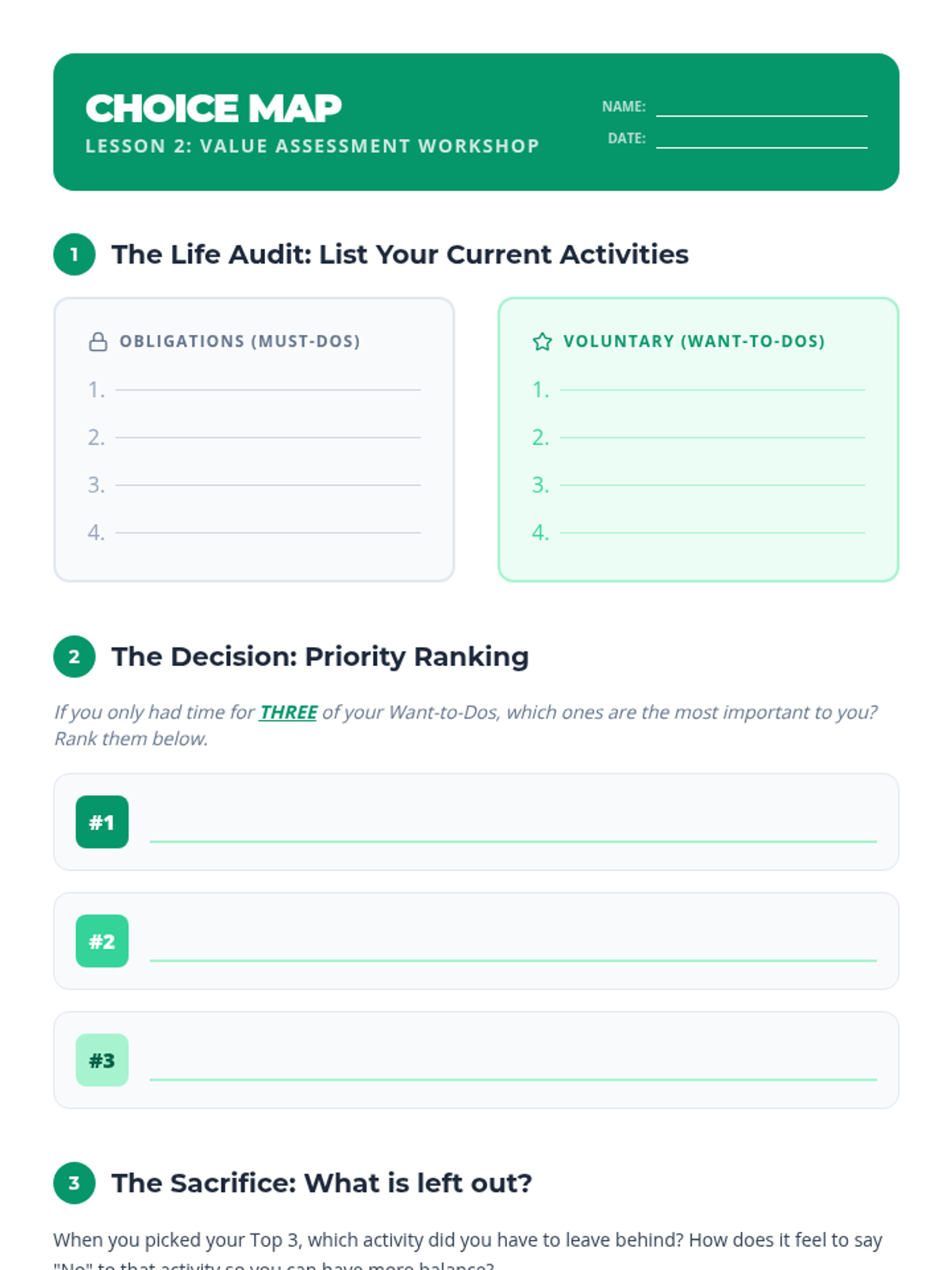
Categorization and ranking worksheet for Lesson 2, helping students map their obligations and voluntary activities.
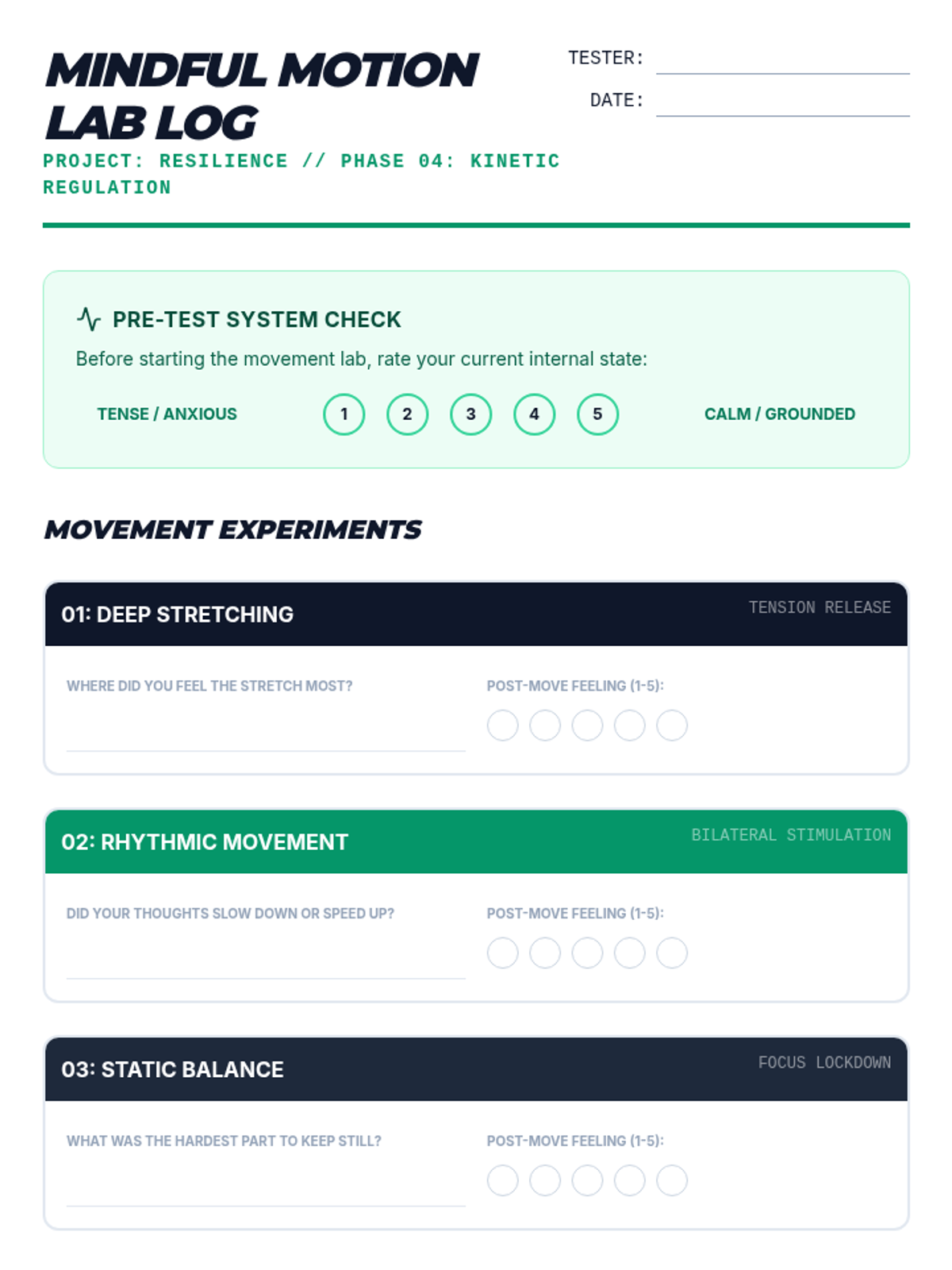
A movement log worksheet where students track their physical and emotional responses to different types of mindful motion.
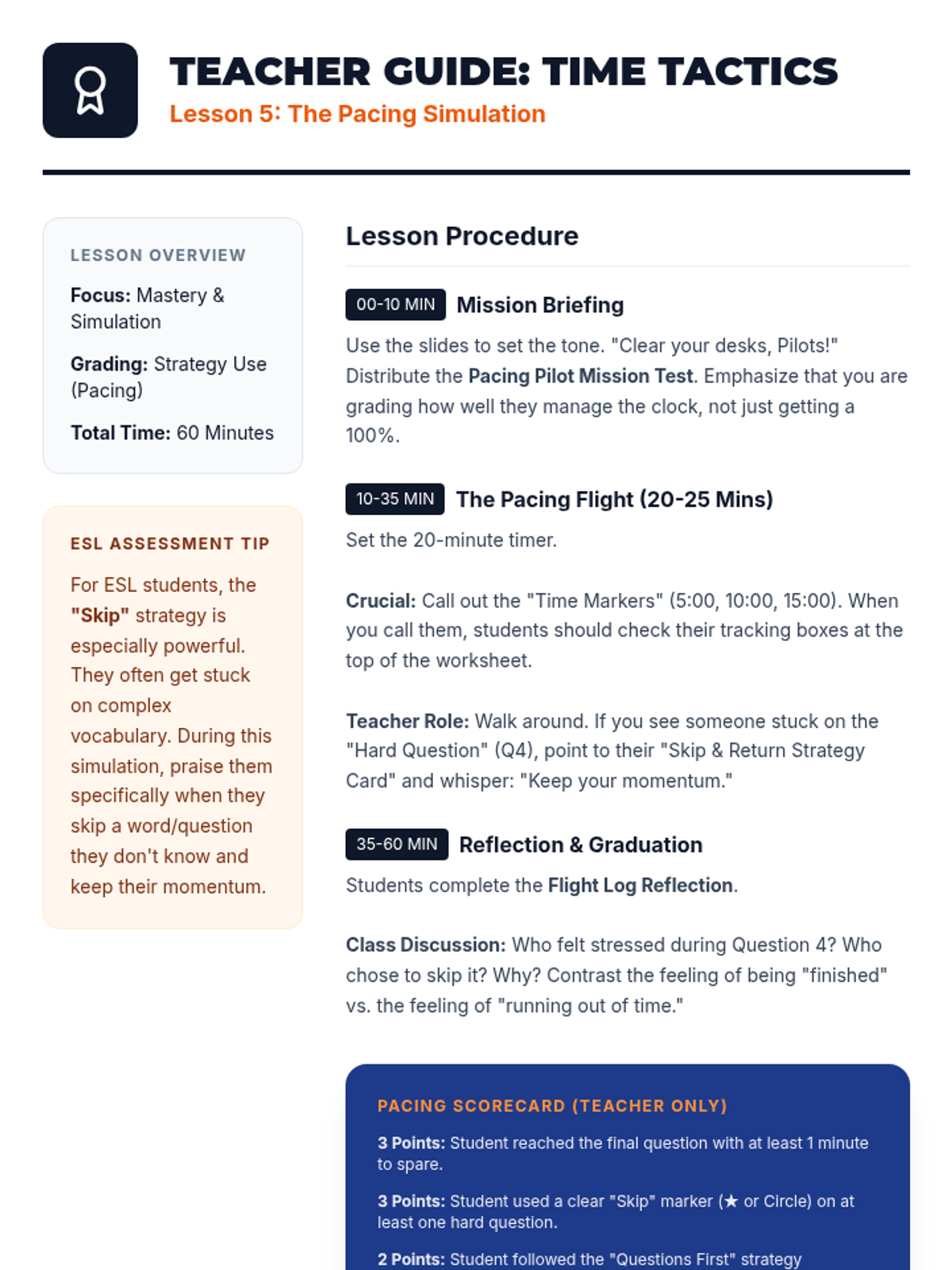
Teacher guidance for the Lesson 5 simulation, including timing calls, teacher observation tips, and a scoring rubric for student pacing behavior.
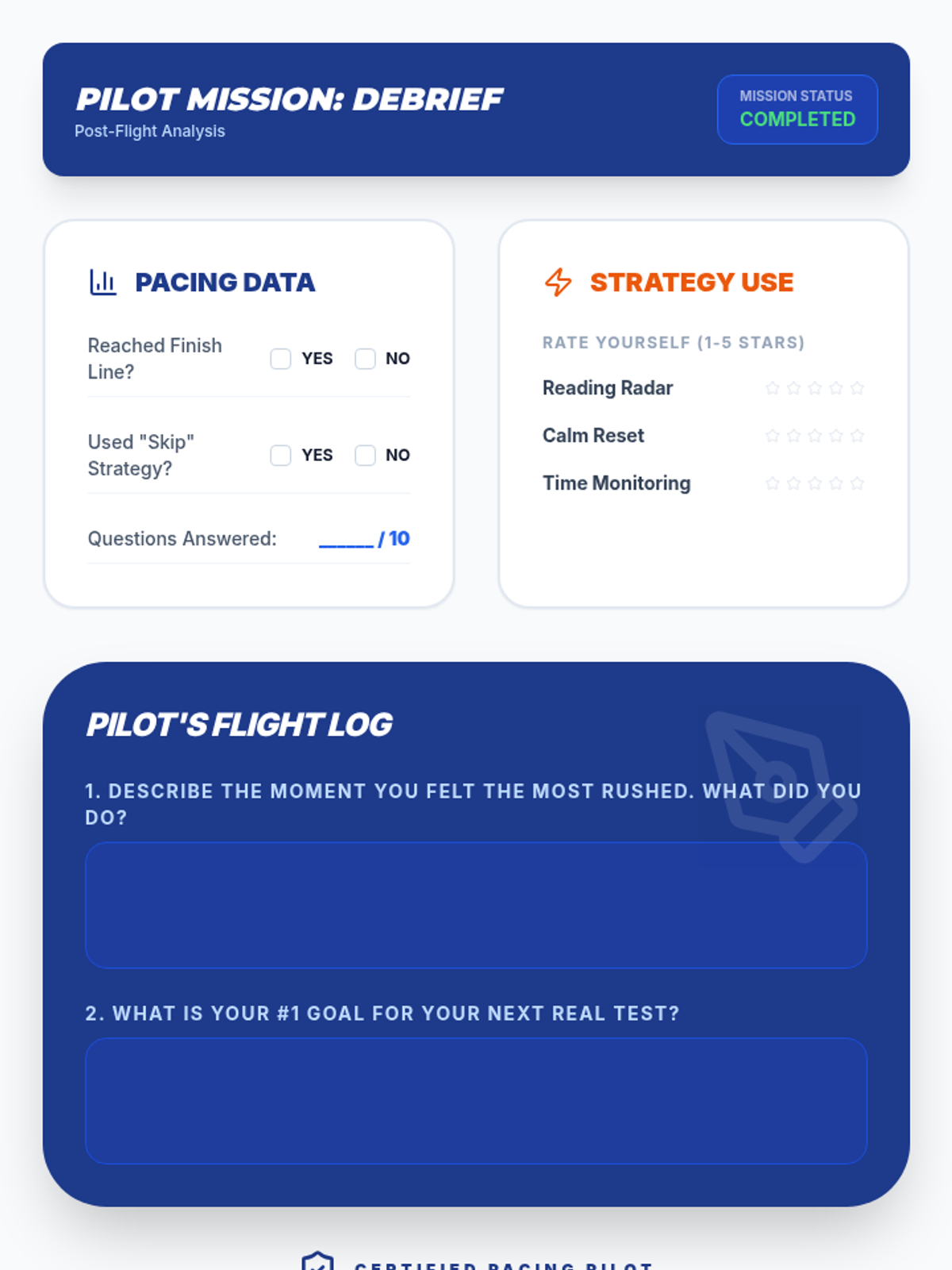
The Lesson 5 reflection and debrief worksheet where students analyze their performance during the simulation and rate their strategy use.
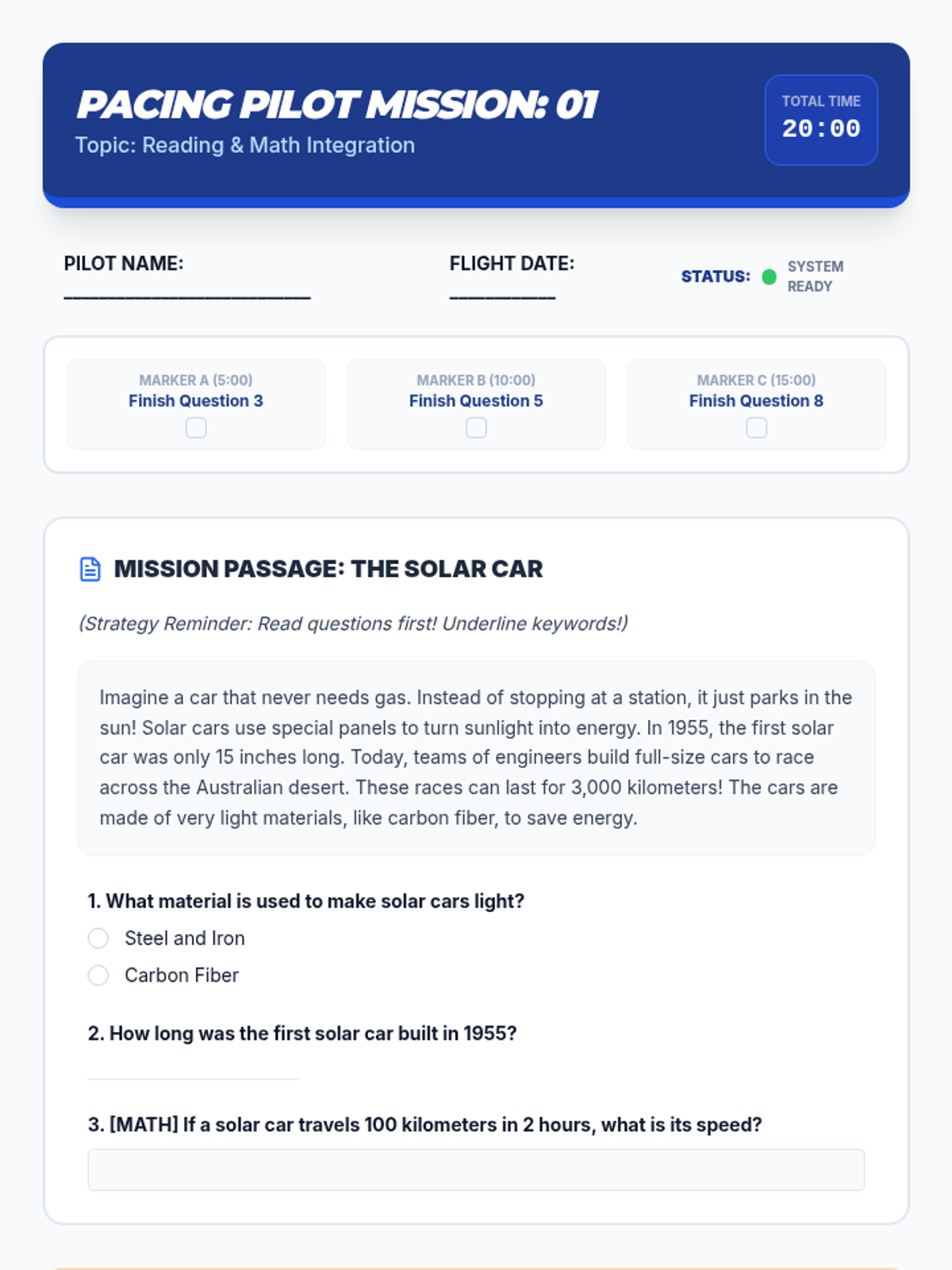
The first page of the Lesson 5 simulation test, designed to test pacing with a passage, integrated math, and a strategically 'hard' question to prompt skipping.
Final slide deck for Lesson 5, featuring the pacing simulation briefing, mission rules, and time markers for the practice test.
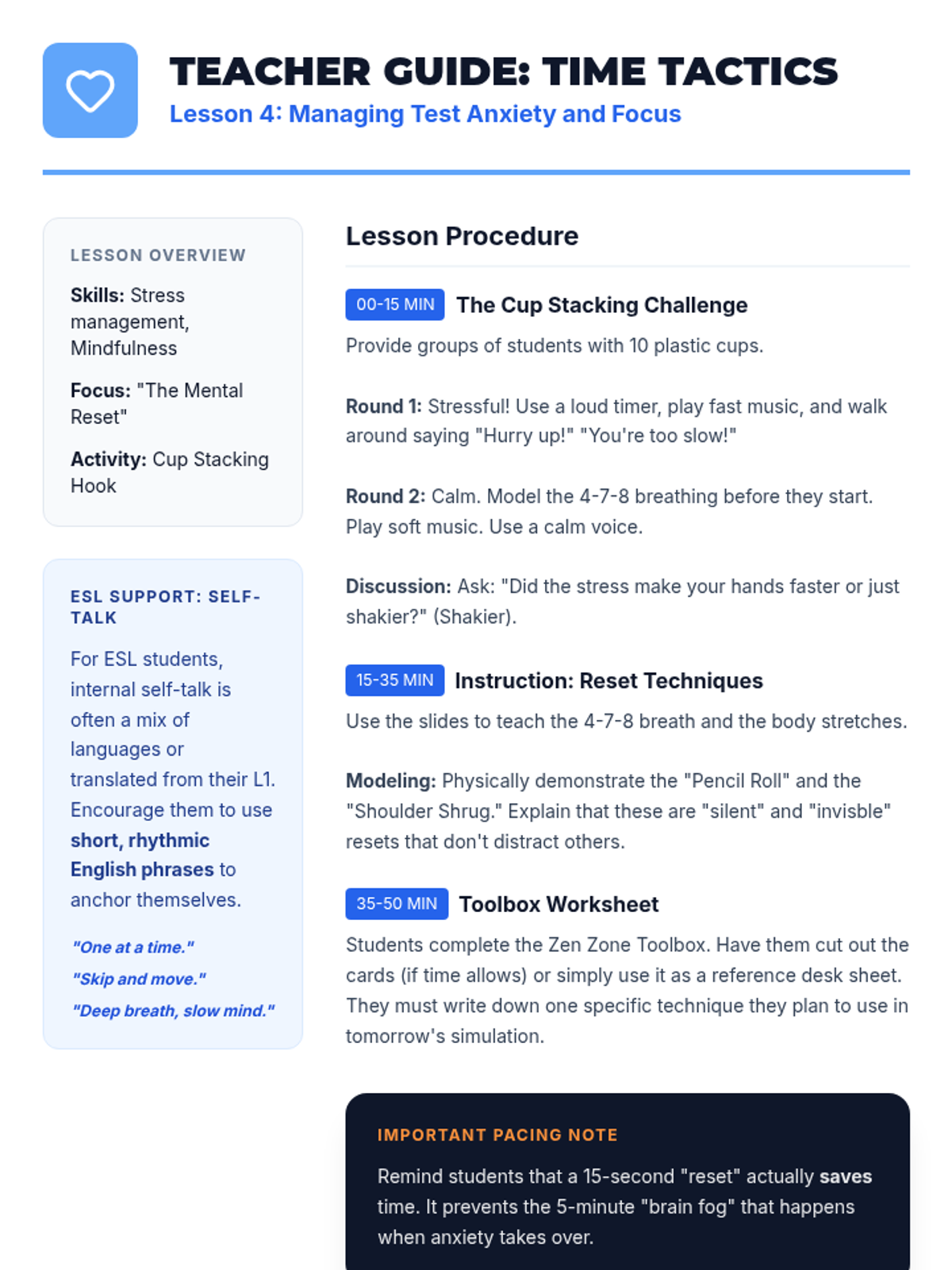
Teacher guidance for Lesson 4, including managing the cup-stacking challenge and modeling reset techniques for ESL students.
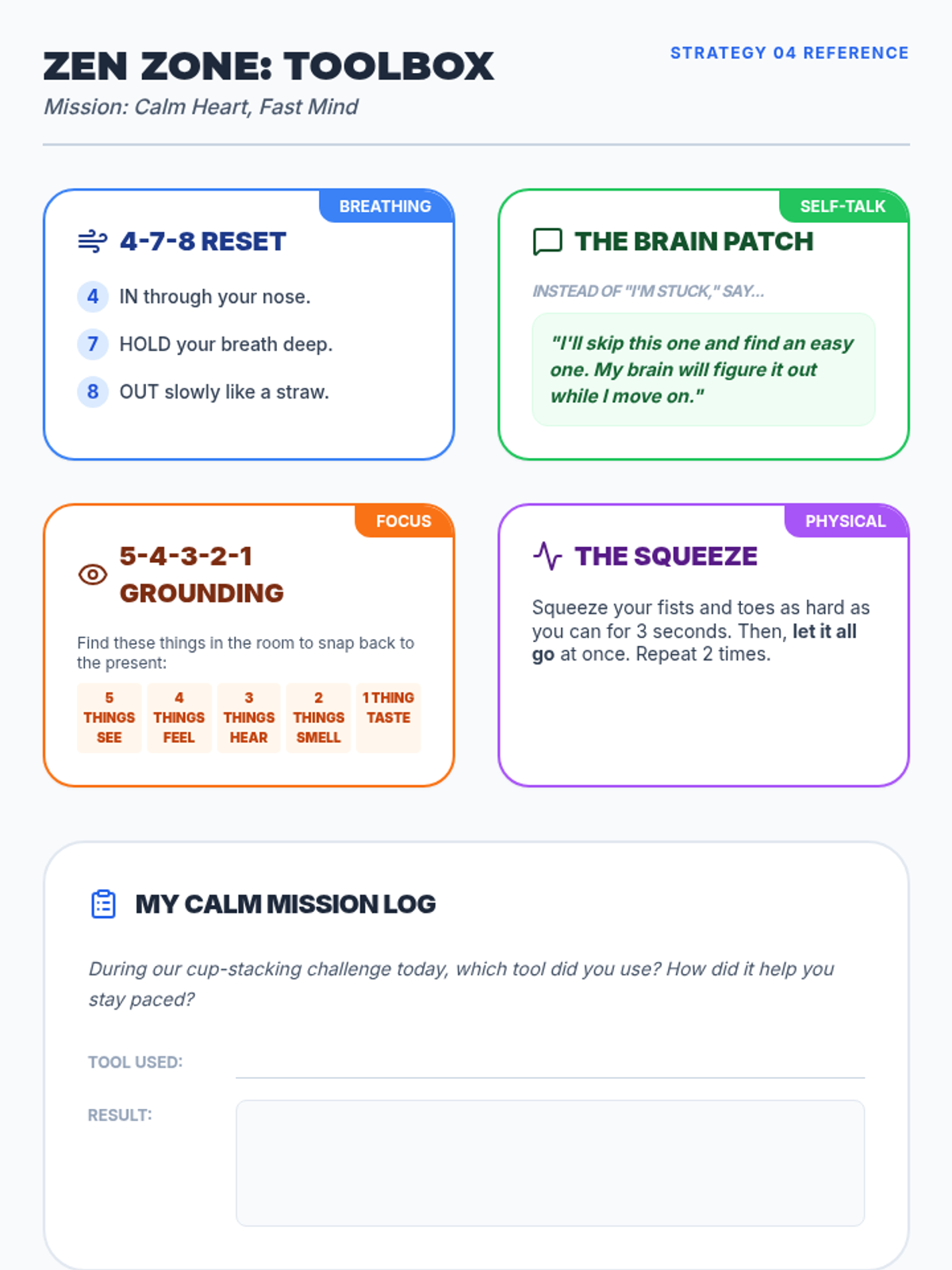
A resource sheet for Lesson 4 with 'Zen Zone' strategy cards (breathing, self-talk, grounding, physical reset) and a practice log for the cup-stacking activity.
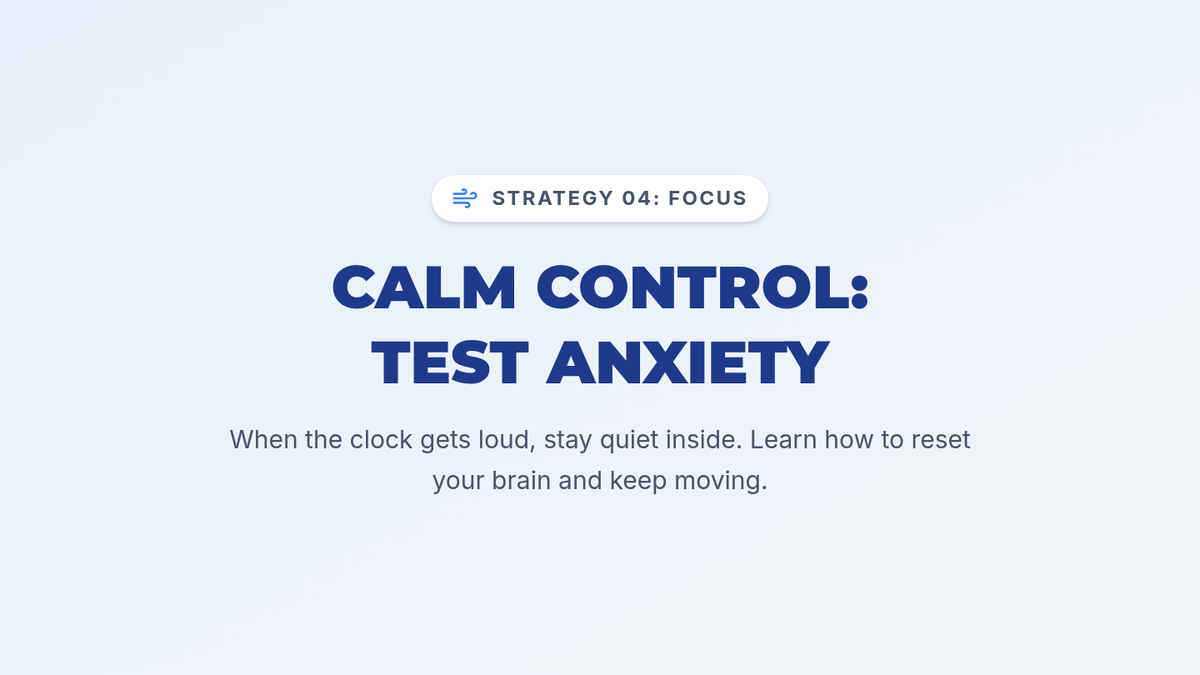
Slide deck for Lesson 4 on managing test anxiety, featuring breathing techniques, positive self-talk, and in-seat physical resets.
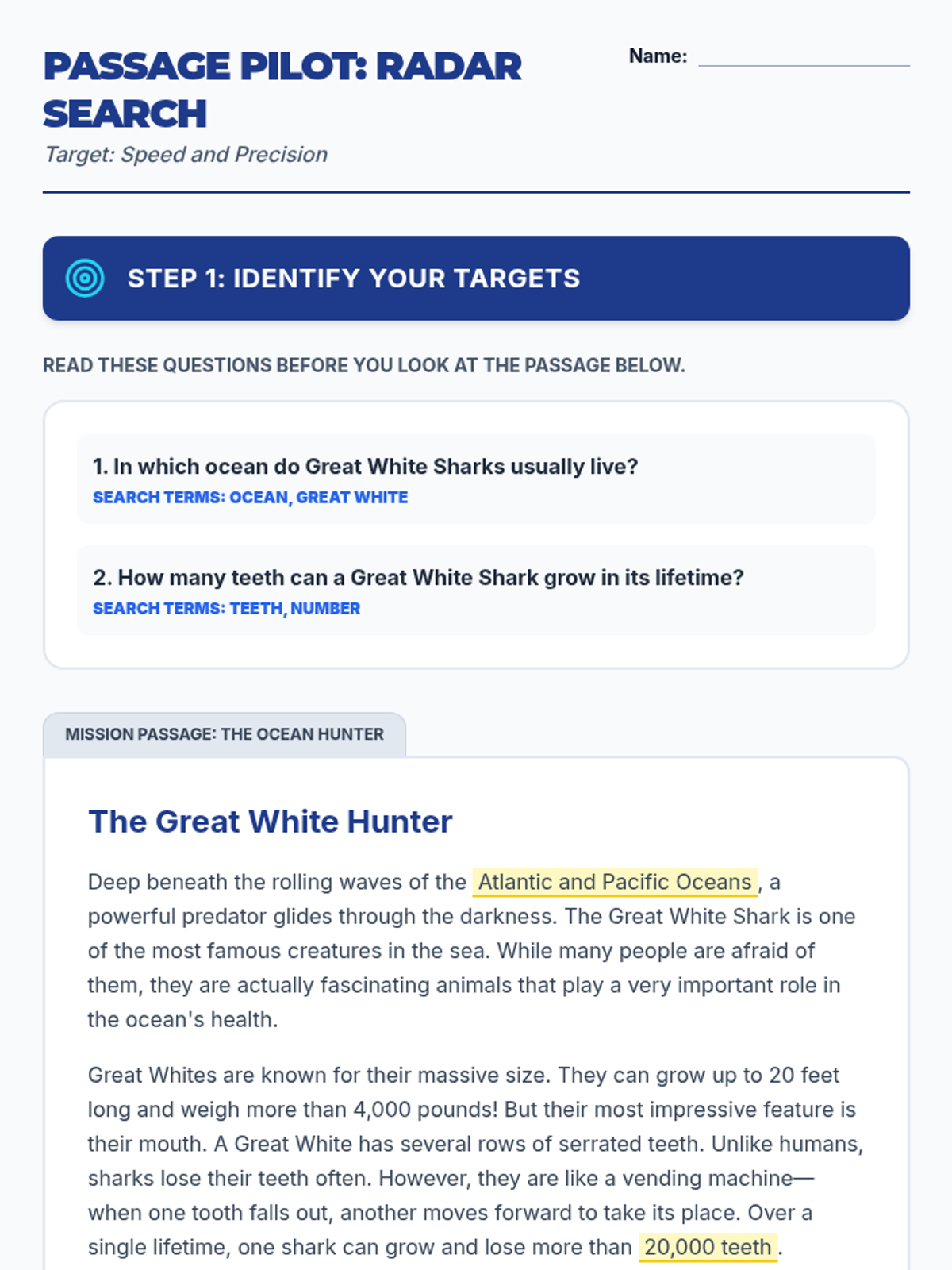
A practice worksheet for Lesson 3 that uses a short passage about sharks to help students practice the 'Questions First' and 'Keyword Search' strategies.
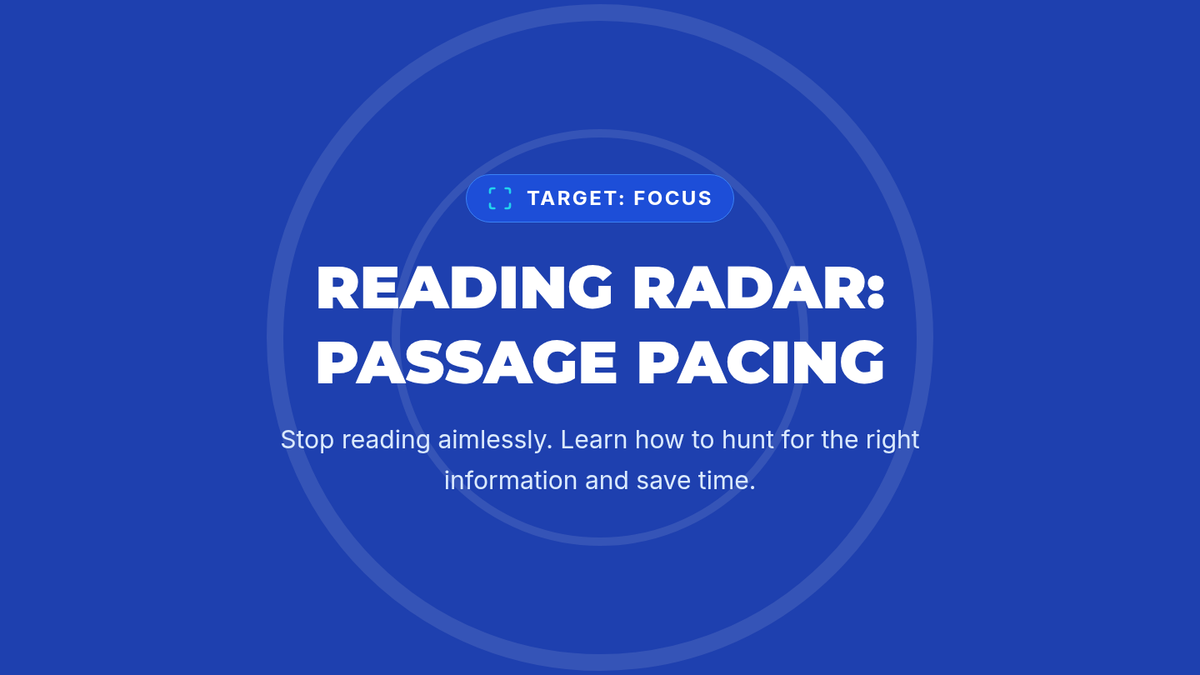
Slide deck for Lesson 3 on handling long passages, teaching the 'Questions First' strategy and skimming techniques to save time.
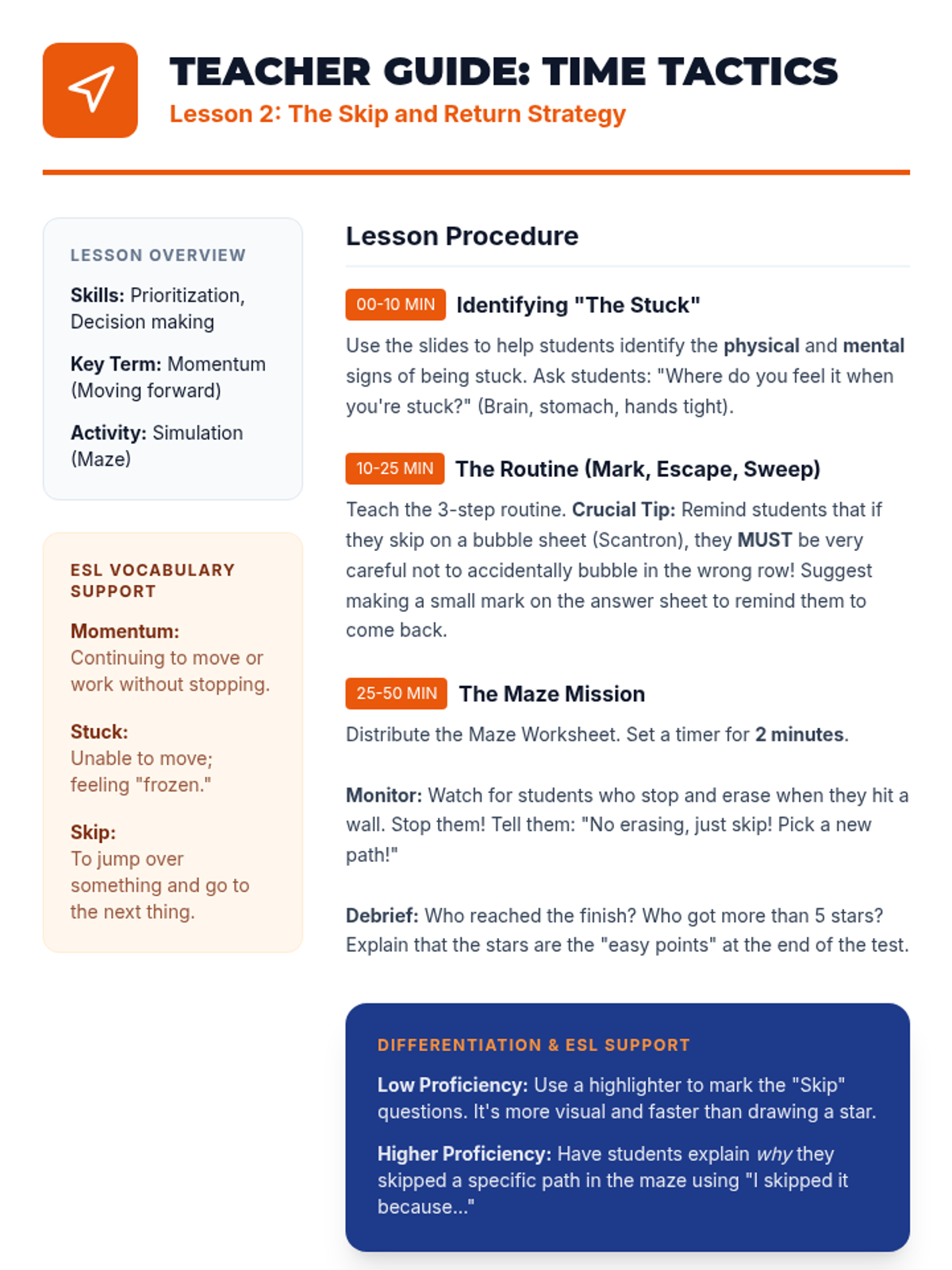
Teacher guidance for Lesson 2, including momentum concepts, ESL vocabulary support, and maze simulation management.
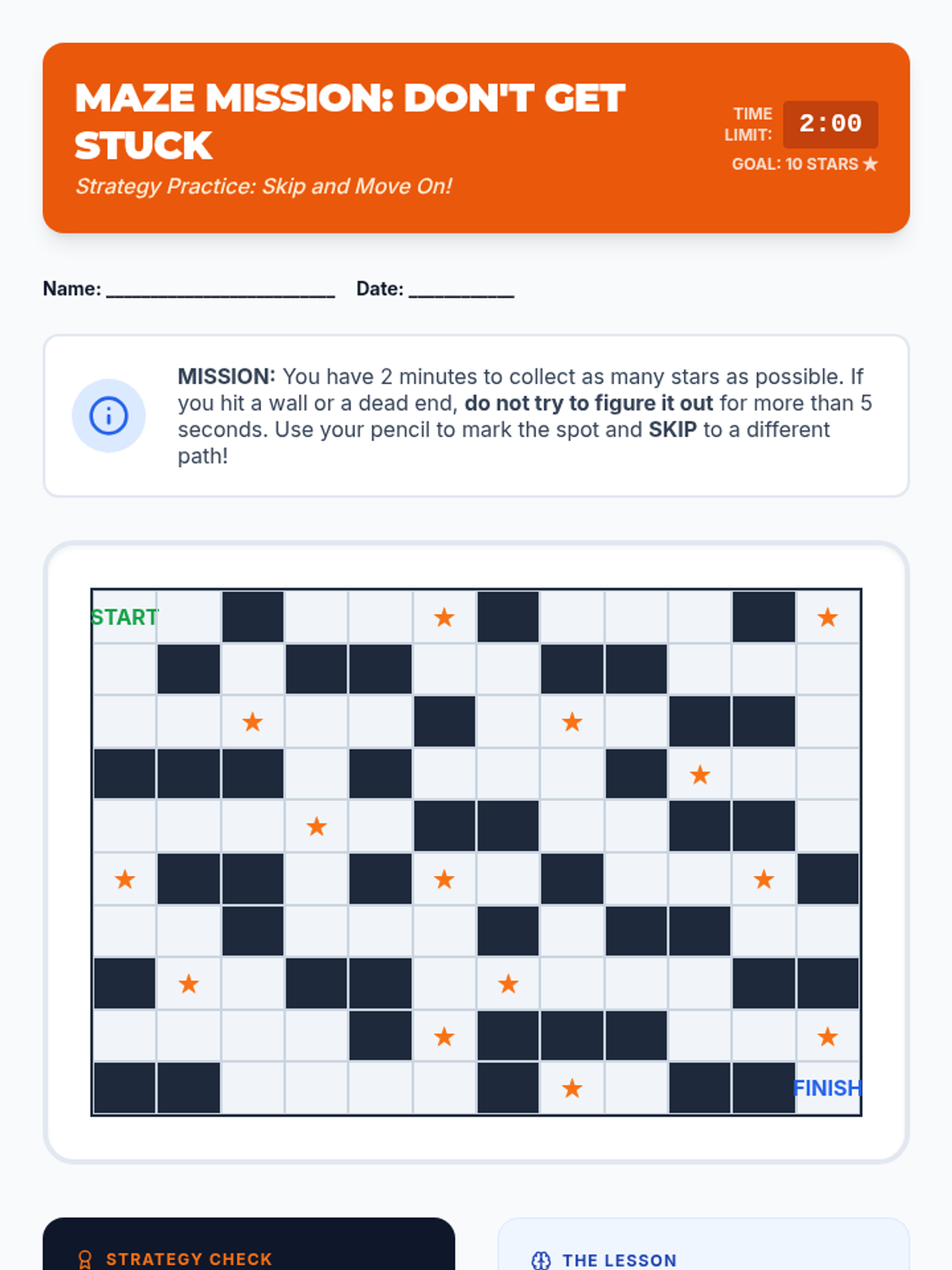
A timed maze activity for Lesson 2 that simulates the 'Skip and Return' strategy by forcing students to avoid dead ends to reach the goal.
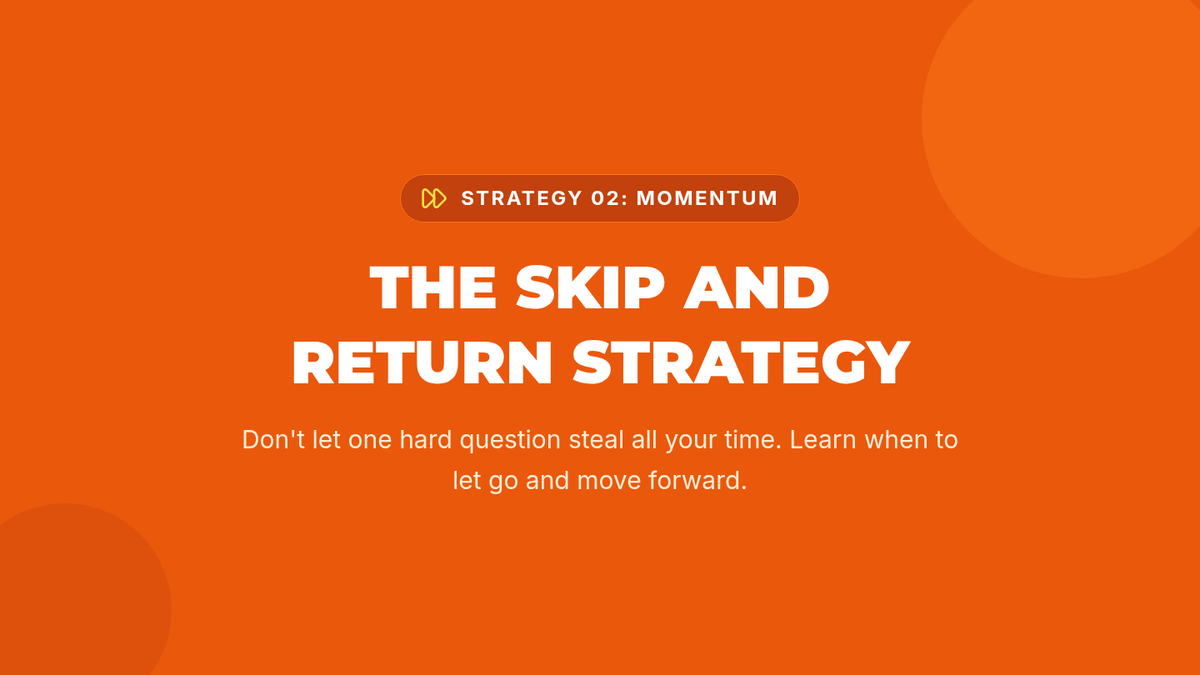
Slide deck for Lesson 2 teaching the 'Skip and Return' strategy, focusing on recognizing when you're stuck and the benefits of skipping.
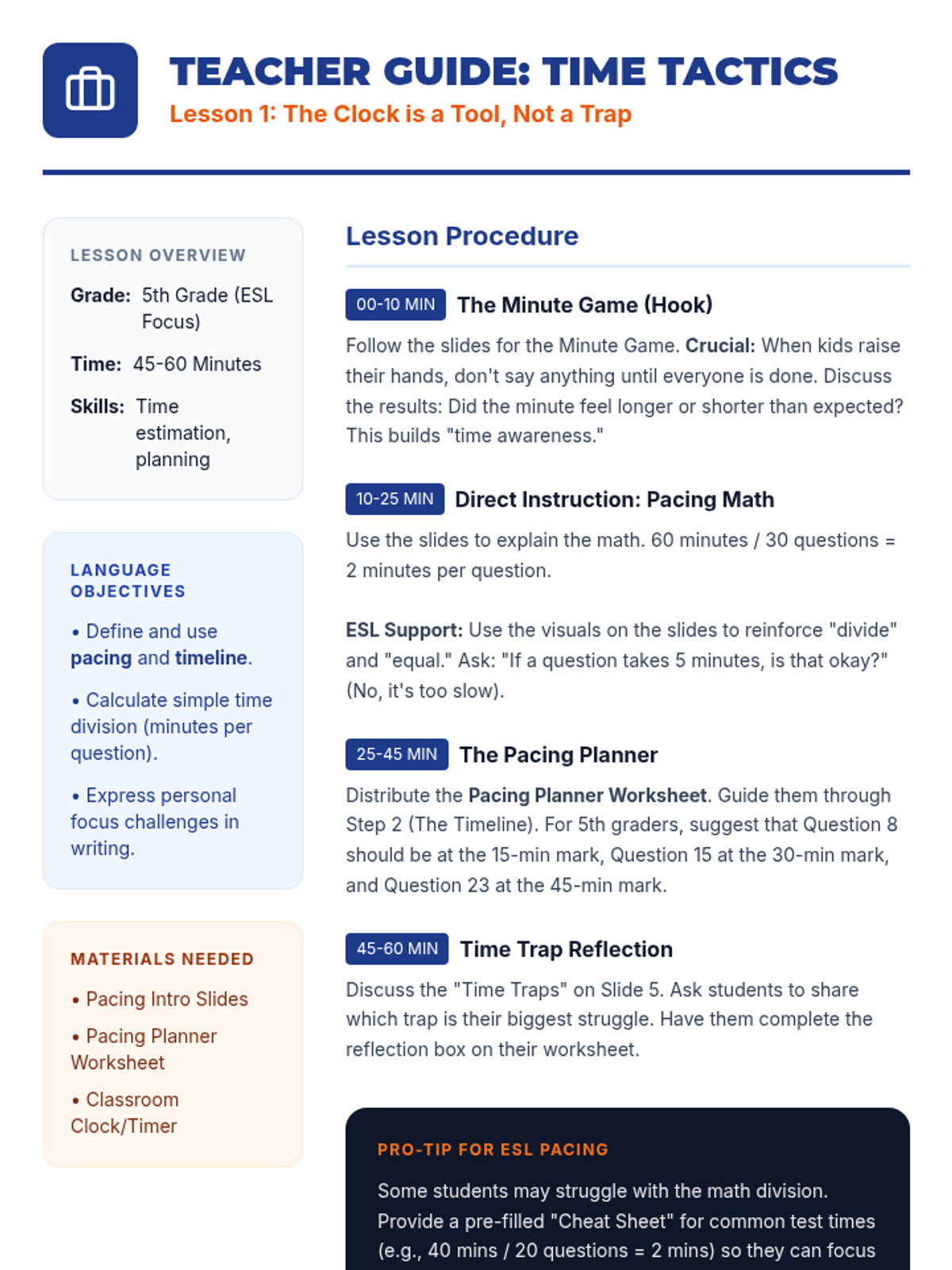
Teacher guidance for Lesson 1, including language objectives, step-by-step procedures, and ESL-specific instructional tips.
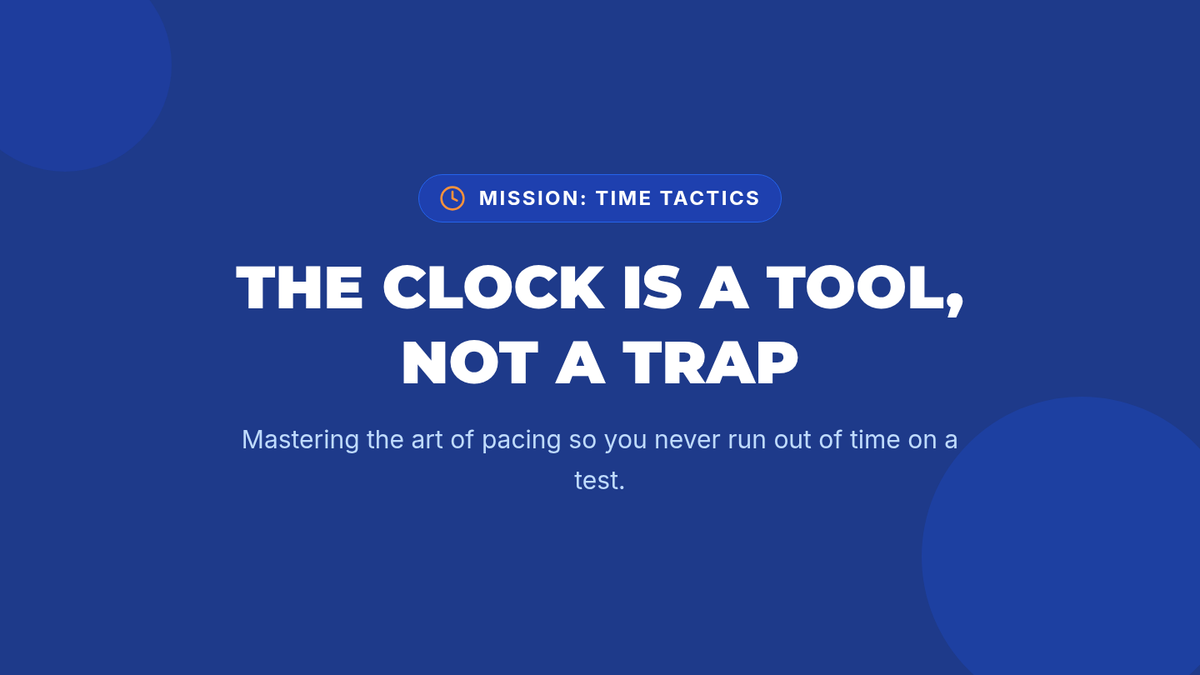
Introductory slide deck for Lesson 1 on pacing, featuring the 'Minute Game' hook, the math of pacing, and common time traps.
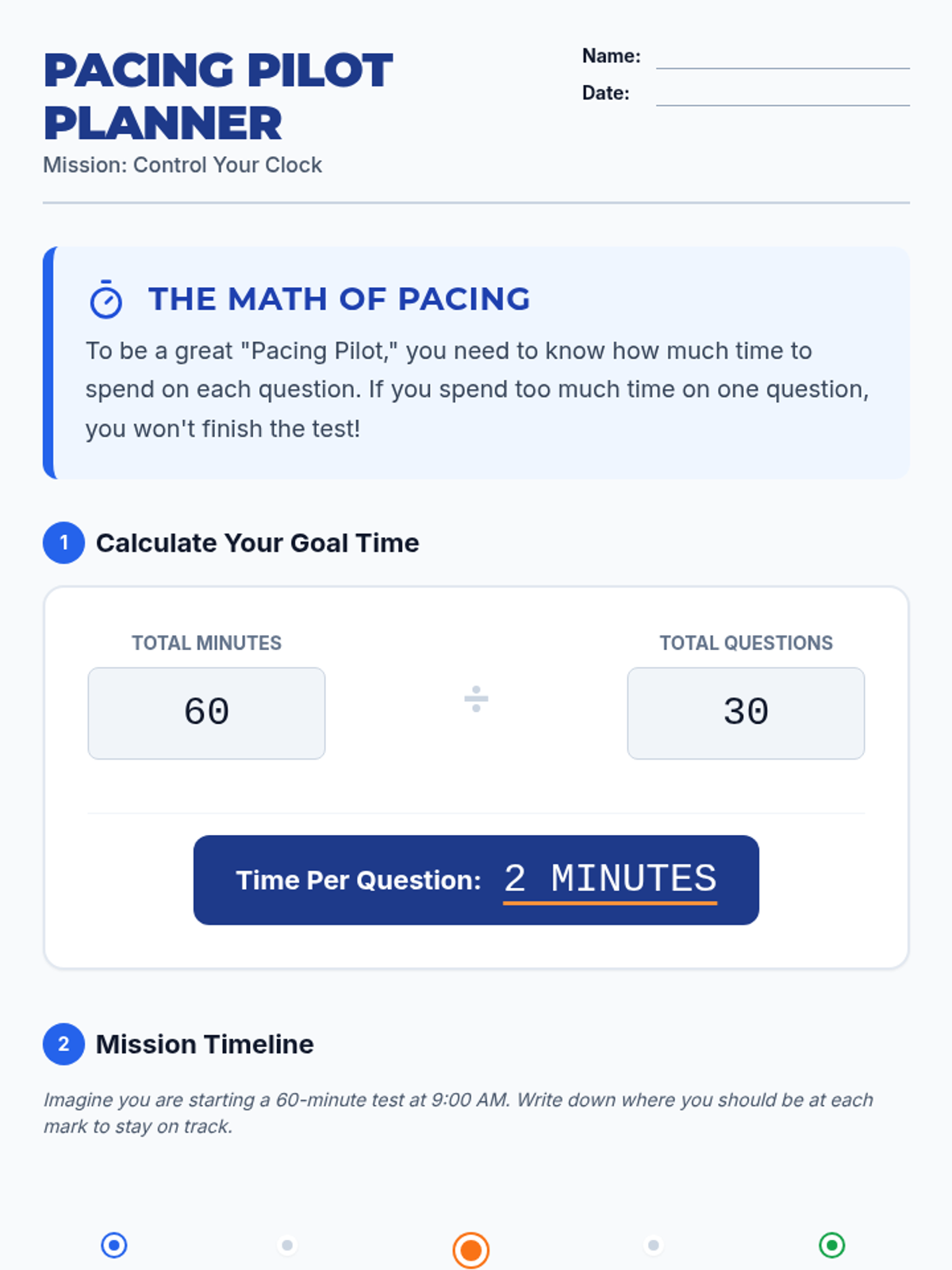
A visual pacing planner worksheet for Lesson 1, helping students calculate time per question and map out a test timeline.
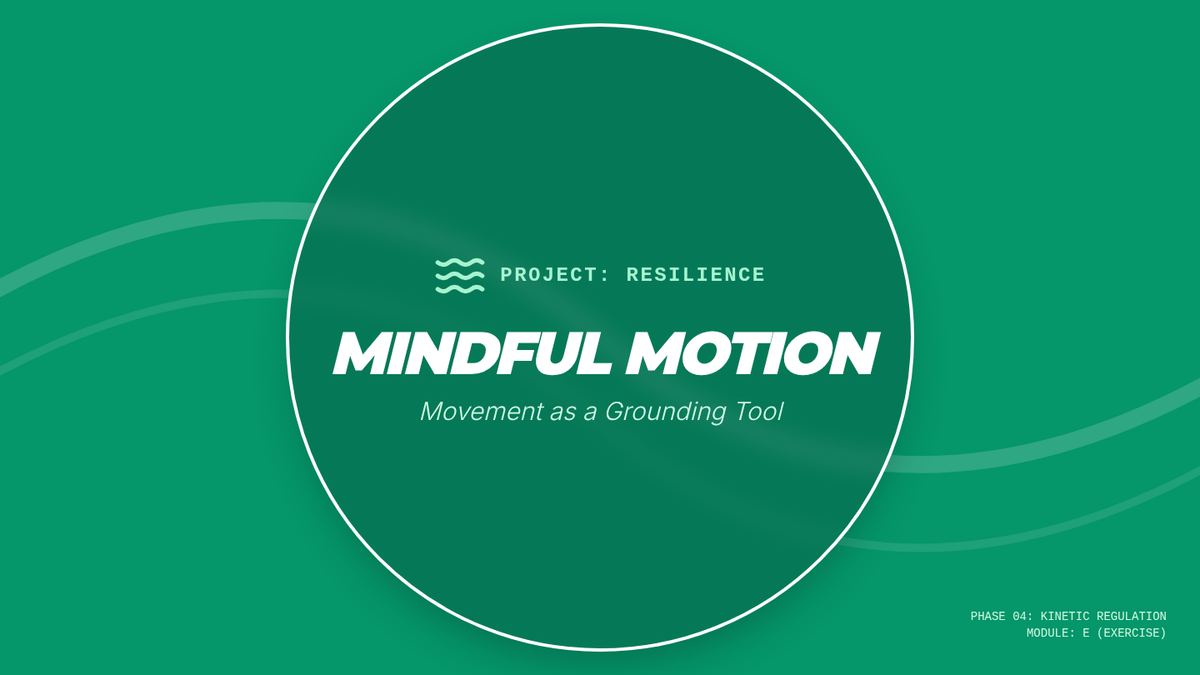
A slide deck exploring non-competitive movement as a tool for emotional regulation, distinguishing mindful motion from competitive sports.
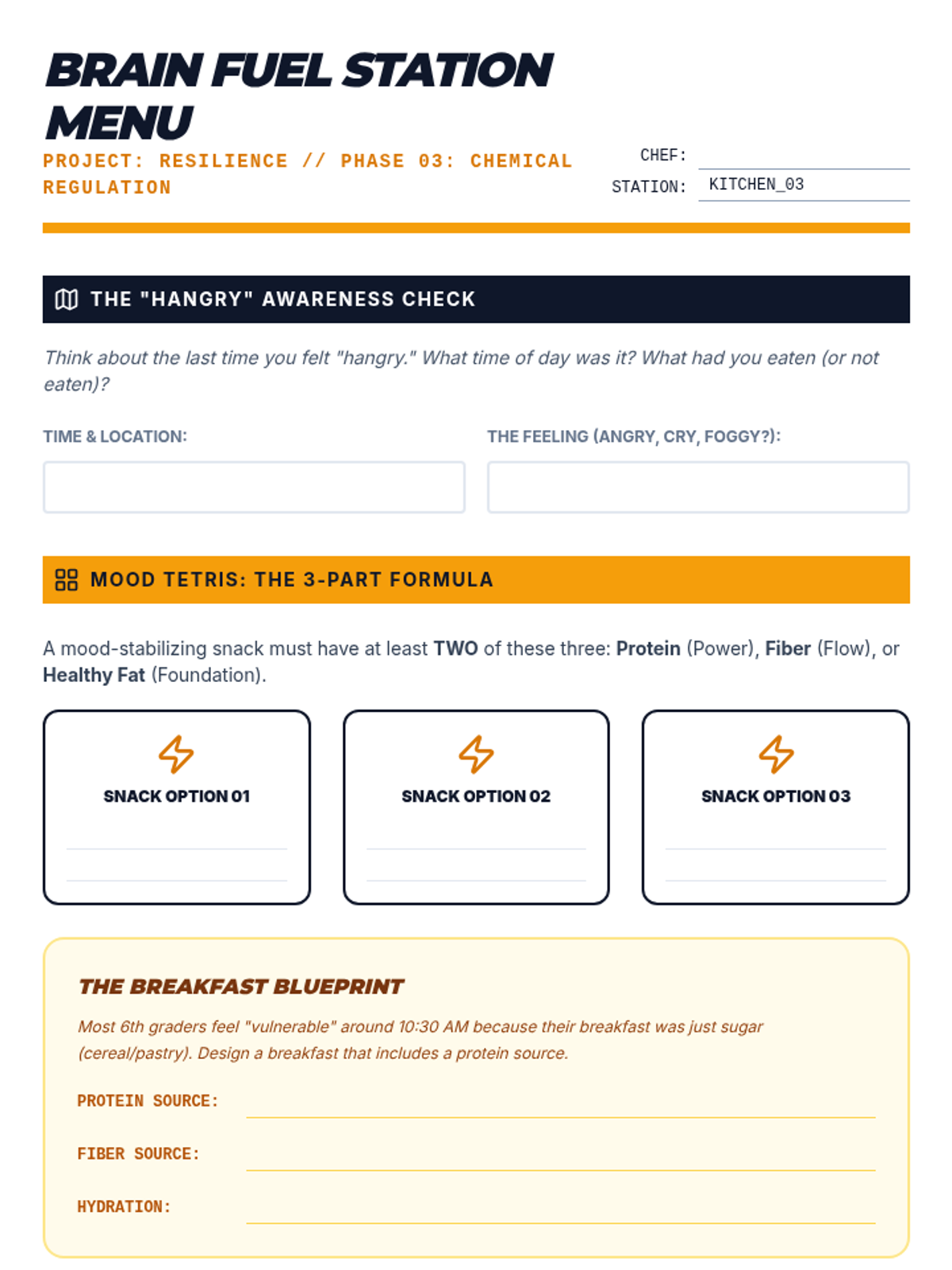
A menu-design worksheet where students plan balanced snacks and meals to prevent mood instability and 'hangry' emotional outbursts.
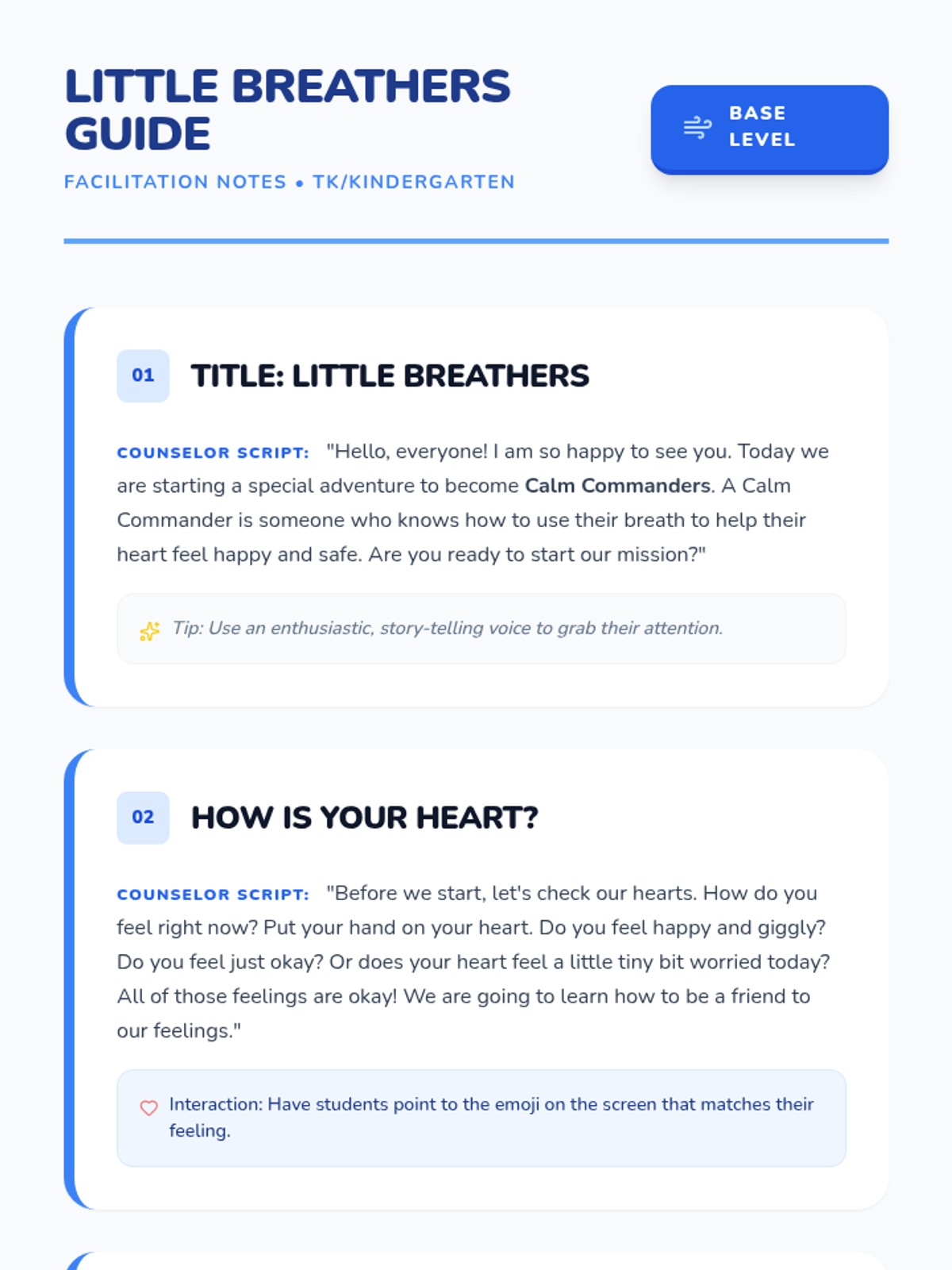
A detailed slide-by-slide facilitation guide for the TK/Kindergarten lesson 'Little Breathers'. Includes simple counselor scripts, child-friendly analogies for stress, and instructions for interactive breathing practice.
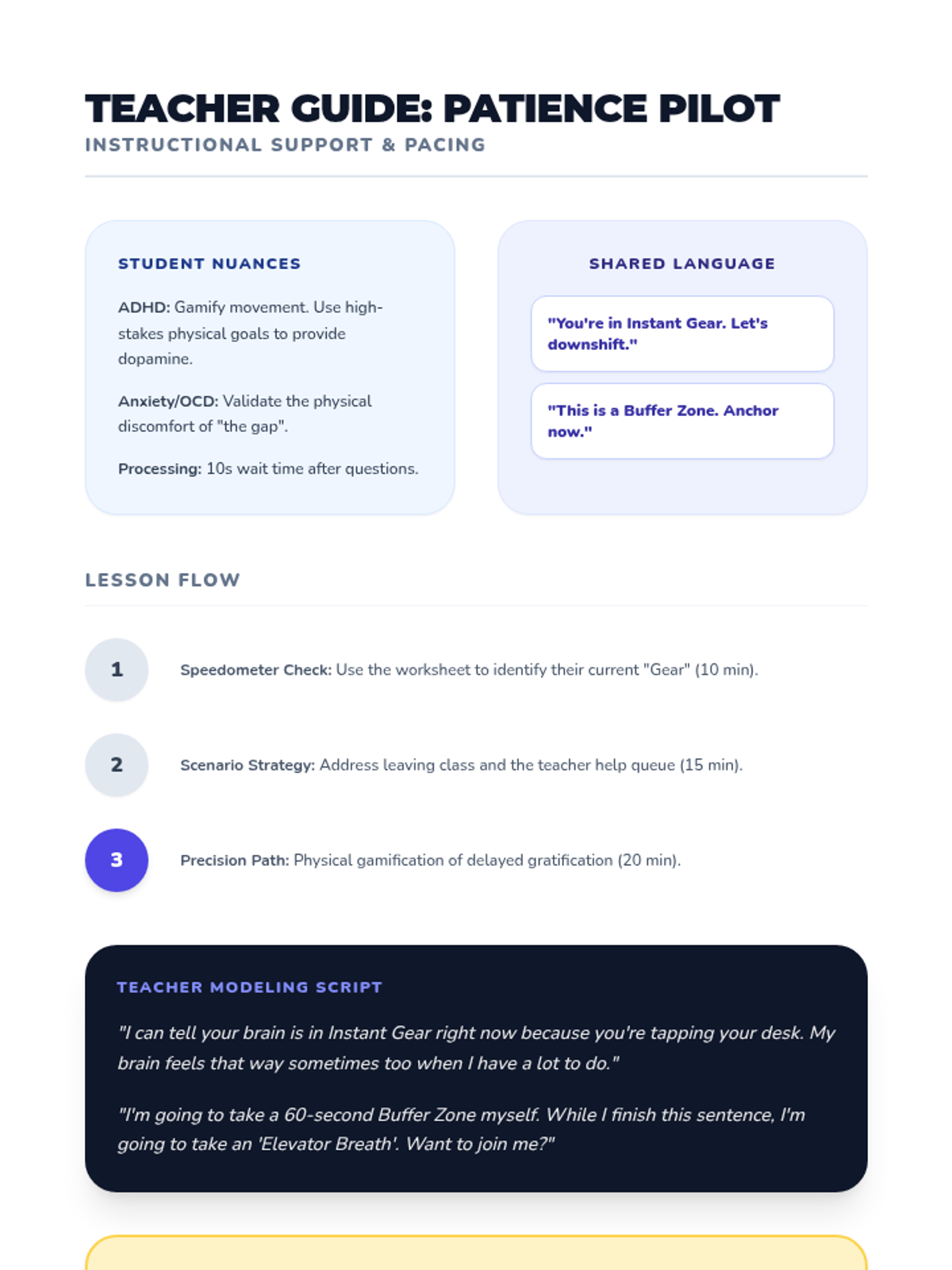
A teacher-facing guide that provides context on how to implement the Patience Pilot materials. It includes pedagogical tips for working with ADHD/OCD/Anxiety, a recommended lesson flow, and scripts for modeling patience.
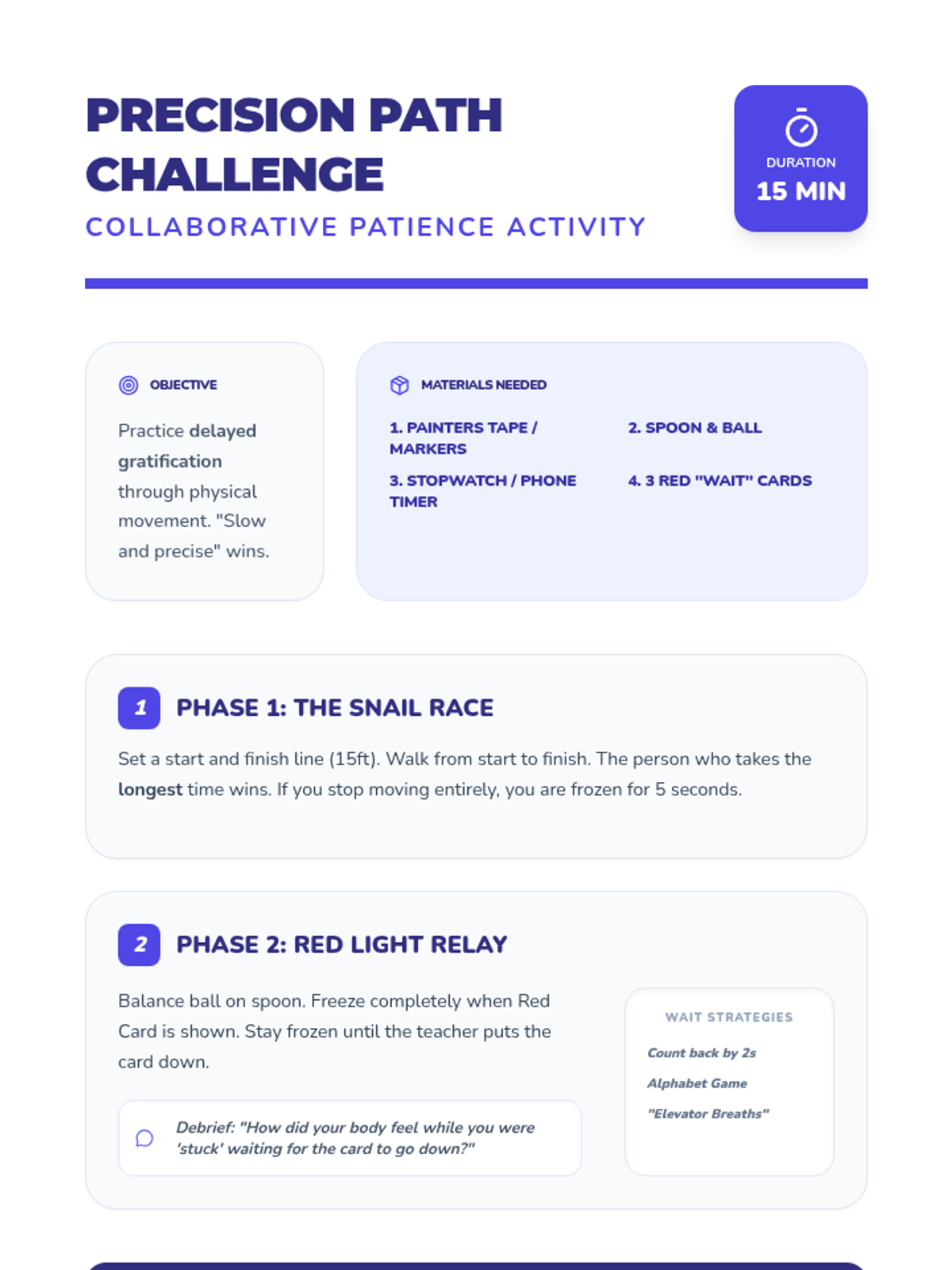
A collaborative, movement-based activity for a teacher and student. It gamifies patience through 'snail racing' and interrupted balancing tasks, specifically designed to simulate the physical tension of waiting.
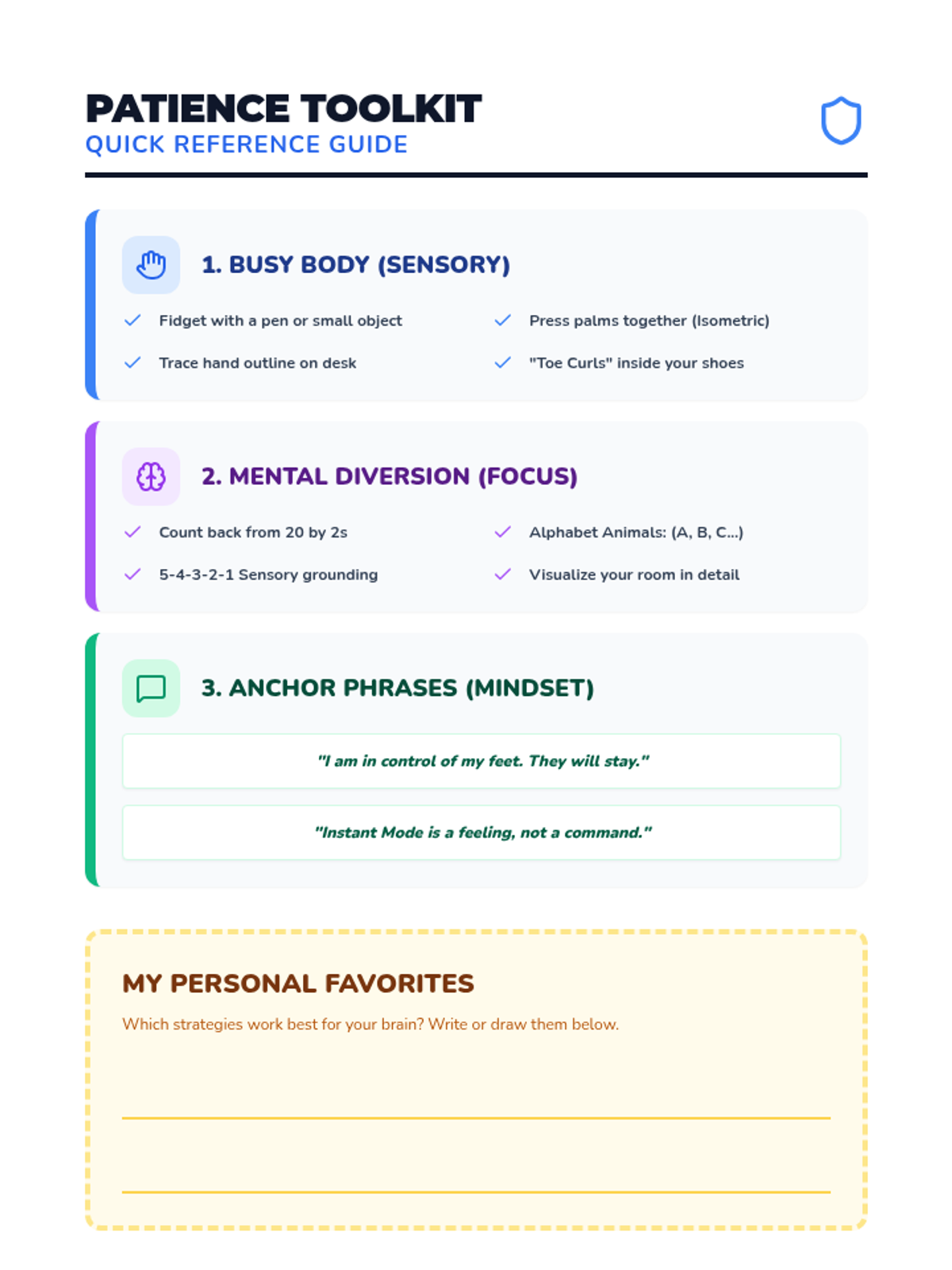
A reference sheet for the student to keep in their binder. It provides a menu of physical, mental, and verbal coping strategies to use during 'waiting gaps' to manage ADHD and anxiety-driven impulsivity.
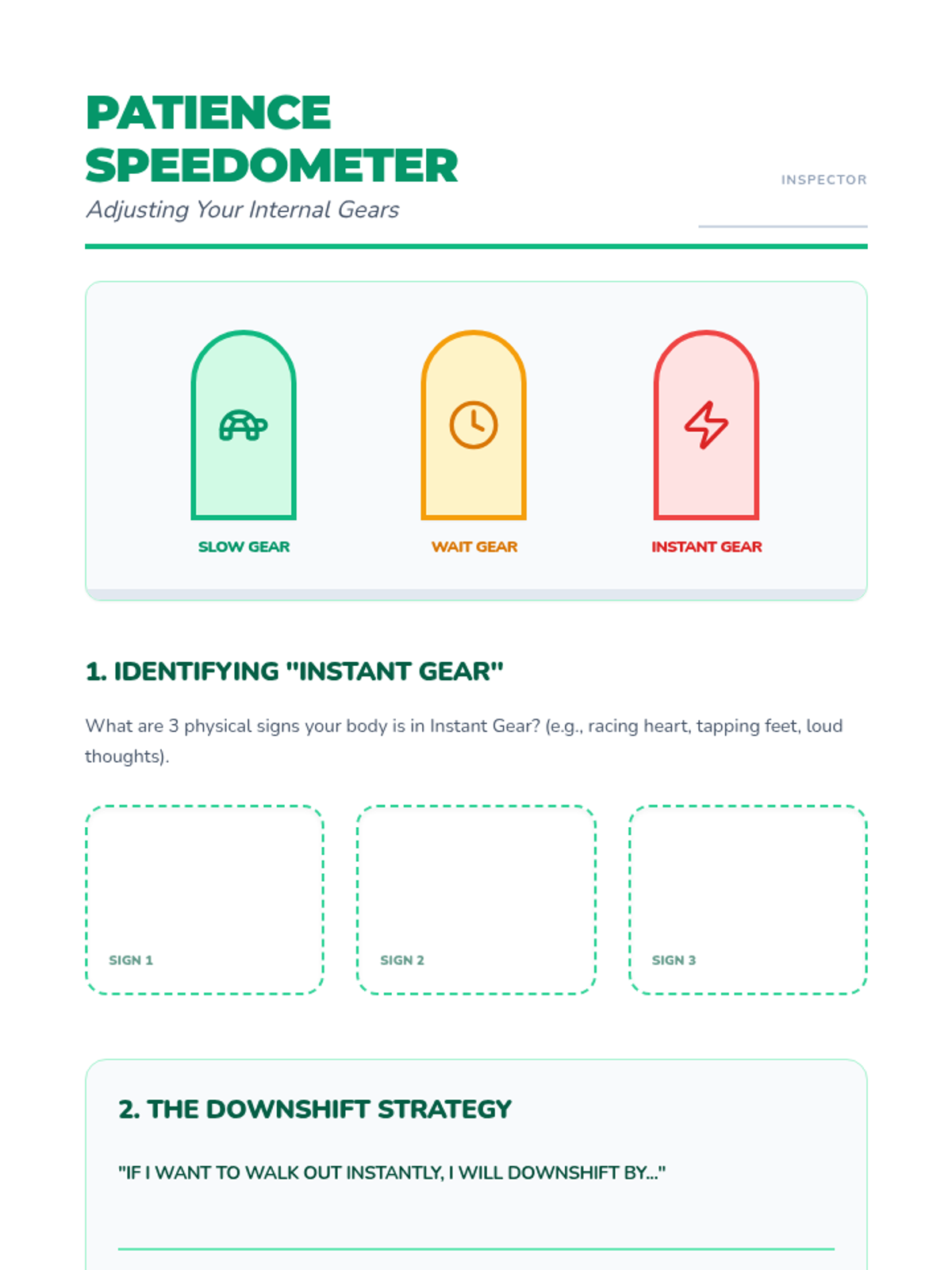
A visual self-regulation worksheet that helps the student identify their 'internal gears' (Slow, Wait, Instant). It focuses on identifying physical triggers of impulsivity and practicing 'downshifting' to a more patient state.
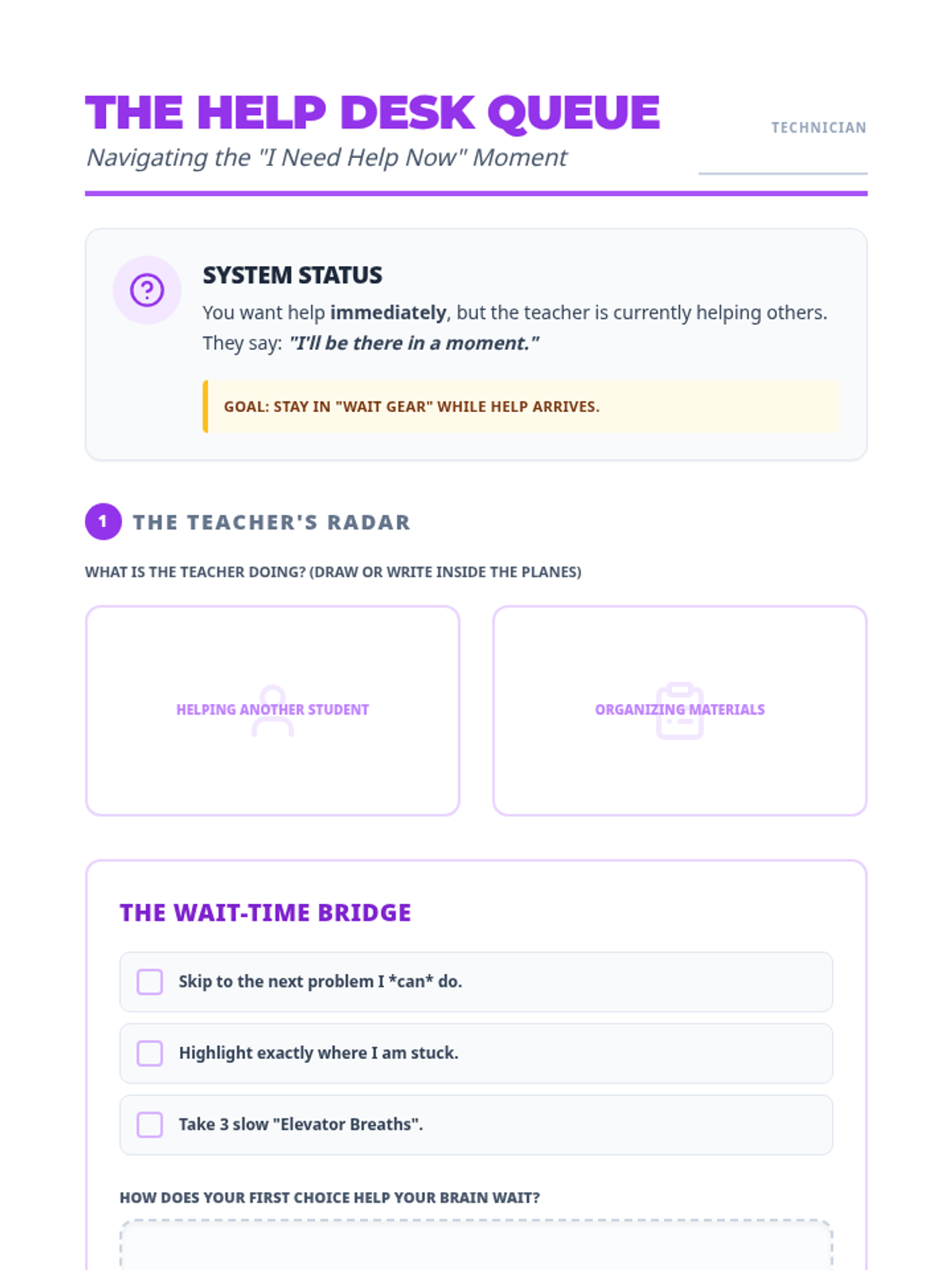
A worksheet designed to address the specific scenario of needing immediate help after previously refusing it. It uses an air traffic controller metaphor to help the student understand the teacher's perspective and provides actionable waiting strategies.
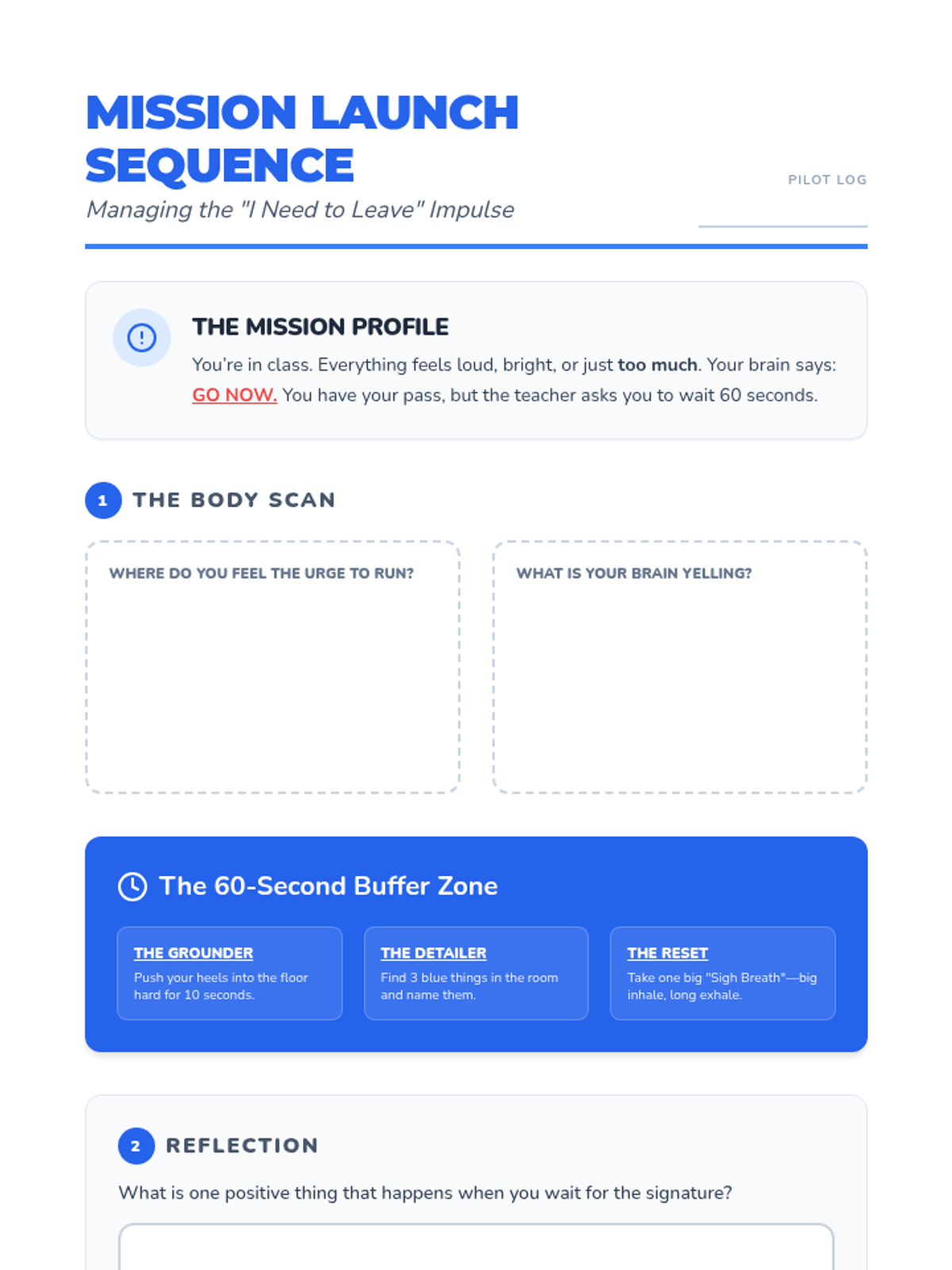
A worksheet focused on the impulsivity of leaving the classroom when overstimulated. It teaches a '60-second buffer' strategy and helps the student identify physical symptoms of anxiety.
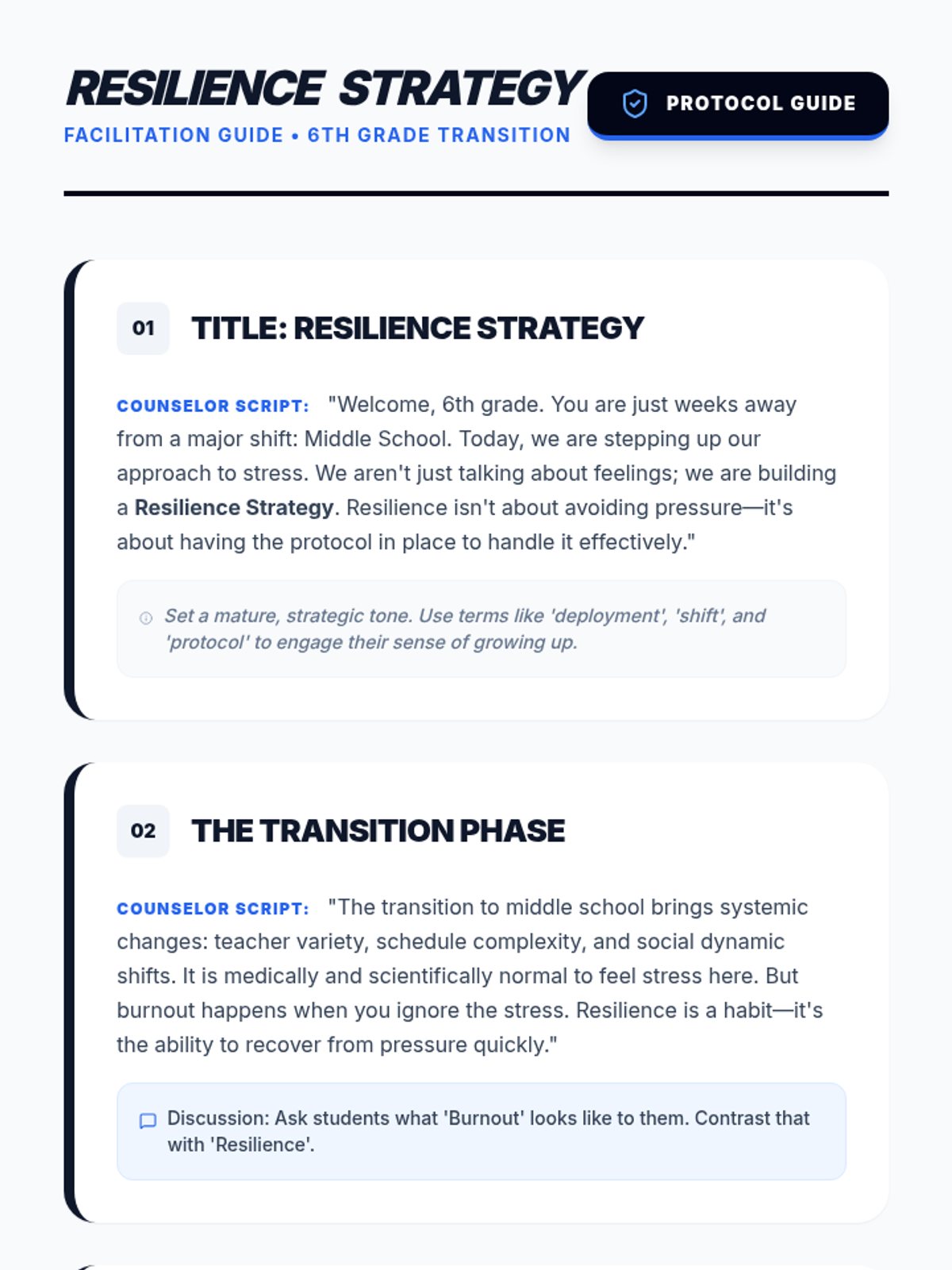
A detailed facilitation guide for the 6th grade 'Resilience Strategy' lesson. Provides scripts, mature analogies for transition stress, and instructions for practicing Box Breathing. Terminology updated for a more sophisticated 6th grade audience.
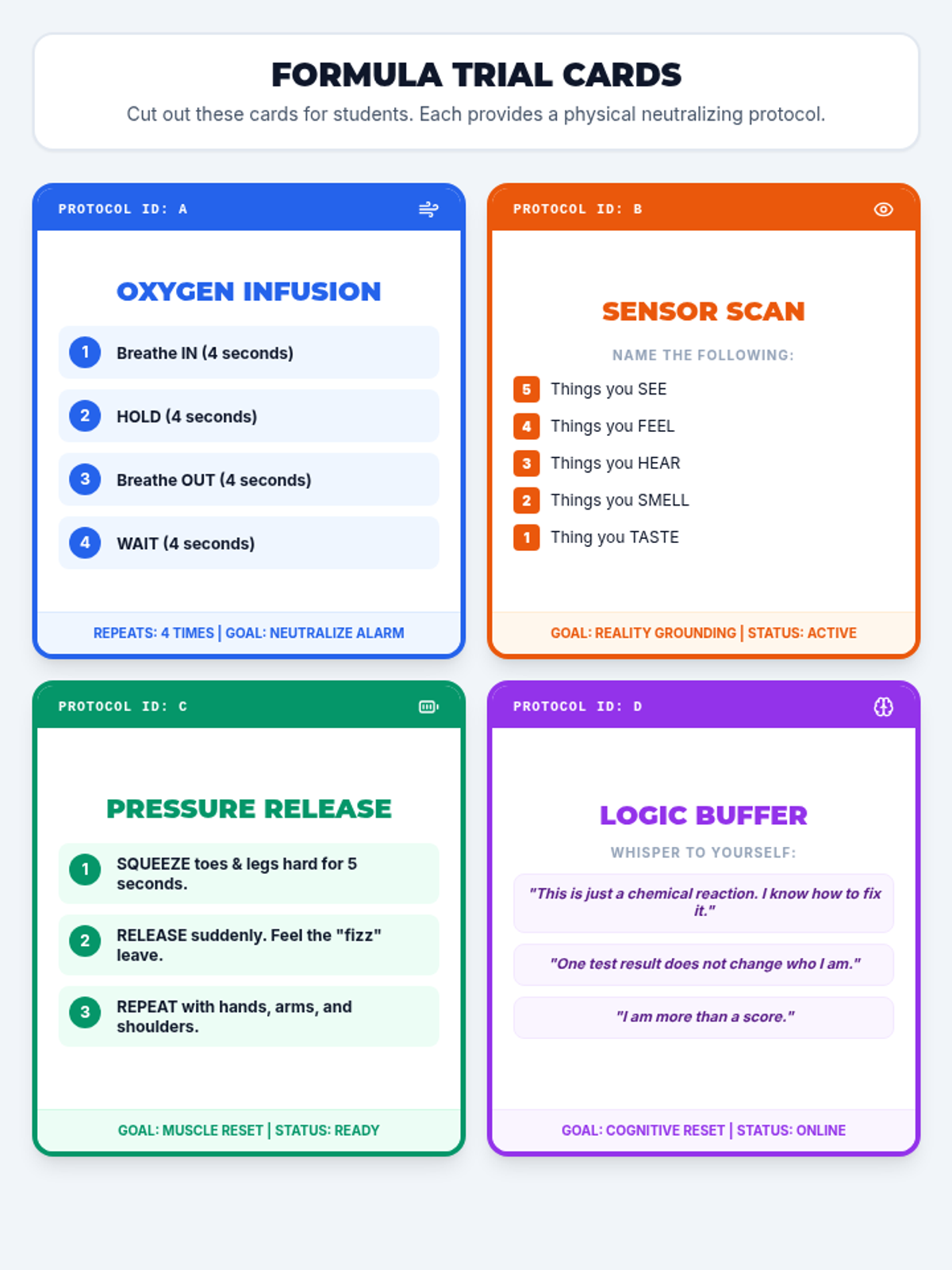
A set of instruction cards for four different physical stress-neutralization formulas, designed to be cut out and used during the Calm Performance Lab activity.
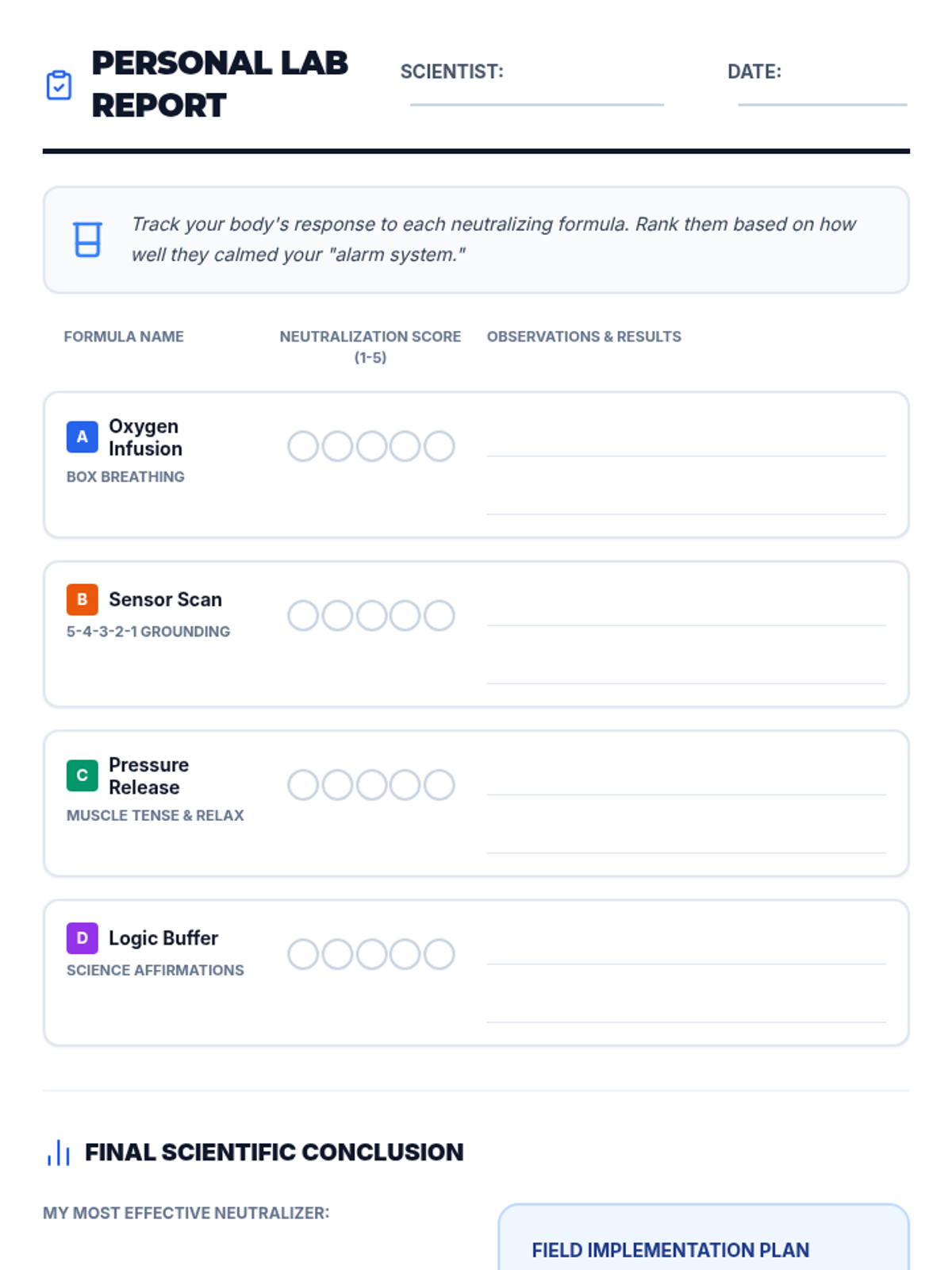
A student-facing worksheet designed as a laboratory report to record reactions to different stress-management formulas and identify personal favorites.
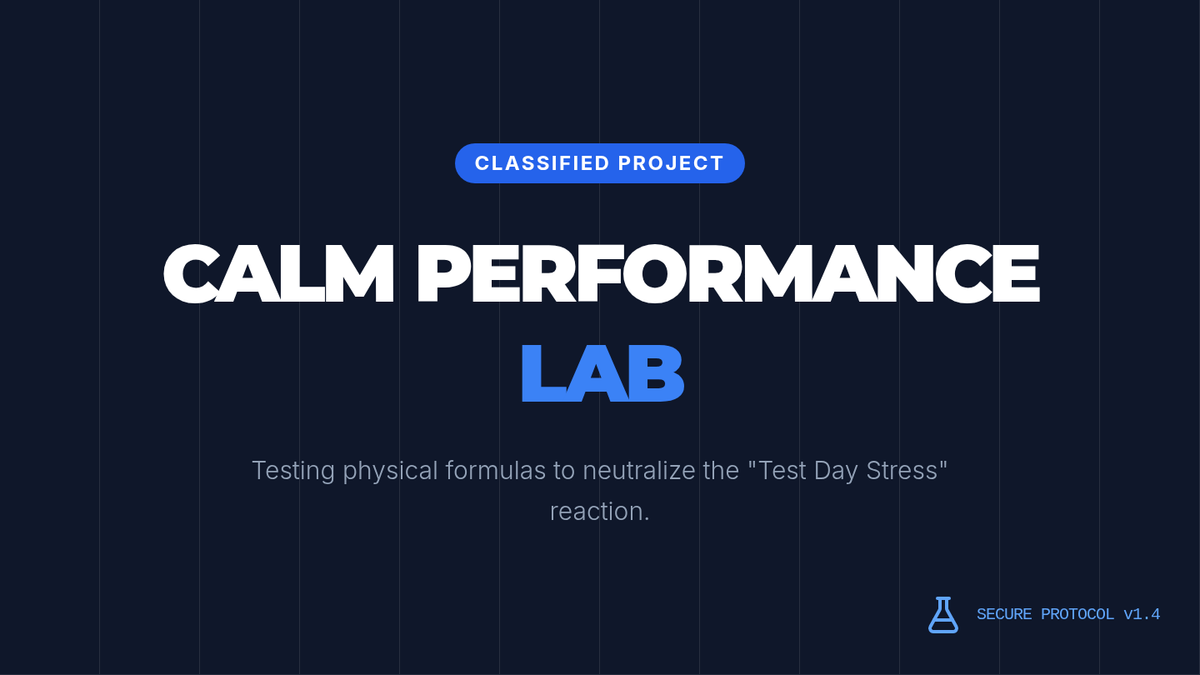
A high-impact slide deck for the Calm Performance Lab, explaining the physiology of stress and the mission to neutralize anxiety through physical techniques.
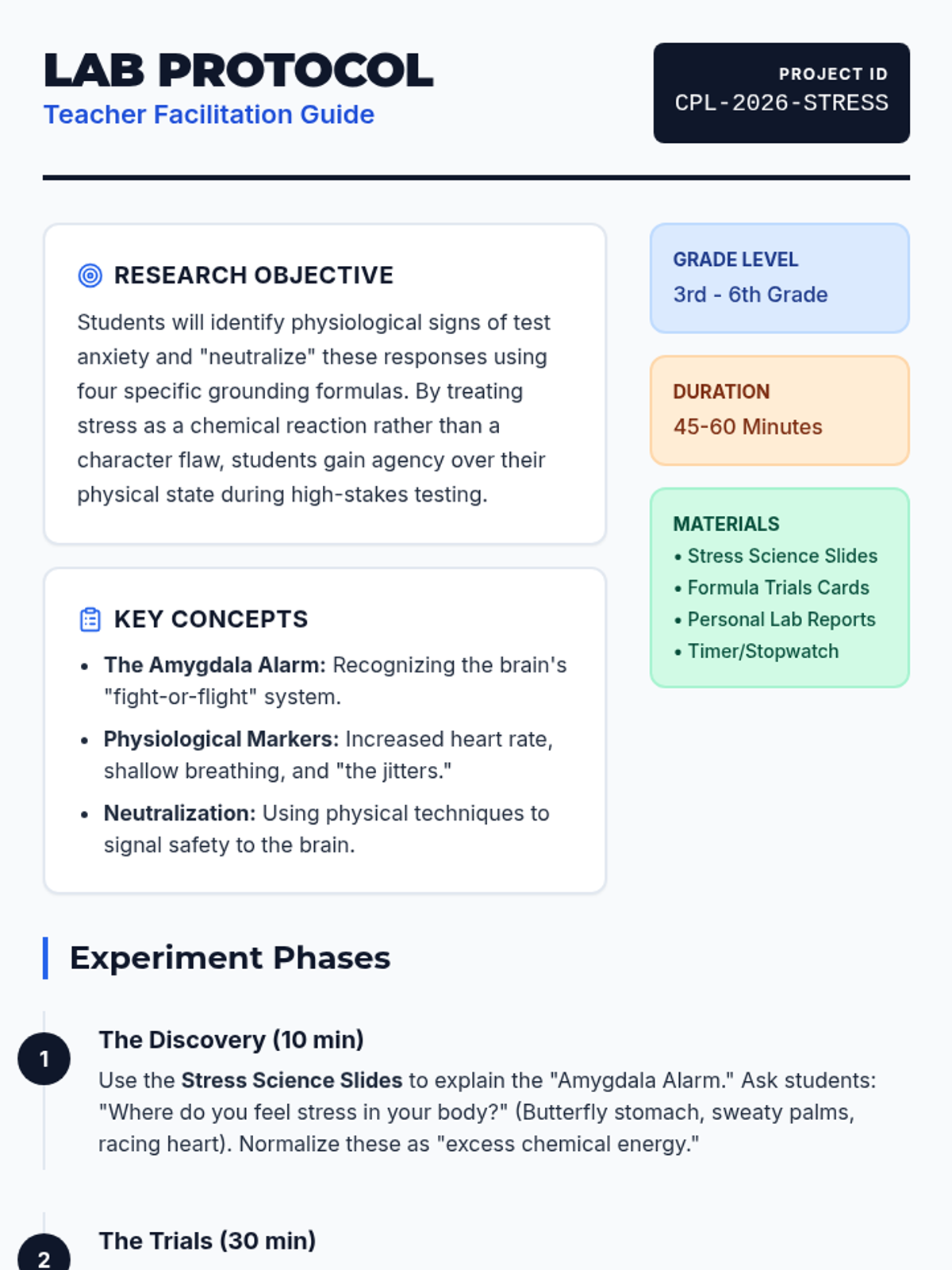
A teacher facilitation guide for the Calm Performance Lab lesson, featuring a laboratory-themed protocol for teaching students stress-management techniques.
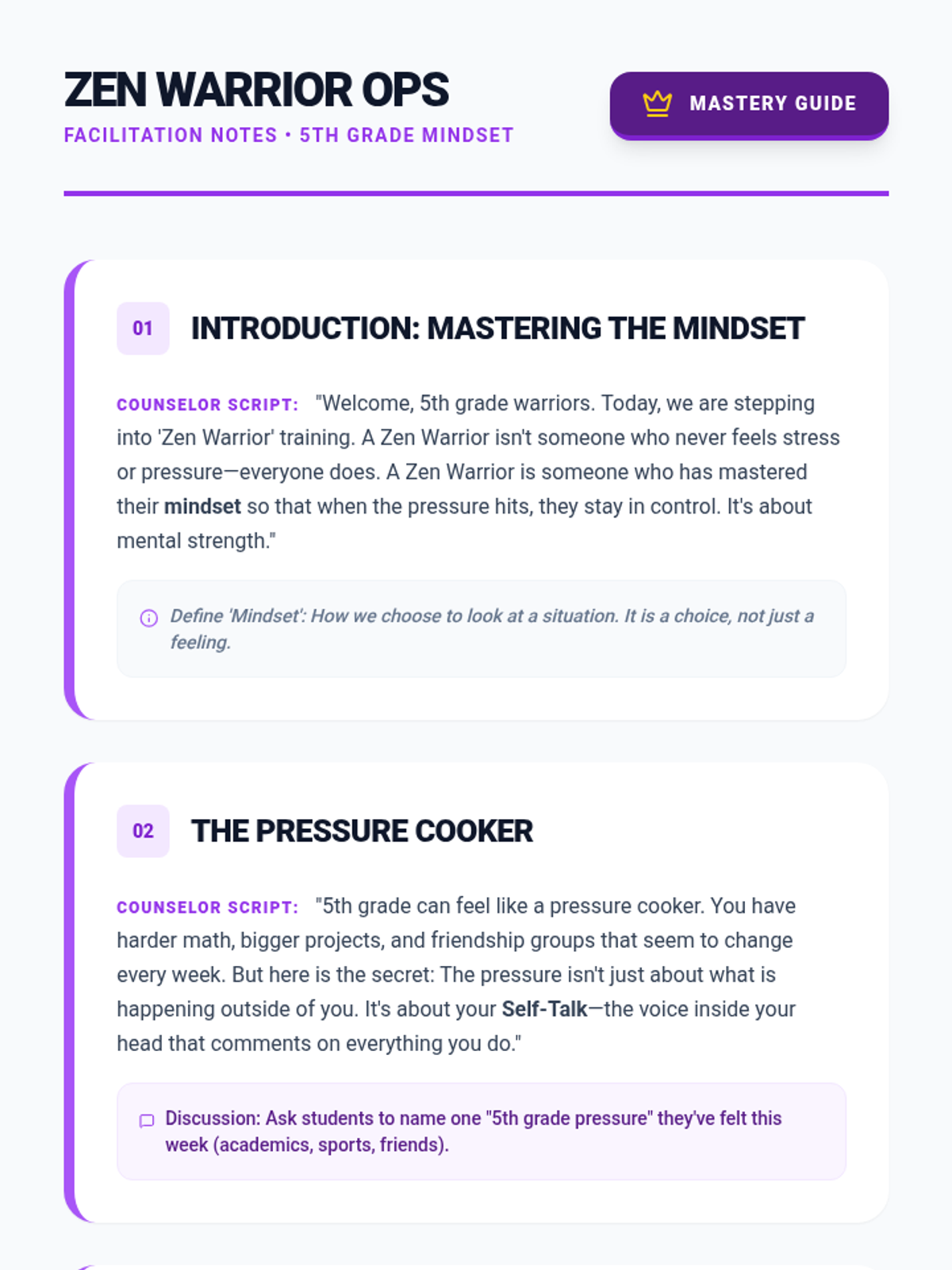
A detailed facilitation guide for the 5th grade 'Zen Warriors' lesson. Includes scripts for explaining 'Thinking Traps', 'The Flip' self-talk technique, and 'The 10-10-10 Rule' for perspective shifting.
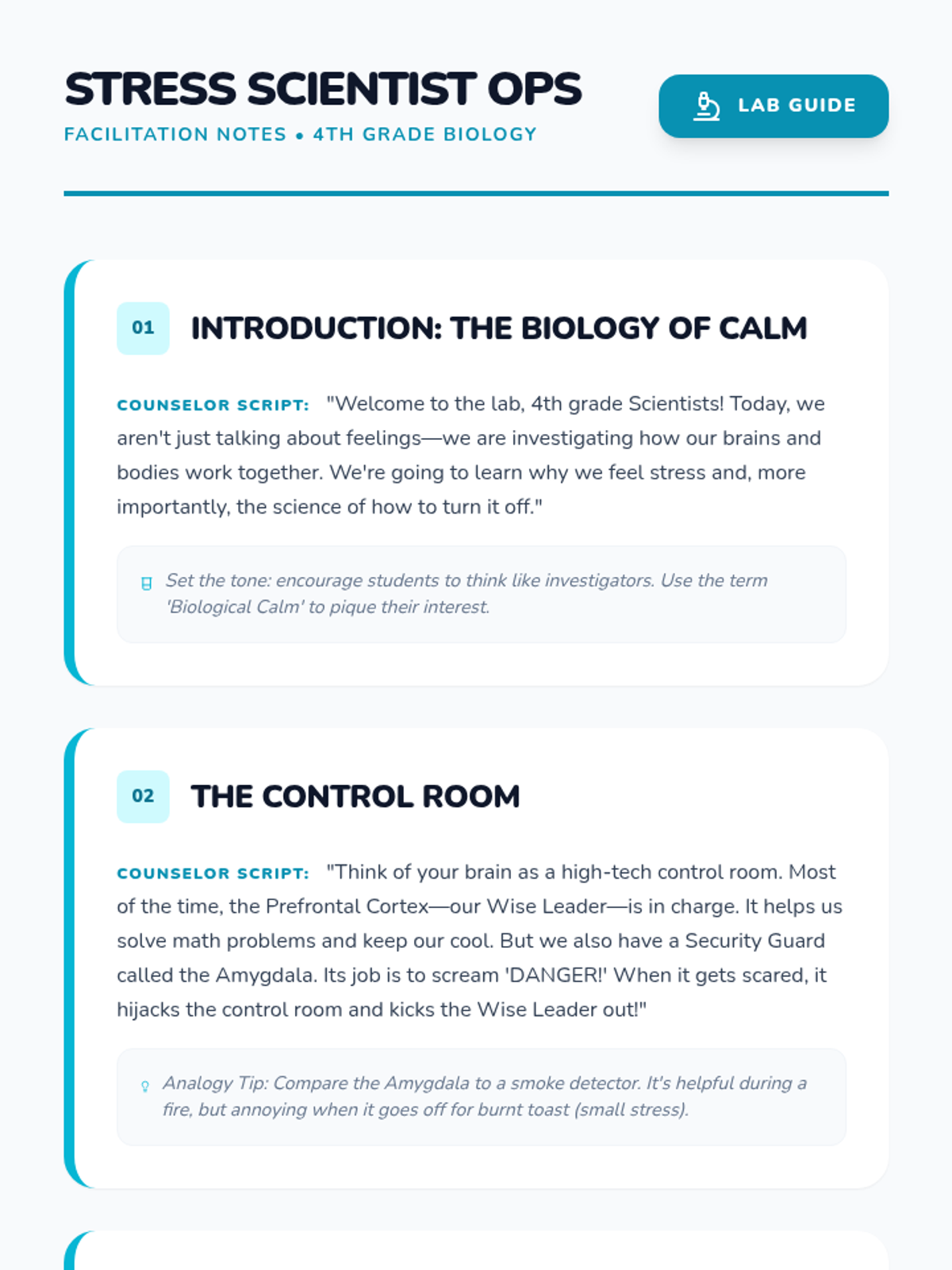
A detailed facilitation guide for the 4th grade 'Stress Scientists' lesson. Includes counselor scripts, biology-themed analogies for brain function, and interactive prompts for the 'Scientific Method' practice.
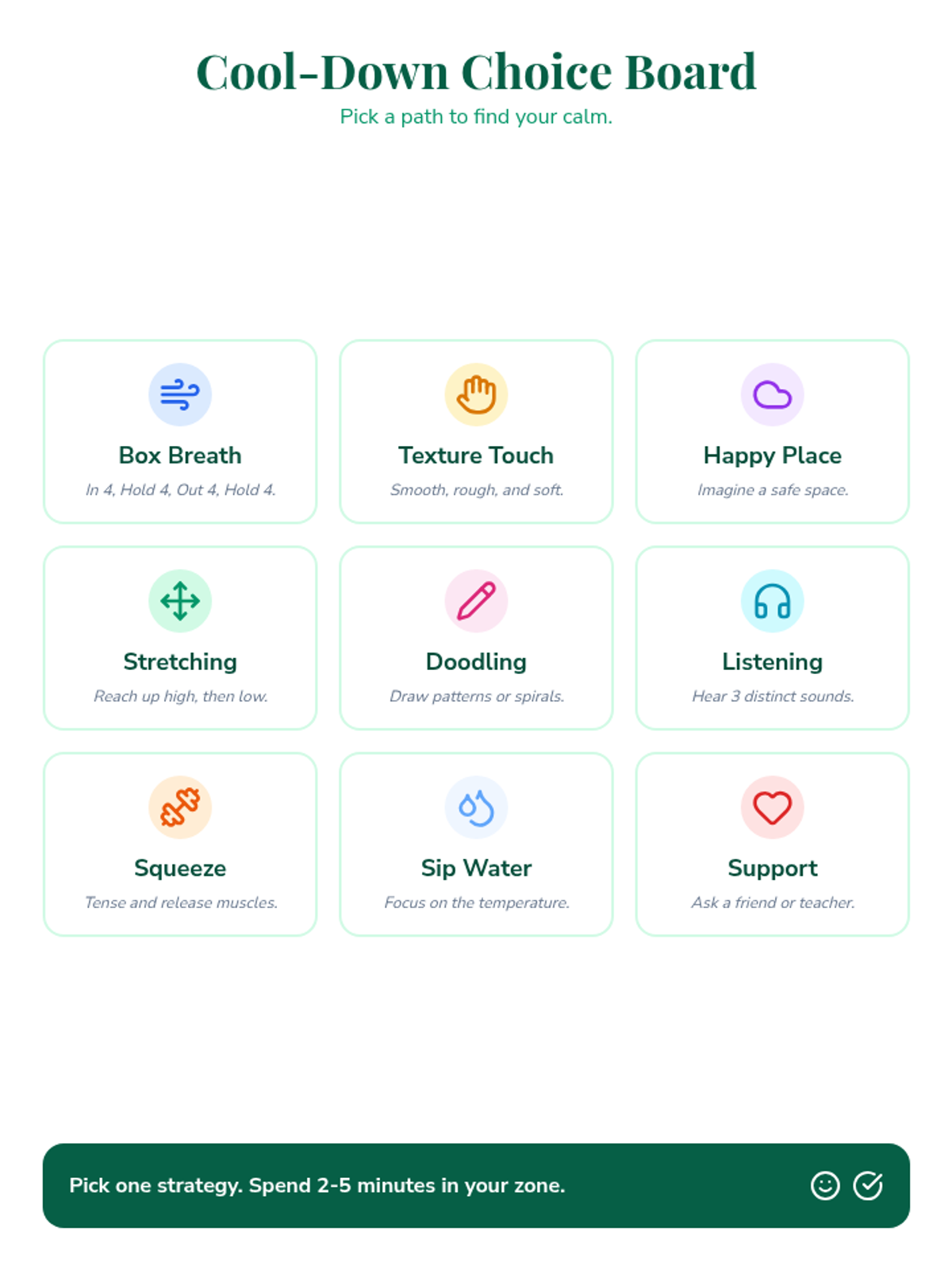
A visual cool-down choice board featuring nine diverse self-regulation strategies including breathing exercises, sensory tasks, and movement breaks.
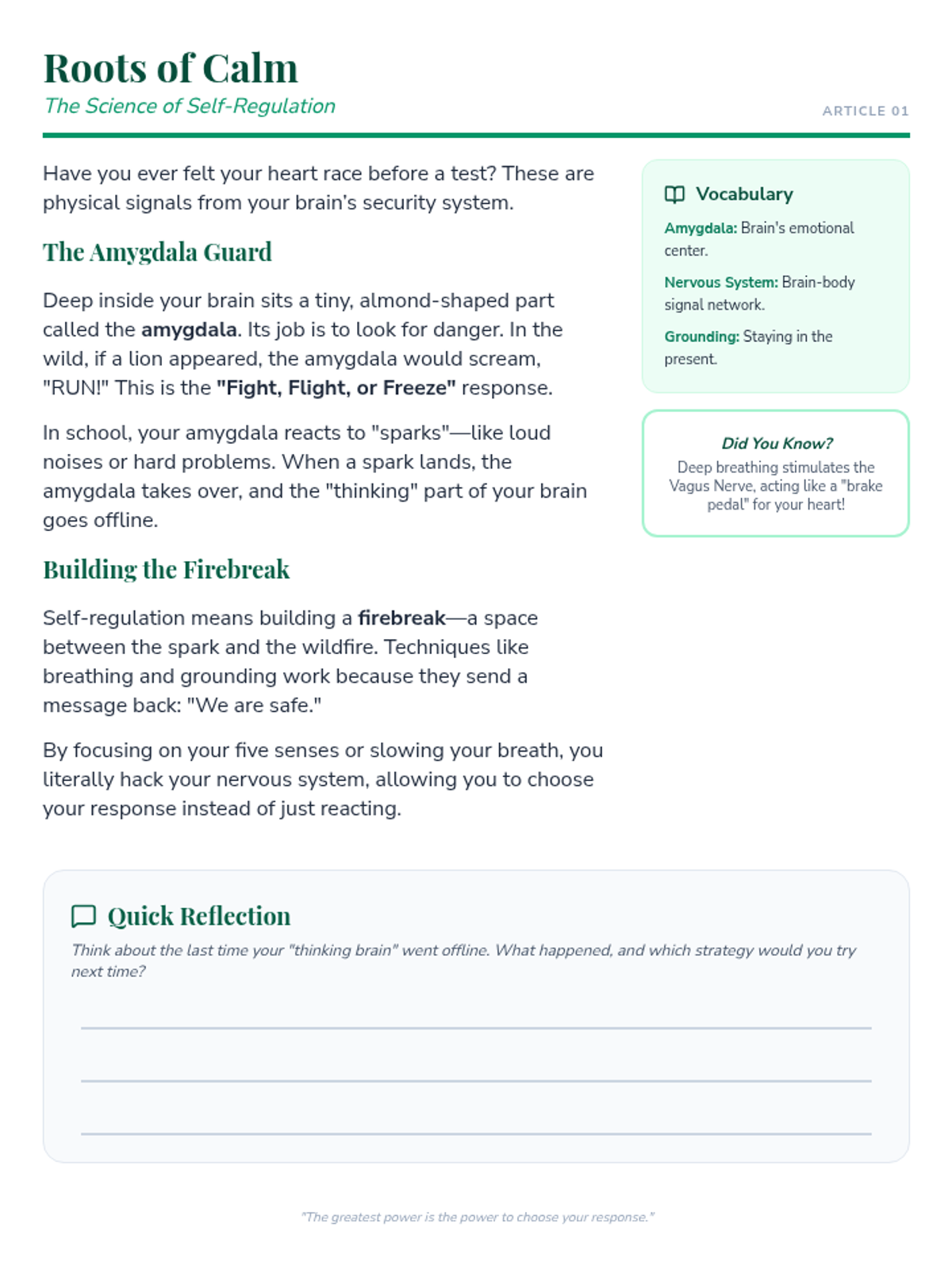
An informational reading passage explaining the science of stress, the role of the amygdala, and how self-regulation techniques like grounding 'hack' the nervous system.
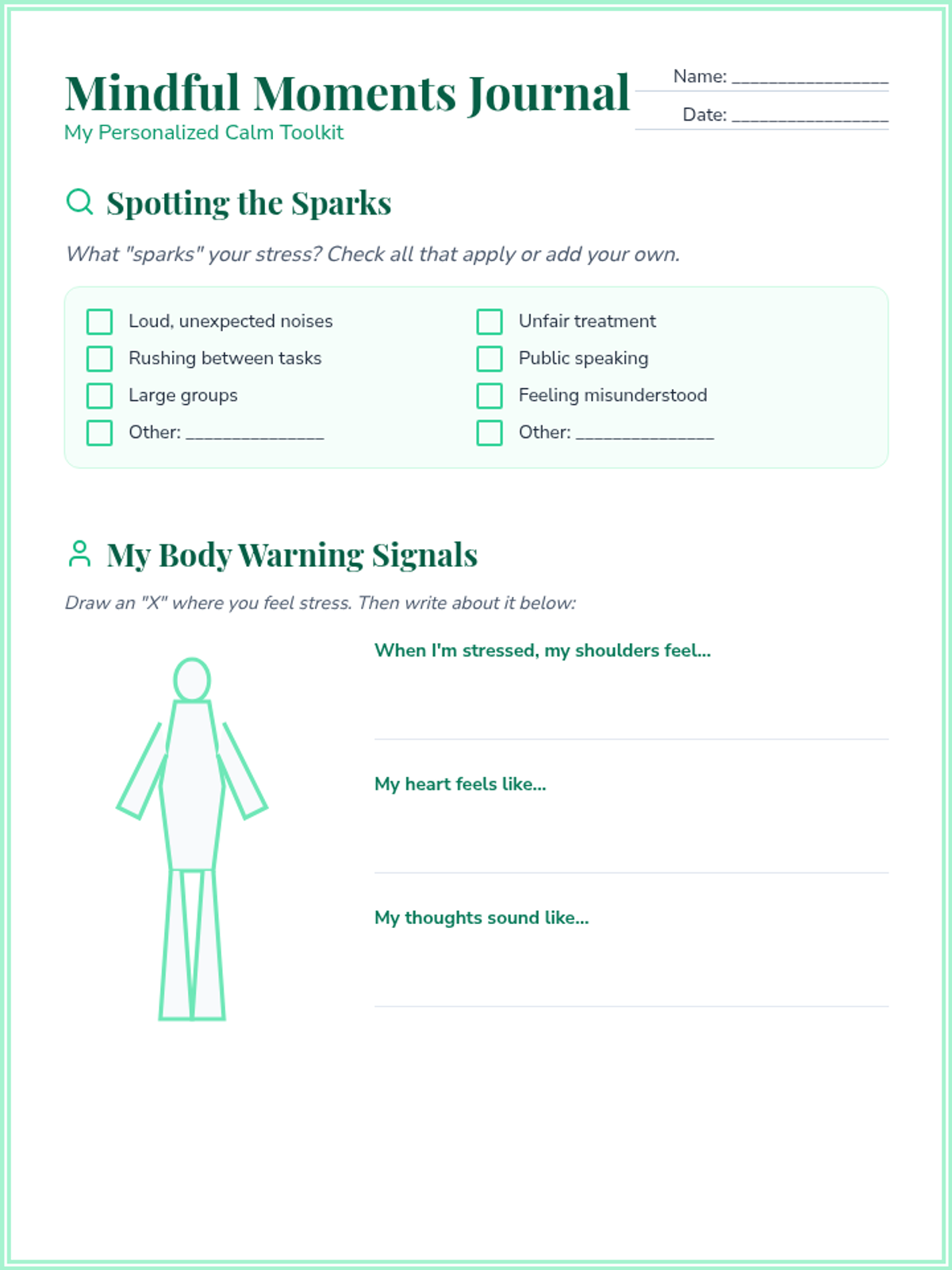
A two-page student journal for identifying stress triggers, mapping physical responses, and building a personalized four-step calm toolkit.
Engaging slides for the Serene Space lesson, introducing the 'amygdala spark' concept, body awareness categories, and the 5-4-3-2-1 grounding technique.
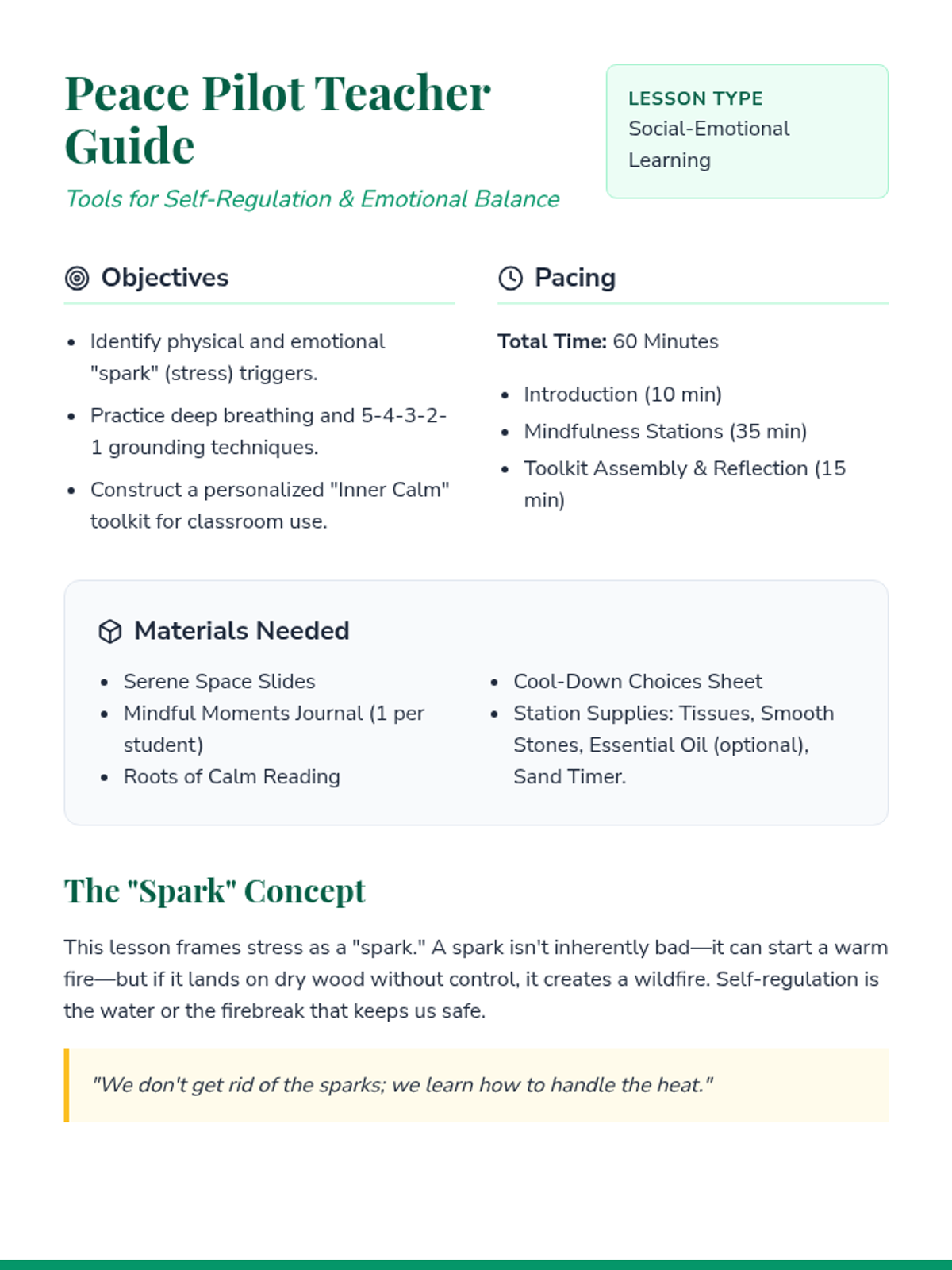
A comprehensive teacher guide for the Inner Calm lesson, featuring the 'spark' concept, station rotation instructions, and facilitation tips for self-regulation.
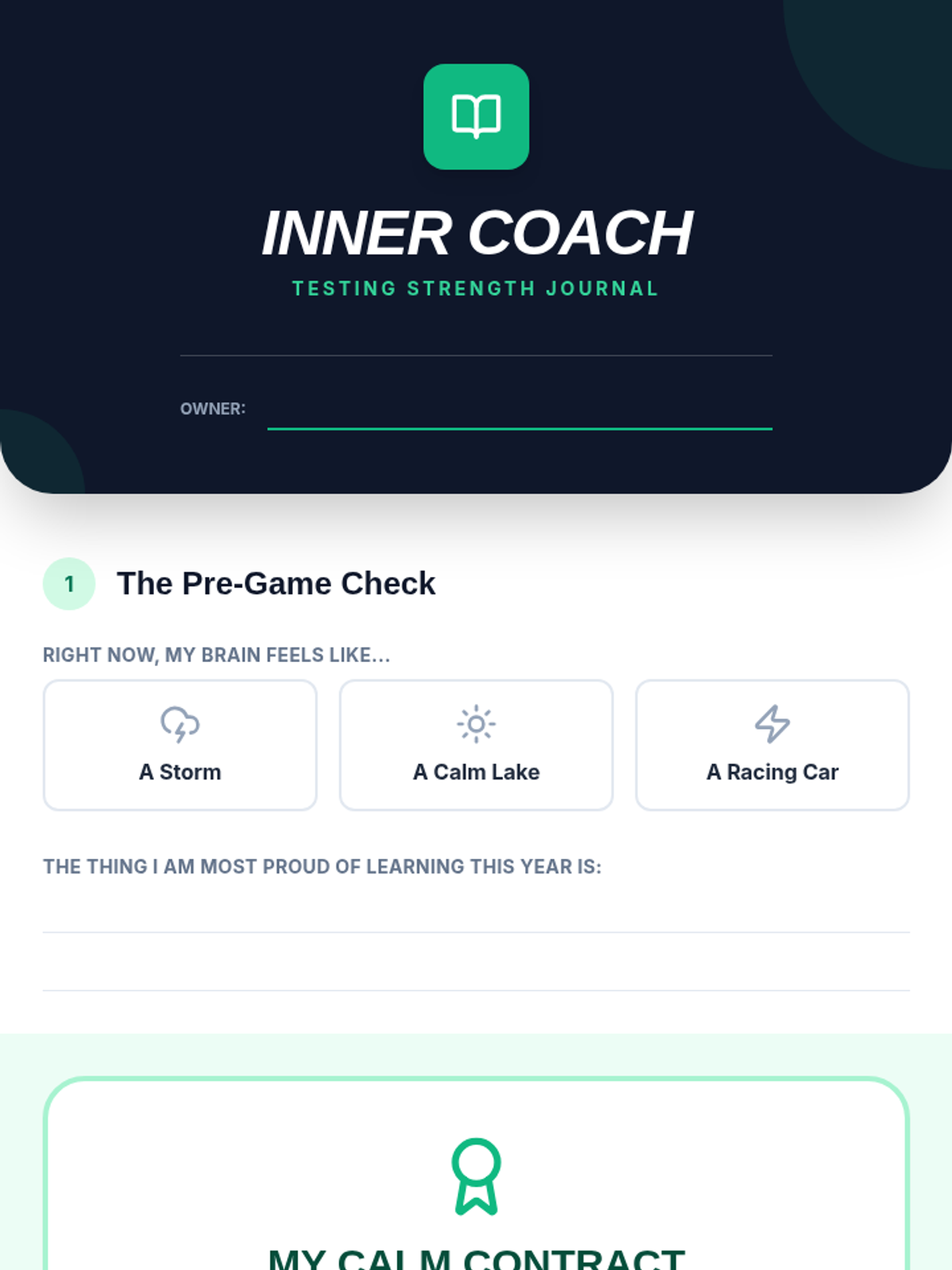
A personal reflection journal for students to document their testing mindset, identify proud moments, and sign a "Calm Contract" commitment.
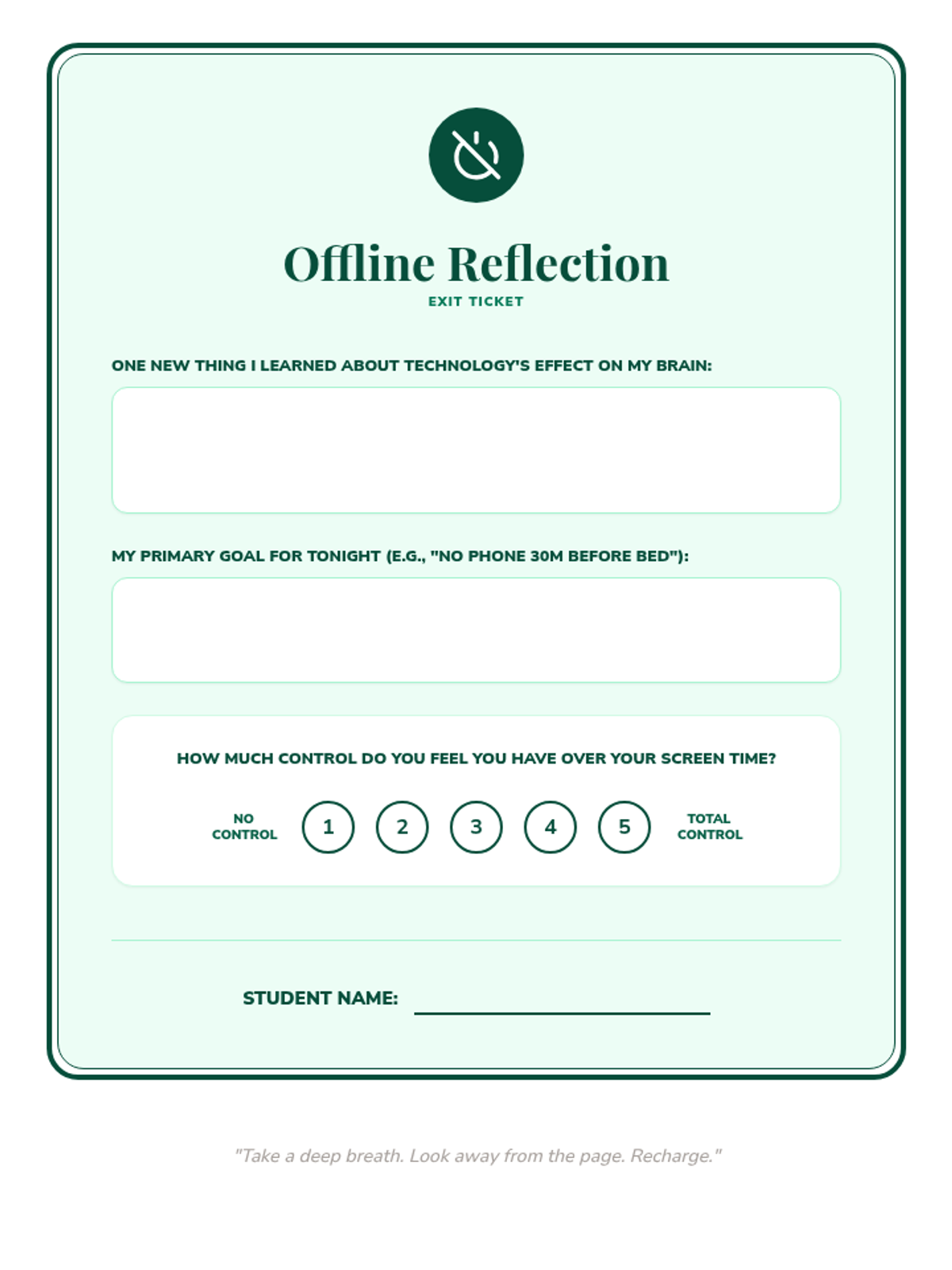
A post-lesson reflection tool for students to articulate their learning and state an immediate goal for their digital habits.
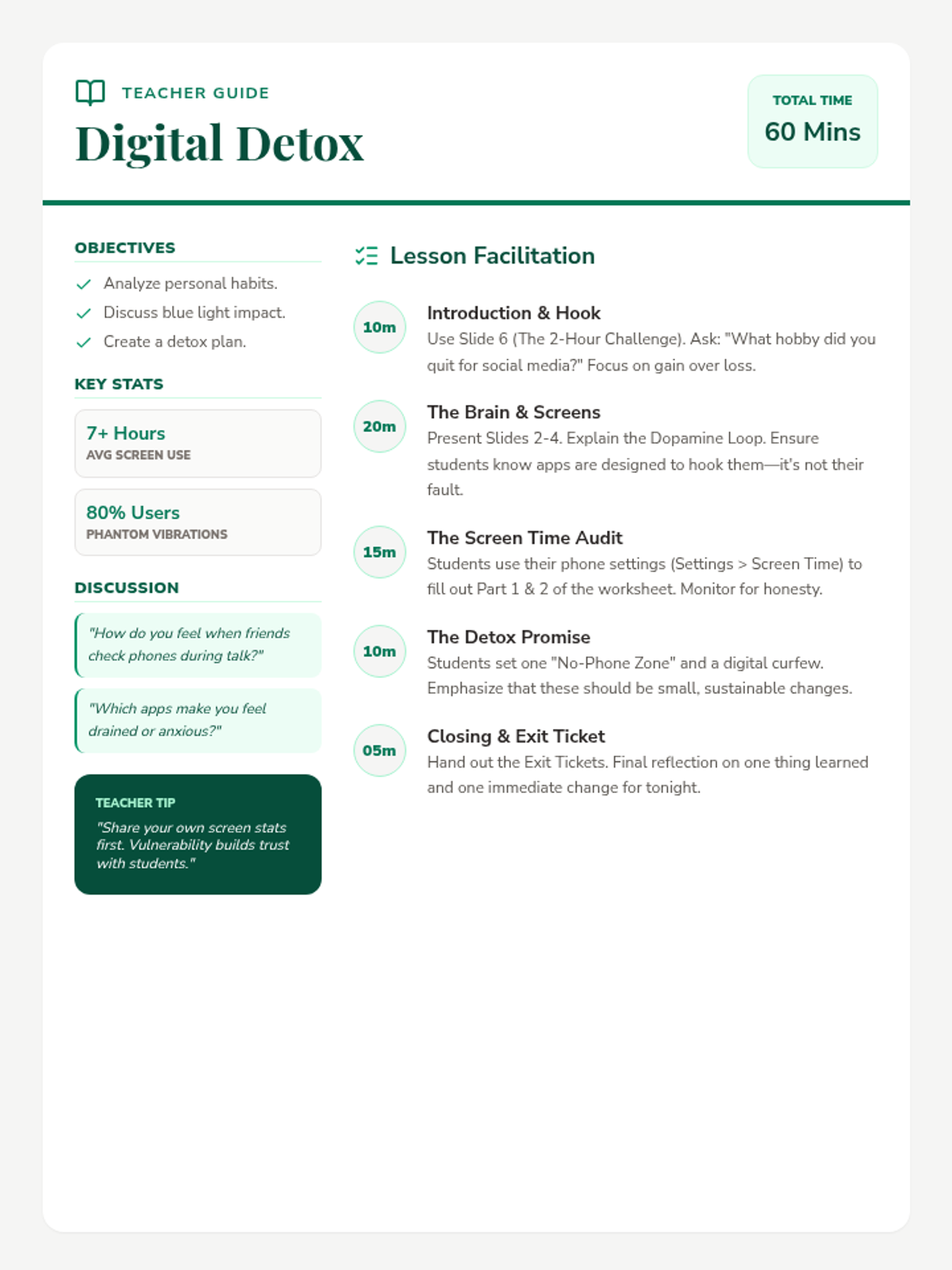
A comprehensive guide for teachers to facilitate the Digital Detox lesson, including pacing, background statistics, and discussion prompts.
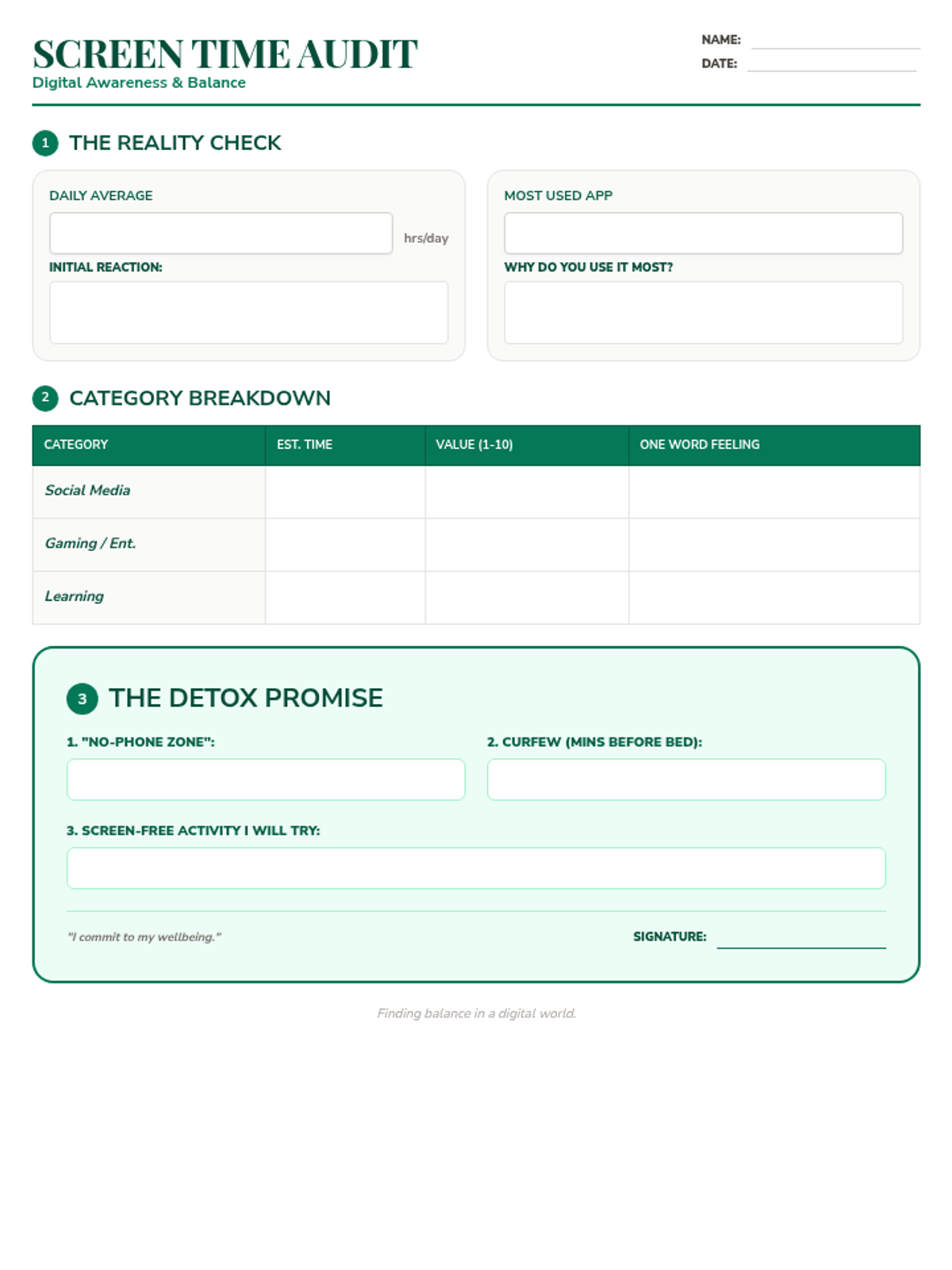
A structured worksheet for students to audit their current screen time habits and commit to specific, manageable goals for a digital detox.
A visually engaging presentation about the impact of screen time on the brain, the benefits of unplugging, and practical strategies for a digital detox.
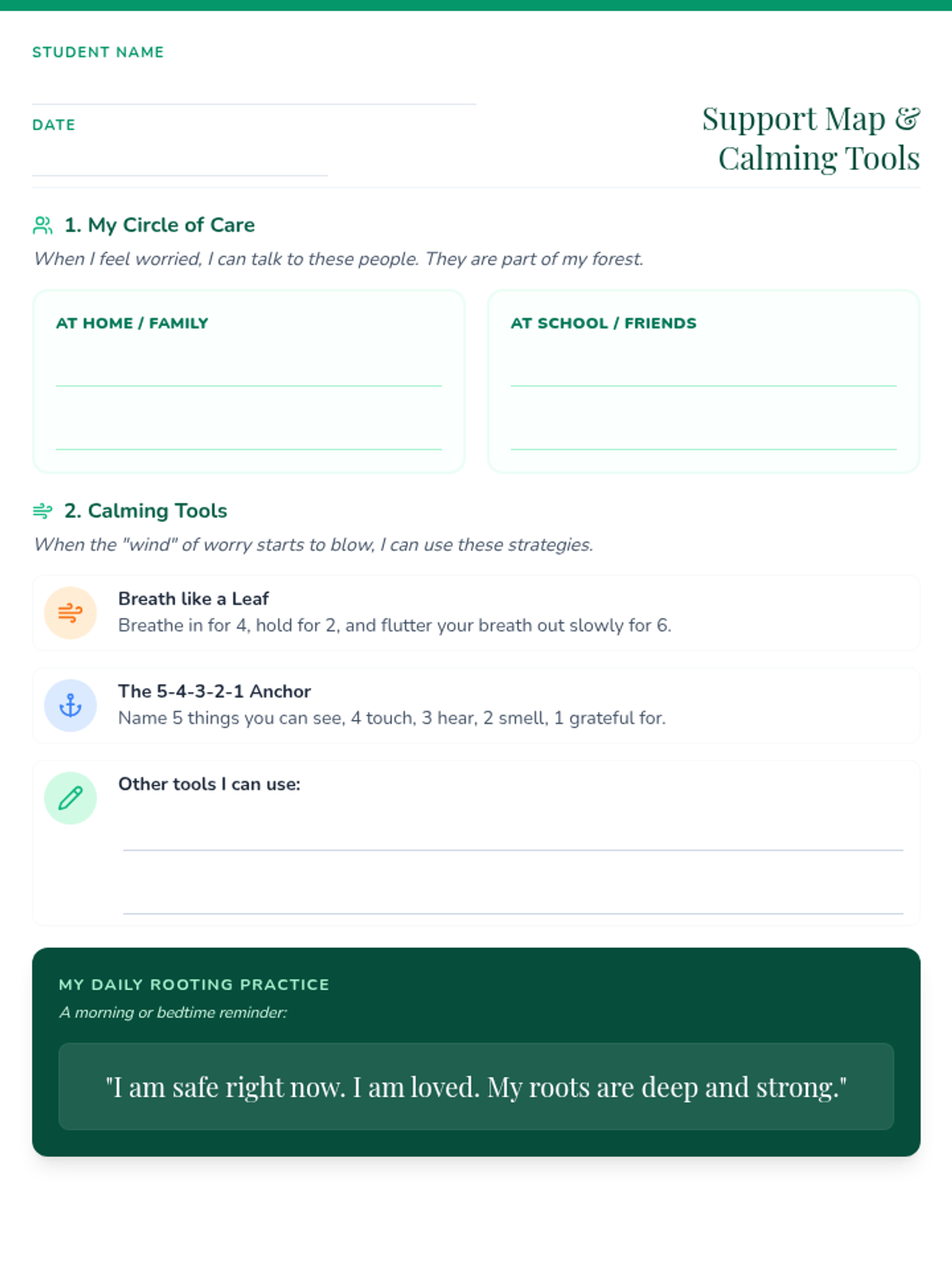
A structured worksheet to help students map their support systems and practice specific anxiety-coping strategies.
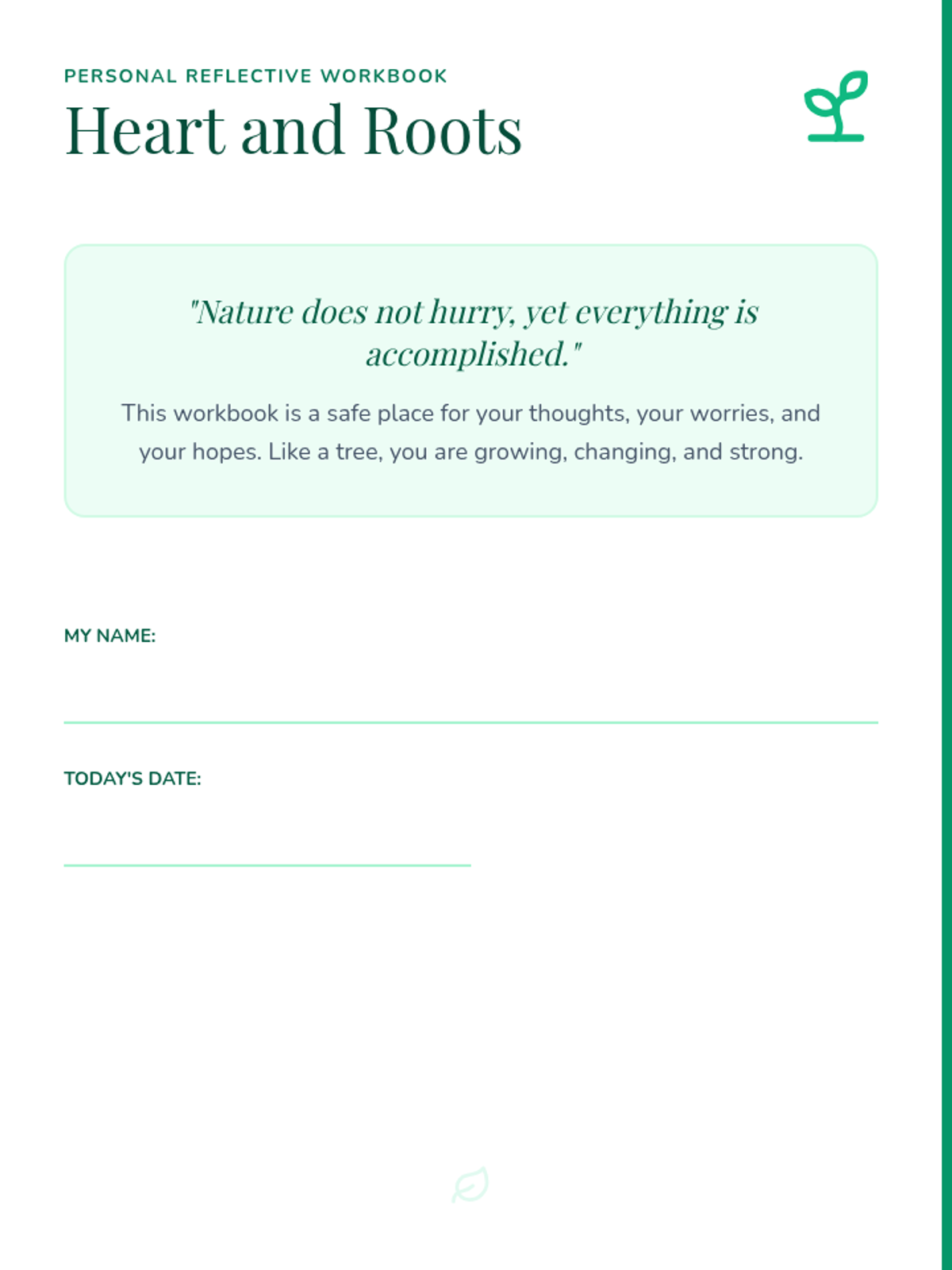
A reflective workbook for students to explore their thoughts on life cycles and create expressive art through a "Memory Tree" activity.
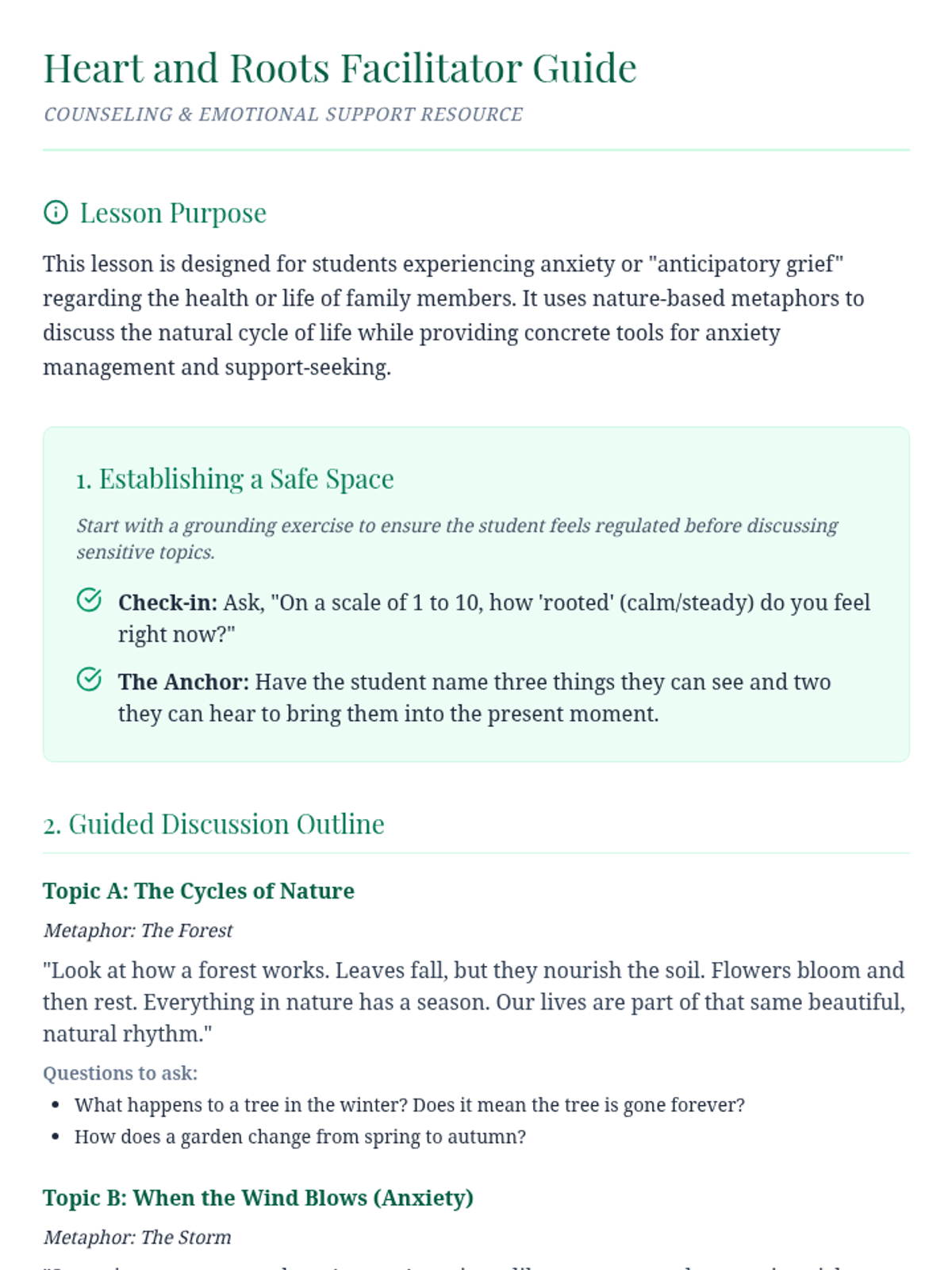
A detailed facilitator guide for teachers or counselors to lead discussions about life cycles, anxiety, and support systems using nature metaphors.
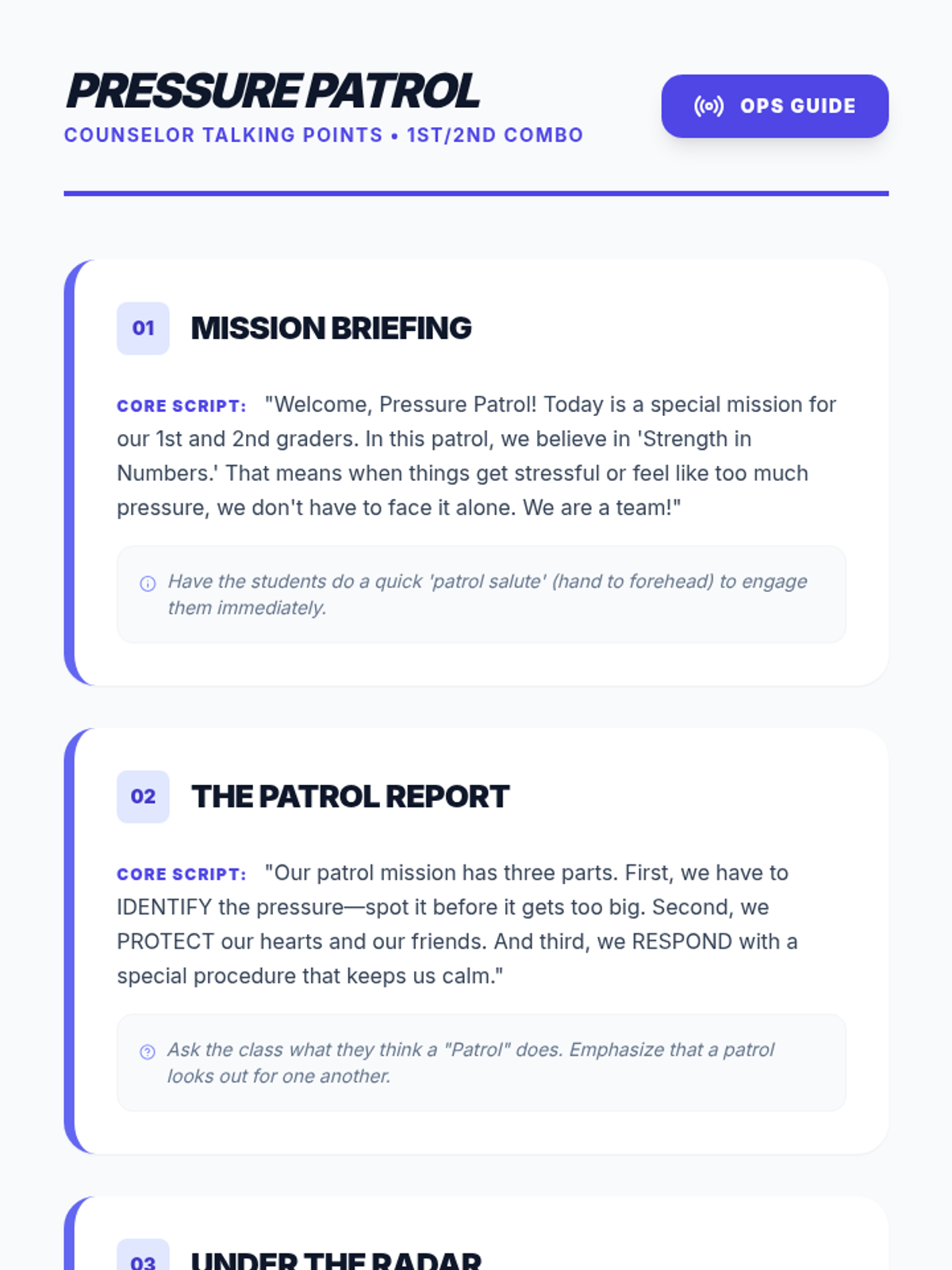
A detailed slide-by-slide facilitation guide for the 1st/2nd grade combo lesson 'Pressure Patrol'. Provides specific counselor scripts, interactive activity prompts, and pedagogical tips for each slide.
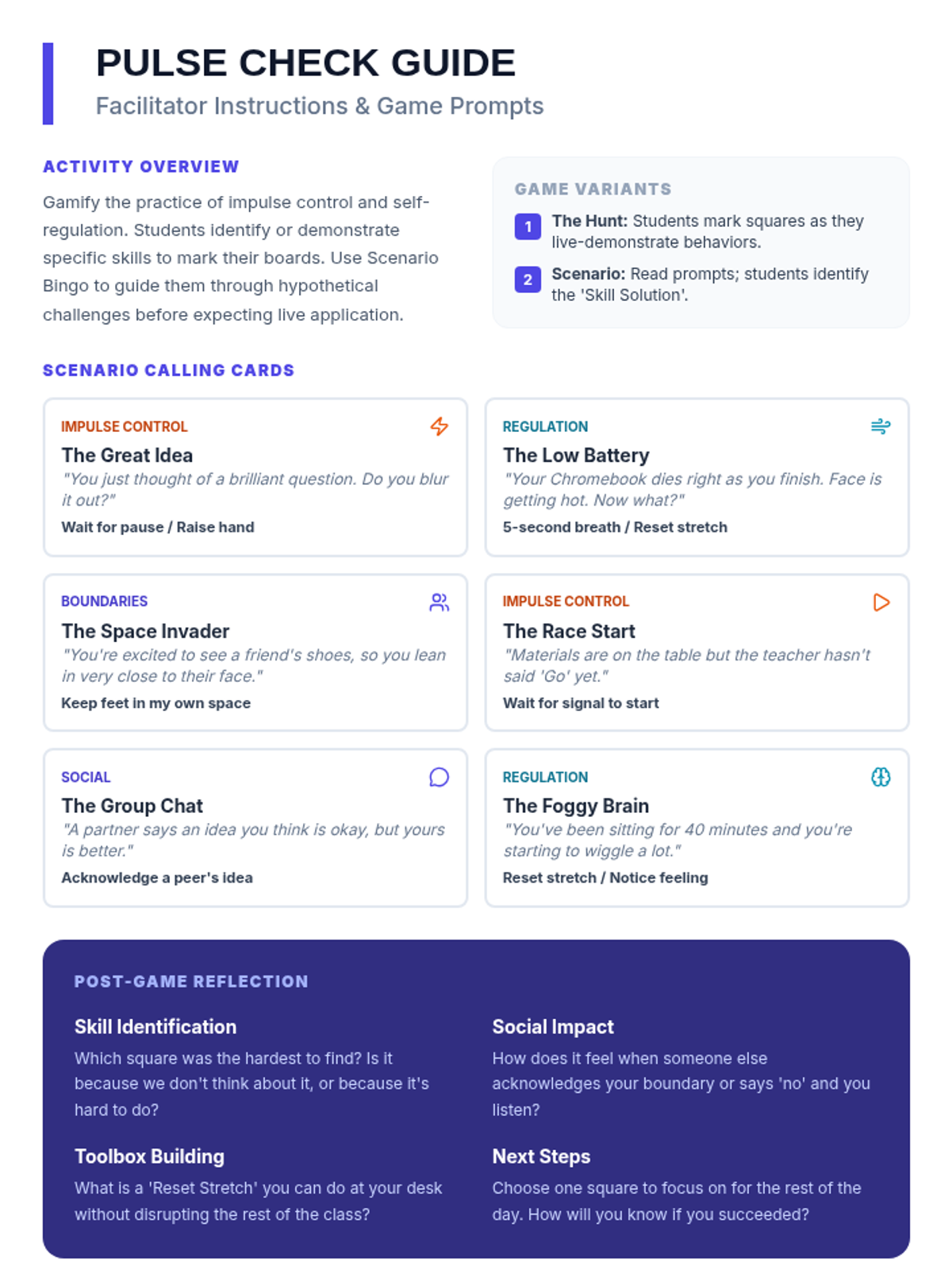
A facilitator guide for teachers or counselors, providing game instructions, scenarios, and discussion prompts for the Bingo activity.
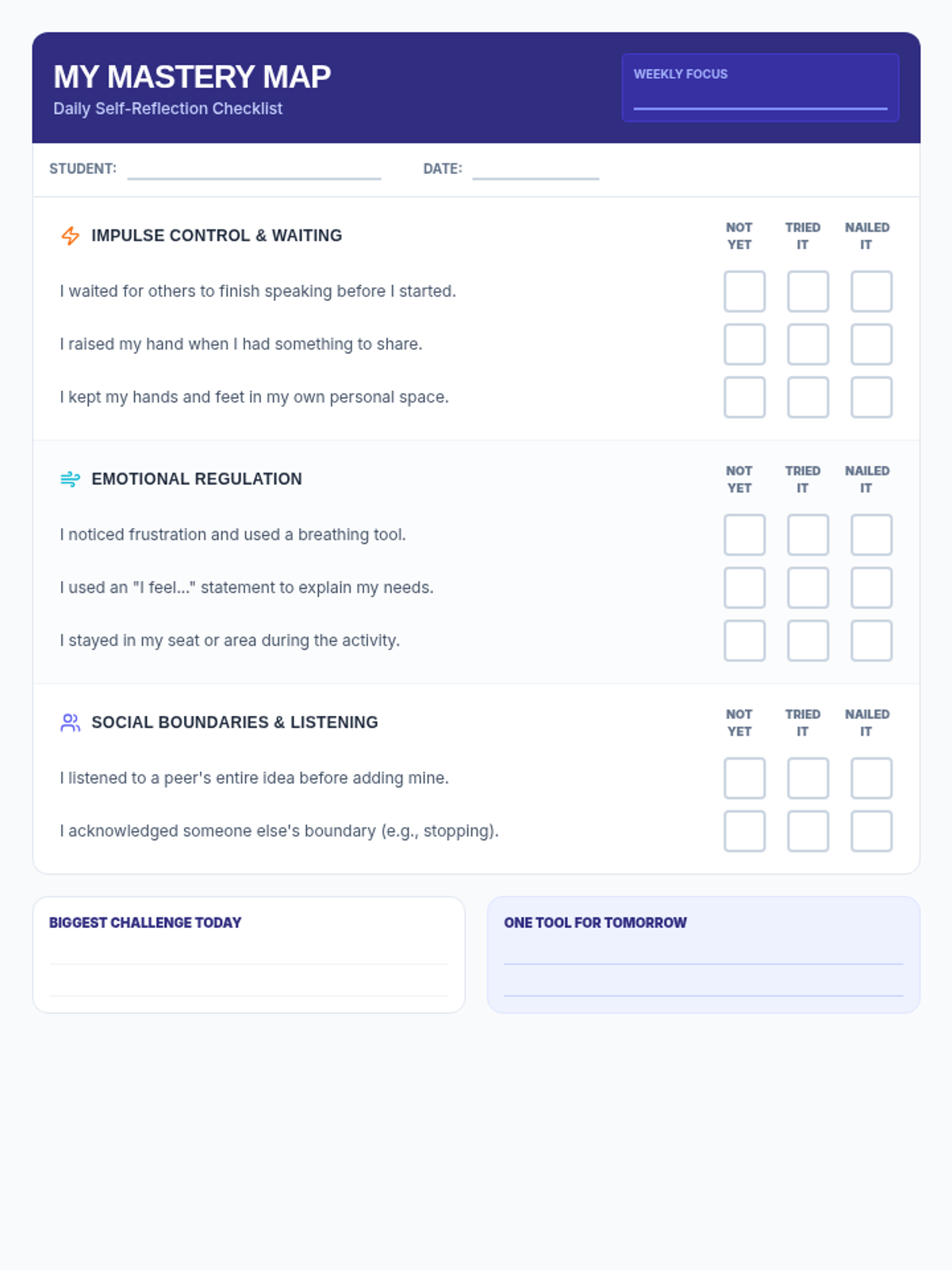
A student-facing self-reflection checklist for tracking progress in self-management and social-emotional skills.
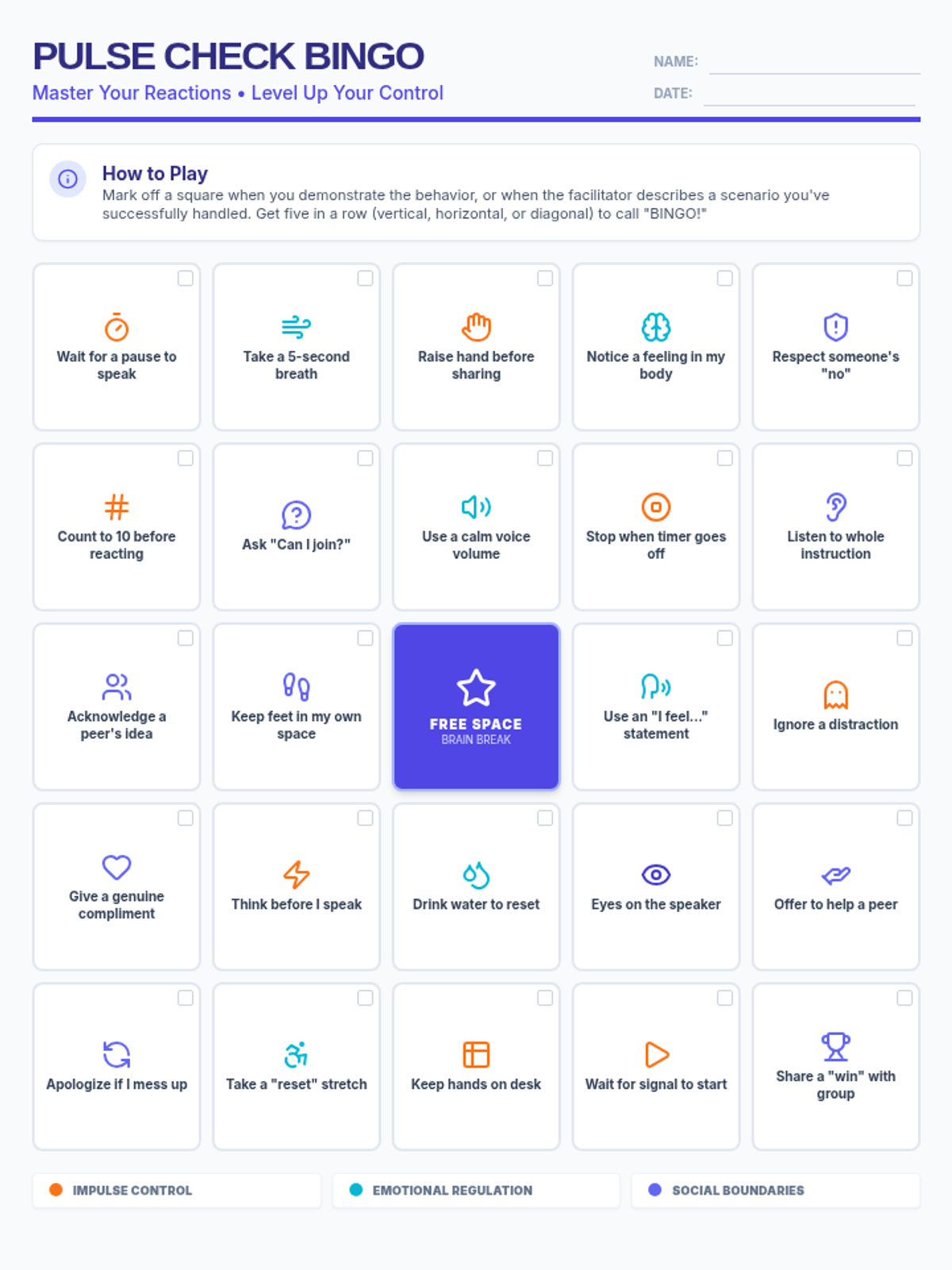
A modern bingo board for middle school students focusing on impulse control, emotional regulation, and social boundaries.
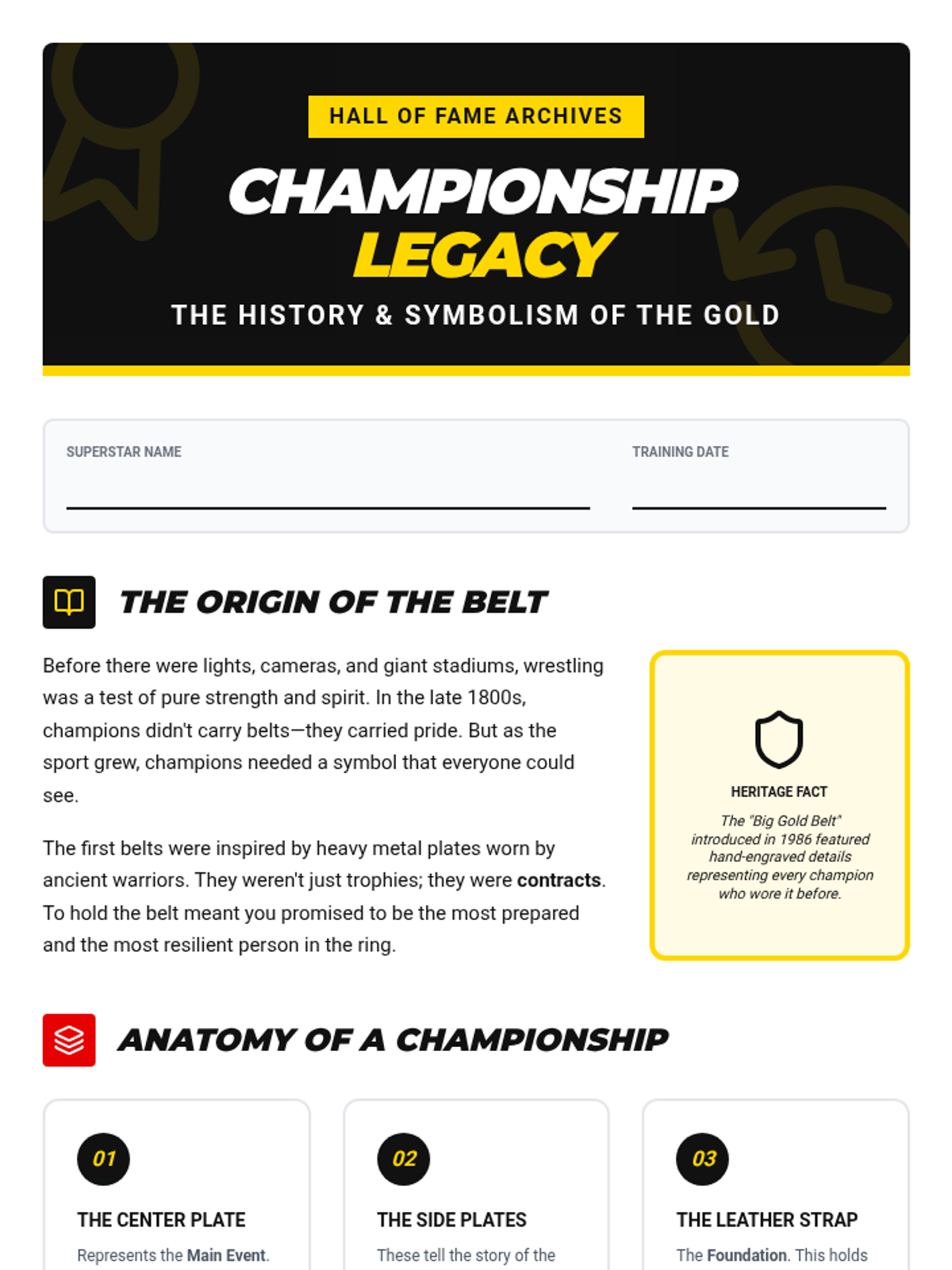
A student-facing reading and activity sheet exploring the history of wrestling championship belts, their symbolism, and how students can build their own academic legacy.
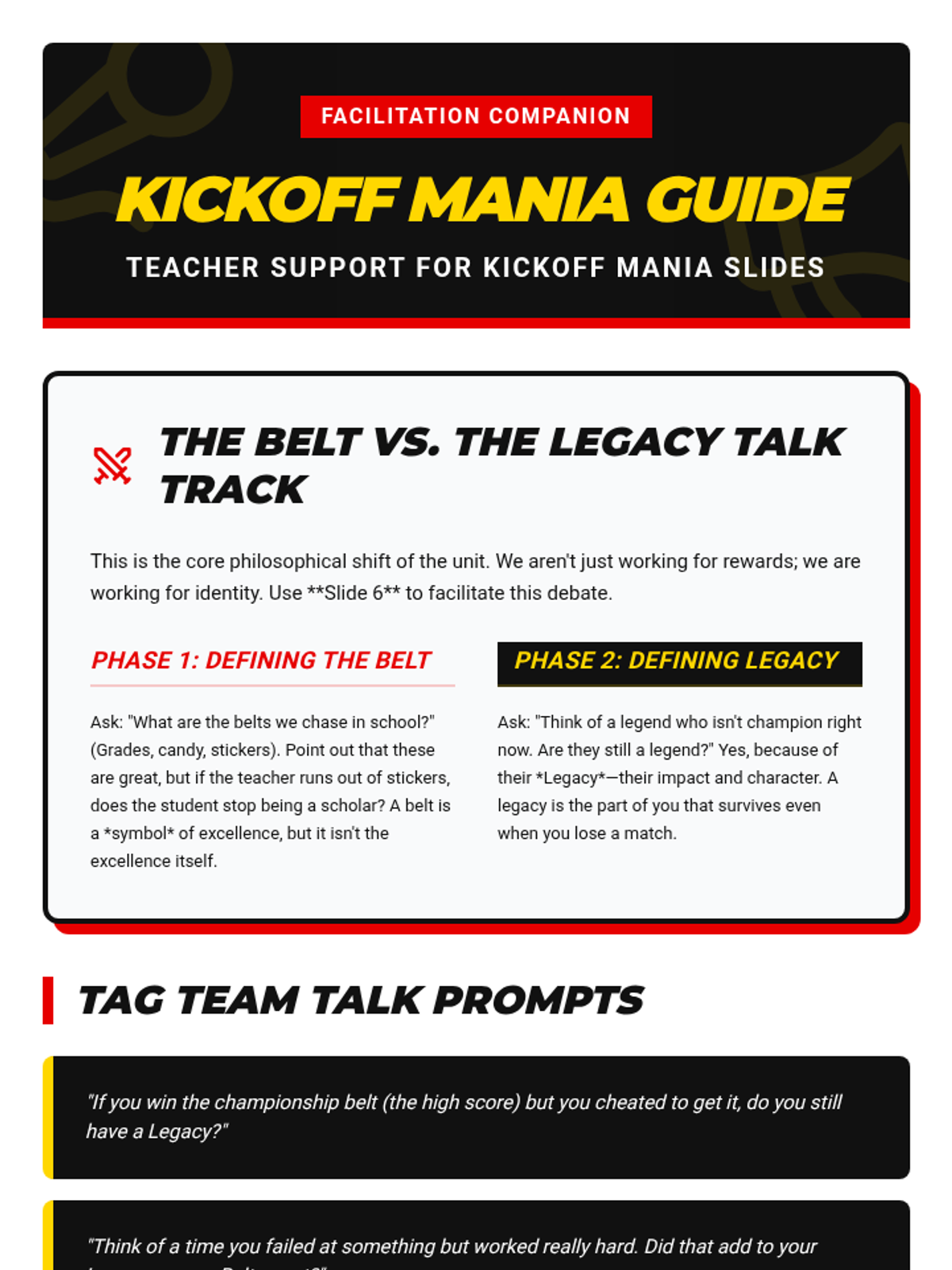
A detailed teacher facilitation companion for the Kickoff Mania slides, providing talk tracks for the 'Belt vs. Legacy' discussion, discussion prompts, and implementation steps for the Ubuntu mission.
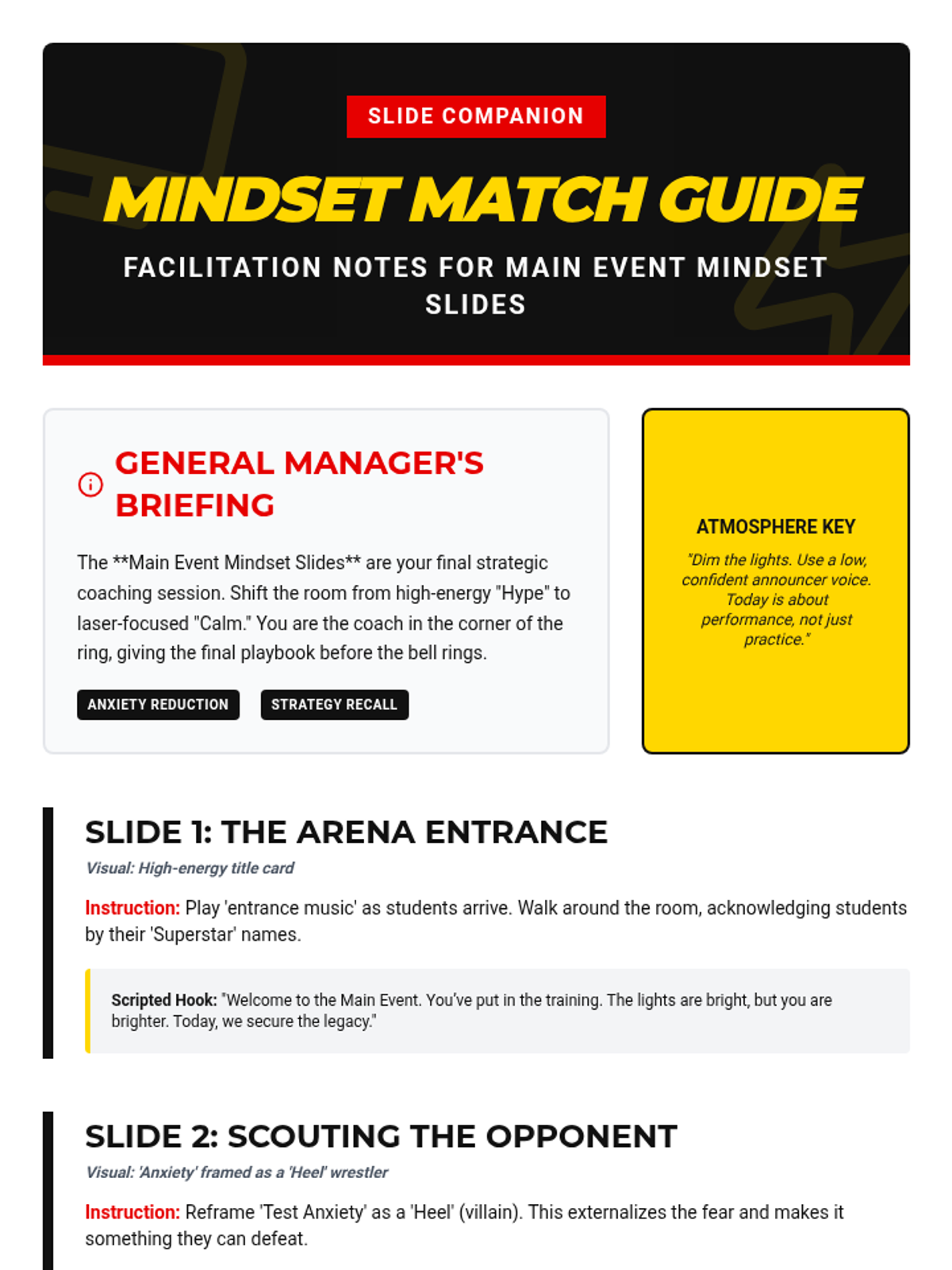
A teacher-facing companion guide for the 'Main Event Mindset' slides, providing slide-by-slide scripts, instructional instructions for managing test anxiety, and post-test decompression strategies.
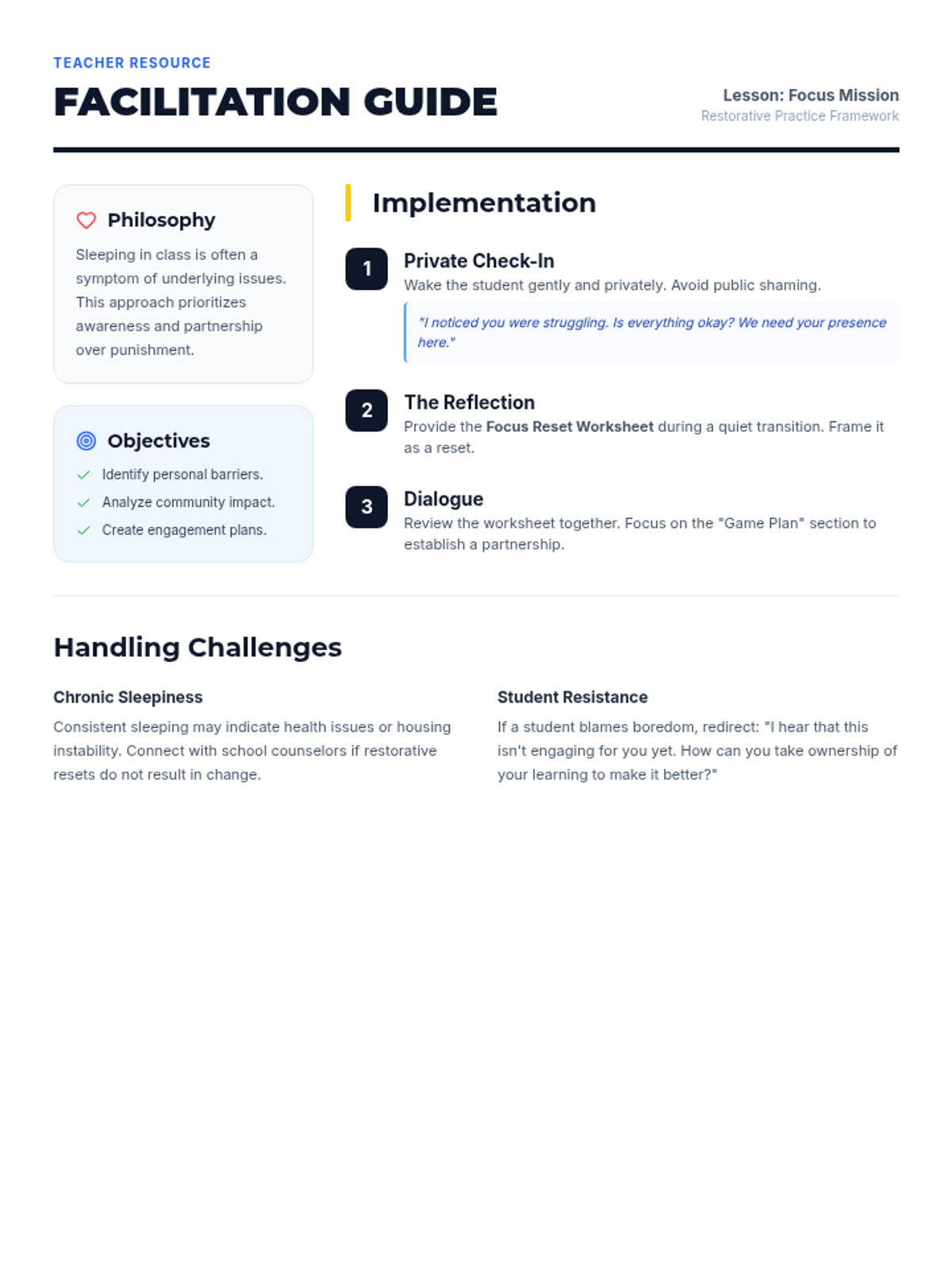
A teacher facilitation guide providing restorative strategies and instructional prompts for addressing classroom sleepiness and using the Focus Mission materials effectively.
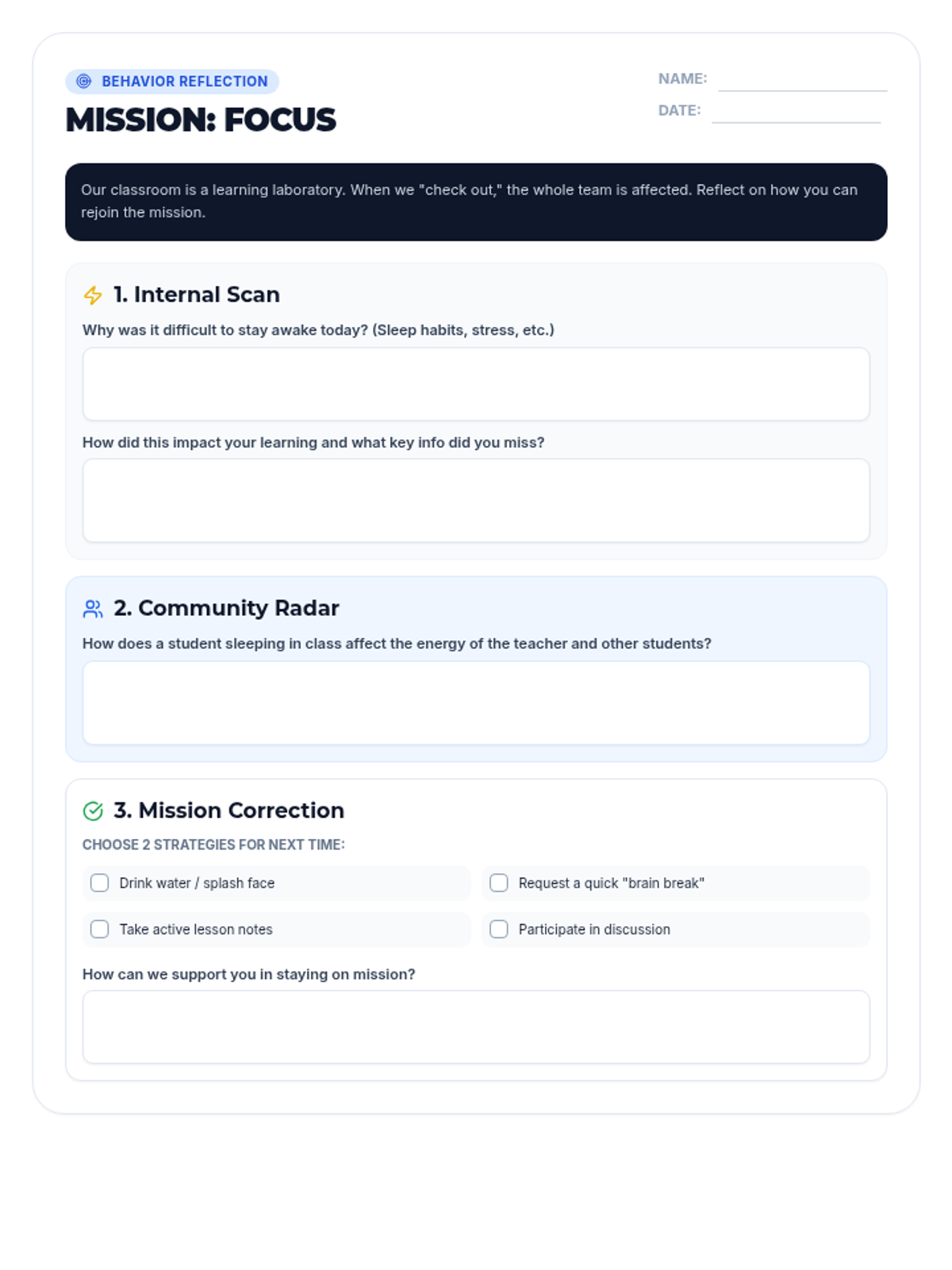
A restorative behavior reflection worksheet that encourages students to evaluate the causes of their drowsiness and understand its impact on their learning and classroom community.
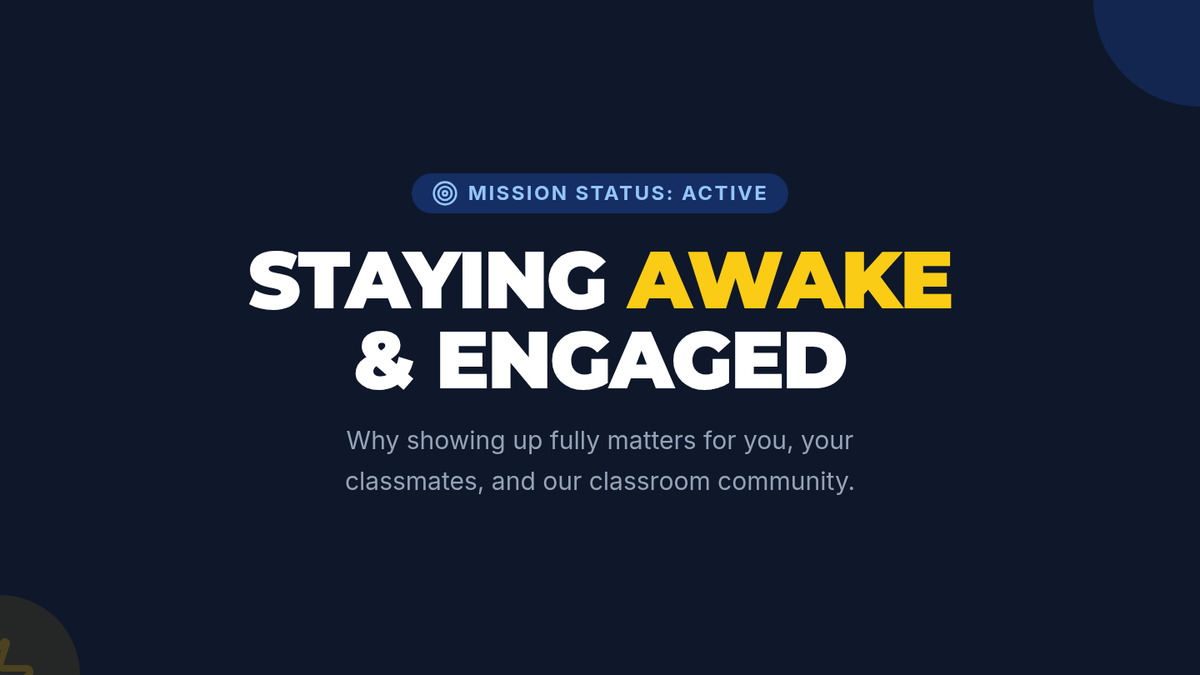
An engaging slide deck explaining the impact of sleeping in class on personal success and the classroom community, featuring restorative strategies for staying engaged.
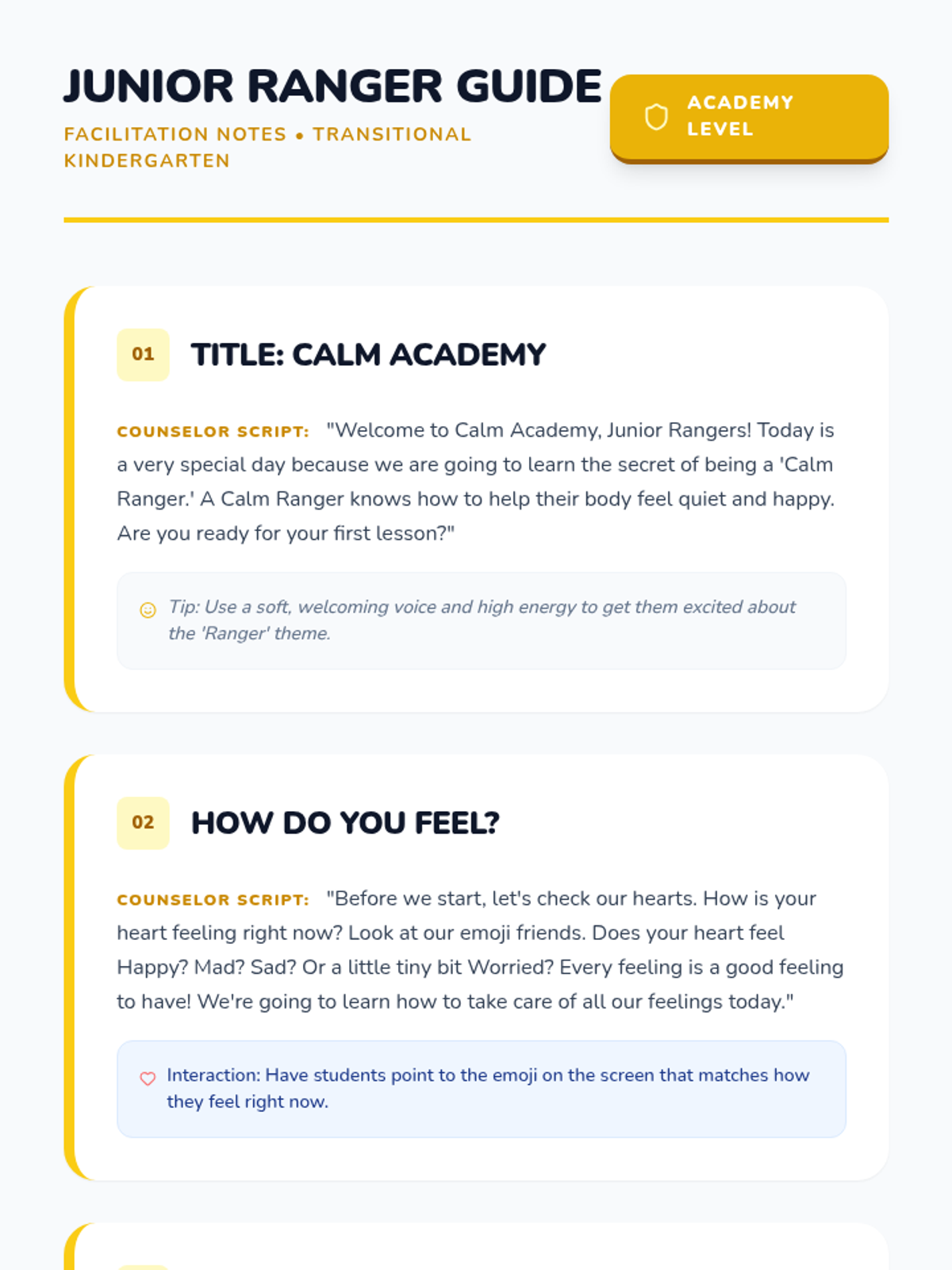
A detailed facilitation guide for the TK lesson 'Foundations of Calm'. Includes scripts for the 'Wiggle & Freeze' activity, Turtle Breathing technique, and the Butterfly Hug demonstration. Updated to match the Academy theme.
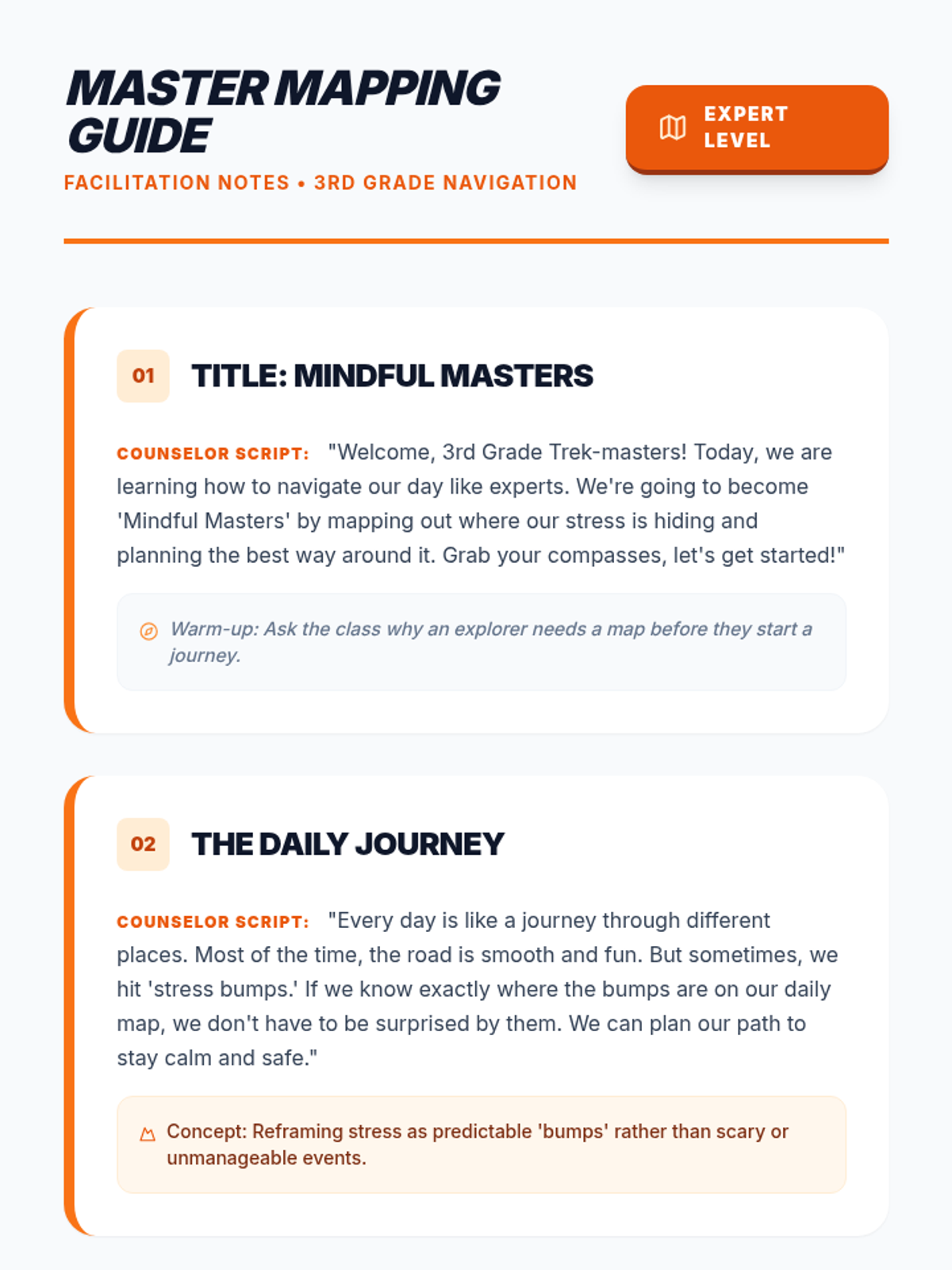
A detailed slide-by-slide facilitation guide for the 3rd grade 'Mindful Masters' lesson. Includes scripts for explaining the 'Observe, Name, Reroute' technique and instructions for the mapping activity.
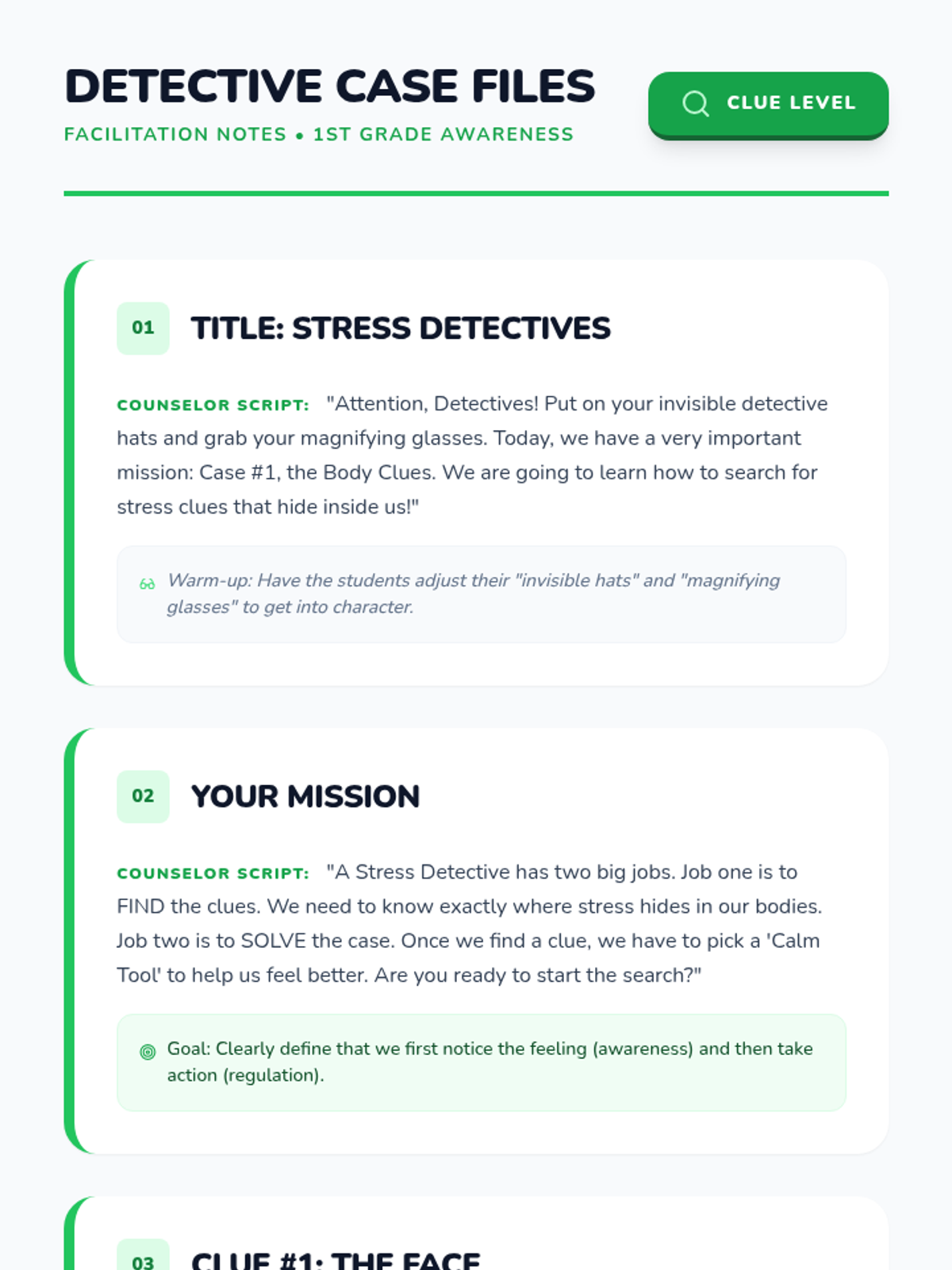
A detailed slide-by-slide facilitation guide for the 1st grade 'Stress Detectives' lesson. Includes scripts for explaining body signals, the 'Stop & Search' technique, and instructions for the Body Signal Search activity.
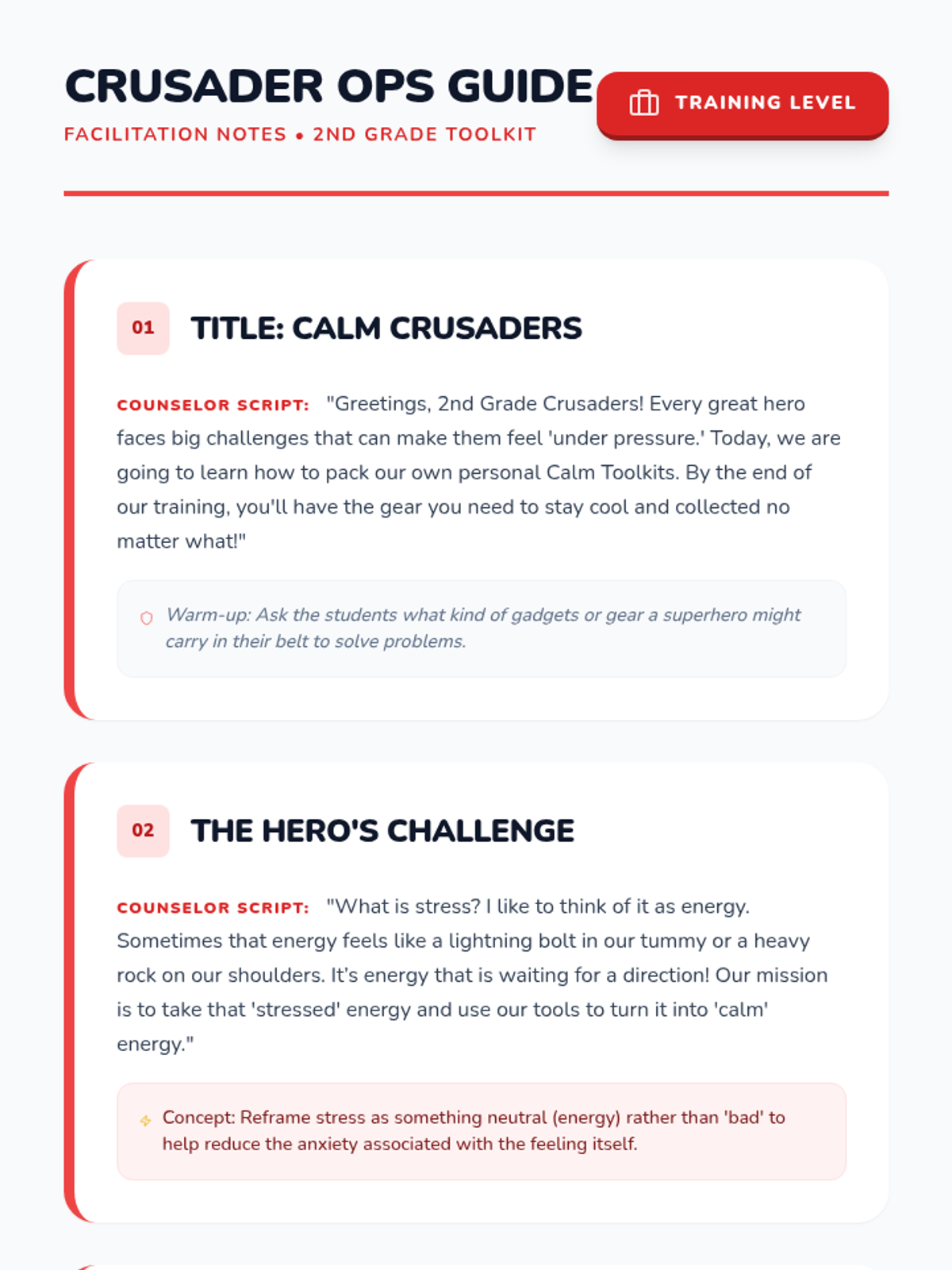
A detailed slide-by-slide facilitation guide for the 2nd grade 'Calm Crusaders' lesson. Includes scripts for explaining the difference between 'Mouse' and 'Elephant' problems and guidance for proactive vs. reactive toolkits.
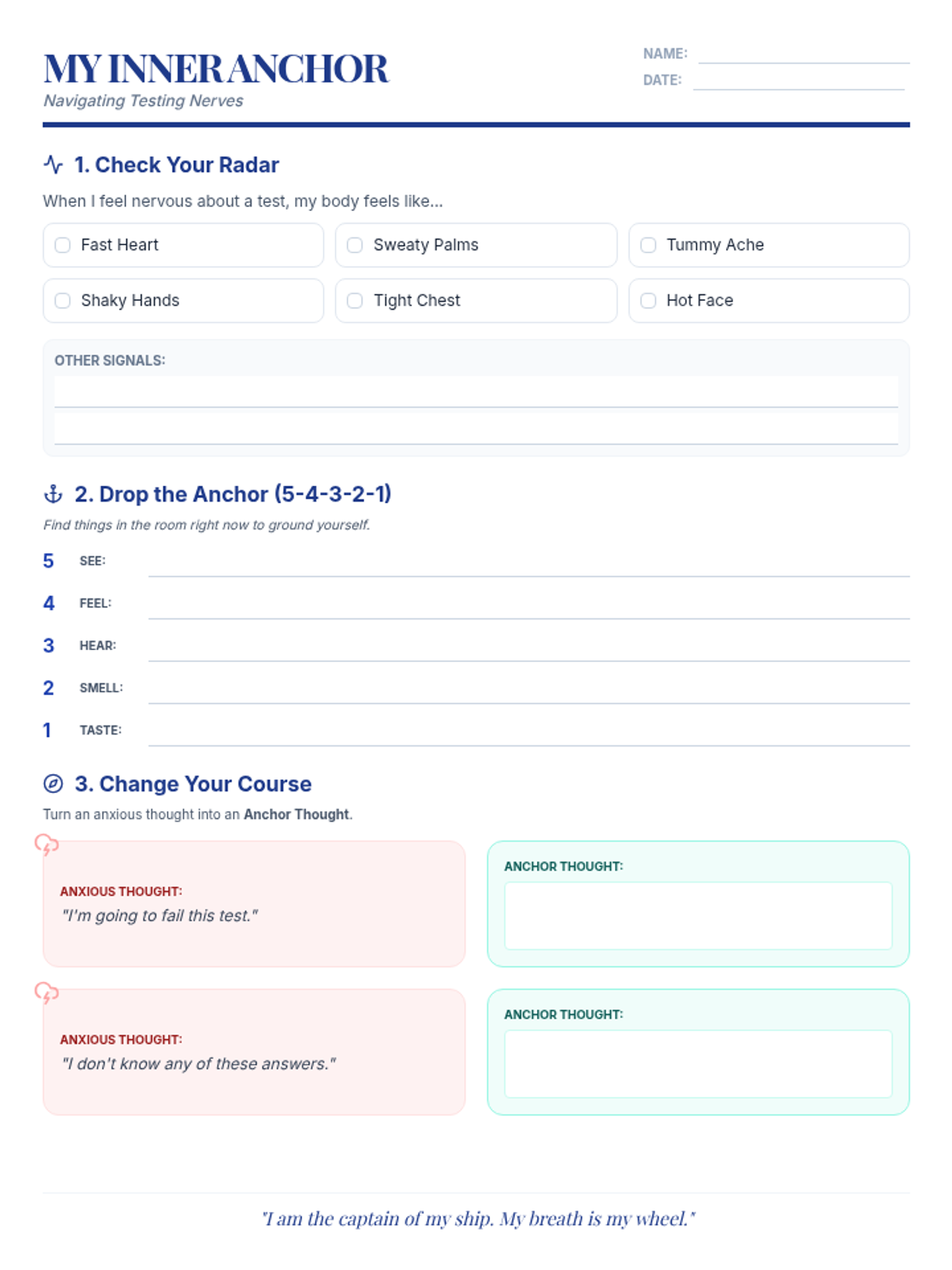
A final consolidated student worksheet that fits perfectly on one page, featuring balanced reframing boxes and darkened grounding lines.
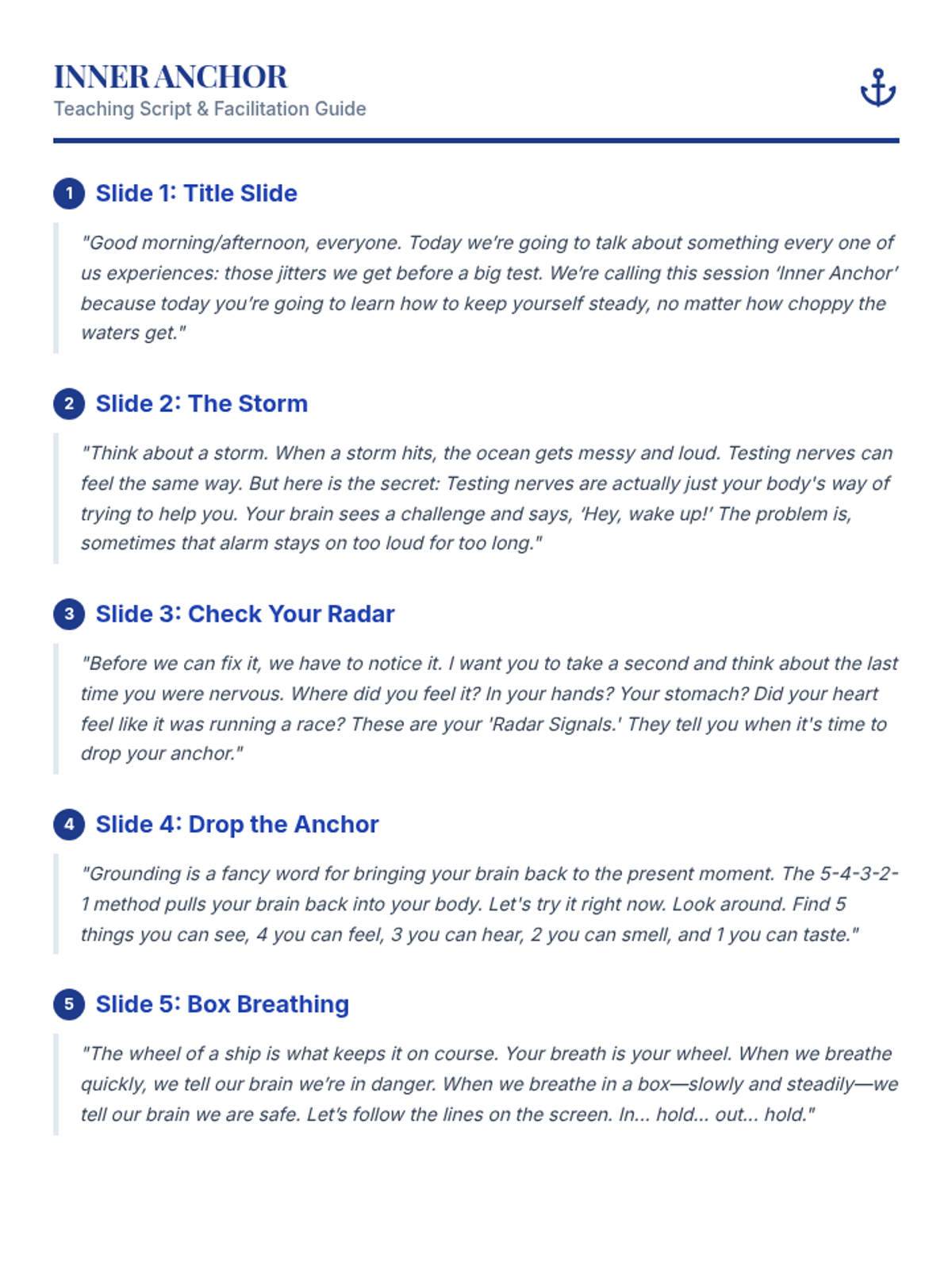
A revised teaching script consolidated into two pages with headers repeated on each page for professional consistency and no awkward splits.
A finalized slide deck with polished text rotation for breathing exercises and improved quote layout.
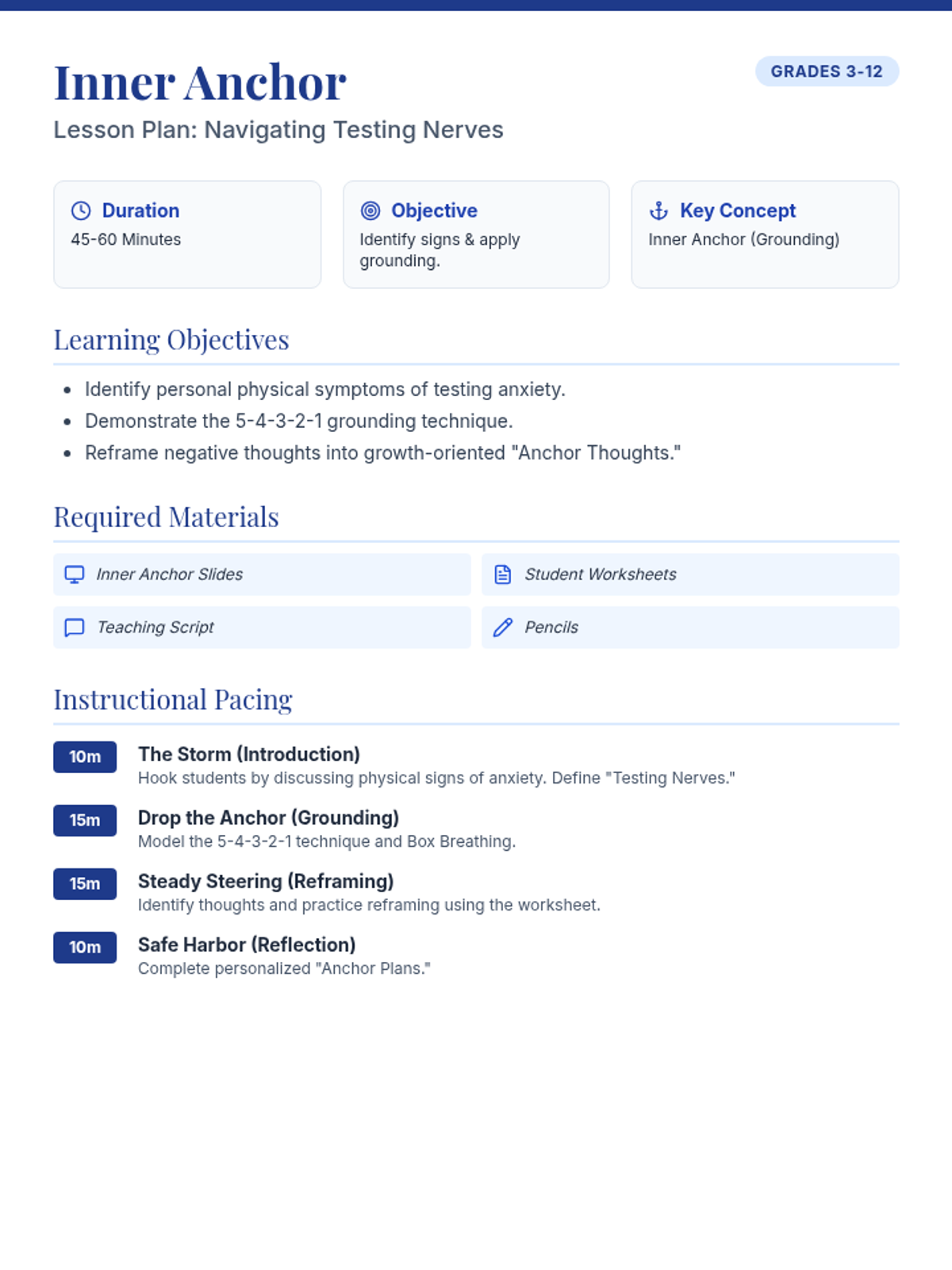
A revised lesson plan for teachers, consolidated into two pages to avoid awkward breaks and improve readability.
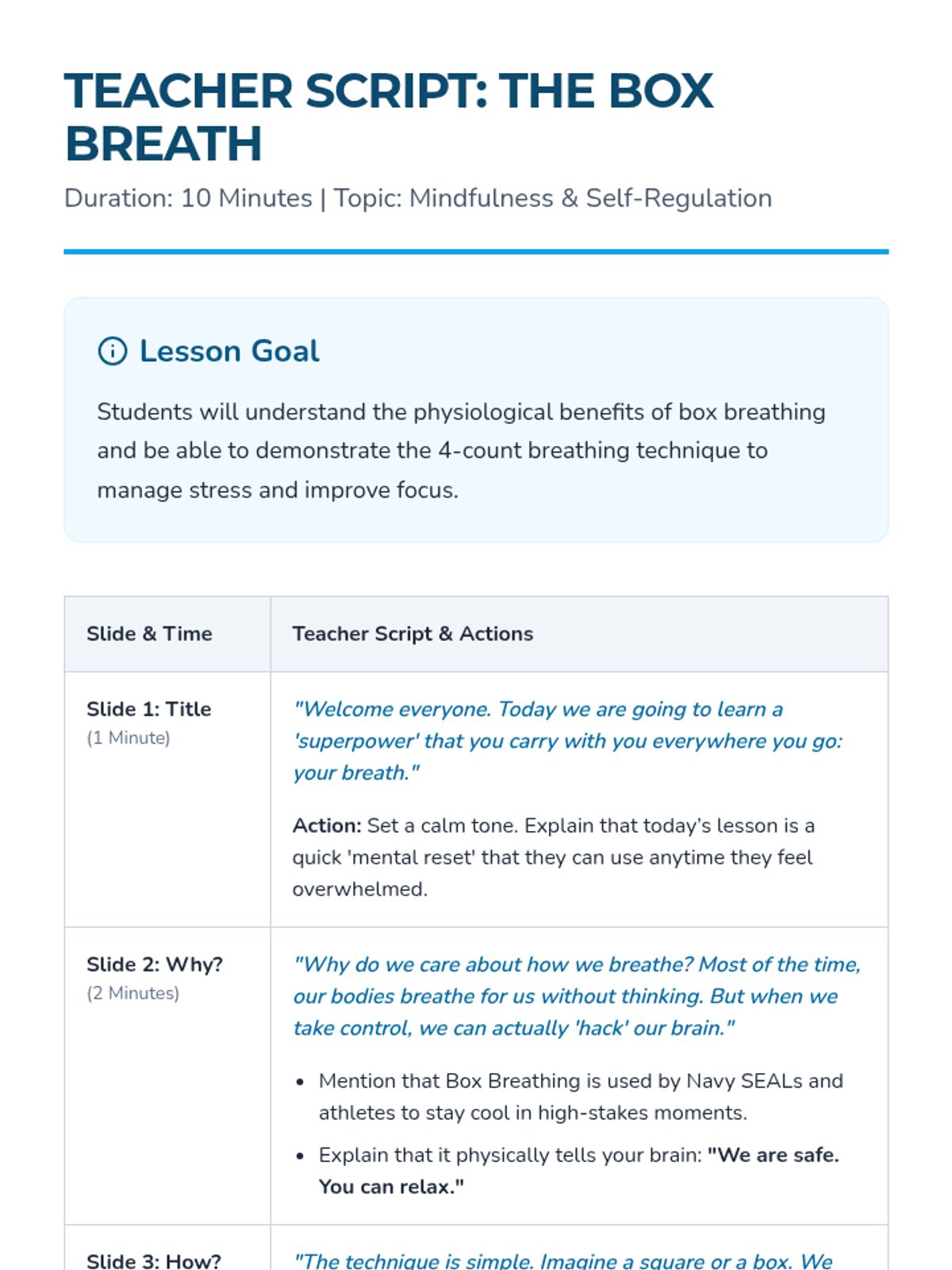
A comprehensive teacher script and facilitation guide for a 10-minute box breathing lesson, including pacing, slide-by-slide scripts, and discussion prompts. Revised for better page breaks and includes the video reference.
A 6-slide presentation covering the benefits, technique, and practice of box breathing, including a guided YouTube video. Revised for better contrast and label positioning.
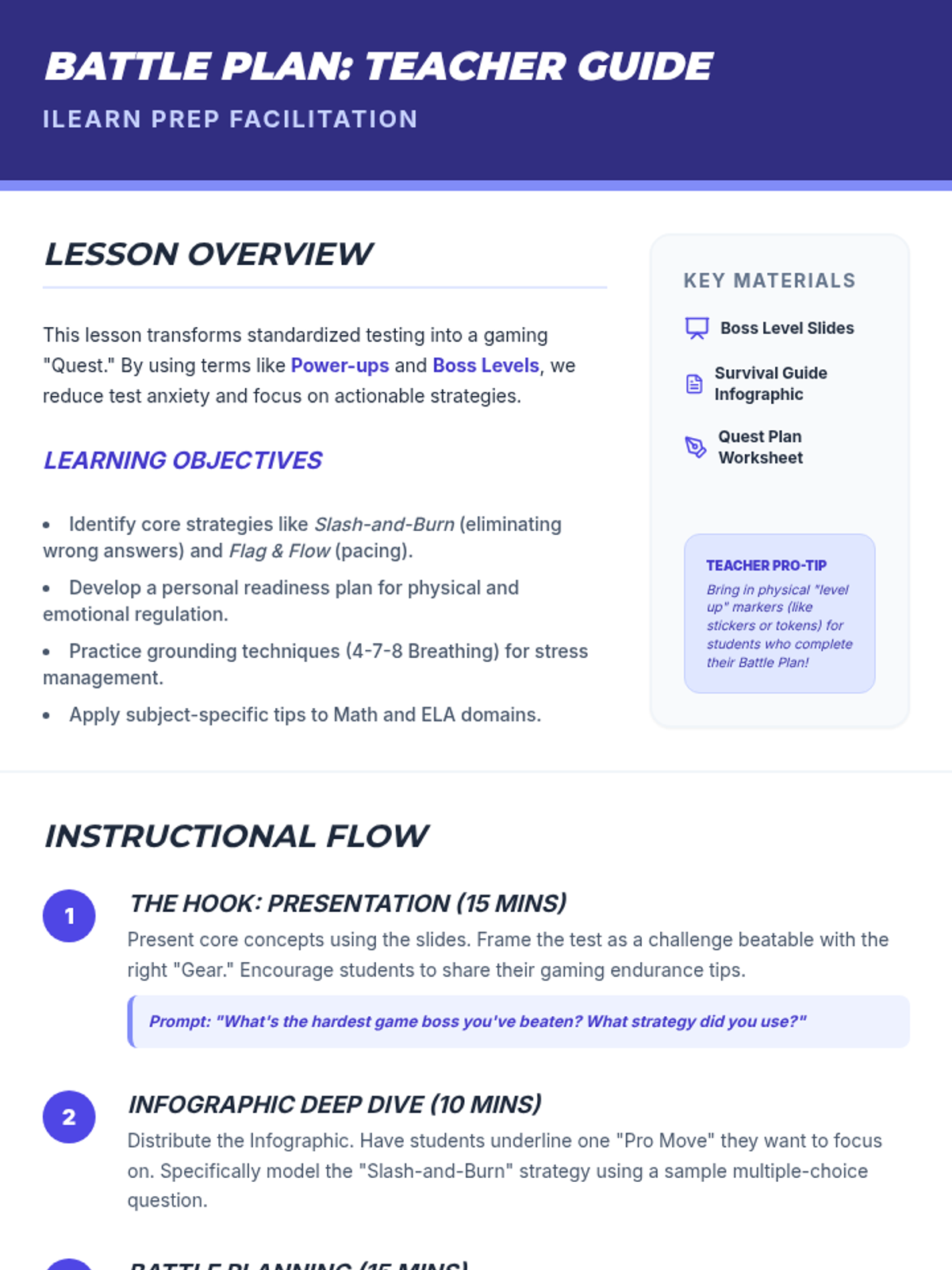
A detailed teacher's guide for facilitating the ILEARN Boss Level lesson. Revised for better page layout, grouped instructional steps, and filled space on page 2.
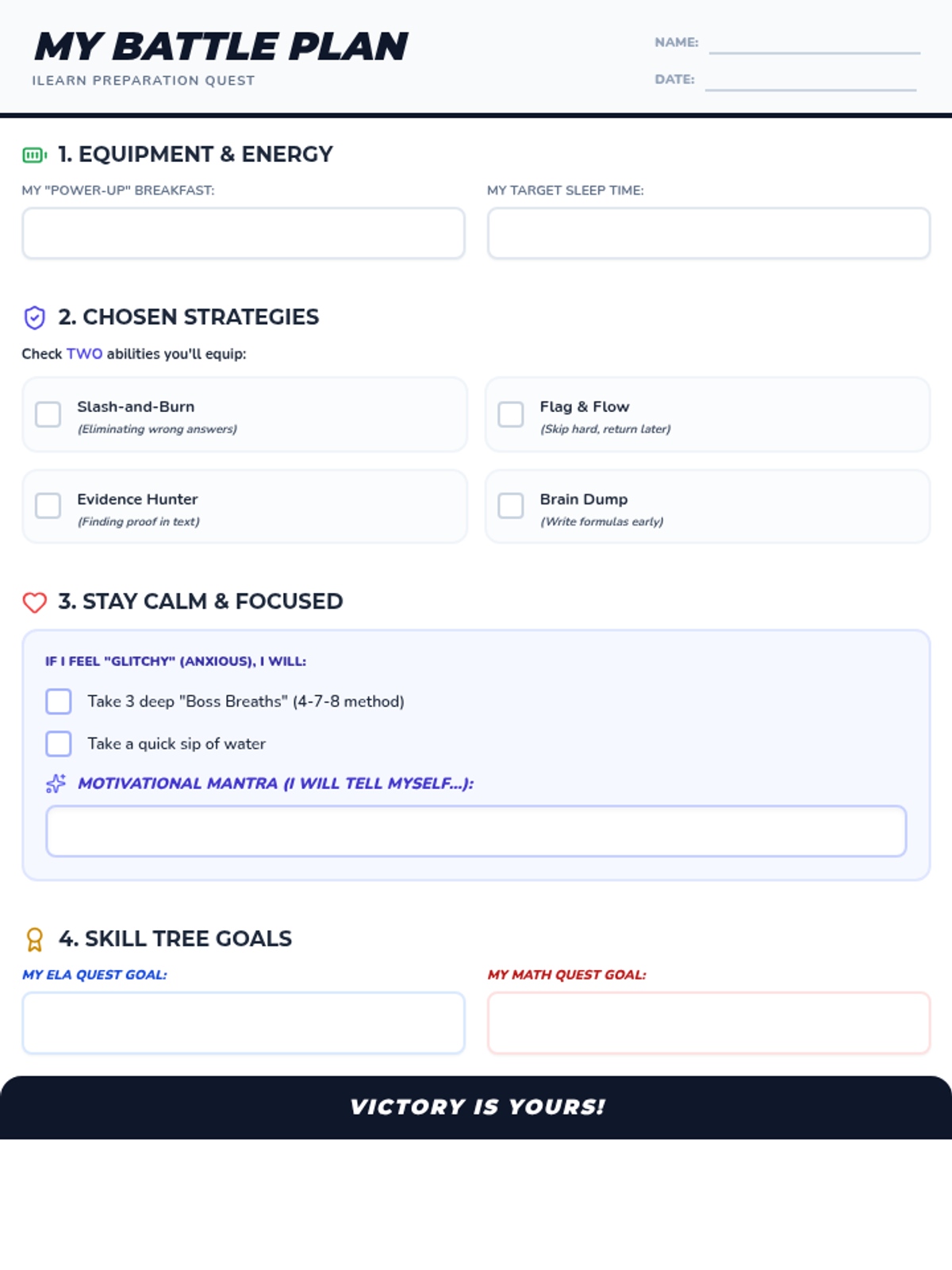
A personalized planning worksheet for students to set their own ILEARN preparation goals. Revised to fit on a single page with white input boxes for maximum legibility and improved section clarity.
A vibrant, gaming-themed slide deck designed to teach middle schoolers ILEARN testing strategies, anxiety management, and subject-specific tips for Math and ELA. Revised for better content sizing and visibility.
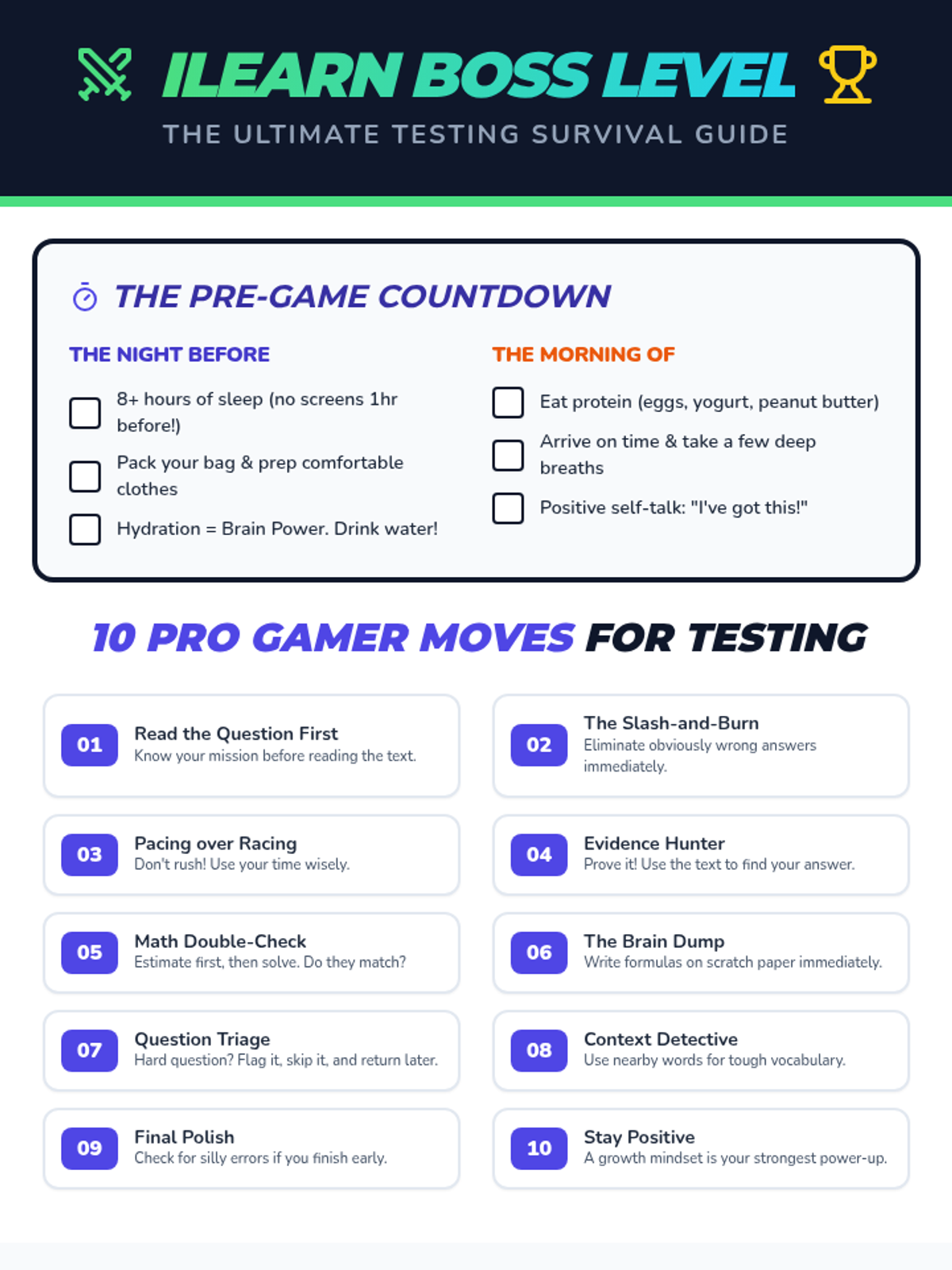
A high-energy, gaming-themed infographic document for middle school students, featuring testing strategies, physical preparation checklists, a decision flowchart for difficult questions, and subject-specific tips for ELA and Math. Revised for better page layout and readability.