A set of 12 printable bilingual vocabulary flashcards featuring animal characteristics and habitats in English and Chinese, with bright icons and a new desert illustration. All words are in lower case as requested.
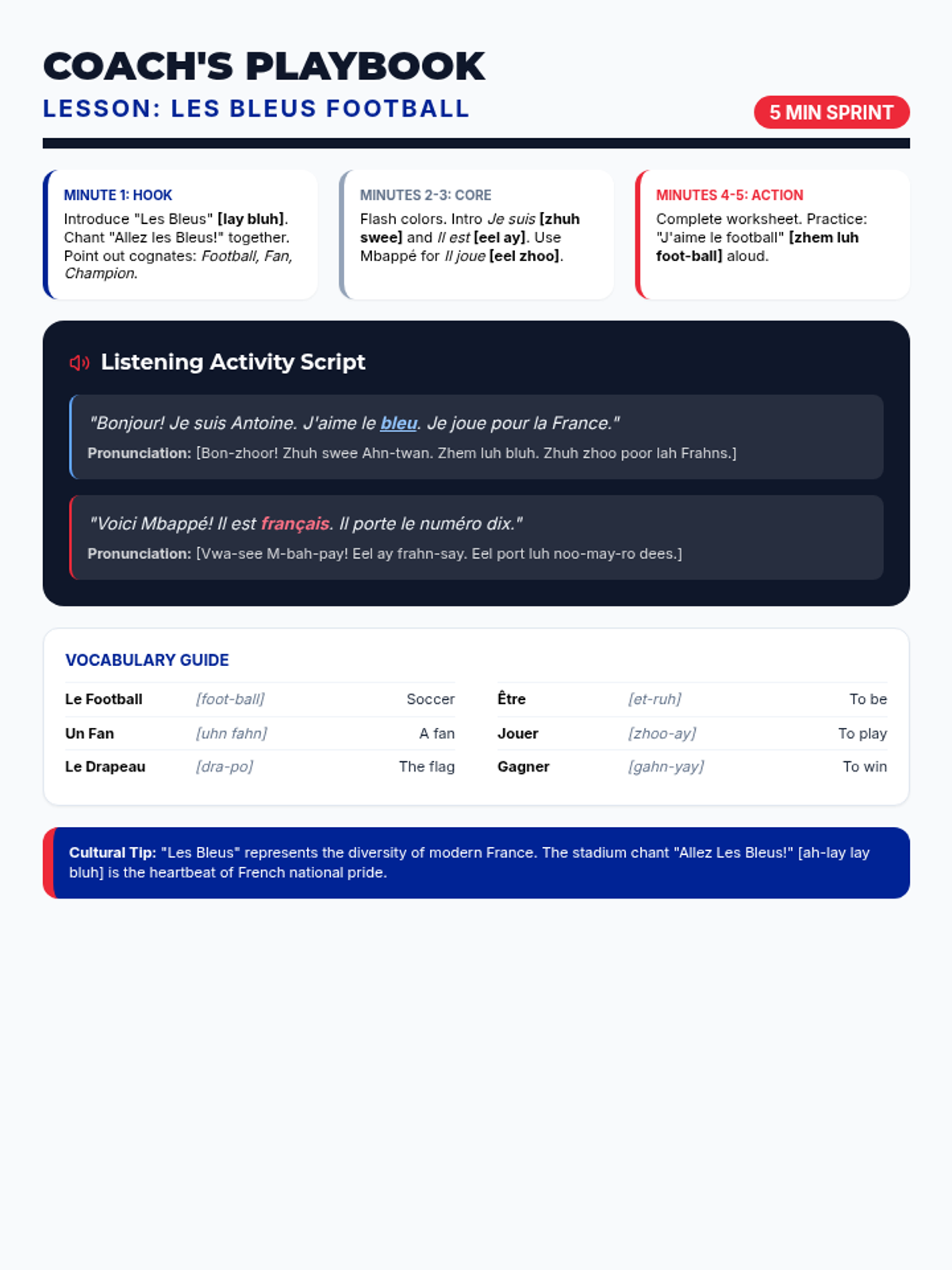
A concise facilitation guide for teachers to deliver the 5-minute football lesson. Includes a pacing guide, listening scripts with phonetic guides, and cultural context notes.
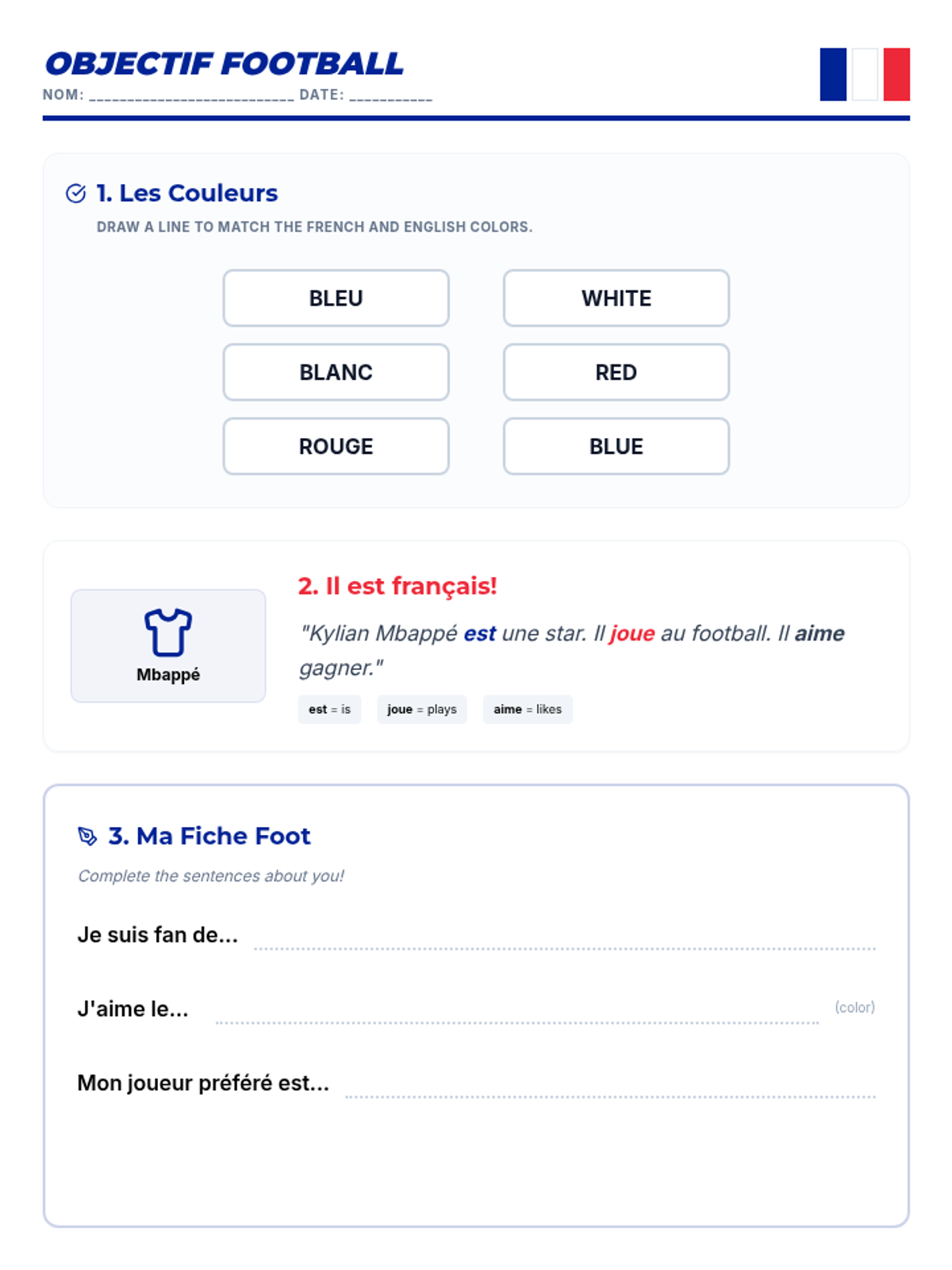
A student-facing worksheet for practicing French colors, reading a short player biography, and completing personal sentence stems about football. Includes a creative mini-poster drawing area.
A dynamic set of slides introducing French football vocabulary, the national flag, the verb 'être', and star player Kylian Mbappé. Includes phonetic guides and speaking prompts for beginners.
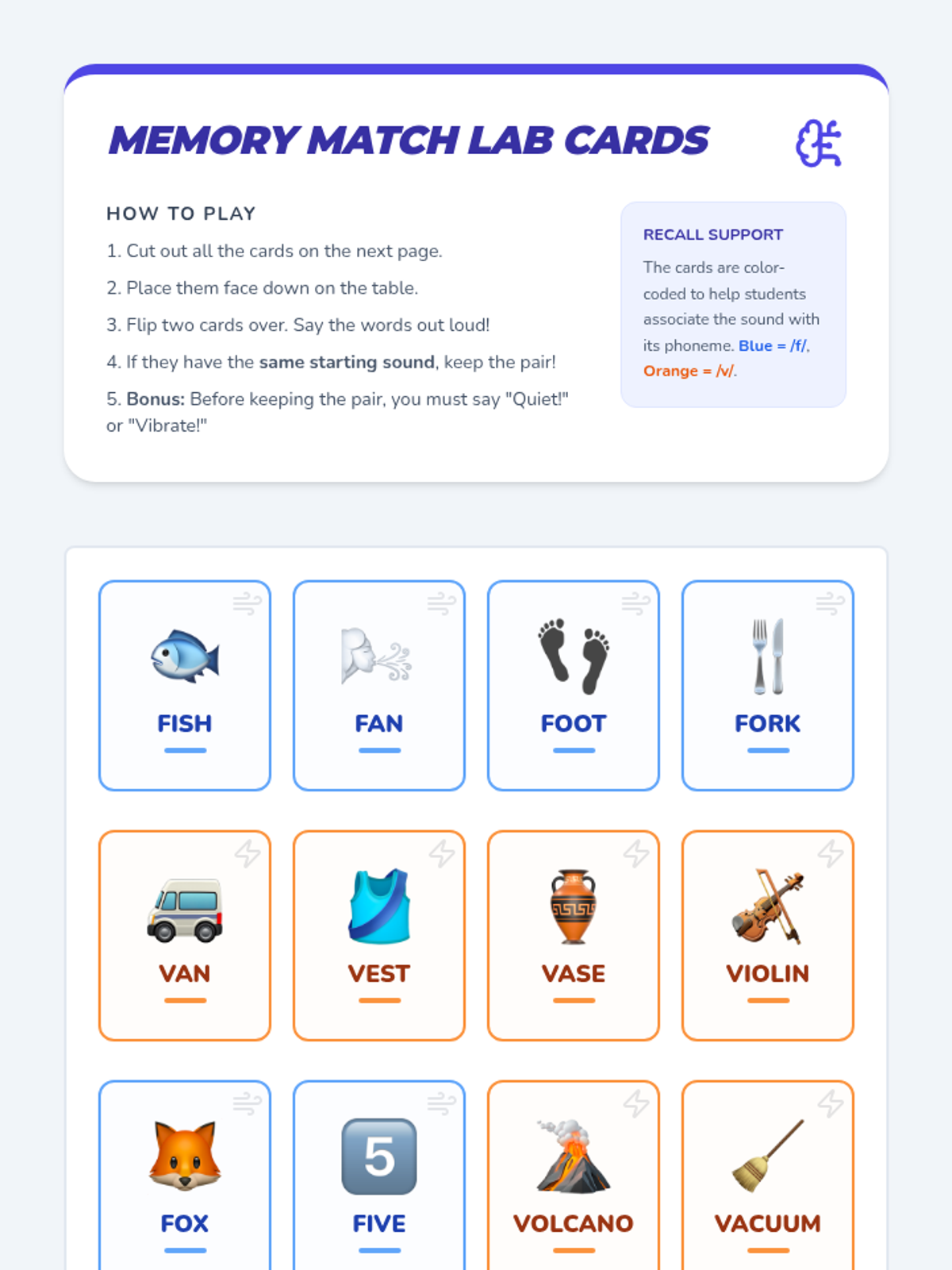
A memory matching game that uses color-coded cards and specific icons to help ELL students distinguish and remember the /f/ and /v/ phonemes.
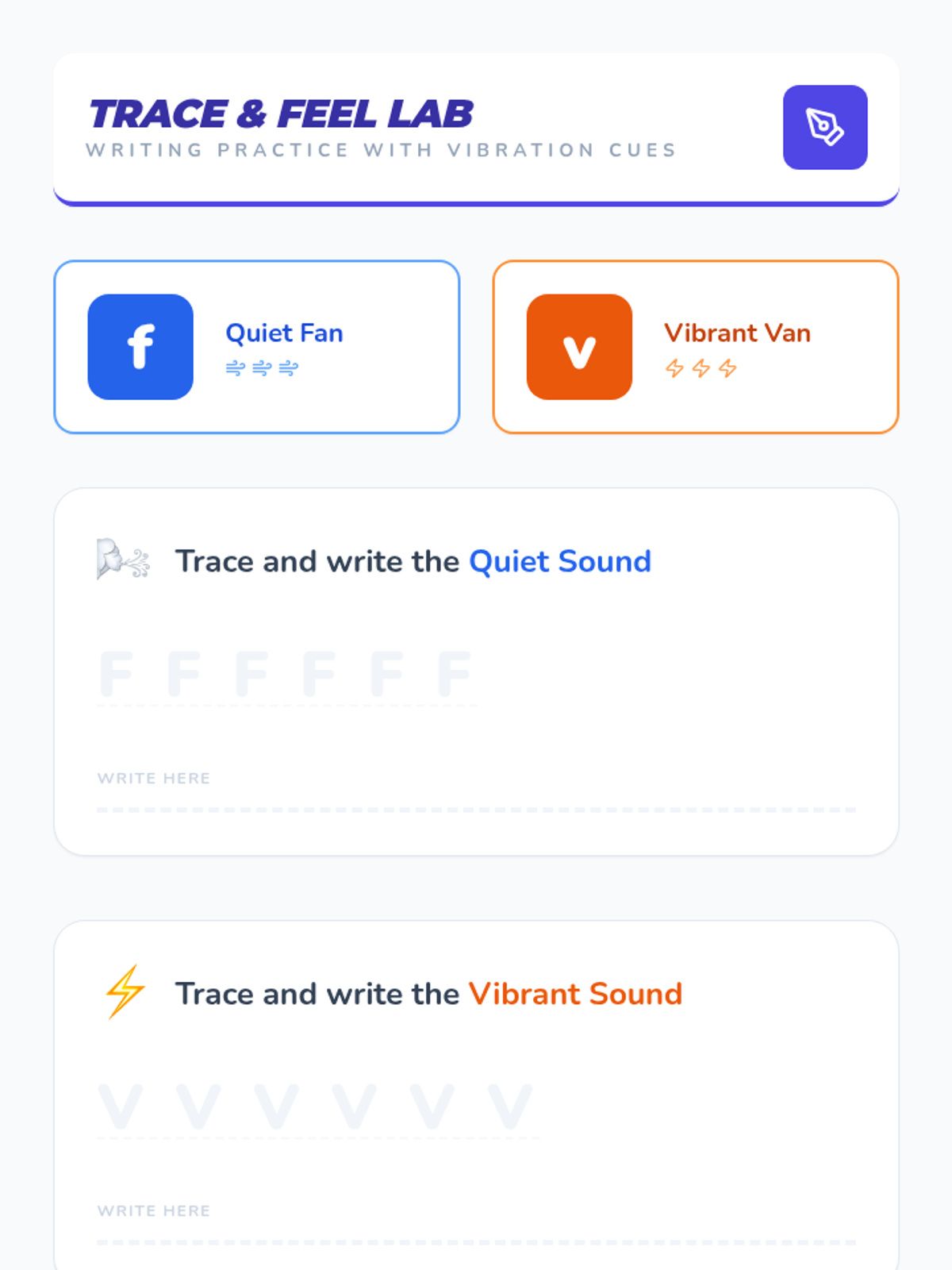
A handwriting worksheet designed for ELL students, incorporating visual and tactile vibration cues to reinforce the physical difference between writing the letters f and v.
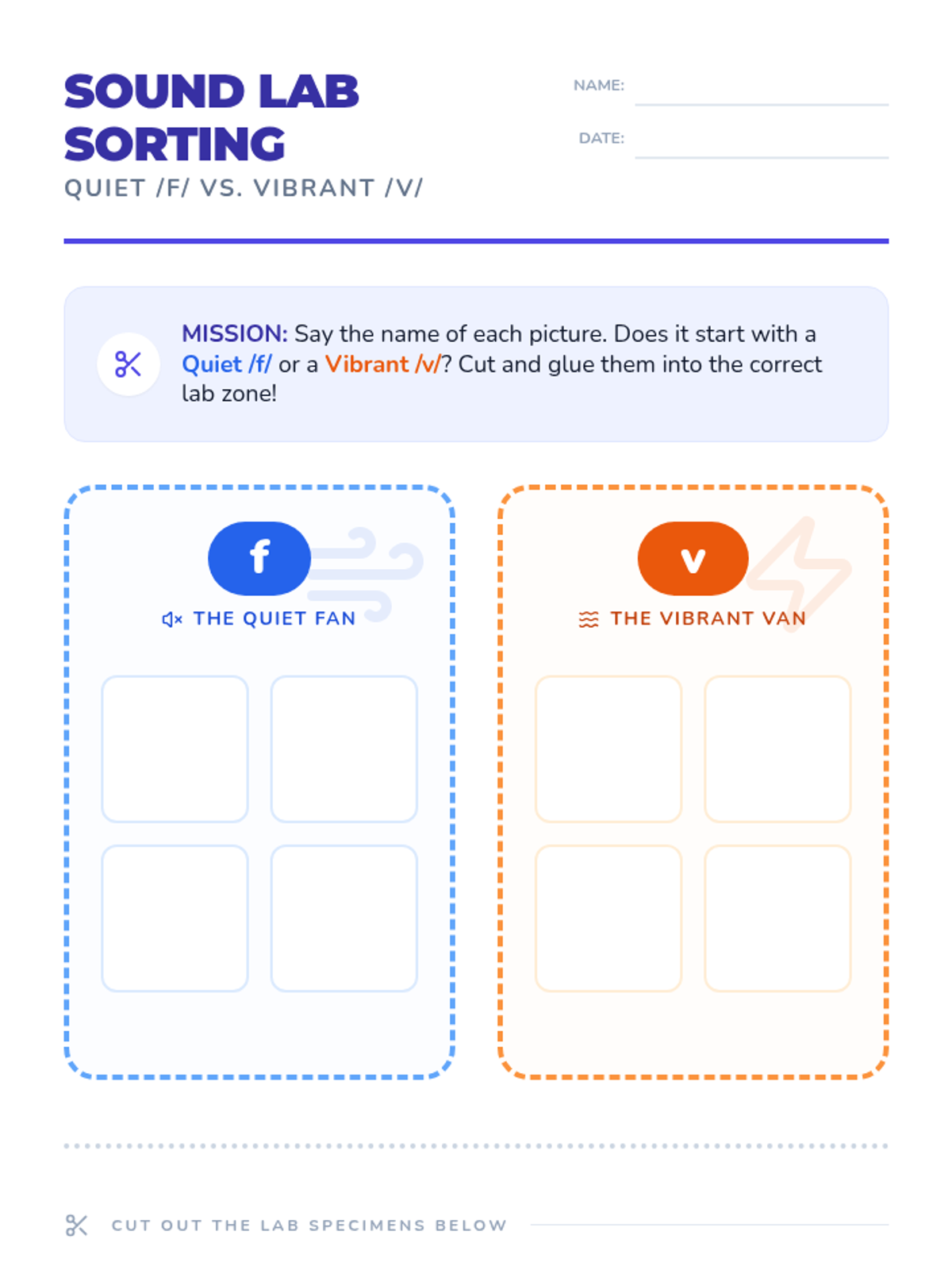
A hands-on cut-and-paste sorting activity where students categorize words starting with /f/ and /v/ based on auditory and tactile cues.
Instructional slides for teaching the difference between /f/ and /v/ sounds, using visual cues like "The Quiet Fan" and "The Vibrant Van" to help students with memory and recall difficulties.
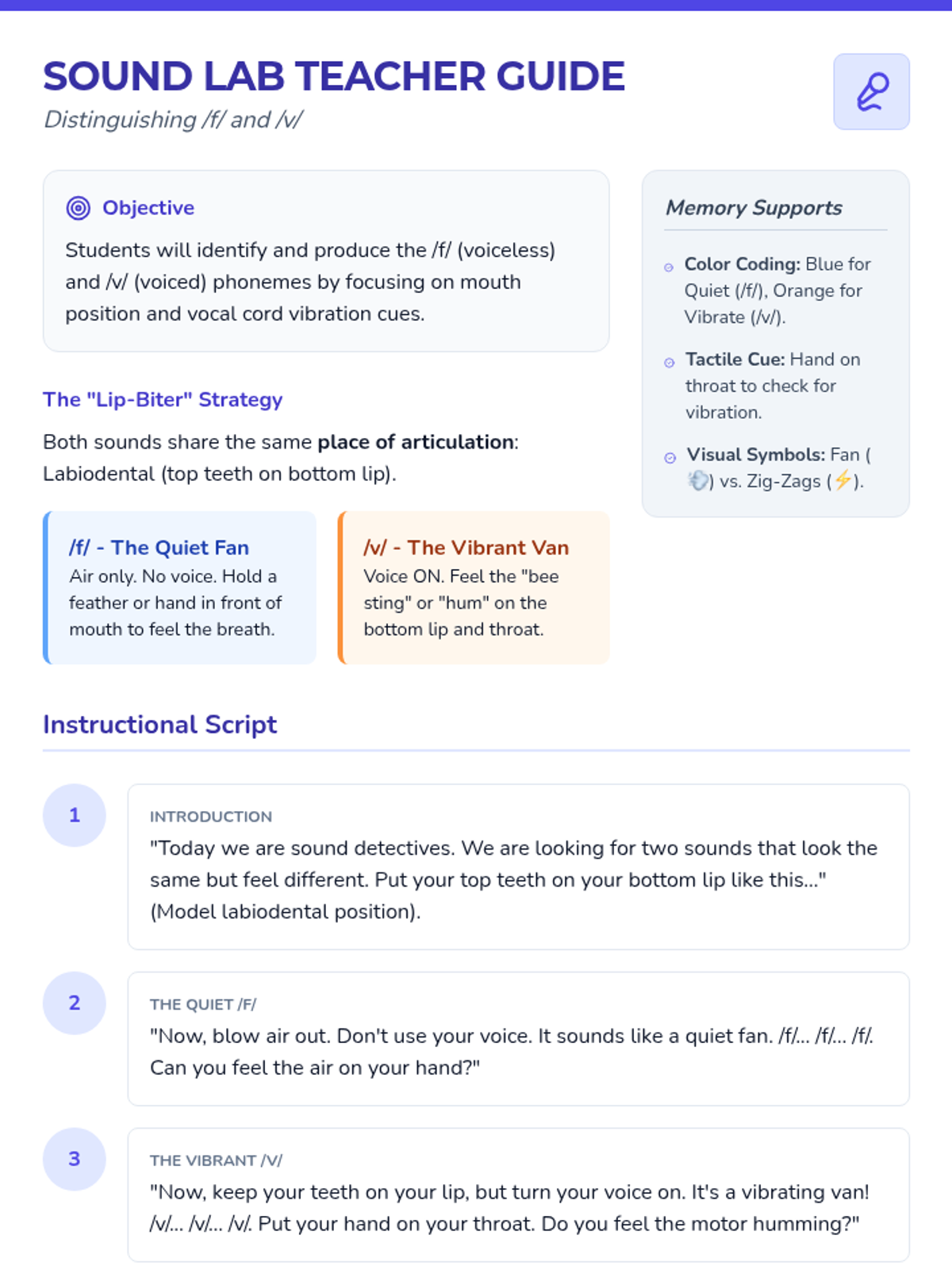
A comprehensive teacher guide for teaching the distinction between /f/ and /v/ sounds, featuring instructional scripts, word banks, and memory-supporting strategies for ELL students.
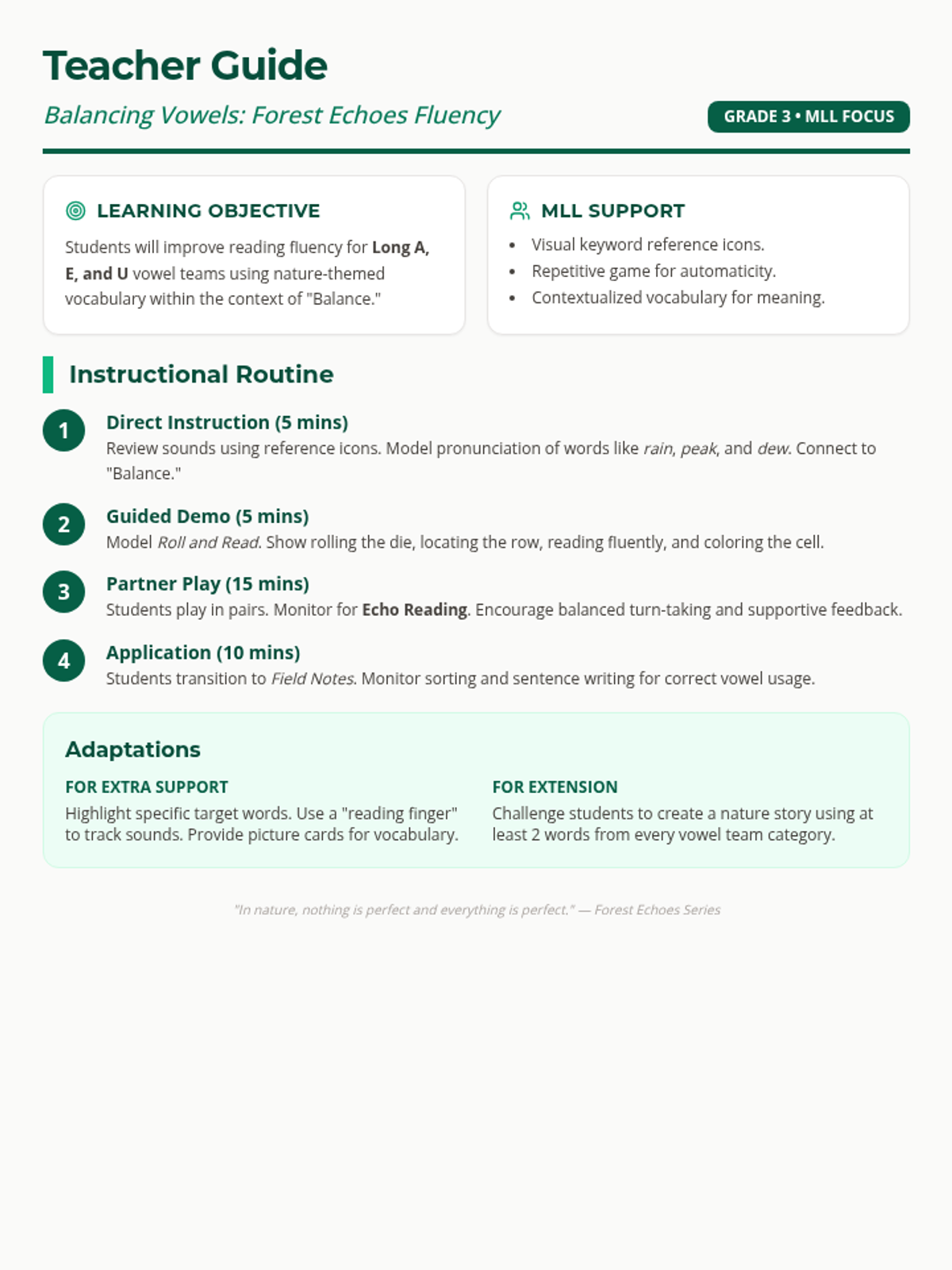
A teacher resource providing instructional steps, differentiation strategies for MLLs, and a clear routine for using the Roll and Read game and Field Notes worksheet.
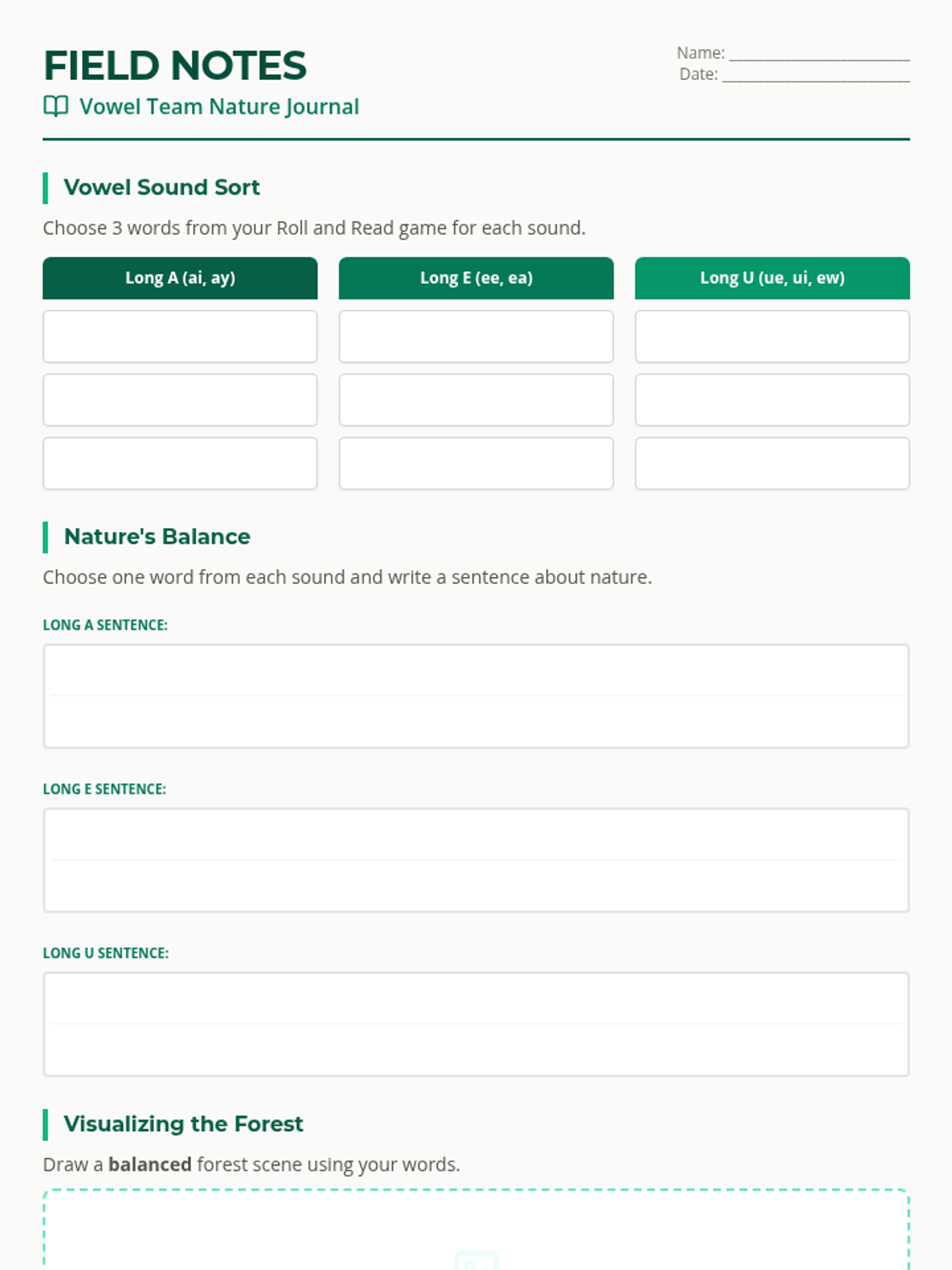
A follow-up recording sheet where students sort words by vowel sound and use them in sentences. This material reinforces the fluency practice from the game and connects phonics to the nature theme of 'Balance'.
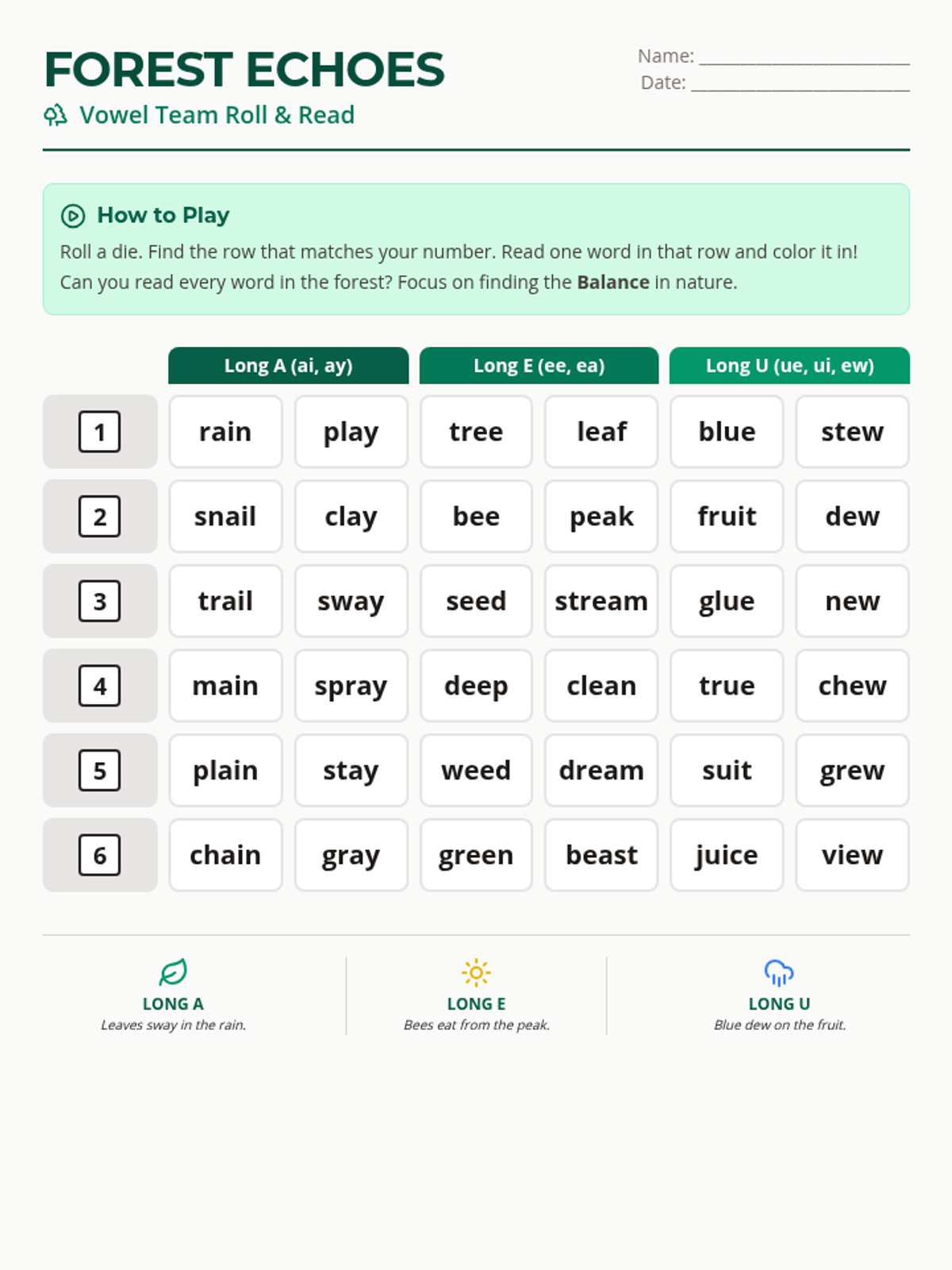
A 'Roll and Read' game board designed for third-grade MLLs to build fluency with Long A, E, and U vowel teams. The game features nature-themed vocabulary and is structured for repetitive reading practice in a fun, game-like format.
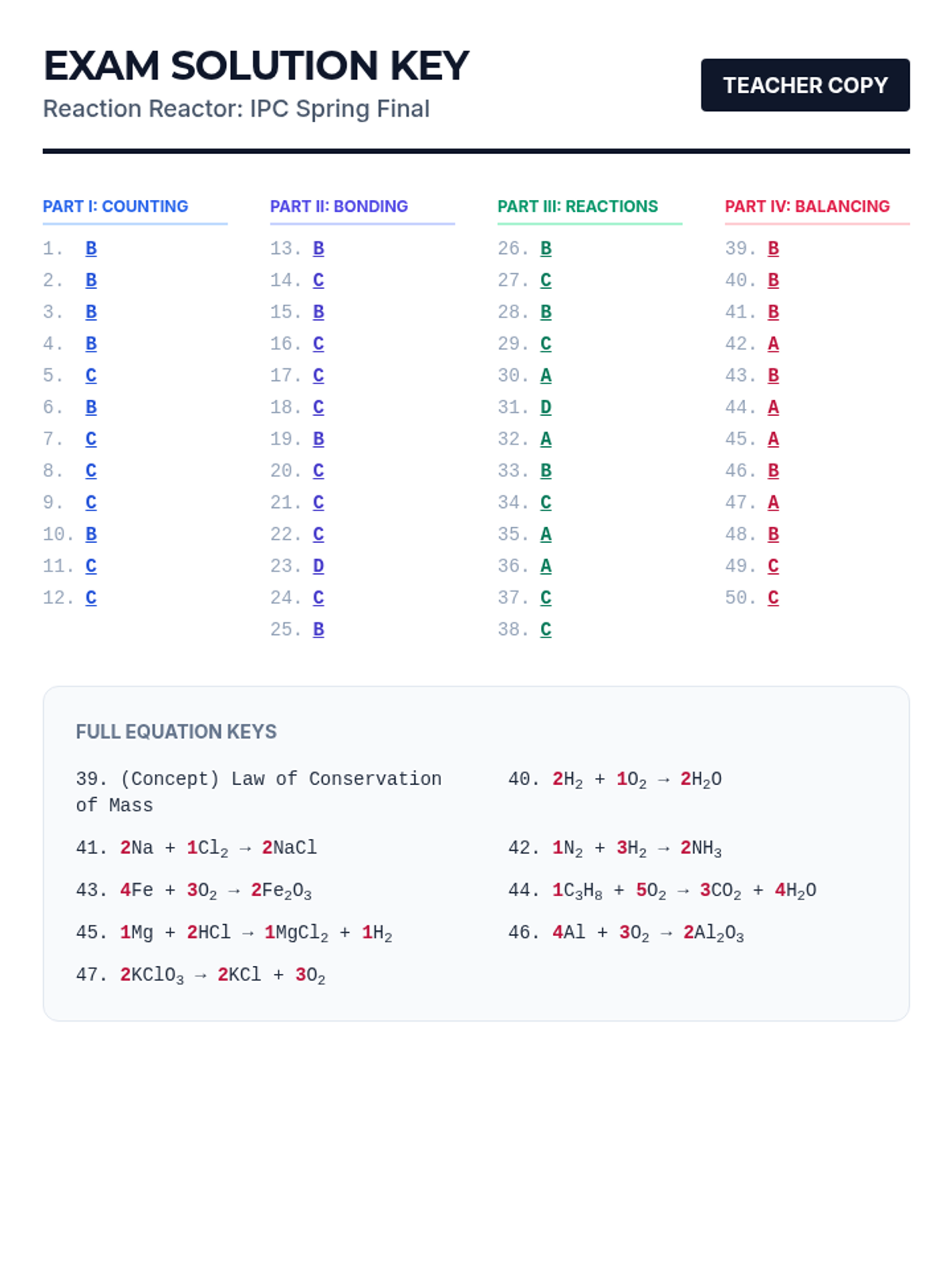
An answer key for teachers featuring a color-coded answer grid and full balancing equations for the Reaction Reactor Exam.
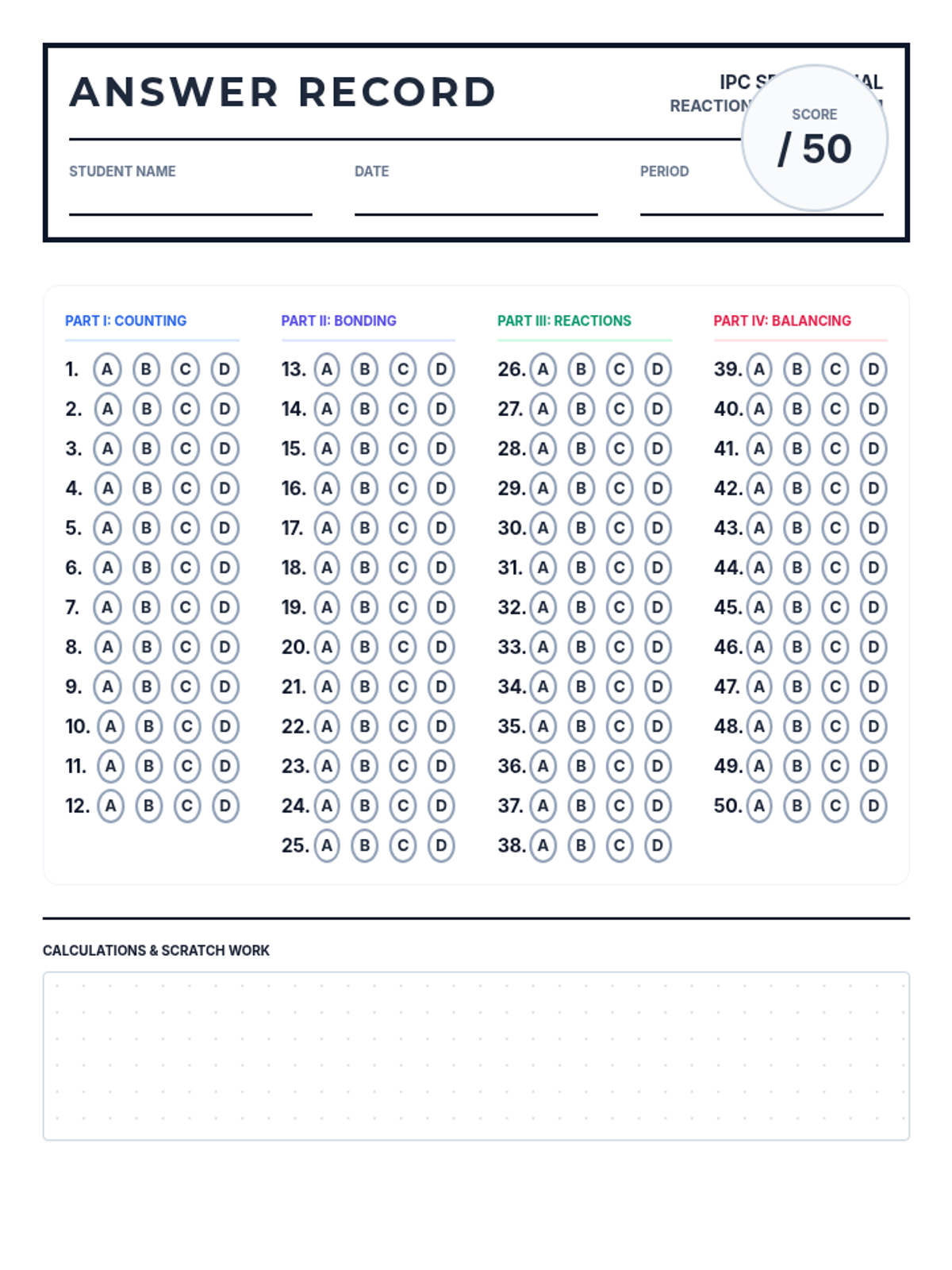
A professional 50-question student answer sheet designed for the Reaction Reactor exam, including numbered bubble sections and a dedicated workspace for calculations.
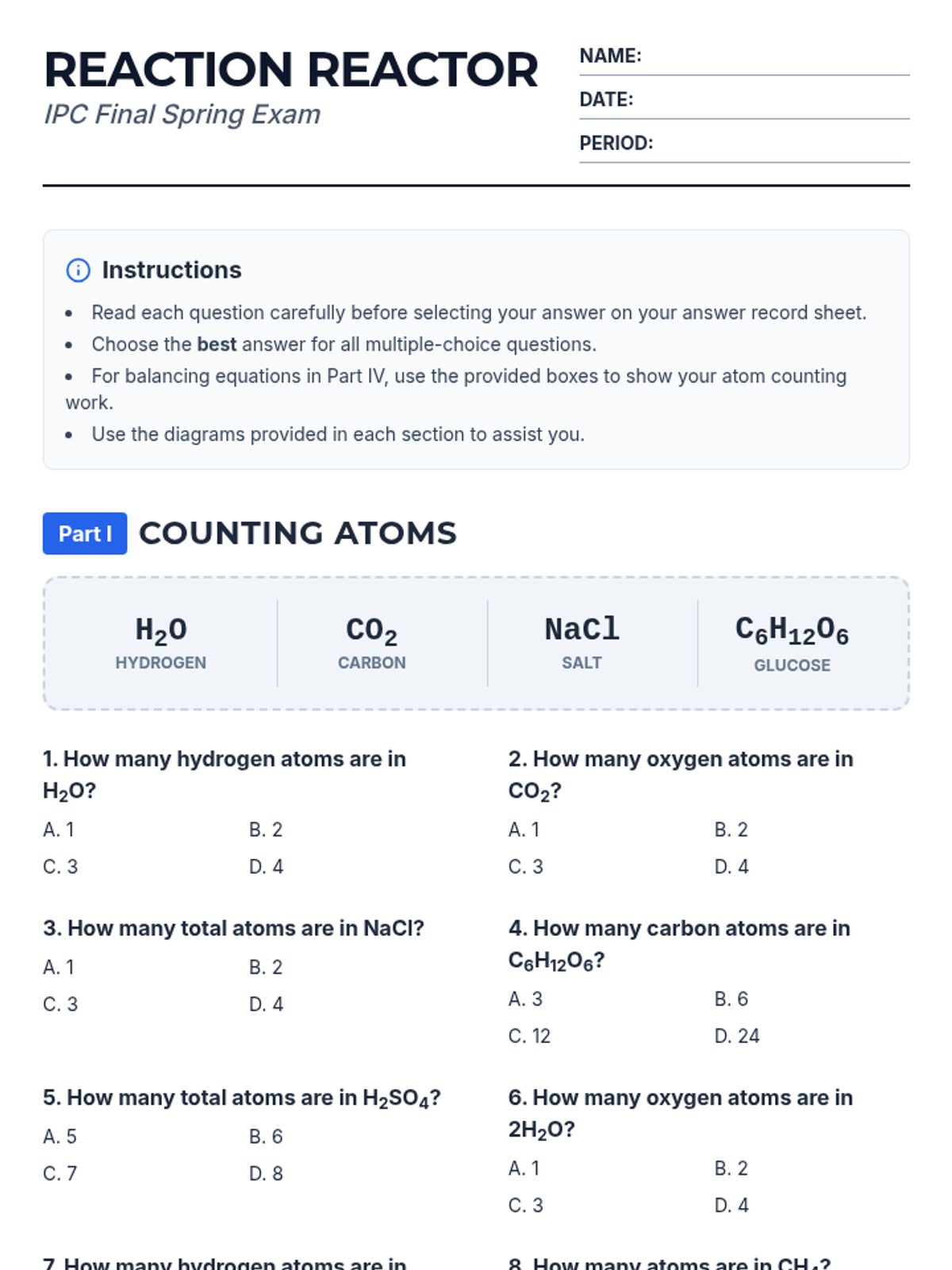
A 50-question high school IPC chemistry final exam covering atom counting, bonding, chemical reactions, and equation balancing, complete with visual diagrams and student work areas.
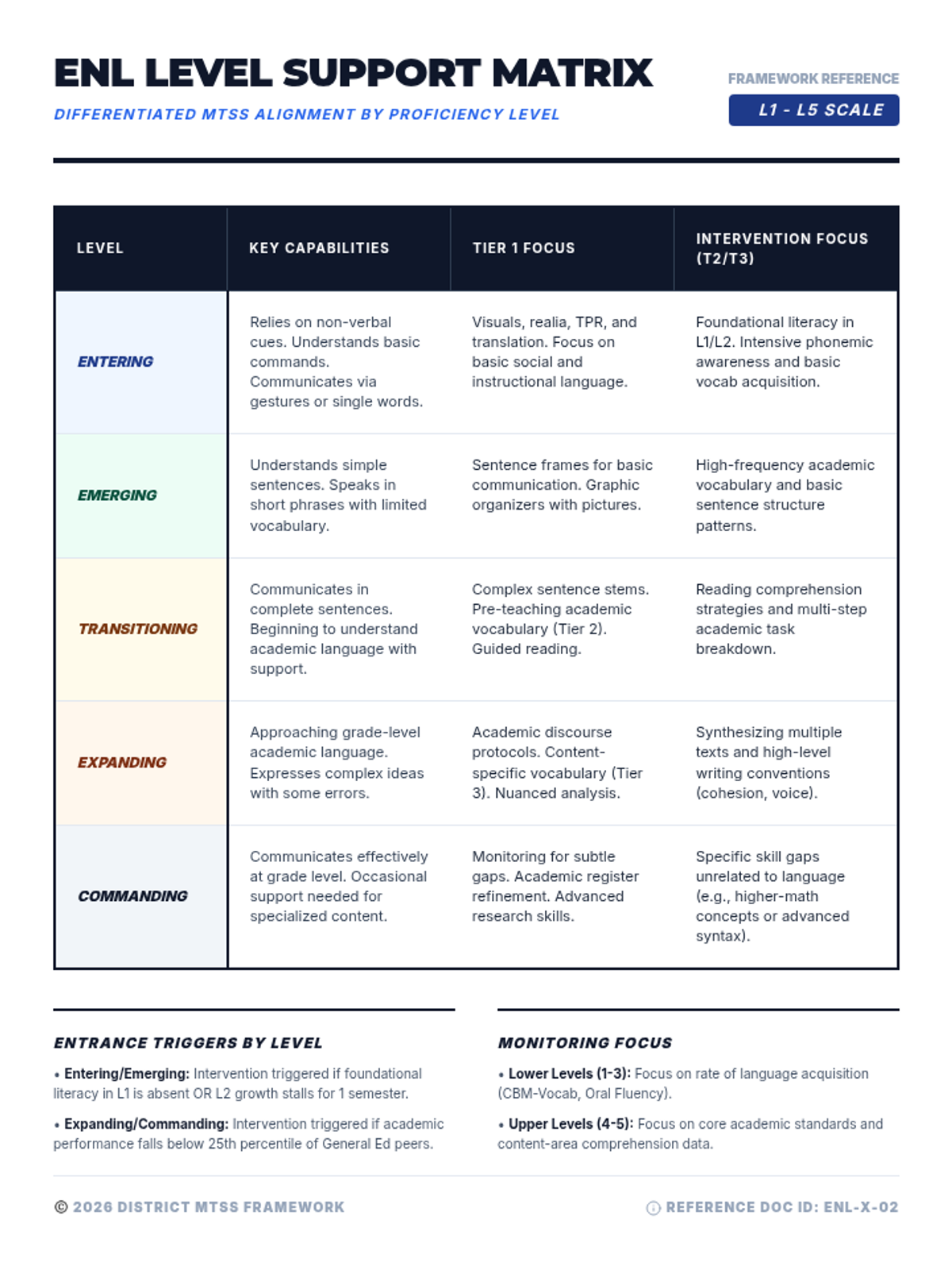
A crosswalk matrix that maps the five ENL proficiency levels (Entering to Commanding) to specific student capabilities and tiered MTSS support strategies.
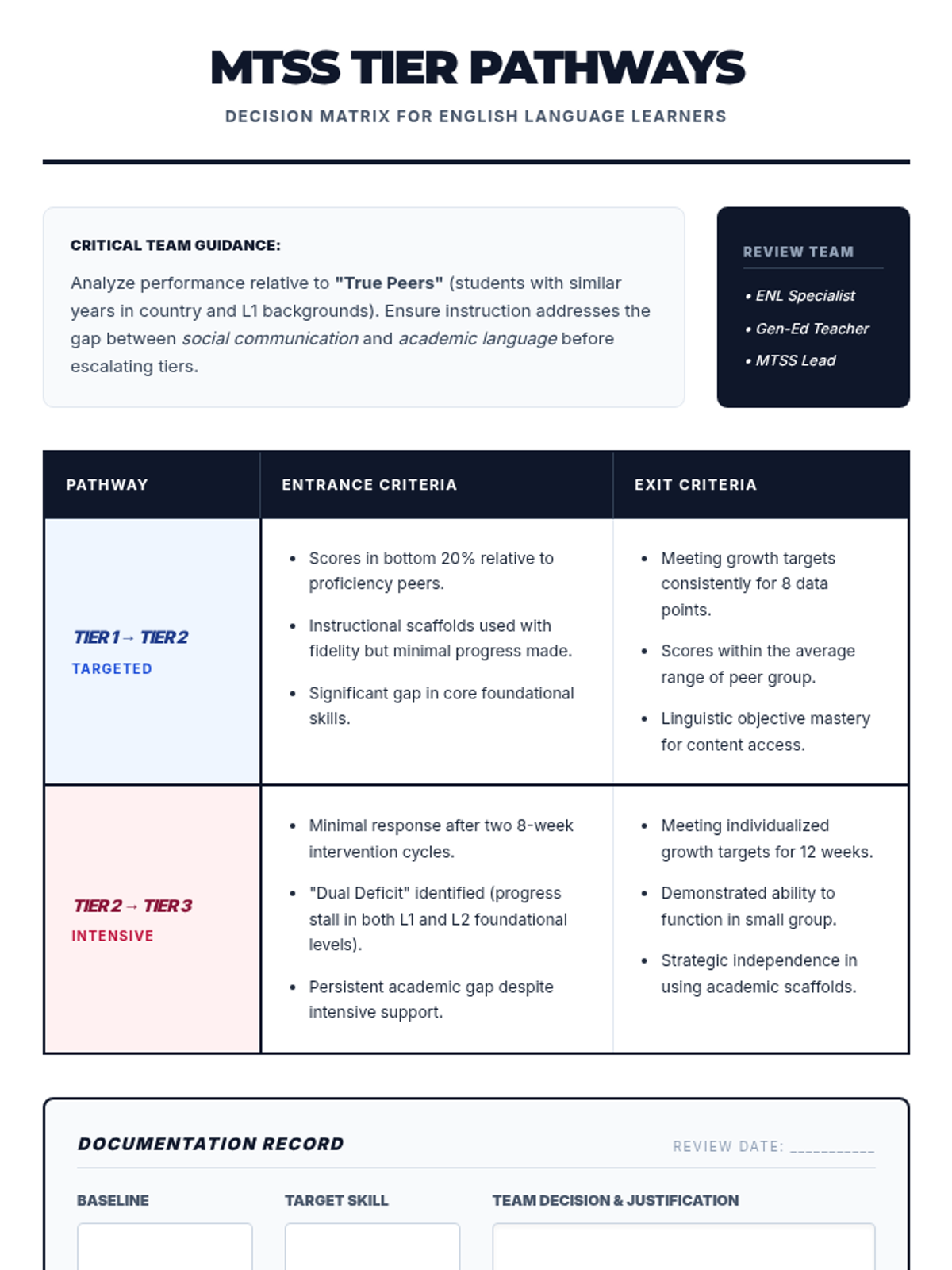
A decision-making matrix for district teams to determine student placement and movement within the MTSS tiers for ENL, focusing on entrance/exit triggers and comparative peer data.
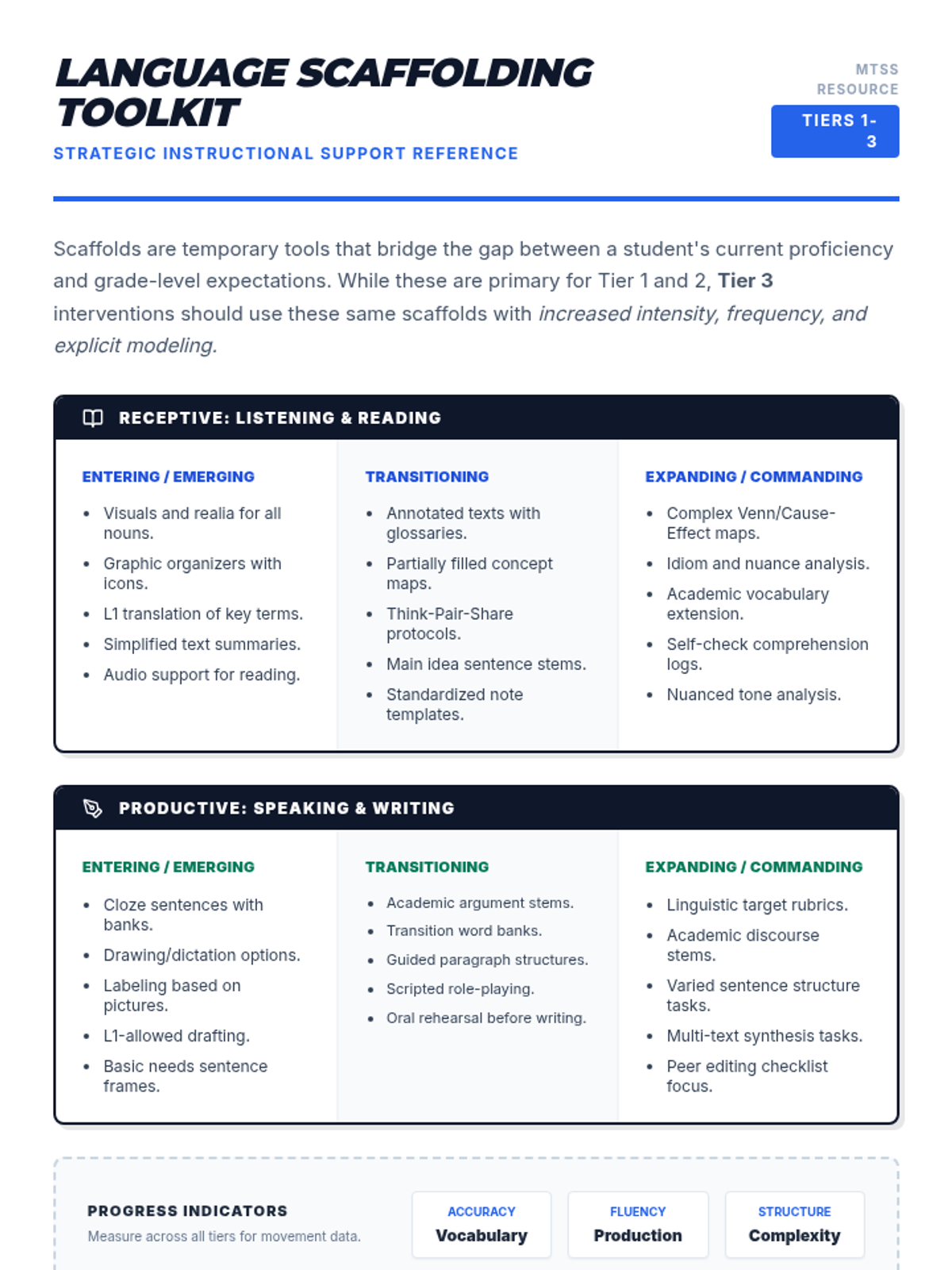
A professional reference guide for teachers that categorizes instructional scaffolds for ENL students by language domain and proficiency level, supporting Tier 1 and Tier 2 instruction.
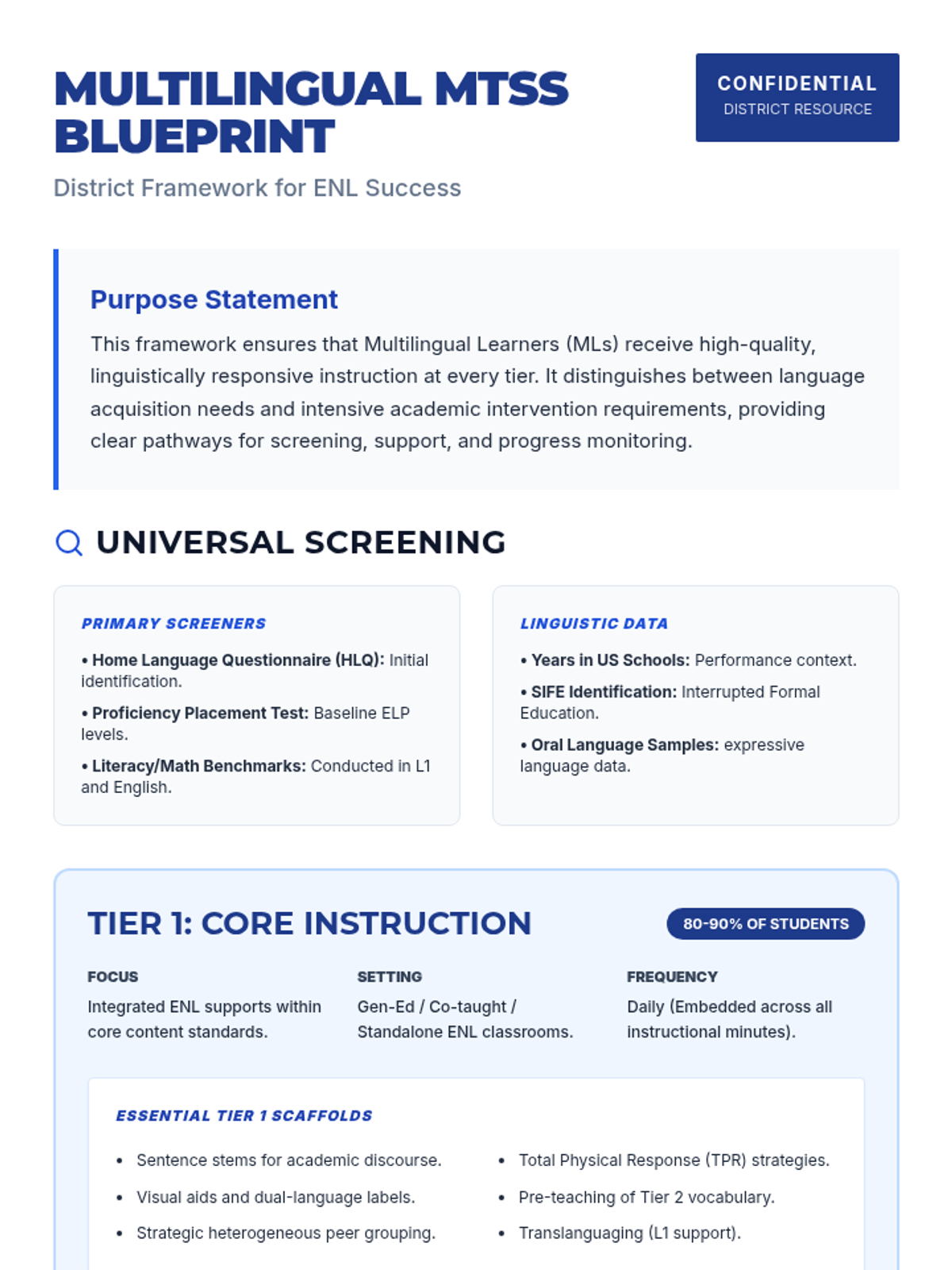
A strategic district-level handbook outlining the three-tiered MTSS model for ENL students, featuring specific entrance/exit criteria, screening protocols, and tier-specific focus areas.
A presentation slide deck for teachers to introduce the five types of chemical reactions and provide strategies for balancing complex chemical equations in an 11th-grade chemistry setting.
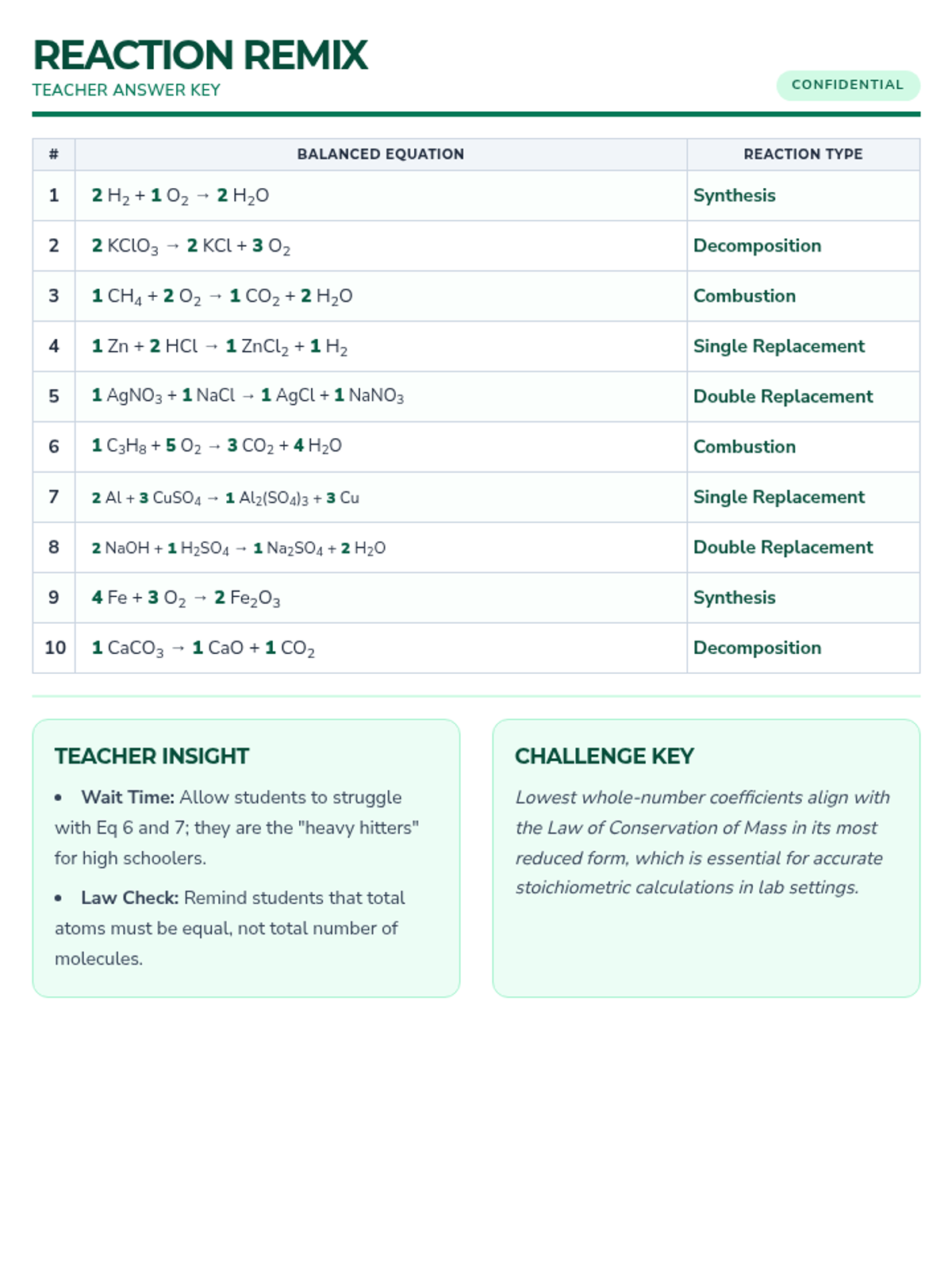
A comprehensive answer key and teacher guide for the Reaction Remix worksheet, including balanced equations, reaction classifications, and instructional tips for high school chemistry educators.
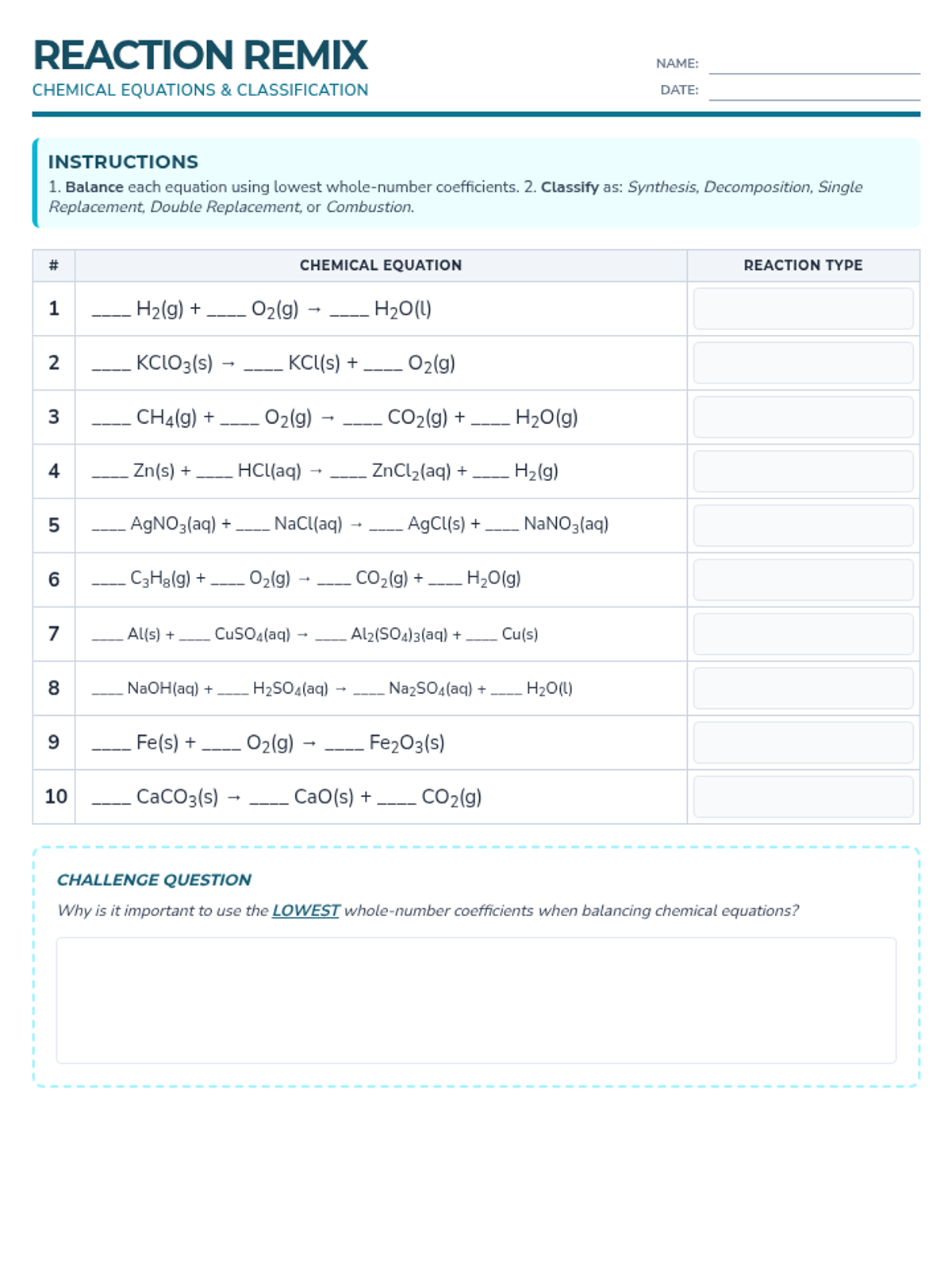
A student worksheet for 11th-grade chemistry students to practice balancing chemical equations and identifying five major types of reactions: synthesis, decomposition, combustion, single replacement, and double replacement.
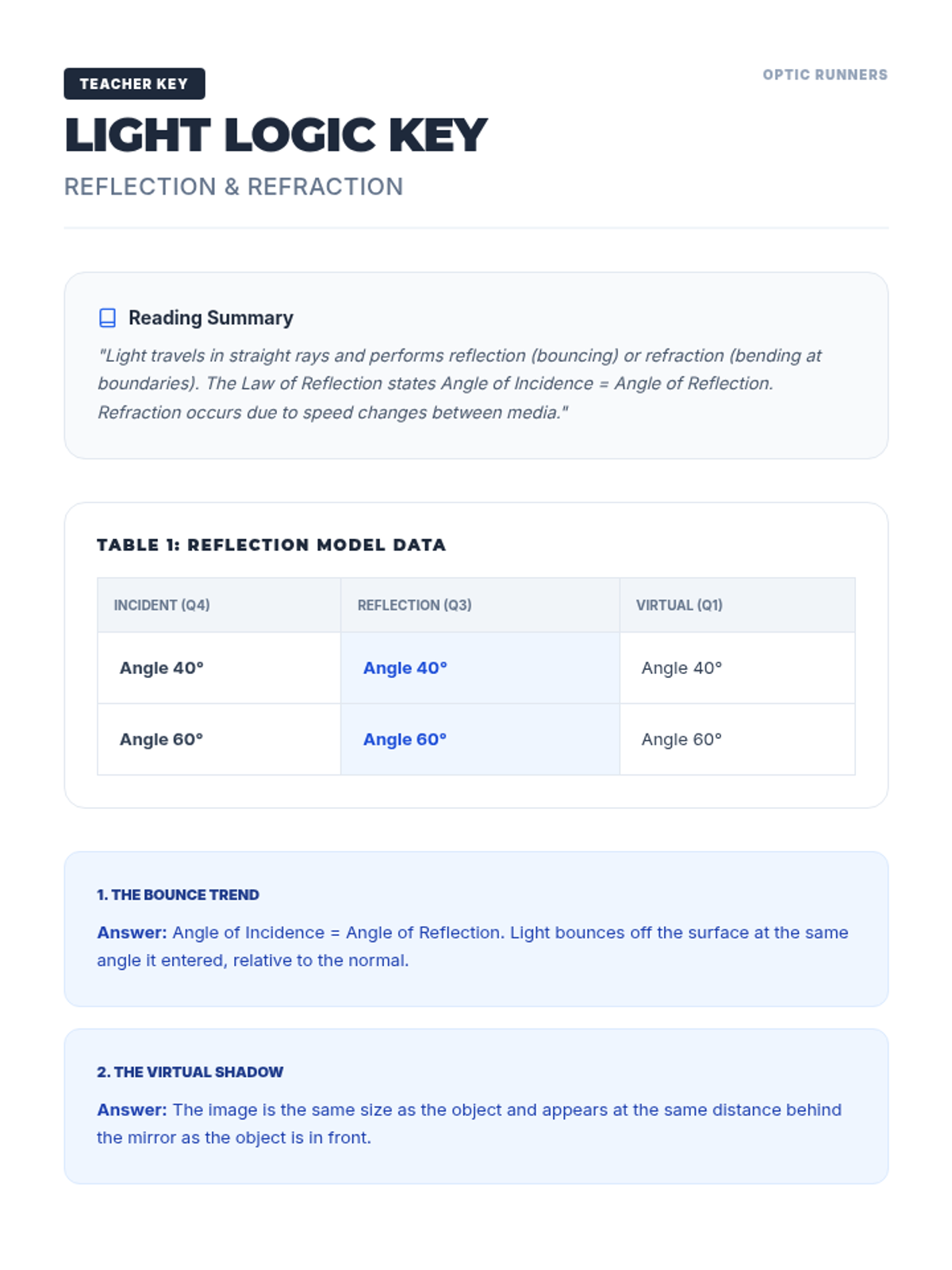
A comprehensive teacher answer key for the Light Logic Lab Manual. Includes model data for reflection and refraction, step-by-step explanations for the Law of Reflection and Snell's Law conceptual trends, and pedagogical tips for addressing student misconceptions. Revised for improved page flow and contrast.
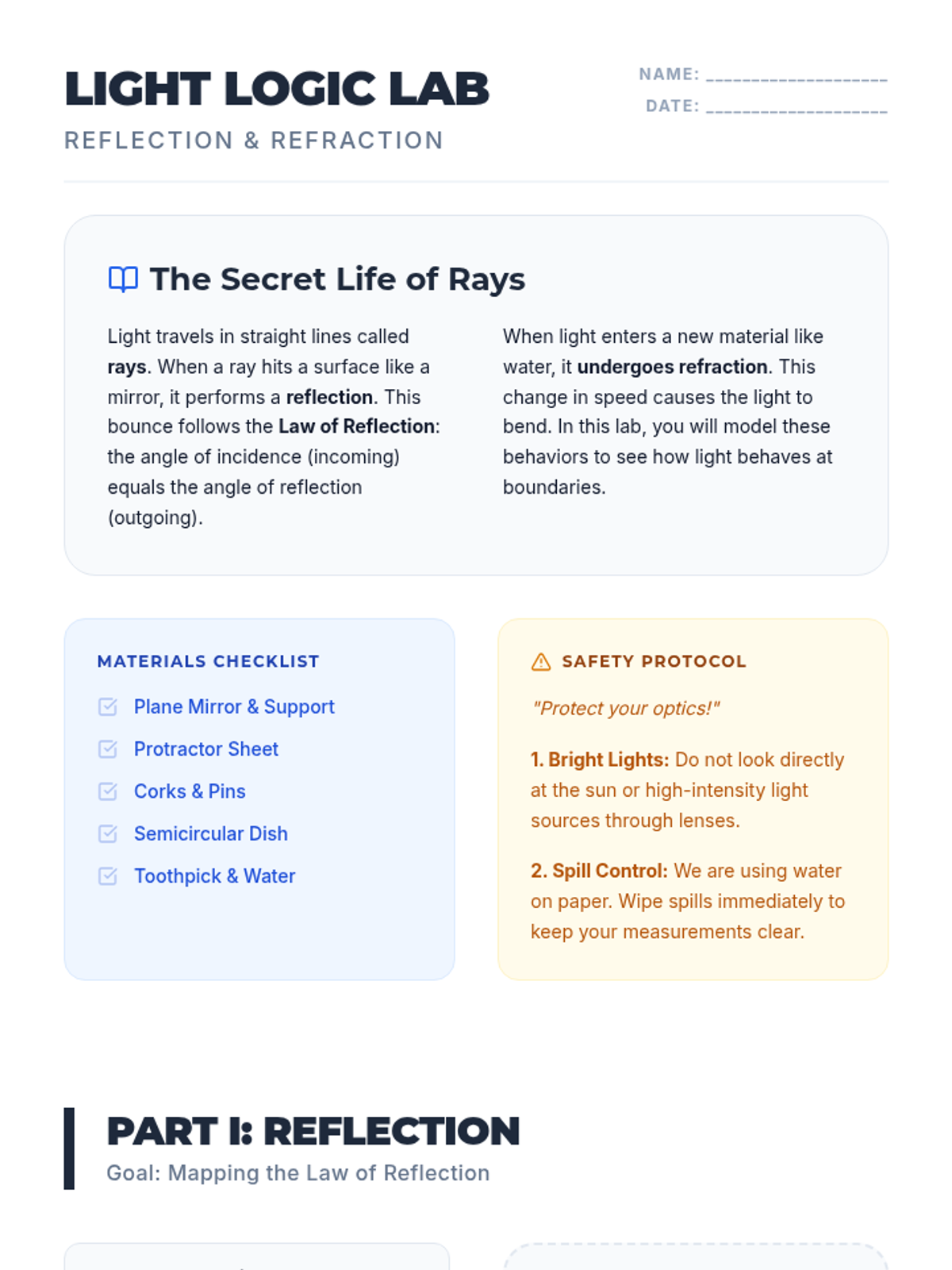
A comprehensive, student-friendly lab manual for exploring the principles of reflection and refraction. Includes a conceptual introduction reading passage, detailed procedures for mirror and water-dish investigations, organized data tables, and scaffolded analysis questions including the 'Archer Fish' and 'Classroom Mirror' challenges. Revised for improved page breaks, corrected grammar, and high-contrast SVG diagrams.
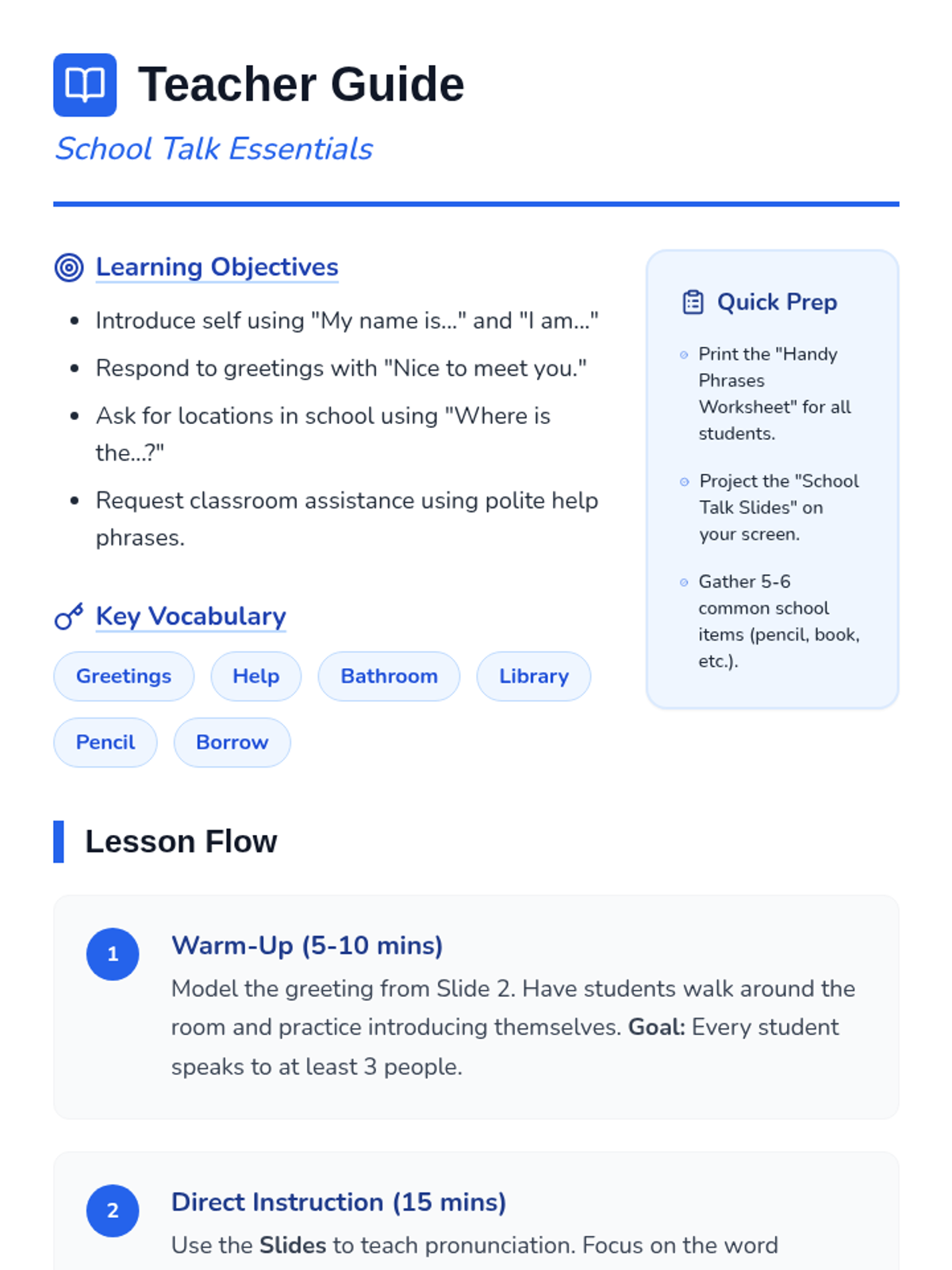
Comprehensive teacher instructions for delivering the School Talk Essentials lesson, including warm-up ideas, pacing, and differentiation strategies.
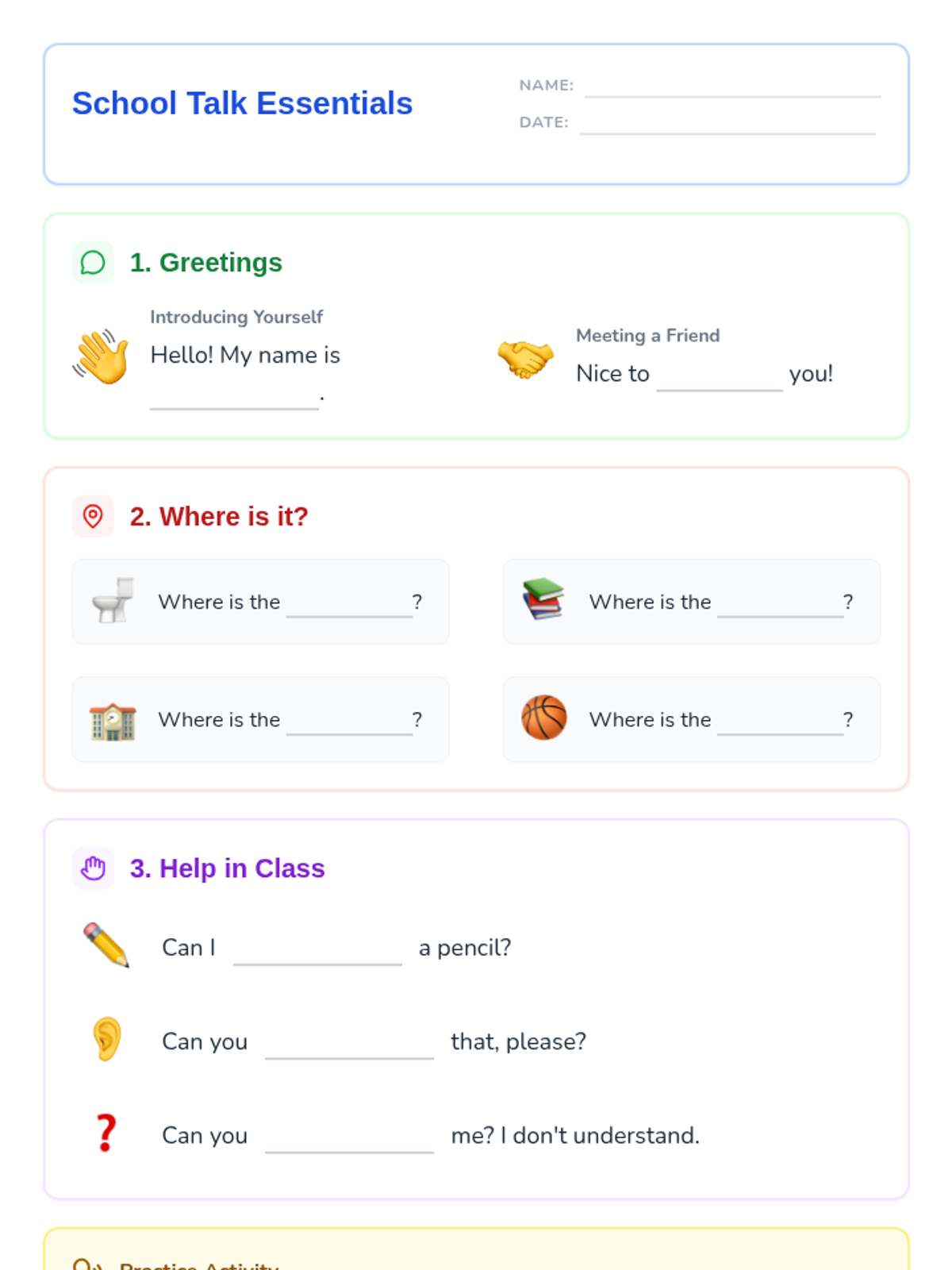
An introductory ESL worksheet featuring sentence starters and visual icons for practicing greetings and school-related help phrases.
Visual presentation slides for teaching basic school greetings and help-seeking phrases to ESL beginners.
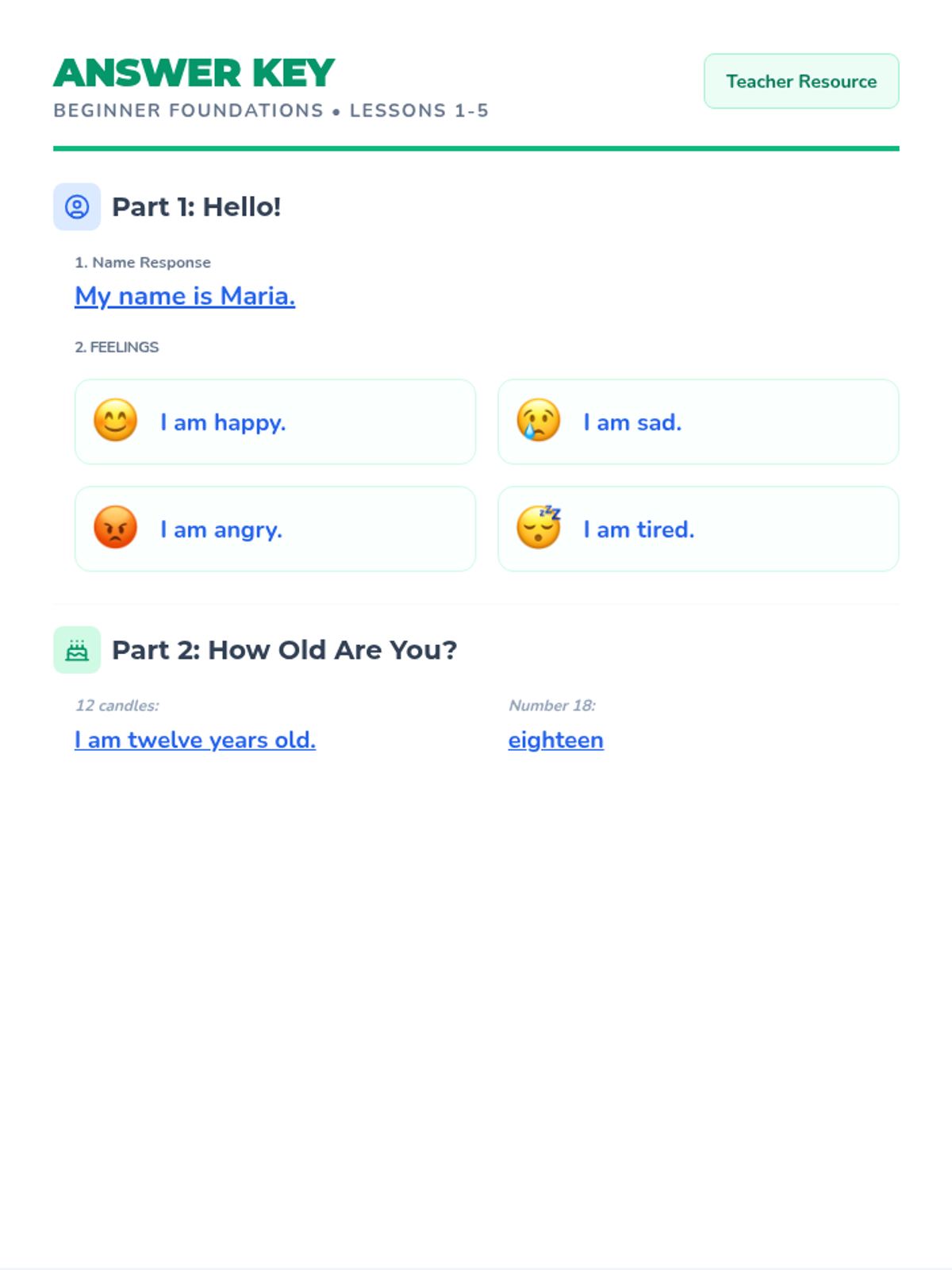
Teacher's answer key for the beginner foundation assessment, providing model sentences and spelling for all five lesson sections. Now includes the expanded food section.
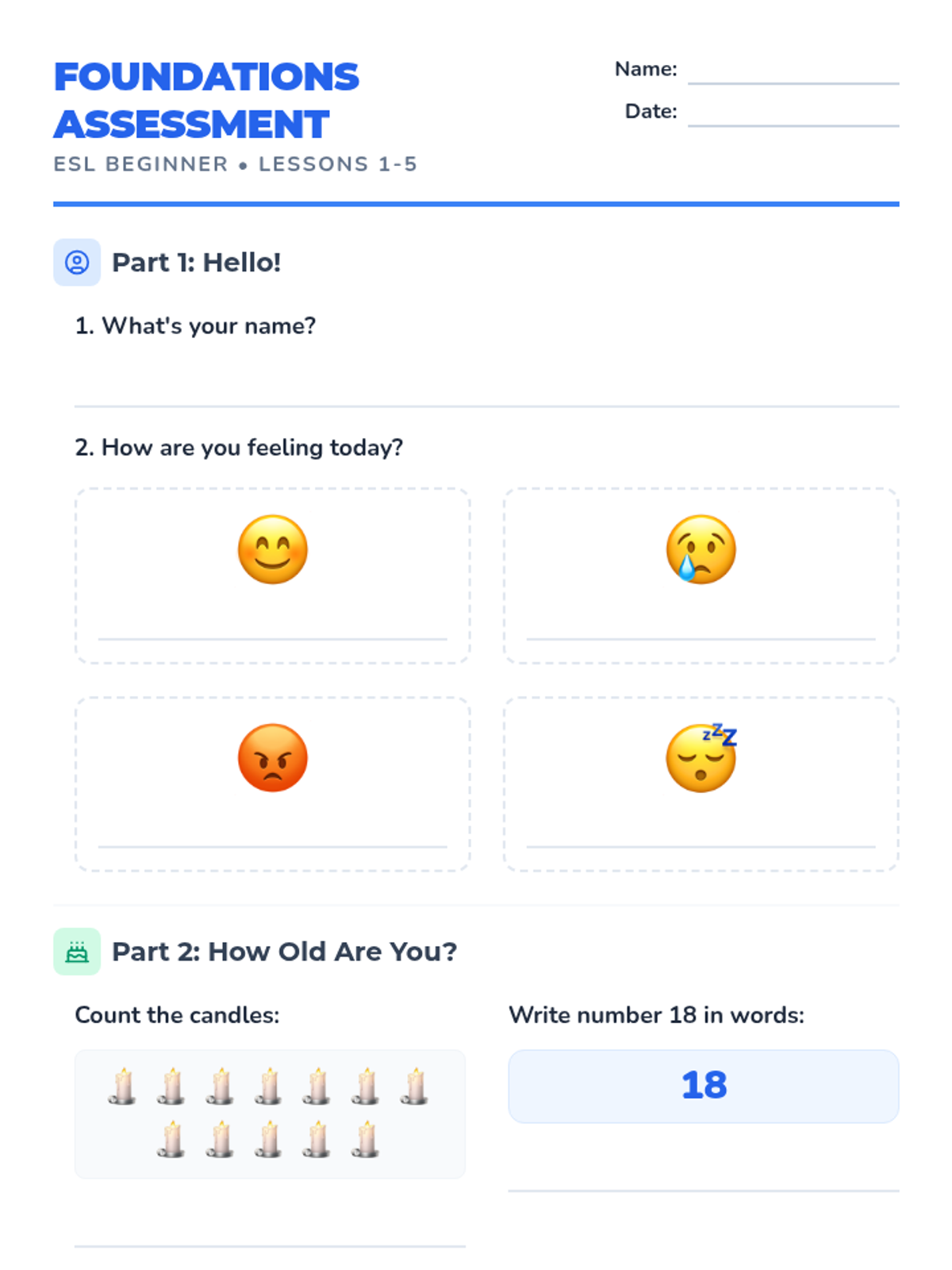
A multi-page assessment worksheet for beginner ESL students, featuring picture-cued writing prompts for feelings, numbers, countries, classroom objects, and food. Now includes expanded food vocabulary.
A set of high-impact "Art Plates" for a Big Book, featuring layered CSS designs, atmospheric lighting, and thematic icons to illustrate forest animal survival traits.
A set of stylized "Art Plates" designed to be the front illustrations for a Big Book. Each plate uses bold colors, icons, and emojis to represent a key part of the forest animal survival story.
A narrative story designed for a "Big Book" format. Each page provides 1st-grade level text focused on animal survival traits, habitats, and family behaviors, intended to be attached to the back of large illustrations.
A updated "Big Book" slide deck based on Margaret Wise Brown's "The Important Book" format. It highlights how various forest animals use their unique traits to survive in their habitats.