A final assessment worksheet where students categorize author's purpose and evaluate the reliability of four different audio profiles using evidence from previous lessons.
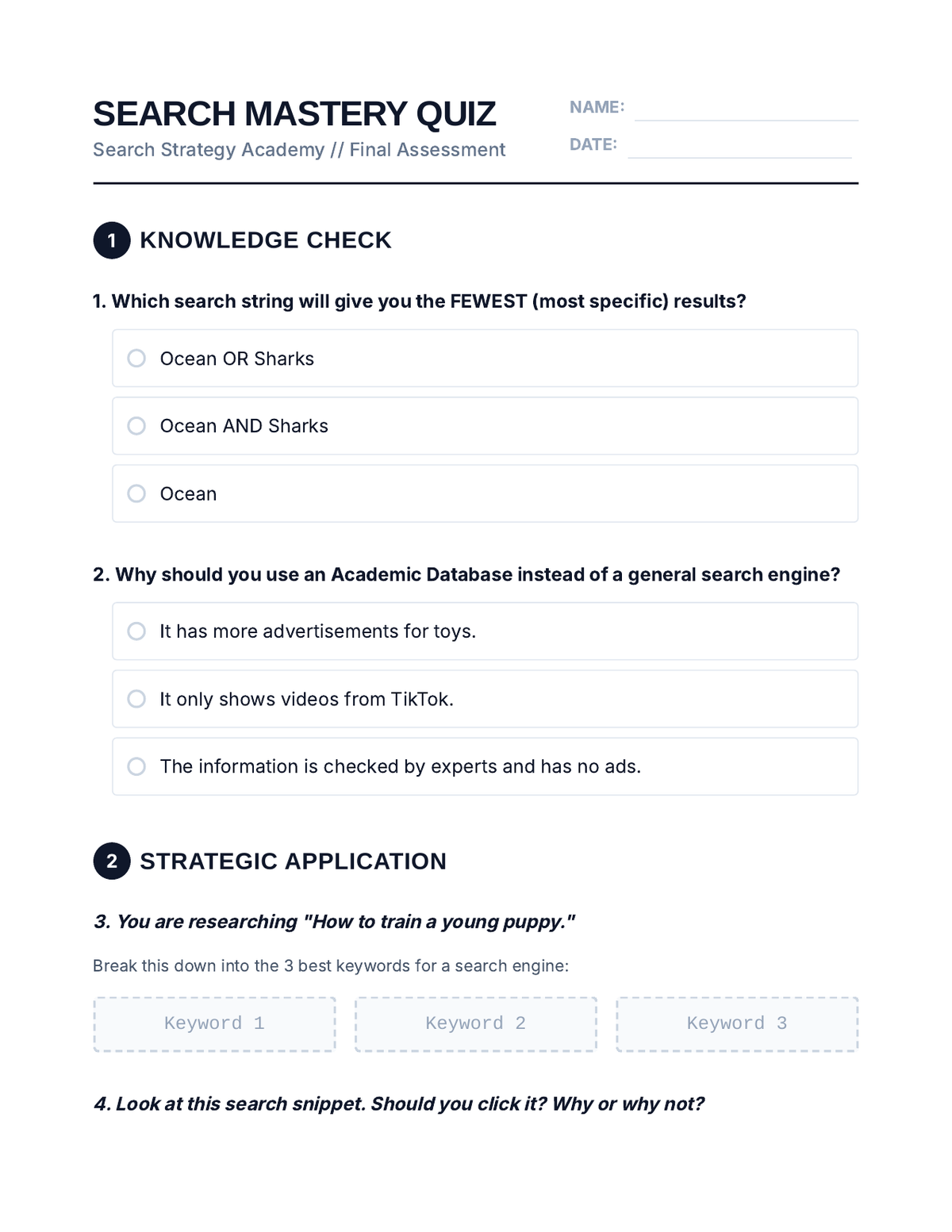
Final assessment for the Search Strategy Academy unit, covering keywords, Boolean operators, database use, and snippet analysis.
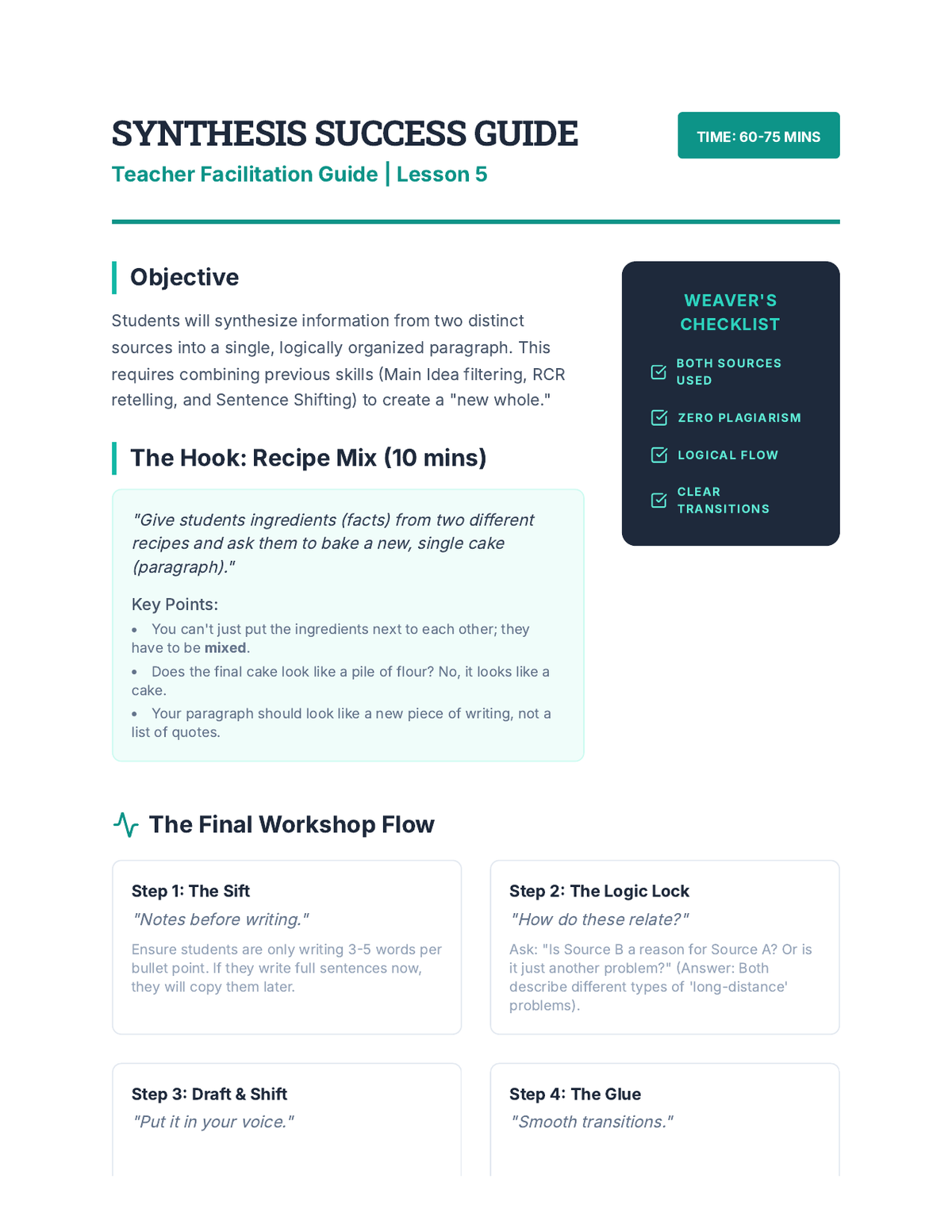
Teacher guide for "The Source Weaver" lesson. It outlines the synthesis process, provides a hook activity, transition words for ESL support, and a sample synthesized paragraph.
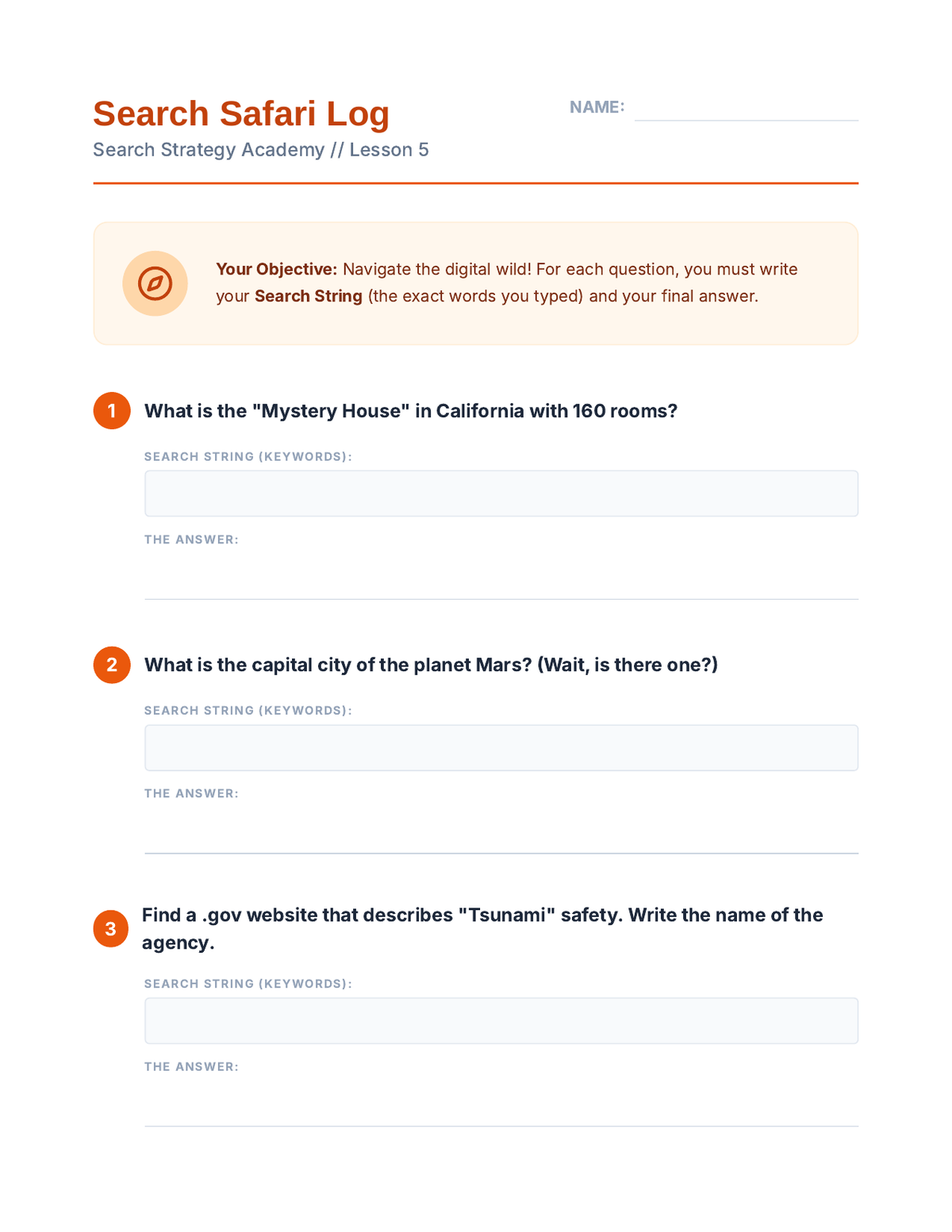
Student scavenger hunt log for Lesson 5, where students document their search strings and answers to obscure research questions.
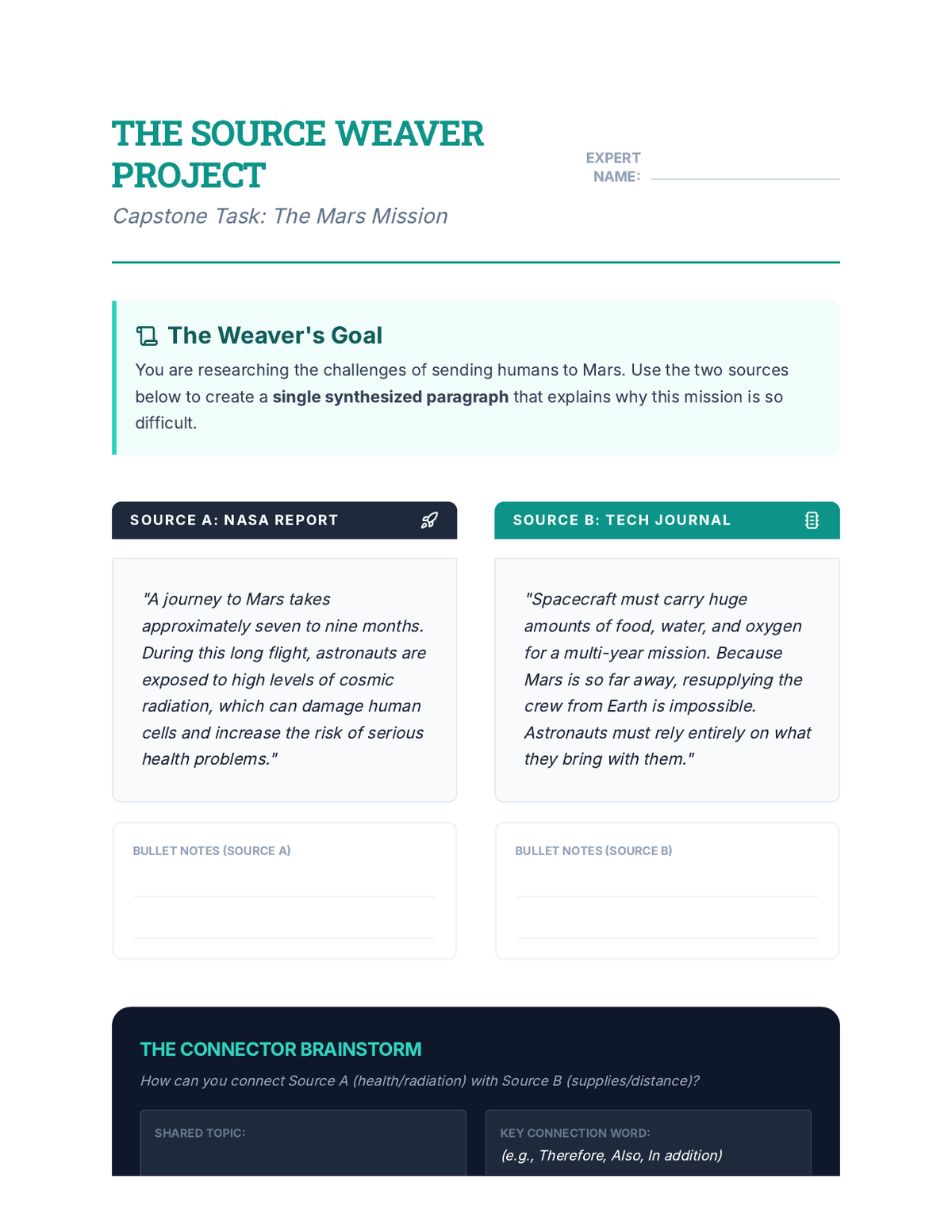
Capstone student project for "The Source Weaver" lesson. Students analyze two short texts about Mars, take notes, and synthesize the information into a single coherent paragraph using their own vocabulary and sentence structures.
Introductory slide deck for Lesson 5, reviewing all strategic search techniques and introducing the culminating Scavenger Hunt challenge.
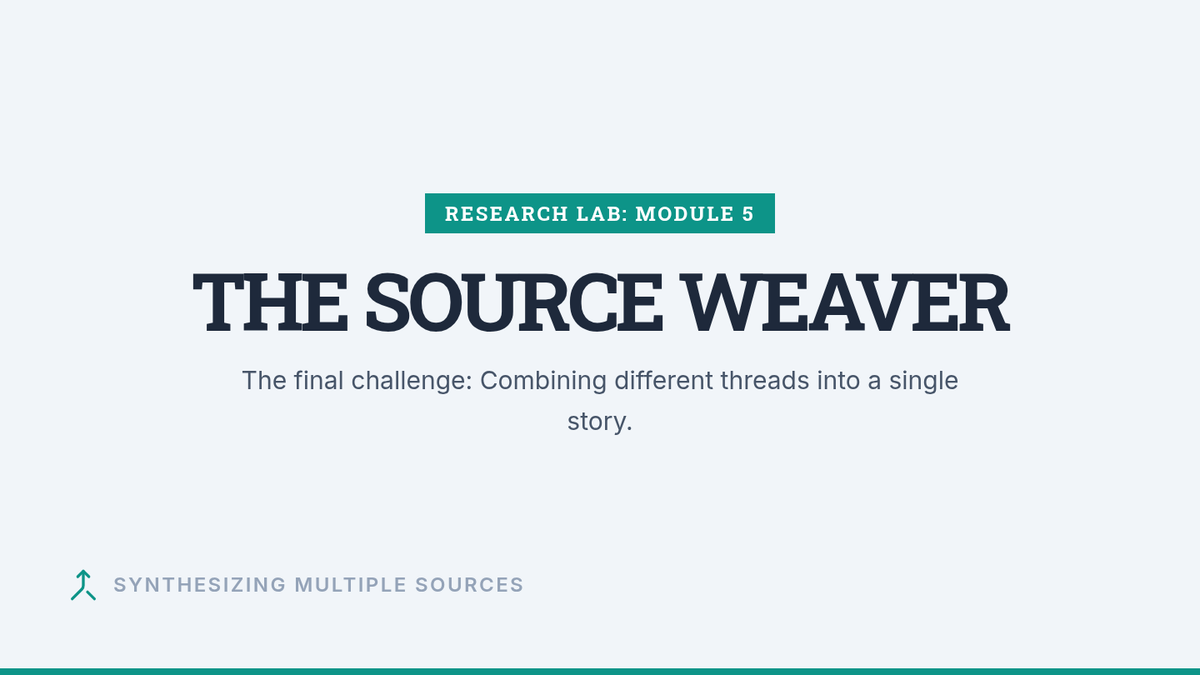
Visual slides for "The Source Weaver" lesson. These slides introduce students to the concept of synthesis as connecting ideas from multiple sources to create a new, coherent whole.
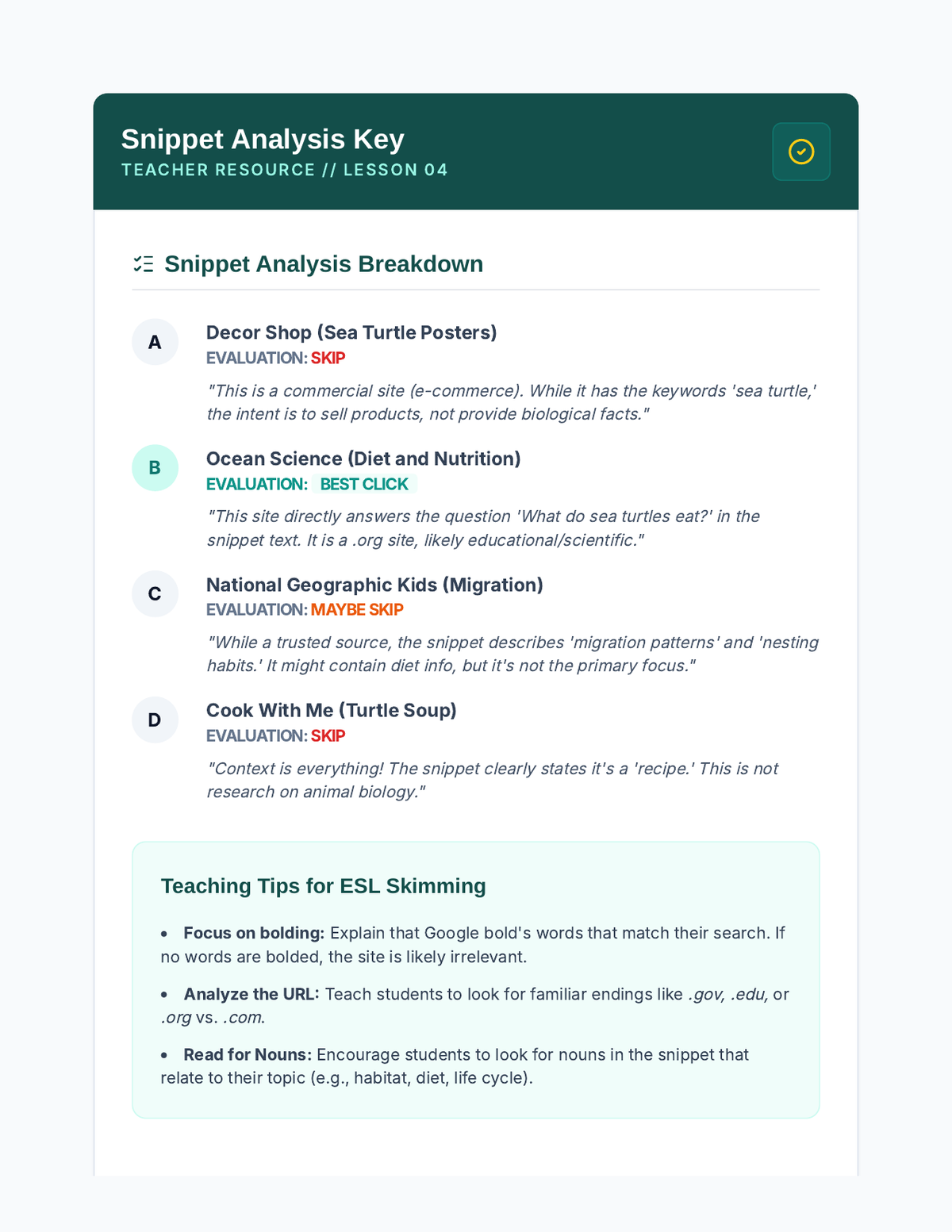
Teacher answer key and discussion guide for the "To Click or Not to Click" worksheet, focusing on snippet analysis and evaluation.
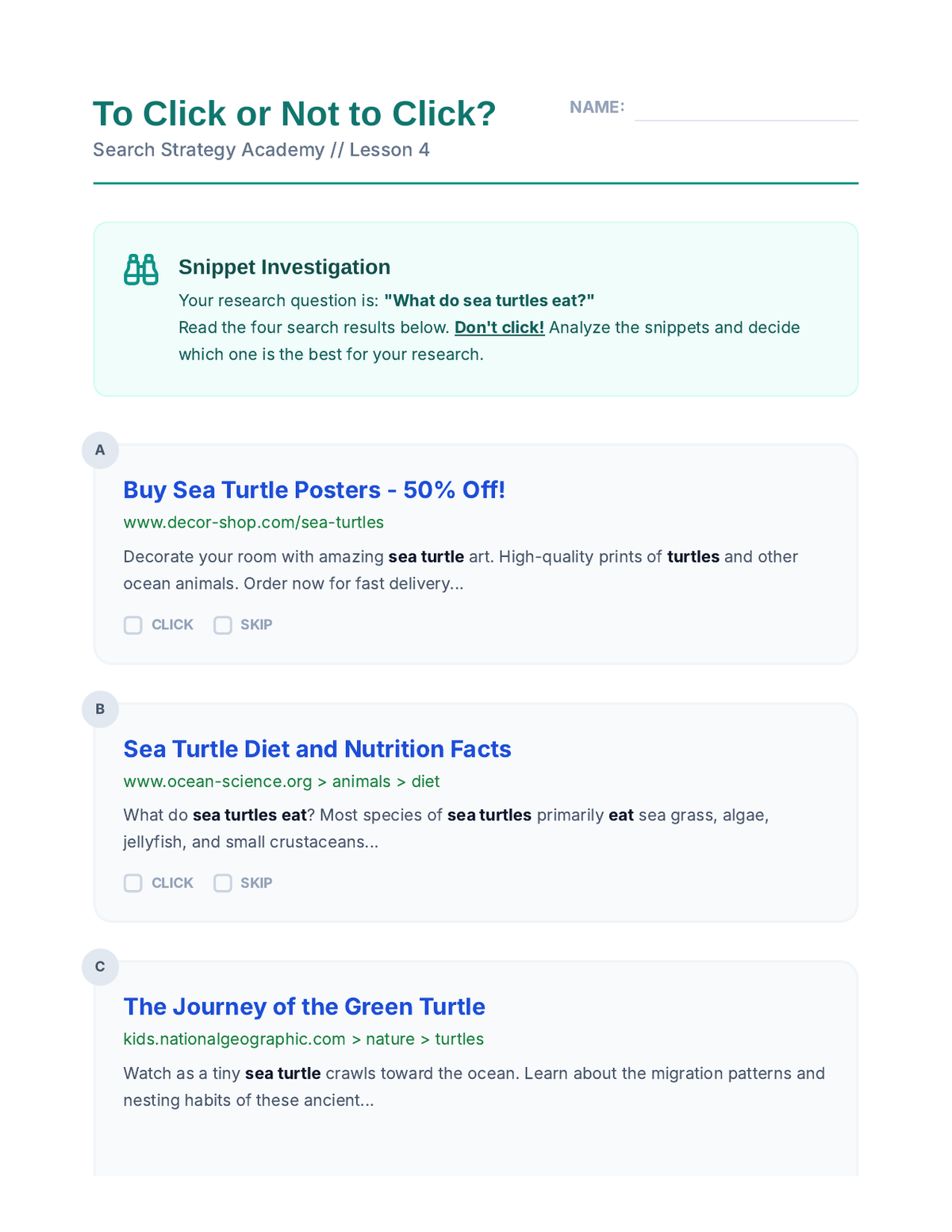
Student worksheet for Lesson 4 where students practice identifying the best search result based on snippets, titles, and URLs.
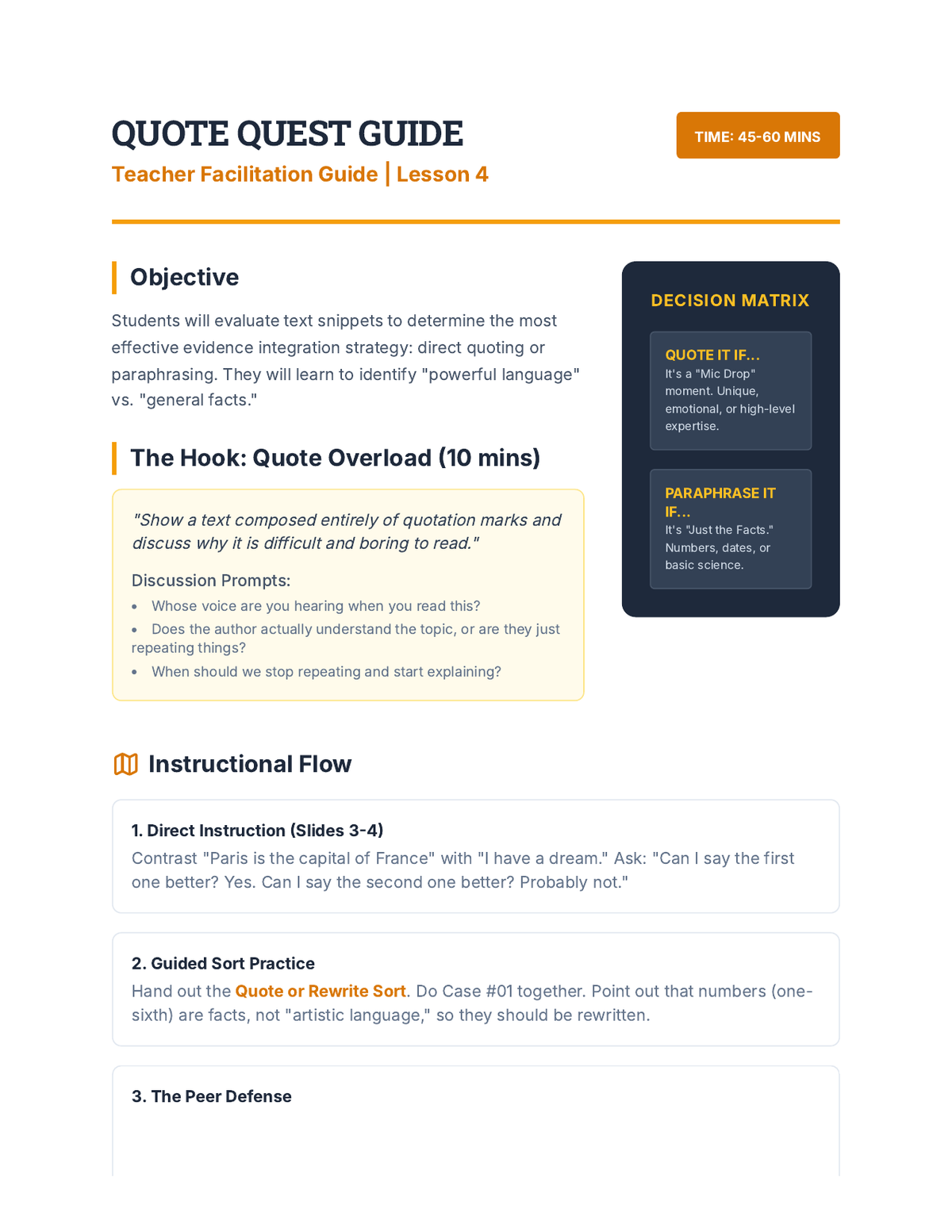
Teacher guide for "Quote Quest" lesson. It outlines the decision-making criteria for quoting vs. paraphrasing, provides instructional steps, and includes an answer key for the sorting activity.
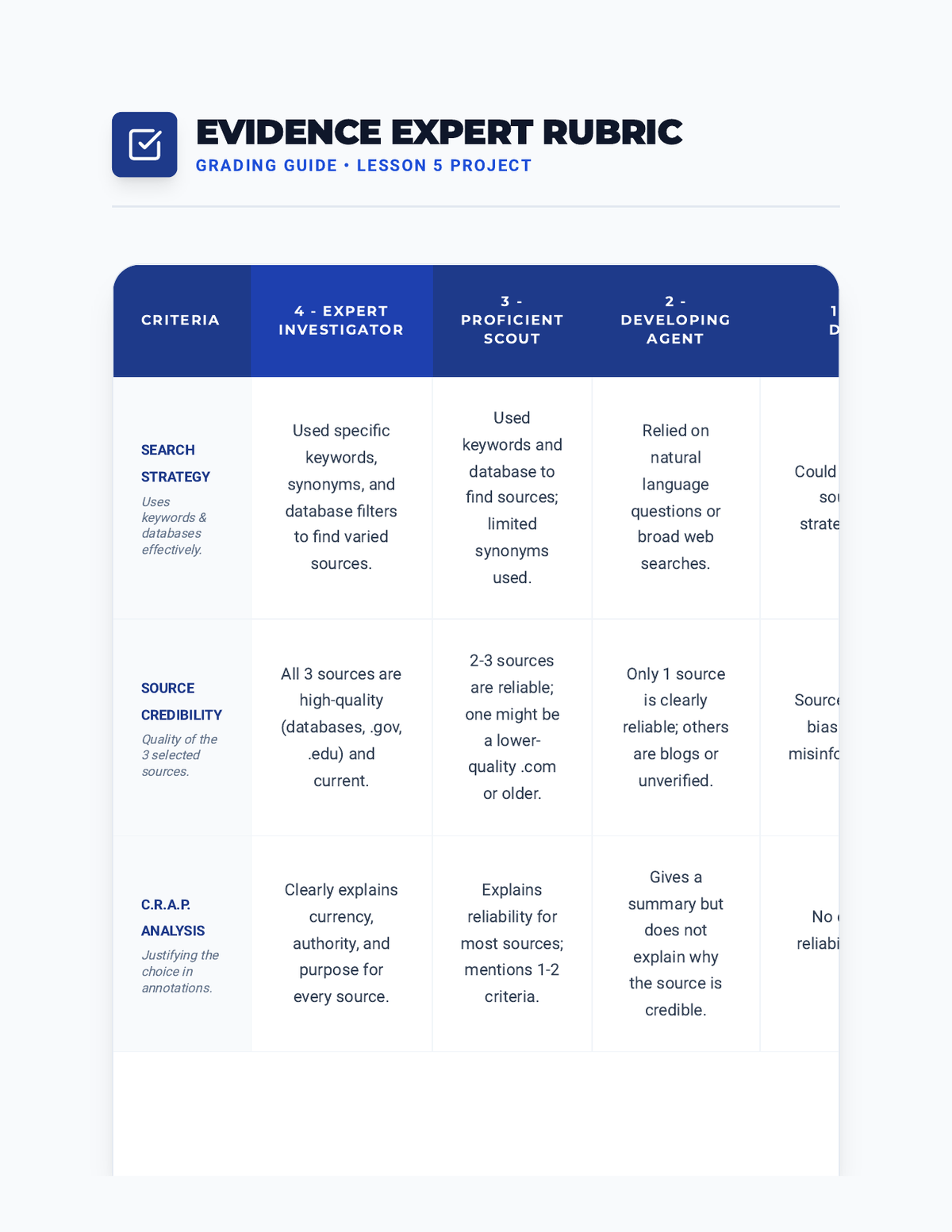
A grading rubric for the final Curator Challenge project, assessing search strategies, source credibility, and annotation quality.
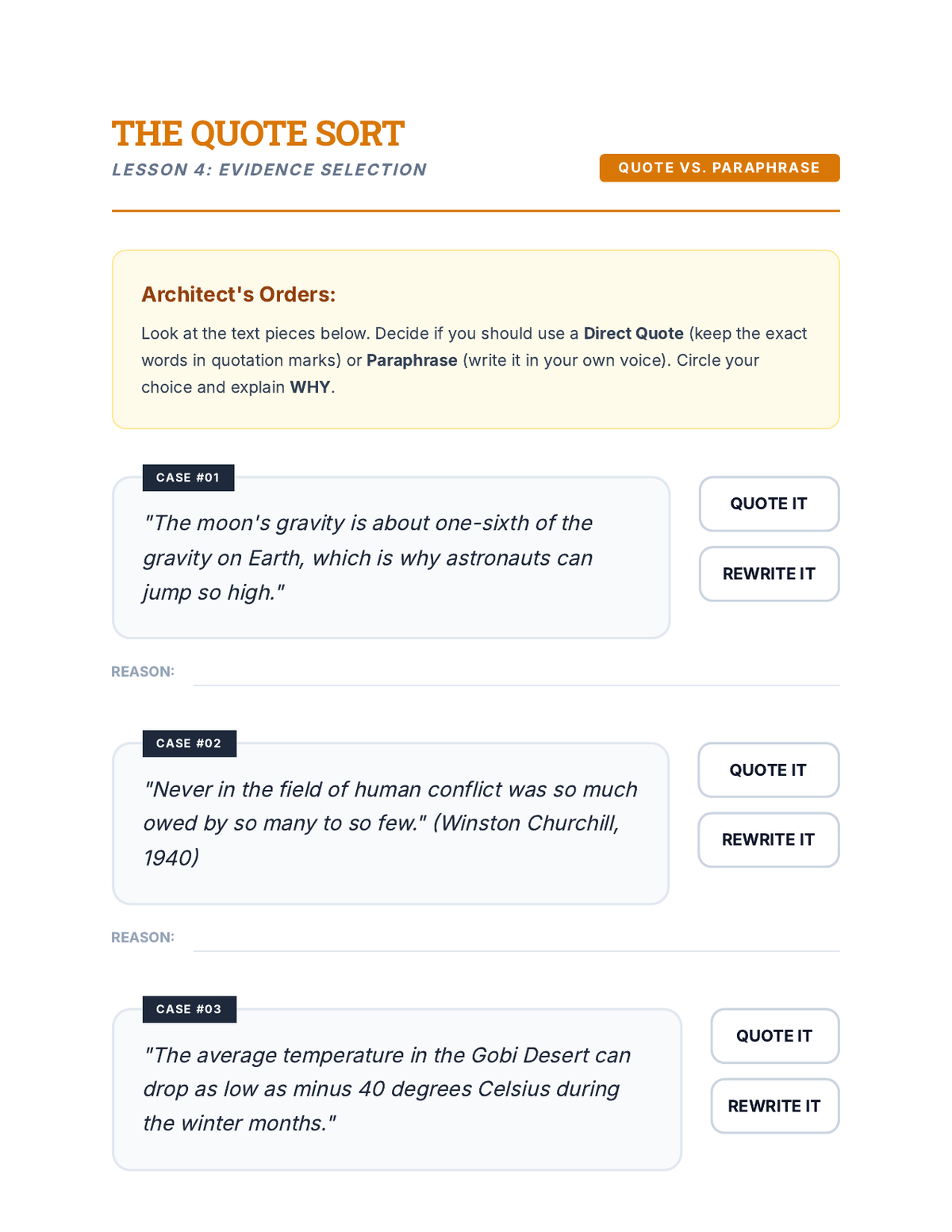
Student activity for "Quote Quest" lesson. It presents several textual scenarios and requires students to decide whether to use a direct quote or a paraphrase, providing a justification for their choice.
Introductory slide deck for Lesson 4, teaching students how to read and interpret search result snippets, titles, and bolded terms before clicking.
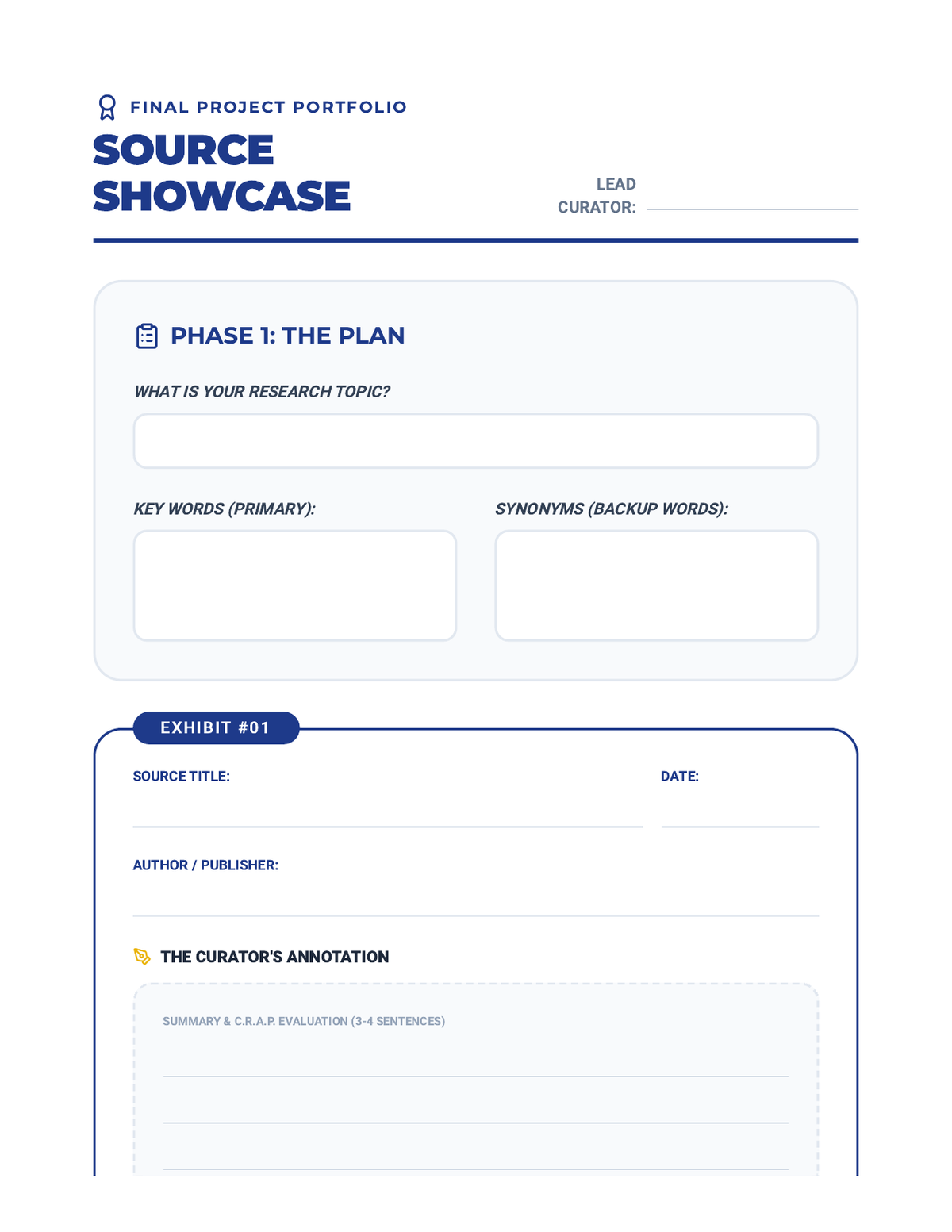
A culminating project template where students select a research topic and curate three credible sources with justifications.
Visual slides for "Quote Quest" lesson. These slides help students distinguish between when to use direct quotes for impact and when to paraphrase for factual clarity.
A visual presentation for Lesson 5 introducing the final project: curating a list of three credible sources with annotations. It covers the purpose of annotations and project expectations.
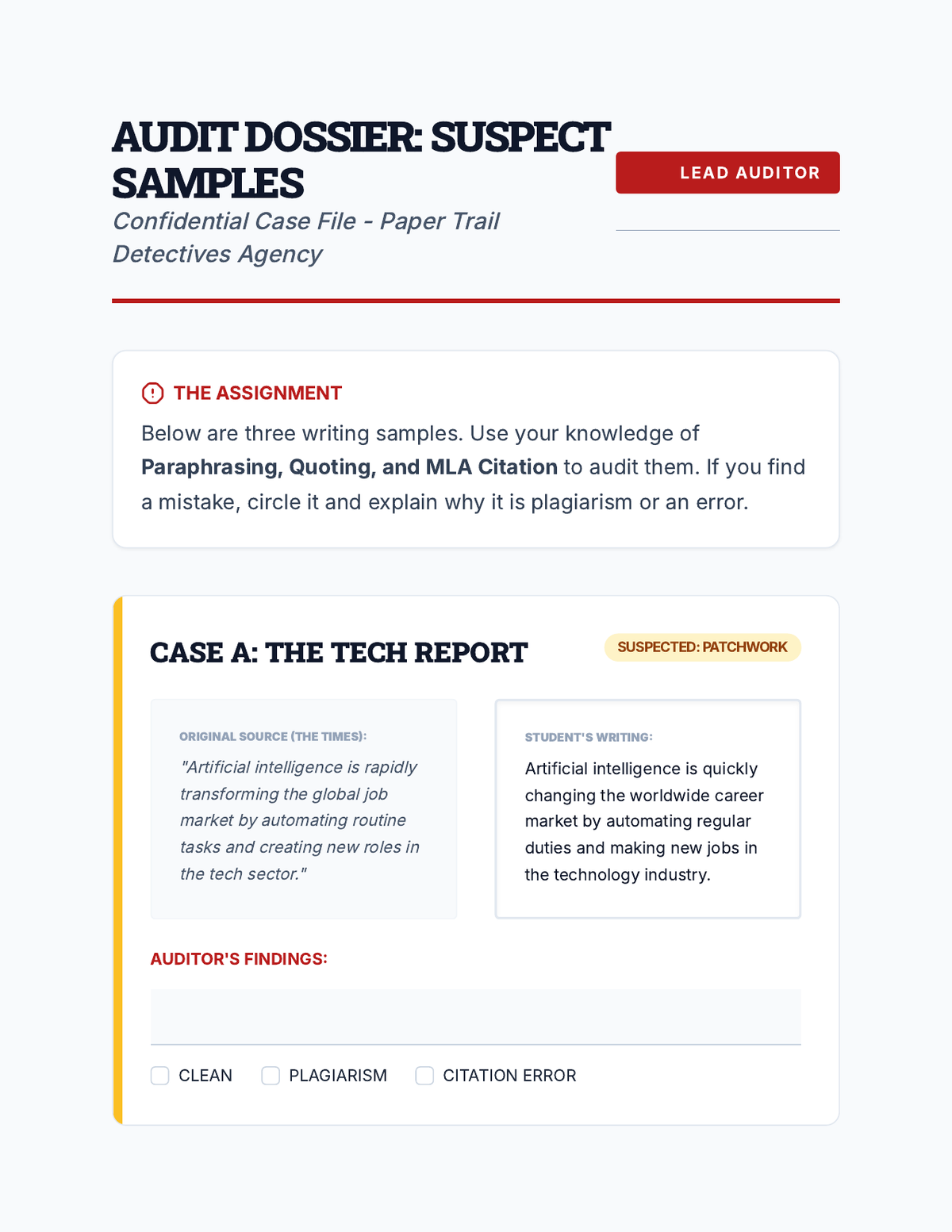
A student assessment document for Lesson 5 where they act as editors to identify and correct plagiarism and citation errors in research samples.
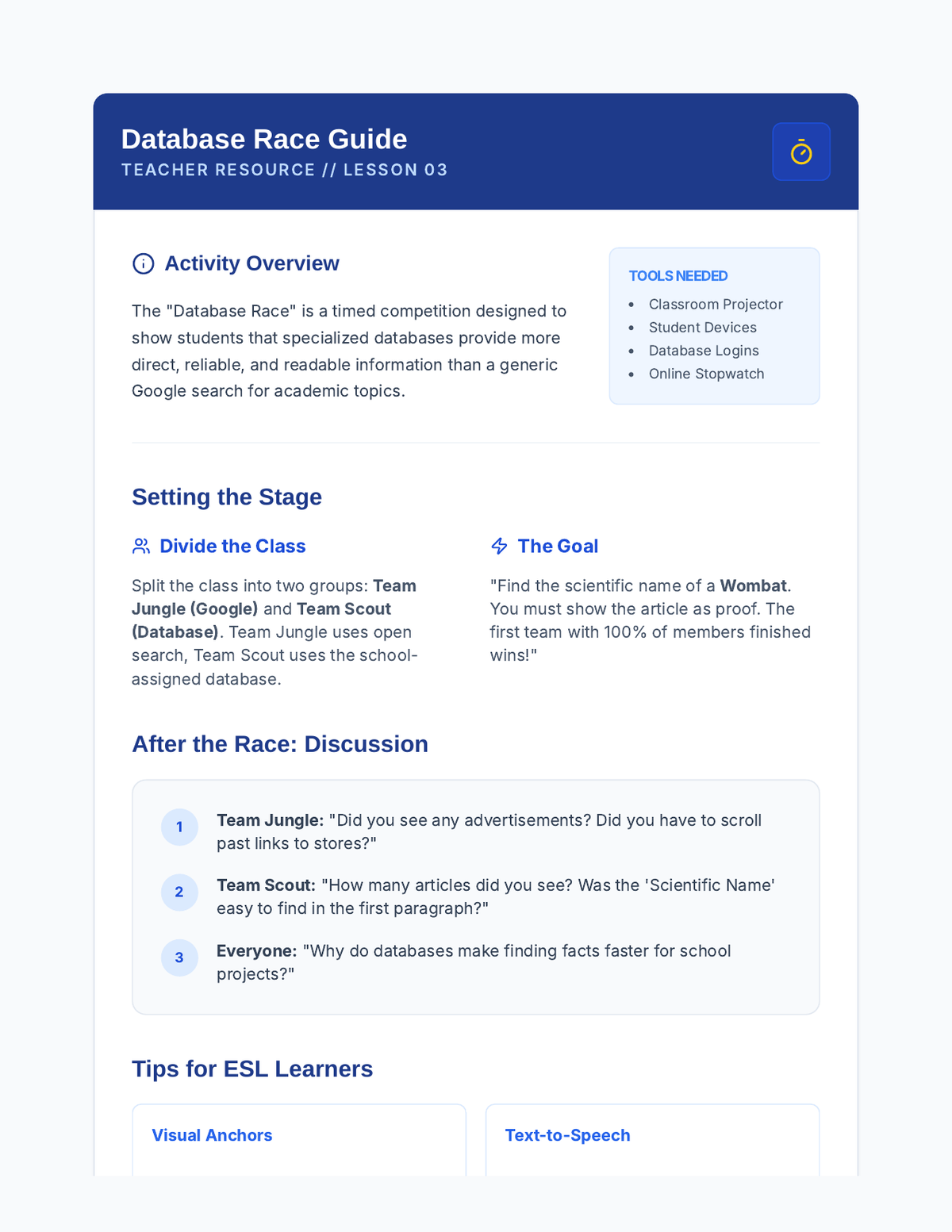
Teacher facilitation guide for Lesson 3, providing instructions for the "Database Race" activity and tips for database exploration.
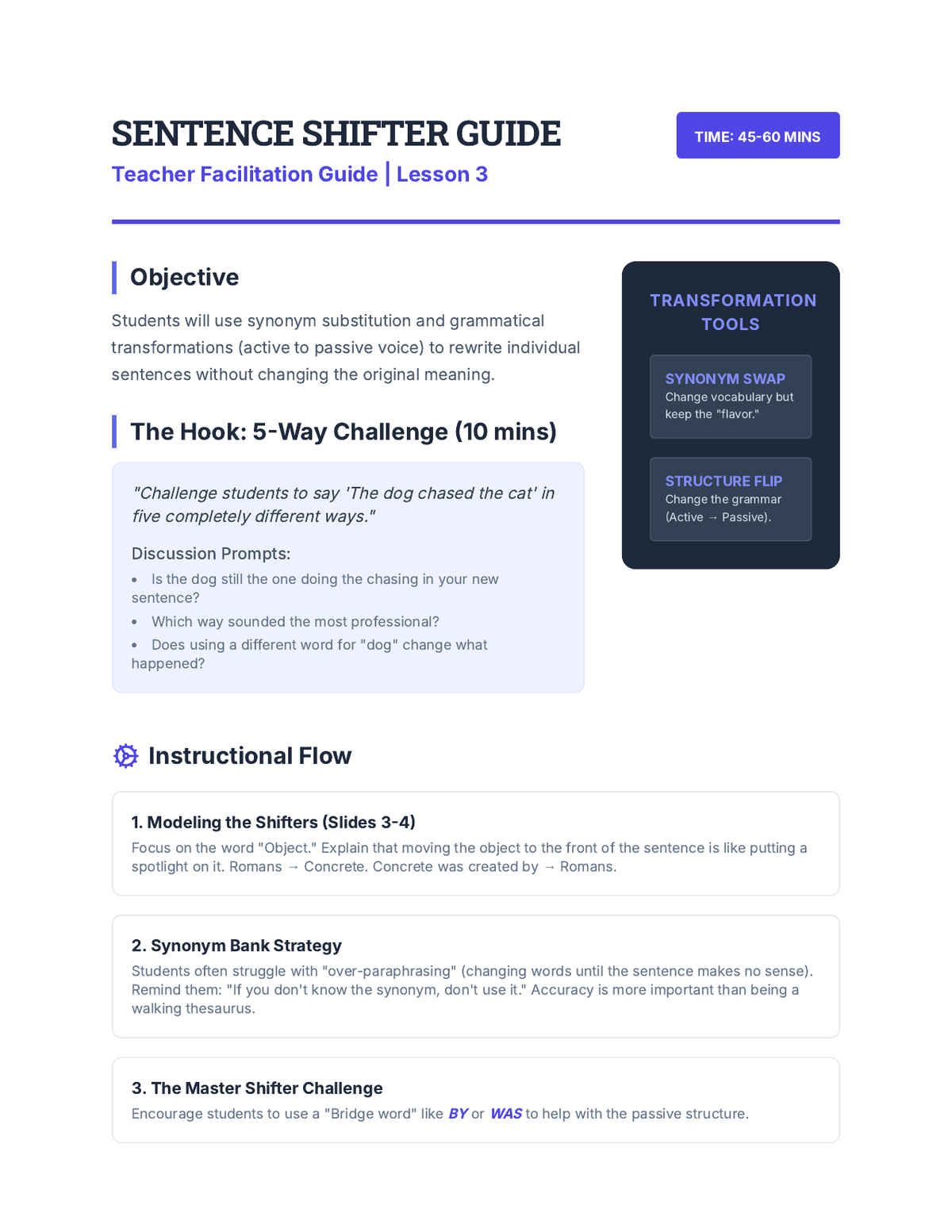
Teacher guide for "Sentence Shifters" lesson. It outlines the instructional flow for synonym substitution and active-to-passive transformation, including a sample answer key.
The introductory slide deck for the capstone Lesson 5 simulation, setting the stage for the plagiarism audit activity.
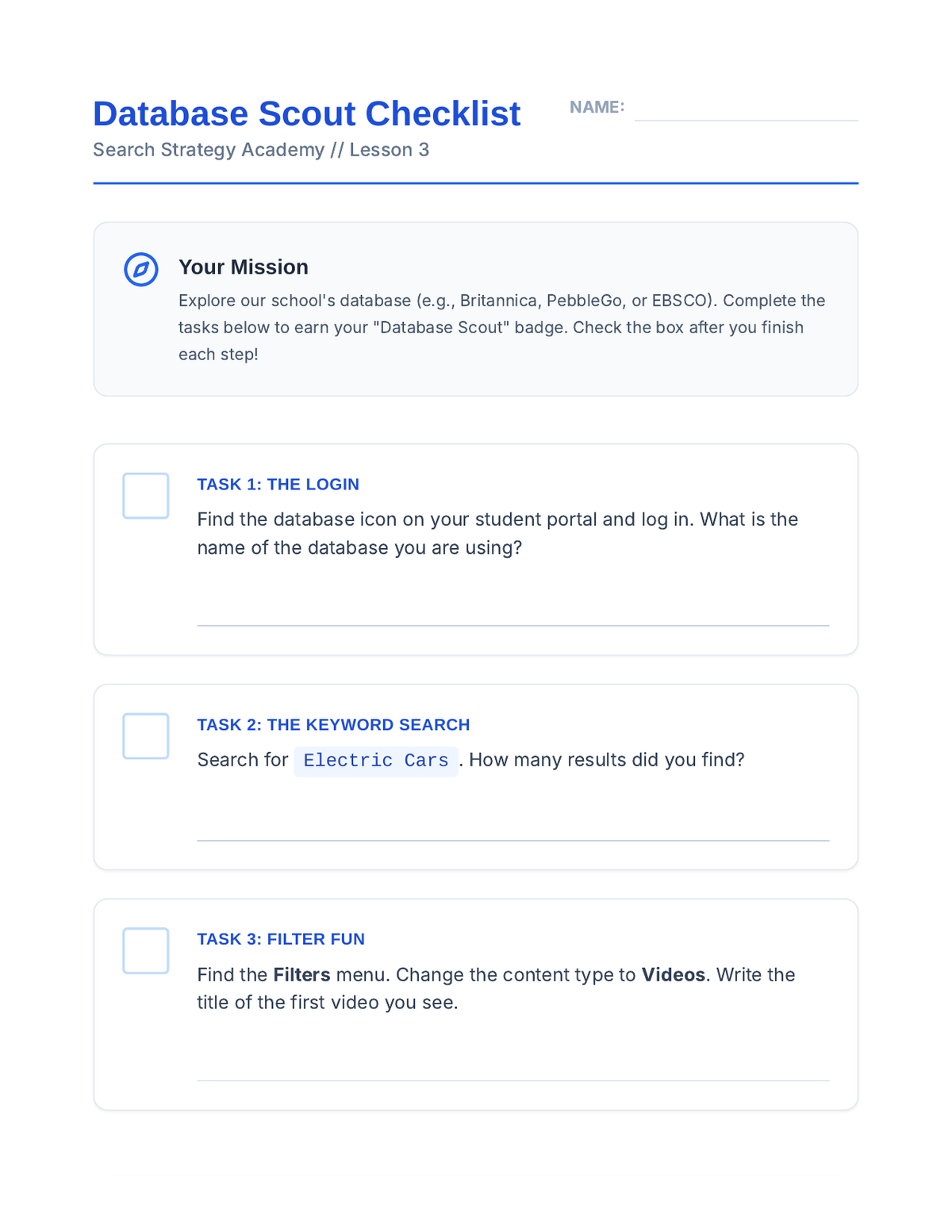
Student checklist for Lesson 3 where students explore an academic database by performing a keyword search, applying filters, and identifying metadata.
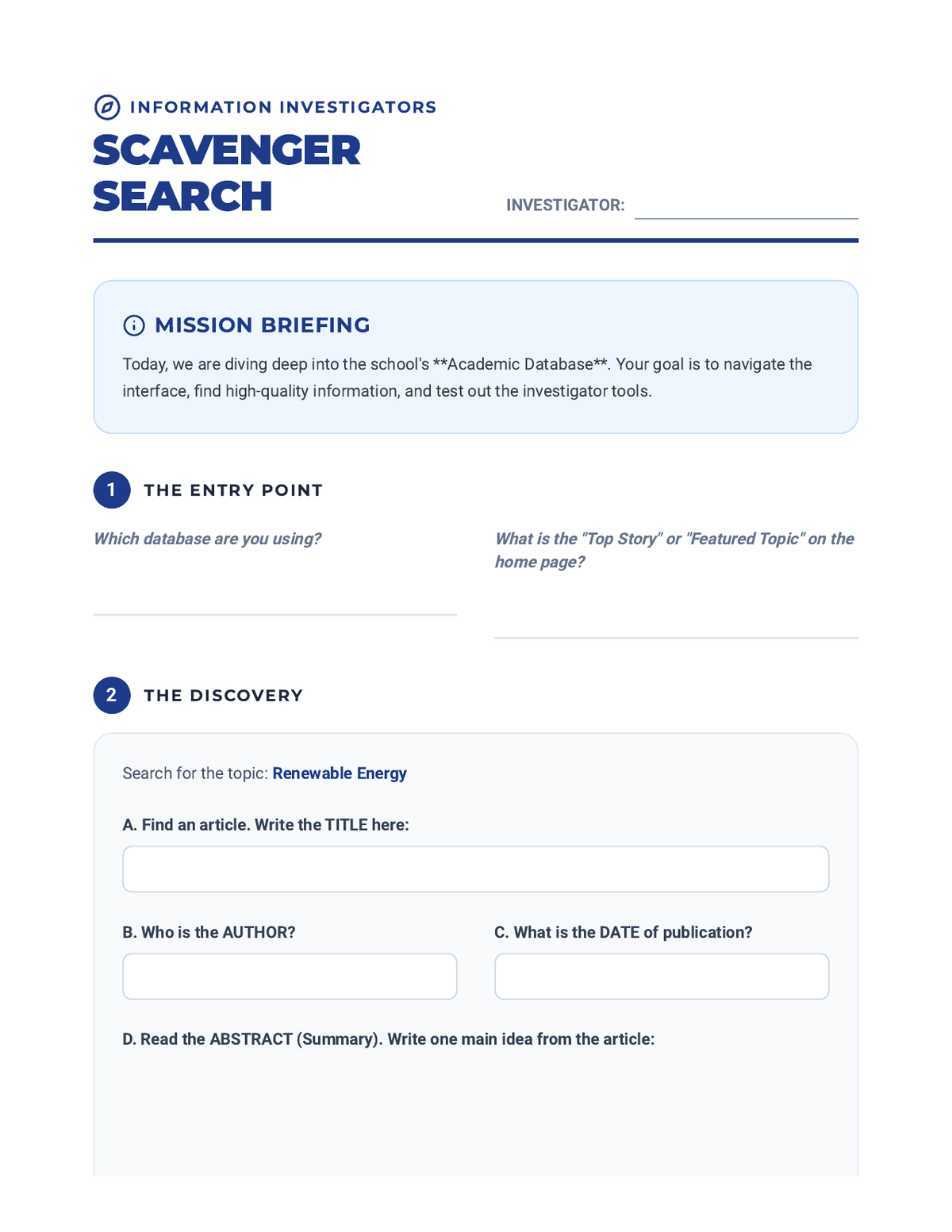
A student worksheet for practice with navigating academic database interfaces, reading abstracts, and using built-in research tools.
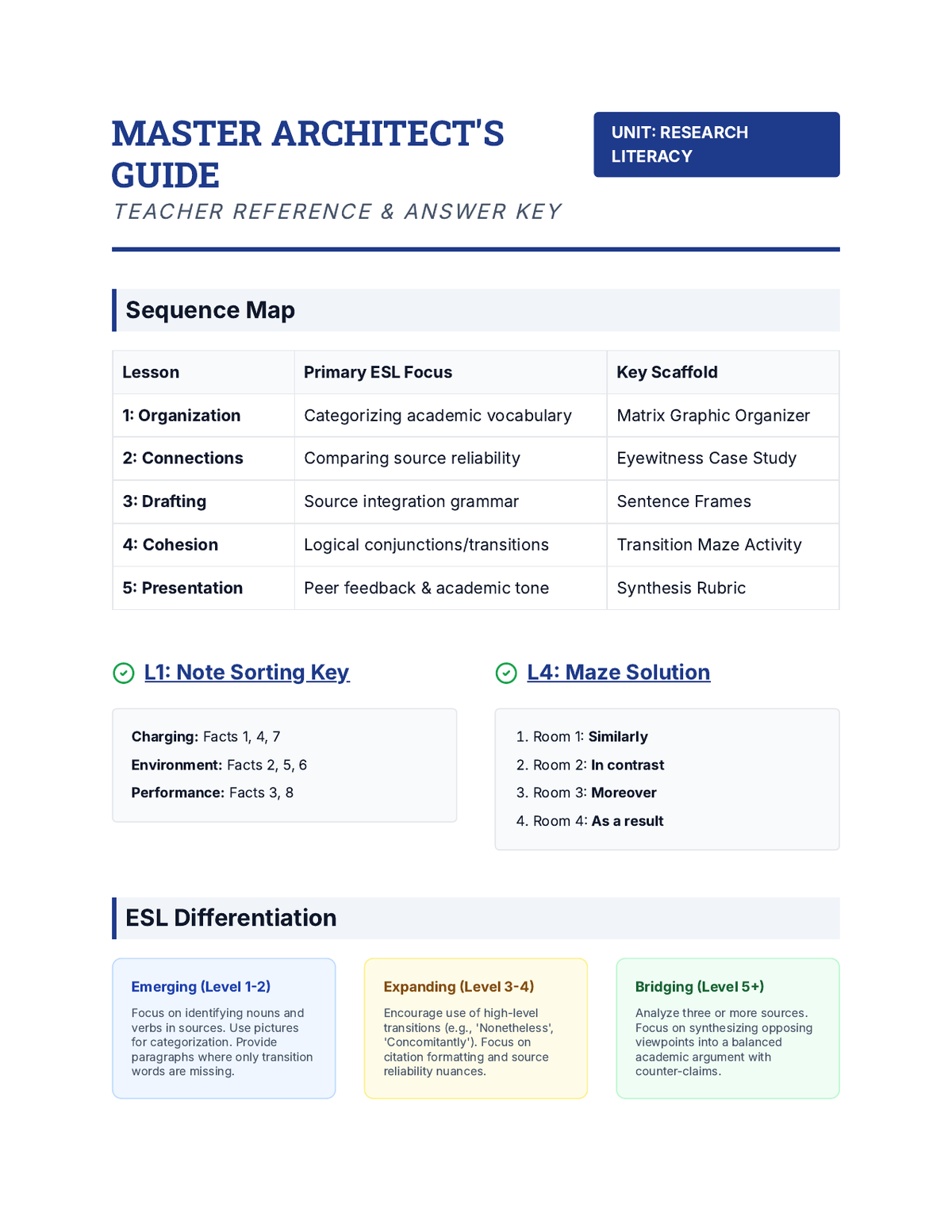
A comprehensive teacher-facing guide for the synthesis sequence. Includes the sequence map, answer keys for the Note Sorting and Transition Maze activities, differentiation strategies for various ESL levels, and a quick-check grading rubric.