Slides for Lesson 3 on Point of View and Perspective. Using a 'Mystery Spill' and 'Swing Dispute' as case studies, students learn to identify how a narrator's perspective influences the mood and facts of a story.
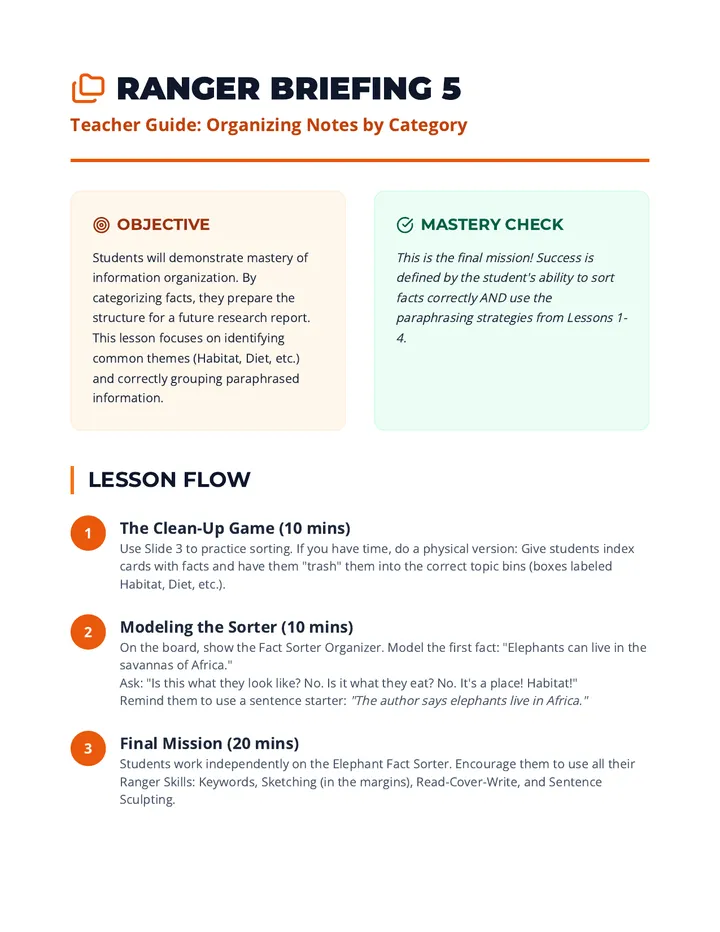
Teacher guide for Lesson 5. Features category sorting challenges, instructional tips for using graphic organizers, and a summary of the Research Ranger sequence.
Printable 'Lead Detective' badges to be awarded to students upon completion of the Information Detectives sequence.
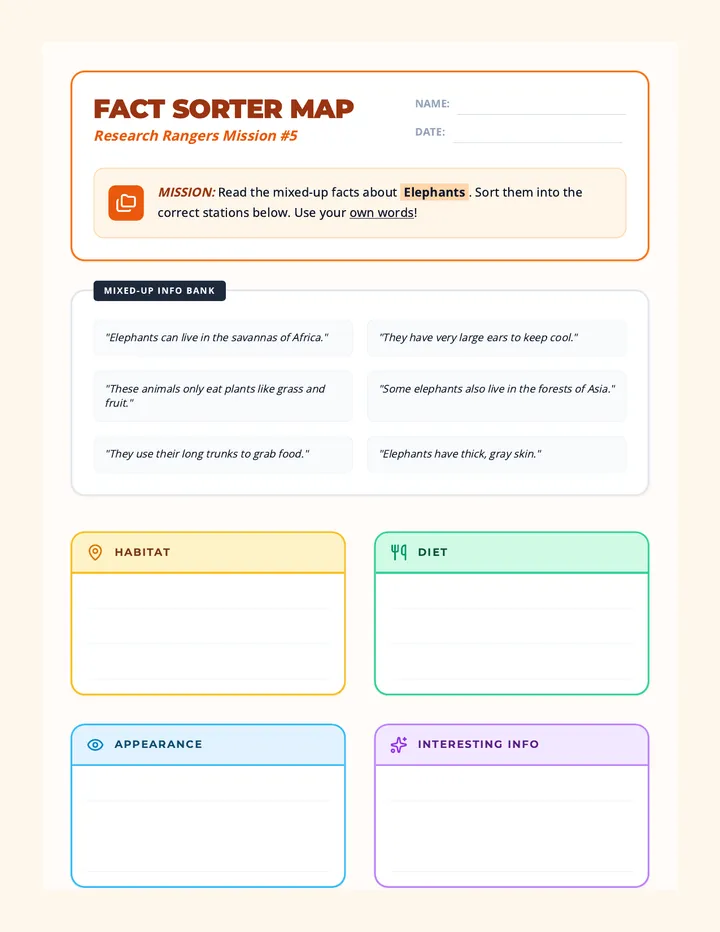
A student graphic organizer for sorting informational facts into categories (Habitat, Diet, Appearance, Interesting Info). Features a bank of elephant facts for sorting practice.
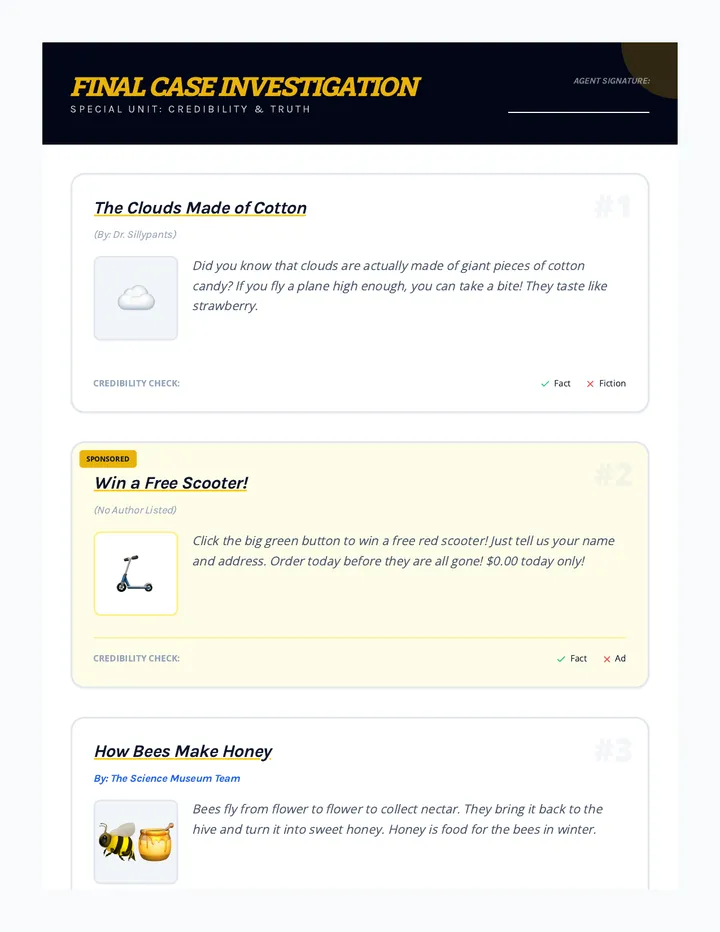
A final assessment worksheet where students investigate three articles and determine which is a credible fact based on their 'Information Detective' skills.
Student worksheet for Lesson 5, featuring simulated search results (snippets) that students must evaluate to choose the most appropriate source for a research question about astronauts.
Educational slides for teaching students how to organize information into categories using a graphic organizer. Includes a sorting hook and visual guide for the 'Fact Sorter' activity.
Teacher's guide for Lesson 5, focusing on evaluation of digital search snippets and teaching students to use titles and summaries as evidence for source selection.
A slide deck for Lesson 5 that guides students through their final case investigation and badge ceremony.
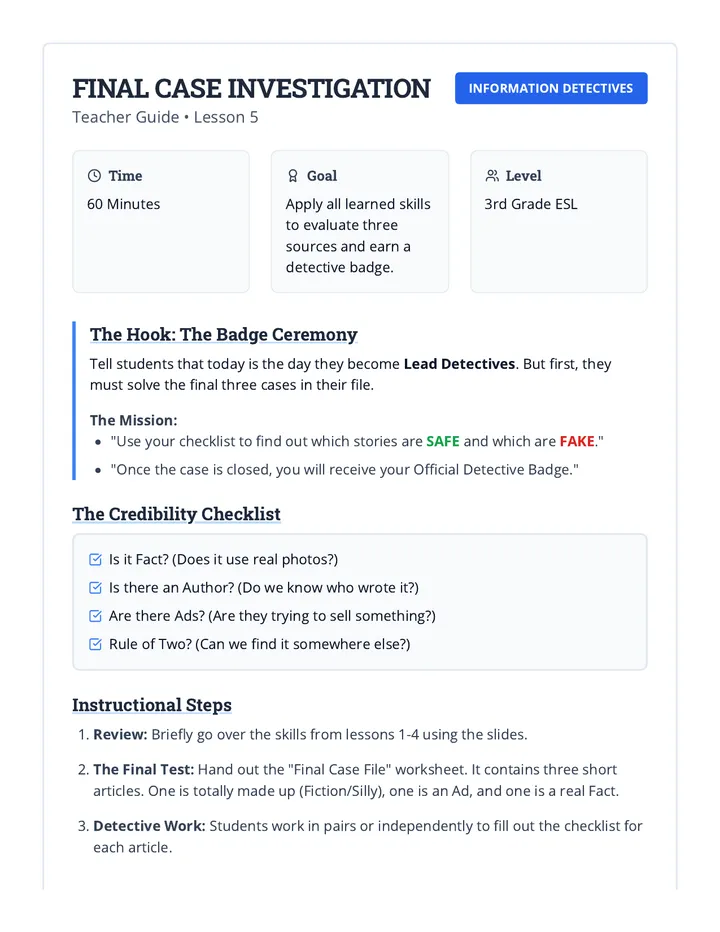
A teacher guide for Lesson 5, the culminating lesson where students apply their skills to investigate final cases and earn detective badges.
Slides for Lesson 5 on selecting digital sources, teaching students to evaluate search results by reading titles and summaries (snippets) before clicking.
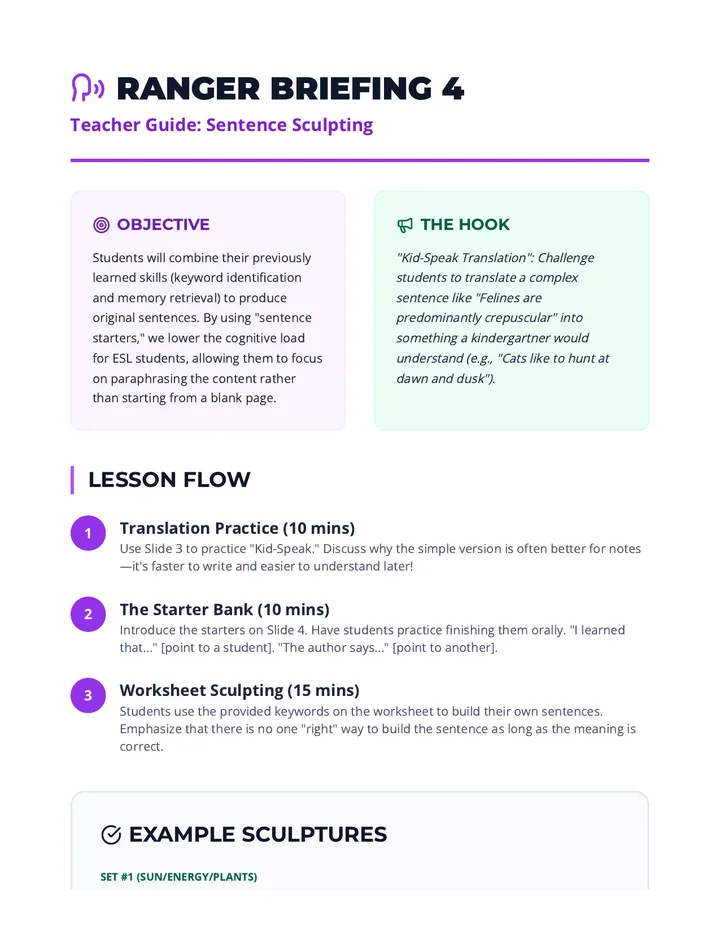
Teacher guide for Lesson 4. Features kid-speak translation challenges, exemplar paraphrased sentences, and instructional tips for using sentence starters effectively.
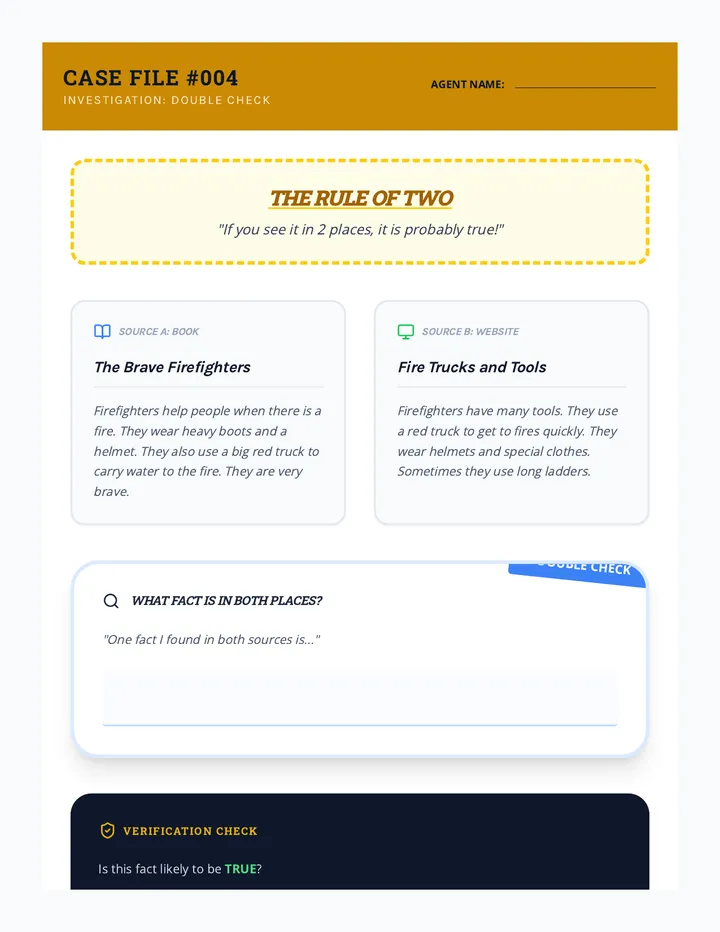
A student worksheet for cross-checking facts across two different short texts about firefighters.
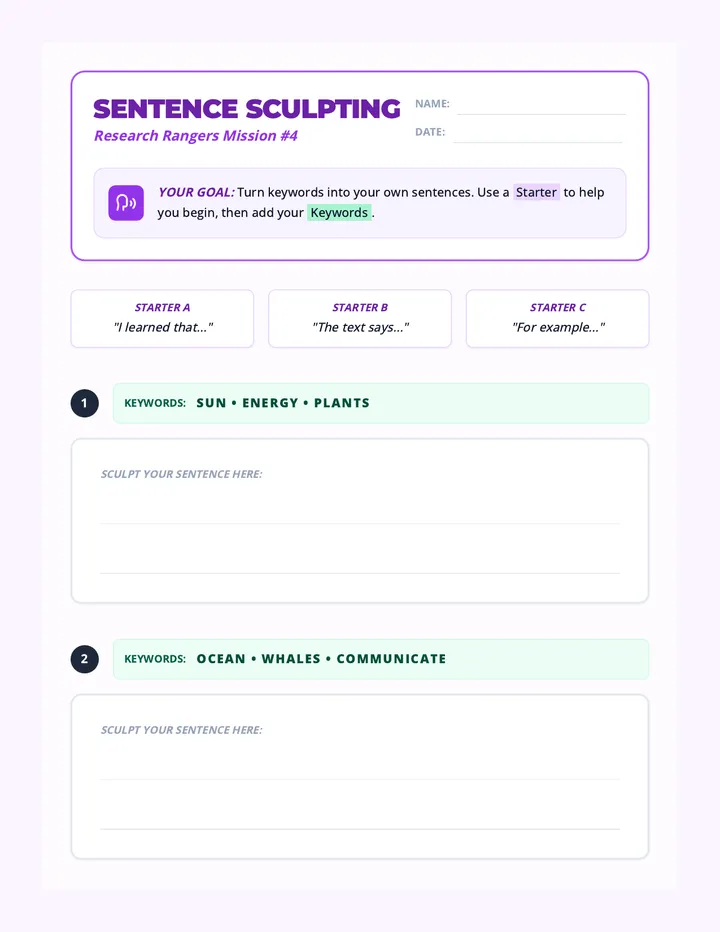
A student worksheet for practicing sentence construction using sentence starters and keywords. Features three structured practice areas and a self-check rubric.
Student sorting activity for Lesson 4, where they must cut and glue facts about honeybees into relevant and irrelevant categories based on a specific research question.
A slide deck for Lesson 4 that teaches students how to verify information using the 'Rule of Two' (cross-checking).
Educational slide deck for teaching students how to use sentence starters and kid-speak translation to paraphrase information. Includes a bank of starters and guided transformation examples.
Teacher's guide for Lesson 4, focusing on the relevant vs. irrelevant sorting activity with academic language support for ESL students.
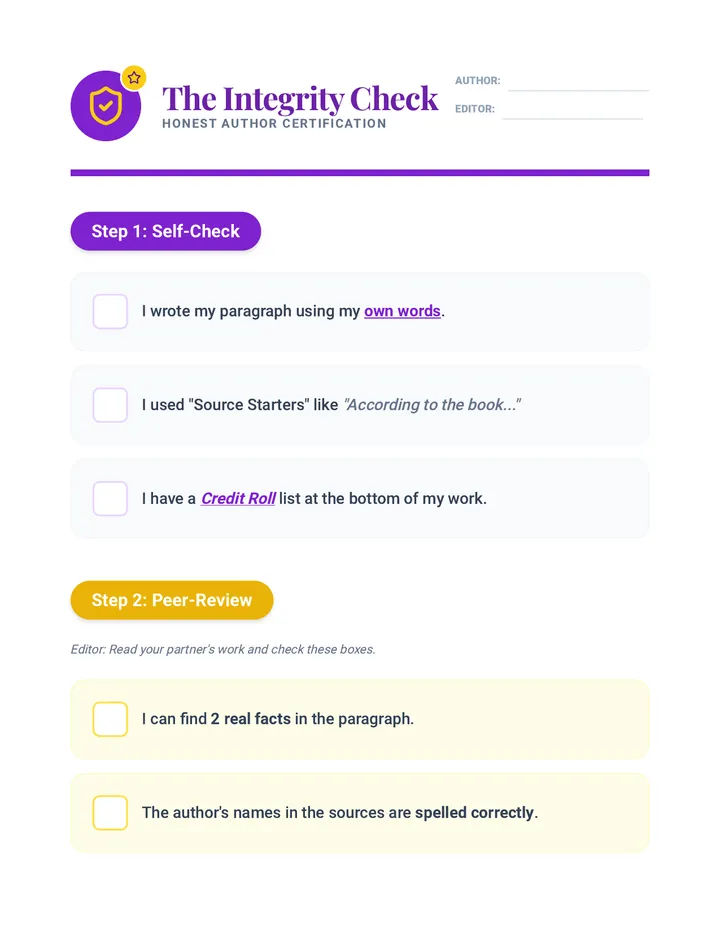
Integrity checklist and peer-review guide for students to finalize their research projects with self and peer assessment.
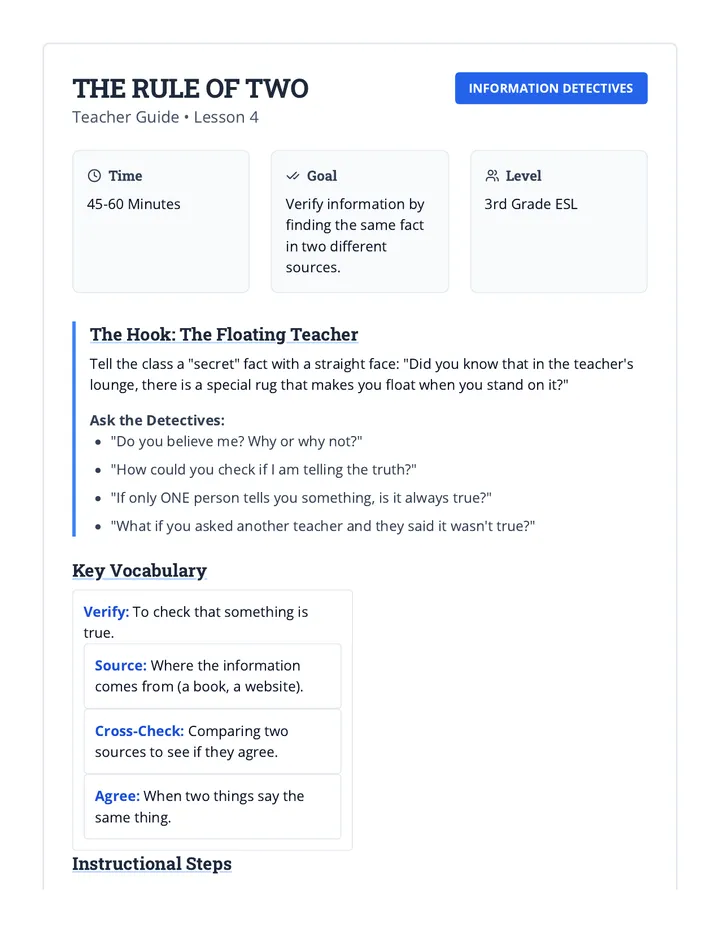
A teacher guide for Lesson 4 focusing on the 'Rule of Two' and cross-checking facts across multiple sources.
Slides for Lesson 4 on distinguishing between relevant and irrelevant information, featuring the suitcase hook, vocabulary definitions, and shark-themed practice sorting.
Final slide deck teaching students how to peer-review research for integrity, focus on original words, facts, and sources.
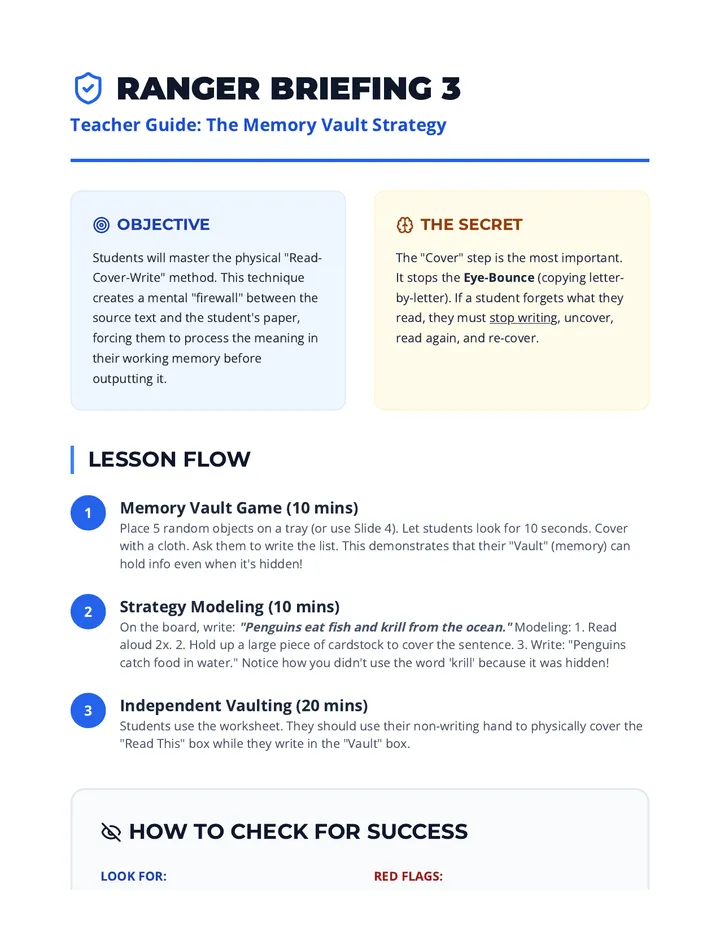
Teacher guide for Lesson 3. Includes the Memory Vault tray game instructions, modeling scripts, and an assessment checklist for detecting 'eye-bounce' vs. genuine paraphrasing.
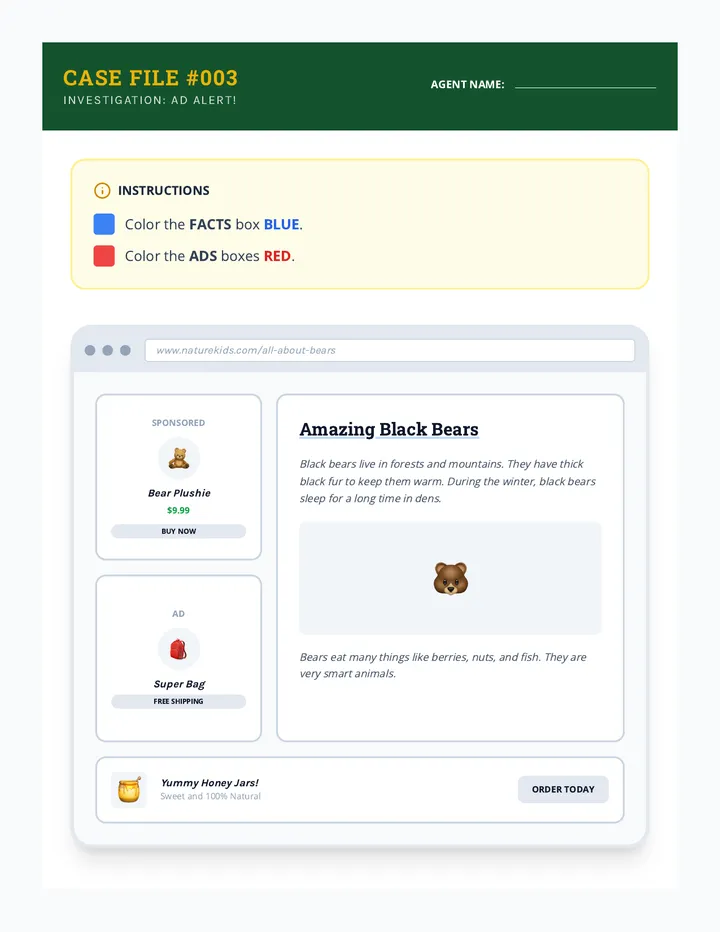
A student worksheet for identifying and color-coding advertisements and informational content on a mock website layout.
Student scavenger hunt worksheet for Lesson 3, guiding students to use the Table of Contents, Index, and Glossary of a physical non-fiction book to find specific information.
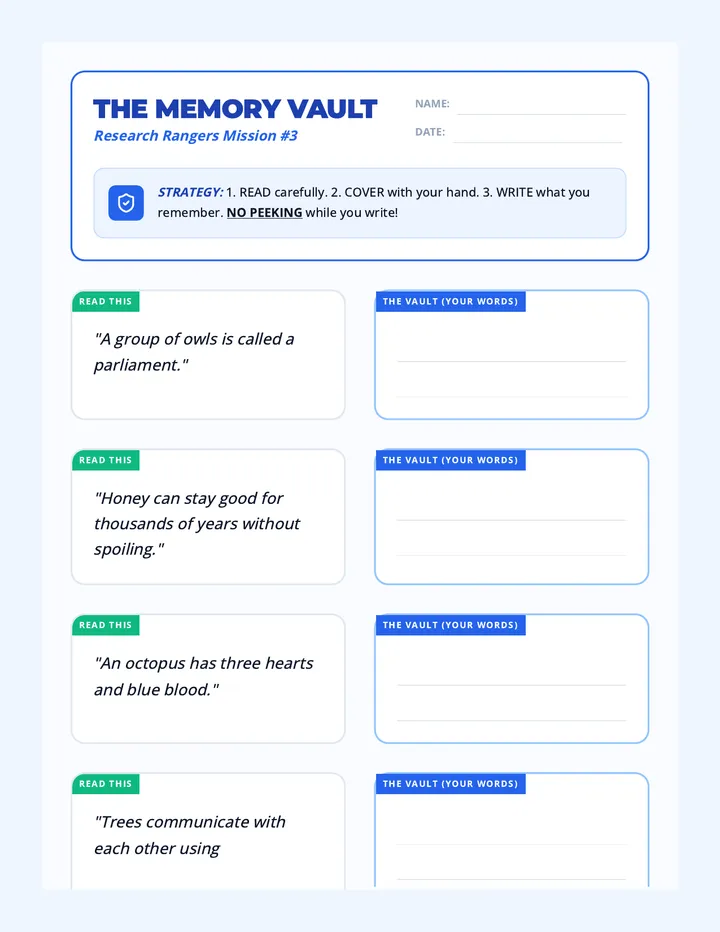
Student practice sheet for the 'Read-Cover-Write' strategy. Features side-by-side source text and student response areas designed to be used with a hand-covering technique to prevent copying.
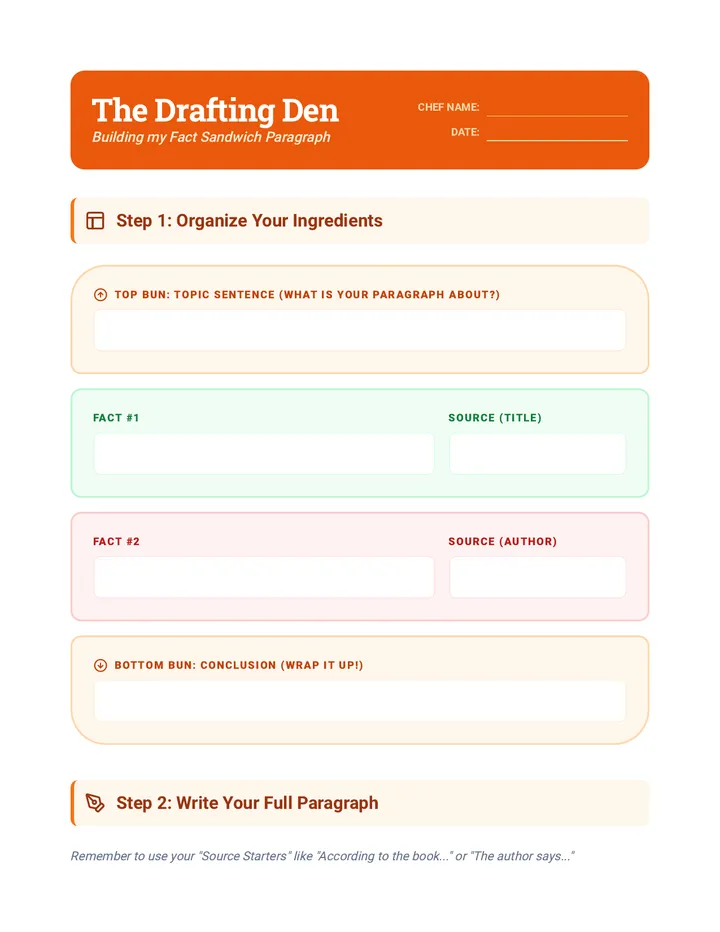
Graphic organizer using the 'Fact Sandwich' analogy to help students draft a research paragraph with intro, facts, sources, and a conclusion.
A slide deck for Lesson 3 that teaches students how to recognize advertisements on websites using visual clues like buttons, price tags, and labels.
Teacher's guide for Lesson 3, including the Scavenger Race hook, modeling alphabetical order, and providing specific supports for locating text features in non-fiction books.
Educational slides for teaching the 'Read-Cover-Write' strategy. Introduces the 'eye-bounce' problem and provides a step-by-step guide for preventing plagiarism through memory recall.
Instructional slide deck teaching the 'Fact Sandwich' paragraph structure and how to incorporate source starters into a draft.
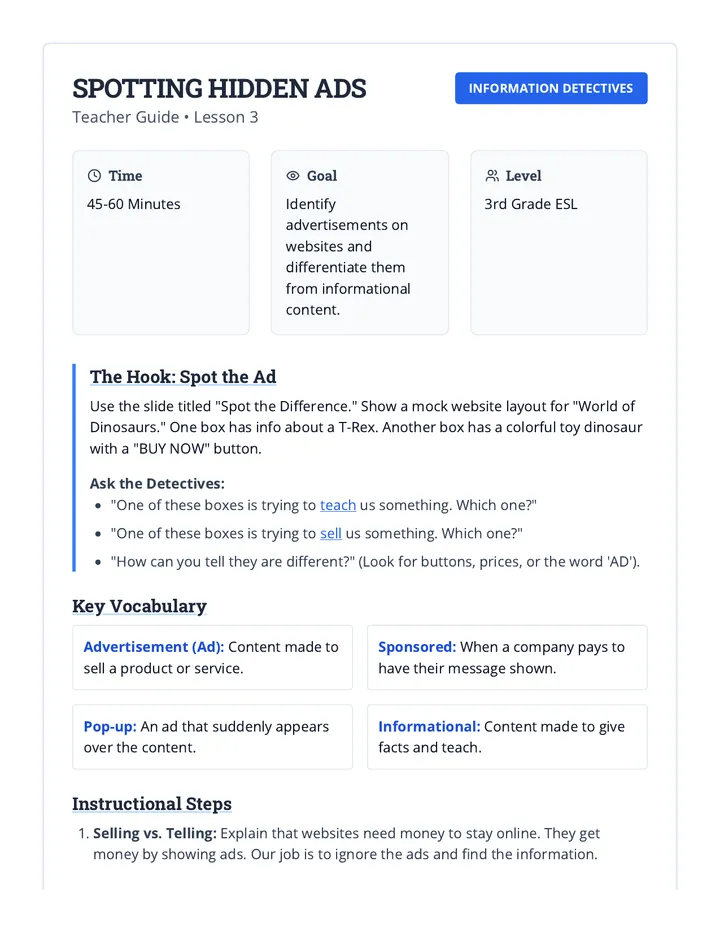
A teacher guide for Lesson 3 focusing on differentiating between advertisements and informational content on websites.
Slides for Lesson 3 on navigating non-fiction text features, covering the Table of Contents, Index, and Glossary with interactive practice questions.
A student worksheet for Lesson 2 where students identify authors in short articles and evaluate their credibility.
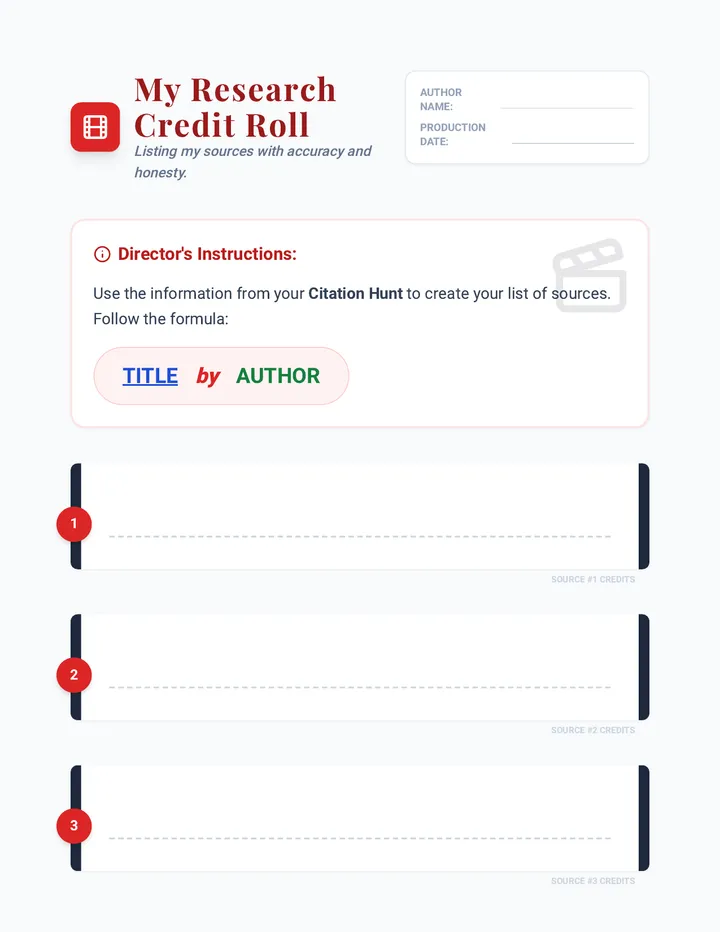
Practice worksheet for formatting sources into a simple 'Title by Author' list, styled like film credits.
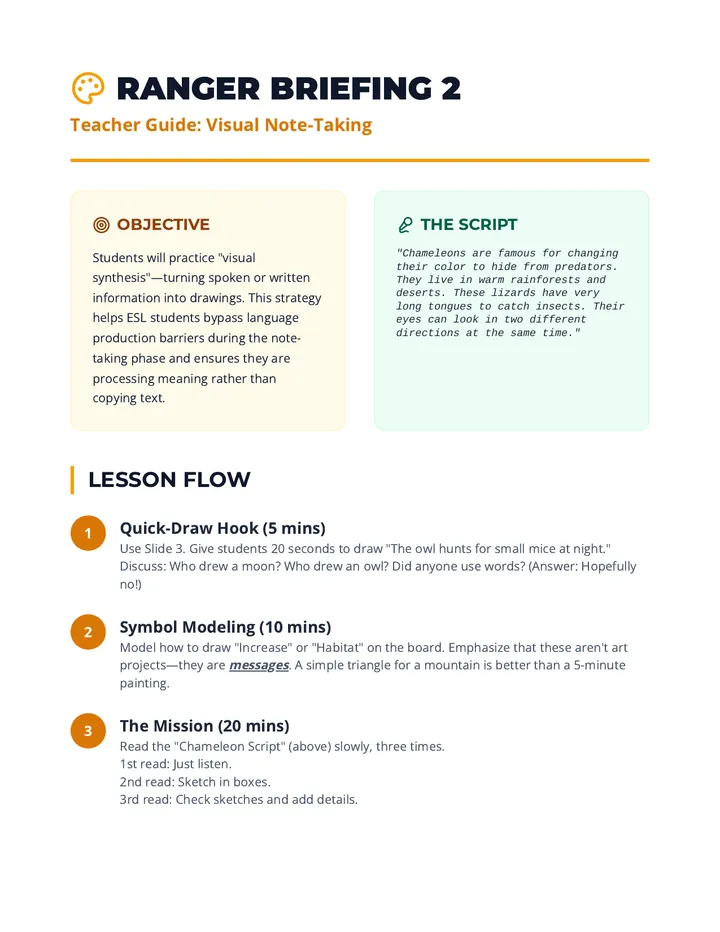
Teacher guide for Lesson 2. Includes the listening script (Chameleons), instructional steps for the quick-draw challenge, and facilitation tips for oral retelling.
Student worksheet for Lesson 2, providing practice in highlighting keywords in research questions and converting them into efficient search strings.
Instructional slide deck teaching the 'Title by Author' citation format using a movie credits analogy to engage students.
A slide deck for Lesson 2 that teaches students how to identify authors, determine their expertise, and find the 'About Us' section on websites.
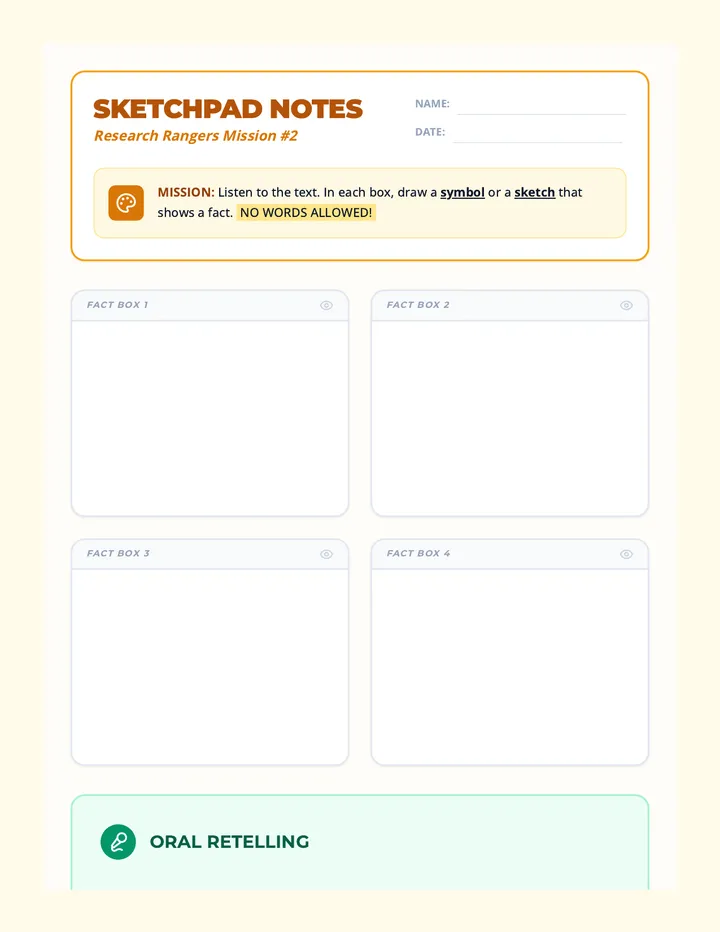
Student activity sheet for visual note-taking. Contains empty boxes for sketching facts and a section for peer retelling. Includes a small symbol cheat sheet for inspiration.
Teacher's guide for Lesson 2, including the Search Race hook, instructions for modeling keyword identification, and specific language support for ESL students.
Educational slides for teaching visual note-taking strategies. Introduces the concept of sketching facts to bypass language barriers and prevent plagiarism, including a quick-draw challenge and symbol guide.
A teacher guide for Lesson 2 focusing on identifying authors and using the 'About Us' section of websites to evaluate trust.
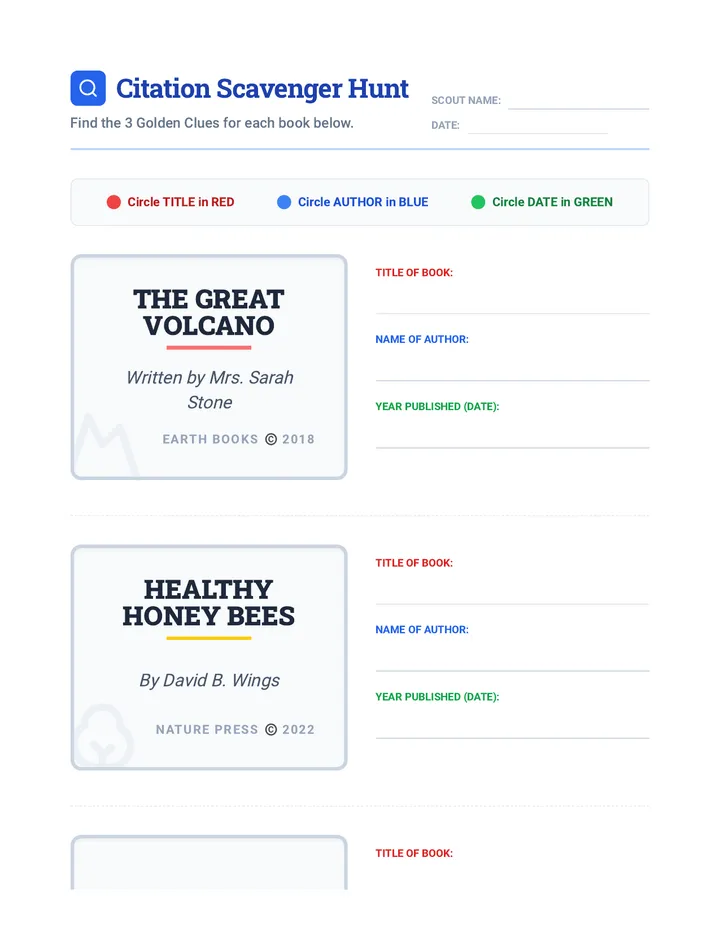
Scavenger hunt worksheet where students practice identifying and circling Title, Author, and Date on simulated book title pages.
Slides for Lesson 2 on keywords, comparing full sentences to keyword strings, identifying nouns and verbs, and emphasizing specificity in searching.
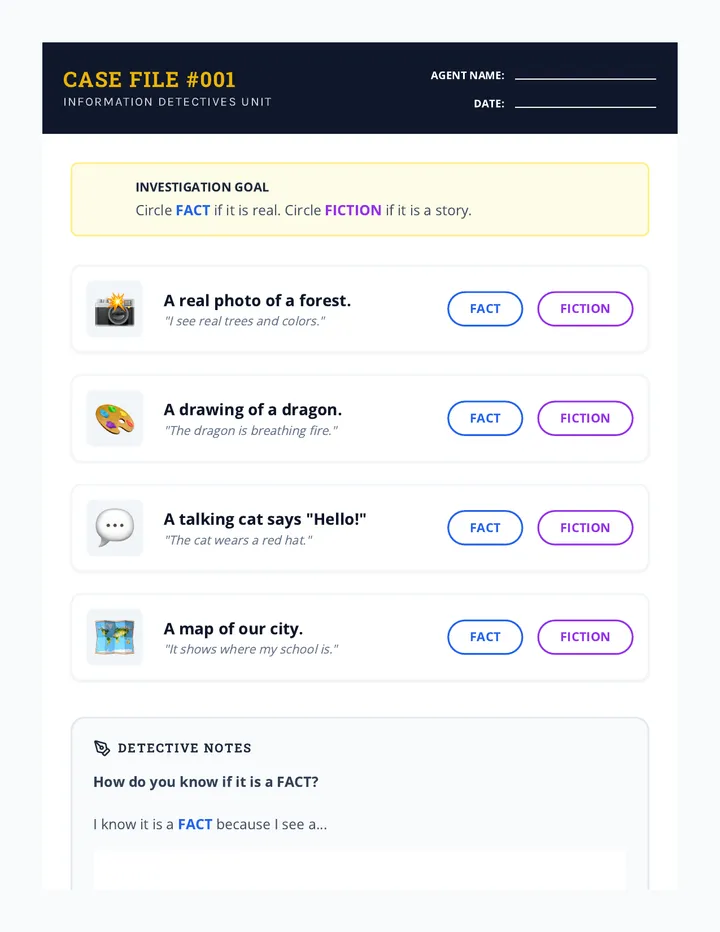
A student worksheet for sorting fact and fiction based on visual and content clues, including ESL sentence starters.
Instructional slide deck for identifying and locating key citation information (Title, Author, Date) in books and sources.
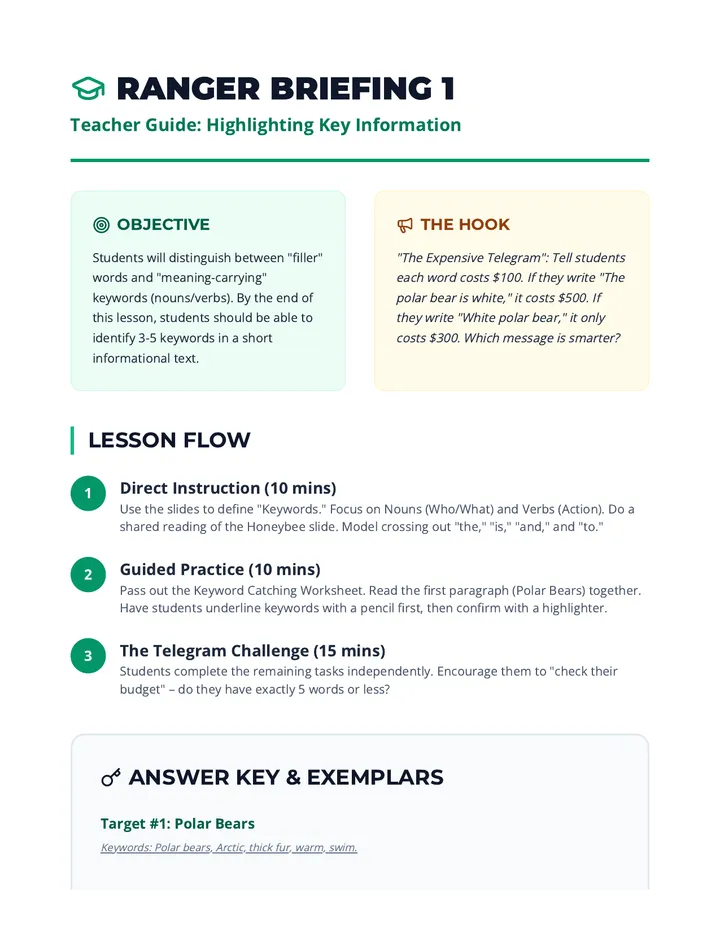
Teacher briefing and answer key for the 'Keyword Catching' lesson. Includes instructional steps, a hook strategy, and exemplar telegrams for the student worksheet.
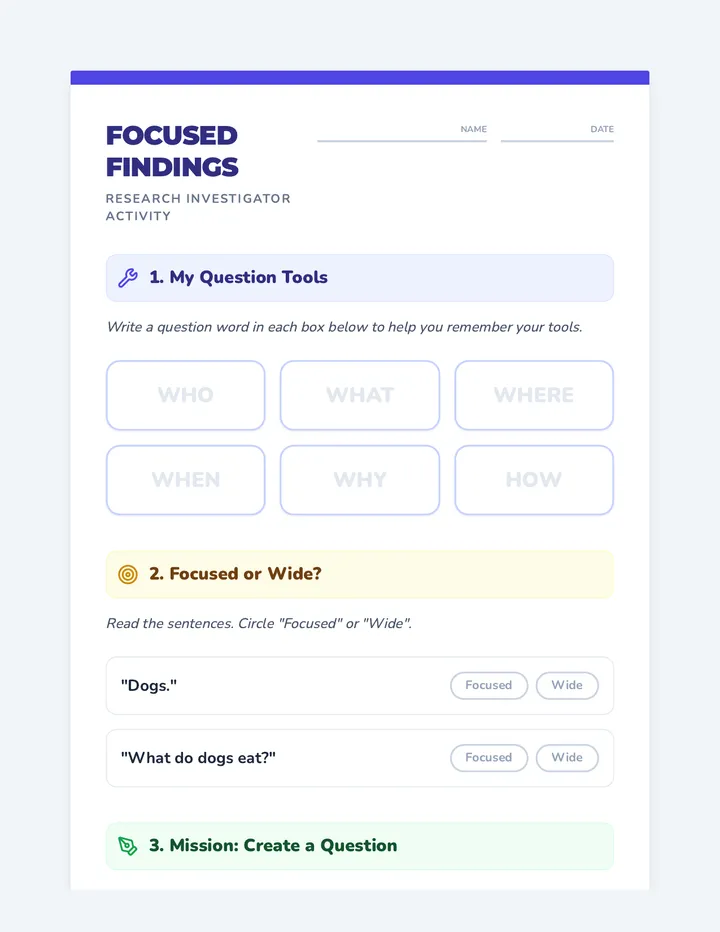
Student worksheet for Lesson 1, featuring a 5W+H review, a sorting activity for focused vs. wide questions, and a creative writing section for formulating a research question.
A slide deck for Lesson 1, introducing the Information Detectives concept and teaching the difference between fact and fiction using visual clues.
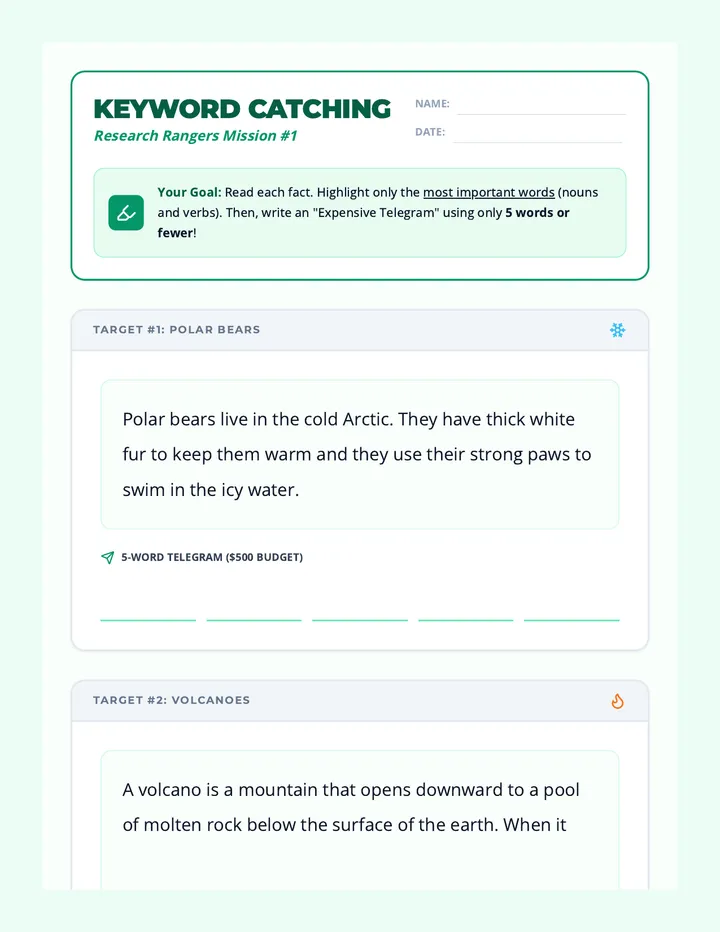
A student worksheet for practicing keyword highlighting and summarization. Students read short informational paragraphs, highlight key nouns and verbs, and write 5-word summaries.