Worksheet for students to match spoken commands to images and sequence multi-step directions.
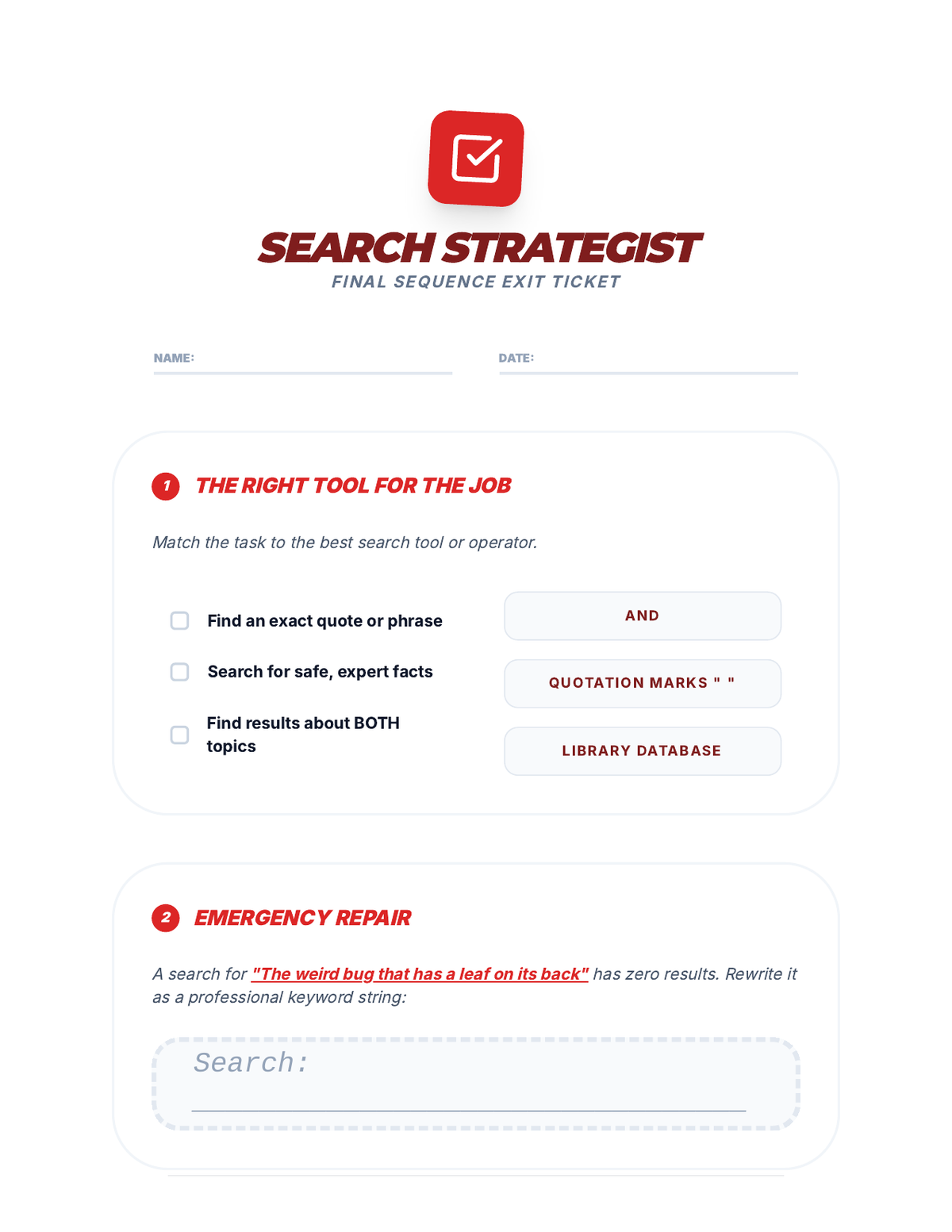
A cumulative exit ticket for the "Search Superstars" sequence, assessing student mastery of keywords, Boolean operators, text features, and database usage.
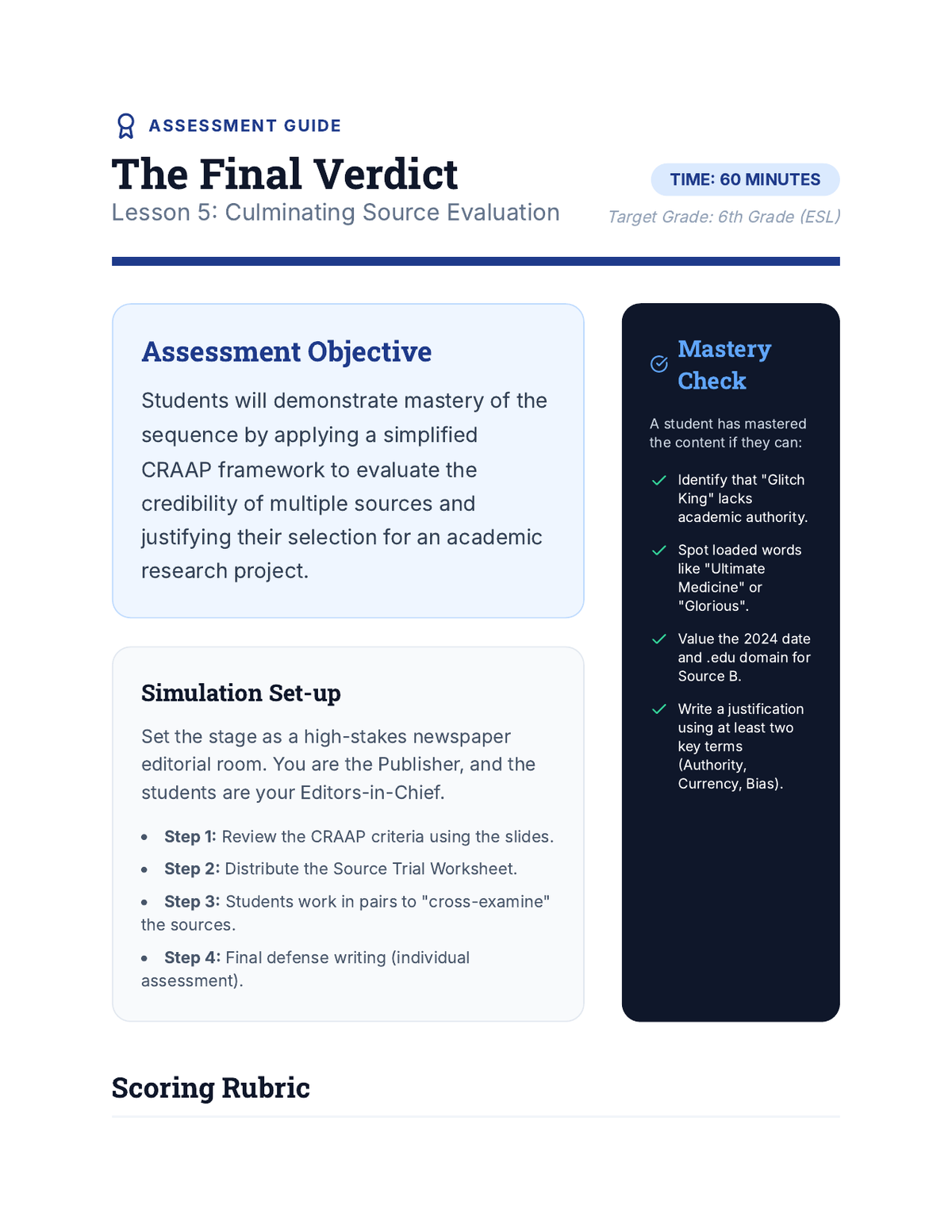
A teacher guide for the The Final Verdict lesson, providing a simulation setup, a scoring rubric for the assessment, and debrief discussion questions.
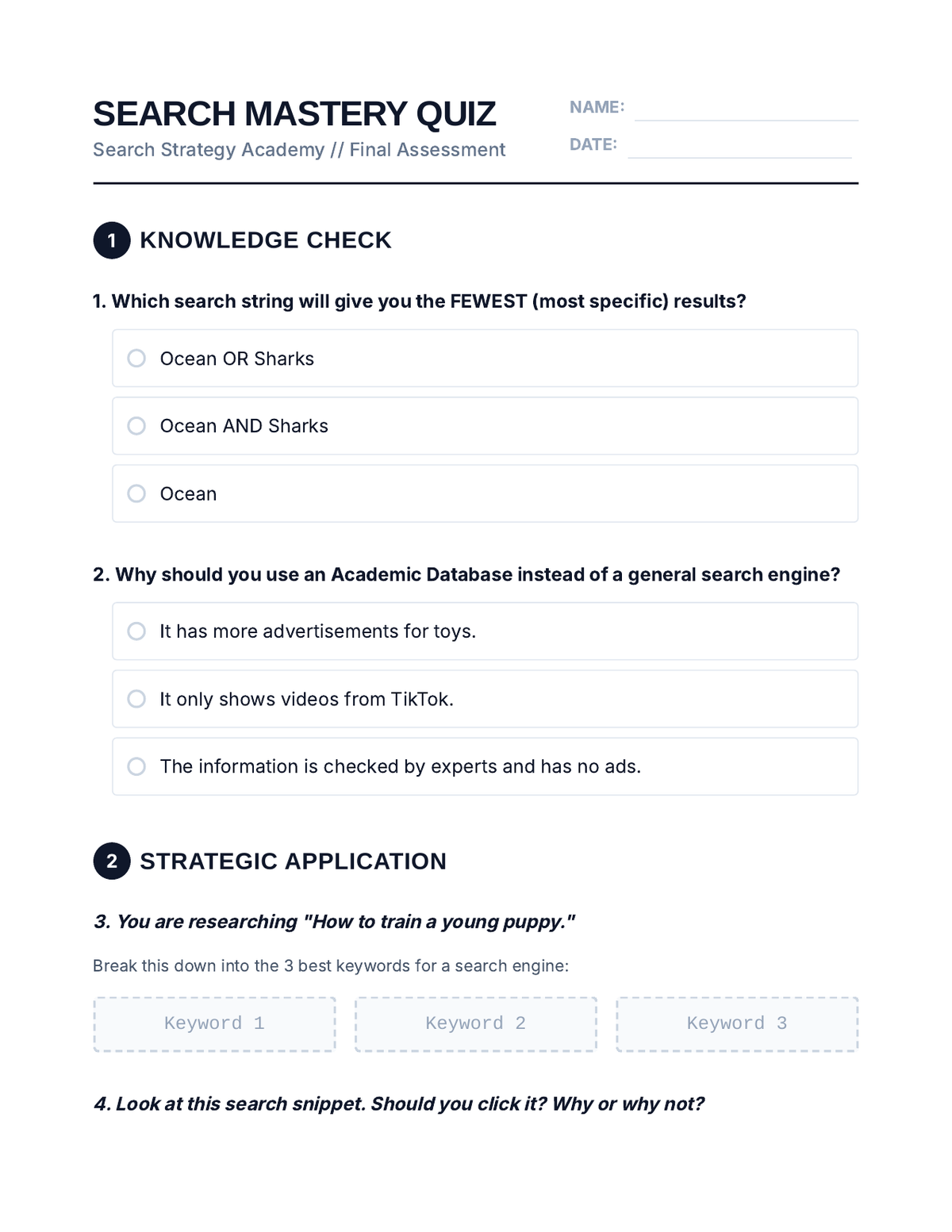
Final assessment for the Search Strategy Academy unit, covering keywords, Boolean operators, database use, and snippet analysis.
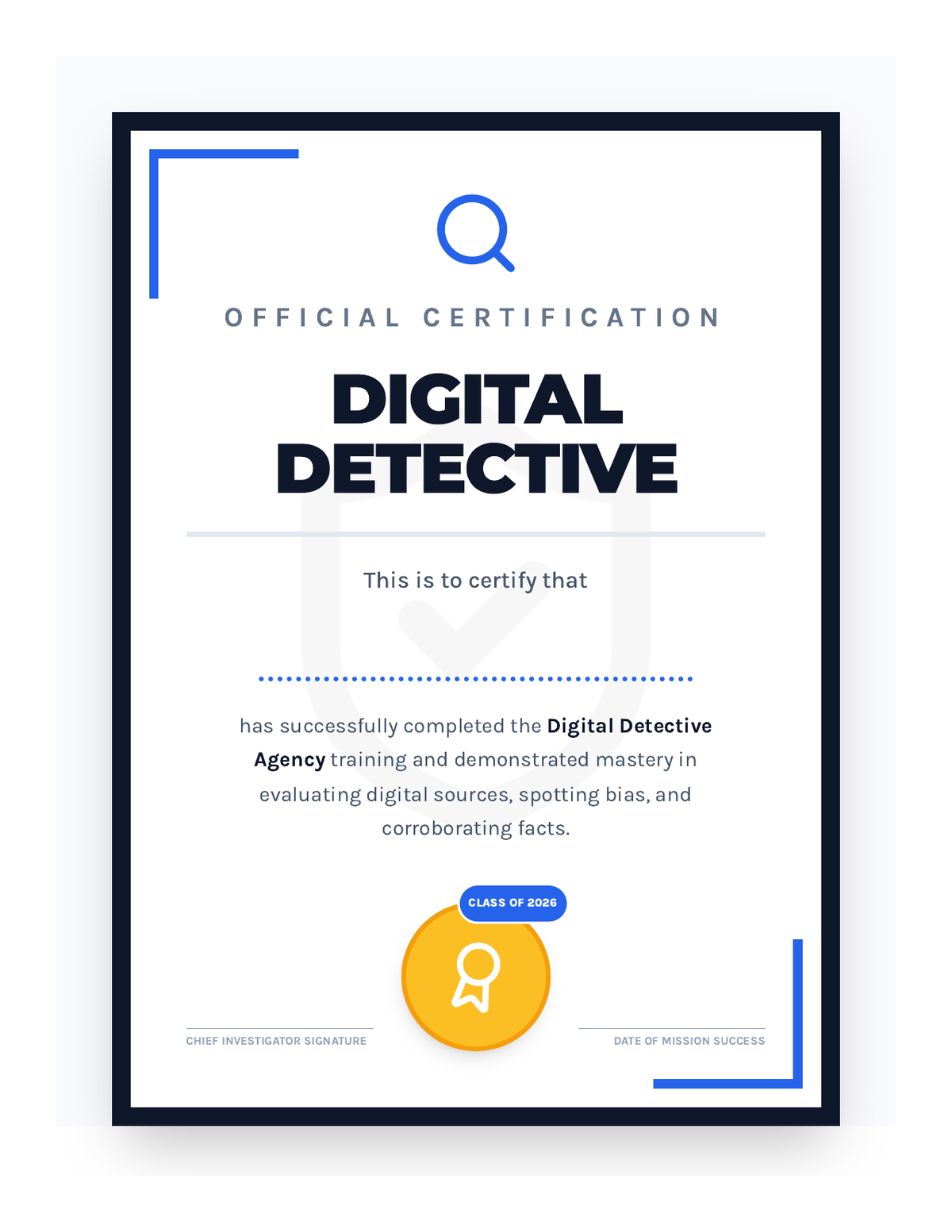
A certificate of completion (Digital Detective Badge) for students who have finished the sequence. Features a professional agency-style design with space for student name and date.
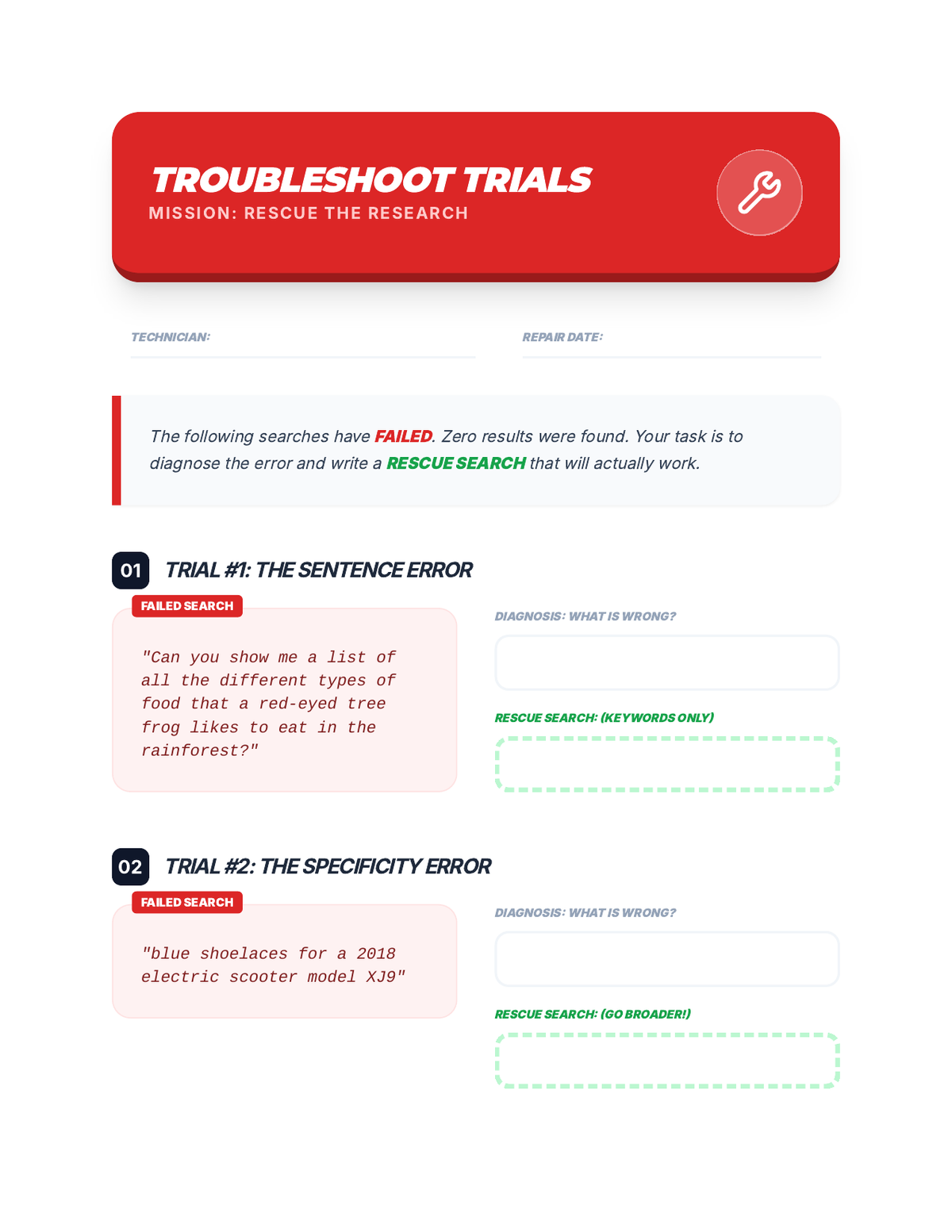
A troubleshooting-focused worksheet that presents students with failed search scenarios and requires them to diagnose the error and rewrite the search string using effective strategies.
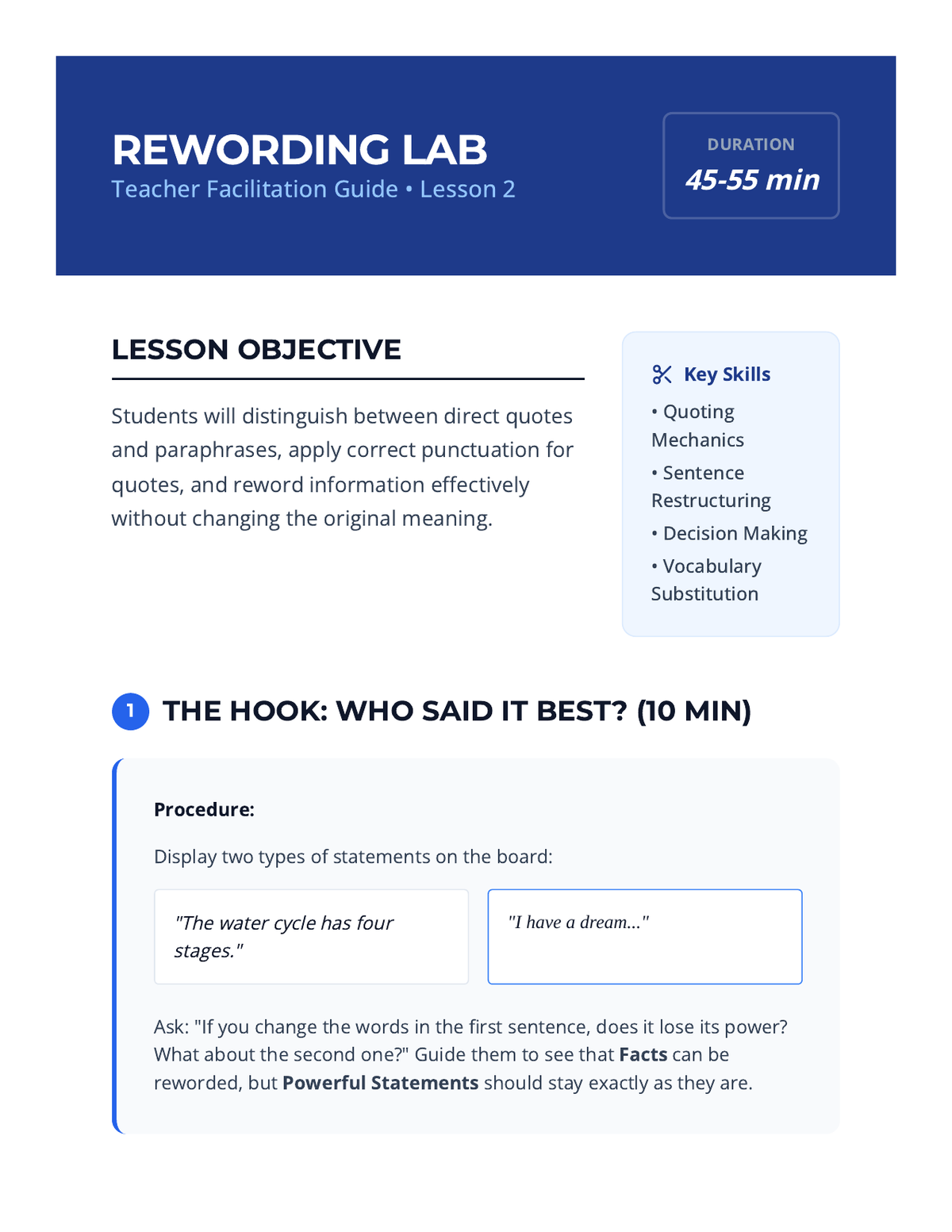
Teacher facilitation guide for Lesson 2. Includes hook procedures, mechanics checklist, sample answers for the worksheet, and ESL scaffolding tips.
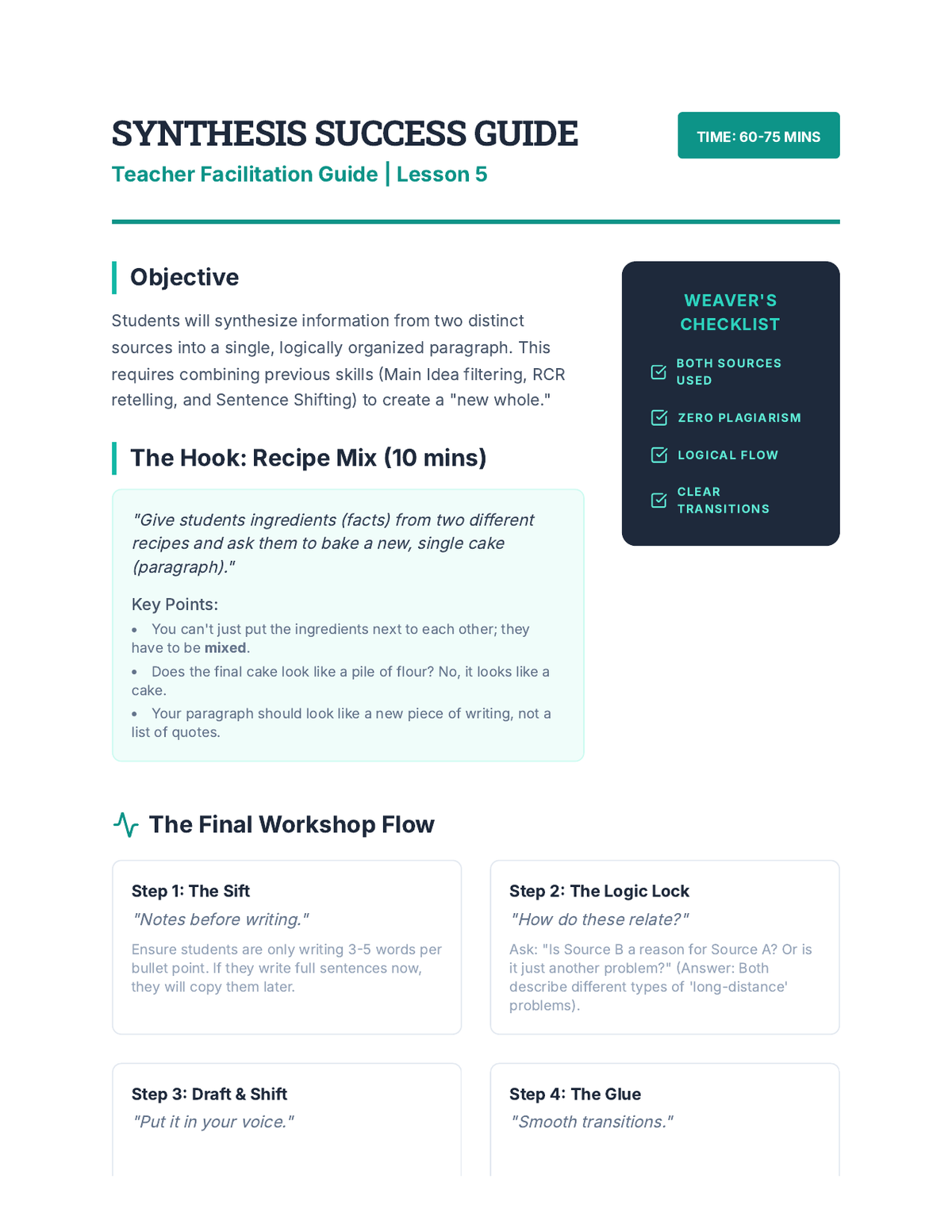
Teacher guide for "The Source Weaver" lesson. It outlines the synthesis process, provides a hook activity, transition words for ESL support, and a sample synthesized paragraph.
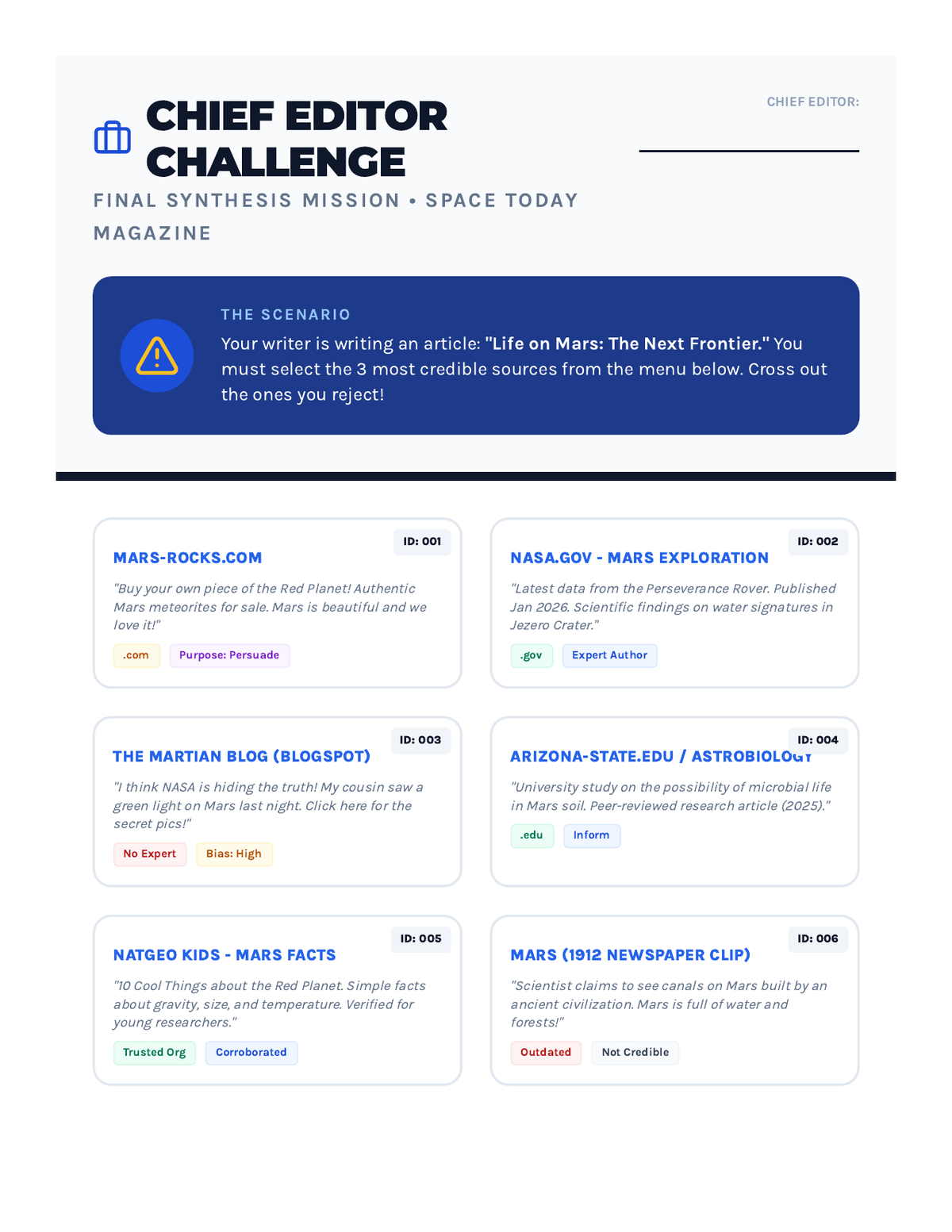
Final synthesis worksheet where students act as magazine editors to select the 3 most credible sources from a list of 6 on the topic of Mars exploration. Requires application of currency, authority, and objectivity criteria.
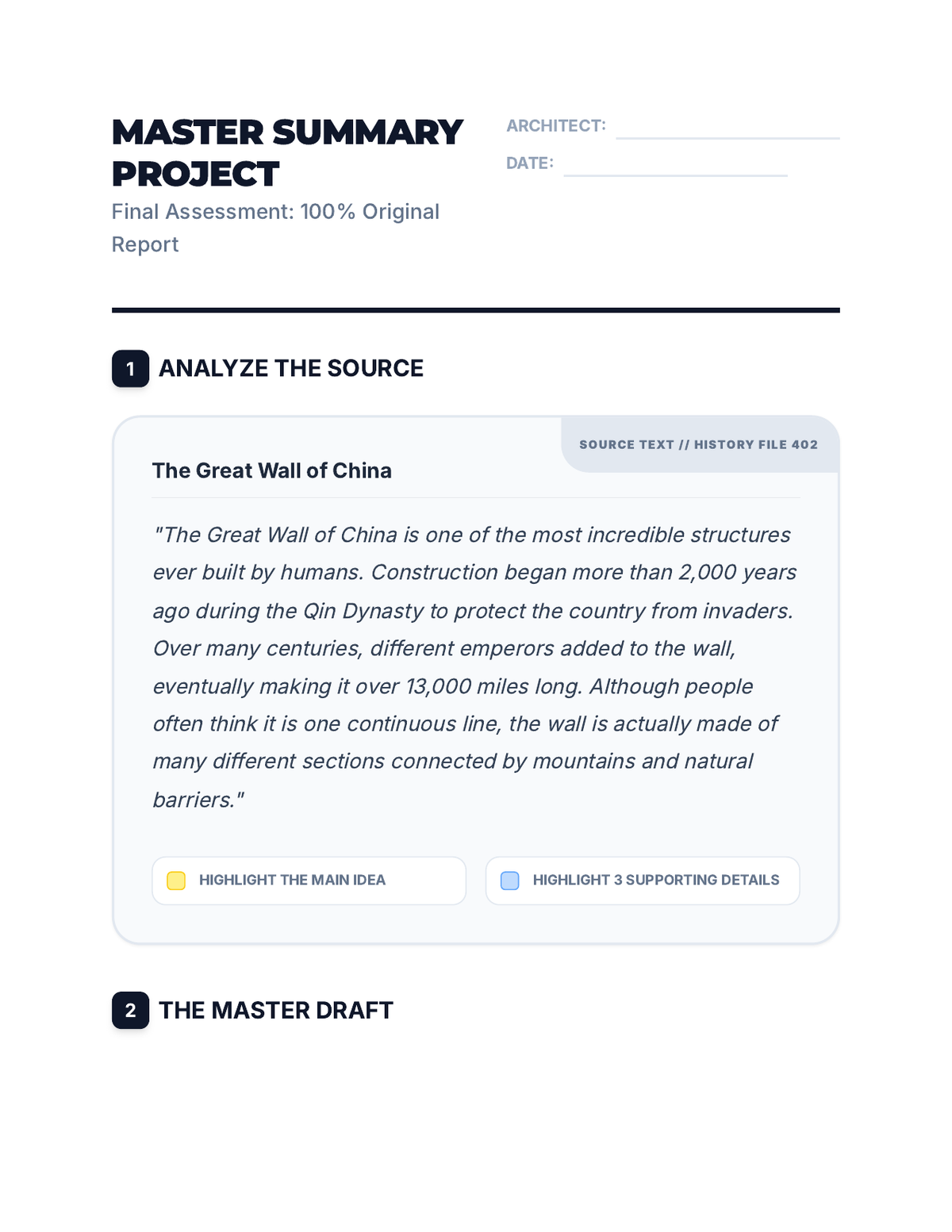
Final project worksheet for Lesson 5 where students read an informational passage about the Great Wall of China and write an original, synthesized summary paragraph with formal attribution.
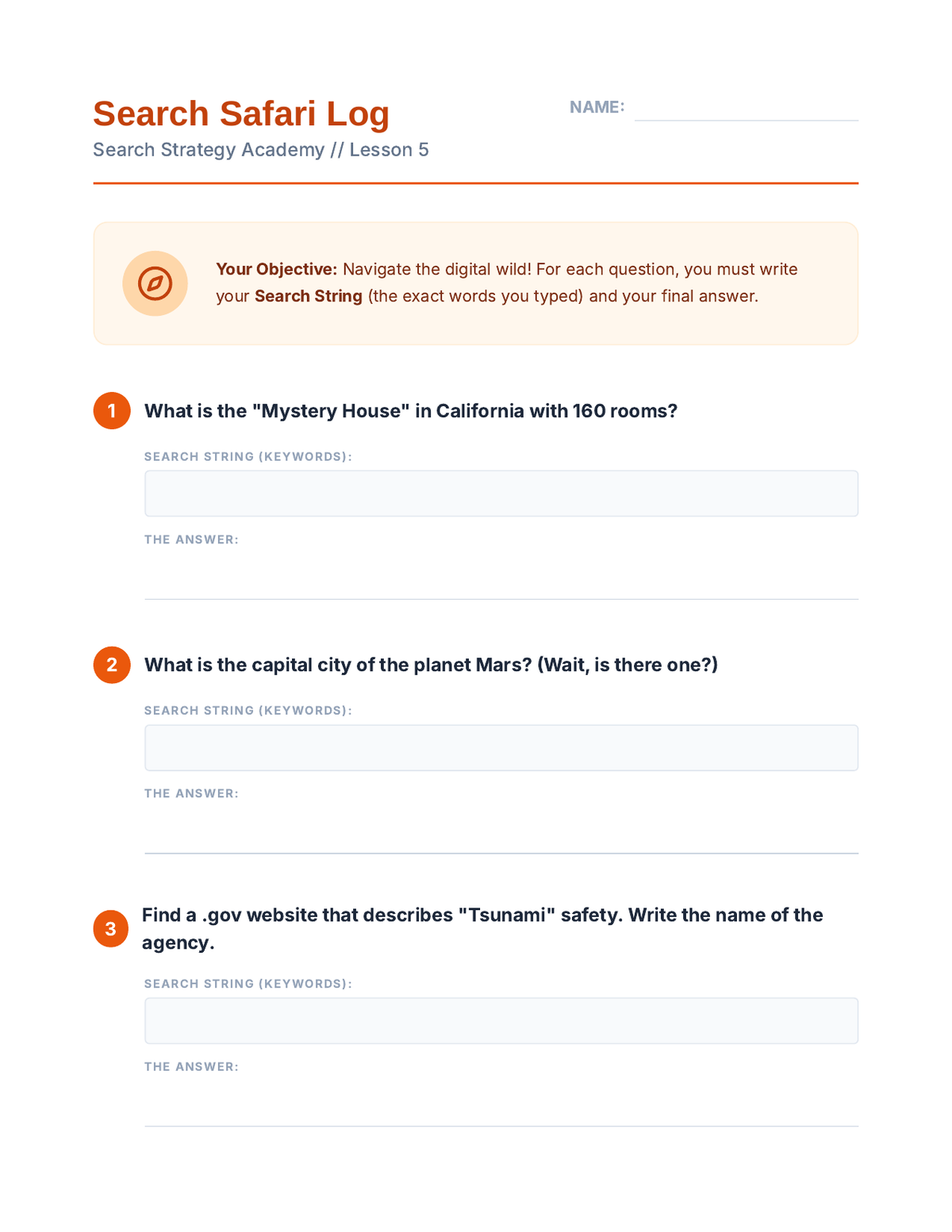
Student scavenger hunt log for Lesson 5, where students document their search strings and answers to obscure research questions.
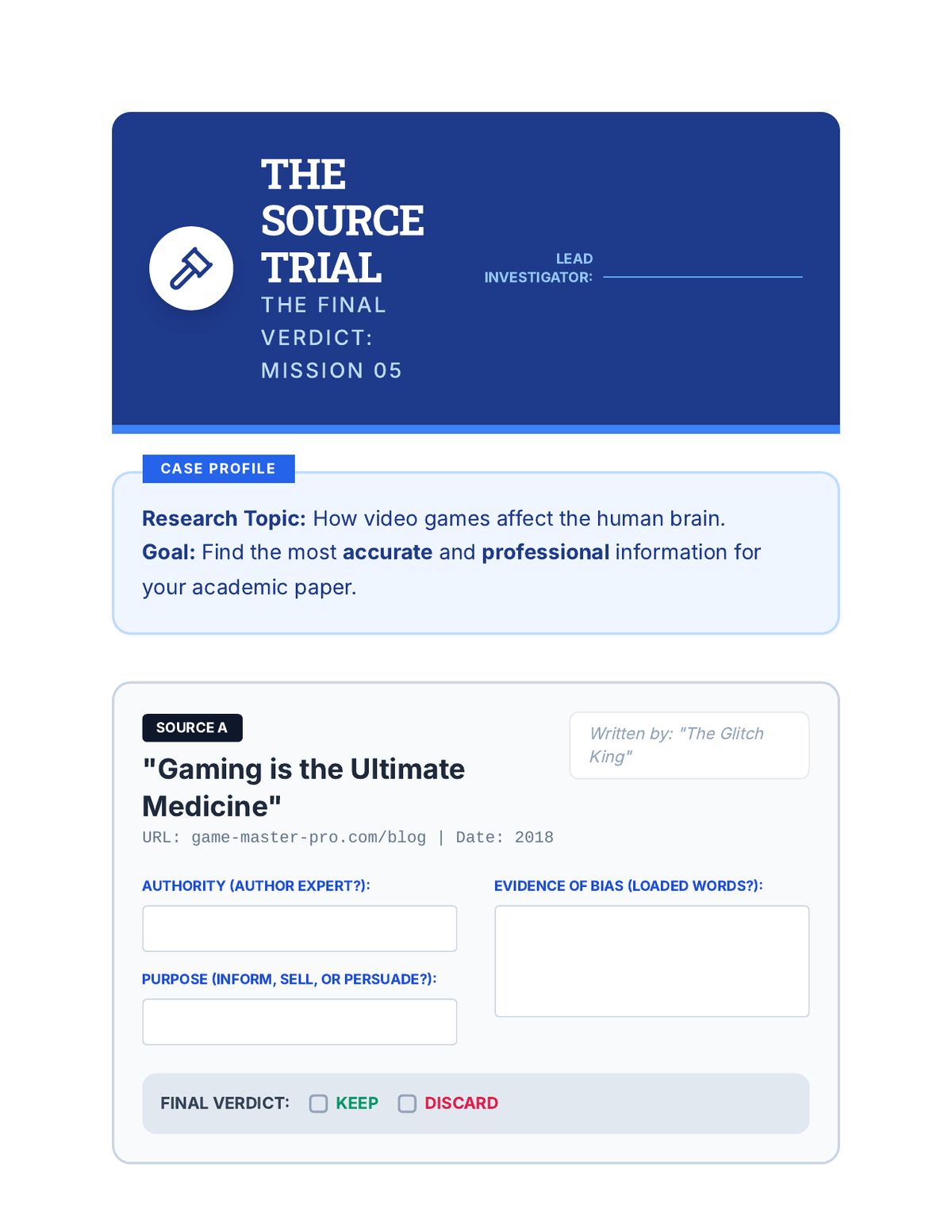
A student assessment worksheet for evaluating the credibility of two different sources on the same topic using a structured framework.
A visual guide for 5th grade ESL students on troubleshooting failed search attempts, focusing on identifying too-long sentences and overly specific terms as common causes of zero results.
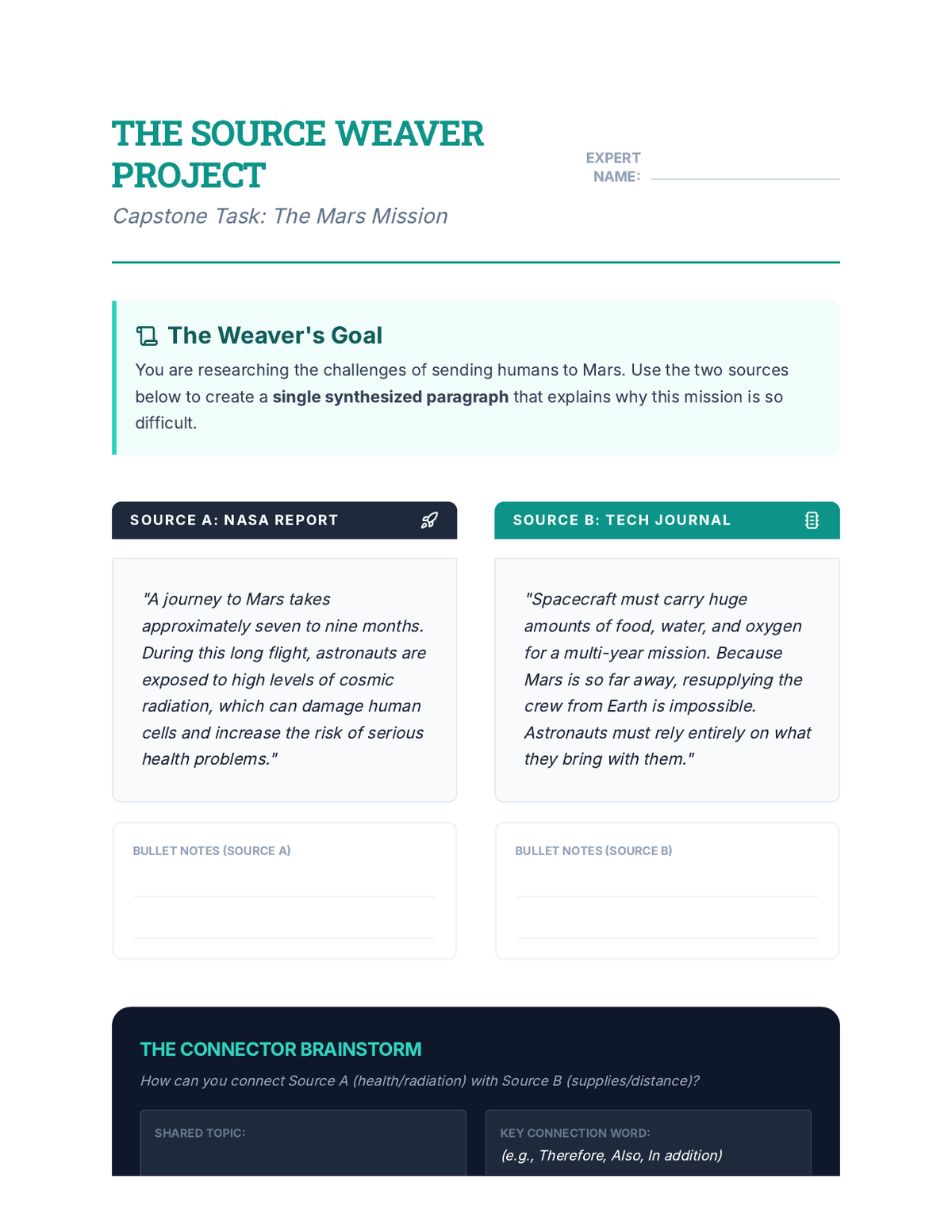
Capstone student project for "The Source Weaver" lesson. Students analyze two short texts about Mars, take notes, and synthesize the information into a single coherent paragraph using their own vocabulary and sentence structures.
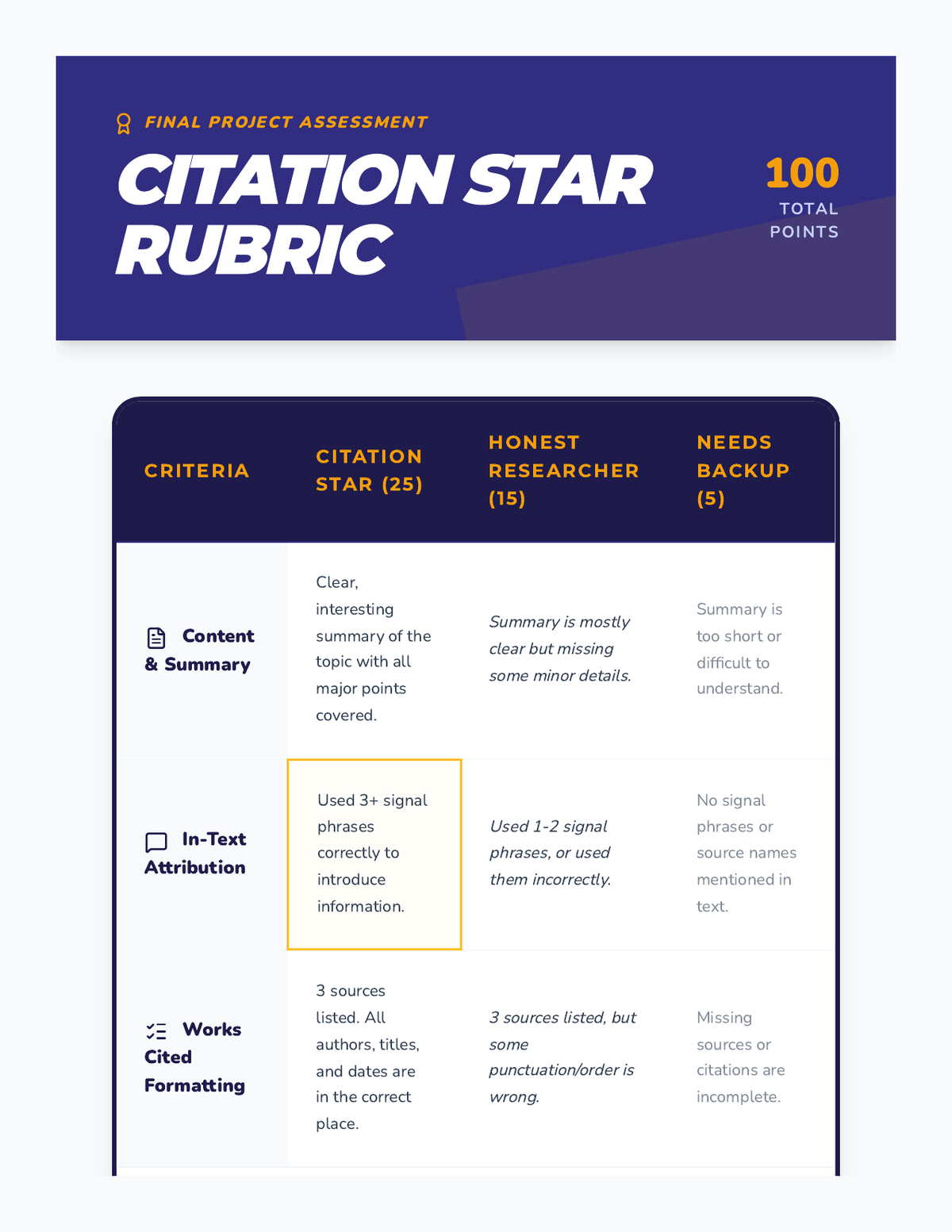
Comprehensive grading rubric for the Research Credits poster project, evaluating summary quality, in-text attribution, Works Cited formatting, and visual design.
Review slide deck for Lesson 5, summarizing all skills learned in the sequence and providing clear instructions for the final Master Summary project.
Introductory slide deck for Lesson 5, reviewing all strategic search techniques and introducing the culminating Scavenger Hunt challenge.
Synthesis slide deck for Lesson 5. Sets up the "Chief Editor Challenge" simulation where students must curate sources for a space magazine, applying all previously learned evaluation criteria.
Introductory slides for "The Final Verdict", teaching students a simplified evaluation framework (Currency, Relevance, Authority, Purpose) to apply to sources.
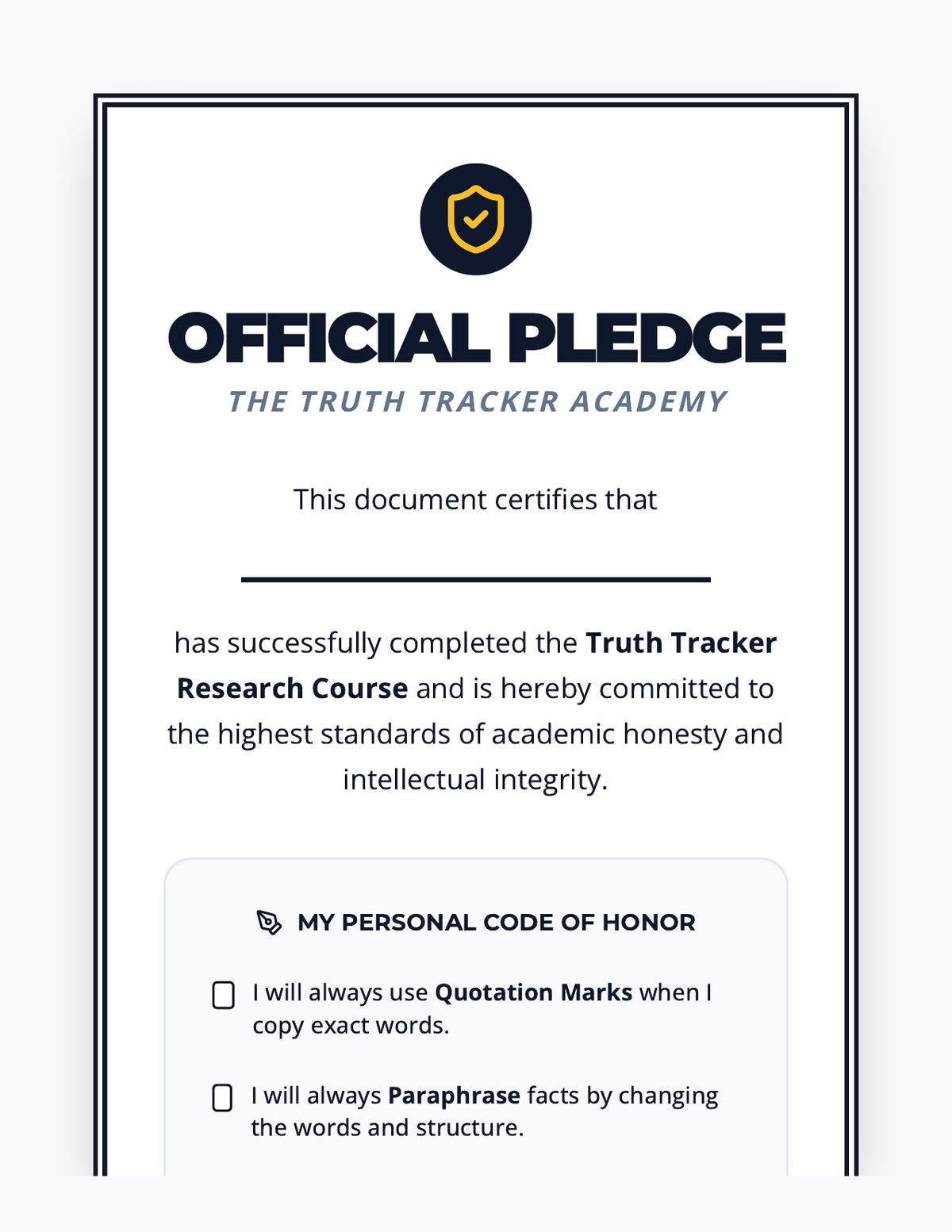
Formal pledge certificate for students to commit to academic integrity. Includes space for a personalized code of honor and official signatures.
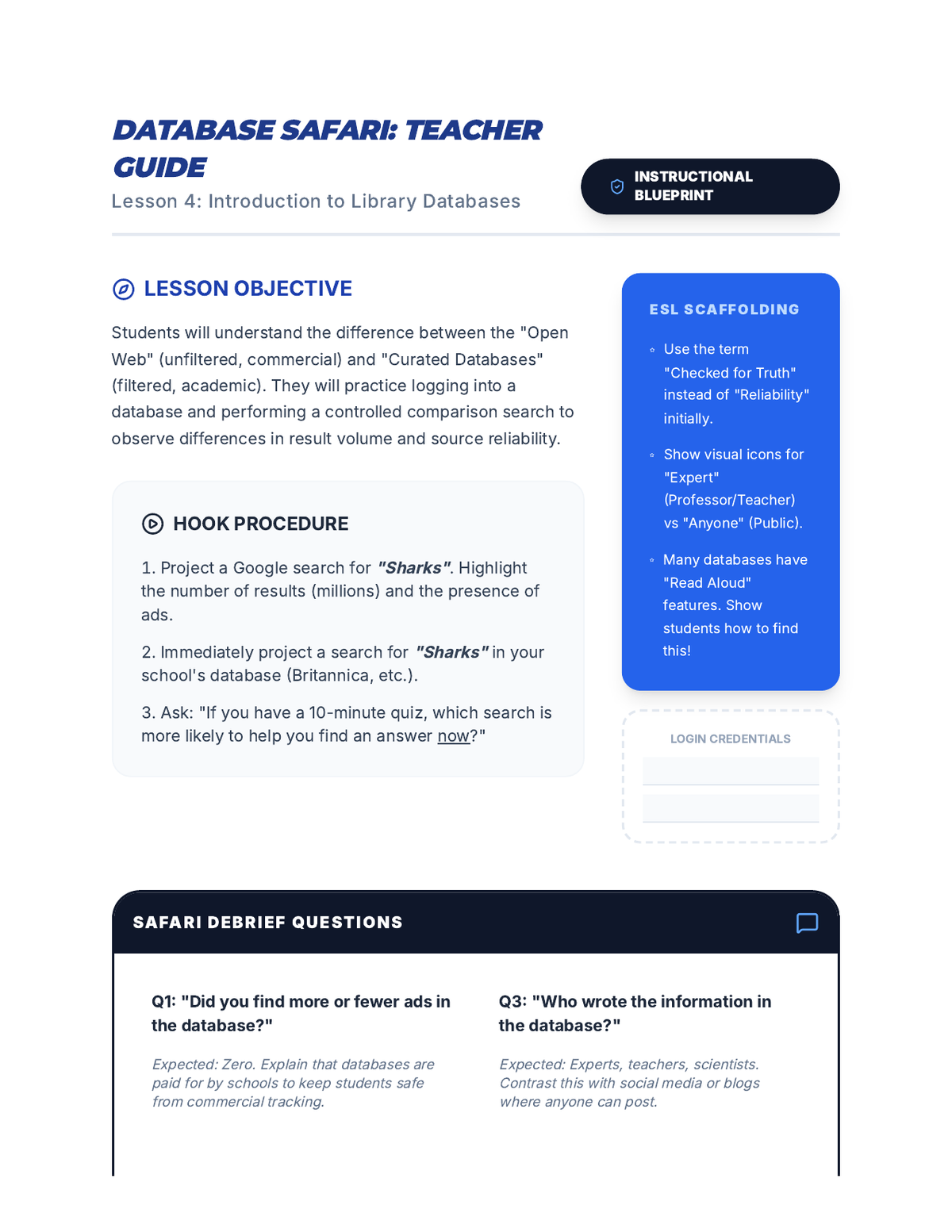
A comprehensive teacher resource for Lesson 4, including the lesson hook, ESL scaffolding strategies, debriefing questions, and a troubleshooting guide for database usage.
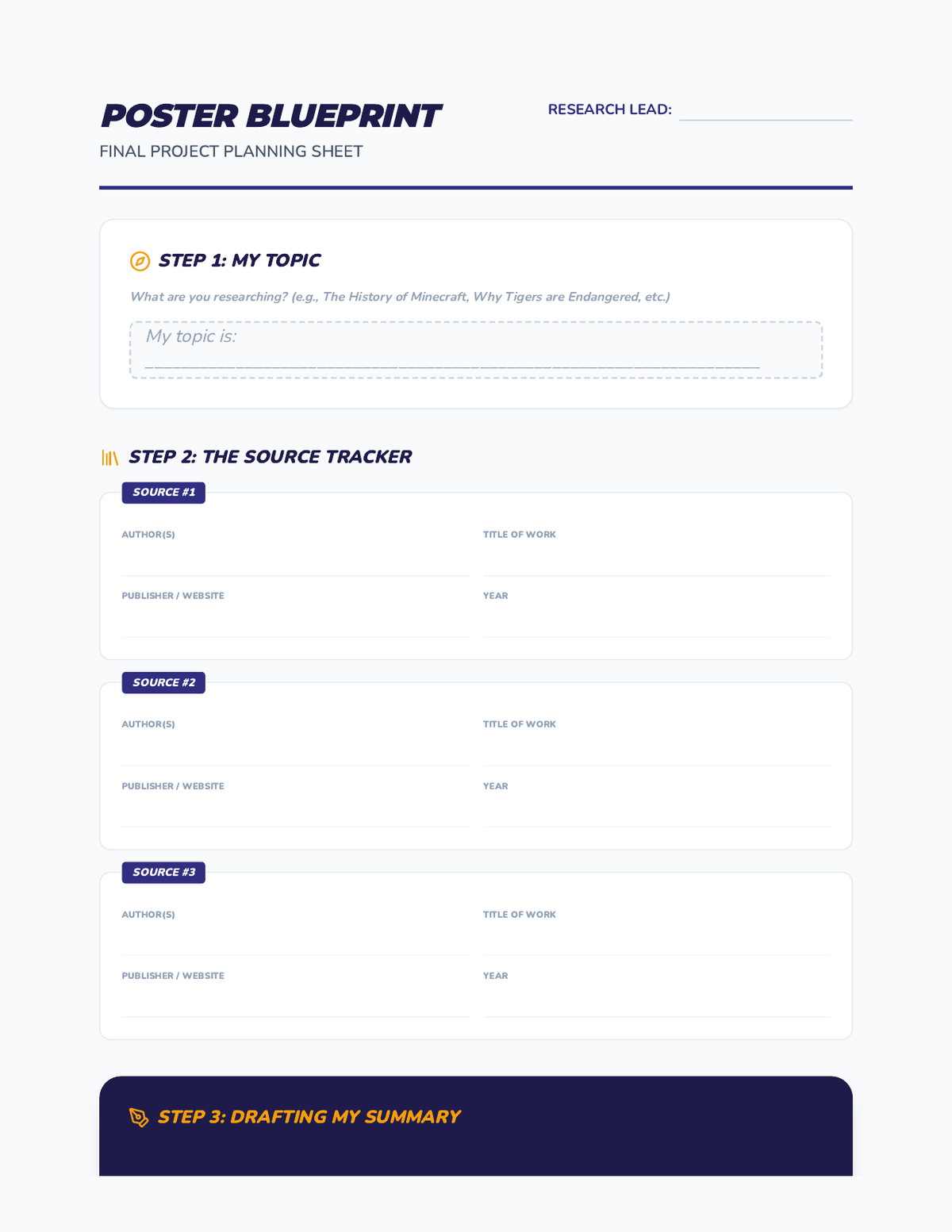
Detailed planning document for the Research Credits poster project, providing space for 6th-grade students to track sources, draft their summary, and plan their layout.
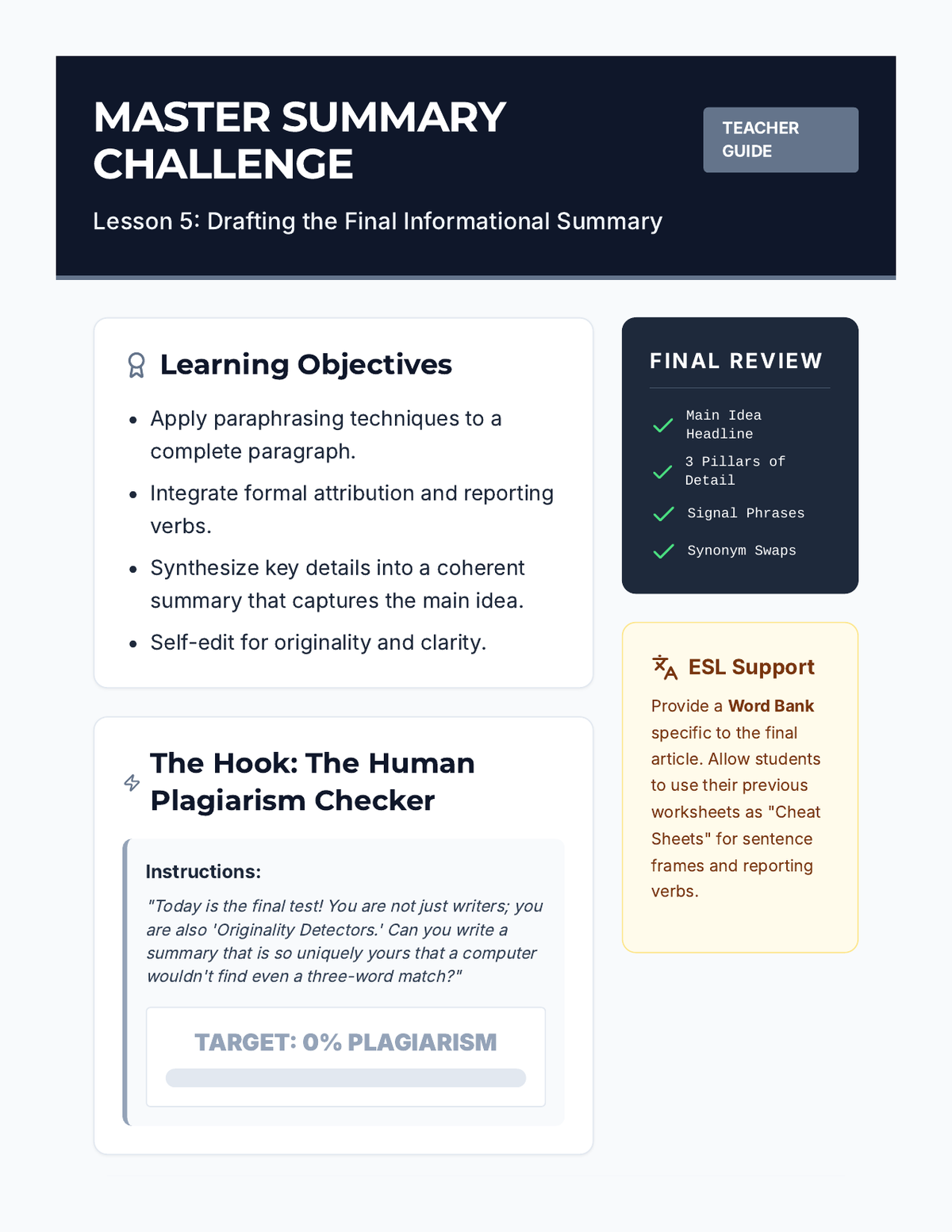
Teacher Guide for Lesson 5, featuring the master challenge overview, the 'Human Plagiarism Checker' hook, and step-by-step procedures for the final summary project.
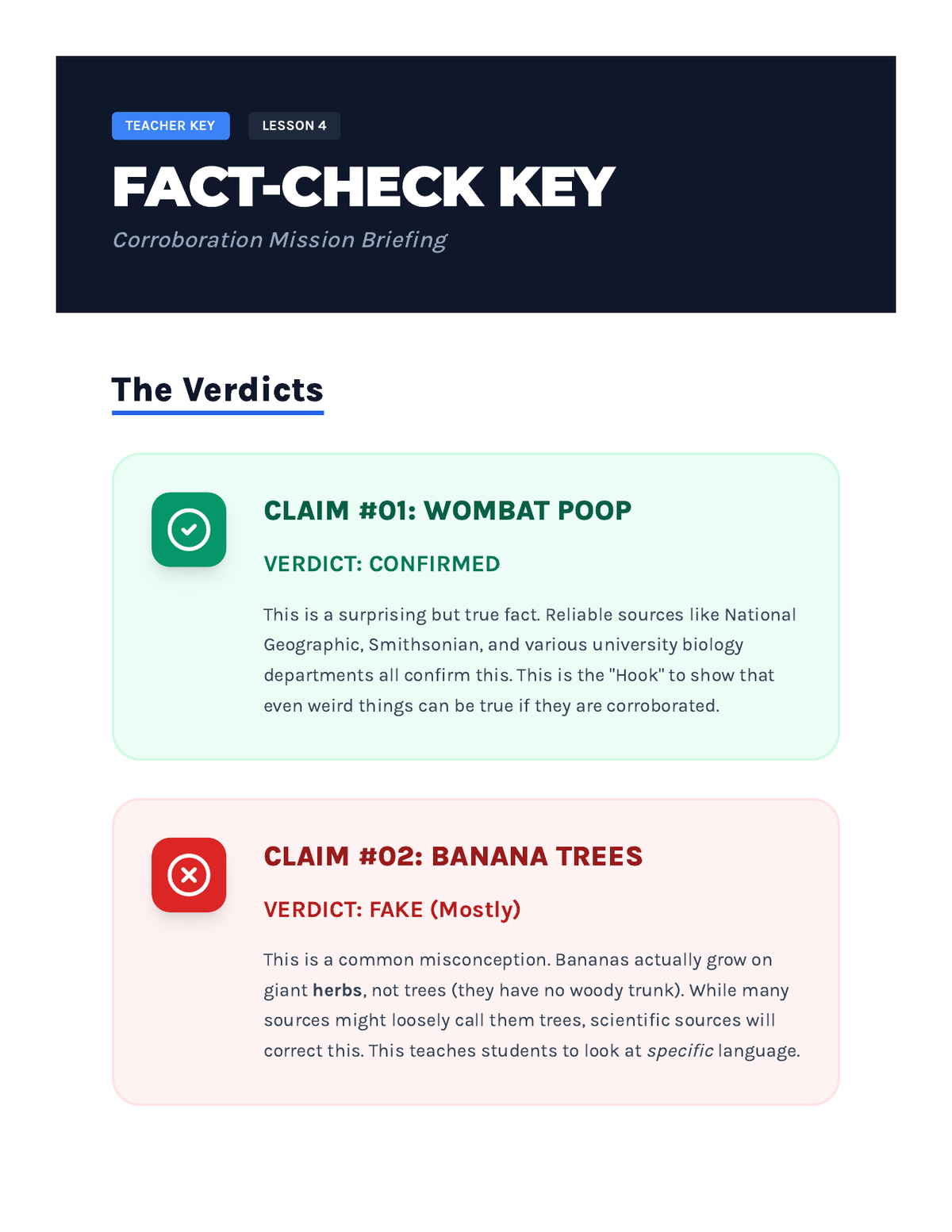
Teacher answer key for Lesson 4 (Corroboration). Explains the true/false status of the three claims used in the mission, including the "herb vs. tree" distinction for bananas and the hoax status of the tree octopus.
Visual slides for "The Source Weaver" lesson. These slides introduce students to the concept of synthesis as connecting ideas from multiple sources to create a new, coherent whole.
Instructional slide deck for Lesson 5 synthesizing learning through case studies of intentional vs. accidental plagiarism and concluding with an academic integrity pledge.
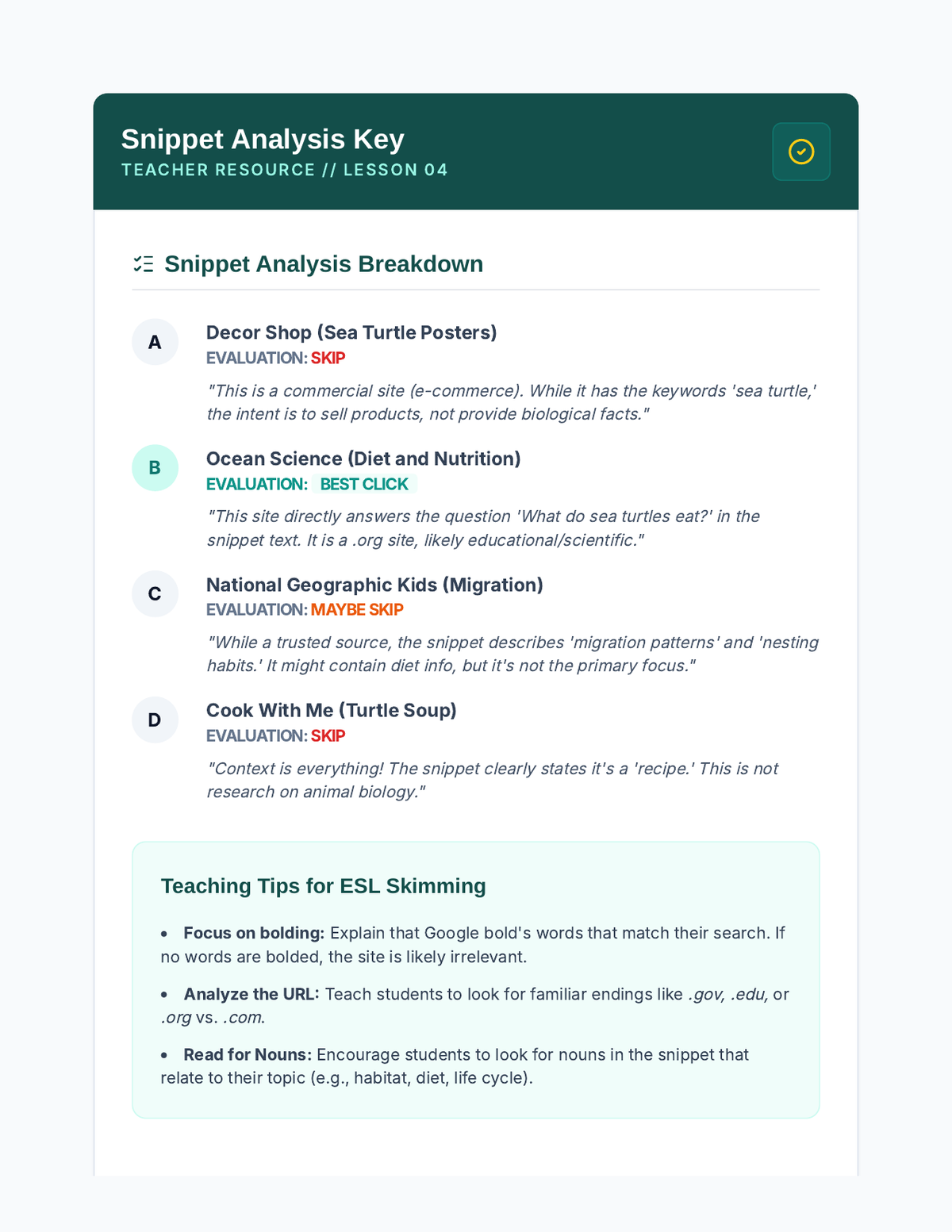
Teacher answer key and discussion guide for the "To Click or Not to Click" worksheet, focusing on snippet analysis and evaluation.
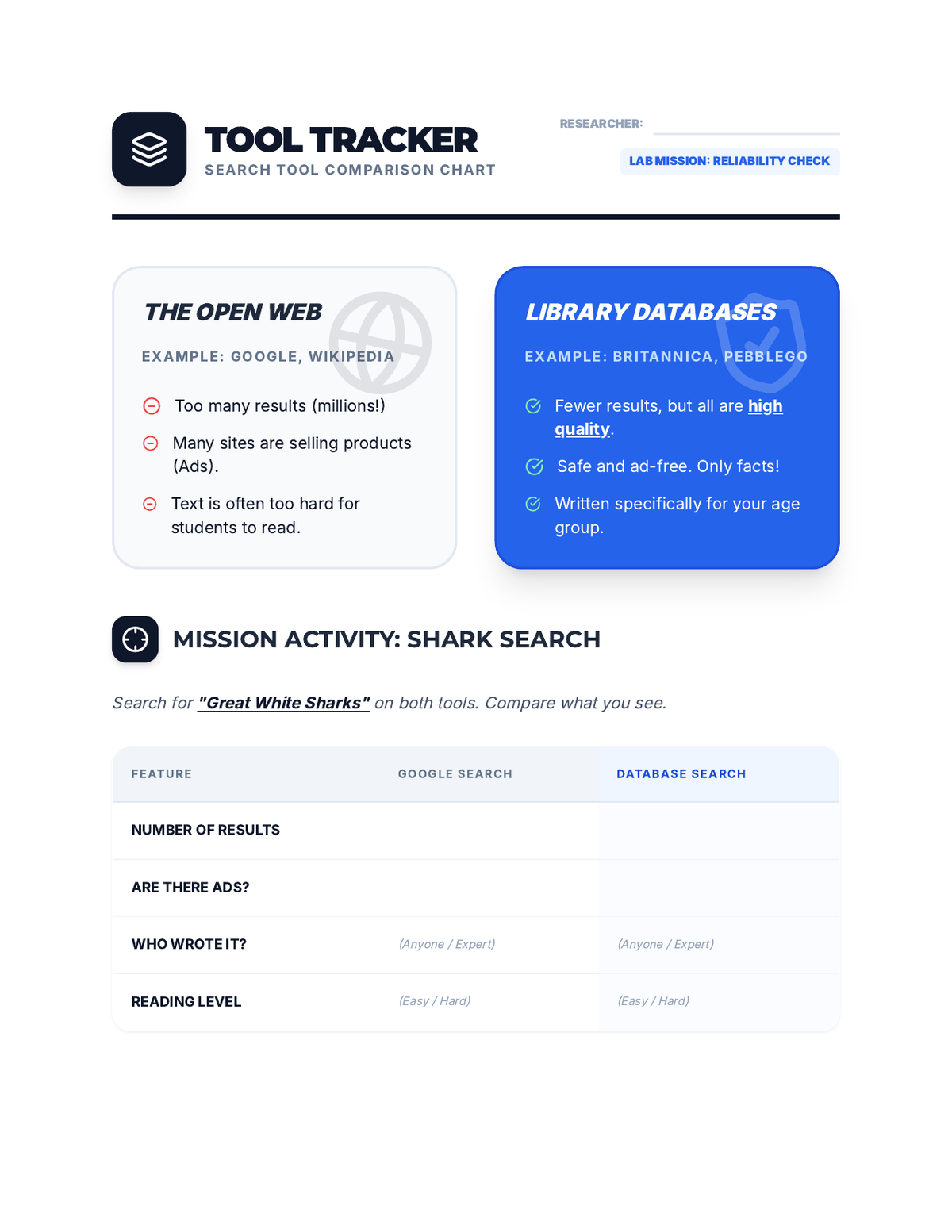
A guided comparison worksheet for 5th graders to track and analyze the differences between an open web search (Google) and a curated school database.
Slide deck for the final project of the sequence, explaining the "Research Credits" poster requirements and connecting academic integrity to the concept of a movie's credit roll.
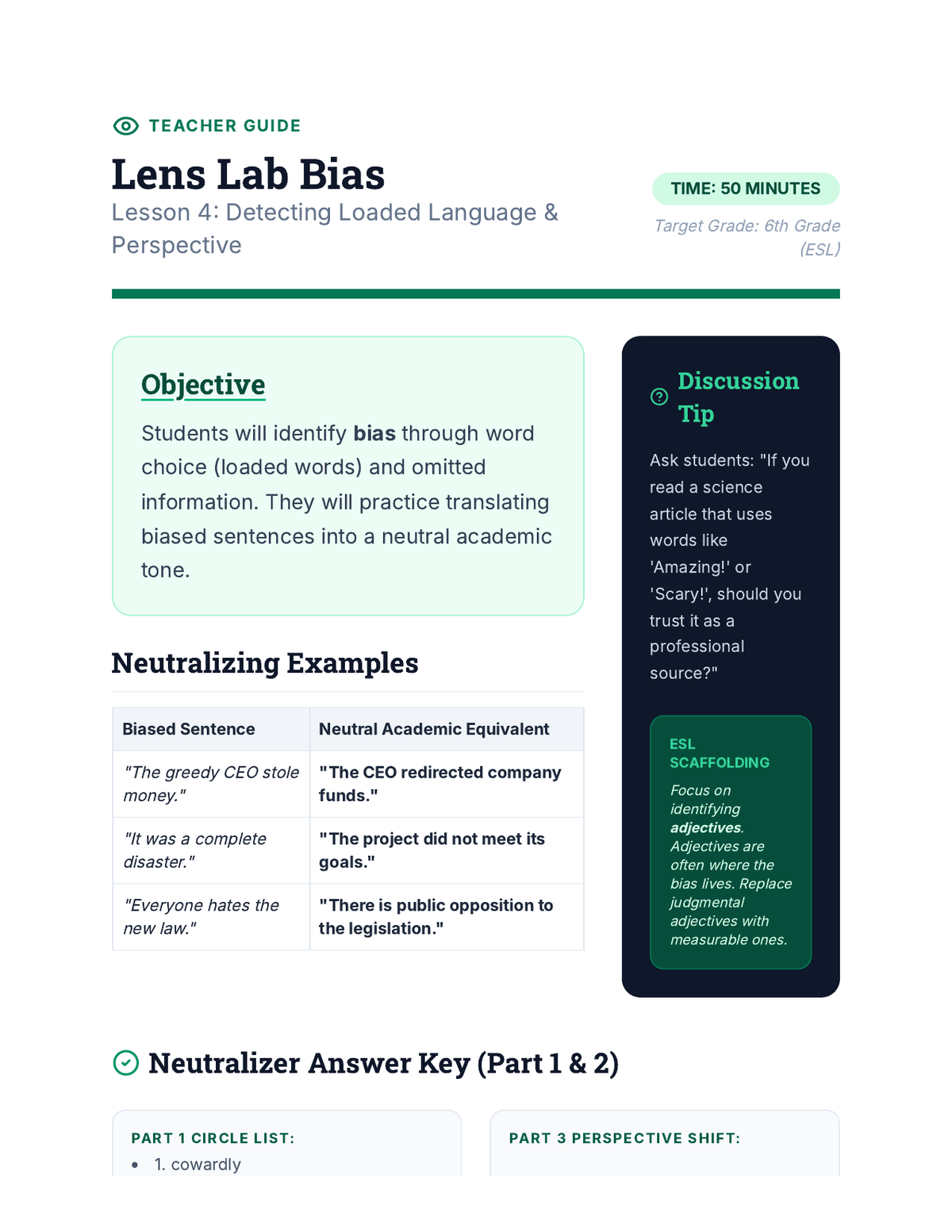
A teacher guide for the Lens Lab Bias lesson, providing neutralizing examples, a rubric for student work, and an answer key for the worksheet.
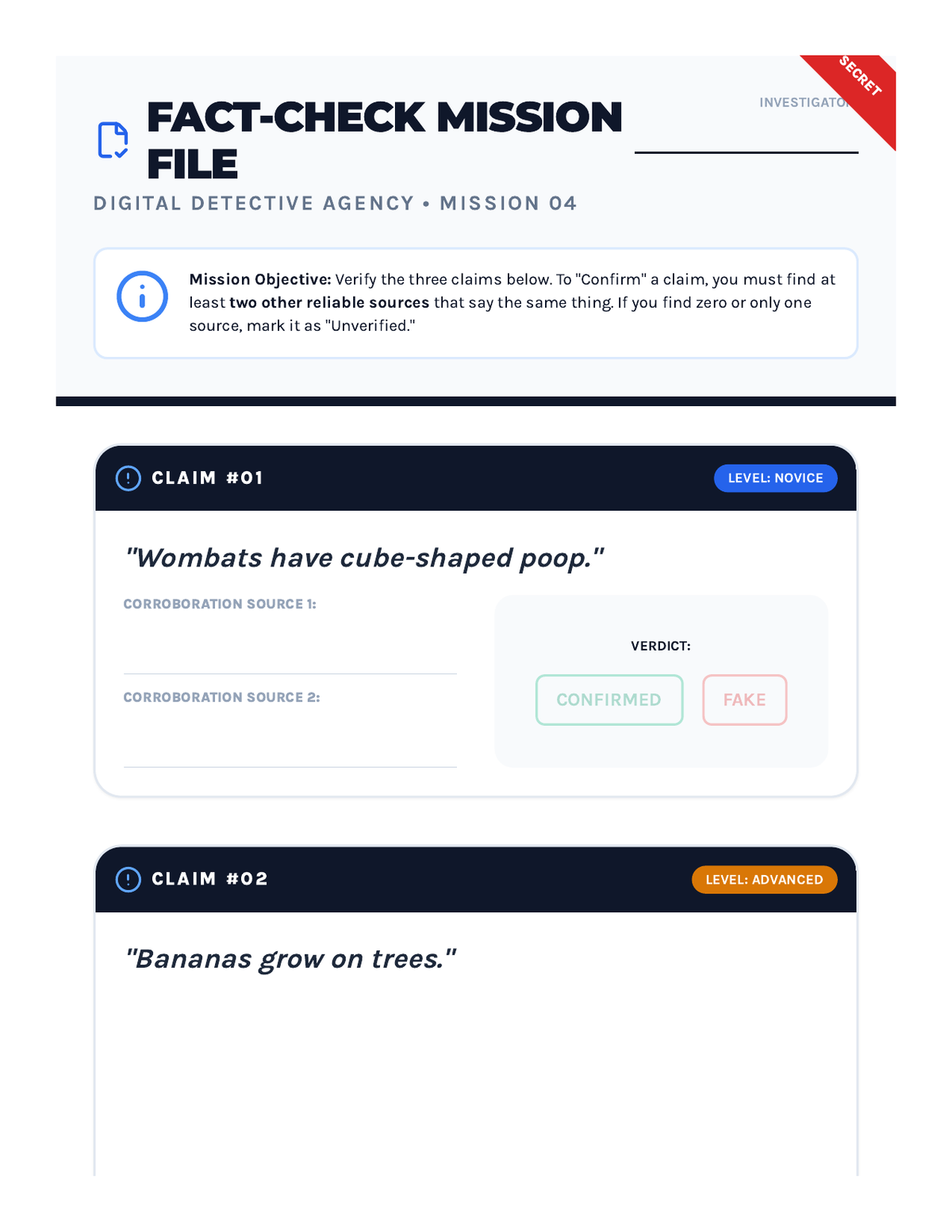
A Fact-Check Mission File for students to practice corroboration. Students investigate three claims (including a trick claim about bananas) and must find two additional sources to confirm or debunk them.
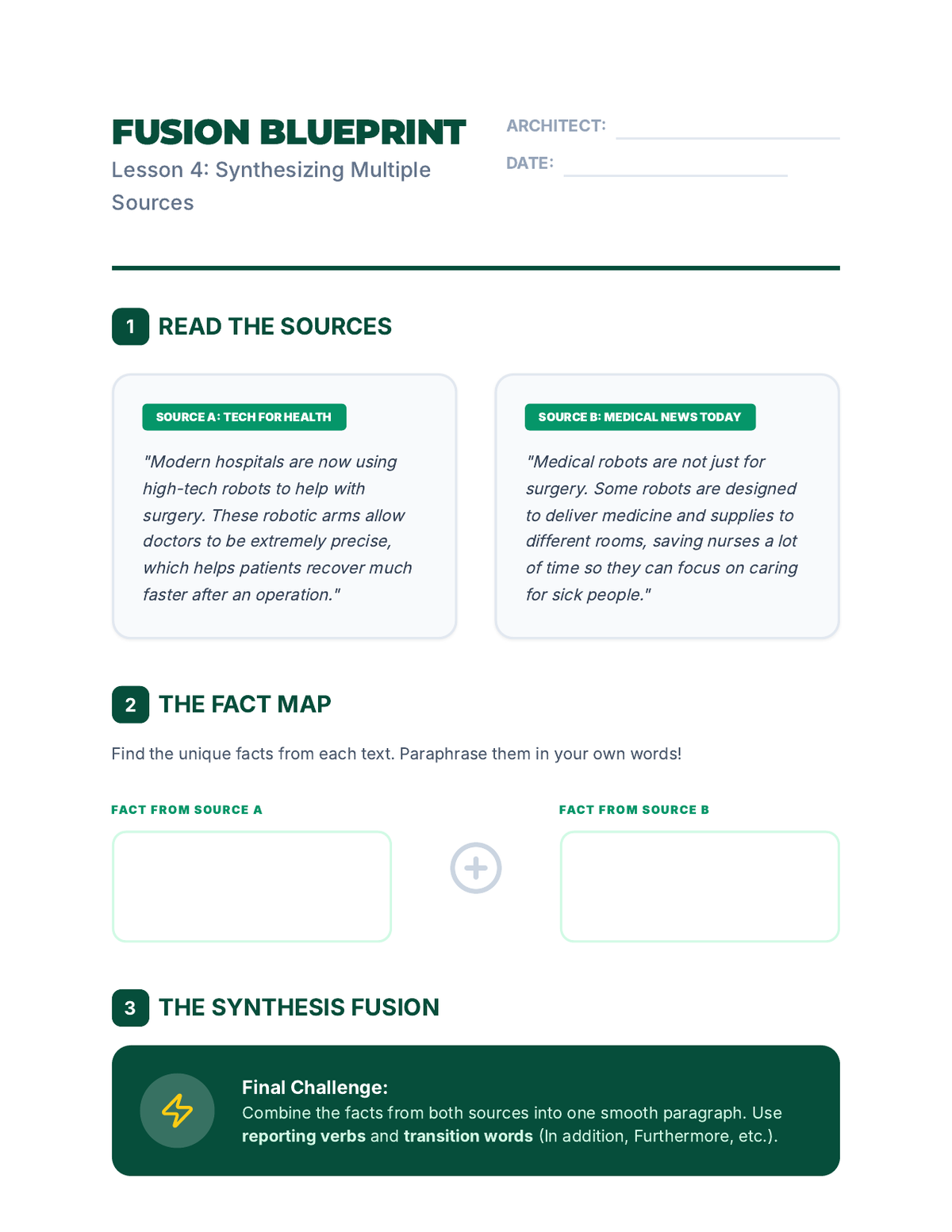
Synthesis worksheet for Lesson 4 where students compare two medical robot texts and combine their facts into a single, cohesive paragraph using transition words.
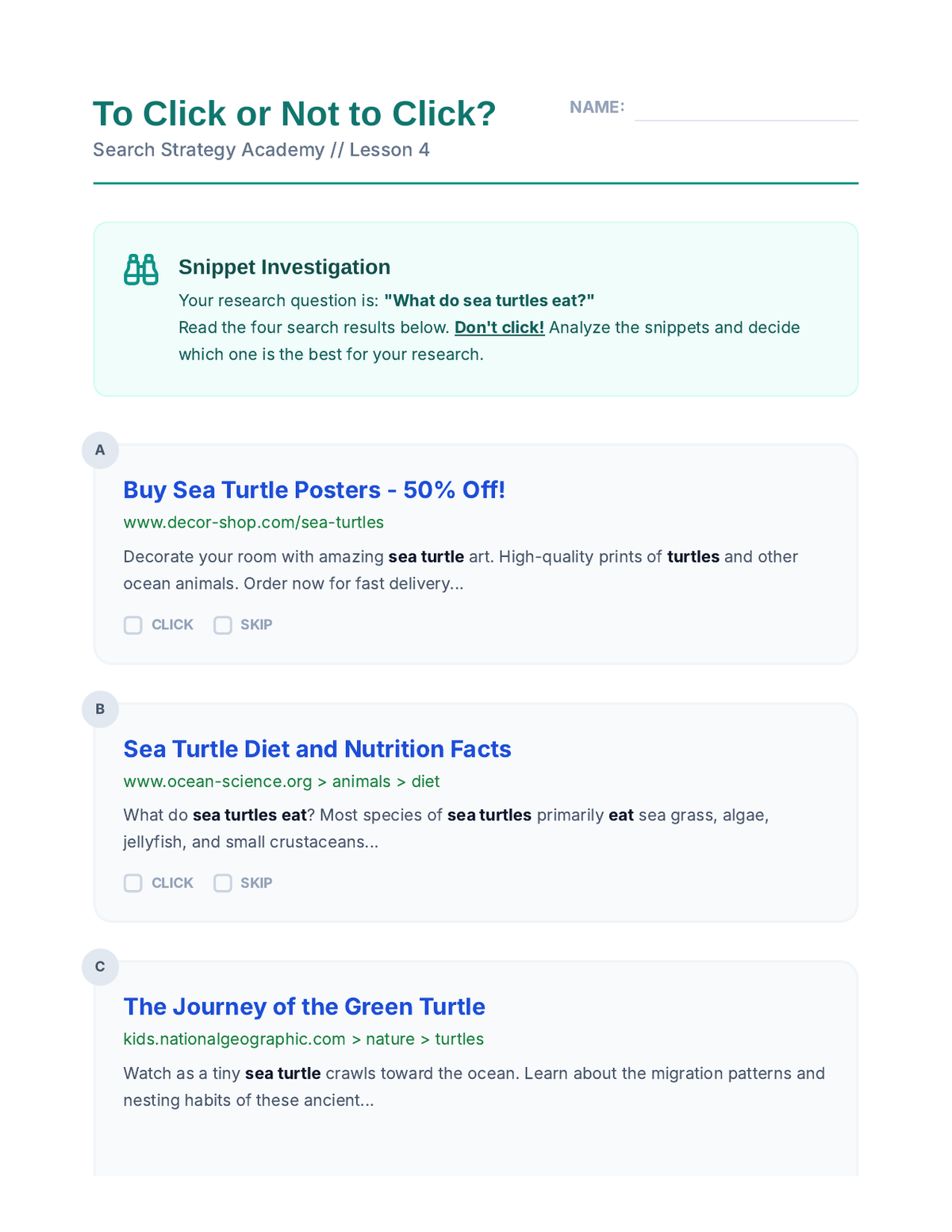
Student worksheet for Lesson 4 where students practice identifying the best search result based on snippets, titles, and URLs.
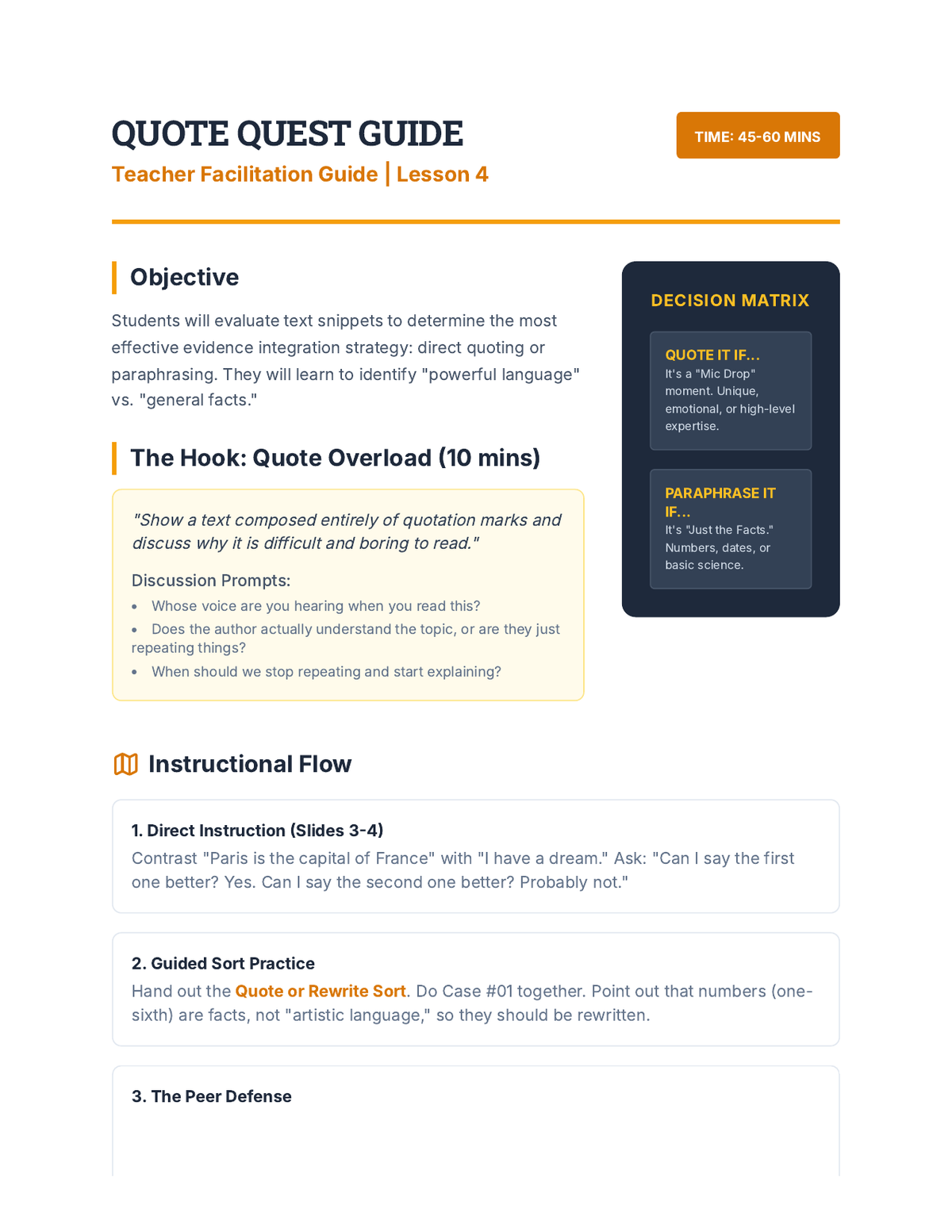
Teacher guide for "Quote Quest" lesson. It outlines the decision-making criteria for quoting vs. paraphrasing, provides instructional steps, and includes an answer key for the sorting activity.
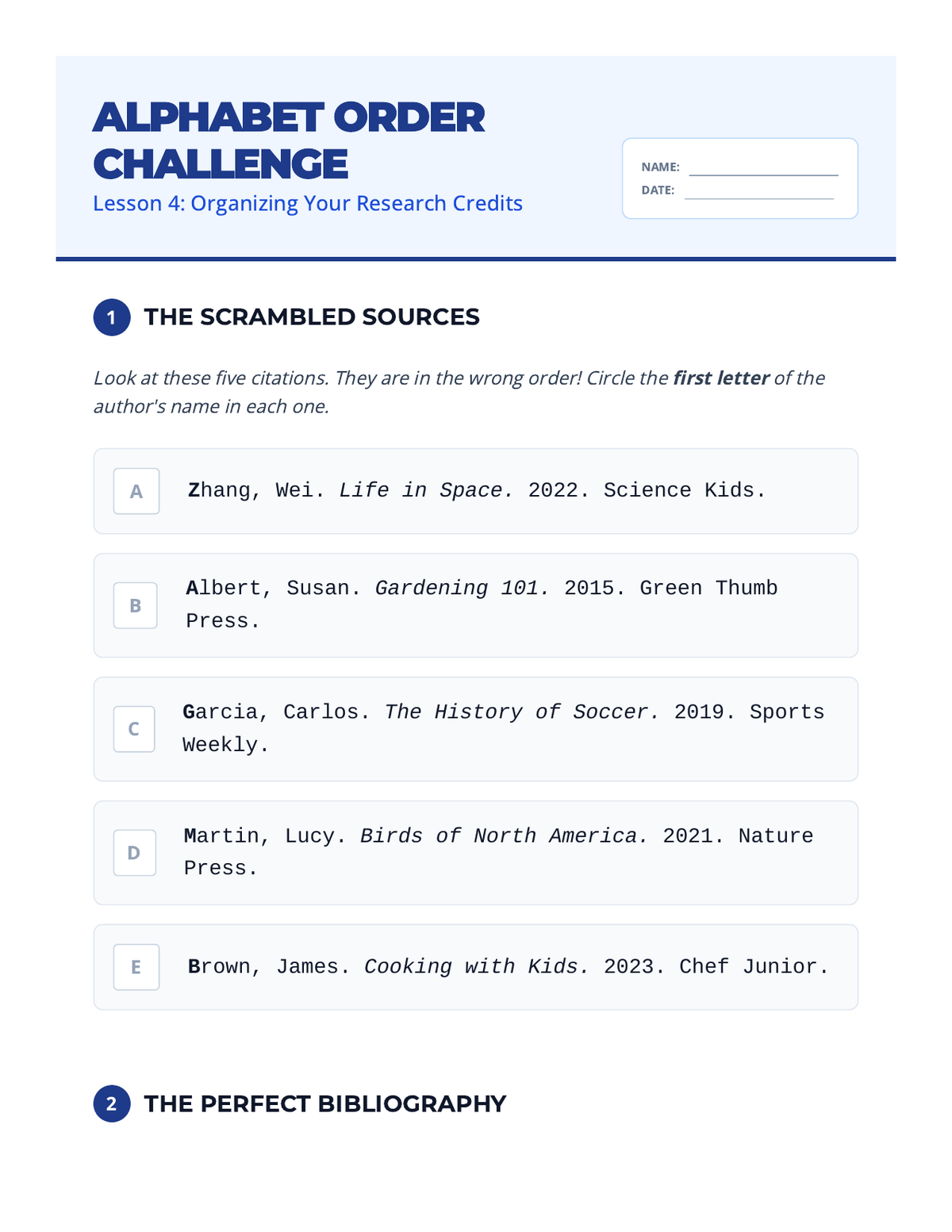
Worksheet for students to practice alphabetizing citations to create a bibliography. Includes a scrambled list of sources and a workspace for the ordered list.