Techniques for brainstorming, collaborative project management, and individual artistic expression. Guides students through the iterative creative process from initial concept to final execution.
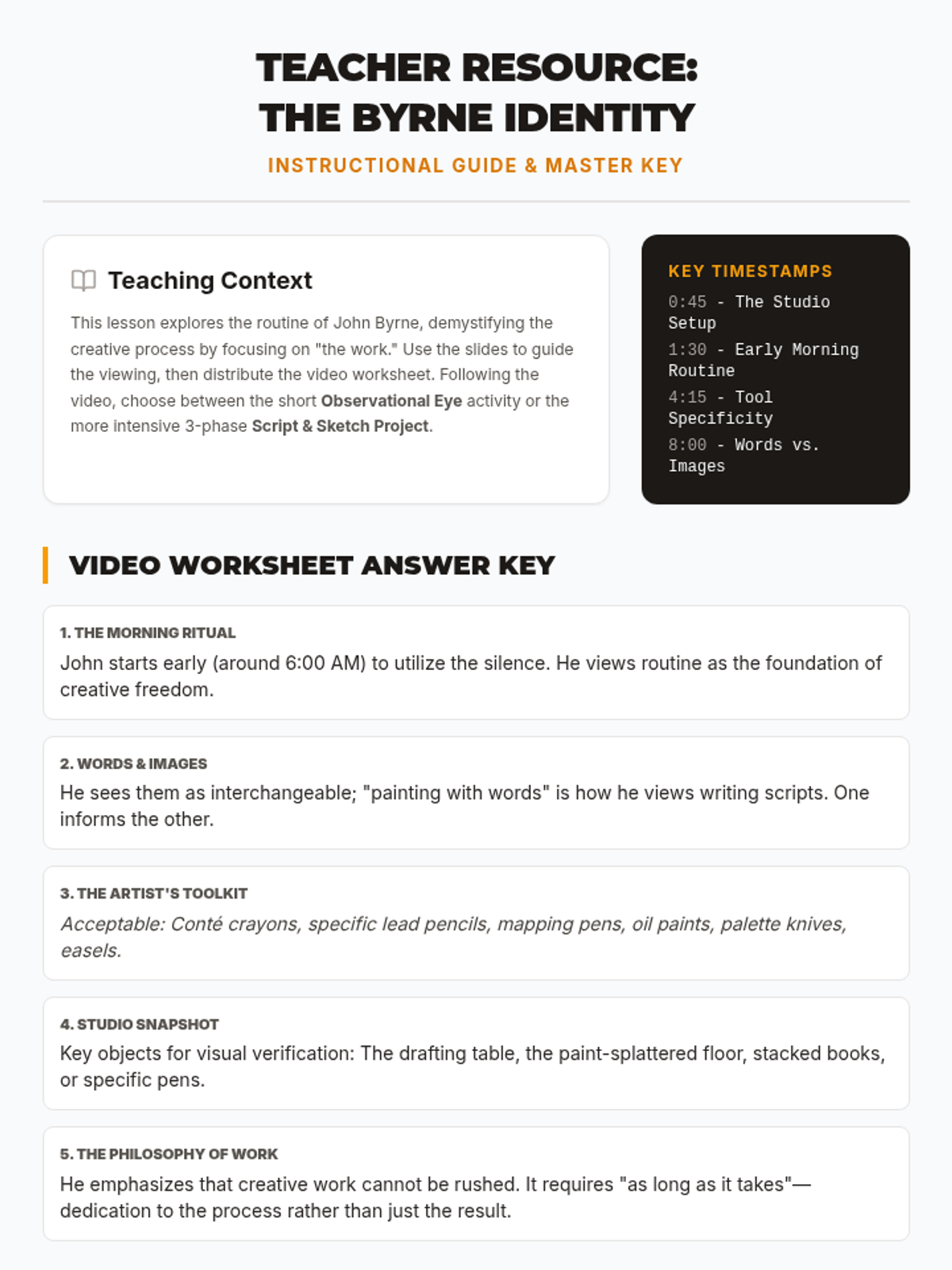
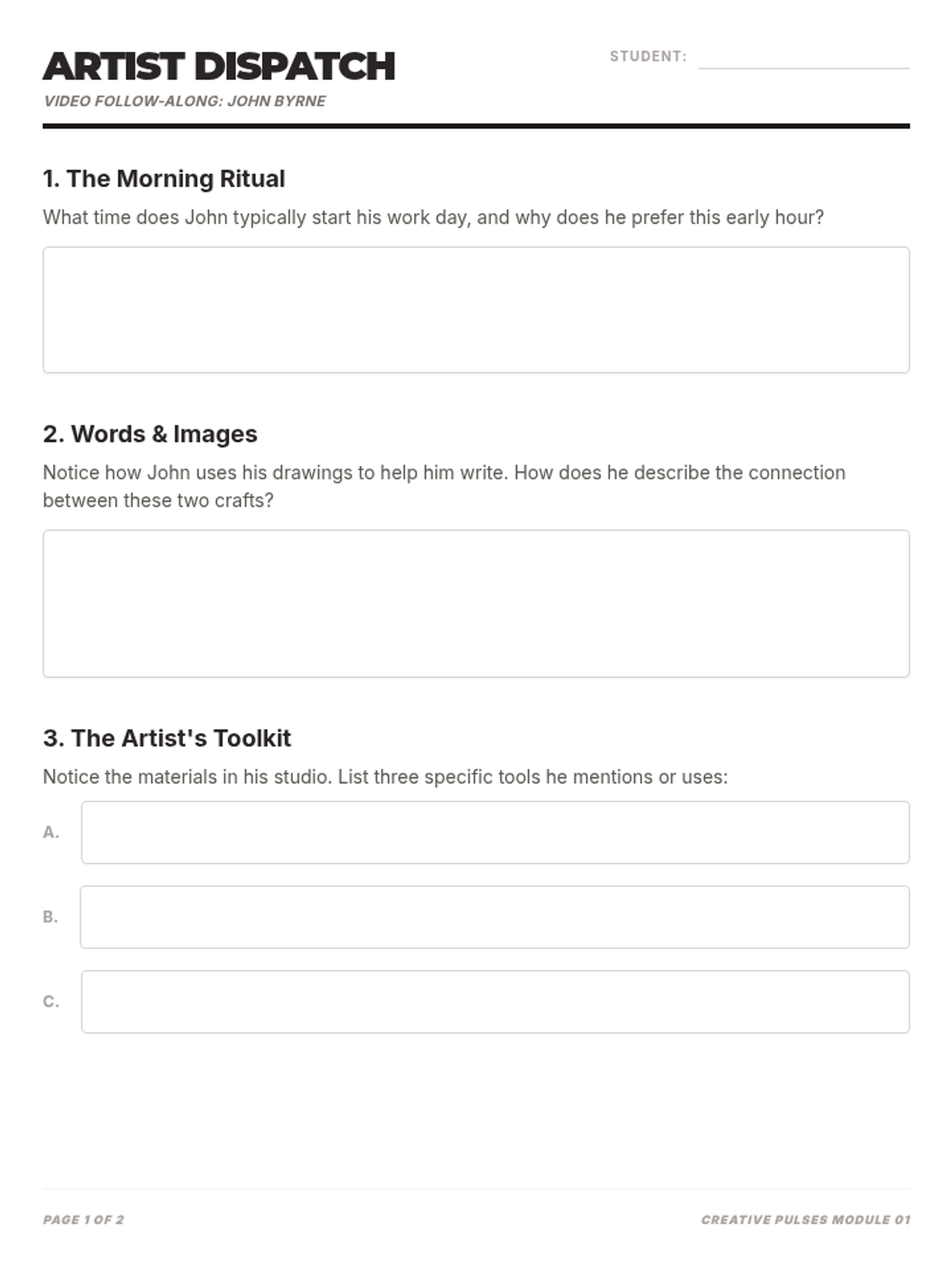
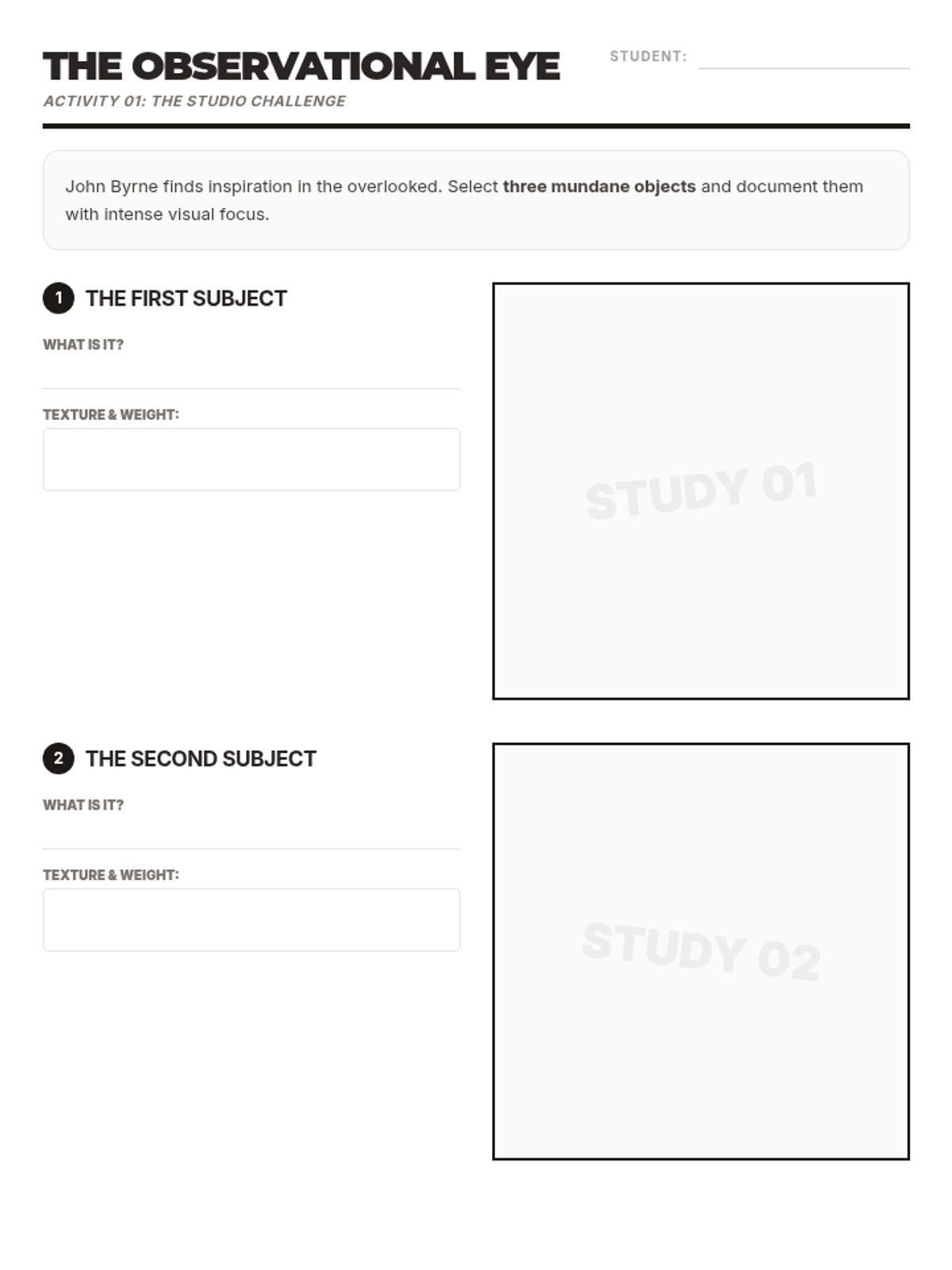
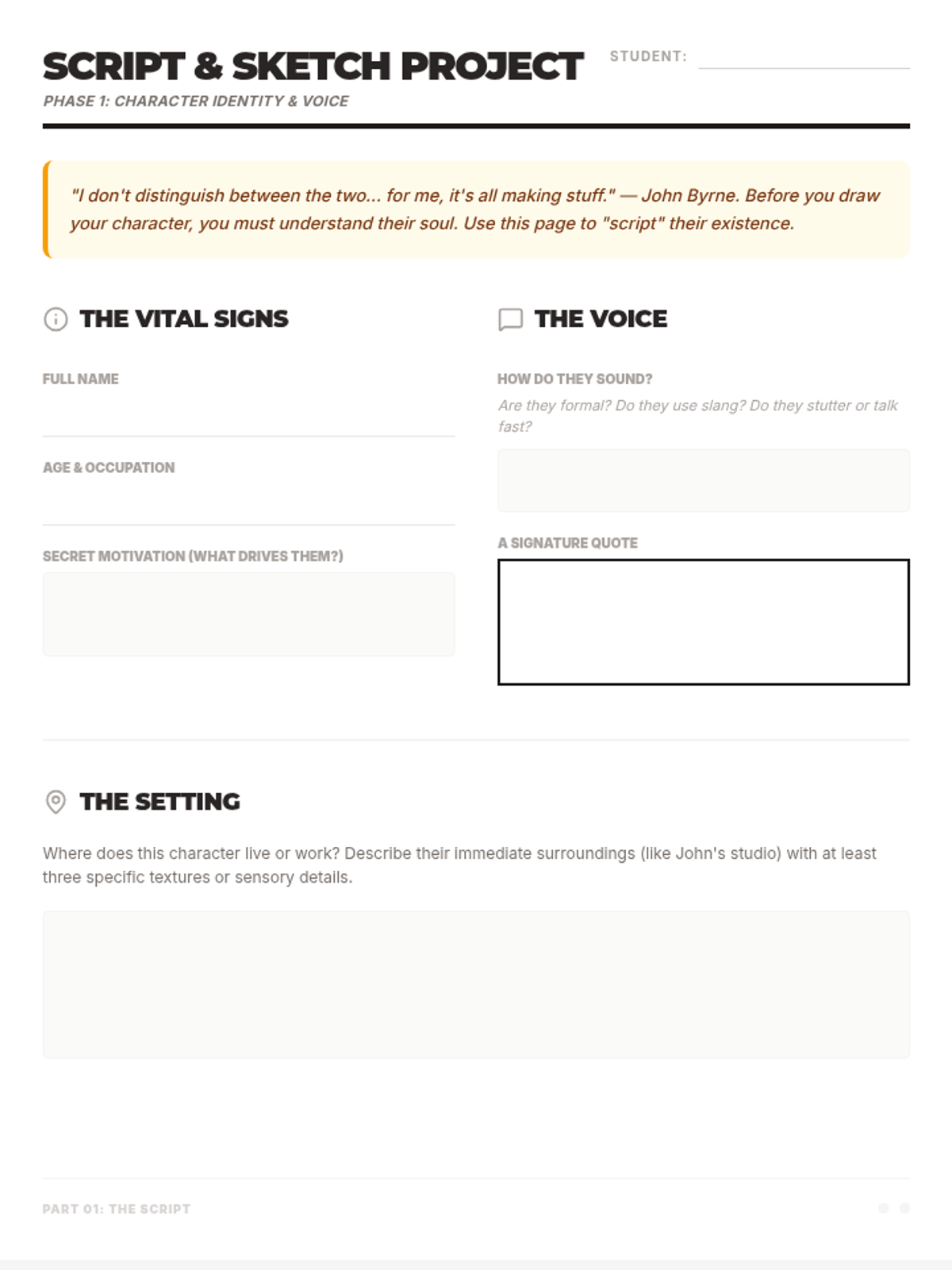
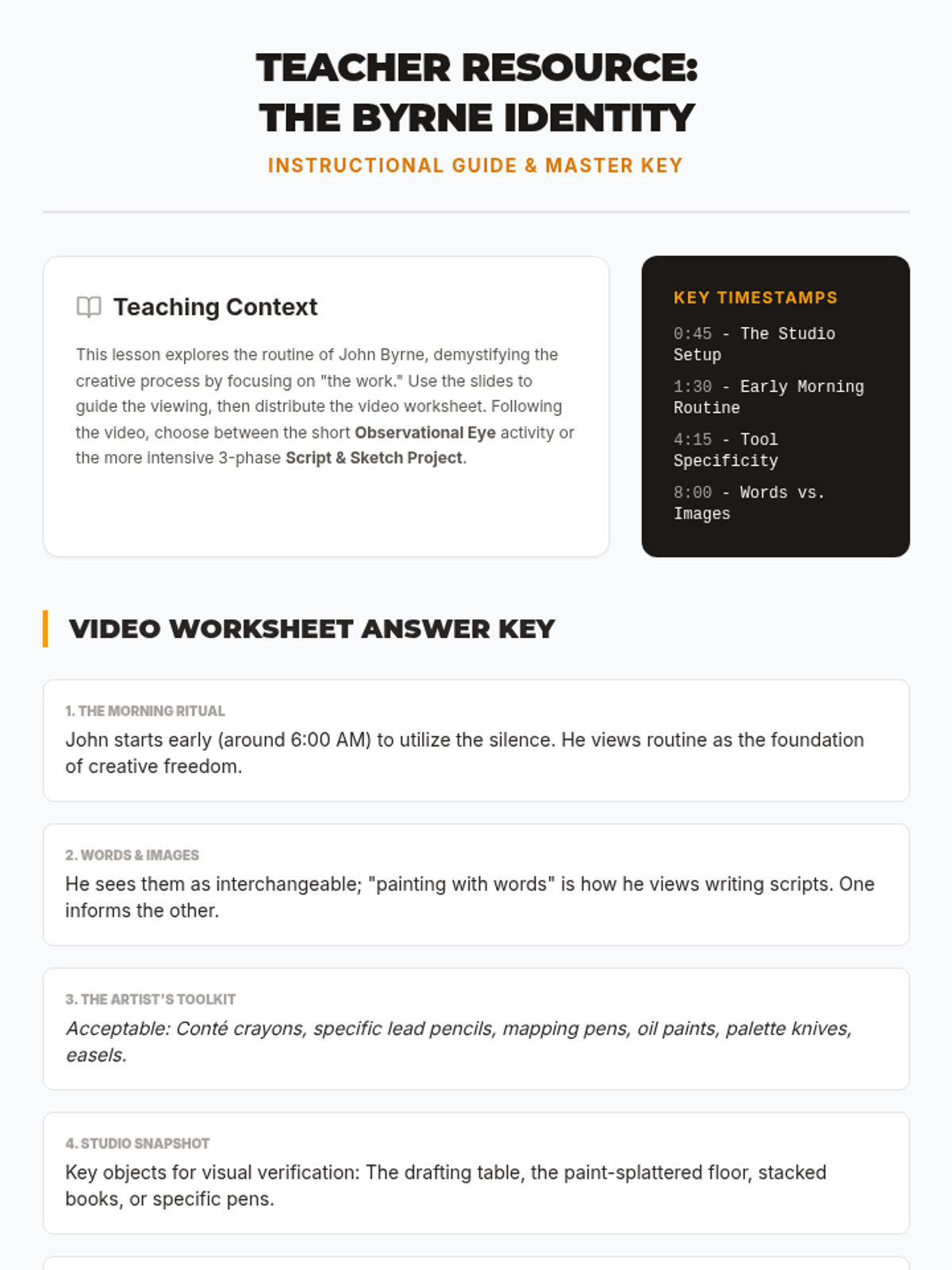
A sequence exploring the daily lives and creative processes of renowned artists, starting with John Byrne. Students observe artistic routines and apply those methods to their own creative practice.
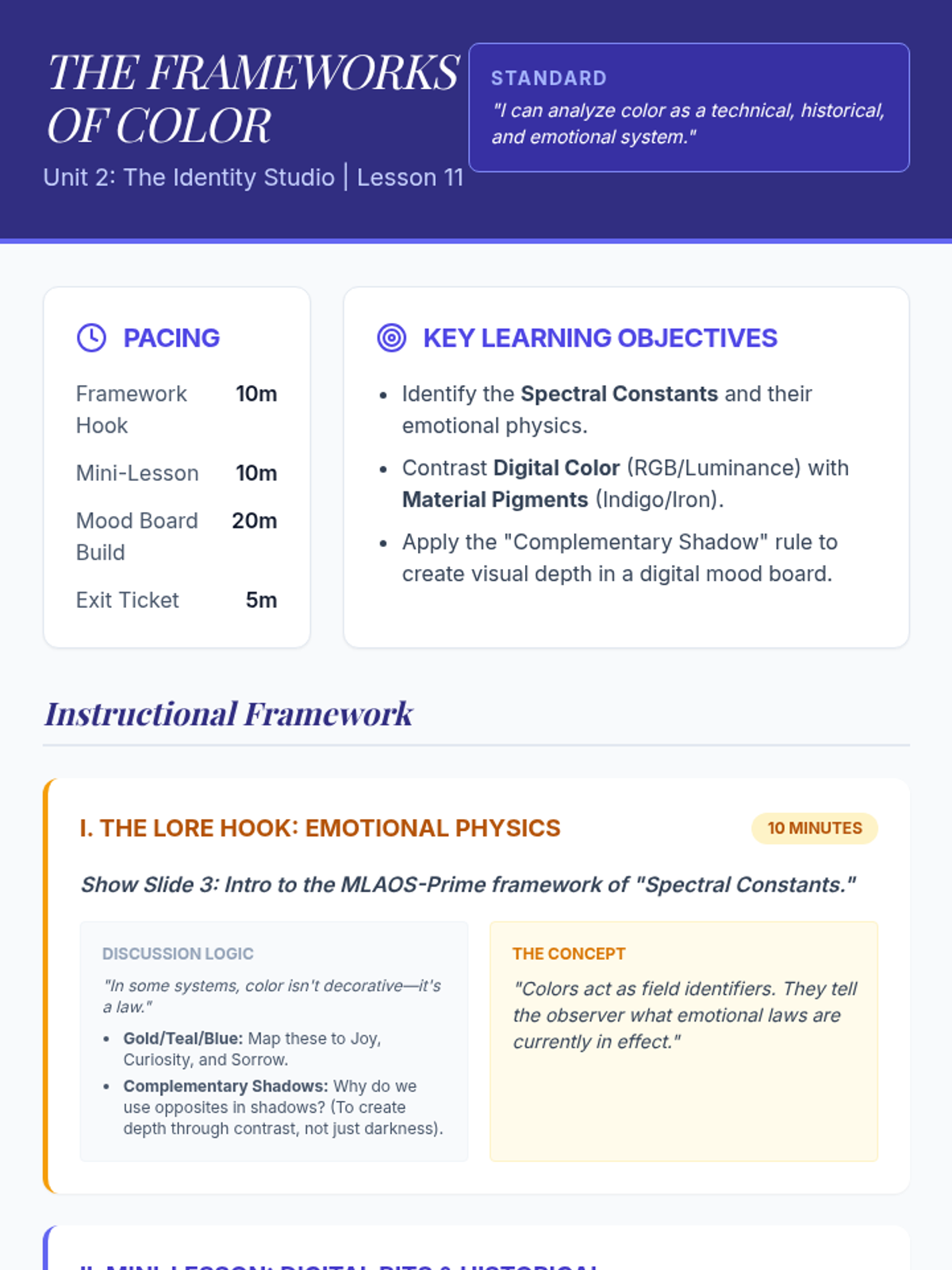
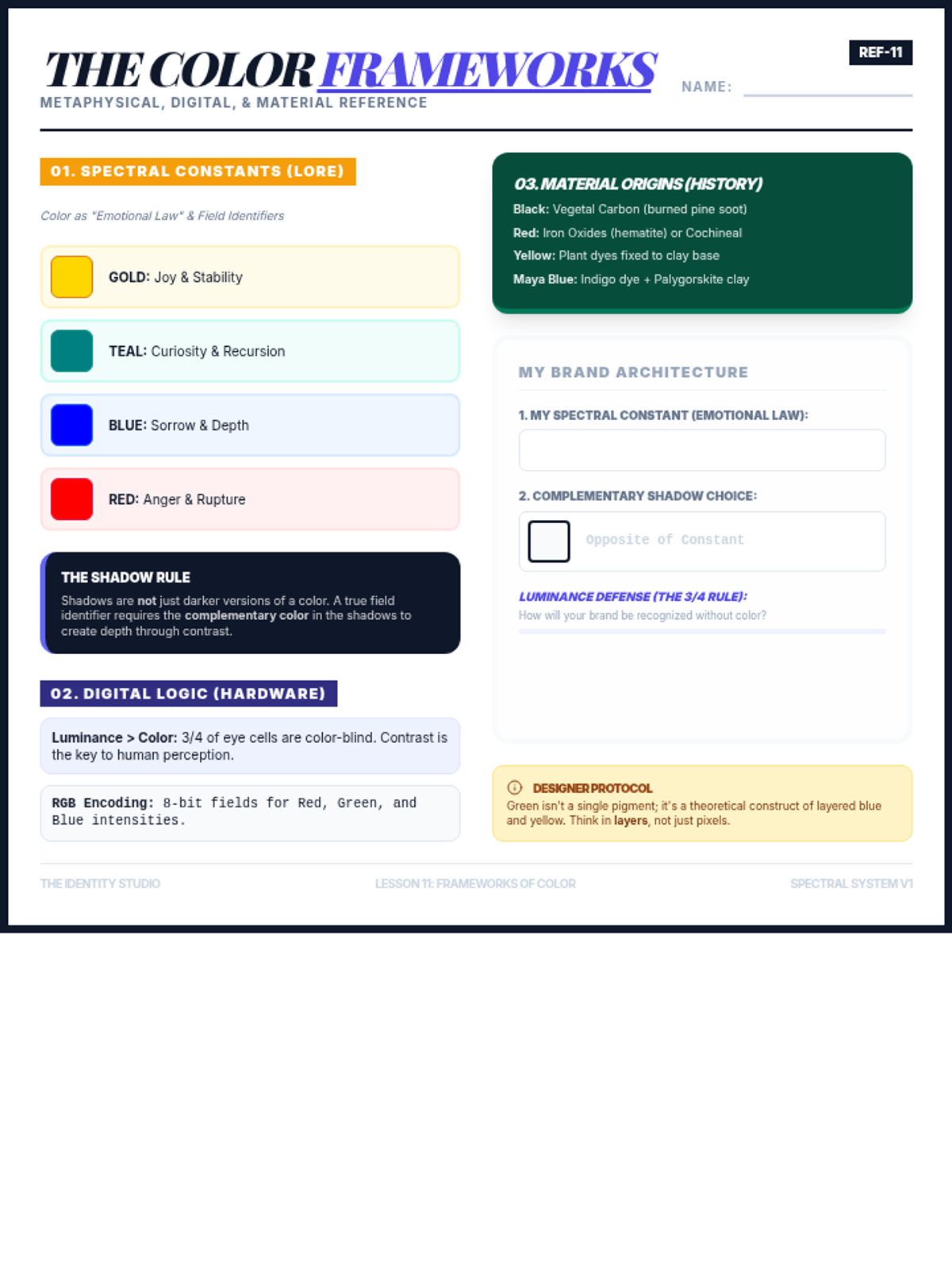
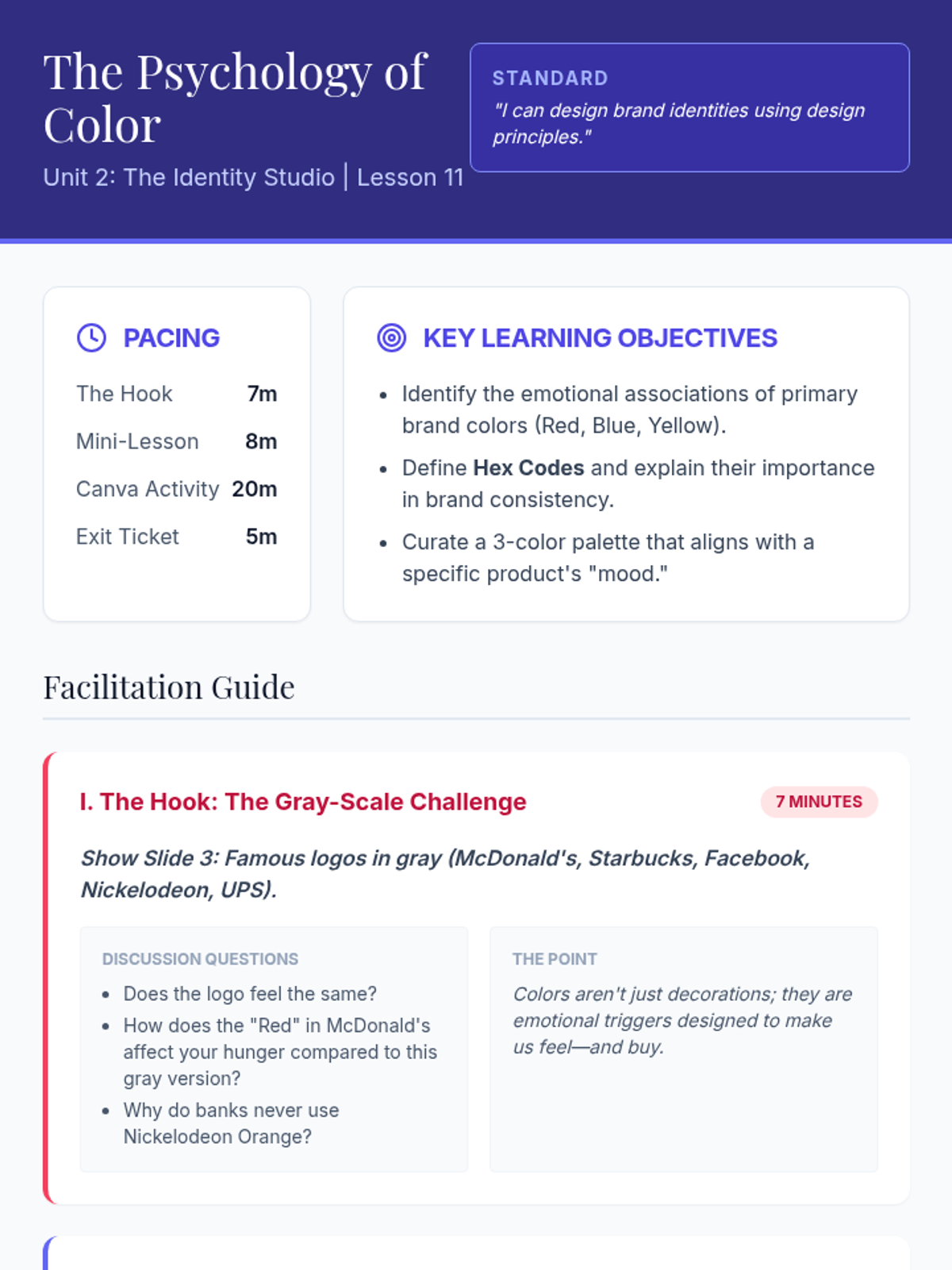
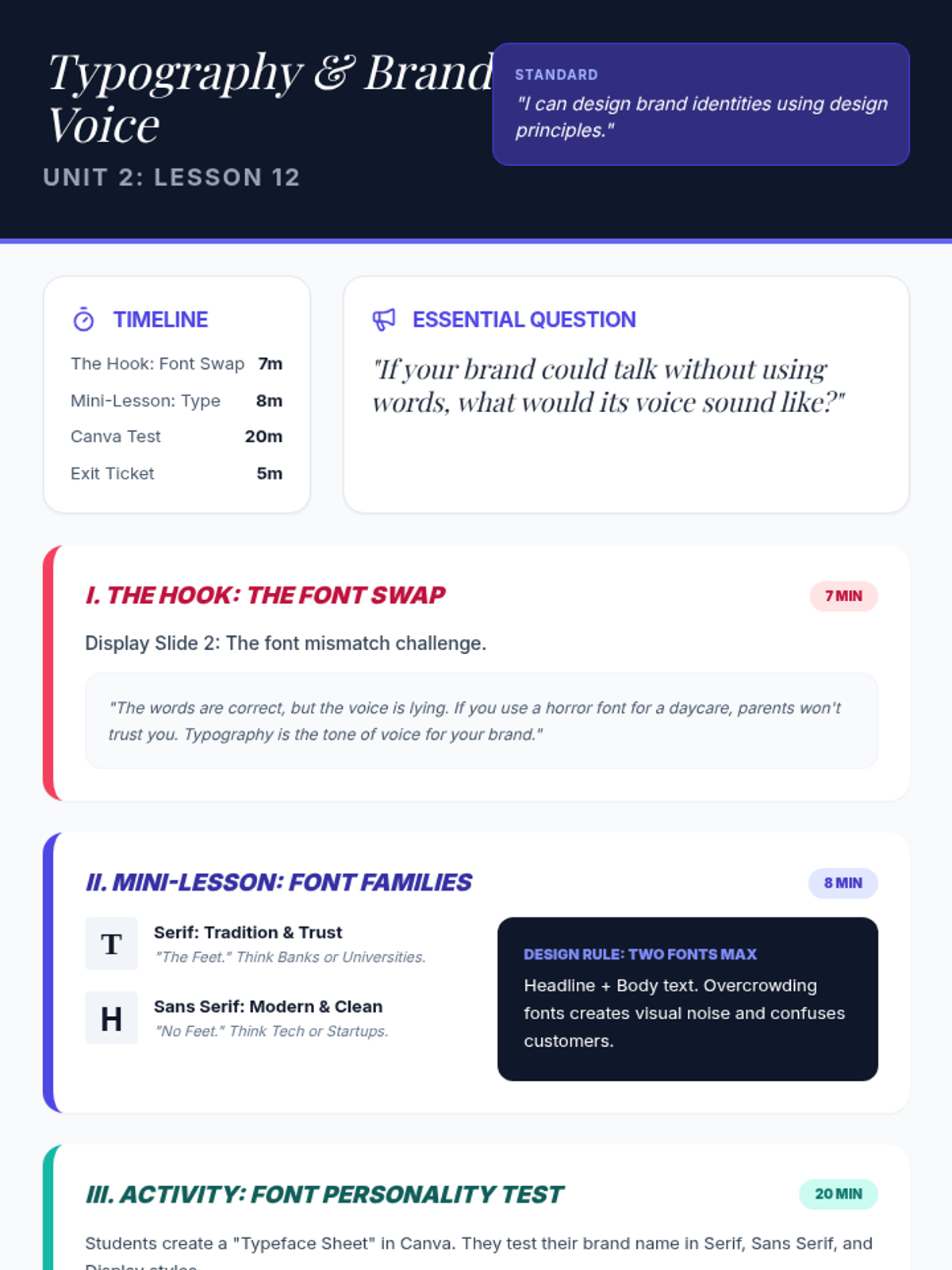
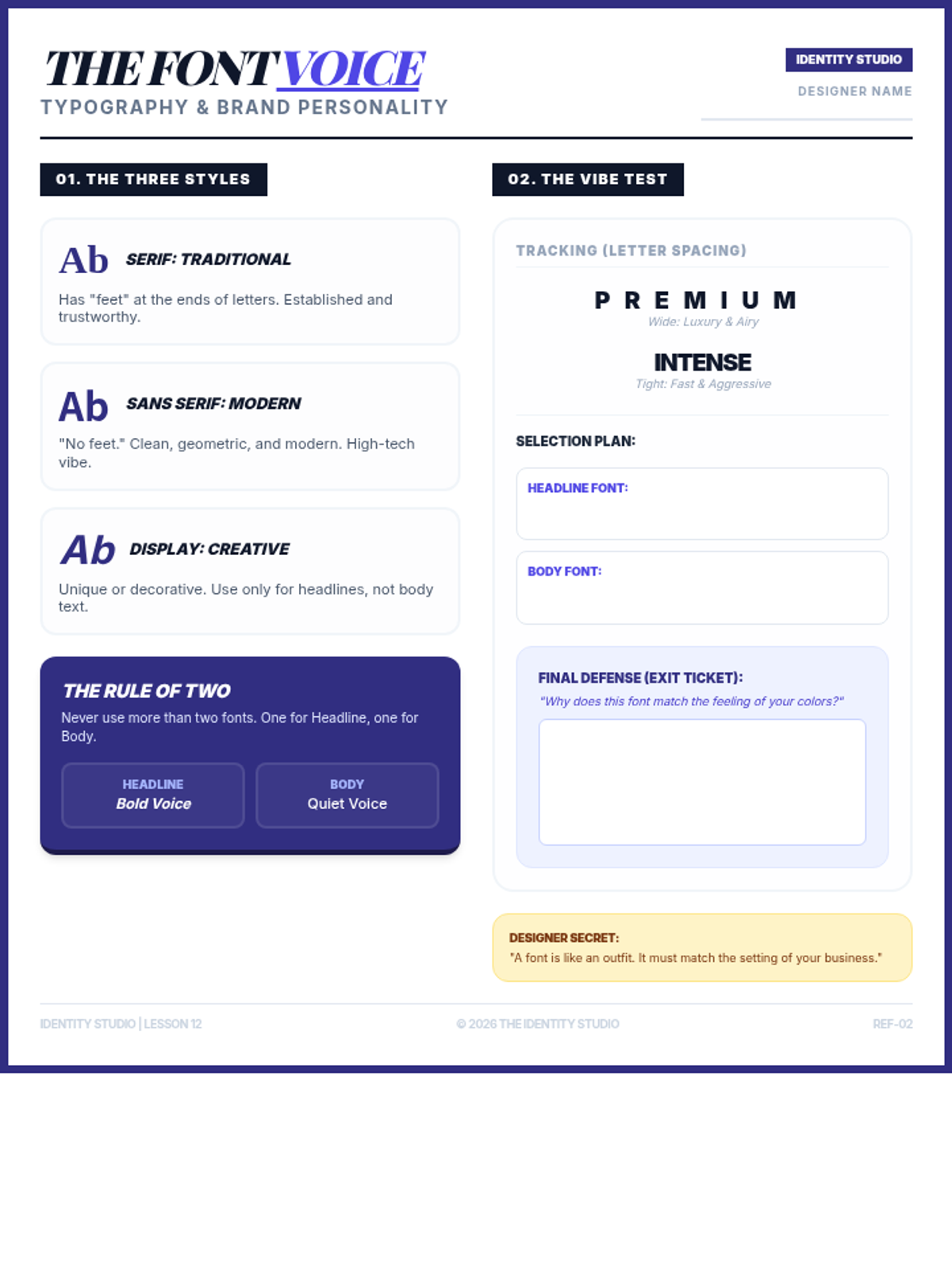
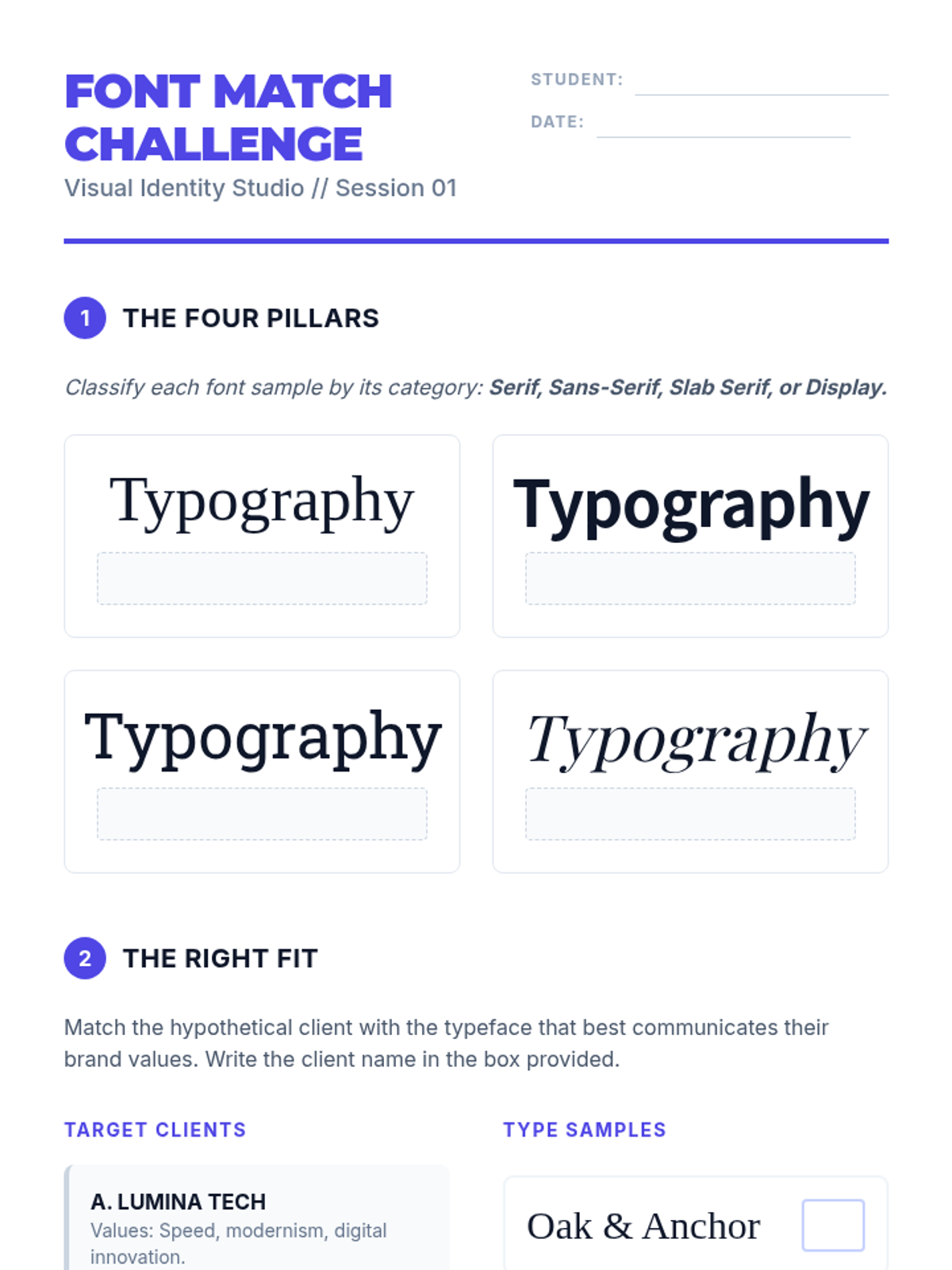
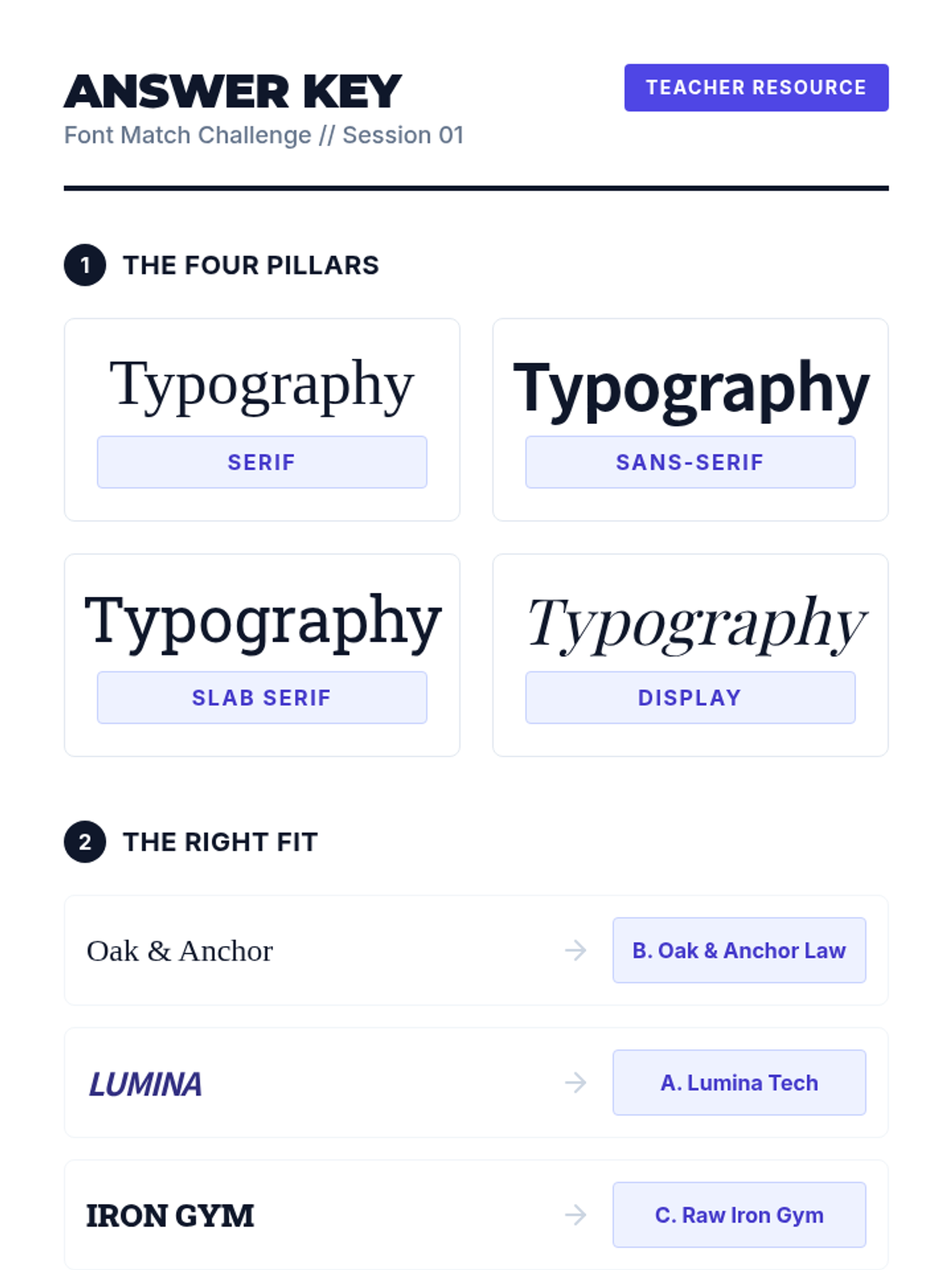
A unit focused on the visual principles of brand identity, moving from theory (color, type) to creation using vector-based tools like Google Drawing.
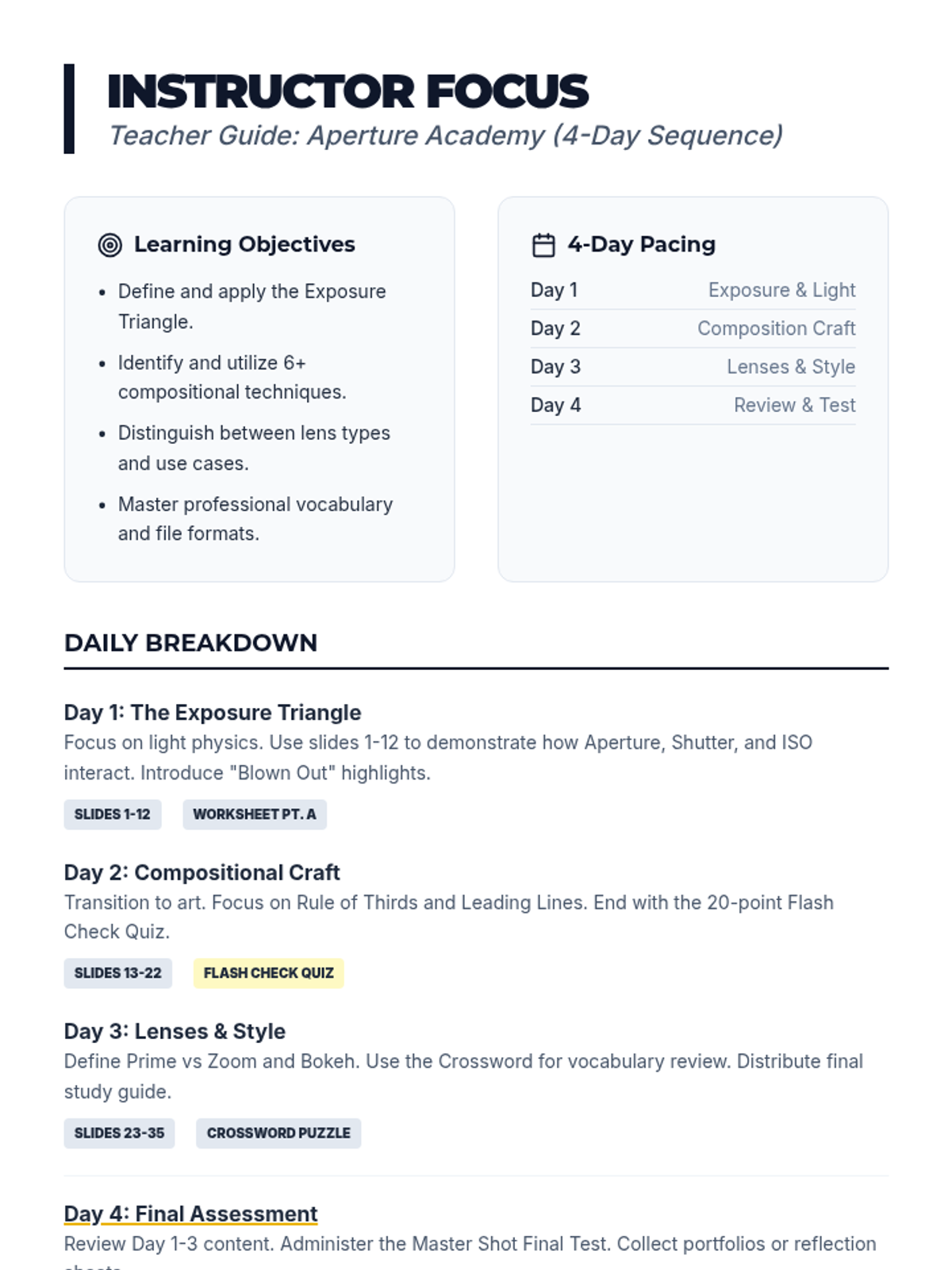
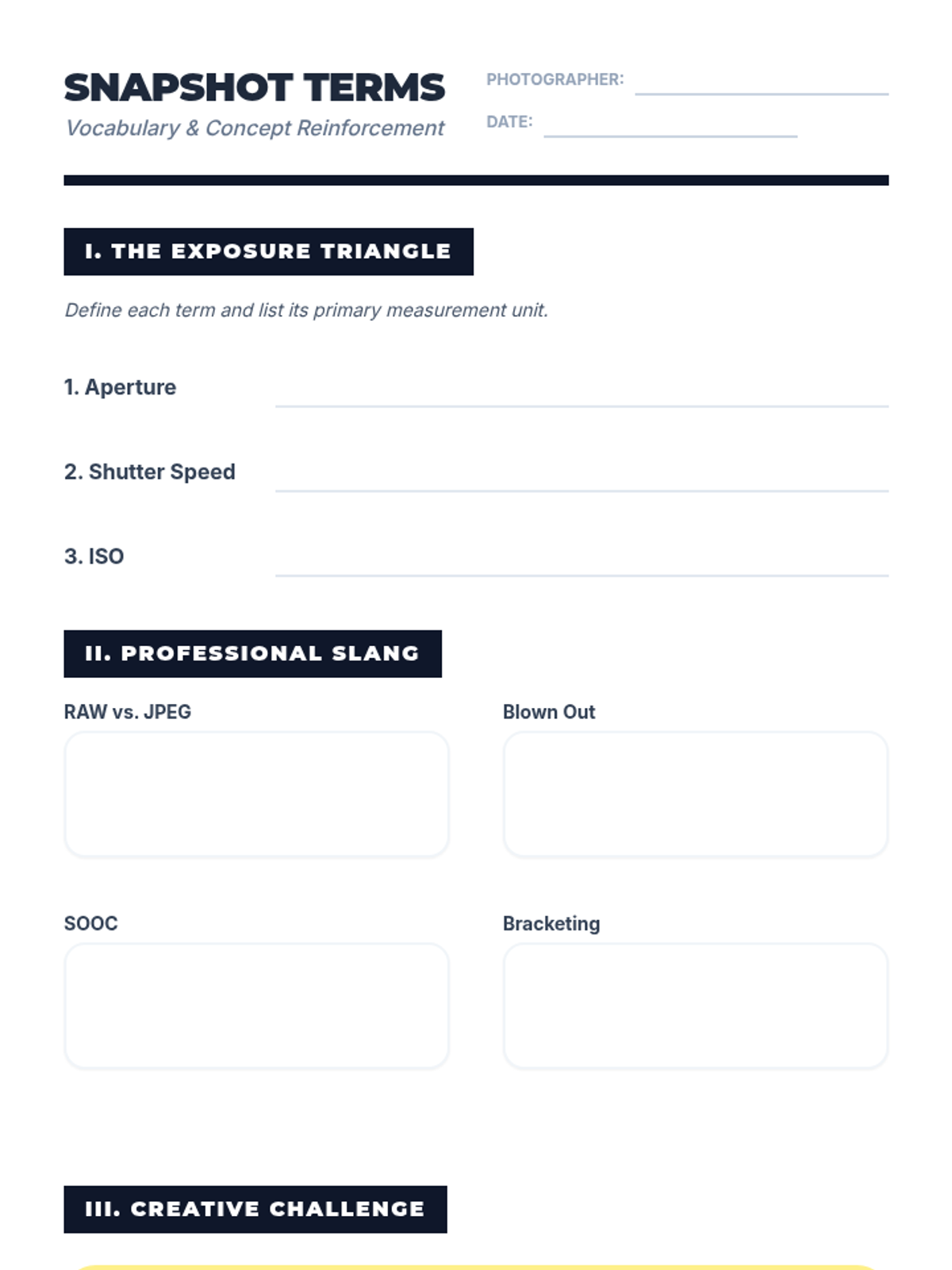
A comprehensive 4-day introduction to photography for beginners, covering the exposure triangle, composition techniques, lens types, and essential vocabulary. Students progress from understanding light to mastering artistic design and camera settings.
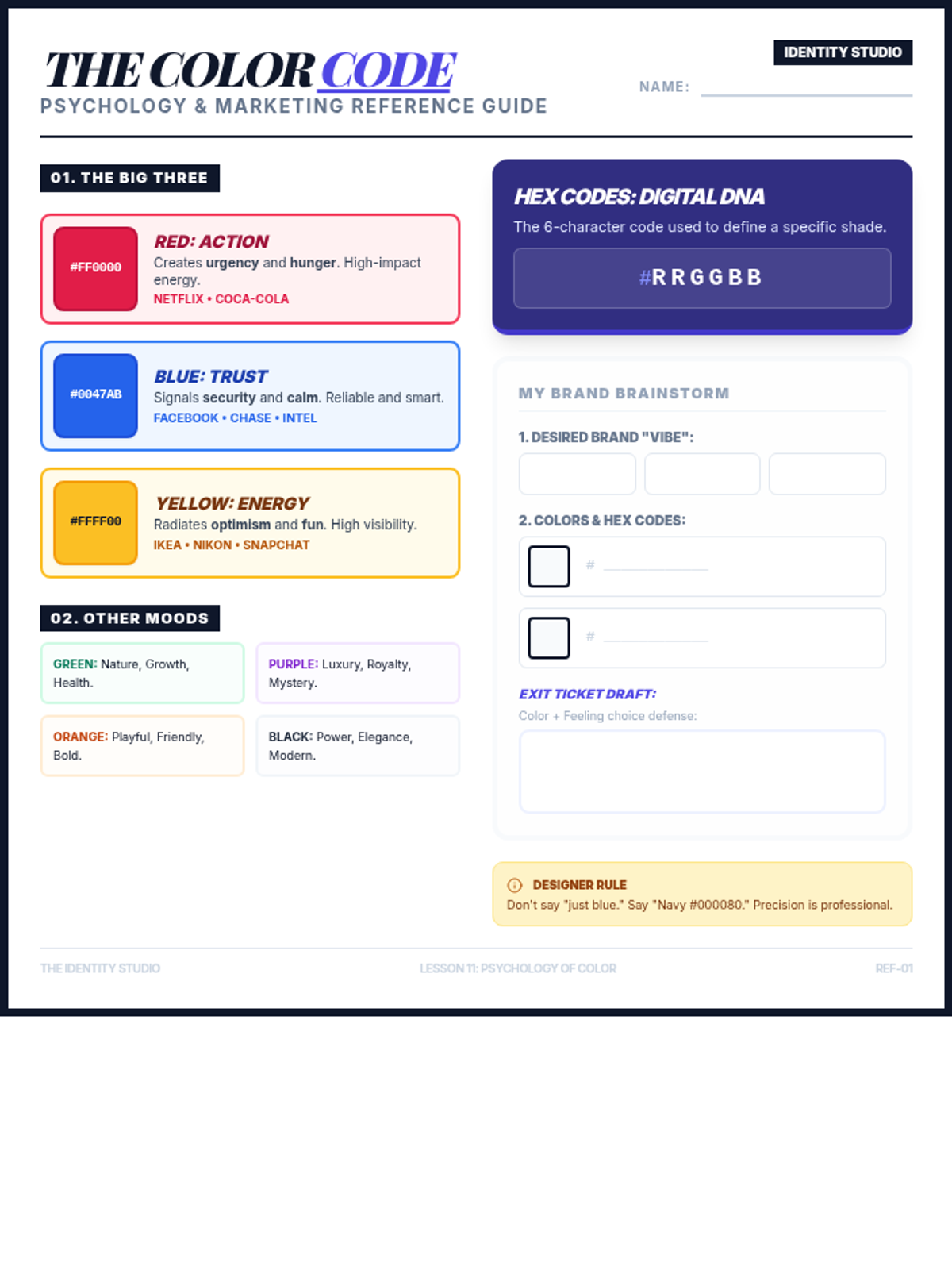
A comprehensive identity design unit where students explore the psychological and visual elements of branding, including color theory, typography, and logo composition.
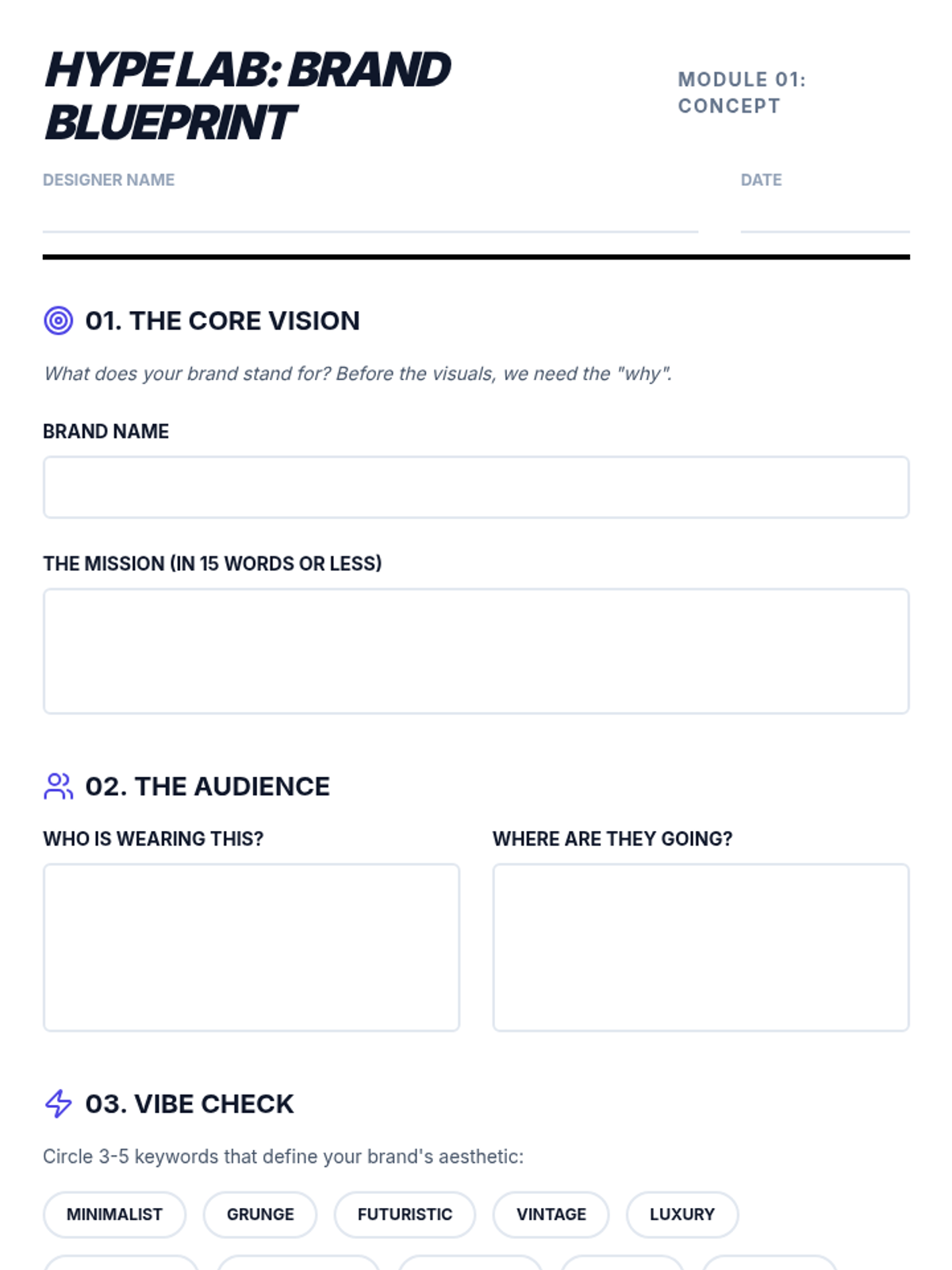
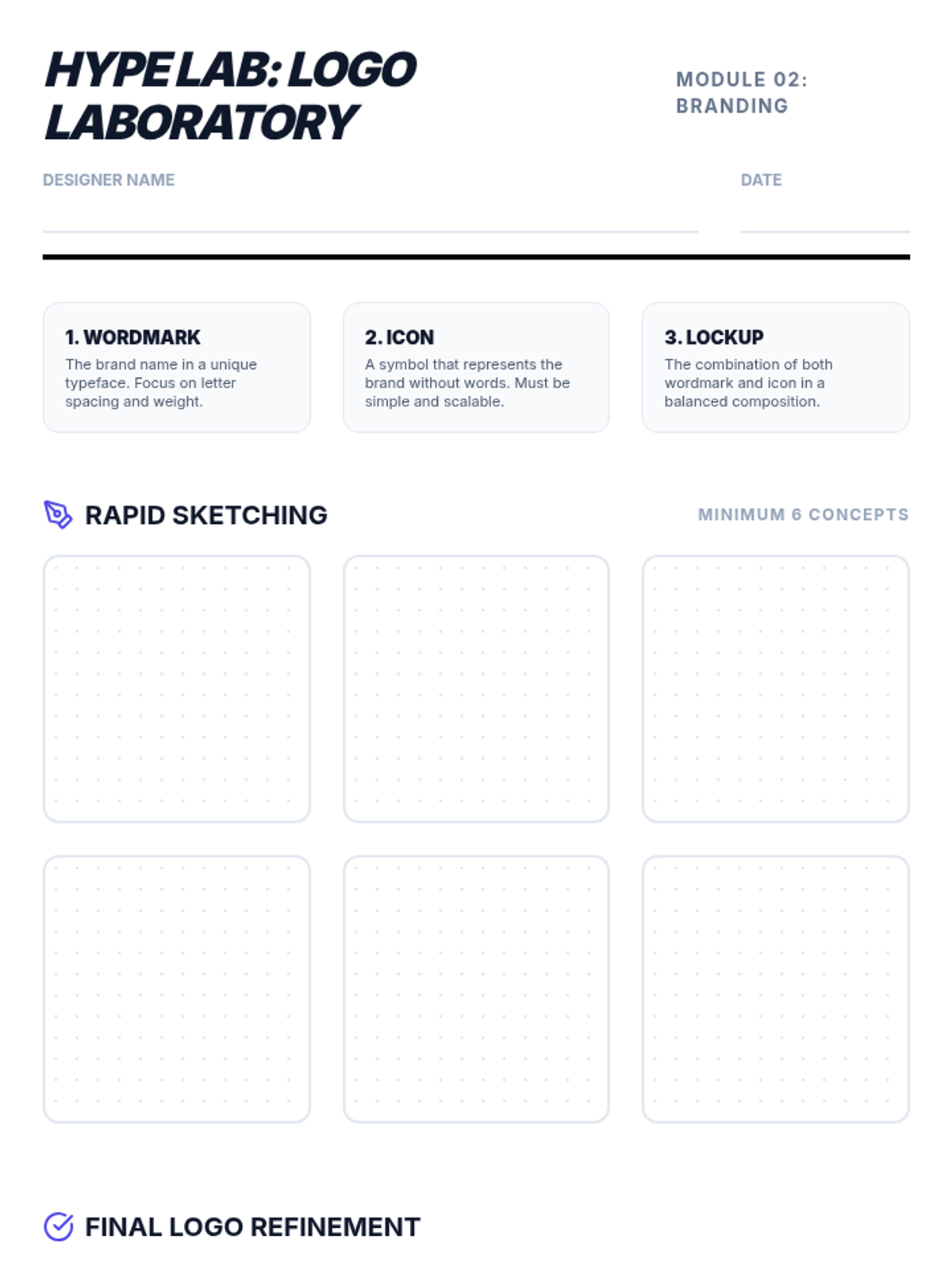
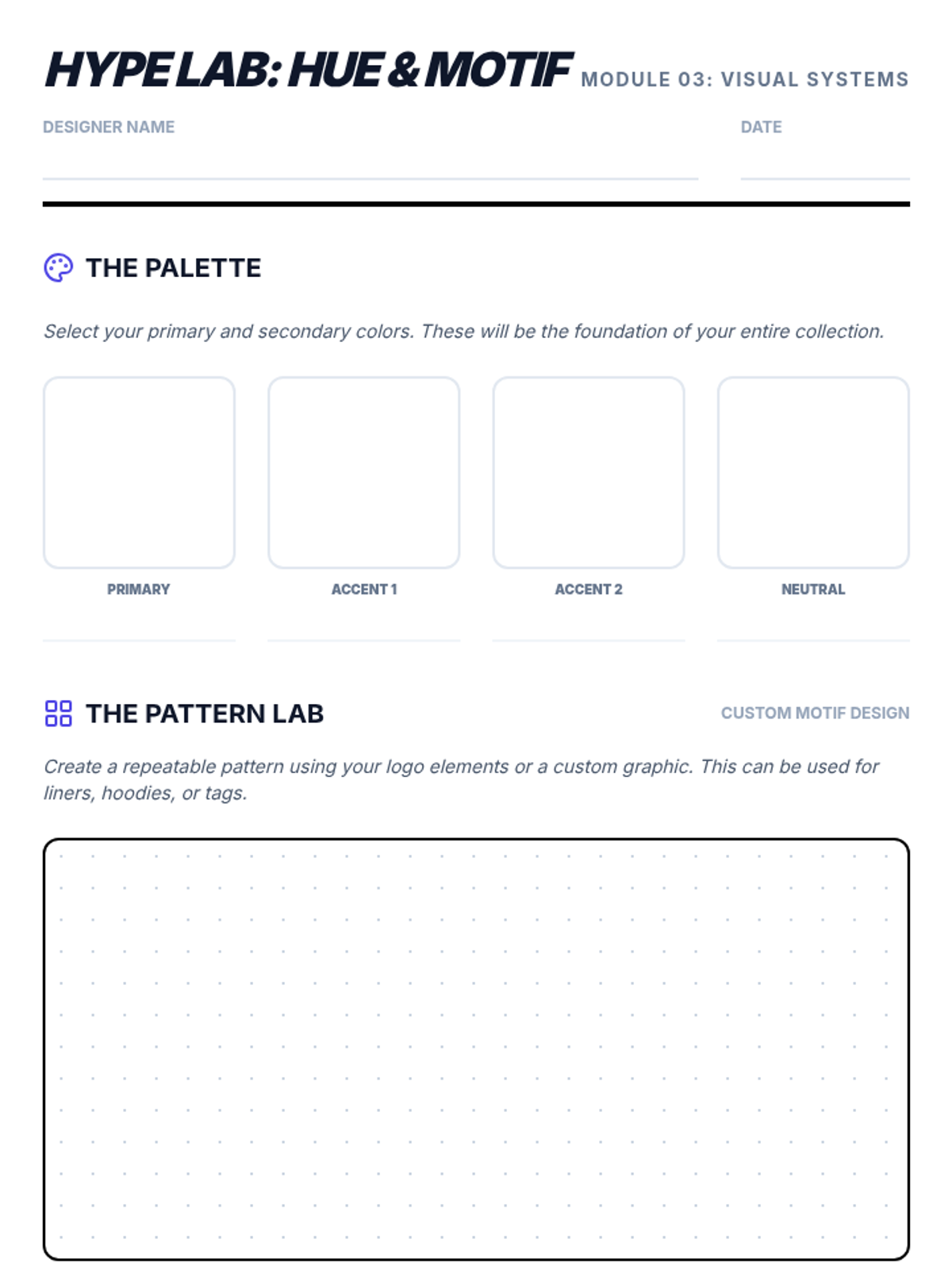
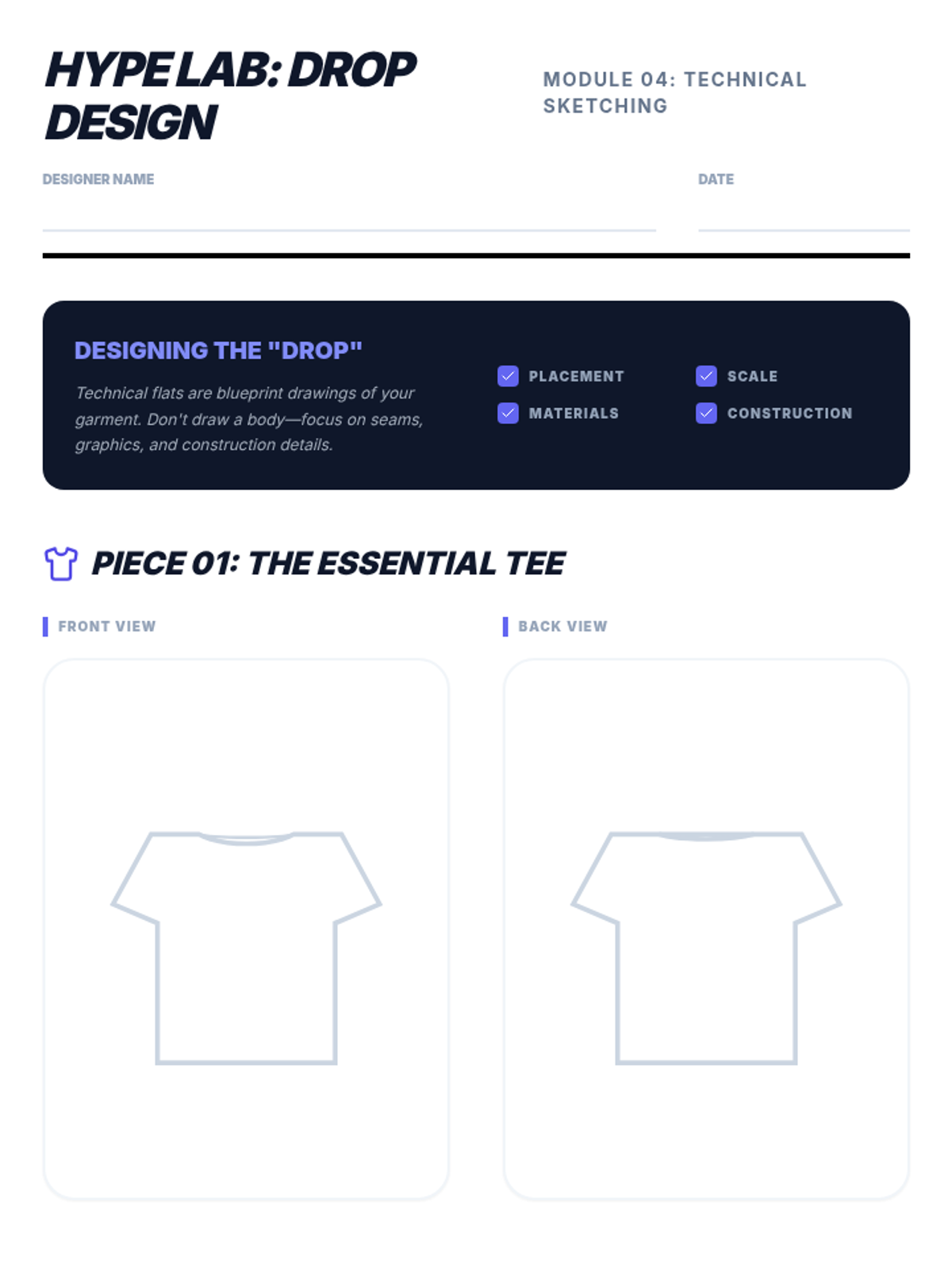
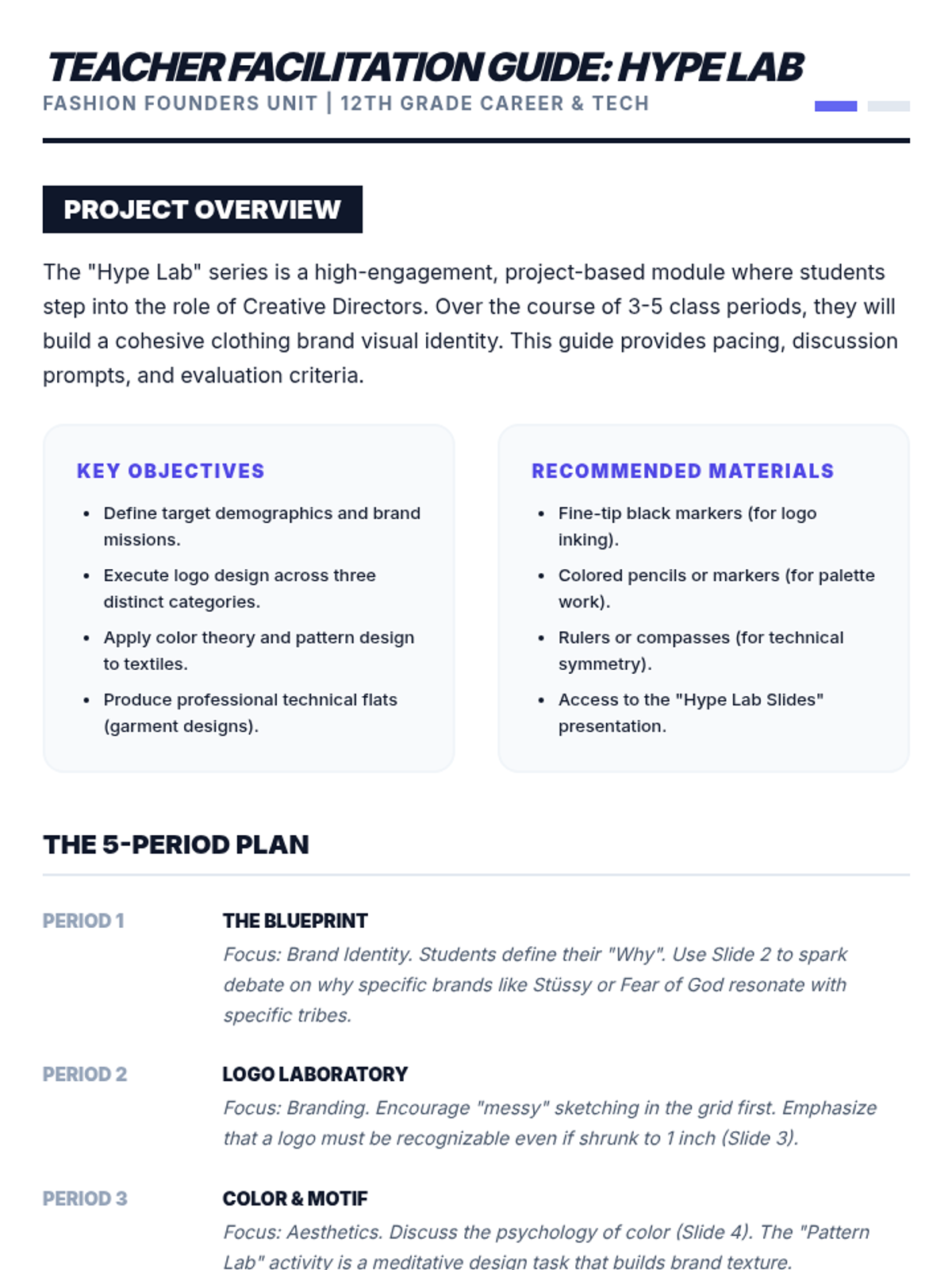
A comprehensive project-based unit where students develop a clothing brand from concept to technical design, focusing on visual identity, color theory, and garment construction.
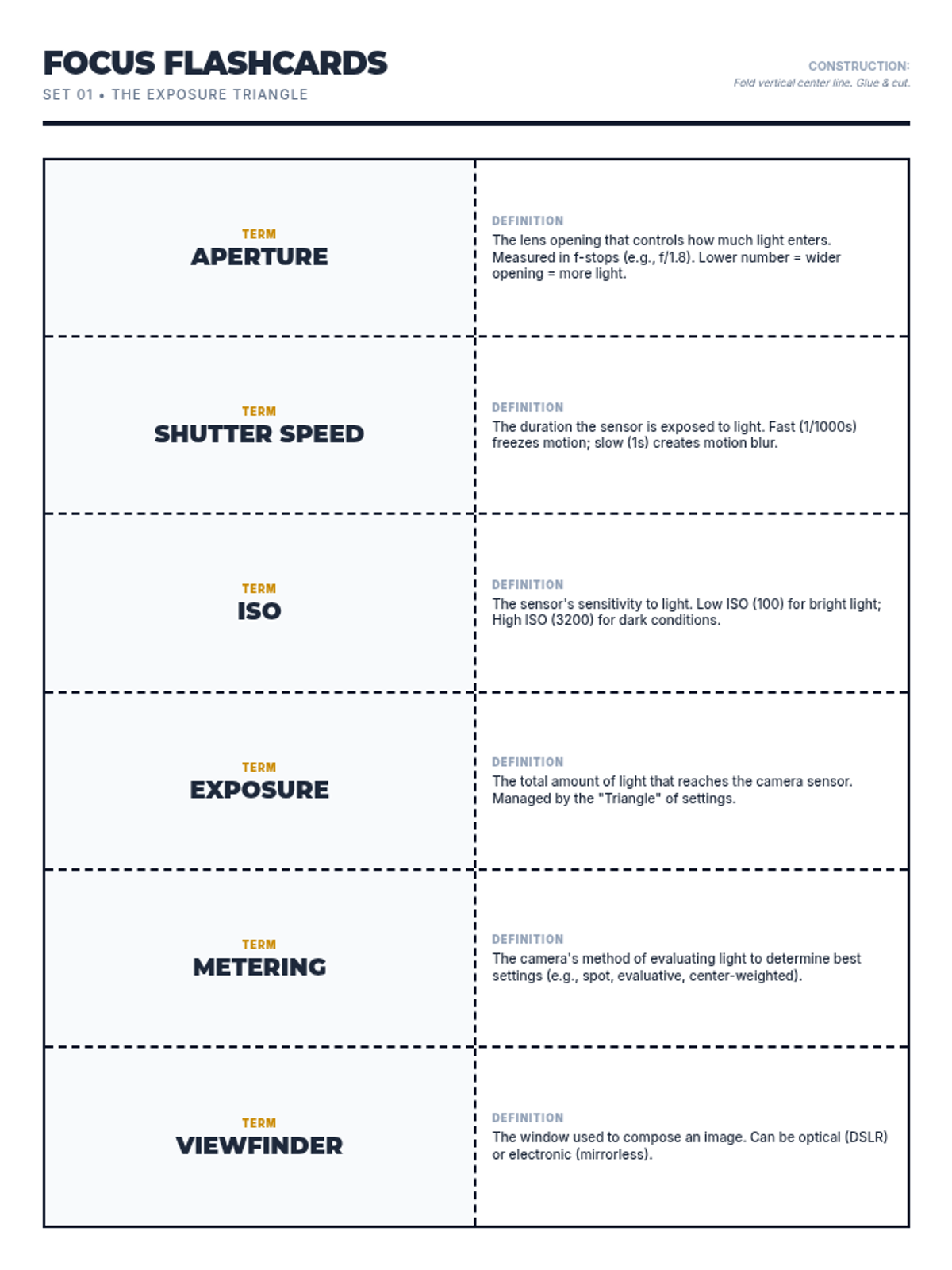
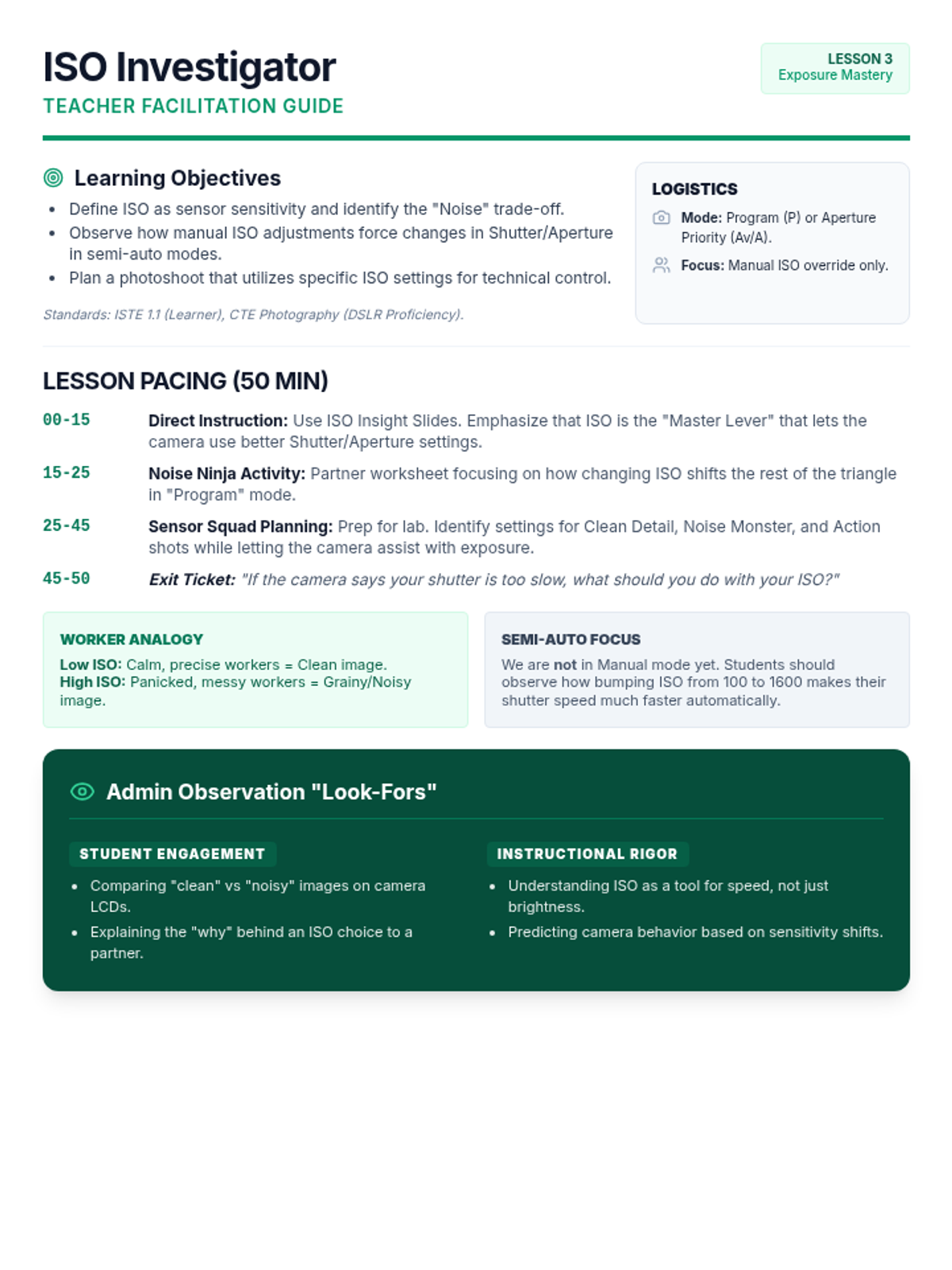
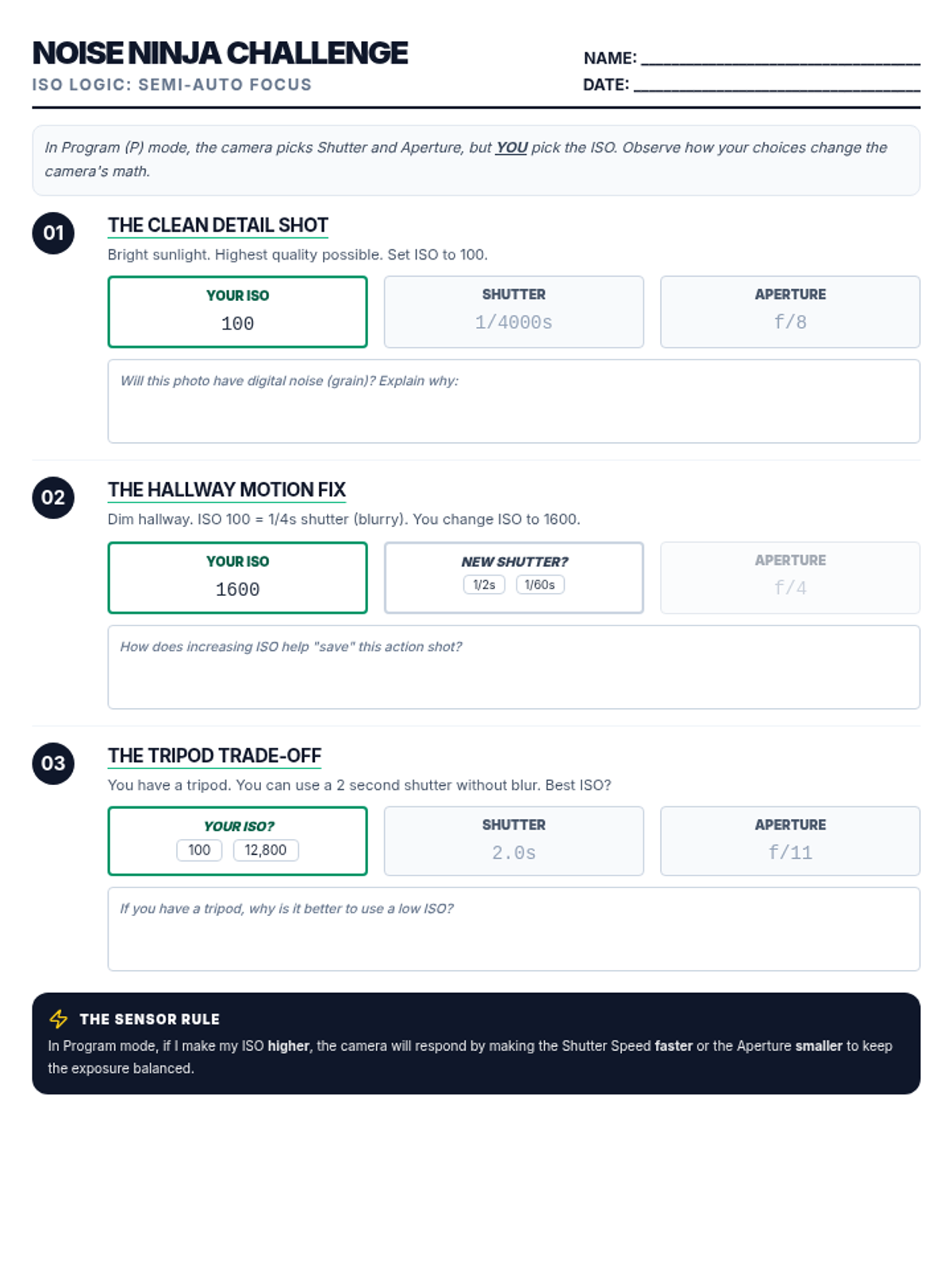
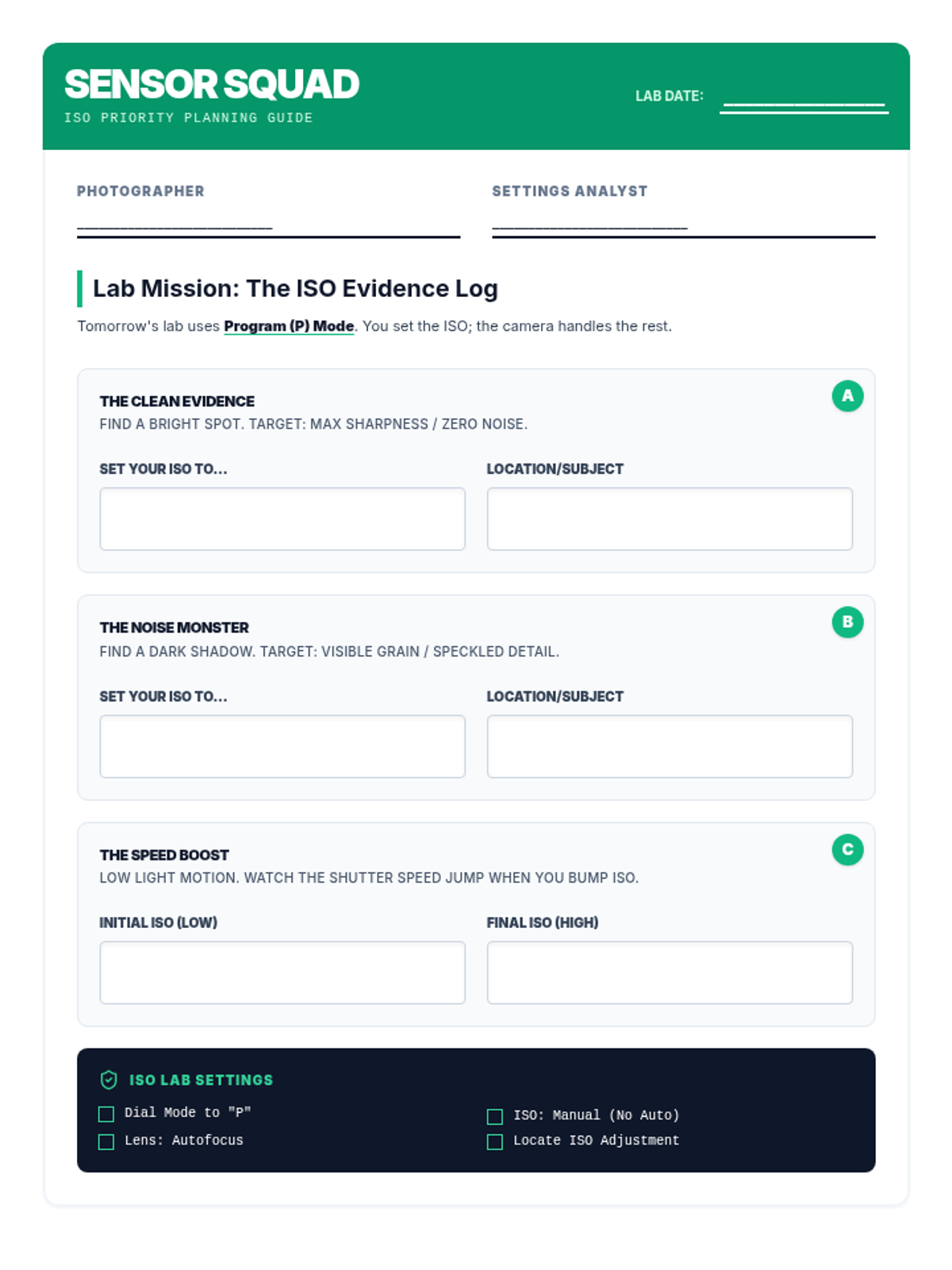
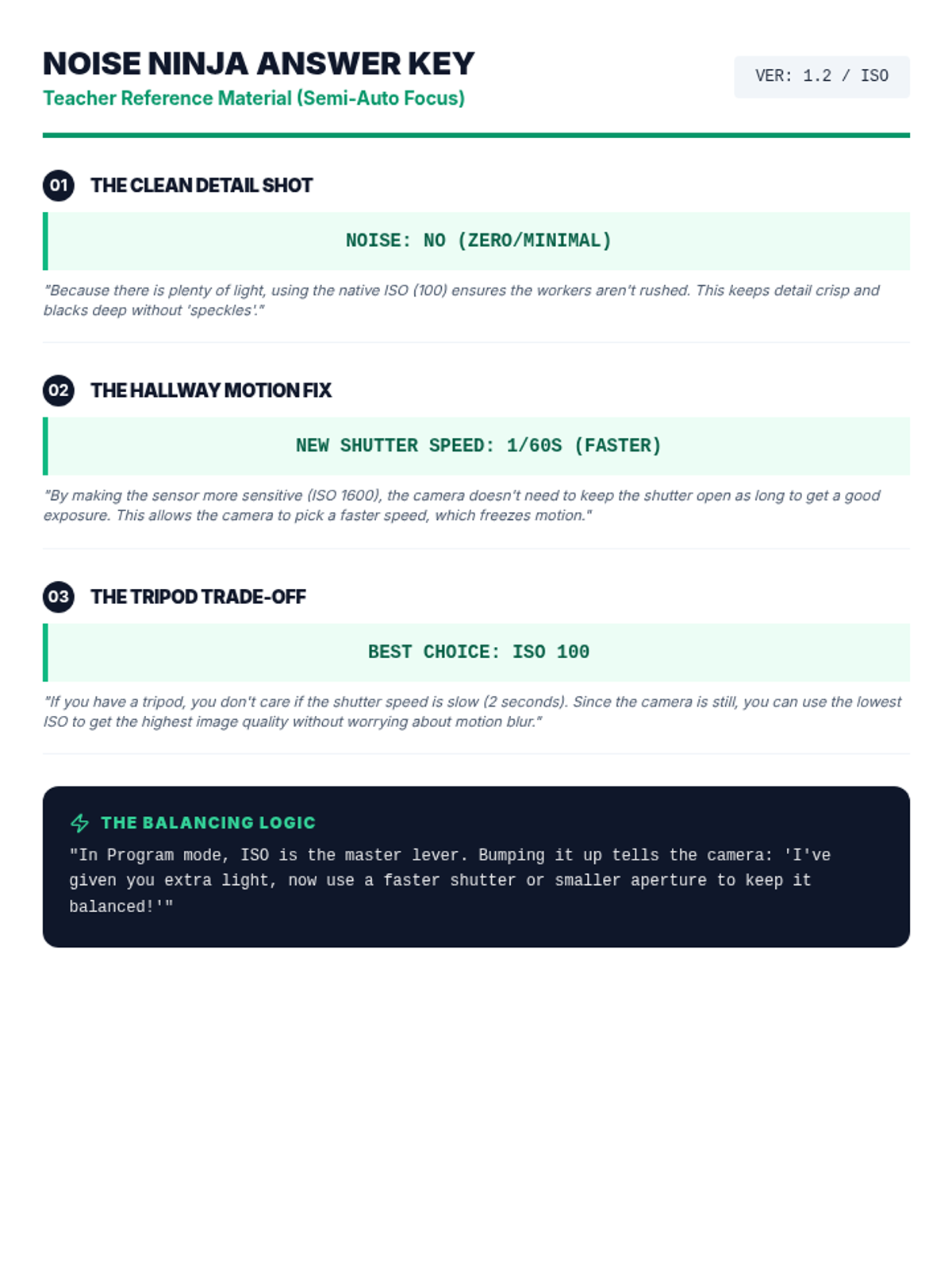
A comprehensive unit focused on mastering the three pillars of exposure: Aperture, Shutter Speed, and ISO, culminating in full manual mode proficiency.
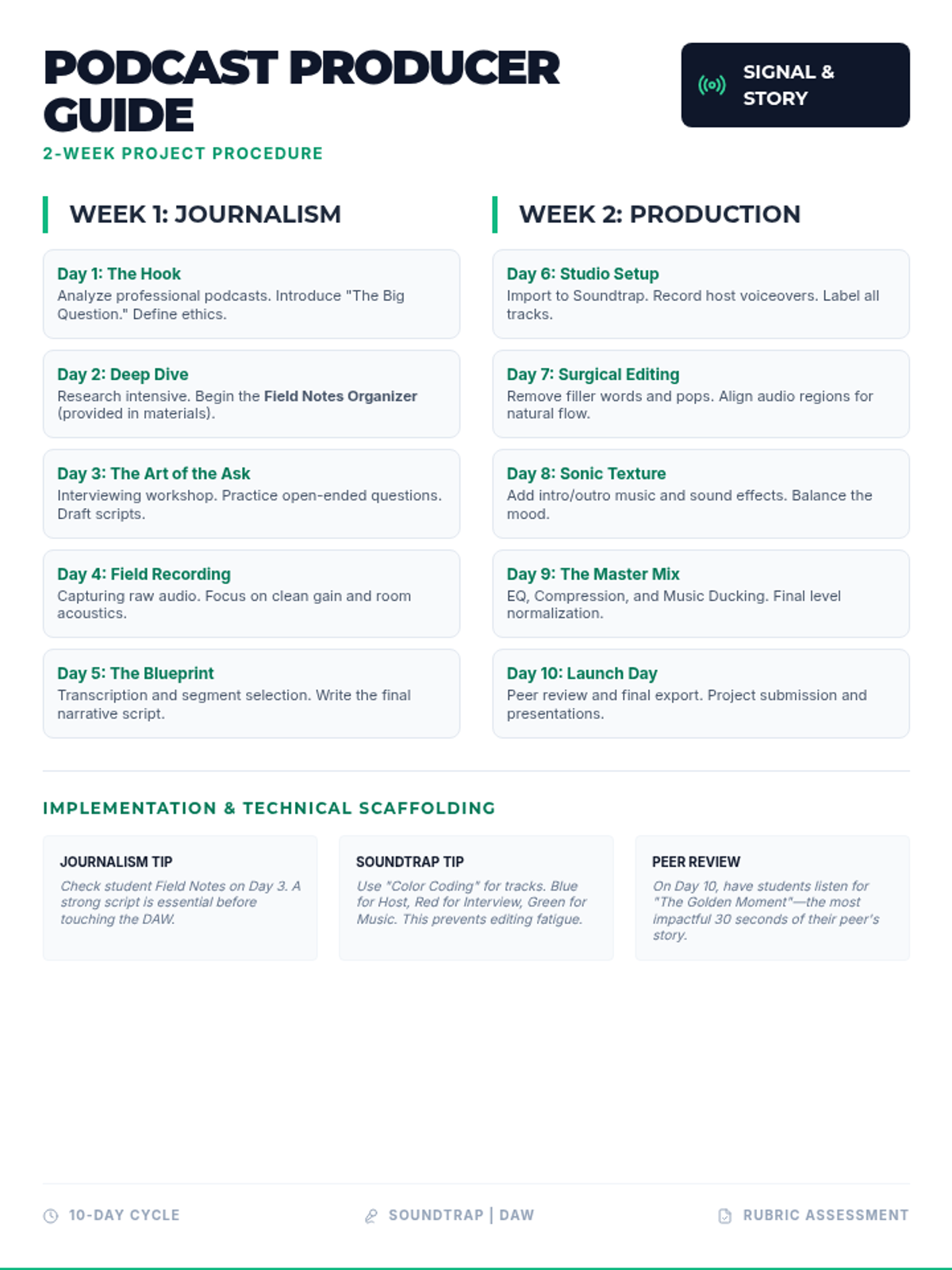
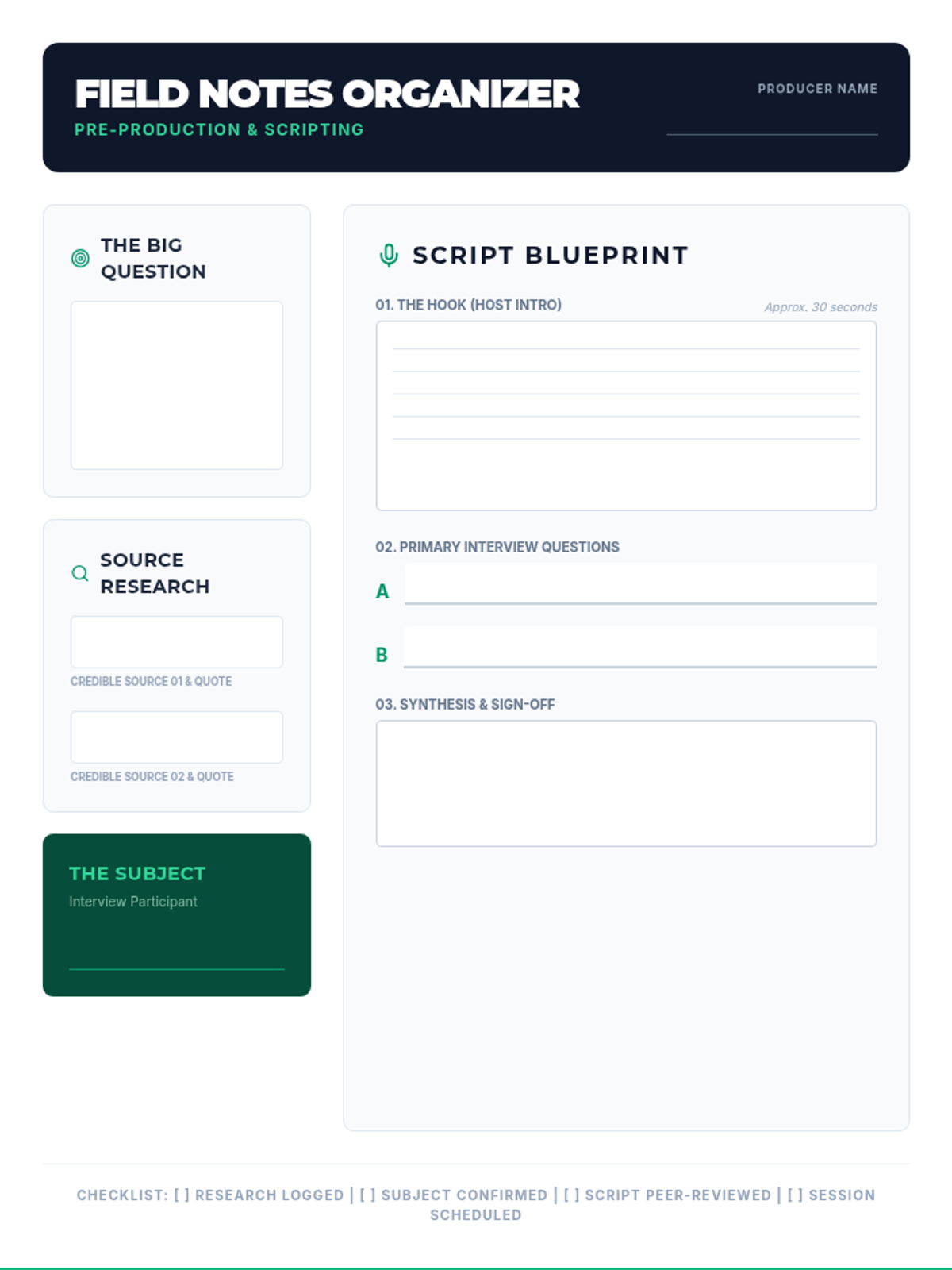
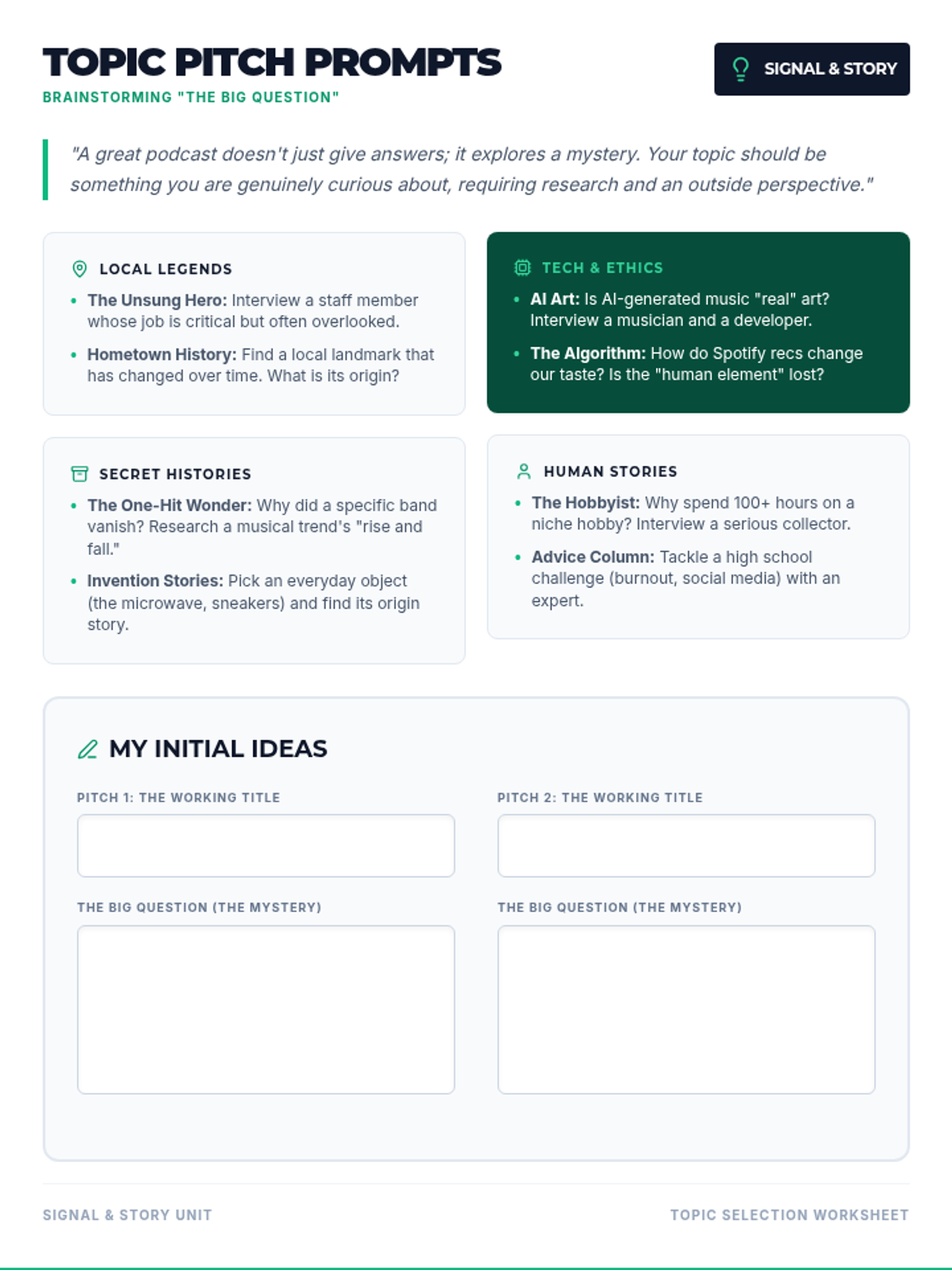
A 2-week comprehensive unit on podcast production, focusing on the intersection of journalistic research, interviewing, and technical audio mixing using Soundtrap. Students learn to craft compelling stories through sound while mastering professional digital audio workstation (DAW) workflows.
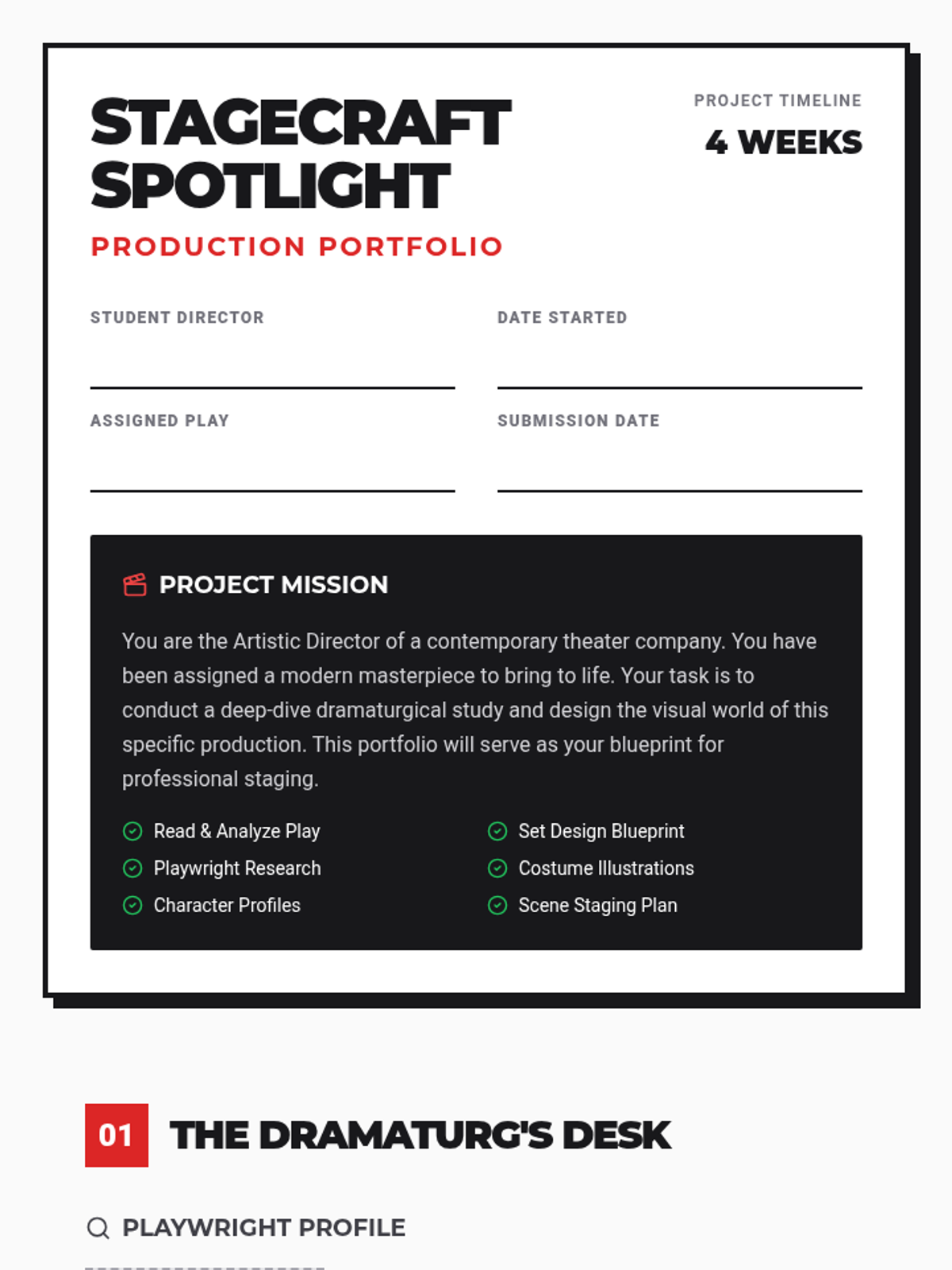
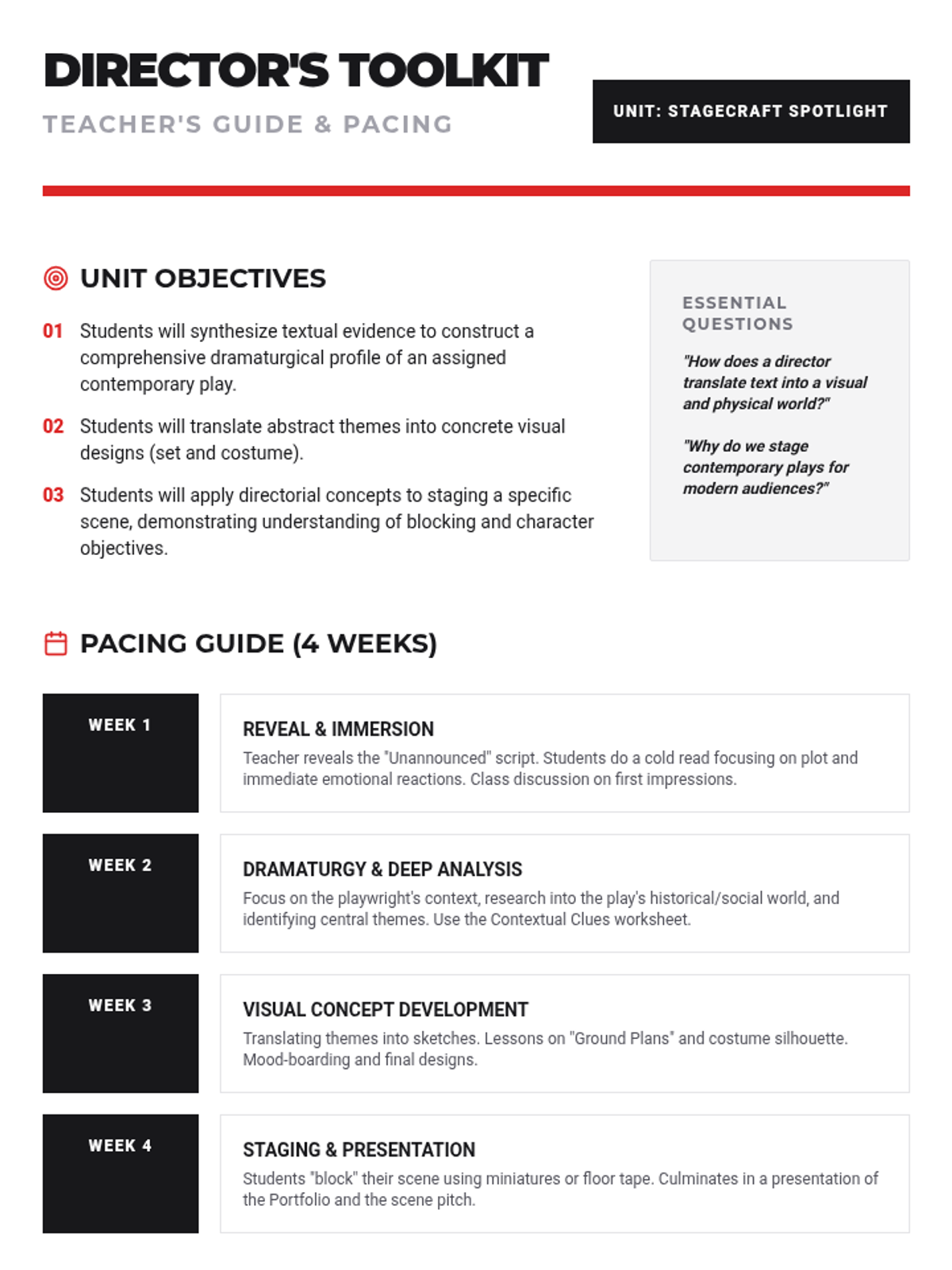
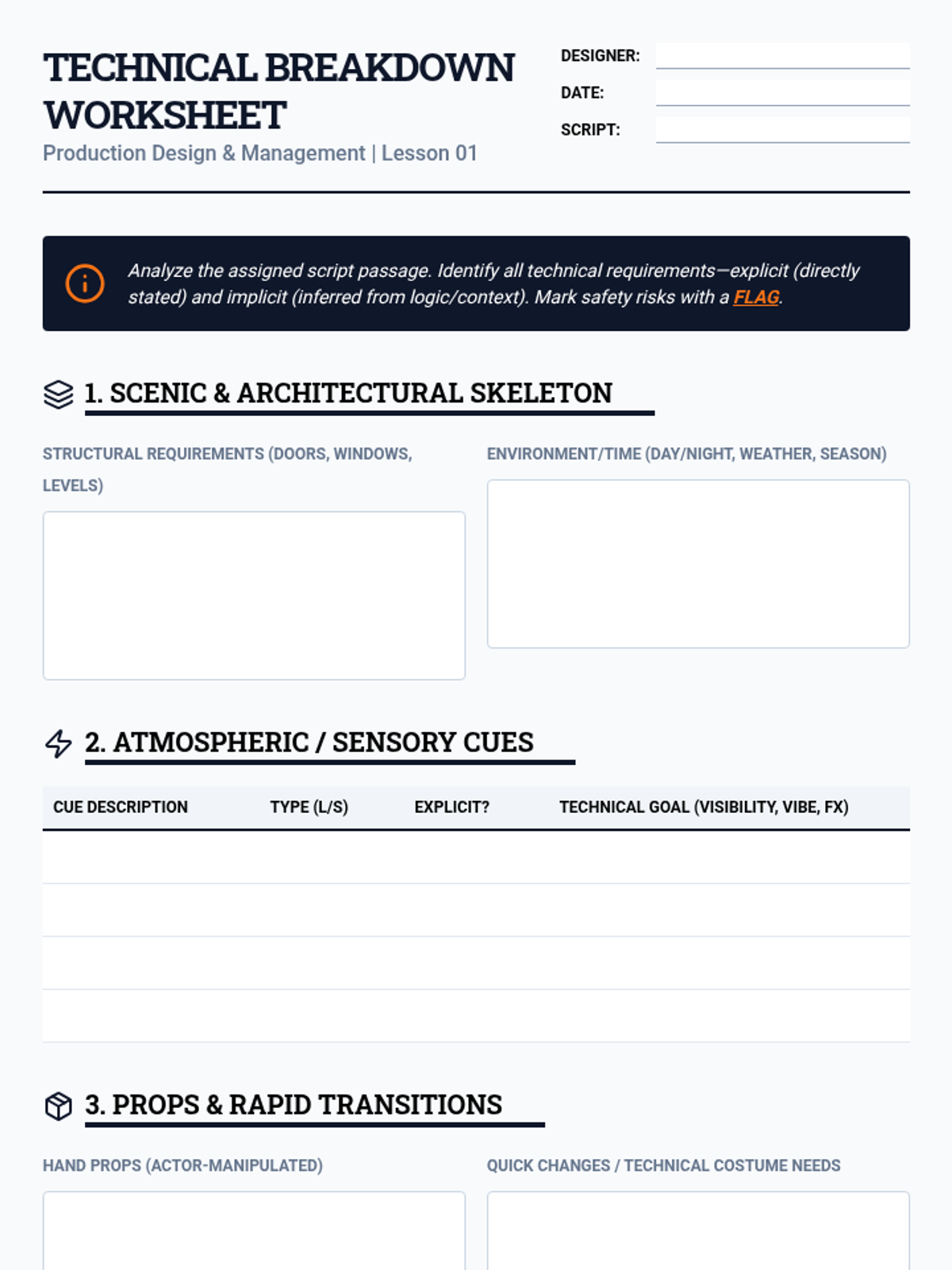
A comprehensive four-week unit and independent study guide for contemporary drama. Students analyze scripts, research playwrights, design technical elements, and stage scenes for a final production portfolio.
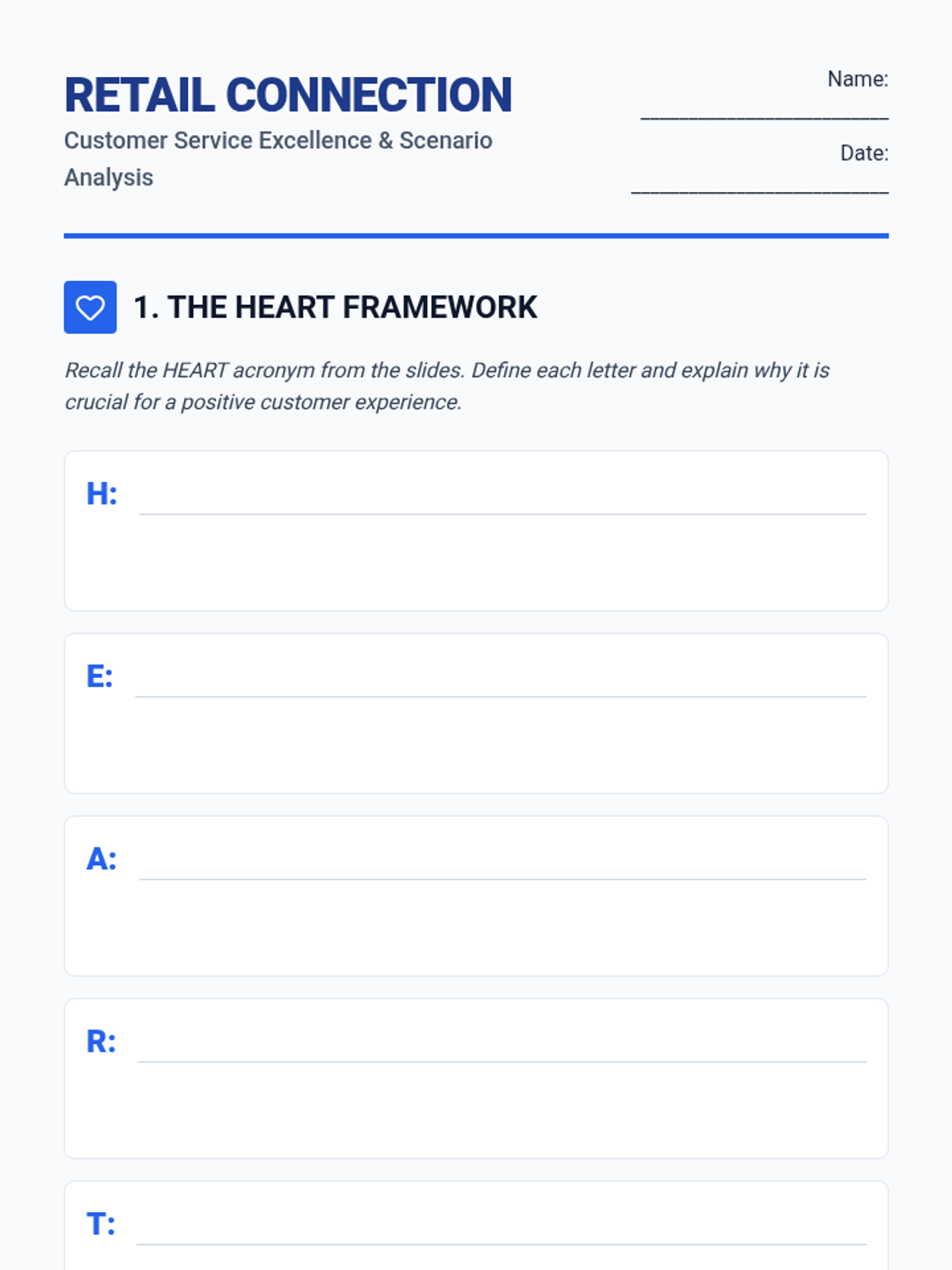
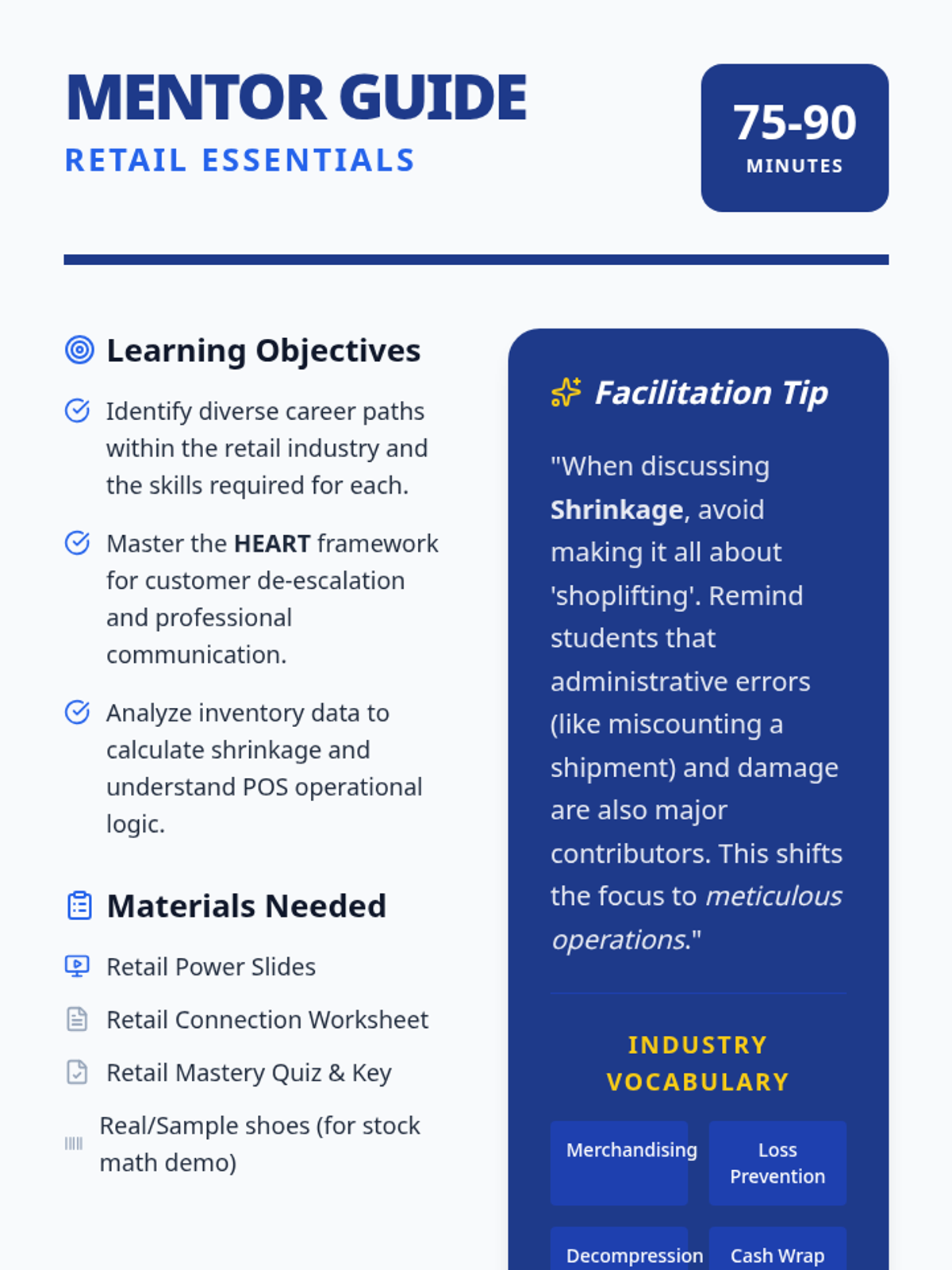
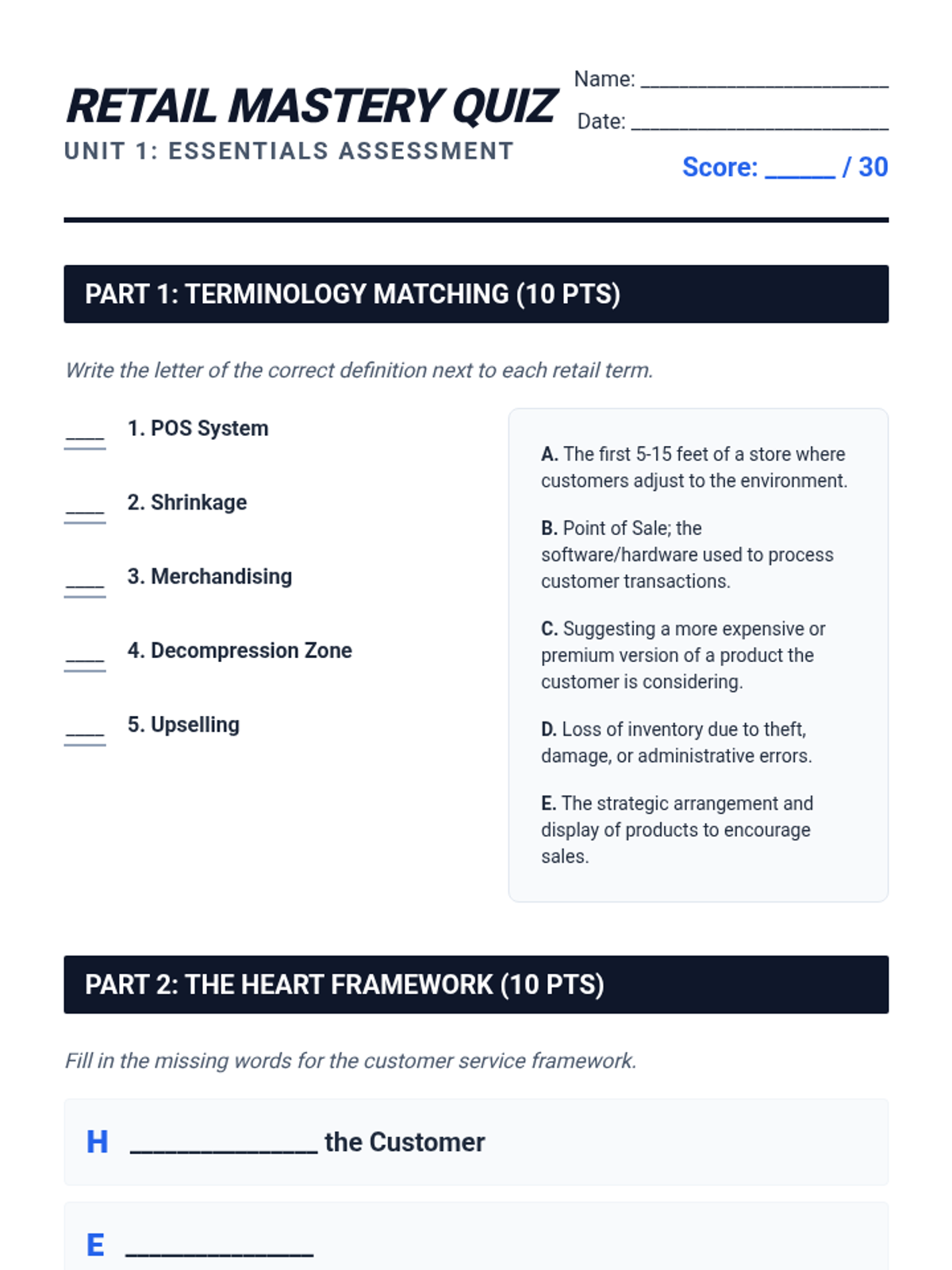
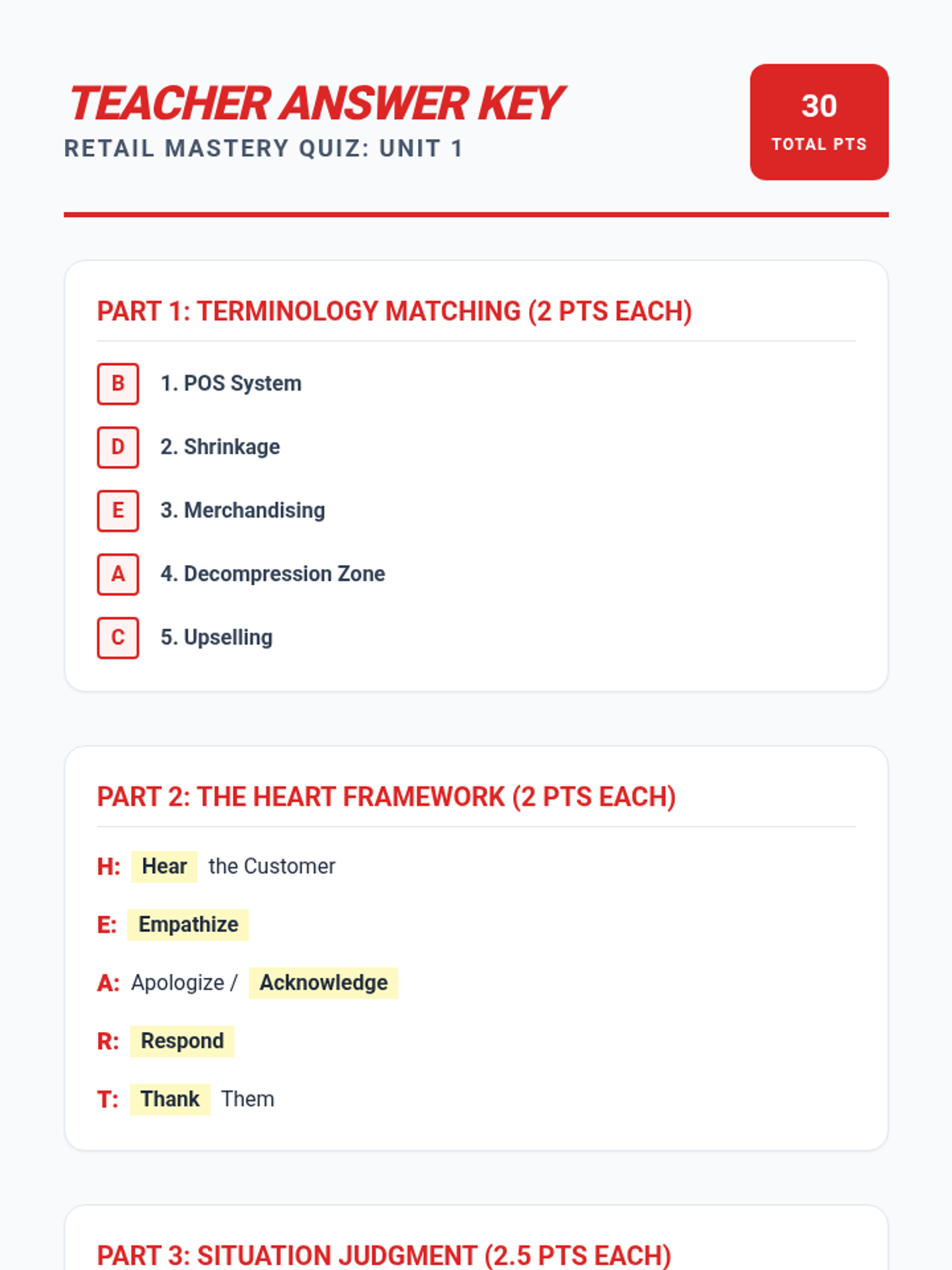
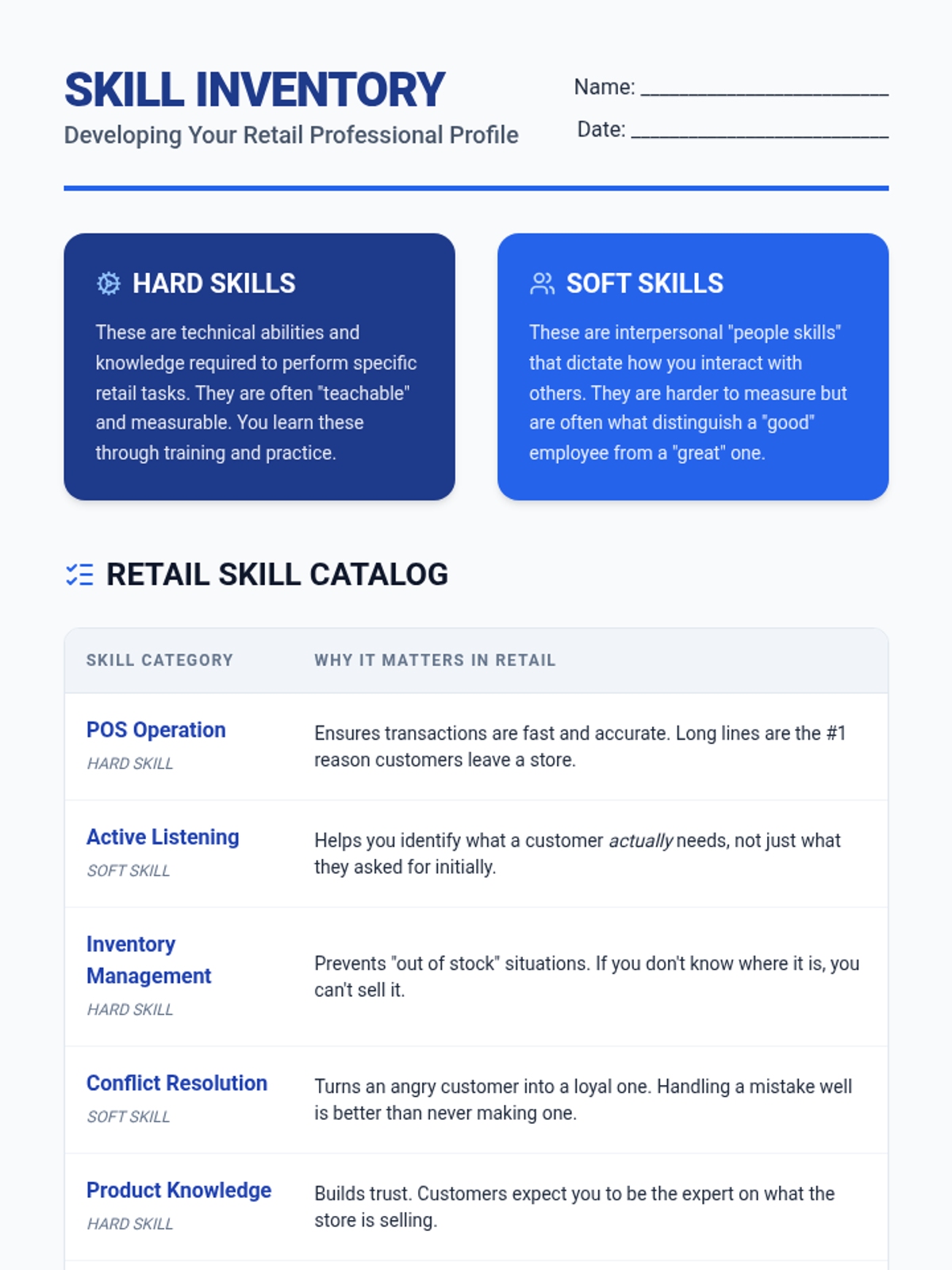
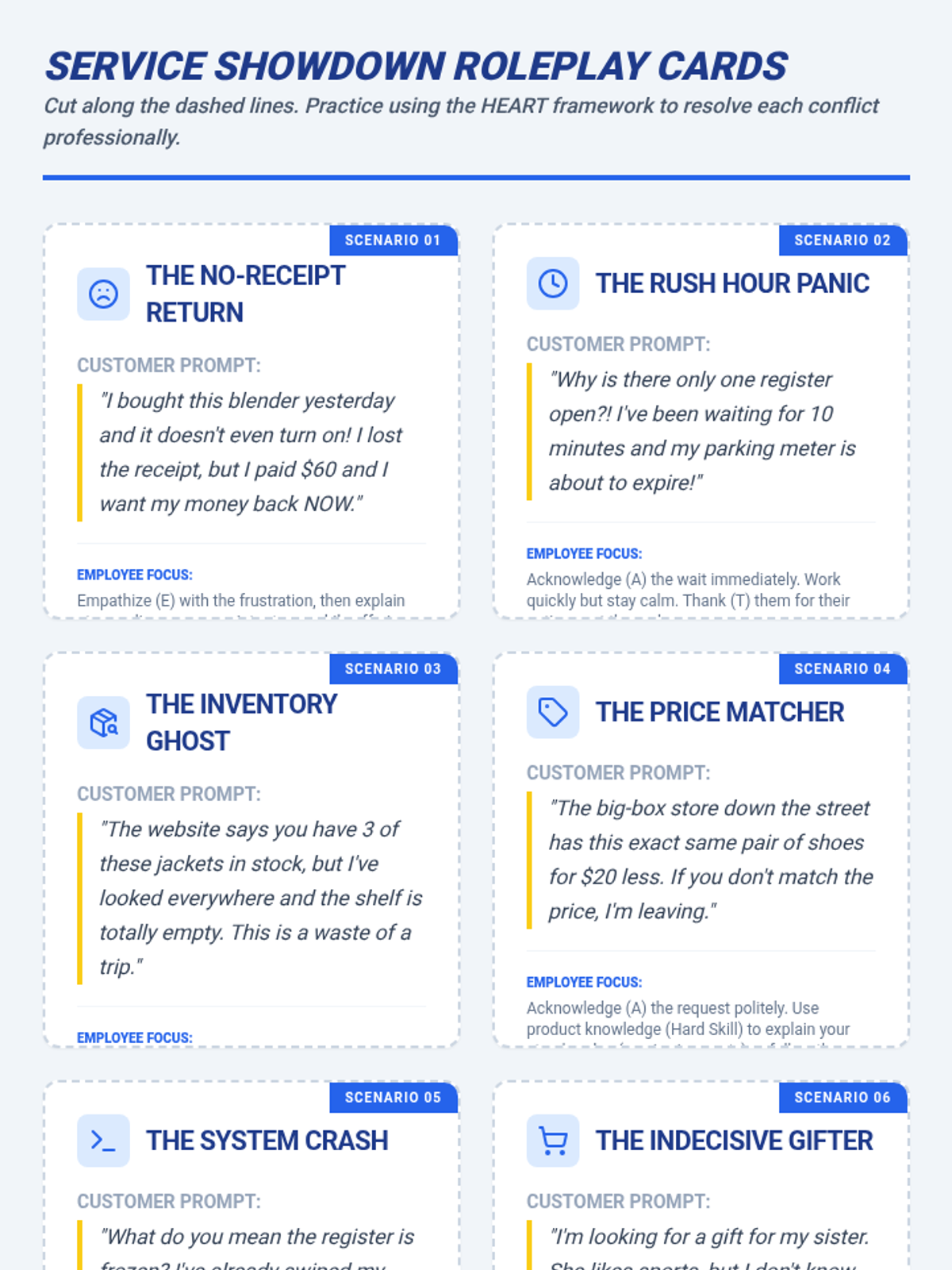
A hands-on career exploration unit focusing on the dynamic world of retail. Students will master customer service excellence, learn retail operations like inventory and POS systems, and design their own retail floor plan and brand strategy.
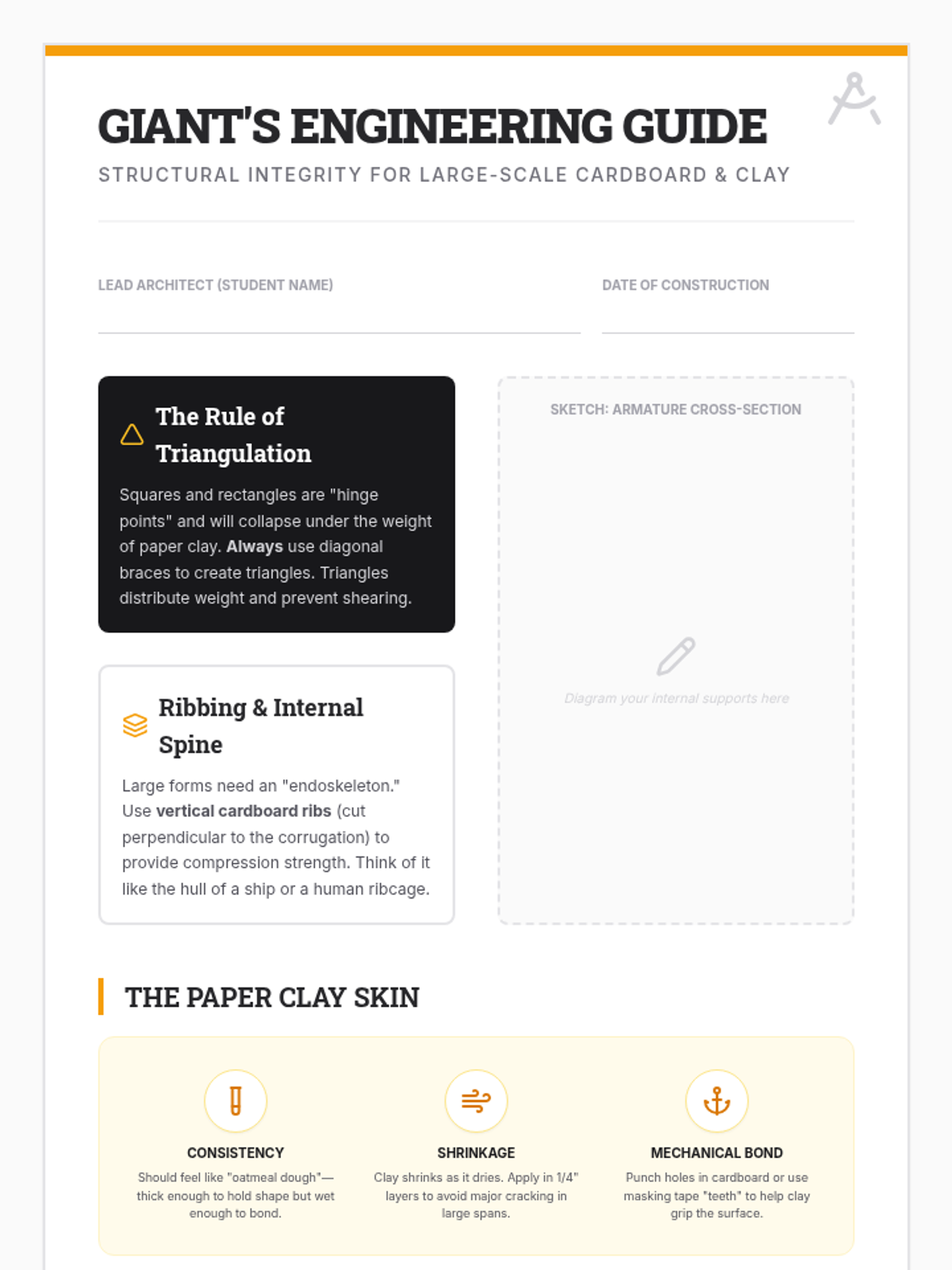
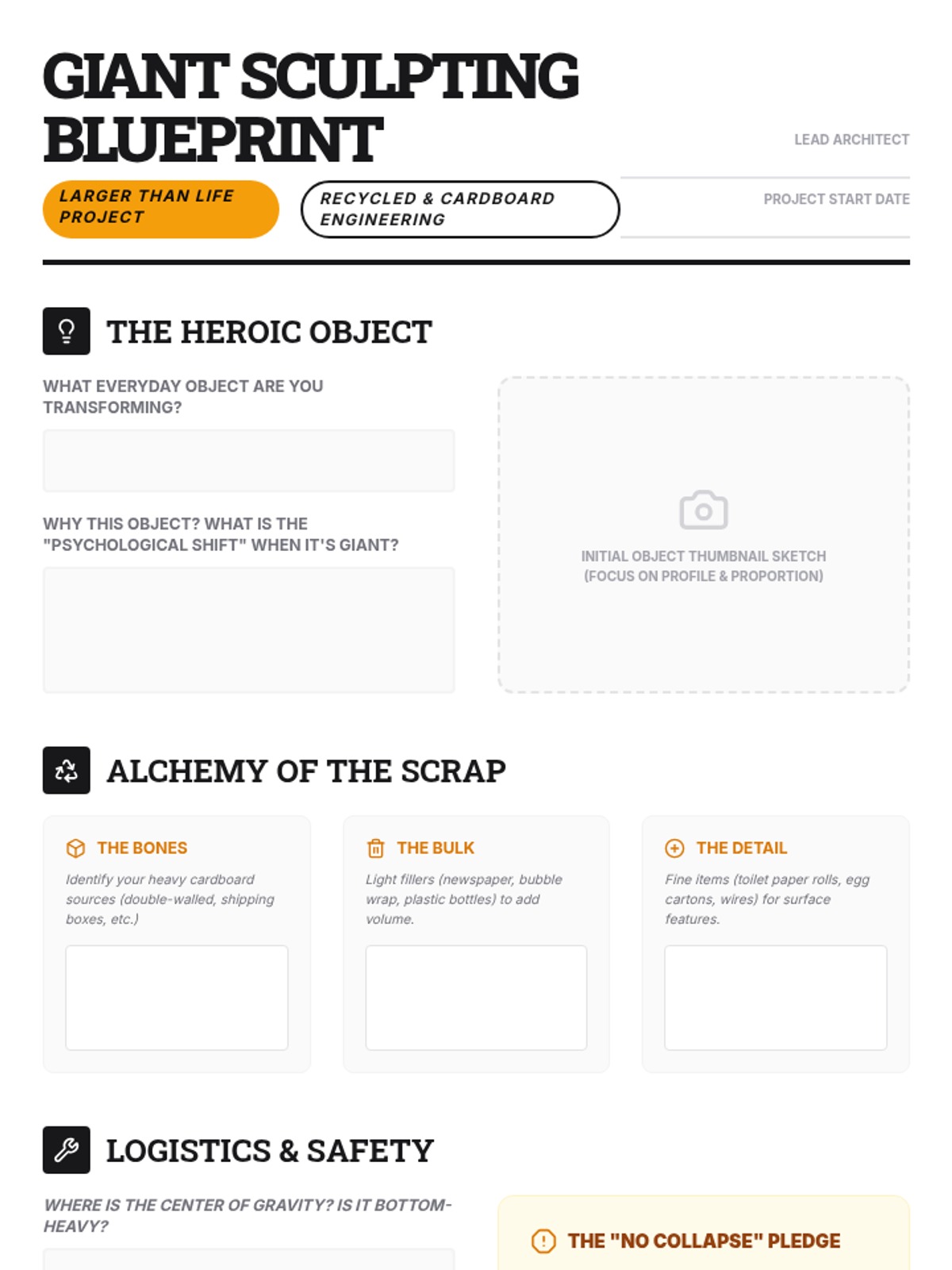
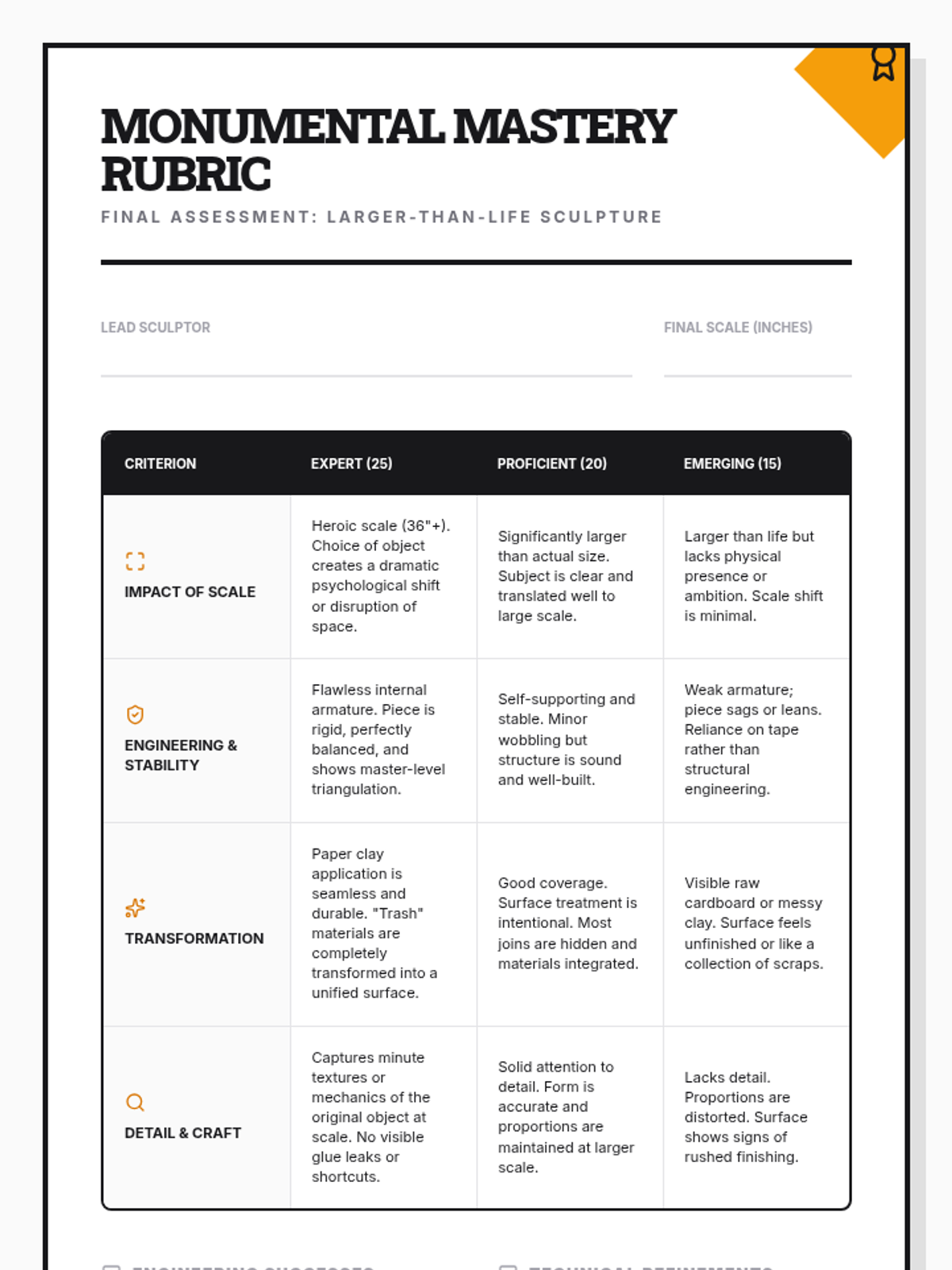
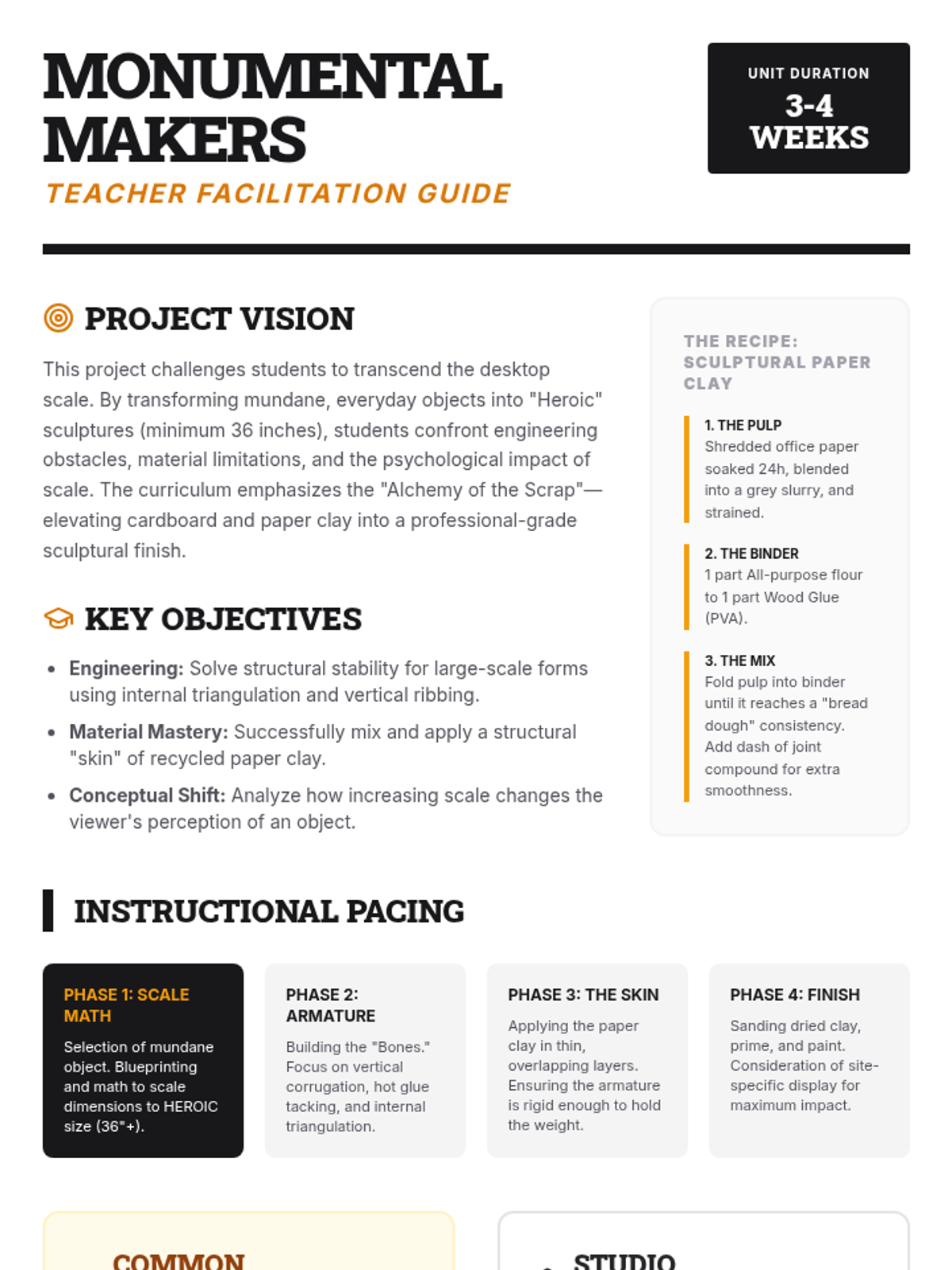
A comprehensive 3D art unit that guides students from transforming recycled materials to mastering monumental scale, combining fine arts history with engineering and technical skill.
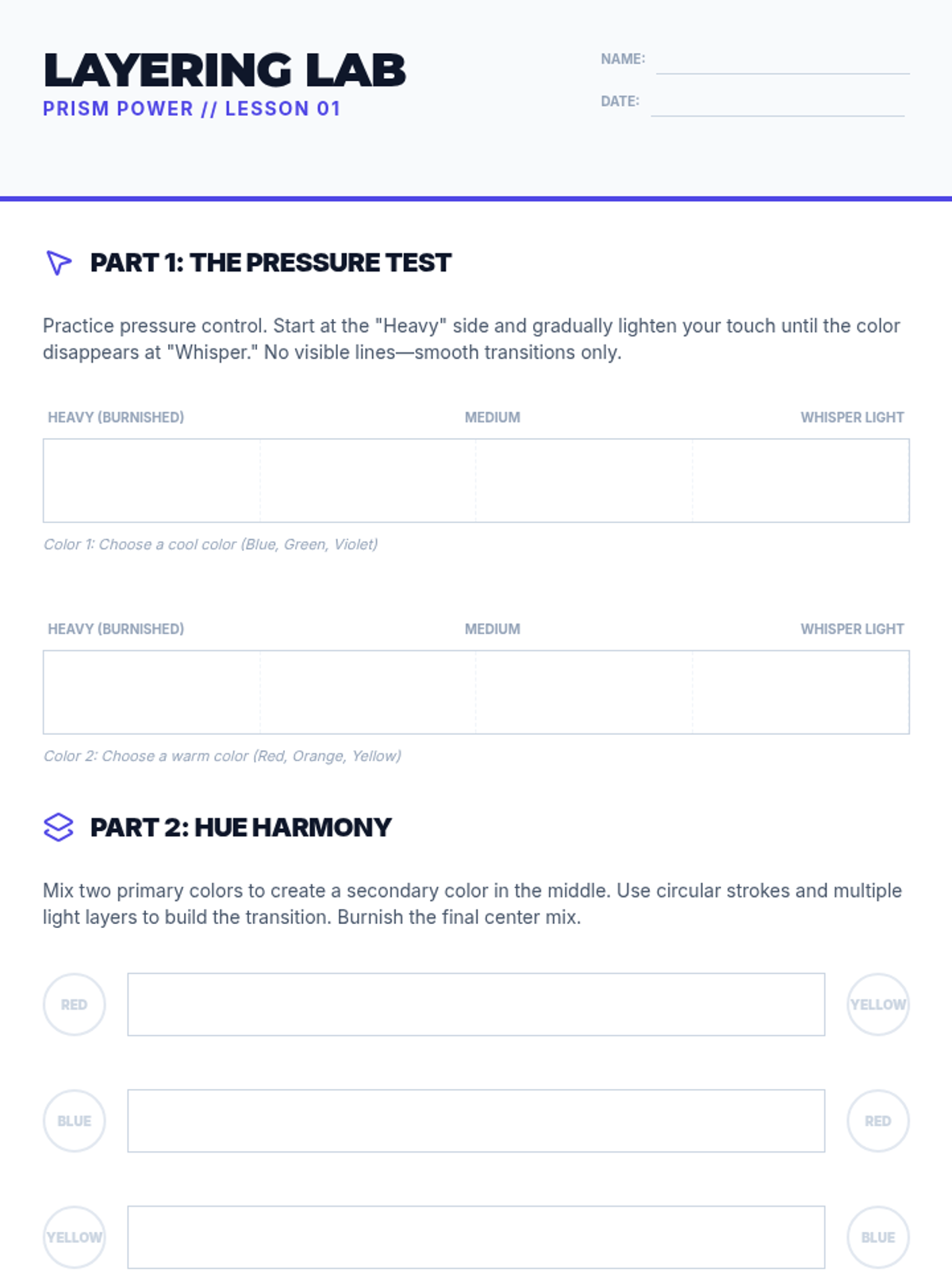
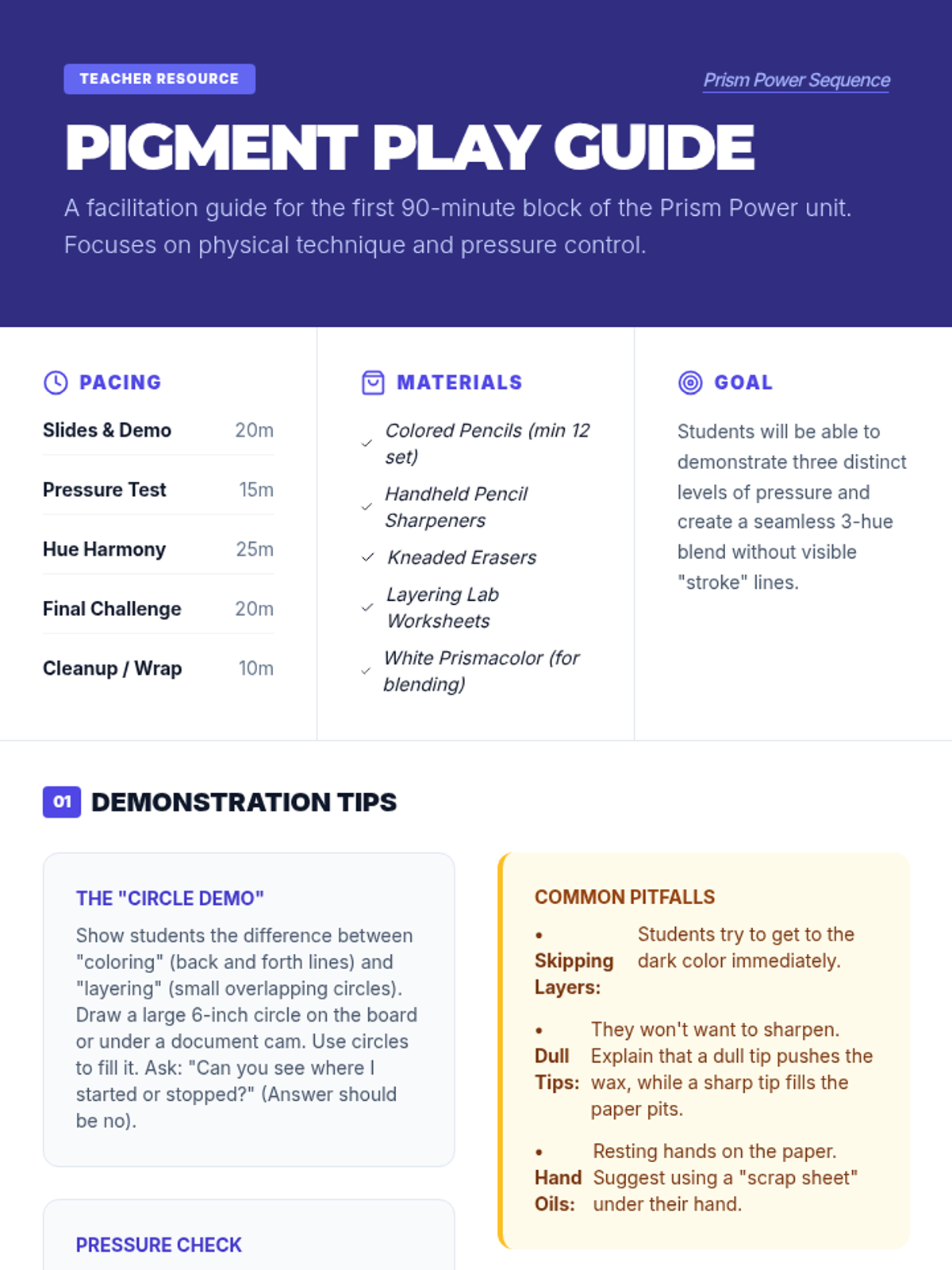
A high school visual arts sequence focusing on mastering colored pencil techniques, specifically layering, blending, and creating three-dimensional value. Students will progress from basic mechanics to rendering realistic forms with depth and vibrancy.
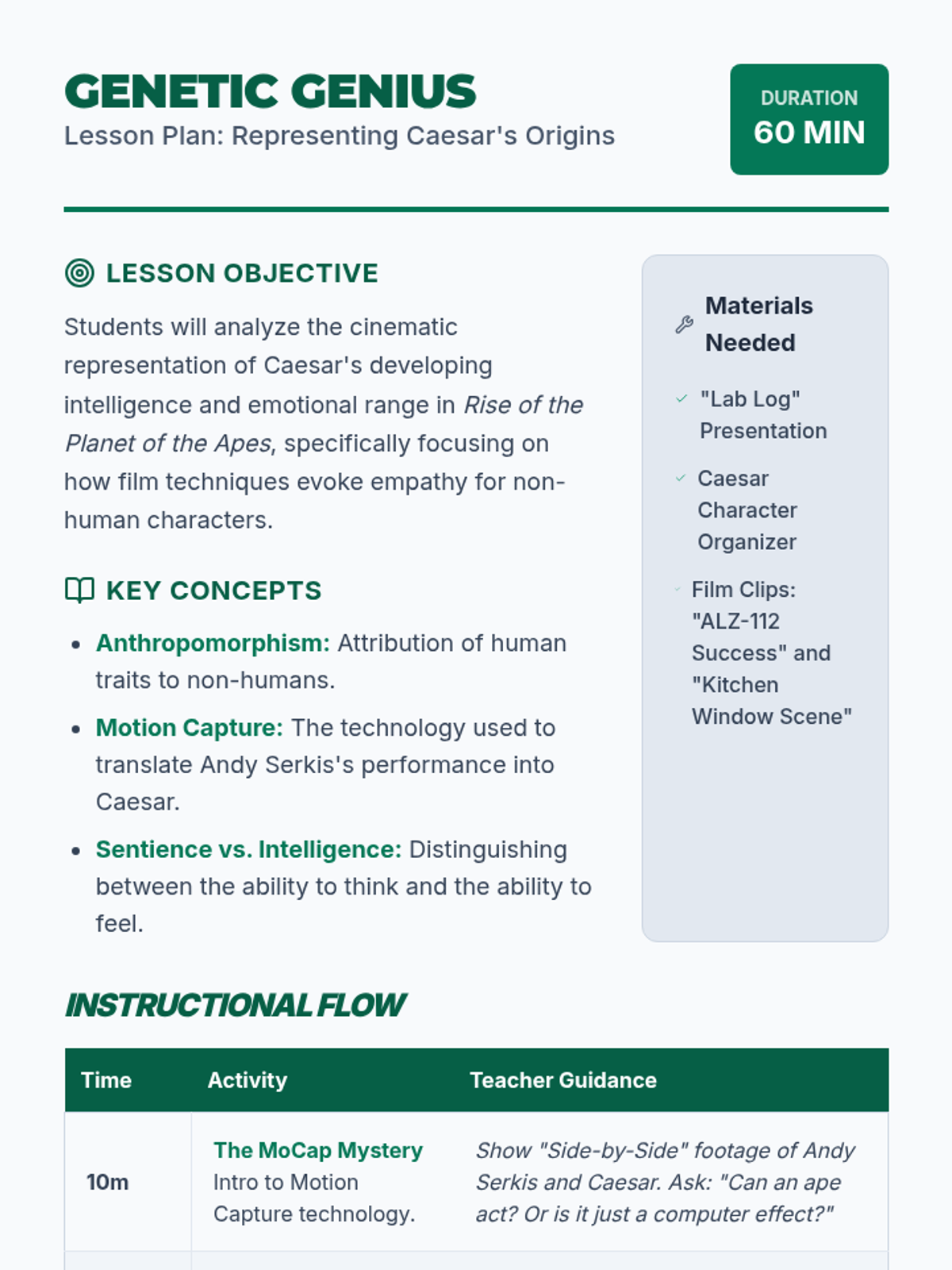
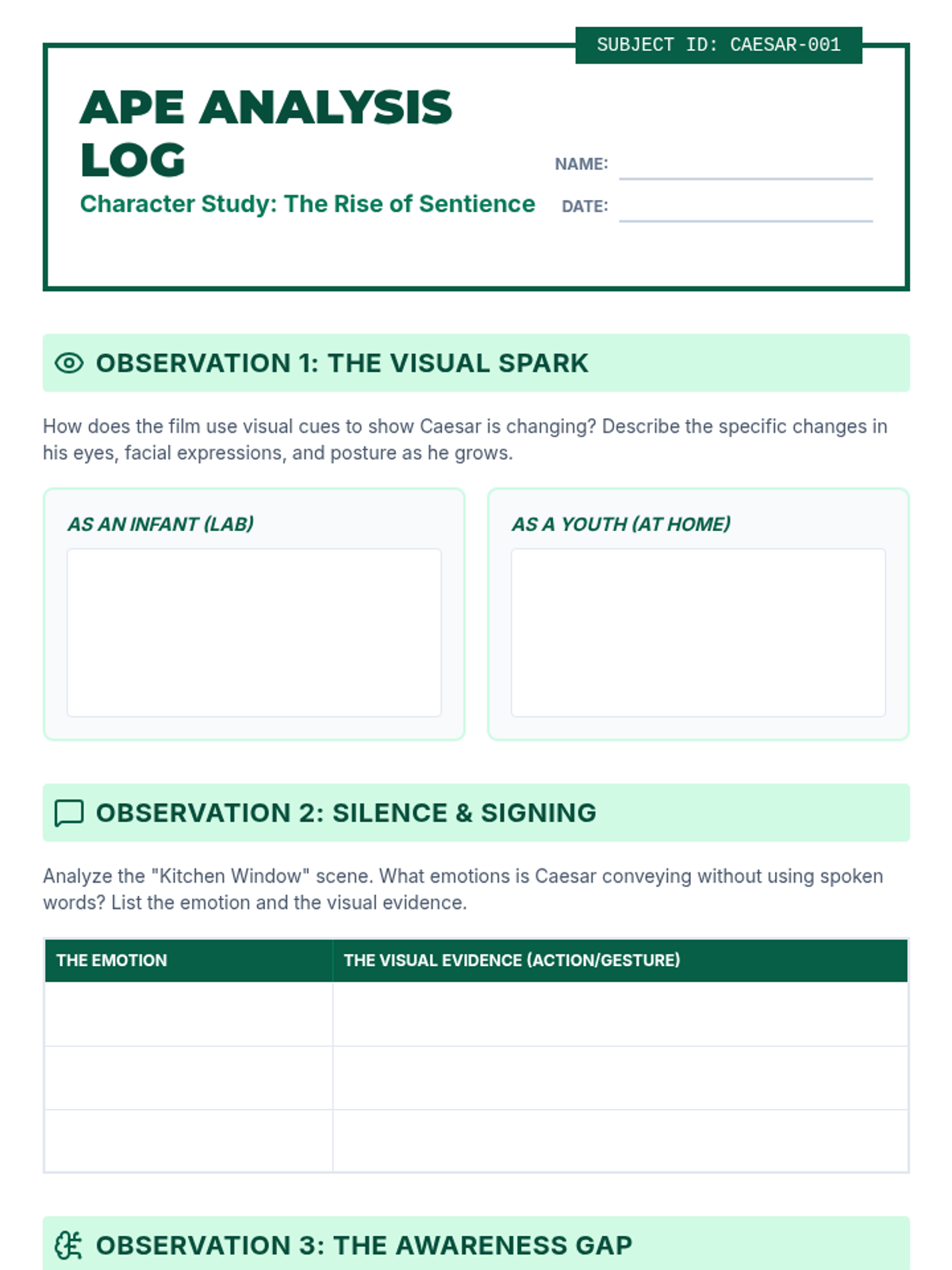
This sequence explores the representation of apes in the film 'Rise of the Planet of the Apes', focusing on the transition from scientific subjects to sentient leaders. Students analyze the use of motion-capture technology and narrative techniques used to humanize non-human characters.
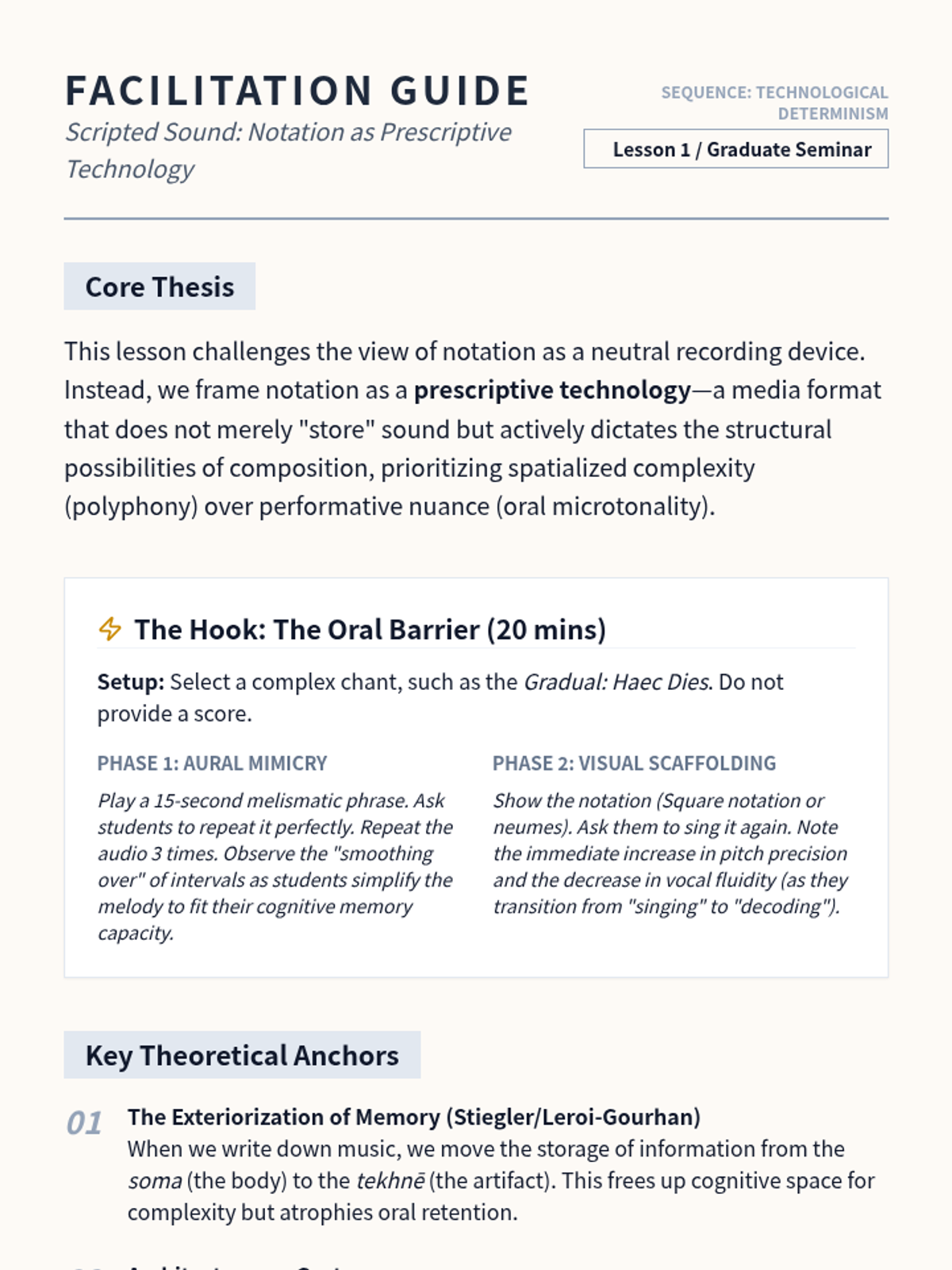
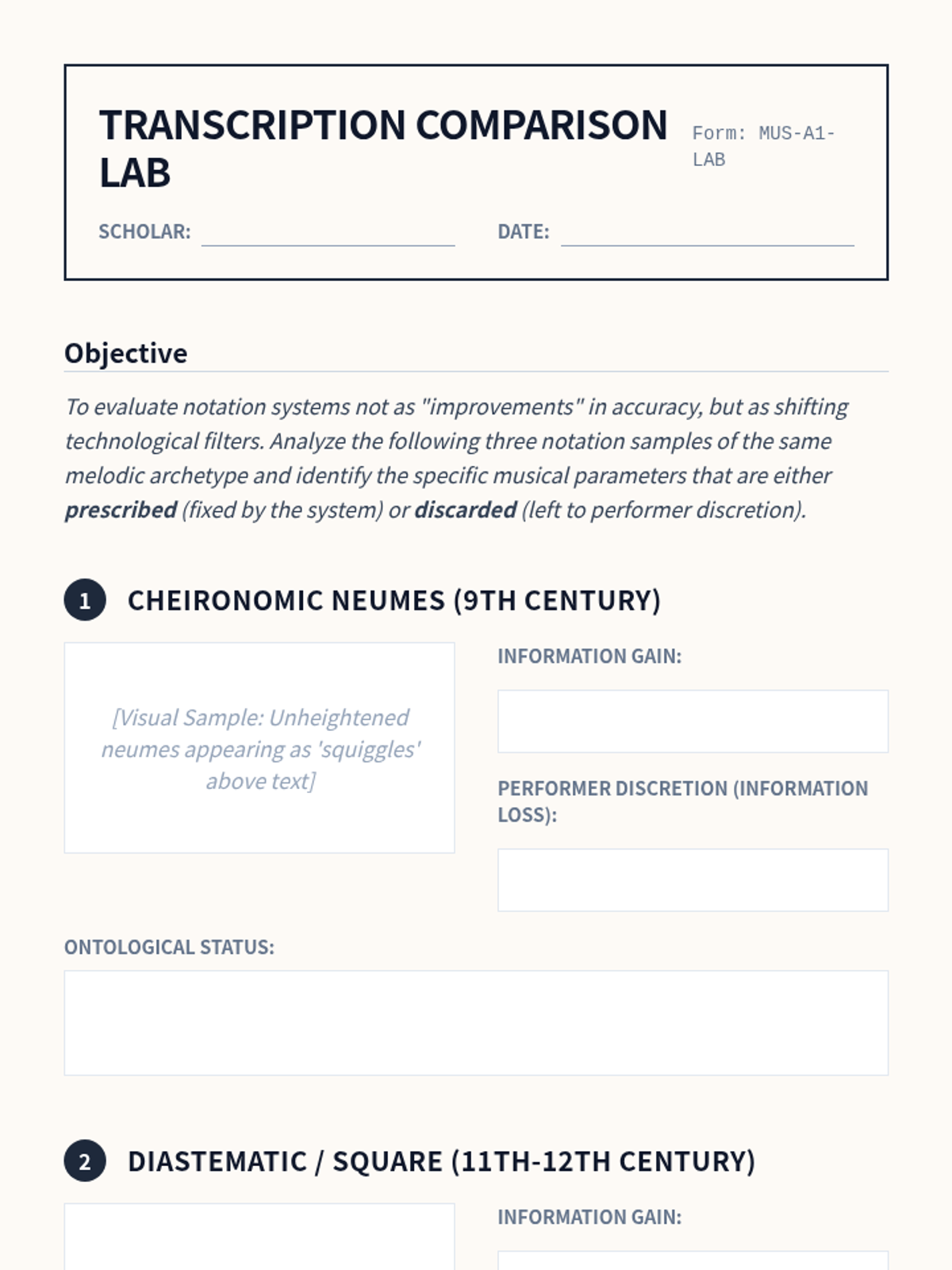
A graduate-level exploration of how technological advancement (from notation to algorithms) acts as a primary driver of musical aesthetics and evolution. Students analyze the reciprocal relationship between material culture and musical expression using media theory and organology.
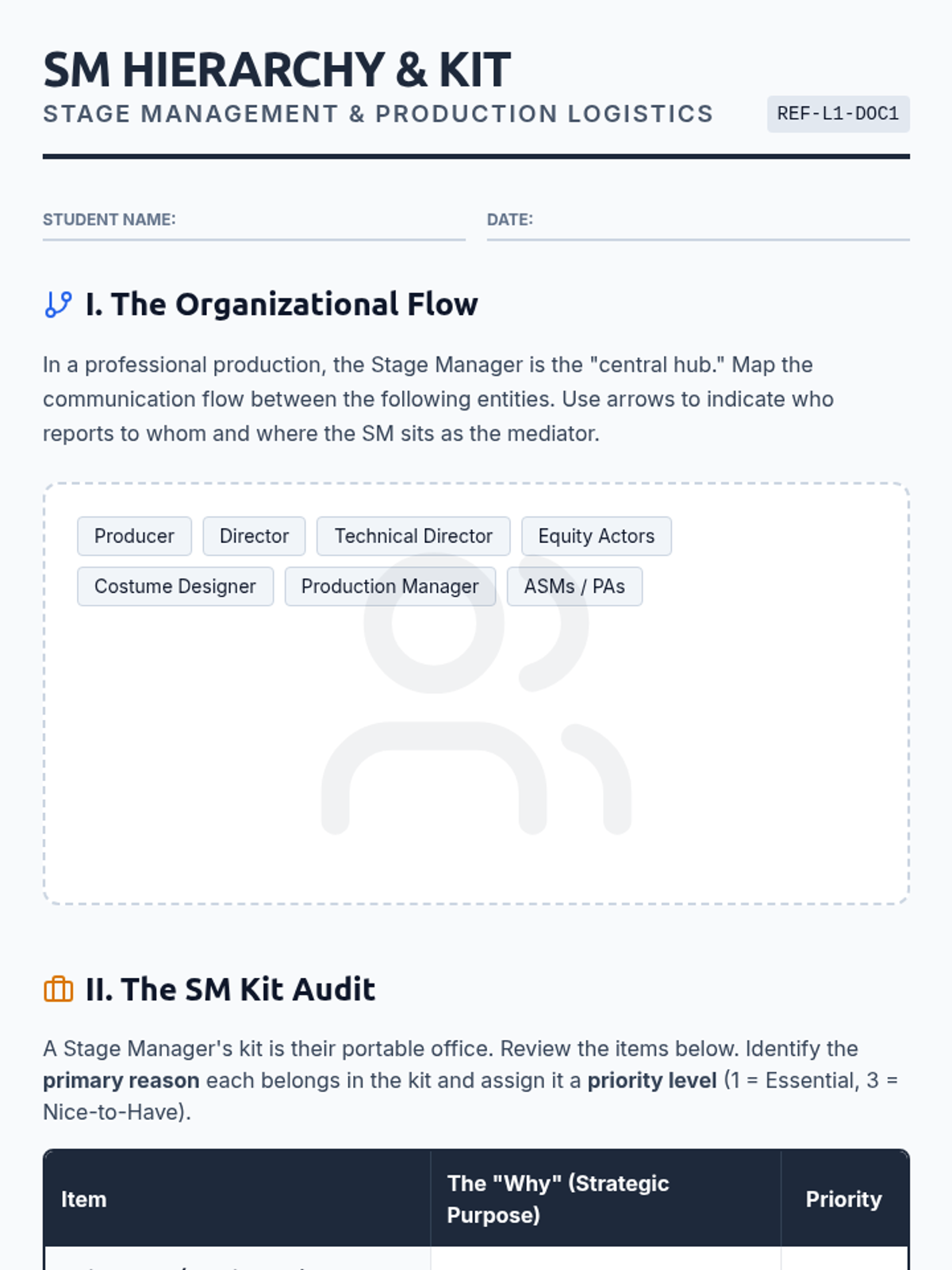
A comprehensive exploration of stage management for undergraduate students, covering organizational hierarchy, documentation, rehearsal management, and technical execution. Students transition from understanding the SM role to mastery of the prompt book and cue calling.
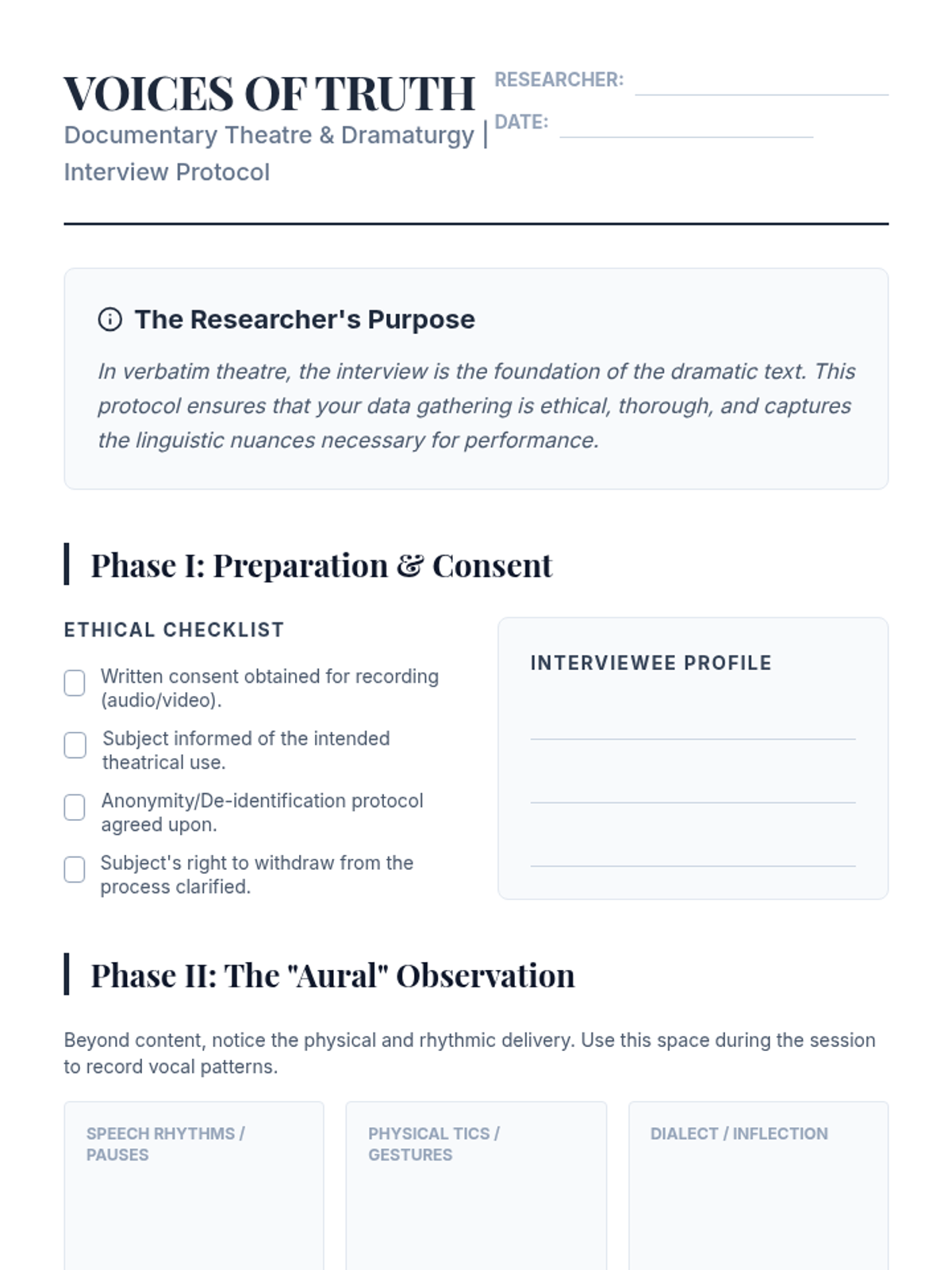
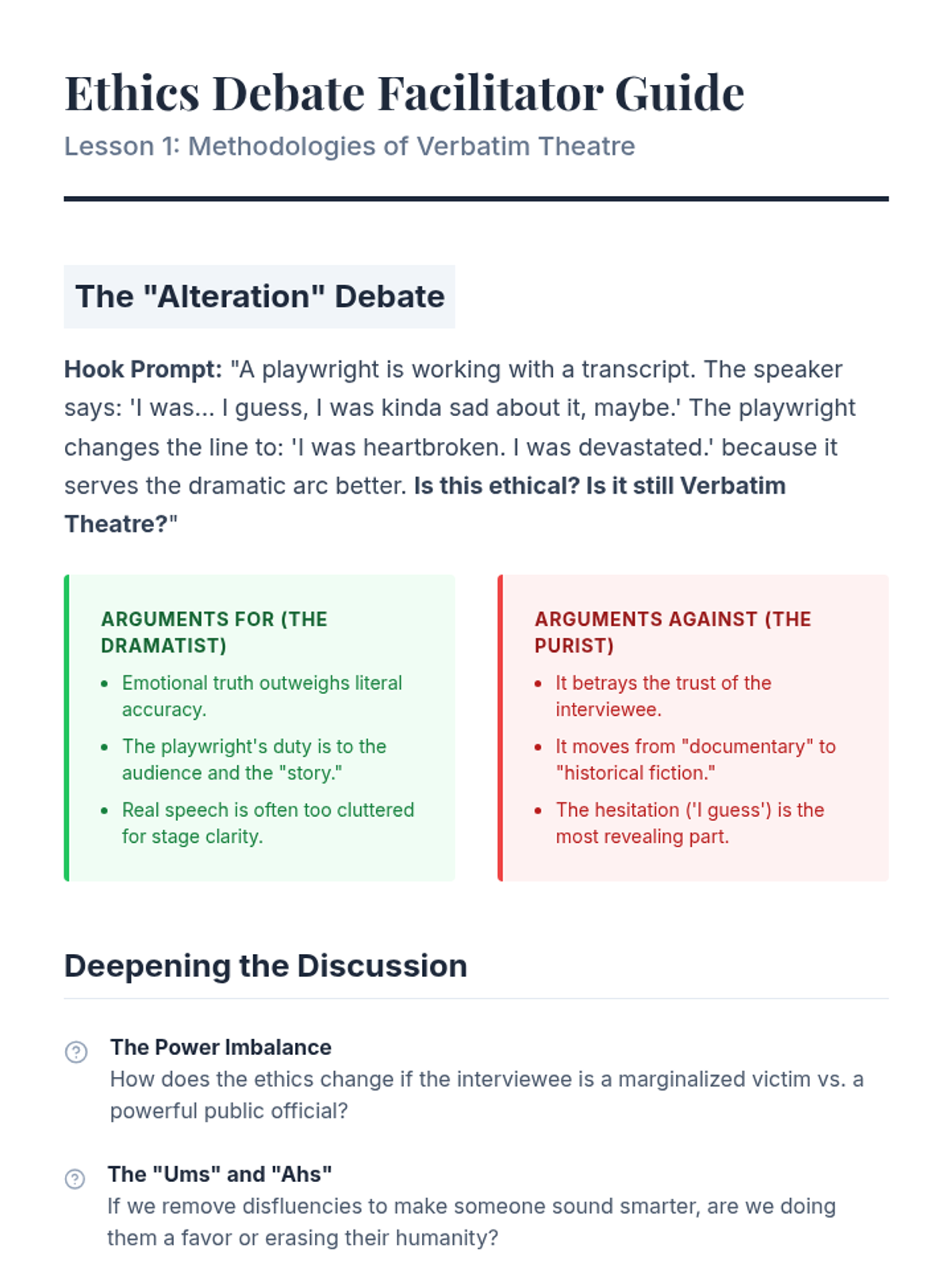
A comprehensive graduate-level exploration of Documentary and Verbatim Theatre, covering ethical research, archival mining, speech editing, character synthesis, and theatrical staging. Students transition from researchers to dramatists, producing original documentary works based on real-world testimony and historical records.
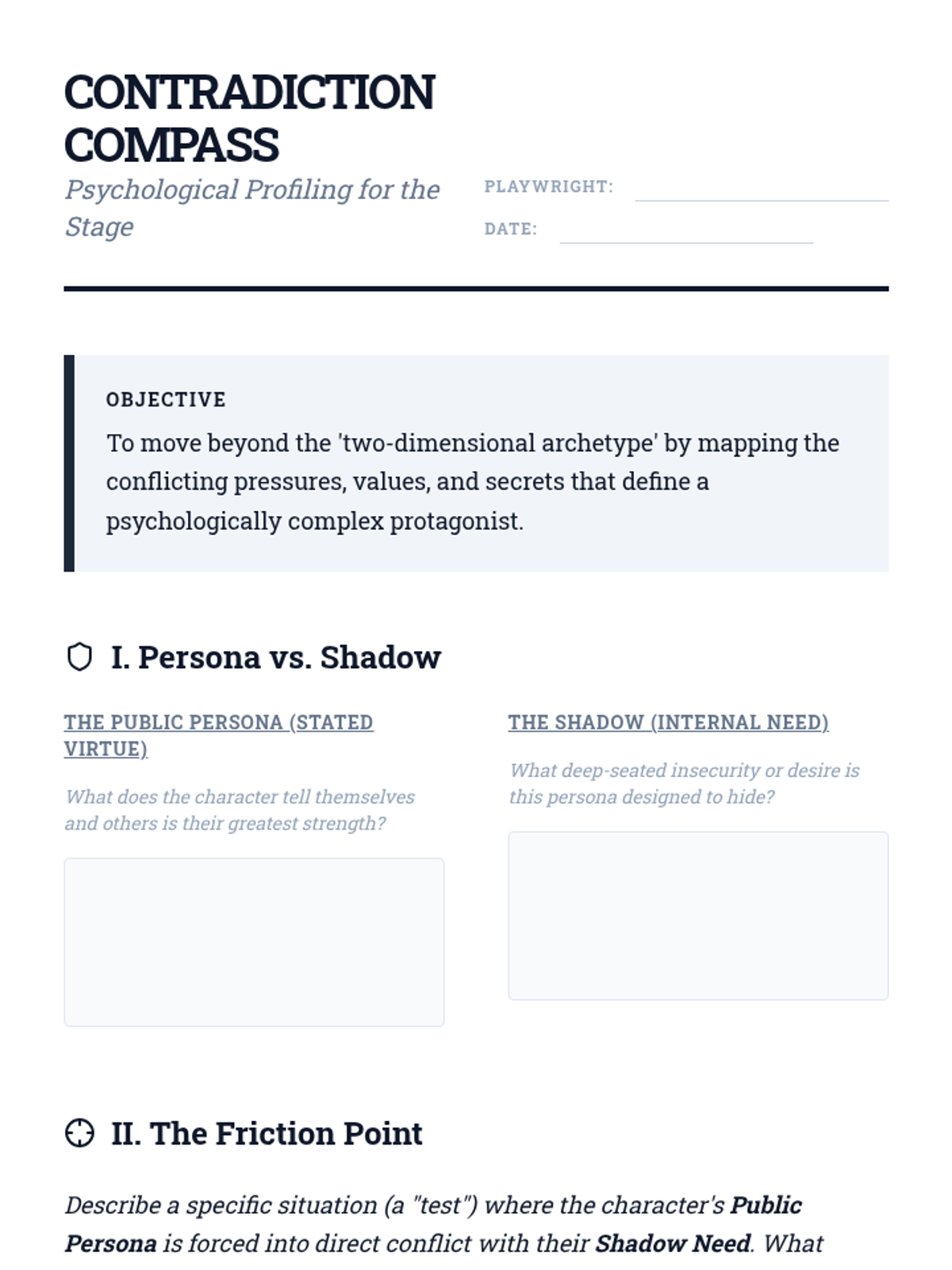
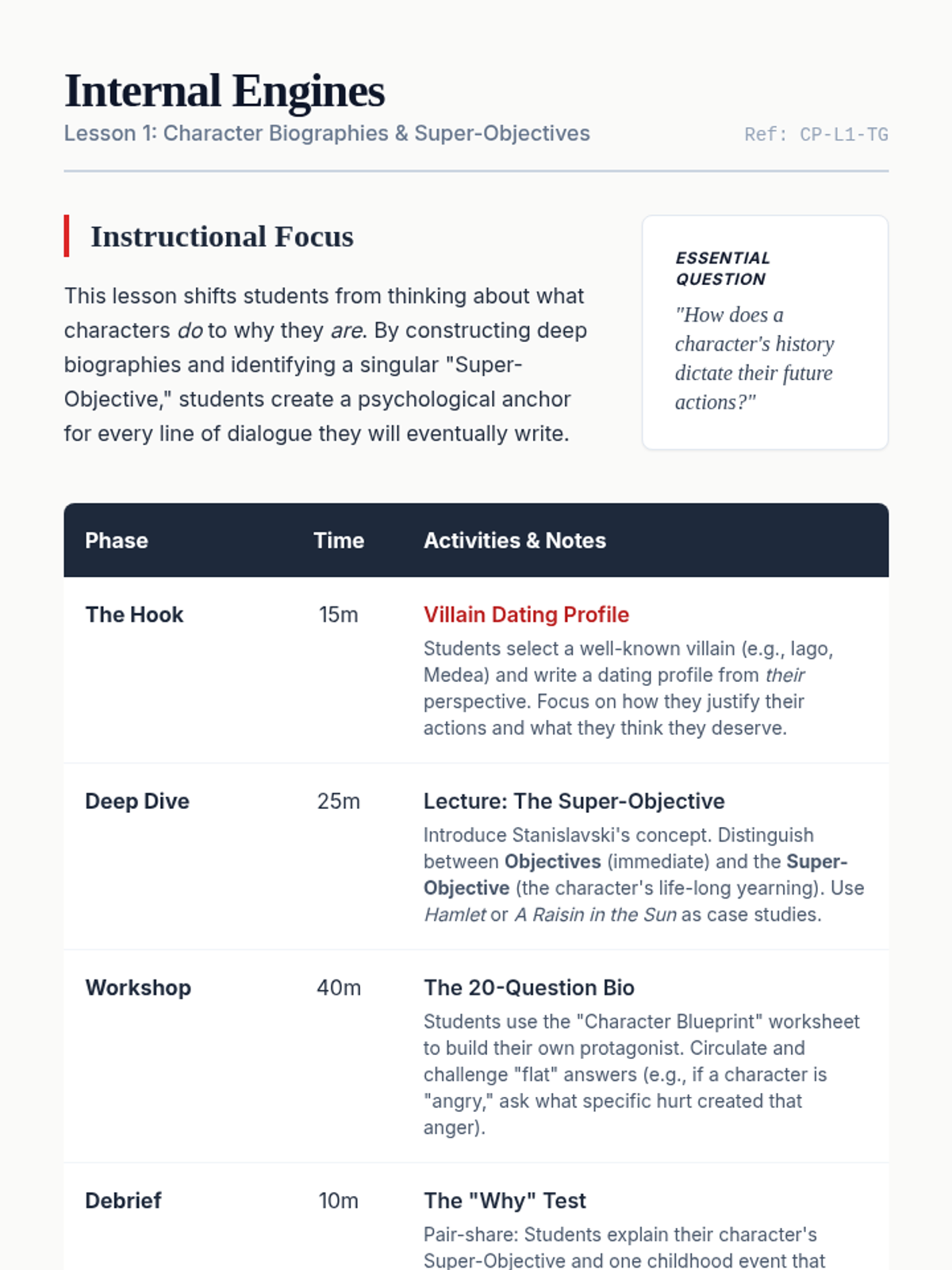
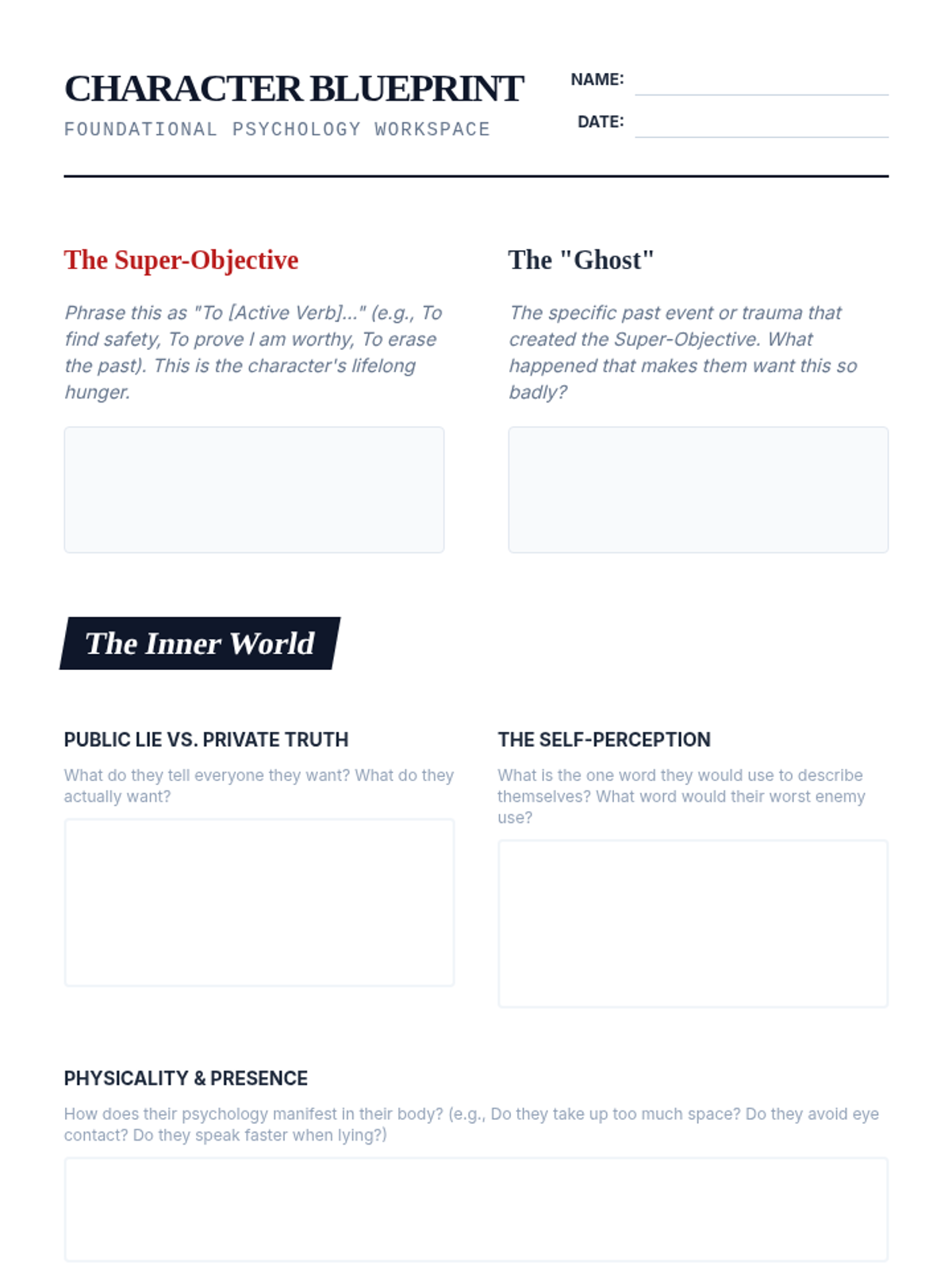
An advanced playwriting sequence for graduate students focusing on the psychological architecture of dramatic characters, subtextual dialogue, and character-driven narrative structures. Students progress from deconstructing archetypes to writing a one-act draft grounded in behavioral truth and internal contradiction.
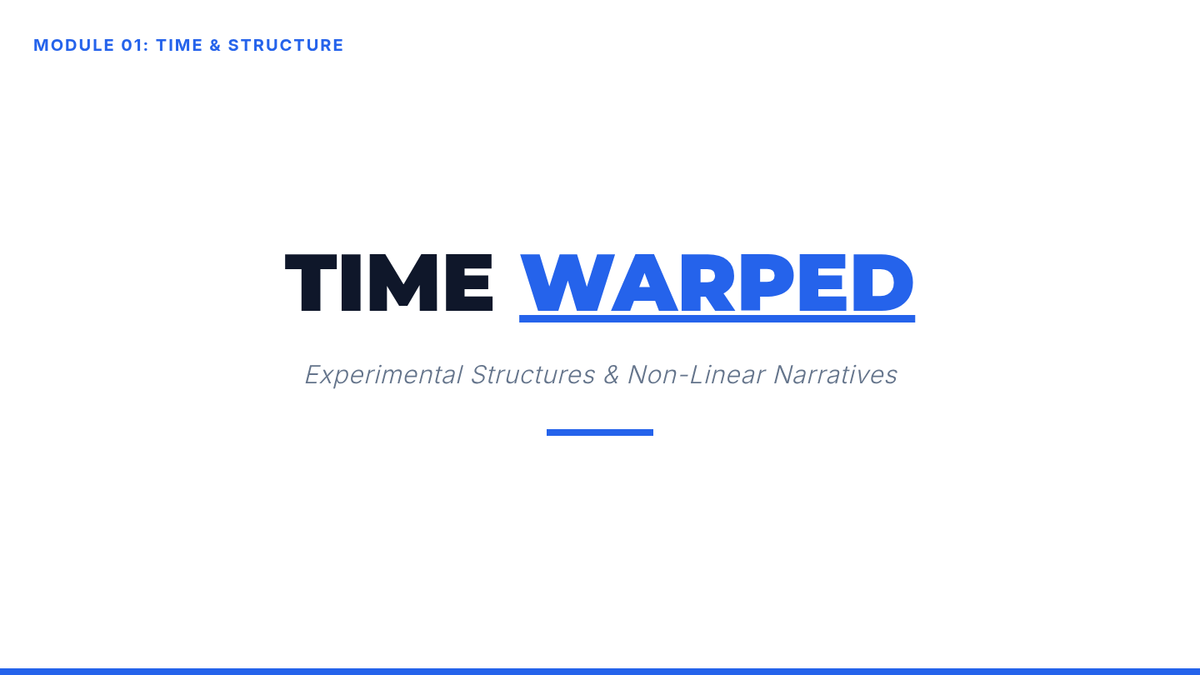
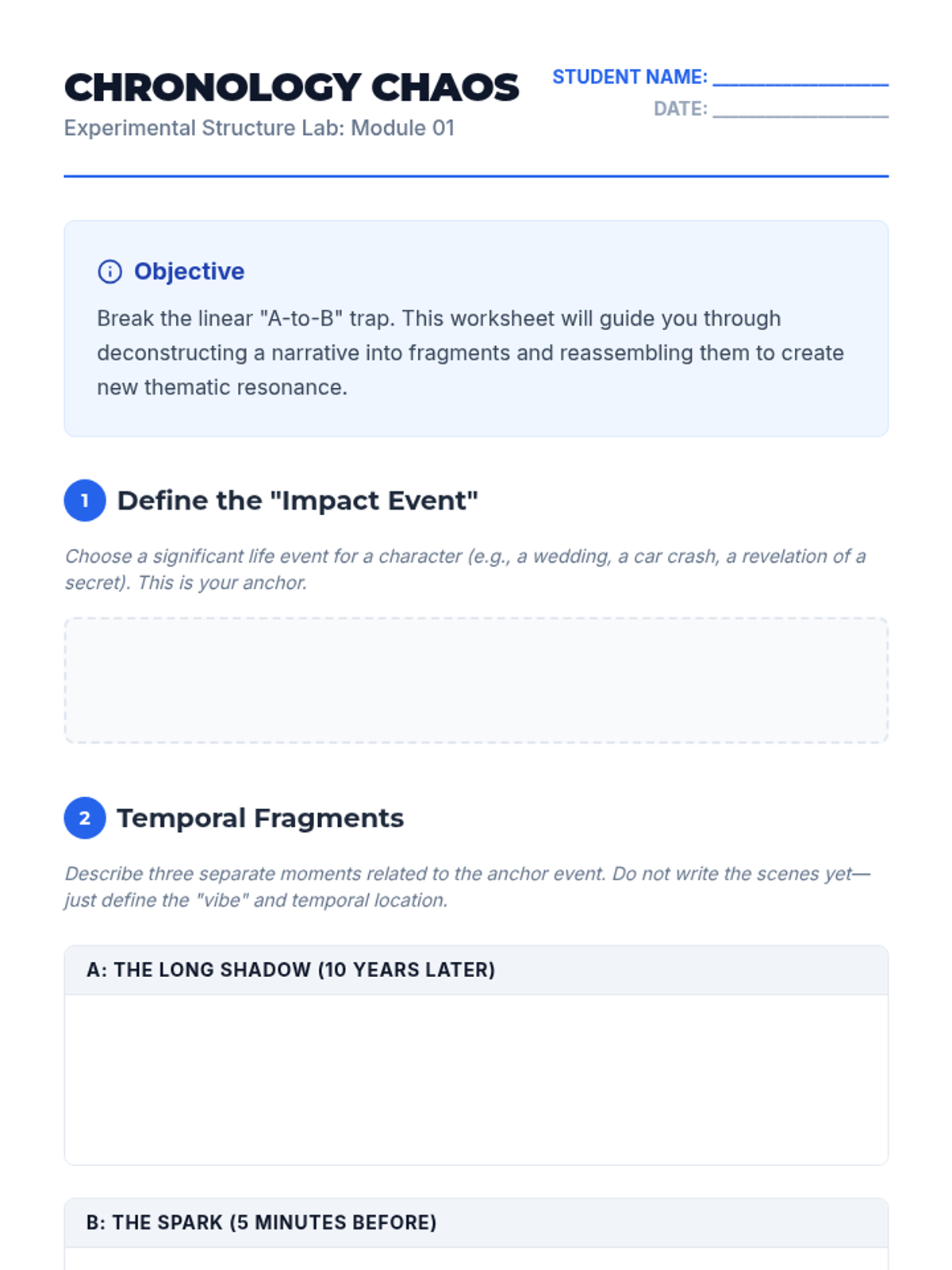
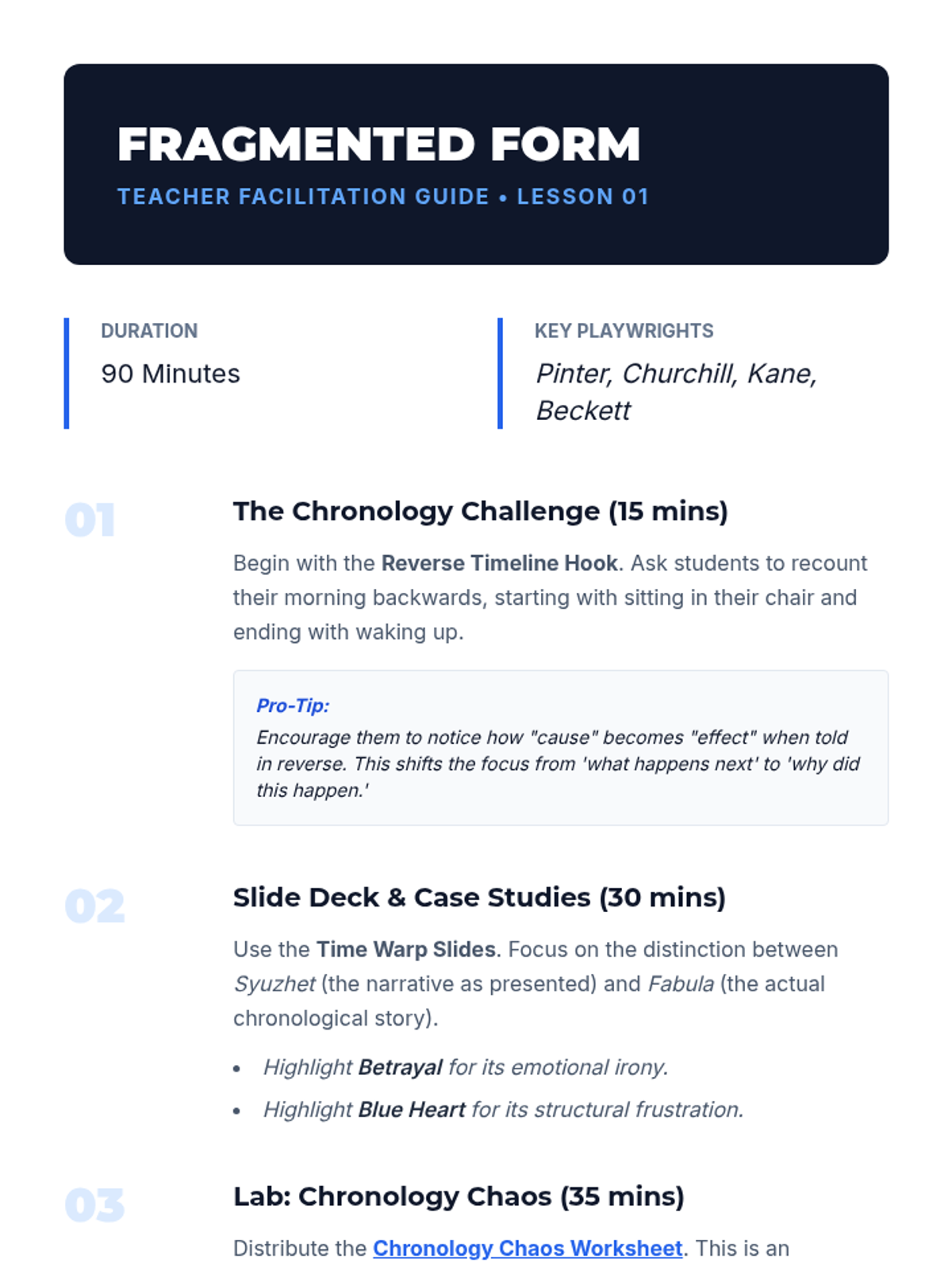
An advanced playwriting sequence for undergraduate students focusing on non-traditional structures, including non-linear time, verbatim theater, absurdism, meta-theatricality, and multimedia integration. Students will move from theoretical analysis of experimental playwrights to creating their own rule-breaking scripts.
This sequence explores the depths of character development and dialogue for undergraduate playwrights, focusing on psychological realism, objectives, voice differentiation, and the masterly use of subtext. Students progress from building internal character foundations to crafting active, subtext-rich scenes and monologues.
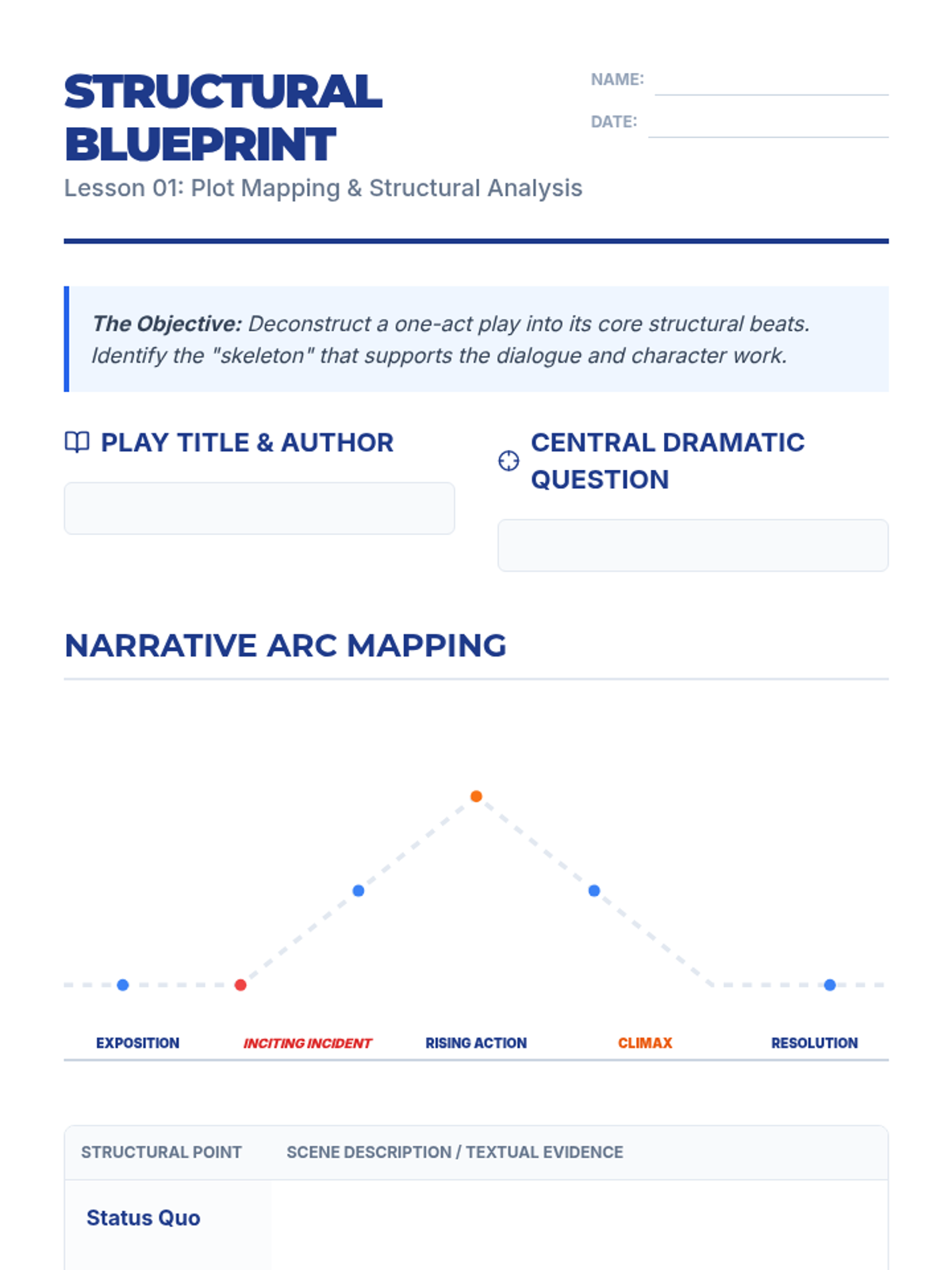
A project-based sequence for 11th-grade students focusing on the macro-level engineering of a one-act play. Students transition from deconstructing dramatic structures to drafting a complete narrative treatment, emphasizing conflict, stakes, and structural integrity.
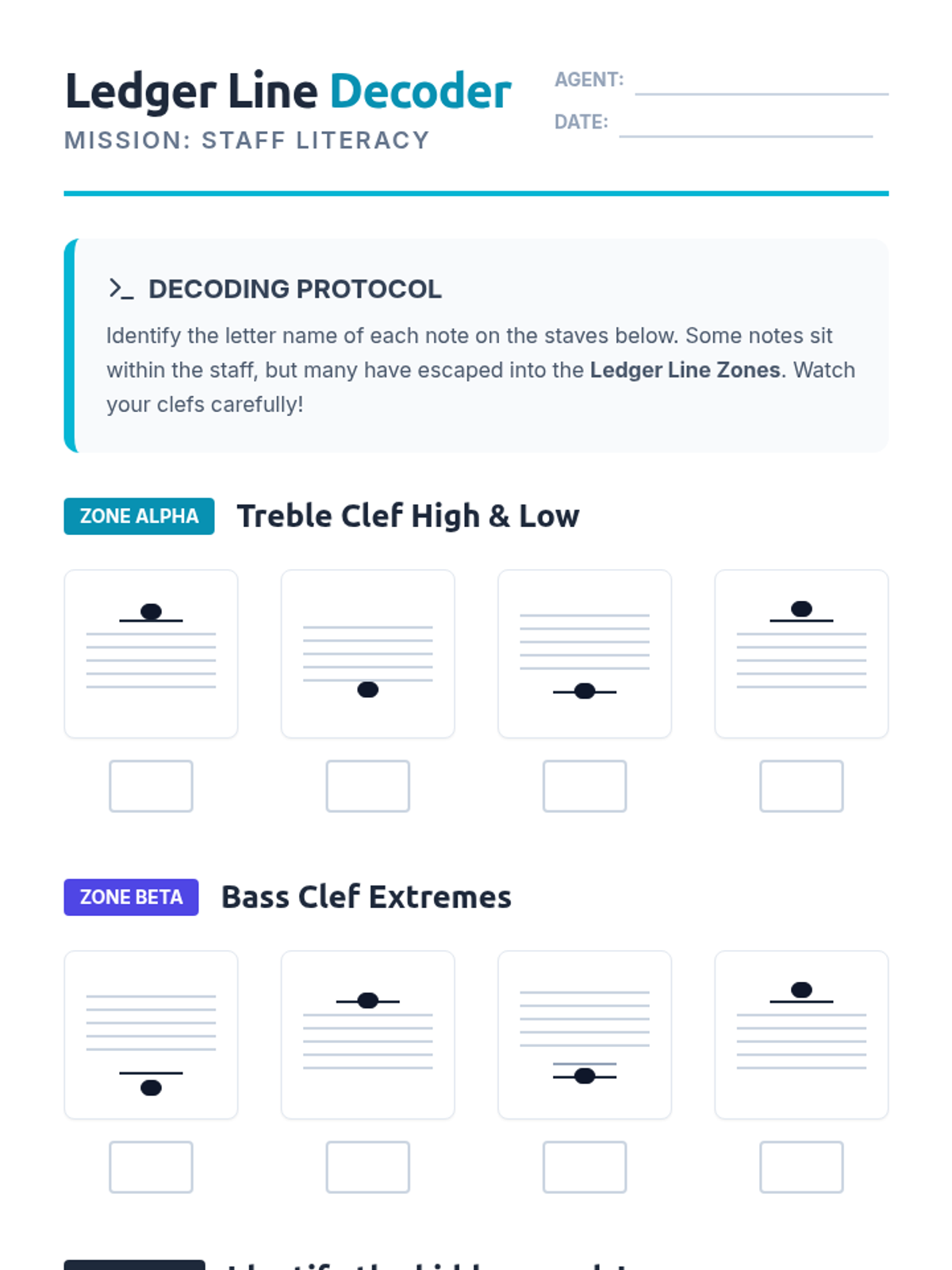
An inquiry-based journey into the logic of pitch organization, covering the Grand Staff, major scale construction, the Circle of Fifths, relative minors, and sight-singing applications. Students use a 'decoding' lens to master the patterns that govern tonal music.
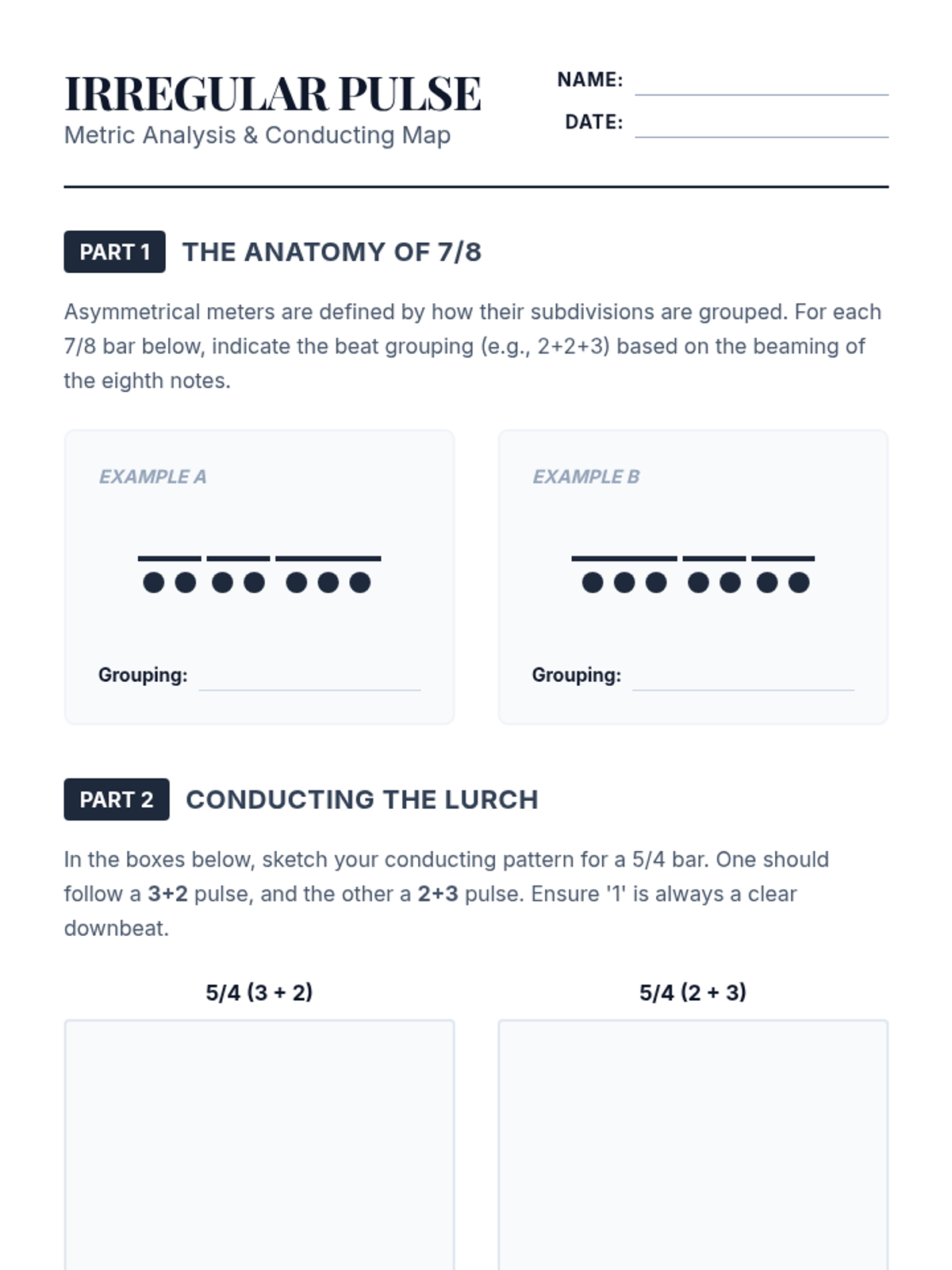
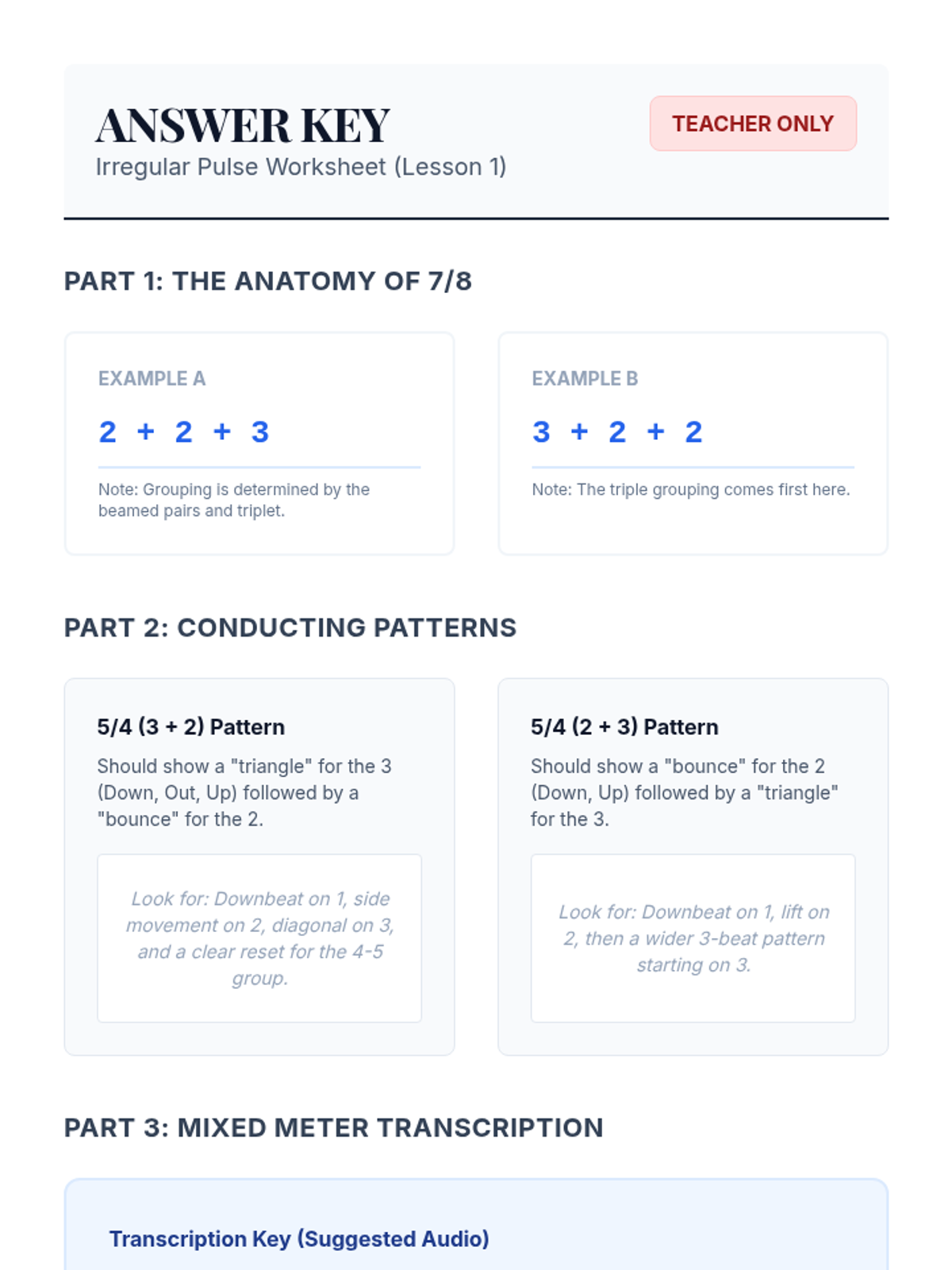
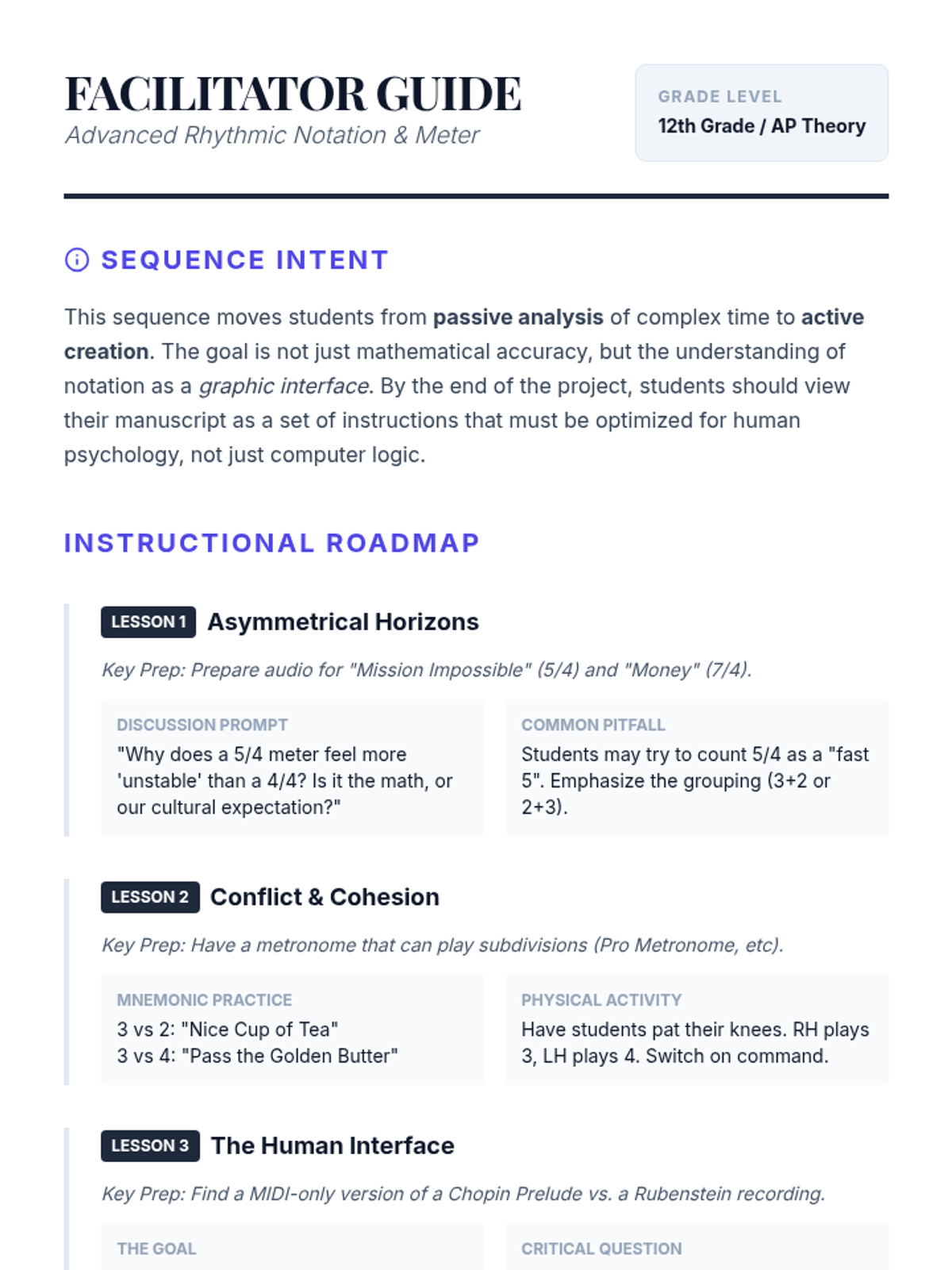
A high-level music theory sequence for 12th-grade students focusing on asymmetrical meters, complex subdivisions, and professional notation standards. Students move from analysis to composition, culminating in a peer-performed rhythmic etude.
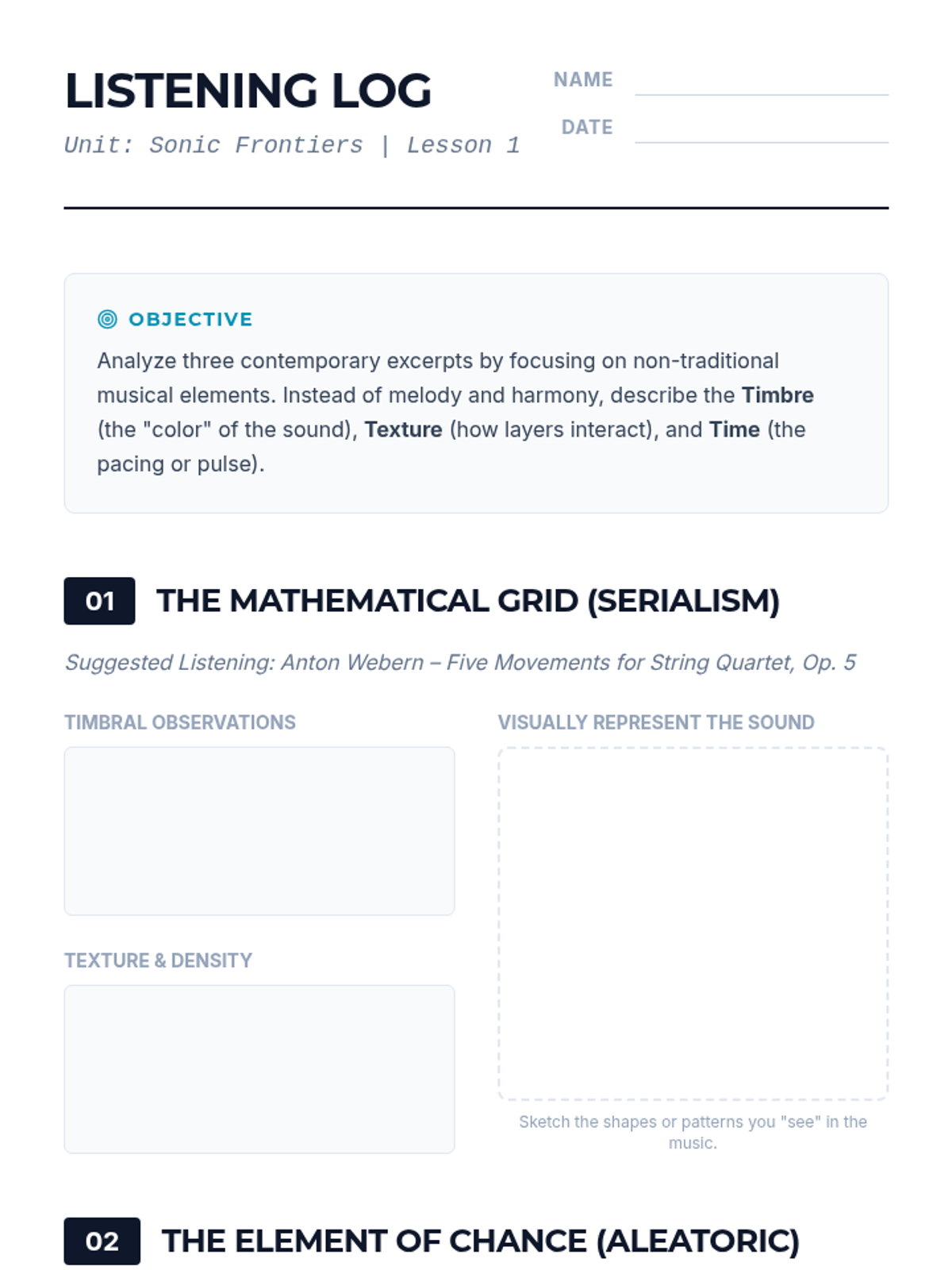
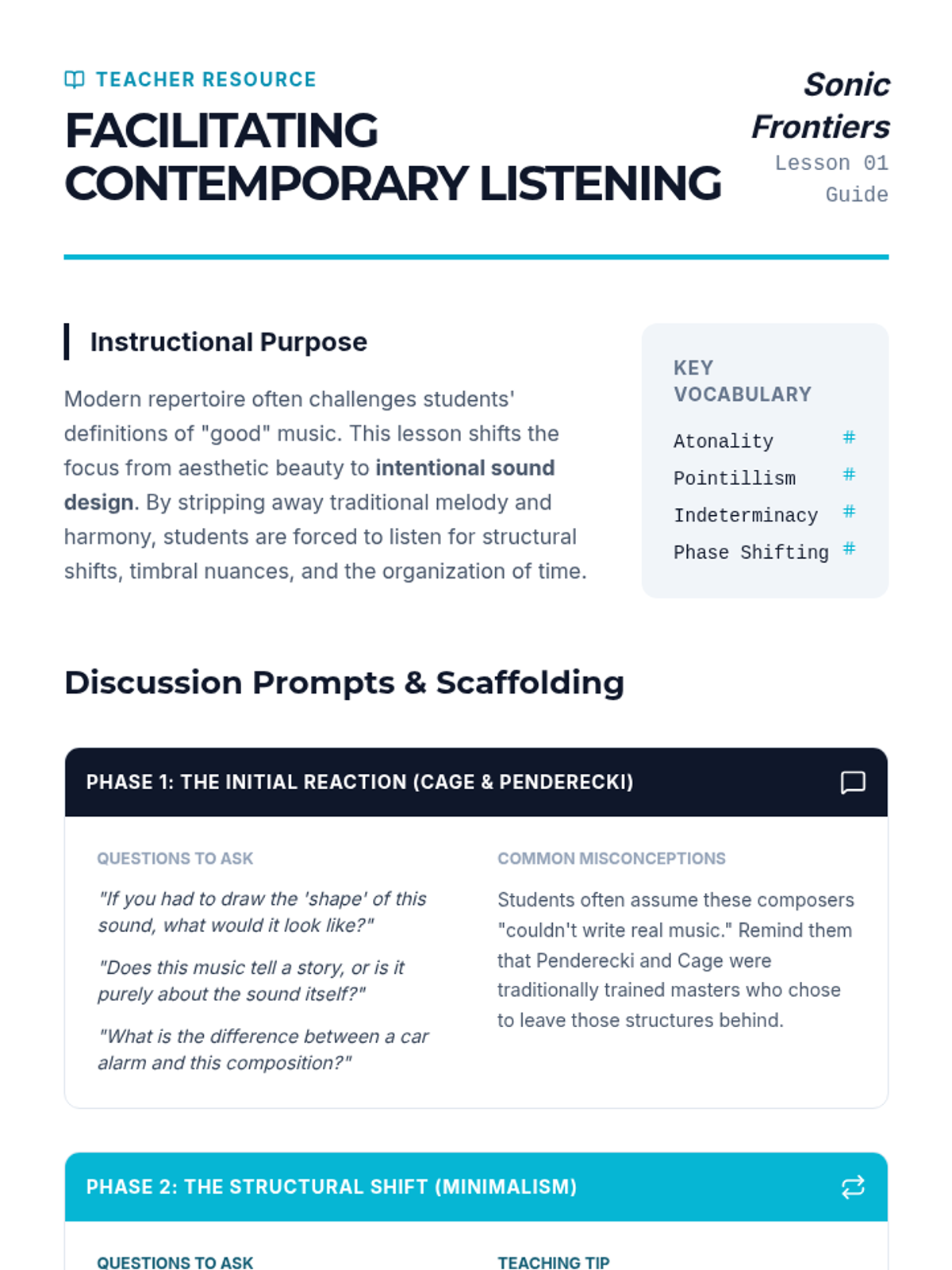
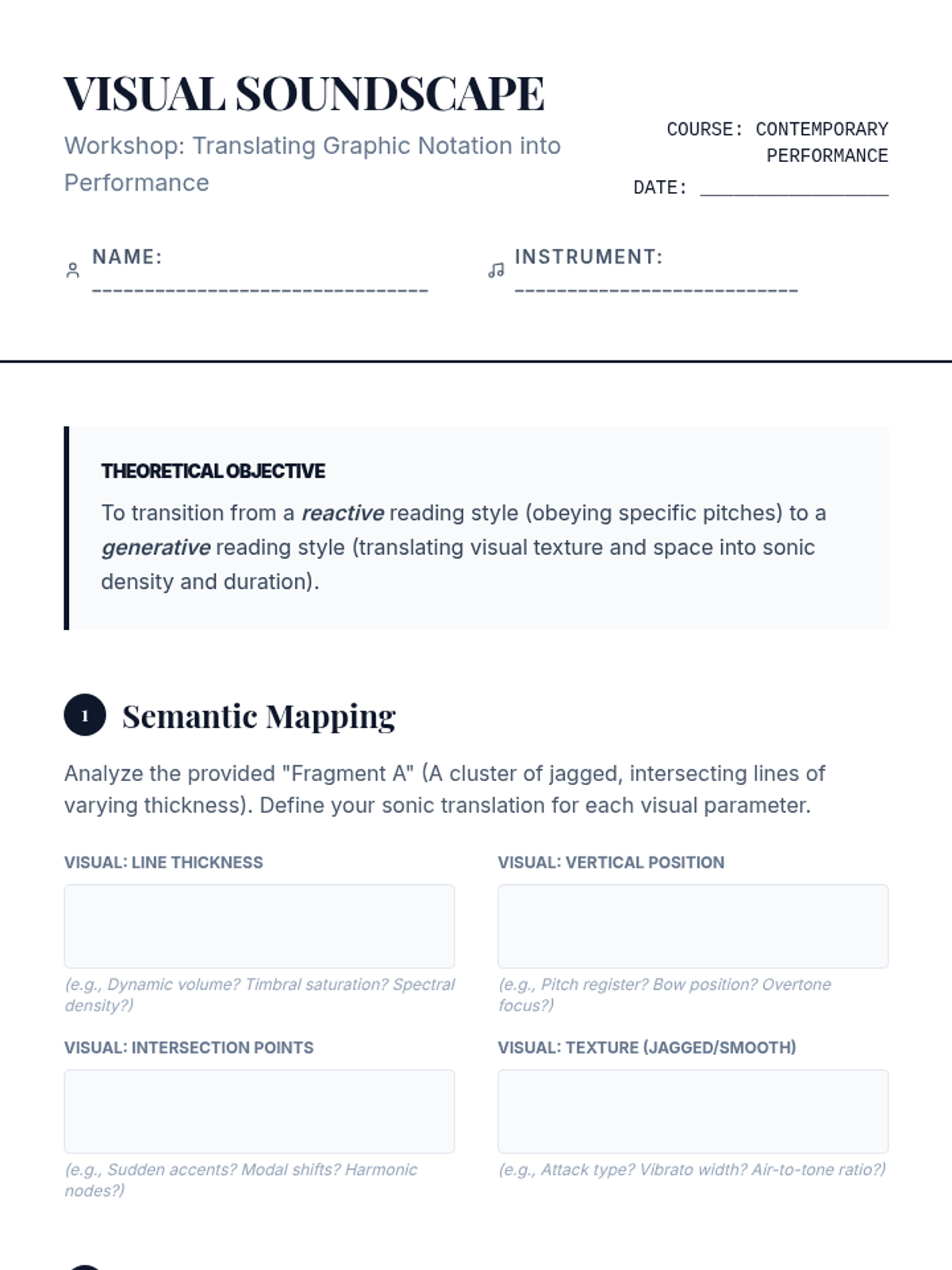
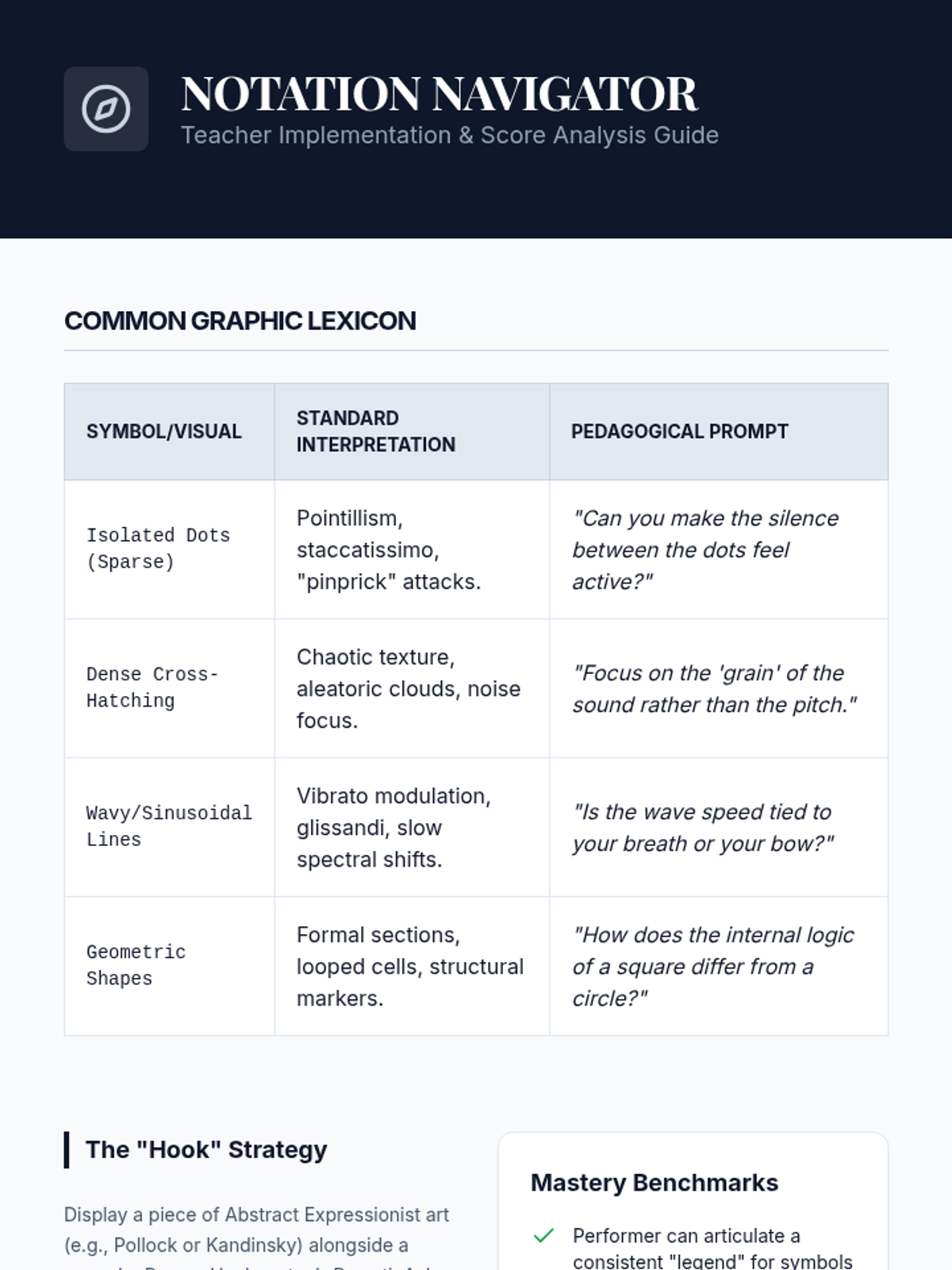
Students explore the evolution of instrumental music into the 20th and 21st centuries, focusing on non-traditional notation and extended techniques. The sequence covers major movements like serialism and minimalism, practical workshops on multiphonics and percussive effects, and project-based work with graphic scores.
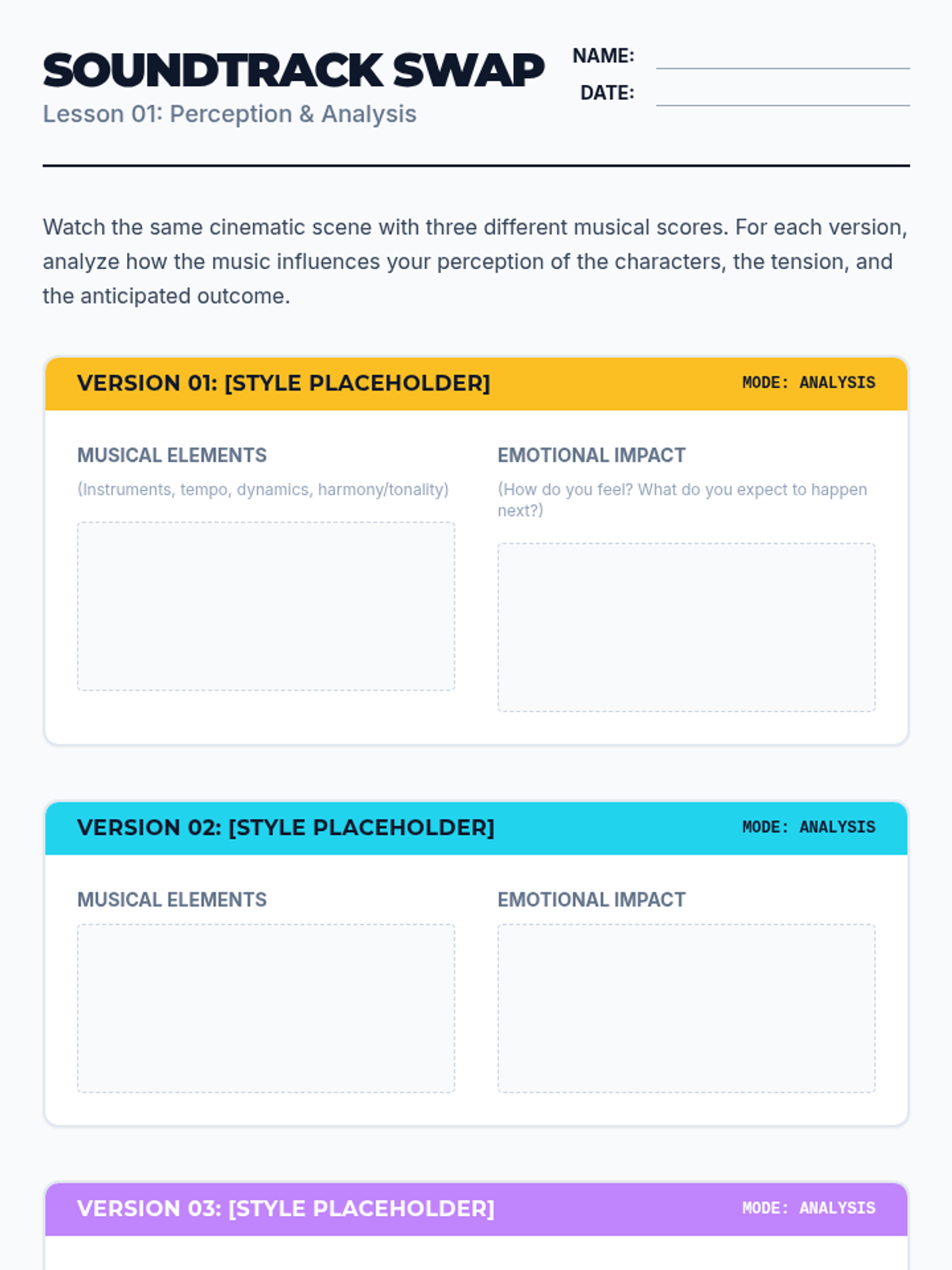
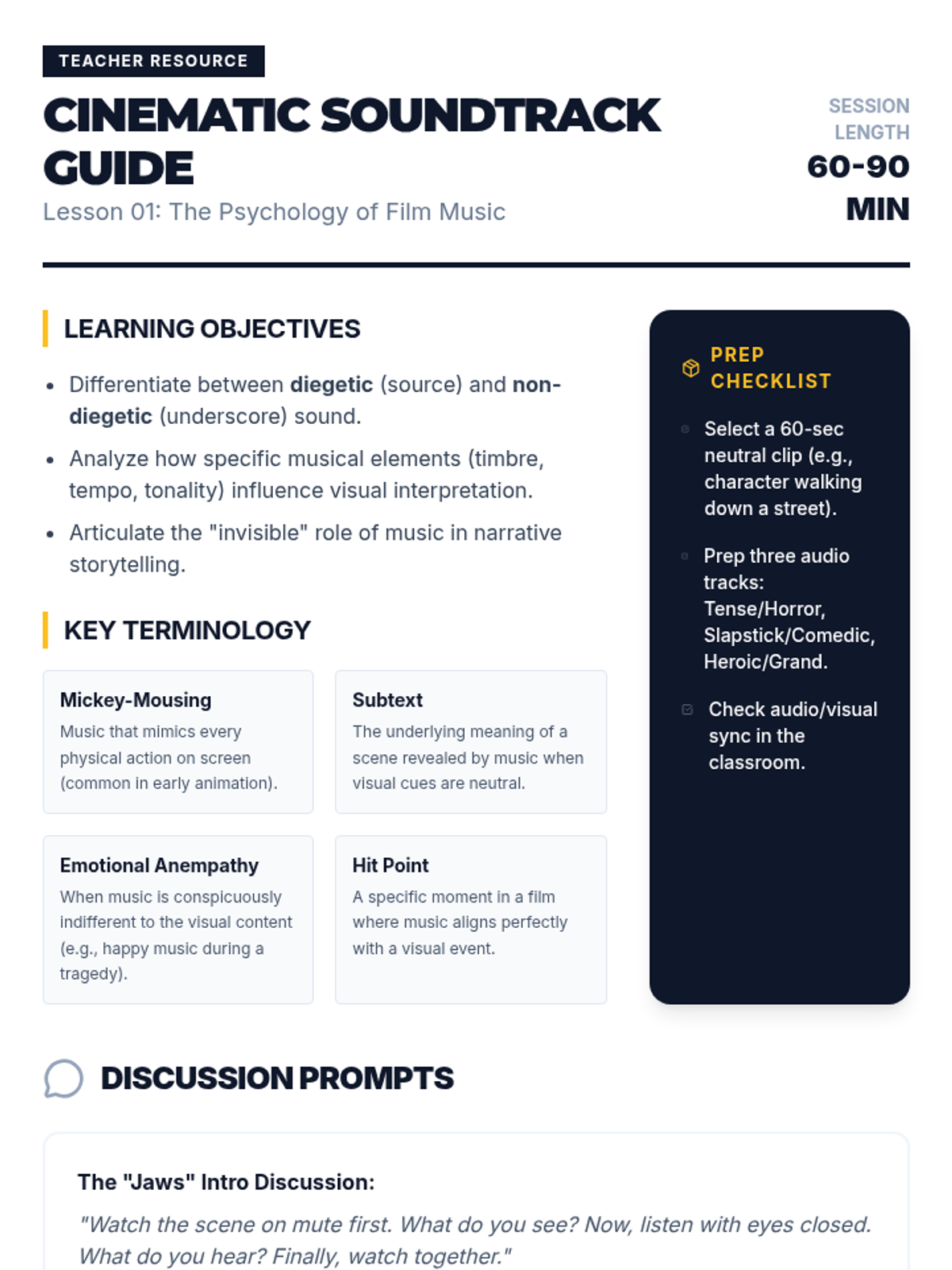
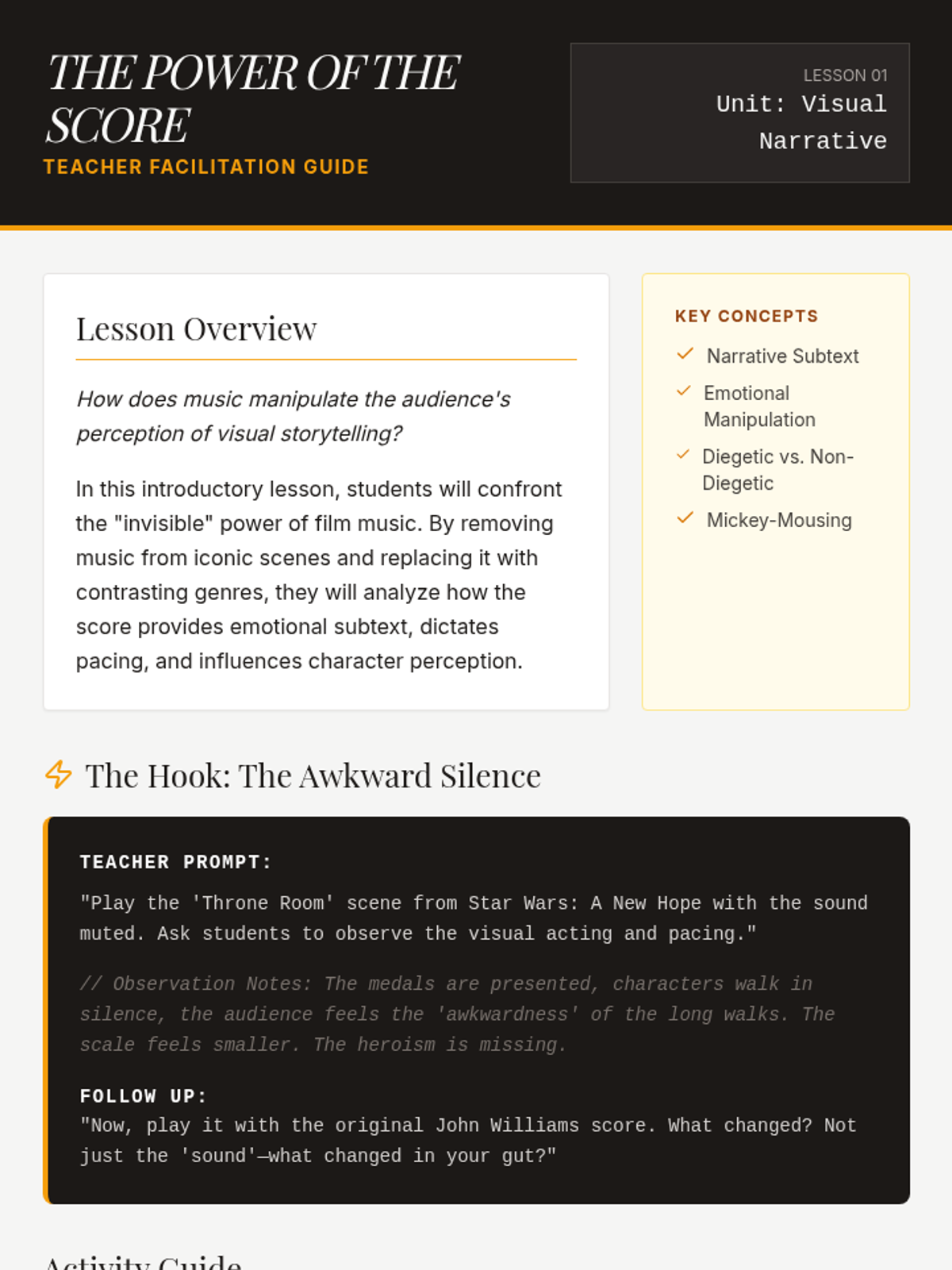
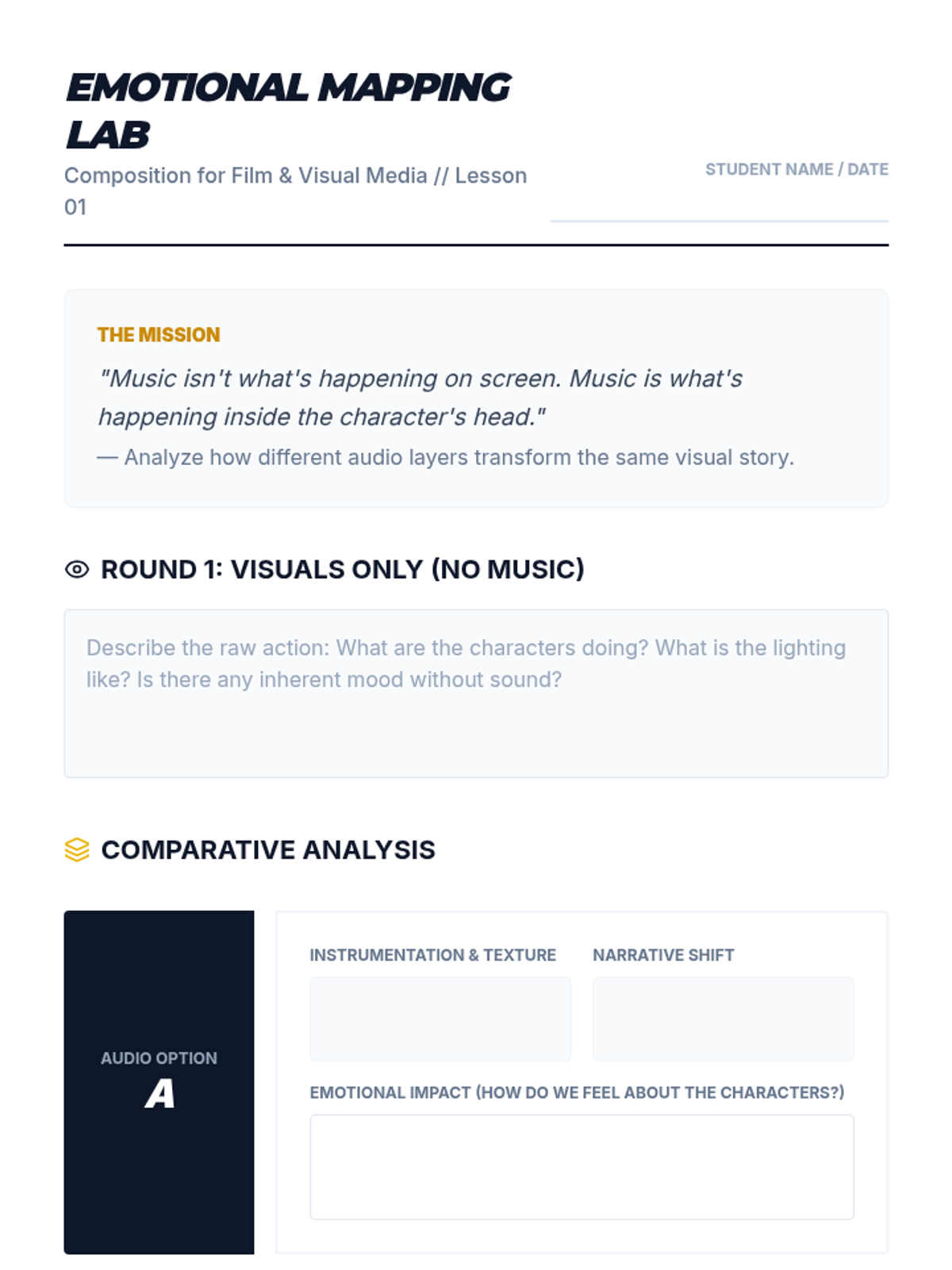
A comprehensive 12th-grade sequence exploring the art and technique of scoring music for visual media. Students learn about the psychology of soundtracks, leitmotif development, technical synchronization, and atmospheric sound design, culminating in a professional-style film scoring project.
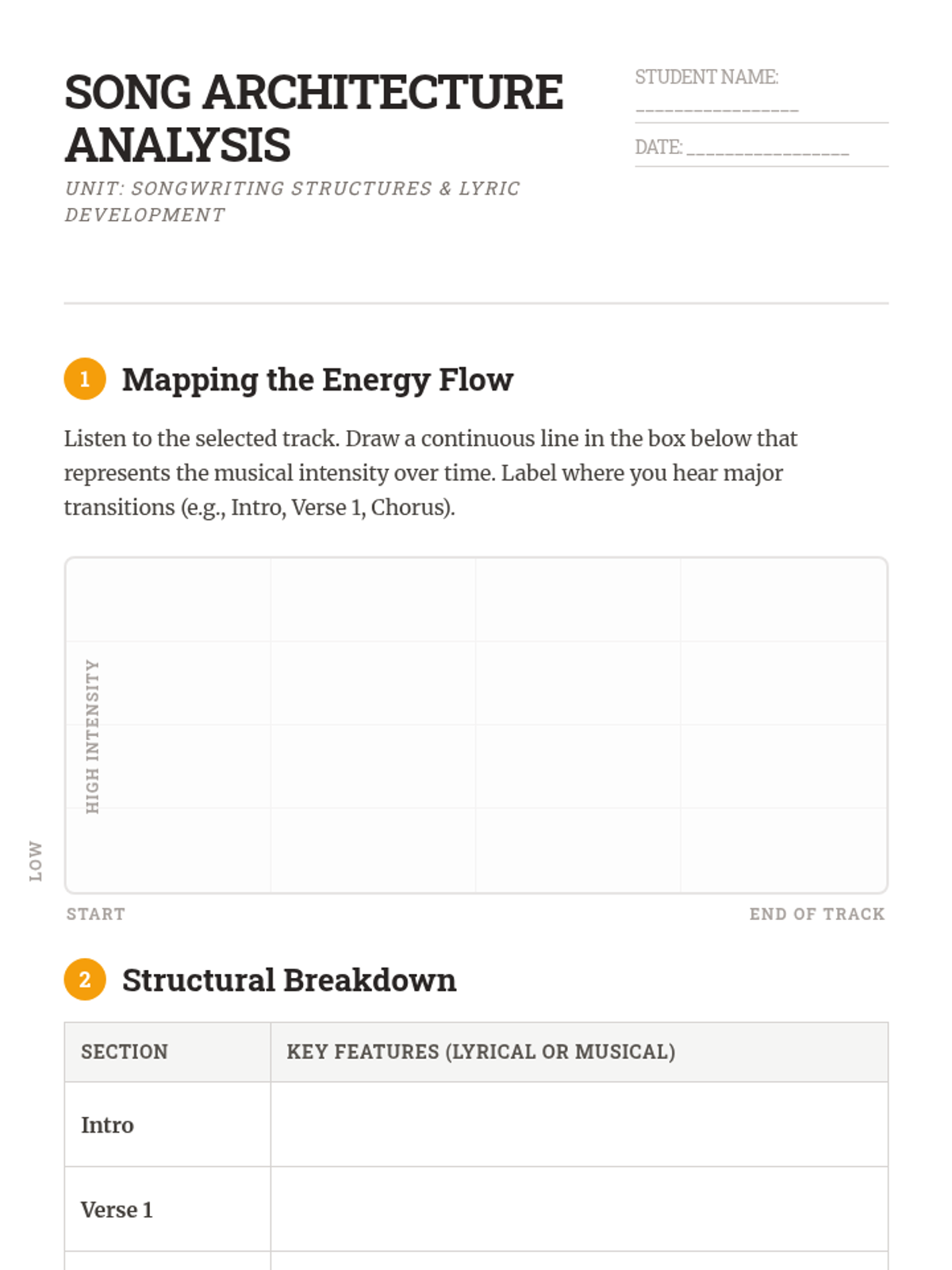
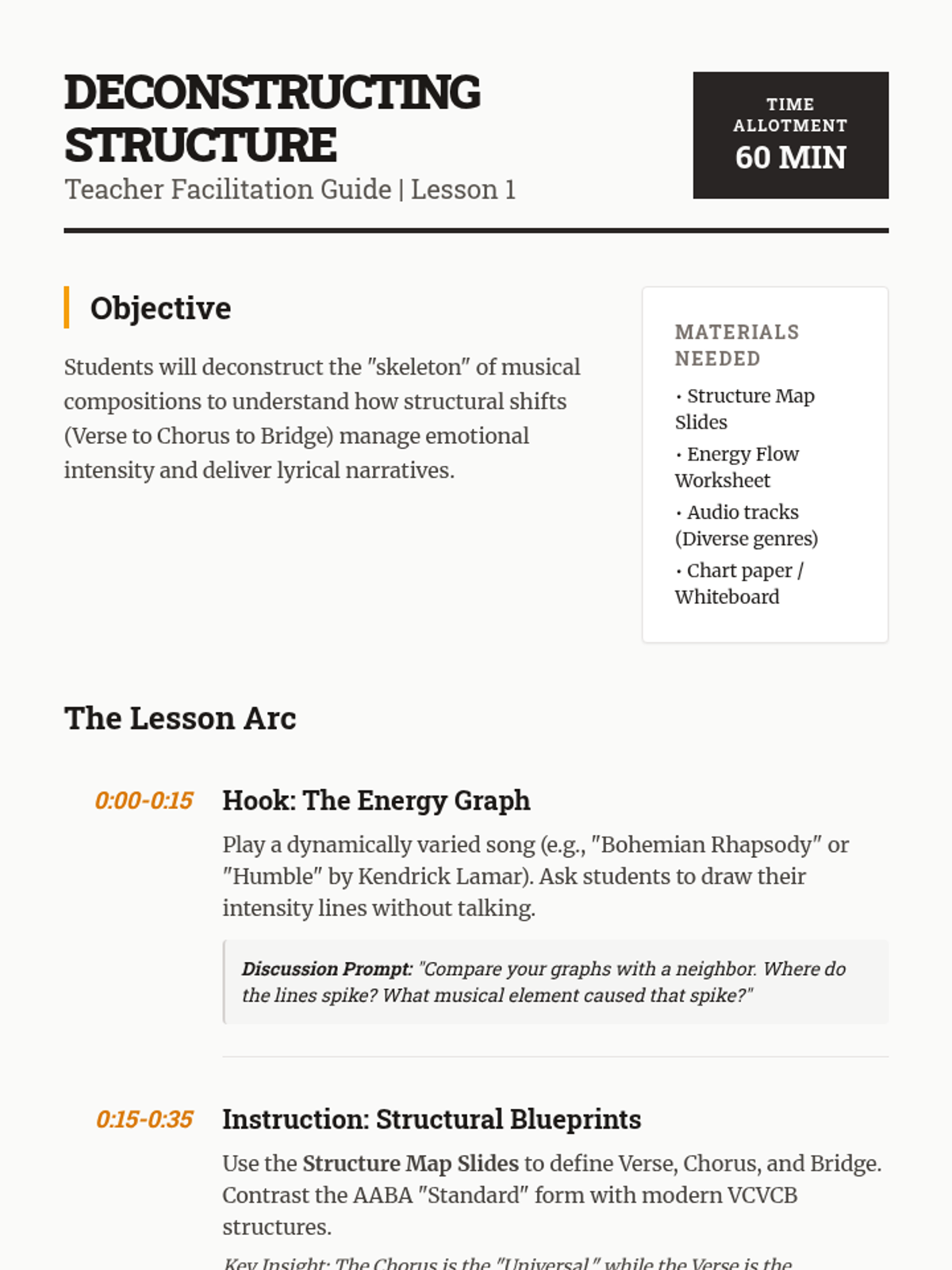
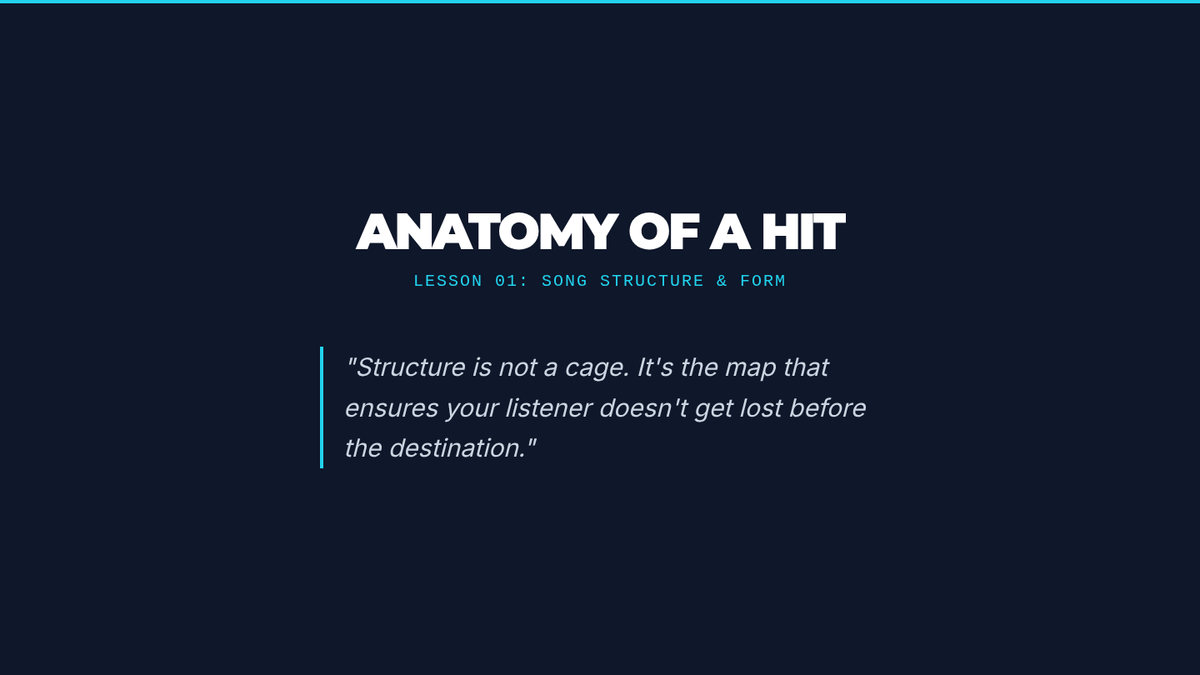
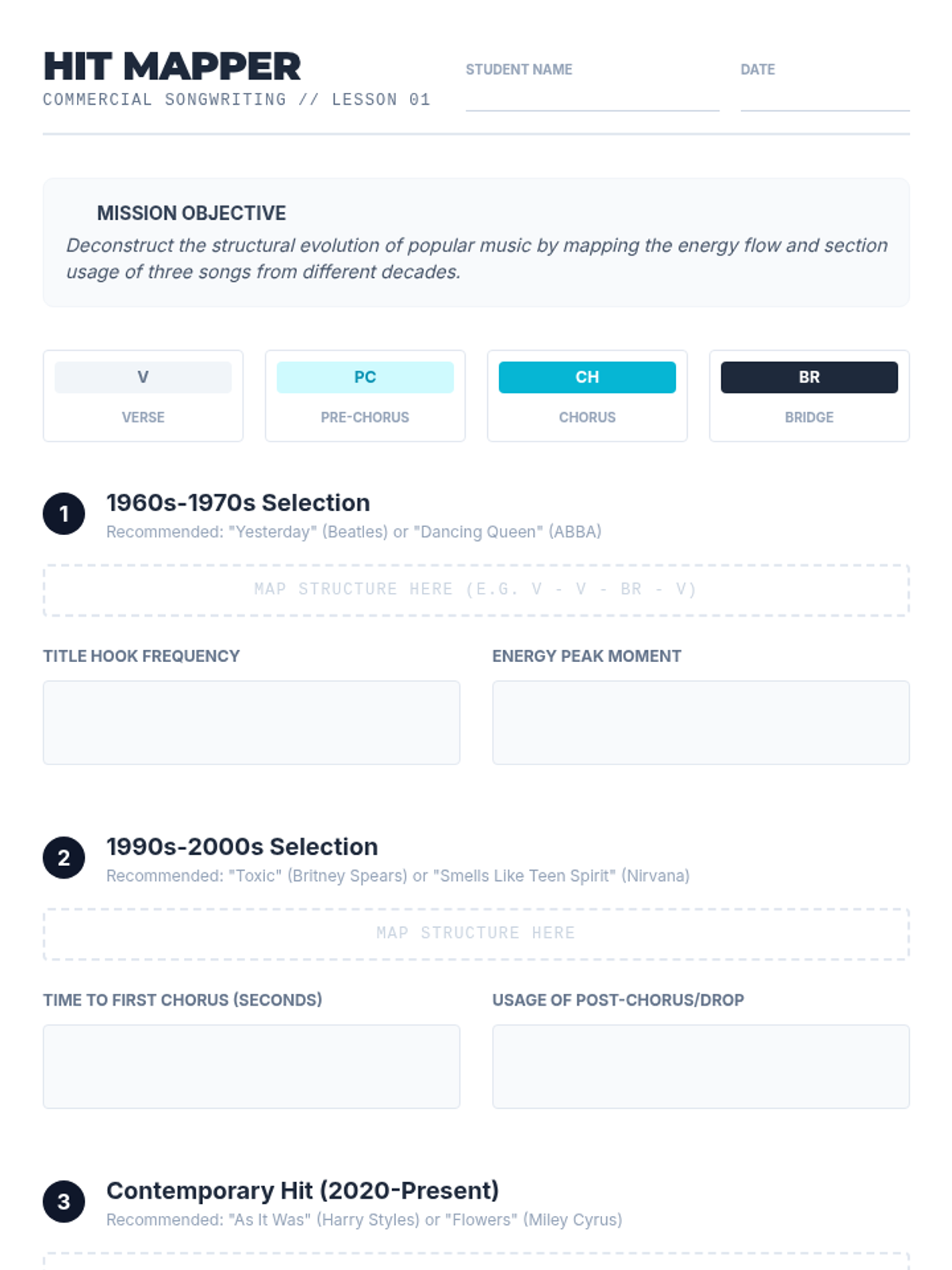
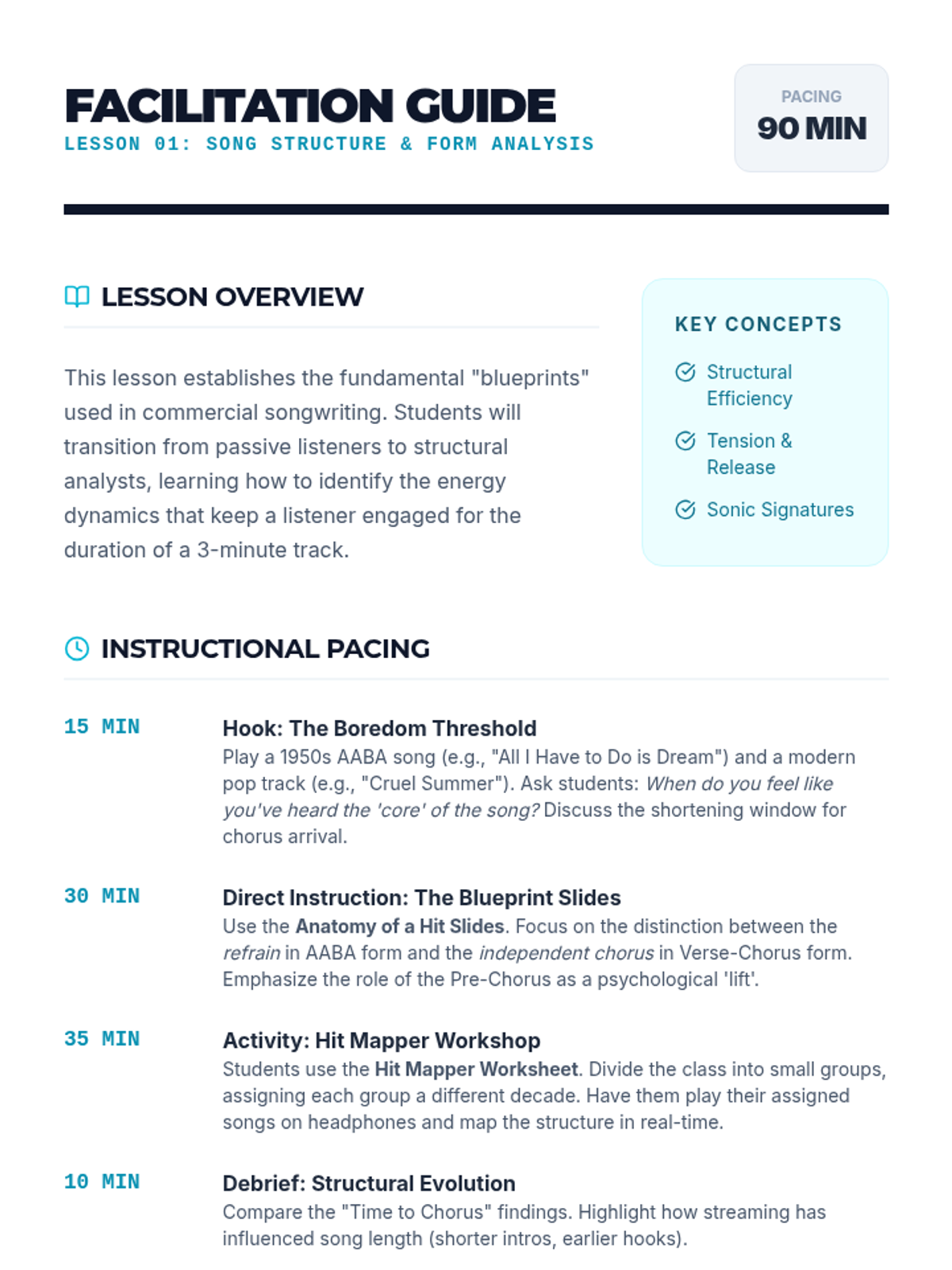
A comprehensive 12th-grade songwriter's workshop focusing on the intersection of structure, lyricism, melody, and harmony. Students move from analytical deconstruction of popular forms to the creation and peer-review of original compositions.
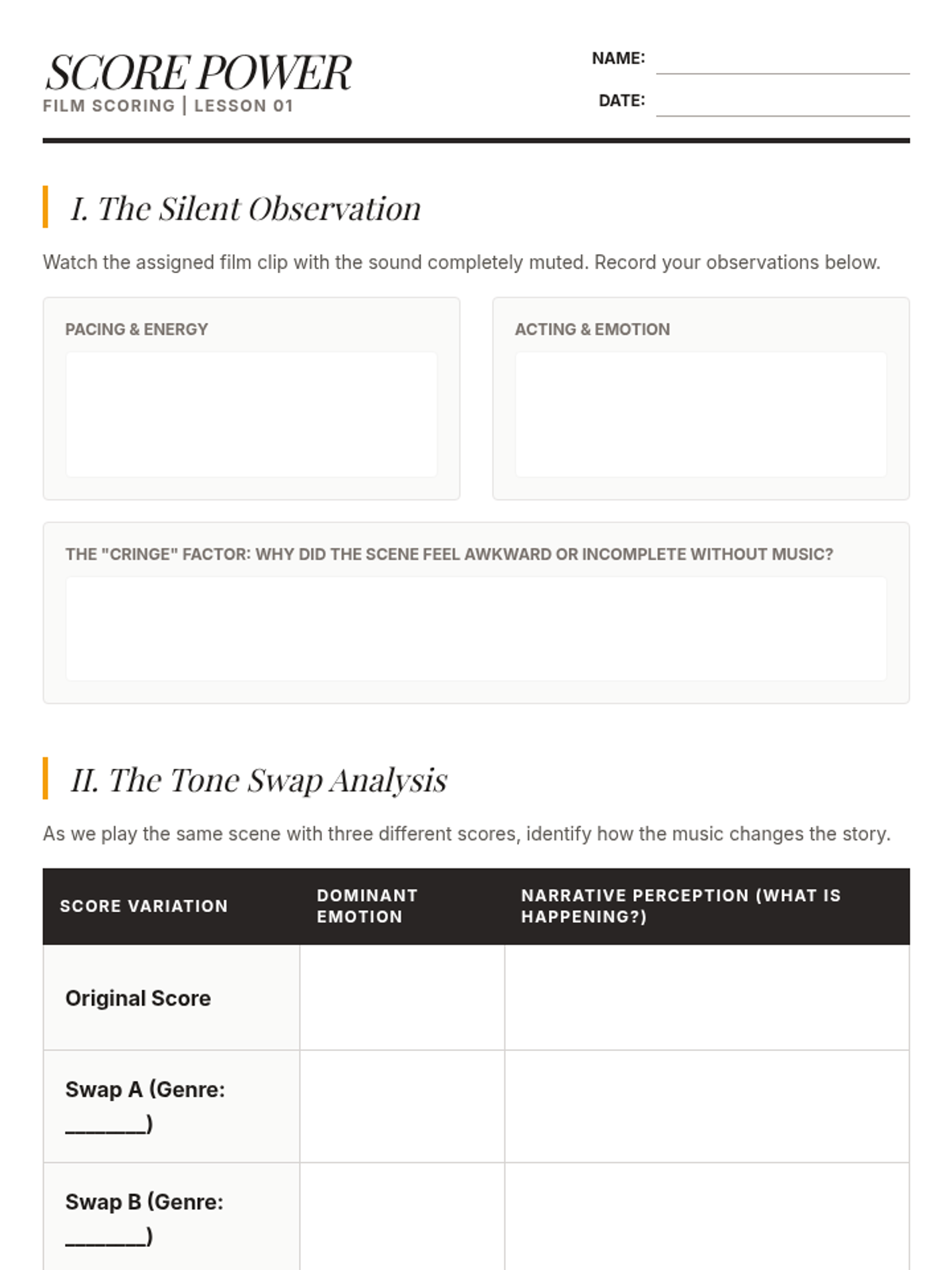
This sequence introduces students to the art of film scoring, focusing on how music influences emotional narrative. Students analyze case studies, create leitmotifs, explore orchestration, and practice synchronization before scoring their own short film clip.
A high-level analysis of modern commercial music, focusing on melodic math, production-as-composition, and professional songwriting camp workflows for graduate students.
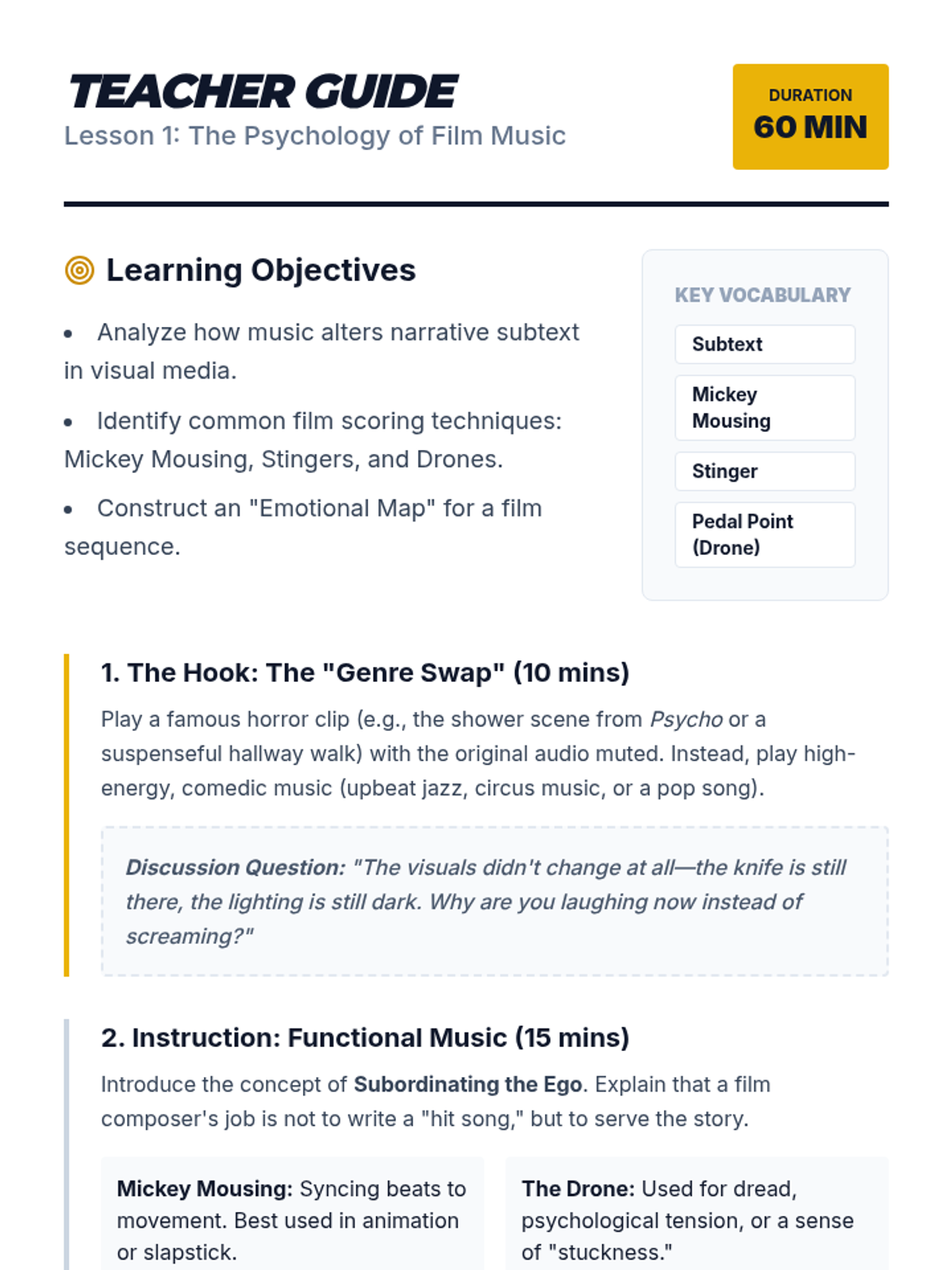
A comprehensive 11th-grade music composition sequence focused on scoring for visual media. Students explore the psychological impact of music, techniques for tension, technical synchronization, and character-driven leitmotifs, culminating in a final scoring project for a film clip.
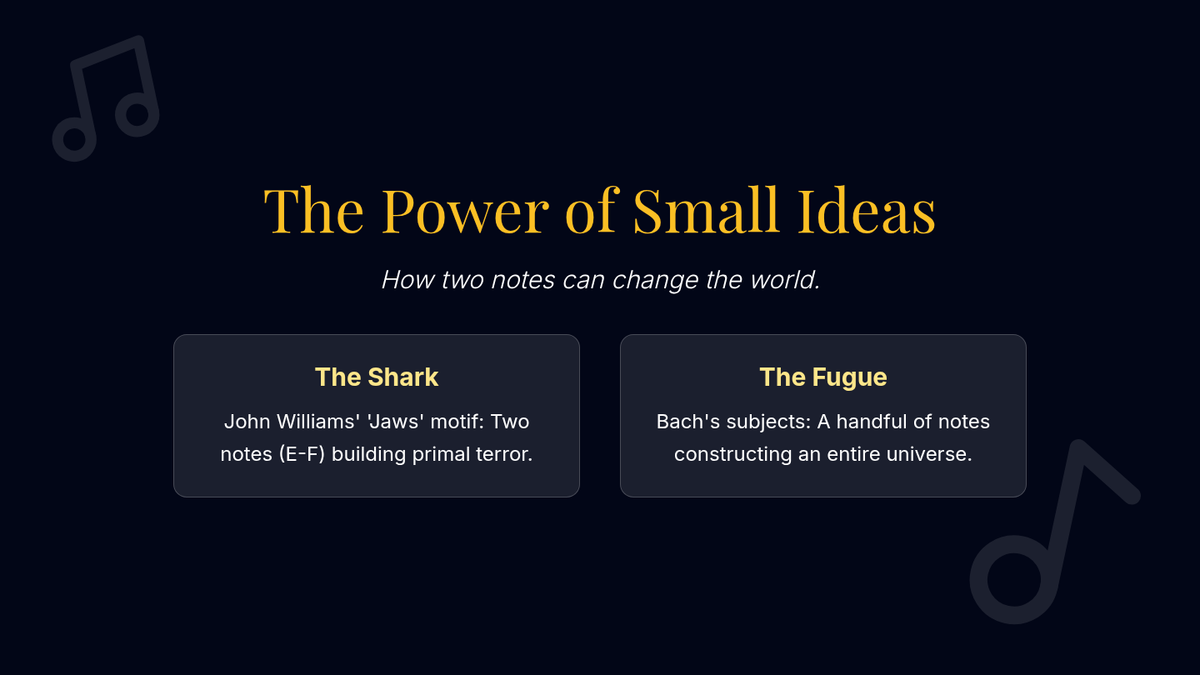
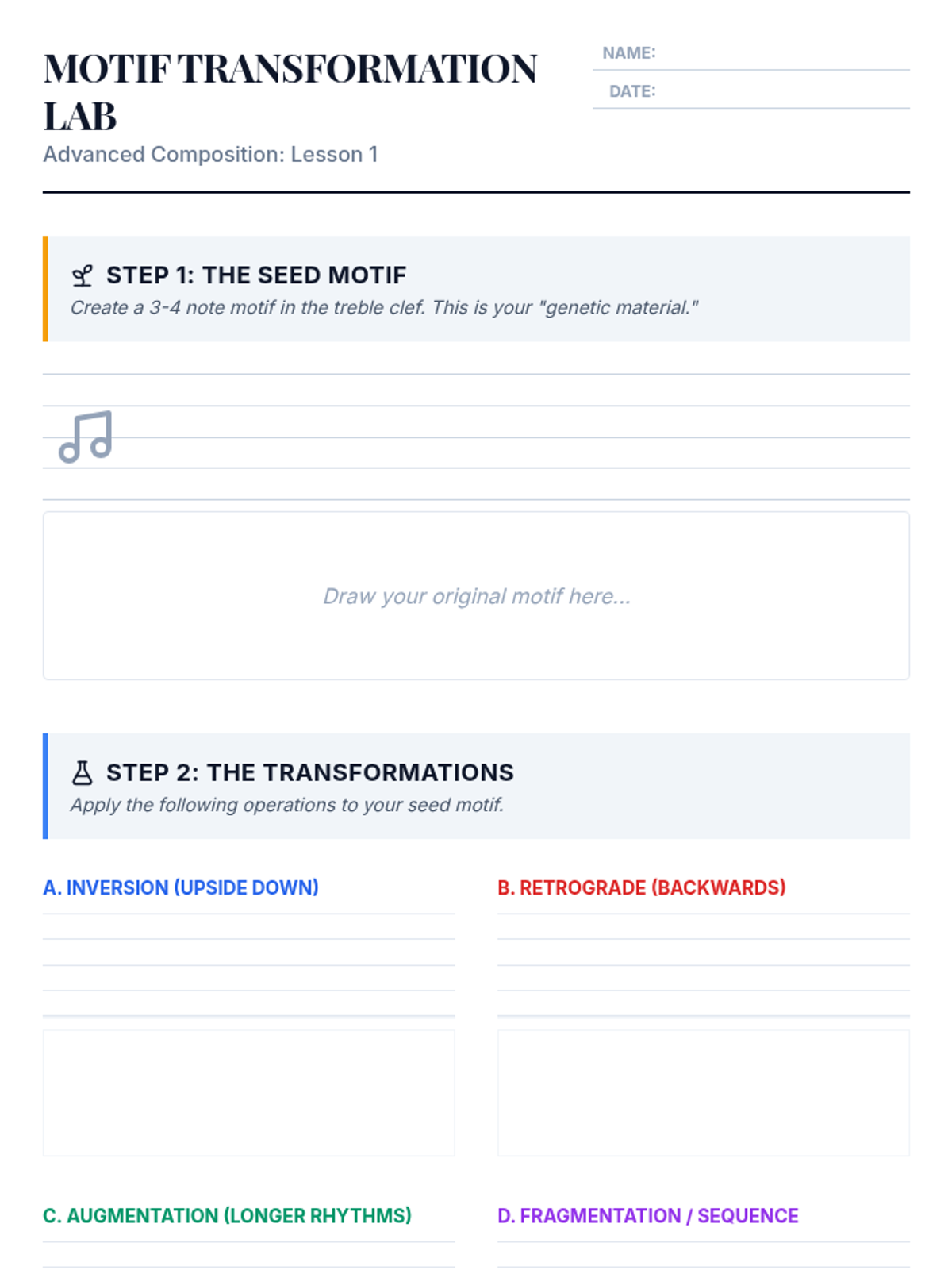
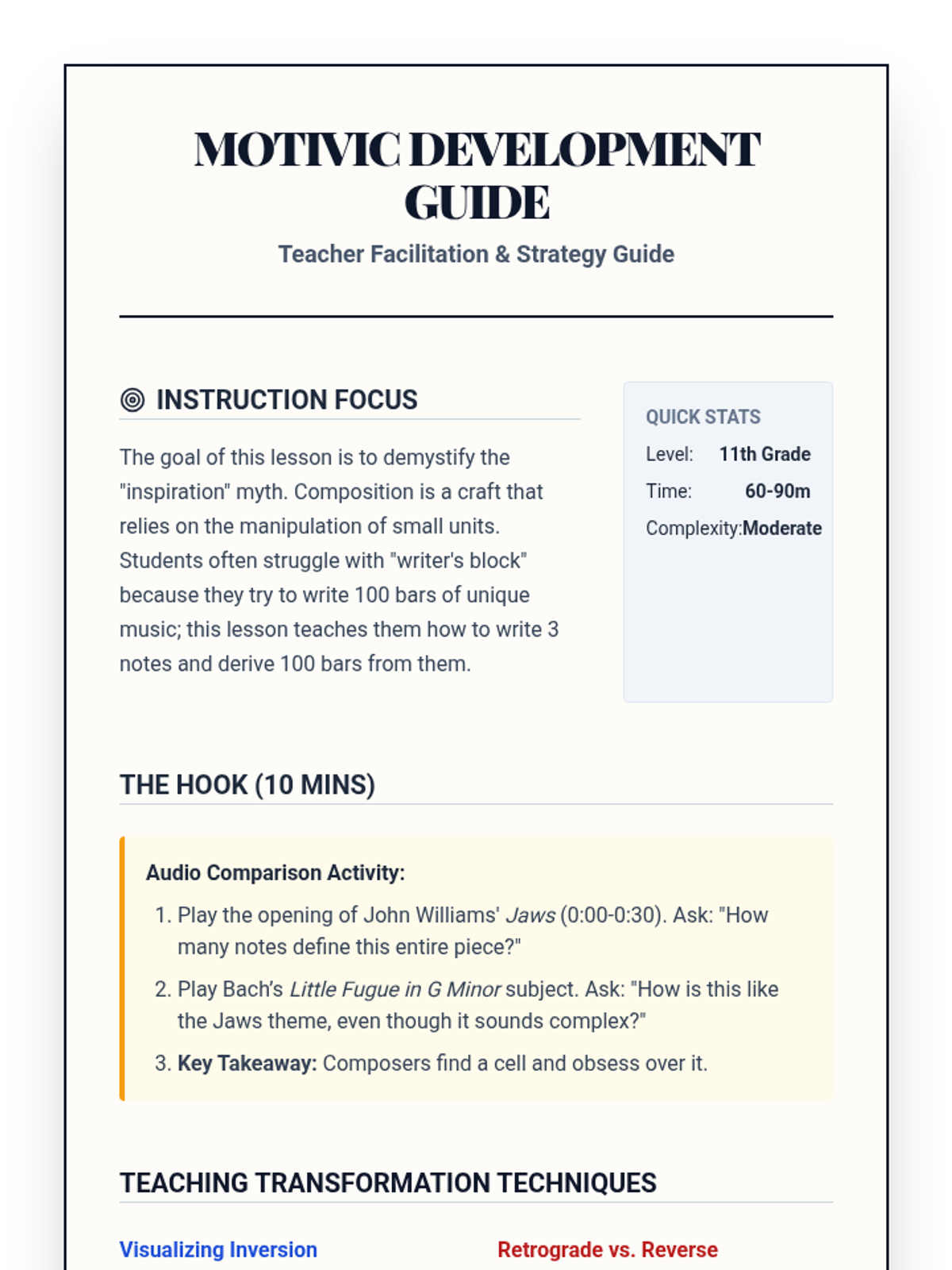
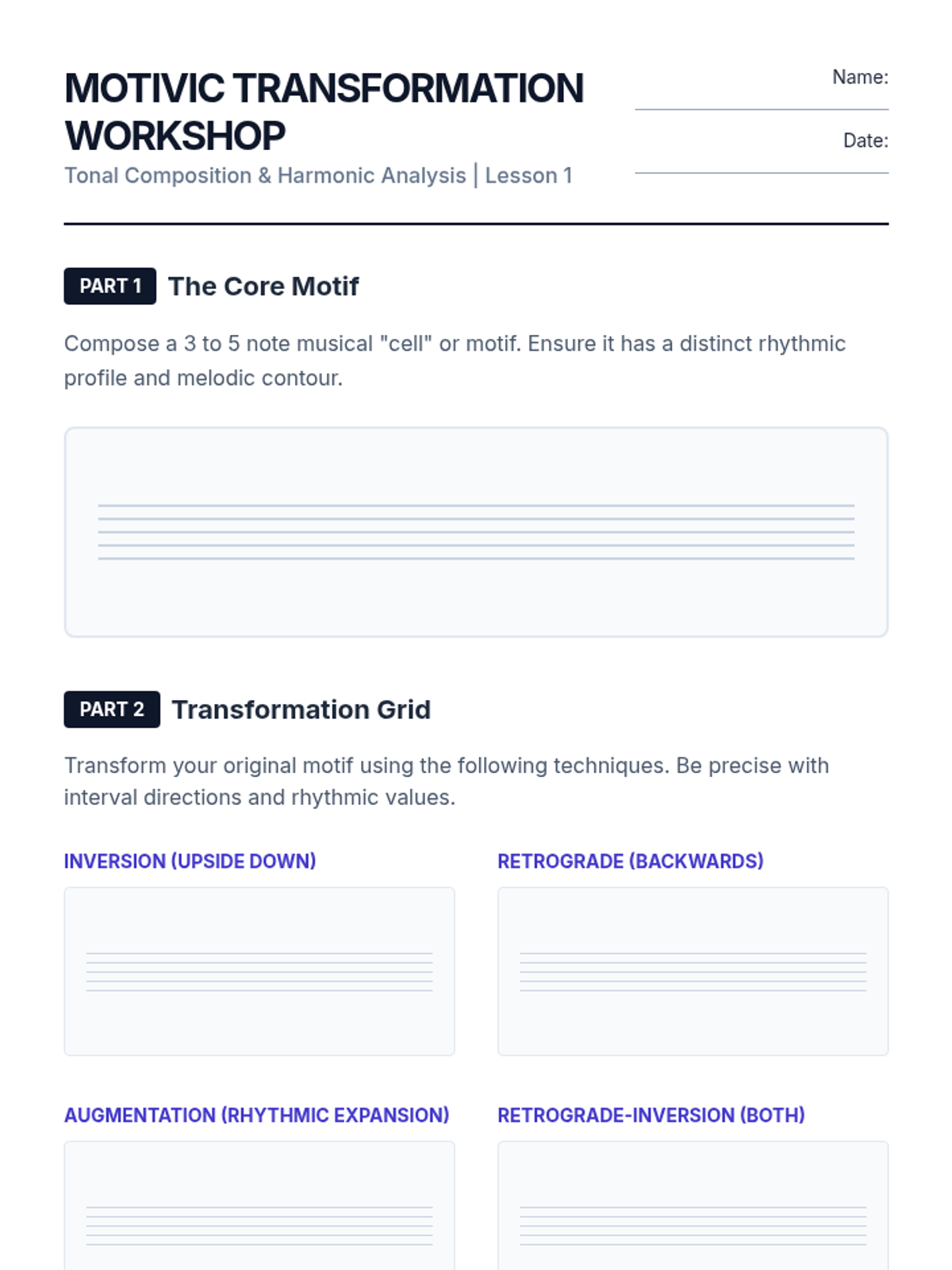
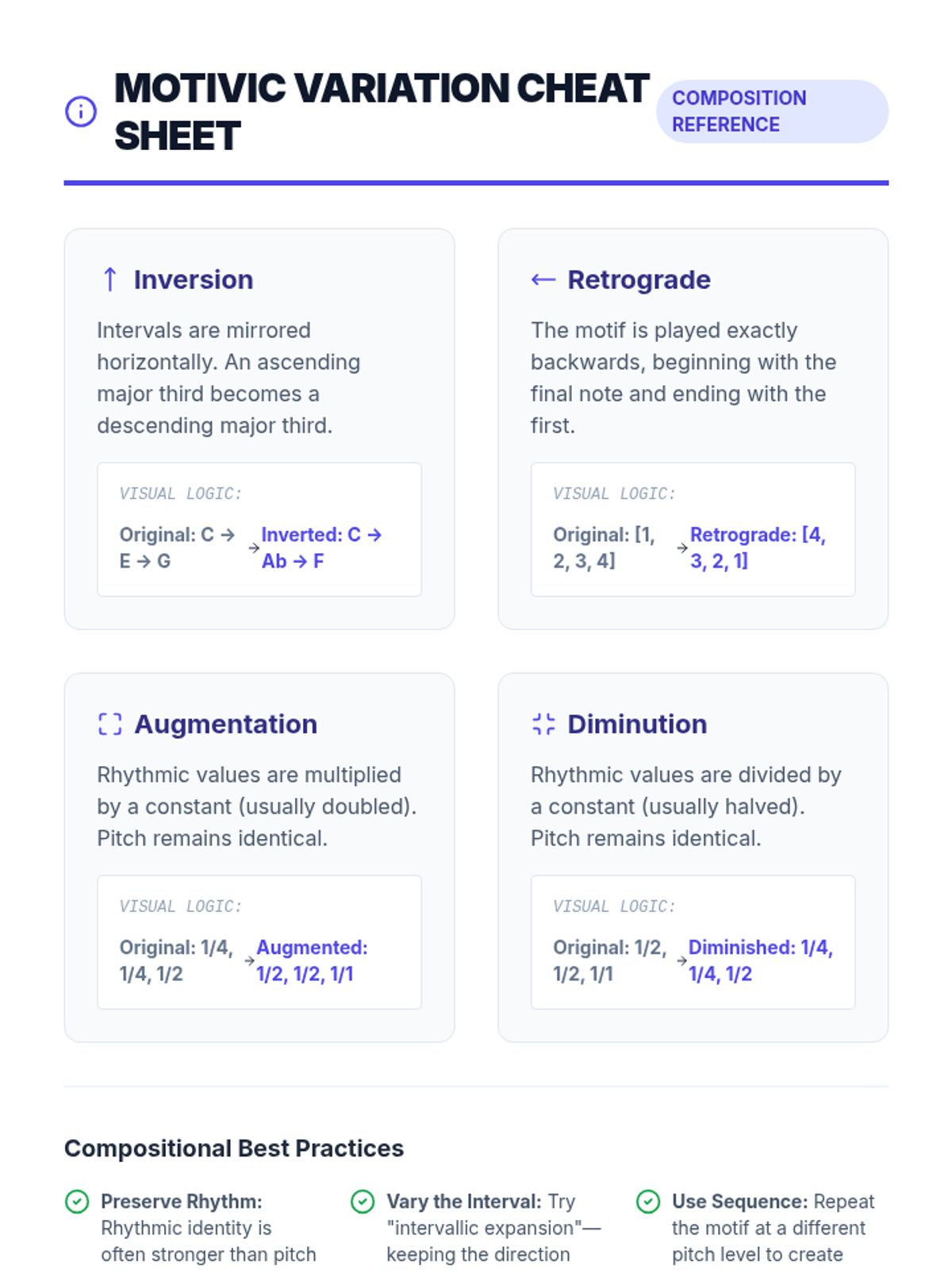
This advanced music theory and composition sequence guides 11th-grade students through the intricacies of motivic development, non-diatonic harmony, and polyphonic textures. Students will move from short melodic fragments to a fully realized ensemble piece, emphasizing the technical and emotional manipulation of musical elements.
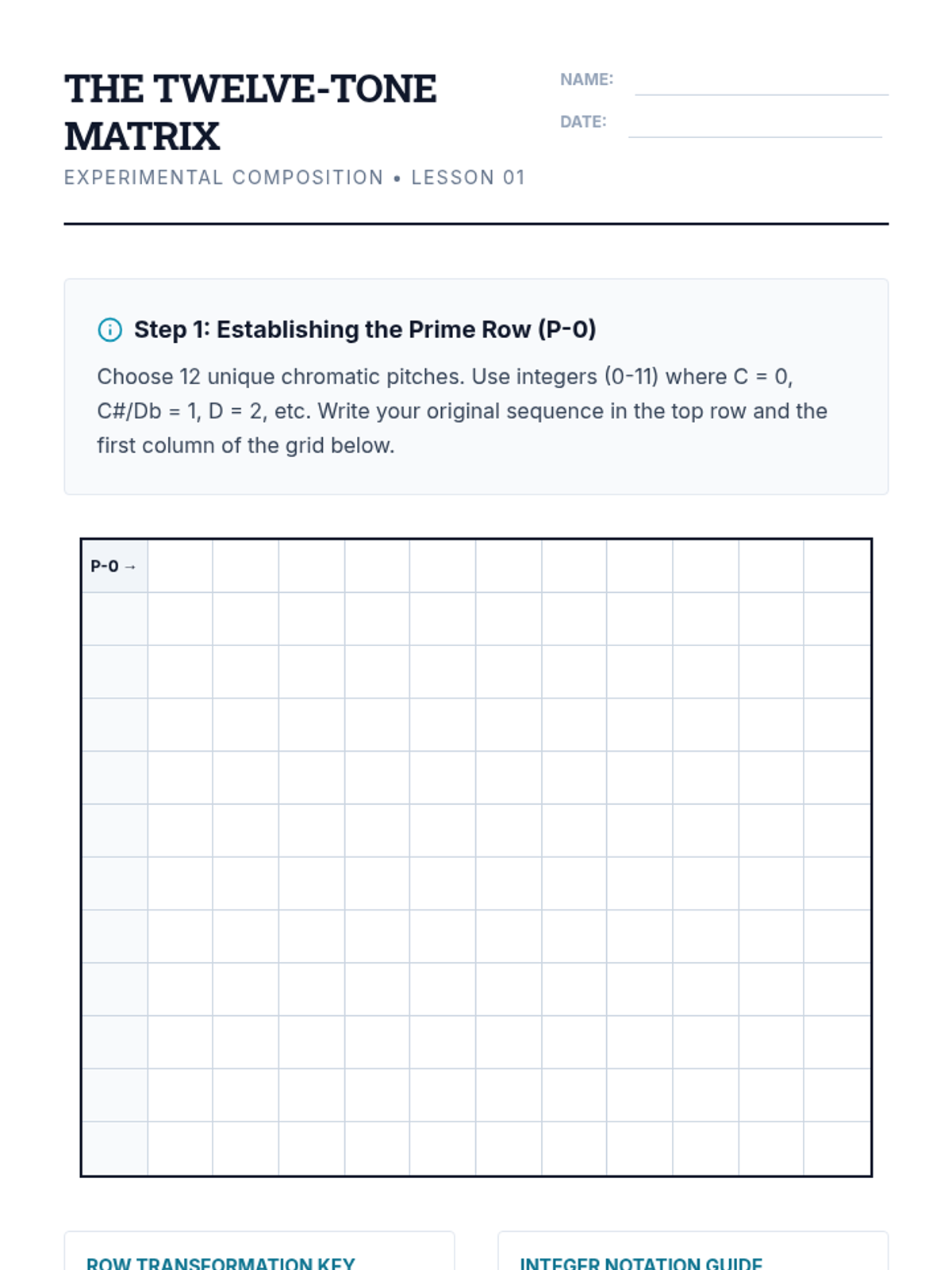
A deep dive into 20th and 21st-century avant-garde composition, exploring atonality, chance music, timbral exploration, and graphic notation for undergraduate music students.
An intensive undergraduate sequence exploring the theoretical foundations of Western tonal composition, focusing on motivic development, advanced voice leading, chromatic harmony, and polyphonic textures, culminating in a chamber ensemble orchestration.
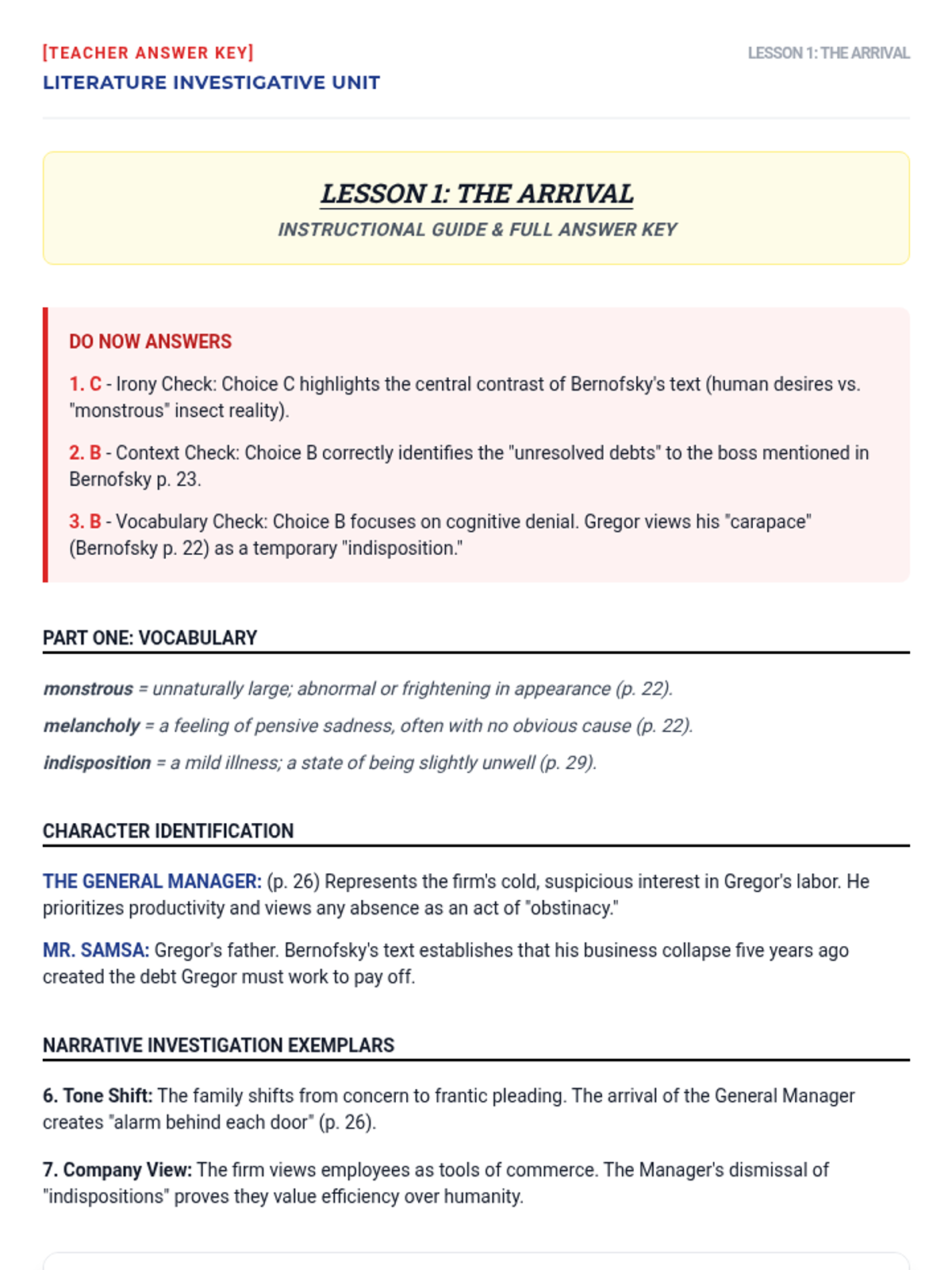
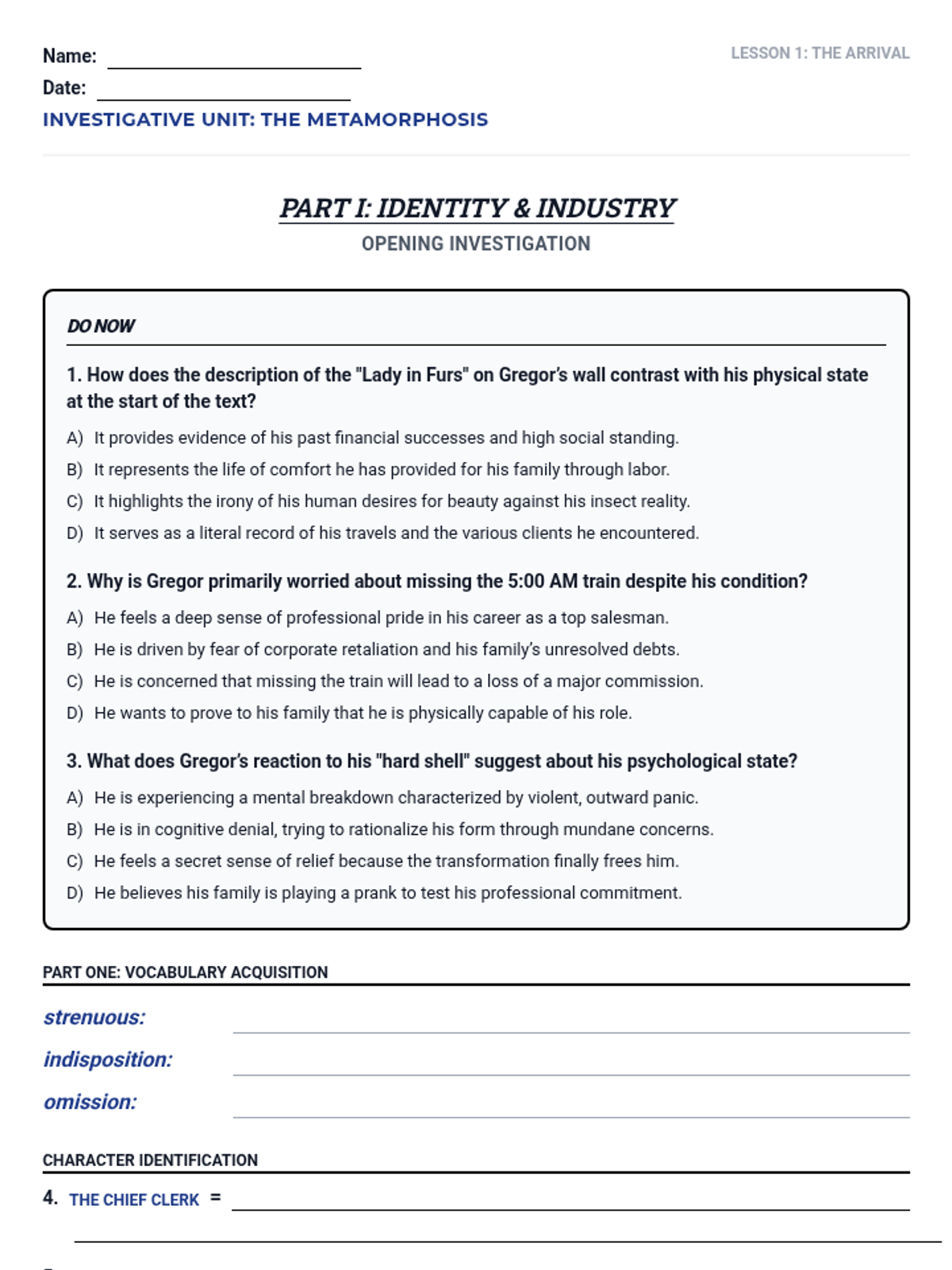
An intensive investigative unit on Franz Kafka's *The Metamorphosis* following the North Star/Uncommon Schools instructional model. The unit focuses on the thematic intersection of labor, identity, and dehumanization. Students analyze Gregor's alienation from his family and society through a structured rigorous framework including vocabulary acquisition, character identification, and thematic synthesis.
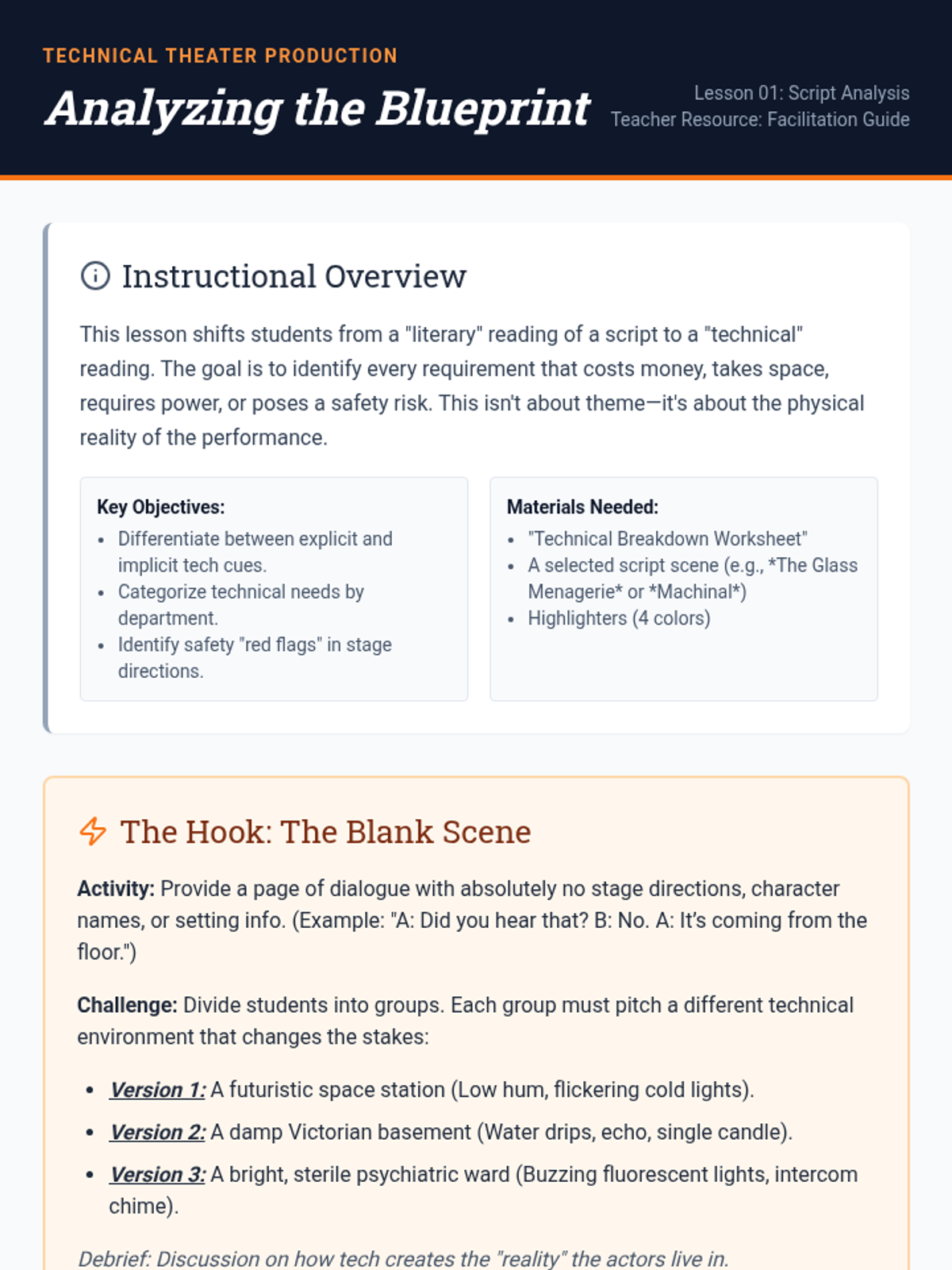
An advanced undergraduate sequence exploring the intersection of artistic vision and technical execution in theater. Students move from script analysis to technical design (lighting, sound, scenery) and professional stage management, culminating in a simulated 'paper tech' to test the feasibility and safety of their integrated production plans.
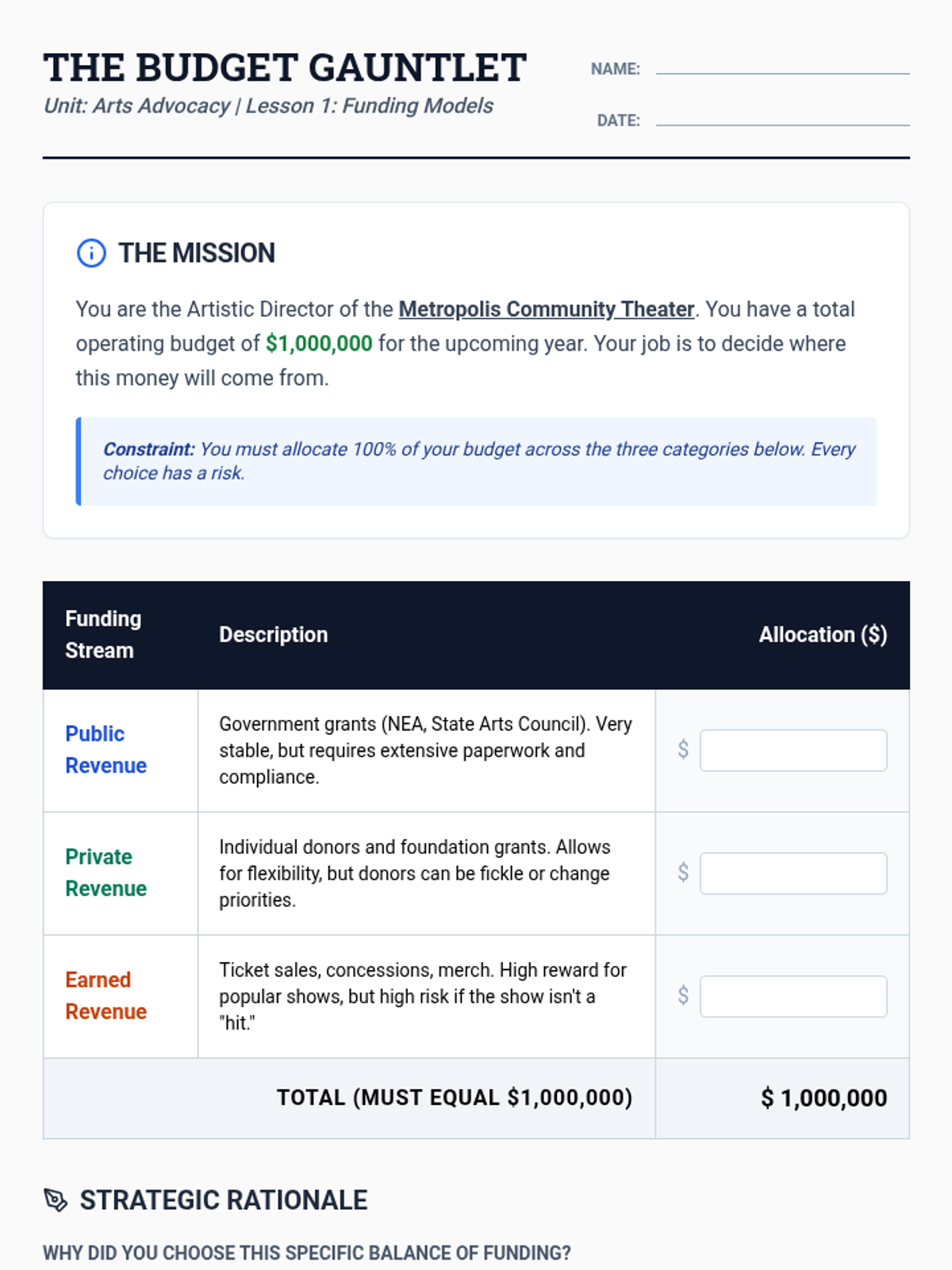
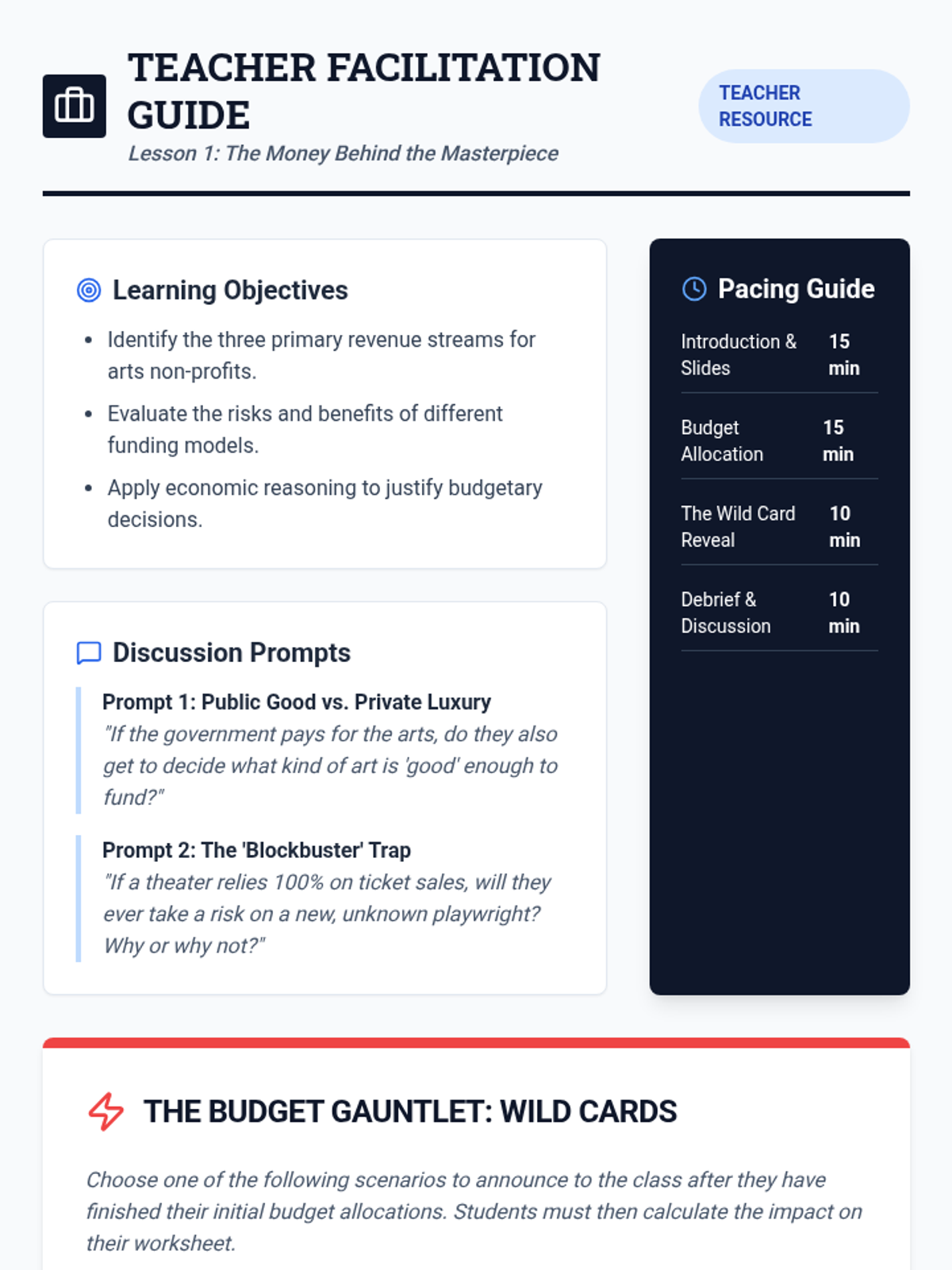
This 9th-grade sequence moves beyond art appreciation to explore the economic and policy frameworks of the arts sector. Students analyze funding models, historical controversies, grant writing, and urban policy, culminating in a mock legislative session on arts advocacy.
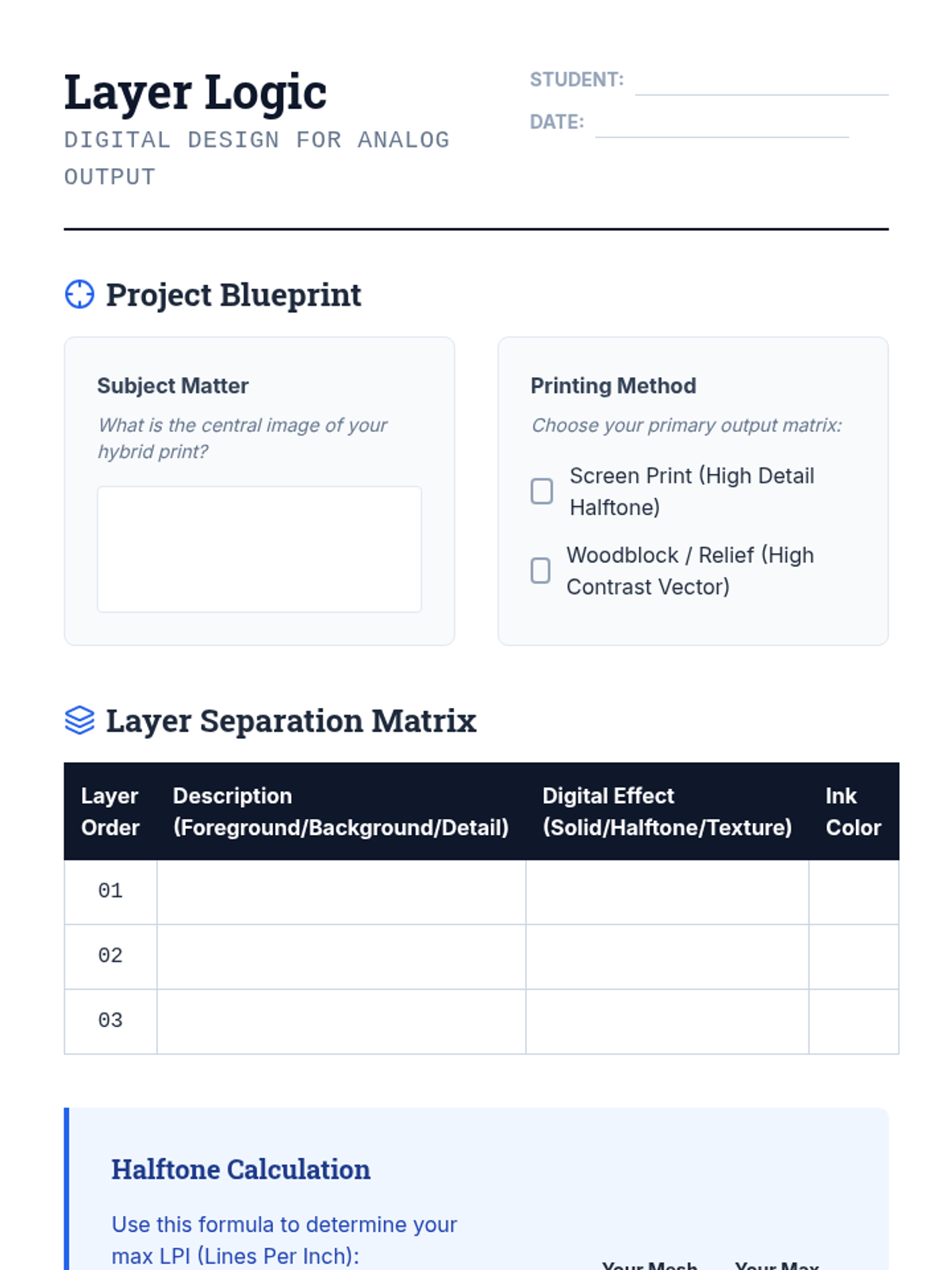
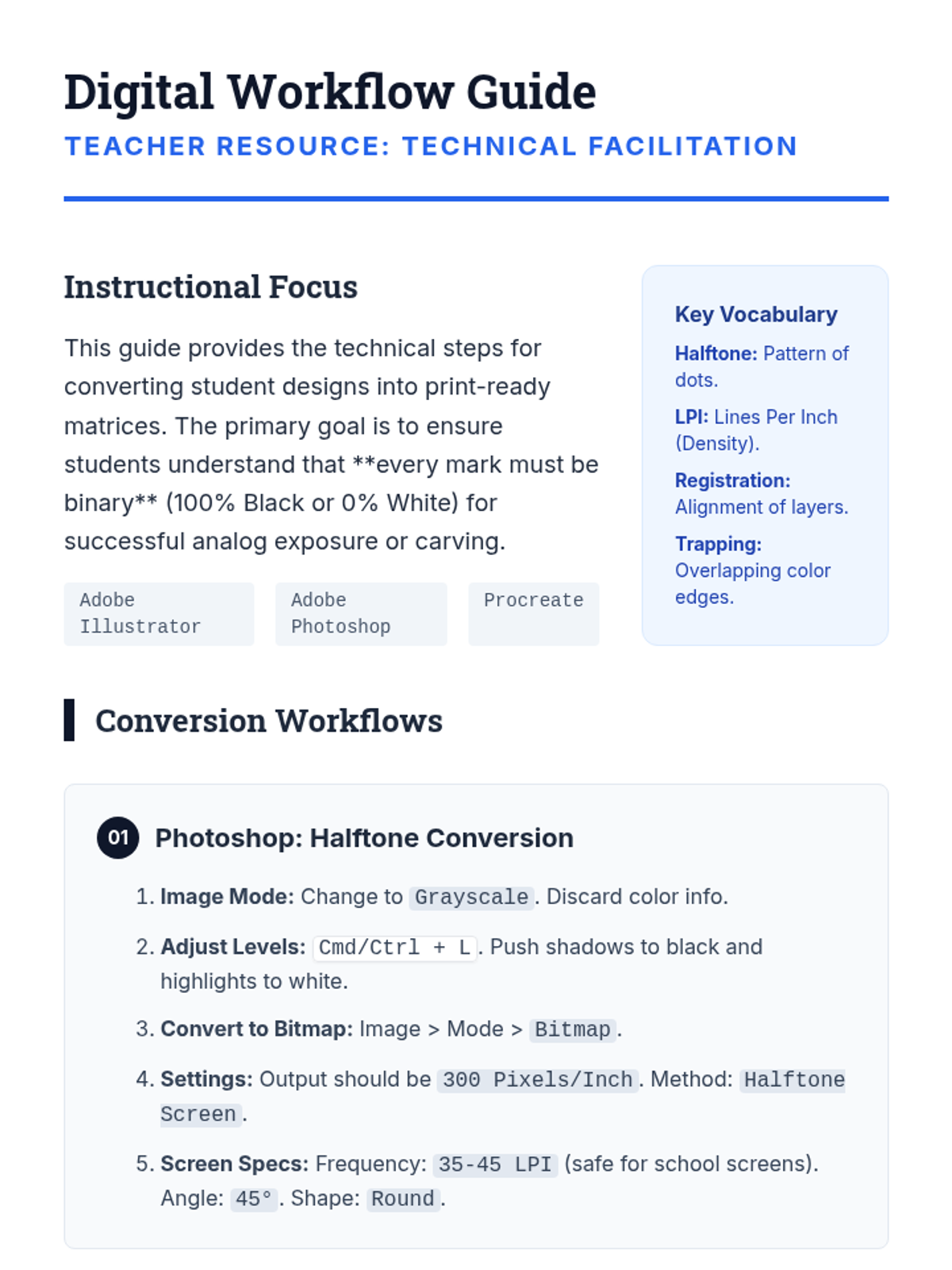
A high school sequence exploring the intersection of digital design and traditional printmaking. Students learn to bridge vector precision with analog texture through zine production and professional practice.
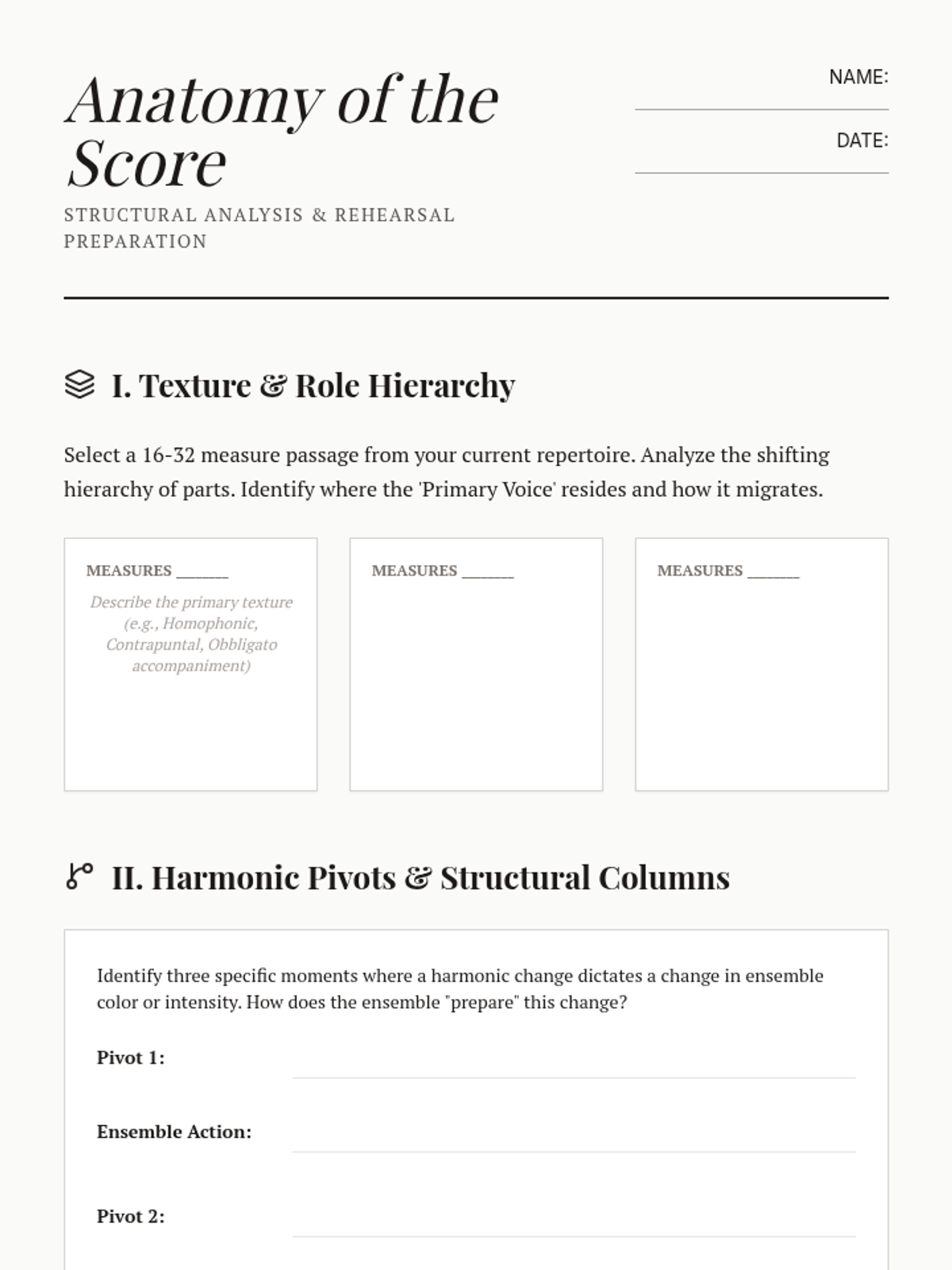
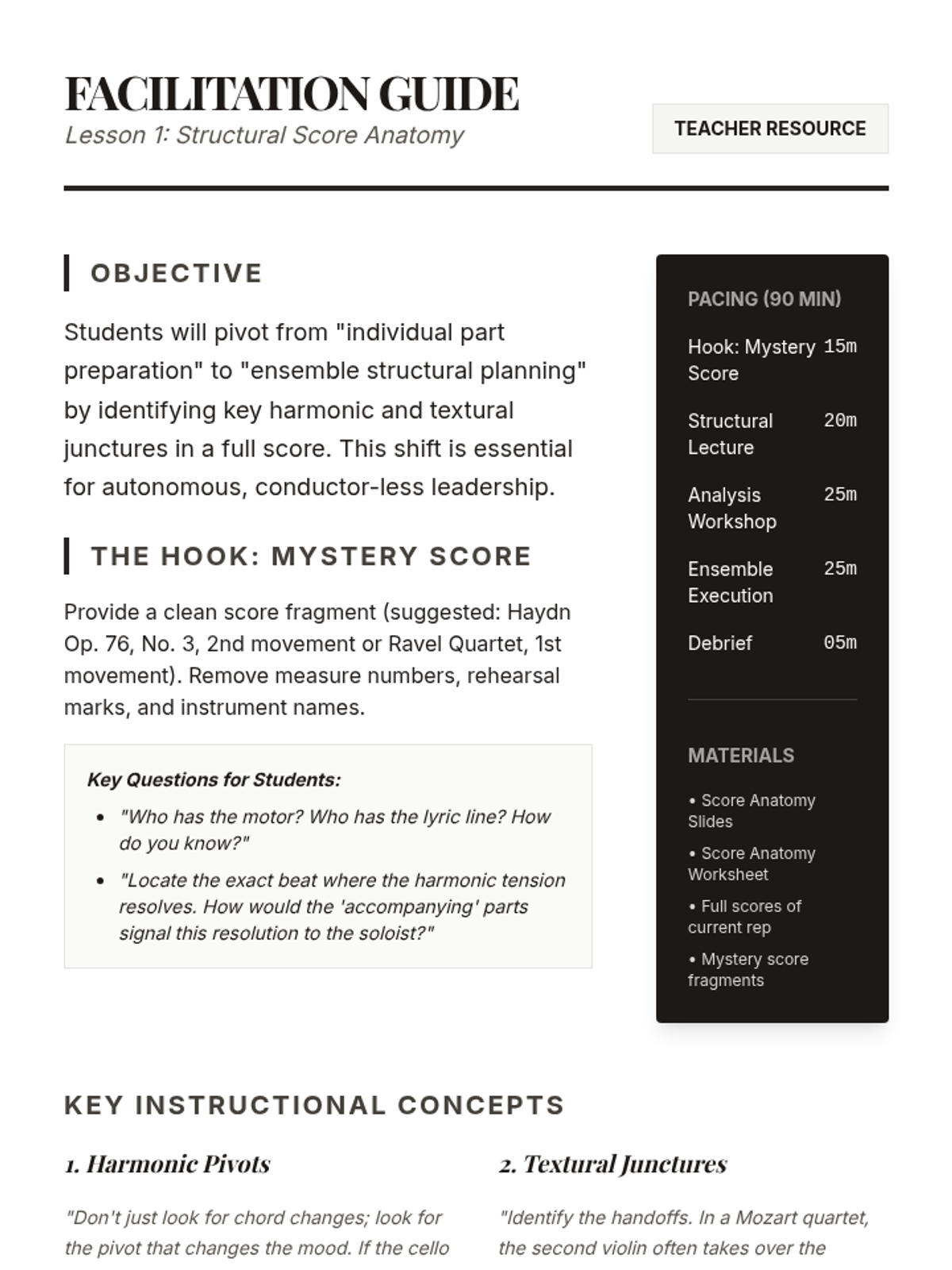
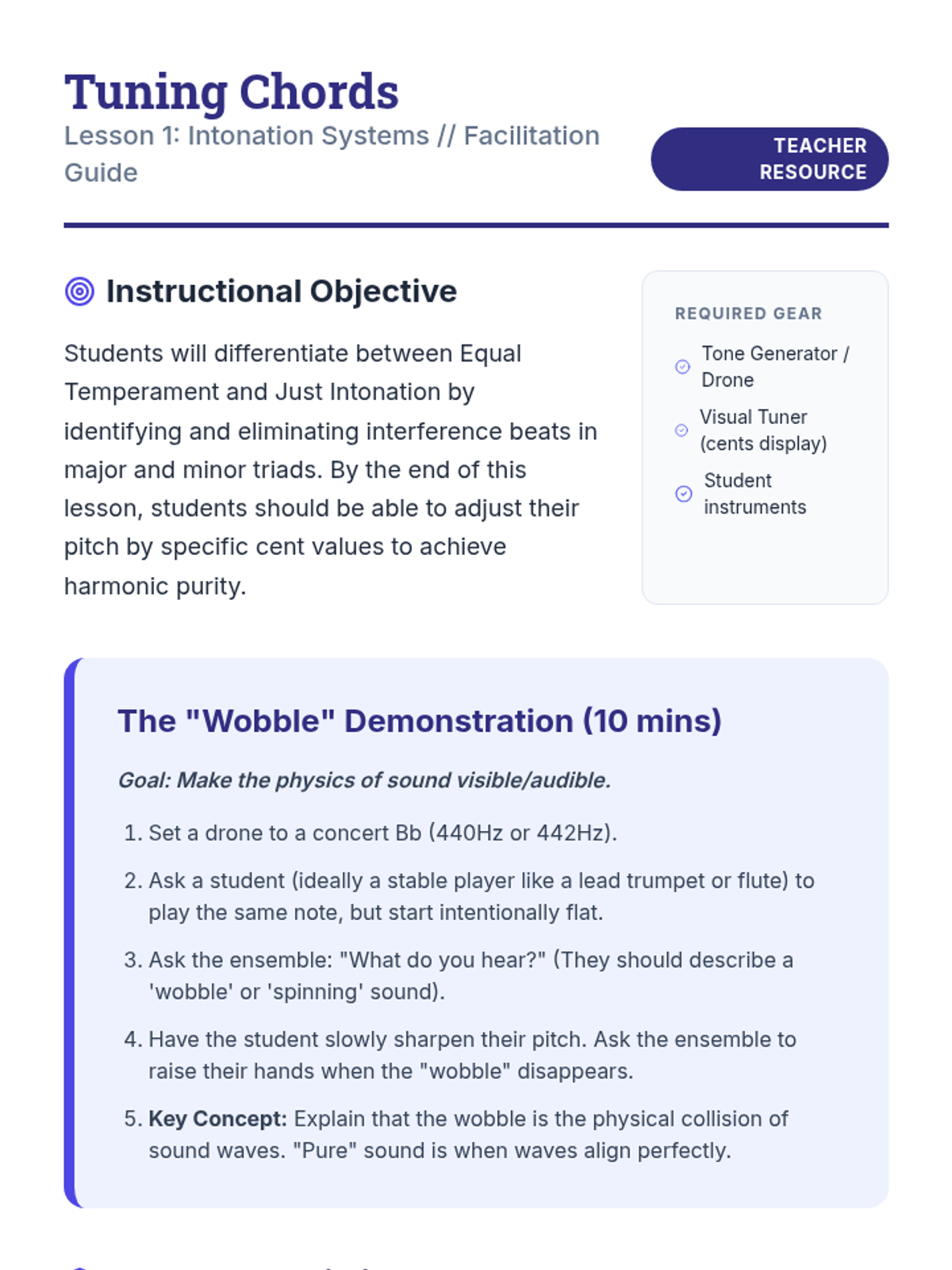
This advanced sequence for graduate music students explores the leadership, acoustics, and interpersonal dynamics of high-level chamber music. Students transition from individual practitioners to collaborative leaders through score analysis, pure tuning mastery, and non-verbal communication techniques.
A graduate-level sequence focused on the technical and interpretive demands of 20th and 21st-century music, covering graphic notation, extended techniques, complex rhythms, and professional collaboration.
This sequence guides 11th-grade instrumentalists from individual technical proficiency to advanced ensemble cohesion. Students explore the physics of intonation, the mathematics of complex rhythms, and the artistry of non-verbal communication to create a unified 'professional' sound.
A comprehensive 11th-grade instrumental music unit focused on technical mastery. Students explore the mechanics of speed and articulation, progressing from baseline diagnostics to advanced instrument-specific techniques and culminating in a performance-based assessment of a technical etude.
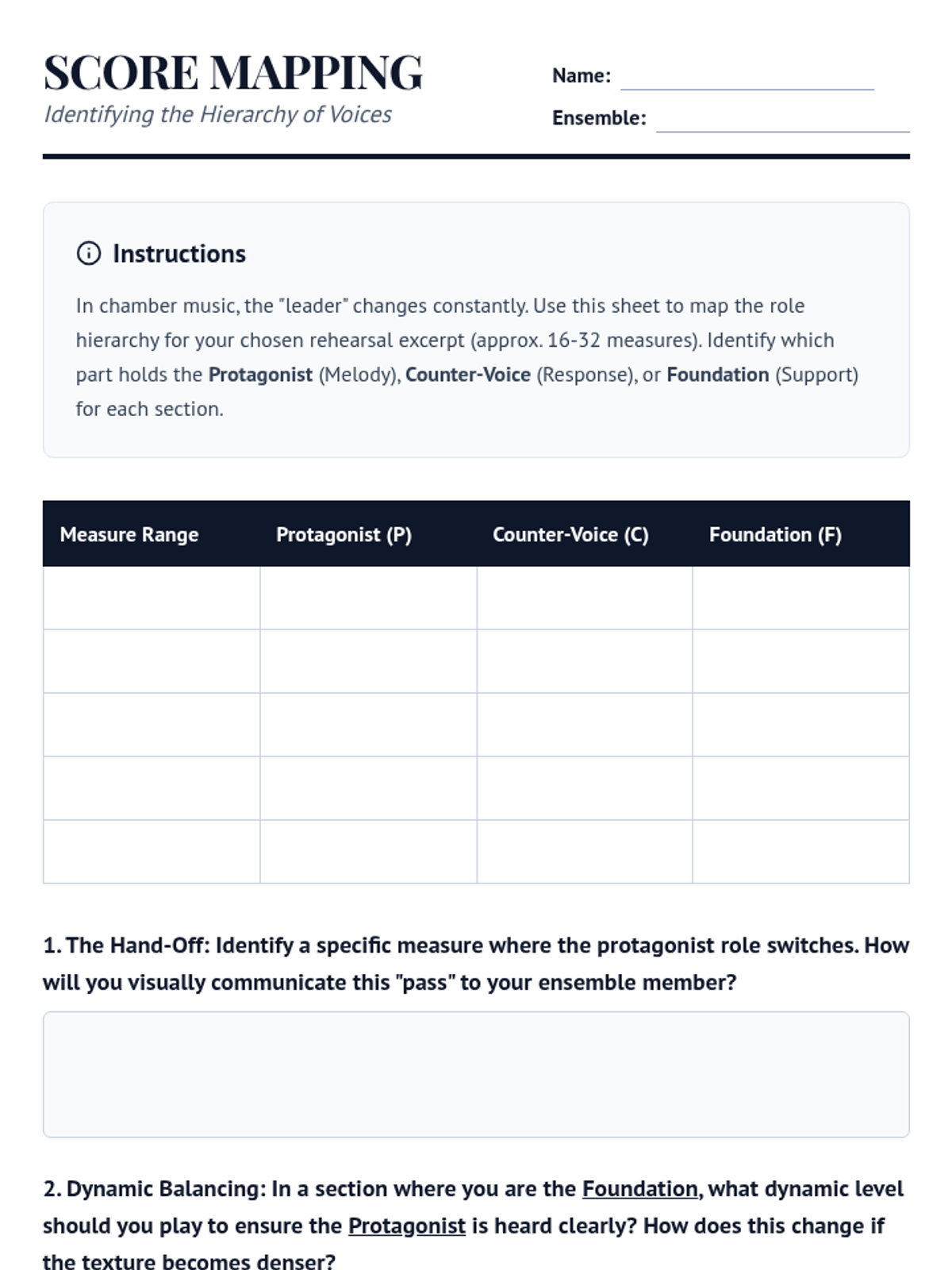
A comprehensive 12th-grade music sequence focusing on the collaborative dynamics of chamber music without a conductor. Students explore role hierarchy, non-verbal communication, acoustic tuning, and democratic interpretation to create unified ensemble performances.
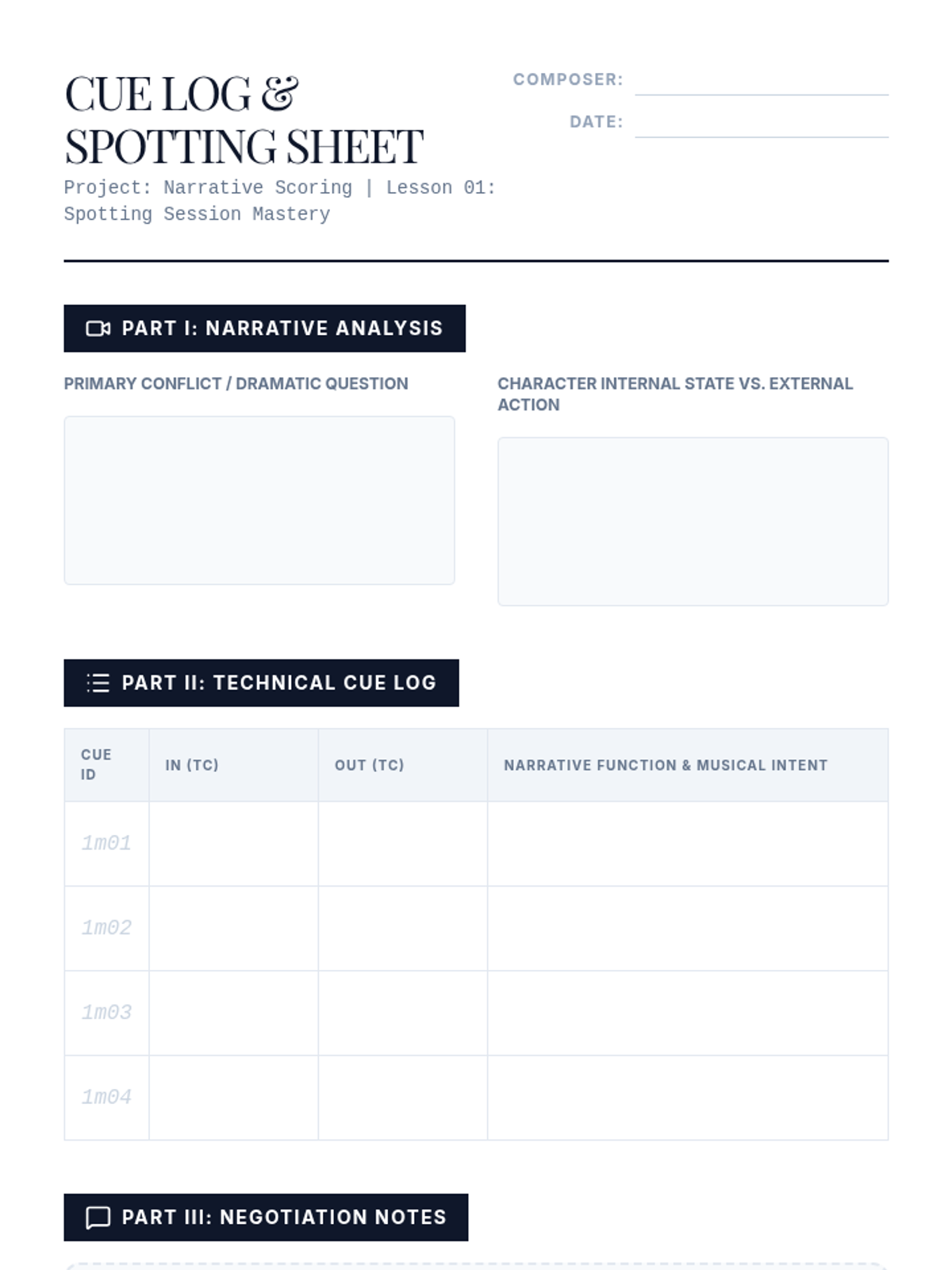
A graduate-level exploration of narrative film scoring, focusing on dramatic analysis, thematic development, psychological subtext, and technical synchronization. Students move from the conceptual spotting session to a fully synchronized final rescore project.
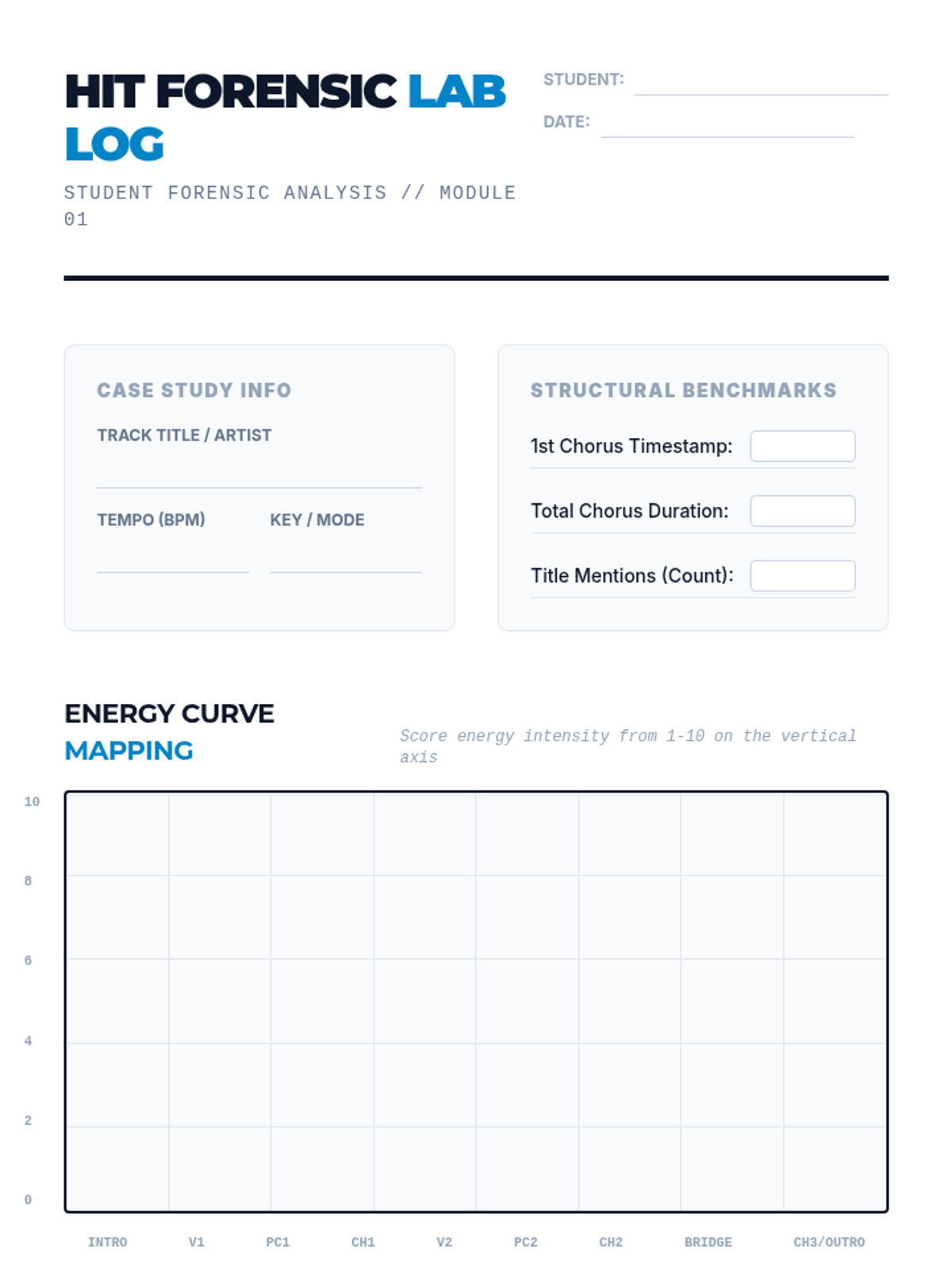
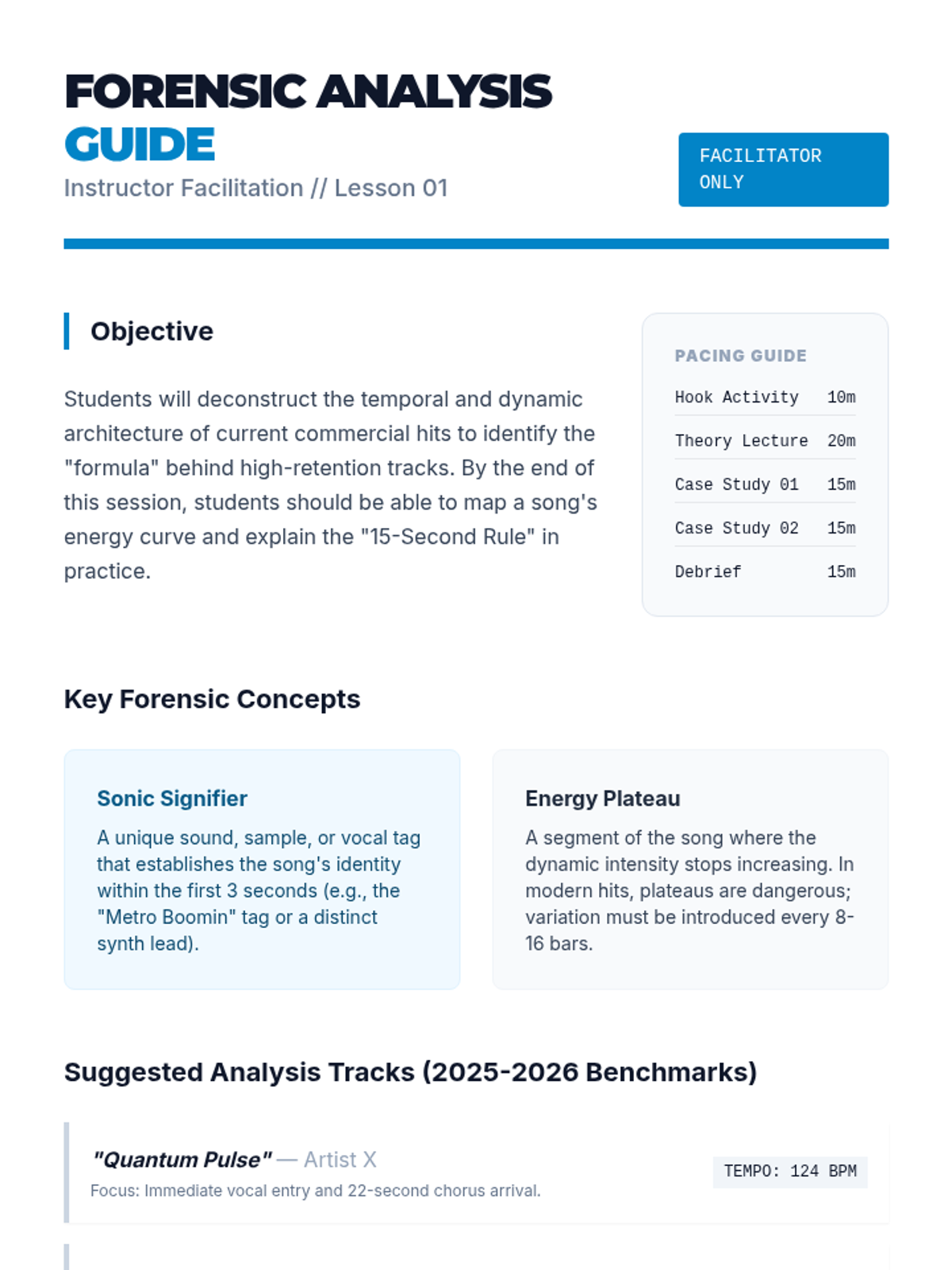
This sequence explores the mechanics of commercial songwriting, focusing on the structural patterns and lyrical techniques used in hit music. Students will move from analyzing song forms and prosody to crafting original hooks and bridges, culminating in a professional-style peer critique.
This sequence immerses students in the professional workflow of creating a cohesive visual identity, focusing specifically on the interplay between typography, color theory, and layout. Students progress from conceptual sketching and mood boarding to digital rendering and refinement of a logomark and accompanying marketing asset.
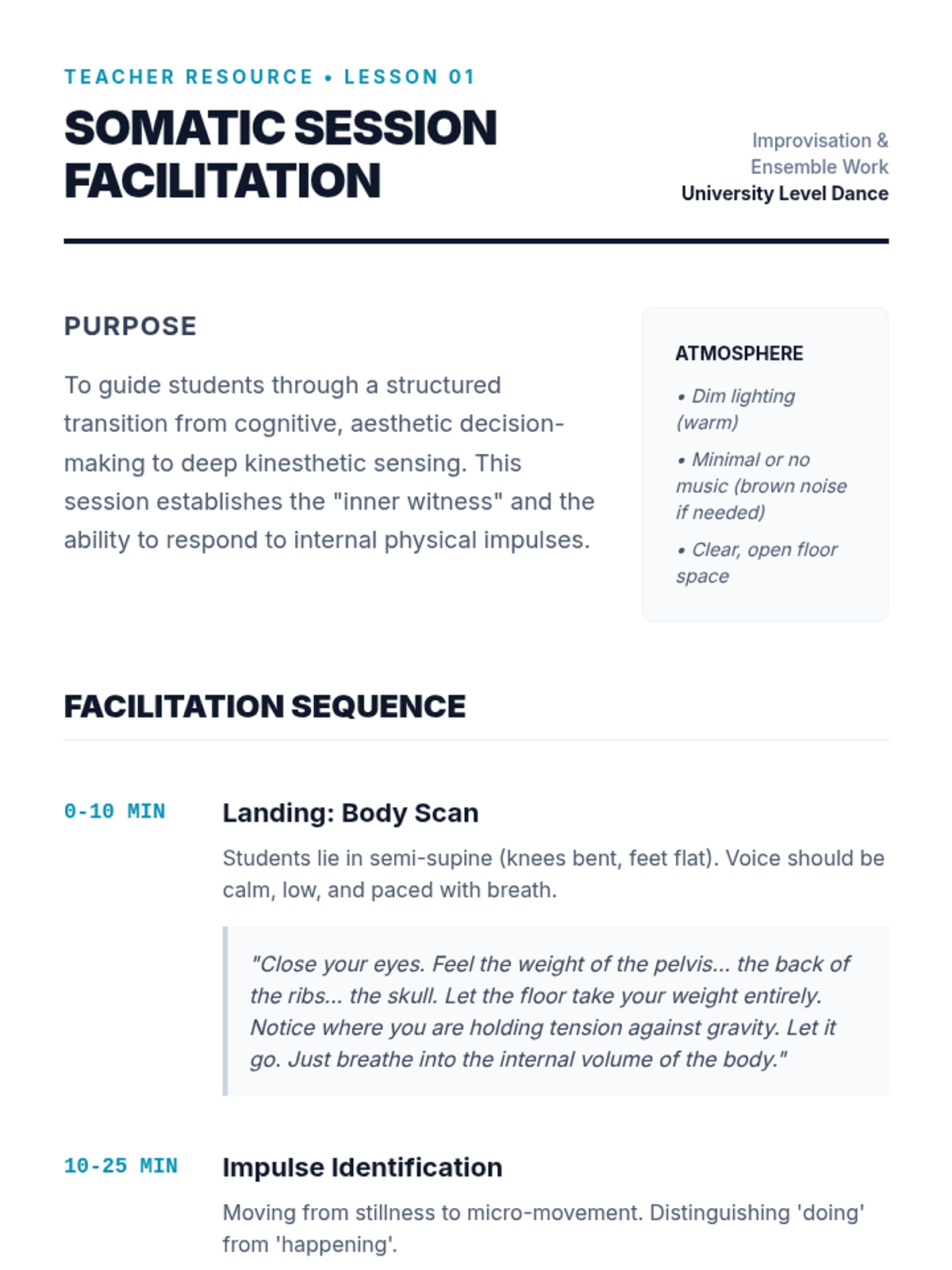
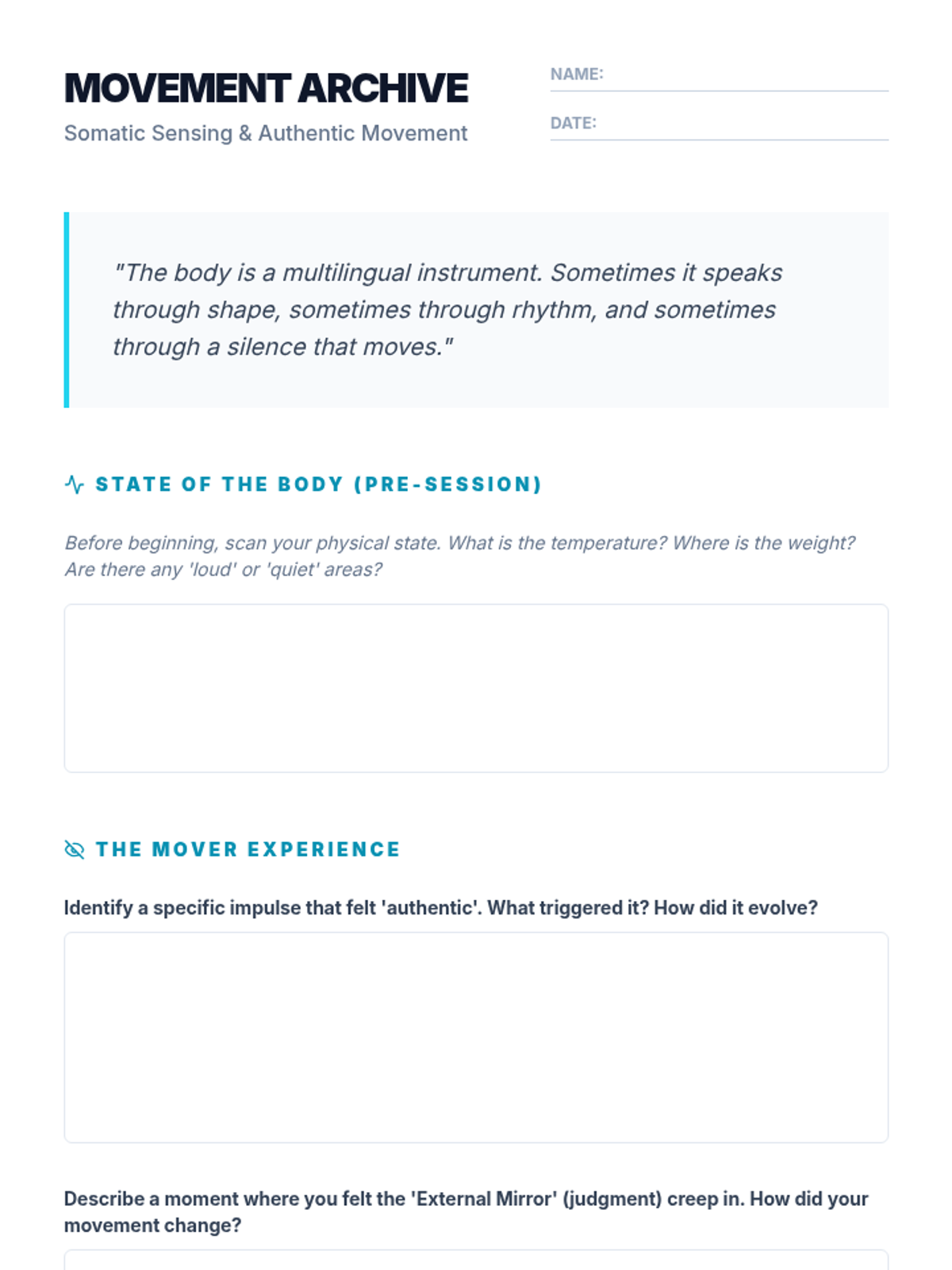
This sequence explores the generation of movement through improvisation and structured play. Undergraduate students build trust, spatial awareness, and real-time composition skills, moving from internal somatic sensing to complex group scores and ensemble weight sharing.
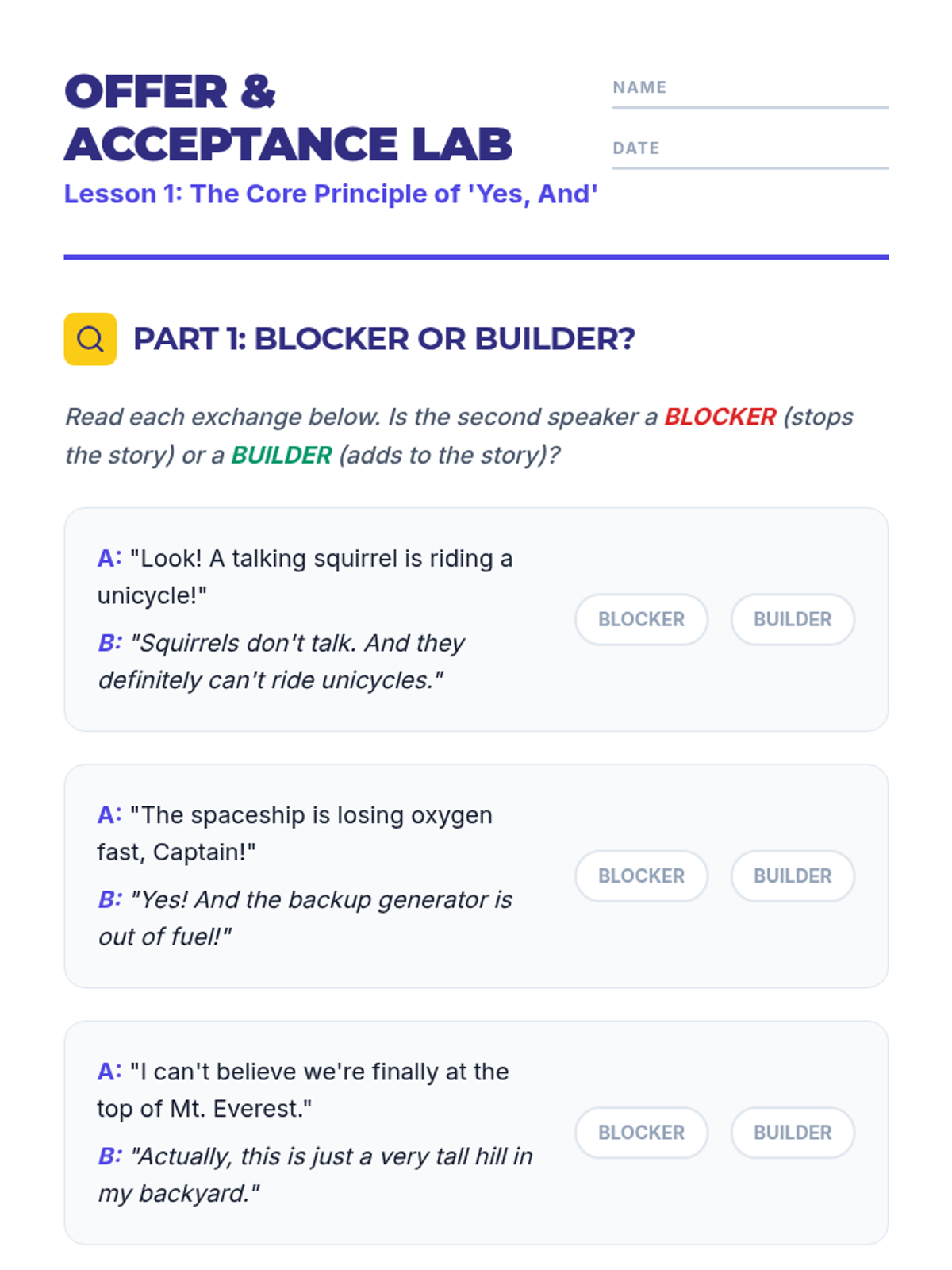
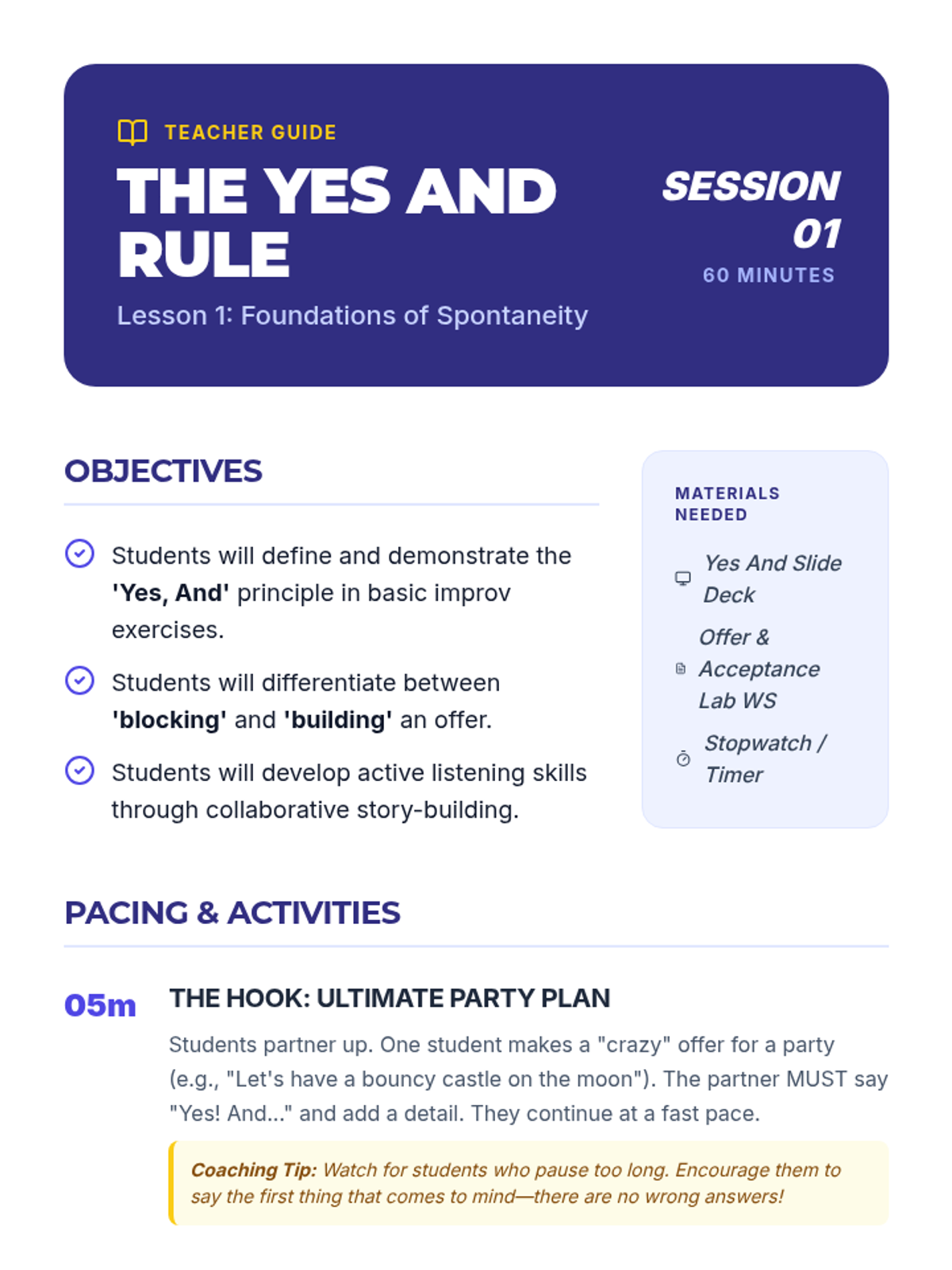
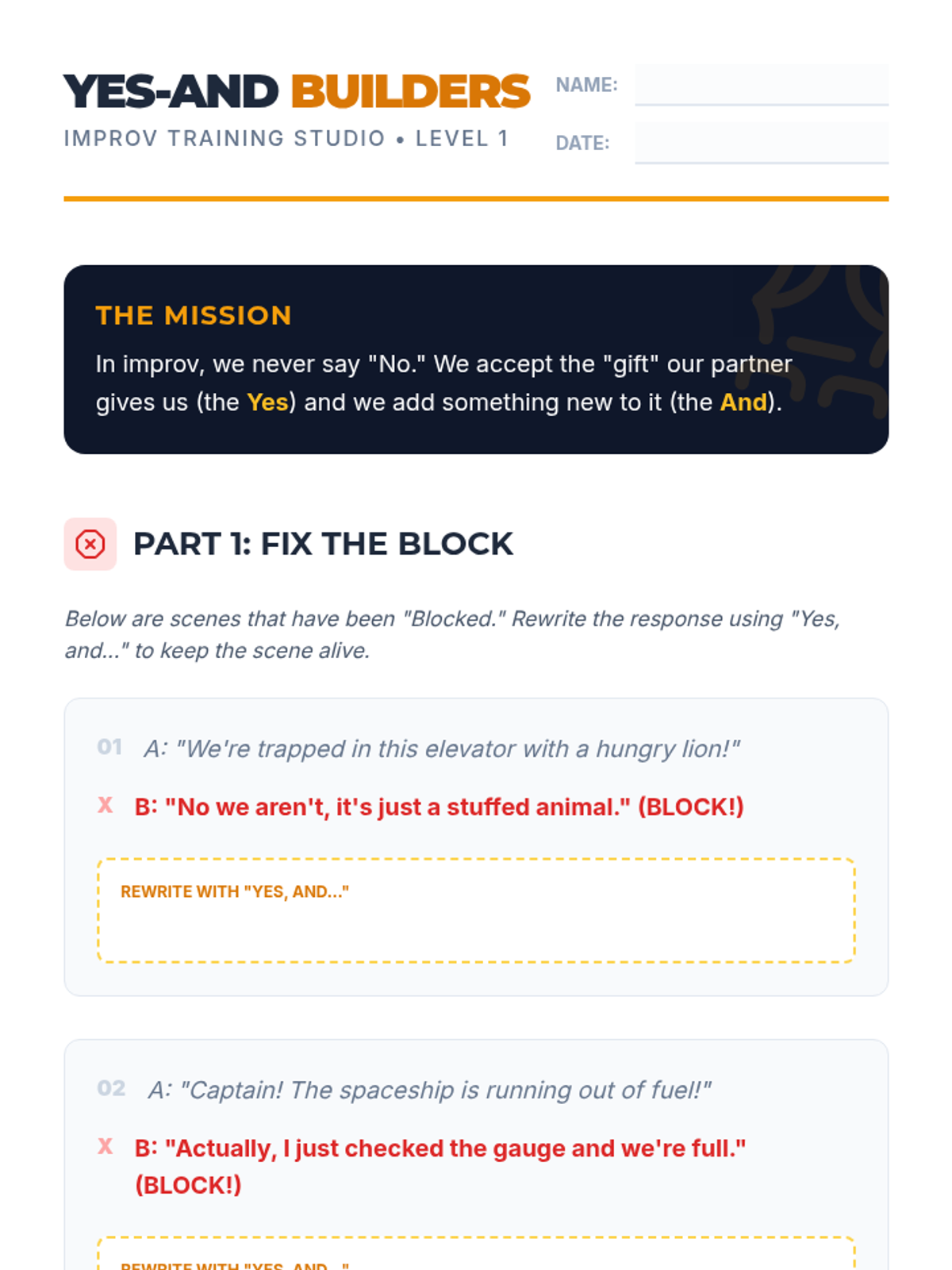
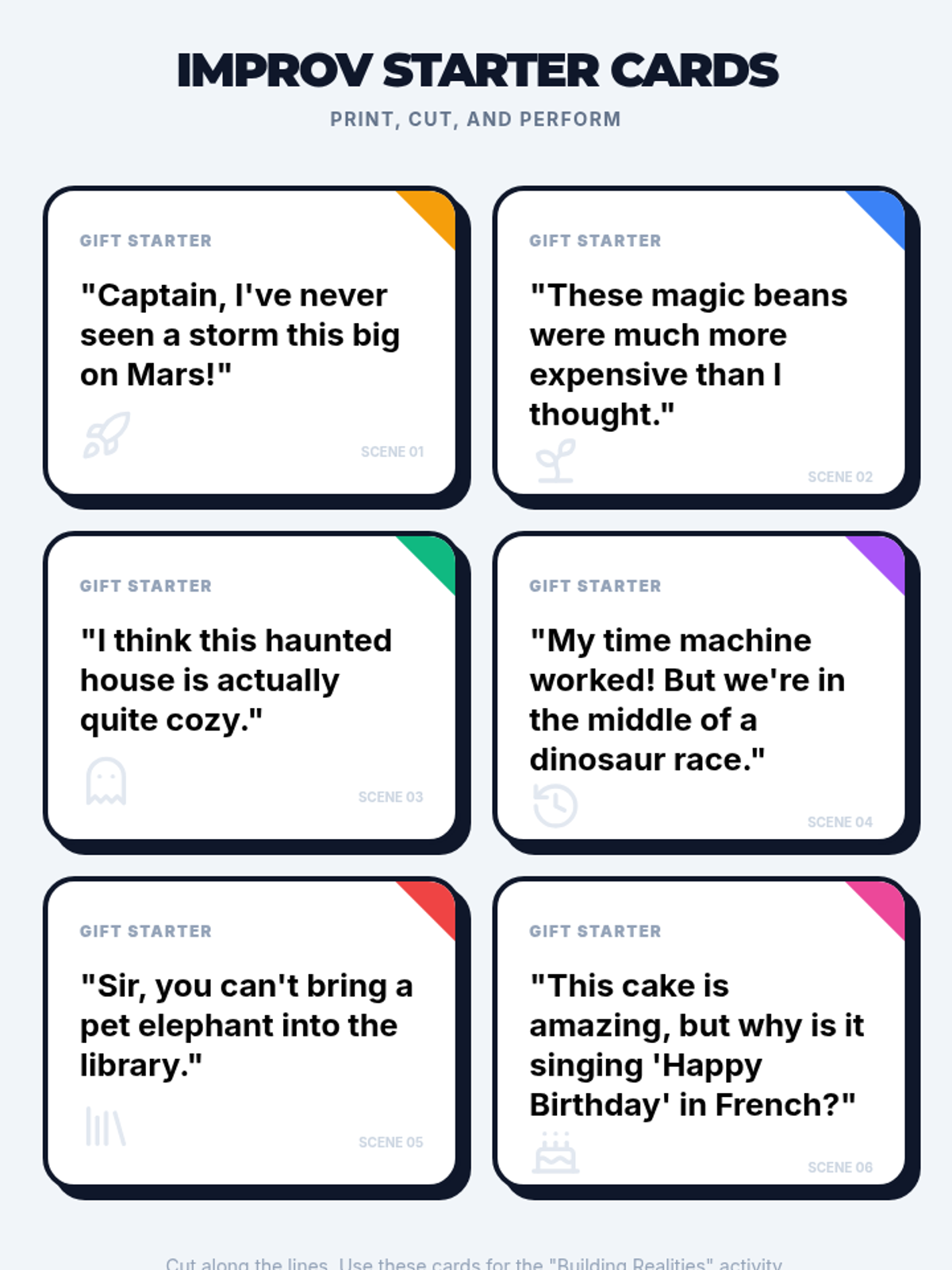
This sequence explores the foundational principles of theatrical improvisation, focusing on the 'Yes, And' rule, CROW (Character, Relationship, Objective, Where), object work, and status dynamics. Students will build ensemble trust and spontaneity through a variety of workshop games and simulations, culminating in a short-form improv performance.
This sequence focuses on improvisation and ensemble building, teaching students to think quickly and collaborate creatively. The arc moves from basic rule-setting (Yes, And) to active listening and reacting in the moment. Students learn to build scenes cooperatively without a script, focusing on maintaining character and narrative logic.