Fundamental principles of force, motion, and energy across classical and modern contexts. Examines matter properties, wave behavior, thermodynamics, and electromagnetism through mechanics and atomic studies.
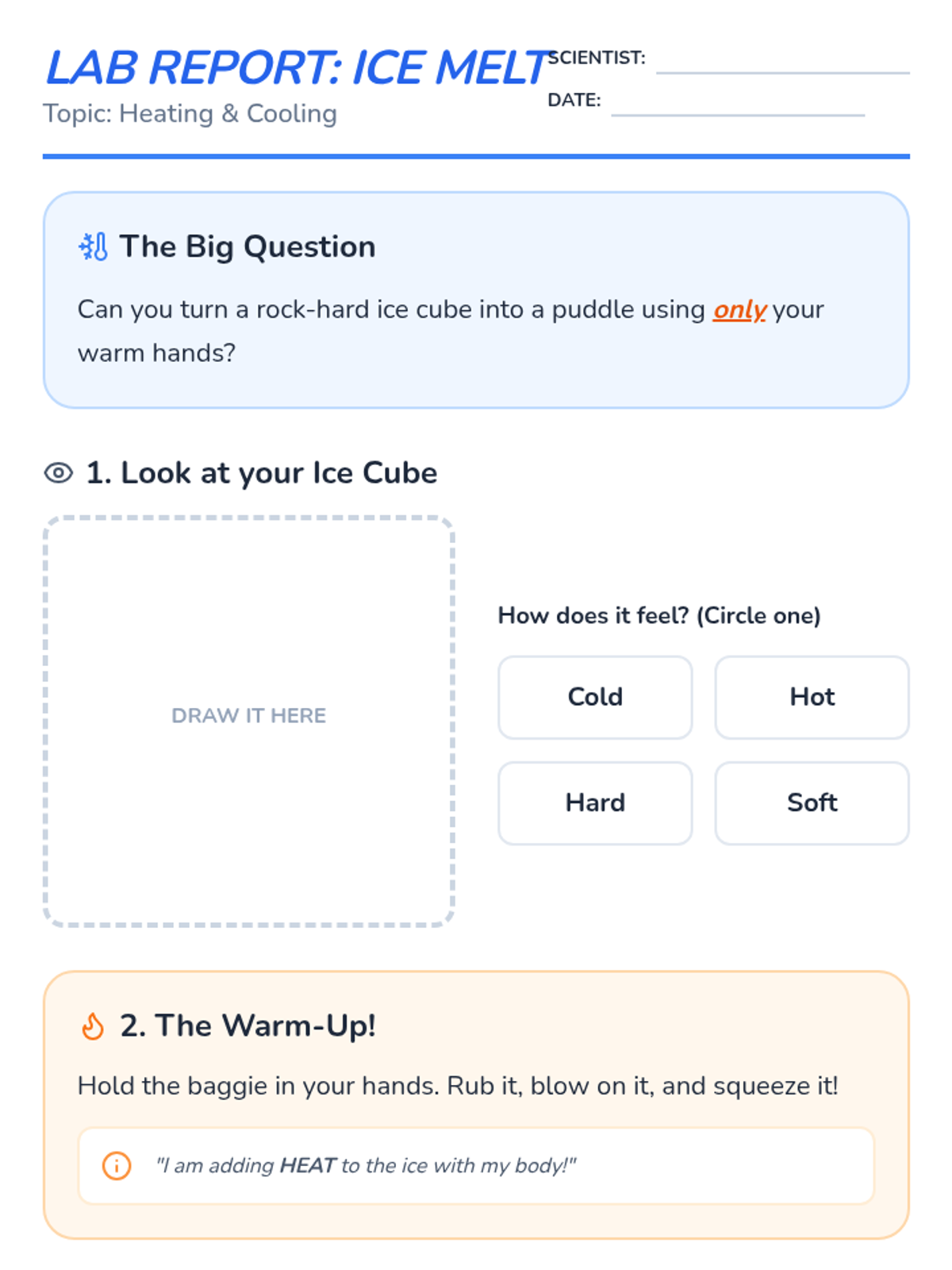
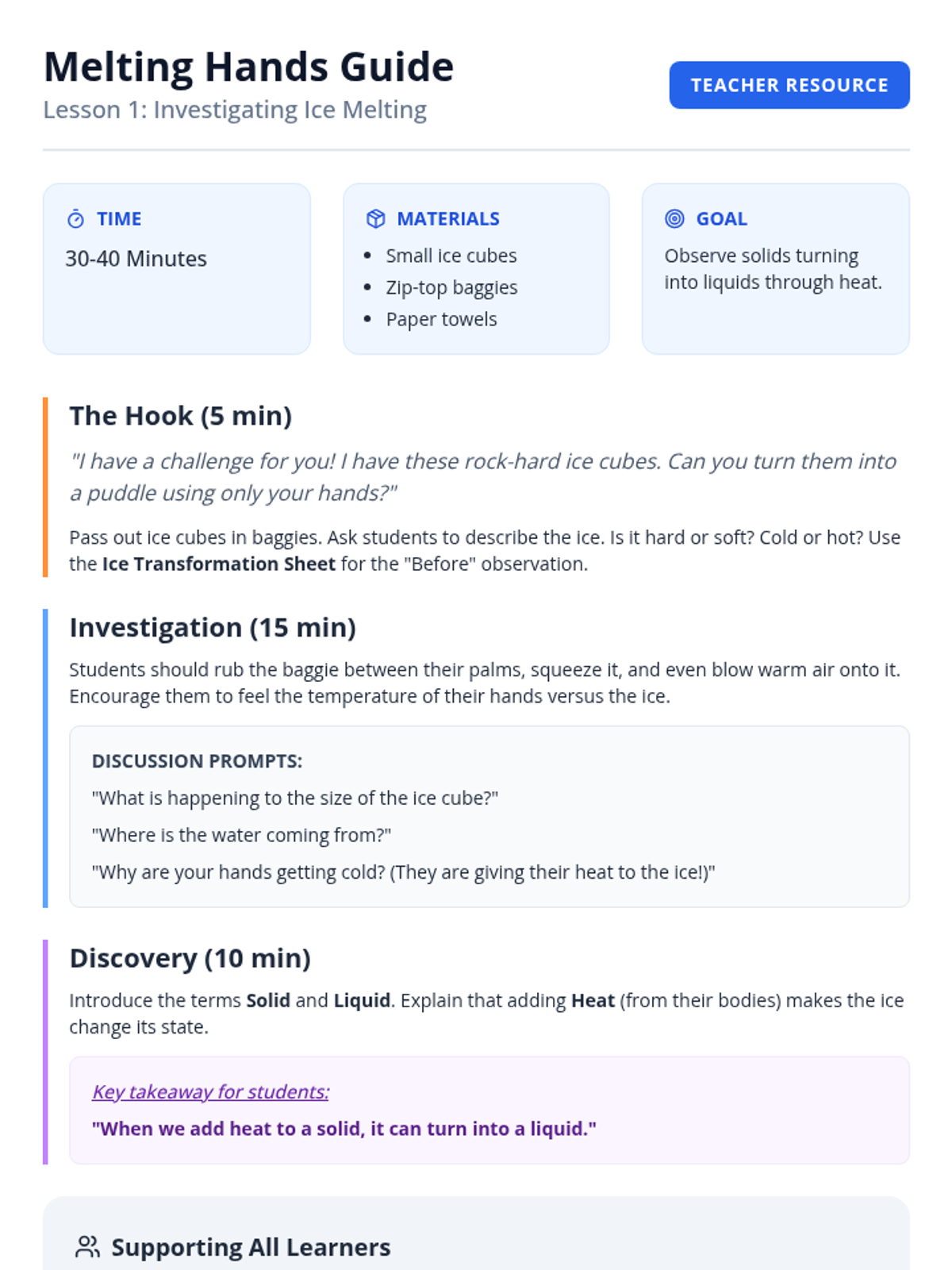
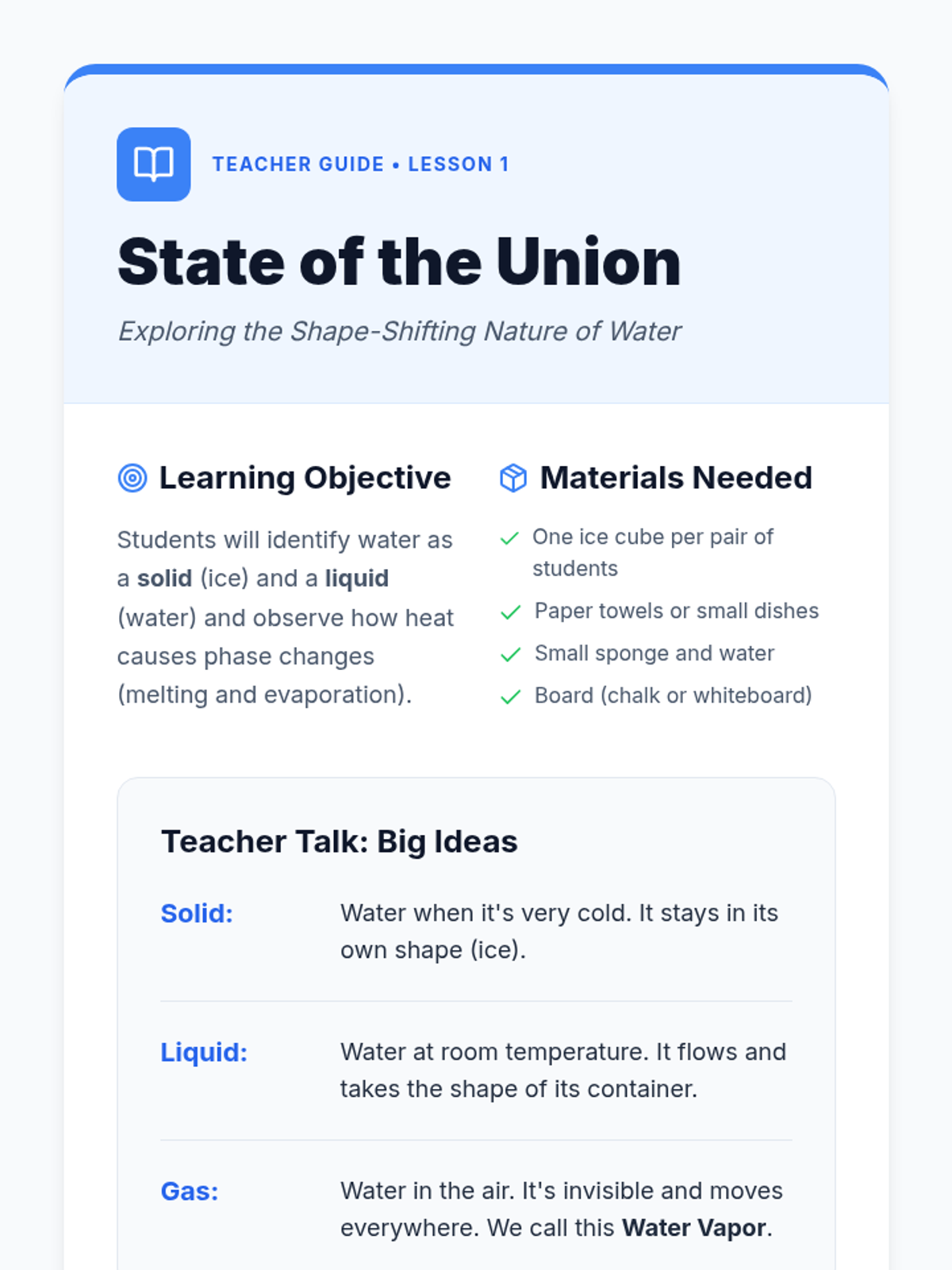
A Kindergarten science sequence exploring how heating and cooling change states of matter, specifically moving between solids and liquids using ice, chocolate, and juice.
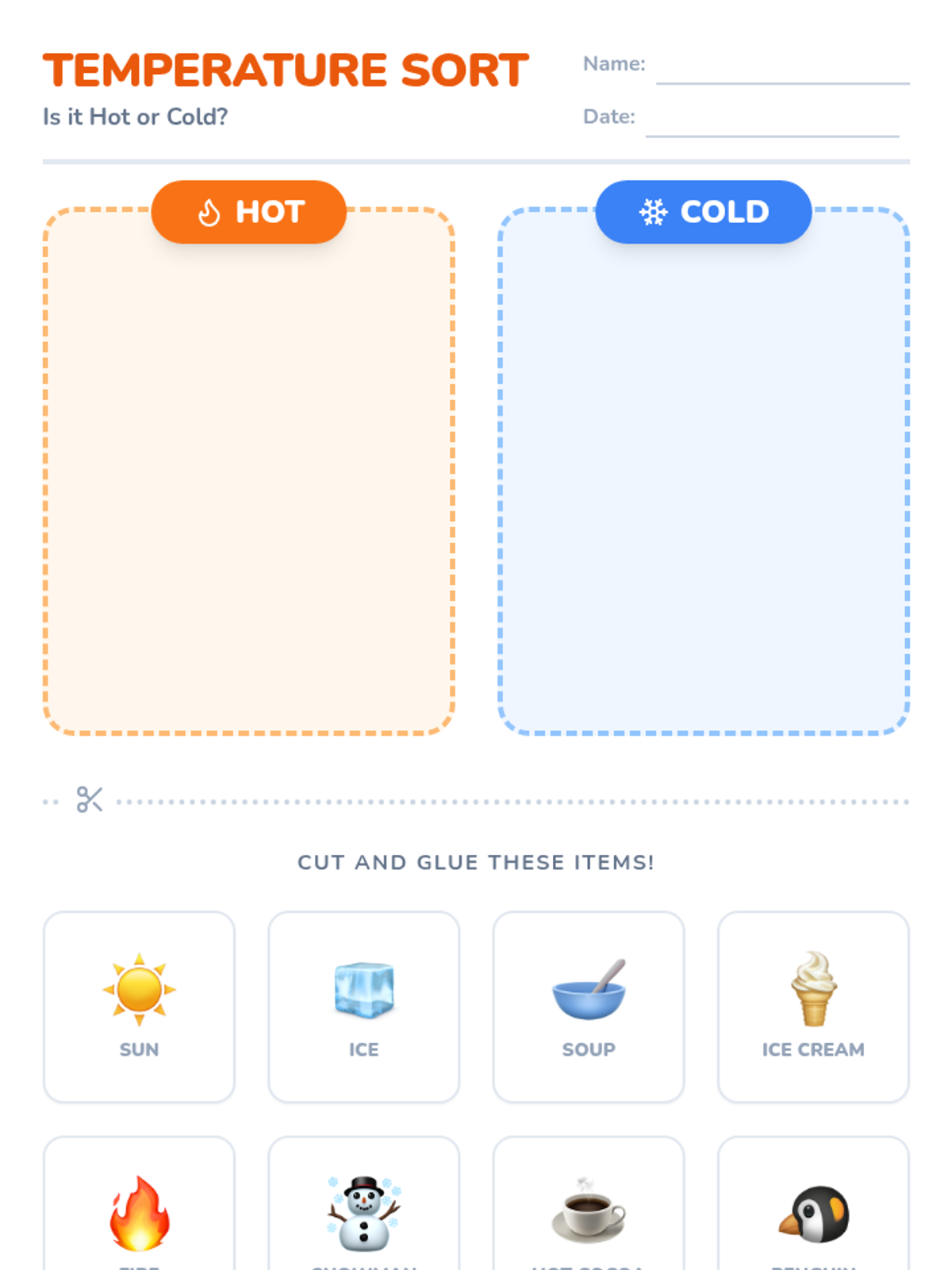
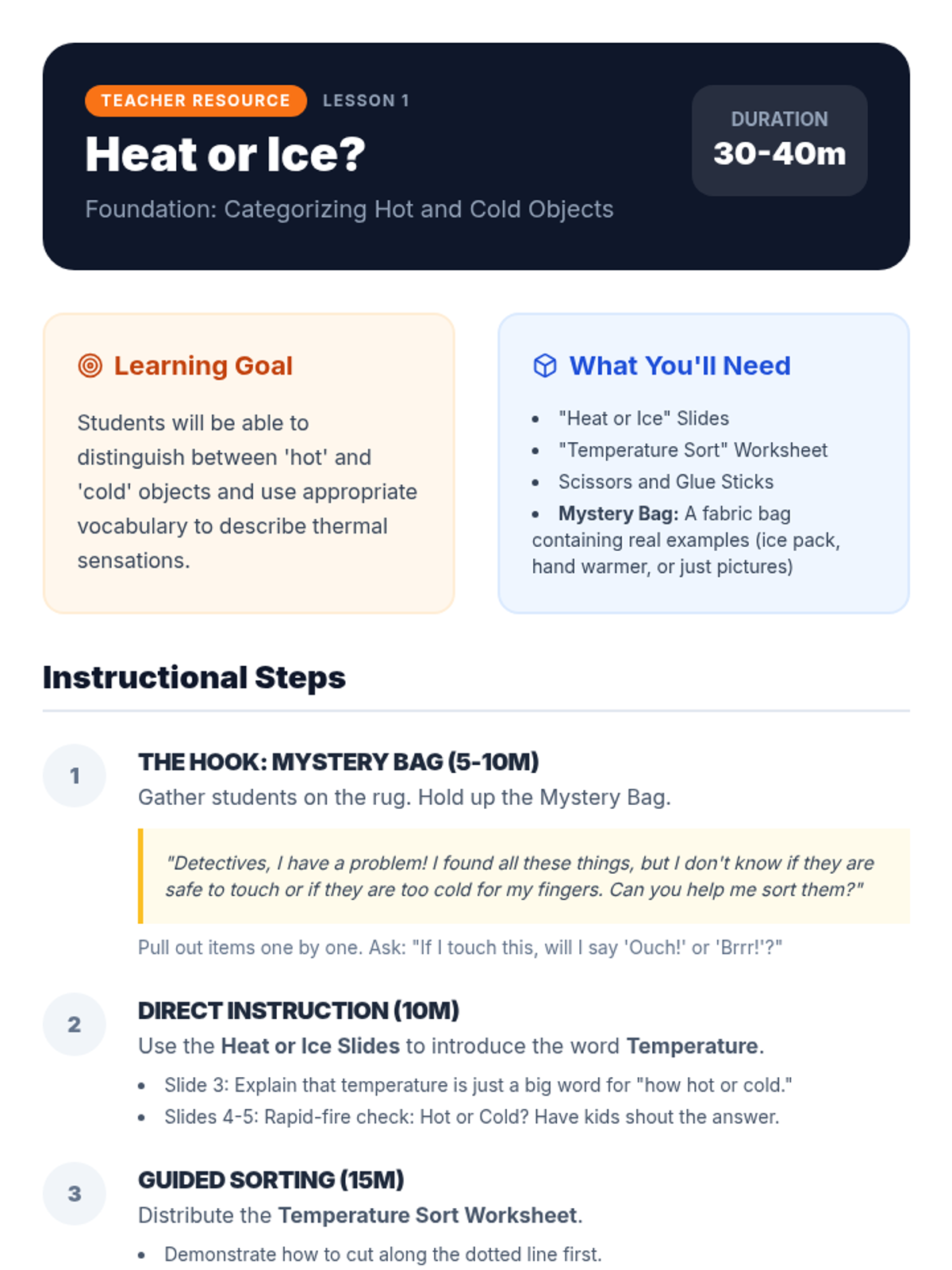
A Kindergarten sequence focused on temperature vocabulary, sensing differences, using thermometers, and identifying heat sources safely. Students transition from sensory observation to scientific measurement.
A comprehensive K-5 science journey focused on the Texas Essential Knowledge and Skills (TEKS) for physical properties of matter. Students act as 'Matter Mission' agents to solve real-world problems through hands-on STEM challenges and engineering design.
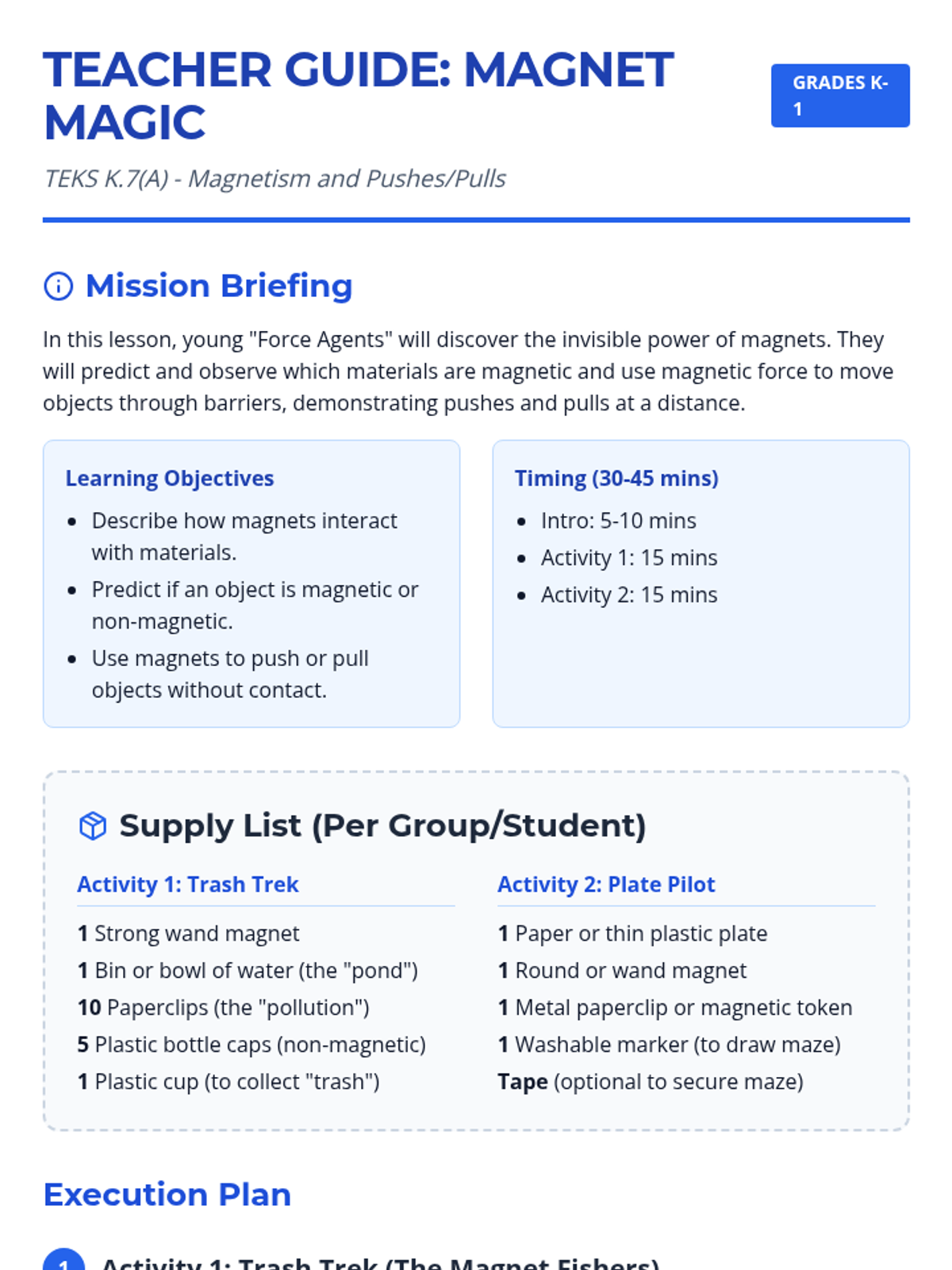
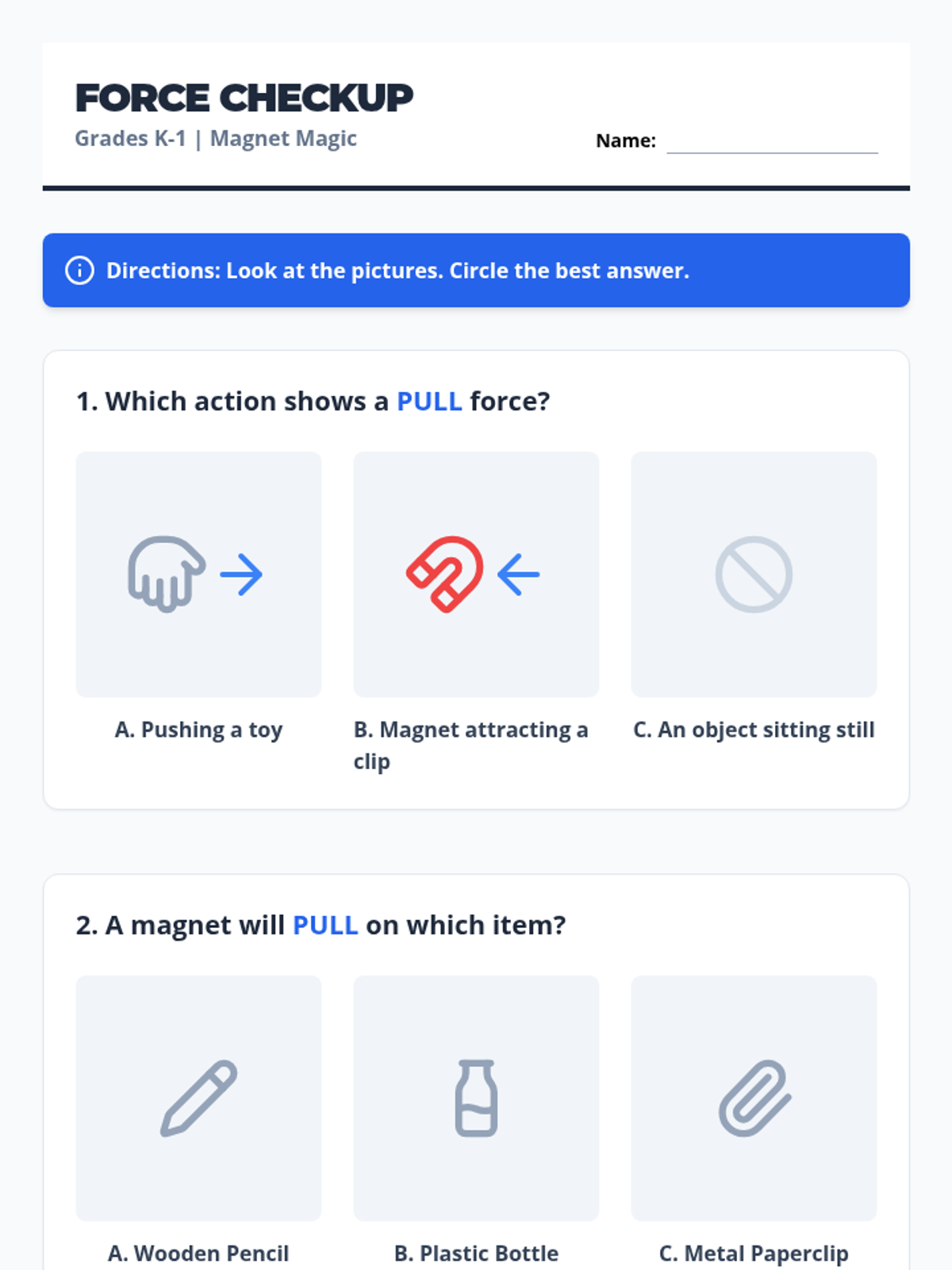
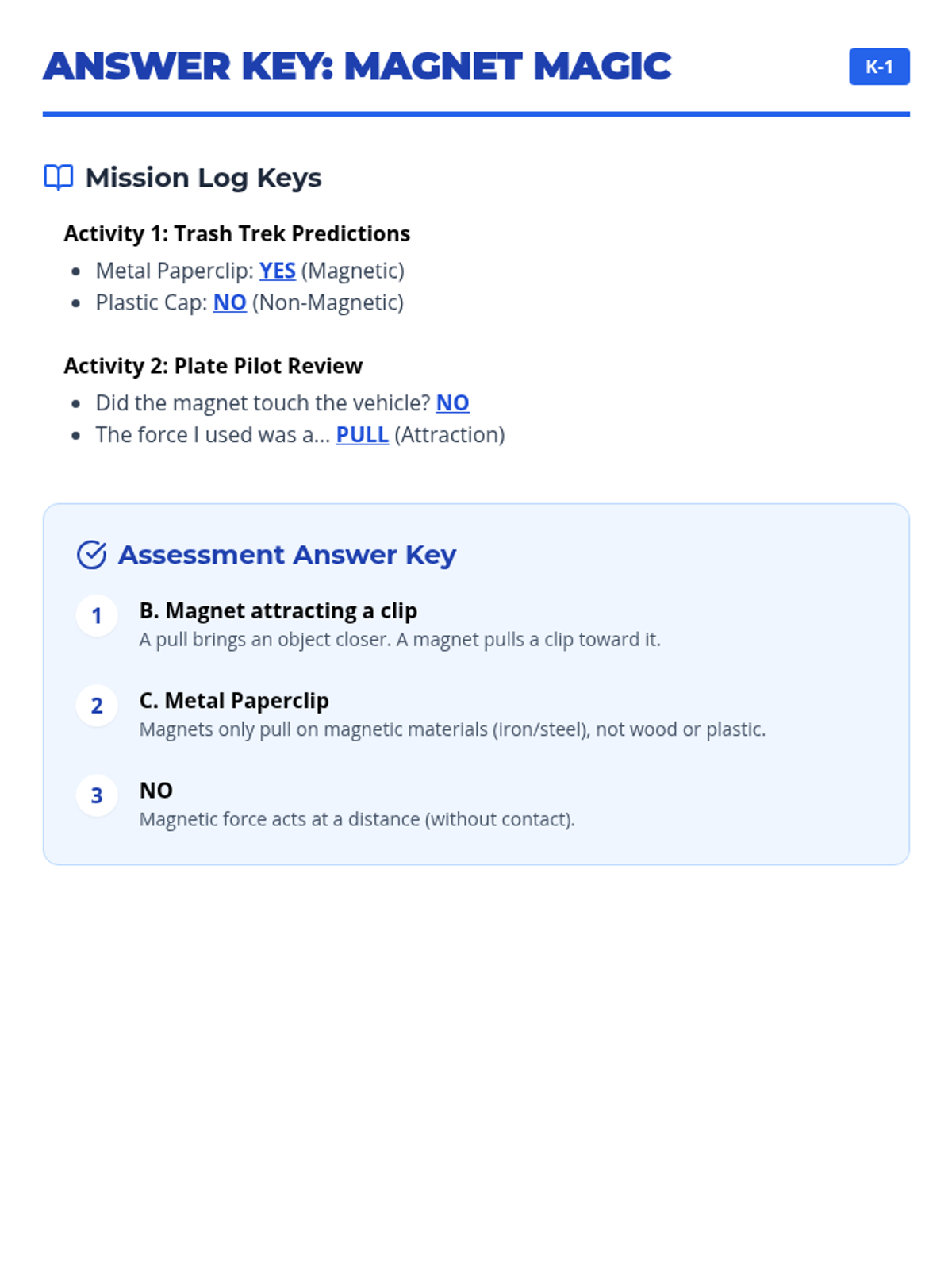
A comprehensive STEM unit exploring the invisible powers of forces, including magnetism, gravity, and friction, through hands-on engineering challenges and scientific investigations aligned with Texas TEKS for Grades K-5.
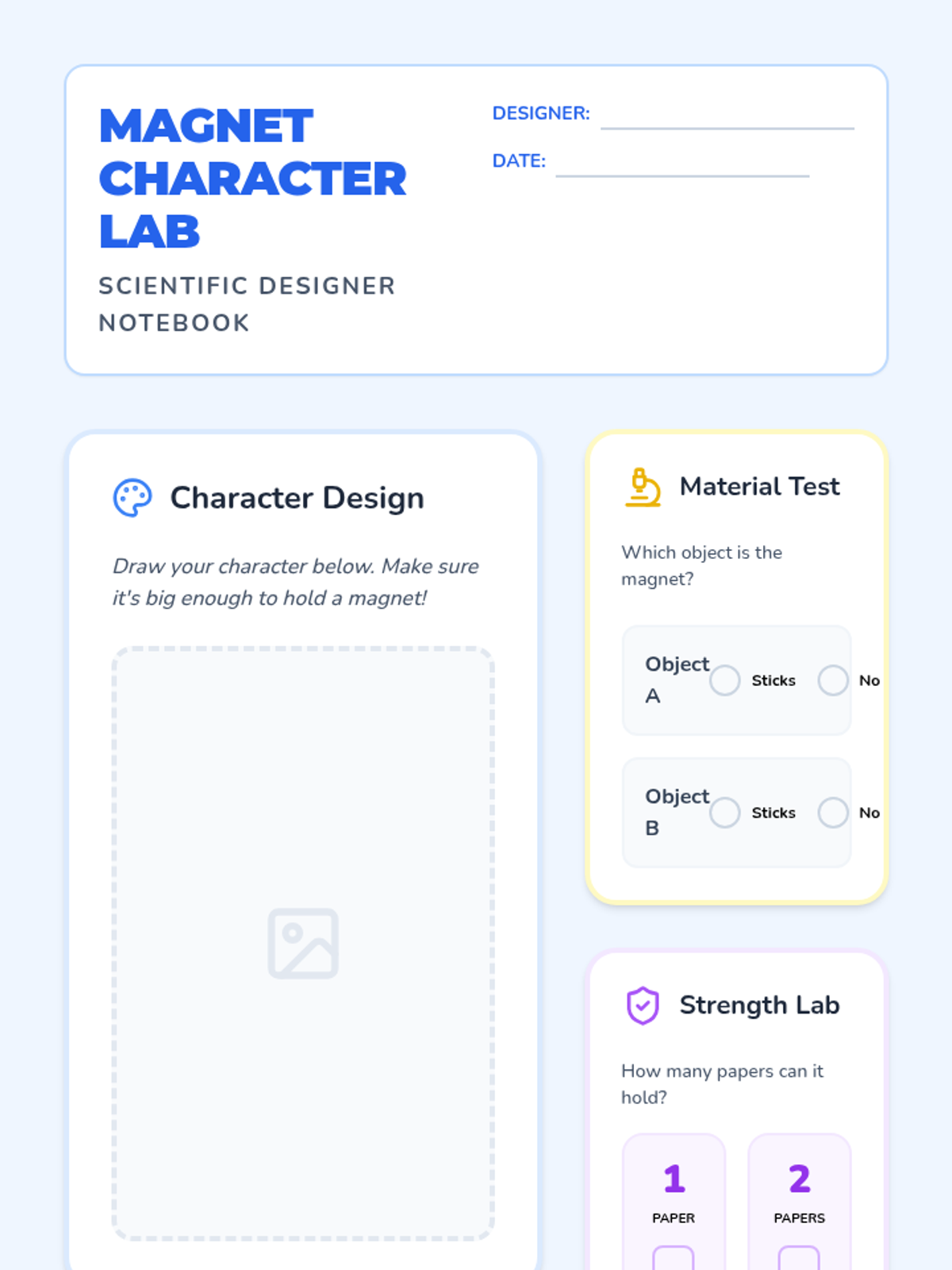
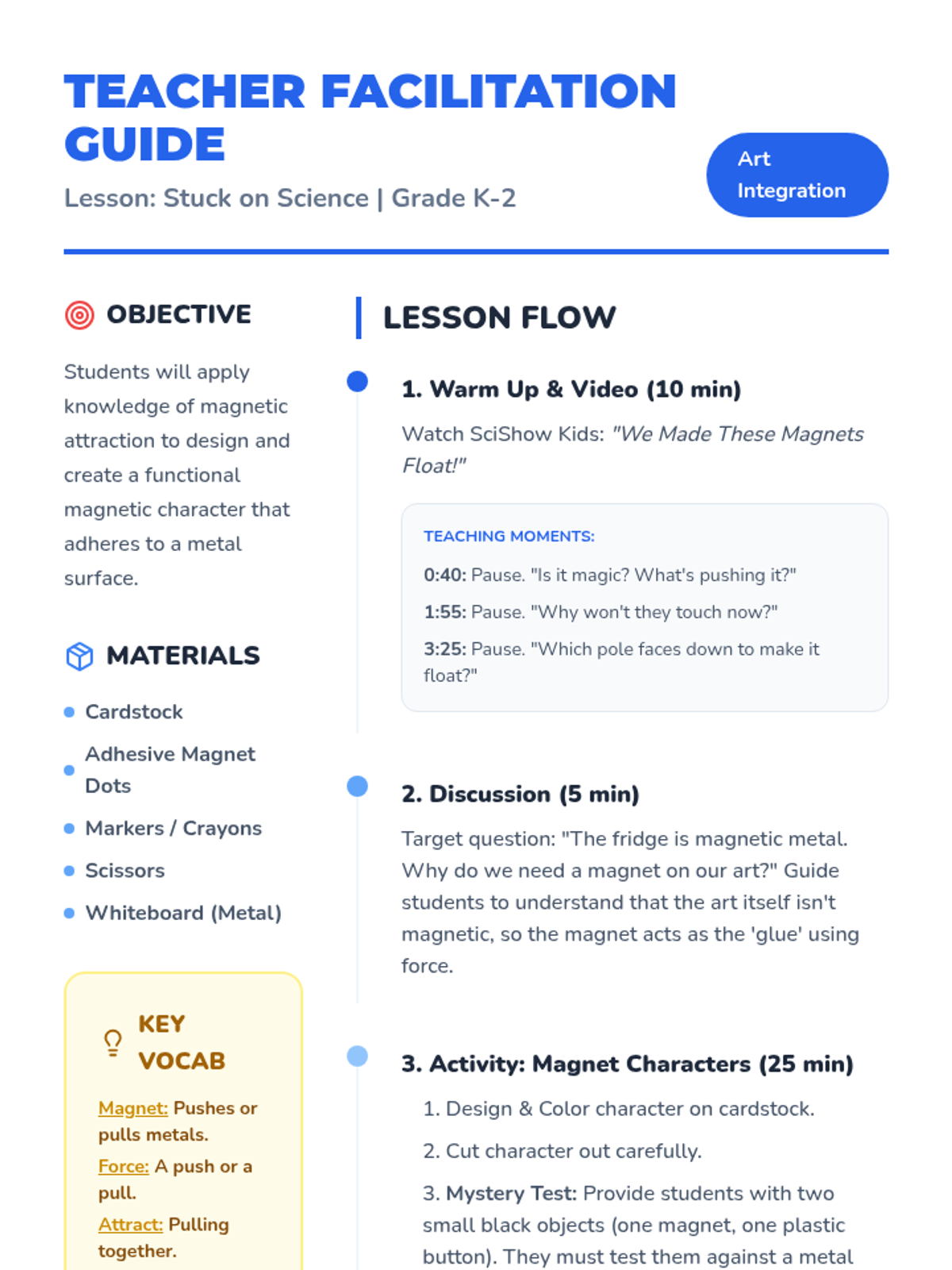
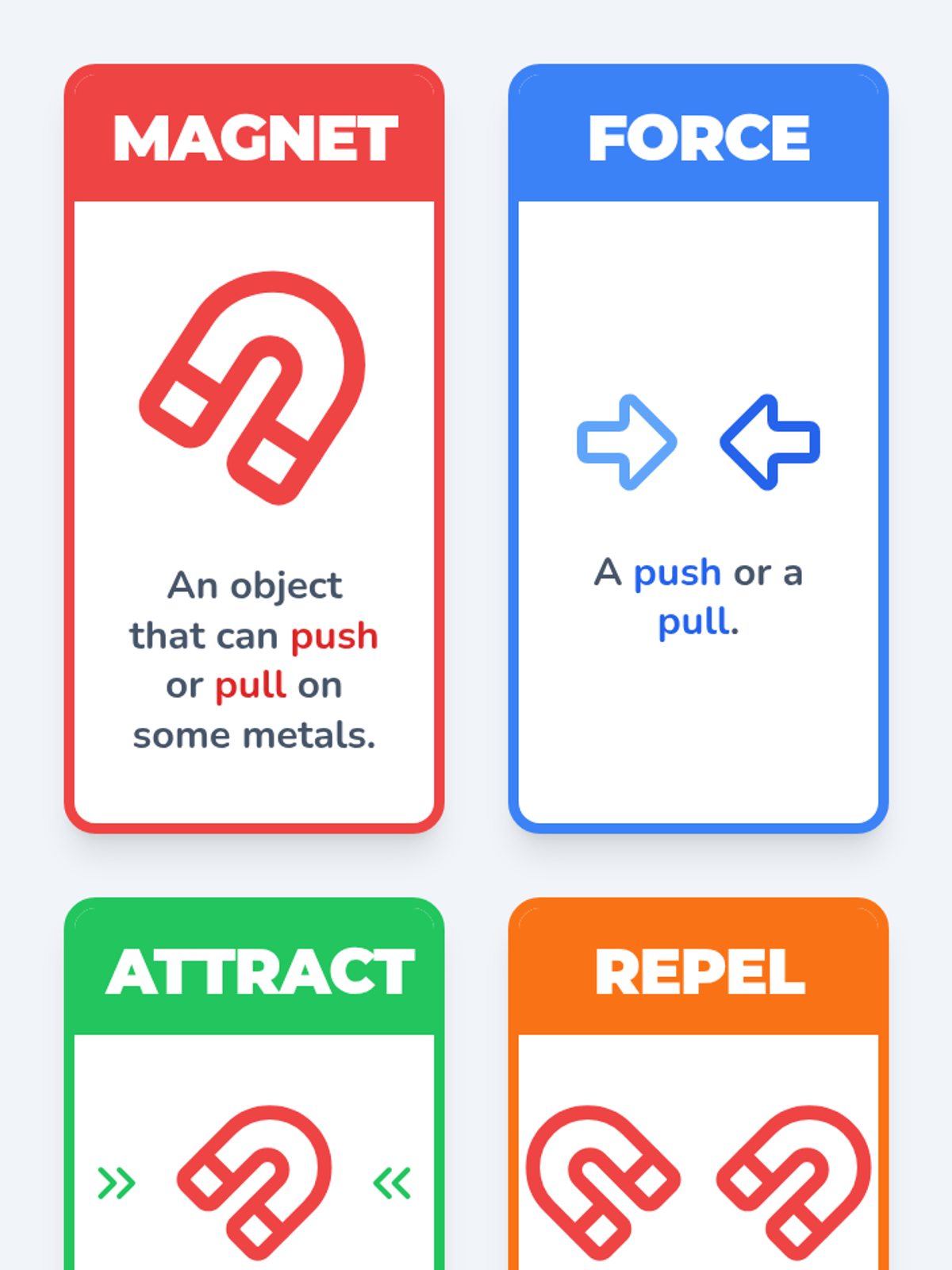
A Kindergarten through 2nd-grade art-integrated science unit exploring the properties of magnets through creative character design and hands-on testing.
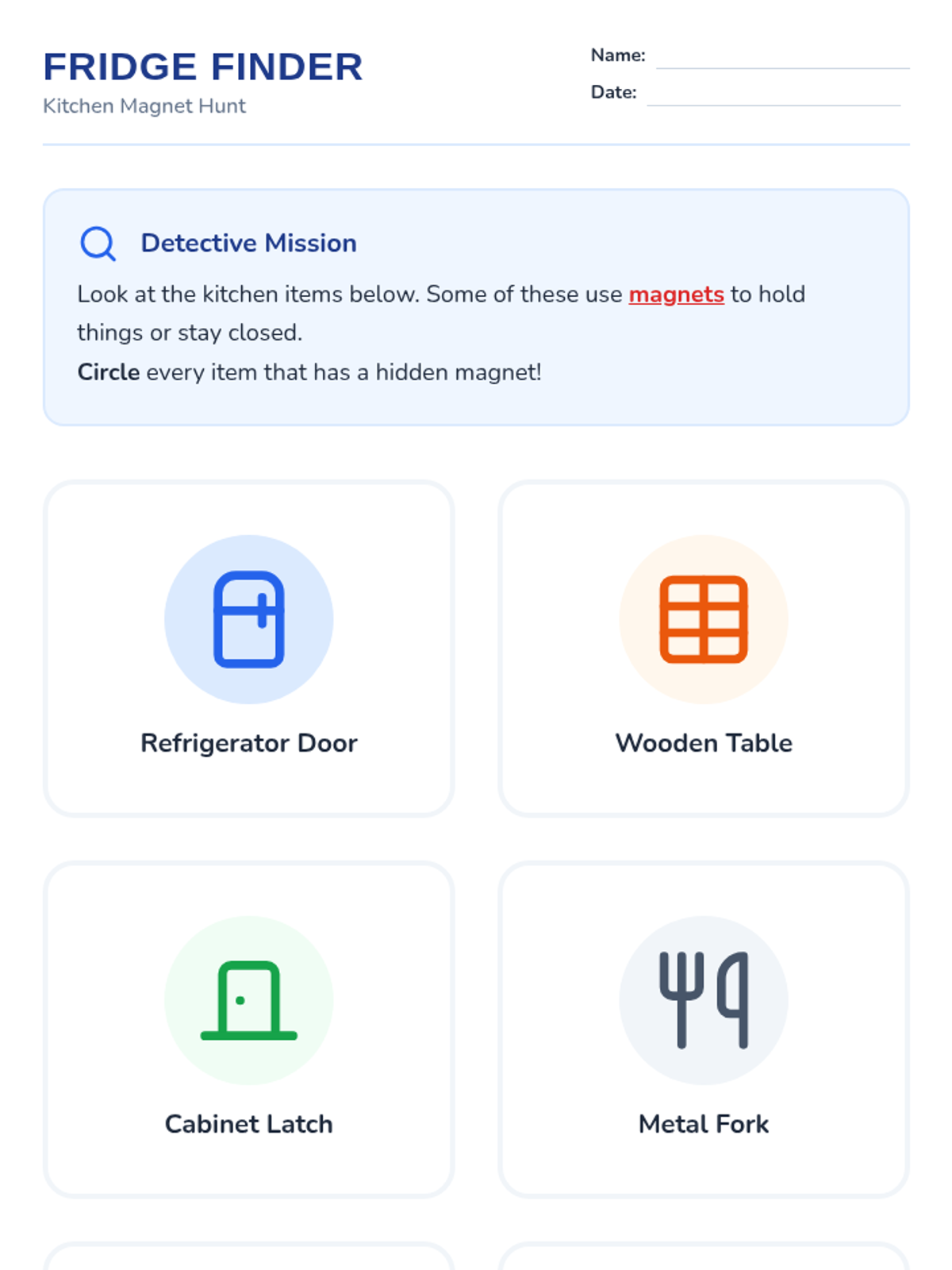
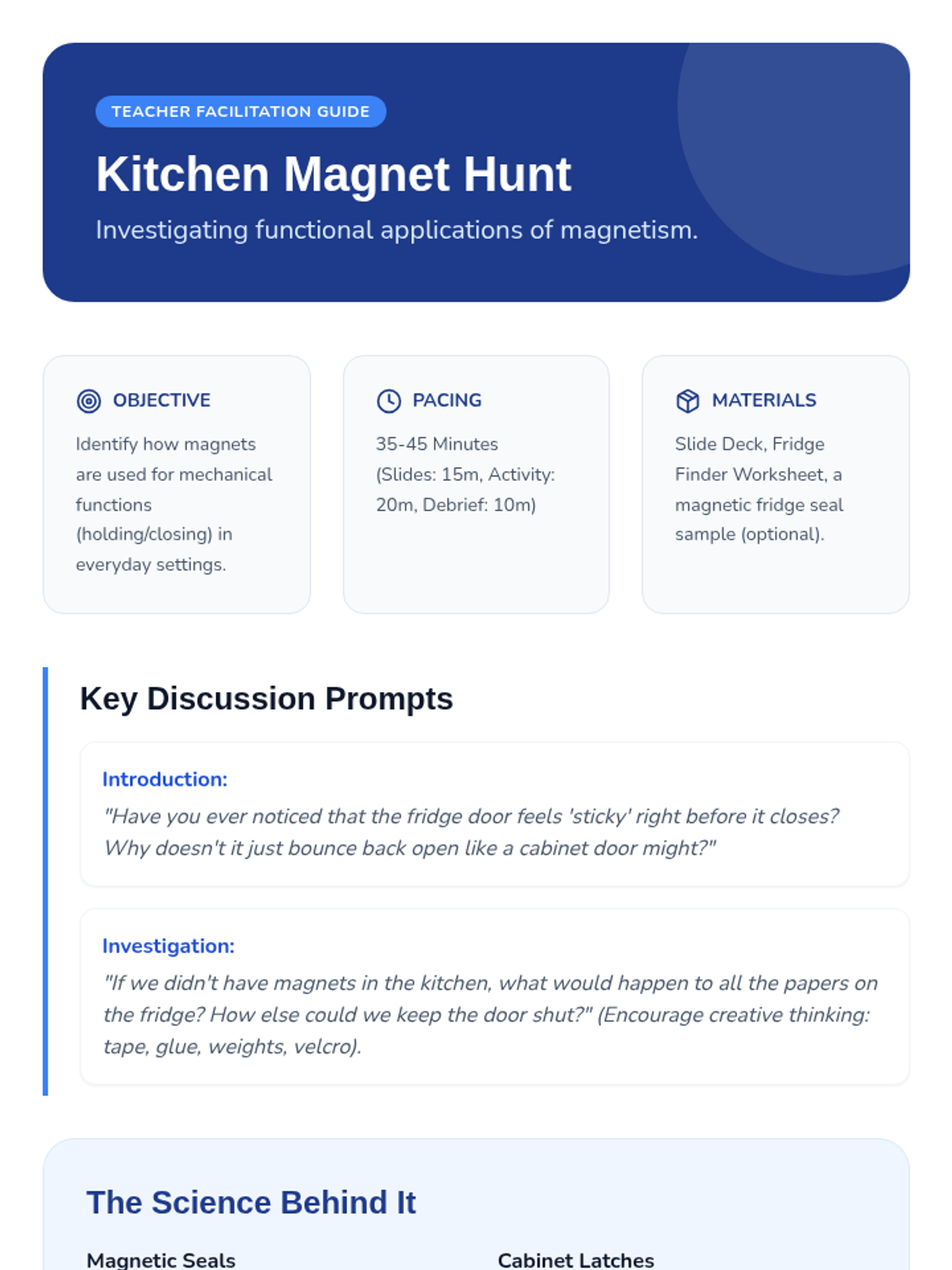
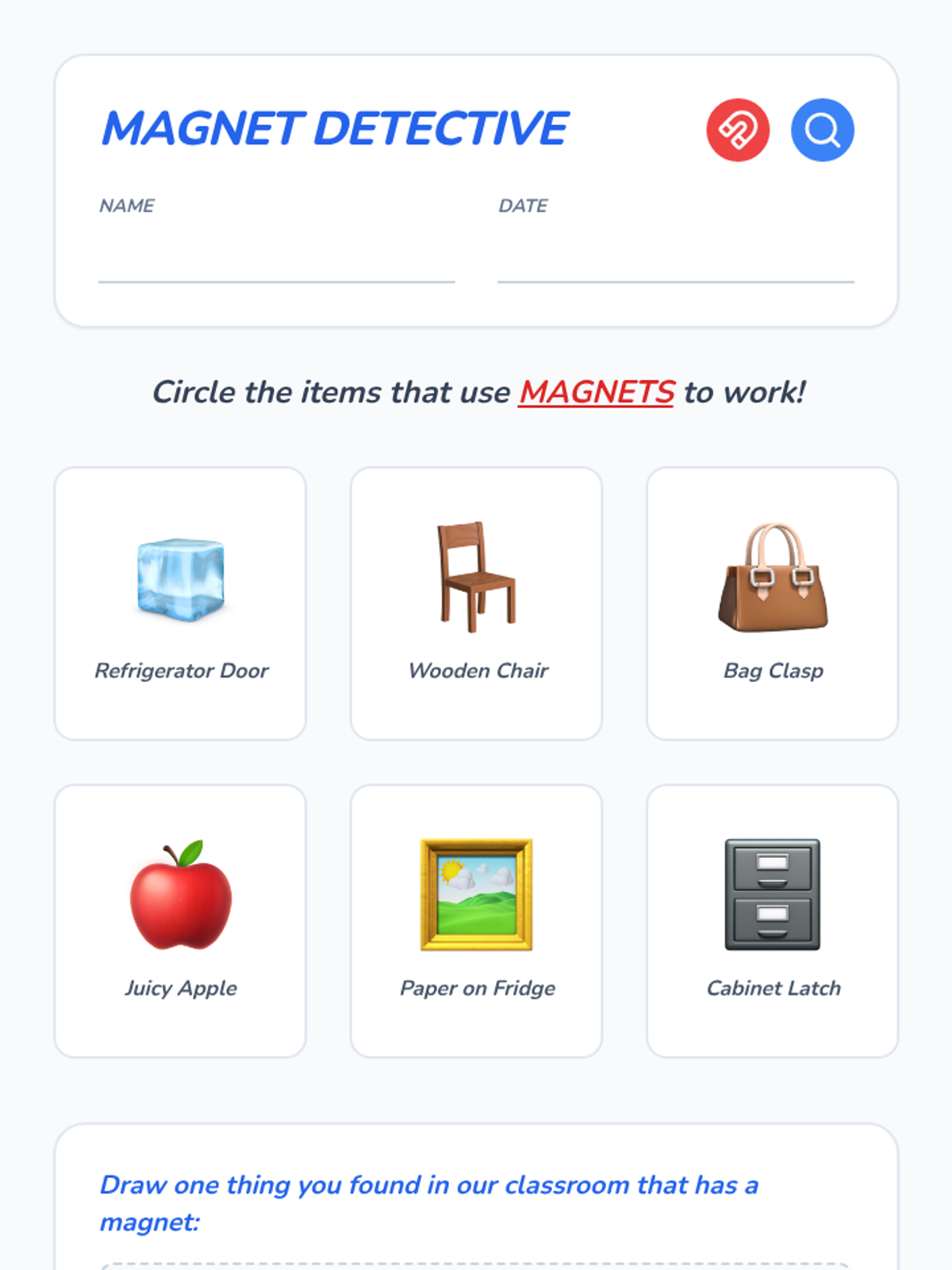
A Kindergarten science sequence exploring the practical uses of magnets in daily life, from kitchen gadgets to high-speed trains and navigation. Students learn through hands-on inquiry, case studies, and safety workshops to understand that magnetism is a foundational part of modern technology.
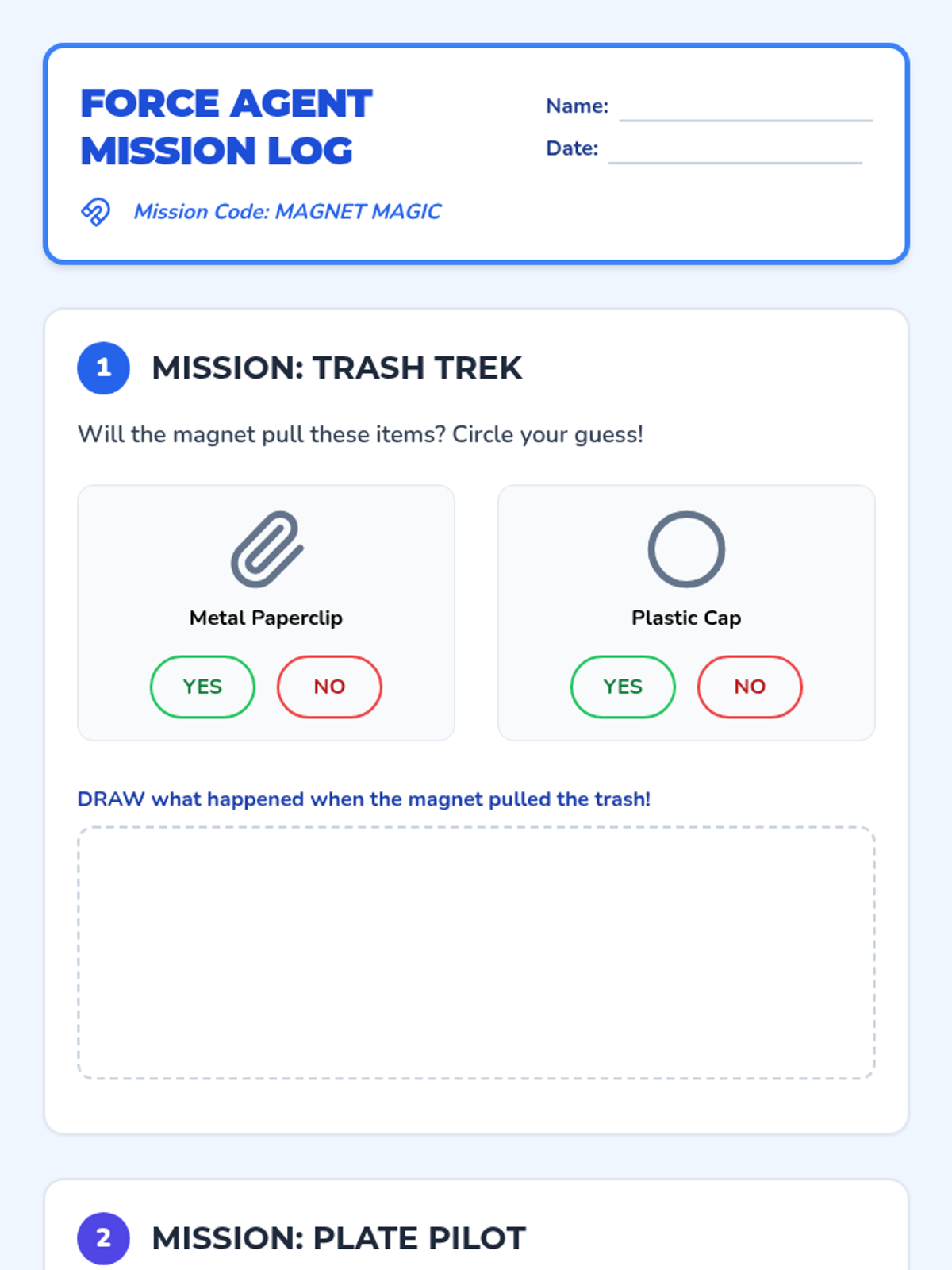
A high-energy, game-based sequence for Kindergarten students to explore the invisible forces of magnetism, including repulsion, attraction, and field strength. students engage in hands-on simulations and interactive challenges to understand how magnets interact with the world.
A project-based kindergarten physics unit where students explore how magnets work through barriers to design mazes, fishing tools, and retrieval devices.
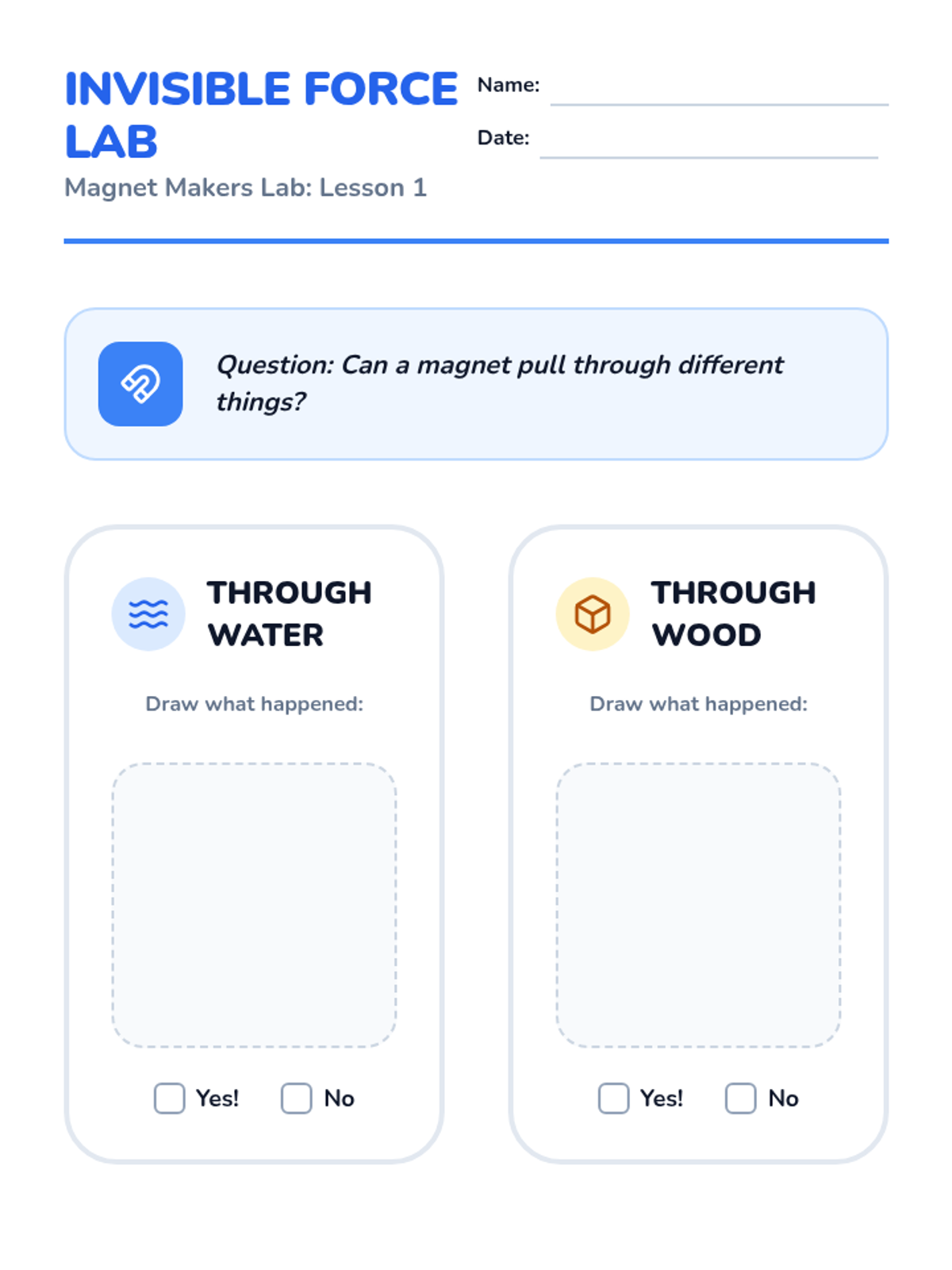
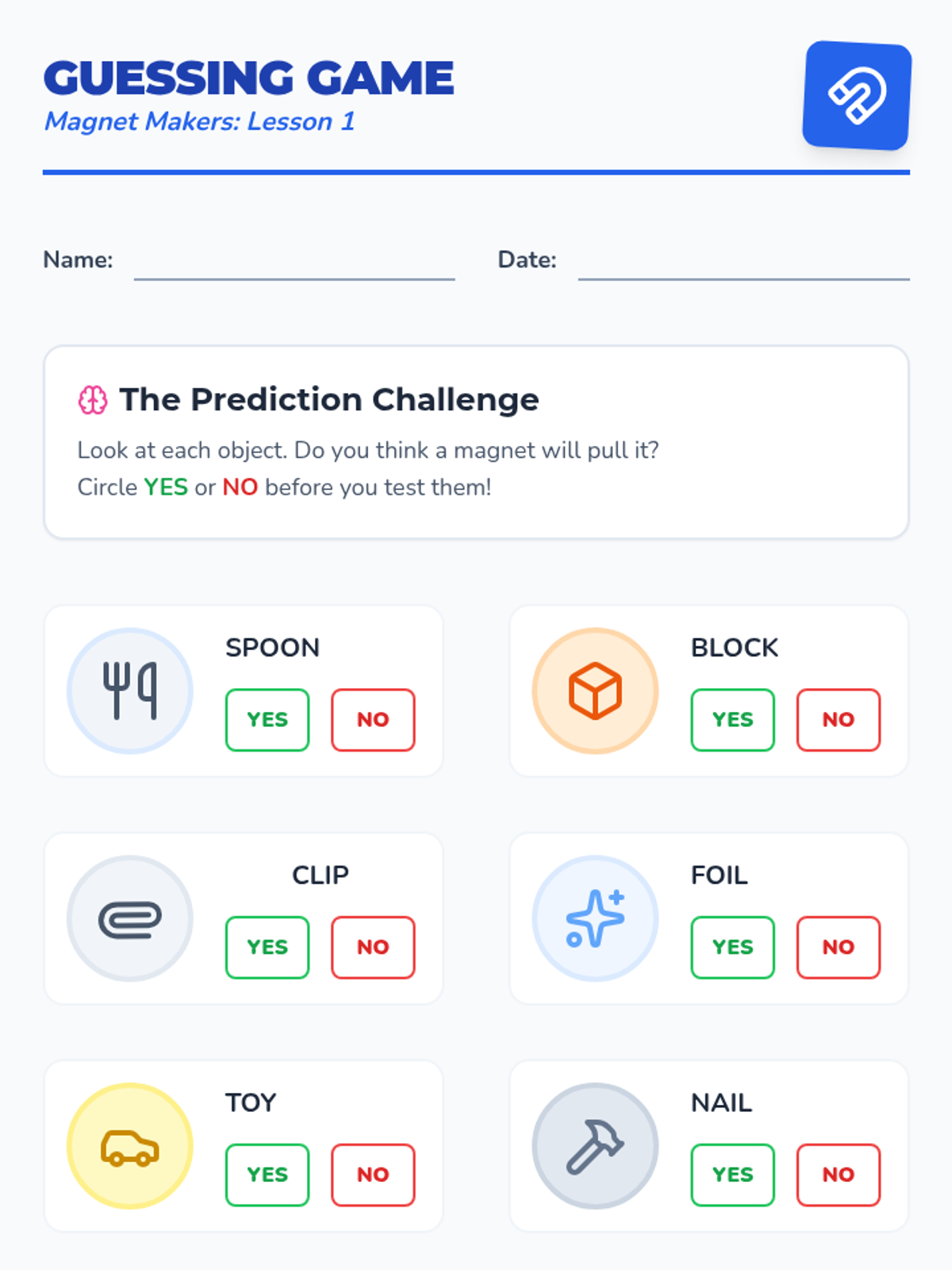
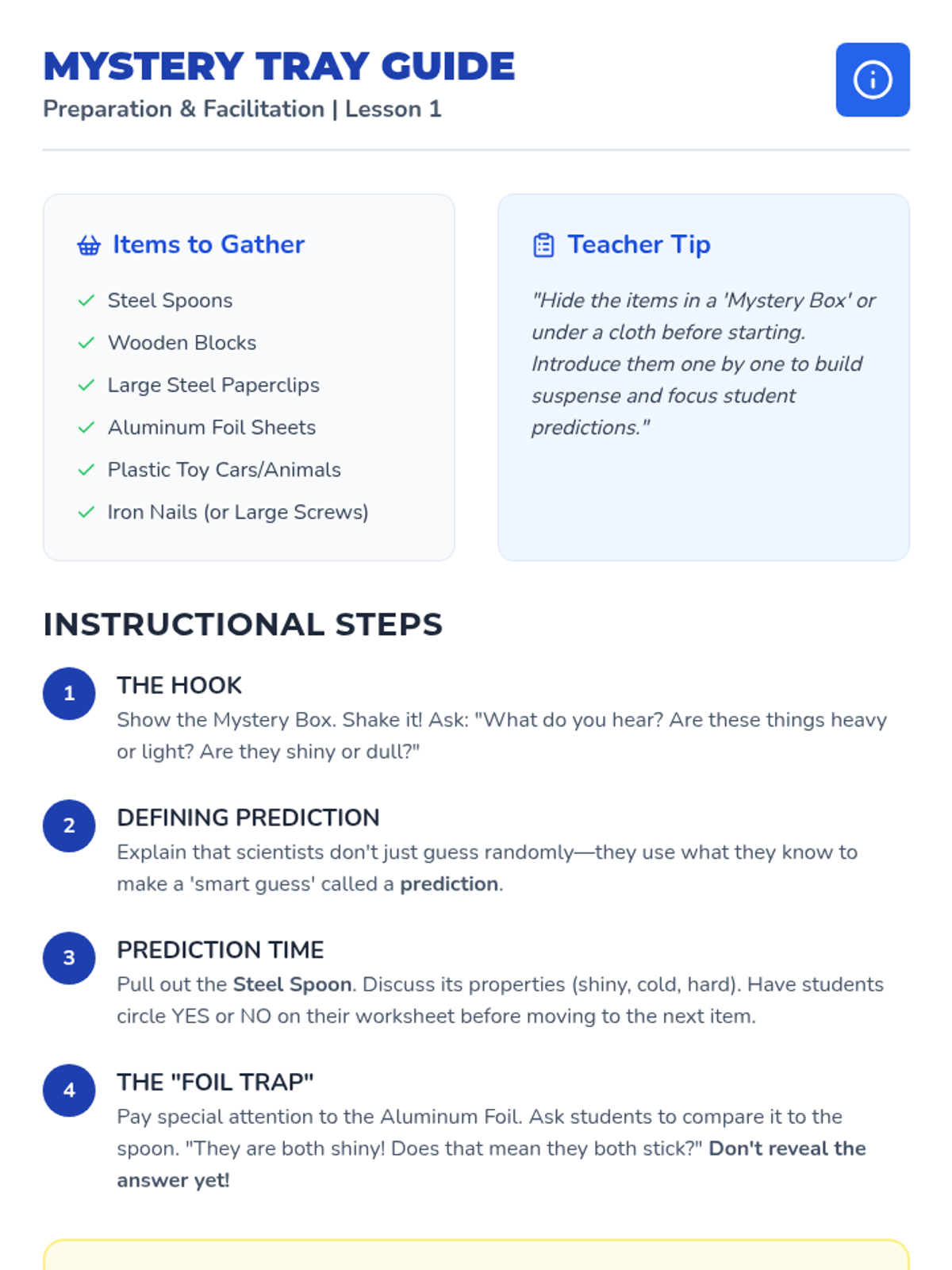
A systematic Kindergarten sequence exploring the properties of magnetic materials through prediction, testing, and data recording, culminating in a nuanced understanding that not all metals are magnetic.
A Kindergarten sequence exploring the practical, real-world applications of magnets in daily life, from home gadgets and recycling centers to global navigation and electronics. Students transition from observation to invention, culminating in designing their own magnetic tool.
A Kindergarten science and engineering sequence that explores the properties of magnets through hands-on building challenges, temporary magnet creation, and artistic design. Students progress from basic construction to understanding how magnets can be 'made' and used to solve design problems.
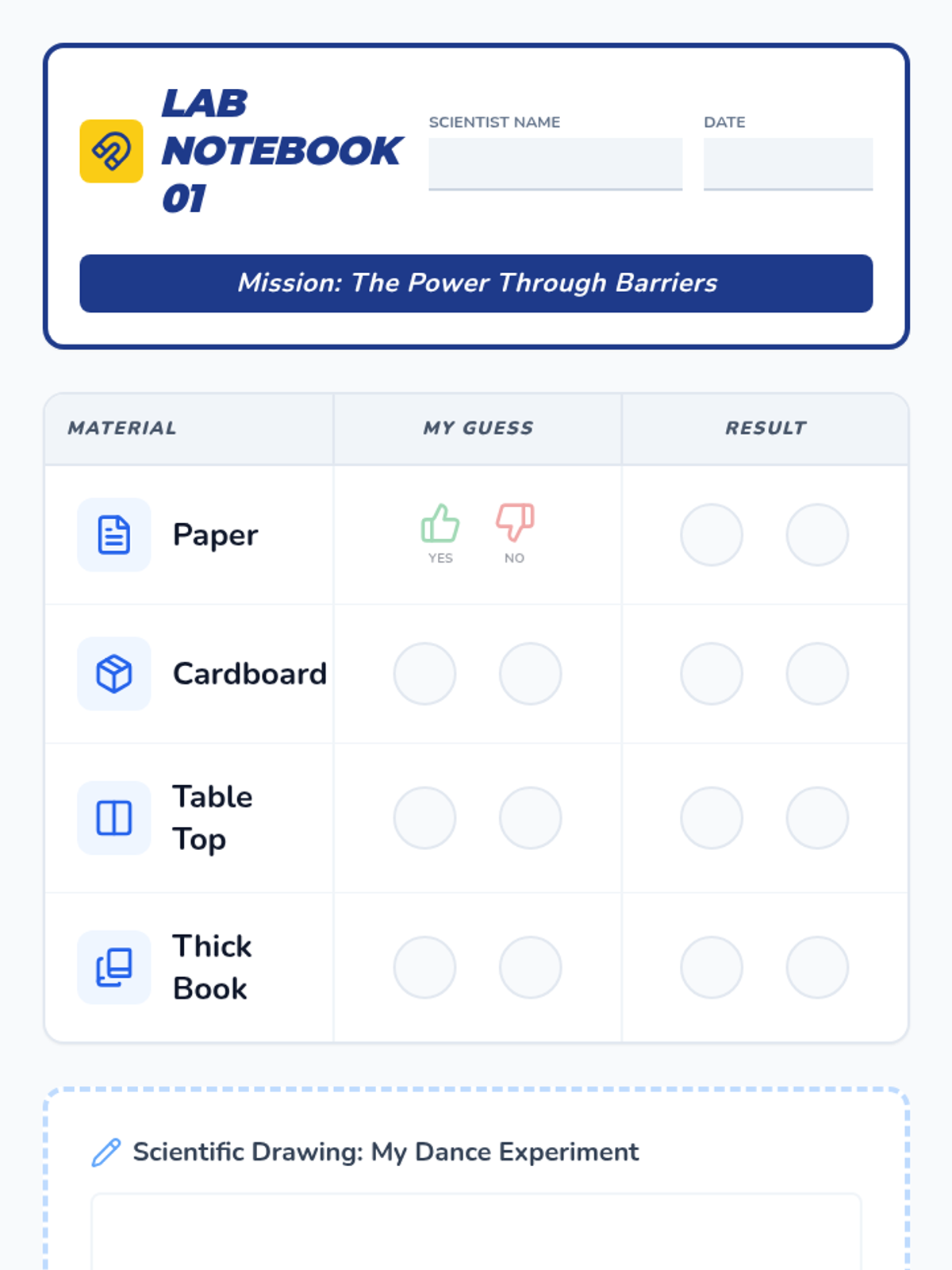
A hands-on Kindergarten sequence exploring magnetic fields, permeability, and force strength through various materials and mediums. Students act as 'junior scientists' to test the limits of magnetic power.
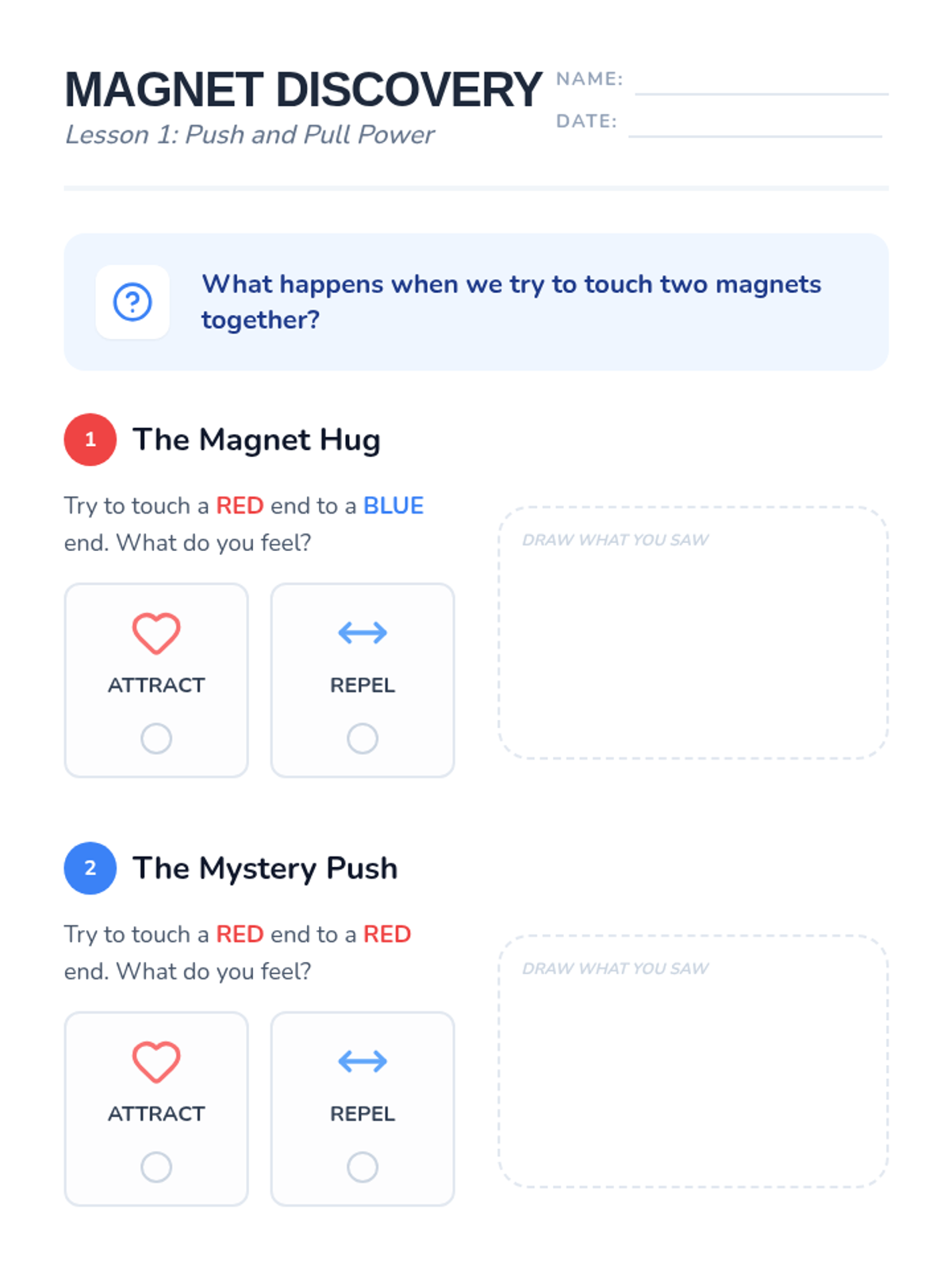
A kindergarten physics sequence exploring the invisible forces of magnetism, polarity, and how magnets can move objects without physical contact. Students engage in tactile, game-based learning to master the concepts of attract and repel.
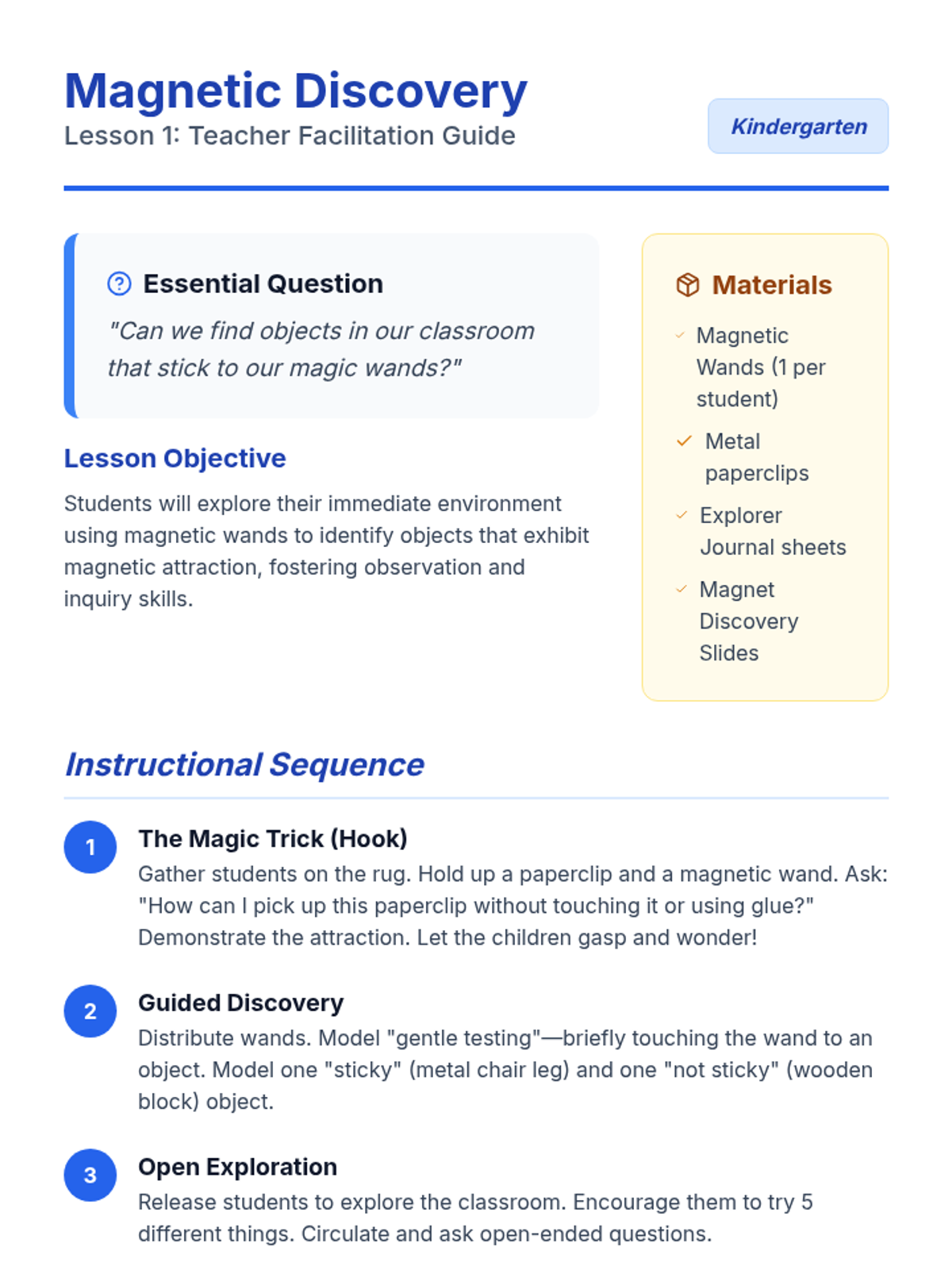
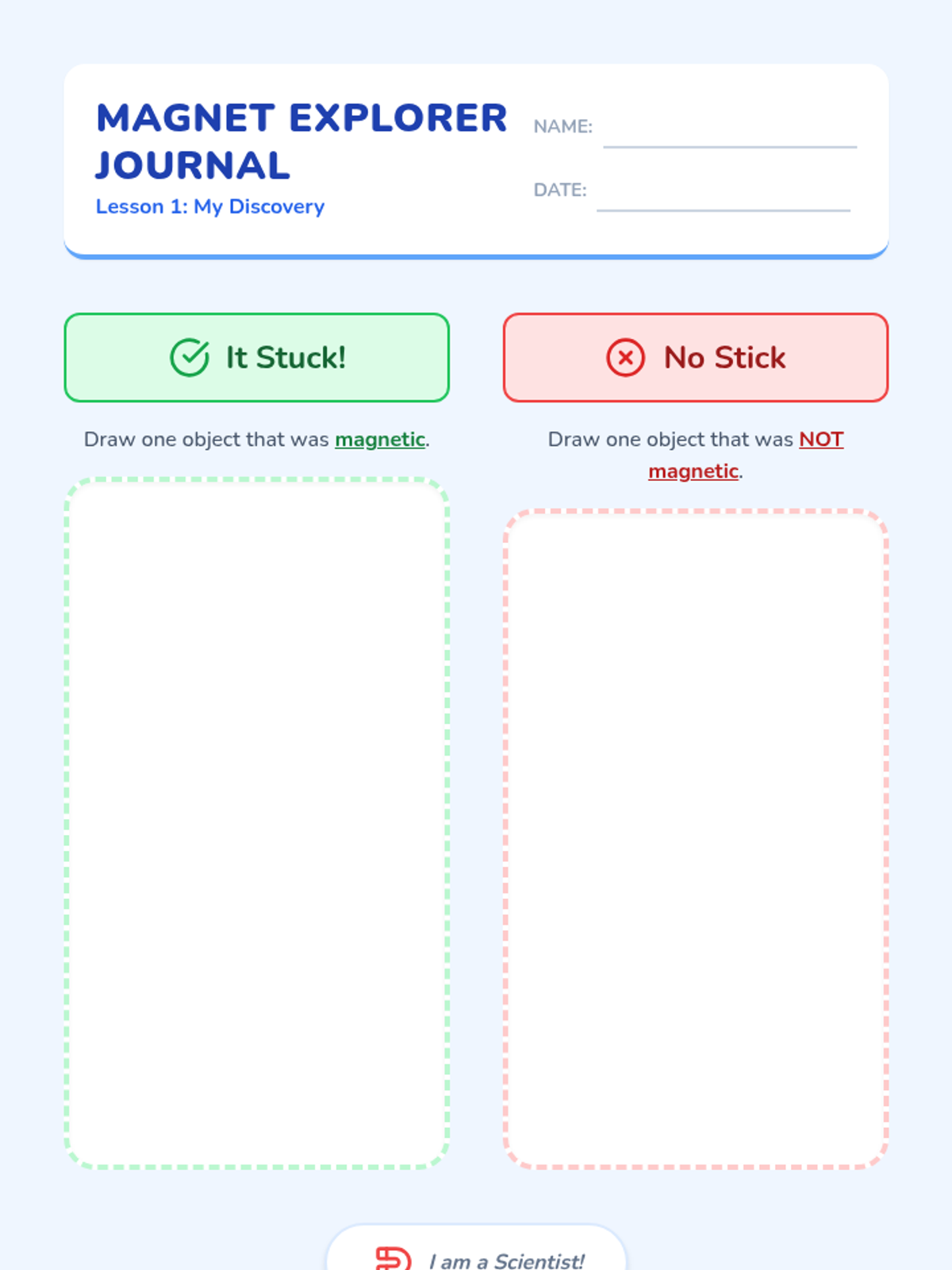
A Kindergarten sequence introducing the fundamentals of magnetism through hands-on exploration, prediction, and classification. Students progress from open discovery to understanding that magnets attract specific metals like iron and steel.
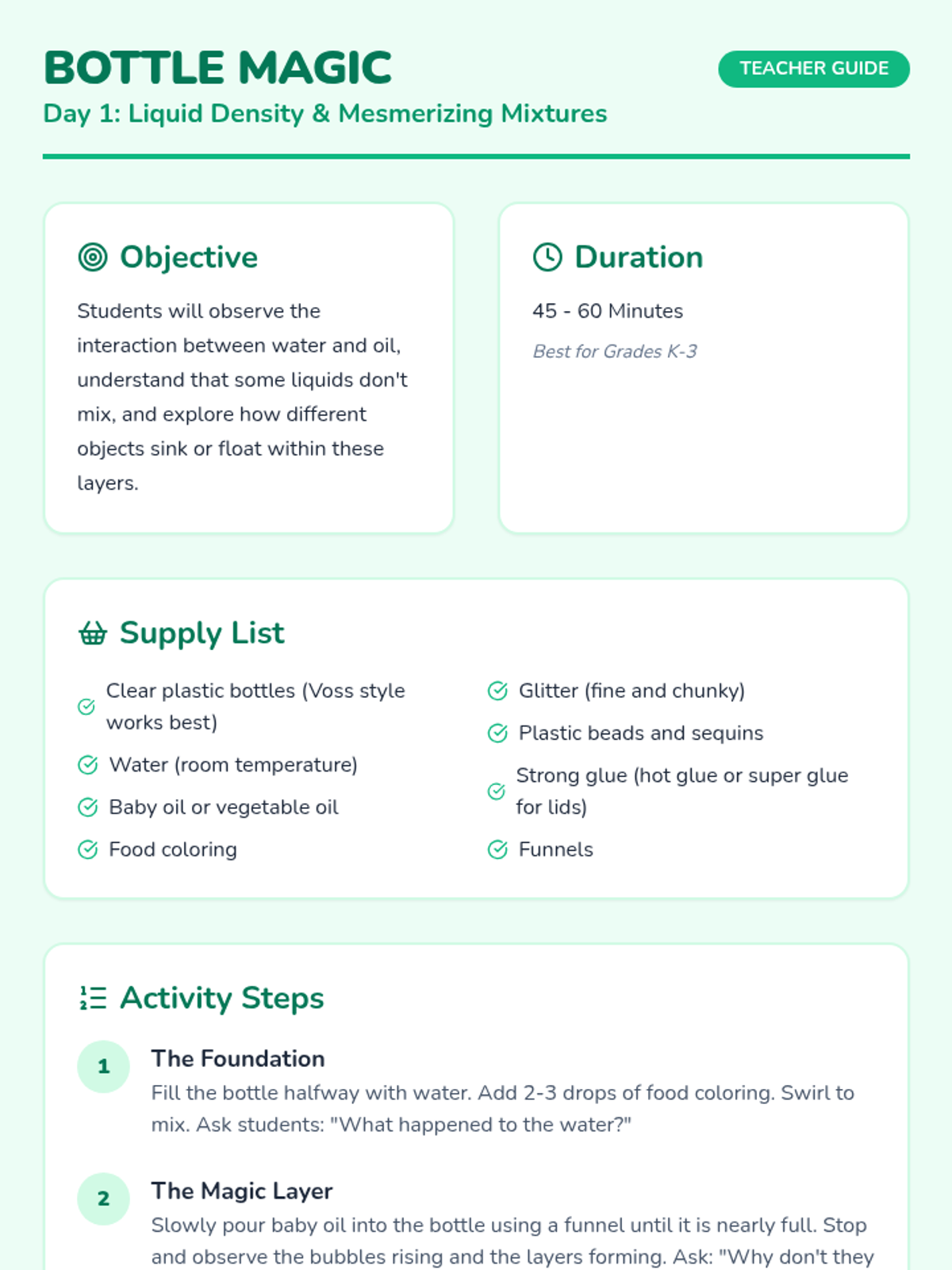
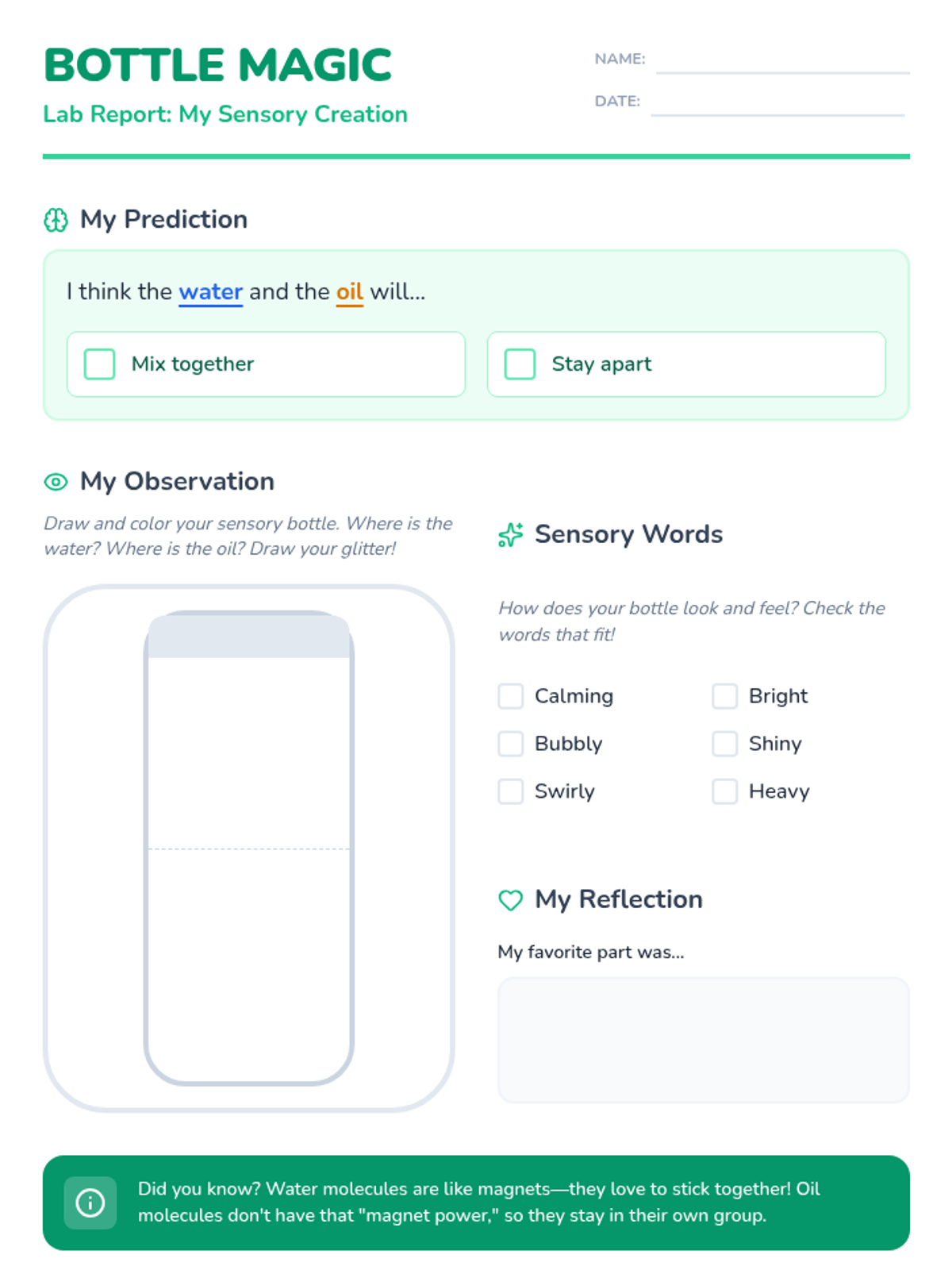
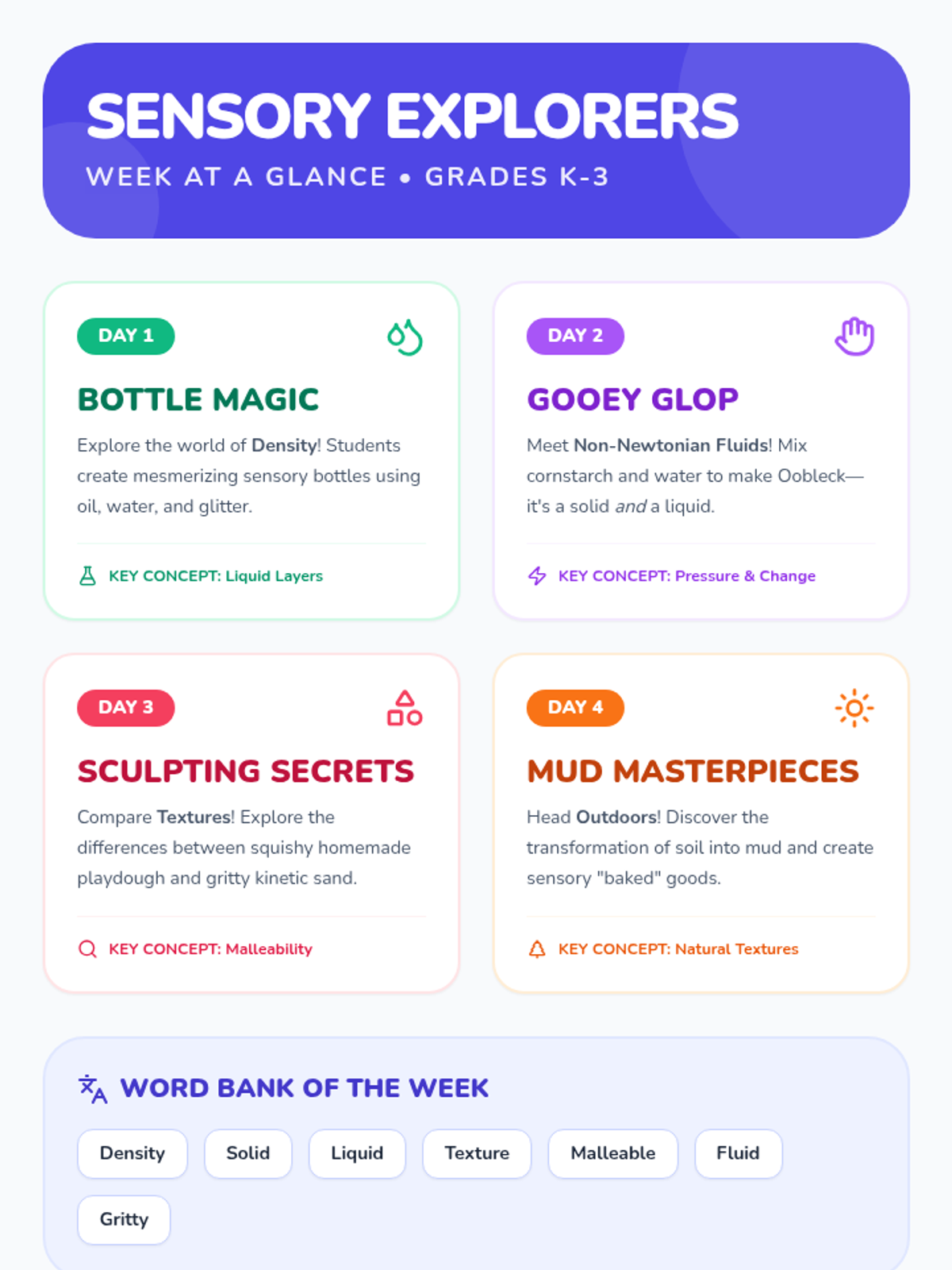
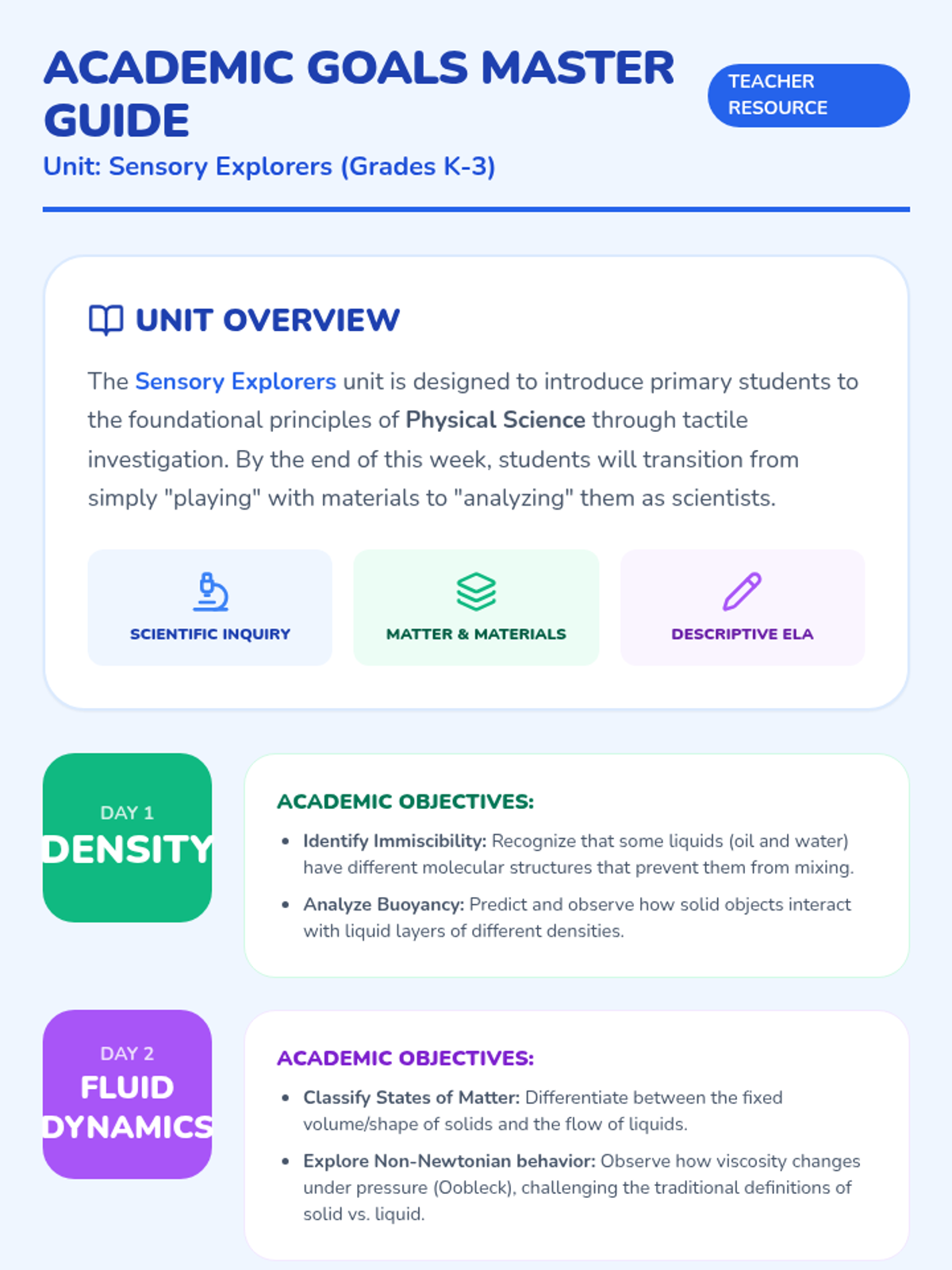
A four-day immersive sensory science sequence for K-3 students, exploring different materials, textures, and chemical mixtures through hands-on creation and observation.
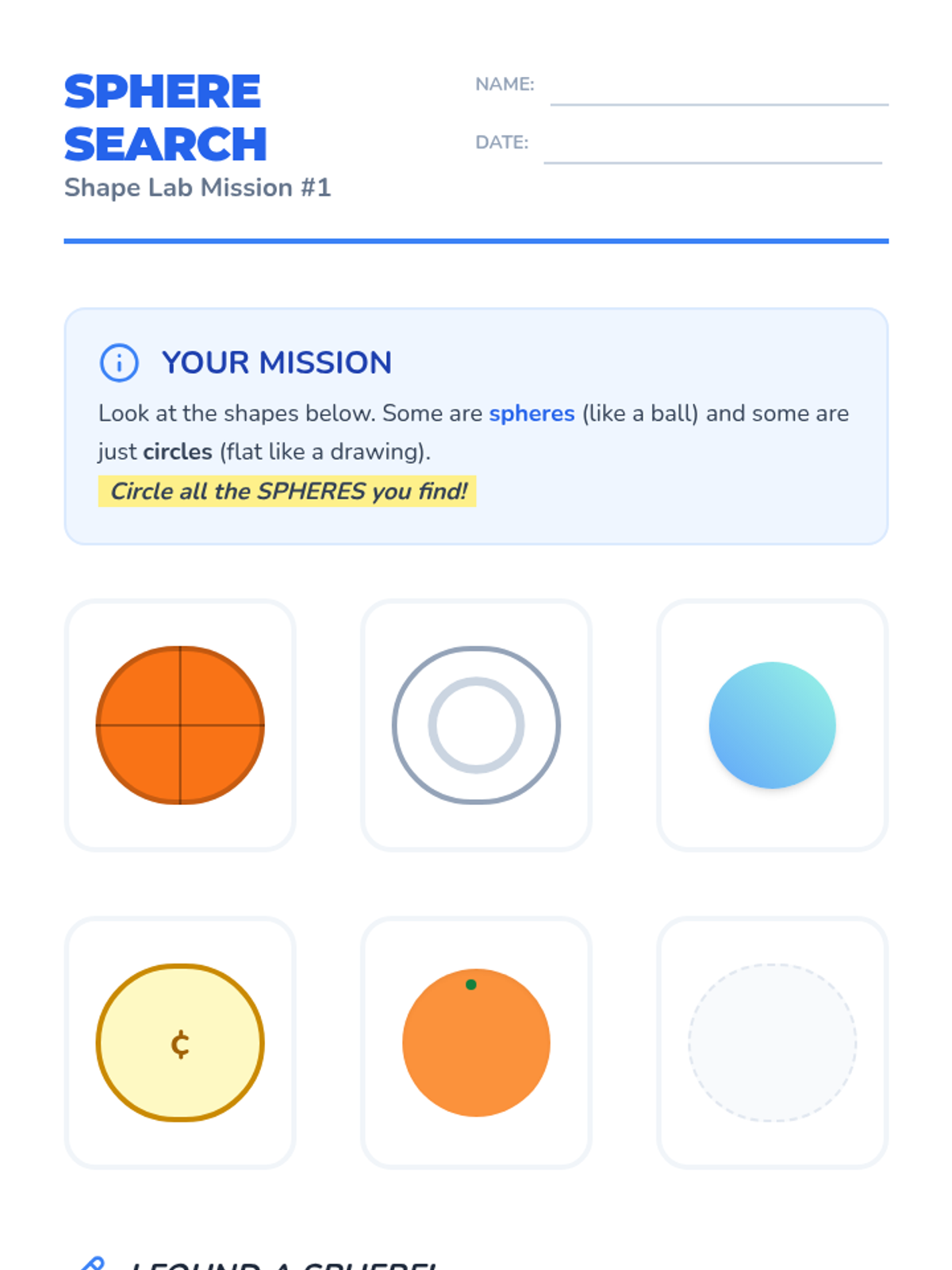
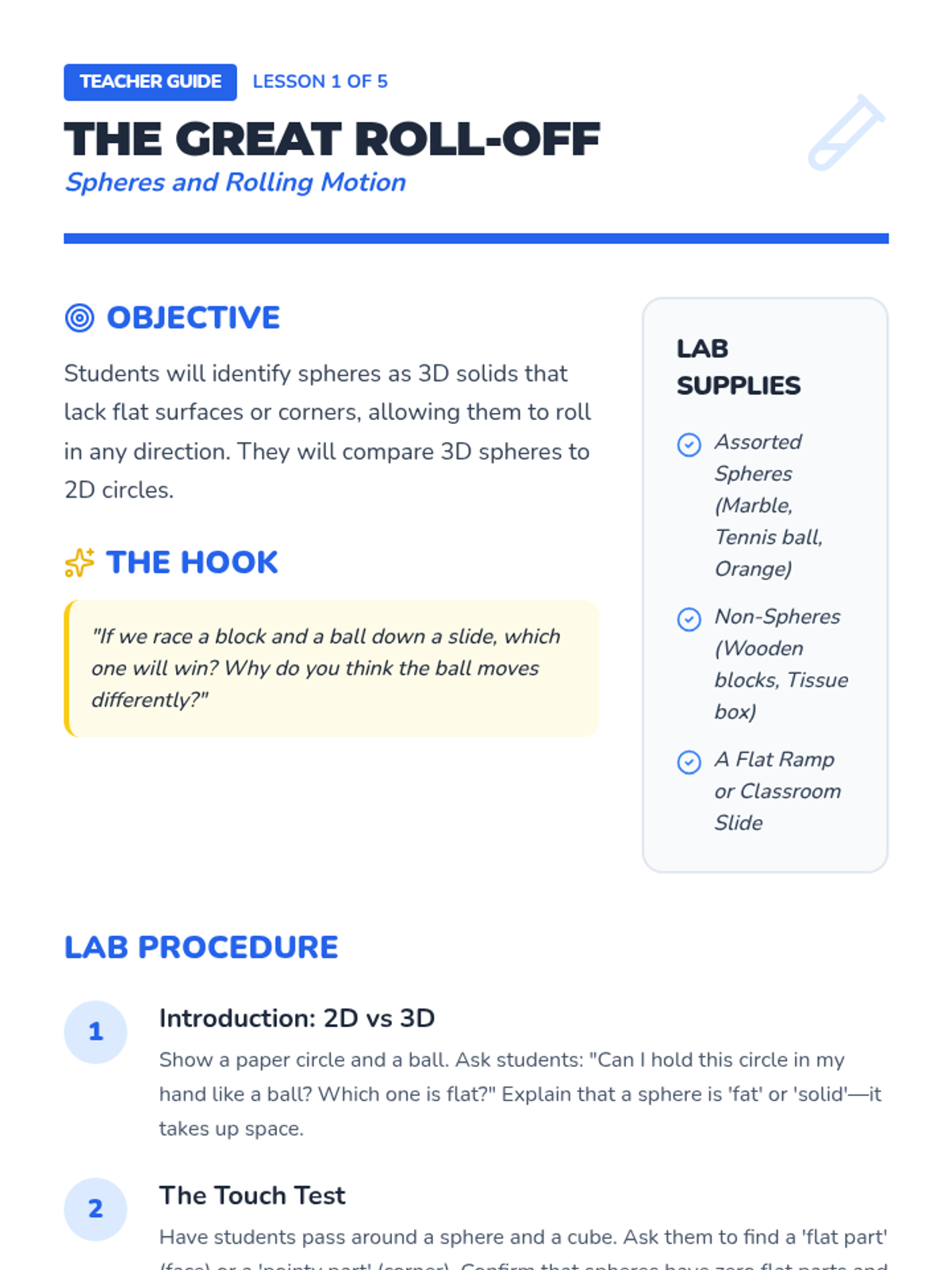
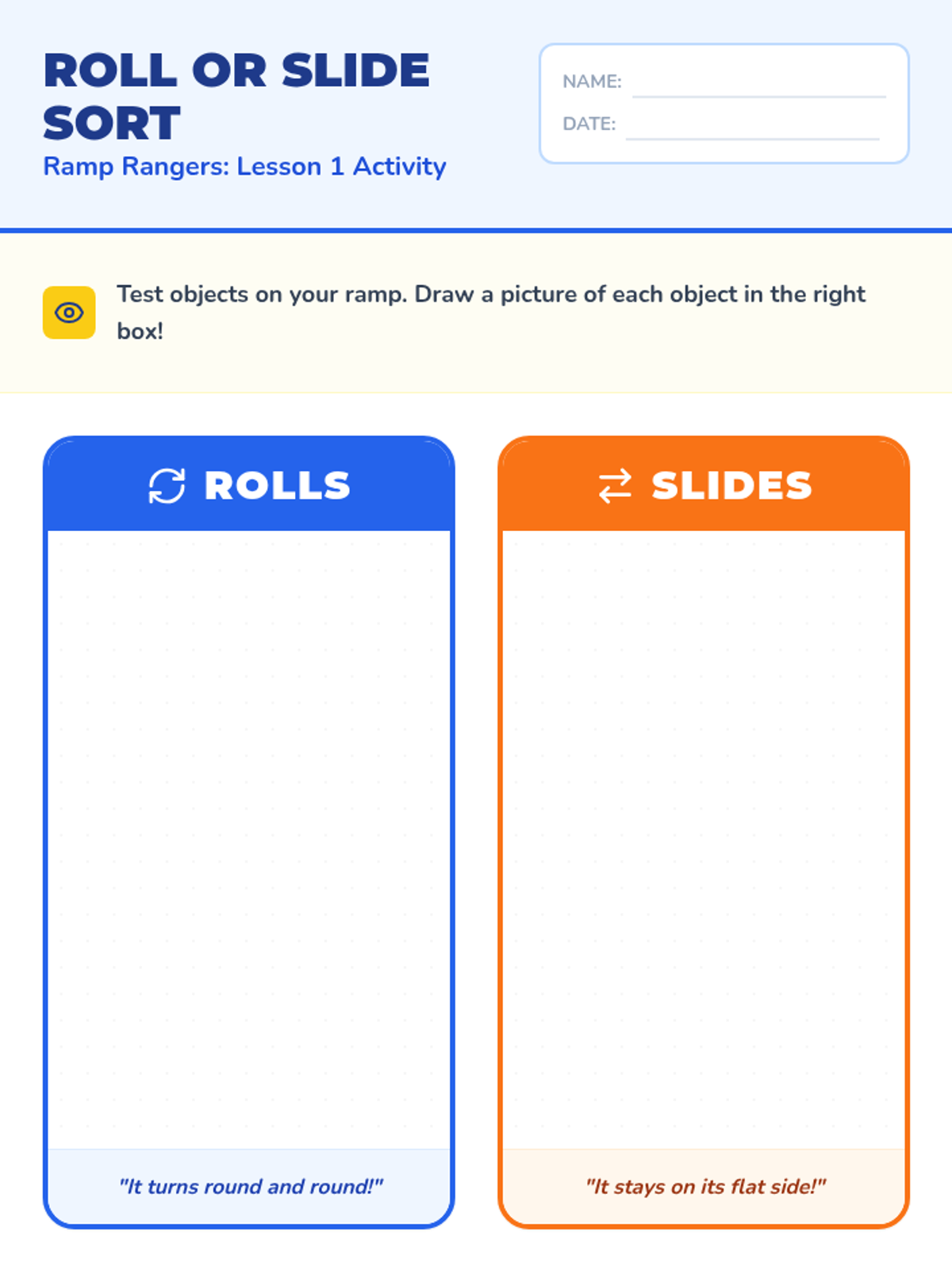
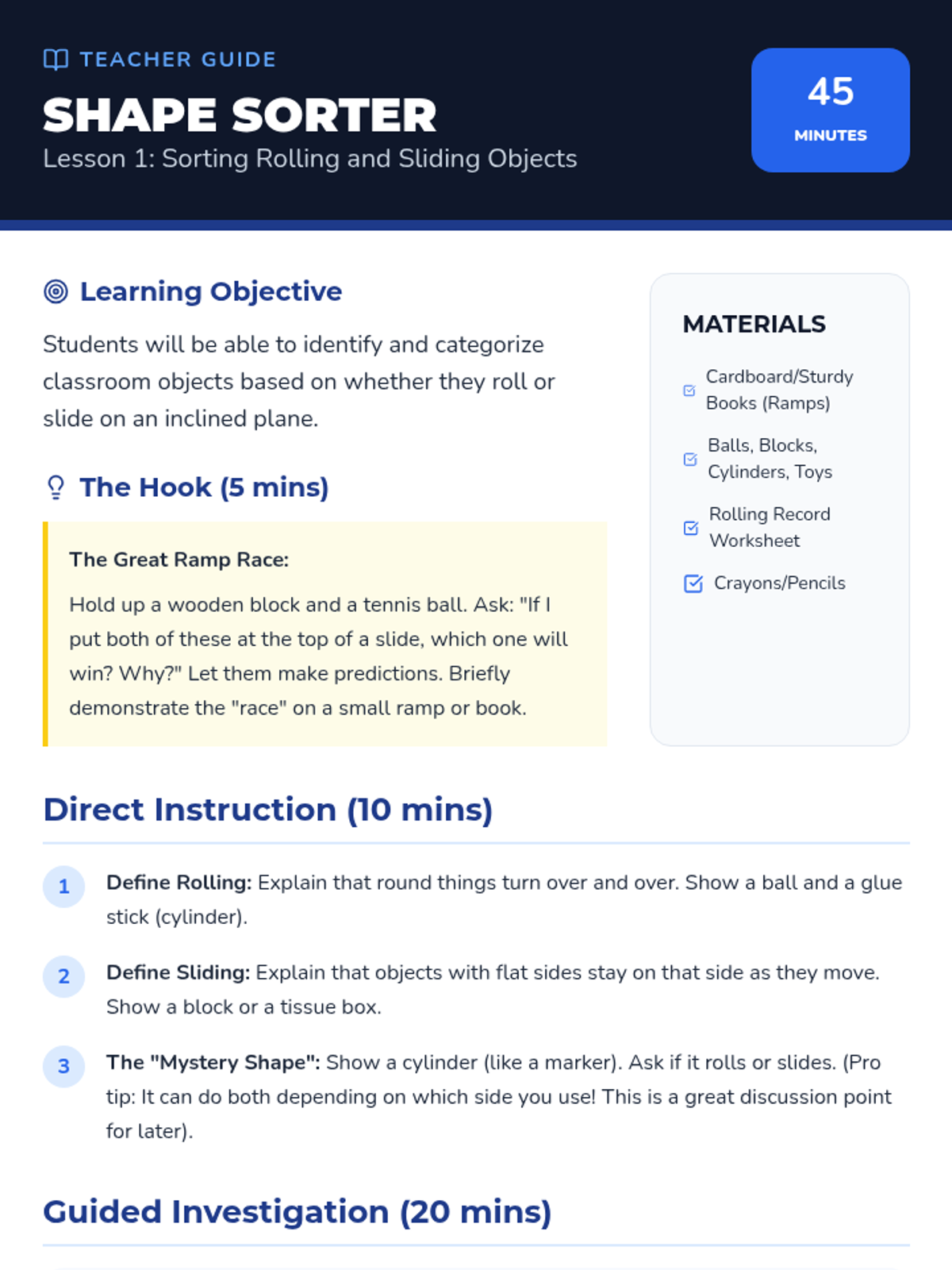
A Pre-K physics sequence exploring three-dimensional solids. Students investigate the properties of spheres, cubes, cylinders, and cones through hands-on experimentation with rolling, stacking, and sliding to understand how shape dictates movement and stability.
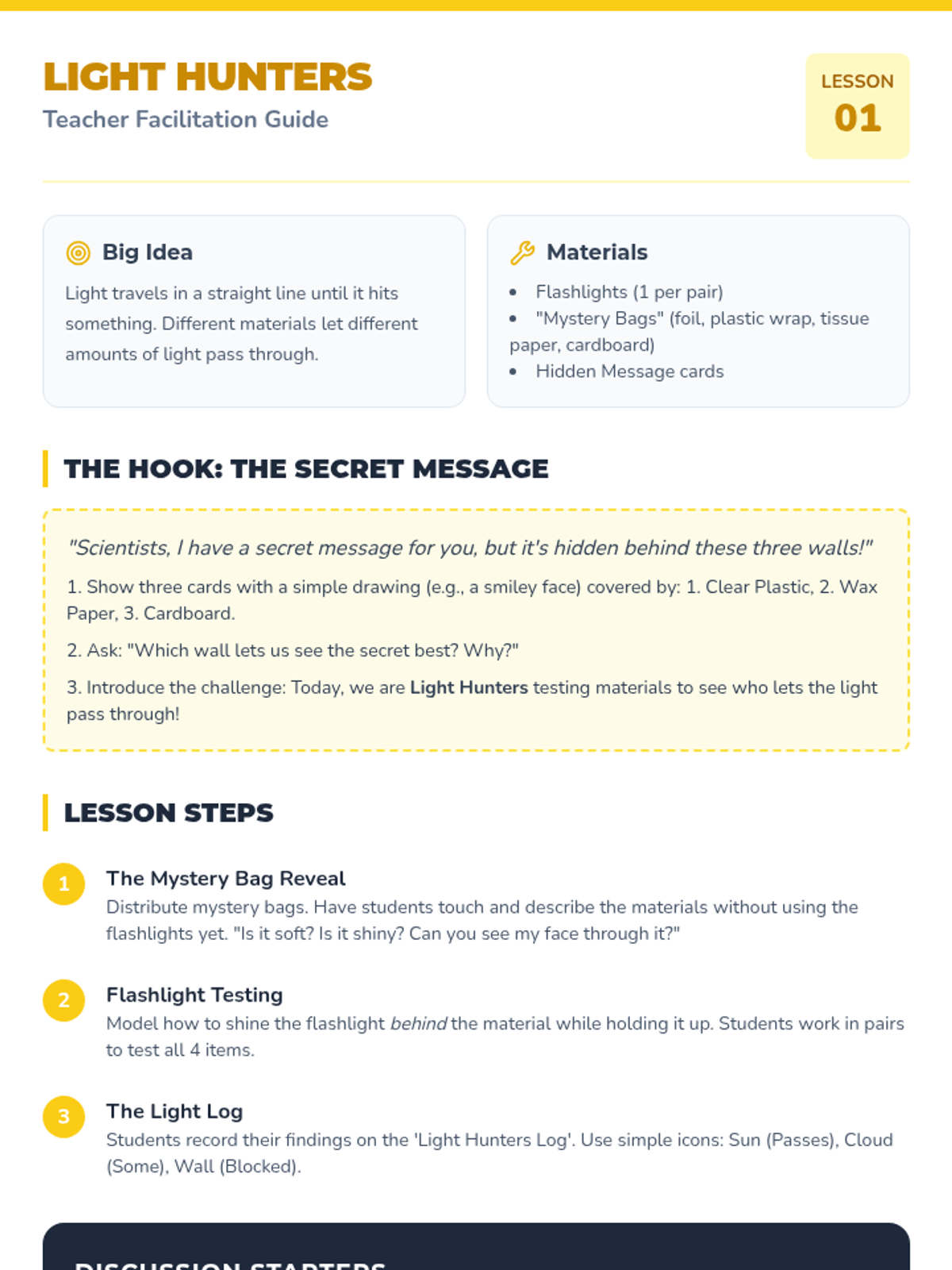
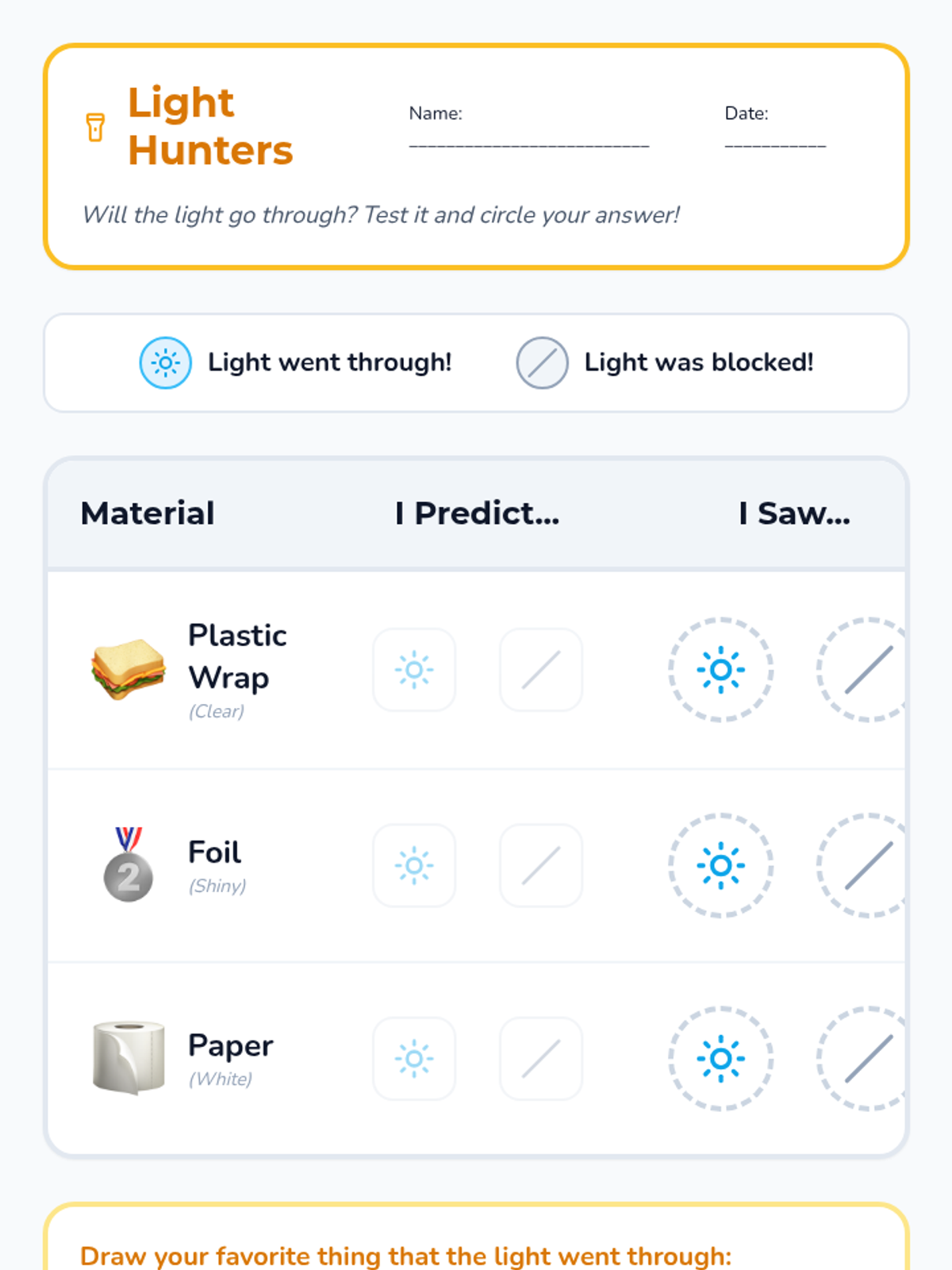
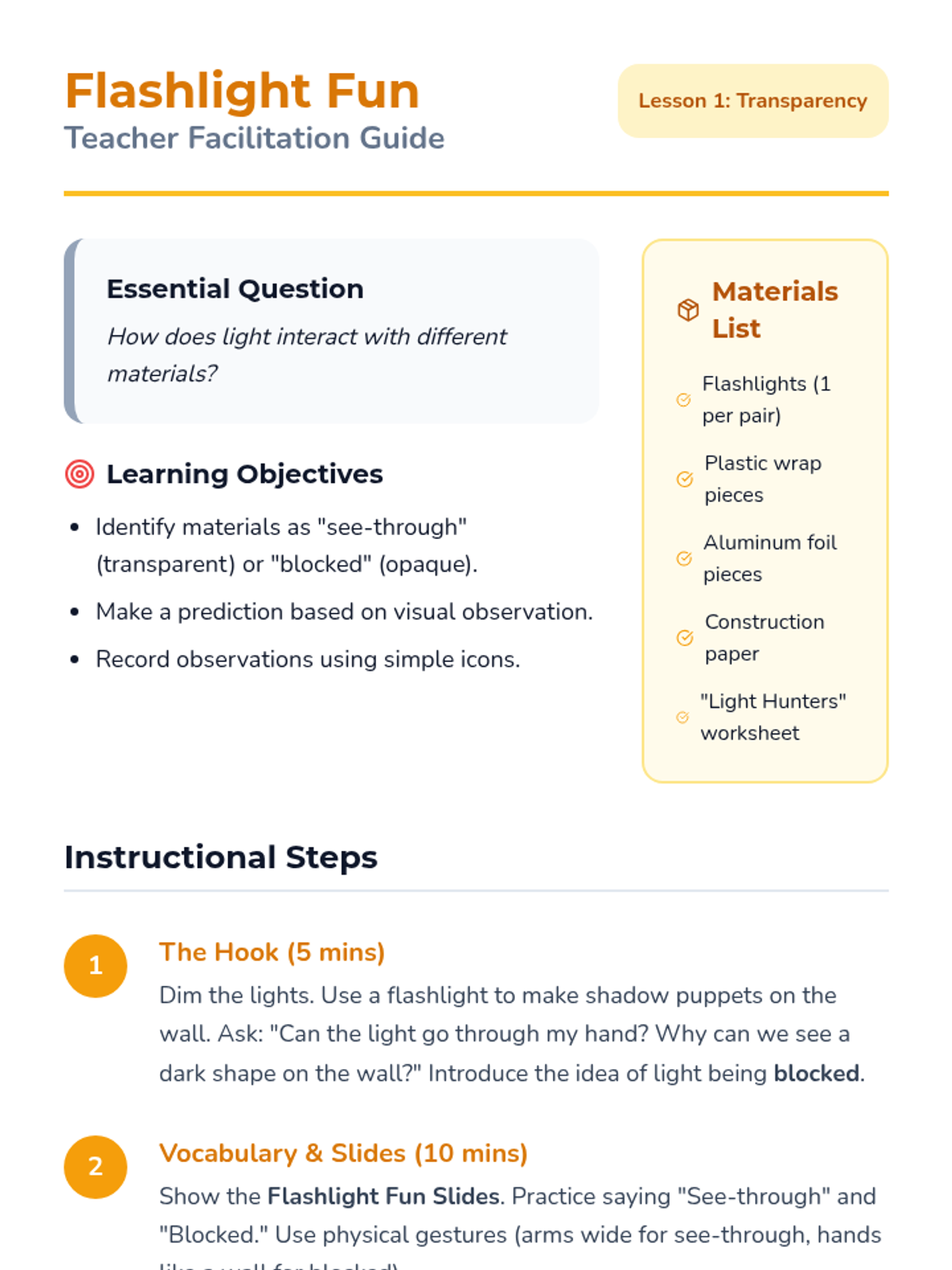
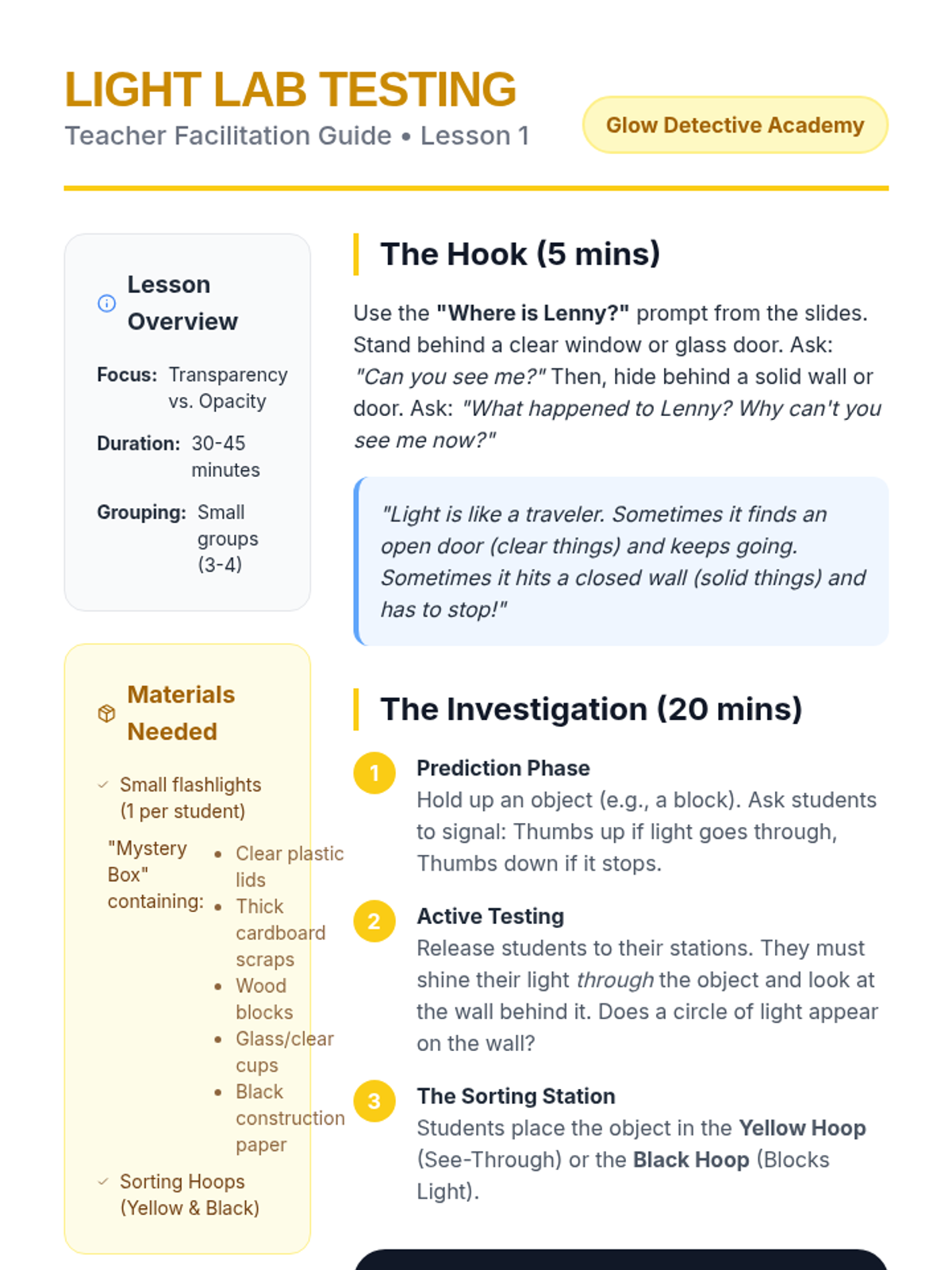
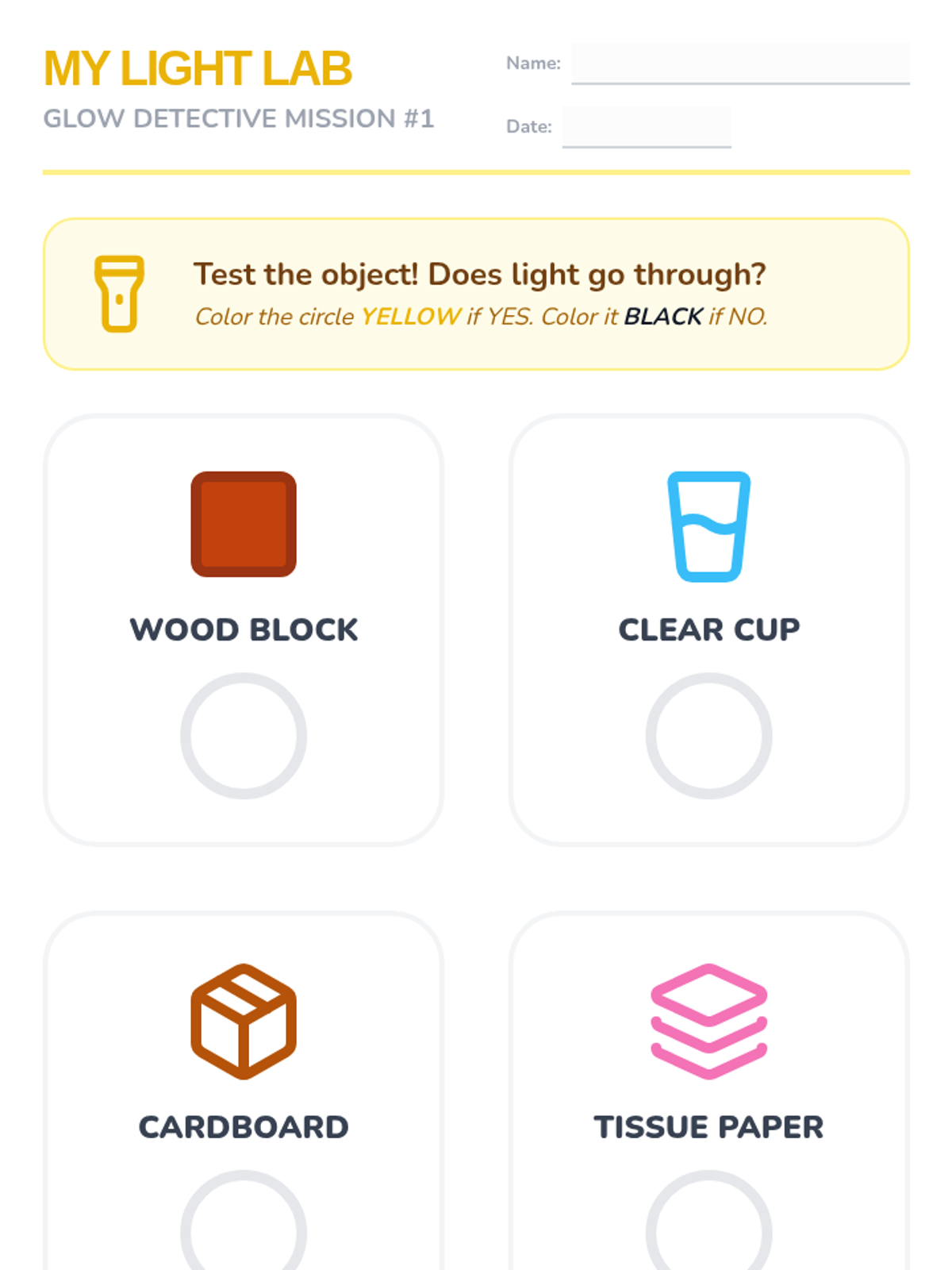
A kindergarten physics sequence where students explore how light interacts with different materials, moving from basic transparency testing to designing and building their own suncatchers.
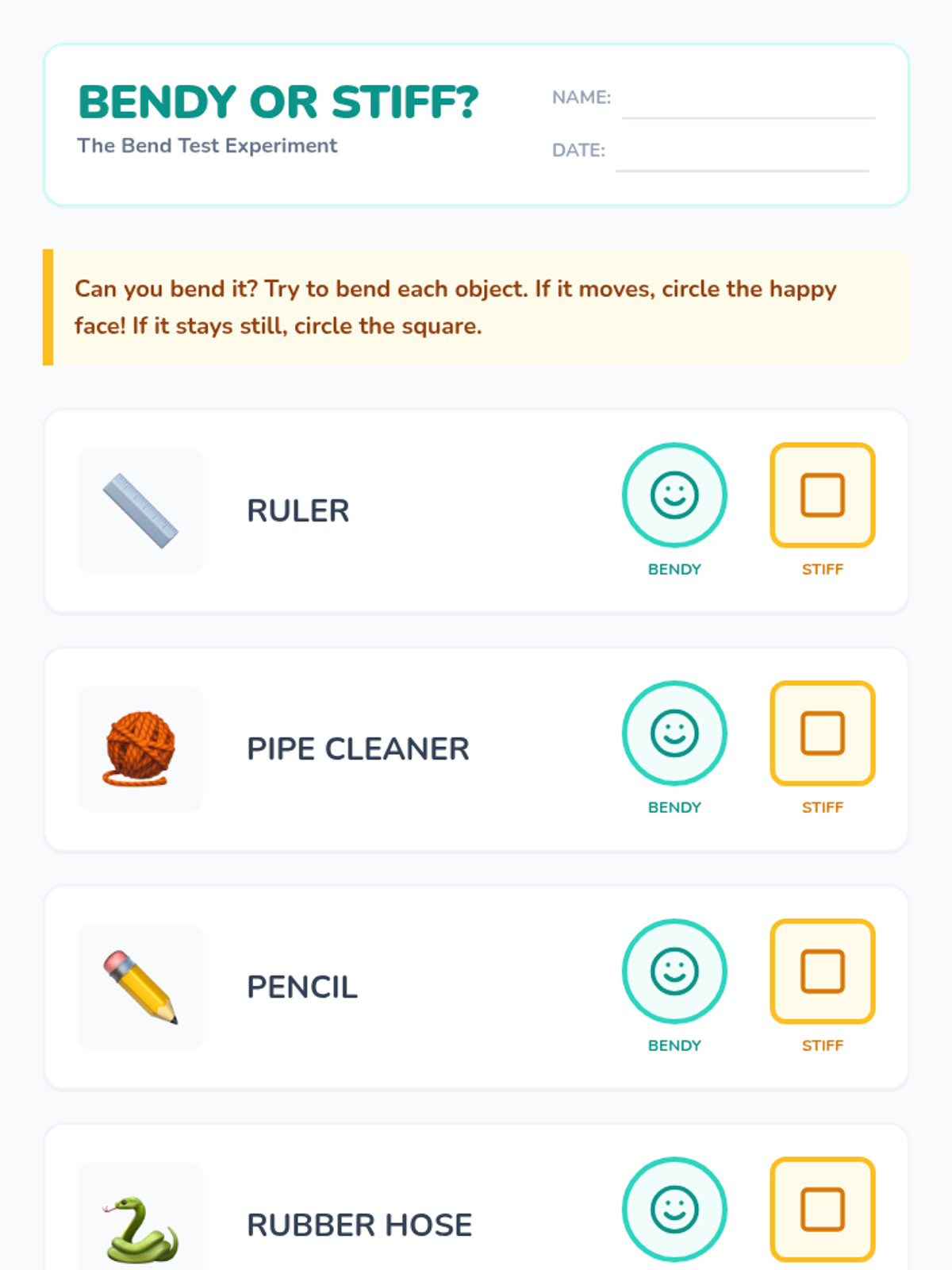
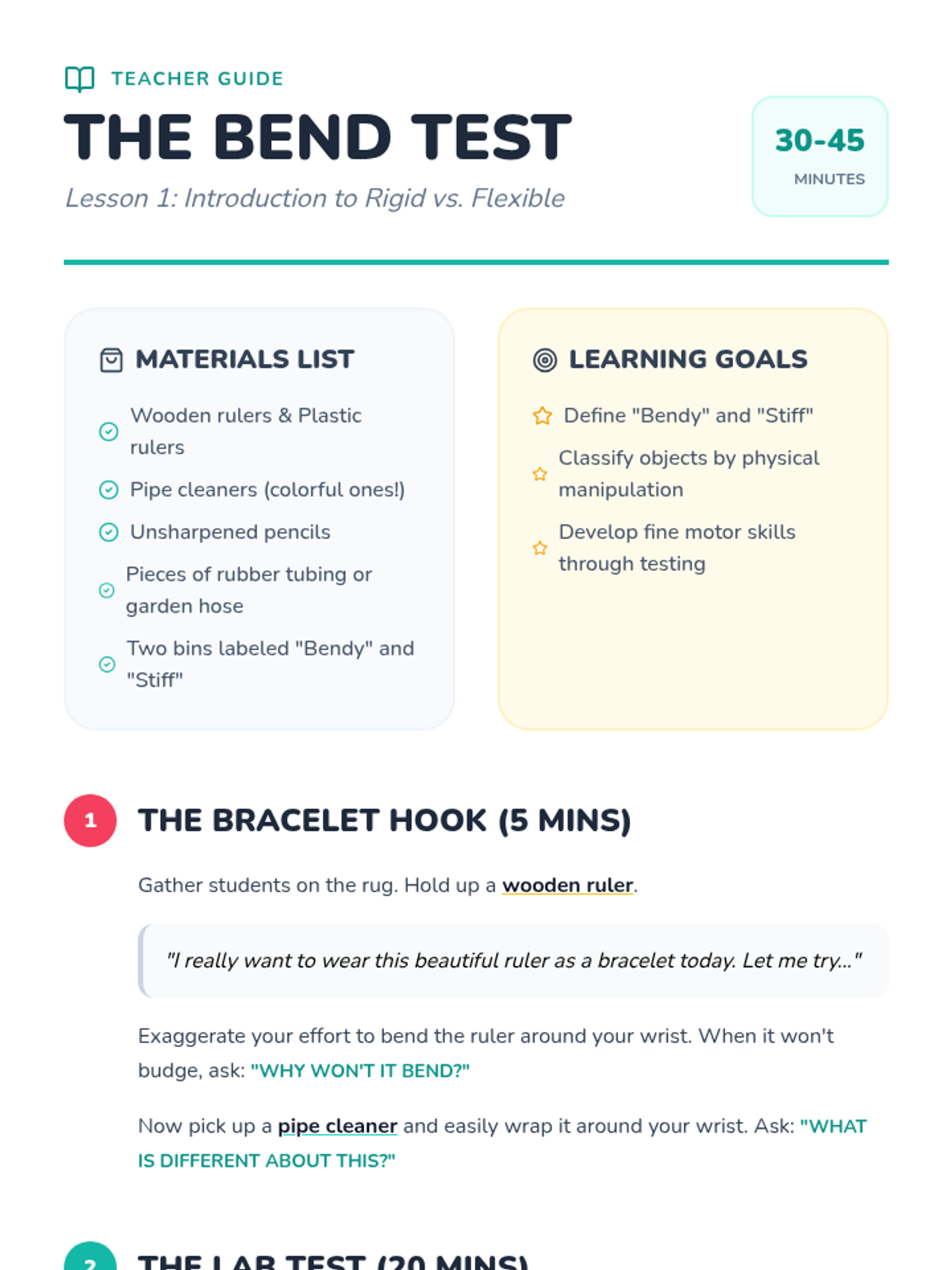
A hands-on exploration for Pre-K students to distinguish between rigid and flexible materials through physical manipulation, testing, and creative construction. Students learn to classify objects based on their ability to bend, stretch, and fold.
A hands-on investigation into how light and water interact with different materials. Pre-K students explore transparency, shadows, absorption, and buoyancy through inquiry-based play.
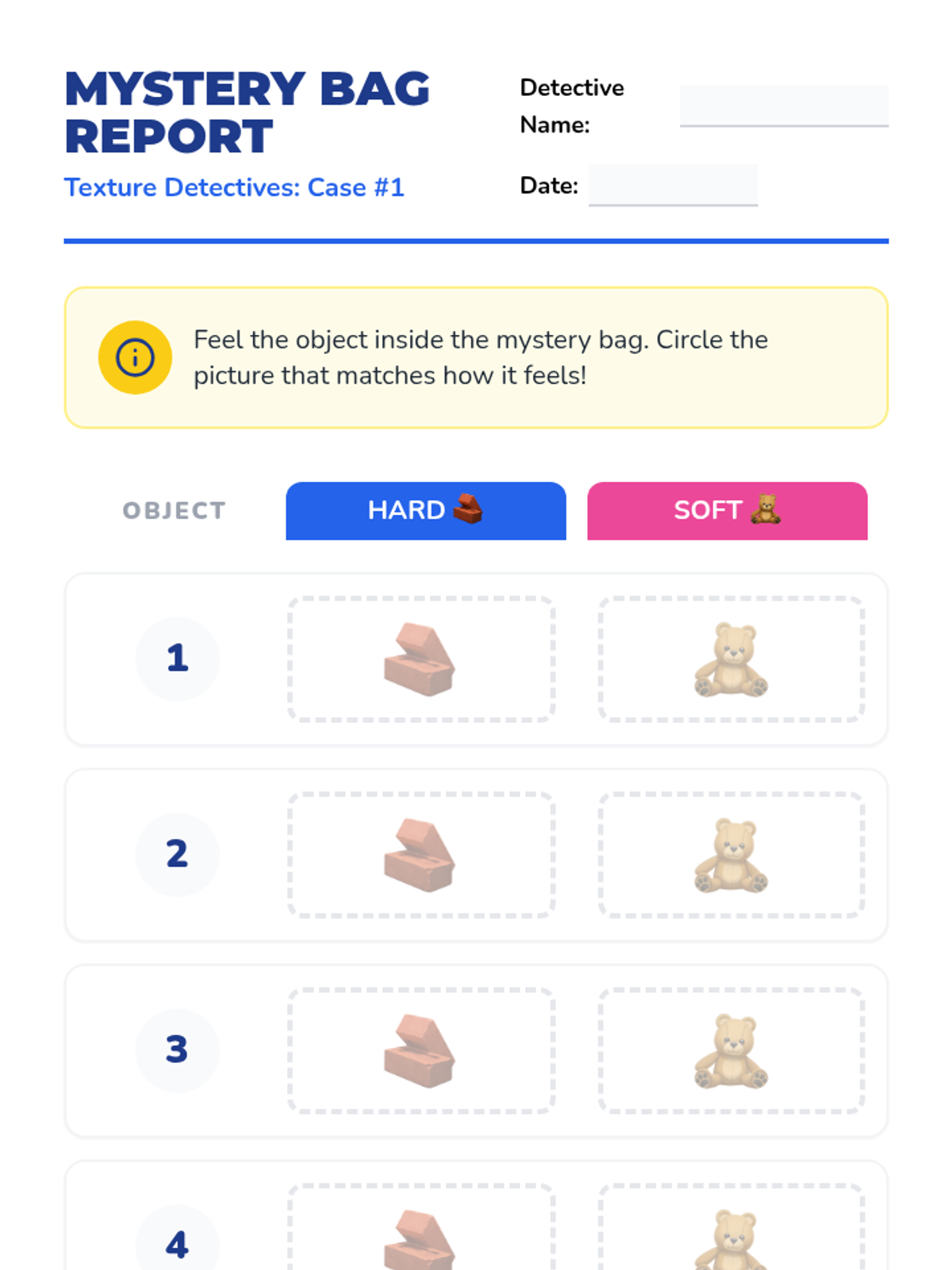
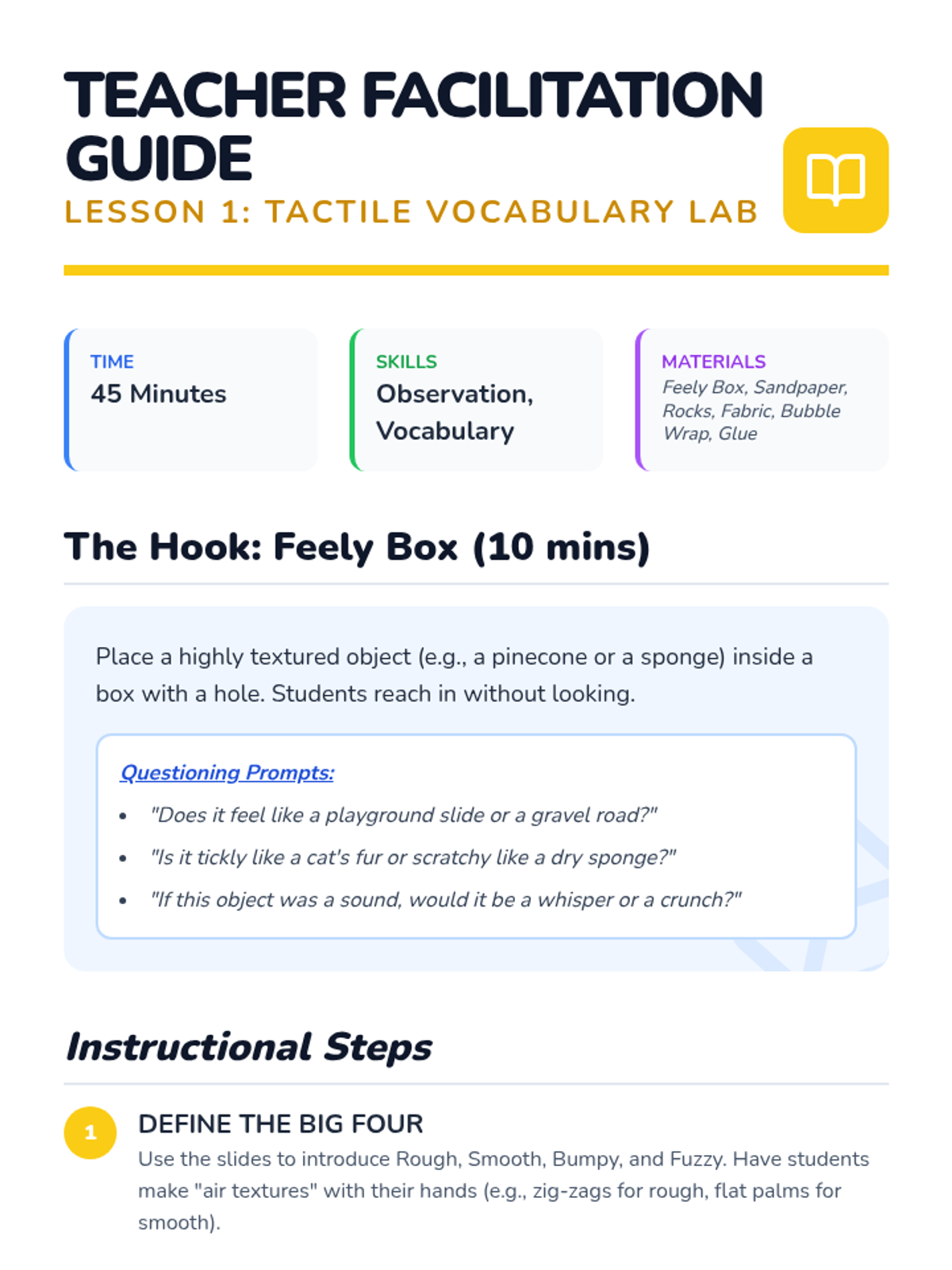
A tactile and exploratory science sequence where Pre-K students use their senses to observe, describe, and categorize materials based on properties like hardness and texture. Students progress from simple identification to complex sorting and peer communication.
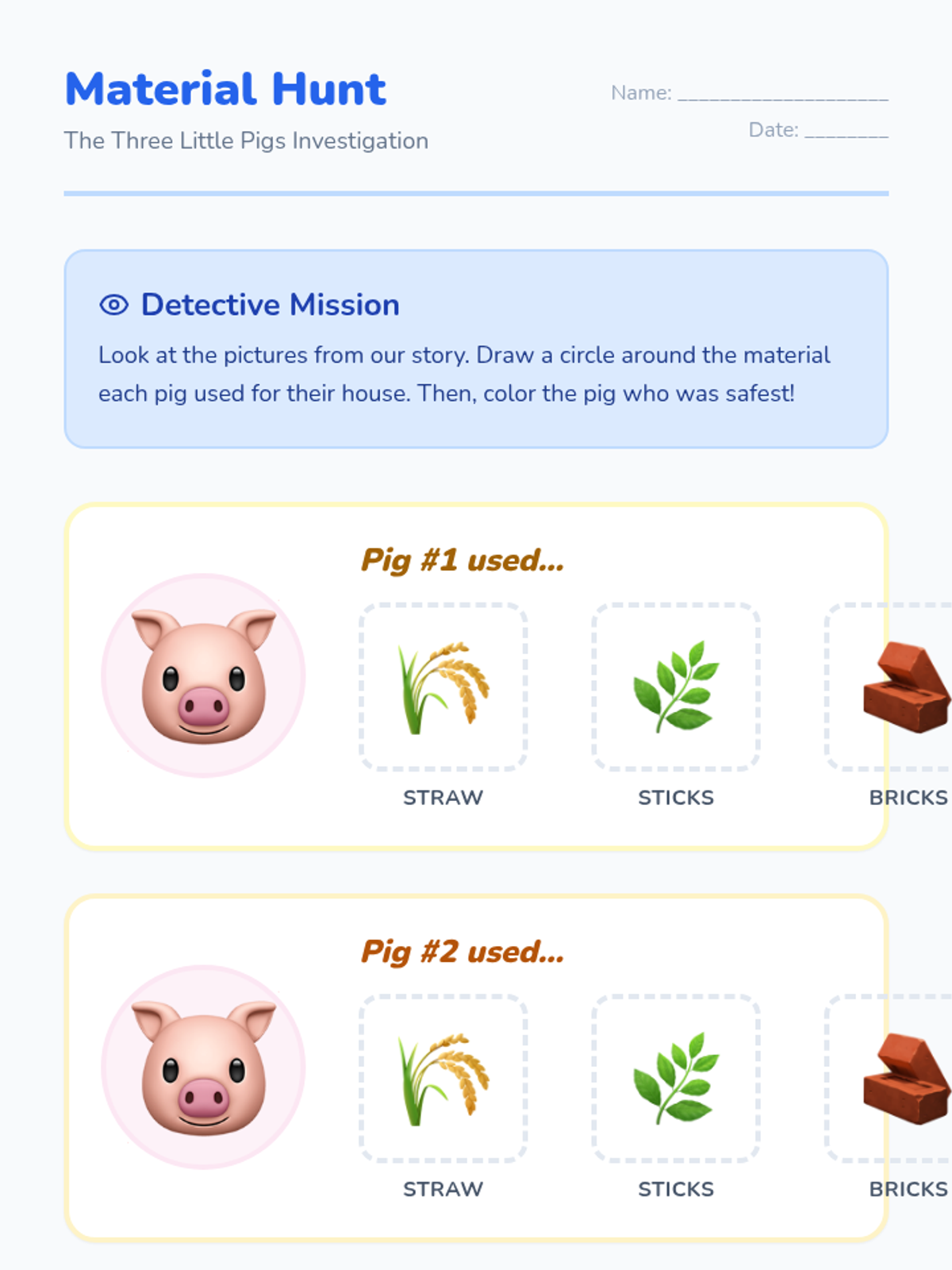
A Kindergarten engineering sequence where students use 'The Three Little Pigs' to explore the properties of materials like straw, wood, and brick, culminating in a construction challenge against a simulated wind force.
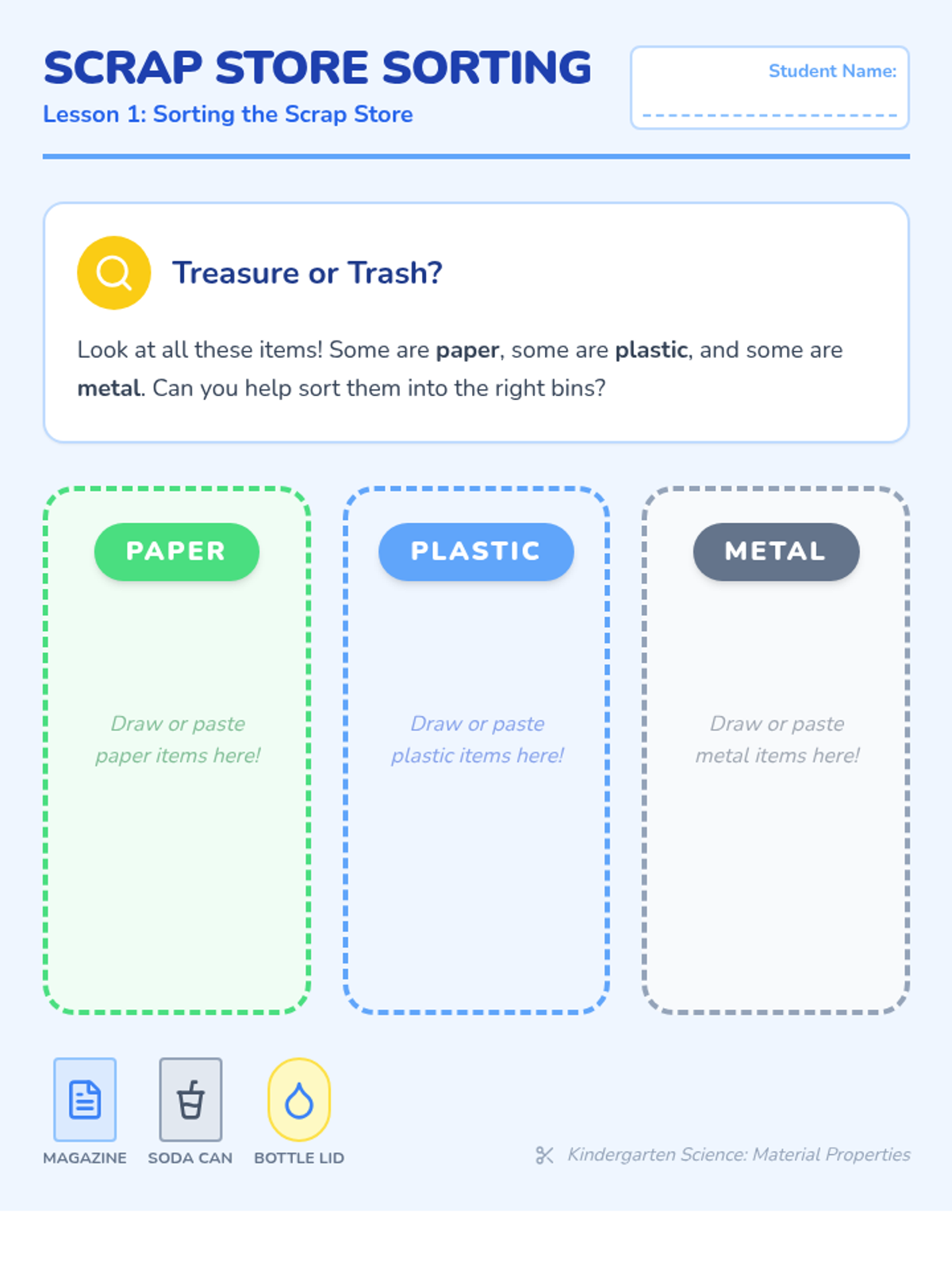
A project-based physics sequence for Kindergarten students exploring the properties of recycled materials. Students learn to sort, manipulate, and join various materials to create artistic 'Junk Modeling' masterpieces.
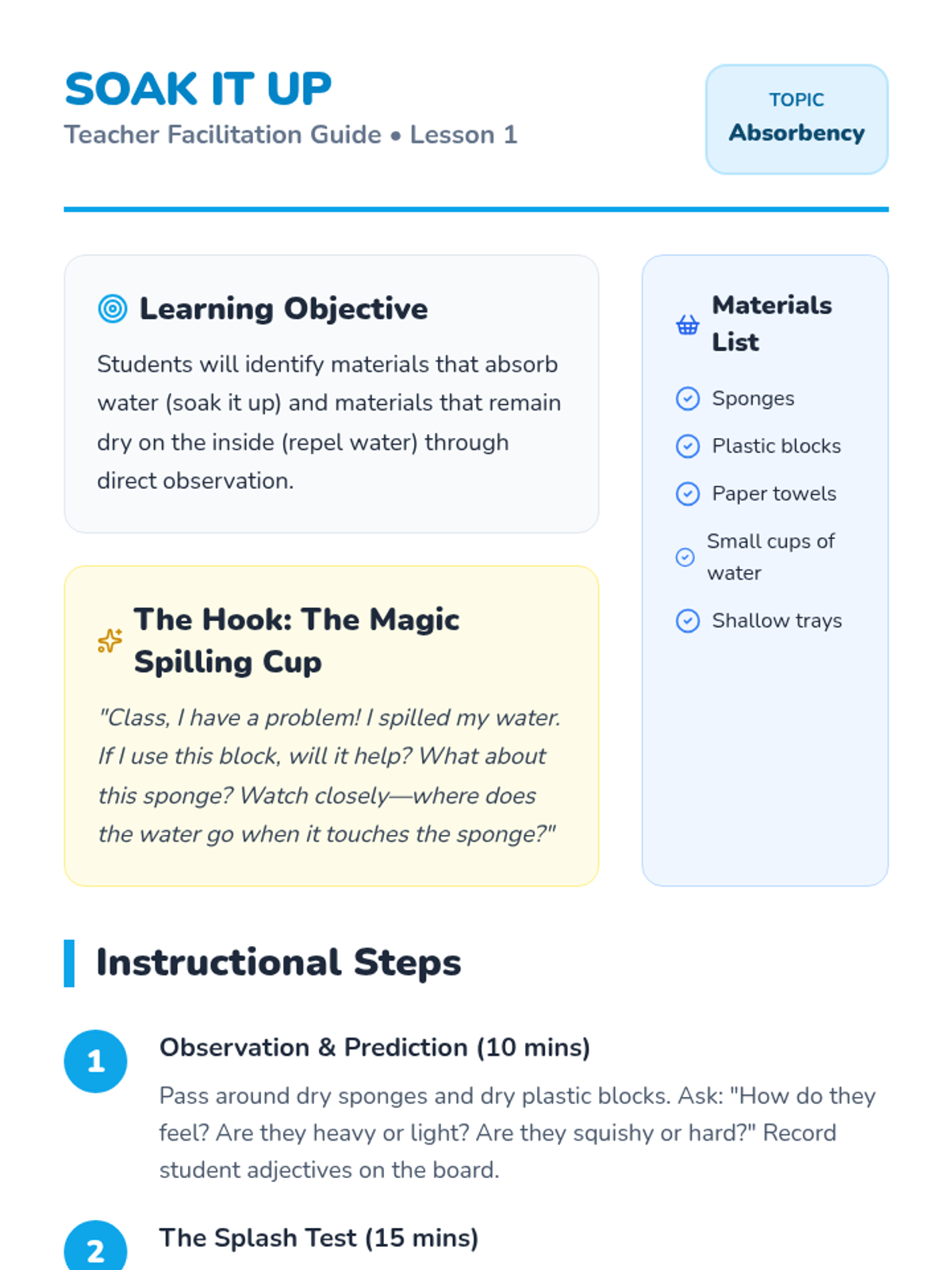
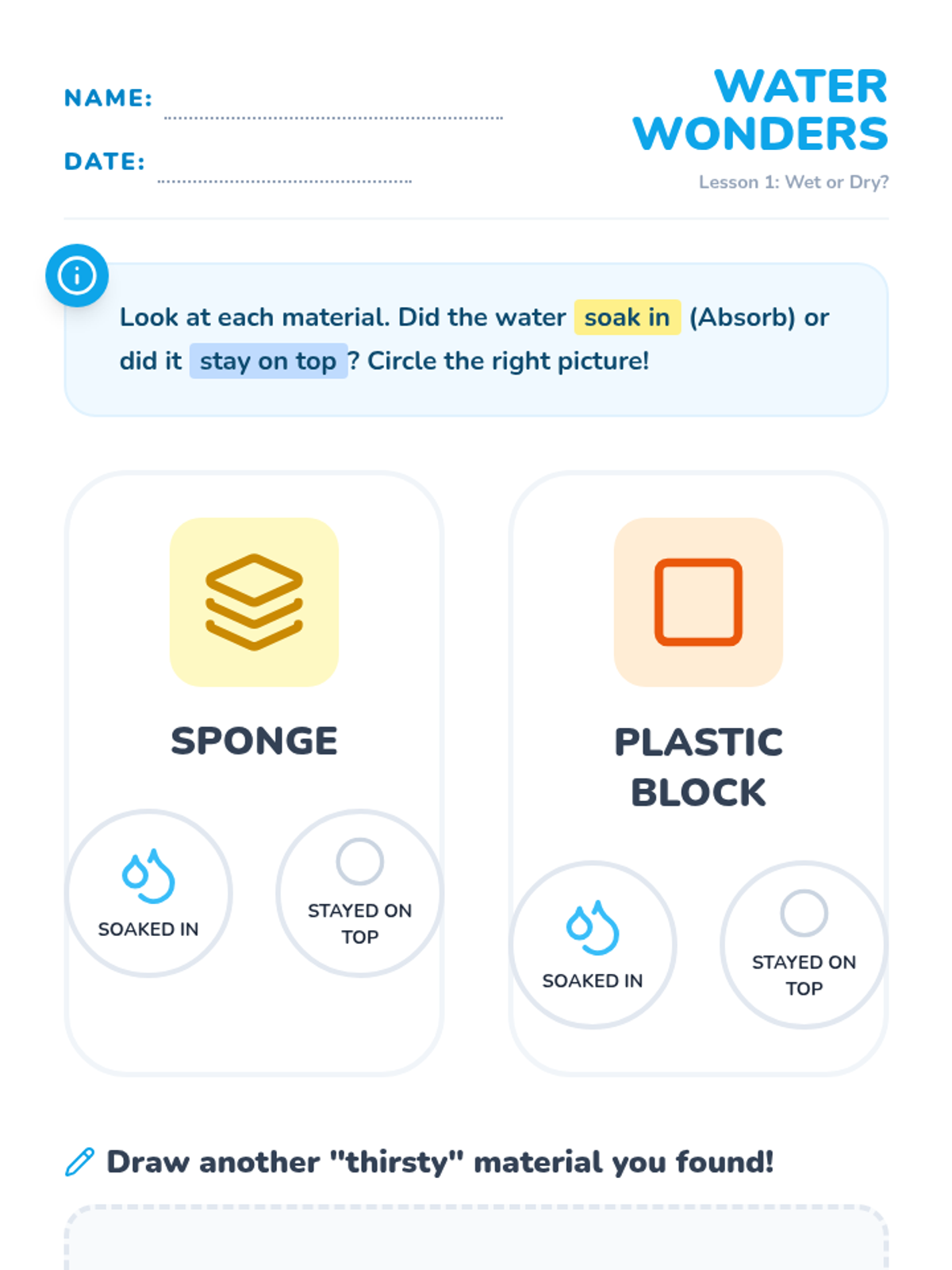
This kindergarten physics sequence explores how different materials interact with water. Students investigate absorbency and water resistance through hands-on experiments, leading to an engineering challenge where they design a waterproof boat.
Students explore how materials interact with light, moving from shadows and opacity to transparency and translucency, culminating in a sunshade design challenge.
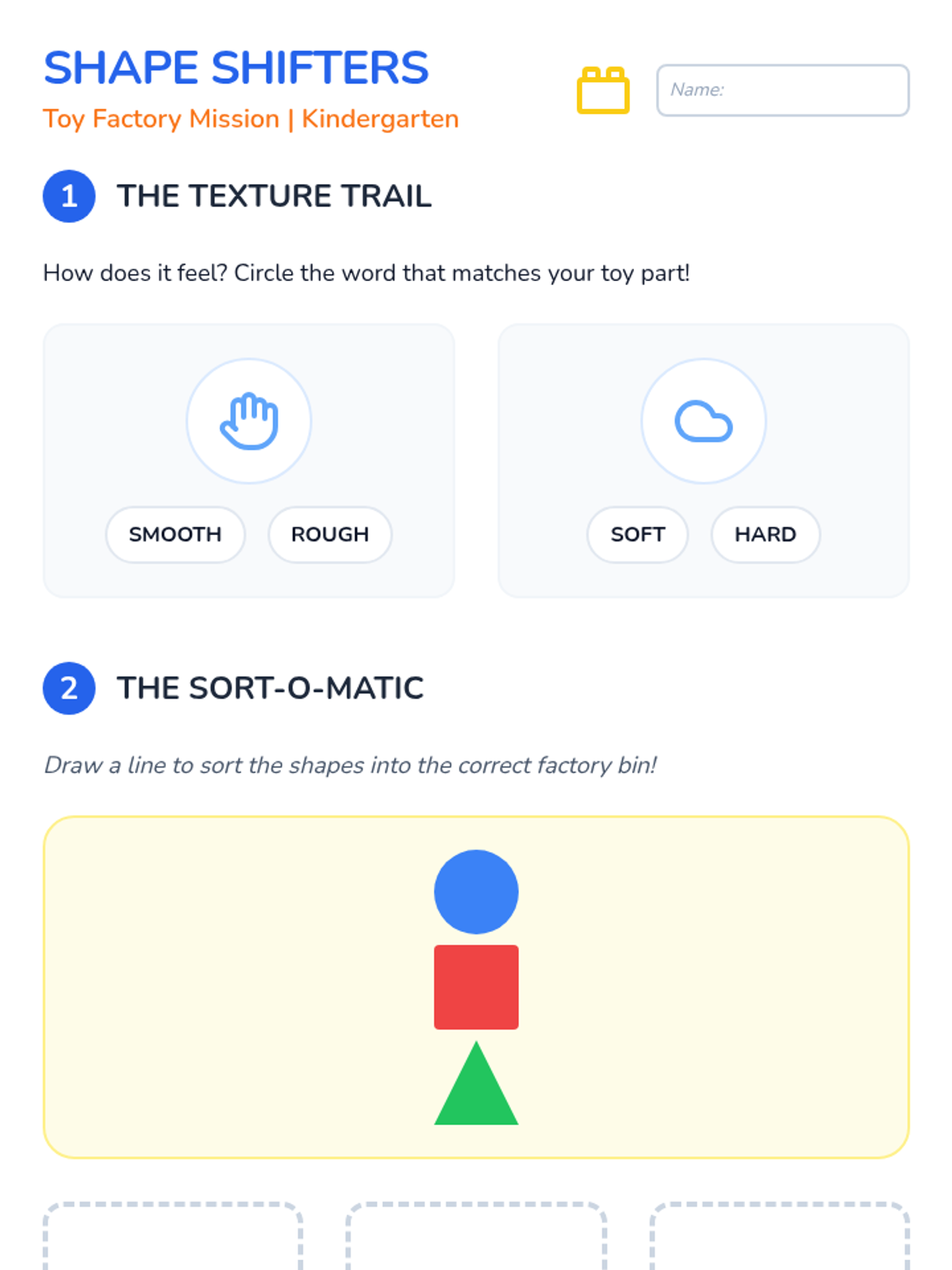
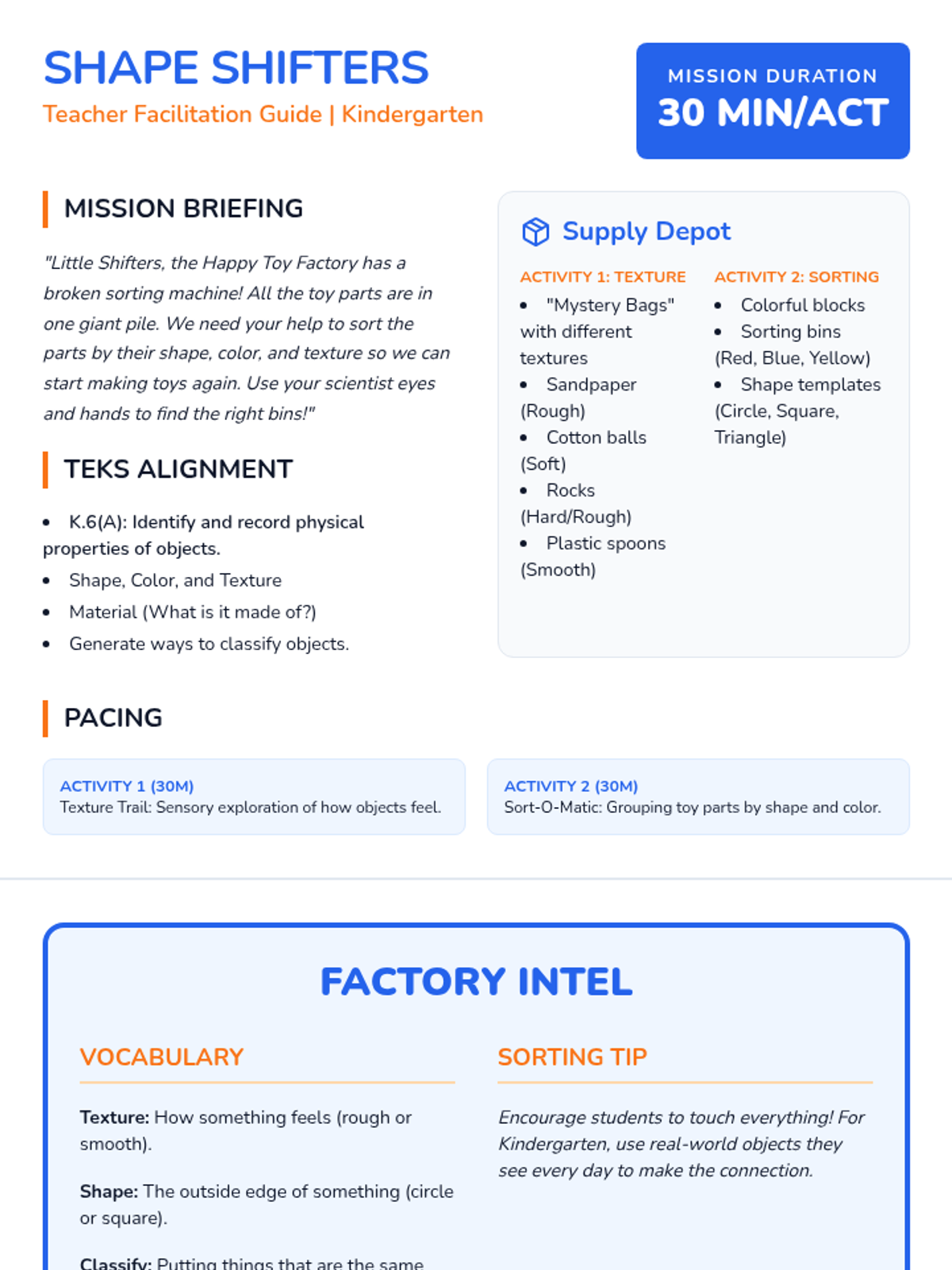
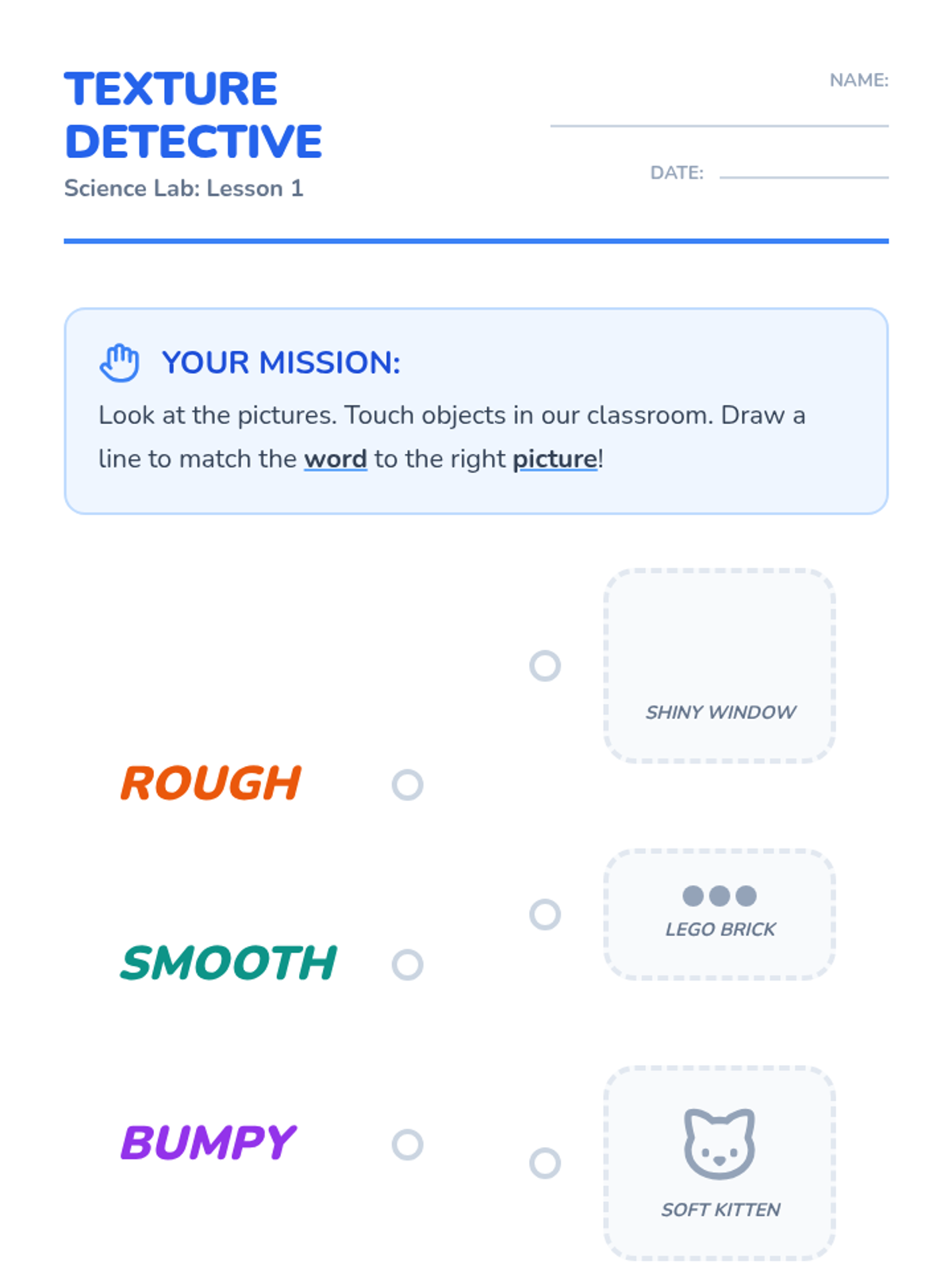
A Kindergarten science sequence exploring the tactile properties of materials (texture, hardness, flexibility) through sensory observation, classification, and inquiry-based challenges.
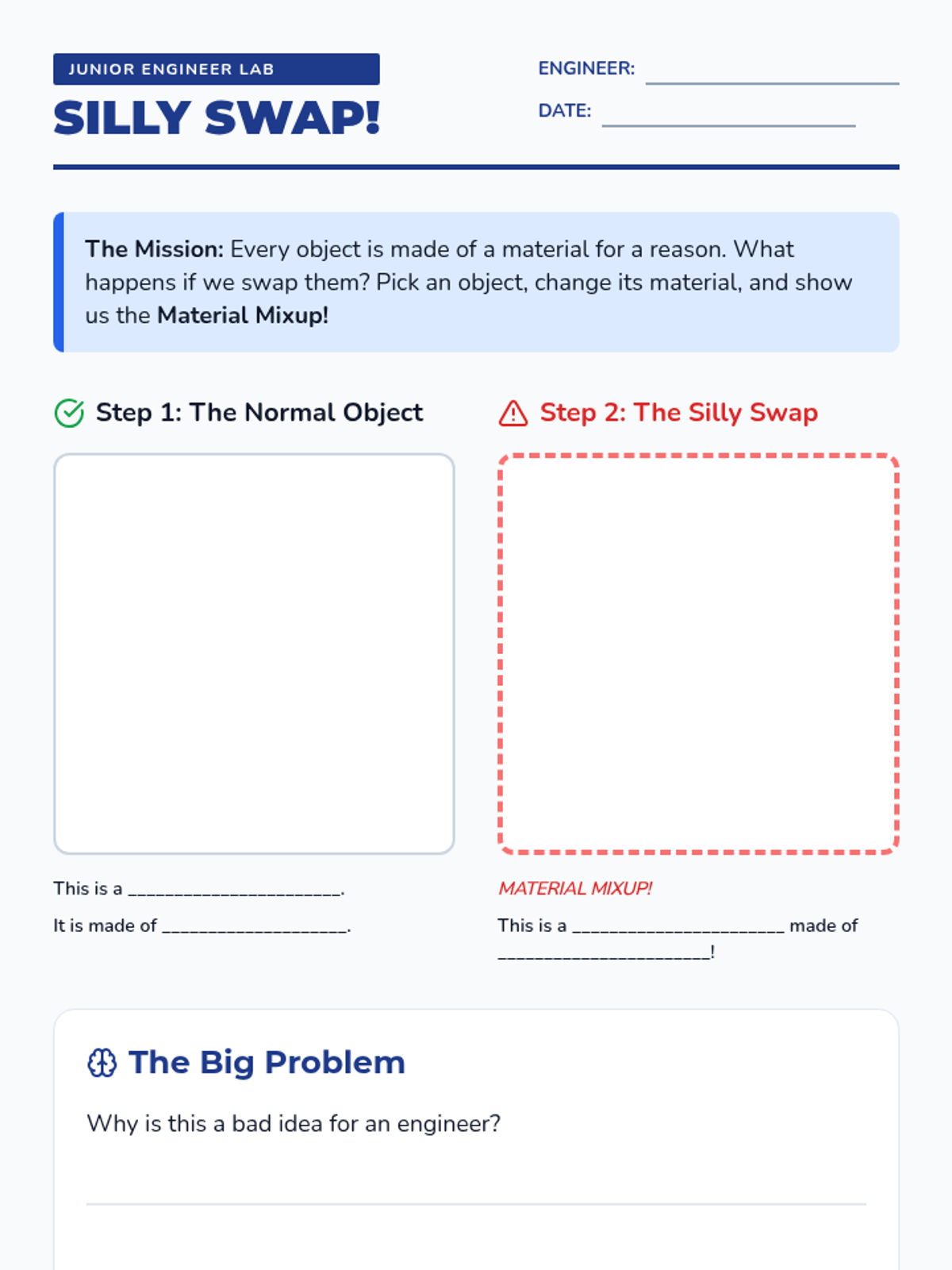
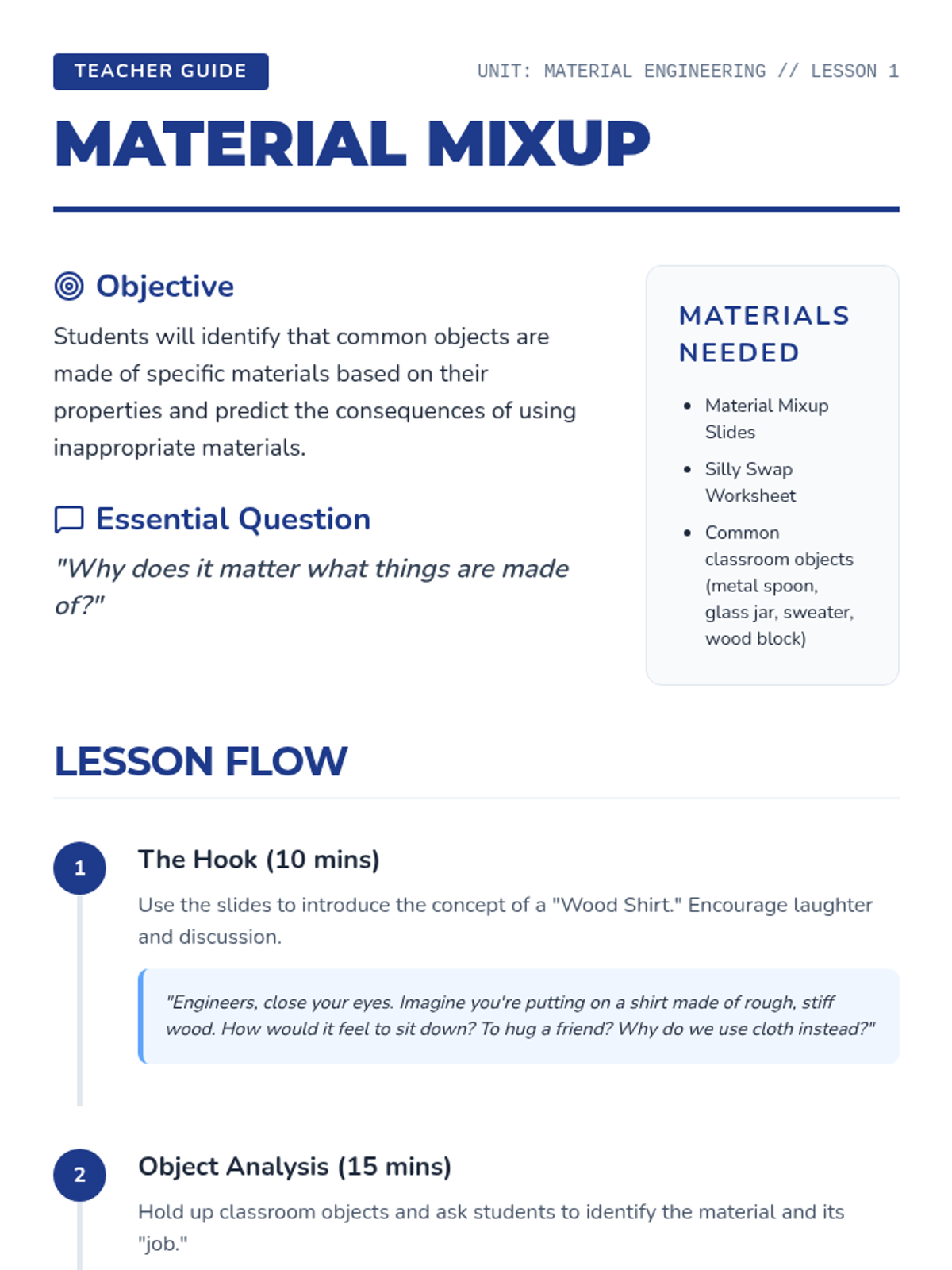
Students adopt the role of junior engineers to evaluate materials for specific purposes. They analyze everyday objects, test for water resistance and strength, and finally design and build a protective shelter for a toy animal.
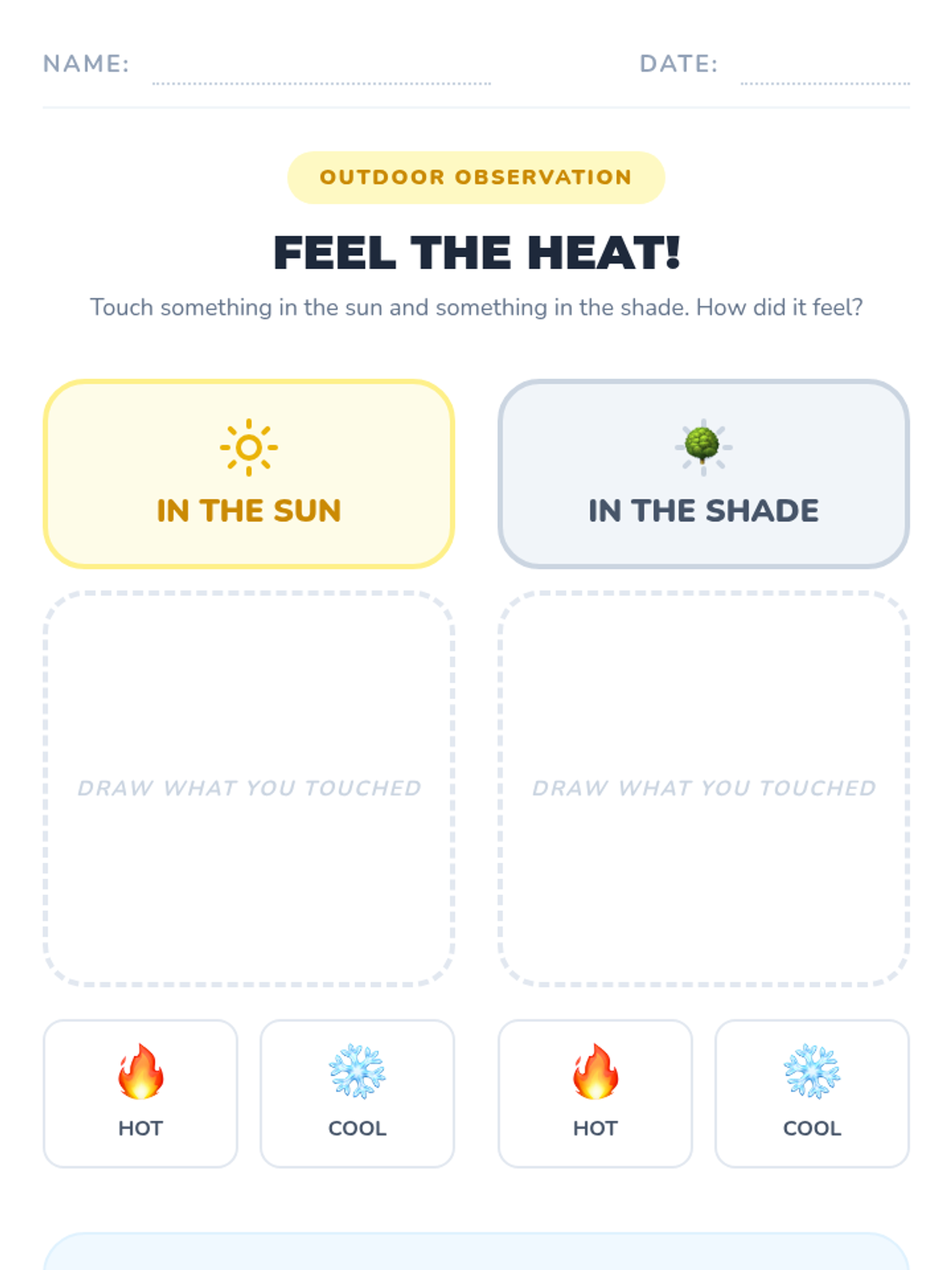
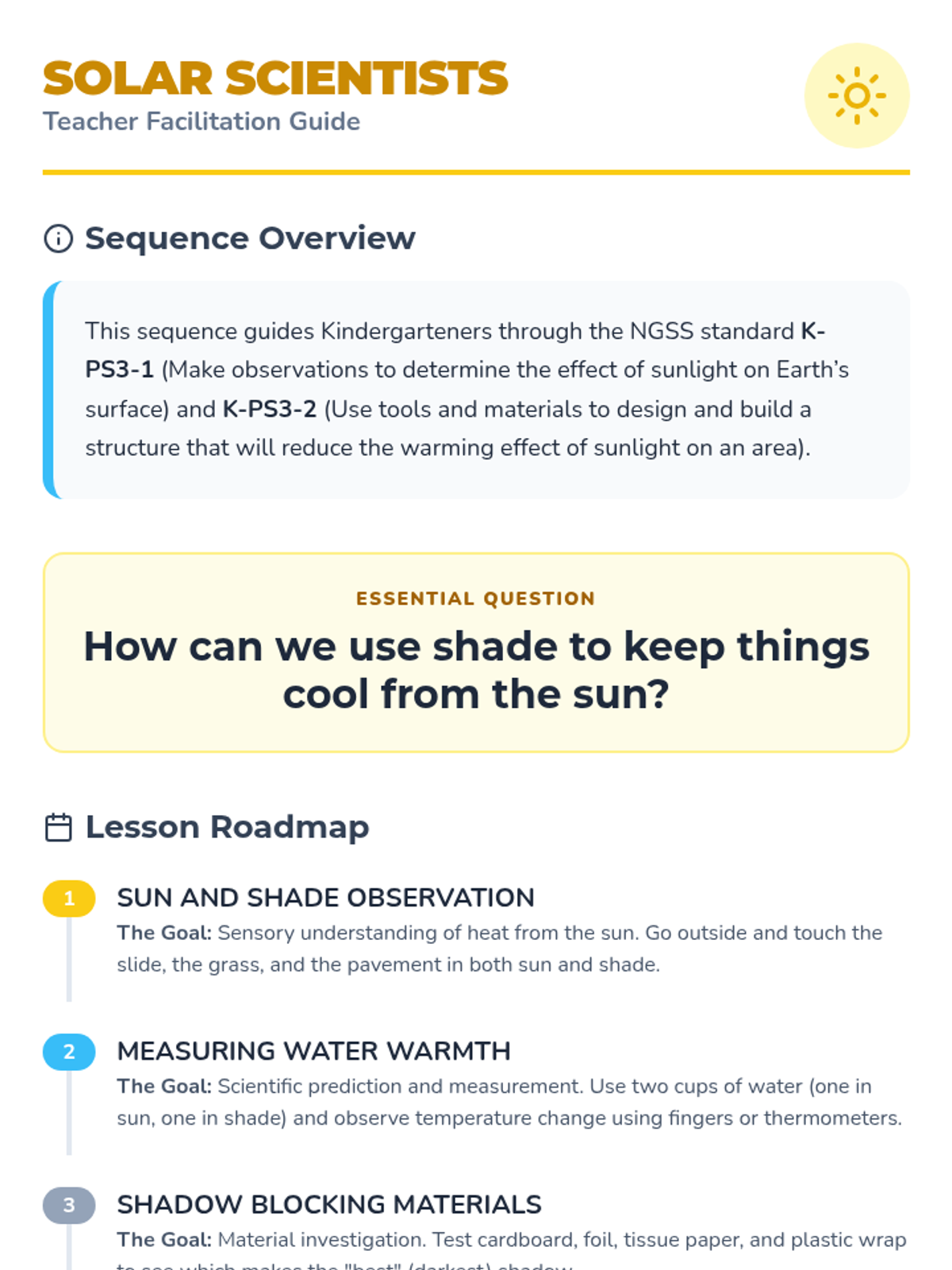
A project-based sequence for Kindergarten where students explore the sun's heat and use engineering design to build shade structures that protect ice cubes from melting. Students progress from sensory observations to data collection and finally to a hands-on construction challenge.
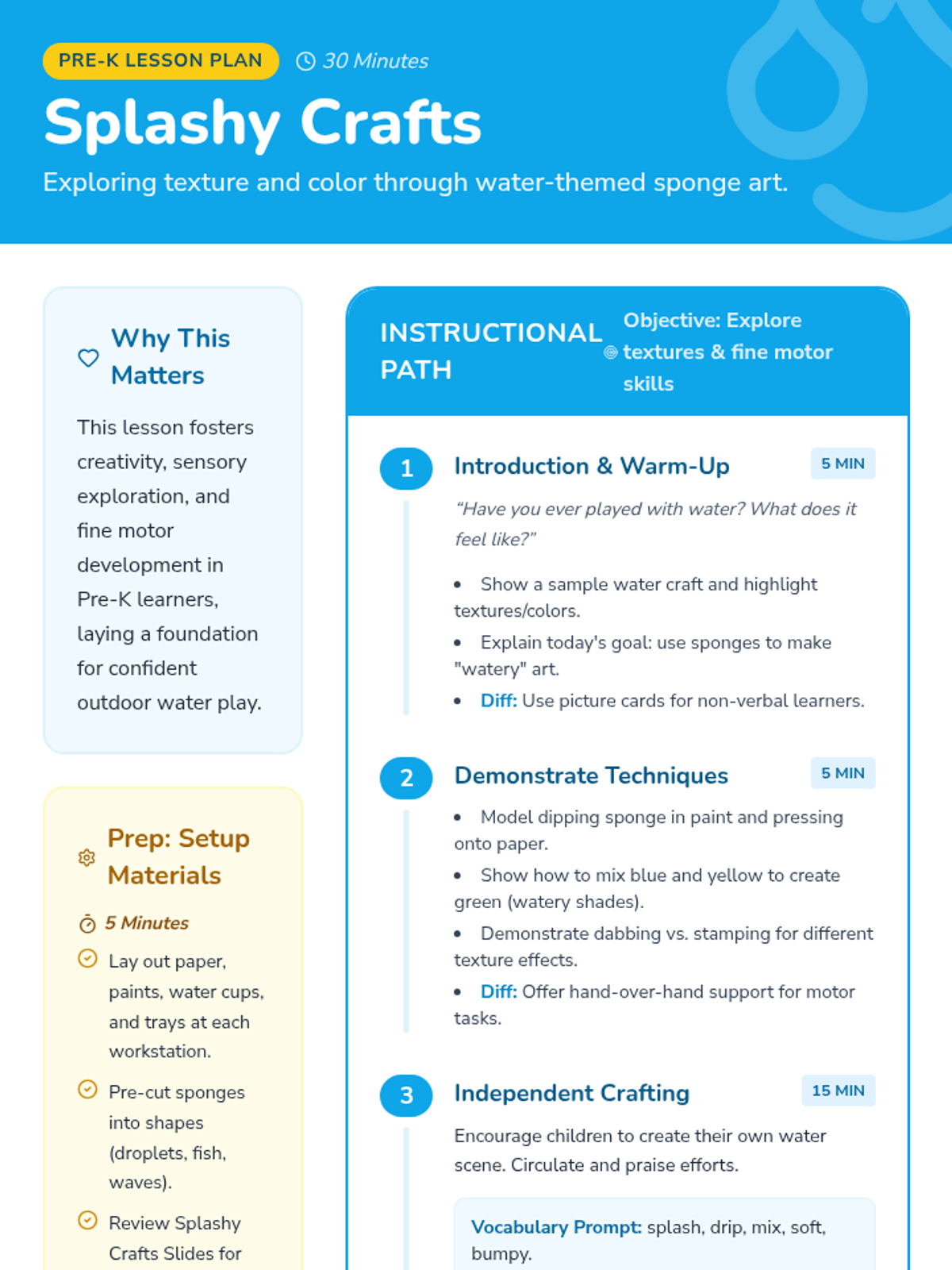
A sensory-rich Pre-K unit where students explore the properties of water through hands-on crafting, nature exploration, engineering, and dramatic play. This sequence fosters fine motor skills, creative expression, and early scientific inquiry.
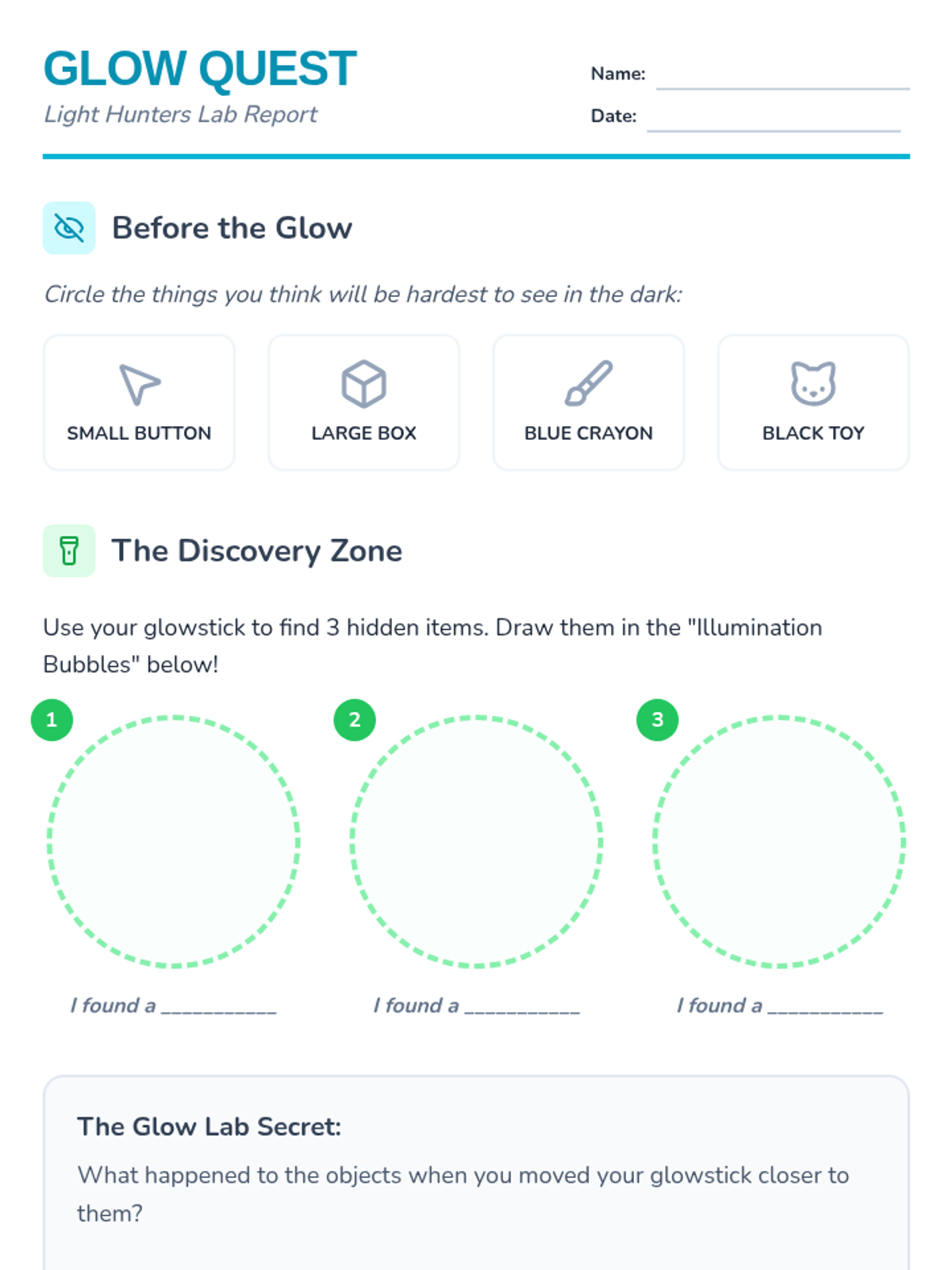
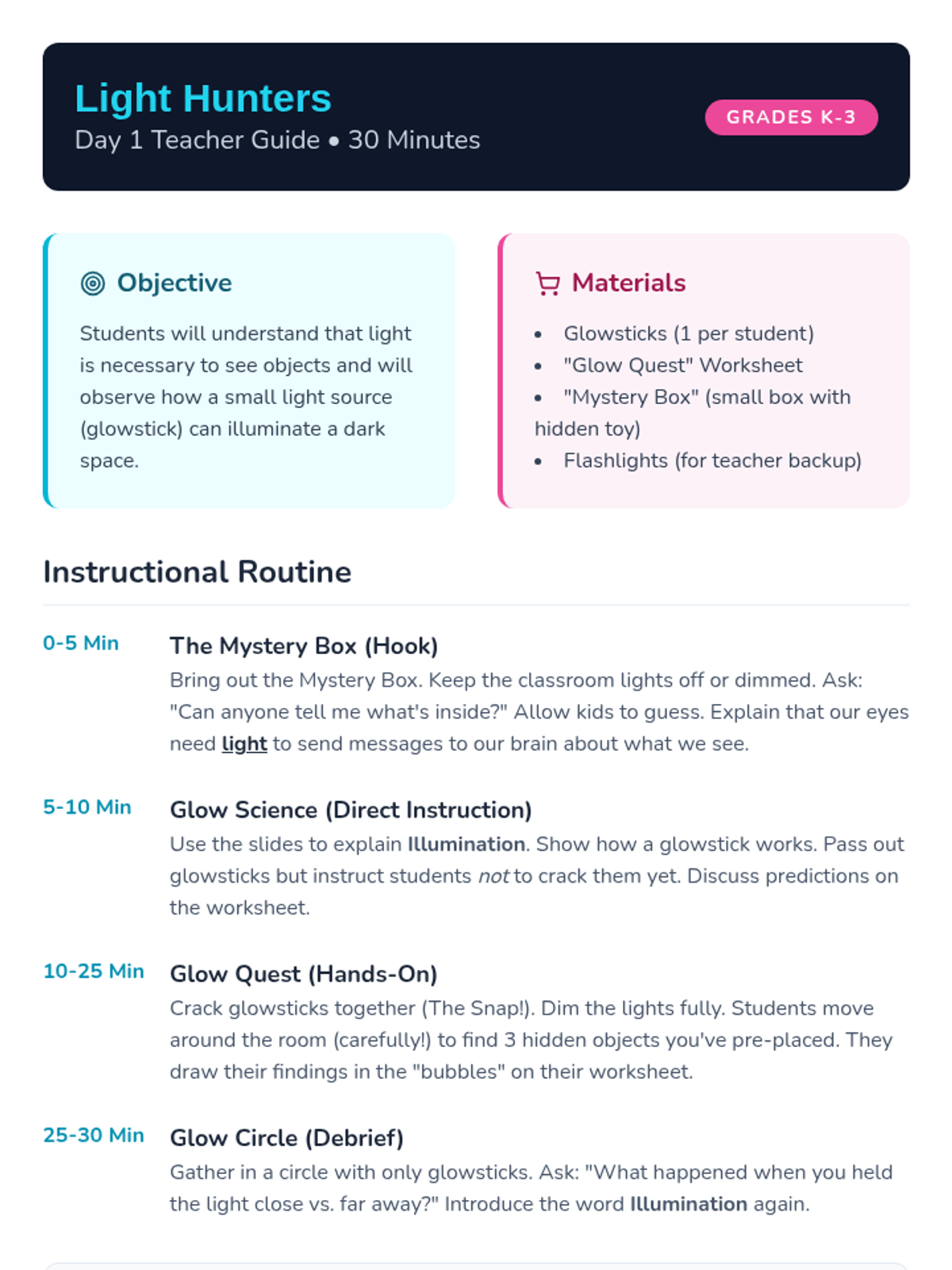
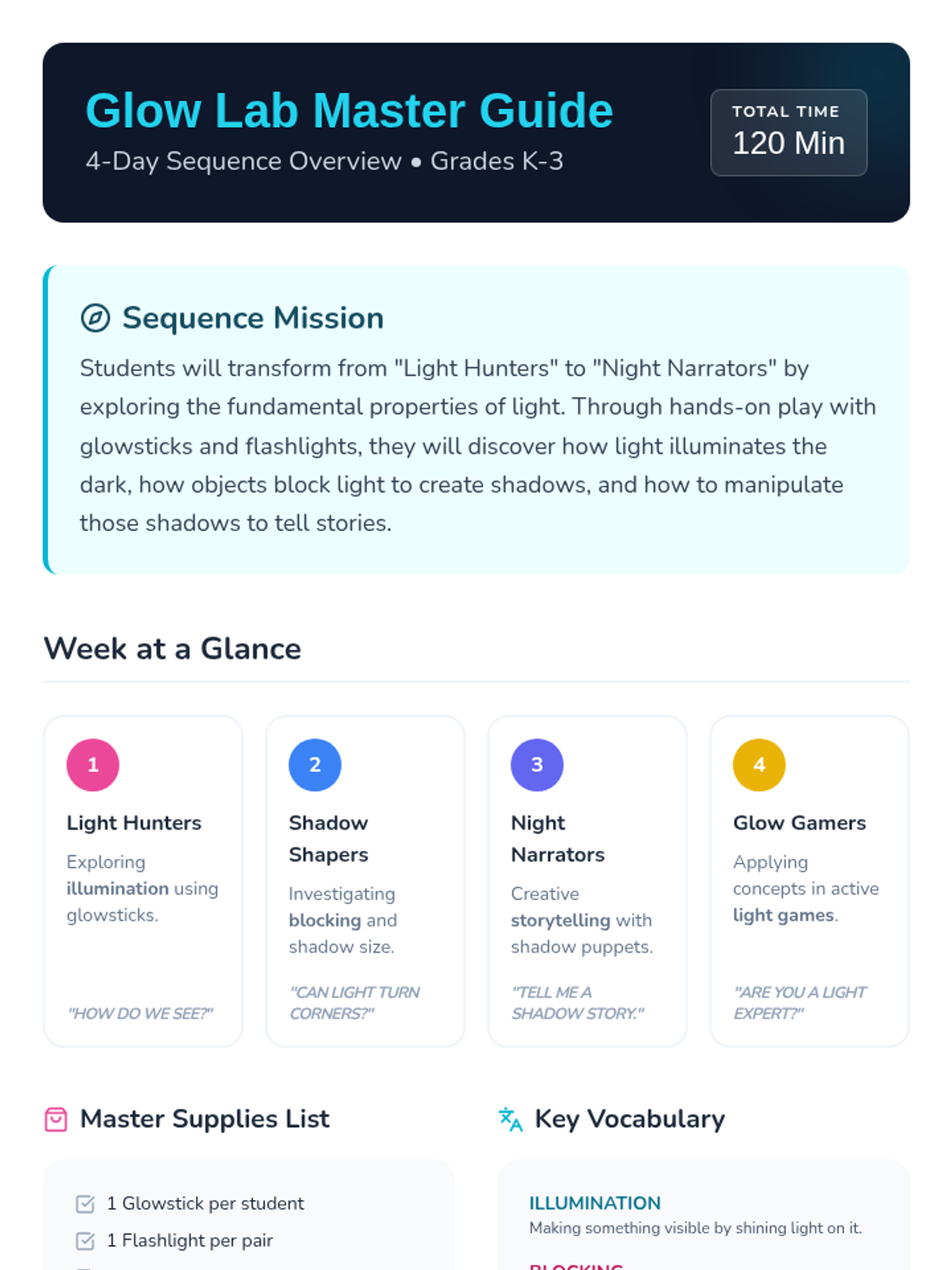
A four-day introductory science sequence for grades K-3 exploring the properties of light, illumination, and shadows through hands-on play with glowsticks and flashlights. Students will transition from understanding light sources to creating complex shadow narratives and participating in light-based games.
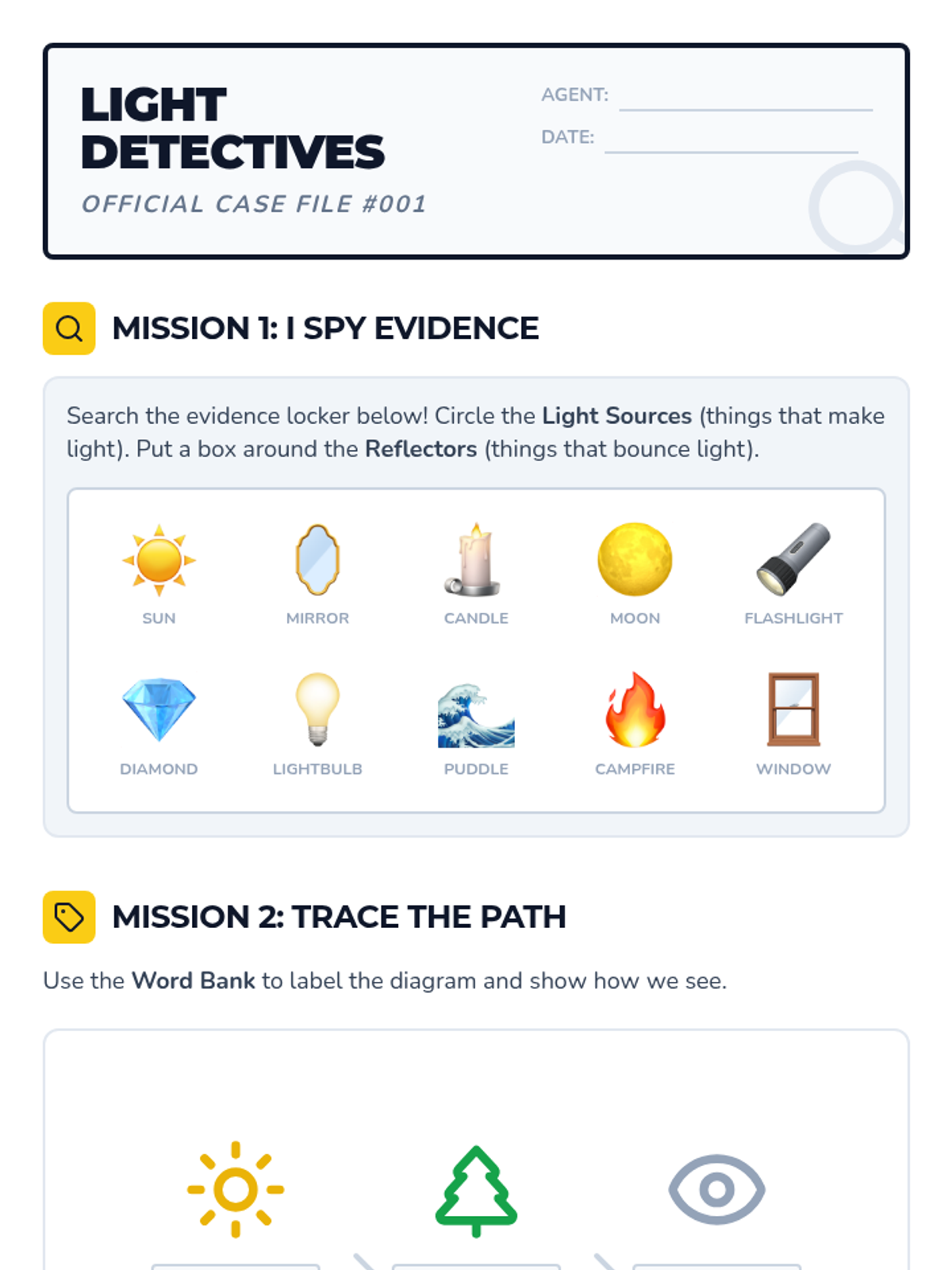
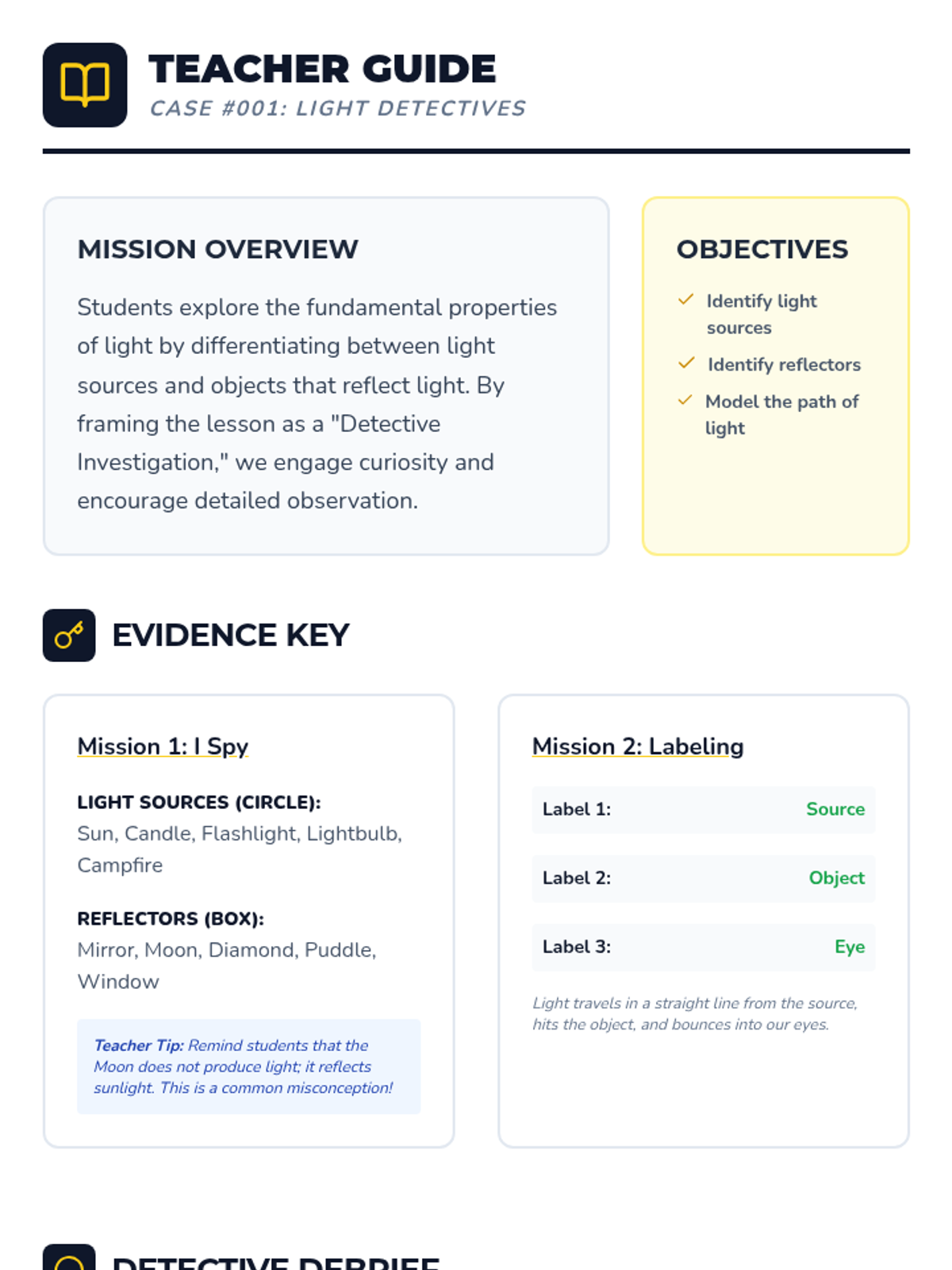
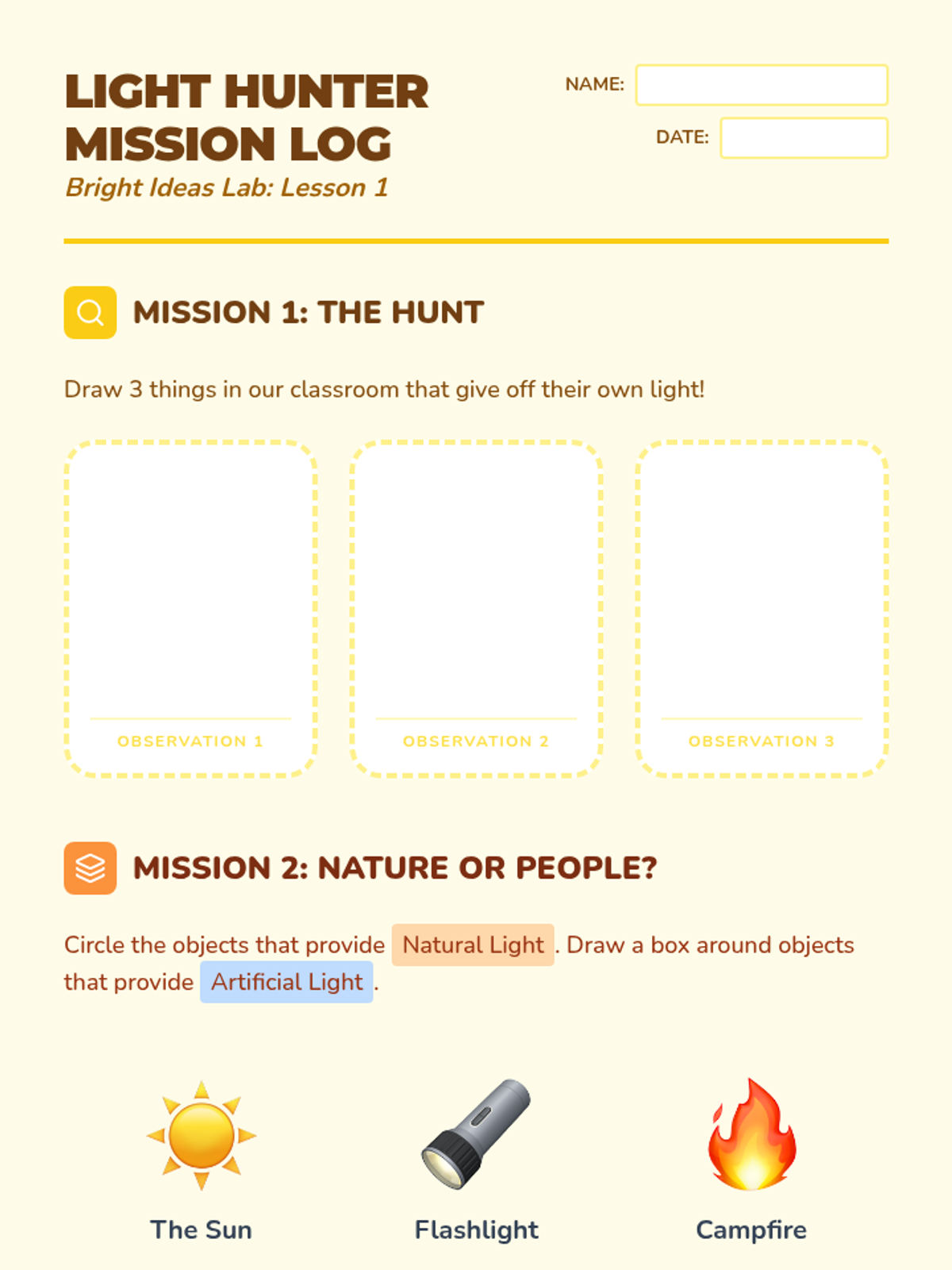
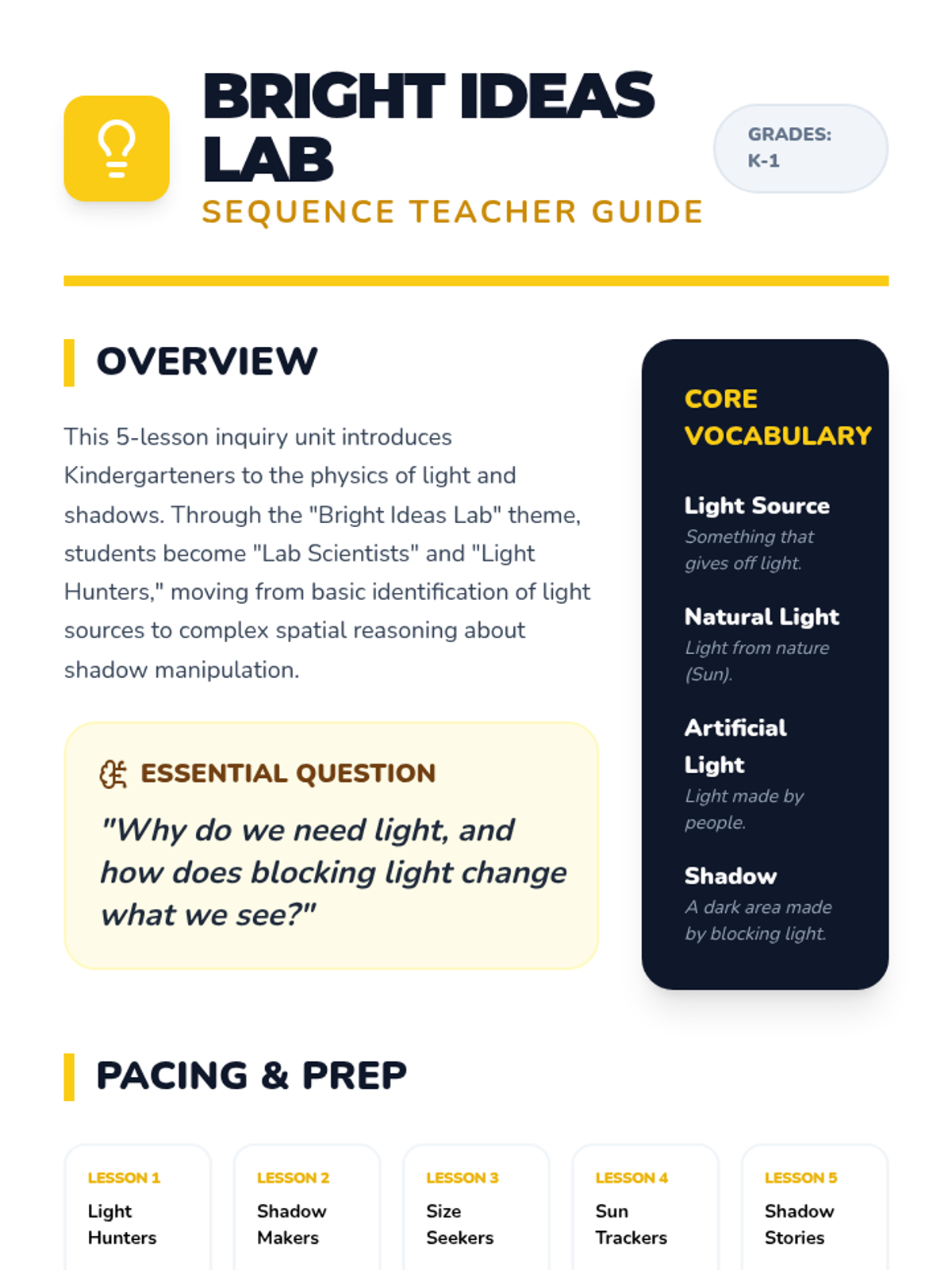
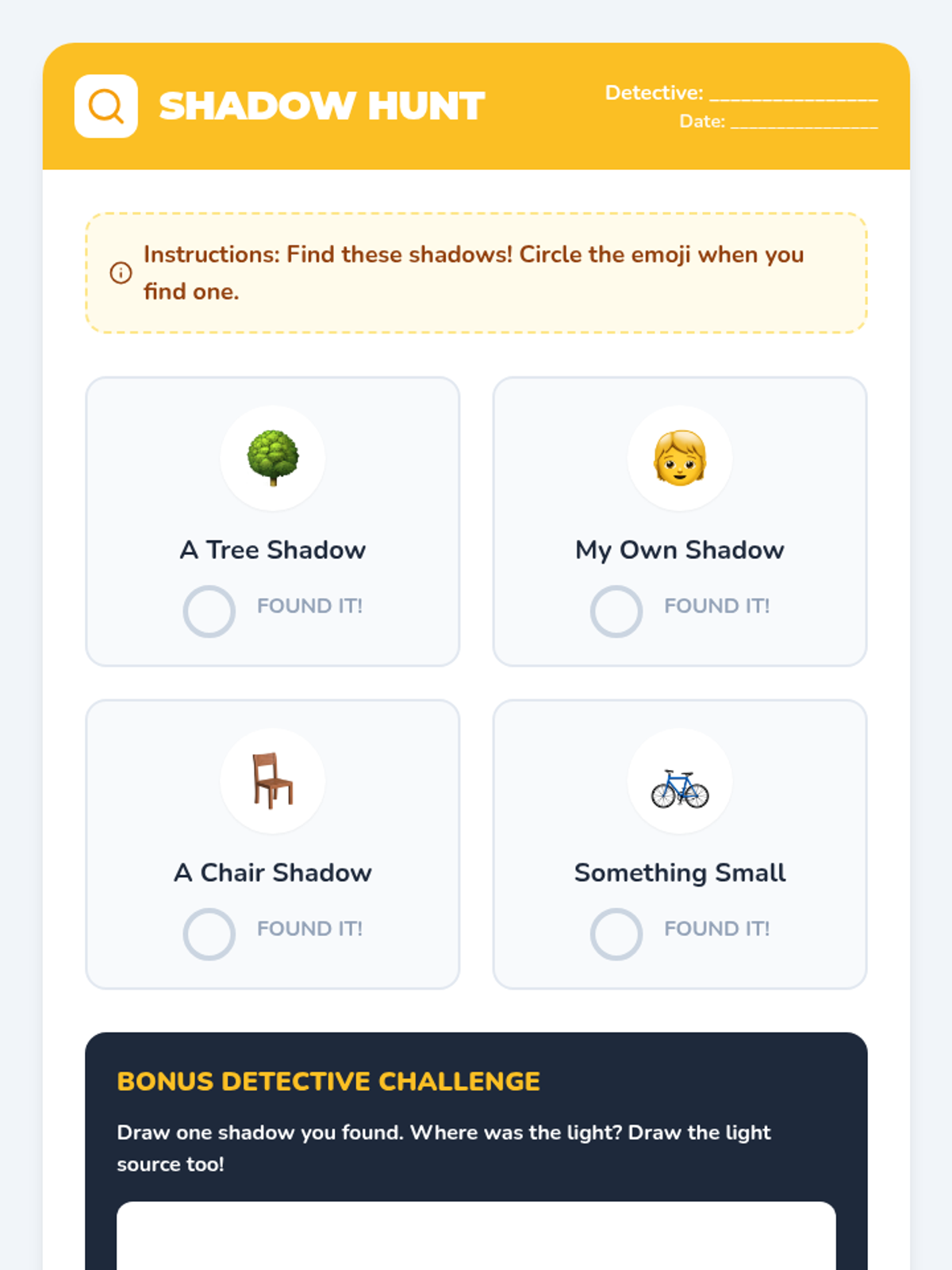
A primary science and ELA sequence where students become 'Light Detectives' to investigate how light works, identifying sources, reflections, and shadows in their environment.
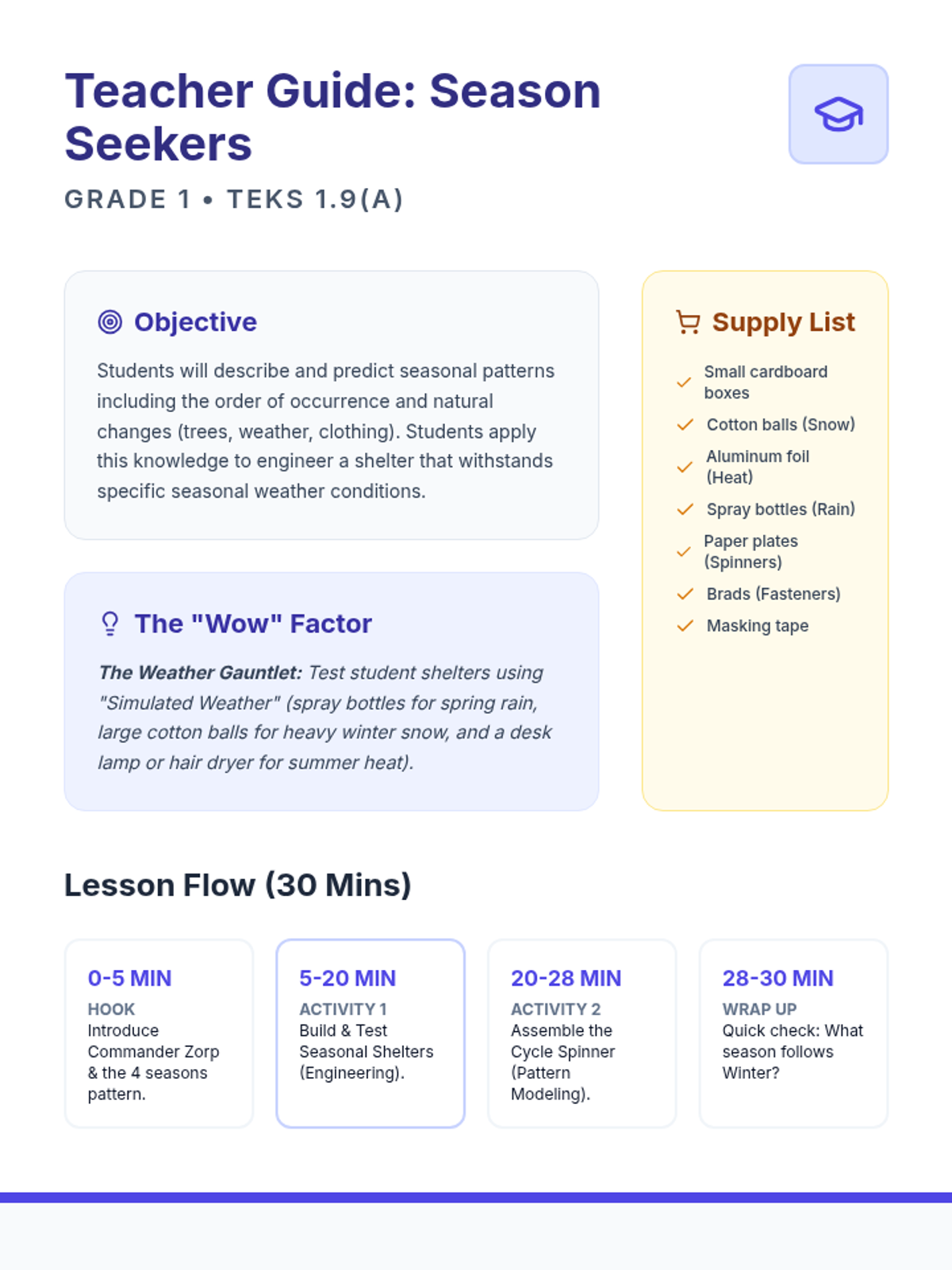
A comprehensive K-5 STEM curriculum covering Texas TEKS for Earth and Space Science. Each grade level features two hands-on engineering challenges, interactive slide decks, and STAAR-aligned assessment tools focusing on seasons, lunar patterns, solar system models, and Earth's rotation.
A Pre-K physics unit exploring transparency, translucency, and opacity through hands-on flashlight testing, color filters, water refraction, and art projects. Students develop observation and sorting skills as they investigate how light interacts with different materials.
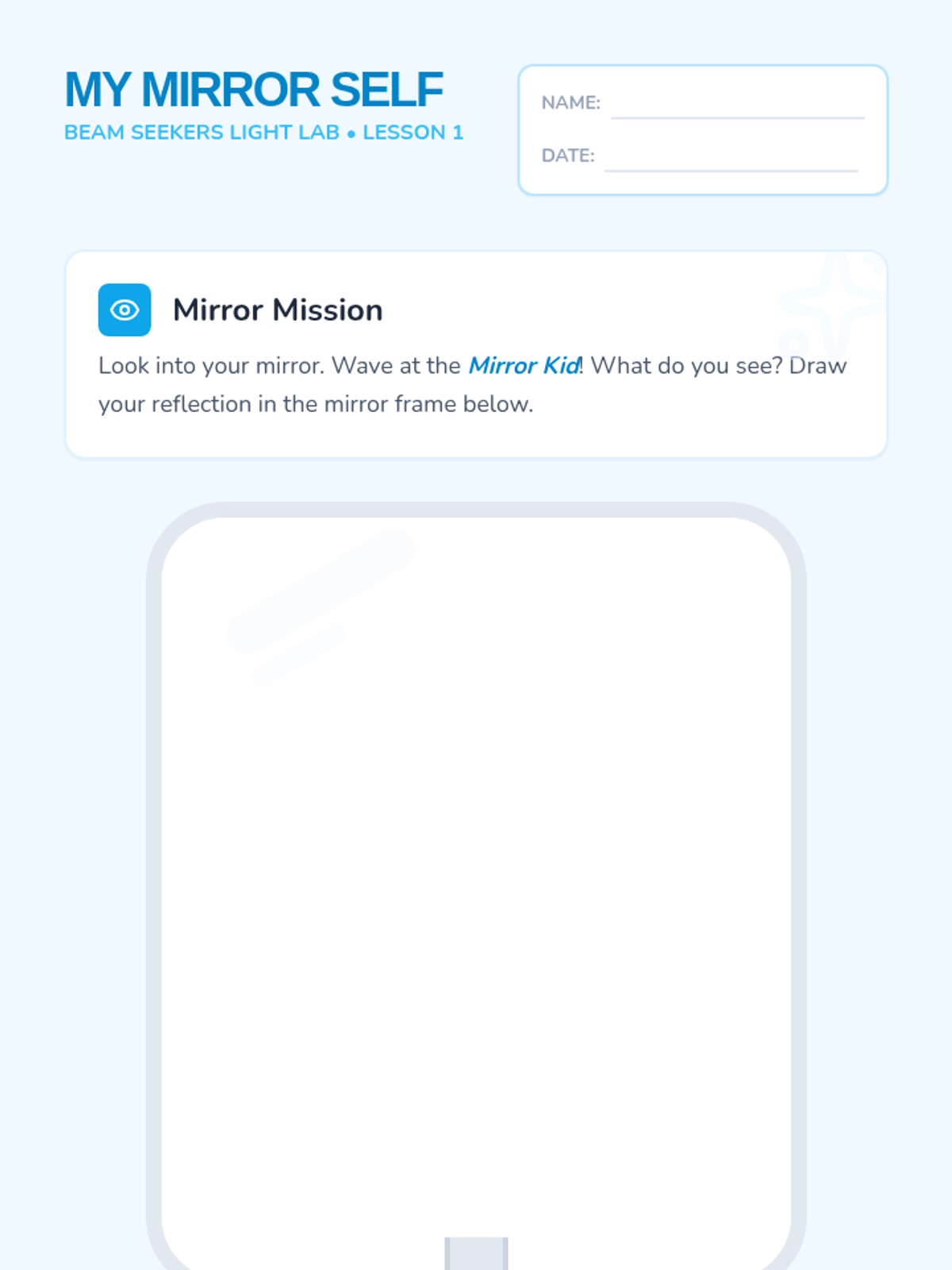
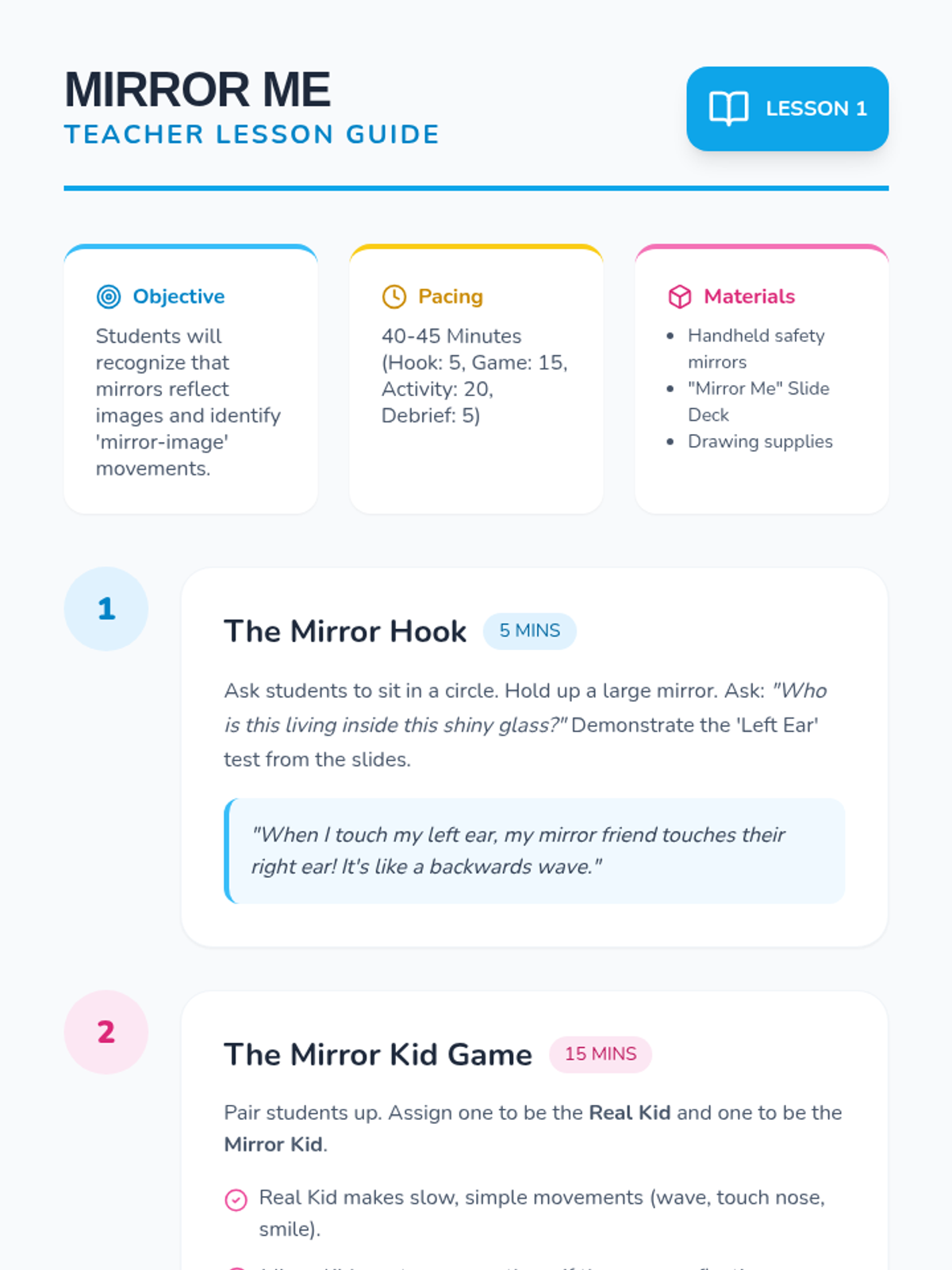
A Kindergarten science sequence exploring the physics of light through reflection. Students engage in hands-on activities with mirrors and flashlights to understand how light bounces, travels in straight lines, and creates symmetry.
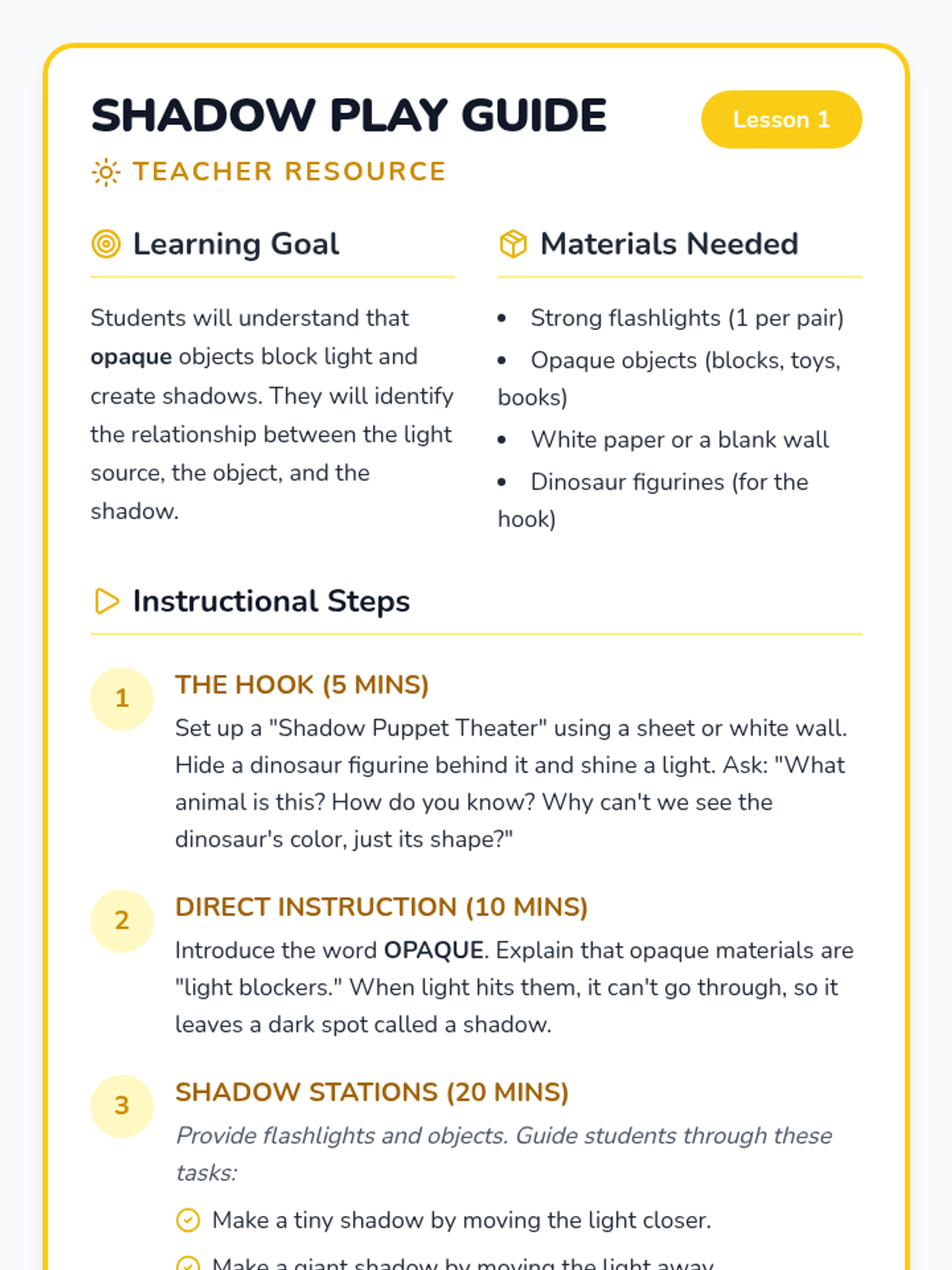
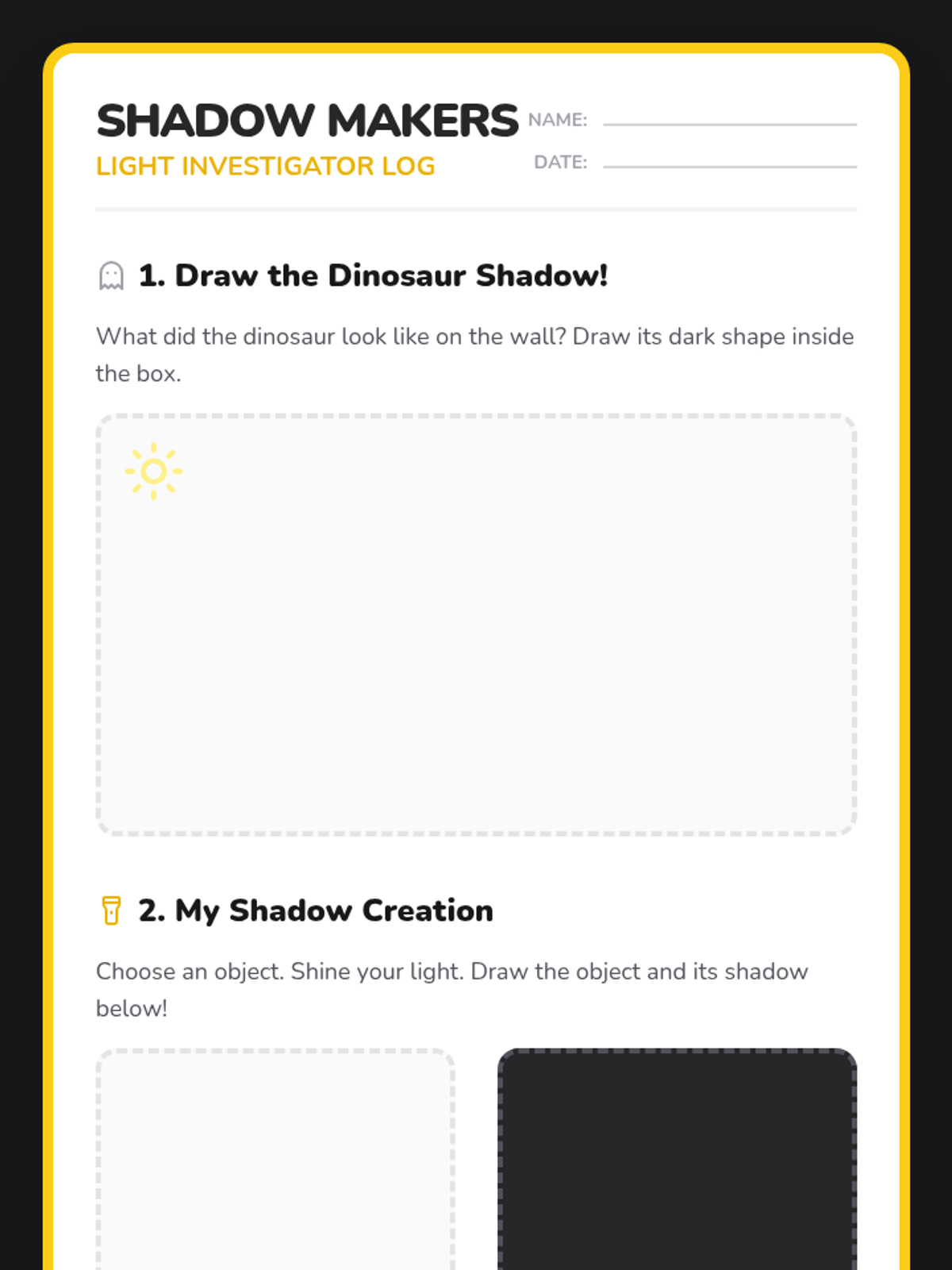
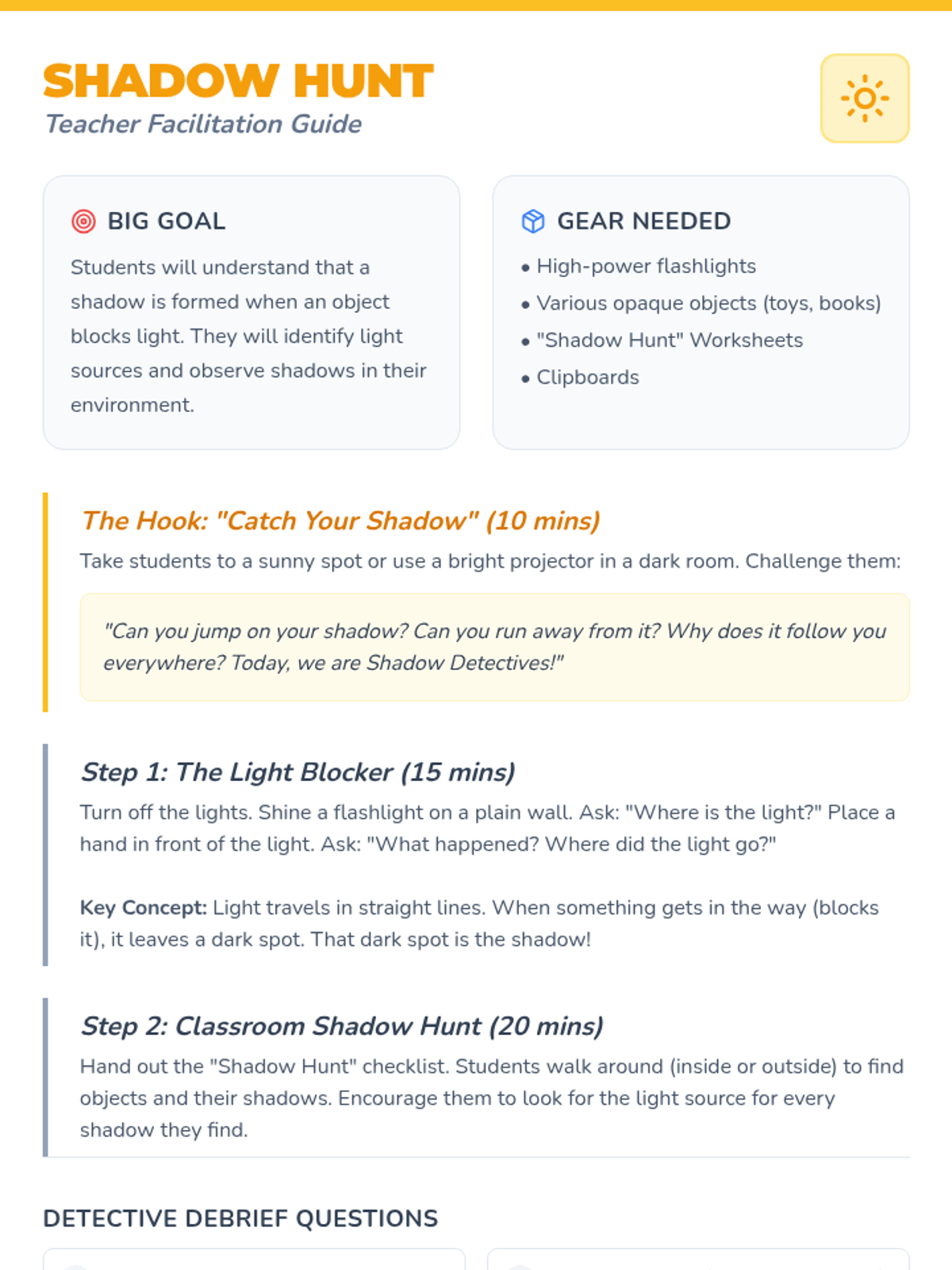
An inquiry-based exploration for Kindergarteners to understand light sources, the formation of shadows, and how moving objects can change shadow size and shape. Students move from classroom investigations to outdoor observations and creative shadow puppet storytelling.
A hands-on exploration for Kindergarteners to discover how shadows are formed and how they change based on the Sun's position in the sky, concluding with the Sun's role as a heat source.
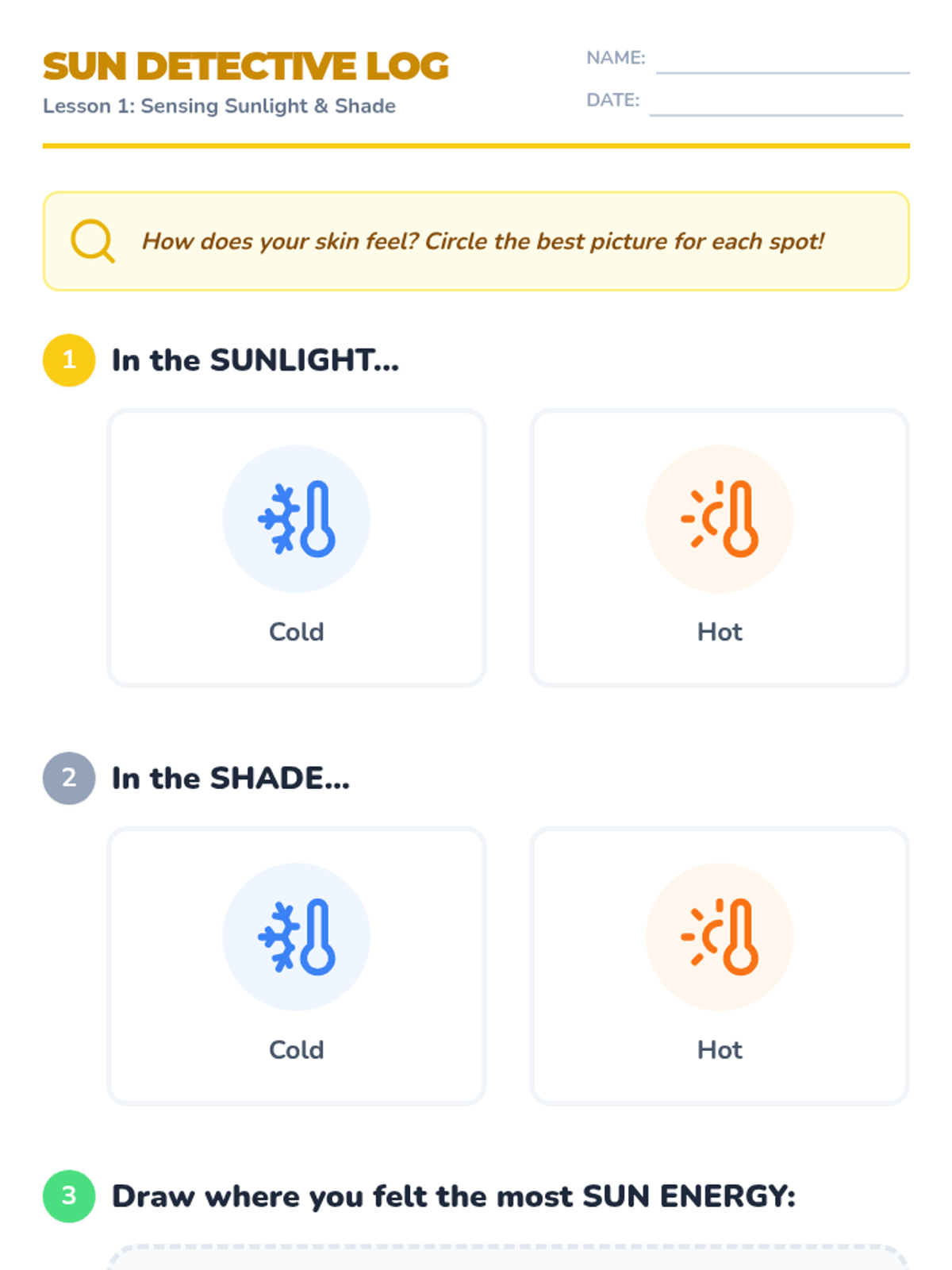
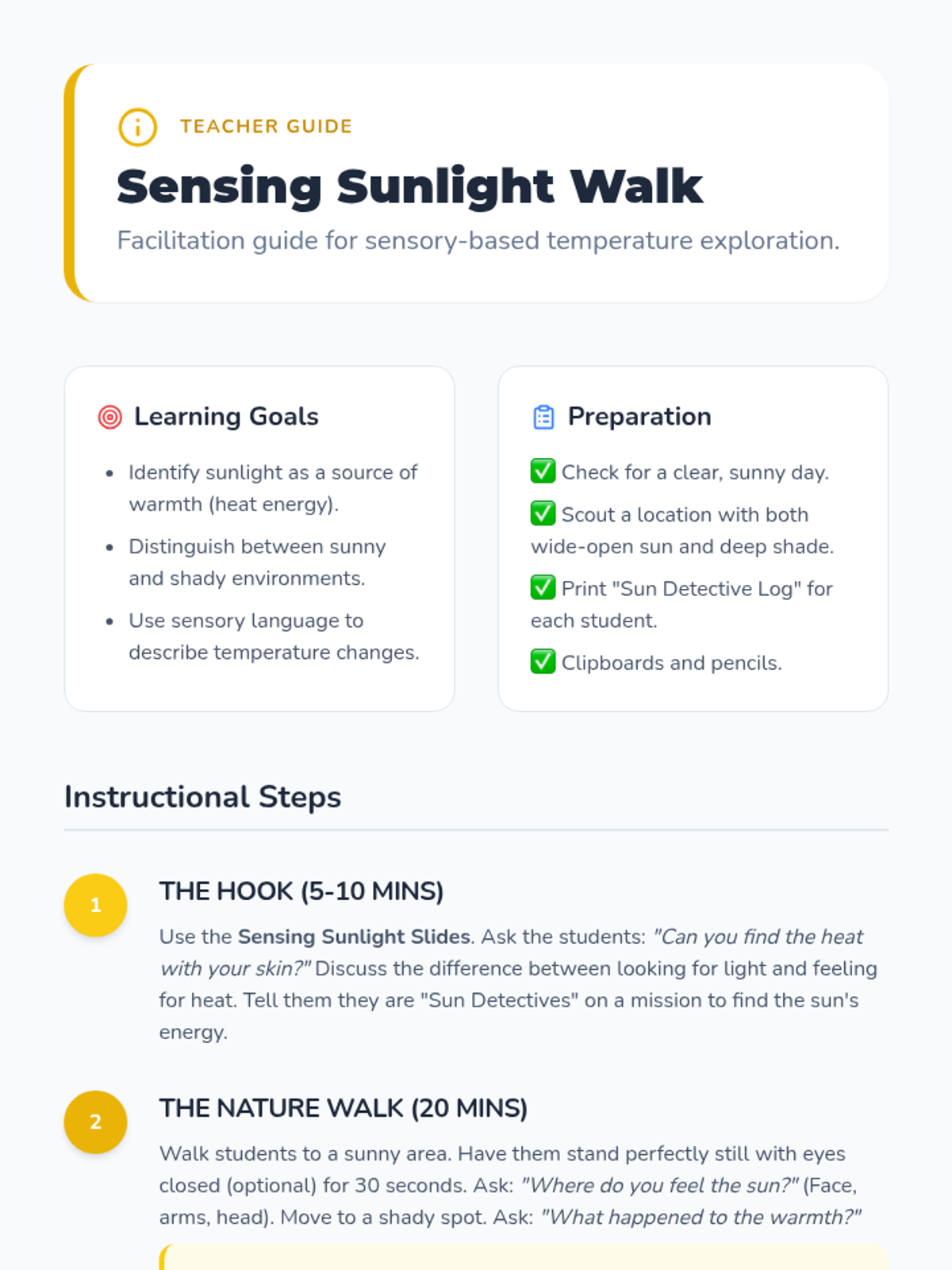
A Kindergarten science sequence where students explore sunlight as a source of heat and energy through sensory walks, ice-melting experiments, color absorption tests, and engineering shade structures.
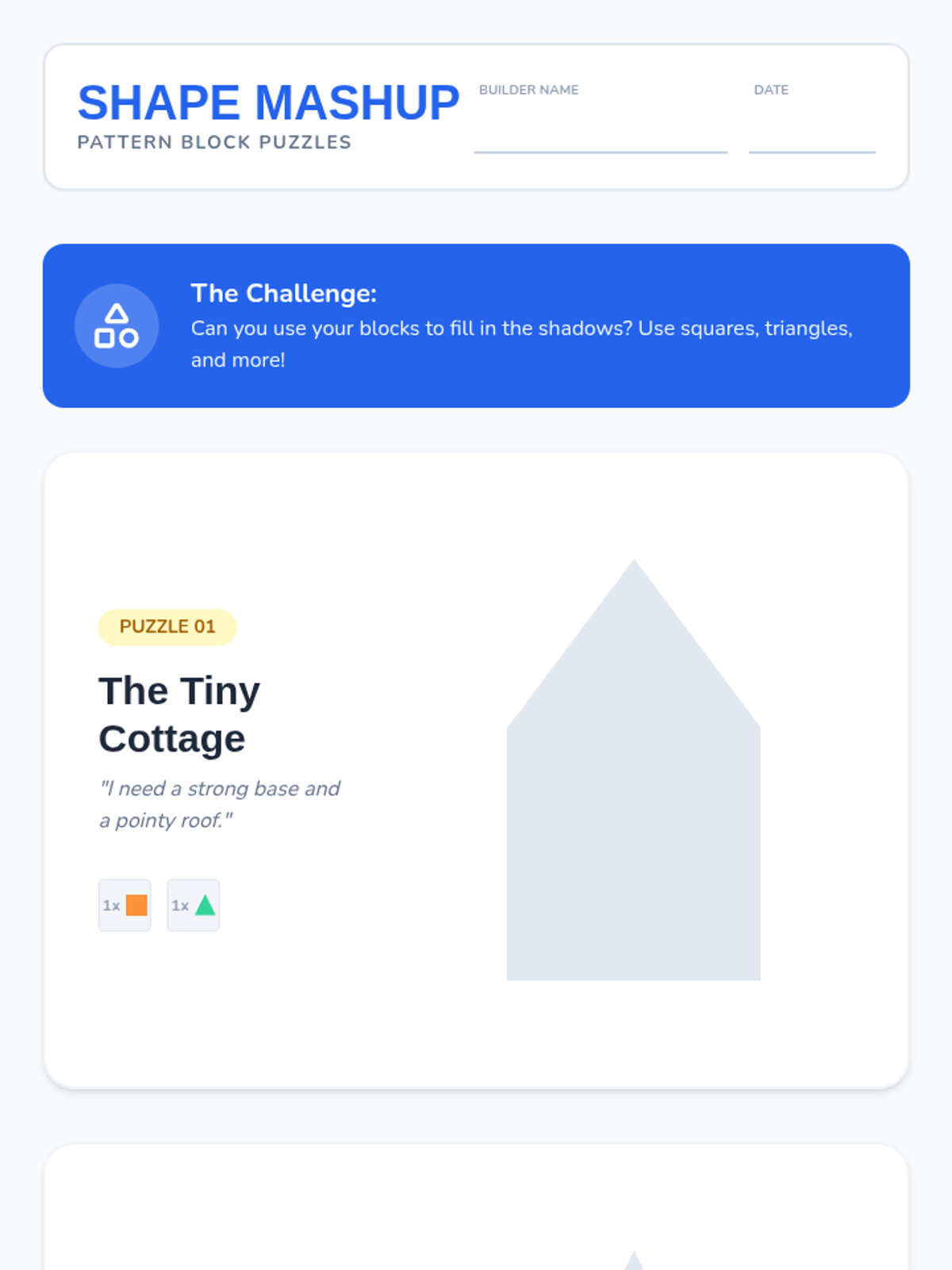
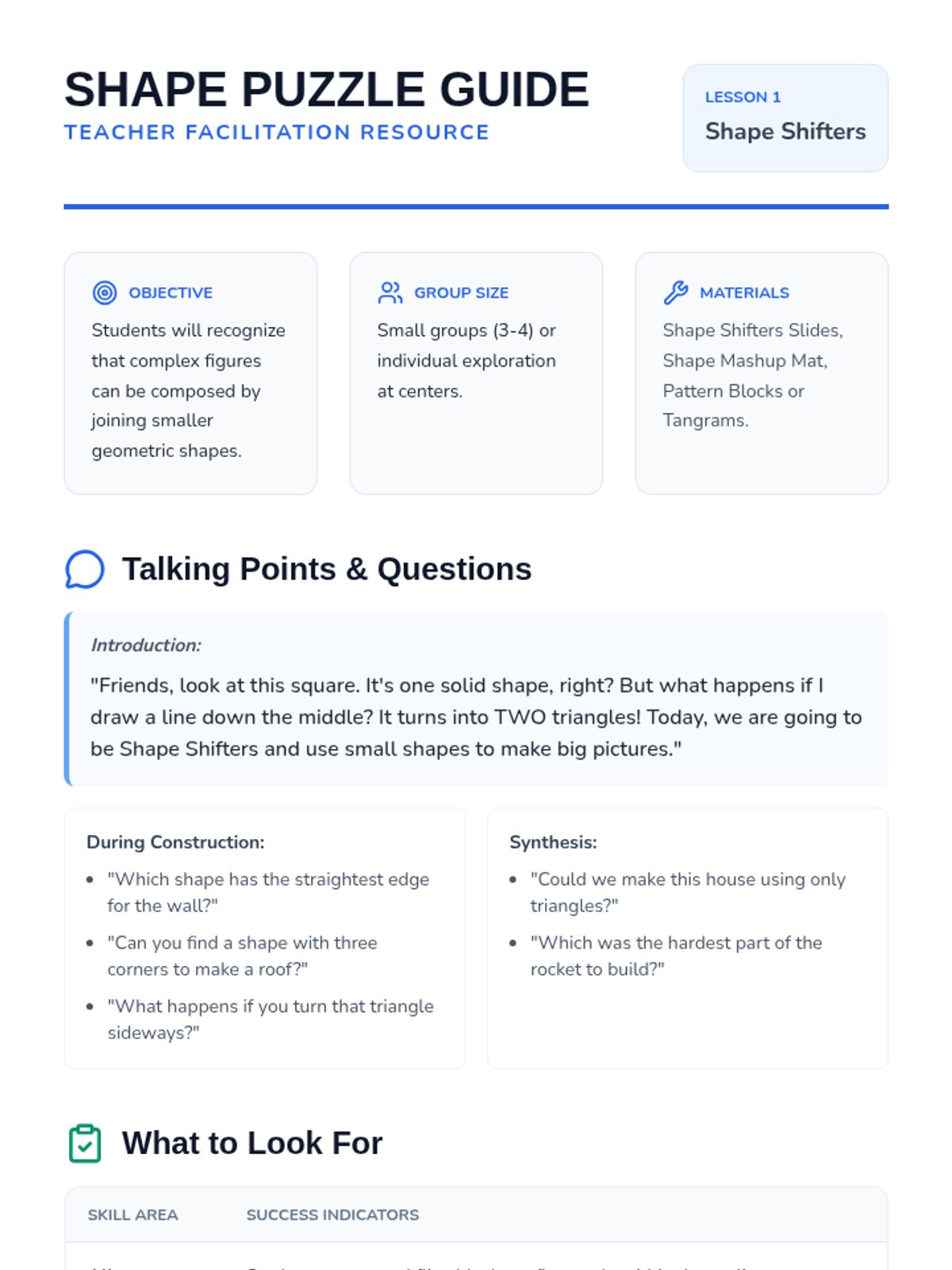
A Pre-K engineering sequence exploring shape composition, stability, and structural design through hands-on block play and spatial reasoning challenges.
A hands-on exploration of force, weight, and collisions for Kindergarteners. Students use games like bowling and dominoes to understand how mass affects motion and how objects interact when they crash.
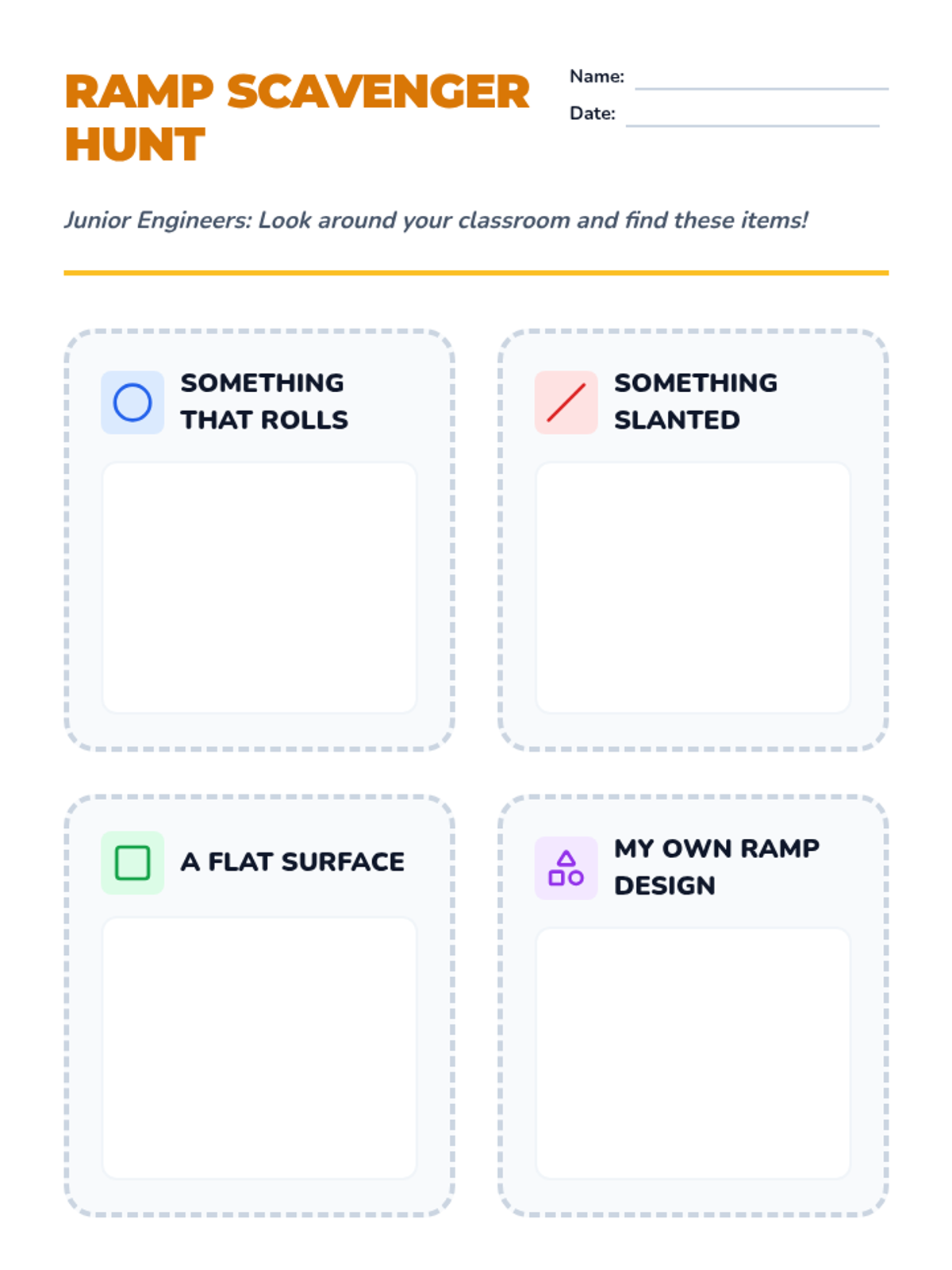
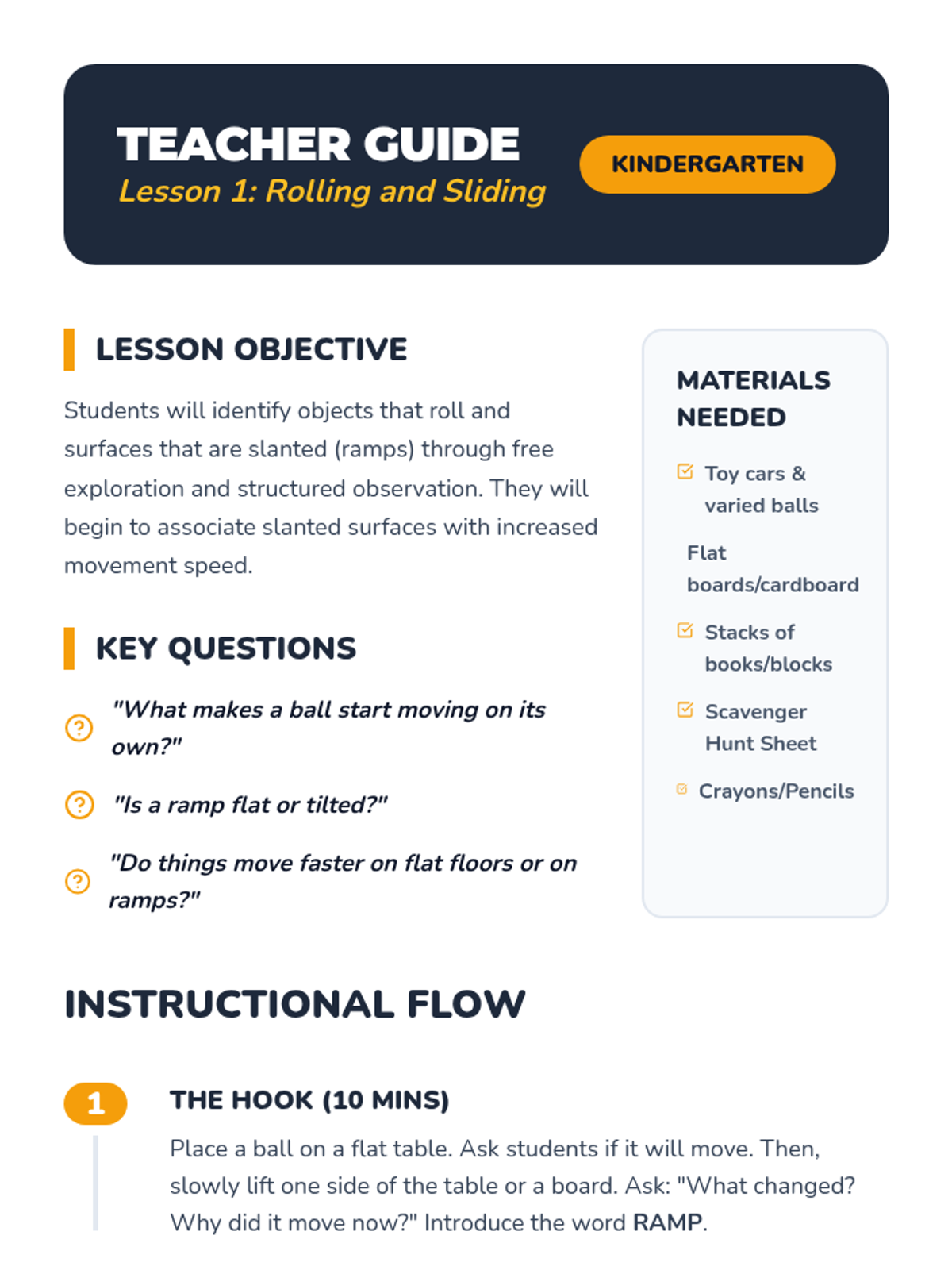
A Kindergarten science sequence exploring mechanical energy through ramps. Students investigate how height, surface texture, and weight affect the speed and distance of rolling objects, culminating in an engineering design challenge.
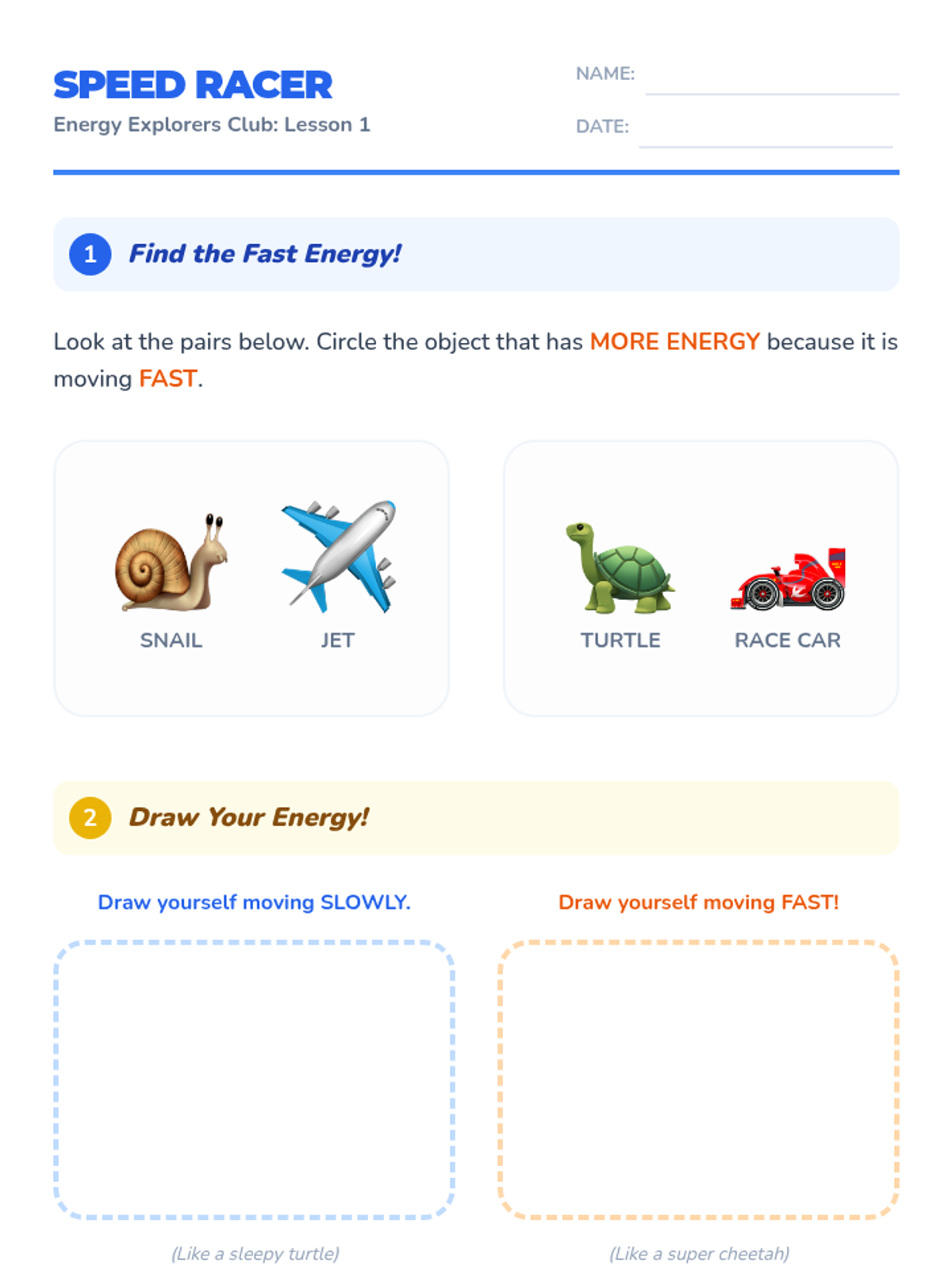
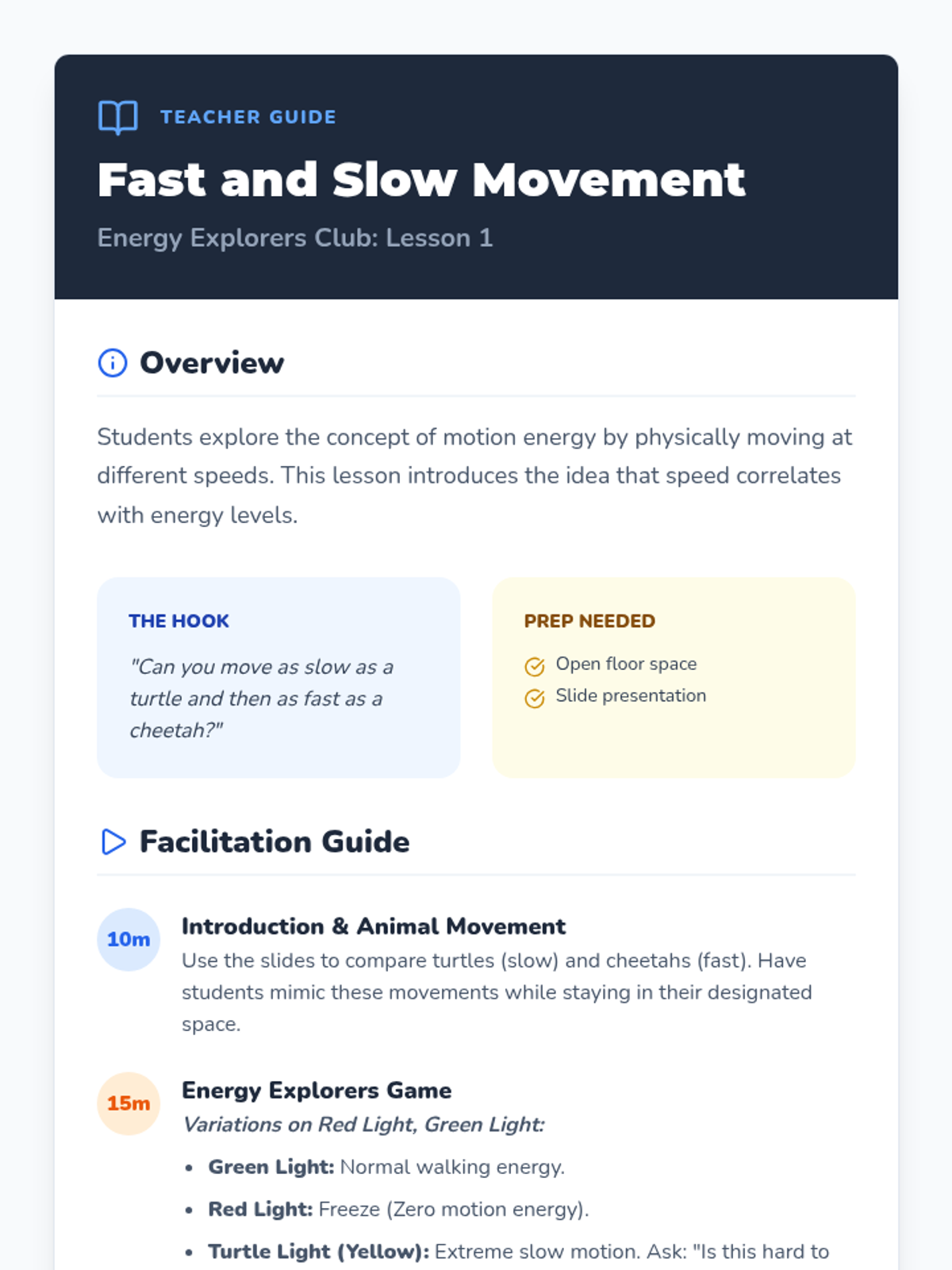
A Kindergarten science sequence where students explore kinetic energy through movement, force experiments, and collisions. Through play-based learning, they discover how pushes and pulls transfer energy and create motion.
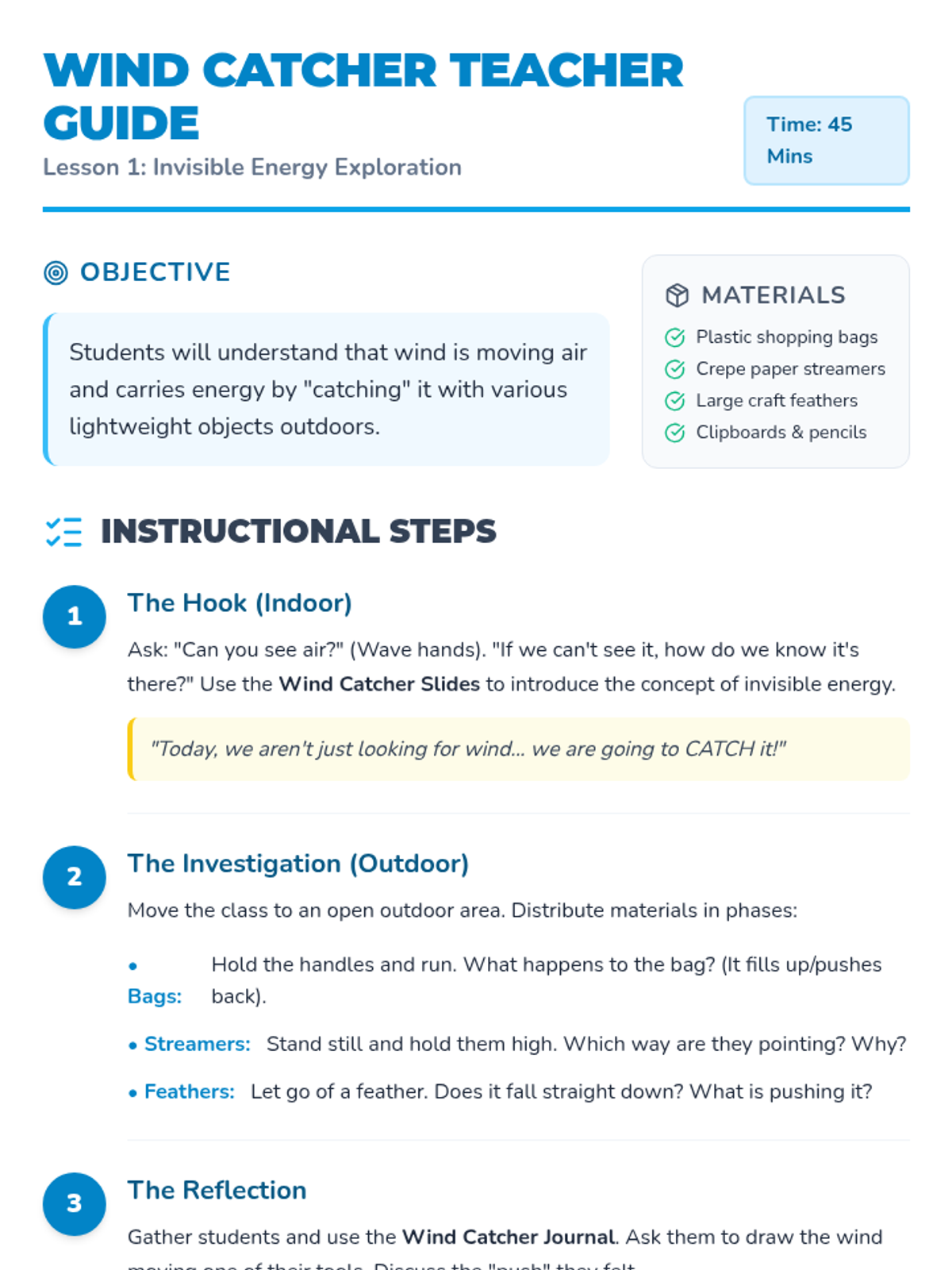
A Kindergarten science sequence where students investigate renewable energy by building devices that harness wind and water. Students explore invisible forces through hands-on experiments, building pinwheels, water wheels, and sailboats.
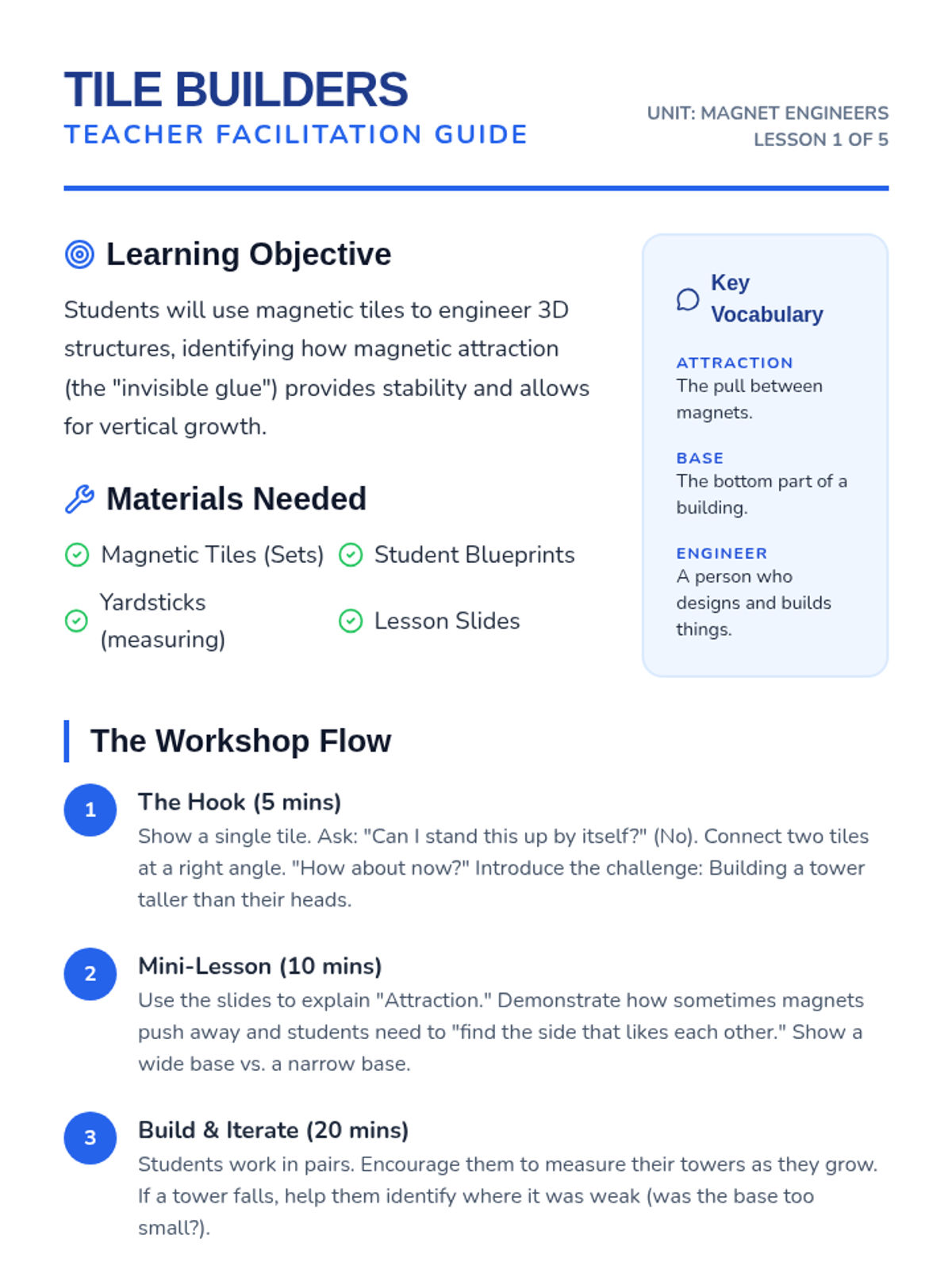
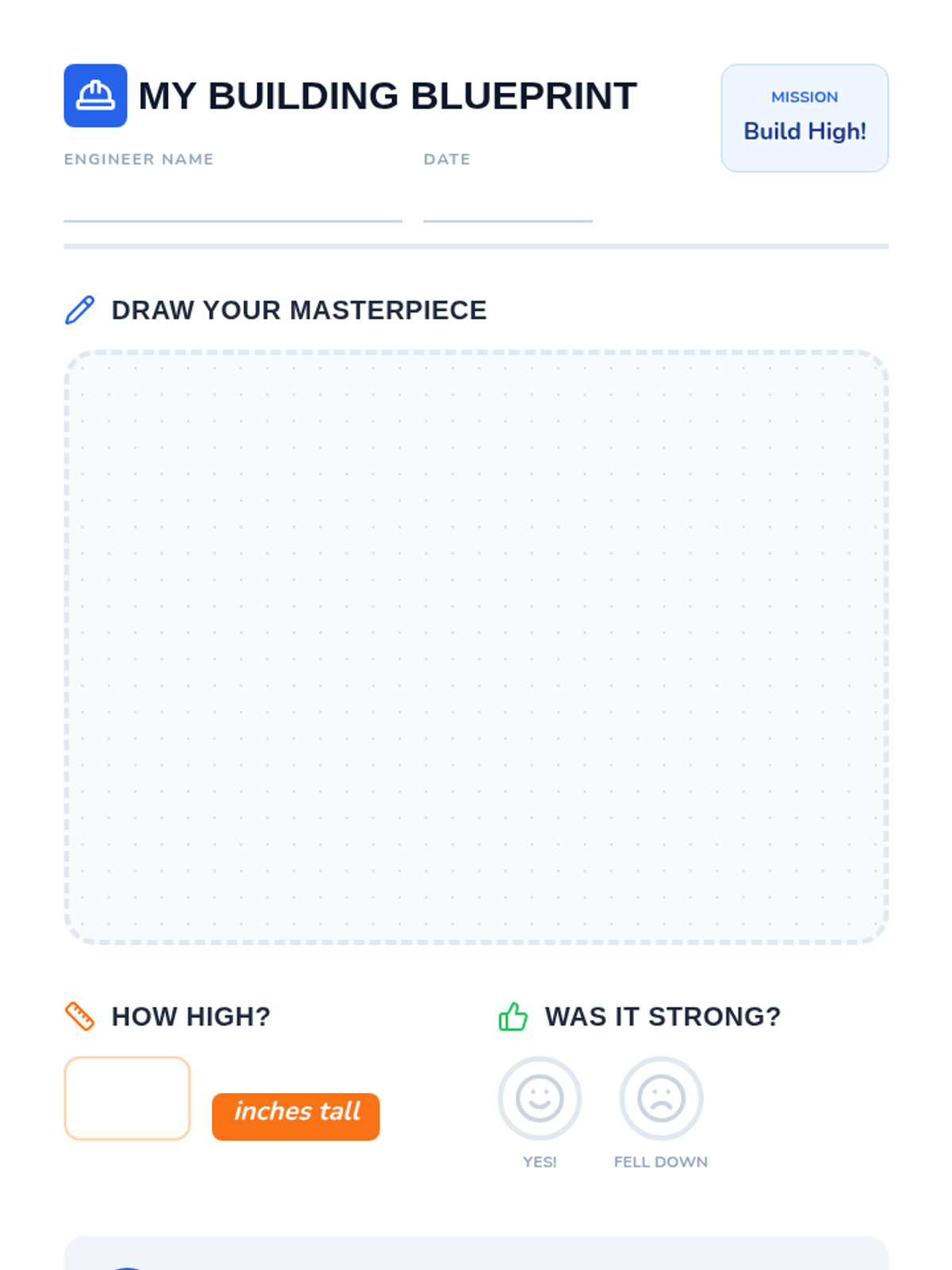
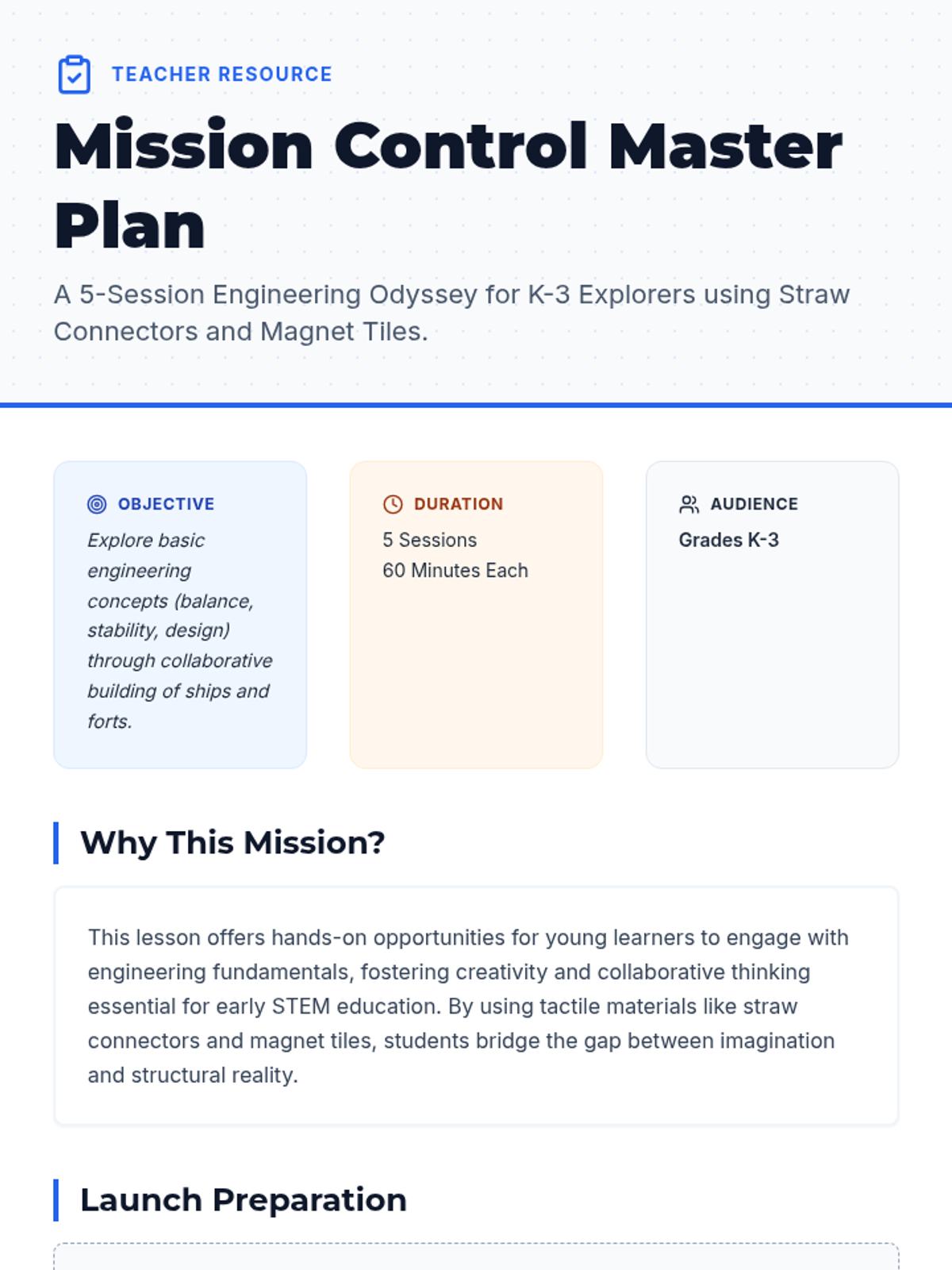
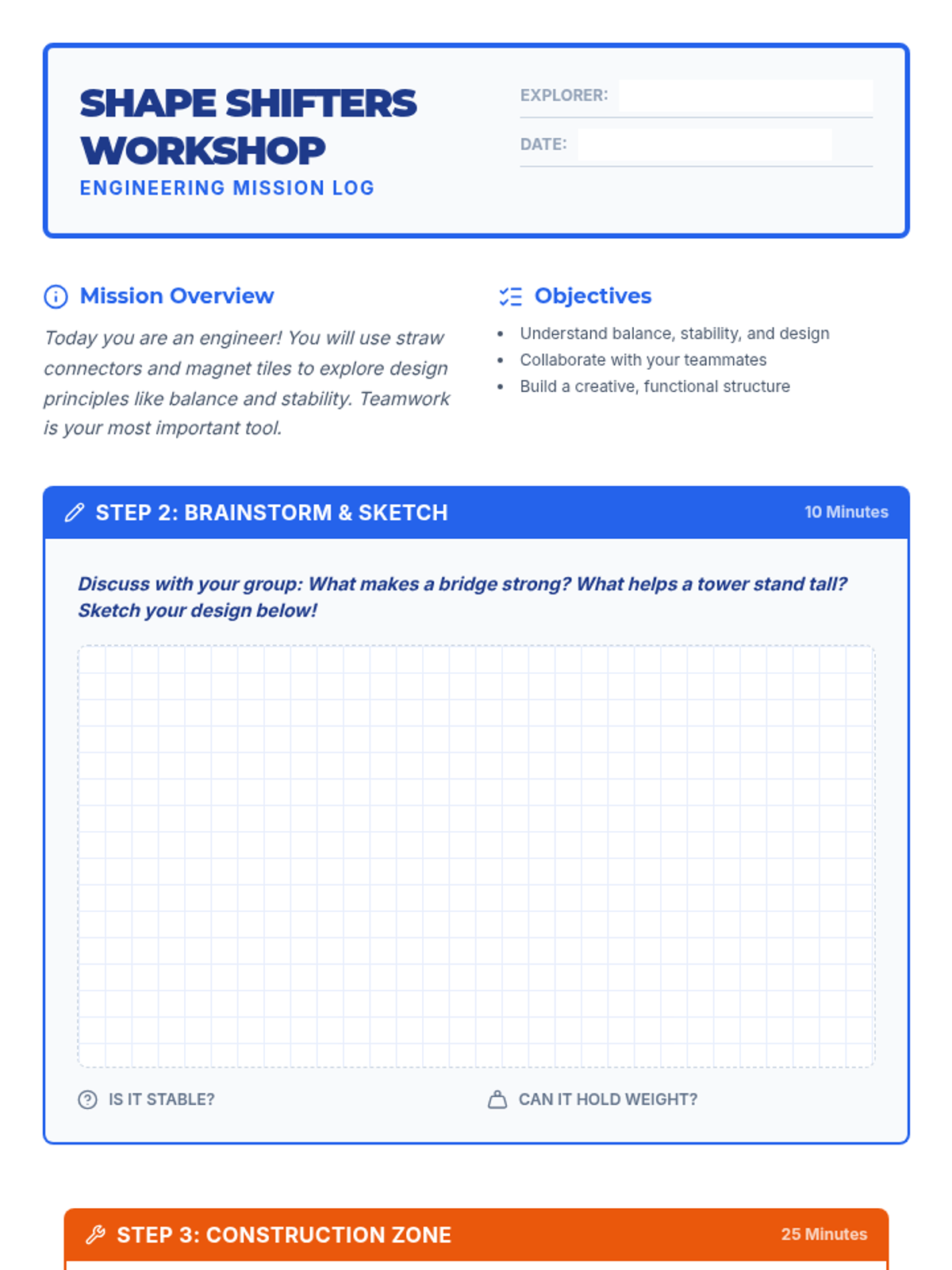
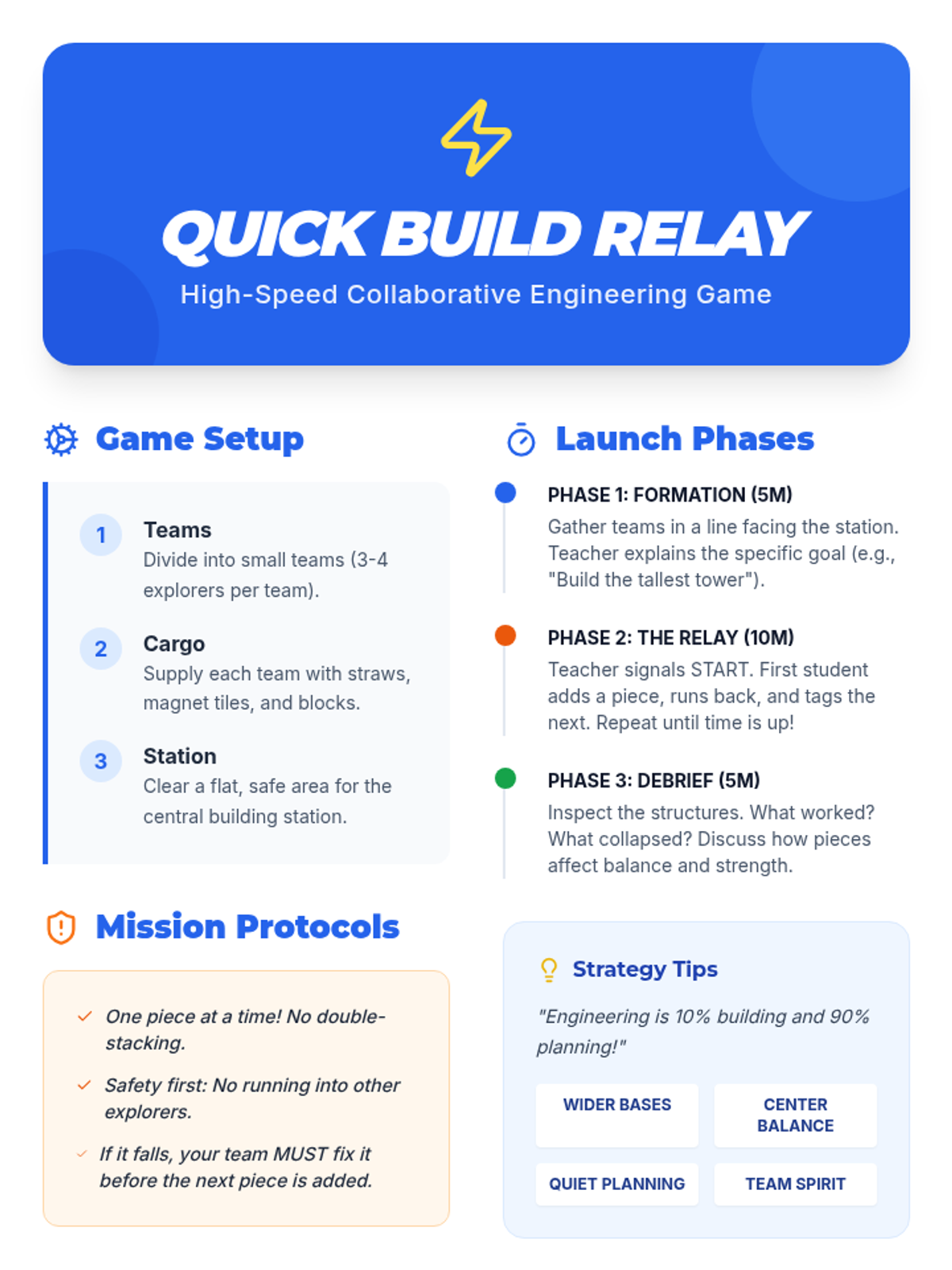
A 5-session engineering sequence for K-3 students using straw connectors and magnet tiles to build space ships, forts, and bridges. Students develop problem-solving, teamwork, and basic engineering skills through hands-on challenges and games.
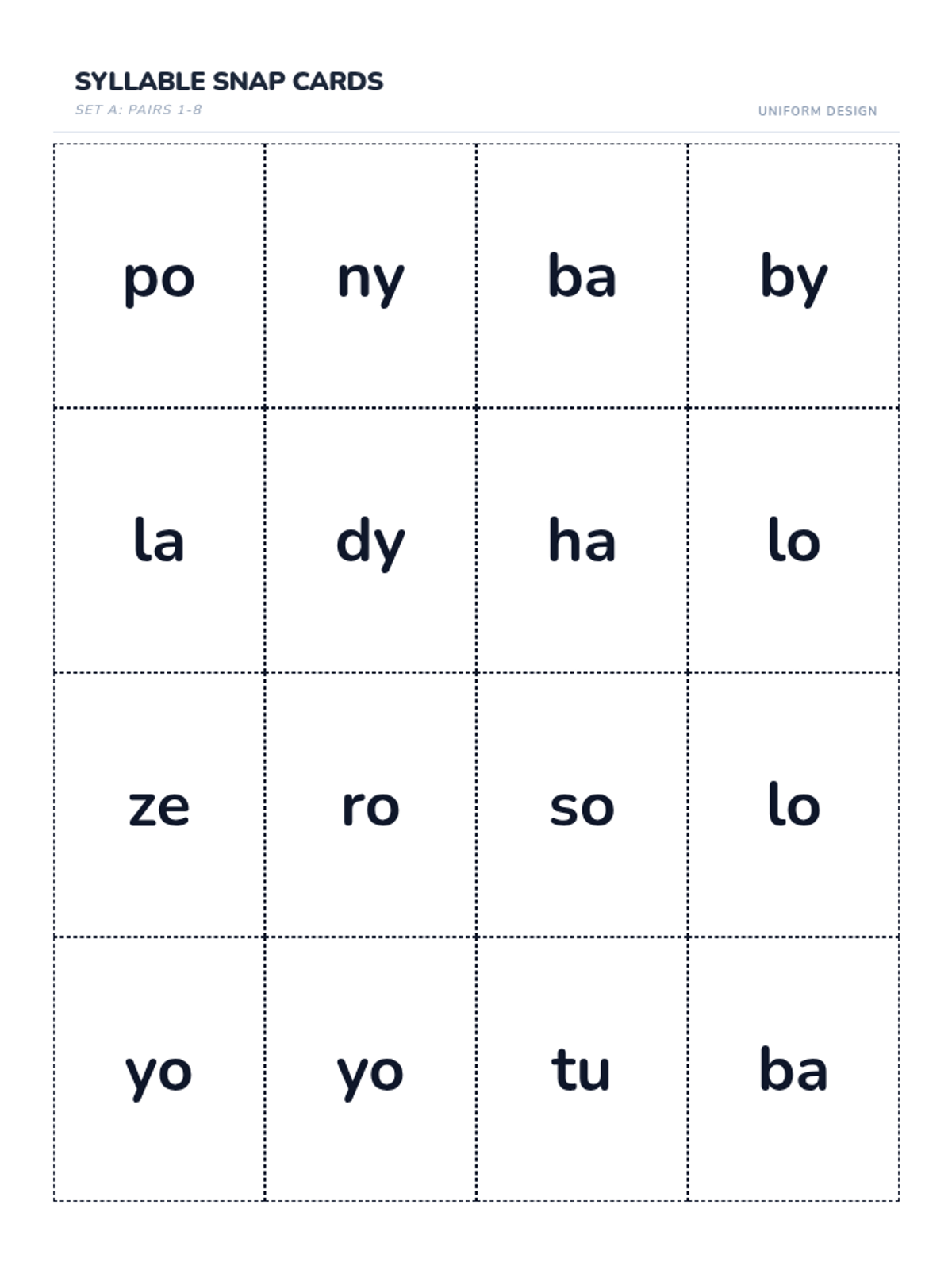
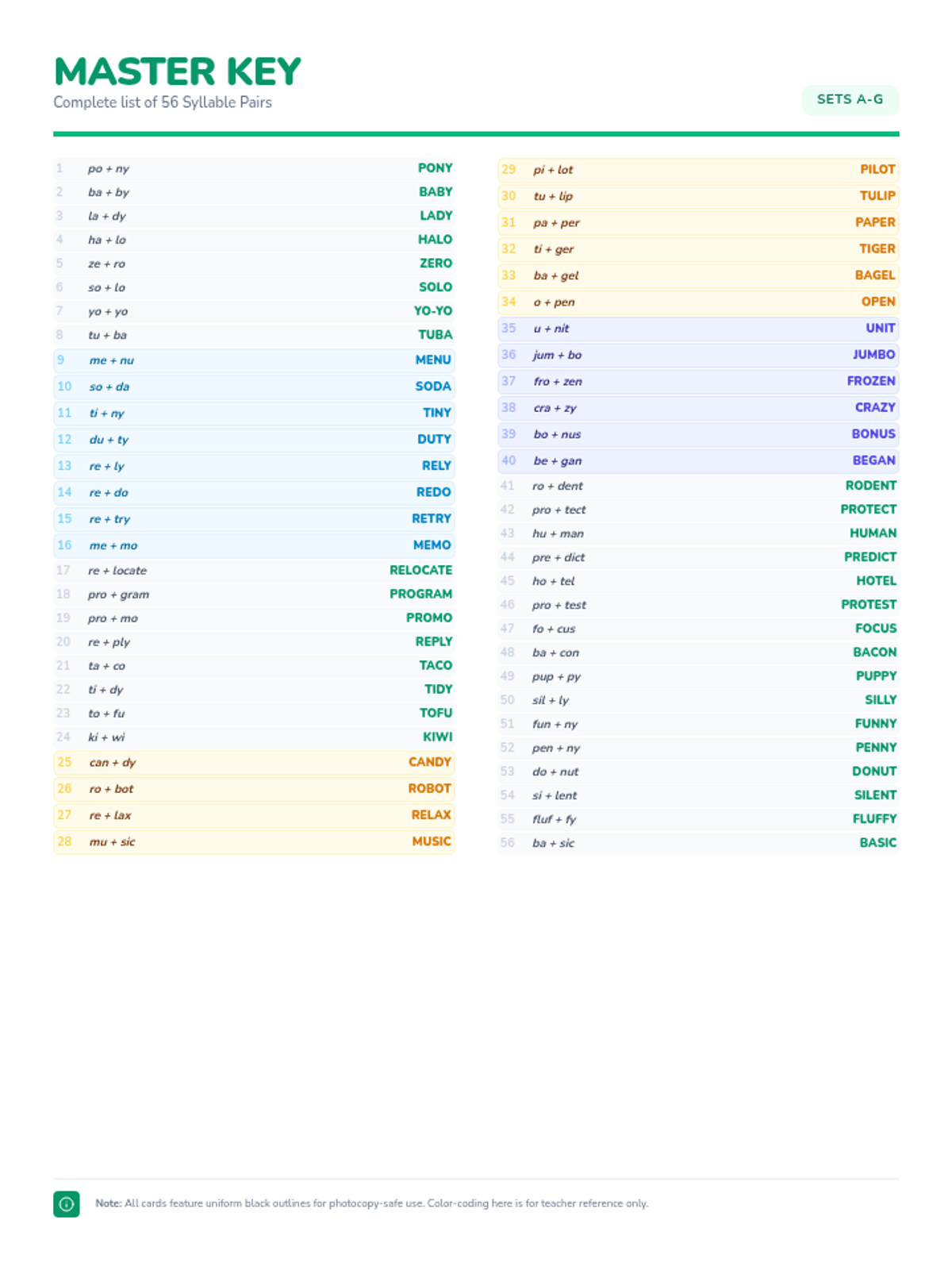
A collection of science and phonics resources designed for hands-on classroom activities.
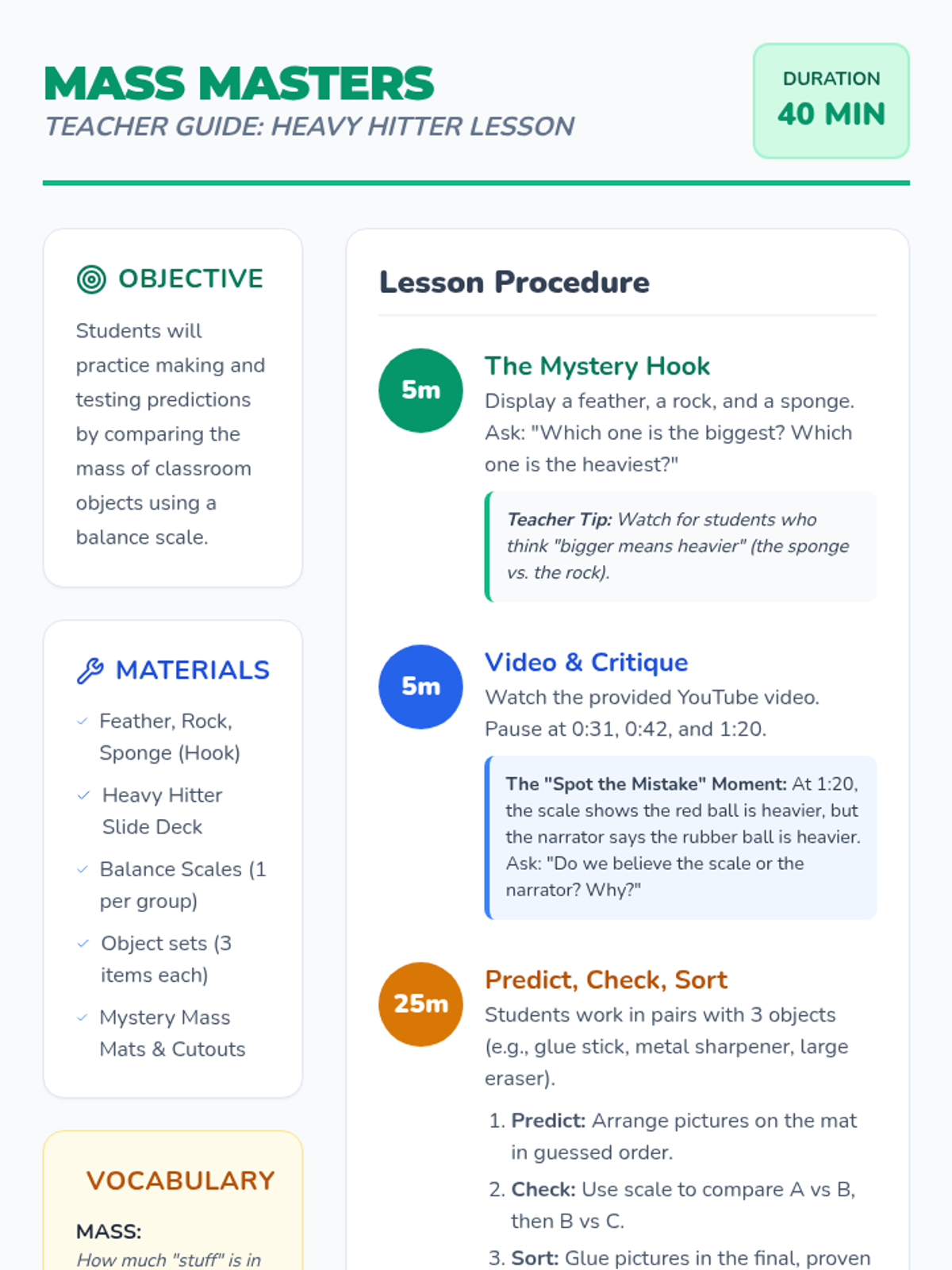
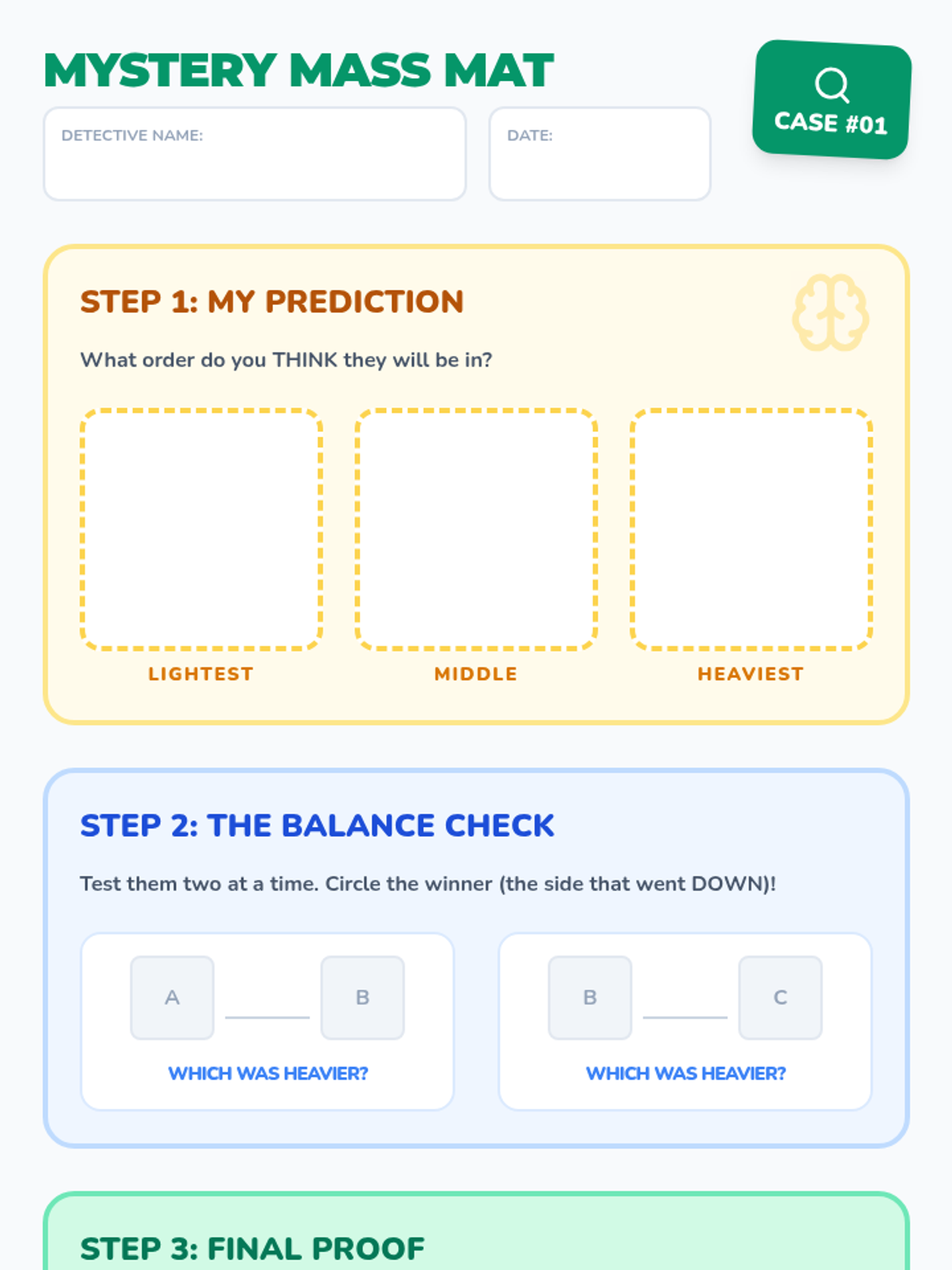
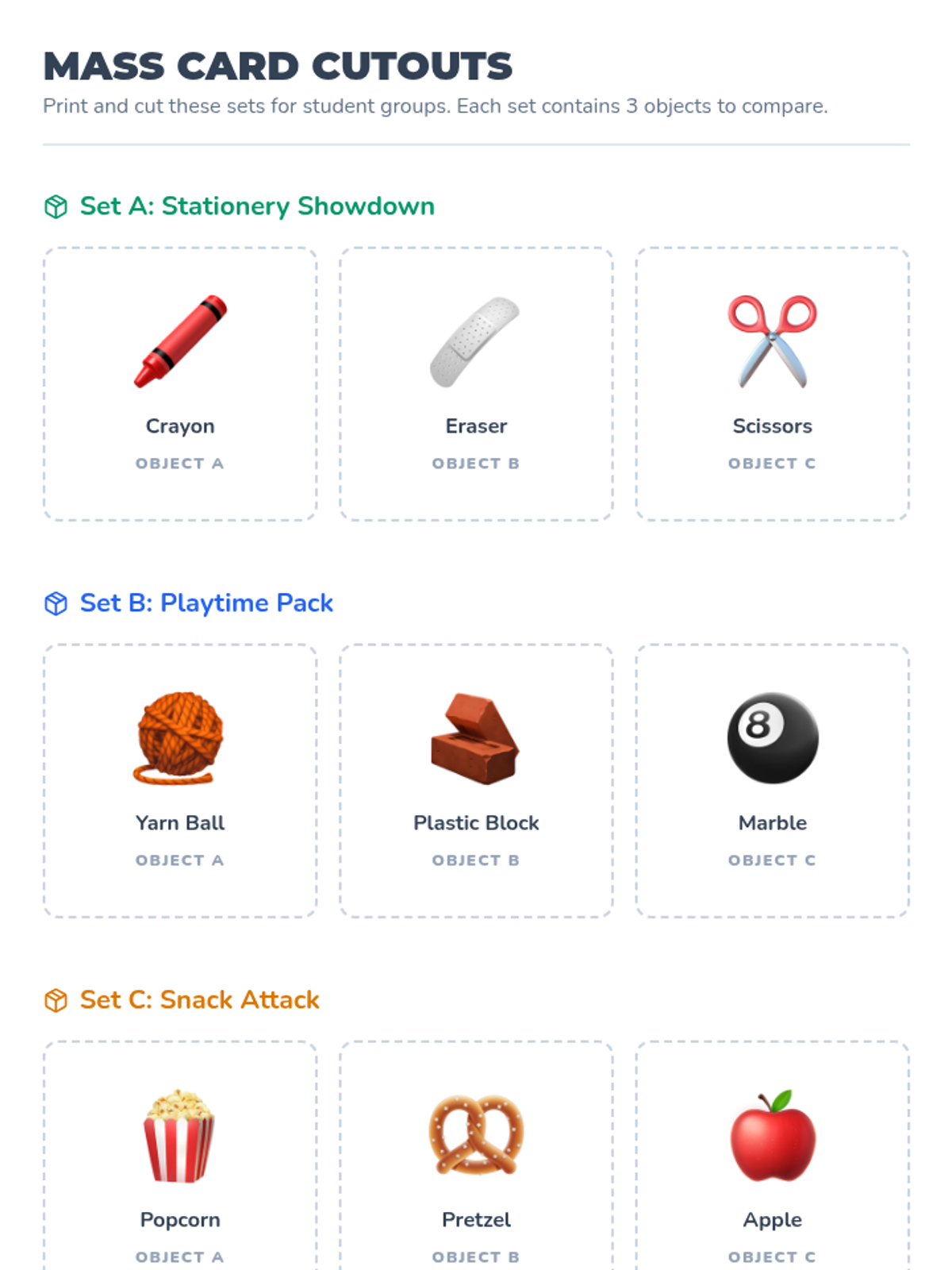
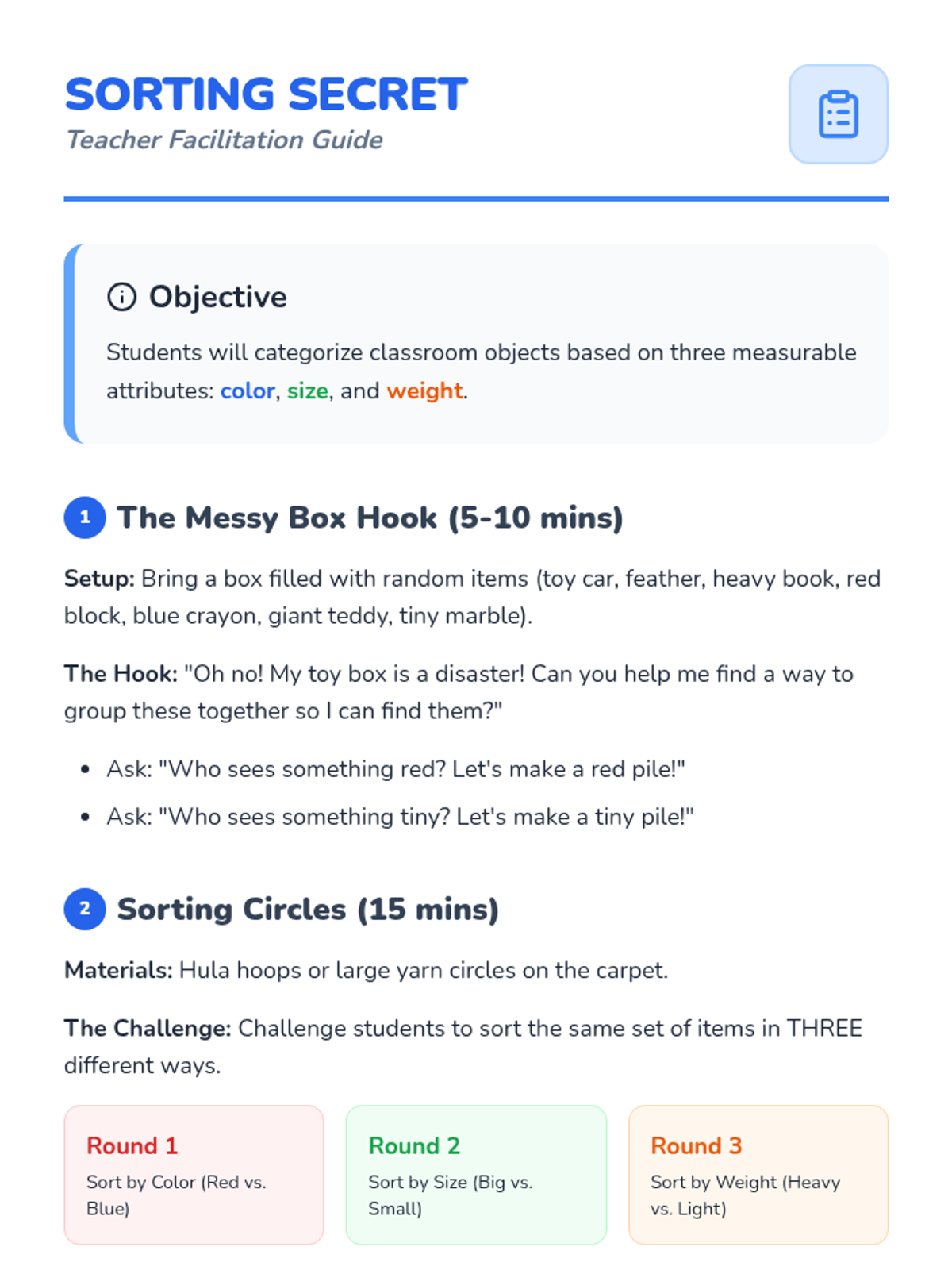
A lesson sequence for K-2 students focusing on scientific inquiry, making predictions, and using tools to measure and compare mass. Students learn to distinguish between mass (how heavy) and volume (how big) through hands-on experiments.
A Kindergarten sequence introducing measurement concepts through attribute sorting, temperature exploration, tool selection, time perception, and hands-on station rotations. Students learn to use rulers, scales, thermometers, and timers to quantify the world around them.
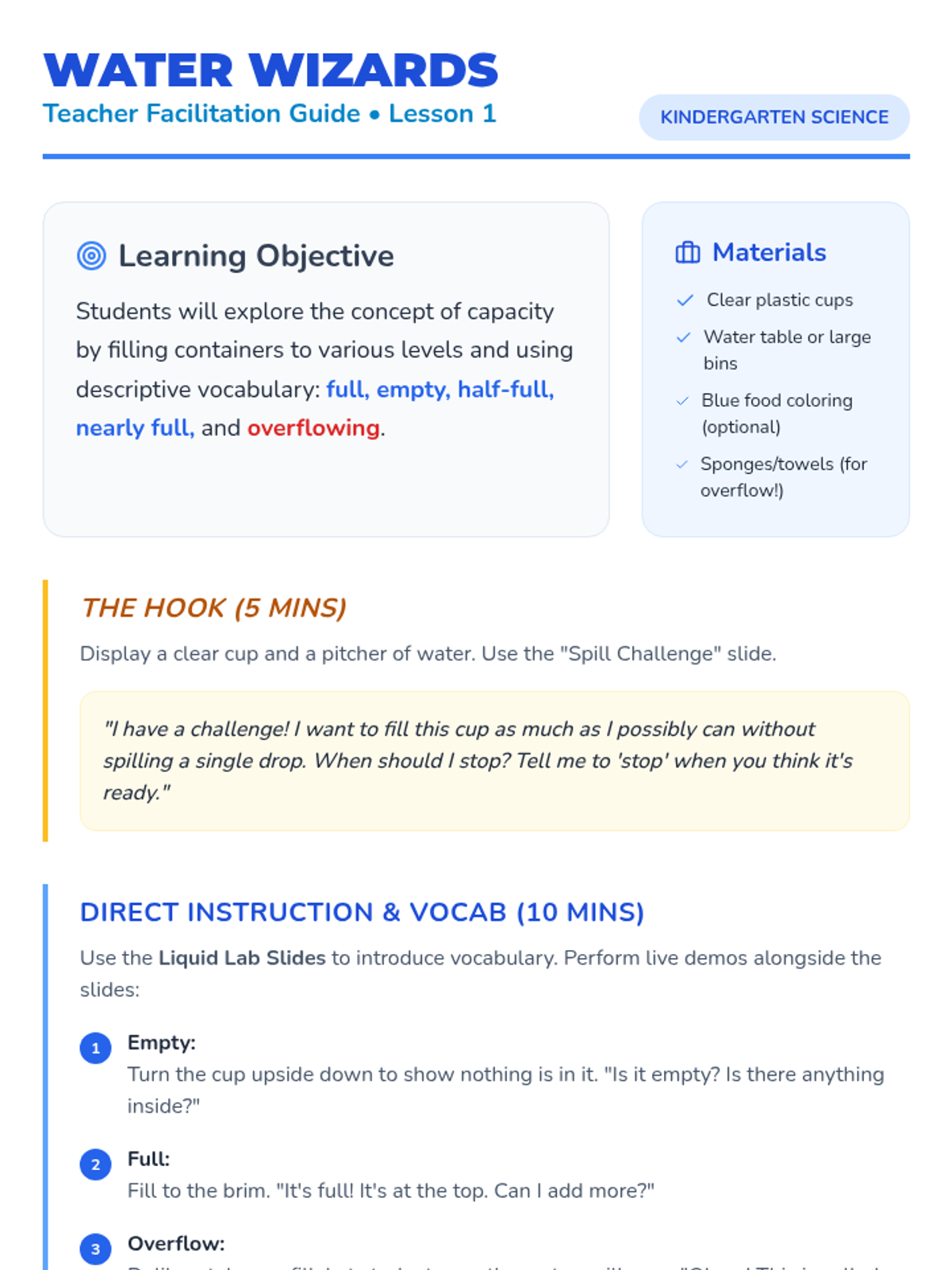
This Kindergarten sequence explores liquid volume and capacity through hands-on water play, estimation games, and direct comparison. Students develop vocabulary for capacity and move from free exploration to structured measuring using non-standard units (scoops).
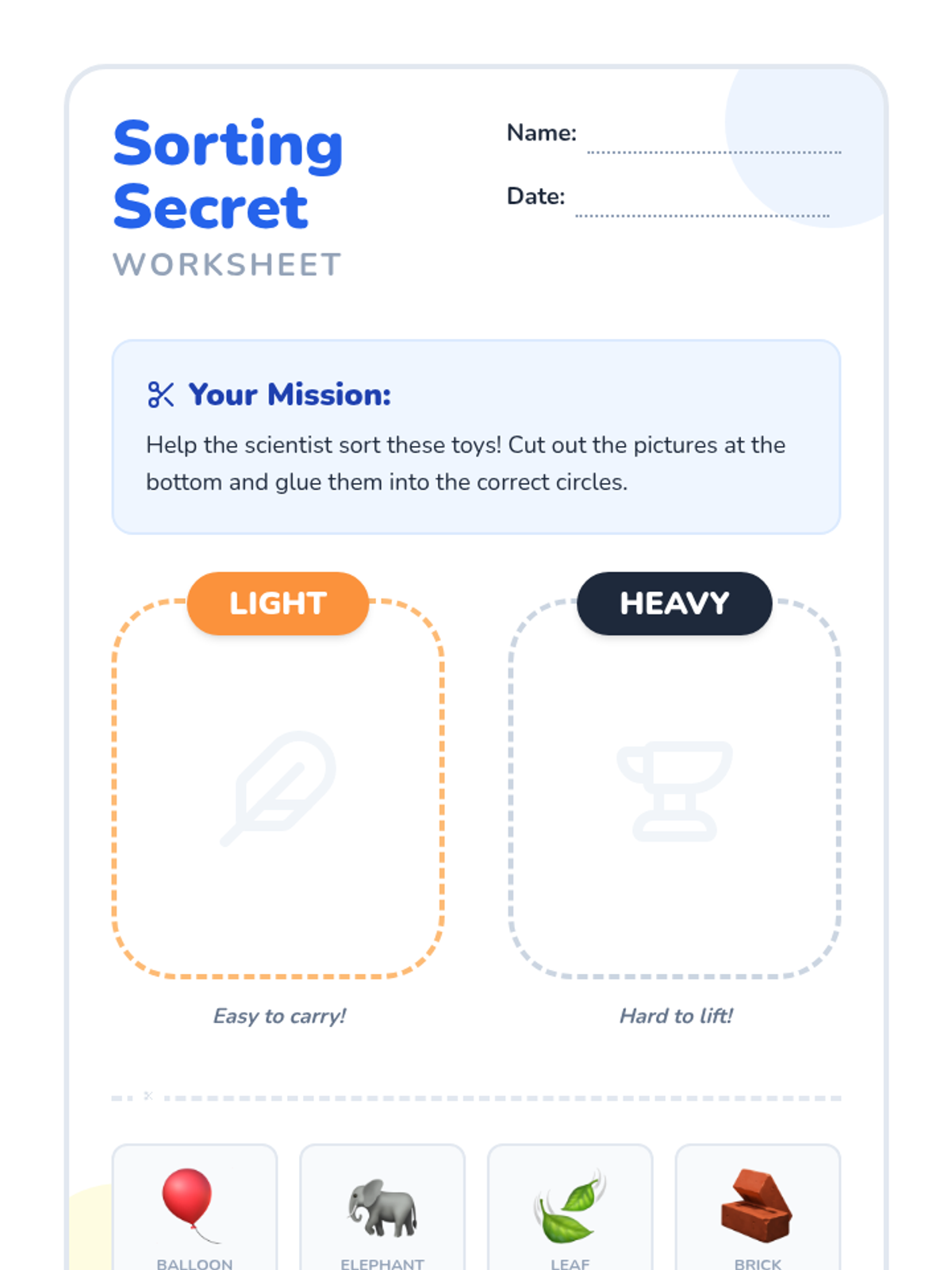
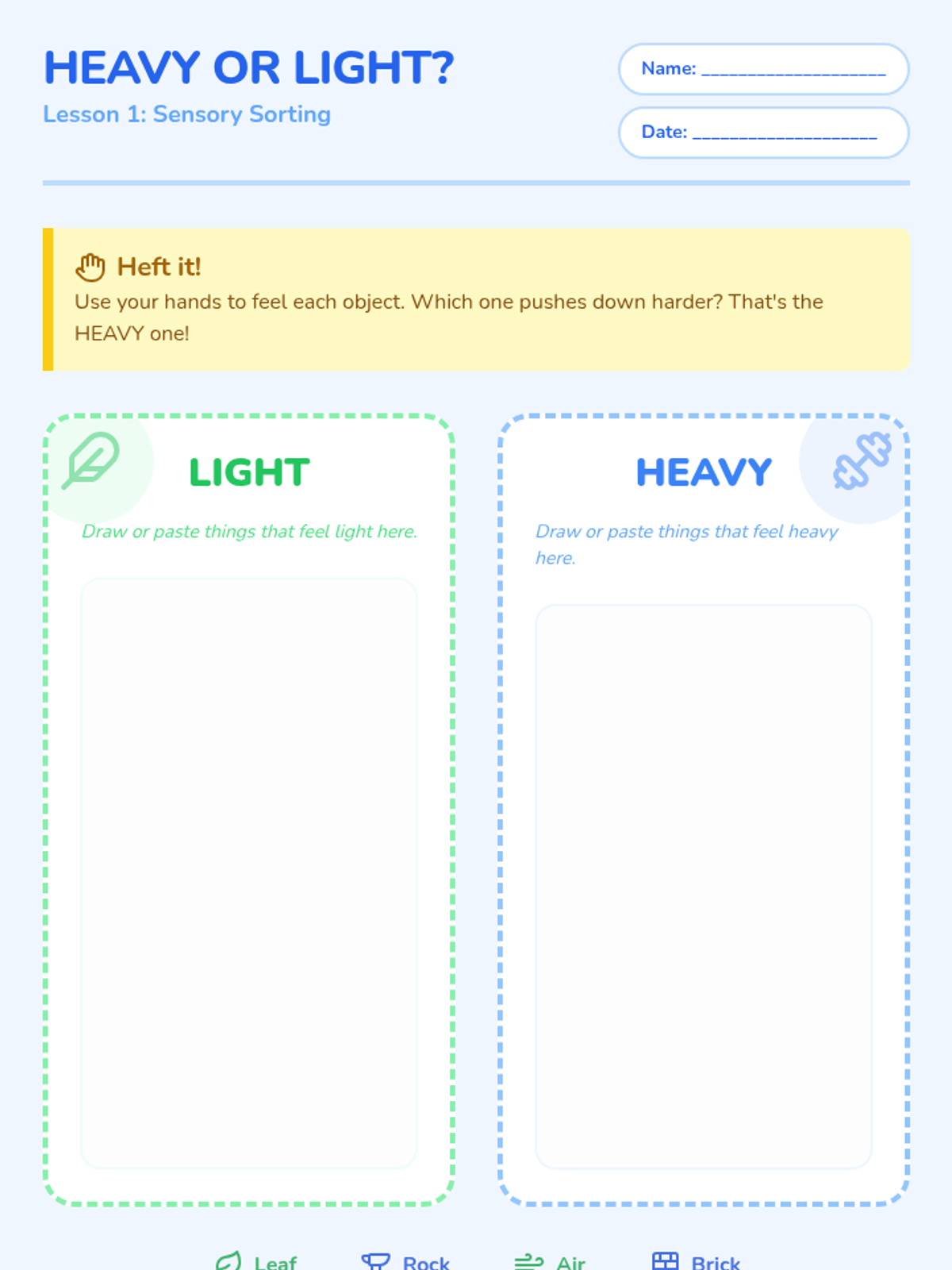
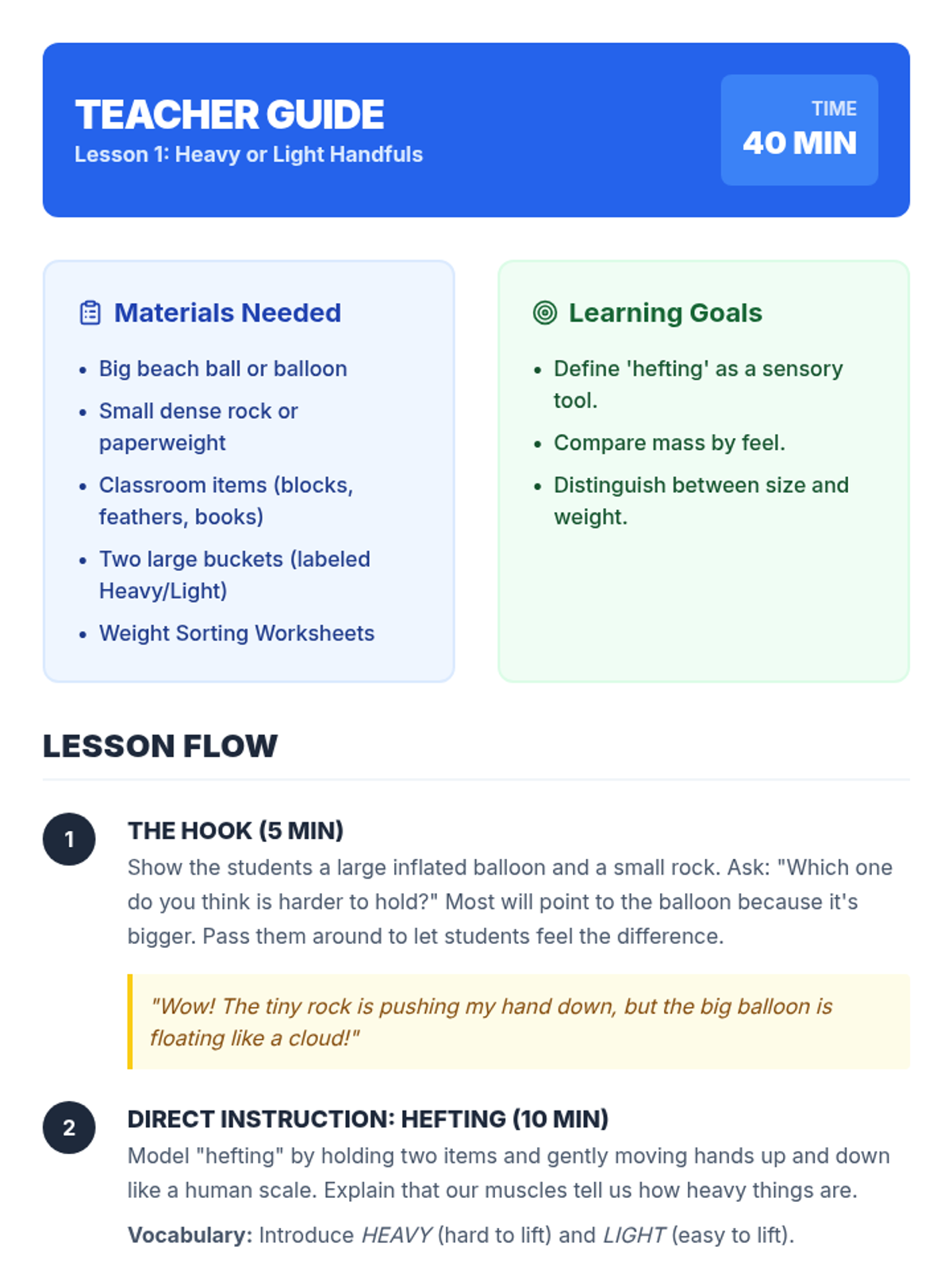
A Kindergarten science sequence where students explore weight and mass through sensory hefting, the use of mechanical balance scales, and quantifying weight using non-standard units like counting bears. Students develop prediction skills, learn that size doesn't always equal weight, and practice ordering objects from lightest to heaviest.
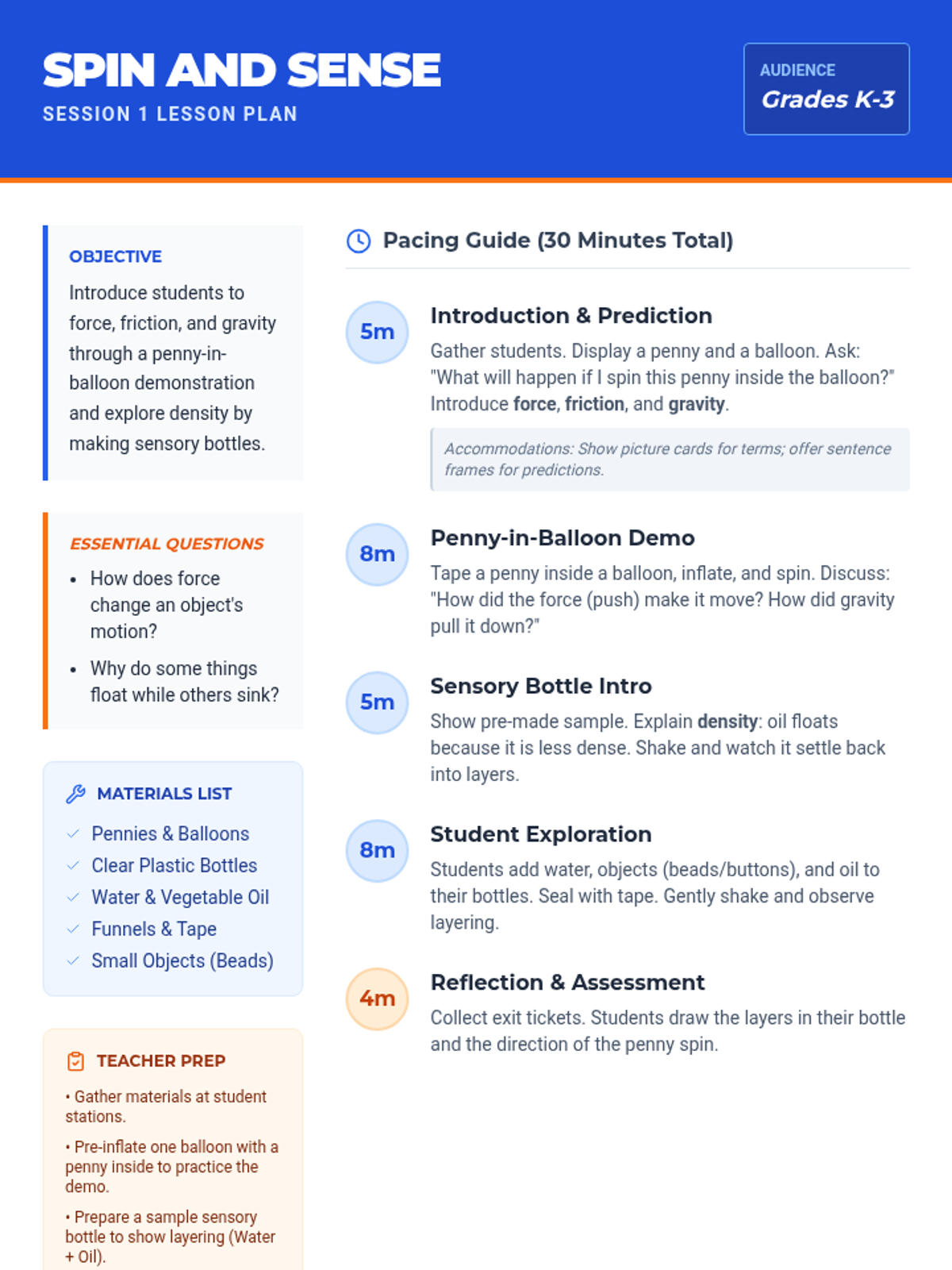
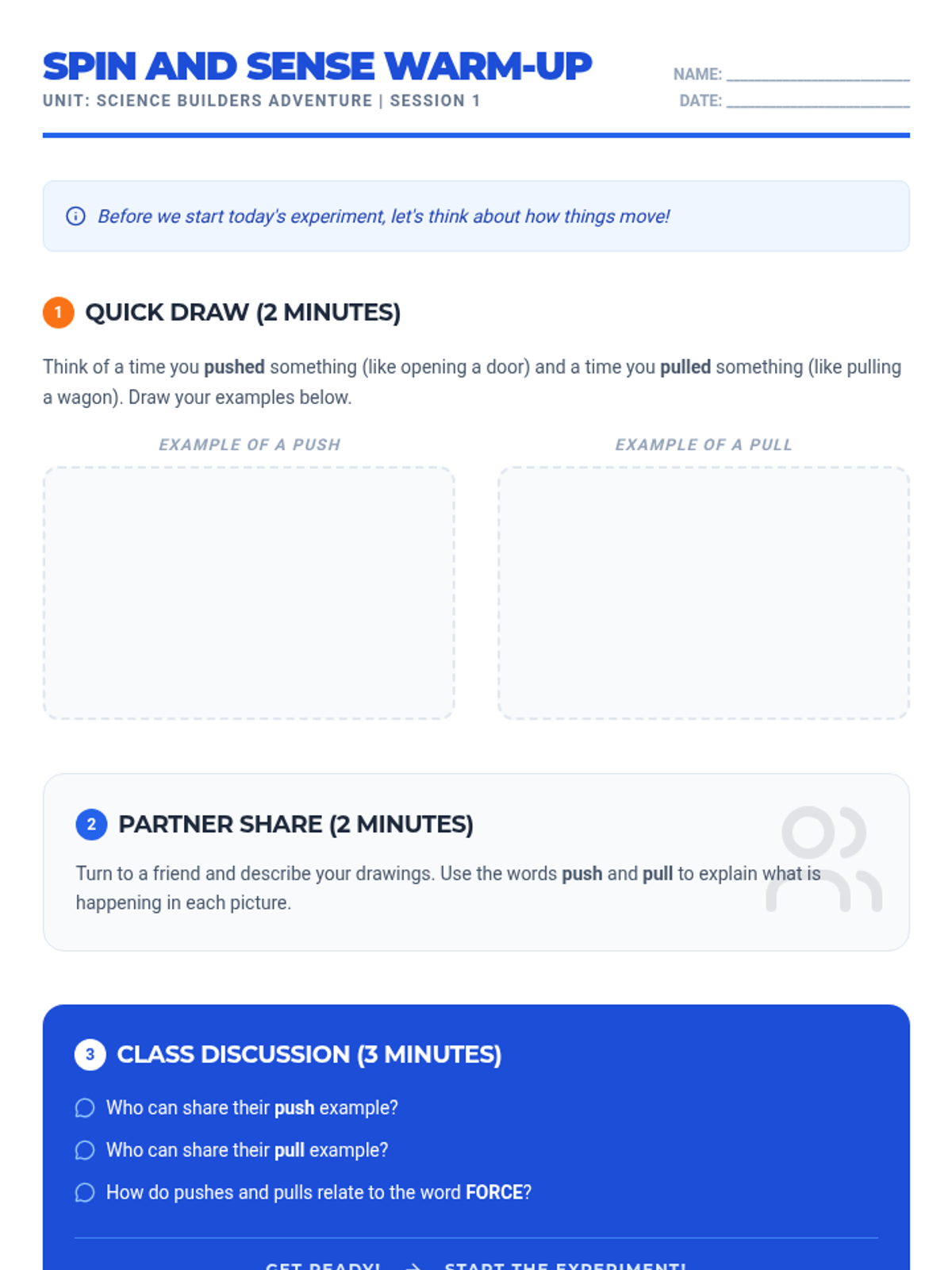
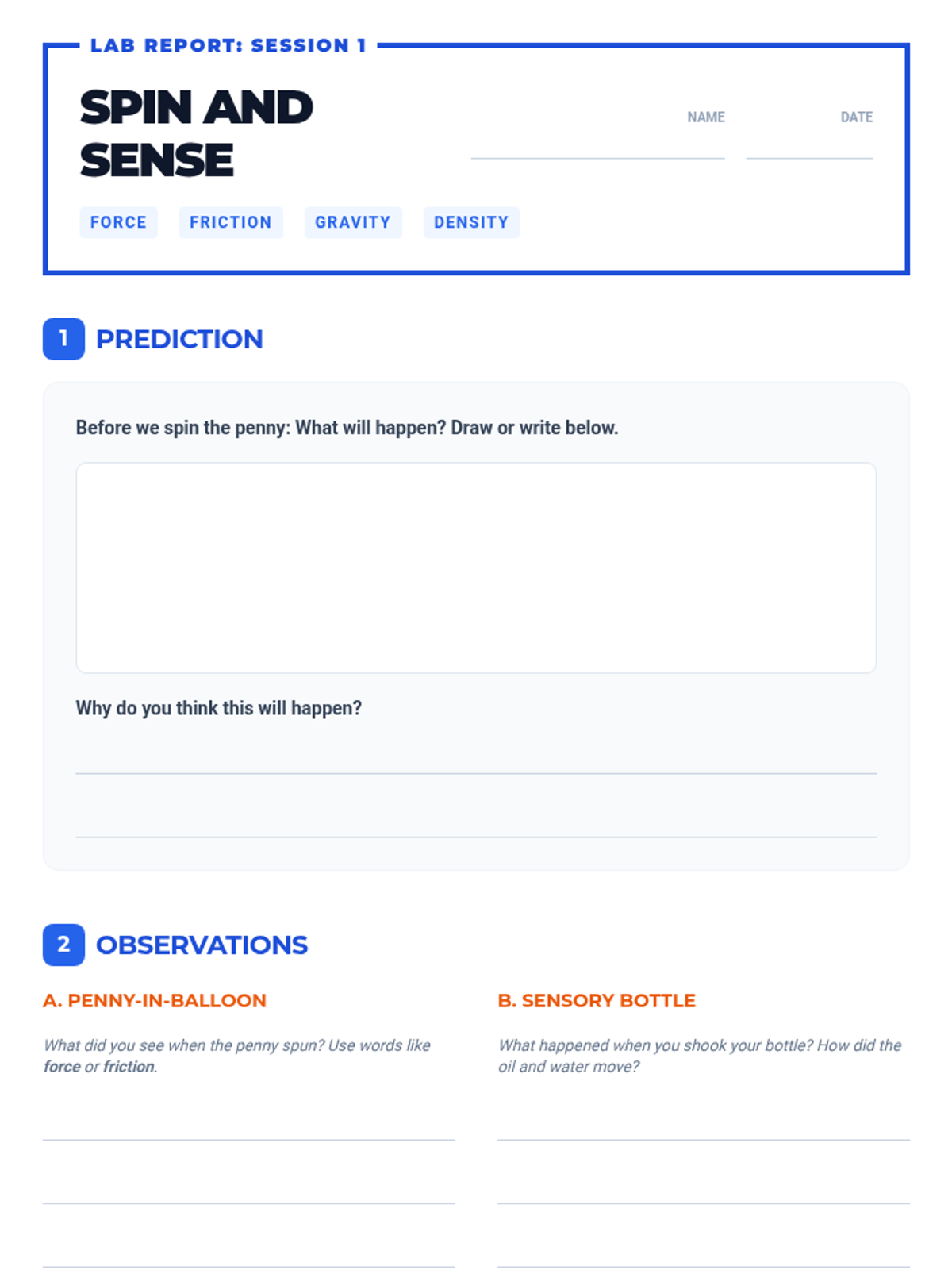
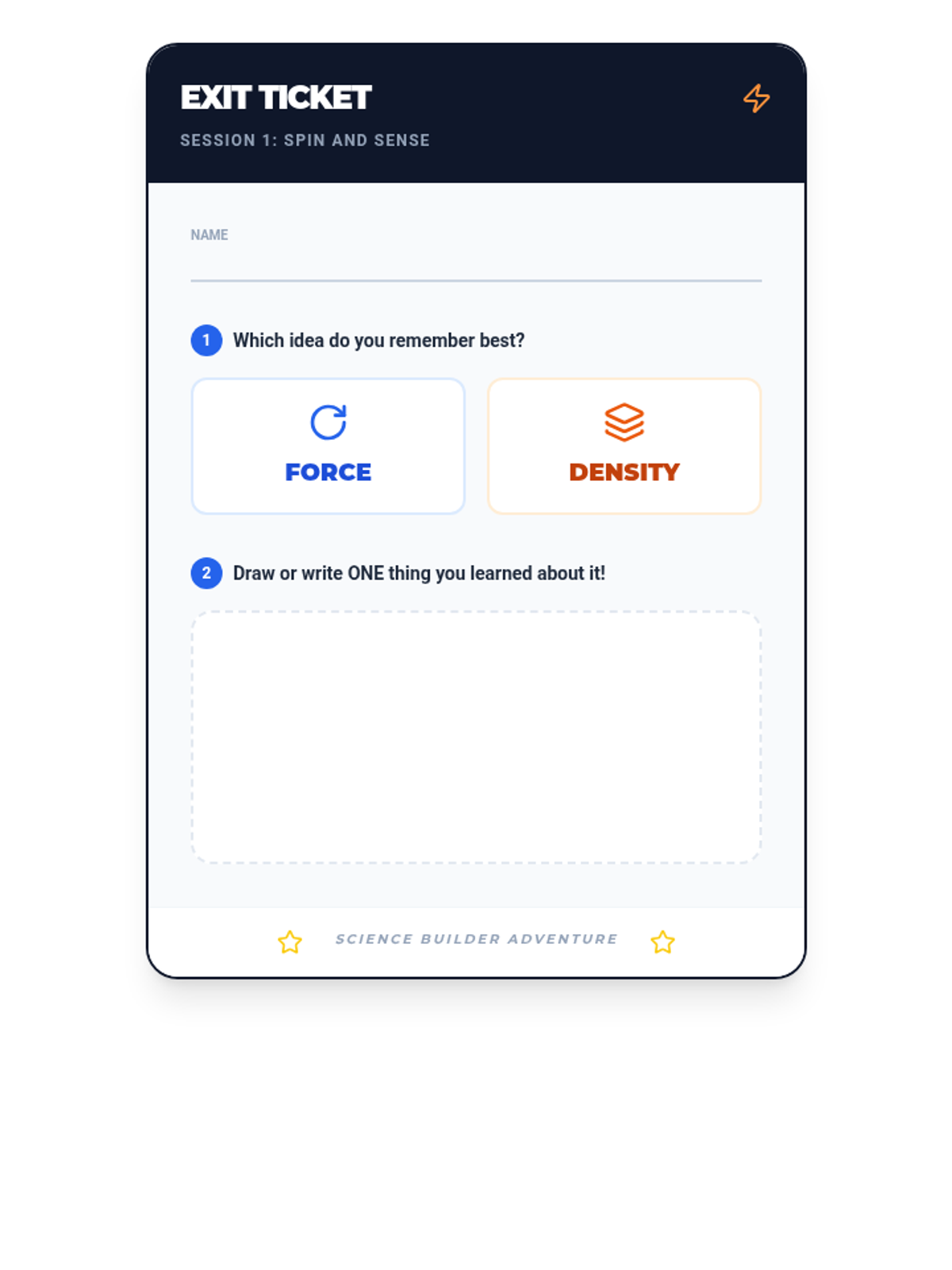
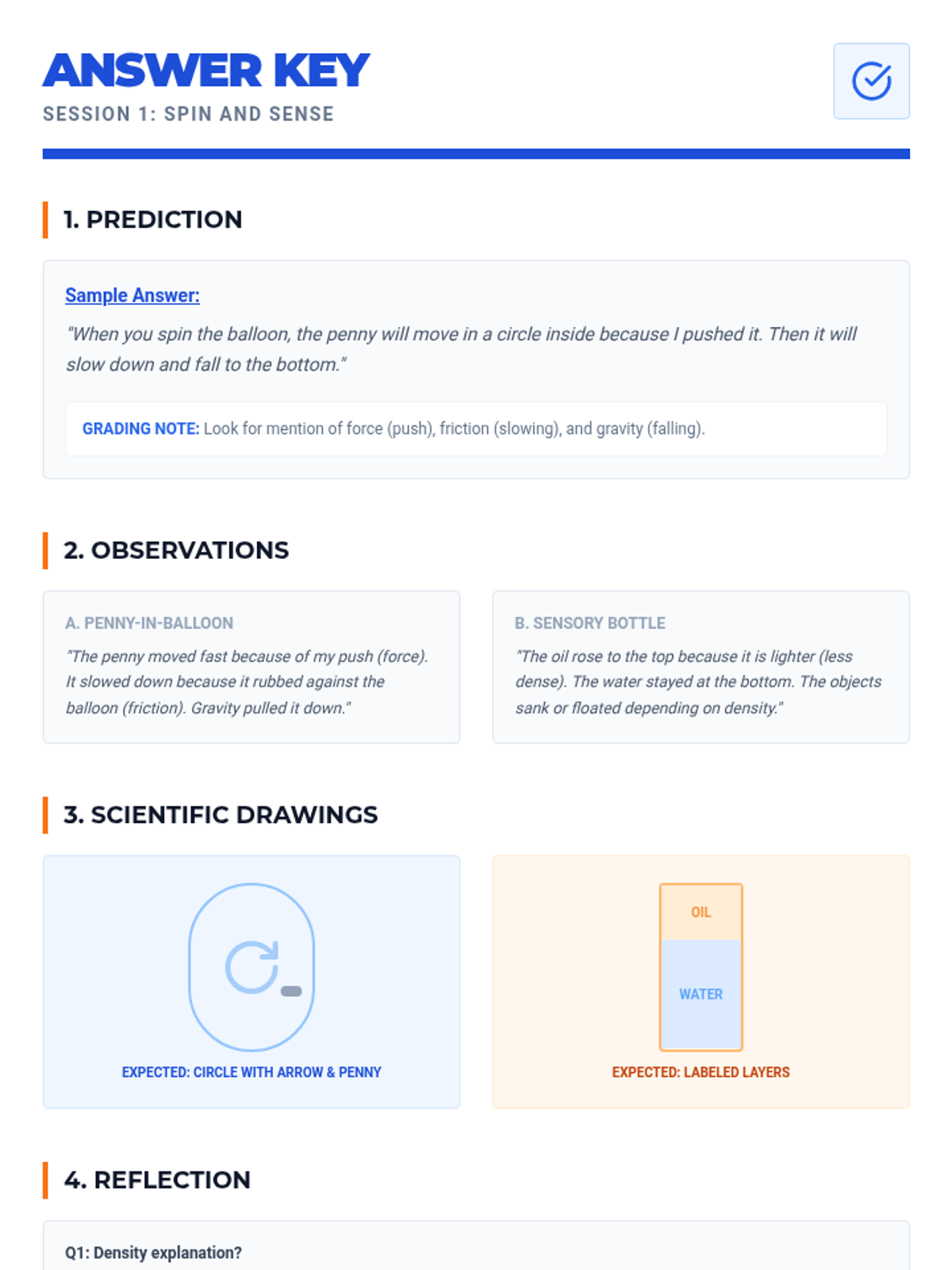
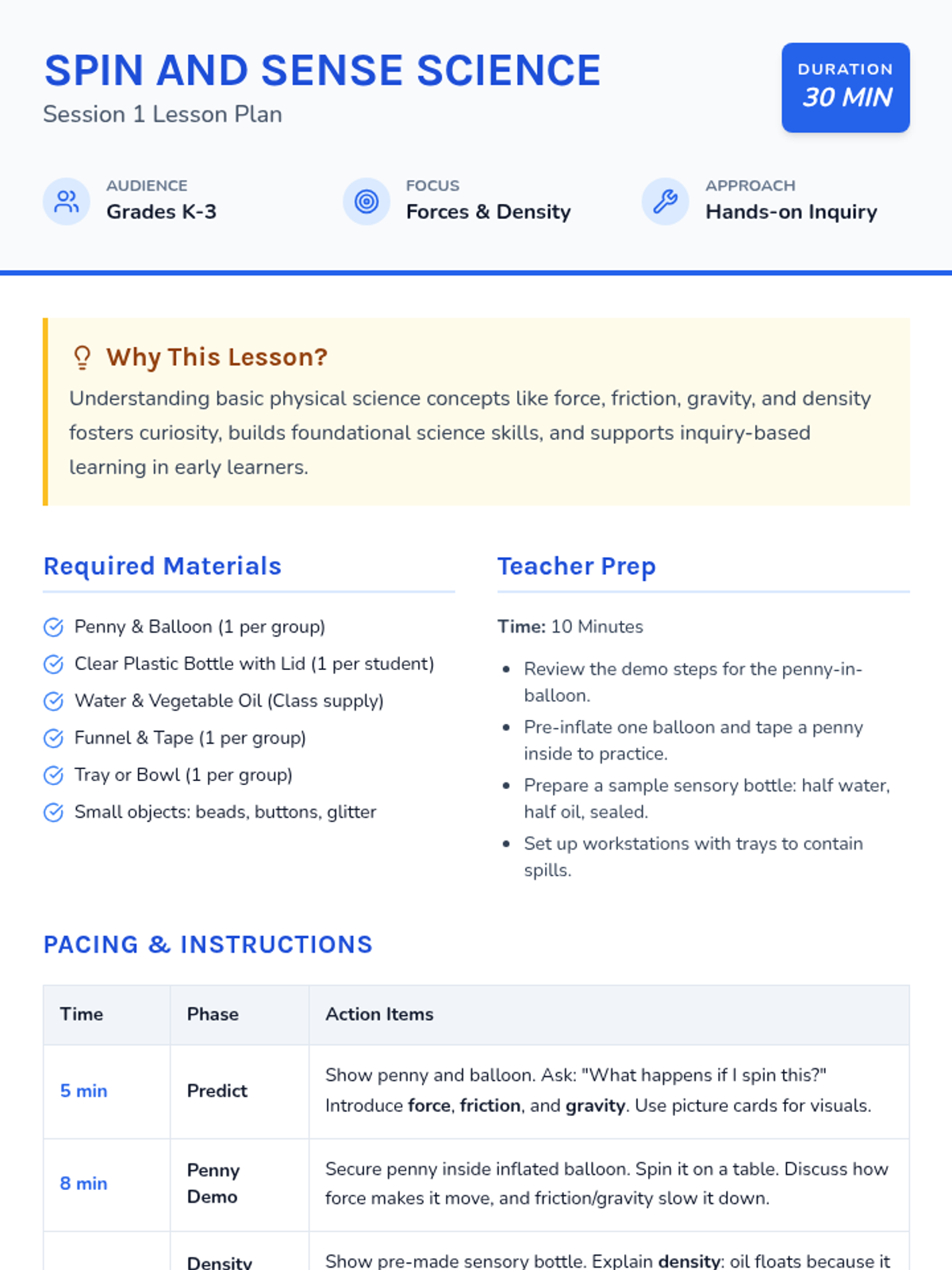
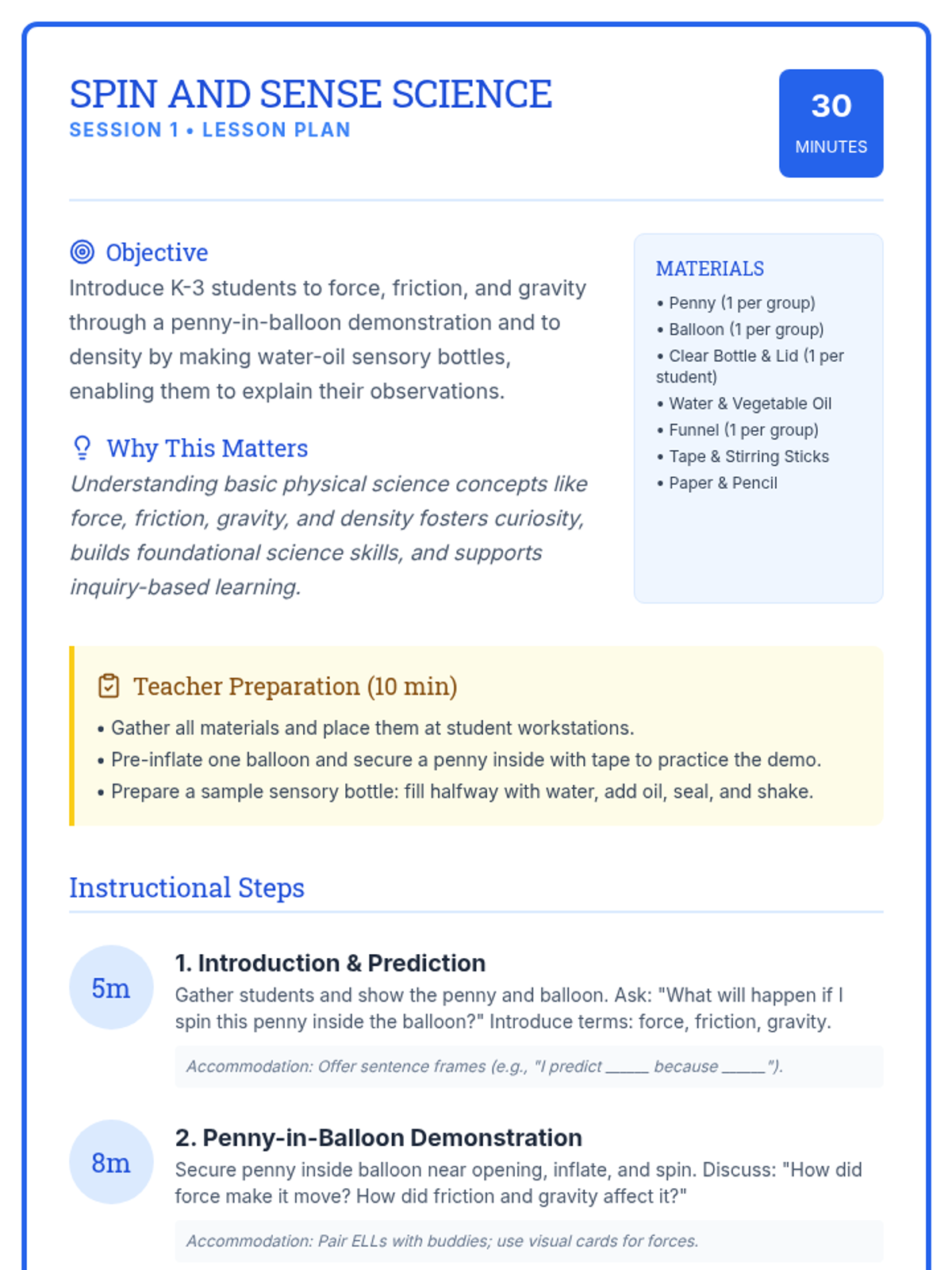
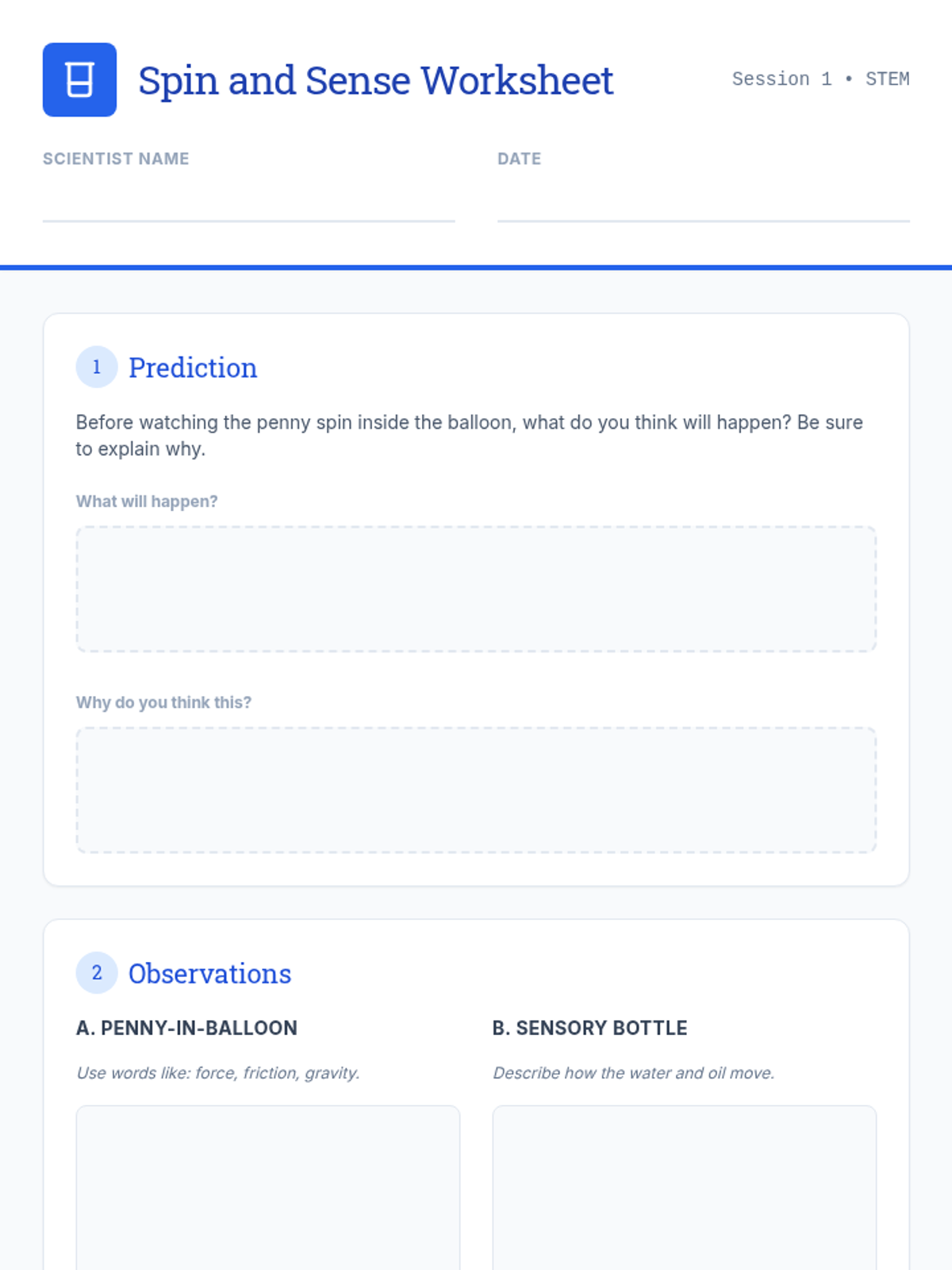
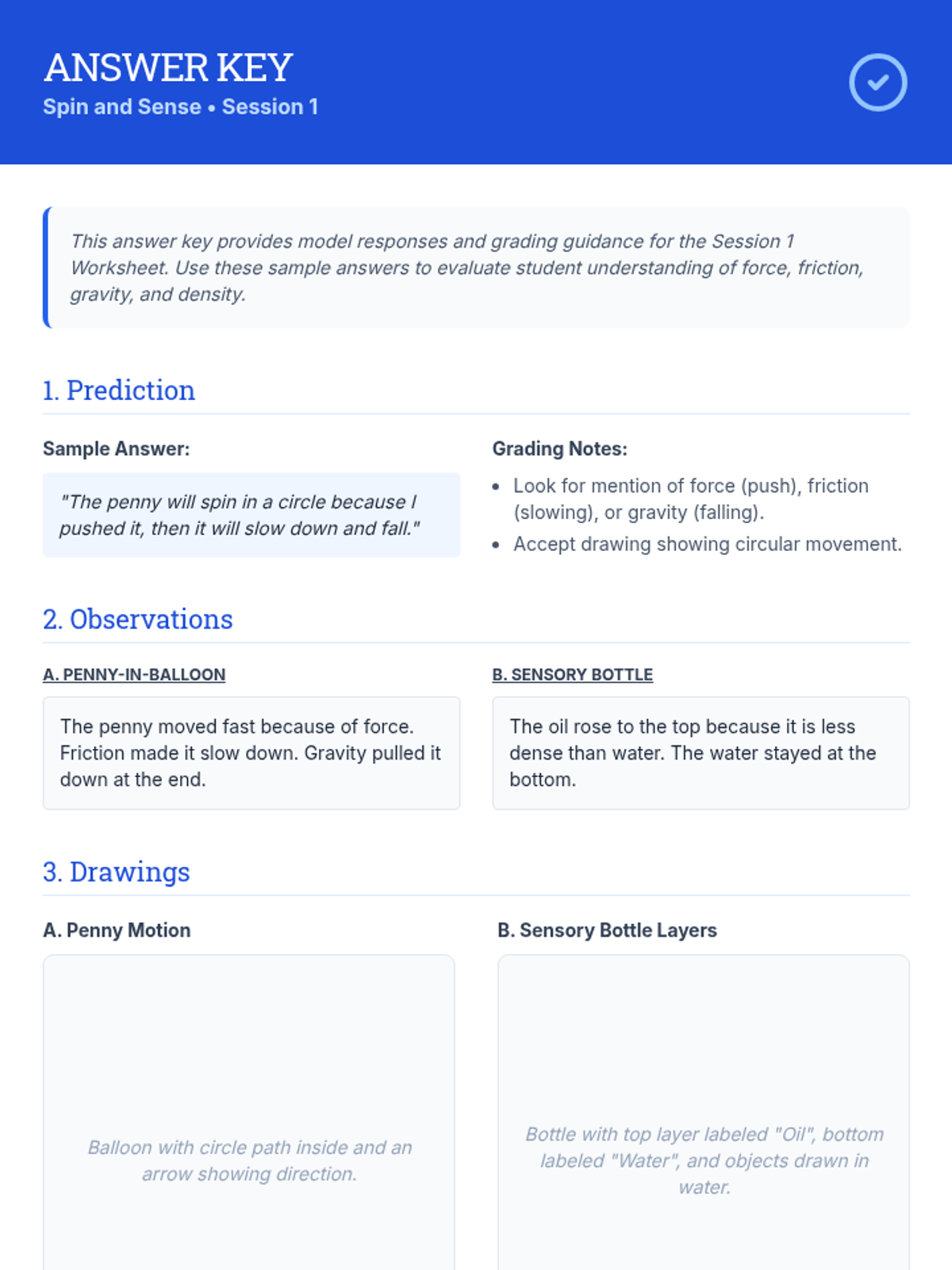
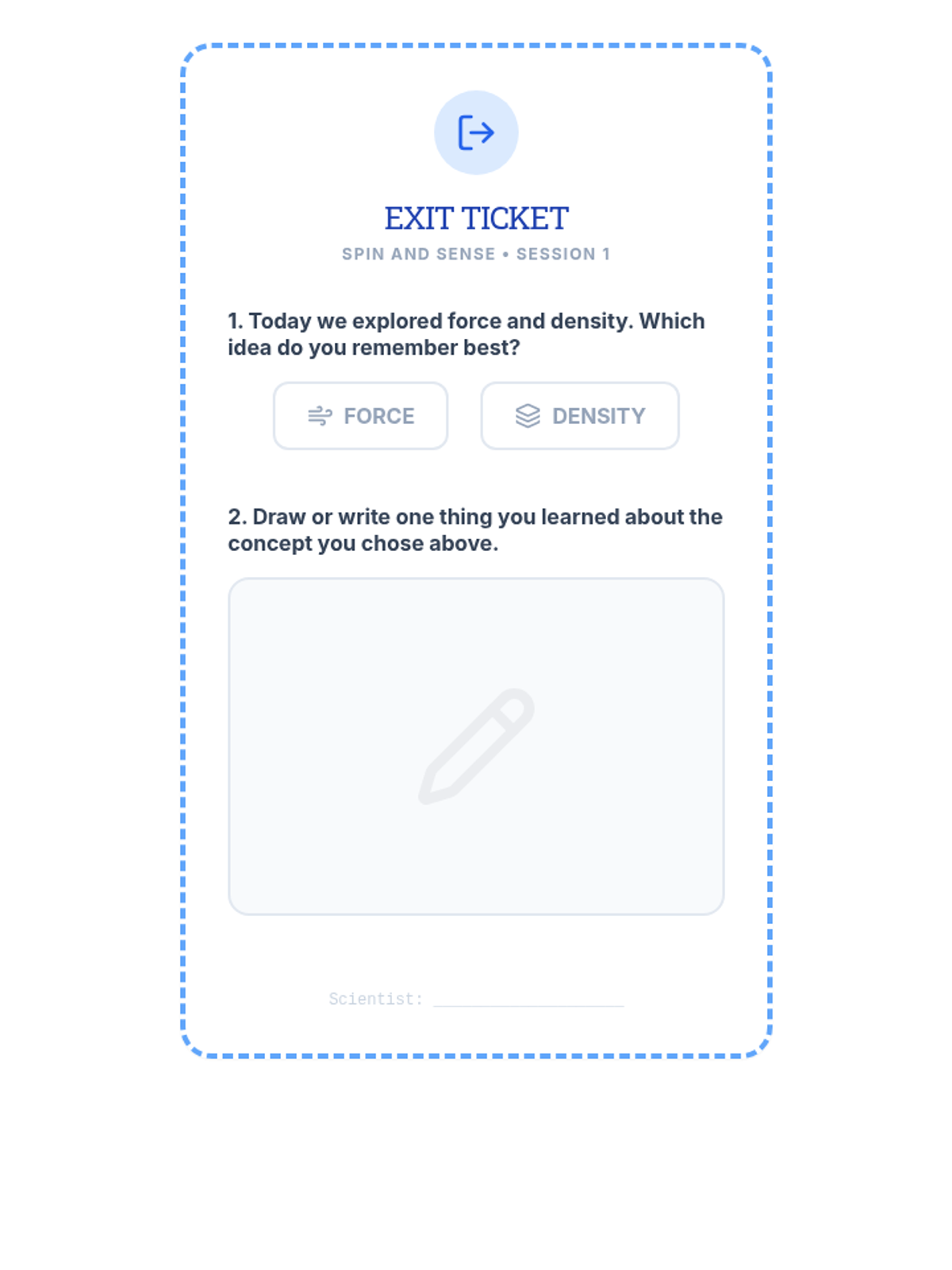
A 4-session K-3 STEM series where students explore forces, density, action-reaction, and structural stability through hands-on building challenges and scientific inquiry.
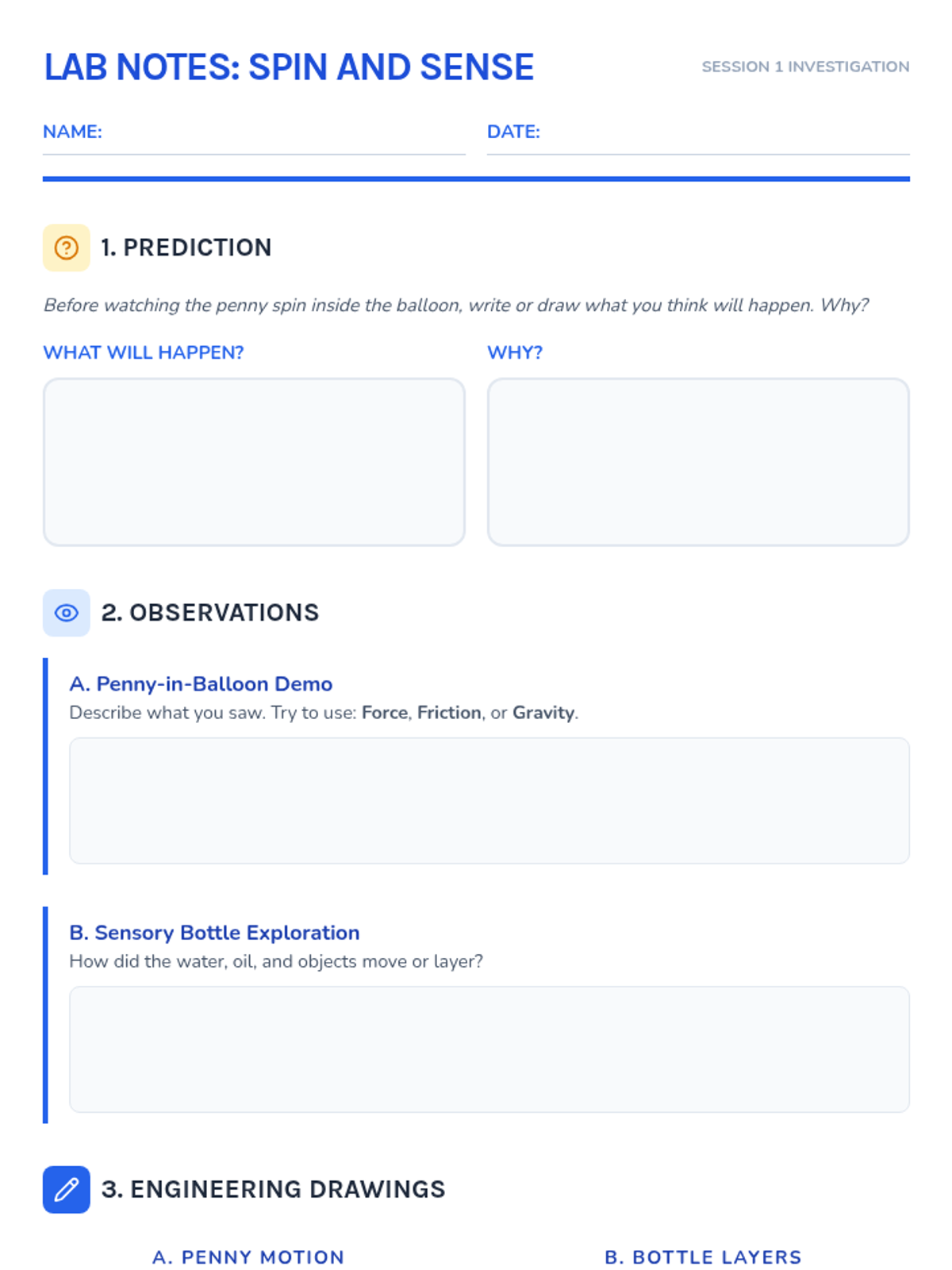
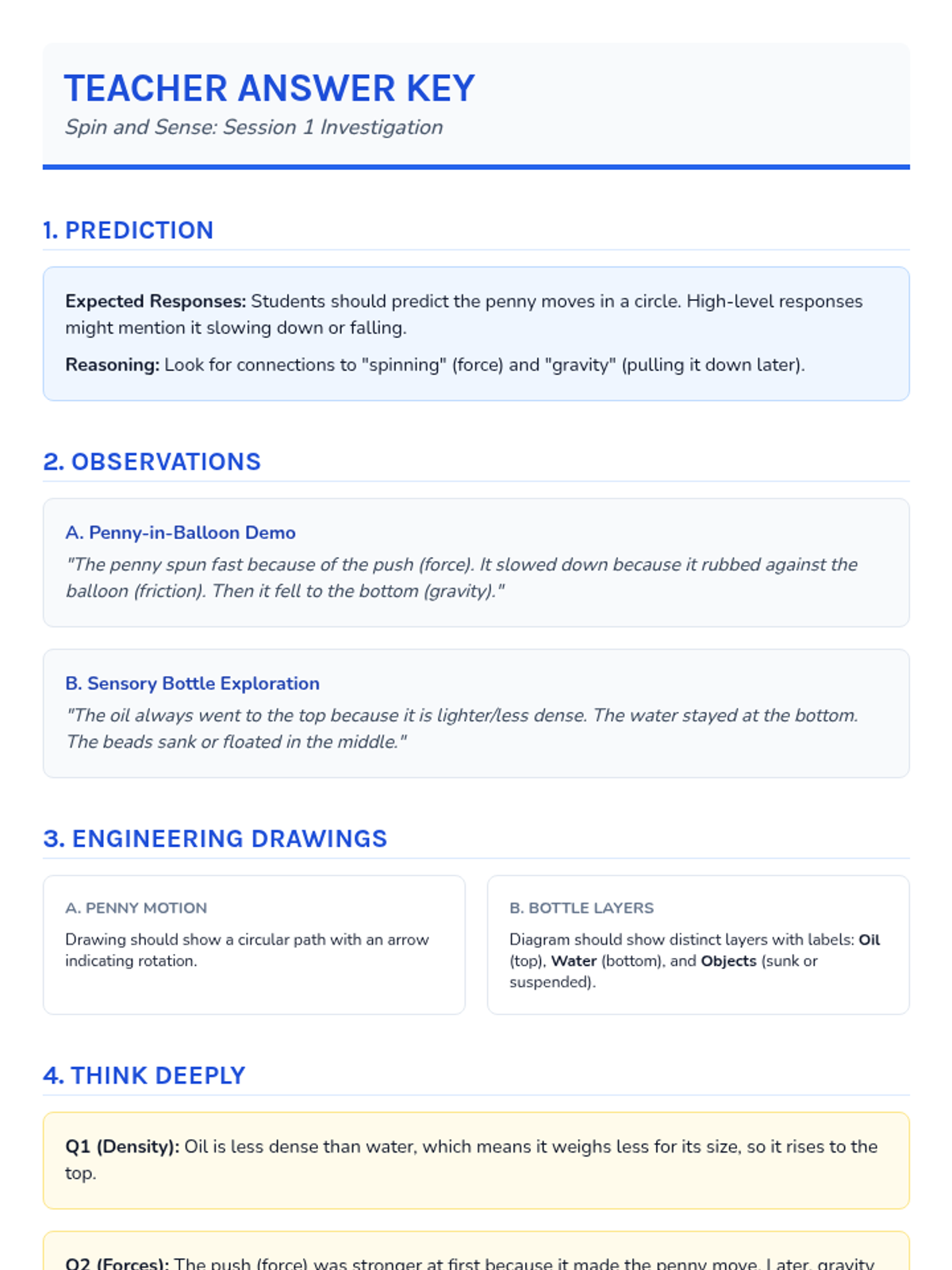
A 4-session STEM series for K-3 students focusing on physics and engineering. Students explore forces, density, action-reaction, and structural stability through hands-on builds including sensory bottles, balloon rockets, and marshmallow towers.
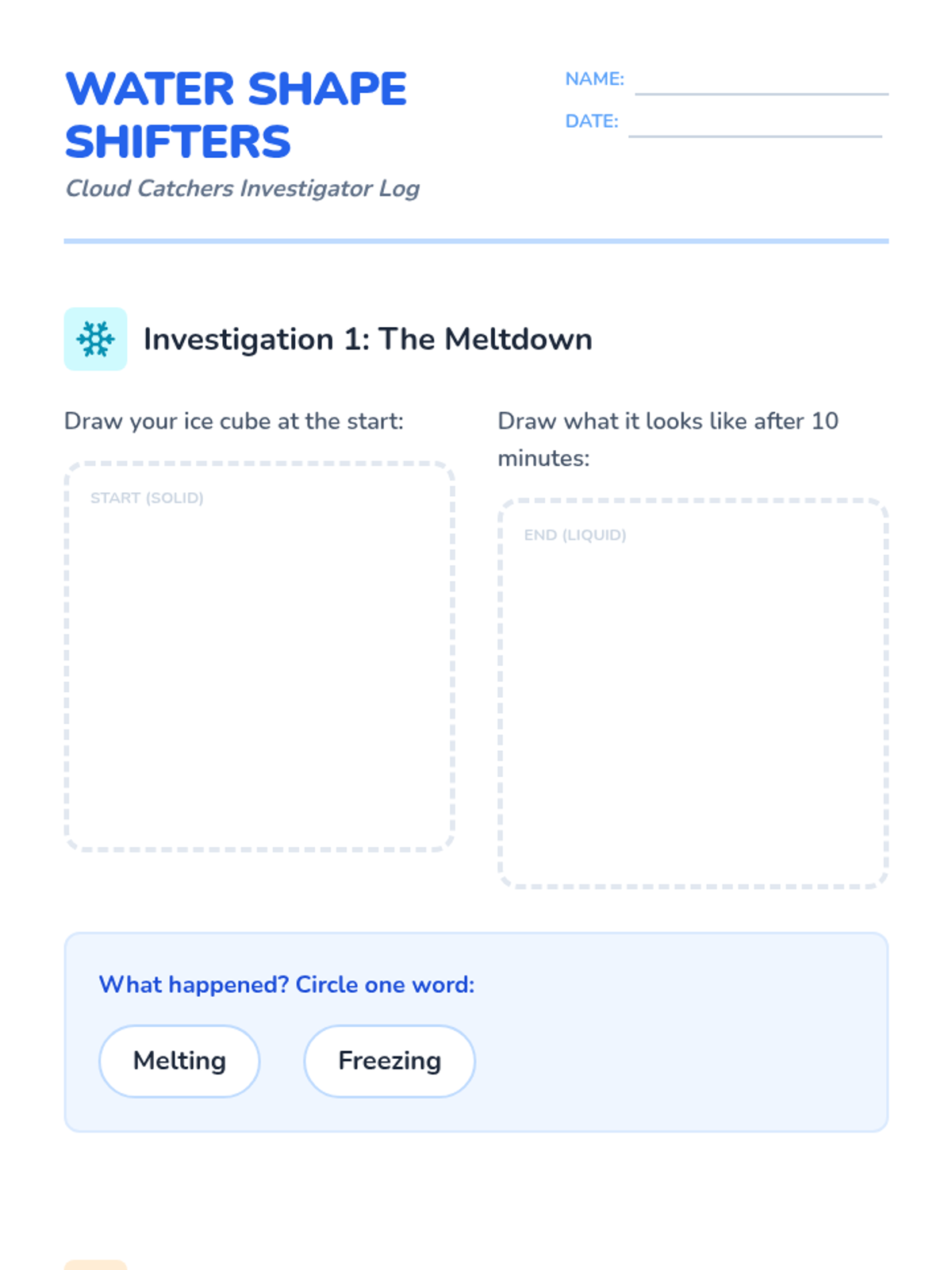
A hands-on investigation into the life of a water drop. Students explore states of matter, simulate cloud formation, categorize precipitation, and trace the water cycle journey from puddles to the sky and back.
A 4-session K-3 STEM series where students explore forces, density, magnetism, and stability through hands-on challenges. Each 30-minute session builds inquiry, creativity, and foundational science skills through active experimentation and reflection.
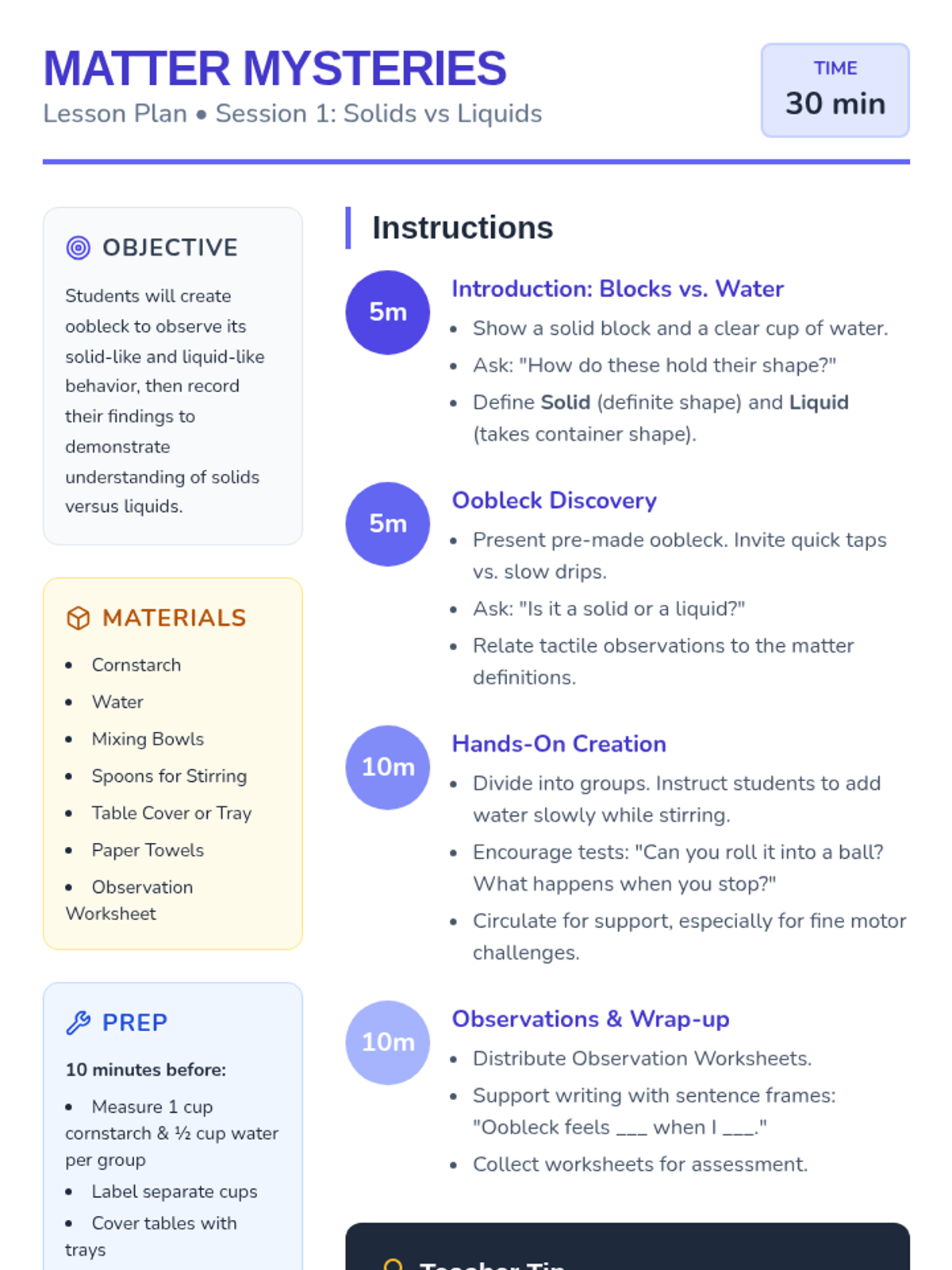
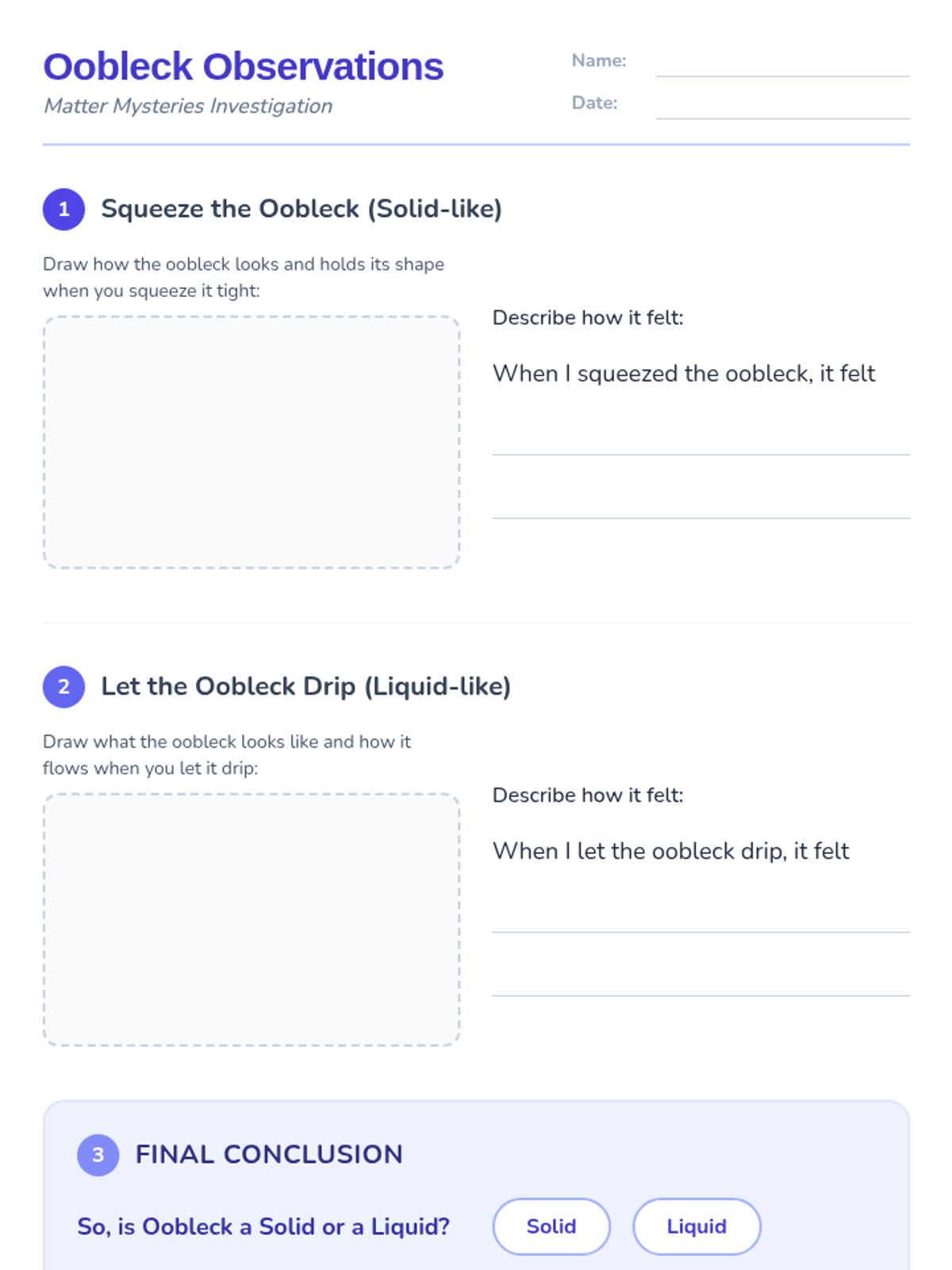
A 2-session science sequence for K-3 students exploring the properties of matter through oobleck and the mechanics of force through a tug-of-war challenge. Students engage in tactile, sensory-rich experiments to build foundational scientific concepts.
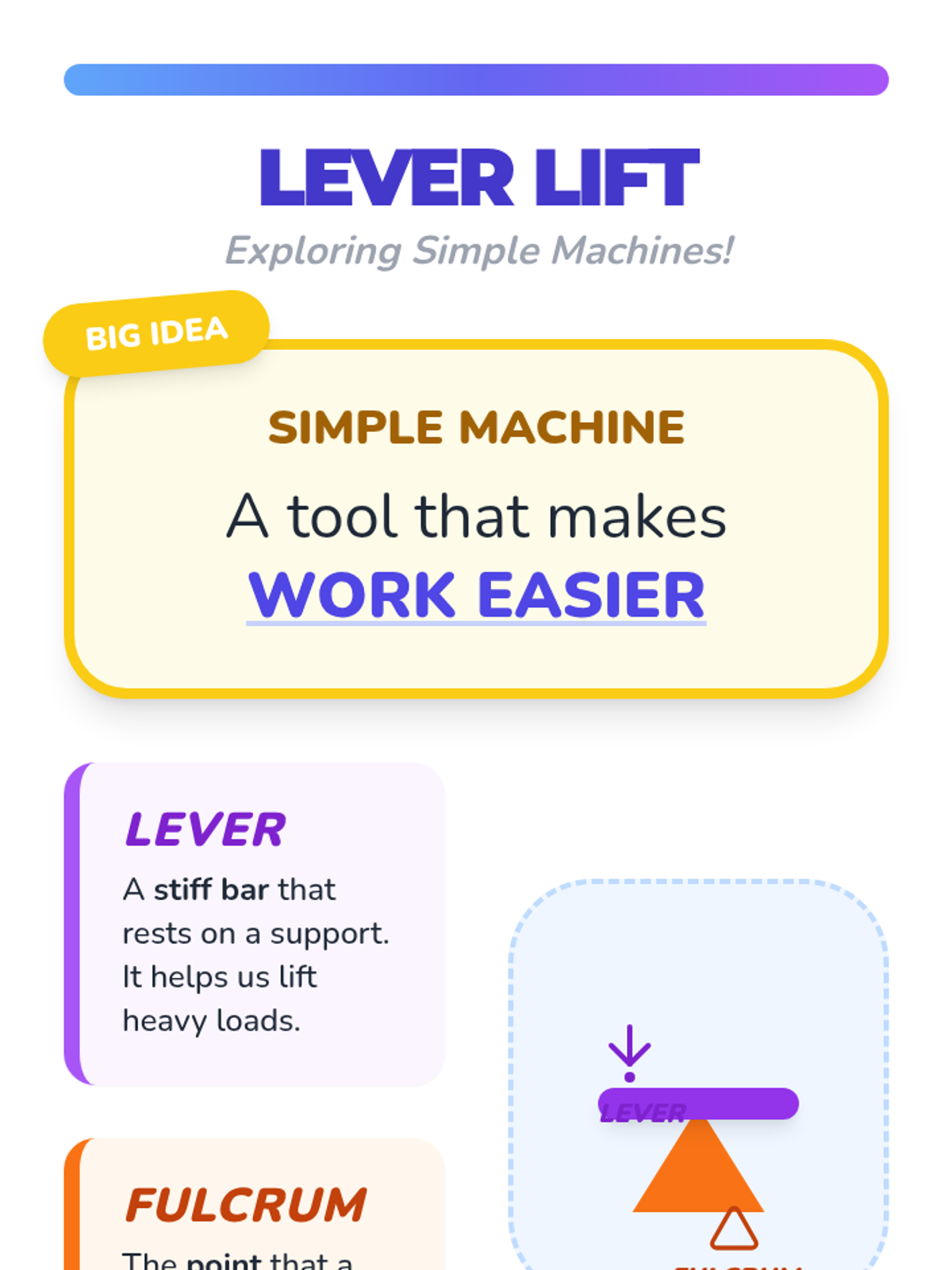
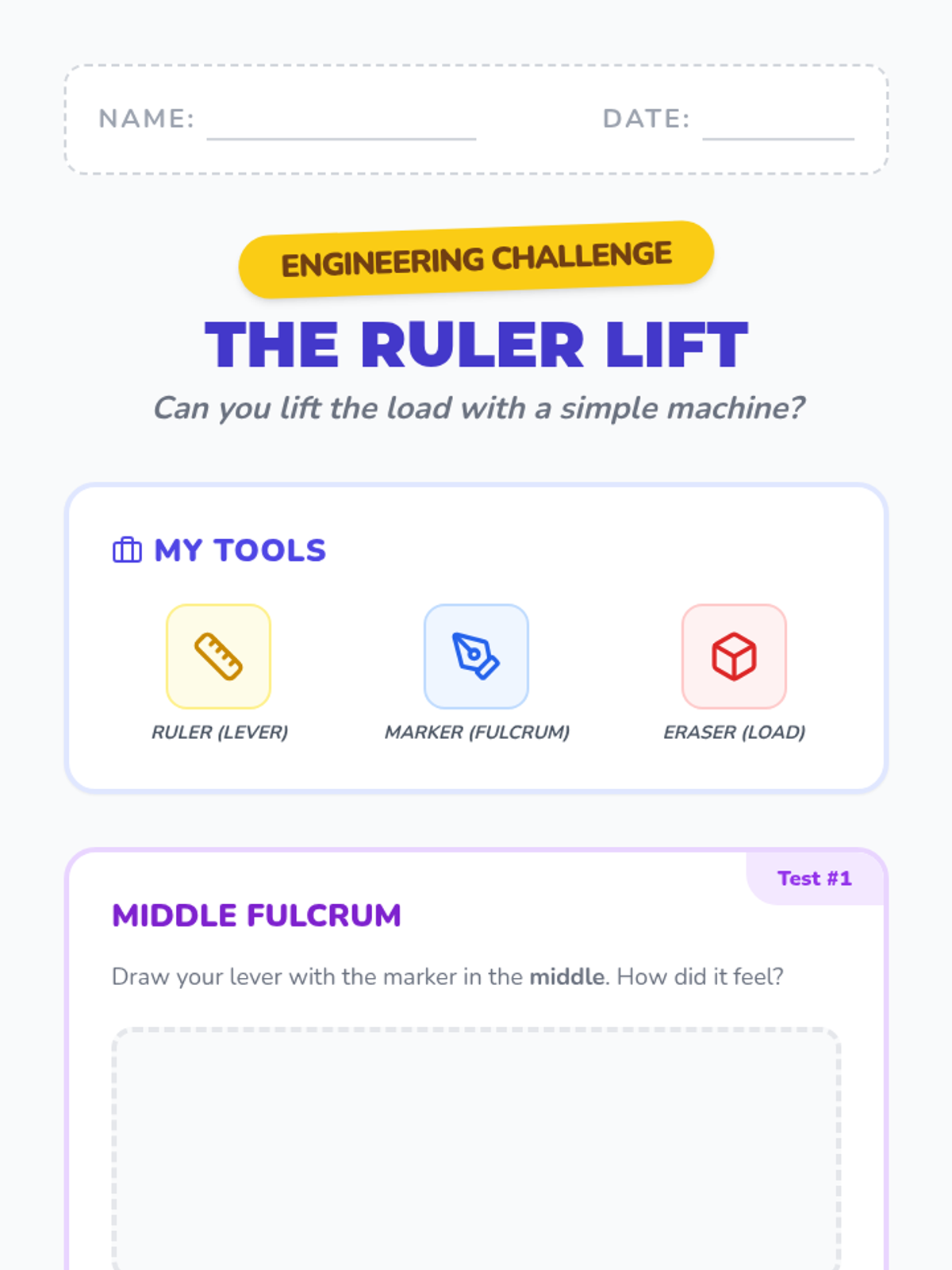
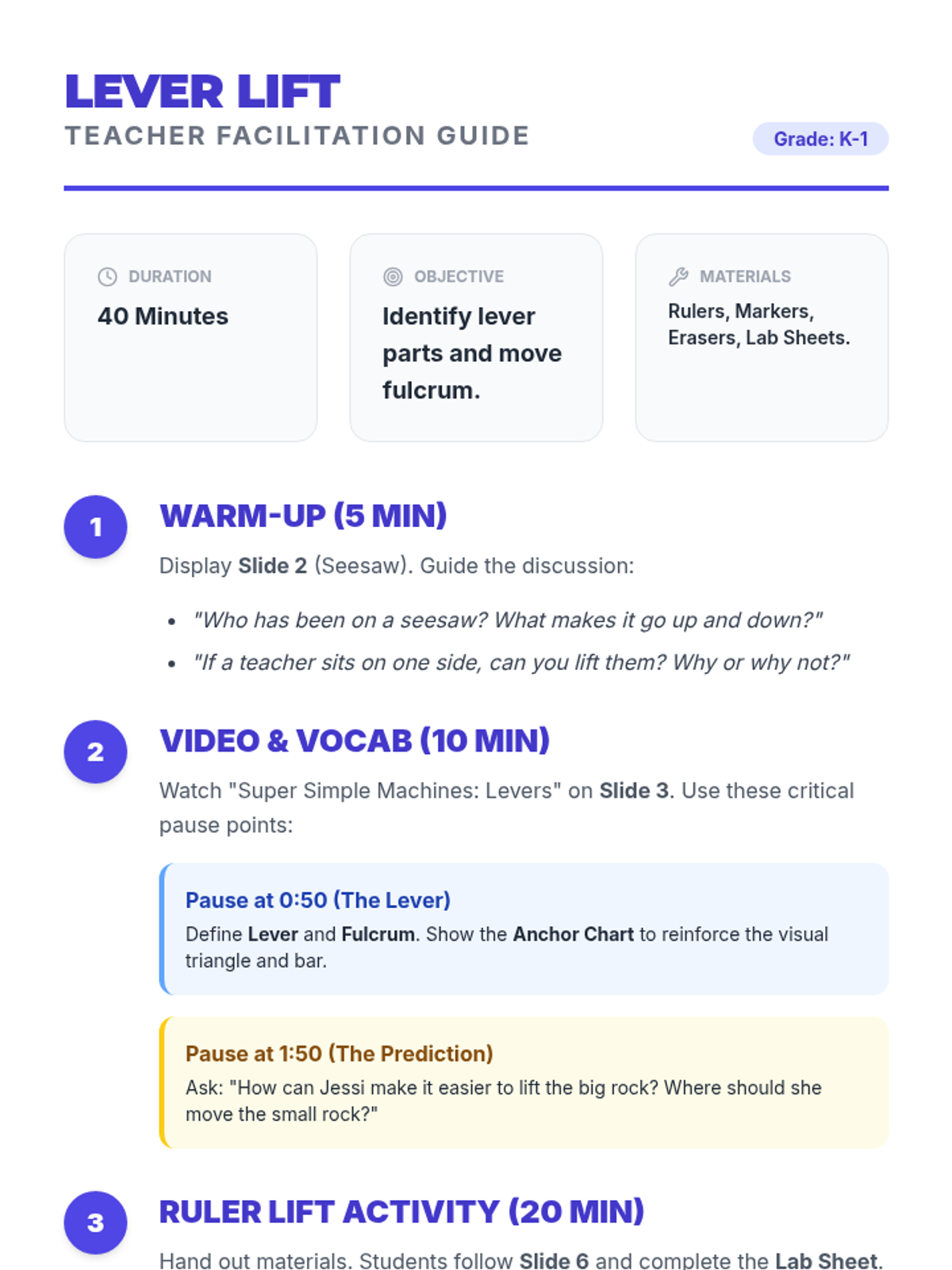
A hands-on introductory sequence for early elementary students to explore the mechanics of levers and fulcrums using everyday classroom objects.
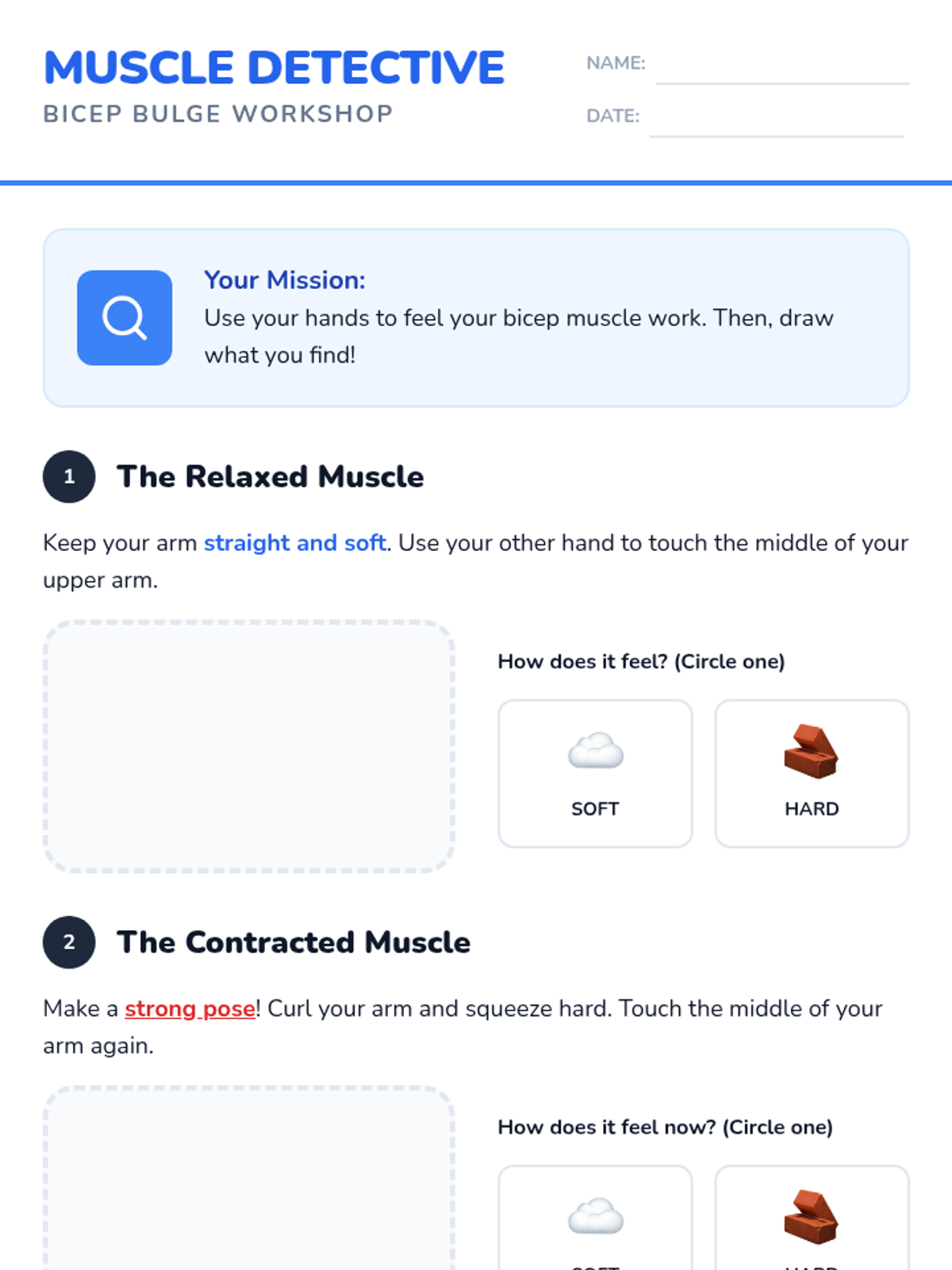
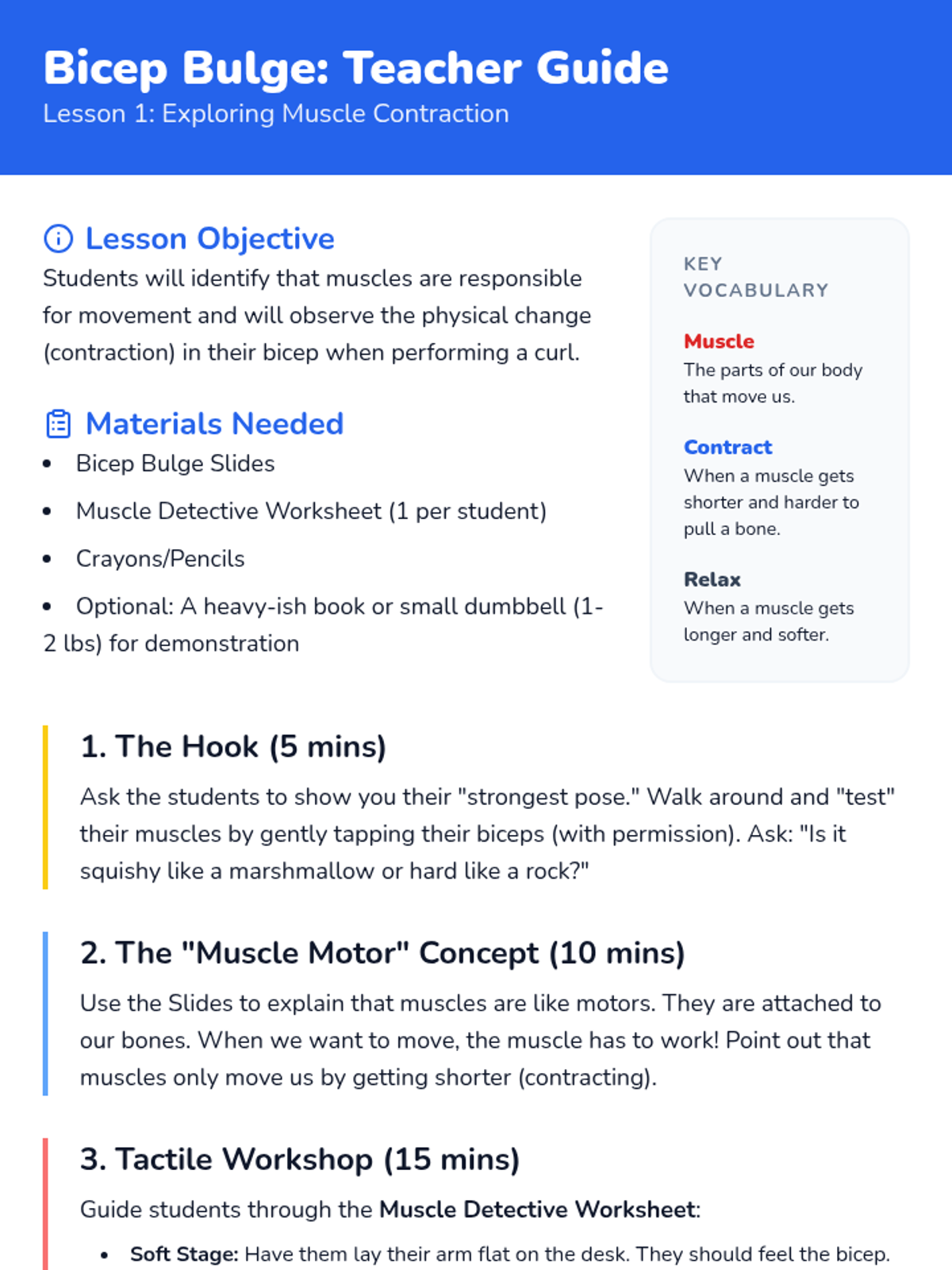
A Kindergarten sequence focused on the muscular system, teaching students how muscles pull bones to create movement through hands-on simulations, modeling, and physical activity.
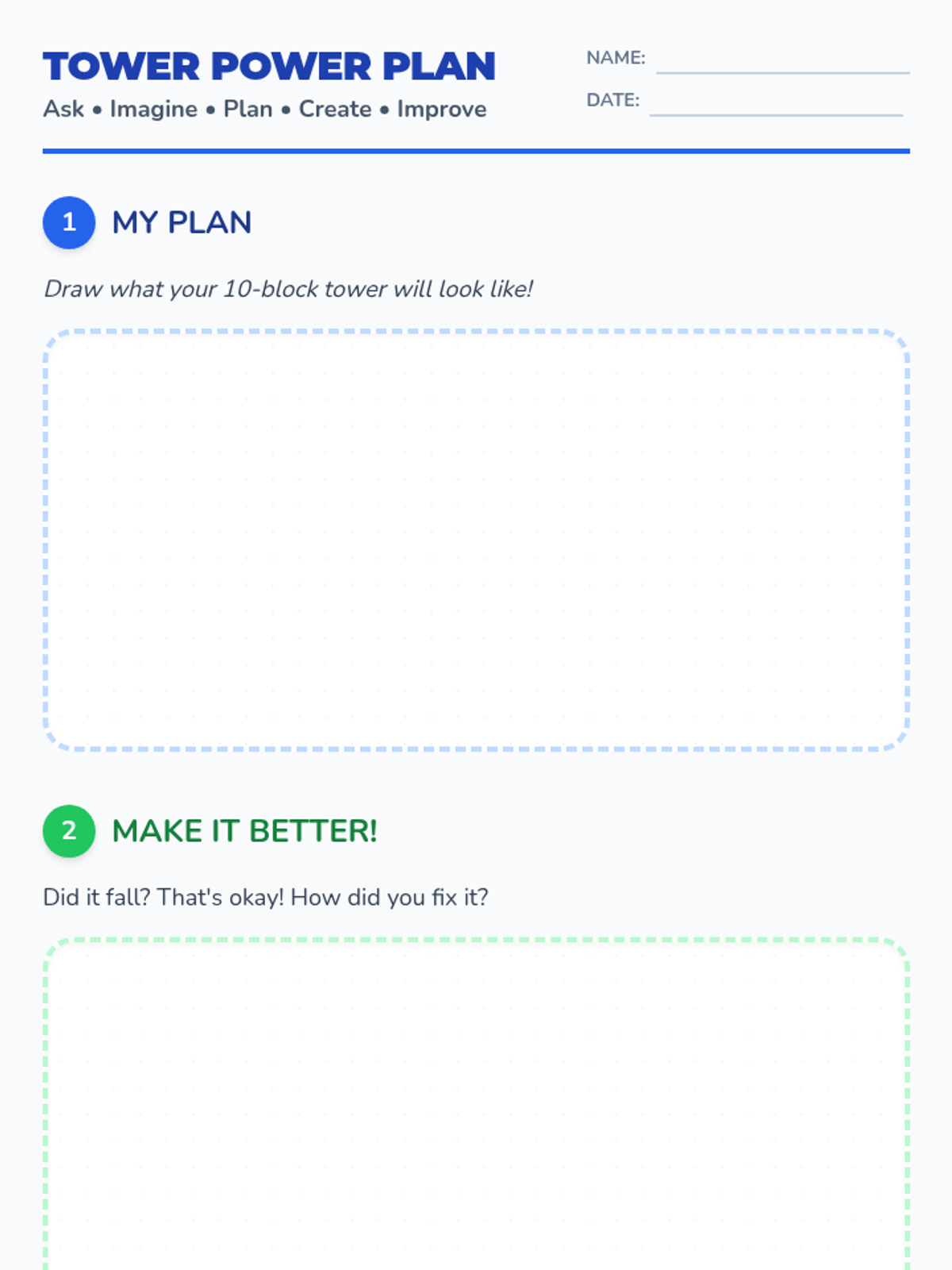
A Kindergarten sequence that uses engineering design challenges to teach resilience and perseverance. Students learn that failure is part of the learning process through building towers, bridges, and collaborative puzzles.
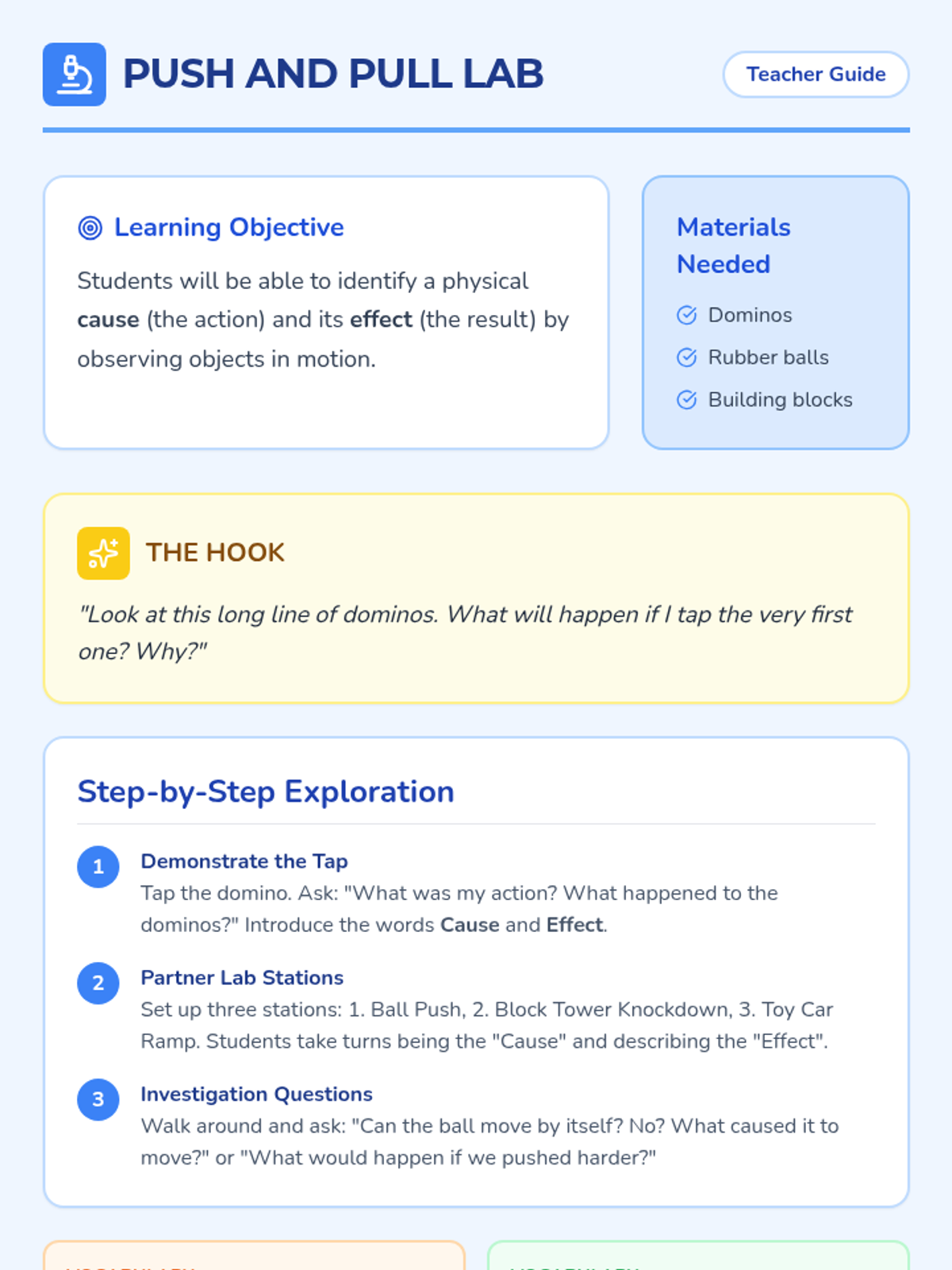
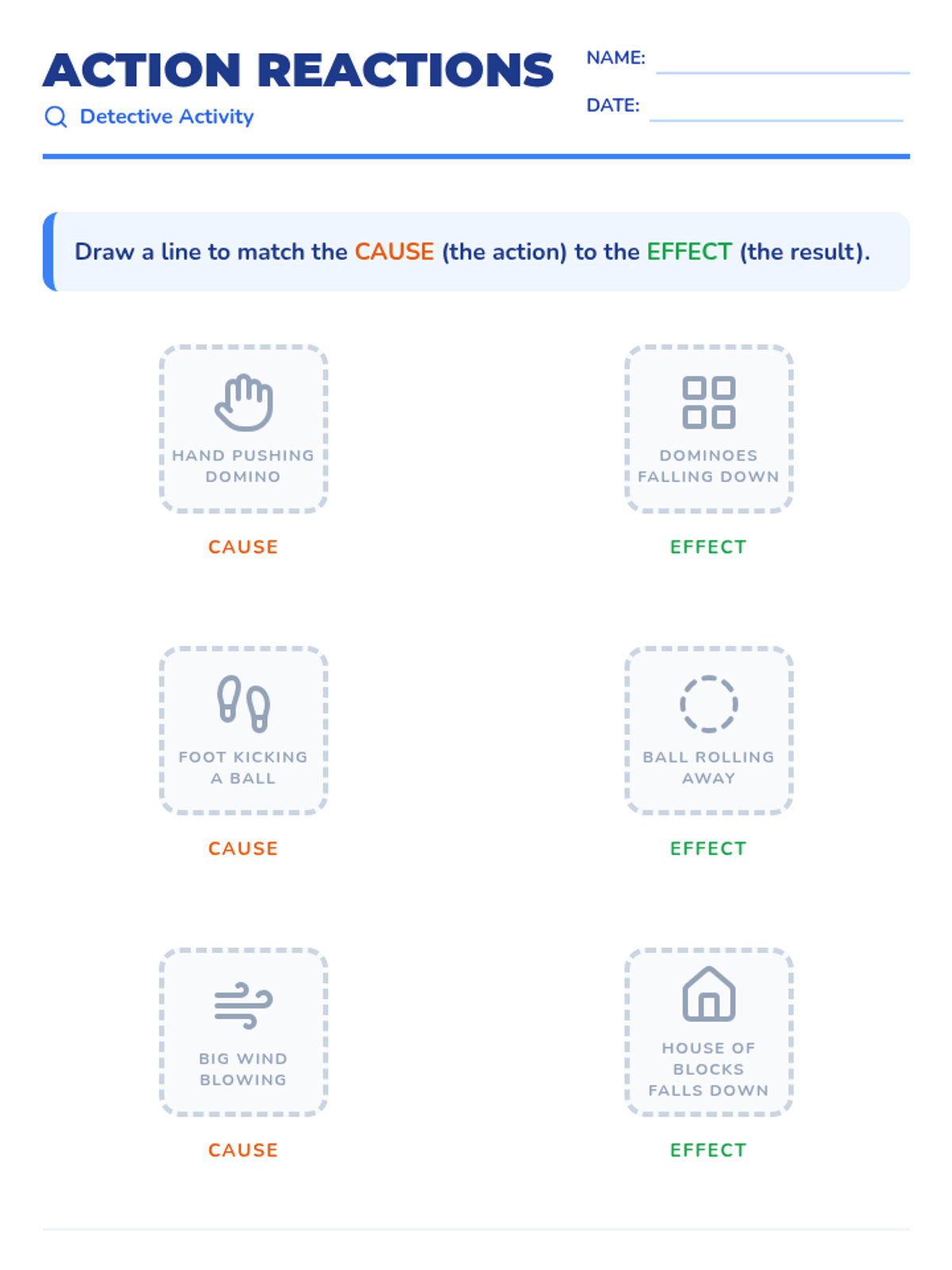
This Kindergarten sequence introduces the concepts of cause and effect through physical exploration, logical reasoning, social-emotional awareness, and narrative construction. Students learn to identify why things happen and the consequences of actions across physical, environmental, and social contexts.
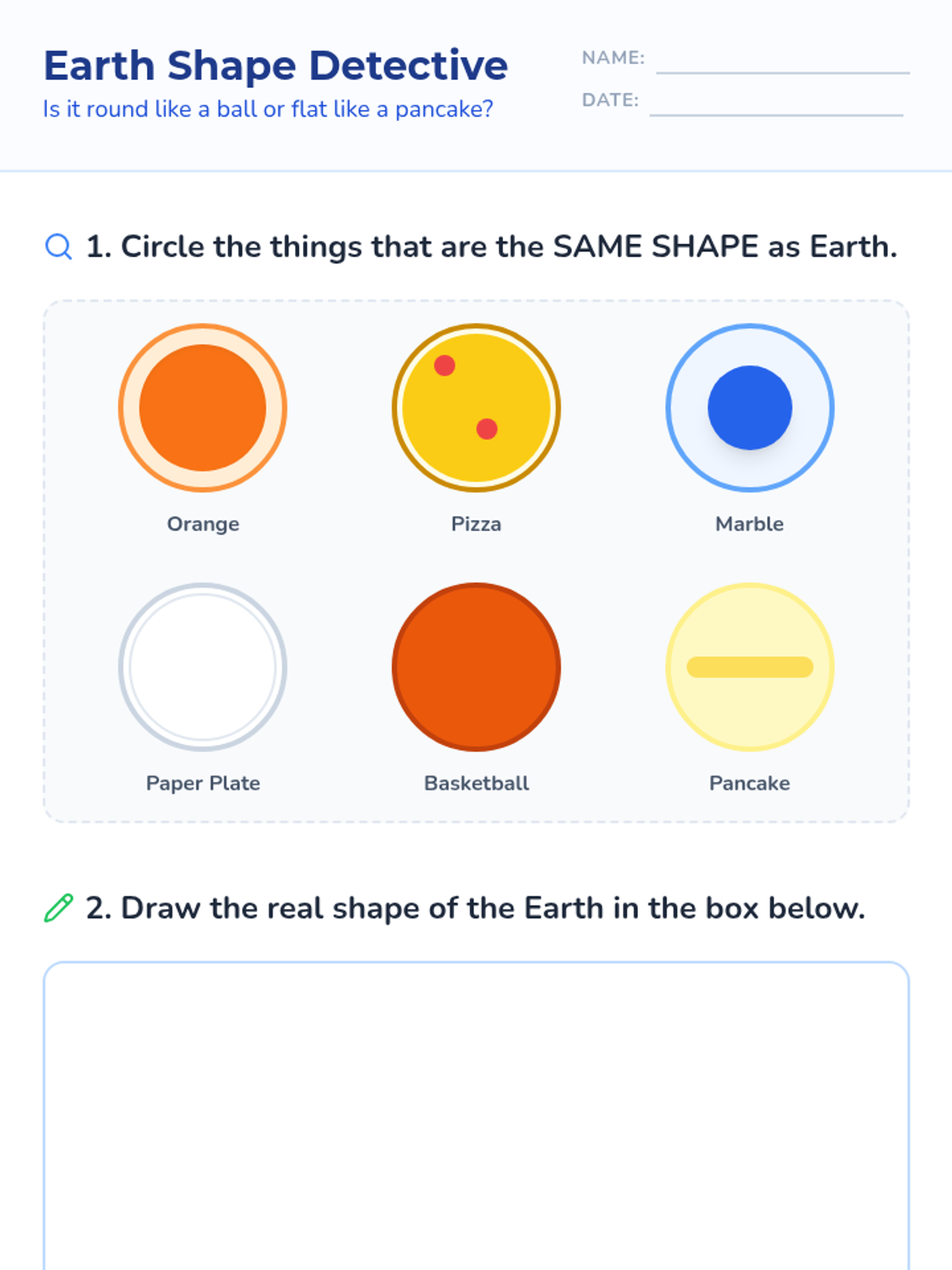
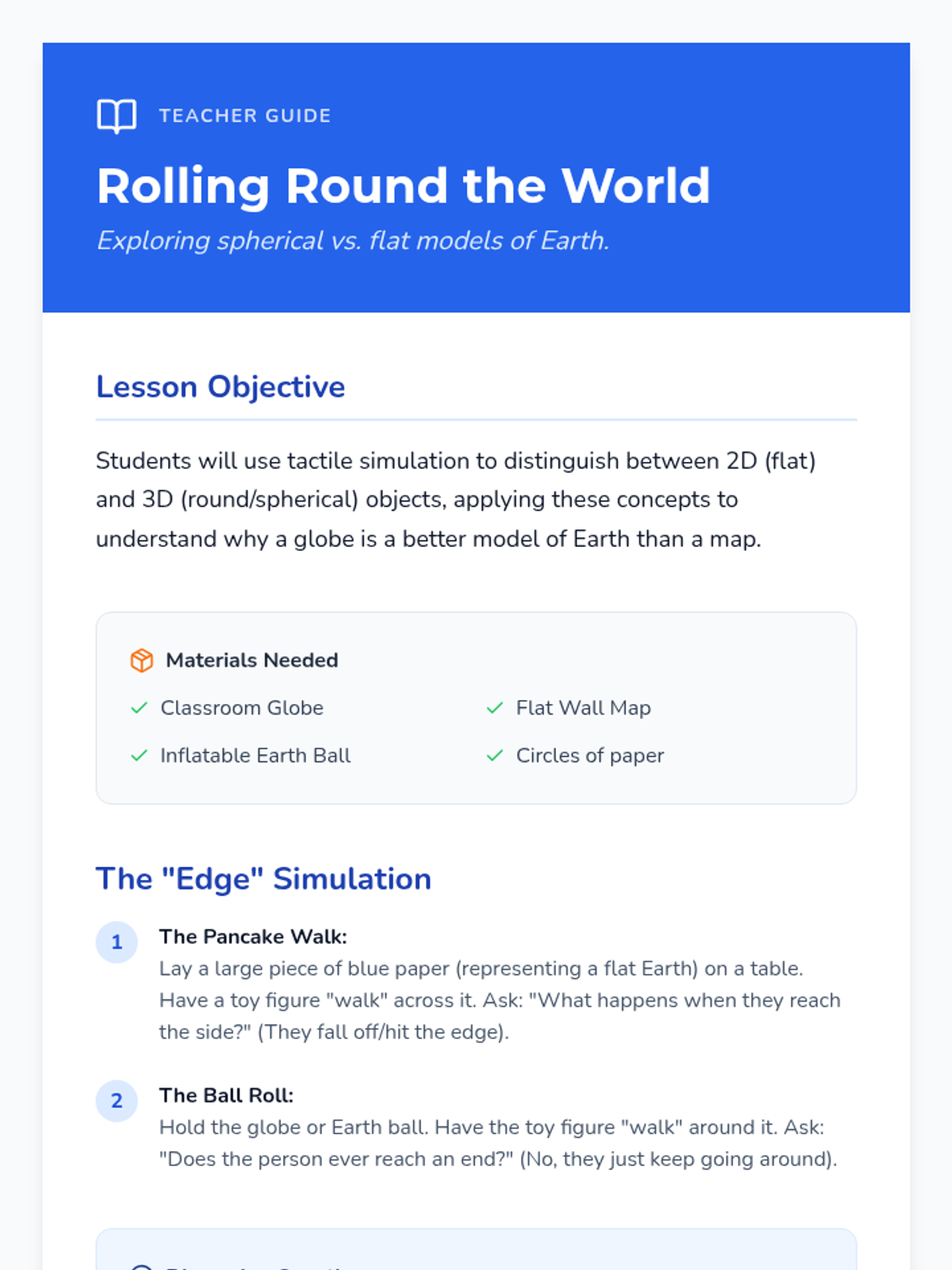
A Kindergarten sequence exploring Earth's spherical shape and the basic concept of gravity ('earth pull'). Students use models, physical play, and artistic representation to understand our planet's place in space.
A Kindergarten science sequence where students explore physics through engineering ramps. They investigate how shape, slope, and texture affect the motion of objects, culminating in a marble run design challenge.
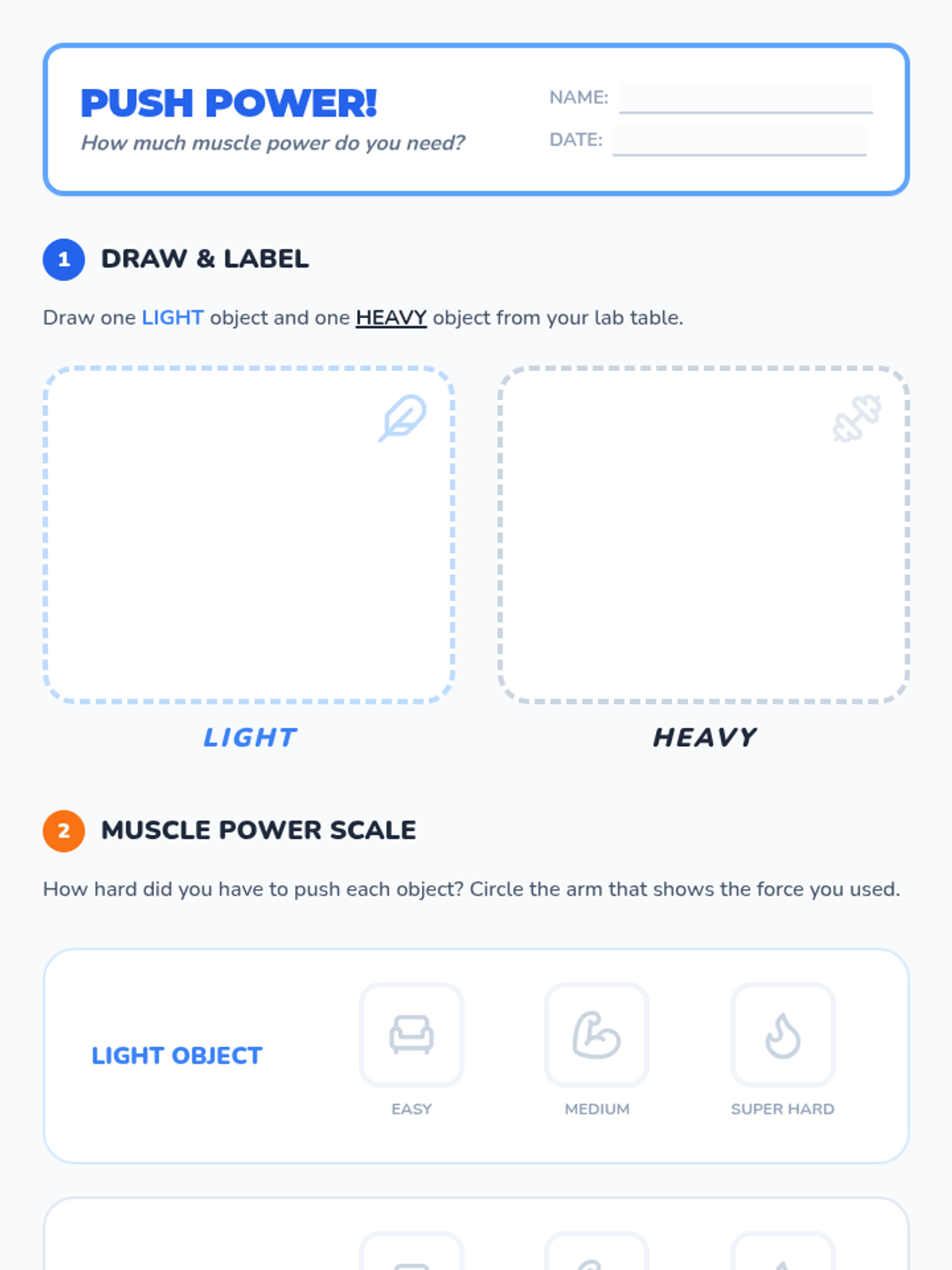
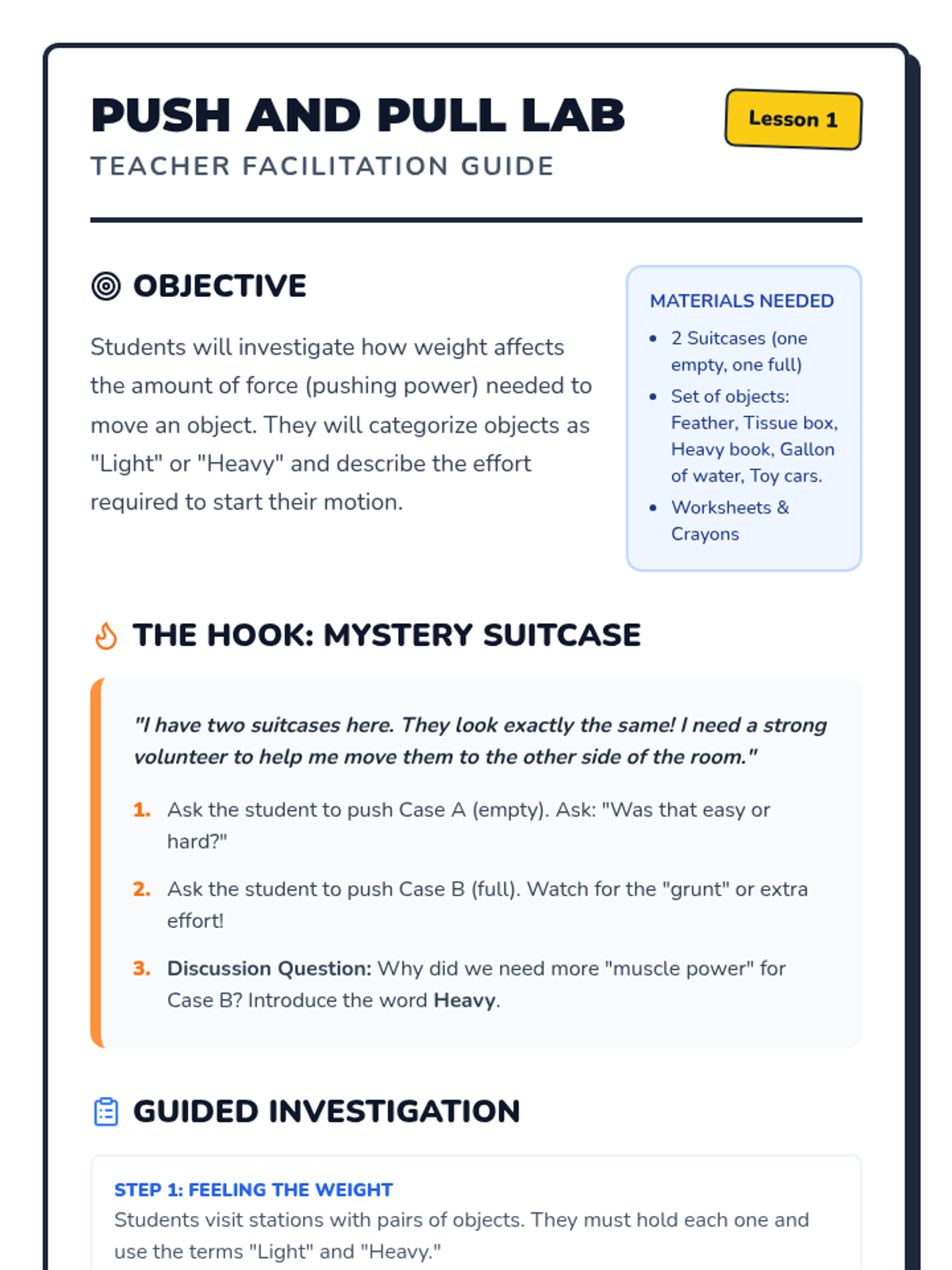
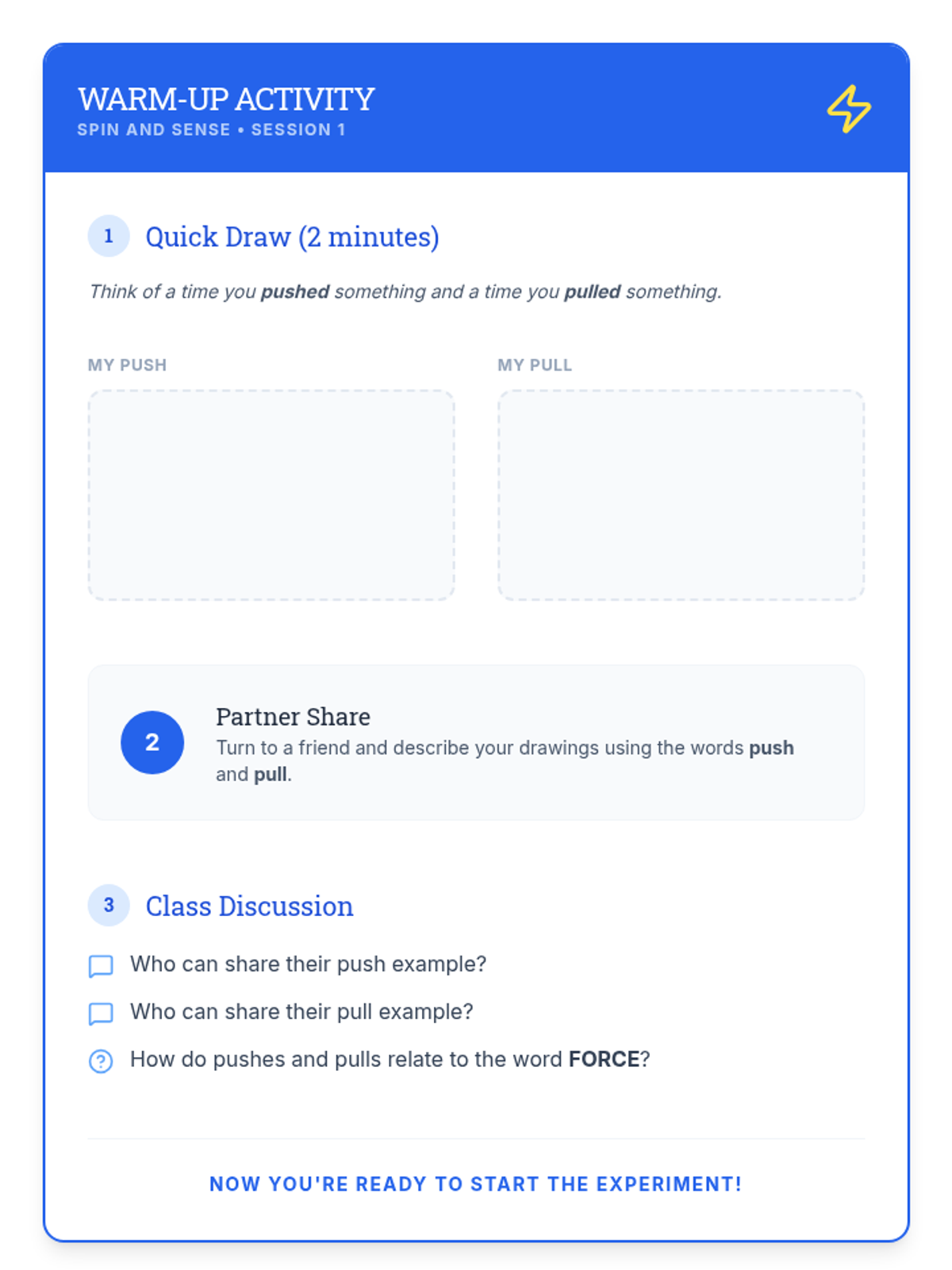
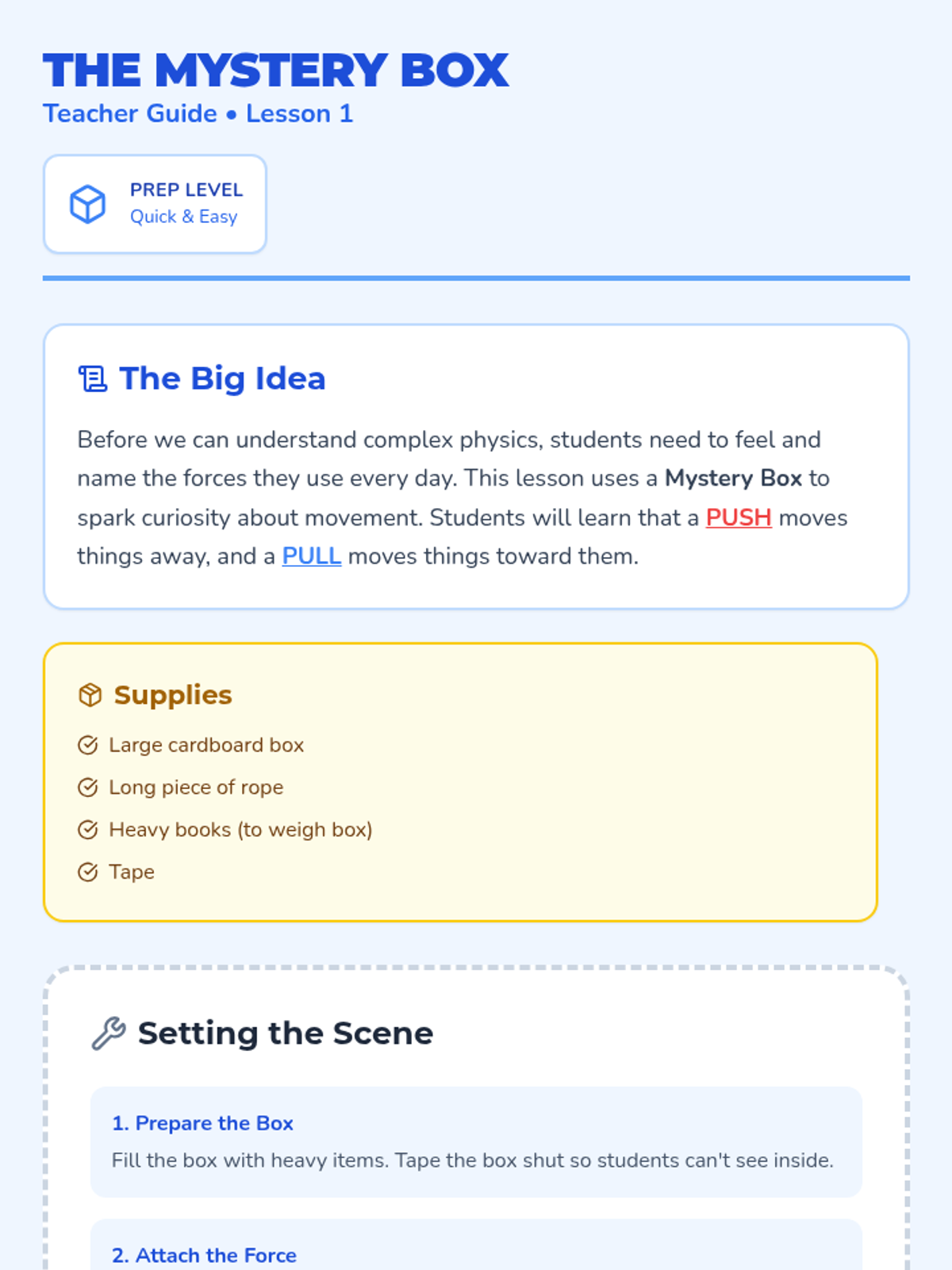
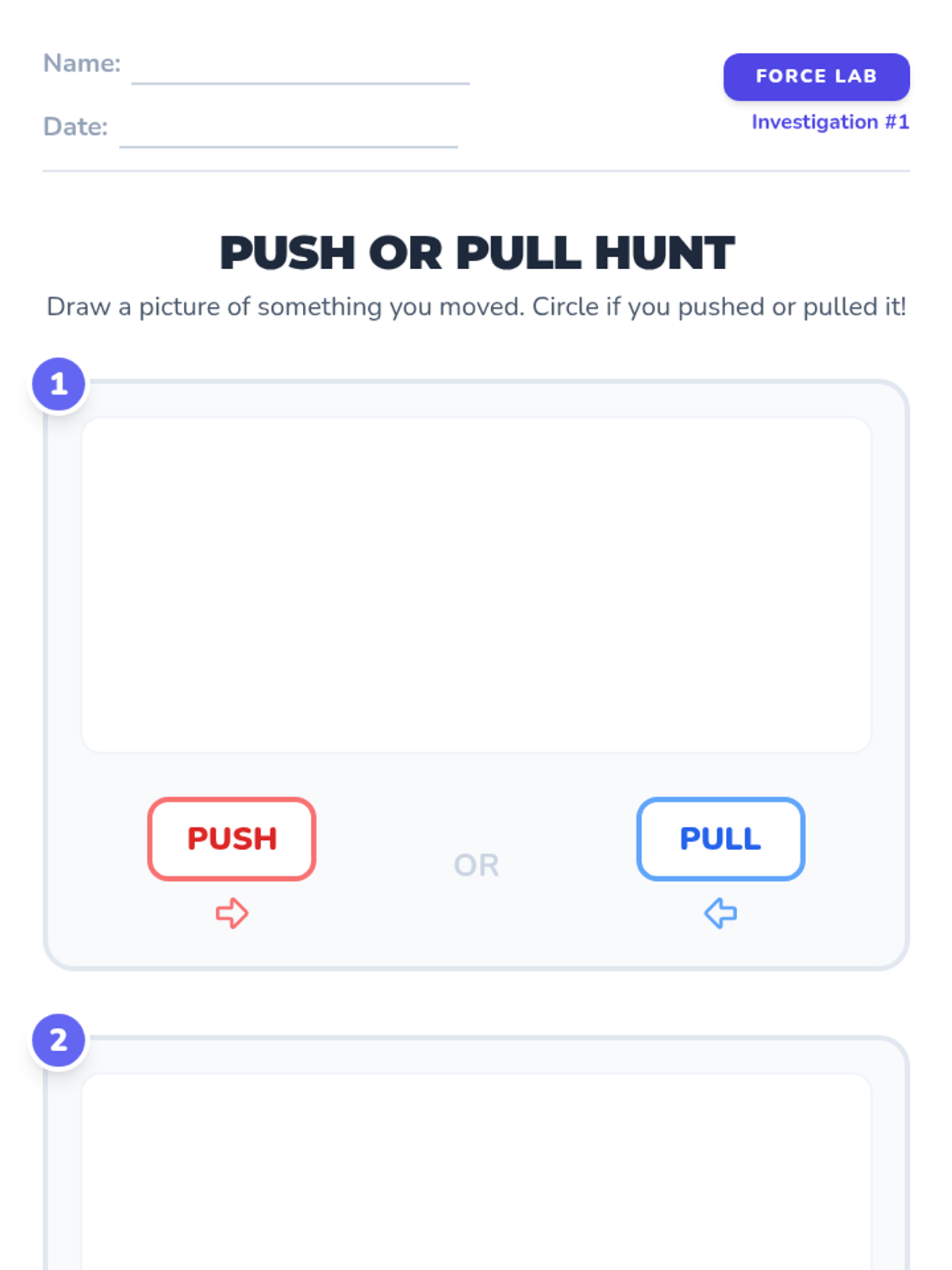
A Kindergarten sequence exploring pushes, pulls, force strength, and direction through play-based inquiry and physical experimentation.