Fundamental principles of force, motion, and energy across classical and modern contexts. Examines matter properties, wave behavior, thermodynamics, and electromagnetism through mechanics and atomic studies.
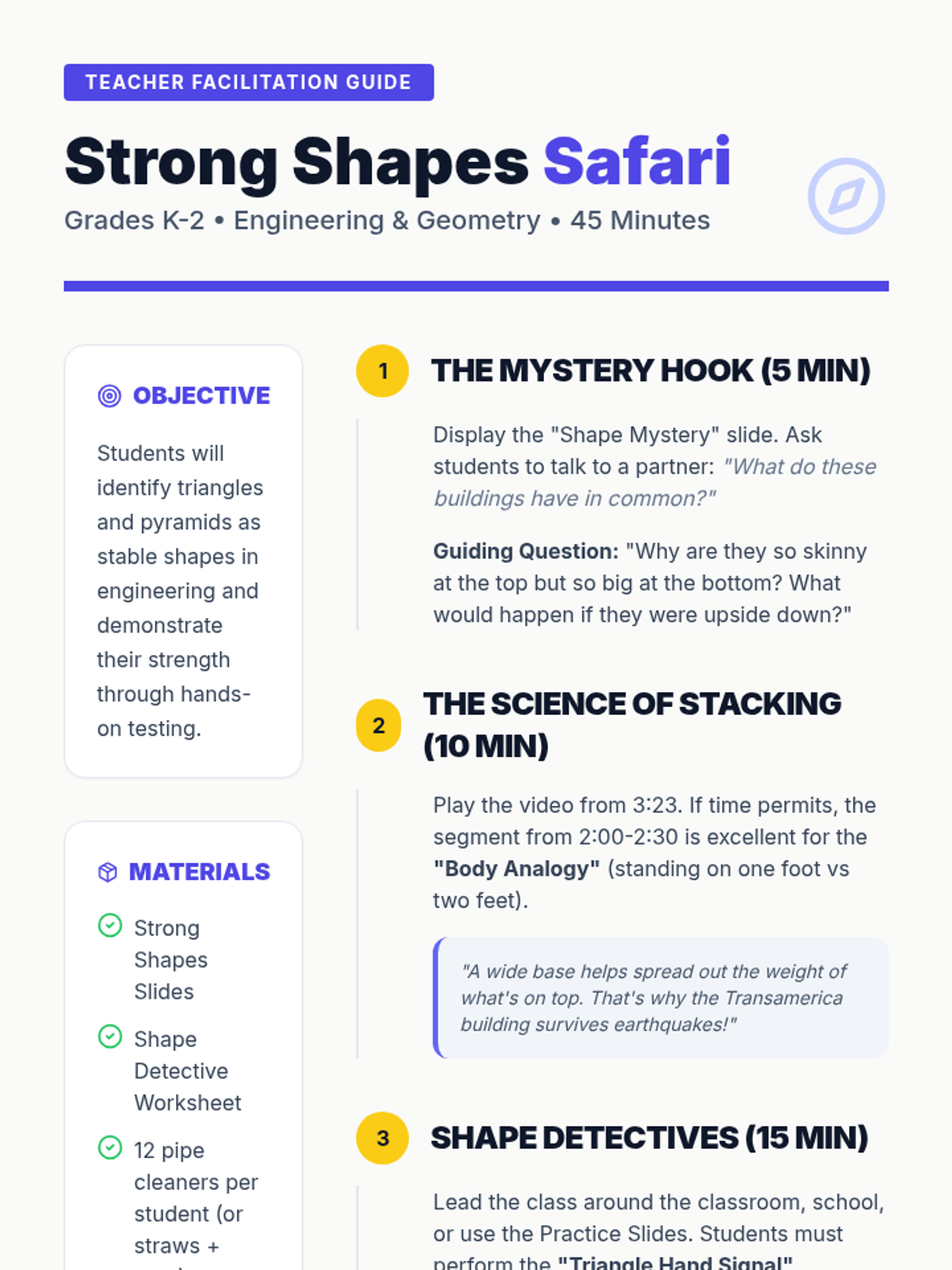
A comprehensive teacher guide for the Strong Shapes Safari lesson. Includes pacing, discussion prompts, "Squish Test" instructions, and differentiation strategies for K-2 educators.
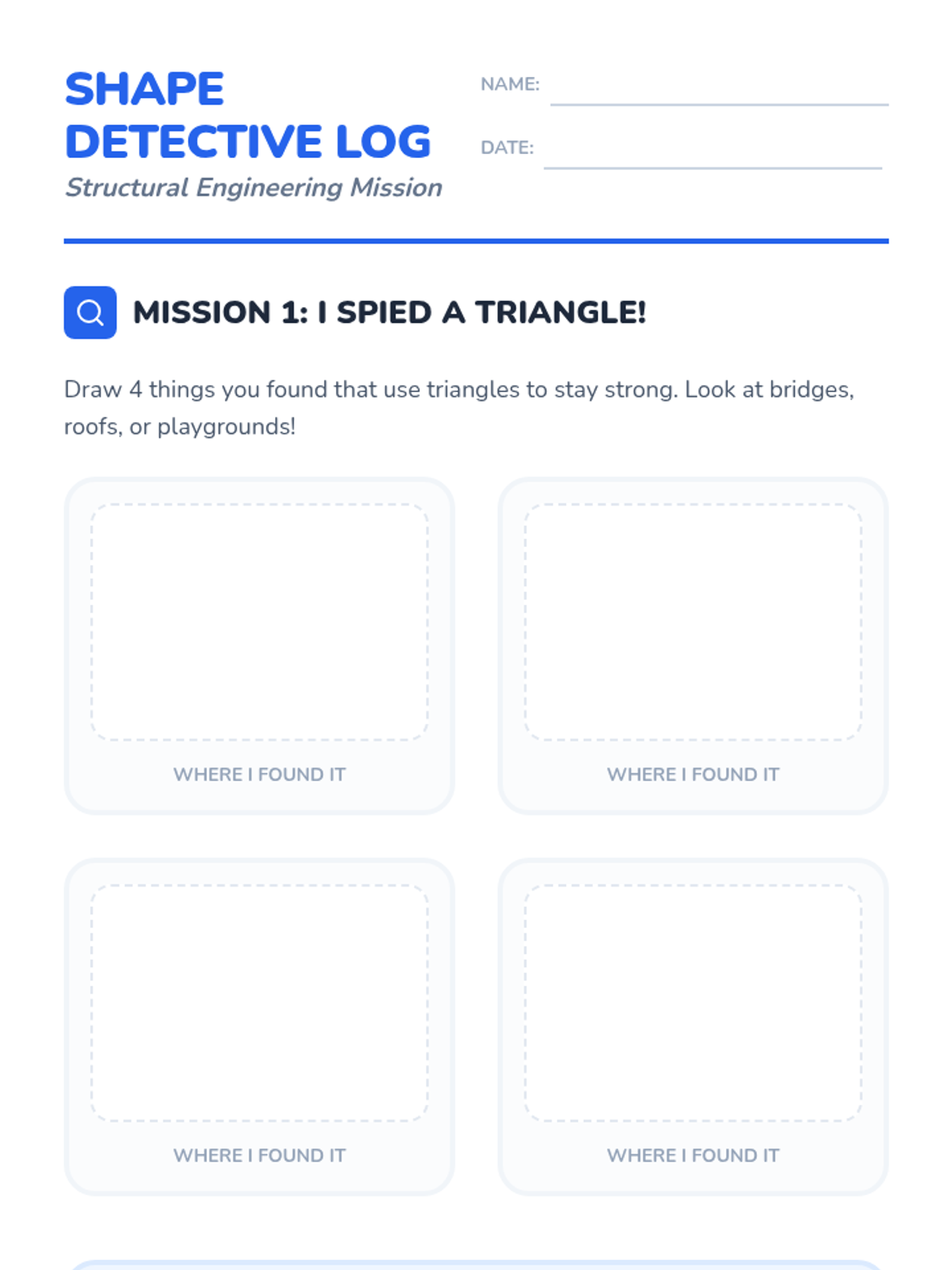
A student recording sheet for the Shape Detective scavenger hunt and the pipe cleaner stability experiment. Includes drawing areas and a guided reflection section.
A vibrant presentation for K-2 students focusing on stable shapes in engineering. Includes mystery buildings, an embedded video, vocabulary, and interactive practice slides.
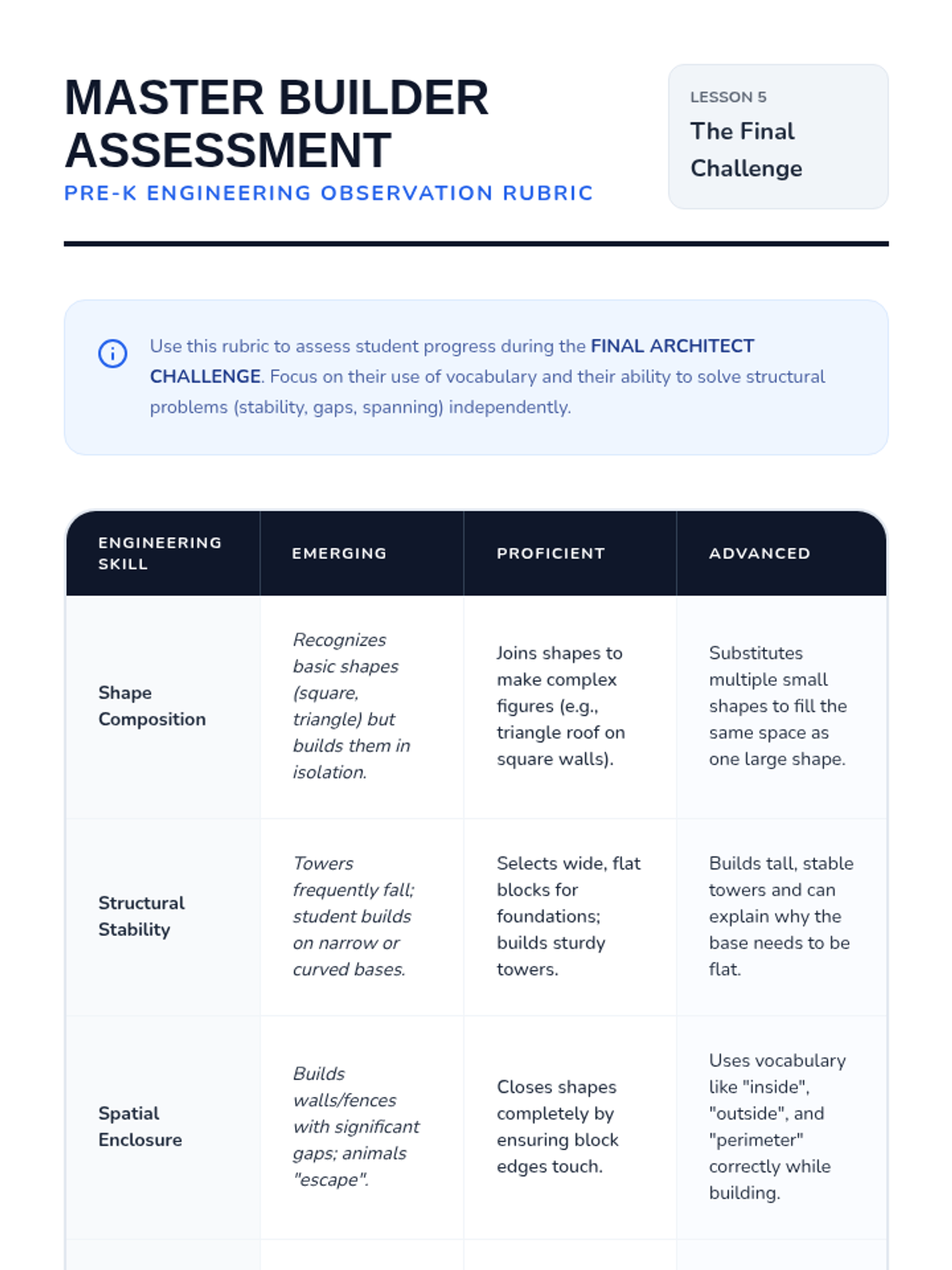
A comprehensive teacher observation rubric and assessment guide for the Master Builders Challenge, evaluating students on composition, stability, and spatial reasoning.
A student planning and drawing sheet for the final architectural challenge, featuring a blueprint grid and a criteria checklist for their structure.
A visual slide deck for the synthesis project, introducing students to the role of an architect and the specific criteria for their final building challenge.
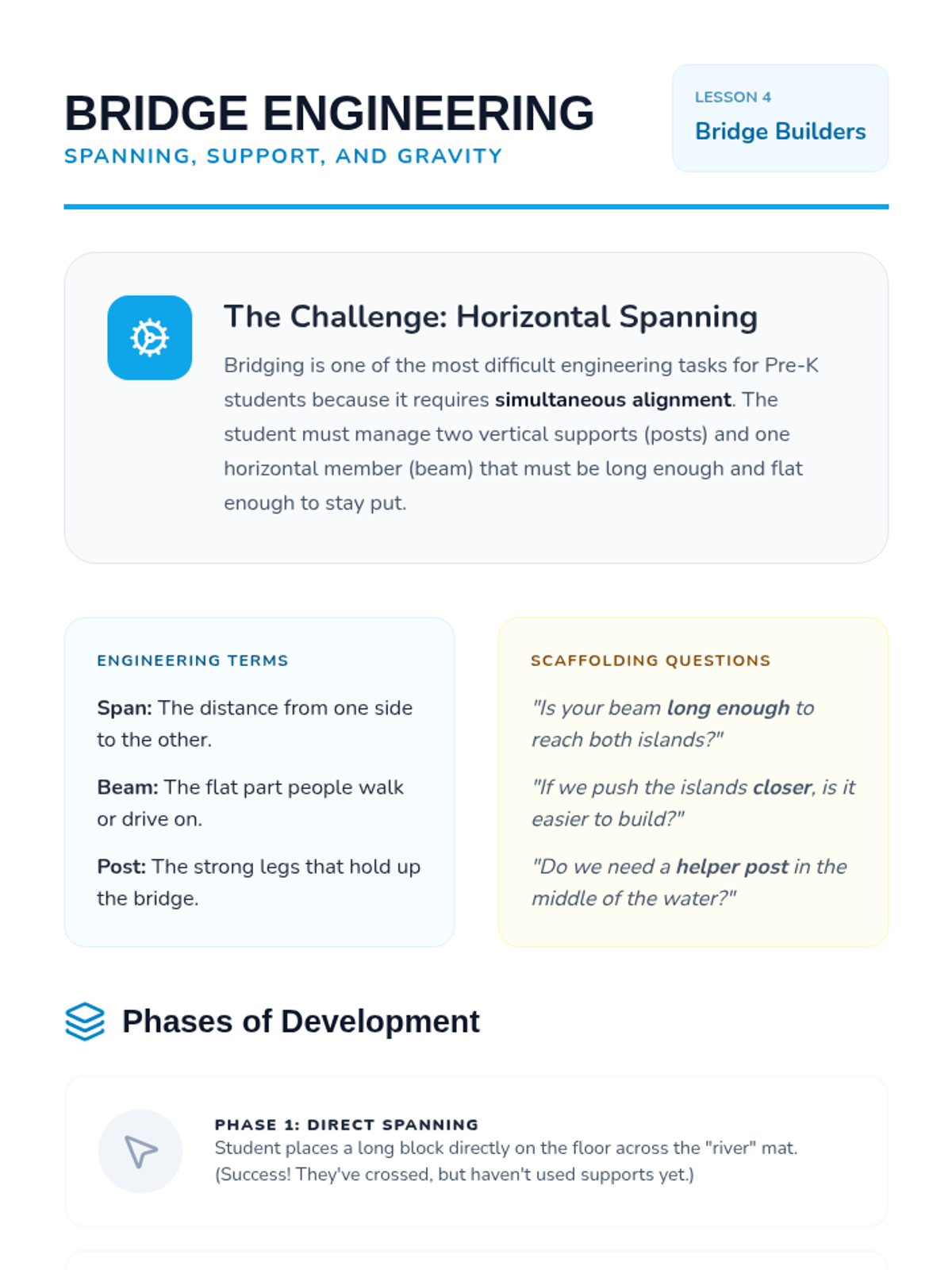
A teacher facilitation guide for the Bridge Builders lesson, focusing on the engineering of beams, posts, and the developmental stages of spanning gaps.
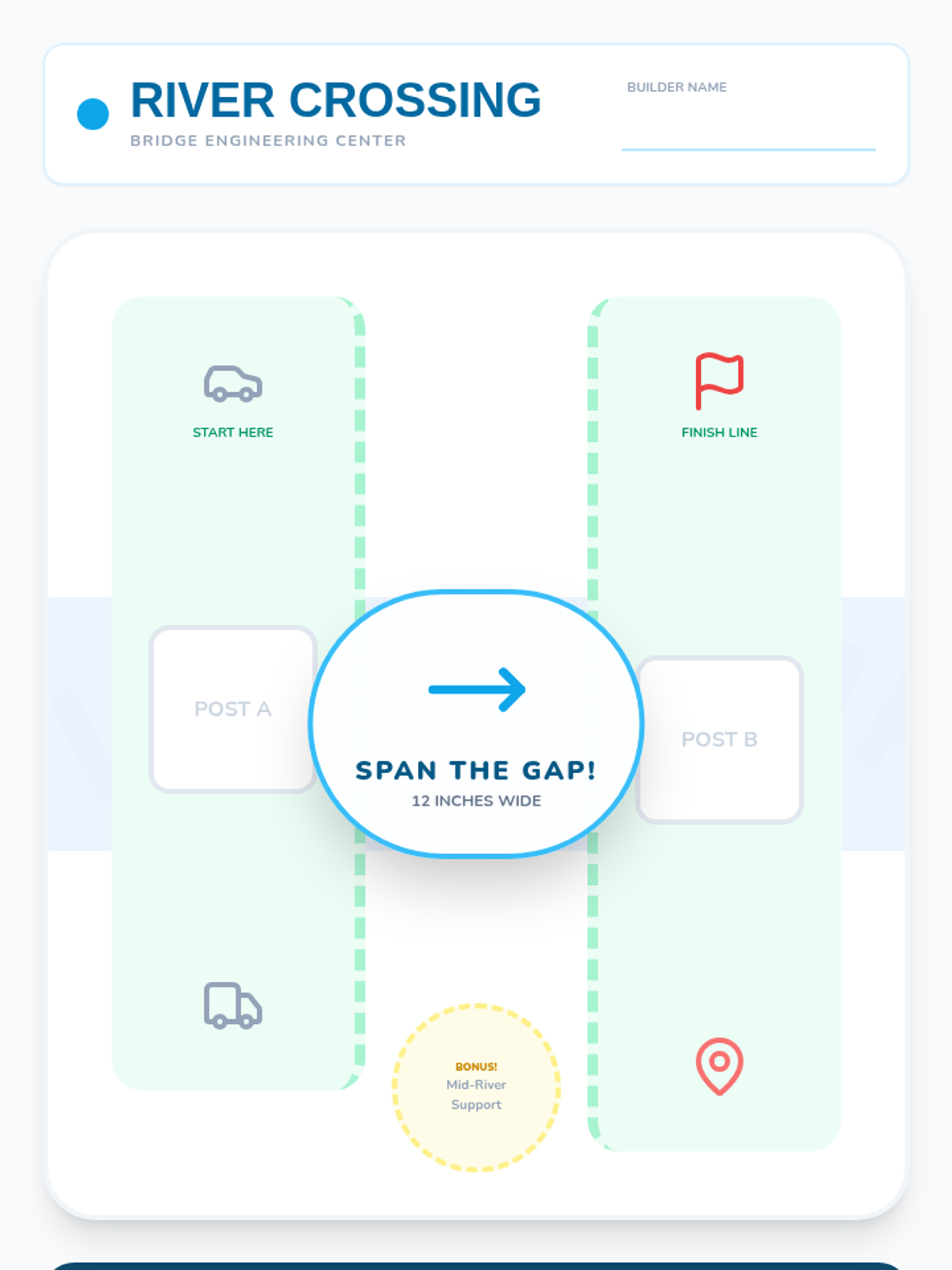
A printable activity mat for Pre-K students to practice spanning a gap between two "islands" using blocks as beams and supports.
A slide deck introducing bridge engineering to Pre-K students, focusing on beams, posts, and why flat shapes are best for spanning gaps.
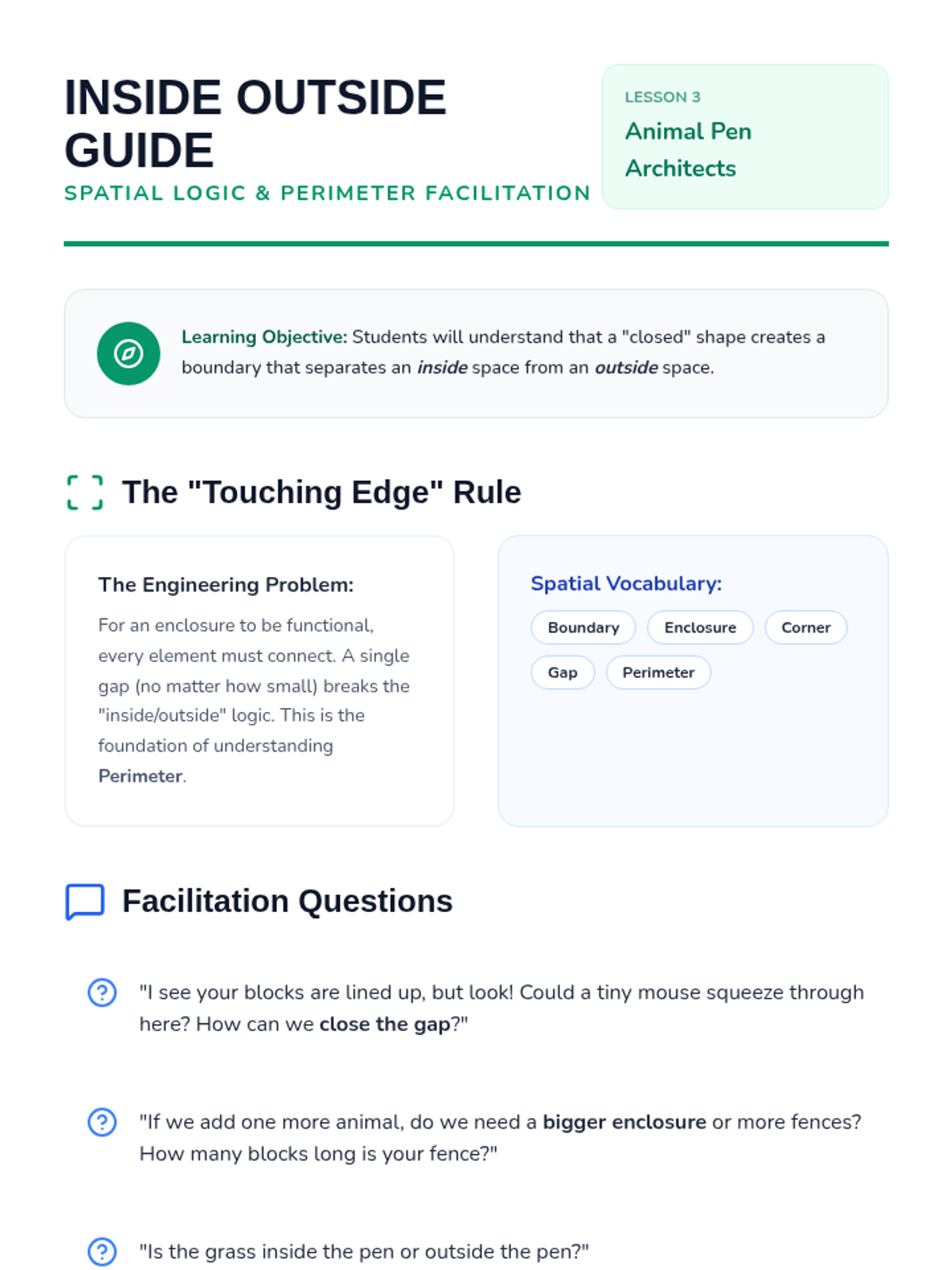
A teacher facilitation guide for the Animal Pen Architects lesson, focusing on perimeter, spatial relationships (inside/outside), and the "touching edge" rule.
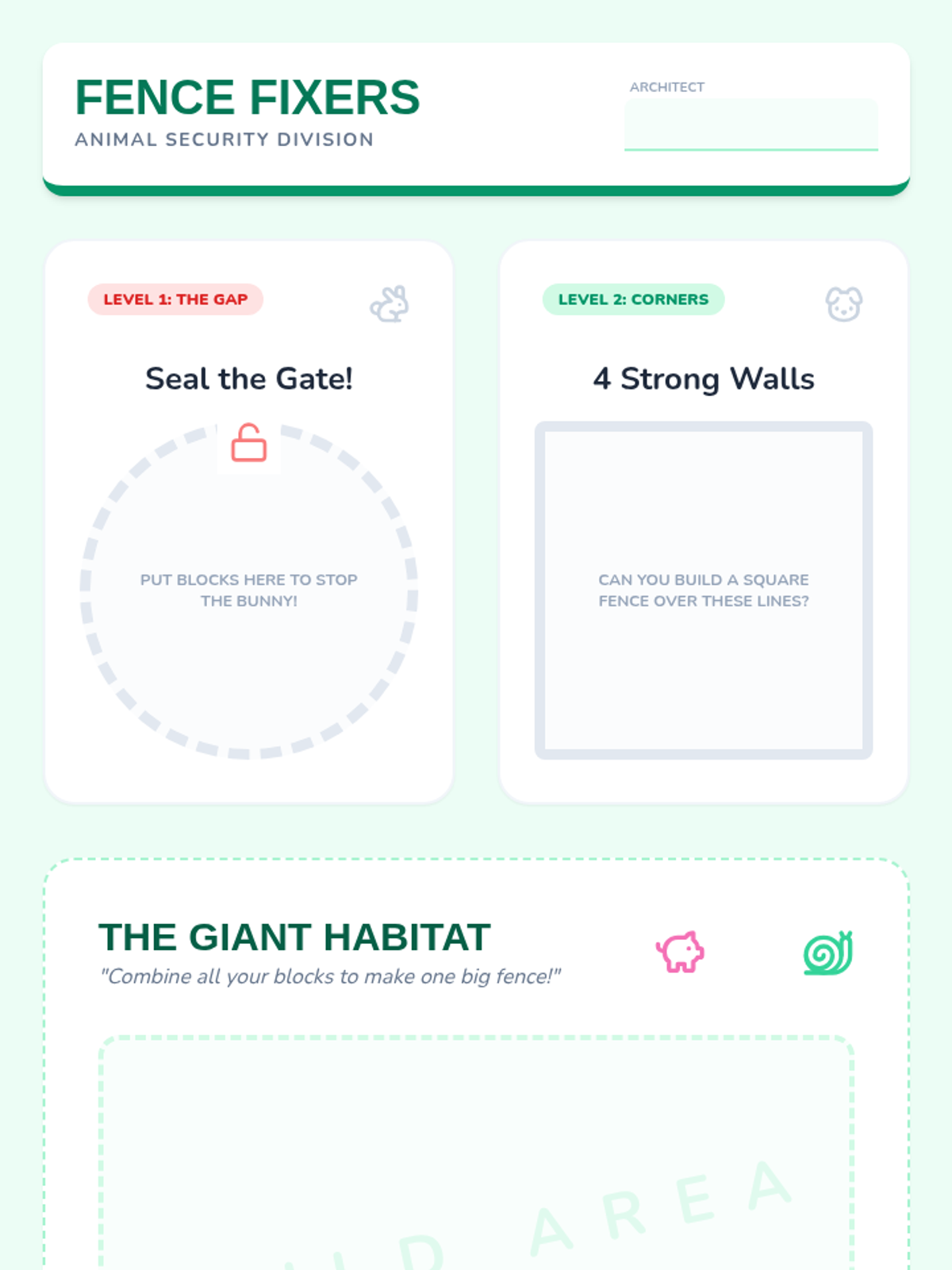
A printable activity mat for Pre-K students to practice perimeter and enclosure by building "fences" around animal icons, including identifying and fixing gaps.
A slide deck introducing the concept of "inside" versus "outside" and the engineering requirement of closing a shape to create an enclosure.
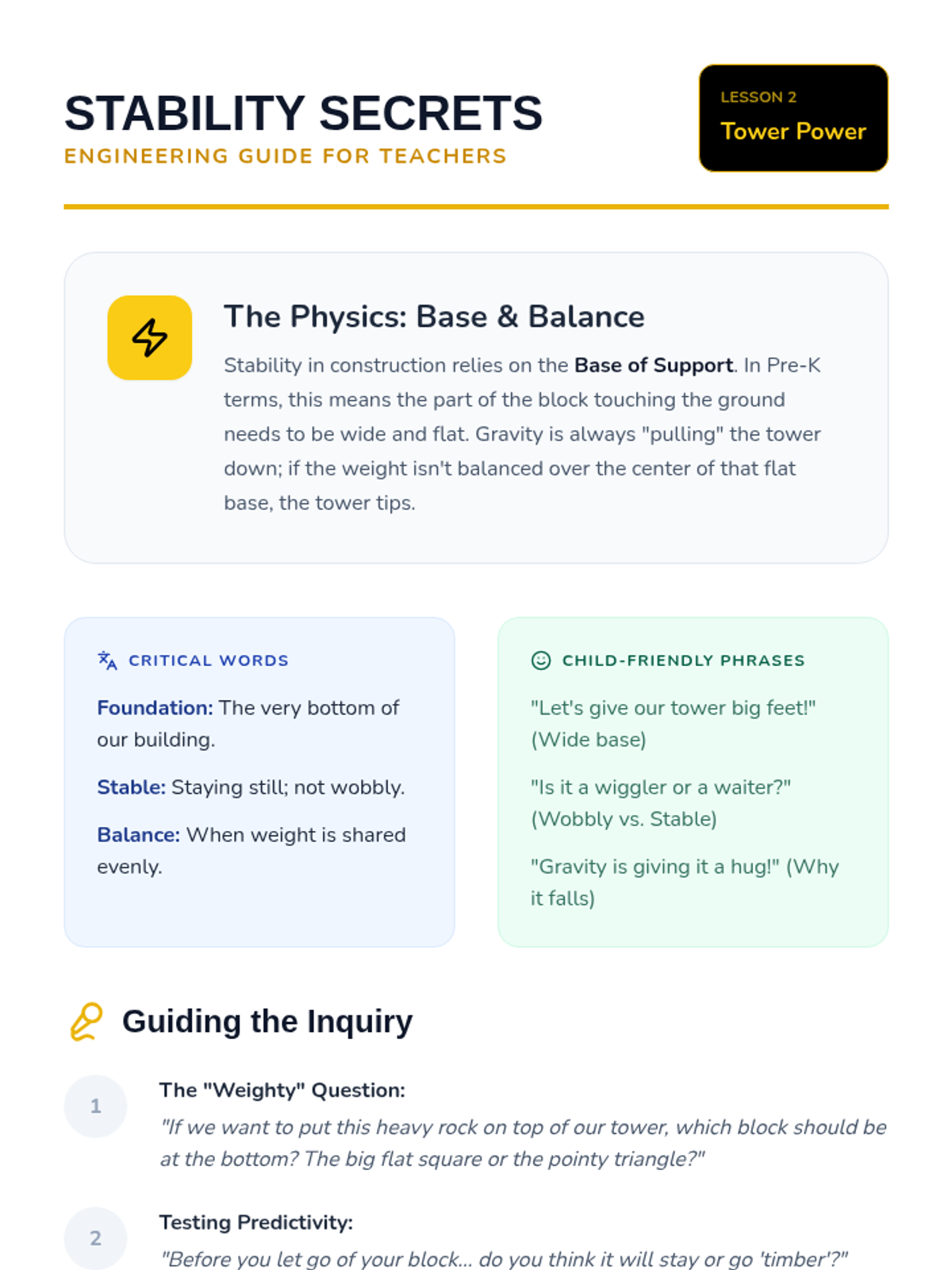
A teacher facilitation guide for the Tower Power lesson, focusing on the physics of foundations, stability, and child-friendly engineering vocabulary.
A simple visual checklist for Pre-K students to record the outcome of their tower-building experiments (whether they were sturdy or wobbly).
A slide deck introducing structural stability to Pre-K students, comparing "wobbly" shapes like circles to "sturdy" shapes like squares.
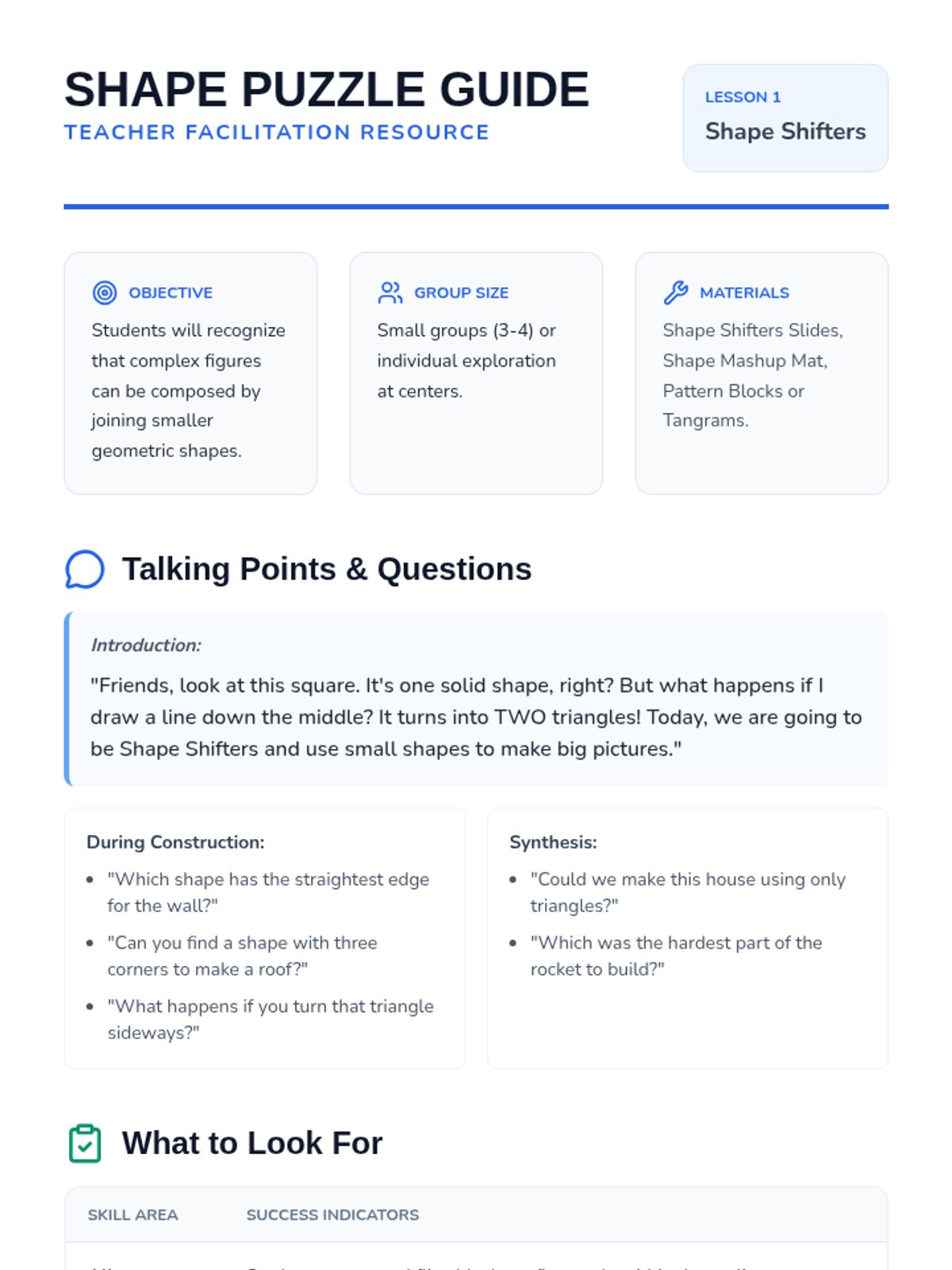
A teacher facilitation guide for the Shape Shifters lesson, including learning objectives, observation checklists, and scaffolding strategies for Pre-K shape composition.
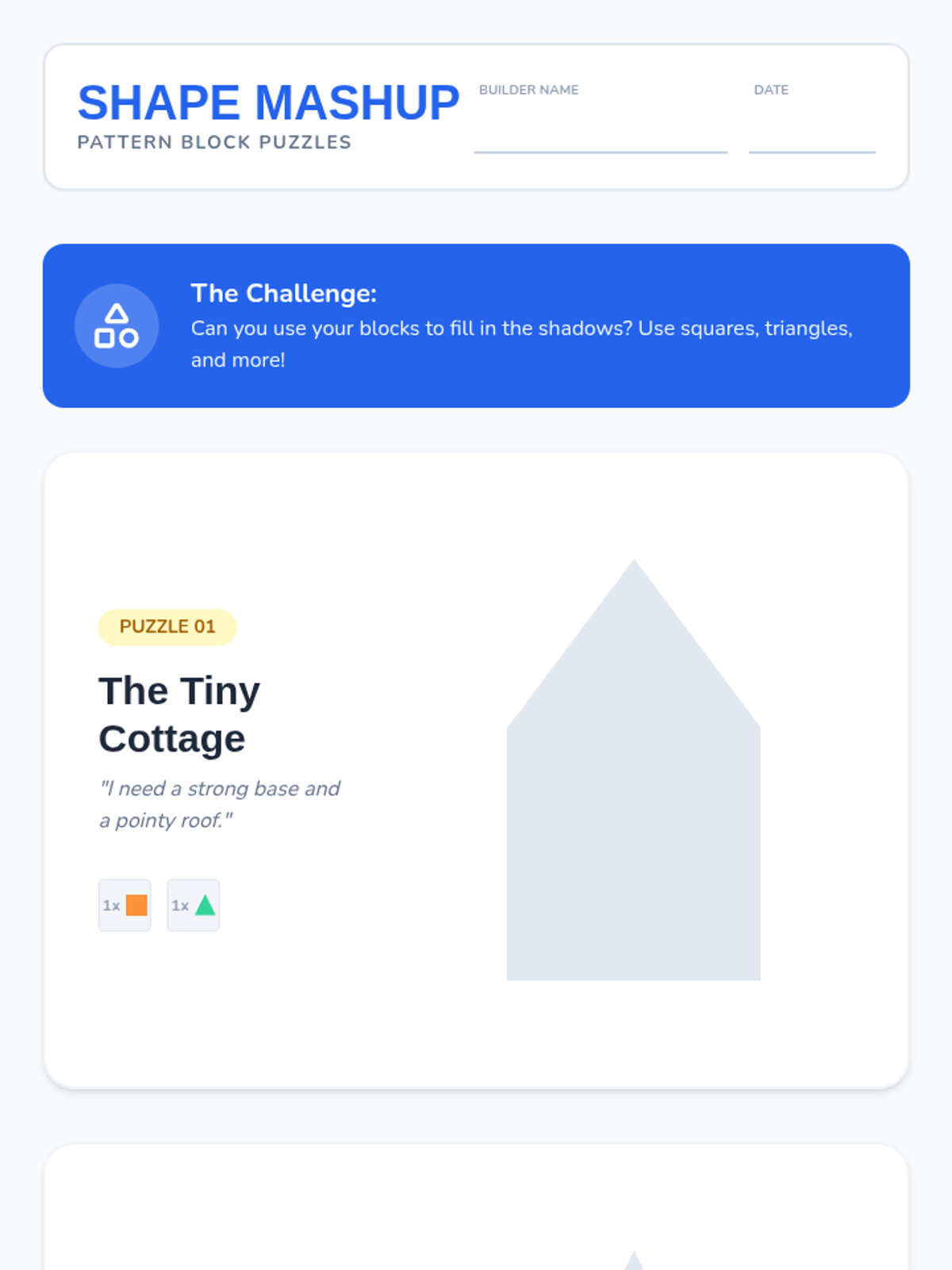
A printable pattern block activity mat where Pre-K students practice shape composition by placing physical blocks over outlined "shadows" of objects like houses and rockets.
A visual slide deck for Pre-K students introducing the concept of shape composition through vibrant examples of squares made of triangles and objects built from basic geometric forms.
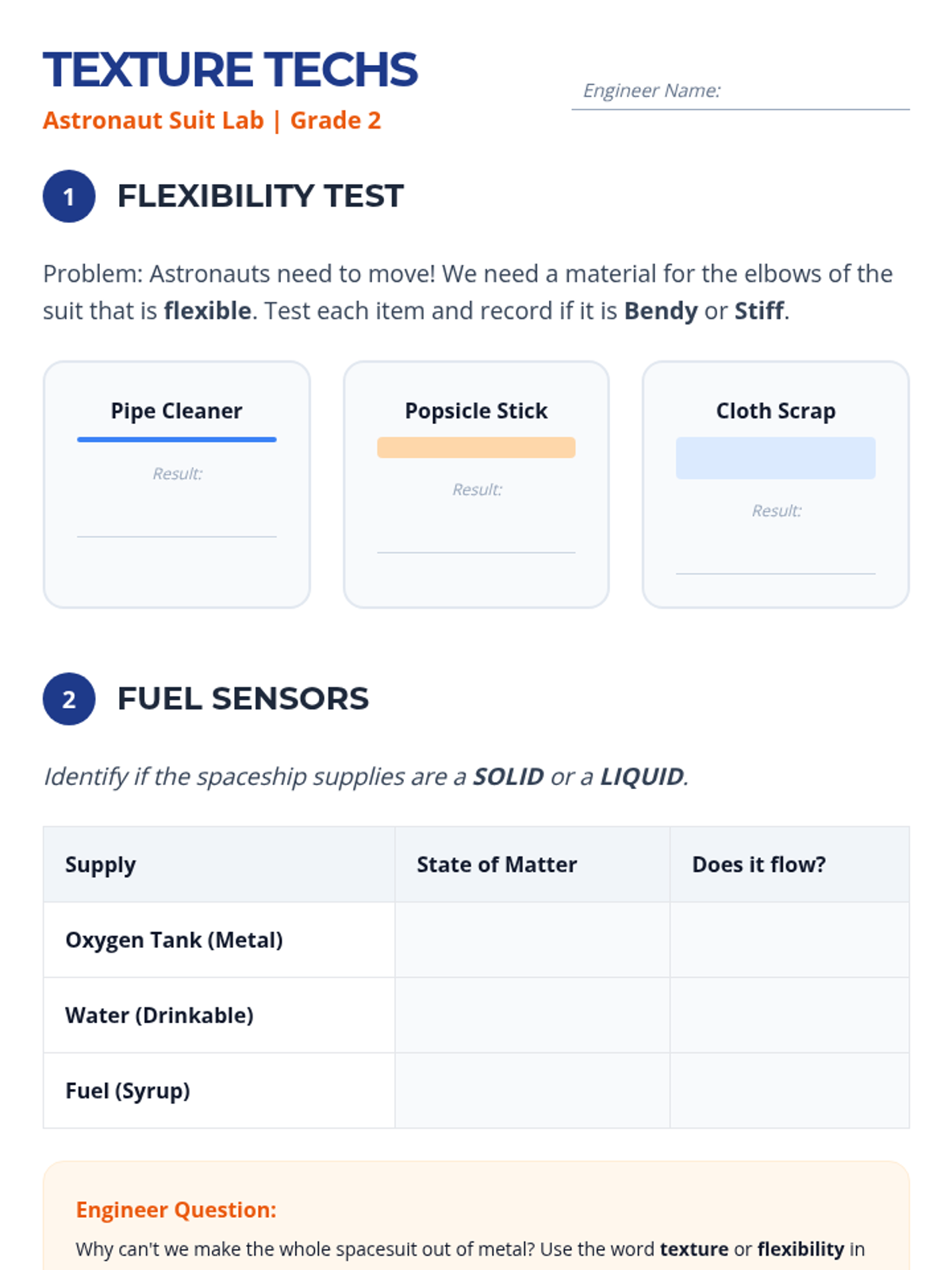
A 1-page student mission log for 2nd Grade Texture Techs. Focuses on testing flexibility for spacesuit design and distinguishing between solids and liquids.
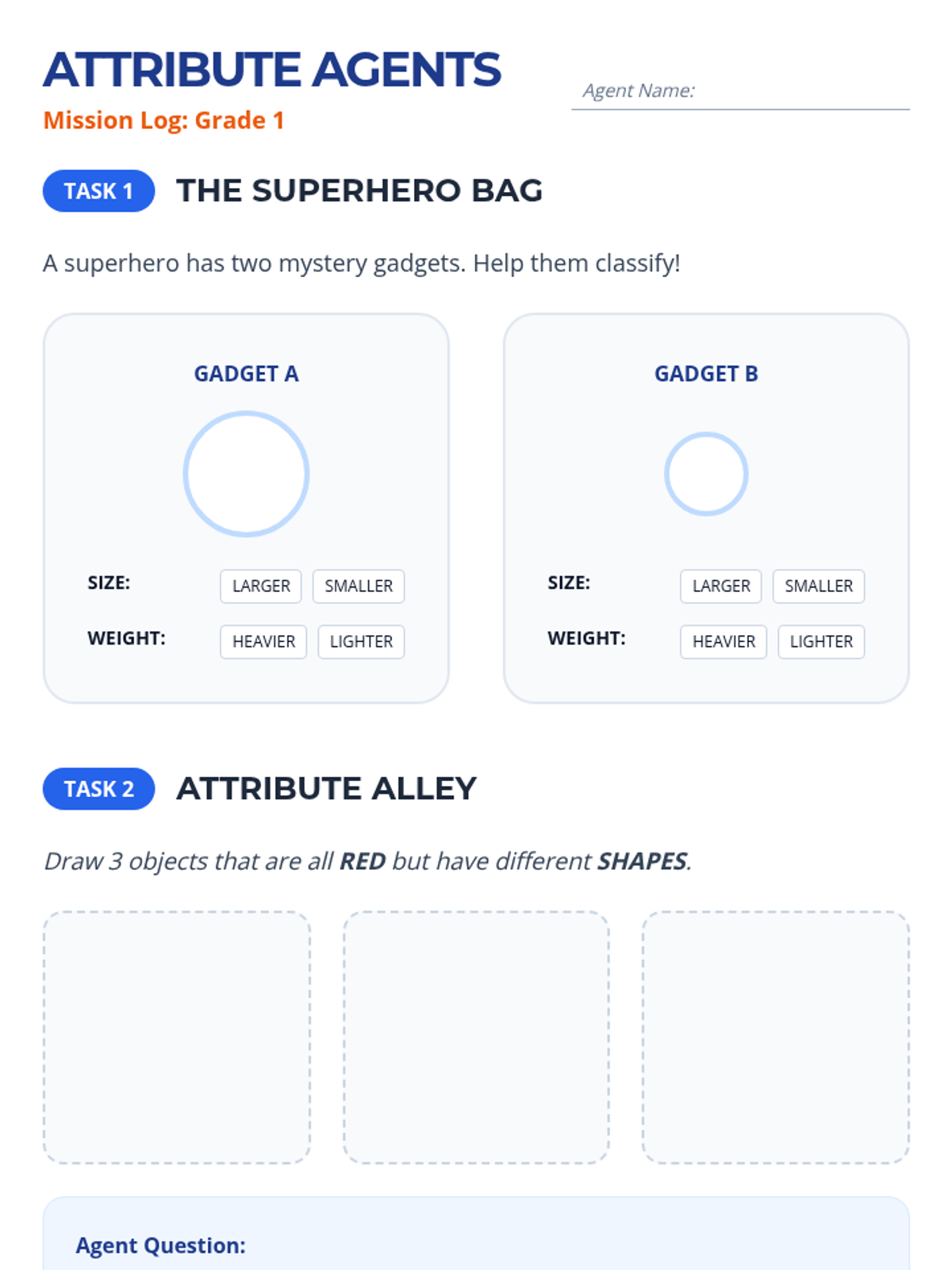
A 1-page student mission log for 1st Grade Attribute Agents. Focuses on classifying objects by size, weight, and multiple observable attributes.
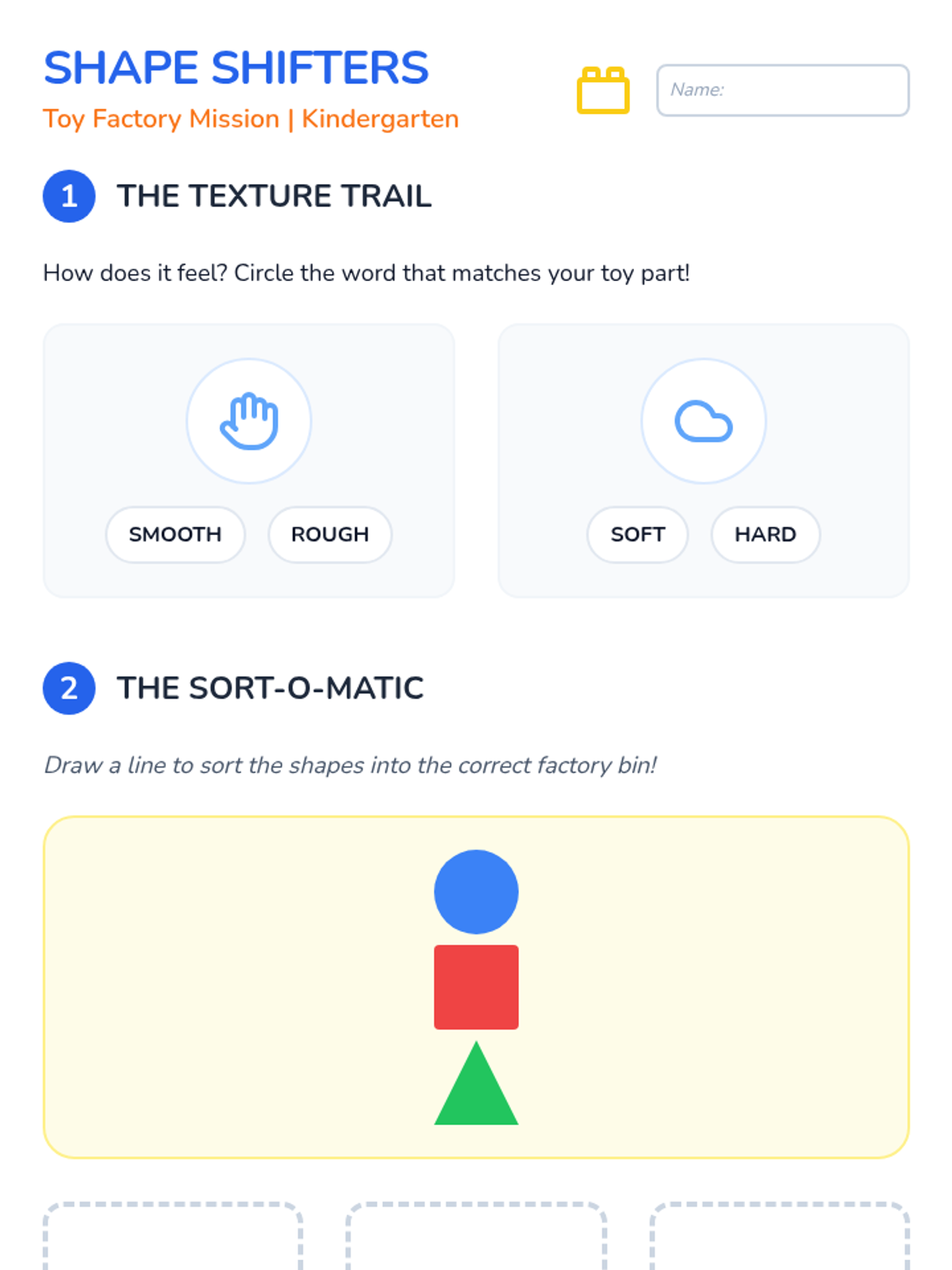
A visual 2-page student mission log for Kindergarten Shape Shifters. Features texture circling, shape sorting lines, and color coding for toy factory components.
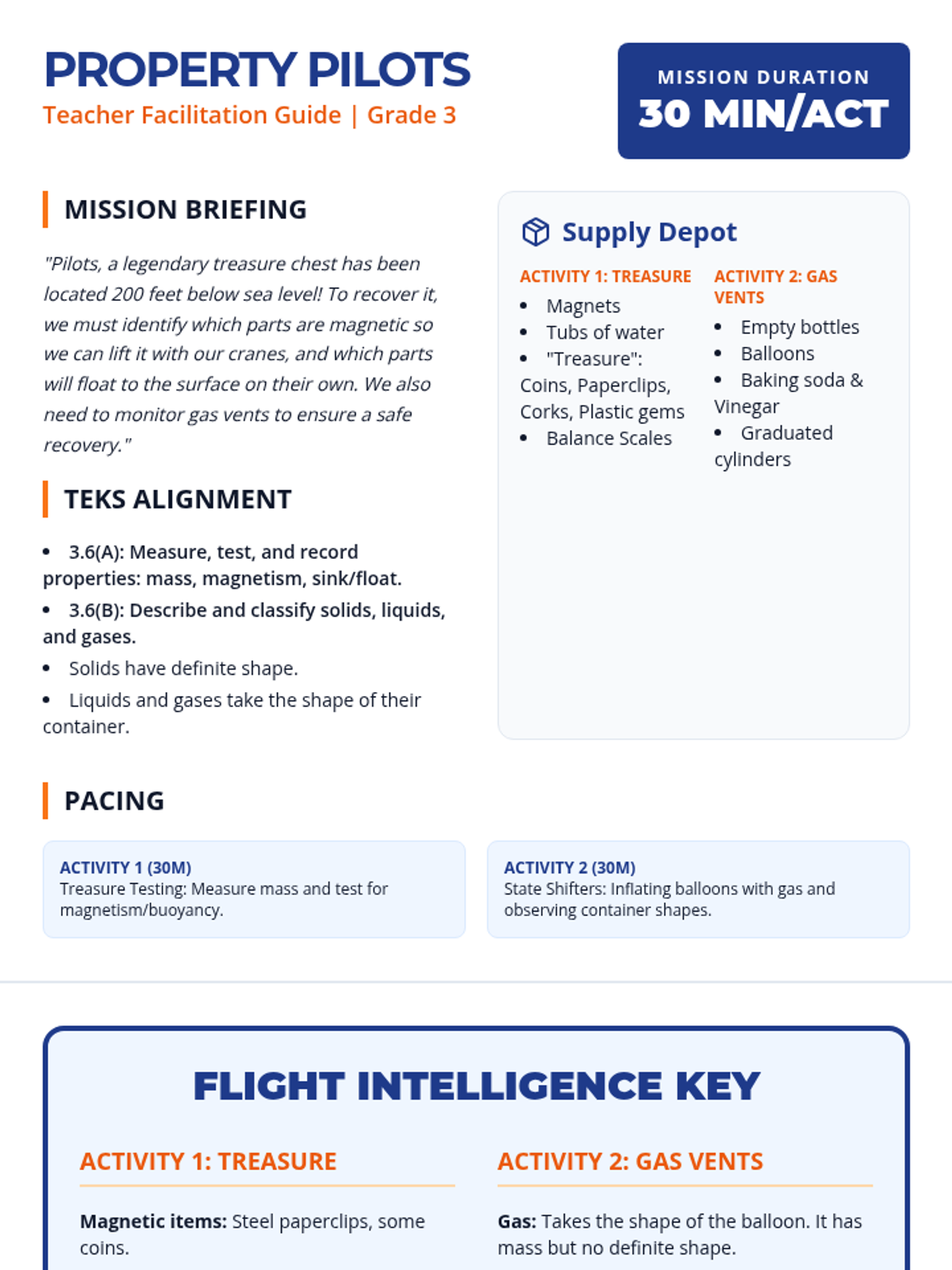
A teacher facilitation guide for 3rd Grade Property Pilots. Covers magnetism, buoyancy, and states of matter with supply lists and answer keys.
A sleek 6-slide presentation for 4th Grade Density Detectives. Features a water plant mystery, key vocabulary (density/magnetism), lab instructions, and a STAAR challenge.
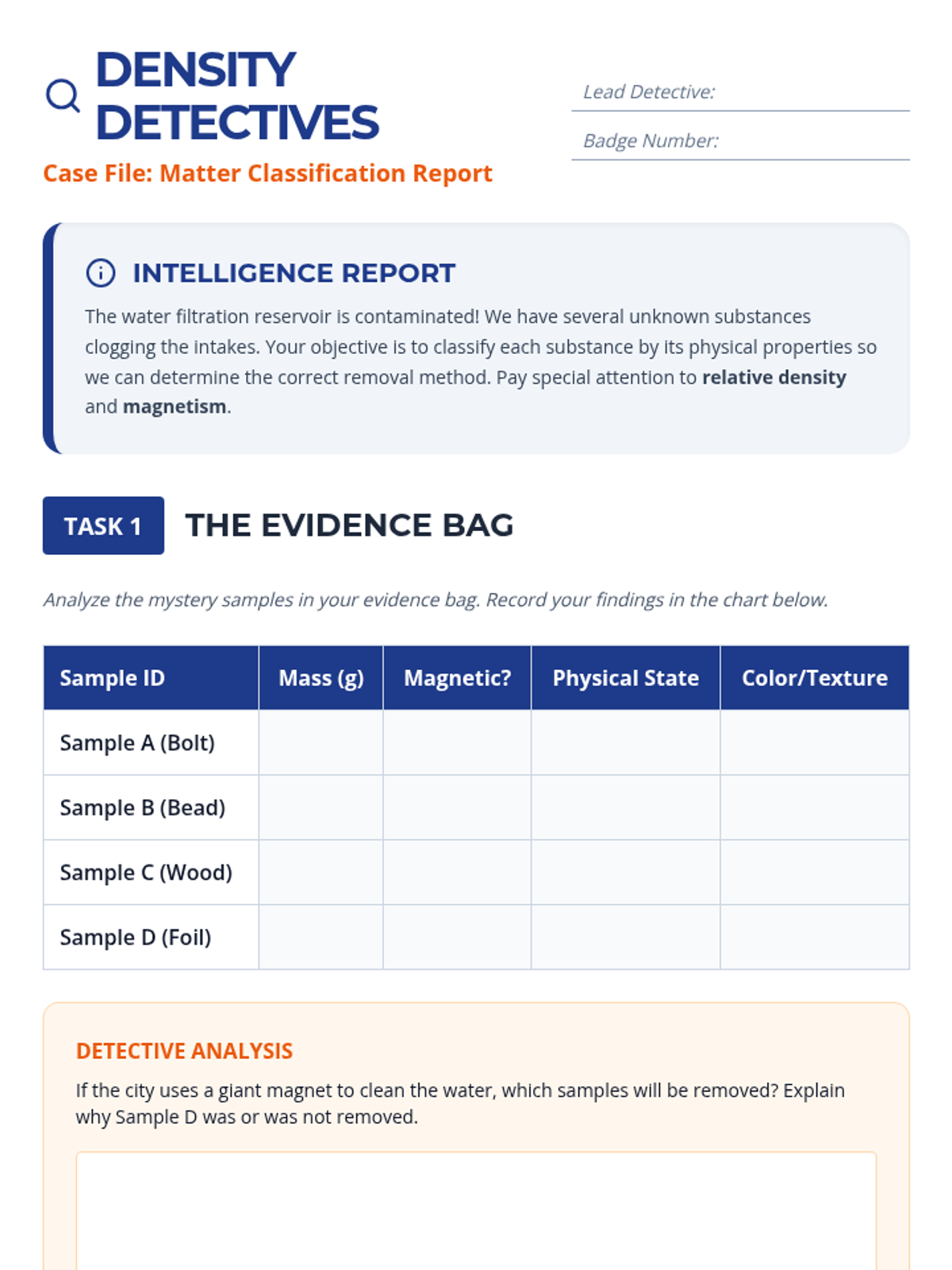
A 2-page student Case File for 4th Grade Density Detectives. Features a matter classification table and a relative density column challenge for identifying unknown materials.
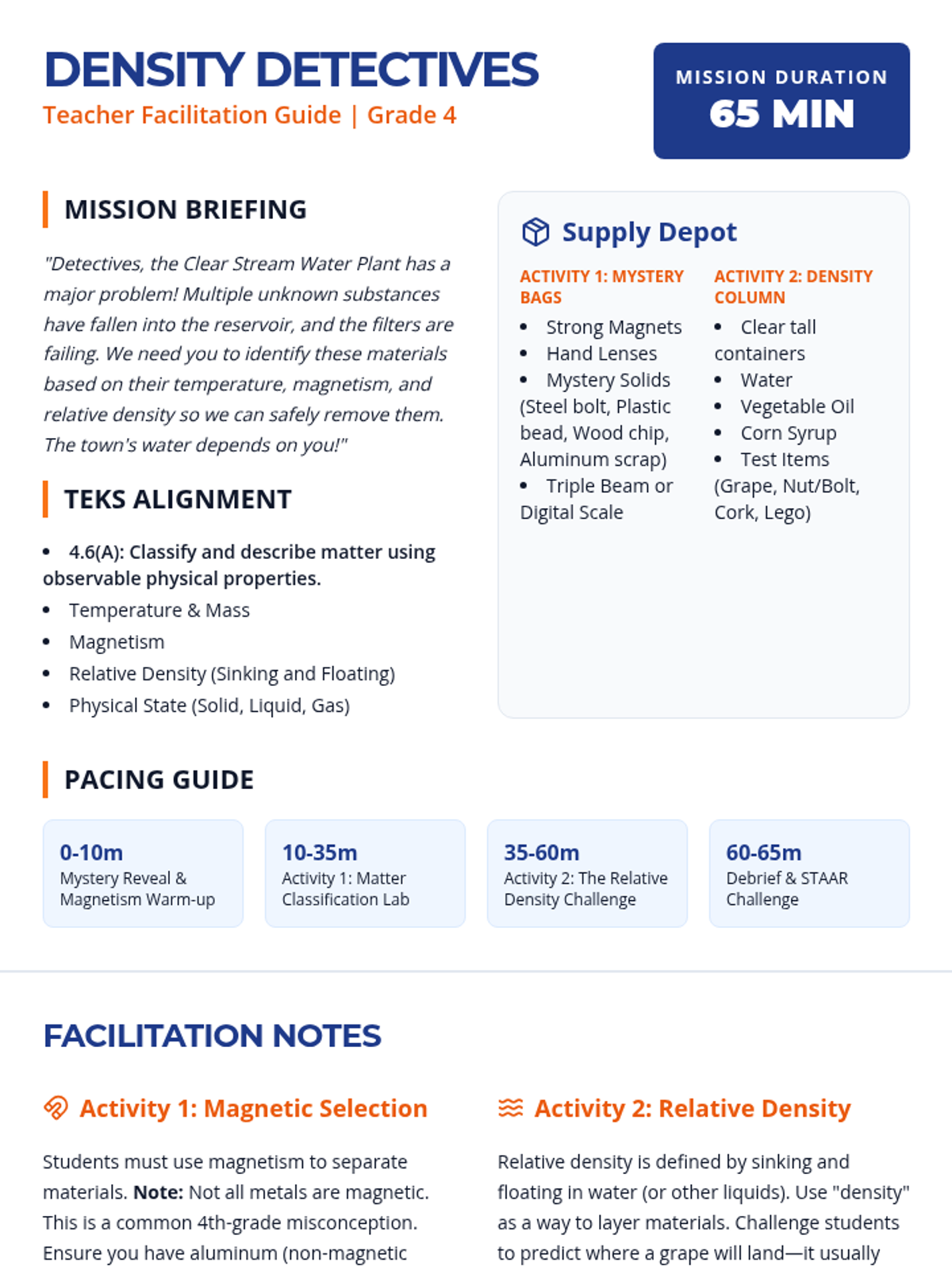
A teacher guide for 4th Grade Density Detectives. Includes TEKS mapping, supply lists, pacing, STAAR review questions, and an answer key for magnetism and relative density labs.
A high-energy 6-slide presentation for 5th Grade Matter Maestros. Features mission-themed hooks, vocabulary, step-by-step activity instructions, and a STAAR challenge question.
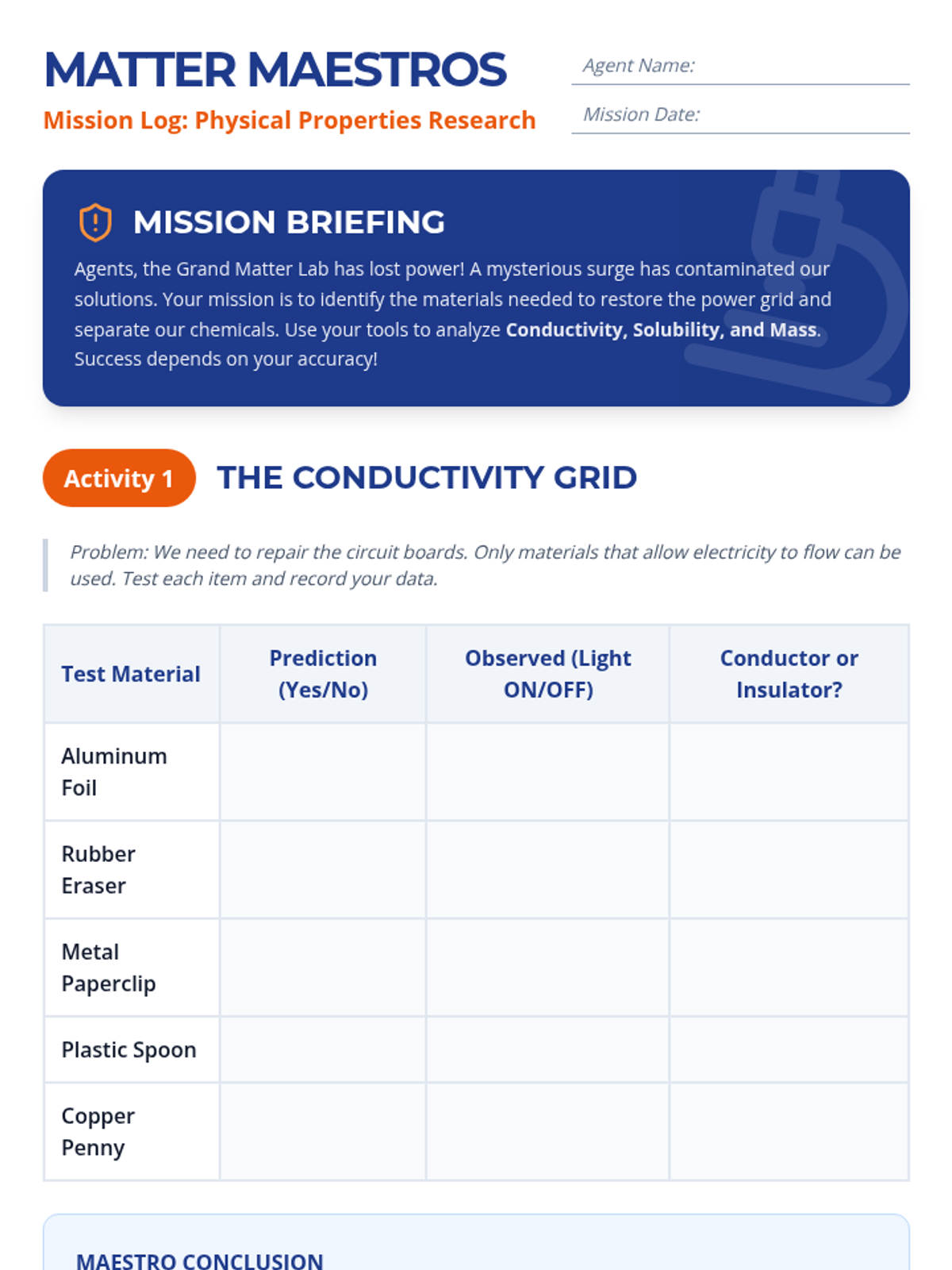
A 2-page student mission log for 5th Grade Matter Maestros. Features hands-on testing for electrical conductivity and solubility, including data tables and critical thinking questions.
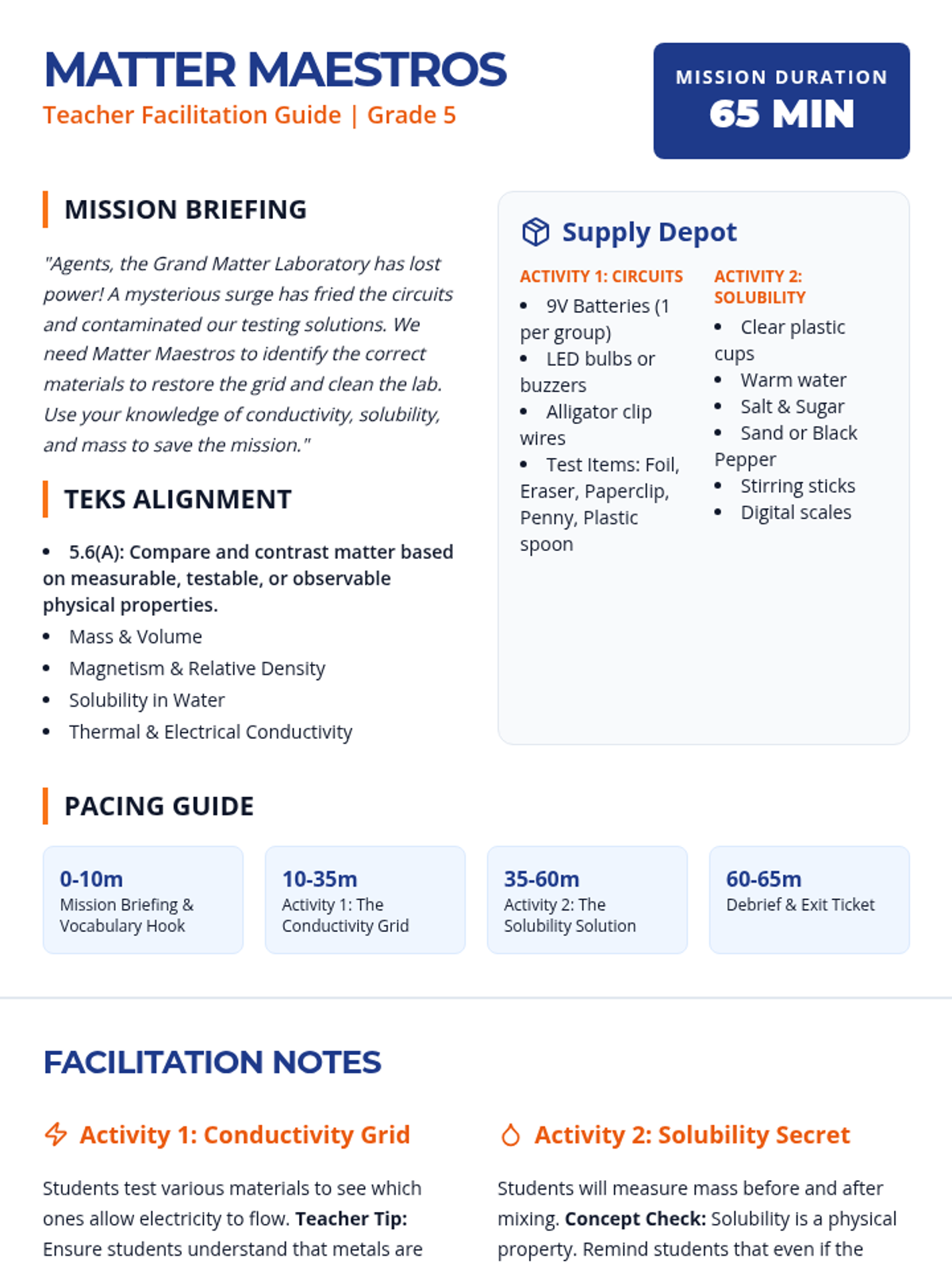
A comprehensive teacher facilitation guide for 5th Grade Matter Maestros, including TEKS alignment, supply lists, pacing guides, STAAR review questions, and an answer key.
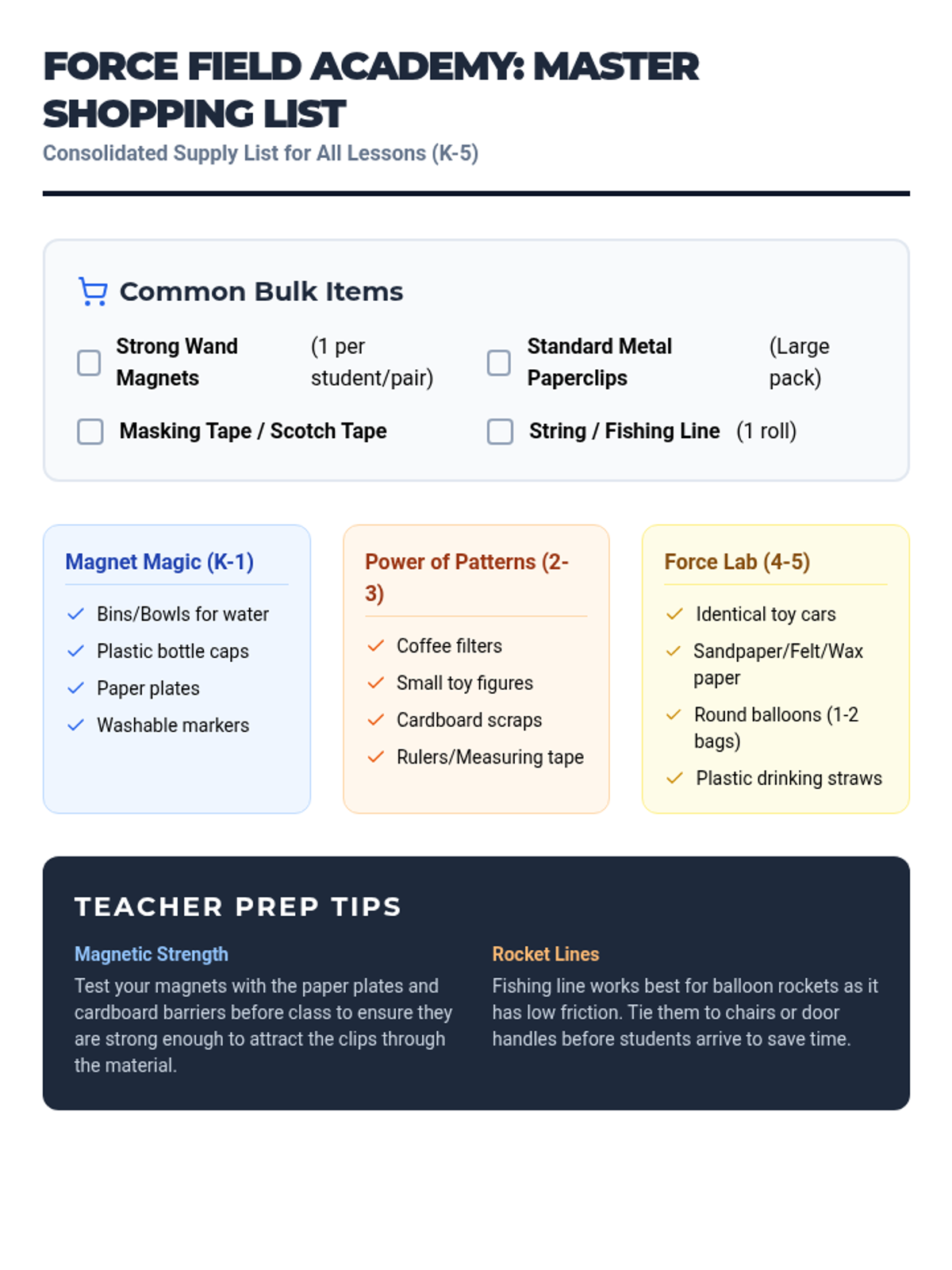
A comprehensive master supply list for all three lessons in the Force Field Academy unit, organized by common items and grade-specific needs.
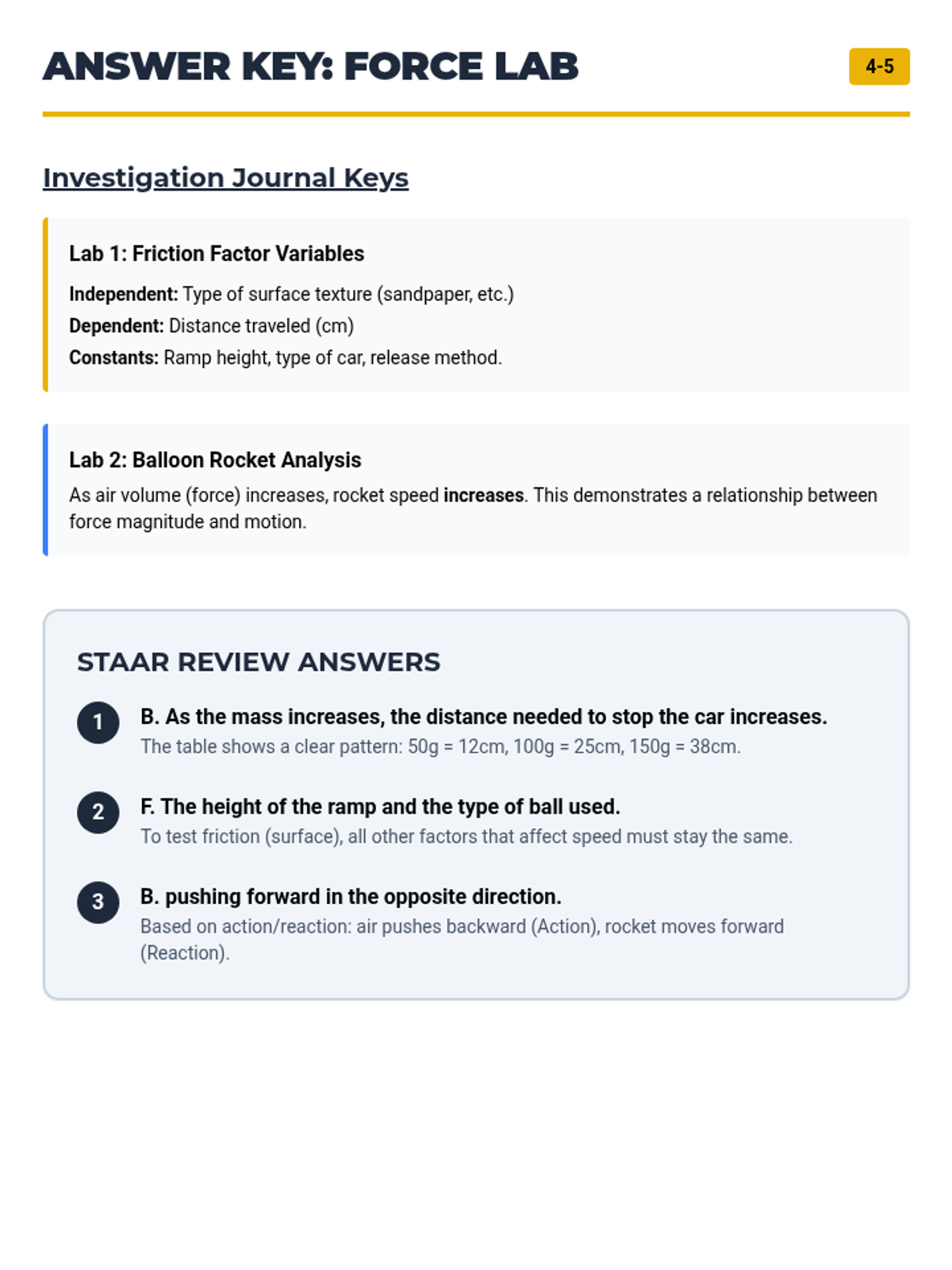
Answer key for the 4th-5th grade Force Lab lesson, providing solutions for the Investigation Journal and the STAAR Review assessment.
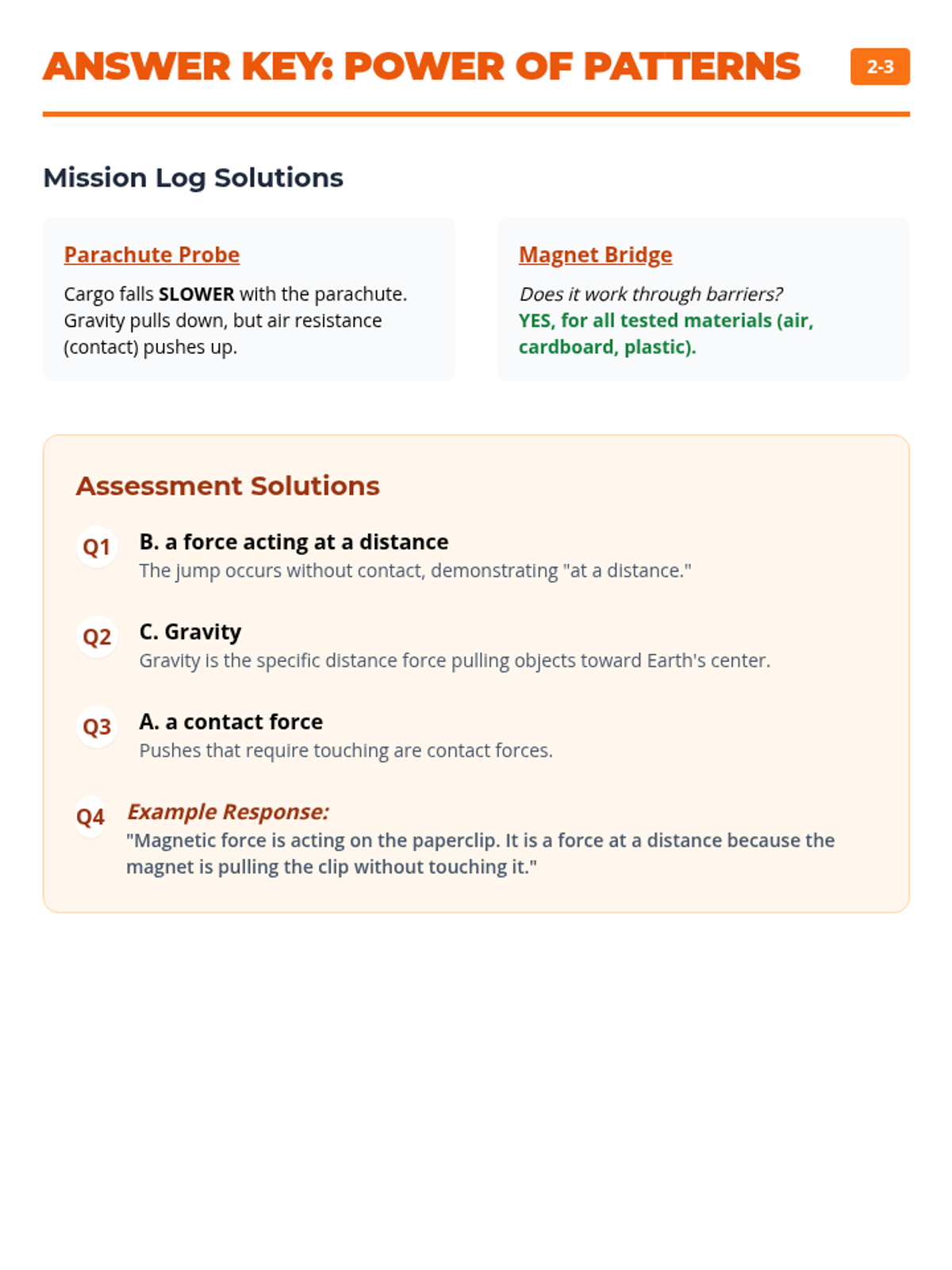
Answer key for the 2nd-3rd grade Power of Patterns lesson, providing solutions for the Mission Log and the Assessment.
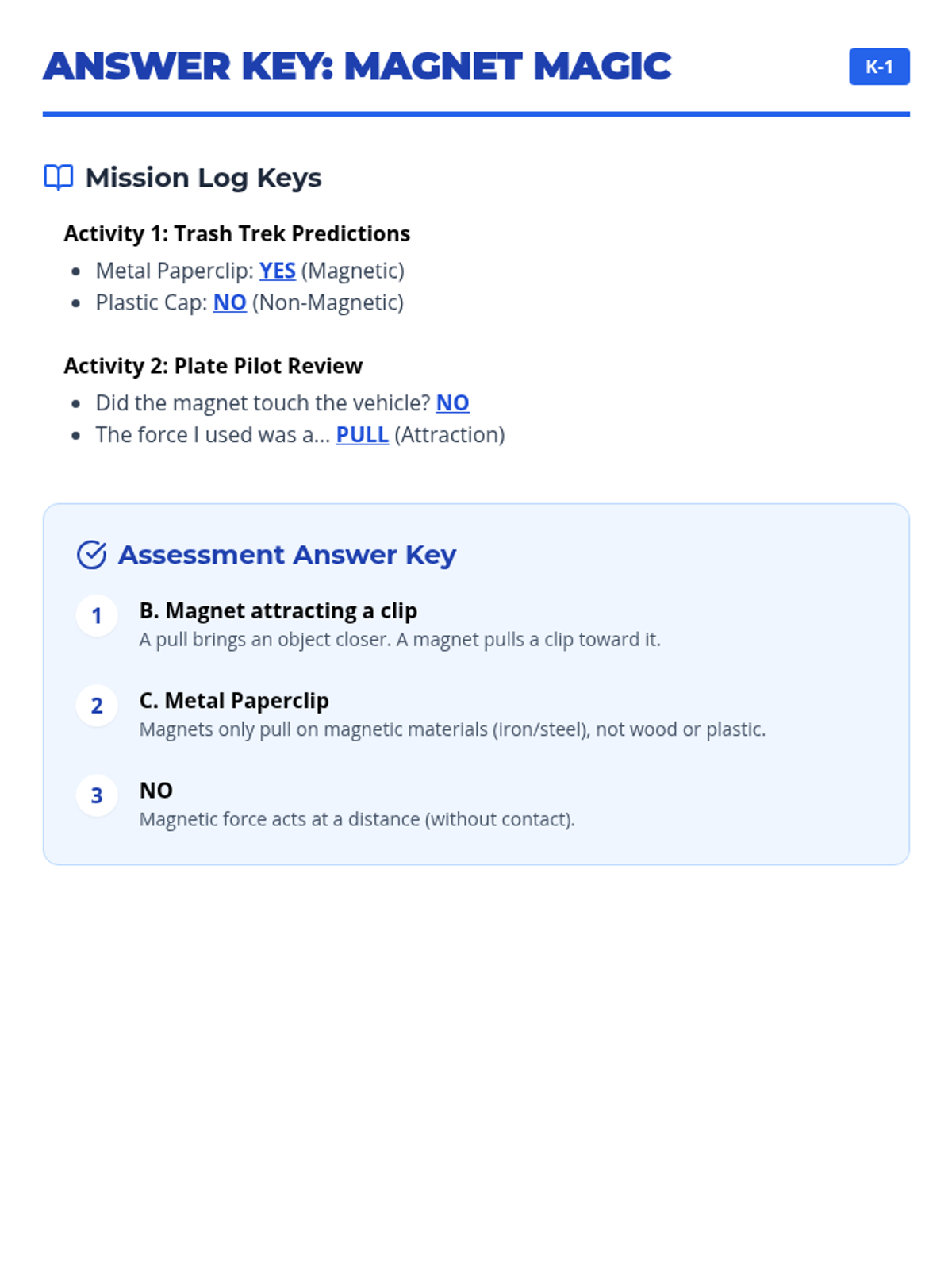
Answer key for the K-1 Magnet Magic lesson, providing solutions for the Mission Log and the STAAR Prep Assessment.
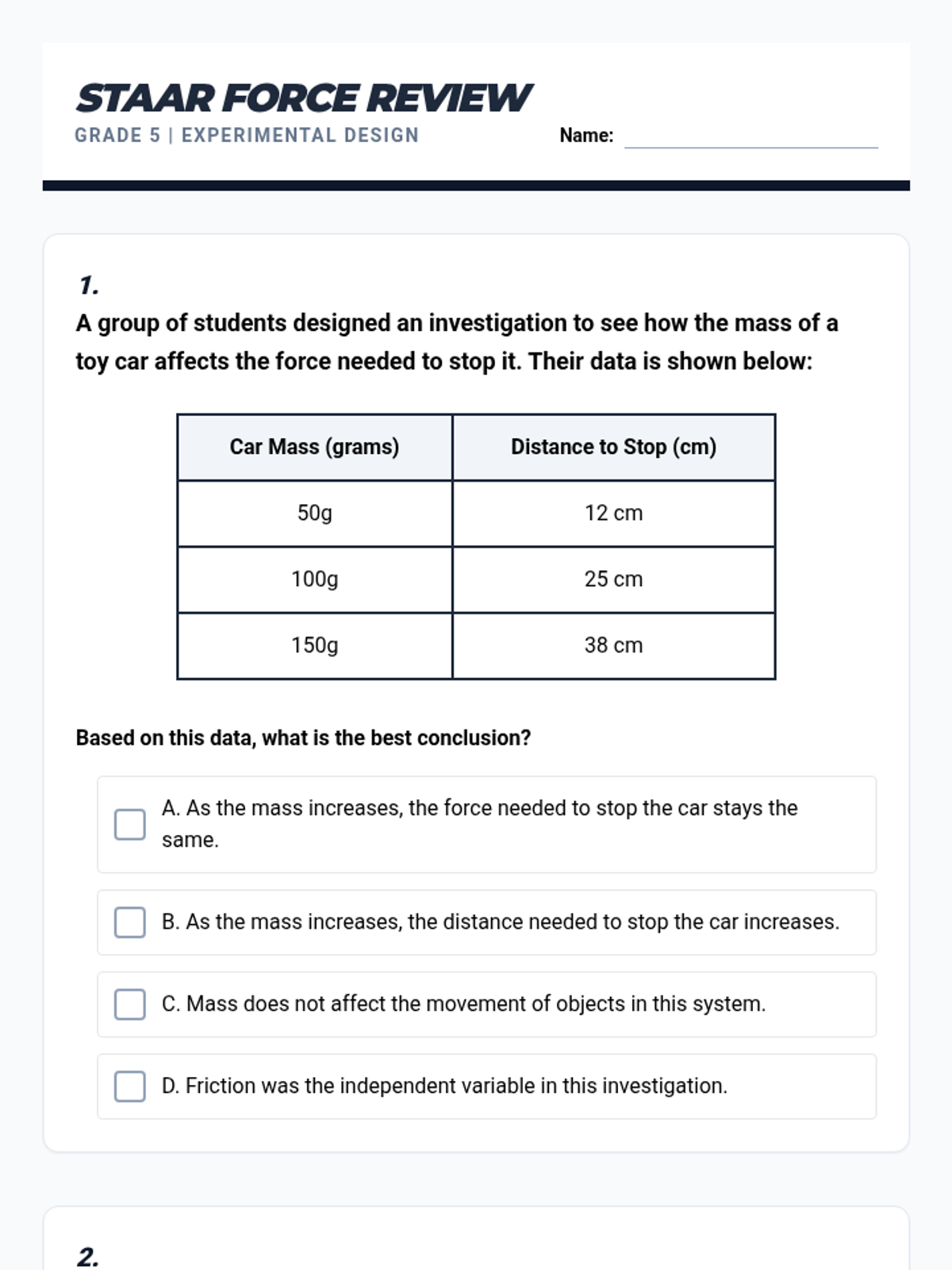
A 3-question STAAR-aligned assessment for 4th and 5th grade students covering experimental design, data table analysis, variables, and force systems.
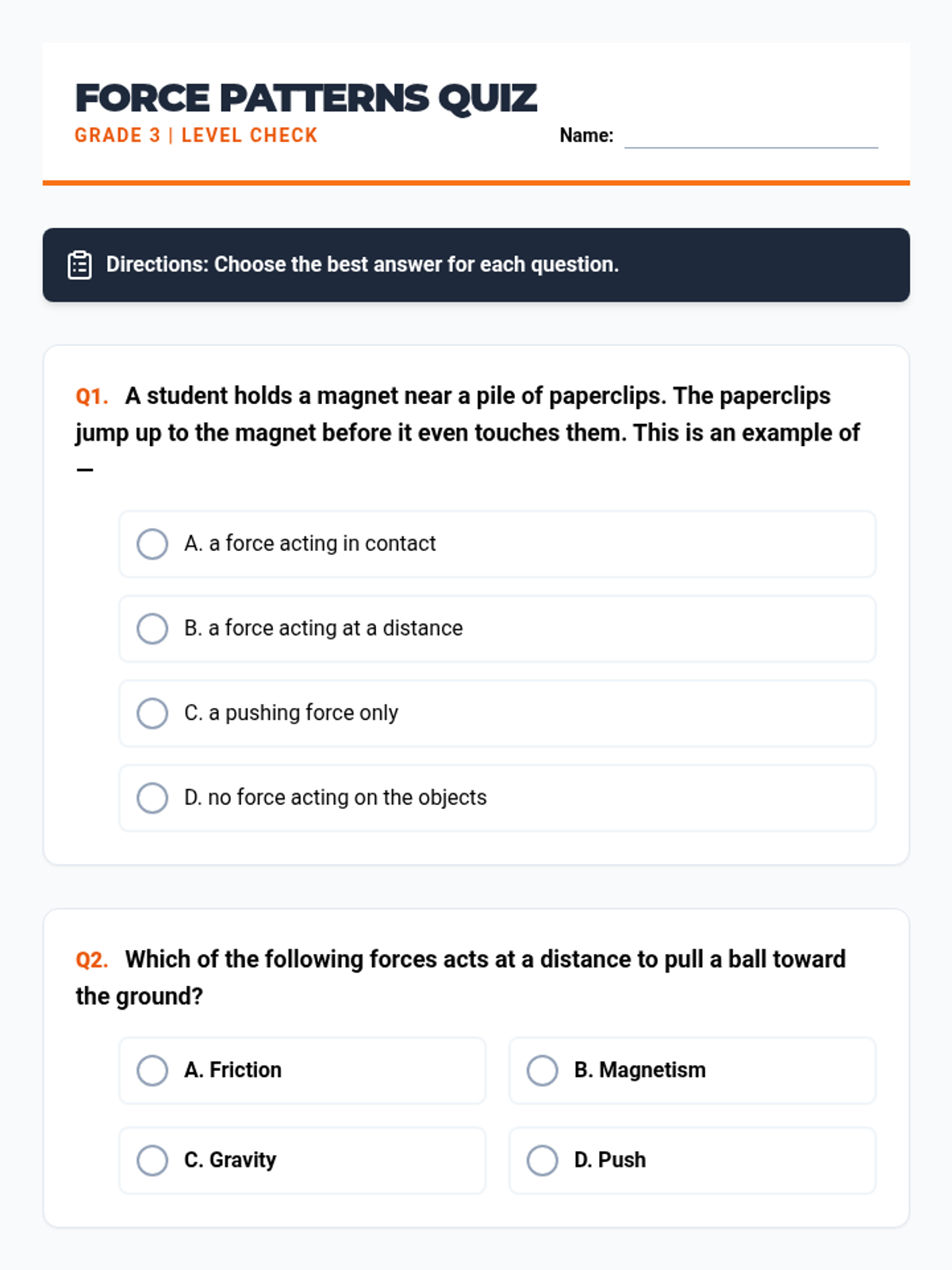
A 4-question assessment for 2nd and 3rd grade students focusing on contact vs. distance forces, including multiple choice and short answer formats.
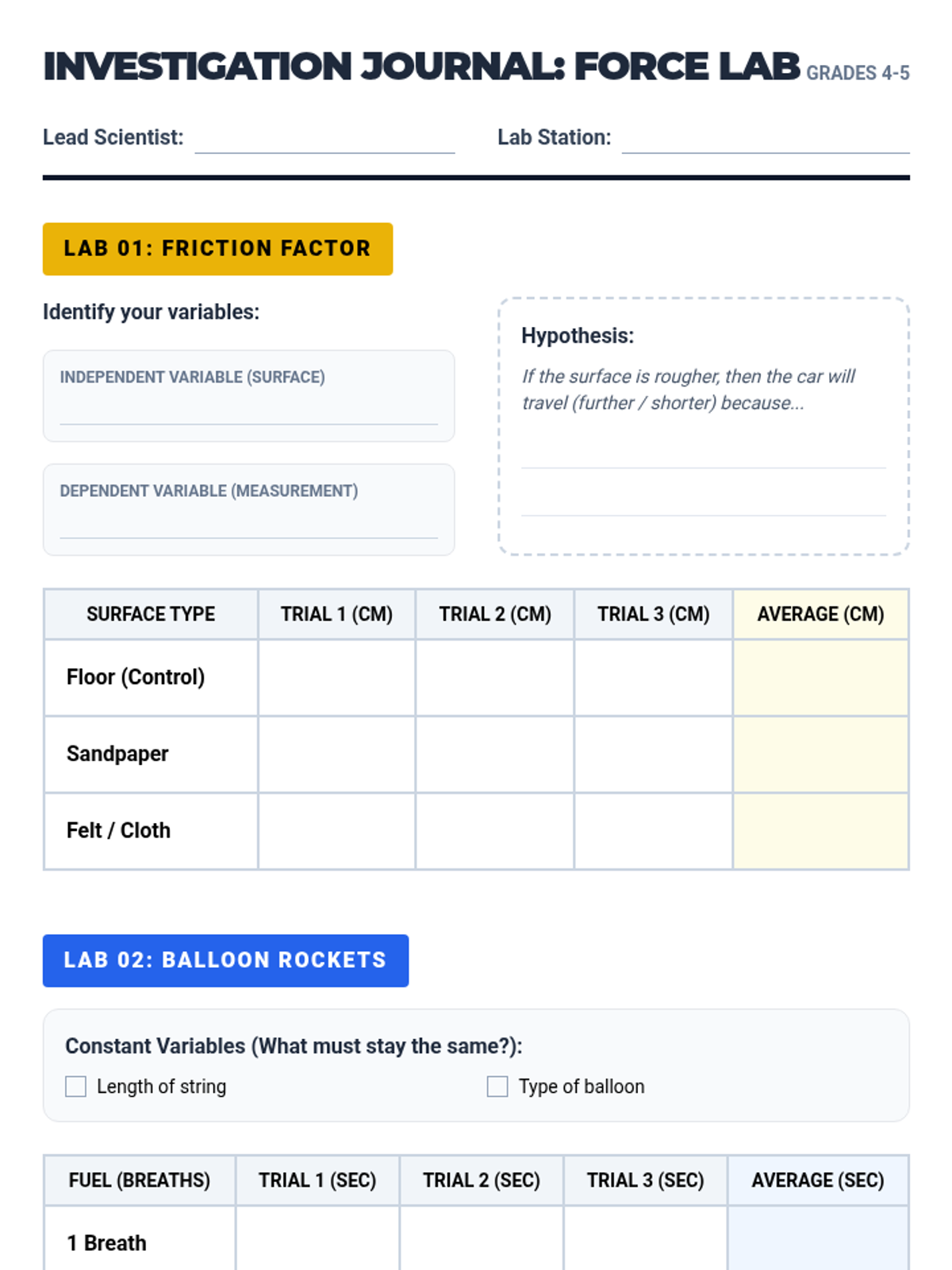
A professional investigation journal for 4th and 5th grade students to record hypotheses, data, and conclusions for friction and rocket labs.
Visual presentation for 4th and 5th grade students focused on experimental design, friction investigations, and rocket propulsion systems.
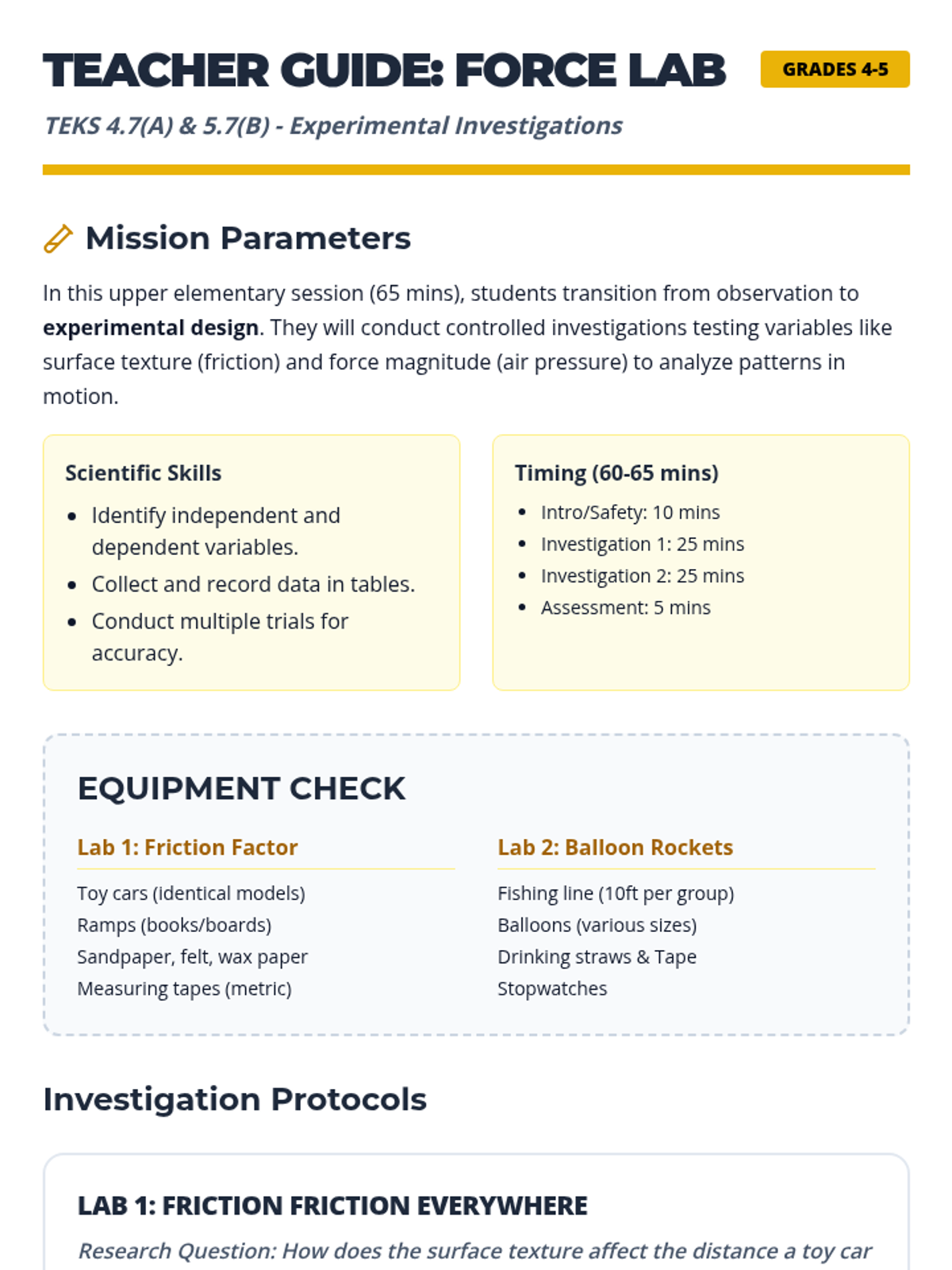
A teacher's instructional guide for 4th and 5th grade force investigations, featuring friction and balloon rocket experimental designs with detailed procedures and answer keys.
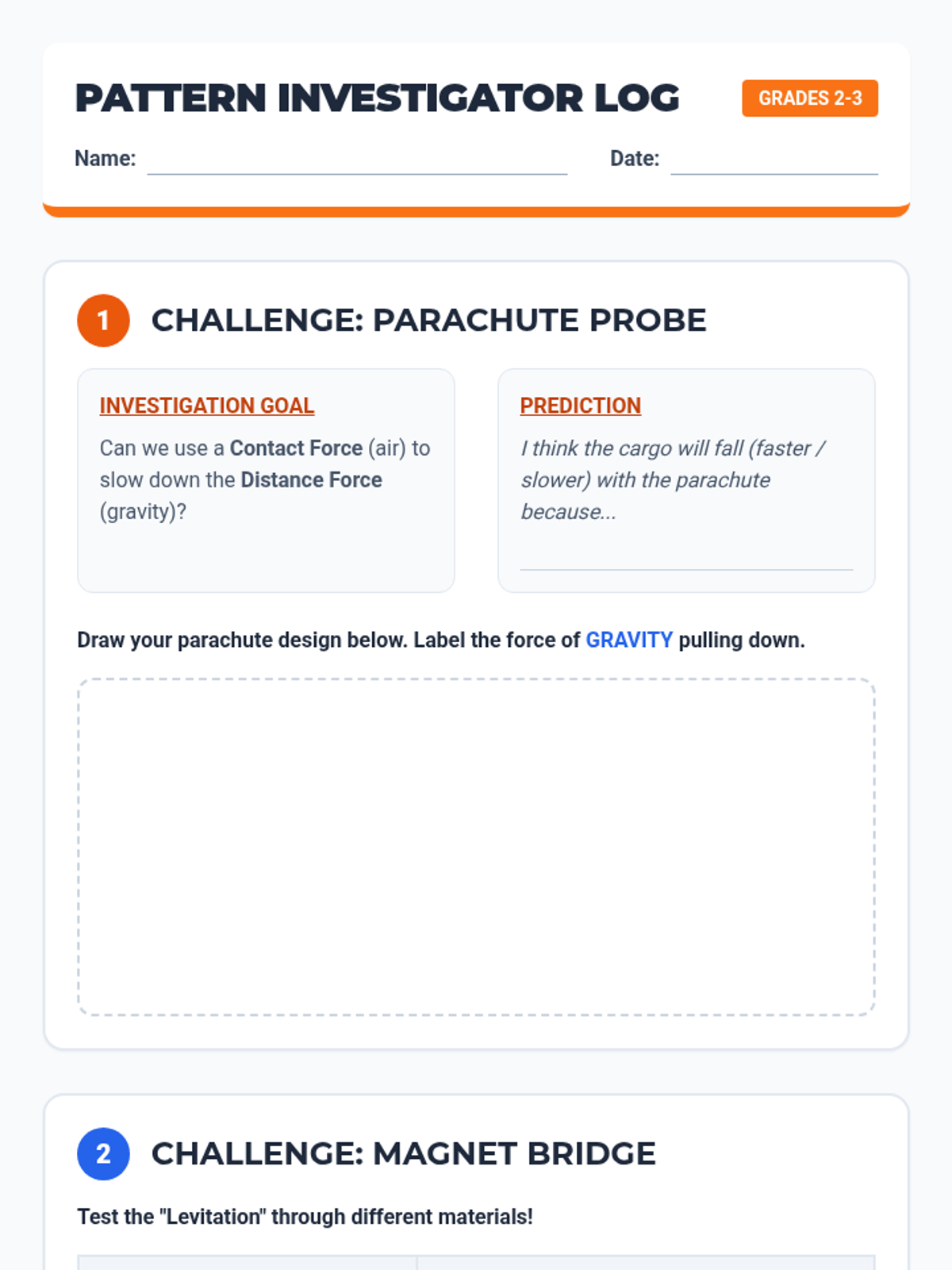
A mission log for 2nd and 3rd grade students to record predictions, sketches, and experimental results for the parachute and magnet bridge challenges.
An official certificate of achievement for students who complete the Leprechaun Lab STEM challenge, celebrating their problem-solving and engineering skills. Optimized for 8.5x11 printing.
A comprehensive teacher facilitation guide for the Leprechaun Lab STEM lesson. Includes standard alignment, step-by-step procedures, and specific differentiation strategies for three learning levels. Optimized for 8.5x11 printing.
A visual, icon-heavy step-by-step guide for building a leprechaun trap, designed specifically for non-readers and early learners. Optimized for 8.5x11 printing.
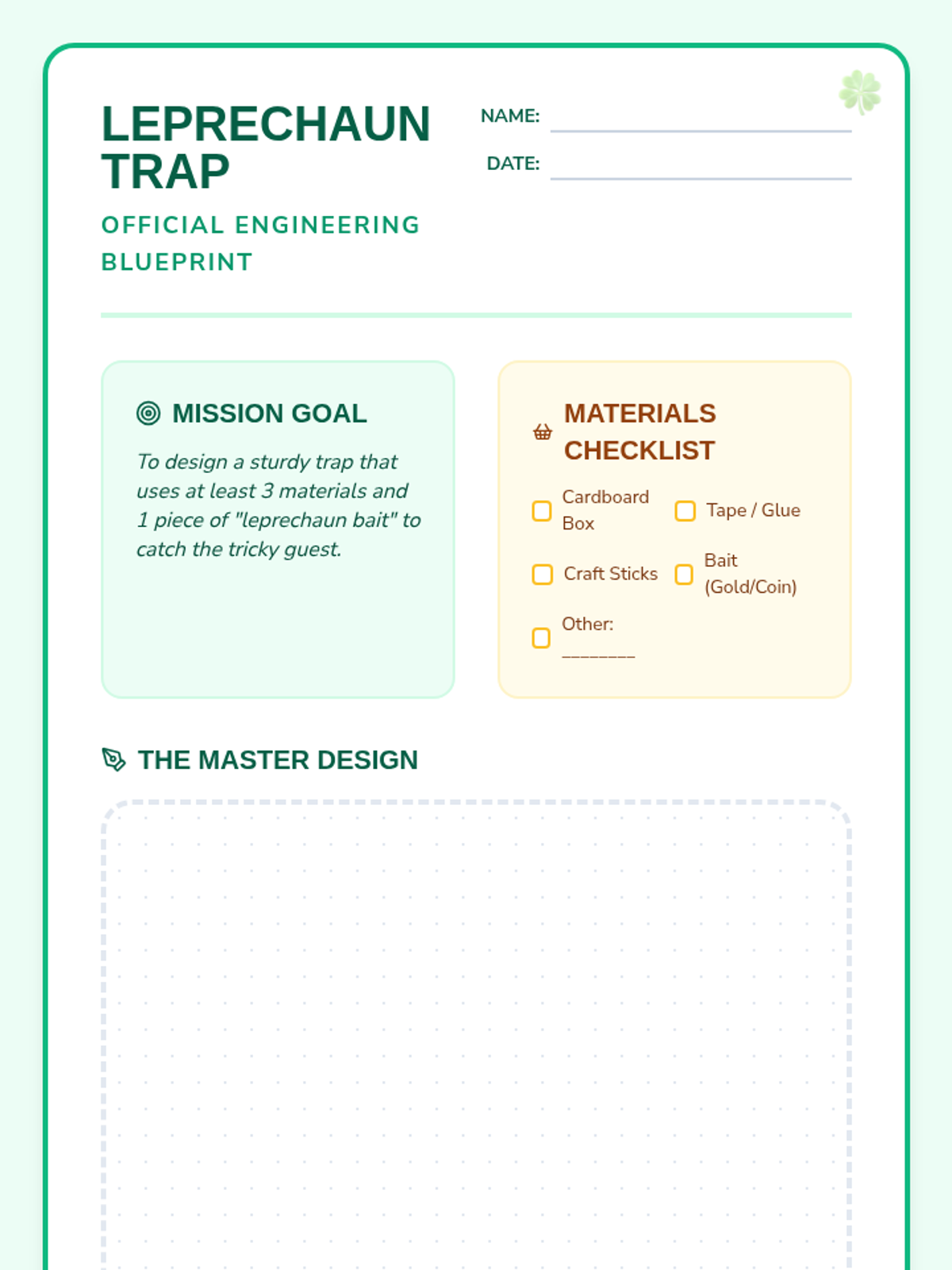
A 2-page student design and reflection document for the Leprechaun Trap STEM challenge, optimized for 8.5x11 printing. Includes a blueprint drawing area, materials checklist, and engineering lab notes.
An instructional slide deck for the Leprechaun Lab STEM lesson, guiding students through the engineering design process from brainstorming to building and problem-solving.
A bright and visual 6-slide presentation for Kindergarten Shape Shifters. Features a toy factory story, texture vocabulary, and interactive sorting checks.
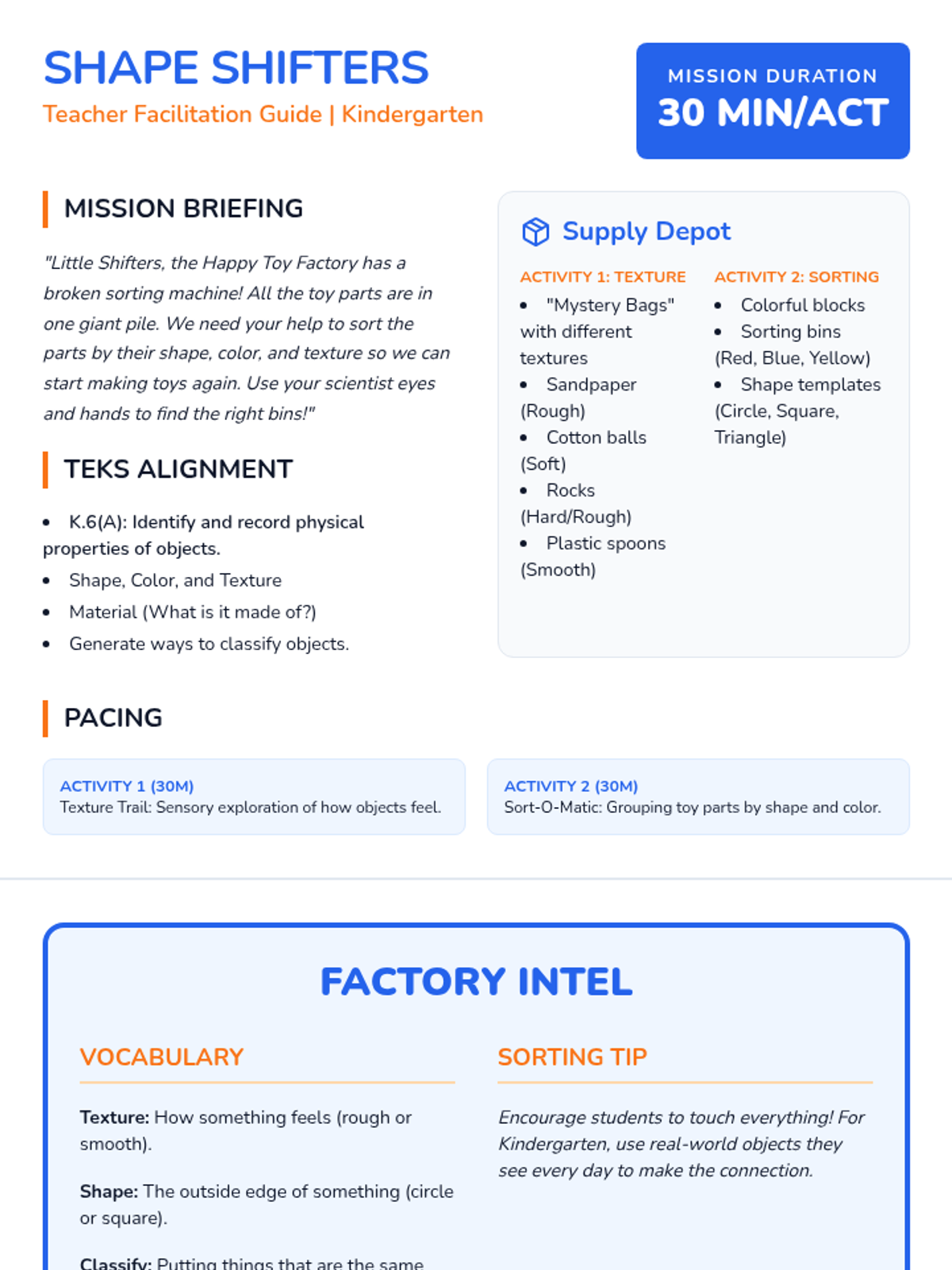
A teacher facilitation guide for Kindergarten Shape Shifters. Covers classifying by shape, color, texture, and material with hands-on activities.
A 6-slide presentation for 1st Grade Attribute Agents. Features superhero-themed hooks, vocabulary (size/weight), activity instructions, and a mastery check.
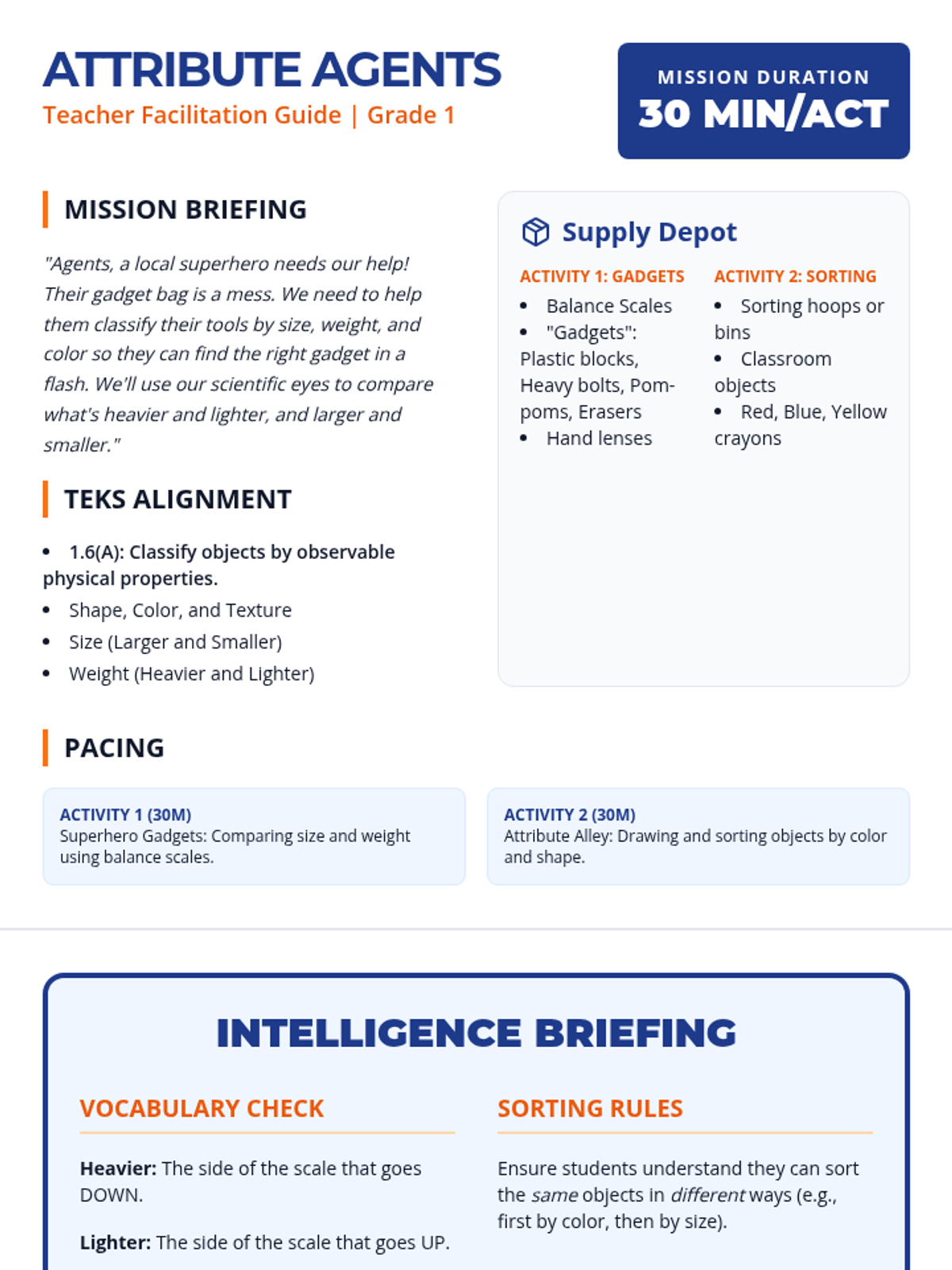
A teacher facilitation guide for 1st Grade Attribute Agents. Covers classifying by size, weight, and multiple observable attributes with activities and discussion points.
A 6-slide presentation for 2nd Grade Texture Techs. Features an astronaut-themed hook, vocabulary (texture/flexibility), lab instructions, and a mastery check.
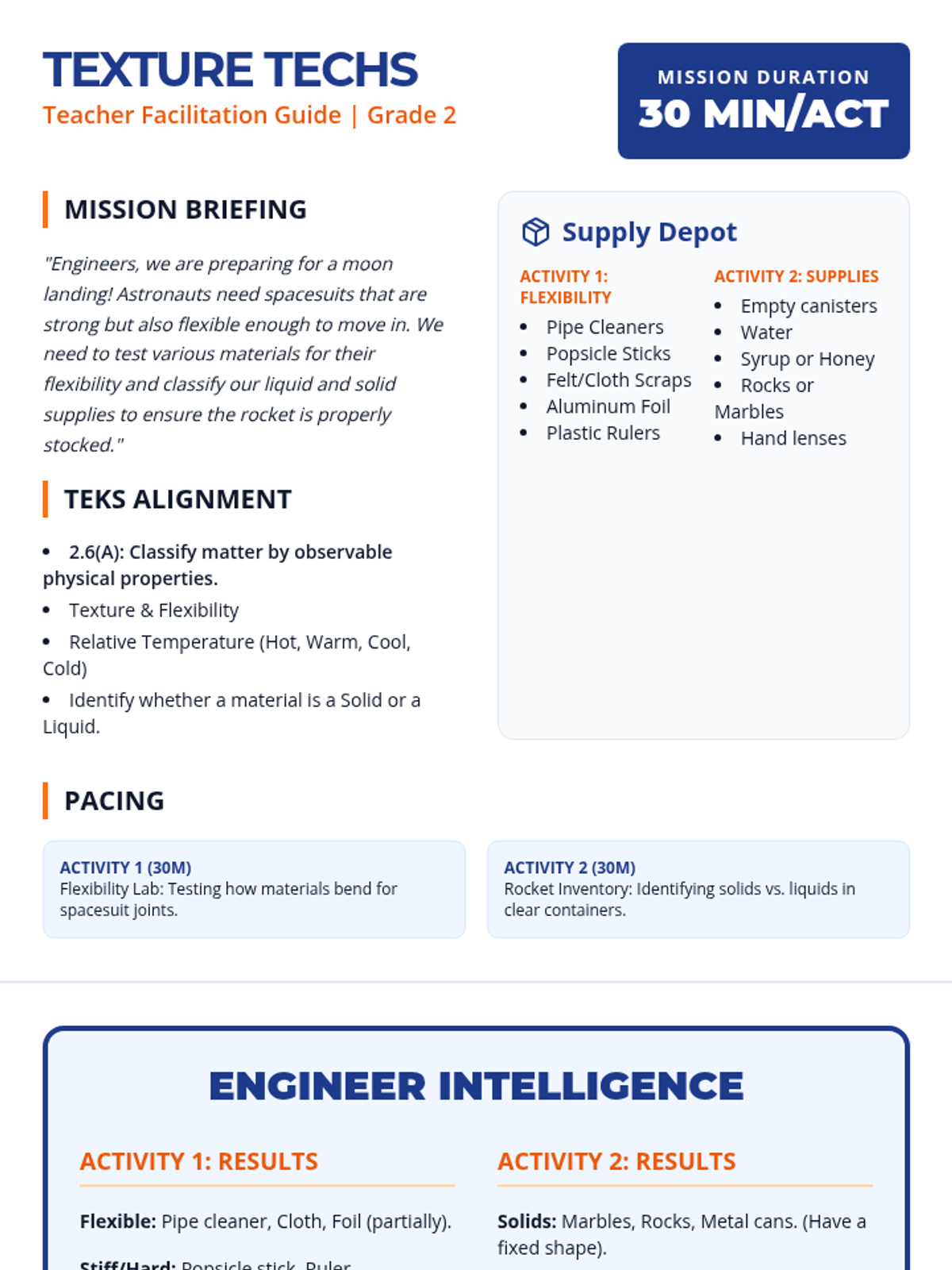
A teacher facilitation guide for 2nd Grade Texture Techs. Covers properties of flexibility and physical states (solid/liquid) with activities and assessment questions.
A 6-slide presentation for 3rd Grade Property Pilots. Features treasure-themed hooks, vocabulary (mass/buoyancy), activity instructions, and a mastery check.
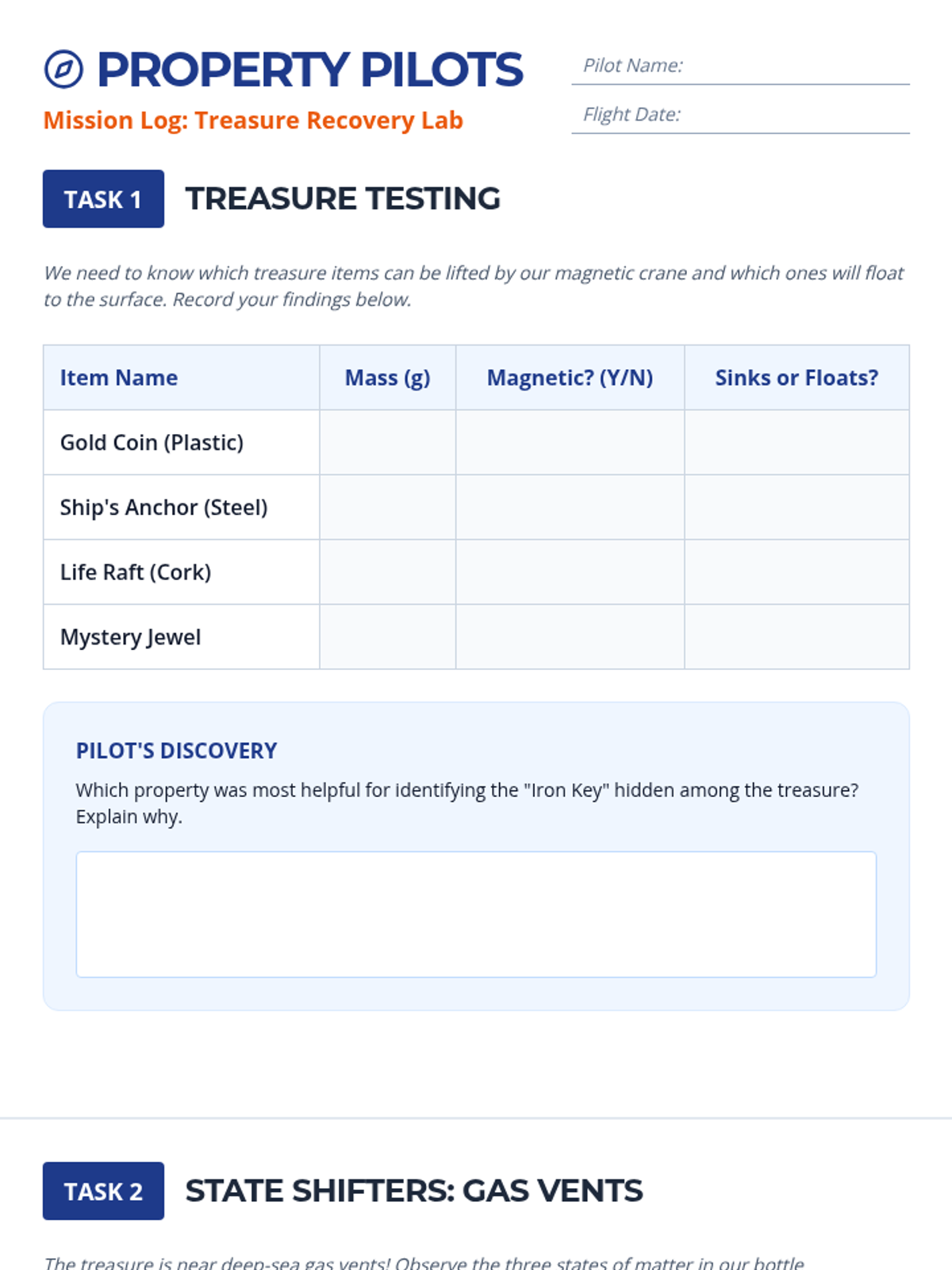
A 2-page student mission log for 3rd Grade Property Pilots. Features treasure-themed data tables for mass, magnetism, and buoyancy, plus a states of matter observation lab.
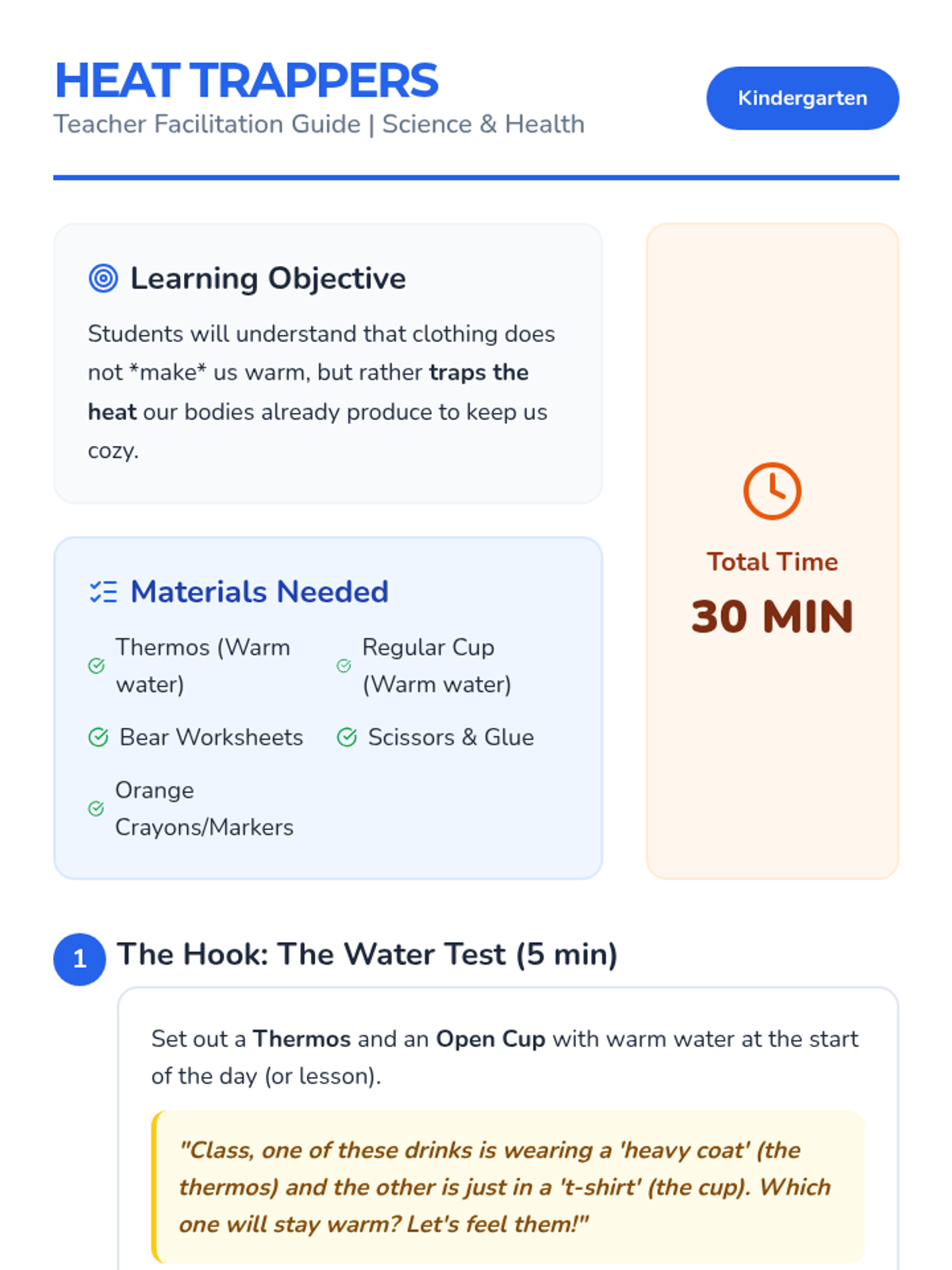
A comprehensive teacher guide for the 'Trap the Heat' lesson, including materials list, scripted prompts for the hook, video discussion points, and a step-by-step activity guide.
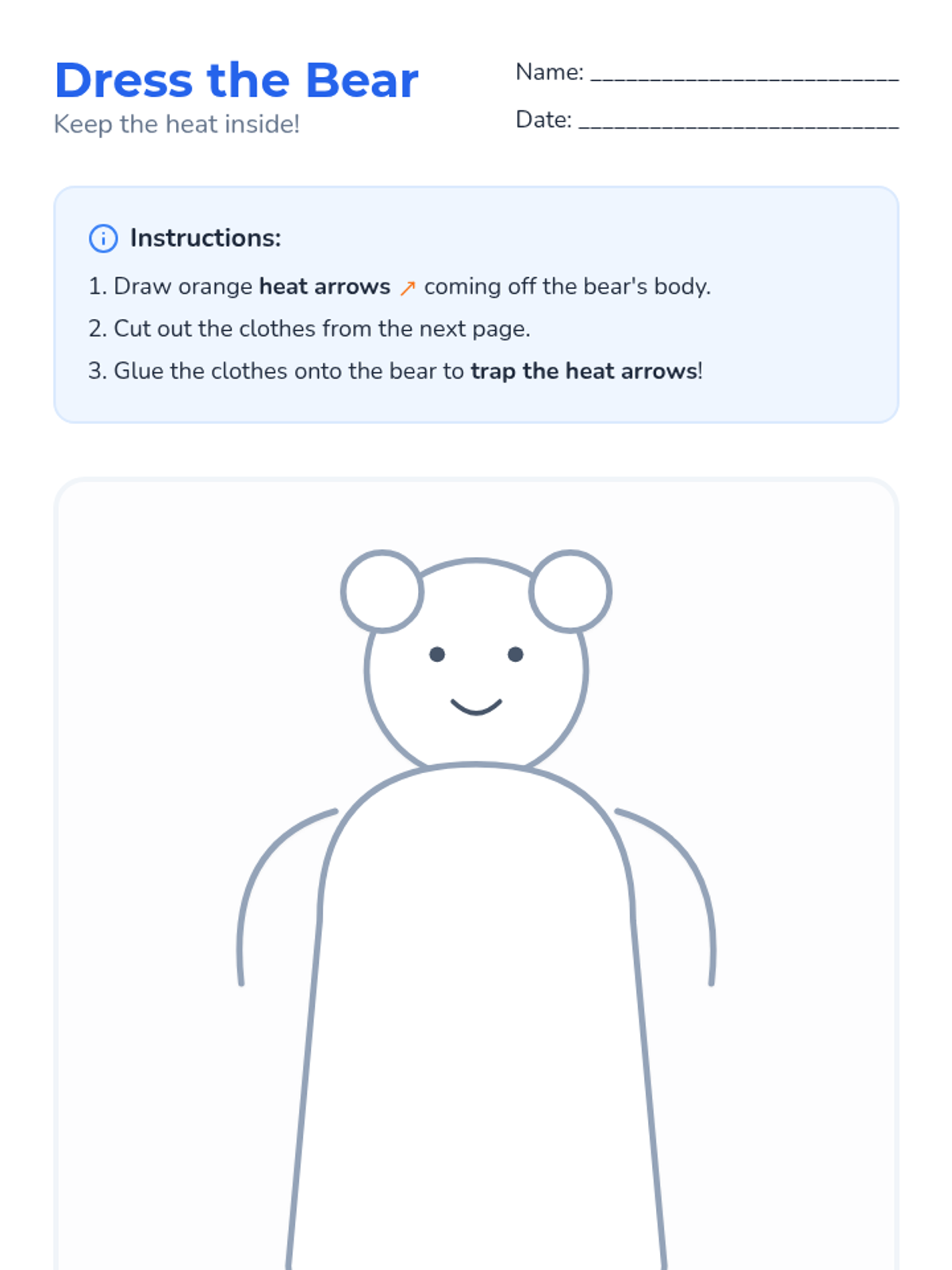
A two-page 'Dress the Bear' activity where students draw heat arrows escaping a bear silhouette and then paste winter clothing items over them to visualize heat trapping.
A visual presentation for a Kindergarten lesson on heat insulation, featuring the SciShow Kids 'Why Do We Shiver?' video, analogies for heat loss, and an introduction to the 'Dress the Bear' activity.
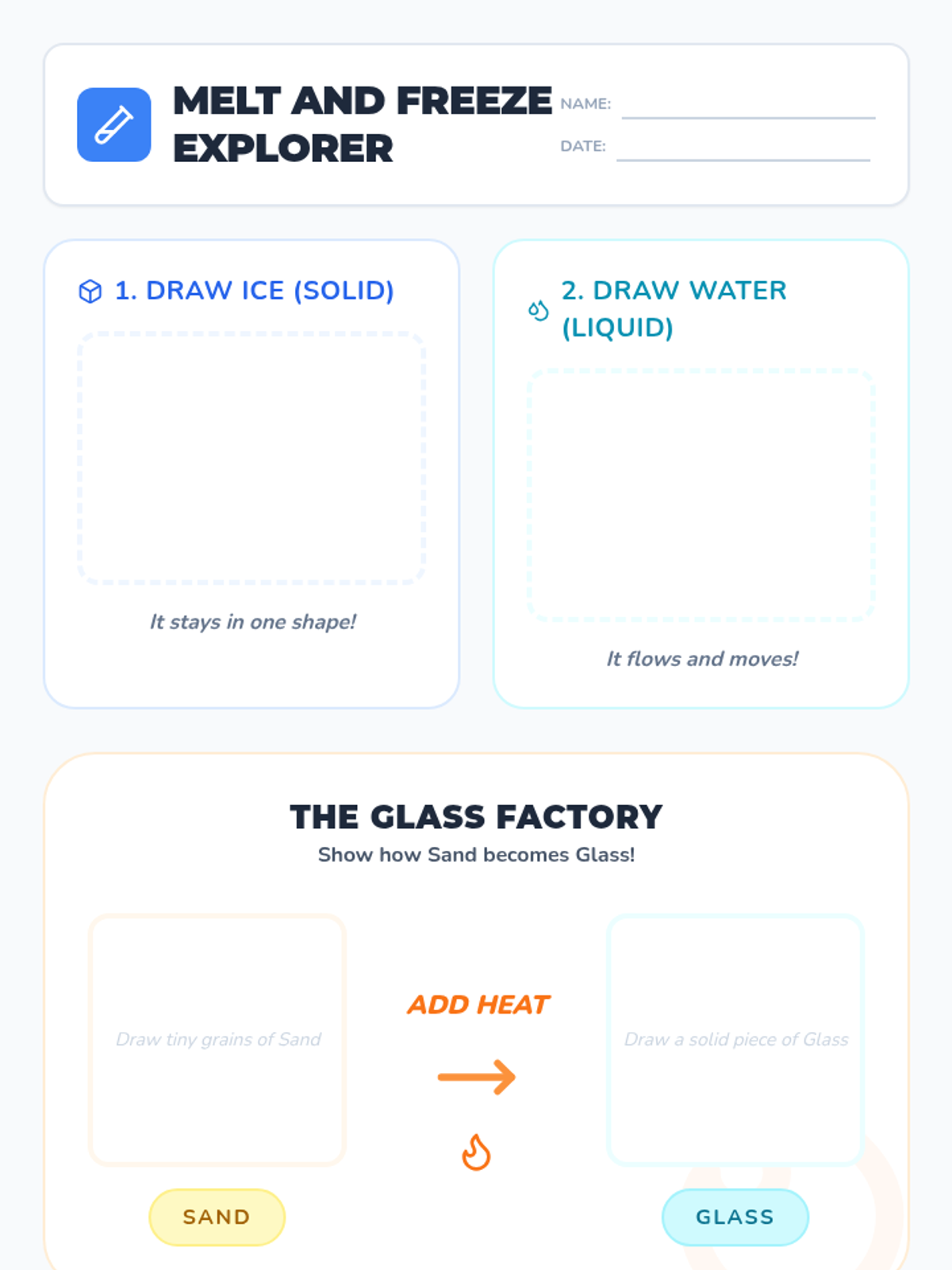
A visual worksheet for Kindergarten and 1st-grade students to record their observations of ice and water, and to draw the process of sand turning into glass through the application of heat.
Colorful slides to guide the Melting Mystery lesson, including a video embed, discussion prompts for the ice analogy, and instructions for the Melt and Freeze Dance.
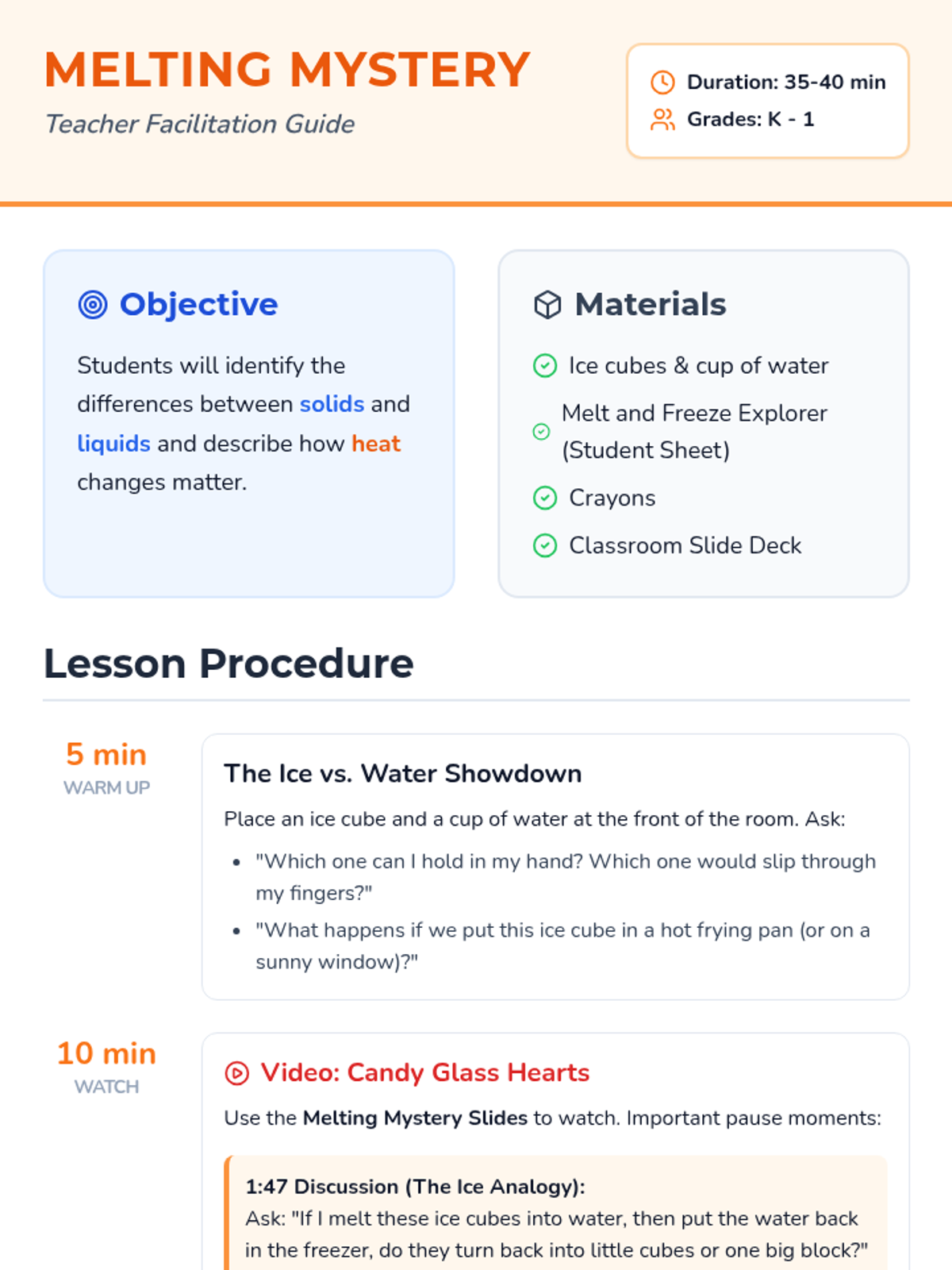
A detailed lesson plan and facilitation guide for teachers to lead students through the concepts of solids, liquids, and heat-driven phase changes using a SciShow Kids video and active play.
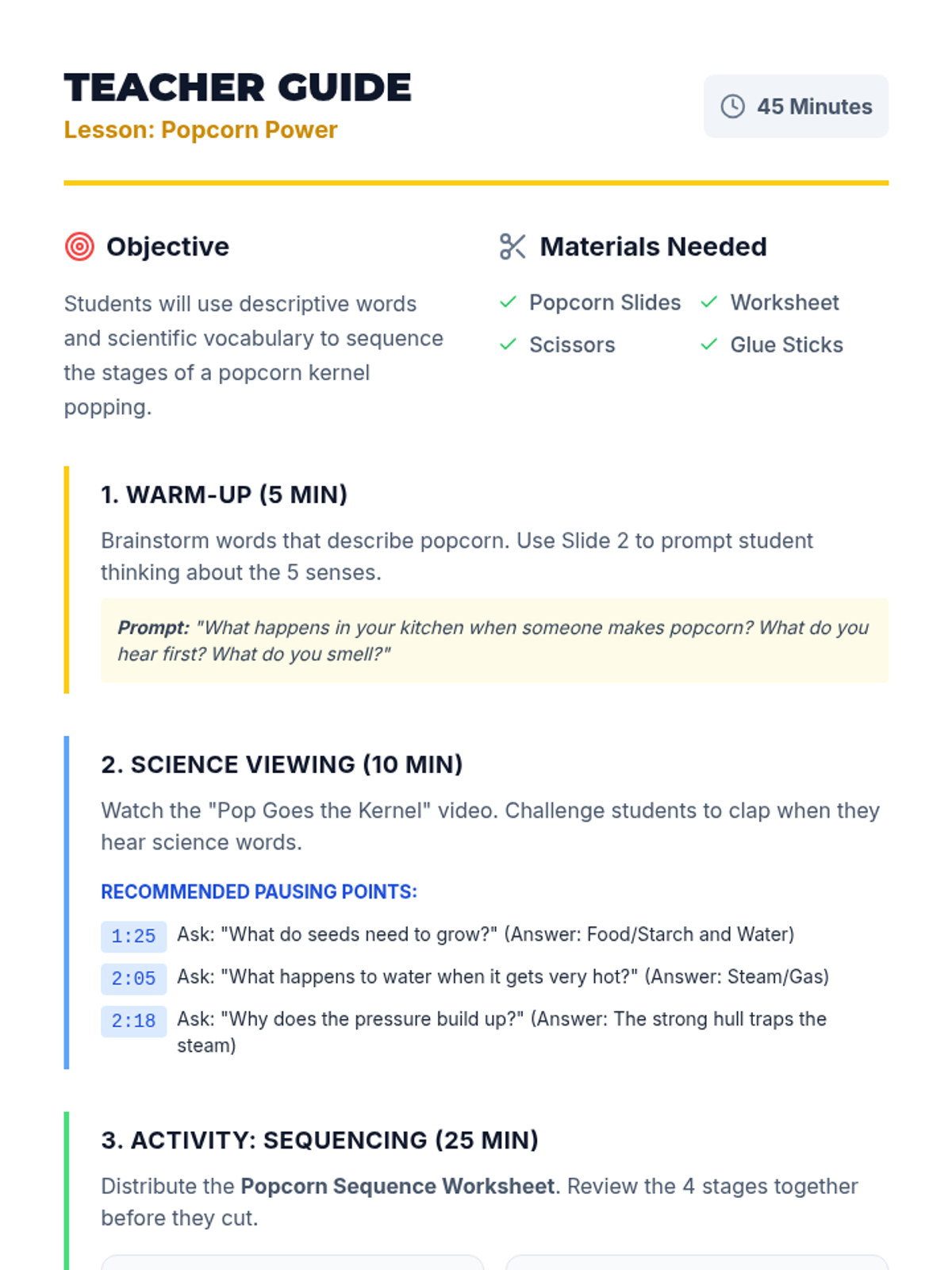
A comprehensive teacher guide for the Popcorn Power lesson, featuring pacing, discussion prompts, and video pause points.
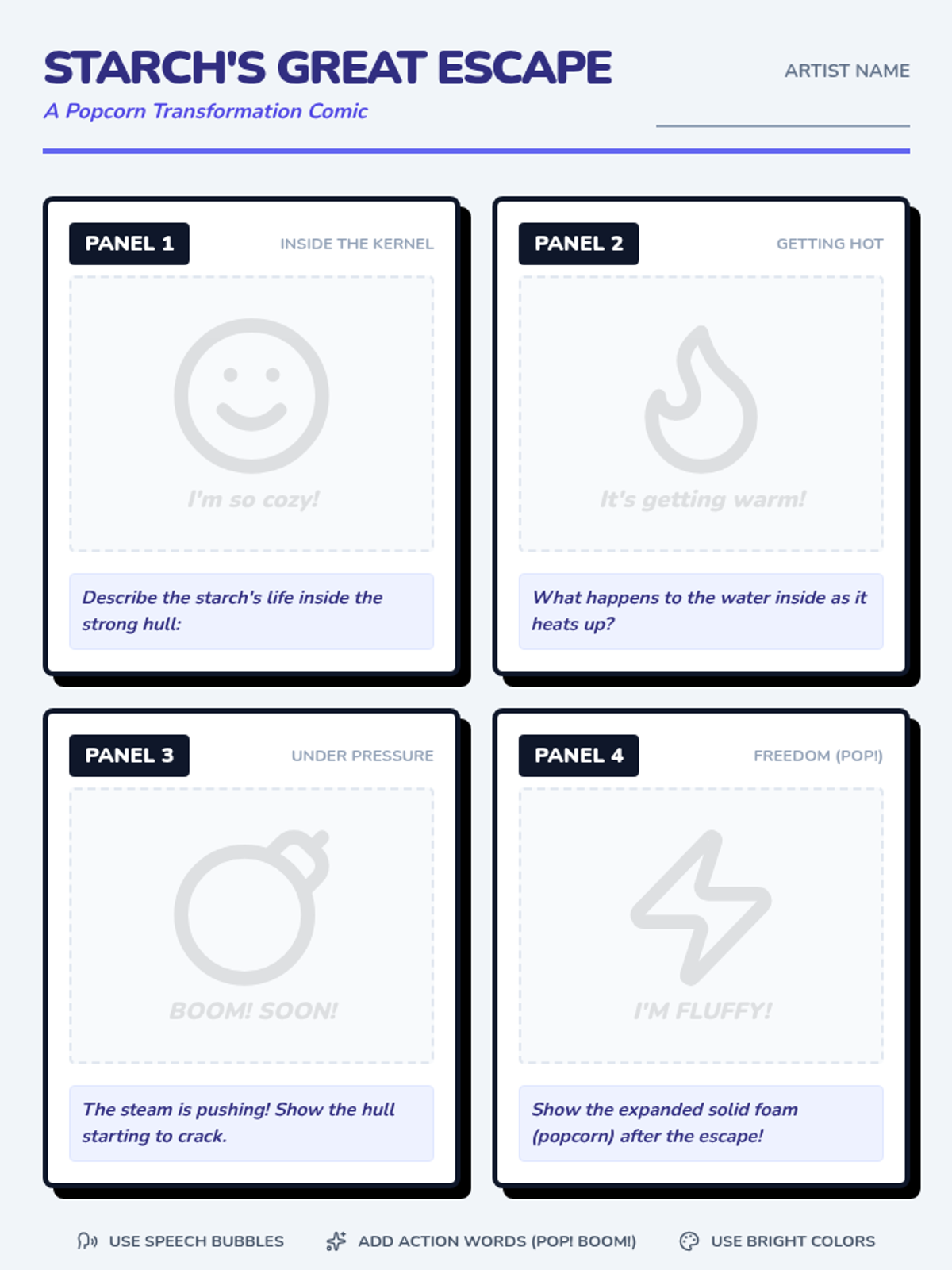
A creative comic strip template with 4 panels designed for students to illustrate the journey of popcorn starch from inside the kernel to its final fluffy form. Includes prompts for each stage and spaces for drawing and dialogue.
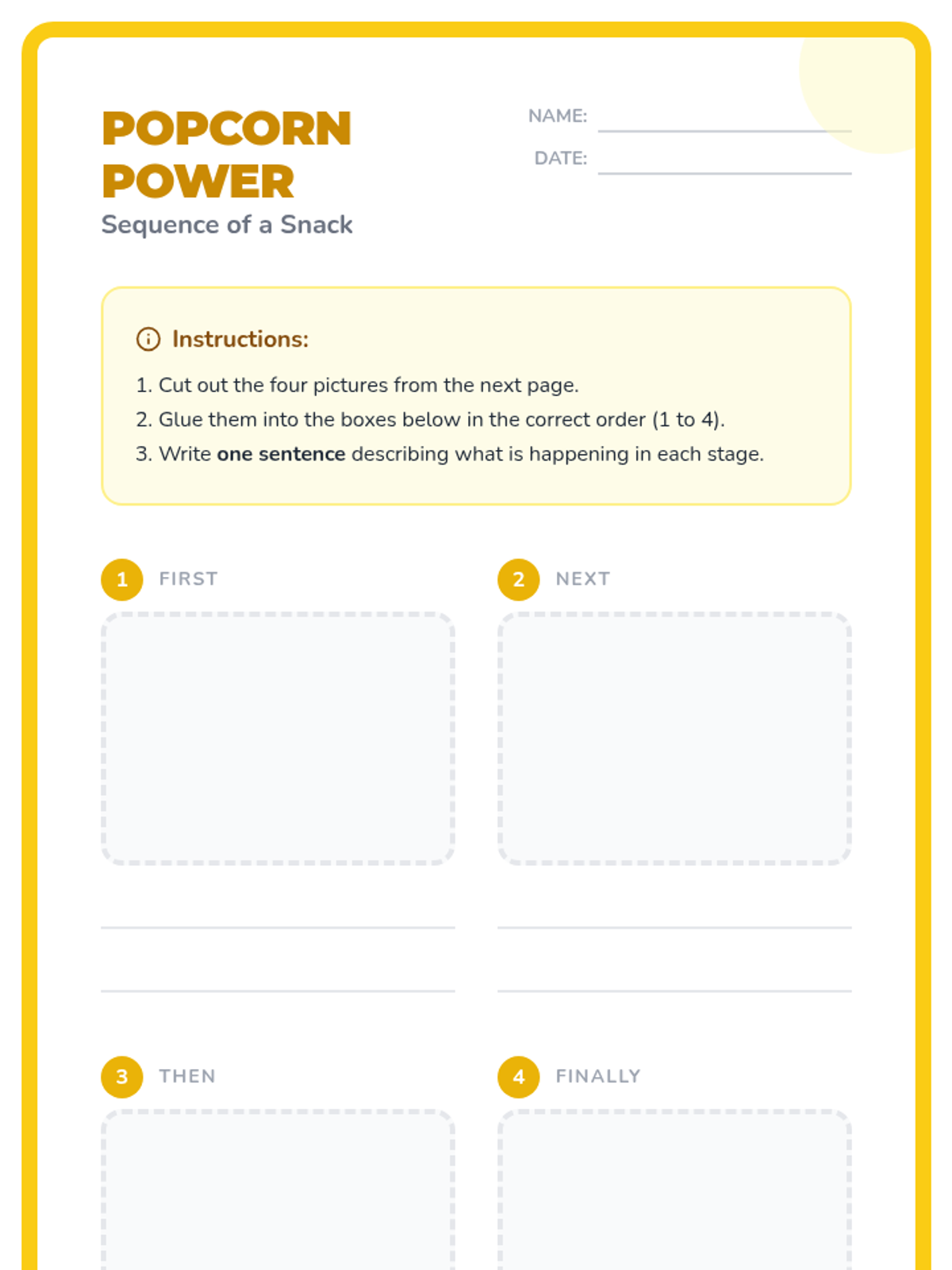
A sequencing worksheet where students cut and paste the four stages of a popcorn kernel's life cycle and write descriptive sentences for each stage.
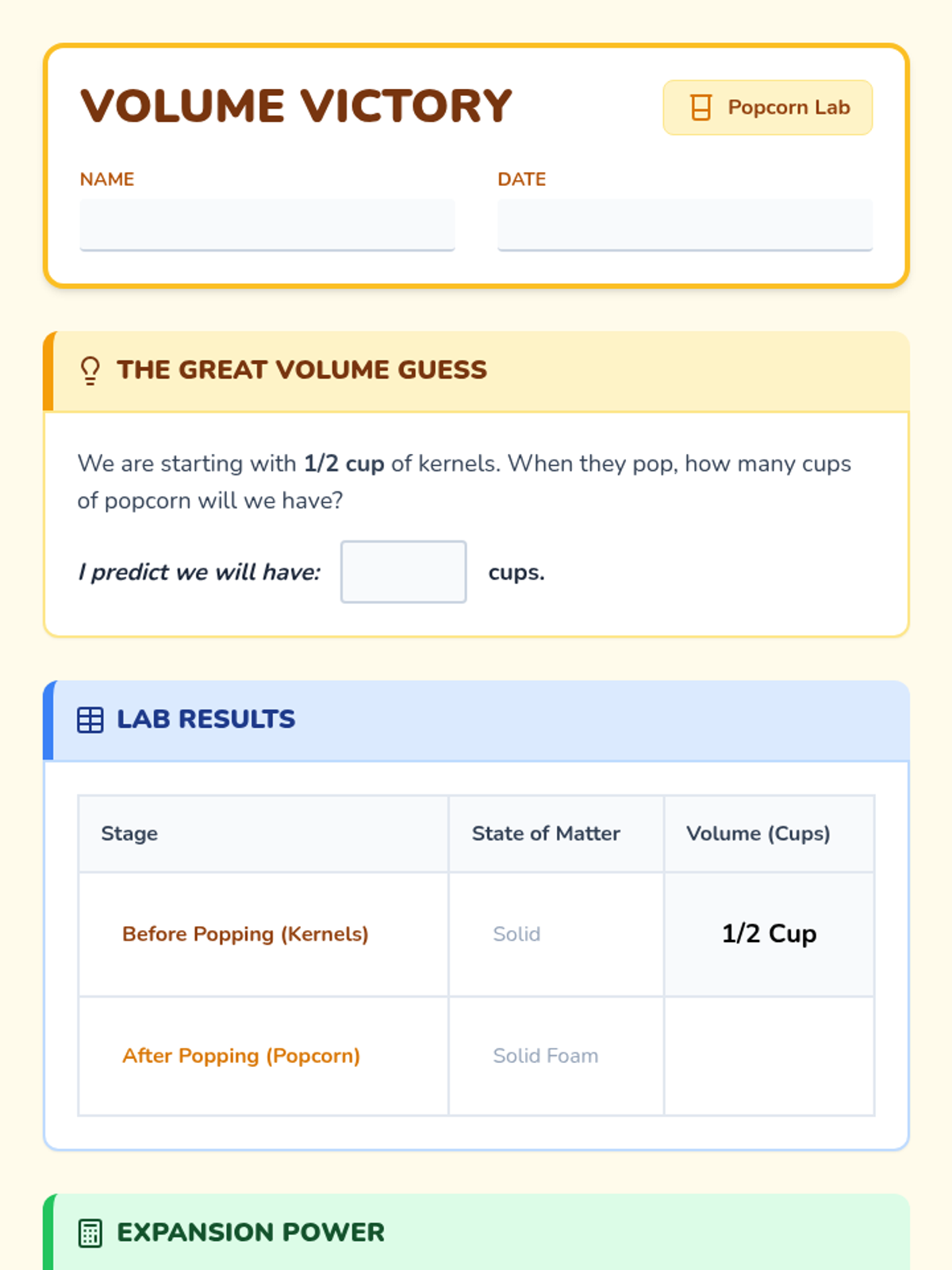
A structured lab sheet for students to record their popcorn volume predictions and measurements. It includes a table for data collection, a visual expansion ratio calculator, and a brief reflection area.
Engaging and colorful presentation slides for the Popcorn Physics lesson. Includes the embedded experiment video, pause points for scientific discussion, and clear instructions for the activity and creative phases.
Visual presentation for the Popcorn Power lesson, including brainstorming prompts, an embedded science video, and diagrams of kernel anatomy.
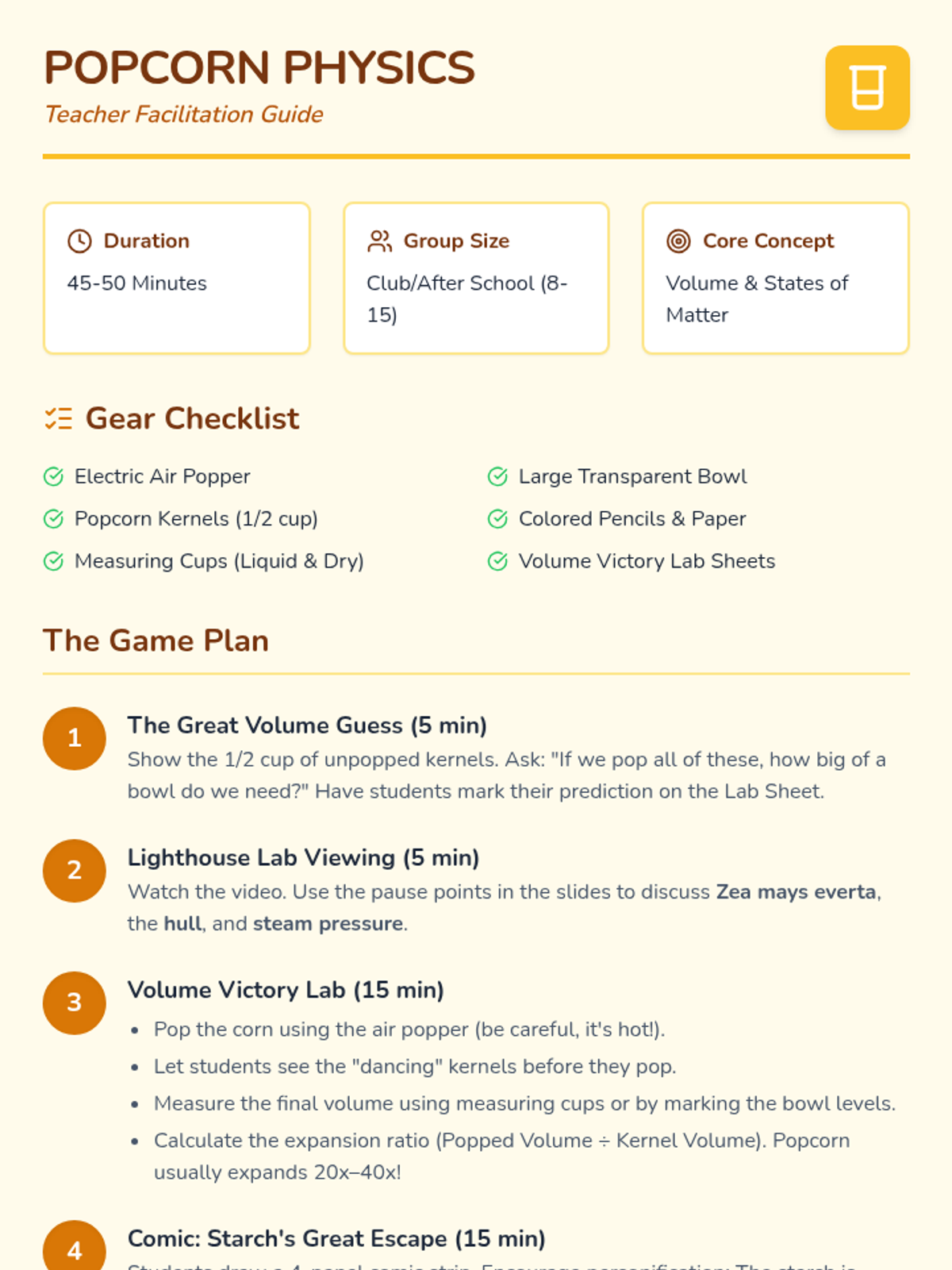
A detailed facilitation guide for teachers leading the Popcorn Physics lesson, including a gear checklist, step-by-step instructions, and key vocabulary definitions.
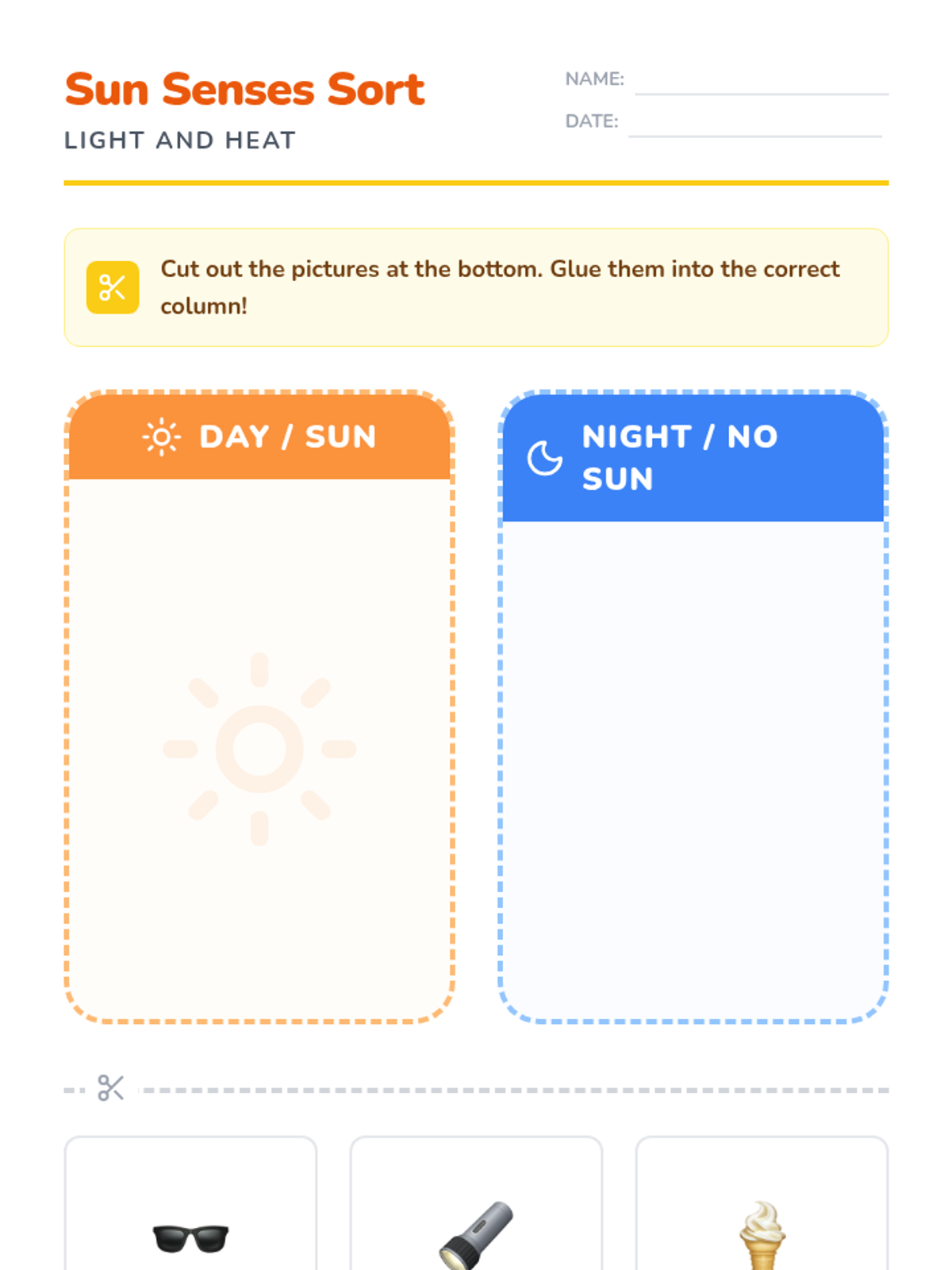
A fun, hands-on sorting worksheet for Pre-K and Kindergarten students to differentiate between items associated with the Sun (daylight/heat) and items associated with no Sun (night/cold).
A bright, visual slide deck for the 'Sunny Gifts' lesson, featuring video embeds, discussion prompts for Light and Heat, and a final sing-along slide.
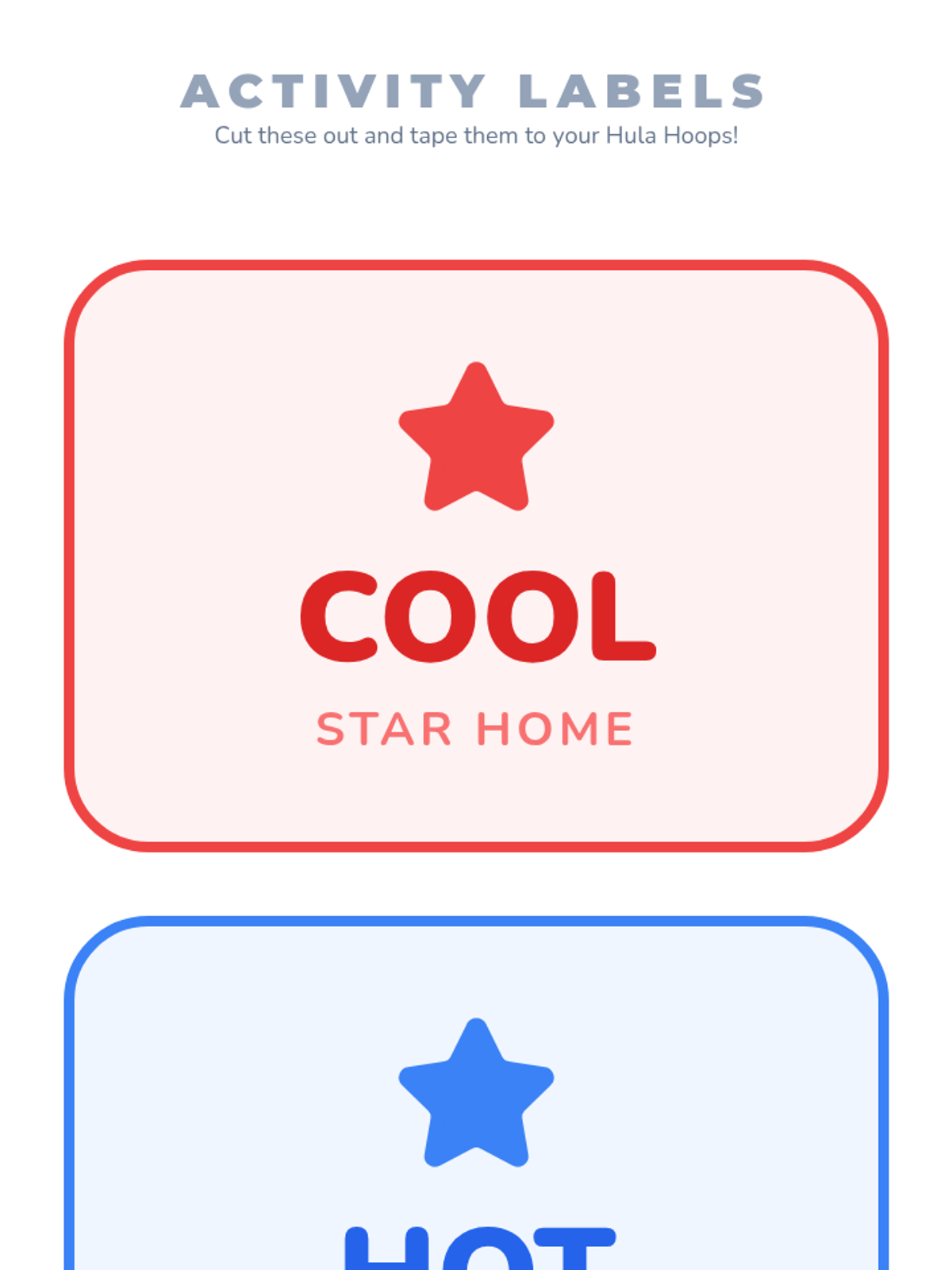
Printable labels for hula hoops and sorting stars to be used during the 'Red Star, Blue Star' game, helping students categorize temperatures visually.
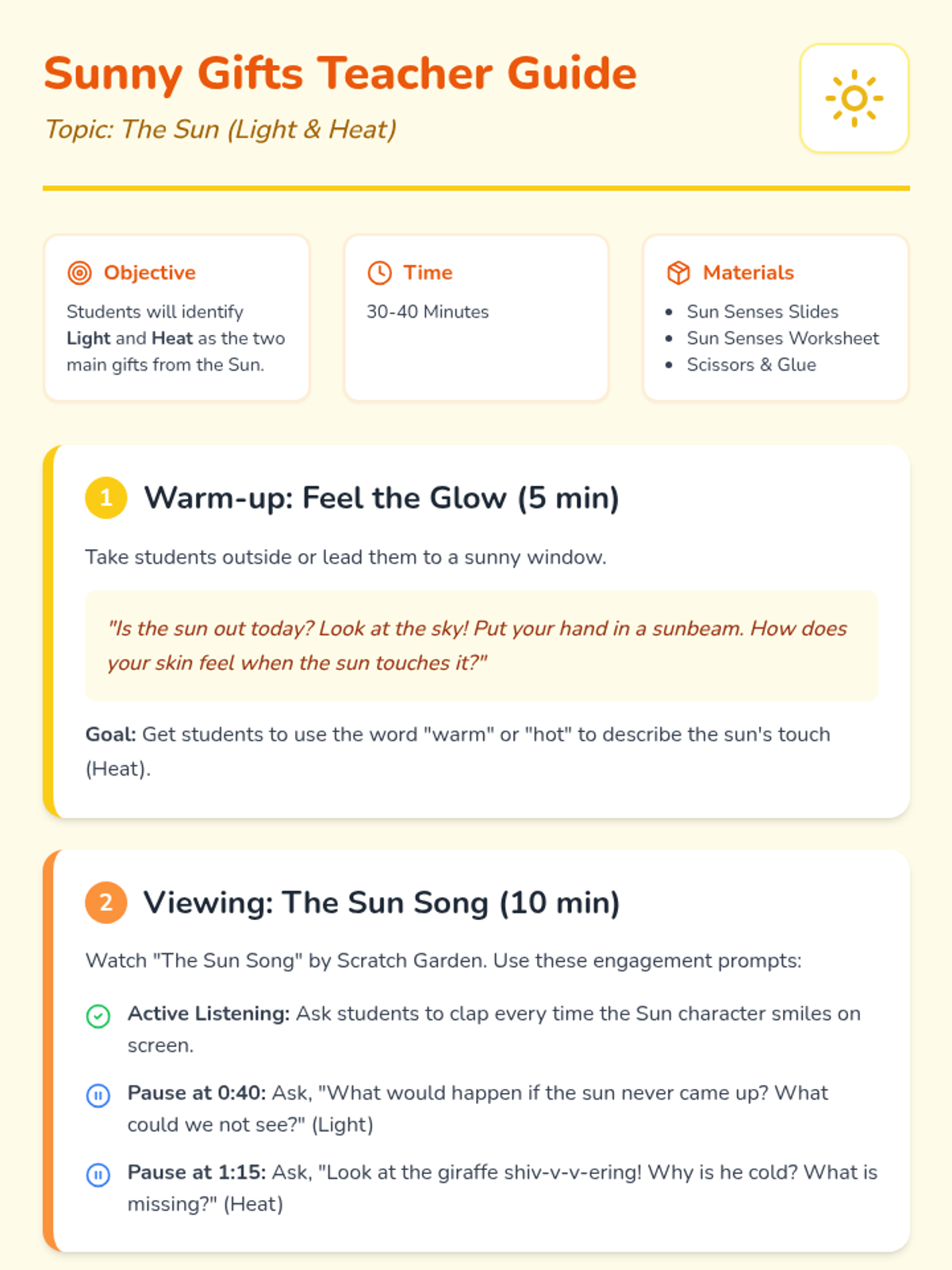
A comprehensive guide for teachers to lead a Pre-K/Kindergarten lesson on the Sun's gifts, including warm-up prompts, video discussion points, and activity instructions.
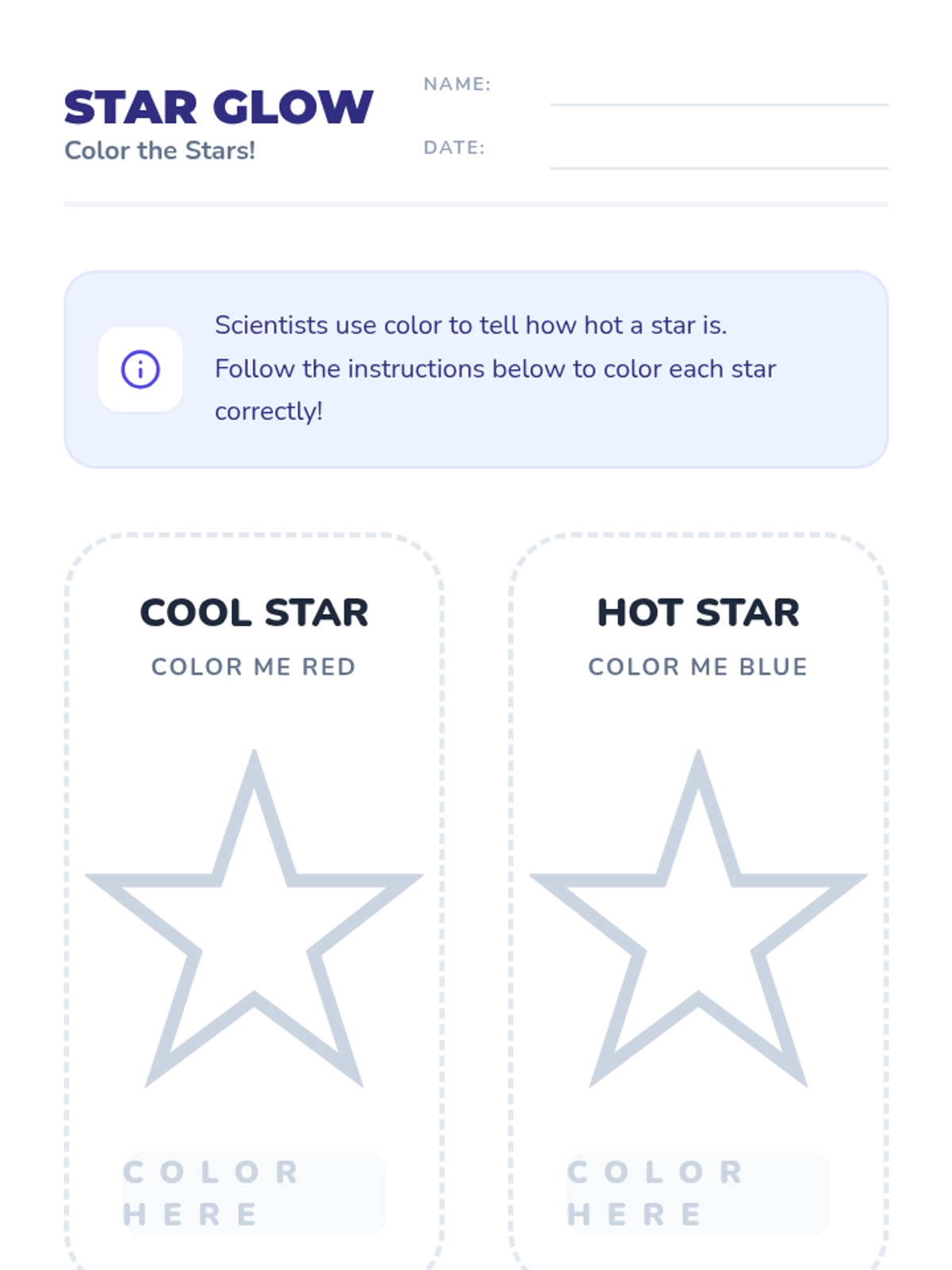
A coloring sheet extension for the Stellar Heat lesson where students color a cool red star and a hot blue star to reinforce the lesson's core concept.
A visual presentation for the Stellar Heat lesson, featuring warm-up images, an embedded educational video, key concept visuals, and movement game instructions for Kindergarten students.
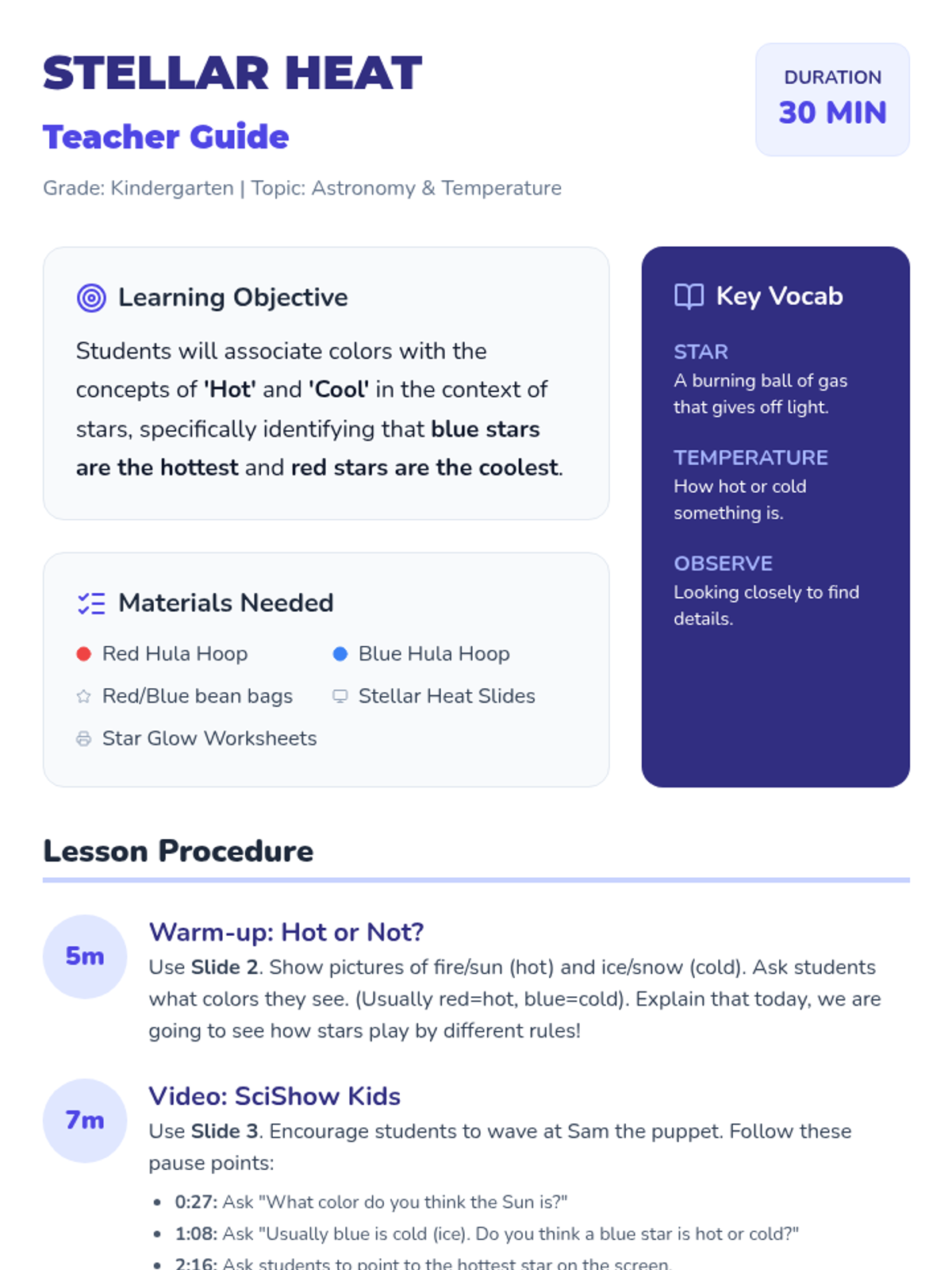
A comprehensive teacher guide for the Stellar Heat lesson, including learning objectives, a detailed materials list, and a step-by-step instructional script with video pause points.
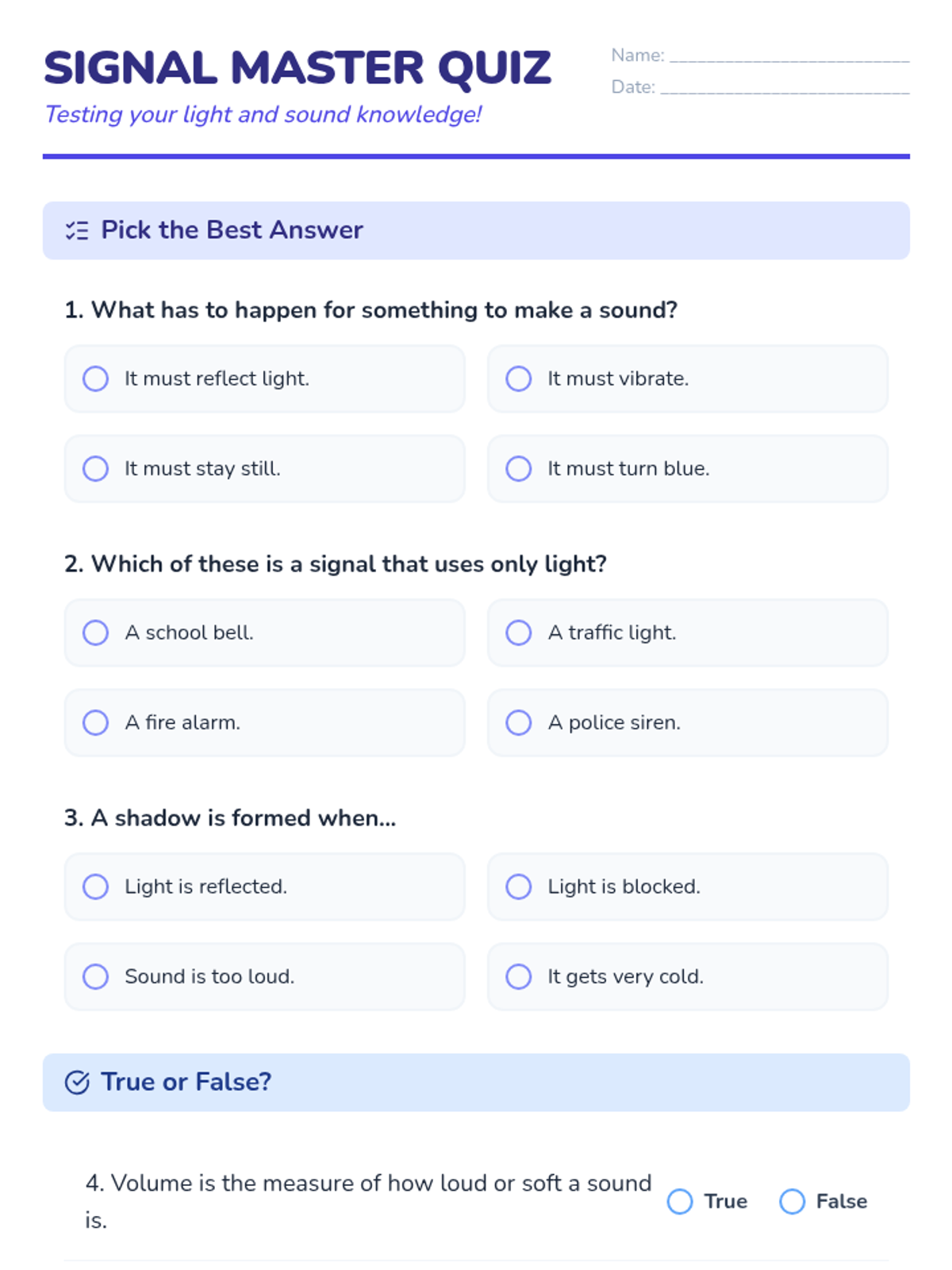
A summative assessment for the Signal Seekers lesson, featuring multiple choice, true/false, and a drawing section to evaluate student understanding of light and sound.
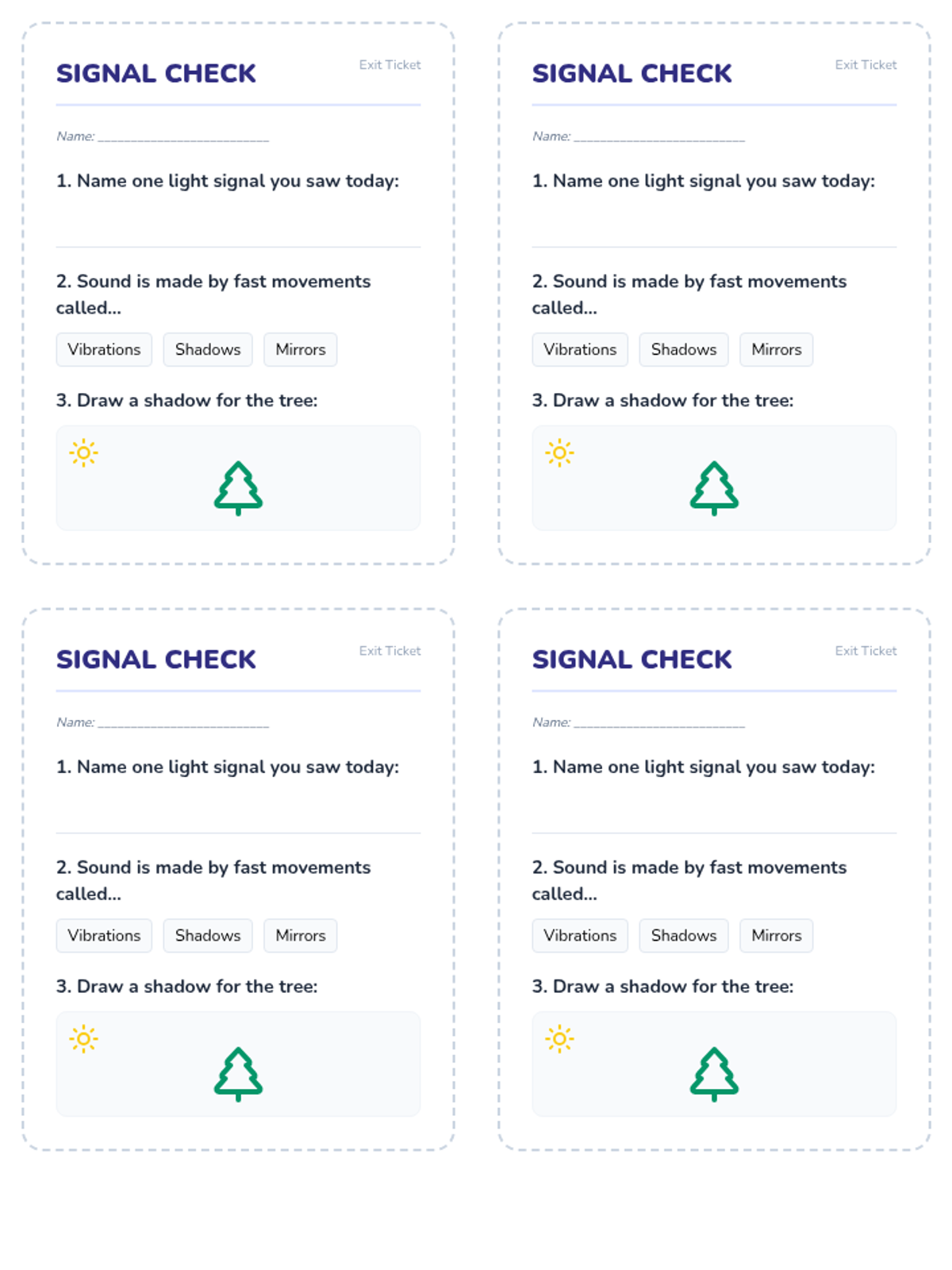
A quick assessment tool with four tickets per page, evaluating student understanding of light signals, vibrations, and shadows.
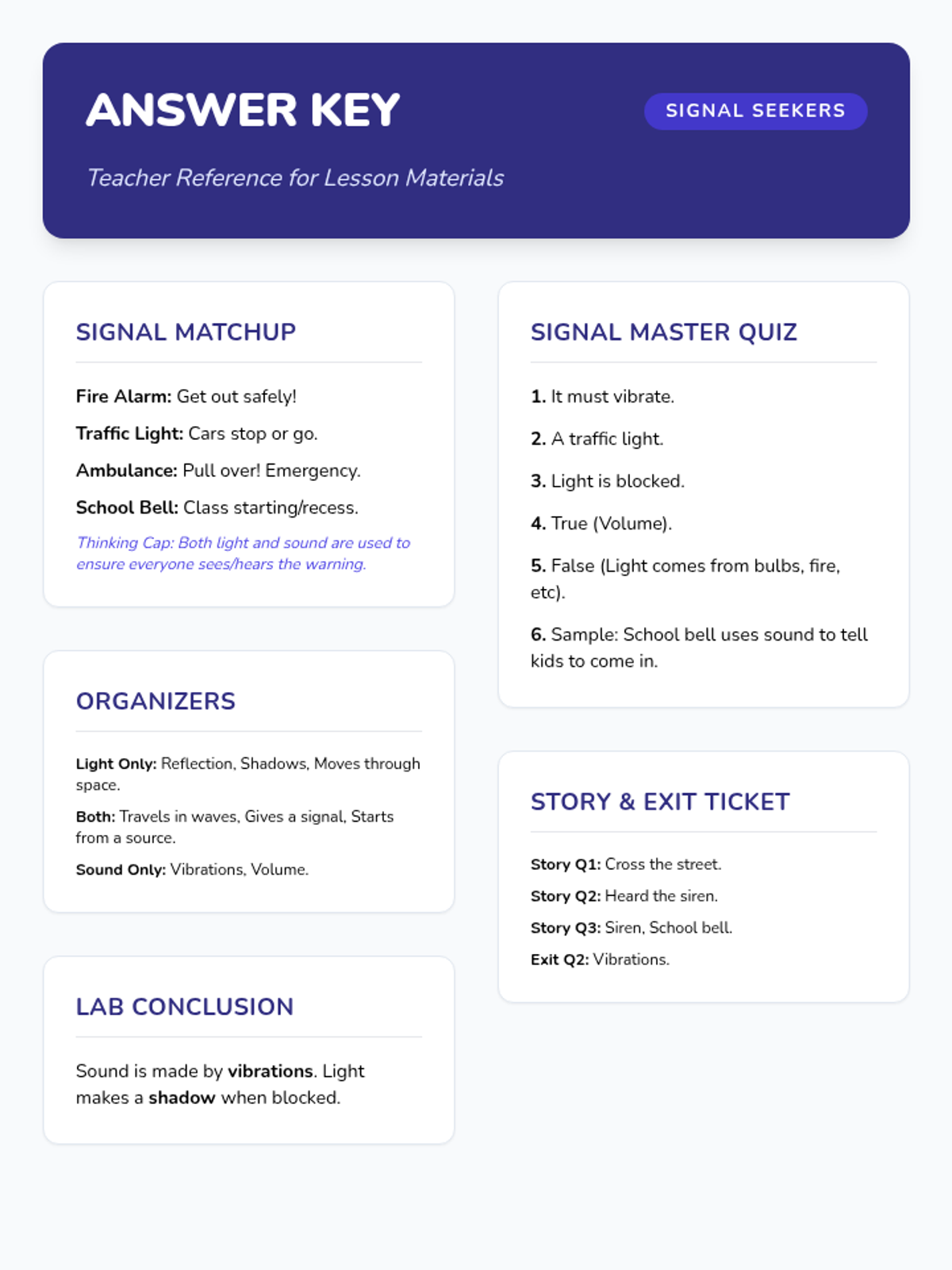
A comprehensive answer key for the Signal Seekers lesson, covering the matchup worksheet, graphic organizers, lab activity, social story, quiz, and exit ticket.
A 10-slide visual presentation covering community light and sound signals, the science of vibrations and shadows, and a preview of the lab activity.
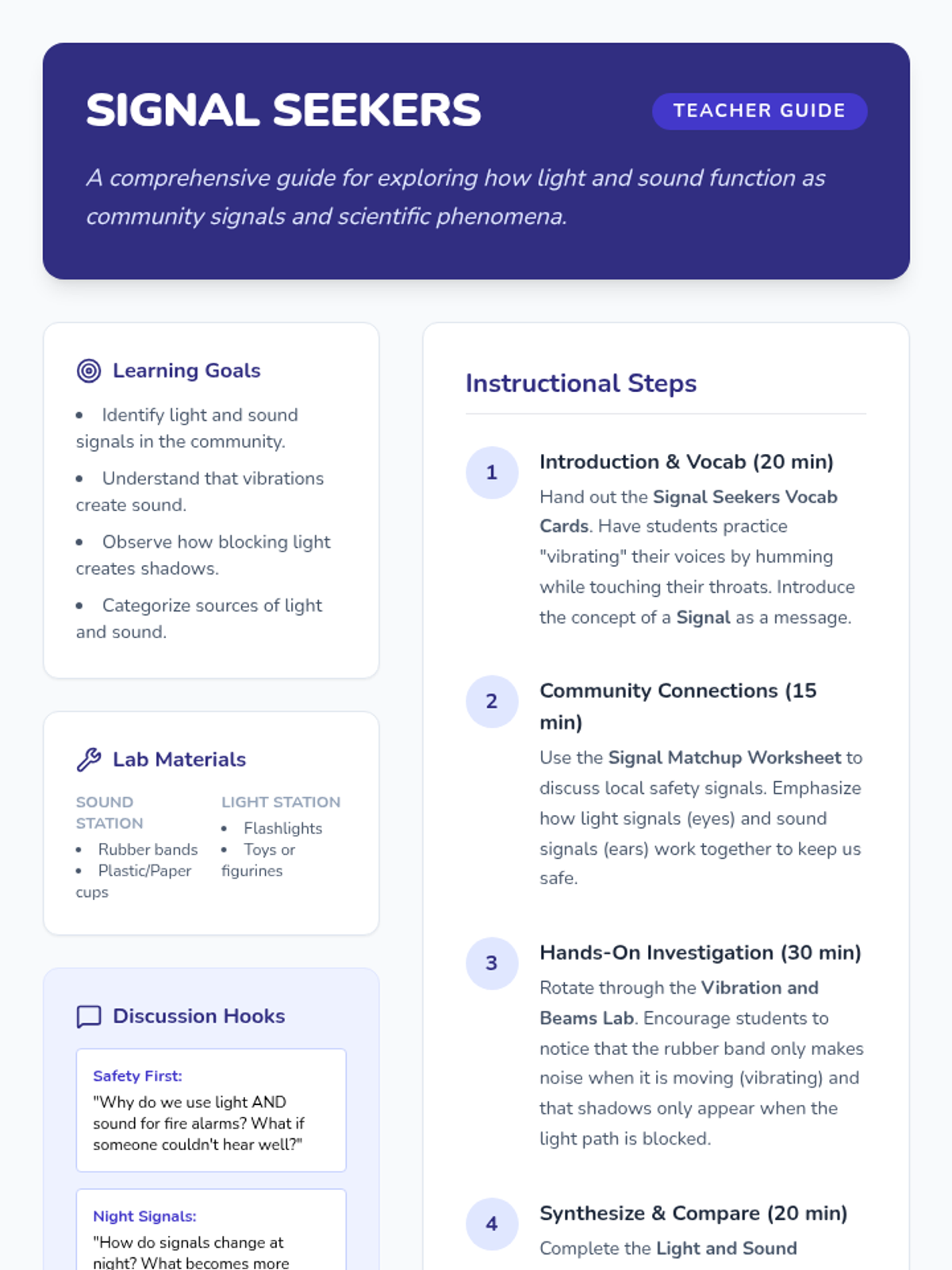
A comprehensive teacher guide for the Signal Seekers lesson, featuring learning objectives, material lists, discussion prompts, and a step-by-step instructional flow.
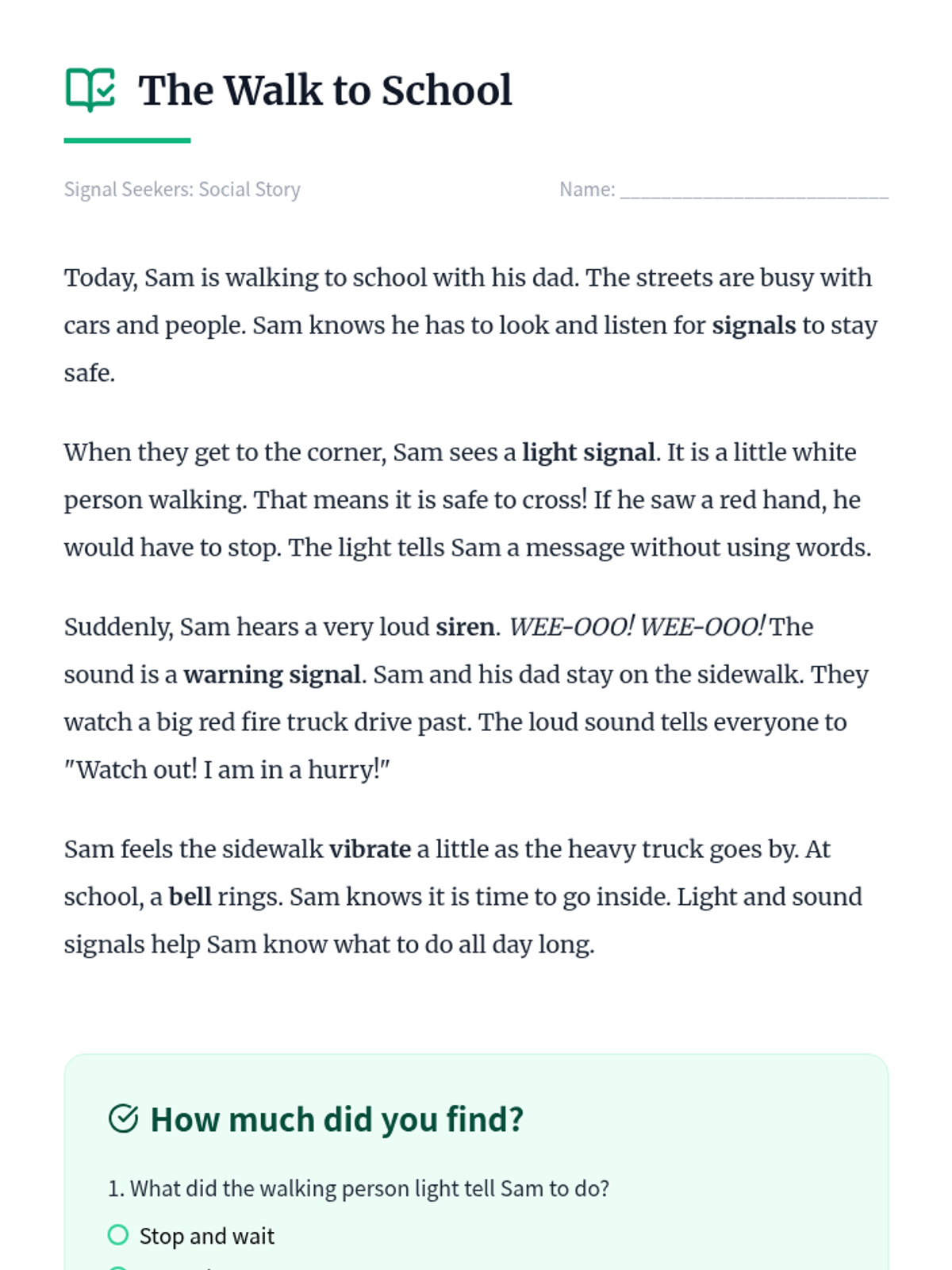
An adapted text about a character noticing light and sound signals (crosswalk light, siren, school bell) during their walk to school, followed by comprehension questions.
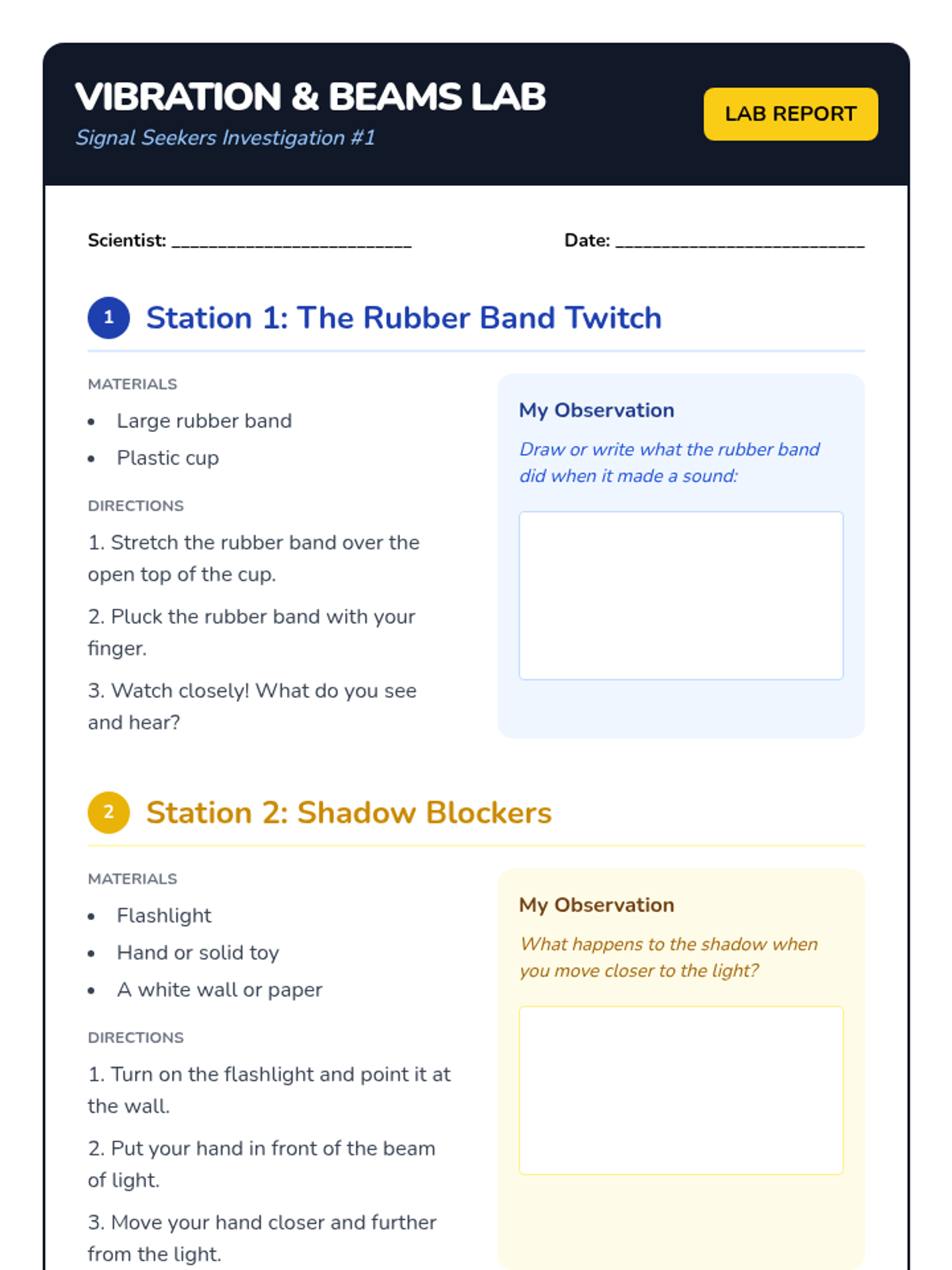
A step-by-step lab activity for investigating sound vibrations with rubber bands and light/shadows with flashlights.
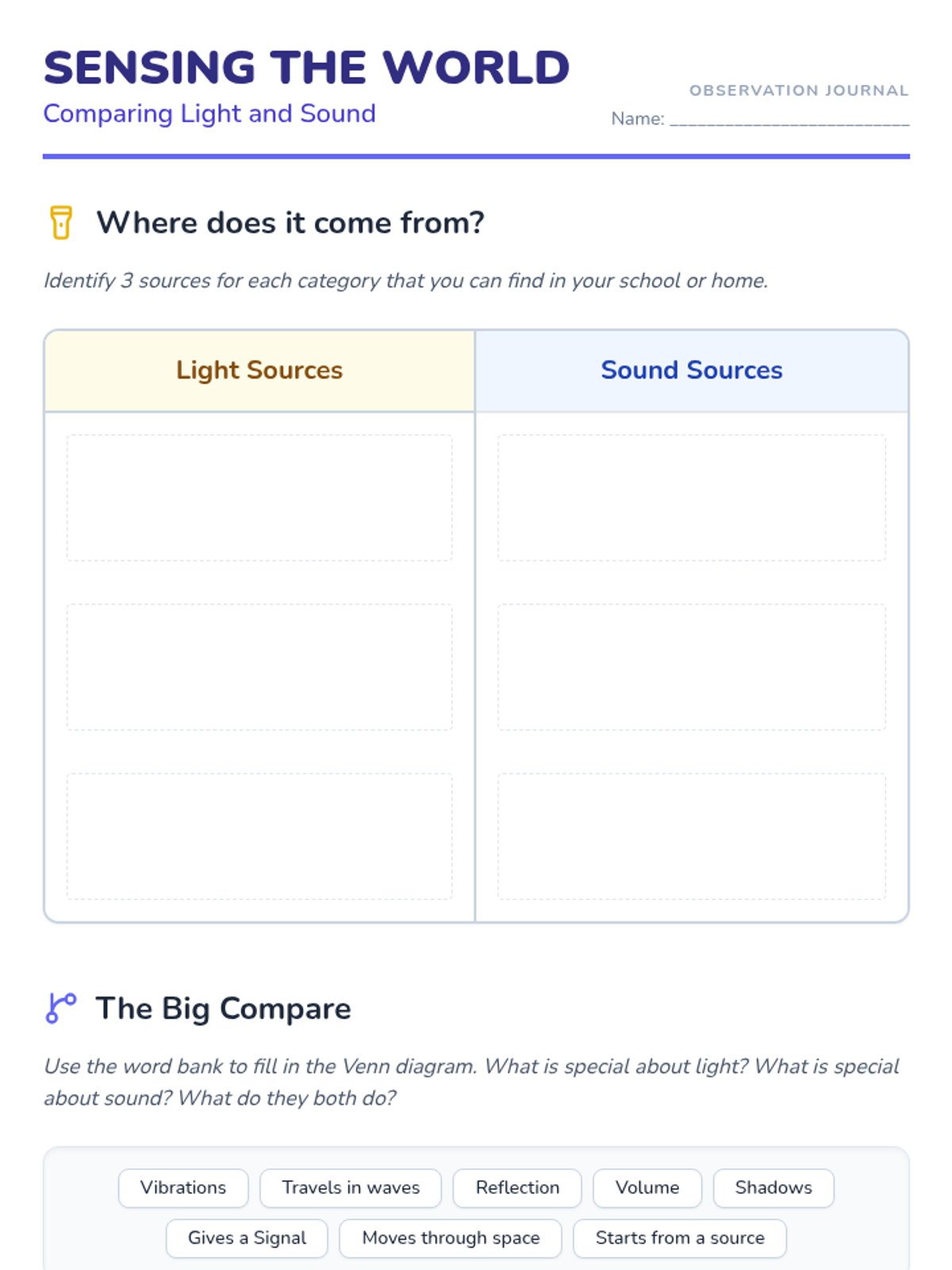
Graphic organizers including a T-chart for identifying light and sound sources and a Venn diagram with a word bank for comparing their properties.
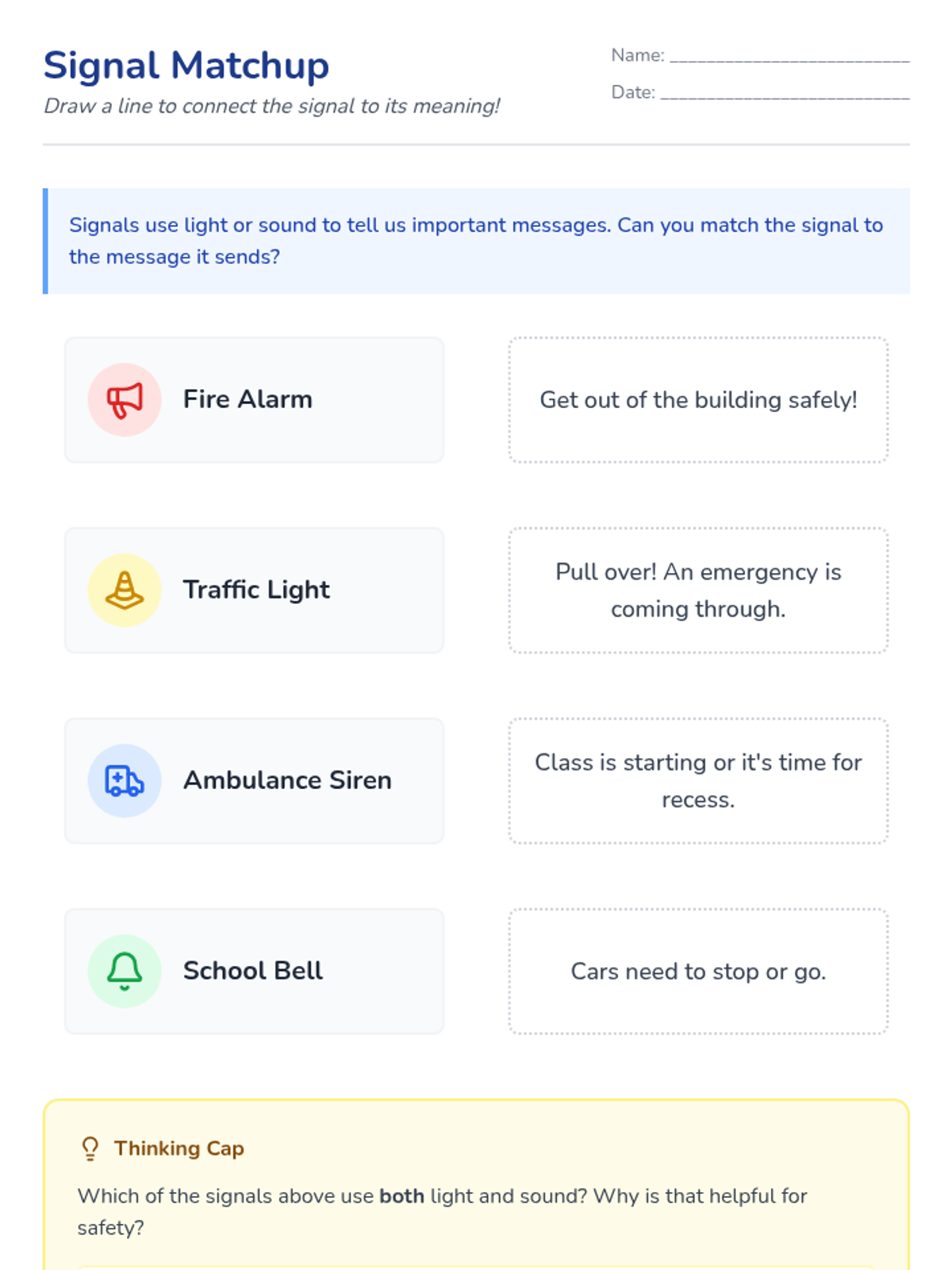
A matching activity where students connect community signals (fire alarm, traffic light, siren) to their meanings, plus a critical thinking question.
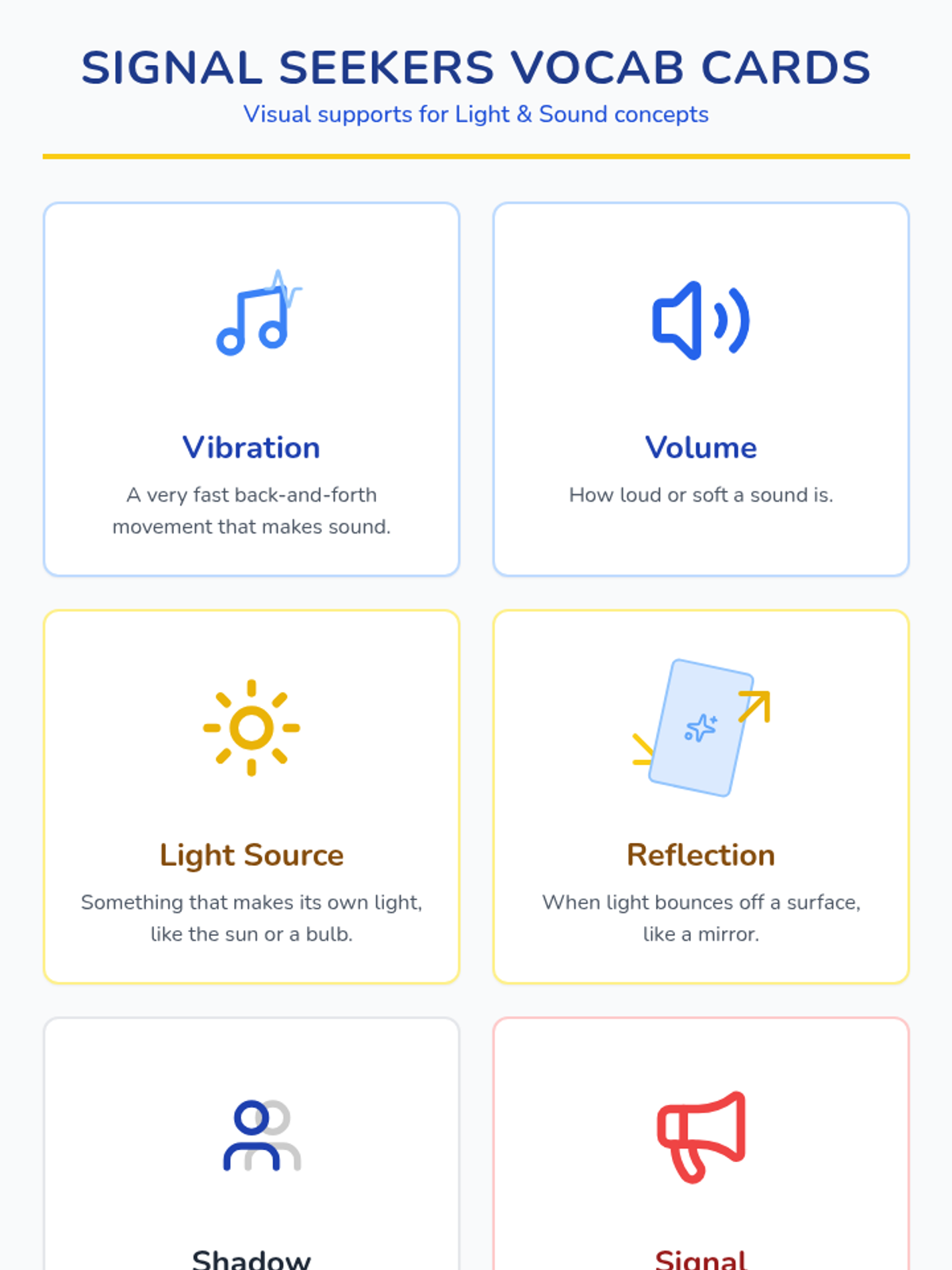
A set of 6 visual vocabulary cards with definitions and icons covering key light and sound concepts like vibration, reflection, and signals.
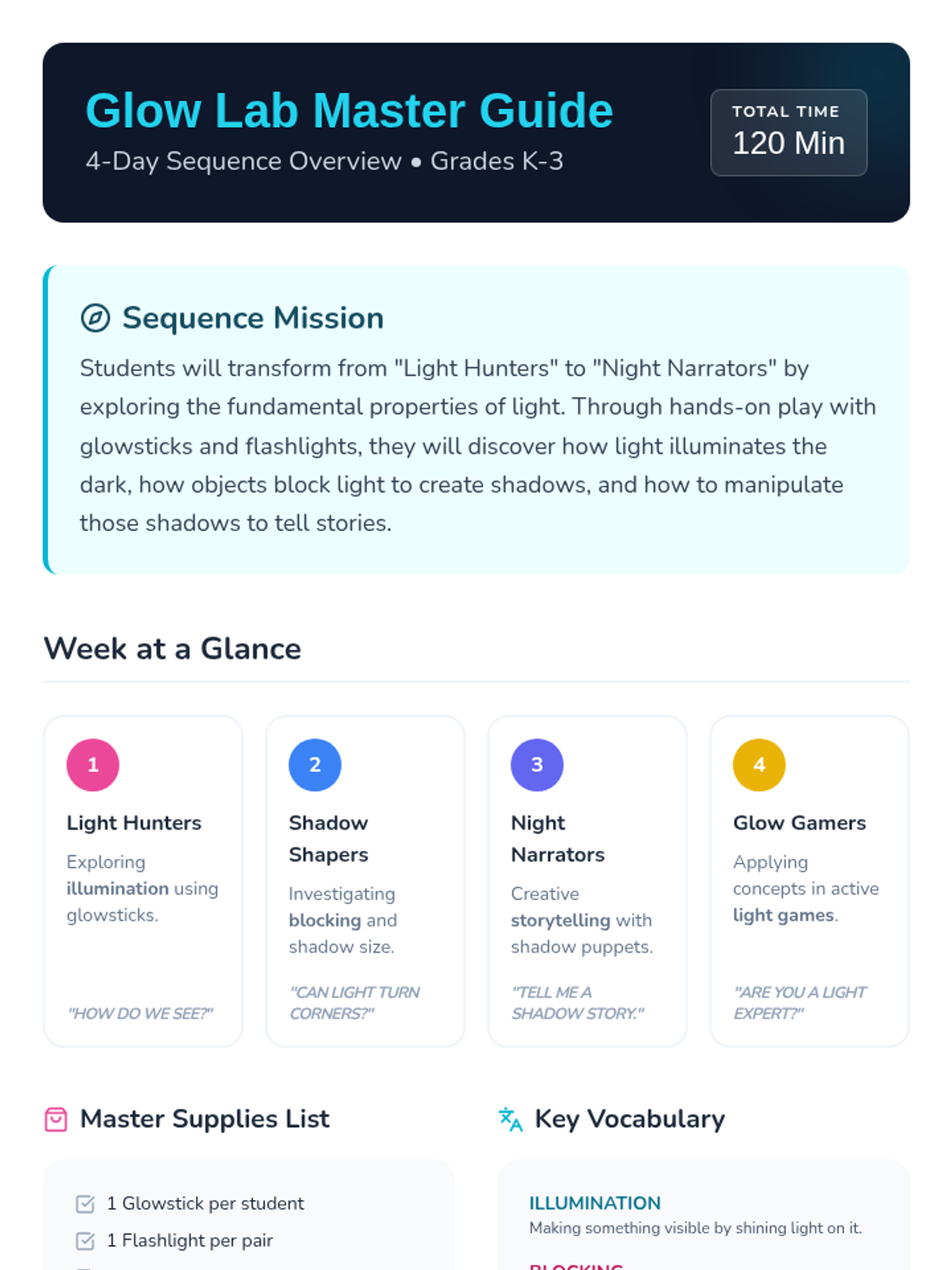
A high-level overview of the 4-day Glow Lab sequence for teachers, including master materials lists, vocabulary, and dark-room classroom management strategies.
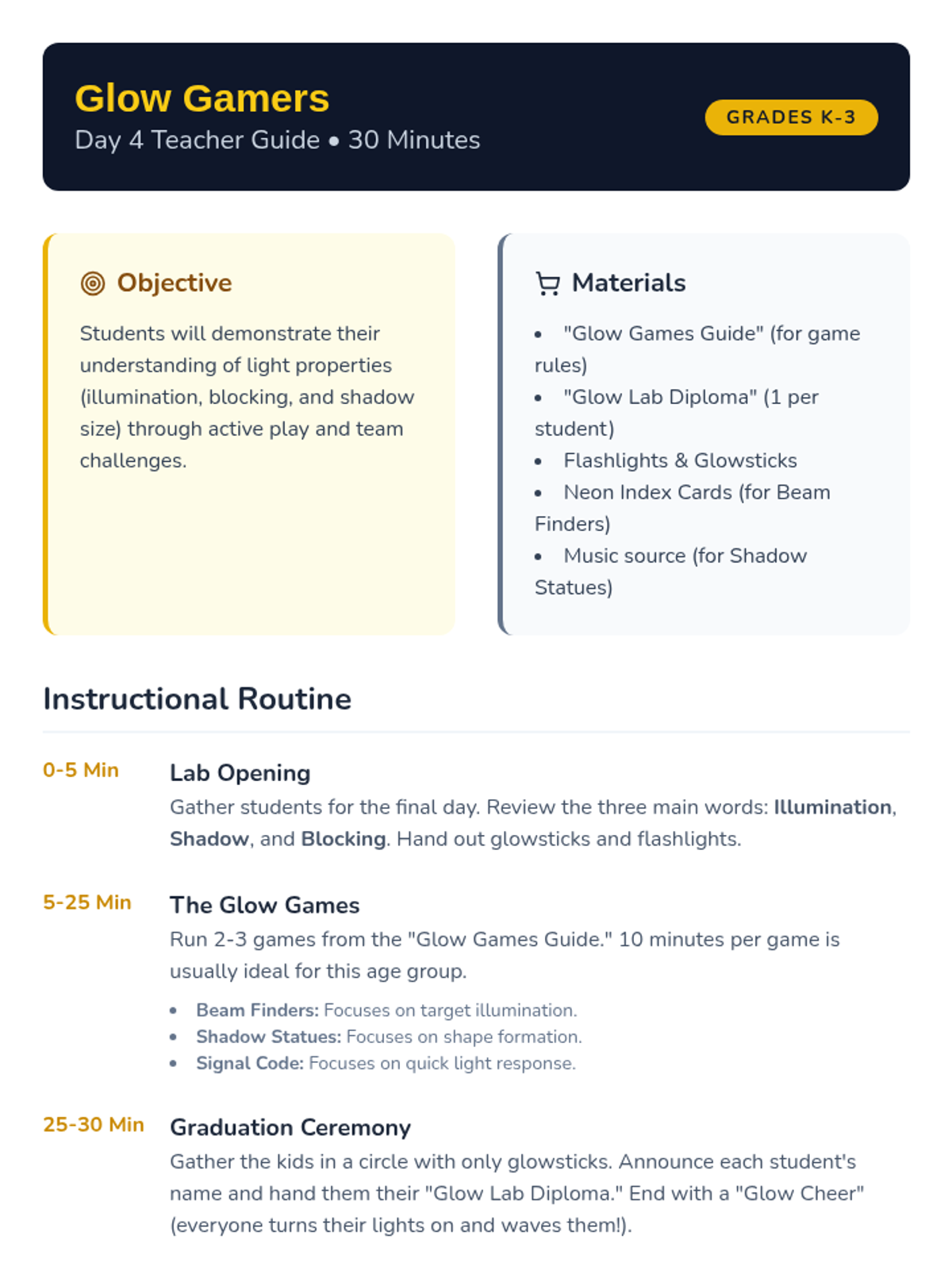
Facilitation guide for the final day of the Glow Lab sequence, focusing on game management and the graduation ceremony.
A commemorative certificate for students to receive after completing the Glow Lab sequence. Features a polished, modern design with neon accents and space for signatures.
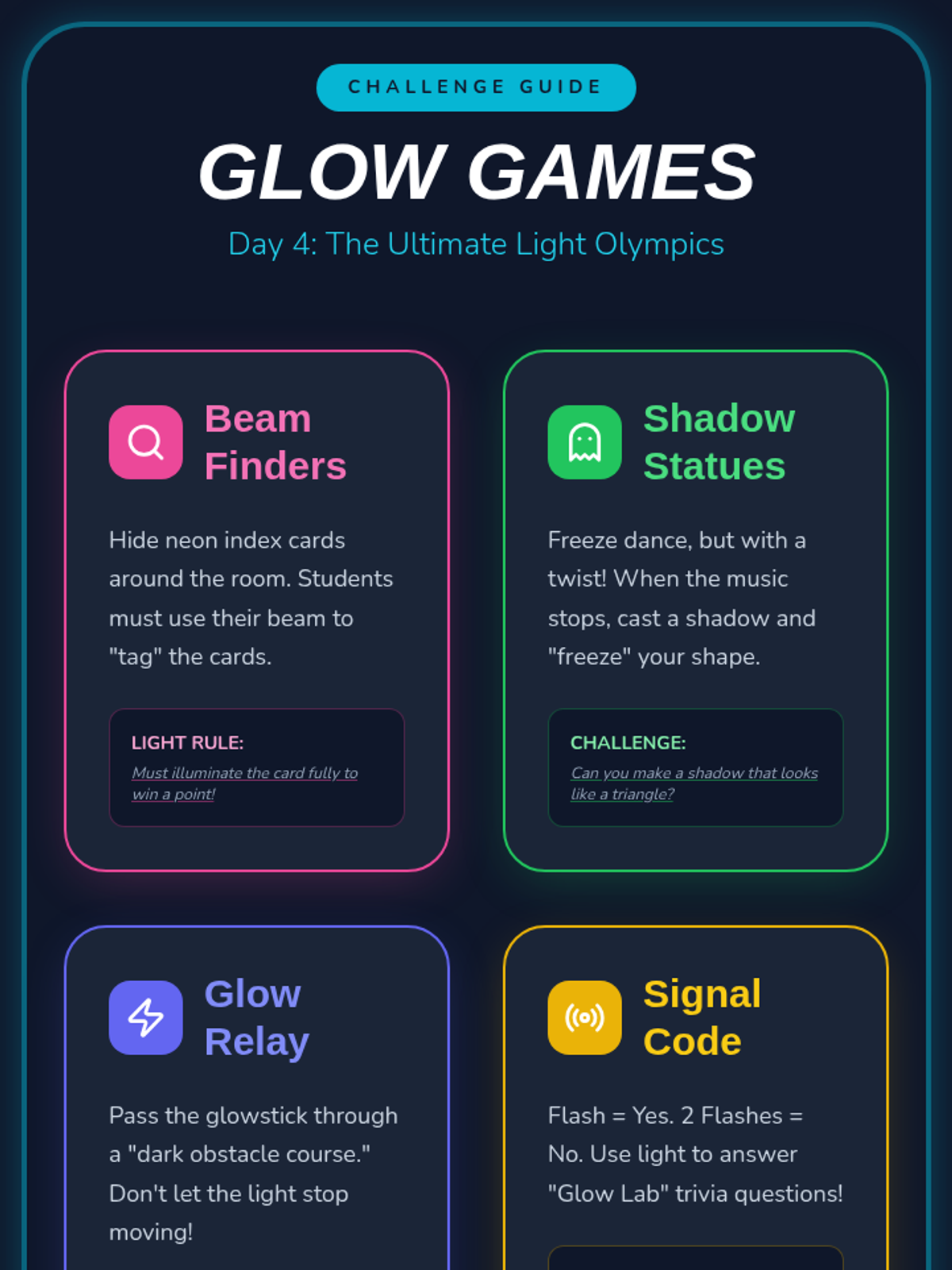
A high-energy activity guide for the final day of the Light unit, featuring four light-based games to reinforce concepts of illumination and shadows. design is neon-themed for visual engagement.
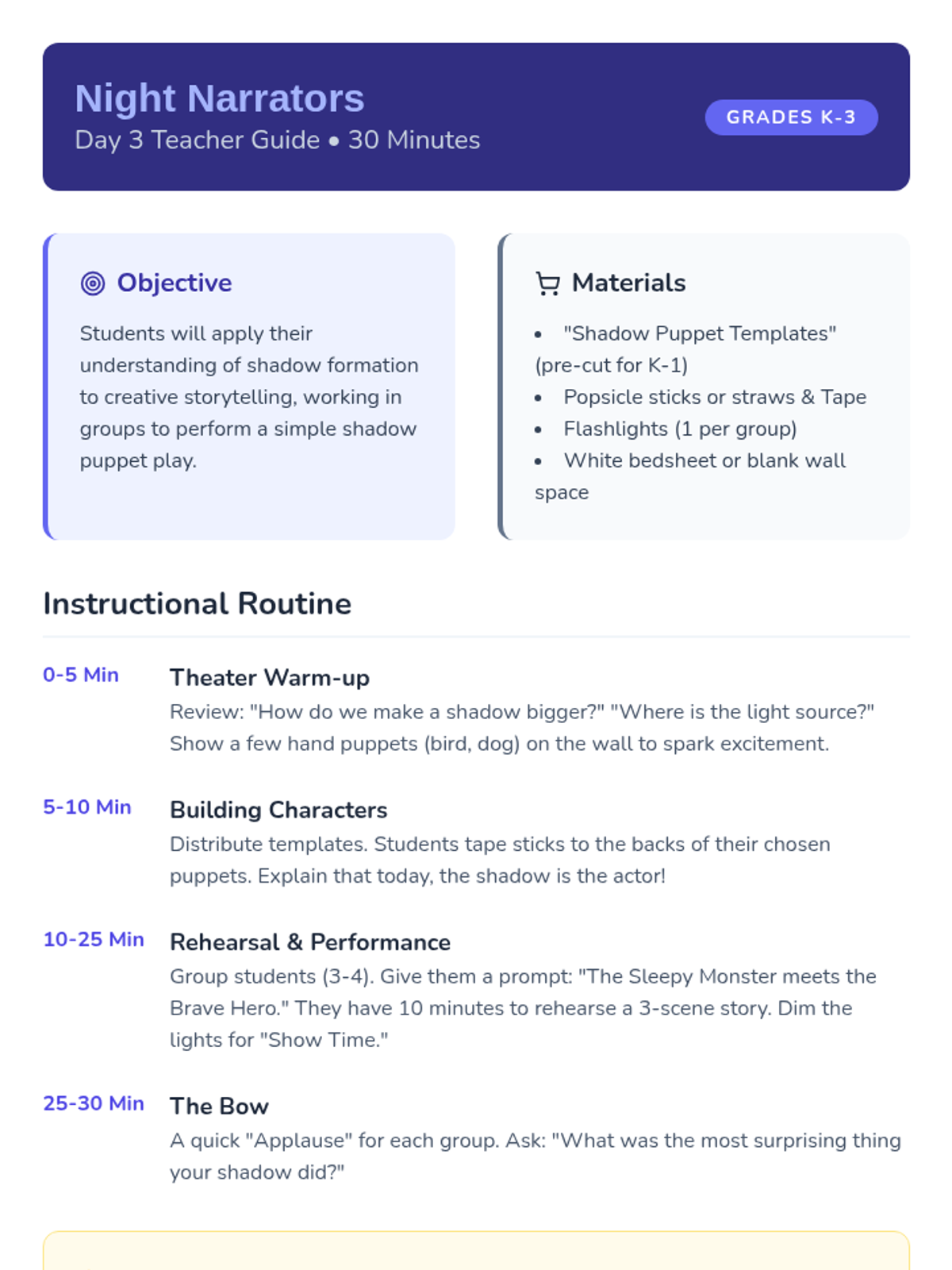
Facilitation guide for Day 3, detailing the setup for a shadow puppet theater and managing collaborative performances in a dark classroom.
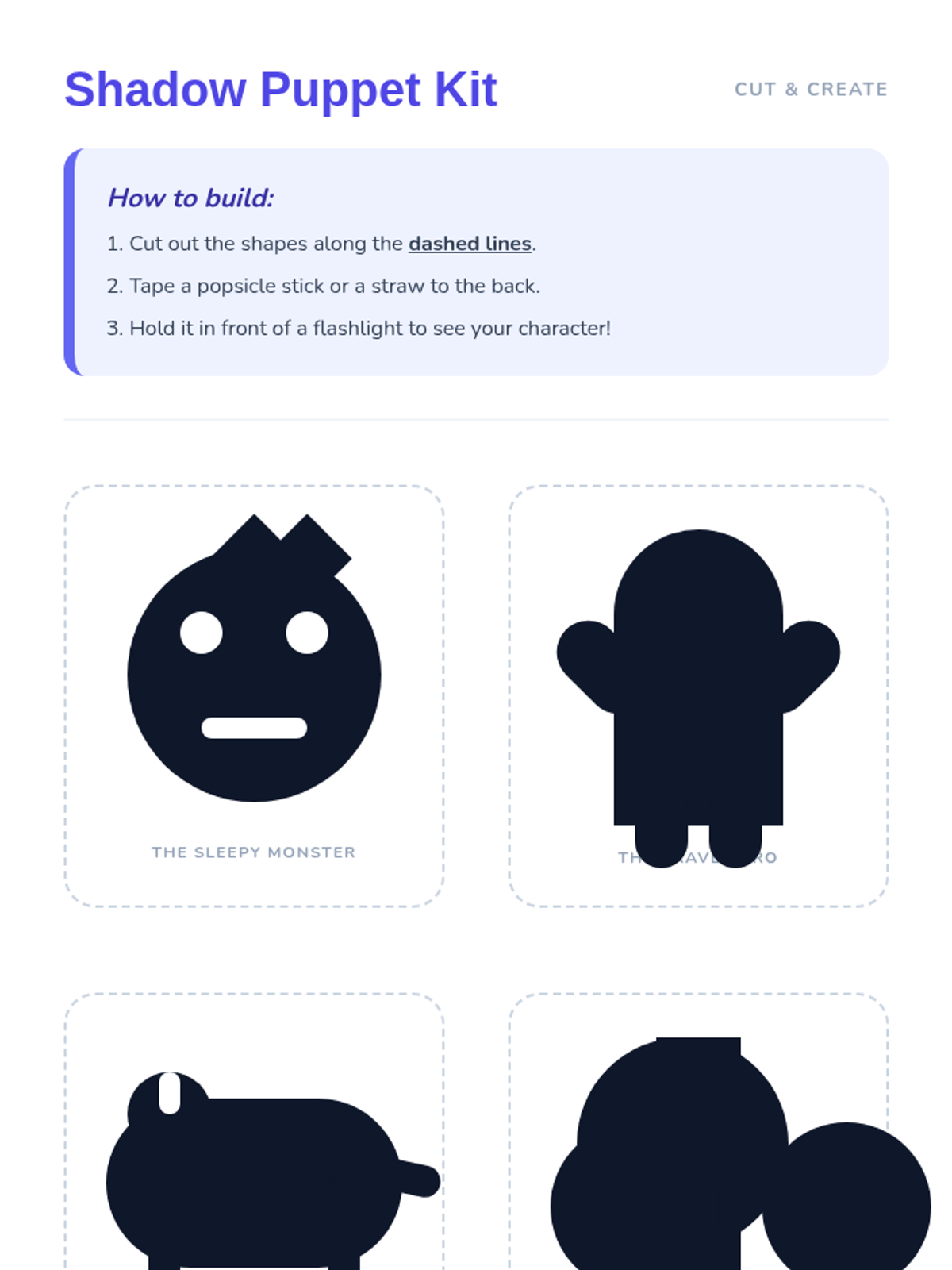
A set of printable shadow puppet templates for Day 3. Includes characters and a setting piece designed for high-contrast shadow formation.
Creative slides for Day 3 of the Light unit, introducing shadow puppetry and storytelling elements. Designed to inspire performance and collaborative group work.
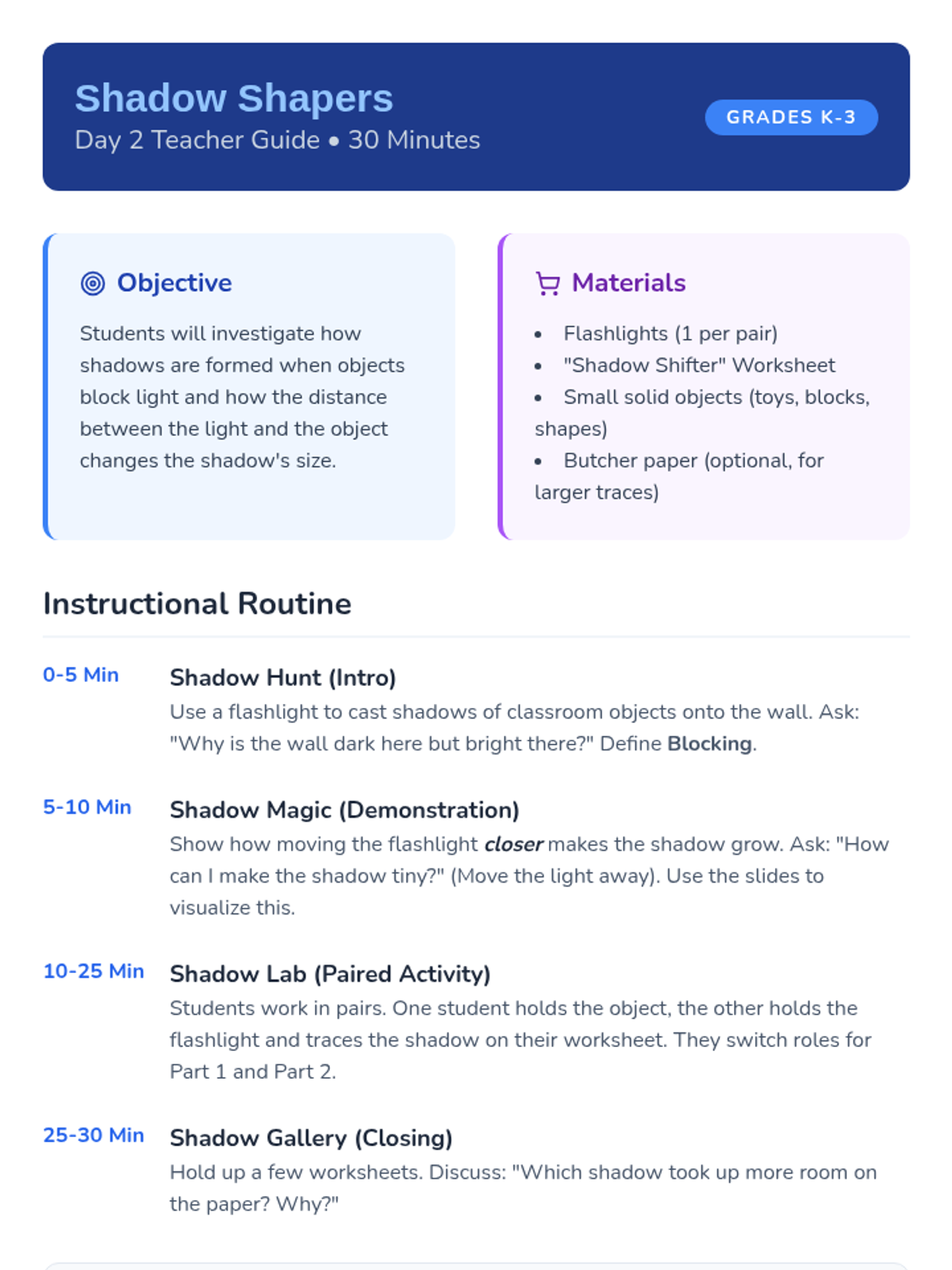
Teacher instructions for Day 2 shadow investigation, focusing on distance manipulation and paired tracing activities.
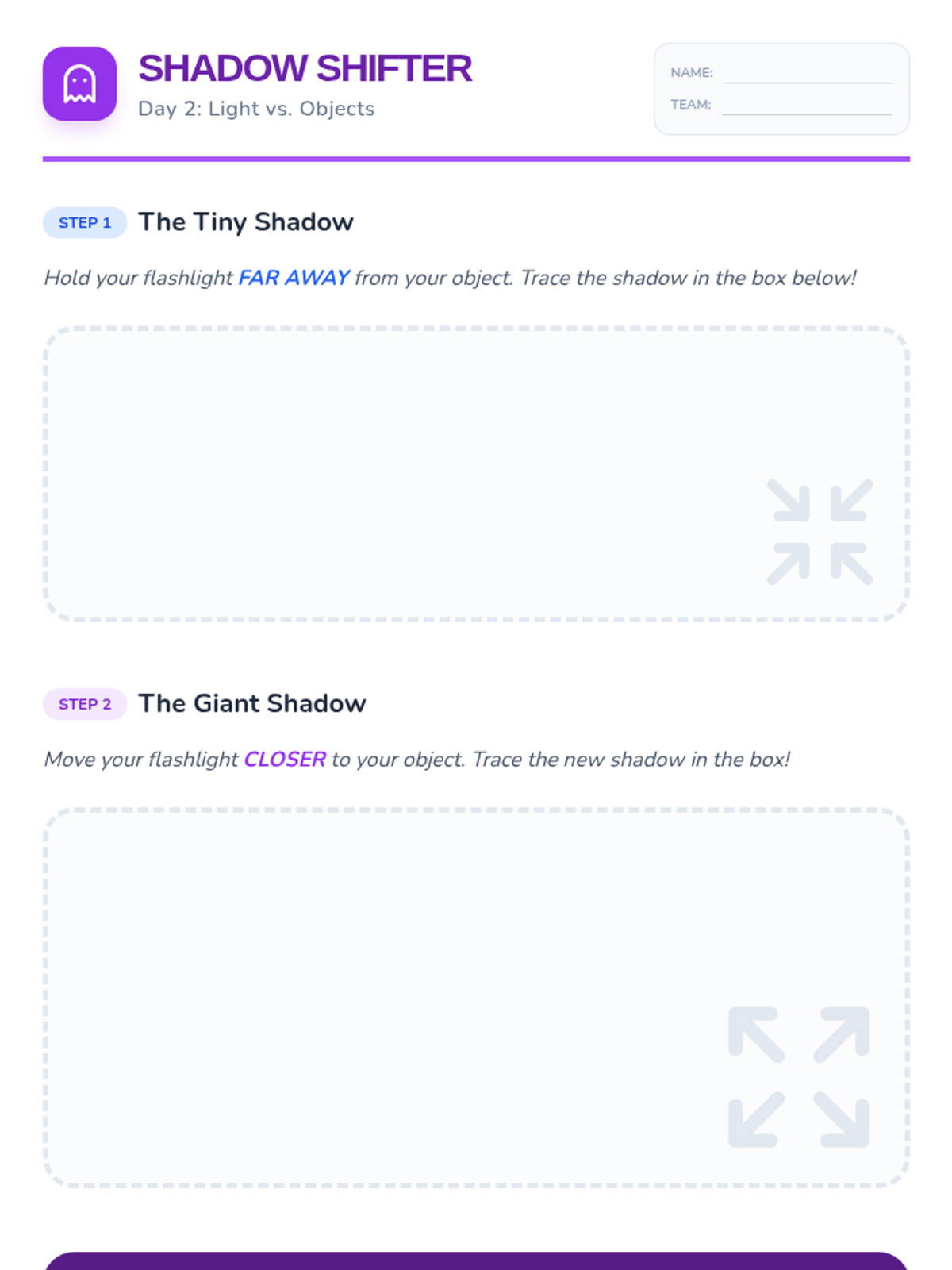
A tracing activity sheet for Day 2 where students compare small and large shadows by manipulating flashlight distance. Includes check-for-understanding questions with simple multiple-choice options.
Educational slides for Day 2 focusing on how shadows are formed and how to manipulate their size using distance. Features high-contrast diagrams and clear, step-by-step experiment instructions.
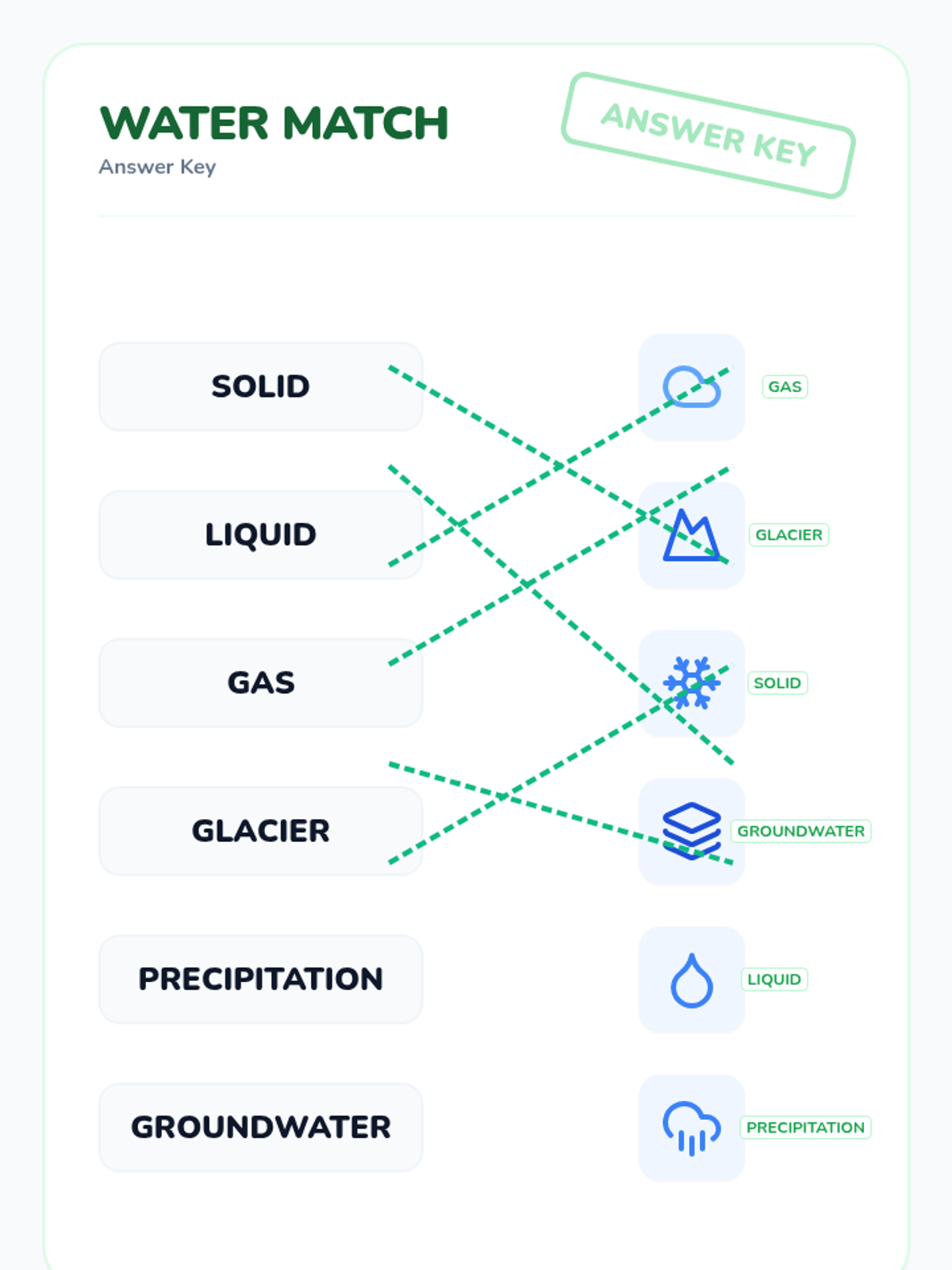
A teacher answer key for the Water Match Worksheet, showing correct pairings between vocabulary words and visual icons.
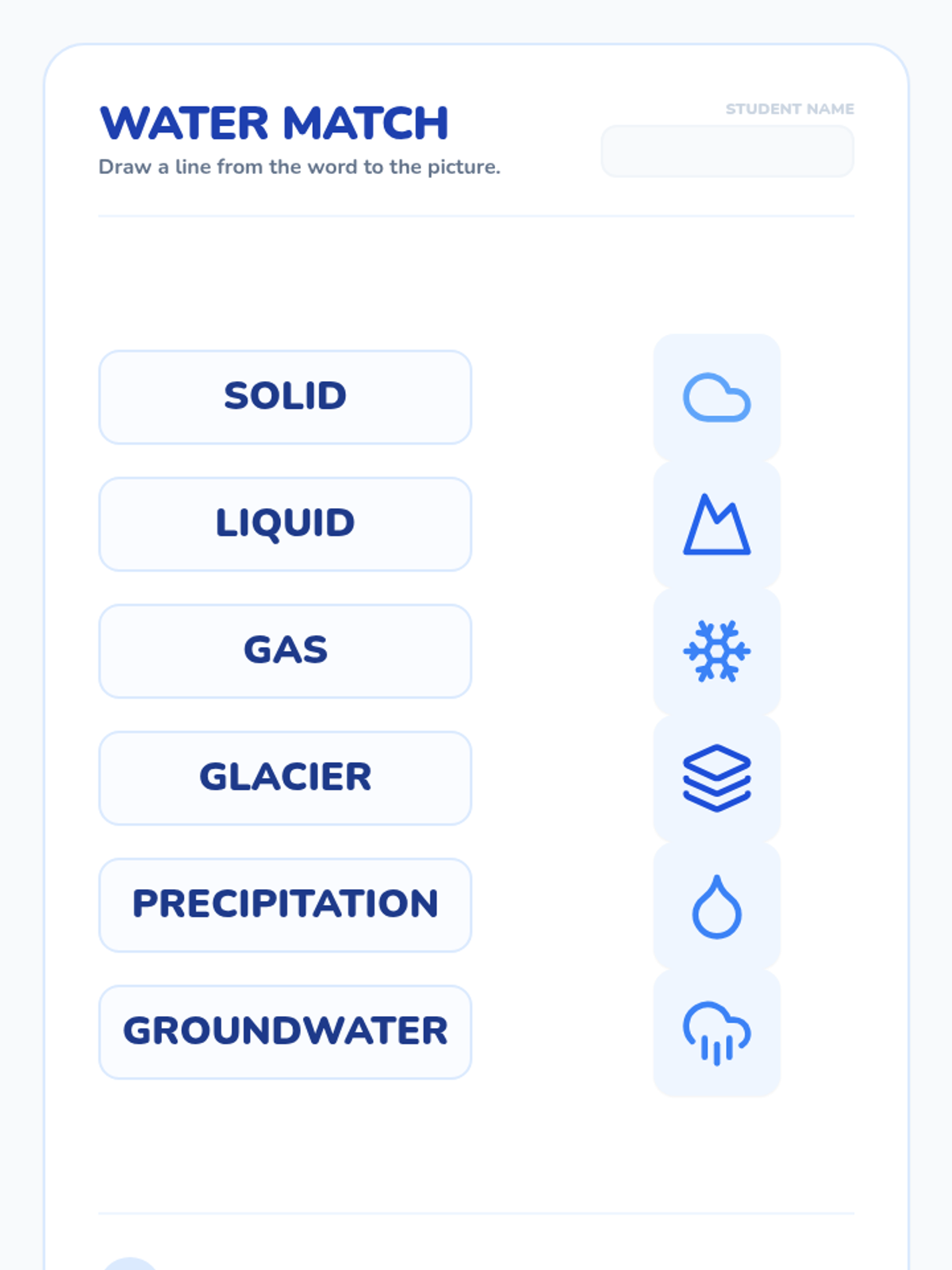
A simple matching worksheet for ESL students to connect water vocabulary words with their corresponding visual icons.
A visual presentation deck with large images and bold text to introduce water vocabulary to ESL students.
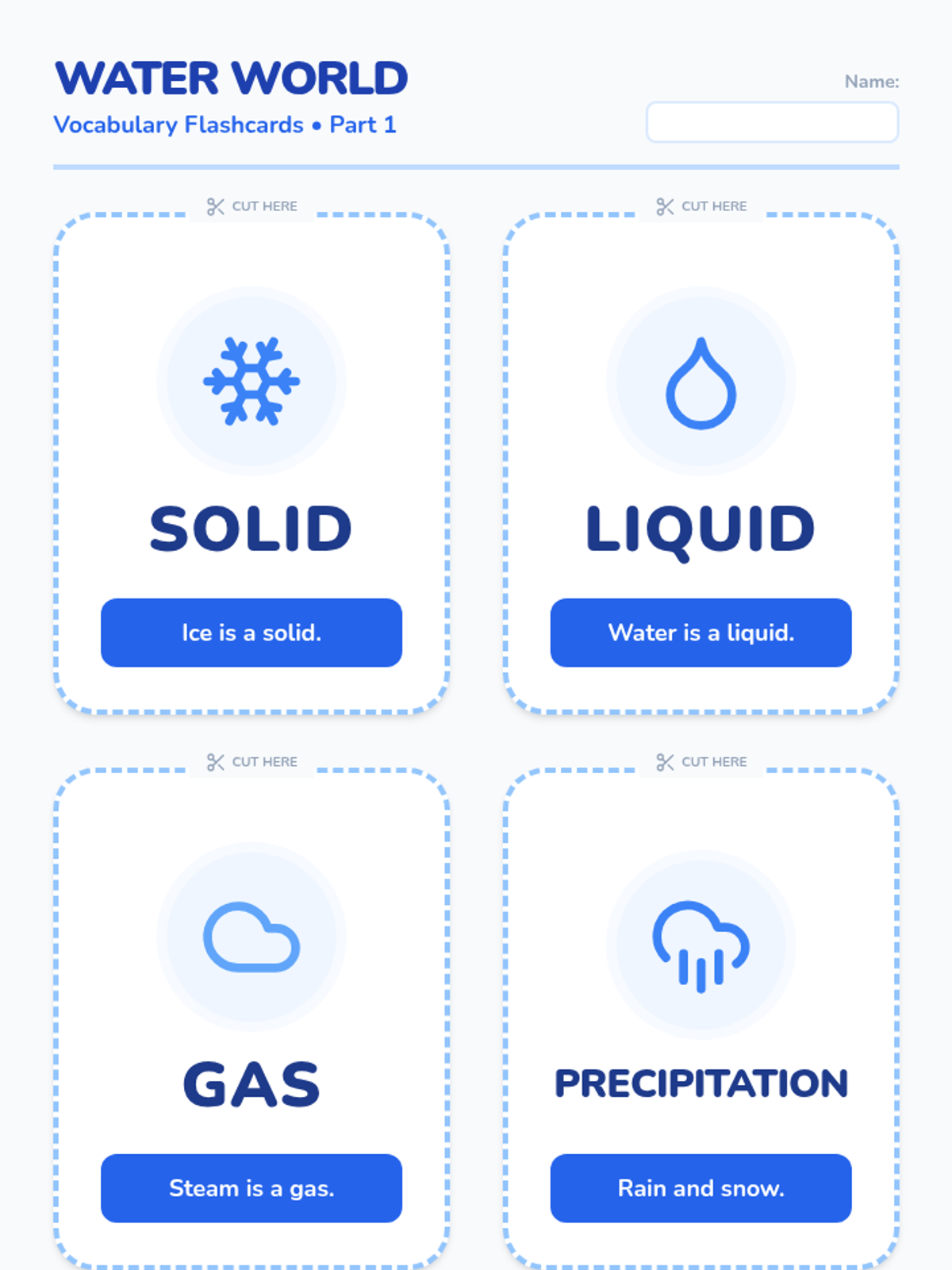
A set of 6 large, visually-rich vocabulary cards for ESL students featuring water-related terms with icons and simple definitions.
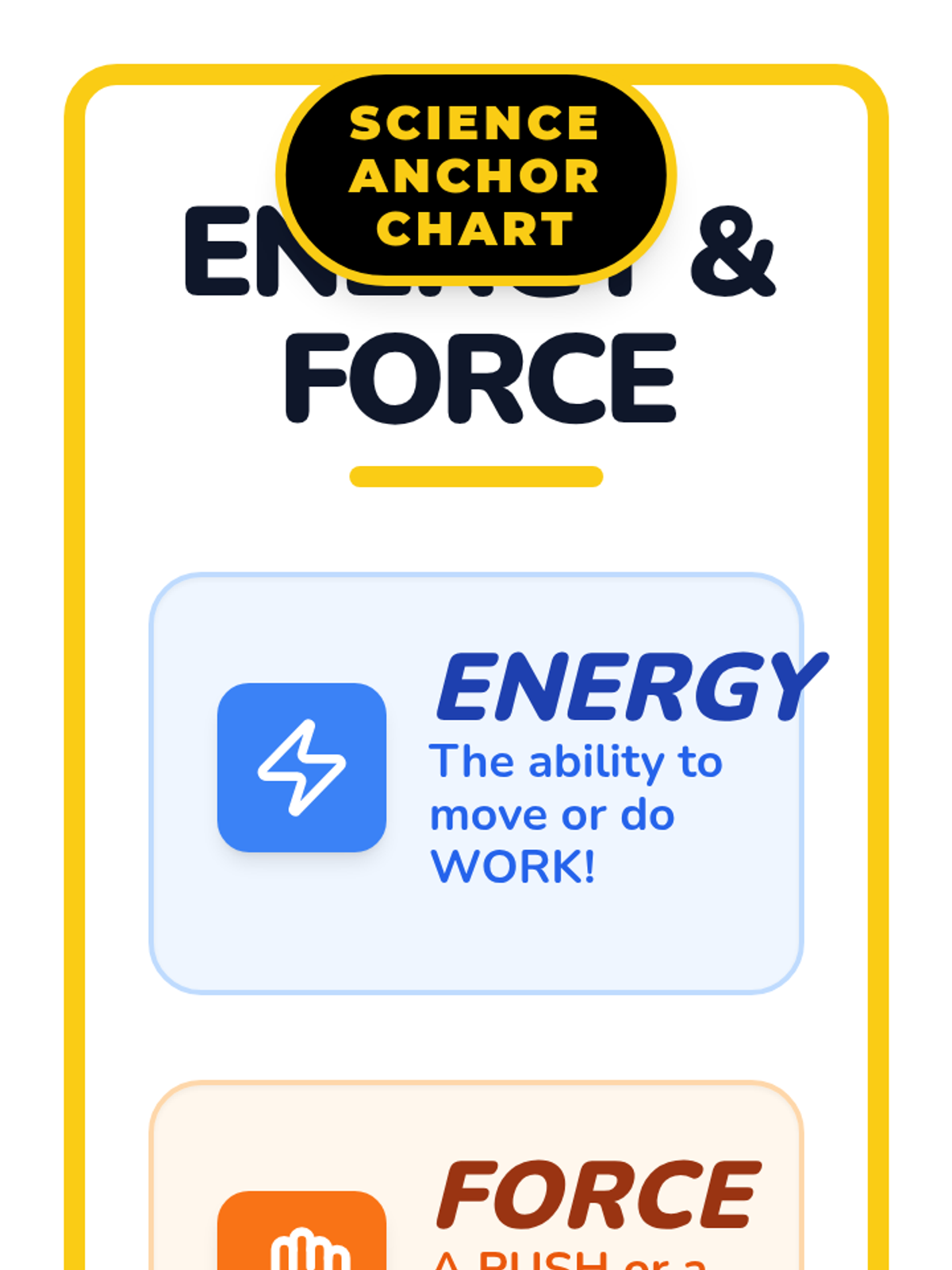
A high-contrast, visually engaging anchor chart for the classroom that defines Energy and Force (Push/Pull) and highlights the benefit of teamwork for K-2 students.
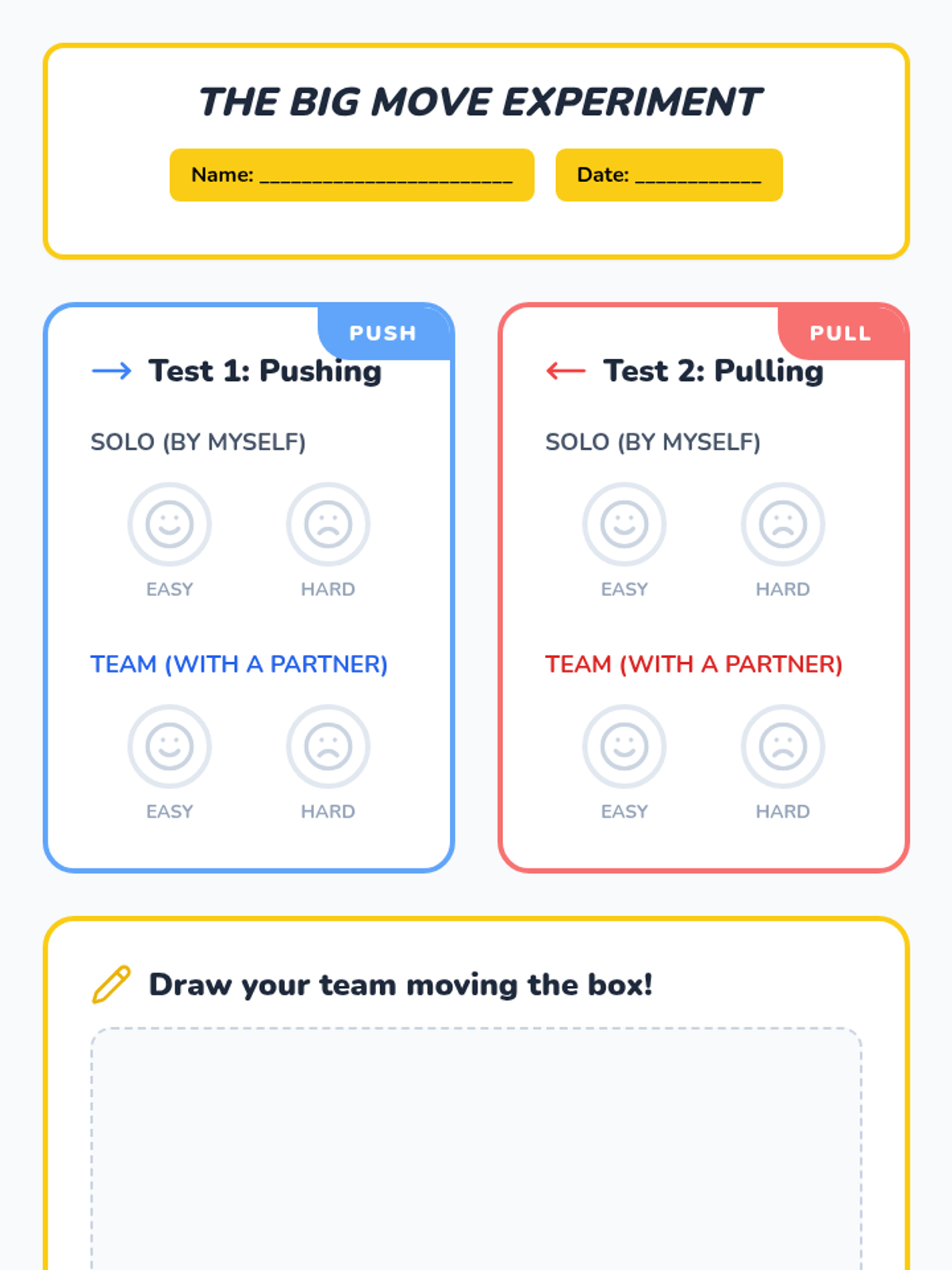
A visual activity sheet for K-2 students to record their observations during the 'Big Move' experiment. Includes simple icons for push/pull and easy/hard ratings, plus a space for creative drawing.
Engaging slide presentation for the Heavy Lifters lesson, designed for K-2 students. Includes large text, high-contrast visuals, a YouTube video embed, and clear step-by-step experiment instructions.
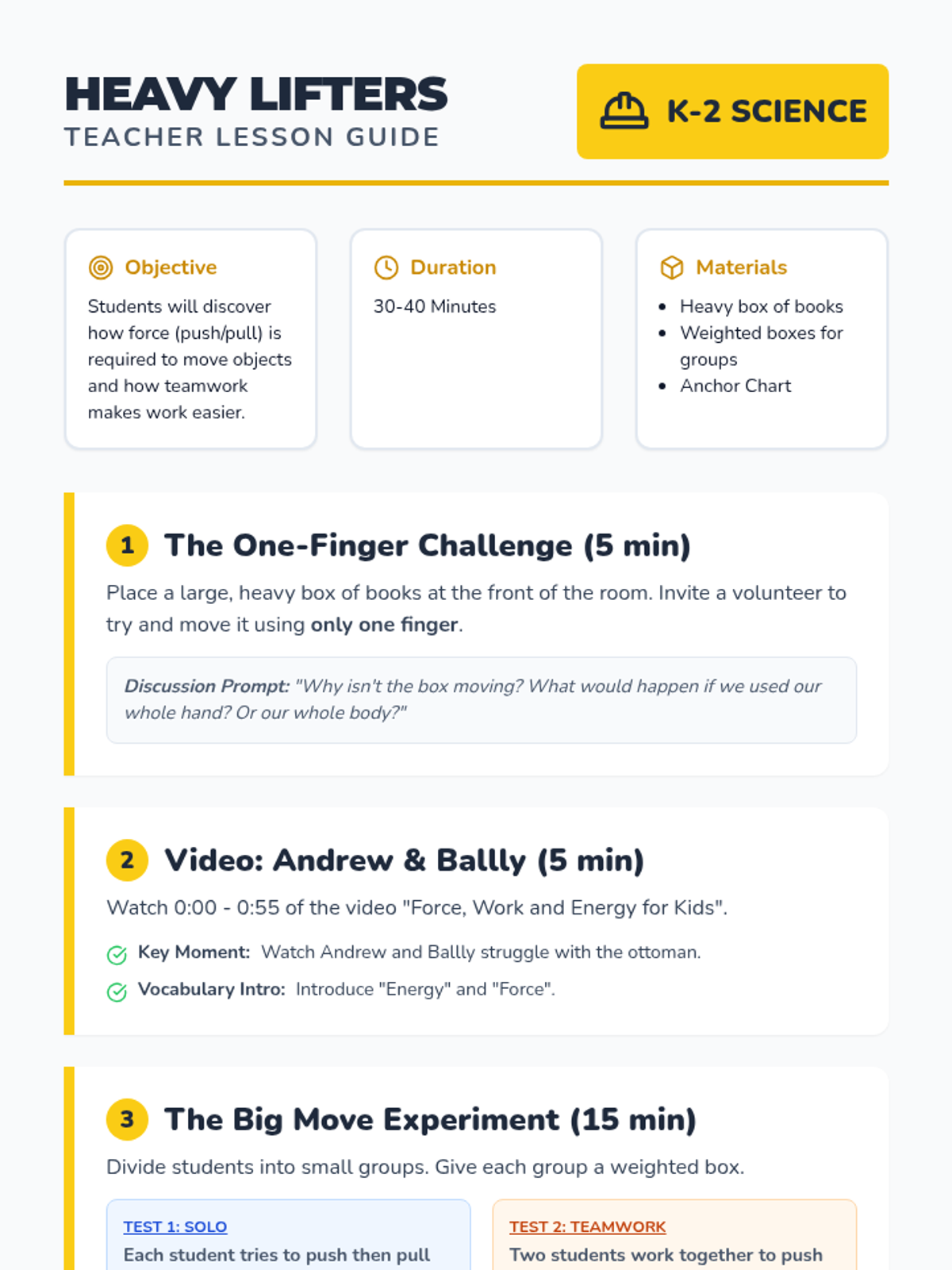
A comprehensive teacher lesson guide for the Heavy Lifters physics lesson, featuring step-by-step procedures, discussion prompts, and safety tips for K-2 educators.
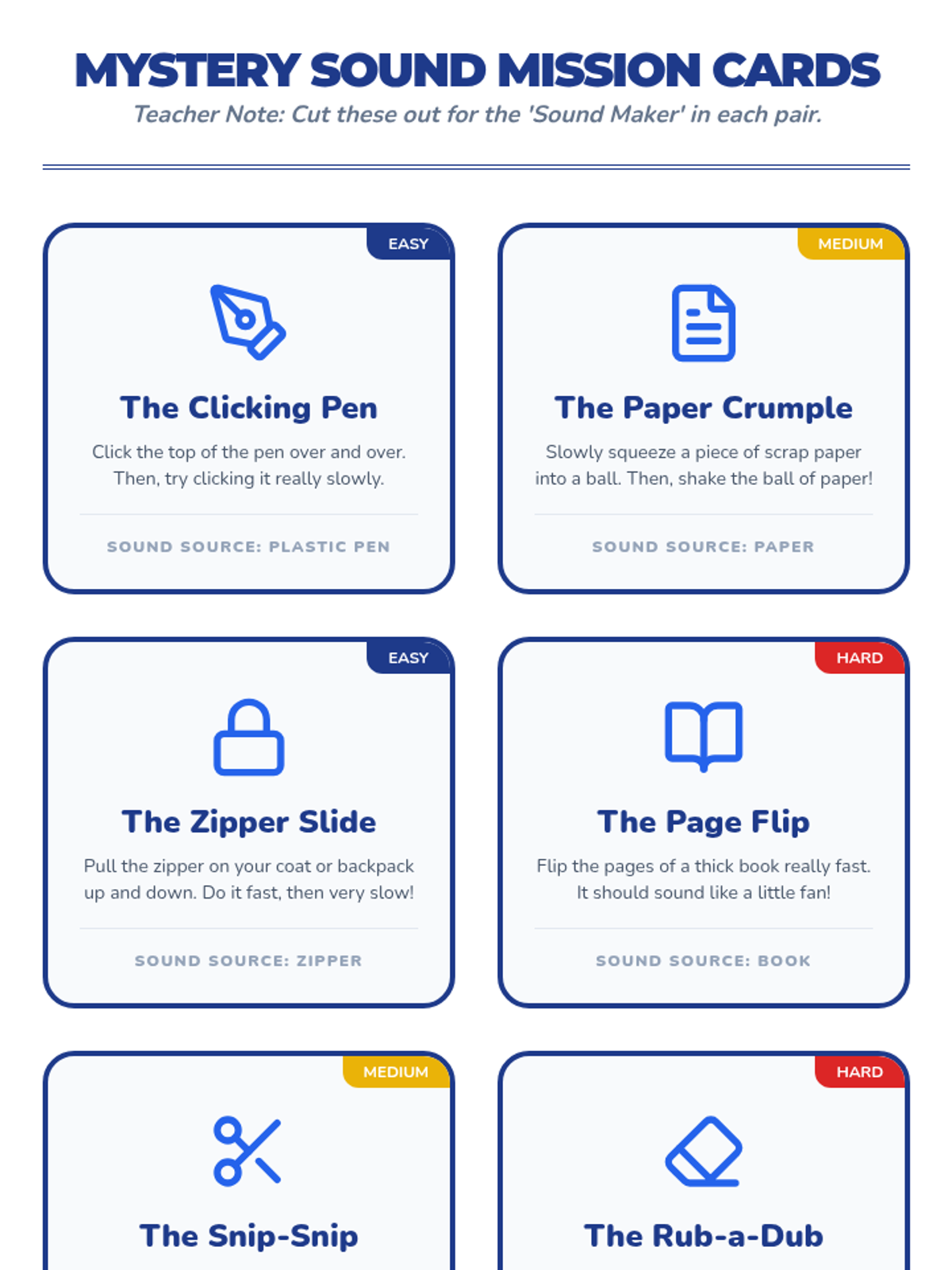
A set of printable mystery sound cards for the partner activity. Includes specific classroom objects, difficulty levels, and role-play scenario prompts to help students create varied sounds for their partners to guess.
Fun, printable labels for students to attach to their clipboards, making them feel like official 'Sound Detectives' during the lesson activity.
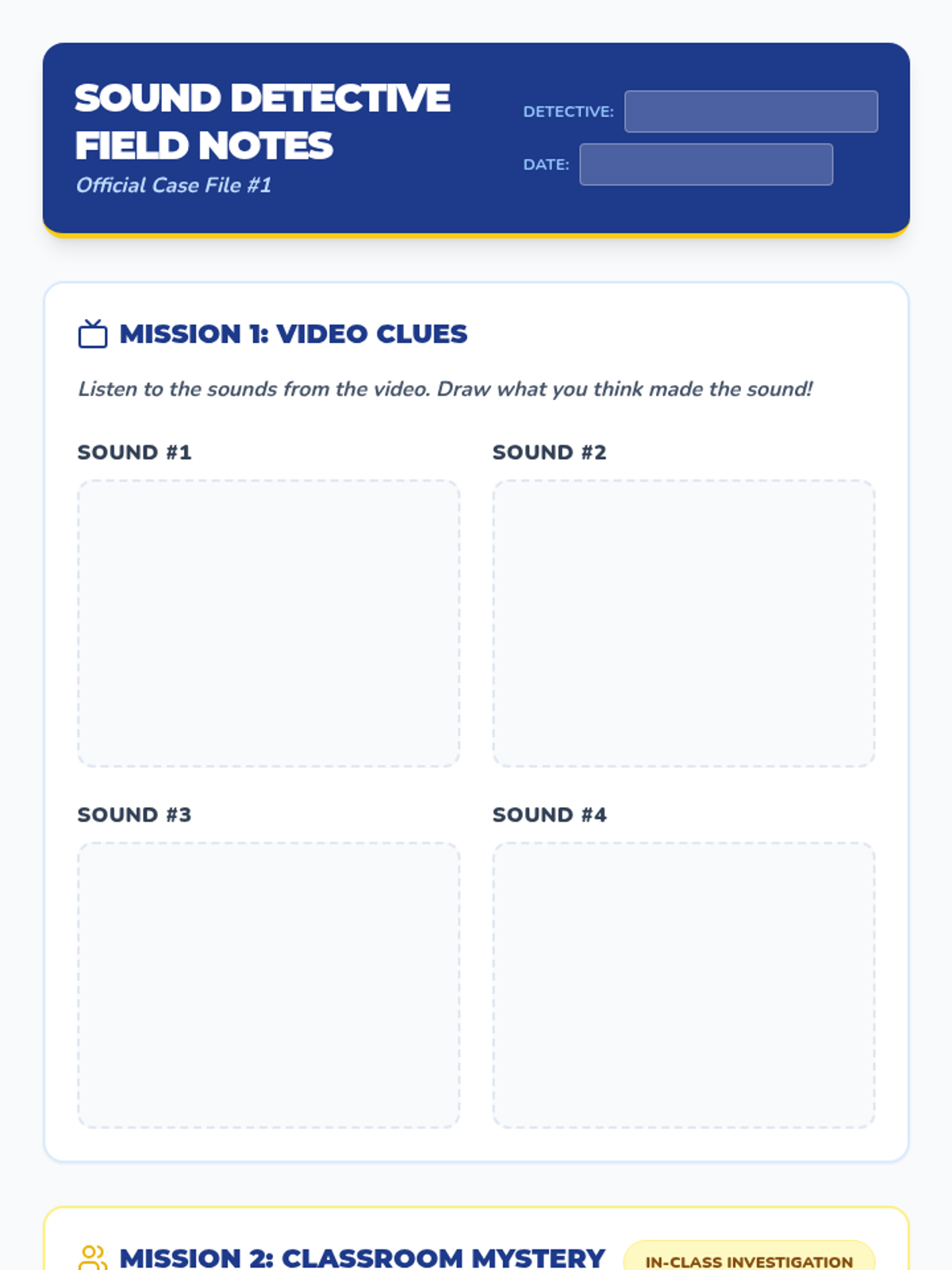
A structured field notes worksheet for students to record their hypotheses during the video segment and their inferences during the partner activity. Features large drawing areas and guided reflection sections for grades K-2.
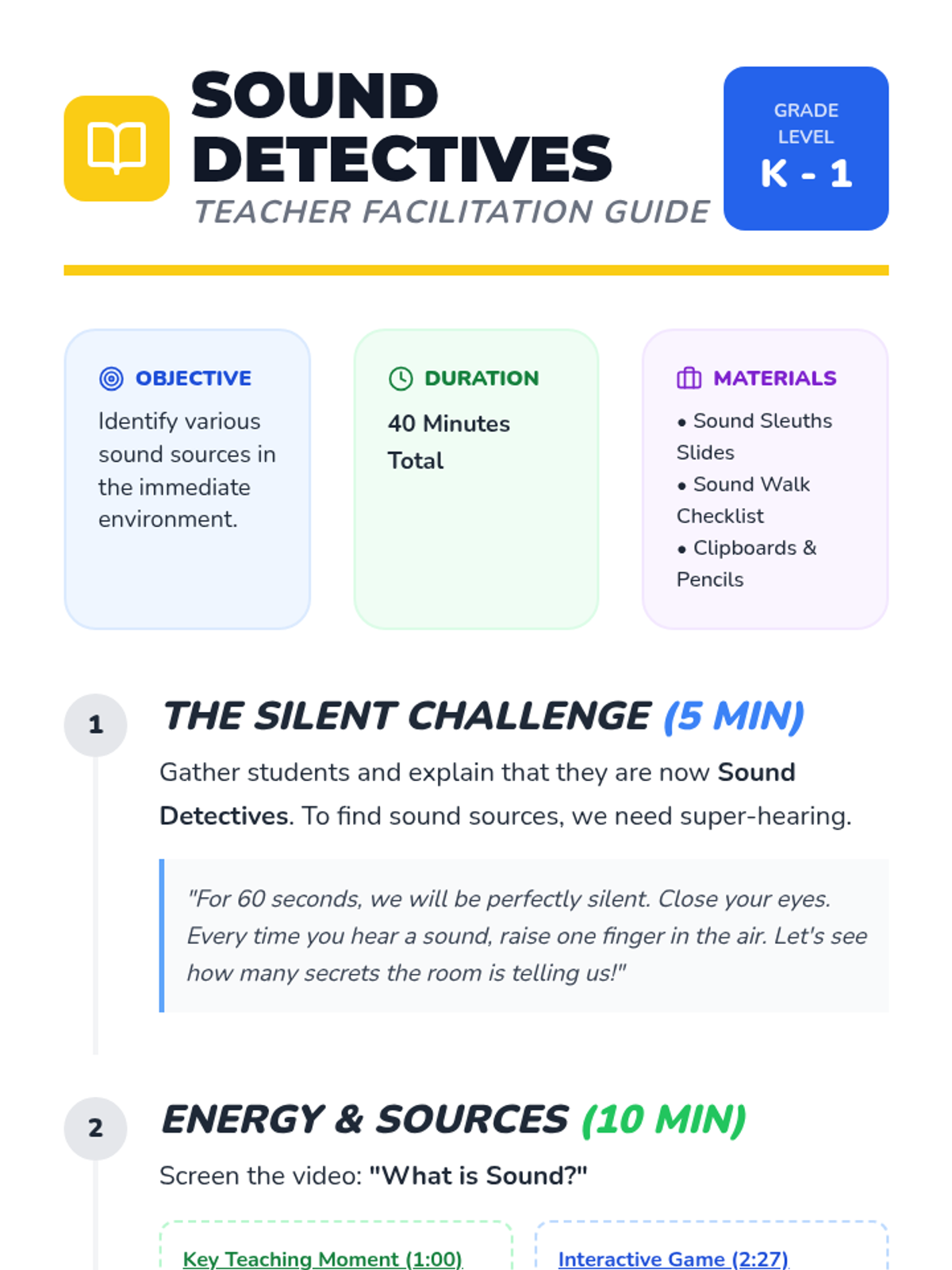
A comprehensive teacher guide for the Sound Detectives lesson, detailing the lesson flow, discussion prompts, and video pause points.
A vibrant and engaging slide deck for the Sound Detectives lesson, featuring lesson objectives, the 'What is Sound?' video segment, interactive guessing prompts, and activity instructions for Kindergarten to 2nd grade.
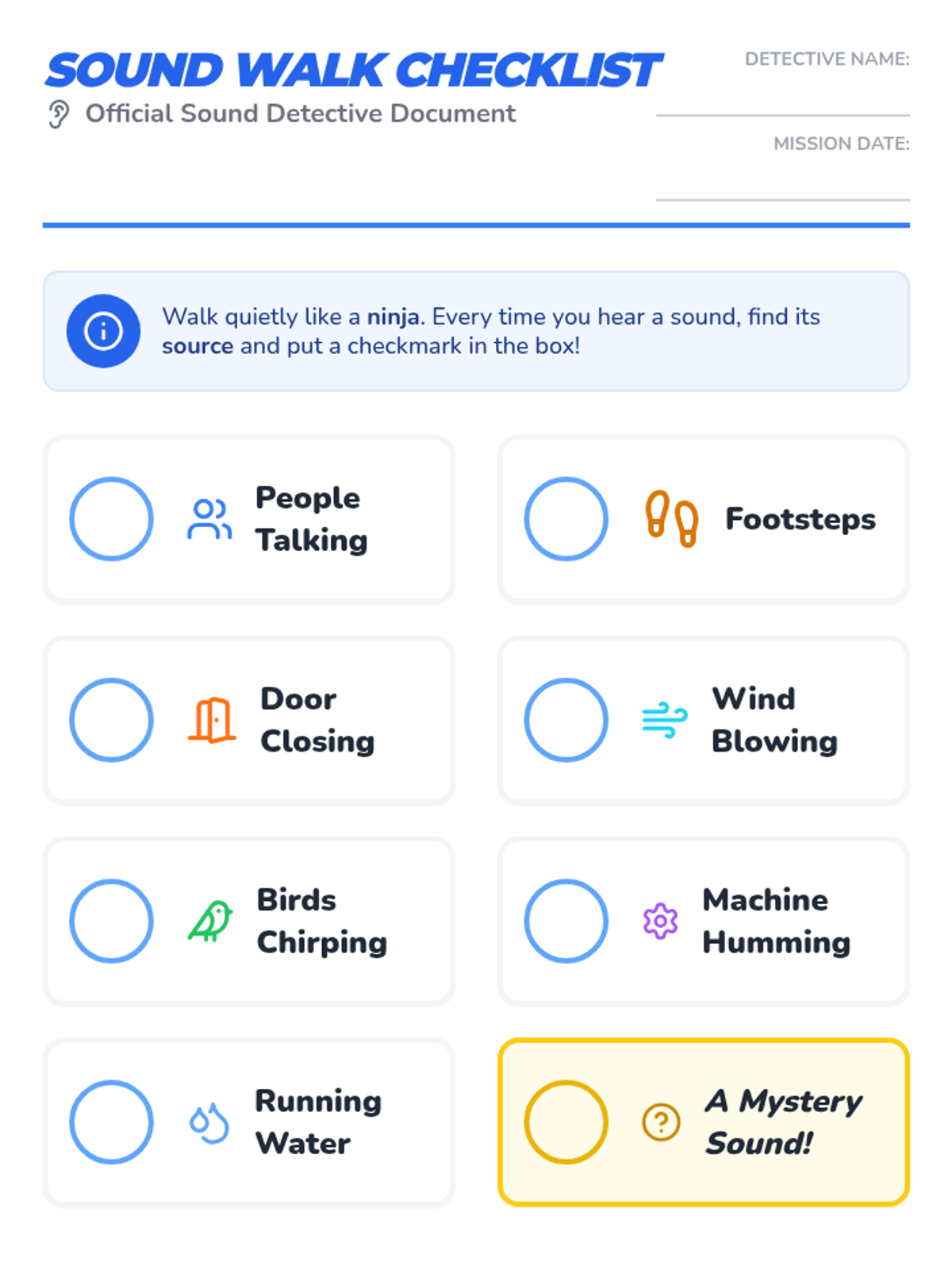
A student checklist for the 'Sound Walk' activity, featuring icons and checkboxes for easy identification by young learners.
A visual presentation to guide students through the Sound Detectives lesson, including the 'What is Sound?' video and interactive prompts.
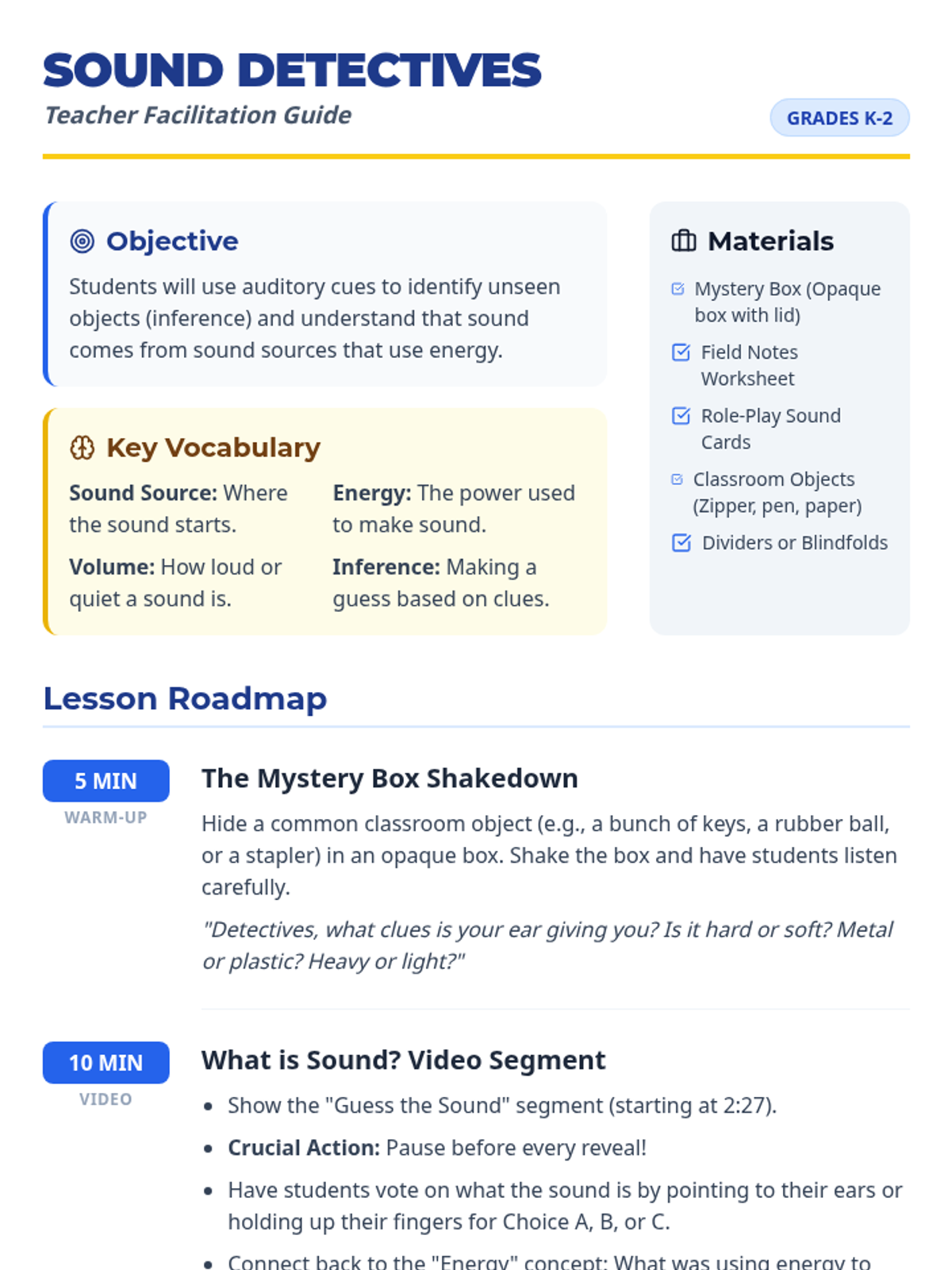
A comprehensive teacher facilitation guide for the Sound Detectives lesson, including a timed roadmap, key vocabulary, materials checklist, and differentiation strategies for grades K-2.
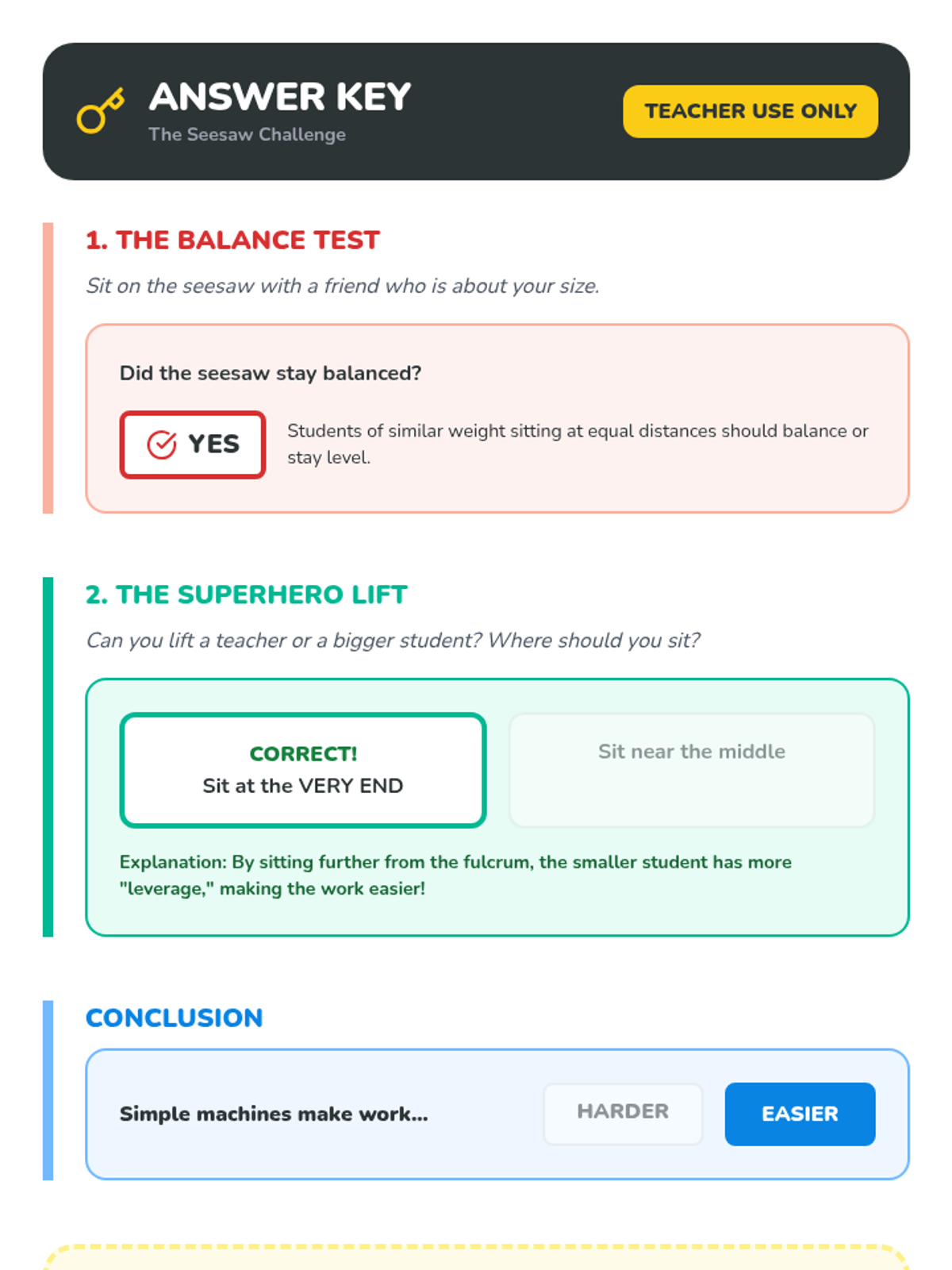
Teacher-facing answer key for the Seesaw Challenge Worksheet, providing correct answers and brief pedagogical explanations for K-2nd grade level.
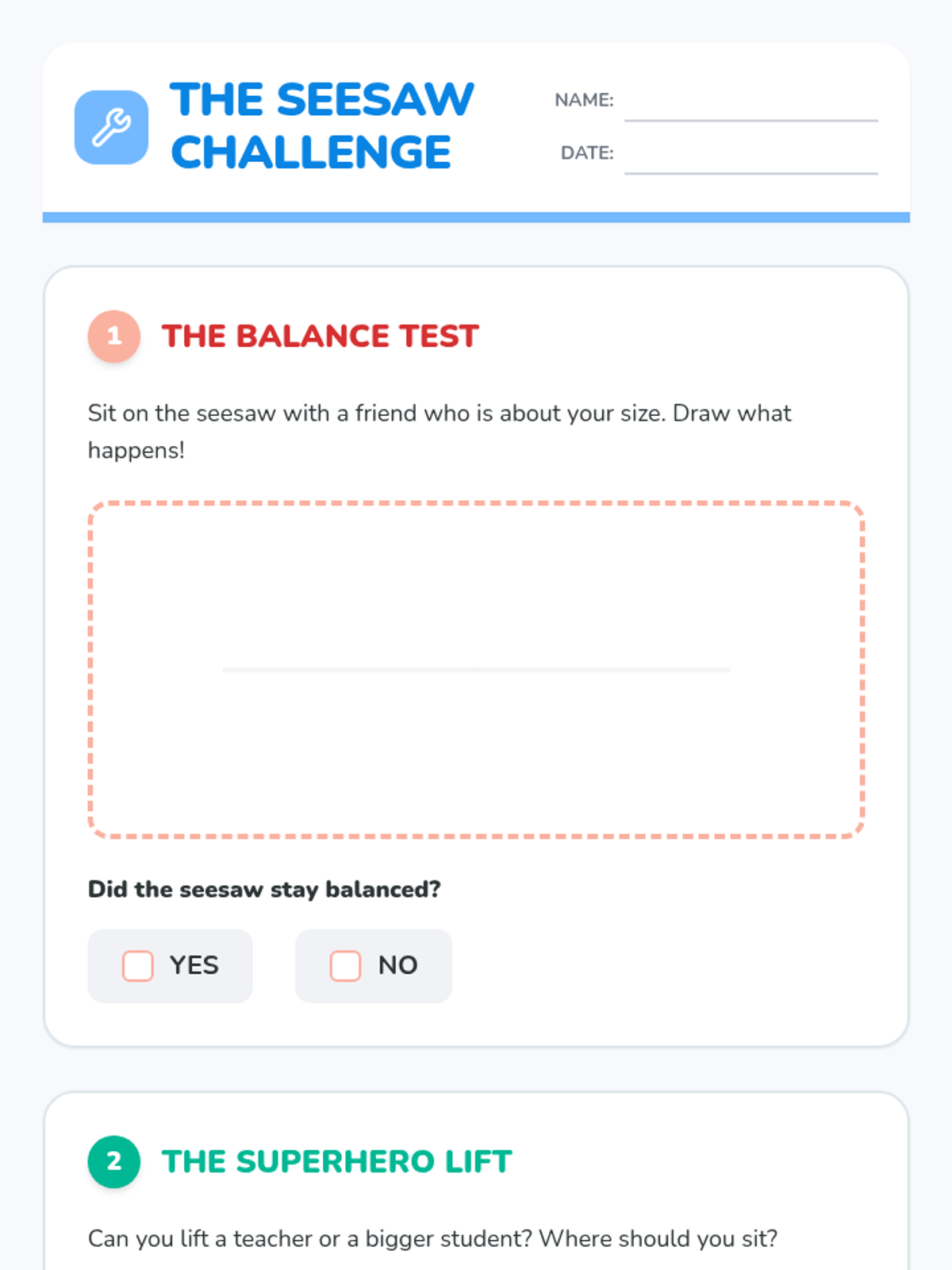
Hands-on student worksheet for K-2nd graders to record their observations during the Playground Lab. Includes drawing spaces and simple multiple-choice questions about balance and levers.
Engaging slide presentation for K-2nd grade students introducing the concepts of work, energy, and levers. Features a video embed, kinetic warm-up activity, and lab instructions.
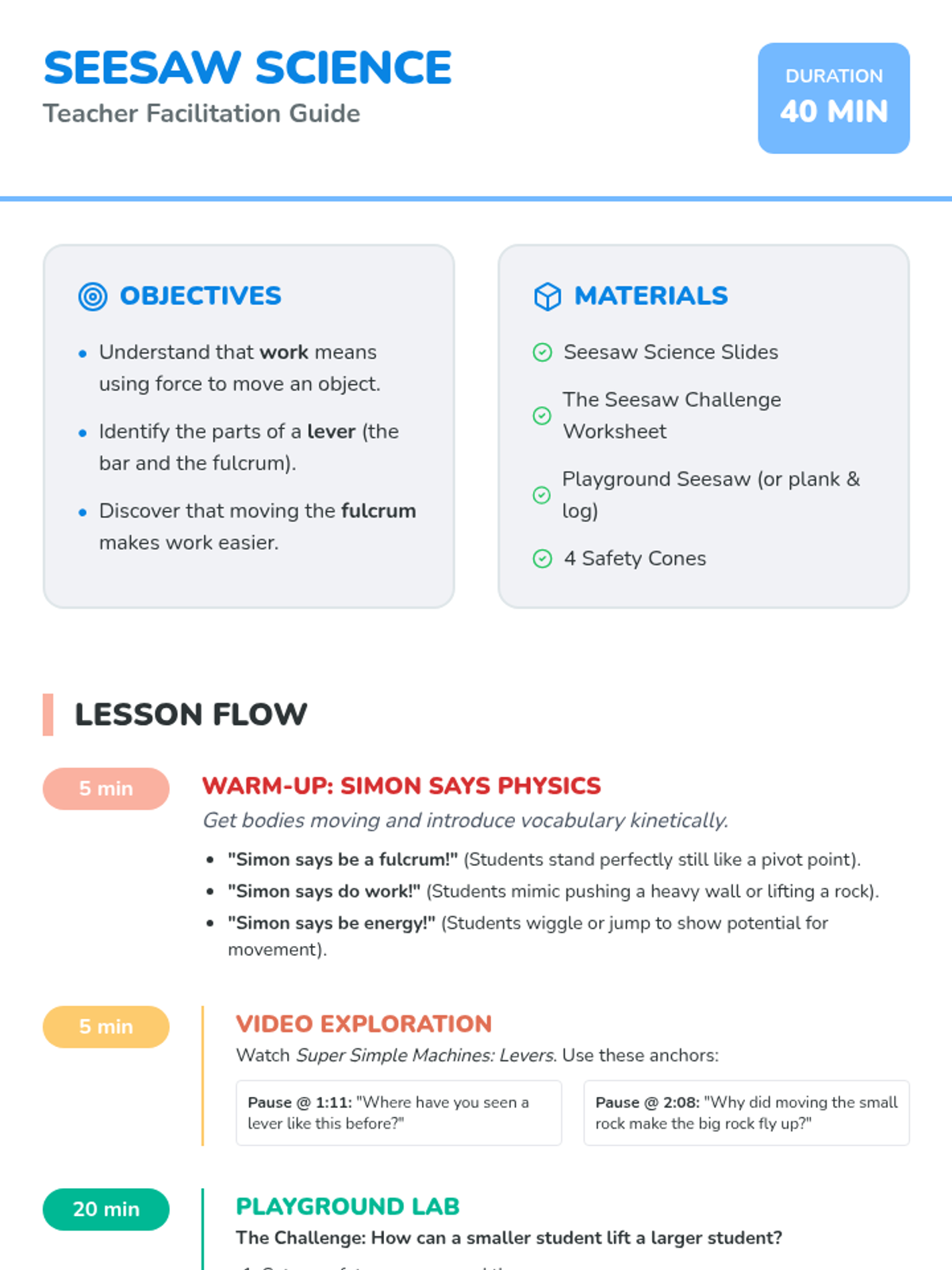
A comprehensive teacher facilitation guide for the Seesaw Science lesson, including objectives, materials, a timed lesson flow, and specific discussion prompts for the video and lab.
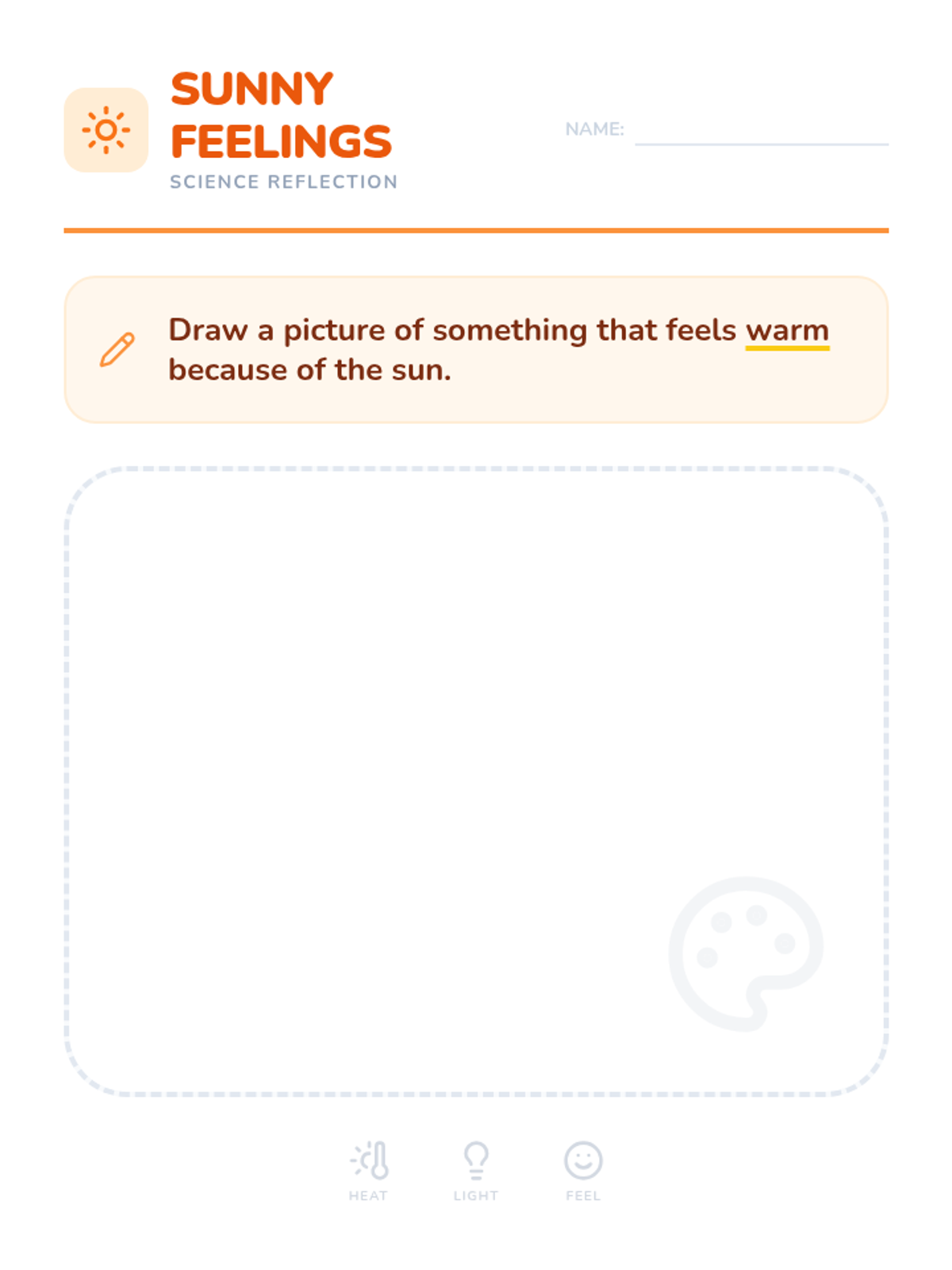
A themed drawing page for the Kindergarten closure activity where students illustrate something that gets warm from the sun.
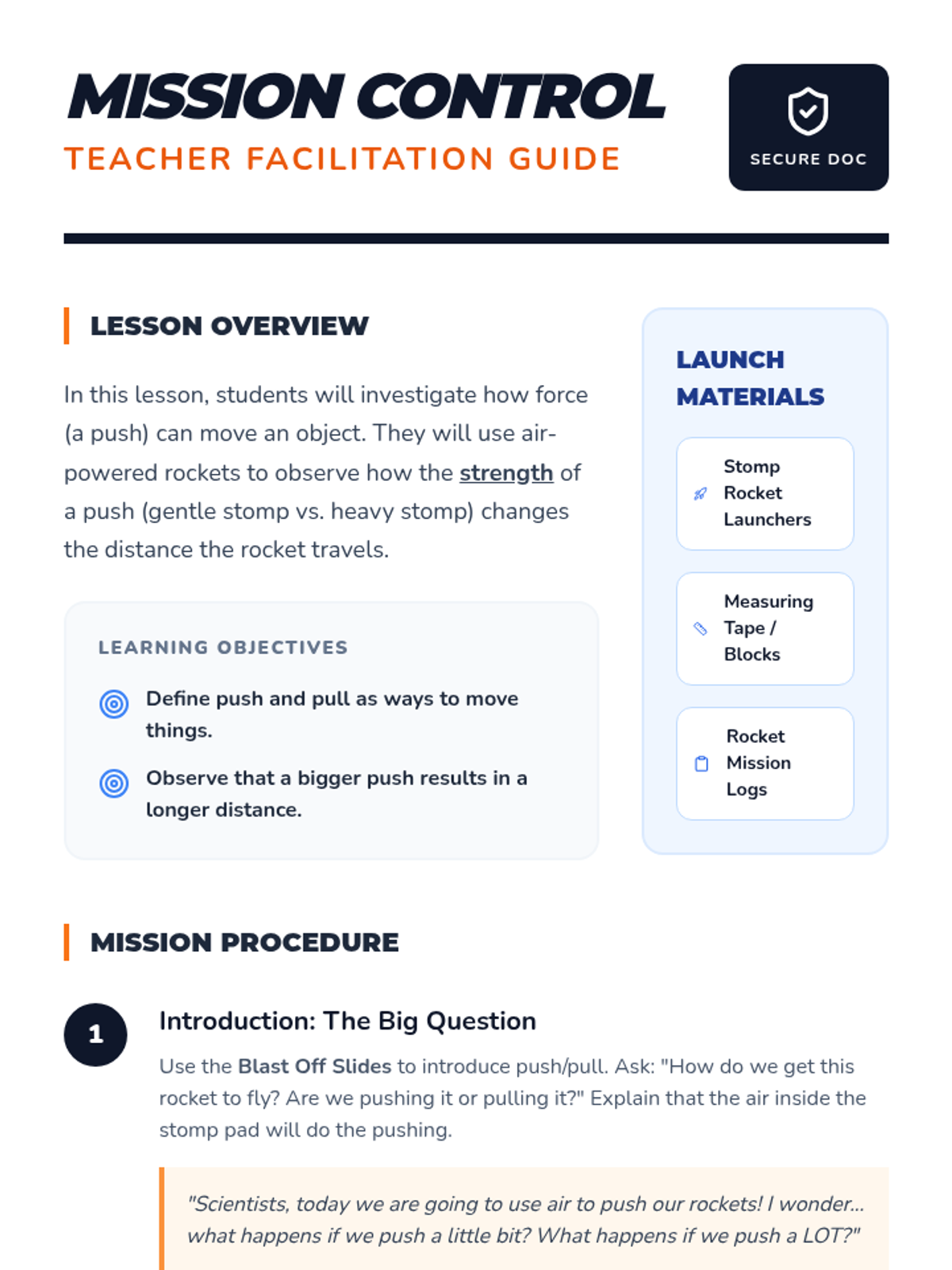
A comprehensive teacher facilitation guide providing lesson objectives, materials, step-by-step instructions, and discussion prompts for the rocket force experiment.
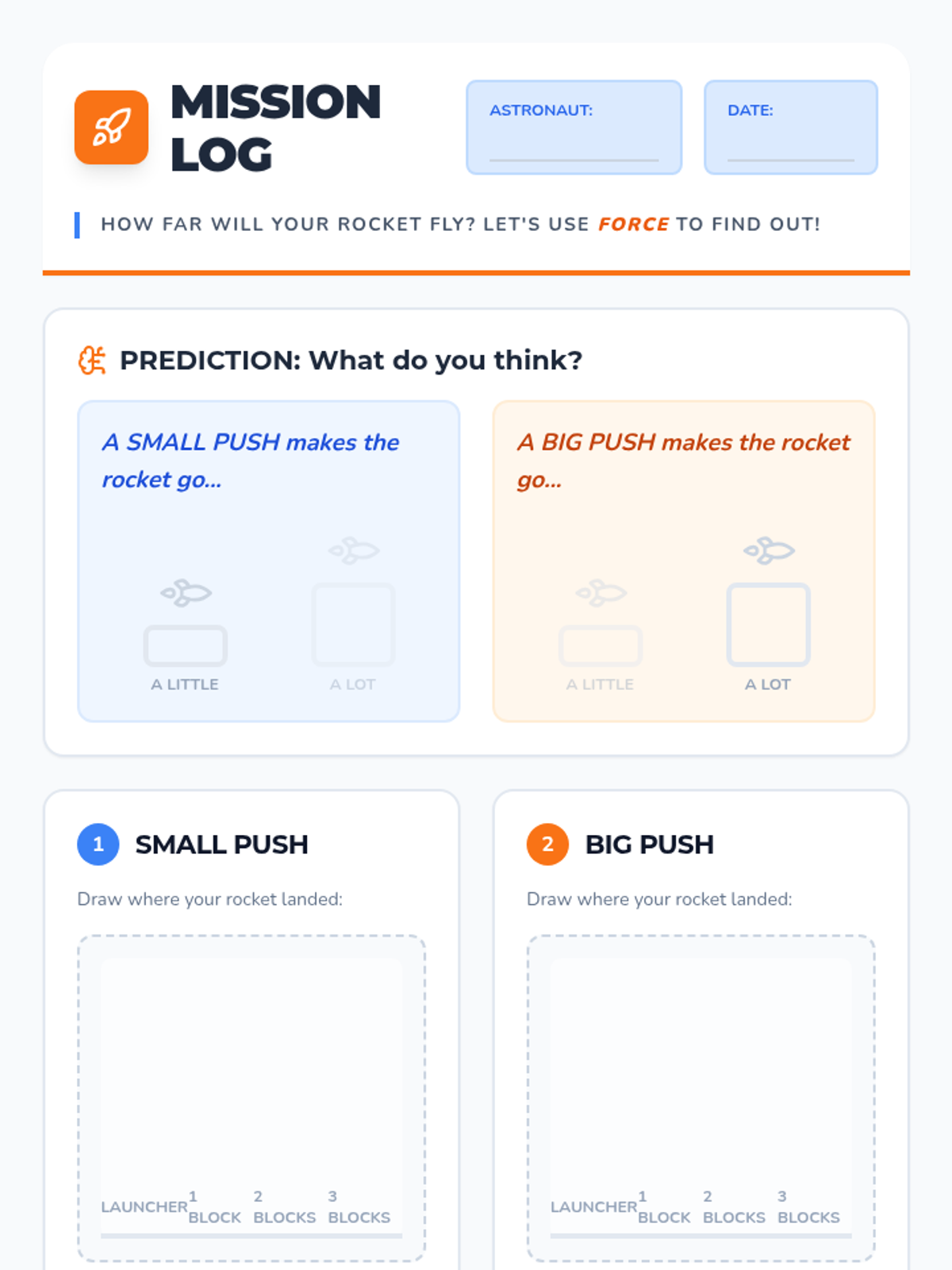
A simple, visual recording sheet for kindergarteners to predict and record rocket flight distances using different strengths of force.
A visual presentation for kindergarten students introducing the concepts of push, pull, and how the strength of a force (small push vs. big push) affects movement.
Visual presentation for 2nd and 3rd grade students exploring contact forces and forces at a distance through gravity and magnetism challenges.
A teacher's instructional guide for 2nd and 3rd grade force investigations, featuring parachute and magnetic bridge engineering challenges with detailed procedures and answer keys.