Fundamental biological structures and processes from microscopic cells and genetic inheritance to complex body systems and global ecosystems. Addresses plant and animal adaptations, trait expression, and the cycles of life and cell division.
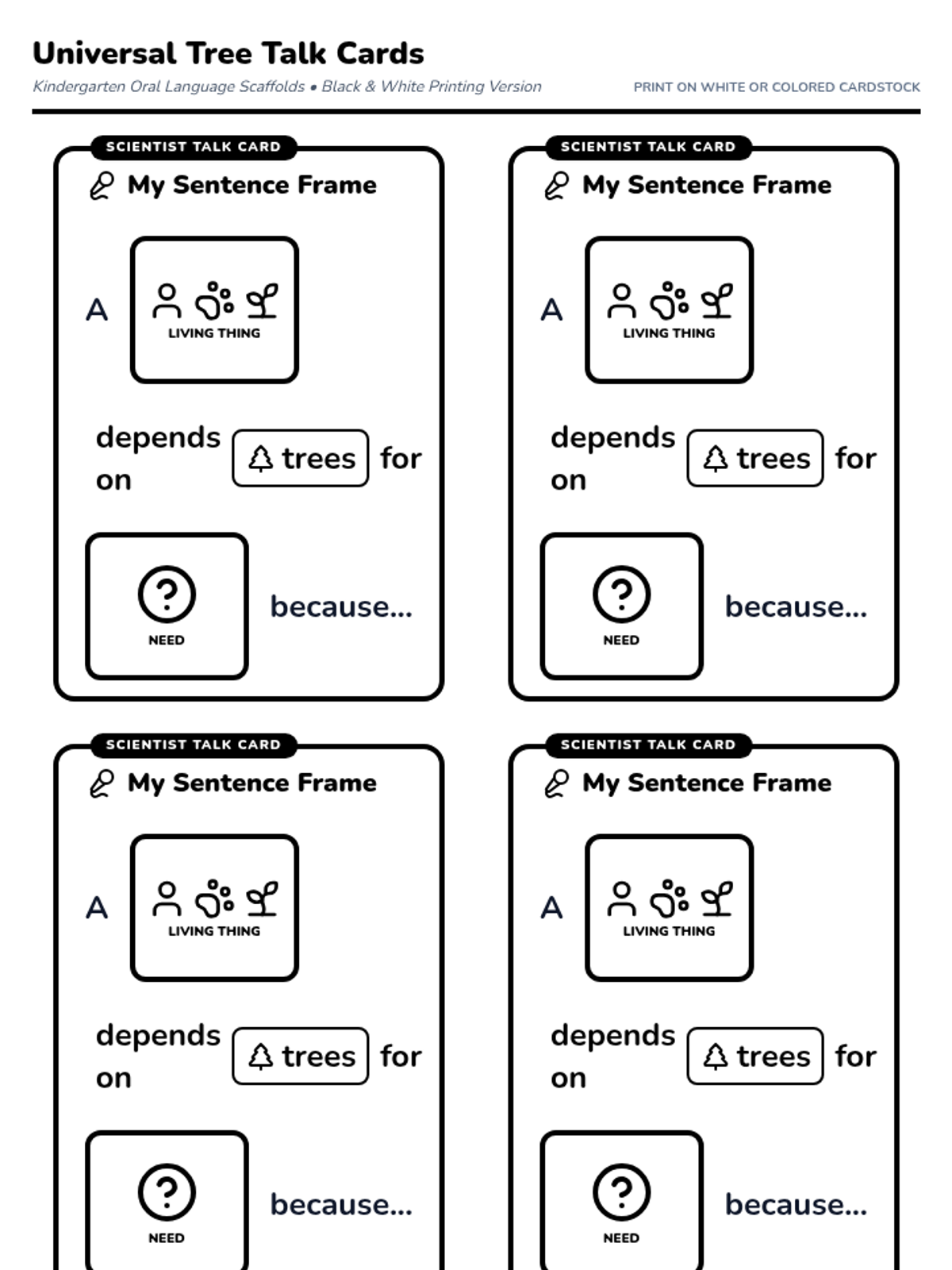
A large-format black and white version of the Universal Tree Talk Cards, designed with 2 cards per 8.5x11 page. This version features significantly larger icons and text for better visibility in Kindergarten classrooms, following the same ink-efficient and proportional design as the classroom poster.
A final ink-efficient Science Talk poster. The title has been moved inside the thin black border, and all elements have been carefully scaled and font sizes adjusted to ensure a perfect fit within the 8.5x11 printable area.
A final maximized, ink-efficient Science Talk poster. Elements have been scaled up significantly to fill the entire 8.5x11 page proportionally while maintaining a thin black border and hollow title box. Features extra-large icons and high-impact text for Kindergarten students.
A final large-format, ink-efficient Science Talk poster. Elements have been scaled up to fill the 8.5x11 page proportionally while maintaining a thin black border and hollow title box to save toner. Features large, clear icons and high-impact text for Kindergarten scientists.
A final ink-efficient Science Talk poster. Features a thin black border, a hollow title box, and scaled-down internal content (including a smaller 'because...') to ensure all elements fit perfectly within the 8.5x11 printable area.
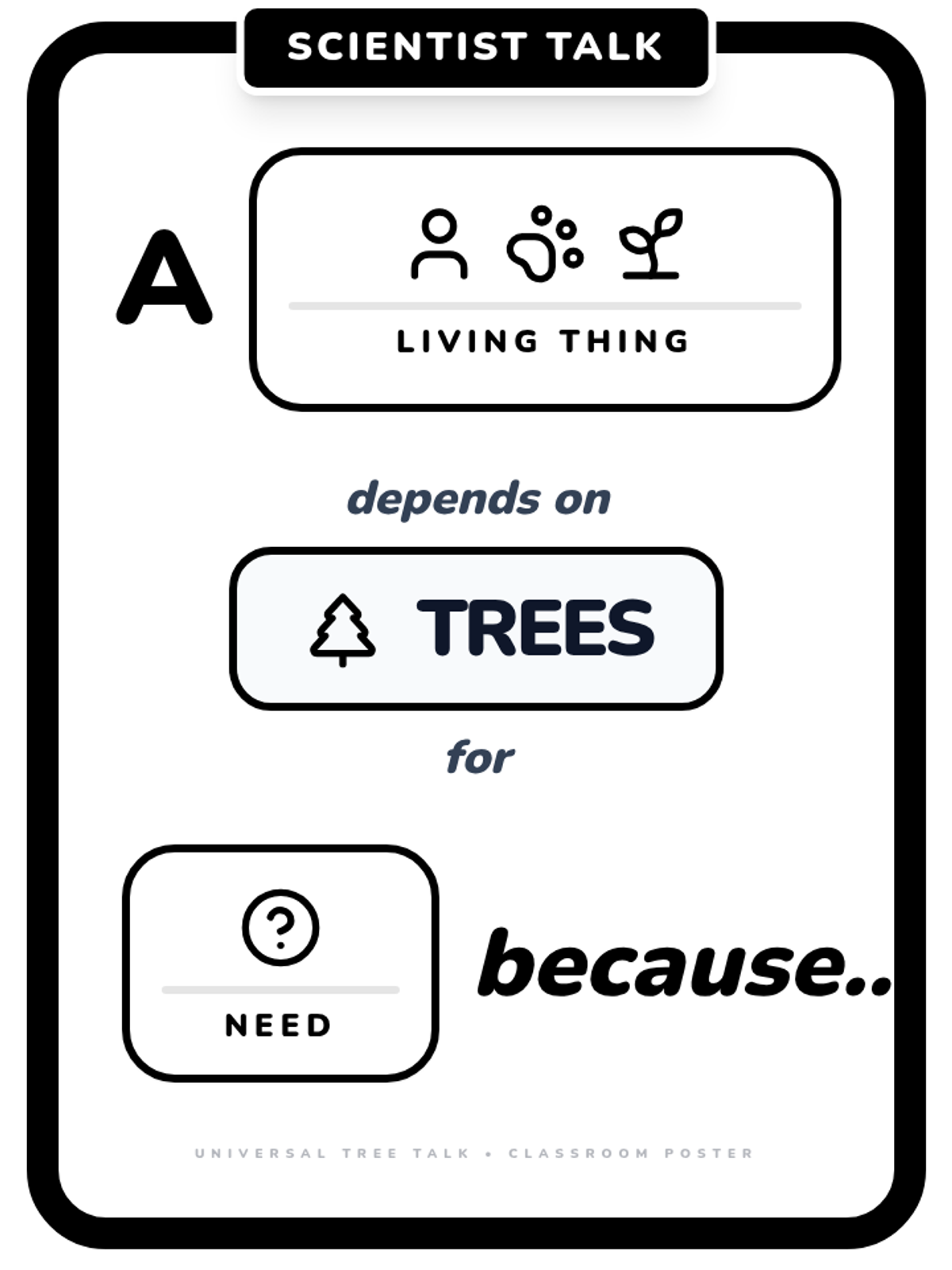
A final revised large-format (8.5x11) black and white poster of the Universal Tree Talk sentence frame with the title 'Science Talk' and no footer. Features an extra-wide bold border and carefully scaled internal content to ensure all elements stay within the frame.
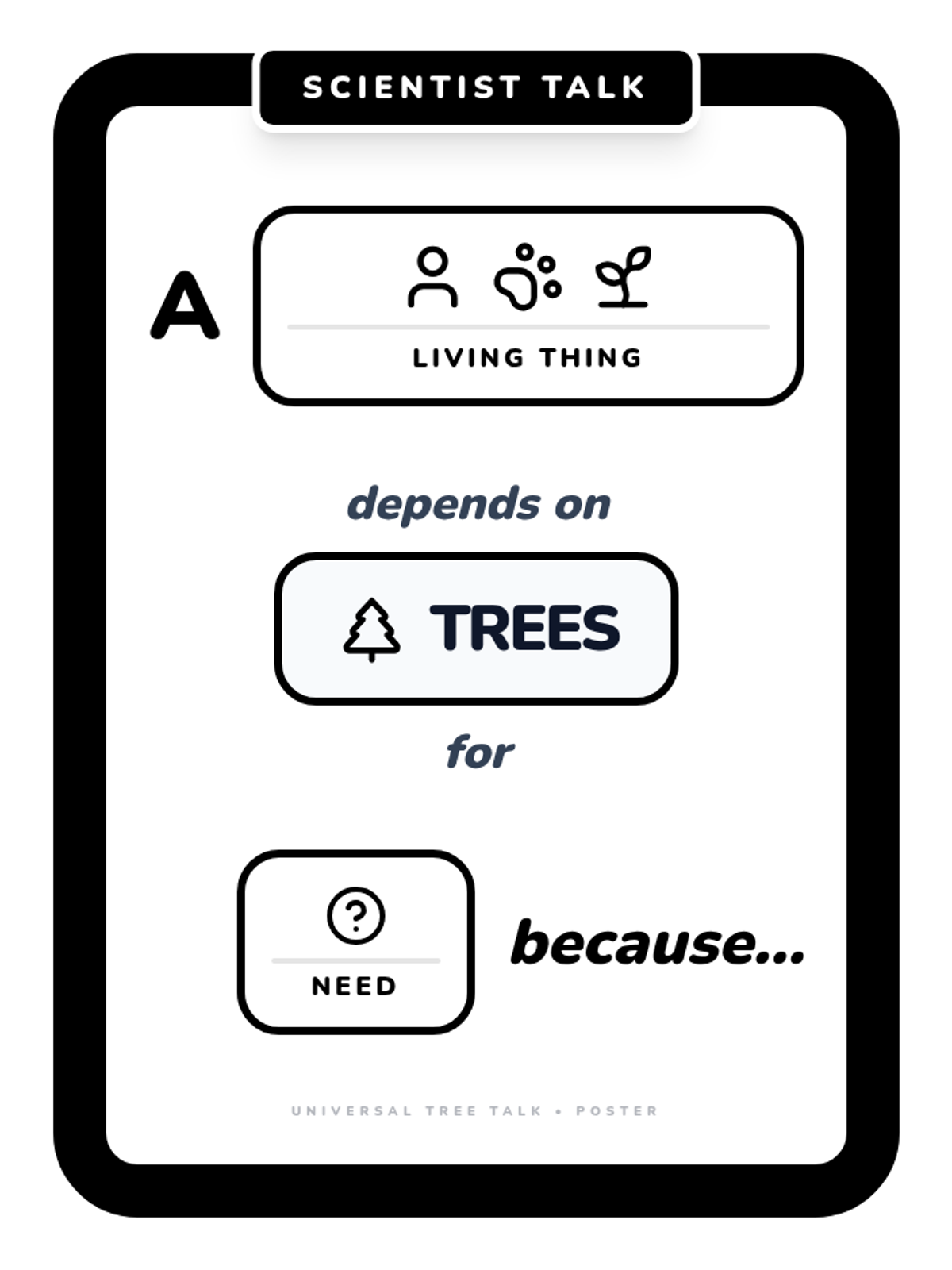
A revised large-format (8.5x11) black and white poster of the Universal Tree Talk sentence frame. Features an extra-wide bold border and carefully scaled internal content to ensure a clear, high-impact display for Kindergarten classrooms.
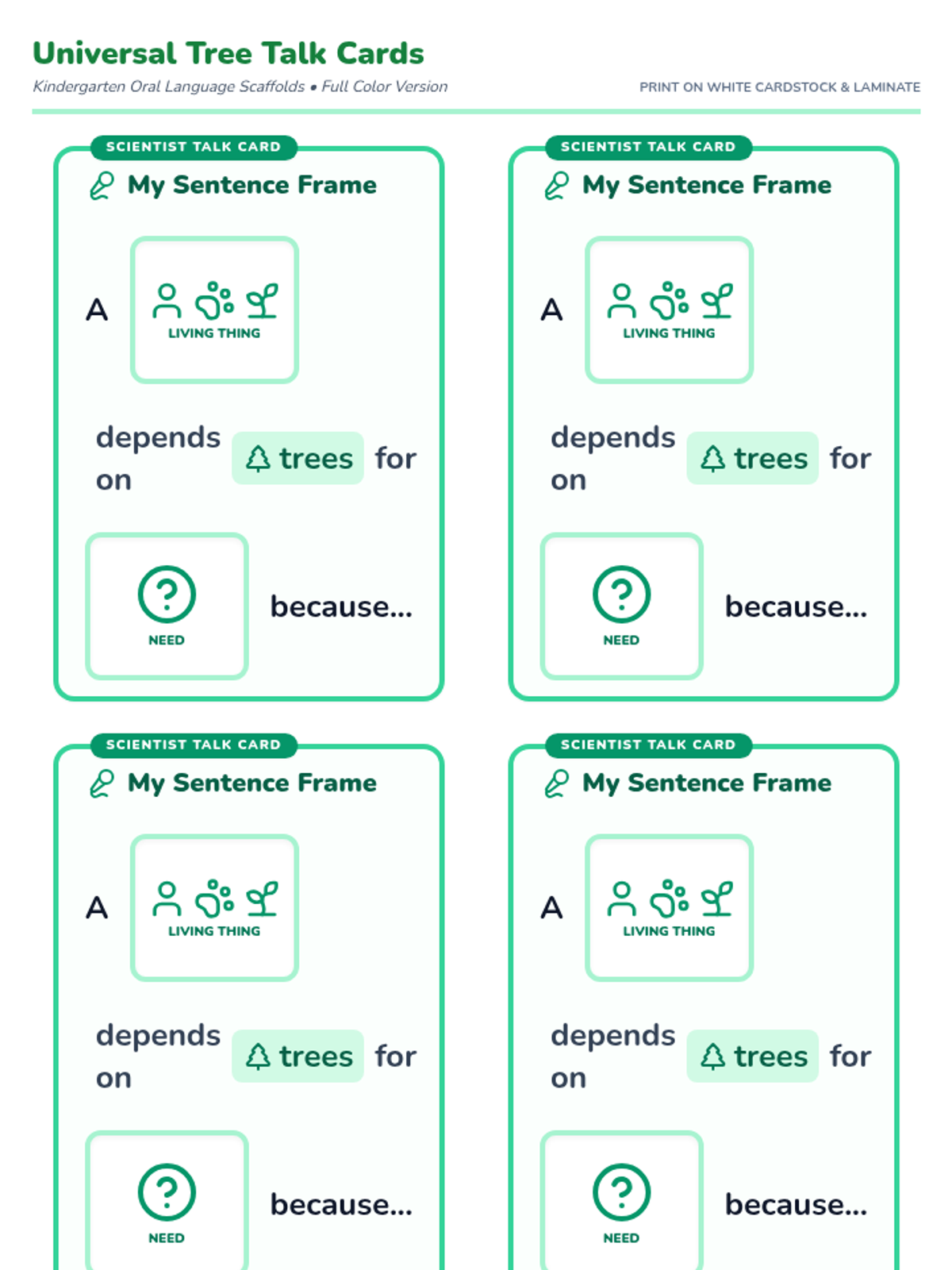
Full color version of the Universal Tree Talk Cards. Instructional boxes have been removed for a cleaner look.
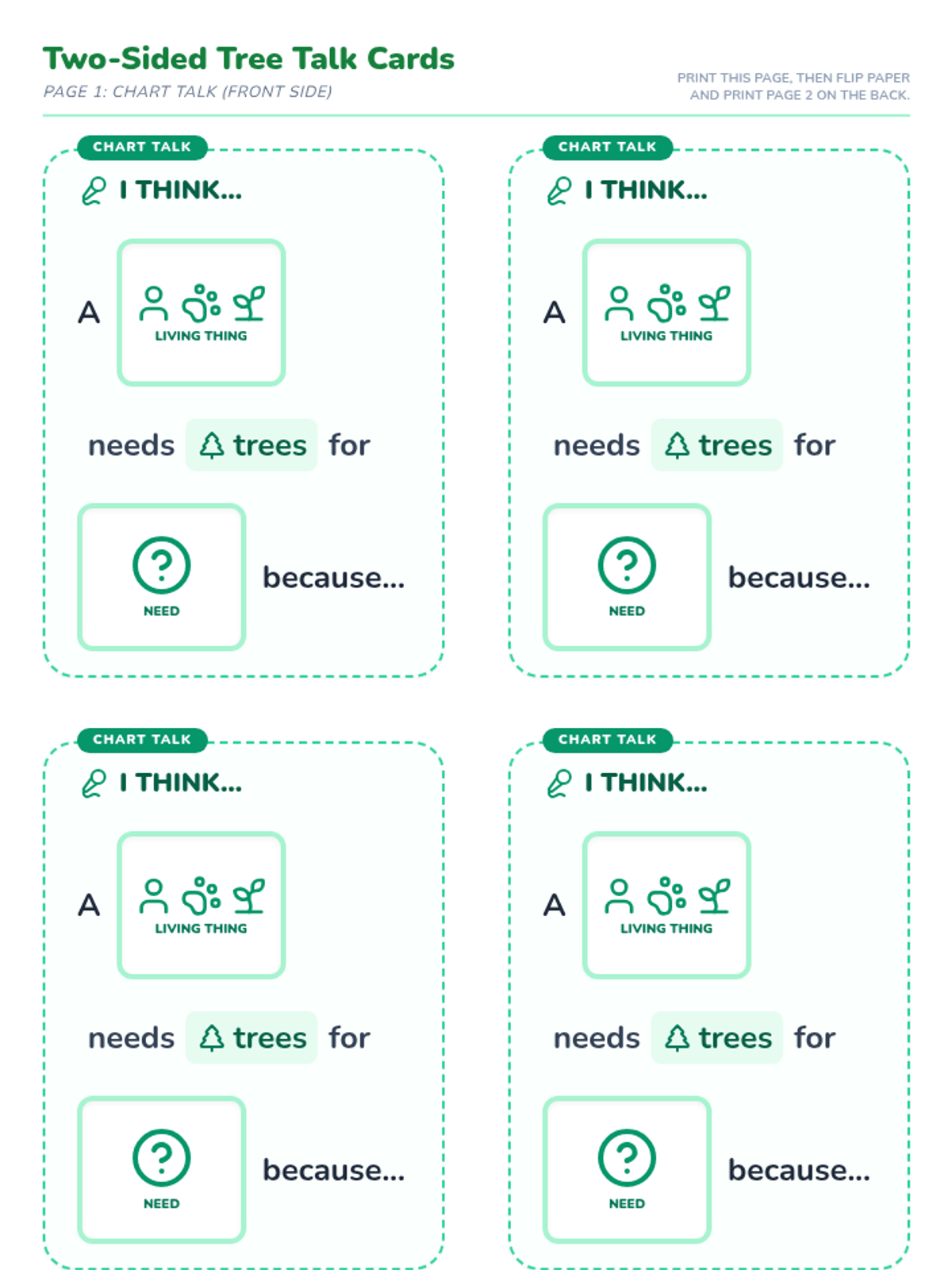
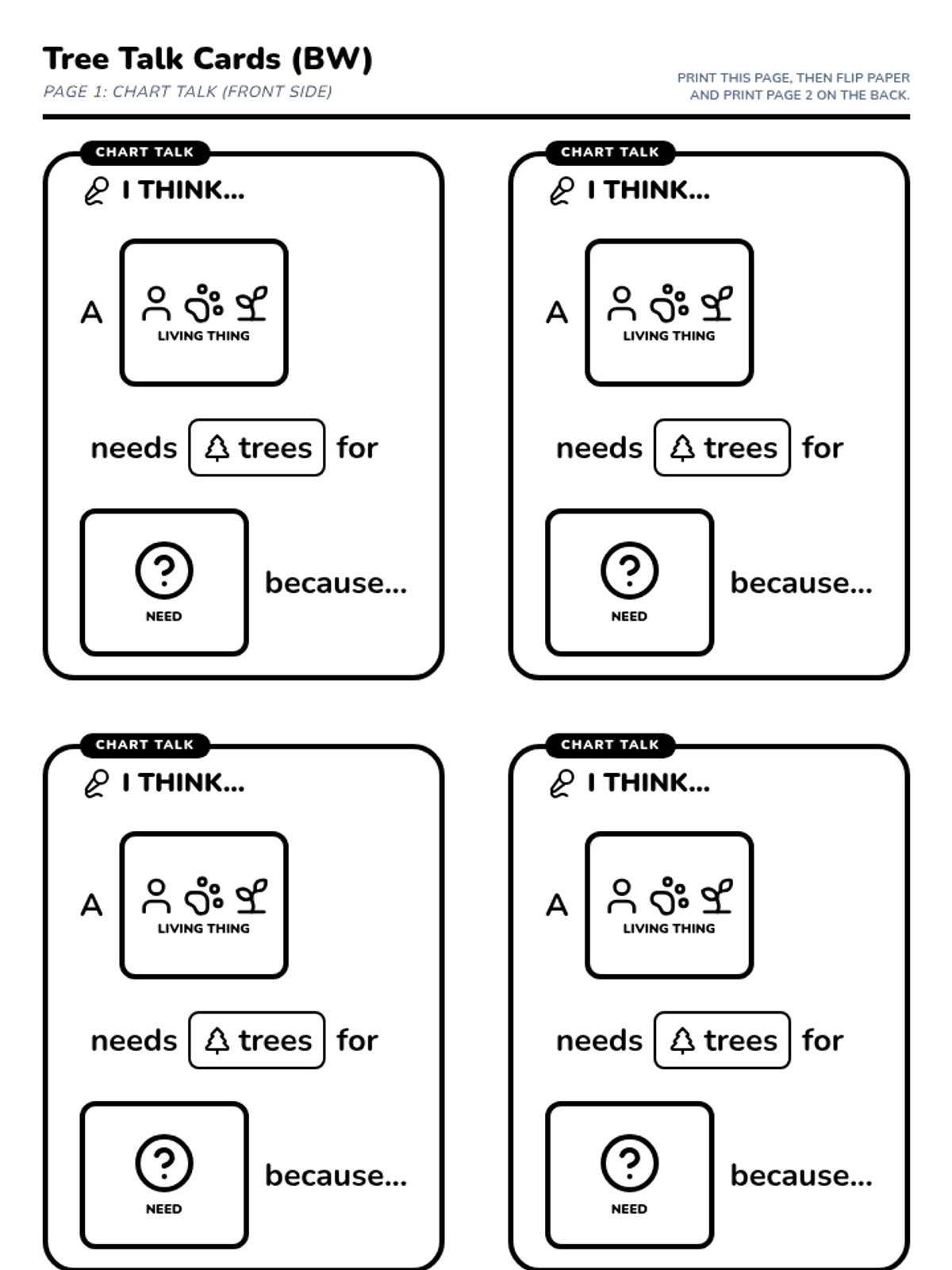
A two-sided printable prompt card for Kindergarten students. Page 1 features 4 copies of the universal "Chart Talk" frame, and Page 2 features 4 copies of the "My Fact" frame. Instruction boxes have been removed for a cleaner look.
A two-sided black and white version of the Tree Talk Cards. Designed for double-sided printing, featuring high-contrast black outlines and icons for "Chart Talk" on one side and "My Fact" on the other. Instructional boxes have been removed for a cleaner look.
A black and white version of the Universal Tree Talk Cards, designed for high-contrast printing. This version has the lower instruction box removed for a cleaner look.
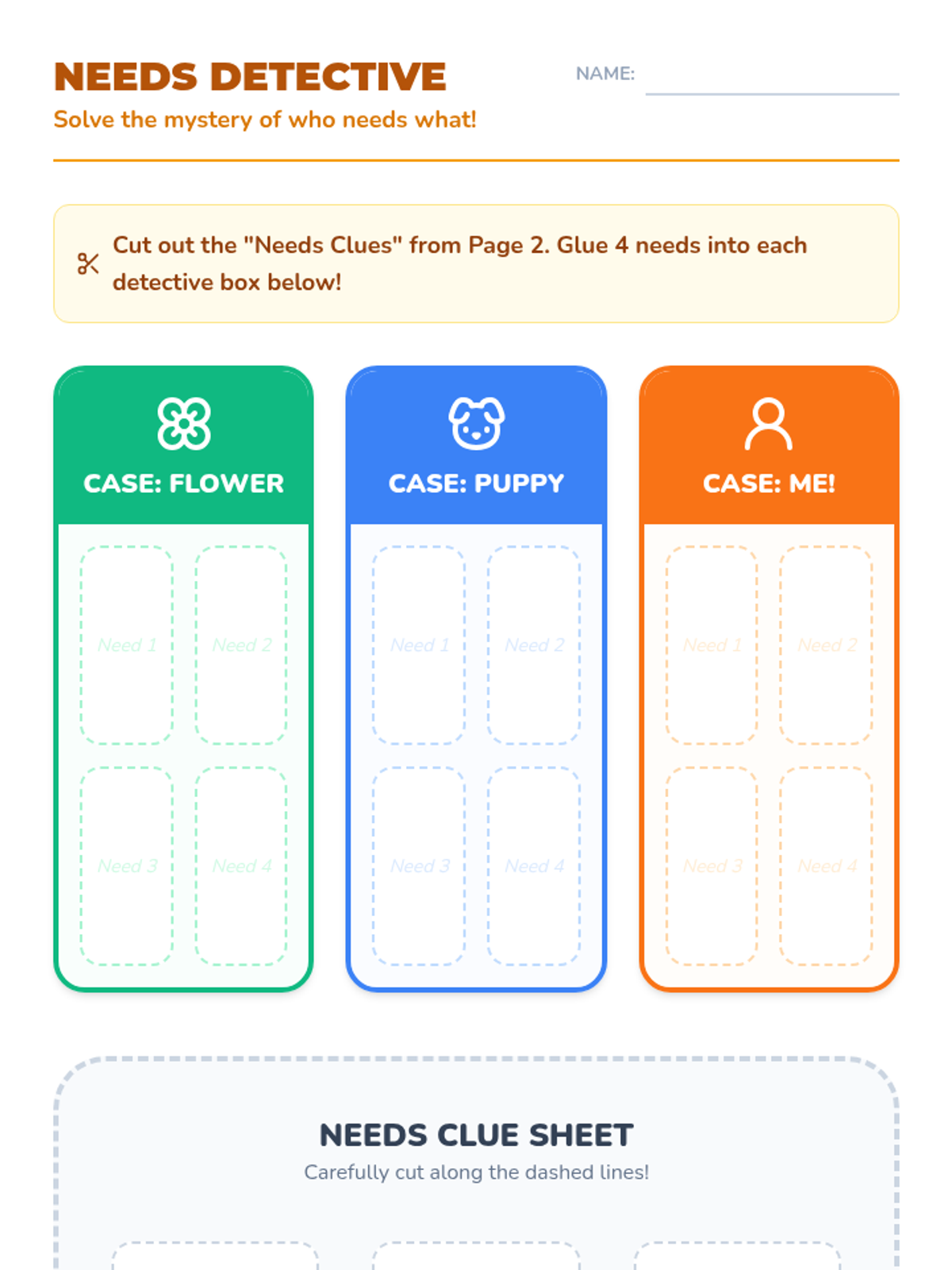
A sorting activity where students cut and paste different needs (sunlight, food, water, air, soil, and shelter) into categories for plants, animals, and humans.
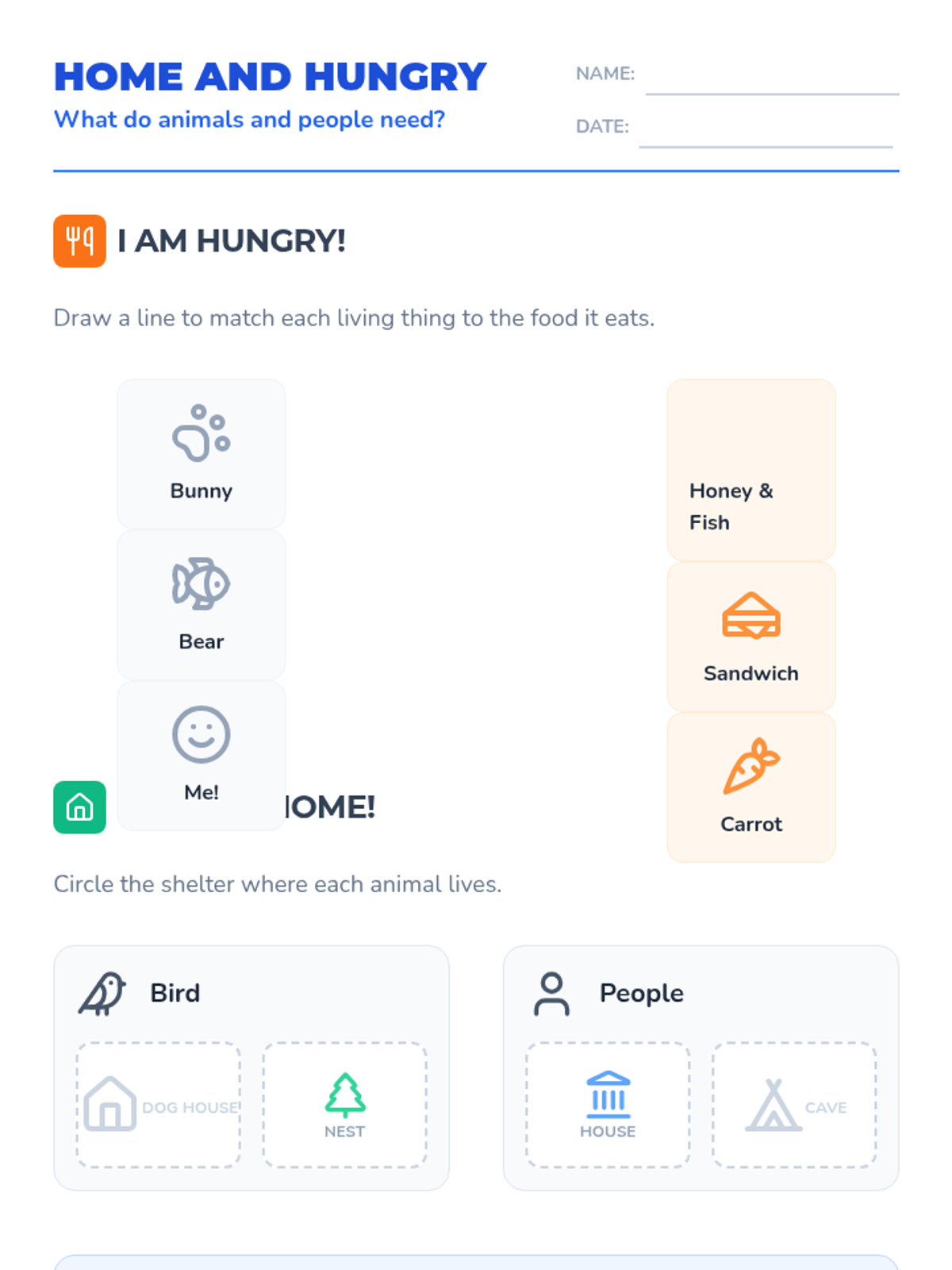
A matching and circling worksheet for Day 2 where students connect animals to their food sources and identify appropriate shelters for survival.
Visual slides for Day 2 exploring the survival requirements of animals and humans, including food, water, air, and shelter.
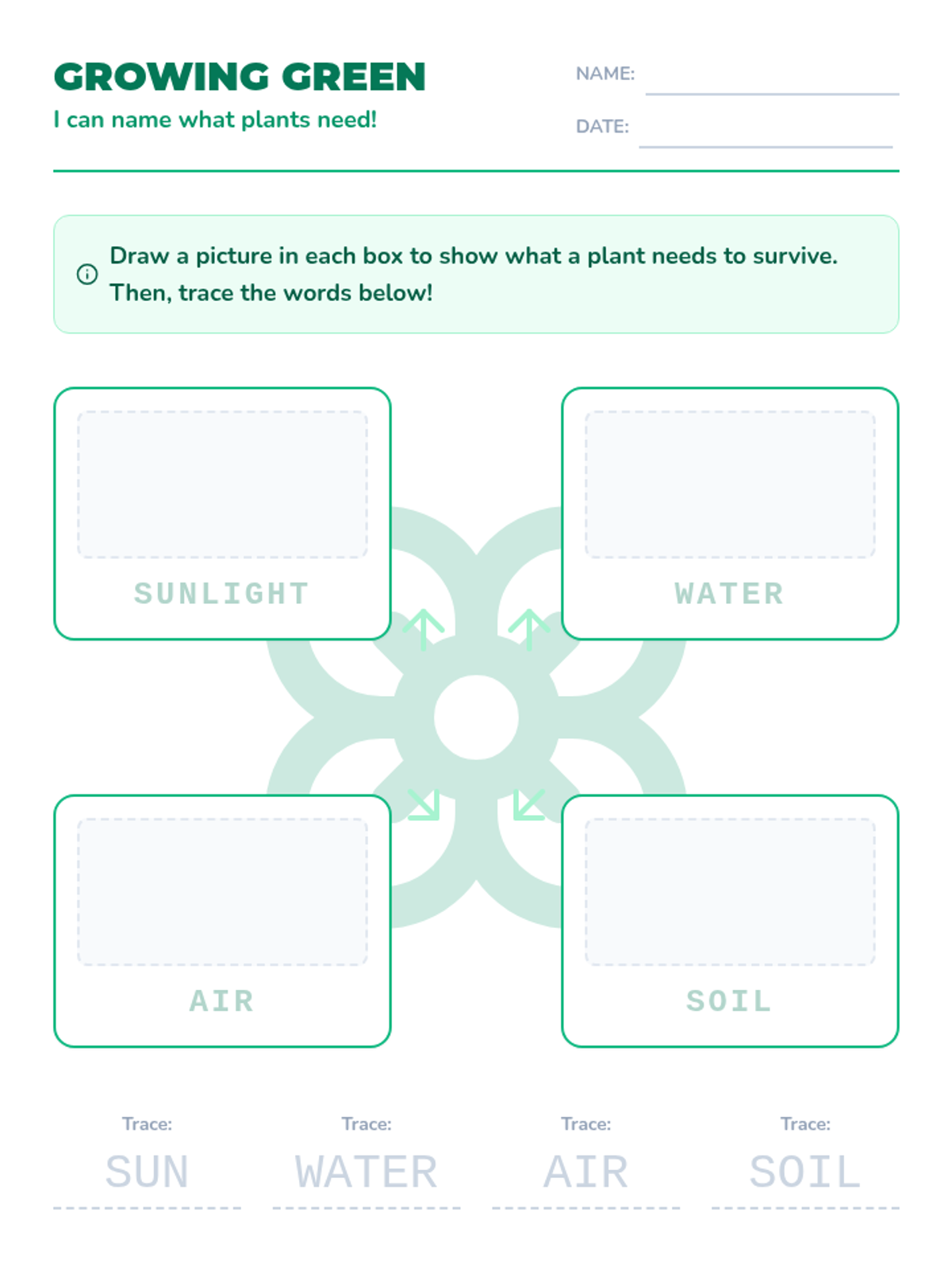
A student worksheet for Day 1 where students draw and identify the four essential needs of plants (sunlight, water, air, and soil) around a central flower image.
Visual slides for Day 1 introducing the four primary needs of plants (sunlight, water, air, and soil) with engaging icons and simple text.
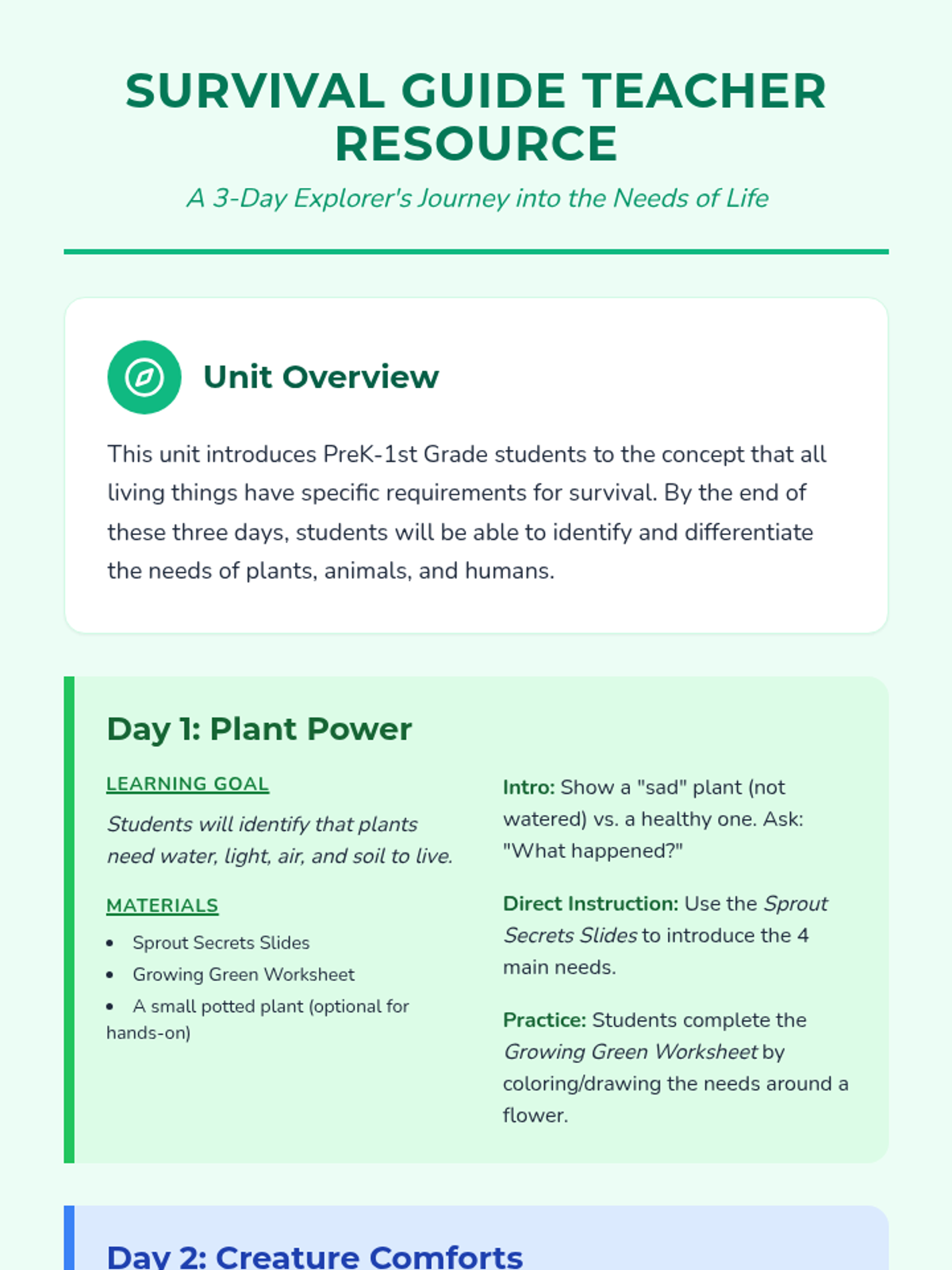
A sequence-wide guide for teachers, detailing the learning objectives, required materials, and daily instructional flow for the 3-day Life Essentials unit.
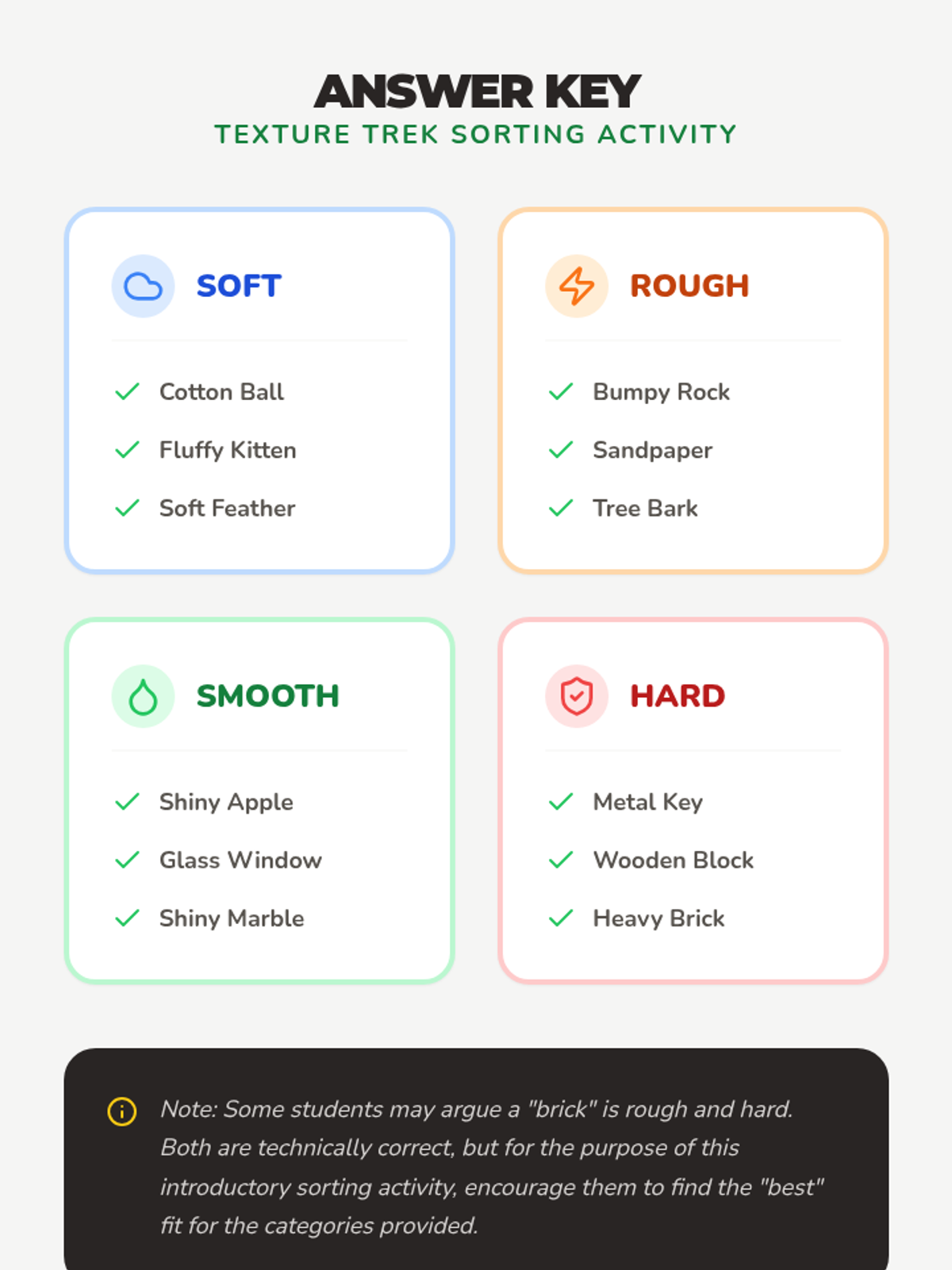
A teacher's reference sheet showing the correct classification of objects for the Texture Trek sorting activity.
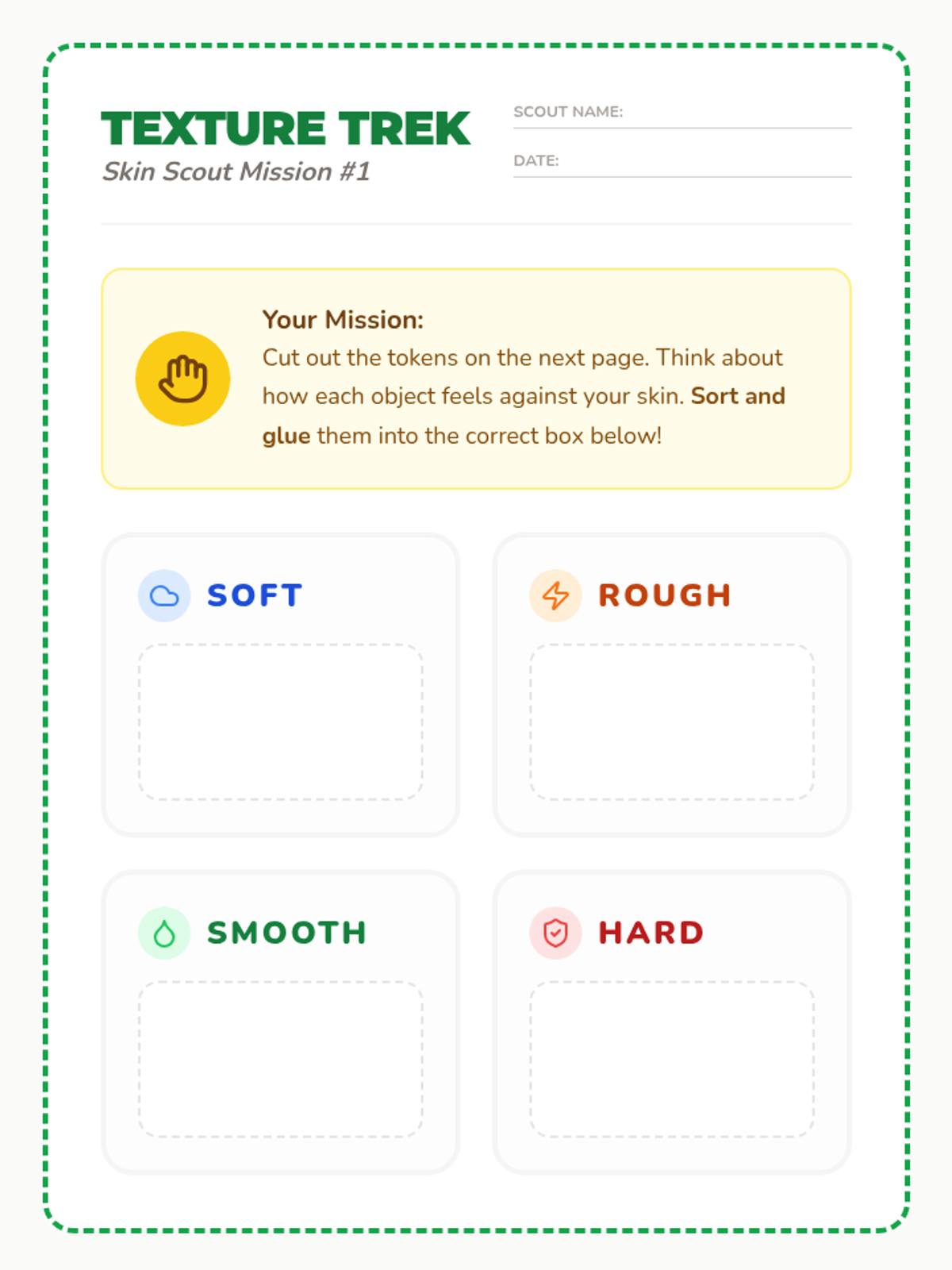
A two-page student activity worksheet where students cut out object tokens and glue them into categories (Soft, Rough, Smooth, Hard) based on their texture.
An instructional slide deck for the Skin Scouts lesson, explaining skin's function, anatomy, and the sense of touch using clear visuals and simplified terminology for K-1 students.
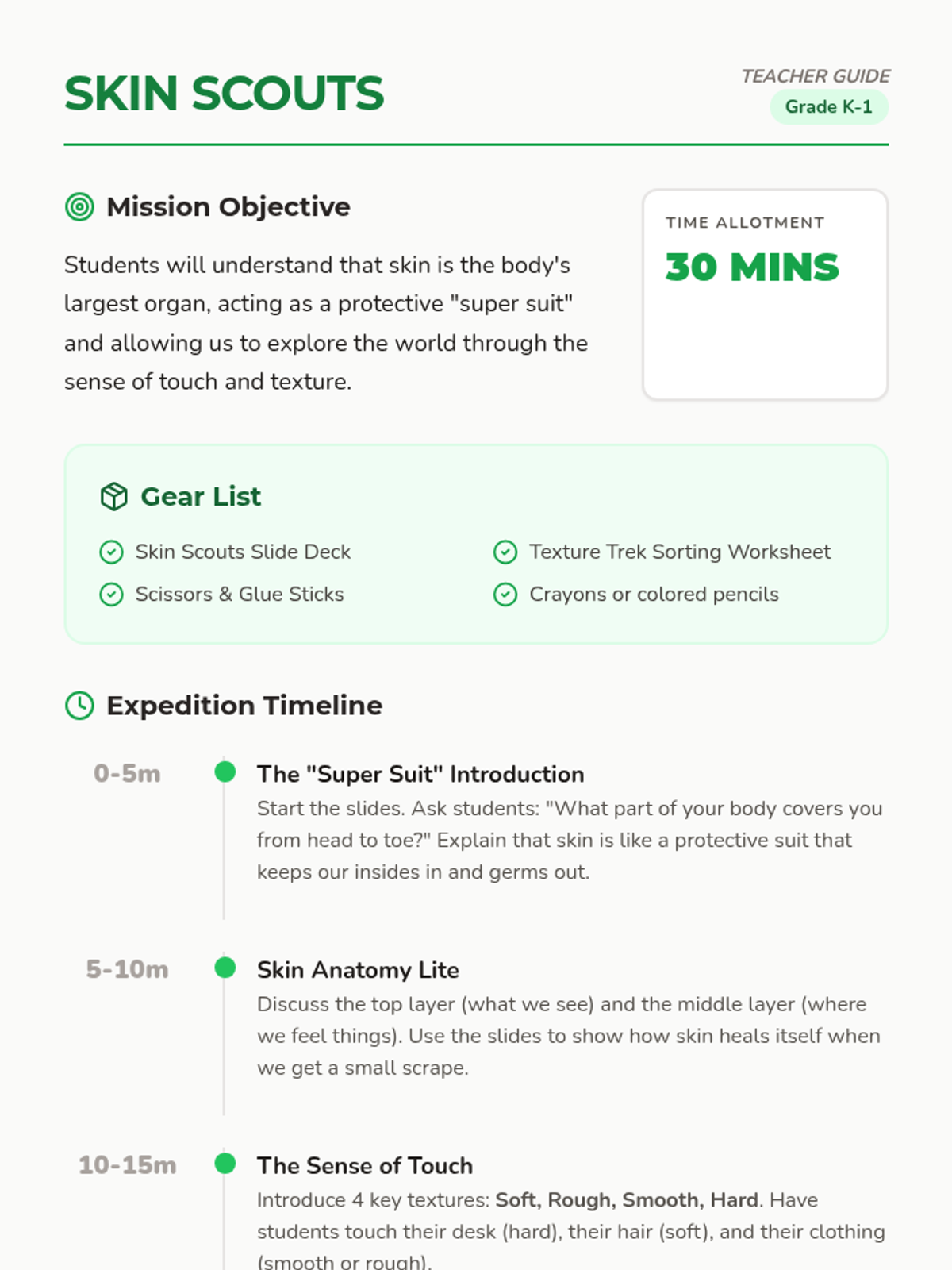
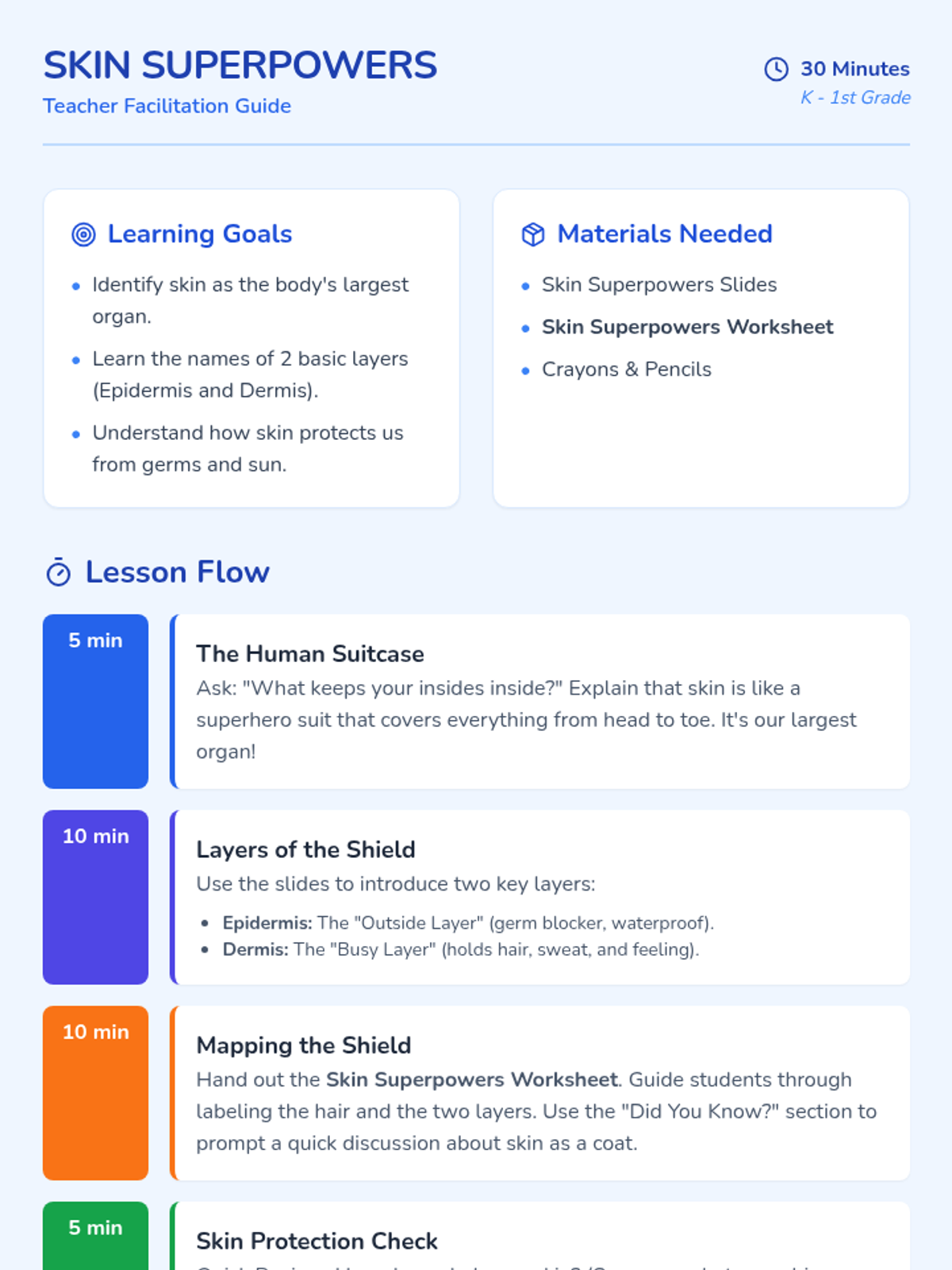
A detailed 30-minute teacher guide for the Skin Scouts lesson, including a pacing guide, learning objectives, and gear list for K-1 students.
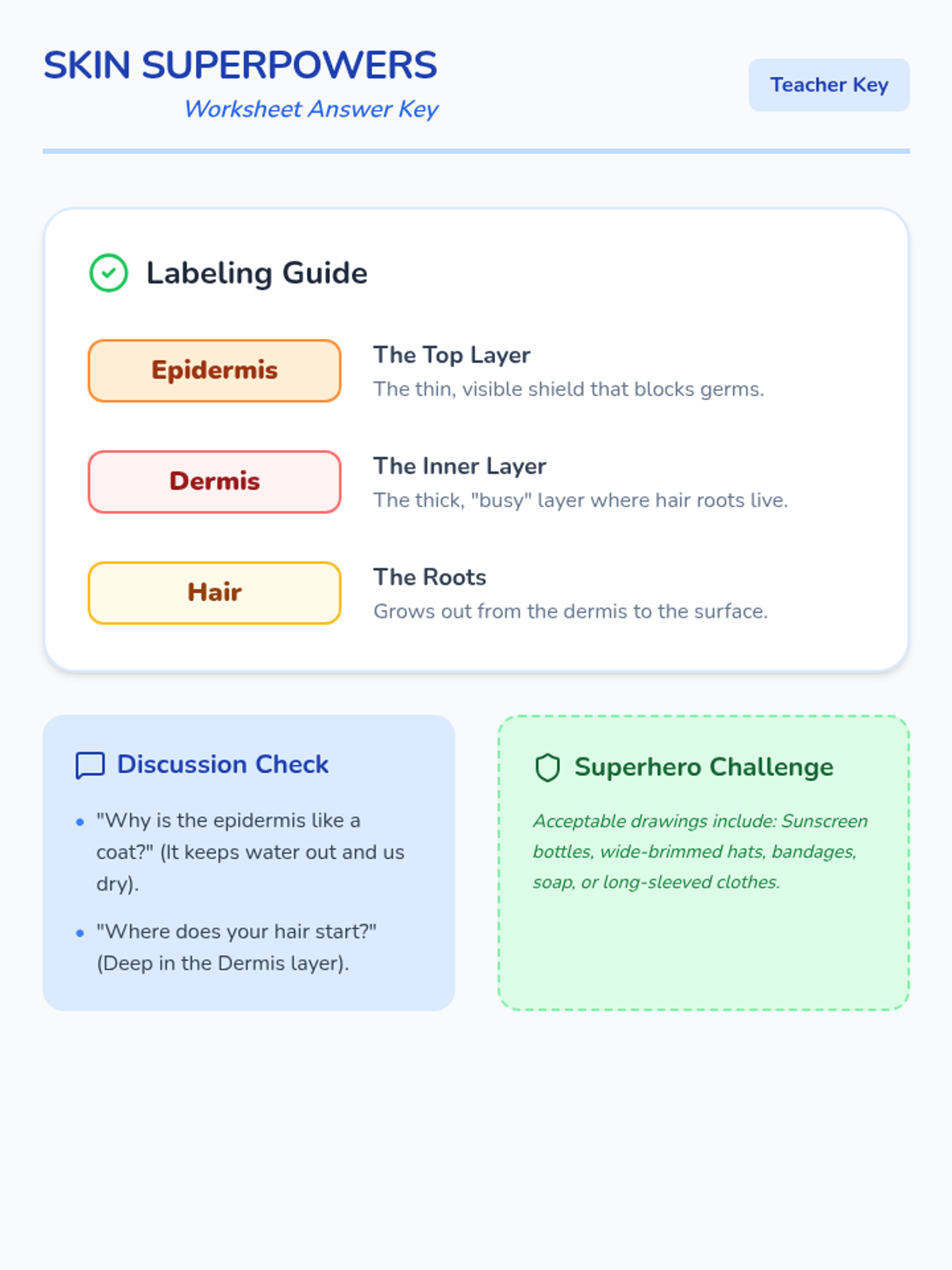
An answer key for the Skin Superpowers worksheet, providing correct labels and guided discussion prompts for the teacher.
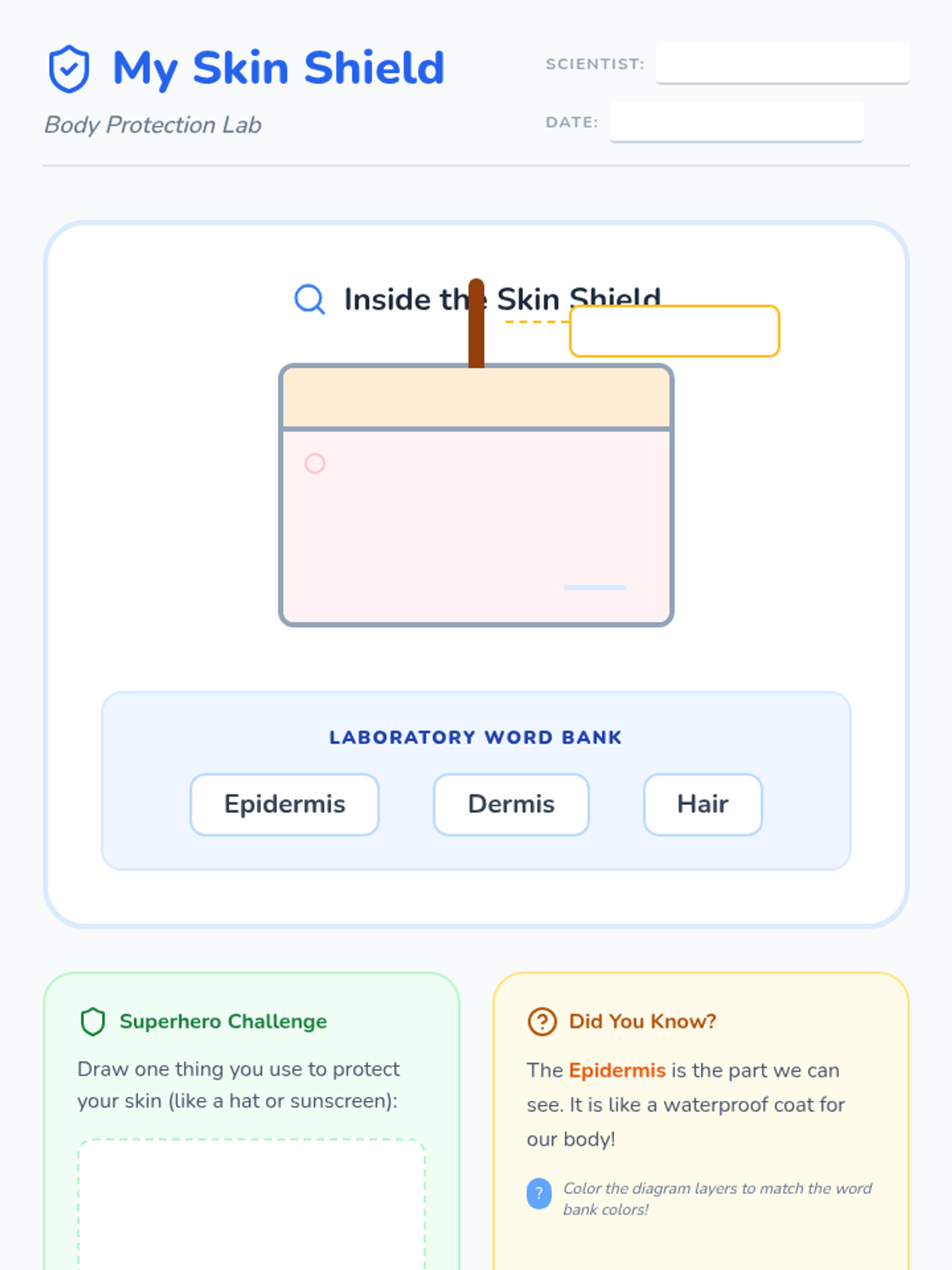
A student-friendly labeling worksheet for Kindergarten and 1st grade, featuring a stylized diagram of skin layers (Epidermis and Dermis) and hair, including a word bank and a drawing prompt.
A 6-slide visual presentation for Kindergarten and 1st grade students about the skin's layers and its protective functions, including a worksheet review slide.
A detailed 30-minute teacher facilitation guide for teaching the integumentary system to Kindergarten and 1st-grade students, featuring a clear timeline, learning goals, and key vocabulary.
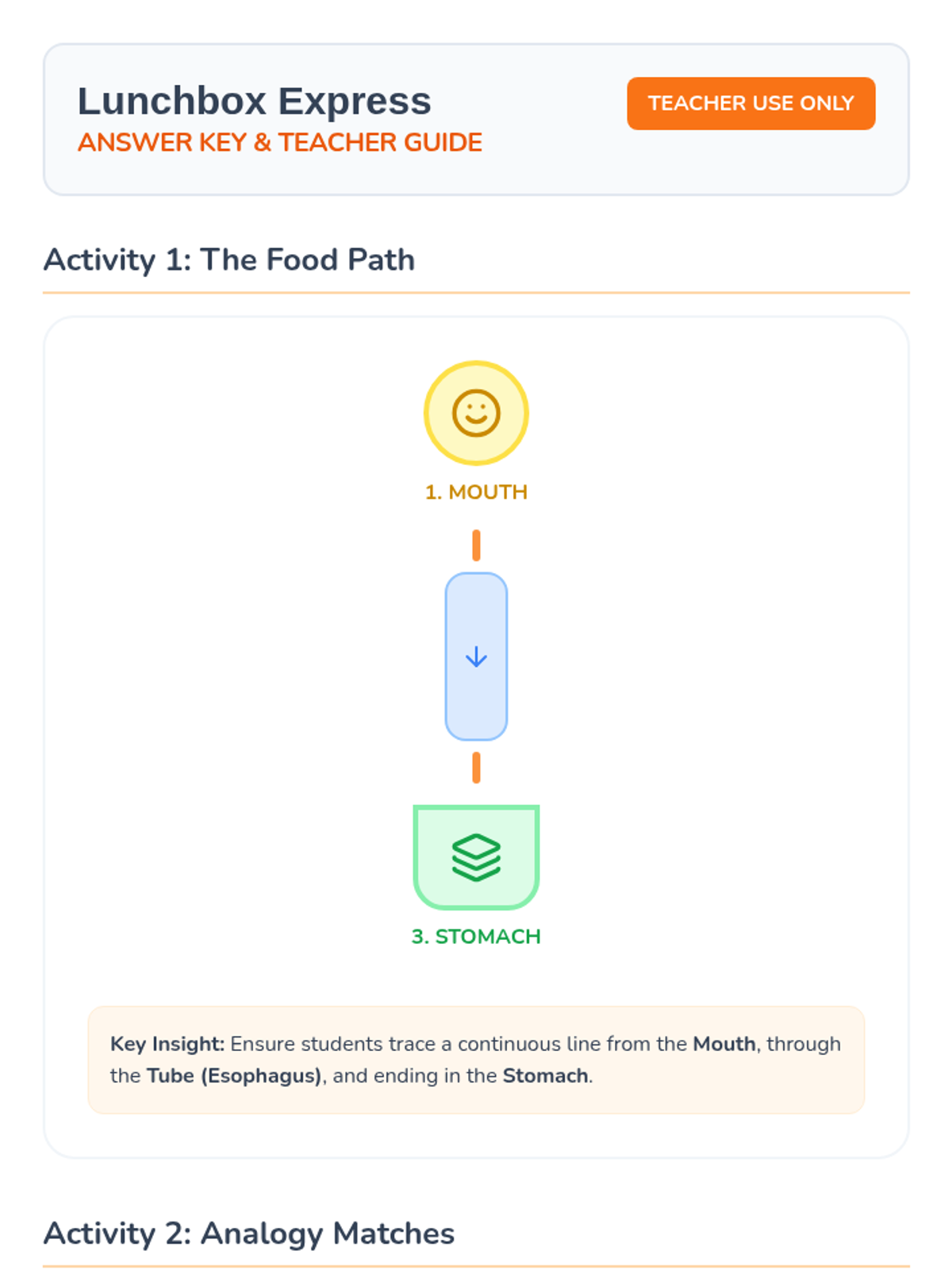
A teacher answer key for the Lunchbox Express Activity Sheet, including correct analogy matches, tracing guidance, and extension discussion questions.
A colorful, high-energy slide deck for K-1 students that explains the first three steps of digestion (mouth, esophagus, stomach) using fun analogies and a movement recap.
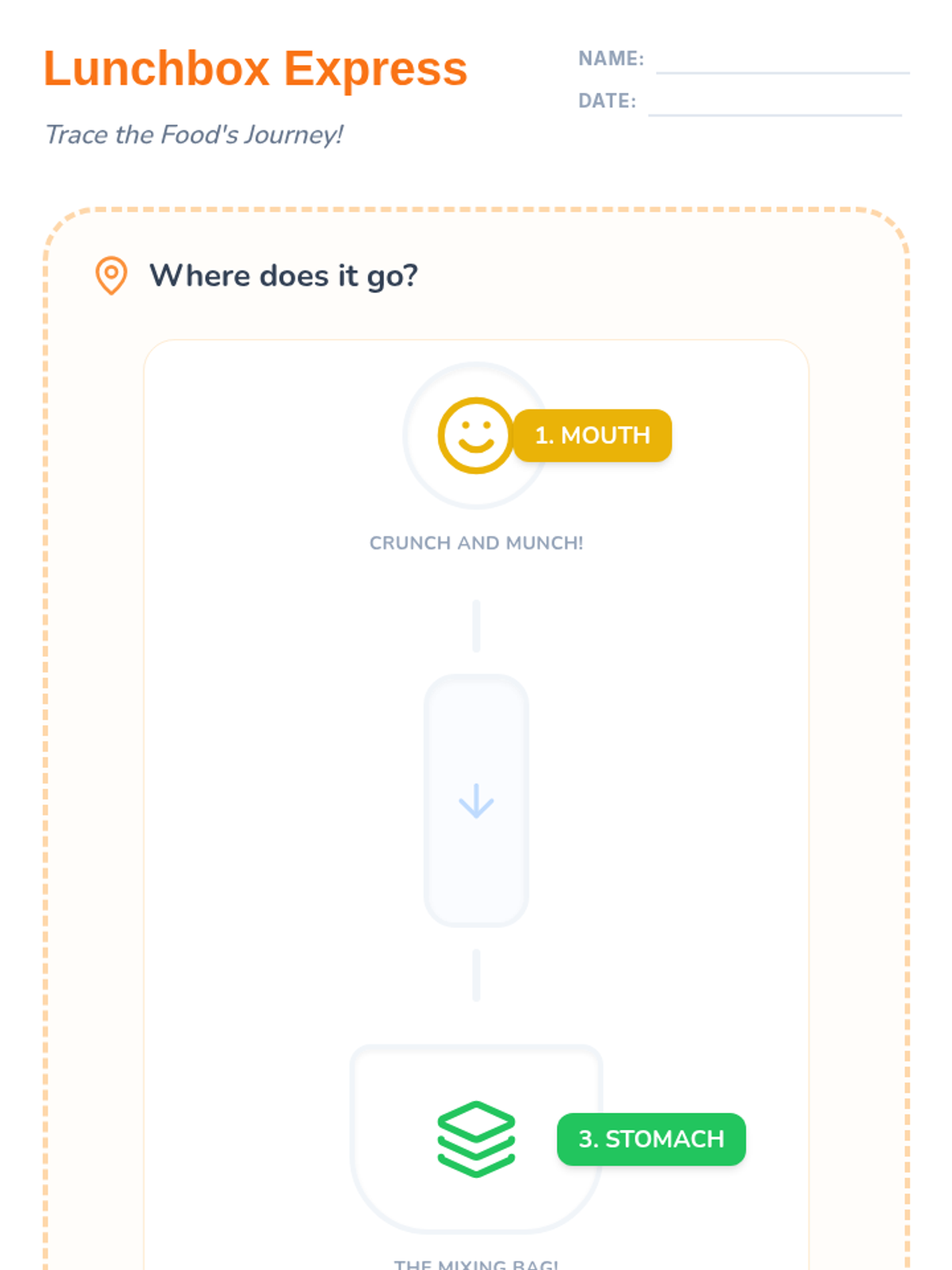
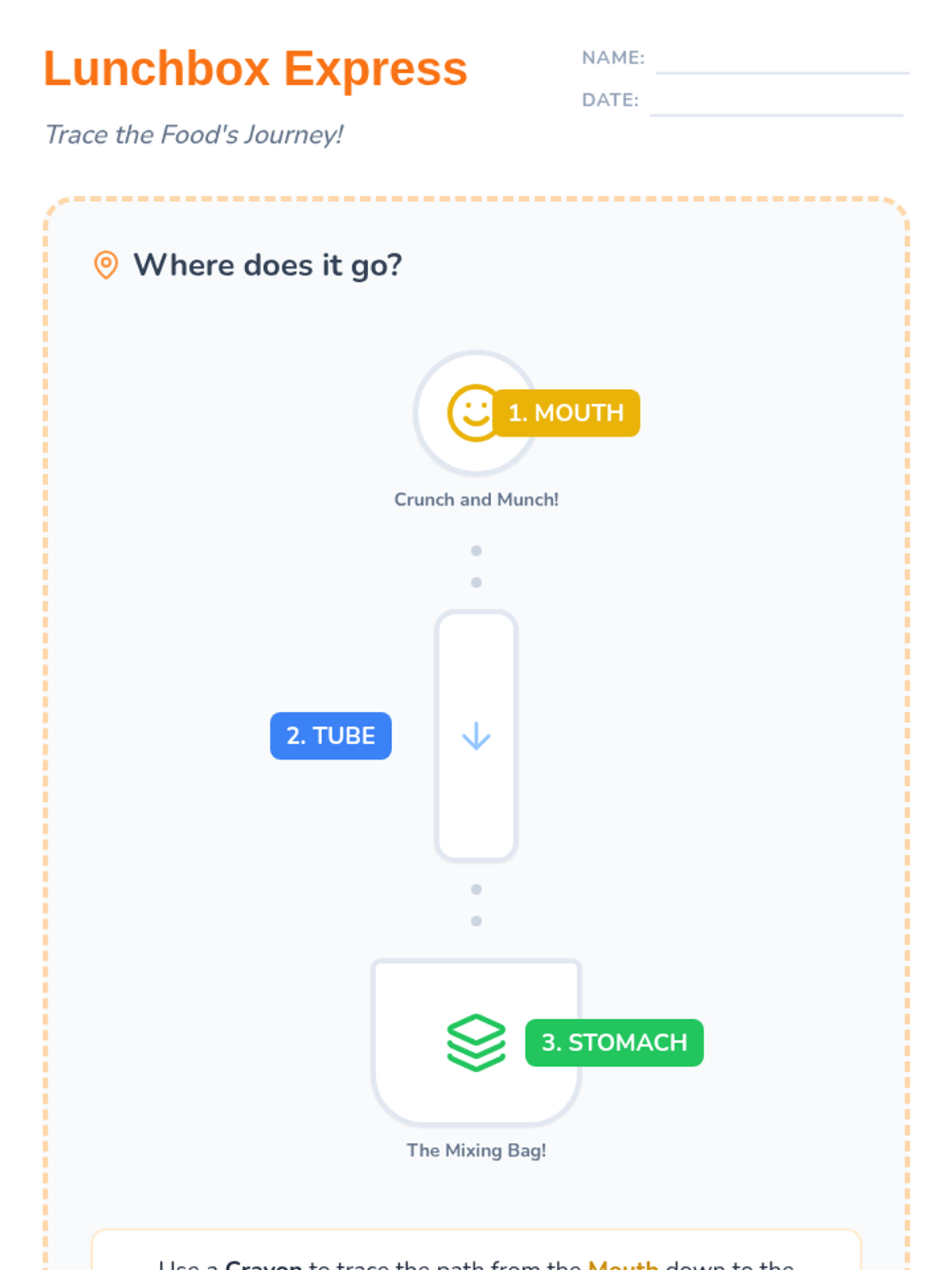
A fun, visual activity sheet for K-1 students to trace the path of food and identify the roles of the mouth, esophagus, and stomach using simple analogies. Updated with clean tracing areas and uniform answer styling.
A fun, visual activity sheet for K-1 students to trace the path of food and identify the roles of the mouth, esophagus, and stomach using simple analogies. Updated with uniform styling for answer choices.
A fun, visual activity sheet for K-1 students to trace the path of food and identify the roles of the mouth, esophagus, and stomach using simple analogies.
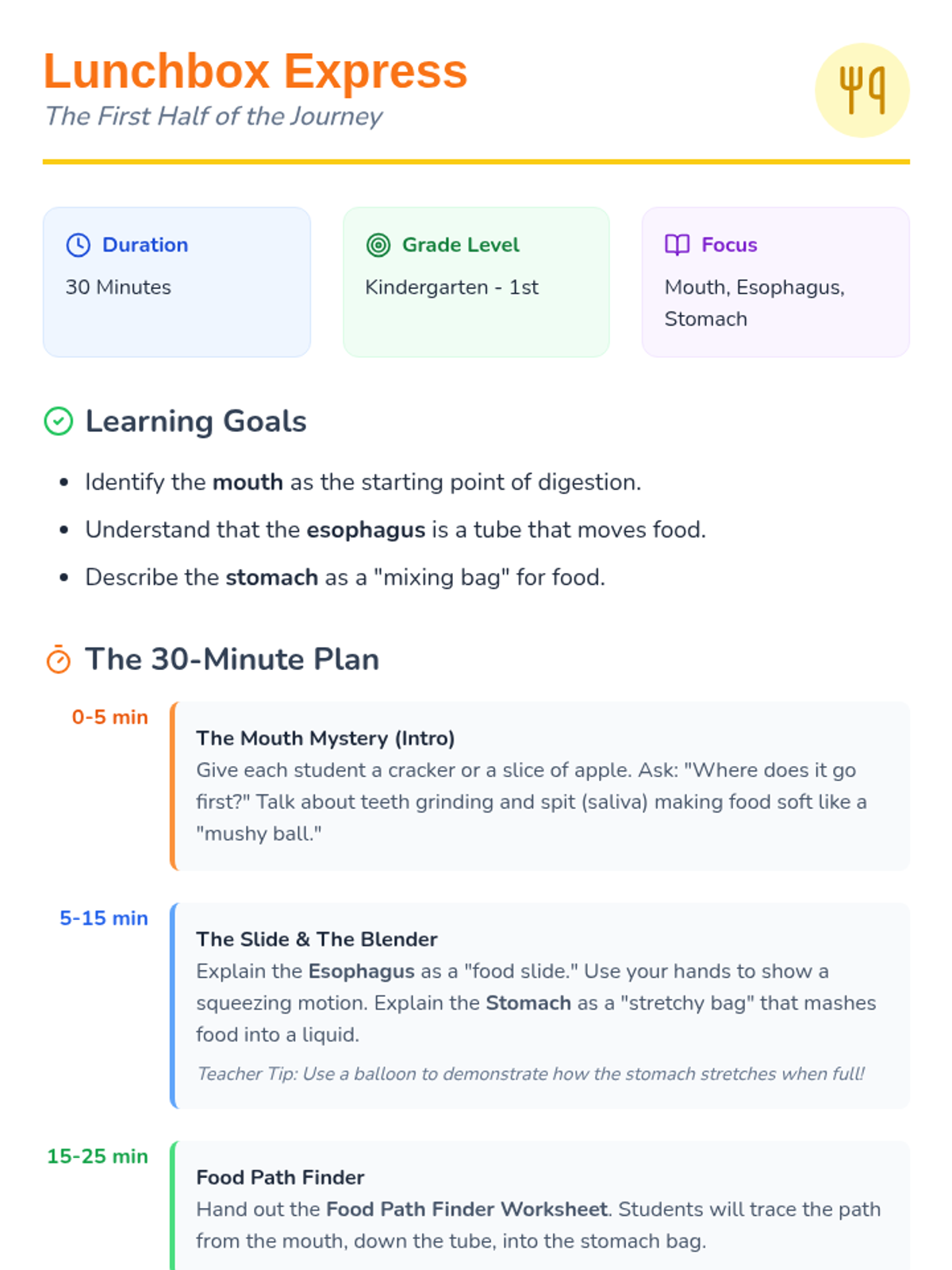
A comprehensive 30-minute teacher guide for teaching the first steps of digestion to K-1 students, including pacing, demo ideas, and movement-based learning.
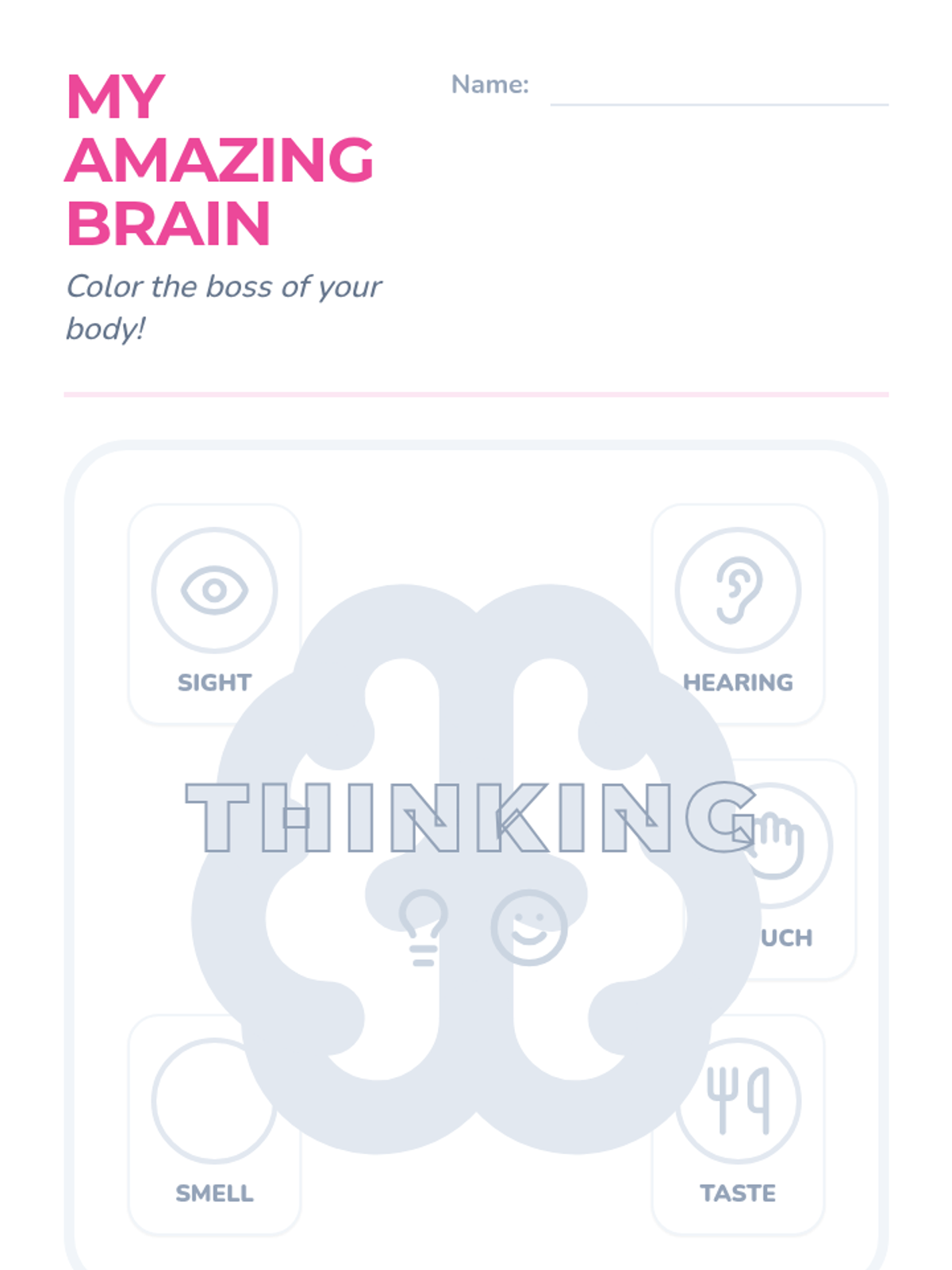
A simple and fun coloring page for kindergarten students featuring a large brain and icons representing the five senses. Perfect for early finishers or as a standalone introductory activity.
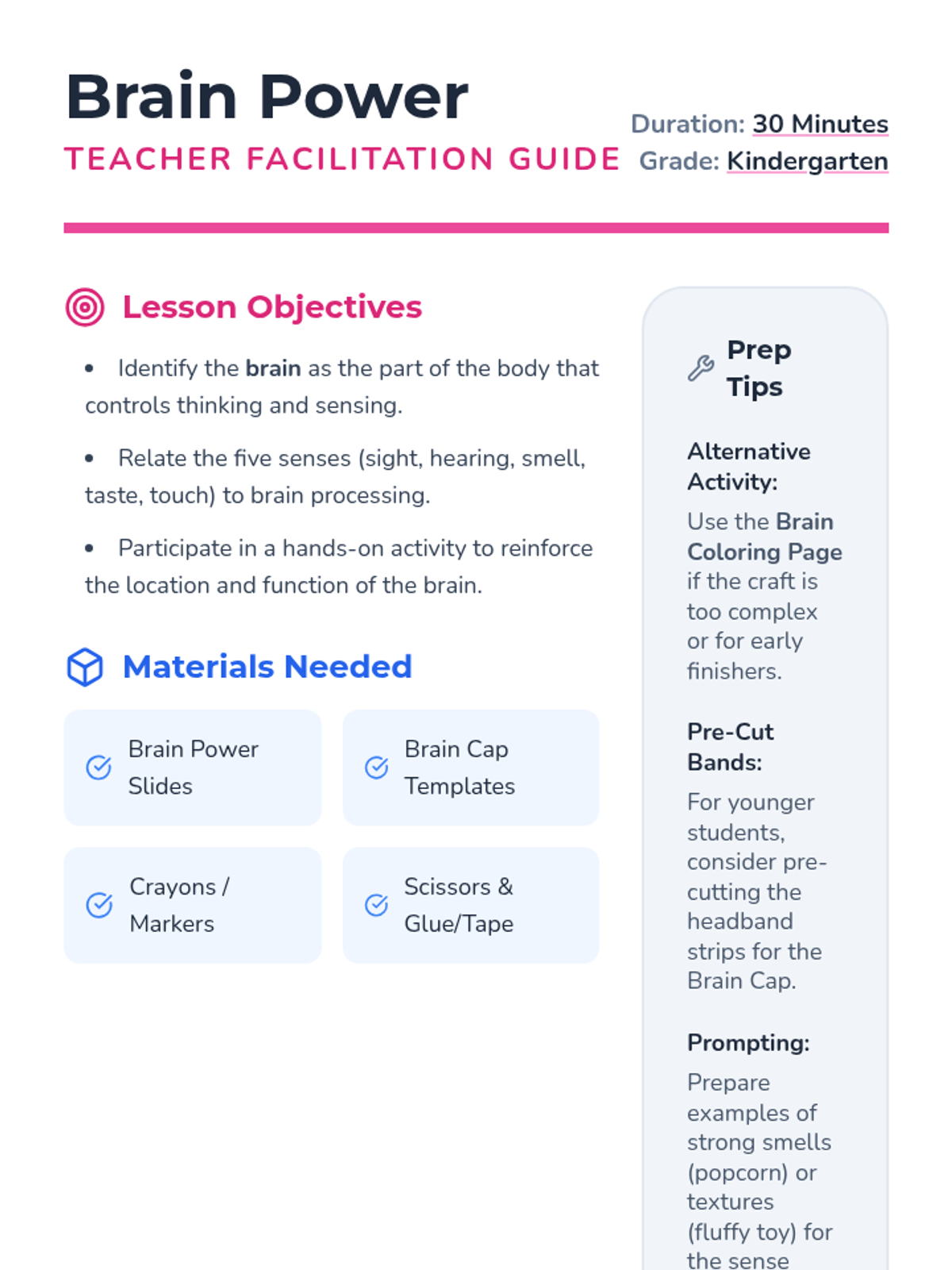
A comprehensive teacher facilitation guide for a 30-minute kindergarten lesson on the brain. Includes lesson objectives, a materials list, prep tips, and a step-by-step instructional procedure.
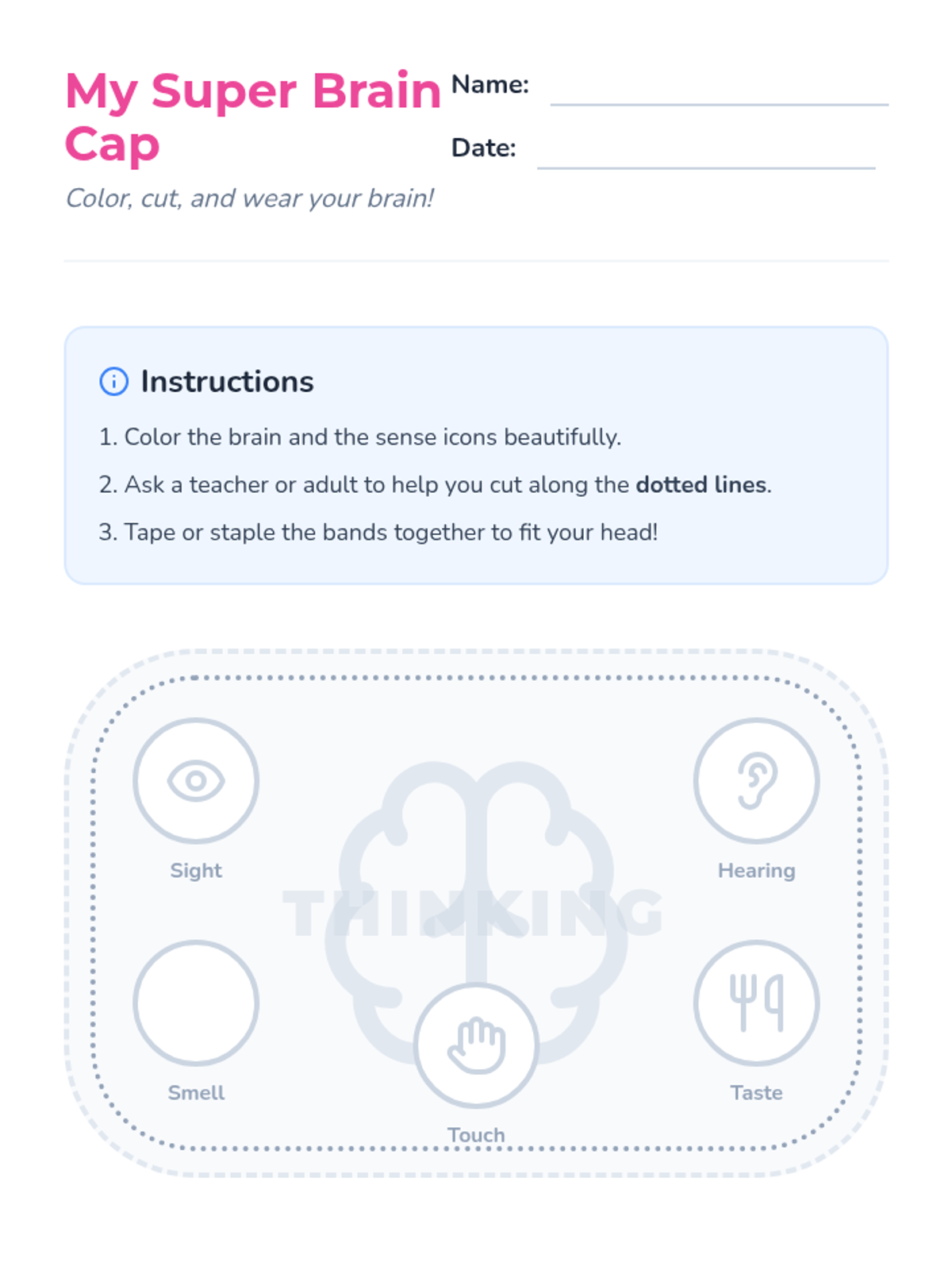
A printable wearable 'brain cap' craft for kindergarten students. It features a large central brain for coloring, five sense icons to identify, and extension bands to create a wearable headband.
A colorful and engaging 6-slide presentation for kindergarten students about the brain. It introduces the brain as the body's 'boss', explains its role in thinking, and covers how it processes the five senses.
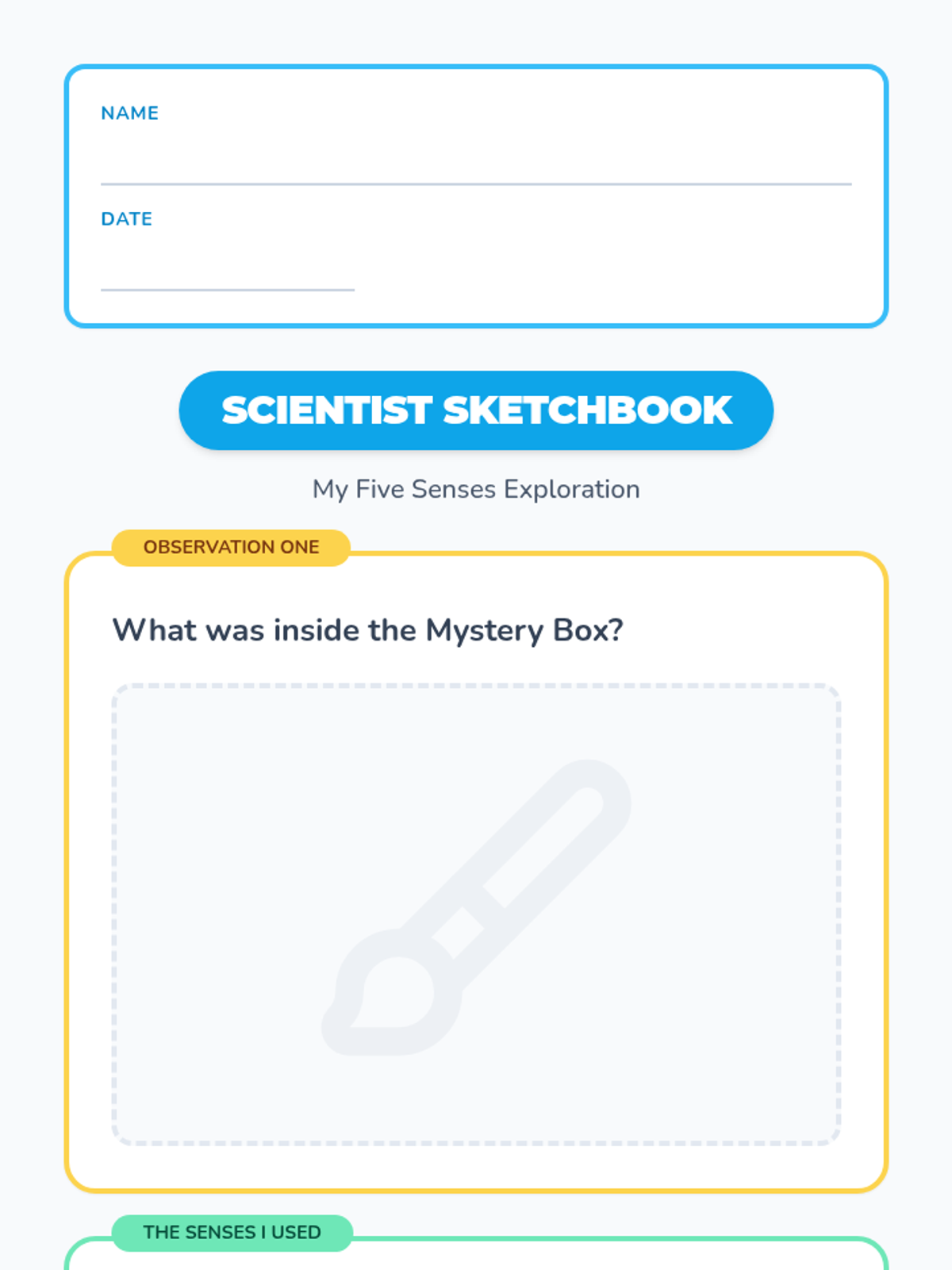
Student recording sheet for the 'Senses Discovery' lesson. Provides a dedicated drawing space for students to illustrate their Mystery Box observations and a visual checklist of the five senses to help them identify which they used during the activity.
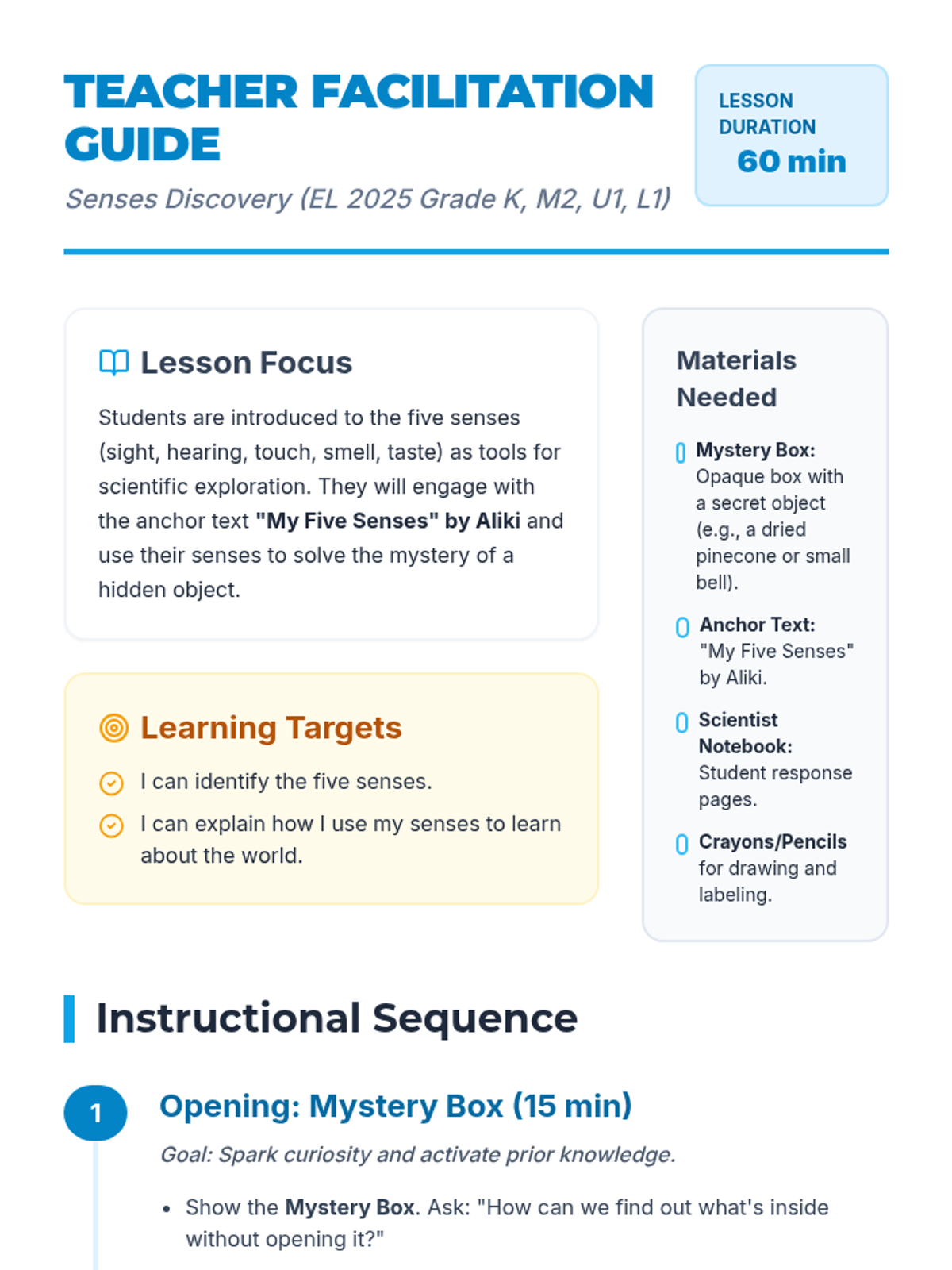
Comprehensive lesson plan for teachers, detailing the instructional sequence, learning targets, and materials for the introductory 'Senses Discovery' lesson. Includes specific prompts for the Mystery Box activity and anchor text reading.
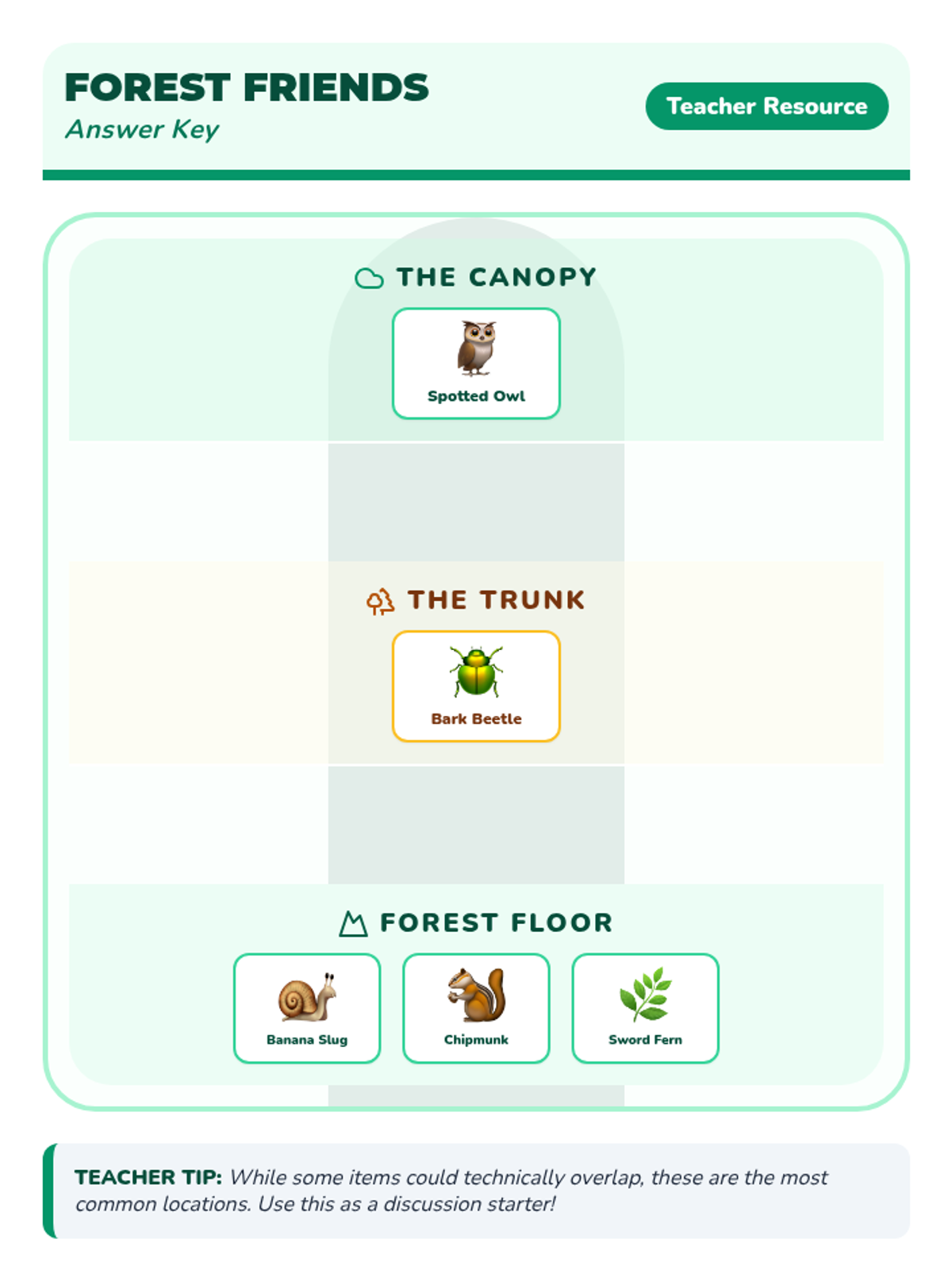
An answer key for the Forest Friends Worksheet, illustrating the typical locations of redwood forest animals and plants across the forest layers. Consistently sized for single-page printing.
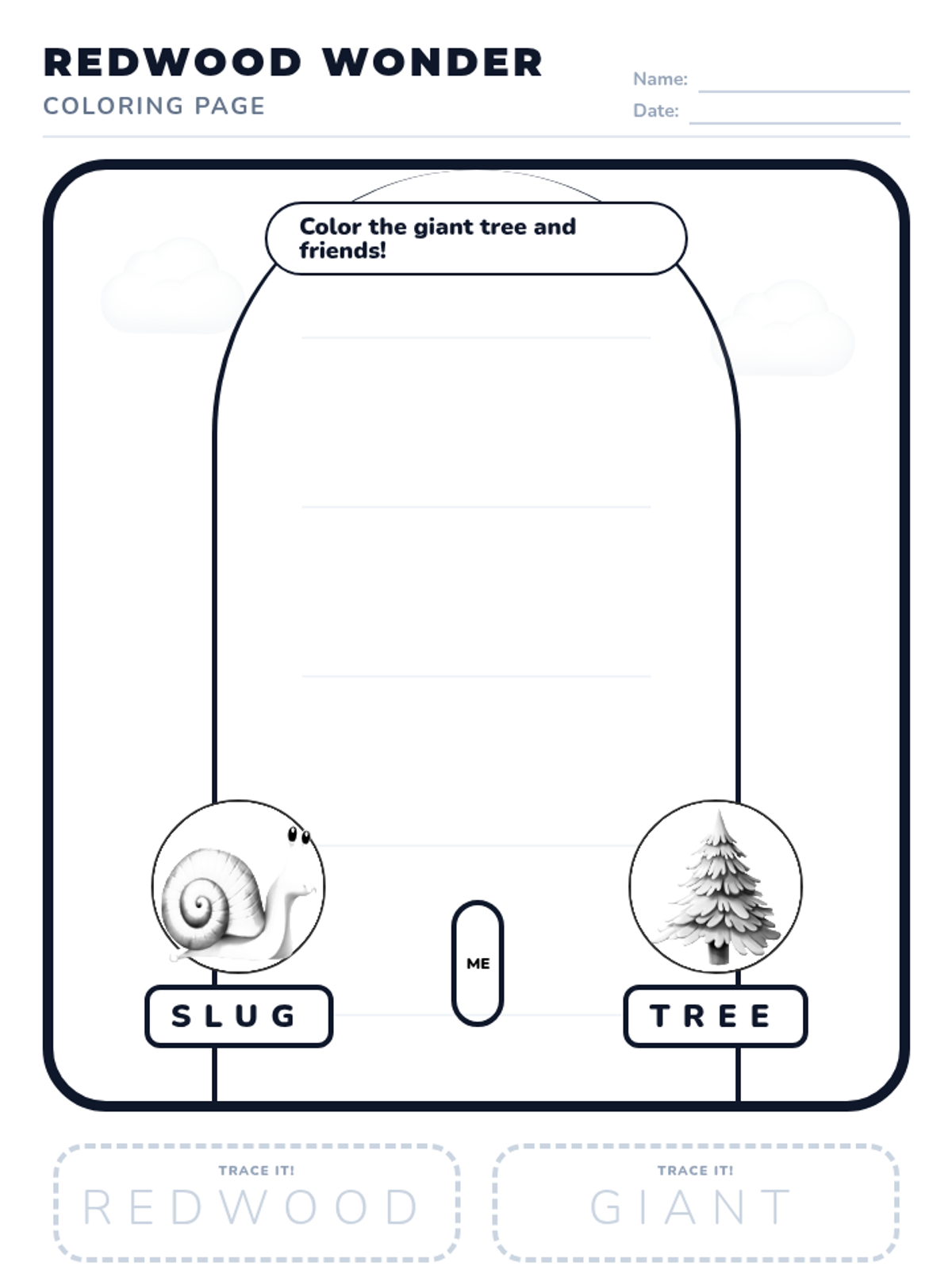
A high-contrast coloring page for kindergarteners featuring a giant redwood, a banana slug, and a scale-comparison of a person, with words for tracing. Optimized for single-page printing.
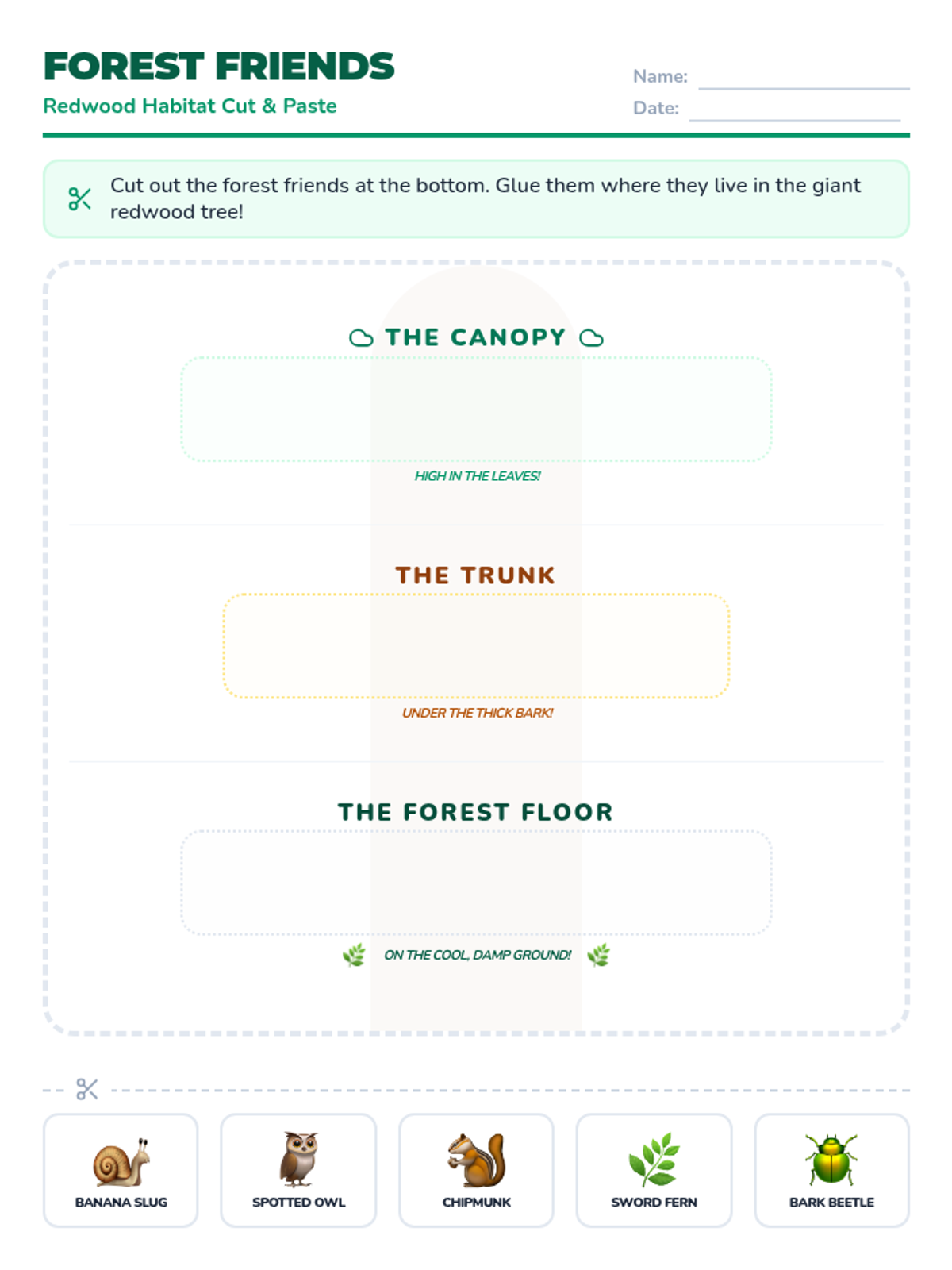
A cut-and-paste activity for kindergarteners to identify and place redwood forest animals in their correct habitat levels (canopy, trunk, or floor). Optimized for a single-page 8.5x11 print layout with clear cutting guides.
A visually-rich slide deck for kindergarteners introducing redwood tree characteristics, forest habitats, and field trip preparation.
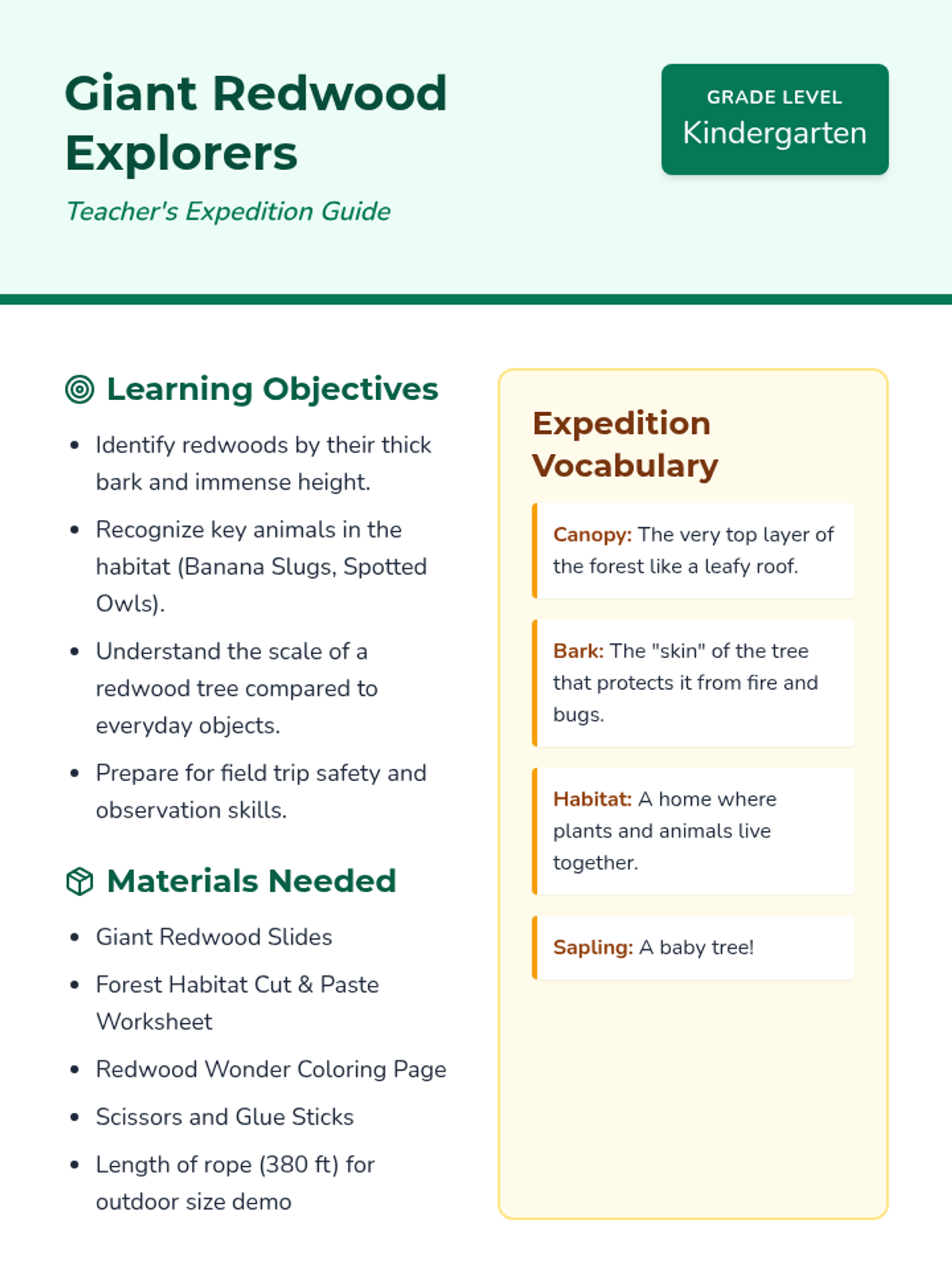
A comprehensive teacher's guide for introducing kindergarteners to redwood forests, including learning objectives, a step-by-step instructional path, and classroom discussion prompts.
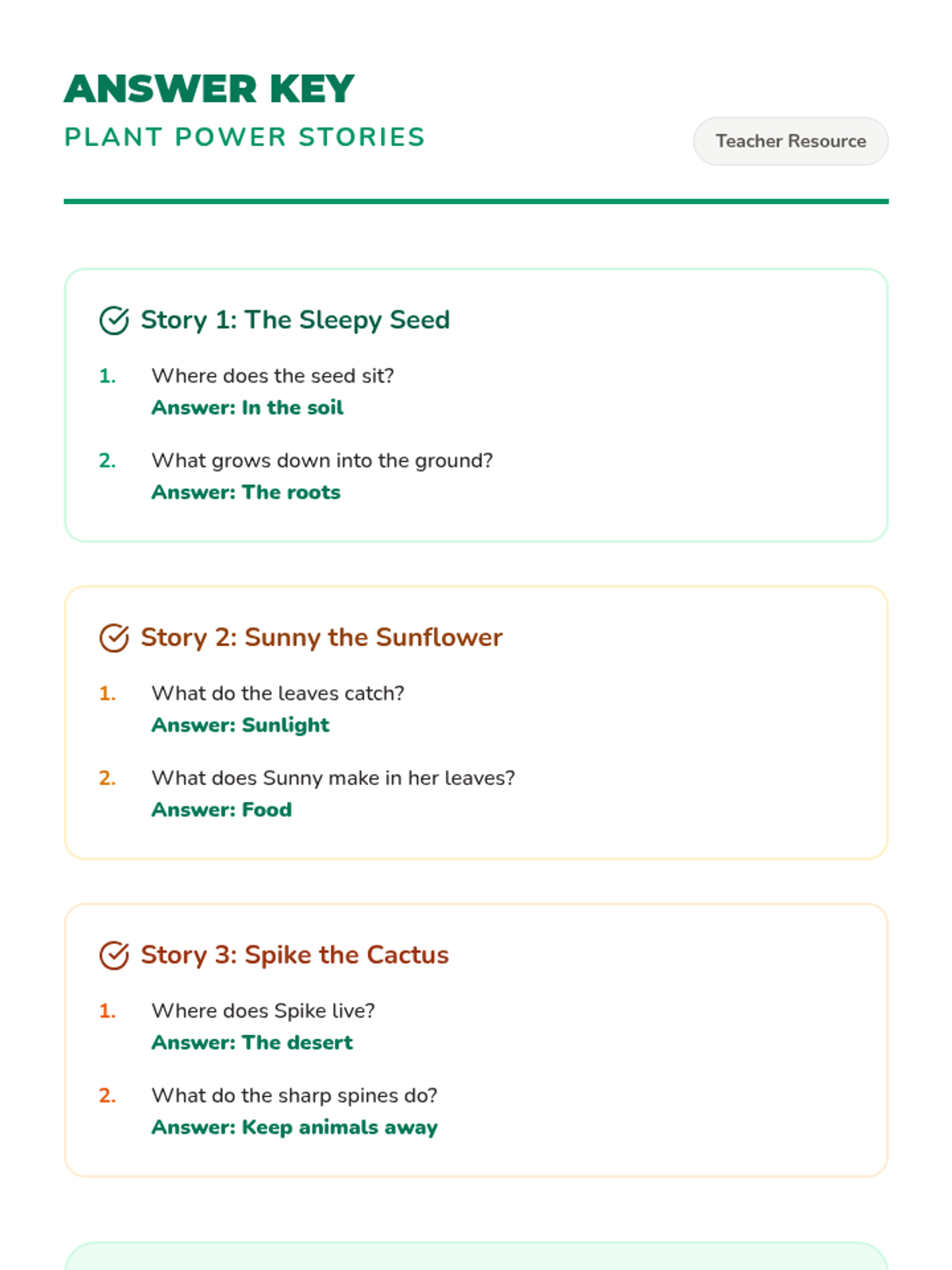
Answer key for the Plant Power Stories worksheet, including correct multiple-choice answers and brief teacher tips.