Fundamental biological structures and processes from microscopic cells and genetic inheritance to complex body systems and global ecosystems. Addresses plant and animal adaptations, trait expression, and the cycles of life and cell division.
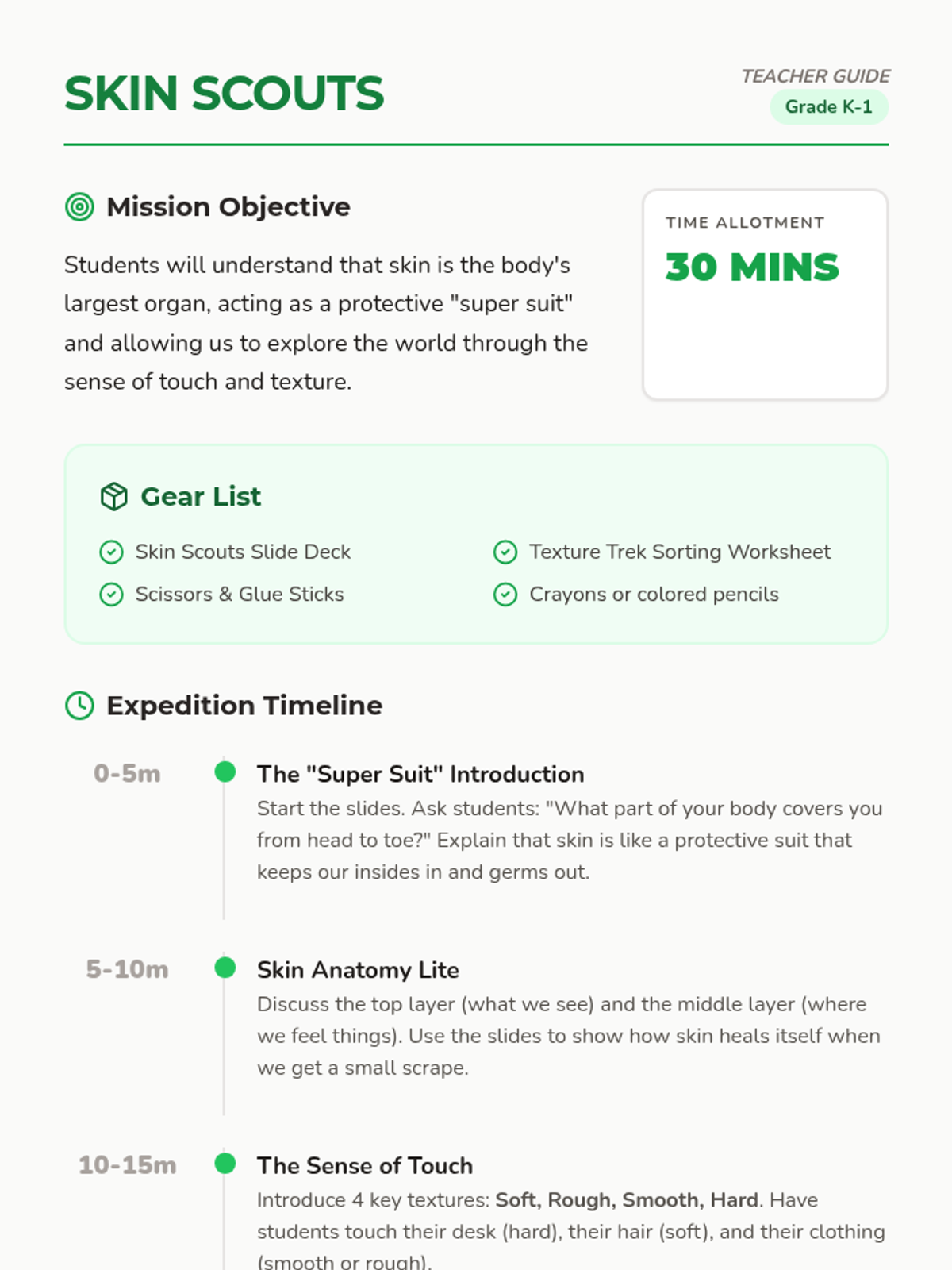
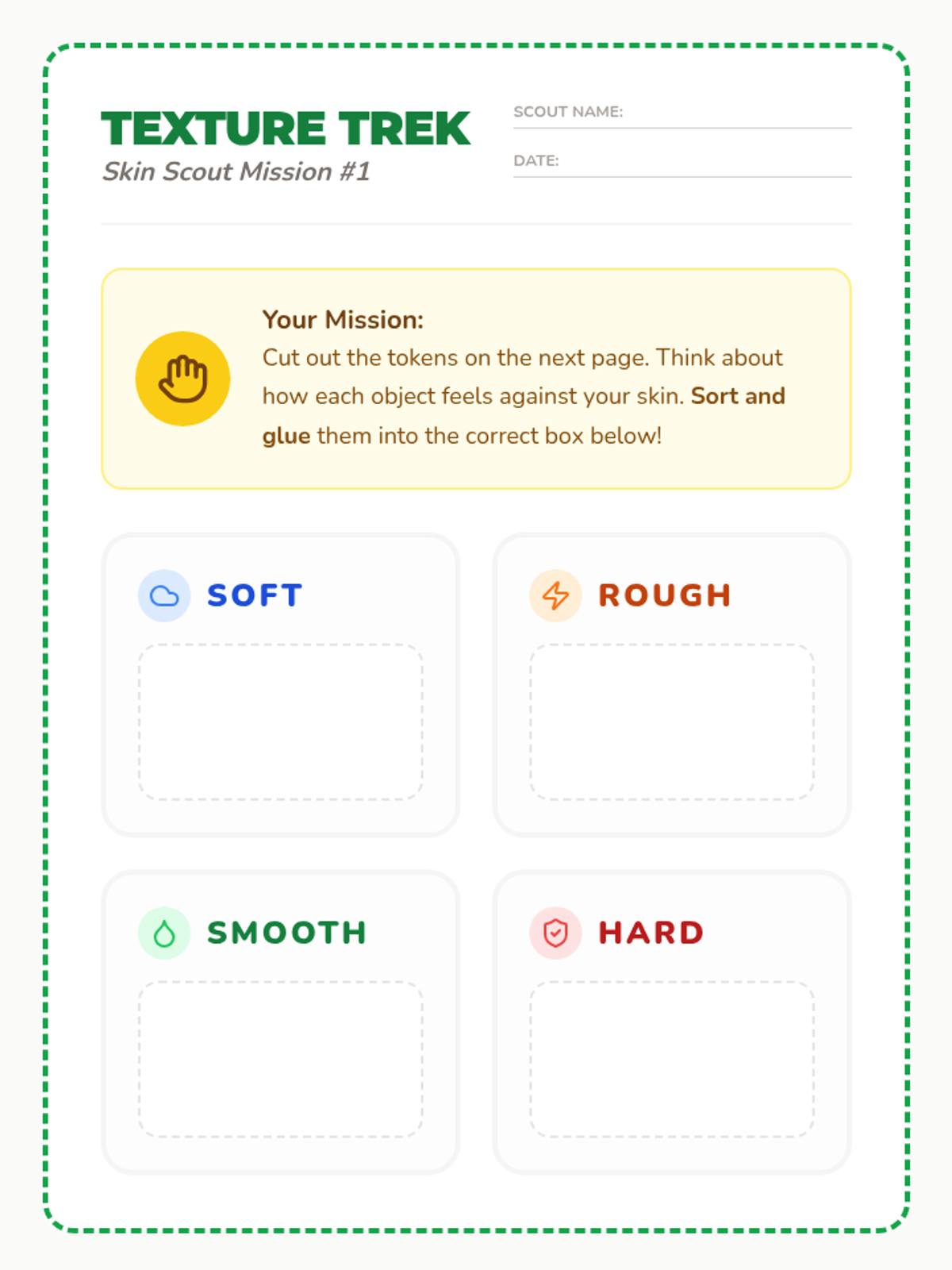
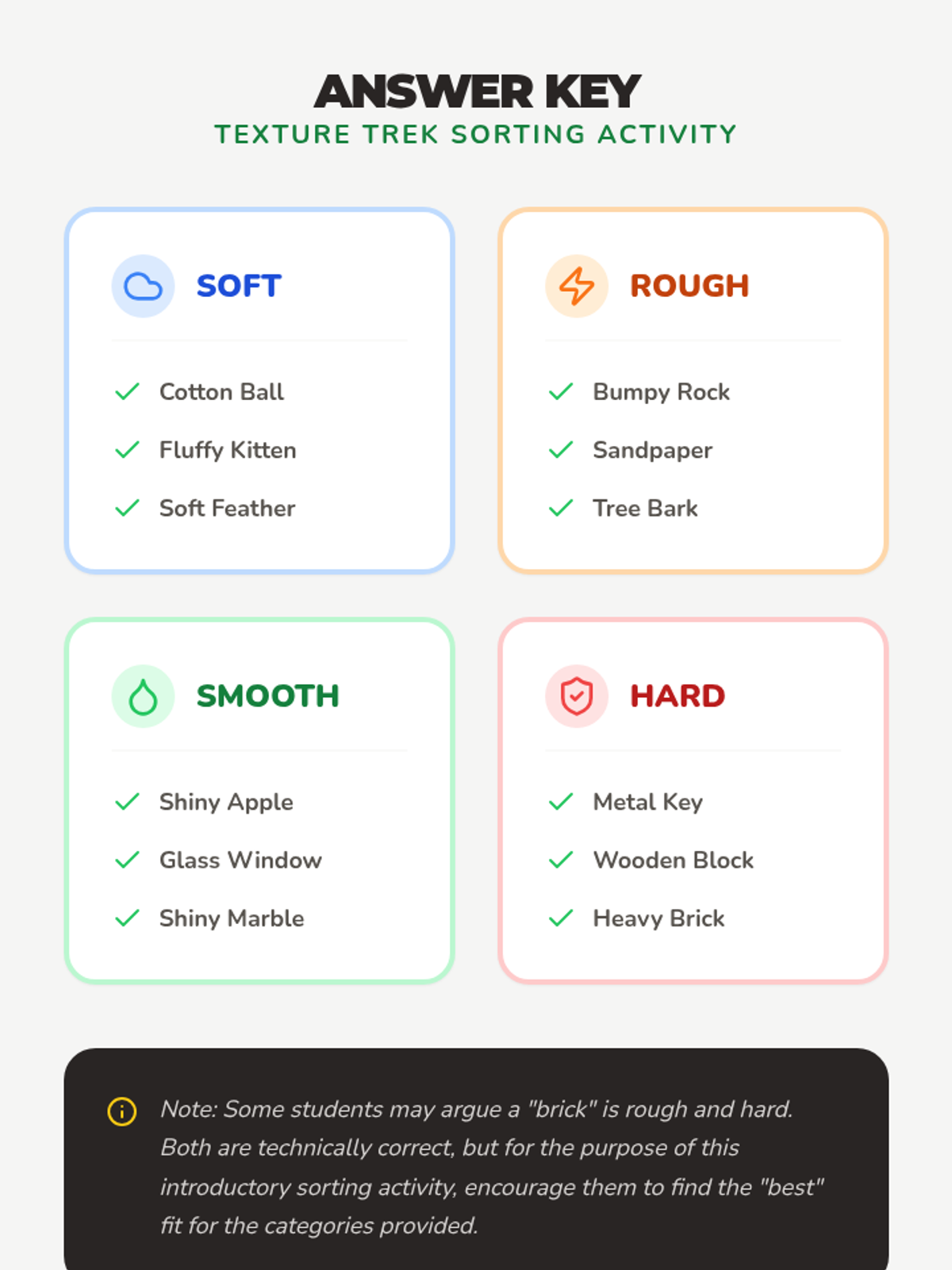
A 30-minute introductory lesson for K-1 students to learn about skin's protective role and the sense of touch through a texture-sorting activity.
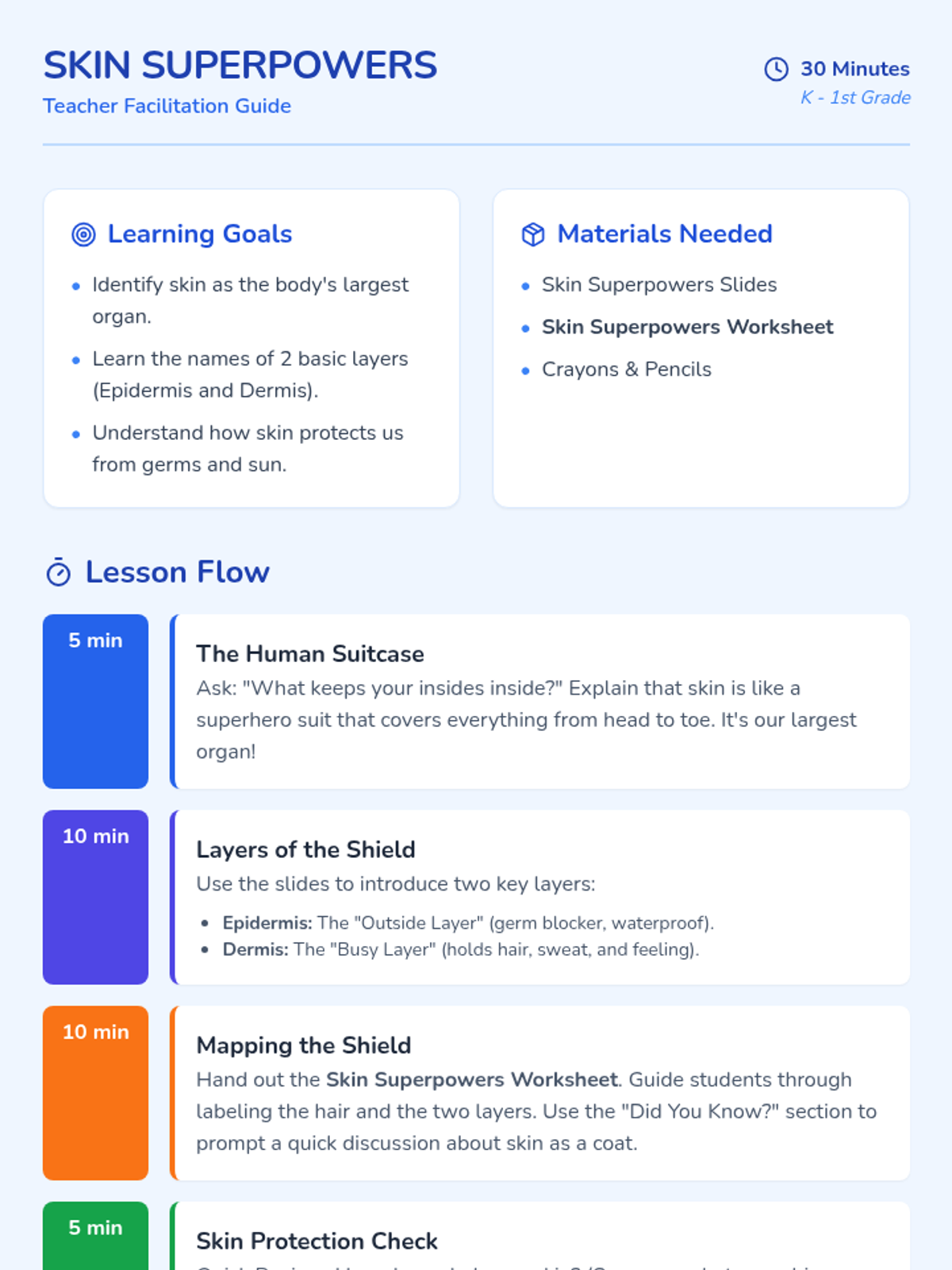
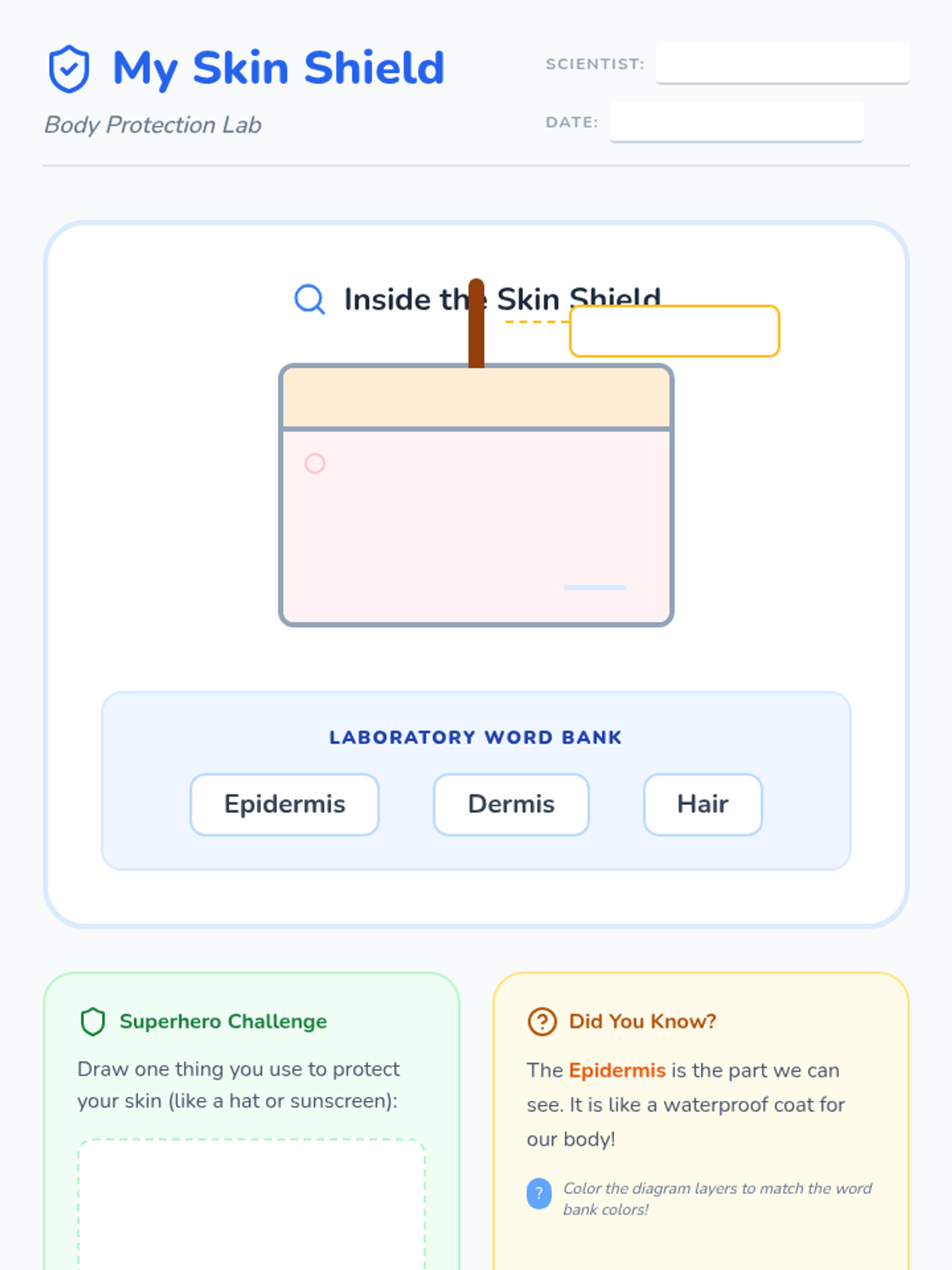
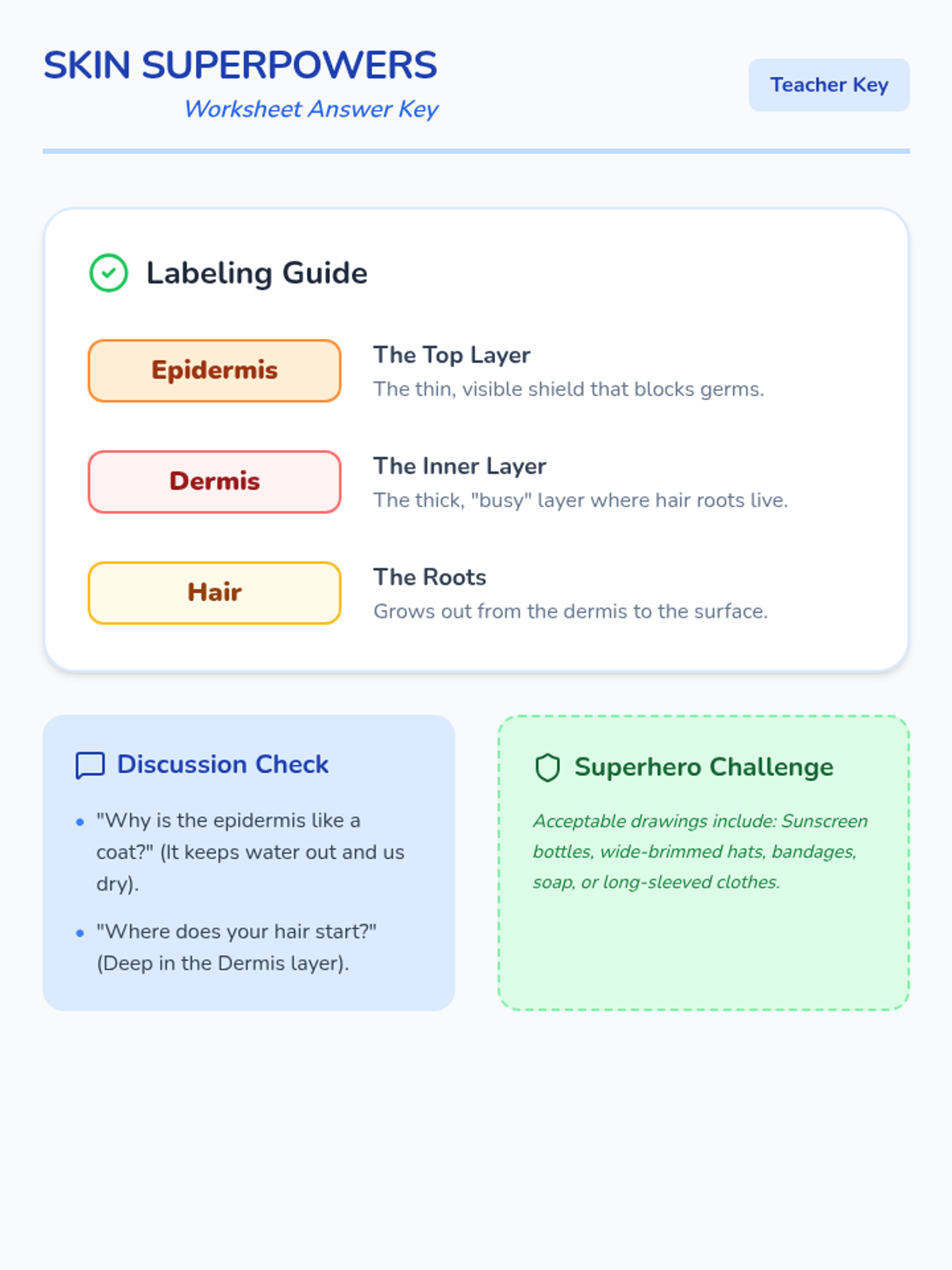
A 30-minute introductory lesson for K-1 students about the skin's layers and its role as a protective shield for the body.
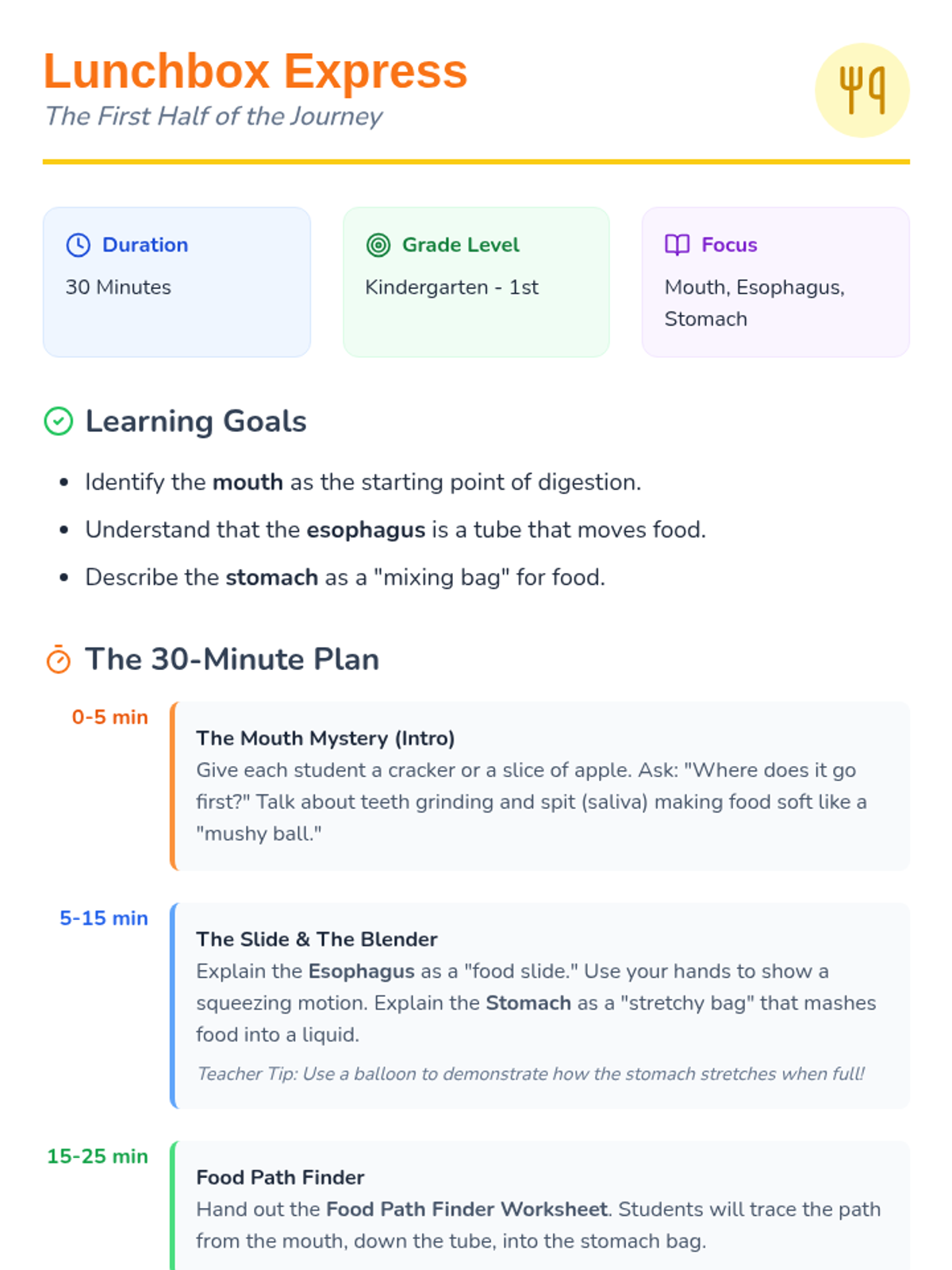
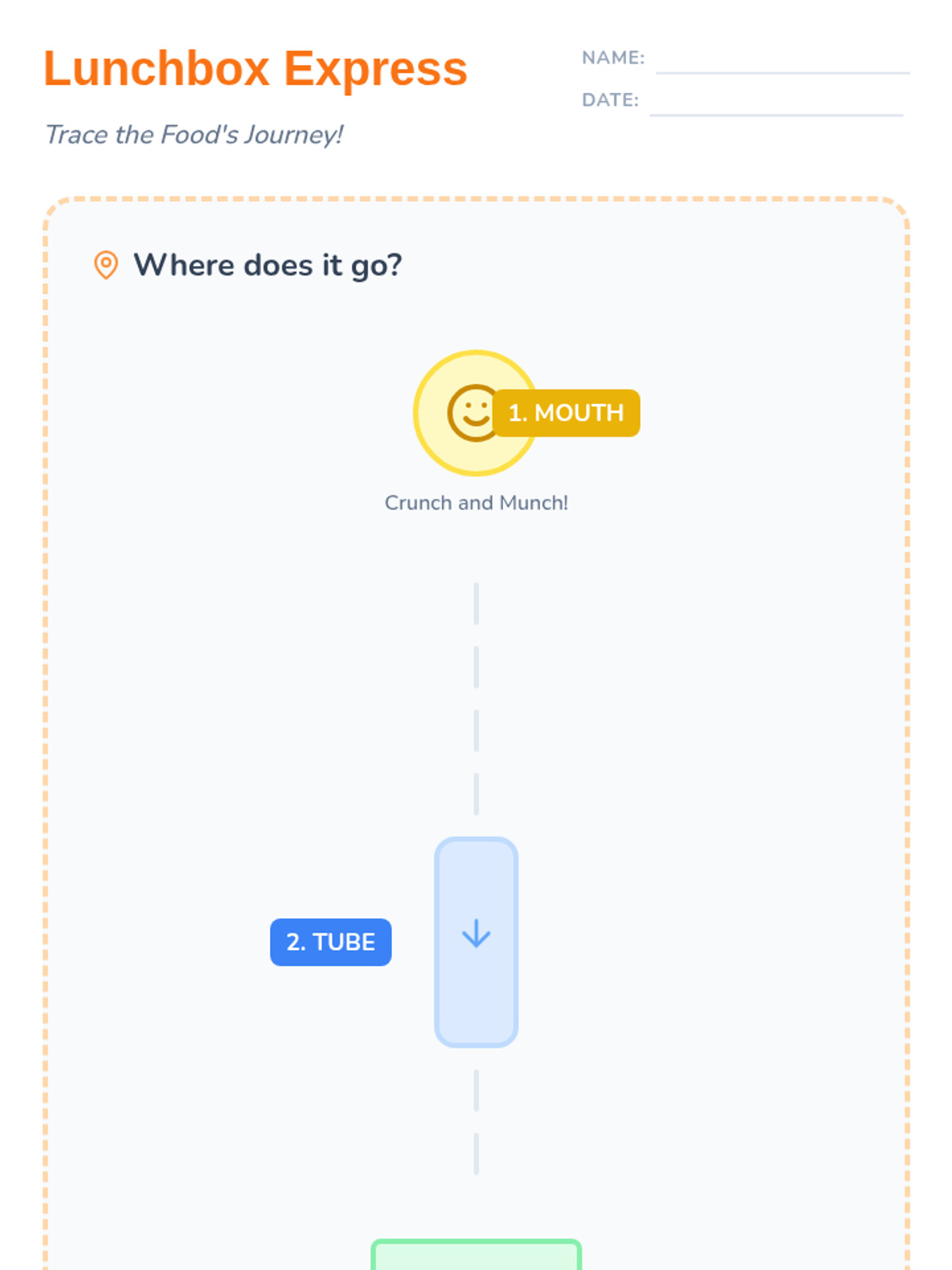
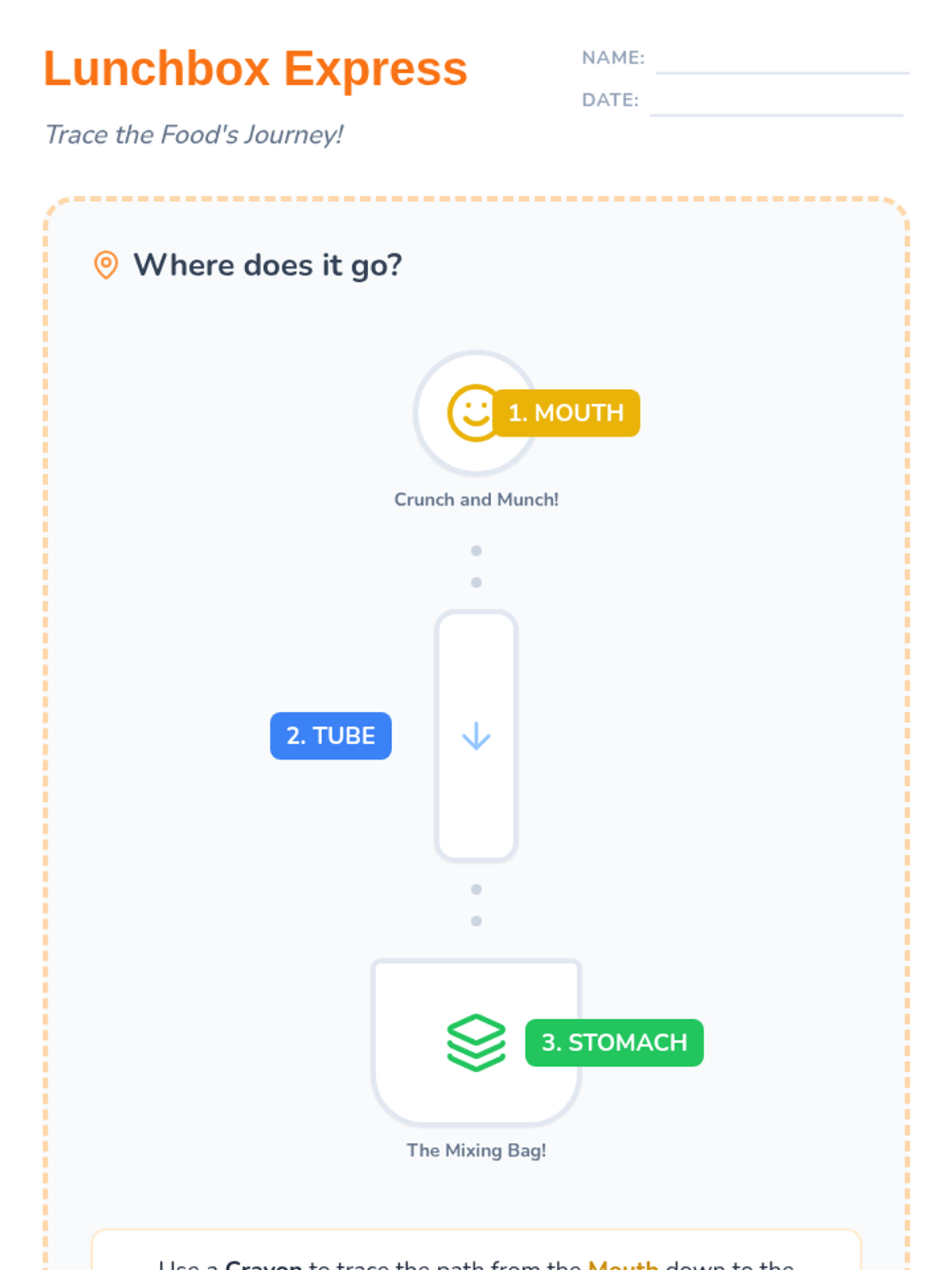
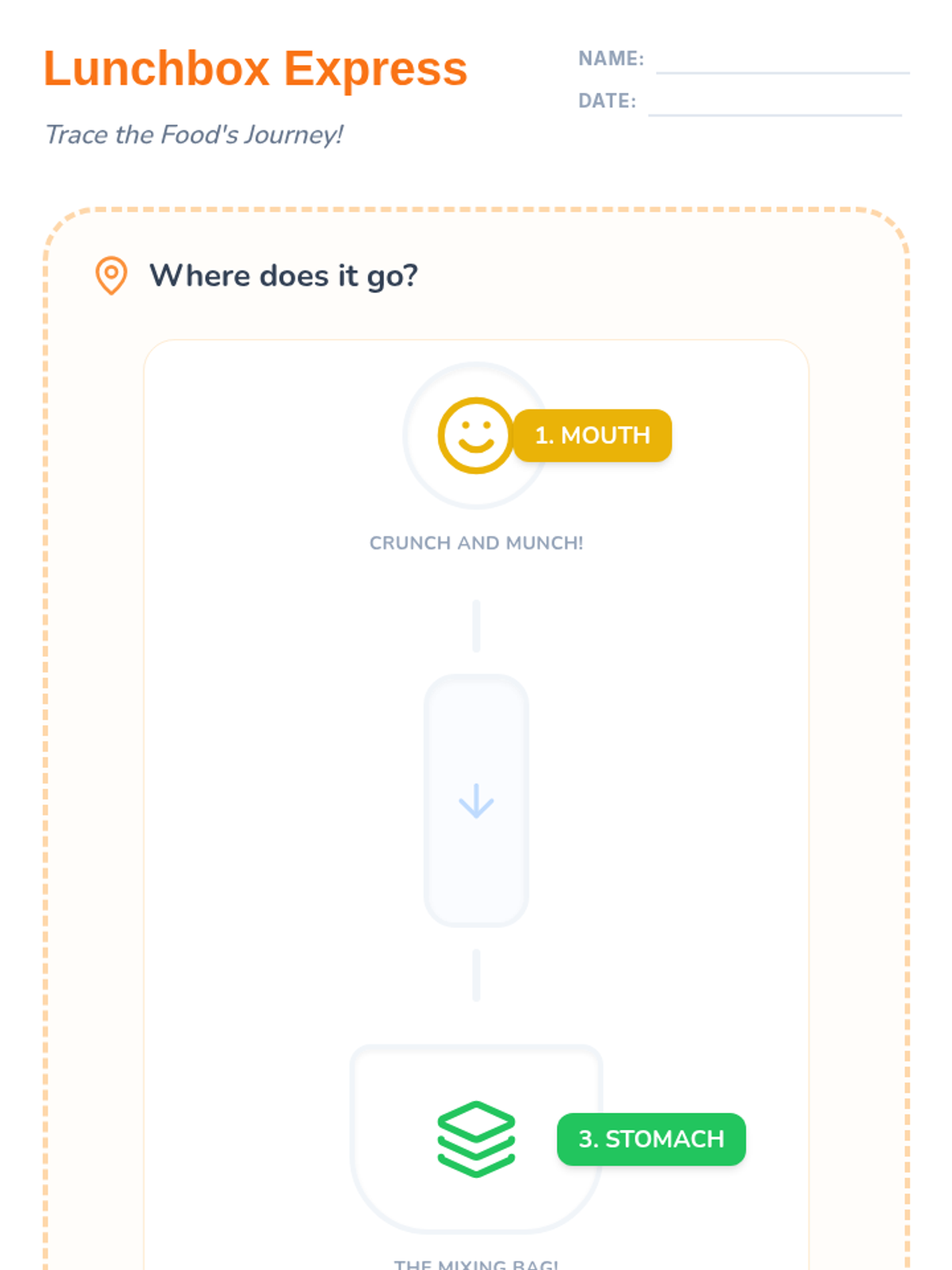
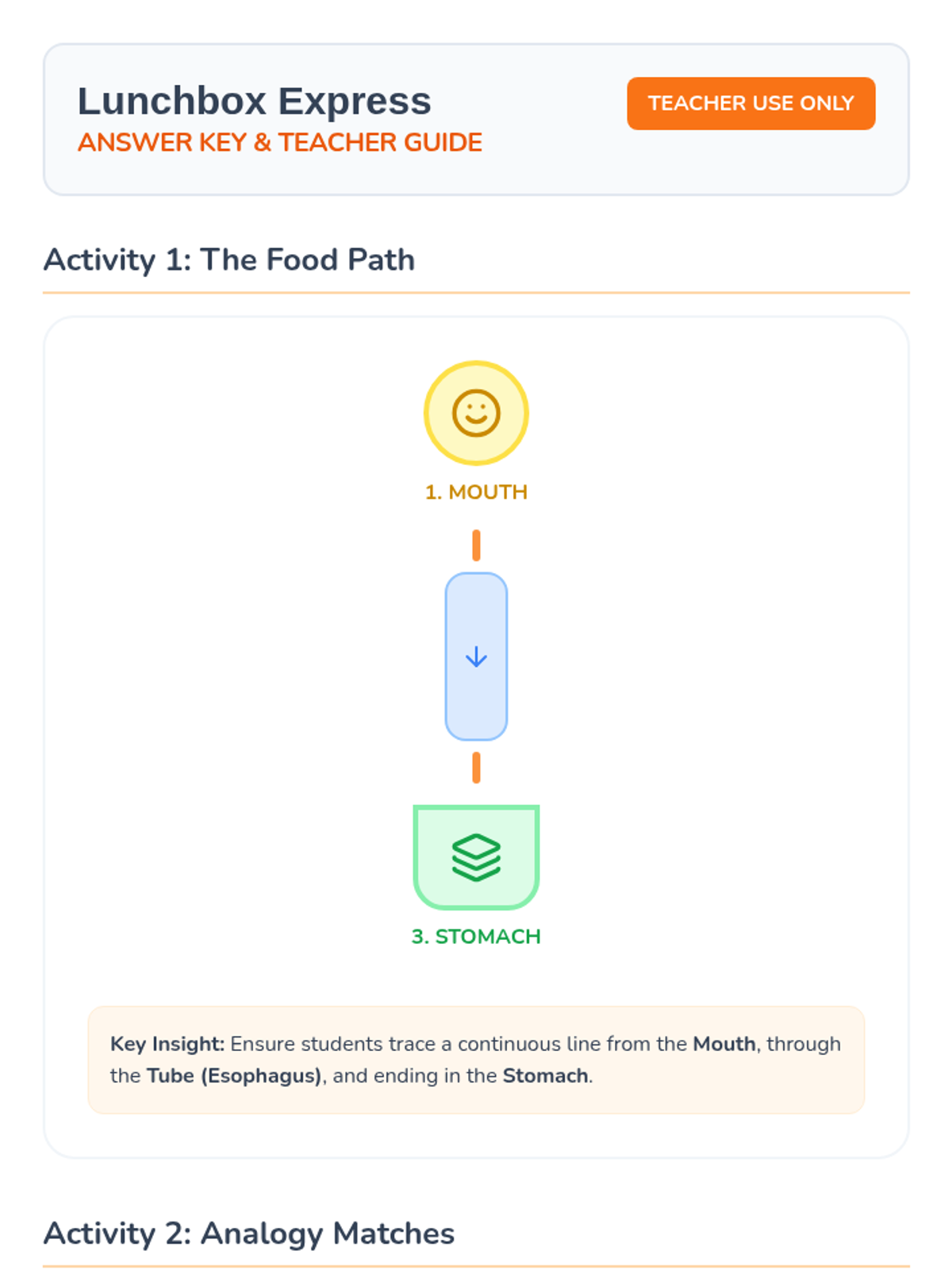
A high-energy, 30-minute introduction to the first half of the digestive system (mouth to stomach) designed for K-1 students. Includes a guided exploration of how food travels and a hands-on activity sheet.
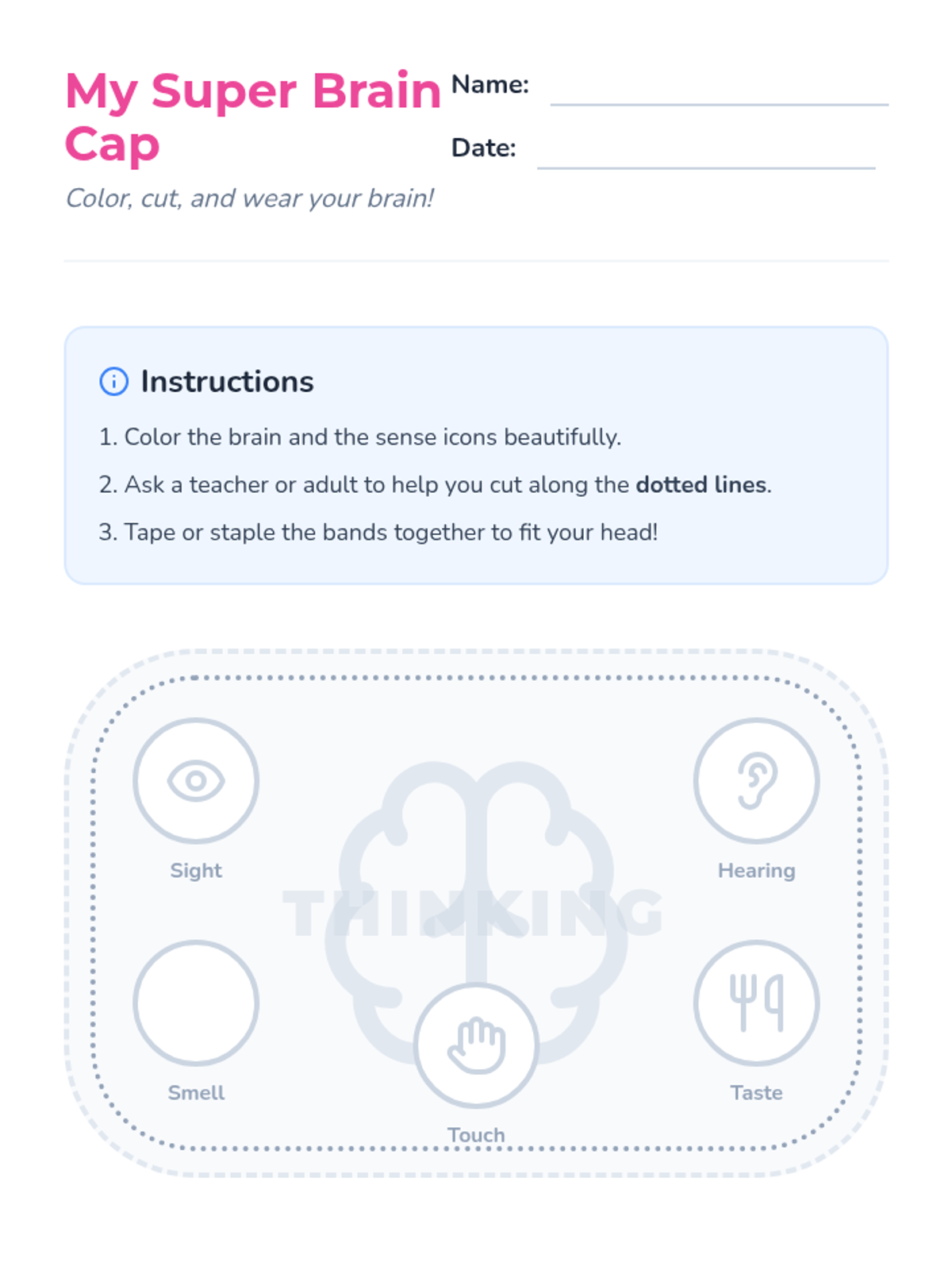
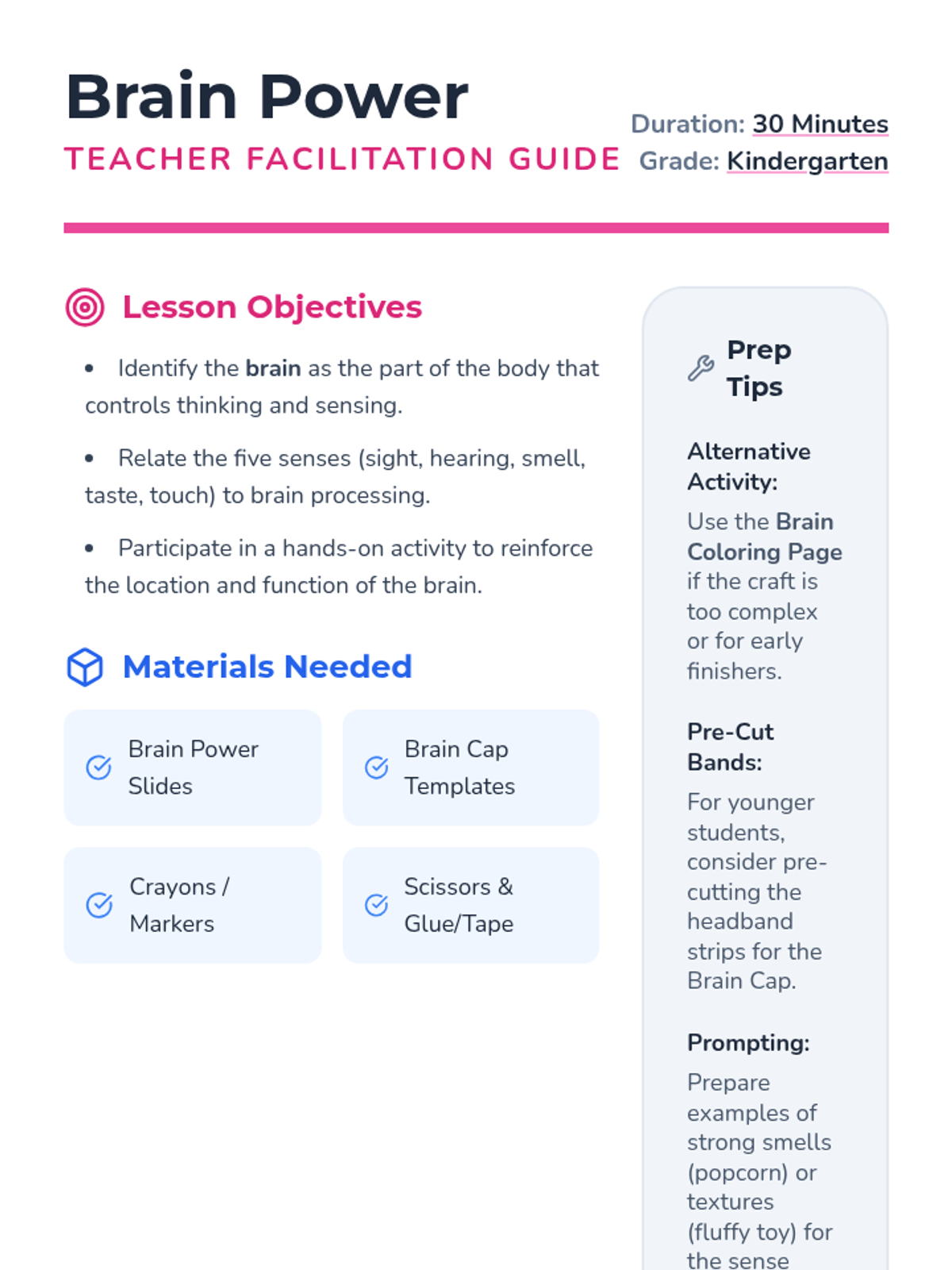
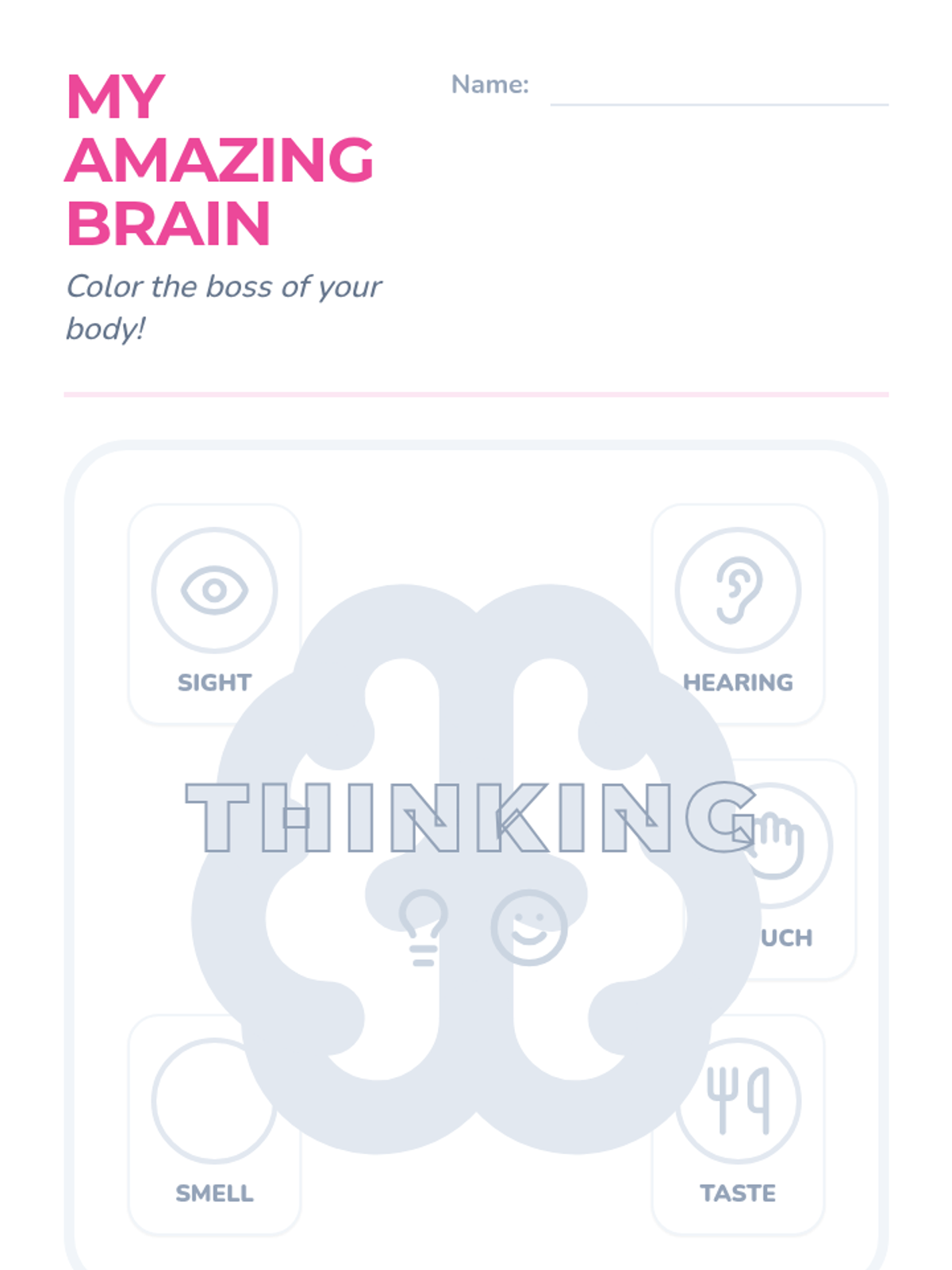
A 30-minute introductory lesson for kindergarteners about the brain, focusing on its role in thinking and processing the five senses. includes a presentation, teacher guide, and a wearable brain hat craft.
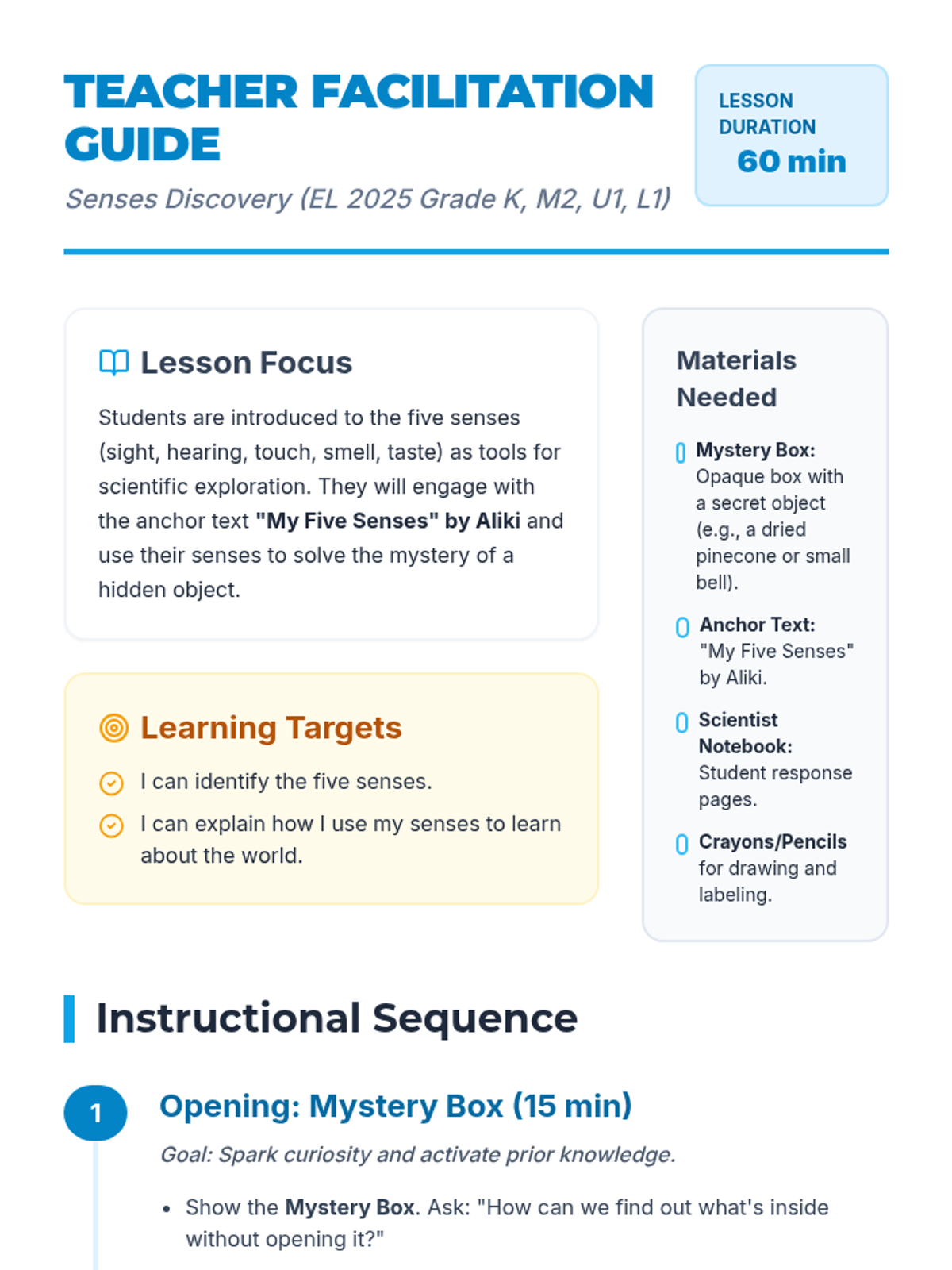
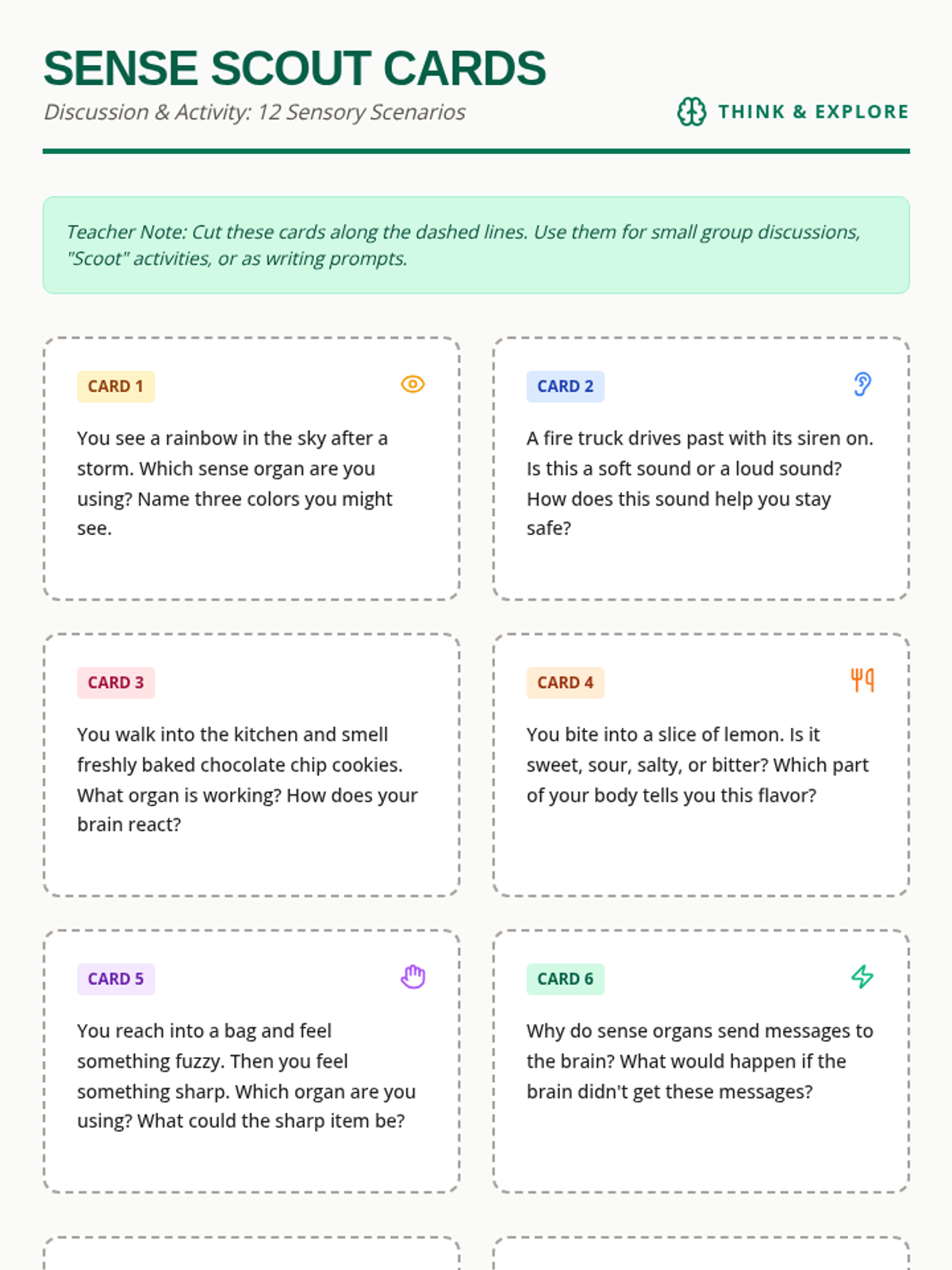
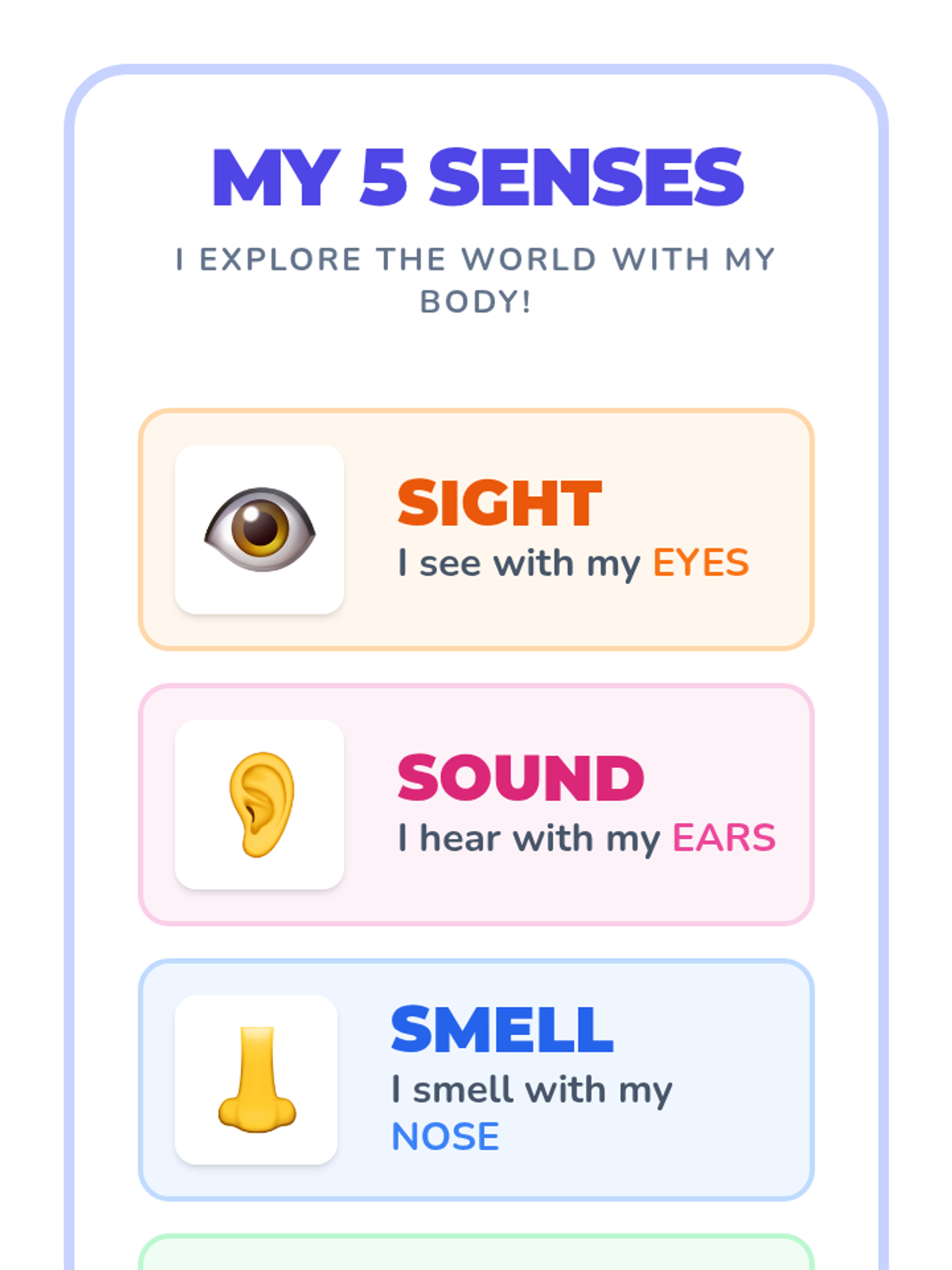
In this introductory lesson, Kindergarten students embark on a scientific journey to discover their five senses. Through a mystery box activity and collaborative discussion, they begin to explore how they use sight, hearing, smell, taste, and touch to understand the world around them.
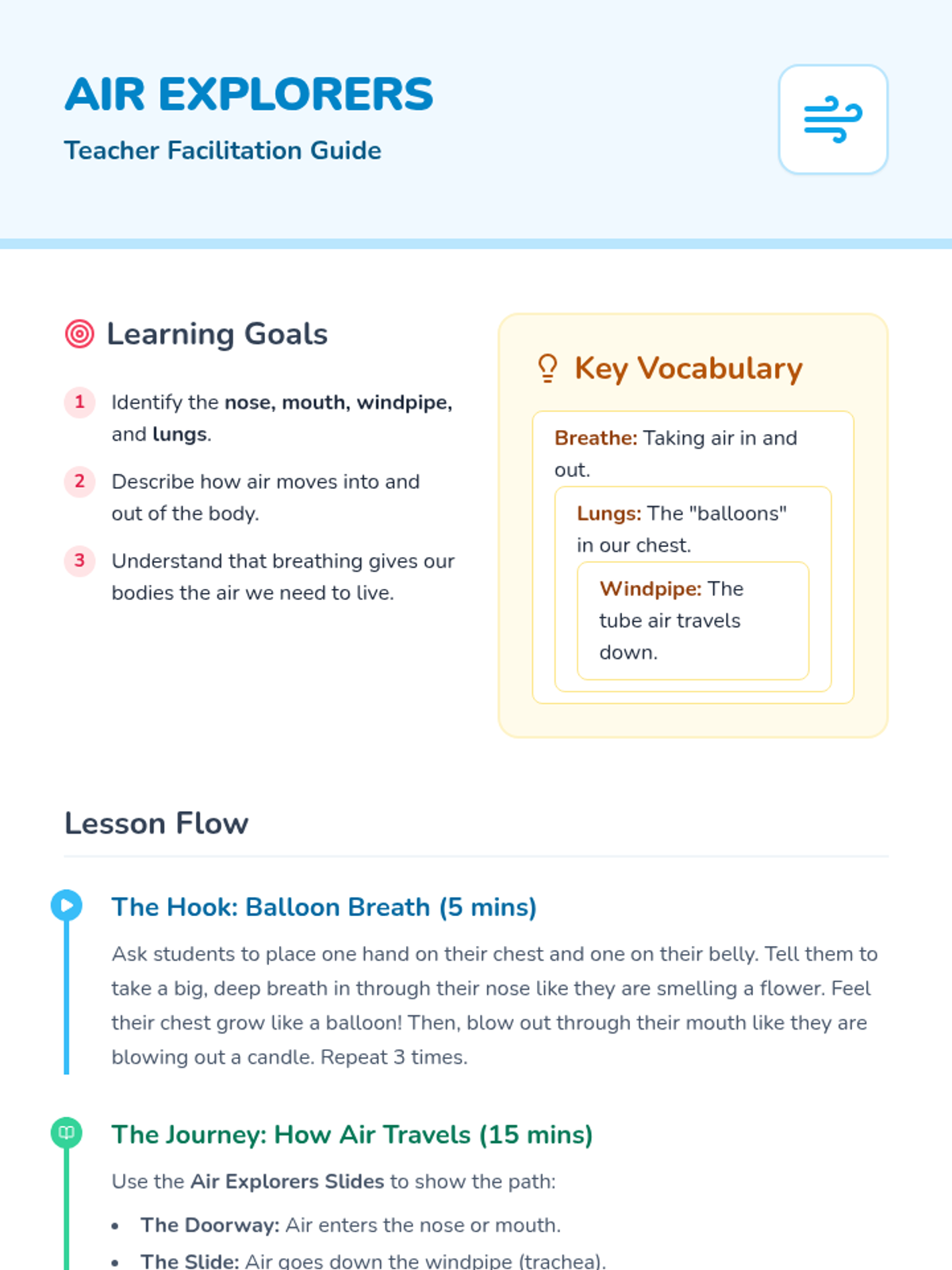
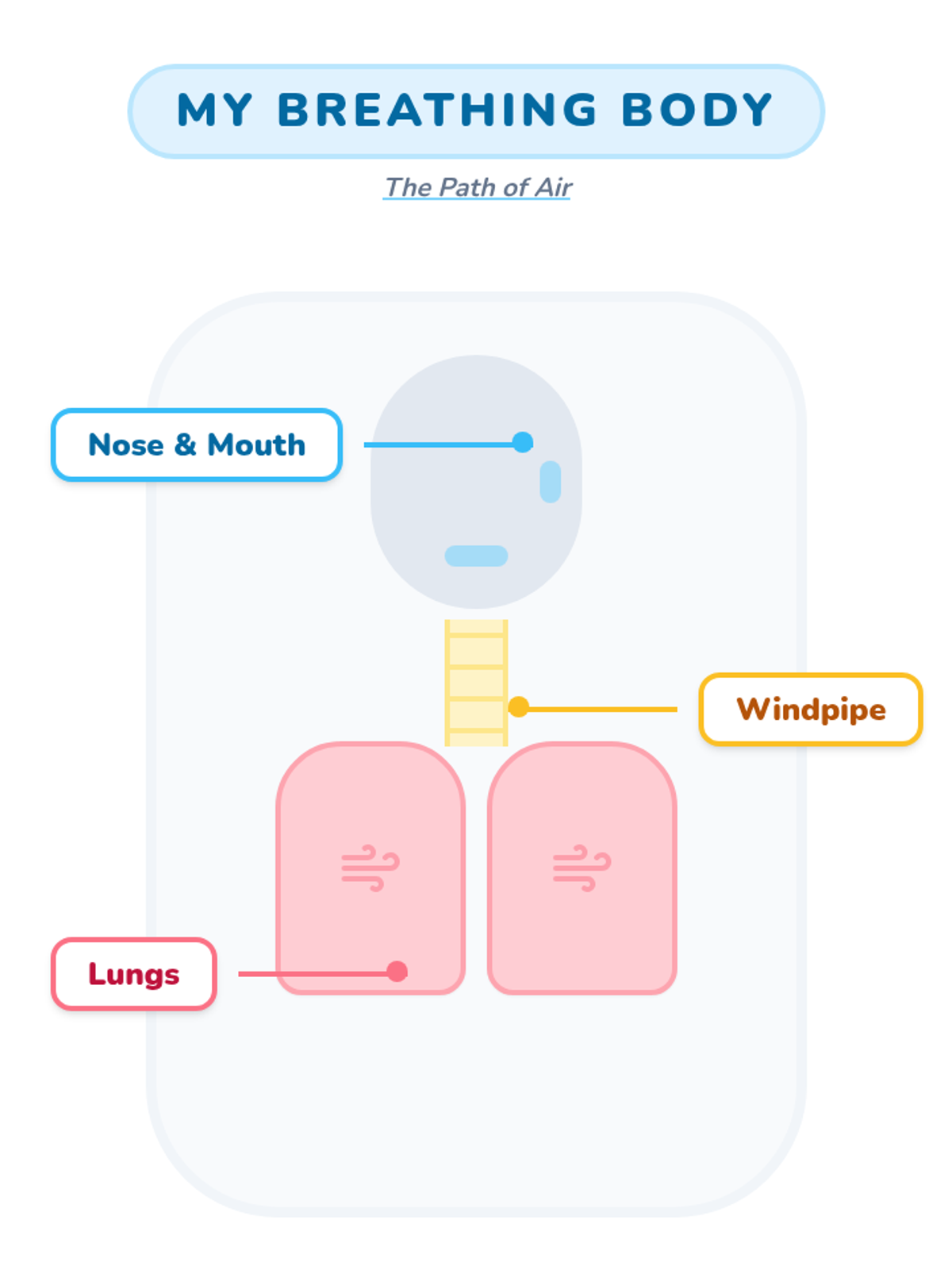
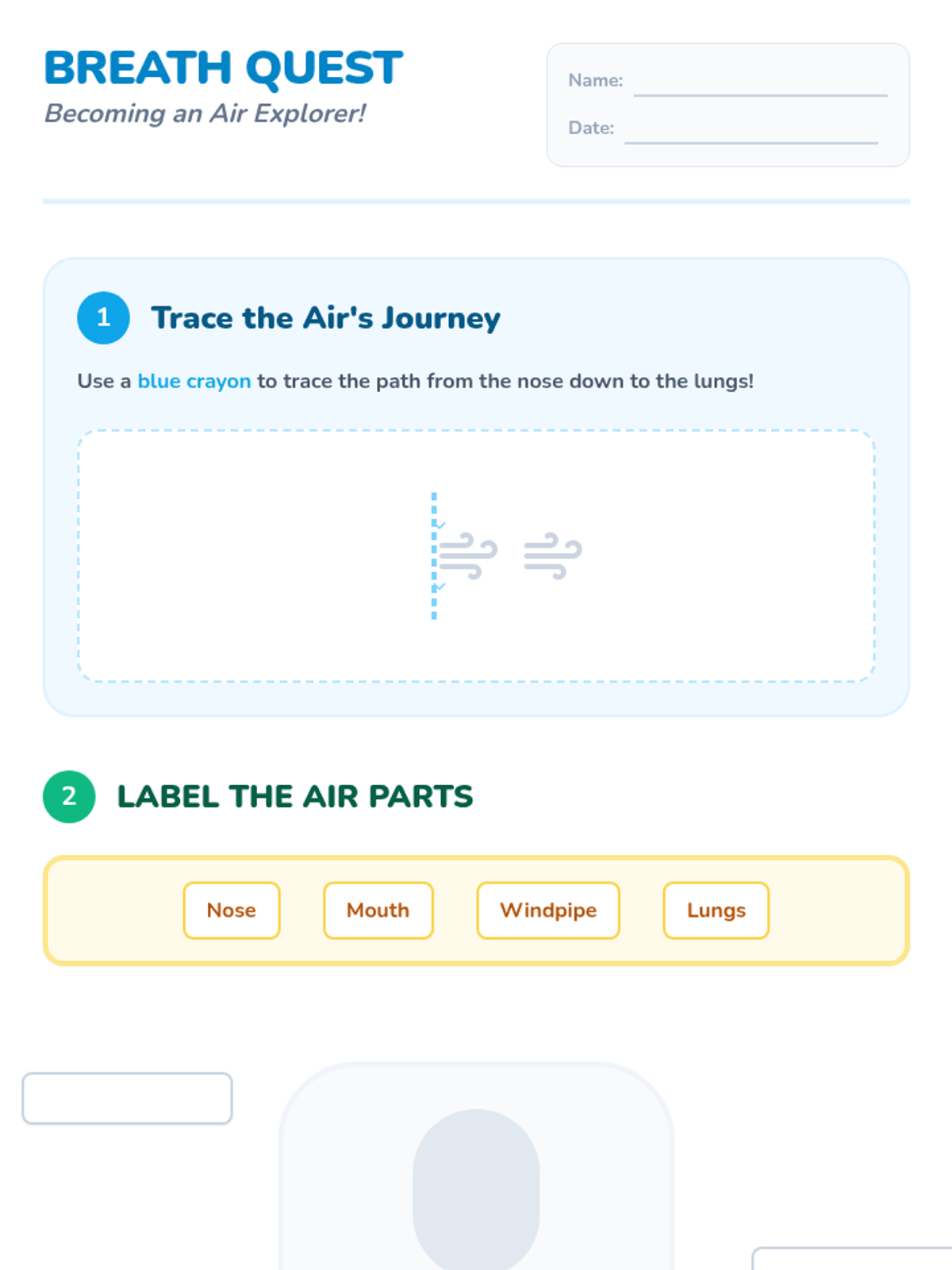
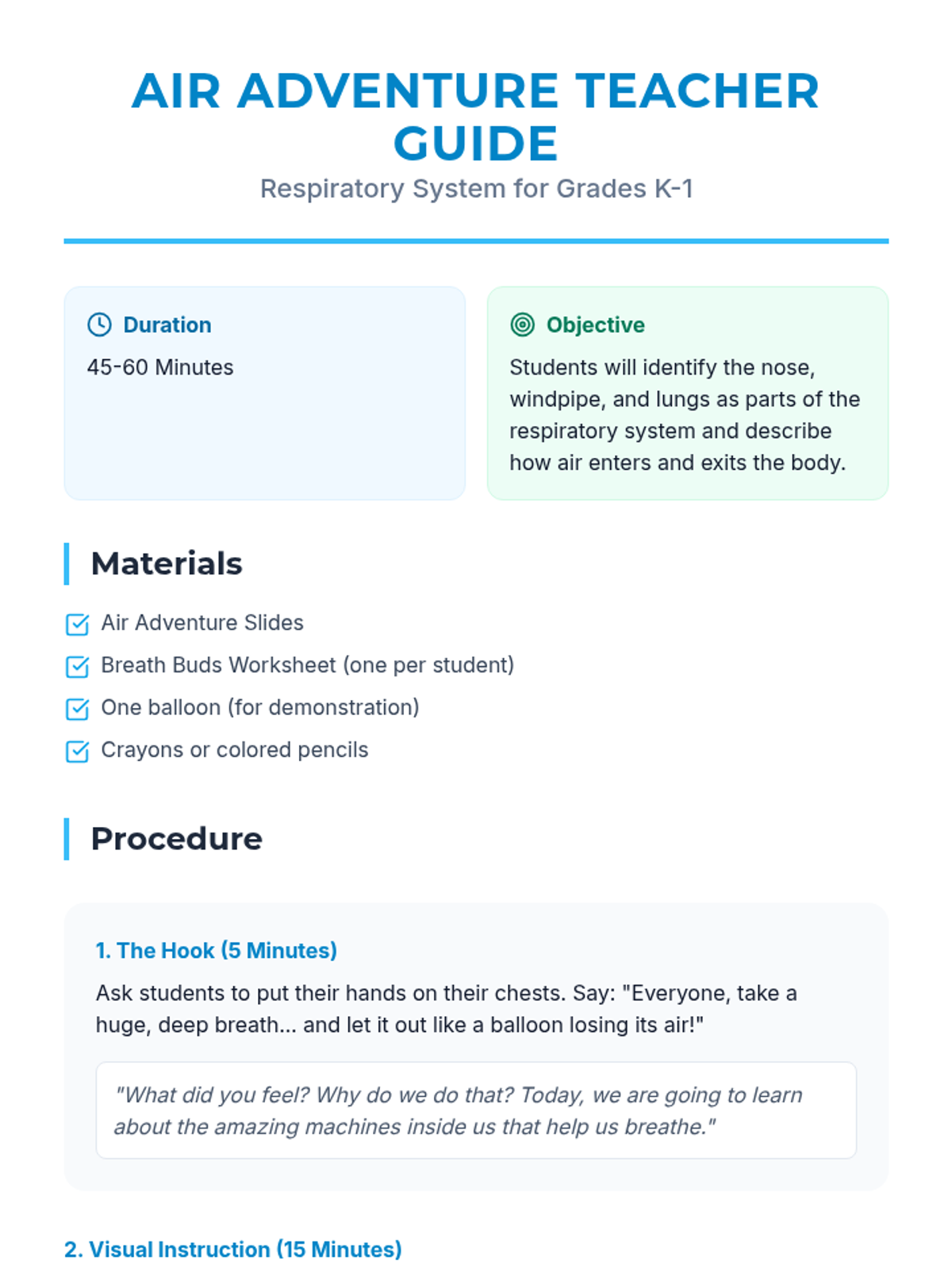
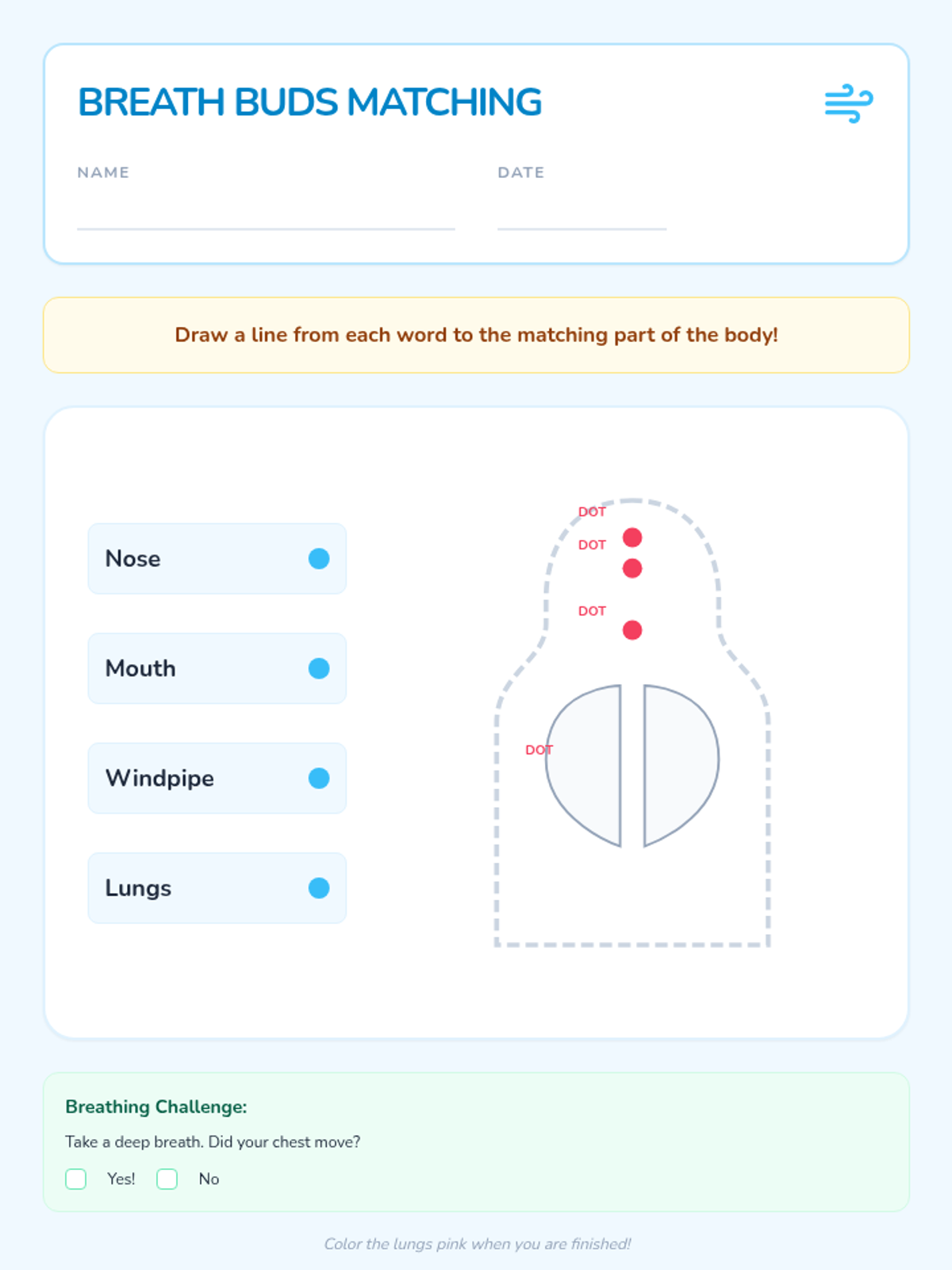
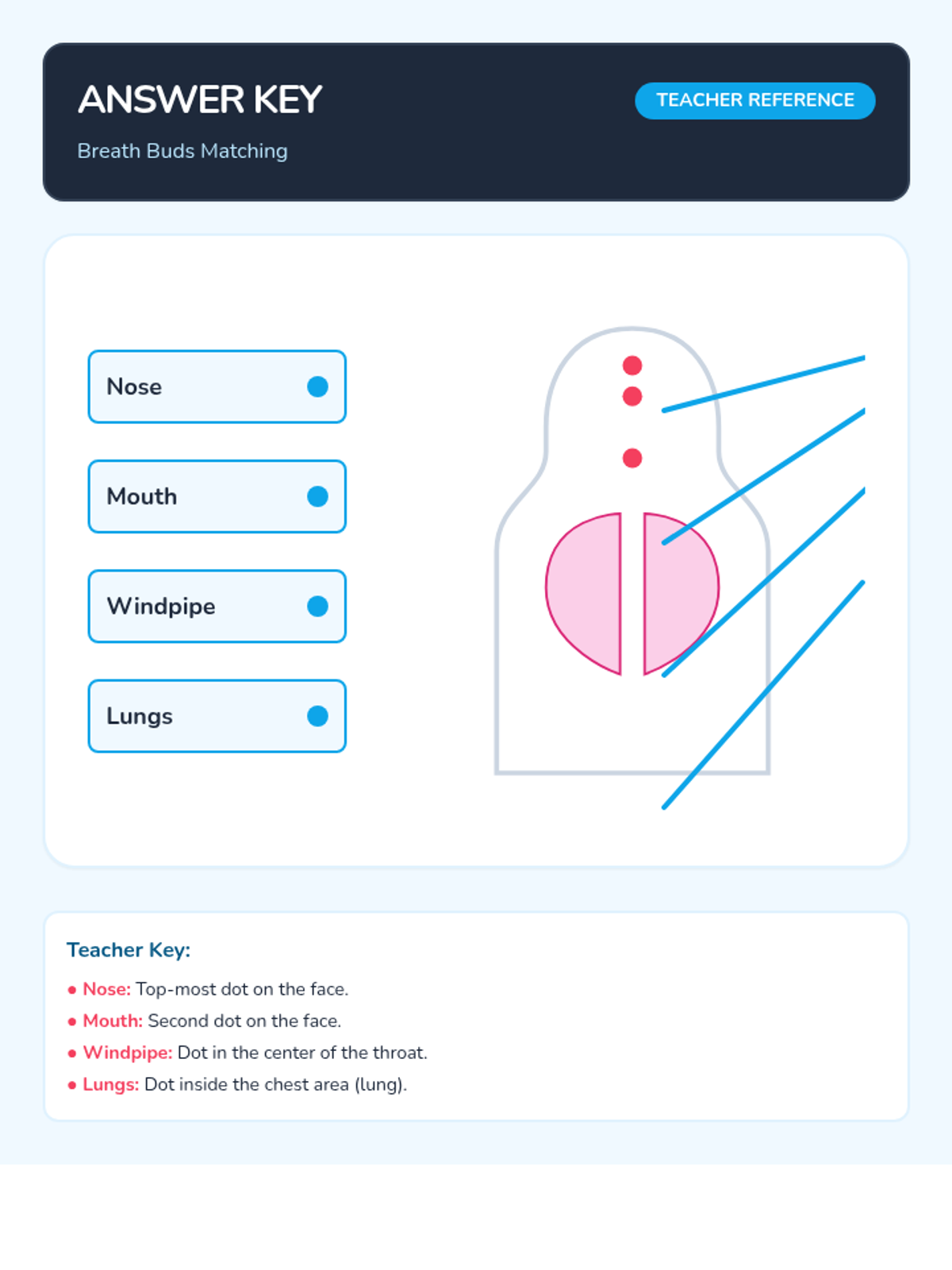
A gentle introduction to the respiratory system for young learners, focusing on the path air takes through our bodies using the metaphor of 'Air Explorers'. Students will learn about the nose, mouth, windpipe, and lungs through simple diagrams and interactive activities.
An introductory lesson for early elementary students exploring how we breathe, the journey of air through our bodies, and the main parts of the respiratory system.
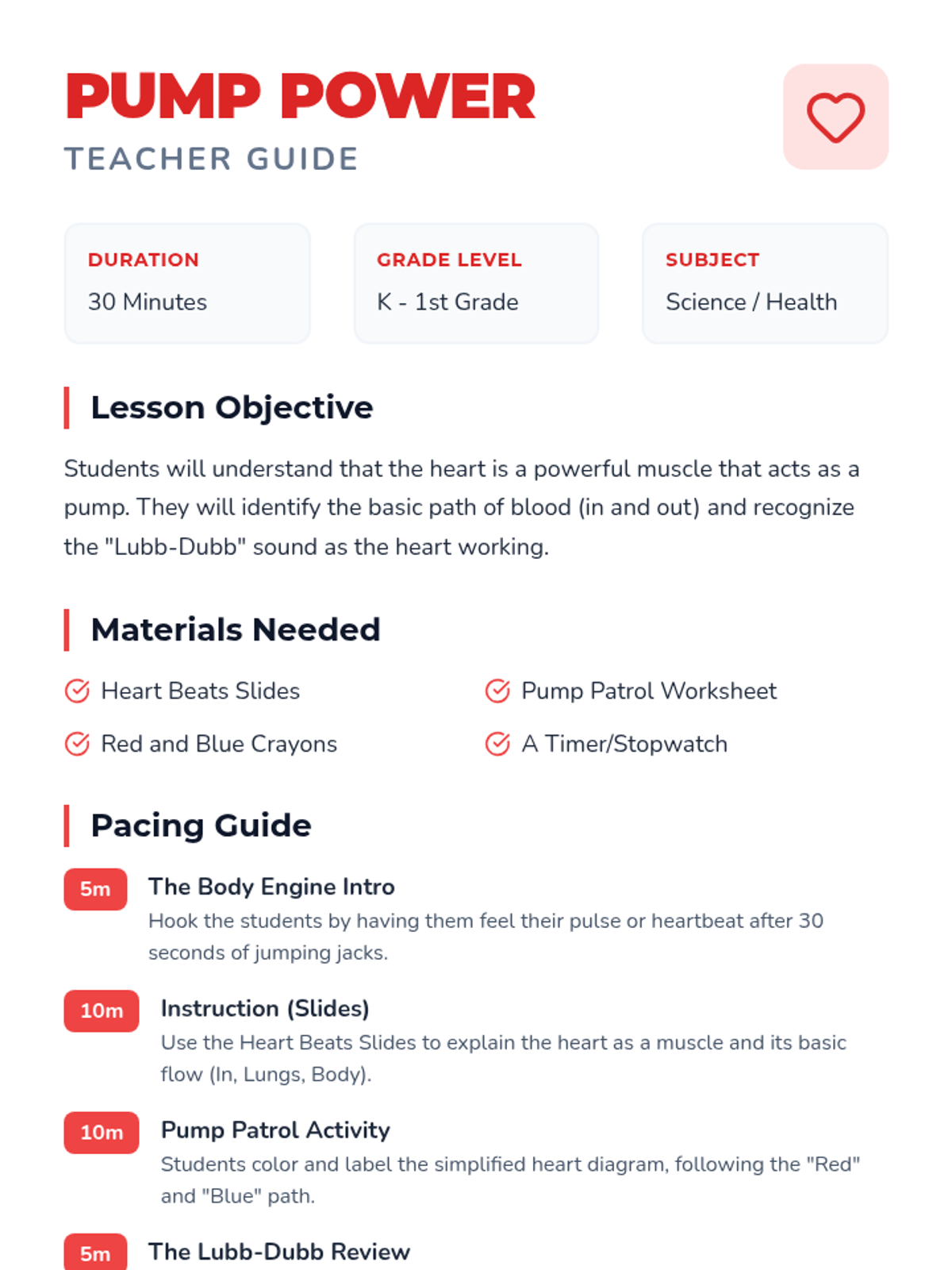
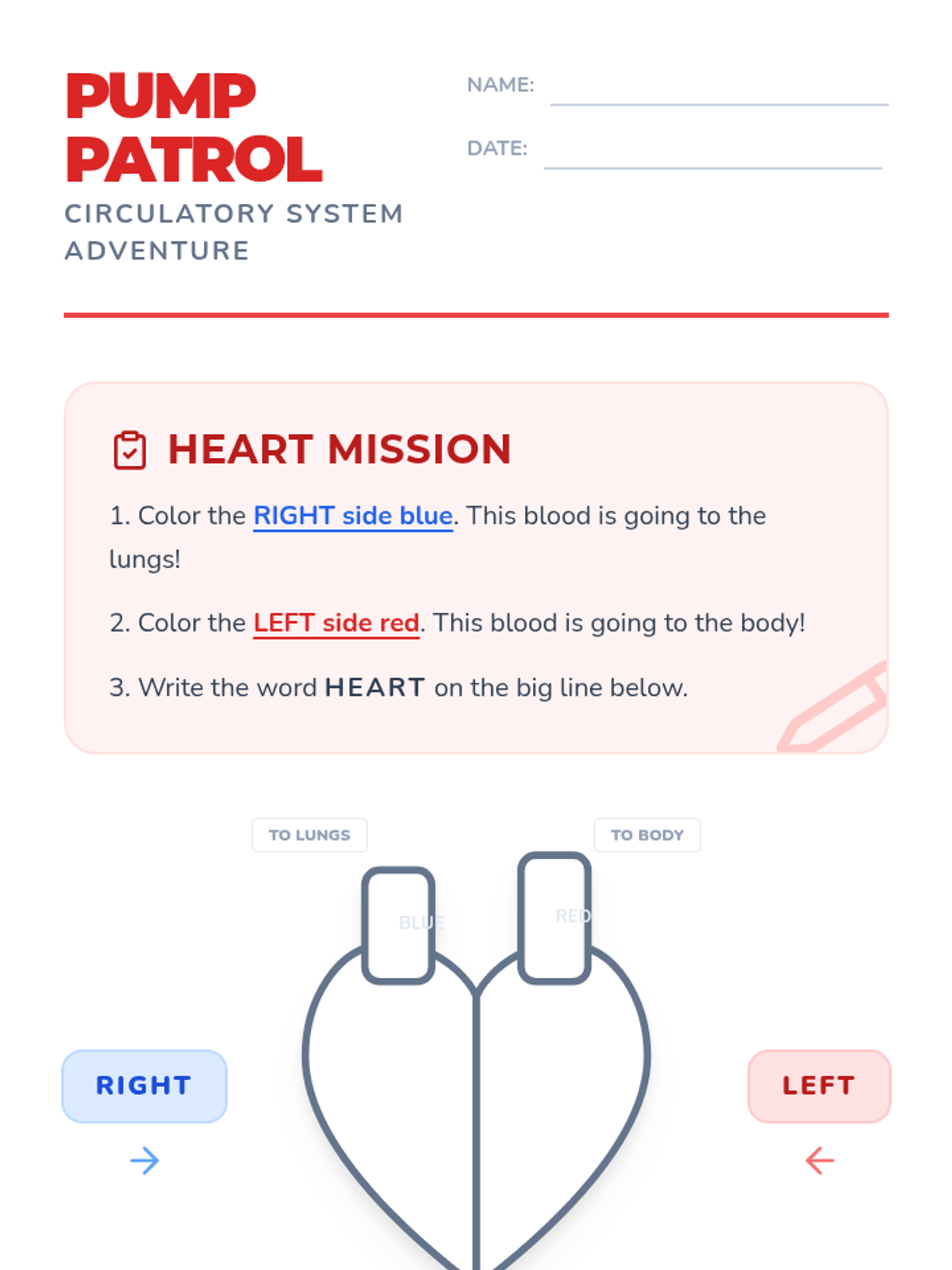
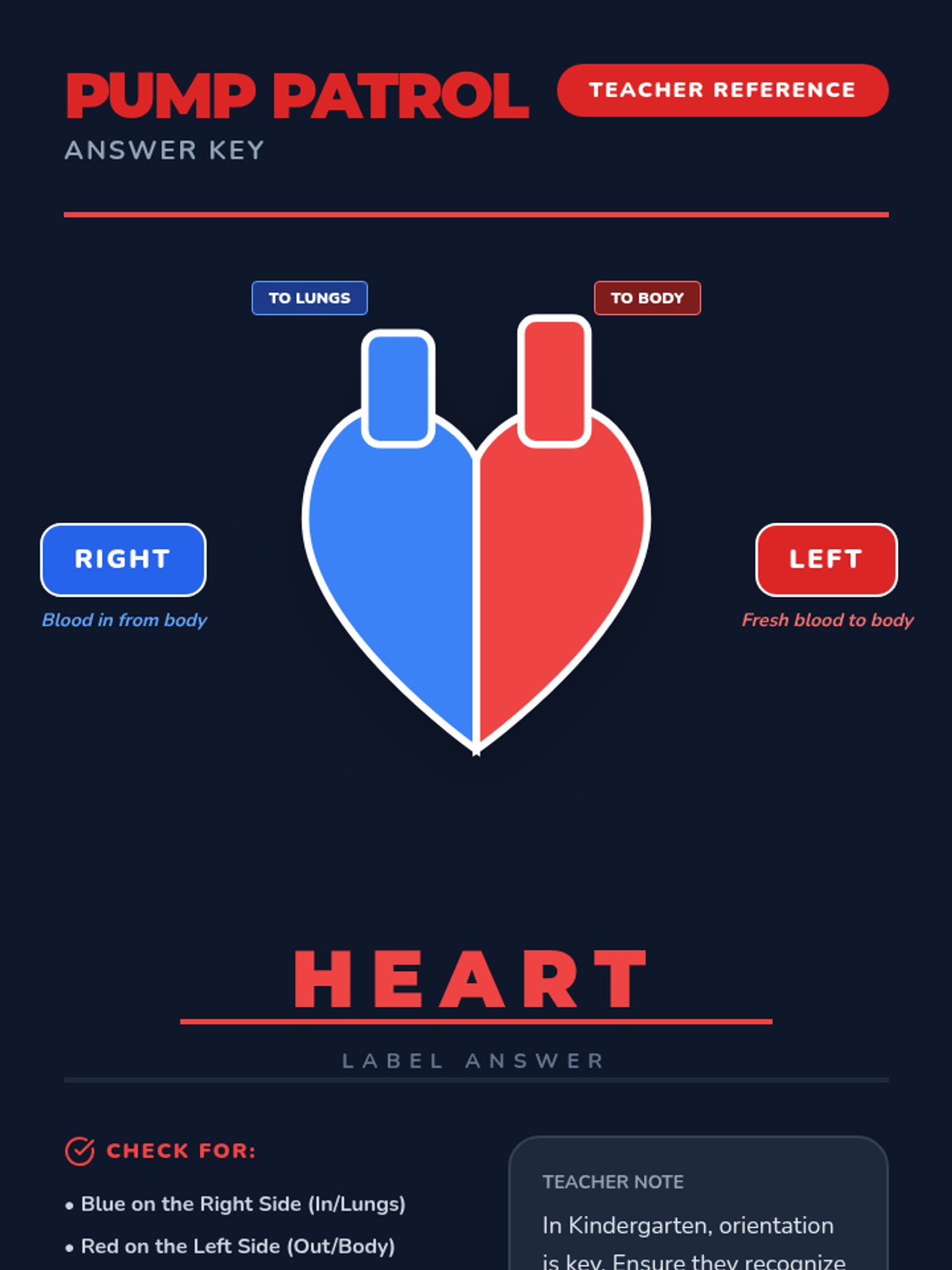
A foundational 30-minute lesson for K-1 students exploring the heart as a powerful pump that moves blood throughout the body.
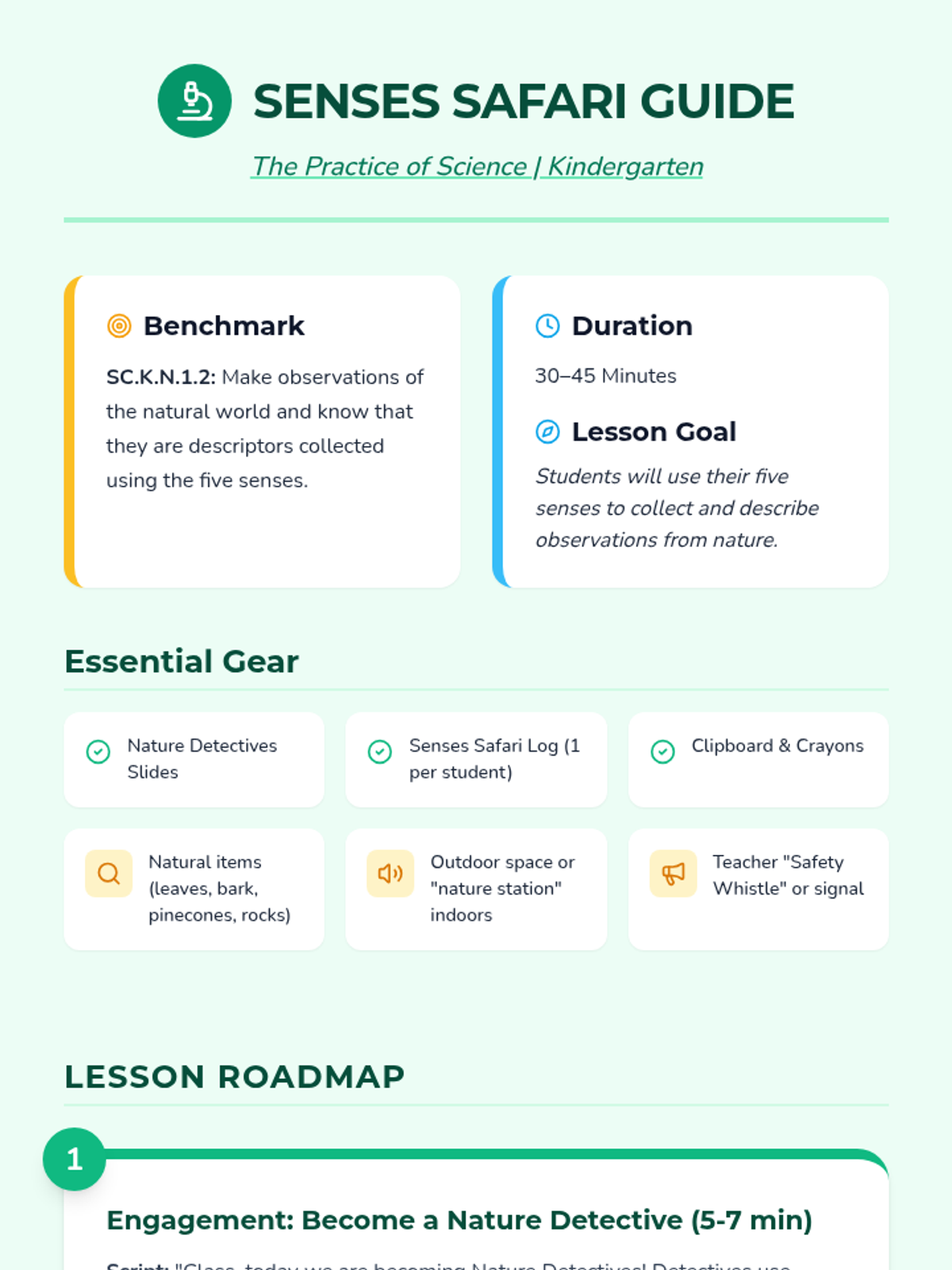
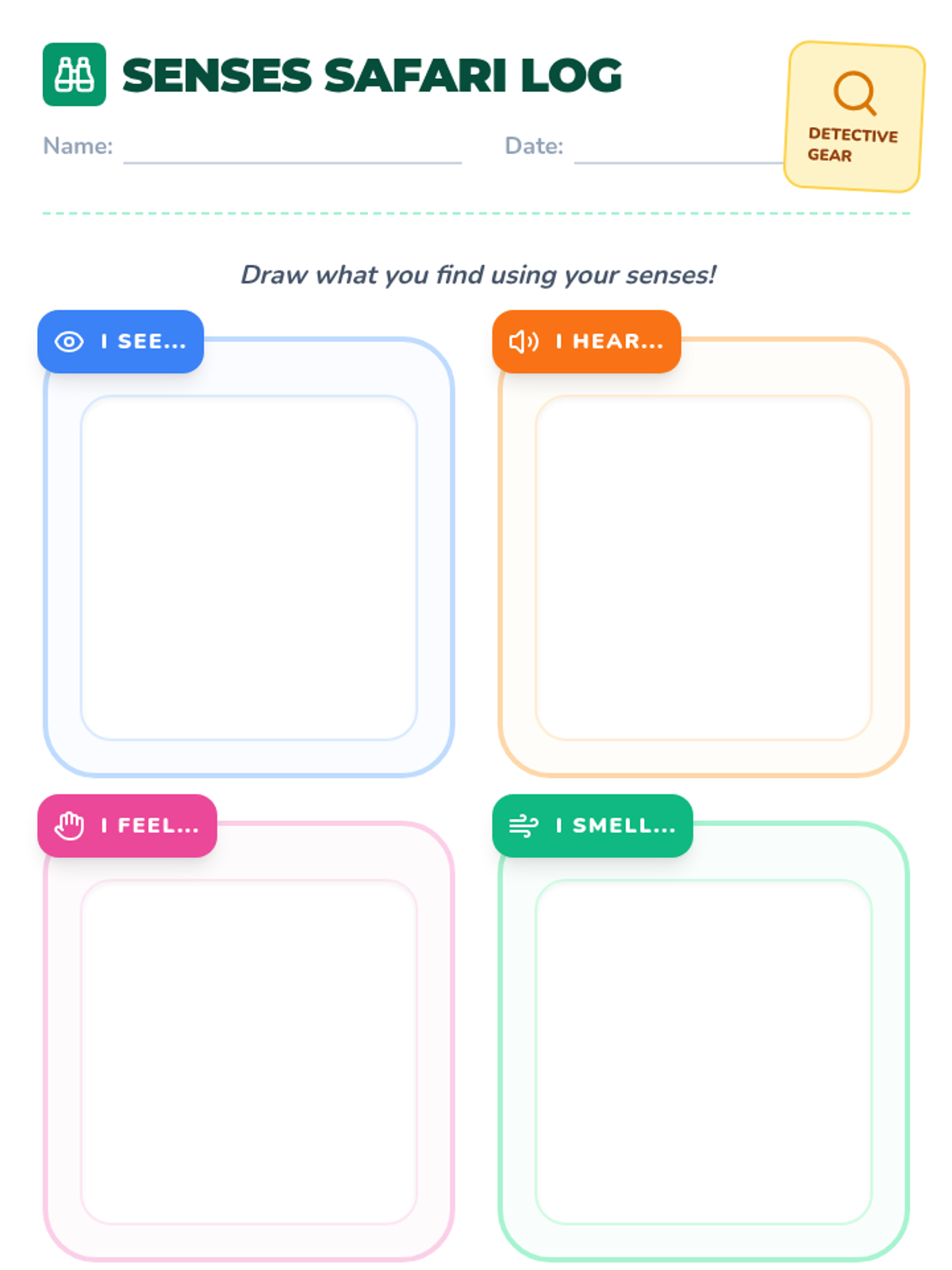
An inquiry-based science lesson for kindergarten students to explore the natural world using their five senses, aligned with benchmark SC.K.N.1.2. Students will act as 'Nature Detectives' to observe and describe their environment.
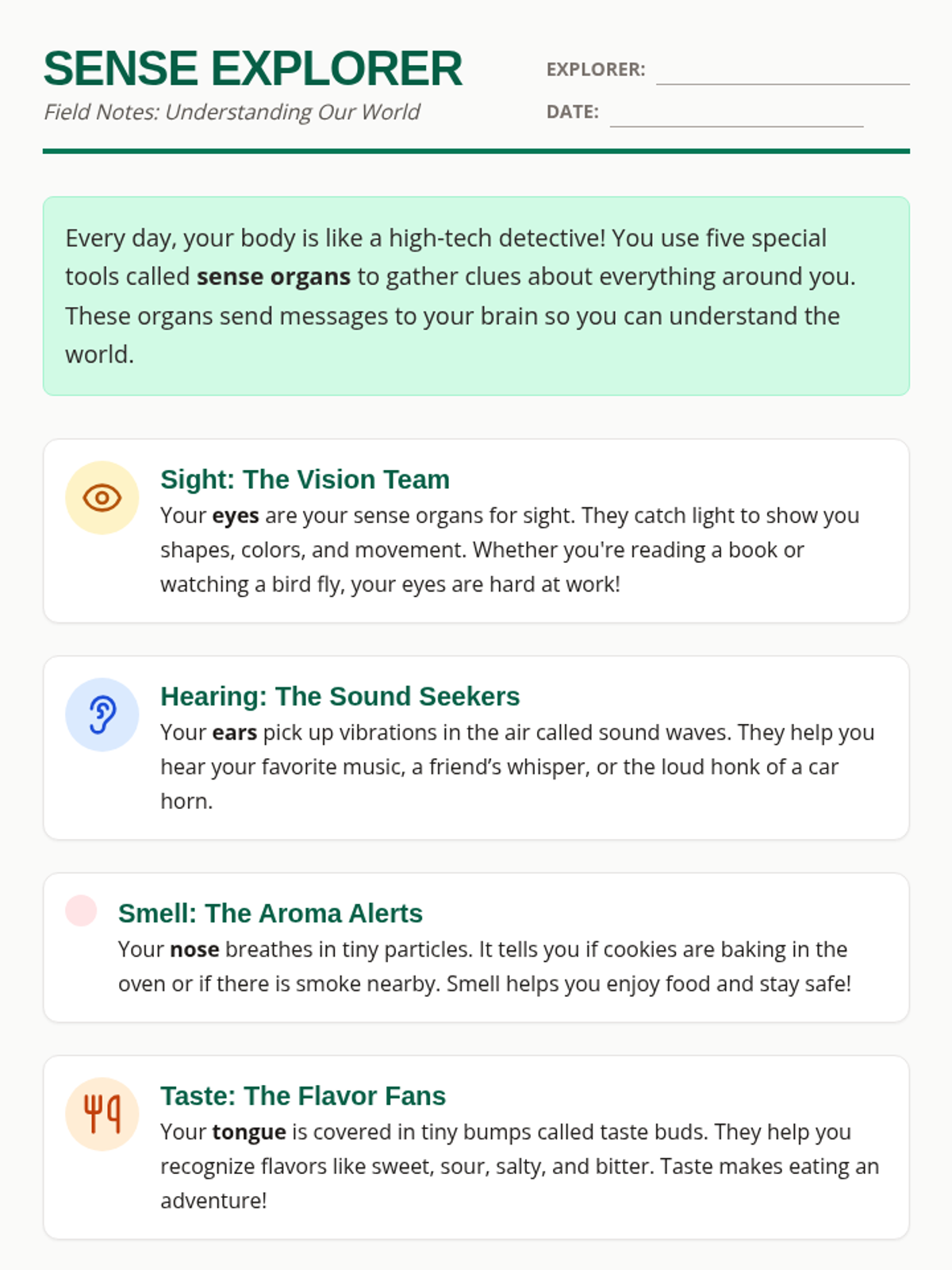
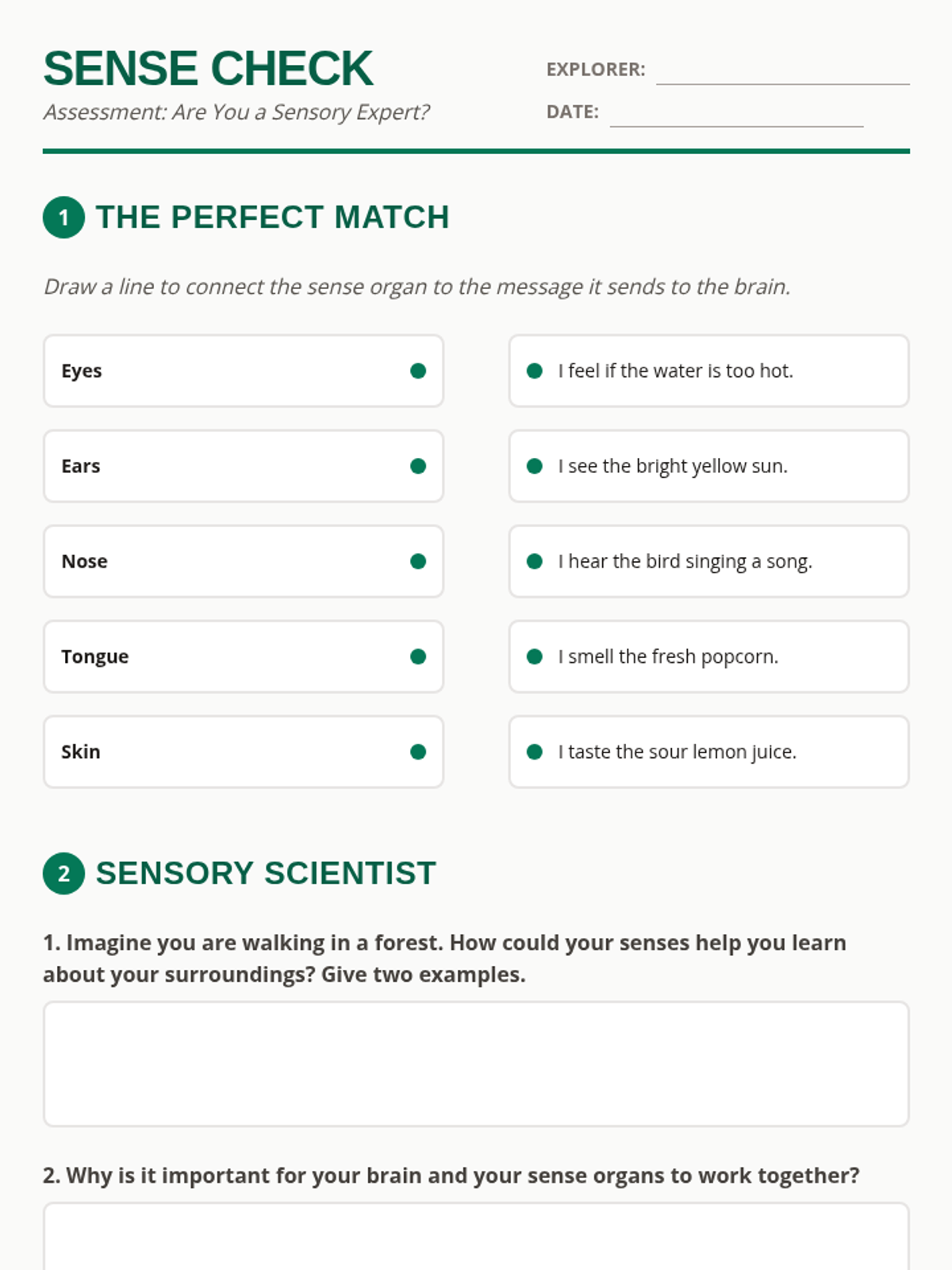
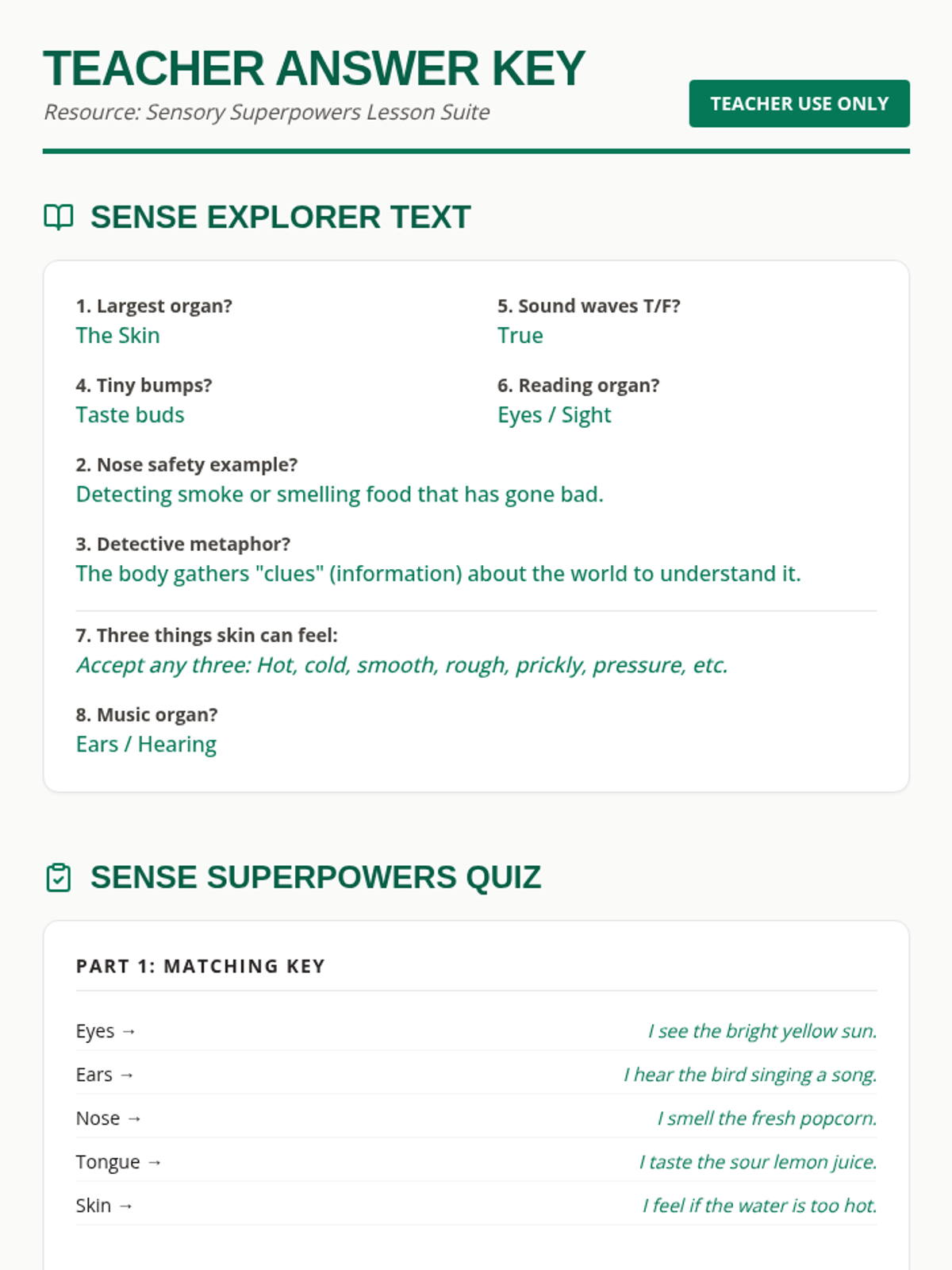
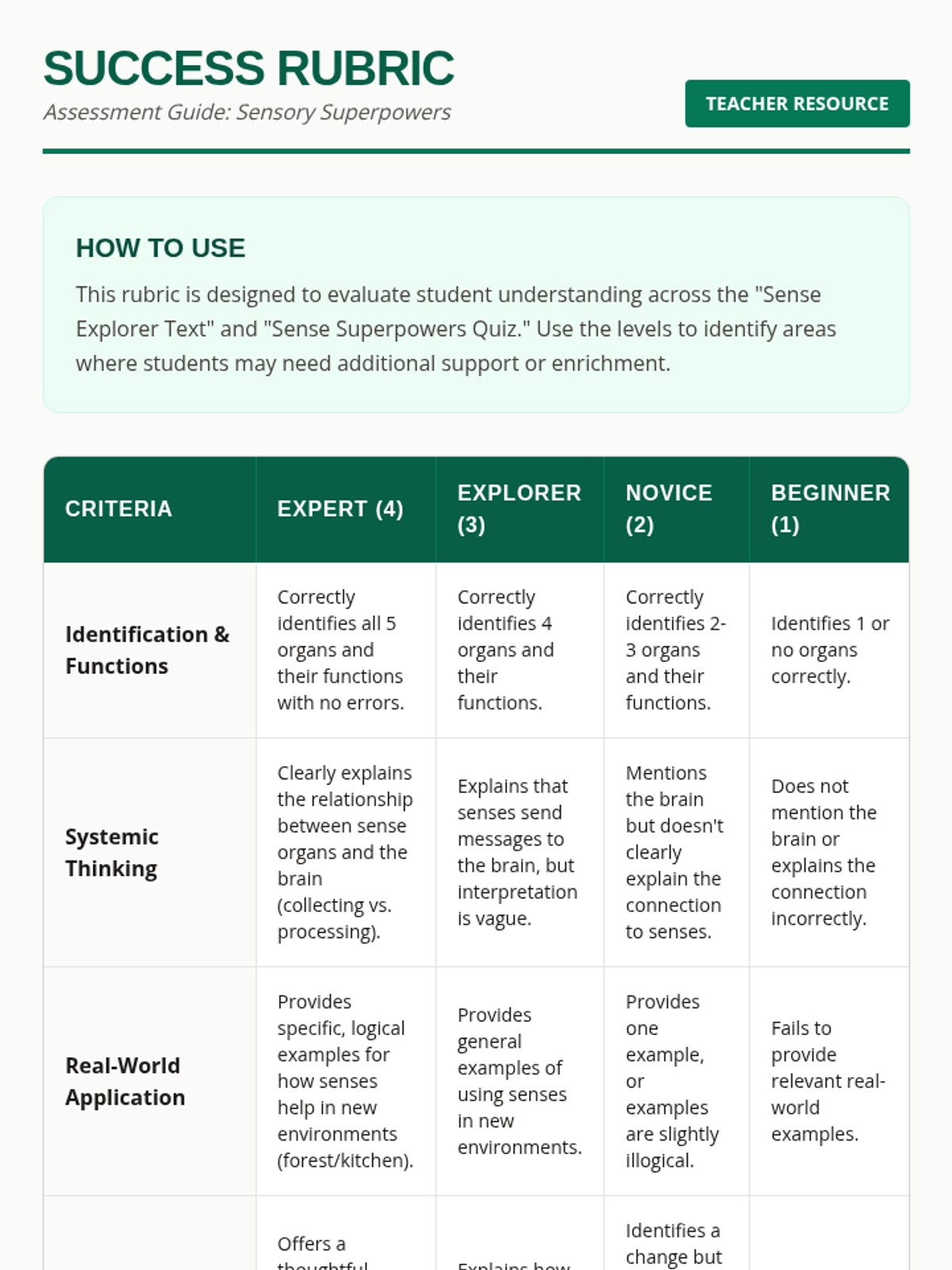
Students will identify the five sense organs and explain how they help humans perceive and interact with the world around them through reading and assessment.
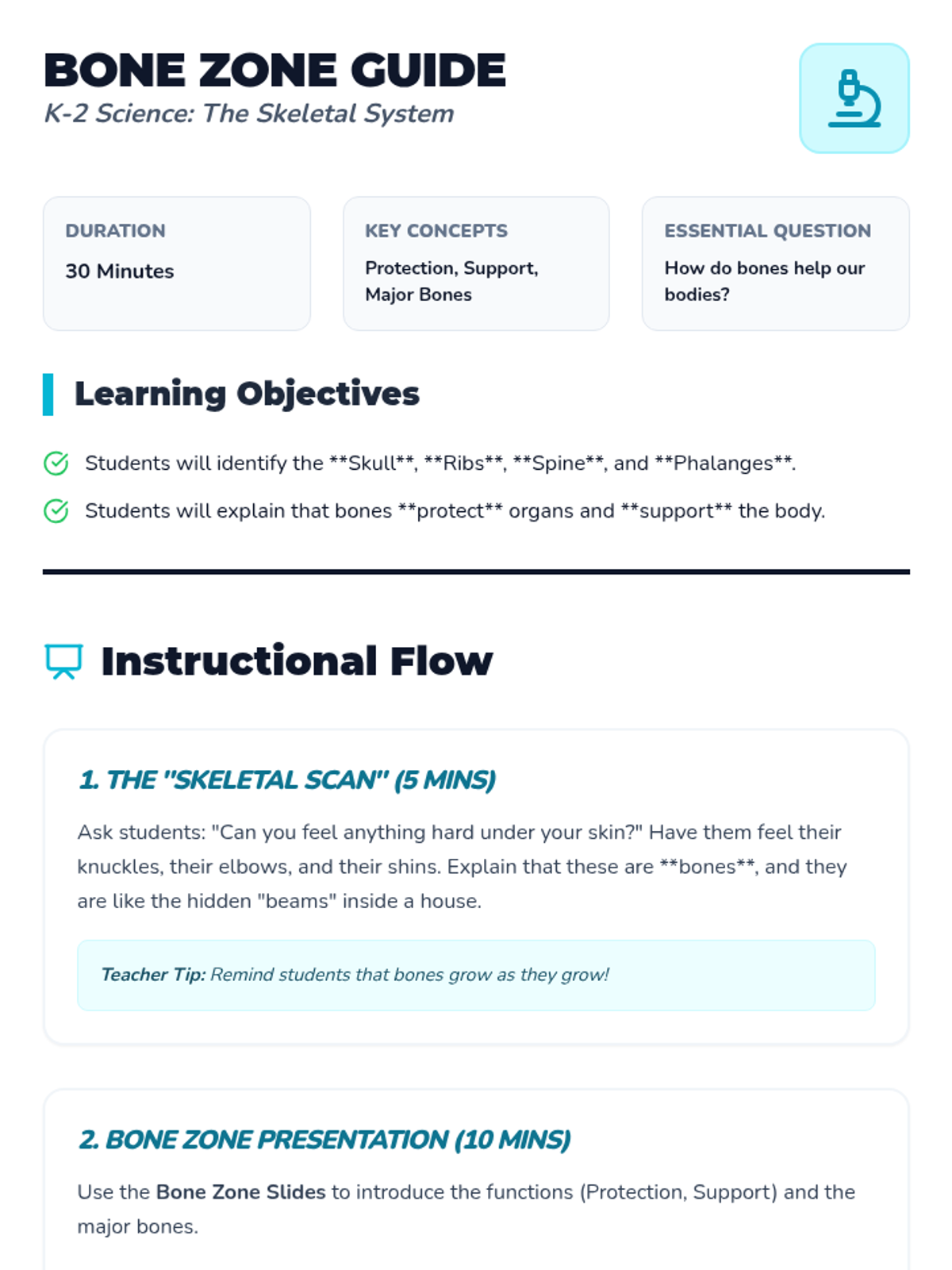
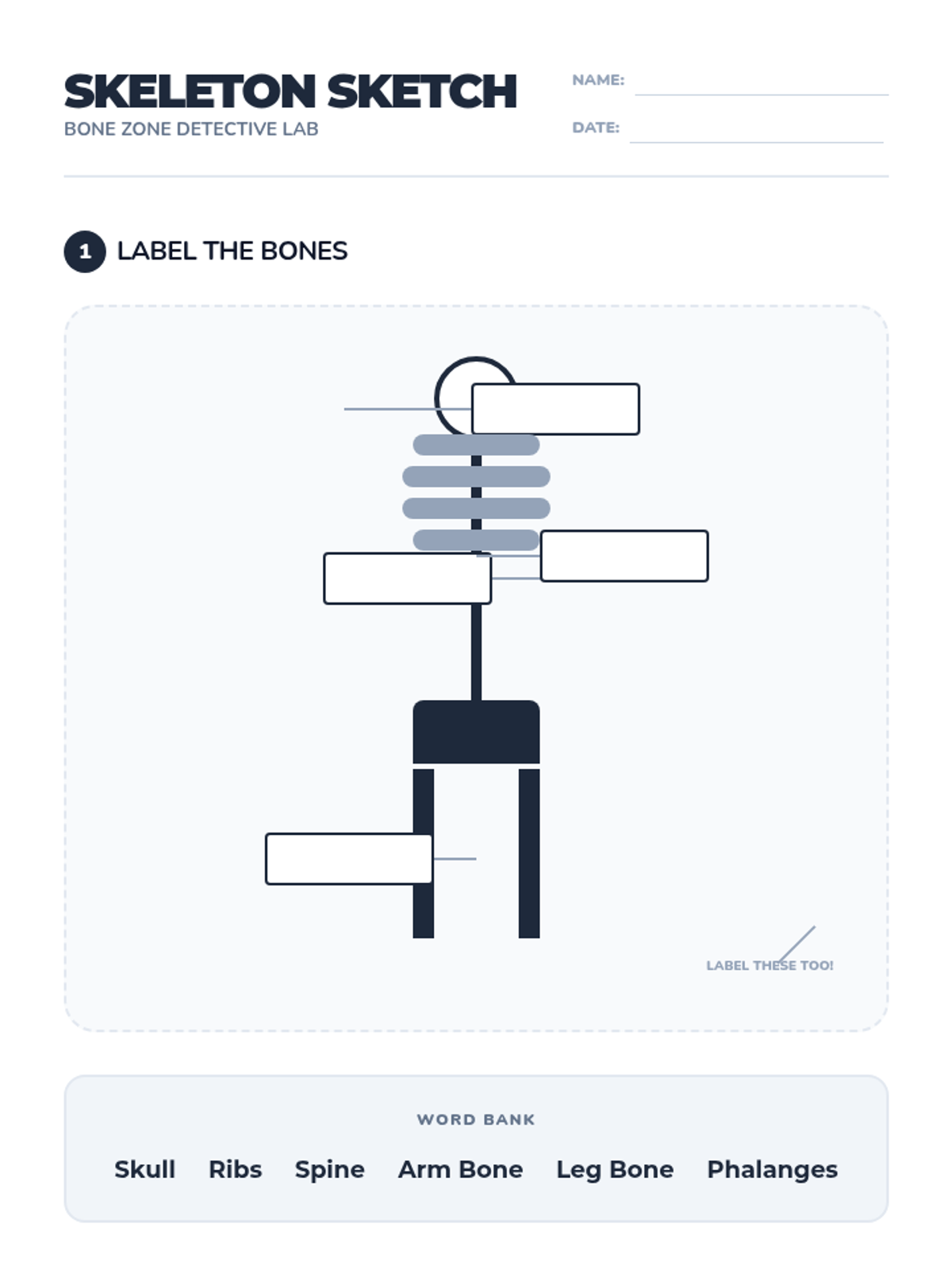
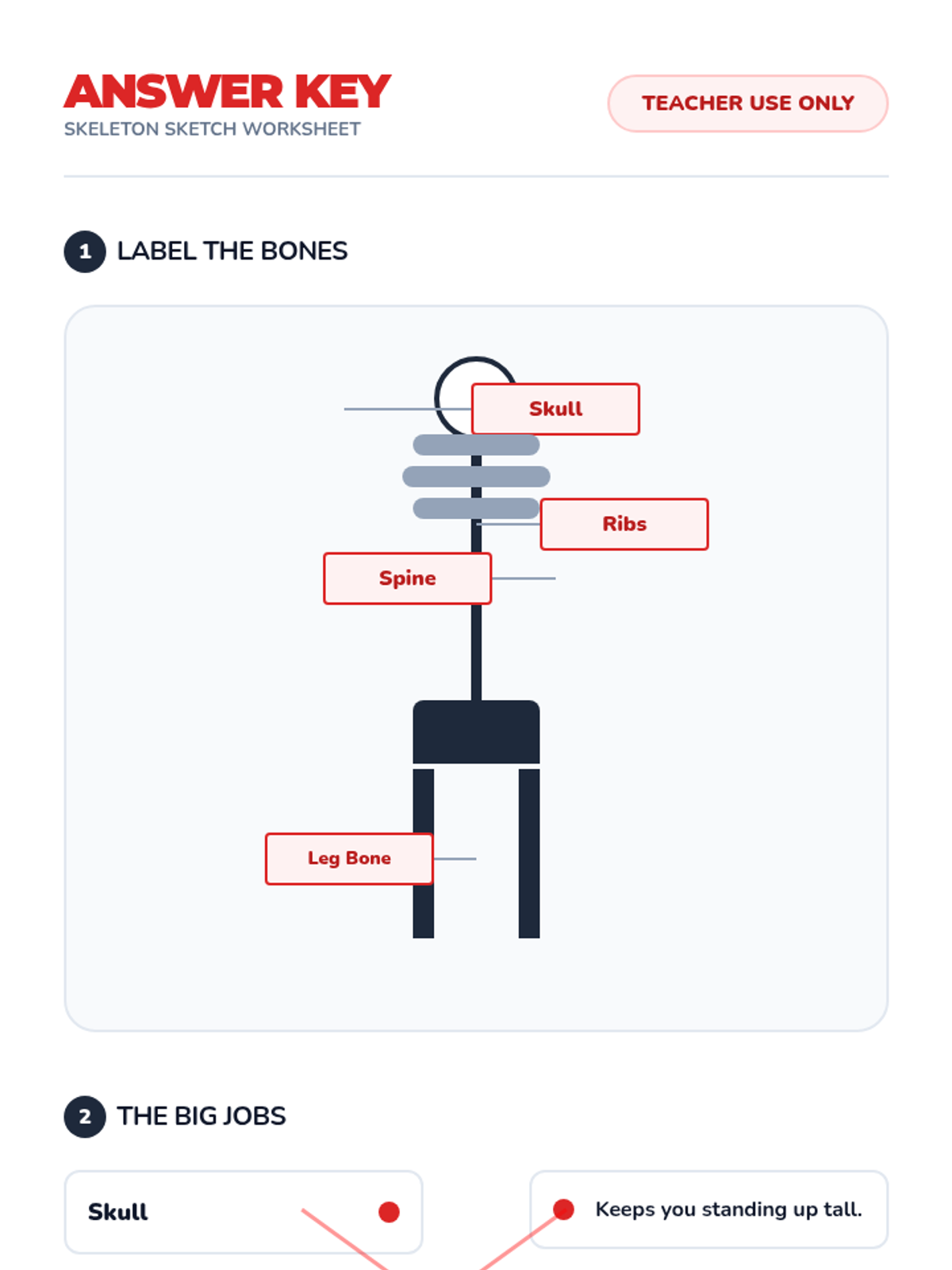
An introductory lesson for K-2 students focusing on the major bones of the human body and their primary functions through movement and visual labeling.
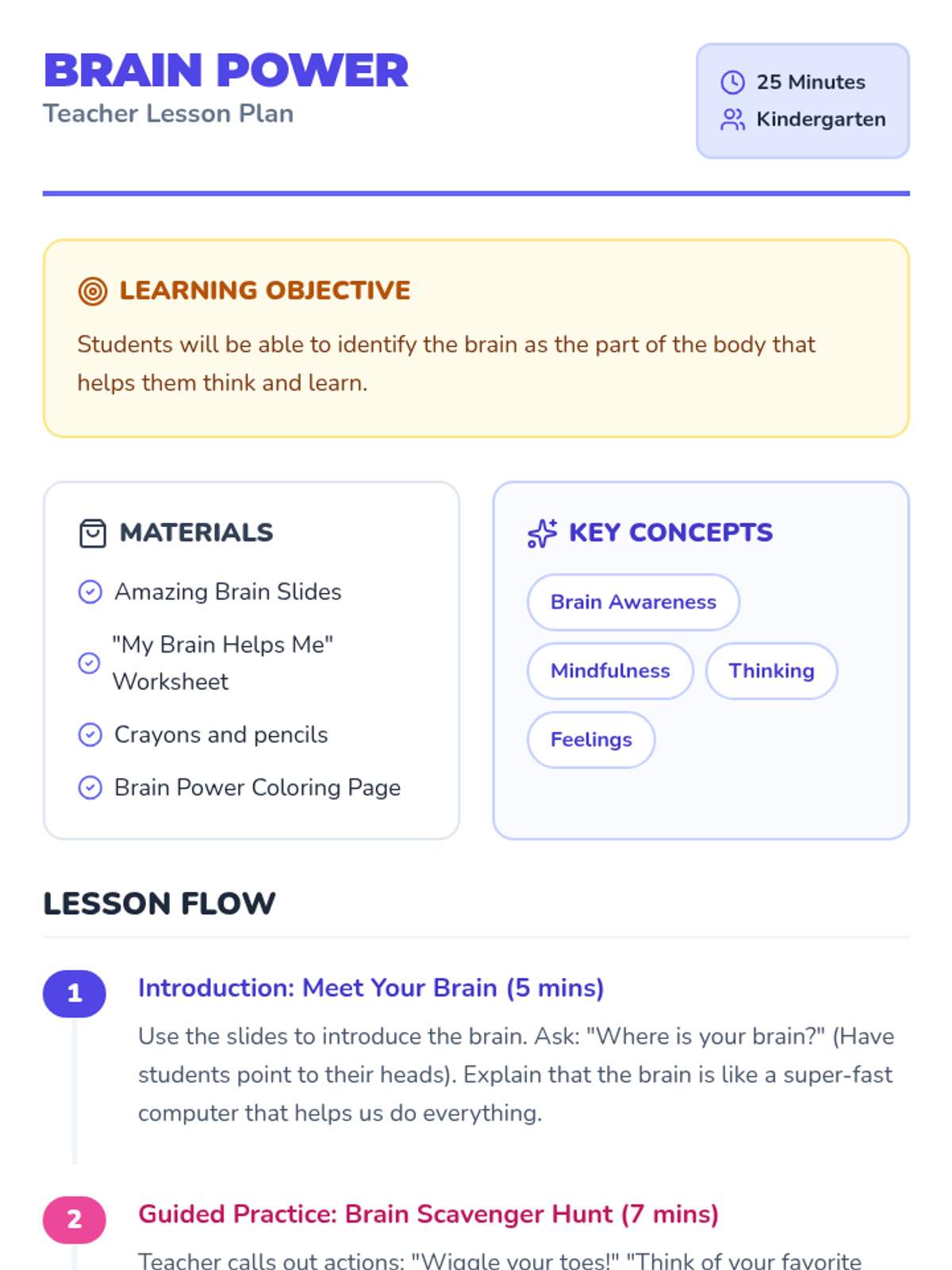
A fun, 25-minute introduction for Kindergarten students to discover how their brains help them think, feel, and learn every day.
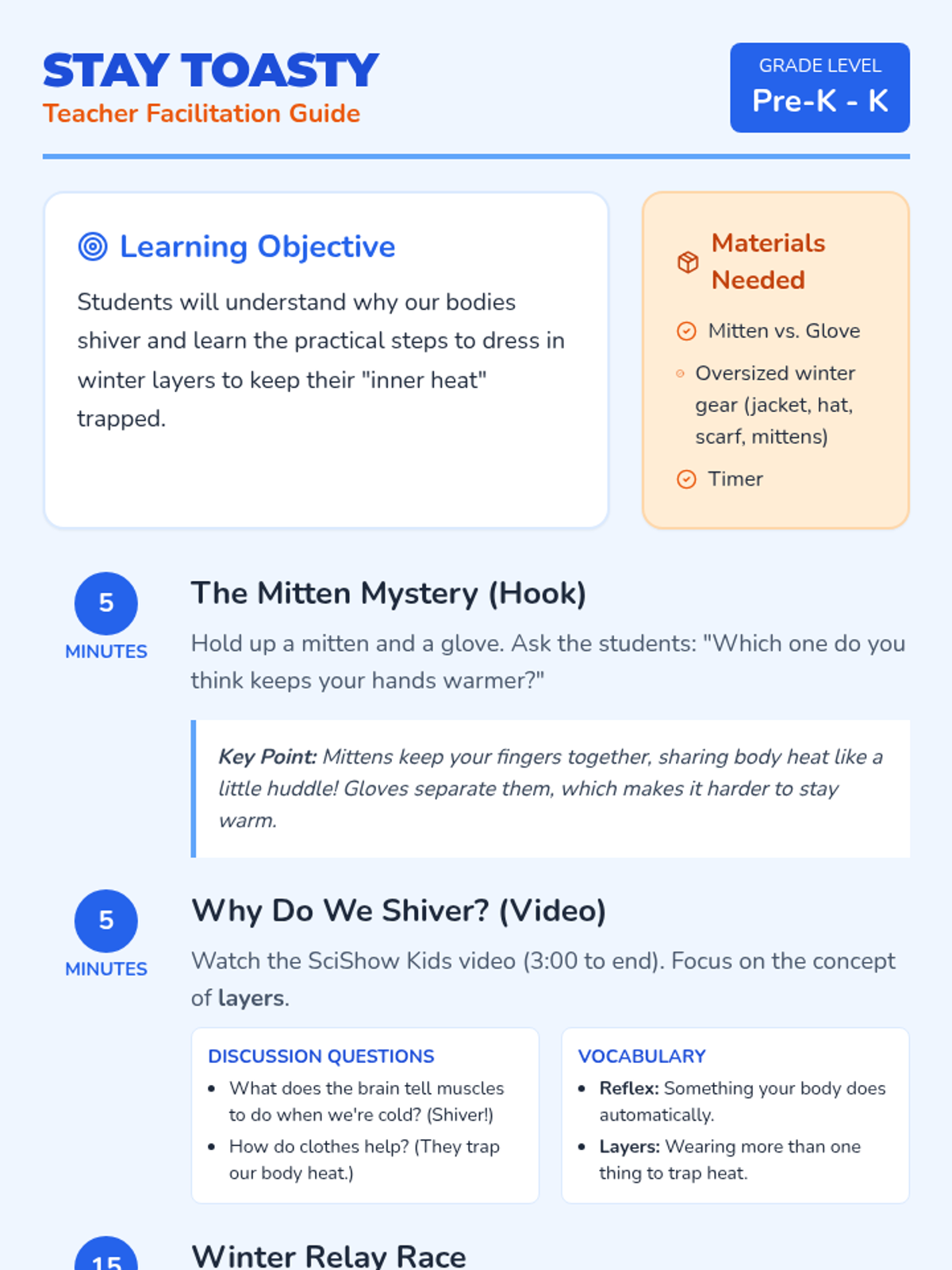
A hands-on lesson for Pre-K and Kindergarten students to learn the science of staying warm and the practical skill of dressing in winter layers. Features a science video, a high-energy relay race, and a mnemonic rhyme for dressing independently.
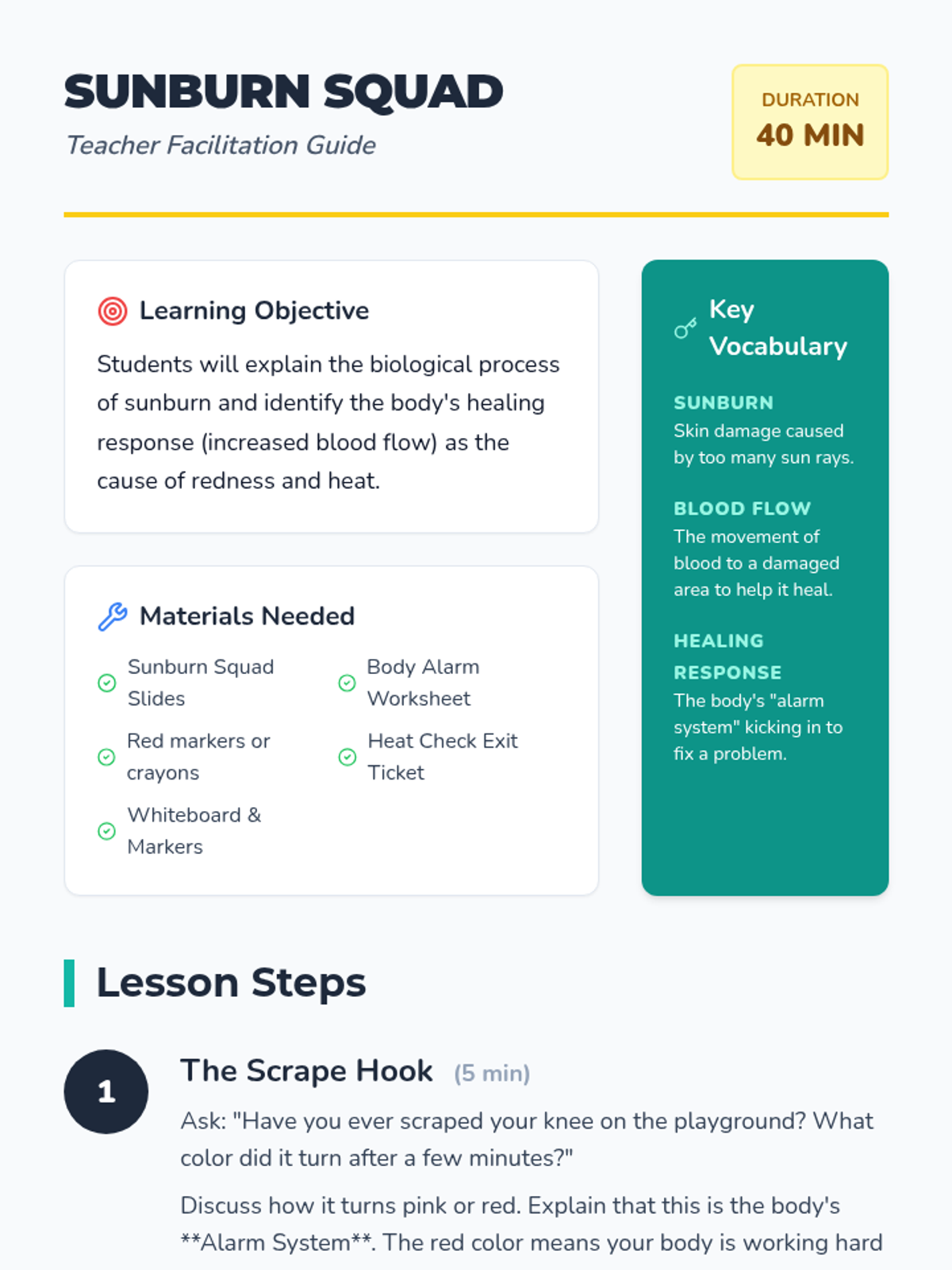
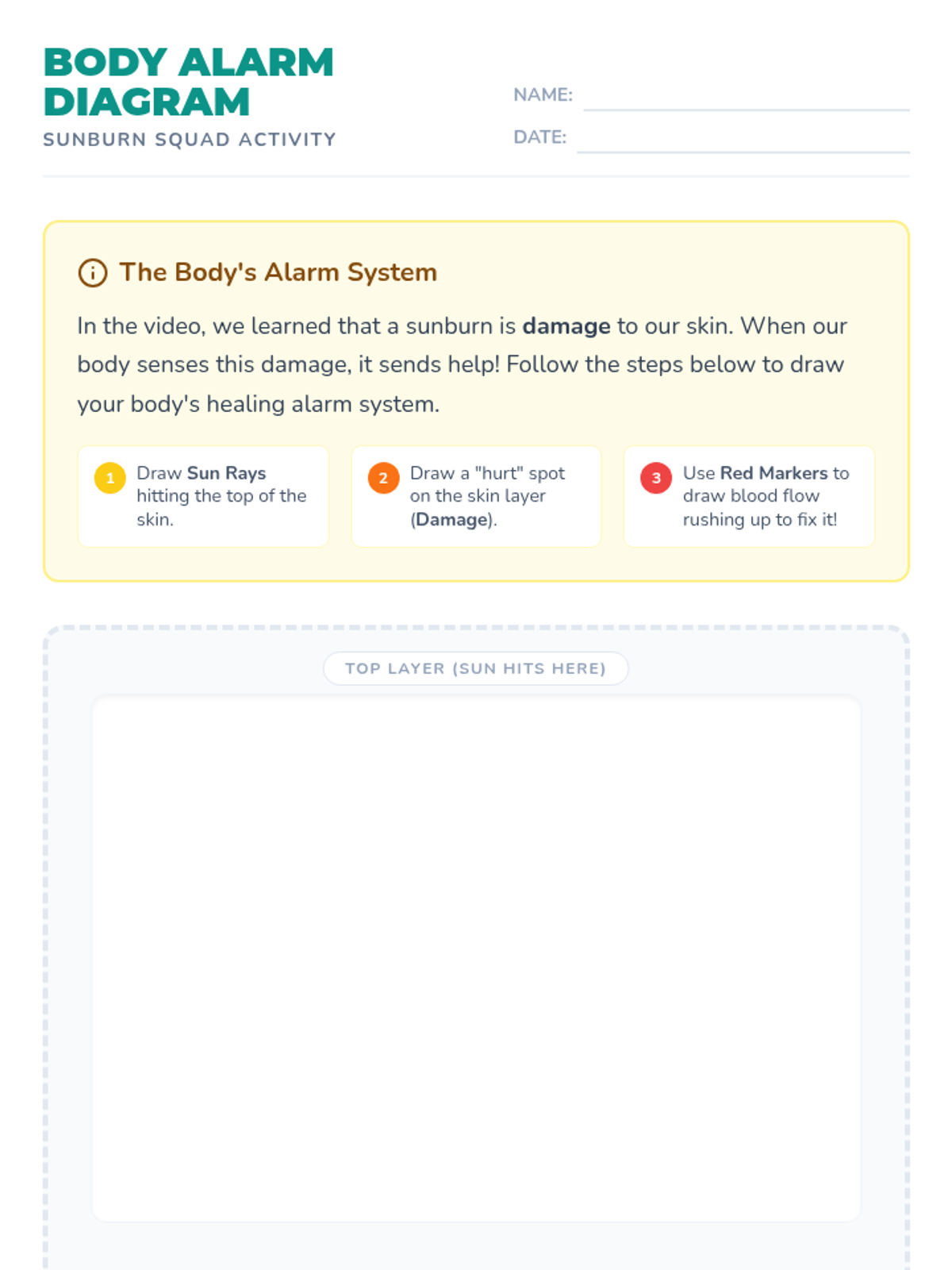
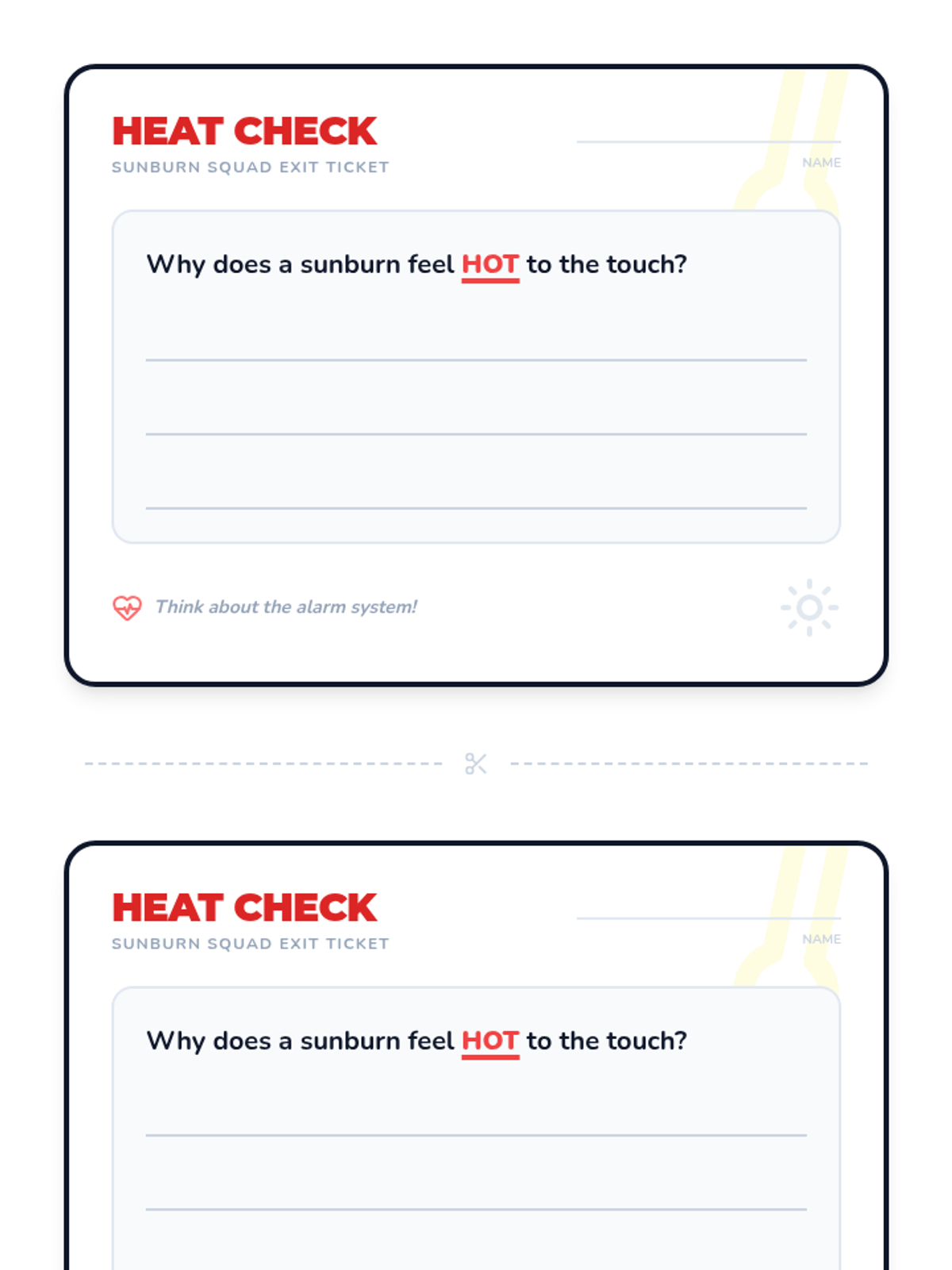
Students explore the biological reason for sunburns, focusing on how the body sends extra blood to damaged skin cells to begin the healing process. This lesson uses a SciShow Kids video and a hands-on drawing activity to make complex biological responses accessible to young learners.
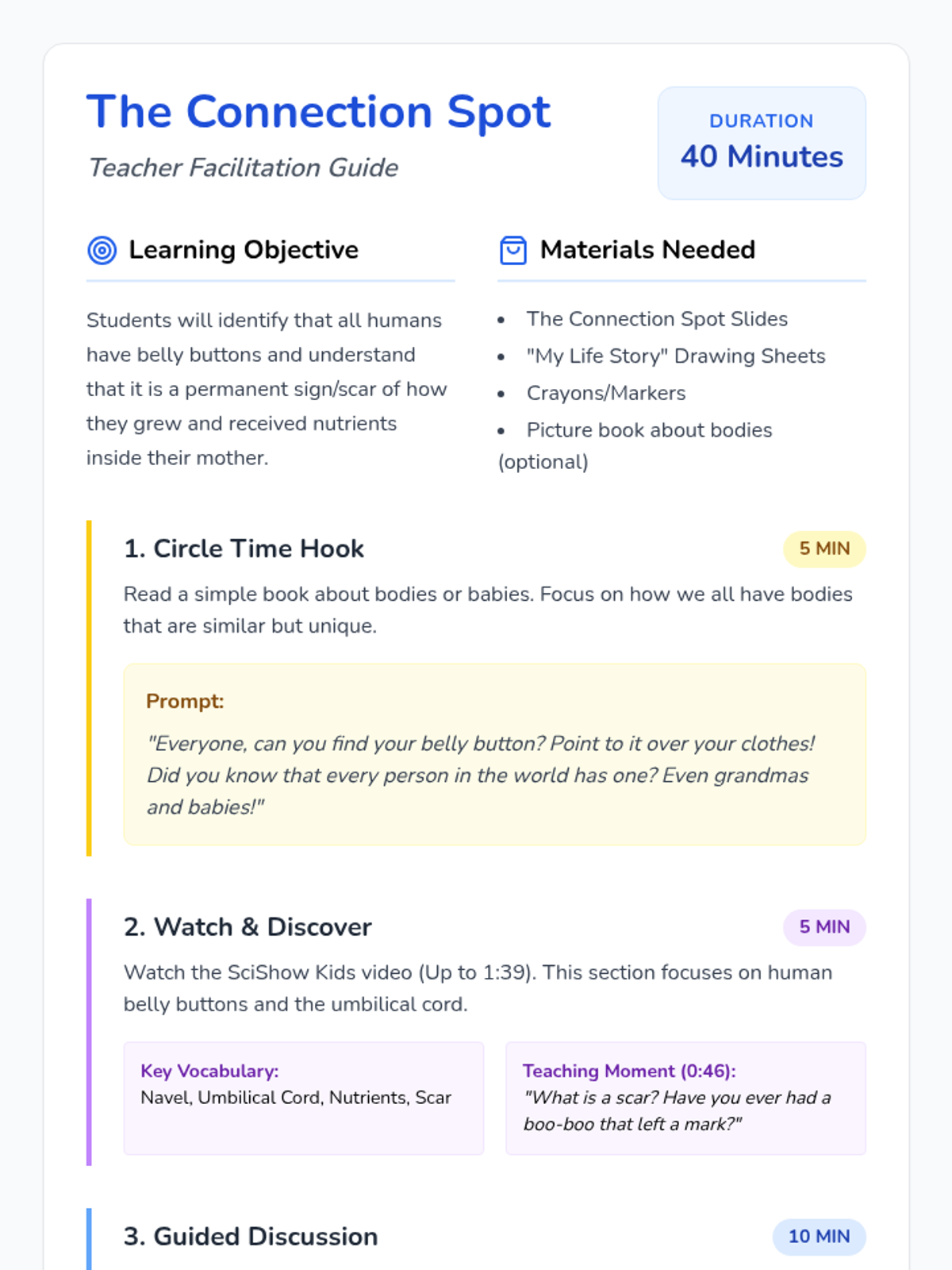
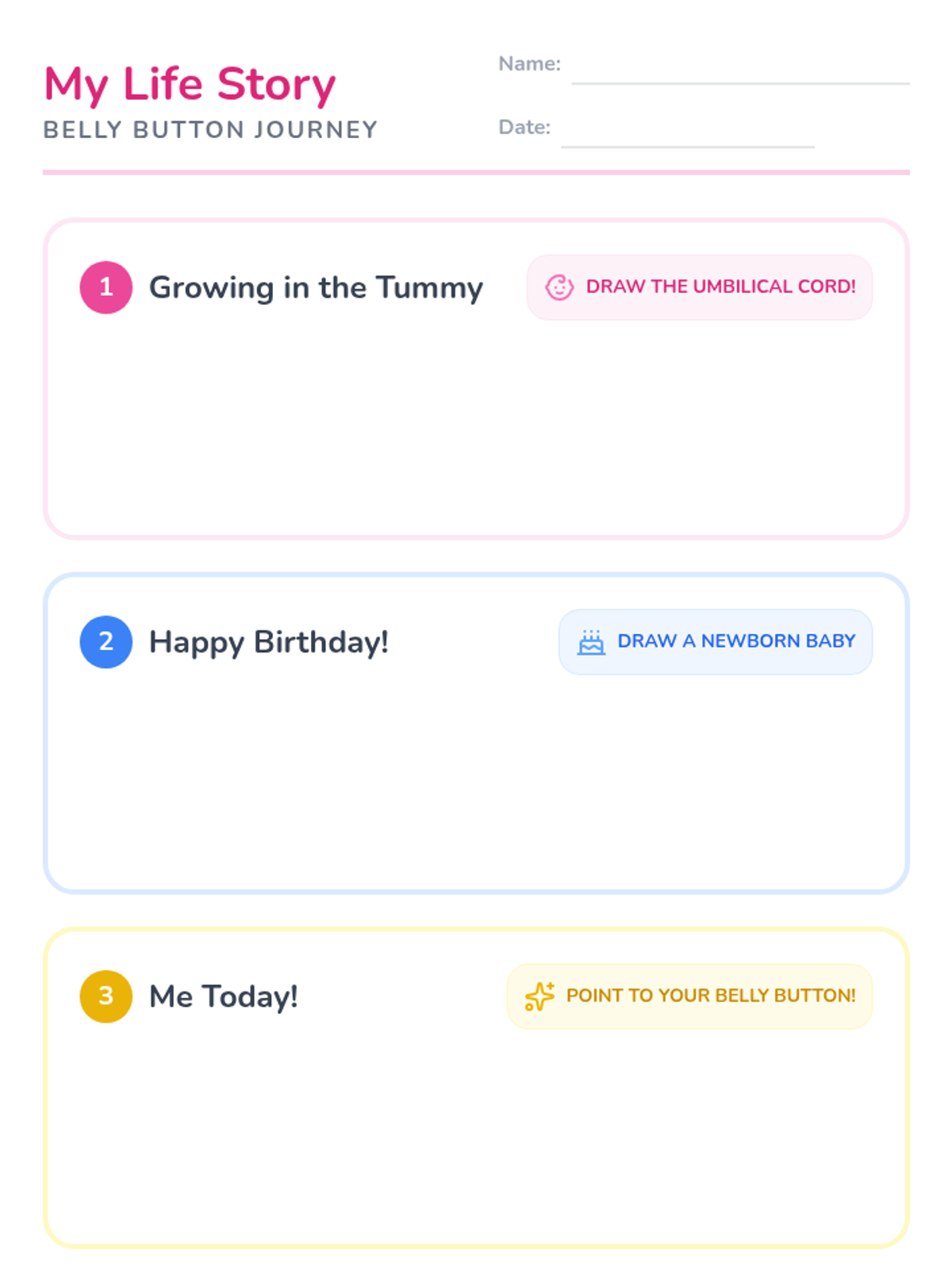
A Kindergarten science lesson exploring why humans have belly buttons, focusing on the umbilical cord's role in growth and the belly button as a permanent sign of our early connection to our mothers.
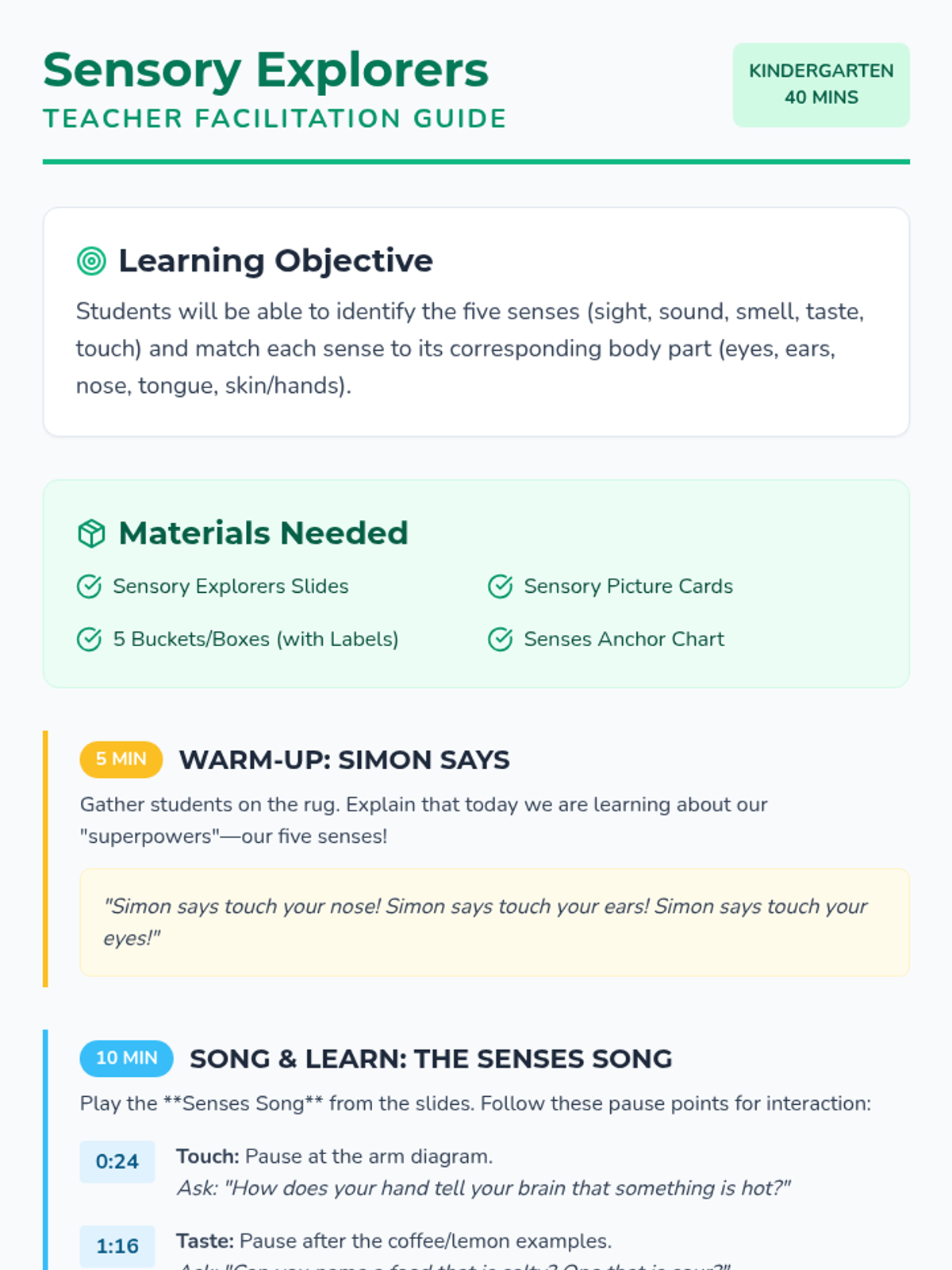
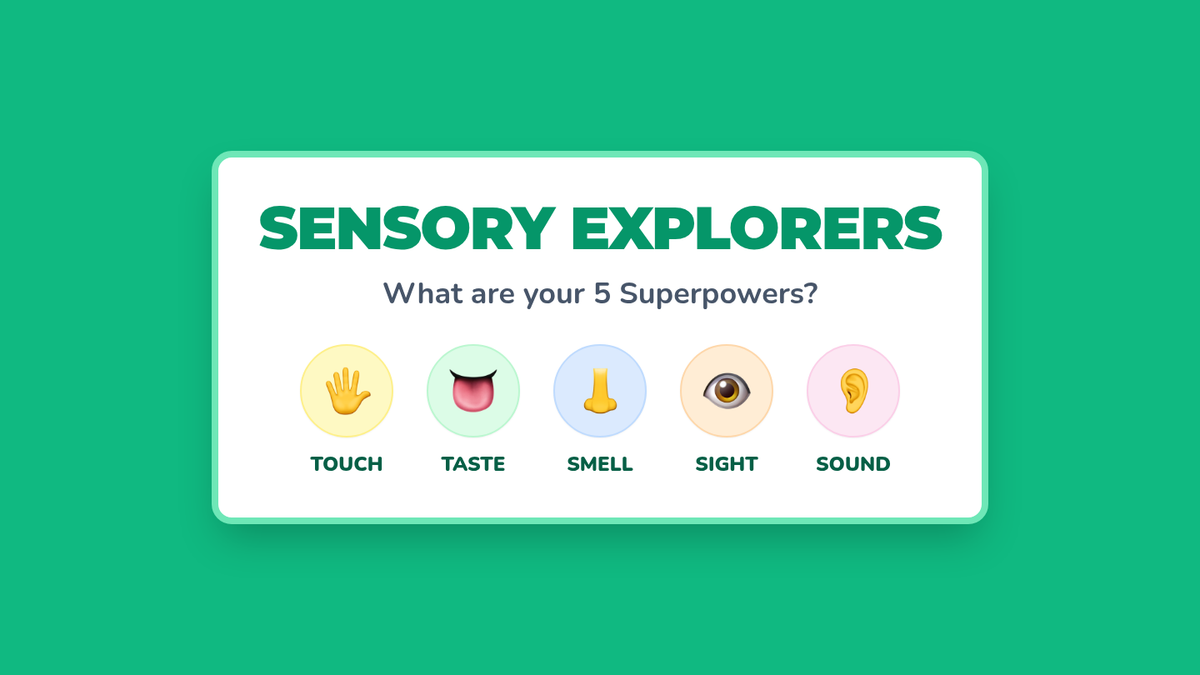
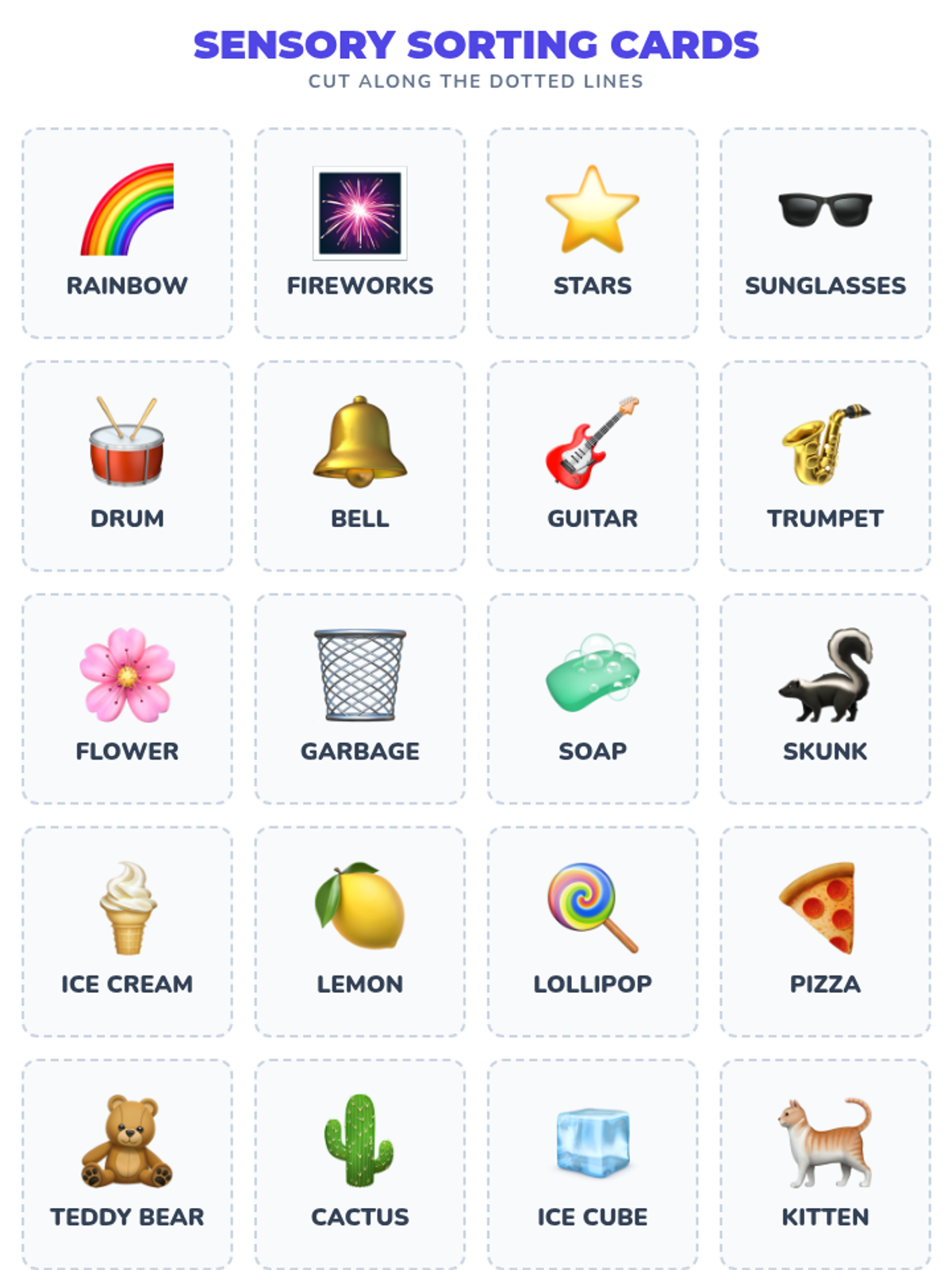
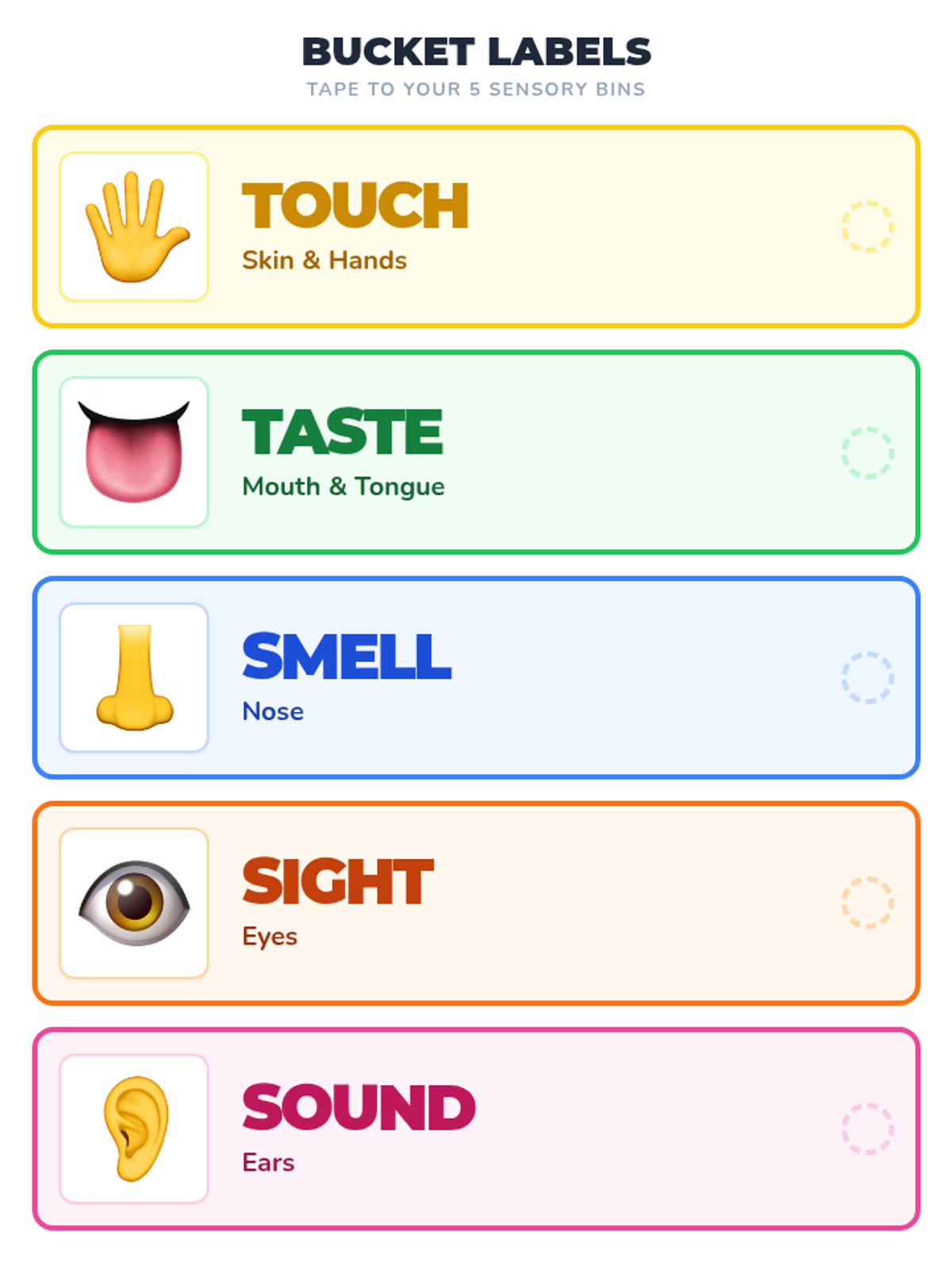
An interactive Kindergarten lesson exploring the five senses through music, movement, and a hands-on sorting activity to connect senses with their corresponding body parts.
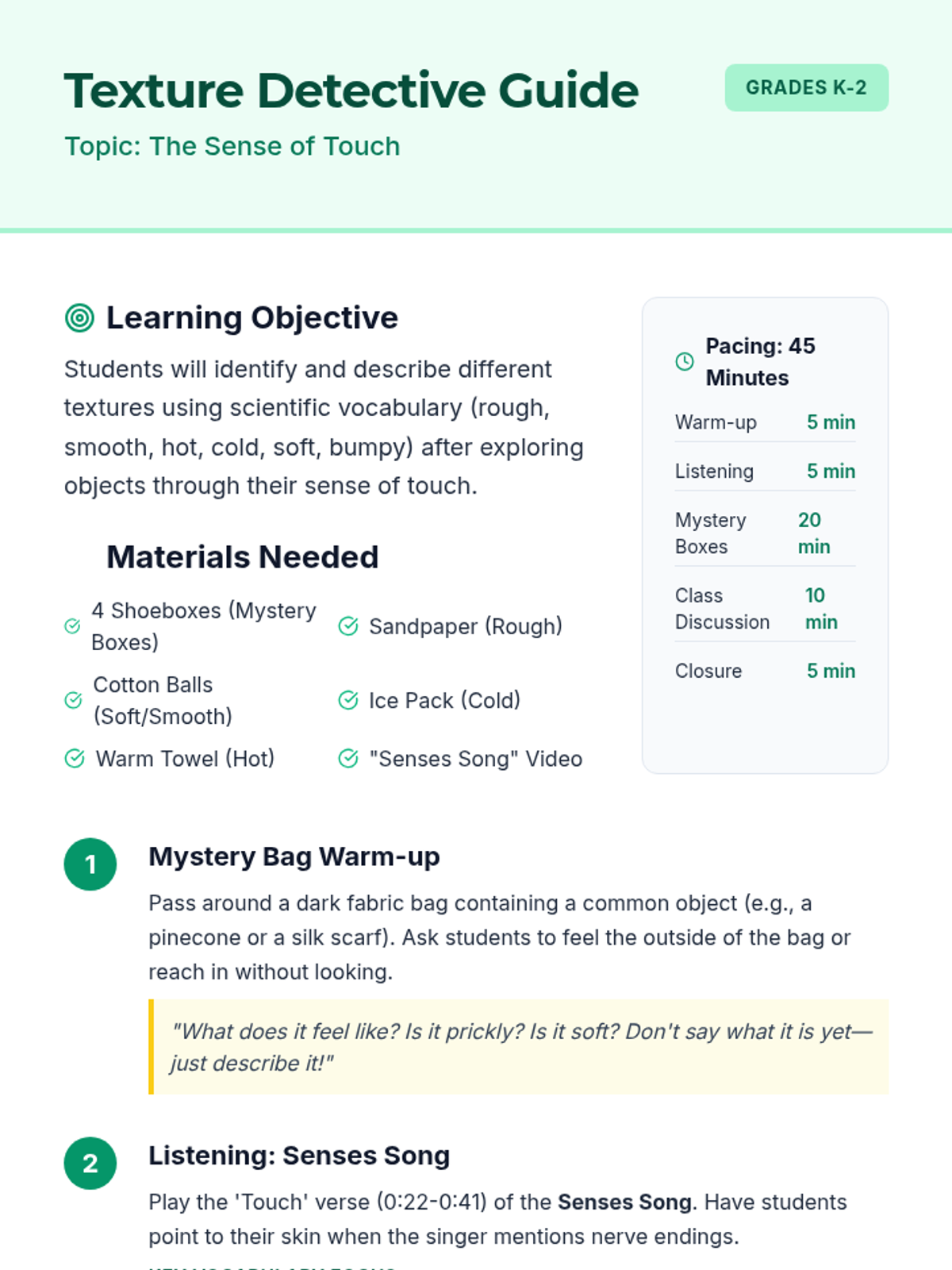
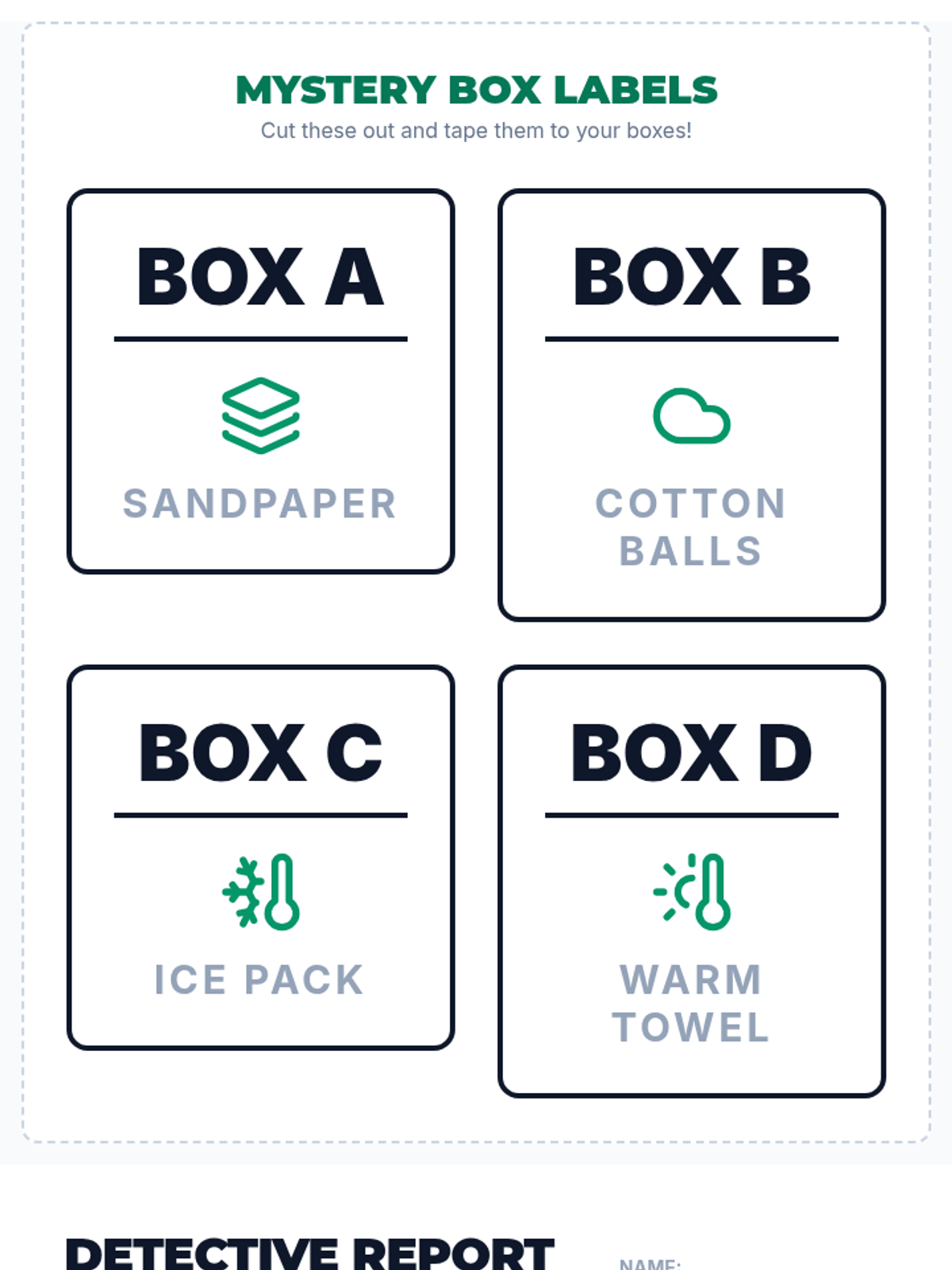
Students explore the sense of touch by using descriptive adjectives to identify various textures, including rough, smooth, hot, and cold. Through mystery box activities and a catchy senses song, they develop their tactile vocabulary.
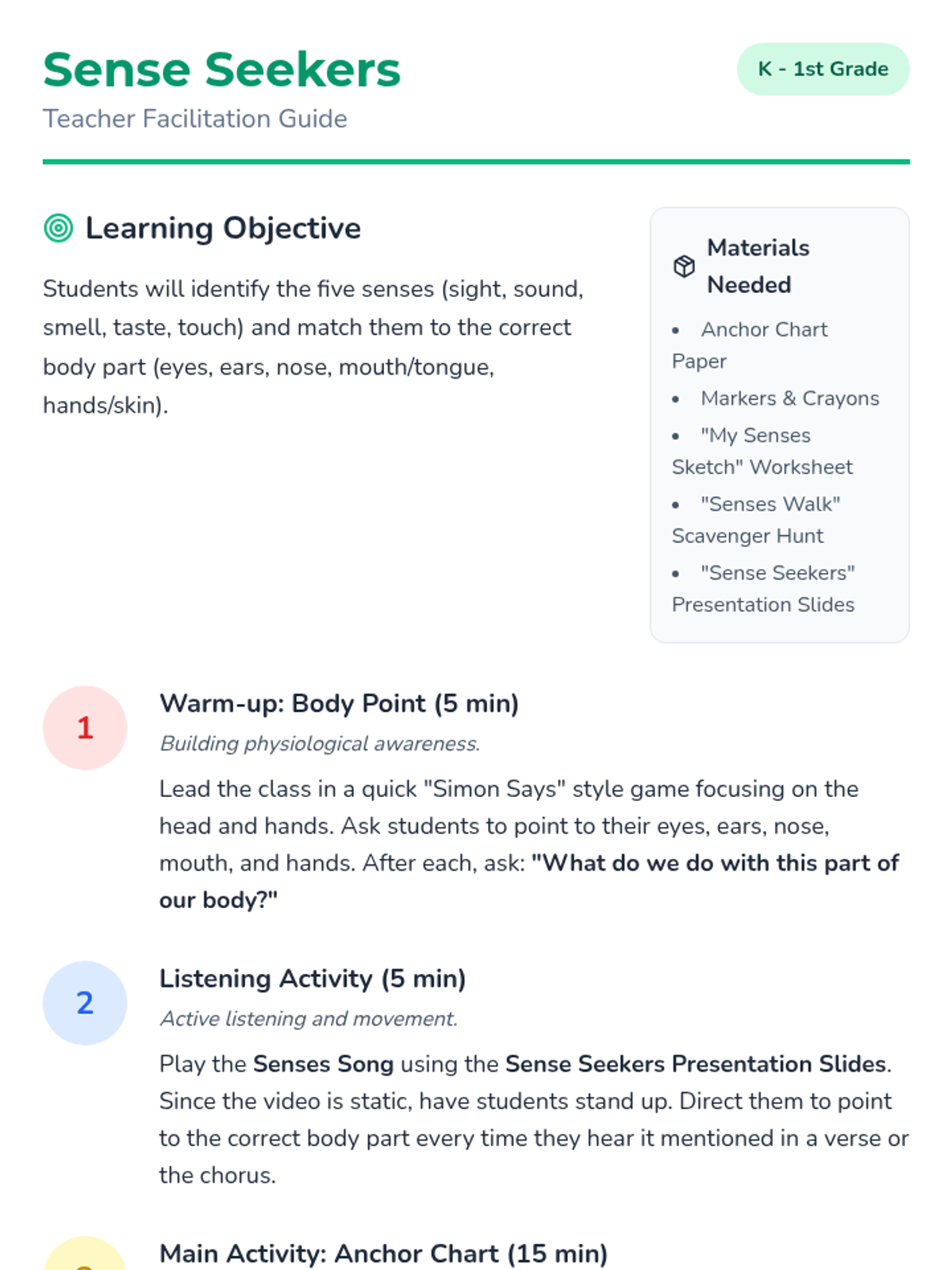
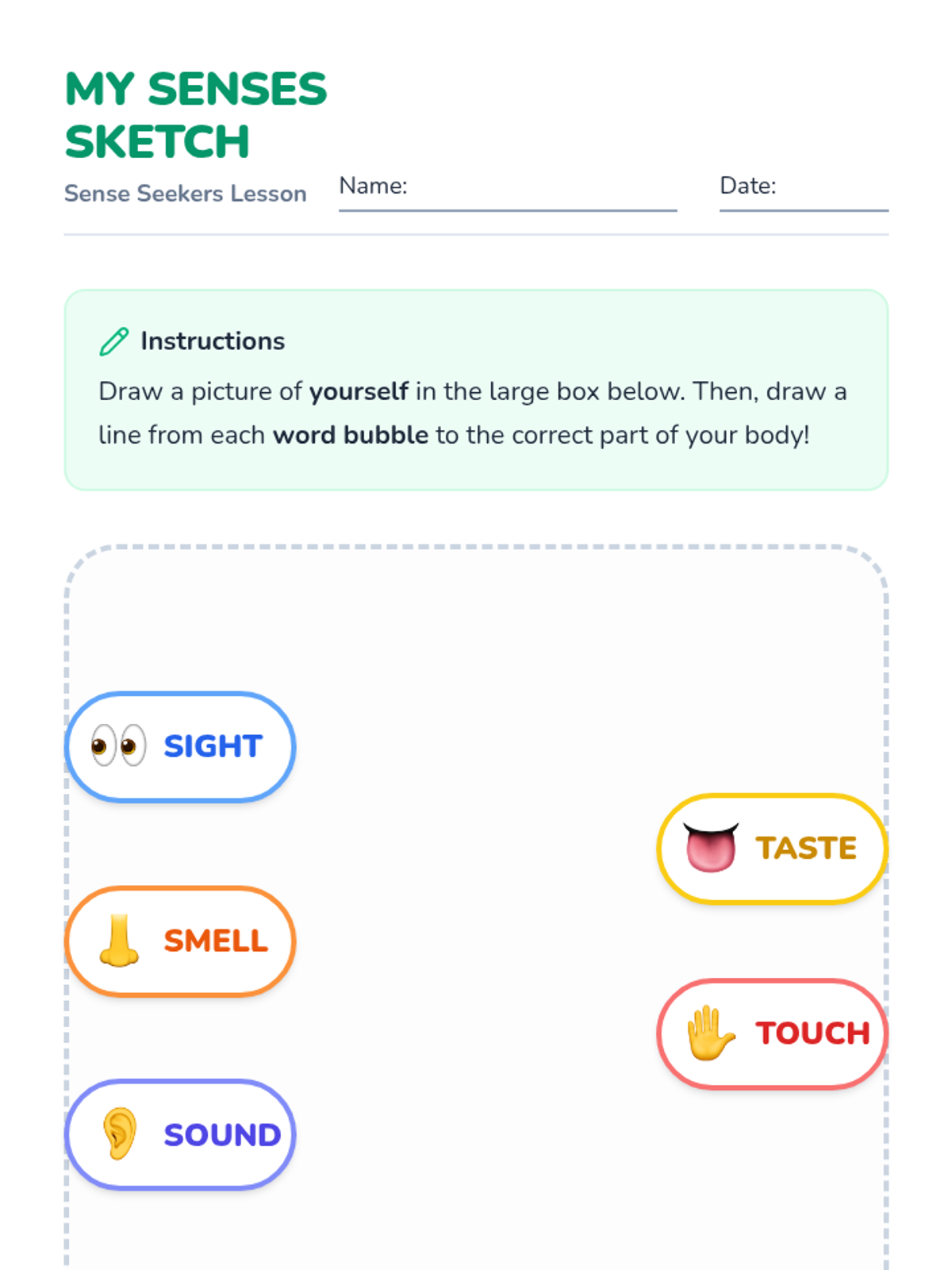
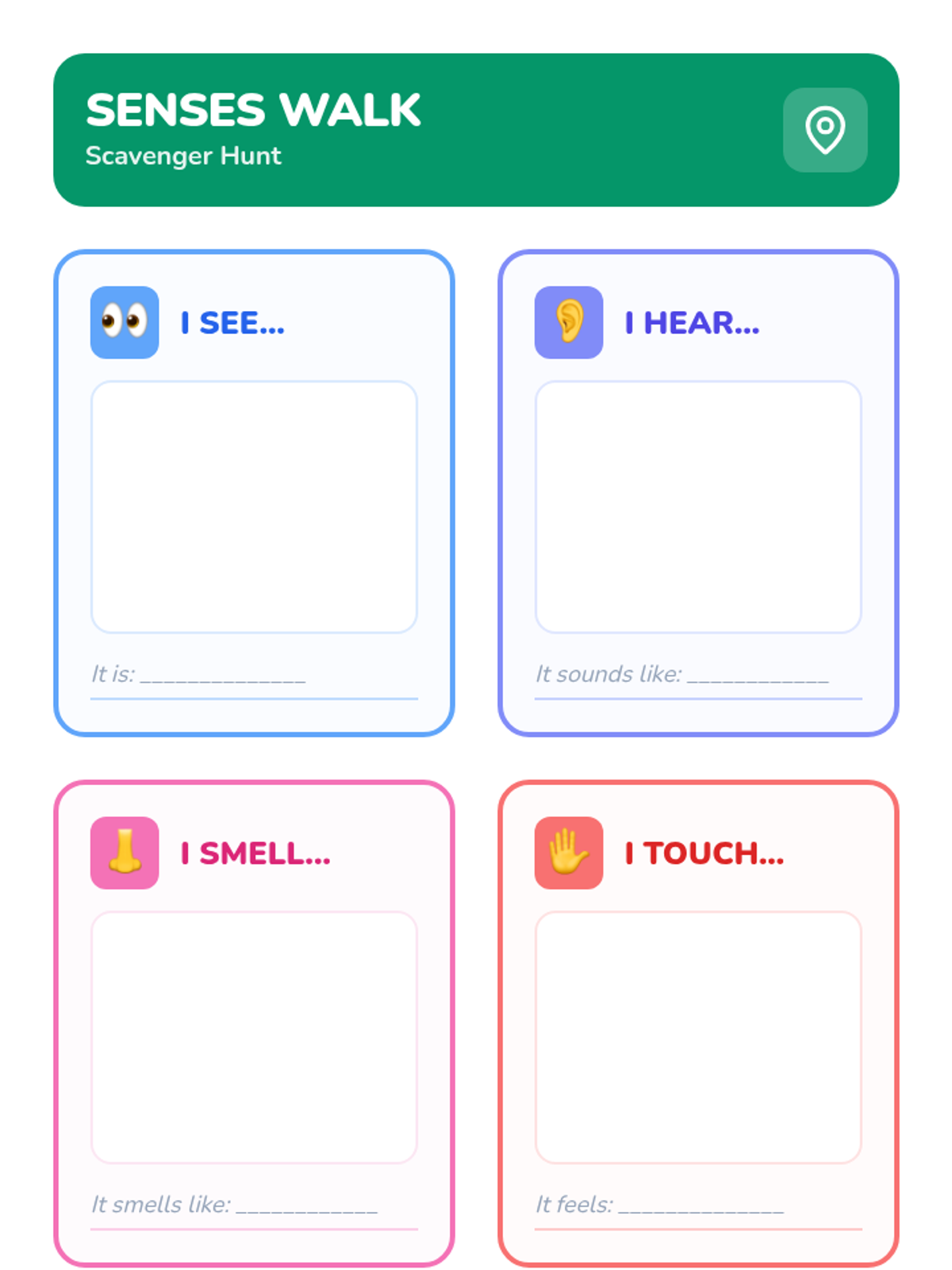
A multisensory exploration of the five senses through music, movement, and a scavenger hunt designed for Kindergarten and 1st Grade students. Students identify body parts associated with each sense and explore sensory vocabulary.
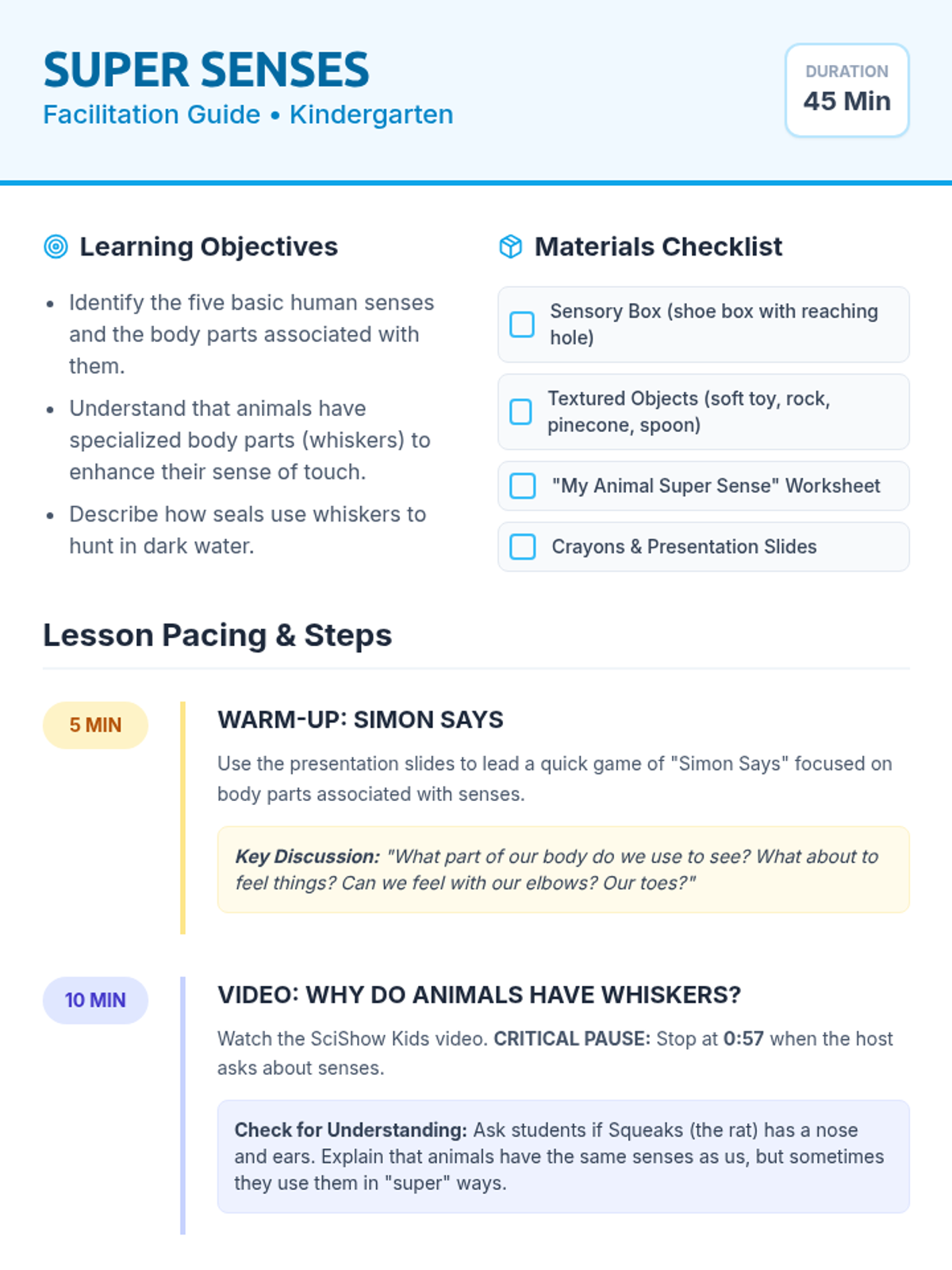
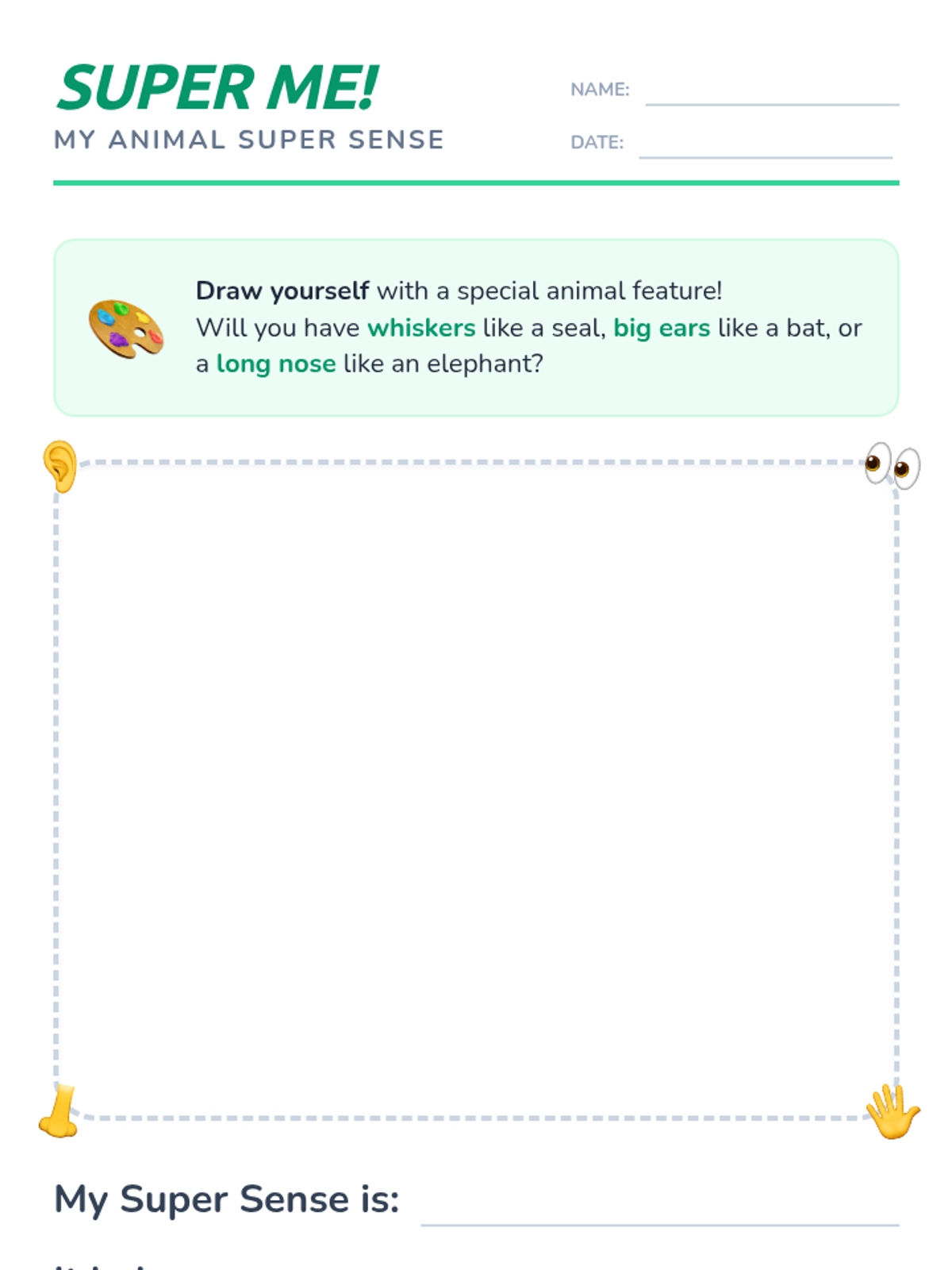
A foundational Kindergarten lesson on the five senses that bridges human touch to the specialized whiskers of cats and seals using a SciShow Kids video. Students explore sensory perception through a 'Simon Says' warm-up and a 'Sensory Box' hands-on activity.
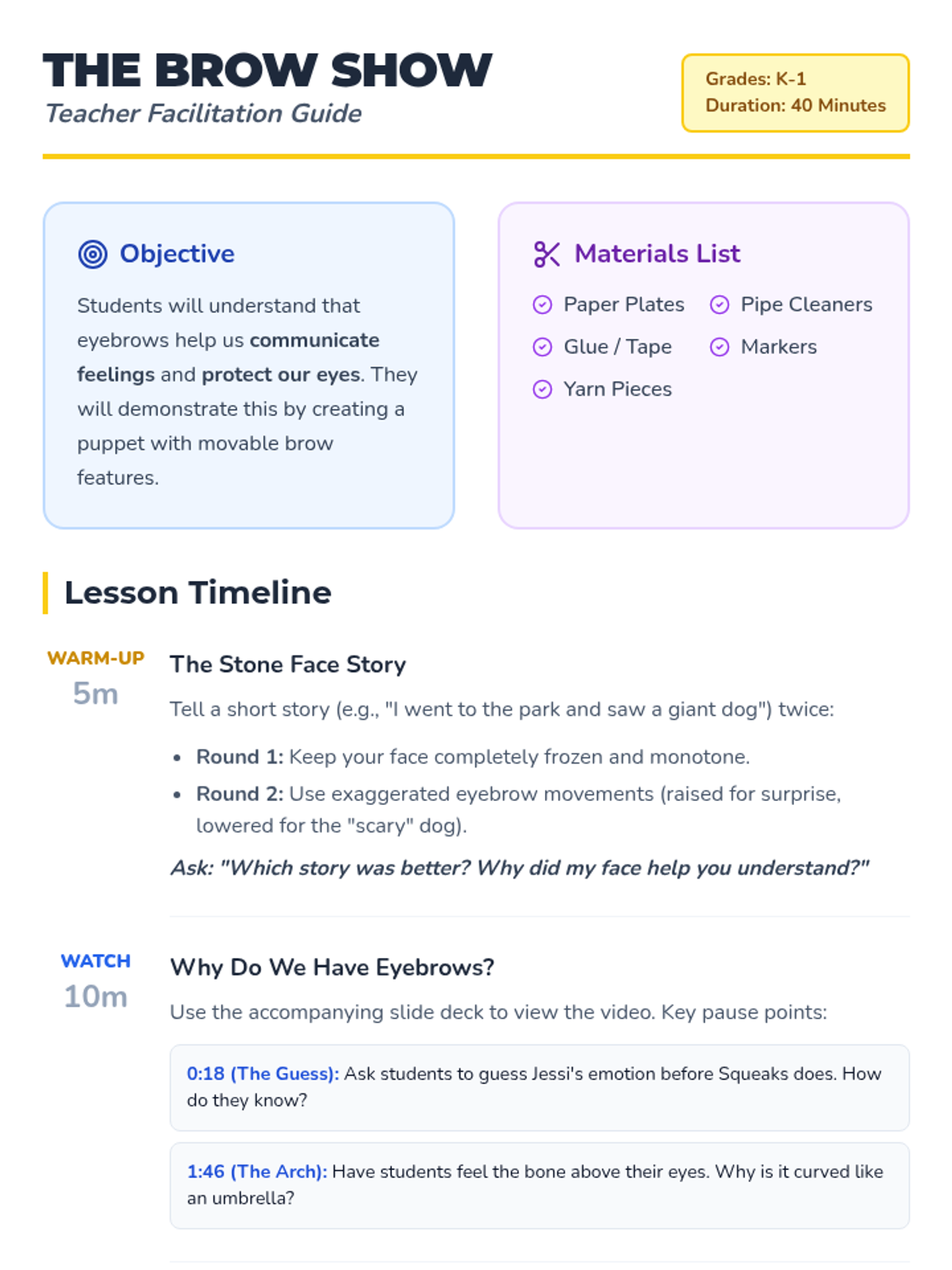
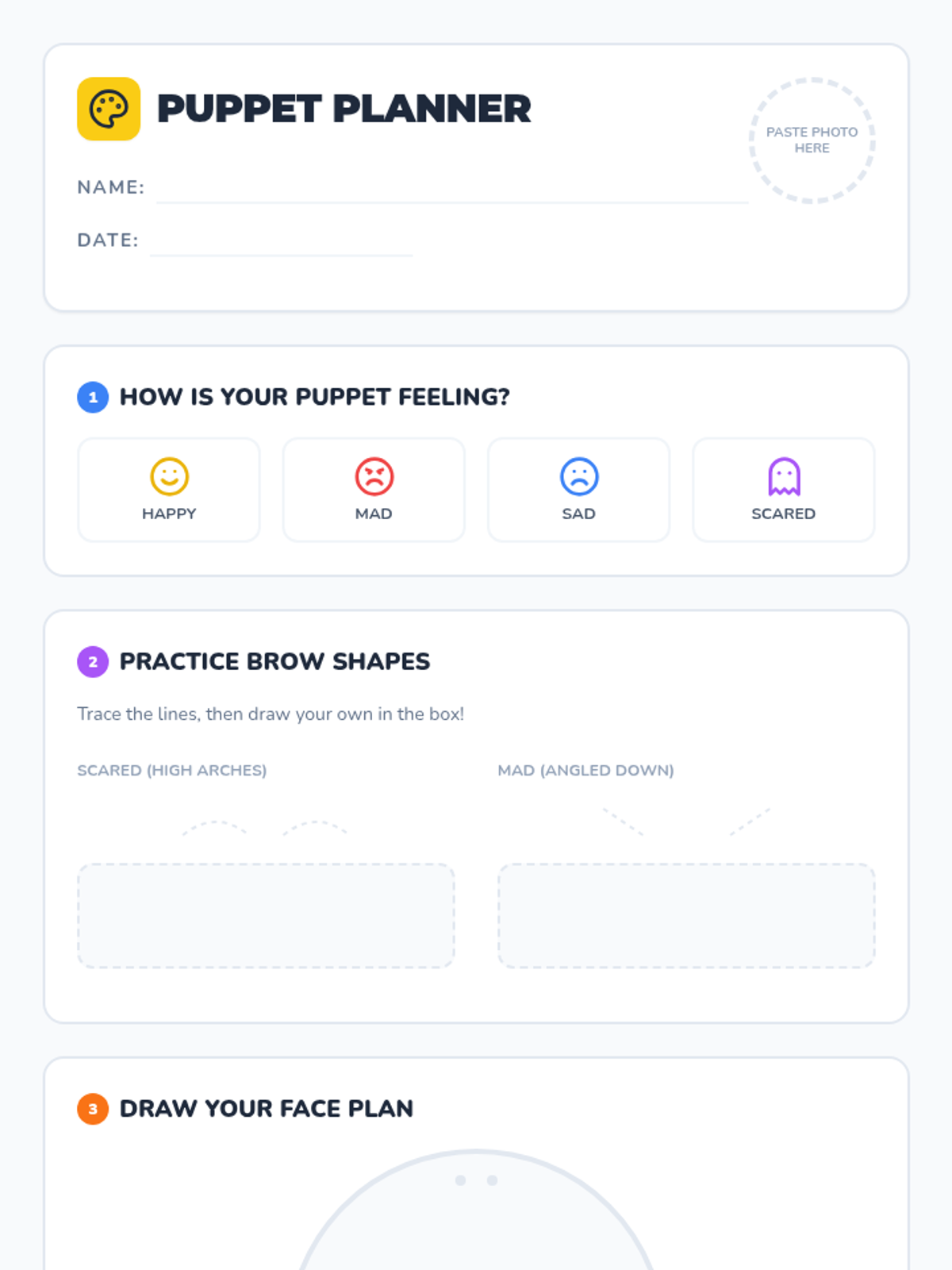
A fun, hands-on lesson for Kindergarten and 1st Grade students to explore the dual purpose of eyebrows: communication and protection. Students create 'Paper Plate Puppets' with adjustable pipe cleaner eyebrows to practice expressing different emotions.
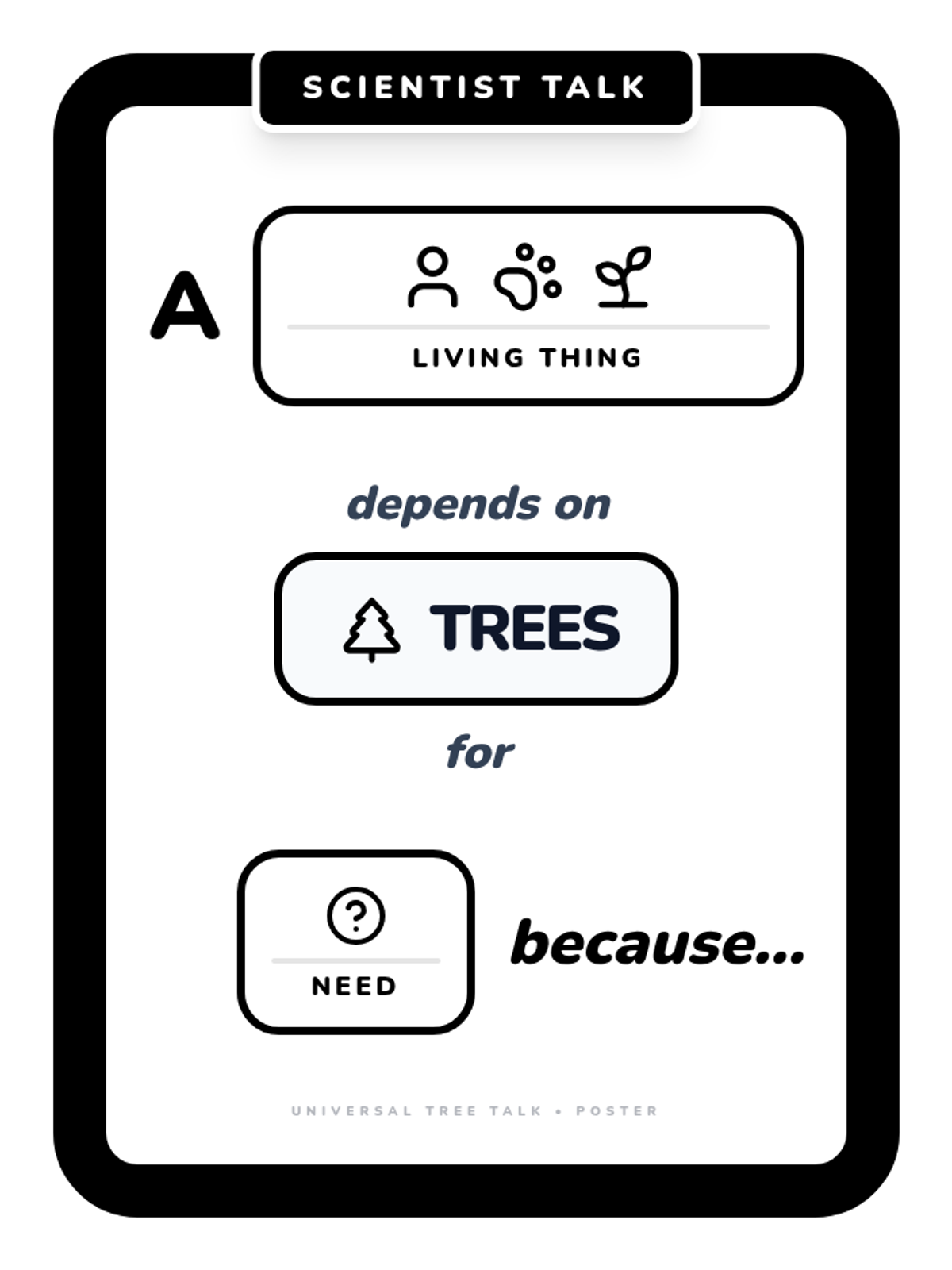
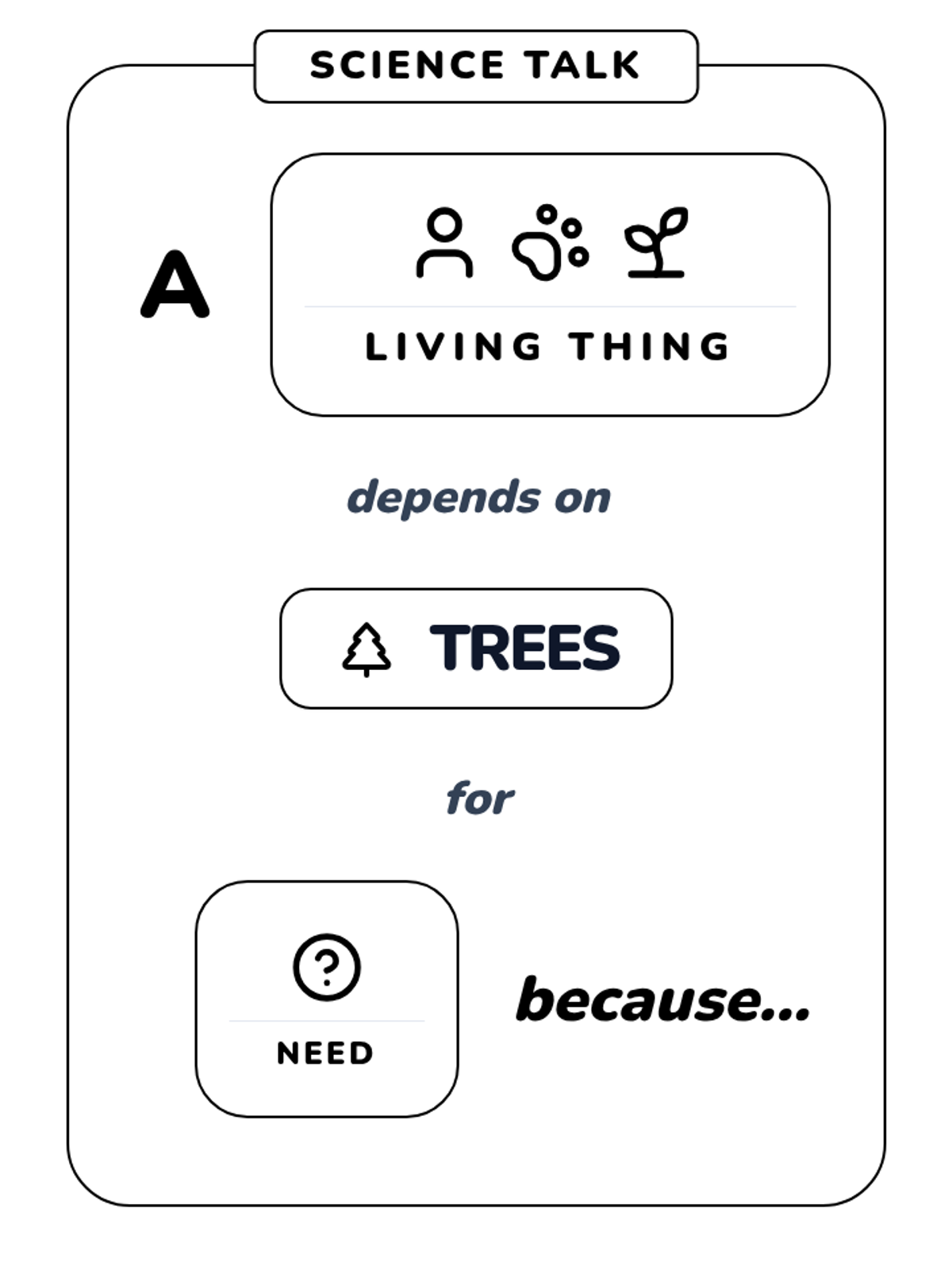
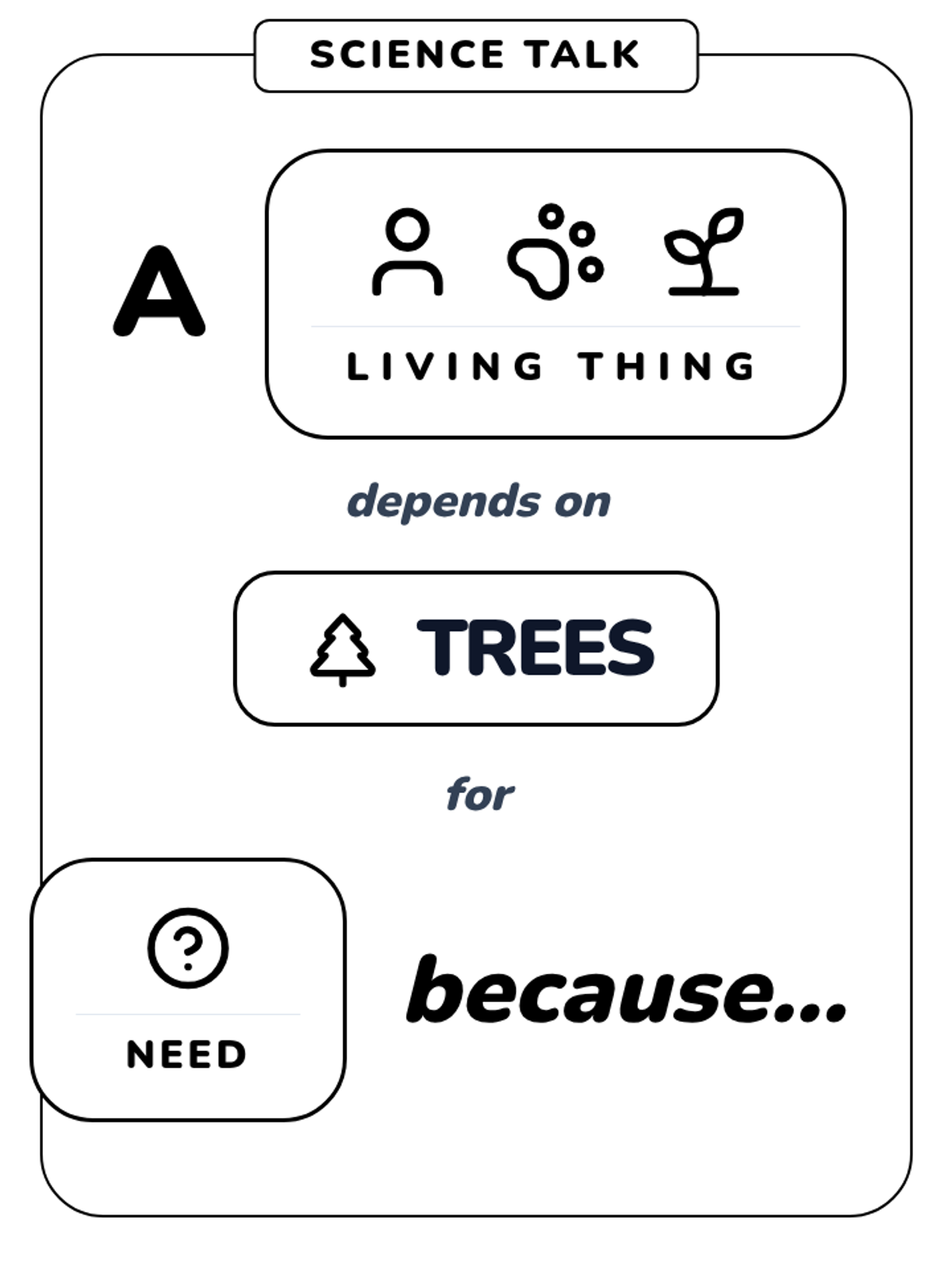
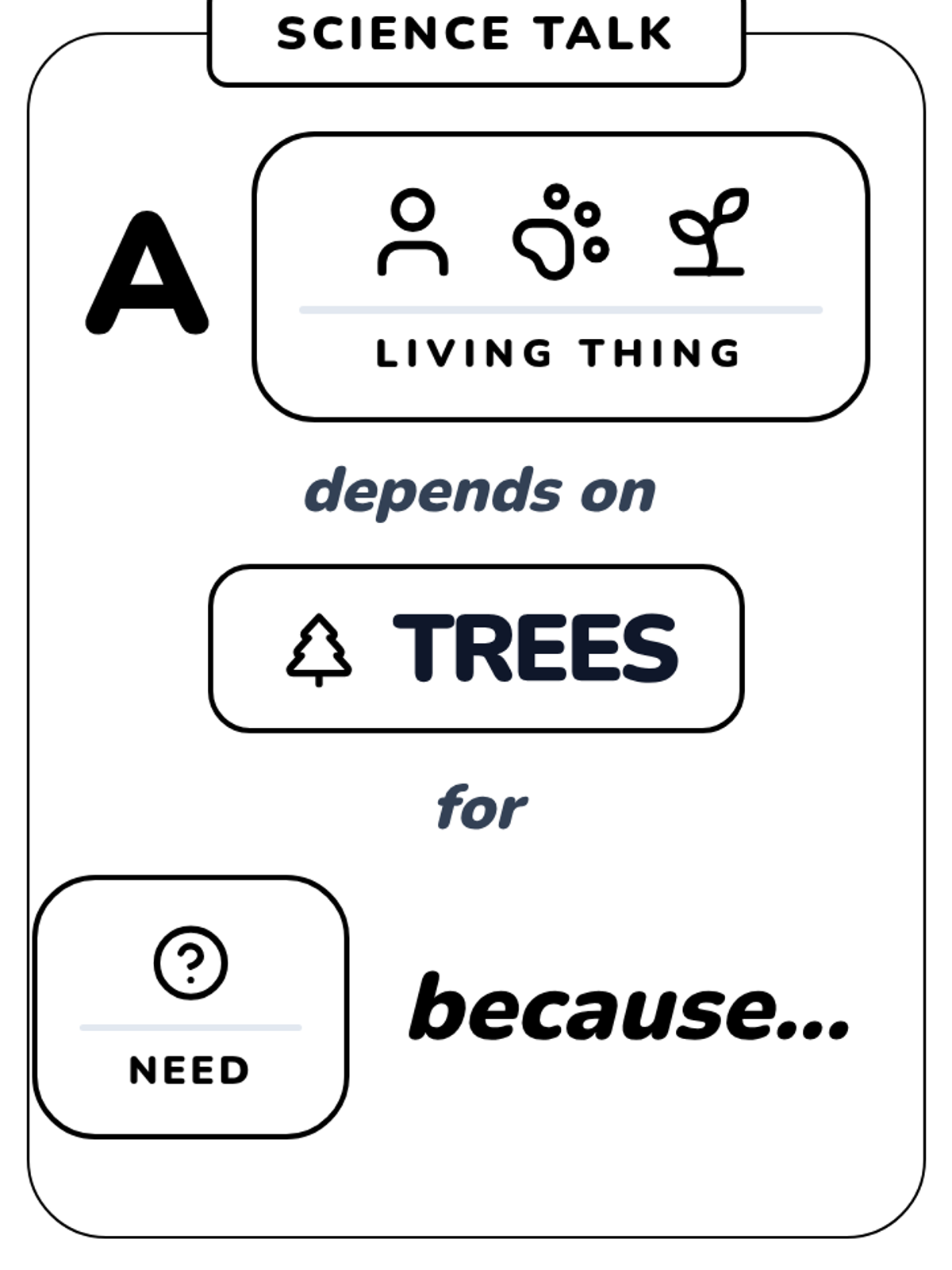
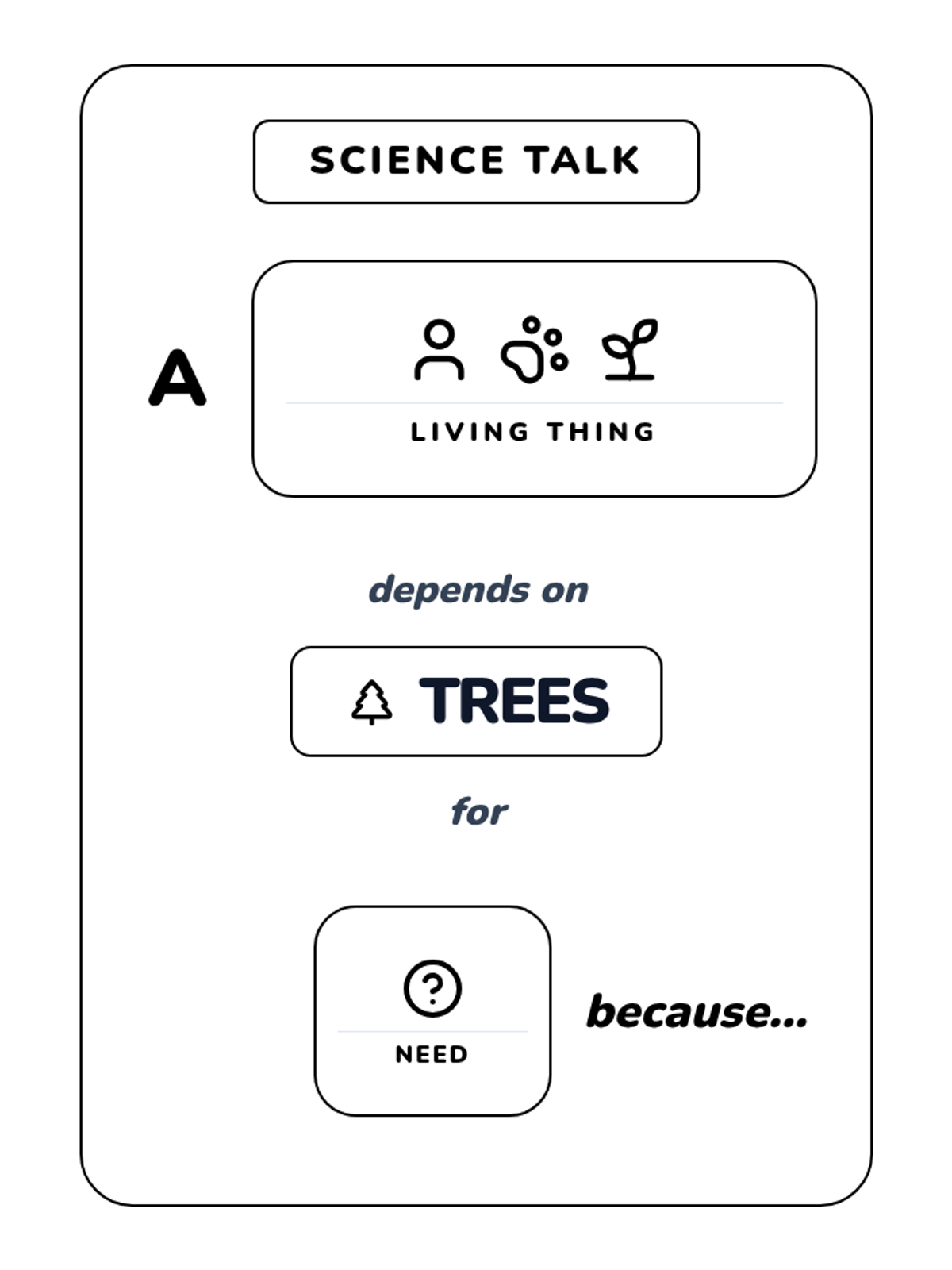
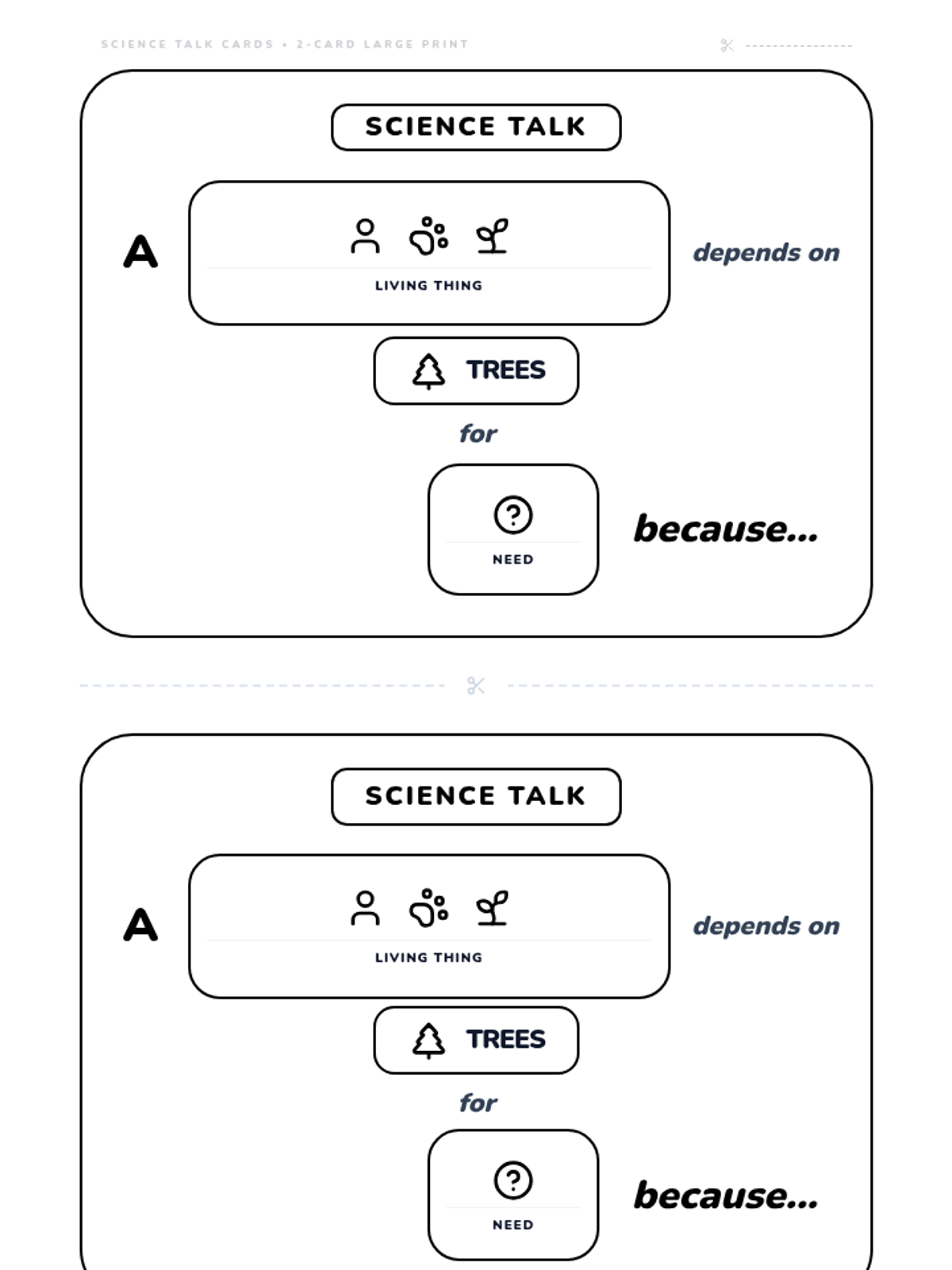
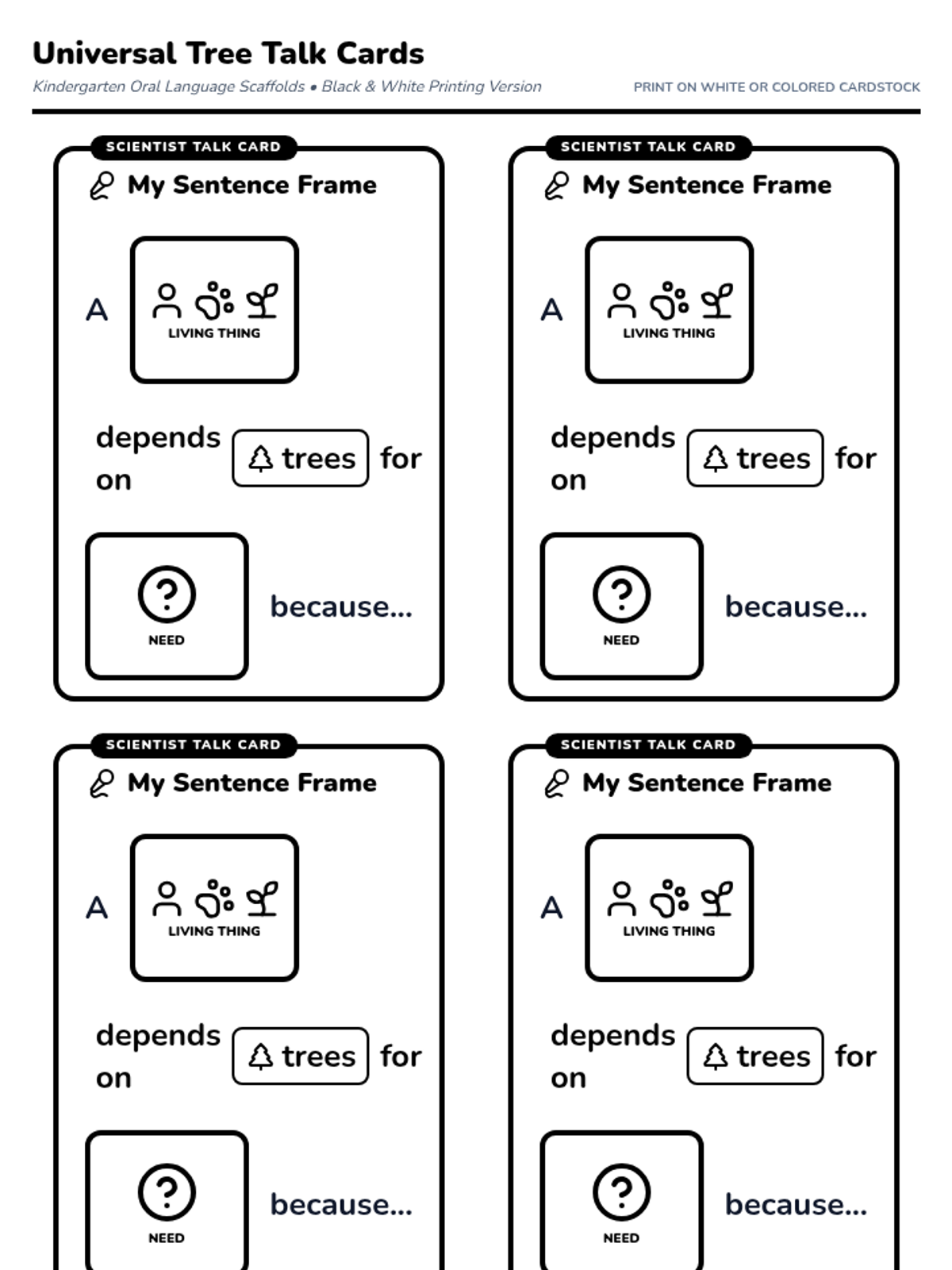
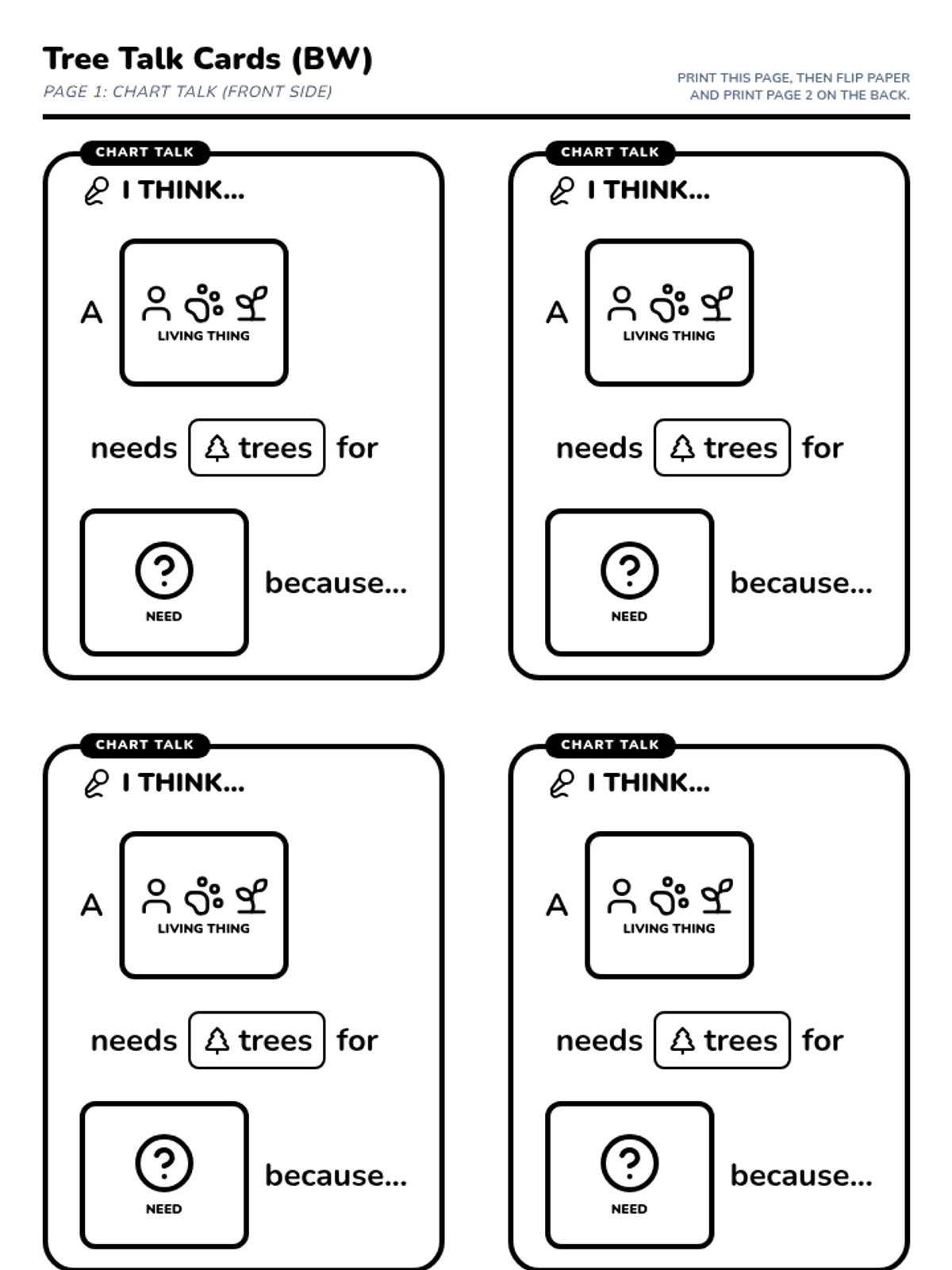
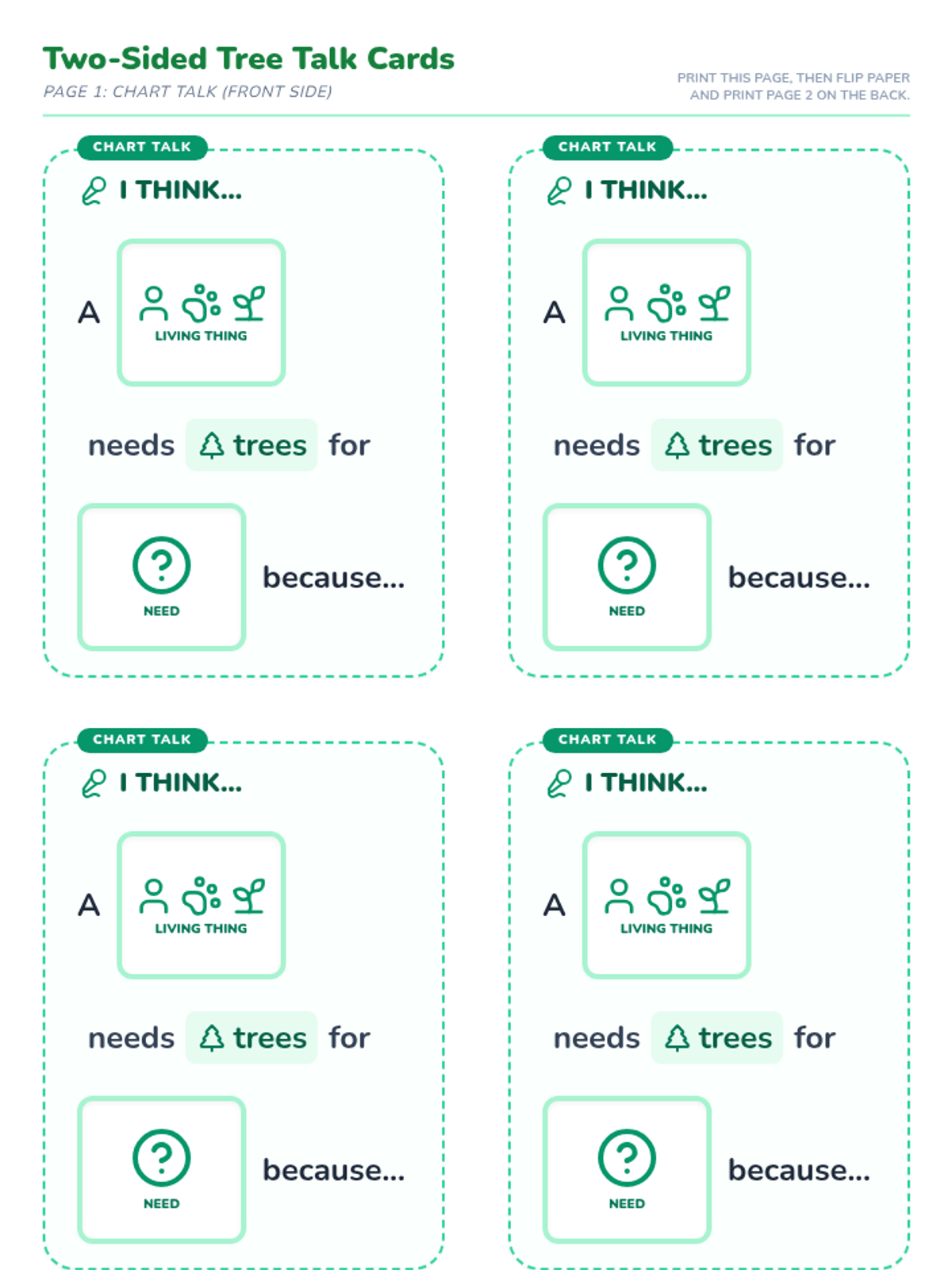
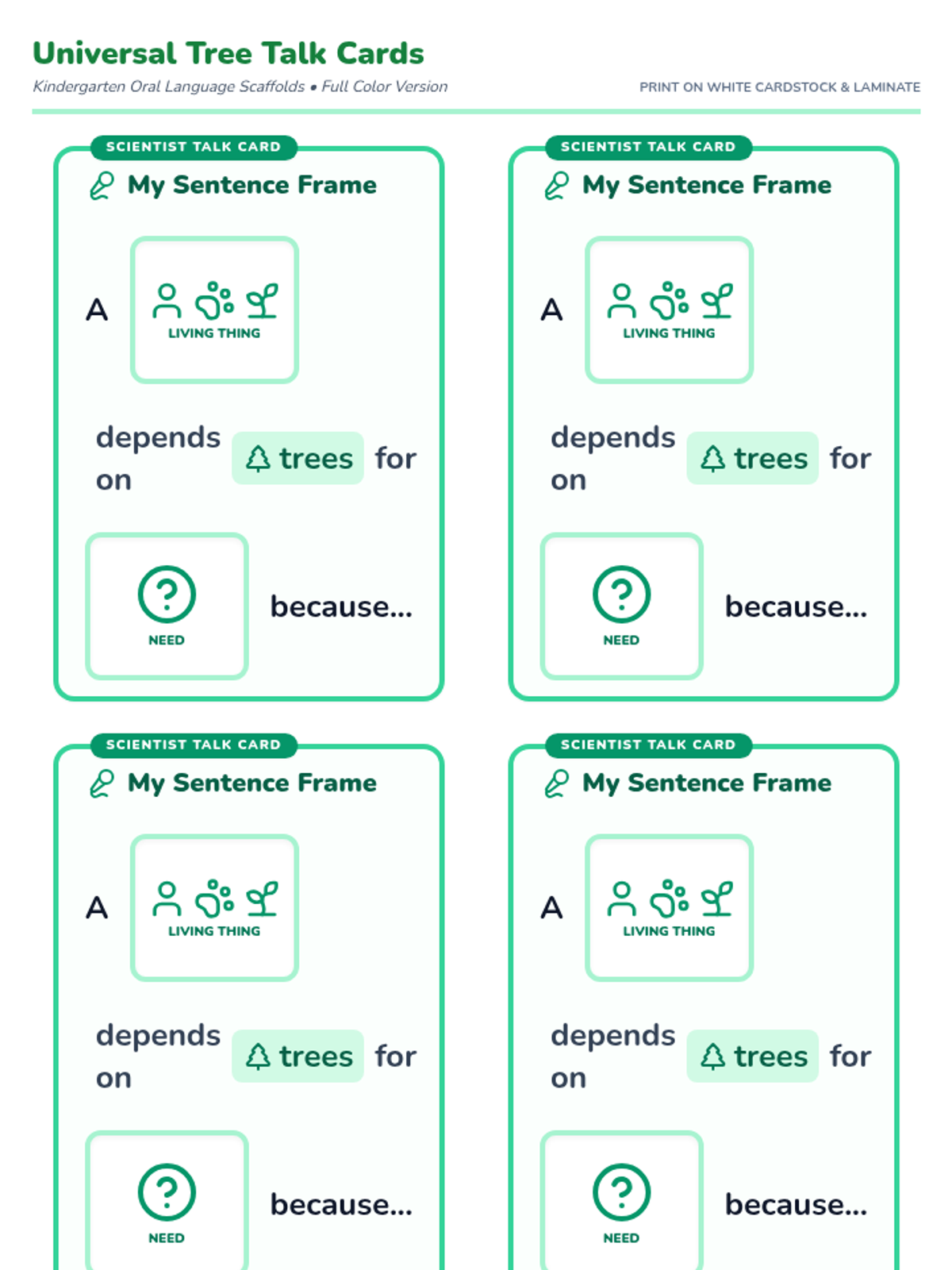
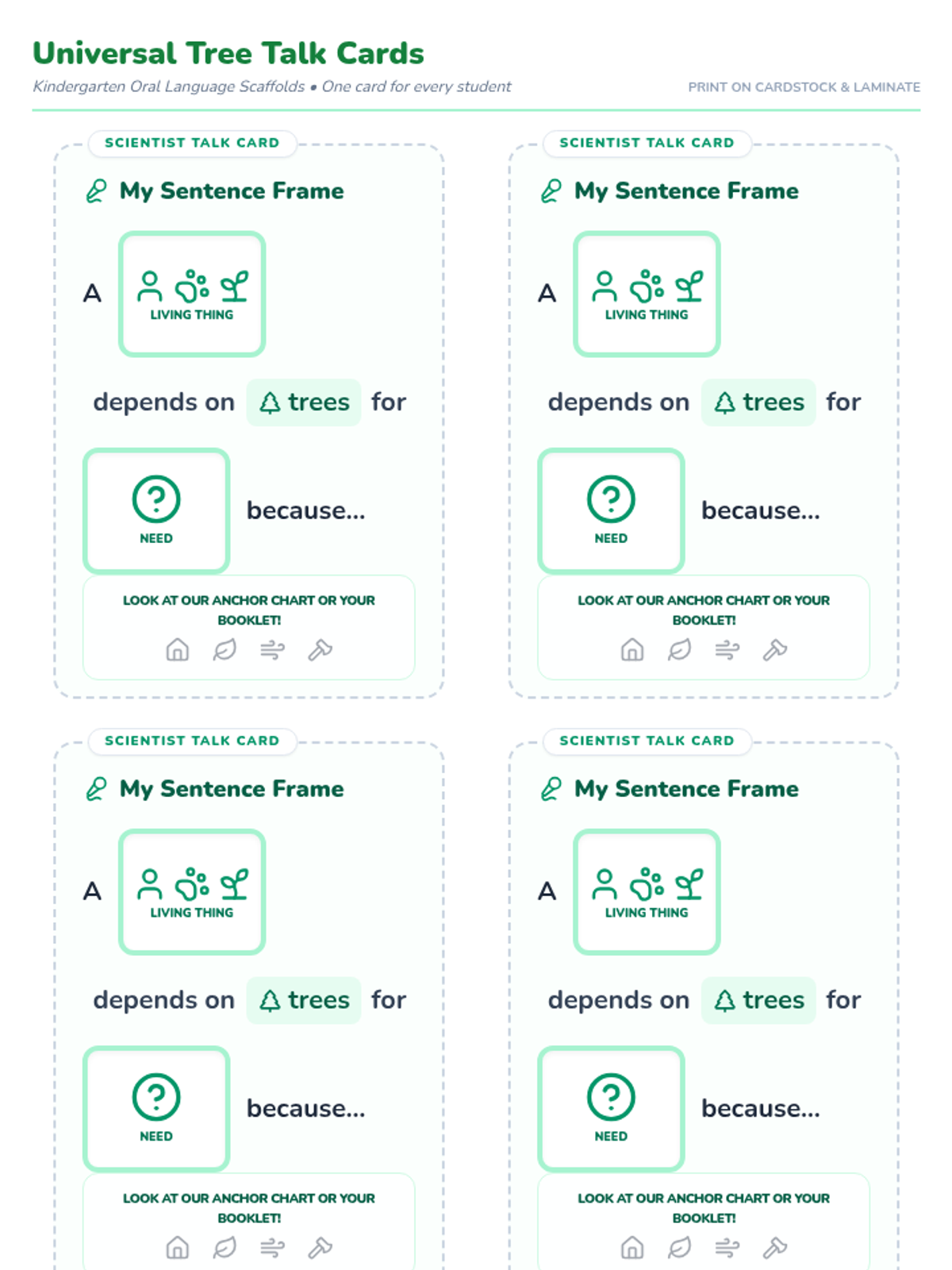
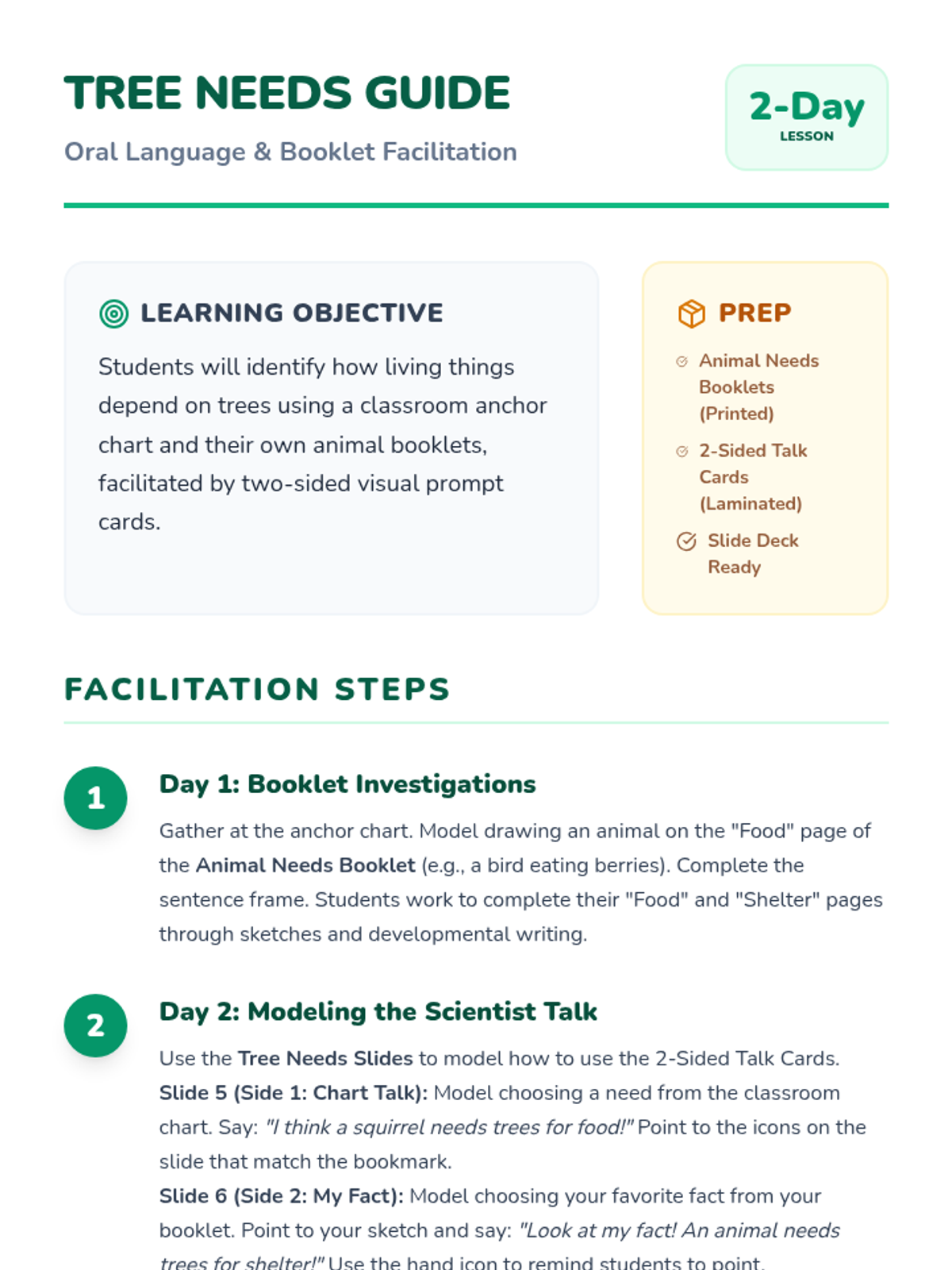
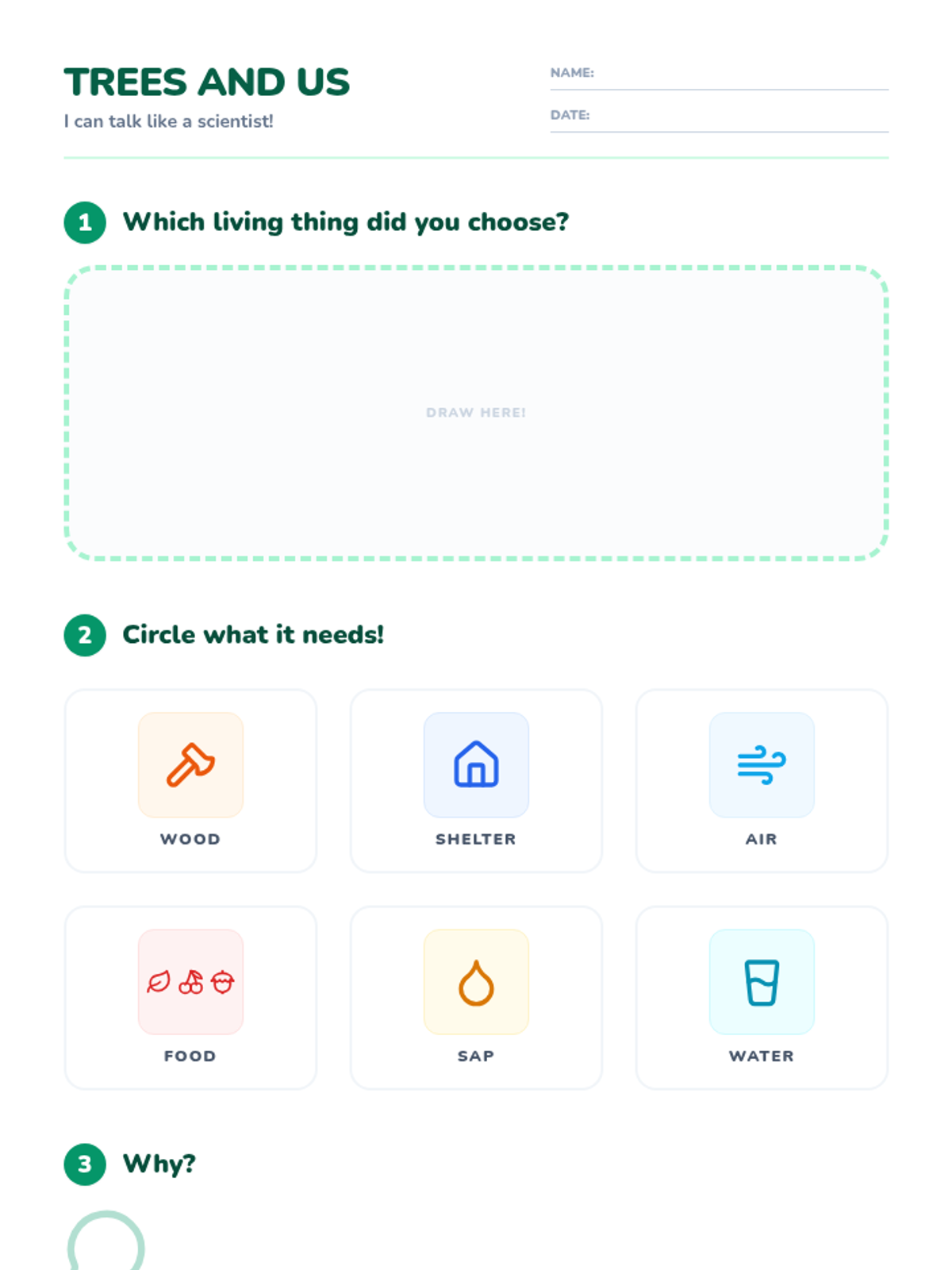
A lesson focused on how living things depend on trees for survival, utilizing visual sentence frames to support Kindergarten oral language development.
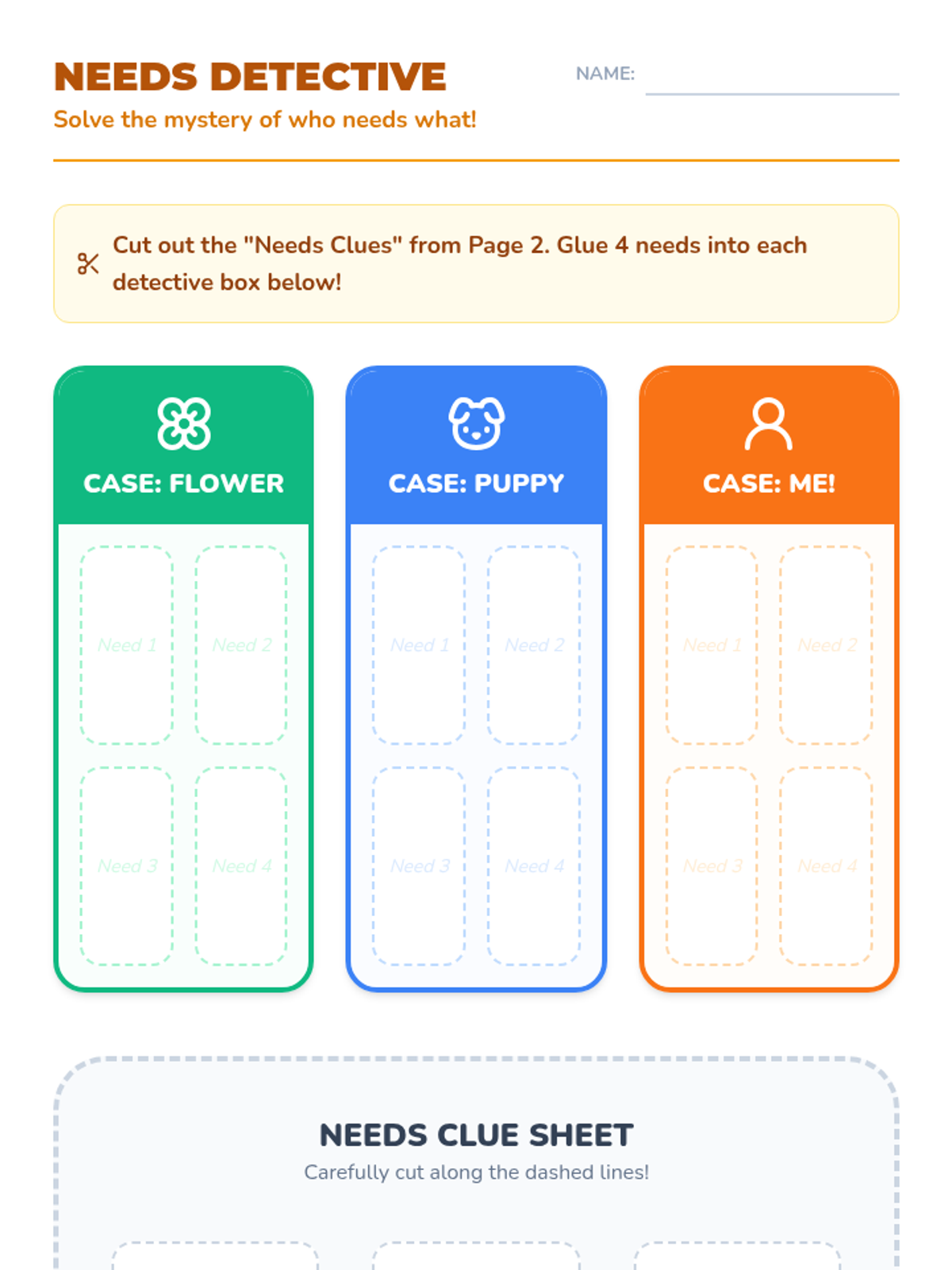
A synthesis lesson where students compare and sort the needs of all living things to identify patterns.
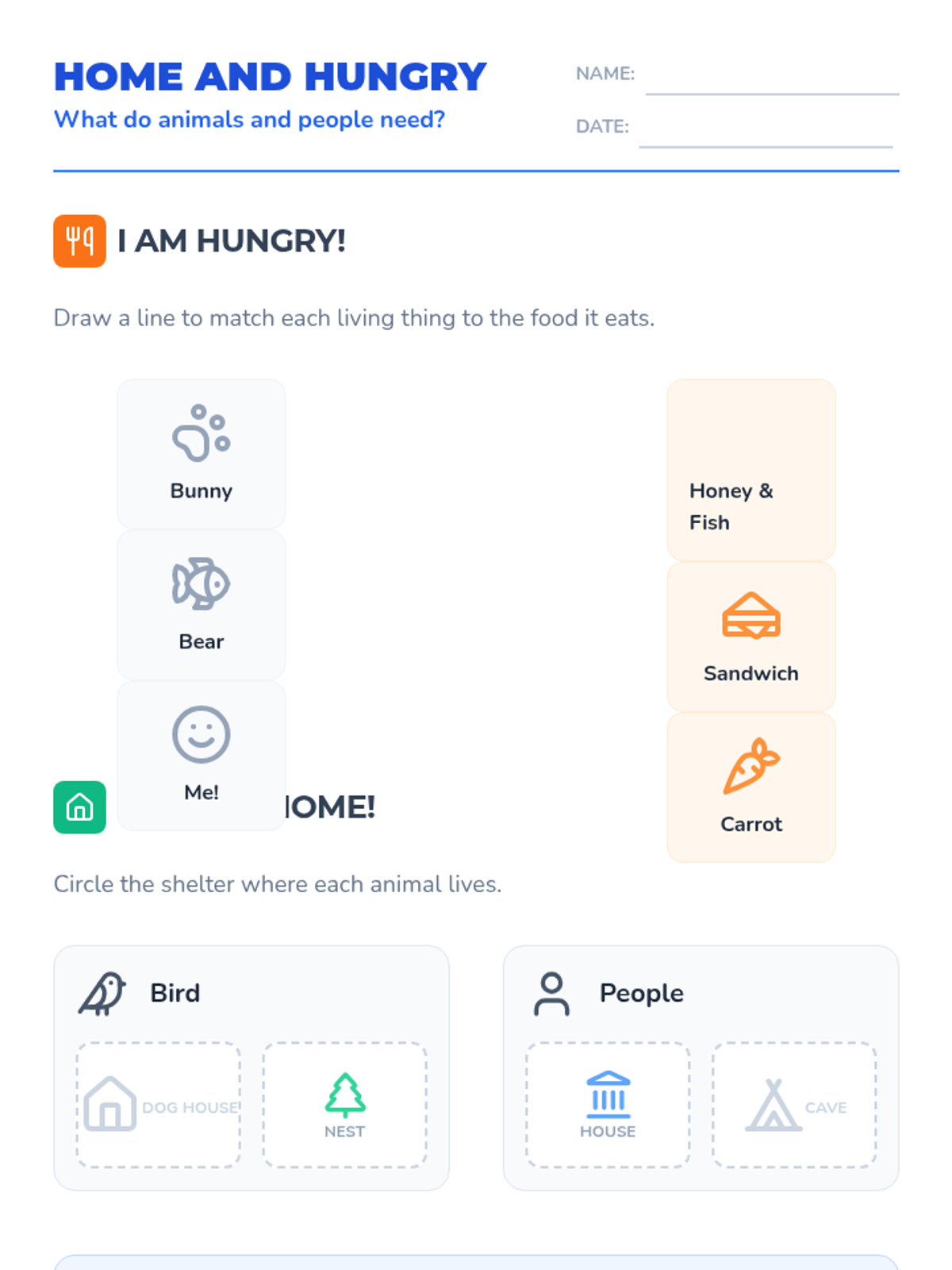
Explores the survival requirements of animals and humans, highlighting food, water, air, and shelter.
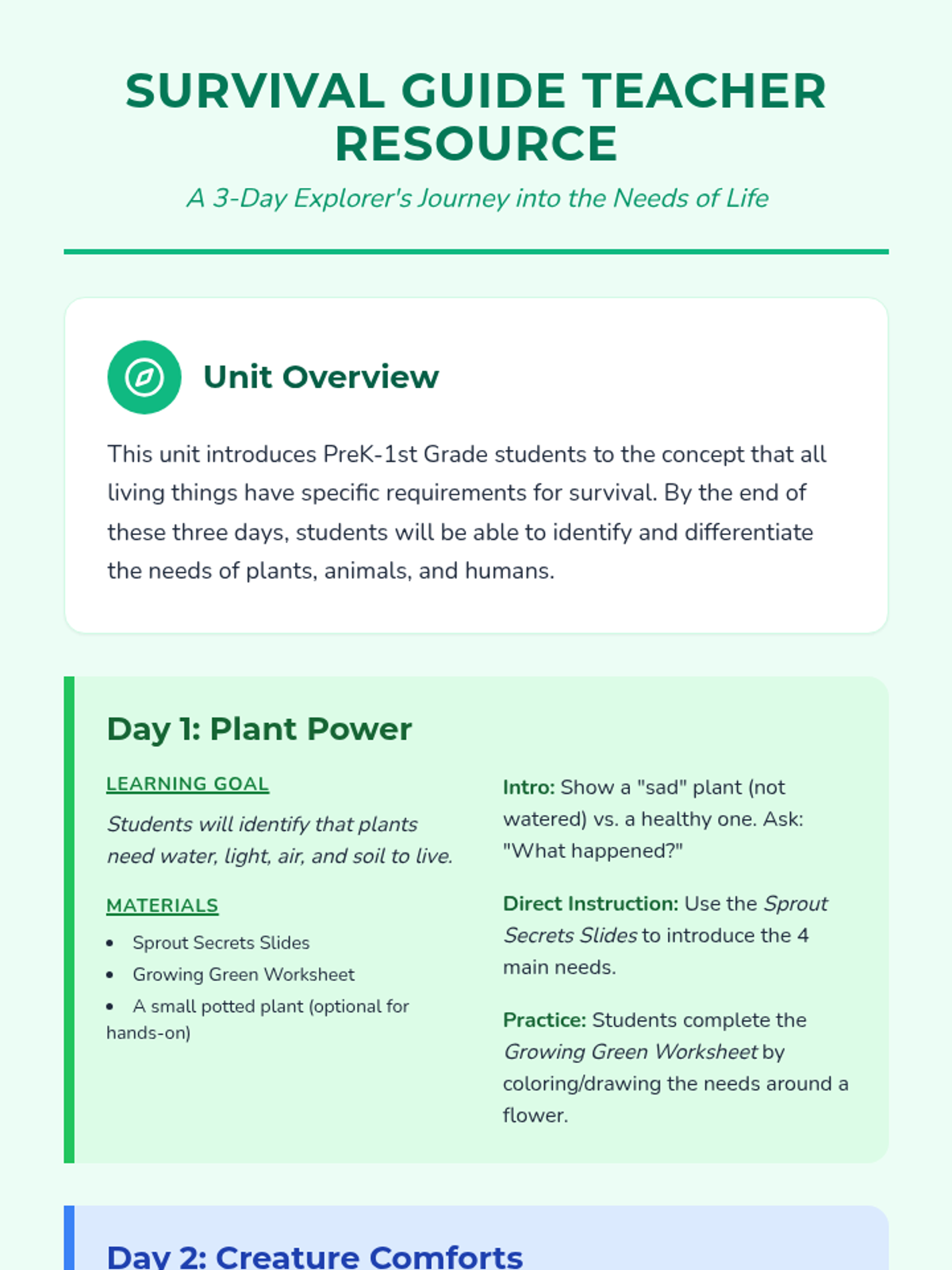
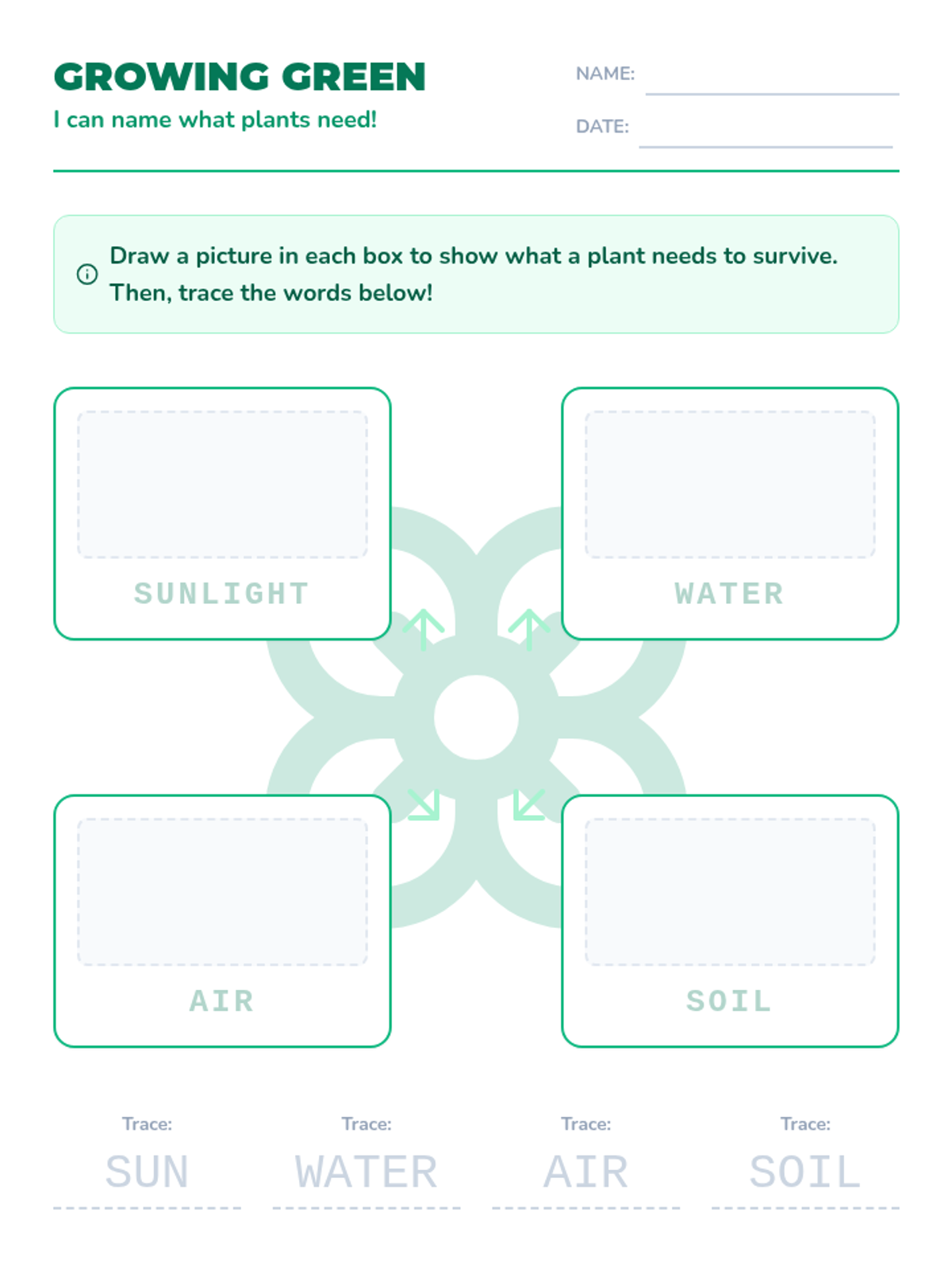
Focuses on what plants need to grow and thrive, including sunlight, water, air, and soil.
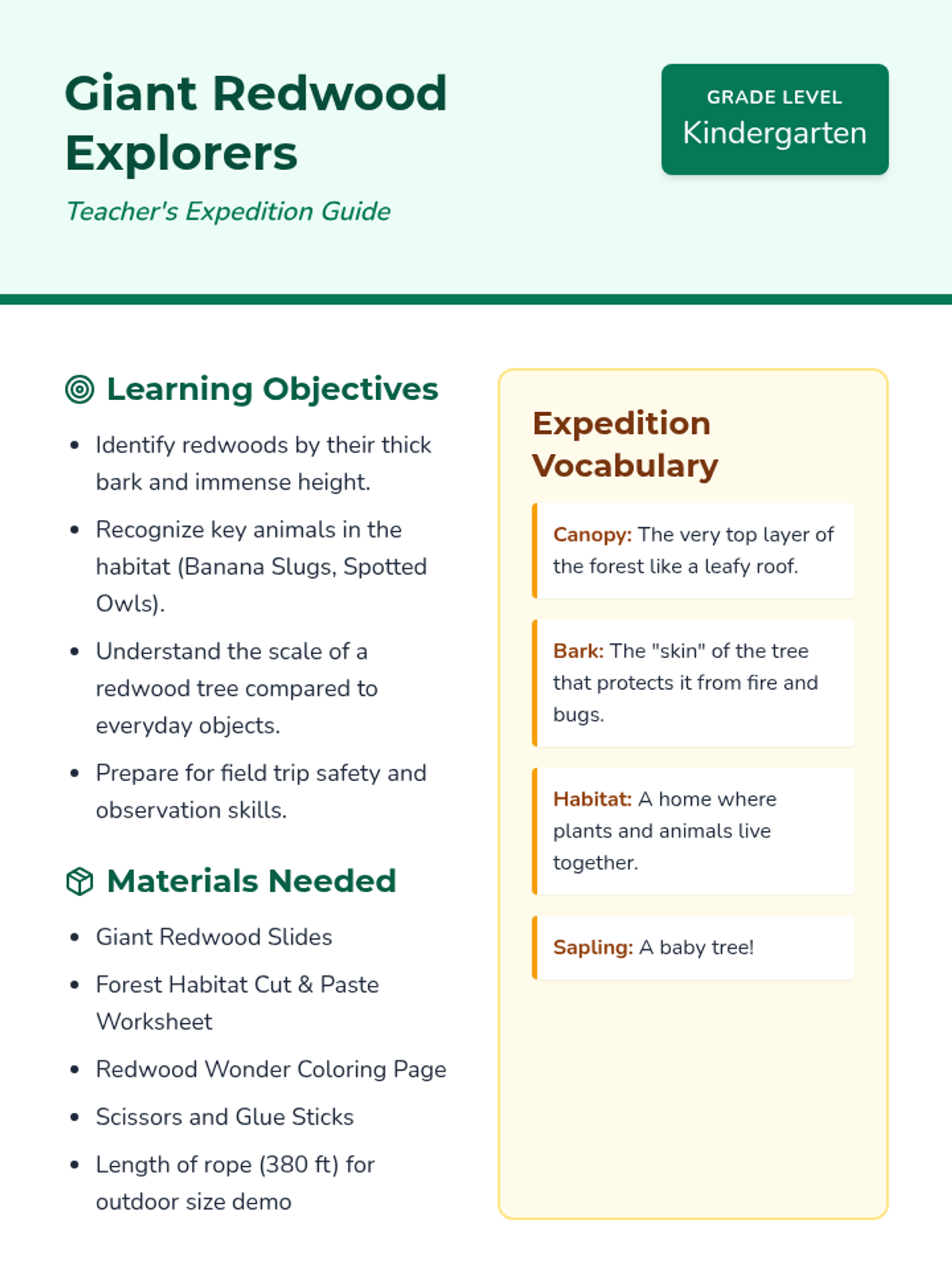
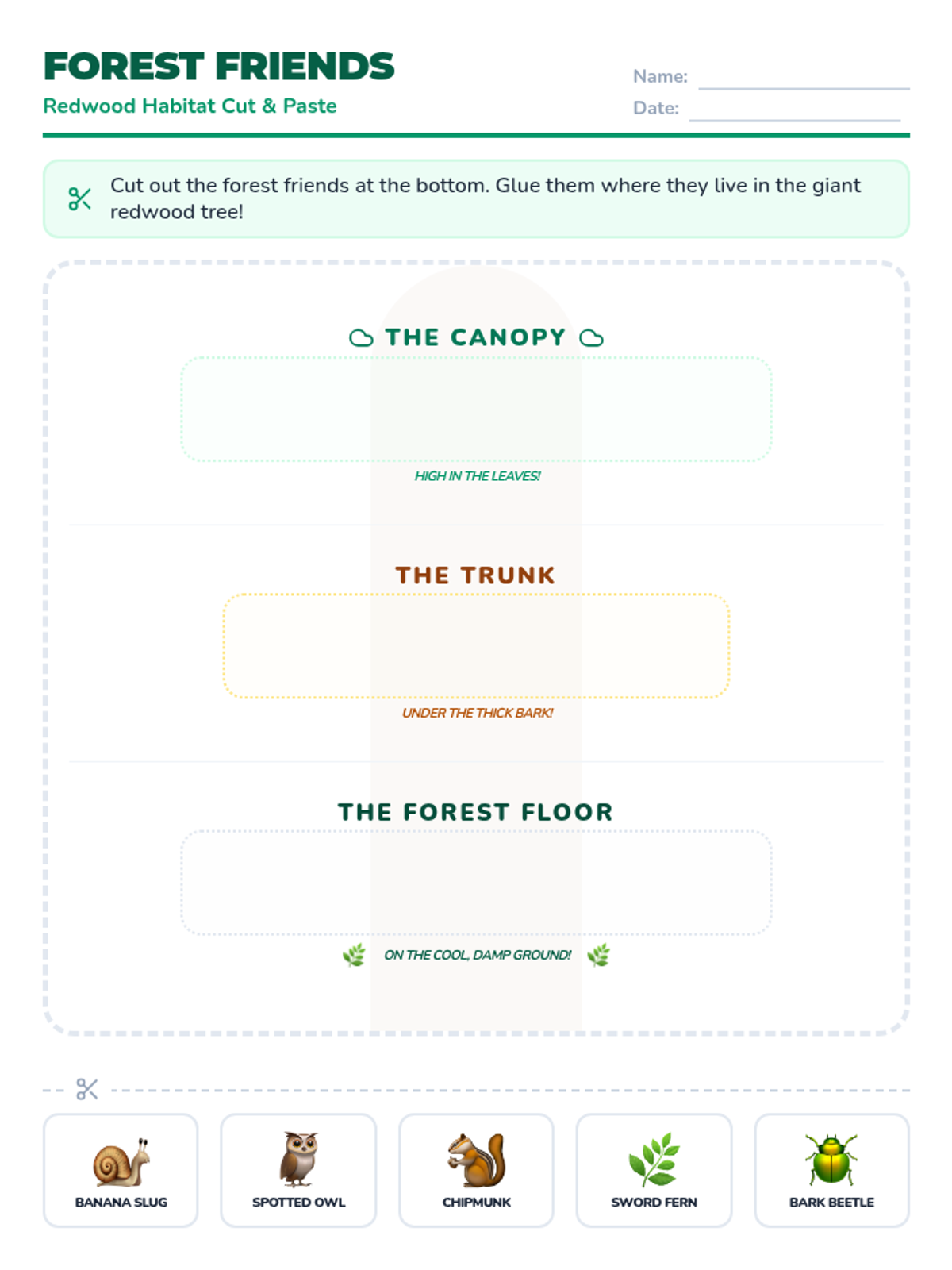
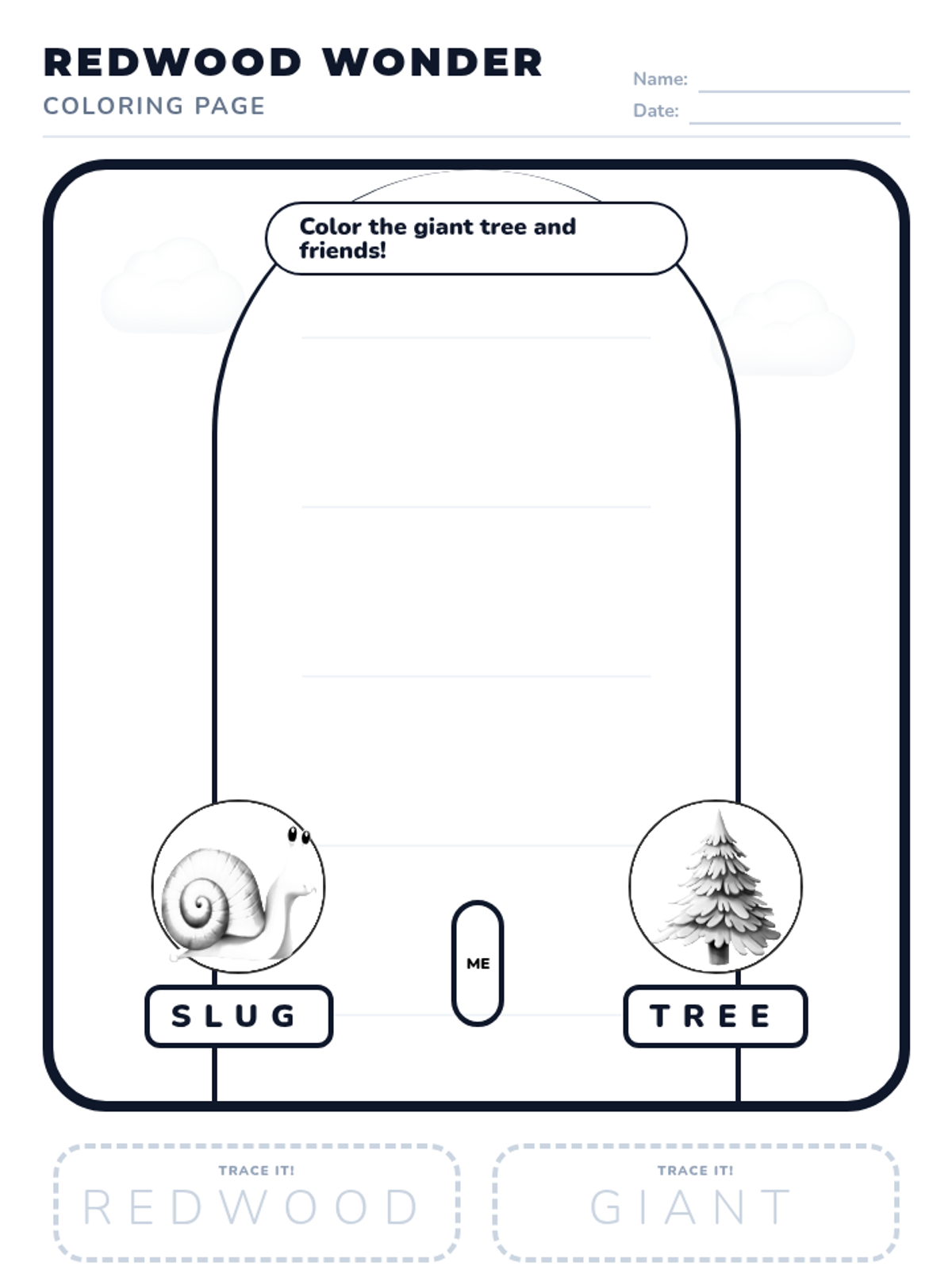
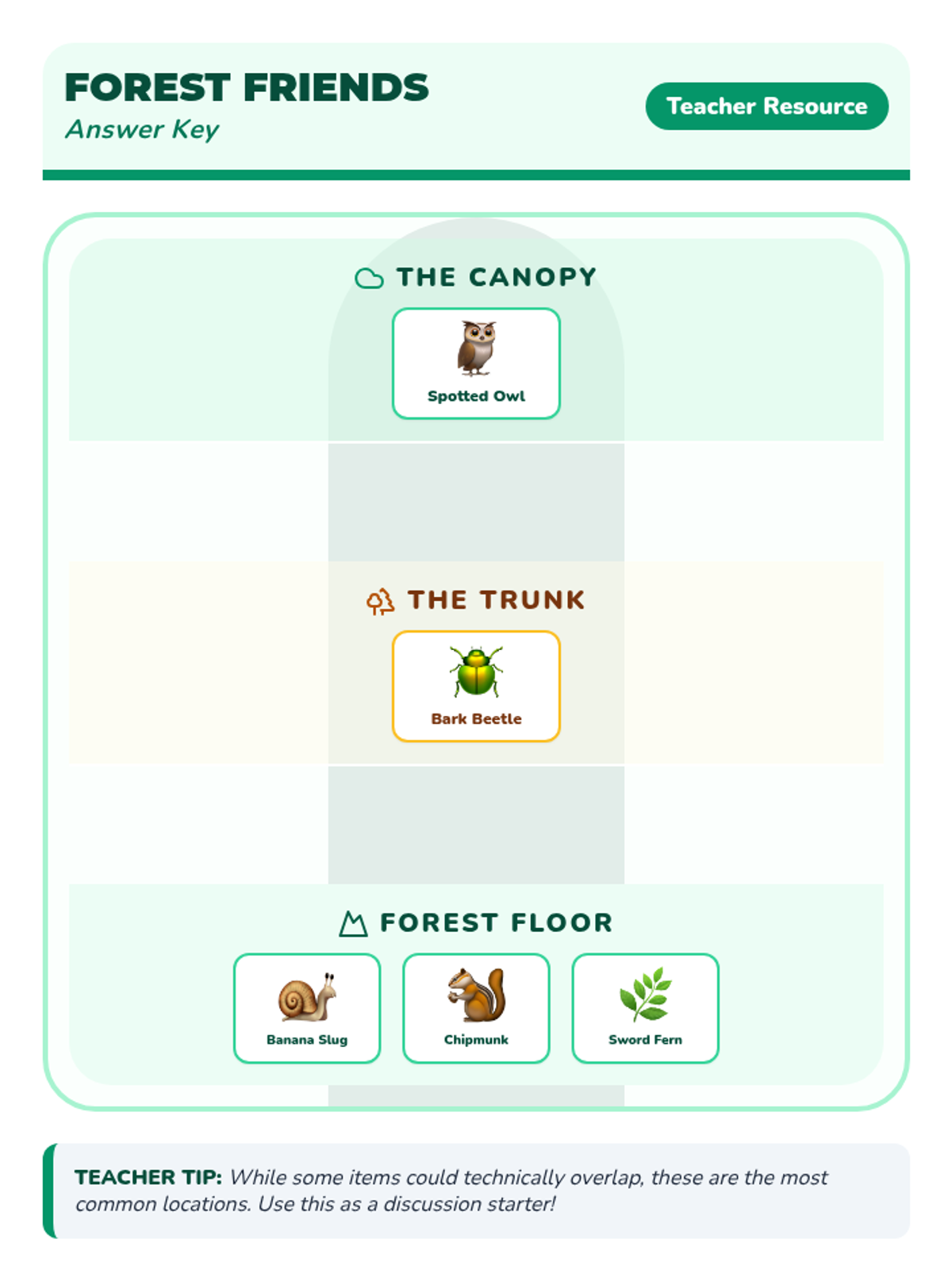
An engaging introductory lesson for kindergarteners to discover the wonder of Redwood forests, focusing on their massive size, the animals that live there, and preparing for an outdoor adventure.
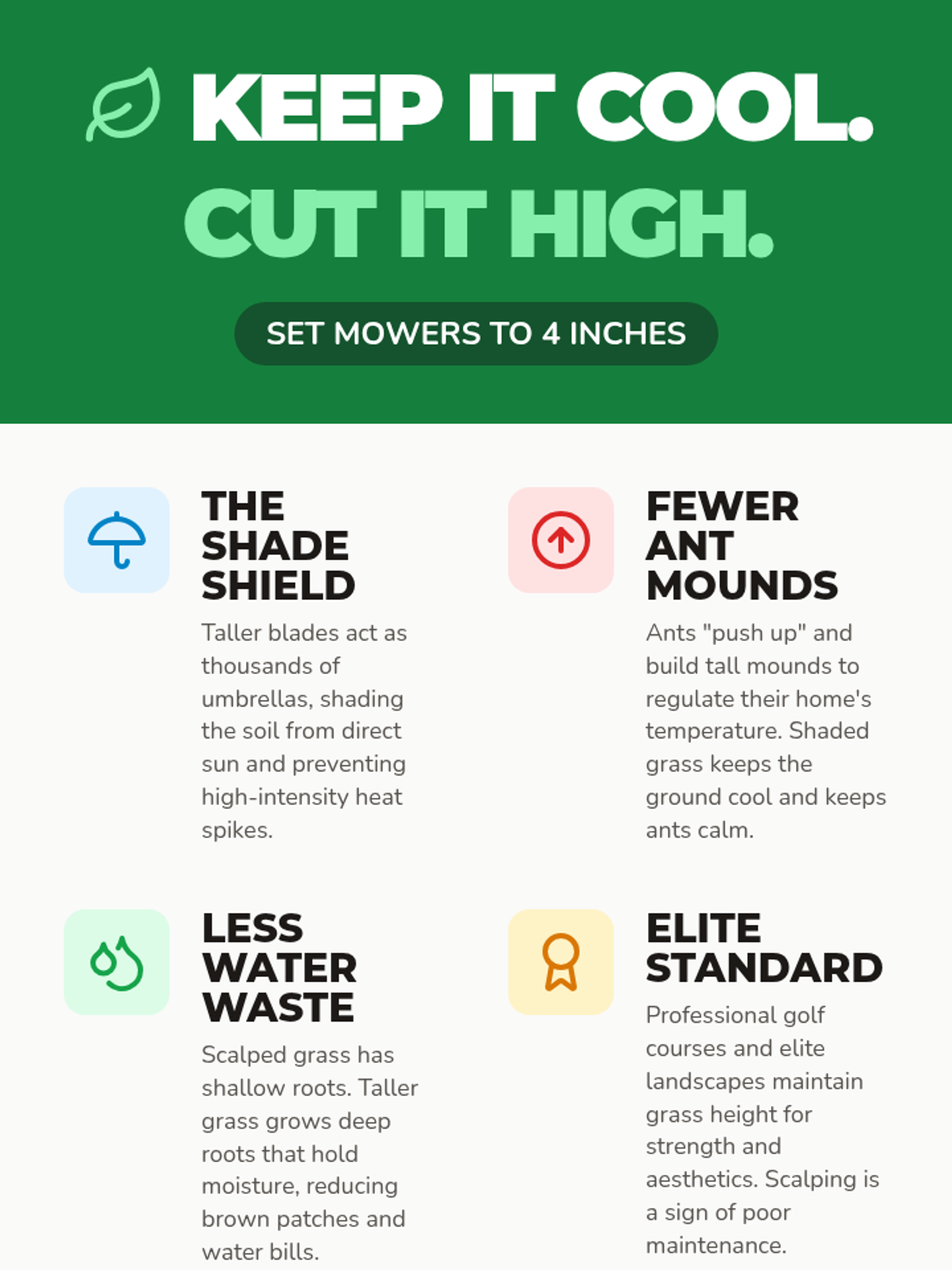
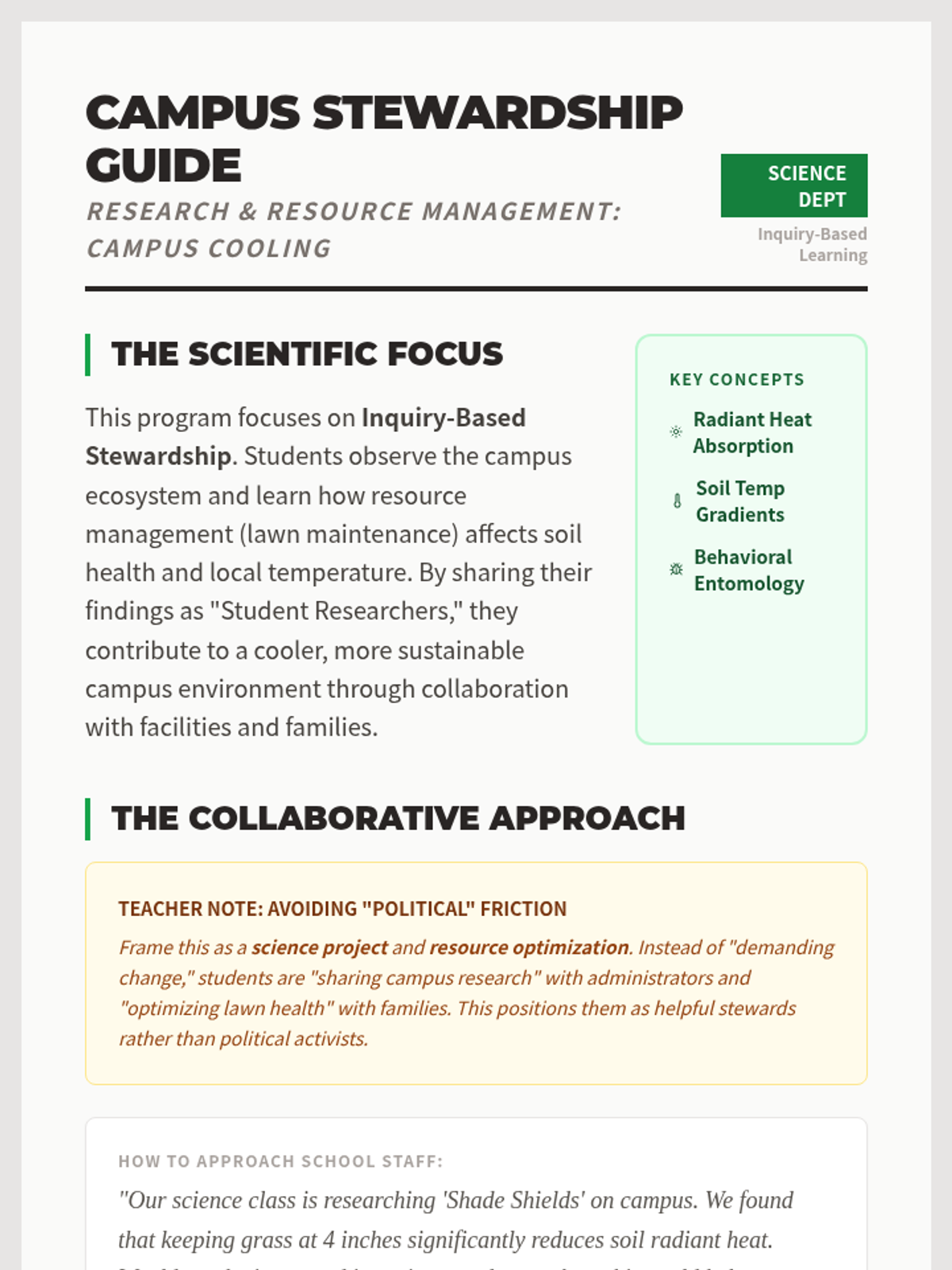
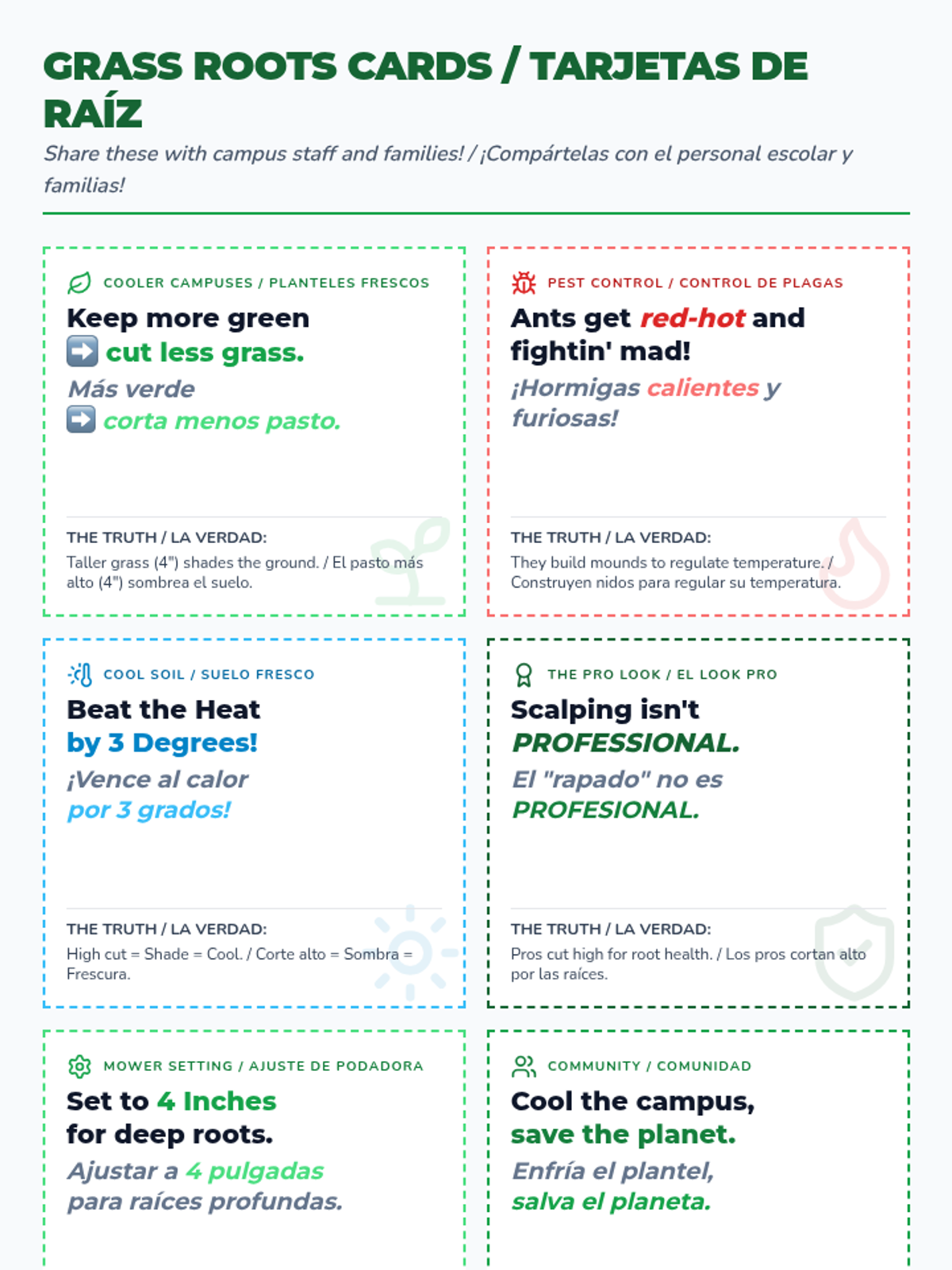
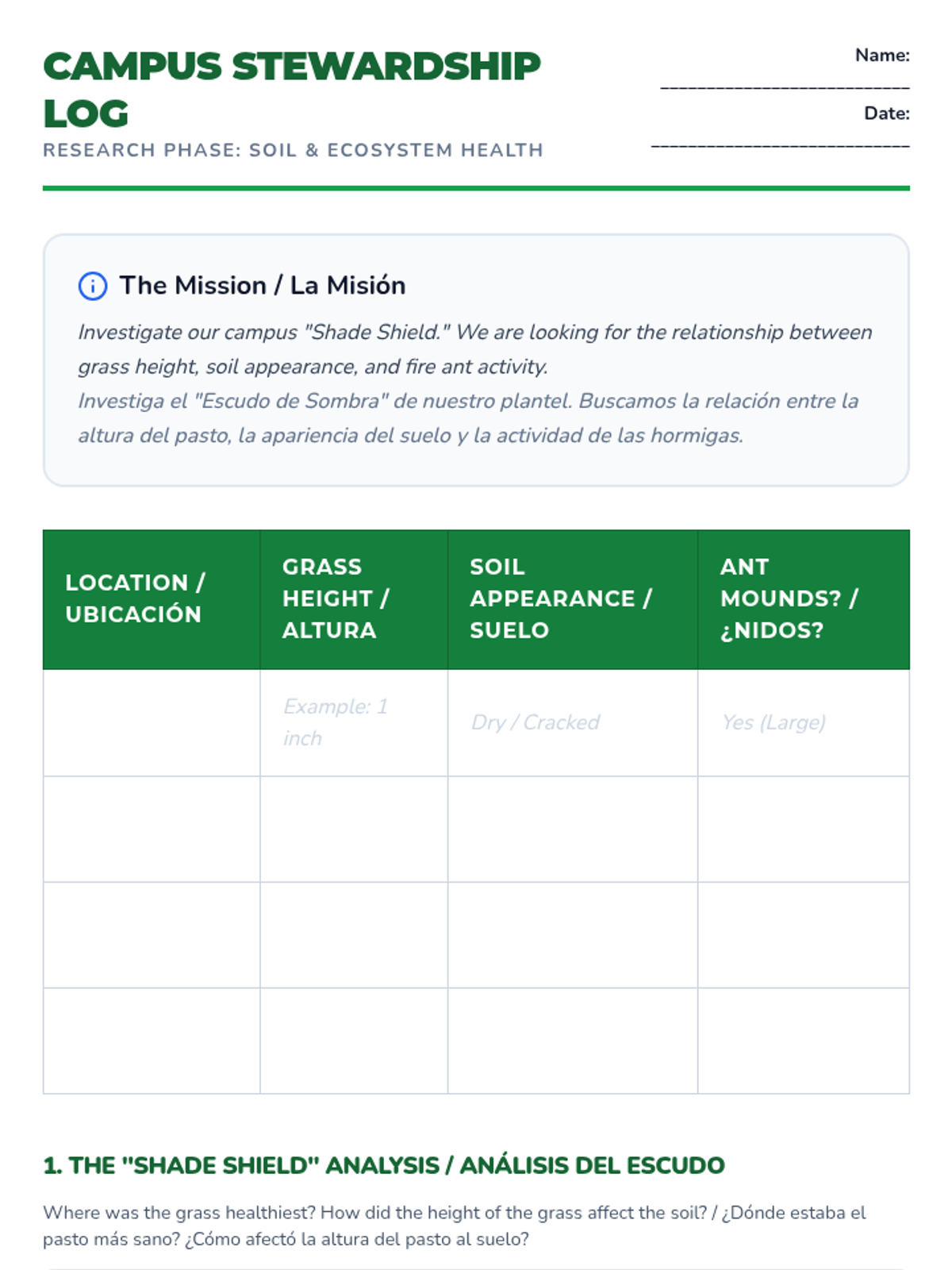
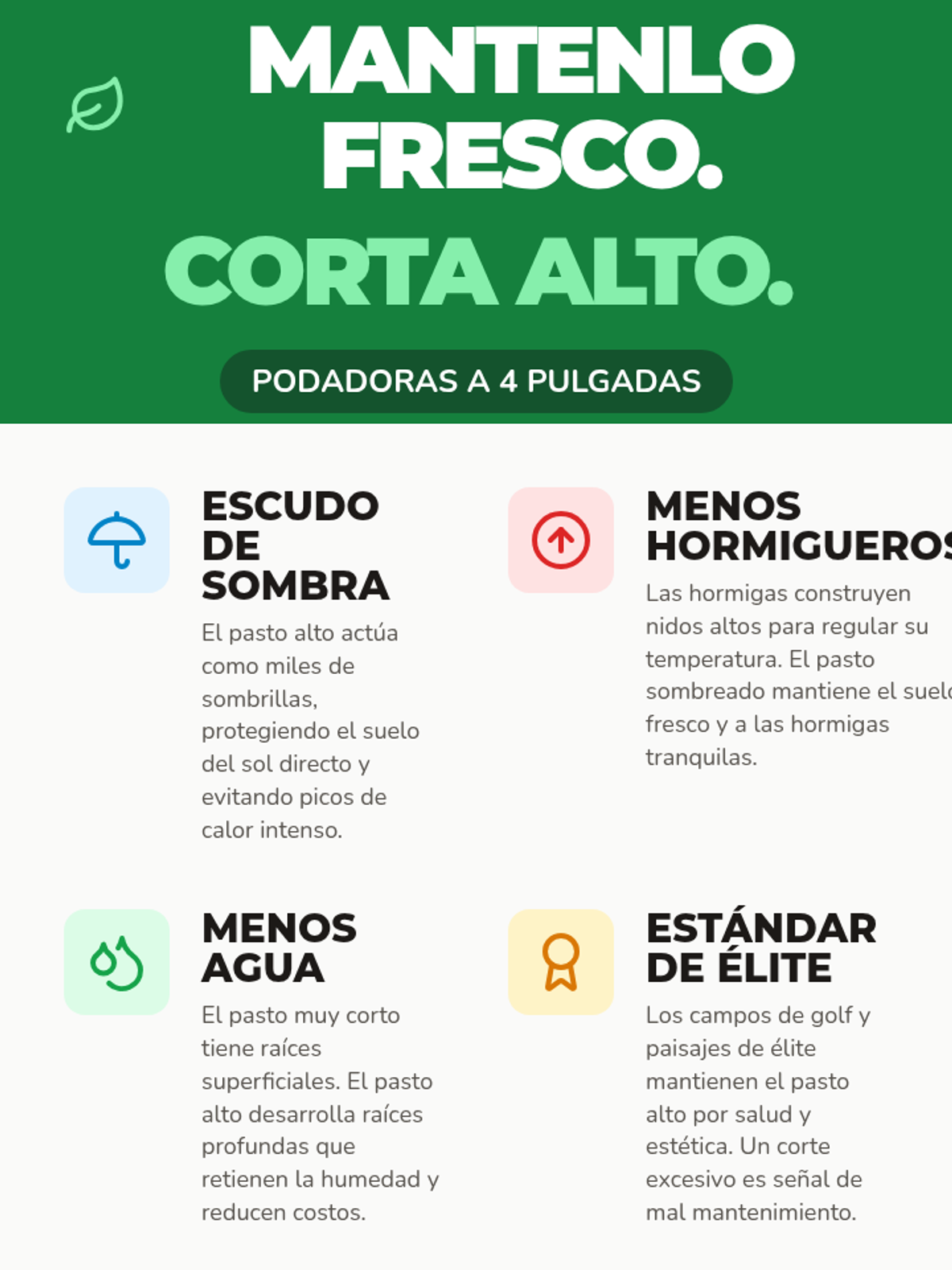
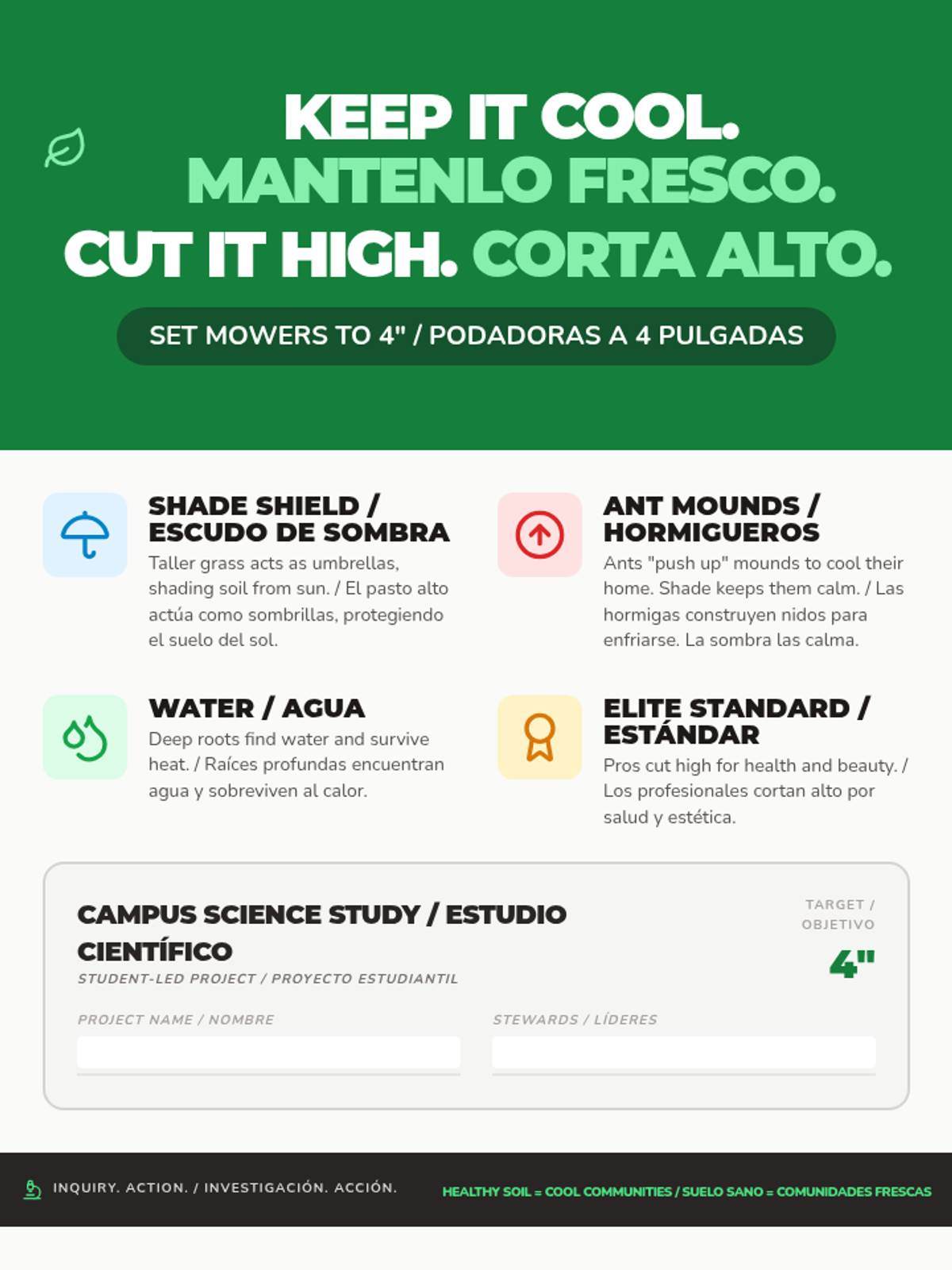
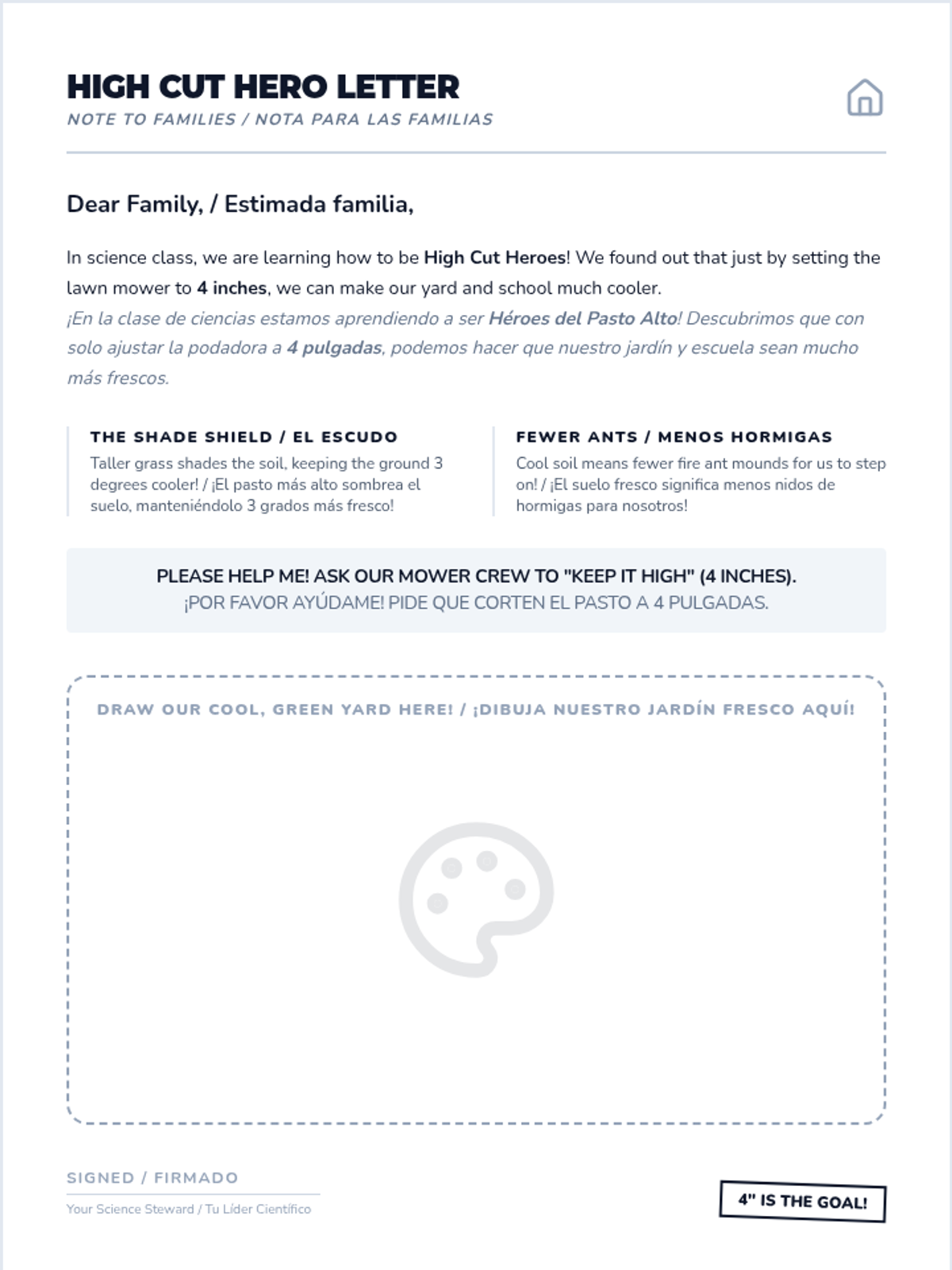
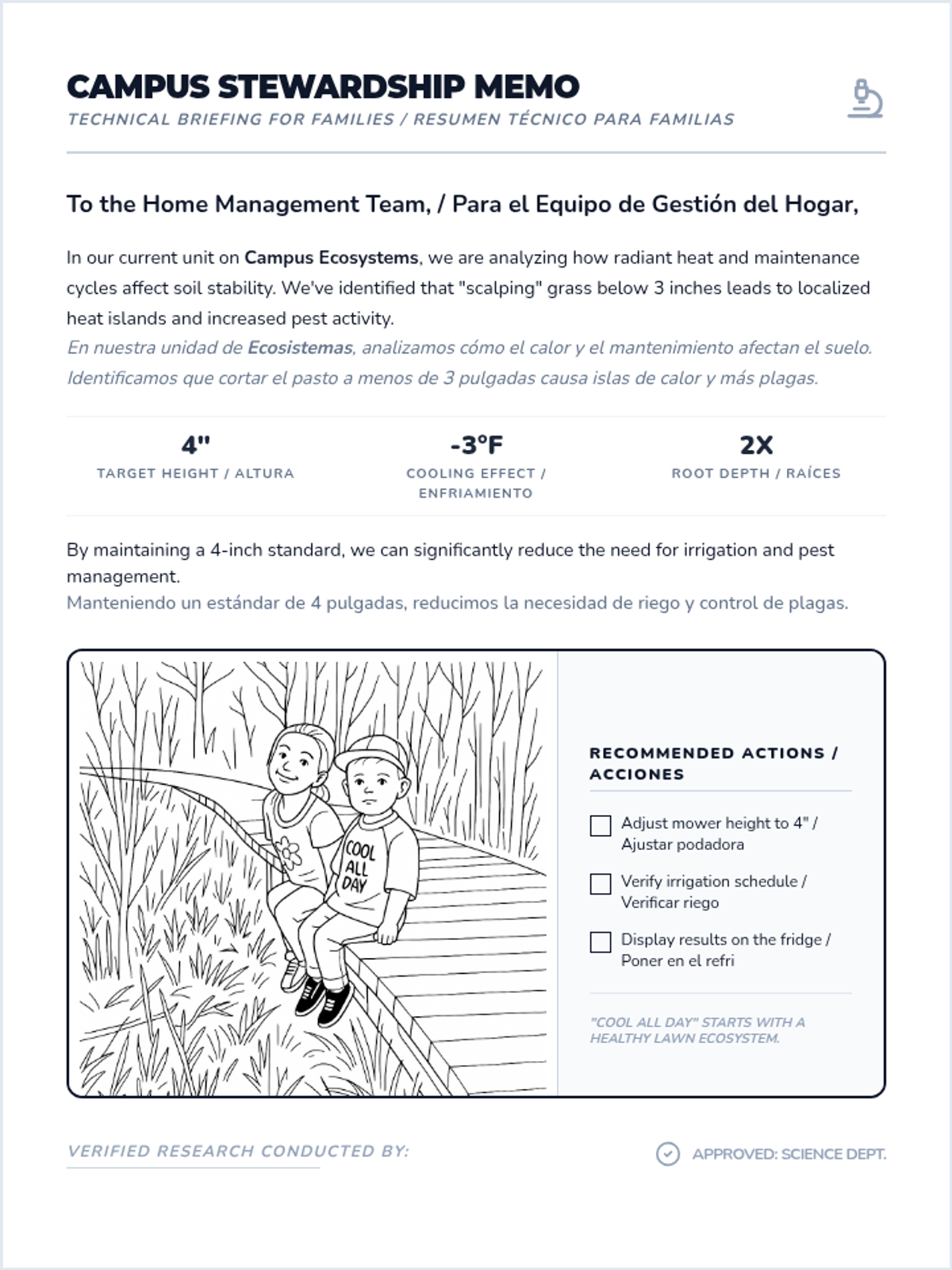
A student-led advocacy campaign to encourage schools and families to raise lawn mower heights. Students learn the science of soil temperature, root health, and pest management to promote cooler, greener communities.
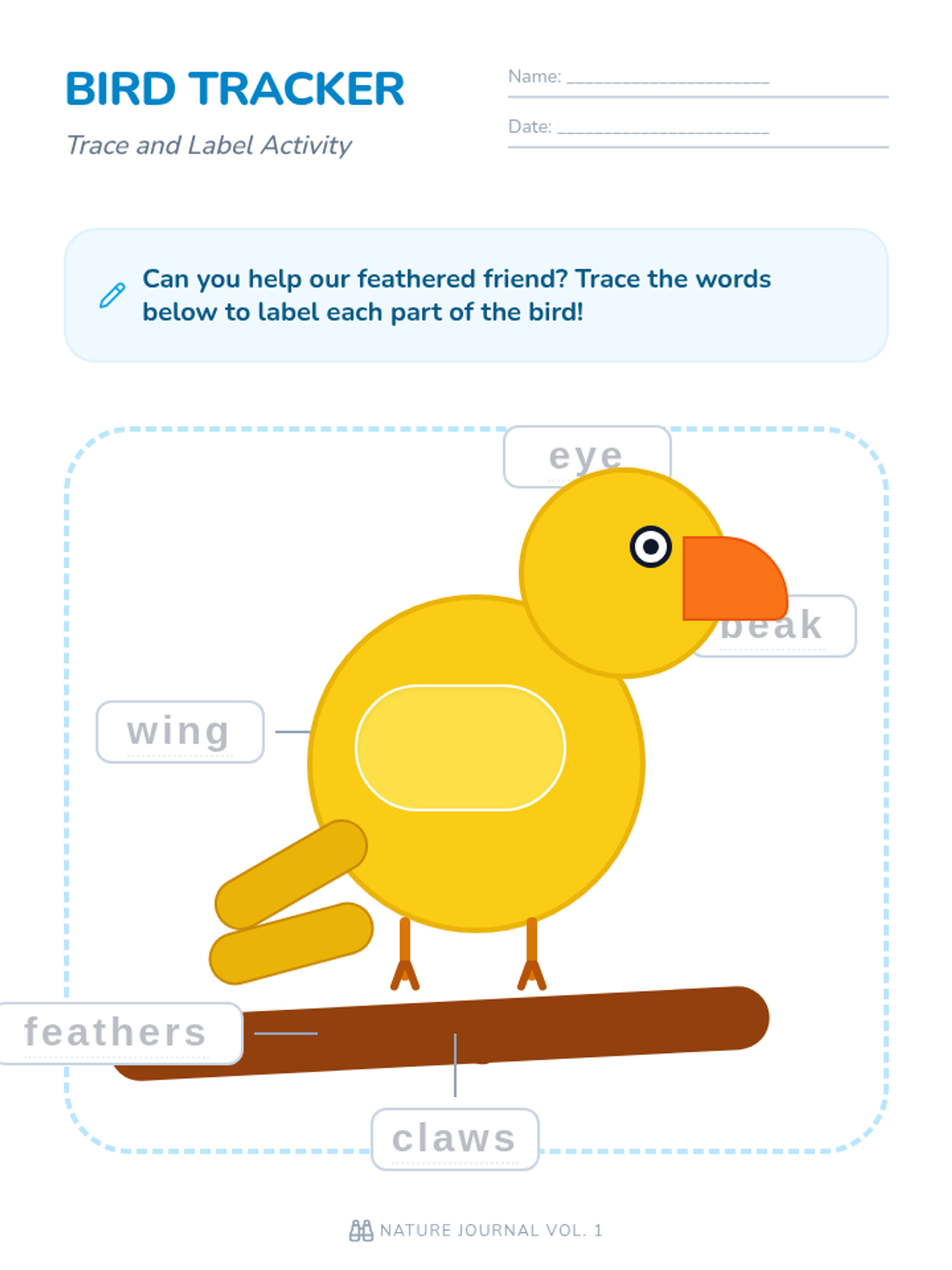
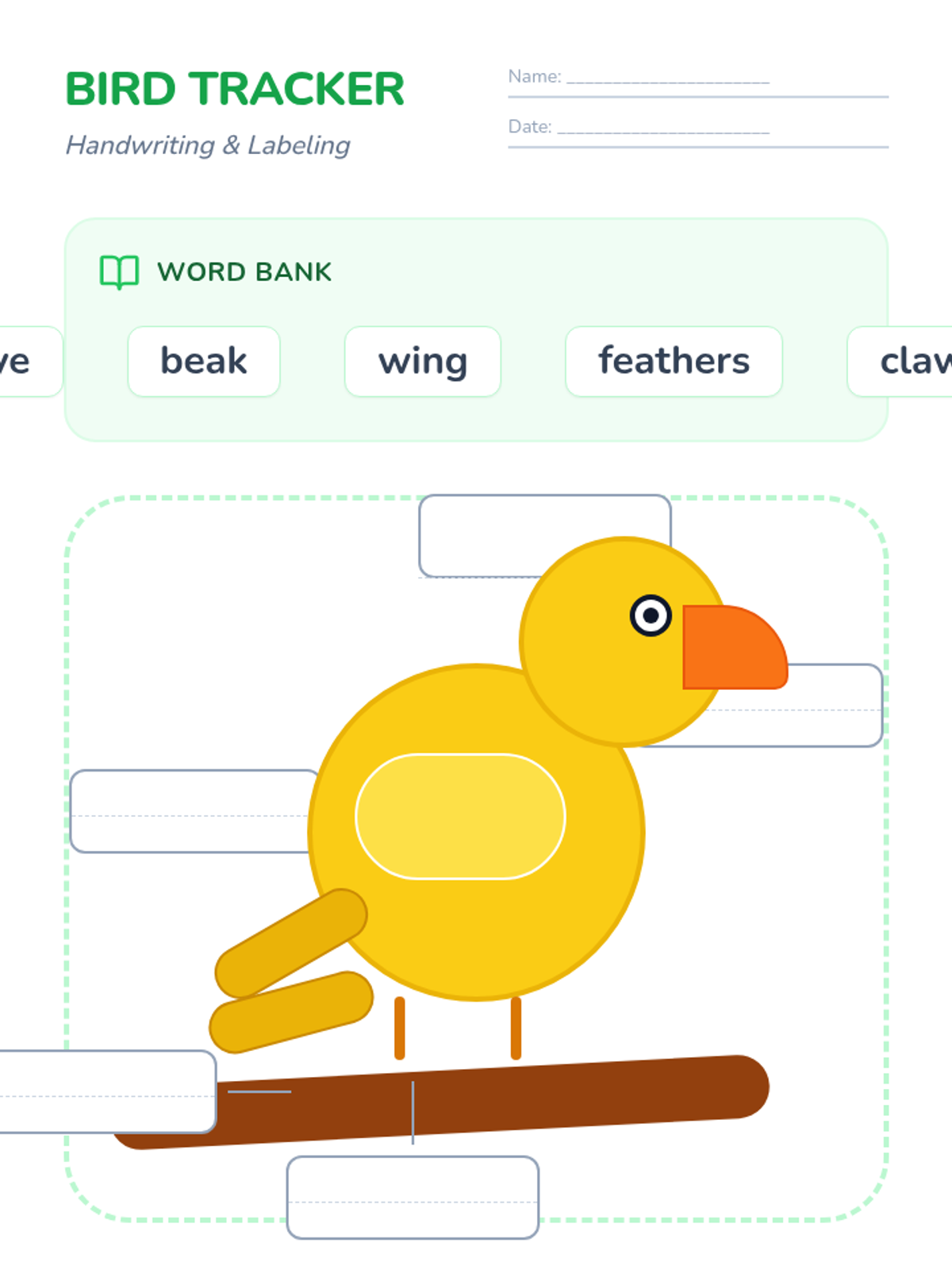
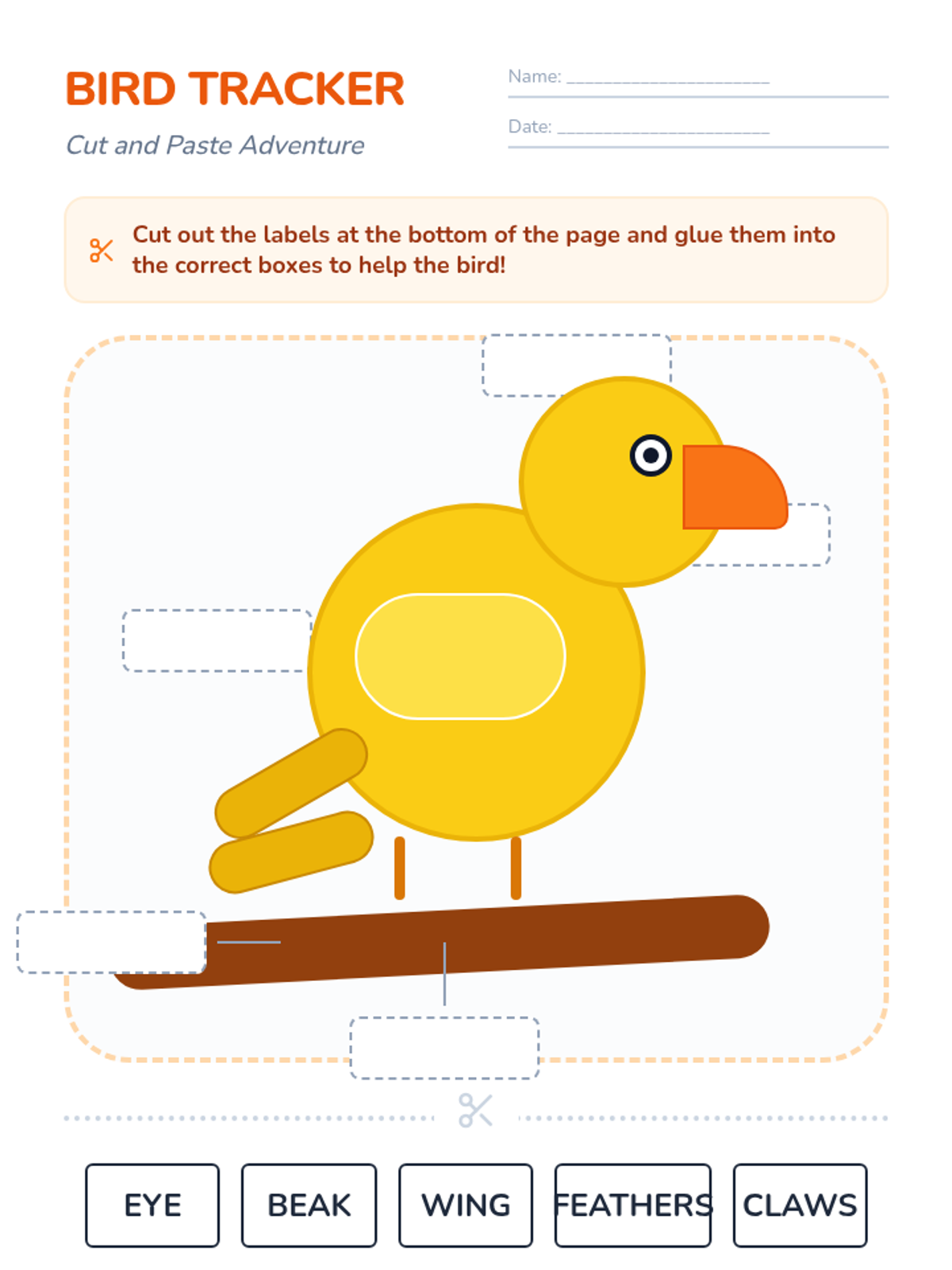
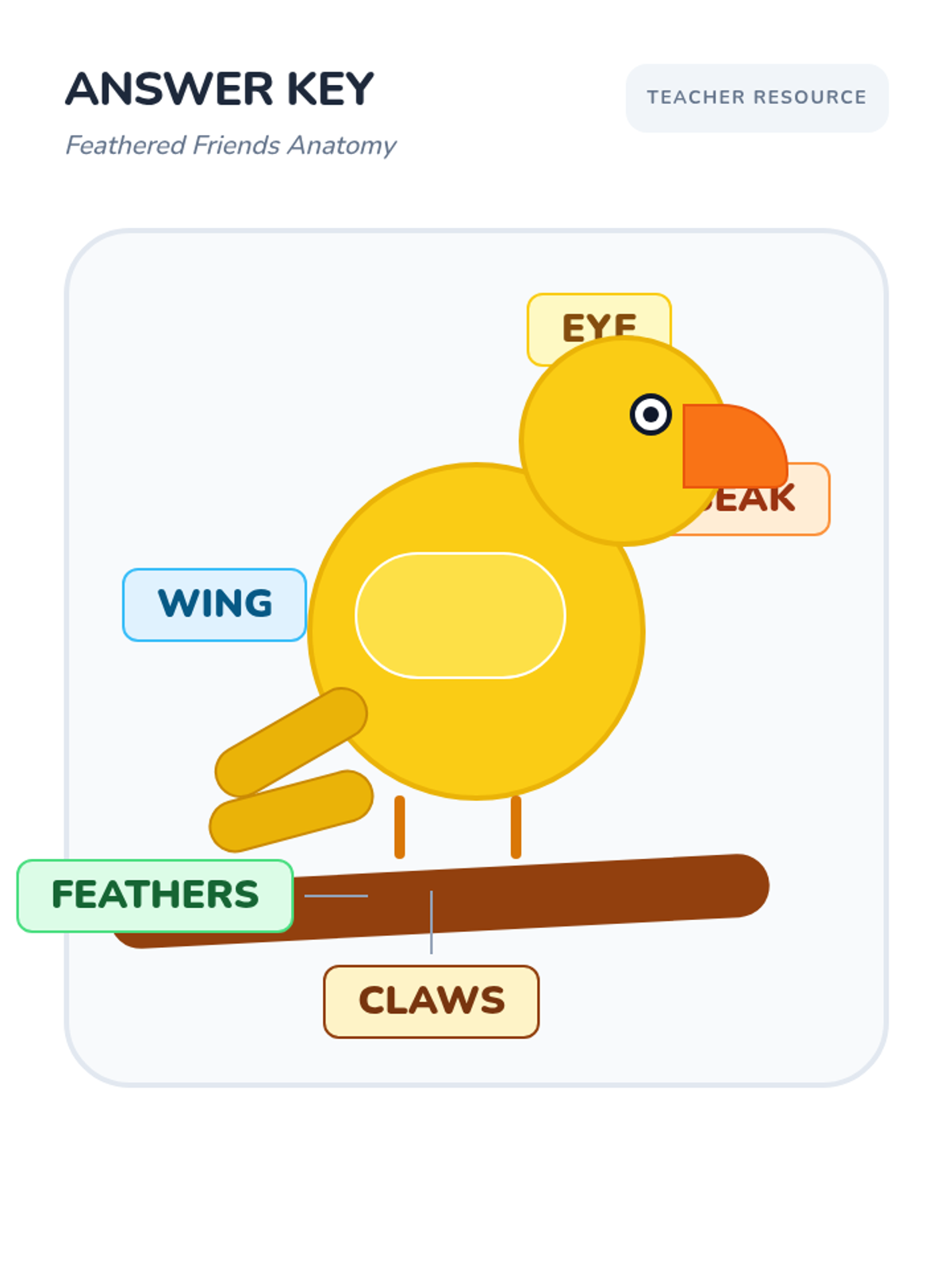
An introductory lesson on bird anatomy where students learn to identify and label five key body parts: eye, beak, wing, feathers, and claws.
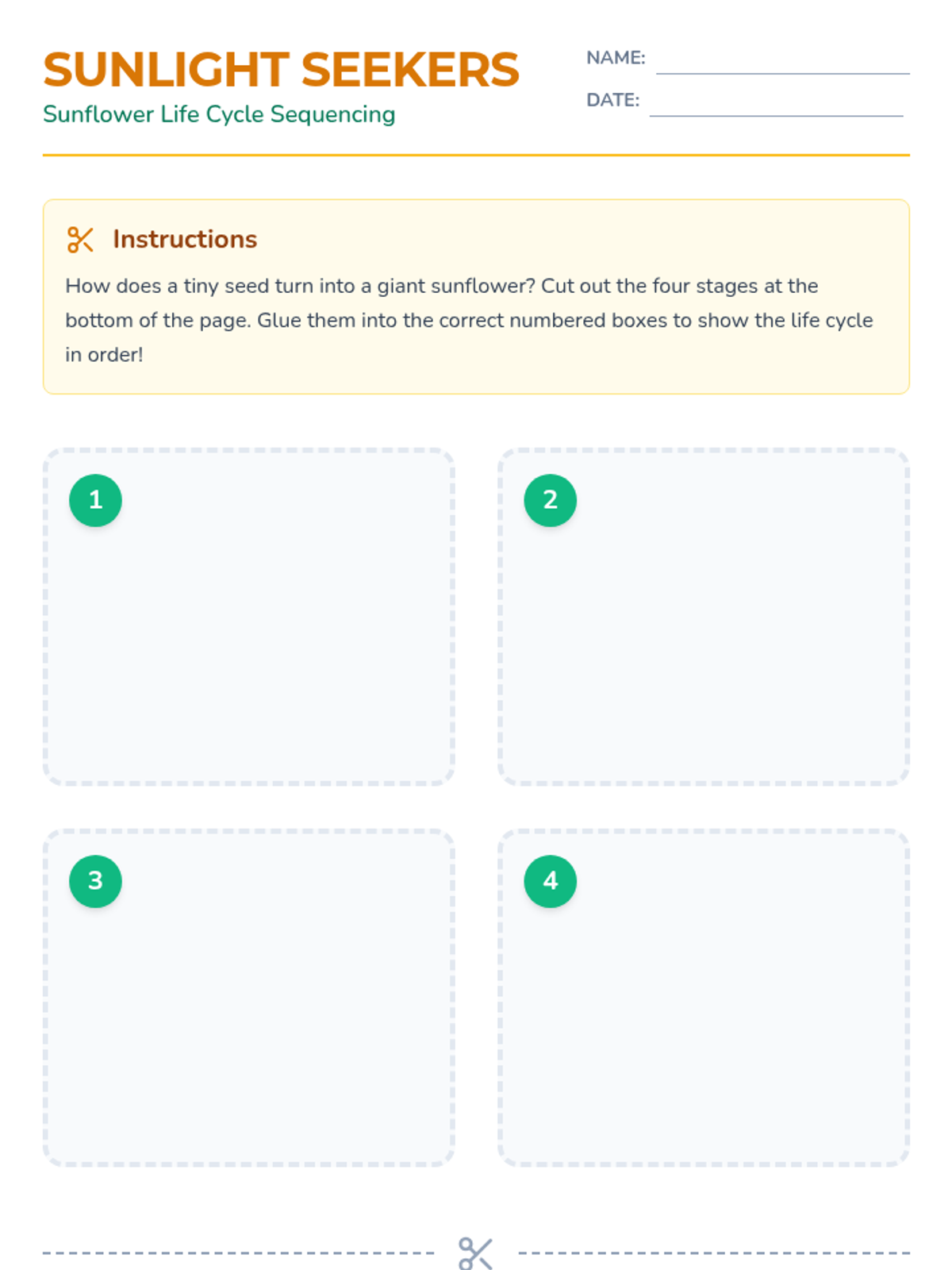
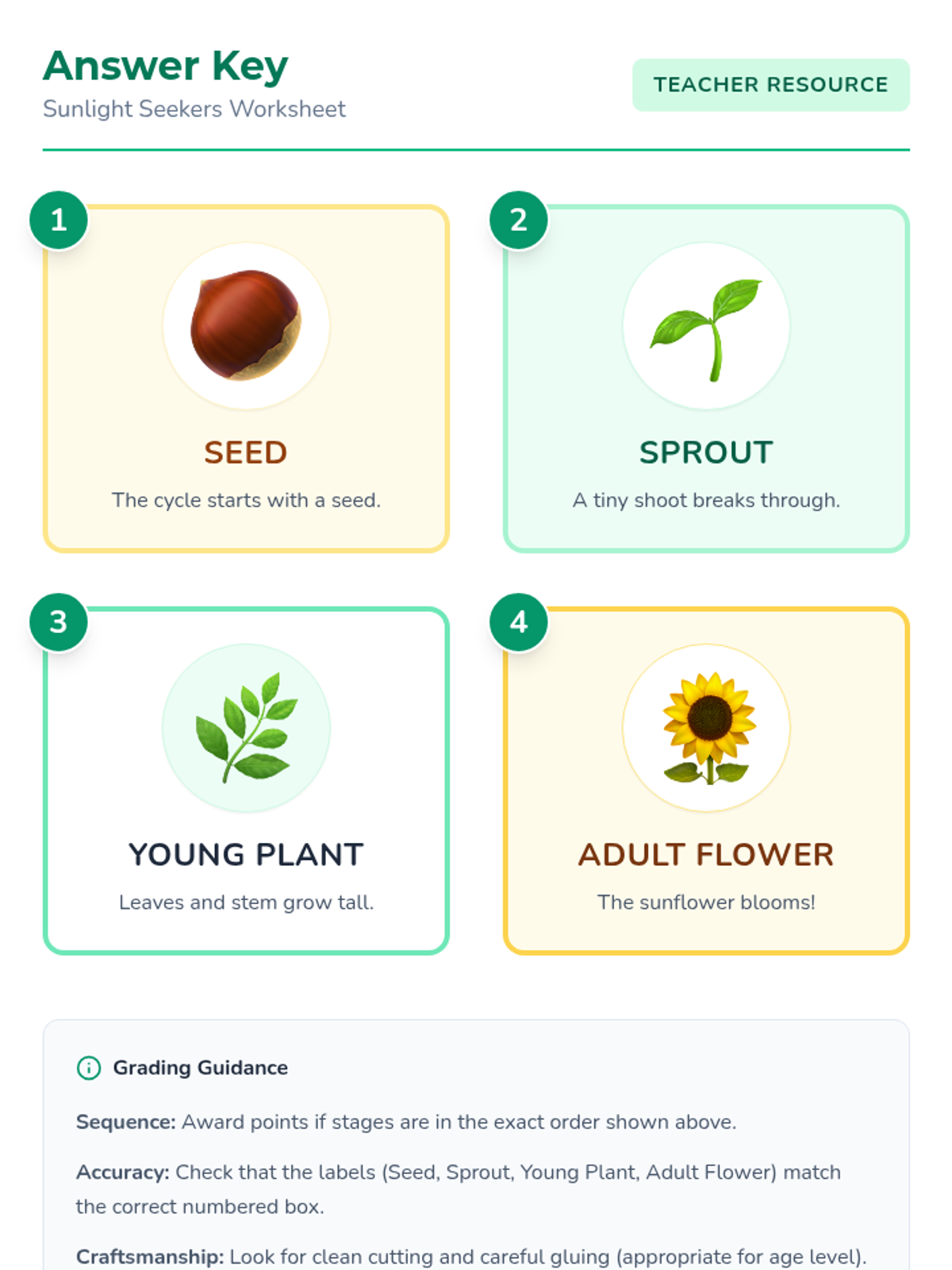
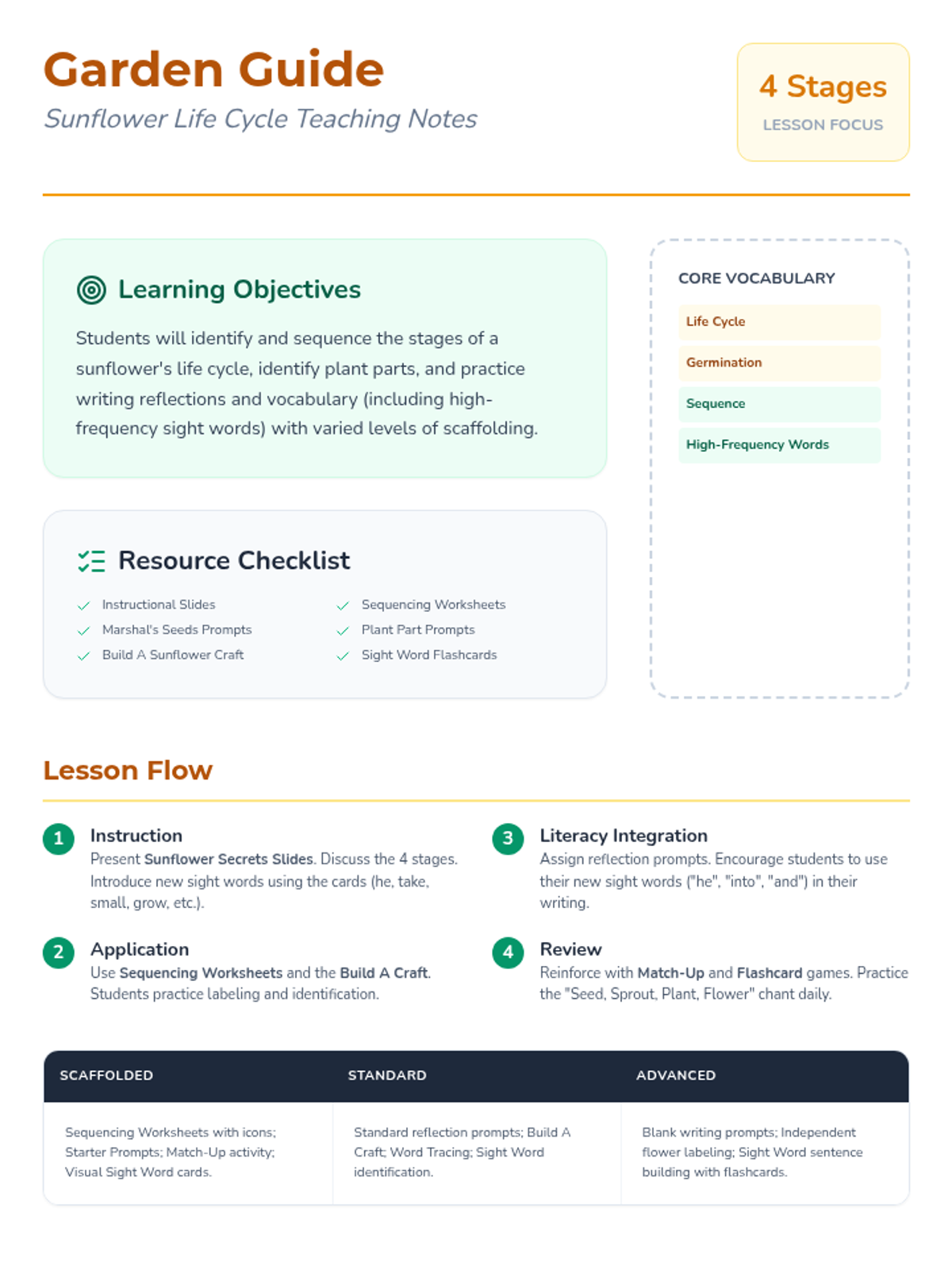
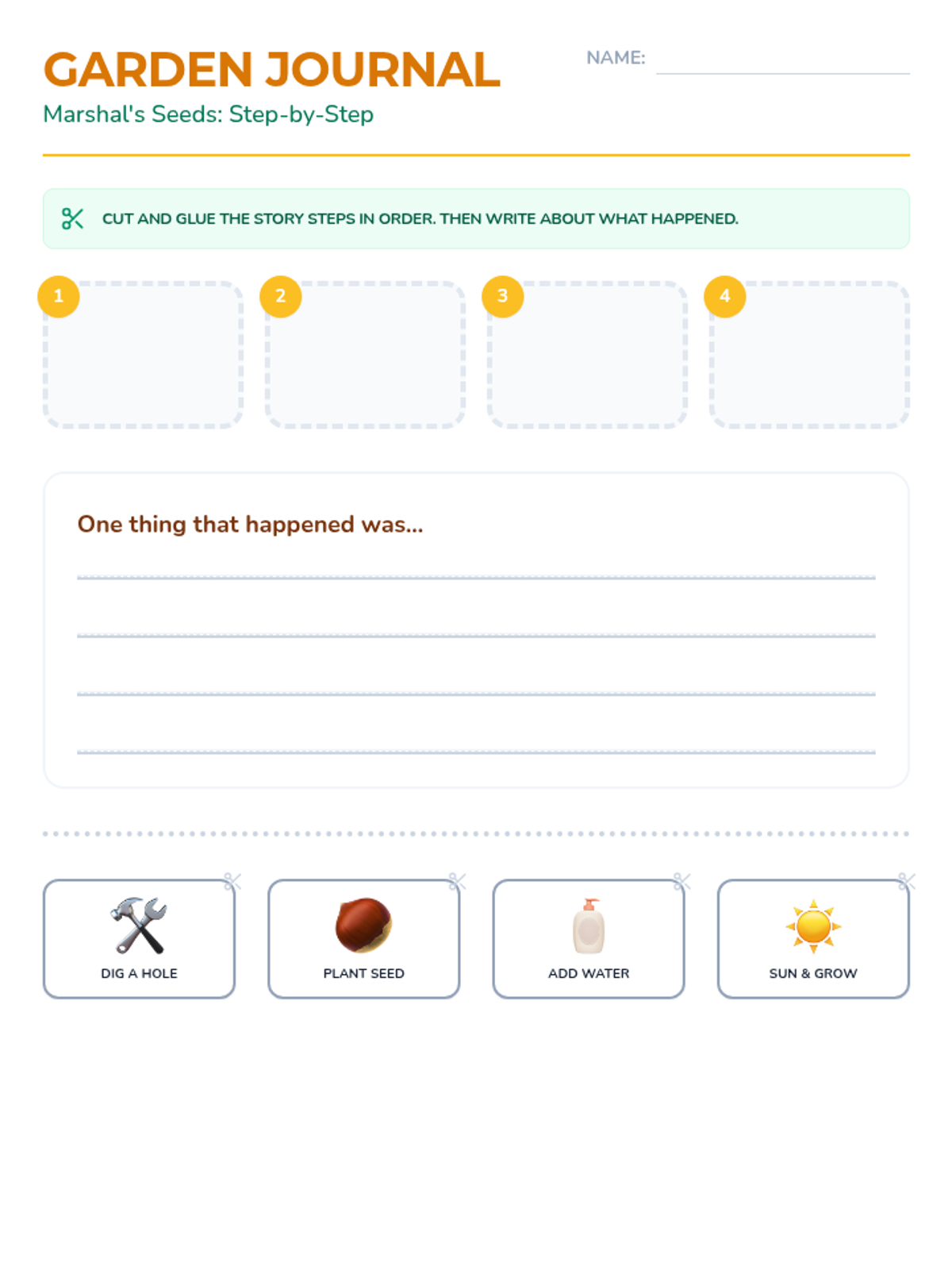
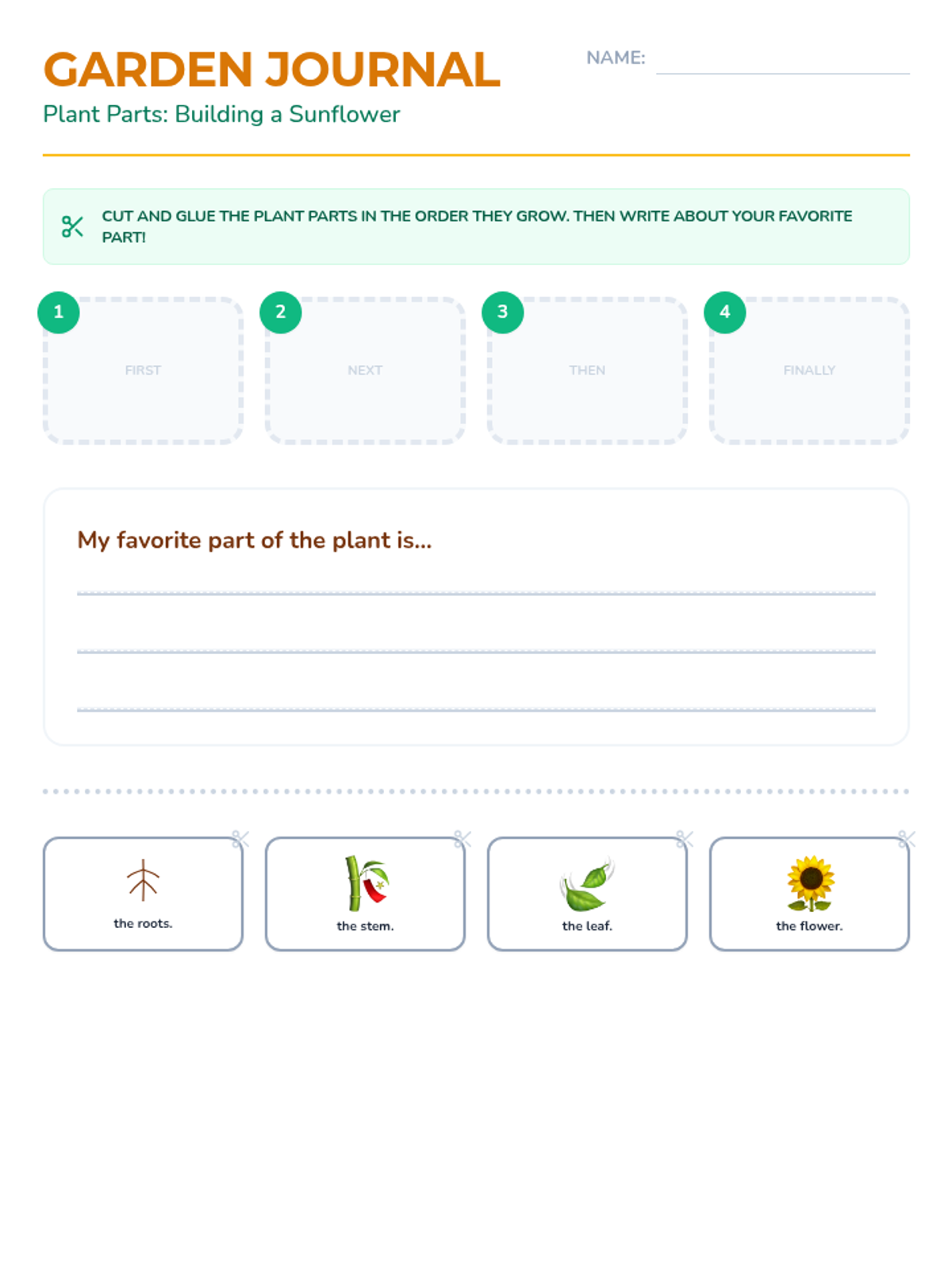
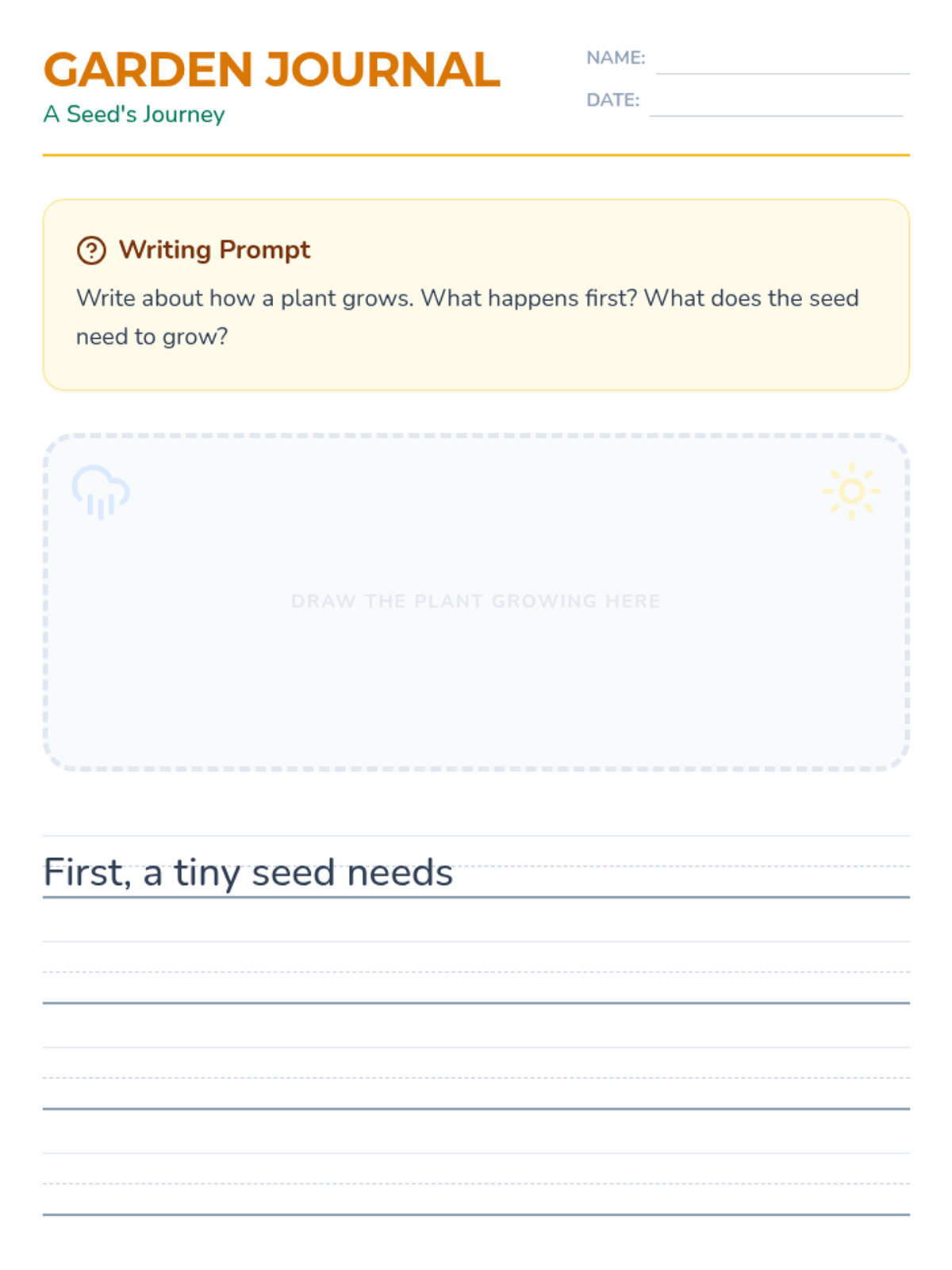
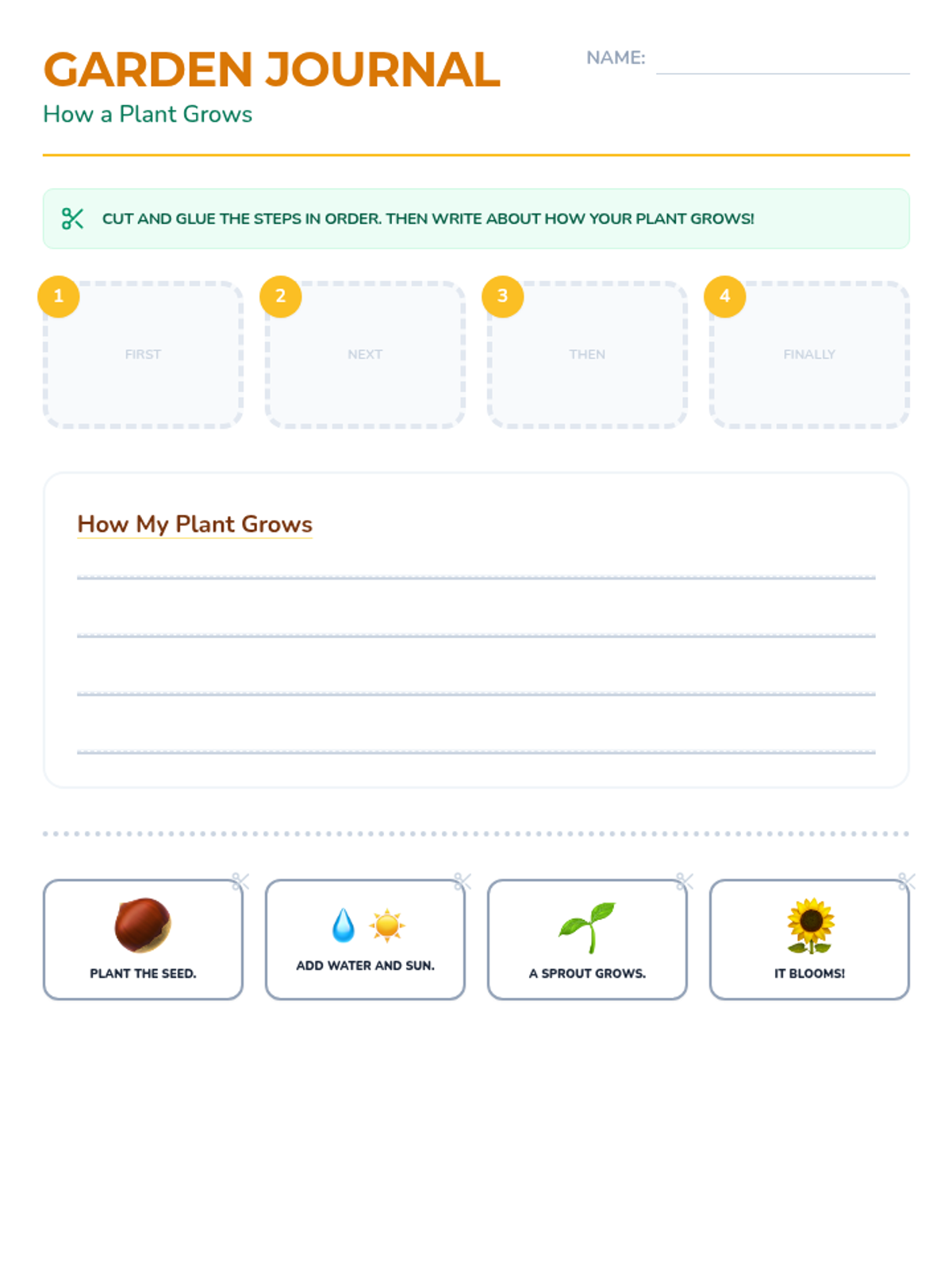
A hands-on lesson exploring the four primary stages of a sunflower's life cycle through visual instruction and a cut-and-paste sequencing activity.
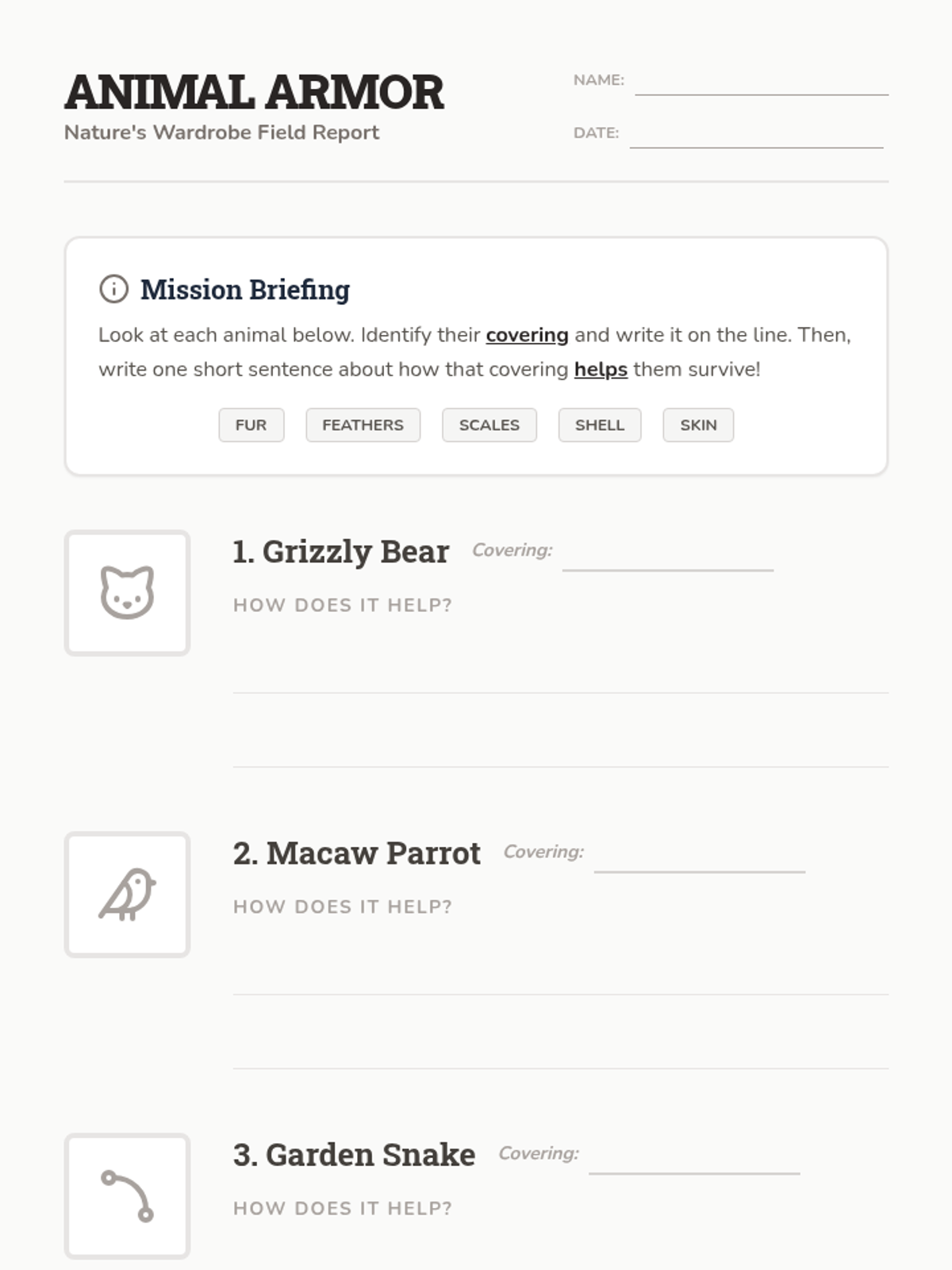
Students apply their knowledge by identifying animal coverings in various examples and writing descriptive sentences about how these coverings protect or help animals.
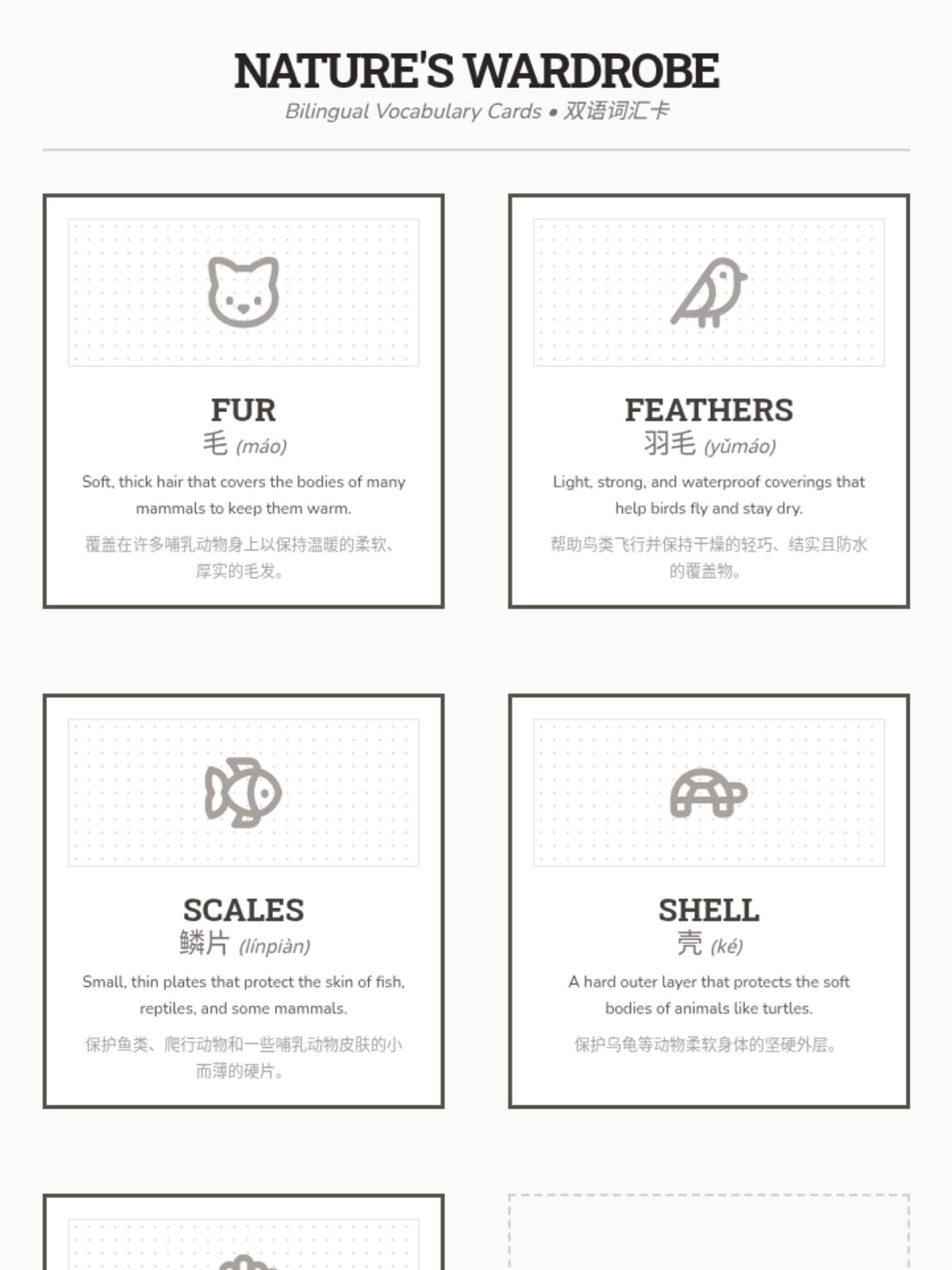
An introduction to the five main types of animal coverings: feathers, fur, scales, shell, and skin. Students learn to identify these textures and understand their basic functions.
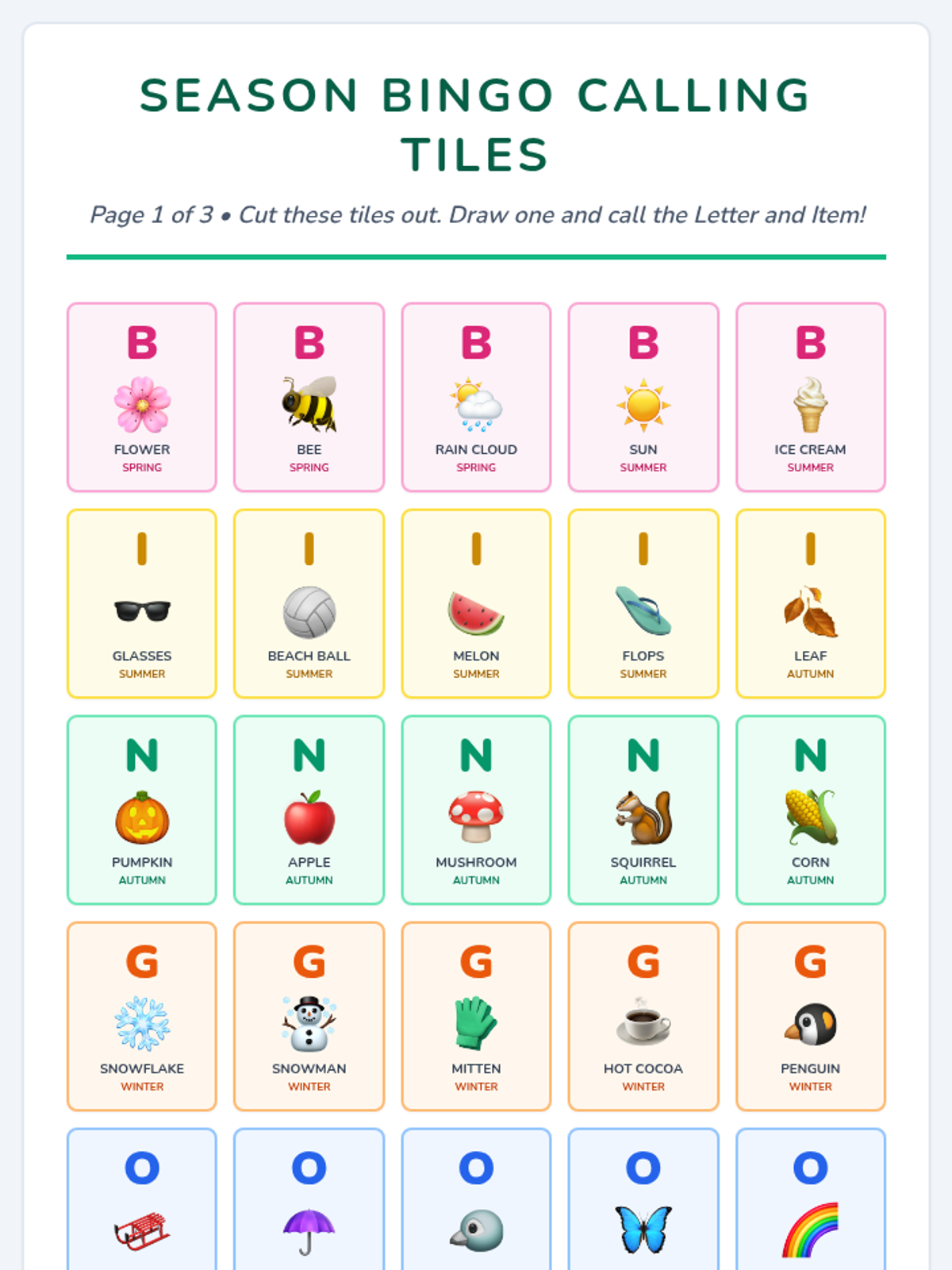
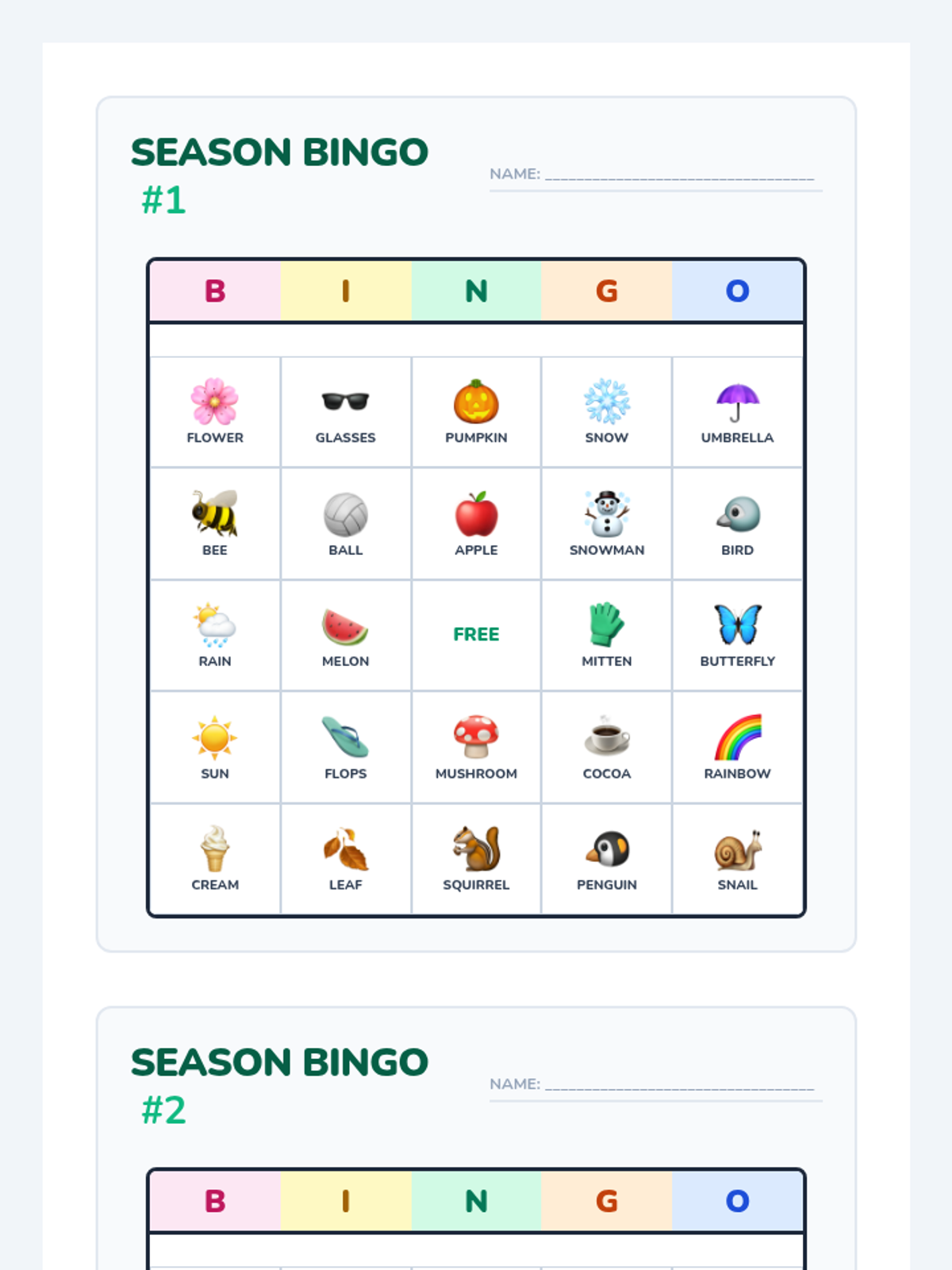
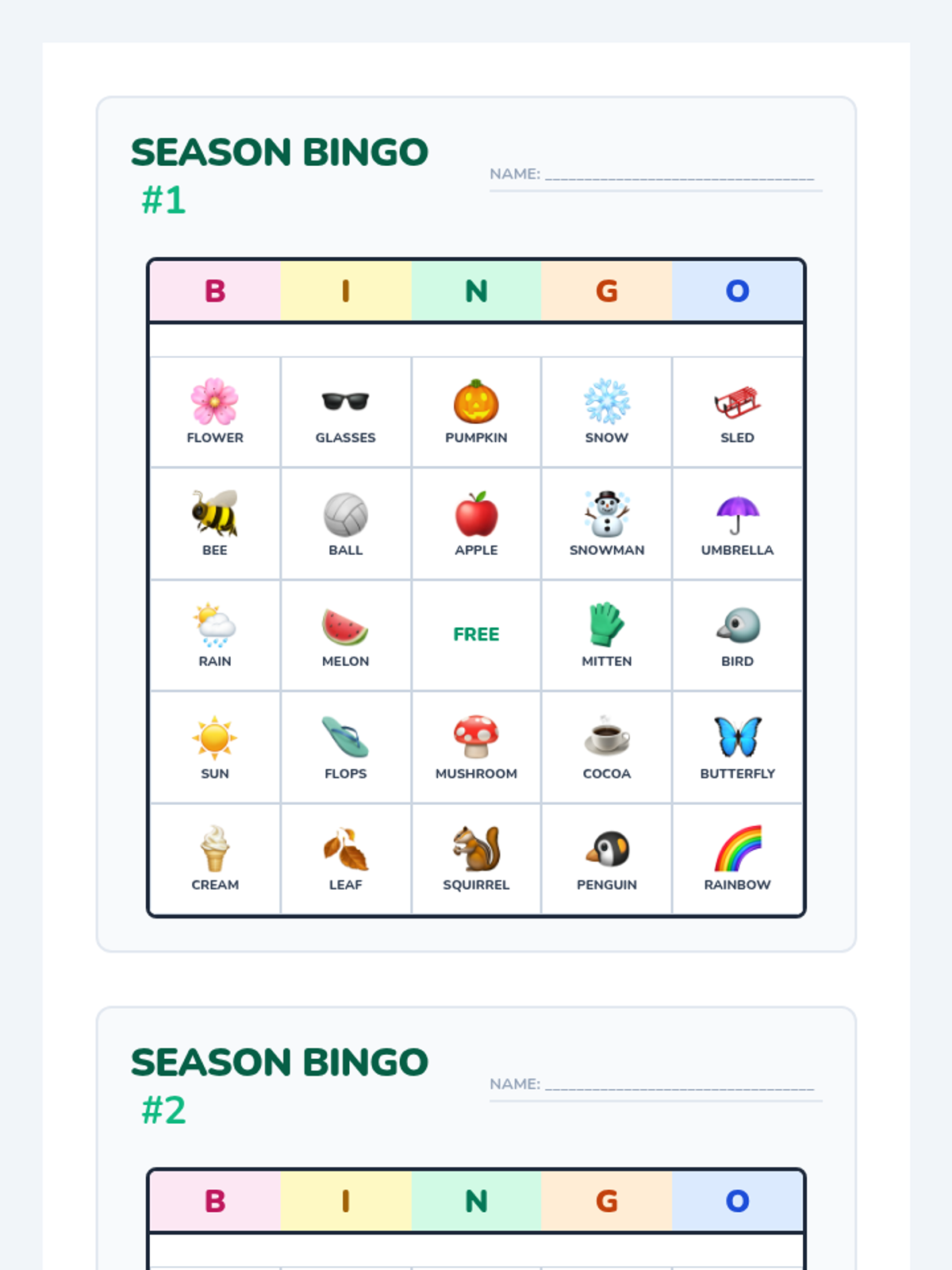
A fun, interactive lesson introducing elementary students to the four seasons through observation and play. Students will identify key characteristics of spring, summer, autumn, and winter using visual cues and interactive bingo.
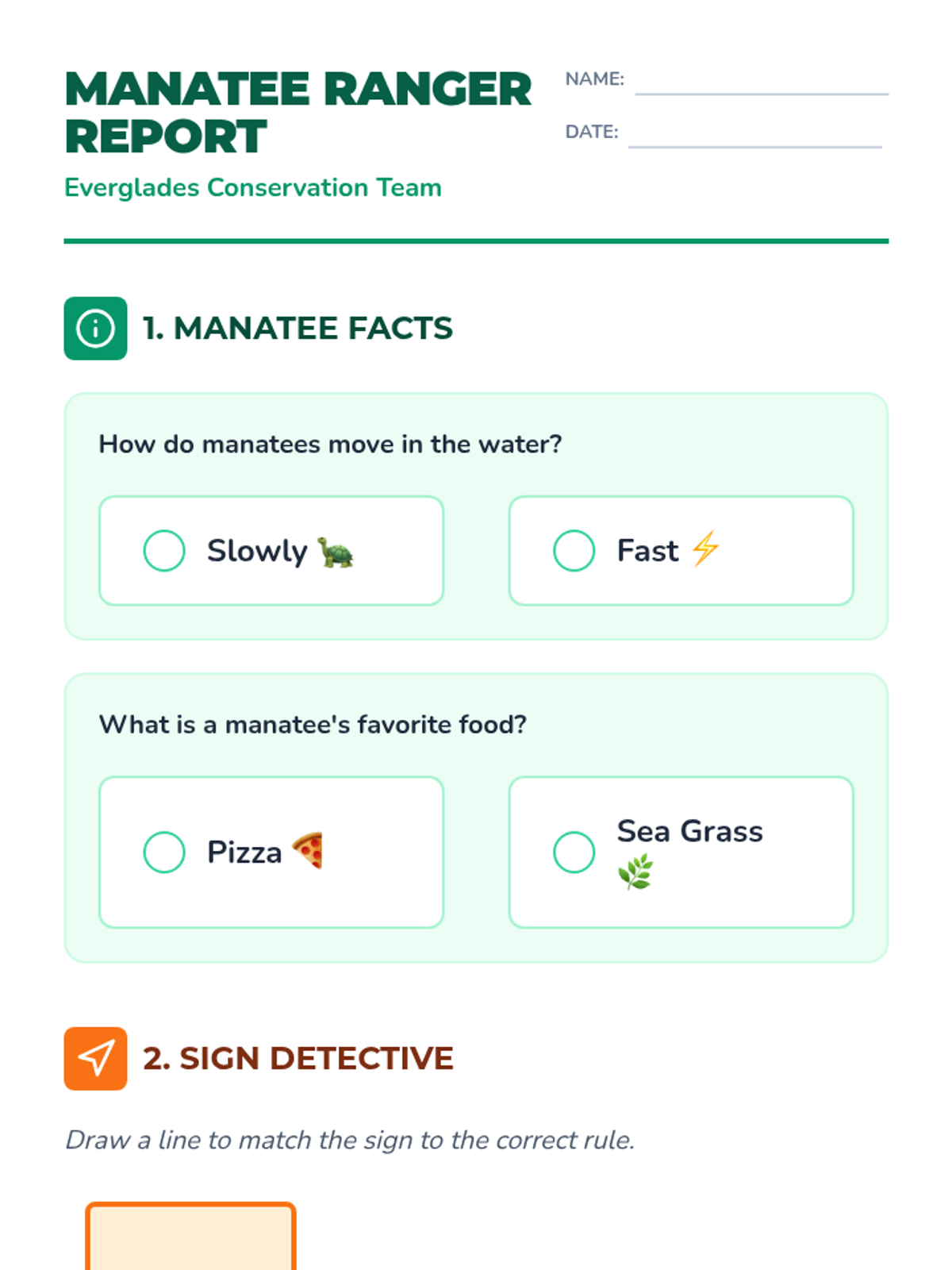
Students will explore the impact of boating on manatees in the Everglades, focusing on conservation efforts and the importance of following waterway safety signs. This lesson integrates science with social skills by emphasizing rule-following for the safety of ourselves and wildlife.
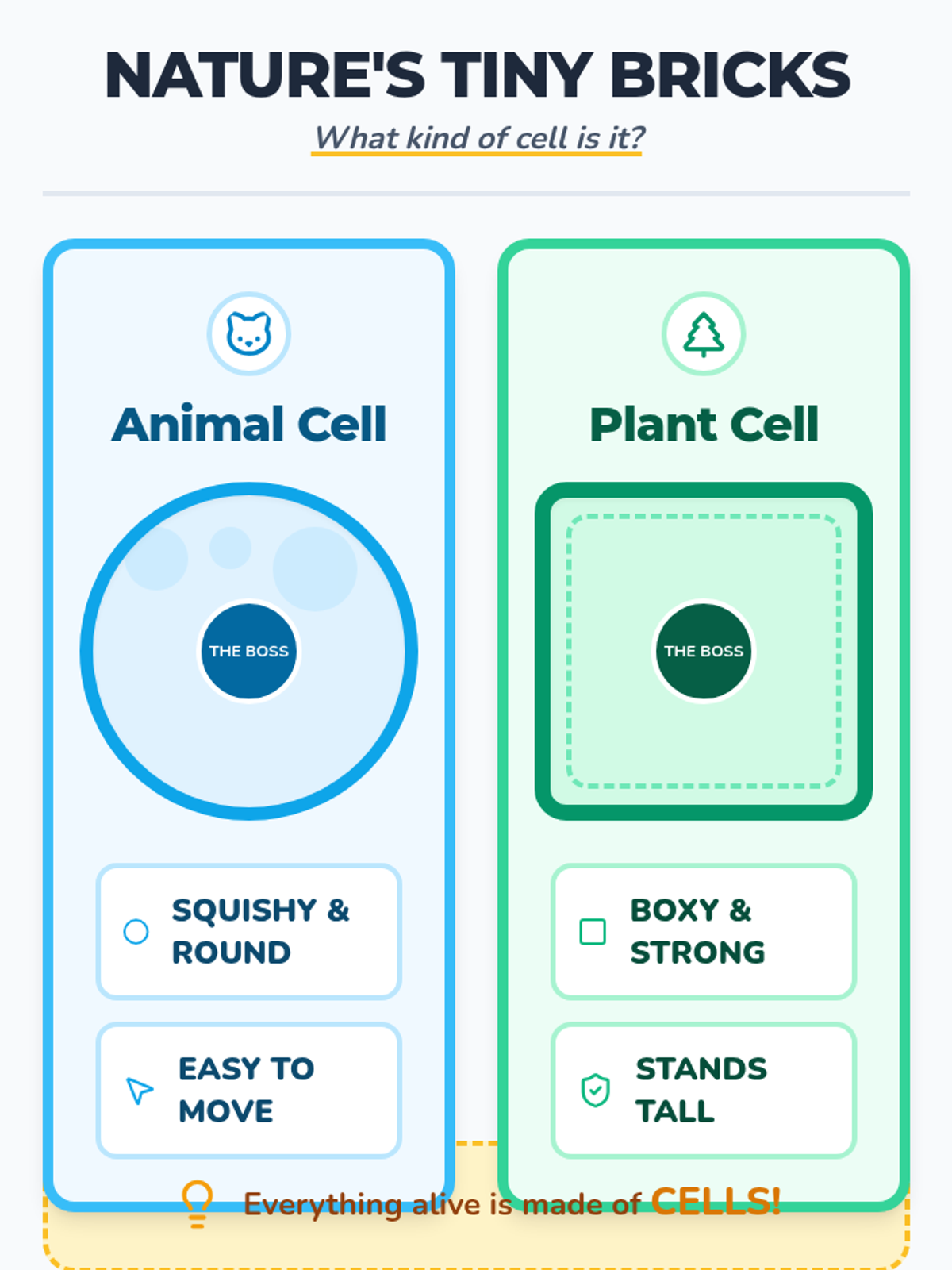
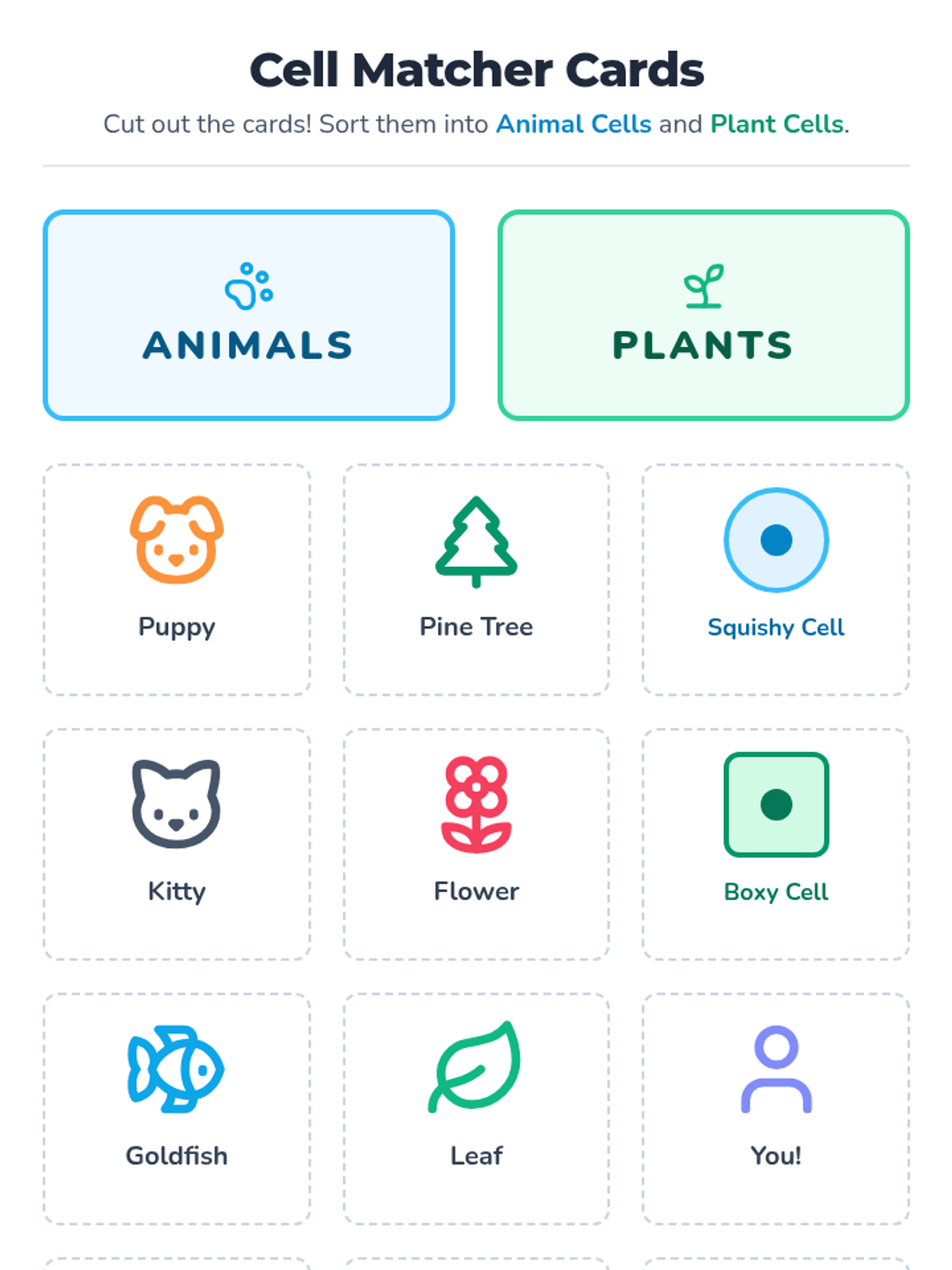
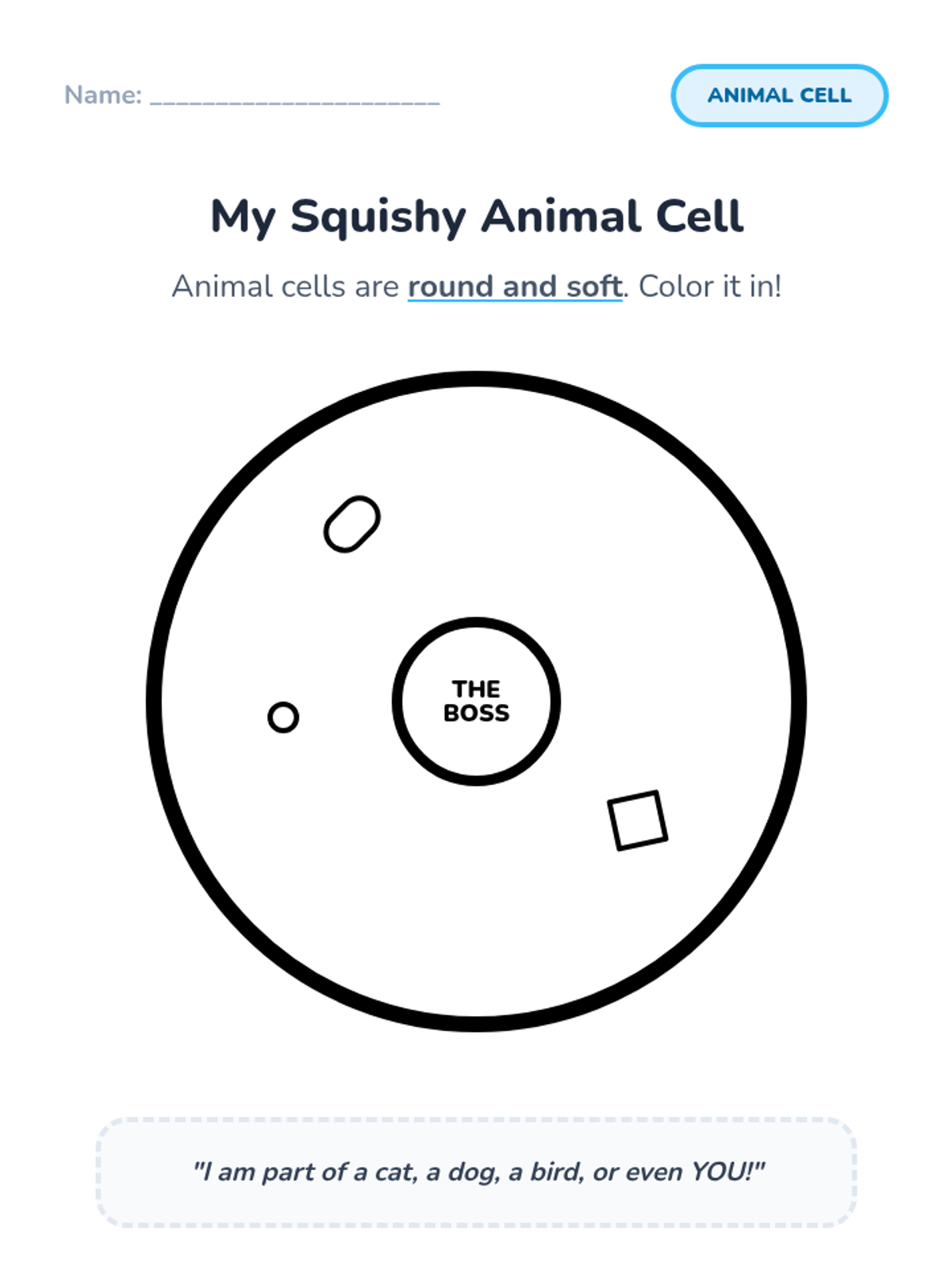
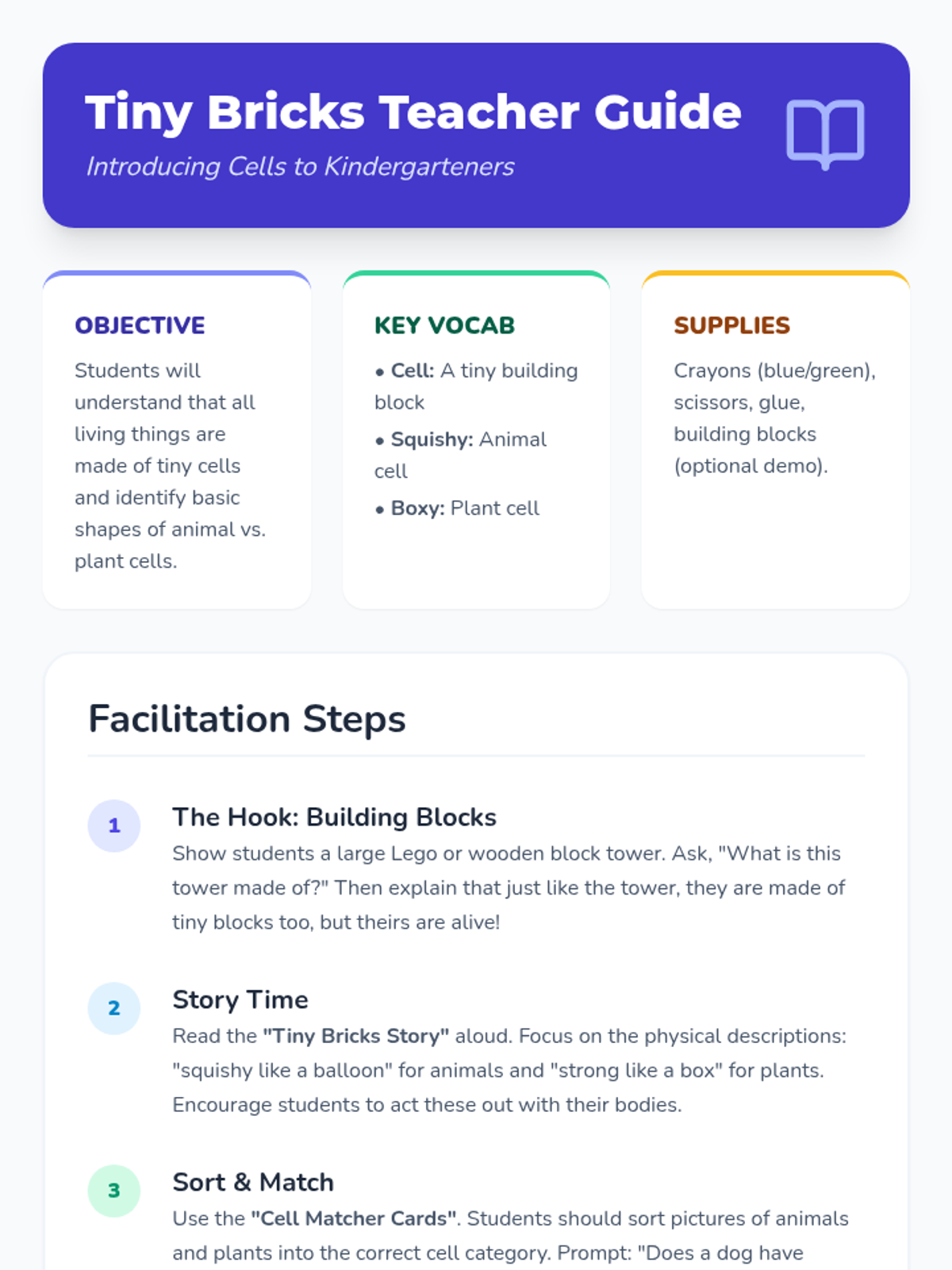
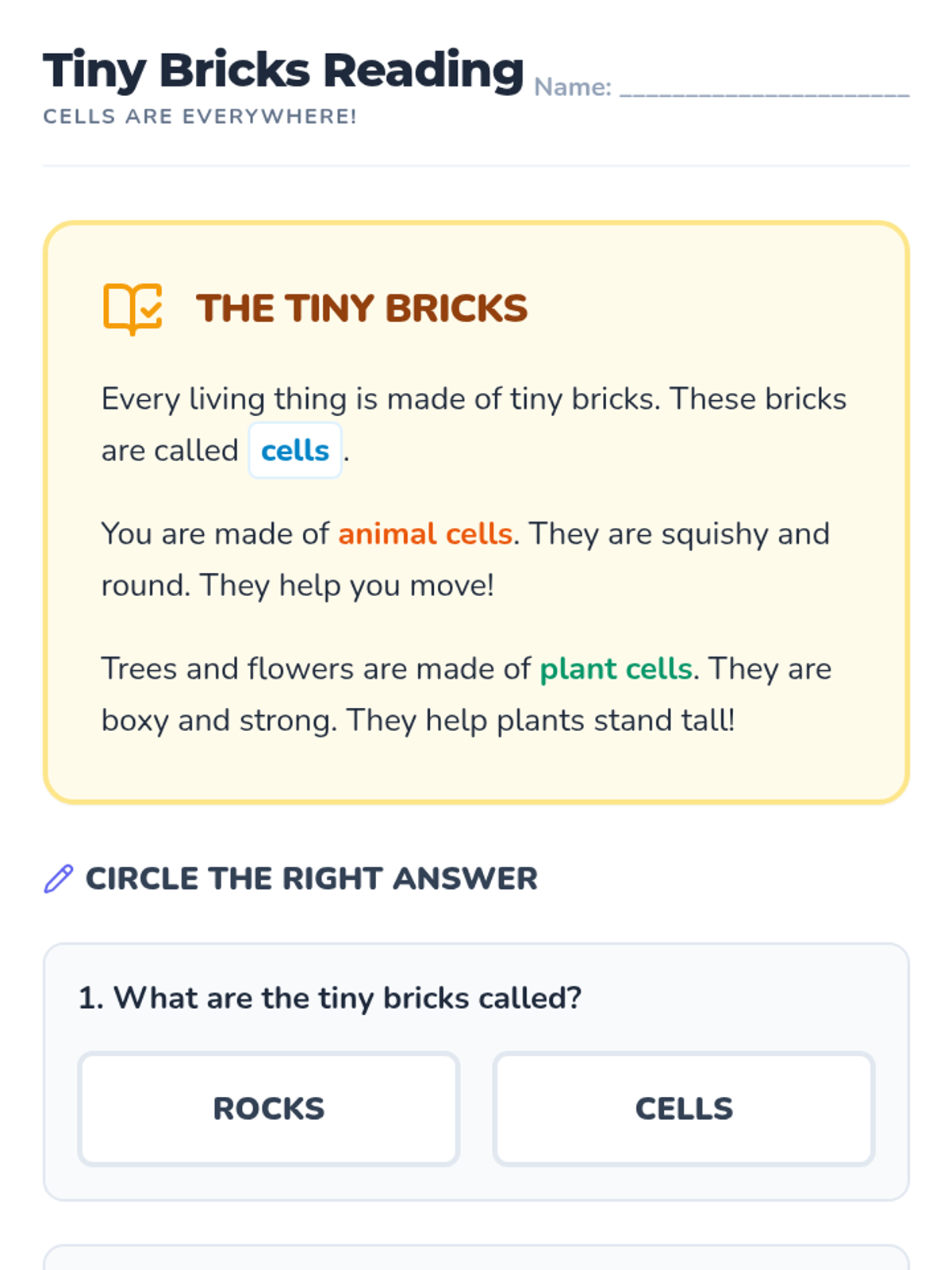
An introductory lesson for kindergarteners to understand that all living things are made of tiny "building blocks" called cells. Students will learn the basic differences between plant and animal cells through stories, sorting, and coloring.
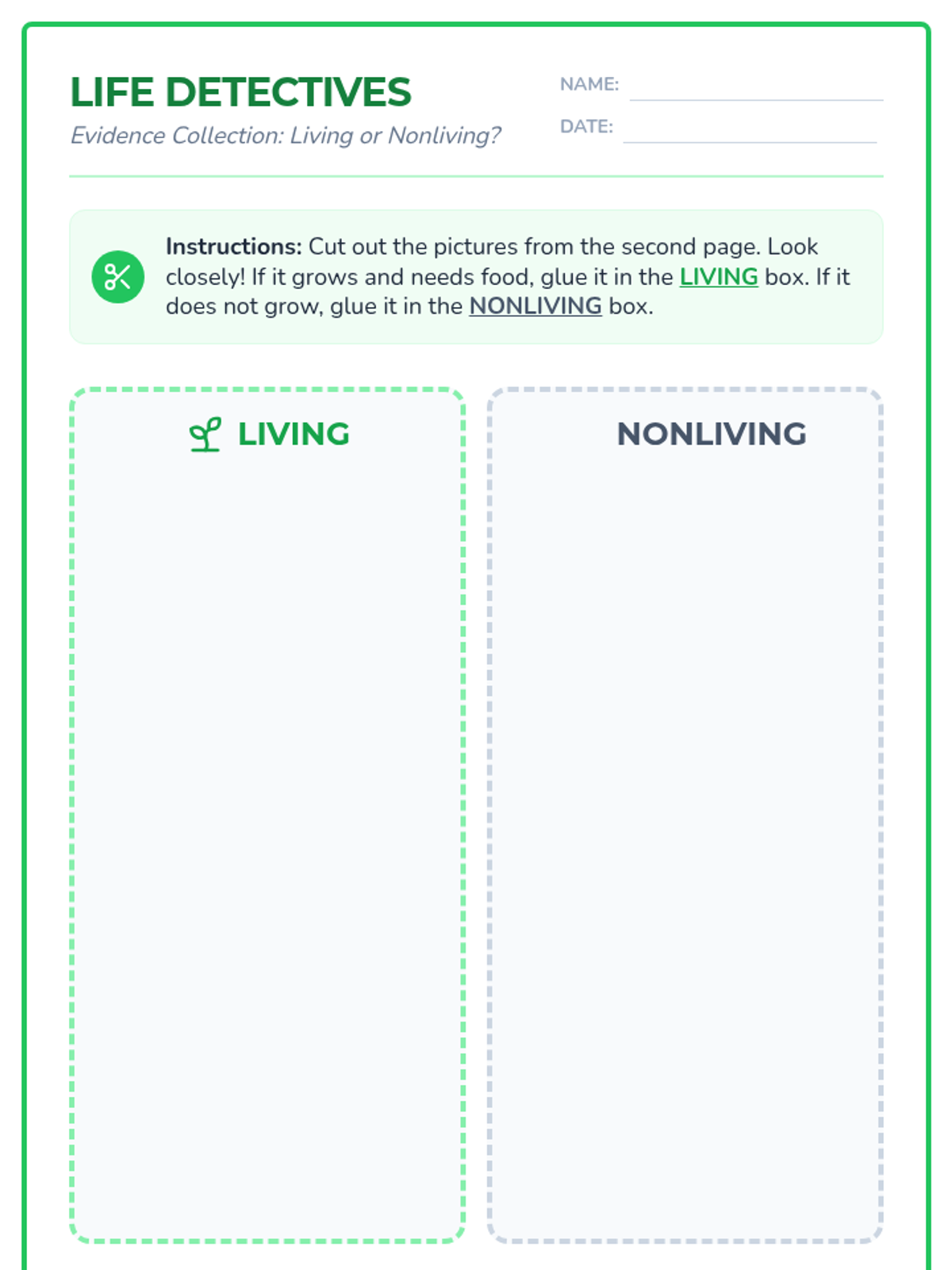
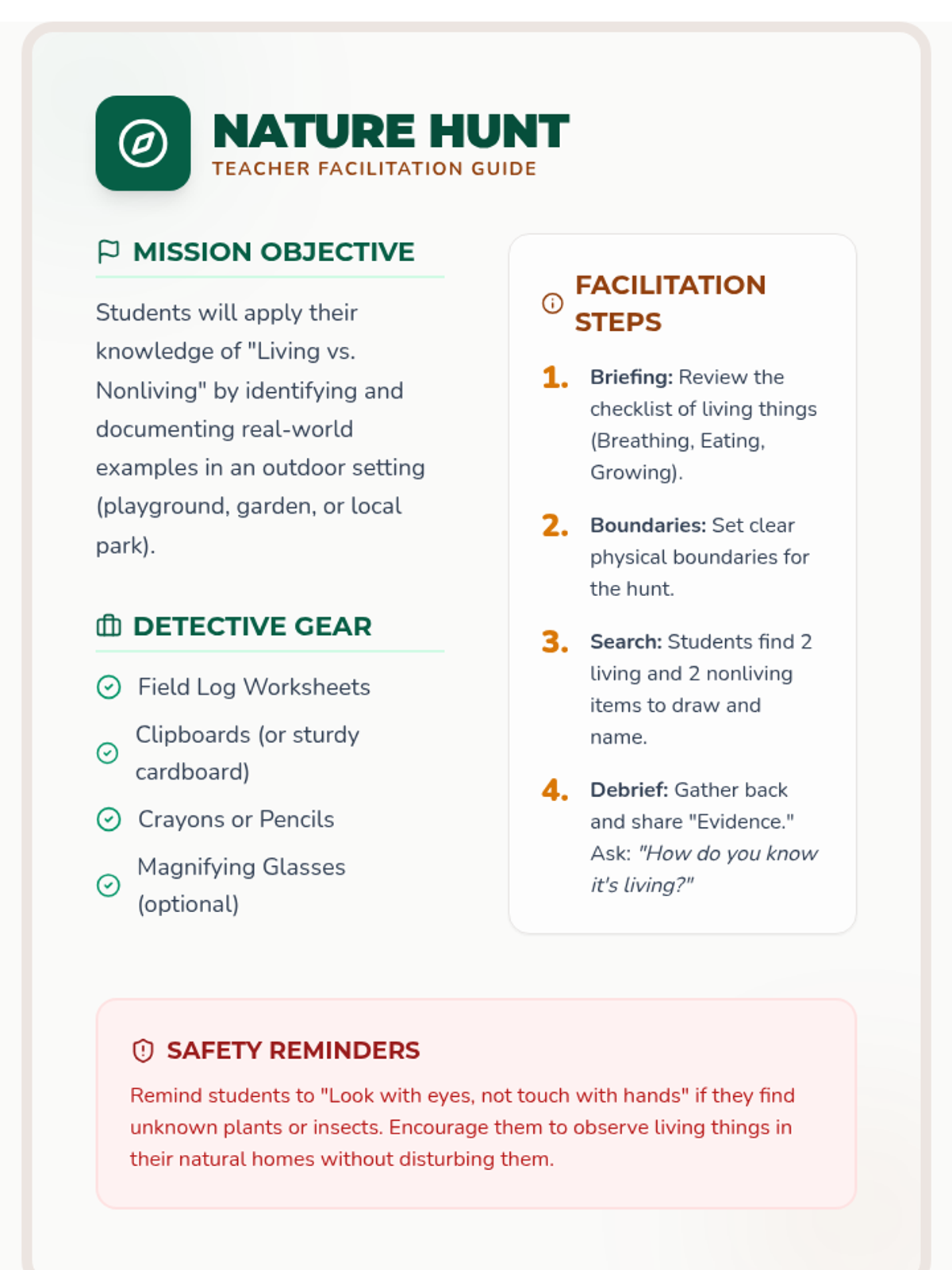
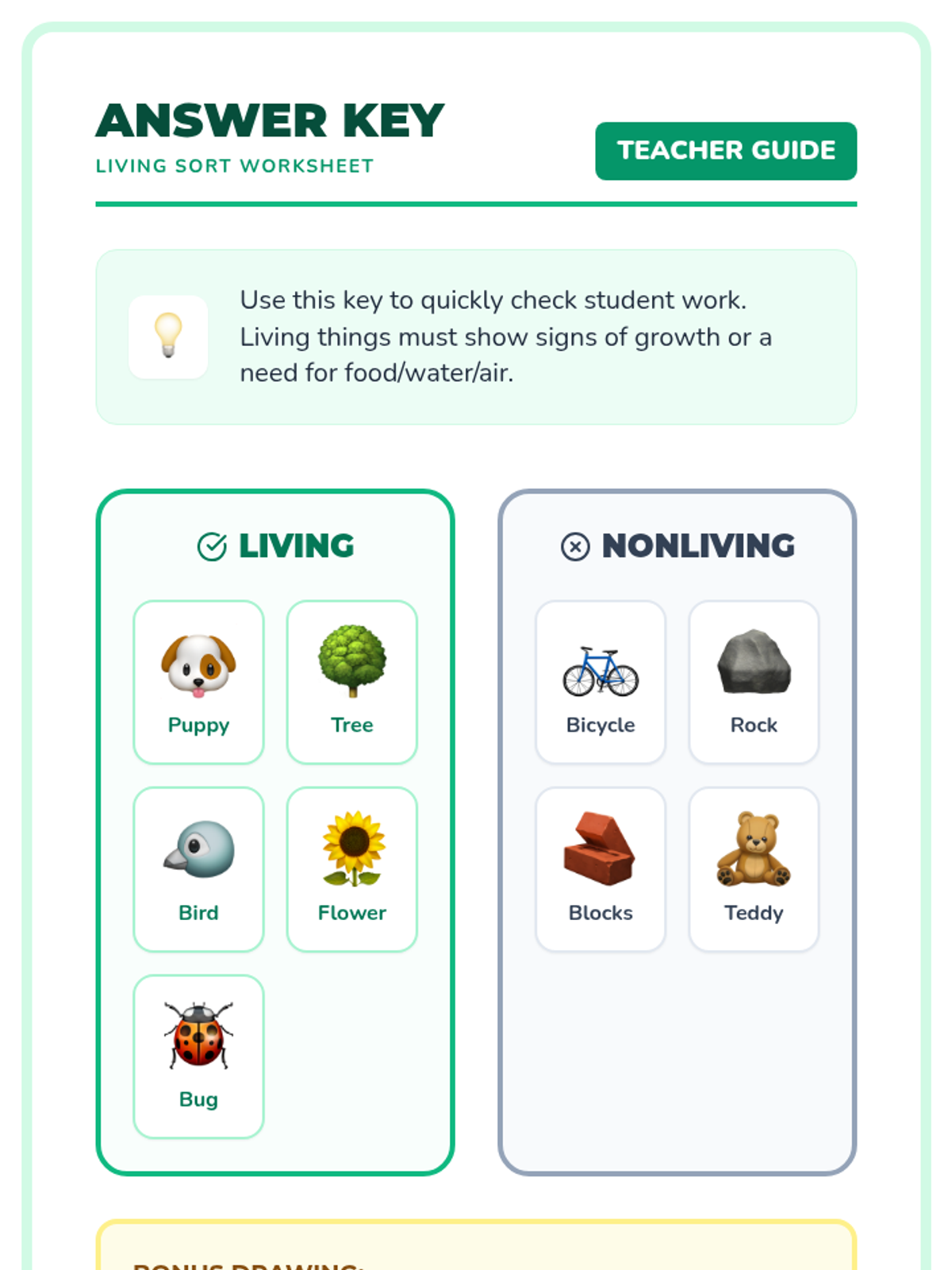
Students will learn to distinguish between living and nonliving things by identifying key characteristics like growth and basic needs. The lesson includes a visual presentation, a hands-on sorting worksheet, and an outdoor exploration guide.
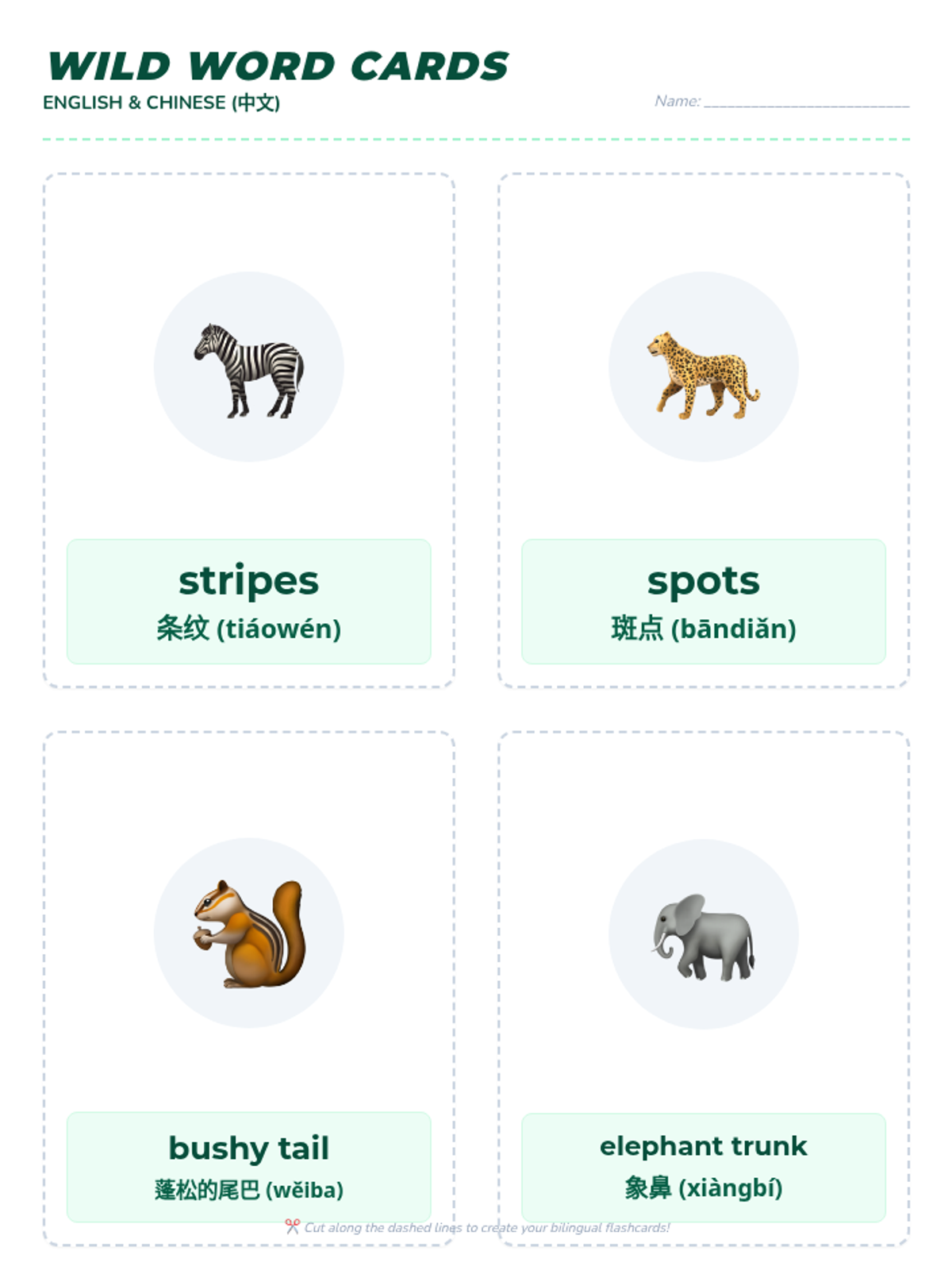
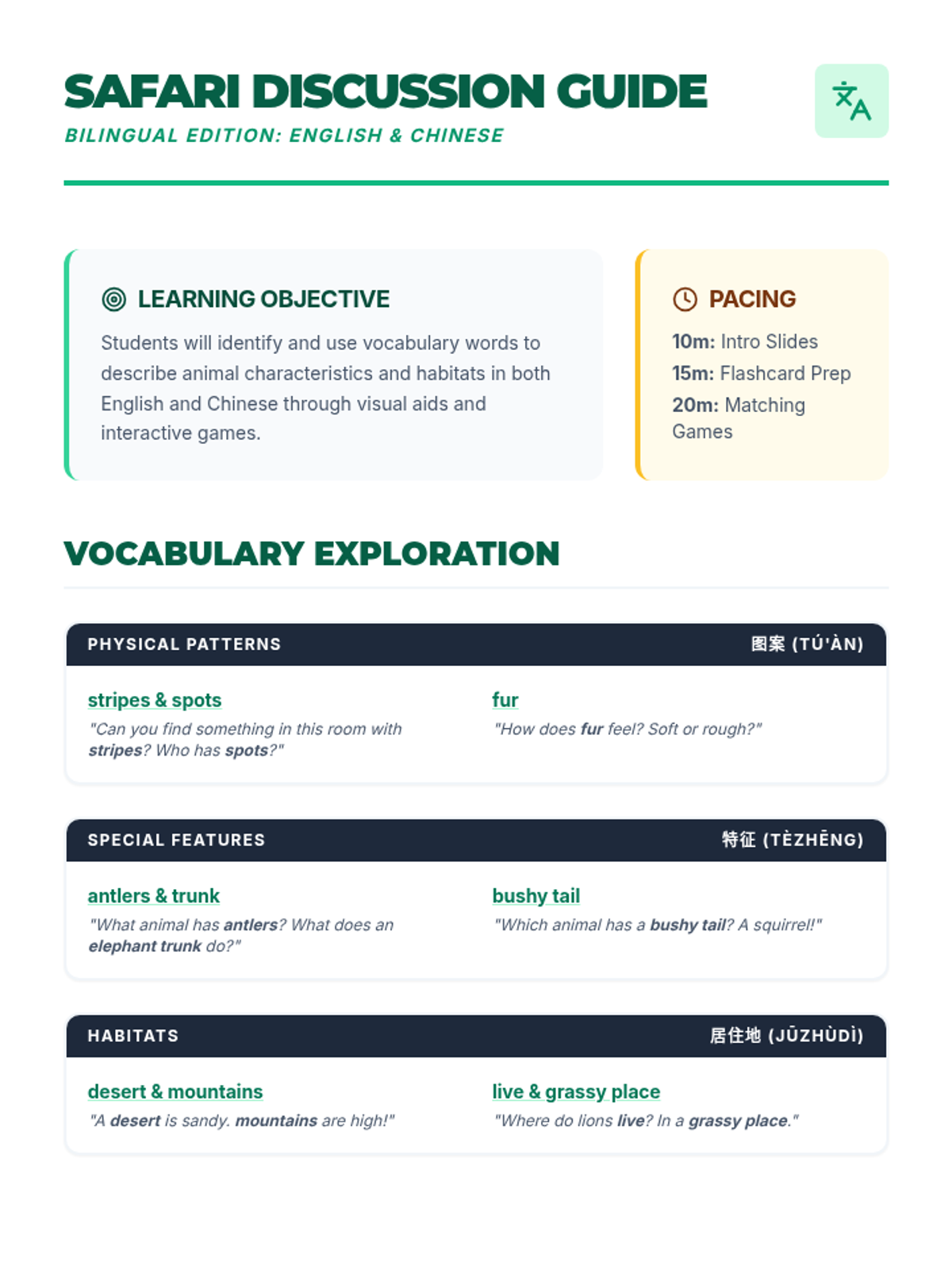
A lesson focused on animal characteristics and habitats, helping students build descriptive vocabulary.
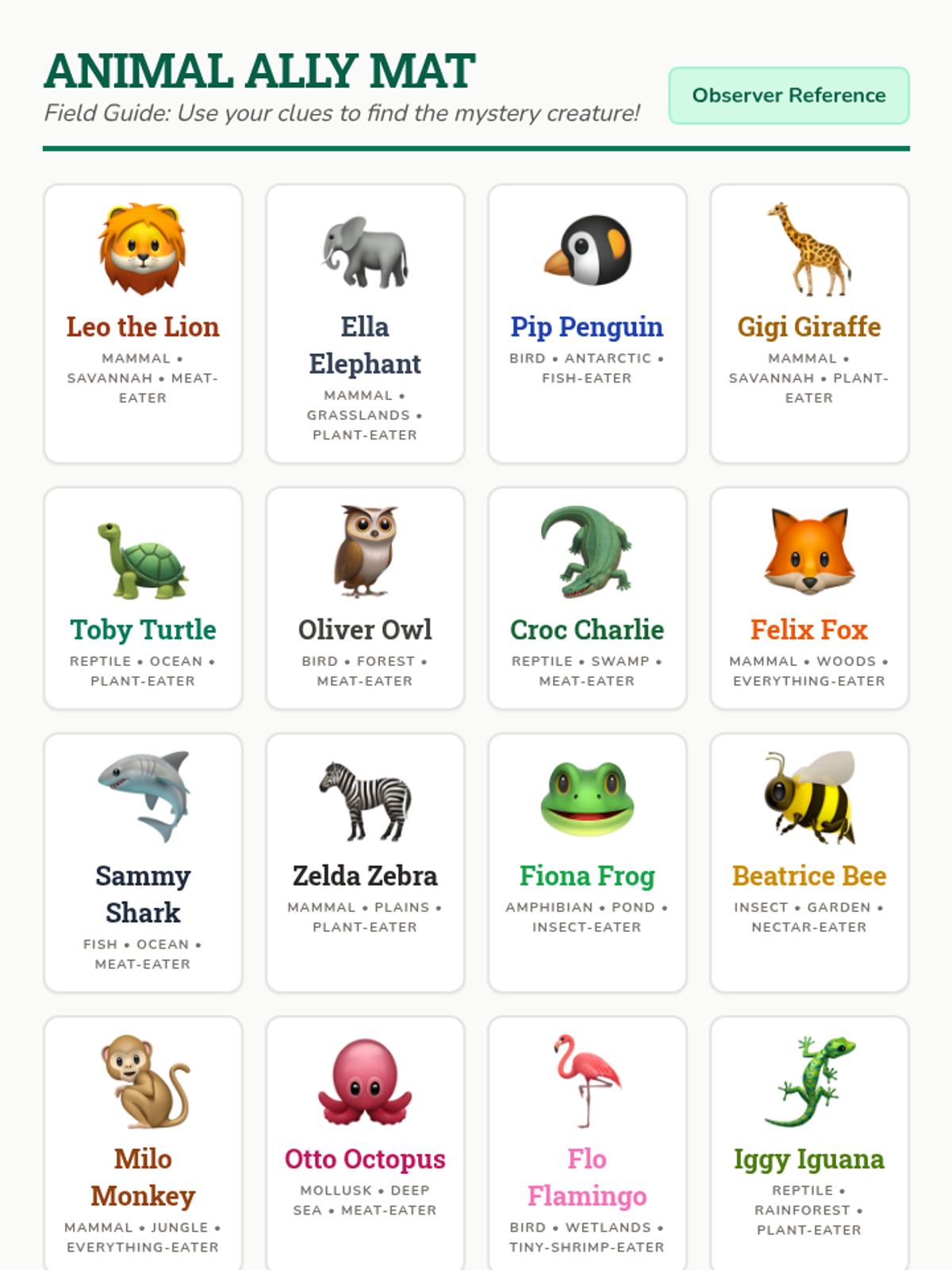
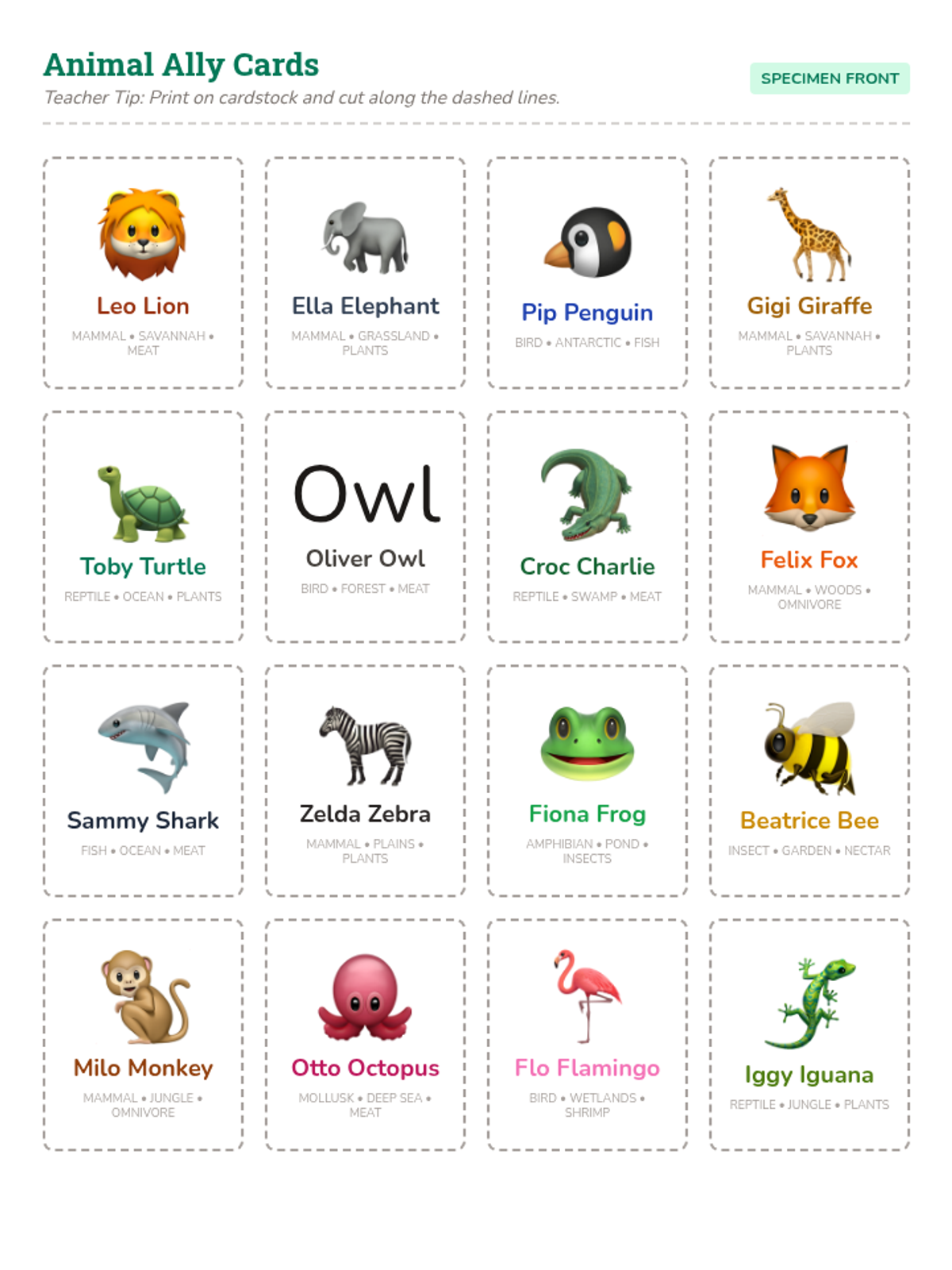
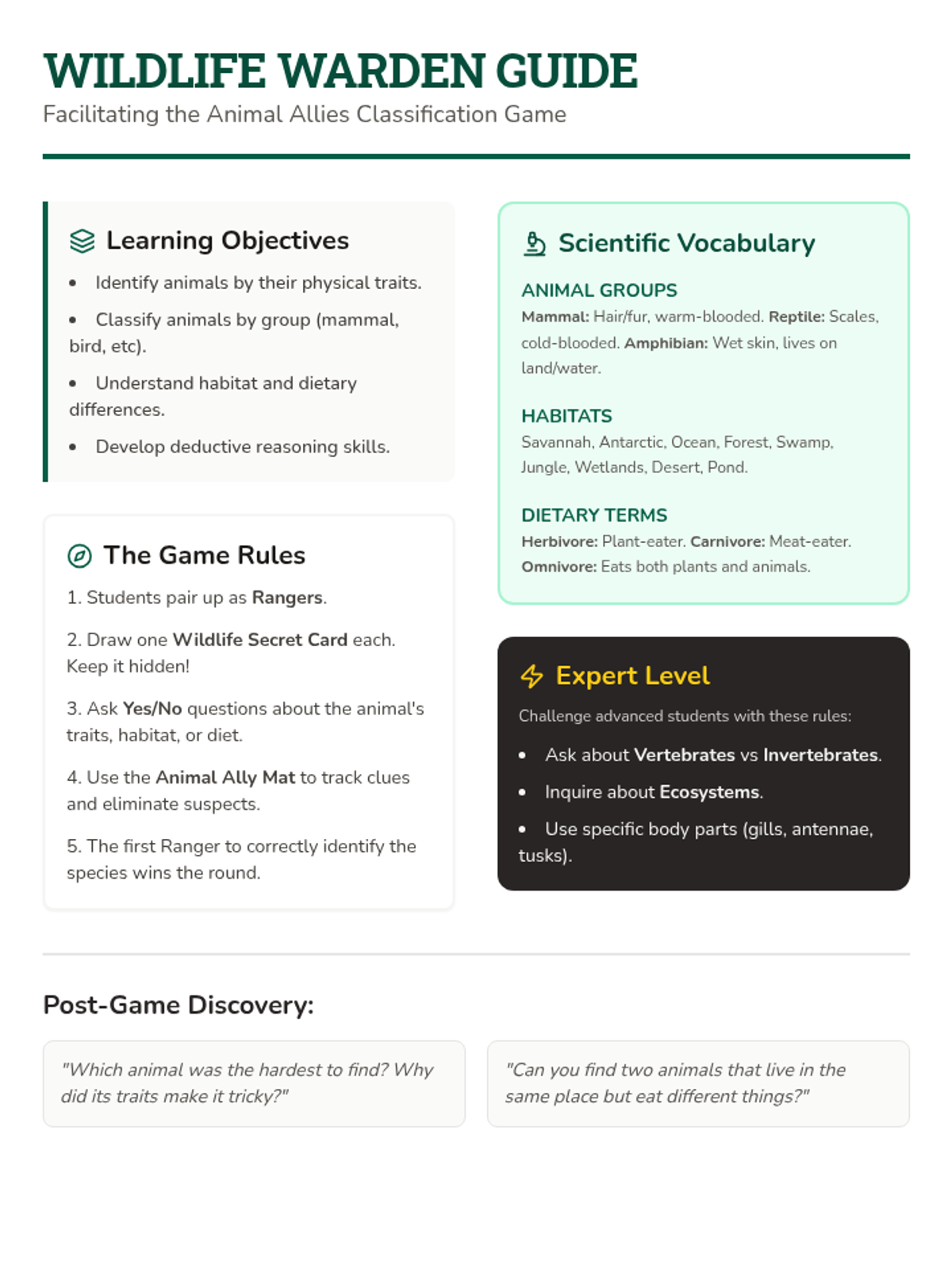
An engaging 'Guess Who' style game where students use descriptive language and biological traits to identify mystery animals. Focuses on classification, habitats, and physical characteristics.
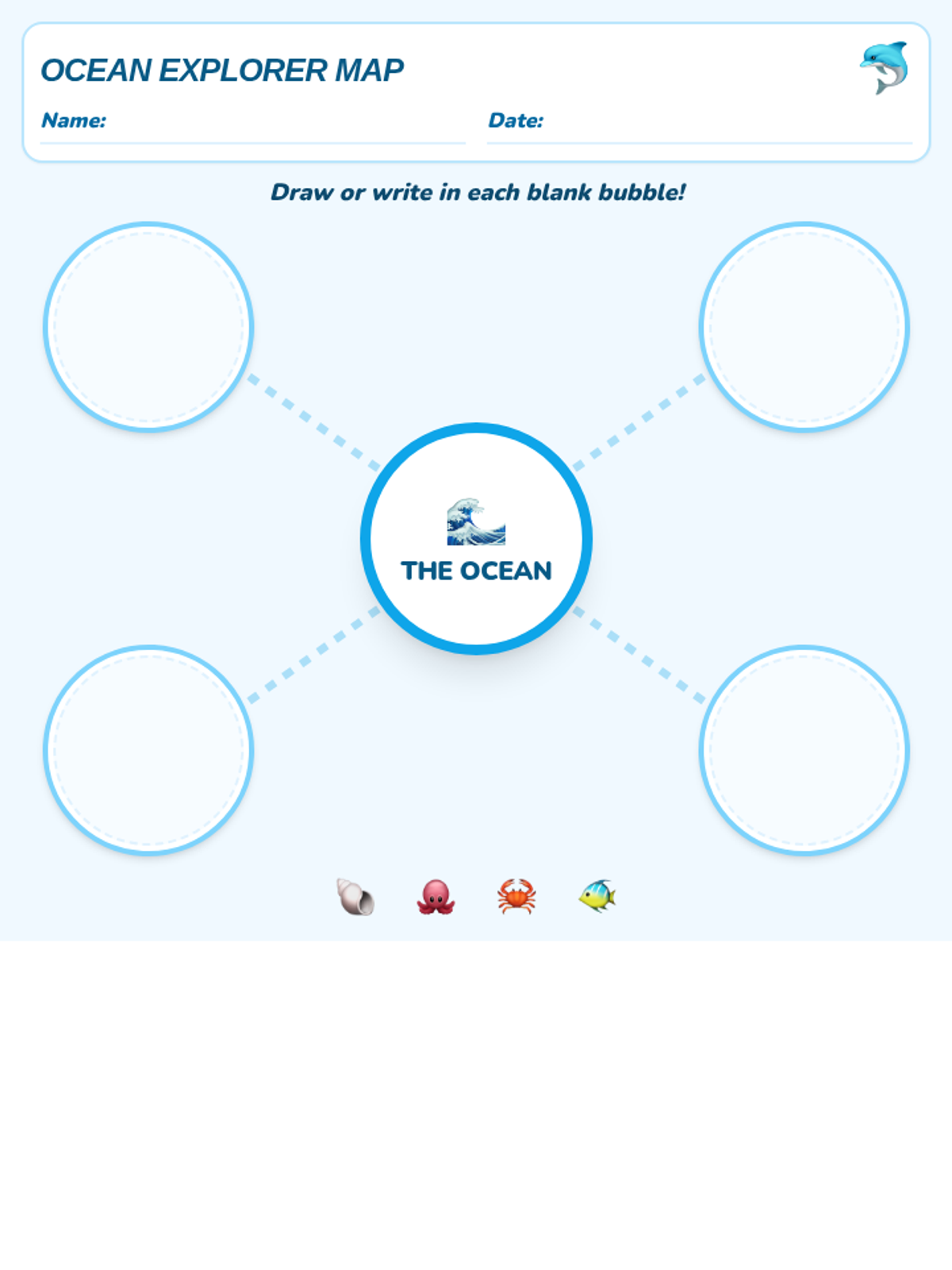
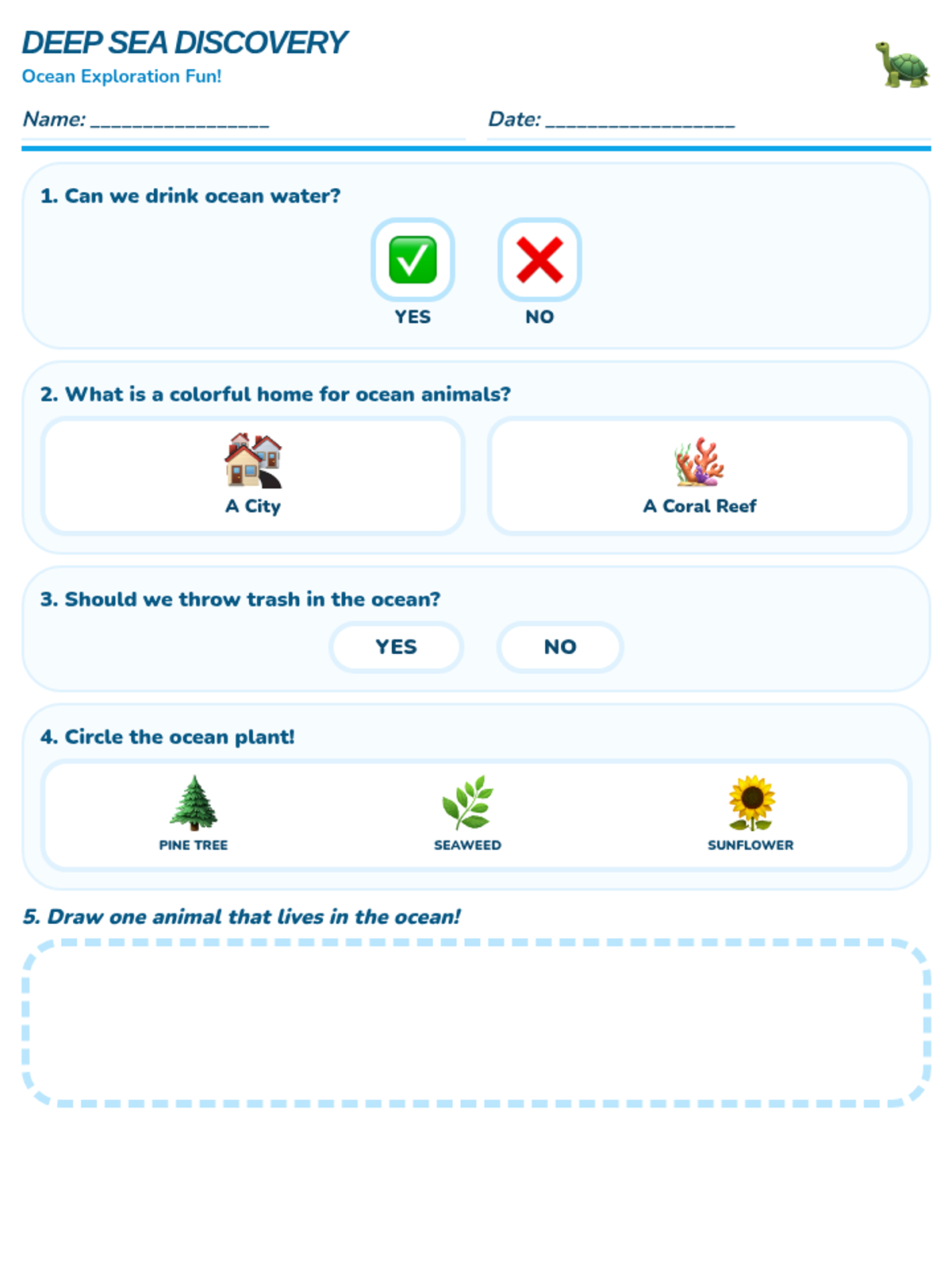
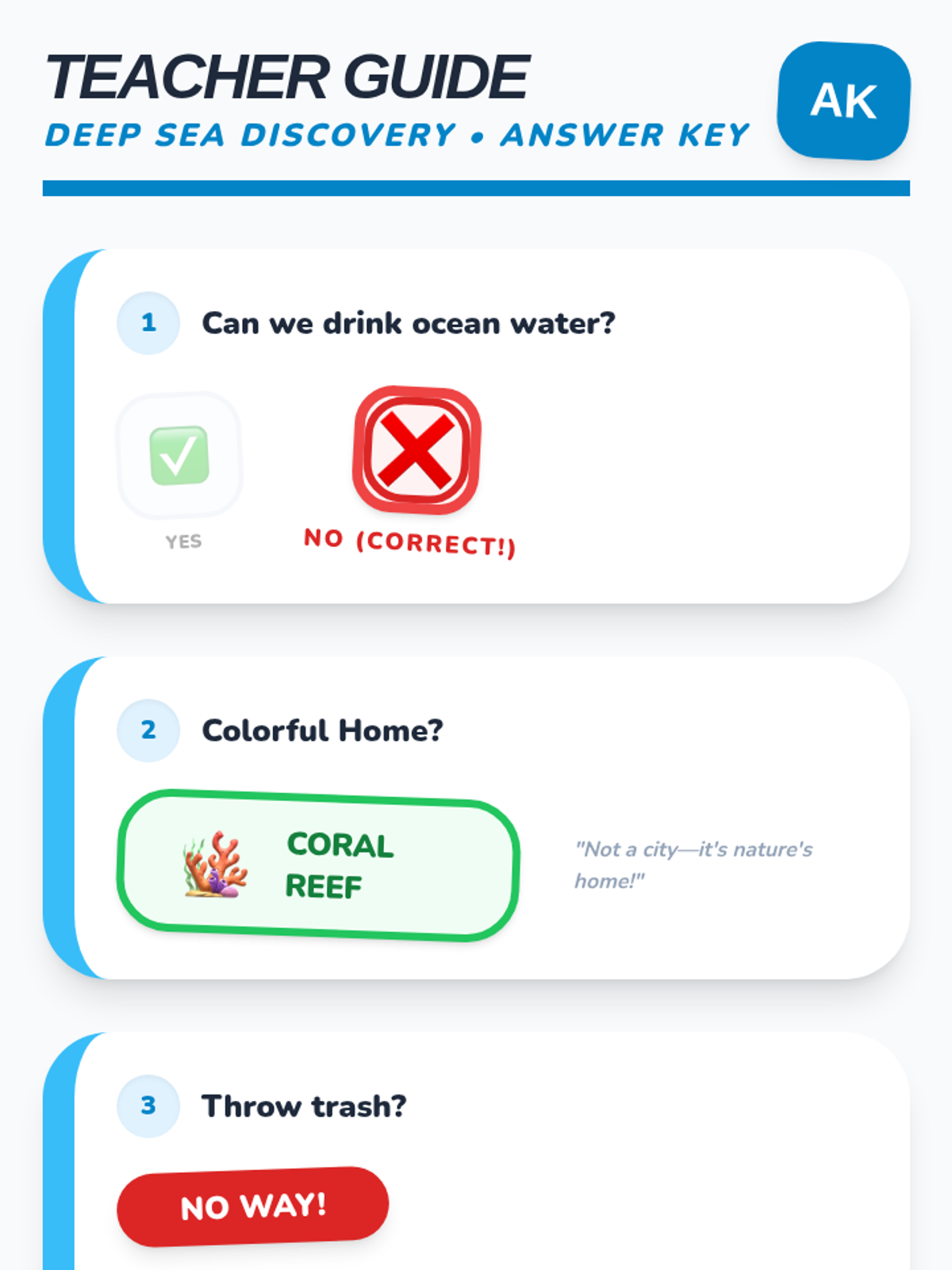
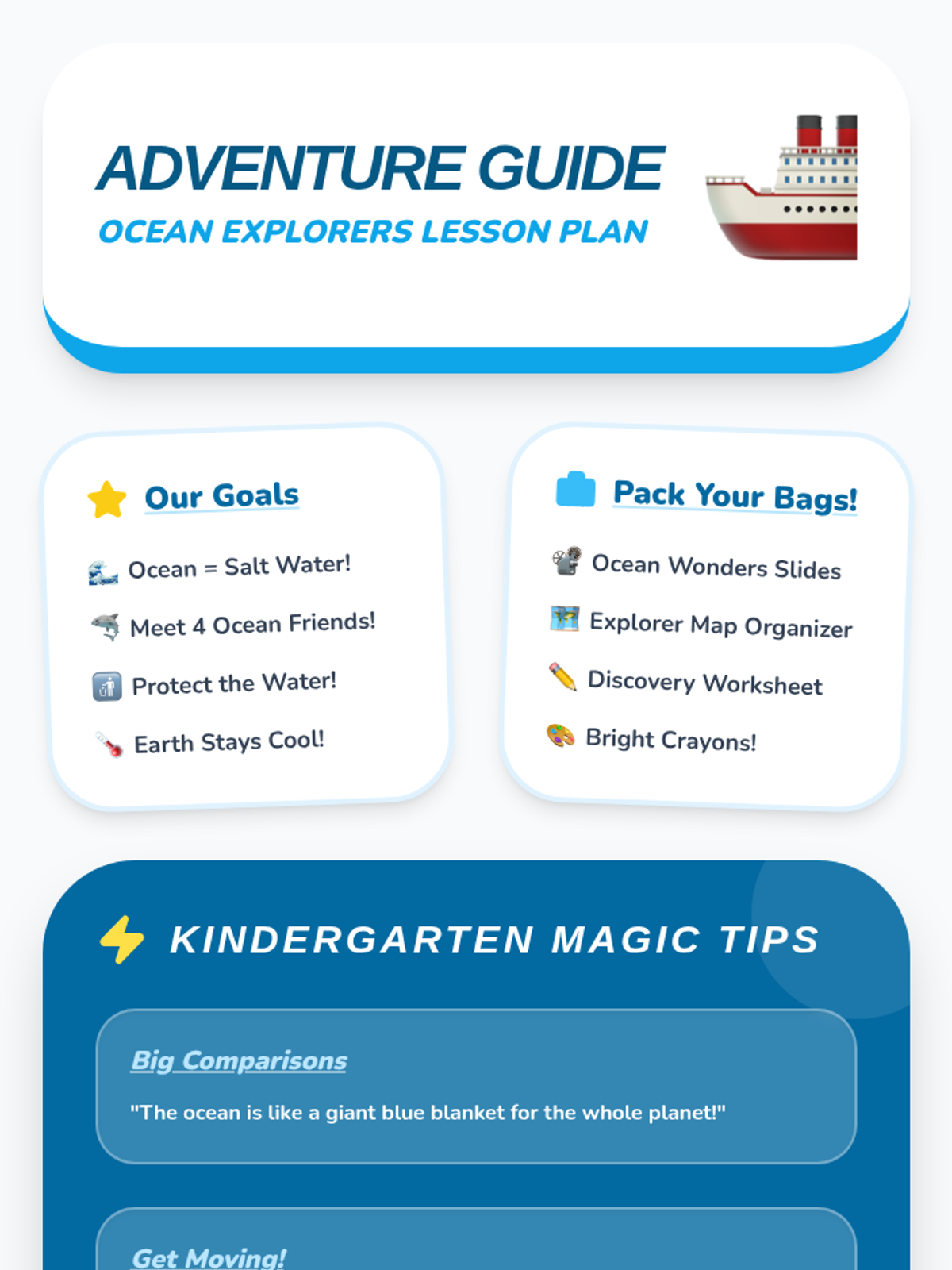
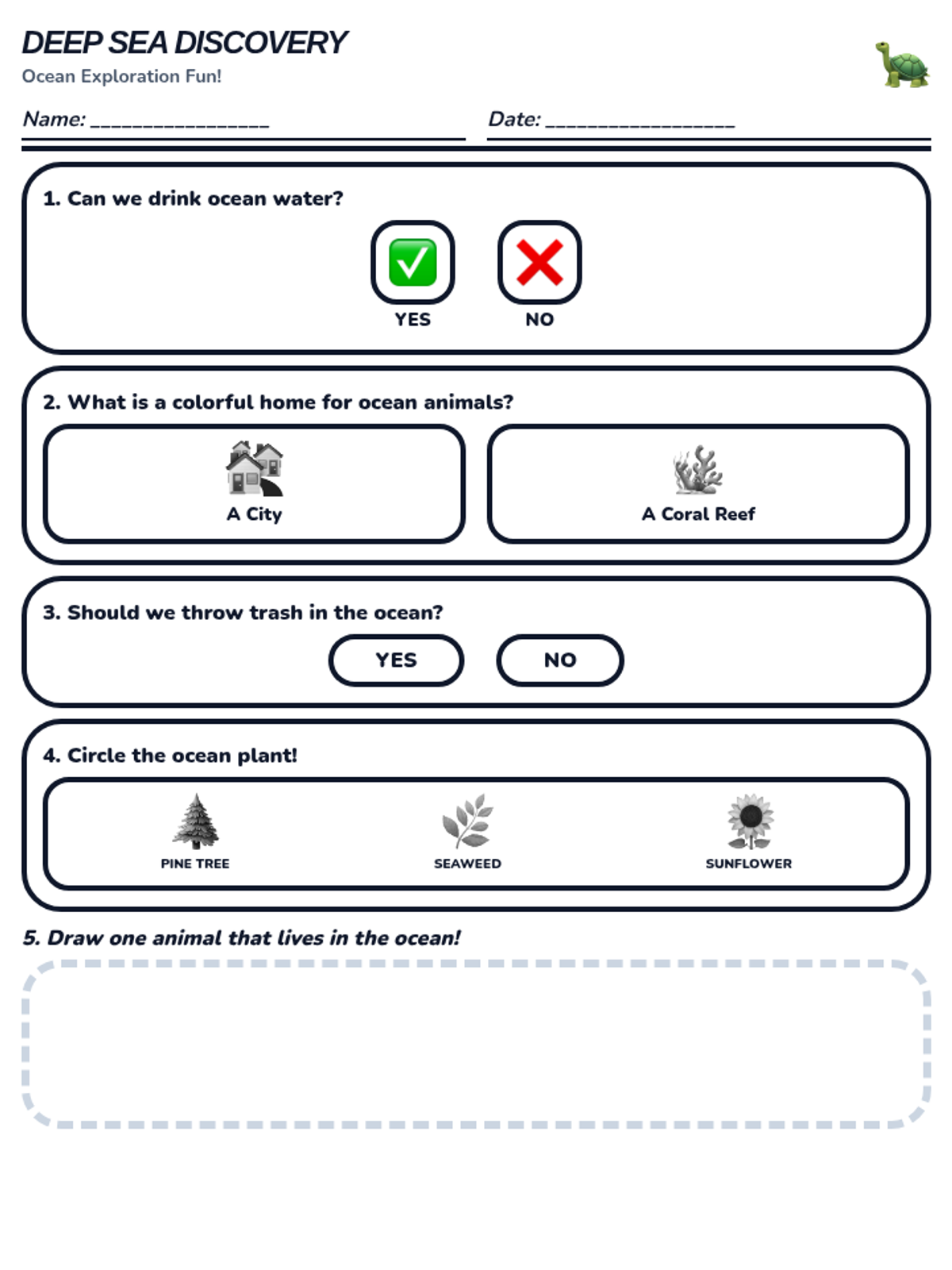
An introductory lesson for kindergarten students exploring basic ocean facts and marine life through visual aids and hands-on activities.
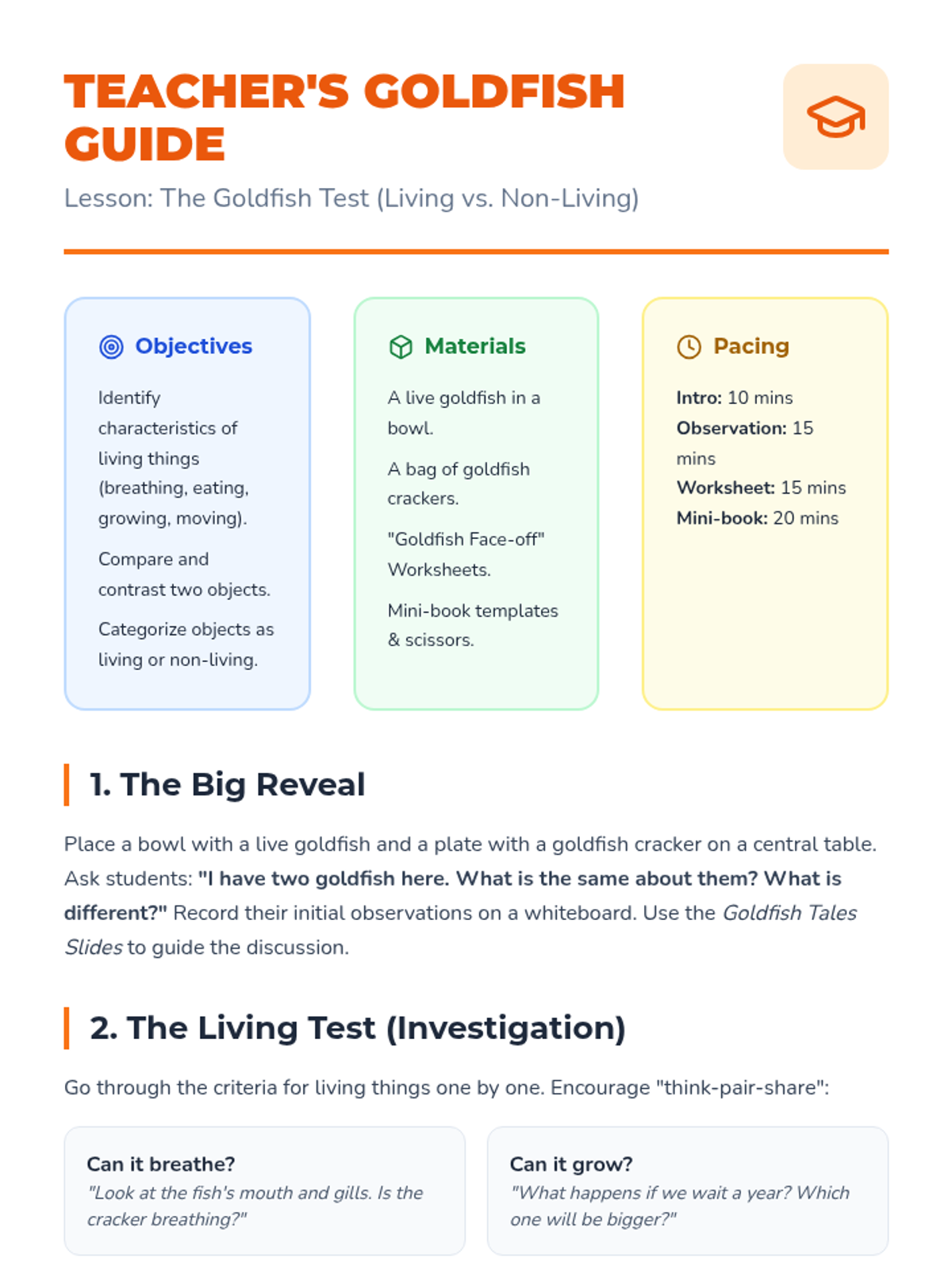
An introductory science lesson comparing a live goldfish to a goldfish cracker to help students identify the characteristics of living and non-living things.
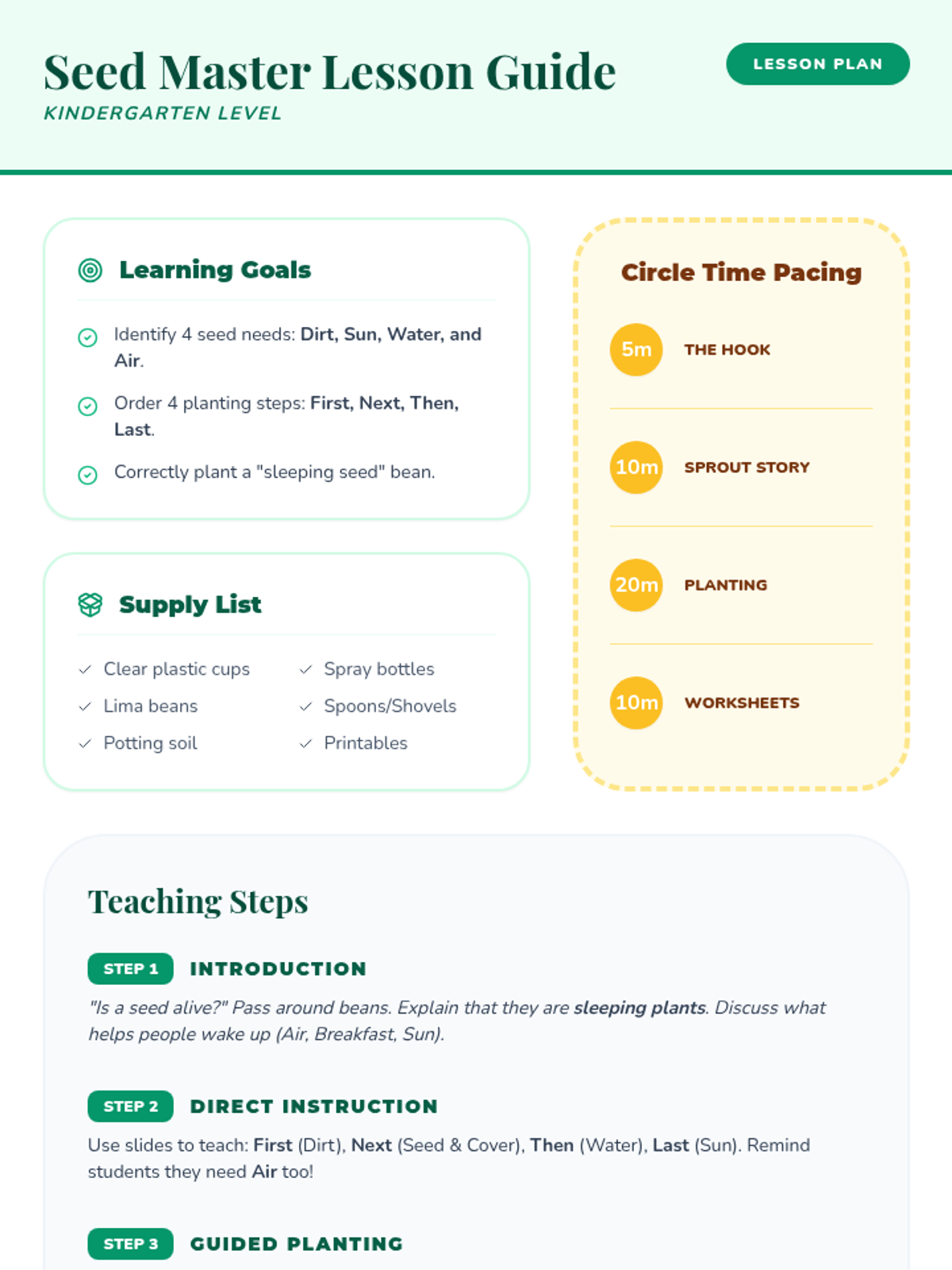
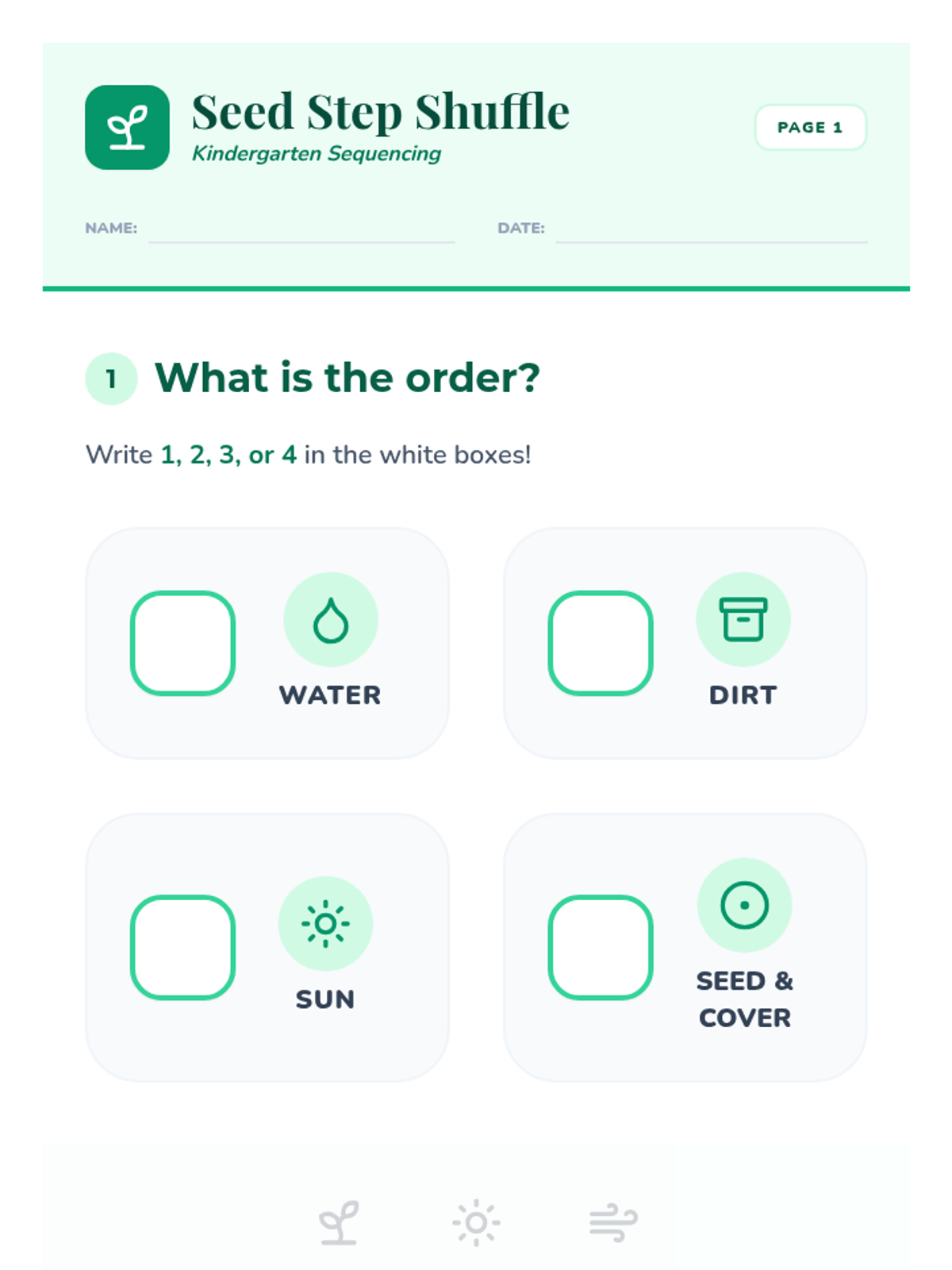
A comprehensive lesson on the biological process and procedural steps of planting seeds, specifically designed to help students master sequencing and chronological ordering.
An introductory lesson for kindergarteners exploring what makes plants special, what they need to survive, and how they grow in different environments.
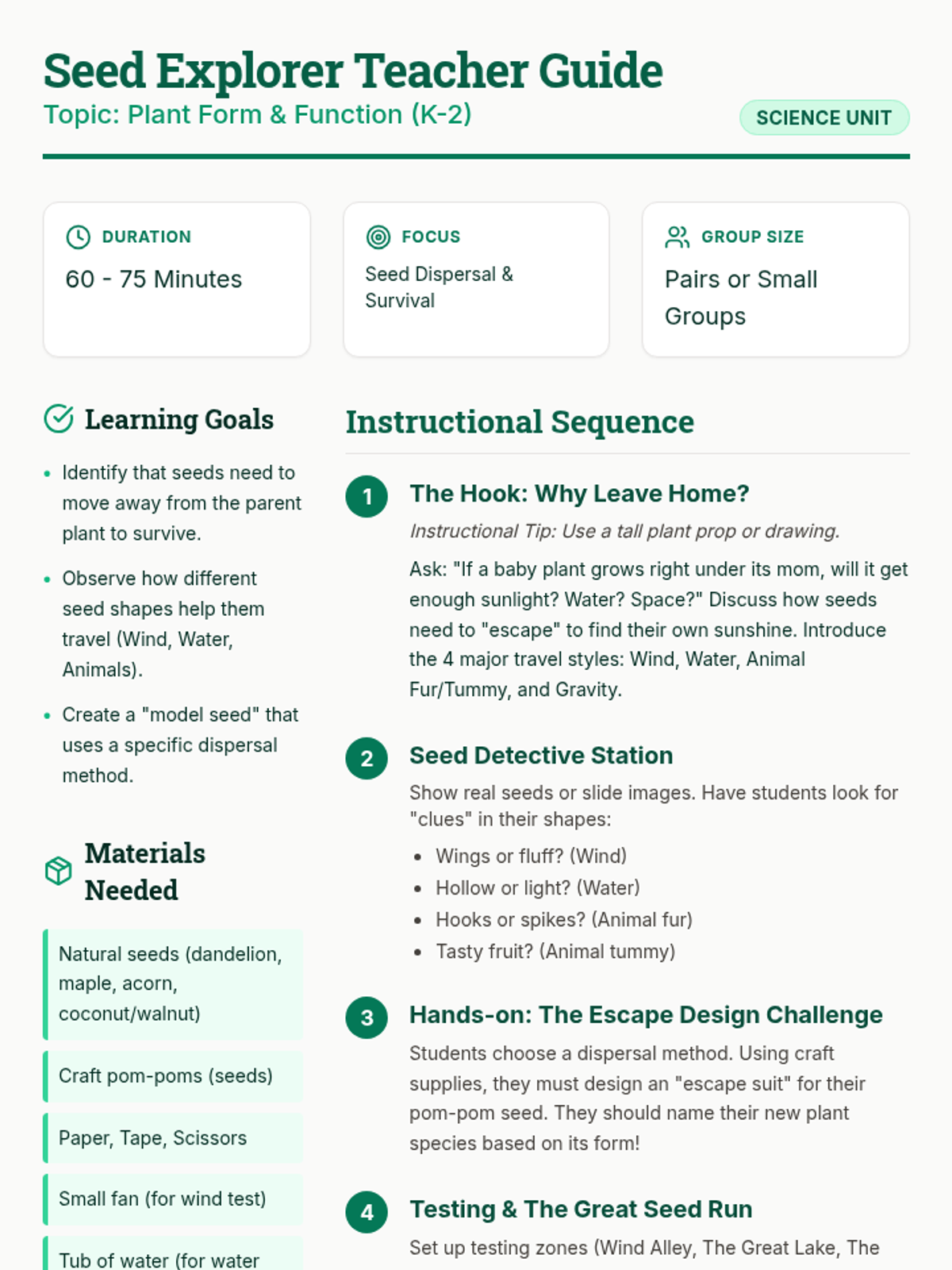
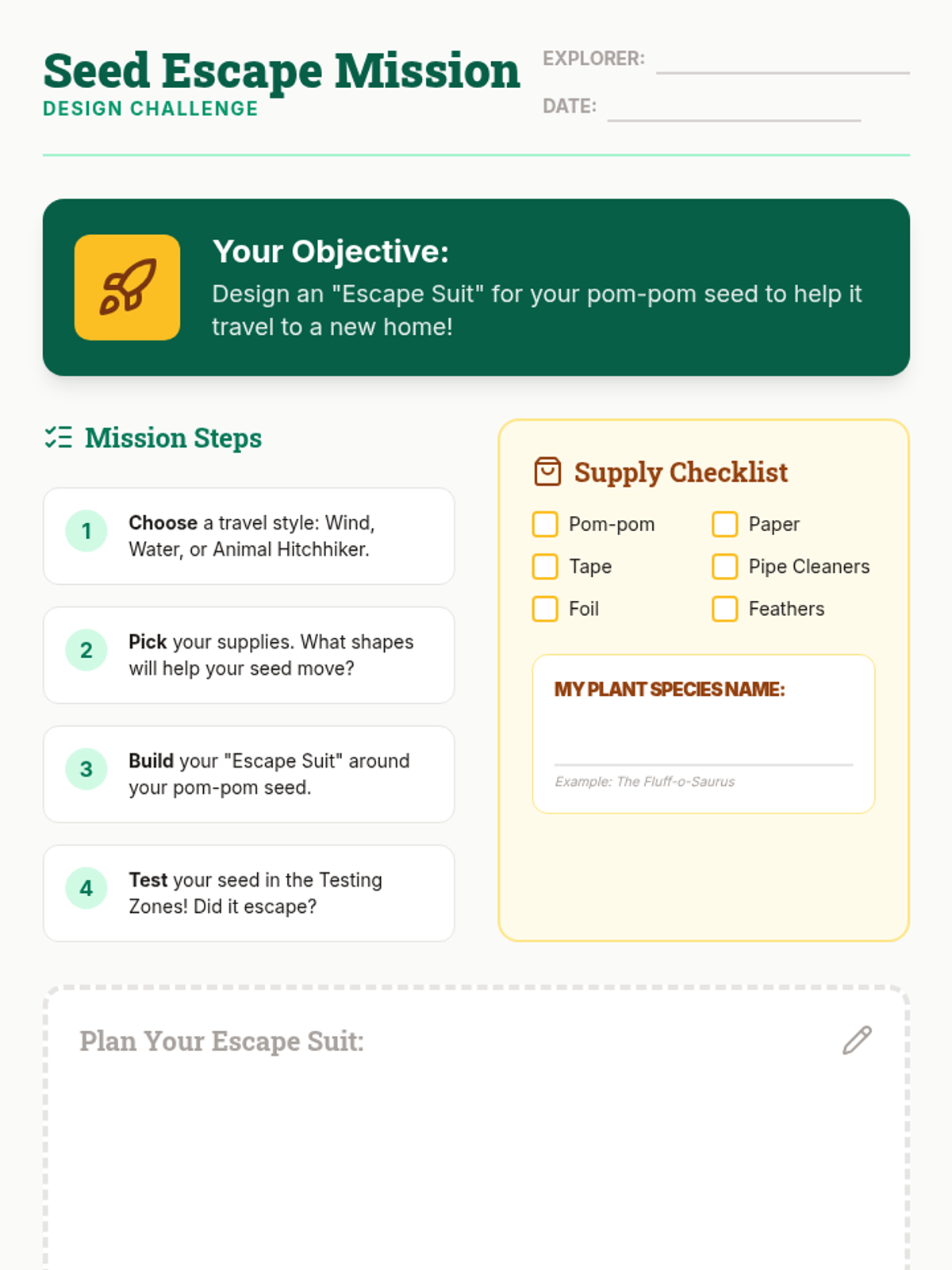
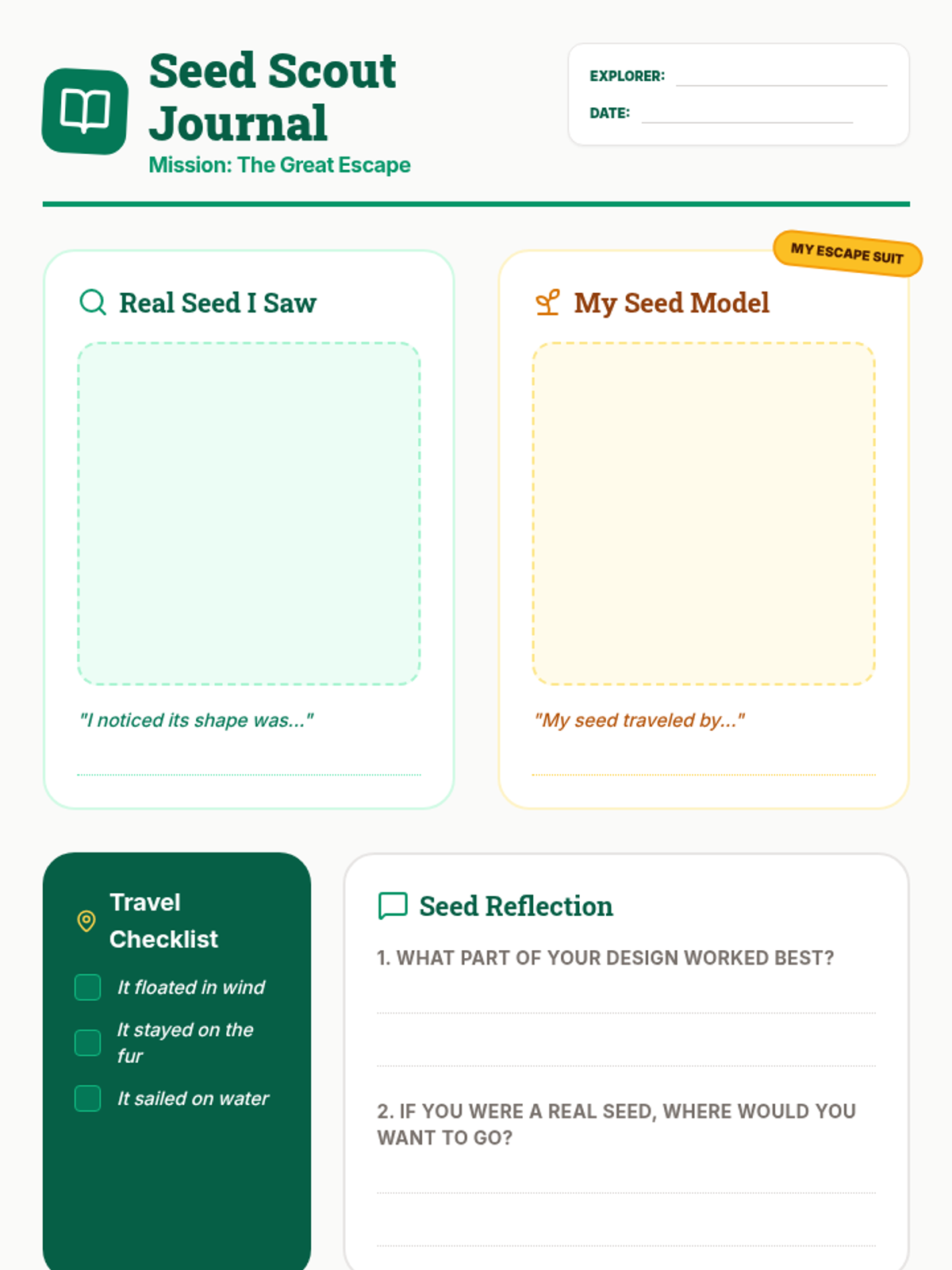
Students explore the fascinating world of seed dispersal through hands-on modeling and observation, discovering how plant 'form' follows 'function' to ensure the next generation of plants can grow in new places.
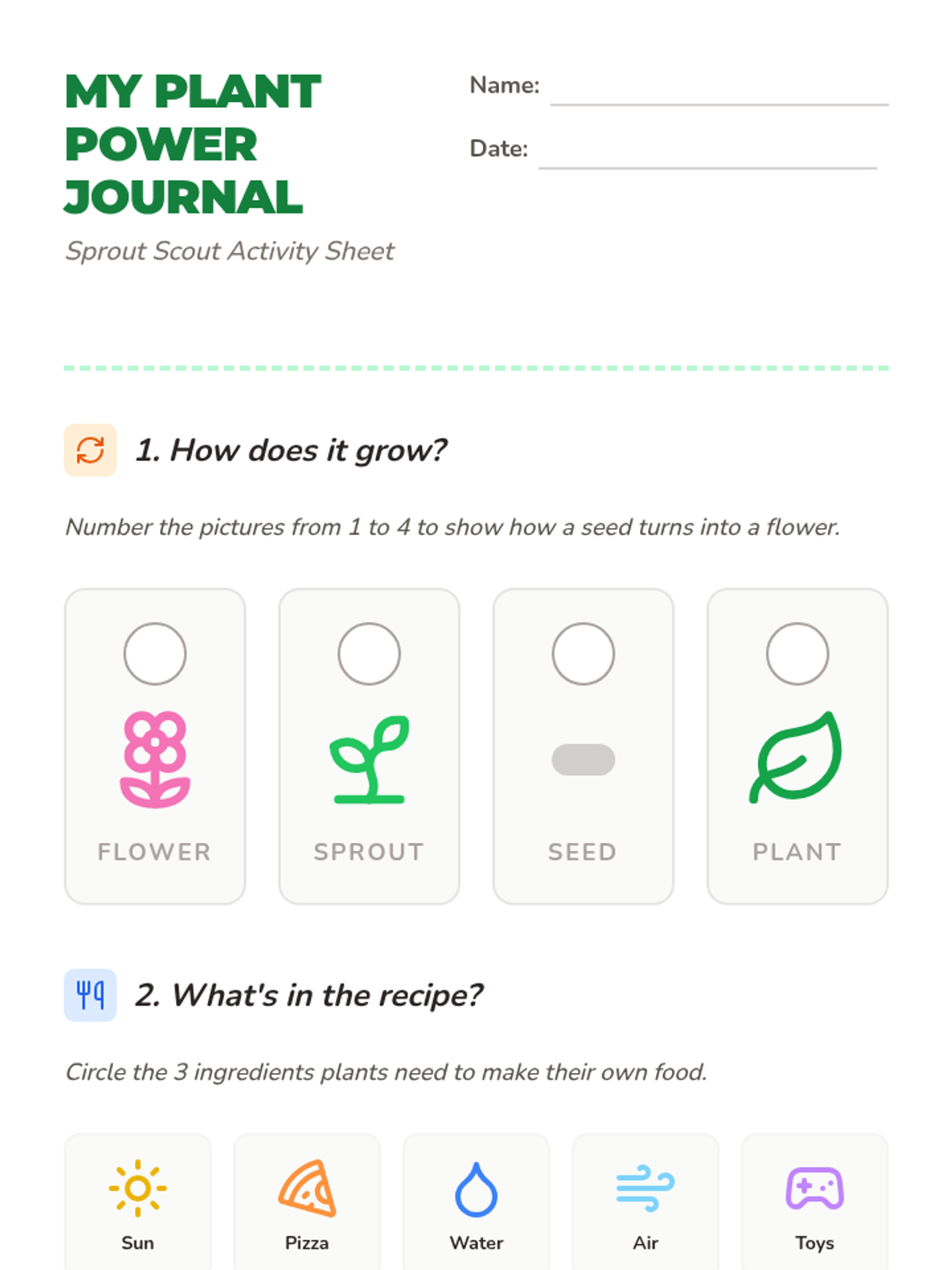
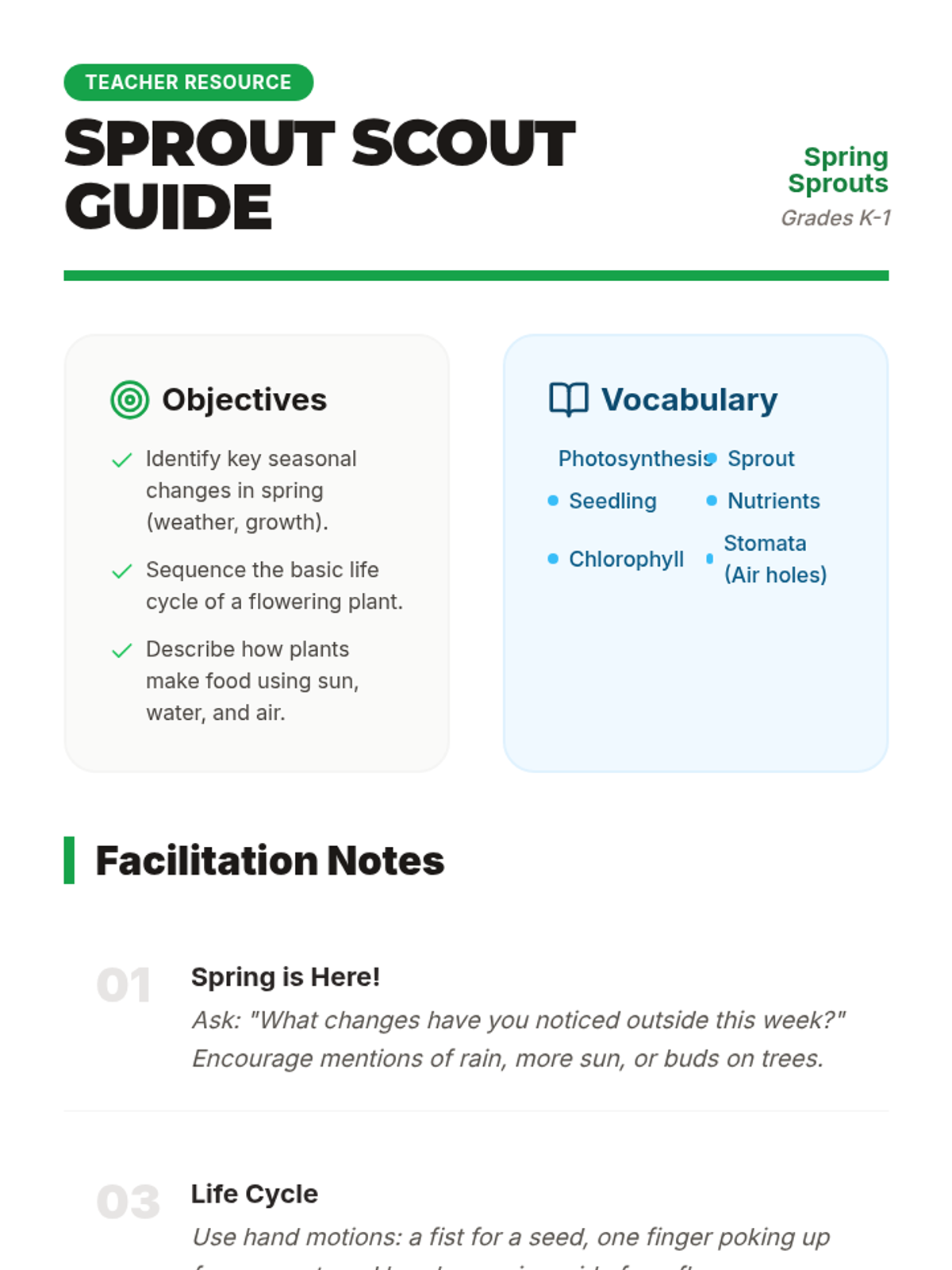
An introductory lesson for early elementary students exploring the characteristics of spring, the life cycle of plants, and the basic concept of photosynthesis.
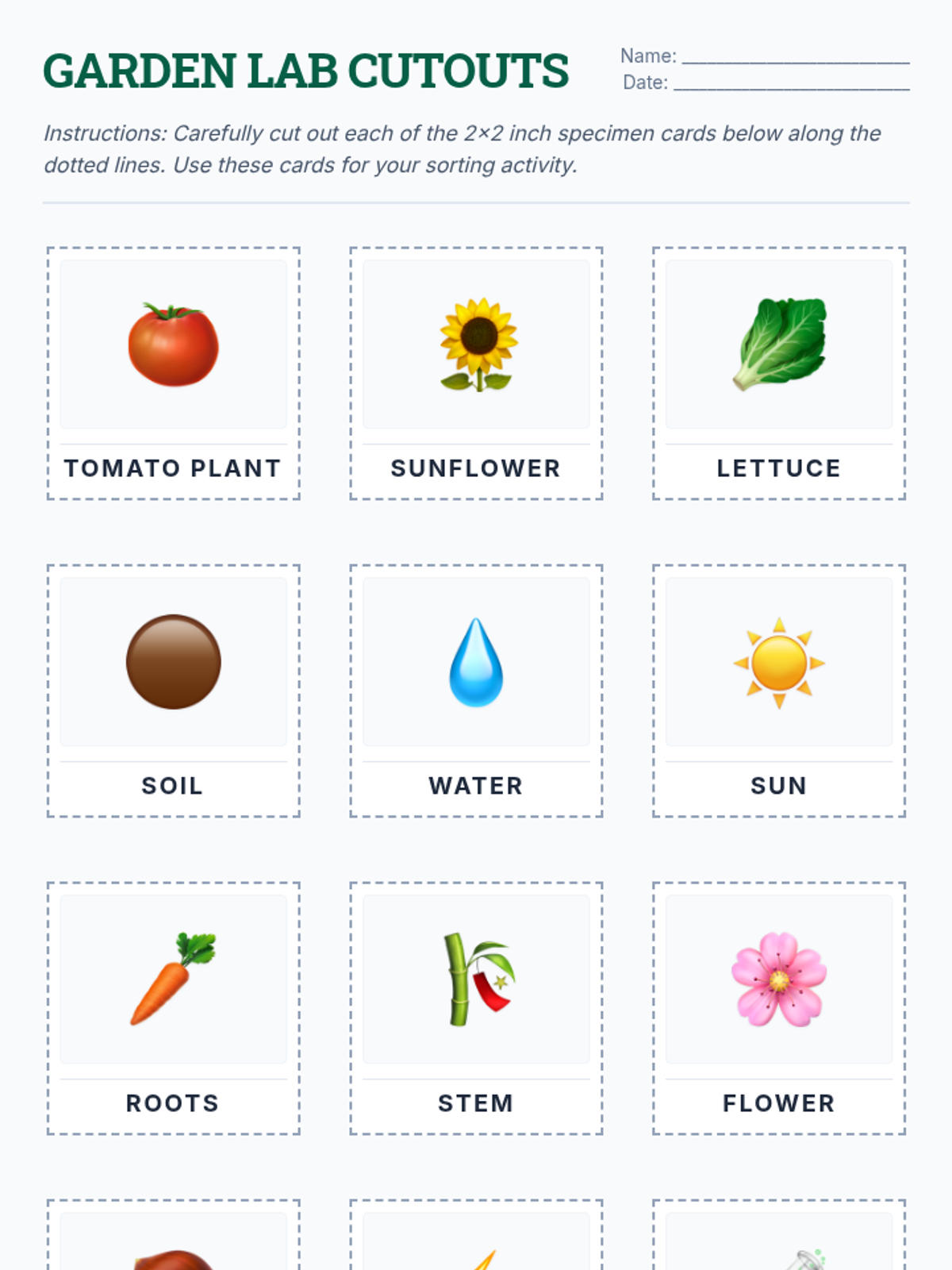
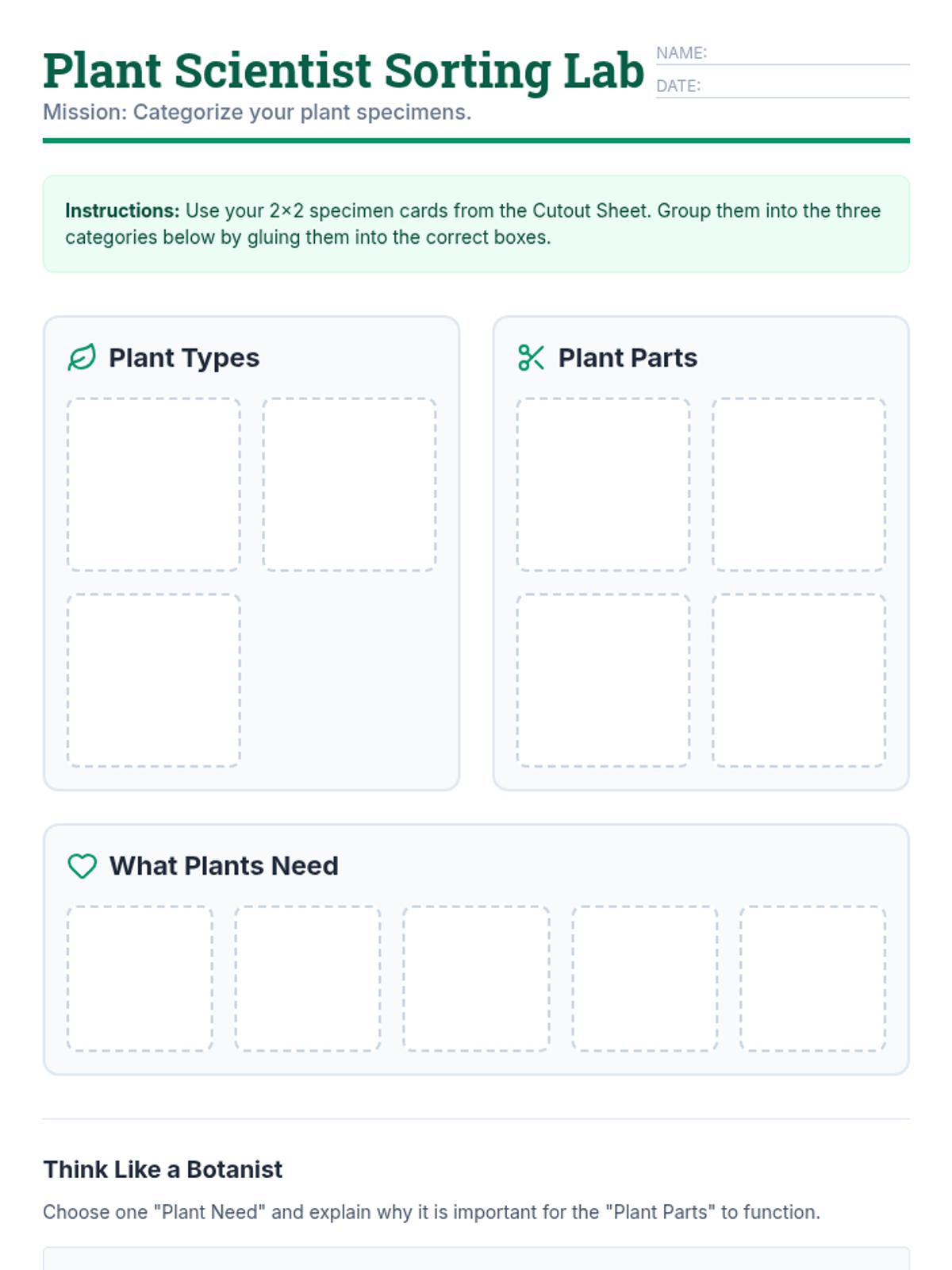
In this lesson, students explore the different parts of a plant, the specific needs for plant growth, and various types of plants. They will use visual cards to identify and categorize these elements in a hands-on sorting activity.
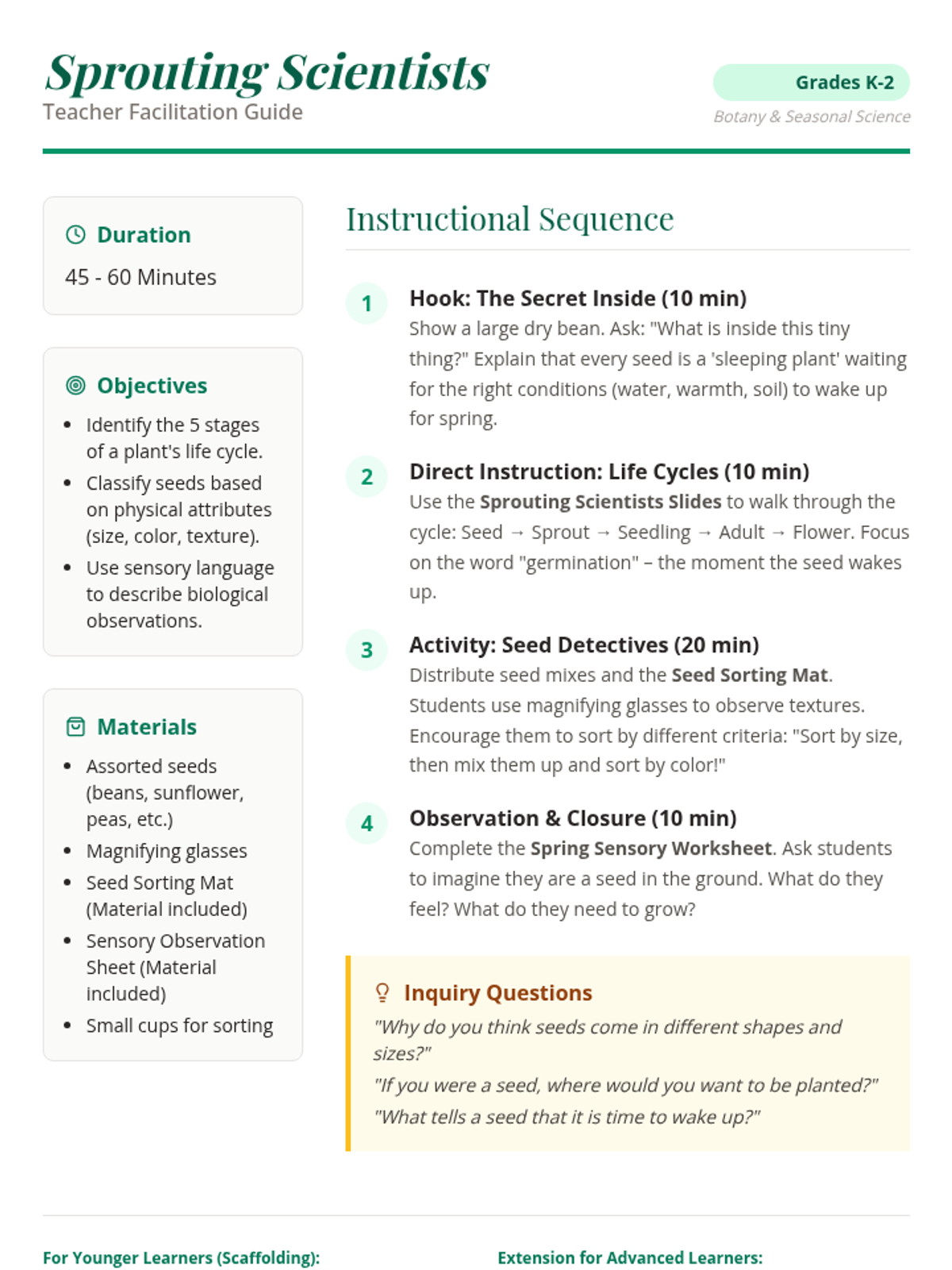
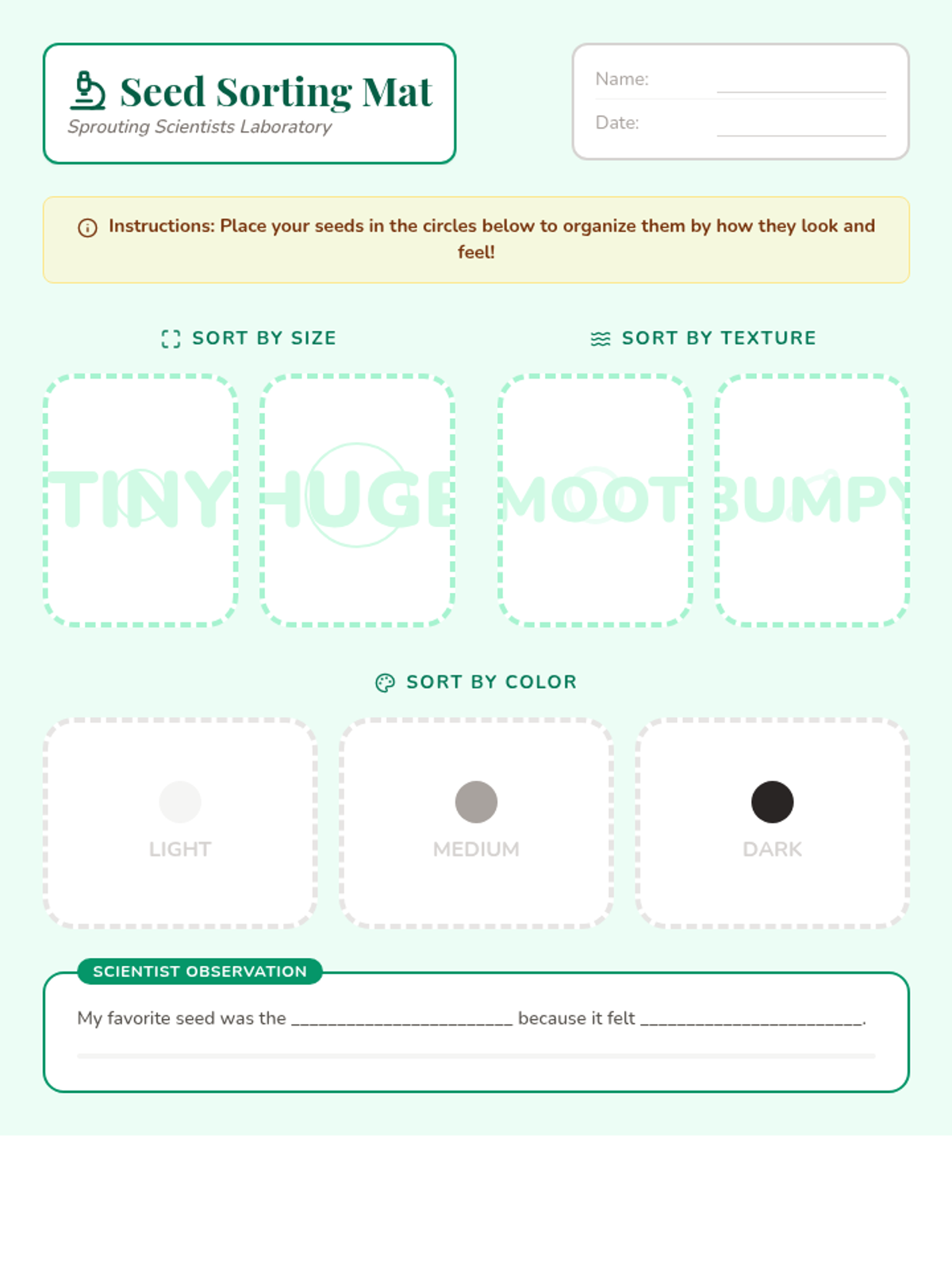
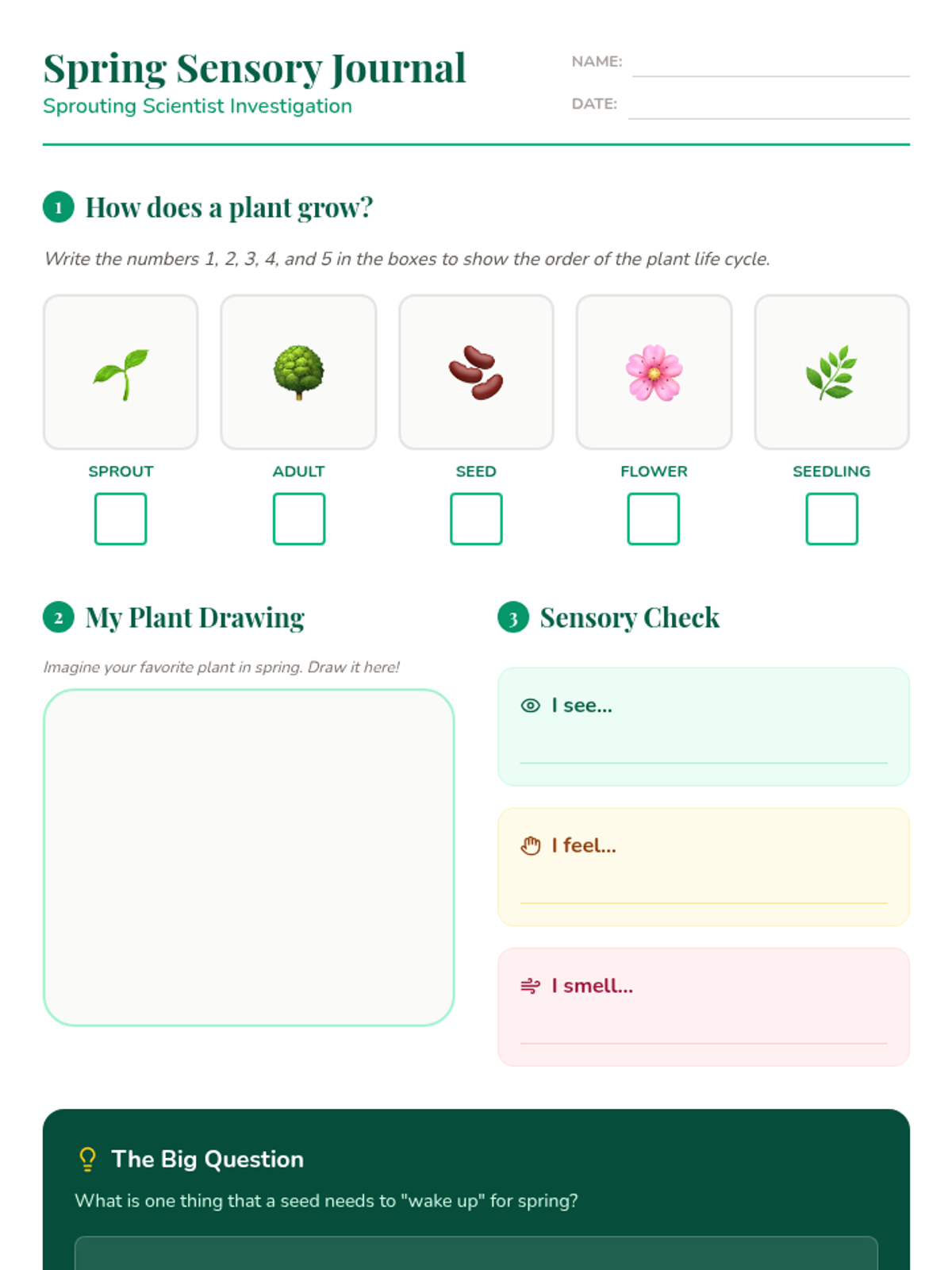
Students explore the plant life cycle through hands-on seed sorting and sensory observations, connecting biological processes to the arrival of spring.
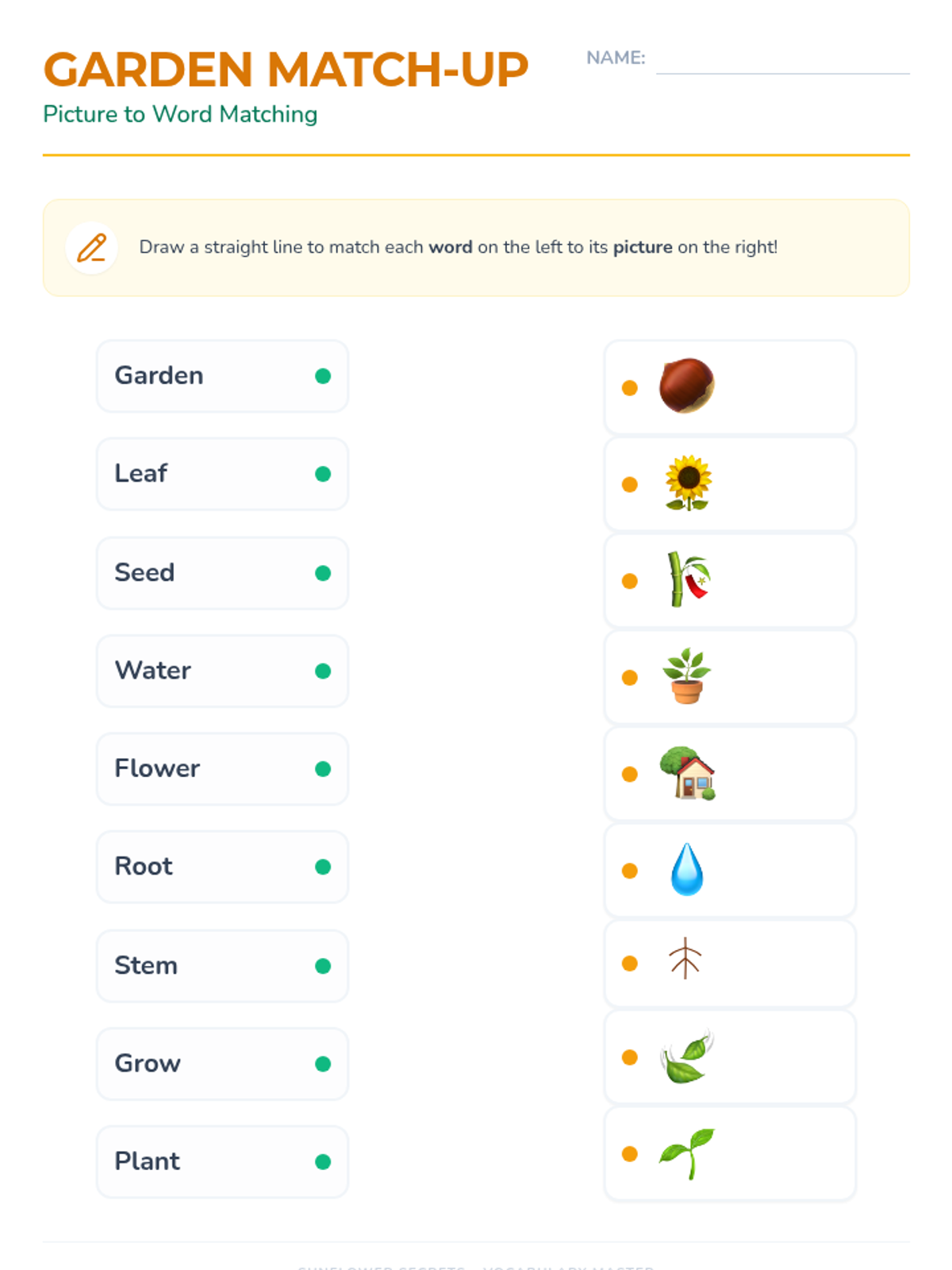
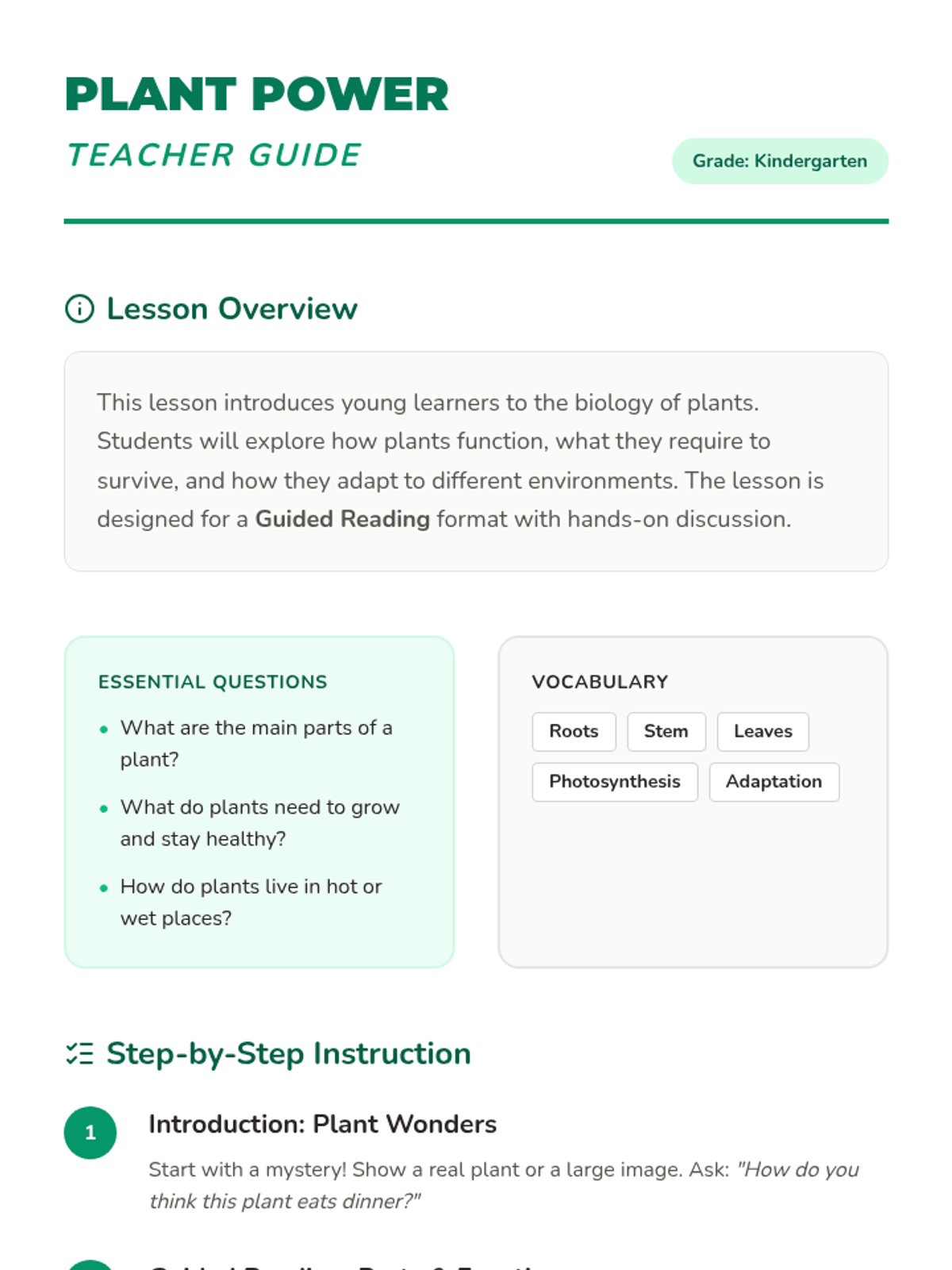
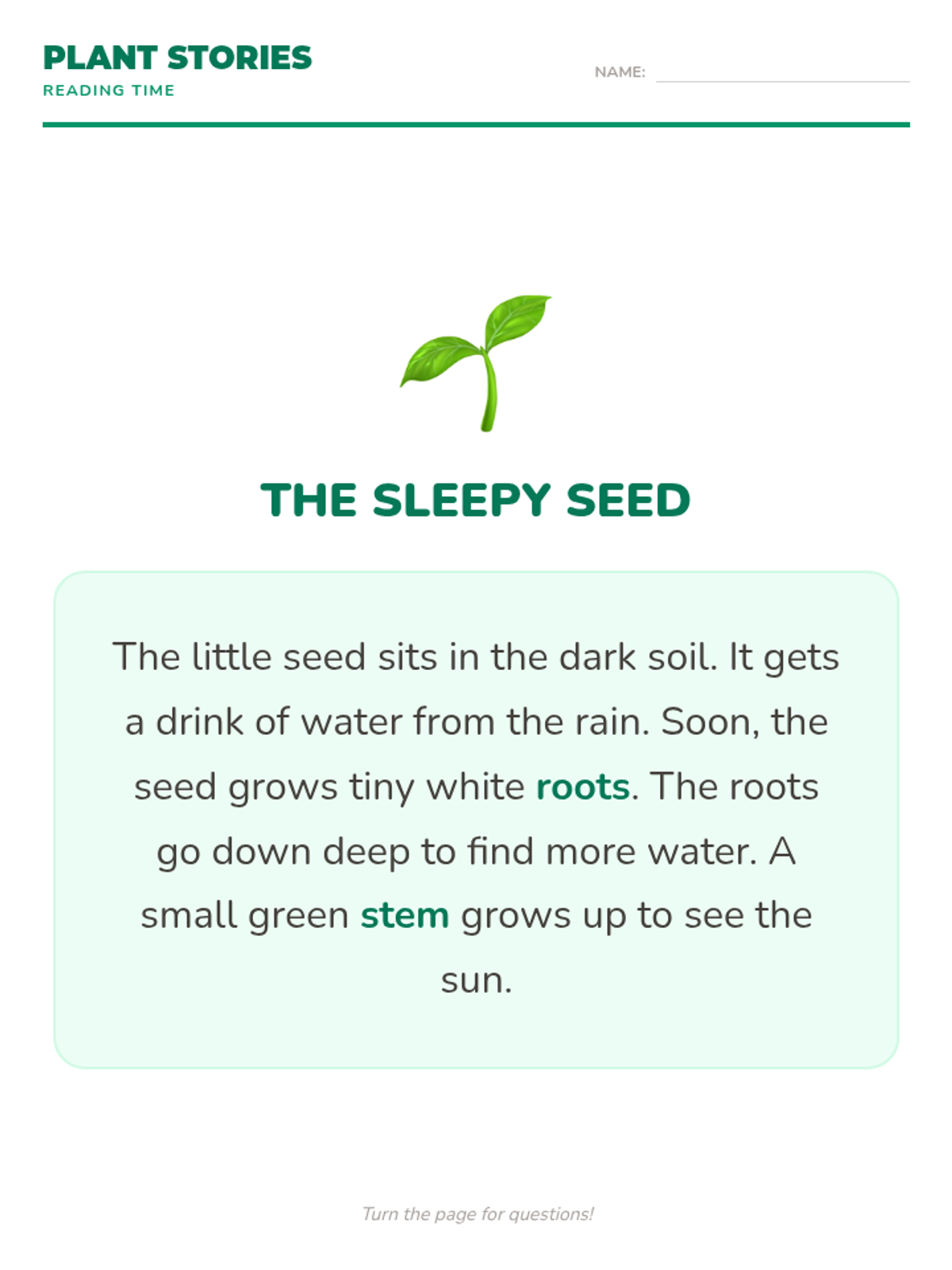
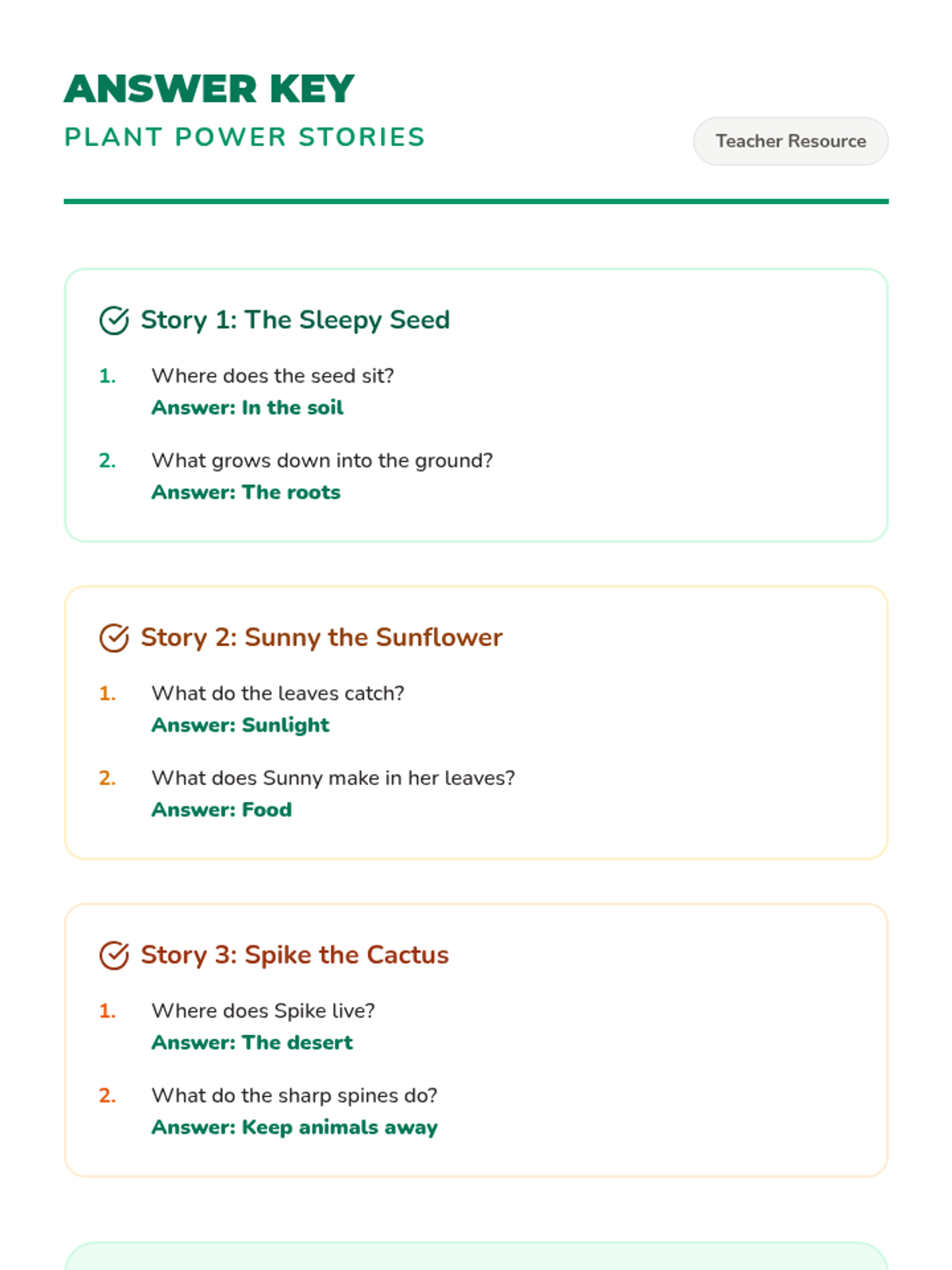
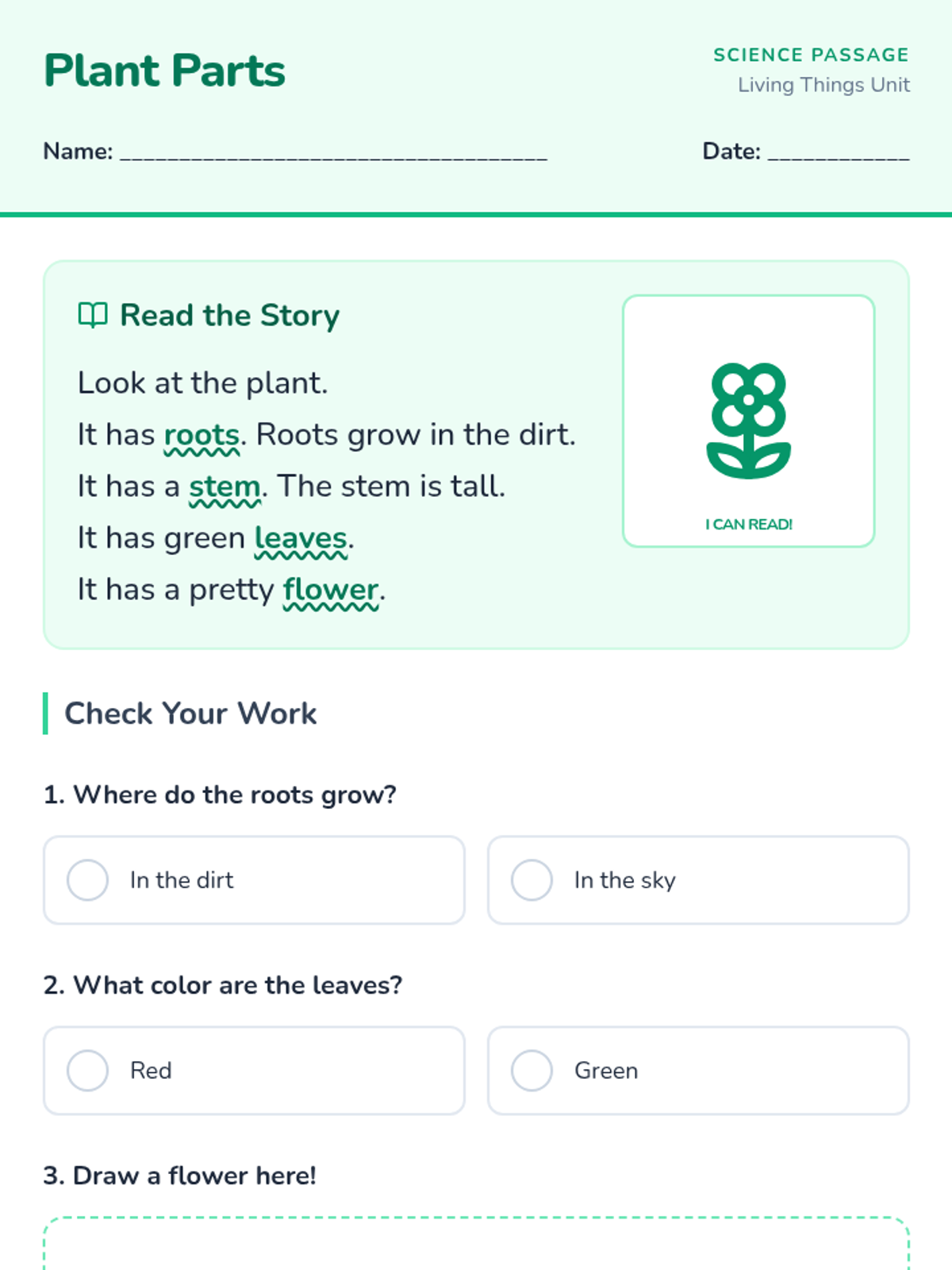
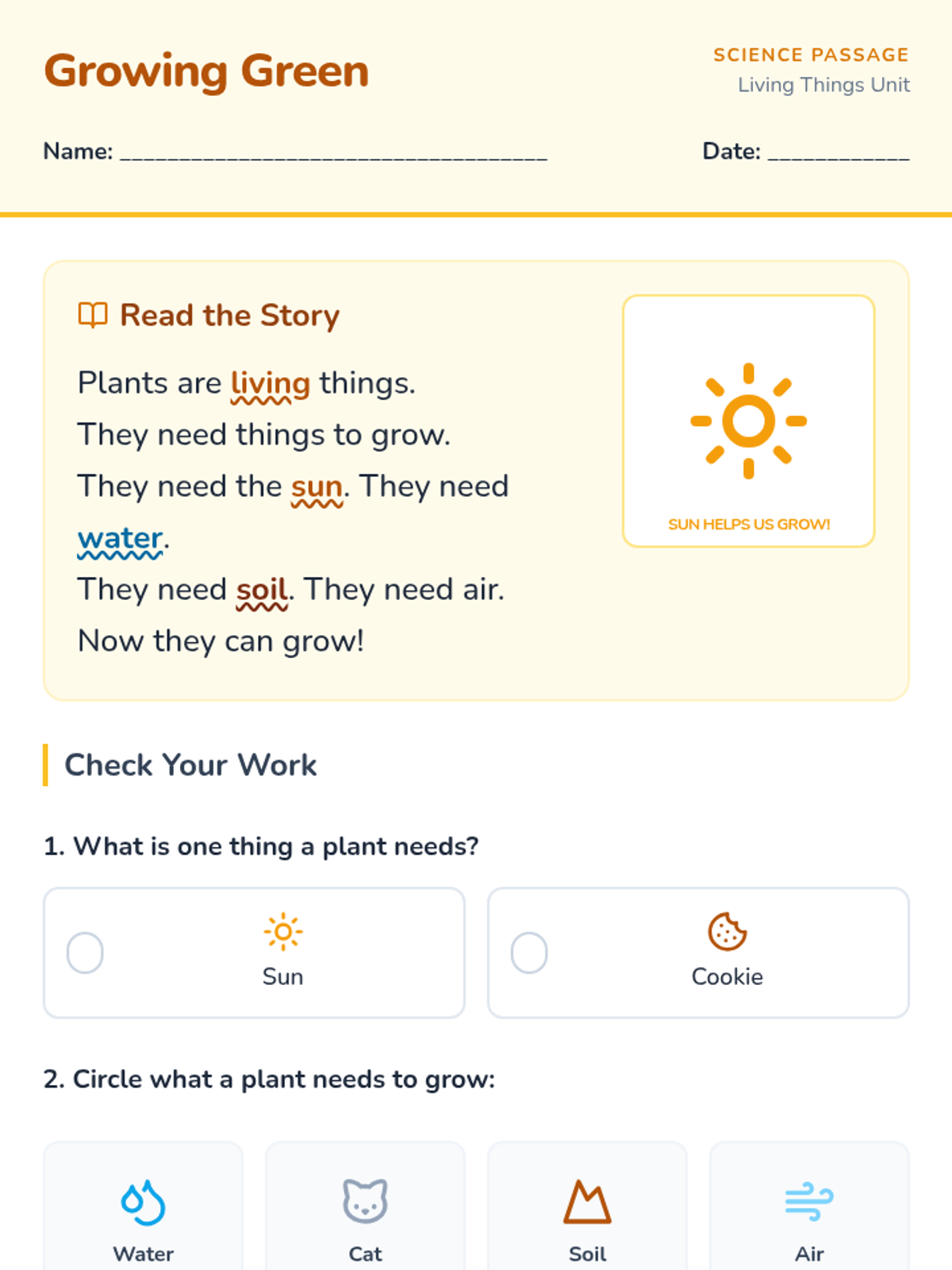
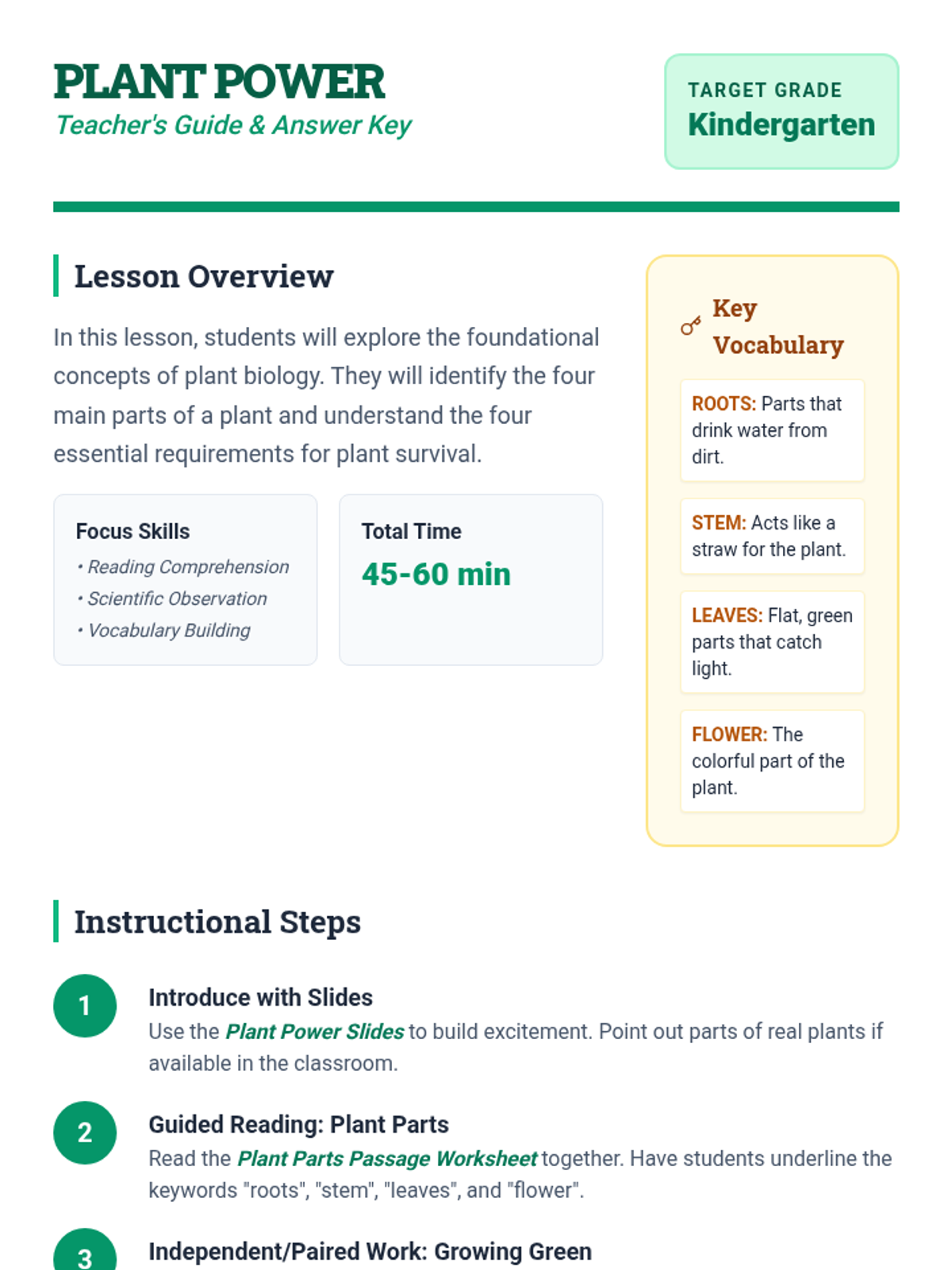
A foundational science lesson for Kindergarteners covering plant anatomy and the essential requirements for plant growth through simple reading passages and visual aids.
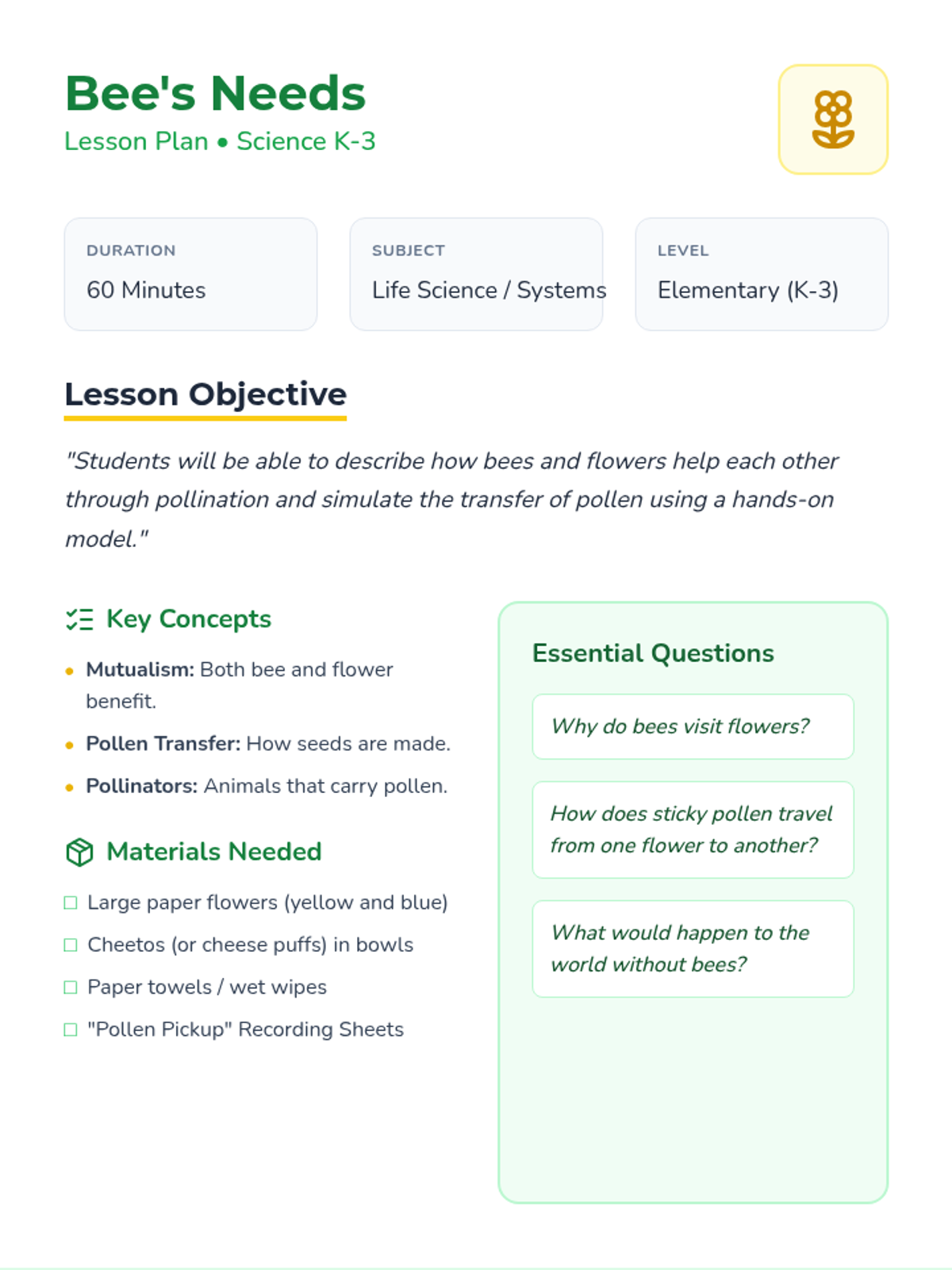
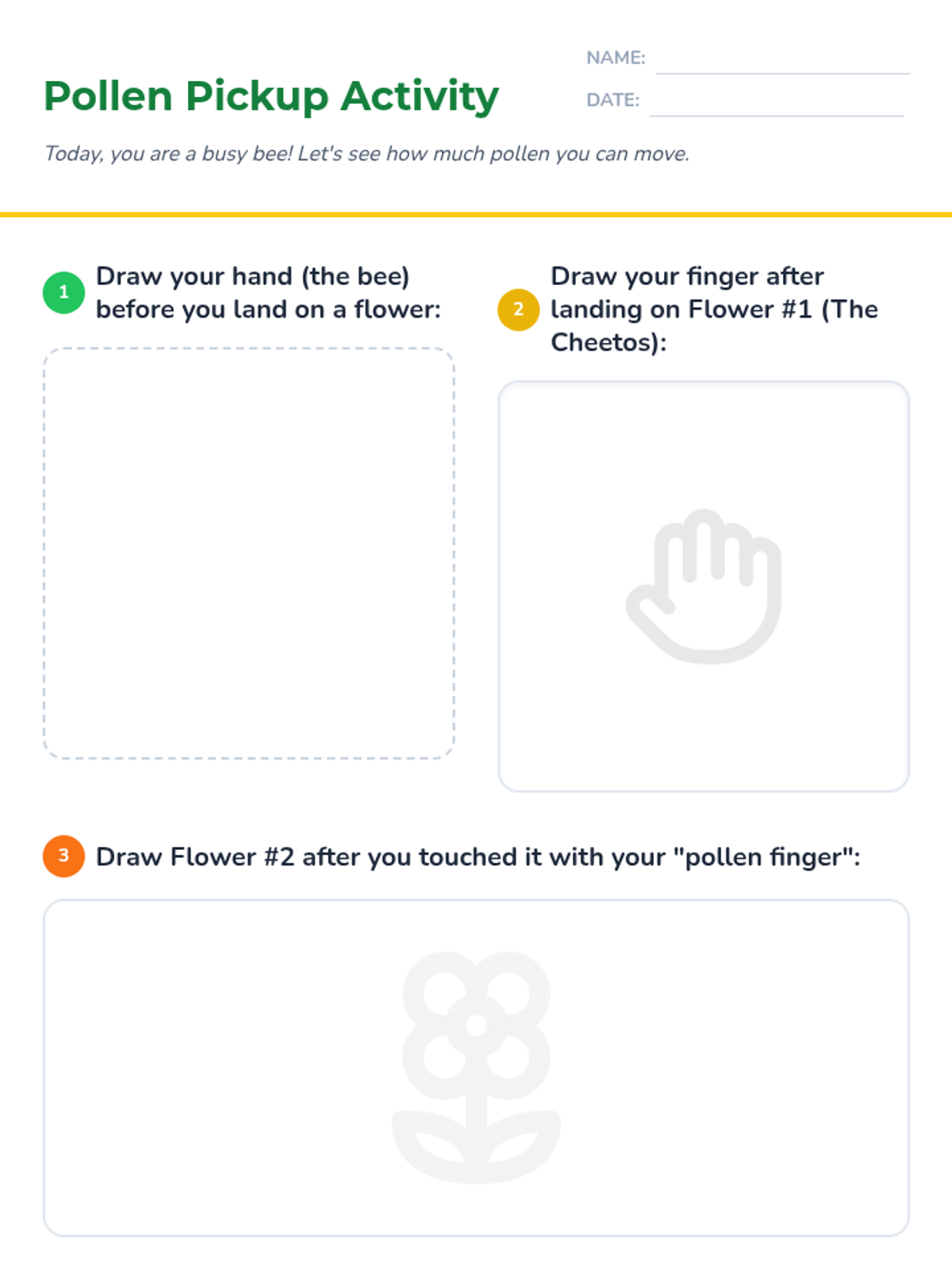
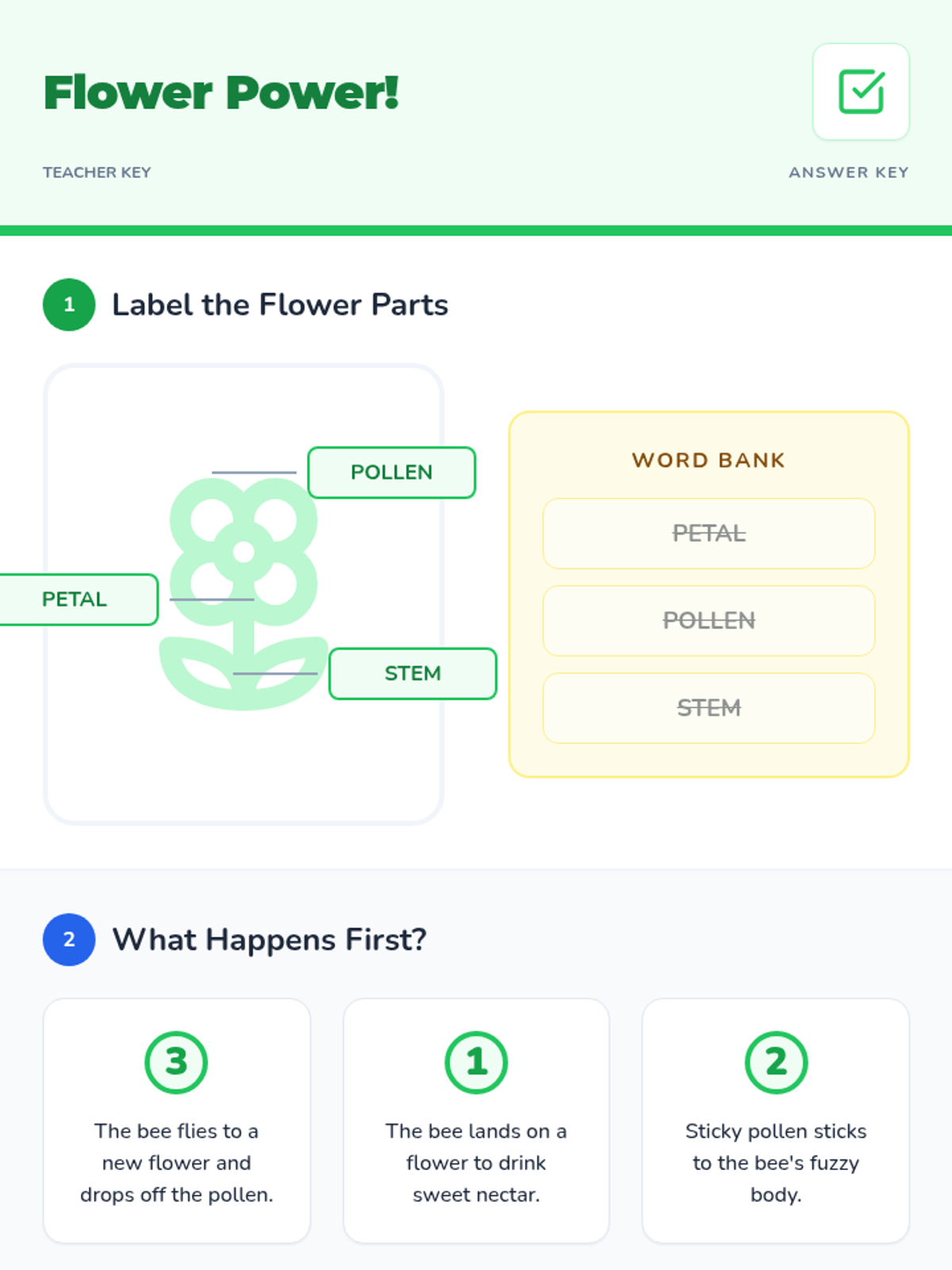
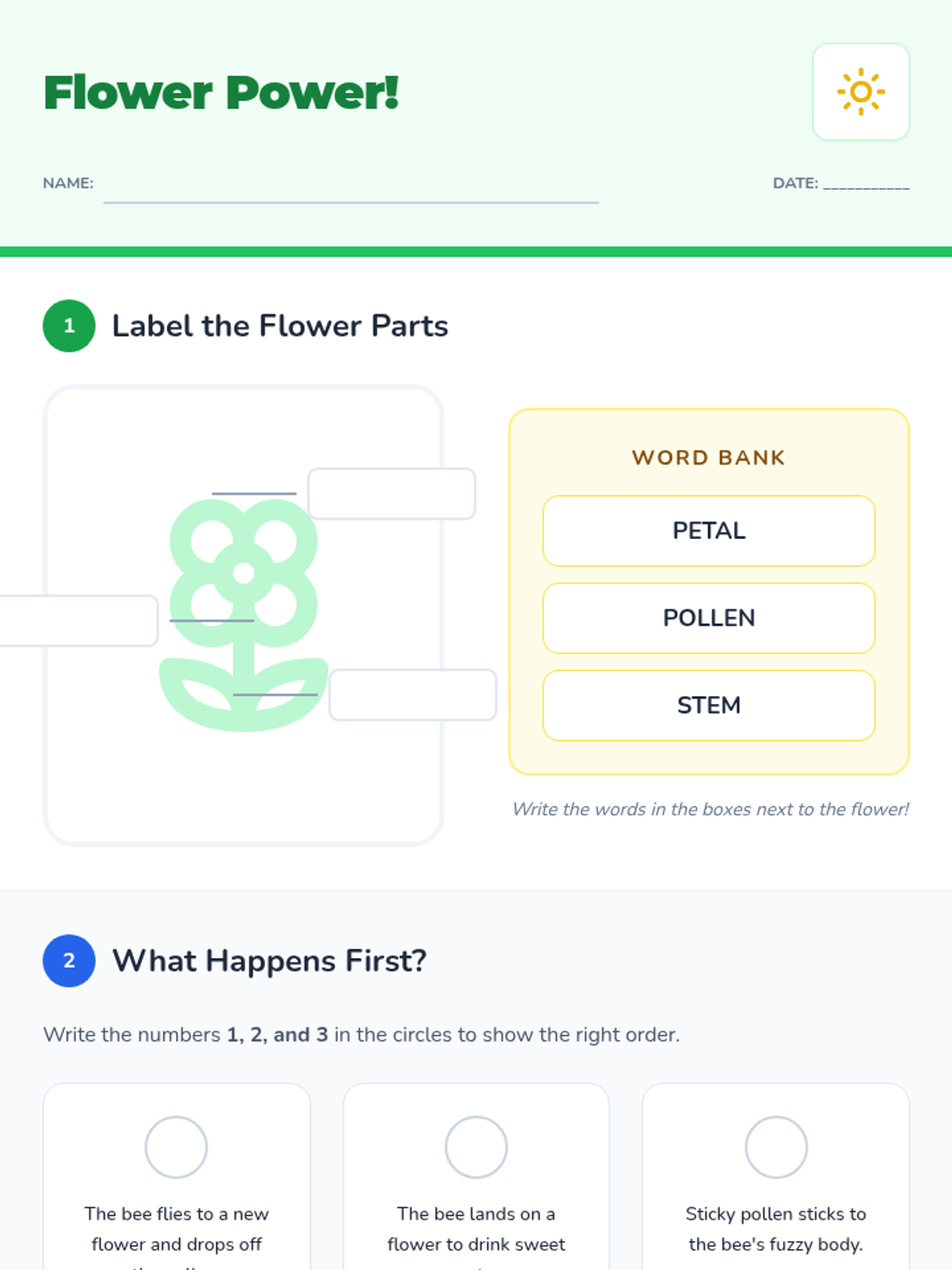
An interactive science lesson for K-3 students exploring the symbiotic relationship between bees and flowering plants through a hands-on pollination simulation.
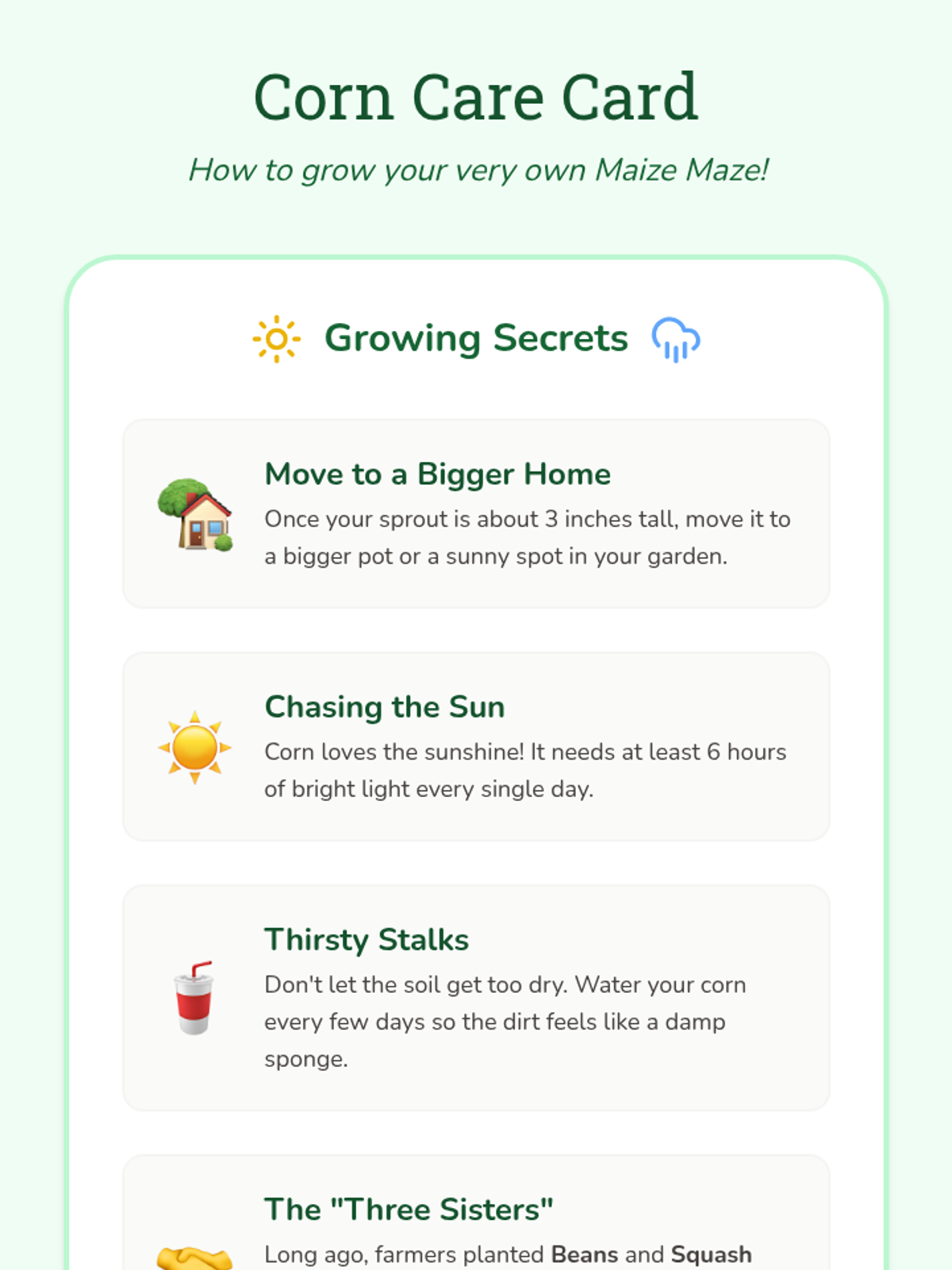
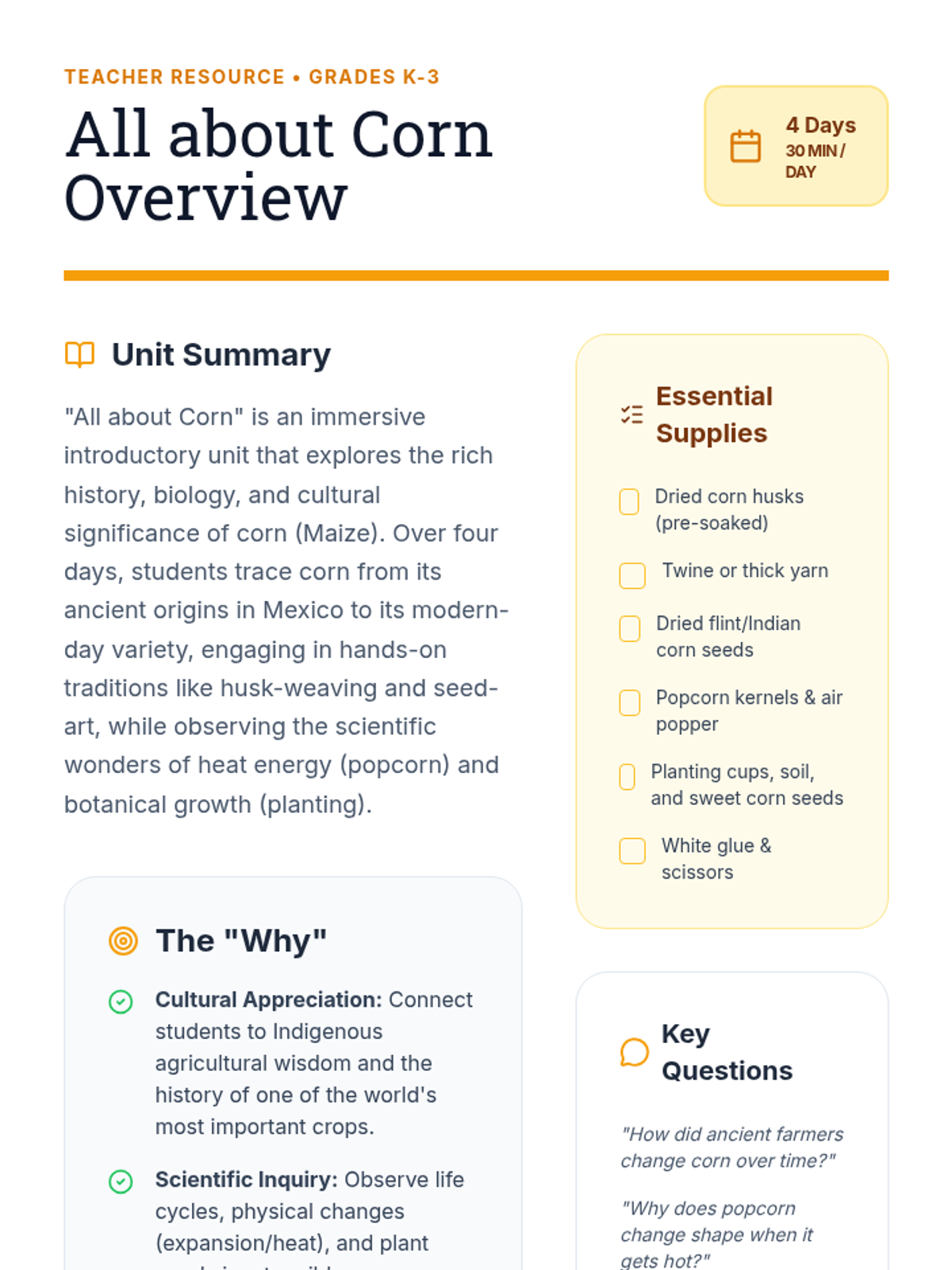
Students learn how to care for a corn plant and finish the unit by planting their own seeds to take home.
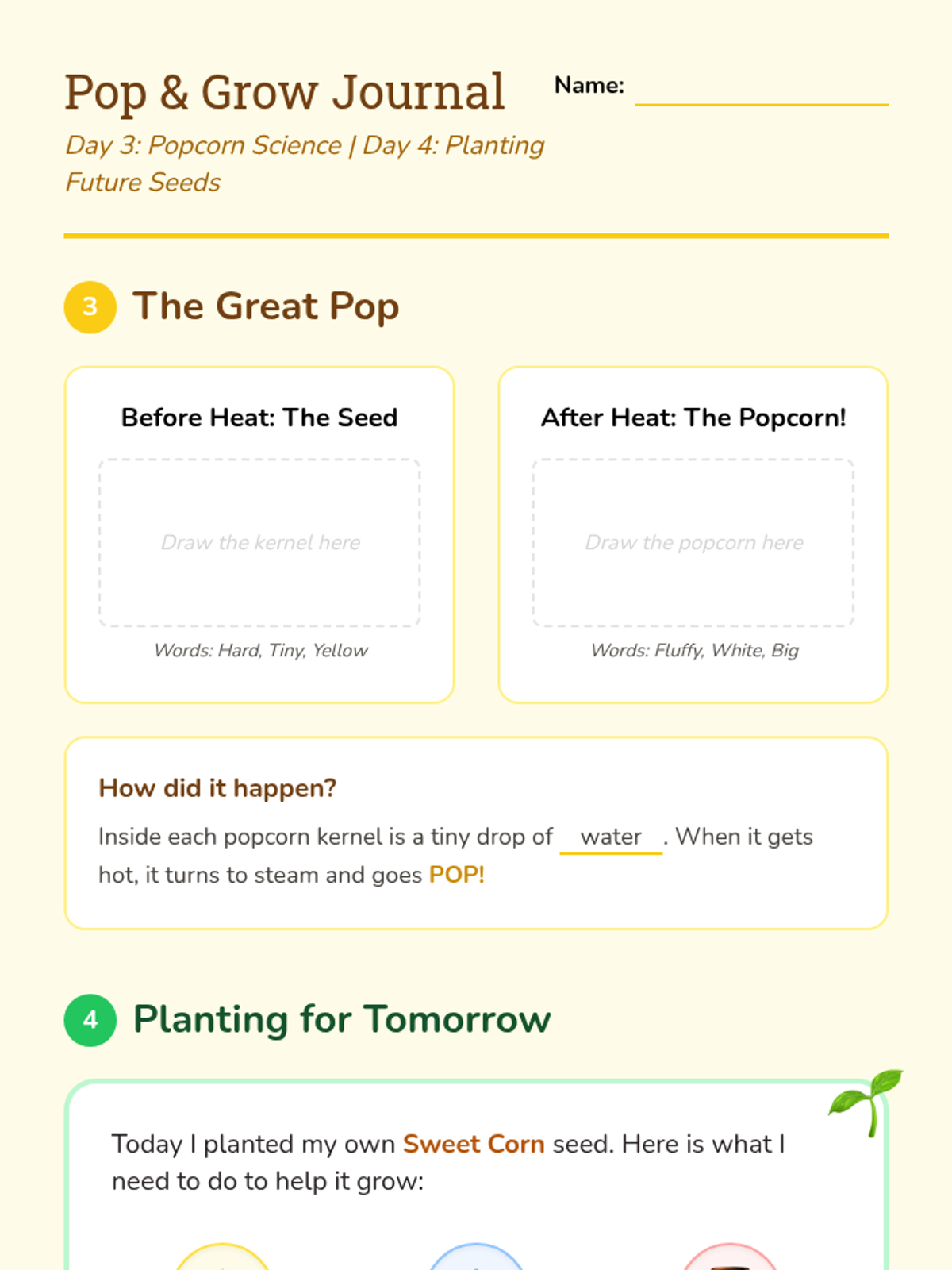
An exploration of how heat transforms corn into popcorn, followed by a classroom popping session.
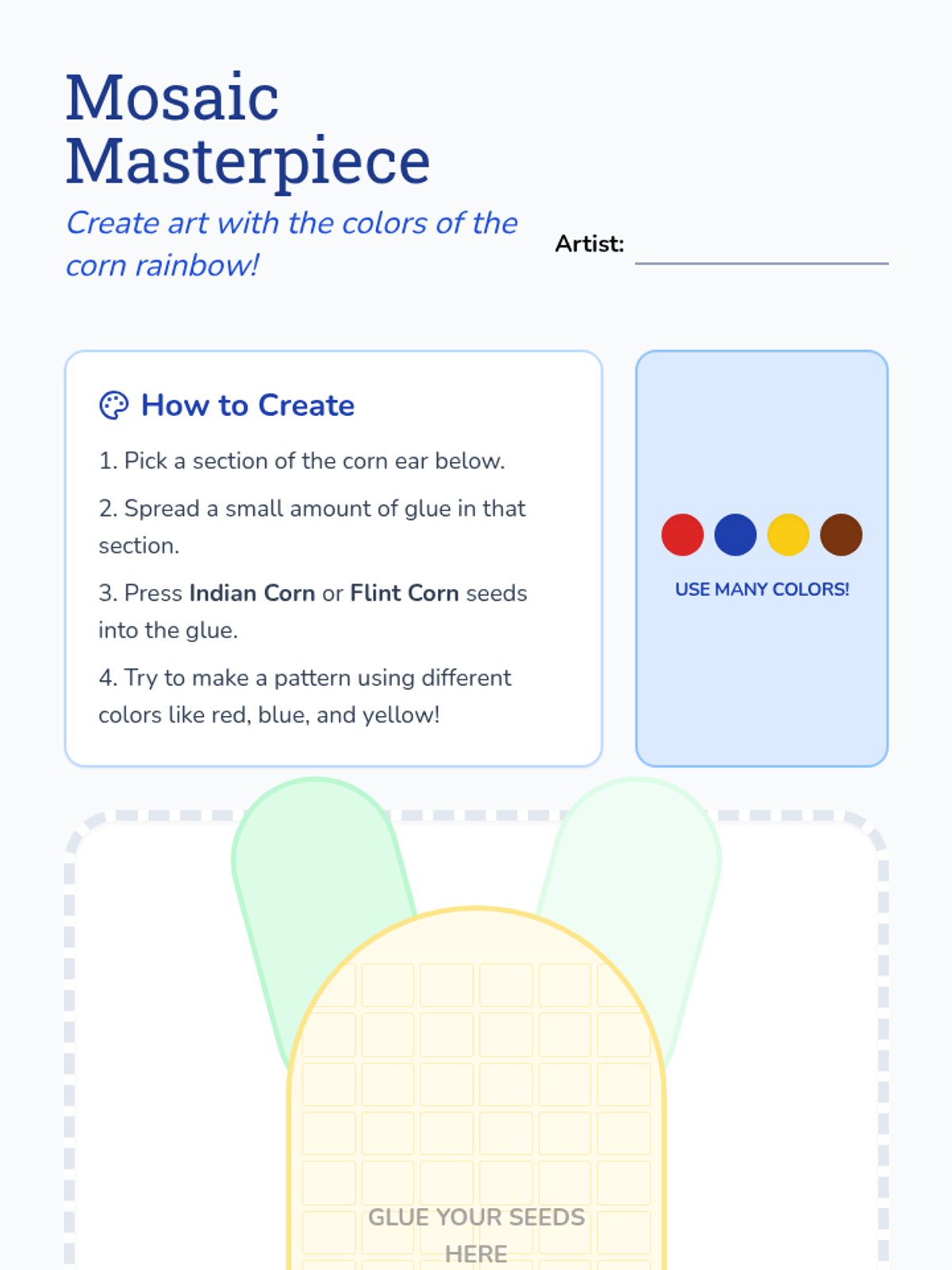
Students explore the different colors and types of corn seeds and create vibrant mosaic art using dried kernels.
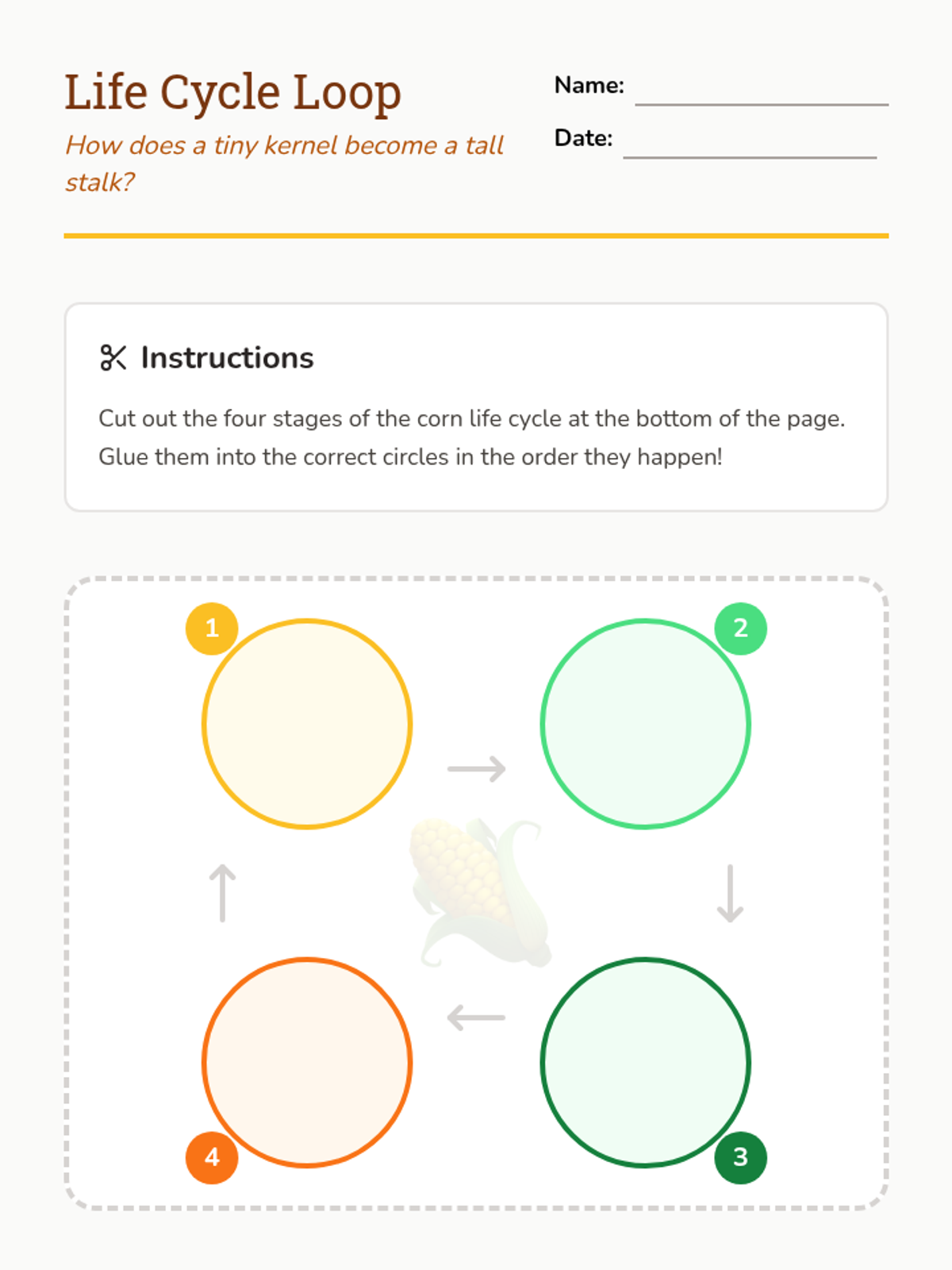
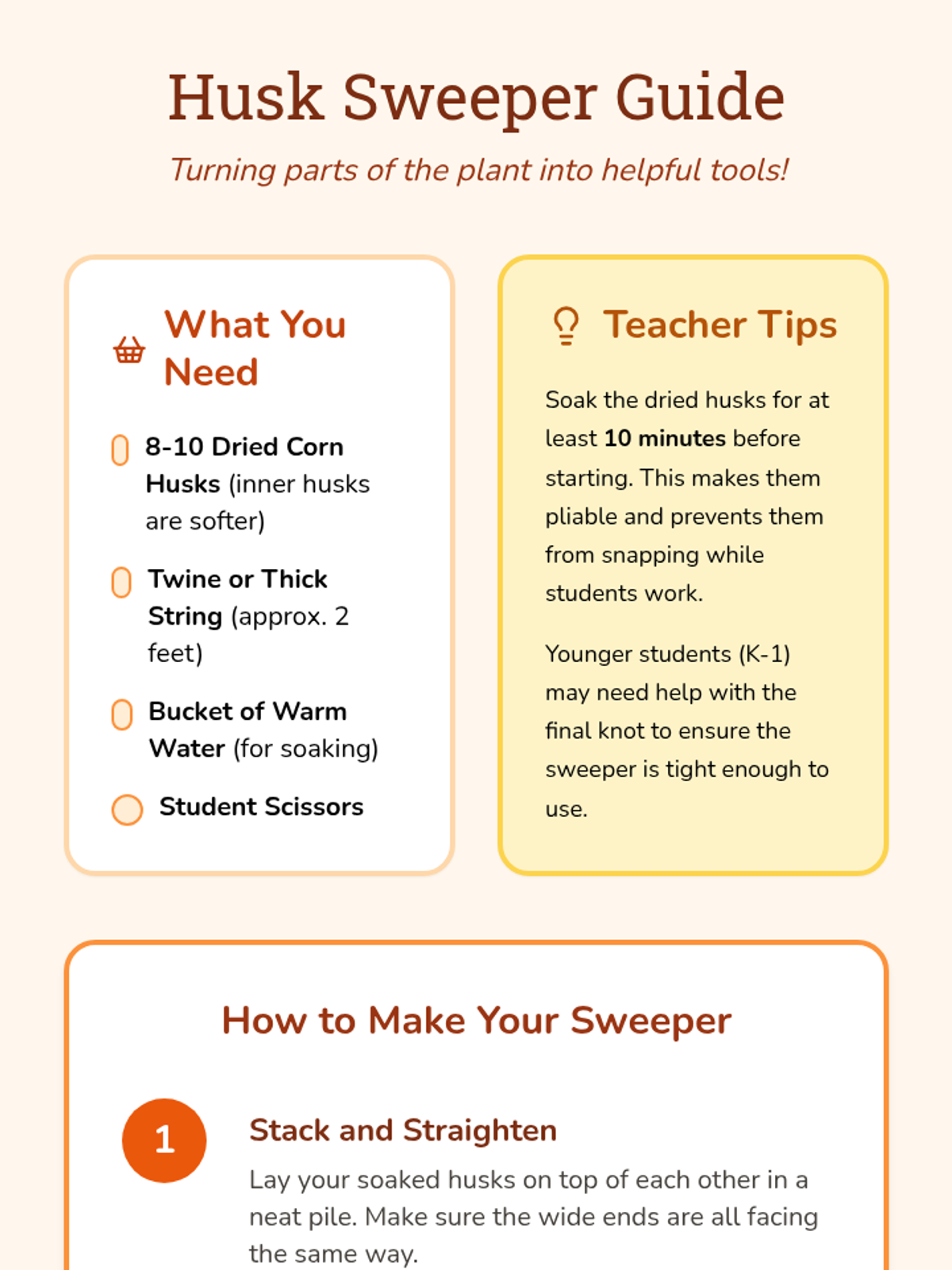
Students discover the history of corn (Maize) and its life cycle before creating traditional hand sweepers from corn husks.
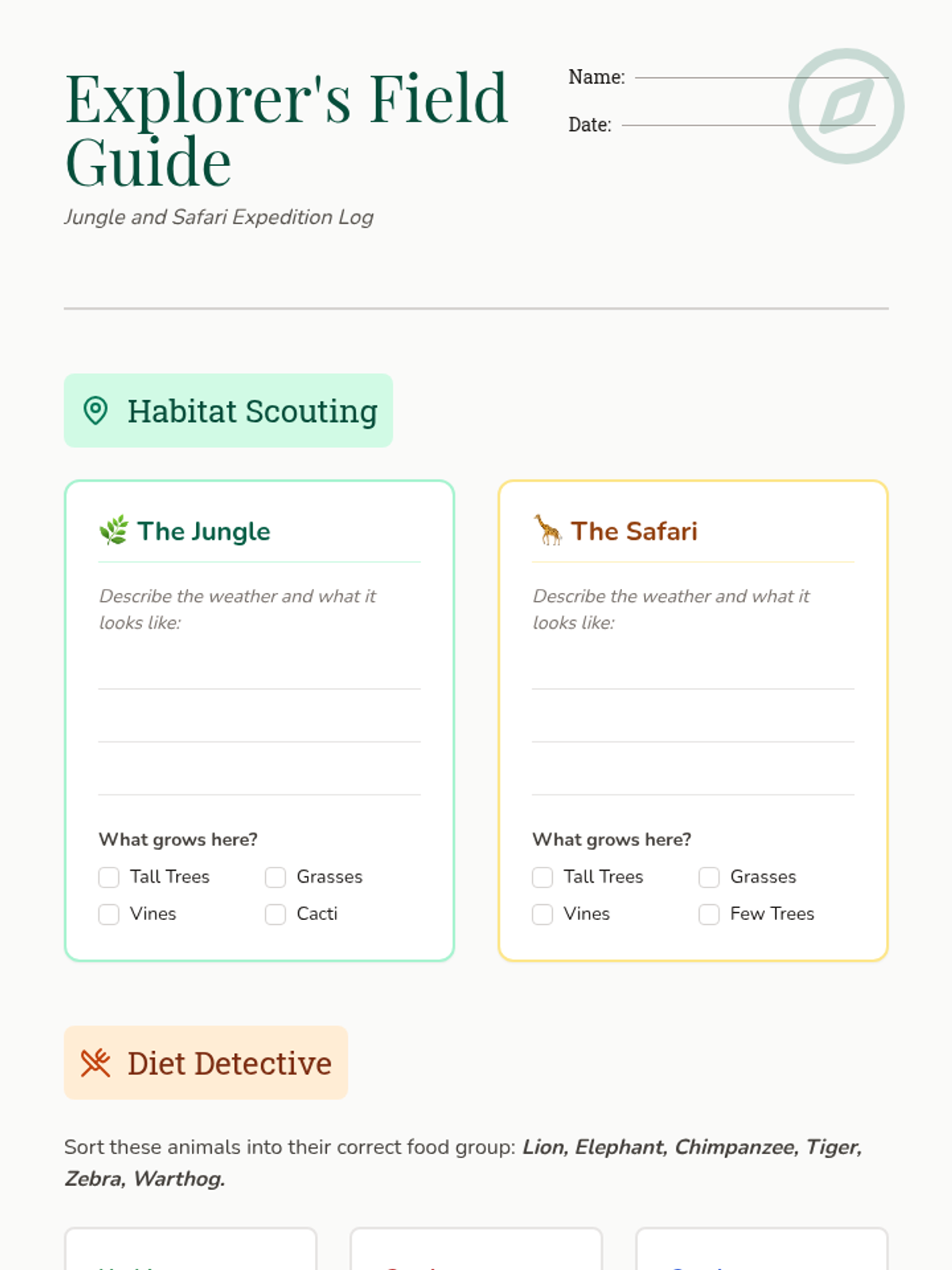
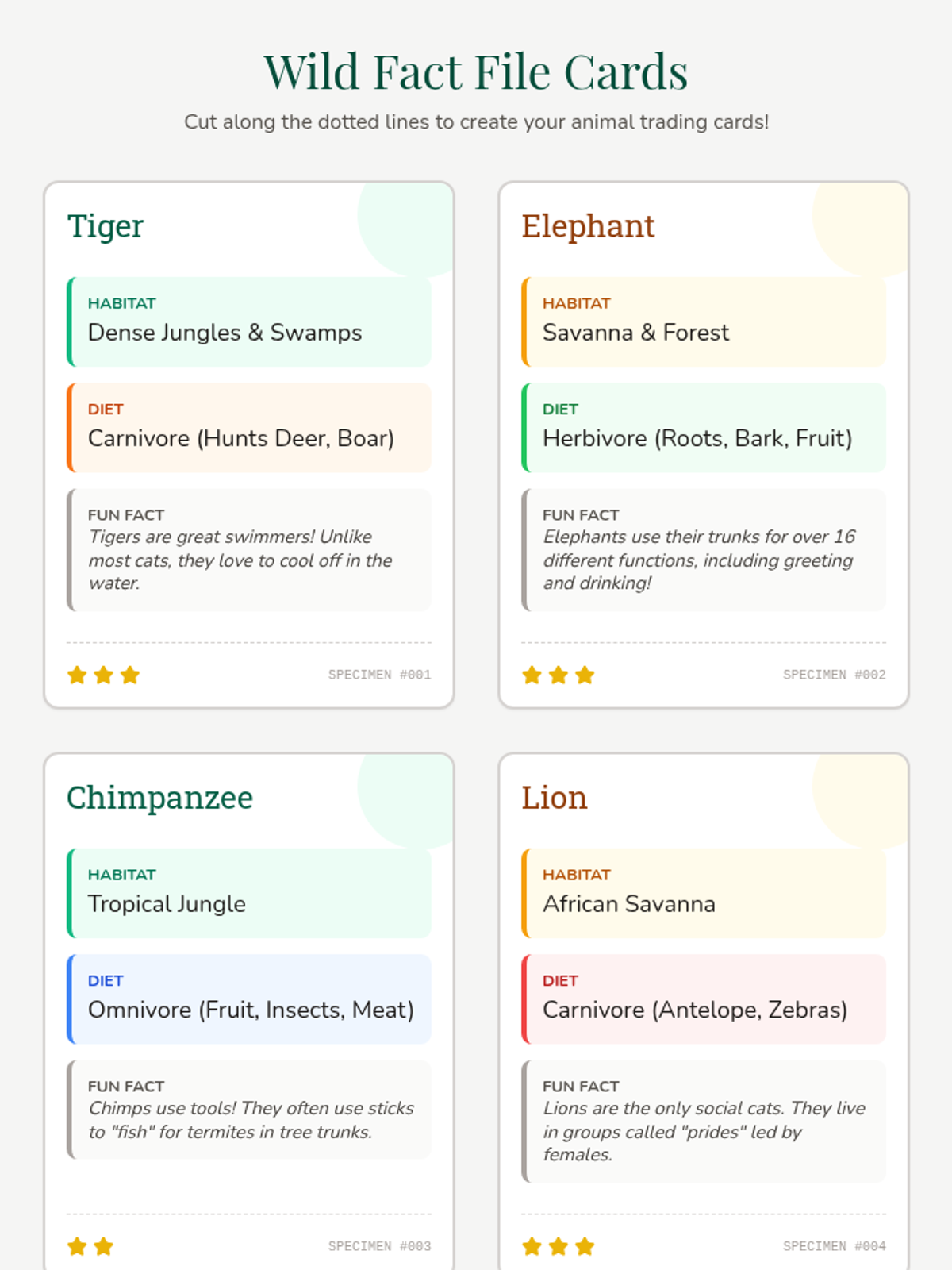
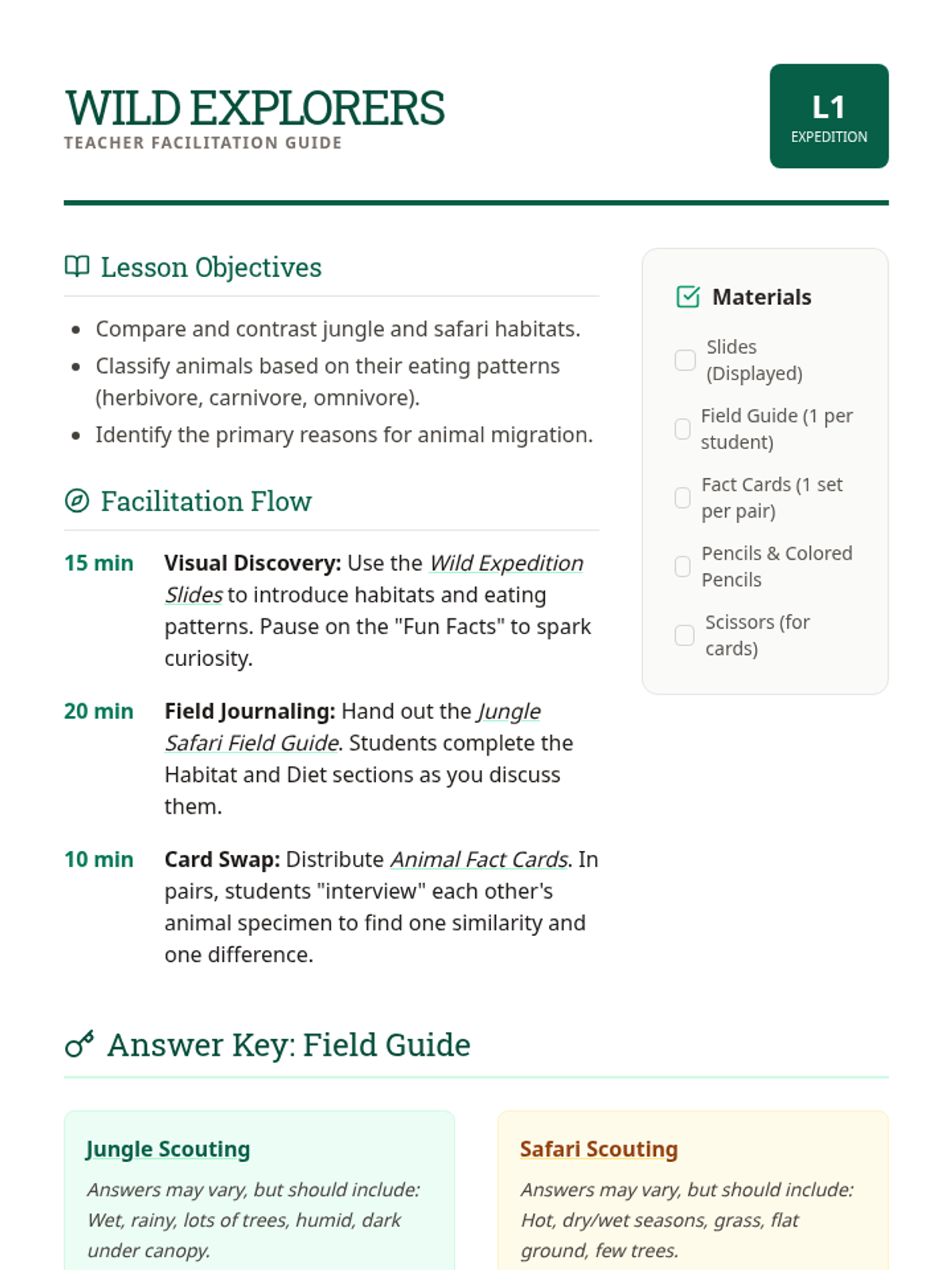
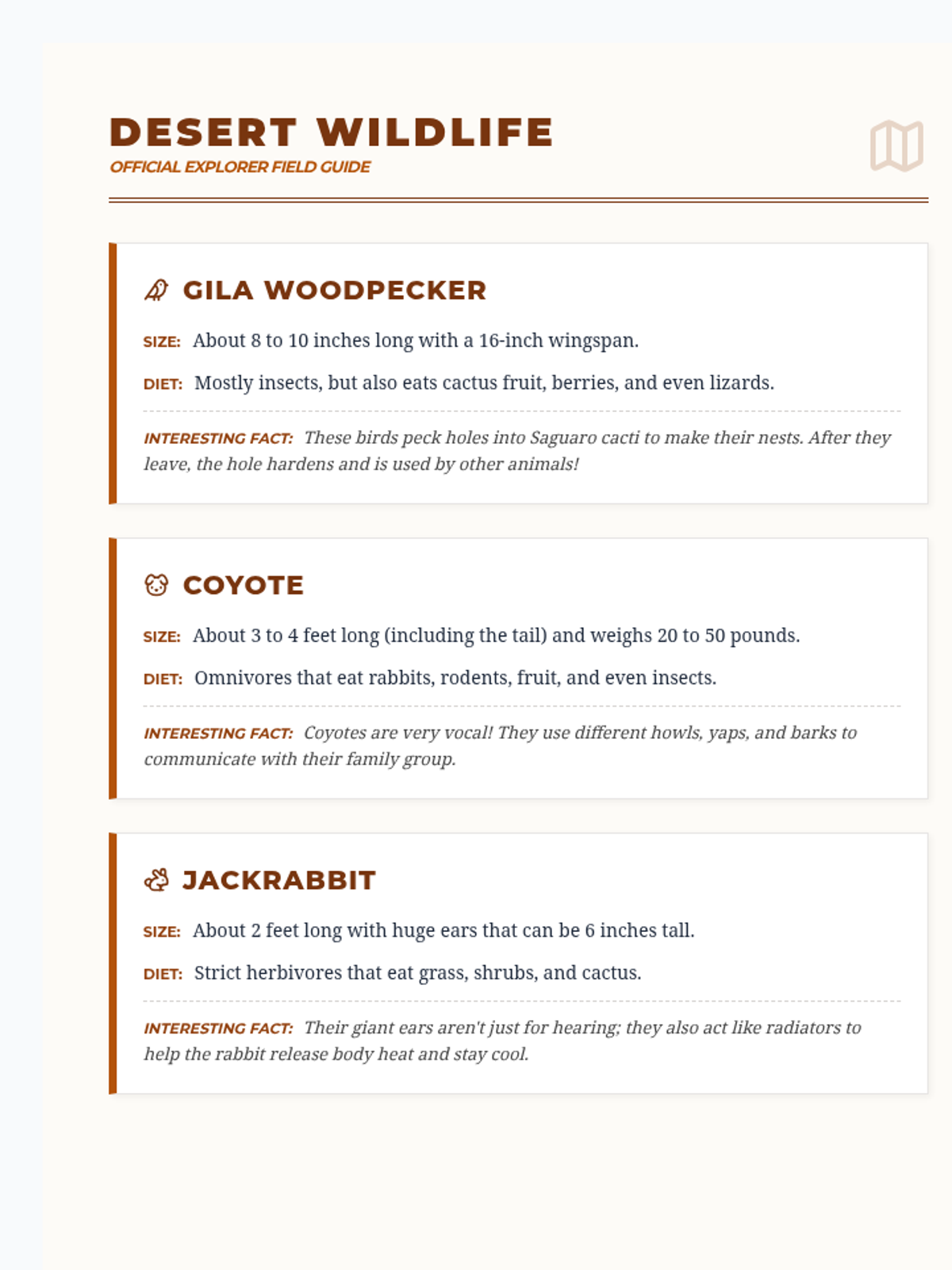
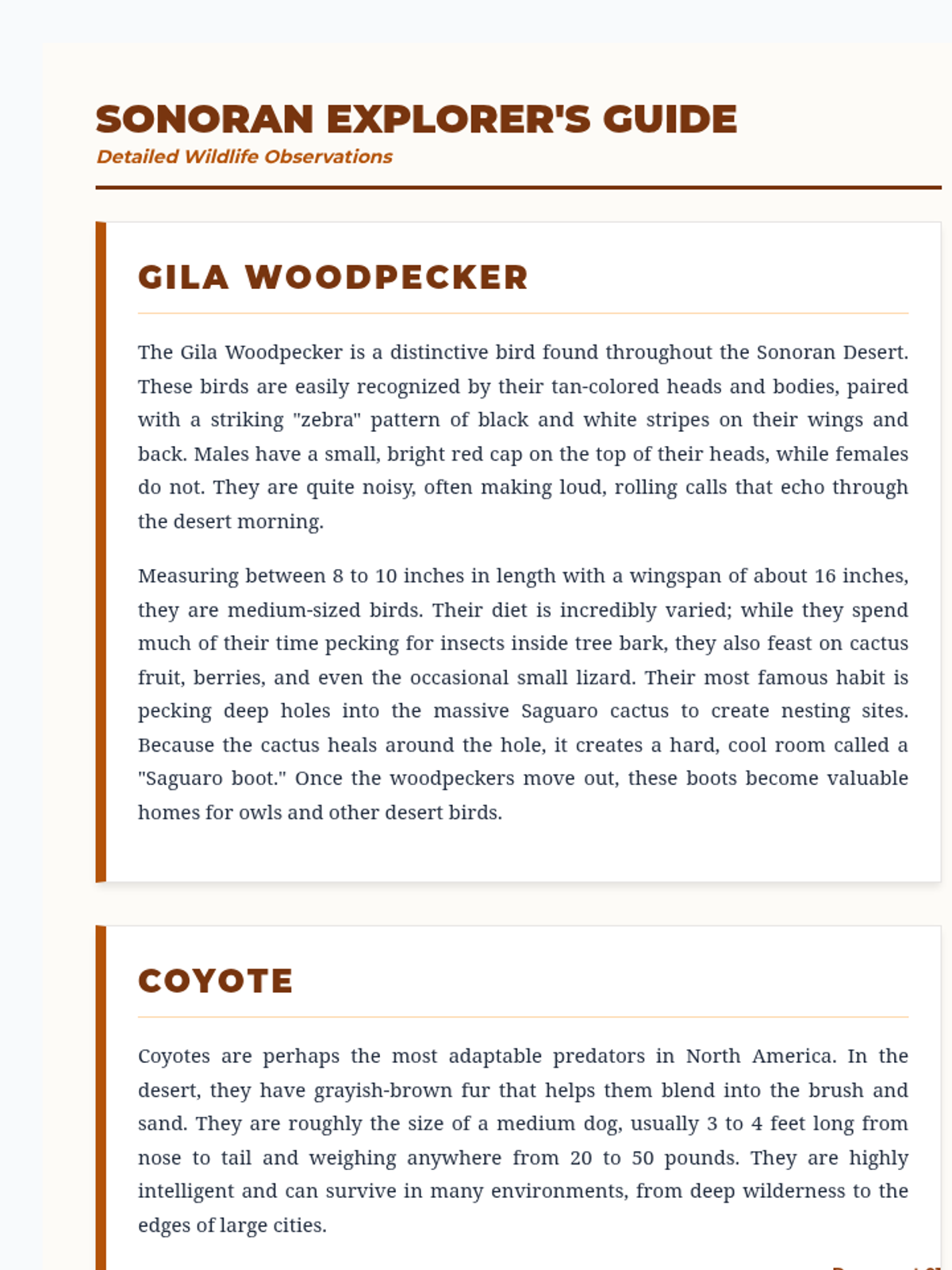
A deep dive into the lives of jungle and safari animals, comparing their environments, diets, and amazing natural behaviors.
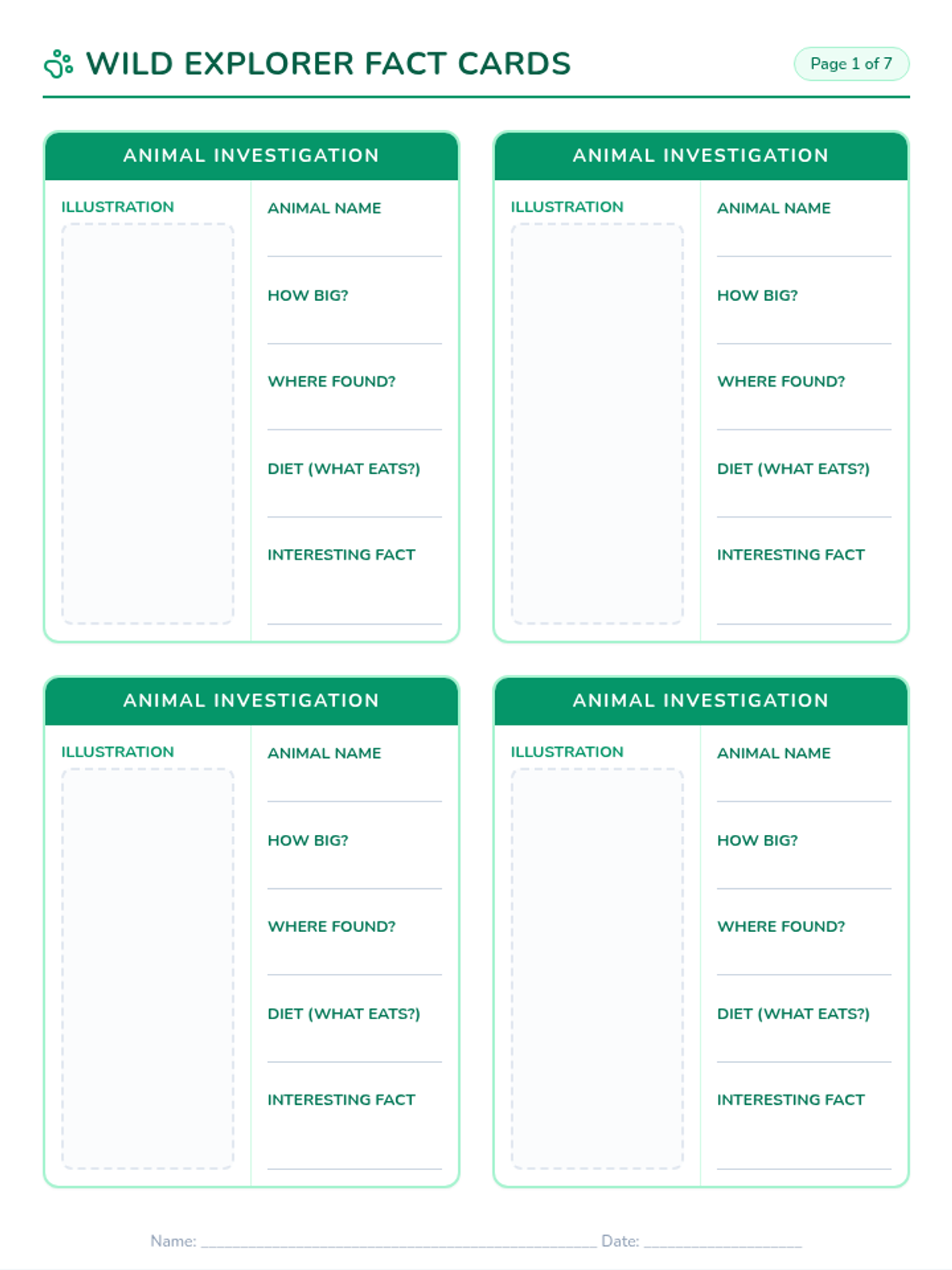
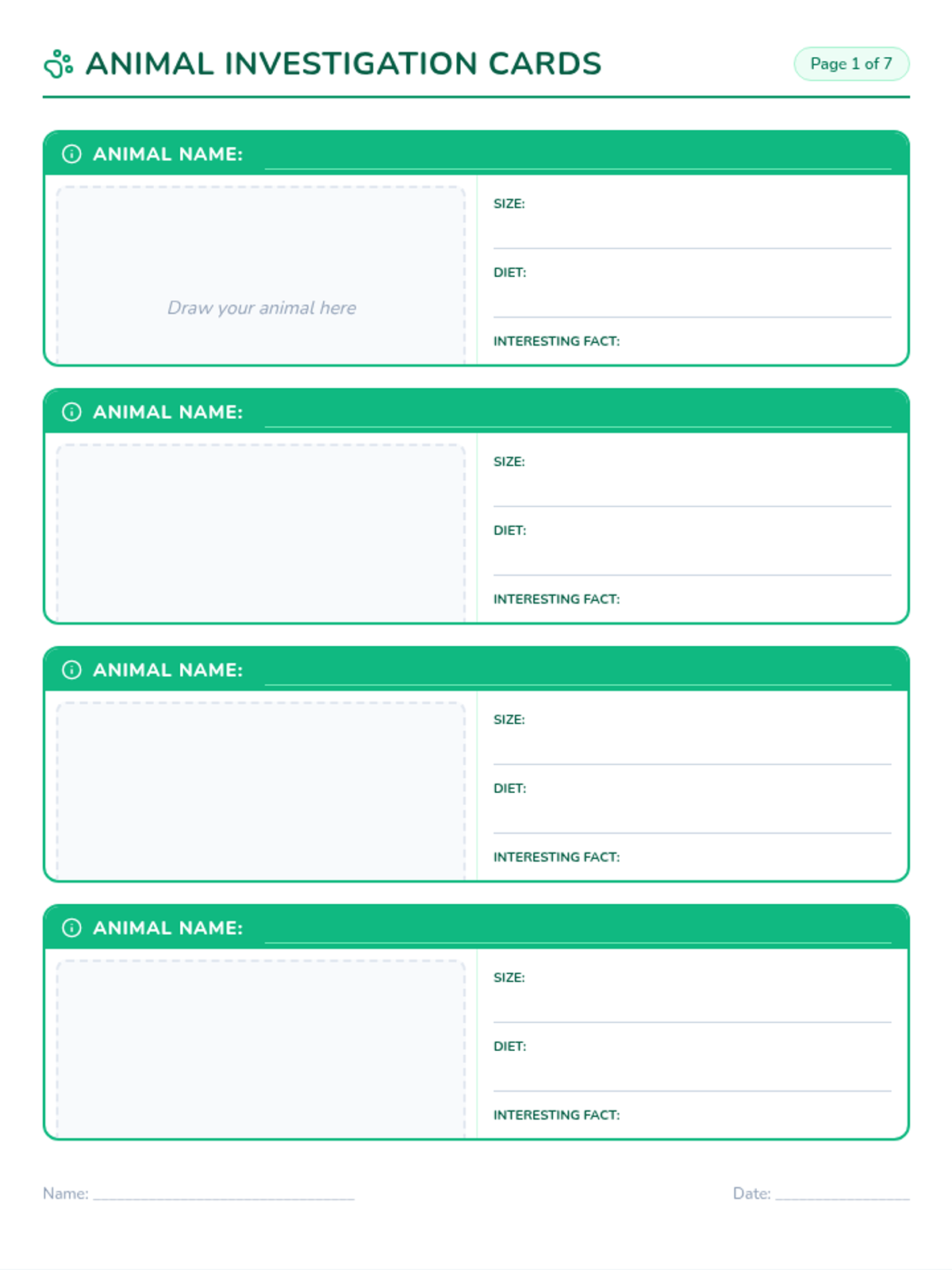
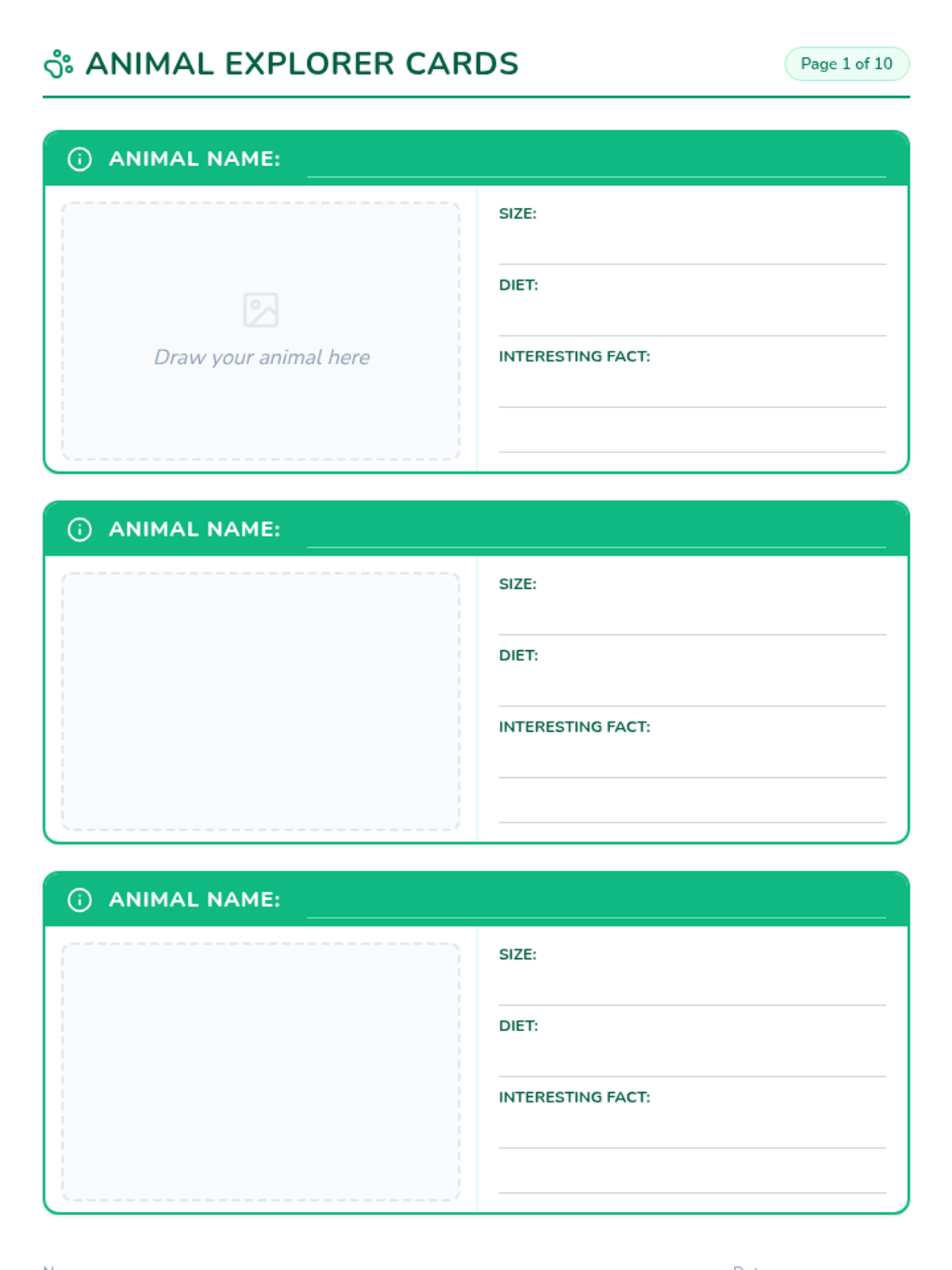
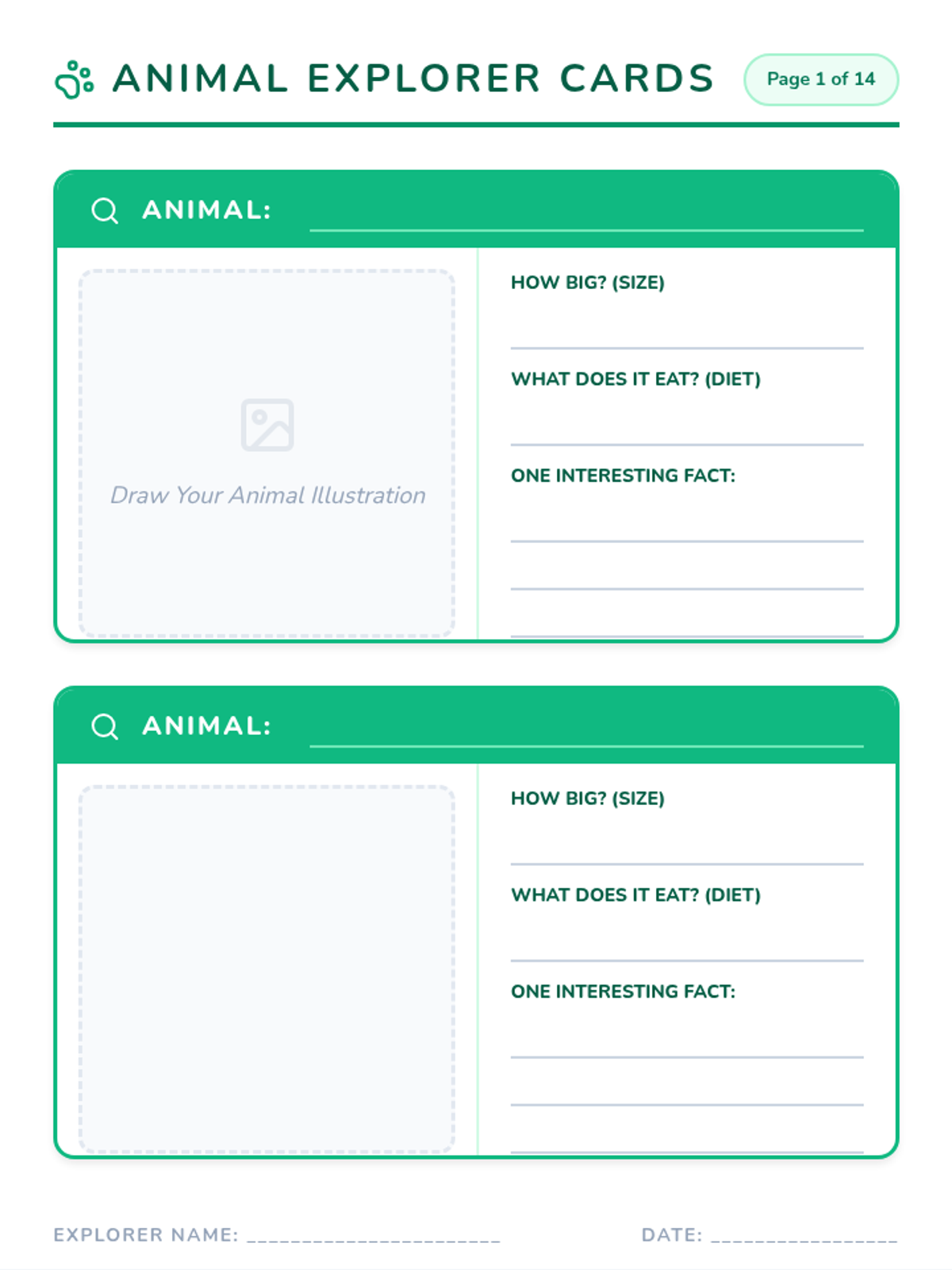
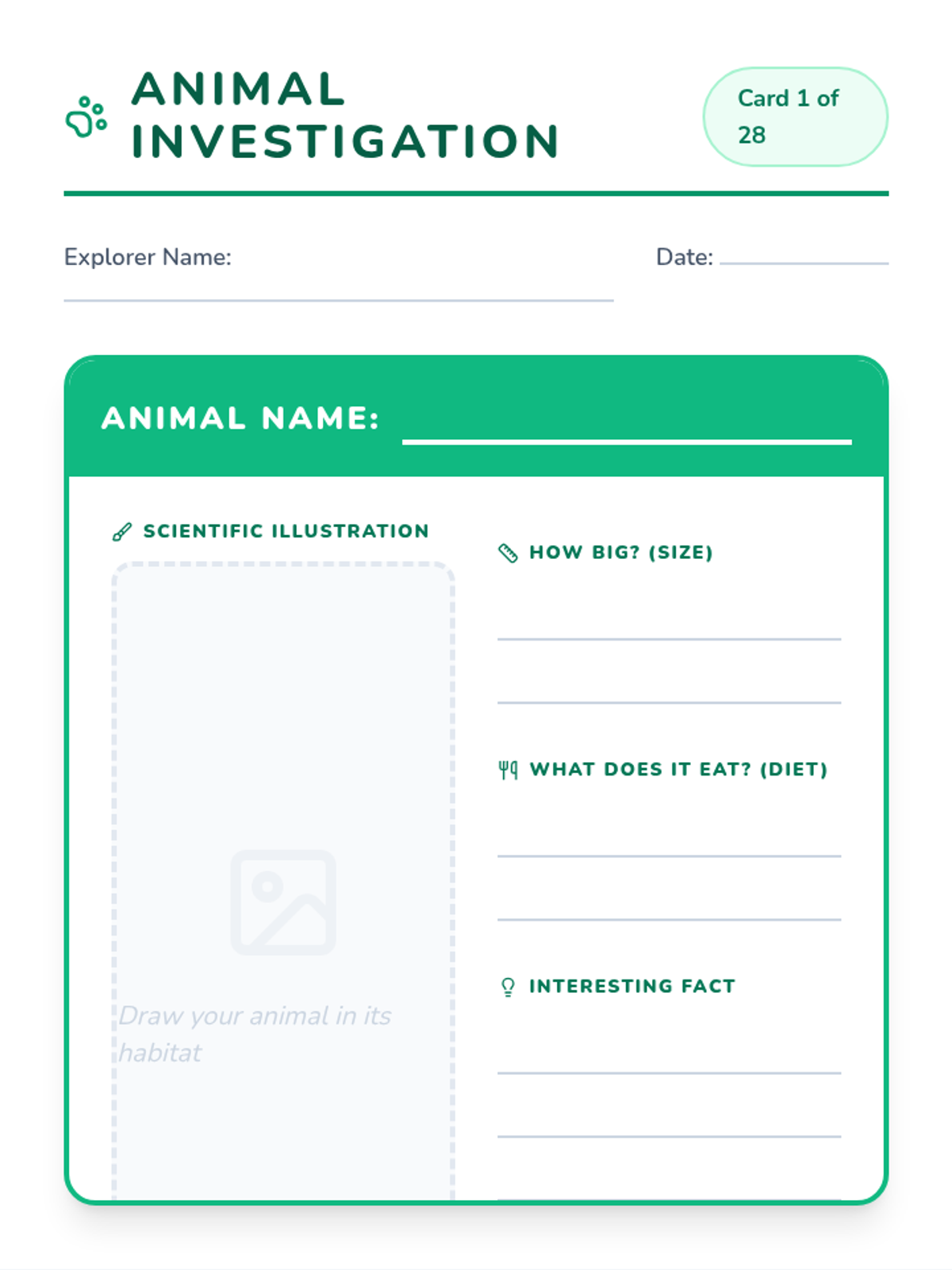
A set of printable note cards for students to research and illustrate different animals, focusing on habitat, diet, size, and interesting facts.
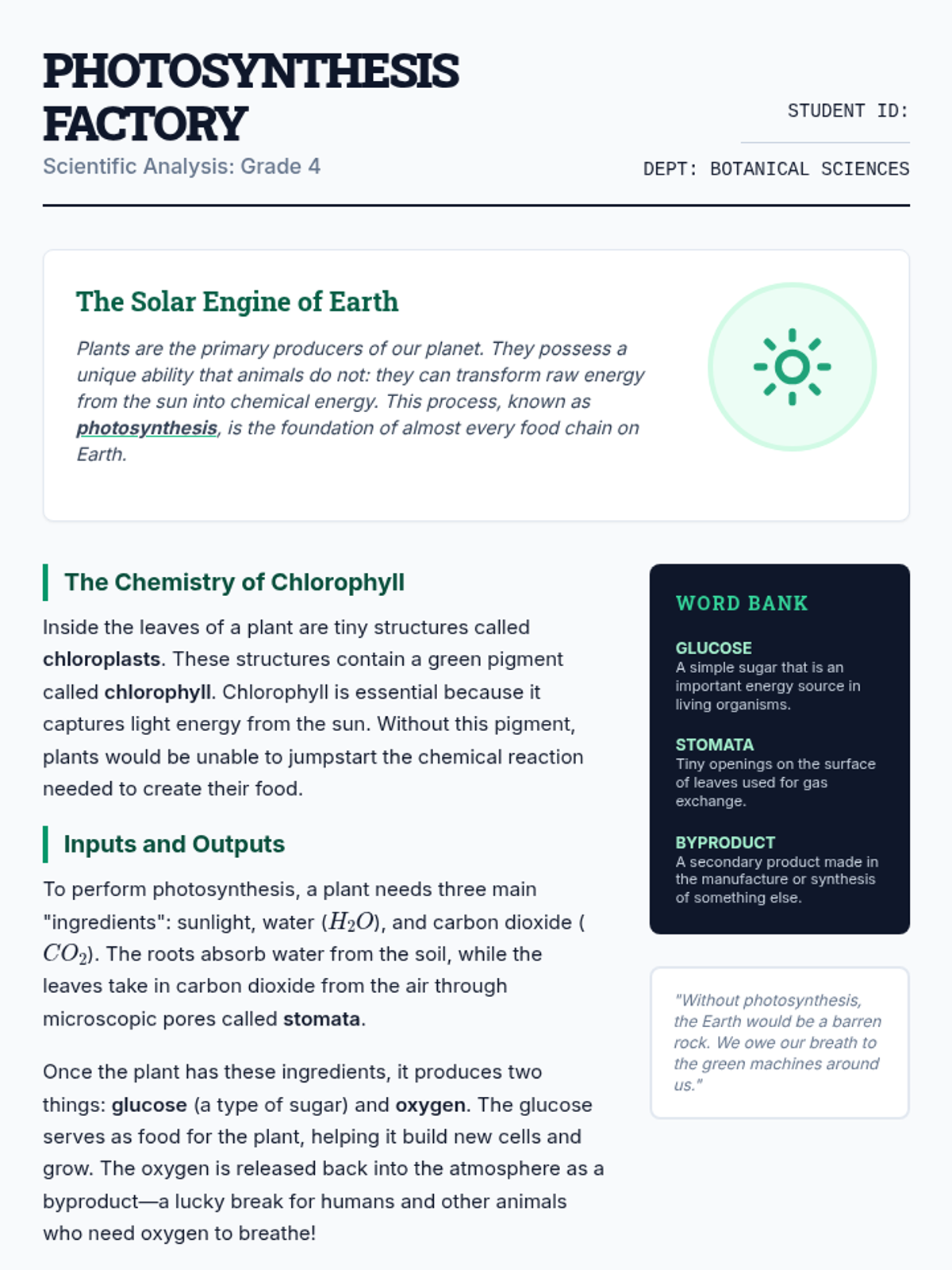
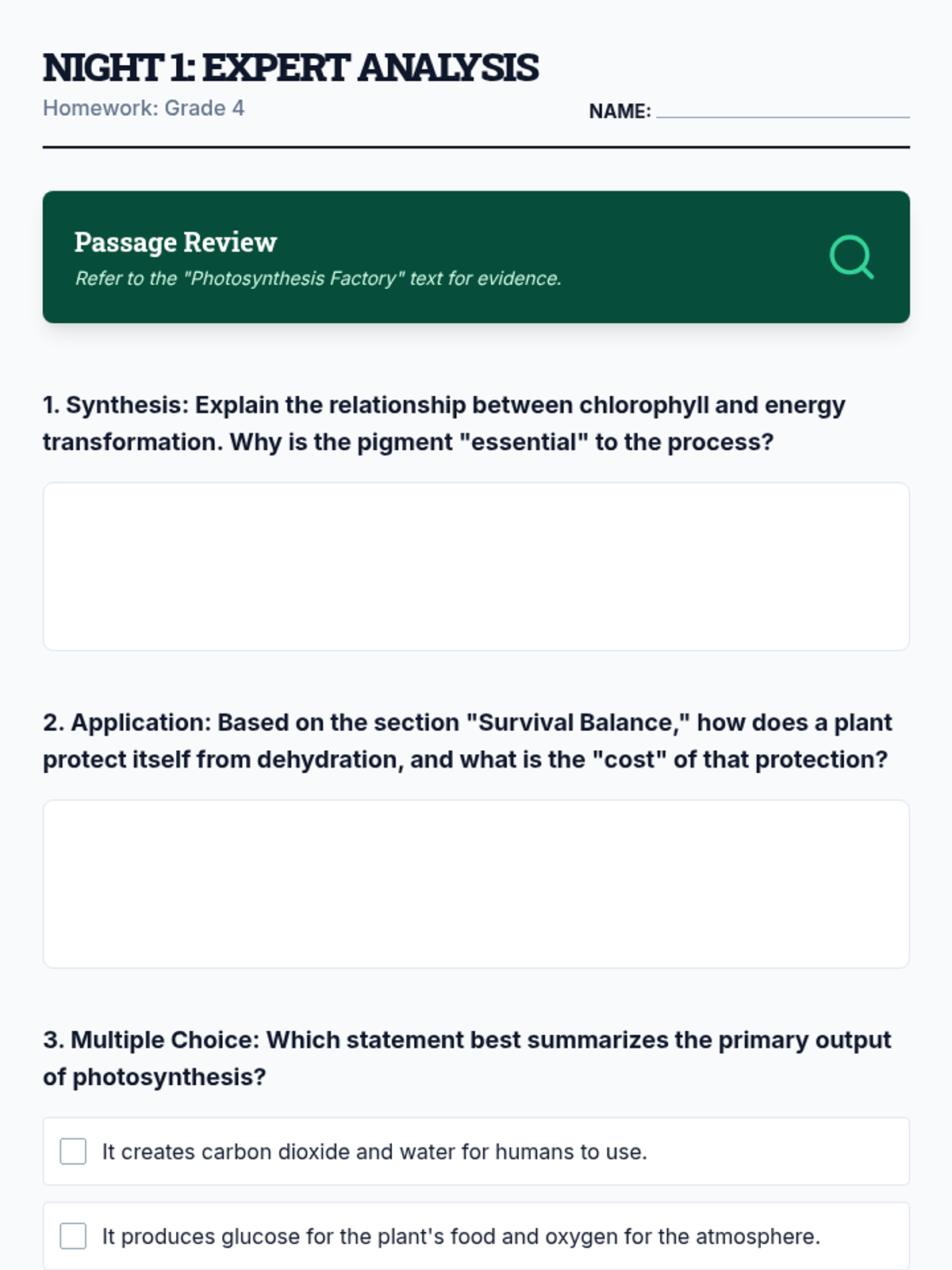
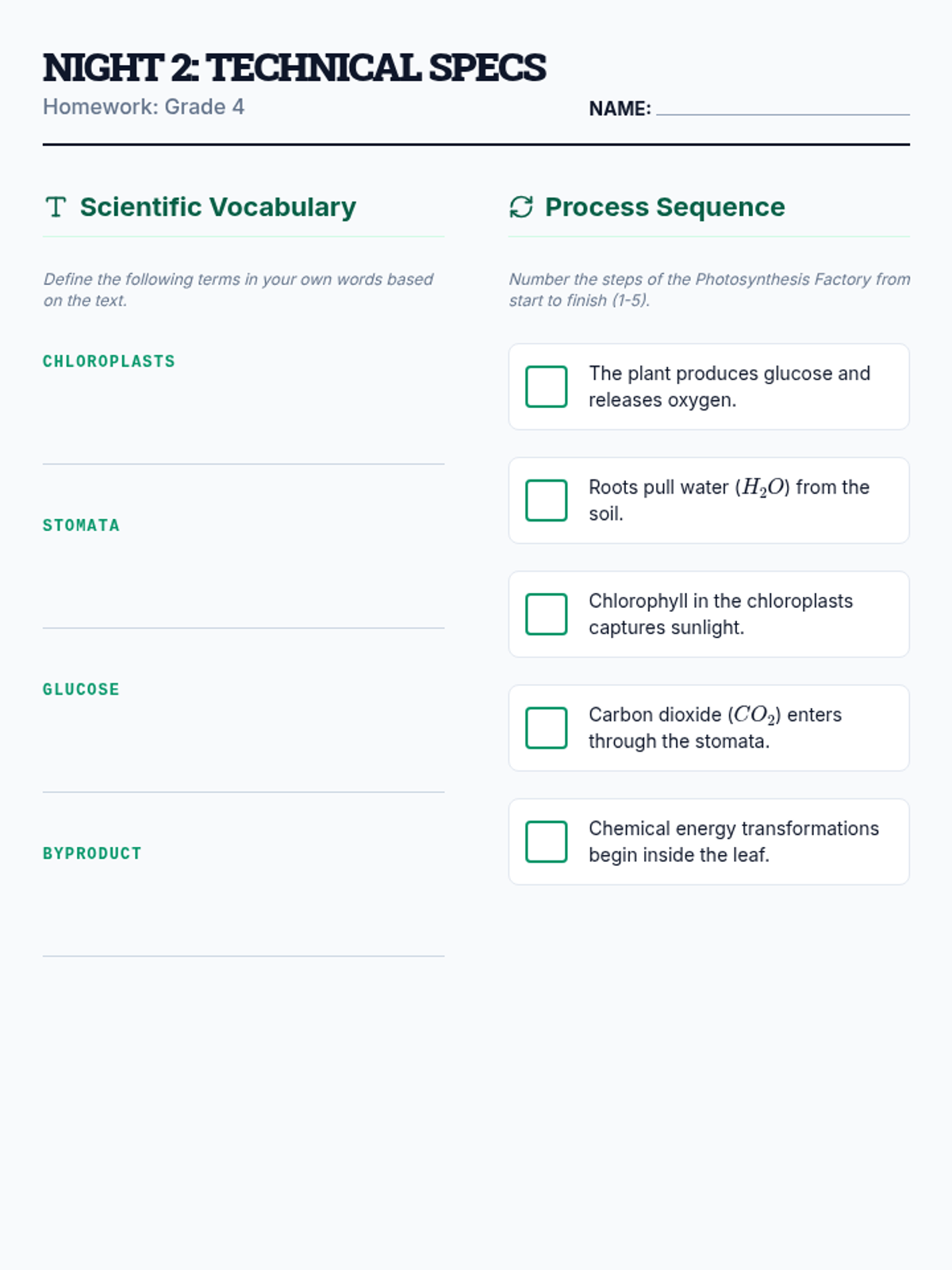
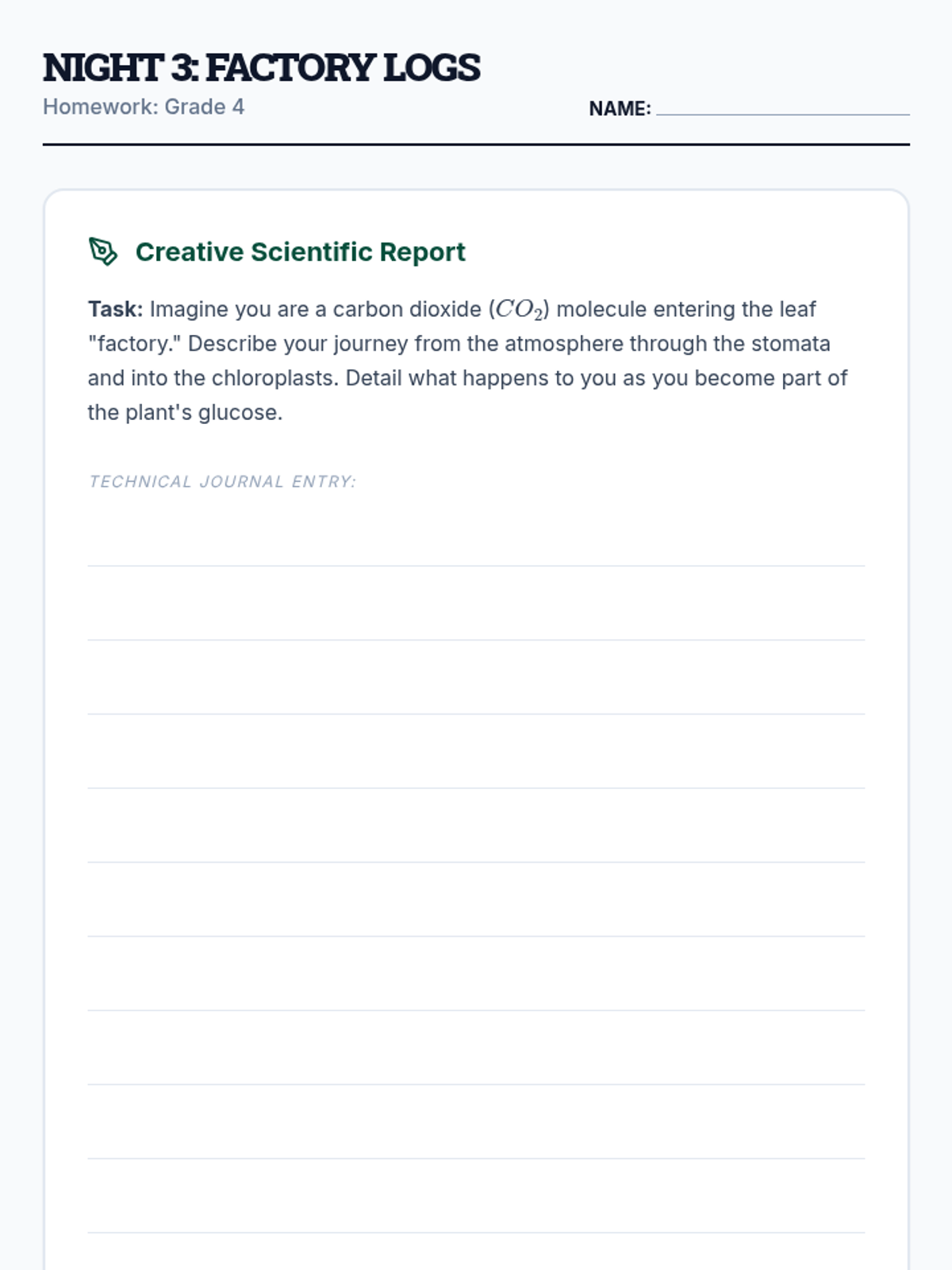
Advanced reading on photosynthesis and plant biology for 4th grade students.
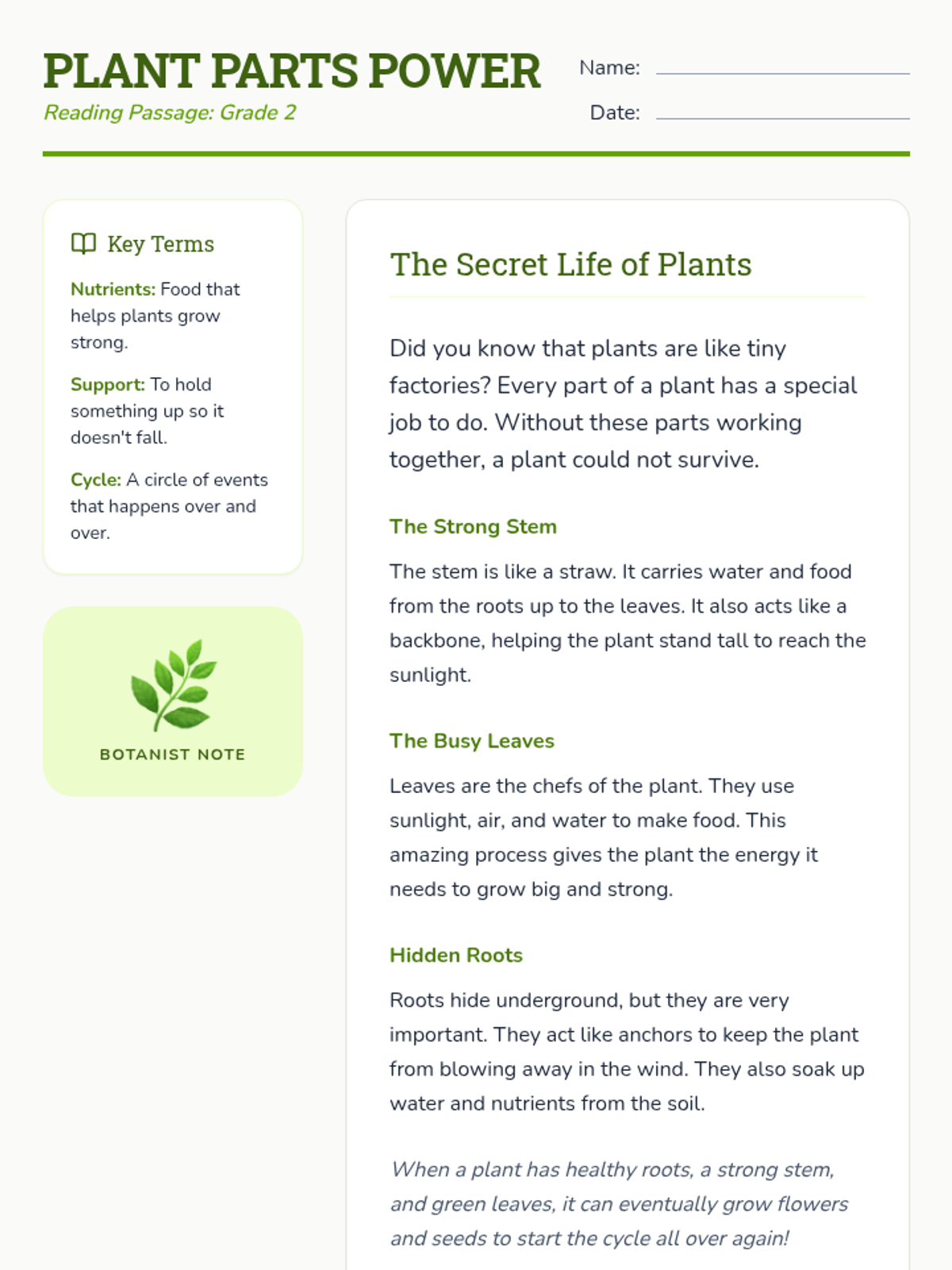
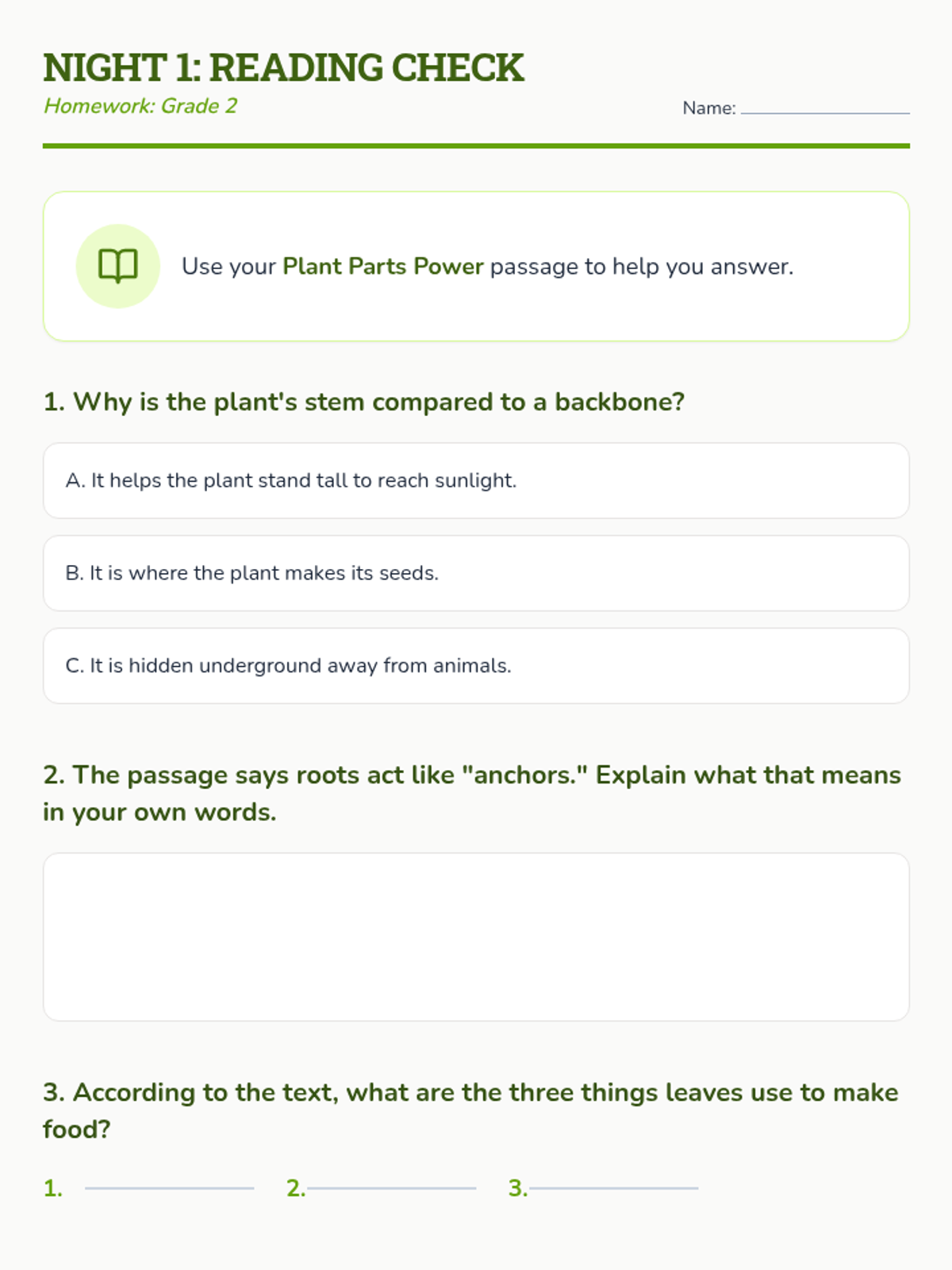
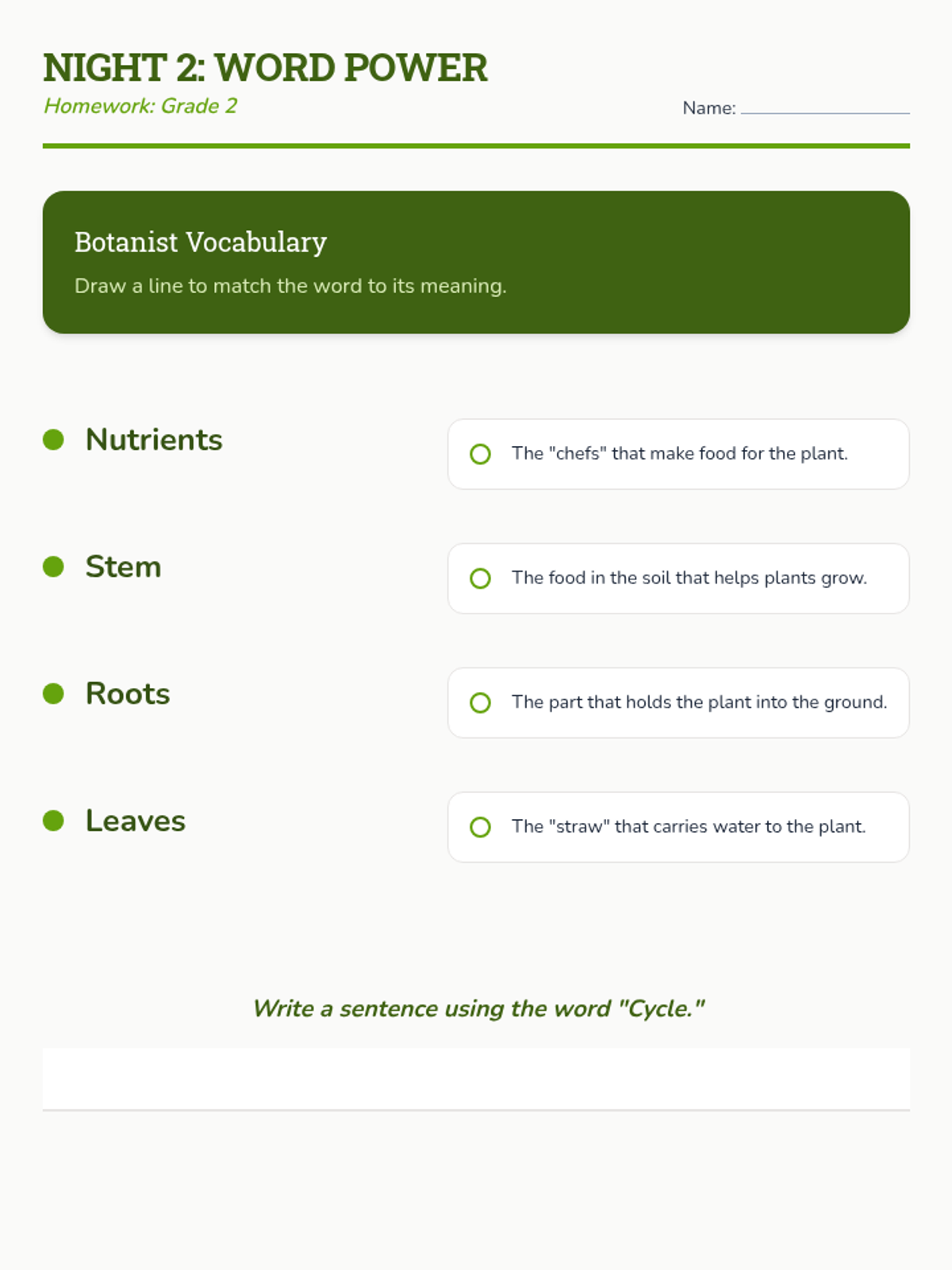
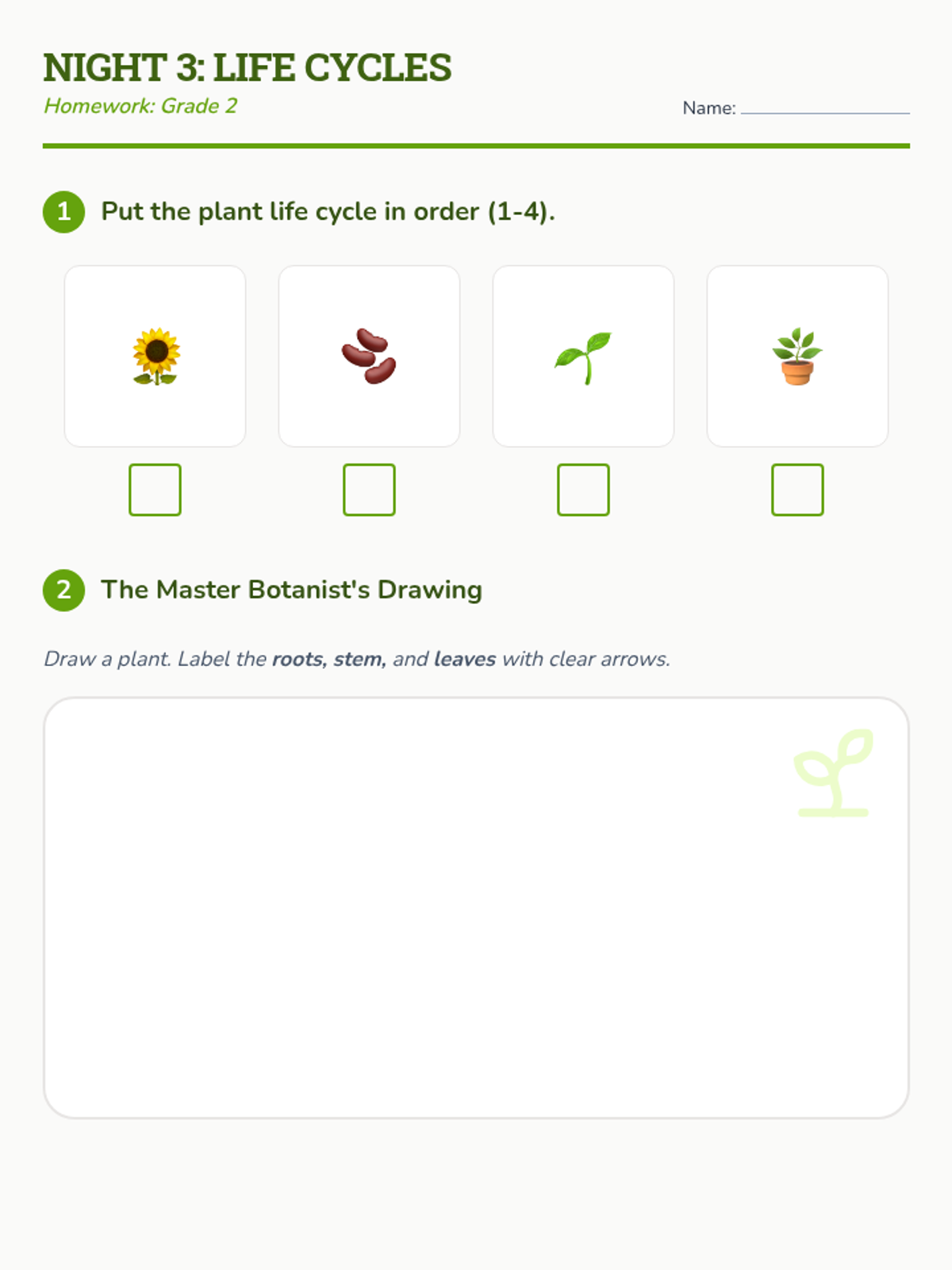
A more detailed exploration of plant parts and their functions for 2nd grade students.
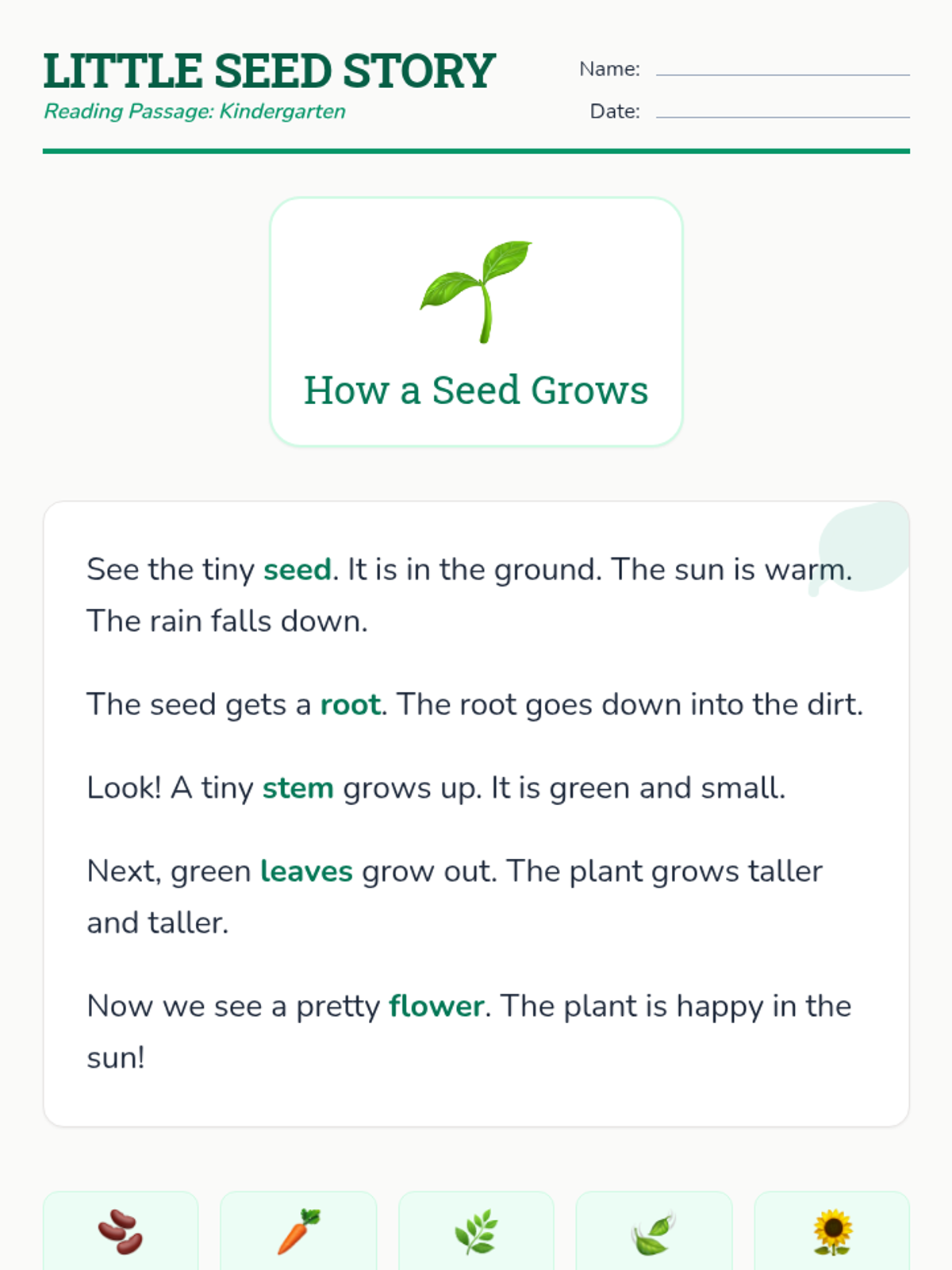
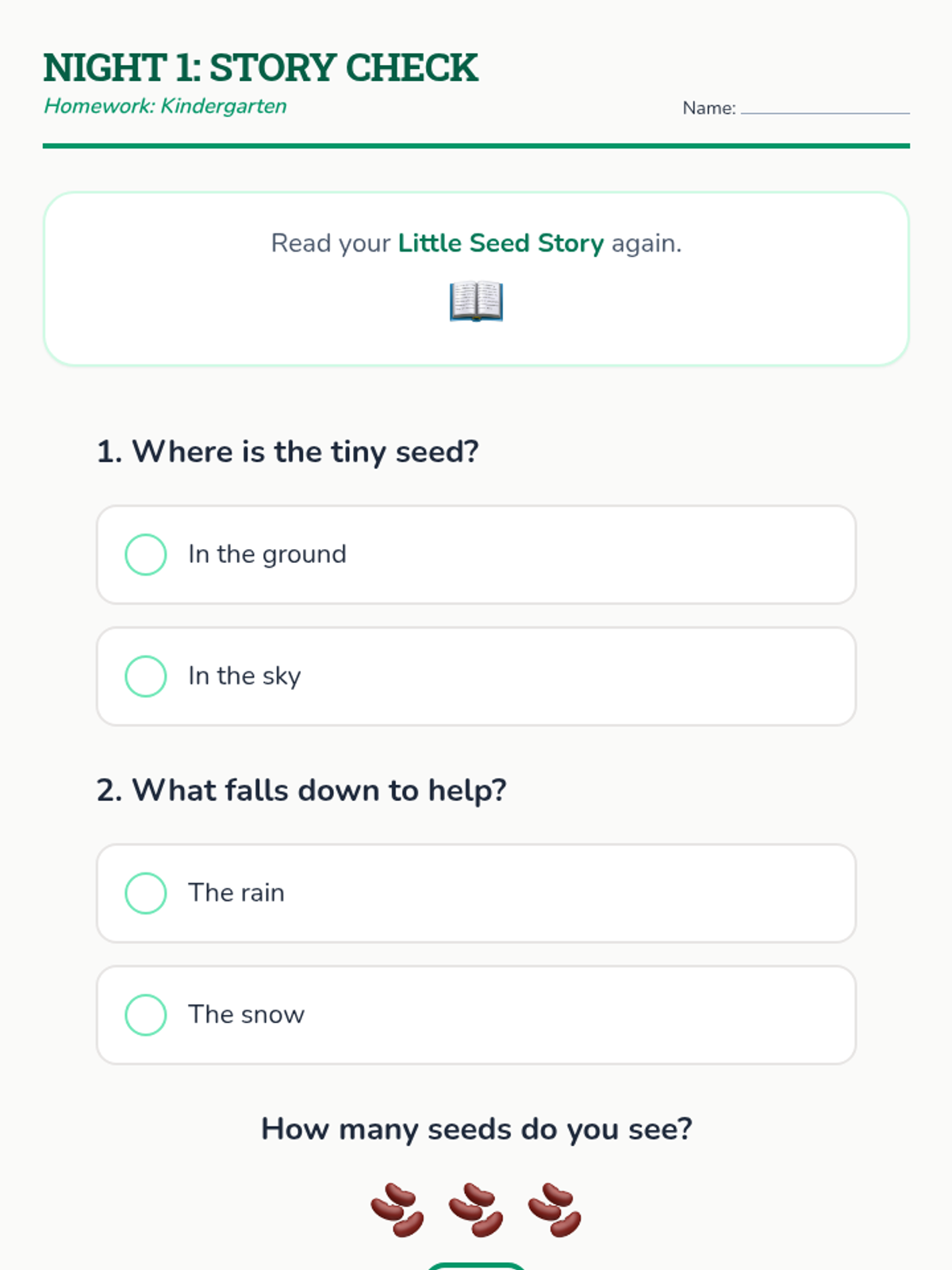
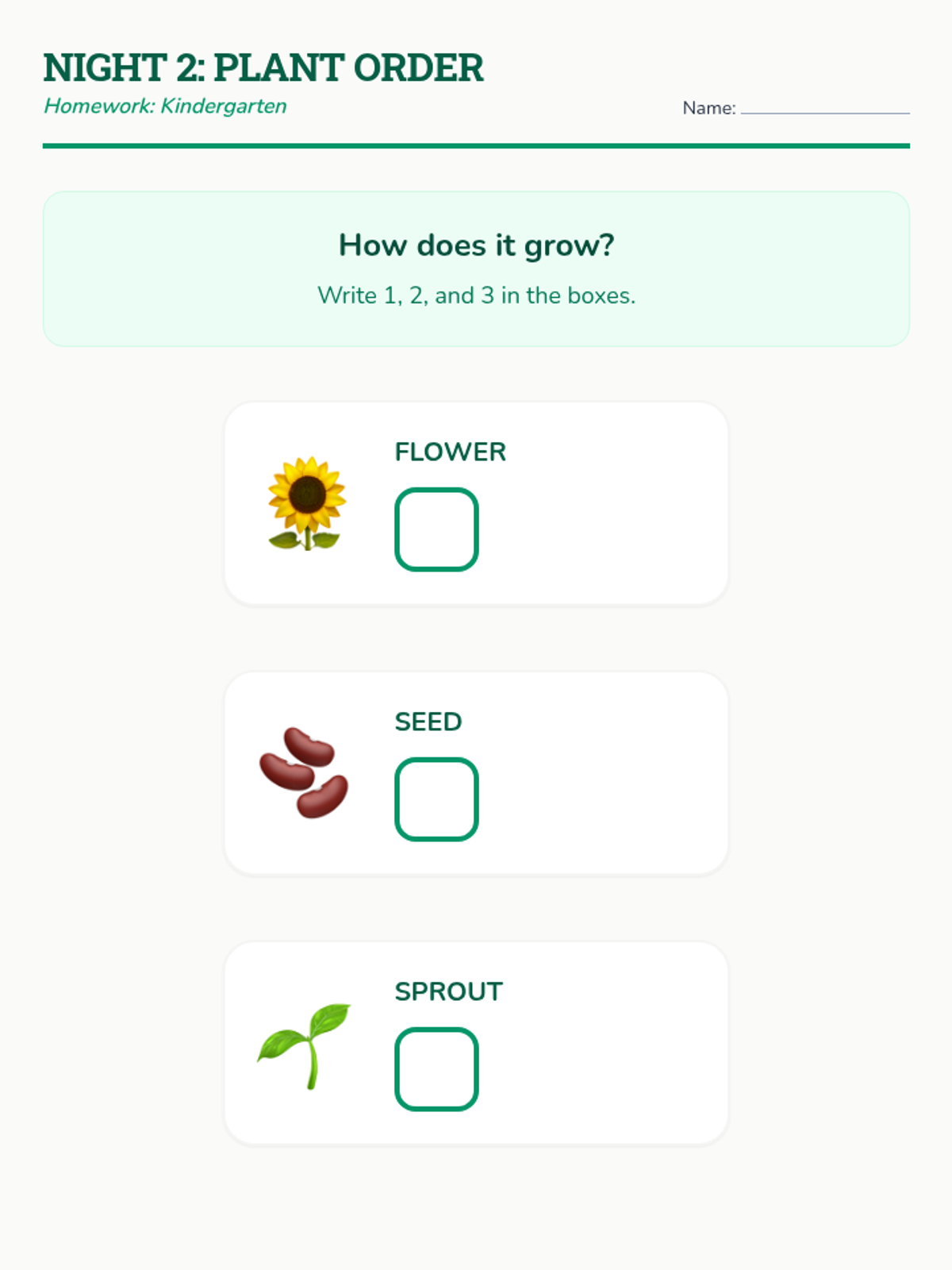
Foundational reading and activities about how a seed grows into a plant, designed for Kindergarten learners.
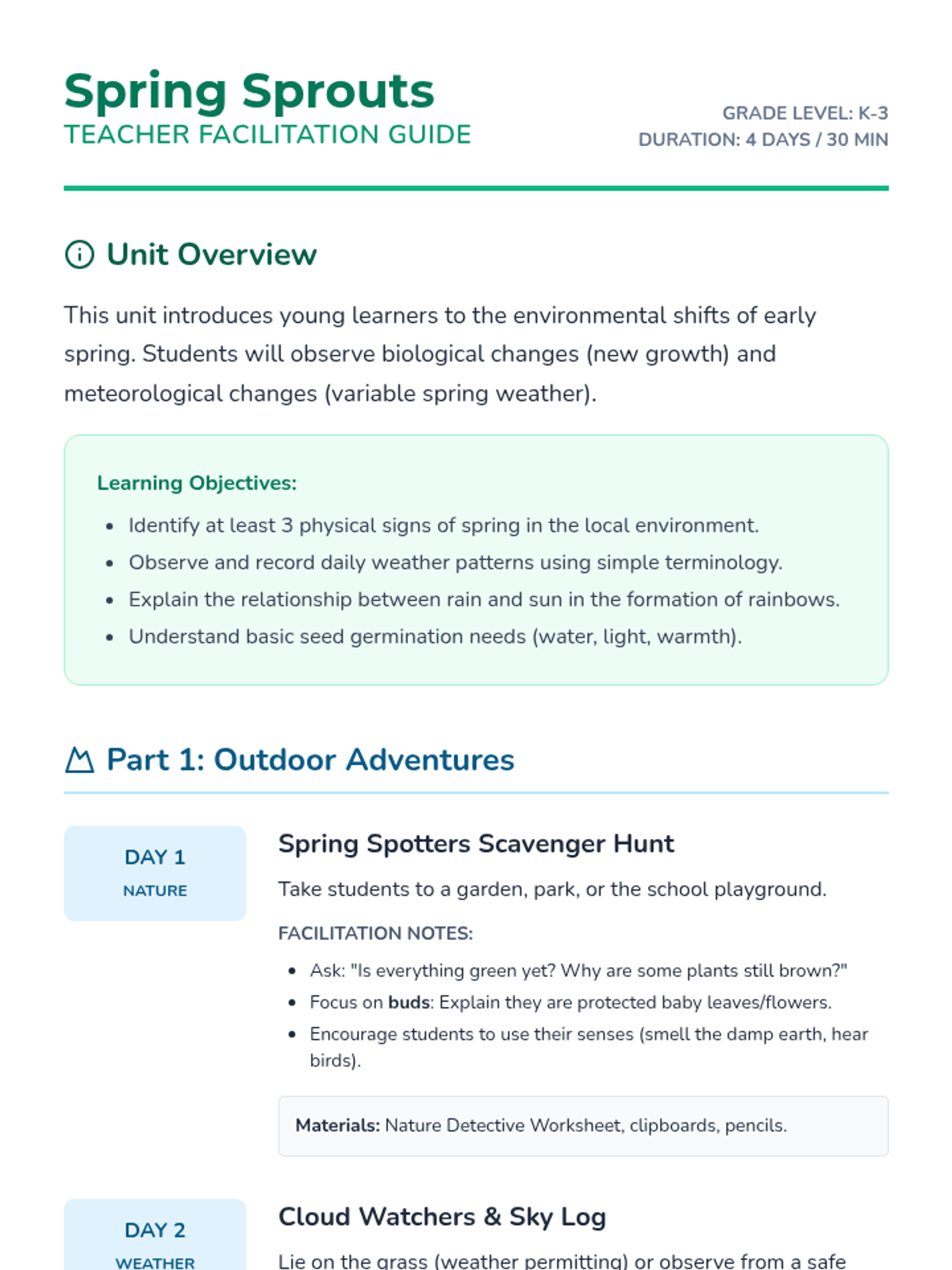
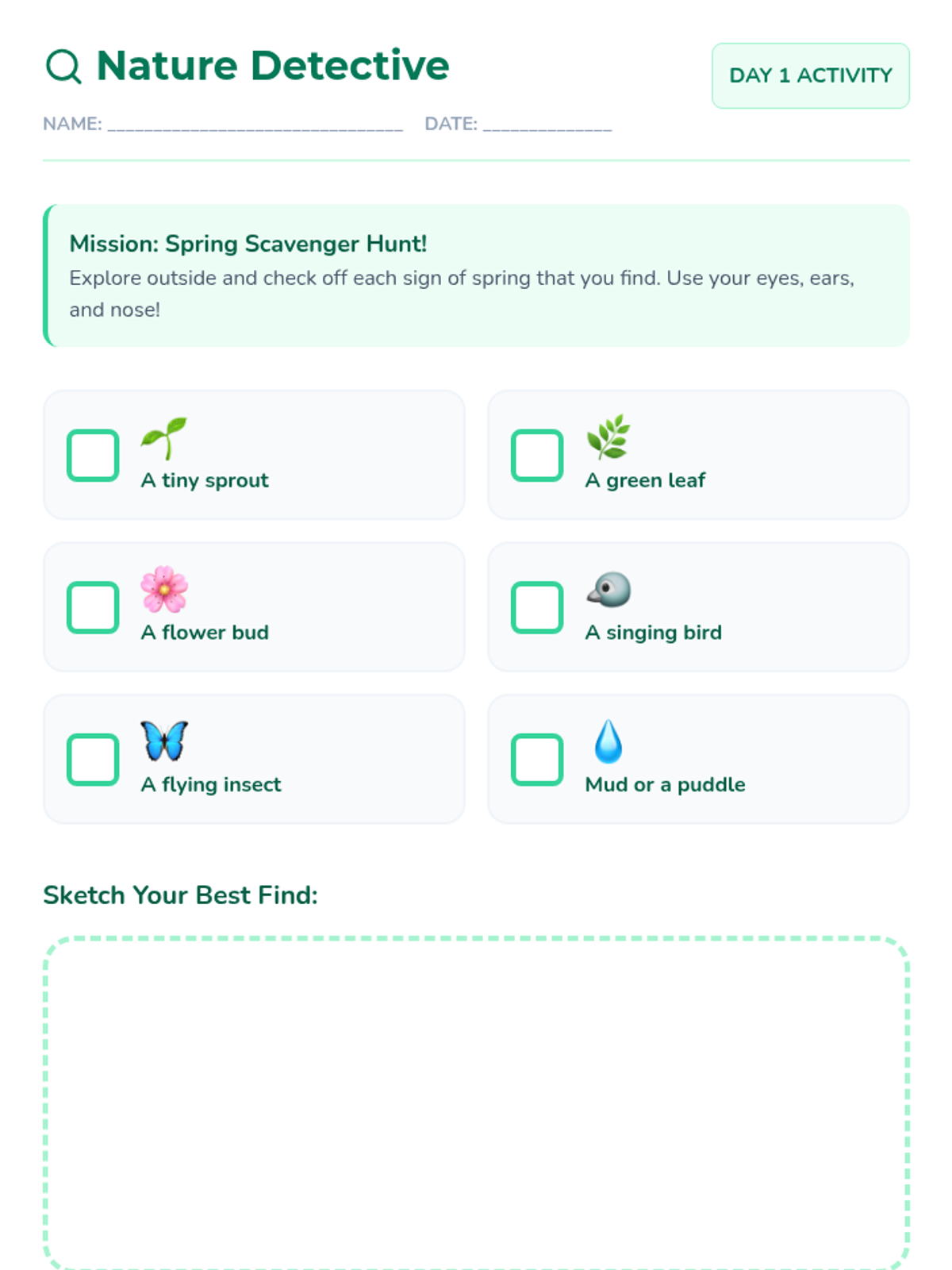
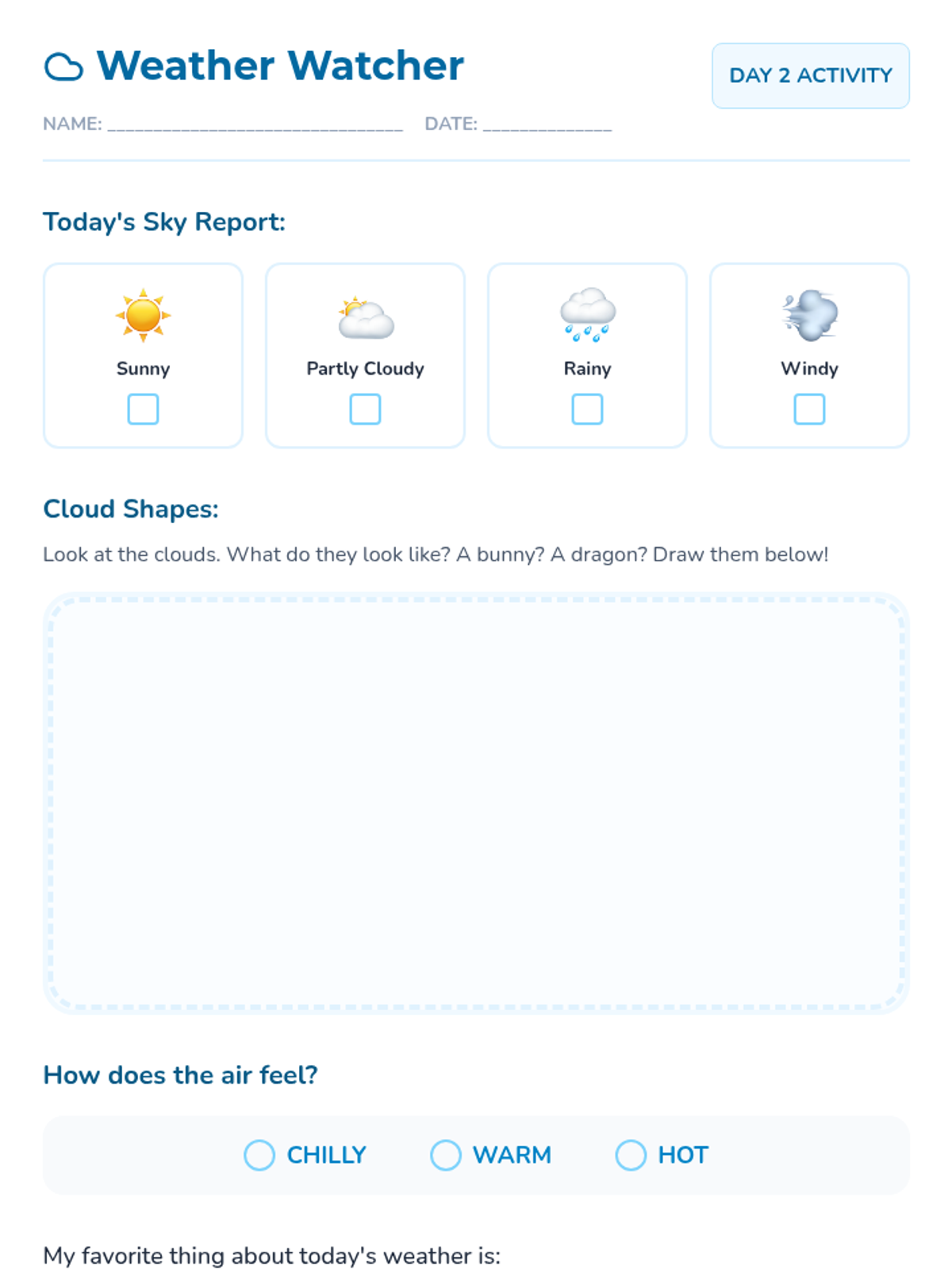
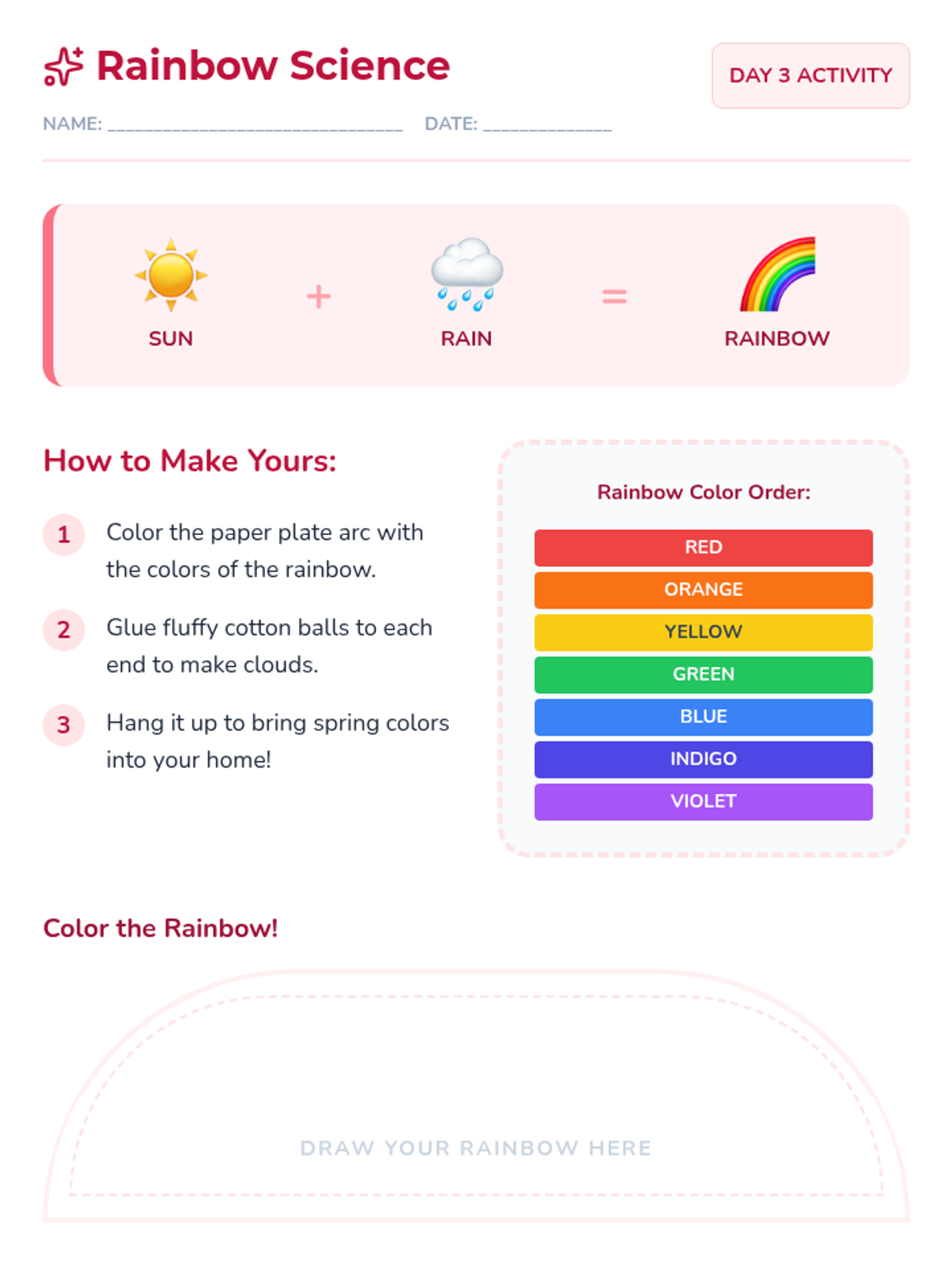
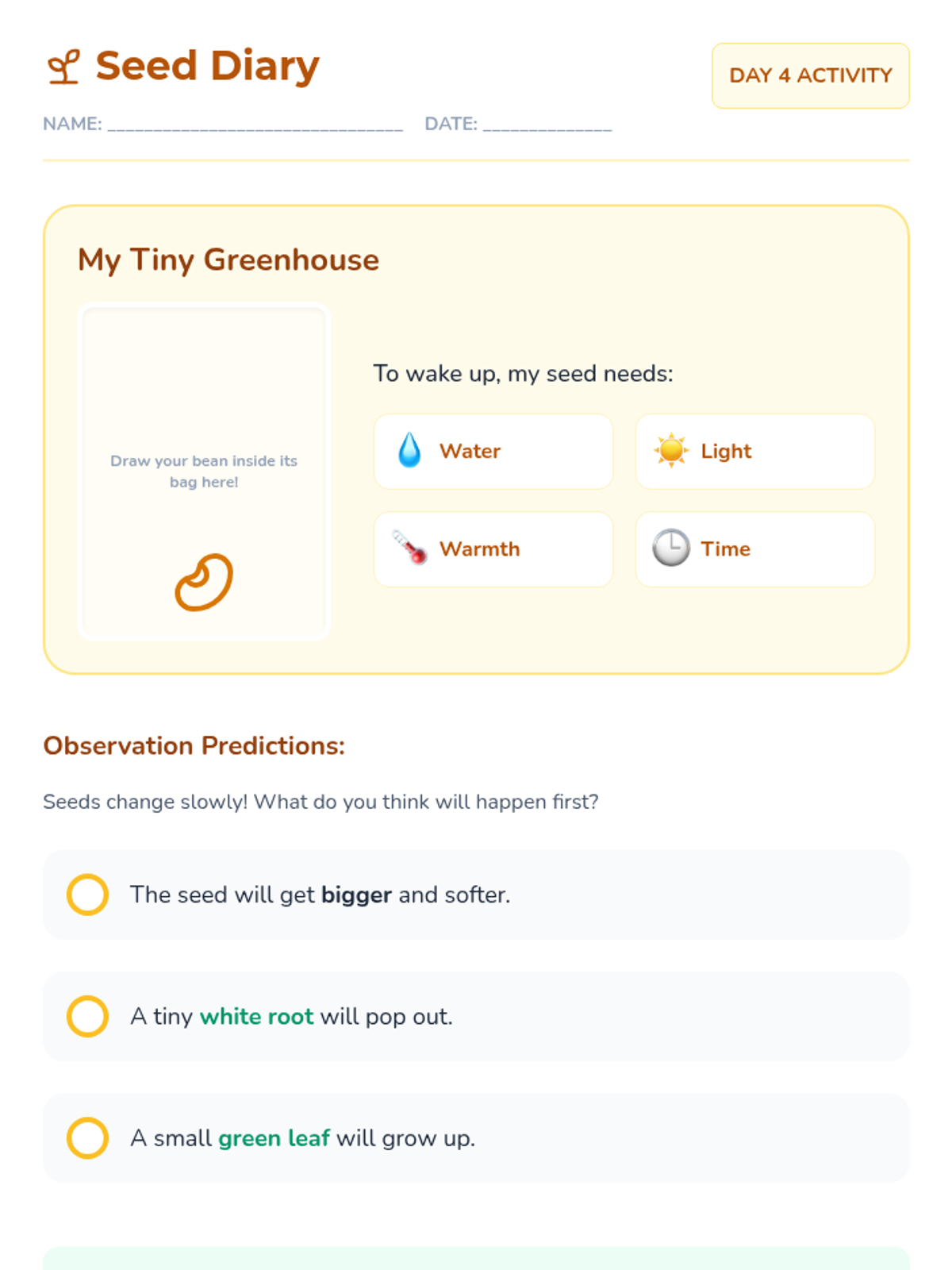
A four-day series of 30-minute activities exploring spring weather and nature through two outdoor adventures and two indoor crafts.
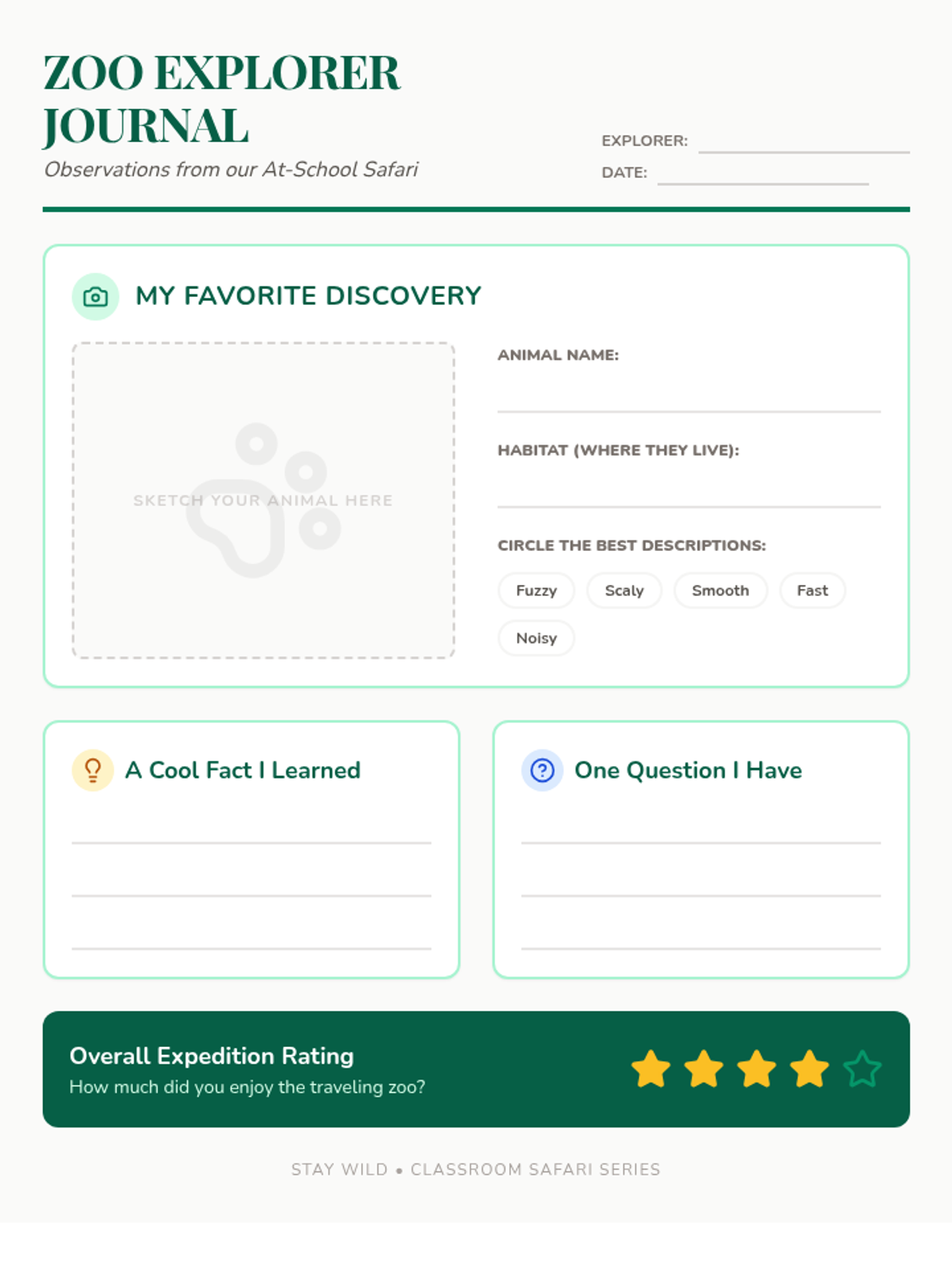
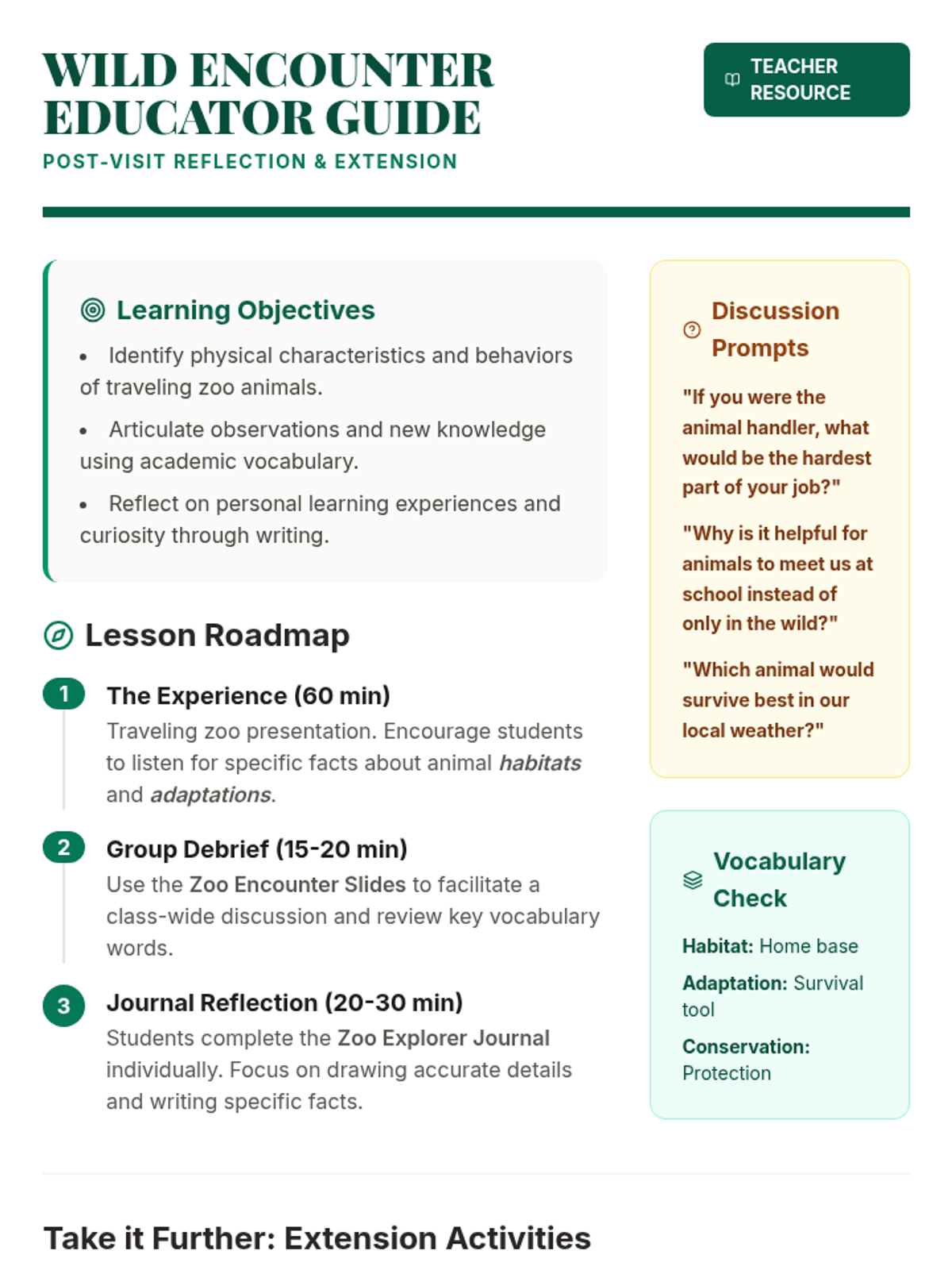
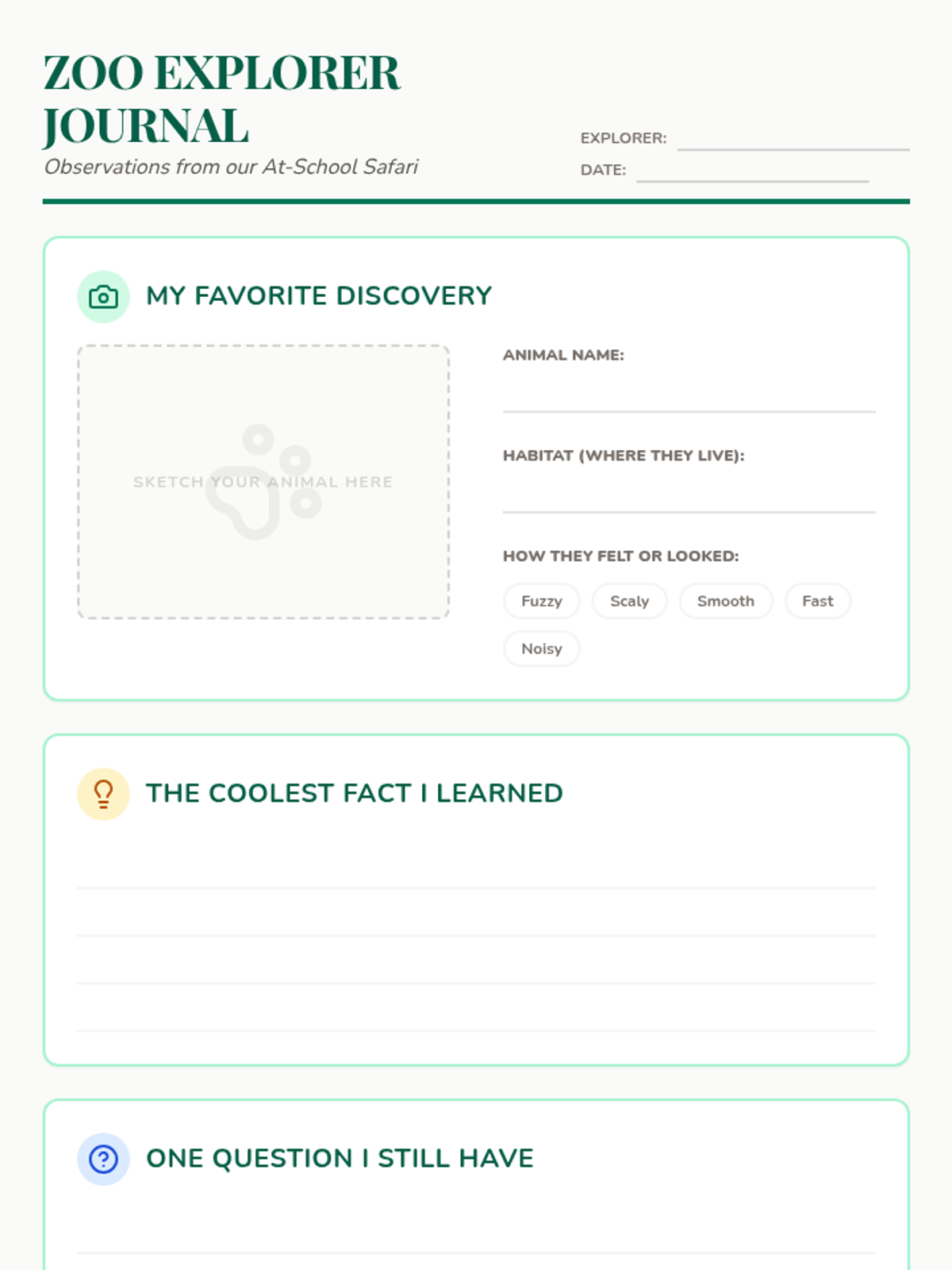
A collection of resources to help students process and reflect on a traveling zoo visit right in their own school. Students will document their observations, learn about animal habitats, and share their favorite moments.