Lenny LearningLenny
Create
Explore
Workspace
LoginSign up
MathEnglish Language ArtsScience & EngineeringSocial StudiesGlobal LanguagesHealth & Physical EducationSpecial EducationCounseling & Life SkillsArts & CreativityESL
Lenny LearningLenny
Lenny Learning
About
Training
Pricing
Support
Contact
© 2026 Lenny Learning Inc.

Physics

SequencesLessonsMaterialsVideos
  1. Science & Engineering

Physics

SequencesLessonsMaterialsVideos

Fundamental principles of force, motion, and energy across classical and modern contexts. Examines matter properties, wave behavior, thermodynamics, and electromagnetism through mechanics and atomic studies.

Science & EngineeringLife ScienceLiving ThingsAnimalsPlantsBody SystemsTraitsAdaptationsCellsEcosystemsHeredityGenes to TraitsCell DivisionPhysicsComparing MaterialsShapes and PropertiesMagnetsMagnetismLightSoundLight and SoundMatterStates of MatterChanges of StateMixturesPhysical and Chemical ChangeHeating and CoolingHeat and Thermal EnergyEnergyForce and MotionElectrical CircuitsAtoms and MoleculesPeriodic TableMotion in One DimensionMotion in Two DimensionsScalars and VectorsForces and Laws of MotionCircular Motion and GravityMomentum and ImpulseWork, Energy, and PowerWavesElectromagnetic WavesGeometric OpticsElectricity and MagnetismSimple Harmonic MotionThermodynamicsNuclear PhysicsEarth Science & AstronomyWeatherWater CycleRocks and MineralsFossilsEarth's FeaturesEarth's ResourcesEarth's StructureWeather and ClimateEarth EventsFossils and Geologic TimePlate TectonicsHuman ImpactsAstronomyChemistryUnits and MeasurementAtomic StructurePeriodic TrendsChemical BondingNomenclatureMolecular StructureIntermolecular ForcesThe MoleStoichiometryProperties of GasesSolutionsChemical ReactionsBalancing EquationsEnergy ChangesRates of ReactionsEquilibriumAcids and BasesQuantum ModelBiologyClassificationCell StructureThe Chemistry of LifeBiomoleculesCellular TransportCell EnergyCell Growth and DivisionDNAProtein SynthesisMeiosis and Sexual ReproductionPatterns of InheritanceMulticellular OrganismsEvolutionEcologyBiodiversityComputer ScienceAlgorithms and Computational ThinkingProgramming LanguagesComputing SystemsNetworks and InternetData AnalysisCybersecurityAI and Machine LearningSoftware Design and DevelopmentBlockchainEngineering & AIDesigning ExperimentsEngineering PracticesDesign ThinkingEngineering Design ProcessMechanical EngineeringElectrical EngineeringMaterials and StructuresCAD and 3D DesignRoboticsArtificial Intelligence BasicsVibe CodingMachine LearningAI Ethics and SocietySystems ThinkingEntrepreneurship & InnovationEntrepreneurial MindsetBusiness Idea DevelopmentBusiness Plan BasicsMarketing & Customer DiscoveryFinancial Management for Startups
Comparing MaterialsPhysical properties like hardness, flexibility, and transparency across various substances. Students evaluate material suitability for specific engineering or artistic purposes through systematic testing and classification.
Shapes and PropertiesGeometric identification of two-dimensional and three-dimensional figures using attributes like sides, vertices, and symmetry. Classifies polygons and solids while exploring spatial relationships and coordinate geometry basics.
MagnetsMagnetic poles, attraction, and repulsion principles alongside magnetic field mapping. Examines the relationship between electricity and magnetism through electromagnetic construction and real-world applications.
MagnetismProperties of magnetic fields, poles, and attraction-repulsion forces. Examines electromagnetism, magnetic materials, and practical applications in motors and electronic devices.
LightFundamental properties of the electromagnetic spectrum, including reflection, refraction, and diffraction. Analyzes the behavior of visible light through lenses, mirrors, and various media.
MatterAtomic structure, molecular arrangements, and the four states of matter including solids, liquids, gases, and plasma. Examines physical and chemical properties alongside phase changes and the law of conservation of mass.
Heating and CoolingThermal energy transfer through conduction, convection, and radiation. Examines phase changes, temperature measurement, and the relationship between heat and particle motion.
EnergyKinetic and potential energy transformations, thermodynamics, and the principle of conservation. Analyzes various power sources including solar, wind, and fossil fuels alongside mechanical and chemical systems.
Force and MotionNewton’s laws of motion, friction, and gravity applied to physical systems. Examines the relationship between mass, acceleration, and net force through quantitative calculations and practical observations.
Forces and Laws of MotionNewton’s laws of motion, net forces, and the relationship between mass and acceleration. Examines friction, gravity, and inertia through practical applications in physical systems.
Video
Understanding the Metric System and Scientific Measurements

Understanding the Metric System and Scientific Measurements

This video provides a comprehensive introduction to scientific data collection and measurement using the metric system. It begins with a humorous scenario involving a baking mishap caused by confusing unit conversions, effectively illustrating the need for a standardized system of measurement. The host then clearly defines data and distinguishes between the two primary types: qualitative (descriptive qualities like color or texture) and quantitative (numerical values like height or count), providing vivid examples from nature for each. The core of the video breaks down the metric system, explaining the three base units—grams for mass, meters for length, and liters for volume—and how prefixes like kilo-, centi-, and milli- are used to scale these units based on powers of ten. The video details specific tools and techniques for measurement, including using digital balances for mass, rulers for length, and graduated cylinders for volume. It places special emphasis on proper laboratory techniques, such as reading the meniscus at eye level when measuring liquids. Finally, the video covers the concepts of accuracy and estimation in scientific measurement. It demonstrates how to interpret measurements that fall between the markings on a tool and stresses the importance of selecting the appropriate instrument for the task. This resource is an excellent primer for upper elementary and middle school students preparing for laboratory work, as it establishes the vocabulary and practical skills necessary for conducting precise scientific investigations.

Miacademy & MiaPrep Learning ChannelMiacademy & MiaPrep Learning Channel

9mins 51s

Video
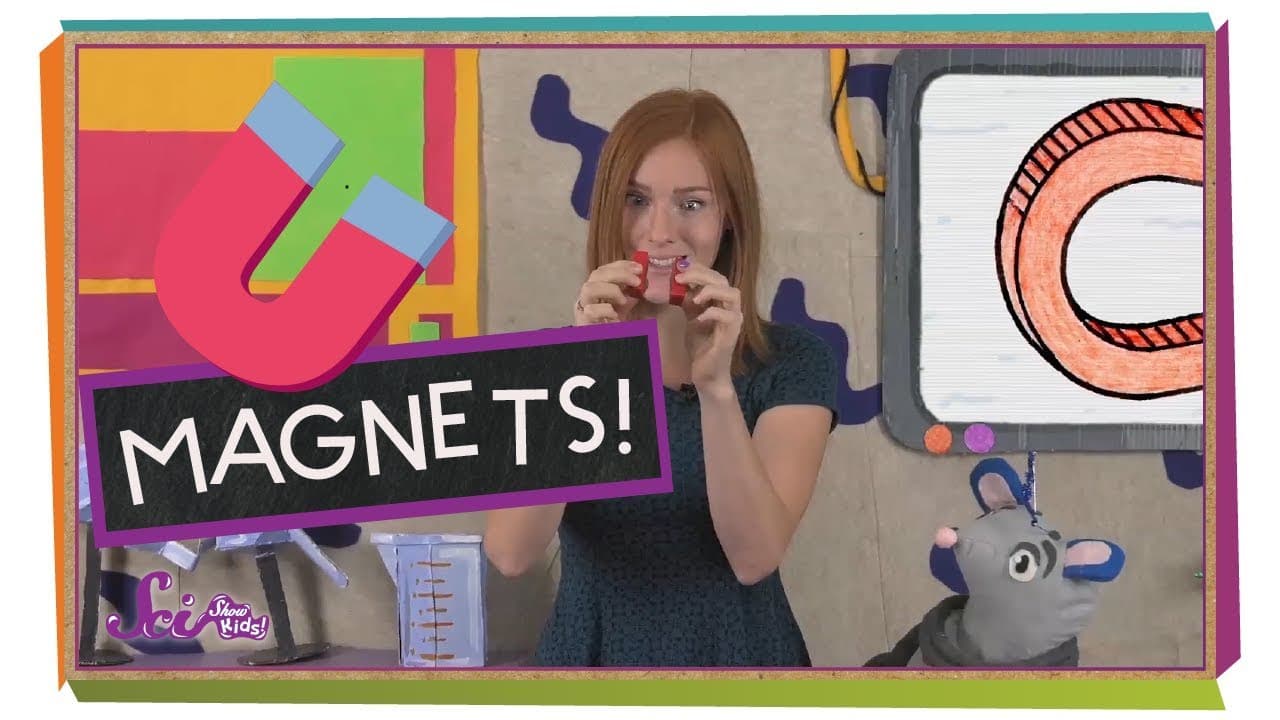
Testing Which Metals Are Magnetic

Testing Which Metals Are Magnetic

This concise science demonstration investigates the relationship between magnets and various metal objects to determine which materials possess magnetic properties. Through a clear, step-by-step experiment, the narrator tests common household items—like keys, coins, and safety pins—against a U-shaped magnet. The video explicitly tests the hypothesis that "all metals are magnetic" by showing that while all the test objects are metallic, only some interact with the magnet. The core themes explore the physical properties of matter, specifically magnetism and material composition. It introduces the fundamental scientific concept that magnetism is a property specific to certain metals (ferromagnetic materials) rather than a general property of all metals. The video concludes by identifying specific elements—iron, nickel, and cobalt—that are magnetic, contrasting them with non-magnetic metals like aluminum, copper, and silver. For educators, this video serves as an excellent hook or demonstration for units on physical science and properties of matter. It directly addresses the common student misconception that magnets stick to all metals. The clear visual evidence of the key and coin failing to stick provides a memorable "discrepant event" that sparks inquiry. It lays the groundwork for understanding material composition and classification, making it valuable for early elementary science curriculums.

Next Generation ScienceNext Generation Science

1min 53s

Video
Why the Blobfish Looks So Squishy

Why the Blobfish Looks So Squishy

This engaging episode of SciShow Kids explores the fascinating life of the blobfish, famously voted the "world's ugliest animal." Hosted by Jessi and her robot rat friend Squeaks, the video dives deep into the ocean to explain why this unique creature looks the way it does. Instead of just mocking its appearance, the video uses the blobfish as a perfect case study to teach students about deep-sea environments and biological adaptations. Viewers travel to the coast of Australia and descend nearly to the sea floor to discover a dark, freezing, and high-pressure habitat. The video covers several key scientific concepts, primarily focusing on water pressure and buoyancy. It uses clear analogies, such as a "tight bear hug," to explain how deep-sea pressure works and why animals need specific bodies to survive it. The narration explains how the blobfish's gelatinous body, lack of muscle, and minimal skeleton allow it to survive extreme pressure while staying buoyant without expending energy. A critical turning point in the video addresses the misconception that the blobfish is naturally "blobby," revealing that it actually looks like a normal fish in its natural habitat and only deforms when brought to the surface. For educators, this video is an excellent tool for connecting biology and physics. It transforms a viral internet meme (the ugly blobfish) into a rigorous science lesson about how environment shapes evolution. It offers natural entry points for discussing states of matter, density, ocean zones, and the importance of context in scientific observation. The content promotes critical thinking by challenging students' initial perceptions and teaching them that what might look "weird" to us is actually a perfect design for a different environment.

SciShow KidsSciShow Kids

3mins 6s

Video
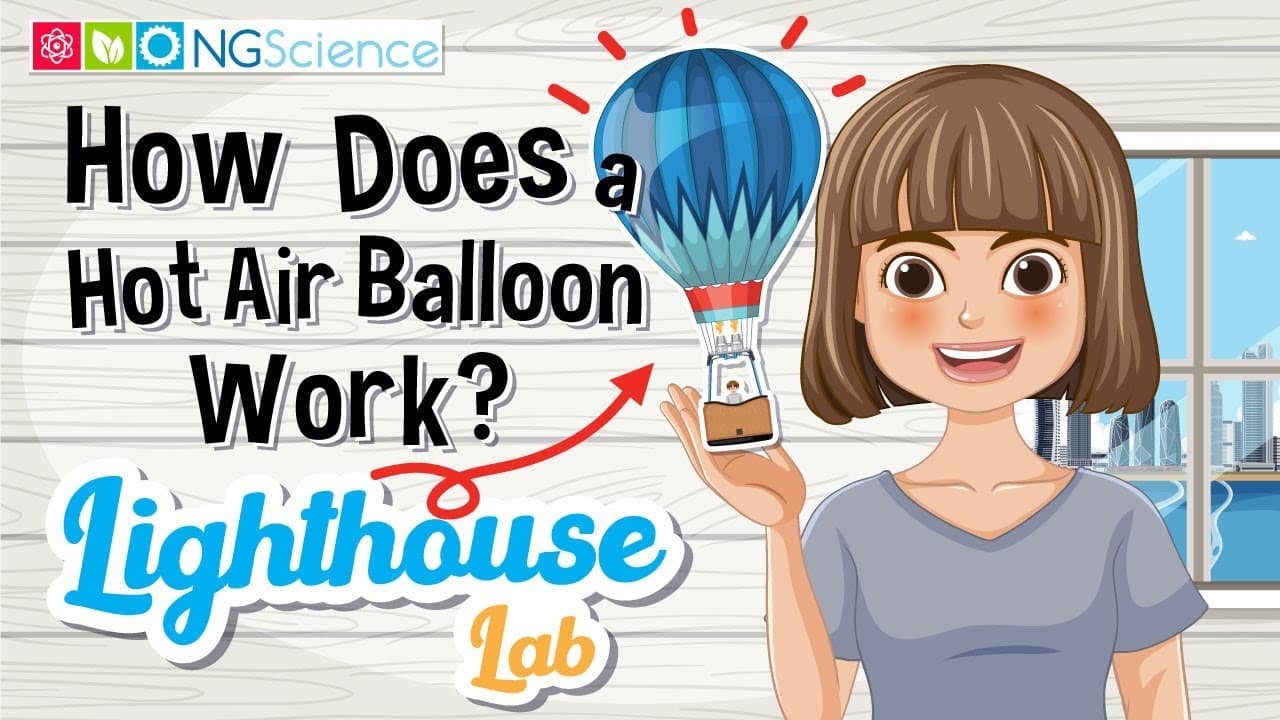
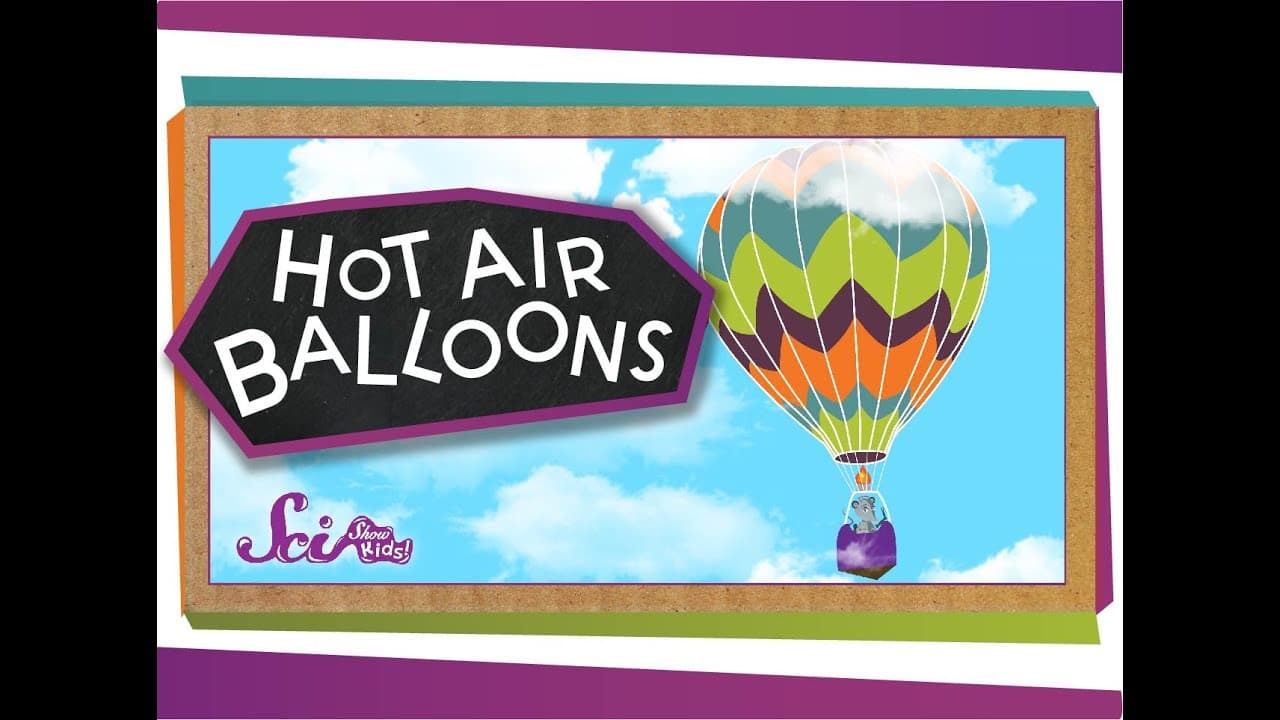
How Hot Air Balloons Fly and Function

How Hot Air Balloons Fly and Function

In this engaging episode of Lighthouse Lab, host Halle takes students on a virtual journey to understand the science and engineering behind hot air balloons. The video combines live-action hosting with clear animations to break down the mechanics of flight, transitioning from a field setting to a laboratory environment to explain the core concepts before demonstrating a launch. It provides a accessible introduction to aerodynamics and states of matter. The content focuses on two main areas: the anatomy of a hot air balloon and the physics of lift. Viewers learn about the three essential components—the envelope, the burner, and the basket—and the specific materials used. Crucially, the video simplifies the complex concept of density, using particle animations to show how heating air causes it to expand and become less dense than the surrounding cooler air, generating lift. It also explains how pilots navigate vertically by controlling the temperature using the burner and top vents. This video is an excellent resource for elementary and middle school science classrooms introducing units on matter, energy, or forces. It provides a practical, real-world application for abstract concepts like density and thermal expansion. Teachers can use this video to anchor lessons on particle theory, to illustrate how heat changes matter, or as a case study in engineering design.

Next Generation ScienceNext Generation Science

3mins 55s

Video
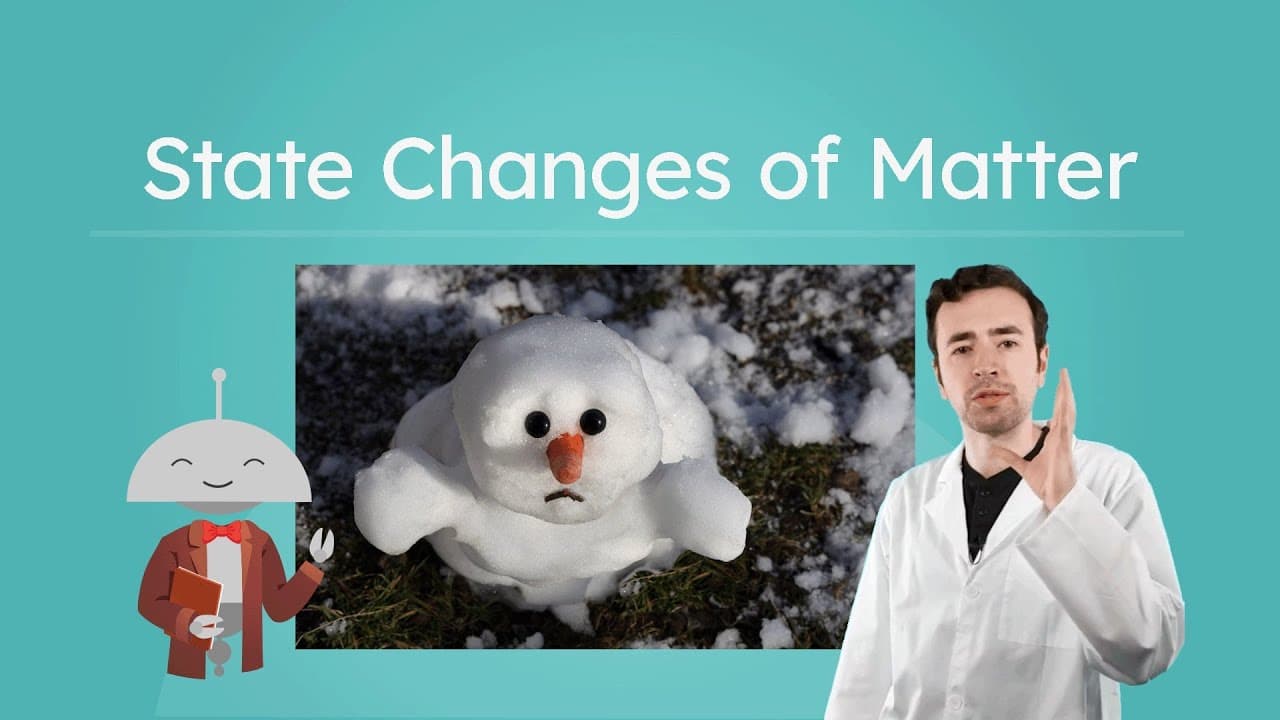
How Heat Changes the States of Matter

How Heat Changes the States of Matter

This educational video explores the science behind how matter changes between solid, liquid, and gas states through the addition and removal of heat energy. Using the relatable example of melting ice cream, the instructor guides students through the molecular behavior of matter, explaining how atoms speed up and spread apart when heated (melting, evaporation) and slow down and condense when heat is removed (condensation, freezing). The video effectively uses particle animations to visualize these invisible processes, making abstract concepts concrete for young learners. Key themes include the relationship between heat energy and particle movement, the specific terms for phase changes (melting, freezing, evaporation, boiling, condensation), and the distinction between "cold" as an energy versus the absence of heat. The instructor also addresses the conservation of mass, demonstrating that while matter changes form, its amount remains constant. This resource is highly valuable for elementary science classrooms as it covers core physical science standards regarding states of matter. It provides clear definitions, addresses common misconceptions about "cold energy," and connects scientific concepts to everyday phenomena like drying towels, morning dew, and boiling water. The built-in pauses for note-taking and reflection make it an excellent interactive tool for direct instruction or independent study.

Miacademy & MiaPrep Learning ChannelMiacademy & MiaPrep Learning Channel

8mins 58s

Video
The Wonders of Water: Rivers, Erosion, and the Water Cycle

The Wonders of Water: Rivers, Erosion, and the Water Cycle

In this comprehensive compilation from SciShow Kids, Jessi and her robot rat friend Squeaks take students on a journey to explore everything about Earth's water. The video is divided into three distinct segments: first, investigating where the water in our faucets comes from by exploring groundwater, rivers, oceans, and glaciers; second, a debate between puppet characters Bill and Webb about whether wind or water is a stronger force of nature, leading to a lesson on erosion and landforms; and third, a theatrical performance that dramatizes the stages of the water cycle. Key themes include the geography of water (rivers, lakes, oceans), the states of matter (liquid water, solid ice, water vapor), and the geological forces of erosion and weathering. The video covers specific landforms like the Grand Canyon, sand dunes, and stone arches, explaining how they were formed over millions of years. It also breaks down the water cycle into its four main components: evaporation, condensation, precipitation, and collection, using a play-within-a-video format to model these abstract concepts. This video is highly valuable for elementary science classrooms as it connects everyday experiences (turning on a tap, seeing rain) to global systems. It models scientific inquiry through Squeaks' hypothesis testing and uses engaging visual aids—including maps, real-world footage, and puppetry—to make complex topics like geological time and phase changes accessible. The variety of segments allows teachers to use the video as a whole or break it down to teach specific units on hydrology, geology, or weather.
SciShow KidsSciShow Kids

16mins 44s

Video
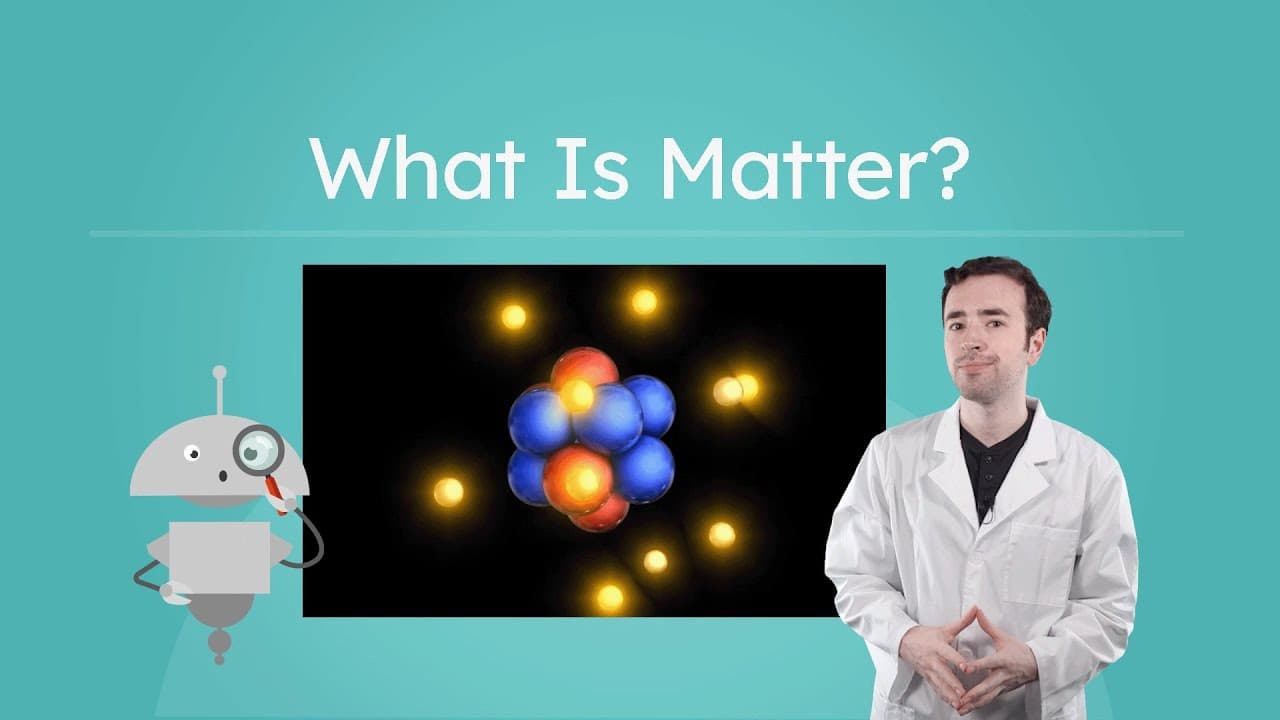
Understanding Matter: Mass, Volume, and Atoms

Understanding Matter: Mass, Volume, and Atoms

In this engaging general science lesson, host Justin breaks down the fundamental concept of matter, explaining that almost everything in the universe—from squirrels to water bottles—is made of it. The video simplifies abstract physical science concepts by defining matter through two main criteria: having mass and taking up space (volume). Through clear visual examples and animations, students learn to distinguish between objects with different masses and volumes, understanding that size doesn't always equal mass. The lesson explores key themes including the definitions of mass versus volume, the distinction between matter and non-matter (like ideas and light), and the physical properties of gases. A significant portion of the video demonstrates that air is indeed matter through a practical balloon experiment, addressing a common student misconception. It concludes by zooming in to the microscopic level, introducing atoms as the basic building blocks of all matter. This video is an excellent resource for elementary and middle school science classrooms introducing physical science. It includes built-in pause points for student reflection and note-taking, making it ready-to-use for direct instruction. Teachers can use the comparative examples (like the bowling ball vs. beach ball) to spark classroom debates about density and mass, while the segment on atoms provides a perfect segue into more advanced chemistry topics.

Miacademy & MiaPrep Learning ChannelMiacademy & MiaPrep Learning Channel

9mins 40s

Video
Comparing Mass: Heavy, Light, and Size Misconceptions

Comparing Mass: Heavy, Light, and Size Misconceptions

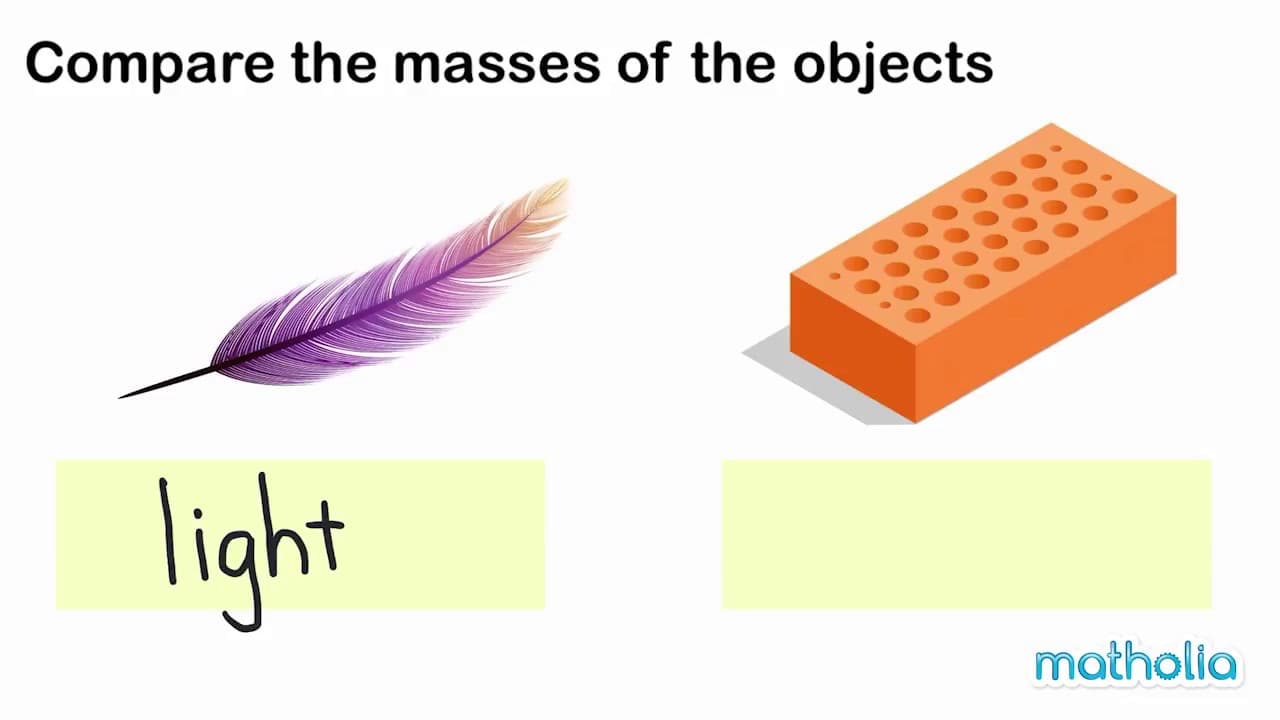
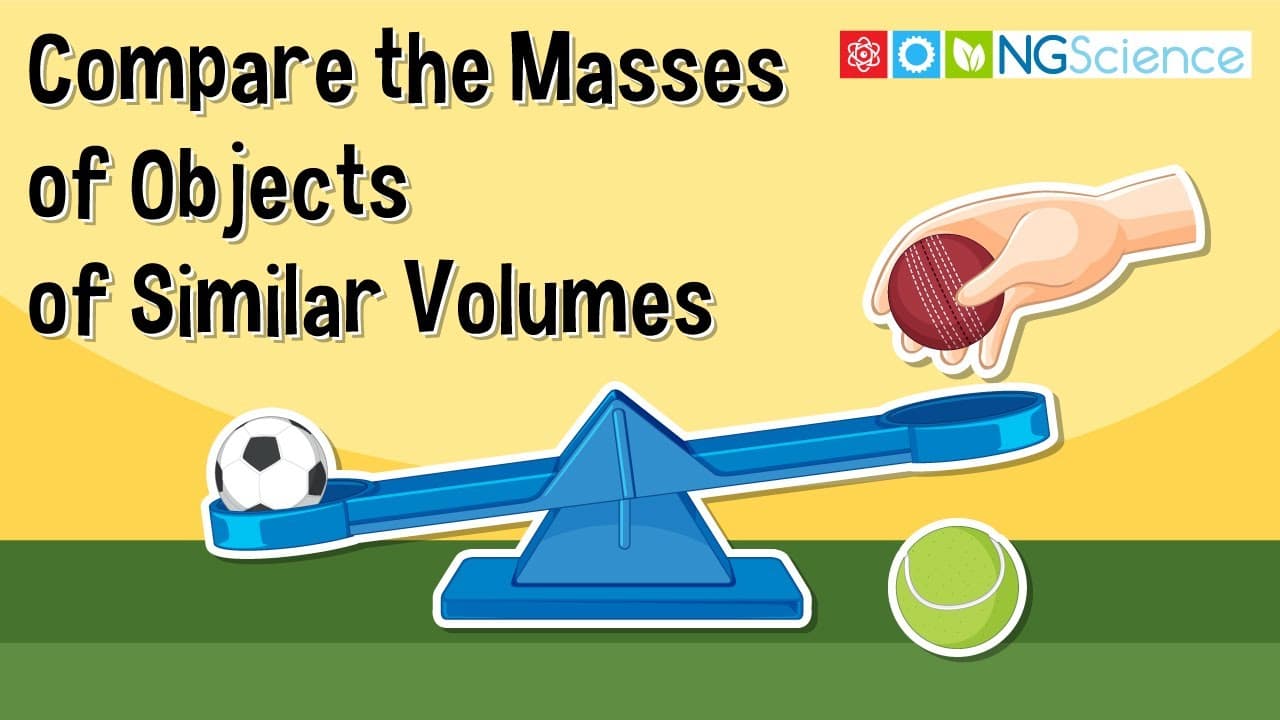
This educational video introduces young students to the concept of mass by comparing everyday objects. It begins with an intuitive comparison between a feather and a brick, using relatable questions about moving the objects to establish the concepts of "heavy" and "light." The video explicitly defines mass in simple terms, explaining that heavy objects have more mass while light objects have less mass. The video progresses to a more complex comparison between a large beach ball and a smaller bowling ball. This segment is particularly valuable as it addresses the common misconception that size always equals weight. By showing that the larger object (beach ball) is actually lighter than the smaller object (bowling ball), it helps students distinguish between volume (size) and mass. For educators, this resource serves as an excellent hook for units on measurement, matter, or adjectives. The clear visual layout, where comparative phrases like "is heavier than" appear between the objects, supports early literacy alongside scientific understanding. It provides a perfect springboard for hands-on classroom activities where students predict and test the weight of various classroom items.

MatholiaChannelMatholiaChannel

1min 54s

Video
How Static Electricity Makes Balloons Stick

How Static Electricity Makes Balloons Stick

This engaging science video introduces young learners to the concept of static electricity through a classic and accessible experiment: sticking a balloon to a wall. Hosted by Jessi from SciShow Kids, the video demystifies what looks like a magic trick by explaining the underlying scientific principles. It breaks down complex ideas about matter and atomic structure into simple, age-appropriate terms, using the concepts of "positive" and "negative" opposites to explain attraction. The video explores key themes including forces, the properties of matter, and the behavior of charged particles. It uses clear analogies, such as comparing static attraction to magnets, and provides visual representations of invisible particles to help students grasp abstract concepts. The narrative moves from a demonstration to an explanation of particle transfer caused by friction, defining static electricity as an imbalance of positive and negative charges. For educators, this video serves as an excellent hook for units on forces, matter, or weather (lightning). It provides a safe, replicable classroom experiment that requires minimal materials. The clear visual models of positive and negative charges offer a concrete way to discuss atomic theory at an elementary level without getting bogged down in complex terminology like protons and electrons, making it highly effective for early elementary science instruction.

SciShow KidsSciShow Kids

3mins 12s

Video
Why Is Fire Hot? The Science of Energy and Combustion

Why Is Fire Hot? The Science of Energy and Combustion

This engaging episode of SciShow Kids tackles a common childhood question: "Why is fire hot?" Host Jessi and her robot mouse companion, Squeaks, break down the complex physics of heat and energy into kid-friendly concepts. The video explains that heat is a form of energy and uses the relatable analogy of how our bodies get warm when we exercise to explain how fire releases energy. It introduces the scientific concept of "combustion" and clearly delineates the three essential ingredients needed for a fire: fuel, oxygen, and heat. The video explores key themes of energy transformation and chemical changes. It visually demonstrates how wood (fuel) changes physically into charcoal and ash as it releases stored energy in the form of heat. The narrative connects abstract scientific principles to concrete examples, such as eating food for energy or using a match to start a birthday candle. It also reinforces critical fire safety rules, reminding young viewers never to play with matches or get too close to fires. For educators, this video serves as an excellent introduction to physical science concepts like energy, heat, and chemical reactions. It provides a natural bridge between basic observations (fire is hot) and scientific explanations (combustion). Teachers can use this resource to launch lessons on the "Fire Triangle," discuss the difference between physical and chemical changes, or reinforce health and safety curriculums regarding fire prevention. The clear visual aids and simple analogies make it highly accessible for early elementary students.

SciShow KidsSciShow Kids

3mins 41s

Video
Exploring Air Resistance: How Drag Works

Exploring Air Resistance: How Drag Works

This engaging science video introduces elementary students to the concepts of air resistance and drag through the familiar example of parachutes. Hosted by Jessi from SciShow Kids, the video breaks down the invisible forces that surround us, explaining that air is actually made of "matter" or "stuff" that takes up space. Through clear animations and relatable analogies like holding a hand out of a car window, students visualize how moving through air pushes air particles out of the way, creating a resistive force.

SciShow KidsSciShow Kids

3mins 37s

Video
What Actually Happens When You Let Go of a Balloon?

What Actually Happens When You Let Go of a Balloon?

Have you ever accidentally let go of a helium balloon and watched it float away into the sky? In this episode of SciShow Kids, Jessi and her robot rat friend Squeaks explore the science behind that very moment. They explain exactly why helium balloons float while other objects don't, using a simple and effective analogy involving a spoon in a bowl of water to demonstrate the concept of density and buoyancy in a way young learners can grasp. The video takes students on a journey upwards through the atmosphere, investigating how conditions change as altitude increases. It covers key physical science concepts including air pressure (described as air spreading out), the properties of gases like helium, and atmospheric temperature changes. Viewers learn about the material science of rubber, seeing how it stretches when gas expands and becomes brittle when exposed to freezing temperatures at high altitudes. Beyond the physics, the video provides a crucial lesson in environmental stewardship. It explains the eventual fate of all balloons—popping or shattering and falling back to Earth—and the specific dangers this litter poses to wildlife who might mistake it for food. This combination of physics, earth science, and environmental responsibility makes it an excellent resource for discussing properties of matter, the atmosphere, and human impact on the environment.

SciShow KidsSciShow Kids

3mins 15s

Video
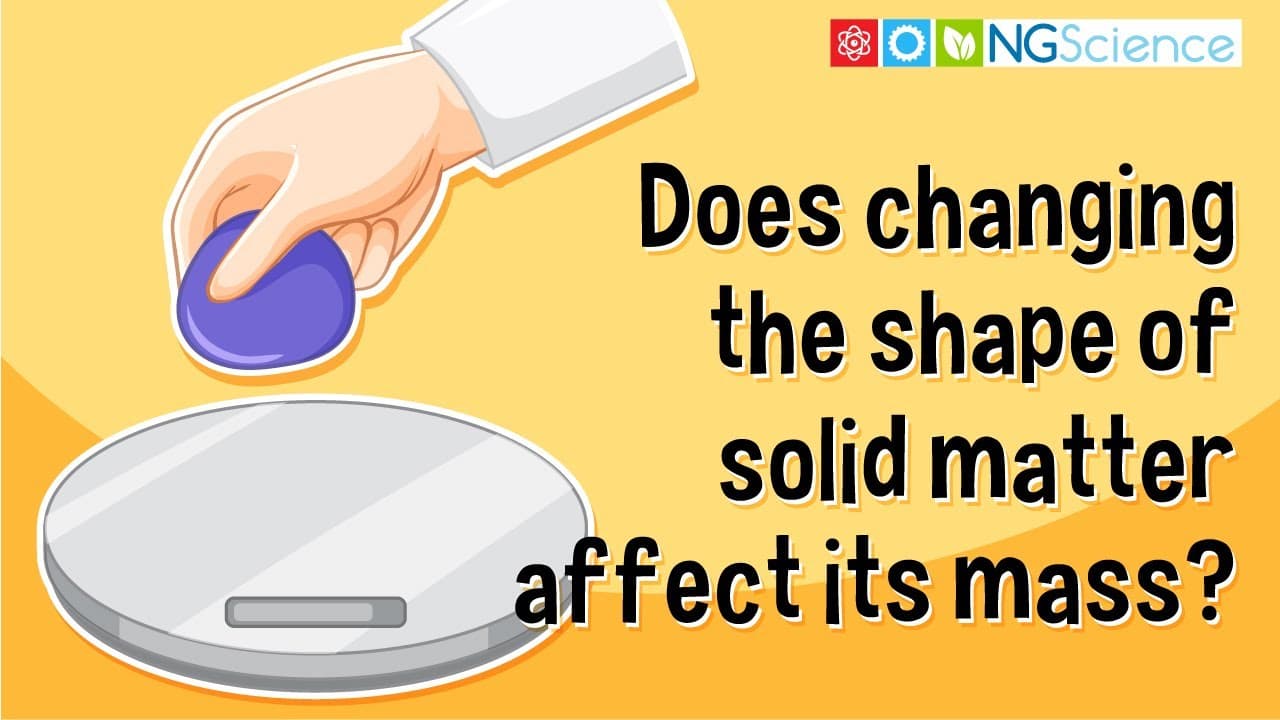
Does Changing Shape Change Mass?

Does Changing Shape Change Mass?

This concise science demonstration investigates the relationship between an object's physical shape and its mass. Using a digital scale and a ball of purple modeling clay, the video guides viewers through a systematic experiment. The narrator first weighs the clay as a ball, then manipulates it into a flat pancake and a cylinder, measuring the mass after each transformation to verify if it changes. The video explores key concepts related to the properties of matter, specifically focusing on mass and the conservation of matter during physical changes. It clearly demonstrates that physical alterations, such as squishing or rolling an object, do not affect the amount of matter present. The use of a digital scale provides clear, numerical evidence (85.0 grams) that reinforces the scientific observation. For educators, this video serves as an excellent hook or direct instruction tool for units on matter. It models the scientific method by posing a question, testing a hypothesis, and drawing a conclusion based on data. It is particularly useful for addressing the common student misconception that an object's weight or mass changes when its appearance or surface area changes (e.g., thinking a flat pancake weighs less than a dense ball).

Next Generation ScienceNext Generation Science

1min 41s

Video
Sink or Float: Testing Common Objects

Sink or Float: Testing Common Objects

This engaging science video conducts a classic "Sink or Float" experiment, testing eleven common household objects to see how they interact with water. Using a clear tank and blue-tinted water for high visibility, the video systematically introduces an object, demonstrates dropping it into the water, and clearly labels the result as either "Sink" or "Float." The consistent pacing and clear visual cues make it an excellent resource for young learners to practice observation and prediction skills. The video explores key themes of buoyancy, density (at an introductory level), and material properties. It contrasts materials that typically sink, such as metal (lead ball, safety pin, paper clip) and dense rubber, with materials that float, like wood and certain plastics. It also implicitly addresses the concept that size does not determine buoyancy, as small heavy items sink while larger light items like the wooden block float. For educators, this video serves as a perfect digital demonstration to anchor a physical science unit on properties of matter. It allows teachers to pause before each drop to solicit student predictions, turning a passive viewing experience into an interactive game. It can be used to introduce the scientific method (predict, observe, record), prompt discussions about why certain materials float while others sink, or serve as a hook before a hands-on classroom water table activity.

Next Generation ScienceNext Generation Science

3mins 35s

Video
Does Matter Just Disappear? Investigating the Conservation of Mass

Does Matter Just Disappear? Investigating the Conservation of Mass

This educational video explores the fundamental scientific principle of the Conservation of Mass. Through engaging visuals and clear examples, the host investigates whether matter can ever truly disappear or be created from nothing. The video distinguishes between physical changes (like dissolving sugar in tea) and chemical changes (like baking a cake), explaining how matter behaves in each scenario. It specifically addresses the common misconception that when something dissolves or evaporates, it is gone forever. The content breaks down complex terminology into accessible concepts, defining key terms such as reactants, products, and physical versus chemical changes. It uses a concrete experiment—weighing sugar and water before and after mixing—to provide empirical evidence that mass remains constant even when visible properties change. The narrative connects everyday observations, like a glass of water evaporating or sugar dissolving, to the broader scientific law that mass is never made or lost. For educators, this video is an excellent tool for introducing the particle nature of matter and the law of conservation of mass. It provides a ready-made demonstration that can be replicated in the classroom and offers clear definitions of vocabulary essential for upper elementary and middle school science curricula. The visual proof provided by the digital scale reading serves as a powerful anchor for students grappling with abstract concepts of invisible matter.

Crash Course KidsCrash Course Kids

4mins 9s

Video
Solving Mysteries with the Metric System

Solving Mysteries with the Metric System

This engaging episode of Crash Course Kids, hosted by Sabrina Cruz, introduces students to the scientific method of identifying matter through observation and measurement. Using a relatable narrative about tripping over an unknown object in the dark, the video guides viewers through an investigation to solve a "Measurement Mystery." It transitions from qualitative observations to quantitative data collection, emphasizing the importance of standard units. The video explores key themes such as the properties of matter (specifically length, width, height, and mass) and the International System of Units (Metric System). It explains why standard units like meters, centimeters, and grams are necessary for accurate scientific communication, contrasting them with non-standard units like "jellybeans." The distinction between simply observing an object and measuring it to gather specific data is a central focus. For educators, this video serves as an excellent hook for units on the physical properties of matter, measurement, or the metric system. It models scientific inquiry by asking a question ("What is this thing?"), gathering evidence through measurement, and using that evidence to draw a conclusion. The video is particularly useful for transitioning students from using non-standard measurement to using rulers and scales with precision.

Crash Course KidsCrash Course Kids

3mins 45s

Video
How Do Submarines Dive and Surface?

How Do Submarines Dive and Surface?

In this engaging episode of SciShow Kids, host Jessi and her robot friend Squeaks explore the science behind how submarines function. Starting with a viewer question, the video breaks down complex physics concepts like density and buoyancy into age-appropriate explanations, using clear analogies and demonstrations to show how an object can change from floating to sinking and back again. The video covers key scientific themes including density (described as how heavy something is for its size), the mechanics of ballast tanks, and the requirements for human survival underwater, such as air supply. It also touches upon marine biology by illustrating the types of sea creatures scientists might observe while exploring the ocean depths. For educators, this resource provides a perfect bridge between physical science and engineering. It offers replicable classroom experiments—like the jar demonstration—that make abstract concepts concrete. The video encourages inquiry-based learning and helps students understand that scientific principles can be applied to build machines that explore the world around us.

SciShow KidsSciShow Kids

4mins 29s

Video
How Hot Air Balloons Rise and Float

How Hot Air Balloons Rise and Float

This engaging educational video from SciShow Kids explains the science behind how hot air balloons fly. Hosted by Jessi, the video breaks down complex physics concepts into age-appropriate explanations, starting with the fundamental idea that air is matter made of molecules. It uses clear animations to demonstrate how heat affects the movement of these molecules, causing them to spread out and become less dense. The content explores several key scientific themes, including states of matter, the behavior of gases, thermal expansion, and density. By connecting the abstract concept of air density to the more familiar concept of objects sinking or floating in water, the video provides a concrete framework for students to understand buoyancy. It also draws real-world connections, such as explaining why the upstairs of a house is warmer than the downstairs. For educators, this video serves as an excellent tool for introducing properties of matter or weather concepts. It visualizes the invisible behavior of gas molecules, making it easier for students to grasp why hot air rises. The clear cause-and-effect narrative—from heating the air to the balloon rising—supports logical thinking and scientific inquiry, making it suitable for elementary science curriculums focused on physical science and engineering.

SciShow KidsSciShow Kids

3mins 50s

Video
Exploring the Three States of Matter: Solids, Liquids, and Gases

Exploring the Three States of Matter: Solids, Liquids, and Gases

This engaging educational video introduces young learners to the fundamental concept of matter and its three primary states: solids, liquids, and gases. Through vibrant high-definition footage of nature, toys, and everyday objects, the video clearly defines matter as anything that takes up space and has weight. It breaks down complex scientific concepts into digestible examples, using rocks to explain solids, water to demonstrate liquids, and air to illustrate gases. The narrative guides students through the distinct properties of each state. It highlights how solids keep their shape, liquids flow and take the shape of their container, and gases spread out to fill space. The video effectively uses relatable items like teddy bears, apples, and puddles to make abstract definitions concrete. It also touches on the water cycle briefly by discussing clouds and addresses the invisibility of air. Ideal for early elementary science curriculums, this resource includes a built-in interactive quiz at the end to reinforce learning. Teachers can use this video to launch a unit on physical sciences, serving as a visual anchor for lessons about observation, categorization, and the physical world. It encourages curiosity by asking students to look at their own environment to identify different forms of matter.

Next Generation ScienceNext Generation Science

5mins 24s

Video
4 Fun Indoor Science Experiments: Oobleck, Potions, Paint & Forts

4 Fun Indoor Science Experiments: Oobleck, Potions, Paint & Forts

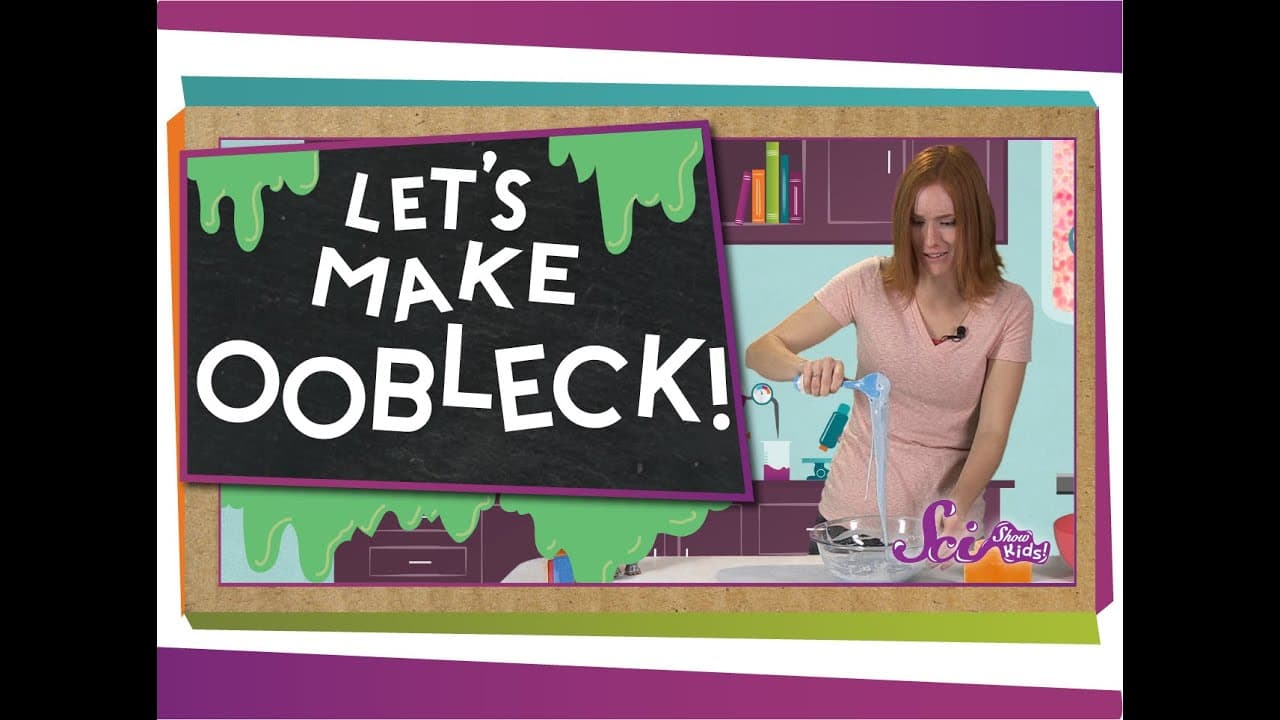
In this engaging compilation of four hands-on science activities, Jessi and her robot rat friend Squeaks demonstrate how to turn a stuck-inside day into an exciting laboratory adventure. The video guides young viewers through creating Oobleck (a non-Newtonian fluid), mixing "potions" to understand solutions versus suspensions, creating homemade watercolor paints using a chemical reaction, and engineering blanket forts to learn about physics and tension. Each segment is practical, easy to follow, and uses common household items. The video explores fundamental scientific concepts across chemistry, physics, and engineering. Key topics include states of matter (solids, liquids, and things in between), the properties of mixtures (dissolving vs. separating), chemical reactions (acids and bases fizzing), color theory, and physical forces like tension that hold structures together. The content seamlessly blends fun activities with rigorous scientific vocabulary and explanation. For educators, this video is a treasure trove of ready-to-use classroom demonstrations or stations. It is ideal for introducing units on matter, mixtures, or simple machines/forces. The step-by-step instructions allow teachers to pause and have students predict outcomes or follow along in real-time. It transforms abstract concepts like "suspension" or "tension" into tangible, memorable experiences that students can touch, see, and build themselves.

SciShow KidsSciShow Kids

16mins 1s

Video
How Engineers Build Strong Bridges

How Engineers Build Strong Bridges

In this engaging episode of SciShow Kids, host Jessi and her robot friend Squeaks explore the fascinating world of structural engineering to answer a viewer's question: "Why are bridges so strong?" The video breaks down complex engineering concepts into digestible lessons, using clear analogies, real-world examples, and physical demonstrations. It explains how engineers design structures to withstand heavy loads by utilizing specific shapes and materials. The video introduces three primary types of bridges: beam bridges, truss bridges, and suspension bridges. Through a failed experiment with a simple cardboard beam bridge, students learn about weight limits and structural failure. The narrative then pivots to solutions, highlighting how triangles are the secret weapon of strength in truss bridges and how the force of tension is harnessed in suspension bridges like the Golden Gate Bridge. This resource is highly valuable for elementary science and STEM classrooms. It provides a foundational understanding of physics concepts like force, tension, and compression without being overwhelming. Teachers can use this video to launch bridge-building challenges, geometry lessons about the strength of shapes, or social studies units on community infrastructure and the role of engineers.

SciShow KidsSciShow Kids

3mins 45s

Video
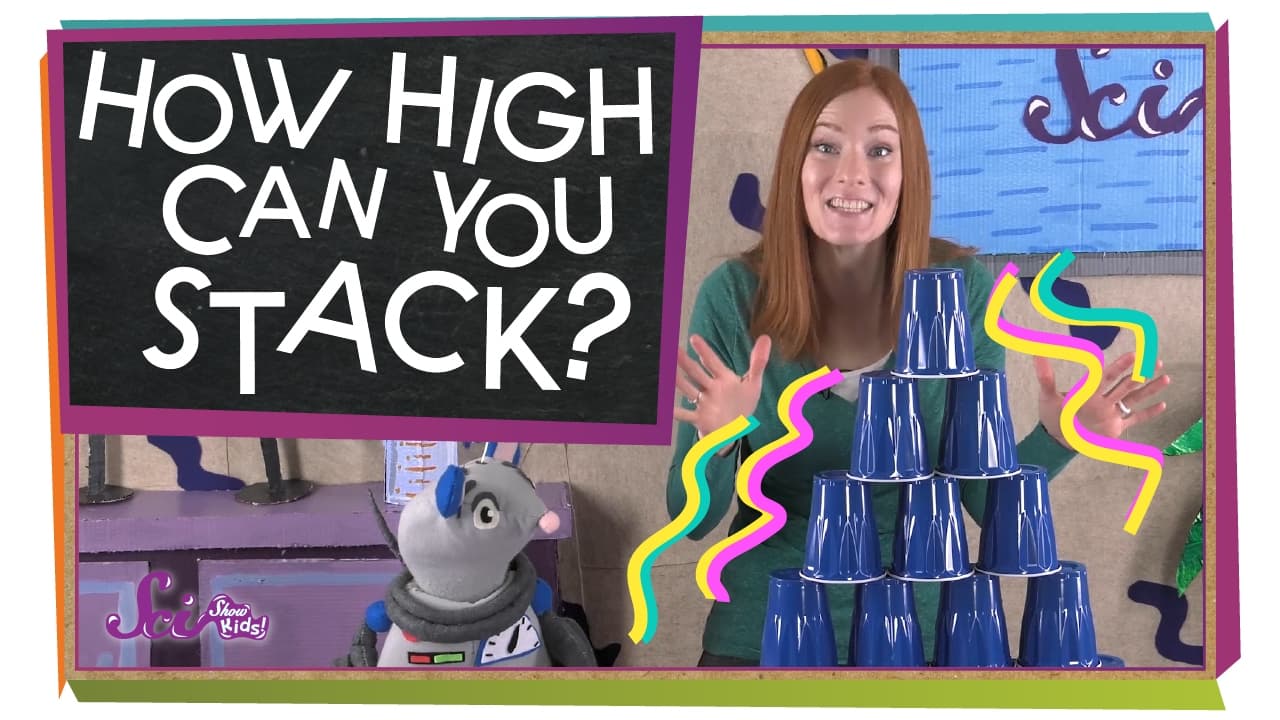
Building Tall Towers: The Power of Pyramids

Building Tall Towers: The Power of Pyramids

In this engaging engineering episode from SciShow Kids, host Jessi and her robot mouse friend Squeaks explore the physics of stability through a hands-on cup-stacking challenge. The video demonstrates the difference between unstable vertical stacks and stable pyramid structures, using clear visuals and simple analogies to explain why a wide base is crucial for building tall structures. The lesson moves from a failed attempt at a single column to a successful pyramid design, introducing the concept of weight distribution. Key themes include structural engineering, balance, geometry, and the scientific method of trial and error. The video explicitly connects abstract physics concepts to the students' own bodies (standing on one foot vs. two) and real-world architecture (skyscrapers). It breaks down the "why" behind structural failures in a way that is accessible to young learners. This video is an excellent resource for early elementary classrooms introducing STEM challenges or basic physics. It provides a perfect launchpad for low-cost, hands-on building activities using simple materials like plastic cups. Teachers can use it to introduce engineering vocabulary like "stable," "base," and "collapse," while encouraging students to predict outcomes and test their own designs.

SciShow KidsSciShow Kids

4mins 6s

Video
Investigating Matter: Observable and Measurable Properties

Investigating Matter: Observable and Measurable Properties

This educational video introduces students to the fundamental concepts of matter and its properties. Hosted by Sabrina Cruz from Crash Course Kids, the video uses a relatable analogy of playing with preschool blocks to explain complex scientific ideas. It defines "matter" as anything that has weight and takes up space, and "properties" as the characteristics used to describe that matter. The video distinguishes between qualitative properties (like color and shape) and quantitative properties (like length, width, height, volume, and weight) that can be measured using tools.

Crash Course KidsCrash Course Kids

4mins

Video
How We Use Senses to Describe Matter

How We Use Senses to Describe Matter

This educational video introduces young students to the fundamental scientific concept of matter and its properties. Through clear narration and relatable visual examples, it explains how we use our senses—specifically sight and touch—to observe and describe the world around us. The video breaks down abstract terms like "matter," "properties," and "texture" into child-friendly definitions, illustrating them with everyday objects like toys, animals, and household items. The content focuses on developing observational skills and building scientific vocabulary. Key themes include identifying physical attributes such as shape, size, color, hardness, and softness. The video specifically contrasts opposing textures (smooth vs. rough, hard vs. soft) to help students understand how to differentiate between materials based on tactile evidence. For educators, this video serves as an excellent hook for physical science units on matter or the five senses. It models scientific inquiry by encouraging viewers to look closely and touch objects to gather information. The clear examples provide a solid foundation for classroom activities involving sorting, classifying, and describing objects, making it a valuable tool for early elementary science curricula.

Next Generation ScienceNext Generation Science

1min 51s

Video
Identifying Natural and Artificial Sources of Light

Identifying Natural and Artificial Sources of Light

This educational science video introduces primary school students to the concept of light sources, clearly distinguishing between objects that produce their own light and those that do not. Through a series of high-quality visuals ranging from sunny orchards to bioluminescent fireflies, the narrator explains the definition of a light source. The video categorizes these sources into natural examples like the Sun, lightning, and stars, and artificial examples used by humans such as light bulbs, car headlights, and televisions. A key scientific concept addressed is the distinction between emitting and reflecting light, specifically using the Moon as a case study. The video corrects the common misconception that the Moon is a source of light, explaining that it merely reflects the Sun's rays. This critical distinction helps students build a more accurate understanding of astronomical bodies and the physics of light. Teachers can use this video as an engaging hook for a unit on energy, physics, or day and night cycles. It provides clear visual examples that can anchor class discussions and sorting activities. The pacing is suitable for young learners, and the 'silent quiz' section near the end—showing fireworks, divers, and candles without narration—offers an excellent opportunity for teachers to pause and assess student understanding in real-time.

Next Generation ScienceNext Generation Science

1min 52s

Video
Why Is the Sky Blue? Understanding Light and Color

Why Is the Sky Blue? Understanding Light and Color

This engaging science video from SciShow Kids tackles one of the most common questions children ask: "Why is the sky blue?" Hosted by Jessi and her robot friend Squeaks, the video simplifies complex physics concepts like the visible light spectrum and atmospheric scattering into age-appropriate explanations. Using a mix of animation and real-world demonstrations, it explains that sunlight, while appearing white, actually contains all colors of the rainbow. The content covers key topics including the composition of white light, how prisms refract light to reveal the color spectrum, and the nature of Earth's atmosphere. It introduces the concept of air being made of tiny, invisible particles and demonstrates how these particles interact with sunlight. The core explanation focuses on Rayleigh scattering—simplified here as "scattering" or "bouncing"—showing how blue light waves scatter more easily than other colors when hitting air particles, painting the sky blue. For educators, this video serves as an excellent introduction to units on light, color, or Earth's atmosphere. It provides clear visual metaphors, such as comparing mixing paint to mixing light, and offers a tangible demonstration using a prism that can be replicated in the classroom. The video encourages observation and inquiry, making it a perfect launchpad for hands-on experiments about light refraction and atmospheric science.

SciShow KidsSciShow Kids

2mins 51s

Video
How Light Energy Travels and Interacts with Matter

How Light Energy Travels and Interacts with Matter

This engaging educational video introduces students to the fundamental concepts of light energy, explaining its nature, speed, and how it interacts with the material world. The lesson begins by defining light as a form of energy that travels in straight lines called rays, highlighting the Sun as our primary source and illustrating the immense speed at which light travels through space. Through clear visual examples and energetic narration, the host breaks down complex behaviors of light including reflection and refraction. The video dives deep into how we perceive our environment, demonstrating that sight is actually the result of light bouncing off objects and entering our eyes. It categorizes materials based on how they transmit light, defining key vocabulary such as transparent, translucent, and opaque with relatable real-world examples like windows, sunglasses, and walls. The concept of refraction is also explored, explaining optical illusions like a "broken" straw in water and how corrective lenses work. Teachers can utilize this video as a comprehensive introduction to optics and light energy for elementary and middle school science curriculums. The content effectively bridges the gap between abstract physical concepts and observable phenomena, making it an excellent launchpad for hands-on experiments involving mirrors, lenses, and shadow play. The clear definitions and "pause and think" moments provide natural breaks for classroom discussion and formative assessment.

Miacademy & MiaPrep Learning ChannelMiacademy & MiaPrep Learning Channel

8mins 8s

Video
Why We See the Moon During the Day

Why We See the Moon During the Day

This engaging video from SciShow Kids answers a common student inquiry: "Why can I see the moon during the day?" Through clear narration and helpful animations, the host breaks down the complex mechanics of the Earth-Sun-Moon system. The video explains foundational astronomical concepts, differentiating between Earth's daily rotation and the Moon's monthly orbit, while effectively demonstrating how the interaction of these movements allows the Moon to be visible in the daytime sky. Key themes include the rotation of Earth causing day and night, the concept of orbiting, and the physics of light reflection. A crucial distinction is made between the Sun as a source of light and the Moon as a reflector of that light. The video also introduces the concept of moon phases using kid-friendly analogies—comparing the changing shapes to a bitten cookie, a fingernail clipping, and a dinner plate—to explain that the Moon's shape doesn't actually change, only our view of its illuminated half does. For classroom application, this resource is invaluable for dispelling the misconception that the Moon acts solely as a "night light." It serves as a perfect launchpad for units on space systems, patterns in the sky, or the properties of light. Teachers can utilize the video's clear visual models to set up classroom demonstrations using globes and flashlights, or to initiate a long-term moon observation journal project where students track the moon's visibility during school hours.

SciShow KidsSciShow Kids

3mins 52s

Video
Why the Moon Turns Red: Understanding Lunar Eclipses

Why the Moon Turns Red: Understanding Lunar Eclipses

In this engaging episode of SciShow Kids, host Jessi takes young astronomers into the observatory to explore the phenomenon of a lunar eclipse. The video breaks down the celestial mechanics behind this event, explaining how the specific alignment of the Sun, Earth, and Moon creates a shadow that changes the Moon's appearance. It specifically addresses the "Blood Moon" phenomenon, answering the intriguing question of why the Moon turns red instead of going completely dark when it passes into Earth's shadow. The content covers key astronomical concepts including the definition of "lunar" and "eclipse," the orbital paths of the Earth and Moon, and the physics of light refraction through Earth's atmosphere. Through clear, colorful animations, students visualize the straight-line alignment required for an eclipse and learn why these events are visible only from certain parts of the world and at specific times. The video also importantly distinguishes between solar and lunar eclipses regarding eye safety. This resource is highly valuable for elementary science classrooms as it simplifies the complex 3D spatial relationships of celestial bodies into understandable 2D animations. It serves as an excellent introduction to units on space, light and shadows, or the solar system. Teachers can use this video to spark curiosity about the night sky, model orbital mechanics, or introduce basic optics concepts. While the video references specific dates from 2015, the scientific explanations remain evergreen and accurate.

SciShow KidsSciShow Kids

3mins 9s

Video
Exploring the Nature of Light and Electromagnetic Waves

Exploring the Nature of Light and Electromagnetic Waves

This educational video provides a comprehensive introduction to the physics of light, defining it as an oscillating electromagnetic wave. The instructor breaks down complex abstract concepts by first explaining electric and magnetic fields separately, using clear diagrams and real-world analogies like magnets and iron filings. The video then combines these concepts to visualize light as two perpendicular fields—electric and magnetic—oscillating together as they travel through space. The lesson delves into the specific wave properties of light, including wavelength, frequency, and amplitude. It effectively connects these mathematical and physical properties to human perception, explaining how wavelength and frequency determine the color we see, while amplitude determines the brightness. The video uses helpful animations, such as 3D graphs and water wave comparisons, to make these invisible phenomena easier to visualize. This resource is highly valuable for physical science and physics classrooms as it bridges the gap between static electricity/magnetism and wave theory. It is ideal for introducing the electromagnetic spectrum, teaching wave properties, or explaining the fundamental nature of light. The video includes a built-in review quiz and summary, making it a ready-to-use lesson component for checking student understanding of key physics vocabulary.

Miacademy & MiaPrep Learning ChannelMiacademy & MiaPrep Learning Channel

10mins

Video
How Land and Water Absorb the Sun's Heat

How Land and Water Absorb the Sun's Heat

This educational video from Crash Course Kids investigates the relationship between the sun's energy and the Earth's surface, specifically comparing how land and water absorb heat differently. Through the relatable example of a day at the beach, the host explains complex physical concepts like absorption and reflection in an accessible way. The video breaks down the path of solar energy from the sun's core to Earth, using clear visual aids like pie charts to show exactly how much energy reaches the surface versus what gets blocked or reflected by the atmosphere. The core scientific themes explored include heat energy transfer, the properties of matter (specifically color) in relation to light absorption, and the interaction between solar radiation and different terrestrial surfaces. A key focus is the concept that darker objects (like land/sand) absorb more heat than lighter objects (like water), which reflect more energy. This explains why sand feels hotter than the ocean on a sunny day despite receiving the same amount of sunlight. For educators, this video serves as an excellent anchor for units on Earth Science, weather patterns, or physical science regarding heat and light. It provides a visual and practical demonstration of differential heating, a foundational concept for understanding global weather systems, climate, and the water cycle. The use of clear definitions for terms like 'absorb' and 'reflect' makes it particularly useful for building scientific vocabulary in upper elementary grades.

Crash Course KidsCrash Course Kids

3mins 33s

Video
Exploring Light Energy and Its Sources

Exploring Light Energy and Its Sources

This educational video provides a comprehensive introduction to light energy for primary students, explaining what light is and why it is essential for life on Earth. Through clear narration and diverse visual examples, it defines light as a form of energy that allows us to see and distinguishes between darkness (the absence of light) and illumination. The video explores the sun as our primary light source while also introducing other natural sources like fire, lightning, and stars. The content breaks down the difference between natural and artificial light sources, offering relatable examples of human-made lights such as lamps, car headlights, and streetlights. It expands the concept of light beyond just vision by discussing how light is used for communication (traffic signals, lighthouses) and entertainment (television, computer screens). This helps students understand the multifaceted role light plays in modern society. Finally, the video connects light energy to biological processes, explaining how the sun's energy is captured by plants to create food, which is then passed on to animals and humans. This makes the video an excellent resource for science lessons covering energy forms, the senses, environmental science, and the basic food chain, helping students grasp the fundamental connection between the sun and all life on Earth.

Next Generation ScienceNext Generation Science

3mins 28s

Video
Understanding Time Dilation and Relativity

Understanding Time Dilation and Relativity

This educational video provides an engaging introduction to the complex physics concepts of time dilation and relativity. Using the popular film Interstellar as a hook, the narrator explains how time is not a fixed constant but changes based on velocity and gravity. The video breaks down Albert Einstein's theories into two main sections: Special Relativity, which deals with speed and the constant nature of light, and General Relativity, which connects acceleration and gravity to the warping of time.

Miacademy & MiaPrep Learning ChannelMiacademy & MiaPrep Learning Channel

10mins 54s

Video
How to Make a Rainbow and Why They Form

How to Make a Rainbow and Why They Form

This engaging video from SciShow Kids guides young students through the science of rainbows, combining a hands-on experiment with clear conceptual explanations. Host Jessi demonstrates how to create a personal rainbow indoors using simple household items—a glass of water, paper, and sunlight—before diving into the physics behind the phenomenon. The video transitions from this concrete activity to abstract concepts, using animations to visualize how white light is composed of multiple colors that separate when passing through water.

SciShow KidsSciShow Kids

3mins 17s

Video
The Super Strength of the Mantis Shrimp

The Super Strength of the Mantis Shrimp

Hosted by Jessi and her robot rat friend Squeaks, this episode of SciShow Kids explores the fascinating world of the mantis shrimp. While many marine animals are commonly found in aquariums, the video explains why the mantis shrimp is a rare sight: its incredible strength allows it to punch hard enough to break standard glass. The video introduces viewers to this small but mighty crustacean, detailing its physical characteristics, habitats, and behavior.

SciShow KidsSciShow Kids

4mins 8s

Video
How We Explore Space: Telescopes, Satellites, and Rovers

How We Explore Space: Telescopes, Satellites, and Rovers

This educational video provides a comprehensive overview of the history, methods, and technologies humanity has developed to explore the cosmos. Starting with our innate curiosity about the stars, the narration guides viewers through the evolution of space exploration tools, from early optical telescopes to the advanced James Webb Space Telescope. It categorizes exploration into distinct methods: ground-based telescopes, orbiting satellites, deep-space probes, planetary rovers, and human space missions.

Next Generation ScienceNext Generation Science

12mins 4s

Video
Why Dark Colors Get Hotter in the Sun

Why Dark Colors Get Hotter in the Sun

In this engaging episode of SciShow Kids, host Jessi and her robot friend Squeaks face a common winter dilemma: how to keep a mini snowman from melting. After realizing it's too warm inside their fort, they venture outside to find a suitable cold spot. Since there is no shade available, they must choose between two sunny patches of ground: one covered in dark rocks and one covered in light rocks. This setup serves as the perfect hook for a scientific investigation into how color affects temperature.

SciShow KidsSciShow Kids

4mins 4s

Video
Introduction to Modern Physics: Quantum Mechanics and Relativity

Introduction to Modern Physics: Quantum Mechanics and Relativity

This video serves as an engaging introduction to the transition from Classical Physics to Modern Physics, covering the major scientific shifts that occurred in the early 20th century. It begins by contrasting pre-1900s physics (electricity and magnetism) with the revolutionary discoveries that followed, specifically addressing the limitations of classical theories in explaining phenomena like the nature of light. The instructor uses historical anecdotes, such as Max Planck's advisor advising him against studying physics, to highlight how drastically the scientific landscape changed. The content explores three pillars of Modern Physics: Quantum Mechanics, Special Relativity, and General Relativity. It breaks down complex concepts using accessible animations and analogies, explaining the Photoelectric Effect (wave-particle duality), the Michelson-Morley experiment (disproving the luminiferous aether), and the counter-intuitive nature of time dilation. The video also touches upon the Big Bang theory as an application of General Relativity to cosmology. For educators, this video is an excellent conceptual overview that bridges the gap between standard mechanics and advanced theoretical physics. It provides a narrative structure to physics history, making it ideal for introducing a unit on modern physics or light. The included true/false assessment at the end offers immediate checking for understanding, while the clear visualizations of electromagnetic waves and the twin paradox help demystify abstract ideas for high school students.

Miacademy & MiaPrep Learning ChannelMiacademy & MiaPrep Learning Channel

9mins 17s

Video
Why Water Bends Light: Exploring Refraction

Why Water Bends Light: Exploring Refraction

This engaging science video introduces students to the concept of light refraction through simple, high-impact experiments. Hosted in the 'Lighthouse Lab', the presenter demonstrates how light behaves differently when traveling through various materials, specifically focusing on the transition between air and water. The video uses clear visuals and real-world demonstrations to make abstract physics concepts concrete for young learners. The core themes explore the properties of light, specifically that light travels in straight lines but changes speed and direction when moving through different matter. The video defines 'refraction' and explains the optical illusions it creates, such as a pencil appearing bent in water or an arrow changing direction when viewed through a cylindrical jar. It also touches on how lenses, like magnifying glasses, utilize refraction to alter how we see objects. For educators, this video serves as an excellent hook for a unit on light and optics. The experiments demonstrated—the bent pencil and the reversing arrow—are easy to replicate in the classroom with minimal materials. The video includes a clear ray diagram animation that helps students visualize what is happening to light rays that they cannot see with the naked eye, bridging the gap between observation and theoretical understanding.

Next Generation ScienceNext Generation Science

3mins 13s

Video
From Nebula to White Dwarf: The Life Cycle of a Star

From Nebula to White Dwarf: The Life Cycle of a Star

This educational video takes students on a cosmic journey through the life cycle of an average-sized star, similar to our own Sun. It begins by explaining the birth of stars within stellar nebulas, detailing how gravity pulls gas and dust together to form protostars. The narrator simplifies complex astrophysical concepts, such as nuclear fusion, using clear animations to show how hydrogen atoms fuse into helium to release the immense energy that powers stars. Key themes include the transformation of matter and energy, the influence of gravity in space, and the stages of stellar evolution. The video explicitly differentiates between average-sized stars and massive stars, focusing on the specific path of average stars as they evolve from main sequence stars into expanding red giants. It concludes by describing the final stages of death for these stars: the shedding of outer layers to form planetary nebulas and the cooling of the core into a white dwarf. This resource is highly valuable for middle school science classrooms as it breaks down abstract space concepts into digestible stages. The clear definitions, visual diagrams of atomic fusion, and step-by-step lifecycle flowcharts make it an excellent tool for visual learners. Teachers can use this video to introduce units on astronomy, matter and energy, or the history of the universe, providing a solid foundation for understanding the life expectancy and eventual fate of our own solar system.

Miacademy & MiaPrep Learning ChannelMiacademy & MiaPrep Learning Channel

7mins 46s

Video
The Science of Electromagnetic Waves and Radiation

The Science of Electromagnetic Waves and Radiation

This engaging educational video provides a comprehensive introduction to electromagnetic waves, breaking down complex physics concepts into accessible segments using humor and relatable analogies. The lesson begins by demystifying how microwave ovens work, using this common appliance as a springboard to explain the fundamental nature of electromagnetic radiation. It details how vibrating electric and magnetic fields regenerate each other to allow energy to travel through a vacuum, distinguishing these waves from mechanical waves like sound.

Miacademy & MiaPrep Learning ChannelMiacademy & MiaPrep Learning Channel

8mins 34s

Video
How Light and Sound Work Together

How Light and Sound Work Together

This educational video provides a comprehensive review of the fundamental concepts of light and sound energy. Hosted by a teacher named Andrew and his animated friend Bally, the lesson breaks down abstract physics concepts into concrete examples. The video explains that sound is energy created by vibrations that travel through the air to our ears, using examples like stereo speakers and kitchen appliances. It then transitions to light, defining it as waves that travel from a source, bounce off objects, and enter our eyes to allow vision, while also explaining how shadows are formed when light is blocked. The video connects these two distinct forms of energy by illustrating how they work together in the real world to facilitate communication and safety. Specific examples include emergency vehicles using sirens (sound) and flashing lights (light) to warn traffic, and smartphones using ringtones and lighted screens to alert users of incoming calls. This synthesis helps students understand not just the definitions of energy forms, but their practical applications in daily life. Teachers can use this video as a perfect review tool after teaching units on physical science, specifically energy, waves, or the five senses. It effectively reinforces vocabulary like "vibration," "light source," and "communicate" through clear visuals and diagrams. The mix of live-action segments in a classroom setting and animated explanatory diagrams makes it highly engaging for early elementary students, bridging the gap between scientific theory and observable phenomena.

Kids AcademyKids Academy

2mins 12s

Video
Exploring the Electromagnetic Spectrum: From Radio Waves to Gamma Rays

Exploring the Electromagnetic Spectrum: From Radio Waves to Gamma Rays

This educational video provides a comprehensive overview of the electromagnetic spectrum, explaining the physics of light as a varying electromagnetic field. It systematically breaks down the spectrum into its constituent parts—radio waves, microwaves, infrared, visible light, ultraviolet, X-rays, and gamma rays—while categorizing them by both wavelength and energy levels. The narrator uses clear visual aids and mnemonics to help students understand the relationship between wave properties and their placement on the spectrum. The content explores real-world applications for each type of wave, connecting abstract physics concepts to tangible technologies students encounter daily. Examples range from cell phones and microwave ovens to medical imaging and radiation therapy. The video also addresses the interaction between light and matter, explaining phenomena like color perception (reflection vs. absorption) and the biological effects of high-energy radiation, such as DNA damage and cancer treatment. This resource is highly valuable for high school physics and physical science classrooms. It bridges the gap between theoretical wave mechanics and practical utility, making it an excellent tool for introducing the electromagnetic spectrum. Teachers can use the built-in quiz at the end to check for understanding, and the clear segmentation allows for pausing and discussing specific types of radiation in depth.

Miacademy & MiaPrep Learning ChannelMiacademy & MiaPrep Learning Channel

11mins 38s

Video
How Refraction Bends Light and Tricks Our Eyes

How Refraction Bends Light and Tricks Our Eyes

This engaging video from the Lighthouse Lab introduces students to the concept of refraction through simple, high-impact experiments. The host demonstrates how light behaves differently when traveling through various mediums, using everyday objects like a pencil, a beaker of water, and a magnifying glass to visualize these abstract concepts. The video effectively breaks down the physics of why objects appear bent or distorted in water, explaining the relationship between the speed of light and the density of matter. Key themes include the properties of light, the definition of refraction, and optical illusions. The video uses clear ray diagrams to illustrate how our brains interpret light traveling in straight lines, even when it has actually bent. It also touches upon how lenses work to magnify objects and how cylindrical containers of water can act as lenses to reverse images. For educators, this resource serves as an excellent hook for a unit on light and optics. It provides ready-to-replicate experiments that require minimal materials, making it perfect for classroom demonstrations or station-based activities. The inclusion of a 5-question review quiz at the end helps solidify student understanding and allows for immediate formative assessment.

Next Generation ScienceNext Generation Science

3mins 59s

Video
Classifying Living and Non-Living Things in Our World

Classifying Living and Non-Living Things in Our World

This educational video introduces students to the vast diversity of the world around them, focusing on the fundamental distinction between living and non-living things. Through high-quality footage of nature and human-made environments, viewers are taken on a visual journey that explores plants, animals, fungi, and microorganisms, contrasting them with non-living elements like rocks, water, and air. The narrative explains that while these categories differ, they are deeply interconnected, as living organisms rely on non-living elements to survive. The video covers key scientific themes including biological classification, the basic needs of living organisms (food, water, air, reproduction, growth), and the properties of non-living materials (wood, metal, plastic, etc.). It introduces the concept of classifying objects based on similarities and differences to make sense of the world's complexity. Additionally, it touches on material science by describing properties like strength, flexibility, and buoyancy. For educators, this video serves as an excellent anchor for units on biology, environmental science, or matter. It provides clear visual examples that help students practice observation and classification skills. The content naturally leads to lessons on sorting living vs. non-living items, investigating material properties, or discussing environmental stewardship, making it a versatile tool for early elementary science curriculums.

Next Generation ScienceNext Generation Science

4mins 20s

Video
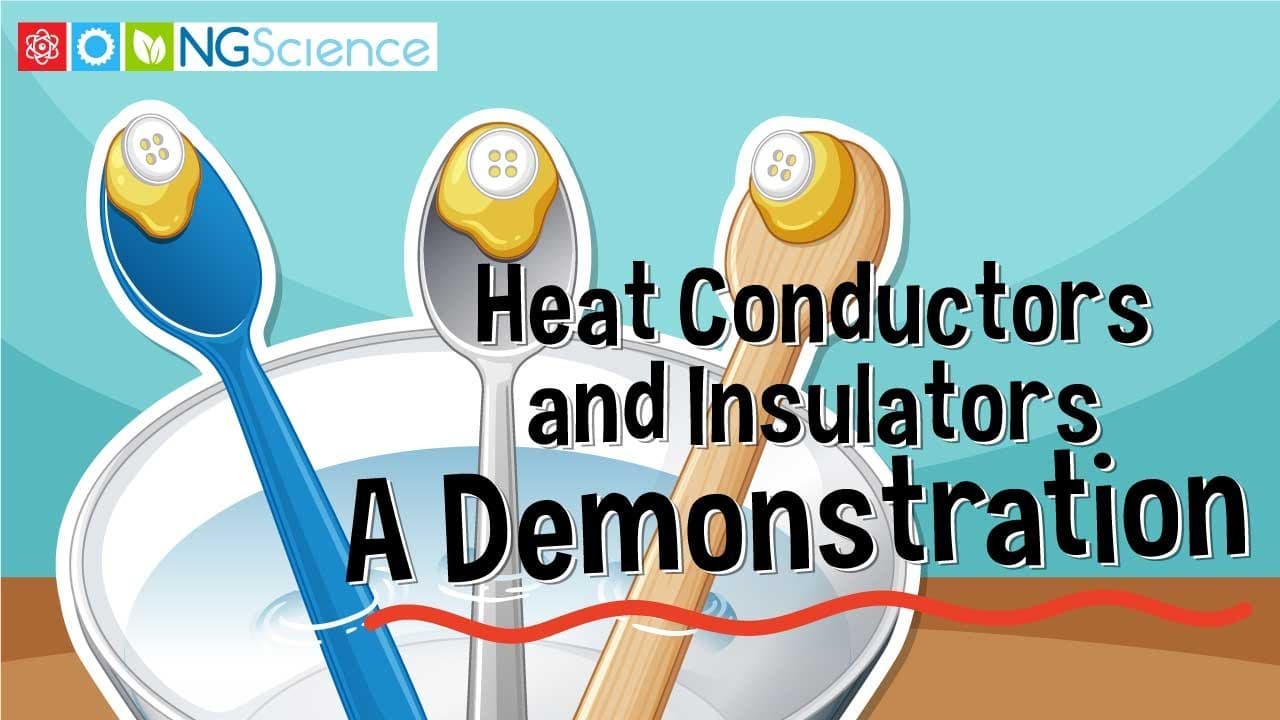
How Different Materials Conduct Heat

How Different Materials Conduct Heat

This educational video provides a clear, hands-on demonstration of heat conductivity using a simple comparative experiment. The video investigates how thermal energy travels differently through three distinct materials: metal, wood, and plastic. By placing spoons made of these materials into hot water, viewers observe which material conducts heat most effectively to melt a piece of margarine holding a button in place.

Next Generation ScienceNext Generation Science

2mins 37s

Video
Testing Which Metals Are Magnetic

Testing Which Metals Are Magnetic

This concise science demonstration investigates the relationship between magnets and various metal objects to determine which materials possess magnetic properties. Through a clear, step-by-step experiment, the narrator tests common household items—like keys, coins, and safety pins—against a U-shaped magnet. The video explicitly tests the hypothesis that "all metals are magnetic" by showing that while all the test objects are metallic, only some interact with the magnet. The core themes explore the physical properties of matter, specifically magnetism and material composition. It introduces the fundamental scientific concept that magnetism is a property specific to certain metals (ferromagnetic materials) rather than a general property of all metals. The video concludes by identifying specific elements—iron, nickel, and cobalt—that are magnetic, contrasting them with non-magnetic metals like aluminum, copper, and silver. For educators, this video serves as an excellent hook or demonstration for units on physical science and properties of matter. It directly addresses the common student misconception that magnets stick to all metals. The clear visual evidence of the key and coin failing to stick provides a memorable "discrepant event" that sparks inquiry. It lays the groundwork for understanding material composition and classification, making it valuable for early elementary science curriculums.

Next Generation ScienceNext Generation Science

1min 53s

Video
Sink or Float: Testing Common Objects

Sink or Float: Testing Common Objects

This engaging science video conducts a classic "Sink or Float" experiment, testing eleven common household objects to see how they interact with water. Using a clear tank and blue-tinted water for high visibility, the video systematically introduces an object, demonstrates dropping it into the water, and clearly labels the result as either "Sink" or "Float." The consistent pacing and clear visual cues make it an excellent resource for young learners to practice observation and prediction skills. The video explores key themes of buoyancy, density (at an introductory level), and material properties. It contrasts materials that typically sink, such as metal (lead ball, safety pin, paper clip) and dense rubber, with materials that float, like wood and certain plastics. It also implicitly addresses the concept that size does not determine buoyancy, as small heavy items sink while larger light items like the wooden block float. For educators, this video serves as a perfect digital demonstration to anchor a physical science unit on properties of matter. It allows teachers to pause before each drop to solicit student predictions, turning a passive viewing experience into an interactive game. It can be used to introduce the scientific method (predict, observe, record), prompt discussions about why certain materials float while others sink, or serve as a hook before a hands-on classroom water table activity.

Next Generation ScienceNext Generation Science

3mins 35s

Video
Comparing Heat Conductivity: Metal vs. Glass Experiment

Comparing Heat Conductivity: Metal vs. Glass Experiment

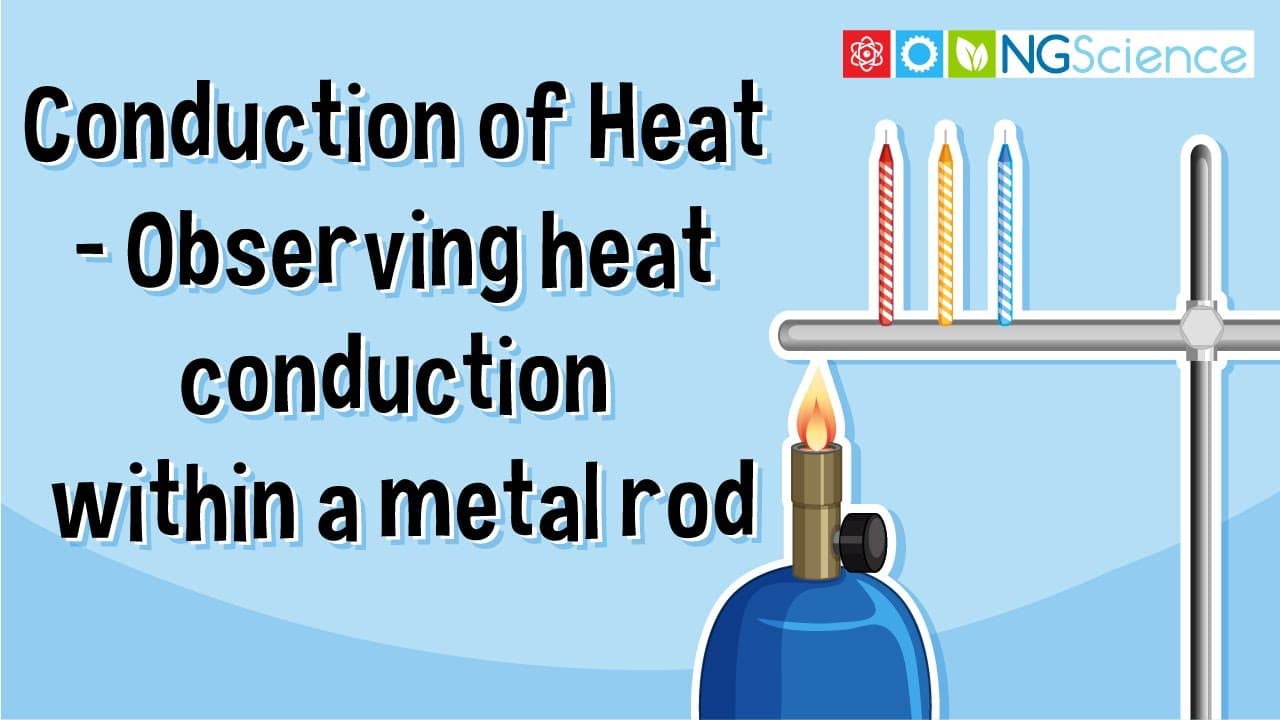
This concise science demonstration visualizes the concept of thermal conductivity by comparing how heat travels through metal versus glass. Set against a high-contrast background, the video features a clear experiment where candles are attached to metal and glass rods using wax. As a central heat source is applied, viewers can observe the progressive melting of the wax on the metal rod, demonstrating how heat energy transfers through conductive materials over time. The video introduces key physics vocabulary including thermal energy, conductors, insulators, and heat transfer. It explicitly addresses the direction of heat flow (from hot to cold) and provides a side-by-side comparison that makes the abstract concept of material properties concrete for young learners. The distinct visual result—candles falling off the metal rod while staying put on the glass rod—serves as immediate, observable evidence. Teachers can use this video to anchor lessons on energy transfer, material science, or the scientific method. It provides an excellent phenomenon for students to observe, predict, and explain. The clear setup allows for easy replication in a lab setting, or serves as a safe virtual alternative for classrooms without access to Bunsen burners. It naturally leads into discussions about why we use specific materials for cooking pans versus handles, or building insulation.

Next Generation ScienceNext Generation Science

2mins 15s

Video
How Light Energy Travels and Interacts with Matter

How Light Energy Travels and Interacts with Matter

This engaging educational video introduces students to the fundamental concepts of light energy, explaining its nature, speed, and how it interacts with the material world. The lesson begins by defining light as a form of energy that travels in straight lines called rays, highlighting the Sun as our primary source and illustrating the immense speed at which light travels through space. Through clear visual examples and energetic narration, the host breaks down complex behaviors of light including reflection and refraction. The video dives deep into how we perceive our environment, demonstrating that sight is actually the result of light bouncing off objects and entering our eyes. It categorizes materials based on how they transmit light, defining key vocabulary such as transparent, translucent, and opaque with relatable real-world examples like windows, sunglasses, and walls. The concept of refraction is also explored, explaining optical illusions like a "broken" straw in water and how corrective lenses work. Teachers can utilize this video as a comprehensive introduction to optics and light energy for elementary and middle school science curriculums. The content effectively bridges the gap between abstract physical concepts and observable phenomena, making it an excellent launchpad for hands-on experiments involving mirrors, lenses, and shadow play. The clear definitions and "pause and think" moments provide natural breaks for classroom discussion and formative assessment.

Miacademy & MiaPrep Learning ChannelMiacademy & MiaPrep Learning Channel

8mins 8s

Video
Exploring Material Hardness: The Scratch Test

Exploring Material Hardness: The Scratch Test

This video provides a clear, practical demonstration of how to test the physical property of hardness using a simple scratch test. Through a series of systematic trials, a narrator uses a metal nail to attempt to scratch various everyday objects, including a wax candle, plastic brick, glass beaker, and ceramic tile. The results are clearly stated and visually demonstrated, allowing viewers to see which materials resist abrasion and which do not. The content focuses on key scientific themes such as observing physical properties, conducting fair tests, and categorizing matter. It introduces the concept that materials have distinct characteristics that determine their suitability for different uses. The repetitive structure of prediction and observation reinforces the scientific method for young learners. For educators, this video is an excellent tool for introducing units on matter and materials. It models a safe and replicable experiment that can be adapted for the classroom. Teachers can use it to spark discussions about why certain objects are made of specific materials (e.g., why windows are made of glass but candles are made of wax) and to practice the skills of prediction and data recording.

Next Generation ScienceNext Generation Science

2mins 41s

Video
Choosing Materials Based on Their Properties

Choosing Materials Based on Their Properties

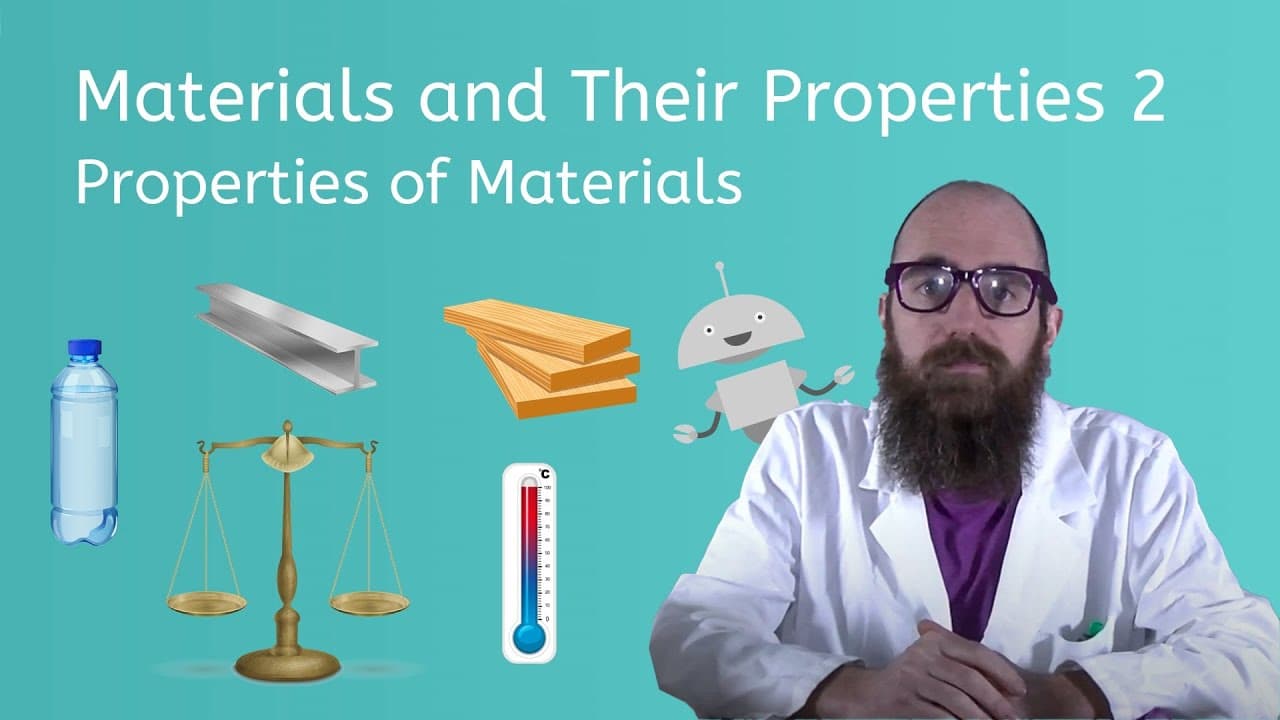
In this engaging science video, Jesse helps students understand the physical properties of matter by solving practical problems around his house. He explores the concept of 'properties'—observable and measurable qualities of materials—by comparing glass, plastic, and wood to determine the best material for new windows. He breaks down how we identify these properties using our five senses and various scientific tools like scales, rulers, and thermometers. The video illustrates the definition of properties such as transparency, durability, flexibility, weight, and texture. It demonstrates how these specific characteristics make certain materials suitable for specific jobs while others would fail. For example, the video contrasts transparent materials needed for windows against opaque materials, and waterproof materials needed for rain protection against absorbent ones. This resource is highly valuable for early elementary science classrooms introducing the properties of matter. It models the scientific process of observation and decision-making based on evidence. Teachers can use this video to launch lessons on material science, sensory observation, or engineering design challenges where students must select appropriate materials for a specific task based on their physical properties.

Miacademy & MiaPrep Learning ChannelMiacademy & MiaPrep Learning Channel

6mins 35s

Video
How to Identify Electrical Conductors and Insulators

How to Identify Electrical Conductors and Insulators

This educational video provides a clear and practical introduction to electrical conductors and insulators. It begins by defining the core property that distinguishes these two categories: the ability to allow electricity to flow through a material. Through a series of clear demonstrations using a simple electrical circuit, the video tests various common household items—including aluminum foil, a rubber band, a metal screw, a quarter, and a plastic block—to determine their conductivity.

Next Generation ScienceNext Generation Science

2mins 23s

Video
Making Oobleck: The Liquid That Acts Like a Solid

Making Oobleck: The Liquid That Acts Like a Solid

In this engaging episode of SciShow Kids, host Jessi introduces young scientists to the fascinating world of non-Newtonian fluids through a classic experiment: making Oobleck. The video begins by explaining the origin of the name "Oobleck" from a Dr. Seuss story before diving into the core scientific concepts. Jessi uses clear visuals and demonstrations to define the standard states of matter—solids and liquids—showing how solids keep their shape while liquids take the shape of their container. She then presents Oobleck as a special substance that breaks these rules by behaving as both a solid and a liquid depending on how force is applied. The video covers key scientific themes including states of matter, material properties, and basic chemistry. It provides a clear comparison between how normal objects (like a toy dinosaur or water) behave versus the unique properties of the cornstarch and water mixture. The narrative guides viewers through the scientific method of observation and experimentation, encouraging them to touch, squeeze, and release the substance to witness the physical changes firsthand. The video also emphasizes safety and responsibility, specifically instructing on the proper disposal of the mixture to avoid plumbing issues. For educators, this video serves as an excellent anchor for lessons on matter and physical science. It offers a low-cost, high-engagement hands-on activity that is accessible for early elementary students while demonstrating complex concepts in a tangible way. The clear step-by-step instructions make it easy to replicate in the classroom, and the connection to children's literature provides a cross-curricular opportunity to blend science with reading. The video's emphasis on observation skills makes it a valuable tool for introducing the basics of scientific inquiry.

SciShow KidsSciShow Kids

4mins 53s

Video
Comparing and Ordering Mass Using a Balance Scale

Comparing and Ordering Mass Using a Balance Scale

This educational science video demonstrates the concept of mass versus volume and how to use a pan balance scale to compare the mass of objects. Using three balls of similar size but different materials (a cricket ball, a tennis ball, and a rubber ball), the video guides viewers through a series of pairwise comparisons to determine their relative weights. It explicitly distinguishes between size (volume) and mass, helping students understand that objects of the same size can have different masses. The video employs a step-by-step scientific method, isolating variables by comparing two objects at a time. It visually depicts how a balance scale tips towards the object with greater mass and rises for the object with less mass. The narrative builds to a final conclusion where all three objects are arranged in order from least to greatest mass based on the evidence gathered from the experiments. For educators, this resource serves as an excellent introduction to measurement, data collection, and the physical properties of matter. It provides a clear visual model for using scientific tools and logic to solve a problem. It is particularly useful for introducing the concept of density (implicitly) and mass without needing complex formulas, making it accessible for early elementary students.

Next Generation ScienceNext Generation Science

1min 55s

Video
How Heat Moves Through Different Materials

How Heat Moves Through Different Materials

This educational science video provides a clear, practical introduction to thermal energy transfer by exploring the difference between heat conductors and insulators. Using familiar kitchen settings, it connects abstract scientific concepts to everyday life, explaining why cooking pots are made of metal while their handles are often made of plastic or wood. The narration simplifies complex ideas like thermal energy transfer into easy-to-understand definitions suited for upper elementary students. The video explores the specific properties of materials, distinguishing between "good conductors" that allow heat to pass through easily and "insulators" that block heat transfer. It culminates in a comparative science experiment using metal, wood, and plastic spoons placed in hot water. This demonstration visually proves the concepts discussed by showing how heat travels up the metal spoon to melt butter, while the insulating spoons remain cool enough to keep the butter solid. For educators, this resource serves as an excellent hook for units on energy, matter, or physical properties. It offers a replicable experiment that can be performed in the classroom to teach the scientific method (prediction, observation, conclusion). The real-world examples help students understand that material selection in engineering and design is purposeful and based on scientific properties.

Next Generation ScienceNext Generation Science

4mins 24s

Video
How Magnets Work and What They Attract

How Magnets Work and What They Attract

This engaging video from SciShow Kids introduces young learners to the fascinating world of magnets. Hosted by Jessi and her robot friend Squeaks, the lesson breaks down the fundamental concepts of magnetism, starting with the basic observation that magnets stick to certain objects without glue or tape. It explains scientific terms like "force" (push or pull) and introduces the concept of a "magnetic field"—the invisible area around a magnet where its force can be felt. The video explores the properties of magnets through clear demonstrations and an interactive guessing game. Viewers watch as Jessi tests different materials—wood, plastic, and various metals—to see which ones interact with a magnet. This experimental approach helps students understand that while magnets attract metals, they don't attract *all* metals. The video specifically identifies "iron" as the key magnetic metal found in common items like paperclips, tools, and refrigerator doors. Ideal for early elementary science curriculums, this resource transforms abstract physics concepts into tangible learning experiences. It demonstrates how to conduct simple experiments, encouraging students to make predictions (hypotheses) and test them. The content naturally leads to classroom activities involving sorting, classification, and hands-on exploration of magnetic forces, making it a perfect launchpad for STEM units on forces and motion or material properties.

SciShow KidsSciShow Kids

5mins 1s

Video
How to Observe and Sort Materials by Their Properties

How to Observe and Sort Materials by Their Properties

This educational video introduces young students to the fundamental scientific skill of observing and classifying matter based on physical properties. A friendly teacher guides viewers through hands-on demonstrations of sorting common classroom objects by observable characteristics such as size, color, and texture (hard vs. soft). The video emphasizes that organizing items into groups helps us better understand the world around us. The lesson progresses from simple sorting to critical thinking about material science, exploring the concept of "form follows function." Through a humorous animated sequence and real-world examples, students learn why specific materials are chosen for certain objects—for example, why floors must be hard while clothing should be soft. The video moves outdoors to demonstrate the properties of stone versus wood, specifically illustrating concepts of density and buoyancy through a sink-or-float experiment. Teachers can use this video to launch units on matter, sorting, and classification. It provides a clear model for hands-on classroom activities where students can practice grouping objects. The content effectively bridges basic observation skills with early engineering concepts, encouraging students to question why objects are made of specific materials and predicting how those materials will behave in different environments.

Kids AcademyKids Academy

5mins 43s

Video
Comparing Mass Using a Balance Scale

Comparing Mass Using a Balance Scale

This educational video provides a clear, visual demonstration of how to measure and compare mass using a simple two-pan balance scale. Through a step-by-step experiment using identical toy building blocks as standardized units of mass, the narrator explains the fundamental relationship between the amount of matter (number of blocks) and the resulting mass. The video progresses from showing equal mass, where the balance remains level, to unequal mass distributions, where the scale tips toward the heavier side. Key themes explored include the physical properties of matter, the concept of mass versus weight (implicitly), and the function of scientific tools like the balance scale. It visually reinforces mathematical concepts of equality, comparison (greater than/less than), and units of measurement. The content bridges the gap between abstract definitions of mass and concrete, observable phenomena that young learners can easily grasp. For educators, this video serves as an excellent hook or foundational lesson for early elementary science units on matter or math units on measurement. It models scientific observation and prediction, allowing teachers to pause before the scale tips to ask students for hypotheses. The use of familiar toy blocks makes the experiment easily reproducible in the classroom, encouraging hands-on learning where students can test their own predictions about mass using similar manipulatives.

Next Generation ScienceNext Generation Science

1min 50s

Video
Identifying and Sorting Objects by Their Materials

Identifying and Sorting Objects by Their Materials

This educational video introduces young learners to the scientific concepts of "objects" and "materials" by distinguishing between items themselves and the substances they are made from. Hosted by Jesse, the lesson begins with simple, informal language like "things" and "stuff" before transitioning to the correct scientific terminology. Through clear demonstrations with everyday items like a toy car, a bowl, and a pencil, viewers learn to identify an object (e.g., a bowl) and its corresponding material (e.g., glass). The video explores key themes of observation, classification, and physical science properties. It guides students through identifying common materials including wood, metal, plastic, glass, fabric, and rubber. The lesson progresses from simple identification to a sorting activity where a variety of new objects—such as spoons made of different materials—are categorized into groups based on what they are made of. It concludes with a more complex analysis of a pencil, demonstrating how a single object can be comprised of multiple materials. Ideally suited for early elementary science curriculums, this video provides excellent classroom application for teaching properties of matter. The host's pacing allows for natural pause-and-play opportunities where teachers can ask students to predict answers before they are revealed. The video models scientific thinking by rejecting arbitrary sorting methods (like size) in favor of sorting by material properties, and ends with an actionable prompt for a real-world scavenger hunt.

Miacademy & MiaPrep Learning ChannelMiacademy & MiaPrep Learning Channel

7mins 38s

Video
How to Identify Unknown Substances Using Properties

How to Identify Unknown Substances Using Properties

In this engaging episode of Crash Course Kids, host Sabrina Cruz explores how physical properties can be used to identify unknown substances. Starting with a relatable scenario about choosing candy from a gift bag without looking, the video introduces the scientific definition of 'properties' and explains how scientists use observable traits to categorize matter. It defines key terms like 'substance' and 'element' while reviewing properties of common groups like metals (shiny, conductive, magnetic) and gases (shapeless, transparent). The video transitions into a practical 'investigation' segment that demonstrates how to distinguish between similar-looking substances. It first tackles two white powders (sugar and sand) by testing their solubility in water, emphasizing the critical safety rule of 'No Tasting.' Then, using a blindfold challenge, it distinguishes between a metal nail and a gummy frog based on hardness, flexibility (malleability), and magnetism. This hands-on approach models scientific inquiry and deductive reasoning. Ideally suited for upper elementary science classrooms, this video provides a solid foundation for units on matter. It connects abstract definitions to concrete examples and simple experiments that can be replicated in class. Teachers can use this resource to introduce the concept of characteristic properties, teach laboratory safety, or kick off a mystery substance lab activity where students must identify materials using only physical tests.

Crash Course KidsCrash Course Kids

4mins 27s

Video
Learning About Objects and Materials

Learning About Objects and Materials

This educational video introduces young students to the fundamental scientific concepts of "objects" and "materials." The presenter, Jesse, guides viewers from using general language like "things and stuff" to precise scientific vocabulary. By examining everyday items like a toy car, a glass bowl, and a pencil, he clearly distinguishes between the object (what the item is) and the material (the substance it is made of, such as metal, glass, wood, or rubber). The video uses clear visual text overlays to reinforce these key vocabulary words. The central theme explores the properties of matter and classification. The video moves beyond simple identification to the skill of sorting and categorization. Jesse demonstrates different ways to sort a collection of items—by function or size—before showing that sorting by material is a useful scientific method. He groups items into plastic, metal, and wood categories, helping students visualize how different objects can share the same material composition. For the classroom, this video serves as an excellent hook for a unit on matter or physical properties. It models inquiry-based thinking and provides a structured approach to observation. Teachers can use the video to launch hands-on activities, such as classroom scavenger hunts where students identify objects made of specific materials, or sorting stations where they classify physical items. The content naturally encourages students to ask questions about the world around them and observing the physical makeup of their environment.

Miacademy & MiaPrep Learning ChannelMiacademy & MiaPrep Learning Channel

7mins 38s

Video
How Sand Turns Into Glass

How Sand Turns Into Glass

Join Jessi and Squeaks the Robot Mouse in this engaging science lesson that uncovers the surprising origins of glass. The video explains how common beach sand is transformed through extreme heat into the clear, solid material we use every day. By using analogies like melting ice and performing a kid-friendly experiment with sugar, the host demonstrates how granular solids can turn into liquids and cool back down into smooth solids. The content covers fundamental chemistry and physics concepts including states of matter (solids and liquids), phase changes (melting and cooling), and the process of recycling. It simplifies the industrial manufacturing process of glass by comparing it to volcanic heat, making complex engineering concepts accessible to young learners. This video is an excellent resource for elementary science units on materials, properties of matter, or natural resources. Teachers can use the featured "edible glass" experiment as a hands-on classroom activity or a demonstration to reinforce the concept of how heat changes the physical properties of materials without changing what they are made of.

SciShow KidsSciShow Kids

4mins 47s

Video
How Kites Fly and How to Build Your Own

How Kites Fly and How to Build Your Own

Hosted by Jessi and her robot rat friend Squeaks, this engaging video combines physics and engineering to explore the world of kites. The video begins by explaining the aerodynamic principles that allow kites to fly, breaking down complex concepts like lift, air pressure, and stability into kid-friendly terms. It uses clear animations to demonstrate how the angle of the kite's sail and the weight of the tail interact with wind to generate upward force. Following the science lesson, the video transitions into a practical DIY workshop. Jessi guides viewers through a step-by-step process to construct their own kite using common household materials like a plastic tablecloth, wooden dowels, and tape. The tutorial is detailed and easy to follow, covering everything from measuring and cutting the frame to attaching the bridle and tail. This resource is an excellent tool for STEM education, bridging the gap between theoretical science and hands-on application. Teachers can use it to introduce units on forces and motion, weather and wind, or procedural writing. The combination of visual learning and physical making encourages critical thinking, fine motor skills, and cooperative learning as students work together to build and fly their creations.

SciShow KidsSciShow Kids

4mins 30s

Video
How Adding Coils Affects an Electromagnet's Strength

How Adding Coils Affects an Electromagnet's Strength

This educational video provides a clear, step-by-step demonstration on how to construct a simple electromagnet using basic materials: a battery, wire with alligator clips, and a metal nail. The video uses clean, distinct 2D animations to visualize the assembly process, showing exactly how to connect the circuit and coil the wire around the nail to create a magnetic field capable of picking up paperclips. The content moves beyond simple construction by introducing the scientific method and variable testing. It explicitly asks viewers to predict the effect of adding more coils of wire to the nail. It then demonstrates the result—that increasing the number of coils increases the magnetic force, allowing the magnet to pick up more paperclips—visually reinforcing the relationship between the number of turns in a solenoid and magnetic field strength. For educators, this video serves as an excellent introduction to electricity and magnetism units. It functions well as a pre-lab primer before students build their own electromagnets, or as a virtual demonstration for classrooms lacking materials. The built-in pause points for prediction make it an interactive tool for discussing independent variables (number of coils) and dependent variables (strength of magnet/number of clips held).

Next Generation ScienceNext Generation Science

1min 30s

Video
Testing Which Metals Are Magnetic

Testing Which Metals Are Magnetic

This concise science demonstration investigates the relationship between magnets and various metal objects to determine which materials possess magnetic properties. Through a clear, step-by-step experiment, the narrator tests common household items—like keys, coins, and safety pins—against a U-shaped magnet. The video explicitly tests the hypothesis that "all metals are magnetic" by showing that while all the test objects are metallic, only some interact with the magnet. The core themes explore the physical properties of matter, specifically magnetism and material composition. It introduces the fundamental scientific concept that magnetism is a property specific to certain metals (ferromagnetic materials) rather than a general property of all metals. The video concludes by identifying specific elements—iron, nickel, and cobalt—that are magnetic, contrasting them with non-magnetic metals like aluminum, copper, and silver. For educators, this video serves as an excellent hook or demonstration for units on physical science and properties of matter. It directly addresses the common student misconception that magnets stick to all metals. The clear visual evidence of the key and coin failing to stick provides a memorable "discrepant event" that sparks inquiry. It lays the groundwork for understanding material composition and classification, making it valuable for early elementary science curriculums.

Next Generation ScienceNext Generation Science

1min 53s

Video
Earth's Magnetic Shield and the Right-Hand Rule

Earth's Magnetic Shield and the Right-Hand Rule

This educational video explores the critical role of Earth's magnetic field in protecting our planet from harmful solar radiation and introduces the physics concept of the Right-Hand Rule. The lesson begins by visualizing the sun as a massive nuclear reactor and explains how Earth's magnetic shield deflects solar wind, creating phenomena like the Aurora Borealis while preventing the radiation damage seen on barren worlds like the Moon and Mars. The second half of the video transitions into a practical physics tutorial on electromagnetism. It breaks down how magnetic fields exert force on moving charges and teaches students how to use the Right-Hand Rule to determine the direction of that force. The presenter uses clear, step-by-step examples with on-screen graphics to demonstrate how to position fingers to represent charge, field, and force vectors. For educators, this video serves as a bridge between Earth science and physics concepts. It provides a real-world application for abstract electromagnetic principles, making it an excellent resource for high school physics units on magnetism or earth science units on planetary habitability. The visual demonstrations of 3D spatial reasoning (using the hand) are particularly helpful for students who struggle with vector directions.

Miacademy & MiaPrep Learning ChannelMiacademy & MiaPrep Learning Channel

7mins 57s

Video
Exploring the Nature of Light and Electromagnetic Waves

Exploring the Nature of Light and Electromagnetic Waves

This educational video provides a comprehensive introduction to the physics of light, defining it as an oscillating electromagnetic wave. The instructor breaks down complex abstract concepts by first explaining electric and magnetic fields separately, using clear diagrams and real-world analogies like magnets and iron filings. The video then combines these concepts to visualize light as two perpendicular fields—electric and magnetic—oscillating together as they travel through space. The lesson delves into the specific wave properties of light, including wavelength, frequency, and amplitude. It effectively connects these mathematical and physical properties to human perception, explaining how wavelength and frequency determine the color we see, while amplitude determines the brightness. The video uses helpful animations, such as 3D graphs and water wave comparisons, to make these invisible phenomena easier to visualize. This resource is highly valuable for physical science and physics classrooms as it bridges the gap between static electricity/magnetism and wave theory. It is ideal for introducing the electromagnetic spectrum, teaching wave properties, or explaining the fundamental nature of light. The video includes a built-in review quiz and summary, making it a ready-to-use lesson component for checking student understanding of key physics vocabulary.

Miacademy & MiaPrep Learning ChannelMiacademy & MiaPrep Learning Channel

10mins

Video
How Magnets, Fields, and Generators Work

How Magnets, Fields, and Generators Work

This engaging physics lesson explores the fundamental principles of magnetism, moving from basic interactions to complex real-world applications. It begins with a relatable personal anecdote to introduce the strength of modern magnets before diving into core concepts like magnetic poles, attraction and repulsion, and the non-existence of magnetic monopoles. The video utilizes clear animations and diagrams to visualize invisible forces, making abstract concepts accessible to students.

Miacademy & MiaPrep Learning ChannelMiacademy & MiaPrep Learning Channel

8mins 9s

Video
Exploring Magnetic Poles: Attraction and Repulsion

Exploring Magnetic Poles: Attraction and Repulsion

This educational video provides a clear, step-by-step demonstration of the fundamental principles of magnetism, specifically focusing on how magnetic poles interact. Through a virtual laboratory setup, viewers observe a controlled experiment using two bar magnets—one suspended freely from a retort stand and another held by hand. The video systematically tests every combination of pole interactions (North-North, South-North, South-South, and North-South) to visually prove the rules of magnetic force. The core themes explored are the concepts of magnetic poles (North and South), non-contact forces, and the defining laws of magnetism: attraction and repulsion. The video explicitly introduces and reinforces scientific vocabulary such as "interact," "attract," "repel," and "poles." By isolating the variables and showing the physical movement of the hanging magnet, it makes the invisible force of magnetism observable and concrete for young learners. For educators, this video serves as an excellent introduction to a unit on forces or magnetism. It models proper scientific inquiry by asking a question, setting up an experiment, observing results, and drawing a conclusion. It is particularly useful for demonstrating an experiment that students can then replicate in the classroom using their own magnets. The clear visual evidence of repulsion (pushing away) and attraction (pulling closer) provides a perfect anchor for discussions about invisible forces that act at a distance.

Next Generation ScienceNext Generation Science

2mins 10s

Video
Visualizing Invisible Magnetic Fields

Visualizing Invisible Magnetic Fields

This educational video provides a clear, visual demonstration of magnetic fields, transforming an abstract concept into a concrete observation. Through the use of bar magnets, paper, and iron filings, the narrator explains what a magnetic field is and demonstrates how to make these invisible forces visible. The video systematically tests different scenarios, showing the magnetic field of a single magnet, the repulsive force between like poles, and the attractive force between unlike poles. The key themes explored include the properties of magnets, magnetic poles (North and South), and the interaction between magnetic fields. The video specifically highlights how field lines are most concentrated at the poles and how the pattern of field lines changes depending on whether magnets are repelling or attracting one another. It introduces essential vocabulary such as "repel," "attract," "magnetic force," and "iron filings." For educators, this video is an invaluable tool for physics and general science units on forces. It serves as a perfect precursor to or substitute for a live lab activity, allowing students to see the expected results of a classic experiment. It can spark learning by prompting students to predict field patterns before they are revealed, helping them build mental models of invisible forces and understanding the fundamental rules of magnetism.

Next Generation ScienceNext Generation Science

3mins 18s

Video
How Sea Turtles Use Magnetism to Find Their Way

How Sea Turtles Use Magnetism to Find Their Way

This educational video follows Jessi and her robot rat friend Squeaks as they prepare for a hike in the woods. Squeaks is nervous about getting lost, which leads to a lesson on navigation tools. Jessi introduces the compass as a tool to find direction, explaining its reliance on magnetism. To deepen the understanding of navigation without landmarks, they video call Dr. Turtleman, a sea turtle expert, who explains how marine animals navigate the vast ocean. The video explores key scientific themes including magnetism, magnetic poles, and animal migration. It breaks down how magnets work, defining terms like 'North Pole,' 'South Pole,' and 'magnetic attraction.' It vividly illustrates Earth as a giant magnet and explains how compass needles align with Earth's magnetic field. Furthermore, it introduces the biological concept of 'magnetoreception,' revealing that sea turtles and other animals have magnetite in their brains that acts as an internal compass. For educators, this video is an excellent resource for bridging Earth science and biology. It simplifies complex concepts like the Earth's magnetic field and invisible forces, making them accessible to young learners. Teachers can use this video to launch units on magnets, animal adaptations, or geography skills. It encourages curiosity about the natural world and demonstrates how biological adaptations allow animals to solve problems—like navigation—in ways similar to human technology.

SciShow KidsSciShow Kids

4mins 2s

Video
How to Separate Mixtures Using Magnets

How to Separate Mixtures Using Magnets

This concise science demonstration visualizes the concept of separating mixtures based on physical properties, specifically magnetism. The video guides viewers through a clear experiment where a heterogeneous mixture is created using white sand and black iron filings, followed by the use of a magnetic wand to separate the two substances. It explicitly defines the scientific principles at play, noting that separation is possible because one component is magnetic while the other is not. Key themes include the properties of matter, the definition of mixtures, and techniques for separating substances. The video serves as a fundamental introduction to physical science concepts, demonstrating that mixtures can be physically separated without chemical reactions. It highlights the difference between magnetic materials (iron) and non-magnetic materials (sand) as the basis for the separation technique. For educators, this video provides an excellent "hook" or visual aid for units on matter, mixtures, and solutions. It is particularly useful for demonstrating a concept that might be messy or difficult to manage individually in a large classroom setting. Teachers can use this clip to model scientific observation, prompt predictions about physical properties, or introduce a hands-on lab activity where students replicate the experiment to learn about sorting materials in real-world contexts like recycling.

Next Generation ScienceNext Generation Science

1min 8s

Video
How to Build a Simple Electromagnet

How to Build a Simple Electromagnet

This concise animated video demonstrates the step-by-step process of creating a simple electromagnet using everyday materials. It introduces the necessary components—a battery, wire with alligator clips, and a metal nail—and guides viewers through the assembly process, clearly showing how electricity flowing through a coiled wire creates a magnetic field capable of picking up paperclips. The video explores key themes of electricity, magnetism, and circuitry, specifically illustrating the relationship between electric current and magnetic force. It highlights the unique property of electromagnets: they can be turned on and off by connecting or disconnecting the power source, unlike permanent magnets. For educators, this resource serves as an excellent introduction to a hands-on STEM activity or a review of circuit basics. The clean, labeled animations make abstract concepts concrete, and the video ends with an inquiry-based challenge asking how to make the magnet stronger, naturally leading students into experimental design and variable testing.

Next Generation ScienceNext Generation Science

1min 21s

Video
How Magnets Work and Why We Use Them

How Magnets Work and Why We Use Them

This educational video provides a comprehensive introduction to magnets, exploring their fundamental properties, different classifications, and wide-ranging applications in modern technology. The video begins by defining magnets through their ability to attract specific metals like iron and steel, visualizing the invisible magnetic fields that surround them. It breaks down the three primary types of magnets—permanent, temporary, and electromagnets—explaining how each functions differently, from the simple magnets on a refrigerator to the powerful electromagnets used in junkyards and roller coasters. The content delves into the physics of magnetic poles, illustrating the core rule that opposite poles attract while like poles repel. This segment uses clear visual demonstrations with bar magnets and iron filings to make abstract concepts concrete for young learners. The video also clarifies common misconceptions by distinguishing between magnetic and non-magnetic materials, showing tests on plastic, wood, and glass to reinforce understanding of material properties. Finally, the video connects these scientific concepts to the real world by highlighting how magnets are essential to everyday life and advanced engineering. Students learn about magnets in computers, earbuds, electric cars, and MRI machines, culminating in an exciting look at Maglev trains that float above tracks. This resource is excellent for elementary science units on forces and motion, offering clear definitions, engaging examples, and a built-in quiz to assess student comprehension.

Next Generation ScienceNext Generation Science

8mins 16s

Video
Exploring the Magic of Magnets: Attraction, Repulsion, and Levitation

Exploring the Magic of Magnets: Attraction, Repulsion, and Levitation

Join Chelsea in the Lighthouse Lab for an engaging exploration of magnetism designed for elementary students. The video introduces the fundamental properties of magnets, starting with the variety of shapes and sizes used in science, such as horseshoe, bar, and ring magnets. Viewers learn to distinguish between magnetic materials like iron and steel versus non-magnetic materials like plastic and wood through clear demonstrations. The core of the lesson focuses on magnetic poles and interactions. Through visual experiments using color-coded bar magnets, the video clearly demonstrates the laws of attraction and repulsion: how opposite poles pull together while like poles push apart. Concepts are explained using simple, age-appropriate language that demystifies the invisible forces at work. The video concludes with a "magic trick" that applies these scientific concepts. Using ring magnets and a wooden chopstick, the host demonstrates magnetic levitation, providing a concrete and exciting example of repulsion forces overcoming gravity. This video serves as an excellent foundational resource for physical science units on forces and properties of matter.

Next Generation ScienceNext Generation Science

5mins 51s

Video
Exploring Properties of Matter Through Lunchbox Science

Exploring Properties of Matter Through Lunchbox Science

This engaging science video explores the physical properties of matter using everyday lunch items as relatable examples. Hosted by Sabrina Cruz, the video introduces and defines four specific properties: hardness, malleability, conductivity, and magnetism. It explains each concept clearly with visual definitions and comparative examples, demonstrating how scientists use these properties to describe and classify different types of matter. The video breaks down complex vocabulary like "malleability" and "conductivity" into understandable segments. It uses side-by-side comparisons—such as a rock vs. slime for hardness, or a metal bottle vs. a plastic bottle for conductivity—to make abstract concepts concrete. The narrative emphasizes that properties are useful for comparing matter, showing that some materials possess certain traits strongly while others do not possess them at all. For educators, this resource serves as an excellent introduction or review of physical science concepts for upper elementary students. It models scientific investigation by asking questions and testing hypotheses (e.g., "Which is harder: bread or an apple?"). The video's structure, which moves from definitions to a "lunchtime investigation" application phase, provides a perfect model for classroom lab activities where students can test materials found in their own environment.

Crash Course KidsCrash Course Kids

3mins 37s

Video
Making Magnets Float: Understanding Attraction and Repulsion

Making Magnets Float: Understanding Attraction and Repulsion

In this engaging episode of SciShow Kids, host Jessi and her robot friend Squeaks introduce young learners to the fascinating world of magnetism through a "magic" levitation trick. The video uses a simple hands-on experiment involving ring magnets and a marker to demonstrate how magnets can float in mid-air, transitioning from this visual hook into a clear scientific explanation of magnetic forces. The content covers fundamental physics concepts appropriate for early elementary students, including what magnets are, how they exert non-contact forces (pushes and pulls), and the properties of magnetic poles. Through clear visual demonstrations and animations, Jessi explains the rules of attraction (opposites attract) and repulsion (like poles repel), using these principles to solve the mystery of the floating magnets. This video is an excellent classroom resource for introducing physical science units on forces and motion. It provides a ready-made experiment that teachers can replicate in class and offers vocabulary building for terms like "attract," "repel," "force," and "magnetic." The video concludes with several creative extension ideas, encouraging students to apply what they've learned to build forts, create art, or design engineering challenges using magnets.

SciShow KidsSciShow Kids

4mins 42s

Video
How Magnets Work: From Atoms to Maglev Trains

How Magnets Work: From Atoms to Maglev Trains

This engaging educational video explores the fundamental principles of magnetism, breaking down the invisible forces of attraction and repulsion that surround us. The presenter, donning a lab coat and using a humorous, approachable tone, guides viewers from the everyday example of refrigerator magnets to the subatomic level, explaining how the alignment of electrons creates magnetic fields. The video effectively demystifies complex physics concepts by visualizing atomic structures and demonstrating how magnetic poles interact.

Miacademy & MiaPrep Learning ChannelMiacademy & MiaPrep Learning Channel

9mins 4s

Video
How to Build a Compass and Find North

How to Build a Compass and Find North

In this engaging episode of SciShow Kids, host Anthony and his robot friend Squeaks explore the science of navigation and magnetism. After Squeaks arrives late due to taking a winding path along the river, Anthony suggests that a compass could help him find his way more efficiently. This leads to a hands-on demonstration of how to build a functioning compass using simple household items like a sewing needle, a magnet, and a bowl of water. The video breaks down complex physics concepts into age-appropriate explanations. It covers the fundamental properties of magnets, such as poles (North and South) and the laws of attraction and repulsion. It then scales these concepts up to planetary science, explaining how the Earth itself acts as a giant magnet with its own magnetic field that interacts with compass needles to guide travelers. Teachers can use this video to introduce units on forces and motion, magnetism, or geography. The clear, step-by-step experiment serves as a perfect classroom activity that requires minimal materials but yields immediate, observable results. Additionally, the video addresses the tricky scientific nuance of Earth's magnetic versus geographic poles, making it a valuable resource for deepening students' understanding of planetary physics.

SciShow KidsSciShow Kids

5mins 38s

Video
How to Identify Unknown Substances Using Properties

How to Identify Unknown Substances Using Properties

In this engaging episode of Crash Course Kids, host Sabrina Cruz explores how physical properties can be used to identify unknown substances. Starting with a relatable scenario about choosing candy from a gift bag without looking, the video introduces the scientific definition of 'properties' and explains how scientists use observable traits to categorize matter. It defines key terms like 'substance' and 'element' while reviewing properties of common groups like metals (shiny, conductive, magnetic) and gases (shapeless, transparent). The video transitions into a practical 'investigation' segment that demonstrates how to distinguish between similar-looking substances. It first tackles two white powders (sugar and sand) by testing their solubility in water, emphasizing the critical safety rule of 'No Tasting.' Then, using a blindfold challenge, it distinguishes between a metal nail and a gummy frog based on hardness, flexibility (malleability), and magnetism. This hands-on approach models scientific inquiry and deductive reasoning. Ideally suited for upper elementary science classrooms, this video provides a solid foundation for units on matter. It connects abstract definitions to concrete examples and simple experiments that can be replicated in class. Teachers can use this resource to introduce the concept of characteristic properties, teach laboratory safety, or kick off a mystery substance lab activity where students must identify materials using only physical tests.

Crash Course KidsCrash Course Kids

4mins 27s

Video
Exploring Magnetic and Non-Magnetic Objects

Exploring Magnetic and Non-Magnetic Objects

This straightforward science demonstration introduces students to the fundamental properties of magnetism by testing common everyday objects. Narrated with clear, paced instructions, the video defines magnetic and non-magnetic materials based on whether they are attracted to a magnet. It guides viewers through a scientific process: defining terms, showing clear examples, presenting a collection of varied items for prediction, and finally testing each item to sort them into categories.

Next Generation ScienceNext Generation Science

3mins 28s

Video
How Things Connect: Forces, Ecosystems, and Human Impact

How Things Connect: Forces, Ecosystems, and Human Impact

This educational video provides a comprehensive overview of the scientific concept of "interactions," demonstrating how different elements of our world affect one another. It begins by exploring physical forces, illustrating how pushes and pulls move objects like golf balls and ropes, and how friction provides the necessary grip for vehicles. The video then delves into non-contact forces, specifically magnetism, explaining attraction and repulsion through clear demonstrations and real-world applications like Maglev trains.

Next Generation ScienceNext Generation Science

4mins 29s

Video
Creating a Temporary Magnet Using the Stroke Method

Creating a Temporary Magnet Using the Stroke Method

This video provides a clear, step-by-step demonstration of how to create a temporary magnet using the "stroke method." It begins by introducing the necessary materials—a permanent bar magnet, a metal nail, and metal staples—and establishes a control by showing that the nail is initially non-magnetic. The narrator then demonstrates the specific technique required to magnetize the nail: stroking it repeatedly in a single direction with one pole of the bar magnet. The video concludes by verifying the result as the nail successfully attracts the staples. Themes explored include magnetism, magnetic poles, magnetic forces, and scientific inquiry. Implicitly, the video touches upon the concept of magnetic domains, as the stroking motion aligns the atoms within the nail to create a magnetic field. It also introduces the scientific method by establishing a baseline observation before an intervention and concluding with an open-ended question that encourages further experimentation regarding magnetic strength. For educators, this video serves as an excellent hook or procedural guide for a hands-on physical science unit. It visually reinforces the importance of following specific experimental procedures—specifically, why rubbing back and forth would not work compared to the unidirectional stroke method. The open-ended question at the end ("What could you do to increase the strength?") provides a perfect transition into student-led investigations where they can test variables such as the number of strokes or the strength of the permanent magnet used.

Next Generation ScienceNext Generation Science

1min 28s

Video
Visualizing Invisible Magnetic Fields

Visualizing Invisible Magnetic Fields

This educational video provides a clear, visual demonstration of magnetic fields, transforming an abstract concept into a concrete observation. Through the use of bar magnets, paper, and iron filings, the narrator explains what a magnetic field is and demonstrates how to make these invisible forces visible. The video systematically tests different scenarios, showing the magnetic field of a single magnet, the repulsive force between like poles, and the attractive force between unlike poles. The key themes explored include the properties of magnets, magnetic poles (North and South), and the interaction between magnetic fields. The video specifically highlights how field lines are most concentrated at the poles and how the pattern of field lines changes depending on whether magnets are repelling or attracting one another. It introduces essential vocabulary such as "repel," "attract," "magnetic force," and "iron filings." For educators, this video is an invaluable tool for physics and general science units on forces. It serves as a perfect precursor to or substitute for a live lab activity, allowing students to see the expected results of a classic experiment. It can spark learning by prompting students to predict field patterns before they are revealed, helping them build mental models of invisible forces and understanding the fundamental rules of magnetism.

Next Generation ScienceNext Generation Science

3mins 18s

Video
Testing Which Metals Are Magnetic

Testing Which Metals Are Magnetic

This concise science demonstration investigates the relationship between magnets and various metal objects to determine which materials possess magnetic properties. Through a clear, step-by-step experiment, the narrator tests common household items—like keys, coins, and safety pins—against a U-shaped magnet. The video explicitly tests the hypothesis that "all metals are magnetic" by showing that while all the test objects are metallic, only some interact with the magnet. The core themes explore the physical properties of matter, specifically magnetism and material composition. It introduces the fundamental scientific concept that magnetism is a property specific to certain metals (ferromagnetic materials) rather than a general property of all metals. The video concludes by identifying specific elements—iron, nickel, and cobalt—that are magnetic, contrasting them with non-magnetic metals like aluminum, copper, and silver. For educators, this video serves as an excellent hook or demonstration for units on physical science and properties of matter. It directly addresses the common student misconception that magnets stick to all metals. The clear visual evidence of the key and coin failing to stick provides a memorable "discrepant event" that sparks inquiry. It lays the groundwork for understanding material composition and classification, making it valuable for early elementary science curriculums.

Next Generation ScienceNext Generation Science

1min 53s

Video
How Magnets, Fields, and Generators Work

How Magnets, Fields, and Generators Work

This engaging physics lesson explores the fundamental principles of magnetism, moving from basic interactions to complex real-world applications. It begins with a relatable personal anecdote to introduce the strength of modern magnets before diving into core concepts like magnetic poles, attraction and repulsion, and the non-existence of magnetic monopoles. The video utilizes clear animations and diagrams to visualize invisible forces, making abstract concepts accessible to students.

Miacademy & MiaPrep Learning ChannelMiacademy & MiaPrep Learning Channel

8mins 9s

Video
Earth's Magnetic Shield and the Right-Hand Rule

Earth's Magnetic Shield and the Right-Hand Rule

This educational video explores the critical role of Earth's magnetic field in protecting our planet from harmful solar radiation and introduces the physics concept of the Right-Hand Rule. The lesson begins by visualizing the sun as a massive nuclear reactor and explains how Earth's magnetic shield deflects solar wind, creating phenomena like the Aurora Borealis while preventing the radiation damage seen on barren worlds like the Moon and Mars. The second half of the video transitions into a practical physics tutorial on electromagnetism. It breaks down how magnetic fields exert force on moving charges and teaches students how to use the Right-Hand Rule to determine the direction of that force. The presenter uses clear, step-by-step examples with on-screen graphics to demonstrate how to position fingers to represent charge, field, and force vectors. For educators, this video serves as a bridge between Earth science and physics concepts. It provides a real-world application for abstract electromagnetic principles, making it an excellent resource for high school physics units on magnetism or earth science units on planetary habitability. The visual demonstrations of 3D spatial reasoning (using the hand) are particularly helpful for students who struggle with vector directions.

Miacademy & MiaPrep Learning ChannelMiacademy & MiaPrep Learning Channel

7mins 57s

Video
How Adding Coils Affects an Electromagnet's Strength

How Adding Coils Affects an Electromagnet's Strength

This educational video provides a clear, step-by-step demonstration on how to construct a simple electromagnet using basic materials: a battery, wire with alligator clips, and a metal nail. The video uses clean, distinct 2D animations to visualize the assembly process, showing exactly how to connect the circuit and coil the wire around the nail to create a magnetic field capable of picking up paperclips. The content moves beyond simple construction by introducing the scientific method and variable testing. It explicitly asks viewers to predict the effect of adding more coils of wire to the nail. It then demonstrates the result—that increasing the number of coils increases the magnetic force, allowing the magnet to pick up more paperclips—visually reinforcing the relationship between the number of turns in a solenoid and magnetic field strength. For educators, this video serves as an excellent introduction to electricity and magnetism units. It functions well as a pre-lab primer before students build their own electromagnets, or as a virtual demonstration for classrooms lacking materials. The built-in pause points for prediction make it an interactive tool for discussing independent variables (number of coils) and dependent variables (strength of magnet/number of clips held).

Next Generation ScienceNext Generation Science

1min 30s

Video
Exploring Magnetic Poles: Attraction and Repulsion

Exploring Magnetic Poles: Attraction and Repulsion

This educational video provides a clear, step-by-step demonstration of the fundamental principles of magnetism, specifically focusing on how magnetic poles interact. Through a virtual laboratory setup, viewers observe a controlled experiment using two bar magnets—one suspended freely from a retort stand and another held by hand. The video systematically tests every combination of pole interactions (North-North, South-North, South-South, and North-South) to visually prove the rules of magnetic force. The core themes explored are the concepts of magnetic poles (North and South), non-contact forces, and the defining laws of magnetism: attraction and repulsion. The video explicitly introduces and reinforces scientific vocabulary such as "interact," "attract," "repel," and "poles." By isolating the variables and showing the physical movement of the hanging magnet, it makes the invisible force of magnetism observable and concrete for young learners. For educators, this video serves as an excellent introduction to a unit on forces or magnetism. It models proper scientific inquiry by asking a question, setting up an experiment, observing results, and drawing a conclusion. It is particularly useful for demonstrating an experiment that students can then replicate in the classroom using their own magnets. The clear visual evidence of repulsion (pushing away) and attraction (pulling closer) provides a perfect anchor for discussions about invisible forces that act at a distance.

Next Generation ScienceNext Generation Science

2mins 10s

Video
Exploring the Magic of Magnets: Attraction, Repulsion, and Levitation

Exploring the Magic of Magnets: Attraction, Repulsion, and Levitation

Join Chelsea in the Lighthouse Lab for an engaging exploration of magnetism designed for elementary students. The video introduces the fundamental properties of magnets, starting with the variety of shapes and sizes used in science, such as horseshoe, bar, and ring magnets. Viewers learn to distinguish between magnetic materials like iron and steel versus non-magnetic materials like plastic and wood through clear demonstrations. The core of the lesson focuses on magnetic poles and interactions. Through visual experiments using color-coded bar magnets, the video clearly demonstrates the laws of attraction and repulsion: how opposite poles pull together while like poles push apart. Concepts are explained using simple, age-appropriate language that demystifies the invisible forces at work. The video concludes with a "magic trick" that applies these scientific concepts. Using ring magnets and a wooden chopstick, the host demonstrates magnetic levitation, providing a concrete and exciting example of repulsion forces overcoming gravity. This video serves as an excellent foundational resource for physical science units on forces and properties of matter.

Next Generation ScienceNext Generation Science

5mins 51s

Video
Creating a Temporary Magnet Using the Stroke Method

Creating a Temporary Magnet Using the Stroke Method

This video provides a clear, step-by-step demonstration of how to create a temporary magnet using the "stroke method." It begins by introducing the necessary materials—a permanent bar magnet, a metal nail, and metal staples—and establishes a control by showing that the nail is initially non-magnetic. The narrator then demonstrates the specific technique required to magnetize the nail: stroking it repeatedly in a single direction with one pole of the bar magnet. The video concludes by verifying the result as the nail successfully attracts the staples. Themes explored include magnetism, magnetic poles, magnetic forces, and scientific inquiry. Implicitly, the video touches upon the concept of magnetic domains, as the stroking motion aligns the atoms within the nail to create a magnetic field. It also introduces the scientific method by establishing a baseline observation before an intervention and concluding with an open-ended question that encourages further experimentation regarding magnetic strength. For educators, this video serves as an excellent hook or procedural guide for a hands-on physical science unit. It visually reinforces the importance of following specific experimental procedures—specifically, why rubbing back and forth would not work compared to the unidirectional stroke method. The open-ended question at the end ("What could you do to increase the strength?") provides a perfect transition into student-led investigations where they can test variables such as the number of strokes or the strength of the permanent magnet used.

Next Generation ScienceNext Generation Science

1min 28s

Video
How Magnets Work and What They Attract

How Magnets Work and What They Attract

This engaging video from SciShow Kids introduces young learners to the fascinating world of magnets. Hosted by Jessi and her robot friend Squeaks, the lesson breaks down the fundamental concepts of magnetism, starting with the basic observation that magnets stick to certain objects without glue or tape. It explains scientific terms like "force" (push or pull) and introduces the concept of a "magnetic field"—the invisible area around a magnet where its force can be felt. The video explores the properties of magnets through clear demonstrations and an interactive guessing game. Viewers watch as Jessi tests different materials—wood, plastic, and various metals—to see which ones interact with a magnet. This experimental approach helps students understand that while magnets attract metals, they don't attract *all* metals. The video specifically identifies "iron" as the key magnetic metal found in common items like paperclips, tools, and refrigerator doors. Ideal for early elementary science curriculums, this resource transforms abstract physics concepts into tangible learning experiences. It demonstrates how to conduct simple experiments, encouraging students to make predictions (hypotheses) and test them. The content naturally leads to classroom activities involving sorting, classification, and hands-on exploration of magnetic forces, making it a perfect launchpad for STEM units on forces and motion or material properties.

SciShow KidsSciShow Kids

5mins 1s

Video
Making Magnets Float: Understanding Attraction and Repulsion

Making Magnets Float: Understanding Attraction and Repulsion

In this engaging episode of SciShow Kids, host Jessi and her robot friend Squeaks introduce young learners to the fascinating world of magnetism through a "magic" levitation trick. The video uses a simple hands-on experiment involving ring magnets and a marker to demonstrate how magnets can float in mid-air, transitioning from this visual hook into a clear scientific explanation of magnetic forces. The content covers fundamental physics concepts appropriate for early elementary students, including what magnets are, how they exert non-contact forces (pushes and pulls), and the properties of magnetic poles. Through clear visual demonstrations and animations, Jessi explains the rules of attraction (opposites attract) and repulsion (like poles repel), using these principles to solve the mystery of the floating magnets. This video is an excellent classroom resource for introducing physical science units on forces and motion. It provides a ready-made experiment that teachers can replicate in class and offers vocabulary building for terms like "attract," "repel," "force," and "magnetic." The video concludes with several creative extension ideas, encouraging students to apply what they've learned to build forts, create art, or design engineering challenges using magnets.

SciShow KidsSciShow Kids

4mins 42s

Video
How to Separate Mixtures Using Magnets

How to Separate Mixtures Using Magnets

This concise science demonstration visualizes the concept of separating mixtures based on physical properties, specifically magnetism. The video guides viewers through a clear experiment where a heterogeneous mixture is created using white sand and black iron filings, followed by the use of a magnetic wand to separate the two substances. It explicitly defines the scientific principles at play, noting that separation is possible because one component is magnetic while the other is not. Key themes include the properties of matter, the definition of mixtures, and techniques for separating substances. The video serves as a fundamental introduction to physical science concepts, demonstrating that mixtures can be physically separated without chemical reactions. It highlights the difference between magnetic materials (iron) and non-magnetic materials (sand) as the basis for the separation technique. For educators, this video provides an excellent "hook" or visual aid for units on matter, mixtures, and solutions. It is particularly useful for demonstrating a concept that might be messy or difficult to manage individually in a large classroom setting. Teachers can use this clip to model scientific observation, prompt predictions about physical properties, or introduce a hands-on lab activity where students replicate the experiment to learn about sorting materials in real-world contexts like recycling.

Next Generation ScienceNext Generation Science

1min 8s

Video
Exploring Magnetic and Non-Magnetic Objects

Exploring Magnetic and Non-Magnetic Objects

This straightforward science demonstration introduces students to the fundamental properties of magnetism by testing common everyday objects. Narrated with clear, paced instructions, the video defines magnetic and non-magnetic materials based on whether they are attracted to a magnet. It guides viewers through a scientific process: defining terms, showing clear examples, presenting a collection of varied items for prediction, and finally testing each item to sort them into categories.

Next Generation ScienceNext Generation Science

3mins 28s

Video
How Sea Turtles Use Magnetism to Find Their Way

How Sea Turtles Use Magnetism to Find Their Way

This educational video follows Jessi and her robot rat friend Squeaks as they prepare for a hike in the woods. Squeaks is nervous about getting lost, which leads to a lesson on navigation tools. Jessi introduces the compass as a tool to find direction, explaining its reliance on magnetism. To deepen the understanding of navigation without landmarks, they video call Dr. Turtleman, a sea turtle expert, who explains how marine animals navigate the vast ocean. The video explores key scientific themes including magnetism, magnetic poles, and animal migration. It breaks down how magnets work, defining terms like 'North Pole,' 'South Pole,' and 'magnetic attraction.' It vividly illustrates Earth as a giant magnet and explains how compass needles align with Earth's magnetic field. Furthermore, it introduces the biological concept of 'magnetoreception,' revealing that sea turtles and other animals have magnetite in their brains that acts as an internal compass. For educators, this video is an excellent resource for bridging Earth science and biology. It simplifies complex concepts like the Earth's magnetic field and invisible forces, making them accessible to young learners. Teachers can use this video to launch units on magnets, animal adaptations, or geography skills. It encourages curiosity about the natural world and demonstrates how biological adaptations allow animals to solve problems—like navigation—in ways similar to human technology.

SciShow KidsSciShow Kids

4mins 2s

Video
How Magnets Work: From Atoms to Maglev Trains

How Magnets Work: From Atoms to Maglev Trains

This engaging educational video explores the fundamental principles of magnetism, breaking down the invisible forces of attraction and repulsion that surround us. The presenter, donning a lab coat and using a humorous, approachable tone, guides viewers from the everyday example of refrigerator magnets to the subatomic level, explaining how the alignment of electrons creates magnetic fields. The video effectively demystifies complex physics concepts by visualizing atomic structures and demonstrating how magnetic poles interact.

Miacademy & MiaPrep Learning ChannelMiacademy & MiaPrep Learning Channel

9mins 4s

Video
How to Build a Compass and Find North

How to Build a Compass and Find North

In this engaging episode of SciShow Kids, host Anthony and his robot friend Squeaks explore the science of navigation and magnetism. After Squeaks arrives late due to taking a winding path along the river, Anthony suggests that a compass could help him find his way more efficiently. This leads to a hands-on demonstration of how to build a functioning compass using simple household items like a sewing needle, a magnet, and a bowl of water. The video breaks down complex physics concepts into age-appropriate explanations. It covers the fundamental properties of magnets, such as poles (North and South) and the laws of attraction and repulsion. It then scales these concepts up to planetary science, explaining how the Earth itself acts as a giant magnet with its own magnetic field that interacts with compass needles to guide travelers. Teachers can use this video to introduce units on forces and motion, magnetism, or geography. The clear, step-by-step experiment serves as a perfect classroom activity that requires minimal materials but yields immediate, observable results. Additionally, the video addresses the tricky scientific nuance of Earth's magnetic versus geographic poles, making it a valuable resource for deepening students' understanding of planetary physics.

SciShow KidsSciShow Kids

5mins 38s

Video
How Things Connect: Forces, Ecosystems, and Human Impact

How Things Connect: Forces, Ecosystems, and Human Impact

This educational video provides a comprehensive overview of the scientific concept of "interactions," demonstrating how different elements of our world affect one another. It begins by exploring physical forces, illustrating how pushes and pulls move objects like golf balls and ropes, and how friction provides the necessary grip for vehicles. The video then delves into non-contact forces, specifically magnetism, explaining attraction and repulsion through clear demonstrations and real-world applications like Maglev trains.

Next Generation ScienceNext Generation Science

4mins 29s

Video
How Magnetic Poles Attract and Repel

How Magnetic Poles Attract and Repel

This concise and visually clear video provides a fundamental introduction to magnetic poles and how they interact. Set against a clean laboratory background, it uses standard bar magnets to demonstrate the core principles of magnetism: that every magnet has a North and South pole, and that the interaction between these poles results in specific forces. The narrator guides viewers through observing that opposite poles attract while like poles repel, establishing the foundational rules of magnetic behavior. The video explores key themes of forces and motion, specifically focusing on non-contact forces. It highlights the concept of 'action at a distance,' showing how magnets can affect one another without physically touching. The visual evidence of a magnet sliding away from another due to repulsion is a powerful demonstration of invisible forces at work, helping students visualize abstract physical science concepts. For educators, this video serves as an excellent hook or demonstration tool for physical science units on forces. It is particularly useful for introducing the scientific method, as it explicitly pauses to ask viewers to predict what will happen before showing the result. The clear, uncluttered visuals make it perfect for students to observe cause-and-effect relationships, vocabulary building around terms like 'attract' and 'repel,' and understanding the properties of magnets before handling them in real-life experiments.

Next Generation ScienceNext Generation Science

1min 28s

Video
How Magnets Push and Pull Objects

How Magnets Push and Pull Objects

This short science demonstration video visualizes the fundamental principles of magnetism through a simple "magnet race car" experiment. By using a toy car with magnetic wheels and a handheld bar magnet, the video clearly illustrates how magnetic forces can cause movement without physical contact. The demonstration isolates the variables of magnetic polarity to explain the concepts of attraction and repulsion. The video focuses on two key interactions: repulsion (pushing) and attraction (pulling). It explicitly labels the North and South poles on both the car's magnetic wheels and the handheld magnet. Through clear visual examples, students observe that bringing "like" poles together (South-South) causes the car to move away, while bringing "opposite" poles together (North-South) causes the car to be pulled toward the magnet. This resource is highly valuable for early elementary science classrooms as a hook or demonstration of invisible forces. It simplifies abstract concepts into concrete physical actions—pushing and pulling—that young students can easily understand. Teachers can use this video to introduce vocabulary like "attract," "repel," and "poles," or as a model for a hands-on engineering challenge where students build their own magnetic vehicles.

Next Generation ScienceNext Generation Science

1min 12s

Video
Introduction to Electromagnetism: Principles and Applications

Introduction to Electromagnetism: Principles and Applications

This engaging physics lesson provides a comprehensive introduction to electromagnetism, tracing the history from James Maxwell's unification of electricity and magnetism to modern-world applications. The video breaks down the four fundamental principles of electromagnetism: charge interactions, magnetic poles, the creation of magnetic fields by currents, and the generation of currents by changing magnetic fields. It uses clear diagrams and animations to visualize invisible forces like electric and magnetic fields.

Miacademy & MiaPrep Learning ChannelMiacademy & MiaPrep Learning Channel

8mins 57s

Video
Why Things Float, Sink, and Hover in Space

Why Things Float, Sink, and Hover in Space

This comprehensive science compilation explores the physics behind why things float, sink, or hover. Through a series of engaging segments featuring puppets and hands-on experiments, students learn about core physical science concepts including density, displacement, buoyancy, magnetism, and gravity. The video breaks down complex ideas into digestible examples, using analogies like marbles to explain particle density and practical demonstrations like building aluminum foil boats. The video covers five distinct but related topics: (1) Density and why objects sink or float in water; (2) Displacement and how heavy steel ships stay afloat; (3) How submarines use ballast tanks to control their depth; (4) Magnetic forces and how repulsion can make objects "float" in the air; and (5) Microgravity in space, featuring real footage from the International Space Station showing how water and fire behave differently when not pulled down by Earth's gravity. Teachers can use this video as a complete unit starter on forces and properties of matter, or break it into segments for specific lessons. It offers excellent opportunities for prediction-making, vocabulary building (density, displacement, attract, repel), and engineering challenges. The blend of animation, puppetry, experimentation, and real-world footage makes it highly engaging for early elementary students.

SciShow KidsSciShow Kids

24mins 26s

Video
How Tornadoes Form and How We Measure Them

How Tornadoes Form and How We Measure Them

This educational video explores the science behind weather patterns, specifically focusing on extreme weather events and the formation of tornadoes. Hosted from the "Lighthouse Lab," the presenter guides students from observing daily weather changes to understanding complex meteorological phenomena. The video uses clear animations to break down the physics of how tornadoes form when cool, dry air meets warm, moist air, and explains the resulting atmospheric instability.

Next Generation ScienceNext Generation Science

5mins 59s

Video
How Salt Prevents Ice From Forming on Sidewalks

How Salt Prevents Ice From Forming on Sidewalks

In this engaging science demonstration, the host Anthony and his robot mouse companion Squeaks explore why we put salt on sidewalks during winter. Through a simple comparative experiment using two cups of water—one with salt and one without—placed in a freezer, the video visually demonstrates how salt affects the freezing process of water. The experiment clearly shows that while fresh water freezes into solid ice at standard temperatures, saltwater remains liquid. The video introduces key chemistry and physics concepts including states of matter (solids and liquids), freezing points, and freezing point depression. It explains that water normally freezes at 0°C (32°F), but adding salt lowers this temperature threshold, requiring much colder conditions for ice to form. This scientific principle is then directly applied to the real-world scenario of keeping sidewalks safe for walking. Finally, the video encourages critical thinking about the environmental impact of using salt, noting how runoff can harm local waterways. This leads to an open-ended inquiry prompt where students are encouraged to design their own experiments to test eco-friendly alternatives like sand, sugar, or rocks, making it an excellent springboard for classroom hands-on learning.

SciShow KidsSciShow Kids

4mins 34s

Video
Exploring Sources of Heat Energy

Exploring Sources of Heat Energy

This educational video introduces young learners to the fundamental concept of heat energy and its various sources. It begins by defining heat as a form of energy that makes things feel warm and defines a "source of heat" as anything that produces this energy. The narrative highlights the Sun as Earth's primary and most critical heat source, explaining its vital role in sustaining life and warming the planet's non-living elements like rocks, soil, and water. The video transitions from natural heat sources to human-managed ones, exploring how burning fuels like wood, gas, and oil generate both heat and light. It provides concrete examples of these chemical reactions in settings like campfires and cooking. This distinction helps students understand that heat can be naturally occurring or generated through specific actions. Finally, the content connects these concepts to students' daily lives by examining common household appliances. It lists familiar items such as ovens, kettles, toasters, clothes dryers, irons, and hair dryers as examples of technology that act as sources of heat. This practical application allows teachers to discuss energy transformation and safety in the home, making the abstract concept of "energy" tangible for primary students.

Next Generation ScienceNext Generation Science

1min 52s

Video
How Land and Water Absorb the Sun's Heat

How Land and Water Absorb the Sun's Heat

This educational video from Crash Course Kids investigates the relationship between the sun's energy and the Earth's surface, specifically comparing how land and water absorb heat differently. Through the relatable example of a day at the beach, the host explains complex physical concepts like absorption and reflection in an accessible way. The video breaks down the path of solar energy from the sun's core to Earth, using clear visual aids like pie charts to show exactly how much energy reaches the surface versus what gets blocked or reflected by the atmosphere. The core scientific themes explored include heat energy transfer, the properties of matter (specifically color) in relation to light absorption, and the interaction between solar radiation and different terrestrial surfaces. A key focus is the concept that darker objects (like land/sand) absorb more heat than lighter objects (like water), which reflect more energy. This explains why sand feels hotter than the ocean on a sunny day despite receiving the same amount of sunlight. For educators, this video serves as an excellent anchor for units on Earth Science, weather patterns, or physical science regarding heat and light. It provides a visual and practical demonstration of differential heating, a foundational concept for understanding global weather systems, climate, and the water cycle. The use of clear definitions for terms like 'absorb' and 'reflect' makes it particularly useful for building scientific vocabulary in upper elementary grades.

Crash Course KidsCrash Course Kids

3mins 33s

Video
The Science of Exploding Soap

The Science of Exploding Soap

In this engaging episode of SciShow Kids, host Jessi and her robot friend Squeaks demonstrate a classic and dramatic kitchen science experiment: the "exploding" soap trick. The video guides young viewers through the process of microwaving a specific type of soap to witness it expand into a massive, fluffy cloud. It explains the manufacturing process of Ivory soap, specifically how air is whipped into it, distinguishing it from other brands and making this specific reaction possible. The content explores key scientific concepts including states of matter, specifically the behavior of gases when heated. It introduces the term "water vapor" and uses clear animations to explain how heat energy causes gas molecules to move faster and expand. The narrative connects the microscopic behavior of air pockets and water trapped inside the soap to the macroscopic expansion seen in the microwave. This video is highly valuable for early elementary science classrooms as a safe, accessible introduction to thermal expansion and states of matter. It models the scientific method by encouraging predictions and observations. Teachers can use this video as a hook for lessons on heat energy, a demonstration of physical changes, or as a guide for a hands-on experiment that requires minimal materials but delivers maximum engagement.

SciShow KidsSciShow Kids

4mins 17s

Video
How Earth's Global Wind and Ocean Currents Work

How Earth's Global Wind and Ocean Currents Work

This engaging science video explores the complex systems of global wind and water currents that shape Earth's weather and climate. Hosted by Sabrina Cruz, the video breaks down how the uneven heating of the Earth by the Sun creates pressure zones, driving the movement of air and water on a massive scale. It moves from explaining local phenomena like sea breezes to global atmospheric circulation cells and jet streams. The content covers essential Earth science concepts including direct versus indirect sunlight, the relationship between temperature and pressure density, and the mechanics of the jet stream. It also draws parallels between atmospheric winds and ocean currents, introducing thermohaline circulation and explaining why these systems are crucial for regulating global temperatures and making the planet habitable. Ideal for upper elementary and middle school science classrooms, this video visualizes invisible forces like air pressure and wind patterns through clear animations. It provides a solid foundation for units on weather, climate, and Earth's systems, helping students understand the 'why' behind the weather patterns they experience and the global connectivity of Earth's environment.

Crash Course KidsCrash Course Kids

5mins 7s

Video
Comparing Heat Conductivity: Metal vs. Glass Experiment

Comparing Heat Conductivity: Metal vs. Glass Experiment

This concise science demonstration visualizes the concept of thermal conductivity by comparing how heat travels through metal versus glass. Set against a high-contrast background, the video features a clear experiment where candles are attached to metal and glass rods using wax. As a central heat source is applied, viewers can observe the progressive melting of the wax on the metal rod, demonstrating how heat energy transfers through conductive materials over time. The video introduces key physics vocabulary including thermal energy, conductors, insulators, and heat transfer. It explicitly addresses the direction of heat flow (from hot to cold) and provides a side-by-side comparison that makes the abstract concept of material properties concrete for young learners. The distinct visual result—candles falling off the metal rod while staying put on the glass rod—serves as immediate, observable evidence. Teachers can use this video to anchor lessons on energy transfer, material science, or the scientific method. It provides an excellent phenomenon for students to observe, predict, and explain. The clear setup allows for easy replication in a lab setting, or serves as a safe virtual alternative for classrooms without access to Bunsen burners. It naturally leads into discussions about why we use specific materials for cooking pans versus handles, or building insulation.

Next Generation ScienceNext Generation Science

2mins 15s

Video
How Heat Changes the States of Matter

How Heat Changes the States of Matter

This educational video explores the science behind how matter changes between solid, liquid, and gas states through the addition and removal of heat energy. Using the relatable example of melting ice cream, the instructor guides students through the molecular behavior of matter, explaining how atoms speed up and spread apart when heated (melting, evaporation) and slow down and condense when heat is removed (condensation, freezing). The video effectively uses particle animations to visualize these invisible processes, making abstract concepts concrete for young learners. Key themes include the relationship between heat energy and particle movement, the specific terms for phase changes (melting, freezing, evaporation, boiling, condensation), and the distinction between "cold" as an energy versus the absence of heat. The instructor also addresses the conservation of mass, demonstrating that while matter changes form, its amount remains constant. This resource is highly valuable for elementary science classrooms as it covers core physical science standards regarding states of matter. It provides clear definitions, addresses common misconceptions about "cold energy," and connects scientific concepts to everyday phenomena like drying towels, morning dew, and boiling water. The built-in pauses for note-taking and reflection make it an excellent interactive tool for direct instruction or independent study.

Miacademy & MiaPrep Learning ChannelMiacademy & MiaPrep Learning Channel

8mins 58s

Video
How Different Materials Conduct Heat

How Different Materials Conduct Heat

This educational video provides a clear, hands-on demonstration of heat conductivity using a simple comparative experiment. The video investigates how thermal energy travels differently through three distinct materials: metal, wood, and plastic. By placing spoons made of these materials into hot water, viewers observe which material conducts heat most effectively to melt a piece of margarine holding a button in place.

Next Generation ScienceNext Generation Science

2mins 37s

Video
How Blubber Keeps Animals Warm in Icy Water

How Blubber Keeps Animals Warm in Icy Water

This engaging science video from SciShow Kids explores how animals like whales, seals, and walruses stay warm in freezing Arctic and Antarctic waters. Host Jessi explains the concept of adaptations, specifically focusing on "blubber," a thick layer of fat that insulates animals against extreme cold. The video combines real-world animal footage, clear diagrams, and an energetic narrative to make complex biological concepts accessible to young learners. The core of the video features a hands-on scientific experiment that demonstrates the insulating power of fat. Using shortening (cooking fat) as a substitute for blubber, Jessi conducts a "Blubber Glove" experiment to show the difference in temperature sensation between a bare hand and a protected hand when submerged in ice water. This practical demonstration introduces students to the scientific method, including making predictions, testing variables, and observing results. For educators, this video is an excellent resource for units on animal adaptations, habitats, and states of matter. It effectively models scientific inquiry and provides a safe, replicable experiment that can be performed in the classroom. The content bridges biology and physics (insulation) in a way that is visual, memorable, and directly relevant to understanding how living things survive in diverse environments.

SciShow KidsSciShow Kids

3mins 56s

Video
How Hot Air Balloons Fly and Function

How Hot Air Balloons Fly and Function

In this engaging episode of Lighthouse Lab, host Halle takes students on a virtual journey to understand the science and engineering behind hot air balloons. The video combines live-action hosting with clear animations to break down the mechanics of flight, transitioning from a field setting to a laboratory environment to explain the core concepts before demonstrating a launch. It provides a accessible introduction to aerodynamics and states of matter. The content focuses on two main areas: the anatomy of a hot air balloon and the physics of lift. Viewers learn about the three essential components—the envelope, the burner, and the basket—and the specific materials used. Crucially, the video simplifies the complex concept of density, using particle animations to show how heating air causes it to expand and become less dense than the surrounding cooler air, generating lift. It also explains how pilots navigate vertically by controlling the temperature using the burner and top vents. This video is an excellent resource for elementary and middle school science classrooms introducing units on matter, energy, or forces. It provides a practical, real-world application for abstract concepts like density and thermal expansion. Teachers can use this video to anchor lessons on particle theory, to illustrate how heat changes matter, or as a case study in engineering design.

Next Generation ScienceNext Generation Science

3mins 55s

Video
Thermal Physics: Kinetic Energy, Heat Transfer, and Thermodynamics

Thermal Physics: Kinetic Energy, Heat Transfer, and Thermodynamics

This educational video provides a comprehensive introduction to thermal physics, bridging the gap between macroscopic observations and microscopic atomic behavior. It begins by defining thermal energy as a form of kinetic energy, using clear animations to show how particle motion increases with temperature. The lesson progresses through practical concepts including temperature scales, thermal equilibrium, and the three primary methods of heat transfer: conduction, convection, and radiation. The video also explores the states of matter, introducing plasma and explaining how phase changes occur as energy is added. A significant portion of the video is dedicated to explaining the three Laws of Thermodynamics in accessible terms, using real-world analogies like the decaying Colosseum to explain entropy. The content connects abstract physics concepts to tangible examples like molten iron, boiling water, and pottery kilns. This resource is highly valuable for middle and high school science classrooms as it visually demonstrates concepts that are often difficult for students to conceptualize, such as atomic vibration and entropy. Teachers can use this video to introduce a unit on thermodynamics, reinforce vocabulary around heat transfer, or visually demonstrate the relationship between kinetic energy and temperature.

Miacademy & MiaPrep Learning ChannelMiacademy & MiaPrep Learning Channel

10mins 56s

Video
Building a Solar Updraft Tower to Explore Heat Energy

Building a Solar Updraft Tower to Explore Heat Energy

In this engaging episode of SciShow Kids, host Jessi and her robot rat friend Squeaks introduce young learners to the power of solar energy through a hands-on engineering project. Starting with a simple observation about the warmth of the sun, the video explains the concept of solar power and how it can be converted into electricity or heat. The core of the video demonstrates how to build a "Solar Updraft Tower" using recycled tin cans, a pinwheel, and common household items, effectively turning sunlight into mechanical motion.

SciShow KidsSciShow Kids

4mins 31s

Video
How Hot Air Balloons Rise and Float

How Hot Air Balloons Rise and Float

This engaging educational video from SciShow Kids explains the science behind how hot air balloons fly. Hosted by Jessi, the video breaks down complex physics concepts into age-appropriate explanations, starting with the fundamental idea that air is matter made of molecules. It uses clear animations to demonstrate how heat affects the movement of these molecules, causing them to spread out and become less dense. The content explores several key scientific themes, including states of matter, the behavior of gases, thermal expansion, and density. By connecting the abstract concept of air density to the more familiar concept of objects sinking or floating in water, the video provides a concrete framework for students to understand buoyancy. It also draws real-world connections, such as explaining why the upstairs of a house is warmer than the downstairs. For educators, this video serves as an excellent tool for introducing properties of matter or weather concepts. It visualizes the invisible behavior of gas molecules, making it easier for students to grasp why hot air rises. The clear cause-and-effect narrative—from heating the air to the balloon rising—supports logical thinking and scientific inquiry, making it suitable for elementary science curriculums focused on physical science and engineering.

SciShow KidsSciShow Kids

3mins 50s

Video
How to Recycle Crayons and Save the Earth

How to Recycle Crayons and Save the Earth

In this engaging episode of SciShow Kids, host Jessi and her robot friend Squeaks explore the concept of recycling through a practical problem: Squeaks' crayons are worn down and difficult to use. Instead of throwing them away, Jessi proposes recycling them, using this as a jumping-off point to explain waste management. The video breaks down complex topics like landfills, decomposition rates of different materials (food vs. plastic vs. glass), and the environmental importance of reducing waste.

SciShow KidsSciShow Kids

6mins 1s

Video
How Thermal Energy Moves and Affects Temperature

How Thermal Energy Moves and Affects Temperature

This educational video from the Lighthouse Lab introduces students to the fundamental concepts of thermal energy, particle theory, and heat transfer. Hosted by Sophie Taylor-Pritchard, the lesson begins by defining matter as being made of tiny particles that are always in motion, explaining that the amount of this motion is what we call thermal energy. Through clear animations, students visualize how increased thermal energy leads to faster particle movement and higher temperatures. The video features two distinct demonstrations to reinforce these concepts. First, the host measures the temperature of three water cups (icy, warm, and hot) to illustrate the relationship between temperature readings and the amount of thermal energy present. Second, a classic conduction experiment is performed using a metal rod, a burner, and wax-attached candles to visually demonstrate the direction of heat flow. This experiment clearly shows that heat travels from a hot source to a cooler area, melting the wax holding the candles in a sequential order. For educators, this video serves as an excellent visual aid for physics and general science units on energy and matter. It effectively bridges the gap between the abstract concept of microscopic particle motion and observable macroscopic phenomena like temperature changes and melting. The included prediction opportunity during the conduction experiment allows for active student engagement and inquiry-based learning directly within the viewing experience.

Next Generation ScienceNext Generation Science

4mins 55s

Video
How Water Changes States

How Water Changes States

This educational animation explores the three states of water—solid, liquid, and gas—and the scientific processes that cause transitions between them. The video explains how temperature changes drive these transformations, providing specific data points in both Fahrenheit and Celsius for freezing and boiling points. Through clear visuals and narration, it breaks down complex concepts like evaporation, condensation, melting, and freezing into easily digestible segments suitable for young learners. Key themes include the physical properties of matter, the influence of thermal energy on state changes, and the cyclical nature of these transitions. The video introduces essential scientific vocabulary such as "water vapor," "condensation," and "evaporation," reinforcing these terms with a visual summary that maps the complete cycle of changes. It also touches upon Earth science concepts by noting how much of the planet is covered by water. For educators, this video serves as an excellent foundational tool for science units on matter or the water cycle. The clear visual representation of a thermometer alongside the phase changes helps students connect abstract temperature numbers to observable physical changes. The step-by-step breakdown allows teachers to pause and discuss each transition individually, making it easy to facilitate predictions and check for understanding regarding how heating and cooling affect matter.

Miacademy & MiaPrep Learning ChannelMiacademy & MiaPrep Learning Channel

3mins 11s

Video
Visualizing Heat Transfer: The Traveling Thermal Energy Experiment

Visualizing Heat Transfer: The Traveling Thermal Energy Experiment

This video provides a clear, high-quality demonstration of thermal energy transfer through conduction. Using a standard laboratory setup with a metal rod, retort stand, and wax-attached candles, the experiment visually proves that heat travels through solid objects from a heat source to cooler areas. As the metal rod is heated at one end, the heat travels down its length, melting the wax holding the candles in place one by one in a specific sequence. The video focuses on the core concept of heat moving from "hot to cold." By using three candles placed at different distances from the heat source, viewers can observe the rate of heat transfer in real-time. The visual evidence—candles dropping sequentially as the heat reaches them—makes the invisible concept of thermal conduction concrete and observable for students. For educators, this resource serves as an excellent "discrepant event" or demonstration to anchor lessons on energy, thermodynamics, or states of matter. It eliminates the safety risks of performing open-flame experiments in crowded classrooms while providing a perfect view for every student. It naturally leads into discussions about conductors, insulators, and particle theory.

Next Generation ScienceNext Generation Science

1min 51s

Video
Proving Energy Conservation: Joule's Paddle Wheel Experiment

Proving Energy Conservation: Joule's Paddle Wheel Experiment

This educational video tells the story of James Prescott Joule and his famous paddle wheel experiment which established the mechanical equivalent of heat. It begins with Joule's background working in his family's brewery, where he first observed the connection between mechanical work and heat generation. The narrative then details his meticulous experiment in 1845, using clear 3D animations to show how falling weights turned a paddle wheel in water, converting gravitational potential energy into heat via friction.

Miacademy & MiaPrep Learning ChannelMiacademy & MiaPrep Learning Channel

2mins 25s

Video
How Heat Moves Through Earth's Atmosphere

How Heat Moves Through Earth's Atmosphere

This educational video provides a clear and structured explanation of how heat energy moves through the Earth's atmosphere, connecting fundamental physics concepts to daily weather phenomena. The host breaks down the relationship between matter and energy, defining heat as the movement of atoms and molecules, and introduces the Law of Conservation of Energy to explain that Earth's heat source is the Sun. The video uses high-quality animations and real-world analogies—like boiling water and hot stoves—to make abstract concepts accessible. The core of the video is a detailed exploration of the three mechanisms of heat transfer: radiation, conduction, and convection. Each method is explained in the context of the atmosphere: radiation brings solar energy to Earth, conduction transfers that heat from the ground to the air, and convection circulates that warm air, creating wind. The video addresses the specific physics behind why the upper atmosphere remains cold despite high molecular temperatures, clarifying the difference between temperature and heat transfer efficiency. For educators, this resource is an excellent tool for middle school Earth Science or Physical Science units. It includes built-in pause points for student reflection and note-taking, making it ready-to-use for active learning. The content bridges the gap between molecular theory (kinetic energy) and macroscopic observations (wind and weather), helping students understand the 'why' behind the weather patterns they experience.

Miacademy & MiaPrep Learning ChannelMiacademy & MiaPrep Learning Channel

8mins 28s

Video
How Heat and Work Change Energy

How Heat and Work Change Energy

This engaging video lesson provides a clear and practical introduction to the First Law of Thermodynamics, using real-world examples like the SR-71 Blackbird spy plane and hot air balloons to ground abstract physics concepts. The narrator explains the fundamental relationship between heat ($q$), work ($w$), and the change in internal energy ($ΔE$), demonstrating that energy is conserved and can only be transferred, not created or destroyed. The video breaks down the mathematical formula $ΔE = q + w$ and provides specific rules for determining positive and negative signs based on whether a system gains or loses energy. Key themes explored include the definitions of thermodynamic systems and surroundings, the conversion of heat into mechanical work, and the principle of conservation of energy. The video specifically focuses on the crucial skill of identifying sign conventions—understanding when heat and work values should be positive or negative in calculations. It walks students through multiple practice problems, moving from conceptual identification to calculating energy changes in kilojoules. For educators, this video is an excellent resource for high school chemistry or physics units on thermodynamics. It bridges the gap between conceptual understanding and mathematical application. The step-by-step problem-solving sections allow for natural pause points where students can attempt calculations before seeing the solution, making it ideal for direct instruction or flipped classroom models. The use of the SR-71 Blackbird as a hook effectively demonstrates how thermodynamic principles solve real engineering problems.

Miacademy & MiaPrep Learning ChannelMiacademy & MiaPrep Learning Channel

12mins 34s

Video
How Land and Water Absorb the Sun's Heat

How Land and Water Absorb the Sun's Heat

This educational video from Crash Course Kids investigates the relationship between the sun's energy and the Earth's surface, specifically comparing how land and water absorb heat differently. Through the relatable example of a day at the beach, the host explains complex physical concepts like absorption and reflection in an accessible way. The video breaks down the path of solar energy from the sun's core to Earth, using clear visual aids like pie charts to show exactly how much energy reaches the surface versus what gets blocked or reflected by the atmosphere. The core scientific themes explored include heat energy transfer, the properties of matter (specifically color) in relation to light absorption, and the interaction between solar radiation and different terrestrial surfaces. A key focus is the concept that darker objects (like land/sand) absorb more heat than lighter objects (like water), which reflect more energy. This explains why sand feels hotter than the ocean on a sunny day despite receiving the same amount of sunlight. For educators, this video serves as an excellent anchor for units on Earth Science, weather patterns, or physical science regarding heat and light. It provides a visual and practical demonstration of differential heating, a foundational concept for understanding global weather systems, climate, and the water cycle. The use of clear definitions for terms like 'absorb' and 'reflect' makes it particularly useful for building scientific vocabulary in upper elementary grades.

Crash Course KidsCrash Course Kids

3mins 33s

Video
How to Build a Rube Goldberg Machine

How to Build a Rube Goldberg Machine

In this engaging episode of SciShow Kids, host Jessi and her robot rat friend Squeaks introduce young learners to the whimsical world of Rube Goldberg machines. The video begins with a practical demonstration of a "cheese serving machine" that the duo has invented, which utilizes a complex chain reaction to perform the simple task of putting cheese on a table. Through this fun example, the video breaks down the mechanics behind the machine, specifically highlighting simple machines like levers and pulleys, and explains how energy is transferred from one object to another in a chain reaction. The video seamlessly transitions from physical science to engineering history by introducing Rube Goldberg, the real-life cartoonist and engineer famous for drawing overly complicated machines for simple tasks. Key themes explored include the physics of simple machines (levers, fulcrums, pulleys), the concept of a chain reaction, and the Engineering Design Process (Idea, Design, Gather, Build). It also touches on an important Social-Emotional Learning (SEL) concept for young engineers: persistence, emphasizing that inventions often require multiple attempts before they work correctly. For educators, this video serves as an excellent launchpad for STEM units on motion, force, and engineering design. It demystifies technical concepts by showing them in action and provides a clear, four-step framework for students to create their own inventions. The content encourages creativity and critical thinking, challenging students to look at everyday objects as potential components of a larger machine. It is particularly useful for introducing the "Design" phase of engineering, showing actual blueprints and planning before building.

SciShow KidsSciShow Kids

5mins 56s

Video
Exploring Sound Energy and How It Travels

Exploring Sound Energy and How It Travels

This engaging science video explores the fundamental concepts of sound energy, defining it as mechanical energy created by vibrations. Hosted by a presenter who uses humor and clear demonstrations, the lesson breaks down complex physics concepts into accessible segments. It covers the creation of sound through vibration, the anatomy of the ear including the role of the eardrum, and how the brain interprets these signals as distinct noises.

Miacademy & MiaPrep Learning ChannelMiacademy & MiaPrep Learning Channel

8mins 58s

Video
Comparing Heat Conductivity: Metal vs. Glass Experiment

Comparing Heat Conductivity: Metal vs. Glass Experiment

This concise science demonstration visualizes the concept of thermal conductivity by comparing how heat travels through metal versus glass. Set against a high-contrast background, the video features a clear experiment where candles are attached to metal and glass rods using wax. As a central heat source is applied, viewers can observe the progressive melting of the wax on the metal rod, demonstrating how heat energy transfers through conductive materials over time. The video introduces key physics vocabulary including thermal energy, conductors, insulators, and heat transfer. It explicitly addresses the direction of heat flow (from hot to cold) and provides a side-by-side comparison that makes the abstract concept of material properties concrete for young learners. The distinct visual result—candles falling off the metal rod while staying put on the glass rod—serves as immediate, observable evidence. Teachers can use this video to anchor lessons on energy transfer, material science, or the scientific method. It provides an excellent phenomenon for students to observe, predict, and explain. The clear setup allows for easy replication in a lab setting, or serves as a safe virtual alternative for classrooms without access to Bunsen burners. It naturally leads into discussions about why we use specific materials for cooking pans versus handles, or building insulation.

Next Generation ScienceNext Generation Science

2mins 15s

Video
Thermal Physics: Kinetic Energy, Heat Transfer, and Thermodynamics

Thermal Physics: Kinetic Energy, Heat Transfer, and Thermodynamics

This educational video provides a comprehensive introduction to thermal physics, bridging the gap between macroscopic observations and microscopic atomic behavior. It begins by defining thermal energy as a form of kinetic energy, using clear animations to show how particle motion increases with temperature. The lesson progresses through practical concepts including temperature scales, thermal equilibrium, and the three primary methods of heat transfer: conduction, convection, and radiation. The video also explores the states of matter, introducing plasma and explaining how phase changes occur as energy is added. A significant portion of the video is dedicated to explaining the three Laws of Thermodynamics in accessible terms, using real-world analogies like the decaying Colosseum to explain entropy. The content connects abstract physics concepts to tangible examples like molten iron, boiling water, and pottery kilns. This resource is highly valuable for middle and high school science classrooms as it visually demonstrates concepts that are often difficult for students to conceptualize, such as atomic vibration and entropy. Teachers can use this video to introduce a unit on thermodynamics, reinforce vocabulary around heat transfer, or visually demonstrate the relationship between kinetic energy and temperature.

Miacademy & MiaPrep Learning ChannelMiacademy & MiaPrep Learning Channel

10mins 56s

Video
How Solar Panels Power Our Homes: From Sunlight to Electricity

How Solar Panels Power Our Homes: From Sunlight to Electricity

This educational video provides a clear and concise explanation of how solar energy is harvested, converted, and utilized in modern homes and businesses. It breaks down the technical process of photovoltaic generation, explaining the critical difference between Direct Current (DC) and Alternating Current (AC), and the role of inverters in making solar power compatible with the electrical grid. The video also introduces the concept of battery storage to manage energy demand during non-sunlight hours. Beyond the technical mechanics, the video explores the broader implications of adopting solar technology. It balances the discussion by highlighting key advantages—such as environmental sustainability, cost savings, and technological advancements—against significant challenges like weather dependence, high initial installation costs, and the environmental concerns surrounding panel disposal. For educators, this resource serves as an excellent primer for units on renewable energy, electricity, or environmental science. It simplifies complex electrical concepts like AC/DC conversion into digestible visuals, making it accessible for upper elementary and middle school students. The balanced presentation of pros and cons also makes it a valuable tool for critical thinking exercises regarding energy policy and sustainability.

Next Generation ScienceNext Generation Science

3mins 30s

Video
How Energy Changes Form: The Law of Conservation Explained

How Energy Changes Form: The Law of Conservation Explained

This video provides a clear and visually engaging introduction to the concept of energy, specifically focusing on the Law of Conservation of Energy. It begins by establishing that energy is ubiquitous—powering everything from human movement and industrial machines to biological growth and technology. The narration explains that while energy acts as an invisible force, its presence is observable through the work it performs, such as creating motion, heat, light, and sound.

Next Generation ScienceNext Generation Science

4mins 35s

Video
Why Is Fire Hot? The Science of Energy and Combustion

Why Is Fire Hot? The Science of Energy and Combustion

This engaging episode of SciShow Kids tackles a common childhood question: "Why is fire hot?" Host Jessi and her robot mouse companion, Squeaks, break down the complex physics of heat and energy into kid-friendly concepts. The video explains that heat is a form of energy and uses the relatable analogy of how our bodies get warm when we exercise to explain how fire releases energy. It introduces the scientific concept of "combustion" and clearly delineates the three essential ingredients needed for a fire: fuel, oxygen, and heat. The video explores key themes of energy transformation and chemical changes. It visually demonstrates how wood (fuel) changes physically into charcoal and ash as it releases stored energy in the form of heat. The narrative connects abstract scientific principles to concrete examples, such as eating food for energy or using a match to start a birthday candle. It also reinforces critical fire safety rules, reminding young viewers never to play with matches or get too close to fires. For educators, this video serves as an excellent introduction to physical science concepts like energy, heat, and chemical reactions. It provides a natural bridge between basic observations (fire is hot) and scientific explanations (combustion). Teachers can use this resource to launch lessons on the "Fire Triangle," discuss the difference between physical and chemical changes, or reinforce health and safety curriculums regarding fire prevention. The clear visual aids and simple analogies make it highly accessible for early elementary students.

SciShow KidsSciShow Kids

3mins 41s

Video
How Fossil Fuels Generate Electricity

How Fossil Fuels Generate Electricity

This concise educational video explains the step-by-step process of generating electricity using fossil fuels. It begins by identifying the three primary fossil fuels—coal, natural gas, and petroleum—and visualizes their extraction and industrial use. The core of the video utilizes a clear, animated cross-section of a power plant to demonstrate the chain of energy transformations required to produce power: converting chemical energy in fuel to heat, heat to mechanical energy via steam and turbines, and finally into electrical energy through a generator. The video explores key themes of physical science and environmental science, specifically focusing on energy conversion and the environmental impact of human activity. It breaks down complex machinery like turbines and generators into understandable visual components. Furthermore, it honestly addresses the ecological cost of this process, highlighting how the combustion of these fuels releases harmful gases into the atmosphere, contributing to air pollution and climate change. For educators, this video serves as an excellent visual anchor for units on energy, natural resources, or environmental stewardship. The clear schematic animation helps students visualize the abstract concept of energy transfer, making it tangible. Teachers can use this resource to introduce the mechanics of electricity generation before diving into deeper discussions about renewable vs. non-renewable resources, the efficiency of energy transfer, or the engineering challenges of modern power grids.

Next Generation ScienceNext Generation Science

1min 47s

Video
How Simple Machines Create Mechanical Advantage

How Simple Machines Create Mechanical Advantage

This video provides an engaging and clear introduction to the physics of simple and compound machines, focusing on the concept of mechanical advantage. The lesson begins by contrasting a human jump with the height achievable on a swing, using this analogy to explain how simple machines allow us to "smear out" effort over a longer distance to achieve a greater result with less immediate force. The narrator systematically breaks down the six classic simple machines: the inclined plane, pulley, wheel and axle, lever, wedge, and screw.

Miacademy & MiaPrep Learning ChannelMiacademy & MiaPrep Learning Channel

8mins 45s

Video
Building a Solar Updraft Tower to Explore Heat Energy

Building a Solar Updraft Tower to Explore Heat Energy

In this engaging episode of SciShow Kids, host Jessi and her robot rat friend Squeaks introduce young learners to the power of solar energy through a hands-on engineering project. Starting with a simple observation about the warmth of the sun, the video explains the concept of solar power and how it can be converted into electricity or heat. The core of the video demonstrates how to build a "Solar Updraft Tower" using recycled tin cans, a pinwheel, and common household items, effectively turning sunlight into mechanical motion.

SciShow KidsSciShow Kids

4mins 31s

Video
Smart Strategies for Energy Conservation

Smart Strategies for Energy Conservation

This educational video introduces students to the concept of energy conservation and provides practical strategies for implementing it in daily life. It begins by highlighting the massive amount of resources required to power modern homes, using a tangible comparison to pounds of coal. The narrator defines energy conservation as finding innovative ways to use less energy, explaining how this practice protects natural resources, preserves ecosystems, and offers significant economic benefits to both households and businesses.

Miacademy & MiaPrep Learning ChannelMiacademy & MiaPrep Learning Channel

8mins 38s

Video
How to Identify Elastic and Inelastic Collisions

How to Identify Elastic and Inelastic Collisions

This educational video provides a clear and engaging introduction to the physics of collisions, specifically distinguishing between elastic and inelastic types. Opening with a relatable personal anecdote about a flag football accident, the narrator simplifies complex physics concepts into a straightforward binary: collisions that "stick" (inelastic) and collisions that "bounce" (elastic). The video uses high-quality slow-motion footage and clear graphics to illustrate how kinetic energy behaves differently in each scenario.

Miacademy & MiaPrep Learning ChannelMiacademy & MiaPrep Learning Channel

8mins 34s

Video
How Wind Energy Works: Experiments and Turbines

How Wind Energy Works: Experiments and Turbines

This engaging science video introduces elementary students to the concept of energy, specifically focusing on wind energy as an "invisible" force that can do work. Through a mix of colorful animation and live-action demonstrations, the video explains what energy is—defined as the ability to do work or make something happen—and categorizes different types including light, heat, electrical, water, and wind energy. The narrative is driven by a friendly egg character named Roly and a human science teacher who conducts experiments to make abstract concepts concrete. The core of the video takes place in a "Wind Lab Research Center," where the host uses a standard household fan to simulate wind. He conducts two primary experiments: first, testing how wind affects objects of different masses (a hammer, dollar bill, pen, water bottle, and plastic egg) to demonstrate force; and second, constructing a homemade wind turbine using plastic spoons to show how wind energy can be harnessed to lift a weight. The video concludes with an animated sequence explaining the real-world application of these concepts, showing how large wind turbines generate electricity that travels through power lines to our homes. For educators, this video is an excellent resource for STEM lessons regarding force, motion, and renewable energy. It provides a perfect template for classroom experiments that demonstrate the relationship between mass and force. The clear, step-by-step explanation of how wind turbines convert kinetic energy into electricity makes complex infrastructure relatable to young learners. The "spoon turbine" project serves as a practical engineering challenge that can be easily replicated in a classroom setting.

Kids AcademyKids Academy

7mins 1s

Video
How Earth's Global Wind and Ocean Currents Work

How Earth's Global Wind and Ocean Currents Work

This engaging science video explores the complex systems of global wind and water currents that shape Earth's weather and climate. Hosted by Sabrina Cruz, the video breaks down how the uneven heating of the Earth by the Sun creates pressure zones, driving the movement of air and water on a massive scale. It moves from explaining local phenomena like sea breezes to global atmospheric circulation cells and jet streams. The content covers essential Earth science concepts including direct versus indirect sunlight, the relationship between temperature and pressure density, and the mechanics of the jet stream. It also draws parallels between atmospheric winds and ocean currents, introducing thermohaline circulation and explaining why these systems are crucial for regulating global temperatures and making the planet habitable. Ideal for upper elementary and middle school science classrooms, this video visualizes invisible forces like air pressure and wind patterns through clear animations. It provides a solid foundation for units on weather, climate, and Earth's systems, helping students understand the 'why' behind the weather patterns they experience and the global connectivity of Earth's environment.

Crash Course KidsCrash Course Kids

5mins 7s

Video
Exploring Energy Transformations in Everyday Life

Exploring Energy Transformations in Everyday Life

This educational video provides a clear and visually engaging introduction to the concept of energy transformations. It defines energy as a pervasive force that shifts forms and systematically explores various types of conversions, such as chemical to thermal, thermal to chemical, light to chemical, and the interplay between kinetic and potential energy (elastic and gravitational). Through high-quality demonstrations involving everyday items like candles, cooking eggs, glow sticks, and toys, the video makes abstract physics concepts concrete and observable. Key themes include the law of conservation of energy (demonstrated through transformation), the specific mechanics of potential versus kinetic energy, and the role of energy in biological processes like photosynthesis. The video breaks down complex interactions—such as how the mechanical action of snapping a glow stick initiates a chemical reaction—into easy-to-understand segments labeled with clear text overlays. It covers a wide spectrum of energy types including thermal, chemical, light, elastic, kinetic, and gravitational potential energy. For educators, this resource serves as an excellent visual anchor for units on physics and matter. It is particularly useful for bridging the gap between textbook definitions and real-world phenomena. Teachers can use the segmented examples to introduce specific energy types or as a review tool to check student understanding of how energy changes form. The varied examples, from archery to cooking, ensure that the content appeals to diverse student interests and provides multiple entry points for discussion.

Next Generation ScienceNext Generation Science

5mins 1s

Video
The Wonders of Water: Rivers, Erosion, and the Water Cycle

The Wonders of Water: Rivers, Erosion, and the Water Cycle

In this comprehensive compilation from SciShow Kids, Jessi and her robot rat friend Squeaks take students on a journey to explore everything about Earth's water. The video is divided into three distinct segments: first, investigating where the water in our faucets comes from by exploring groundwater, rivers, oceans, and glaciers; second, a debate between puppet characters Bill and Webb about whether wind or water is a stronger force of nature, leading to a lesson on erosion and landforms; and third, a theatrical performance that dramatizes the stages of the water cycle. Key themes include the geography of water (rivers, lakes, oceans), the states of matter (liquid water, solid ice, water vapor), and the geological forces of erosion and weathering. The video covers specific landforms like the Grand Canyon, sand dunes, and stone arches, explaining how they were formed over millions of years. It also breaks down the water cycle into its four main components: evaporation, condensation, precipitation, and collection, using a play-within-a-video format to model these abstract concepts. This video is highly valuable for elementary science classrooms as it connects everyday experiences (turning on a tap, seeing rain) to global systems. It models scientific inquiry through Squeaks' hypothesis testing and uses engaging visual aids—including maps, real-world footage, and puppetry—to make complex topics like geological time and phase changes accessible. The variety of segments allows teachers to use the video as a whole or break it down to teach specific units on hydrology, geology, or weather.
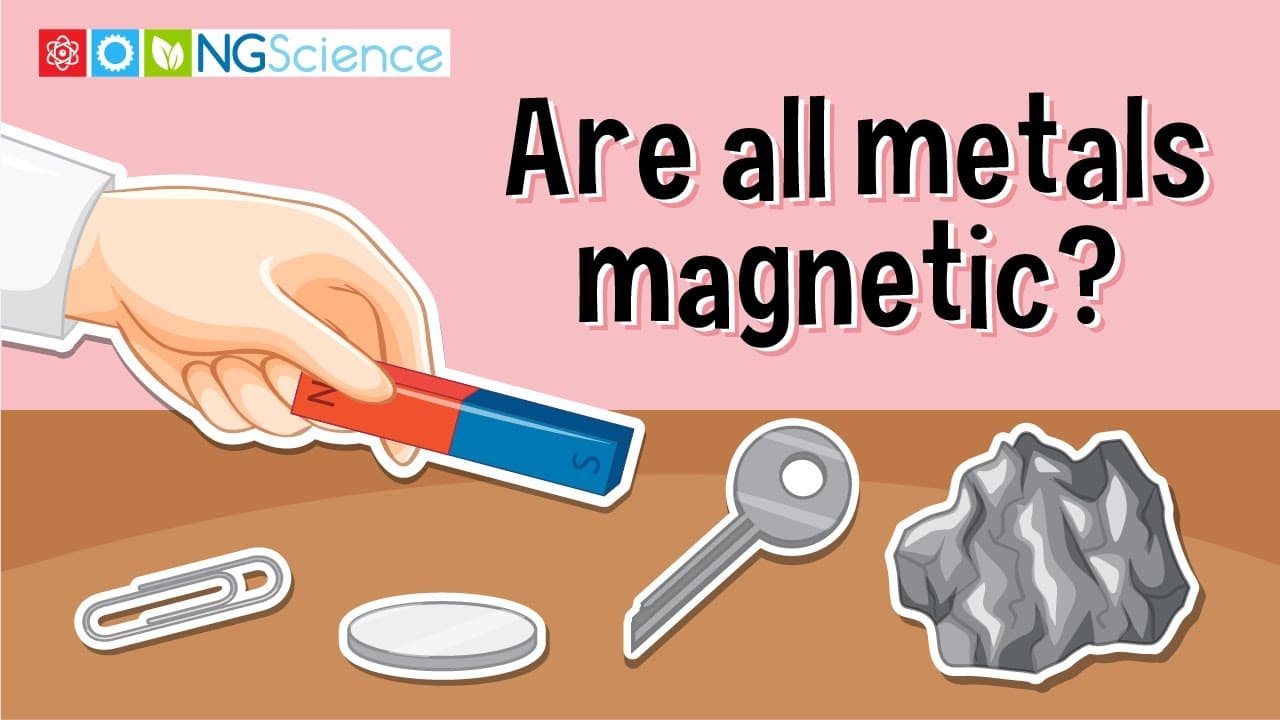
SciShow KidsSciShow Kids

16mins 44s

Video
How Energy Changes Form and Powers Our World

How Energy Changes Form and Powers Our World

This educational video provides a comprehensive introduction to the concept of energy, exploring its various forms and the fundamental principle of energy conversion. It begins by defining energy as the capacity to do work and illustrates its ubiquity in daily life, from powering household appliances to fueling transportation and biological processes. The narration clearly distinguishes between key types of energy, such as kinetic, potential, thermal, light, chemical, and electrical, using relatable real-world examples like riding a bicycle, boiling water, and eating food.

Next Generation ScienceNext Generation Science

9mins 51s

Video
Exploring Sources of Heat Energy

Exploring Sources of Heat Energy

This educational video introduces young learners to the fundamental concept of heat energy and its various sources. It begins by defining heat as a form of energy that makes things feel warm and defines a "source of heat" as anything that produces this energy. The narrative highlights the Sun as Earth's primary and most critical heat source, explaining its vital role in sustaining life and warming the planet's non-living elements like rocks, soil, and water. The video transitions from natural heat sources to human-managed ones, exploring how burning fuels like wood, gas, and oil generate both heat and light. It provides concrete examples of these chemical reactions in settings like campfires and cooking. This distinction helps students understand that heat can be naturally occurring or generated through specific actions. Finally, the content connects these concepts to students' daily lives by examining common household appliances. It lists familiar items such as ovens, kettles, toasters, clothes dryers, irons, and hair dryers as examples of technology that act as sources of heat. This practical application allows teachers to discuss energy transformation and safety in the home, making the abstract concept of "energy" tangible for primary students.

Next Generation ScienceNext Generation Science

1min 52s

Video
How to Calculate Weight and Mass on Different Planets

How to Calculate Weight and Mass on Different Planets

This educational video clarifies the fundamental difference between mass and weight, concepts often confused in daily life but distinct in physics. Through clear explanations and practical examples involving astronauts and space travel, the video demonstrates that while mass (the amount of matter) remains constant regardless of location, weight (the force of gravity) changes depending on the gravitational pull of the planet or moon one is standing on. The content walks students through the mathematical relationship between these concepts using Newton's Second Law. It derives the formula w = mg from F = ma and guides viewers through step-by-step calculations. Students learn to calculate weight on Earth, in deep space, and on the Moon, emphasizing the importance of significant figures and unit conversions between Newtons and pounds. Teachers can use this video to introduce forces and gravity or to reinforce algebra skills within a science context. The step-by-step problem-solving sections are particularly valuable for modeling how to show work in physics problems, handle units properly, and apply mathematical concepts to real-world (and off-world) scenarios.

Miacademy & MiaPrep Learning ChannelMiacademy & MiaPrep Learning Channel

10mins 11s

Video
How Gravity Shapes Orbits in Space

How Gravity Shapes Orbits in Space

This educational video from Crash Course Kids explores the mechanics of orbits in space, moving beyond simple planetary rotation to explain the gravitational forces that govern the universe. The host, Sabrina Cruz, breaks down why lighter objects orbit heavier ones, using the relationship between Earth and the Sun as a primary example. The video expands this concept to the galactic scale, explaining how the entire solar system orbits a supermassive black hole at the center of the Milky Way without getting swallowed up.

Crash Course KidsCrash Course Kids

4mins 31s

Video
How Gravity Works: The Invisible Force That Pulls Us Down

How Gravity Works: The Invisible Force That Pulls Us Down

This engaging educational video introduces students to the fundamental concept of gravity, explaining it as an invisible force that pulls objects toward one another. Through clear demonstrations and real-world examples like falling leaves and skydiving, the host illustrates how gravity acts on everything on Earth. The video distinguishes between push and pull forces, using a simple ball toss experiment to show how gravity counters upward momentum. The content explores the history of gravitational theory, retelling the famous story of Isaac Newton and the falling apple. It expands the concept beyond Earth, explaining how the same force that drops an apple also keeps planets in orbit around the sun. The relationship between mass and gravity is introduced, clarifying that while all objects have gravity, it is the Earth's massive size that makes its pull the most observable force in our daily lives. Ideal for elementary science classrooms, this resource demystifies abstract physics concepts using accessible language and visuals. It concludes with a built-in multiple-choice quiz, making it a complete lesson package for teachers to check for understanding immediately after viewing. The video effectively bridges the gap between everyday observations—like dropping a ball—and larger astronomical concepts, providing a solid foundation for physical science units.

Next Generation ScienceNext Generation Science

4mins 59s

Video
How Ramps Make Work Easier: Simple Machines Explained

How Ramps Make Work Easier: Simple Machines Explained

Join Jessi and her robot rat friend Squeaks in this engaging introduction to simple machines, focusing specifically on the inclined plane or ramp. When the duo returns from a library book sale with heavy boxes that are too difficult to carry up the stairs, they encounter a common physical problem: moving heavy loads against gravity. Through problem-solving, they discover how using a ramp can transform an impossible lifting task into a manageable pushing task. The video explores key physics concepts appropriate for young learners, including the definition of a machine as anything that helps us do work, the concept of slope (steepness), and the fundamental trade-off in mechanics: trading distance for effort. By experimenting with two different ramps—a short, steep one and a long, gentle one—Jessi visually demonstrates that while a longer ramp requires traveling a greater distance, it significantly reduces the force needed to move an object. This resource is an excellent tool for early elementary science classrooms introducing forces, motion, and engineering. It takes abstract physics concepts and grounds them in a relatable scenario with clear visual demonstrations. Teachers can use this video to kickstart units on simple machines, inspire hands-on engineering challenges, or explain accessibility features like wheelchair ramps in the real world.

SciShow KidsSciShow Kids

4mins 9s

Video
Building Paper Airplanes and Learning How They Fly

Building Paper Airplanes and Learning How They Fly

This educational video from SciShow Kids guides students through the hands-on process of building a paper airplane while simultaneously introducing the fundamental physics concepts that allow planes to fly. Hosted by Jessi and her robot companion Squeaks, the video combines a practical maker activity with clear, age-appropriate scientific explanations of aerodynamic forces. The content focuses on two primary forces: thrust and lift. It explains how thrust provides forward movement (created by engines in real planes and by a throwing arm for paper planes) and how lift acts against gravity to keep the plane in the air. The video uses clear animations to demonstrate how air moving over wings creates lift, simplifying complex fluid dynamics into an accessible concept for young learners. For the classroom, this video serves as an excellent dual-purpose resource. It functions as a step-by-step instructional guide for a fine motor activity while also serving as a science lesson on forces and motion. Teachers can use it to introduce a STEM unit on flight, anchoring the theoretical concepts of physics in a tangible, fun activity that encourages experimentation and engineering design.

SciShow KidsSciShow Kids

4mins 18s

Video
How Simple Machines Create Mechanical Advantage

How Simple Machines Create Mechanical Advantage

This video provides an engaging and clear introduction to the physics of simple and compound machines, focusing on the concept of mechanical advantage. The lesson begins by contrasting a human jump with the height achievable on a swing, using this analogy to explain how simple machines allow us to "smear out" effort over a longer distance to achieve a greater result with less immediate force. The narrator systematically breaks down the six classic simple machines: the inclined plane, pulley, wheel and axle, lever, wedge, and screw.

Miacademy & MiaPrep Learning ChannelMiacademy & MiaPrep Learning Channel

8mins 45s

Video
Understanding Gravity: How Mass and Distance Create Attraction

Understanding Gravity: How Mass and Distance Create Attraction

This engaging video lesson explores the fundamental force of gravity, moving beyond the simple idea of "falling down" to a deeper scientific understanding of attraction between matter. Through the energetic hosting of Justin, students are guided from Sir Isaac Newton's apple to the orbits of planets, debunking common misconceptions along the way. The video clarifies the difference between a colloquial "theory" and a "scientific theory," providing students with essential vocabulary for scientific literacy. The content breaks down the two key factors that determine the strength of gravity: mass and distance. Using visual aids like penguins in Antarctica, a hypothetical "growth ray" turning a pencil into a planet-sized object, and the International Space Station, the video illustrates abstract physics concepts in concrete, humorous ways. It explains why we stick to the Earth, why planets orbit the Sun, and how astronauts experience gravity differently in space. Teachers can use this video to introduce a unit on forces and motion, astronomy, or the scientific method. Its clear explanations of mass and distance make it an excellent tool for helping students visualize invisible forces. The video includes built-in pause points for reflection and note-taking, making it ready-to-use for interactive classroom learning. It connects everyday experiences, like jumping on a trampoline, to cosmic phenomena, helping students realize that the same laws of physics apply everywhere in the universe.

Miacademy & MiaPrep Learning ChannelMiacademy & MiaPrep Learning Channel

9mins 40s

Video
Discovering Pushes and Pulls in Nature

Discovering Pushes and Pulls in Nature

This engaging science video introduces young learners to the concept of forces within the natural world, specifically focusing on how wind and water act as agents of motion. Building upon the foundational understanding that pushes and pulls make objects move, the narration guides students to observe these forces in action outside of human intervention. It illustrates how invisible forces like wind can have visible effects, such as moving sailboats or turning wind turbines, and how moving water exerts force on objects like kayaks and surfboards. The video explores key themes of physics and earth science, bridging the gap between abstract concepts (force, motion) and tangible reality. It highlights the dual nature of forces—distinguishing between 'pushes' (wind pushing a sail) and 'pulls' (a kite pulling a surfer). The imagery transitions from gentle examples, like dandelion seeds floating, to high-energy examples like extreme sports, effectively demonstrating that natural forces vary in strength. For educators, this resource serves as an excellent hook for units on Forces and Motion (NGSS K-PS2-1) or Weather. It provides clear, real-world examples that allow teachers to move beyond classroom demonstrations (like pushing a chair) to observing the environment. The video's clear narration and question-based ending make it an ideal tool for sparking inquiry-based learning, prompting students to identify other natural forces in their own surroundings.
Next Generation ScienceNext Generation Science

1min 24s

Video
How Simple Machines Make Work Easier: The Lever

How Simple Machines Make Work Easier: The Lever

This educational video introduces students to the concept of simple machines through the lens of physics and history. Using the Great Pyramids of Giza as a hook, the narrator explores how ancient civilizations accomplished massive engineering feats without modern technology. The video specifically defines "work" in a scientific context—applying force to move an object over a distance—and explains how machines reduce the effort required to perform this work. The content primarily focuses on the first of six simple machines: the lever. Through clear diagrams and relatable examples like seesaws and wheelbarrows, the video breaks down the anatomy of a lever (beam, fulcrum, load, and effort). It illustrates how levers function by changing the direction or magnitude of force, making heavy lifting manageable. This resource is highly valuable for elementary and middle school science classrooms introducing force, motion, and engineering. It bridges historical inquiry with physical science, providing a compelling narrative for why simple machines matter. Teachers can use this video to anchor lessons on mechanical advantage, initiate hands-on experiments with levers, or clarify the scientific definition of "work" versus everyday chores.

Miacademy & MiaPrep Learning ChannelMiacademy & MiaPrep Learning Channel

7mins 27s

Video
How Newton's First Law Explains Rest and Motion

How Newton's First Law Explains Rest and Motion

This engaging educational video provides a comprehensive introduction to Newton's First Law of Motion, demystifying physics concepts through relatable examples and clear visual aids. The narrator breaks down the law into two main components: objects at rest and objects in motion, explaining that both states require a net force of zero to maintain their status. The video uses humor and casual language—referring to objects "chilling"—to make the abstract concept of inertia accessible to students. Key themes include the definition of net force as the sum of all forces acting on an object, the relationship between force and acceleration, and the importance of free-body diagrams. The content clarifies the distinction between constant velocity and acceleration, emphasizing that a change in direction (like a boat turning) counts as acceleration and thus requires a net force. It also introduces the mathematical notation for net force (Fnet = 0). Ideally suited for middle and high school physical science classrooms, this video serves as excellent instructional material for introducing forces and motion. Teachers can use the built-in practice questions and free-body diagram exercises to check for understanding in real-time. The clear visual representations of forces (gravity, normal force, friction, tension) provide a strong foundation for students learning to analyze physical systems.

Miacademy & MiaPrep Learning ChannelMiacademy & MiaPrep Learning Channel

9mins 11s

Video
How Things Move: Pushes and Pulls

How Things Move: Pushes and Pulls

This engaging educational video introduces young learners to the fundamental concepts of motion and forces through relatable, real-world examples. It begins by observing everyday movement—from children playing on a playground to a Ferris wheel spinning—and establishes the core scientific principle that objects cannot move on their own without the application of a force. The content is paced perfectly for early elementary students, using clear narration and distinct visual cues to explain complex ideas simply. The video breaks down the definition of a force into two primary categories: pushes and pulls. It illustrates "push" forces through actions like throwing a basketball, bowling, and kicking a soccer ball, defining them as pressing something away. Conversely, "pull" forces are demonstrated through tug-of-war, dragging a sled, and opening a can, defined as bringing objects closer. The video also touches on how these forces can work together in activities like fishing. Teachers can use this video as a perfect anchor for a physical science unit on motion and stability. The final segment, which poses questions about specific actions (sweeping, hammering, opening a door), serves as an built-in formative assessment, allowing educators to pause and check for student understanding. It provides a solid foundation for understanding cause and effect in the physical world, making it an essential resource for K-2 science curriculums.

Next Generation ScienceNext Generation Science

2mins 14s

Video
Understanding and Calculating Kinetic Friction

Understanding and Calculating Kinetic Friction

This educational video provides a comprehensive introduction to kinetic friction, a fundamental concept in physics. The lesson begins with a relatable hook about air resistance and the Hyperloop to illustrate the concept of friction as a force that resists motion. It then transitions into a formal definition of kinetic friction, distinguishing it from static friction, and introduces the mathematical formula used to calculate it ($F_k = \mu_k N$). The video explores key themes such as the relationship between normal force and weight, the coefficient of friction, and how surface materials affect friction levels. A comparative table highlights the difference between static and kinetic coefficients, emphasizing that it takes more force to start an object moving than to keep it moving. The narrator uses clear visual aids, including free-body diagrams, to explain how forces interact on objects like a sled being pulled through snow. Ideally suited for middle and high school physical science or physics curriculums, this resource is highly valuable for teaching students how to solve physics problems step-by-step. The video walks viewers through two complete calculation examples—one guided and one for independent practice—reinforcing algebraic skills and the application of scientific formulas. Teachers can use this video to introduce friction, model problem-solving strategies, or as a flipped classroom resource for students to master force calculations.

Miacademy & MiaPrep Learning ChannelMiacademy & MiaPrep Learning Channel

6mins 6s

Video
Exploring Air Resistance: How Drag Works

Exploring Air Resistance: How Drag Works

This engaging science video introduces elementary students to the concepts of air resistance and drag through the familiar example of parachutes. Hosted by Jessi from SciShow Kids, the video breaks down the invisible forces that surround us, explaining that air is actually made of "matter" or "stuff" that takes up space. Through clear animations and relatable analogies like holding a hand out of a car window, students visualize how moving through air pushes air particles out of the way, creating a resistive force.

SciShow KidsSciShow Kids

3mins 37s

Video
Building Blanket Forts with the Science of Tension

Building Blanket Forts with the Science of Tension

In this engaging episode of SciShow Kids, host Jessi and her robot friend Squeaks explore the physics behind a favorite childhood pastime: building blanket forts. The video transforms a fun rainy-day activity into an introductory engineering lesson by explaining how structures stay standing. Jessi demonstrates two specific methods for constructing forts—the basic draped sheet and the 'tent' style using a string—while explaining the scientific principles that make them work. The content focuses heavily on physical science concepts, specifically the idea of 'forces' (pushes and pulls) and 'tension' (a pulling force). The video draws a clear parallel between the mechanics of a blanket fort and the engineering of massive suspension bridges, showing students that the same physical laws apply to both. It introduces key vocabulary like 'tension,' 'anchors,' and 'engineers' in a highly accessible context. For educators, this video serves as an excellent hook for STEM challenges and physical science units. It provides a concrete, low-stakes environment for students to experiment with forces. Teachers can use this video to launch a classroom engineering design challenge where students must plan, build, and test structures, applying the concept of tension to create stability. It validates play as a form of scientific experimentation.

SciShow KidsSciShow Kids

3mins 16s

Video
Predicting How Objects Move Using Force and Speed

Predicting How Objects Move Using Force and Speed

This educational video explores the scientific principles behind predicting motion, demonstrating how observation and calculation allow us to anticipate how objects will move. It begins with simple, familiar examples like playground equipment to explain basic concepts of gravity and mechanics, before progressing to more complex scenarios involving friction, applied force, and variable conditions. The narration clearly links abstract physics concepts to tangible, everyday experiences, making the invisible forces of the world visible and understandable. Key themes include the relationship between force and distance, the effects of gravity and friction on moving objects, and the mathematical connection between speed, distance, and time. The video differentiates between simple predictions based on repetitive motion (like a swing) and complex calculations required for transportation systems like trains and airplanes, which must account for variables such as wind speed and weather conditions. For educators, this video serves as an excellent bridge between qualitative observation and quantitative analysis in science and math. It provides concrete examples for teaching Newton's laws of motion, data analysis, and critical thinking. The real-world applications—from scoring a goal in soccer to scheduling international flights—help students understand why mastering these concepts is essential for navigating and planning in their daily lives.

Next Generation ScienceNext Generation Science

5mins 30s

Video
How to Build a Rube Goldberg Machine

How to Build a Rube Goldberg Machine

In this engaging episode of SciShow Kids, host Jessi and her robot rat friend Squeaks introduce young learners to the whimsical world of Rube Goldberg machines. The video begins with a practical demonstration of a "cheese serving machine" that the duo has invented, which utilizes a complex chain reaction to perform the simple task of putting cheese on a table. Through this fun example, the video breaks down the mechanics behind the machine, specifically highlighting simple machines like levers and pulleys, and explains how energy is transferred from one object to another in a chain reaction. The video seamlessly transitions from physical science to engineering history by introducing Rube Goldberg, the real-life cartoonist and engineer famous for drawing overly complicated machines for simple tasks. Key themes explored include the physics of simple machines (levers, fulcrums, pulleys), the concept of a chain reaction, and the Engineering Design Process (Idea, Design, Gather, Build). It also touches on an important Social-Emotional Learning (SEL) concept for young engineers: persistence, emphasizing that inventions often require multiple attempts before they work correctly. For educators, this video serves as an excellent launchpad for STEM units on motion, force, and engineering design. It demystifies technical concepts by showing them in action and provides a clear, four-step framework for students to create their own inventions. The content encourages creativity and critical thinking, challenging students to look at everyday objects as potential components of a larger machine. It is particularly useful for introducing the "Design" phase of engineering, showing actual blueprints and planning before building.

SciShow KidsSciShow Kids

5mins 56s

Video
Comparing Mass: Heavy, Light, and Size Misconceptions

Comparing Mass: Heavy, Light, and Size Misconceptions

This educational video introduces young students to the concept of mass by comparing everyday objects. It begins with an intuitive comparison between a feather and a brick, using relatable questions about moving the objects to establish the concepts of "heavy" and "light." The video explicitly defines mass in simple terms, explaining that heavy objects have more mass while light objects have less mass. The video progresses to a more complex comparison between a large beach ball and a smaller bowling ball. This segment is particularly valuable as it addresses the common misconception that size always equals weight. By showing that the larger object (beach ball) is actually lighter than the smaller object (bowling ball), it helps students distinguish between volume (size) and mass. For educators, this resource serves as an excellent hook for units on measurement, matter, or adjectives. The clear visual layout, where comparative phrases like "is heavier than" appear between the objects, supports early literacy alongside scientific understanding. It provides a perfect springboard for hands-on classroom activities where students predict and test the weight of various classroom items.

MatholiaChannelMatholiaChannel

1min 54s

Video
How Levers Work and Their Three Classes

How Levers Work and Their Three Classes

This educational video provides a clear and structured explanation of levers as simple machines. It begins by defining the basic components of a lever—the rigid bar and the fulcrum—and explains the trade-off between the effort force applied and the distance traveled. The narration simplifies the physics of mechanical advantage, showing how moving the fulcrum or the point of effort changes the force required to move a load.

Next Generation ScienceNext Generation Science

1min 57s

Video
How Friction Affects Your Sled Ride

How Friction Affects Your Sled Ride

Join Jessi and Squeaks the Robot Mouse in this engaging winter science lesson that explains the physics of friction through a relatable sledding adventure. After a disappointing first run down a snowy hill where their sled barely moves, Jessi uses the scientific method to analyze what went wrong. The video breaks down key physics concepts including force, weight, and surface texture to explain why the sled got stuck. The core of the video focuses on the concept of friction—the force that resists motion when two surfaces slide against each other. Through clear animations and a relatable analogy involving wearing socks on carpet versus wood floors, students learn that rough surfaces create more friction than smooth ones. The video demonstrates how fresh, powdery snow acts as a rough surface that slows the sled down, while packed snow creates a smoother surface for faster sliding. This resource is an excellent tool for introducing elementary students to forces and motion. It models scientific inquiry by identifying a problem, analyzing variables (push strength, weight, surface texture), devising a solution (packing the snow), and testing the result. Teachers can use this to spark classroom experiments about friction using toy cars on different surfaces or to discuss problem-solving strategies in science.

SciShow KidsSciShow Kids

4mins 3s

Video
How to Build a Mars Helicopter Model

How to Build a Mars Helicopter Model

Join Anthony and his robot pal Squeaks to explore the fascinating engineering behind NASA's Ingenuity helicopter, the first machine designed to fly on Mars. This engaging video breaks down the science of flight, comparing how helicopters work on Earth versus the unique challenges posed by the thin Martian atmosphere. Viewers learn how scientists solved these problems using specific design features like lightweight materials and extra-long, fast-spinning blades. The video transitions from theory to practice by guiding students through a hands-on STEM activity: building their own paper helicopter models. It demonstrates the importance of scientific modeling and introduces the engineering design process, encouraging viewers to test, observe, and iterate on their designs—just like real NASA engineers. This resource is an excellent tool for introducing elementary students to concepts of aerodynamics, planetary science, and engineering. It seamlessly connects complex space exploration topics with a simple, accessible classroom craft, making it perfect for lessons on the scientific method, variables, and the perseverance required in problem-solving.

SciShow KidsSciShow Kids

6mins 41s

Video
How Newton's First Law Explains Rest and Motion

How Newton's First Law Explains Rest and Motion

This engaging educational video provides a comprehensive introduction to Newton's First Law of Motion, demystifying physics concepts through relatable examples and clear visual aids. The narrator breaks down the law into two main components: objects at rest and objects in motion, explaining that both states require a net force of zero to maintain their status. The video uses humor and casual language—referring to objects "chilling"—to make the abstract concept of inertia accessible to students. Key themes include the definition of net force as the sum of all forces acting on an object, the relationship between force and acceleration, and the importance of free-body diagrams. The content clarifies the distinction between constant velocity and acceleration, emphasizing that a change in direction (like a boat turning) counts as acceleration and thus requires a net force. It also introduces the mathematical notation for net force (Fnet = 0). Ideally suited for middle and high school physical science classrooms, this video serves as excellent instructional material for introducing forces and motion. Teachers can use the built-in practice questions and free-body diagram exercises to check for understanding in real-time. The clear visual representations of forces (gravity, normal force, friction, tension) provide a strong foundation for students learning to analyze physical systems.

Miacademy & MiaPrep Learning ChannelMiacademy & MiaPrep Learning Channel

9mins 11s

Video
How Things Move: Pushes and Pulls

How Things Move: Pushes and Pulls

This engaging educational video introduces young learners to the fundamental concepts of motion and forces through relatable, real-world examples. It begins by observing everyday movement—from children playing on a playground to a Ferris wheel spinning—and establishes the core scientific principle that objects cannot move on their own without the application of a force. The content is paced perfectly for early elementary students, using clear narration and distinct visual cues to explain complex ideas simply. The video breaks down the definition of a force into two primary categories: pushes and pulls. It illustrates "push" forces through actions like throwing a basketball, bowling, and kicking a soccer ball, defining them as pressing something away. Conversely, "pull" forces are demonstrated through tug-of-war, dragging a sled, and opening a can, defined as bringing objects closer. The video also touches on how these forces can work together in activities like fishing. Teachers can use this video as a perfect anchor for a physical science unit on motion and stability. The final segment, which poses questions about specific actions (sweeping, hammering, opening a door), serves as an built-in formative assessment, allowing educators to pause and check for student understanding. It provides a solid foundation for understanding cause and effect in the physical world, making it an essential resource for K-2 science curriculums.

Next Generation ScienceNext Generation Science

2mins 14s

Video
Calculating Speed vs. Velocity: Definitions and Practice

Calculating Speed vs. Velocity: Definitions and Practice

This educational video provides a clear and comprehensive introduction to the physics concepts of speed and velocity. It begins by engaging students with examples of fast-moving objects like race cars and rockets before settling into the mathematical definitions of motion. The narrator uses real-world analogies, such as a long car trip involving both highway driving and traffic jams, to distinguish between average speed and instantaneous speed. The video then introduces the crucial distinction between scalar quantities and vector quantities, explaining how distance relates to speed while displacement relates to velocity. The content covers key themes in kinematics, specifically focusing on the difference between distance (total ground covered) and displacement (straight-line distance from start to finish). It explicitly teaches the formulas for calculating average speed (Distance/Time) and average velocity (Displacement/Time). A significant portion of the video is dedicated to step-by-step worked examples where the narrator calculates both speed and velocity for the same trip, demonstrating how the results differ numerically and conceptually—most notably that velocity requires a direction. For educators, this video is an excellent resource for middle school physical science or introductory high school physics classrooms. It moves beyond simple definitions to application, providing guided practice problems that allow students to test their understanding immediately. The use of visual maps to illustrate the path of travel versus the vector of displacement helps concrete thinkers grasp abstract concepts. Teachers can use this video to introduce motion formulas, reinforce the concept of vectors, or as a flipped classroom assignment before a lab on measuring motion.

Miacademy & MiaPrep Learning ChannelMiacademy & MiaPrep Learning Channel

7mins 42s

Video
Building Blanket Forts with the Science of Tension

Building Blanket Forts with the Science of Tension

In this engaging episode of SciShow Kids, host Jessi and her robot friend Squeaks explore the physics behind a favorite childhood pastime: building blanket forts. The video transforms a fun rainy-day activity into an introductory engineering lesson by explaining how structures stay standing. Jessi demonstrates two specific methods for constructing forts—the basic draped sheet and the 'tent' style using a string—while explaining the scientific principles that make them work. The content focuses heavily on physical science concepts, specifically the idea of 'forces' (pushes and pulls) and 'tension' (a pulling force). The video draws a clear parallel between the mechanics of a blanket fort and the engineering of massive suspension bridges, showing students that the same physical laws apply to both. It introduces key vocabulary like 'tension,' 'anchors,' and 'engineers' in a highly accessible context. For educators, this video serves as an excellent hook for STEM challenges and physical science units. It provides a concrete, low-stakes environment for students to experiment with forces. Teachers can use this video to launch a classroom engineering design challenge where students must plan, build, and test structures, applying the concept of tension to create stability. It validates play as a form of scientific experimentation.

SciShow KidsSciShow Kids

3mins 16s

Video
How Gears Work: Direction, Force, and Speed

How Gears Work: Direction, Force, and Speed

This concise educational video provides a clear, foundational overview of gears as simple machines. It defines what gears are—wheels with interlocking teeth—and visually demonstrates their three primary functions: changing the direction of force, multiplying applied force (mechanical advantage), and multiplying speed. The narration is supported by high-quality close-ups of various gear mechanisms in action, ranging from simple plastic models to heavy industrial machinery. The video explores key mechanical concepts including the relationship between gear size and speed/force. It explains how turning a smaller gear to drive a larger one creates more force but less speed, while the reverse increases speed. The content concludes by connecting these abstract physical principles to concrete, everyday objects like bicycles, fishing reels, watches, and can openers, helping students recognize engineering in their daily lives. For educators, this resource serves as an excellent introduction or review for a unit on simple machines, physics, or engineering. Its short runtime makes it a perfect "hook" to start a lesson or a visual anchor to reinforce textbook definitions. The clear visual evidence of counter-rotation and speed differences allows teachers to pause and ask predictive questions, making it a valuable tool for developing observational skills in STEM subjects.

Next Generation ScienceNext Generation Science

1min 8s

Video
Understanding and Calculating Kinetic Friction

Understanding and Calculating Kinetic Friction

This educational video provides a comprehensive introduction to kinetic friction, a fundamental concept in physics. The lesson begins with a relatable hook about air resistance and the Hyperloop to illustrate the concept of friction as a force that resists motion. It then transitions into a formal definition of kinetic friction, distinguishing it from static friction, and introduces the mathematical formula used to calculate it ($F_k = \mu_k N$). The video explores key themes such as the relationship between normal force and weight, the coefficient of friction, and how surface materials affect friction levels. A comparative table highlights the difference between static and kinetic coefficients, emphasizing that it takes more force to start an object moving than to keep it moving. The narrator uses clear visual aids, including free-body diagrams, to explain how forces interact on objects like a sled being pulled through snow. Ideally suited for middle and high school physical science or physics curriculums, this resource is highly valuable for teaching students how to solve physics problems step-by-step. The video walks viewers through two complete calculation examples—one guided and one for independent practice—reinforcing algebraic skills and the application of scientific formulas. Teachers can use this video to introduce friction, model problem-solving strategies, or as a flipped classroom resource for students to master force calculations.

Miacademy & MiaPrep Learning ChannelMiacademy & MiaPrep Learning Channel

6mins 6s

Video
Why the Blobfish Looks So Squishy

Why the Blobfish Looks So Squishy

This engaging episode of SciShow Kids explores the fascinating life of the blobfish, famously voted the "world's ugliest animal." Hosted by Jessi and her robot rat friend Squeaks, the video dives deep into the ocean to explain why this unique creature looks the way it does. Instead of just mocking its appearance, the video uses the blobfish as a perfect case study to teach students about deep-sea environments and biological adaptations. Viewers travel to the coast of Australia and descend nearly to the sea floor to discover a dark, freezing, and high-pressure habitat. The video covers several key scientific concepts, primarily focusing on water pressure and buoyancy. It uses clear analogies, such as a "tight bear hug," to explain how deep-sea pressure works and why animals need specific bodies to survive it. The narration explains how the blobfish's gelatinous body, lack of muscle, and minimal skeleton allow it to survive extreme pressure while staying buoyant without expending energy. A critical turning point in the video addresses the misconception that the blobfish is naturally "blobby," revealing that it actually looks like a normal fish in its natural habitat and only deforms when brought to the surface. For educators, this video is an excellent tool for connecting biology and physics. It transforms a viral internet meme (the ugly blobfish) into a rigorous science lesson about how environment shapes evolution. It offers natural entry points for discussing states of matter, density, ocean zones, and the importance of context in scientific observation. The content promotes critical thinking by challenging students' initial perceptions and teaching them that what might look "weird" to us is actually a perfect design for a different environment.

SciShow KidsSciShow Kids

3mins 6s

Video
Mastering Newton's Second Law: Force, Mass, and Acceleration

Mastering Newton's Second Law: Force, Mass, and Acceleration

This educational video provides a comprehensive guide to understanding and applying Newton's Second Law of Motion ($F_{net} = ma$). The lesson begins with relatable real-world analogies, such as gas mileage in cars and moving heavy stones, to intuitively explain the relationships between force, mass, and acceleration. It clarifies the often-confusing distinction between mass (the amount of matter) and weight (the force of gravity), demonstrating why mass remains constant throughout the universe while weight changes. The core of the video focuses on the mathematical application of the law. It explores the concepts of direct and inverse proportionality using visual examples like jet engines and semi-trucks. The narrator then transitions into step-by-step problem-solving strategies, introducing Free Body Diagrams to visualize forces. Viewers are guided through two complex word problems: one calculating the engine force of a car including friction, and another determining the thrust of individual propellers on an airplane. For educators, this video serves as an excellent bridge between conceptual physics and algebraic application. It is highly valuable for teaching students how to set up "sum of forces" equations and perform calculations involving net force. The clear, handwritten-style problem-solving section allows teachers to pause and let students attempt calculations, making it an ideal tool for direct instruction or flipped classroom models in physical science and introductory physics courses.

Miacademy & MiaPrep Learning ChannelMiacademy & MiaPrep Learning Channel

15mins 4s

Video
How Ramps Make Work Easier: Simple Machines Explained

How Ramps Make Work Easier: Simple Machines Explained

Join Jessi and her robot rat friend Squeaks in this engaging introduction to simple machines, focusing specifically on the inclined plane or ramp. When the duo returns from a library book sale with heavy boxes that are too difficult to carry up the stairs, they encounter a common physical problem: moving heavy loads against gravity. Through problem-solving, they discover how using a ramp can transform an impossible lifting task into a manageable pushing task. The video explores key physics concepts appropriate for young learners, including the definition of a machine as anything that helps us do work, the concept of slope (steepness), and the fundamental trade-off in mechanics: trading distance for effort. By experimenting with two different ramps—a short, steep one and a long, gentle one—Jessi visually demonstrates that while a longer ramp requires traveling a greater distance, it significantly reduces the force needed to move an object. This resource is an excellent tool for early elementary science classrooms introducing forces, motion, and engineering. It takes abstract physics concepts and grounds them in a relatable scenario with clear visual demonstrations. Teachers can use this video to kickstart units on simple machines, inspire hands-on engineering challenges, or explain accessibility features like wheelchair ramps in the real world.

SciShow KidsSciShow Kids

4mins 9s

Video
How Gravity Pulls Things Toward Earth

How Gravity Pulls Things Toward Earth

This engaging science video explores the concept of gravity, specifically addressing the common childhood question: "If the Earth is round, why don't people on the bottom fall off?" Hosted by Sabrina Cruz, the video uses humor, clear definitions, and a simple hands-on demonstration to explain how gravity functions as an attractive force. It redefines the concepts of "up" and "down" in the context of a spherical planet, helping students understand that "down" simply means towards the center of the Earth. The video covers key themes such as forces of attraction, matter, and the directional nature of gravitational pull. It clarifies that gravity is a relationship between objects with mass, explaining that because Earth is so massive compared to us, we are pulled towards it. The content specifically tackles the misconception that "down" is a universal direction, replacing it with the scientific understanding of gravitational attraction towards a planetary center. For educators, this resource provides an excellent visual and practical method for teaching abstract physics concepts to elementary students. The featured "tennis ball and rubber band" experiment is cheap, replicable, and highly effective for classroom use. The video is perfect for introducing a unit on forces, debunking misconceptions about space and gravity, or as a hook for Earth science lessons.

Crash Course KidsCrash Course Kids

2mins 59s

Video
How Things Move: Fast, Slow, and All Around

How Things Move: Fast, Slow, and All Around

This engaging educational video introduces young learners to the fundamental concepts of motion and physics through clear, real-world examples. It categorizes movement into descriptive terms such as fast and slow, up and down, round and round, spinning, sliding, bouncing, swinging, and rolling. High-quality footage of animals, vehicles, and people helps students visualize and distinguish between these different types of motion. The video is structured to build vocabulary and observational skills. It begins by defining motion simply as "how things move" and proceeds to demonstrate contrasting concepts (fast vs. slow) and specific movement patterns. The content supports Next Generation Science Standards (NGSS) related to forces and interactions, specifically looking at how objects move in different ways. Following the instructional segment, the video features an interactive 8-question quiz. This formative assessment reinforces learning by showing new video clips and asking students to identify the type of motion being demonstrated. This format makes it an excellent tool for introducing a physics unit, reviewing vocabulary, or assessing student understanding of basic motion concepts.

Next Generation ScienceNext Generation Science

5mins 28s

Video
How Simple Machines Create Mechanical Advantage

How Simple Machines Create Mechanical Advantage

This video provides an engaging and clear introduction to the physics of simple and compound machines, focusing on the concept of mechanical advantage. The lesson begins by contrasting a human jump with the height achievable on a swing, using this analogy to explain how simple machines allow us to "smear out" effort over a longer distance to achieve a greater result with less immediate force. The narrator systematically breaks down the six classic simple machines: the inclined plane, pulley, wheel and axle, lever, wedge, and screw.

Miacademy & MiaPrep Learning ChannelMiacademy & MiaPrep Learning Channel

8mins 45s

Video
Discovering Pushes and Pulls in Nature

Discovering Pushes and Pulls in Nature

This engaging science video introduces young learners to the concept of forces within the natural world, specifically focusing on how wind and water act as agents of motion. Building upon the foundational understanding that pushes and pulls make objects move, the narration guides students to observe these forces in action outside of human intervention. It illustrates how invisible forces like wind can have visible effects, such as moving sailboats or turning wind turbines, and how moving water exerts force on objects like kayaks and surfboards. The video explores key themes of physics and earth science, bridging the gap between abstract concepts (force, motion) and tangible reality. It highlights the dual nature of forces—distinguishing between 'pushes' (wind pushing a sail) and 'pulls' (a kite pulling a surfer). The imagery transitions from gentle examples, like dandelion seeds floating, to high-energy examples like extreme sports, effectively demonstrating that natural forces vary in strength. For educators, this resource serves as an excellent hook for units on Forces and Motion (NGSS K-PS2-1) or Weather. It provides clear, real-world examples that allow teachers to move beyond classroom demonstrations (like pushing a chair) to observing the environment. The video's clear narration and question-based ending make it an ideal tool for sparking inquiry-based learning, prompting students to identify other natural forces in their own surroundings.
Next Generation ScienceNext Generation Science

1min 24s

Video
How Simple Machines Make Work Easier: The Lever

How Simple Machines Make Work Easier: The Lever

This educational video introduces students to the concept of simple machines through the lens of physics and history. Using the Great Pyramids of Giza as a hook, the narrator explores how ancient civilizations accomplished massive engineering feats without modern technology. The video specifically defines "work" in a scientific context—applying force to move an object over a distance—and explains how machines reduce the effort required to perform this work. The content primarily focuses on the first of six simple machines: the lever. Through clear diagrams and relatable examples like seesaws and wheelbarrows, the video breaks down the anatomy of a lever (beam, fulcrum, load, and effort). It illustrates how levers function by changing the direction or magnitude of force, making heavy lifting manageable. This resource is highly valuable for elementary and middle school science classrooms introducing force, motion, and engineering. It bridges historical inquiry with physical science, providing a compelling narrative for why simple machines matter. Teachers can use this video to anchor lessons on mechanical advantage, initiate hands-on experiments with levers, or clarify the scientific definition of "work" versus everyday chores.

Miacademy & MiaPrep Learning ChannelMiacademy & MiaPrep Learning Channel

7mins 27s

Video
How Friction Affects Your Sled Ride

How Friction Affects Your Sled Ride

Join Jessi and Squeaks the Robot Mouse in this engaging winter science lesson that explains the physics of friction through a relatable sledding adventure. After a disappointing first run down a snowy hill where their sled barely moves, Jessi uses the scientific method to analyze what went wrong. The video breaks down key physics concepts including force, weight, and surface texture to explain why the sled got stuck. The core of the video focuses on the concept of friction—the force that resists motion when two surfaces slide against each other. Through clear animations and a relatable analogy involving wearing socks on carpet versus wood floors, students learn that rough surfaces create more friction than smooth ones. The video demonstrates how fresh, powdery snow acts as a rough surface that slows the sled down, while packed snow creates a smoother surface for faster sliding. This resource is an excellent tool for introducing elementary students to forces and motion. It models scientific inquiry by identifying a problem, analyzing variables (push strength, weight, surface texture), devising a solution (packing the snow), and testing the result. Teachers can use this to spark classroom experiments about friction using toy cars on different surfaces or to discuss problem-solving strategies in science.

SciShow KidsSciShow Kids

4mins 3s

Video
Predicting How Objects Move Using Force and Speed

Predicting How Objects Move Using Force and Speed

This educational video explores the scientific principles behind predicting motion, demonstrating how observation and calculation allow us to anticipate how objects will move. It begins with simple, familiar examples like playground equipment to explain basic concepts of gravity and mechanics, before progressing to more complex scenarios involving friction, applied force, and variable conditions. The narration clearly links abstract physics concepts to tangible, everyday experiences, making the invisible forces of the world visible and understandable. Key themes include the relationship between force and distance, the effects of gravity and friction on moving objects, and the mathematical connection between speed, distance, and time. The video differentiates between simple predictions based on repetitive motion (like a swing) and complex calculations required for transportation systems like trains and airplanes, which must account for variables such as wind speed and weather conditions. For educators, this video serves as an excellent bridge between qualitative observation and quantitative analysis in science and math. It provides concrete examples for teaching Newton's laws of motion, data analysis, and critical thinking. The real-world applications—from scoring a goal in soccer to scheduling international flights—help students understand why mastering these concepts is essential for navigating and planning in their daily lives.

Next Generation ScienceNext Generation Science

5mins 30s

Video
How to Build a Mars Helicopter Model

How to Build a Mars Helicopter Model

Join Anthony and his robot pal Squeaks to explore the fascinating engineering behind NASA's Ingenuity helicopter, the first machine designed to fly on Mars. This engaging video breaks down the science of flight, comparing how helicopters work on Earth versus the unique challenges posed by the thin Martian atmosphere. Viewers learn how scientists solved these problems using specific design features like lightweight materials and extra-long, fast-spinning blades. The video transitions from theory to practice by guiding students through a hands-on STEM activity: building their own paper helicopter models. It demonstrates the importance of scientific modeling and introduces the engineering design process, encouraging viewers to test, observe, and iterate on their designs—just like real NASA engineers. This resource is an excellent tool for introducing elementary students to concepts of aerodynamics, planetary science, and engineering. It seamlessly connects complex space exploration topics with a simple, accessible classroom craft, making it perfect for lessons on the scientific method, variables, and the perseverance required in problem-solving.

SciShow KidsSciShow Kids

6mins 41s

Video
Why Engineers Change One Variable at a Time

Why Engineers Change One Variable at a Time

In this engaging episode of Crash Course Kids, host Sabrina Cruz uses the analogy of a mobile video game to explain the fundamental engineering concepts of variables and outcomes. The video breaks down the scientific method of testing solutions, specifically focusing on why it is critical to isolate variables during an experiment to understand cause and effect. Through a "Catbot" slingshot game, viewers see a practical demonstration of how changing launch angle versus pull strength affects the result.

Crash Course KidsCrash Course Kids

3mins 18s

Video
Comparing Mass: Heavy, Light, and Size Misconceptions

Comparing Mass: Heavy, Light, and Size Misconceptions

This educational video introduces young students to the concept of mass by comparing everyday objects. It begins with an intuitive comparison between a feather and a brick, using relatable questions about moving the objects to establish the concepts of "heavy" and "light." The video explicitly defines mass in simple terms, explaining that heavy objects have more mass while light objects have less mass. The video progresses to a more complex comparison between a large beach ball and a smaller bowling ball. This segment is particularly valuable as it addresses the common misconception that size always equals weight. By showing that the larger object (beach ball) is actually lighter than the smaller object (bowling ball), it helps students distinguish between volume (size) and mass. For educators, this resource serves as an excellent hook for units on measurement, matter, or adjectives. The clear visual layout, where comparative phrases like "is heavier than" appear between the objects, supports early literacy alongside scientific understanding. It provides a perfect springboard for hands-on classroom activities where students predict and test the weight of various classroom items.

MatholiaChannelMatholiaChannel

1min 54s

Video
Exploring Air Resistance: How Drag Works

Exploring Air Resistance: How Drag Works

This engaging science video introduces elementary students to the concepts of air resistance and drag through the familiar example of parachutes. Hosted by Jessi from SciShow Kids, the video breaks down the invisible forces that surround us, explaining that air is actually made of "matter" or "stuff" that takes up space. Through clear animations and relatable analogies like holding a hand out of a car window, students visualize how moving through air pushes air particles out of the way, creating a resistive force.

SciShow KidsSciShow Kids

3mins 37s