Daily hygiene, hydration, and sleep routines paired with strategies for disease and injury prevention. Builds skills in health decision-making, body awareness, and self-advocacy to support lifelong well-being.
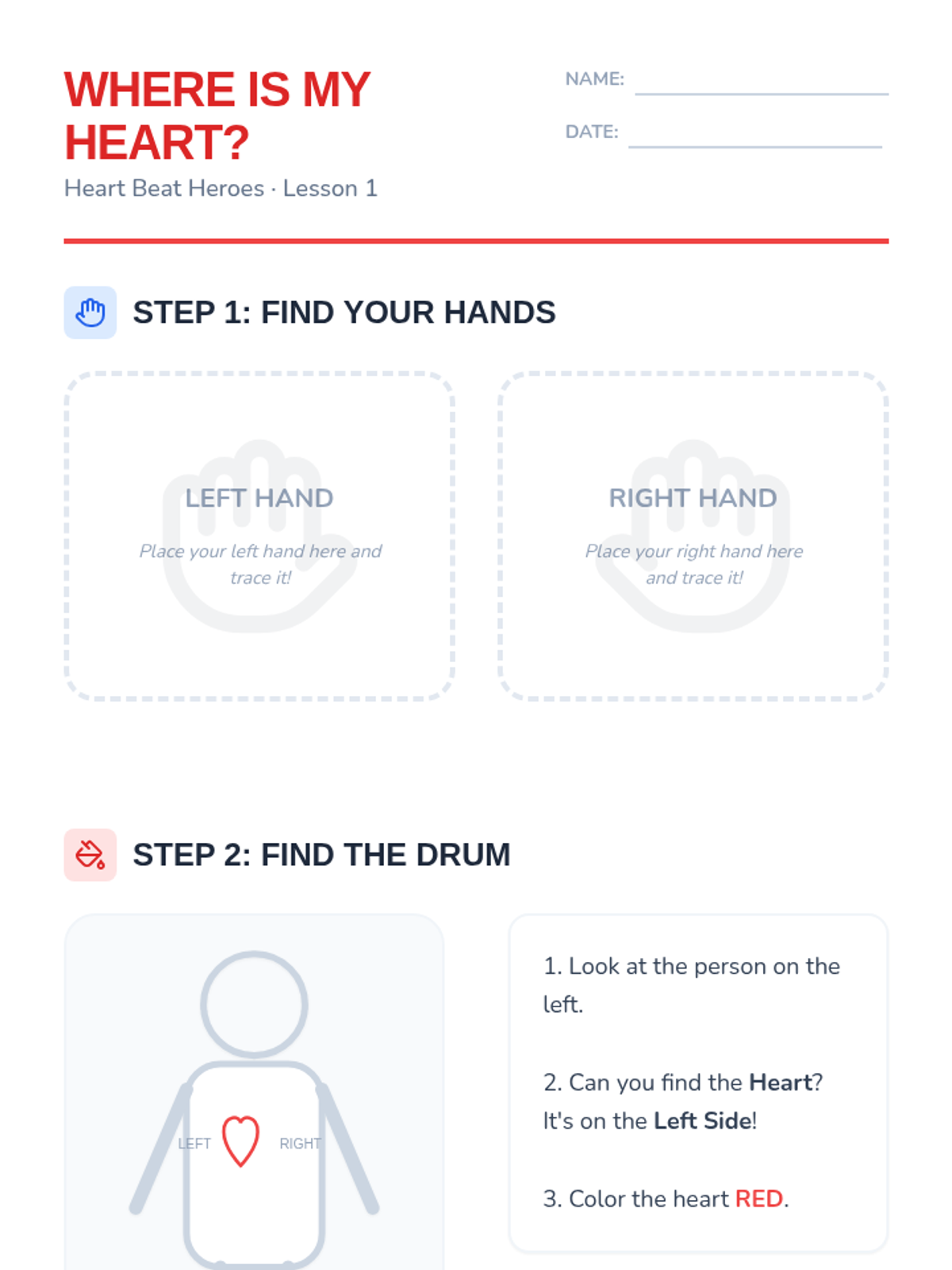
A Kindergarten inquiry-based sequence exploring the heart's function as a pump and blood as a delivery system through experiments, simulations, and role-play.
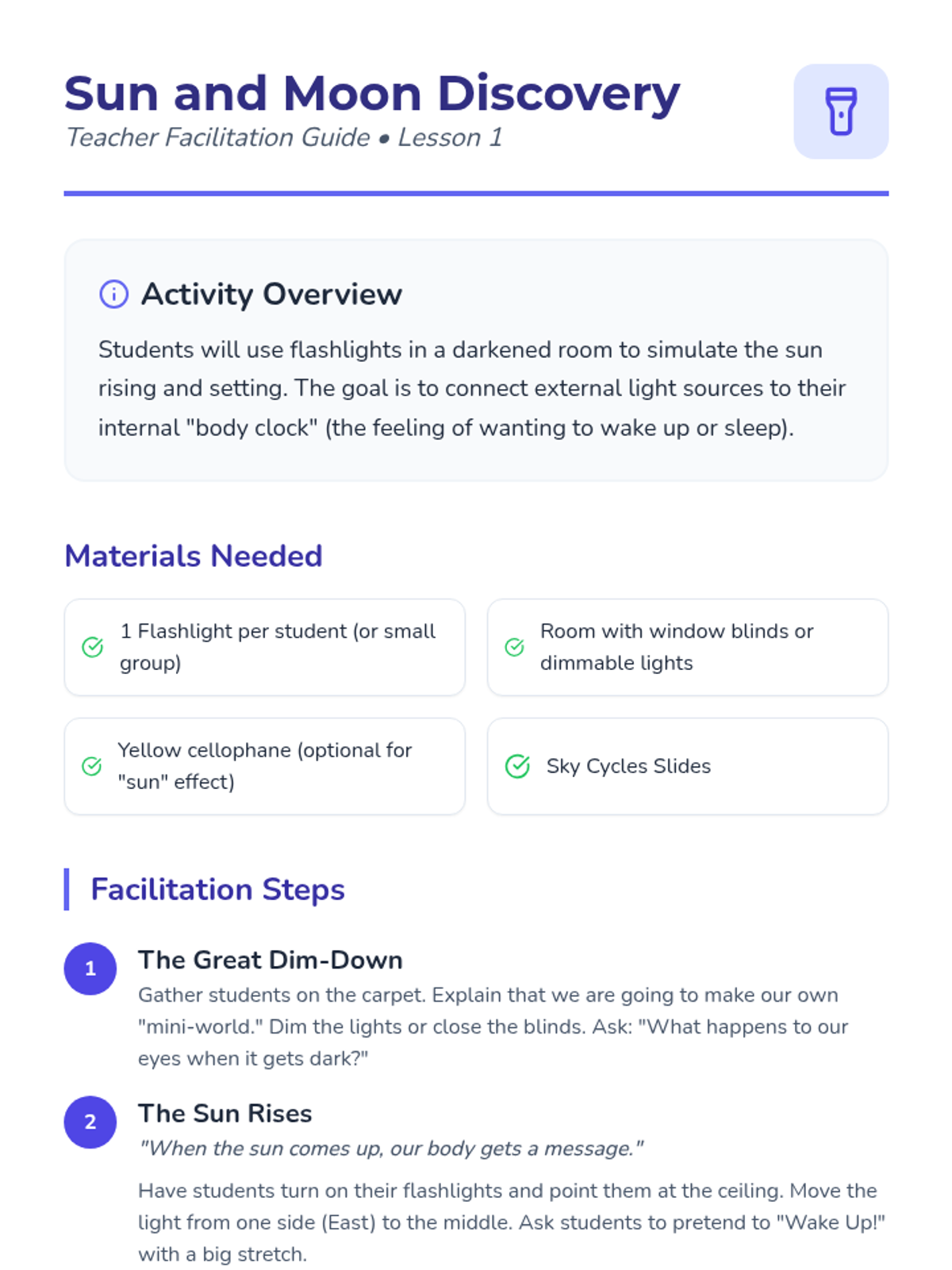
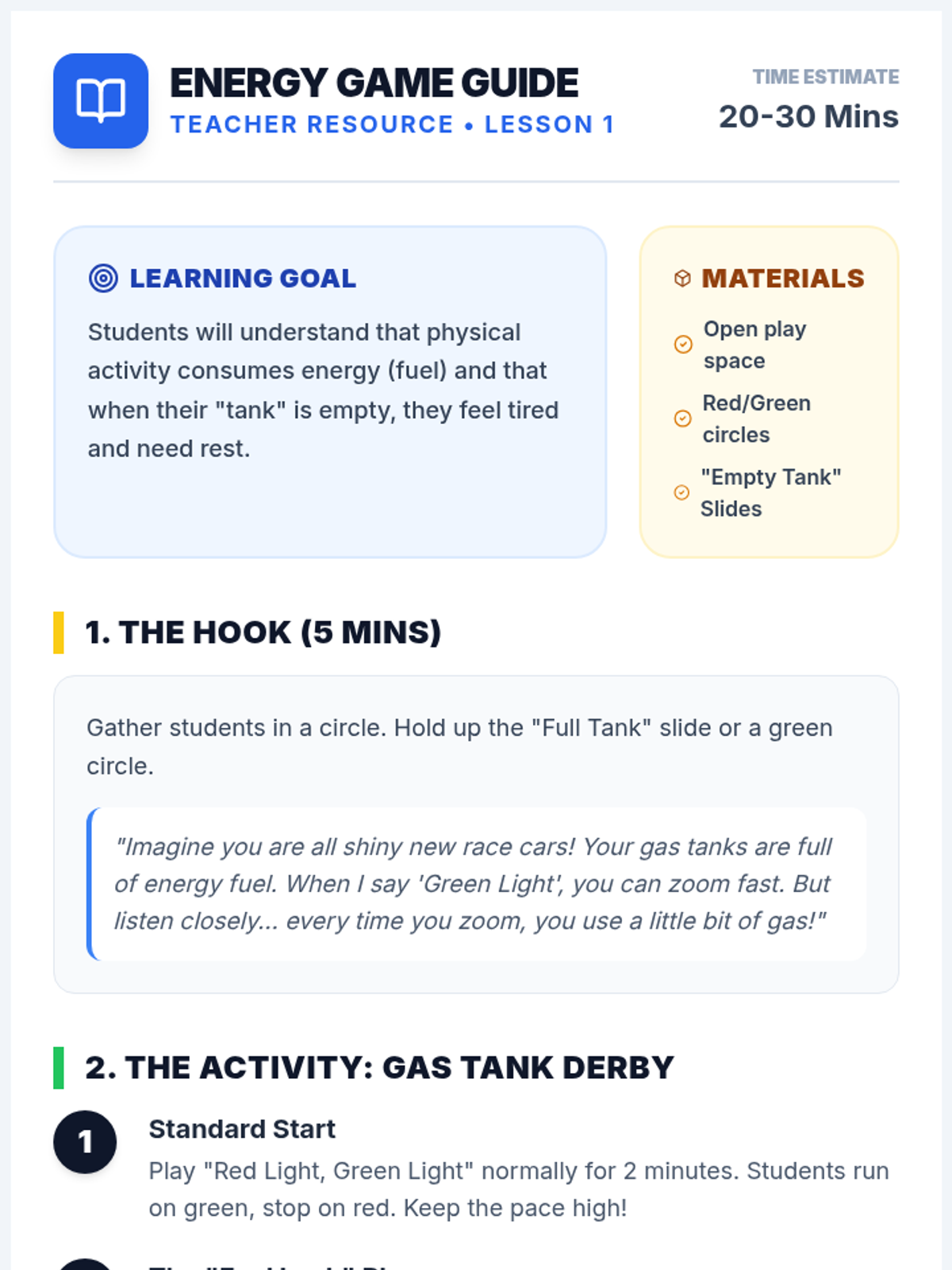
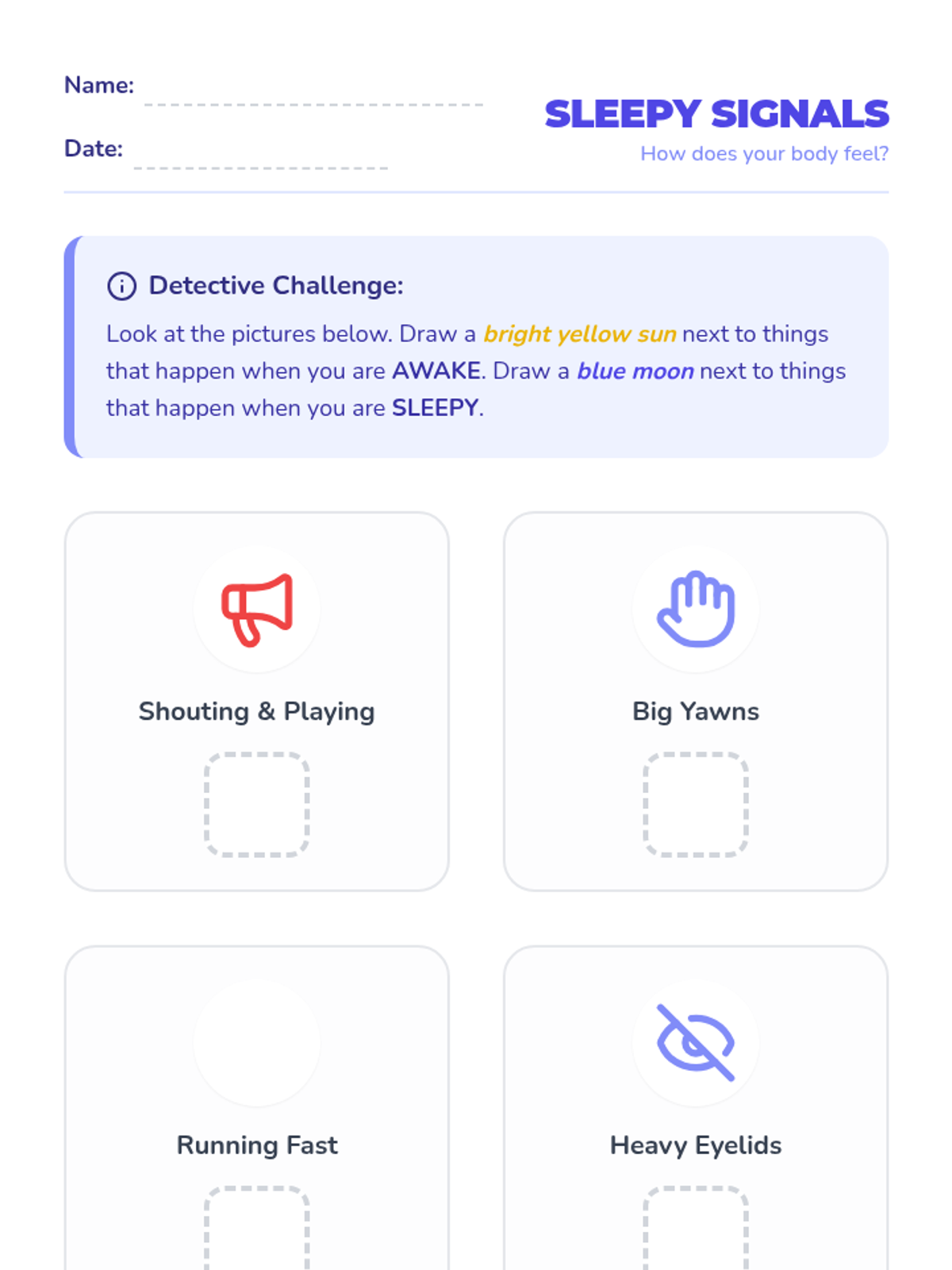
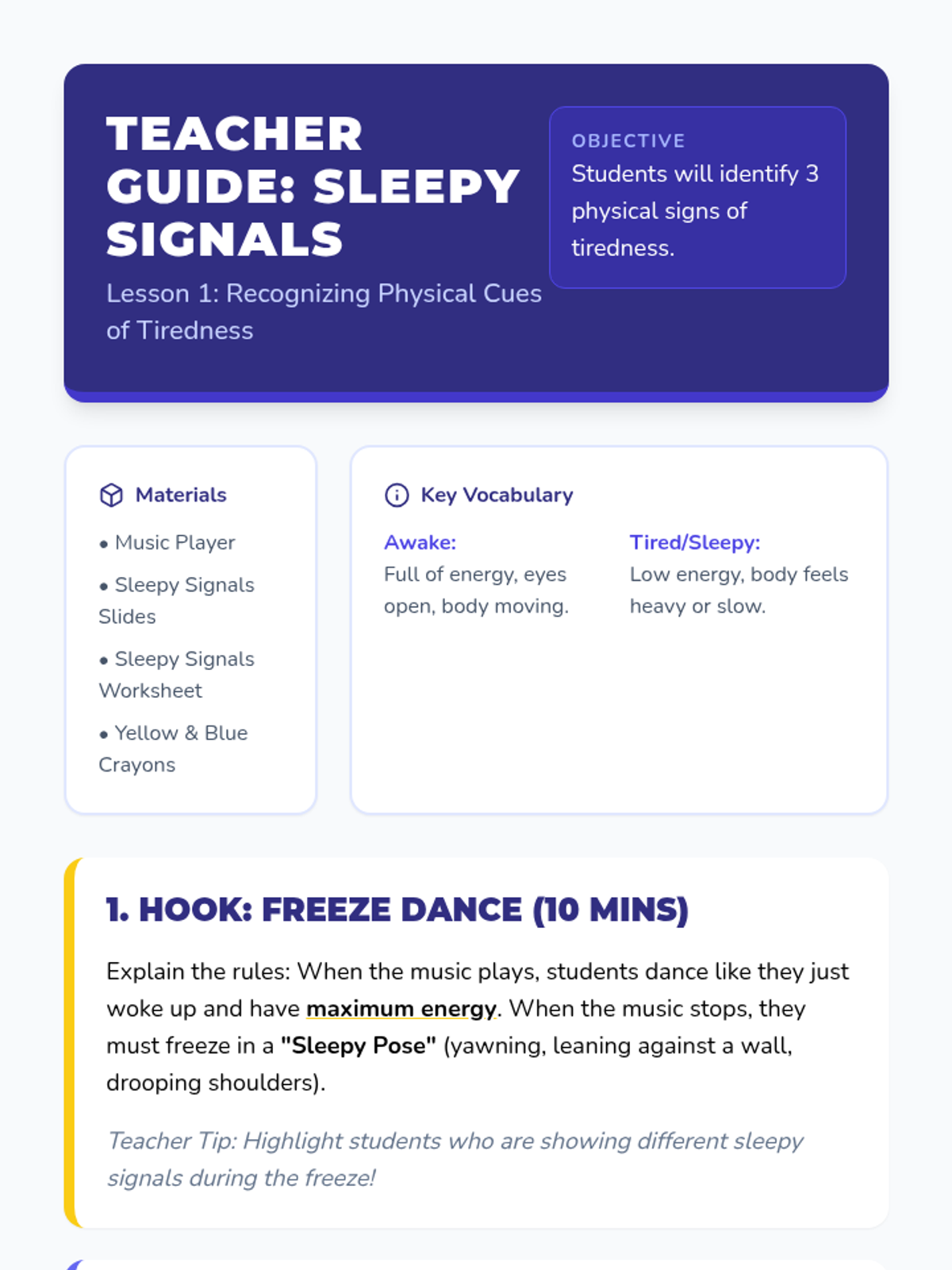
A Pre-K sequence focused on helping children understand their internal body clocks and the physical signs of tiredness. Students explore light and dark cycles, animal sleep patterns, and the metaphor of 'recharging' to develop self-awareness and healthy rest habits.
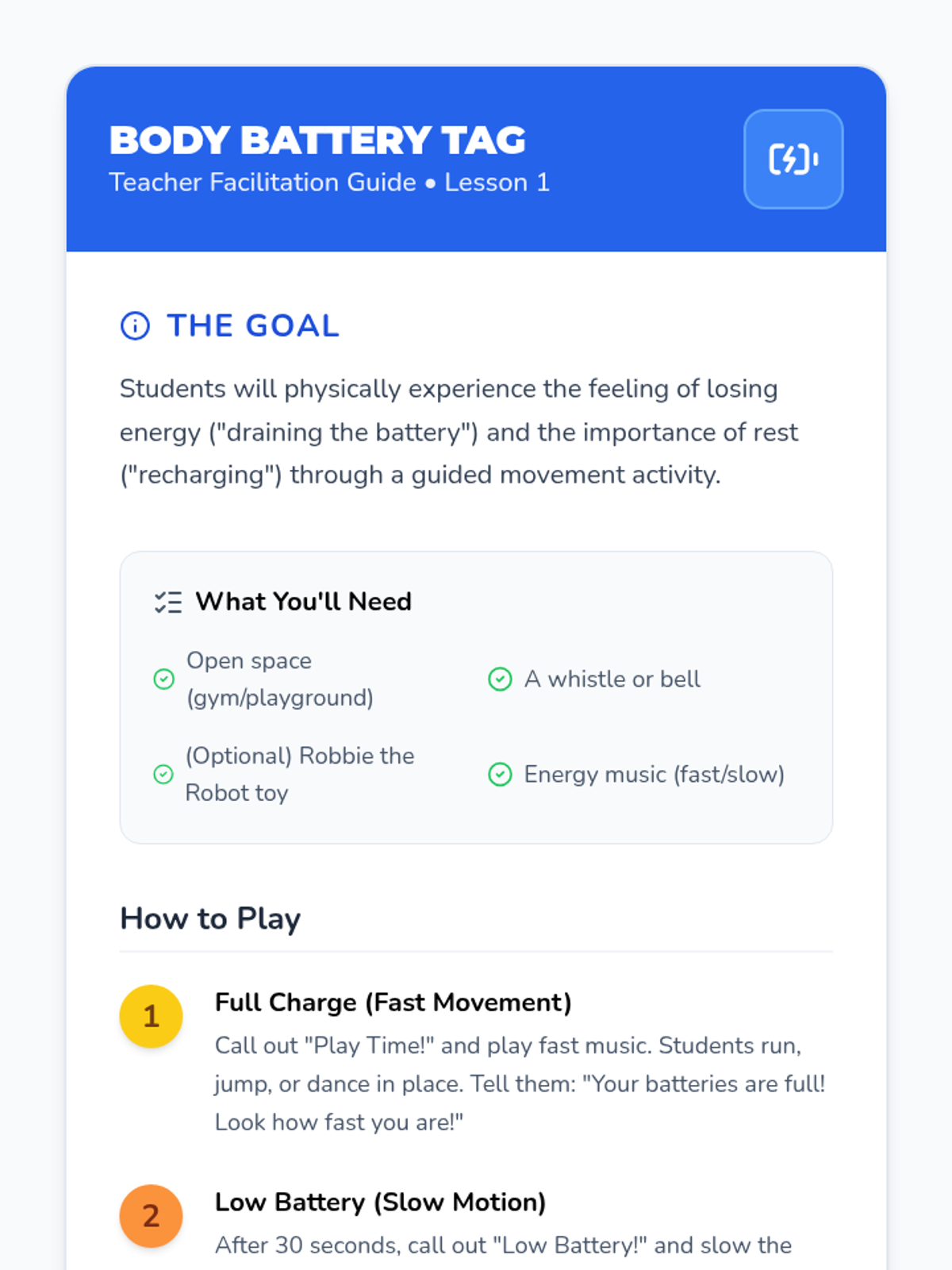
This game-based sequence explores how sleep restores energy, helps the body grow, and allows the brain to organize information through physical play and simulation.
This sequence guides Pre-K learners through the logical progression of a healthy bedtime routine, moving from distinguishing day and night to sequencing hygiene steps and relaxation techniques. Students create a personalized visual schedule to bridge the gap between classroom learning and home routines.
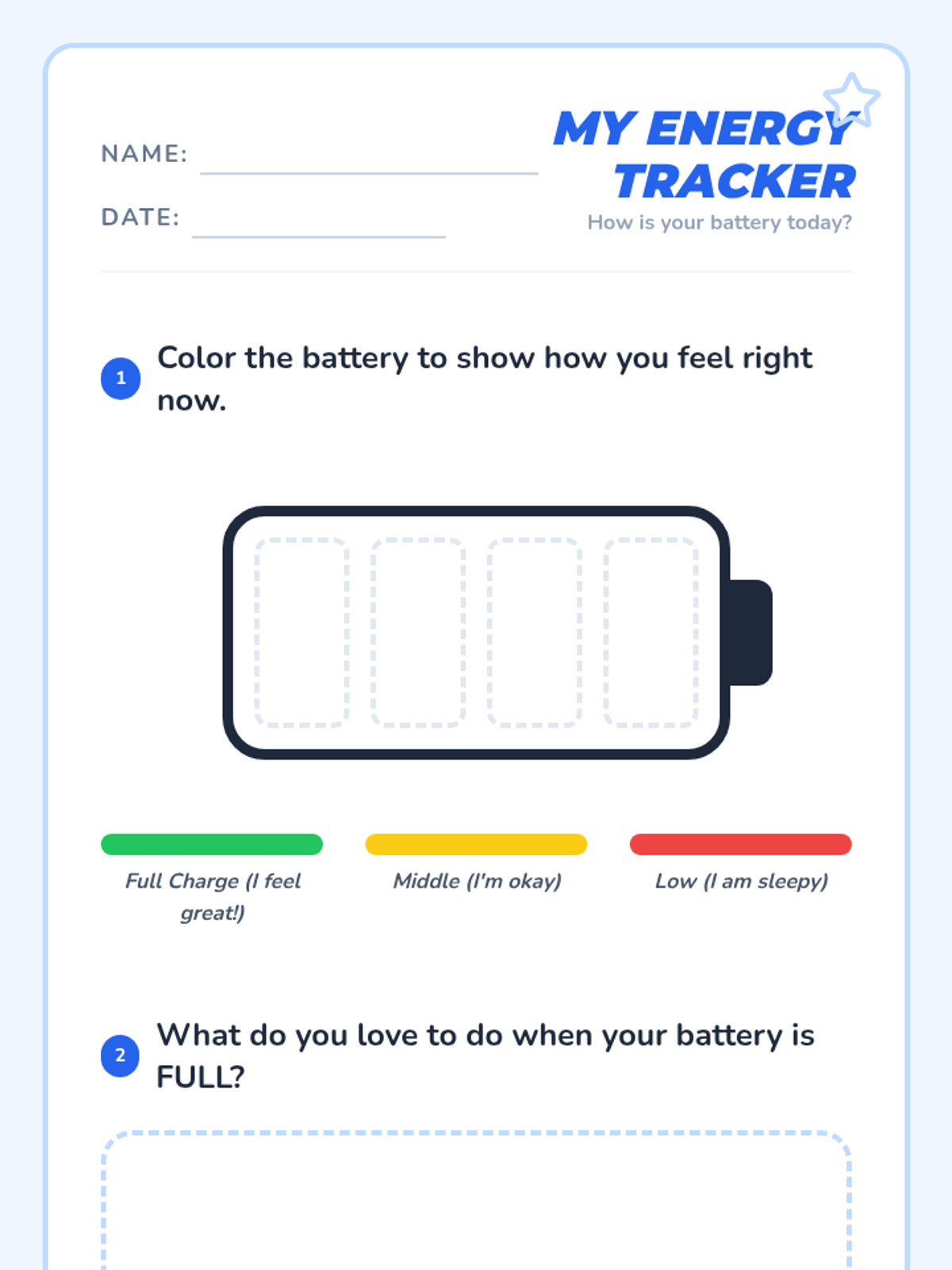
A Kindergarten sequence exploring the biological and emotional benefits of sleep through the analogy of a 'body battery'. Students learn how rest supports growth, mood, and daily function using games, sorting activities, and creative projects.
A Kindergarten Health sequence focusing on sleep hygiene. Students learn to recognize tiredness cues, sequence bedtime routines, curate sleep environments, practice calming techniques, and create a personal sleep plan.
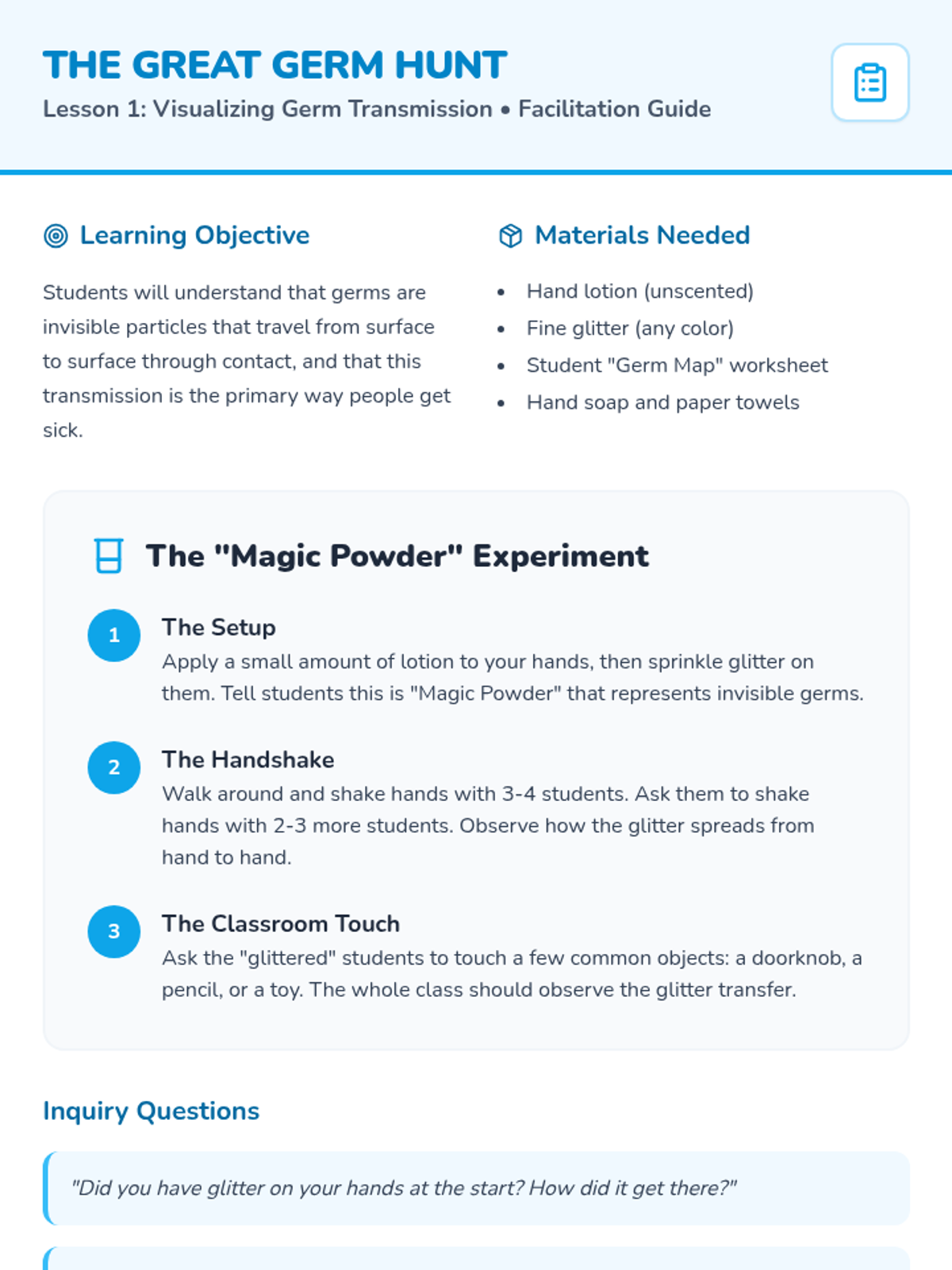
A comprehensive Kindergarten sequence introducing germ theory and hygiene through hands-on simulations, skill-building workshops, and community responsibility. Students explore how germs spread, master handwashing and respiratory etiquette, and learn how healthy habits build a strong immune system.
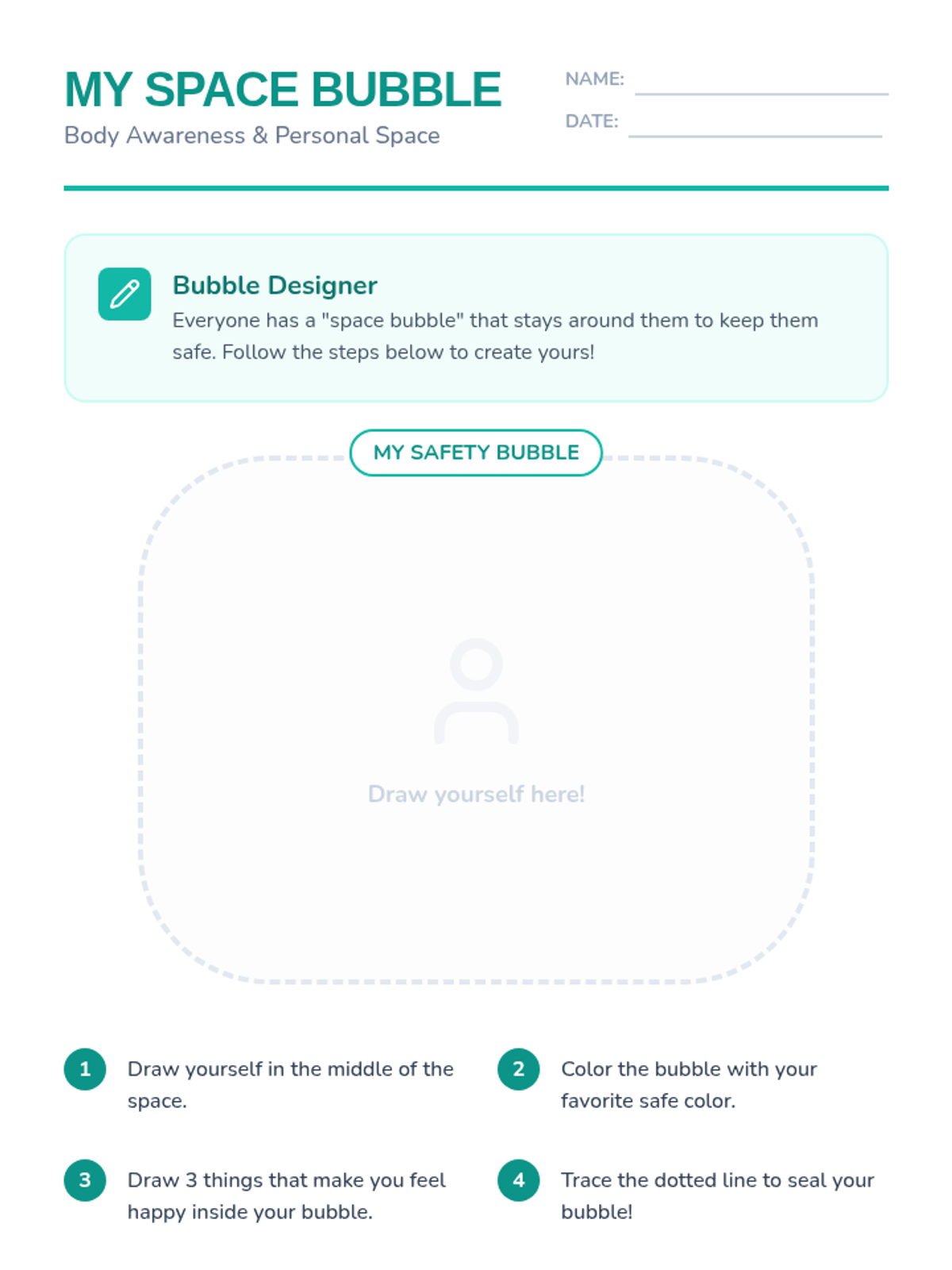
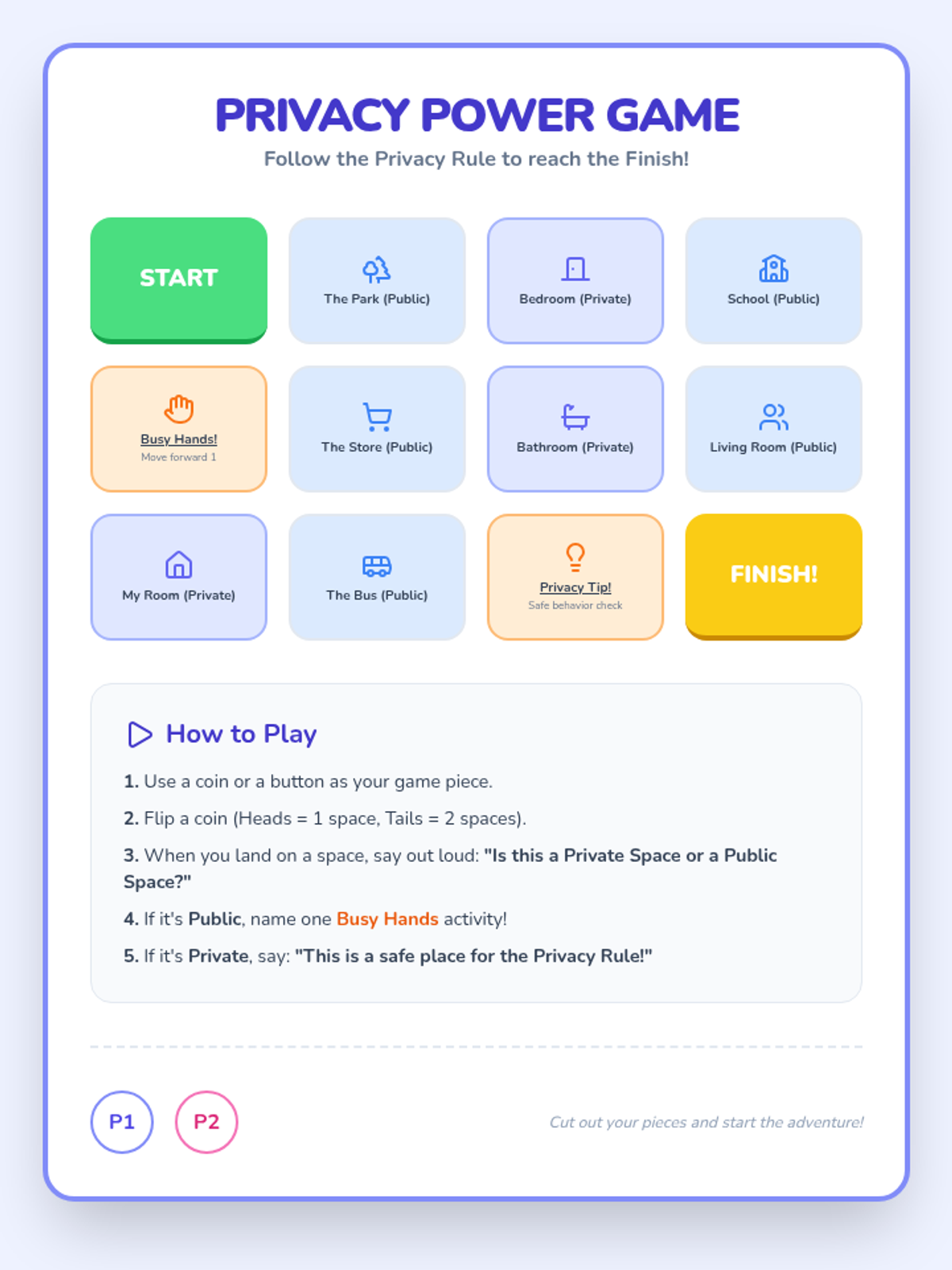
A Kindergarten sequence focused on physical boundaries, body autonomy, recognizing physical sensations of activity, and practicing relaxation techniques. Students learn to define personal space, communicate boundaries, monitor their heart rate, identify safe adults, and understand the importance of rest.
A Kindergarten sequence focused on personal hygiene, germ prevention, and daily self-care routines through hands-on simulations and skill-building activities.
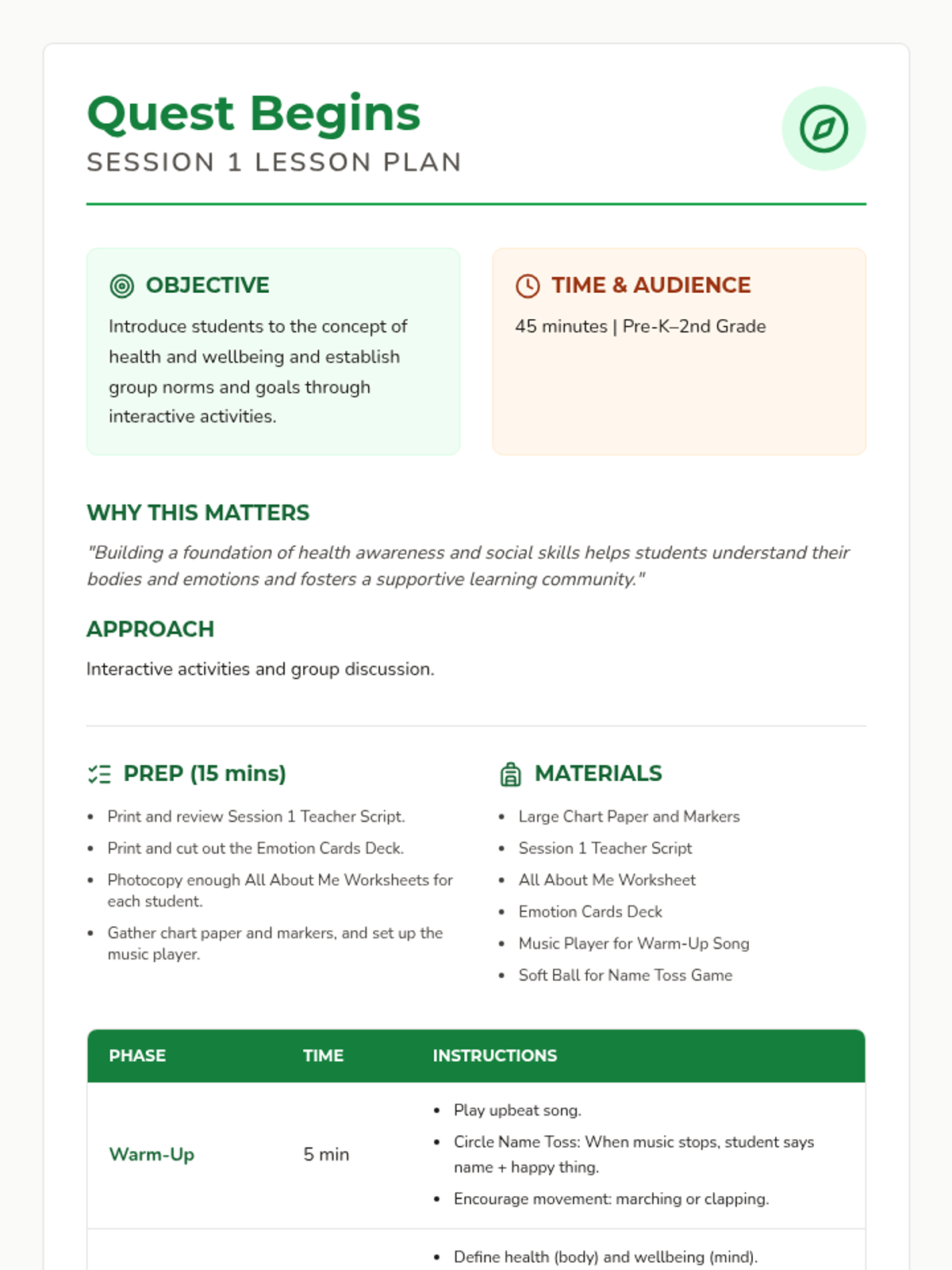
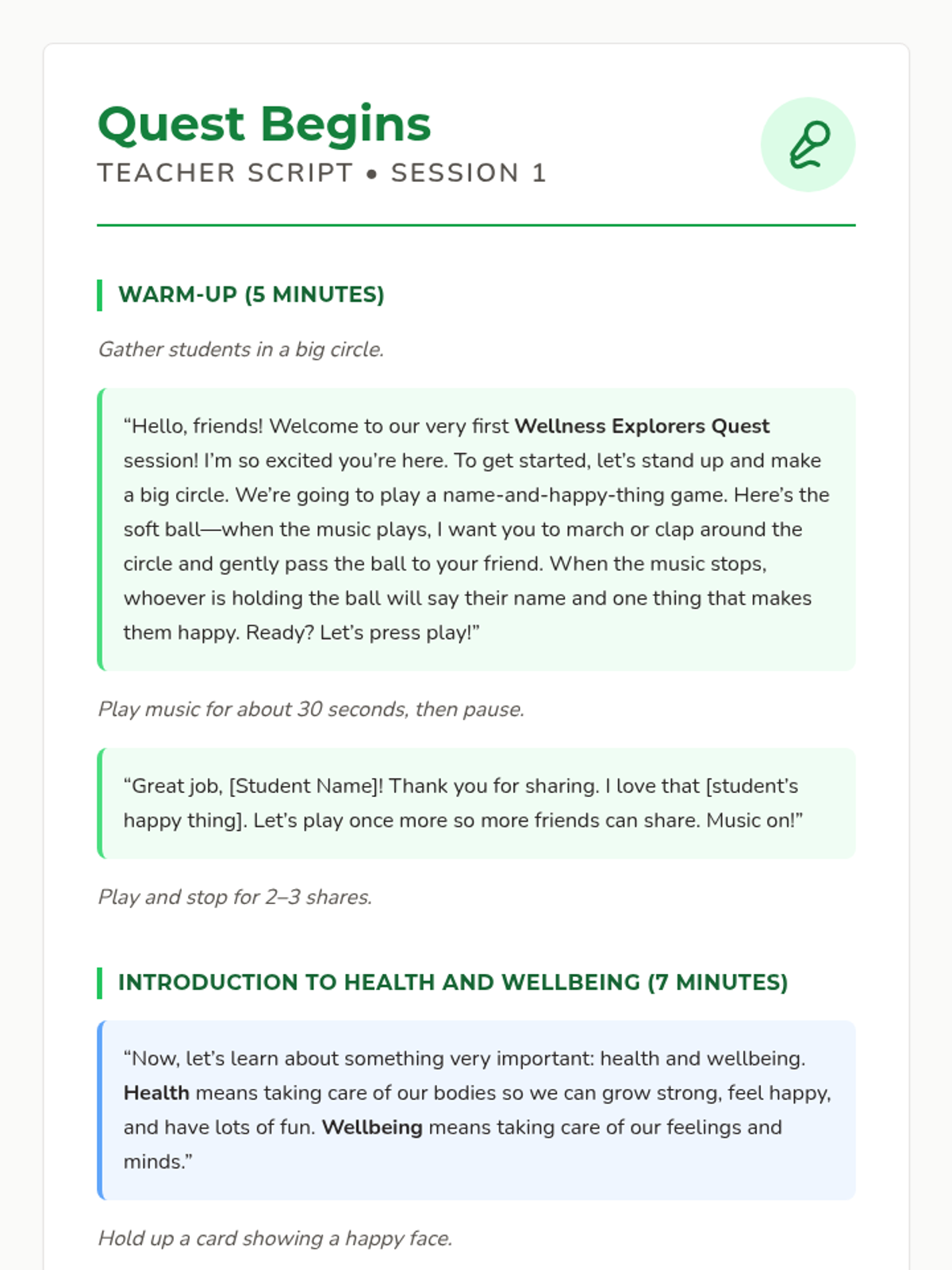
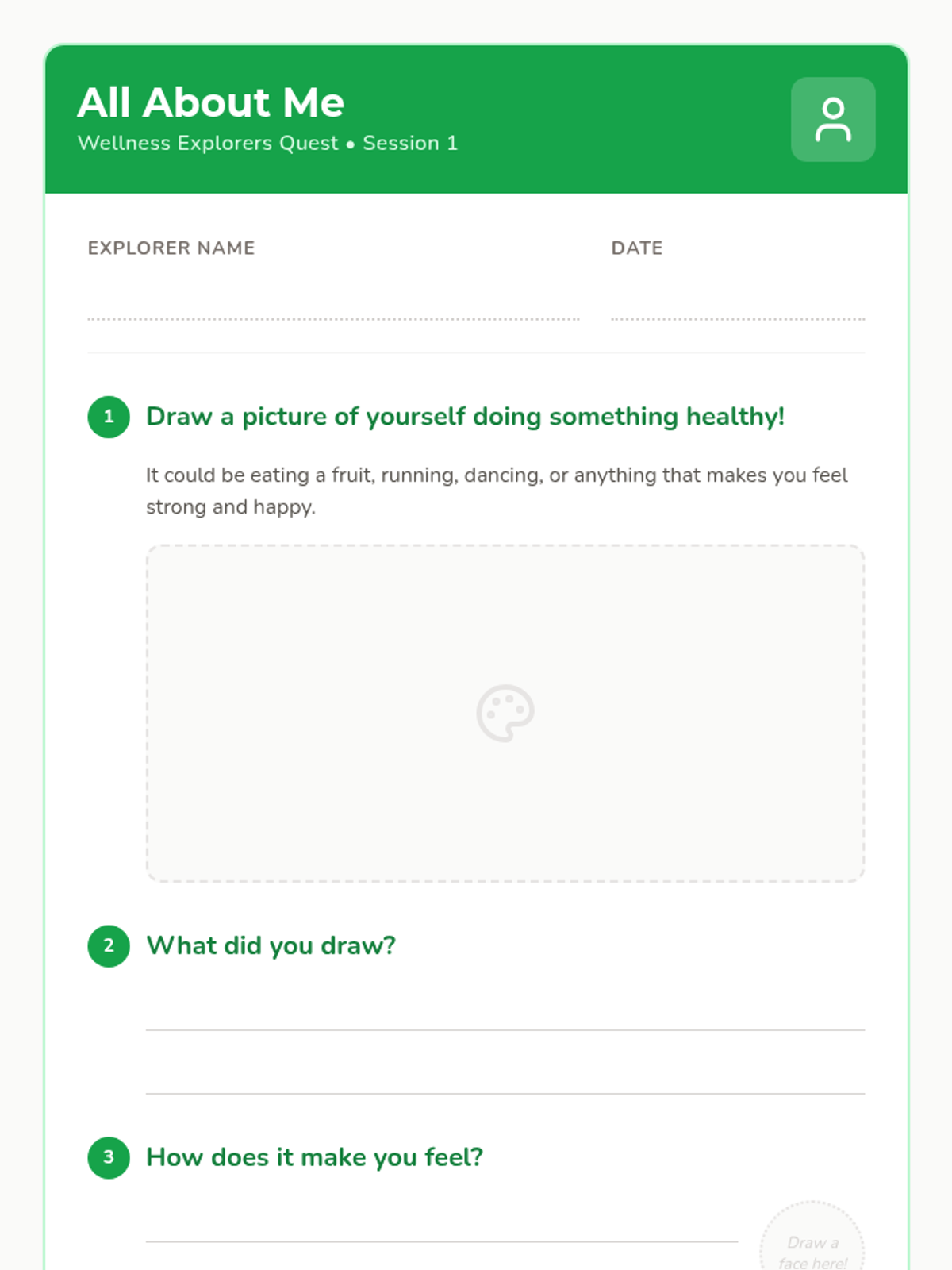
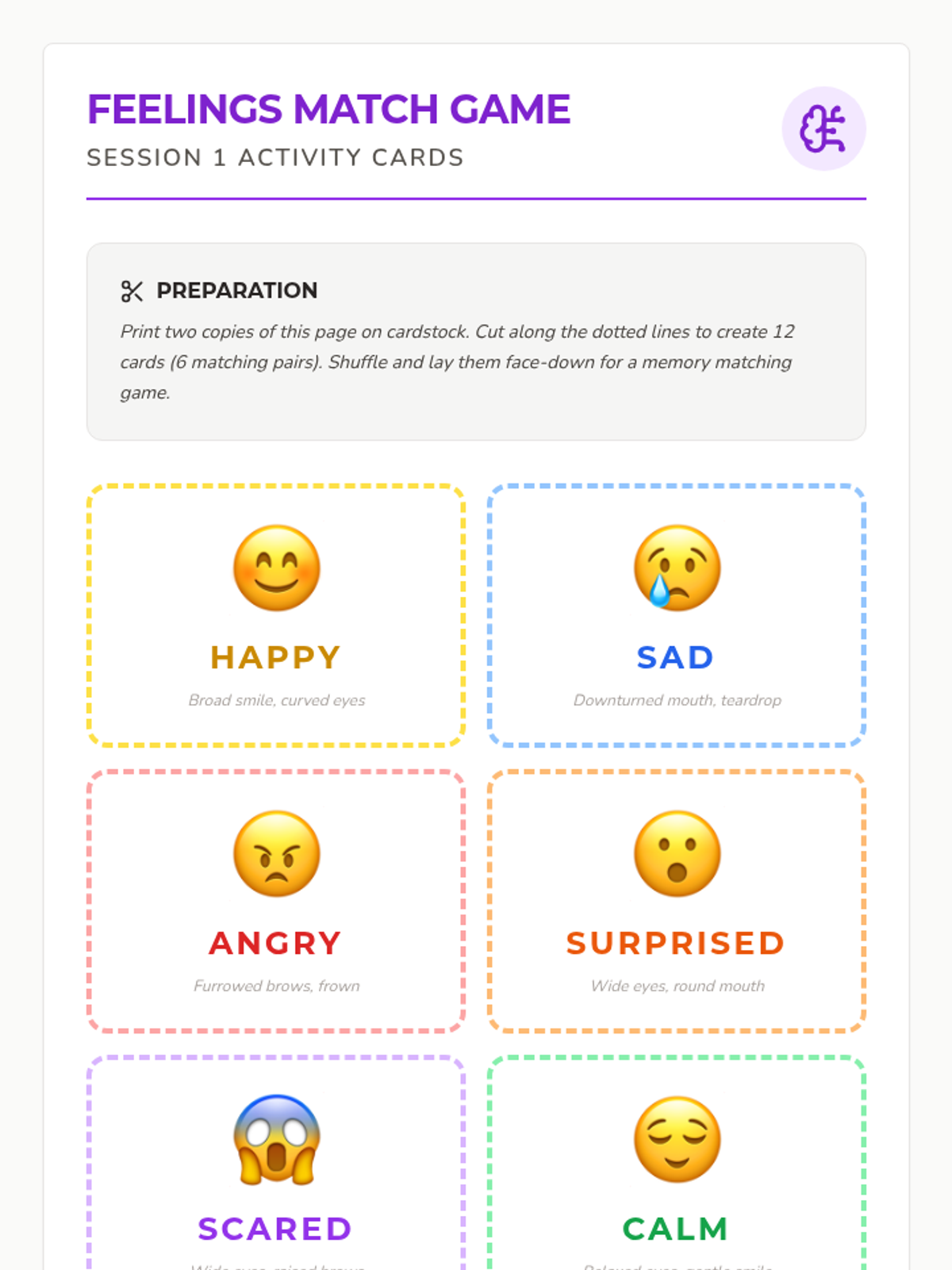
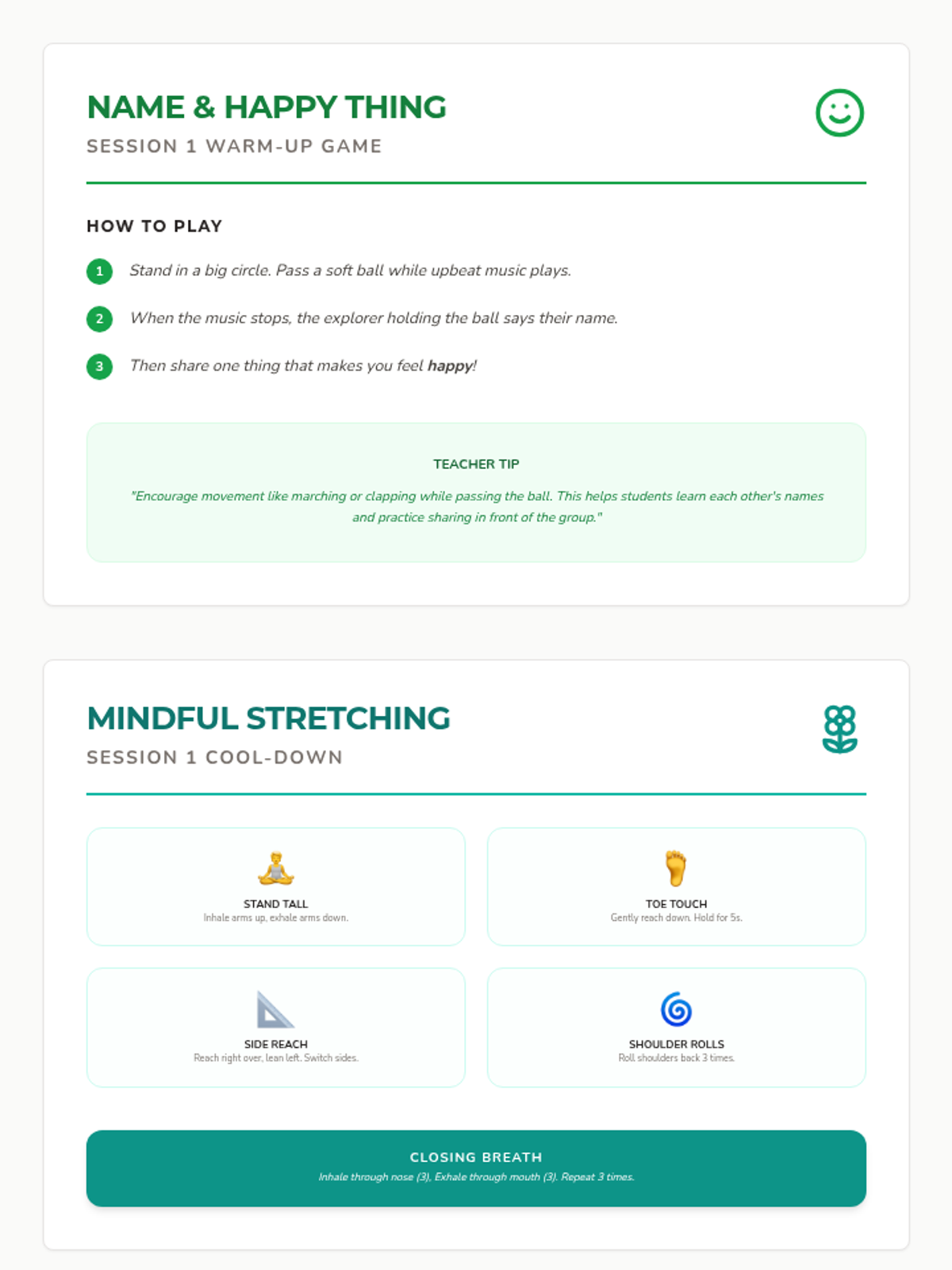
A 12-session group health and wellbeing program for Pre-K–2nd graders exploring functional health, goal-setting, communication, and physical wellness through a 'Quest' theme. This sequence includes the first 8 sessions with complete lesson plans, scripts, and student activities.
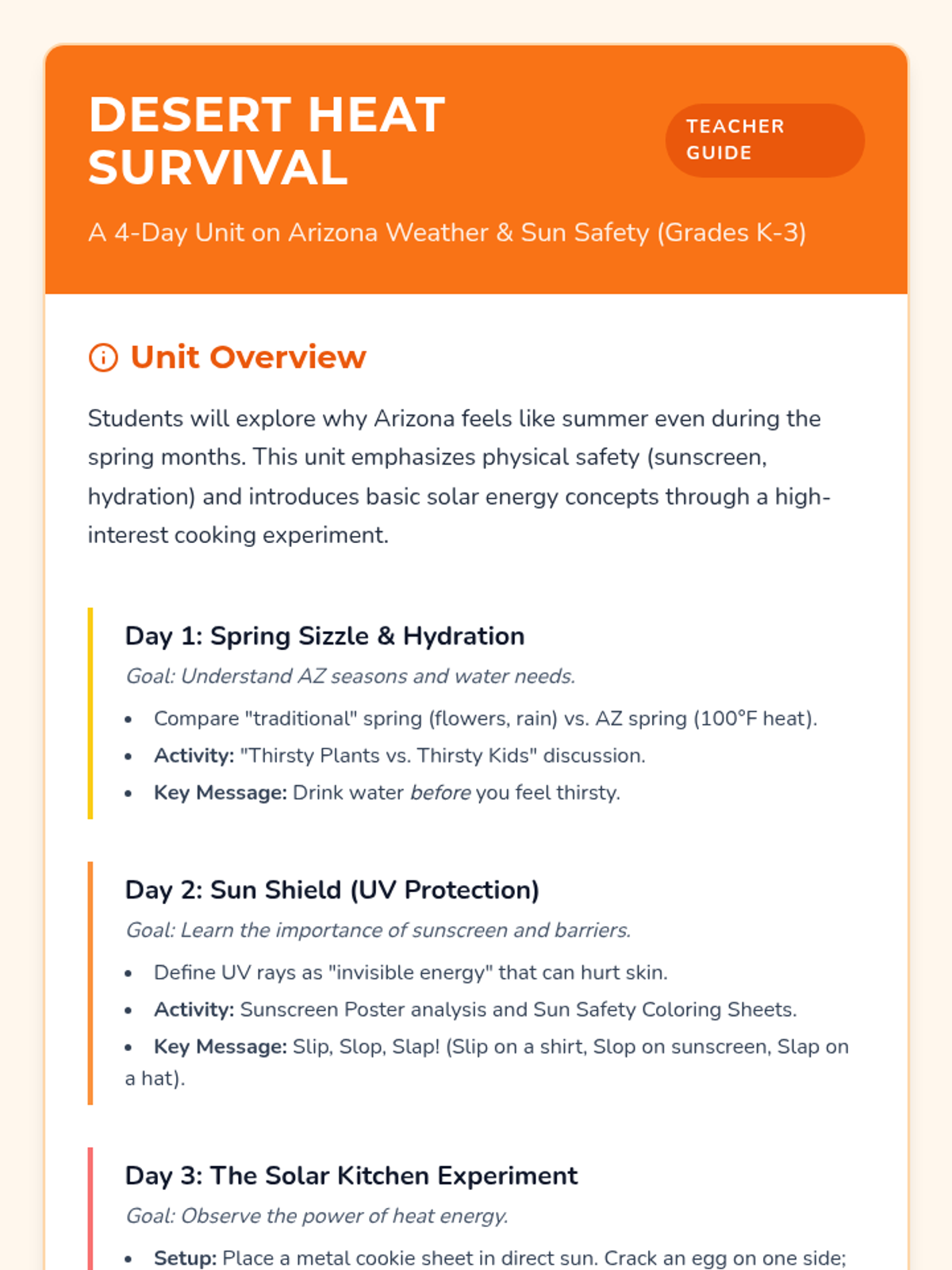
A four-day unit for grades K-3 exploring Arizona's extreme spring heat, sun safety, and the power of solar energy through a cooking experiment.
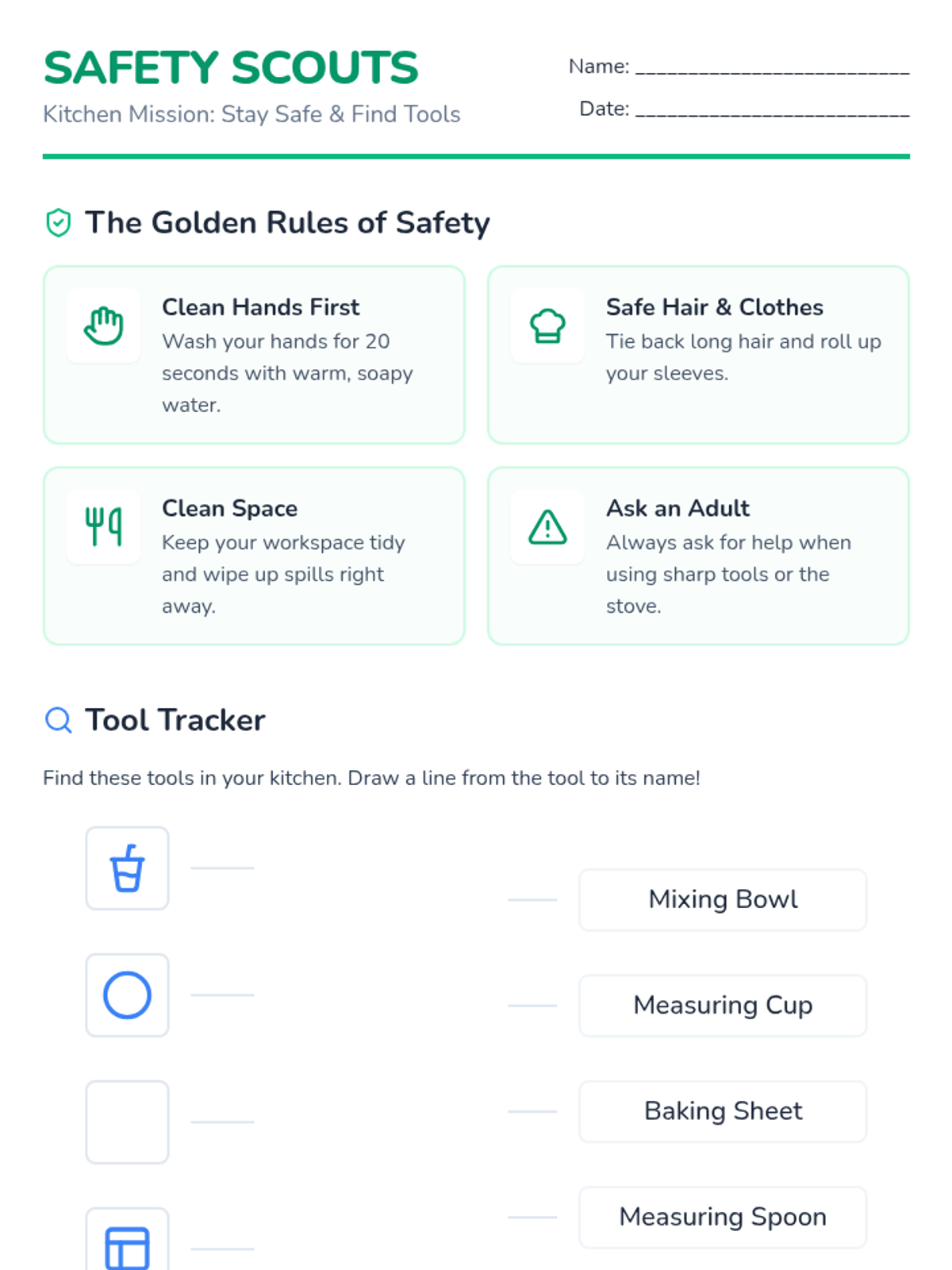
A 2-lesson unit designed to introduce elementary students to kitchen safety, tool identification, and visual recipe following through the creation of no-bake energy bites.
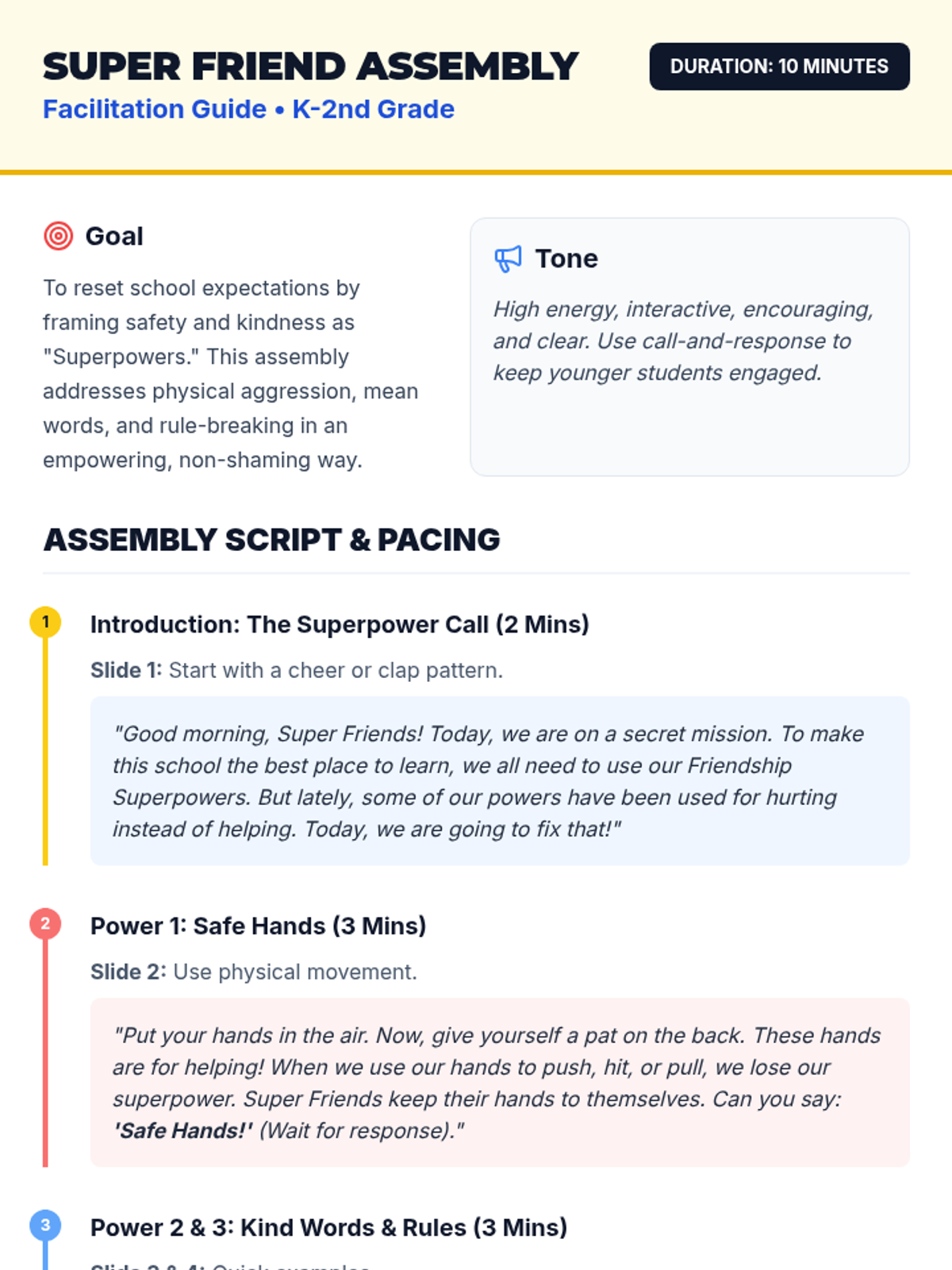
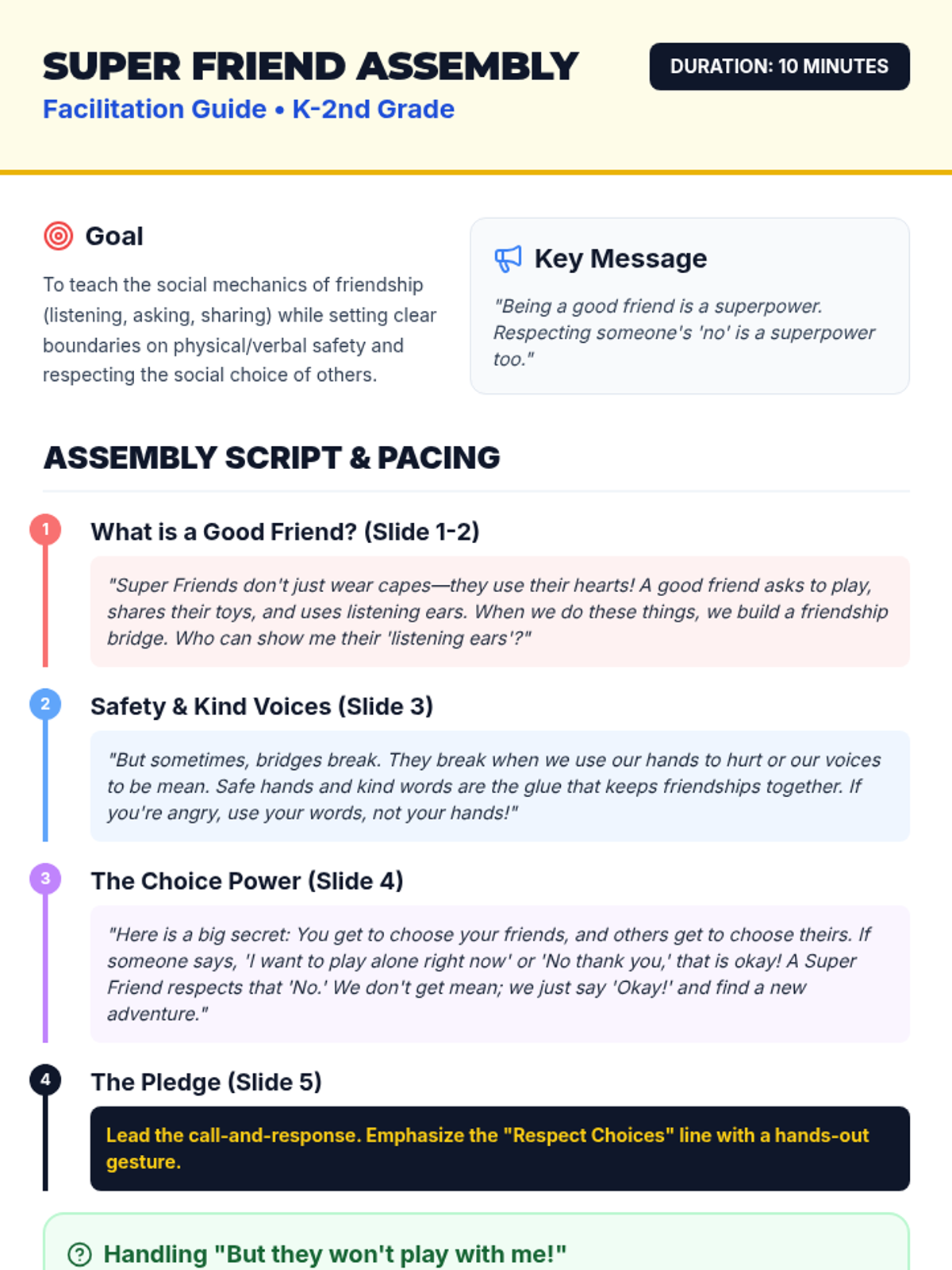
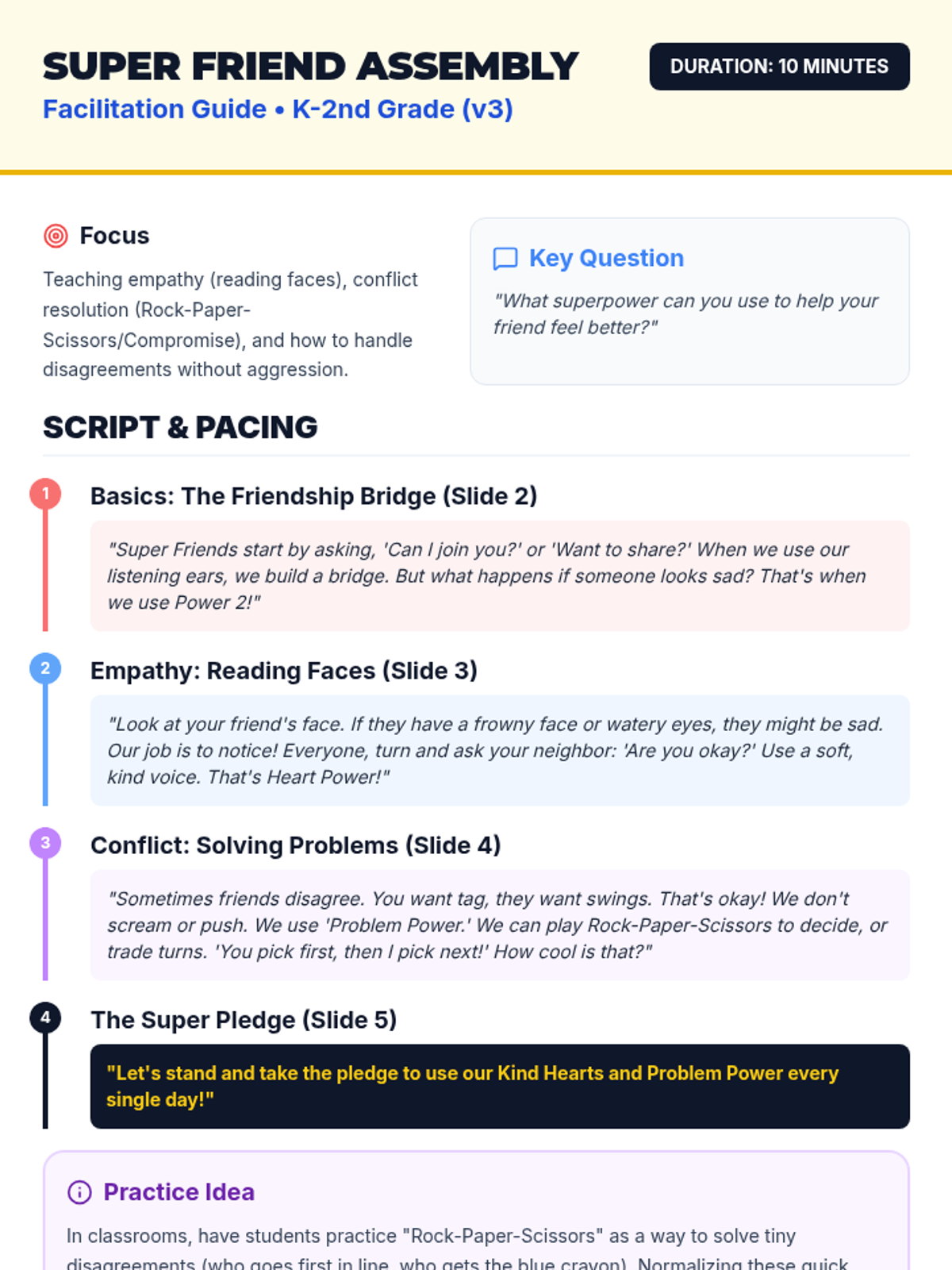
A pair of 10-minute assembly lessons focused on friendship, safety, and community respect for K-2 and 3-5 students, addressing physical and verbal behavior.
A Kindergarten sequence focused on establishing safe and respectful routines for movement breaks, covering personal space, sensory tool safety, stop/go signals, classroom zones, and social awareness.
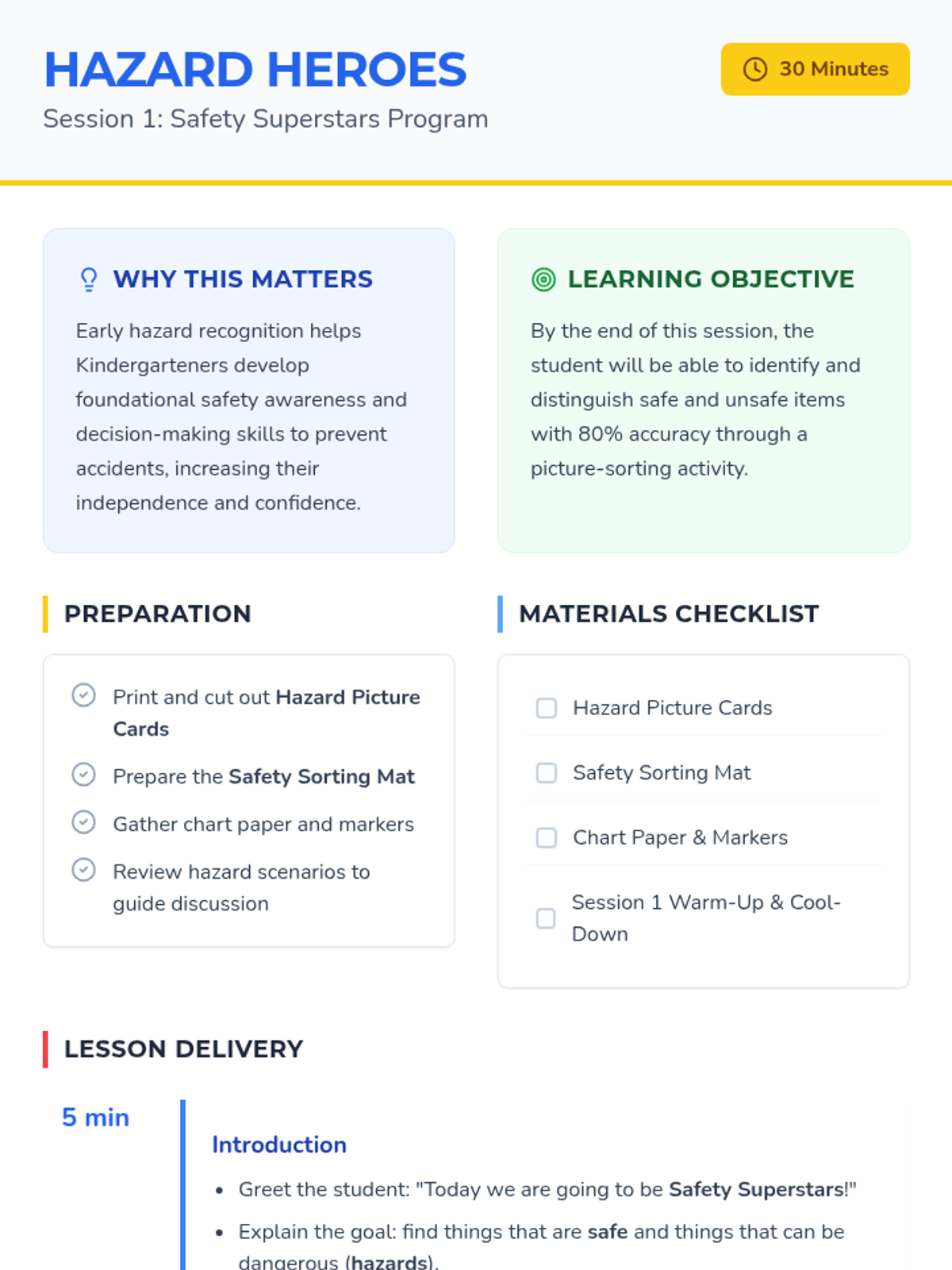
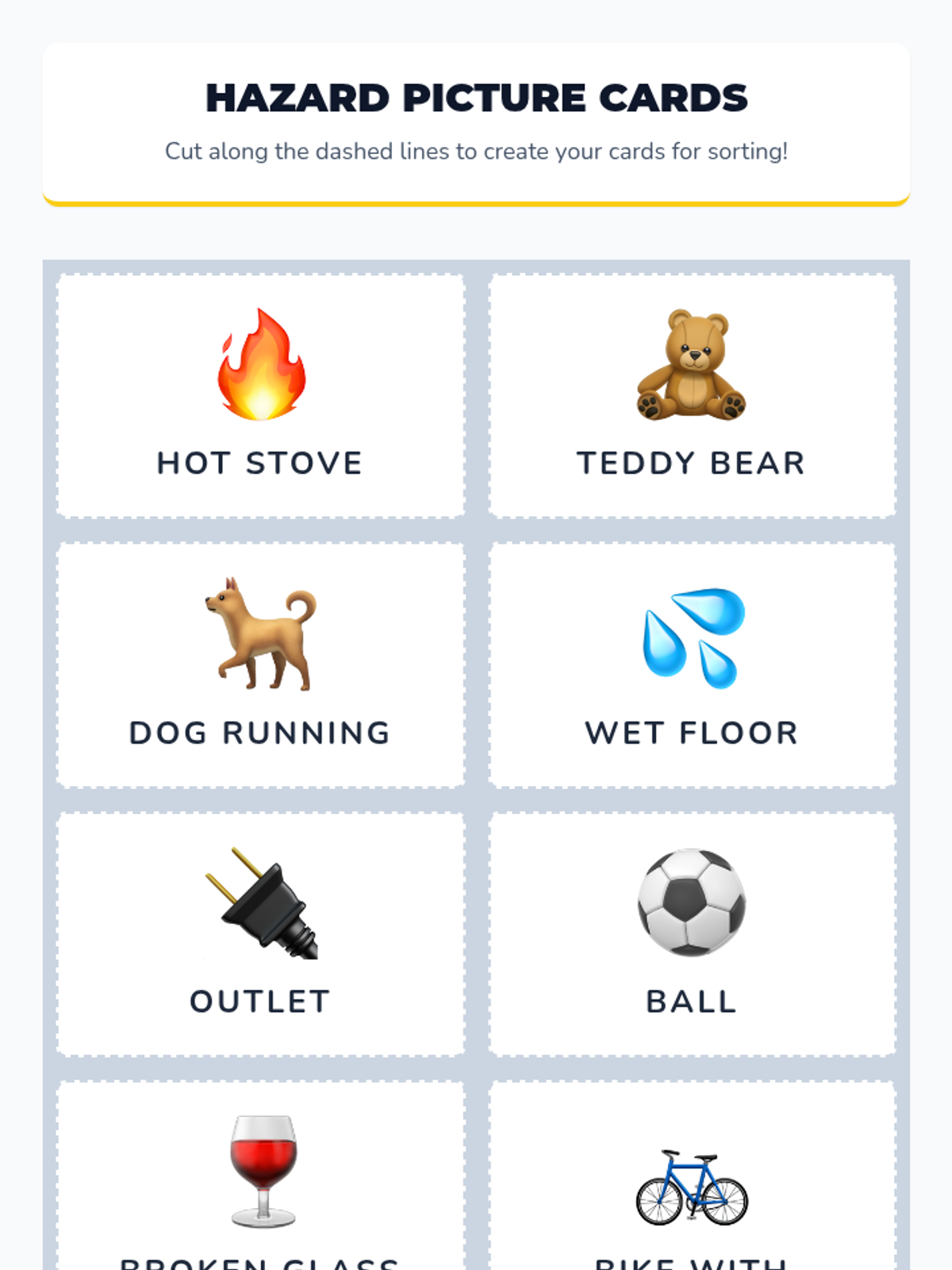
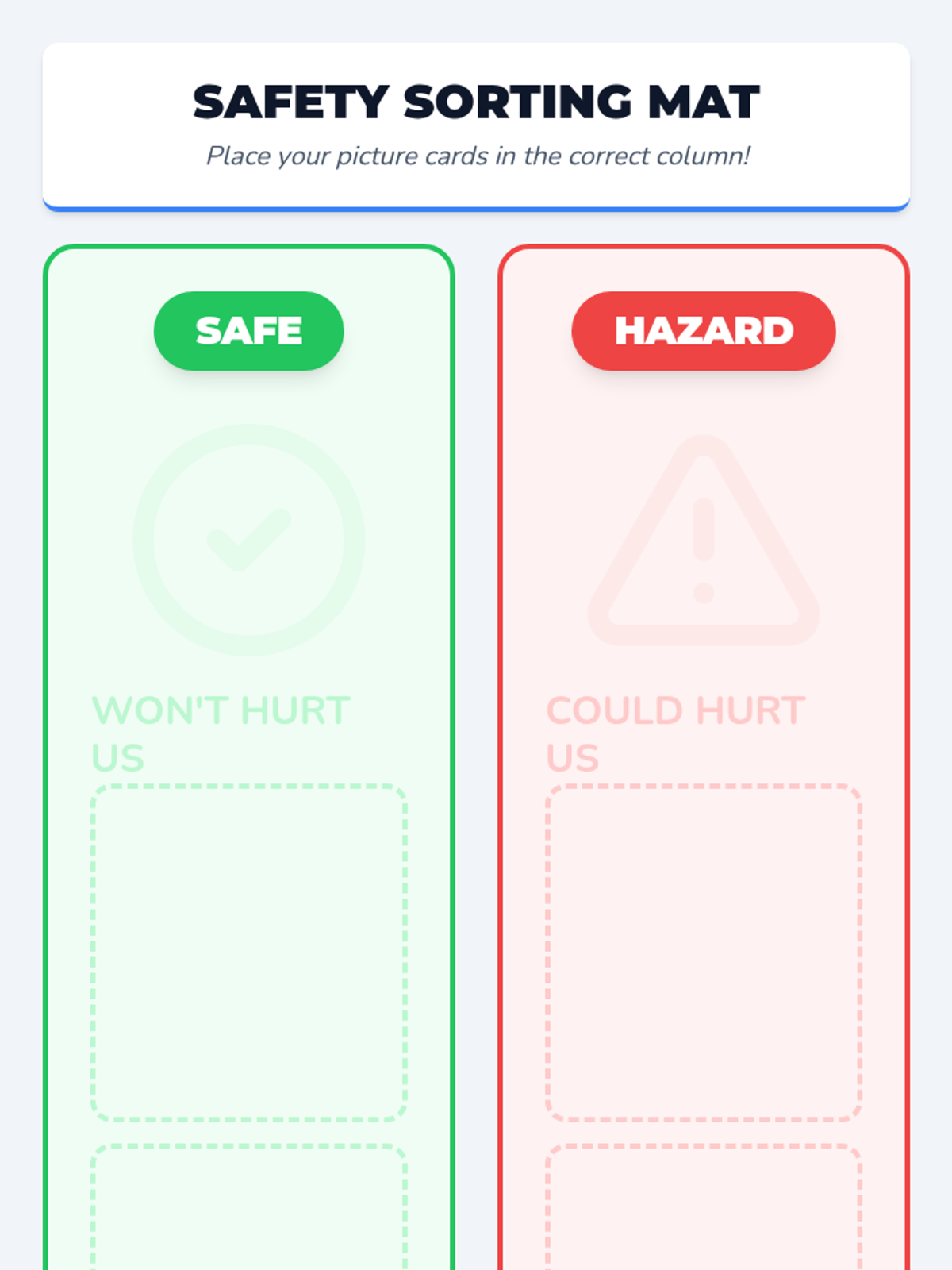
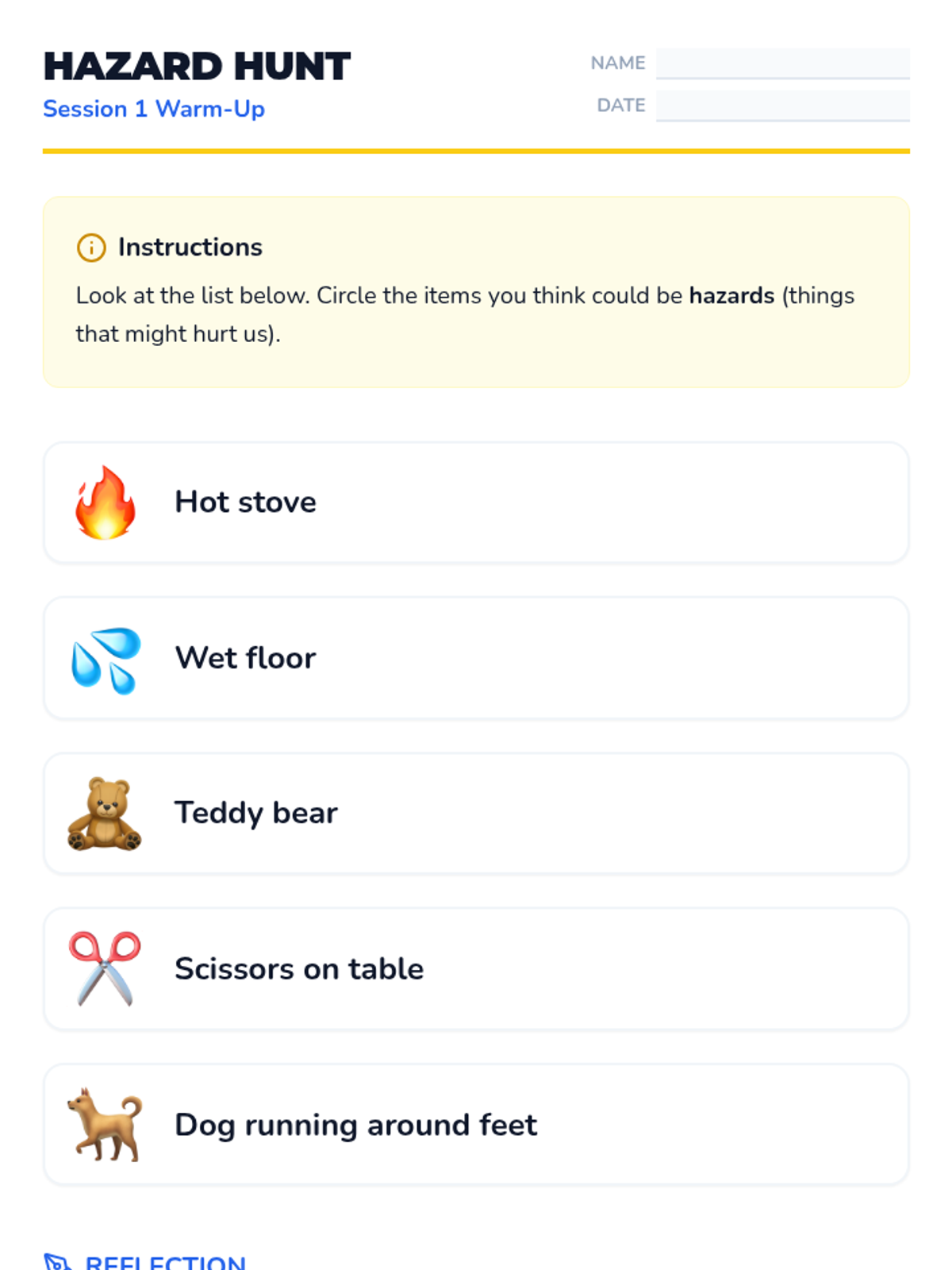
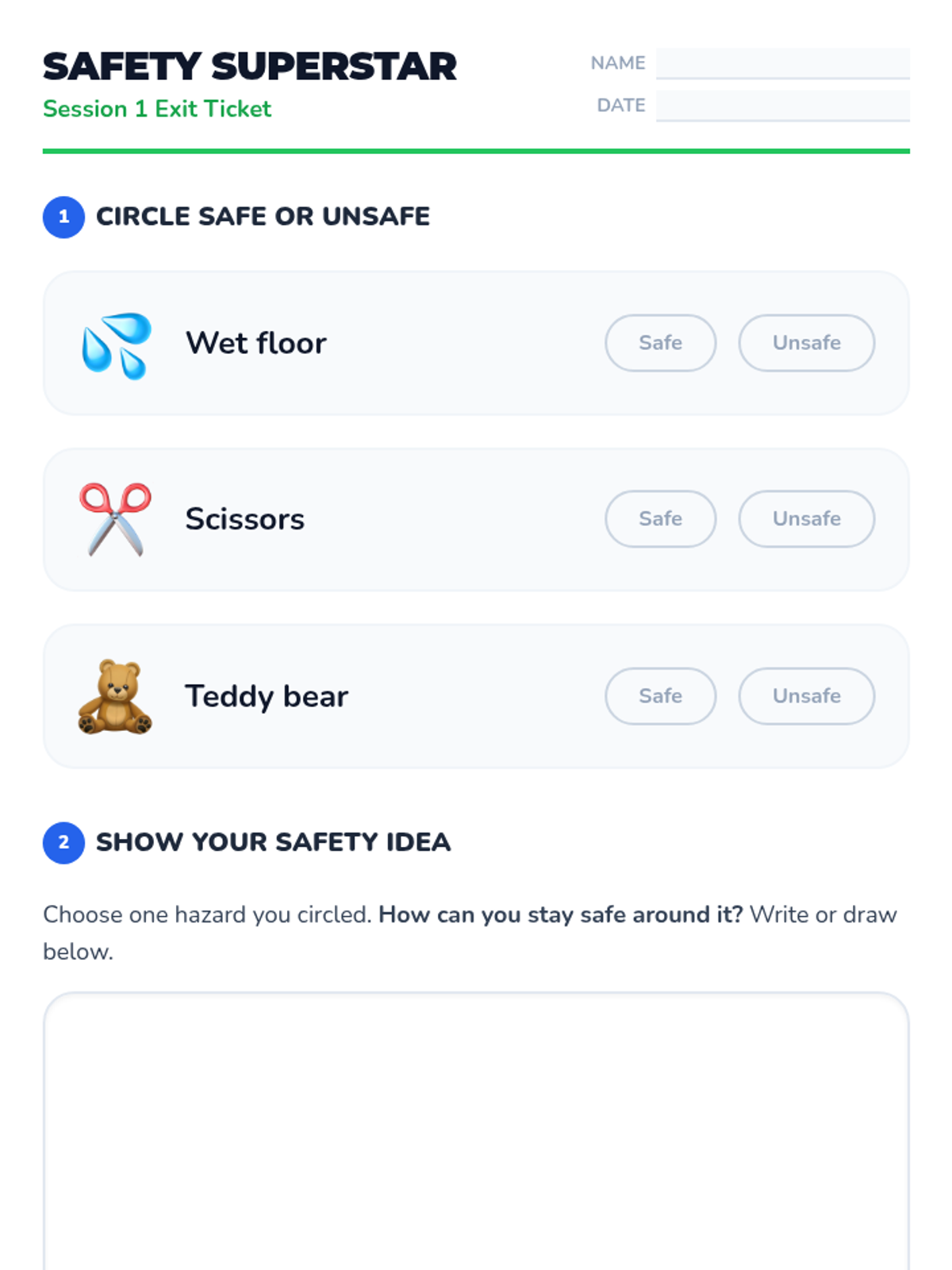
A 3-session individualized safety awareness program for Kindergarten students, focusing on hazard recognition, emergency response, and daily safety habits through hands-on activities and role-play.
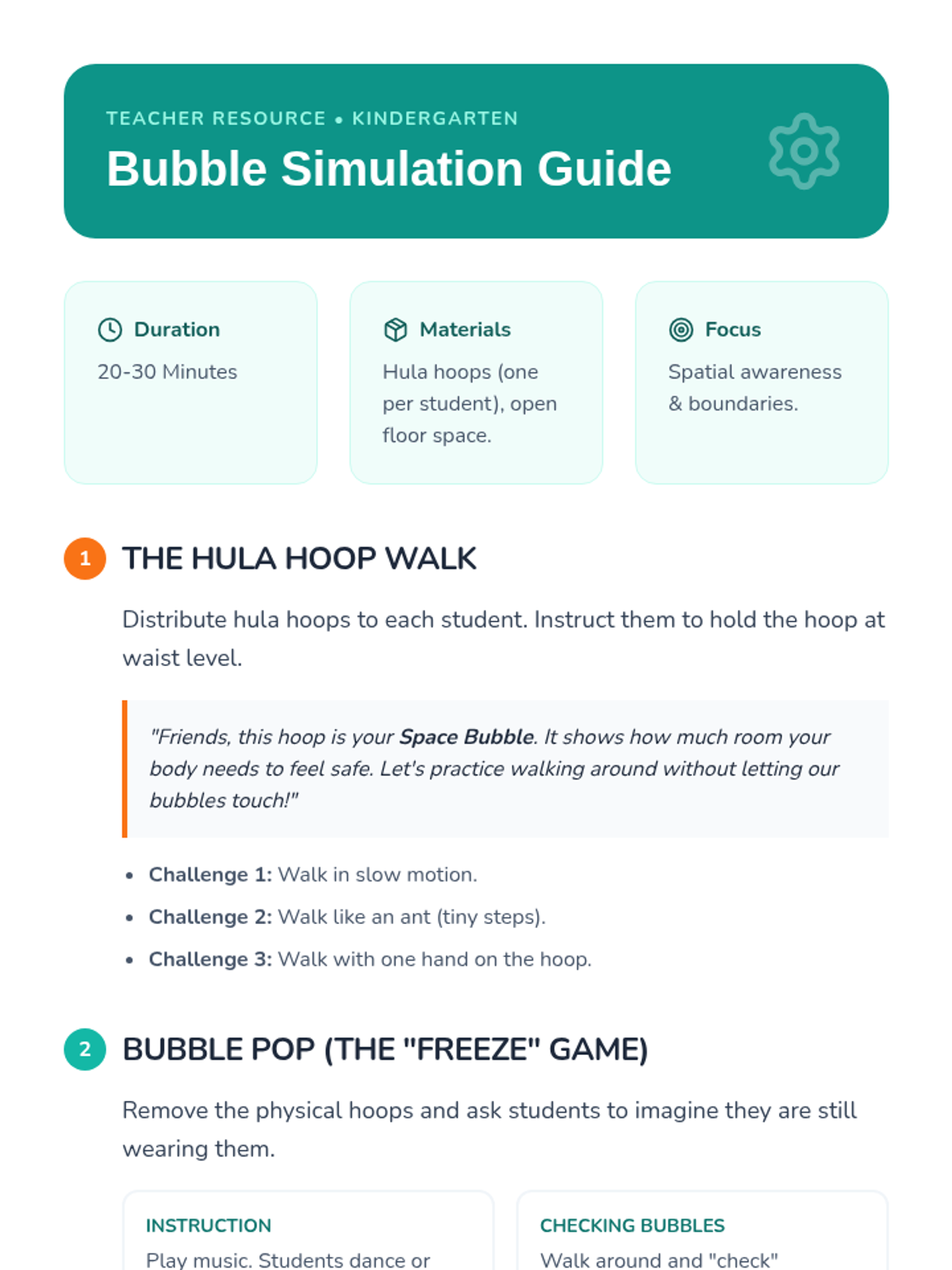
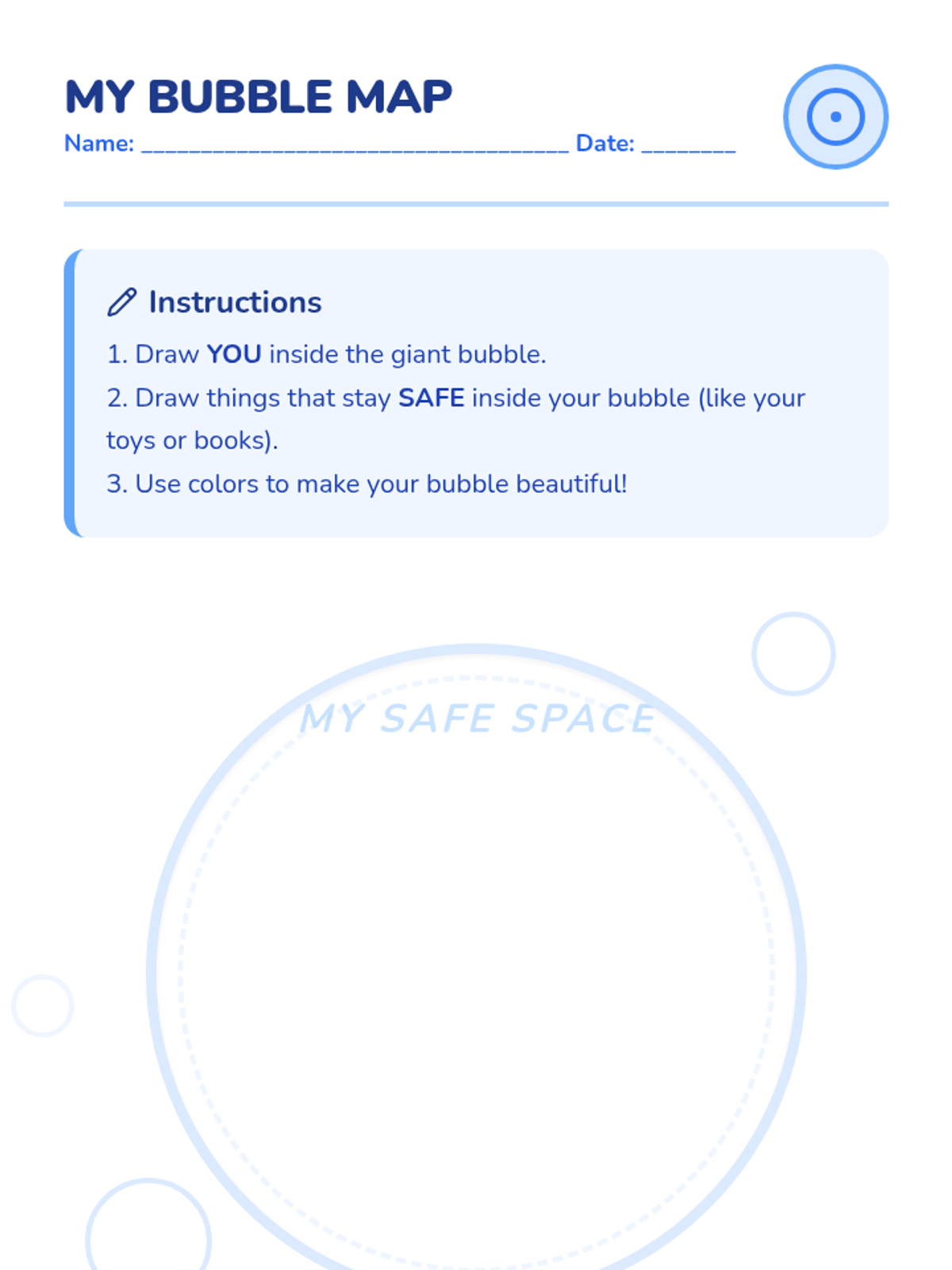
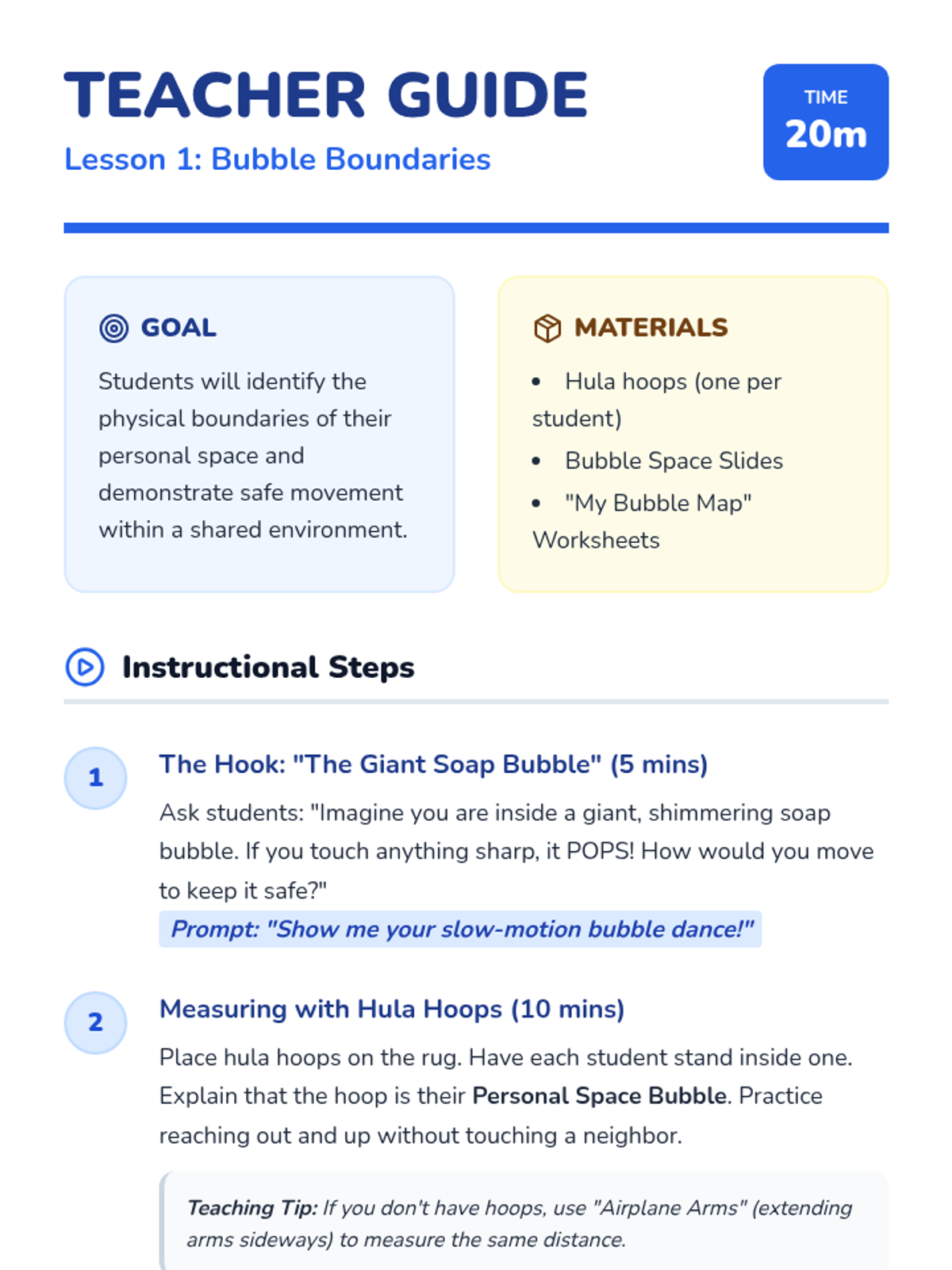
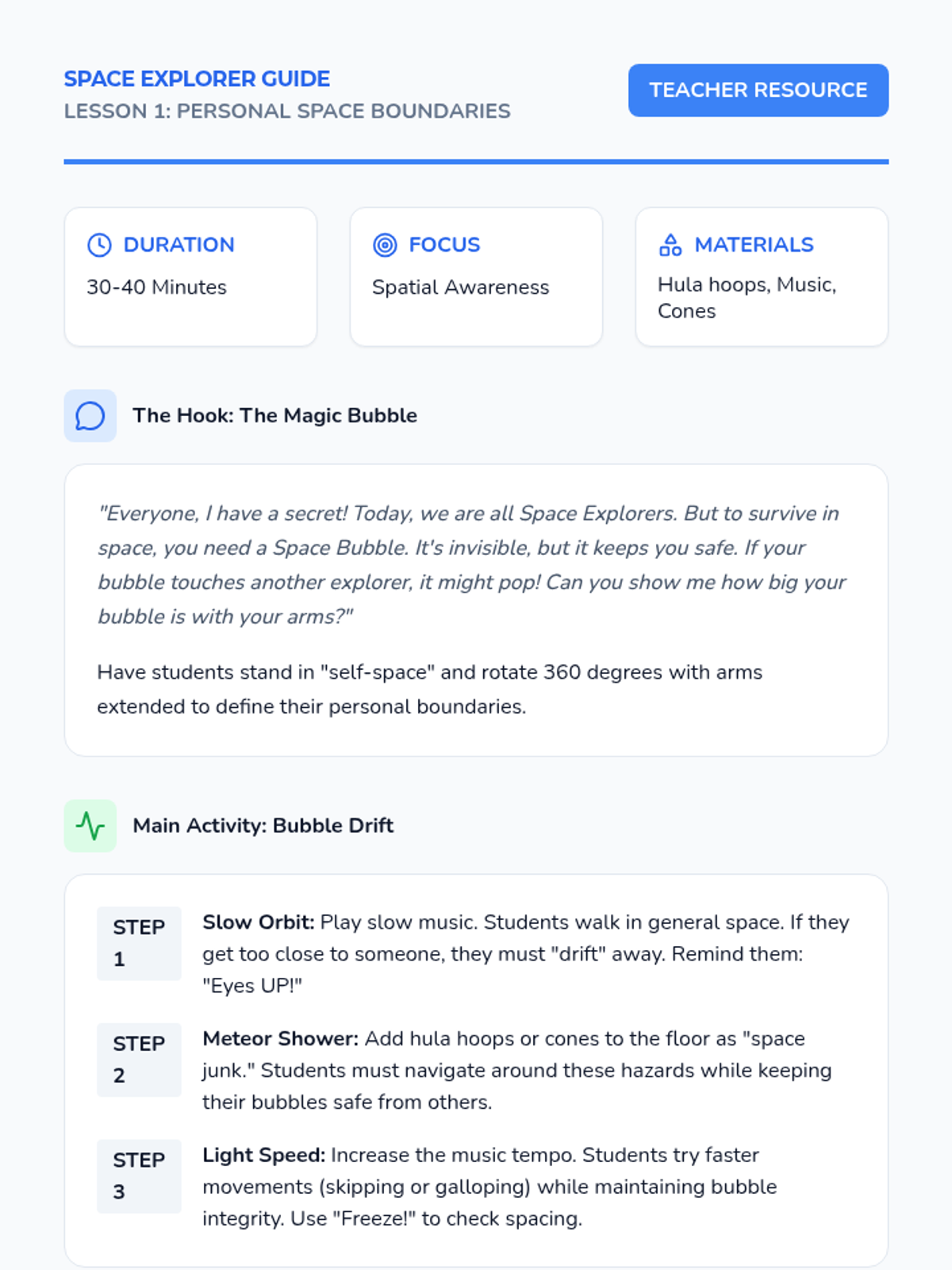
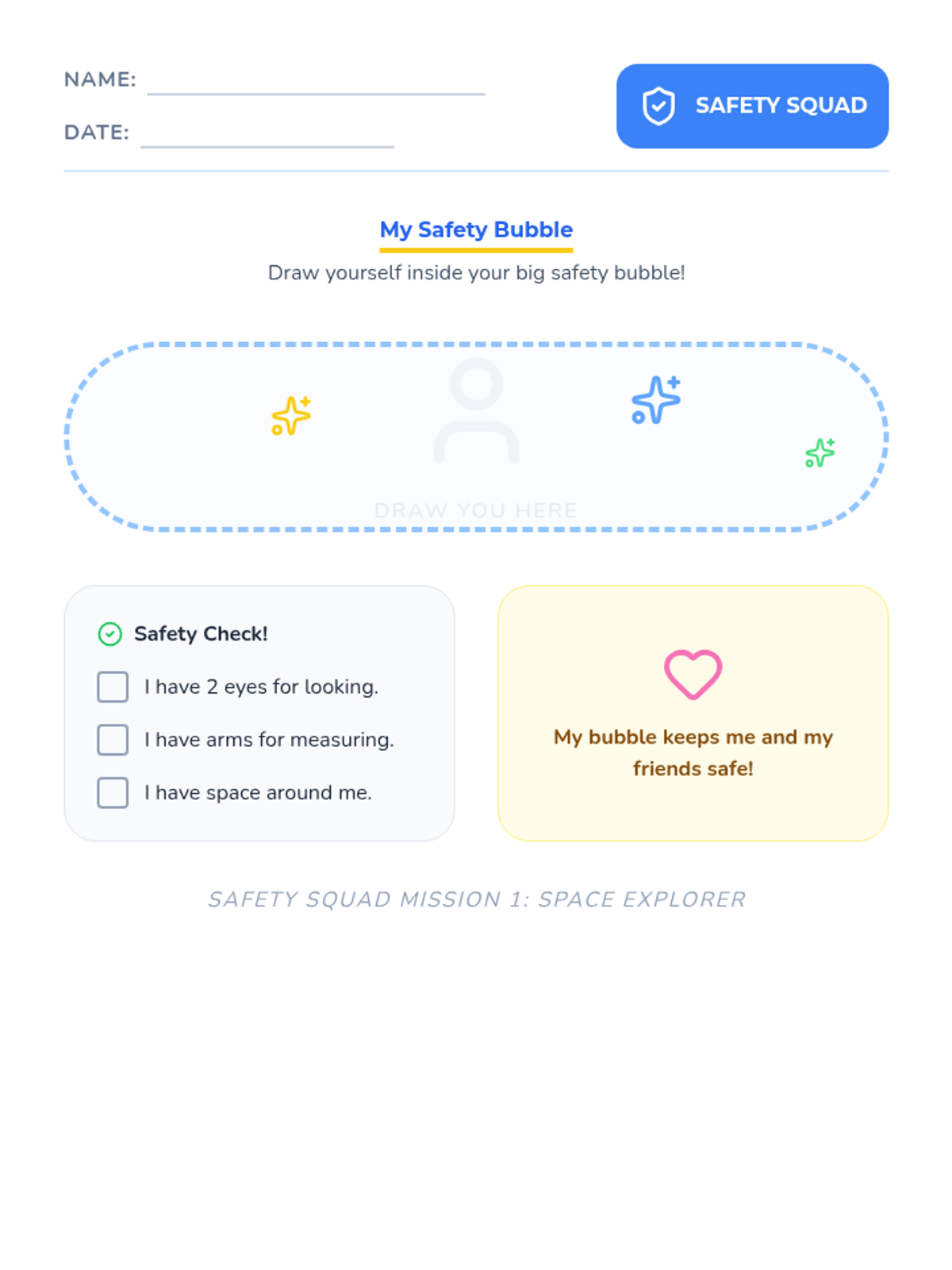
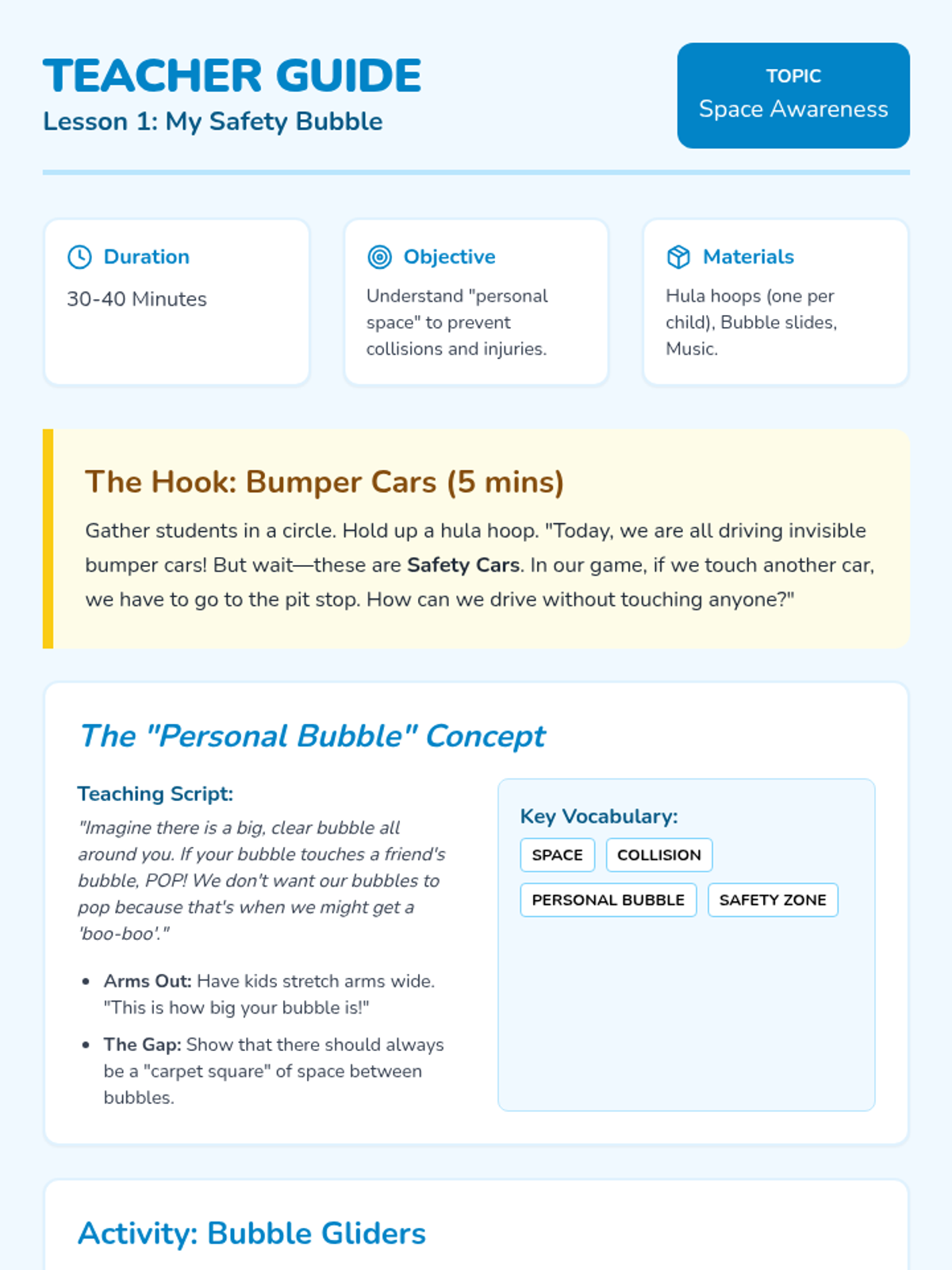
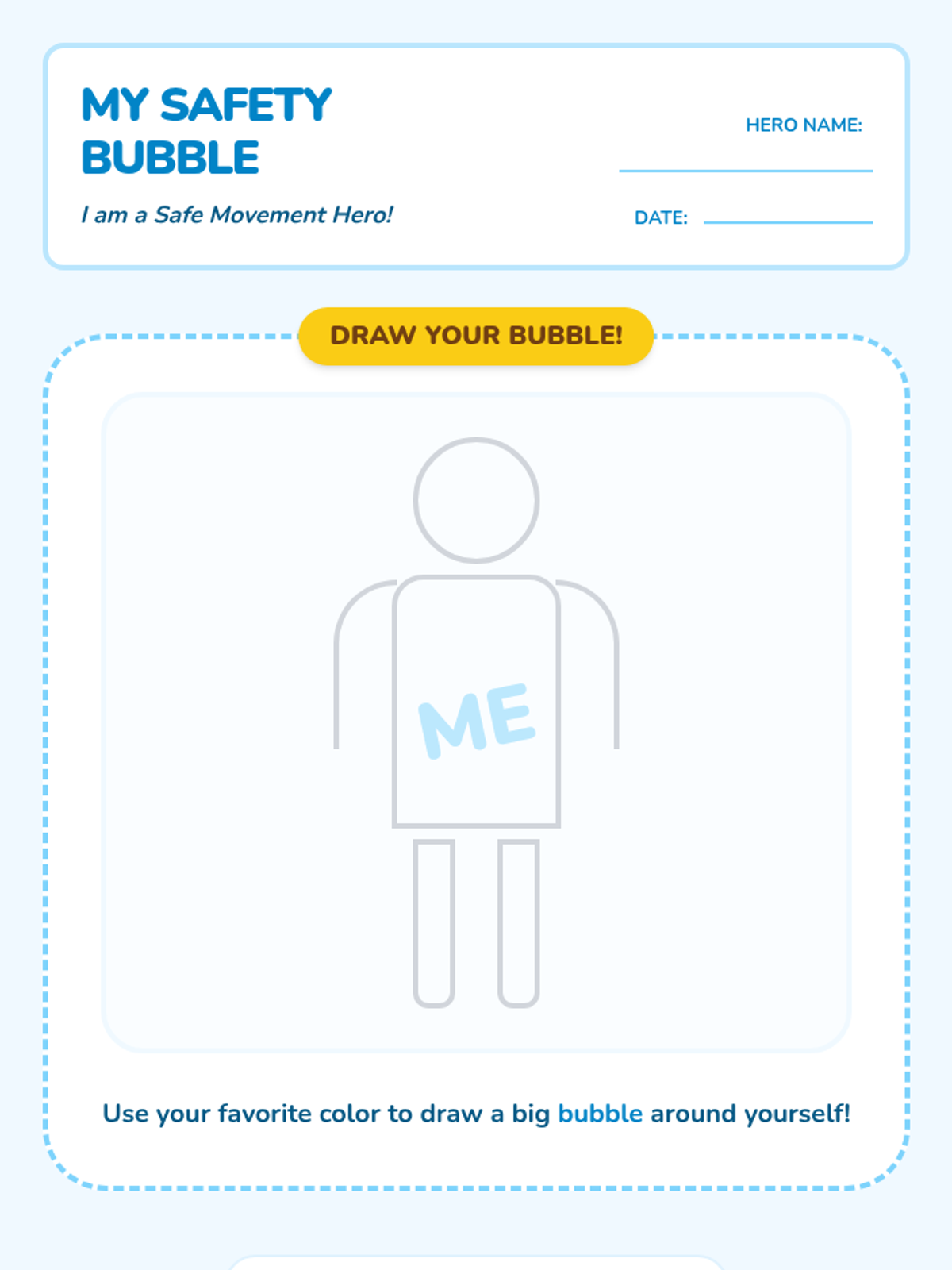
A Kindergarten Physical Education sequence focused on spatial awareness, body control, and injury prevention through the concept of 'safety bubbles' and controlled movement. Students learn to navigate shared spaces safely, warm up their muscles, and recognize their body's signals during play.
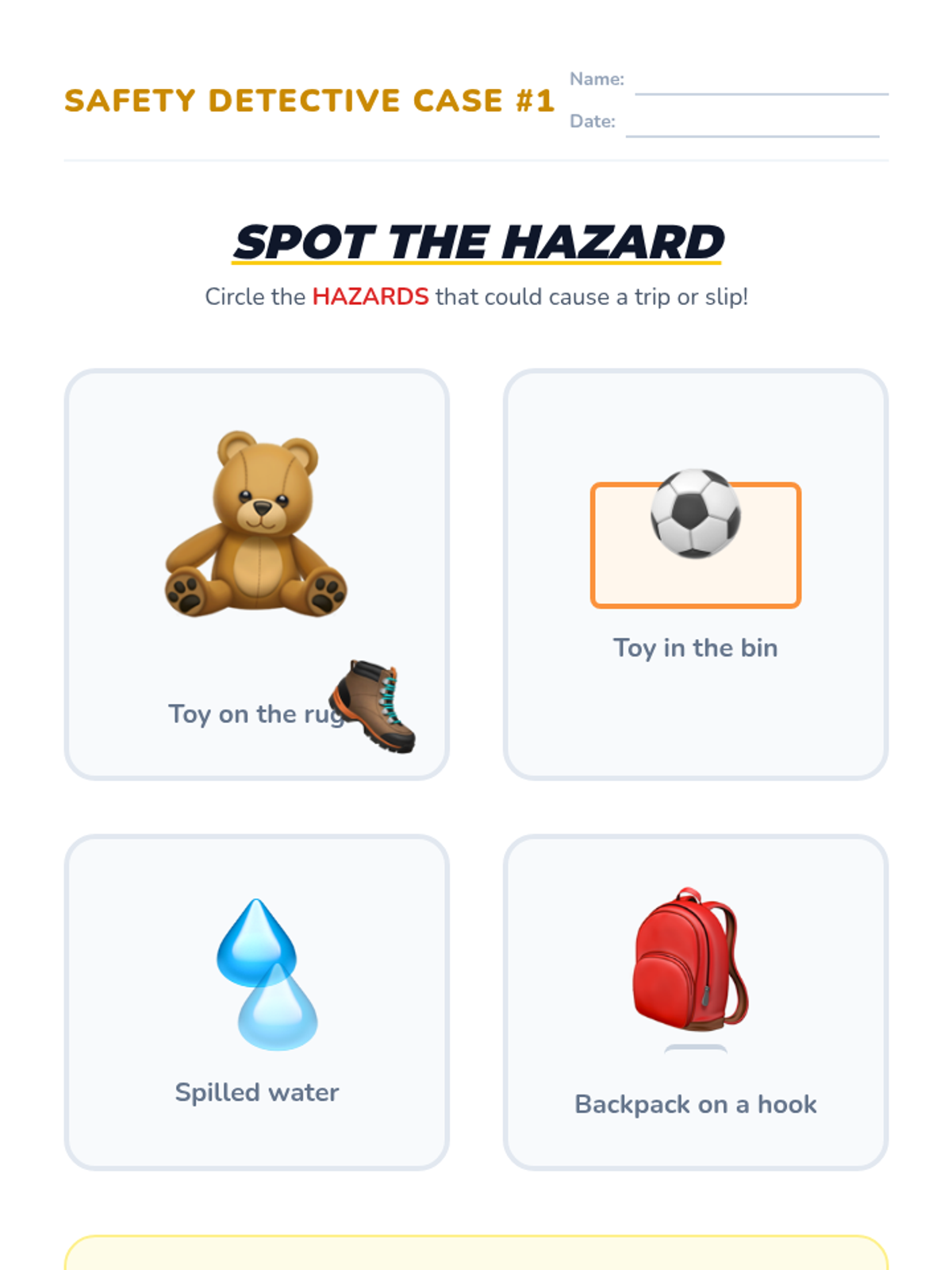
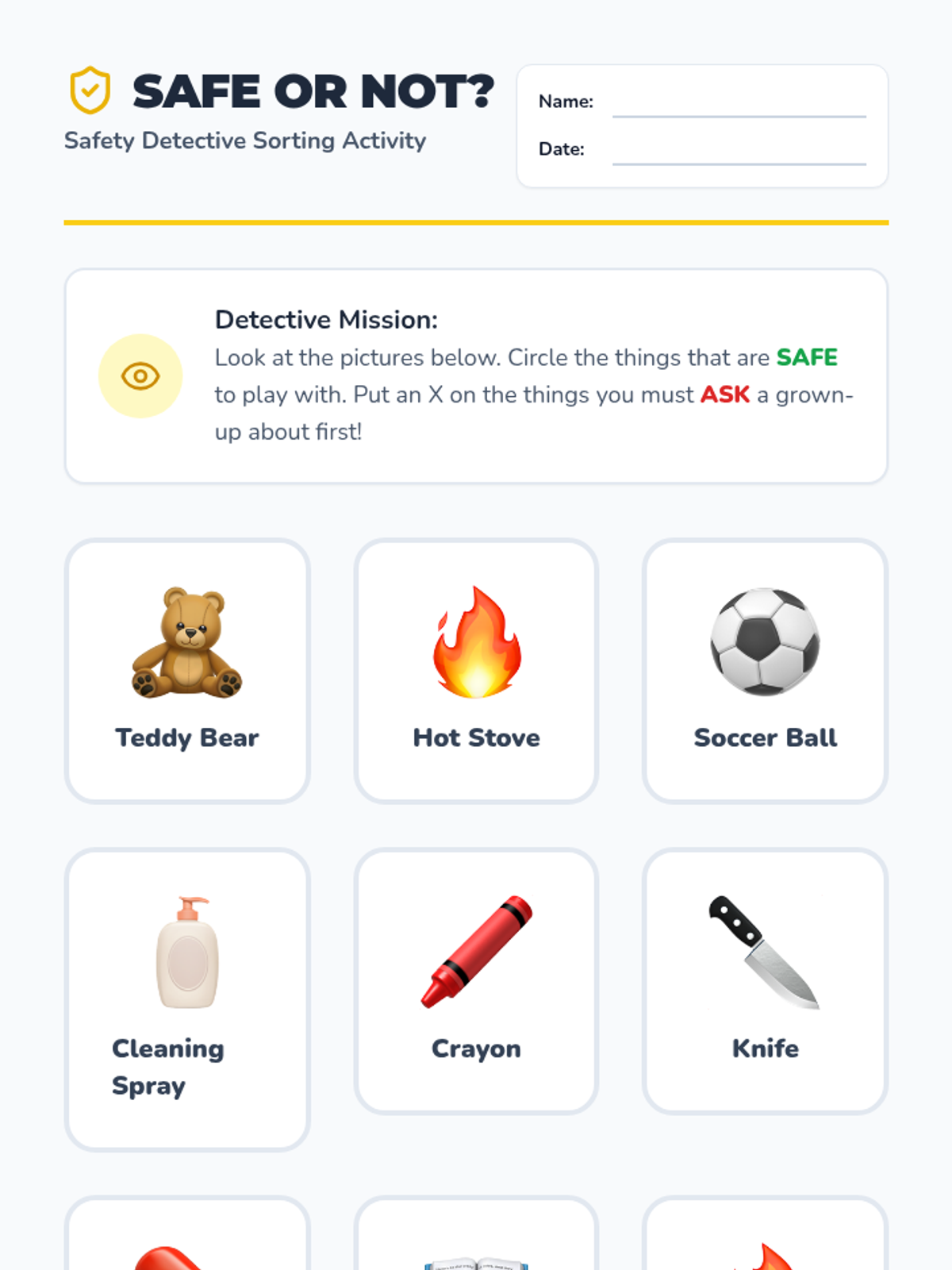
A comprehensive Pre-K sequence focused on environmental awareness, equipment protocols, and reporting hazards to ensure safe play. Students act as 'Safety Detectives' to identify risks and practice safe habits.
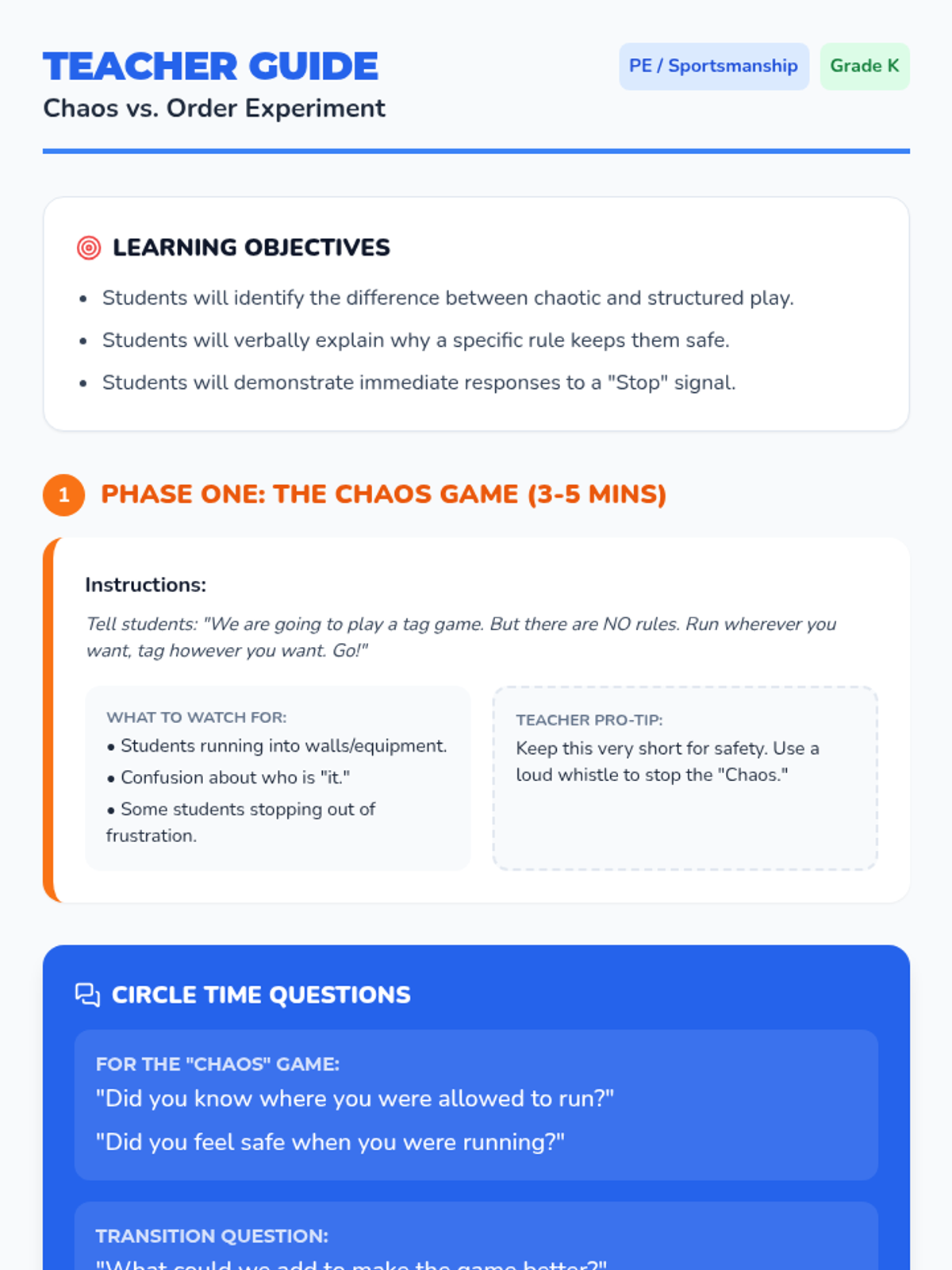
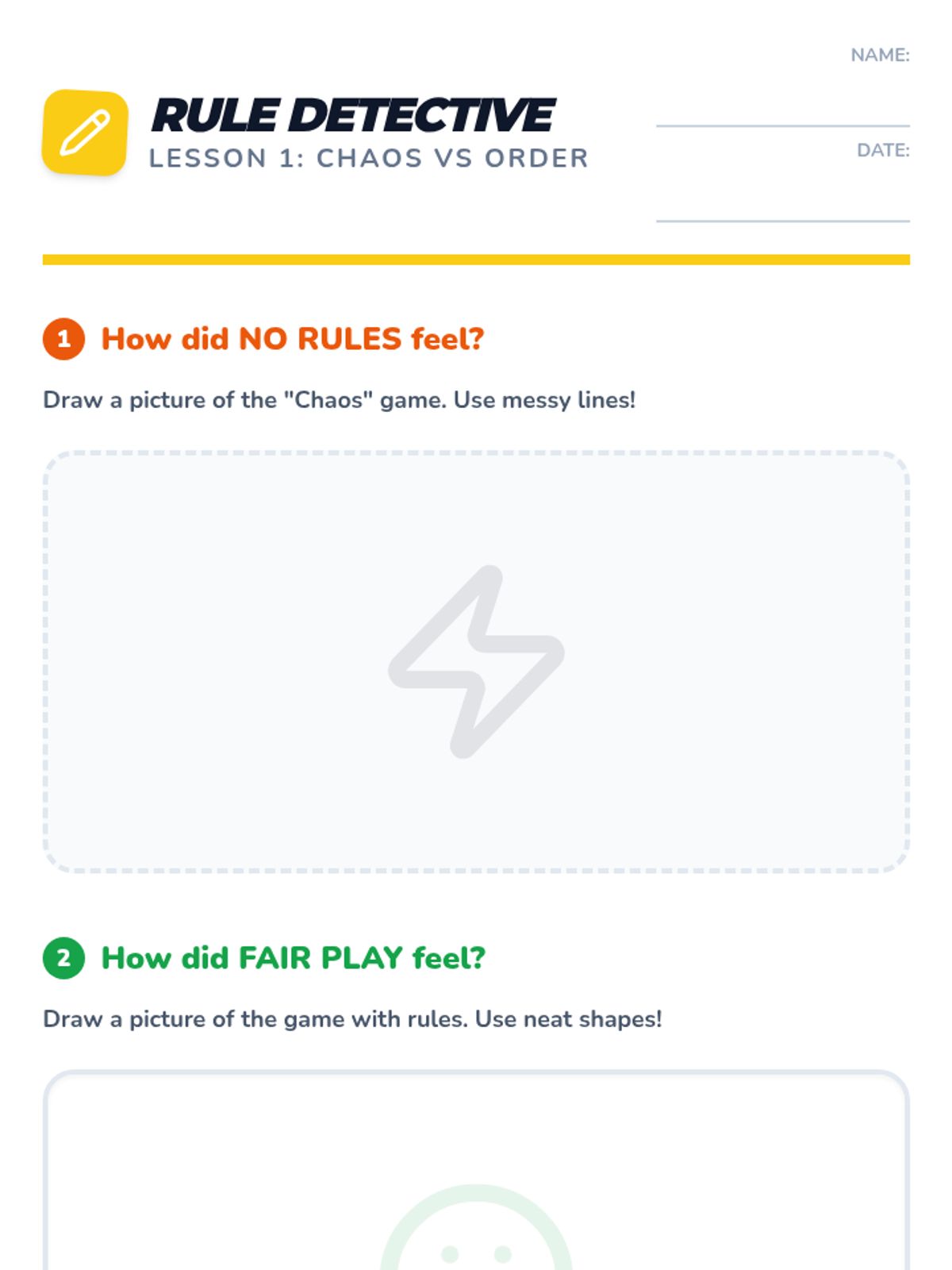
A sequence for Kindergarten students exploring why rules are essential for safe and fun play, focusing on honesty, boundaries, and fair turns.
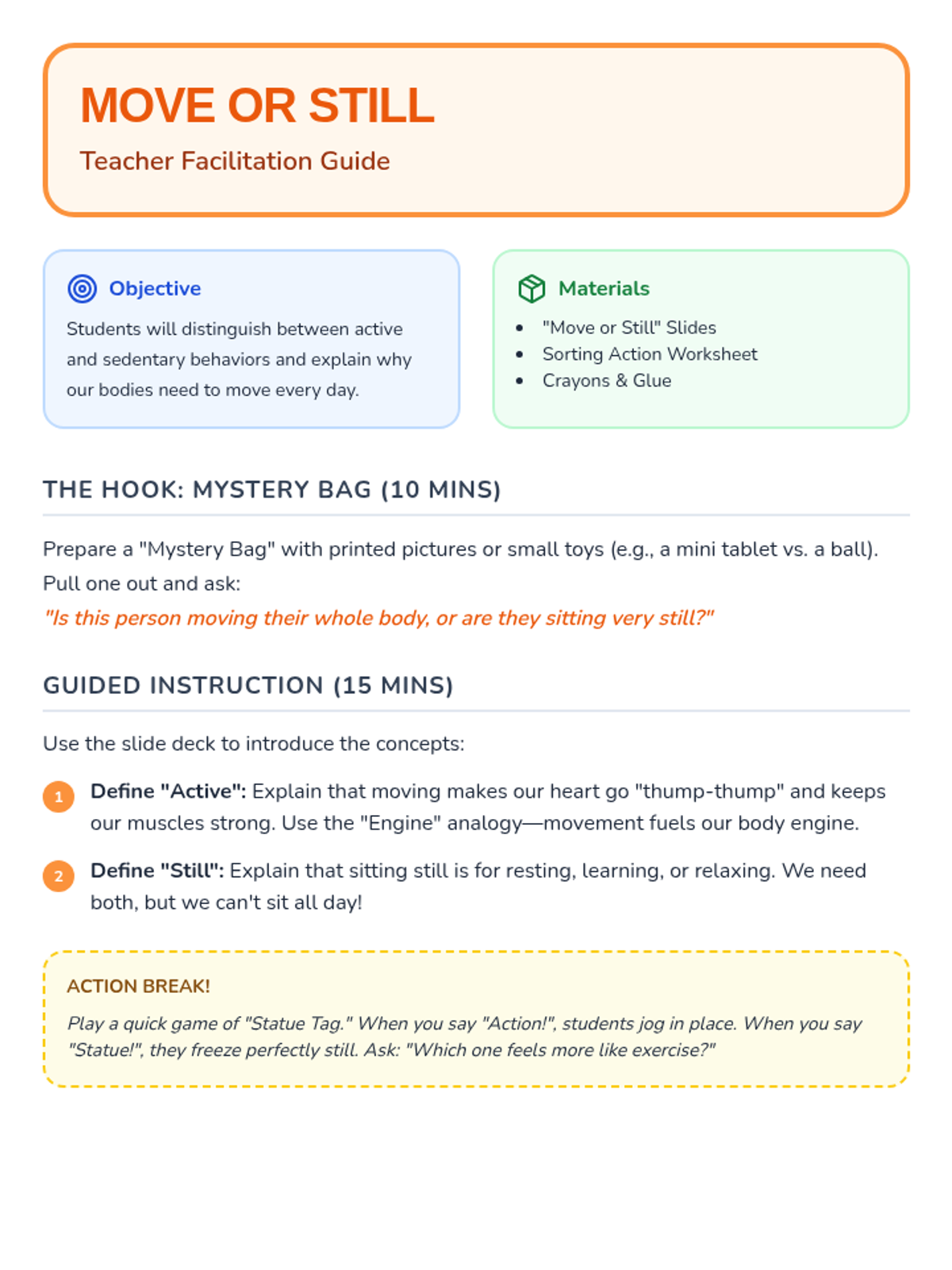
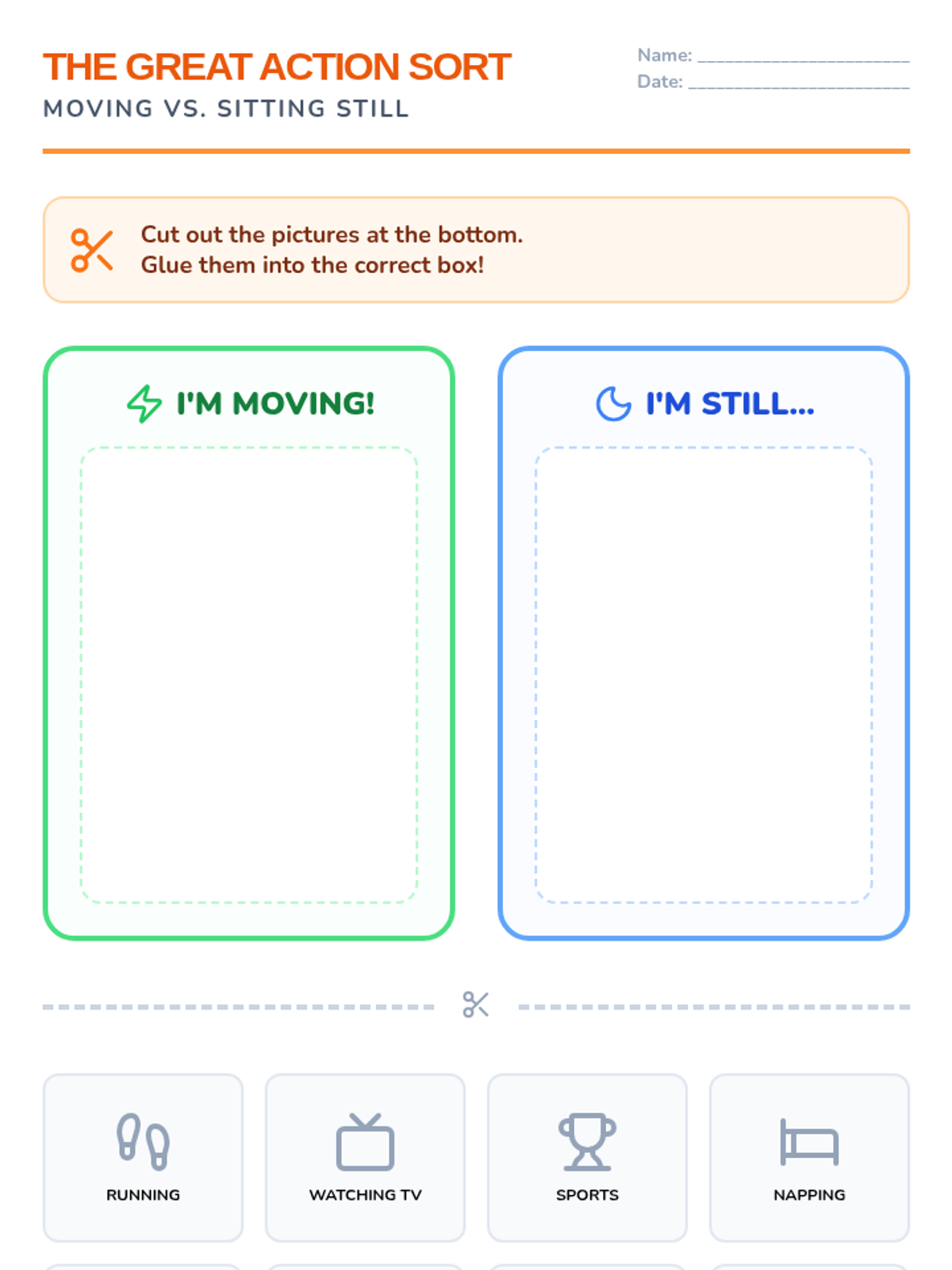
A comprehensive sequence for Kindergarteners to distinguish between sedentary and active behaviors, explore movement opportunities, and set personal activity goals through a 'Movement Menu' for home use.
A Kindergarten sequence focused on injury prevention through spatial awareness, hazard identification, and safe movement techniques. Students learn to navigate physical activity safely by respecting personal space, recognizing environmental risks, and practicing safe body mechanics.
A Pre-K sequence introducing injury prevention through spatial awareness, equipment safety, body mechanics, and hazard identification using a 'Safety Hero' theme.
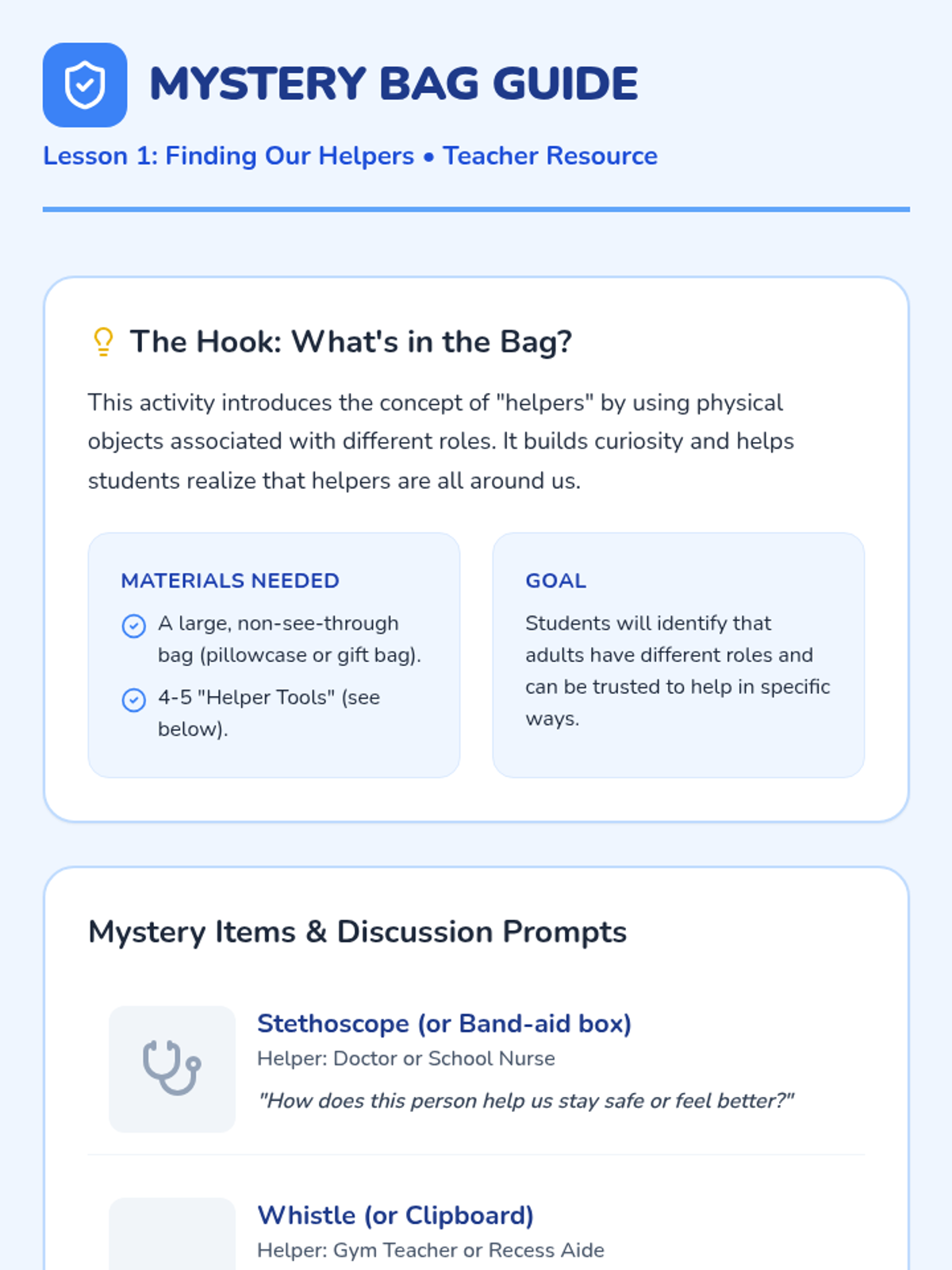
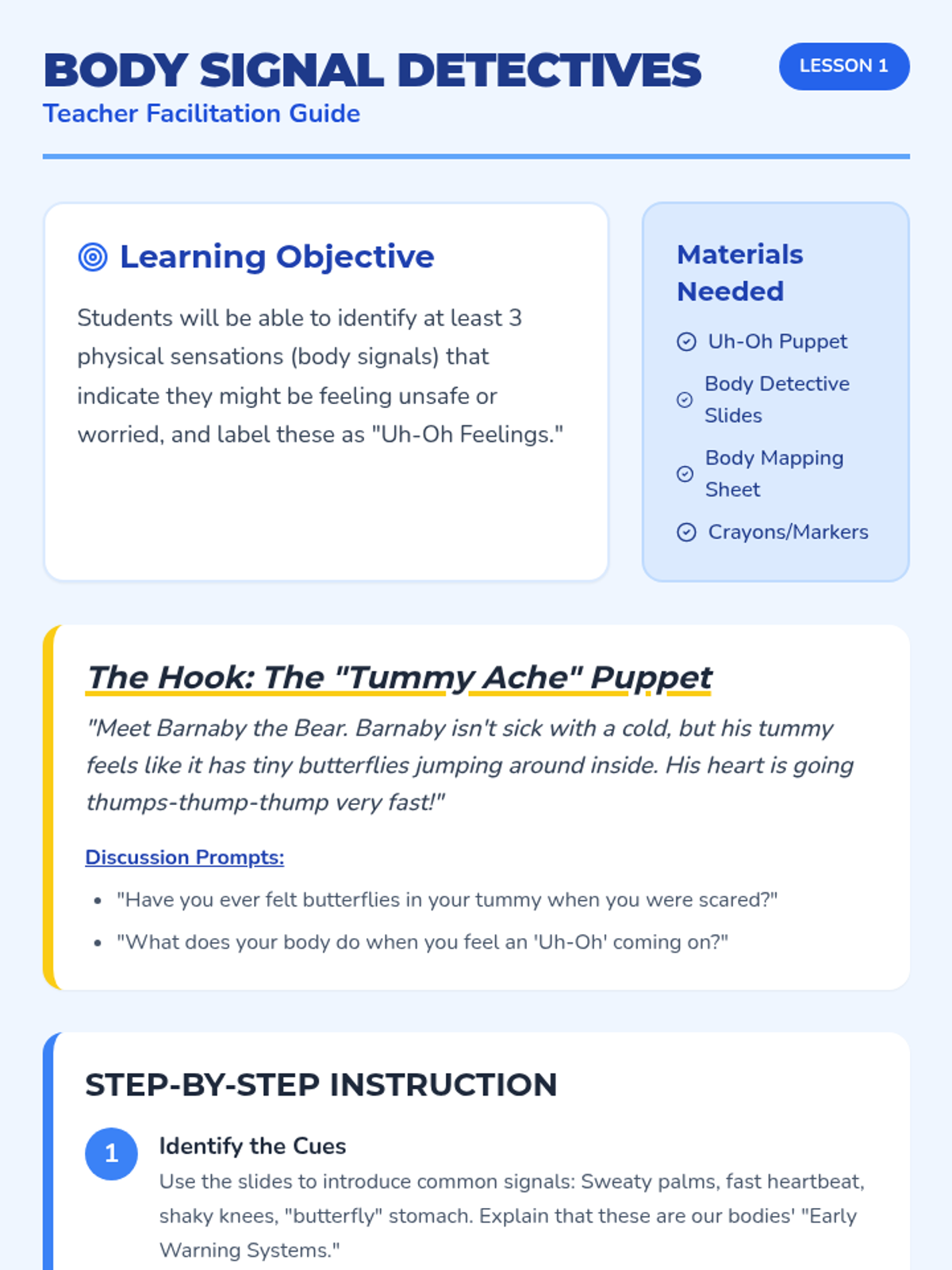
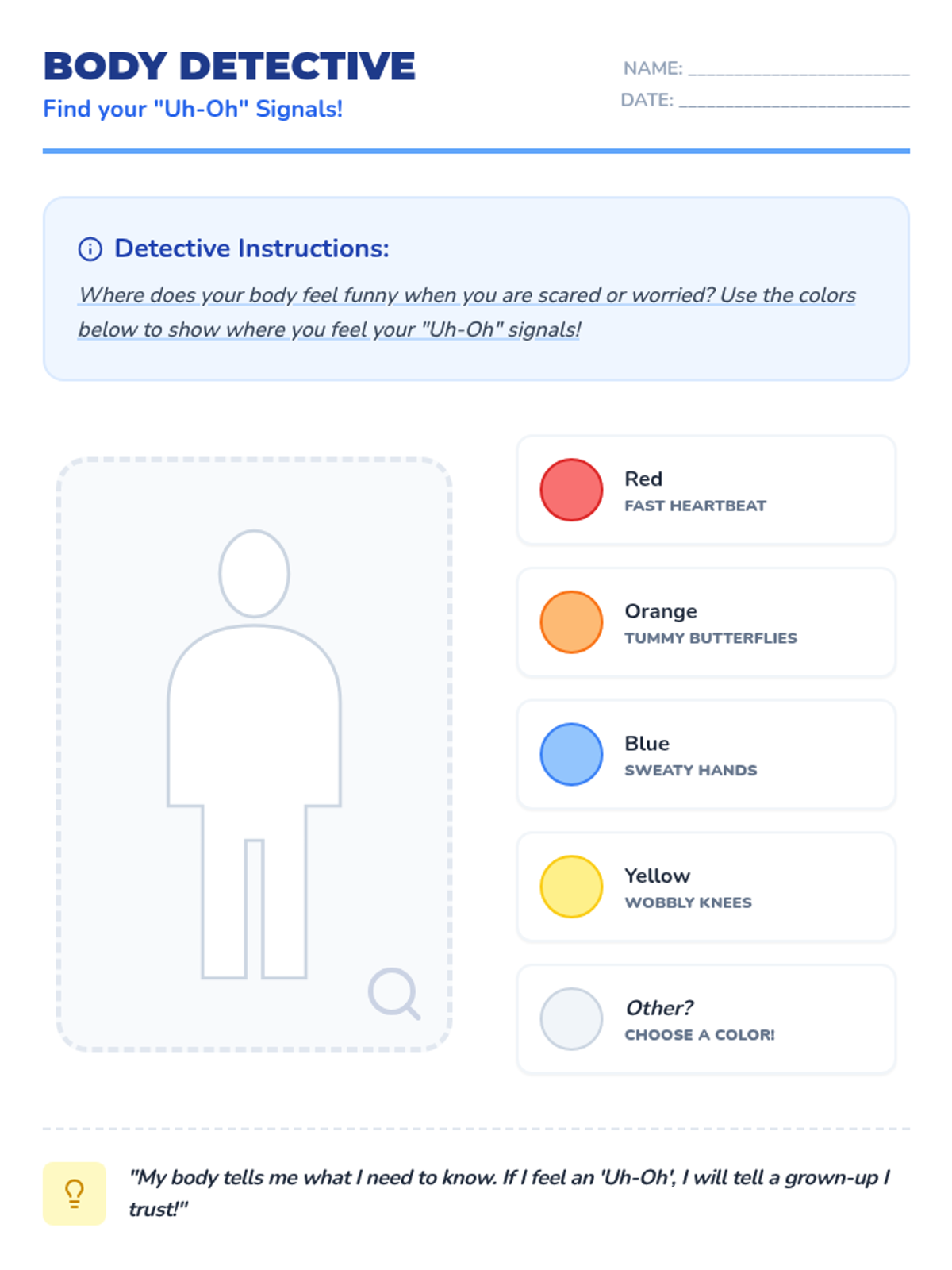
This Pre-K sequence empowers young learners to recognize environmental hazards and trust their physical intuition ('uh-oh' feelings). Students learn to categorize objects by safety, identify body signals, spot playground risks, set personal boundaries, and identify trusted helpers through interactive 'Safety Detective' activities.
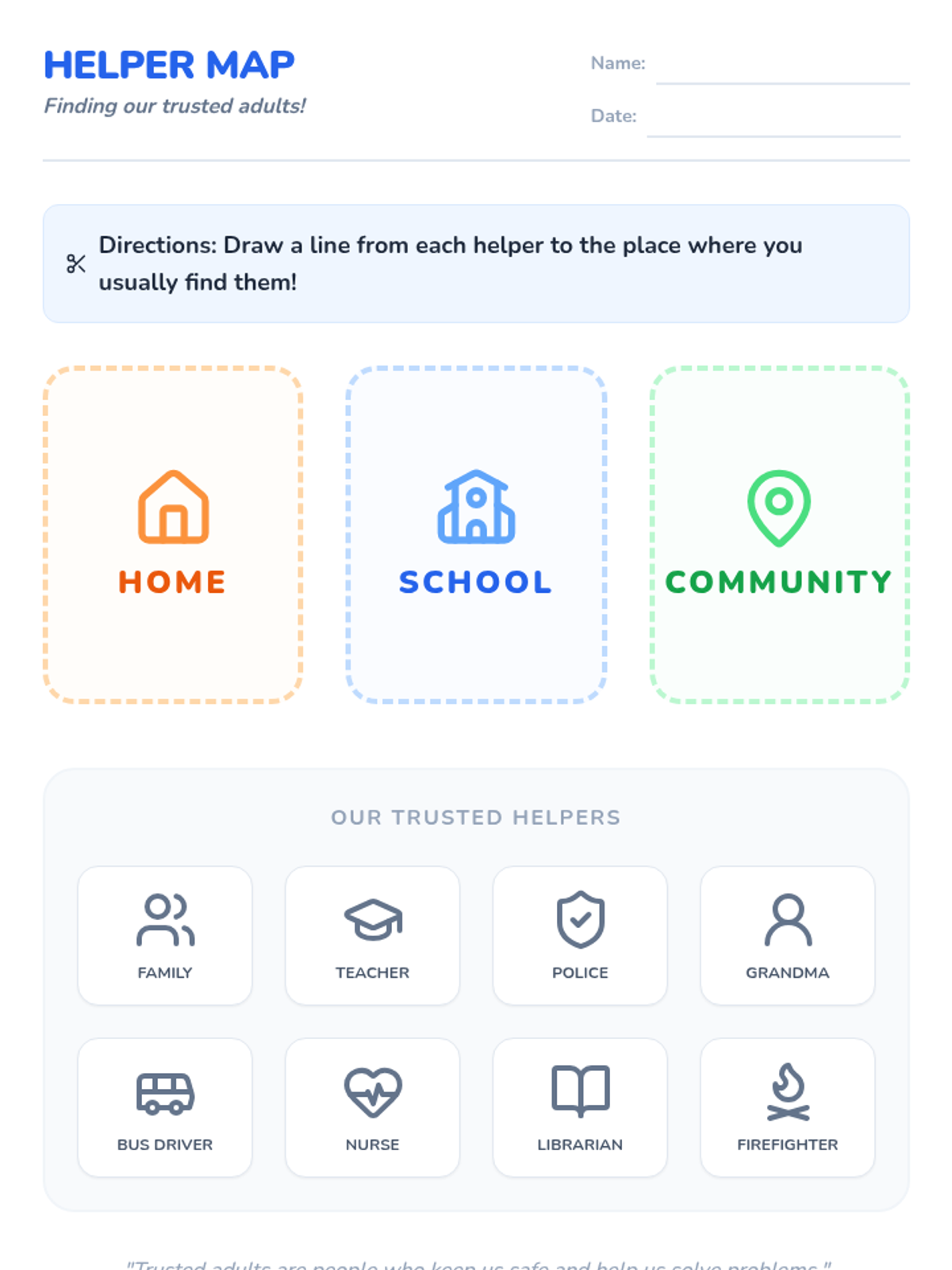
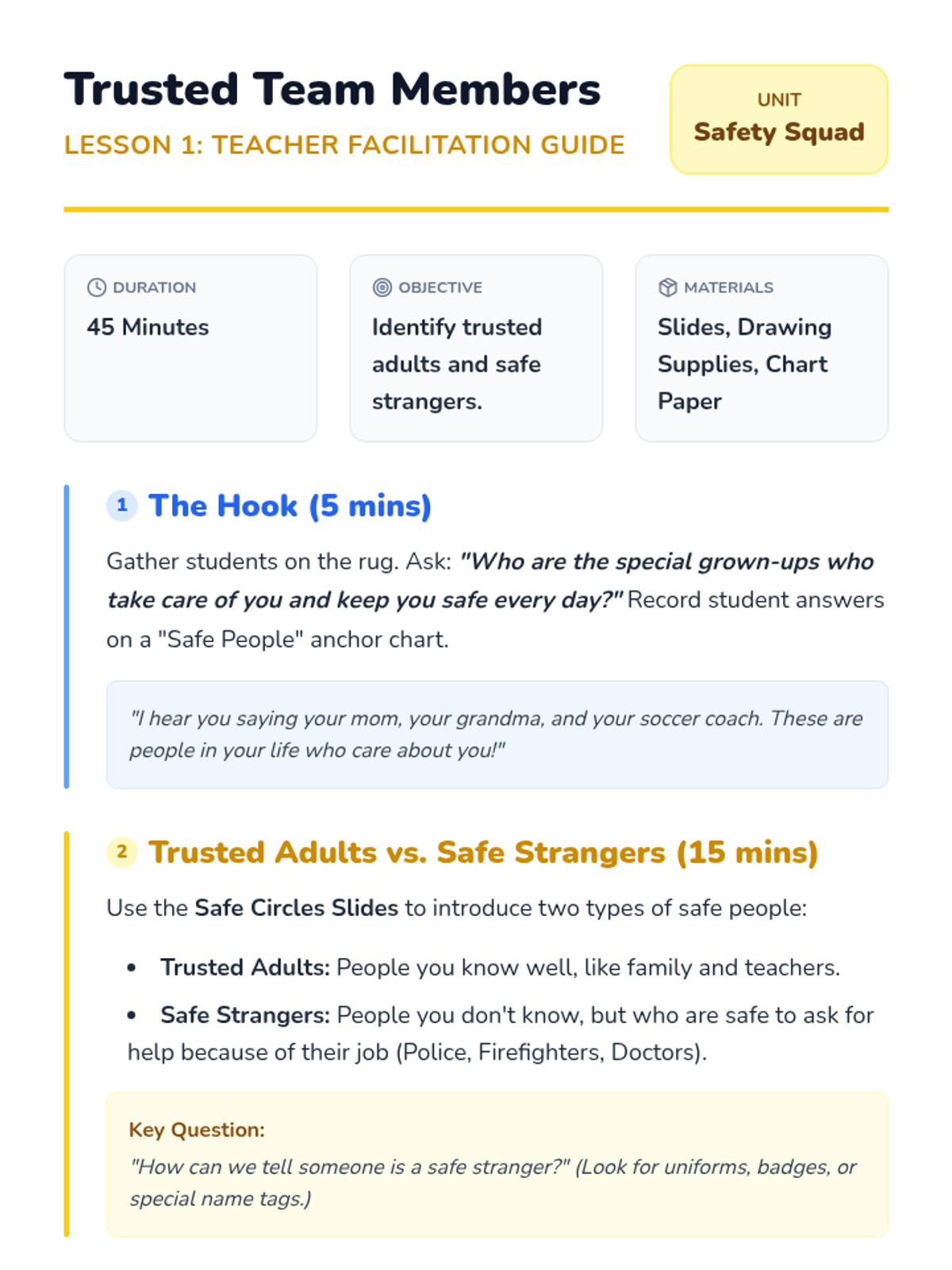
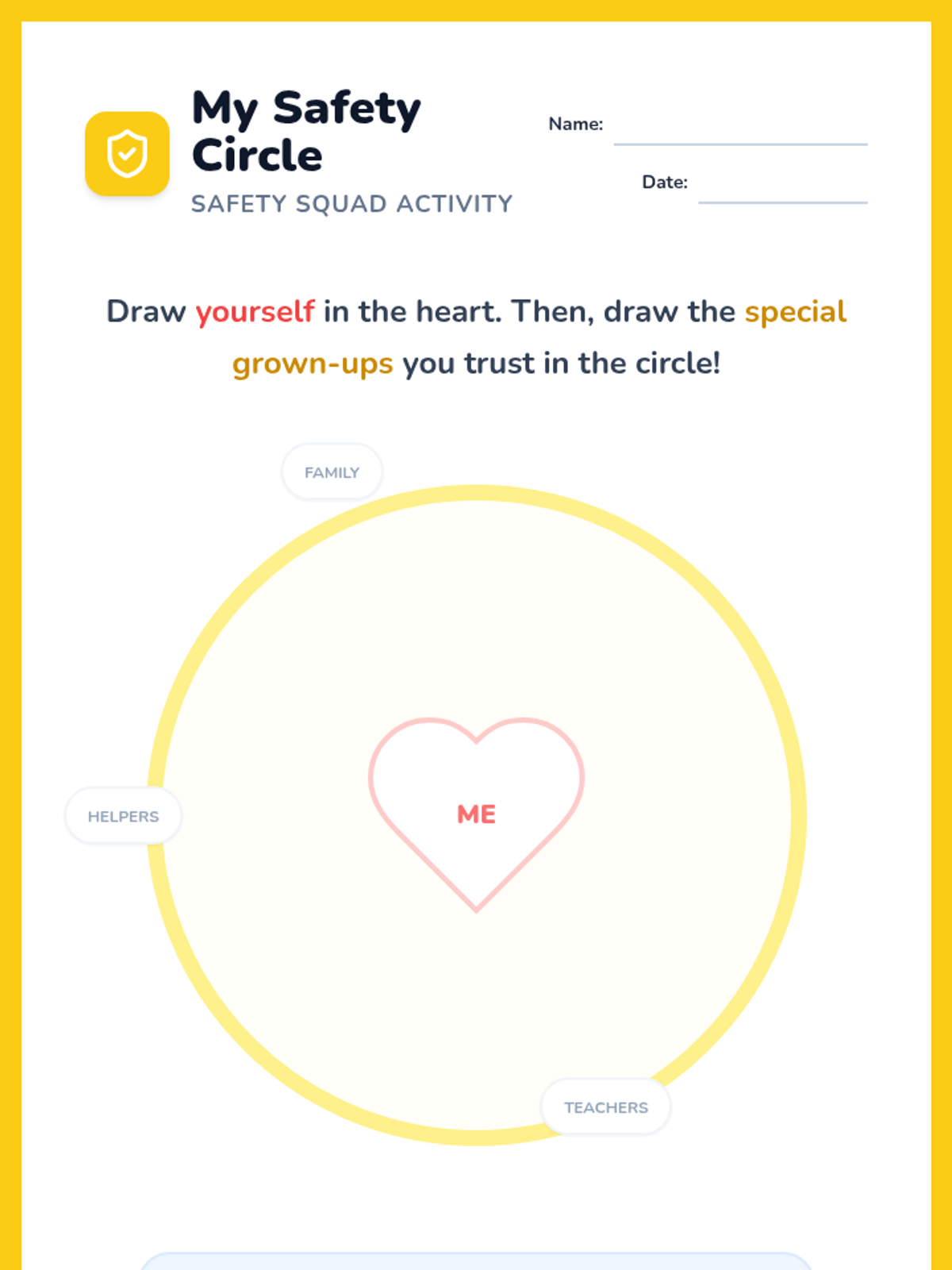
A comprehensive Kindergarten health sequence teaching students how to identify trusted adults, distinguish between minor and major problems, and use their voices to advocate for themselves and their safety.
A comprehensive health and wellness unit focusing on nutrition, physical activity, and mental well-being to empower students to make informed lifestyle choices.
A functional biology curriculum designed for life skills students, focusing on practical knowledge of nutrition, personal hygiene, and environmental stewardship through hands-on activities and visual aids.
A Pre-K sequence focused on distinguishing water as the healthiest beverage choice. Students explore hydration through hands-on experiments, sorting games, and sensory exploration.
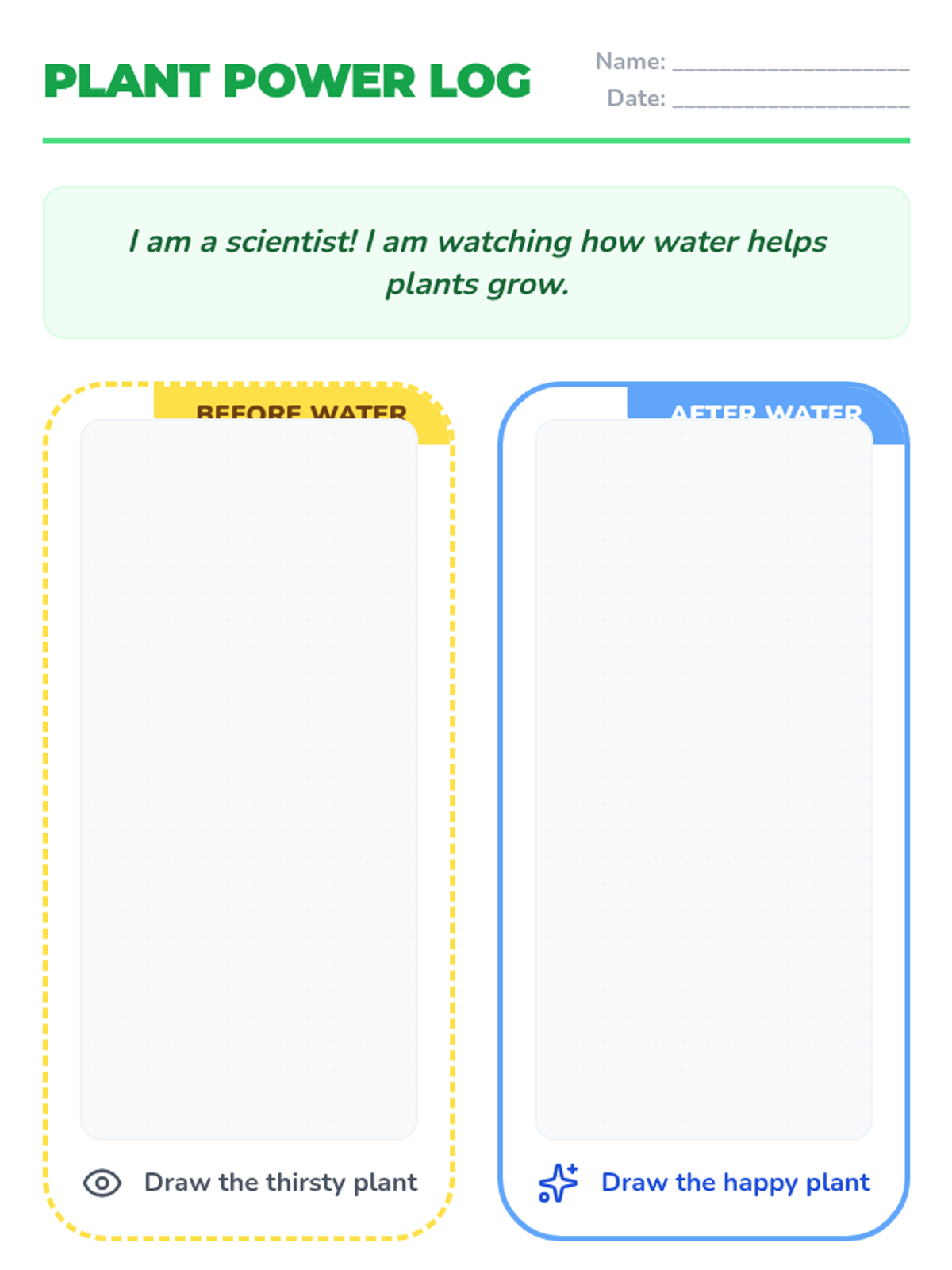
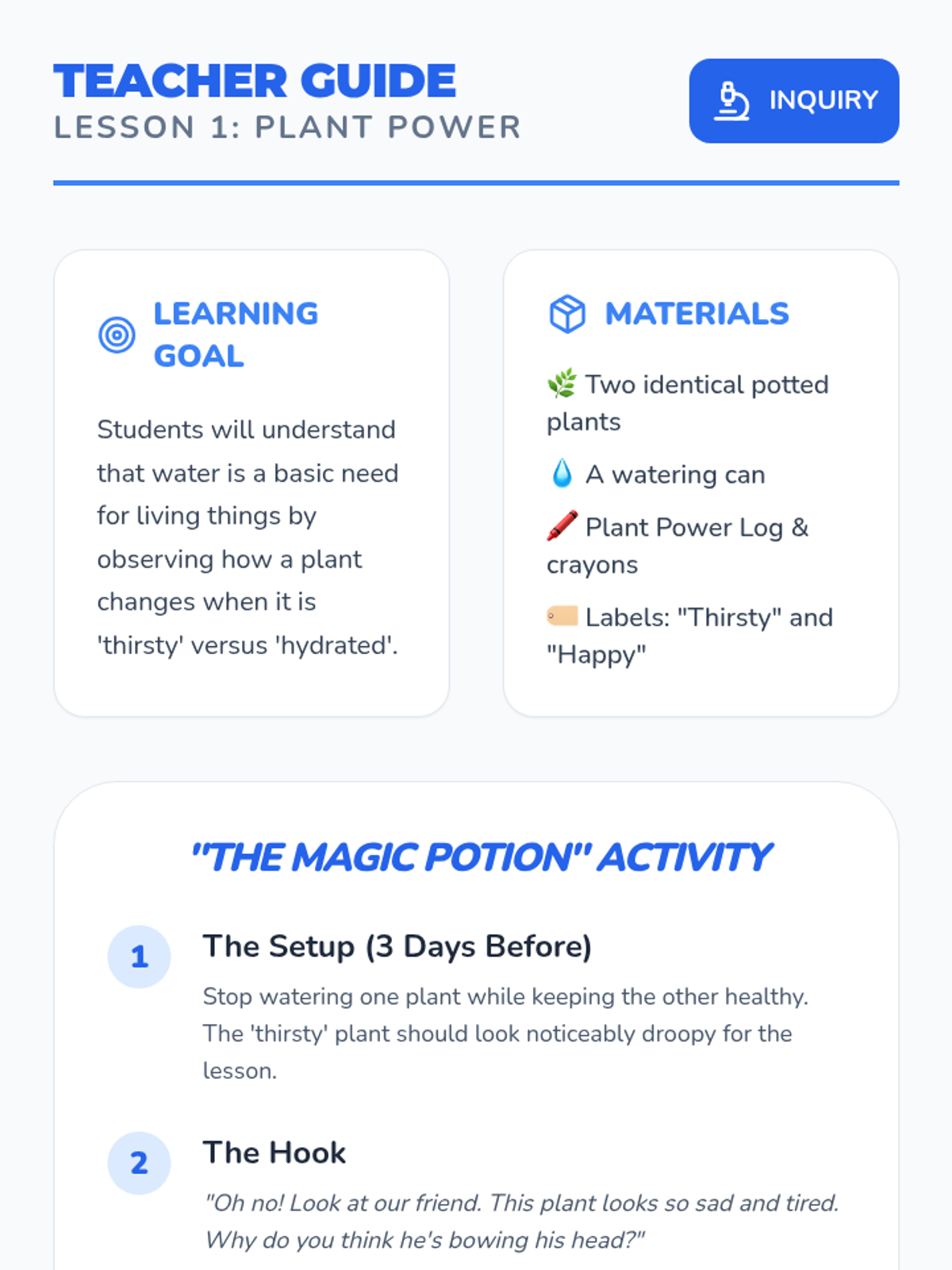
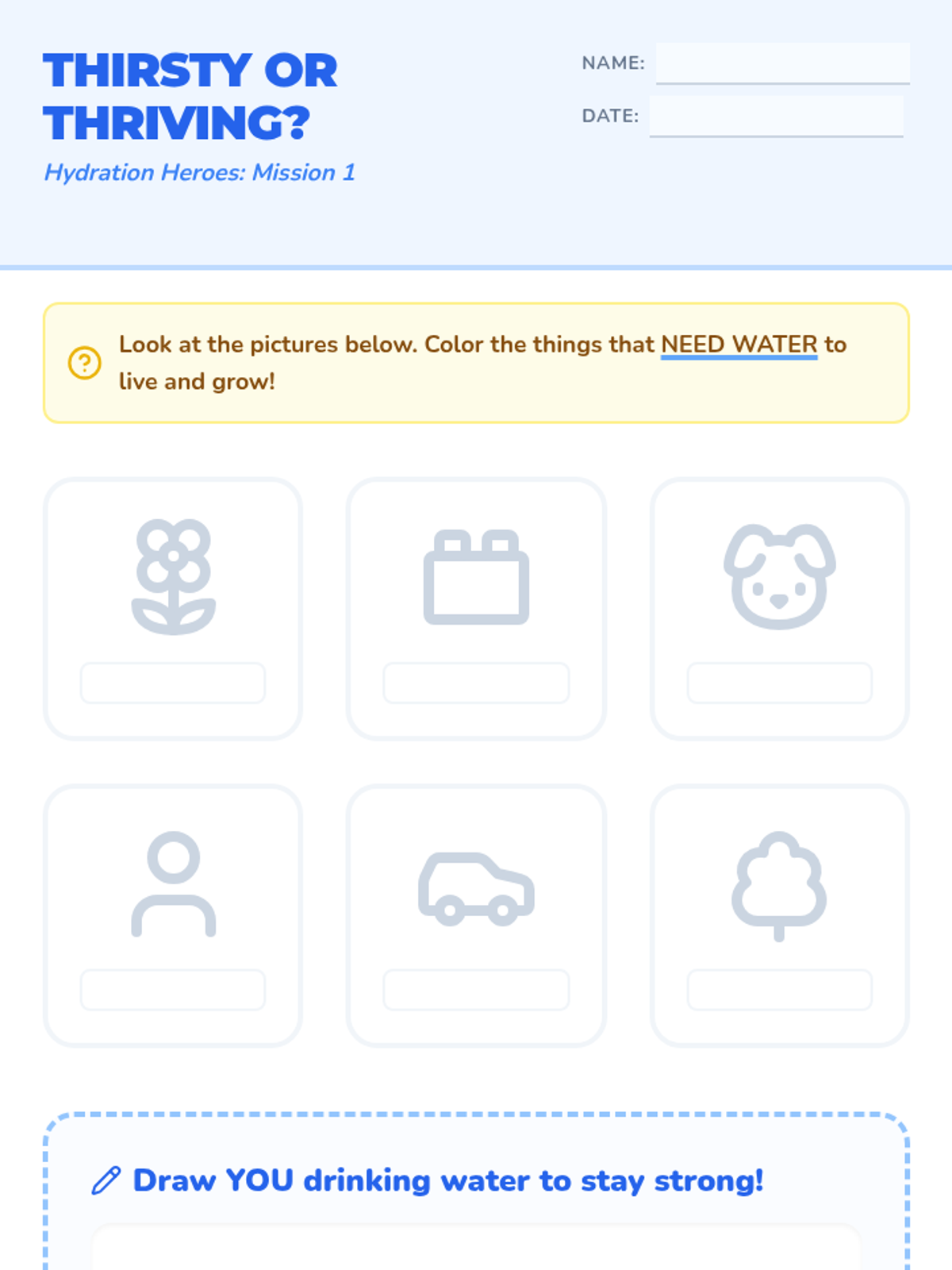
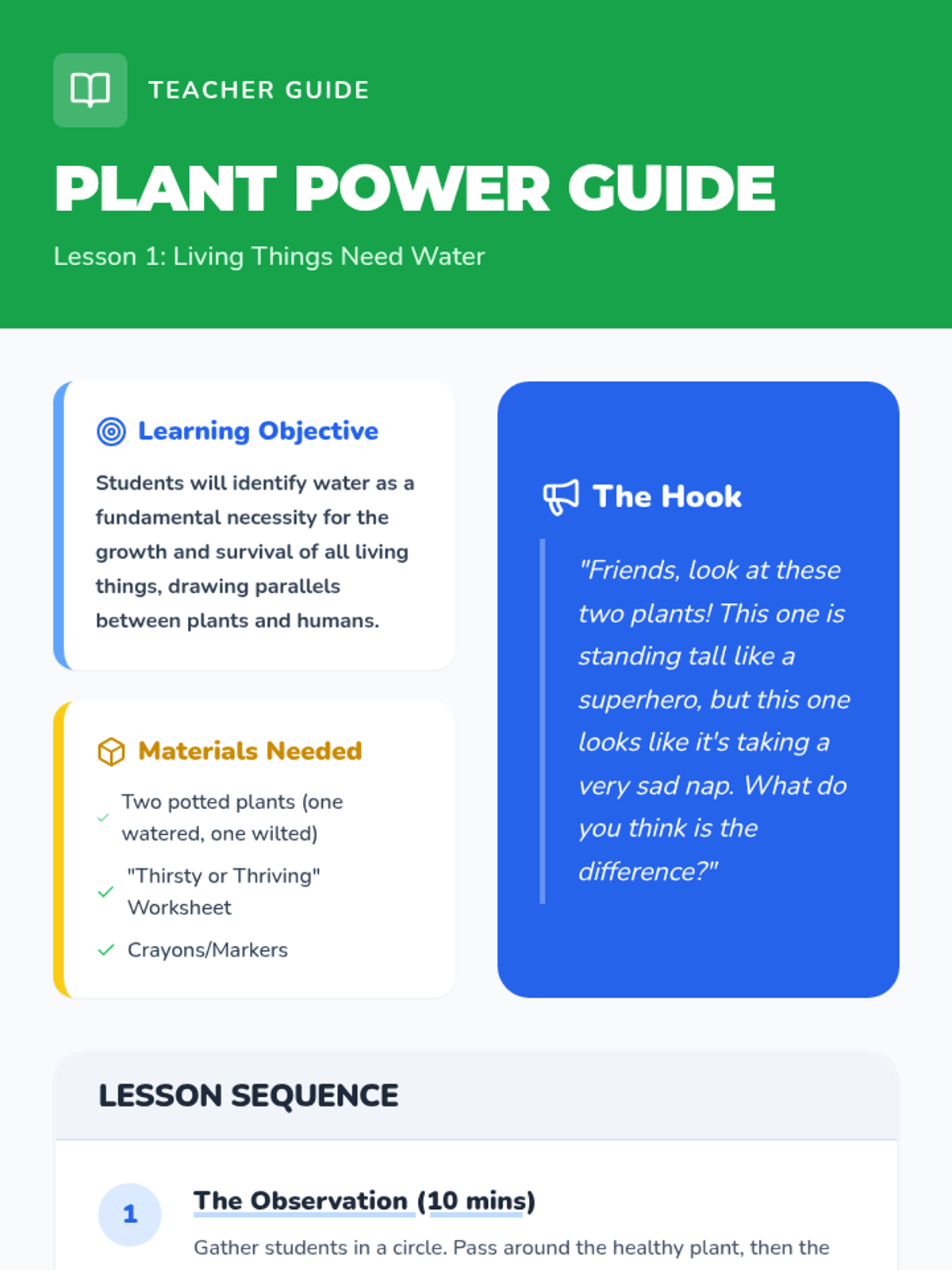
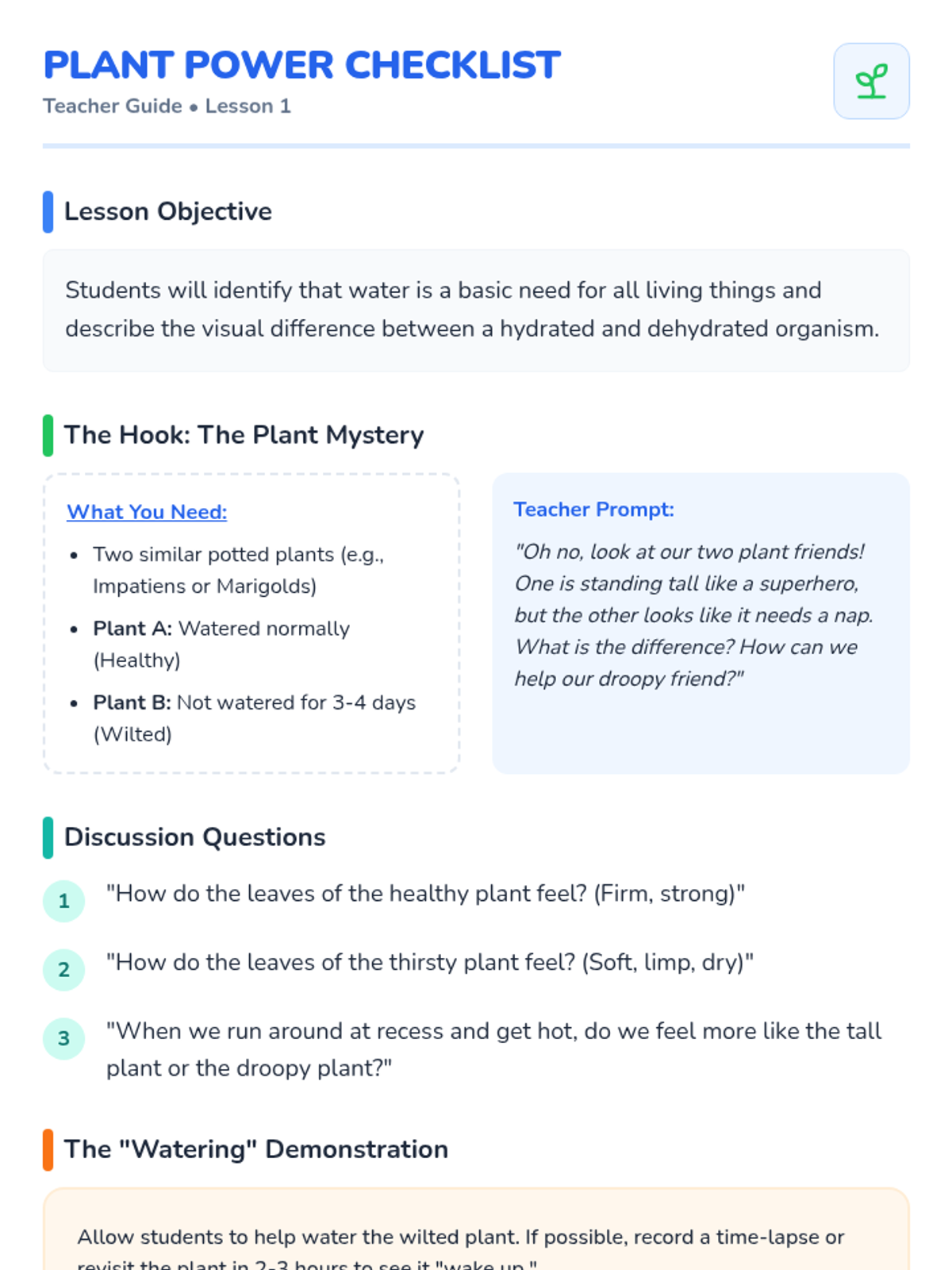
A Pre-K inquiry-based sequence exploring why living things need water. Students transition from observing plants to understanding water as fuel for their own bodies and brains.
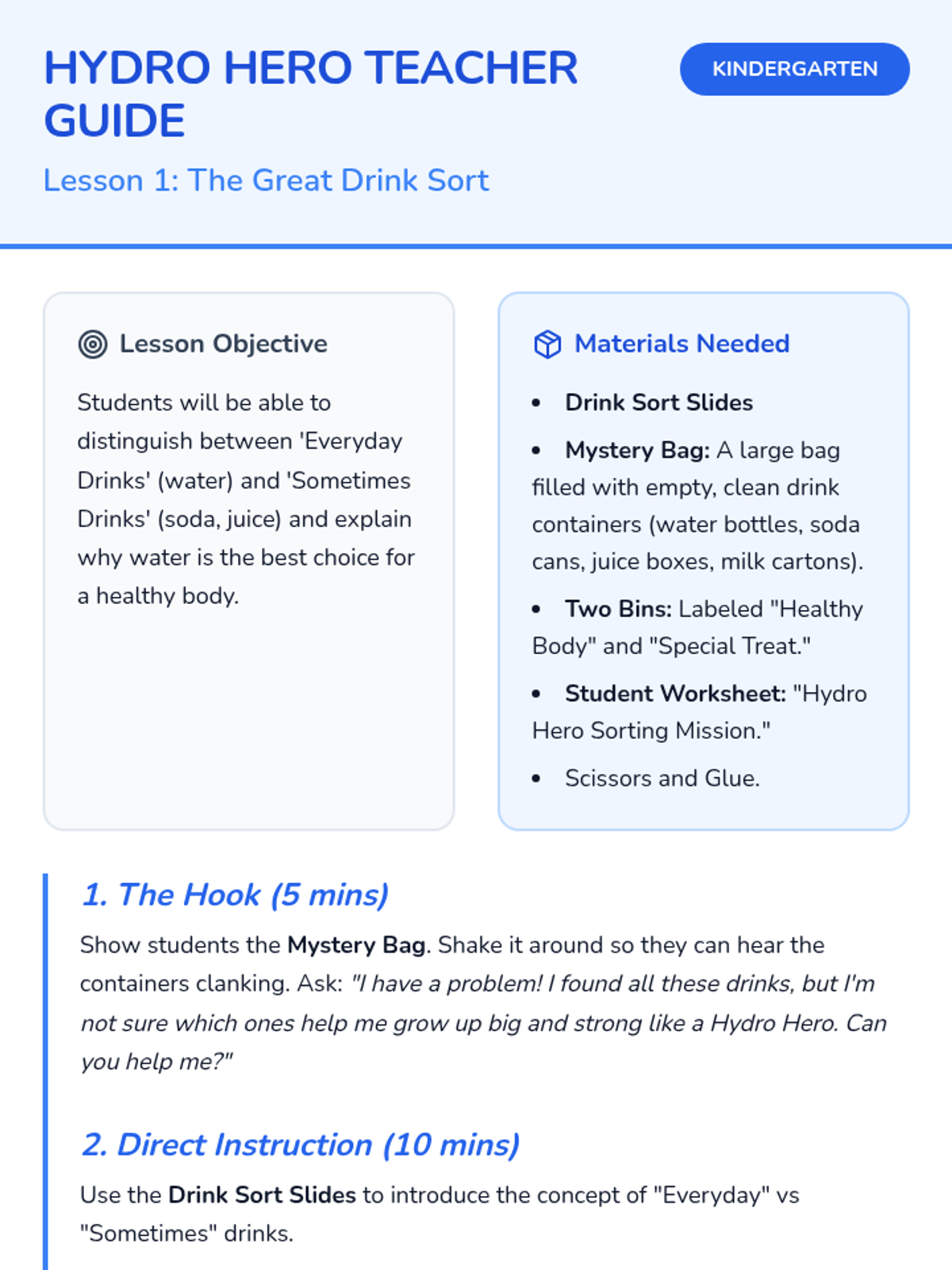
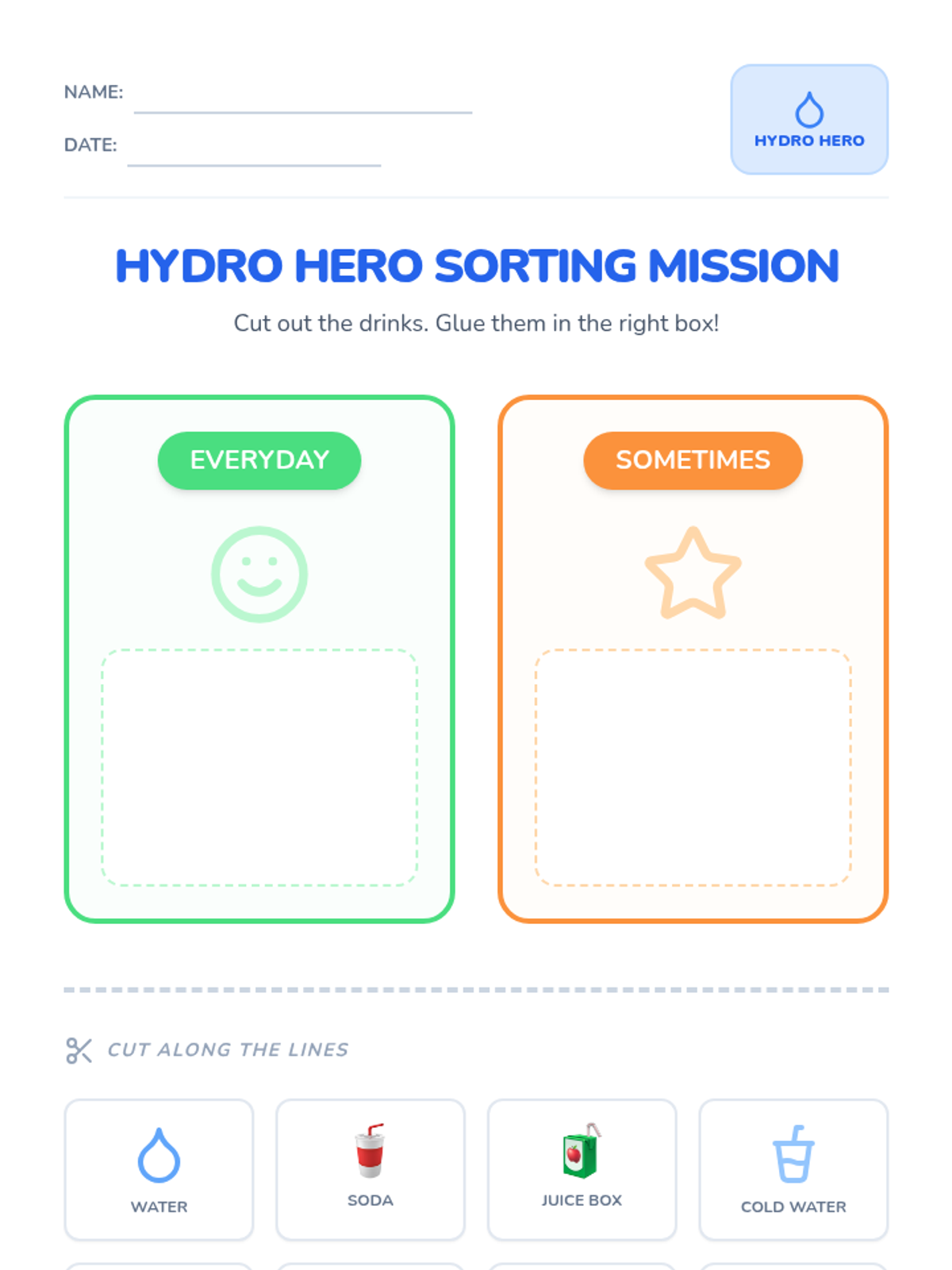
A comprehensive hydration sequence for Kindergarteners that uses the 'Hydro Hero' theme to teach students how to distinguish between healthy and 'sometimes' drinks, identify key hydration times, and track their daily water intake.
An inquiry-based exploration for Kindergarteners to understand why the body needs water. Through analogies, movement, and sensory experiences, students learn about biological needs, muscle flexibility, and body signals.
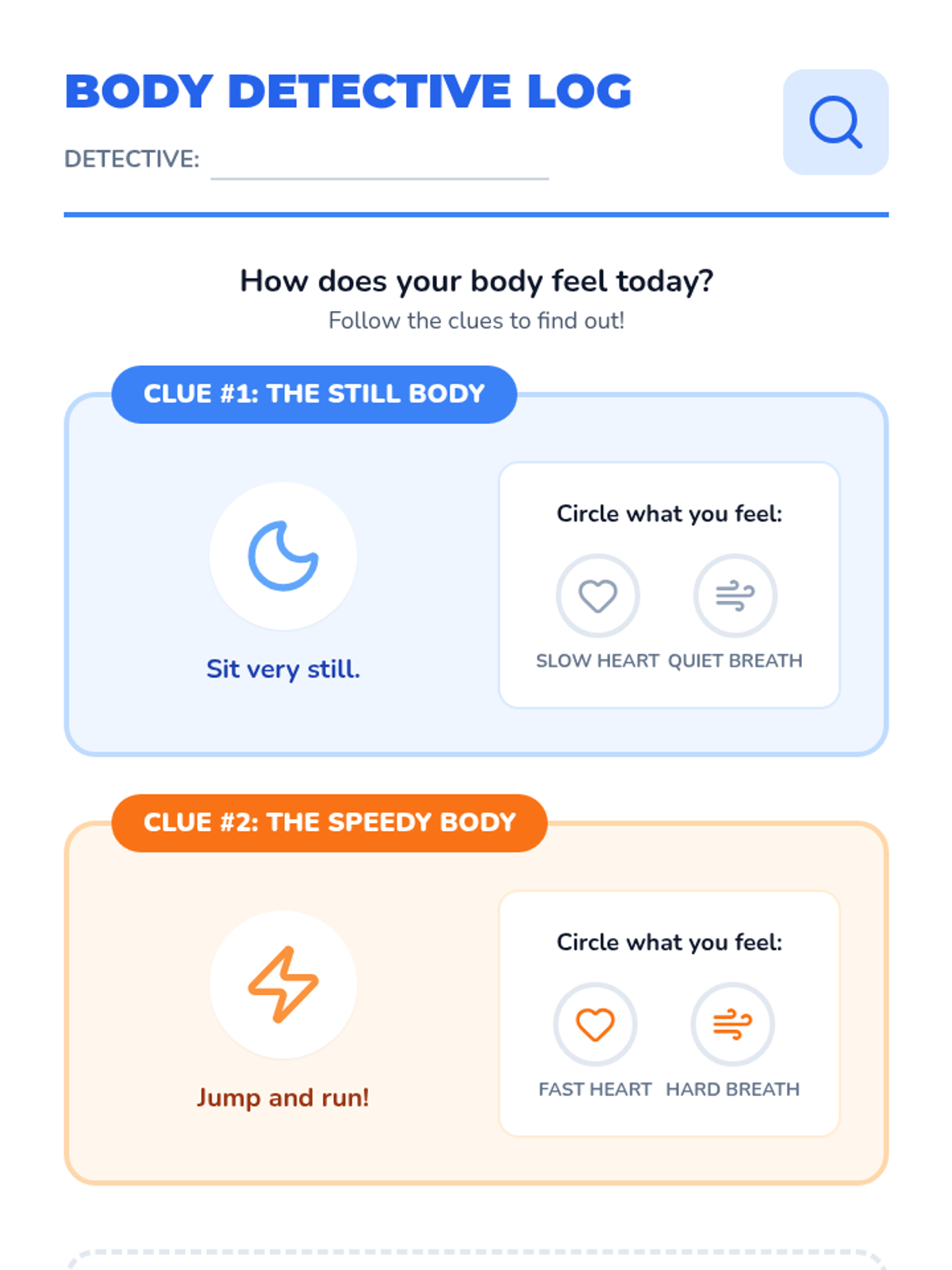
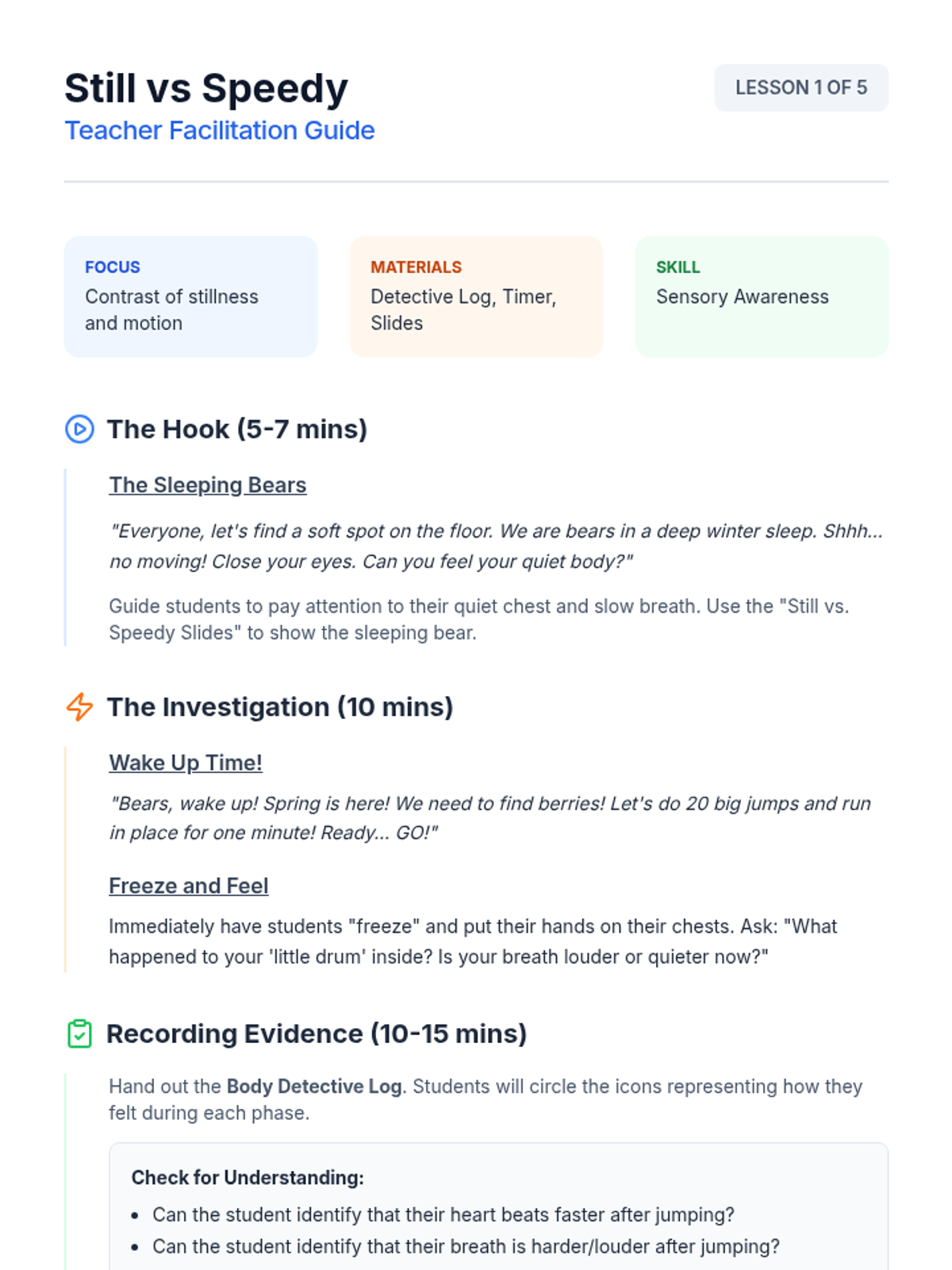
This sequence introduces Kindergarten students to the immediate physiological effects of physical activity through inquiry and direct observation, helping them identify changes in heartbeat, breathing, and temperature.
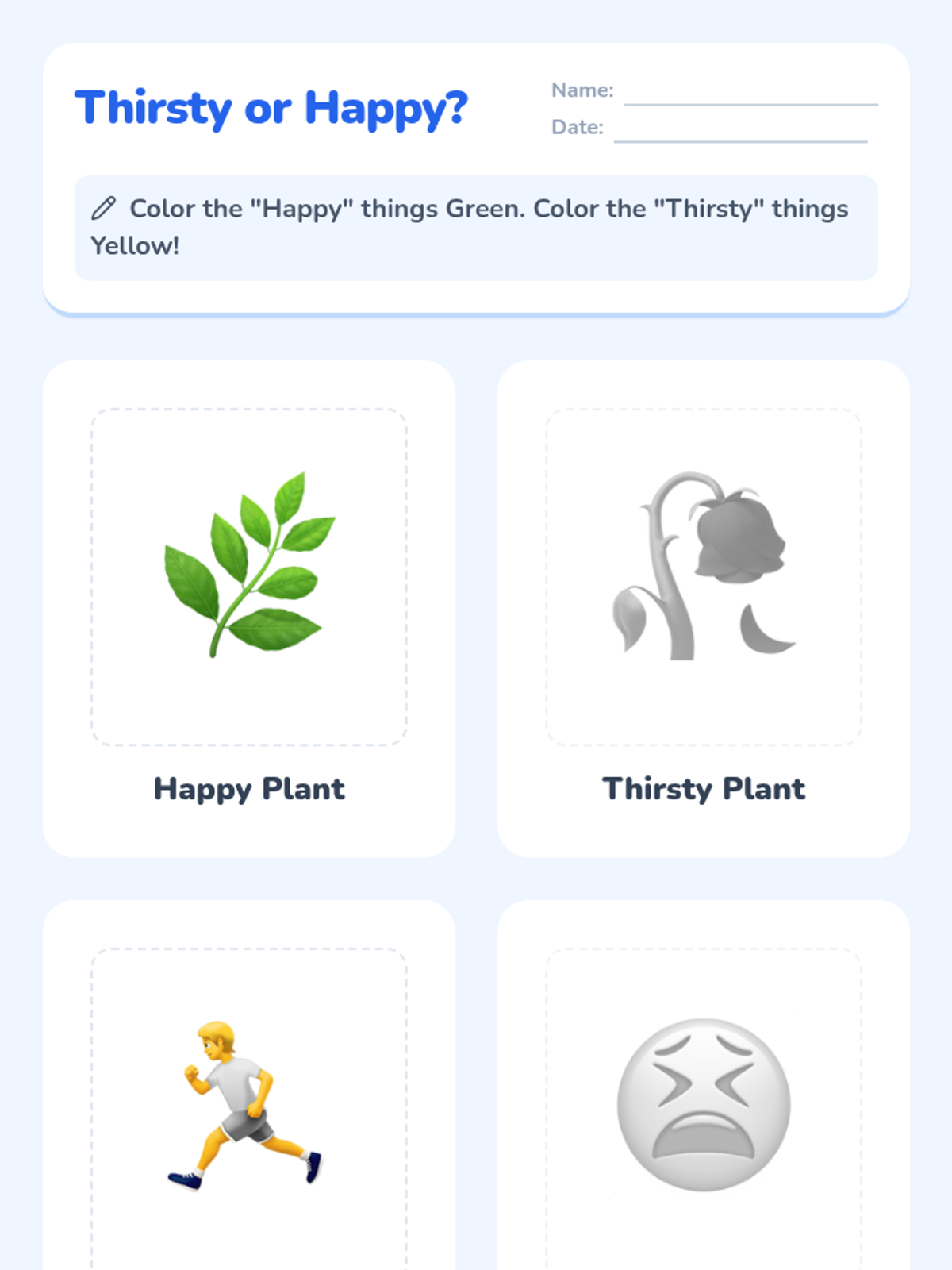
A comprehensive Kindergarten health sequence focusing on recognizing thirst signals, understanding biological needs for water through plant comparisons, timing hydration with physical activity, and choosing water over sugary drinks.
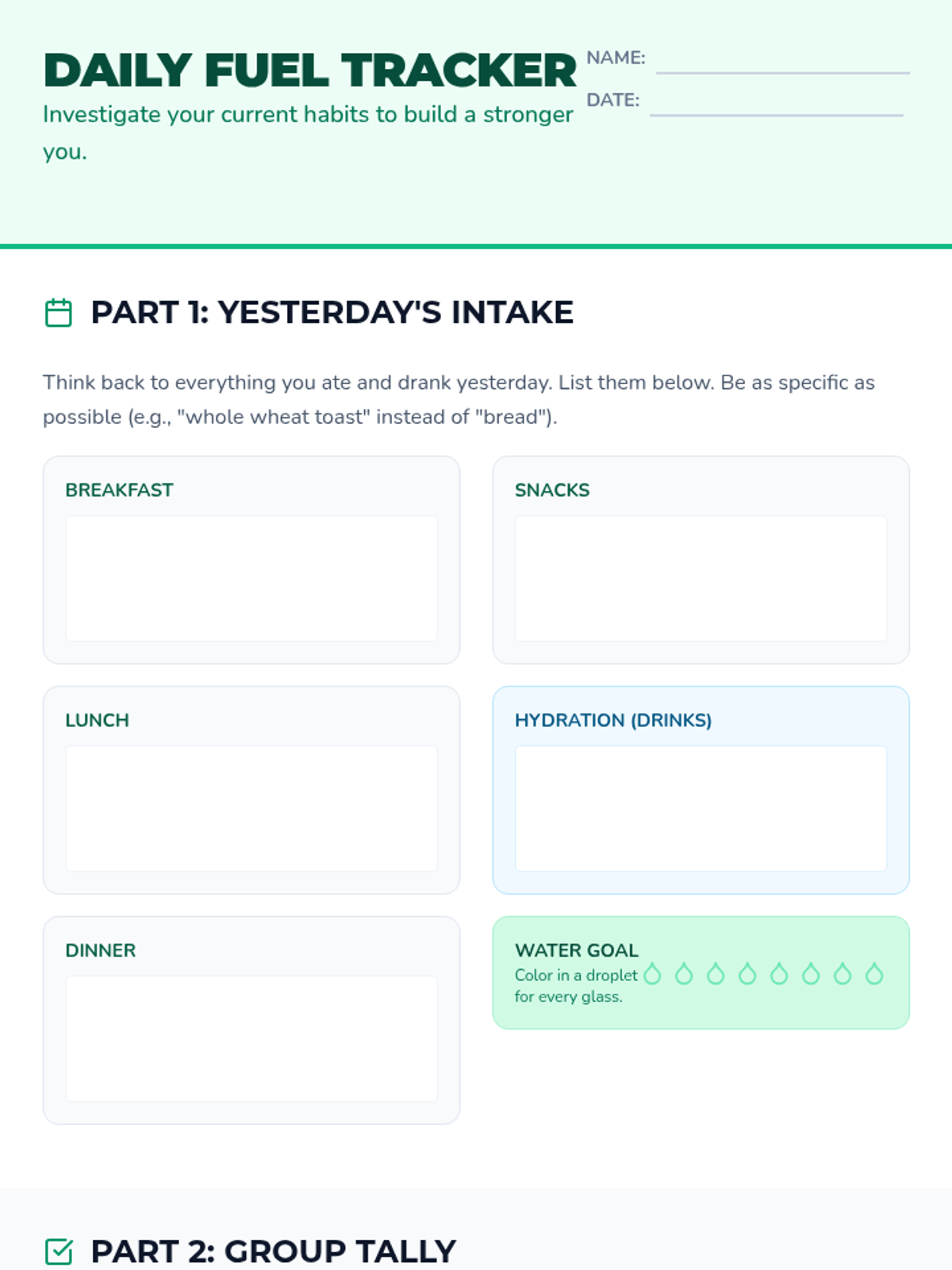
A comprehensive Kindergarten sequence exploring nutrition, hydration, and internal body signals to help students understand how food and water affect their growth and energy.
A Pre-K sequence focused on identifying healthy food choices, understanding body signals like hunger and fullness, and recognizing the importance of water for hydration. Students use a 'Superpower Fuel' theme to connect nutrition with their energy levels and physical growth.
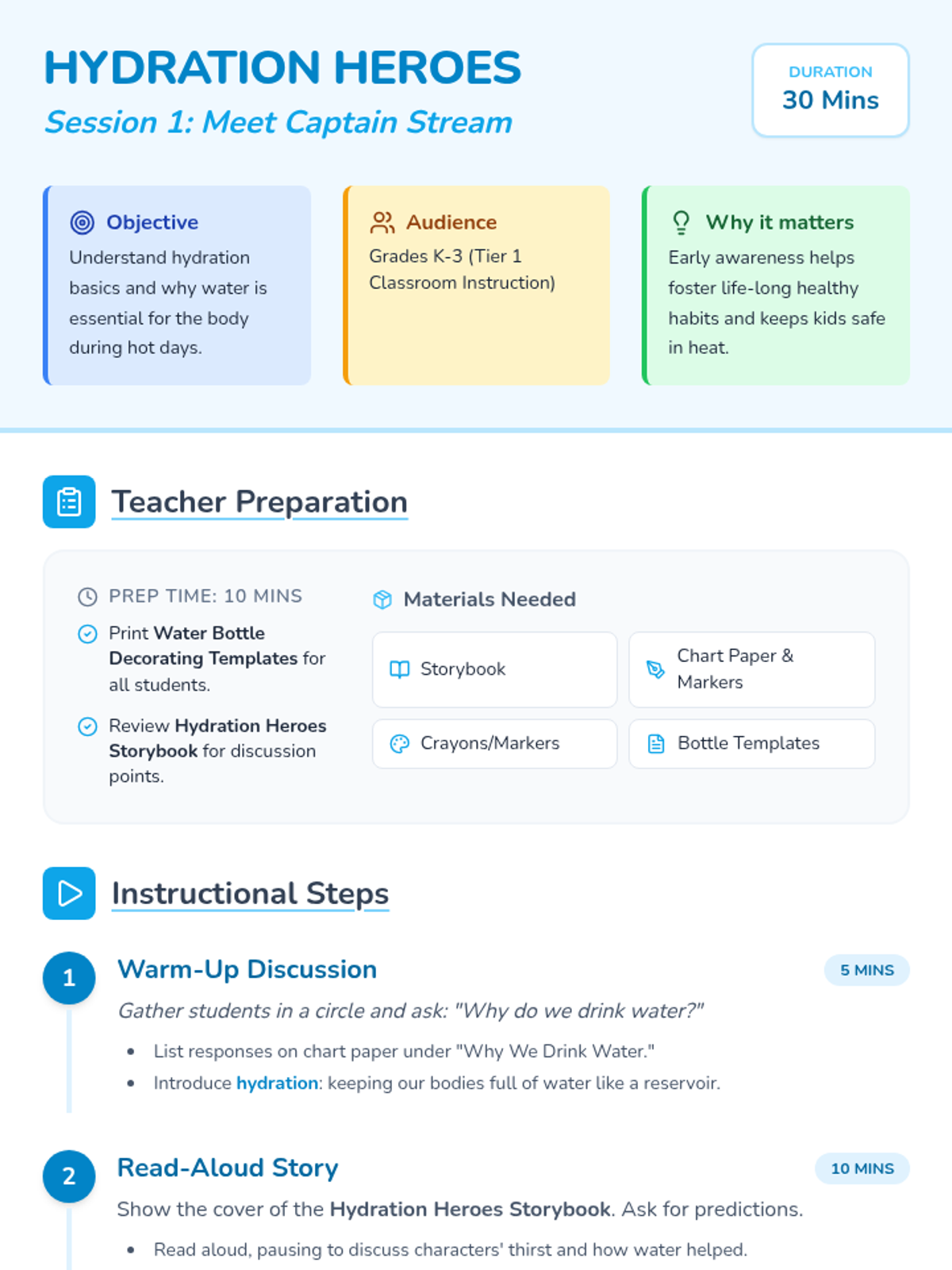
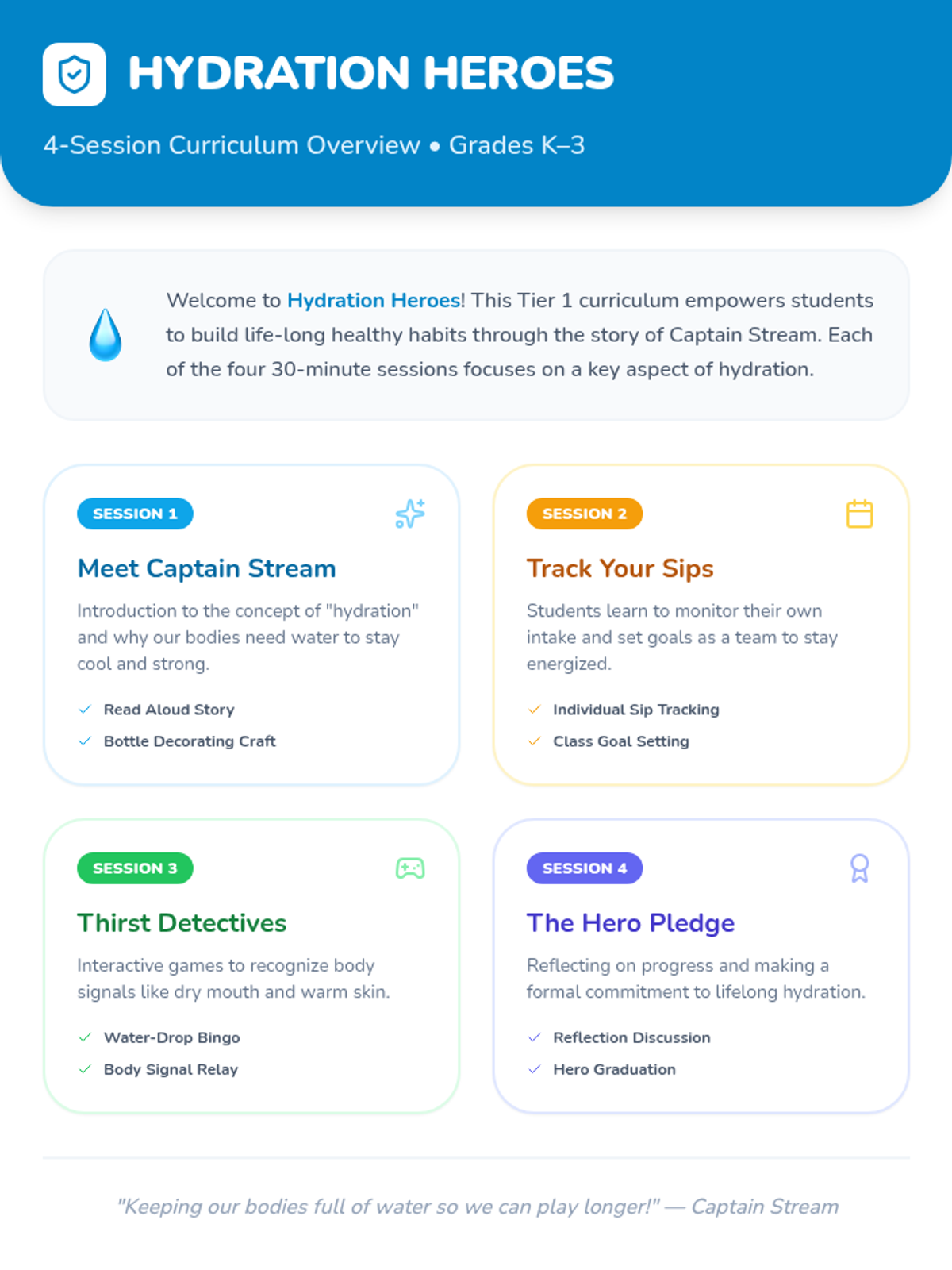
A 4-session K-3 curriculum that teaches students the importance of hydration through the character Captain Stream, interactive tracking, and games. Students develop healthy habits to stay cool and energized during hot weather.
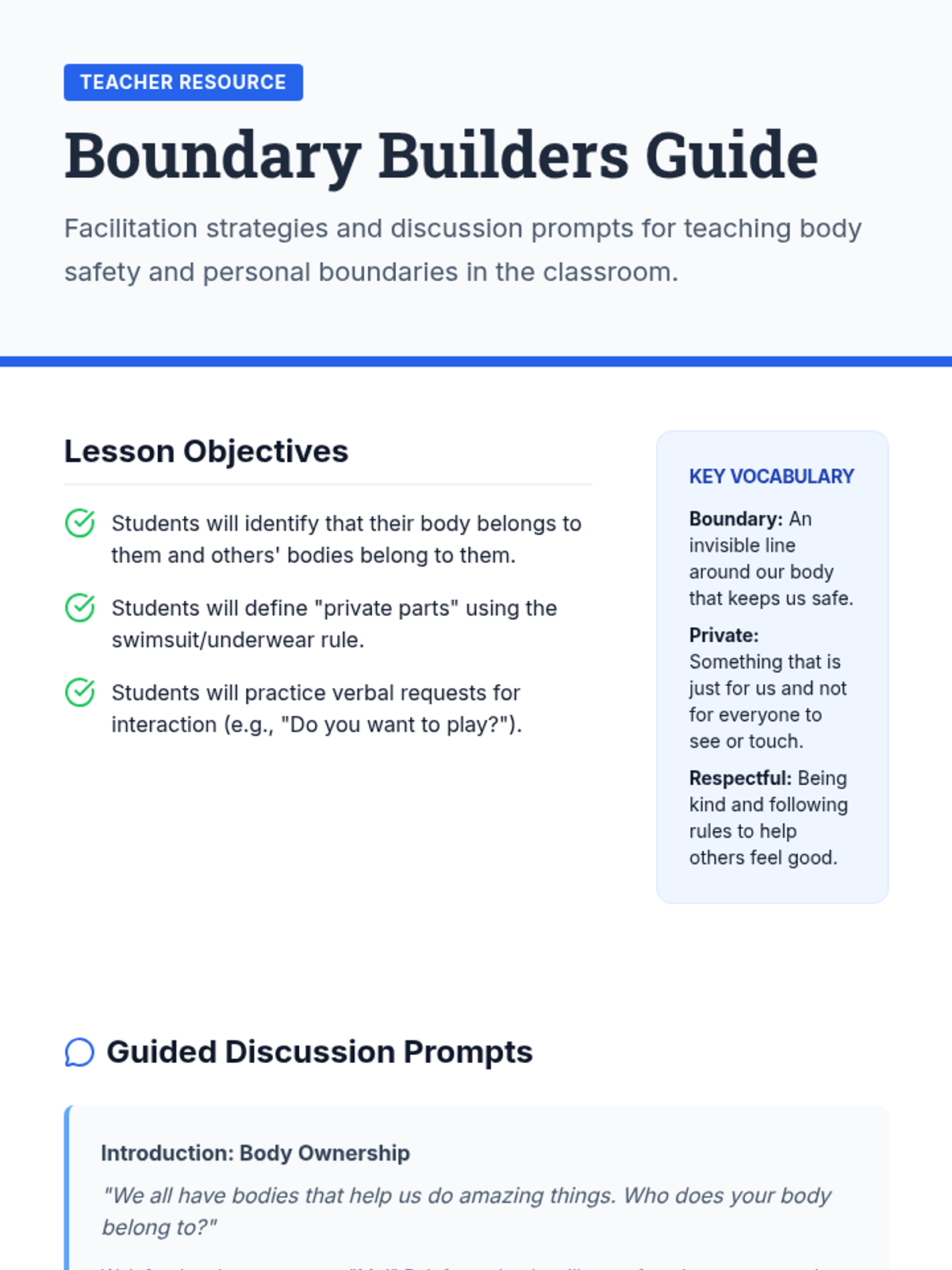
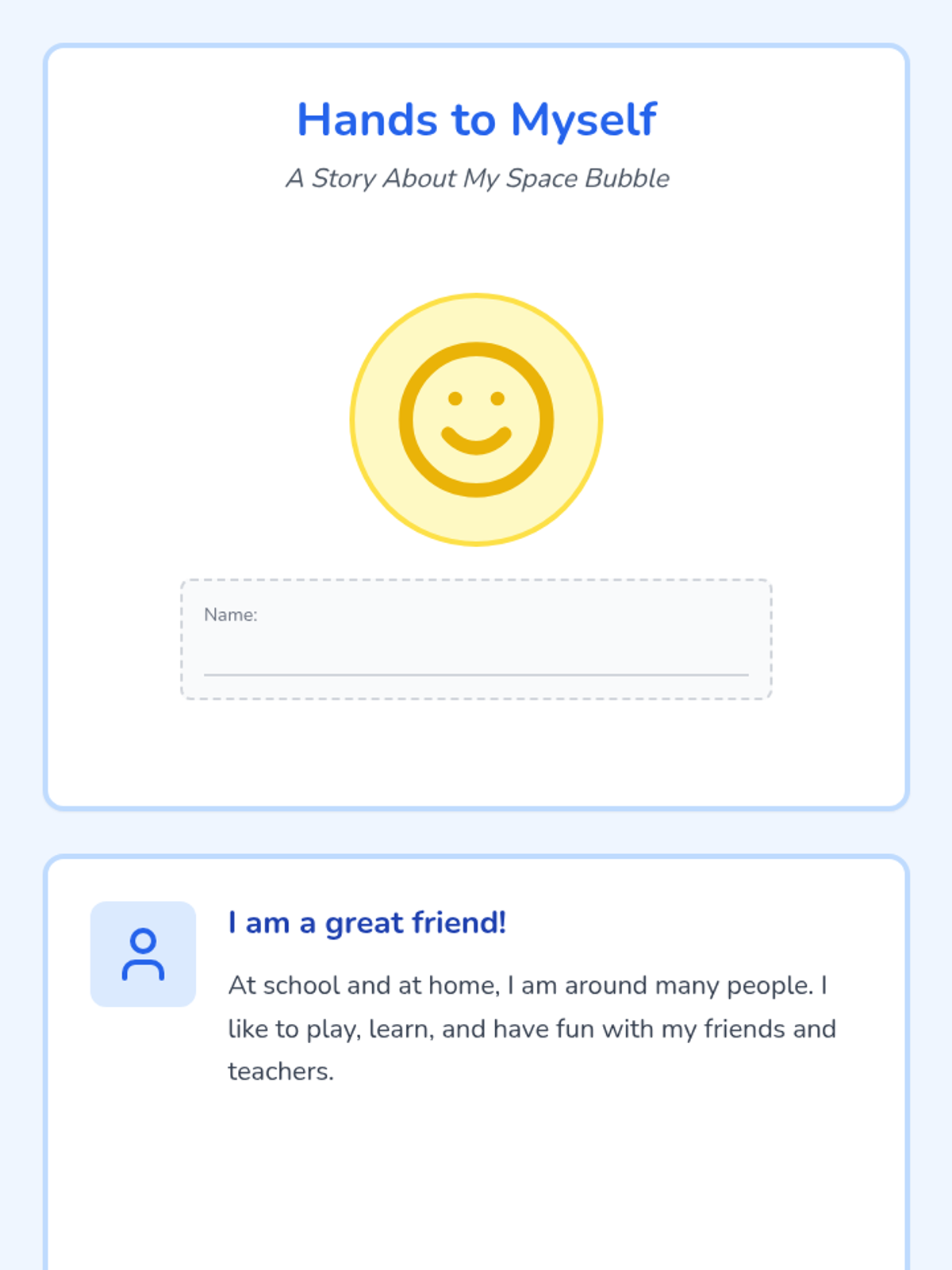
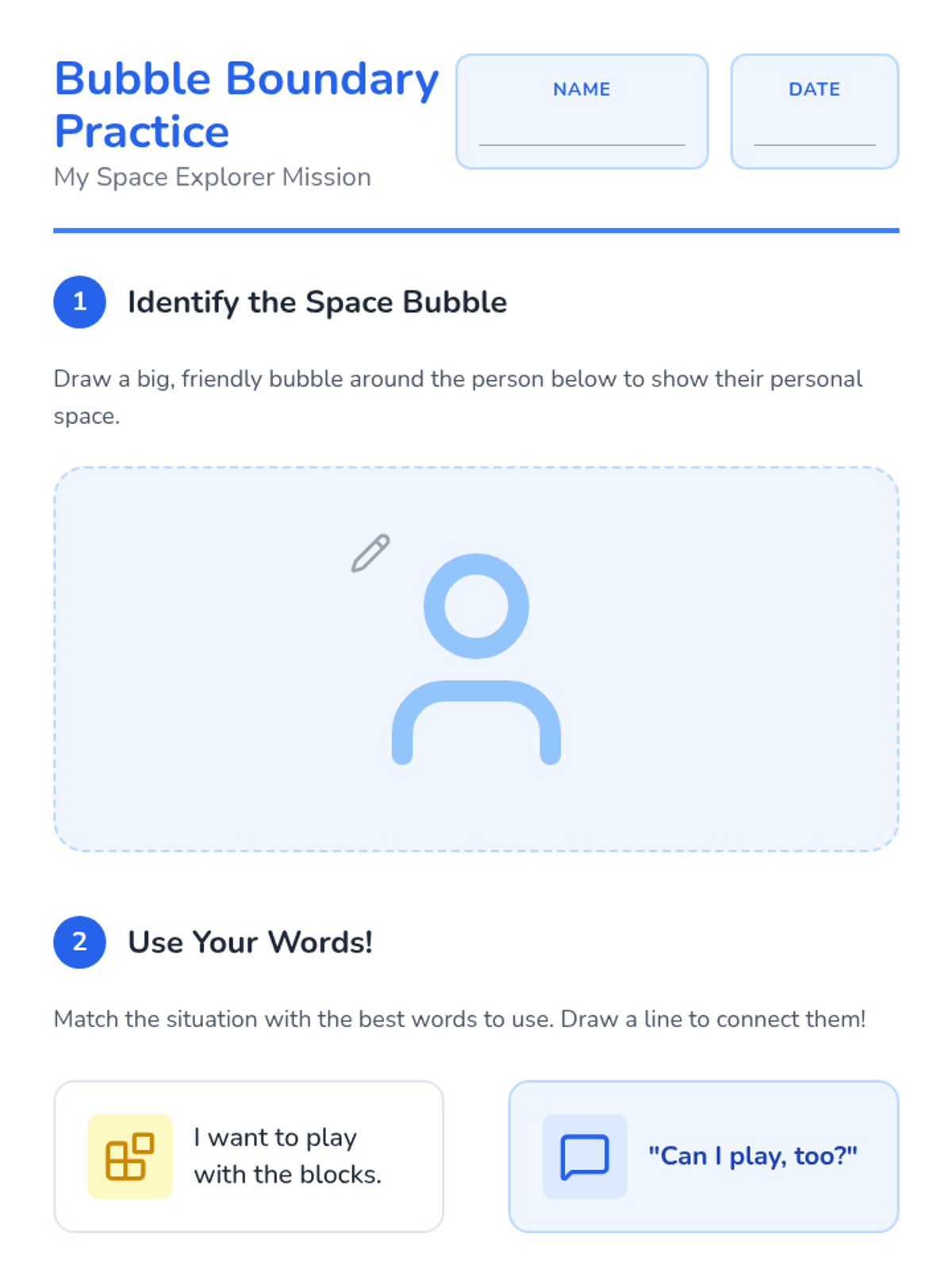
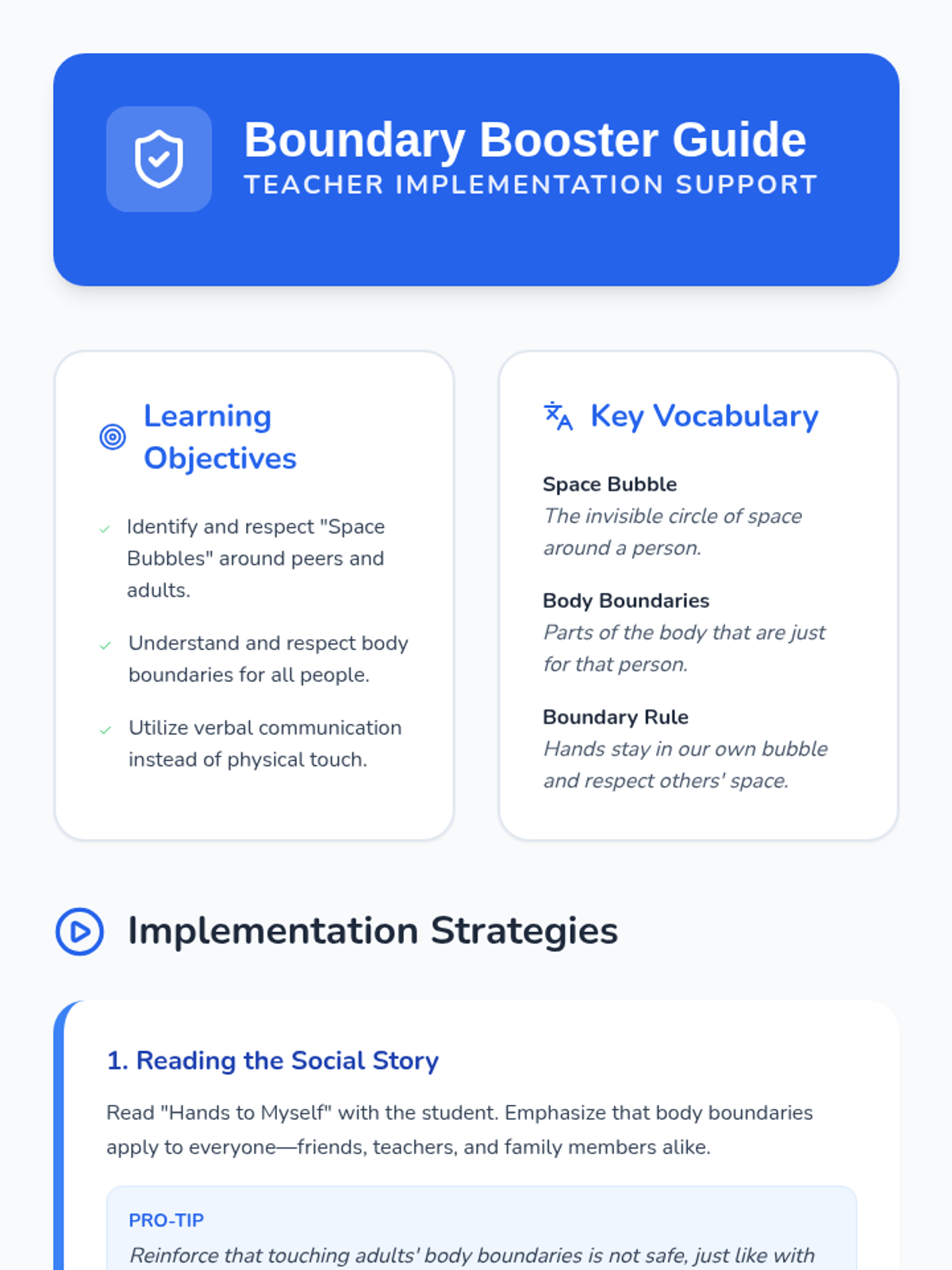
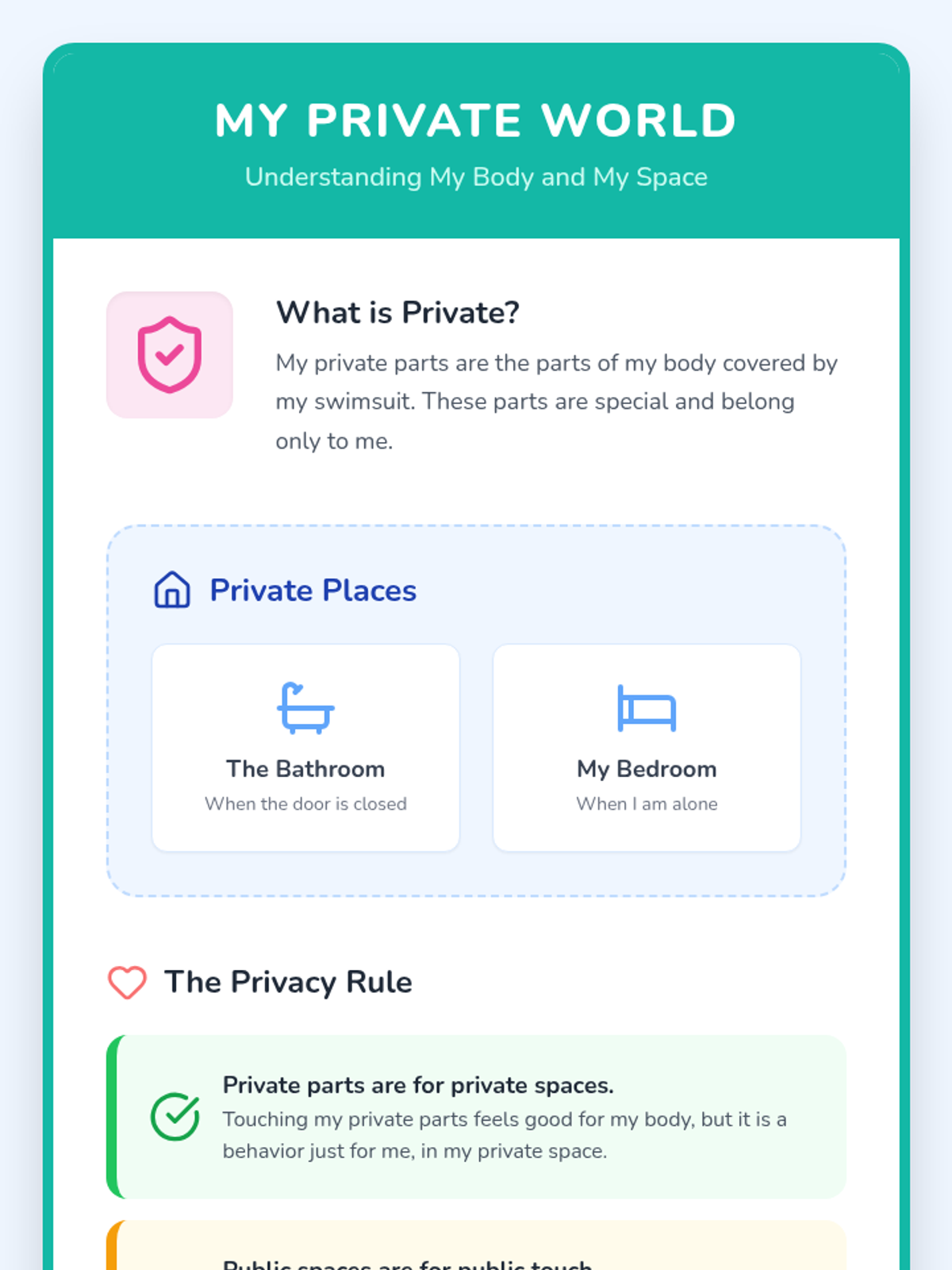
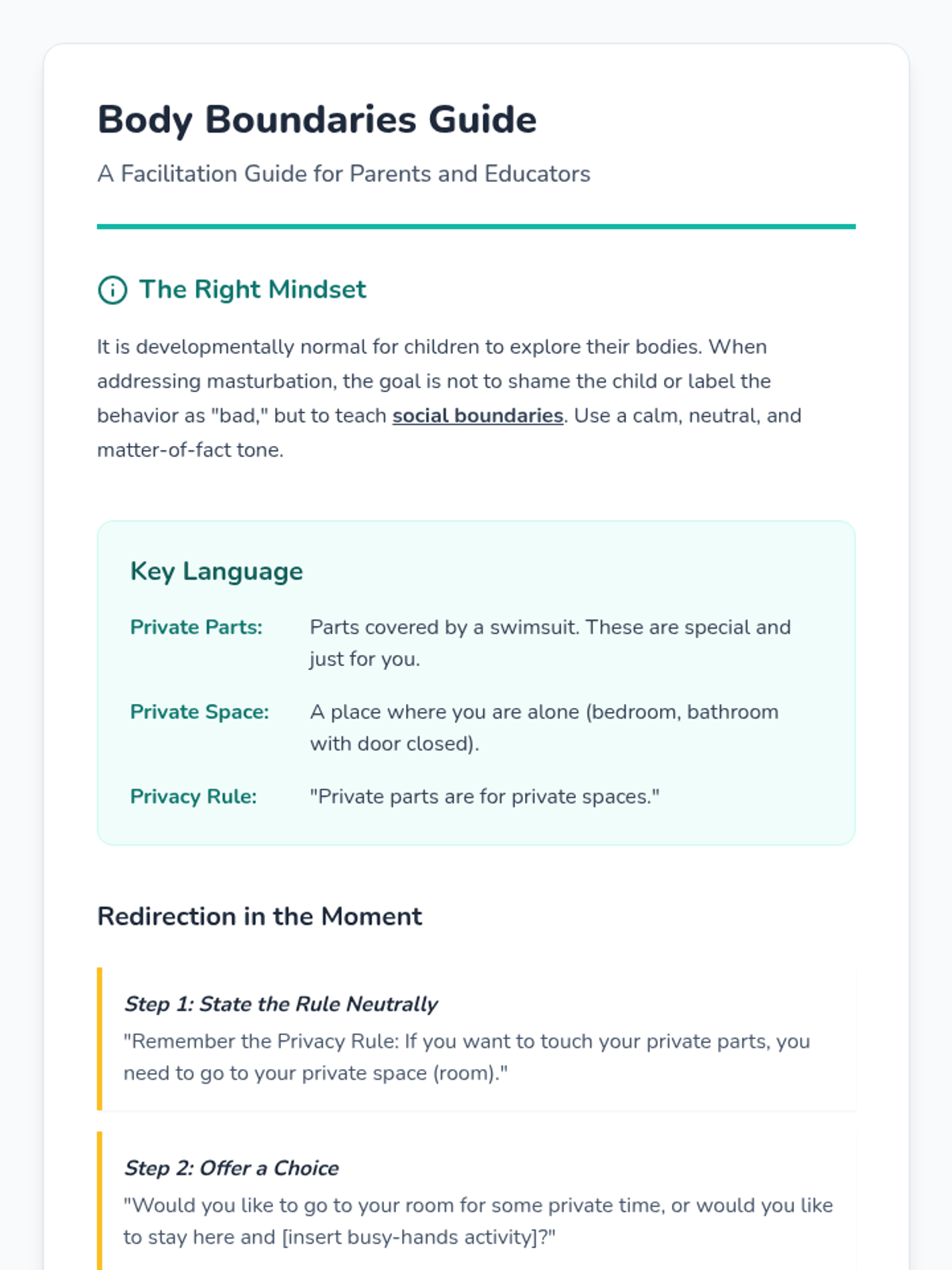
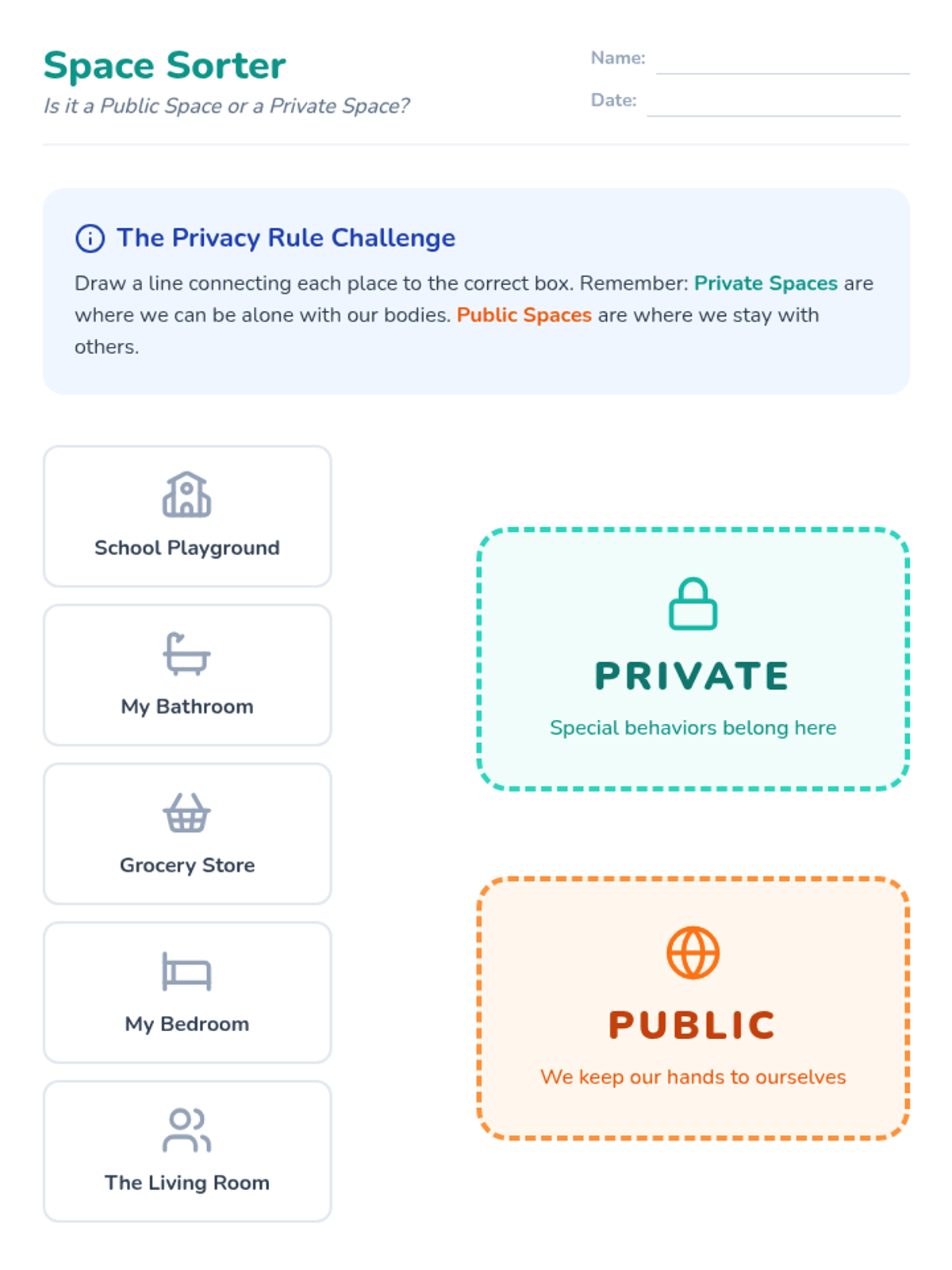
A sequence focused on teaching students about personal boundaries, body safety, and respectful physical interactions in a school environment.
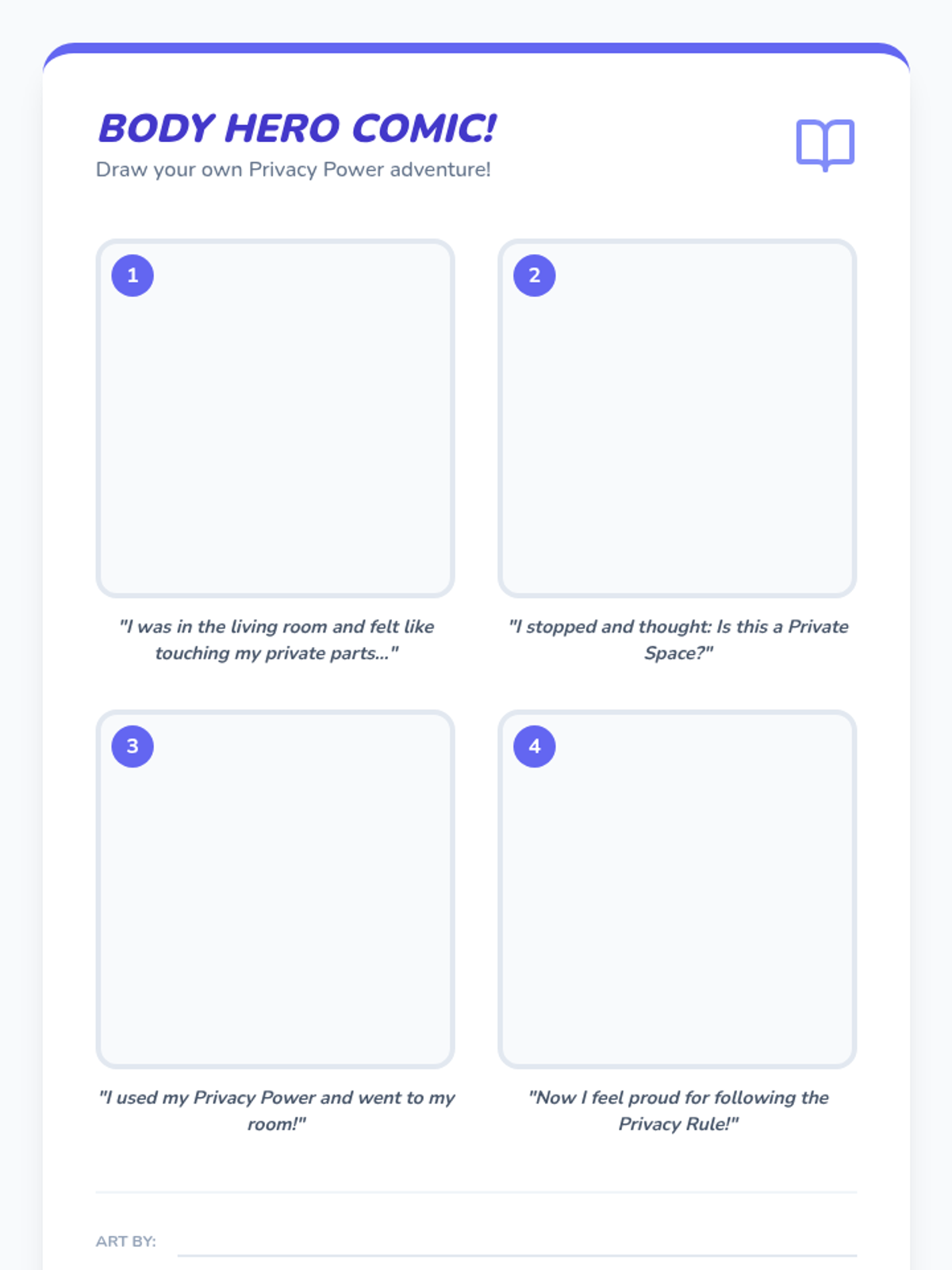
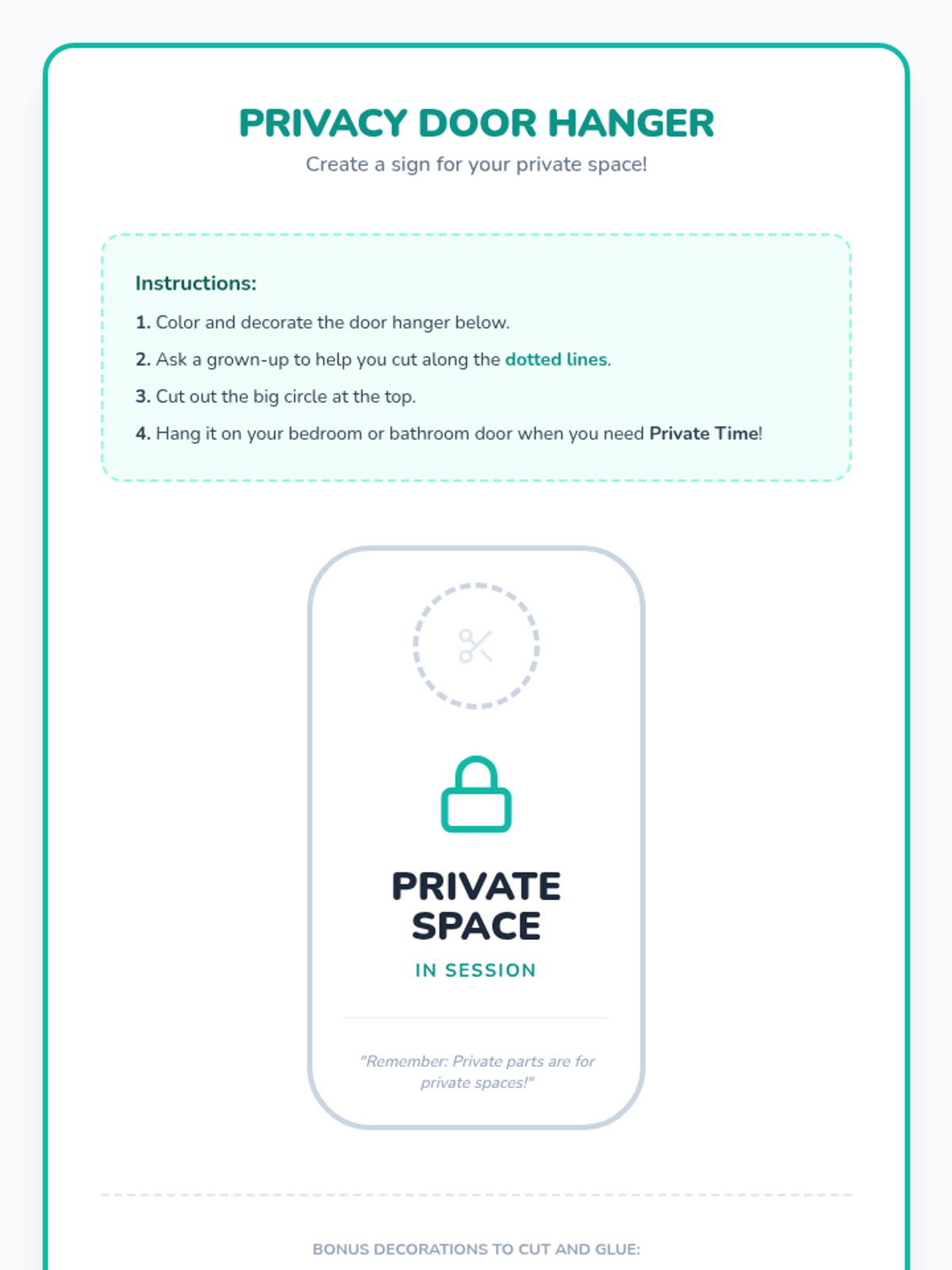
A series of lessons focused on teaching young children about personal boundaries, body autonomy, and appropriate social interactions.
A comprehensive human biology unit designed for life skills students, focusing on functional anatomy, major body systems, sensory awareness, and daily health habits through visual-heavy instruction and practical activities.
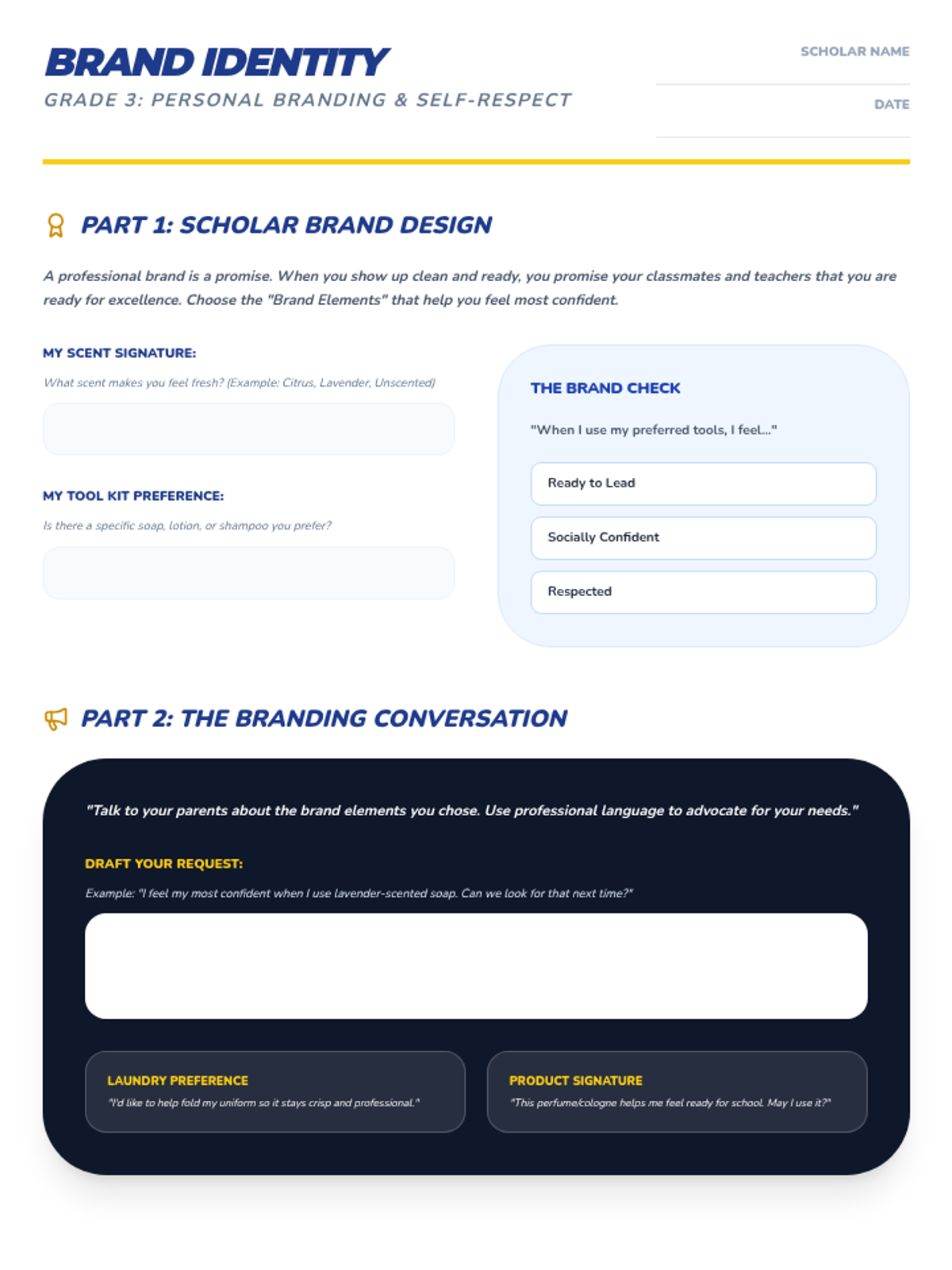
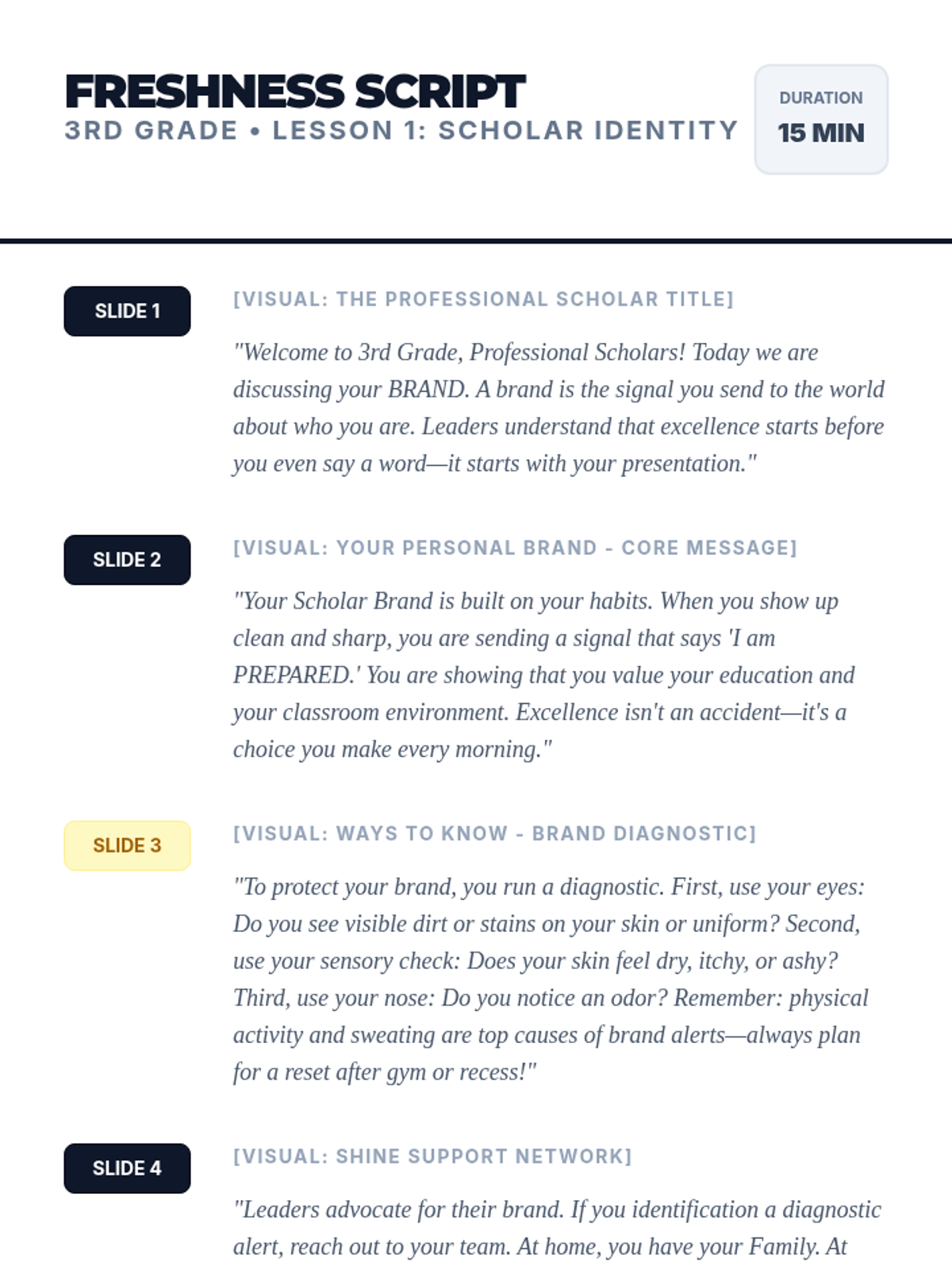
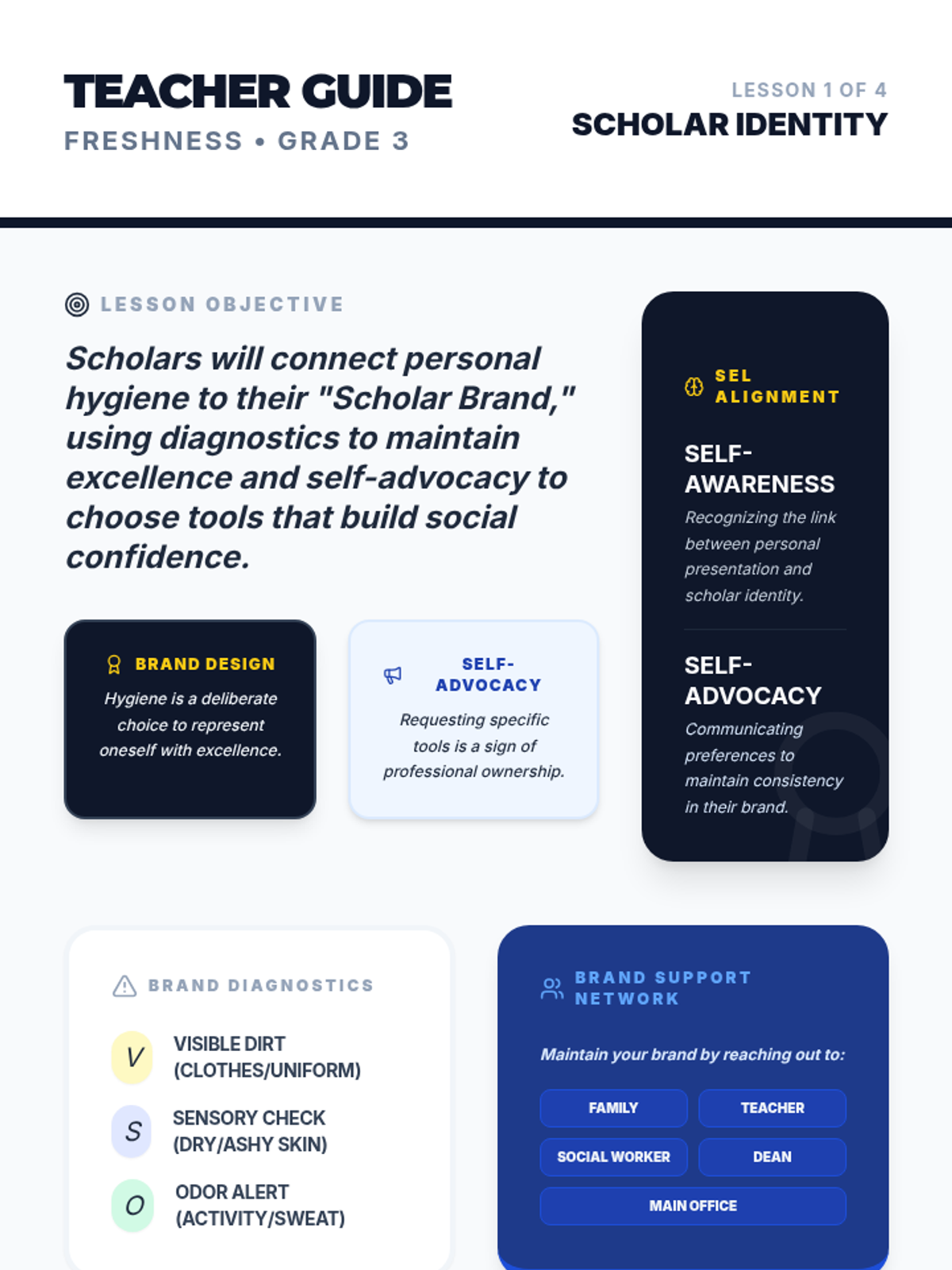
A comprehensive SEL-integrated hygiene curriculum for elementary scholars (K-4), focusing on self-awareness, social impact, and personal responsibility through the lens of a 'Glow Up'.
A series of lessons focused on personal safety, body autonomy, and social-emotional development for young children.
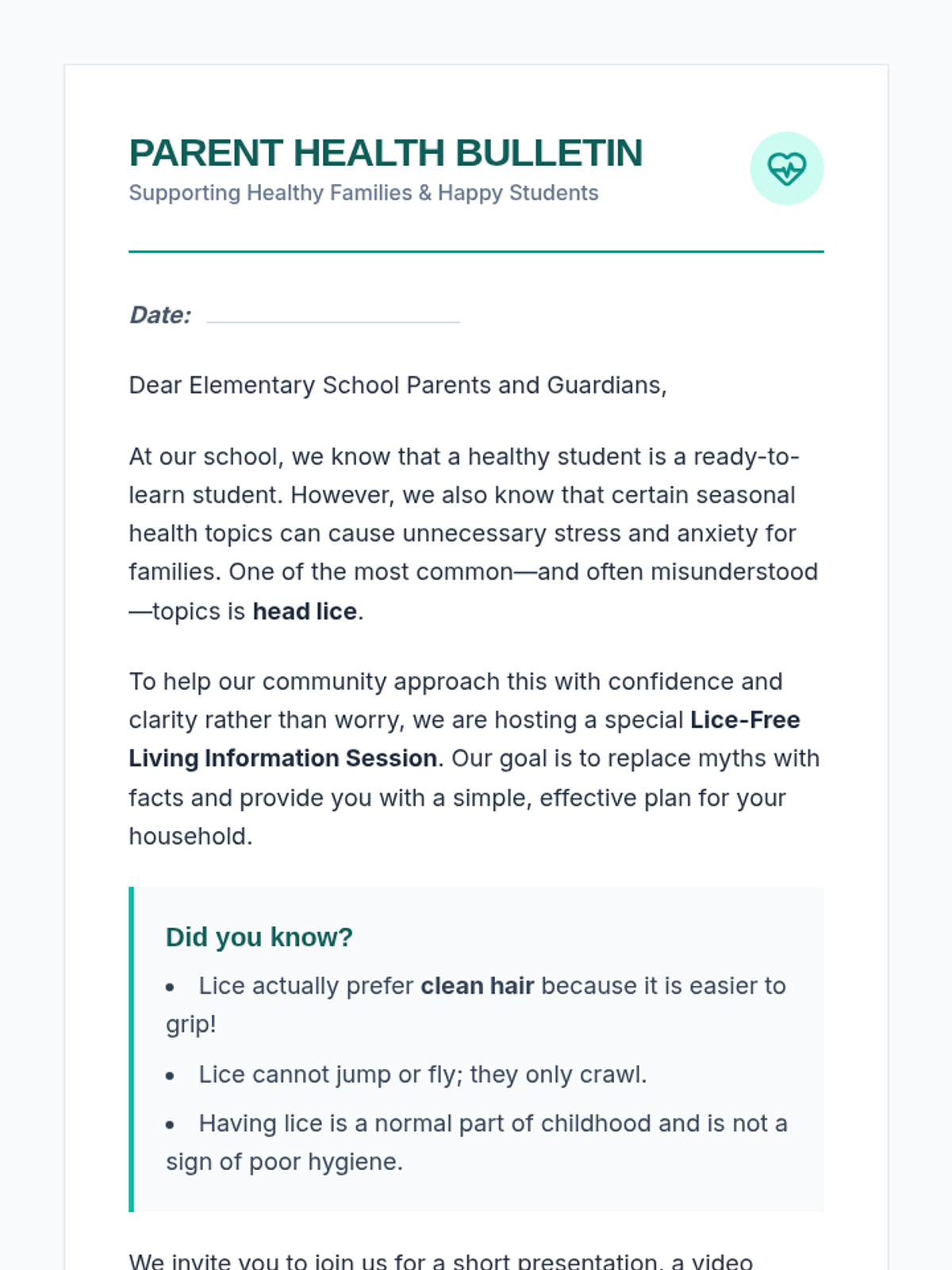
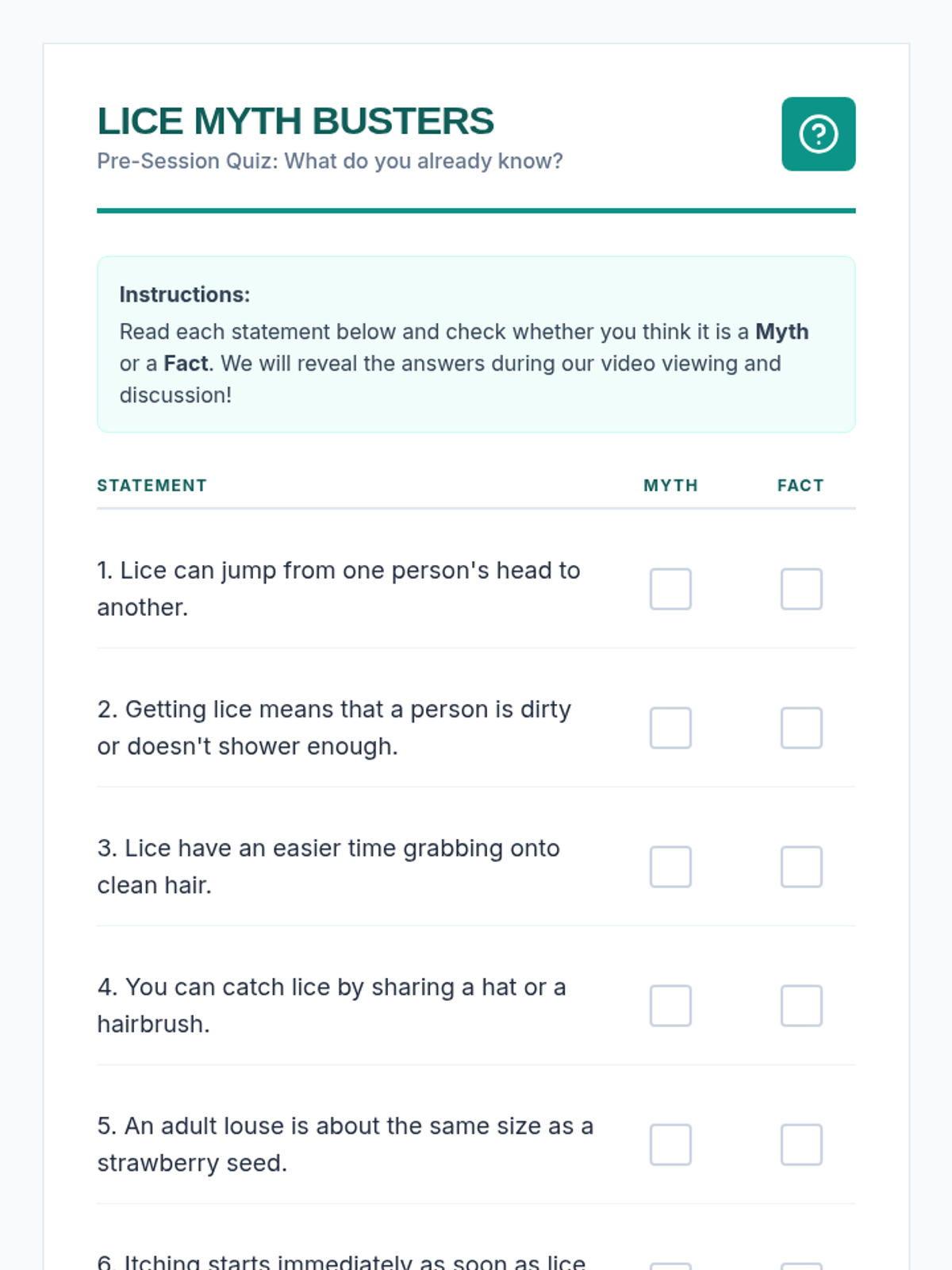
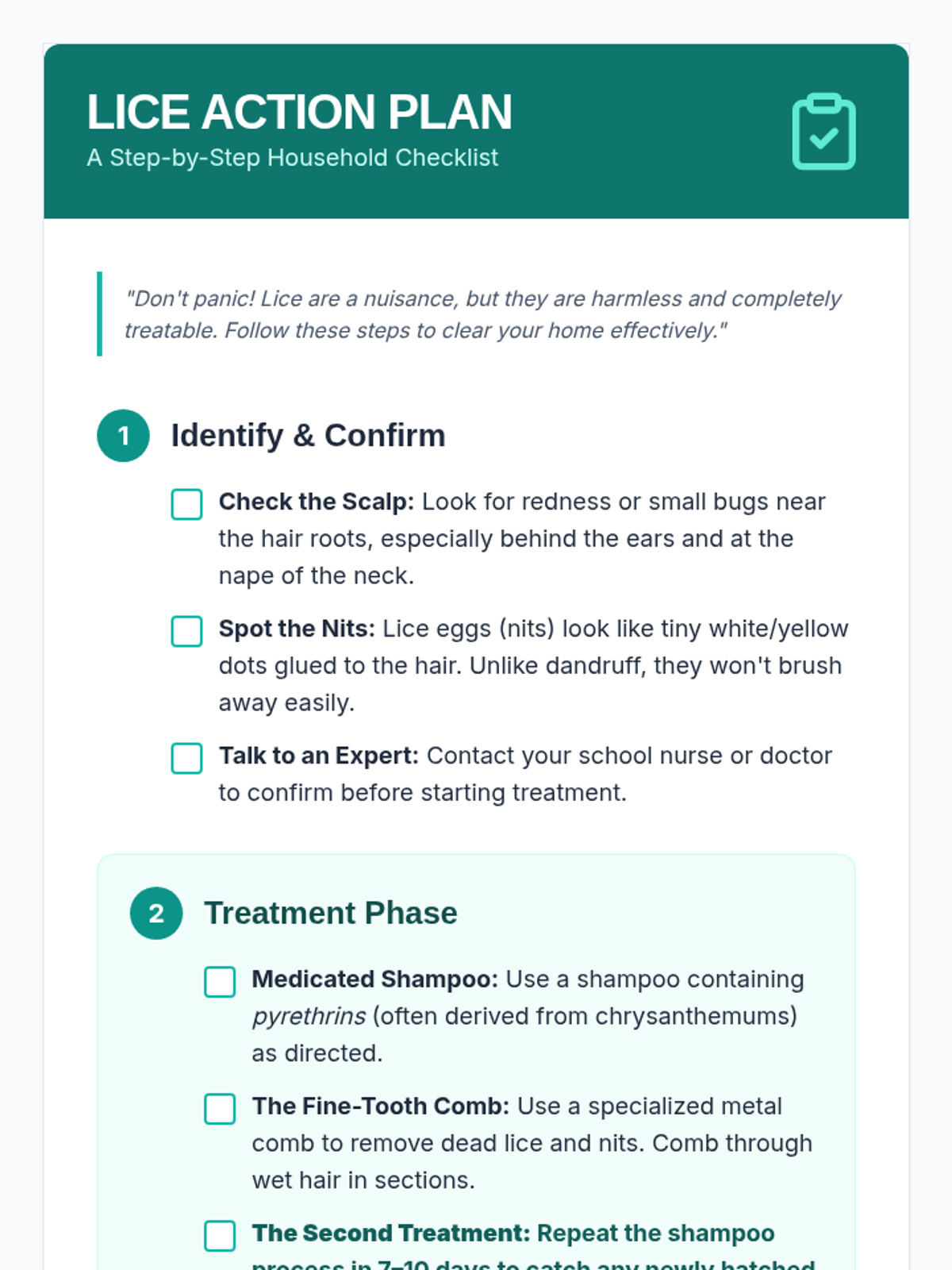
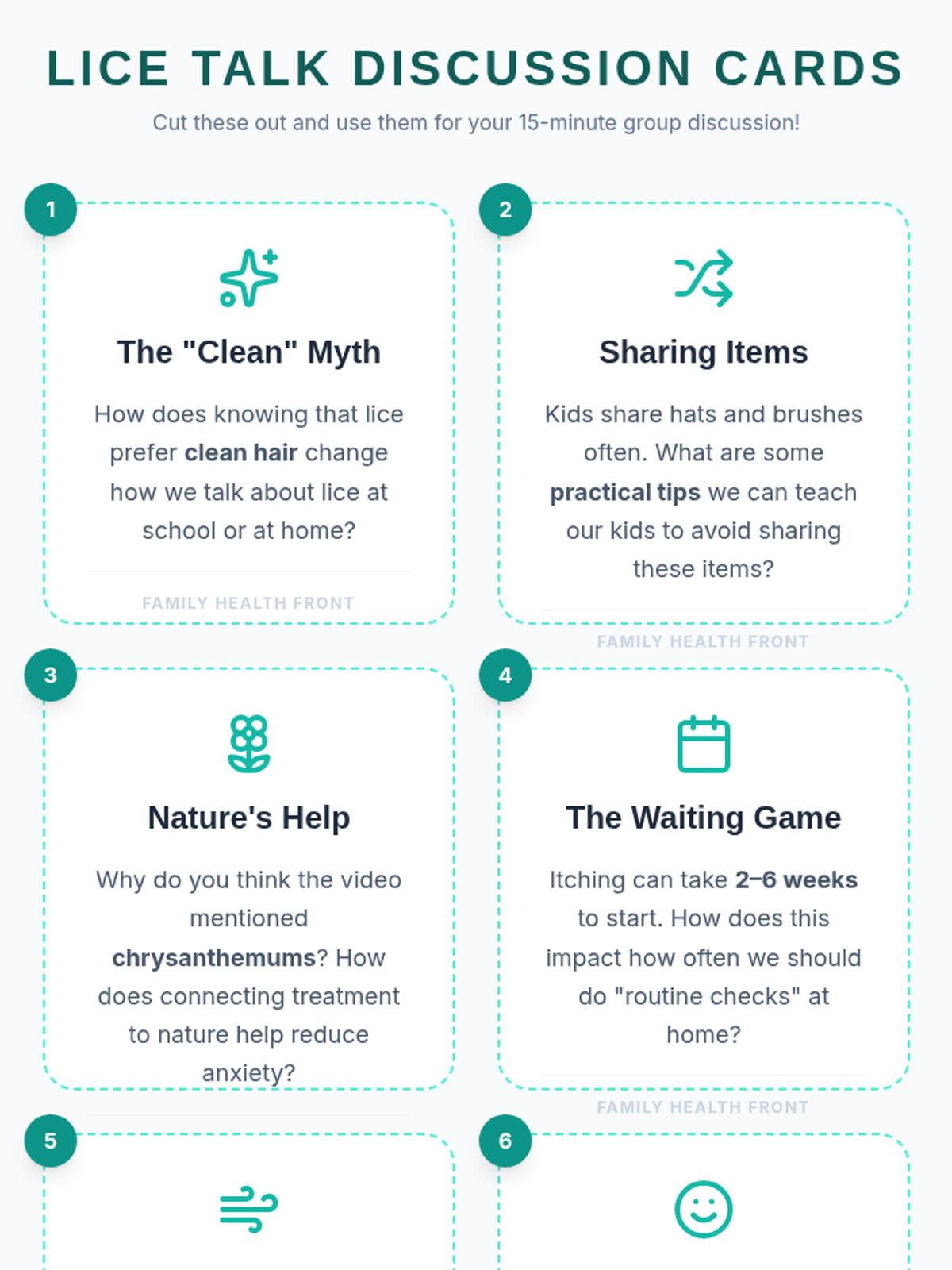
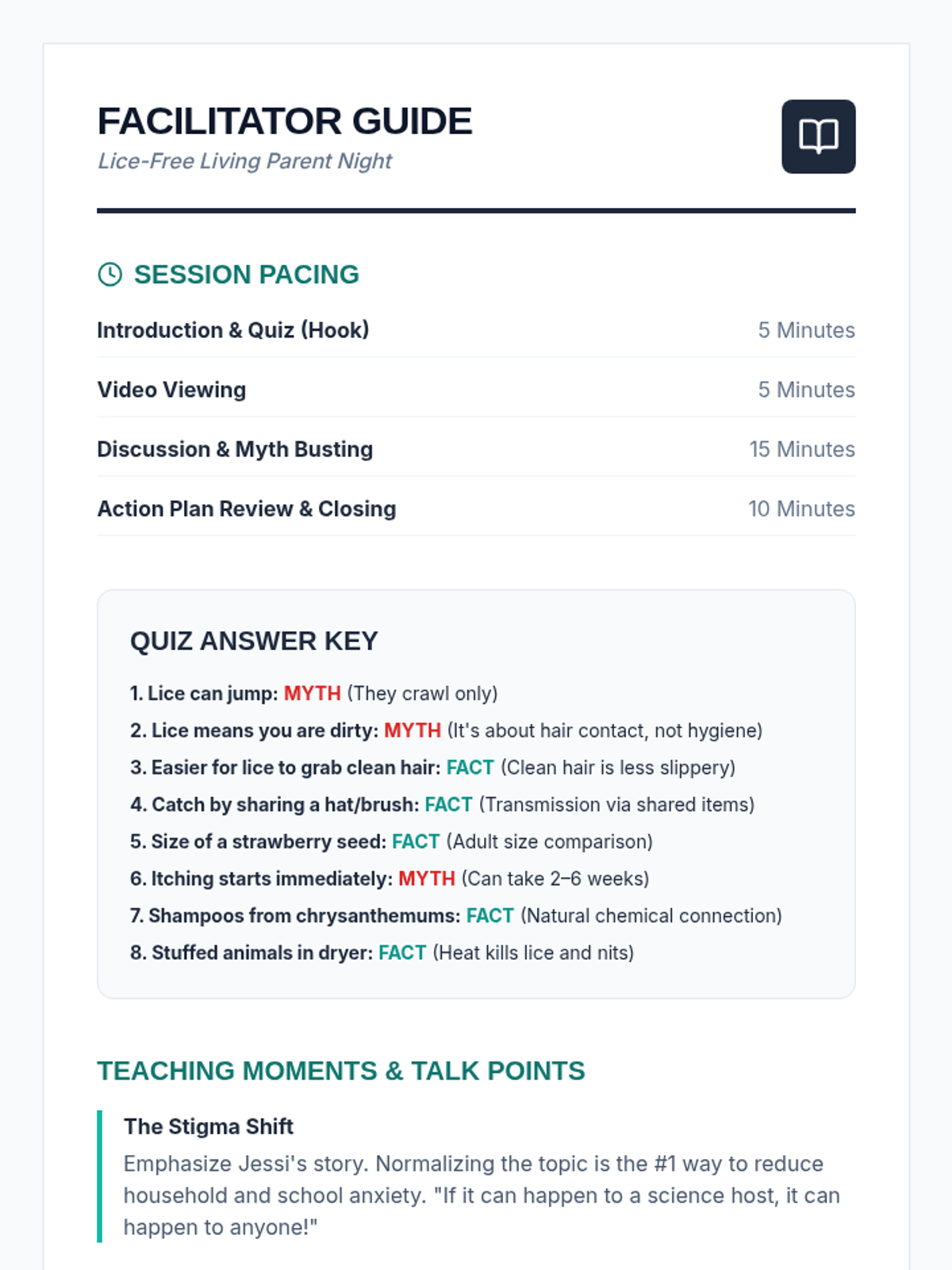
A series of workshops and resources for elementary school parents focusing on common school-related health concerns, starting with head lice management.
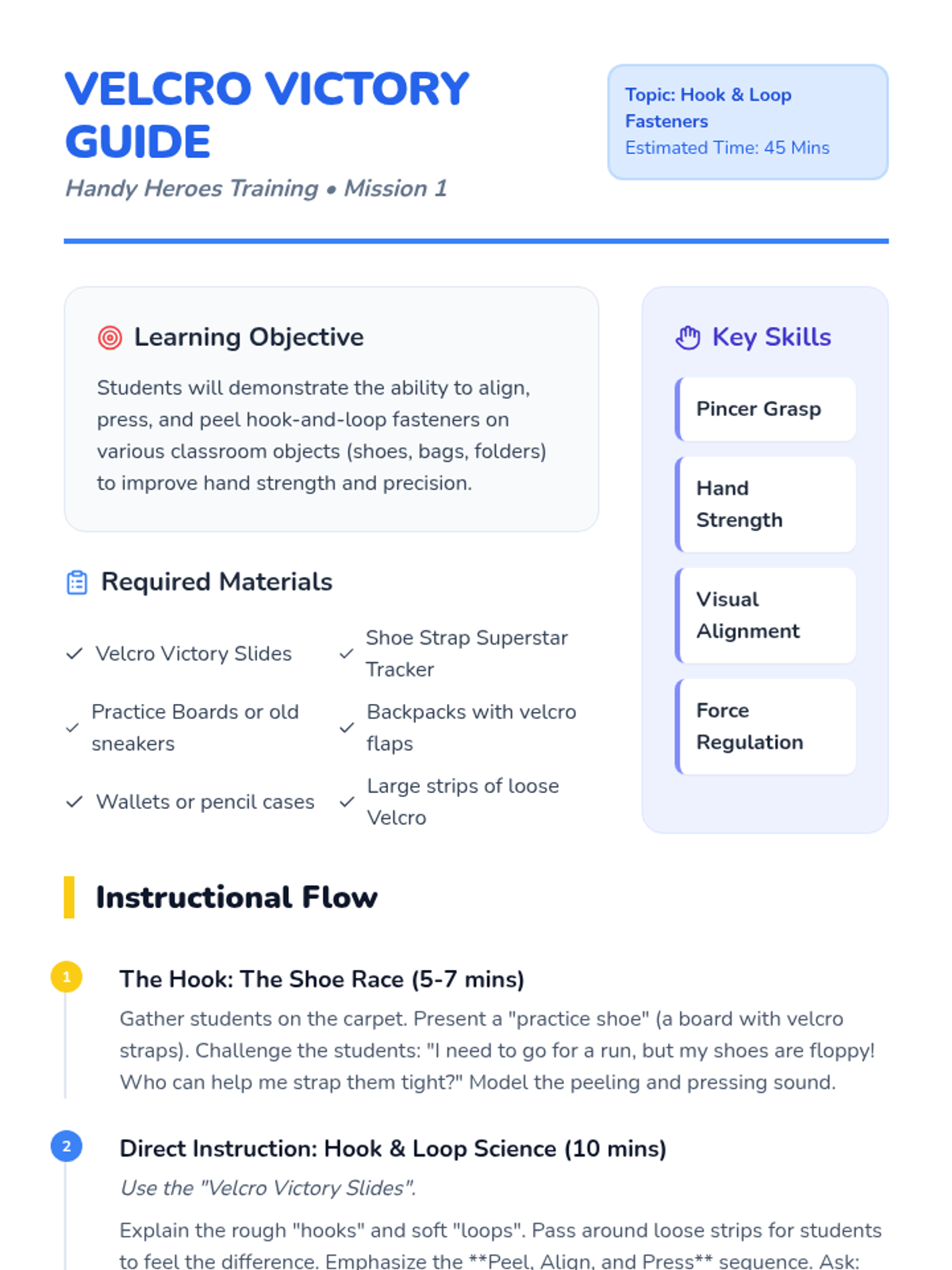
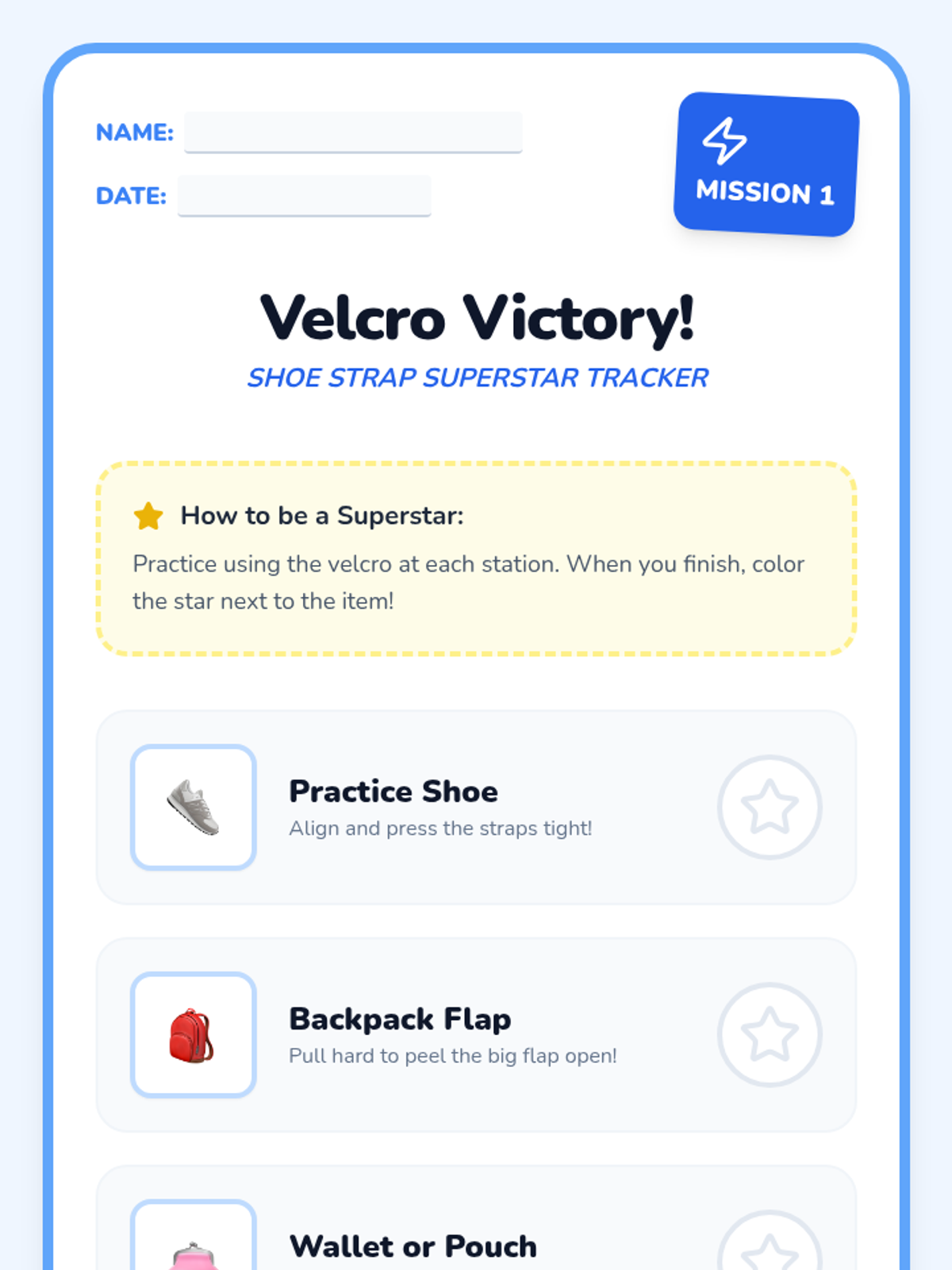
This sequence applies fine motor skills to real-world self-care tasks, fostering independence in the classroom through simulation stations focused on fasteners and containers.
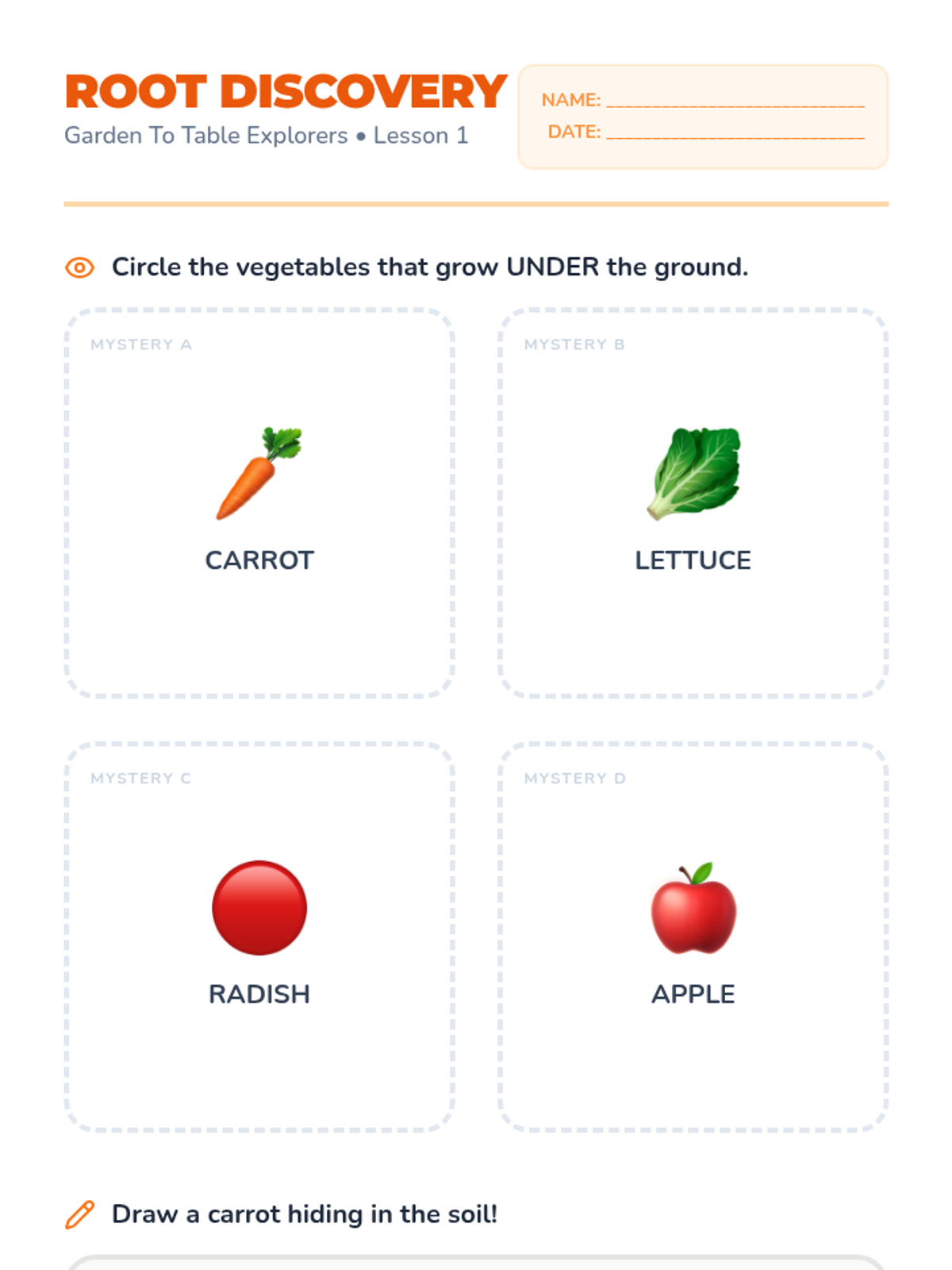
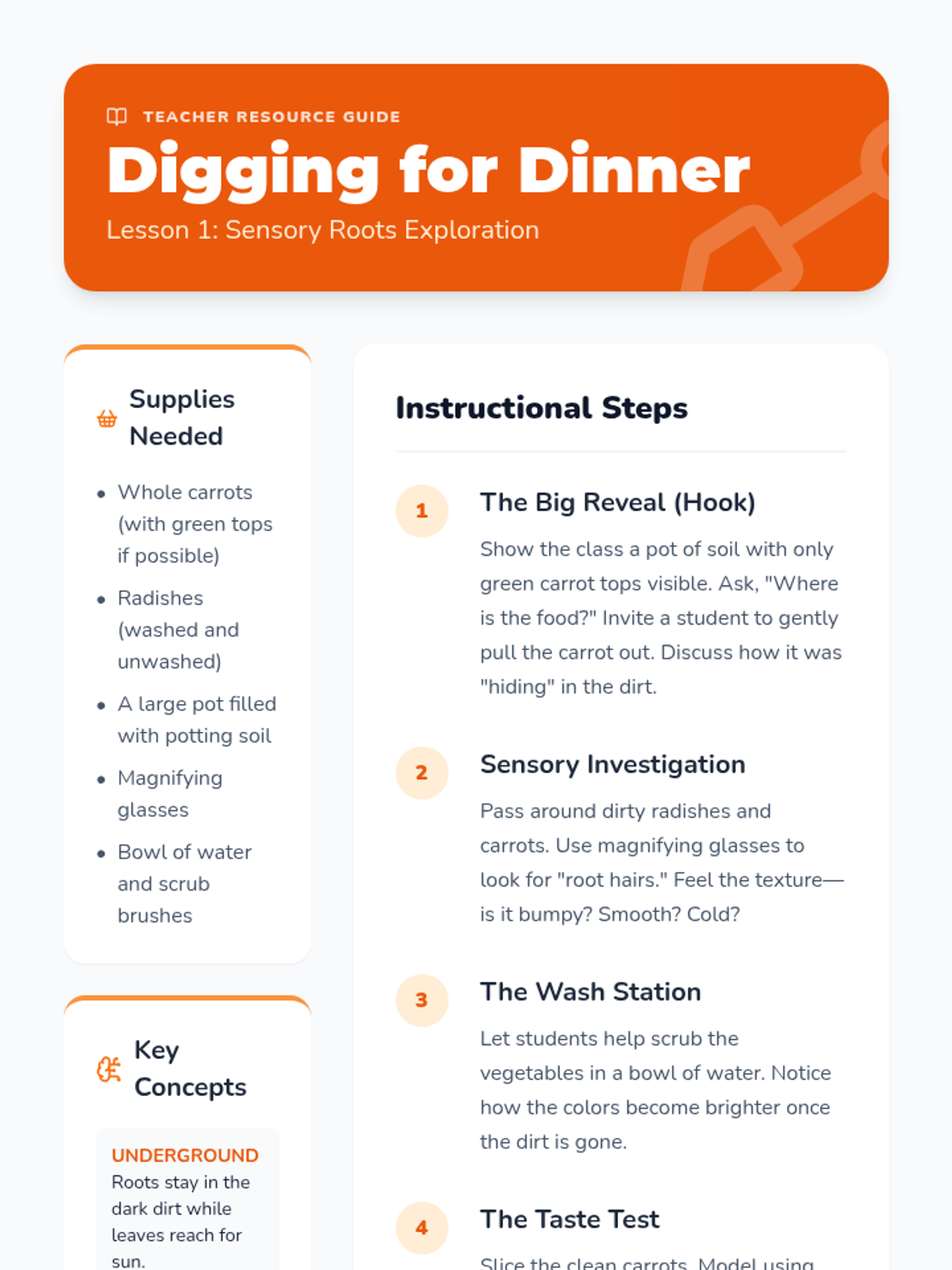
A sensory-focused sequence for Pre-K students exploring the edible parts of plants (roots, leaves, stems, flowers, and fruits). Students engage in hands-on discovery and tasting, culminating in a communal plant part salad.
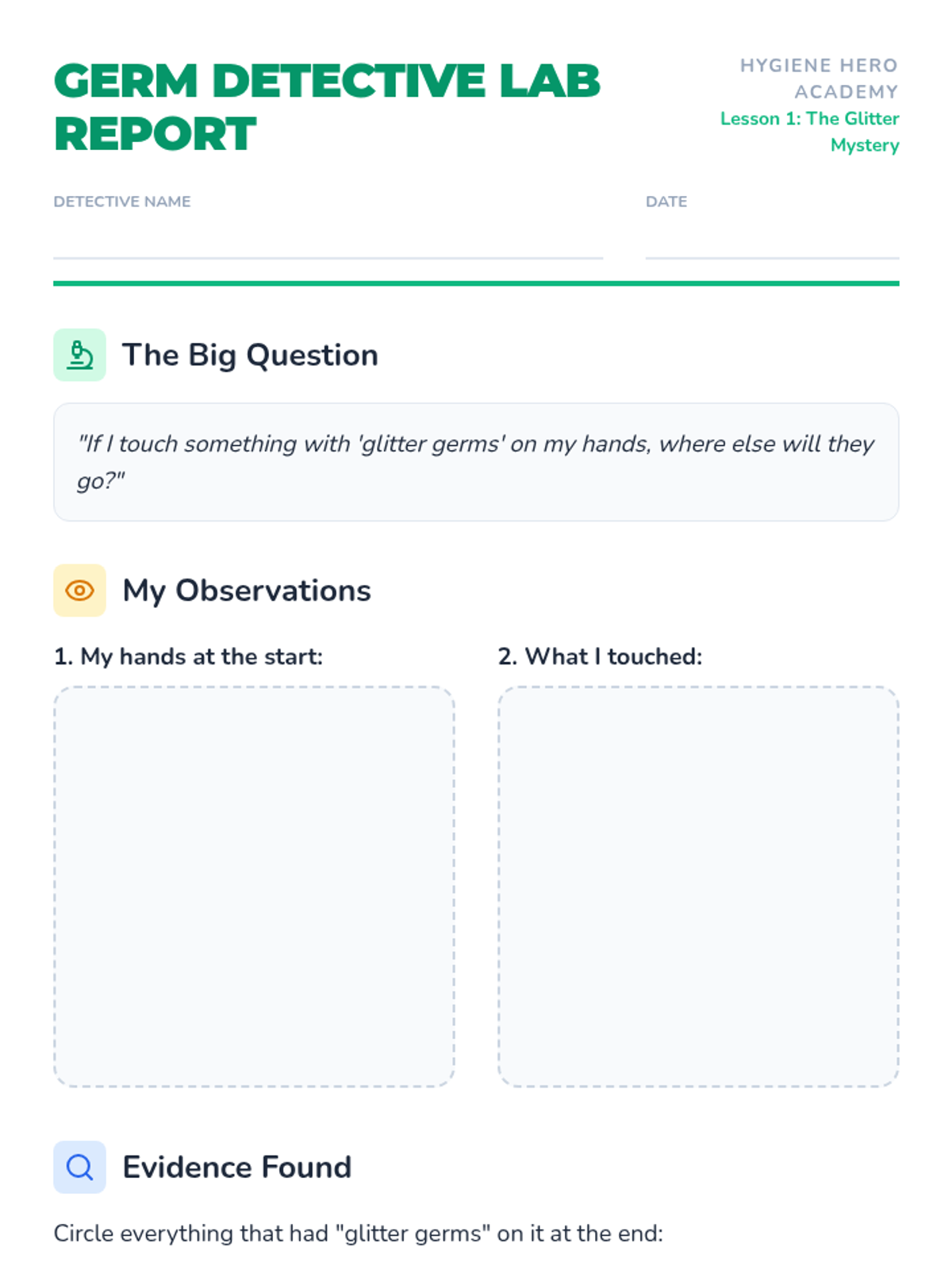
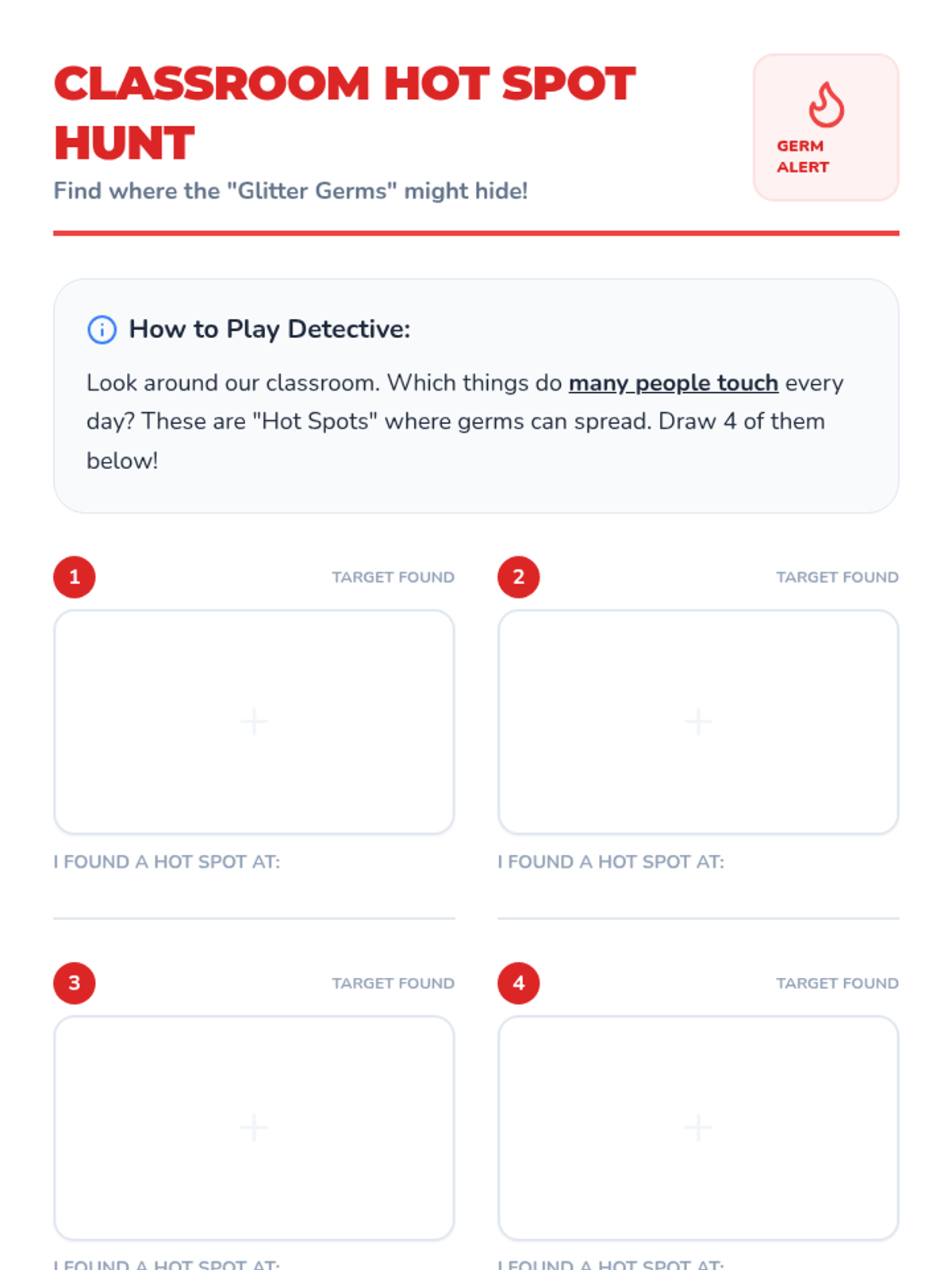
Students explore the invisible world of germs and establish lifelong hygiene habits through experiments, simulations, and routine planning. This hands-on sequence focuses on handwashing, dental care, and respiratory etiquette to empower young learners as 'Hygiene Heroes.'
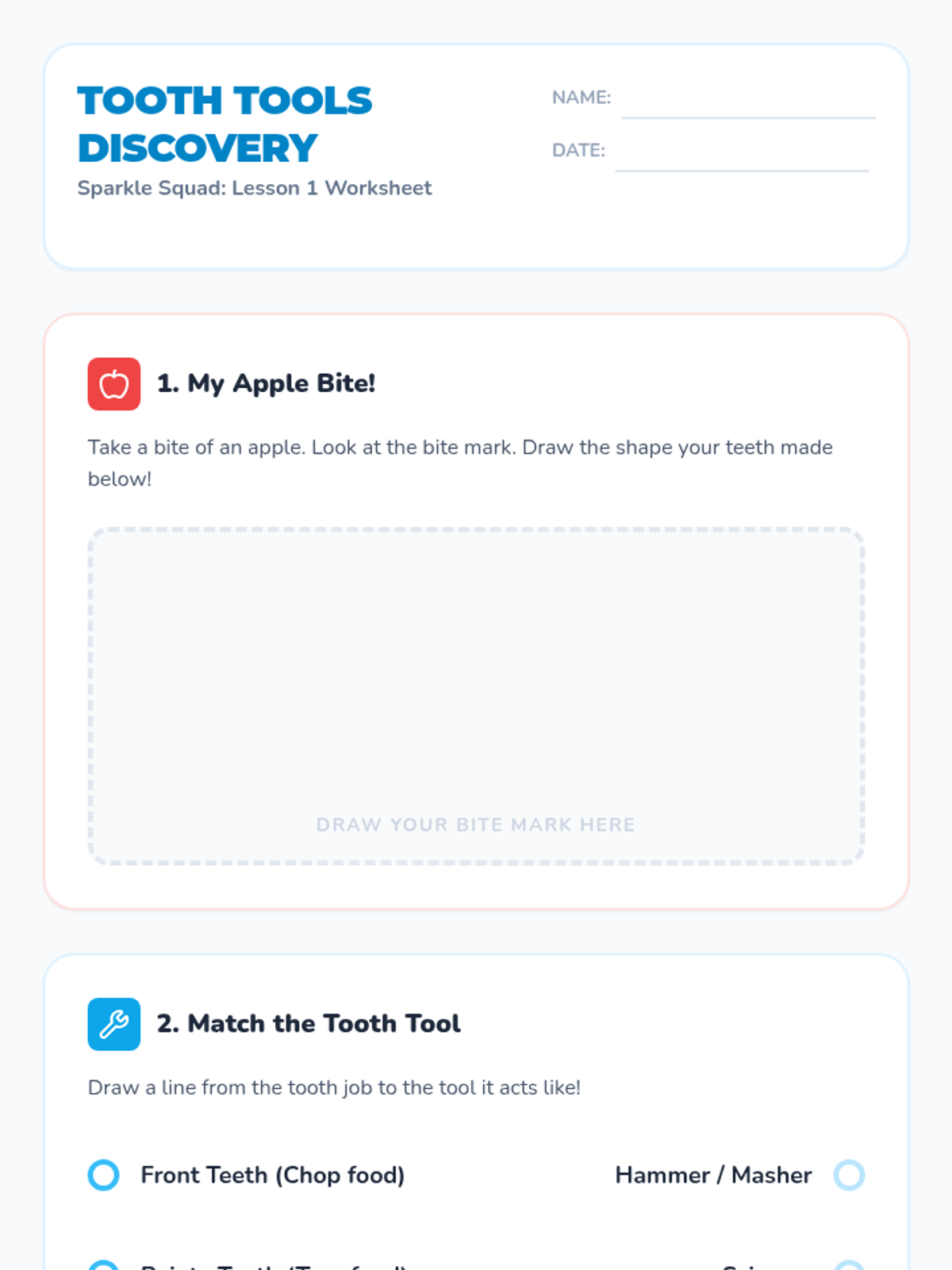
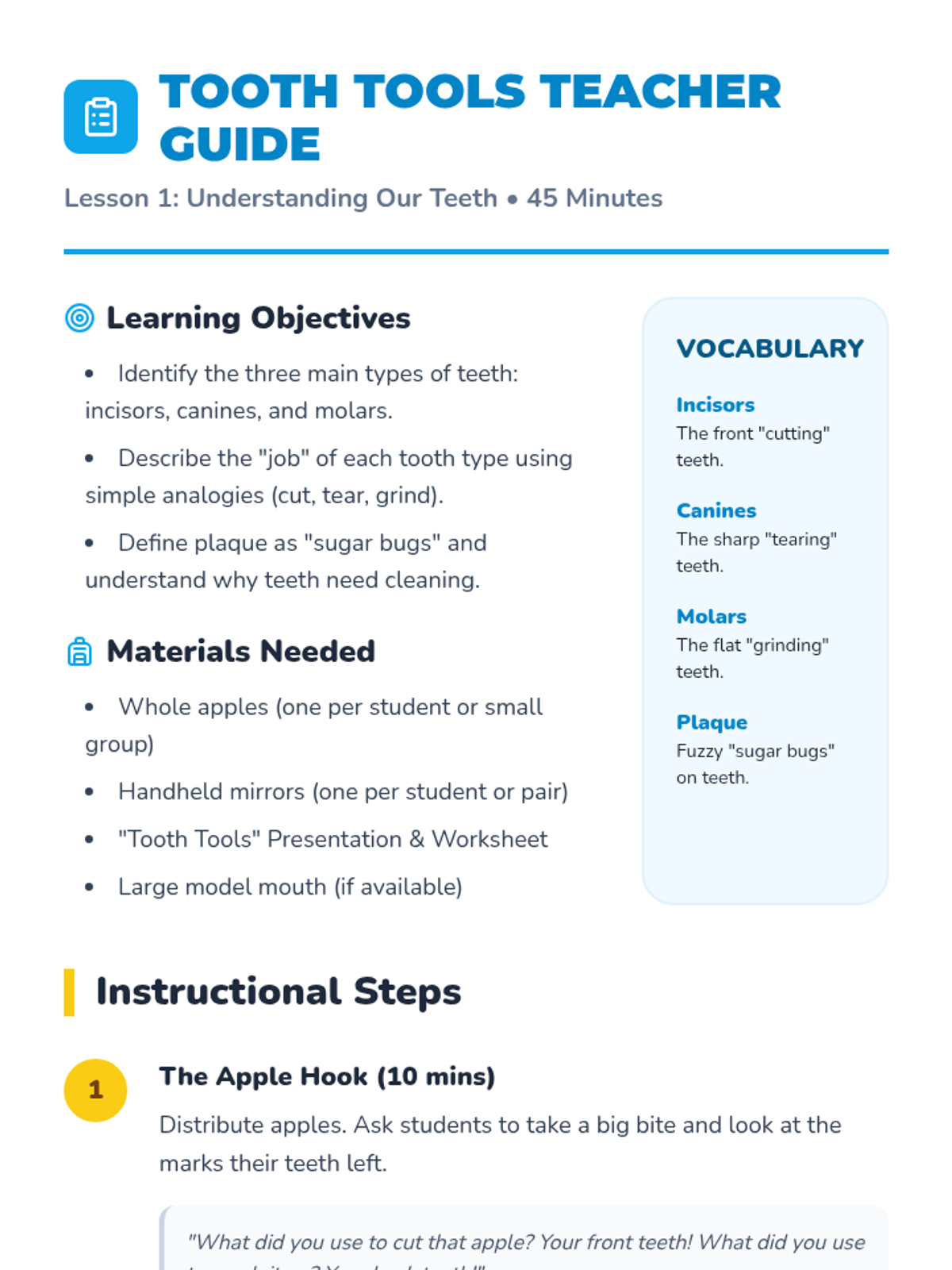
A comprehensive hygiene sequence for Kindergarteners focusing on oral health and grooming routines through hands-on activities, role-play, and the 'Sparkle Squad' theme.
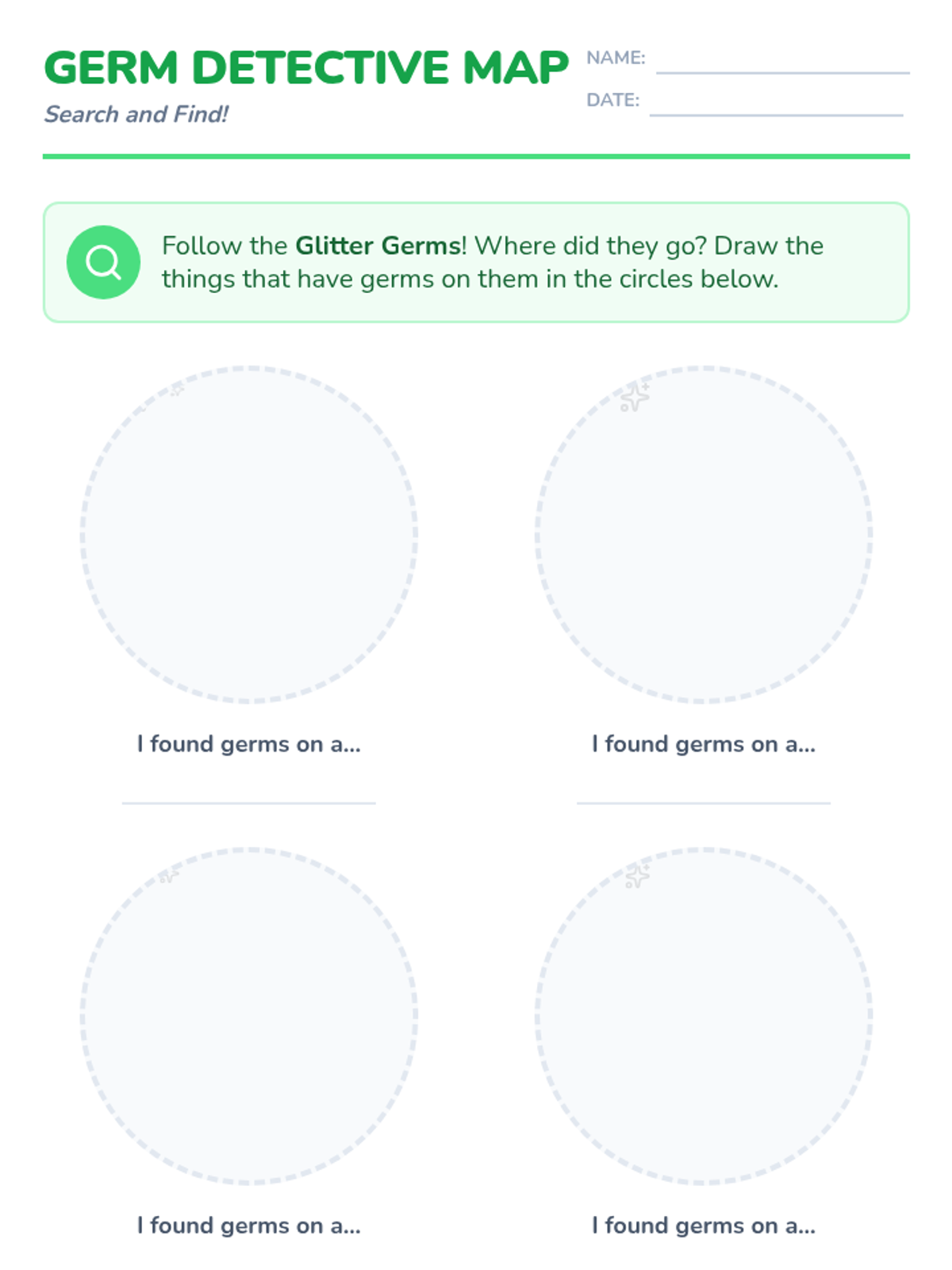
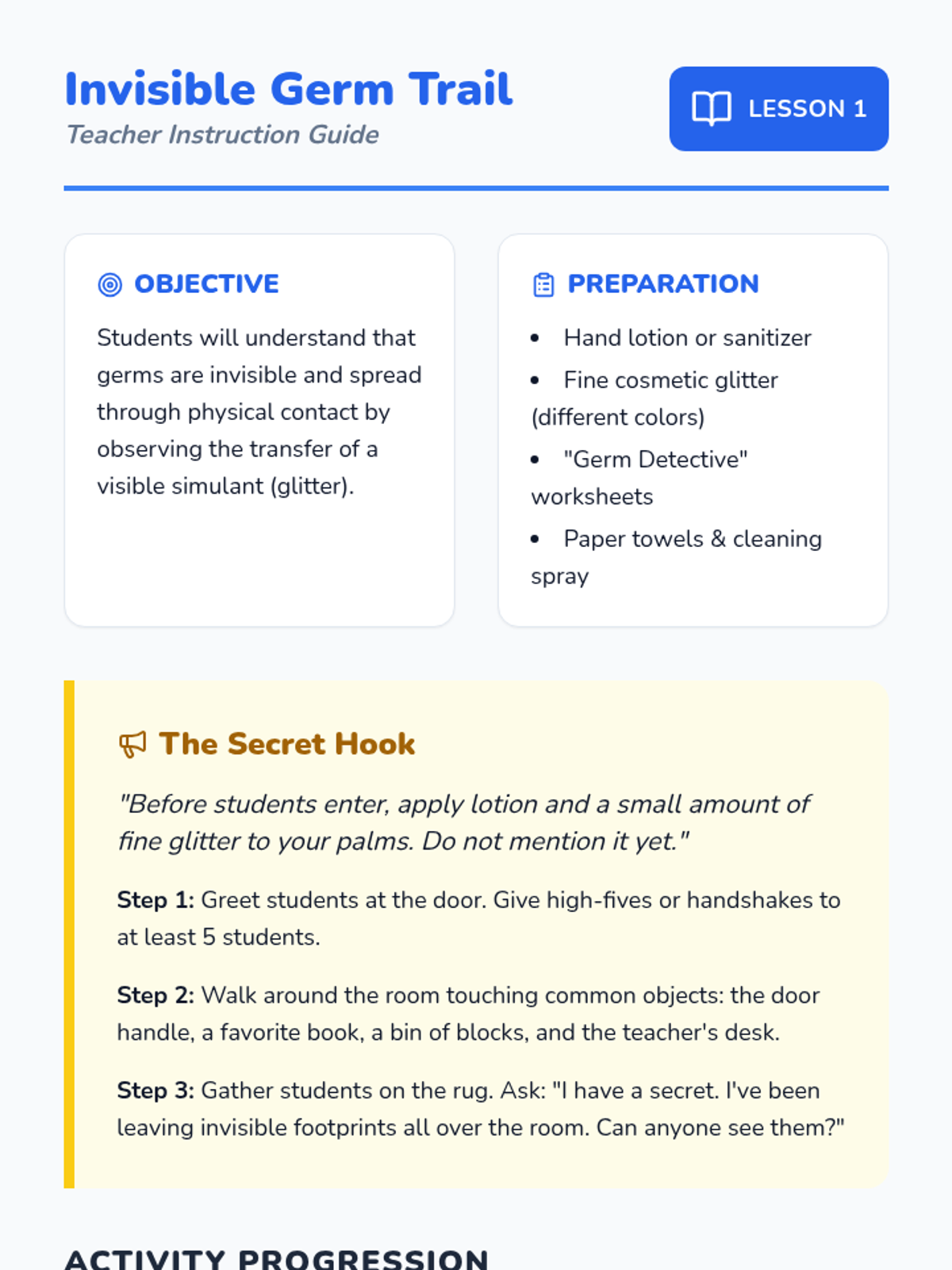
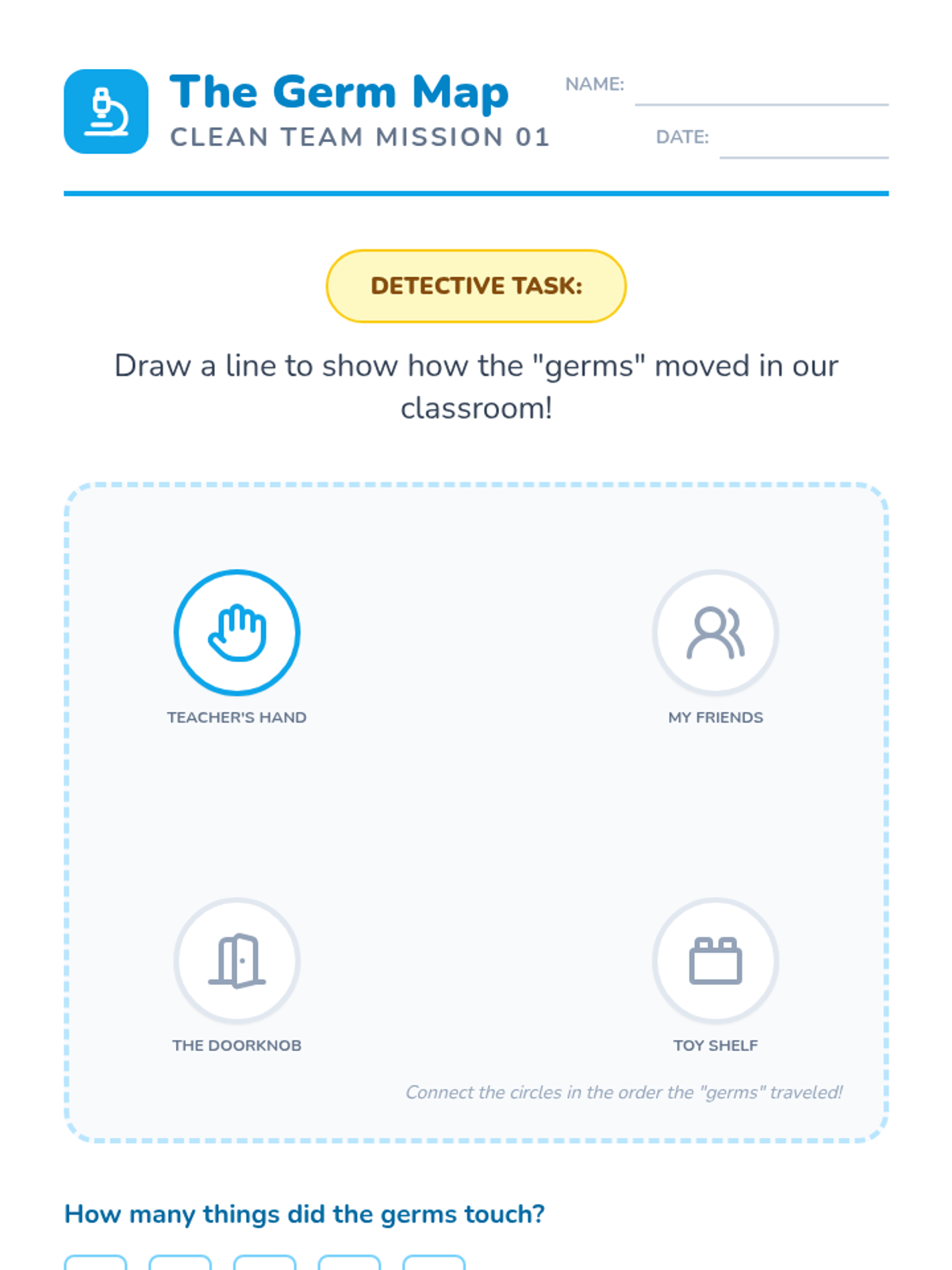
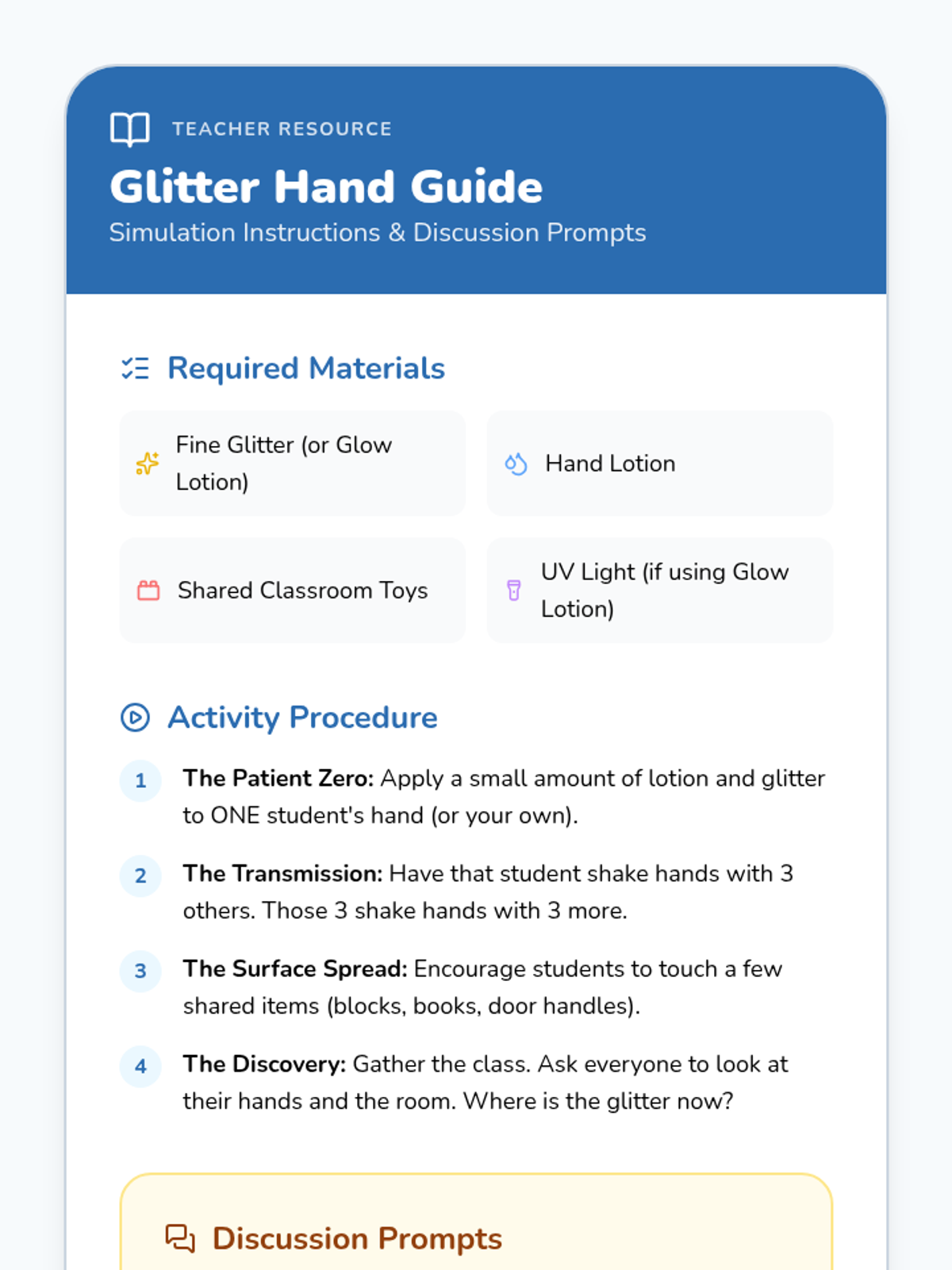
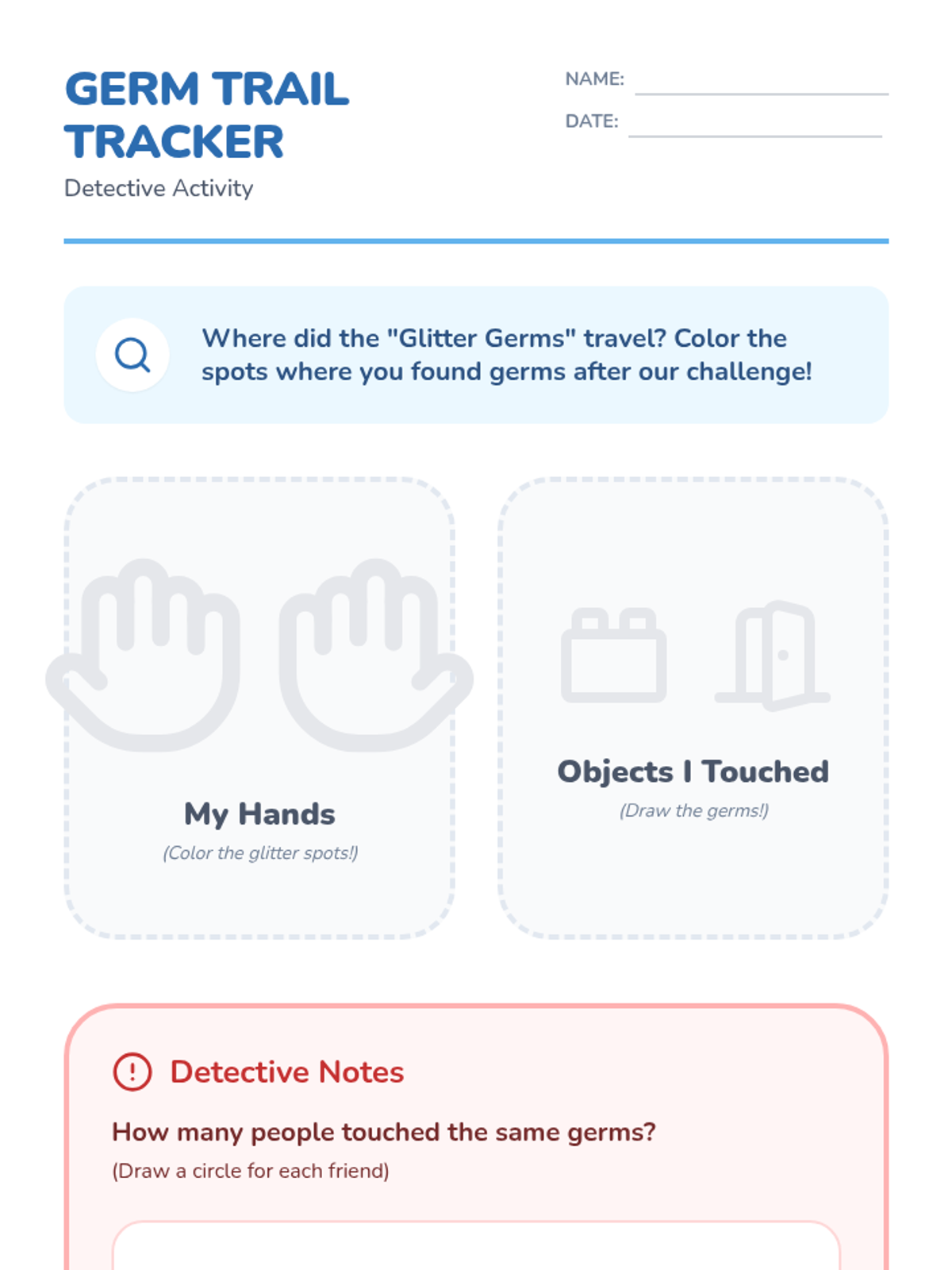
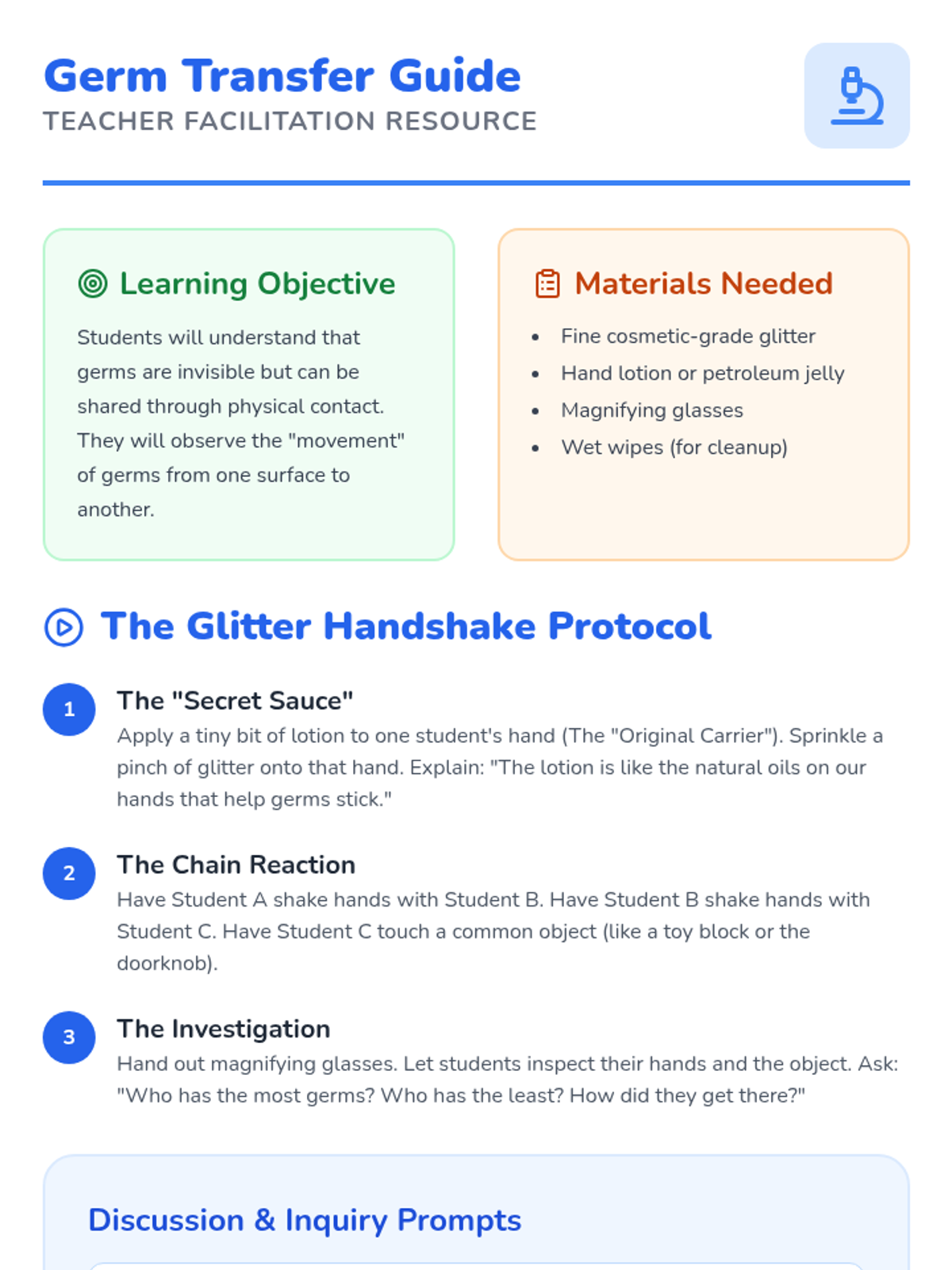
A comprehensive hygiene sequence for Kindergarten students focused on understanding germ transmission, the science of soap, and mastering handwashing and respiratory hygiene routines through hands-on simulations.
A sensory-rich Pre-K sequence introducing germs and hand hygiene through simulations, experiments, and routine building. Students progress from visualizing germ spread to mastering effective handwashing and respiratory etiquette.
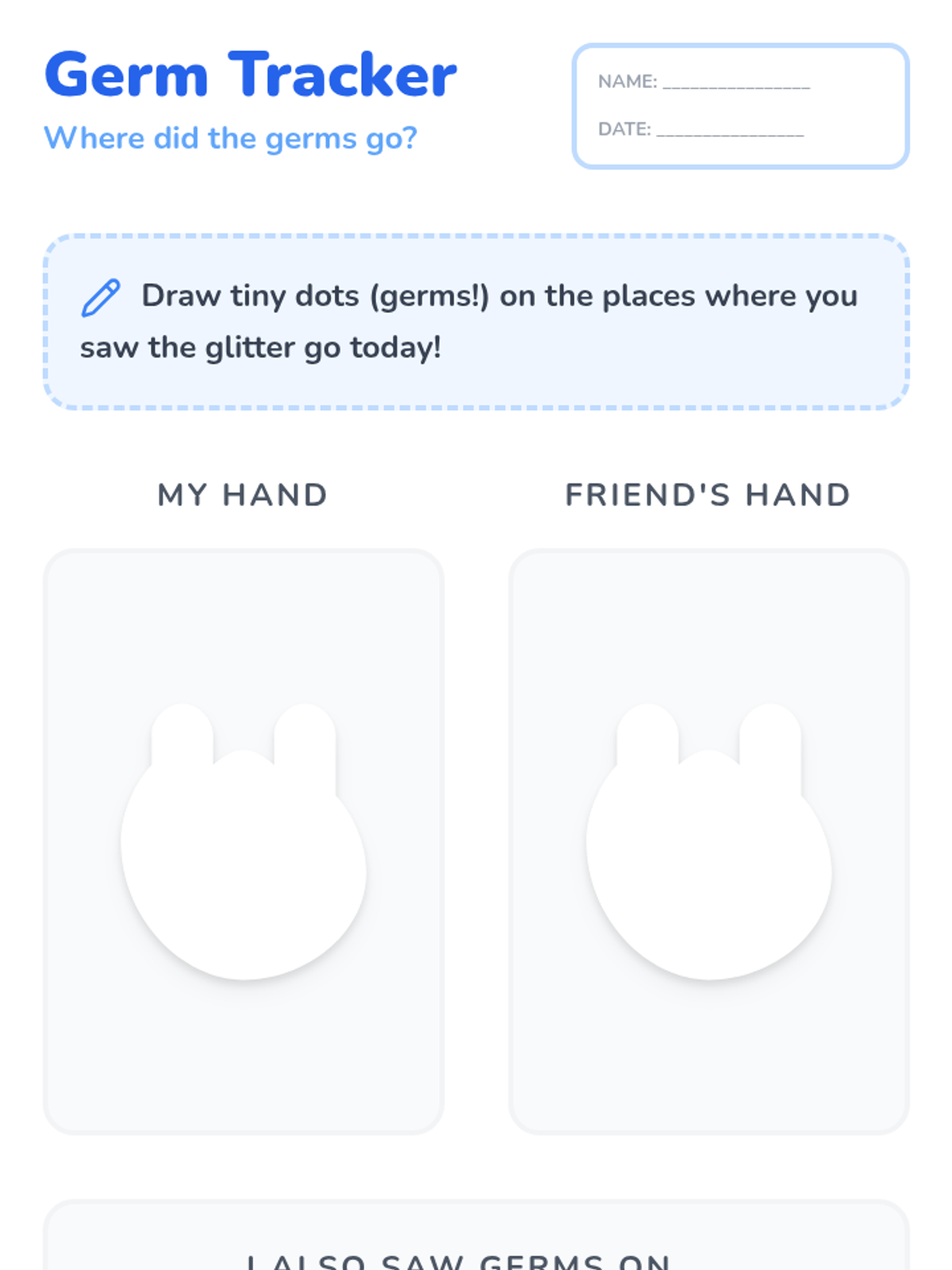
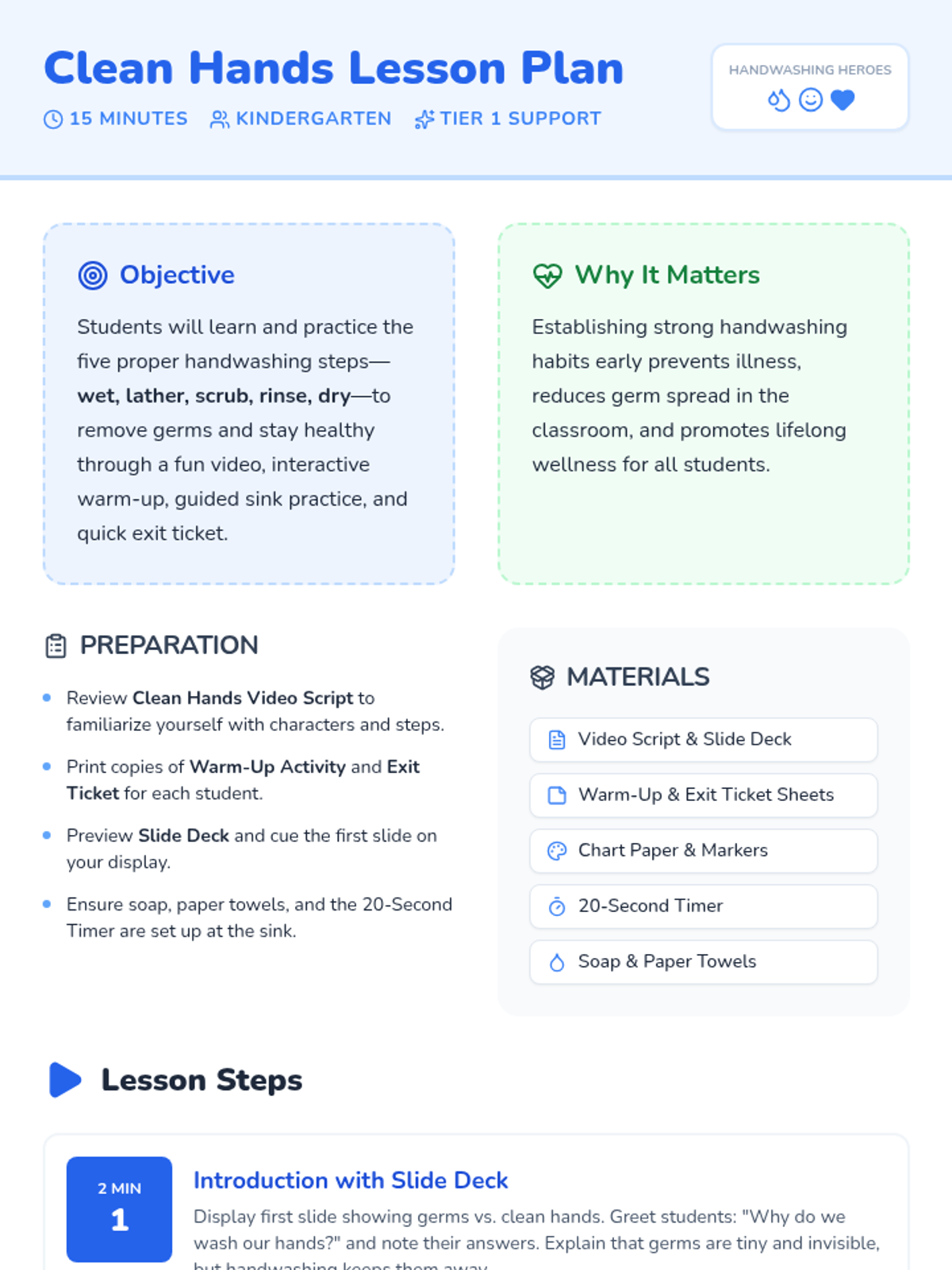
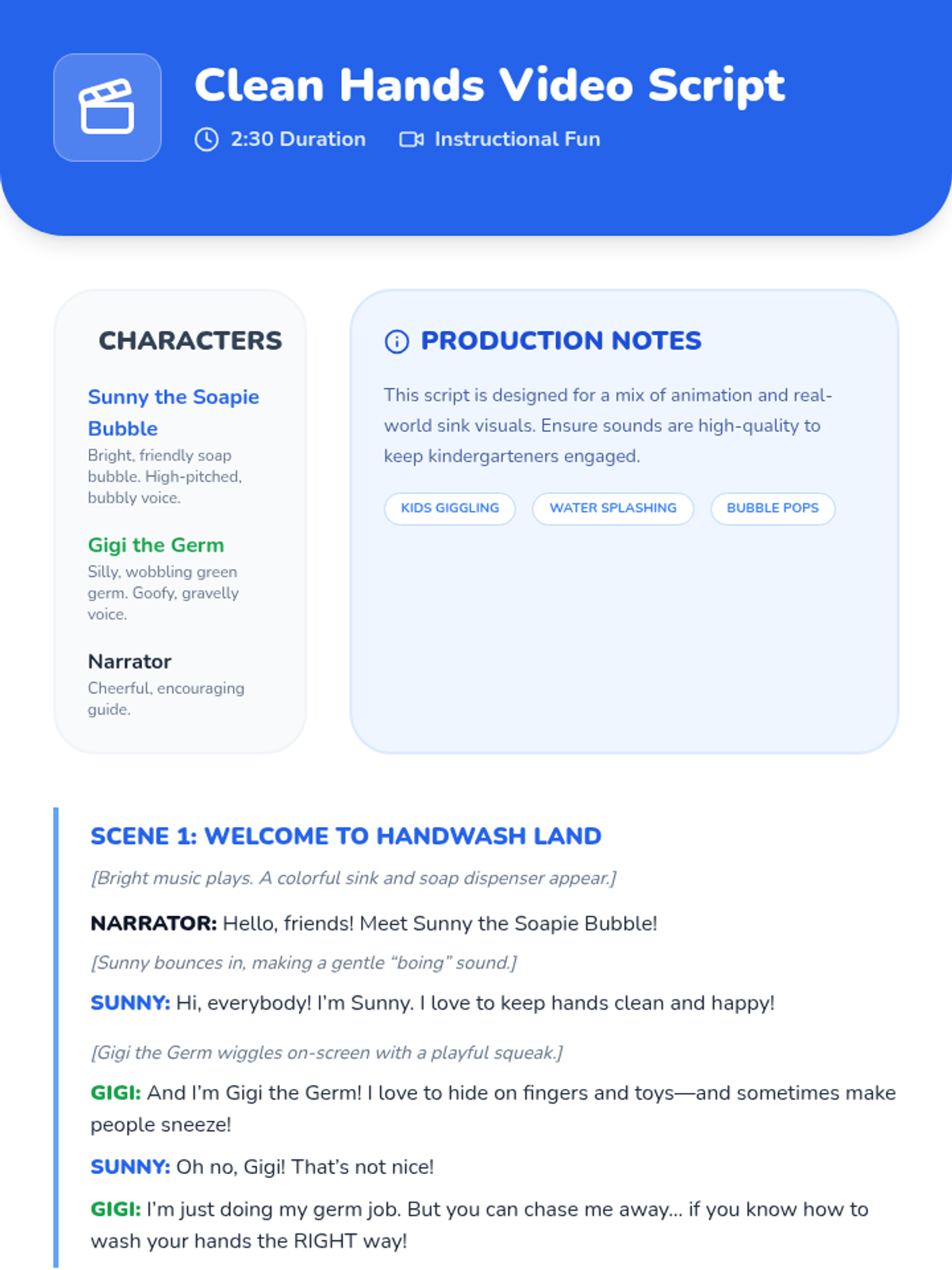
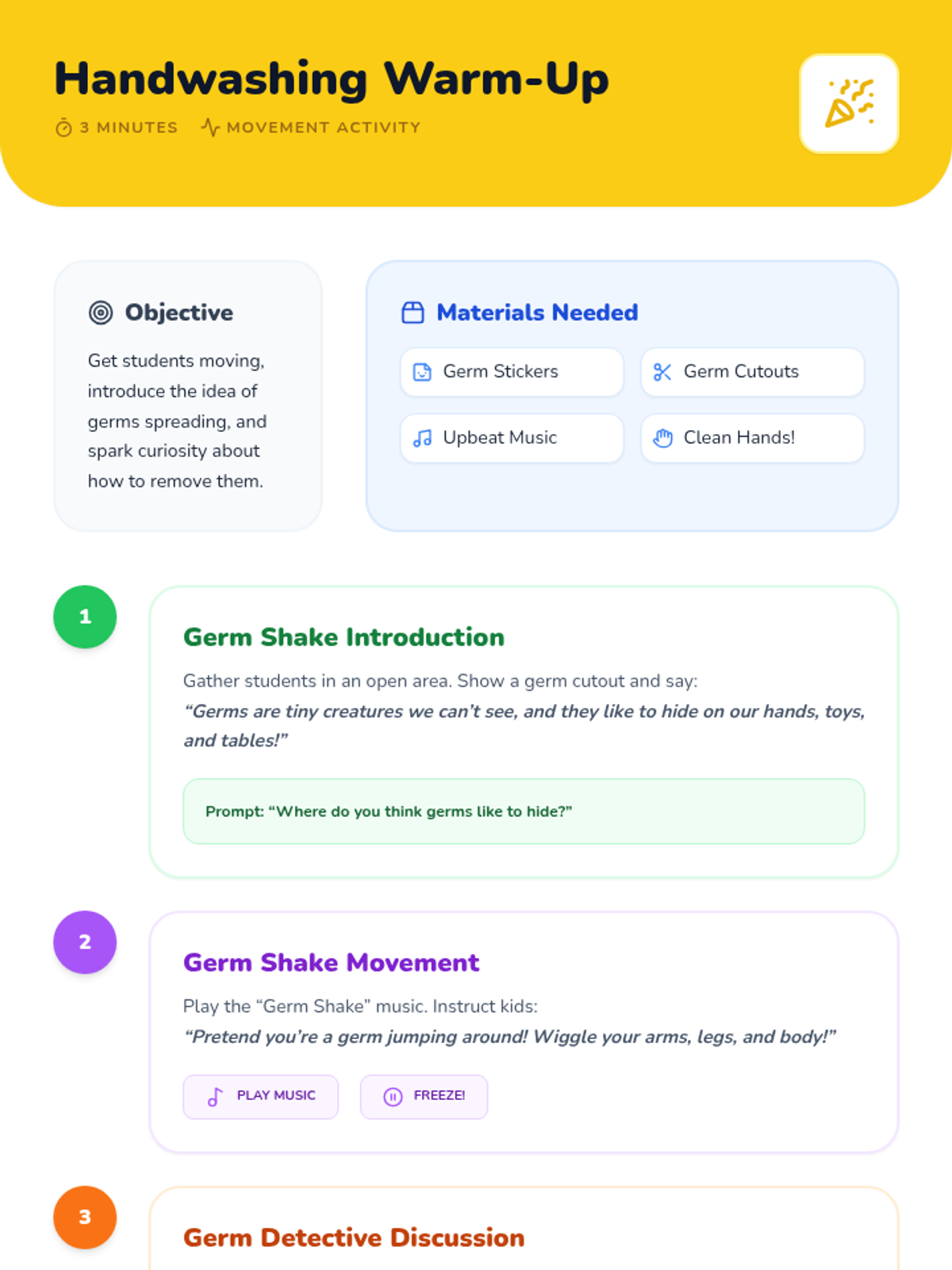
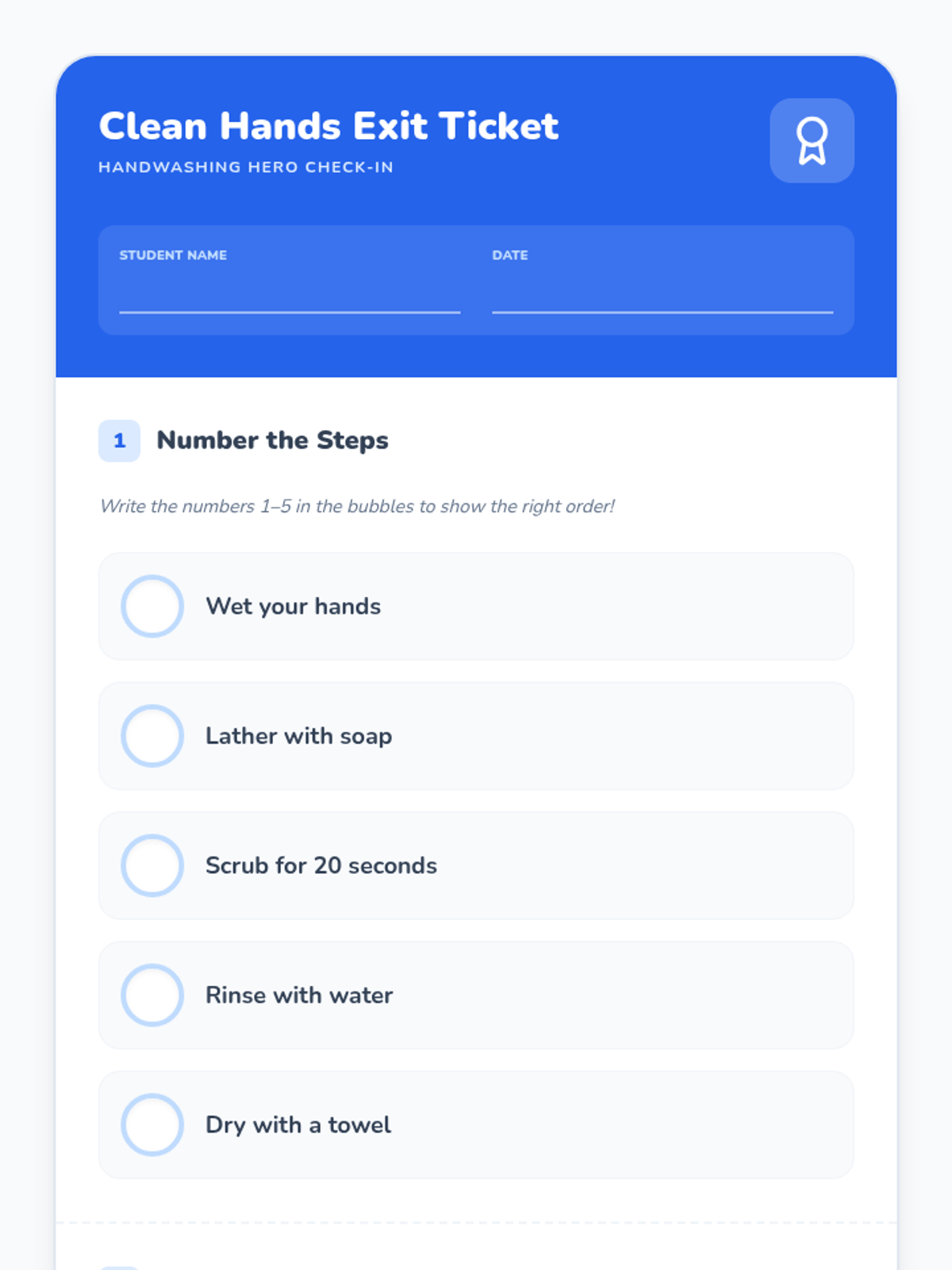
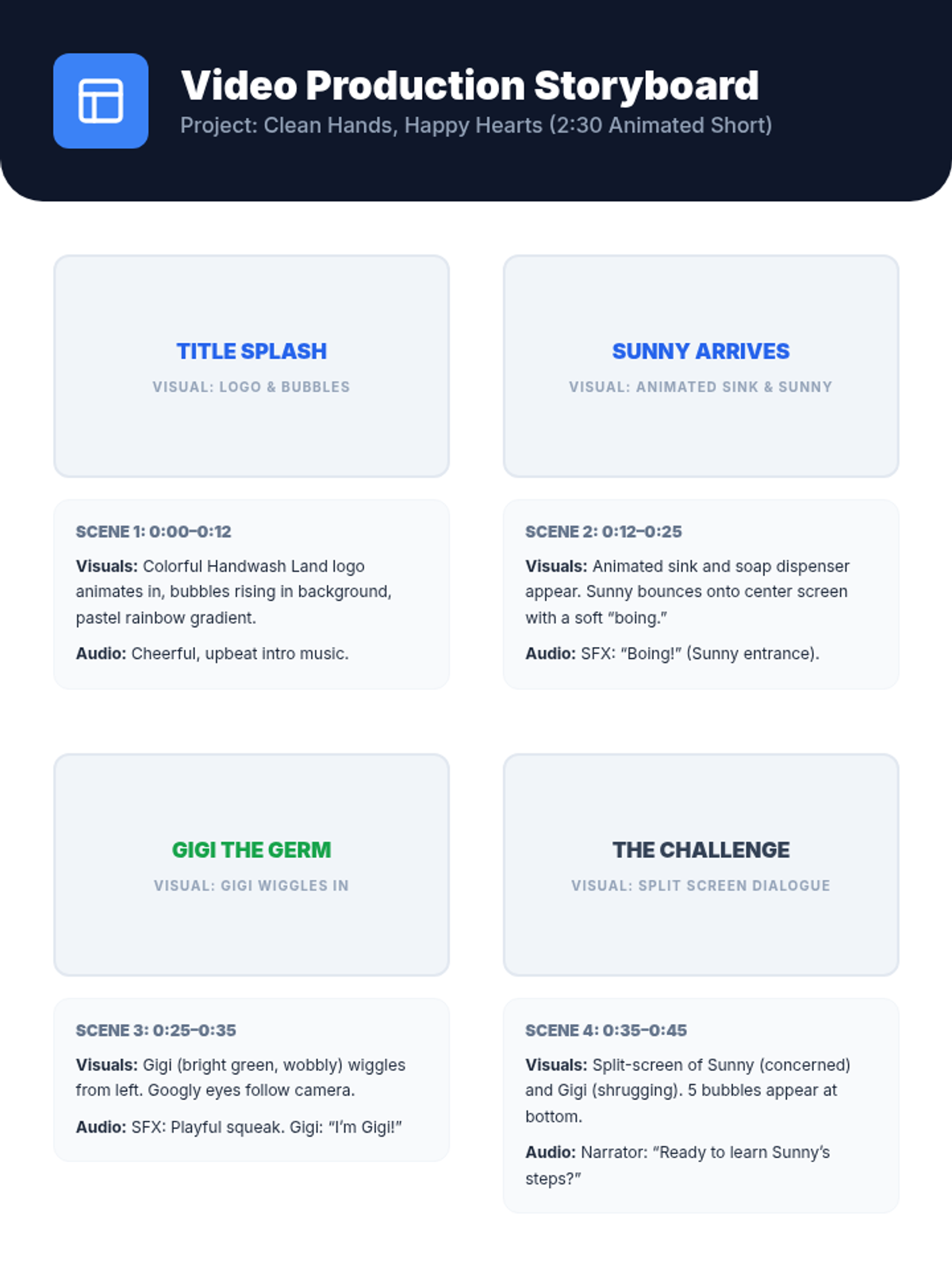
A comprehensive 2-day handwashing sequence for kindergarteners. Students learn essential hygiene habits through two fun adventures: first with Sunny the Soapie Bubble and Gigi the Germ, then with the Sparkle Splash adventure featuring a catchy song and coloring activities.
This Kindergarten sequence teaches students to identify trusted adults, recognize tricky behaviors, set personal boundaries, and follow the No-Go-Tell protocol to stay safe in various environments.
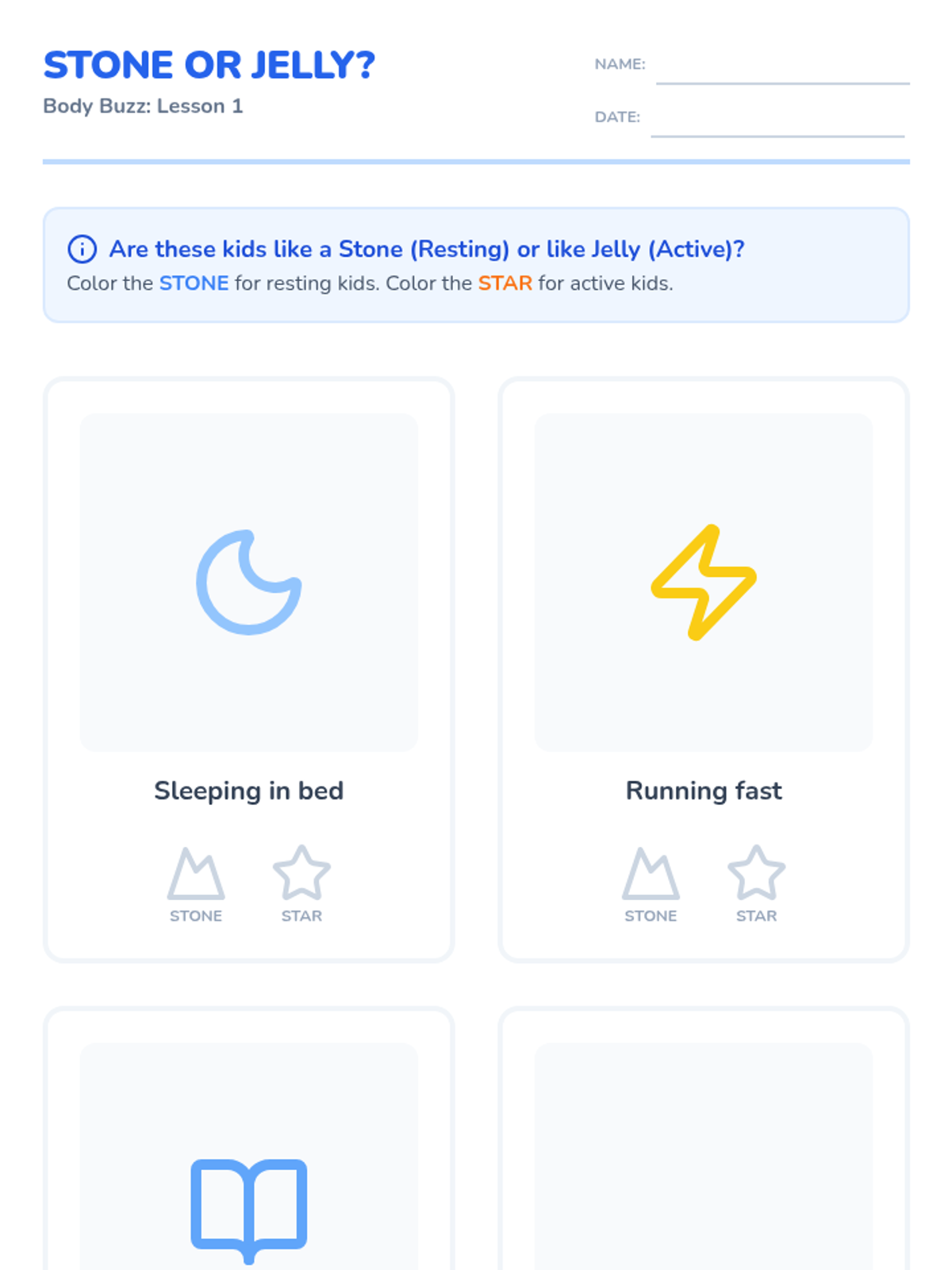
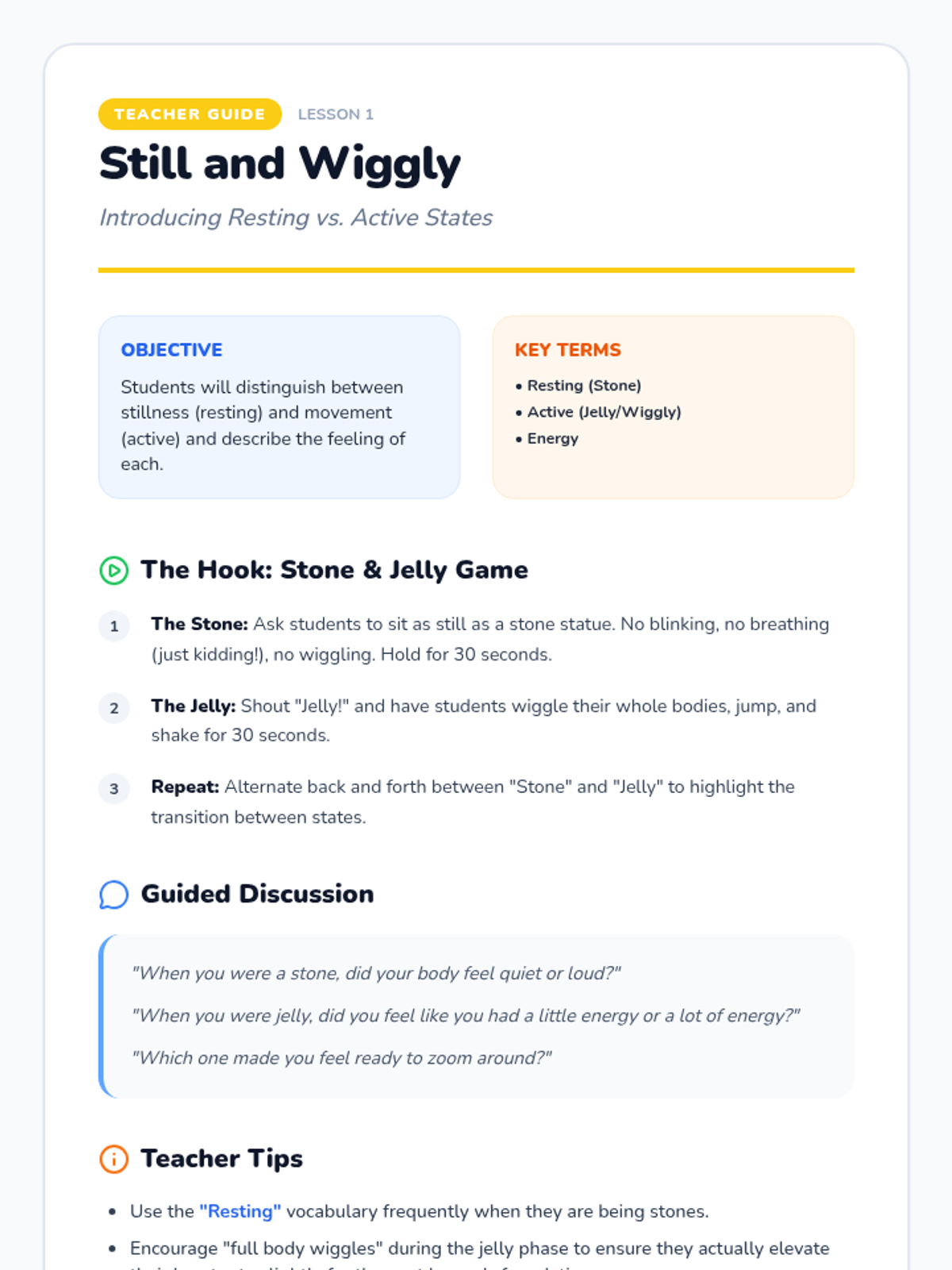
In this inquiry-driven sequence, Pre-K students explore the immediate physiological effects of physical activity. Through sensory awareness activities, children learn to recognize the difference between a resting body and an active body, focusing on heart rate, breathing, and temperature.
A comprehensive sequence for Kindergarten students focused on identifying internal and external safety signals, navigating 'tricky' social situations, and establishing clear boundaries with a network of trusted adults.