Daily hygiene, hydration, and sleep routines paired with strategies for disease and injury prevention. Builds skills in health decision-making, body awareness, and self-advocacy to support lifelong well-being.
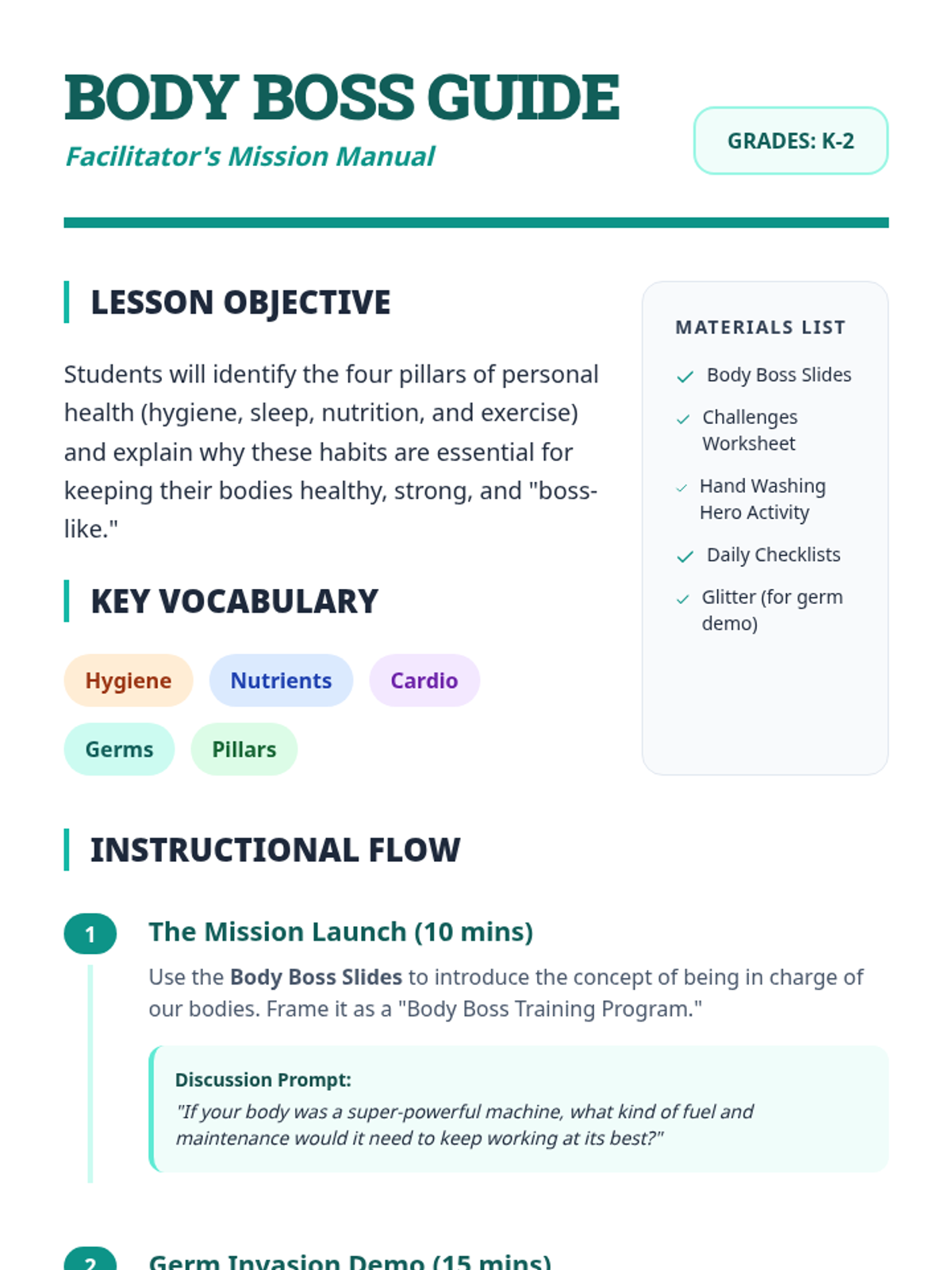
A comprehensive teacher's guide for the Body Boss lesson, featuring lesson objectives, key vocabulary, a step-by-step instructional flow, and differentiation strategies.
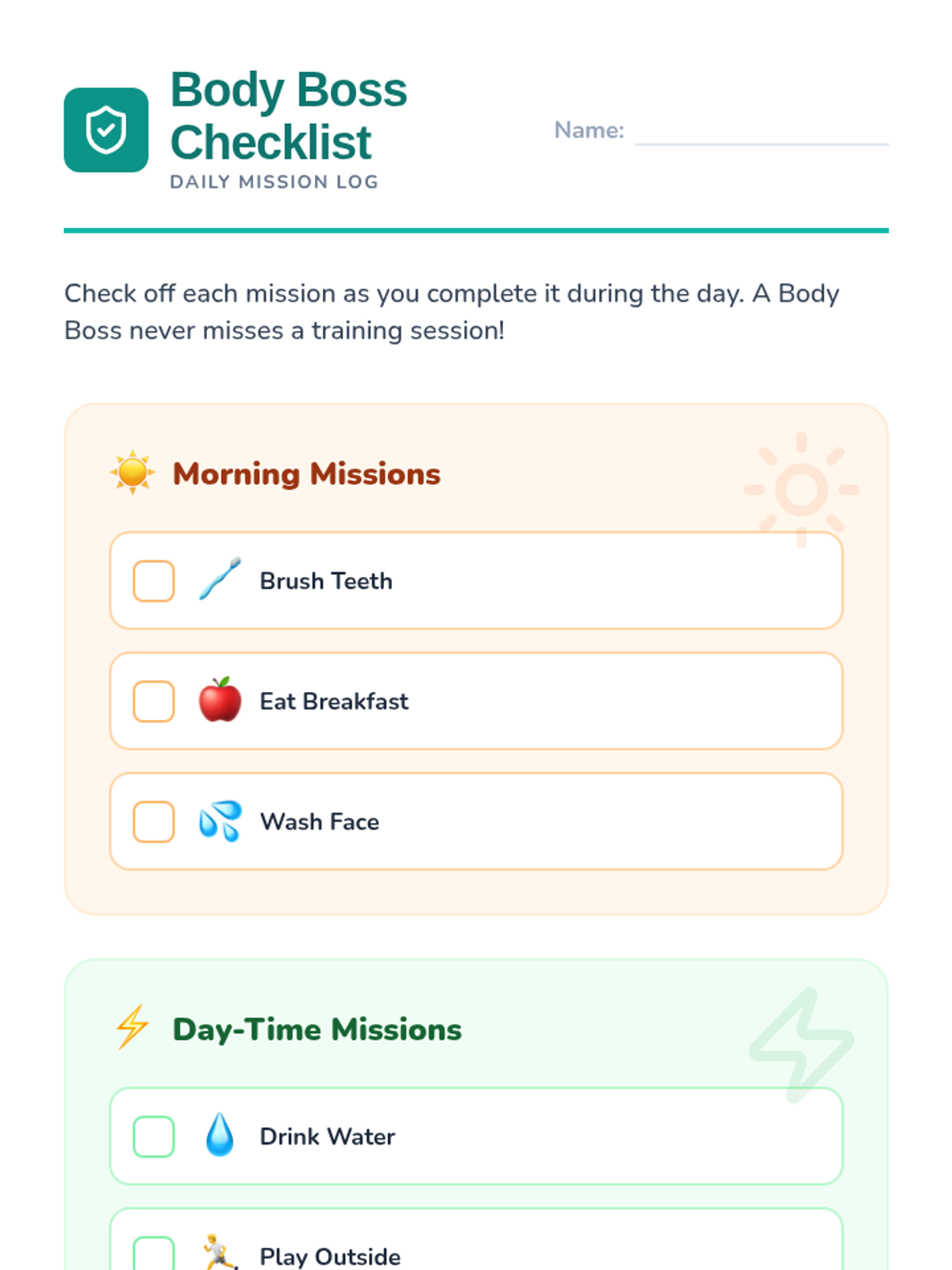
A daily routine checklist for students to track their health habits including hygiene, nutrition, exercise, and sleep. Features visual icons and a clear, motivating design.
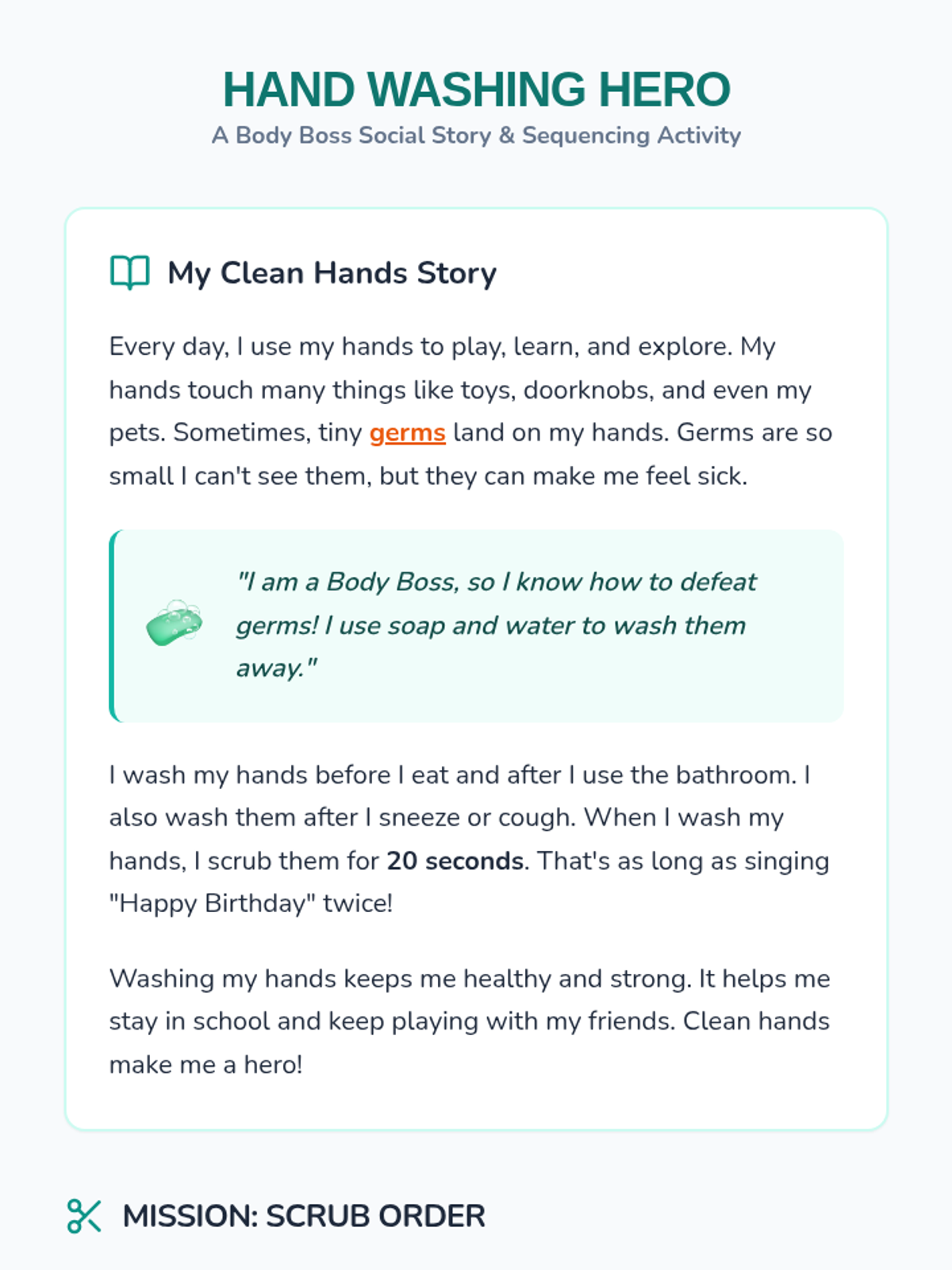
A hand-washing social story followed by a sequencing activity where students cut and paste the steps of washing hands in the correct order.
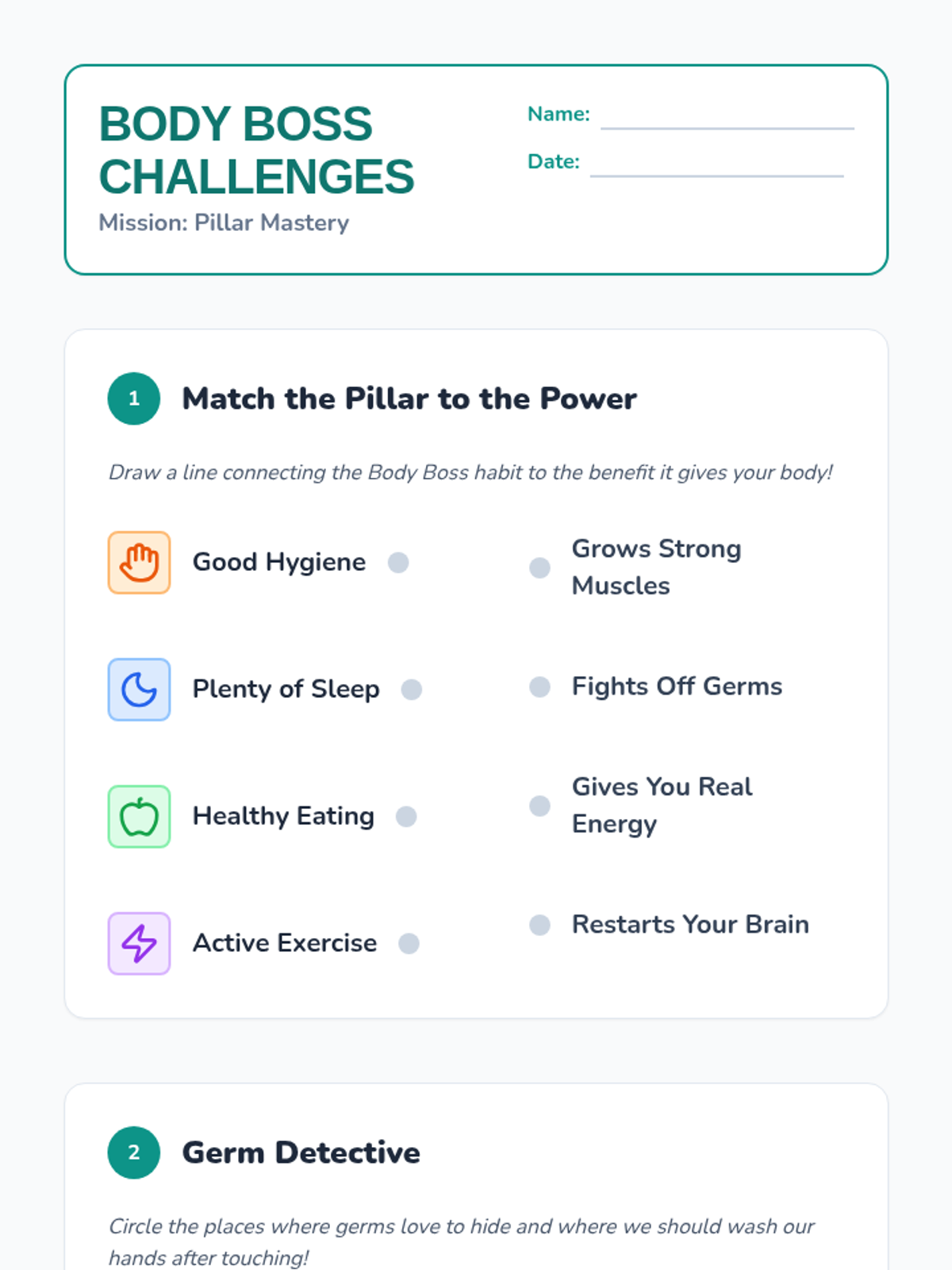
A student worksheet featuring matching activities for health pillars, a germ detection exercise, and a drawing section for a healthy meal.
A vibrant classroom presentation introducing the four pillars of health: hygiene, sleep, nutrition, and exercise. It uses a "Body Boss" mission theme to engage students in taking charge of their health.
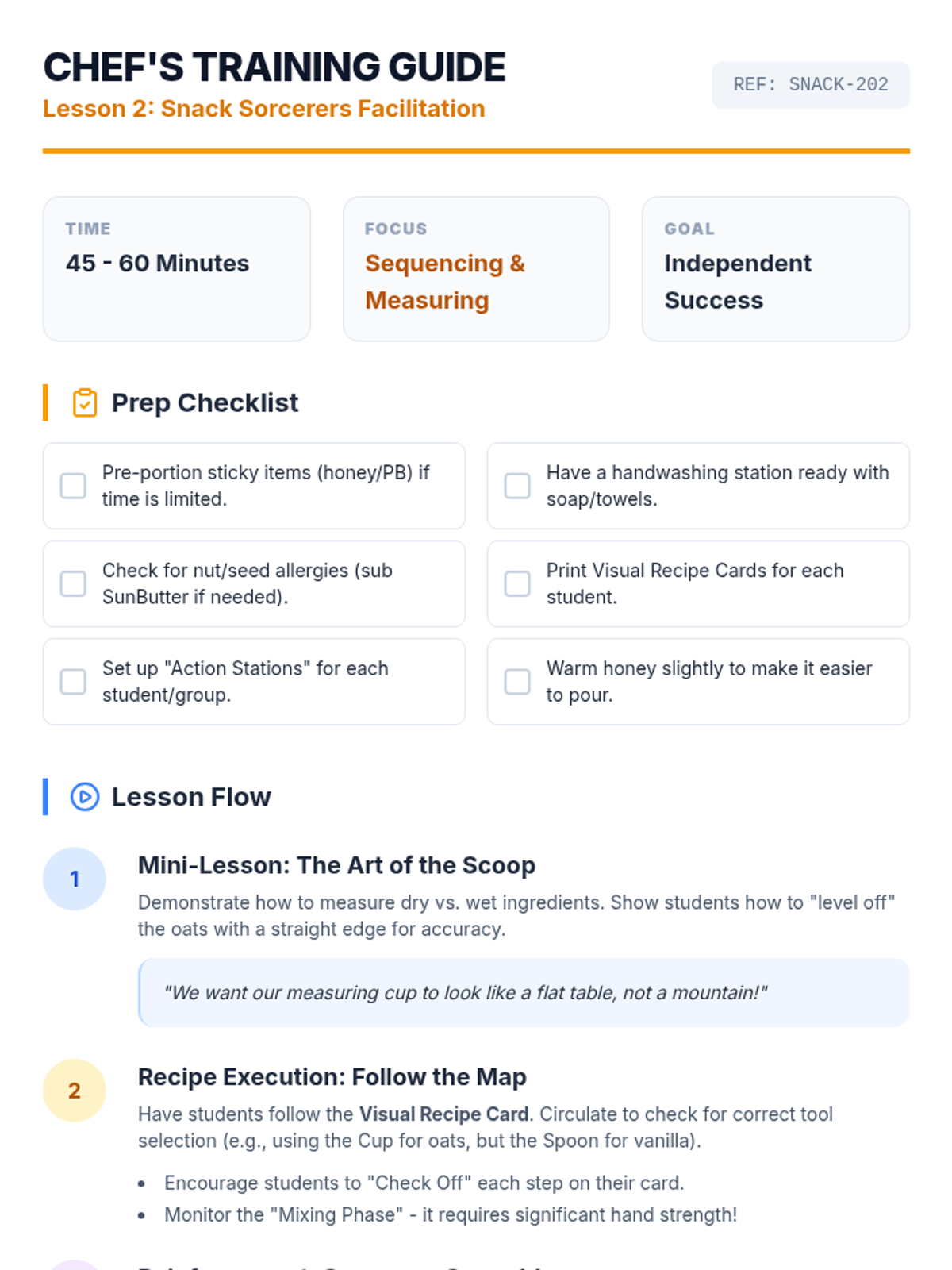
A teacher-facing guide for the Snack Sorcerers lesson. Includes a prep checklist, facilitation steps for the visual recipe, and strategies for differentiation and scaffolding.
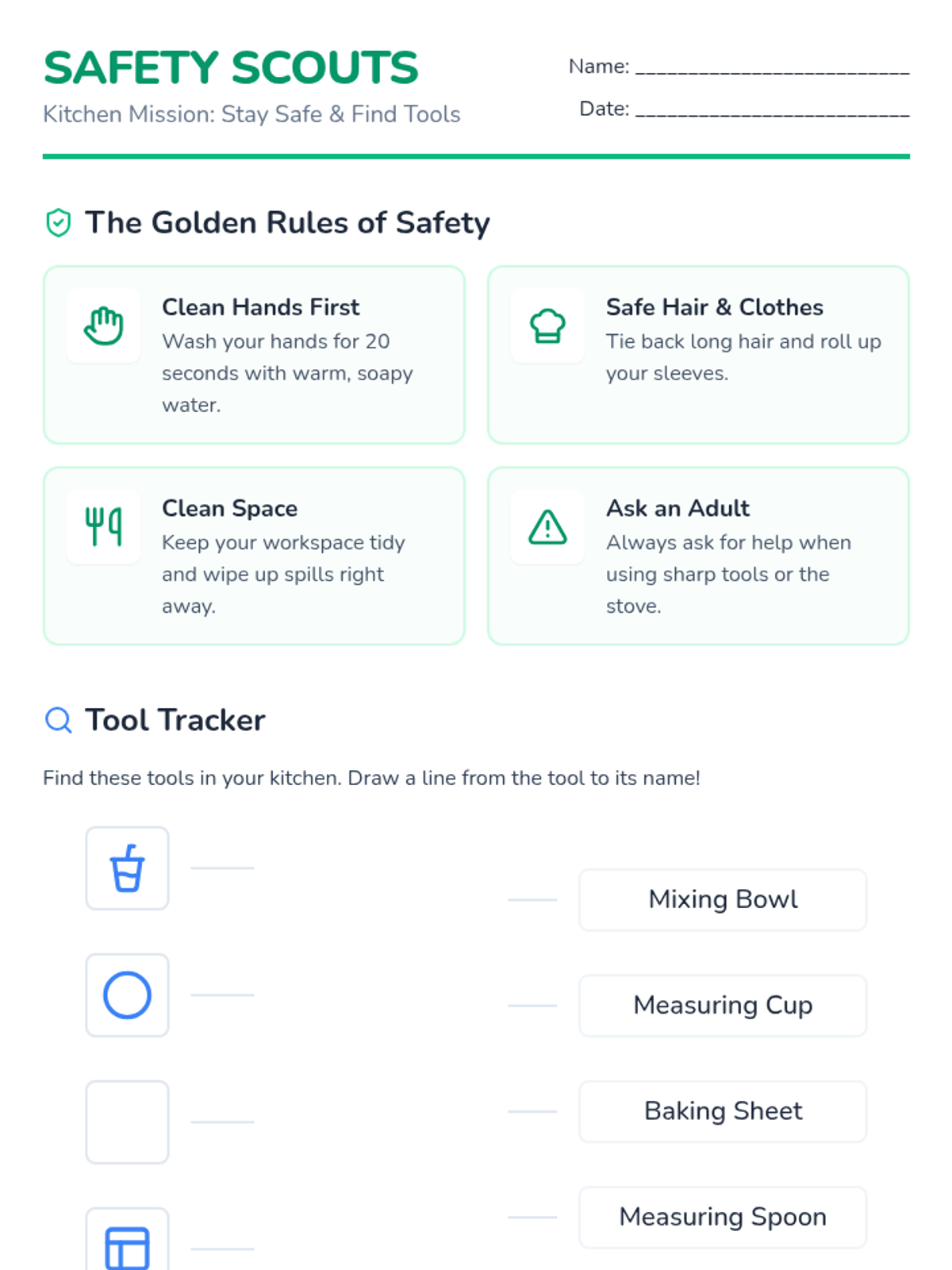
A presentation designed to introduce elementary students to the core concepts of kitchen safety, hygiene, and tool identification. Features large text, high-contrast visuals, and simple rules.
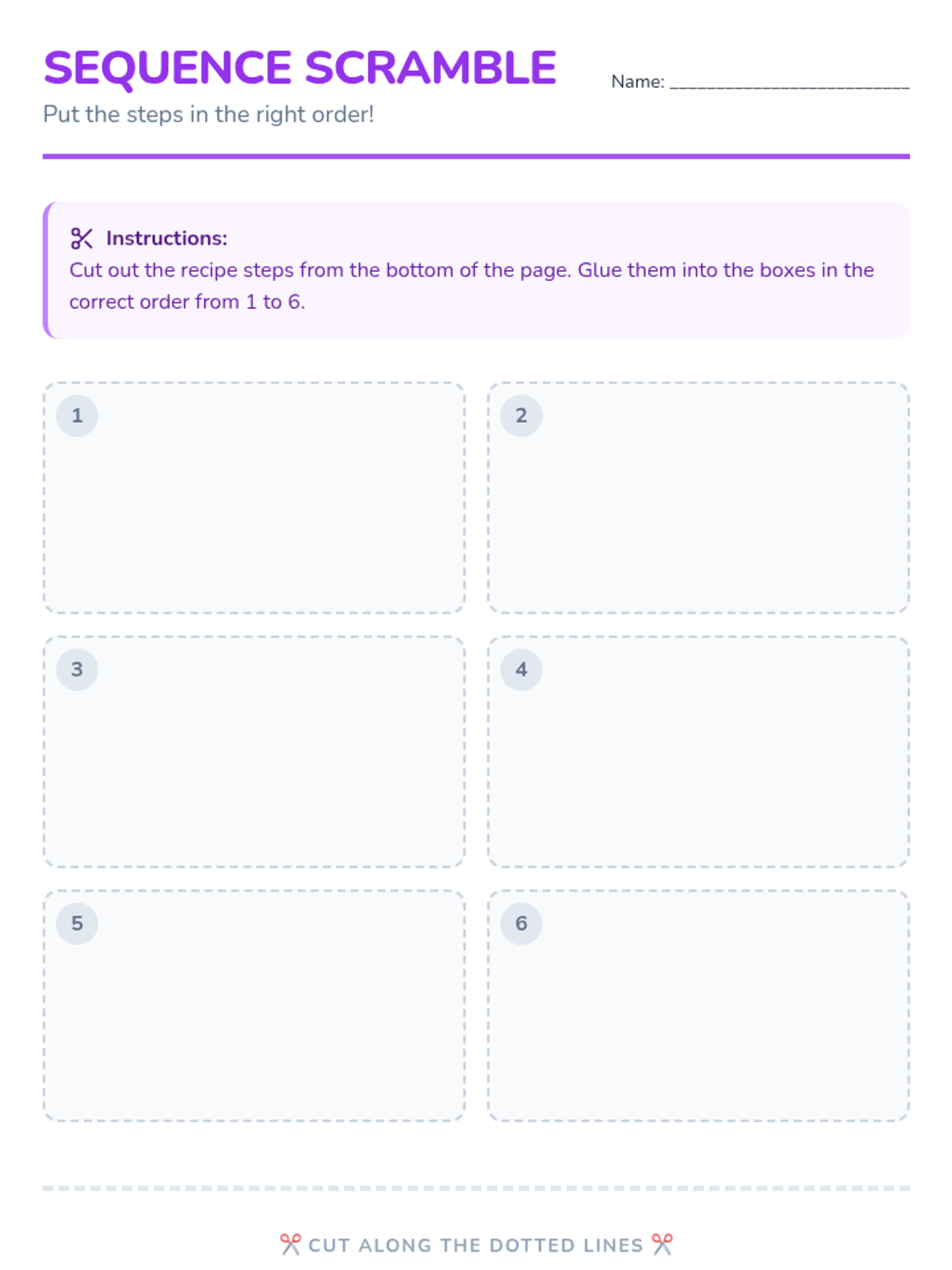
A cut-and-paste sequencing activity where students arrange the steps of the Spark Plug Energy Bites recipe in the correct order. Focuses on sequencing skills and memory recall from the visual recipe.
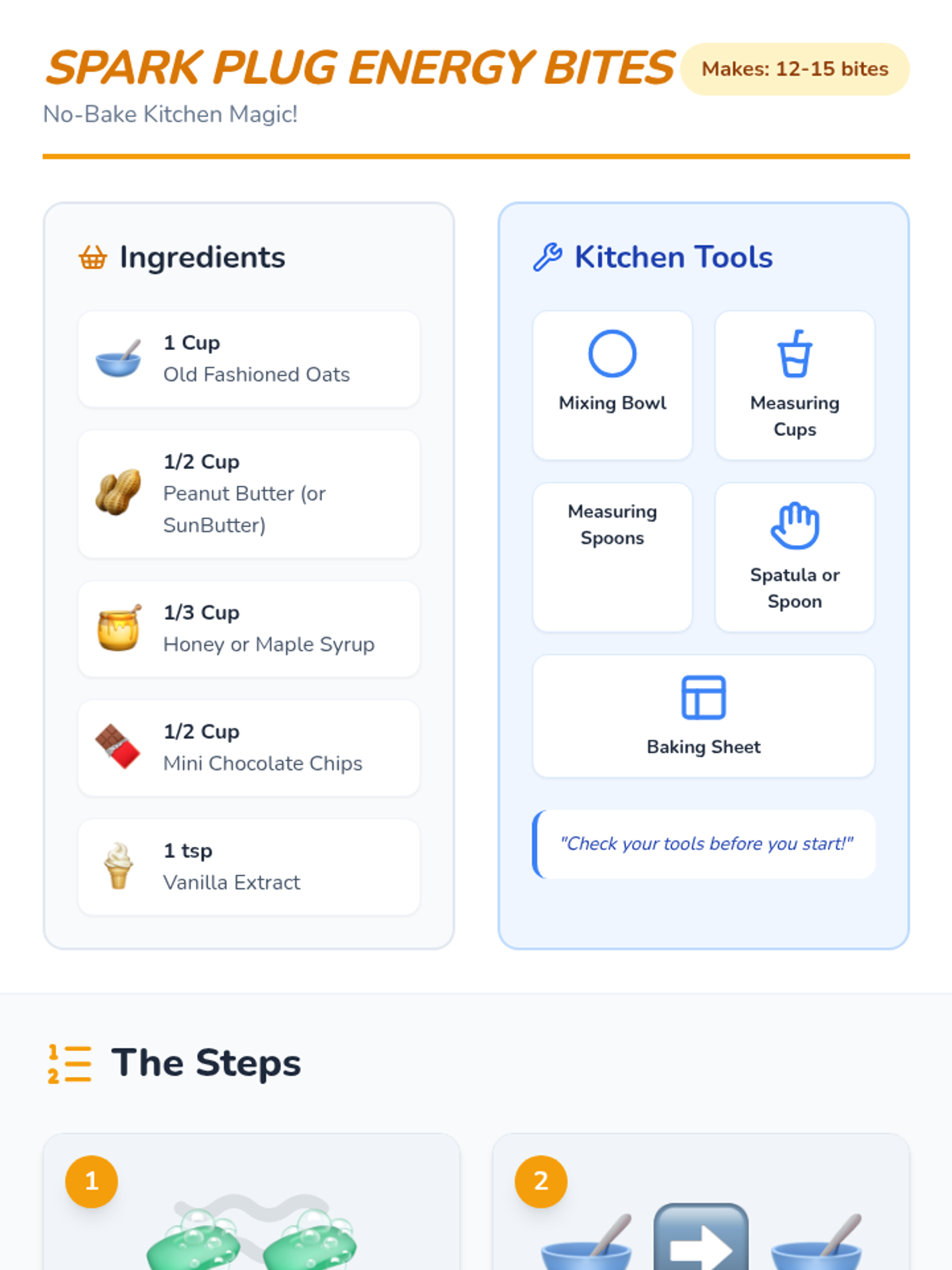
A comprehensive visual recipe for Spark Plug Energy Bites, designed for elementary students. It features clear ingredient lists, tool requirements, and an 8-step visual instruction guide with icons and simplified text.
A two-page worksheet for elementary students focusing on kitchen safety rules and tool identification. It includes matching activities and safety scenario analysis.
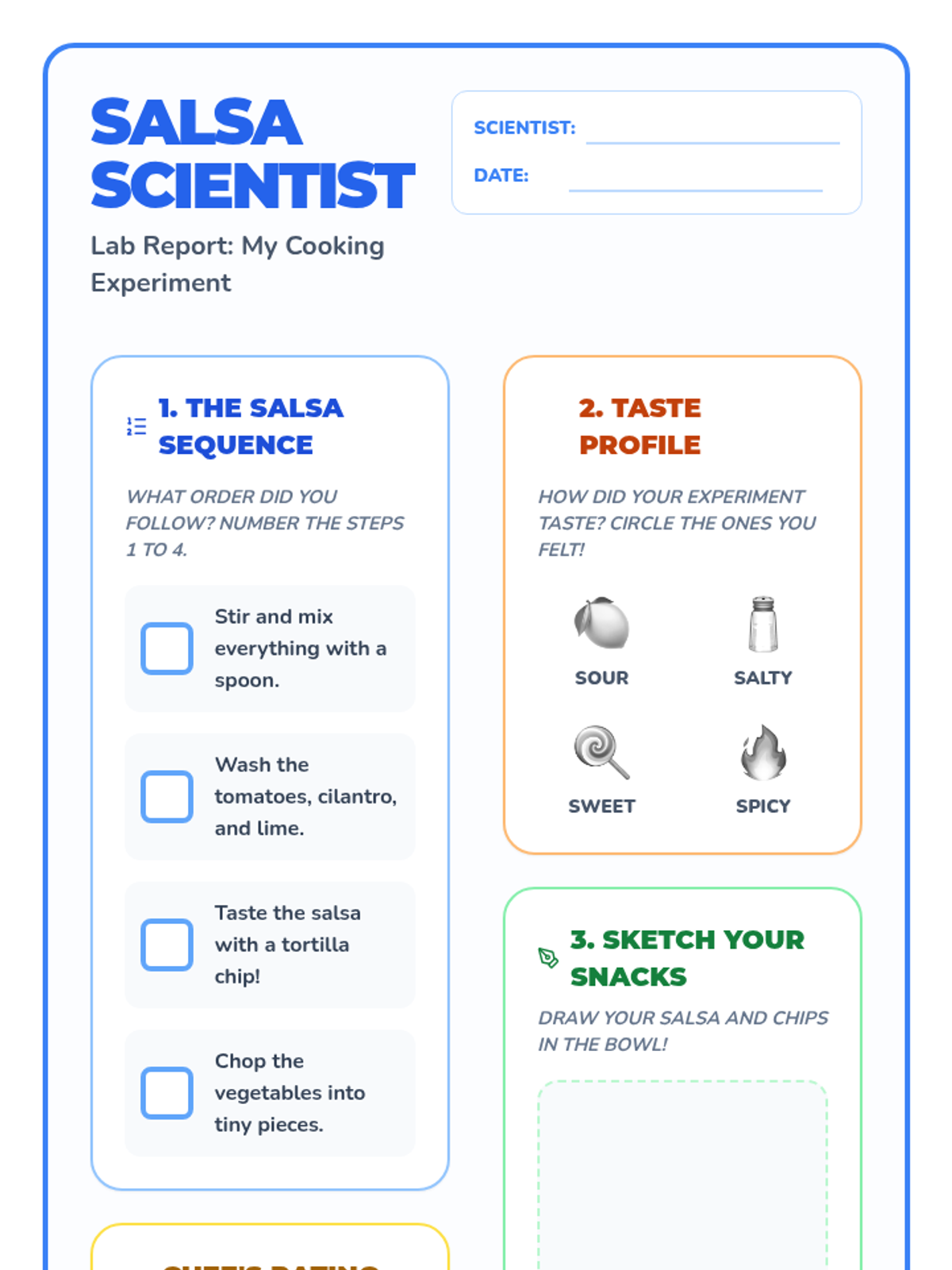
A student reflection worksheet for the Salsa Smash activity, focusing on sequencing steps and reflecting on the sensory experience.
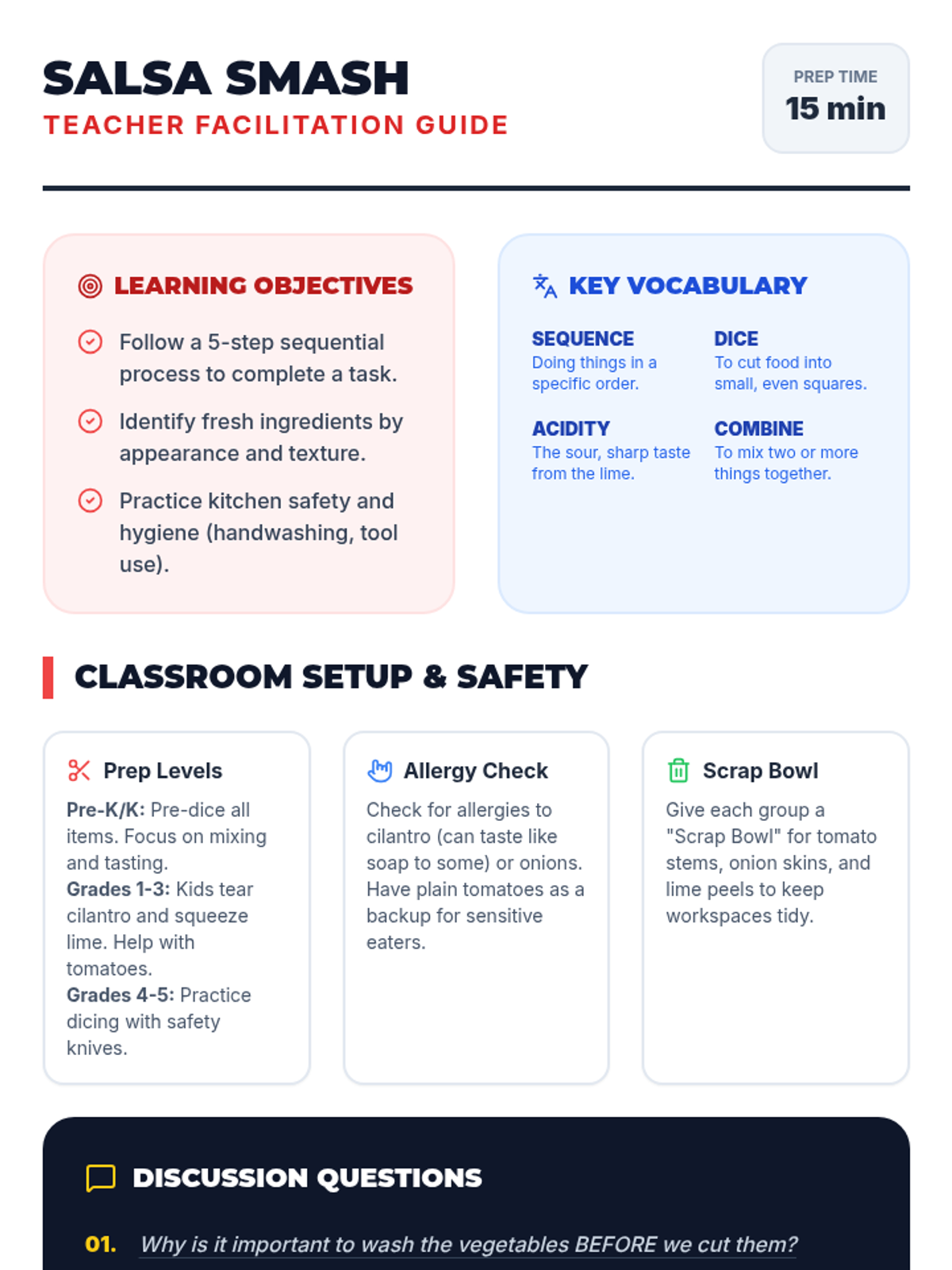
A comprehensive teacher facilitation guide with prep tips, safety considerations, vocabulary, and discussion questions for the Salsa Smash activity.
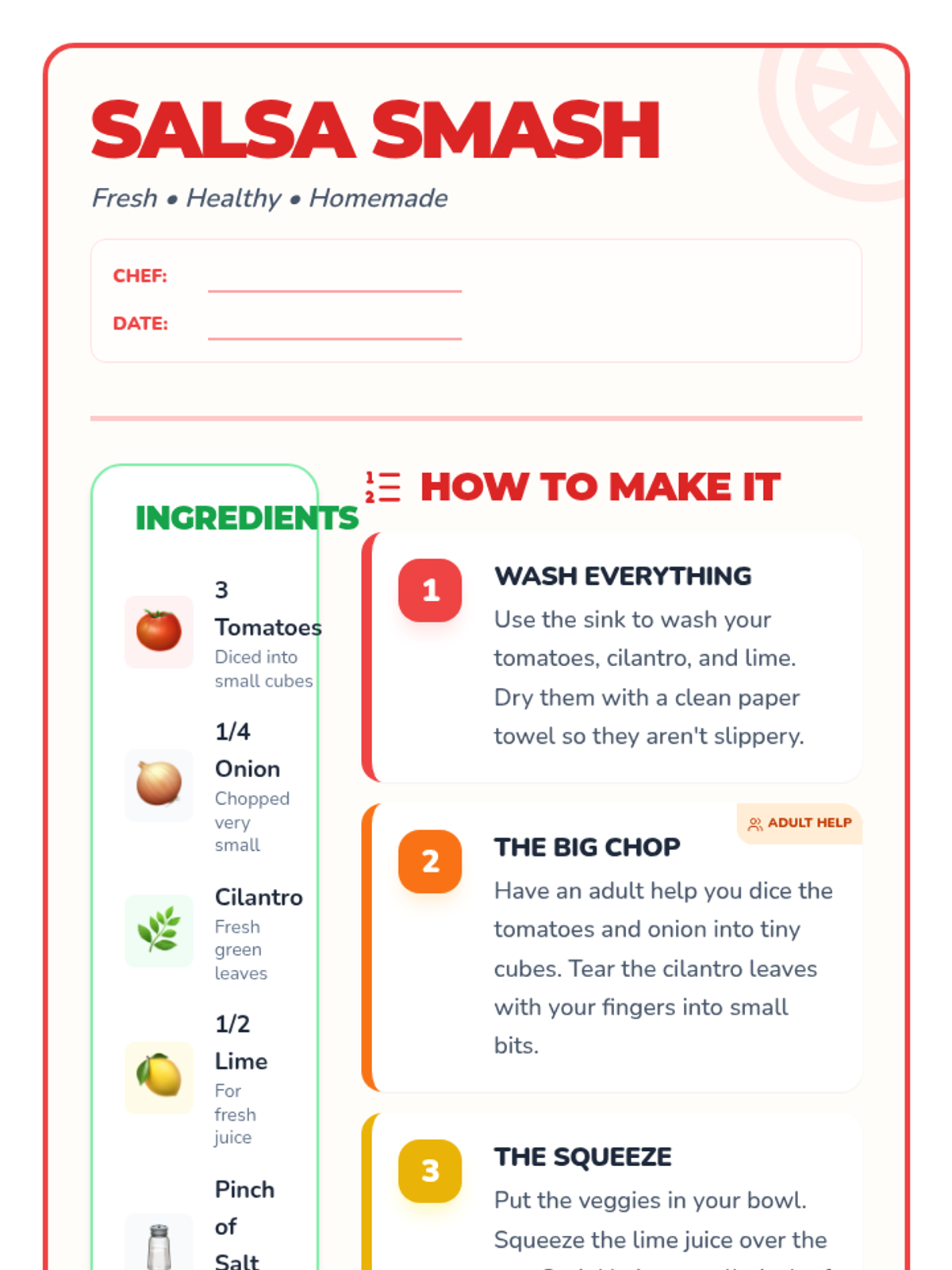
A vibrant, visual-heavy recipe card for elementary students to follow step-by-step instructions to make fresh salsa.
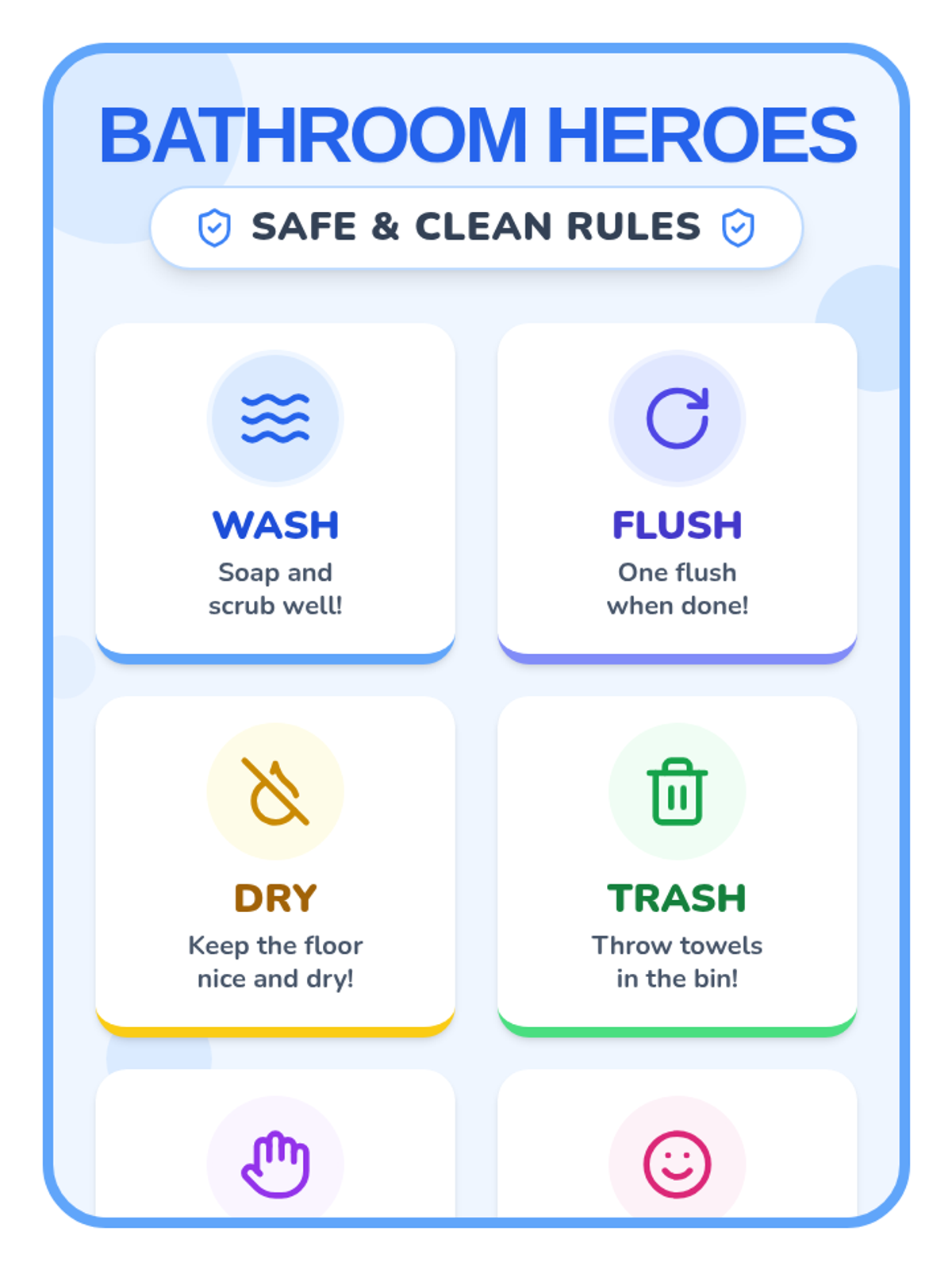
A vibrant, visual bathroom safety poster designed specifically for Pre-K students. It features 6 key rules (Wash, Flush, Dry, Trash, Ask, Wait) with large icons and simple bold text to encourage safe and clean bathroom habits.
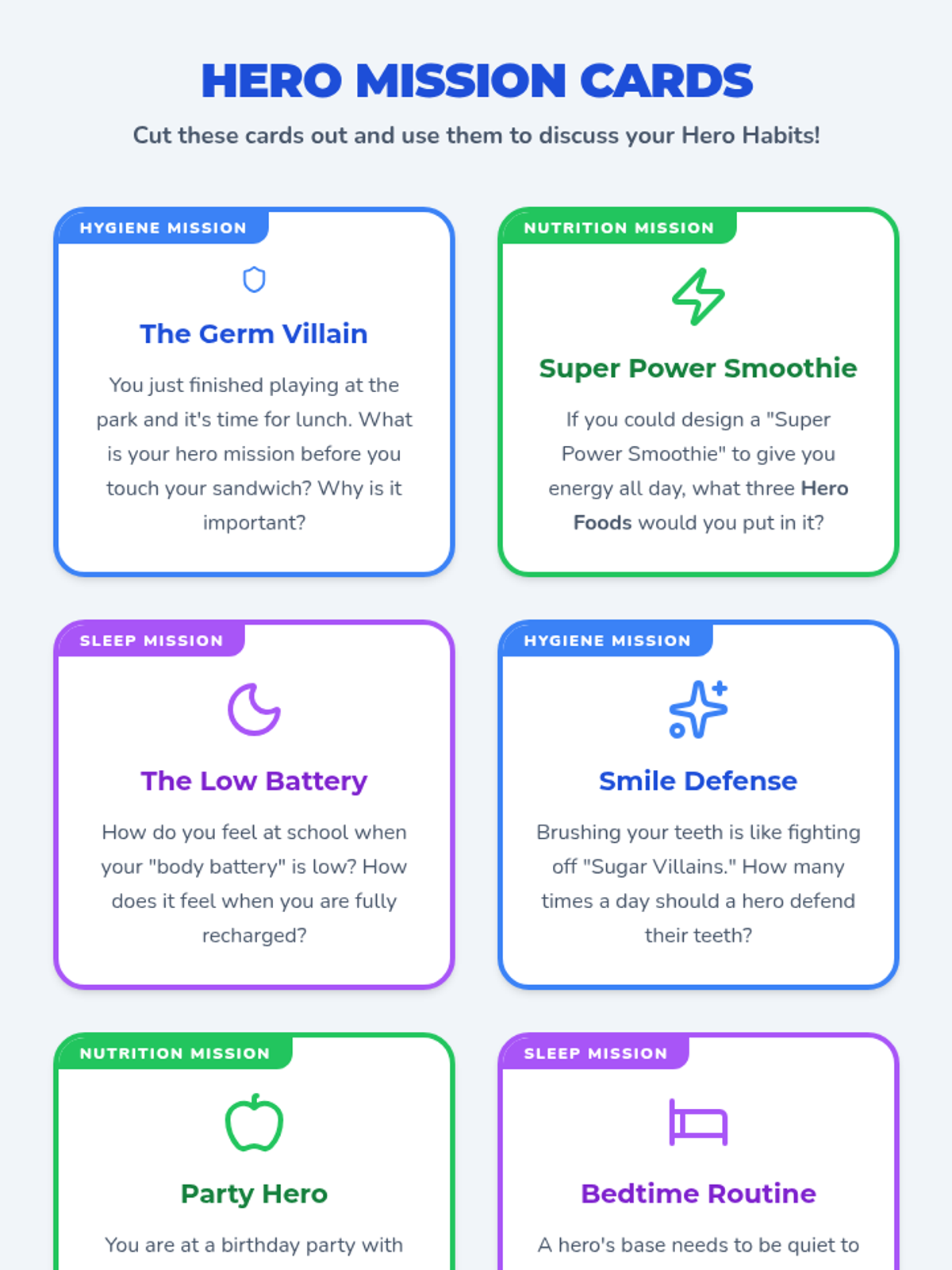
A set of 6 printable discussion cards (Hero Mission Cards) focusing on hygiene, nutrition, and sleep with engaging scenarios for student discussion.
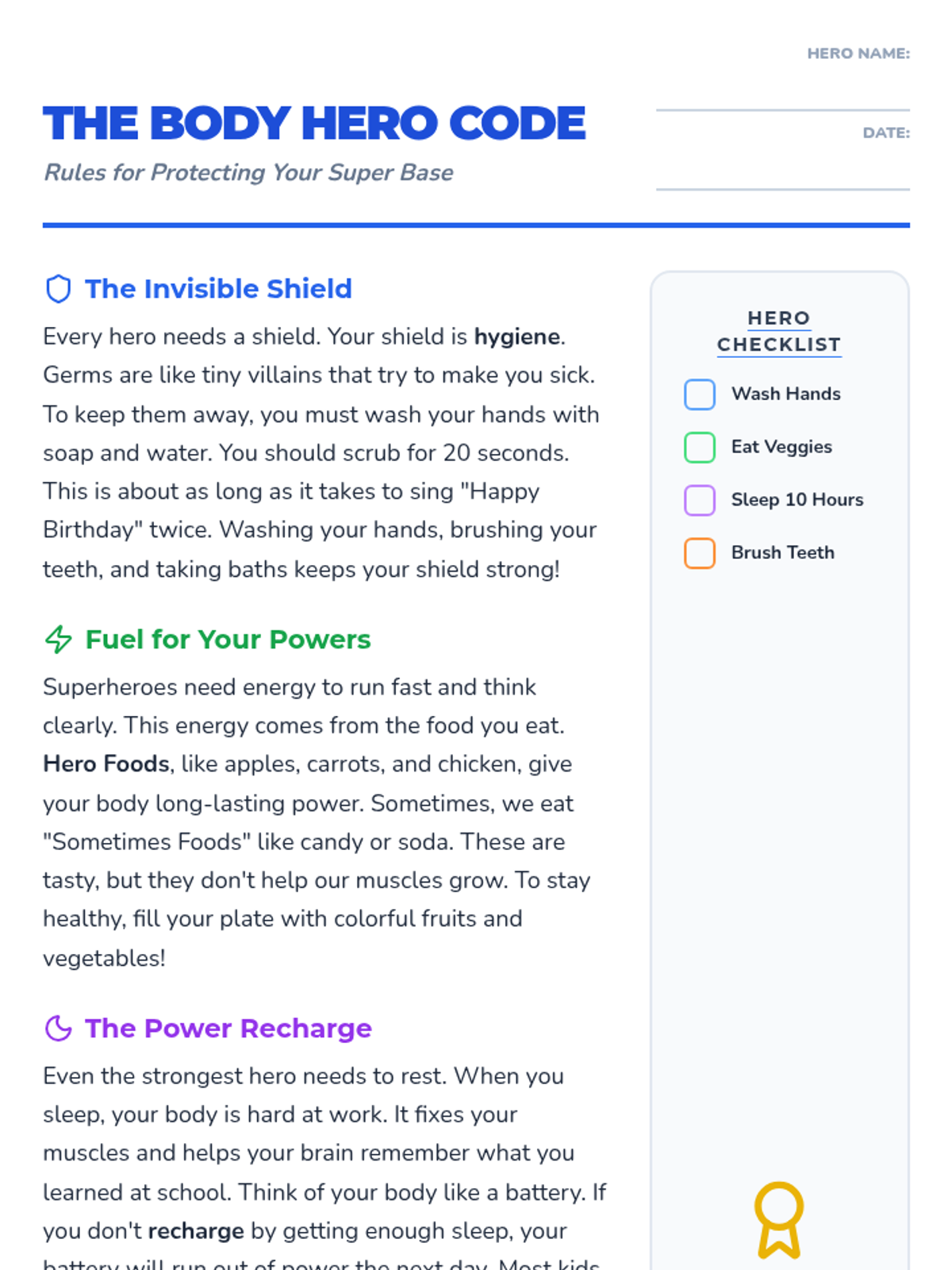
A reading passage titled 'The Body Hero Code' that explains hygiene, nutrition, and sleep using a superhero metaphor, followed by comprehension questions.
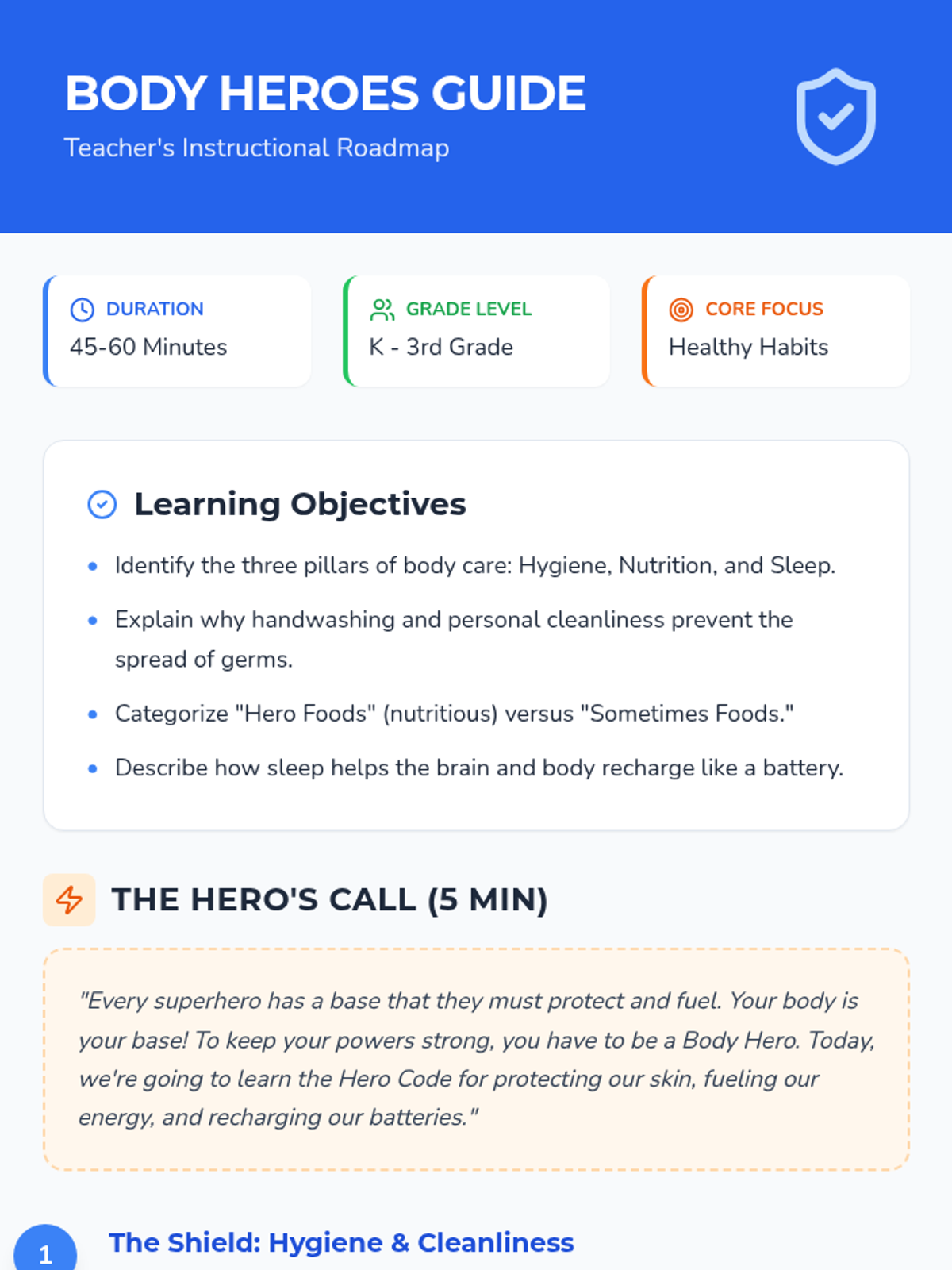
A comprehensive teacher's guide for the Body Heroes lesson, featuring instructional steps, talking points for hygiene, nutrition, and sleep, and a structured lesson flow with a creative superhero theme.
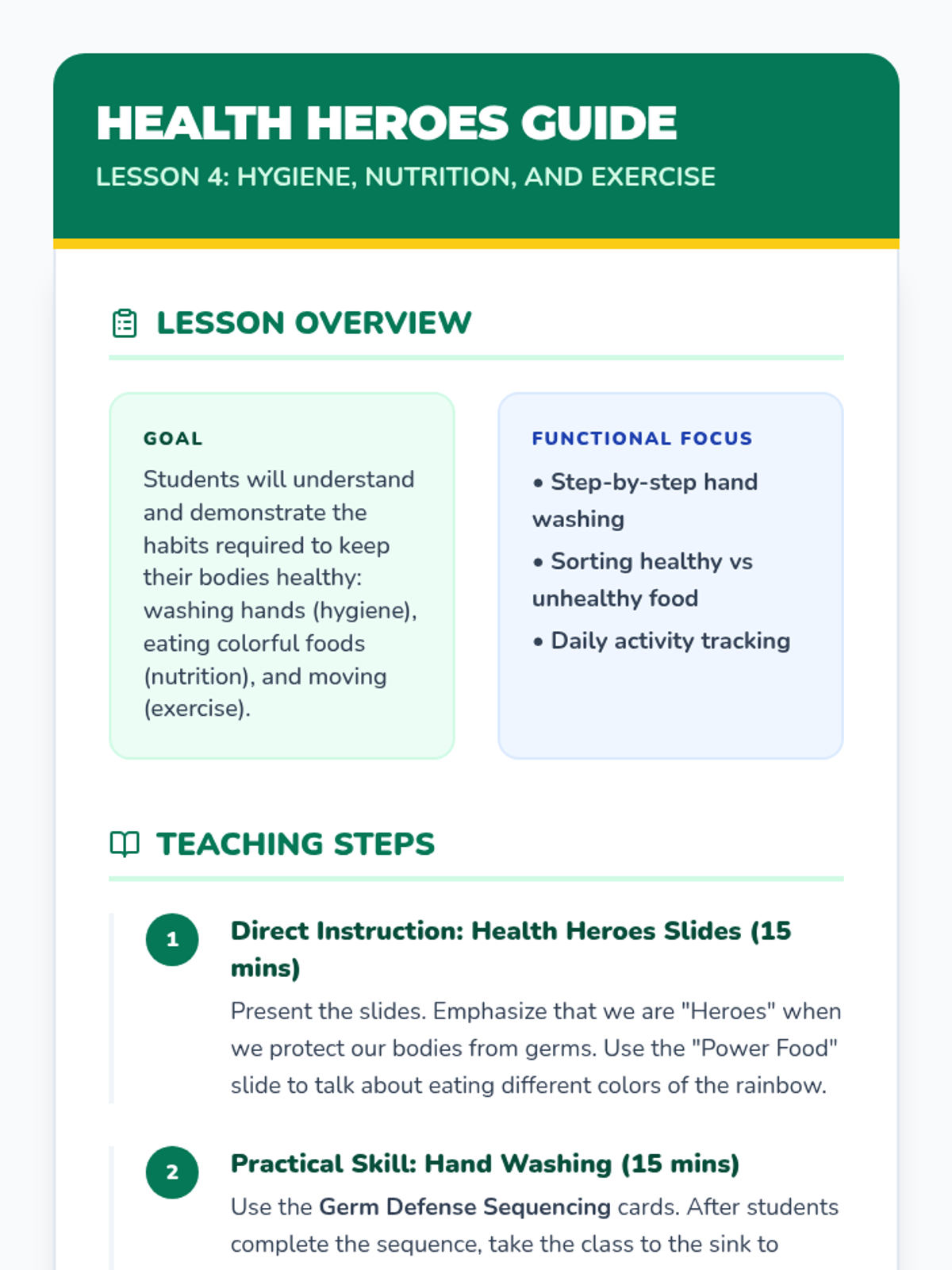
Final teacher guide for Lesson 4, focusing on practical life skills like hygiene routines and nutritional choices with a positive, empowering theme.
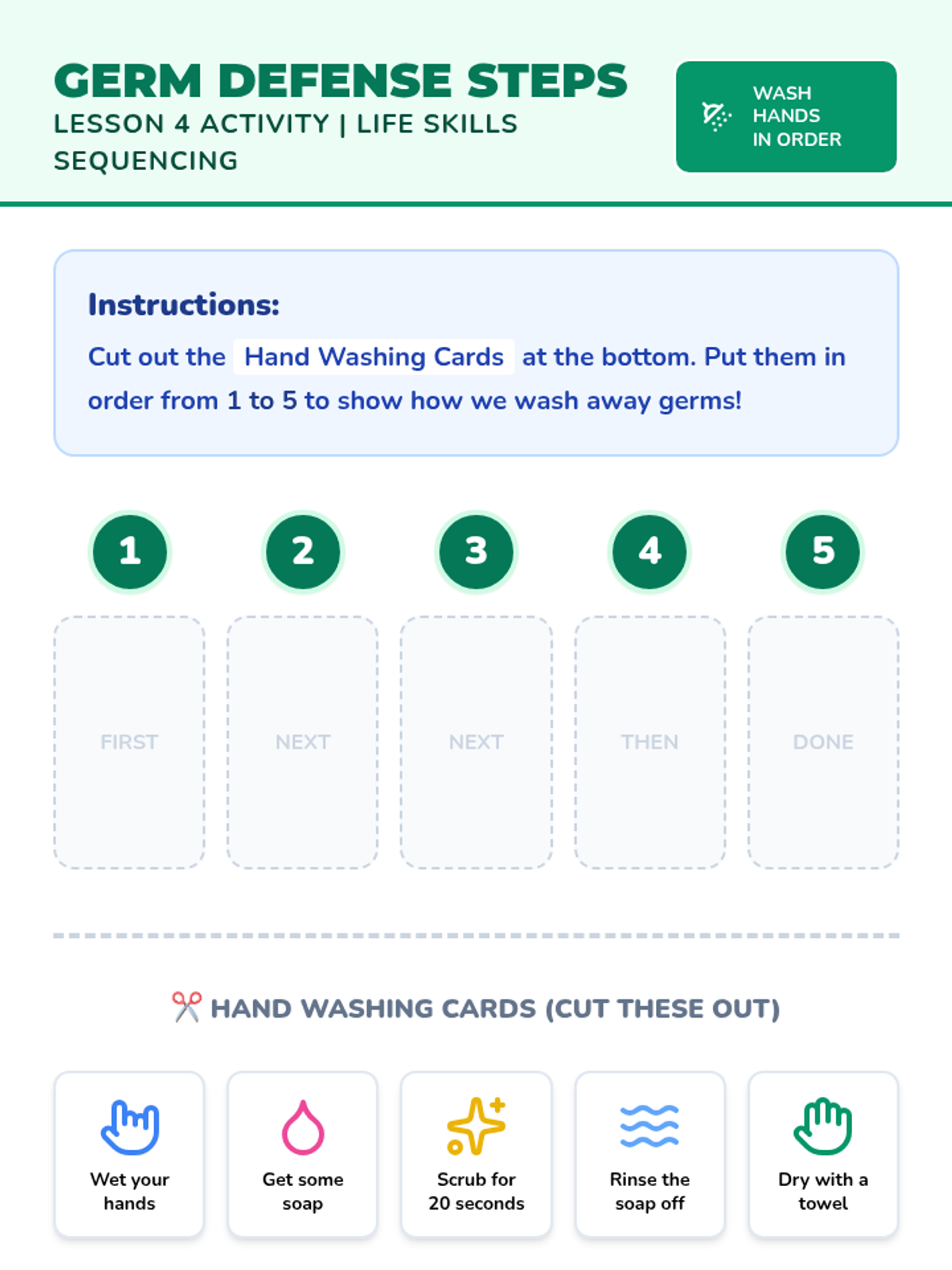
A sequencing activity for Lesson 4 that teaches students the proper five-step procedure for washing hands to maintain hygiene and prevent germ spread.
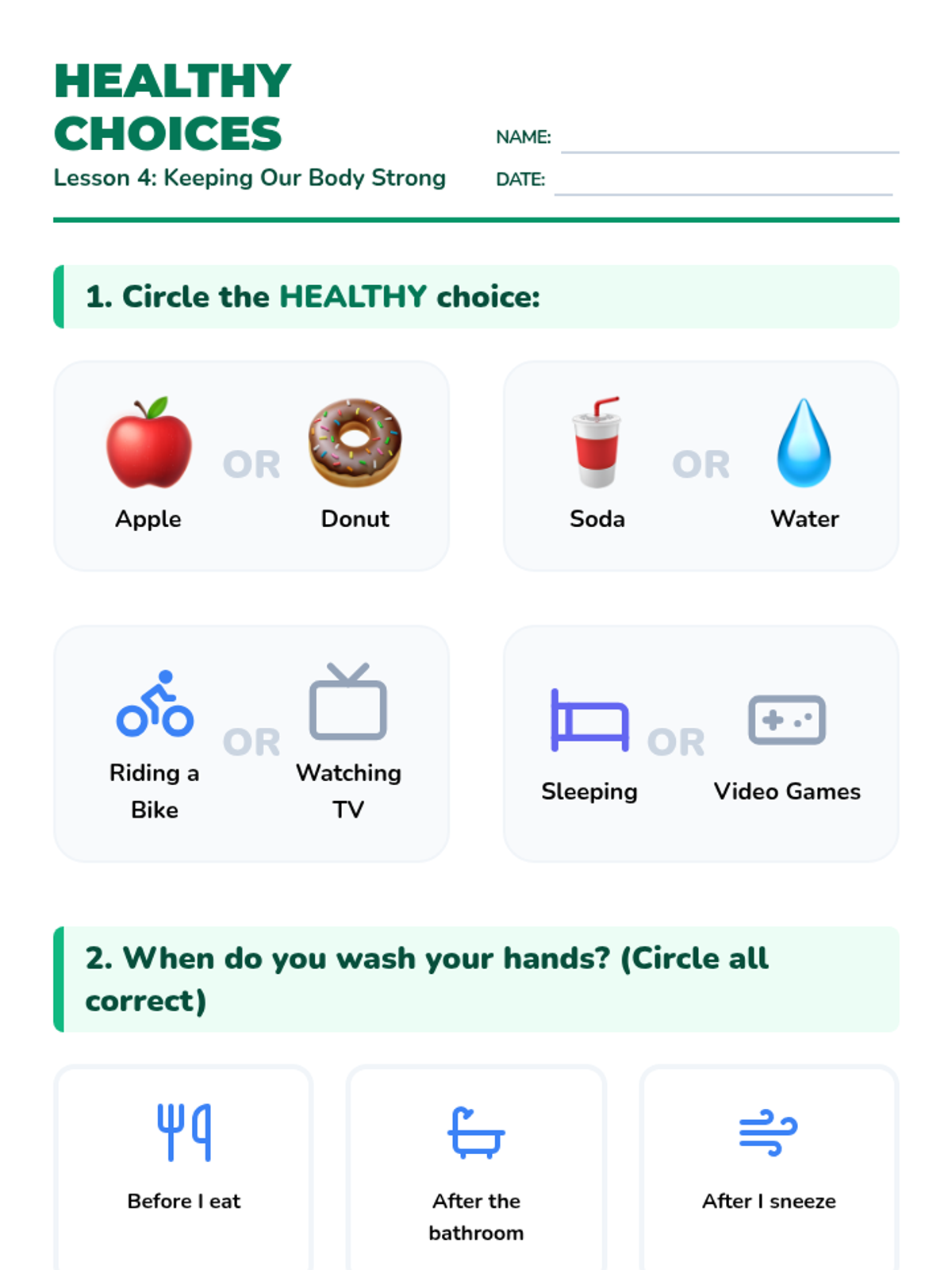
A functional assessment worksheet for Lesson 4, helping students identify healthy versus unhealthy choices and track their daily hygiene and activity habits.
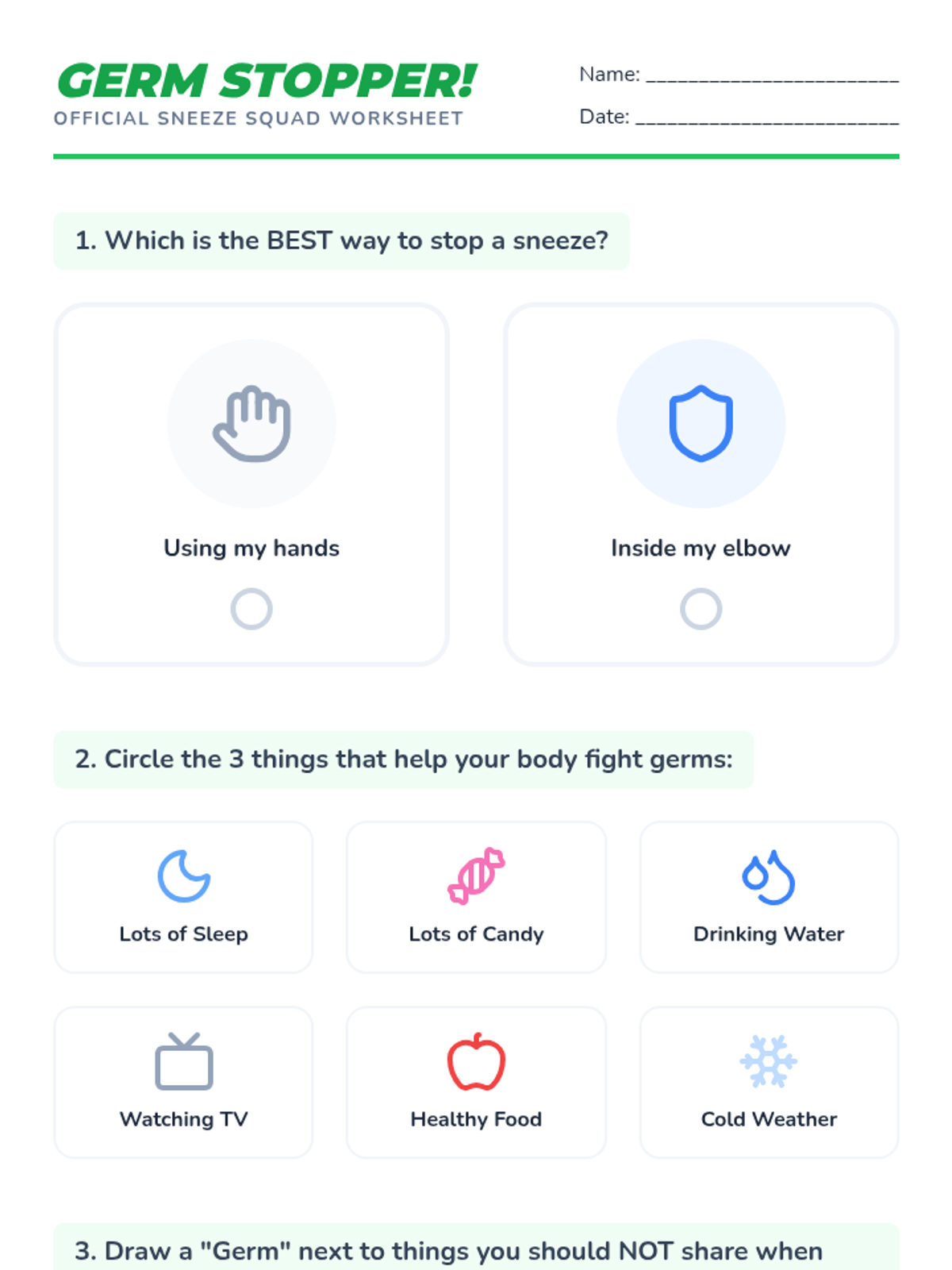
A fun review worksheet where students identify the correct 'Sneeze Shield' technique, select healthy habits, and make a pledge to stop the spread of germs.
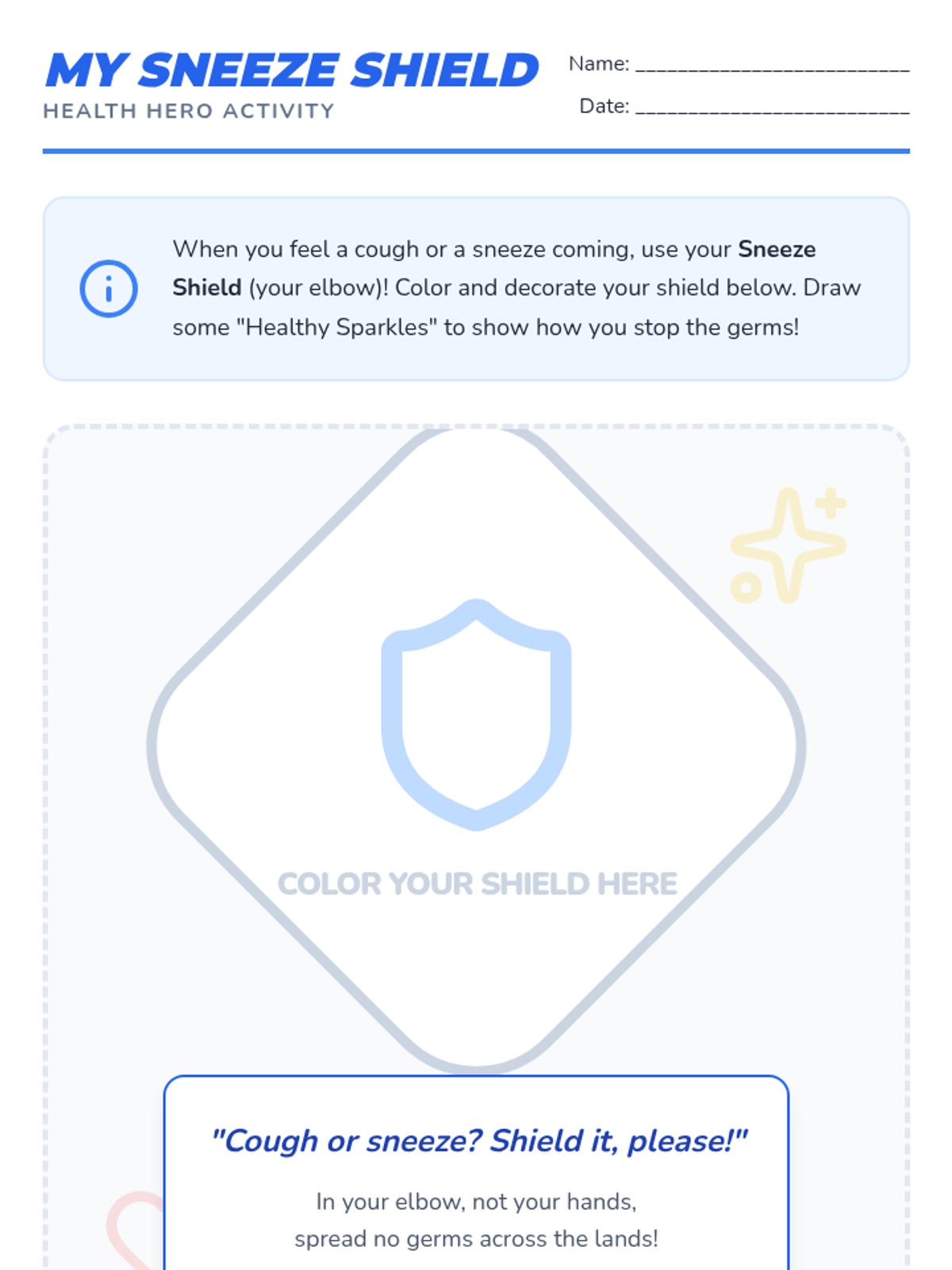
A creative coloring and tracing activity for students to design their own 'Sneeze Shield' while learning a memorable mnemonic rhyme about healthy habits.
A bright and engaging slide deck designed for Pre-K to Grade 3 students to learn about germs, the 'Sneeze Shield' technique, and healthy habits through visual storytelling and simple mnemonics.
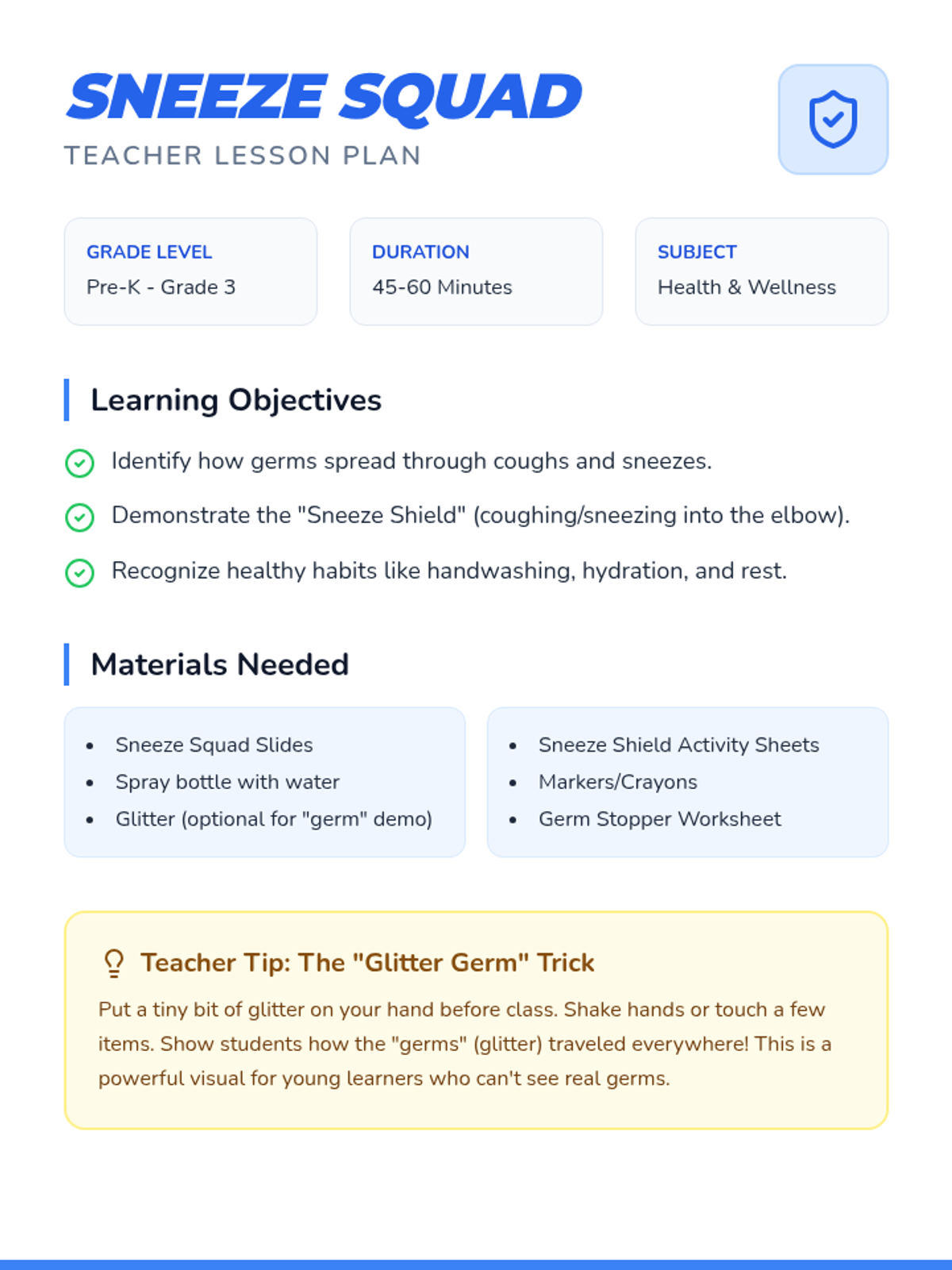
A comprehensive teacher lesson plan for the 'Sneeze Squad' health unit, featuring learning objectives, step-by-step instructional guides, and differentiation strategies for Pre-K through Grade 3.
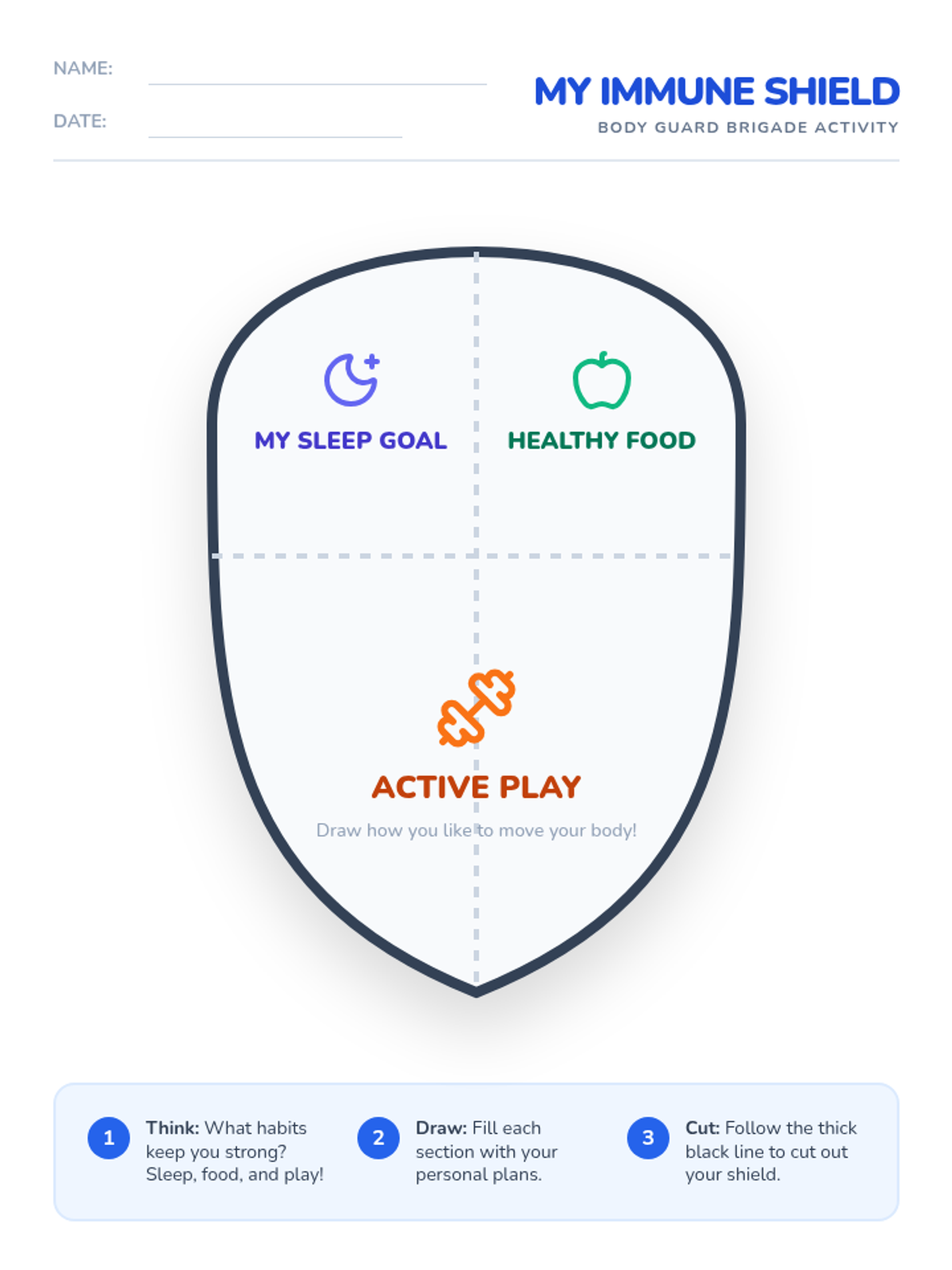
A printable shield template for students to draw and write their health goals for sleep, nutrition, and exercise.
A visual presentation for the Body Guard Brigade lesson, guiding students through the hook, video discussion, and activity instructions.
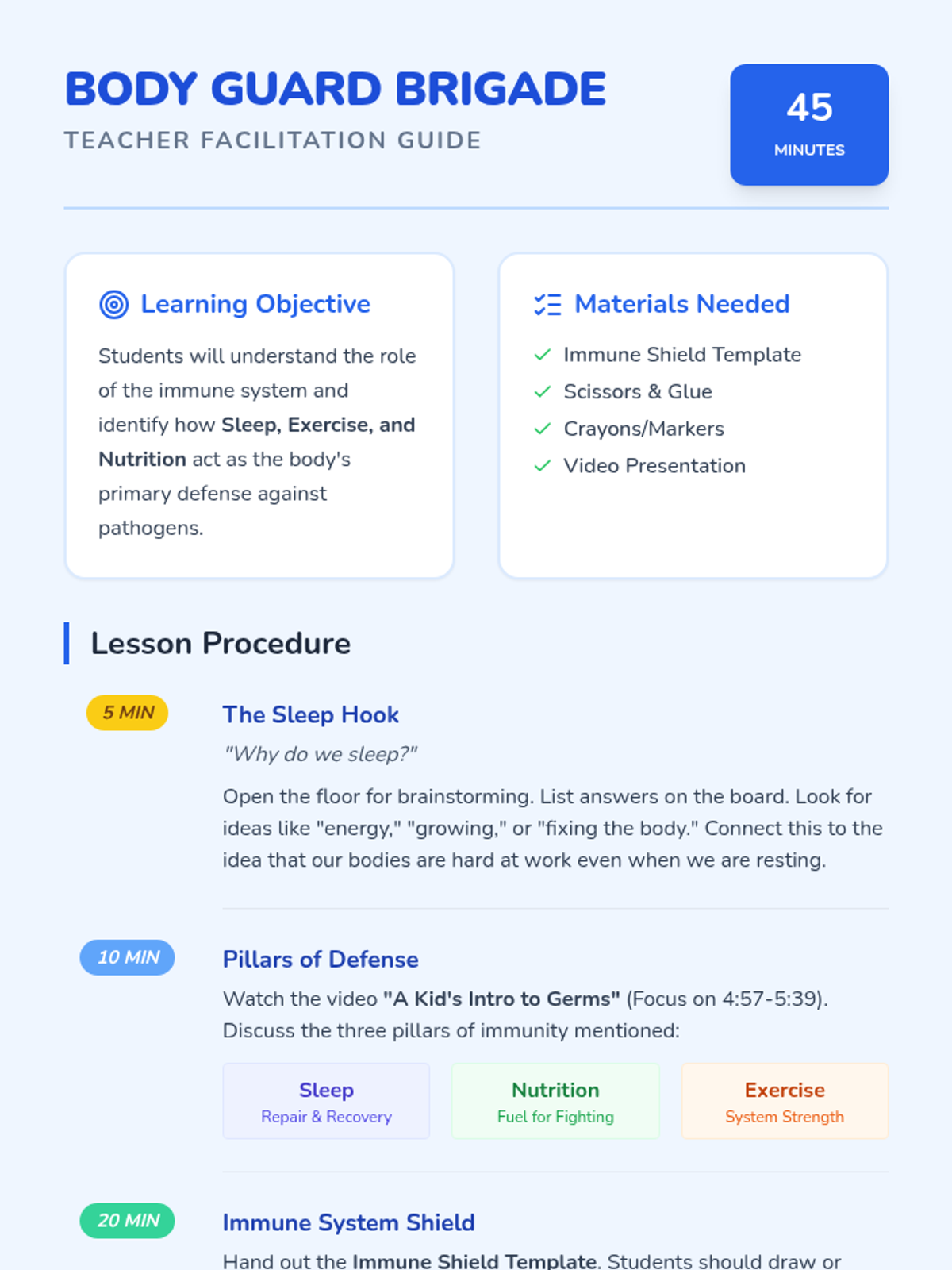
A comprehensive teacher facilitation guide for the Body Guard Brigade lesson, including timing, procedure, and discussion prompts.
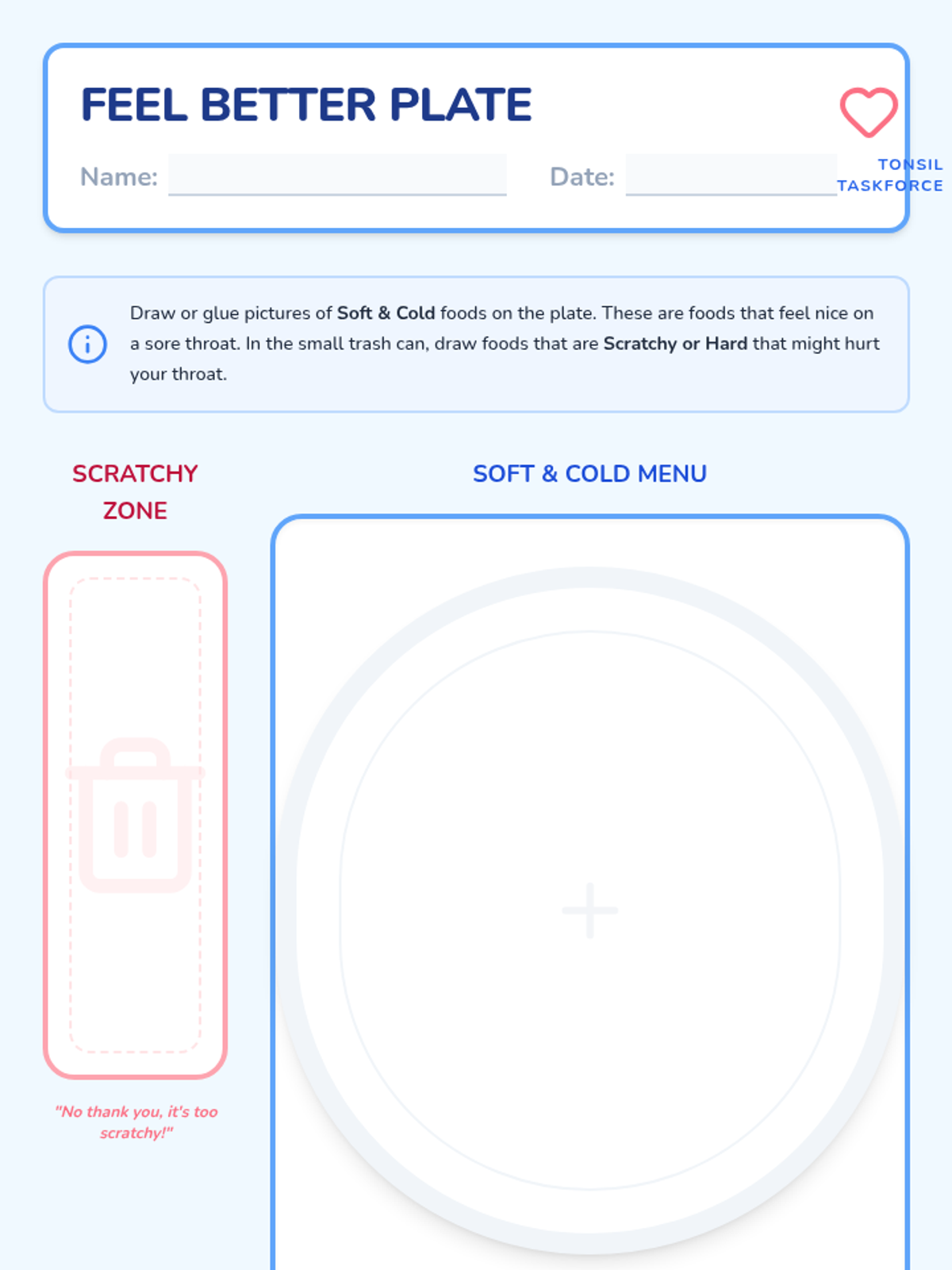
An activity sheet for students to categorize foods into 'Soft & Cold' (good for tonsillitis) and 'Scratchy' (hurtful), featuring a large plate for drawing or gluing.
Visual aids for the 'Tonsil Taskforce' lesson, featuring video integration, vocabulary support, and discussion prompts.
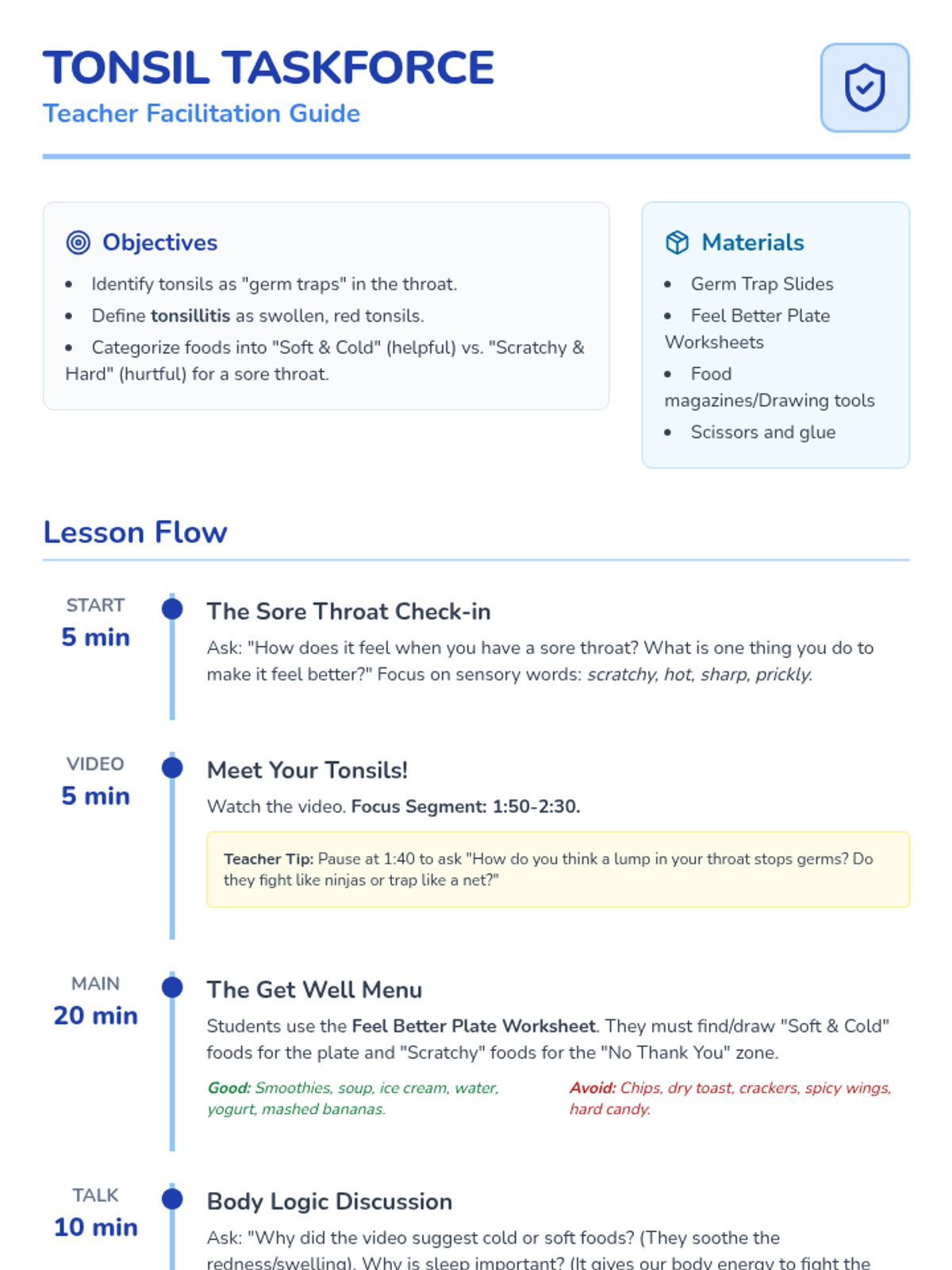
A teacher facilitation guide for the 'Tonsil Taskforce' lesson, including a timeline, objectives, materials list, and discussion prompts.
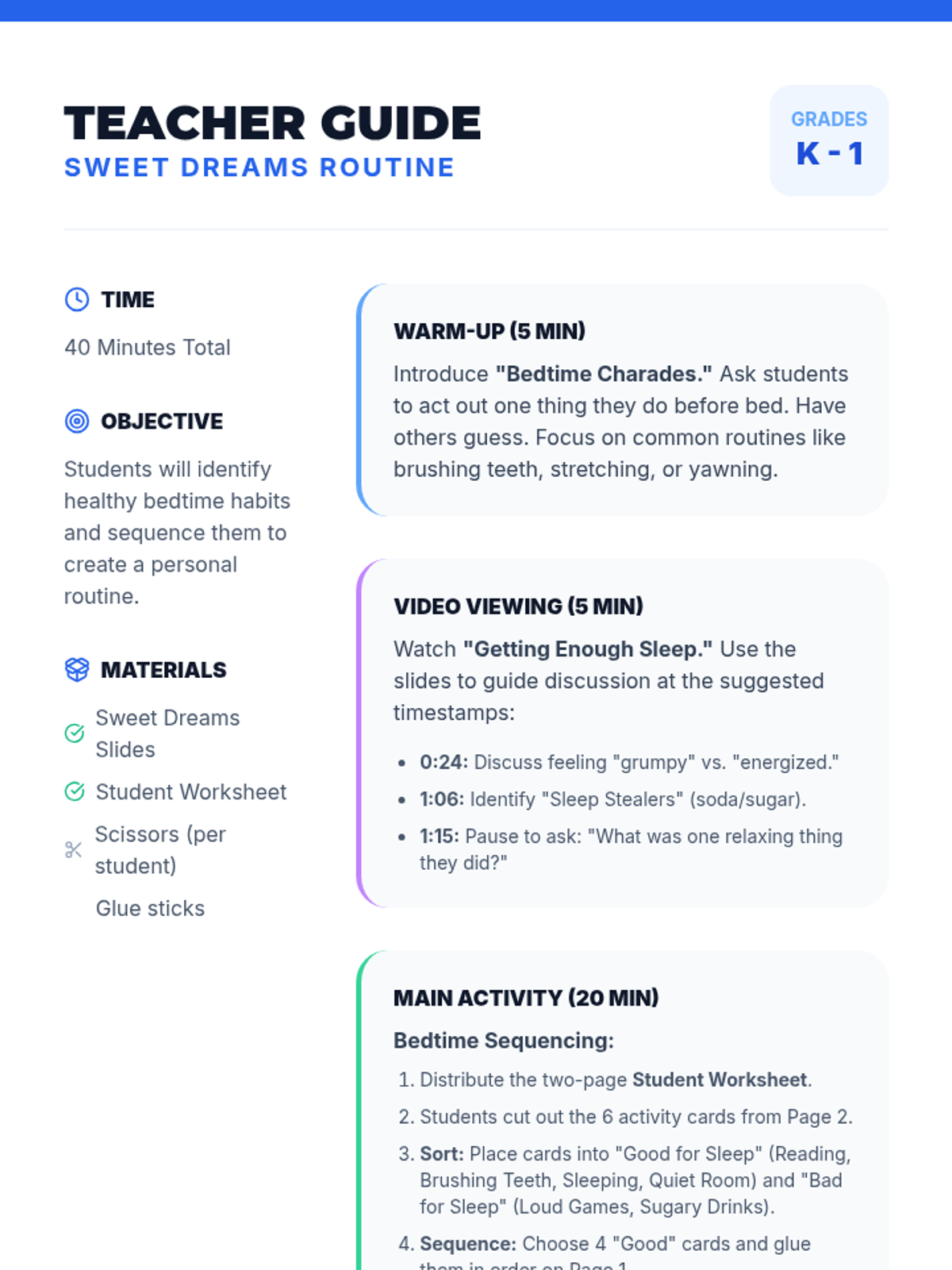
A comprehensive teacher guide for the Sweet Dreams Routine lesson, providing step-by-step facilitation instructions, differentiation strategies, and an answer key for the sorting activity.
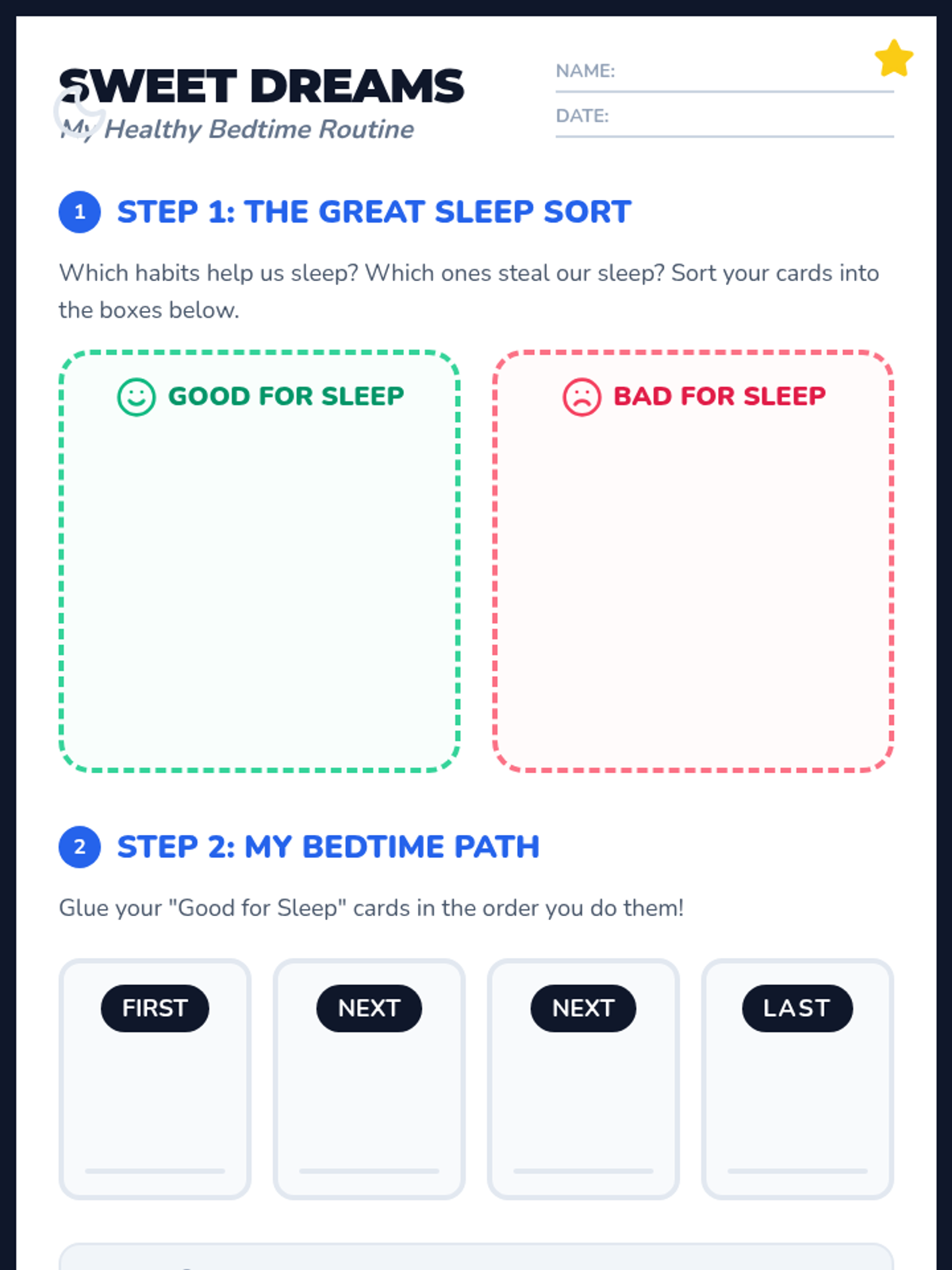
A two-page student worksheet for the Bedtime Sequencing activity. Page 1 includes sorting boxes for healthy/unhealthy habits and a sequencing strip for a bedtime routine. Page 2 contains cut-out cards with habits from the lesson video.
Two sun safety coloring sheets for younger students (K-3) featuring desert scenes, sunscreen tools, and health tips like hydration and seeking shade.
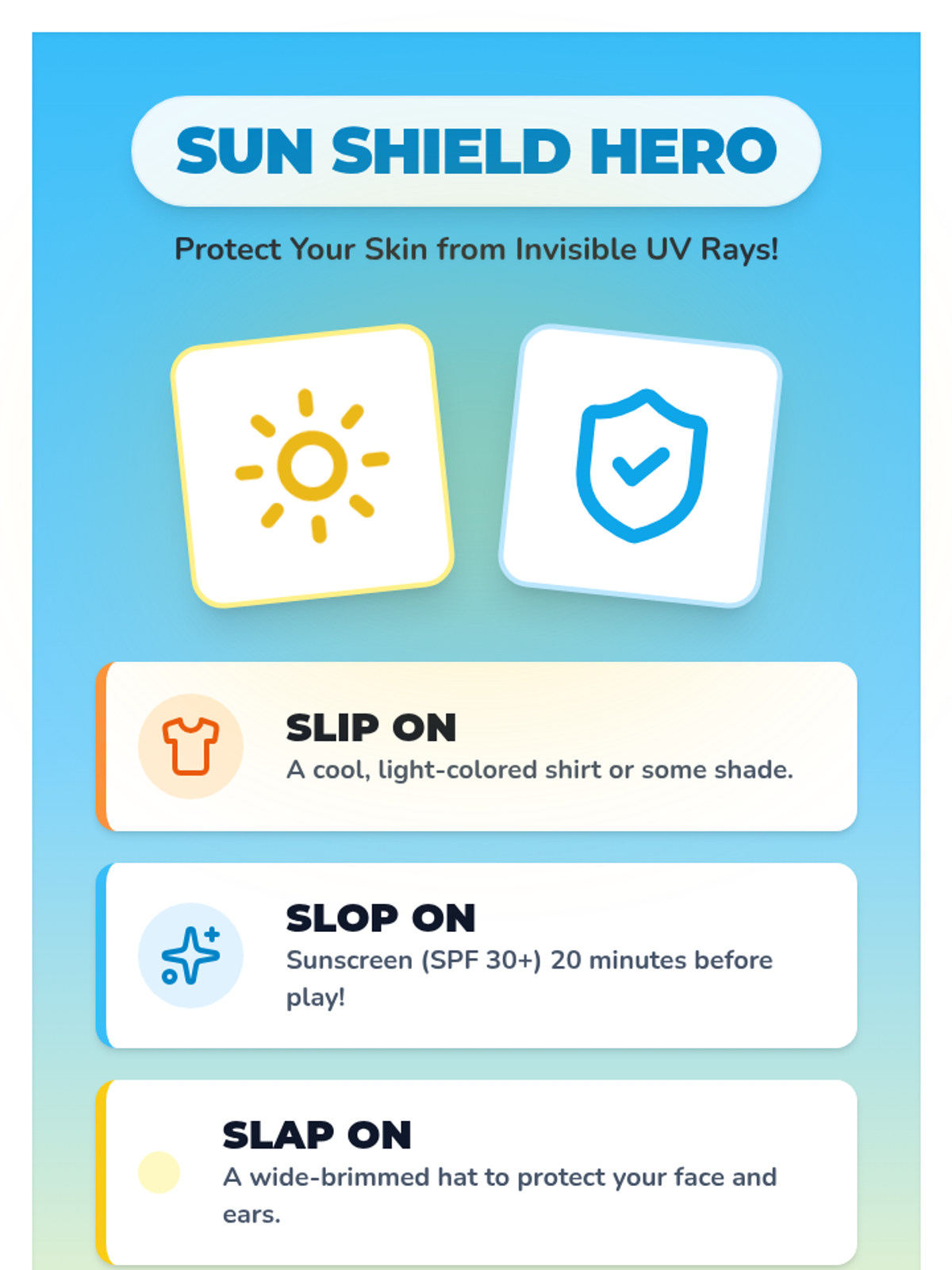
A vibrant, educational poster for the classroom emphasizing the 'Slip, Slop, Slap' rule for sun safety and the importance of sunscreen application.
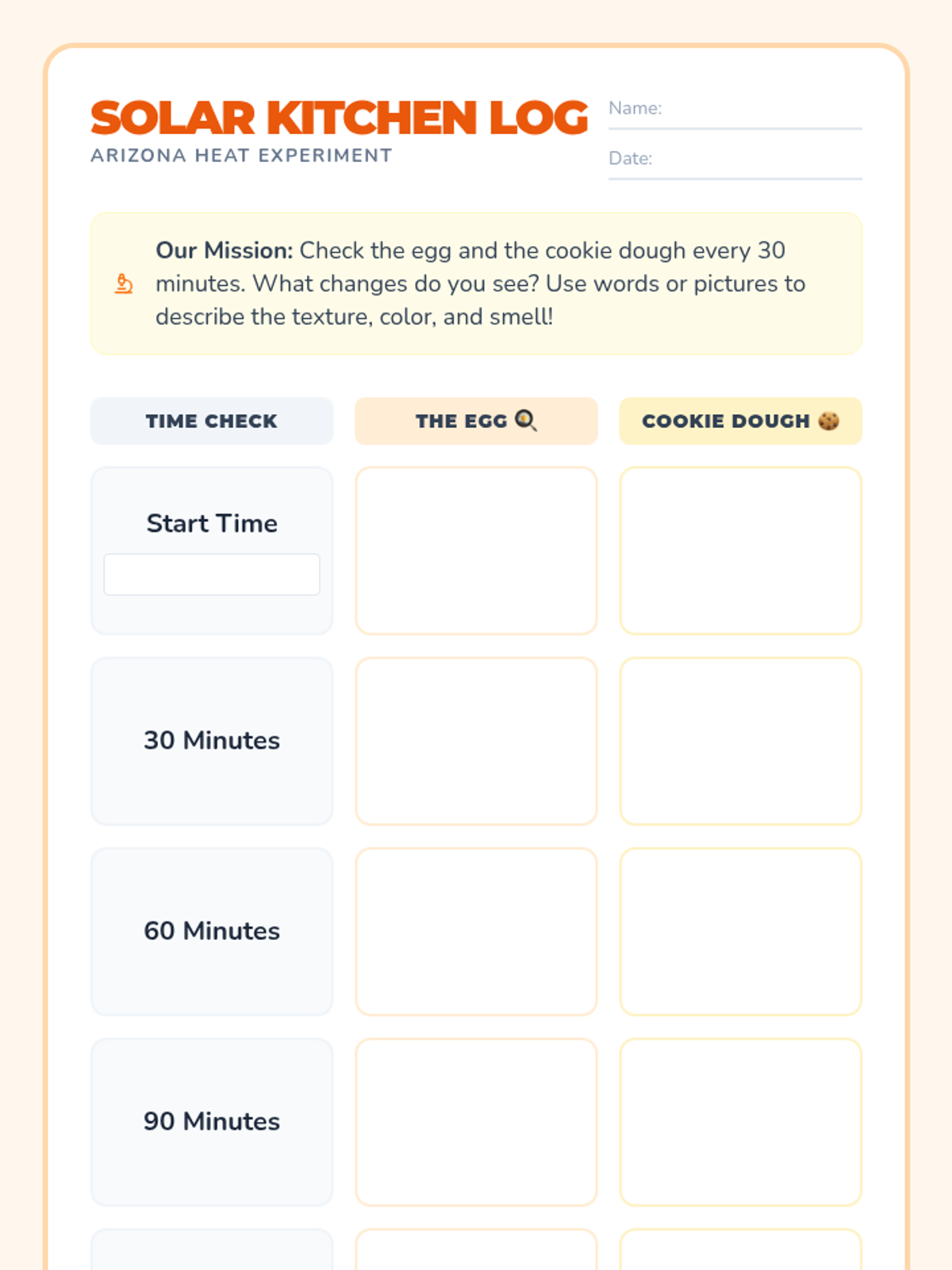
An observation log for the solar kitchen experiment where students chart changes in an egg and cookie dough every 30 minutes for two hours, including space for notes and drawings.
A visually engaging 6-slide presentation covering the 4-day Desert Heat unit, including comparisons of AZ spring weather, hydration tips, sun safety rules, the solar kitchen experiment introduction, and cooling strategies.
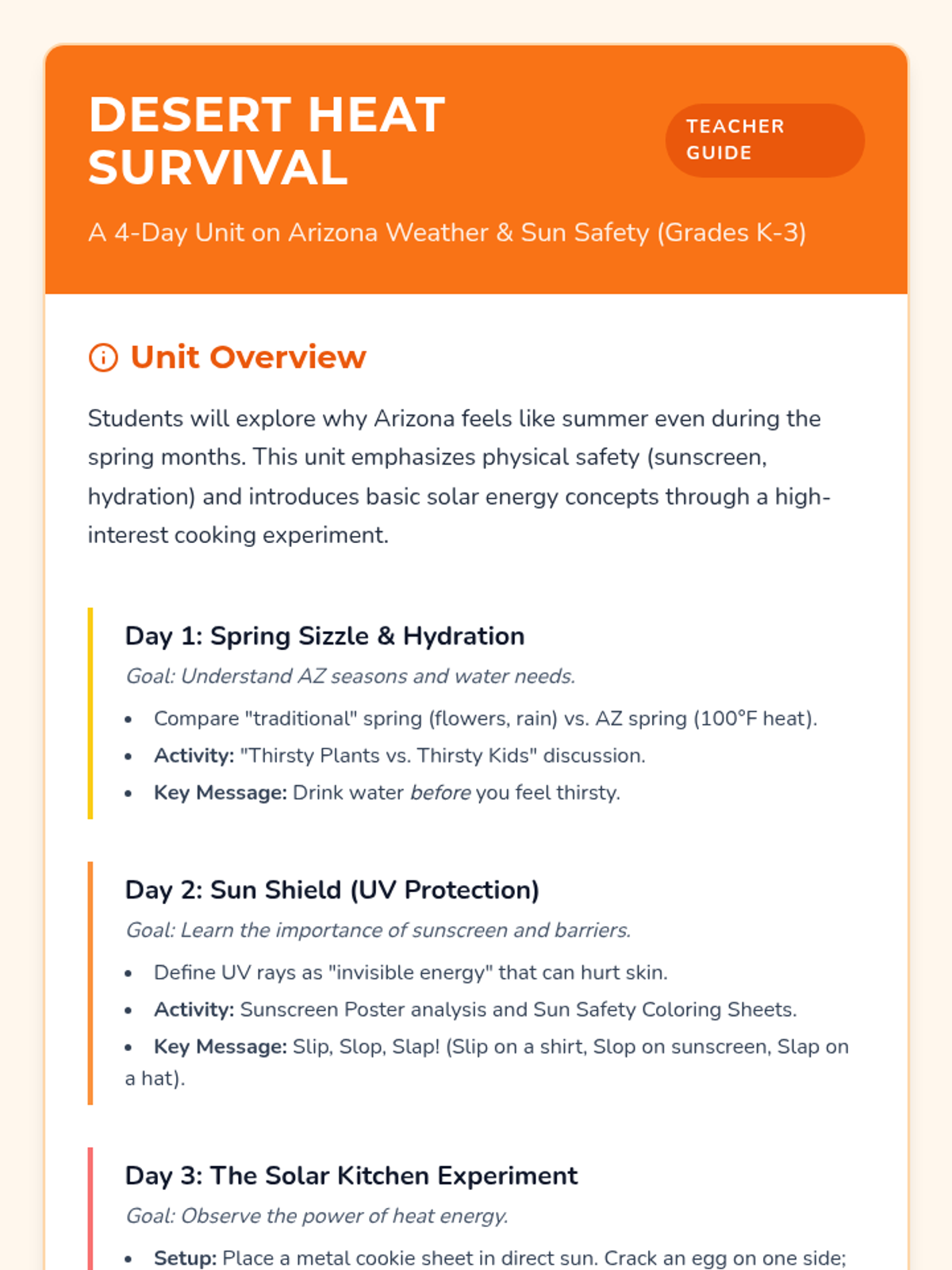
A comprehensive teacher guide outlining the four-day unit on Arizona weather, sun safety, and the solar kitchen experiment, including daily goals and a preparation checklist.
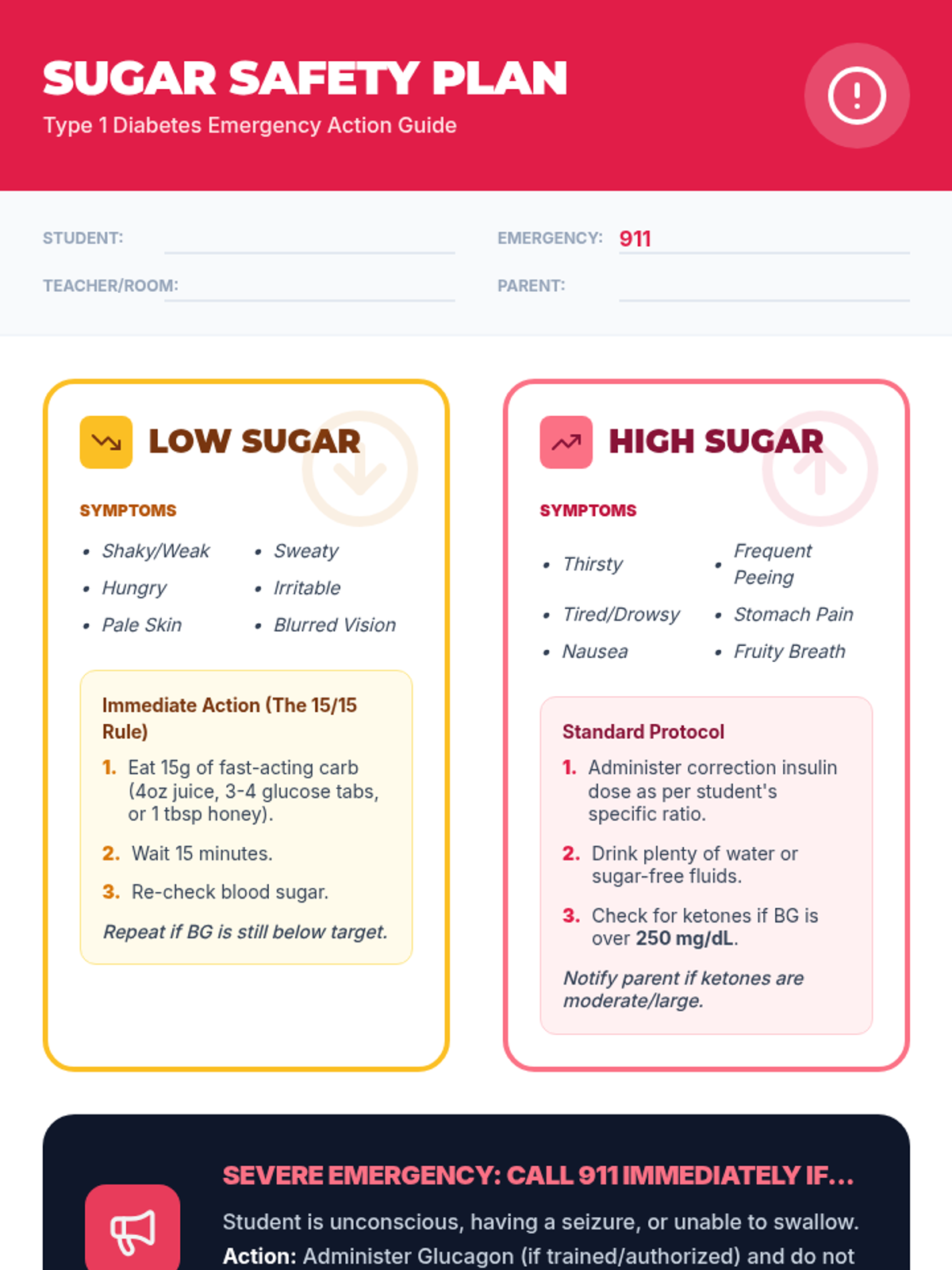
An emergency medical protocol for Type 1 Diabetes, detailing symptoms and immediate actions for hypoglycemia and hyperglycemia, designed for easy reference by school staff and caregivers.
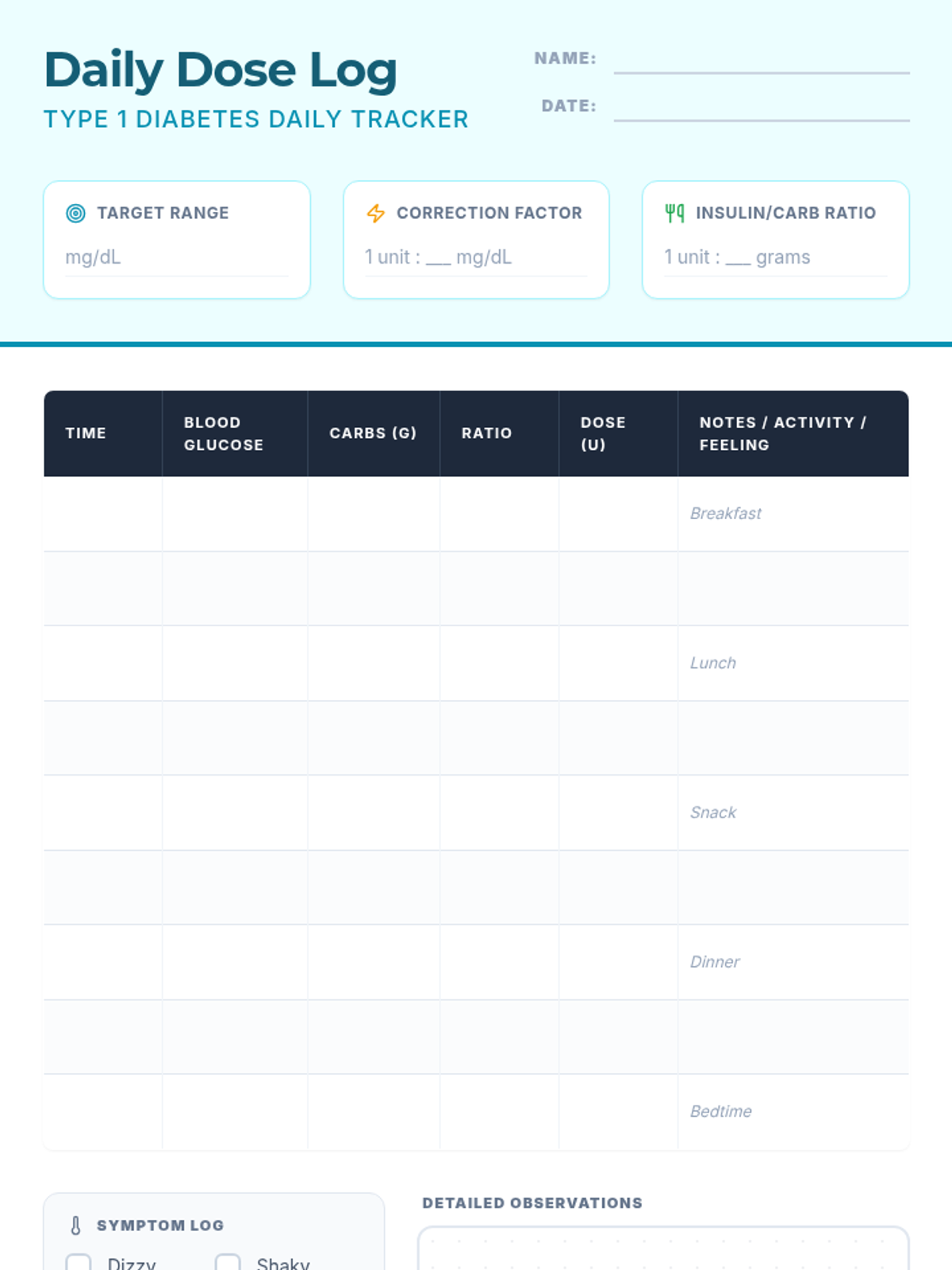
A refined daily documentation sheet for Type 1 Diabetes with expanded row heights for easier handwriting, a dedicated symptom log, and clearly defined tracking for blood glucose, carbs, and insulin.
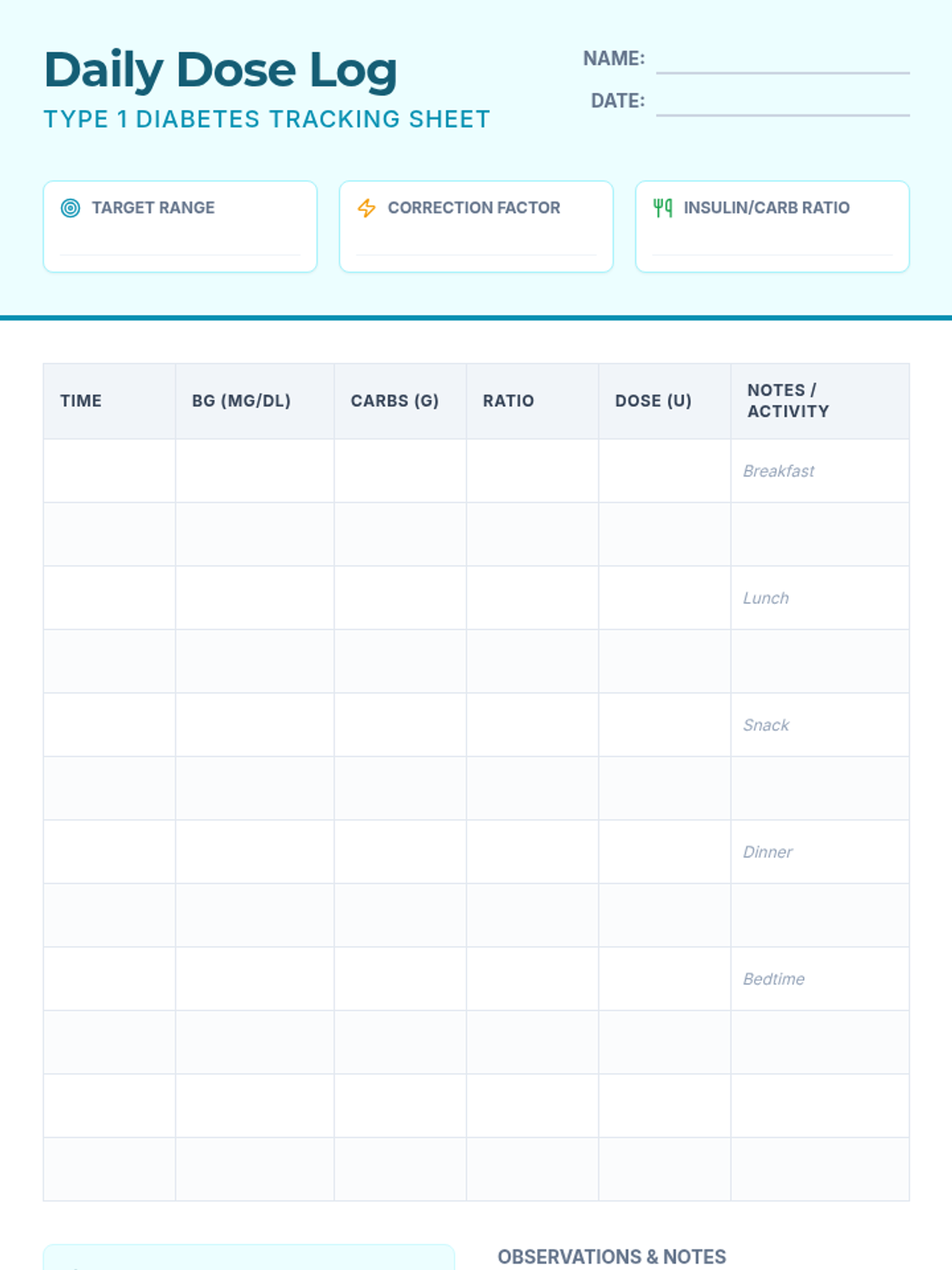
A comprehensive daily documentation sheet for Type 1 Diabetes, featuring columns for time, blood glucose levels, carbohydrate intake, insulin ratios, and dosage, with additional space for notes and symptom tracking.
A car-themed social story explaining the different purposes of home rules and school rules, helping students understand when and why to "shift gears." Includes safety rules about fighting and dangerous items using road safety metaphors.
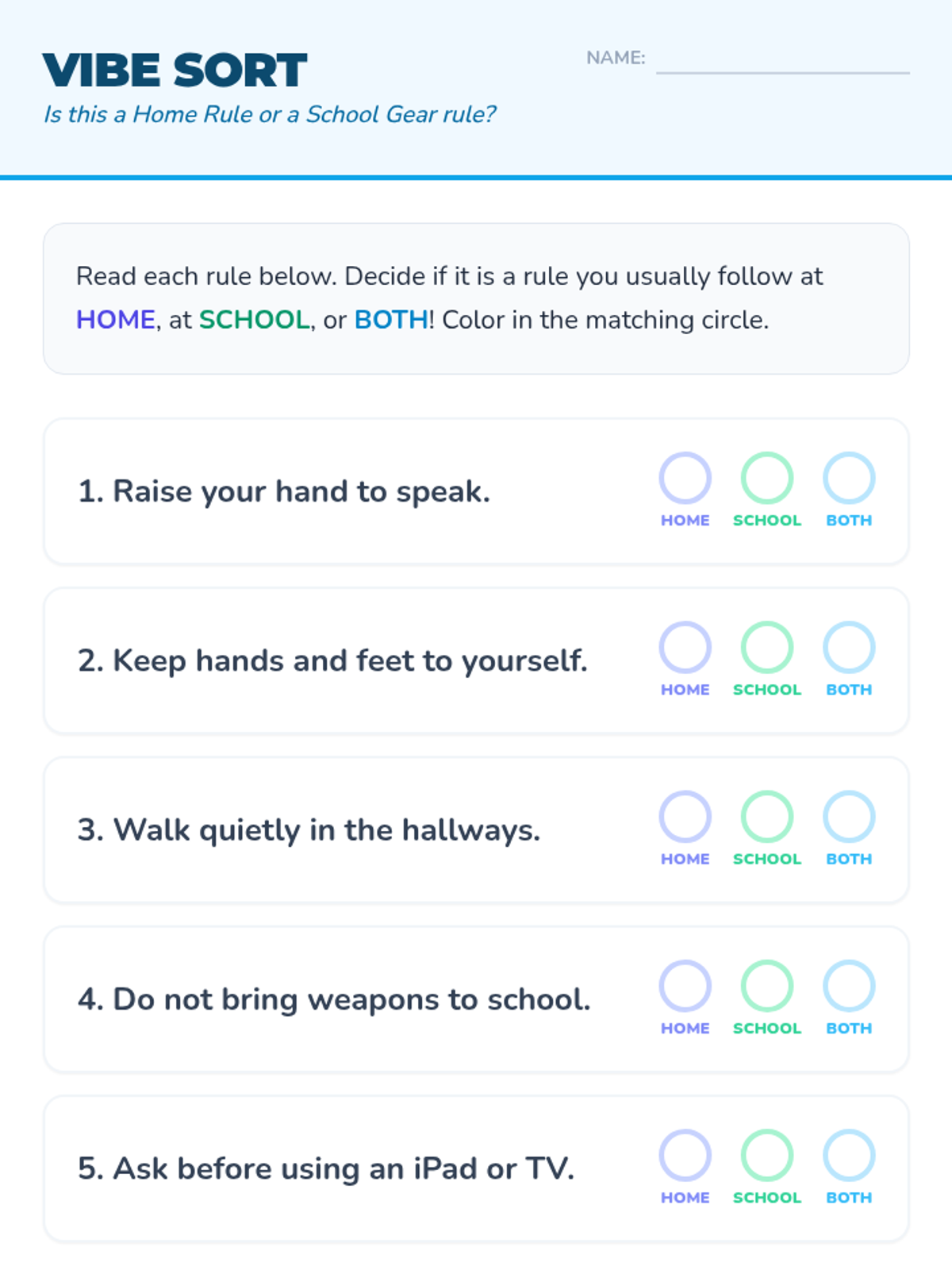
A comparative worksheet where students identify whether common rules belong at home, at school, or both. Updated to include safety-specific rules like keeping hands to oneself and not bringing weapons to school.
A social story explaining the different purposes of home rules and school rules, helping students understand when and why to "switch gears." Now includes a dedicated section on school safety rules regarding fighting and dangerous items.
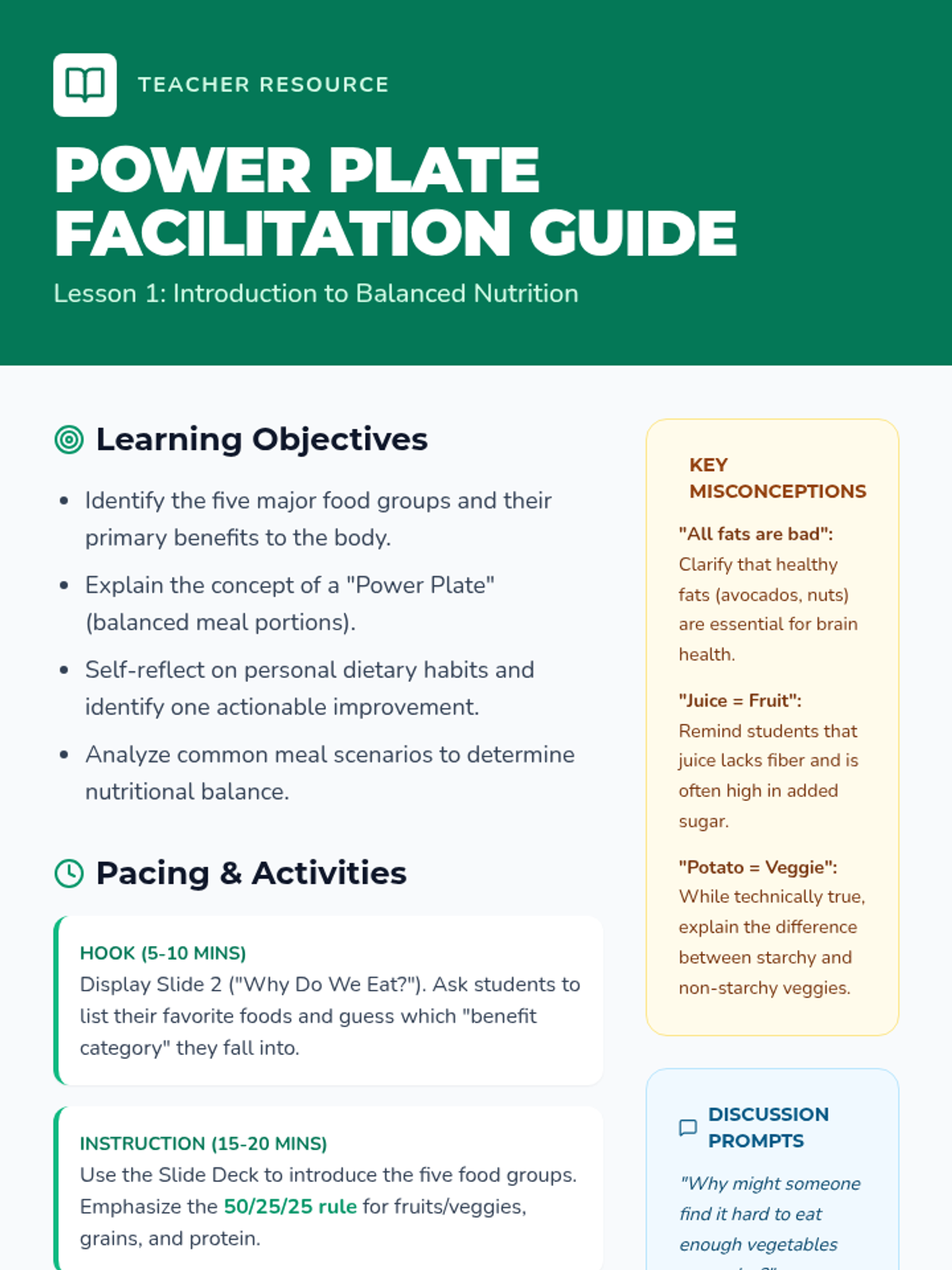
A comprehensive guide for teachers to deliver the Power Plate lesson, including learning objectives, pacing, discussion prompts, and differentiation strategies.
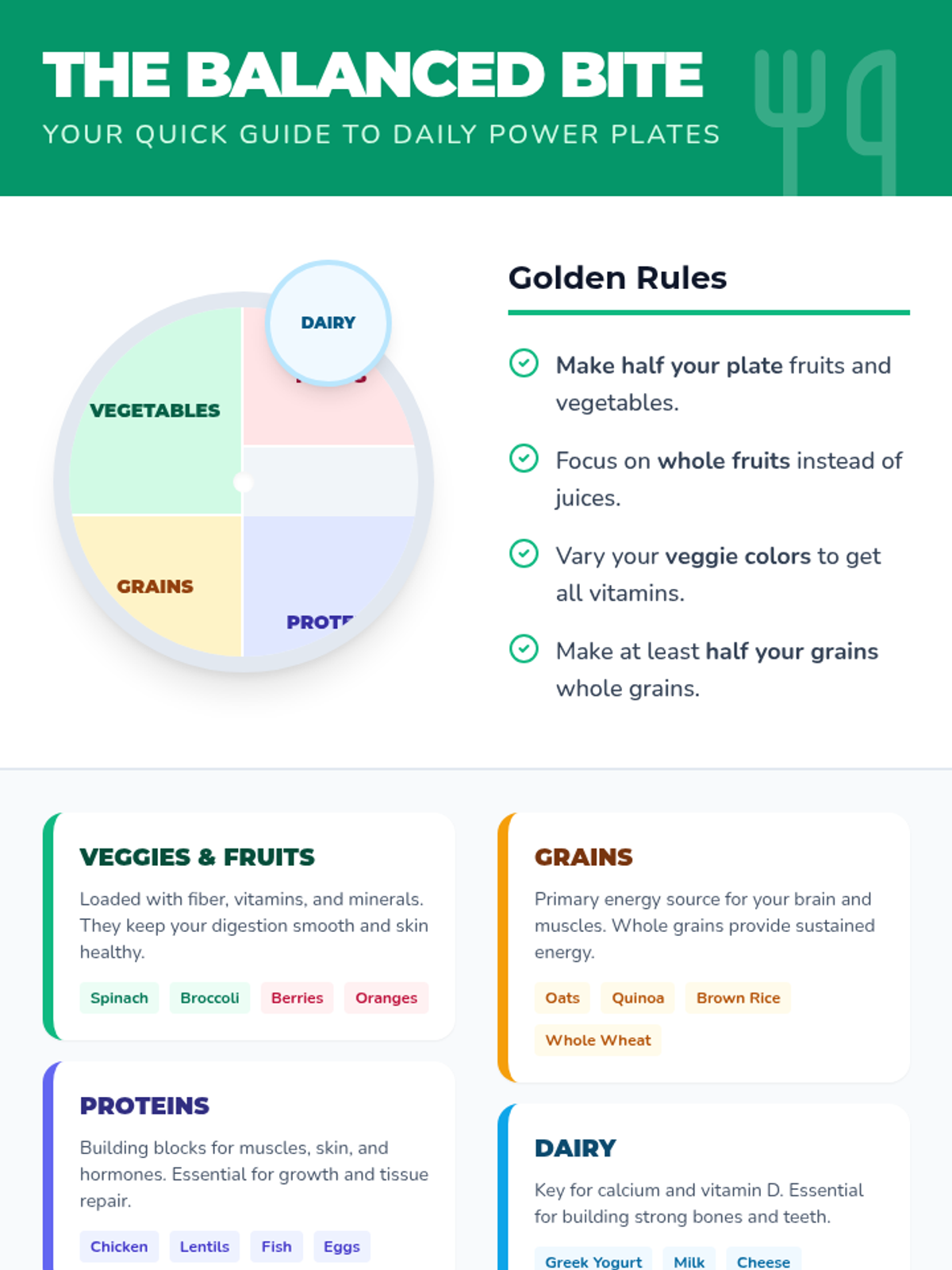
A visually engaging reference sheet (anchor chart) summarizing the "Power Plate" method and key examples for each food group.
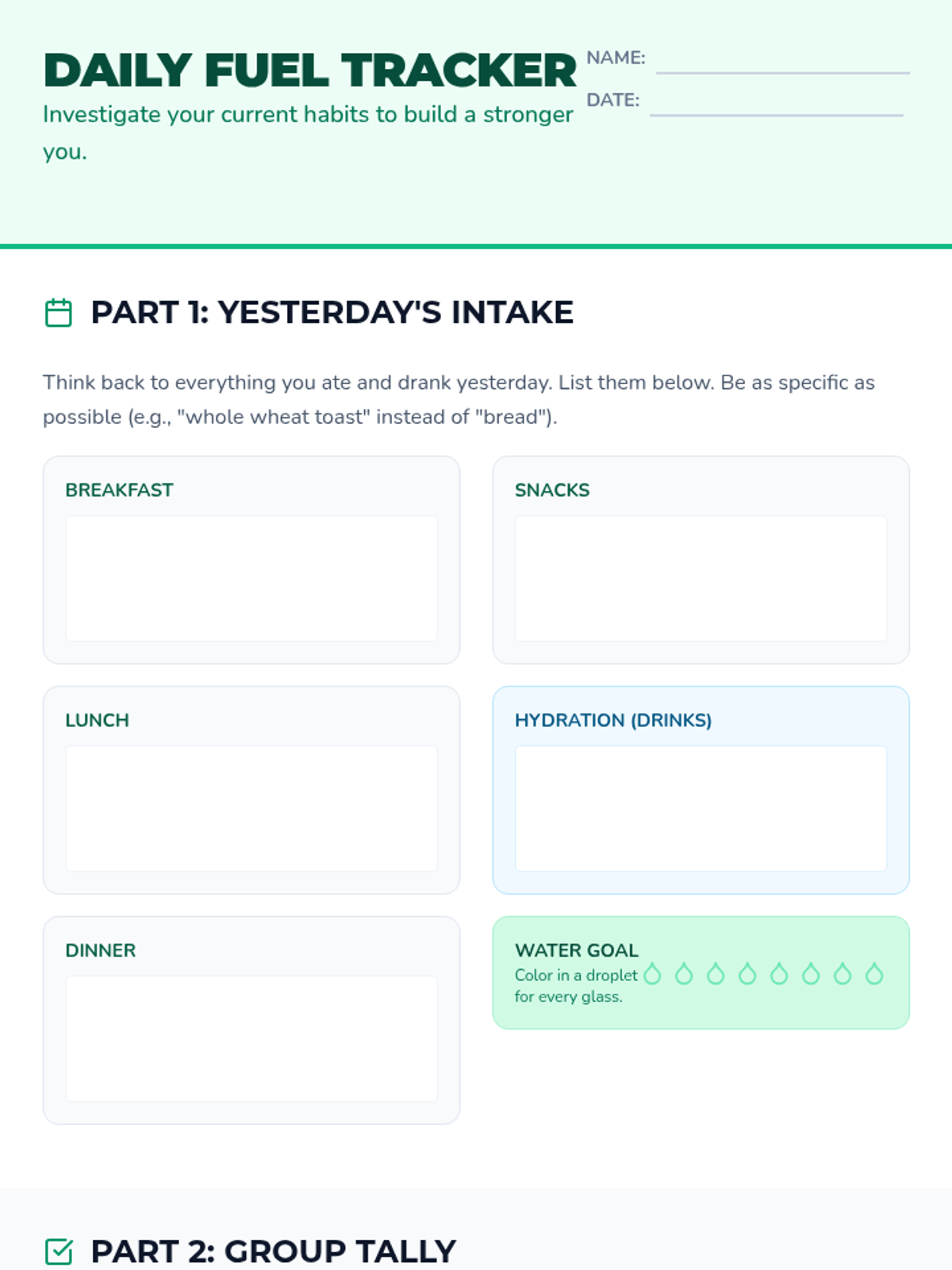
A reflective worksheet for students to track their food intake for a day, categorize it into the five food groups, and identify areas for improvement.
A visual presentation introducing the five food groups, the importance of balanced nutrition, and the "Power Plate" method for building healthy meals.
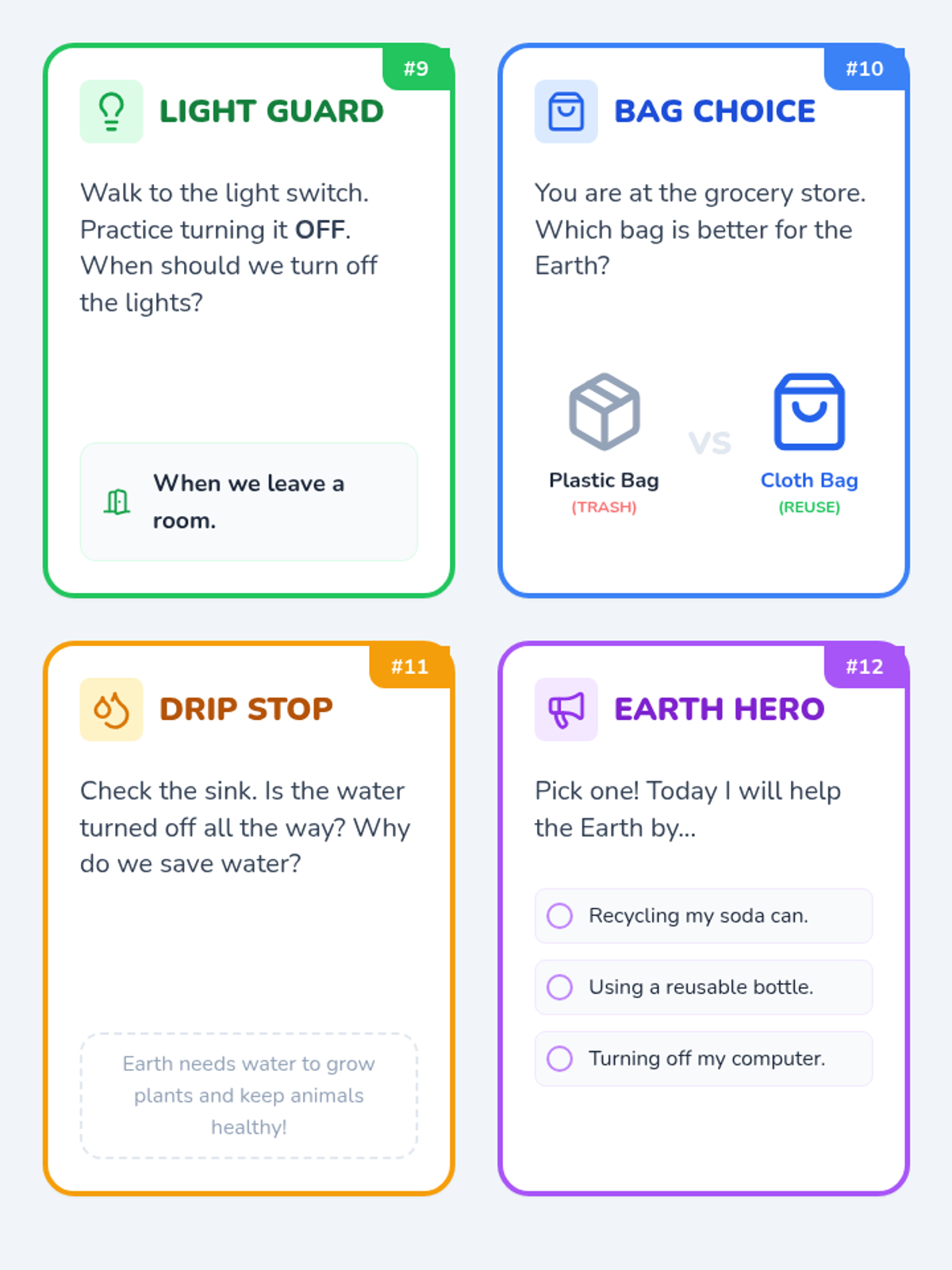
Task cards for Lesson 3 focusing on daily environmental habits like turning off lights, using reusable bags, and saving water.
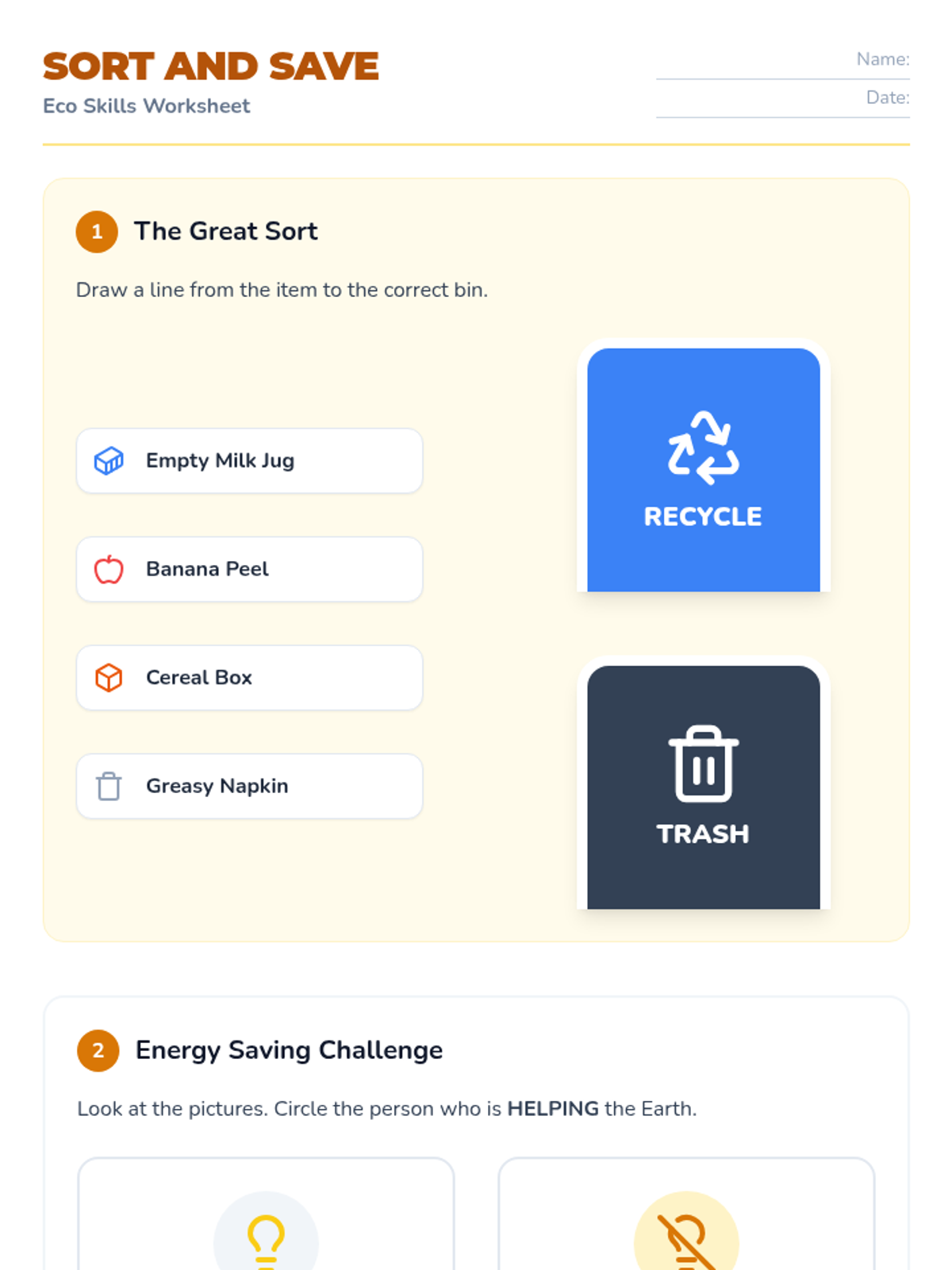
A worksheet for Lesson 3 involving recycling sorting (blue bin vs trash) and identifying energy and water-saving habits.
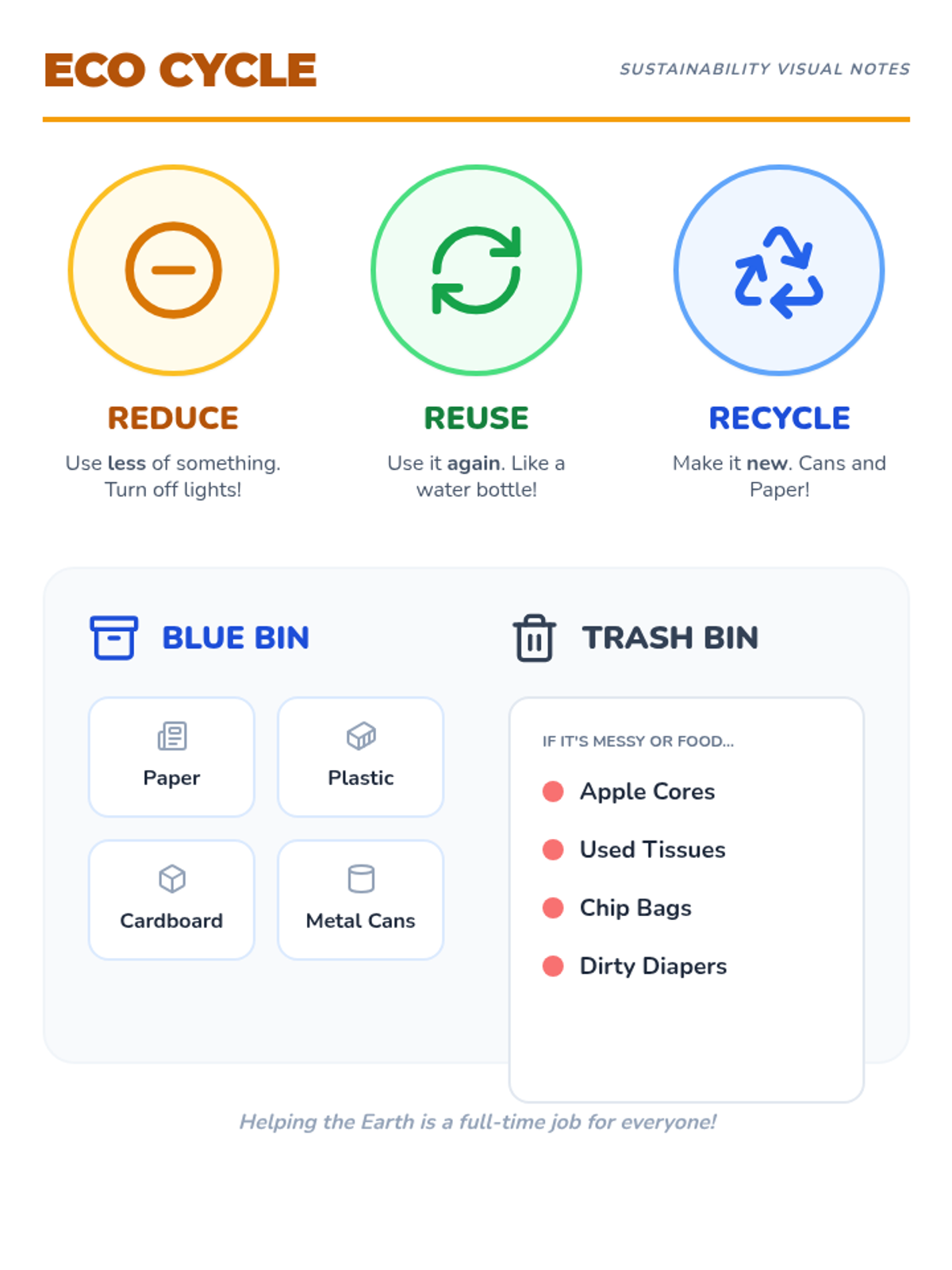
Visual notes for Lesson 3 detailing the "3 Rs" (Reduce, Reuse, Recycle) and a visual sorting guide for blue bins versus trash cans.
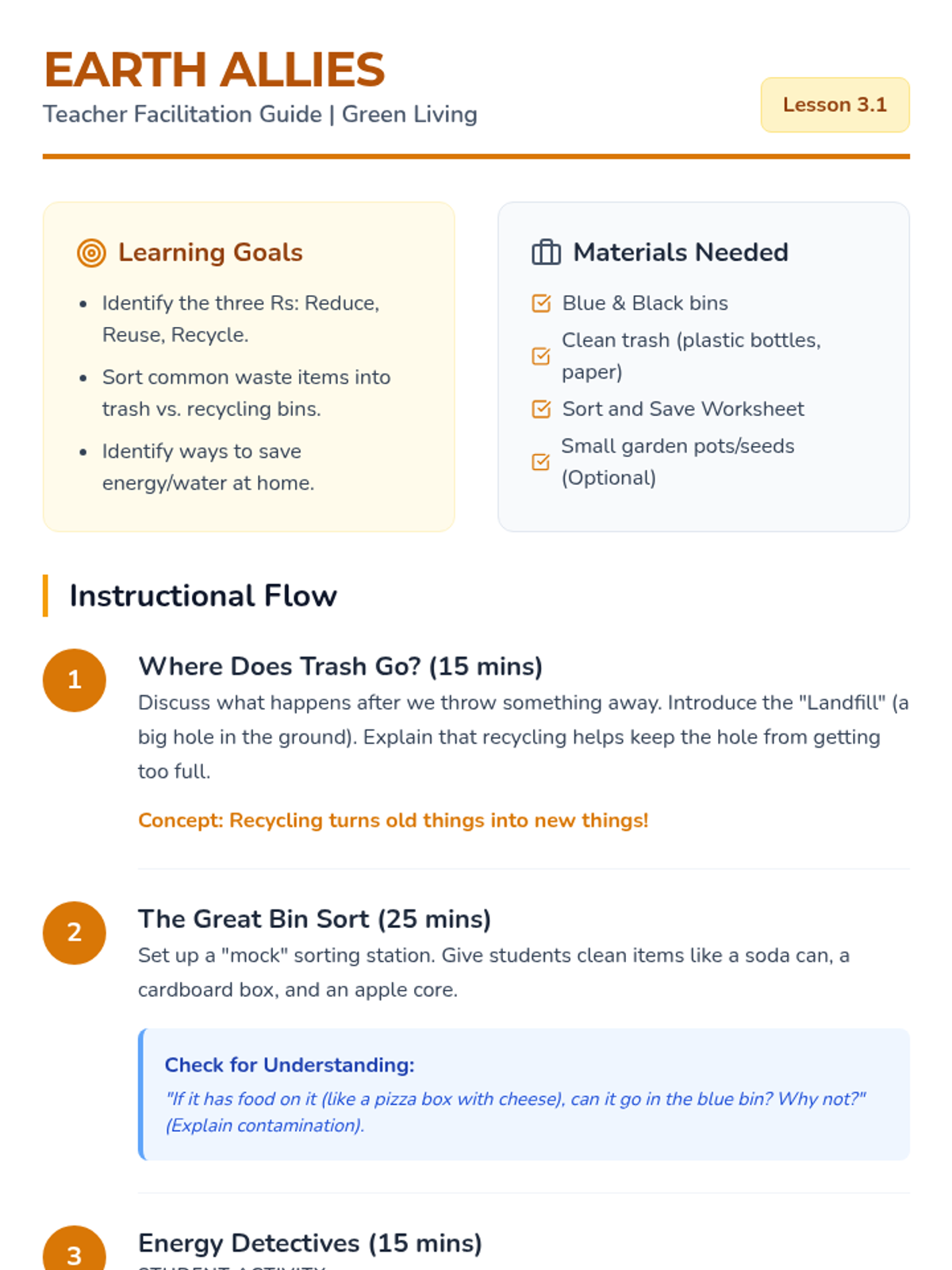
A teacher facilitation guide for Lesson 3 focusing on sustainability, recycling sorting activities, and energy conservation practices for life skills students.
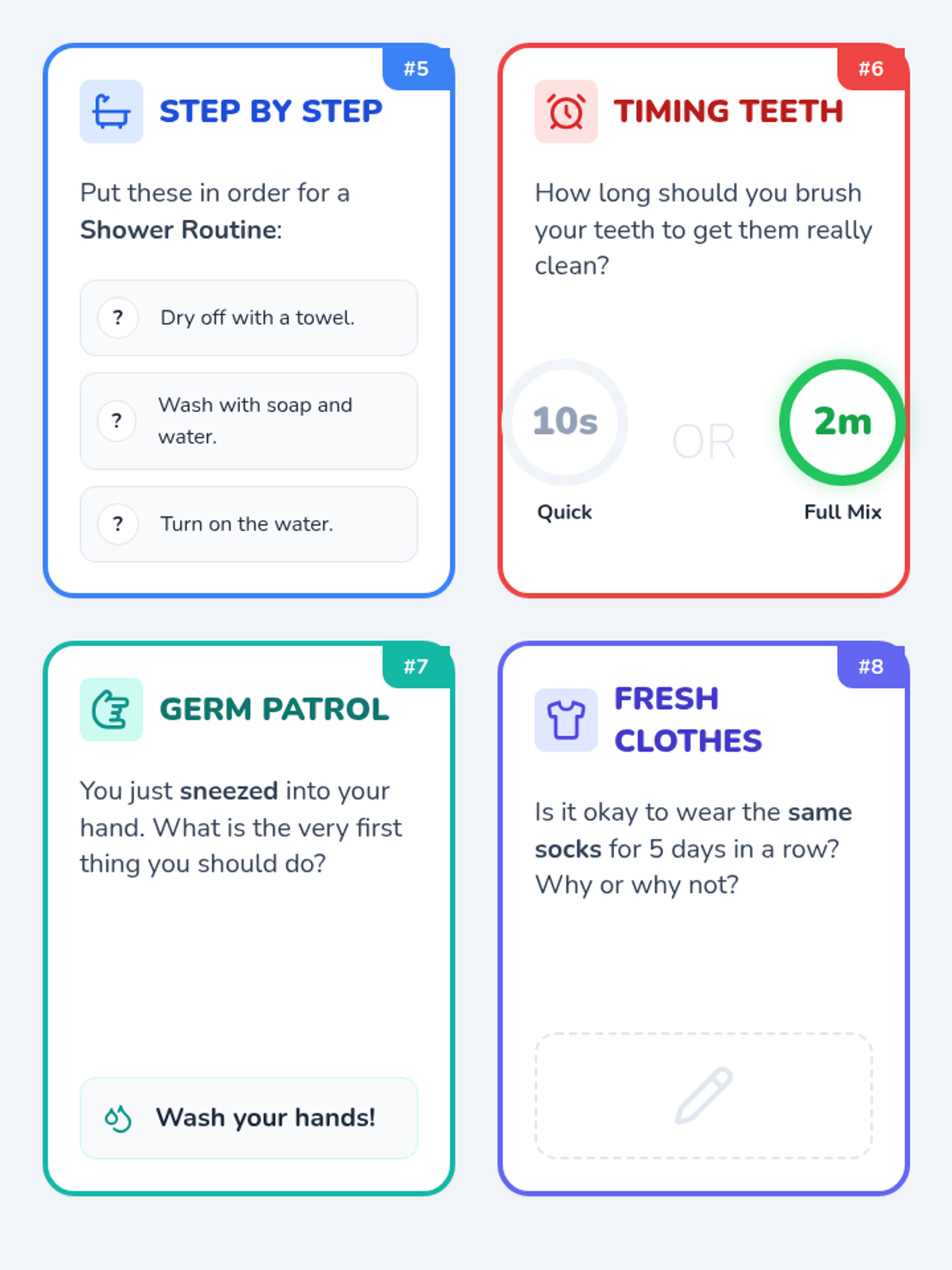
Task cards for Lesson 2 focusing on daily living hygiene skills like the steps of a shower routine, tooth brushing duration, and germ management.
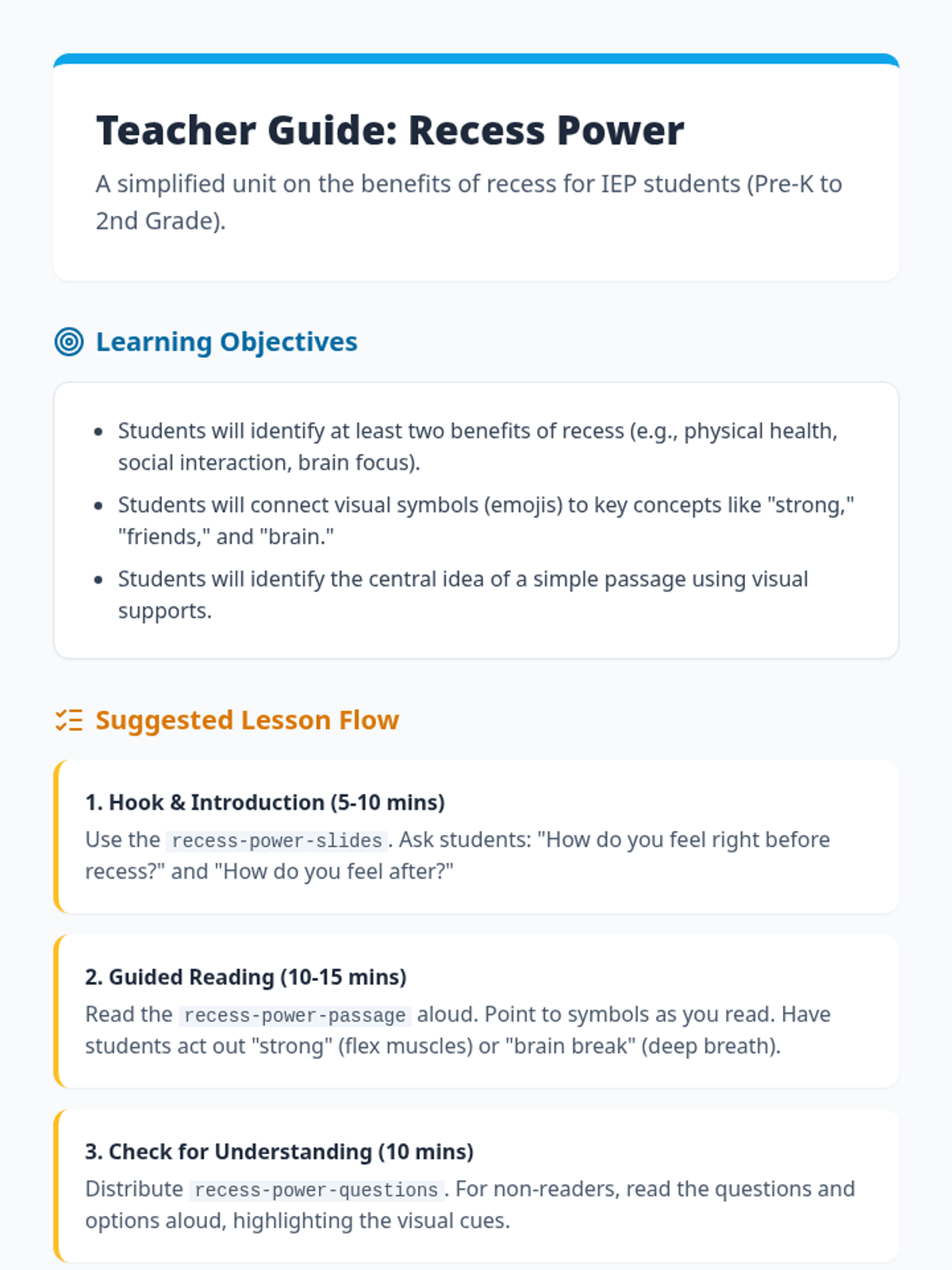
A teacher guide providing learning objectives, lesson sequence, differentiation strategies, and an updated answer key for the Recess Power lesson.
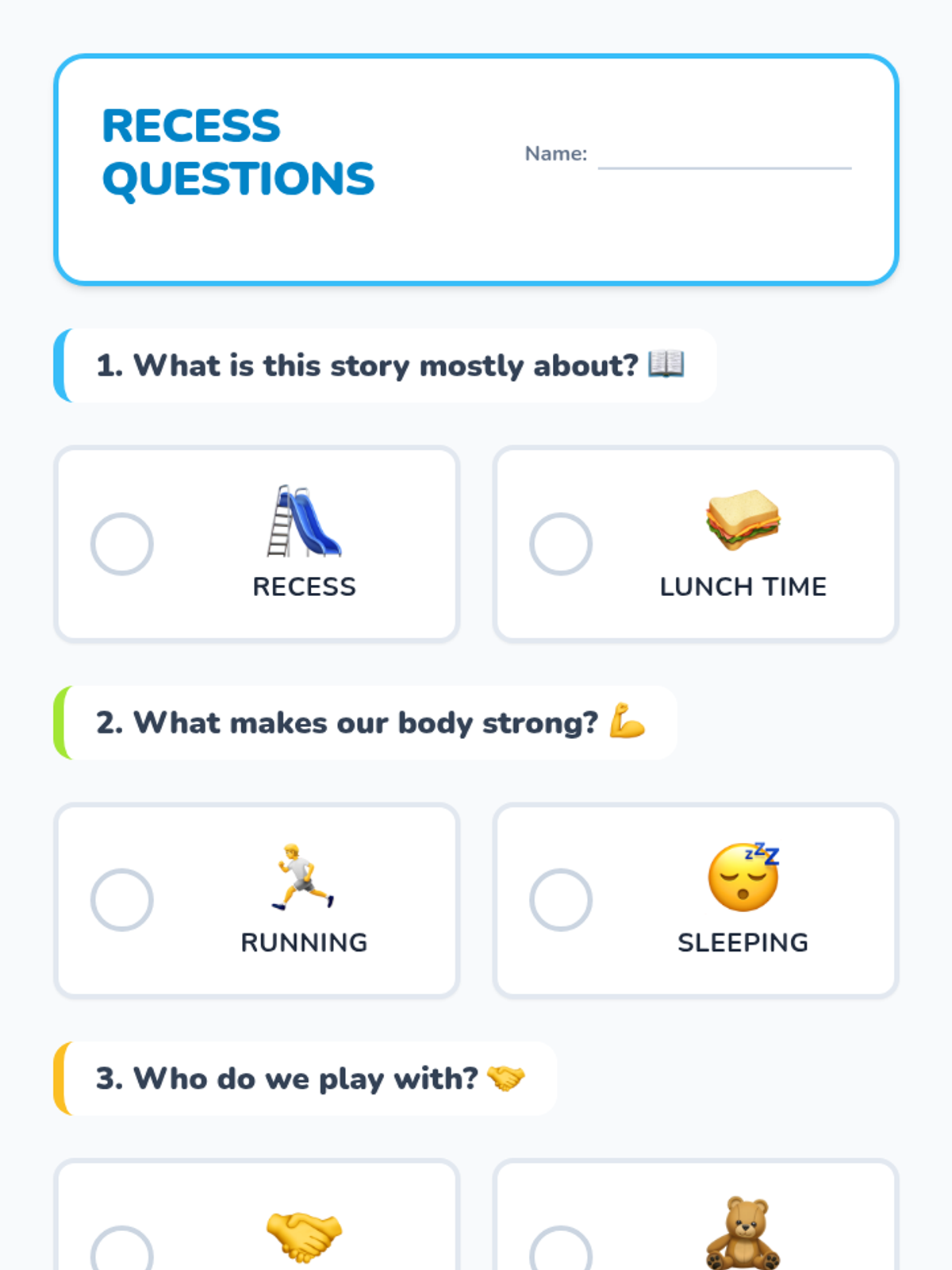
A multiple choice assessment for students with IEPs, featuring visual cues and identical option styling for 1st-2nd grade or Pre-K/K learners. Now includes a question on central idea.
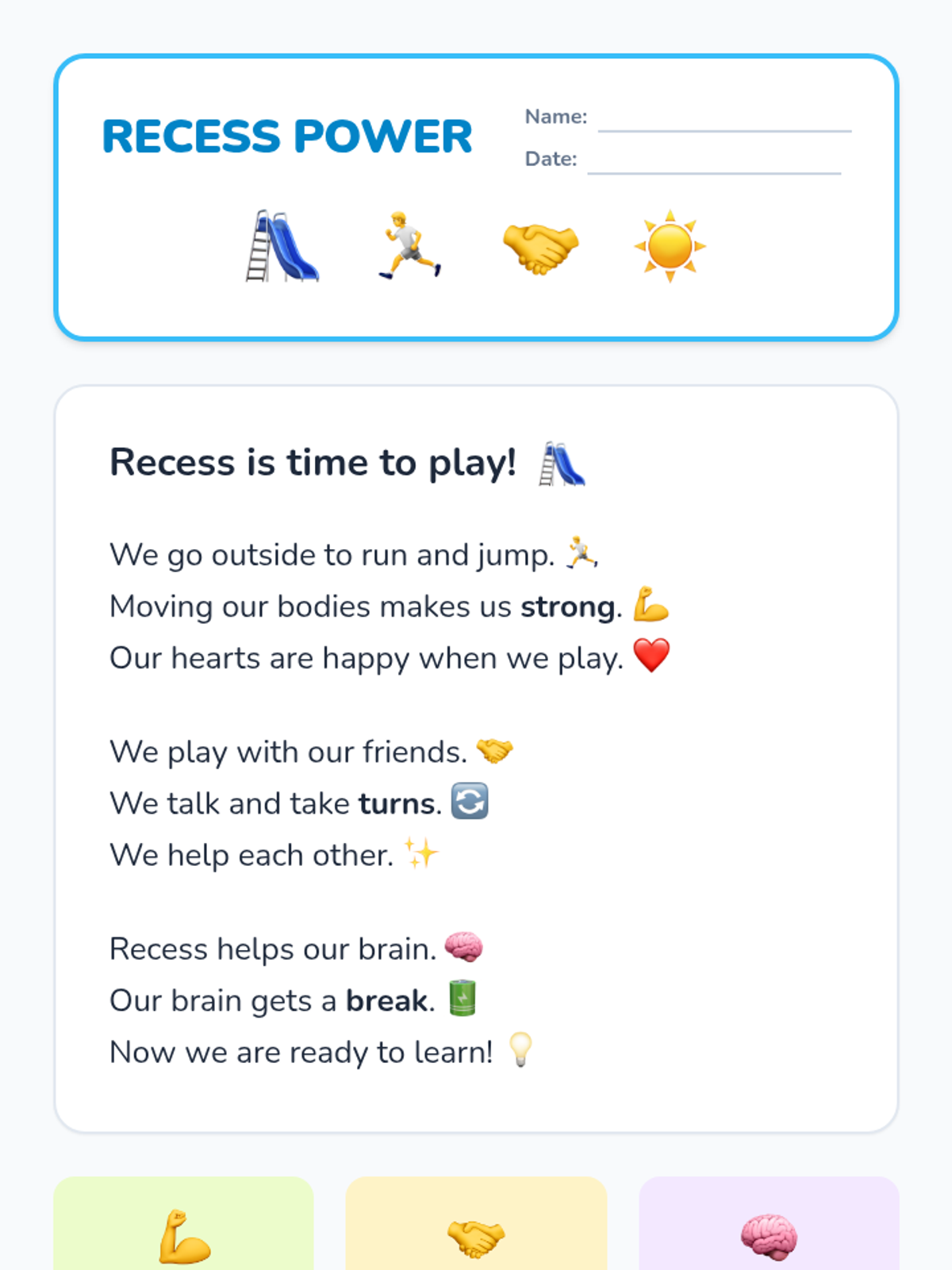
A simplified reading passage for 1st-2nd grade level with visual emoji supports for key concepts like playing, strength, friendship, and brain breaks.
A visual presentation with large text and symbols explaining why recess is important for physical health, social skills, and classroom focus.
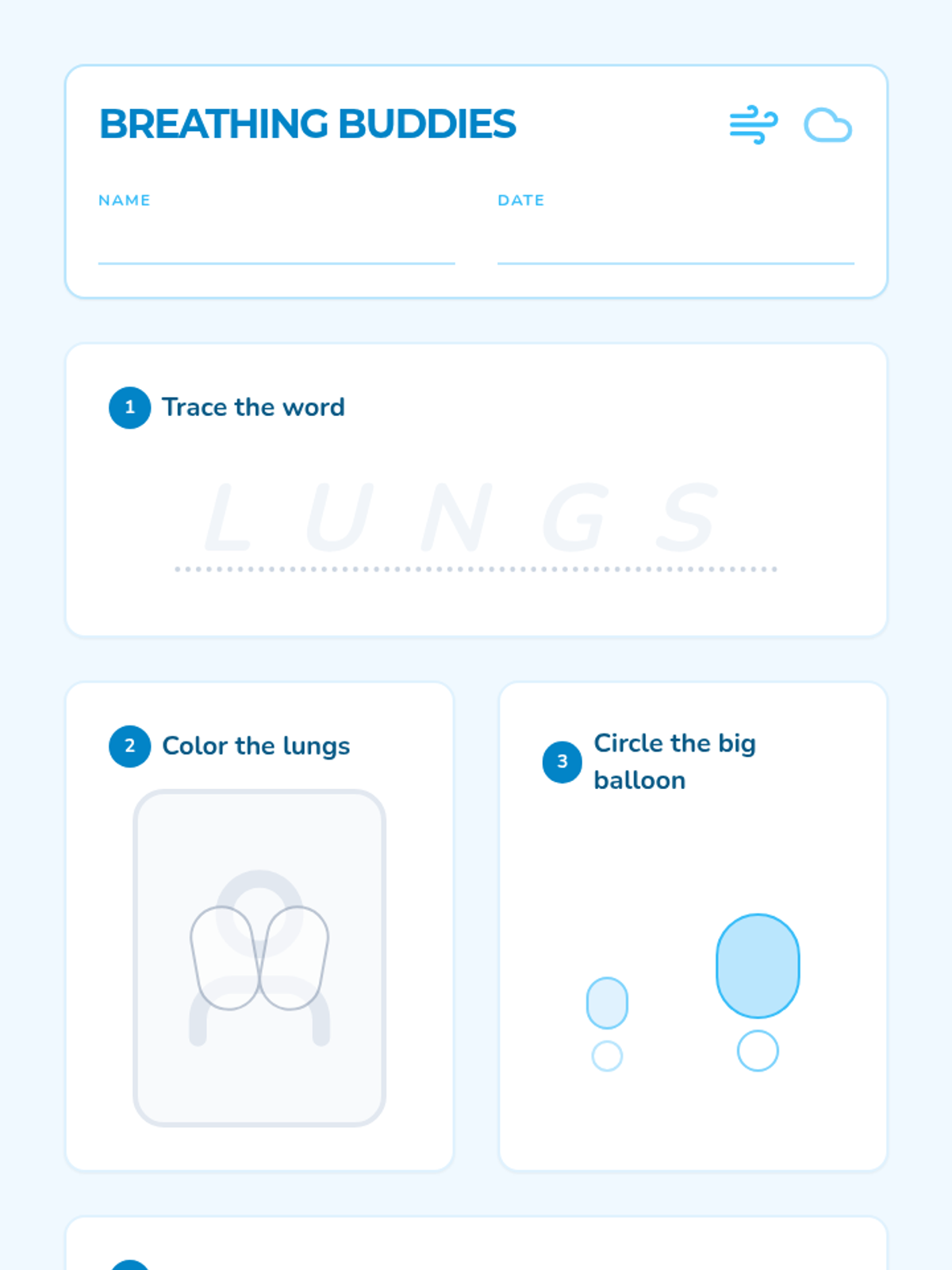
A student worksheet for K-1 students with simplified text instructions for tracing the word 'lungs', coloring lung shapes, and identifying healthy habits.
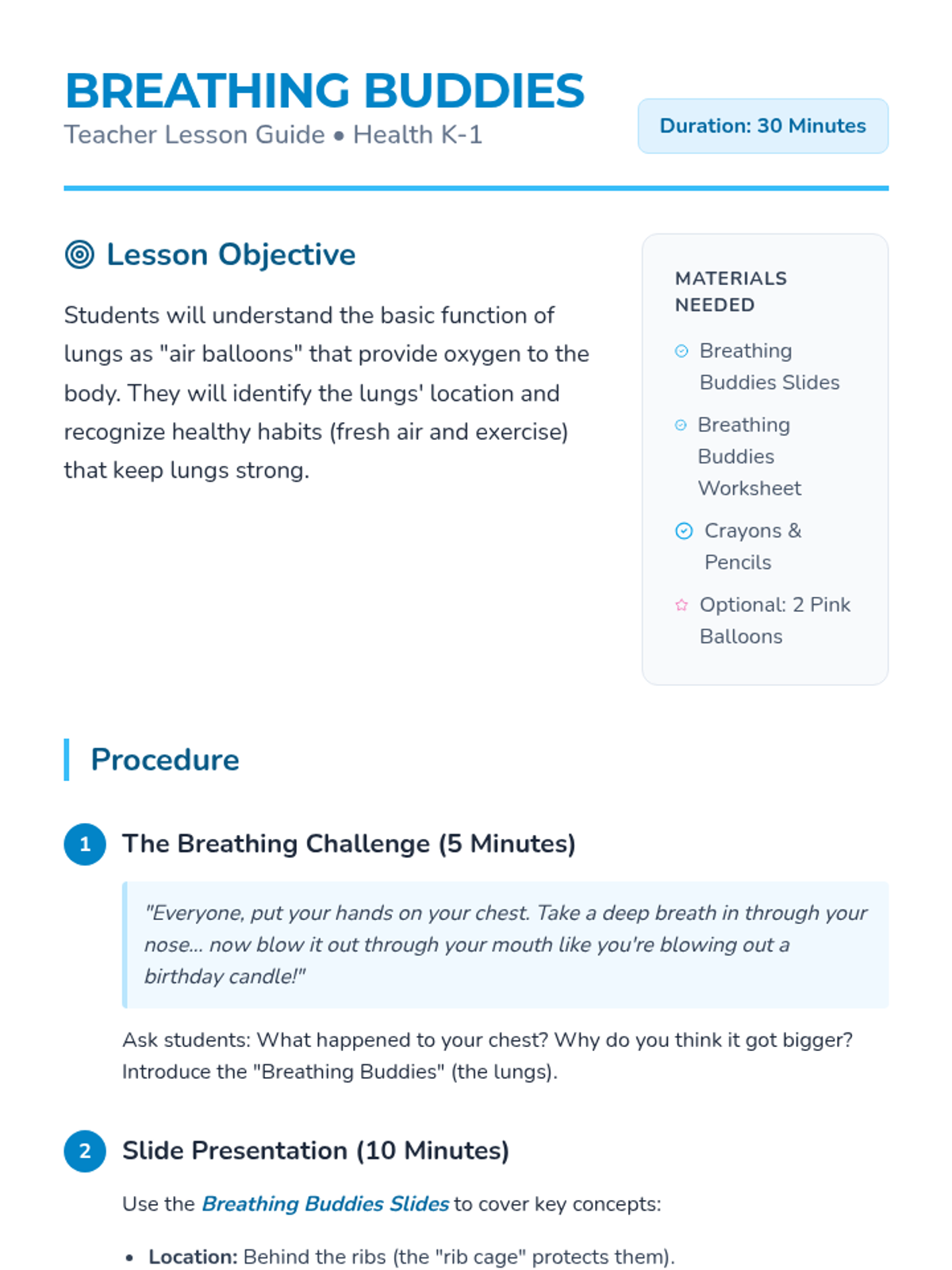
A comprehensive teacher facilitation guide for the Breathing Buddies lesson, including a 30-minute procedure, discussion prompts, and activity instructions.
Visual slide deck for K-1 students explaining the lungs' location, function as 'balloons', and how to keep them healthy through fresh air and exercise.
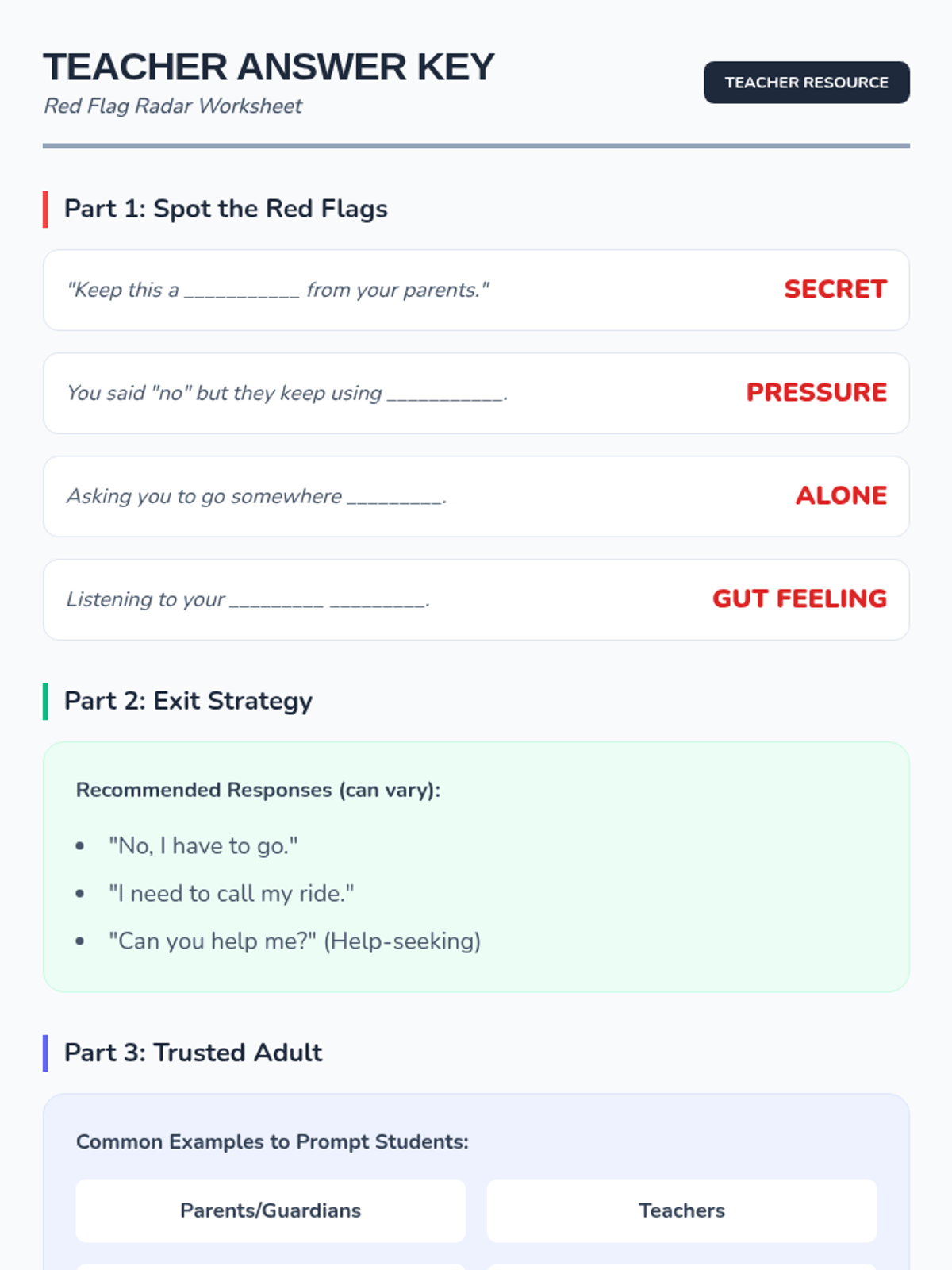
A two-page teacher answer key for the Safe or Unsafe Decision Worksheet, featuring 12 scenarios with clear correct answers and teaching prompts.
Twelve printable scenario cards where students decide if a situation is 'Safe' (Thumbs Up) or 'Unsafe' (Red Flag). Designed for role-playing and hands-on decision making. Stylized for student use with identical styling for all options. Updated to match the worksheet scenarios.
A game-based slide deck where students practice identifying 12 different scenarios as 'Safe' (Thumbs Up) or 'Unsafe' (Red Flag). Options are styled identically for student decision-making. Updated to use gender-neutral 'parent' language.
A decision-making worksheet spread over two 8.5x11 pages for maximum readability. Students identify 12 social situations as 'Safe' (Thumbs Up) or 'Unsafe' (Red Flag) using large icons and simplified, gender-neutral language. Options share identical styling for student use.
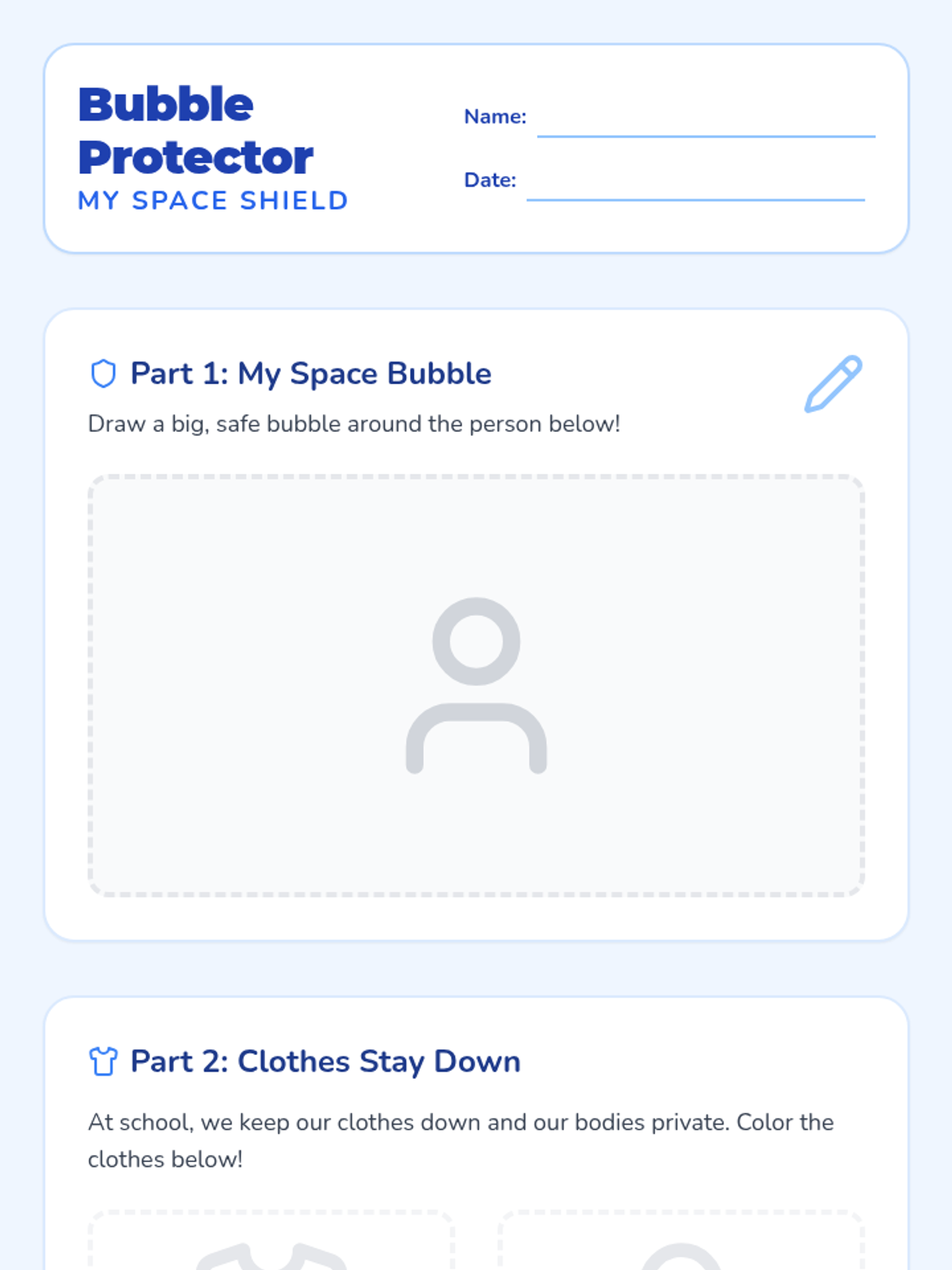
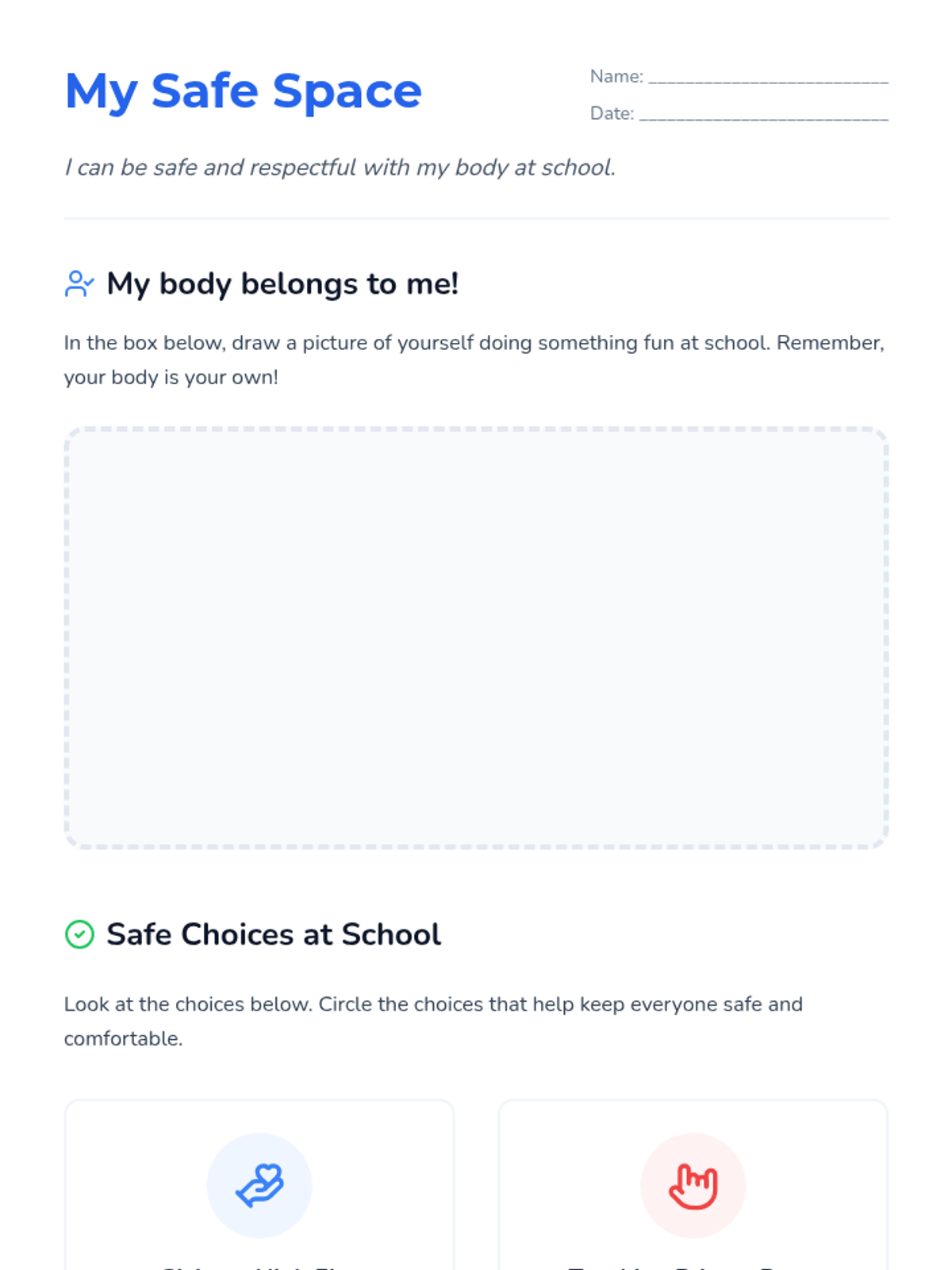
A student-facing worksheet for Kindergarten that reinforces personal space bubbles, the clothes-down rule at school, and the importance of asking for consent before physical contact.
A visual and interactive slide presentation for Kindergarten students that introduces personal space, the 'Swimsuit Rule', and the importance of clothes staying down at school.
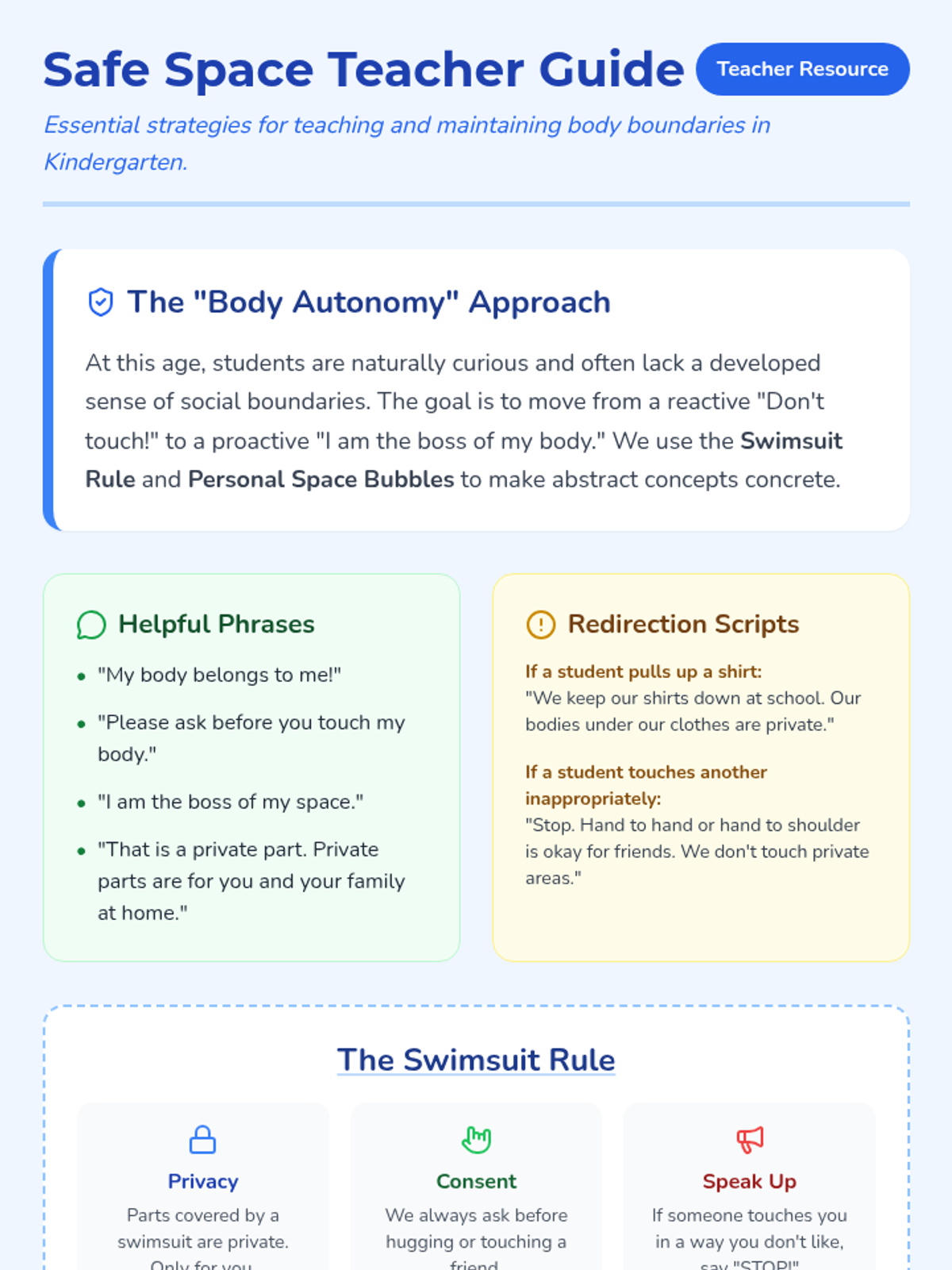
A comprehensive guide for teachers to handle boundary-crossing behaviors in Kindergarten, including scripts for redirection and explanations of the 'Swimsuit Rule'.
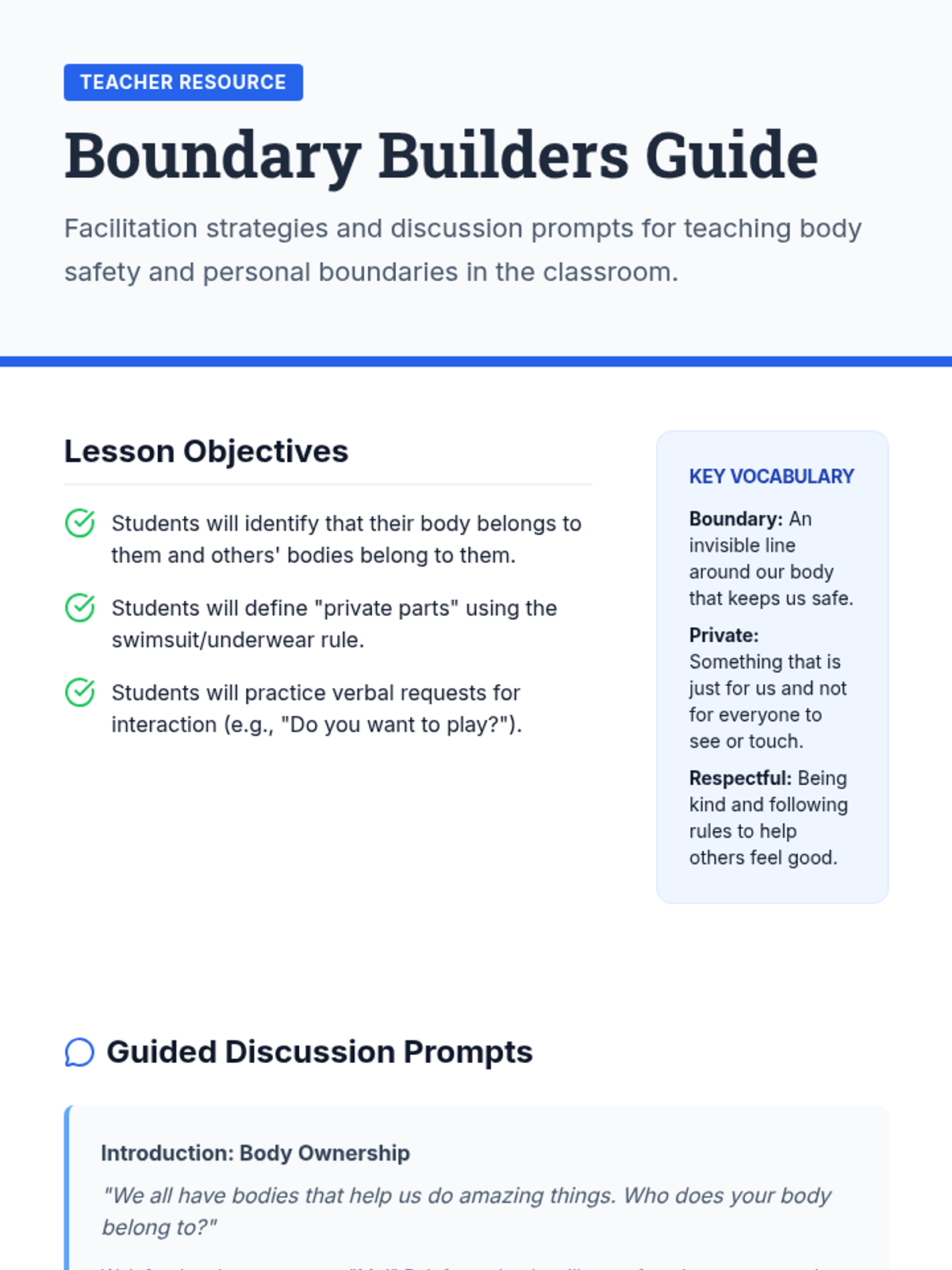
A comprehensive teacher facilitation guide for teaching body boundaries, including objectives, scripts, and role-play scenarios.
A student worksheet to reinforce body boundary concepts through drawing and safe choice identification.
A multi-slide social story presentation teaching students about body boundaries, personal space, and private parts in a school setting.
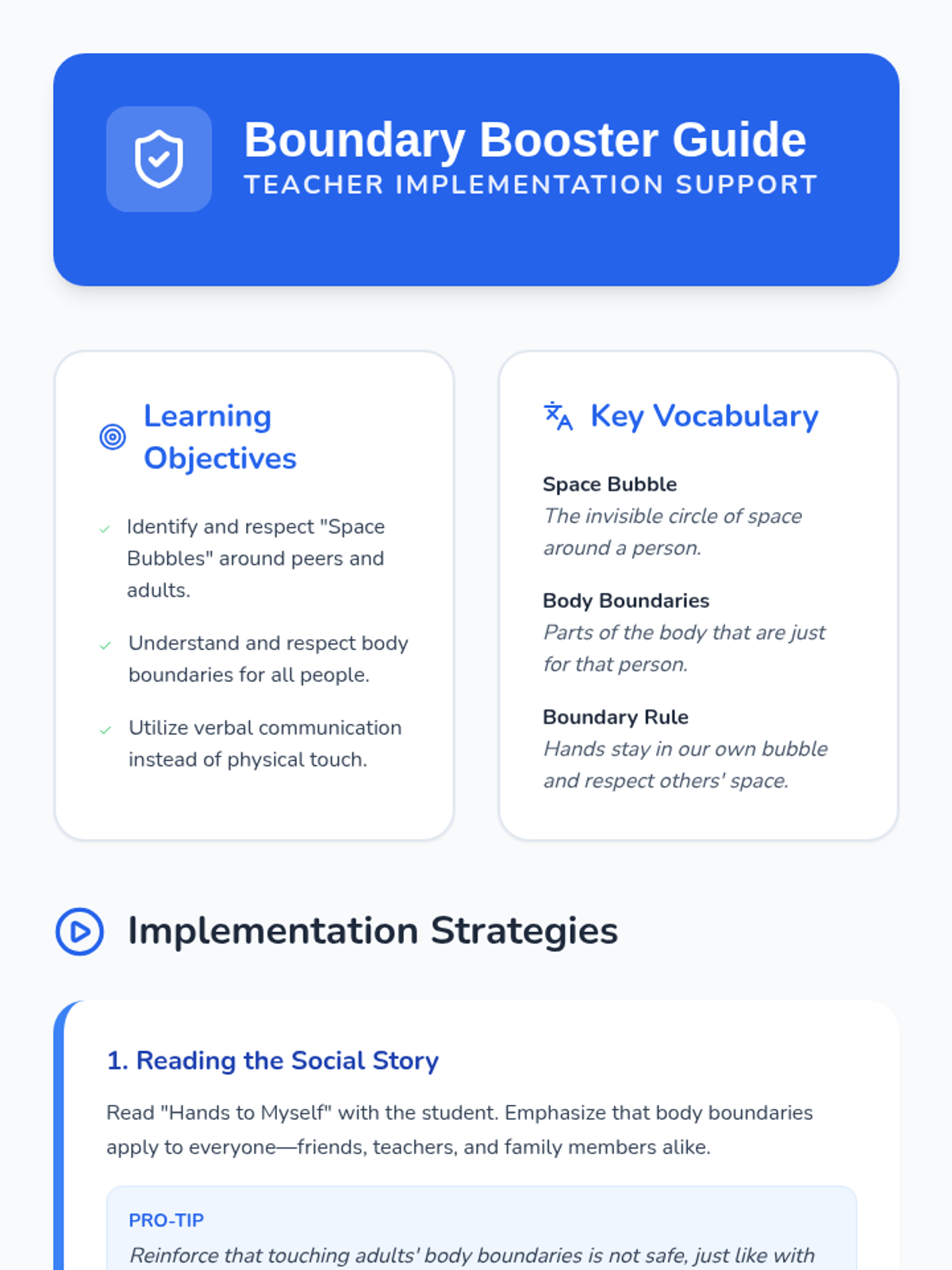
A guide for educators on how to implement the body boundaries lesson, including vocabulary, reinforcement strategies for peer and adult interactions, and scripts.
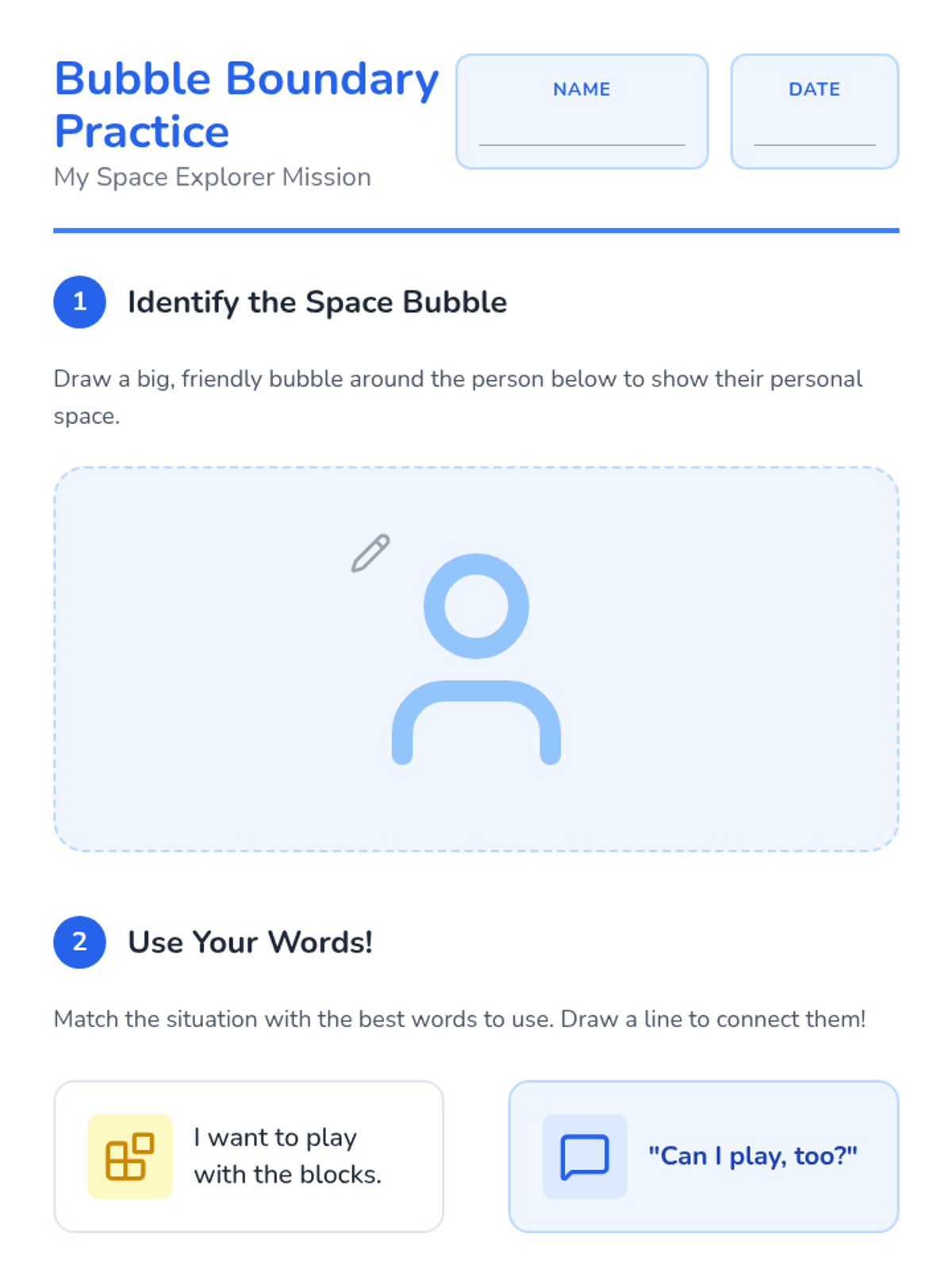
A worksheet for students to practice identifying personal space bubbles and matching situations with appropriate verbal communication instead of touching.
A visual presentation for teaching kindergarten students about personal space bubbles, body boundaries for everyone, and using words to communicate.
A social story for kindergarten students about personal space, respecting body boundaries for peers and adults, and using words to communicate.
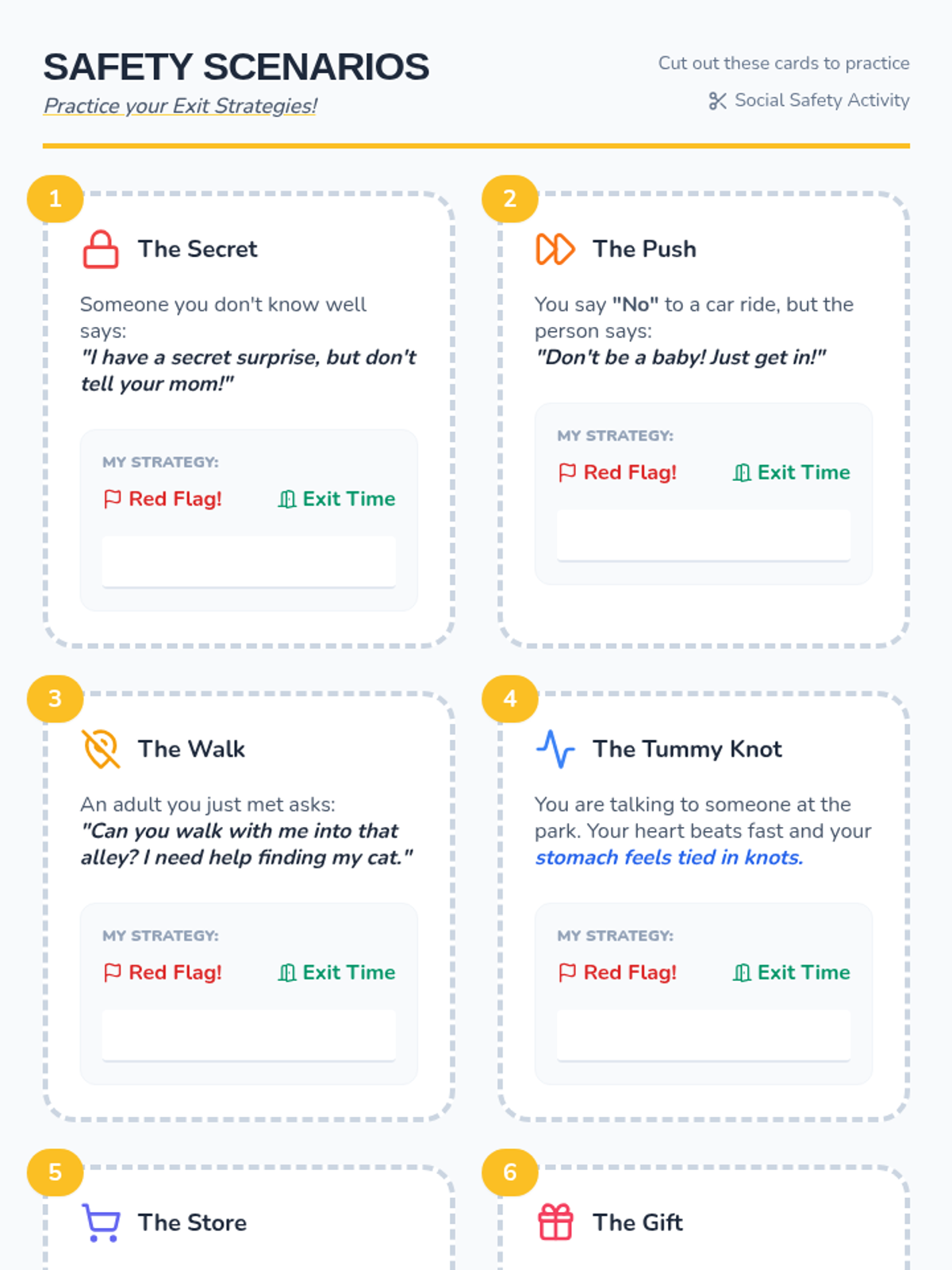
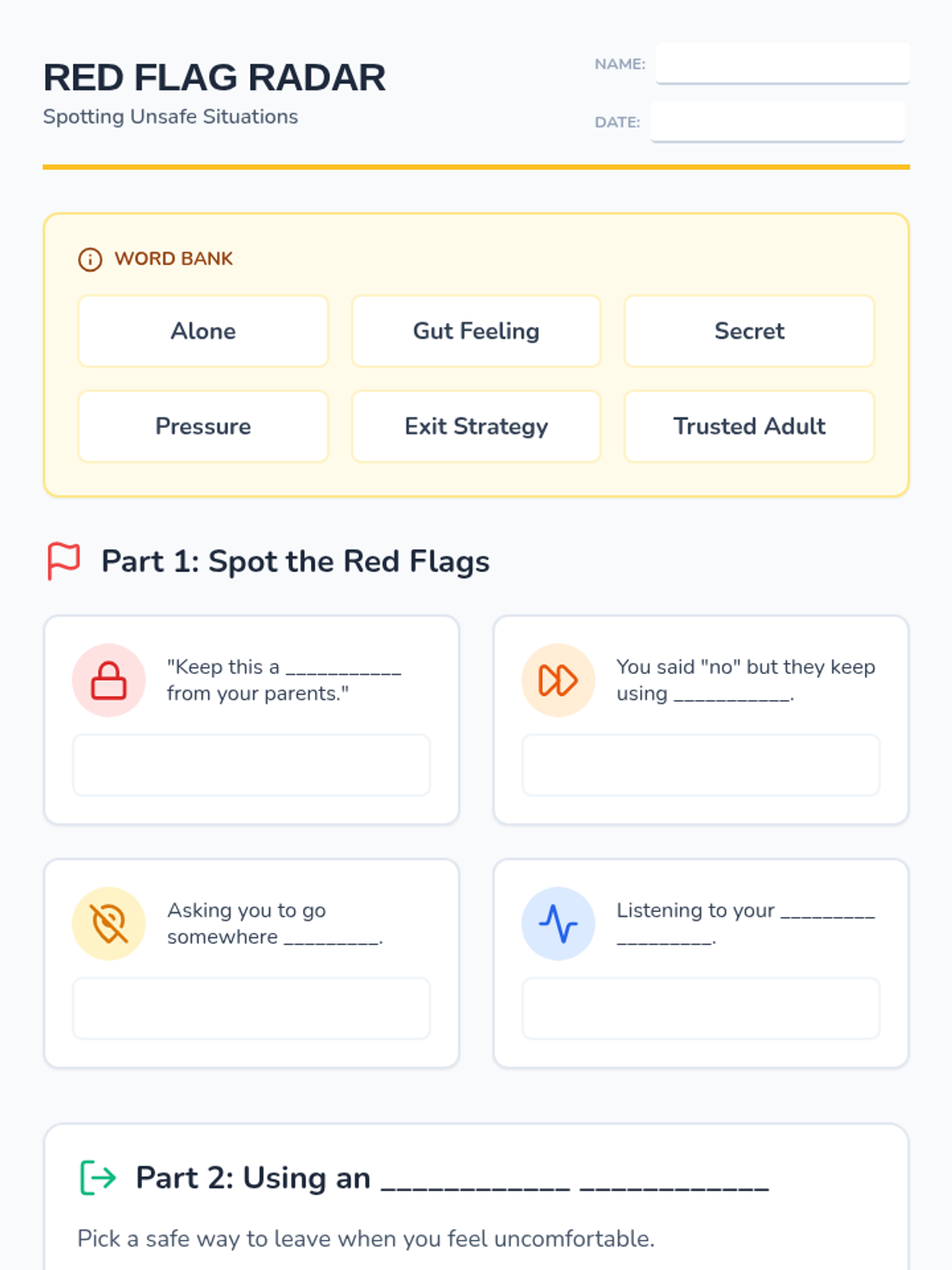
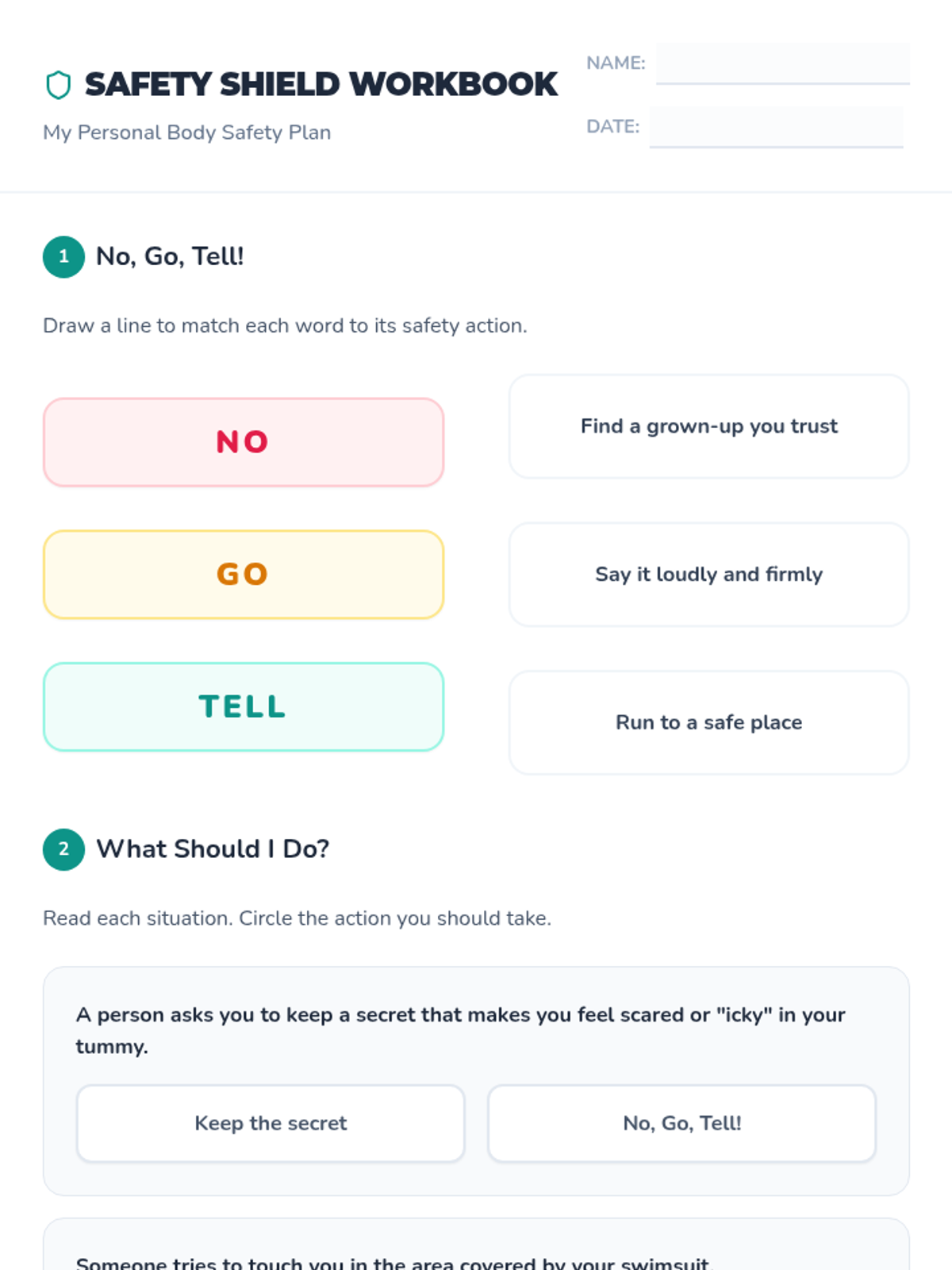
A student-facing activity sheet to practice body safety rules. Includes a matching activity for 'No, Go, Tell', scenario-based decision making, and a personal 'Safety Shield' mapping for identifying trusted adults.
A visual slide deck for a Kindergarten lesson reviewing bus safety rules. Features high-contrast designs, large text (24px+), and clear icons to reinforce key safety concepts.
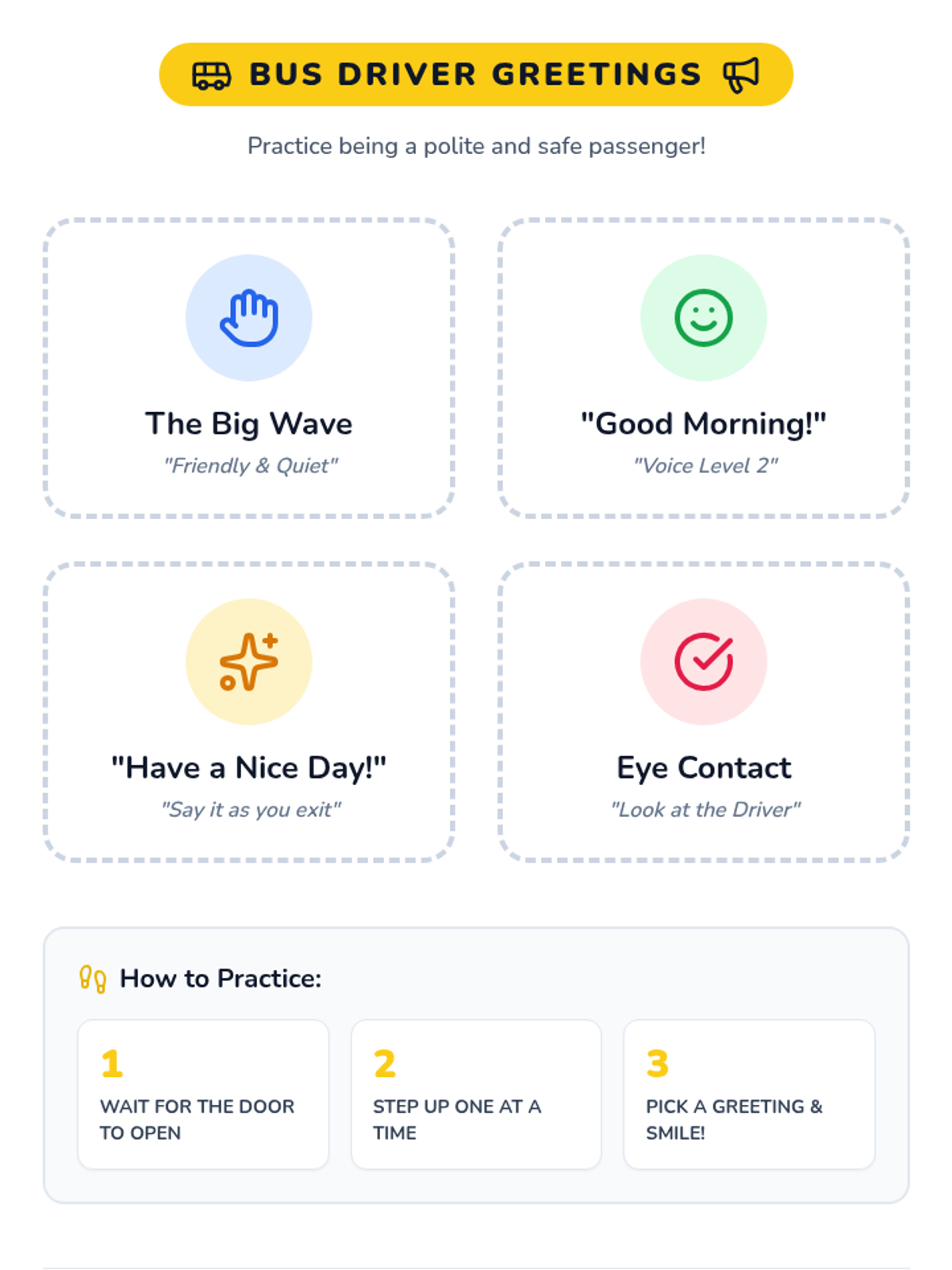
Visual greeting cards and a practice guide for Kindergarten students to learn polite ways to interact with their bus driver while following safety procedures.
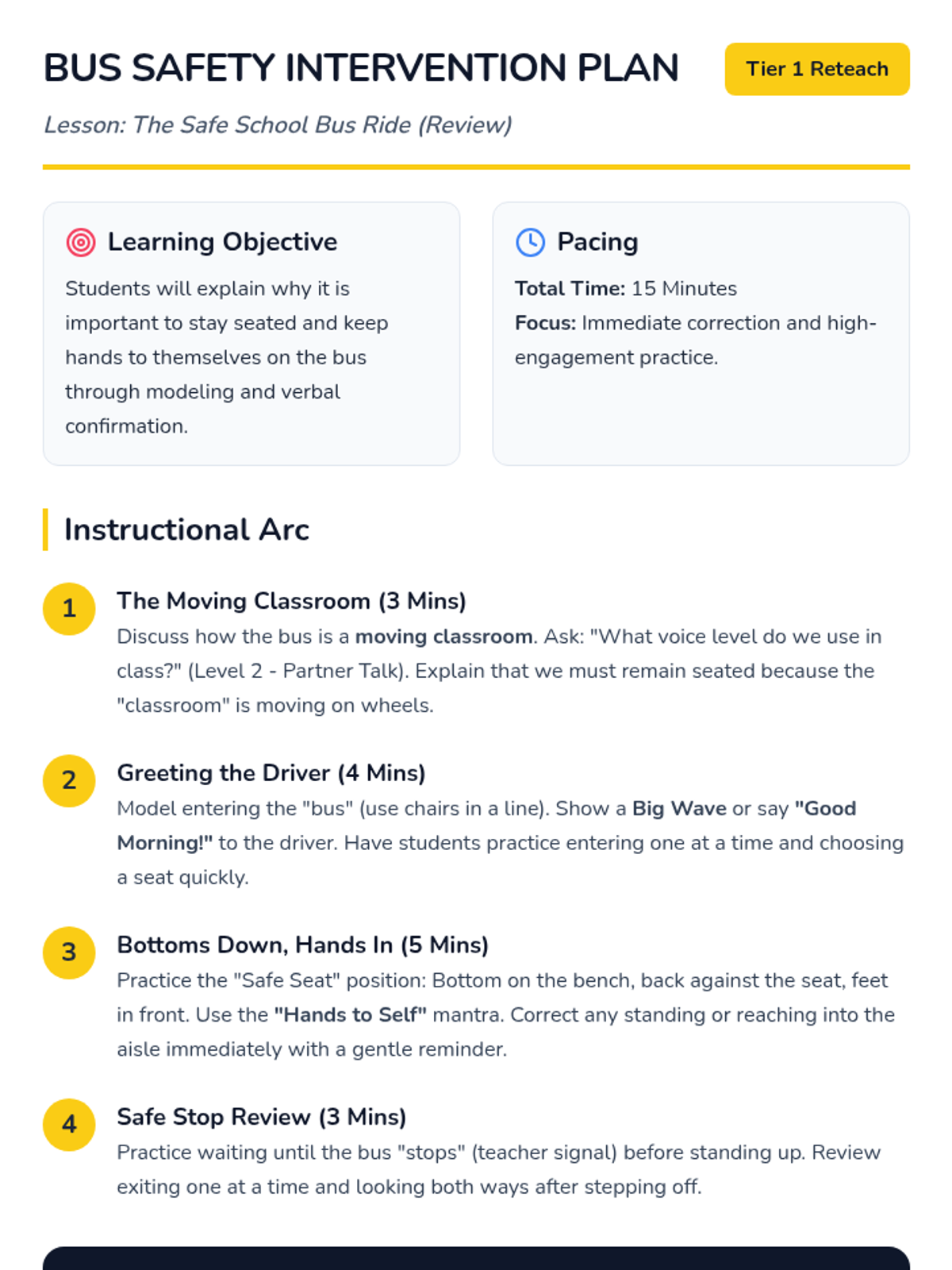
A teacher-facing intervention plan for a 15-minute Kindergarten reteaching lesson on bus safety. It includes a structured instructional arc, key concepts, and specific teacher scripts.
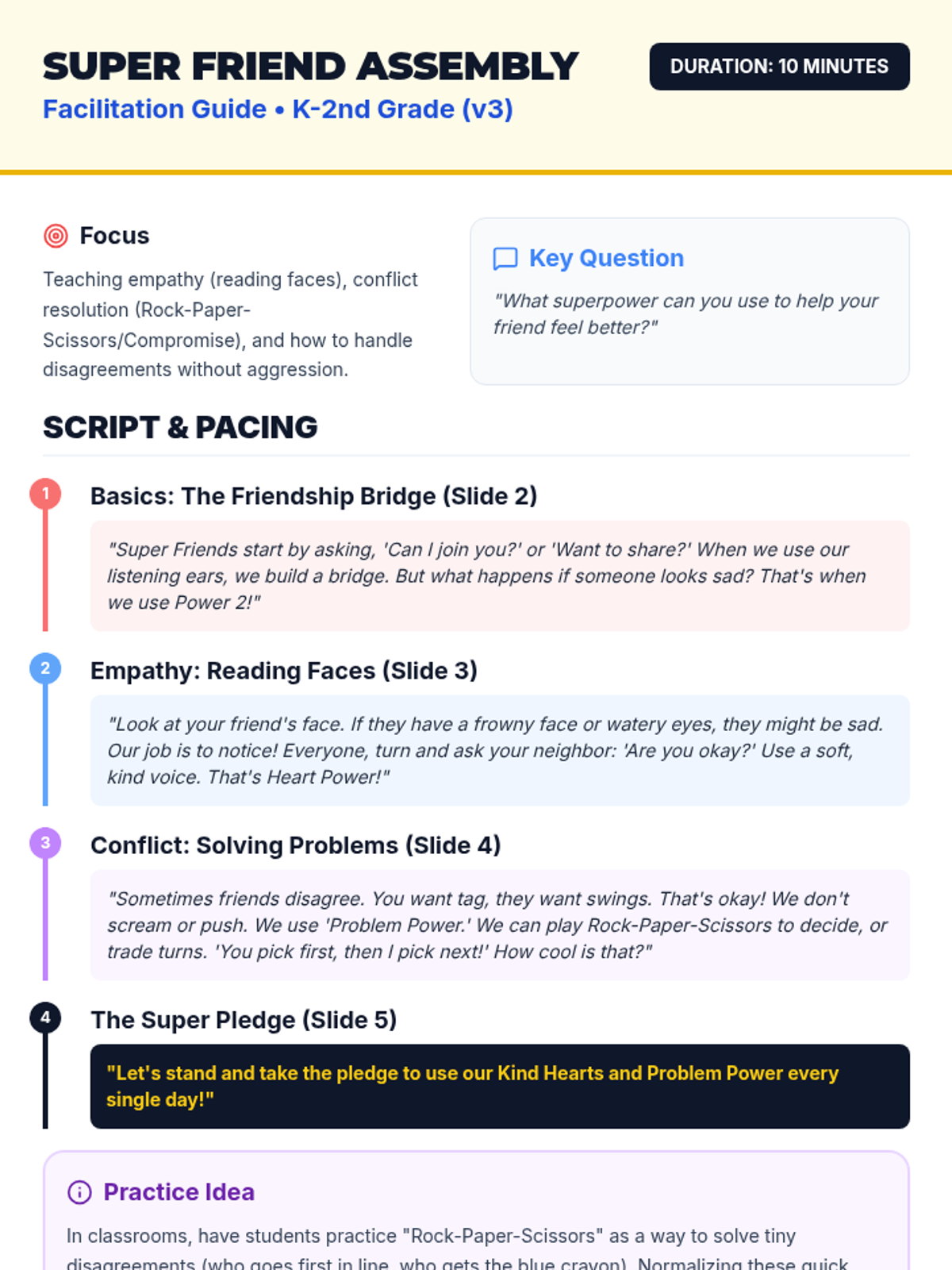
Updated K-2 facilitation guide with scripts for teaching empathy, reading non-verbal cues, and practical conflict resolution tools like Rock-Paper-Scissors.
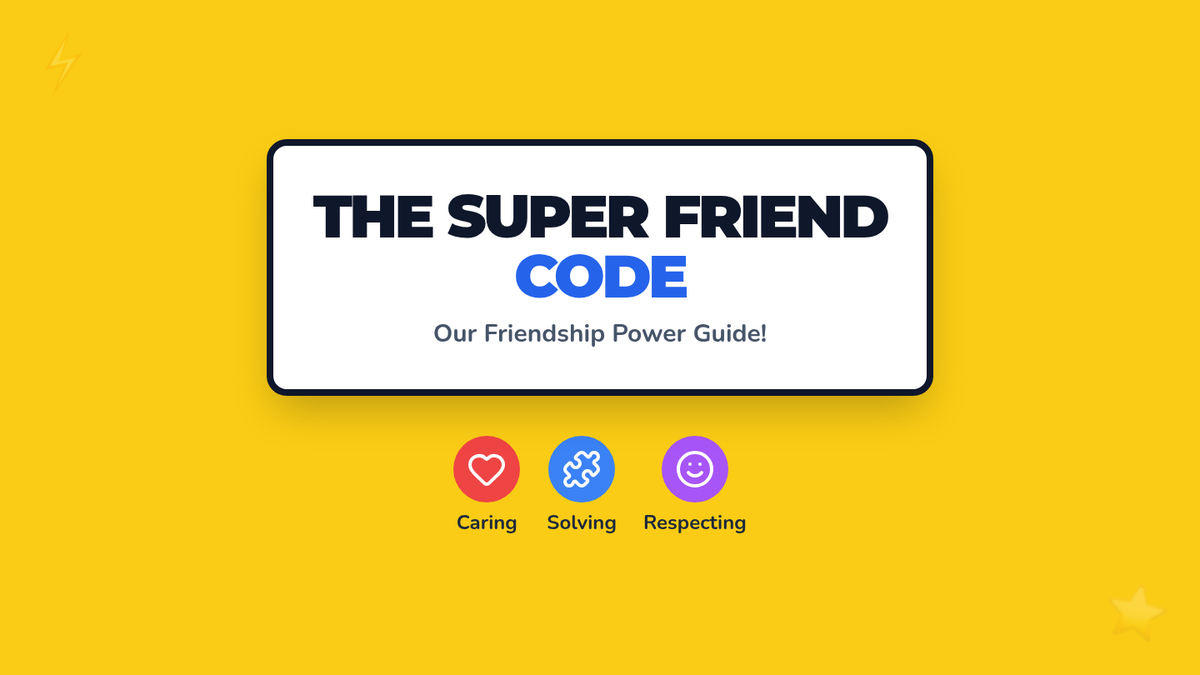
Updated K-2 assembly slides with specific focus on empathy (caring for feelings), handling disagreements, and conflict resolution strategies for young students.
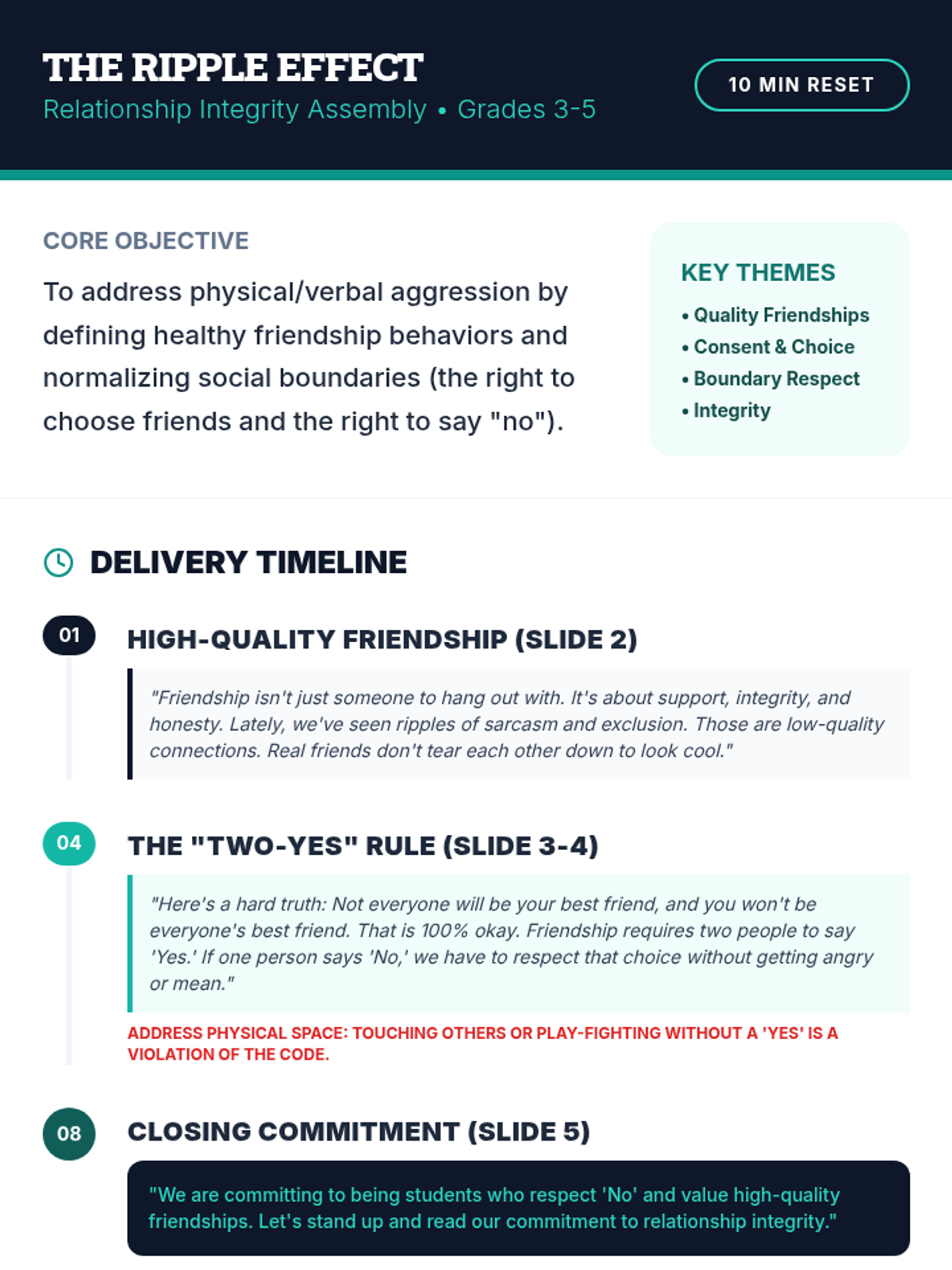
Updated 3-5 facilitation guide with talking points on the "Two-Yes" rule for friendship and how to handle social boundaries with integrity.
Updated 3-5 assembly slides focusing on healthy friendship traits, the "Two-Yes" rule for social choices, and respecting boundaries.
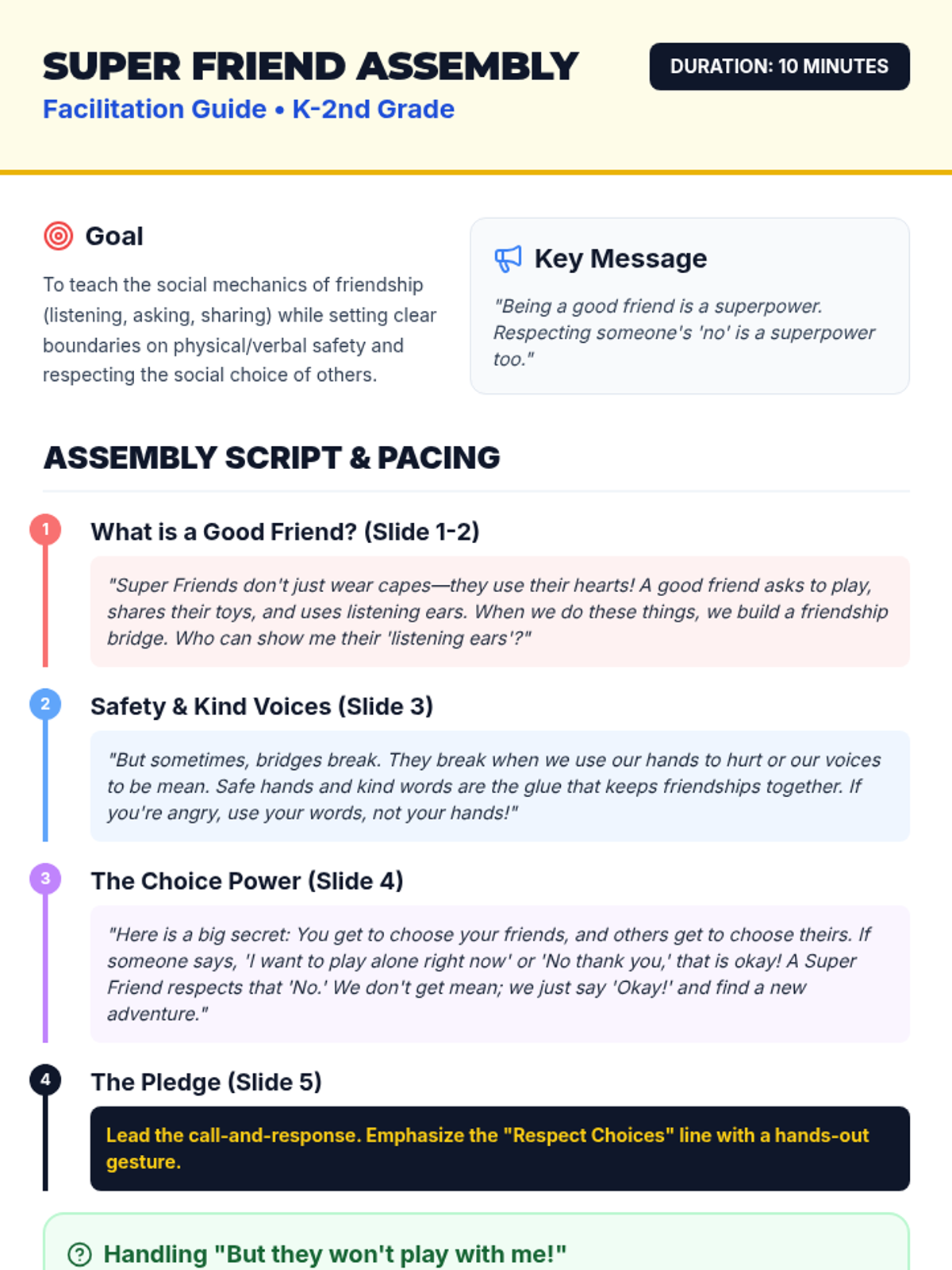
Updated K-2 facilitation guide with scripts for teaching friendship skills and the concept of social choice and boundaries.
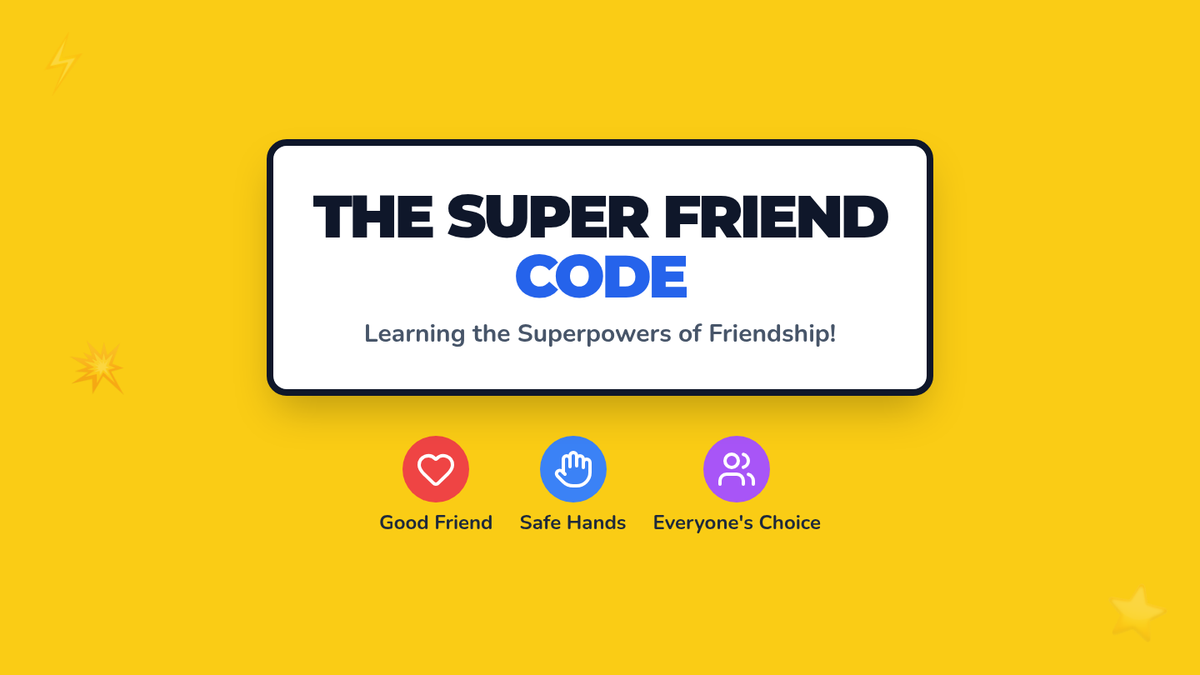
Updated K-2 assembly slides with a focus on defining good friendship, sharing, listening, and respecting the choice that it's okay if someone doesn't want to be a friend.
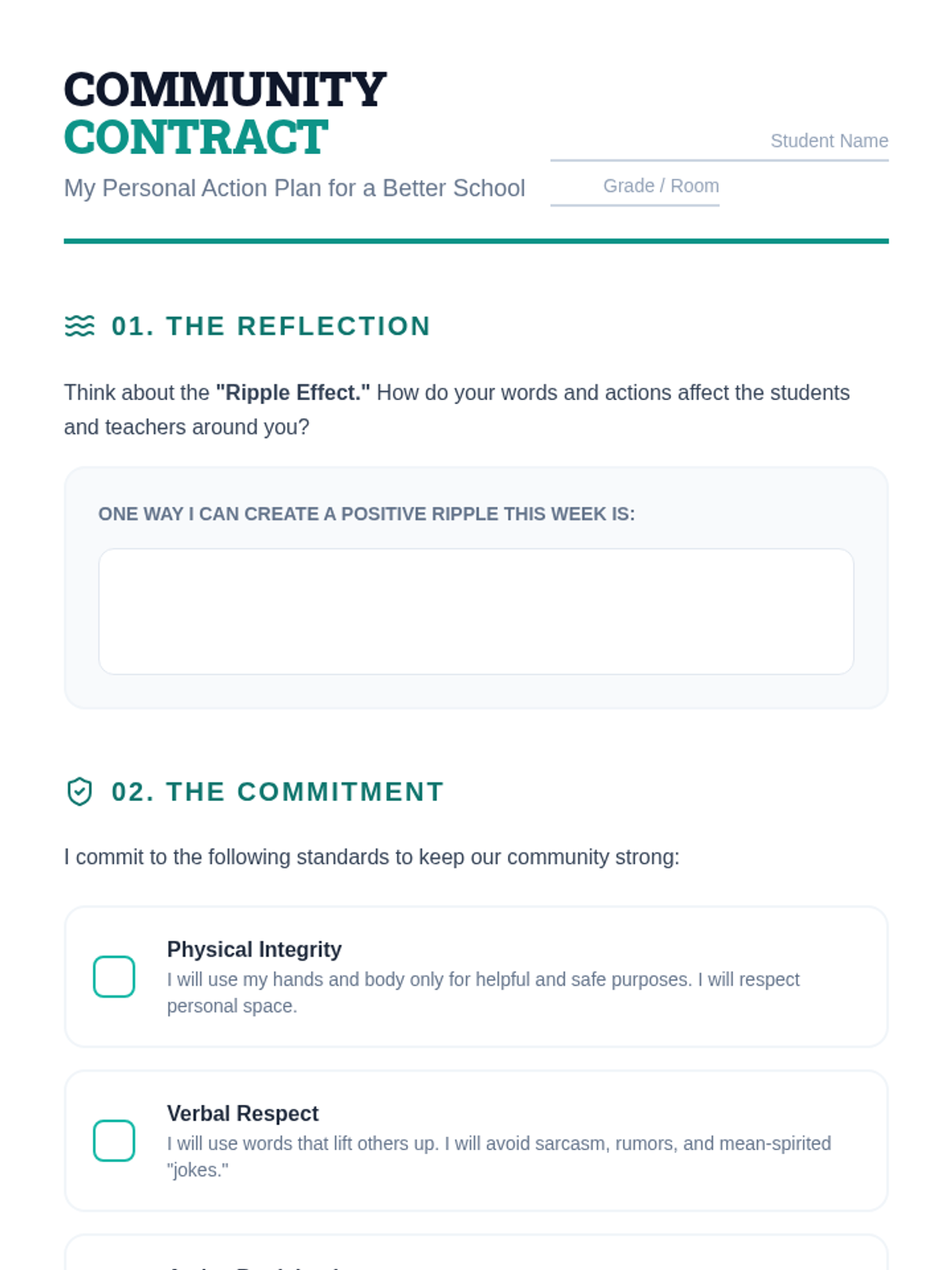
A formal and reflective commitment contract for 3-5 students to internalize the assembly's message about community impact and personal behavior.
A set of high-impact posters for a classroom or home bulletin board. Includes key safety rules like 'No, Go, Tell', the Swimsuit Rule, and a 'Safety Circle' identification chart to remind children of their body boundaries and trusted adults.
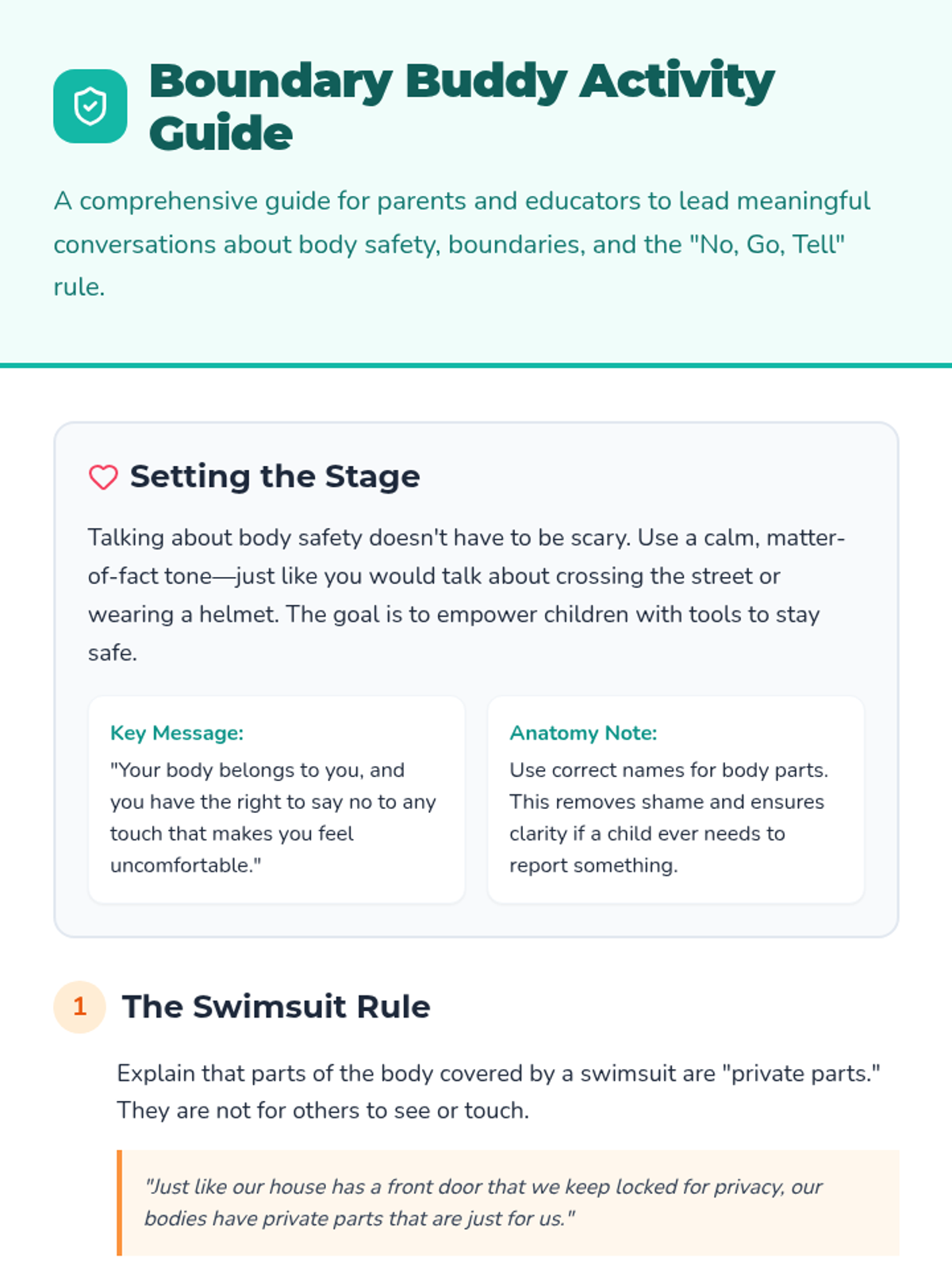
A comprehensive activity guide for parents and educators to lead meaningful conversations about body safety, boundaries, and the 'No, Go, Tell' rule. Includes discussion prompts, role-play scenarios, and a trusted adult identification exercise.
A presentation designed for Pre-K students to learn about body safety. It covers the concept of body autonomy, distinguishes between comfortable and uncomfortable touches, and introduces the 'STOP' signal as a way to set boundaries. Includes a placeholder for a video embed.
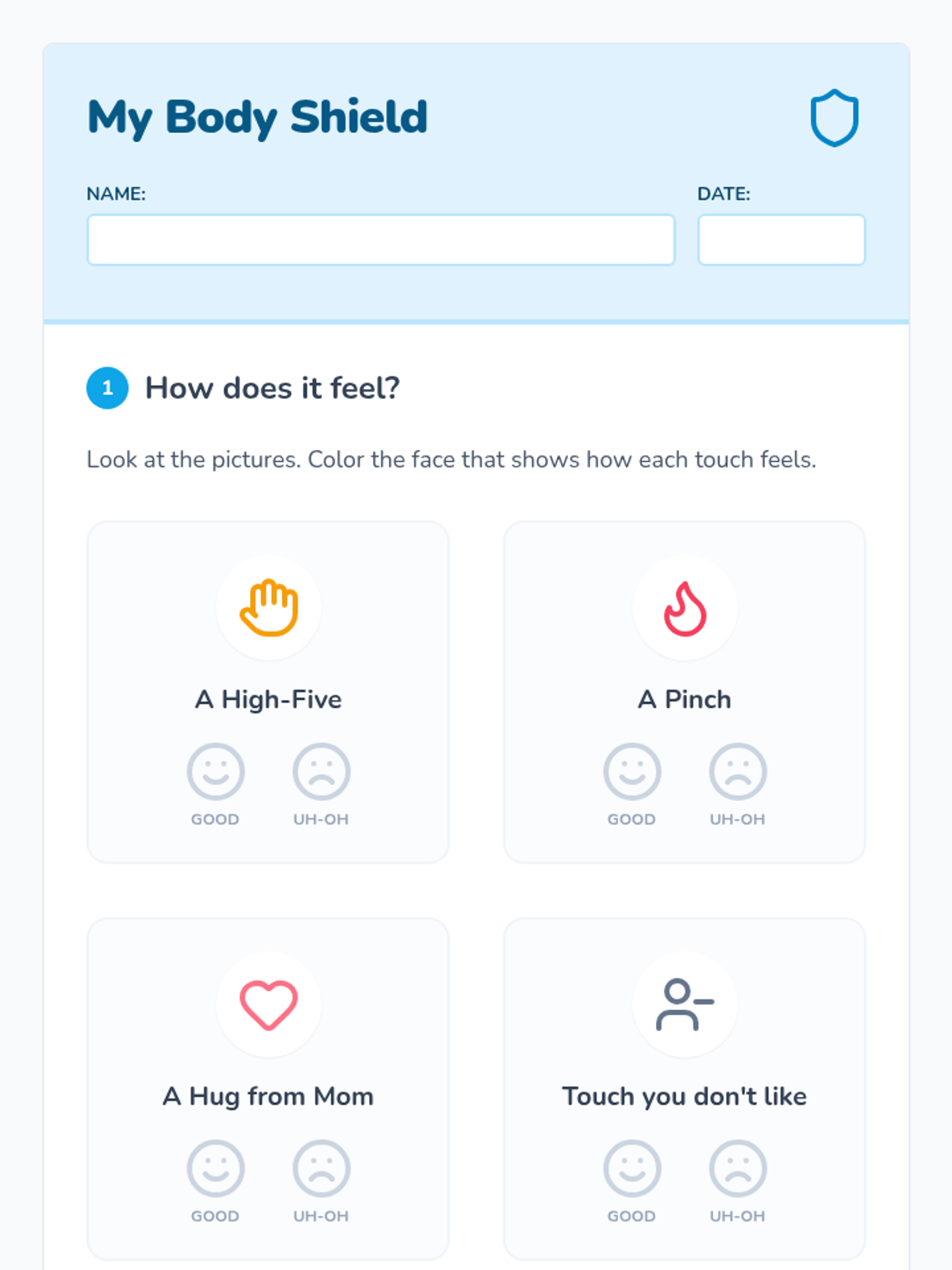
A student worksheet for Pre-K students to identify comfortable and uncomfortable touches. It features a simple sorting activity with facial expressions and a tracing exercise for the word 'STOP' to reinforce boundary-setting.