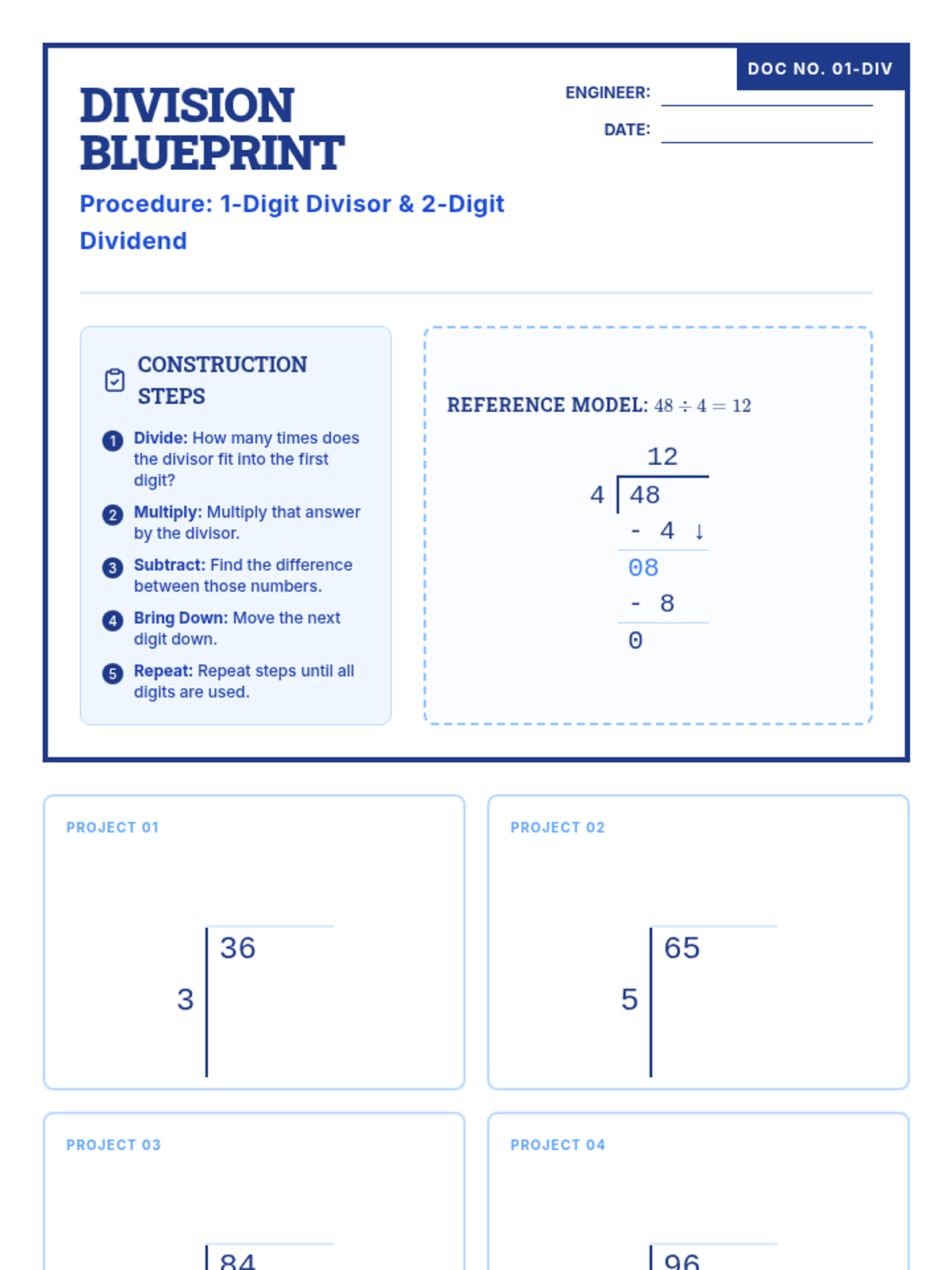
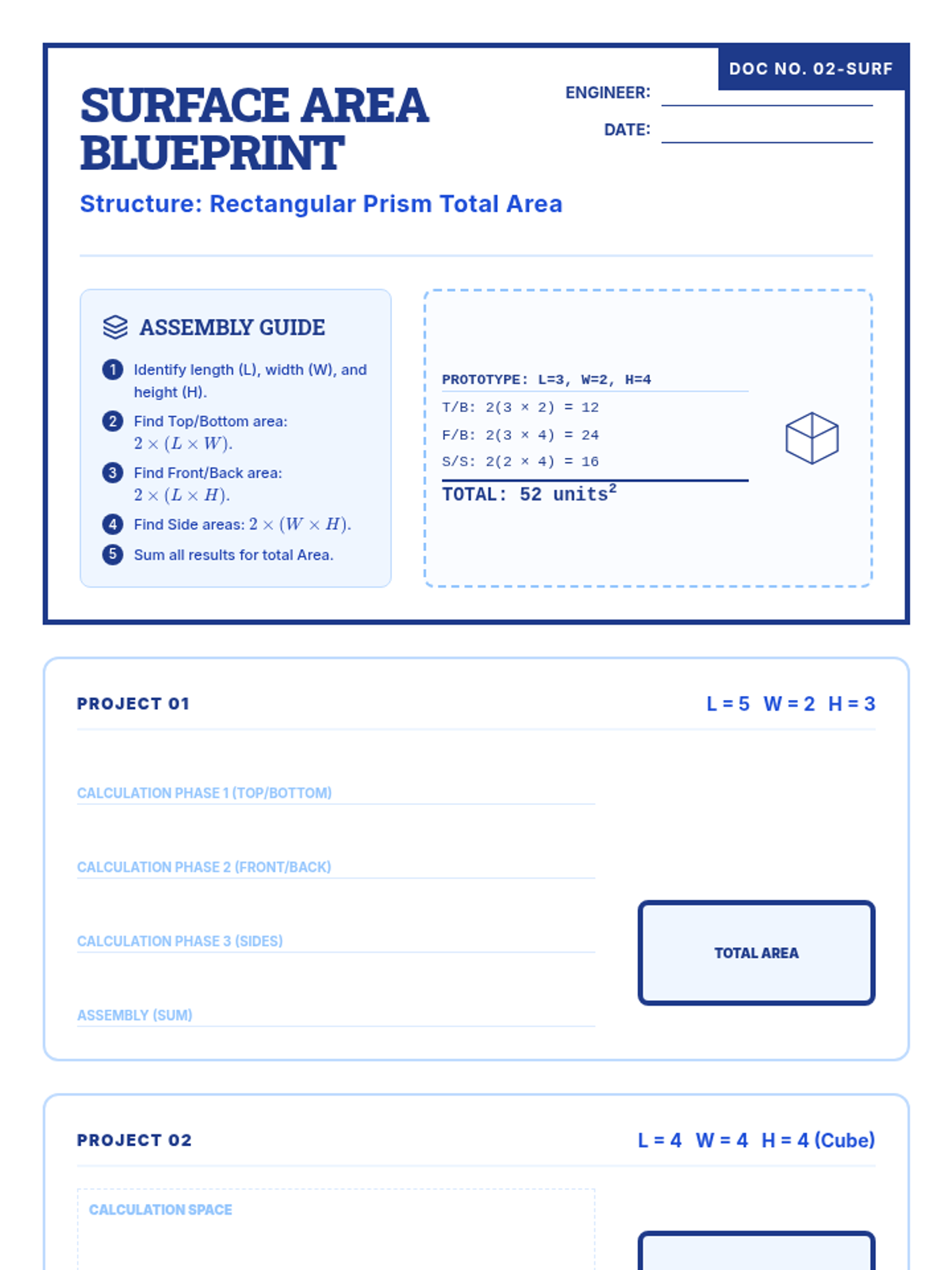
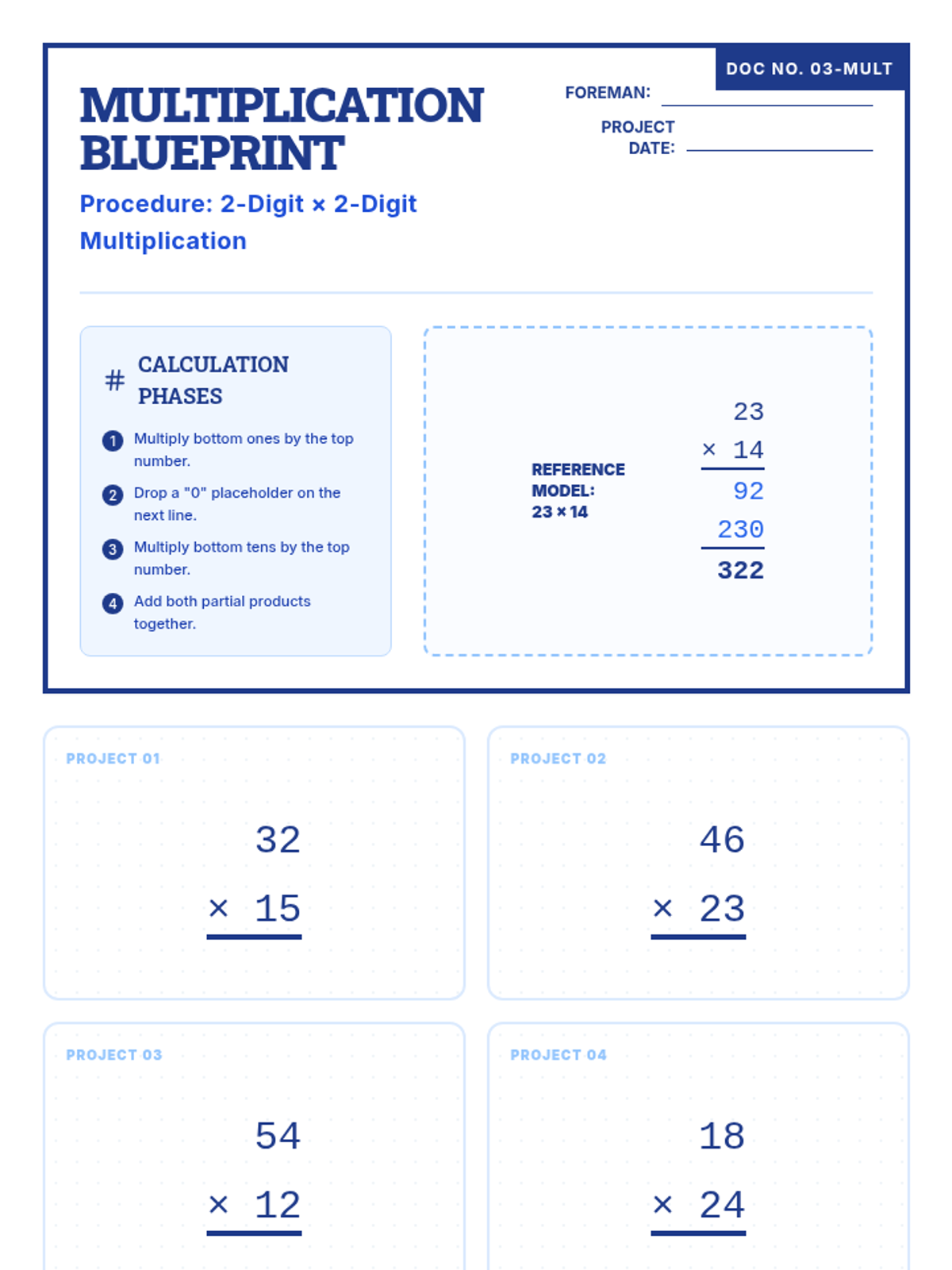
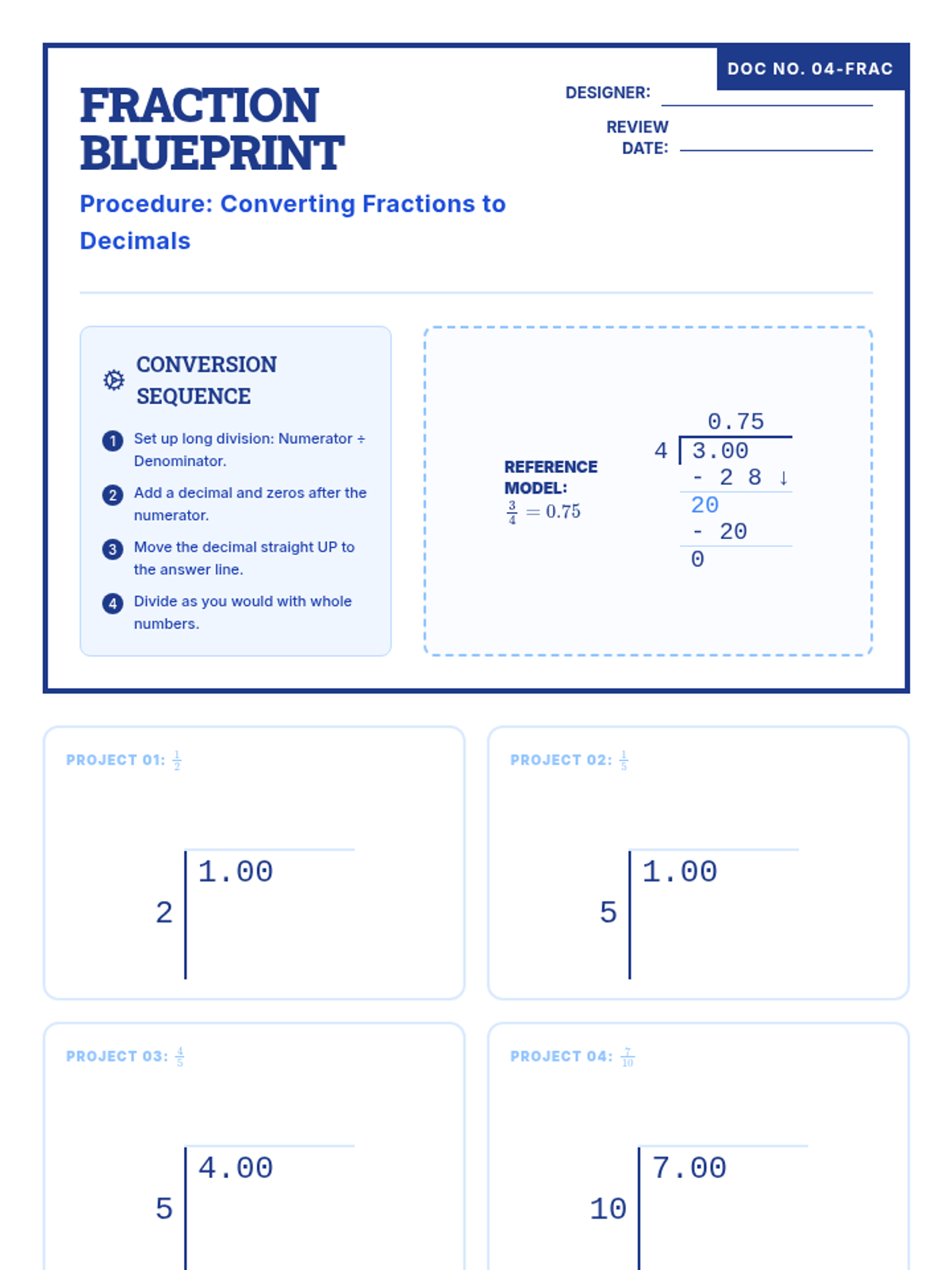
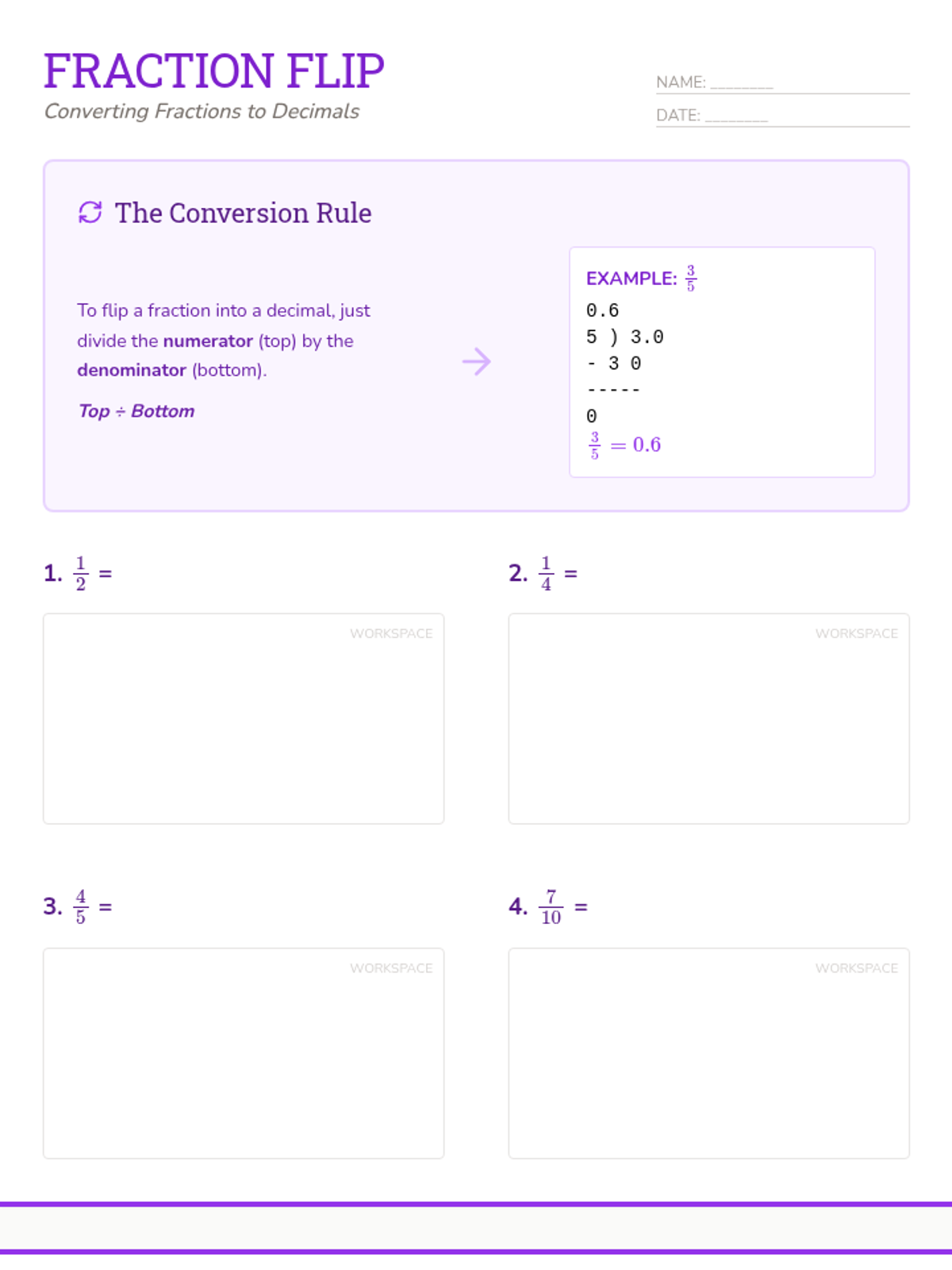
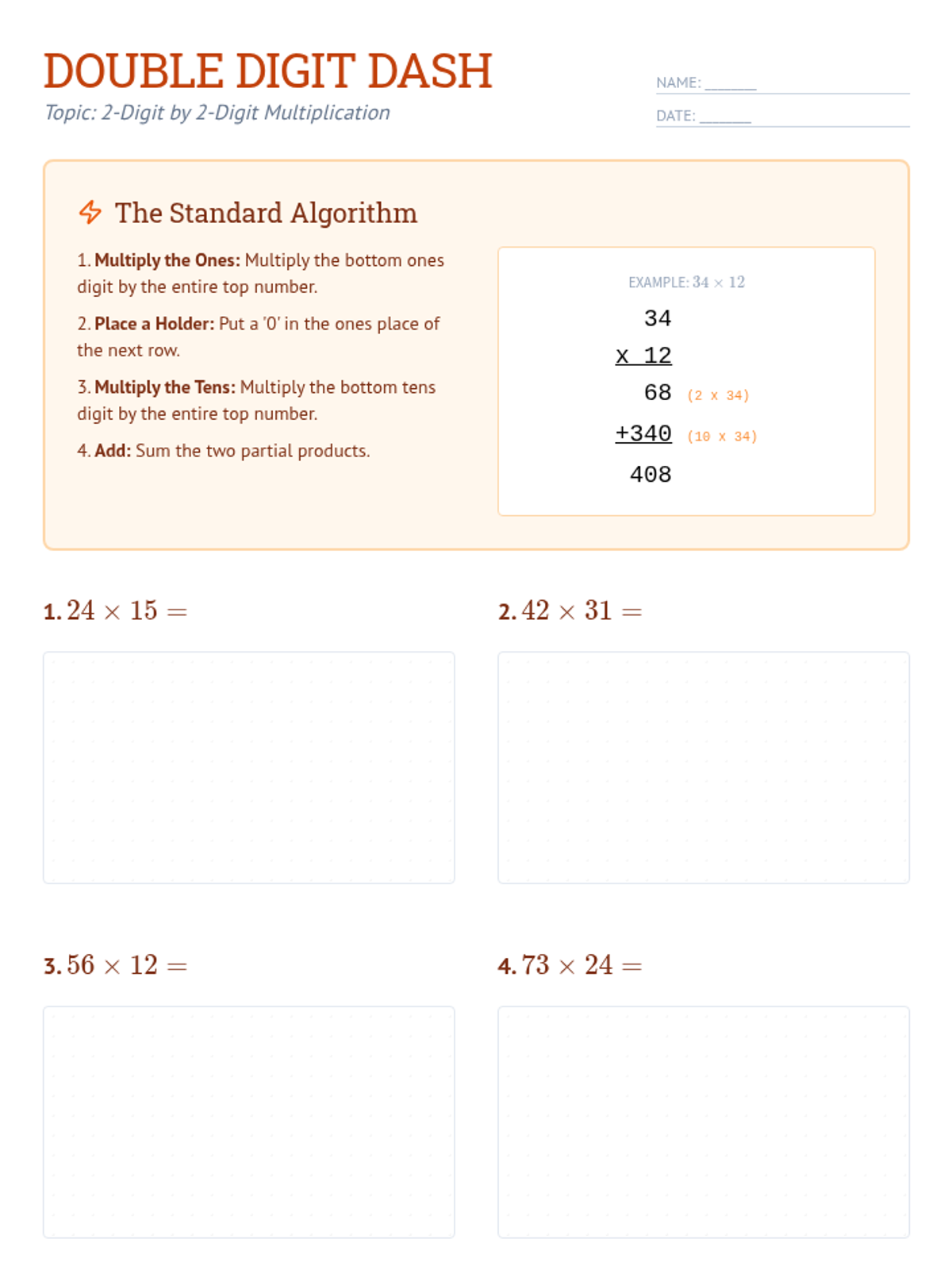
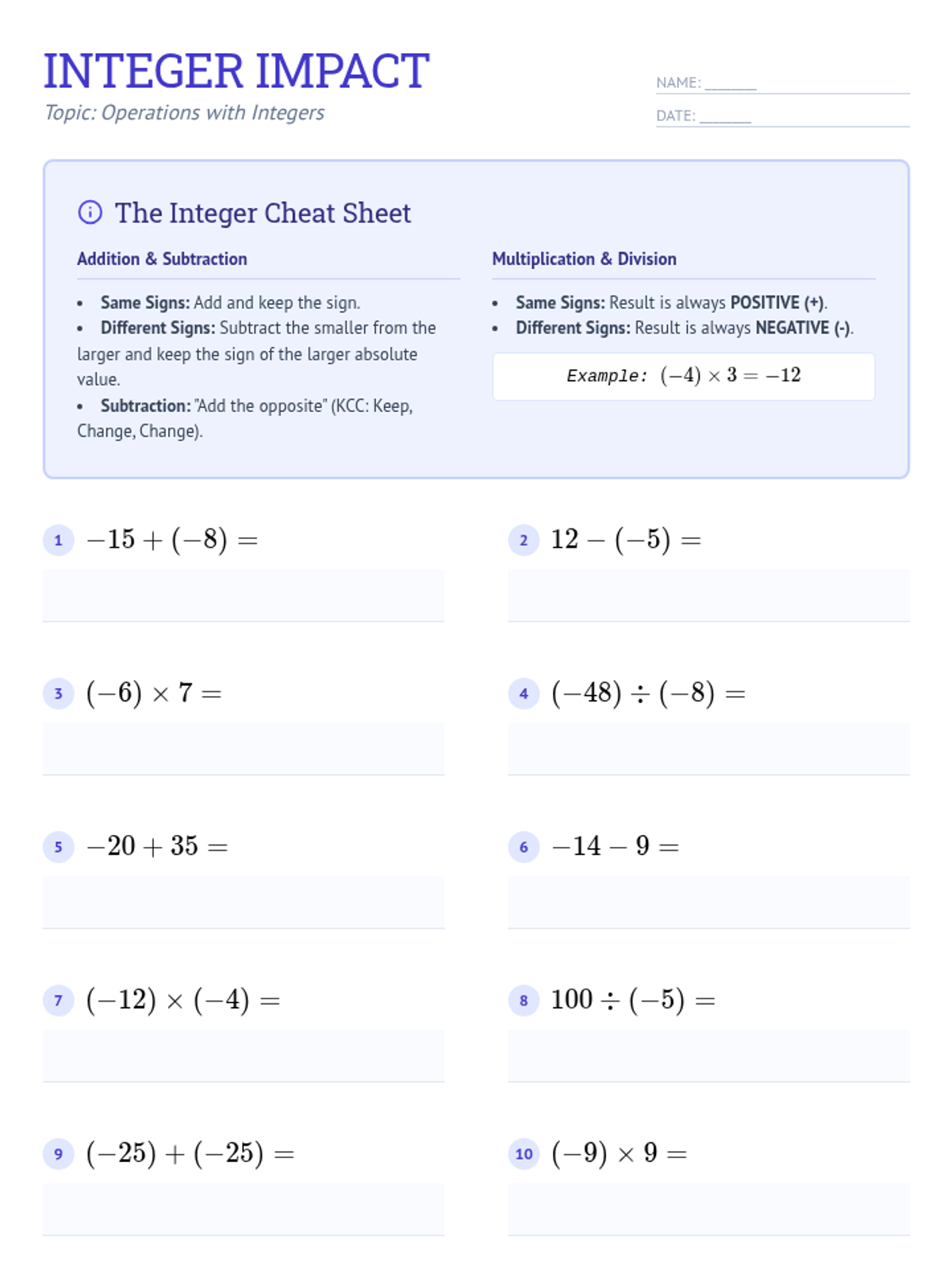
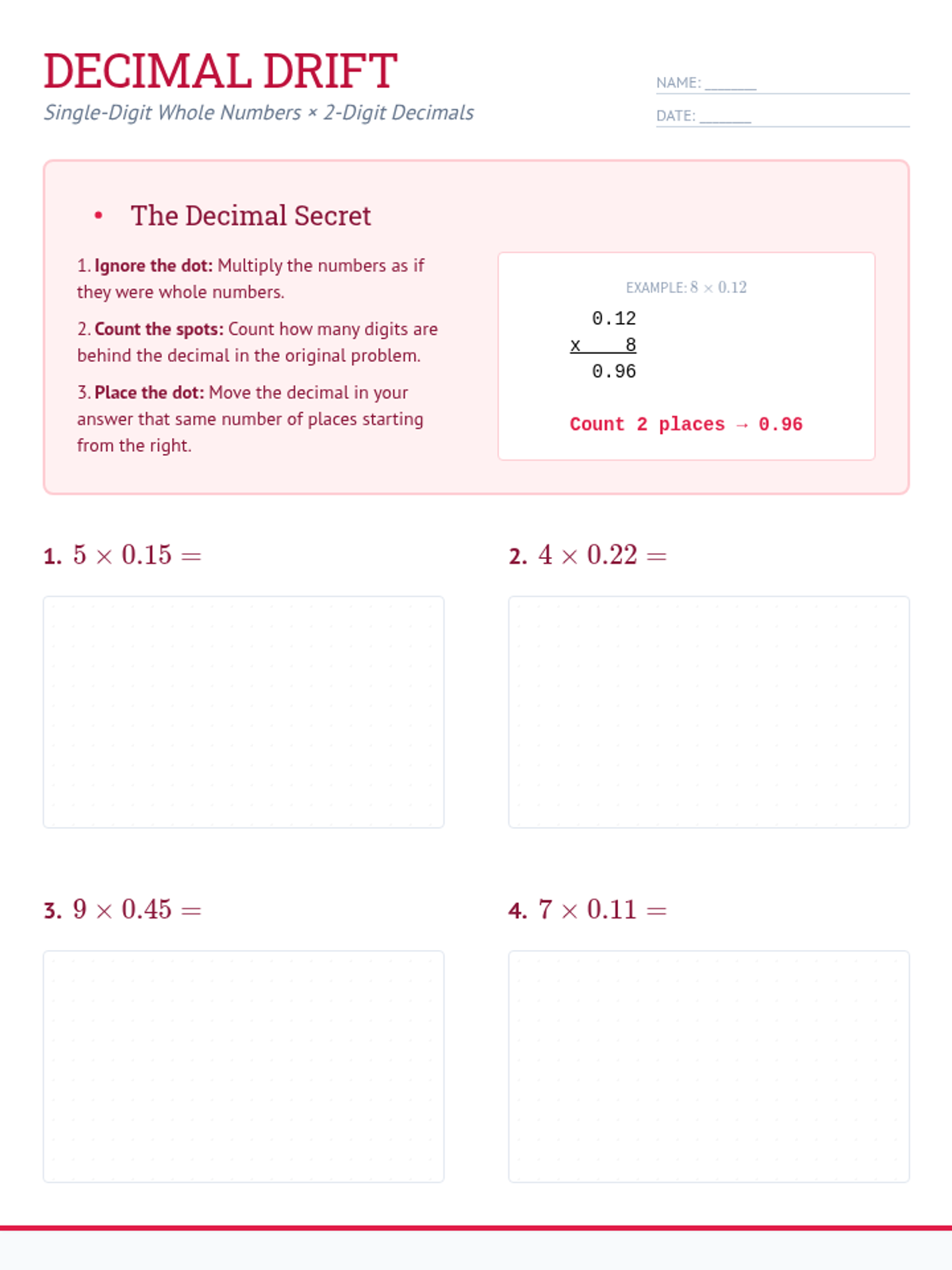
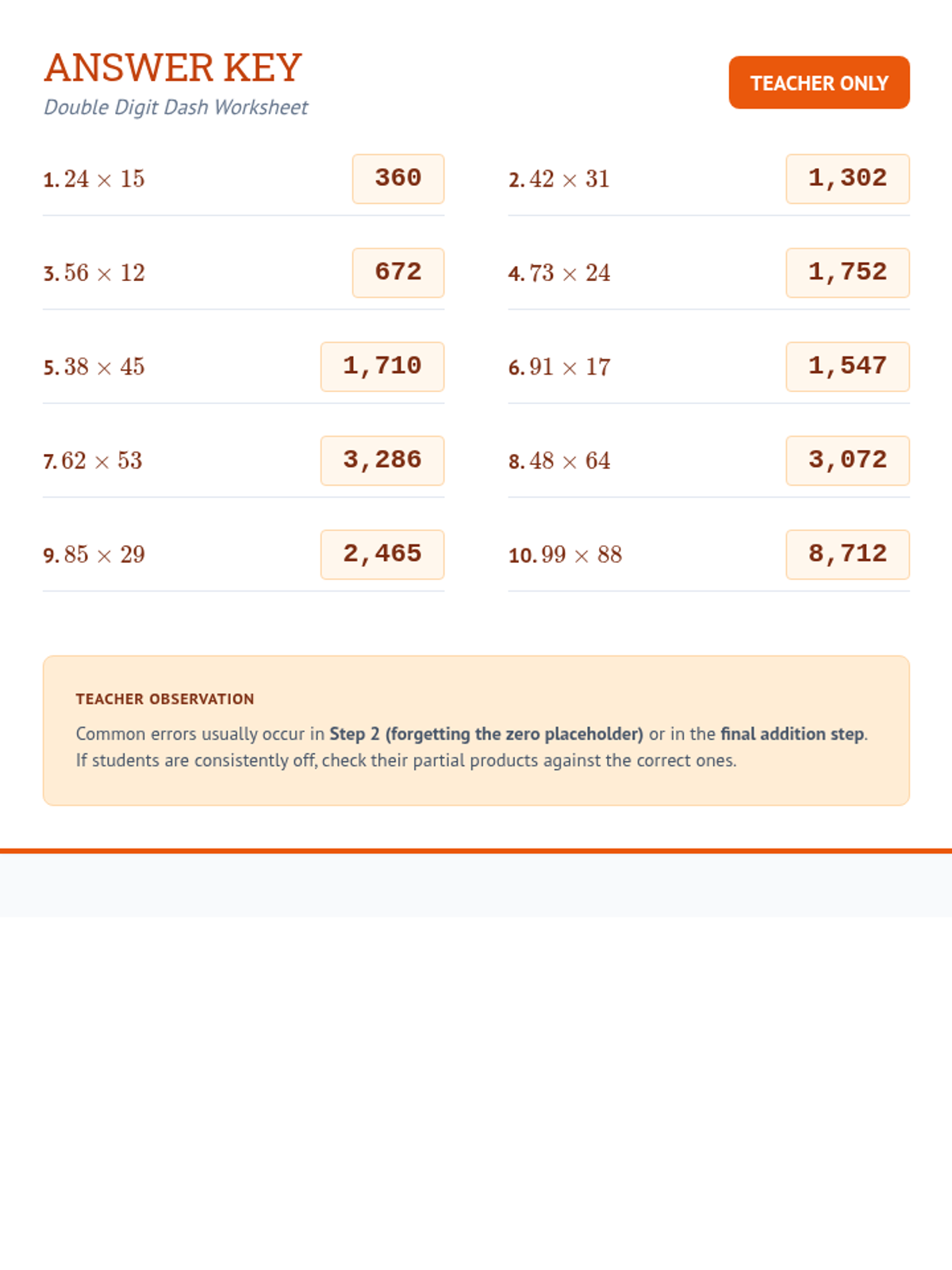
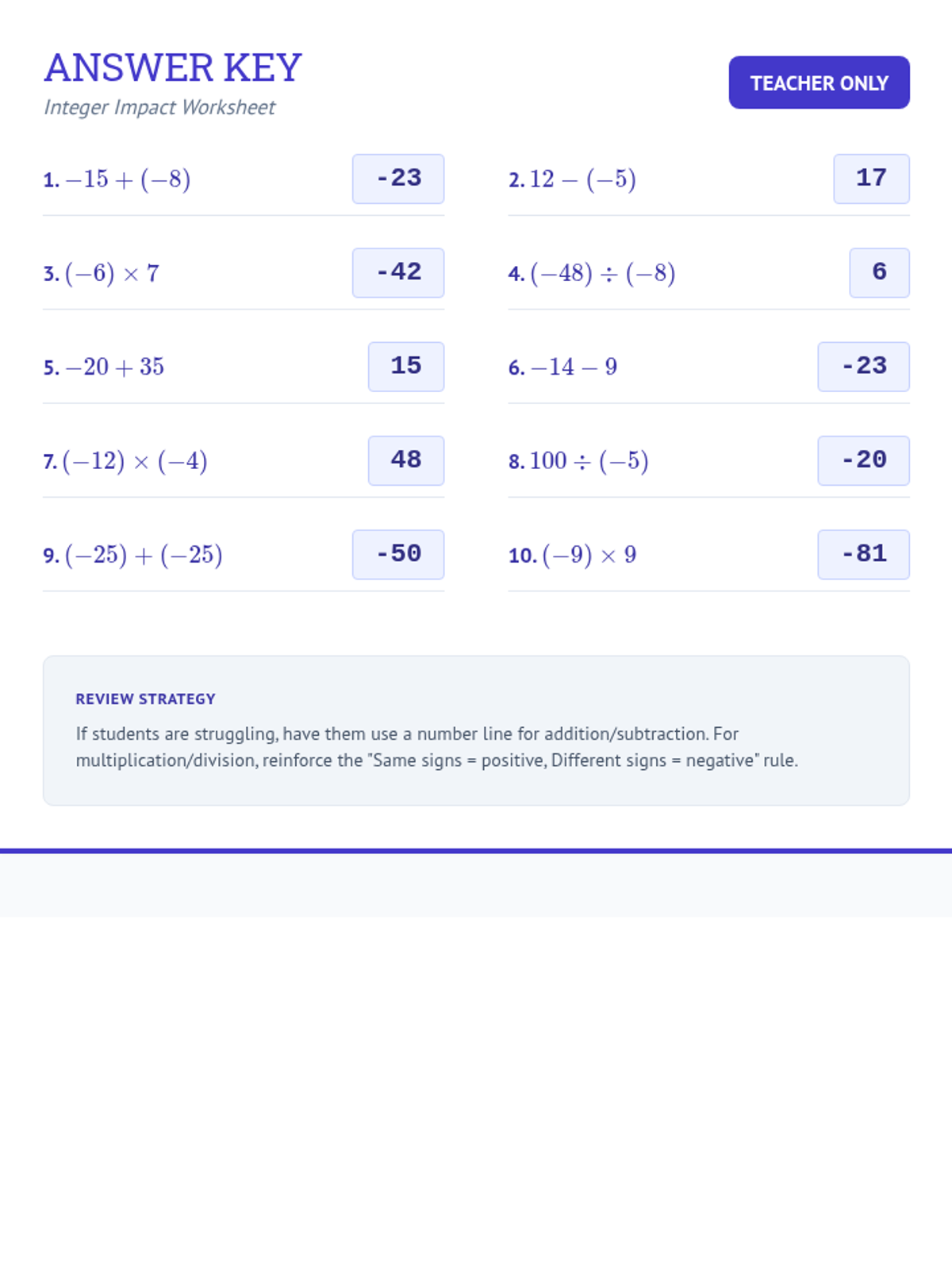
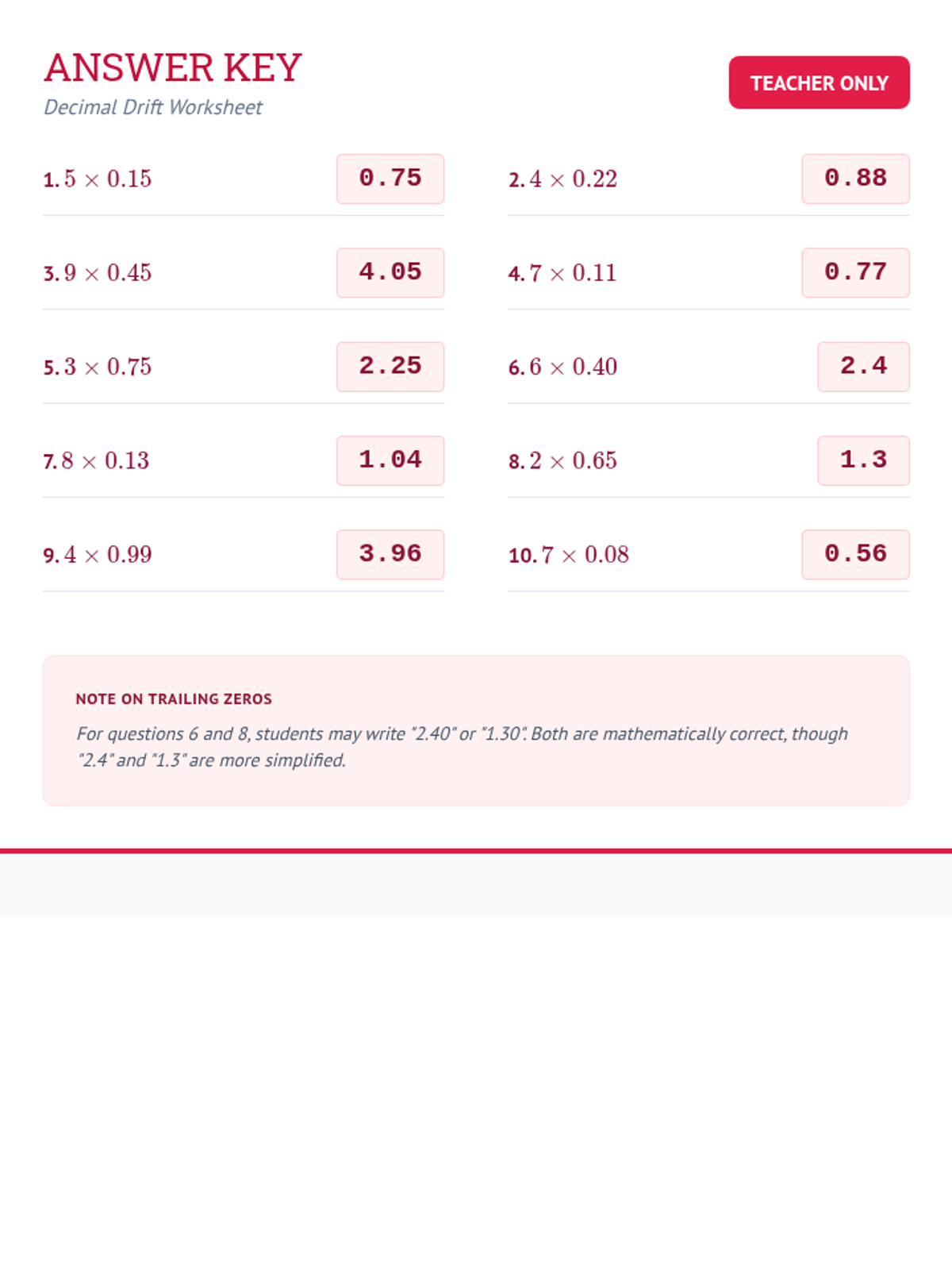
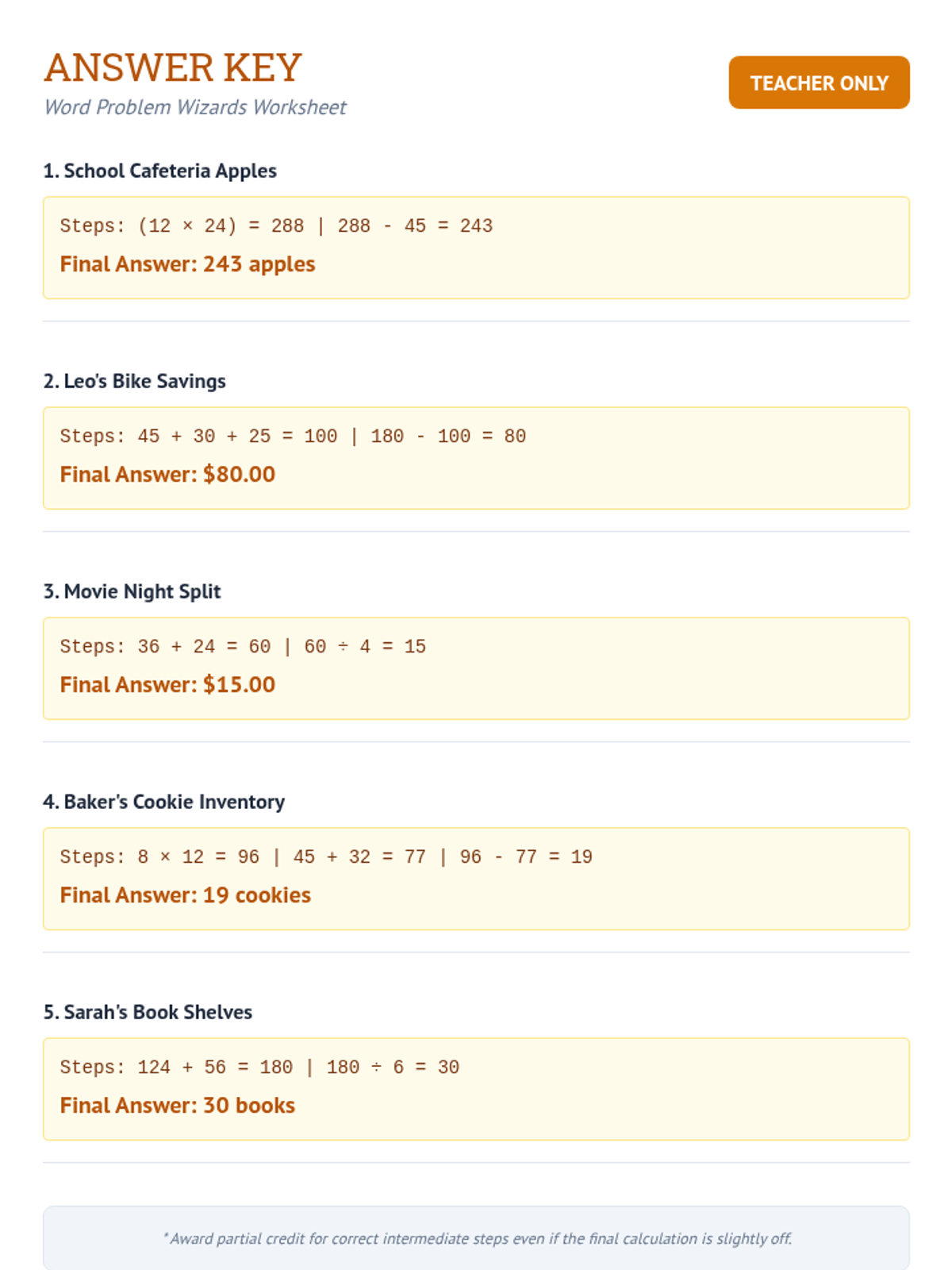
Foundational fraction equivalence, ordering, and operations across the rational number system. Addresses multi-digit computation, decimal conversions, and the distinction between rational and irrational numbers.
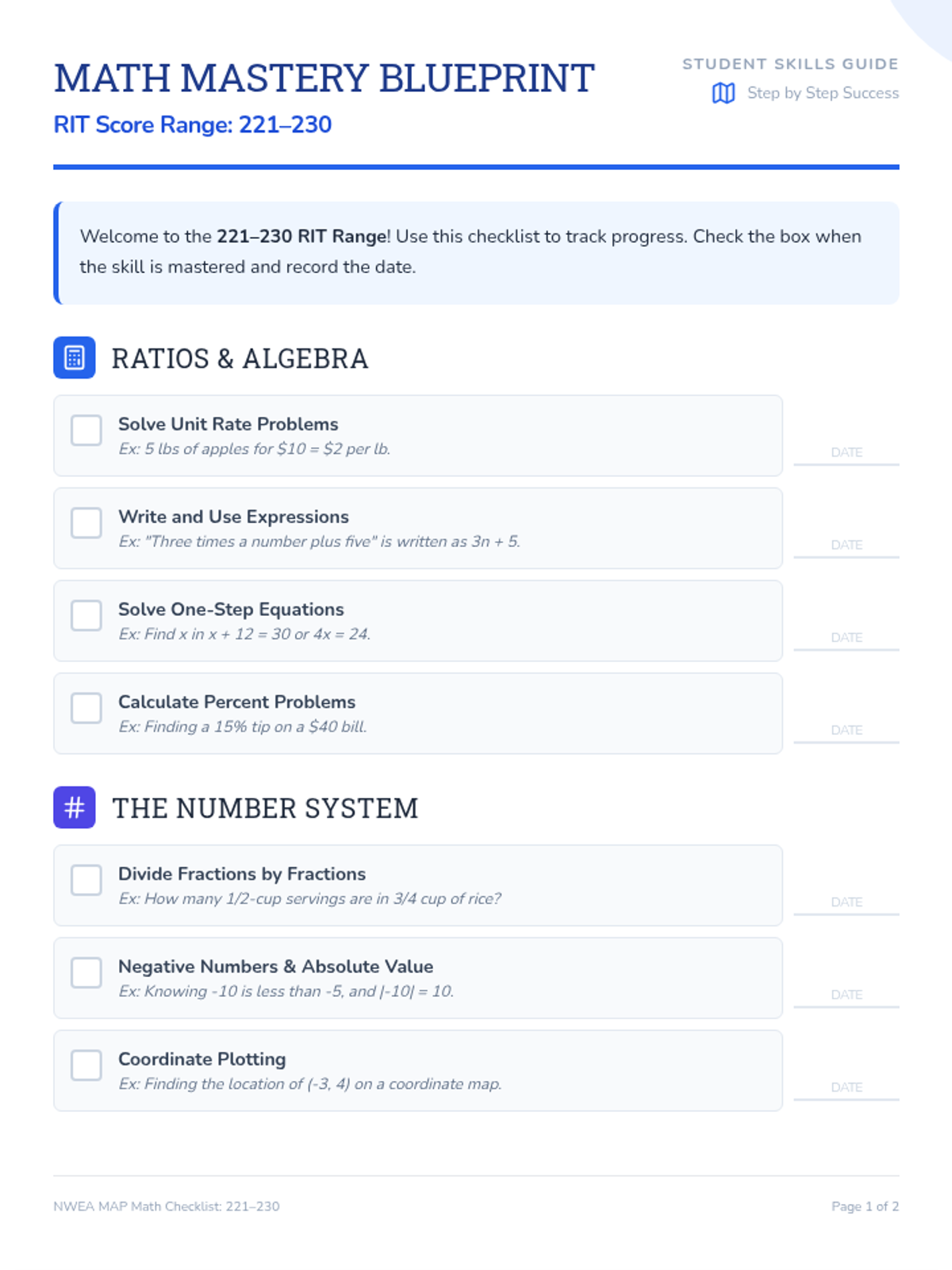
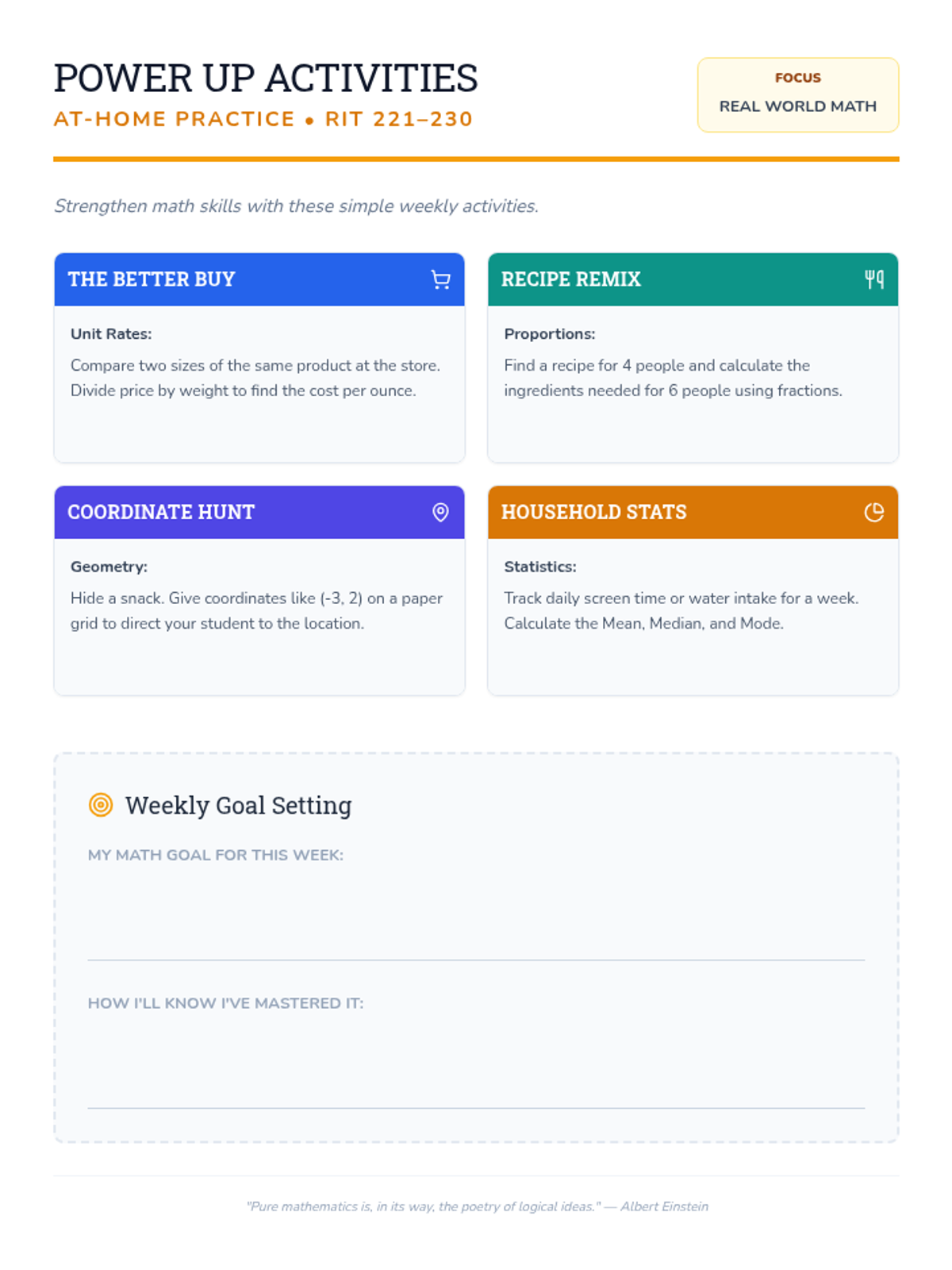
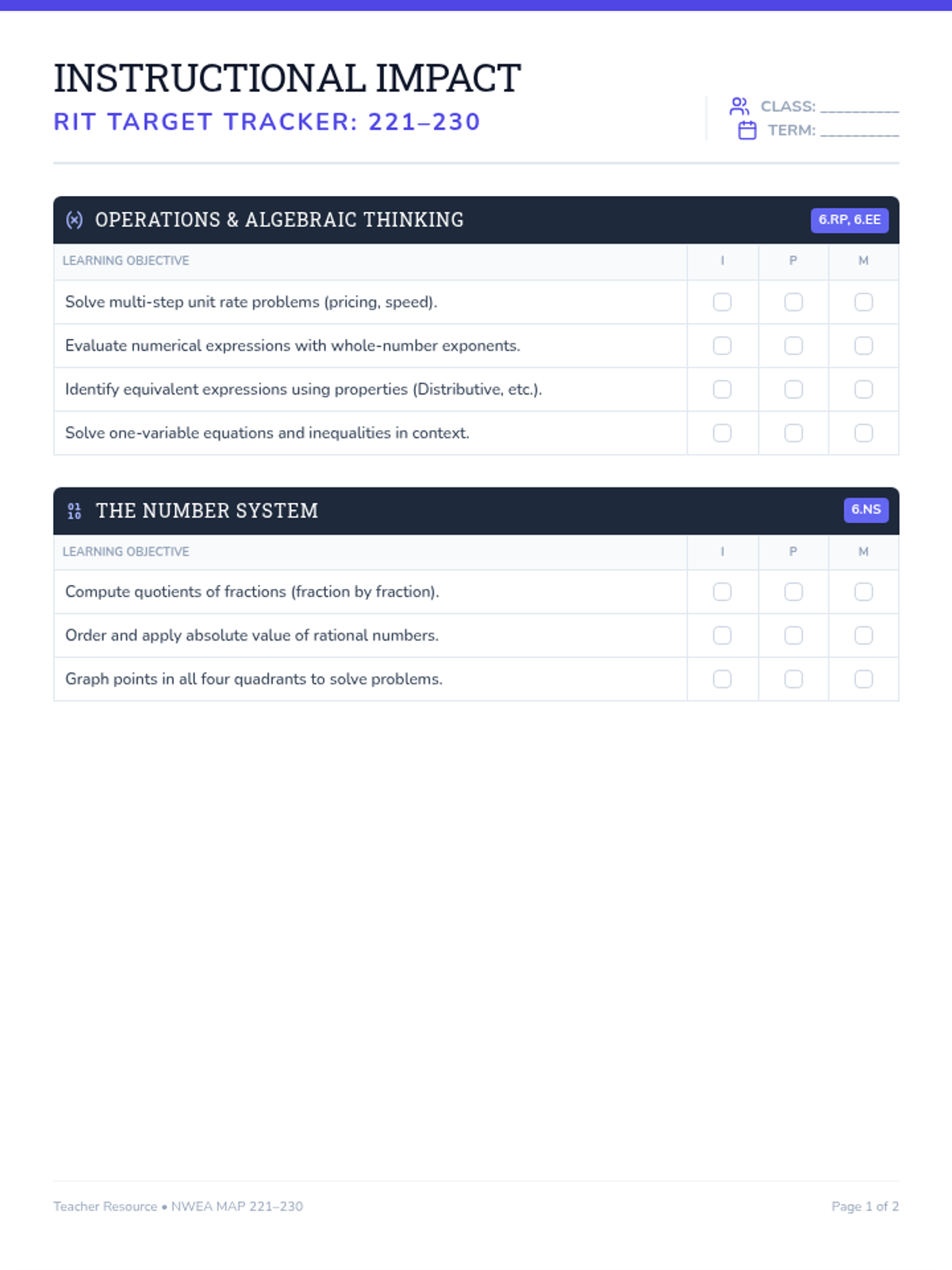
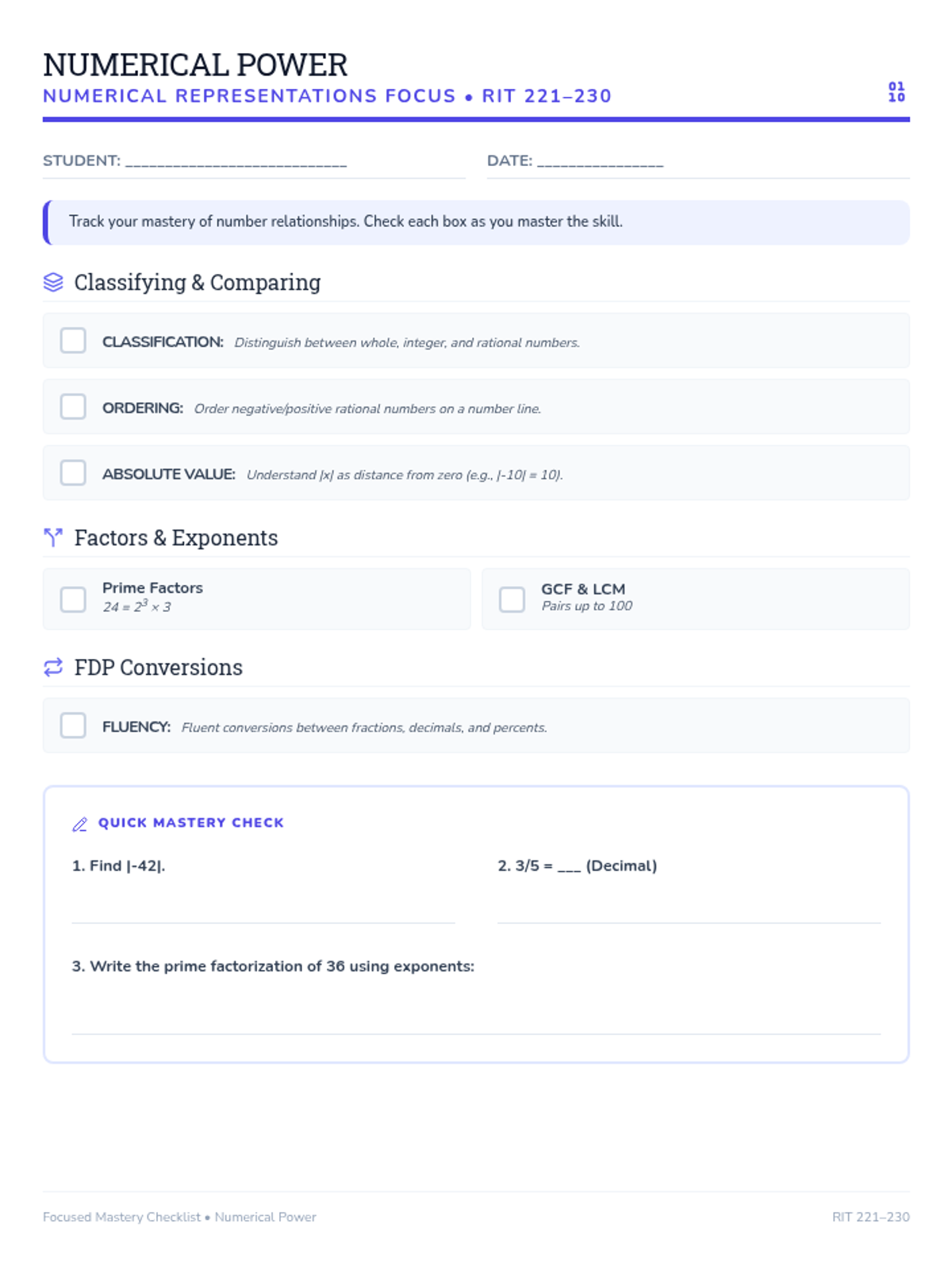
A comprehensive collection of RIT-aligned math mastery resources for student and teacher tracking across key mathematical development ranges.
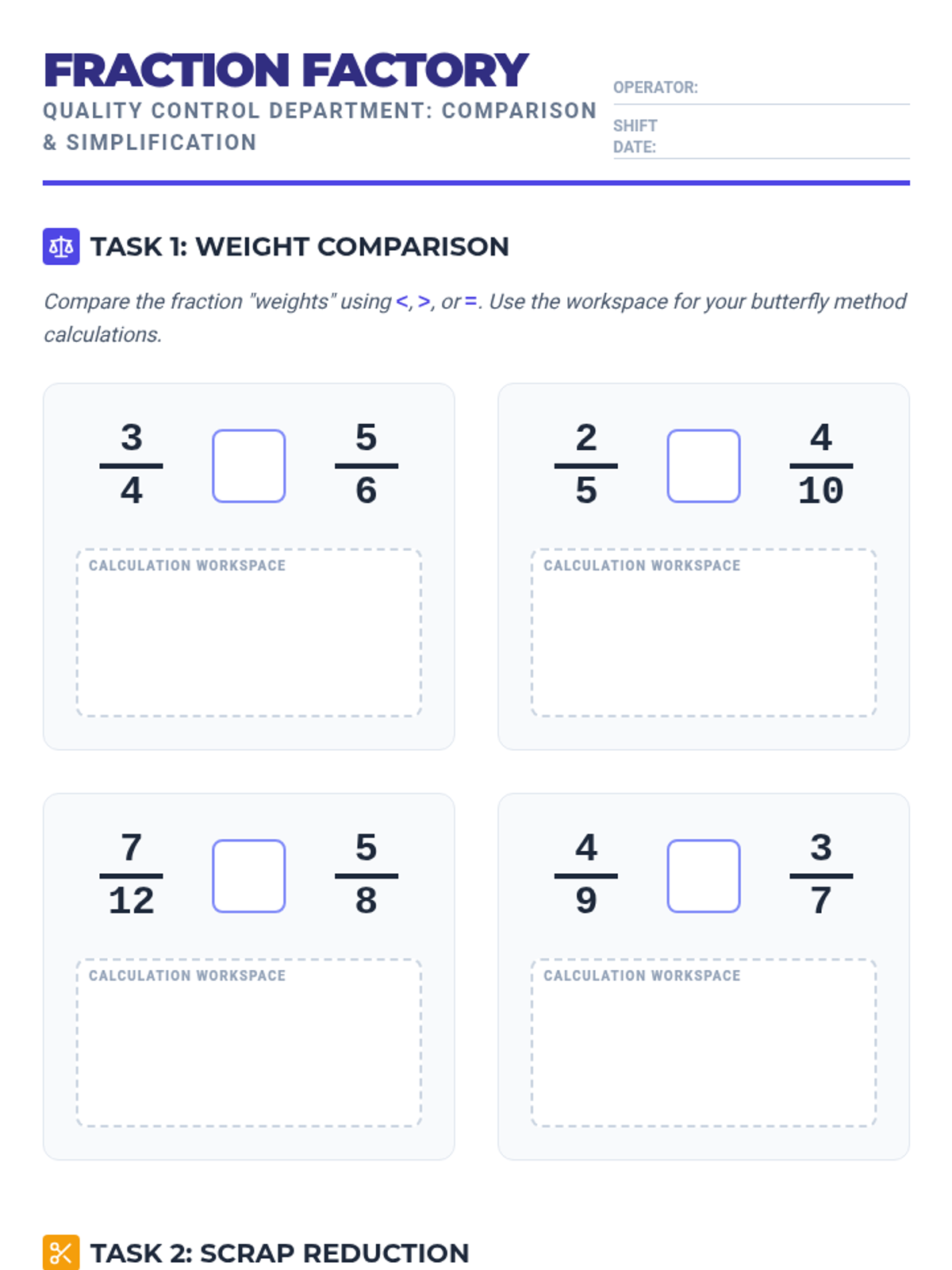
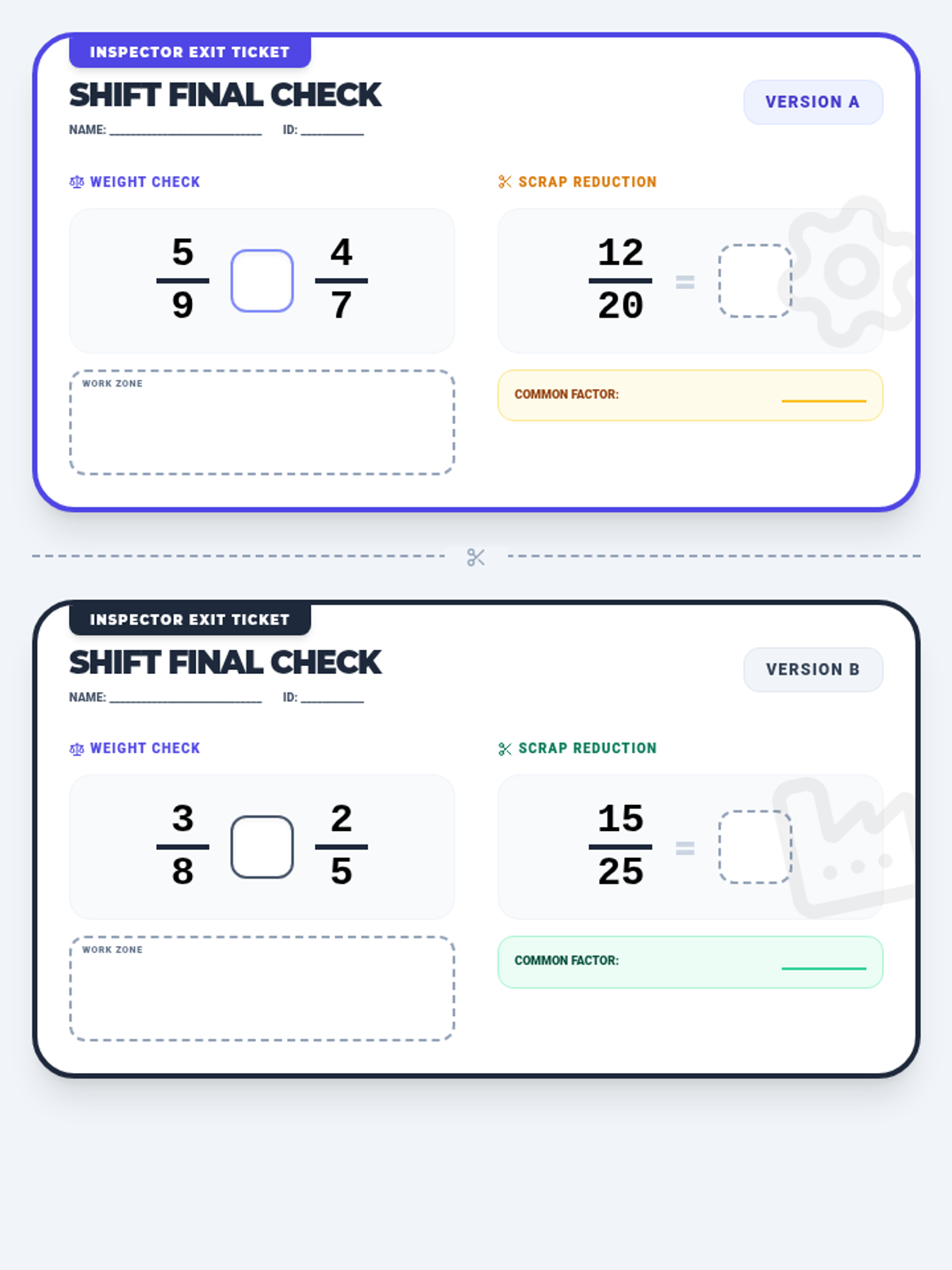
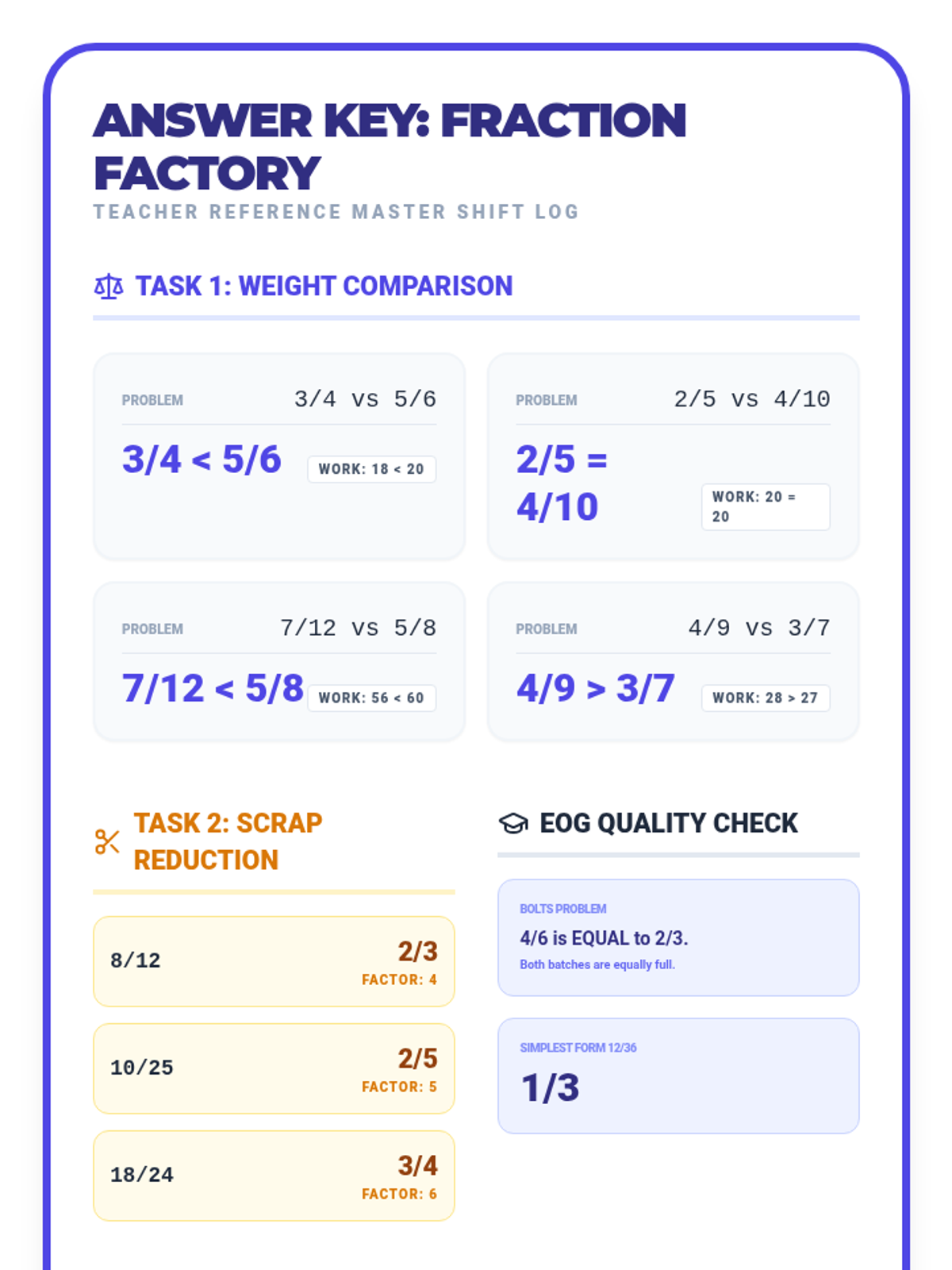
A comprehensive unit focused on mastering fraction operations, specifically focusing on comparison and simplification techniques tailored for EOG preparation.
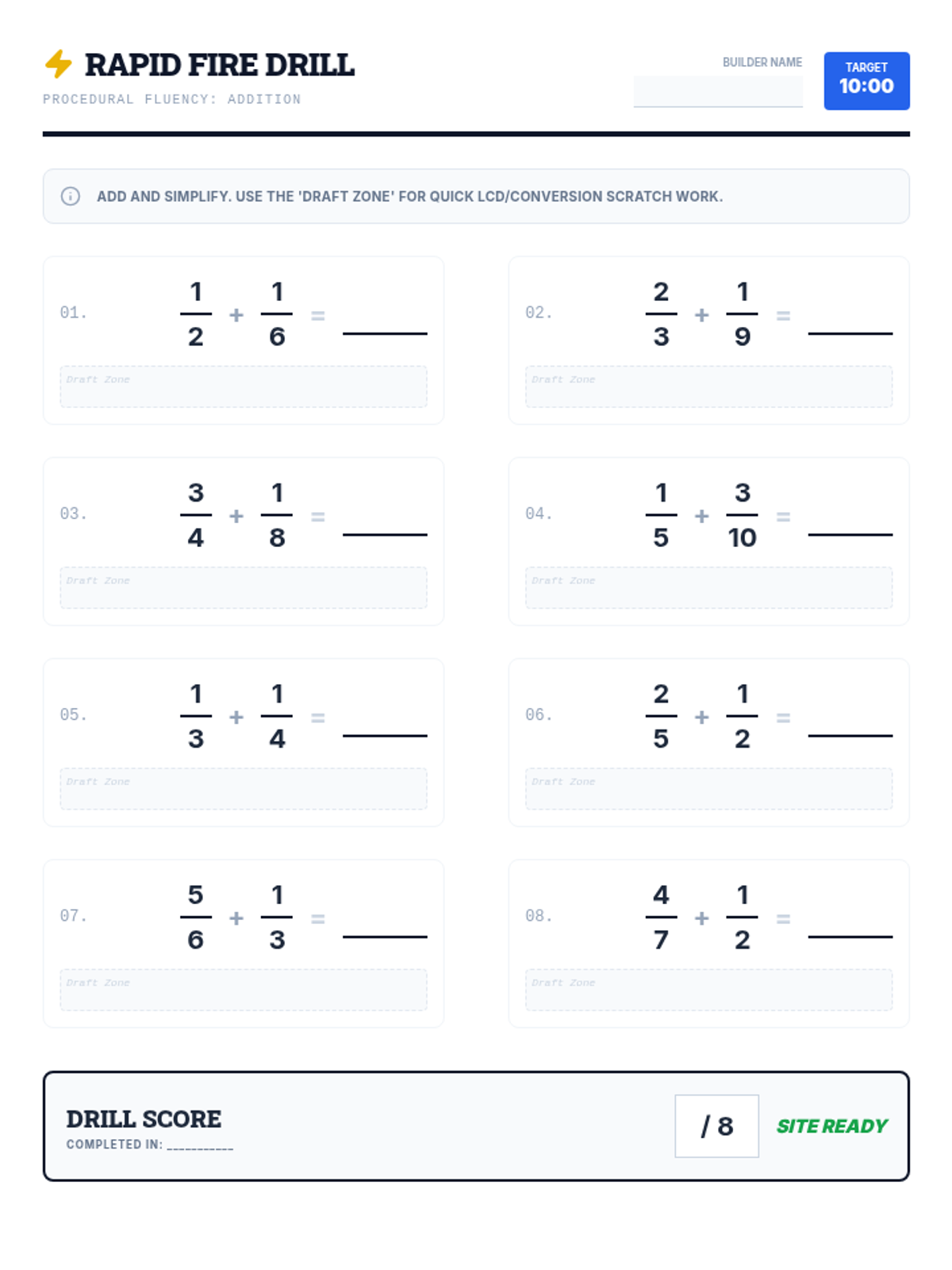
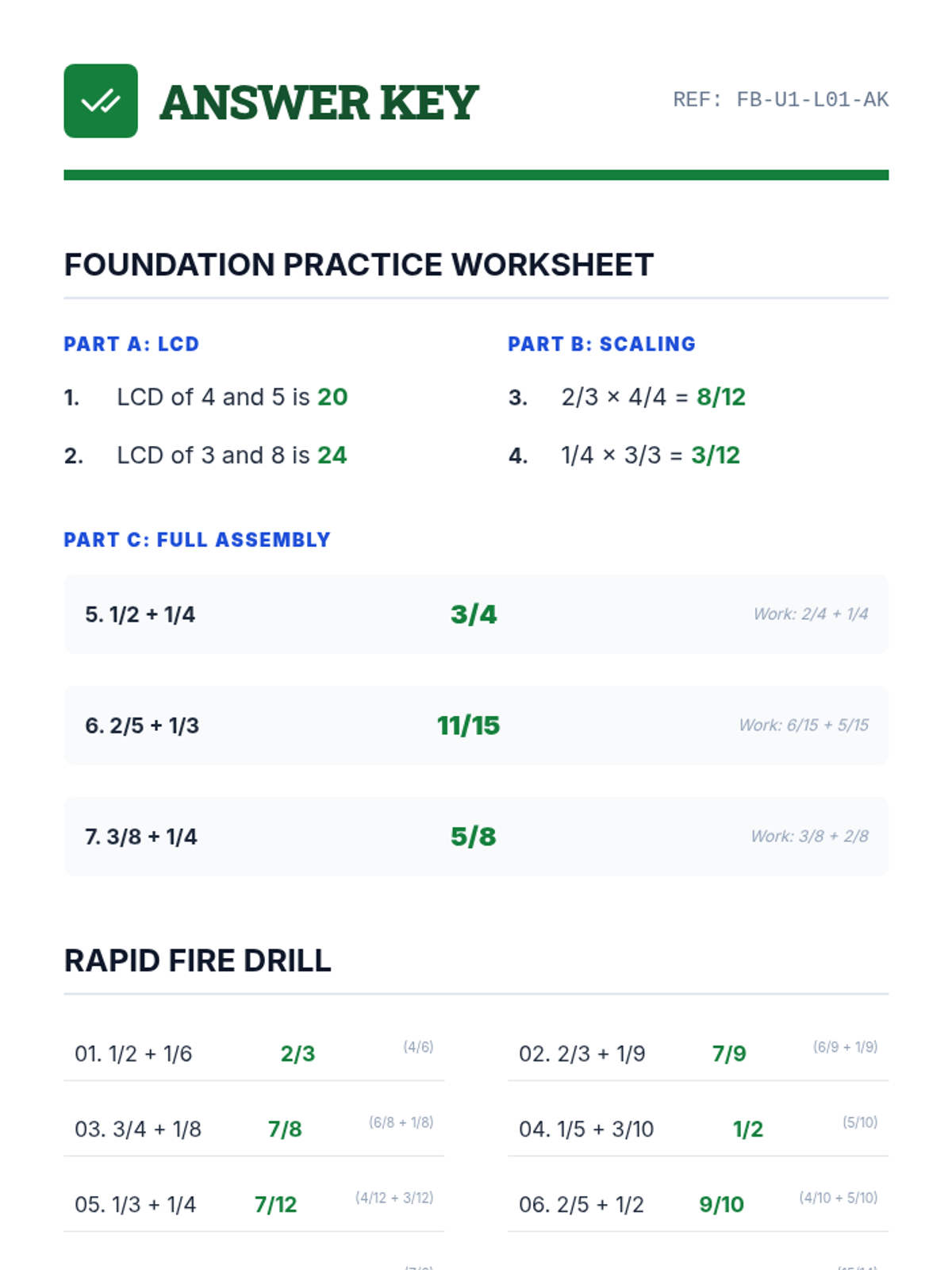
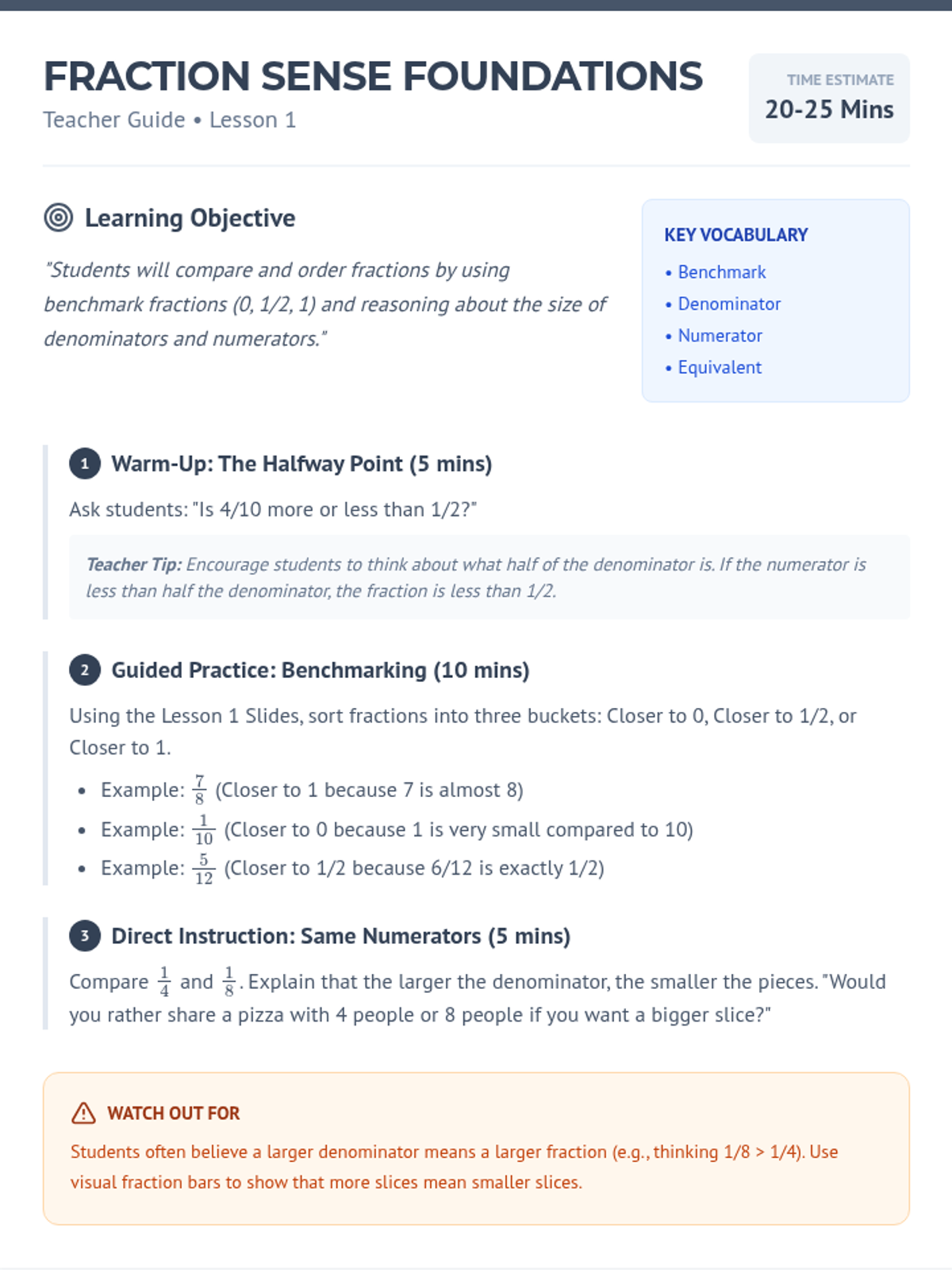
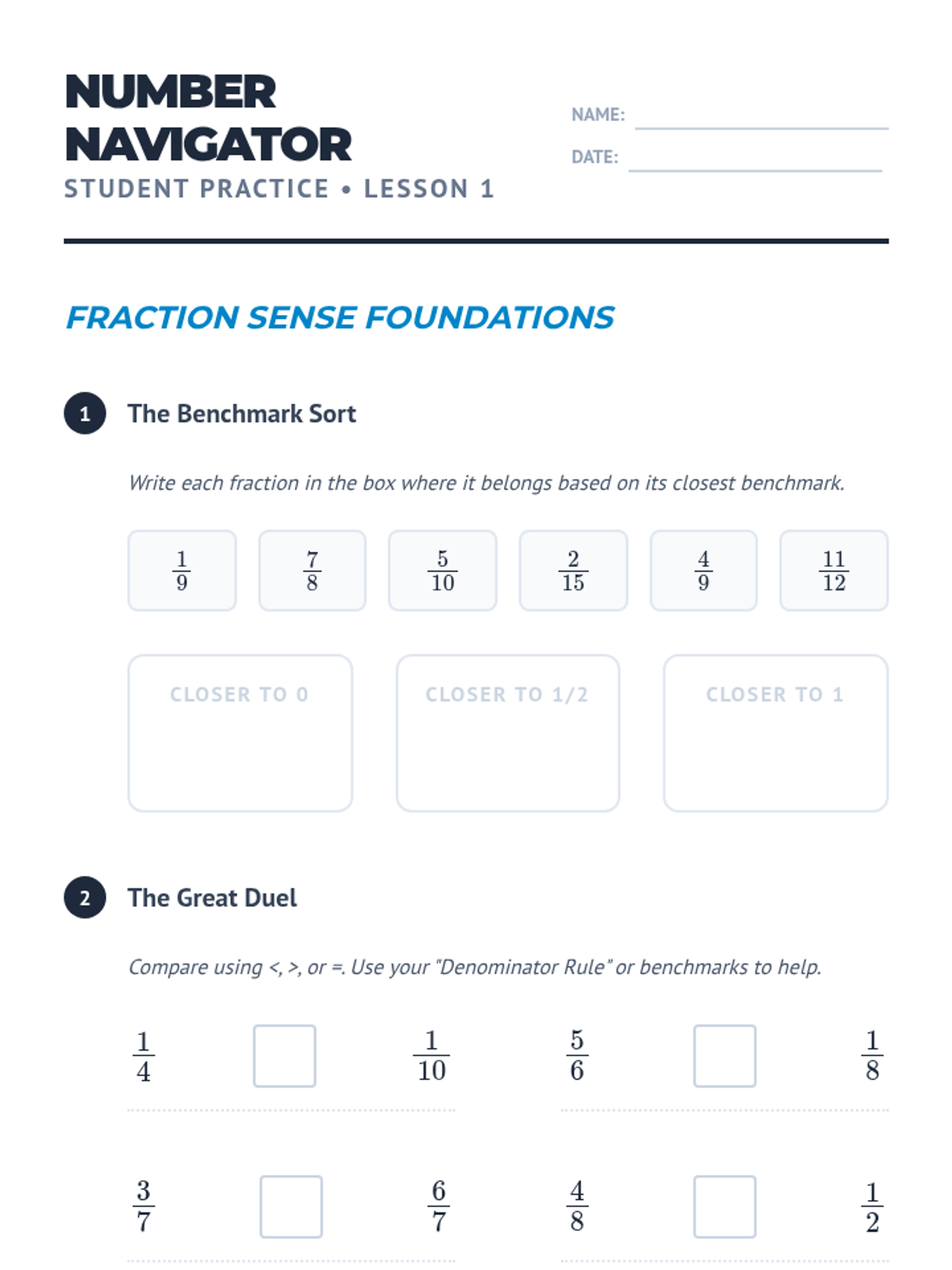
A series of lessons designed to rebuild fundamental fraction skills for middle schoolers, focusing on conceptual understanding and procedural fluency.
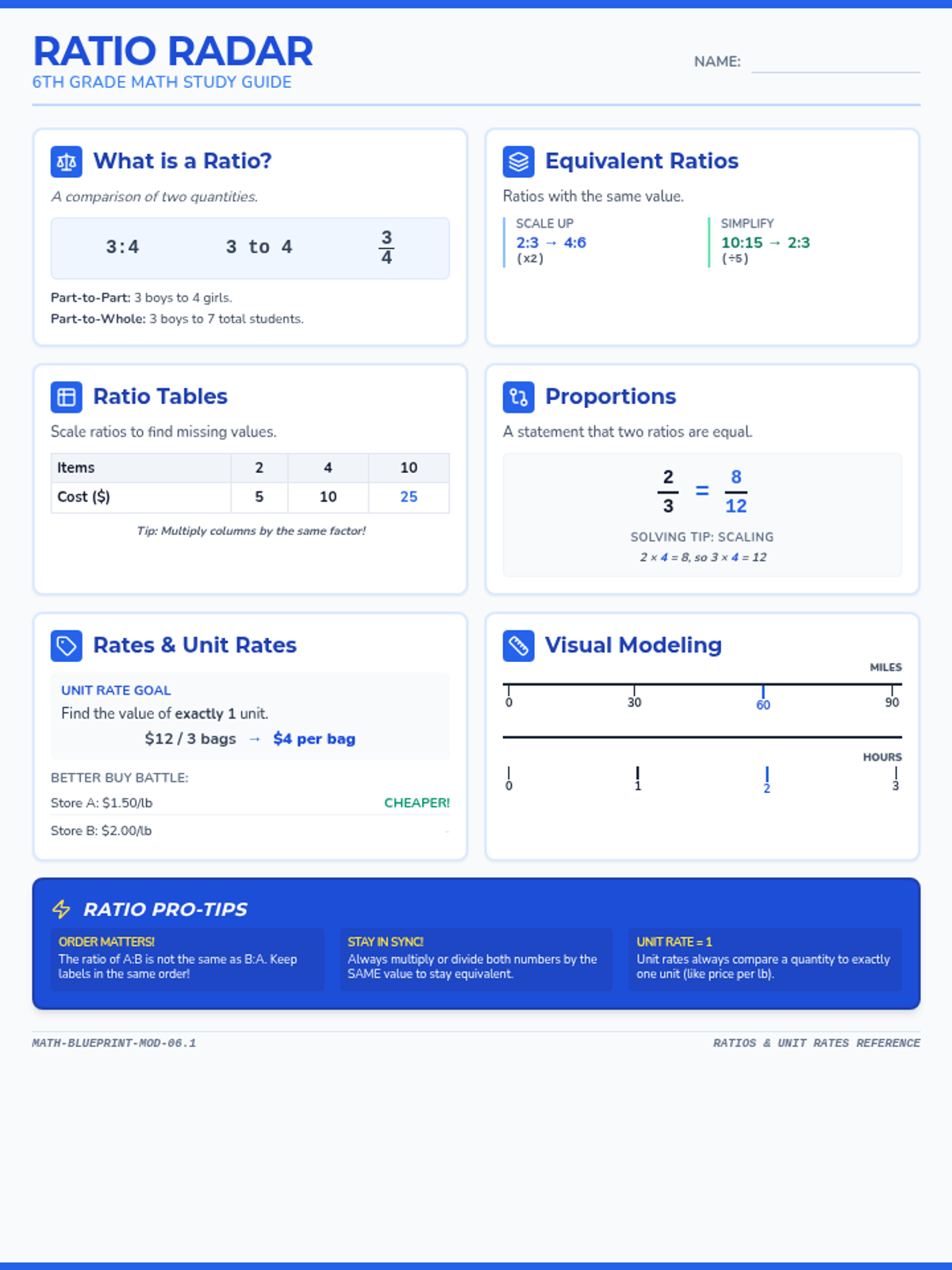
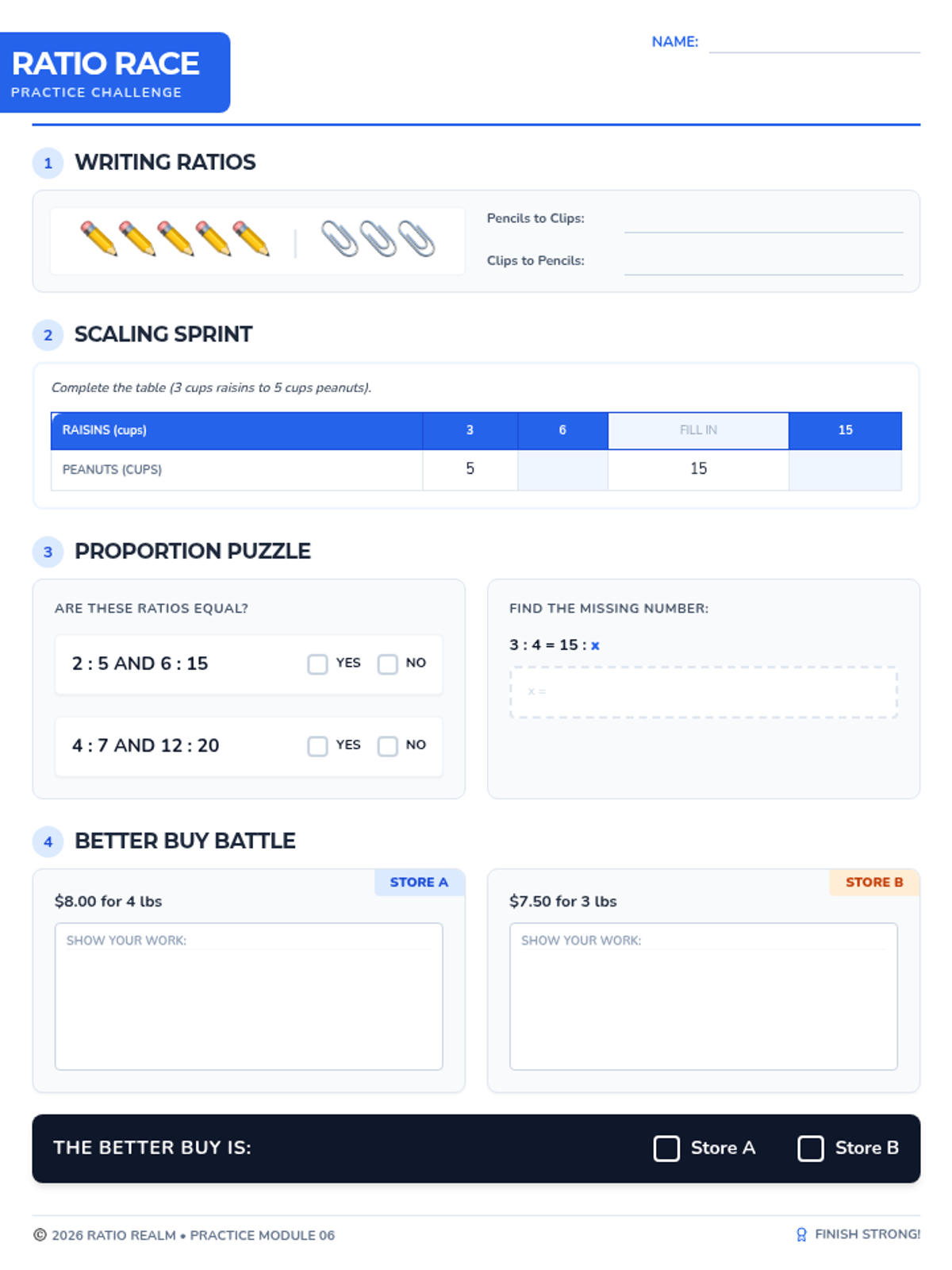
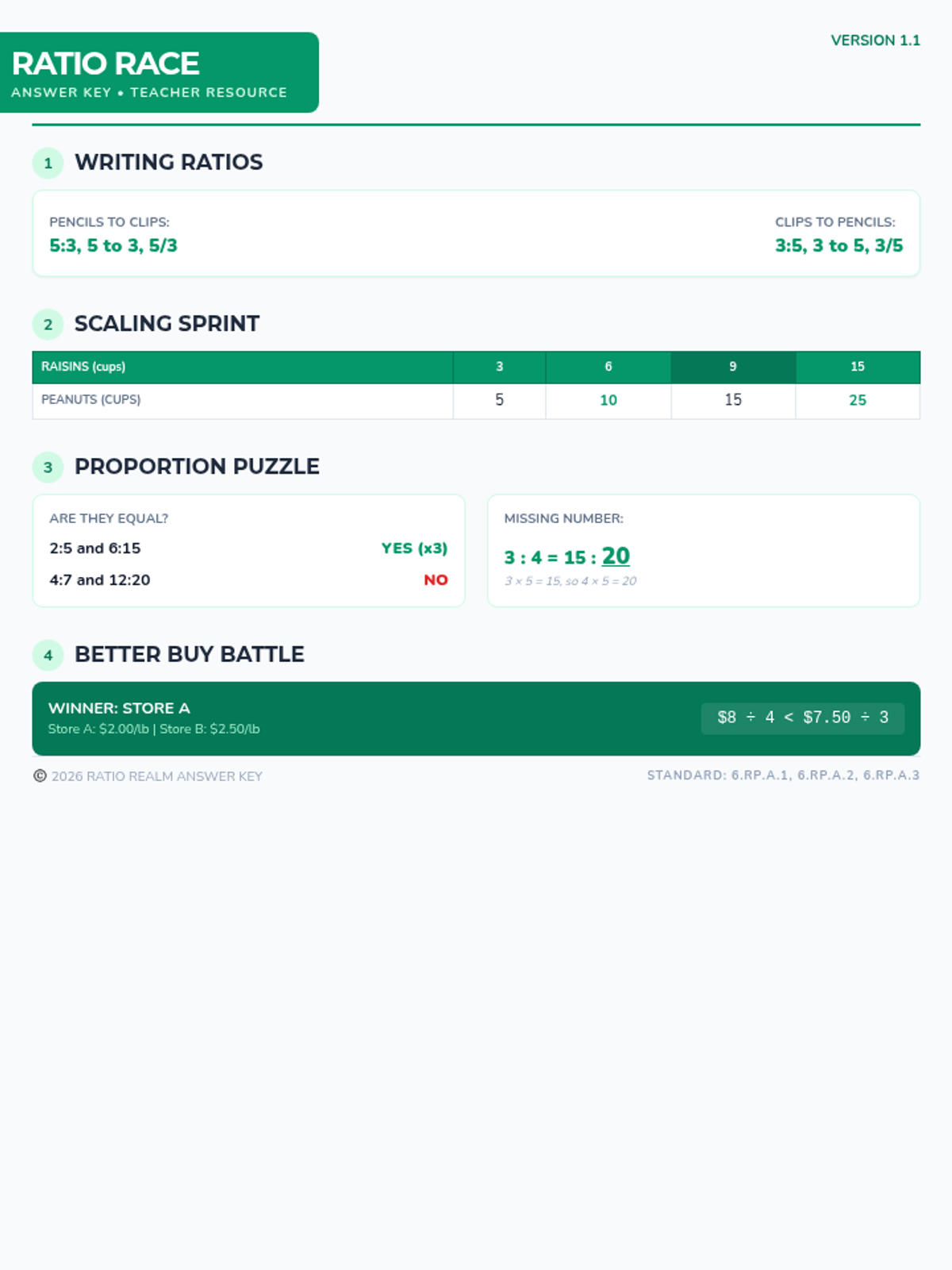
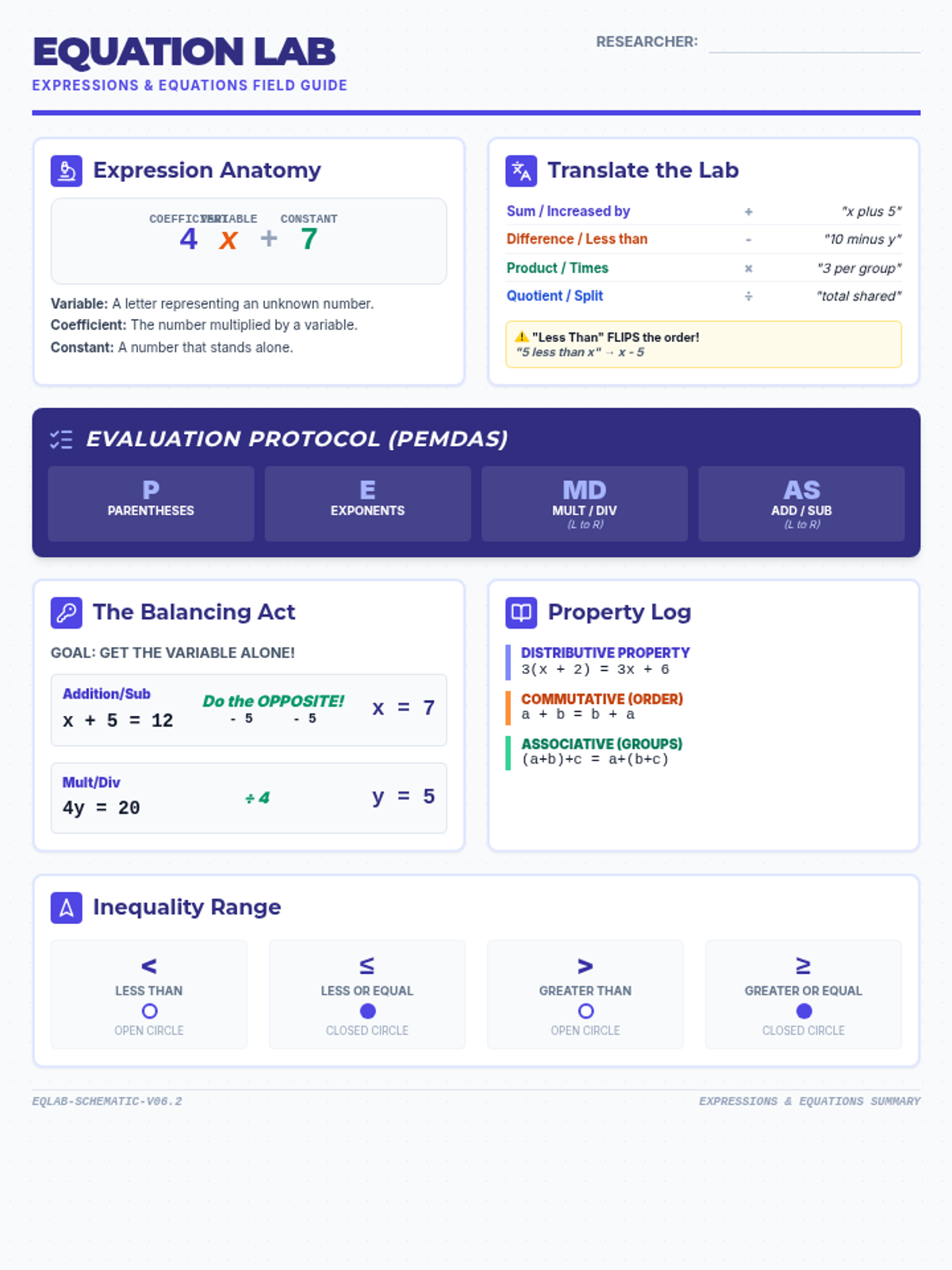
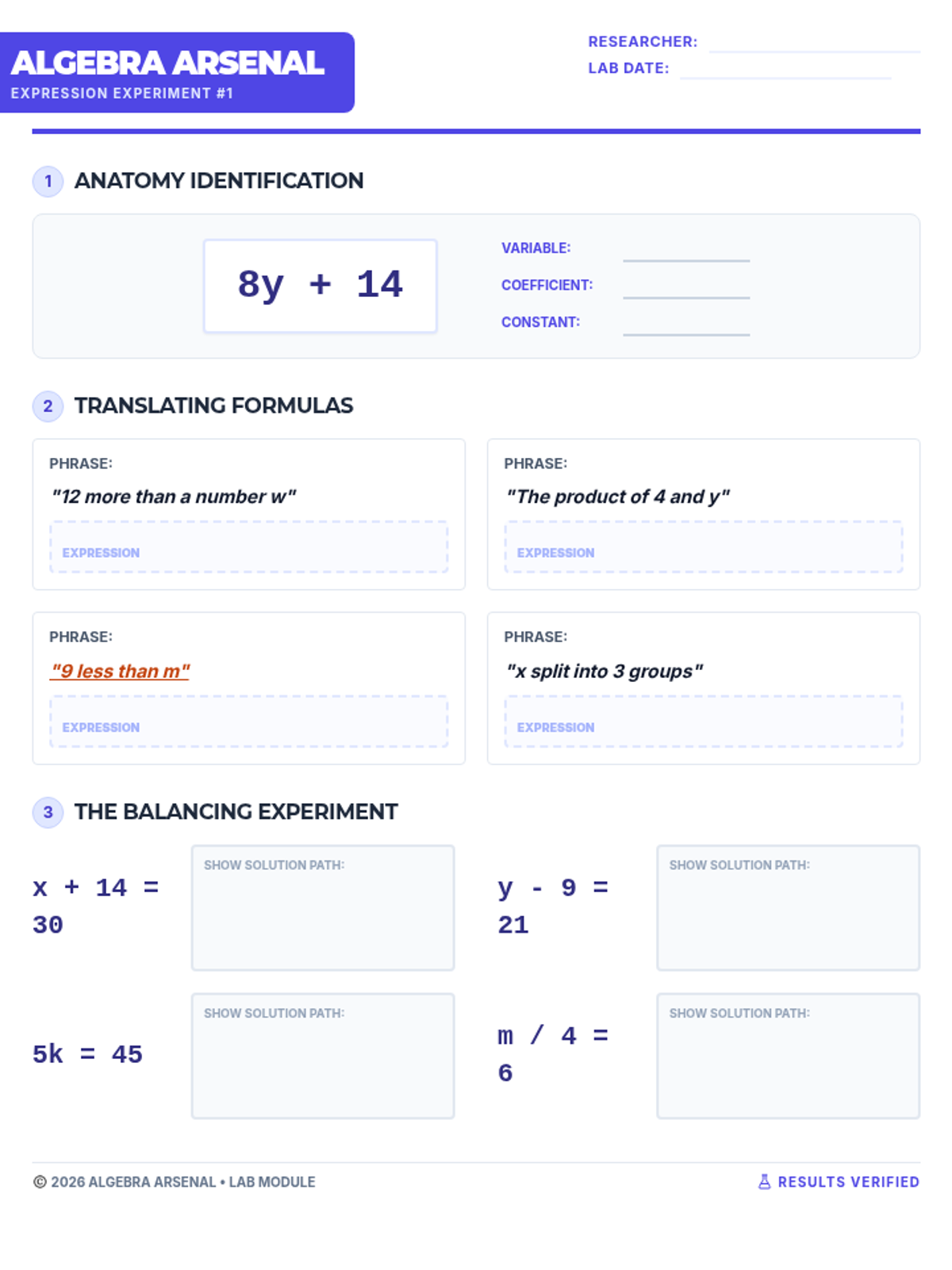
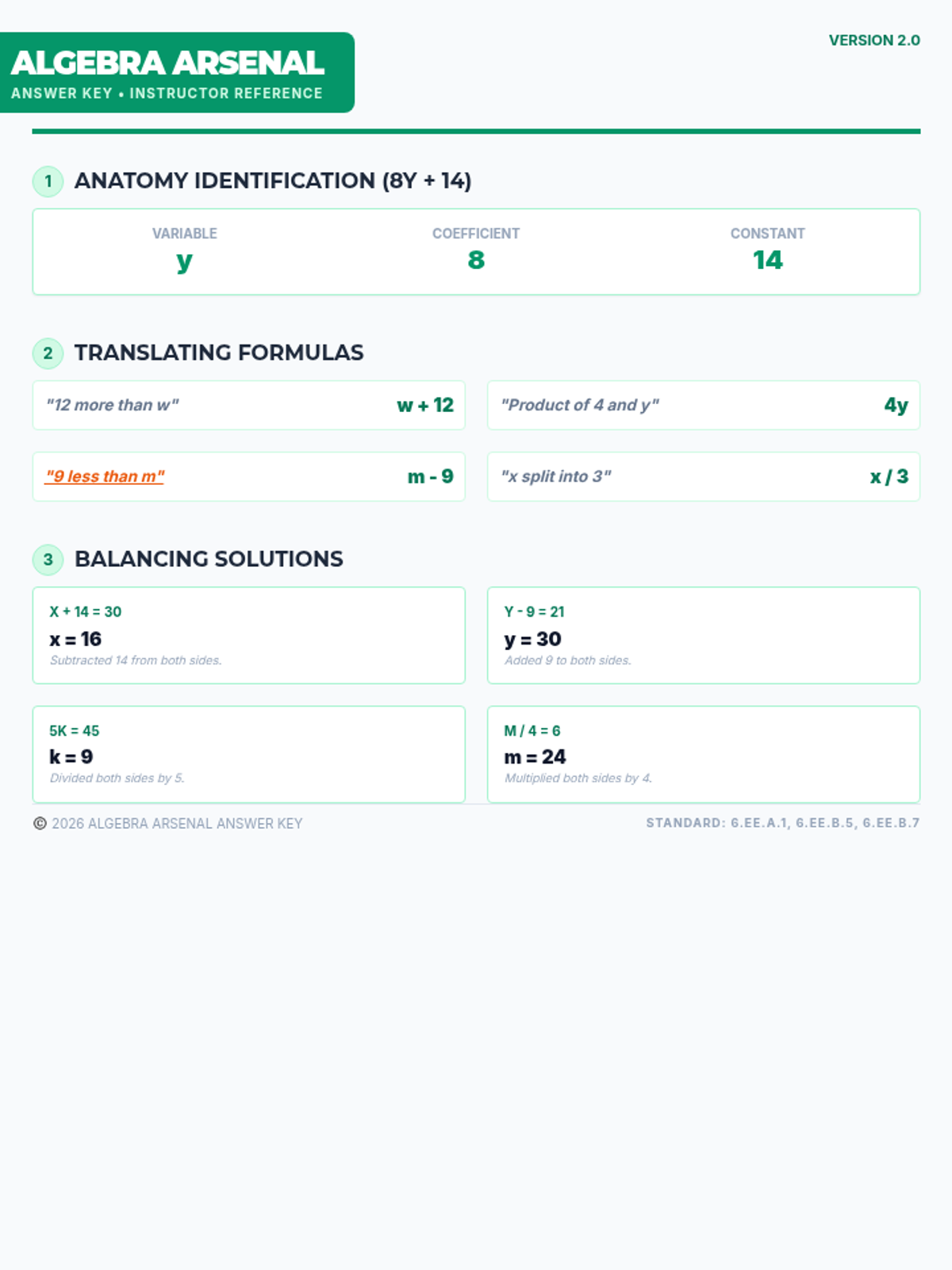
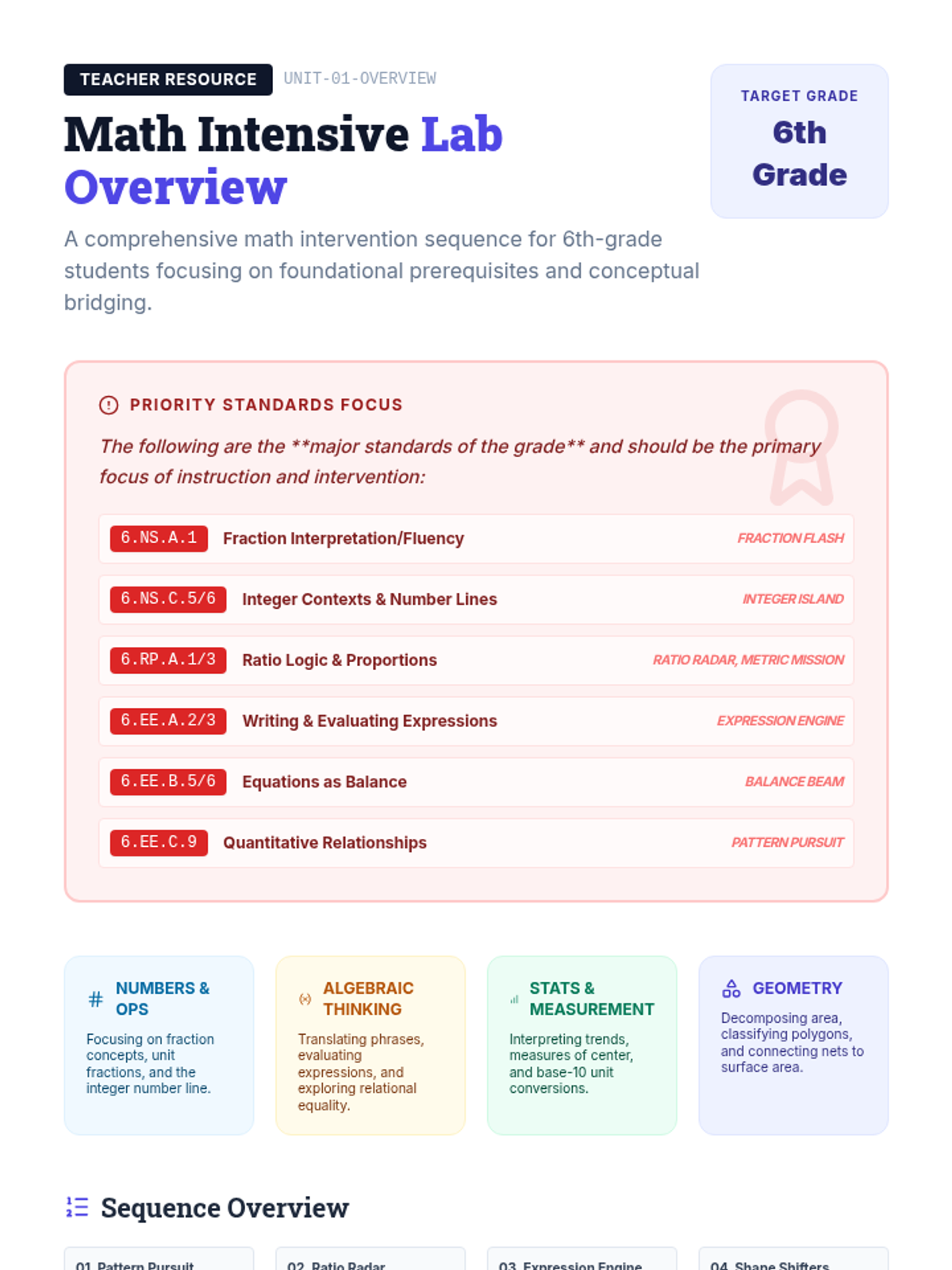
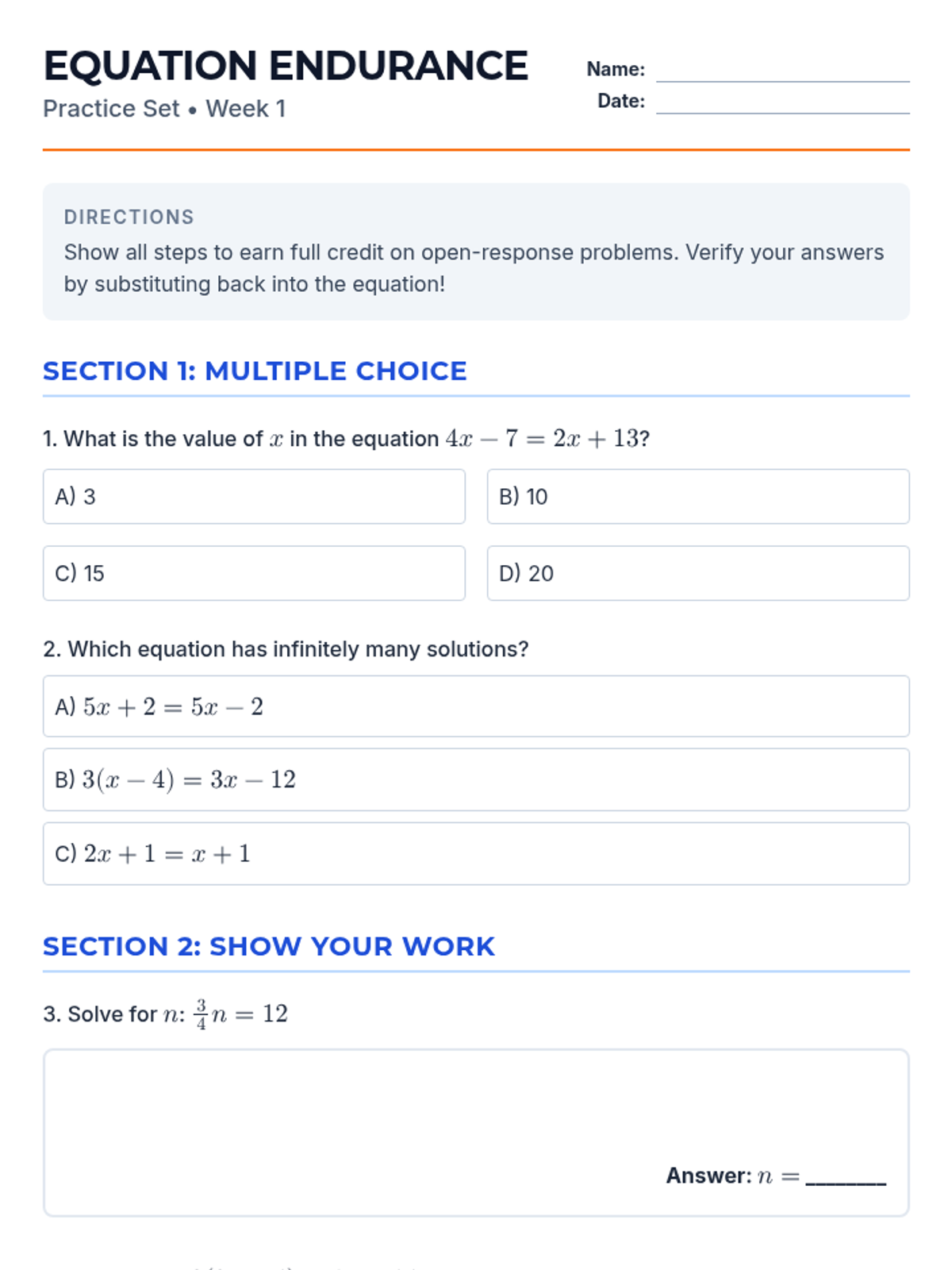
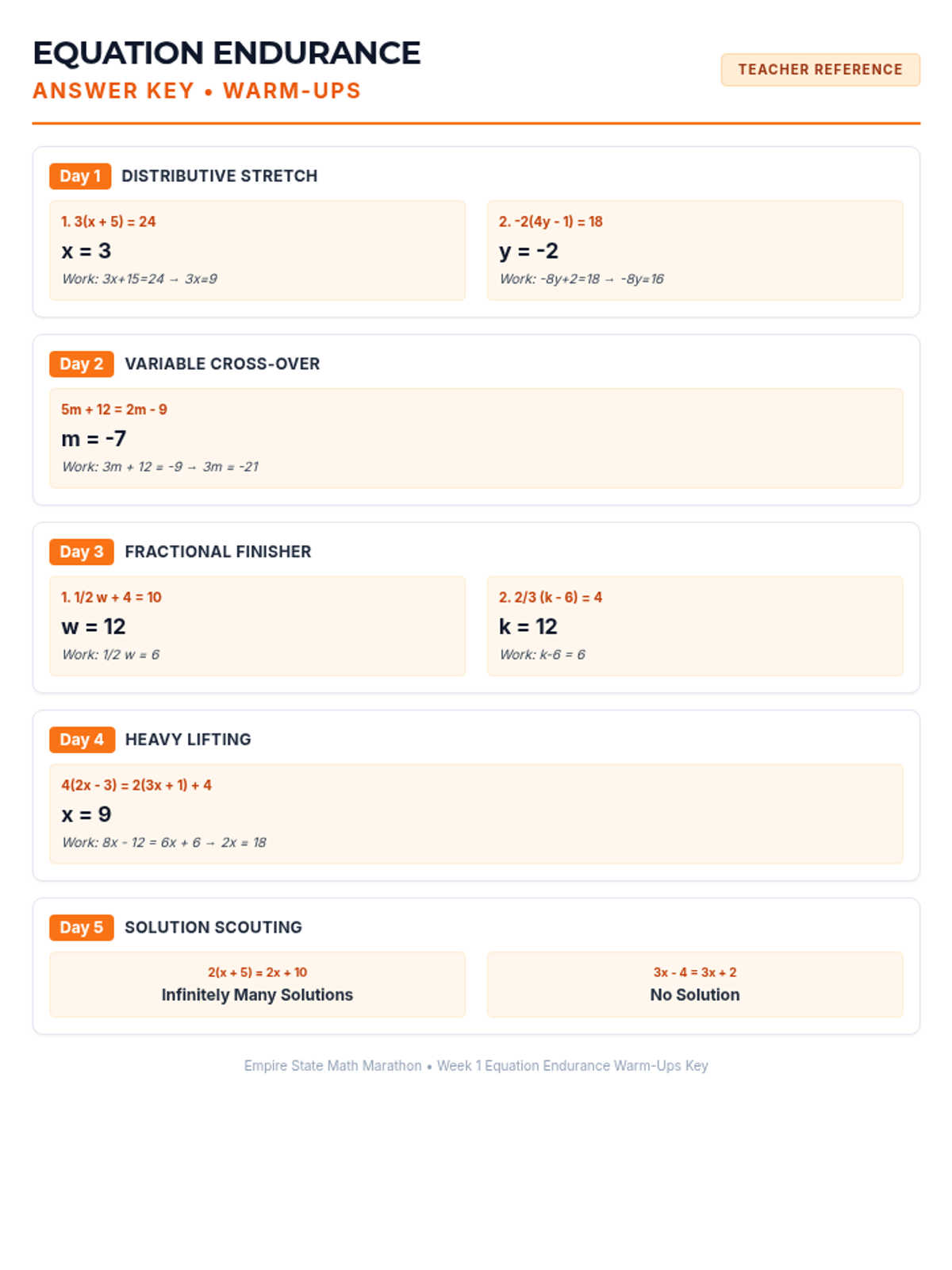
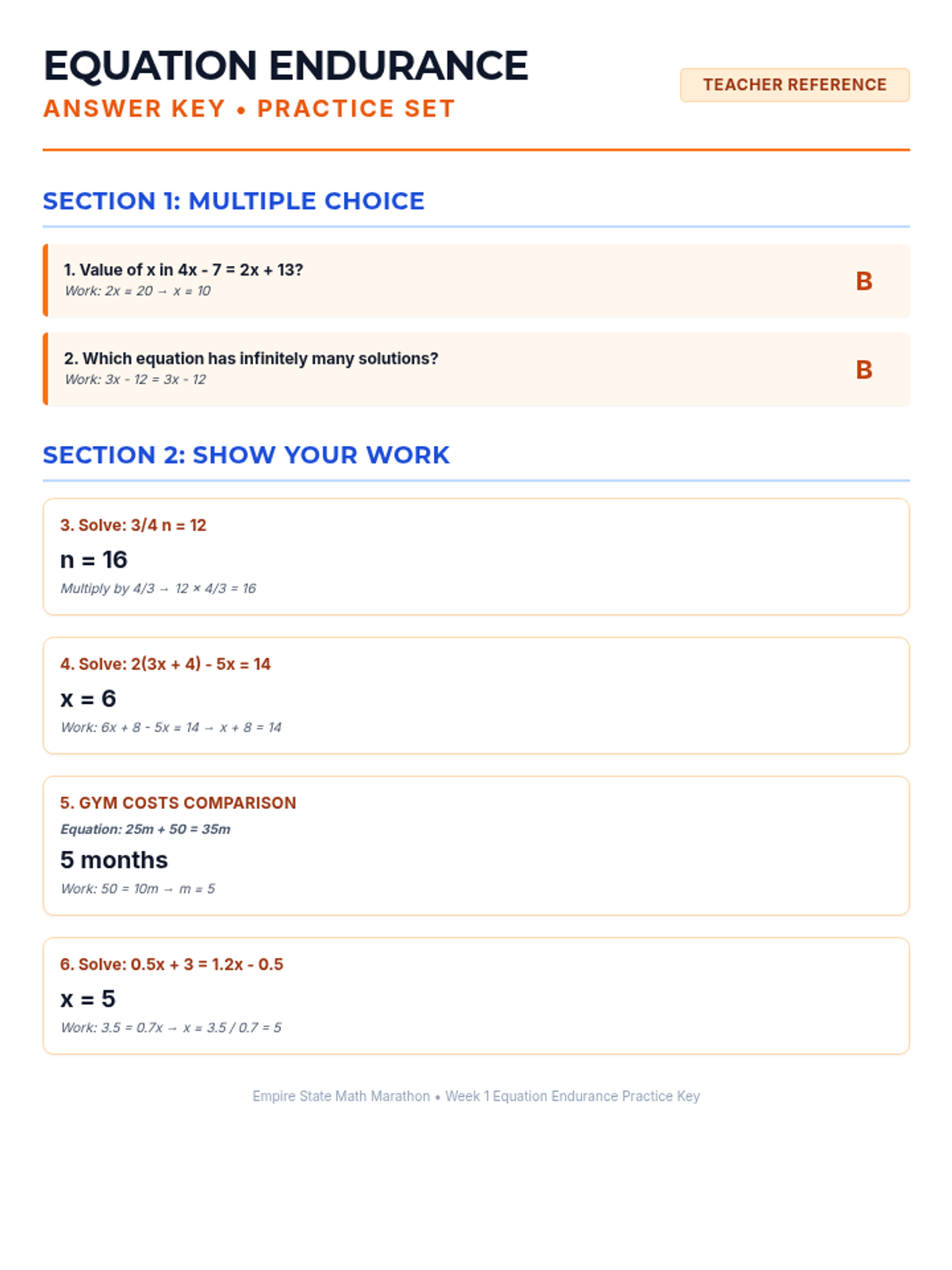
A collection of high-quality study tools and practice resources for 6th-grade math, focusing on Ratios, Proportions, Expressions, and Equations.
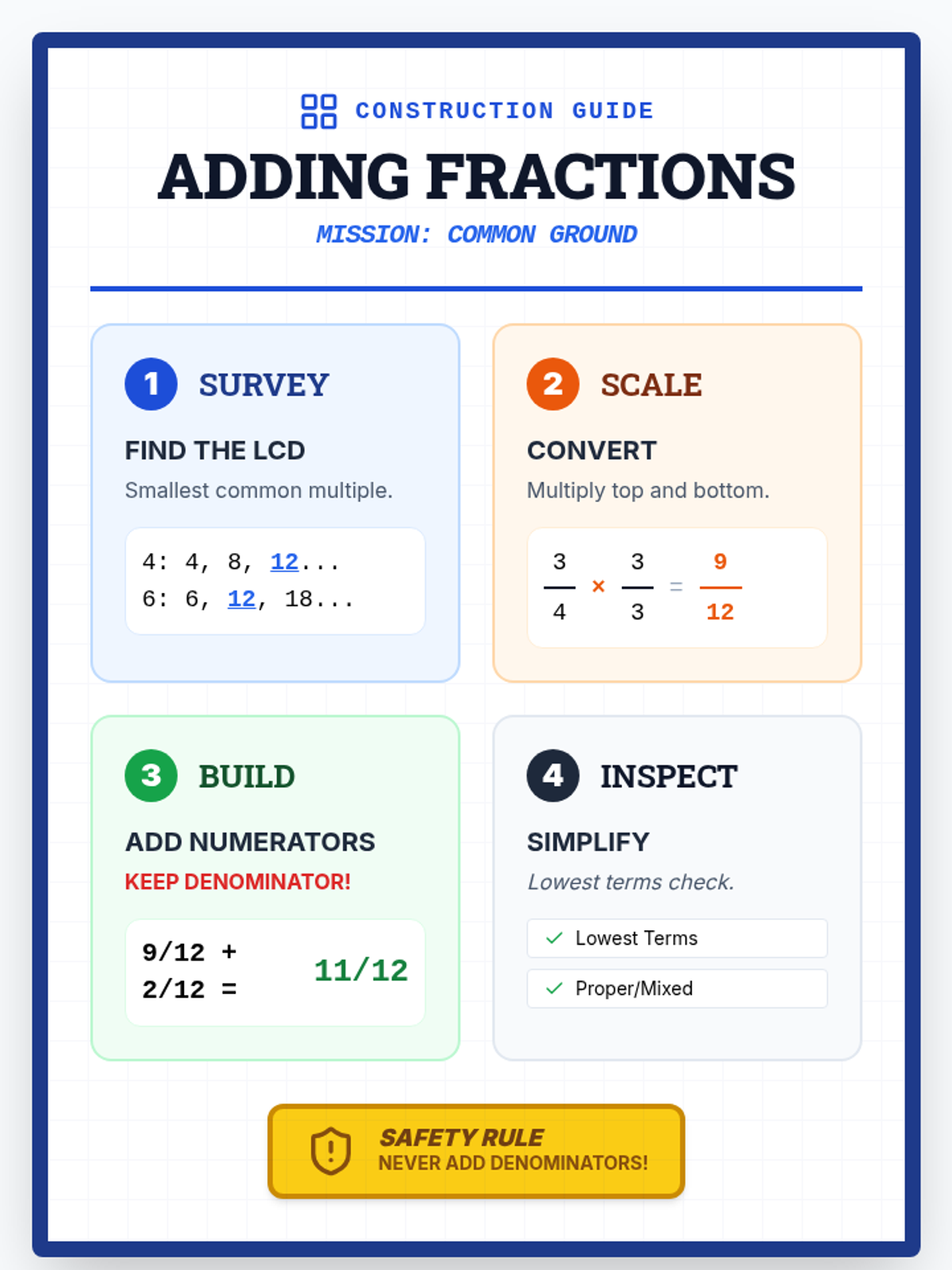
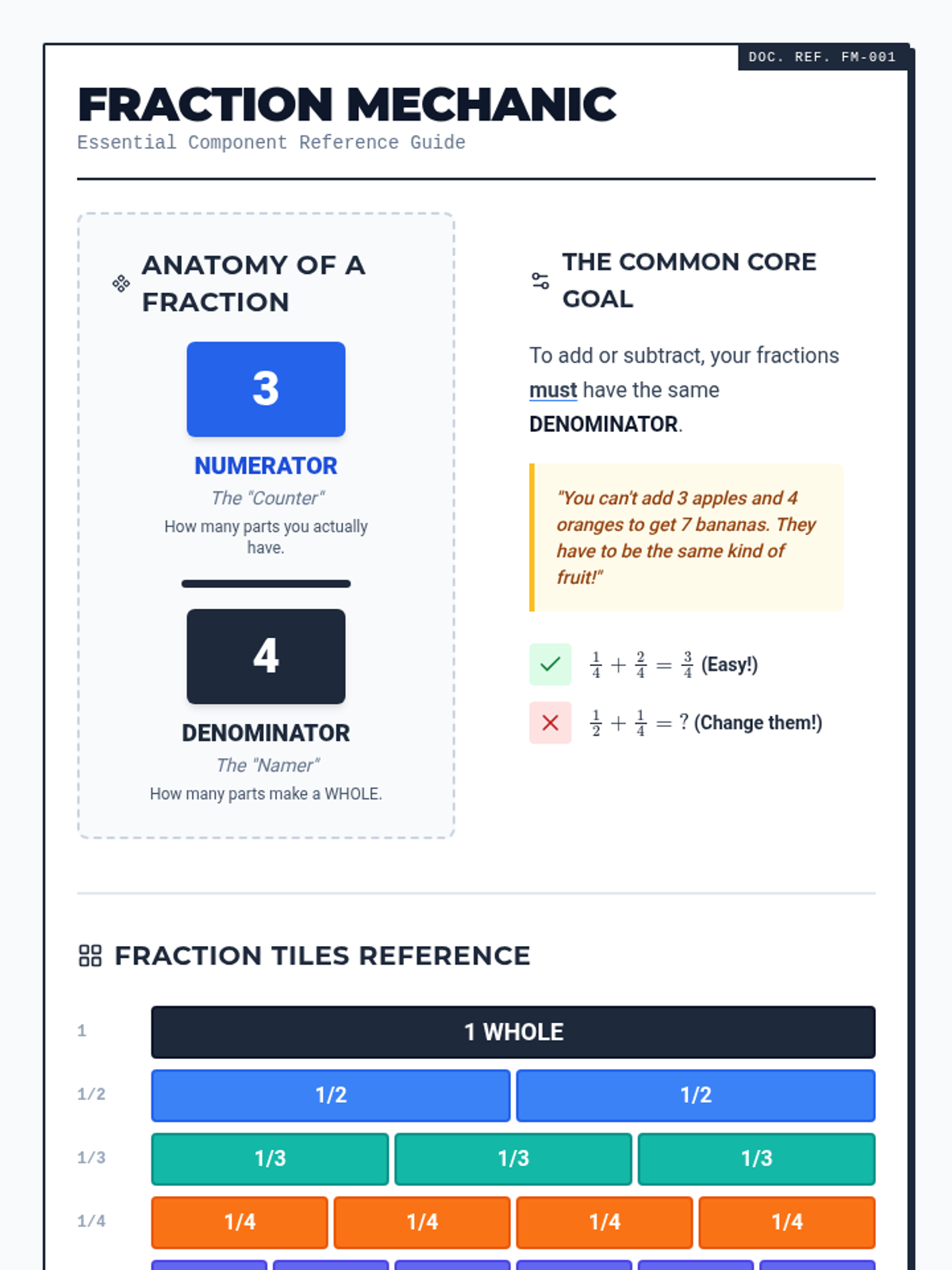
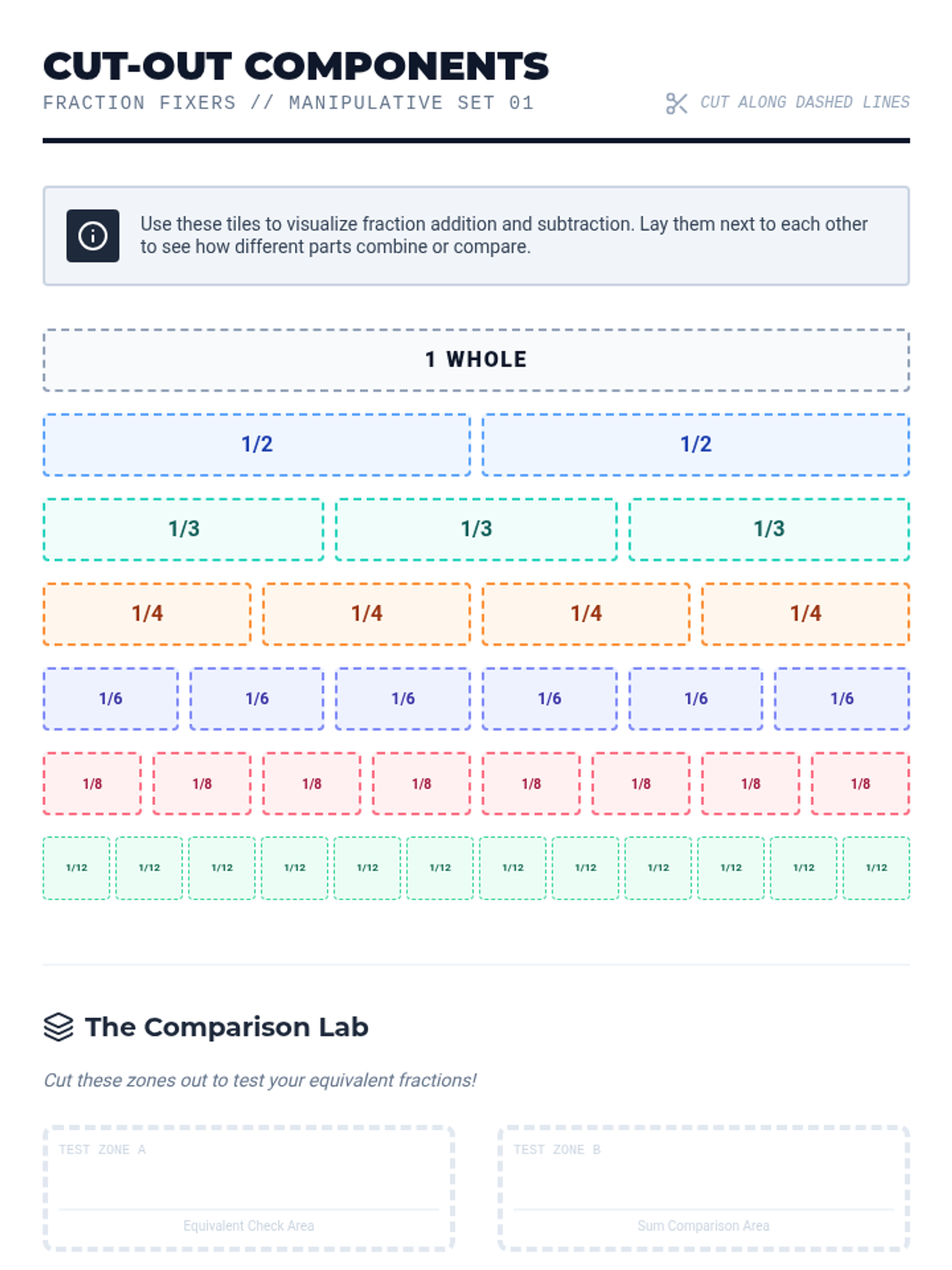
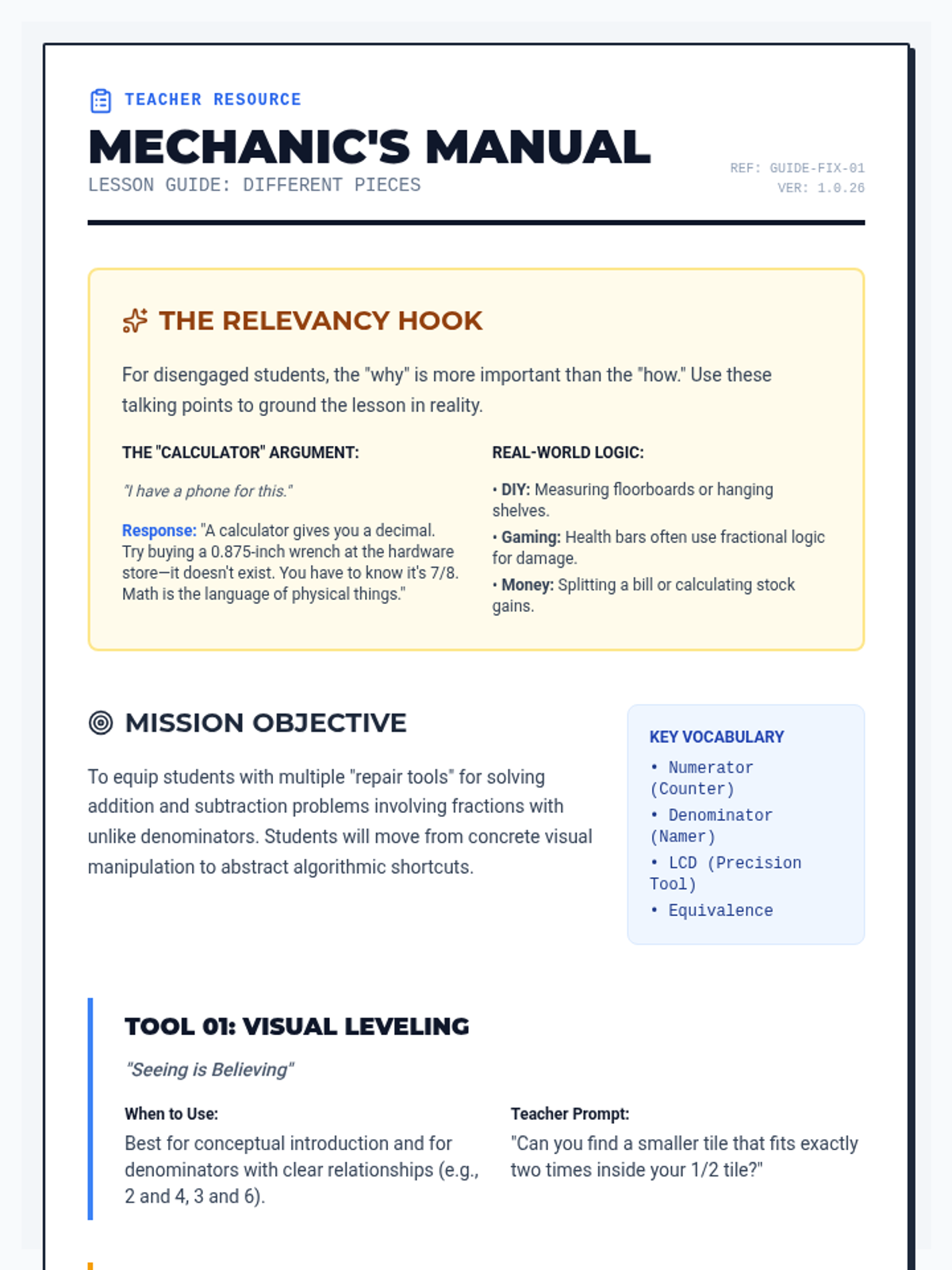
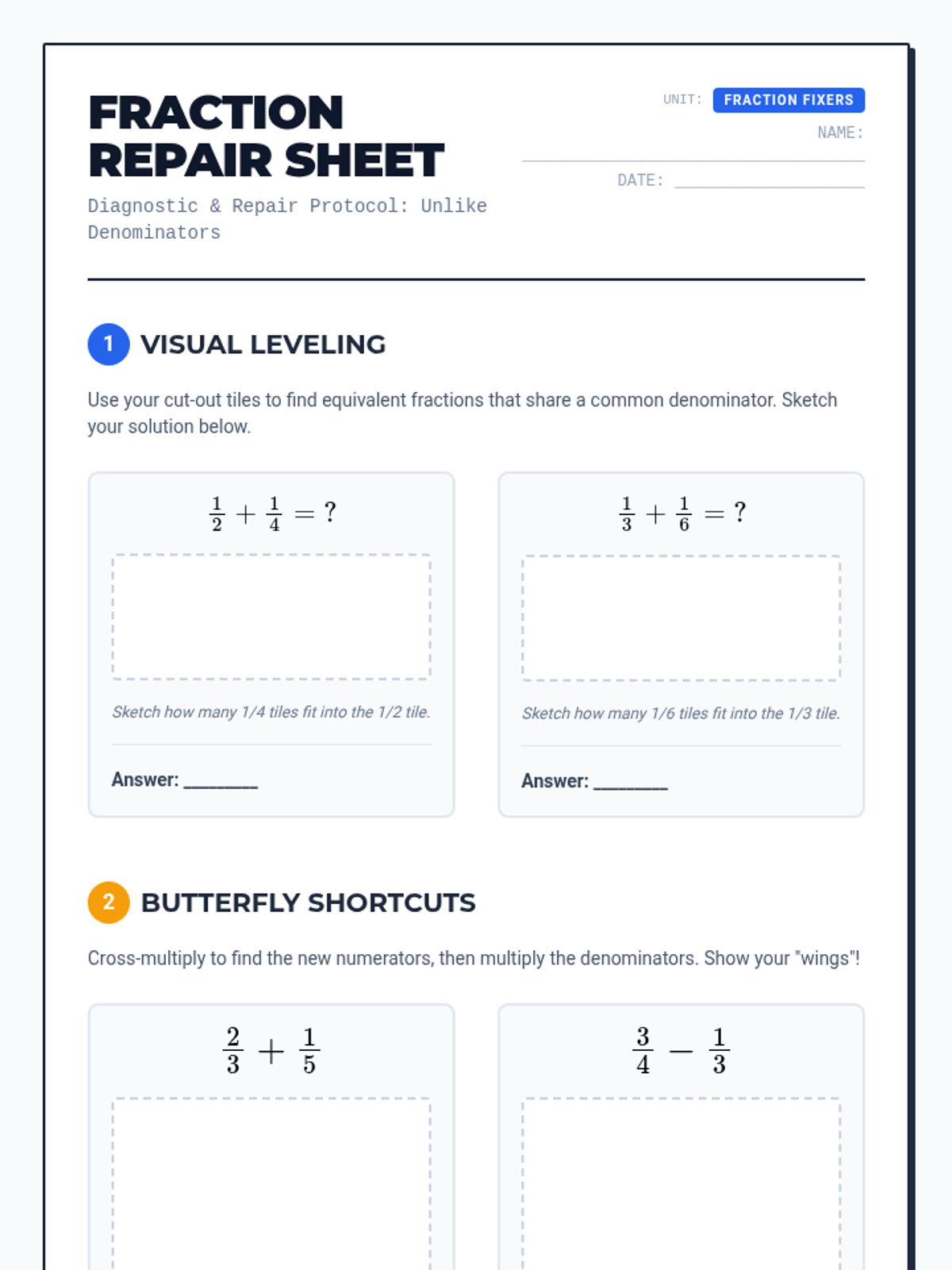
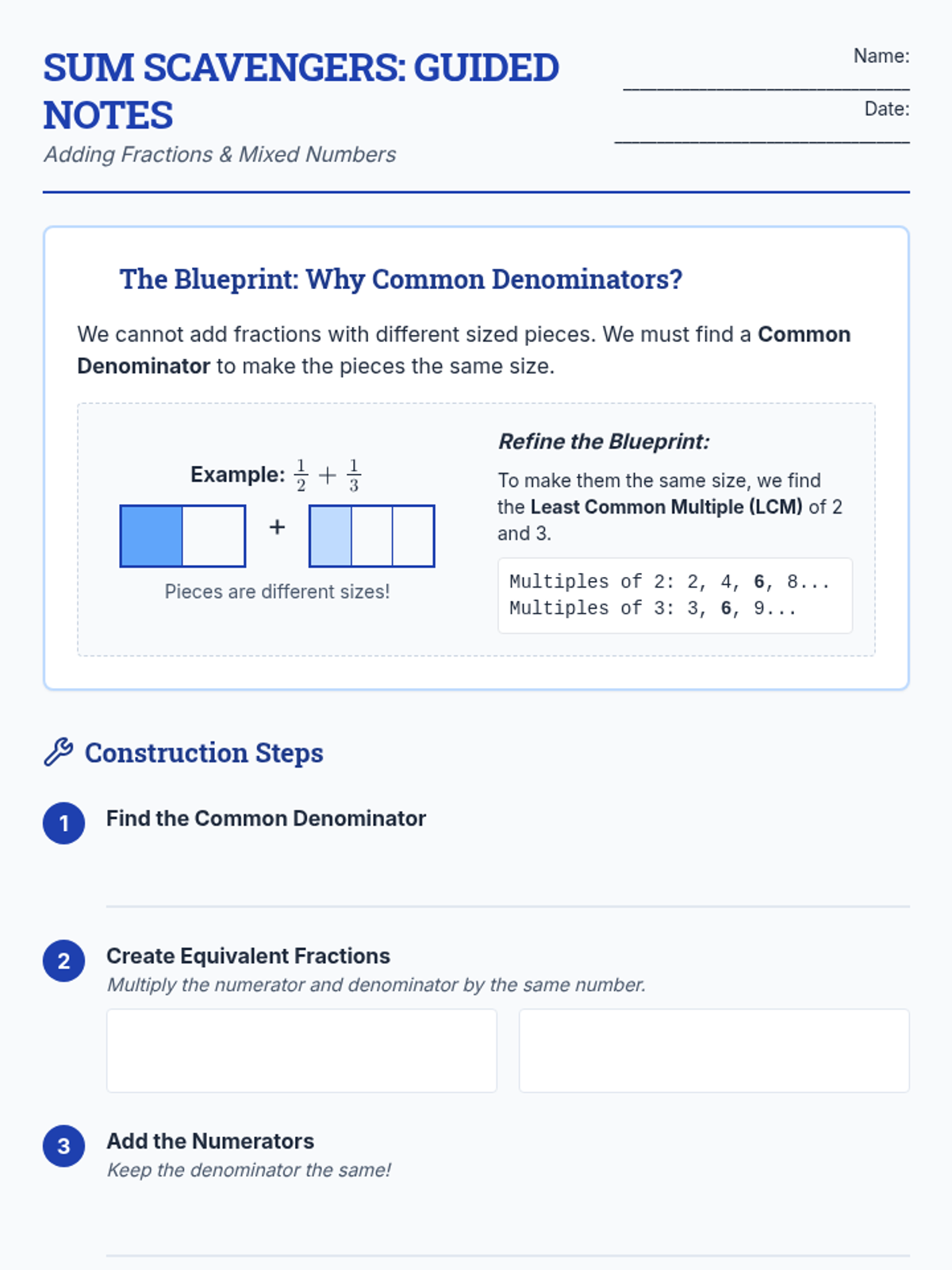
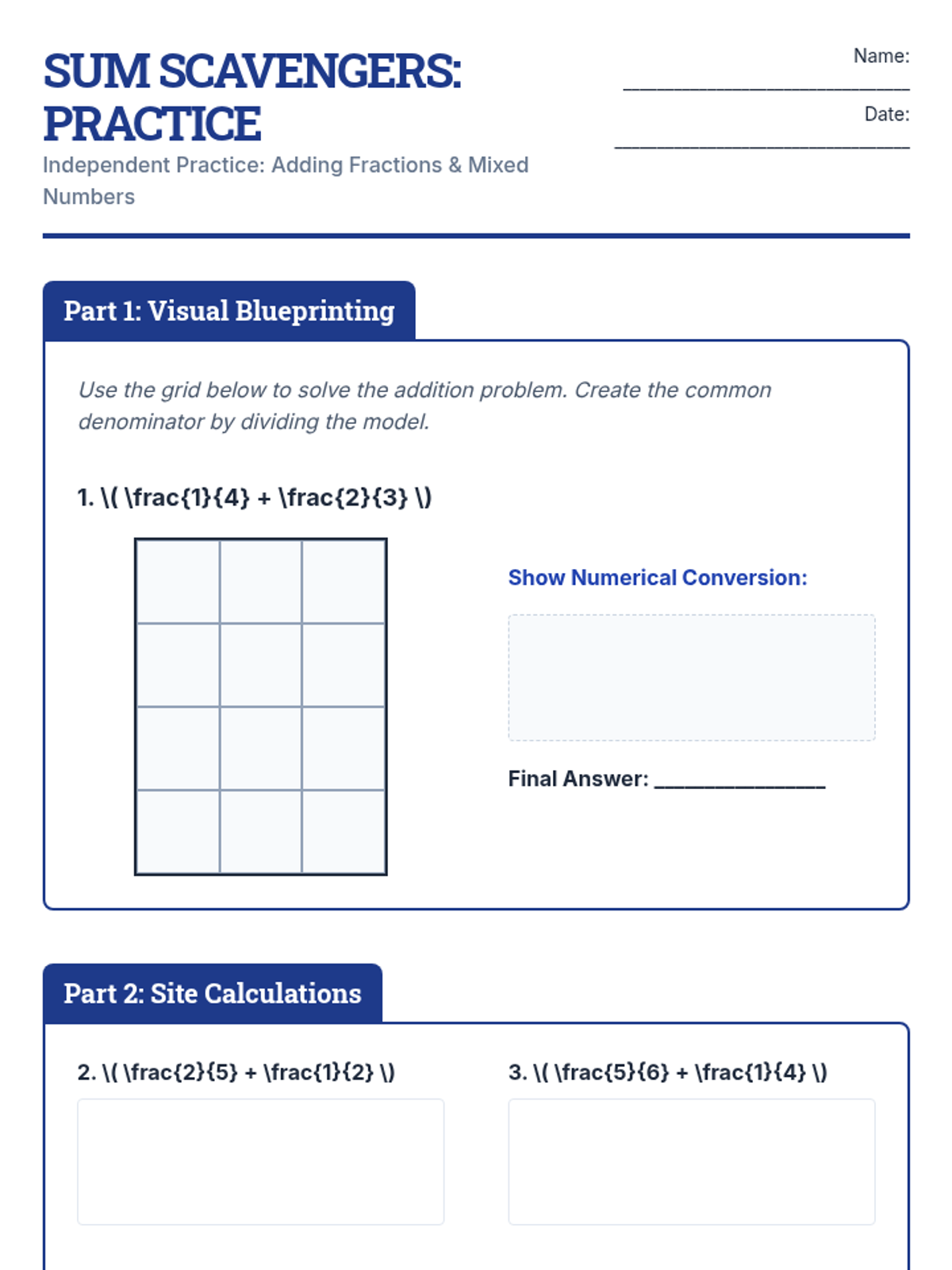
A comprehensive intervention sequence for middle school students struggling with adding and subtracting fractions with unlike denominators, focusing on multiple visual and algorithmic strategies.
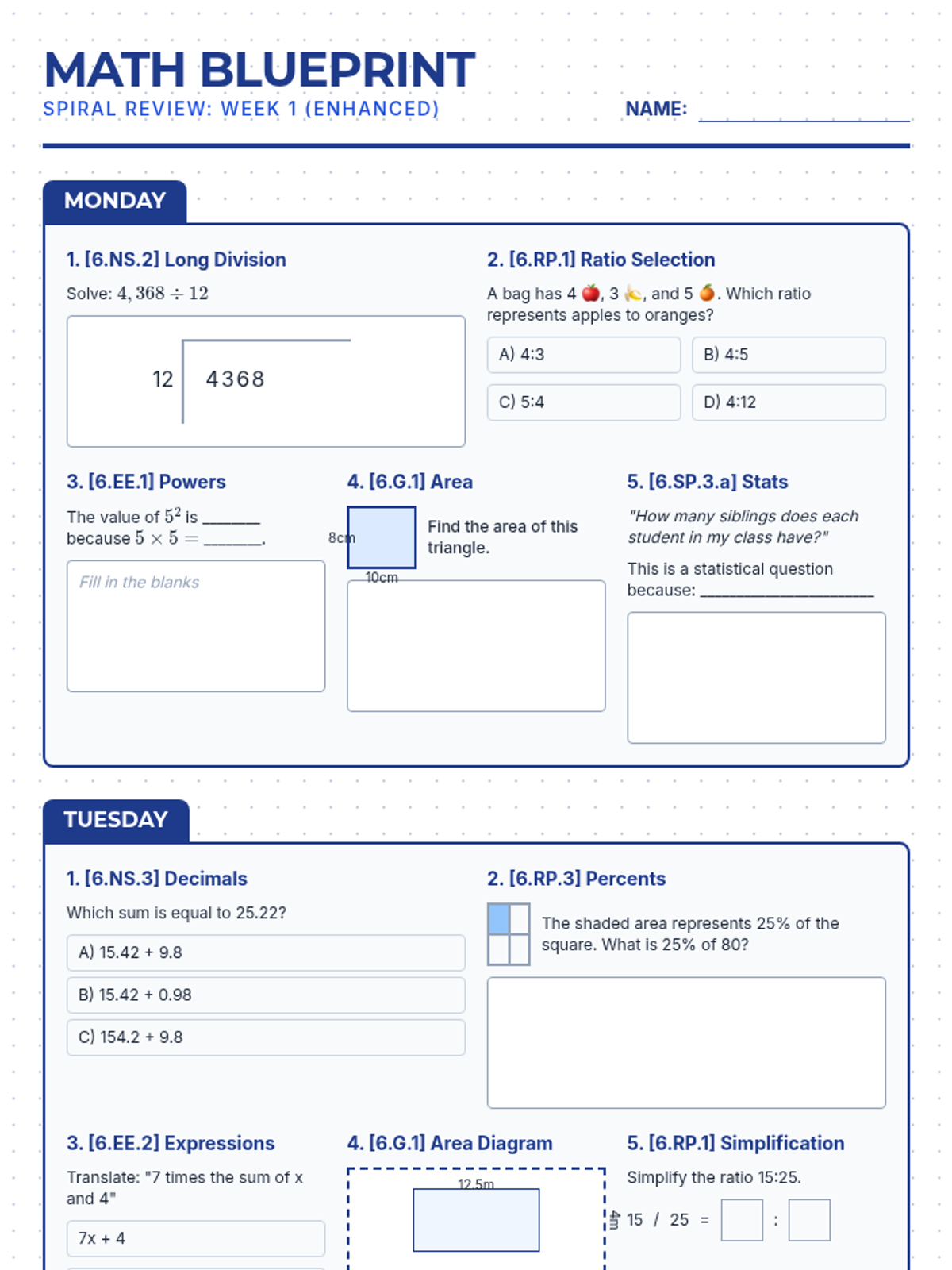
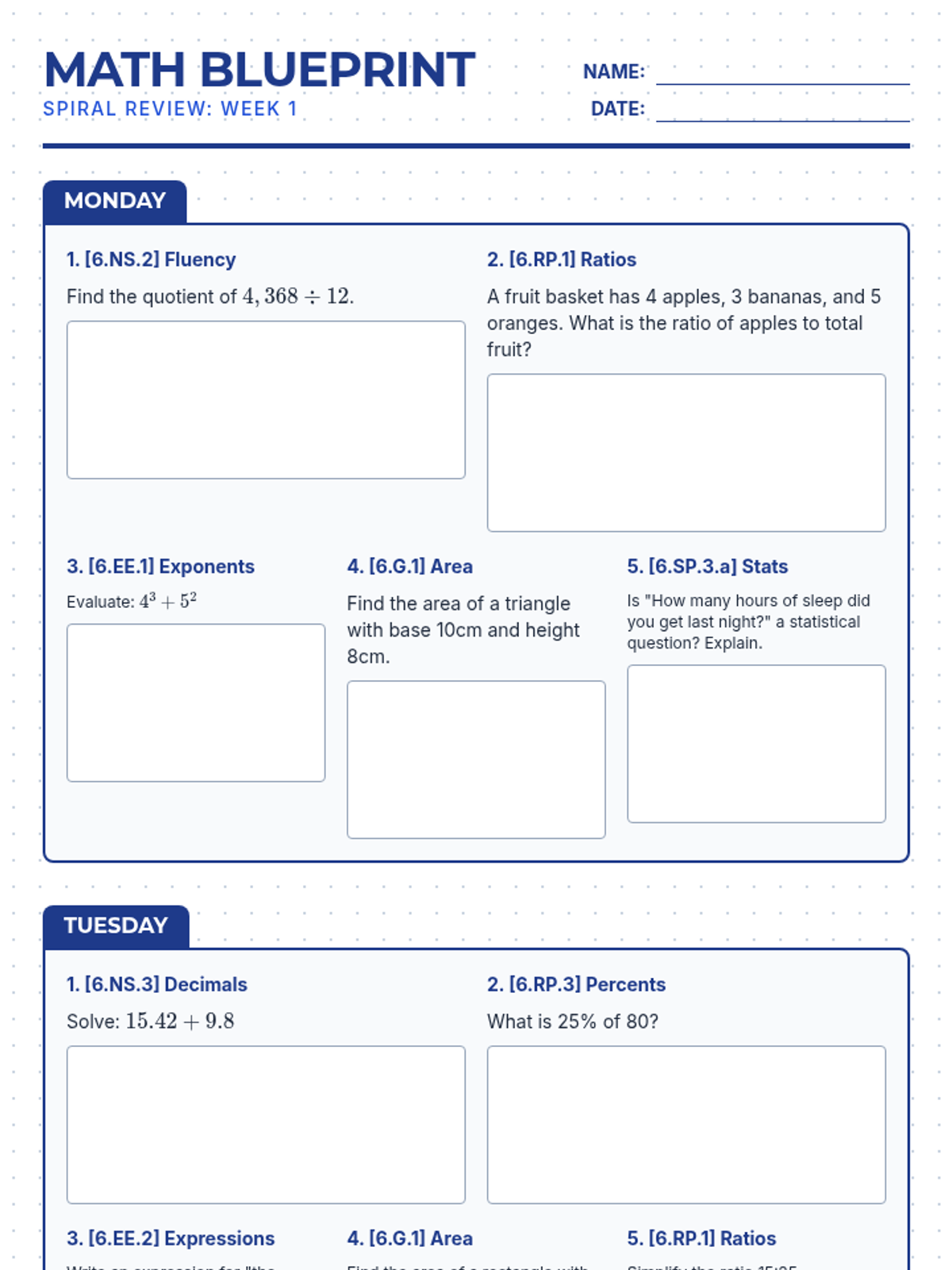
A 7-week comprehensive math review sequence designed to prepare 6th-grade students for North Carolina state testing, covering Number Systems, Ratios, Expressions, Geometry, and Statistics.
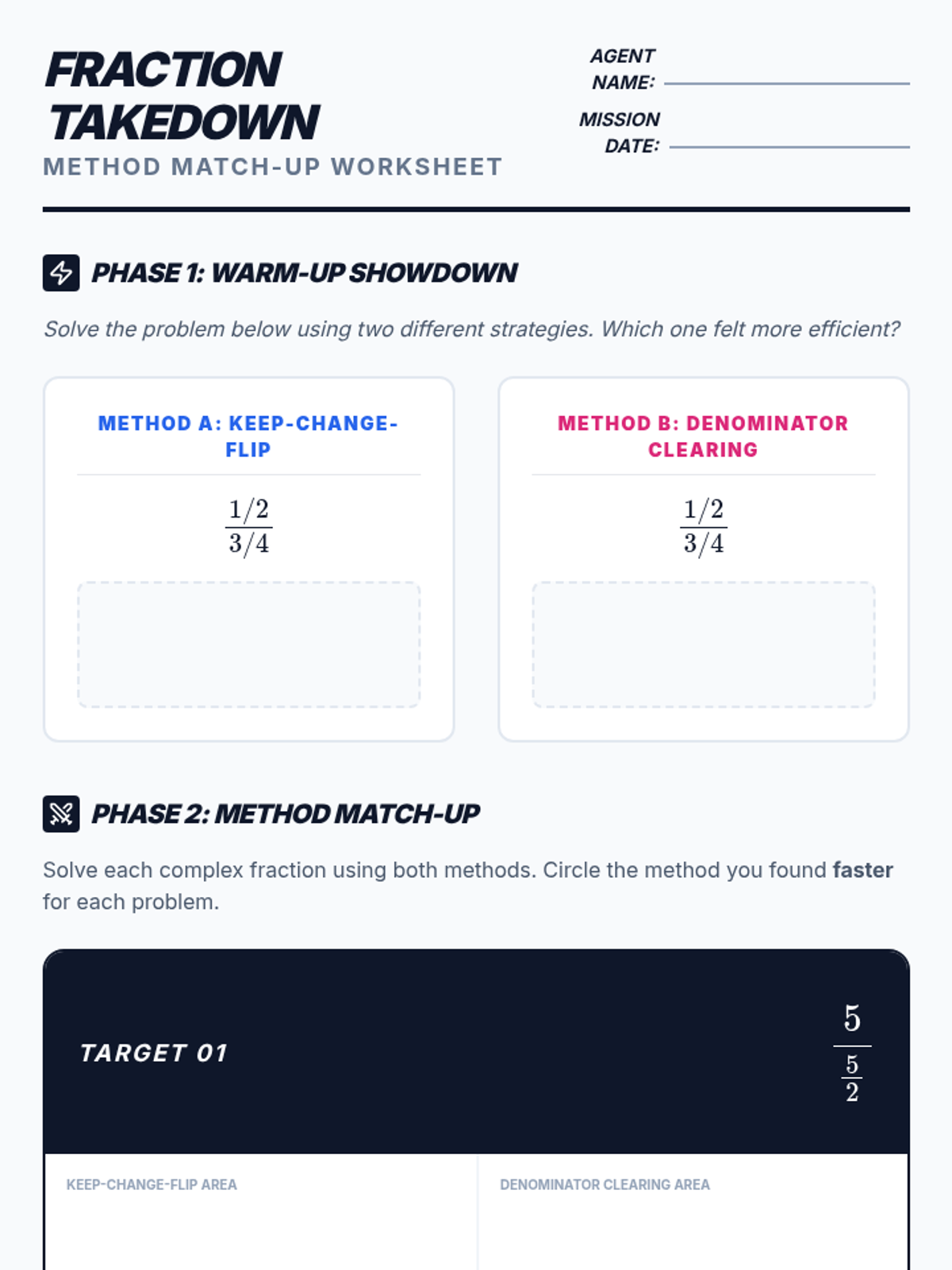
A comprehensive 3-week unit covering the full spectrum of fraction operations, from basic identification and equivalence to multiplication and division, themed as a precision engineering factory.
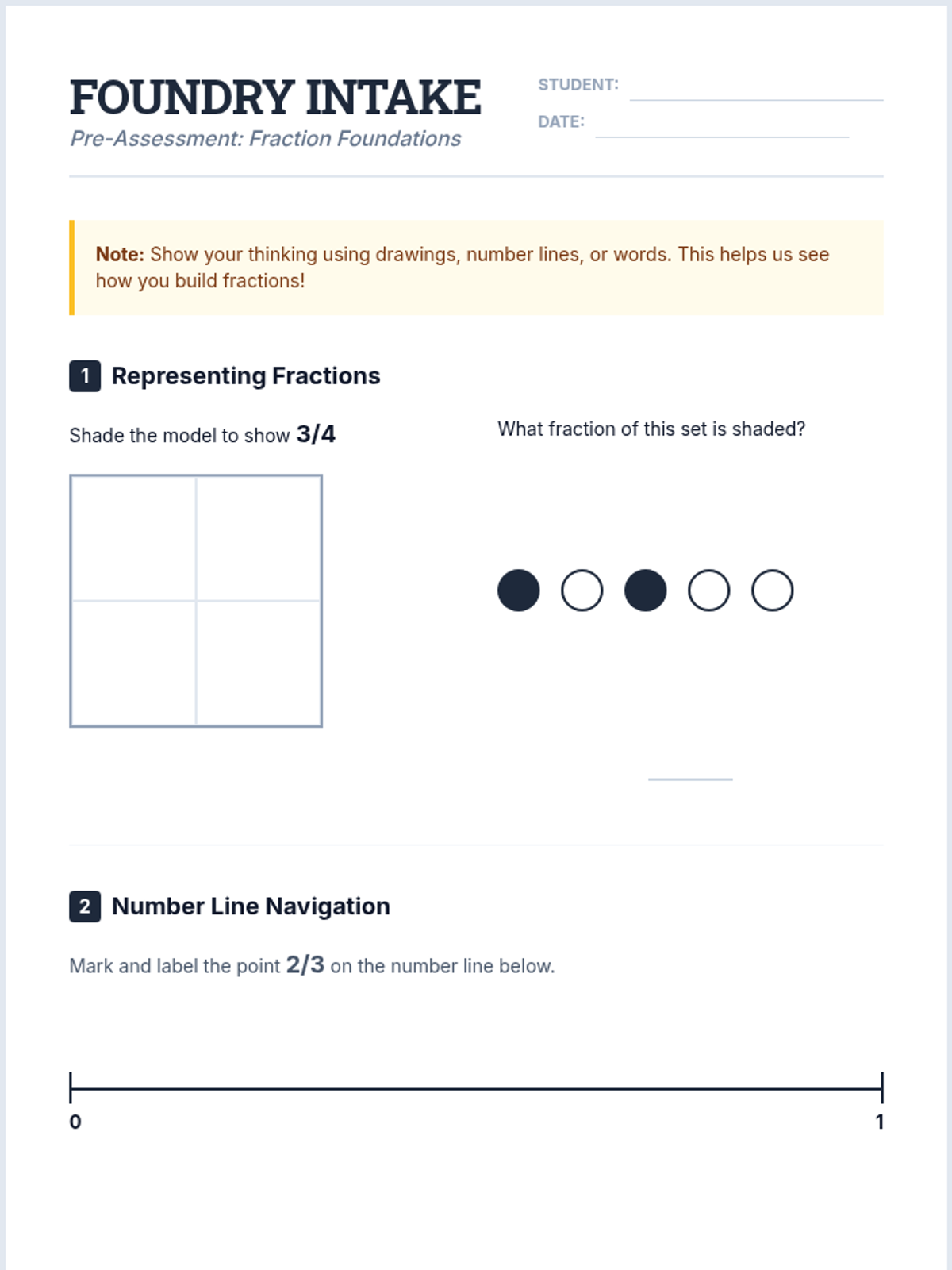
A comprehensive 7-lesson intervention sequence designed to build conceptual fraction understanding through visual models, number lines, and scaffolded practice. The sequence moves from basic area models to adding and subtracting with unlike denominators, prioritizing 'why' over 'how'.
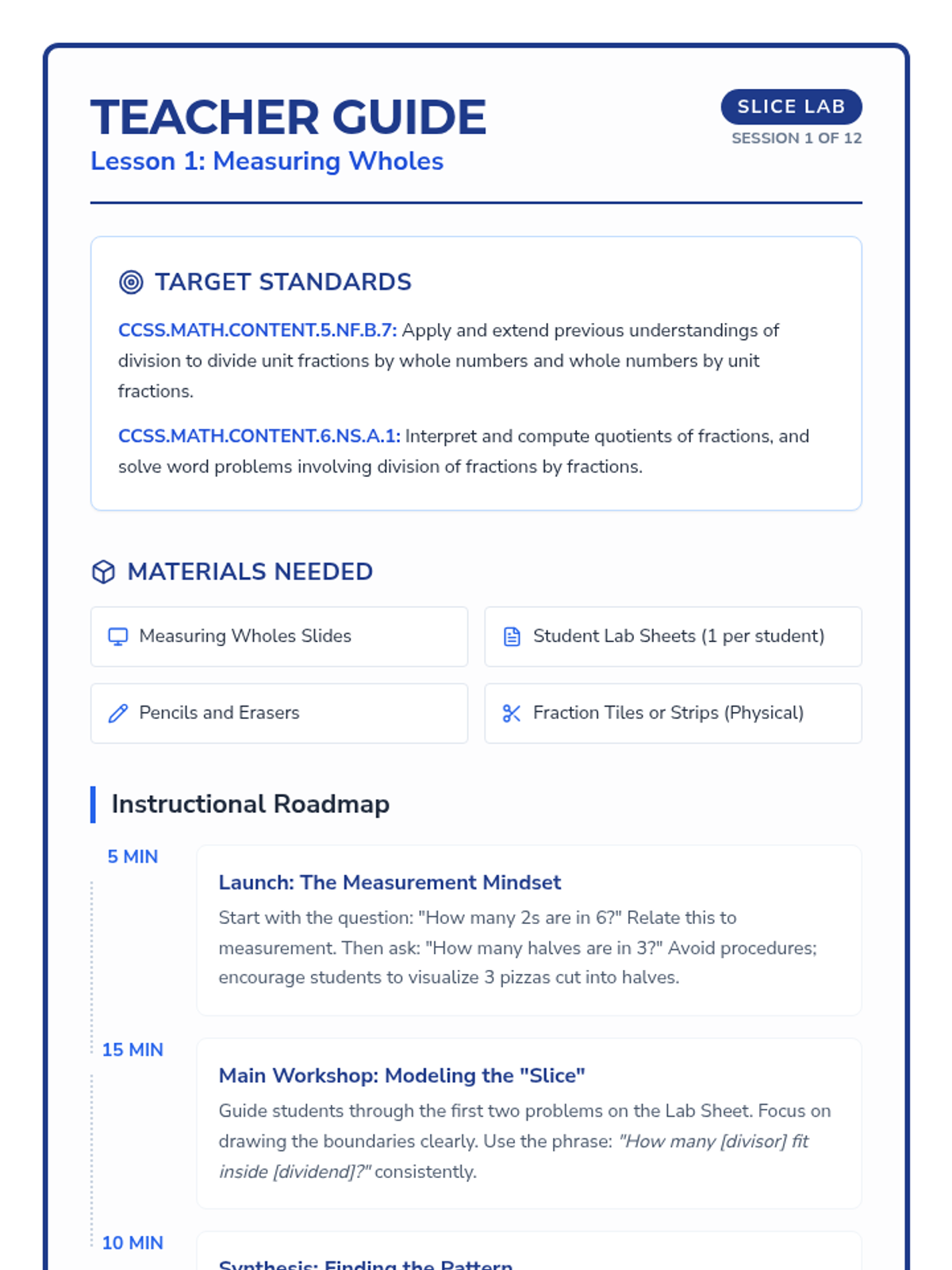
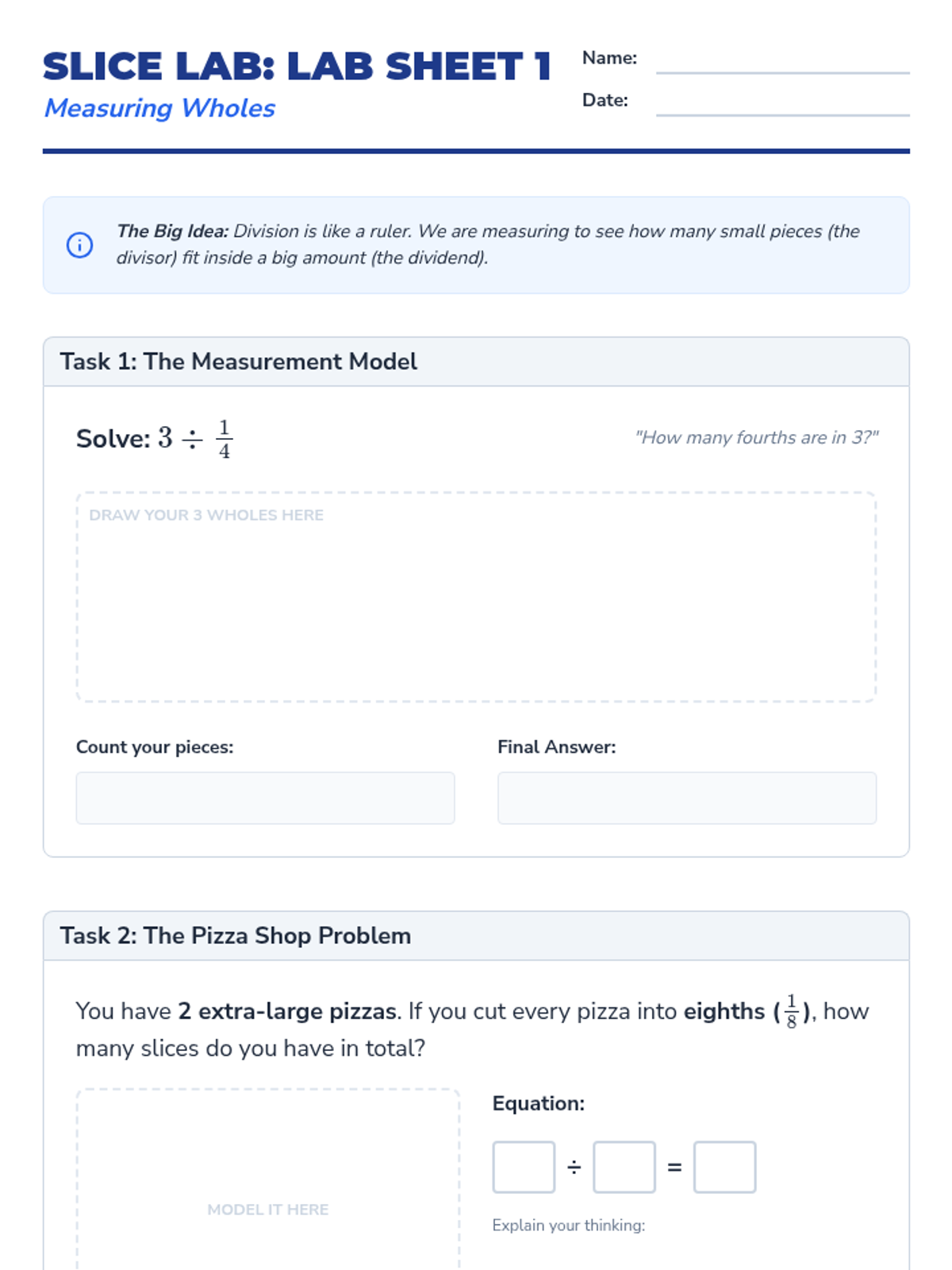
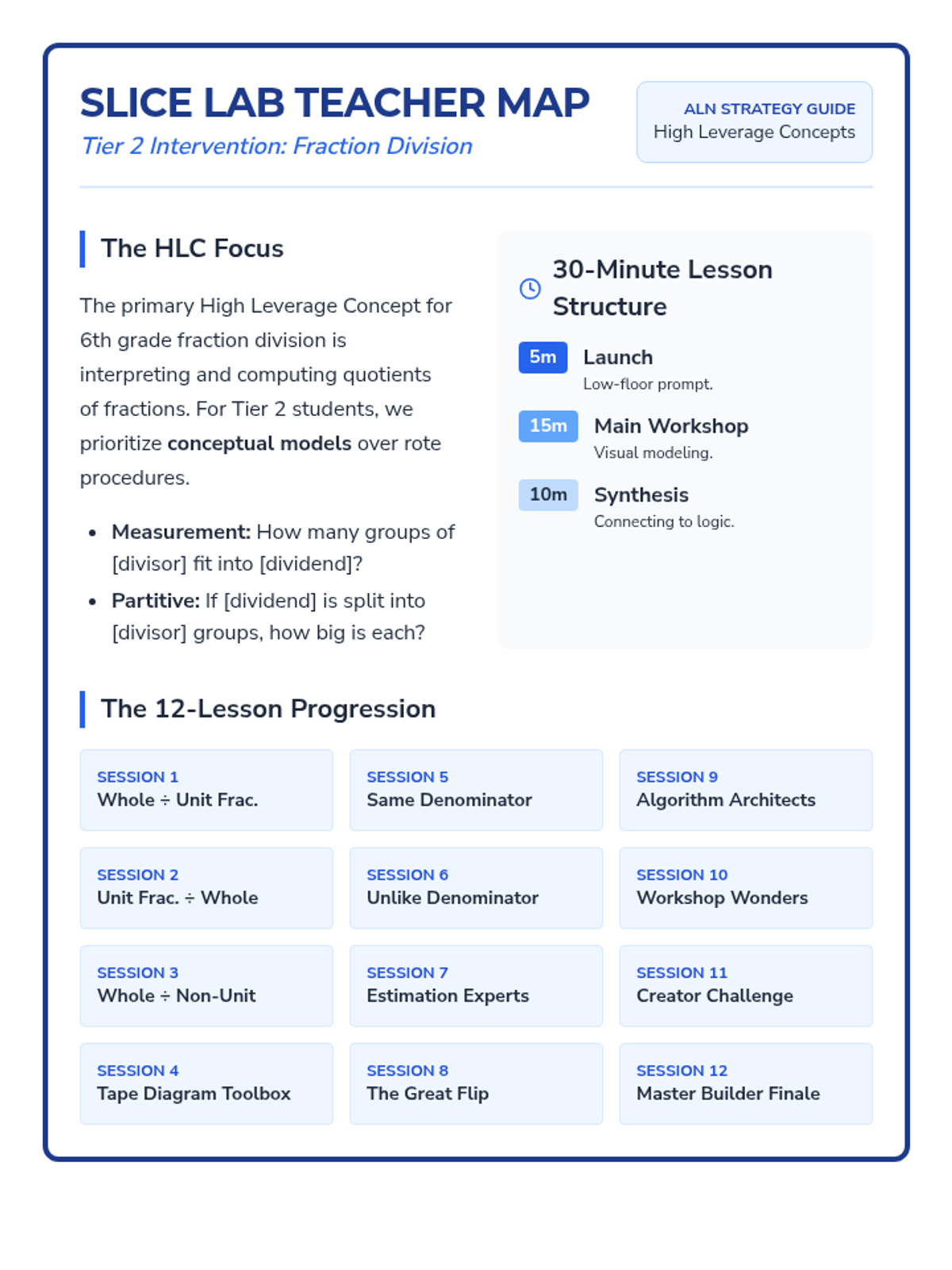
A 12-session tier 2 intervention sequence designed to build conceptual mastery of fraction division. Grounded in All Learners Network (ALN) principles, students progress from visual measurement models to the common denominator strategy and eventually the standard algorithm through deep reasoning and high-leverage concepts.
A 5-lesson Tier 2 intervention series designed for 6th-grade small group instruction, focusing on the conceptual understanding and procedural fluency of comparing, ordering, and converting fractions, decimals, and percentages.
A comprehensive math intervention sequence for 6th-grade students, focusing on four key domains: Numbers & Operations, Algebraic Thinking, Measurement & Data, and Geometry. This sequence uses high-leverage strategies from the All Learners Network (ALN) and aligns with i-Ready prerequisite modules to bridge conceptual gaps.
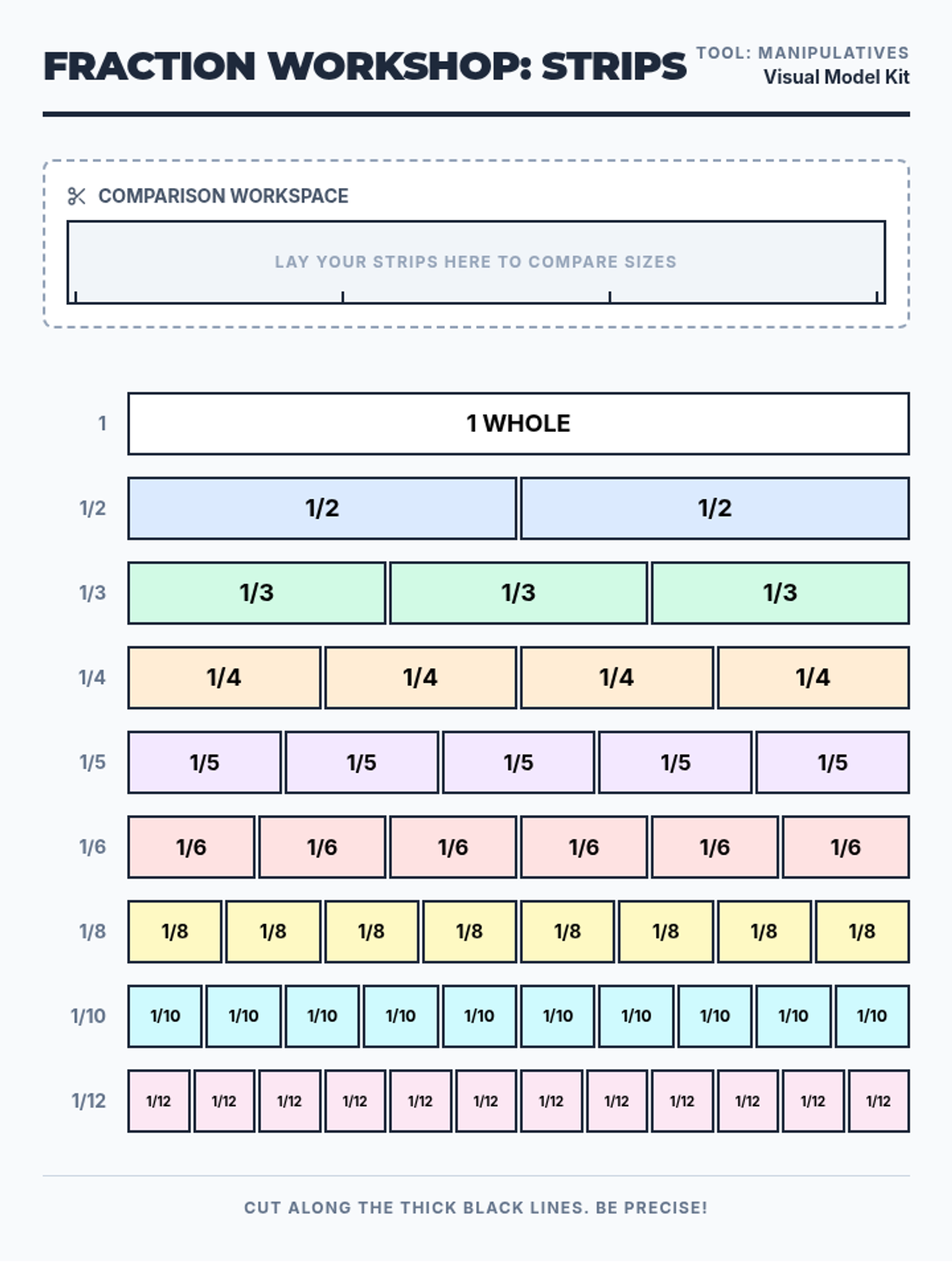
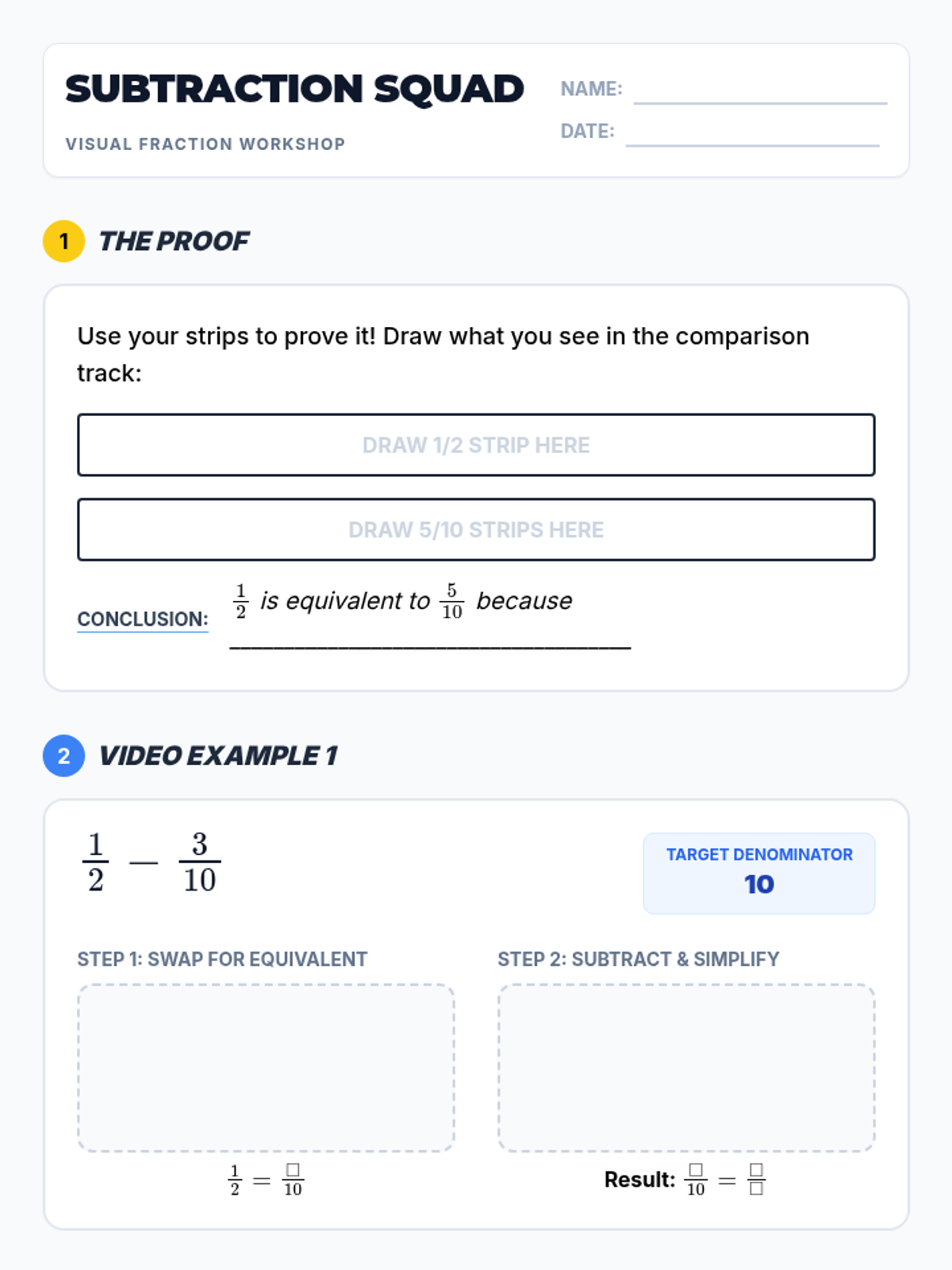
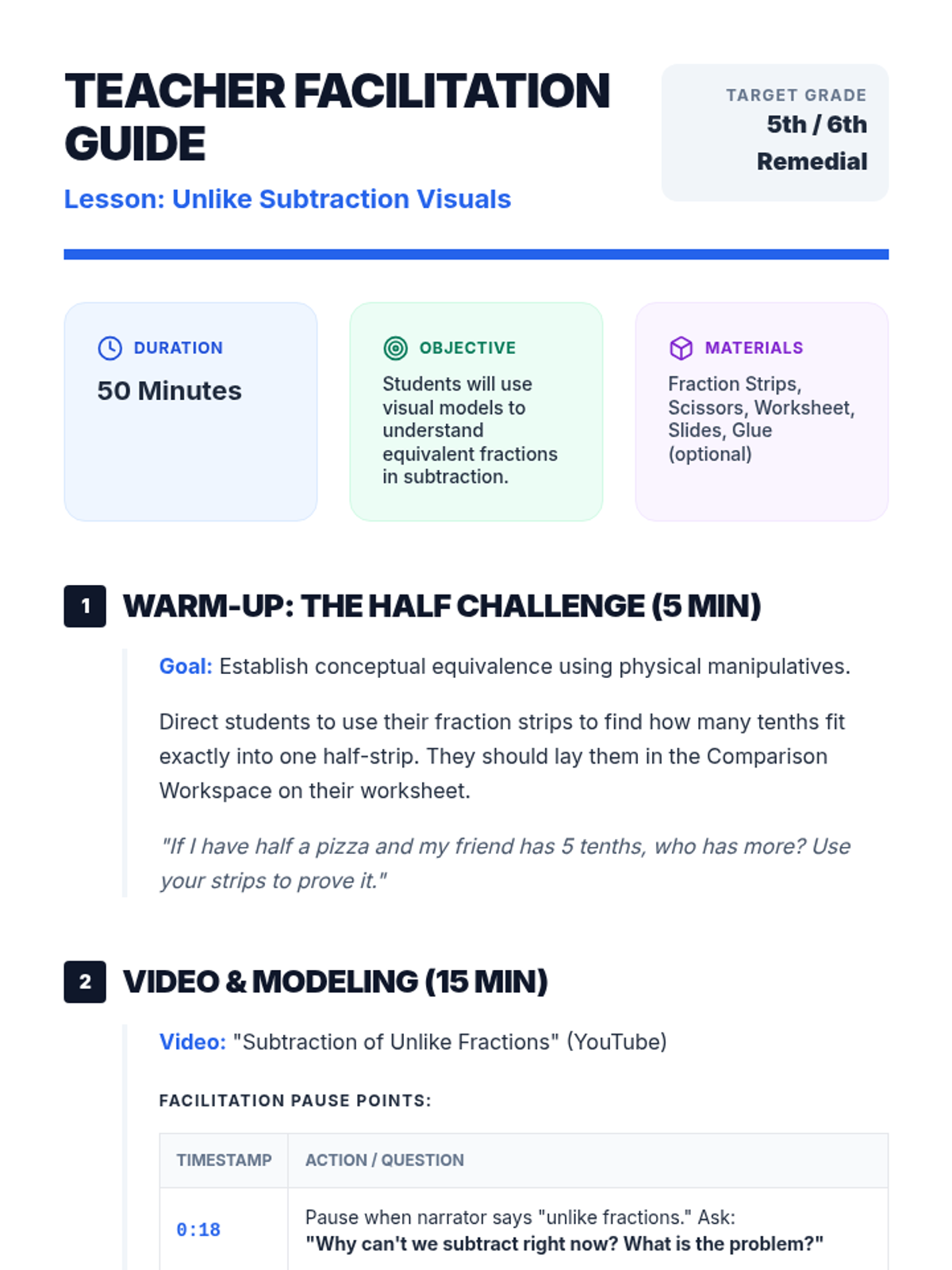
A series of lessons designed for remedial 5th/6th grade students to master fraction operations through visual modeling, manipulatives, and conceptual understanding.
A math unit focused on understanding and applying ratios and proportions through visual methods, mental math strategies, and algorithmic problem-solving.
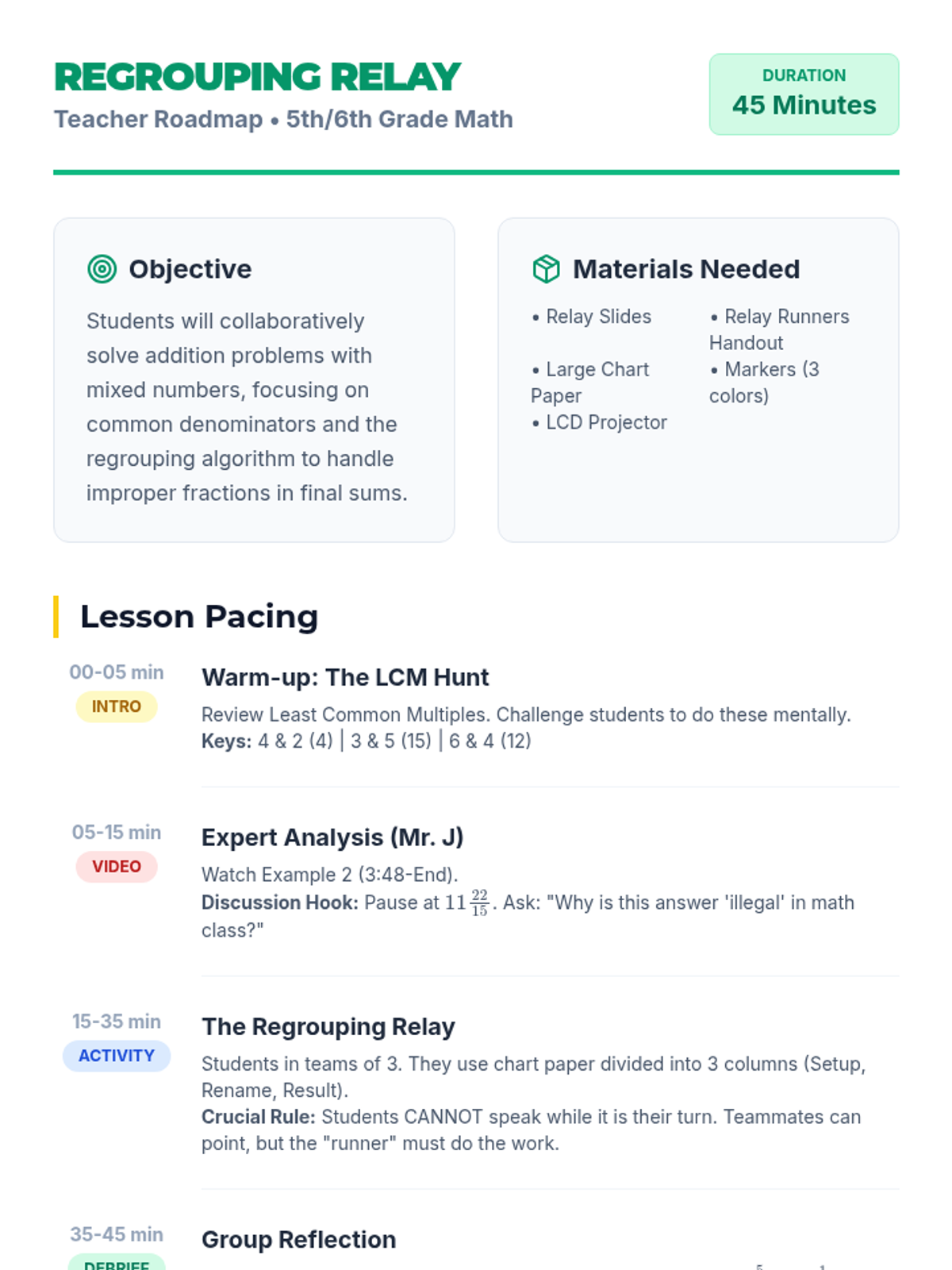
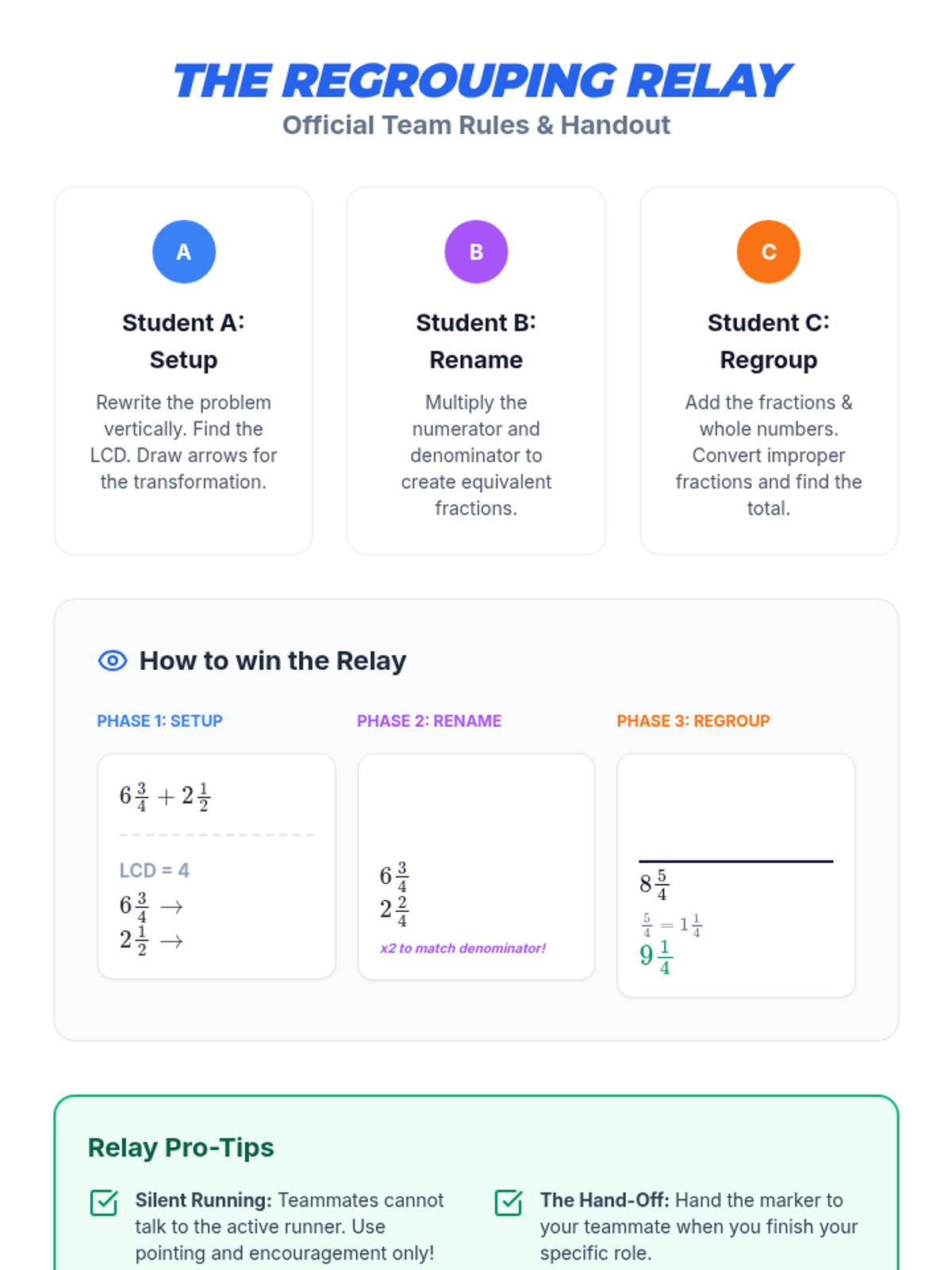
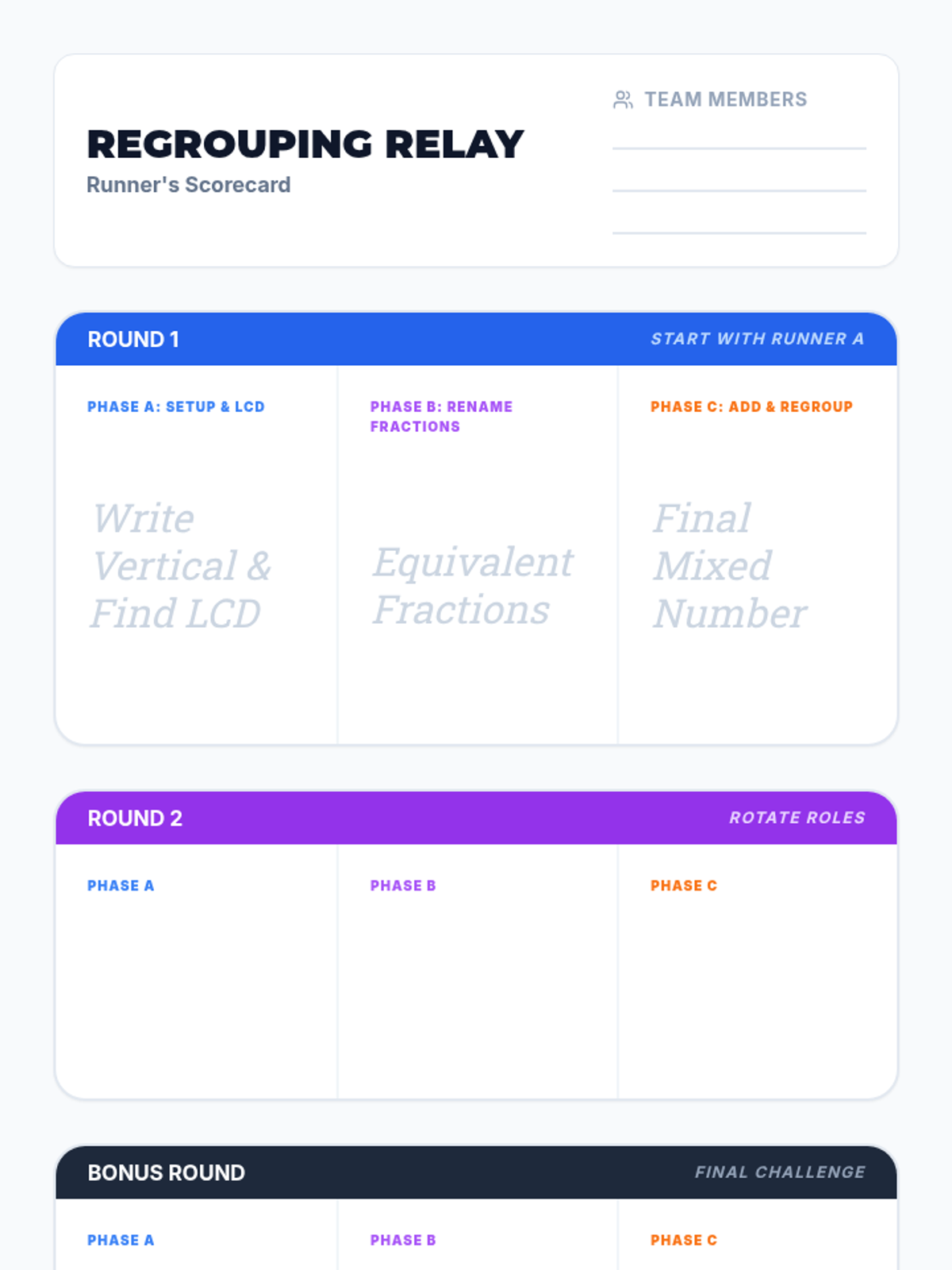
A collaborative mathematics lesson focusing on adding mixed numbers with regrouping. Students work in teams to master the regrouping algorithm through a relay-style activity after analyzing instructional video content.
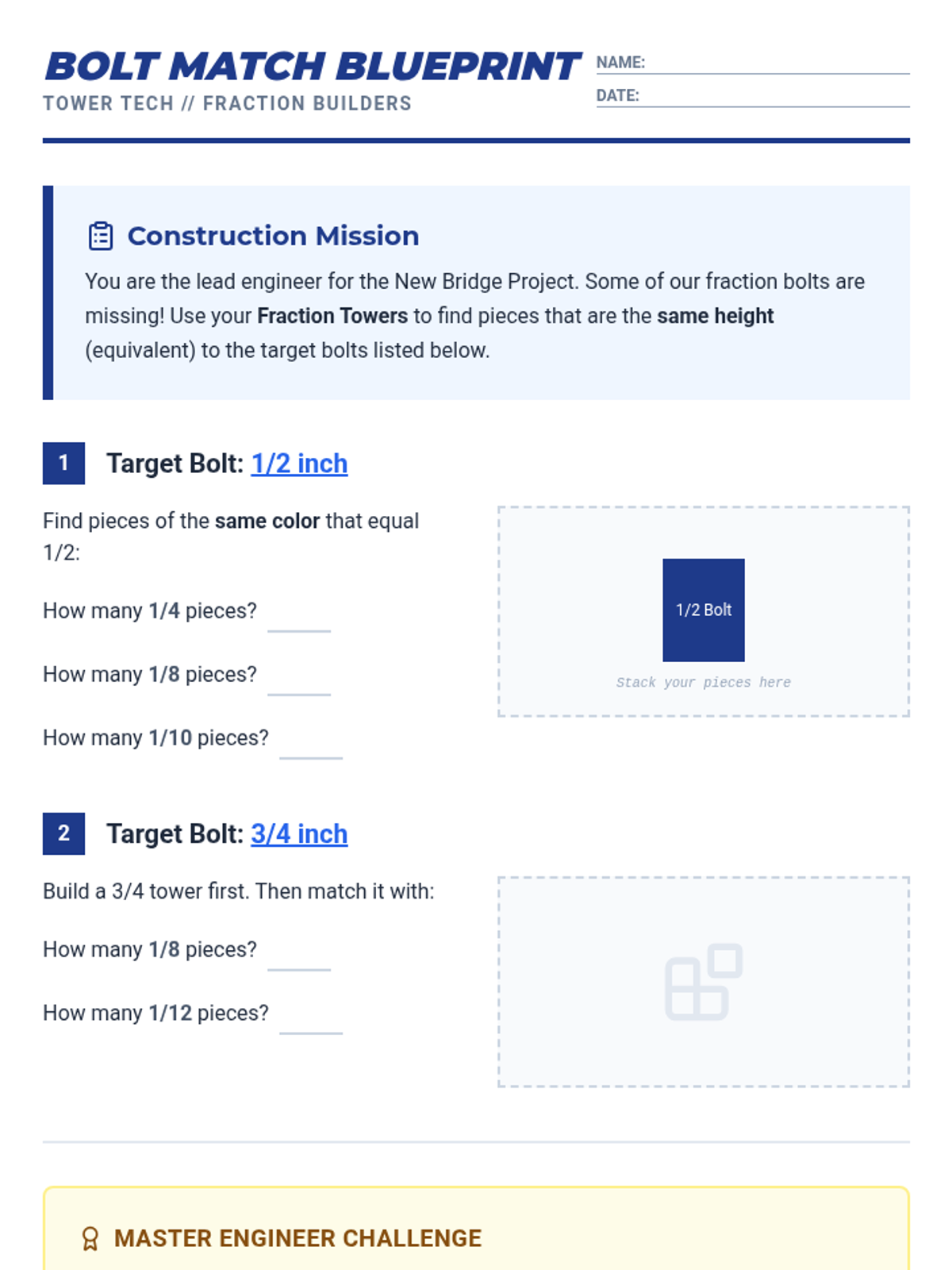
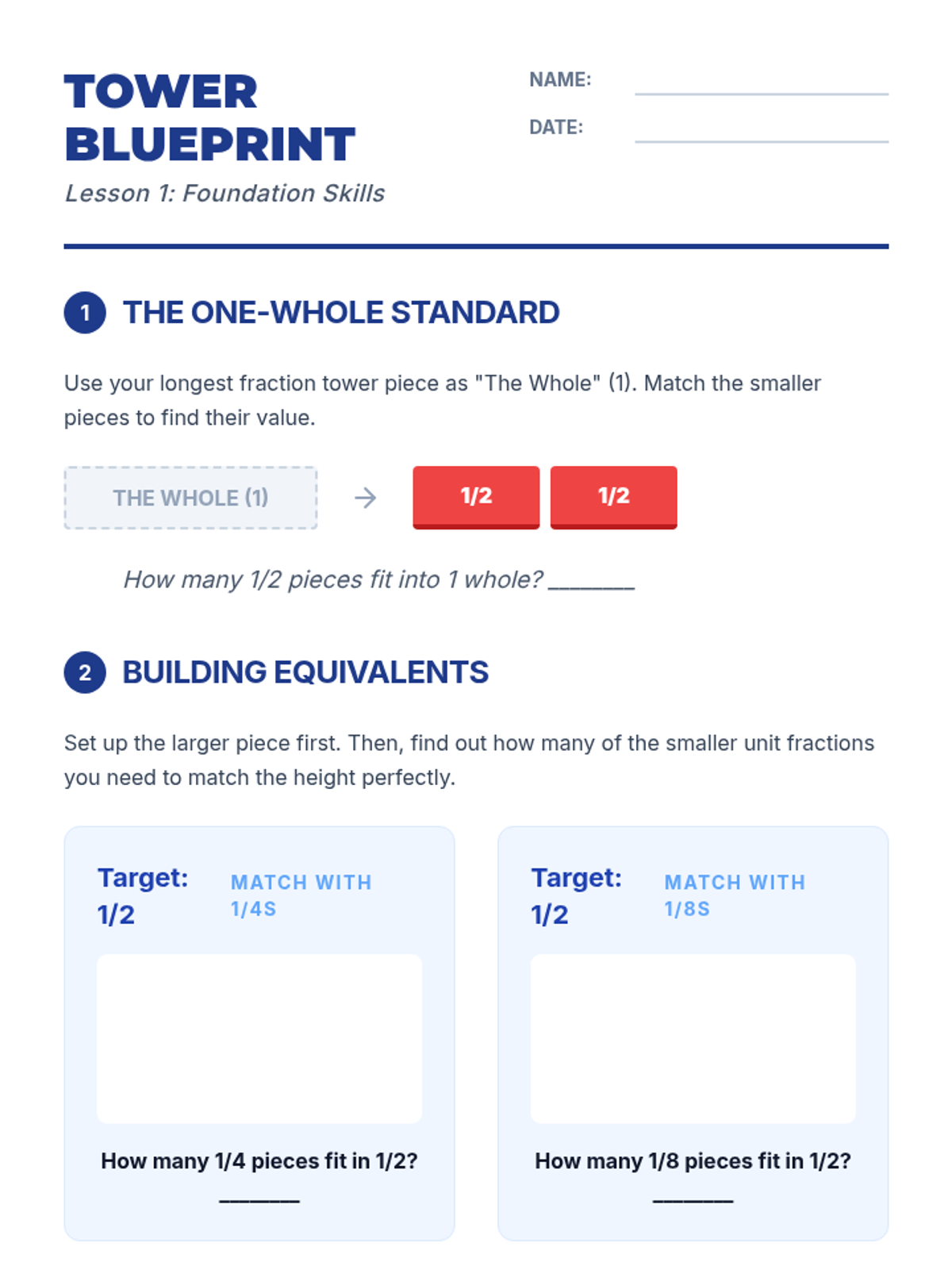
A hands-on sequence designed for students needing academic support to master fraction equivalence and operations through concrete modeling. Students use physical manipulatives like towers, blocks, and overlays to bridge the gap between abstract symbols and conceptual understanding.
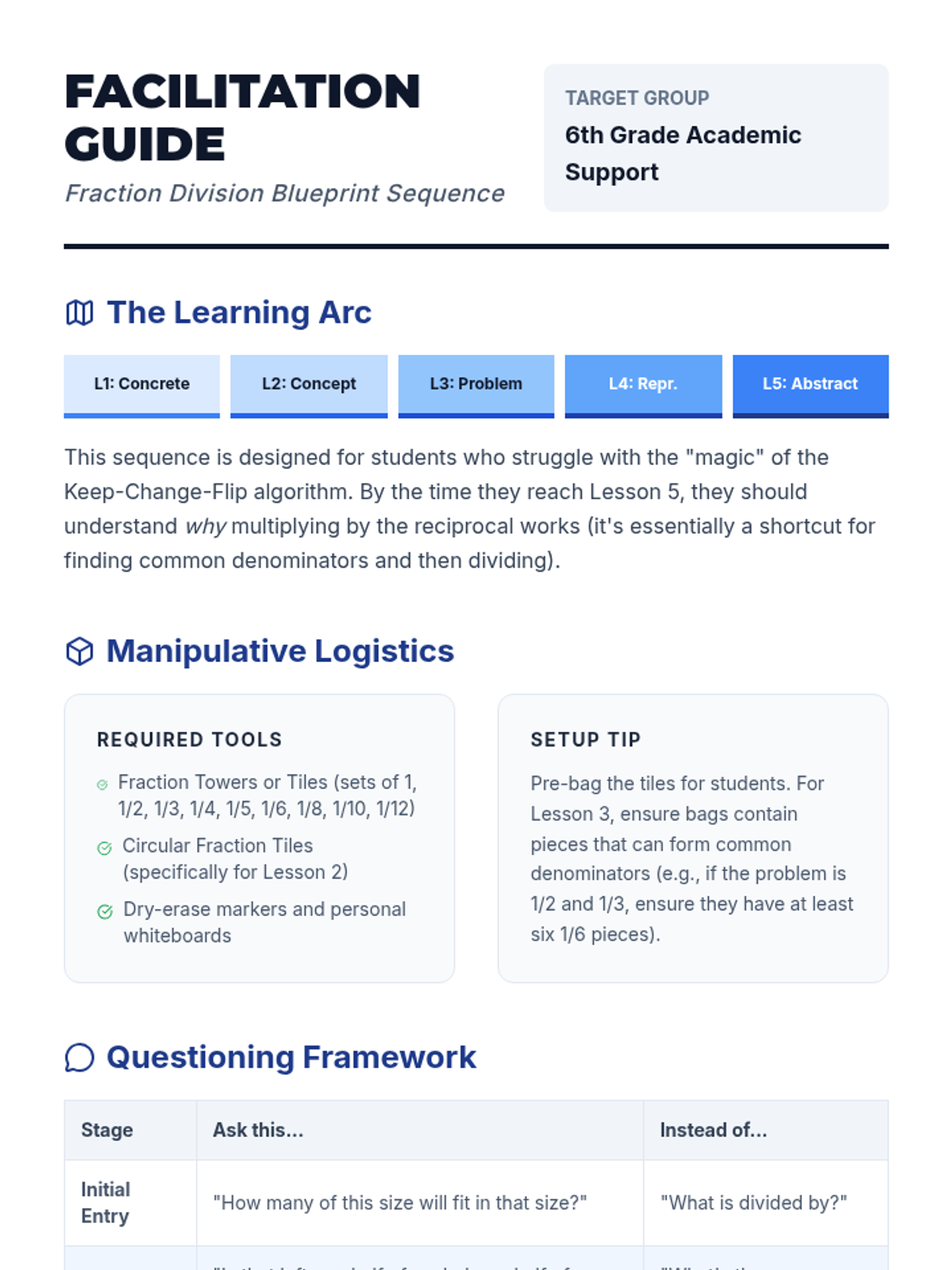
A specialized sequence for 6th-grade academic support focused on visual and concrete understanding of fraction division. Students use fraction towers and pattern blocks to move from the concept of 'how many fit' to the standard algorithm, with a heavy emphasis on interpreting remainders.
This sequence addresses the conceptual hurdles of fraction operations by utilizing number lines as a concrete visual anchor. Students move from placing fractions on a line to visually estimating and calculating sums and differences using movement and length to represent value.
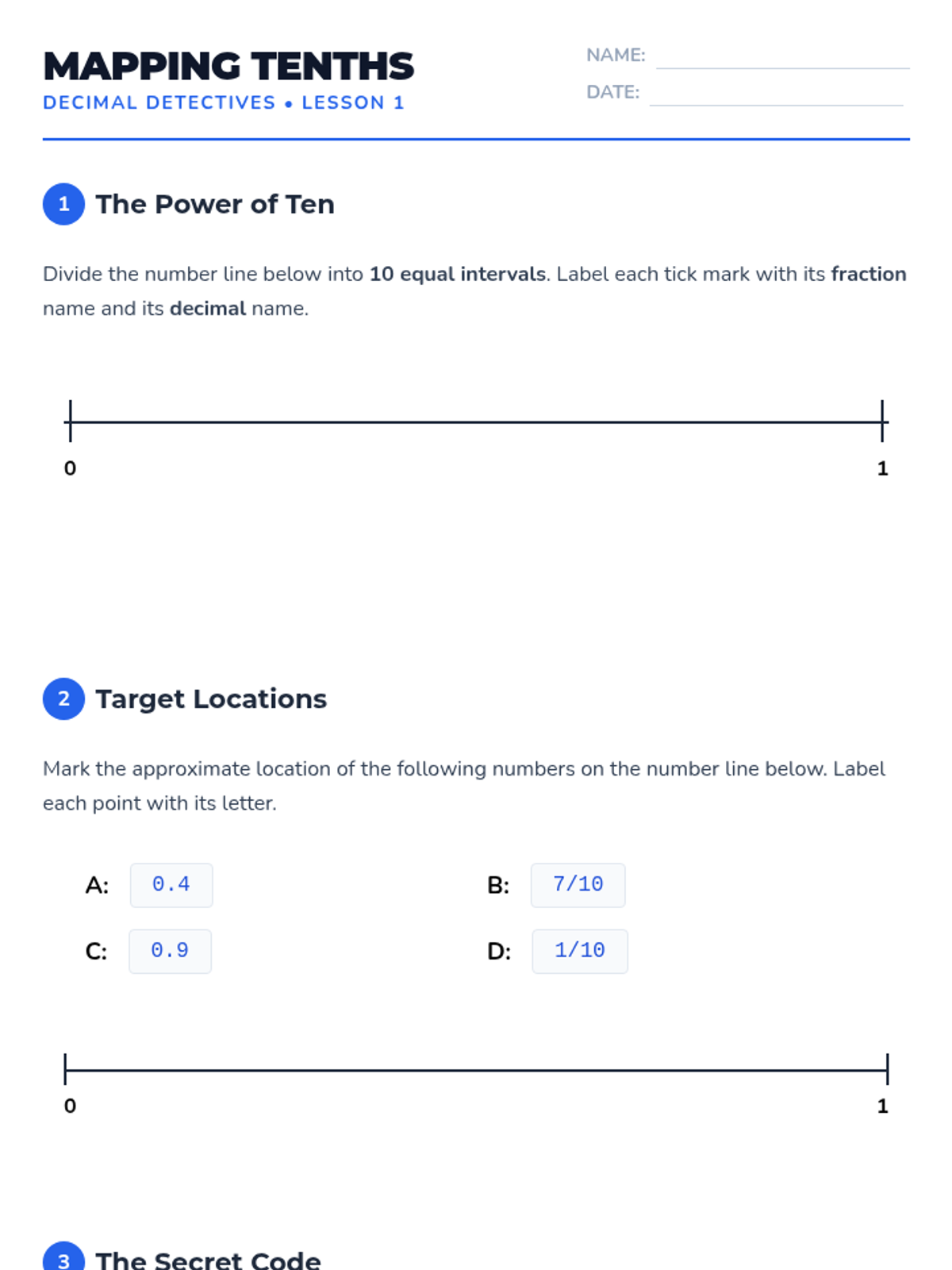
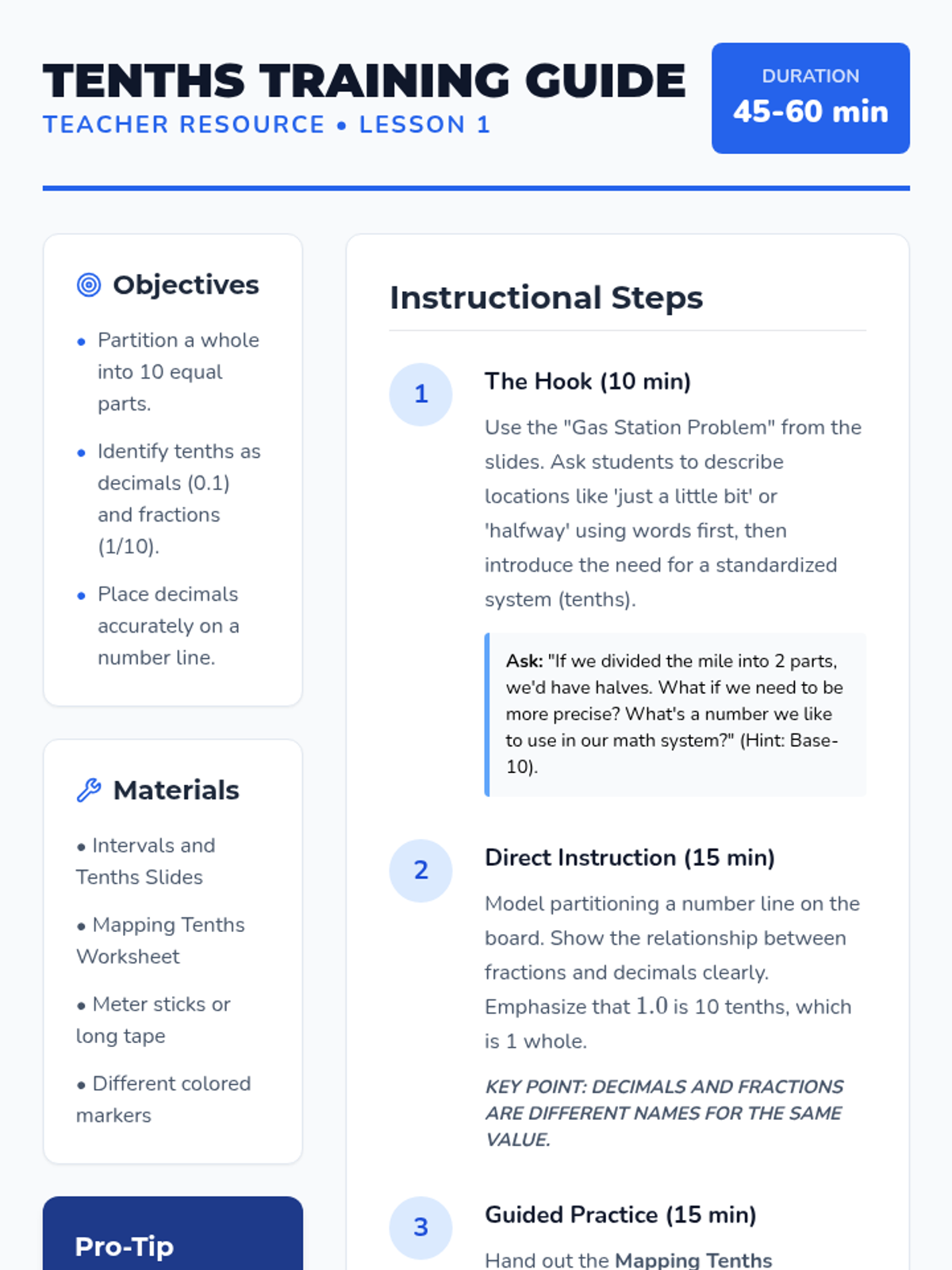
A comprehensive 6th-grade math unit that uses the number line as a primary tool for understanding the magnitude, ordering, and comparison of decimals. Students transition from visualizing tenths to 'zooming in' on hundredths and calculating midpoints.
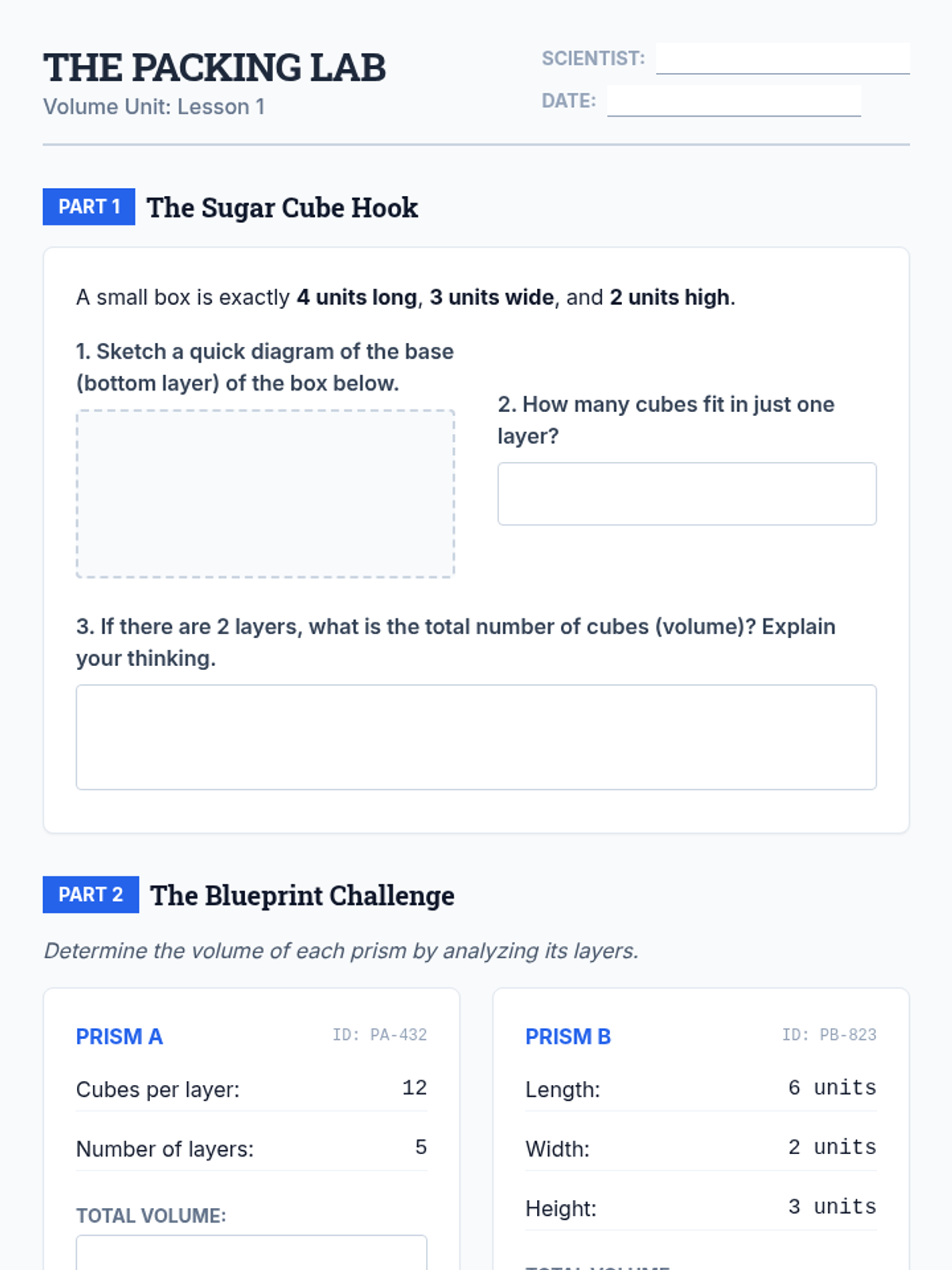
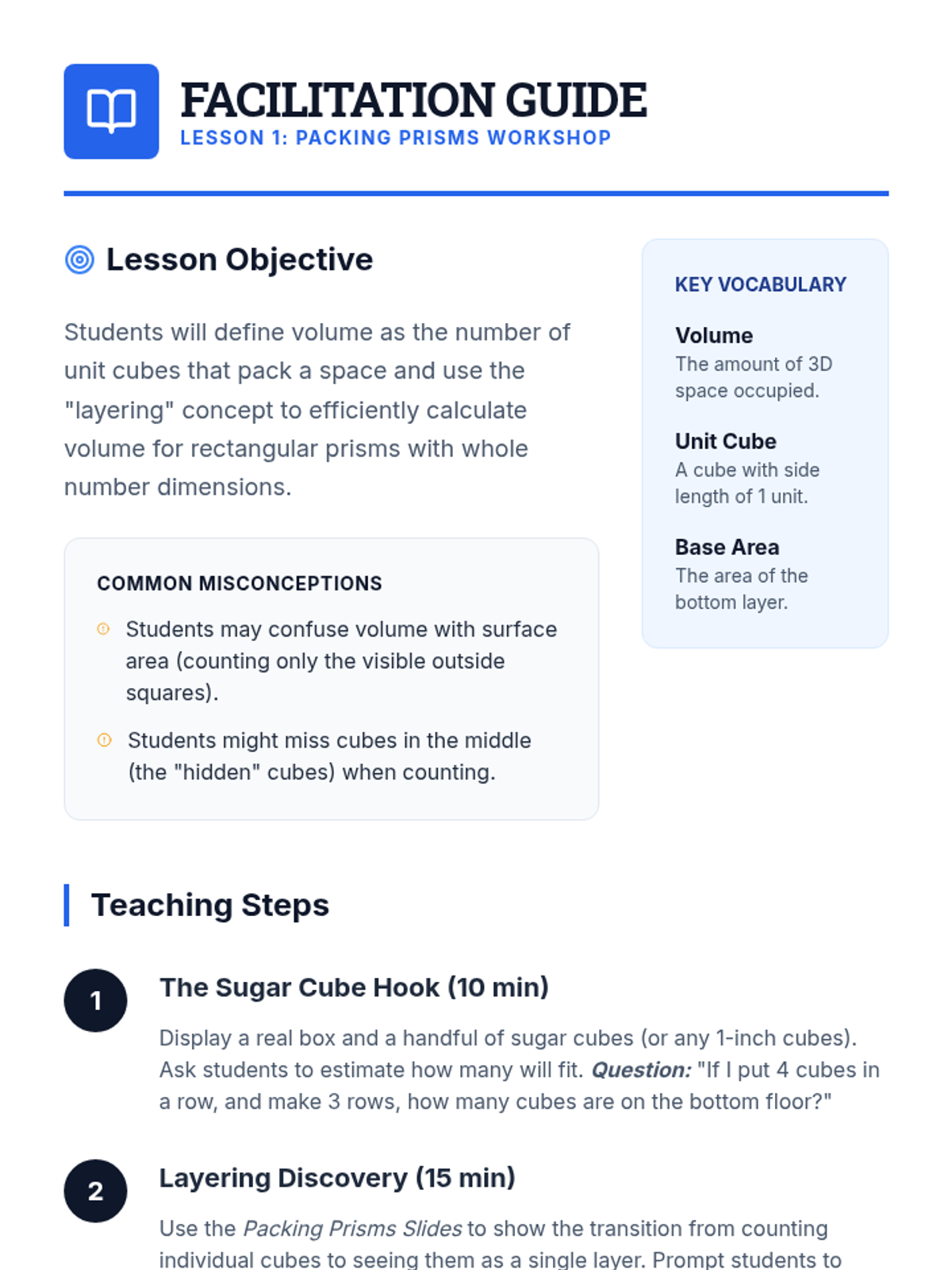
Students transition from concrete unit cube packing to abstract volume formulas (V=lwh, V=Bh) with a specific focus on rectangular prisms with fractional edge lengths. The sequence culminates in real-world application through shipping logistics and a design challenge.
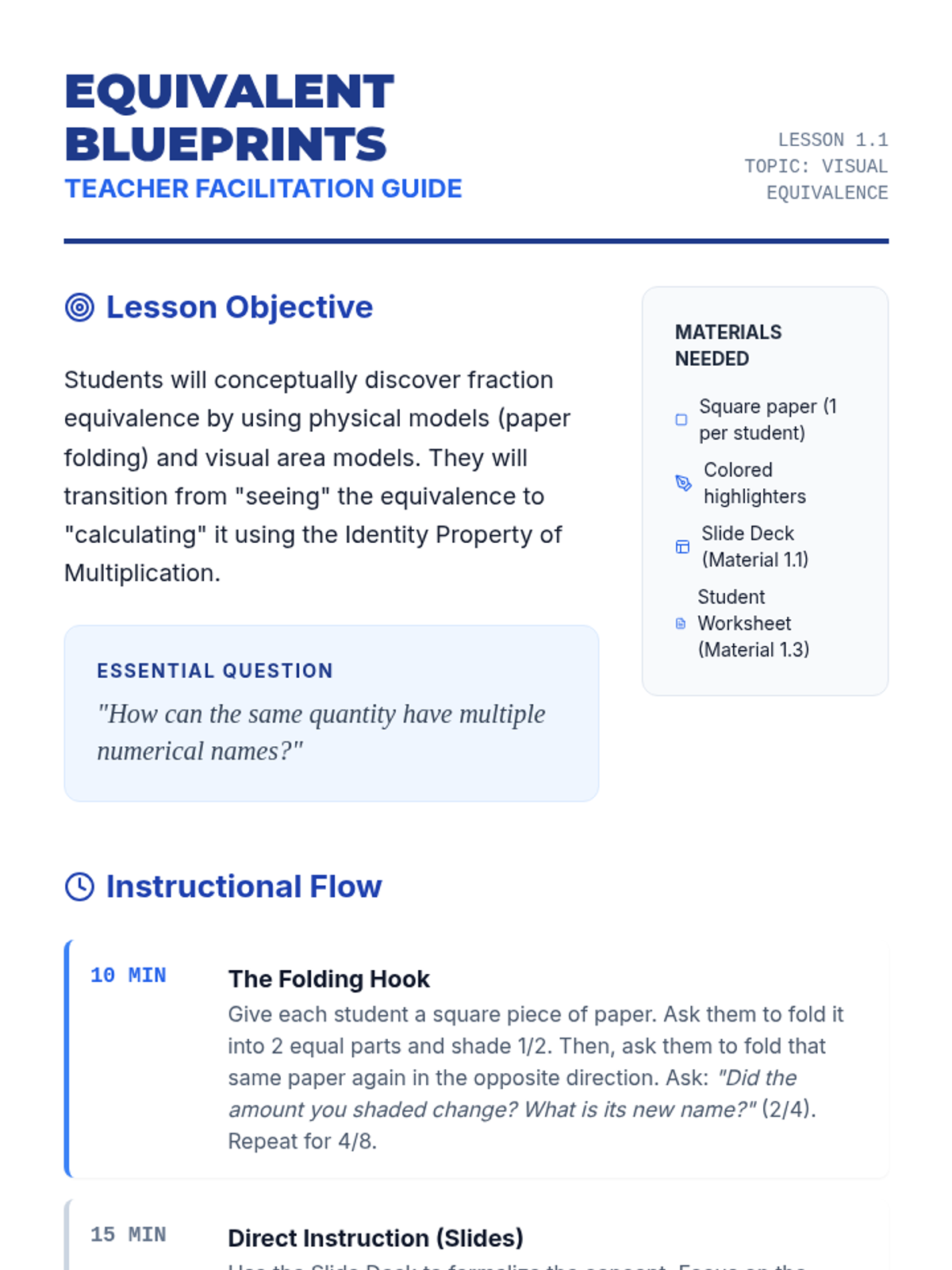
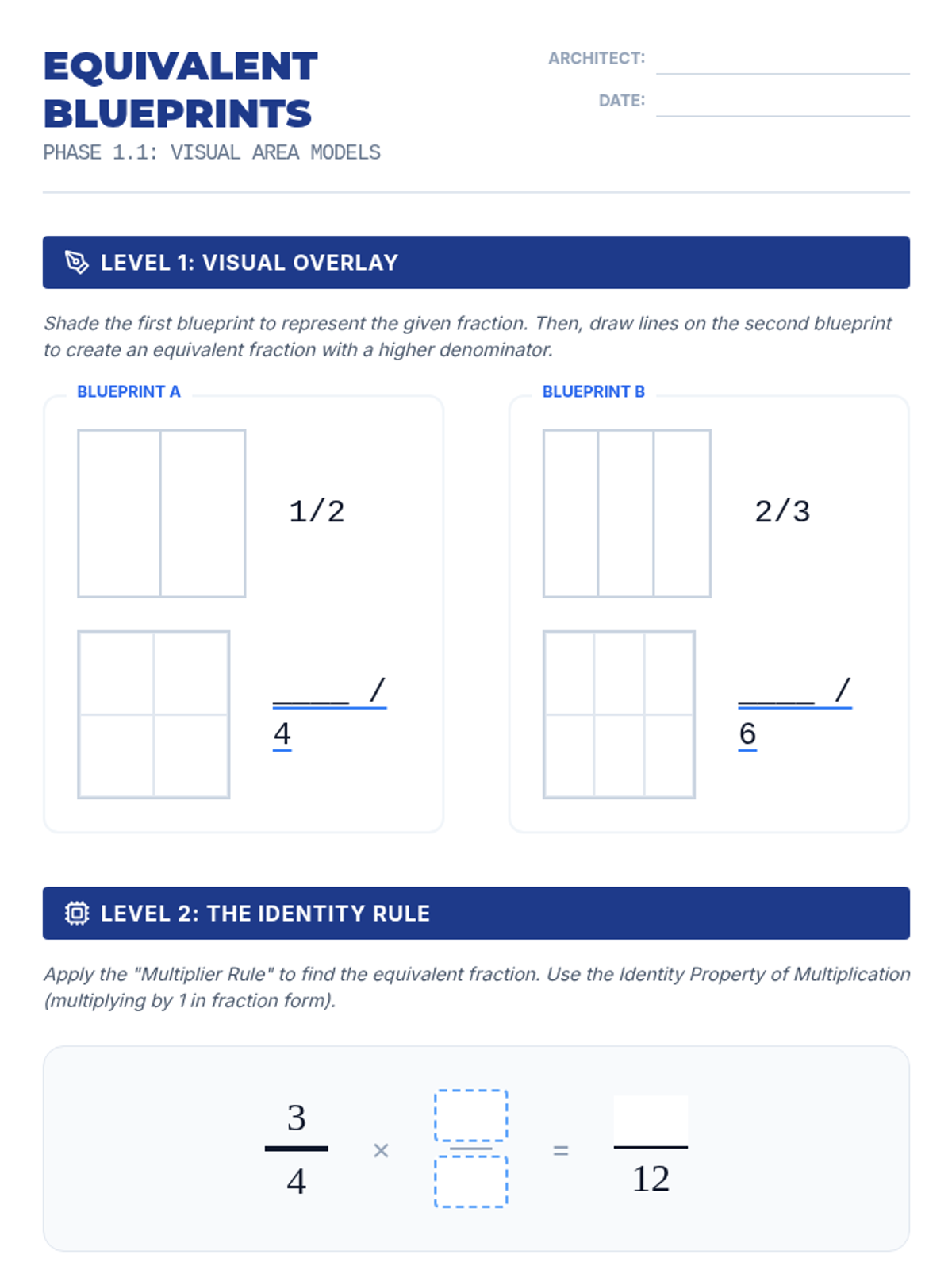
A comprehensive 6th-grade sequence on fraction equivalence and ordering, moving from visual area models and number lines to algorithmic comparisons using common denominators and strategic ordering of rational sets.
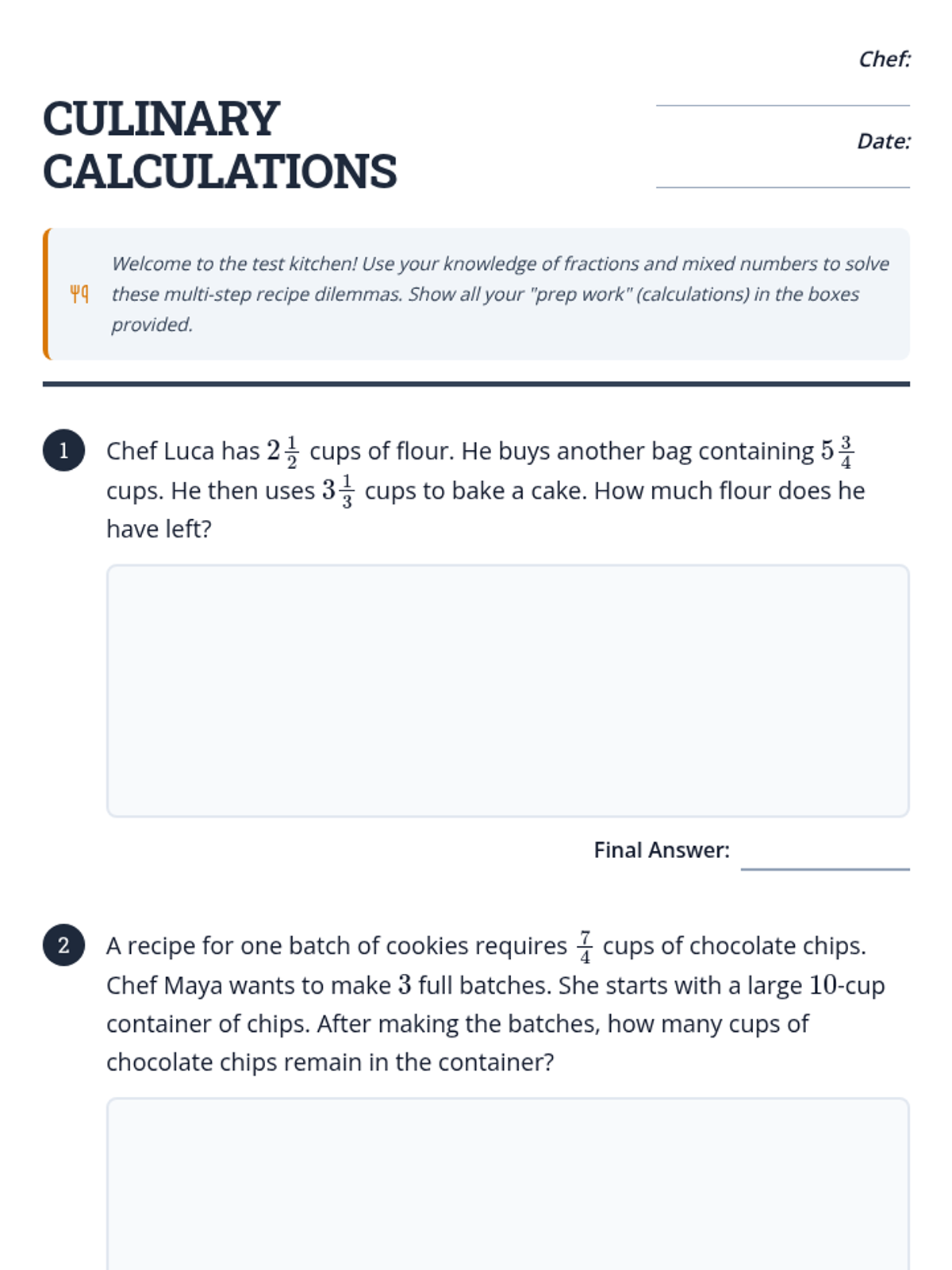
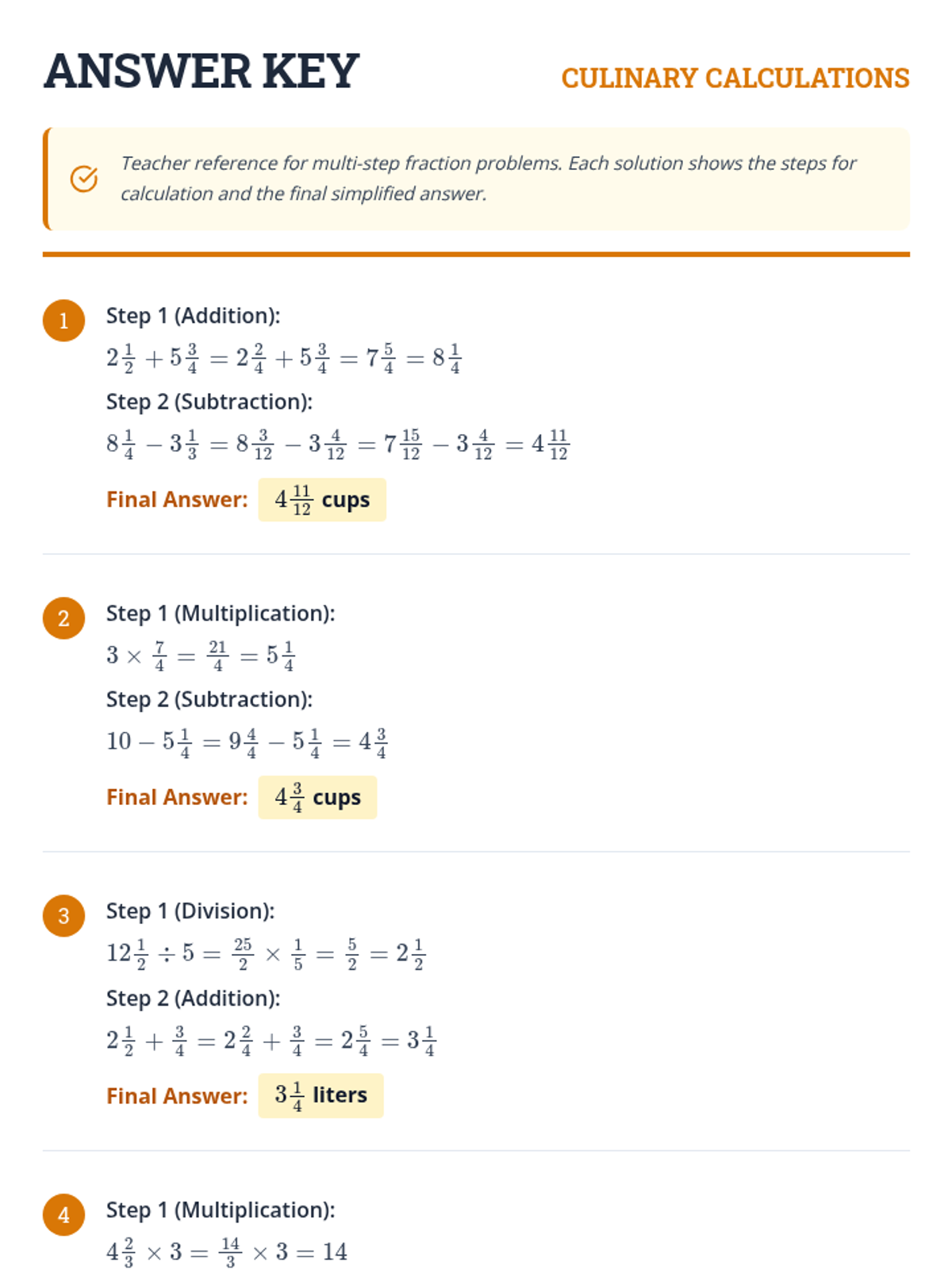
A comprehensive unit on fraction operations including addition and subtraction of mixed numbers with unlike denominators and multiplication of fractions, using visual models and real-world word problems.
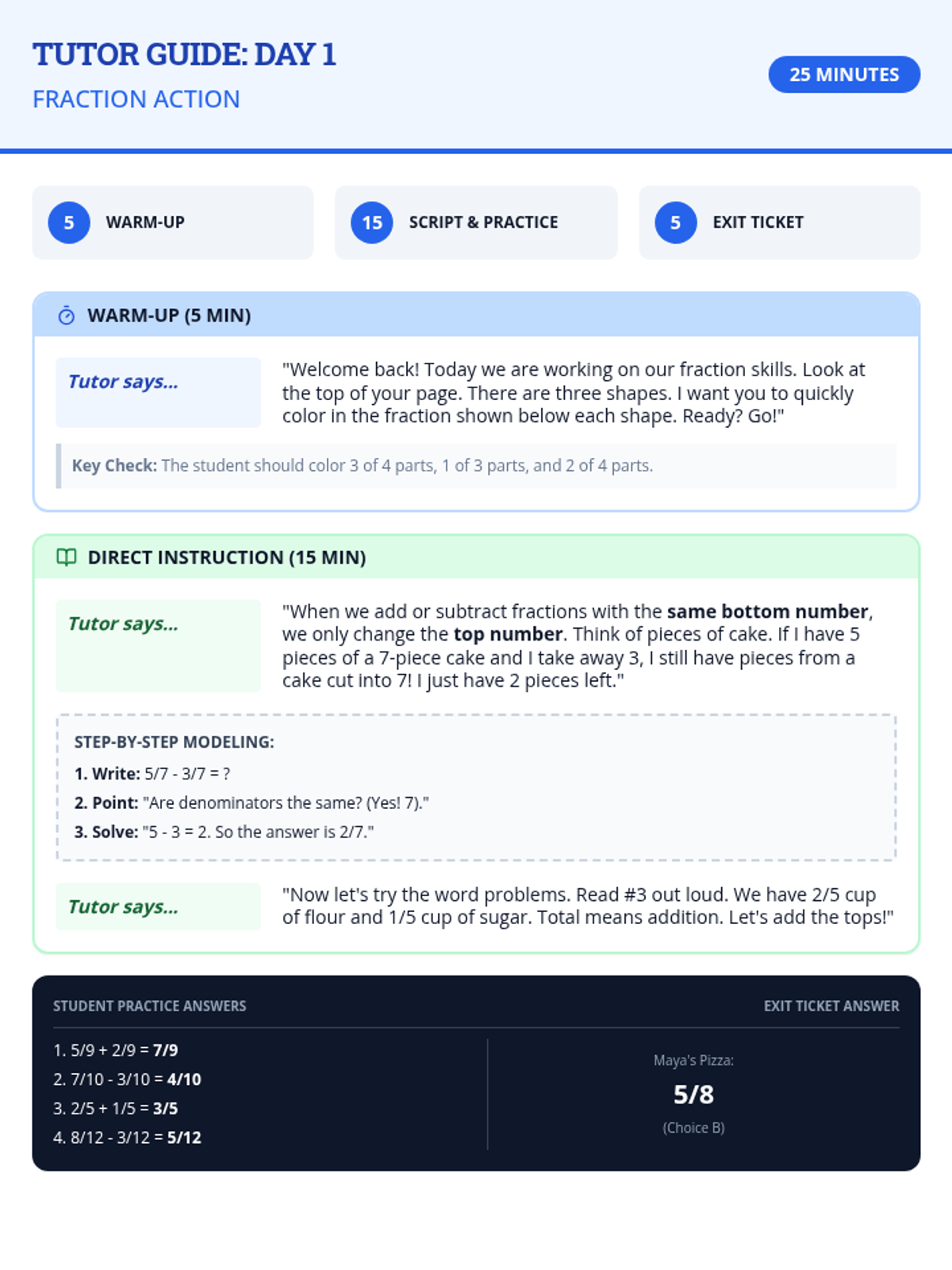
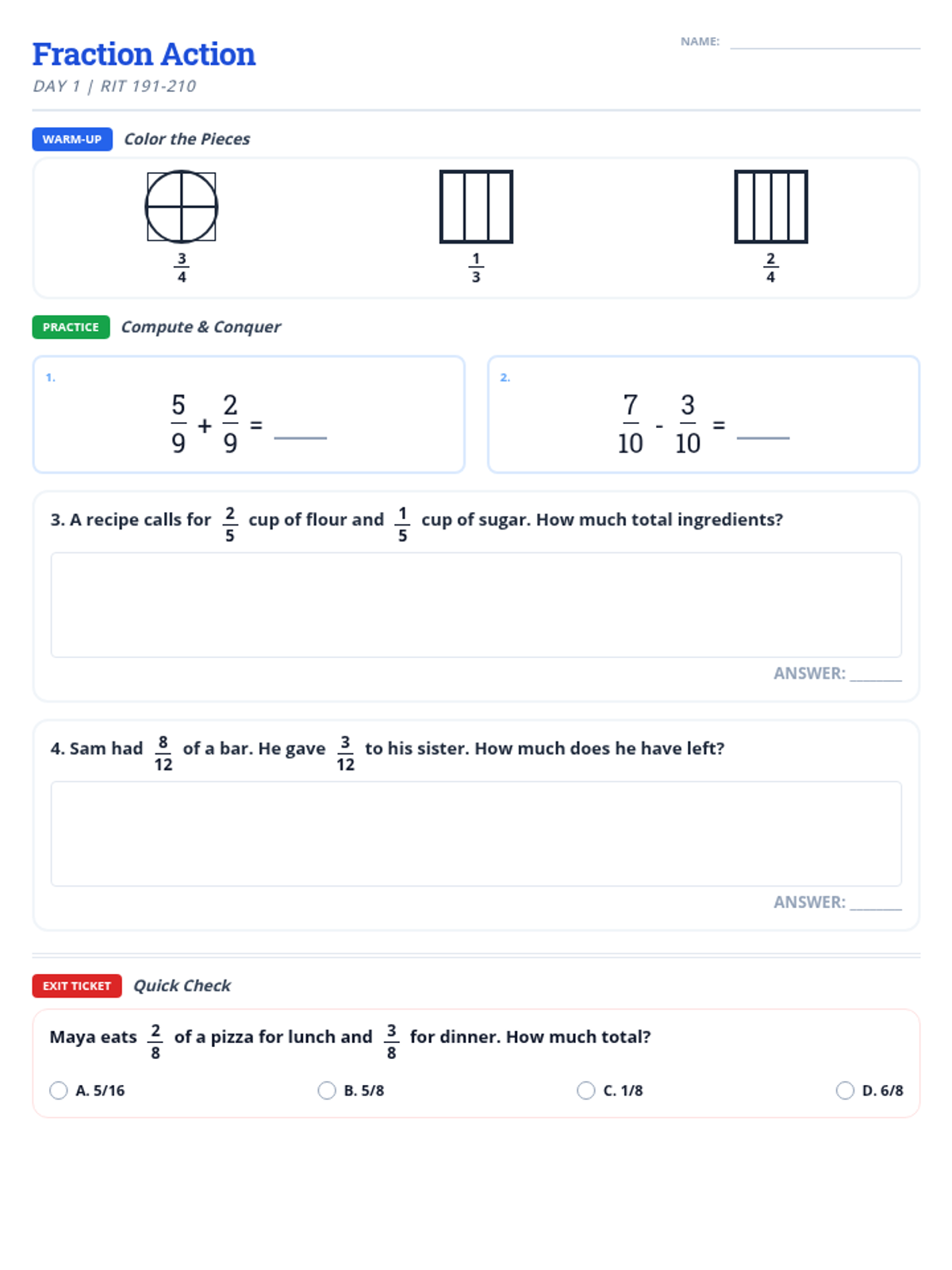
A 3-day math tutoring sequence focused on moving students from RIT 191-200 to 201-210 in Numerical Representations and Relationships, specifically targeting fractions, division with remainders, and coordinate planes.
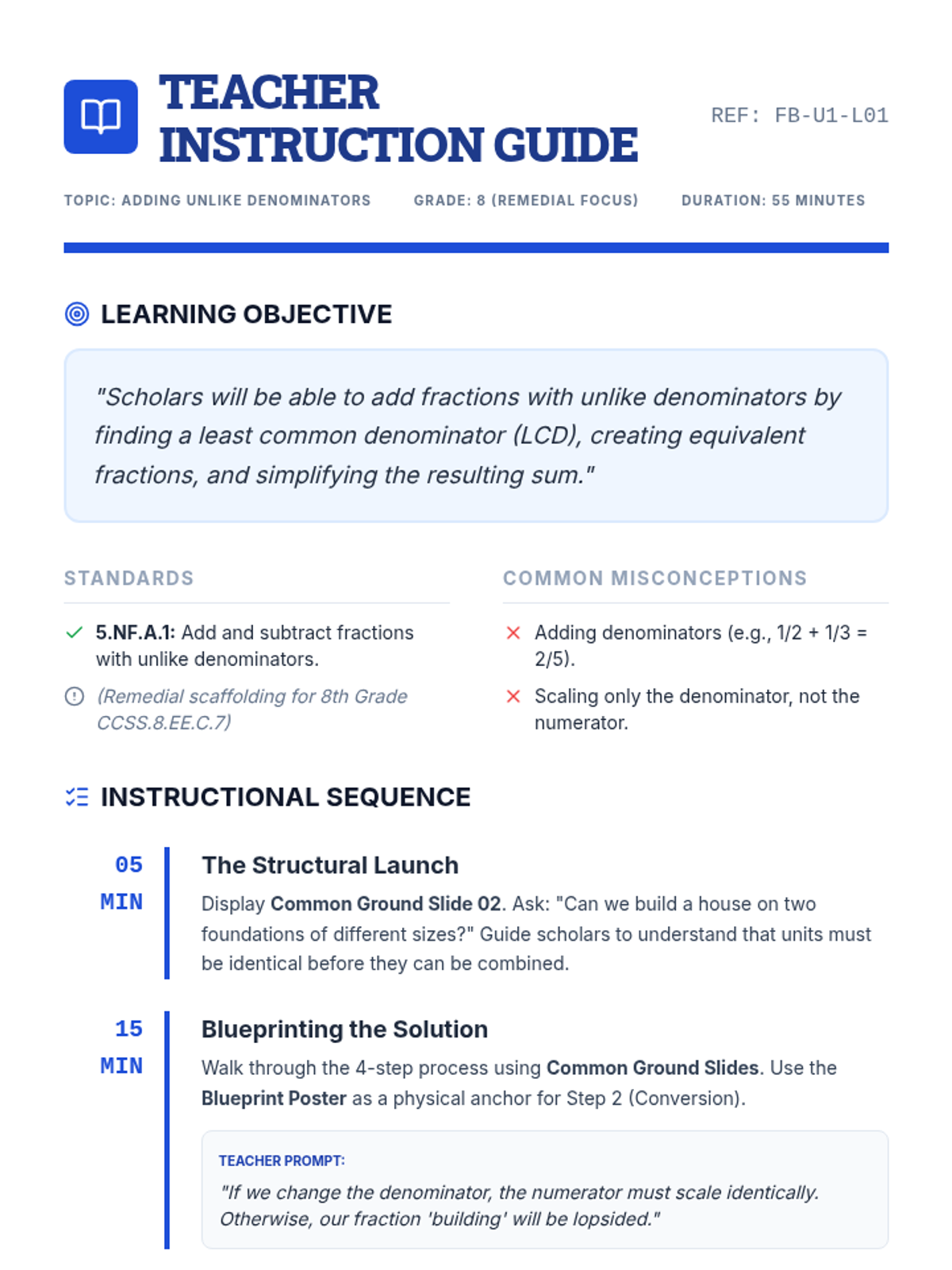
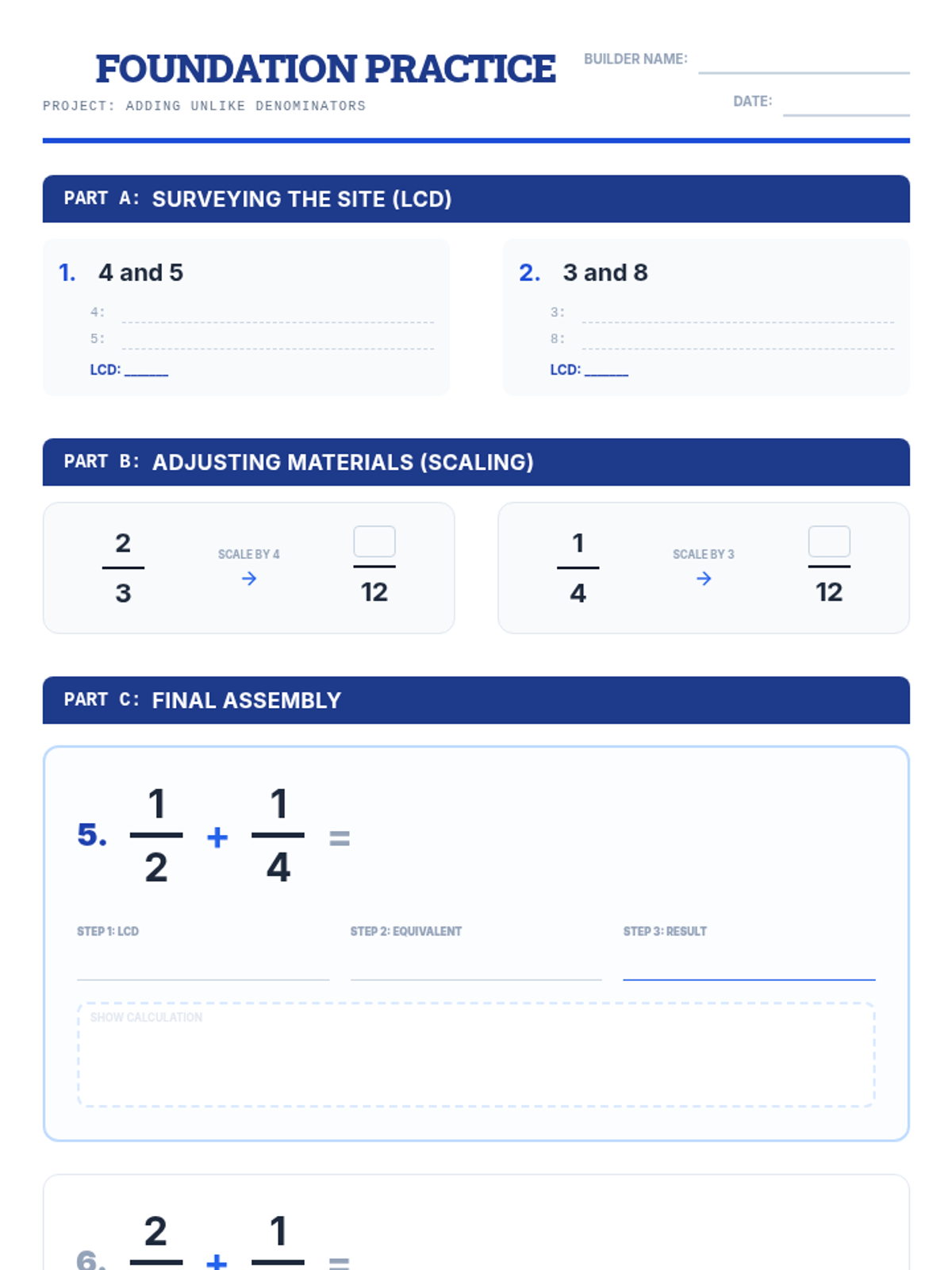
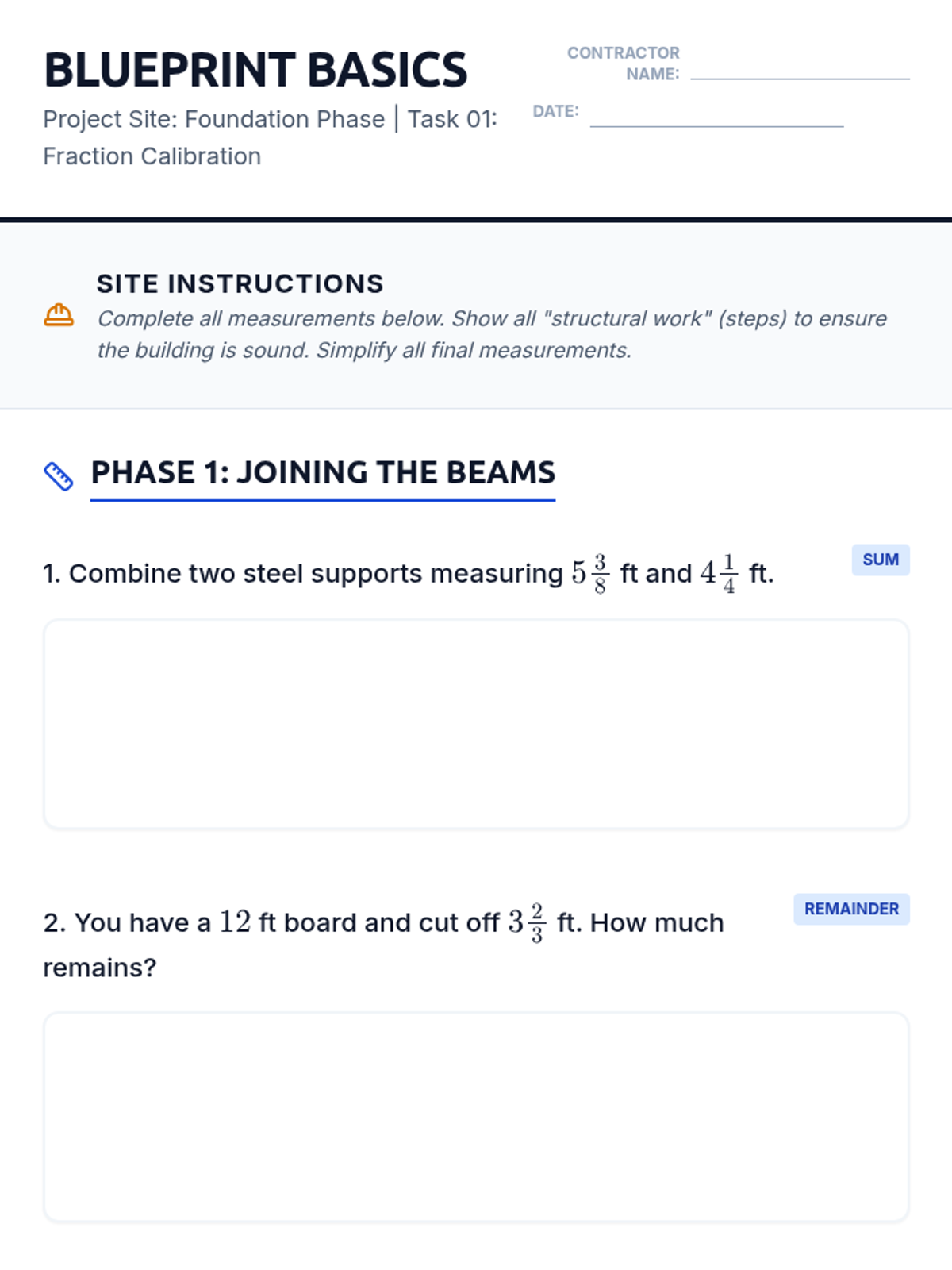
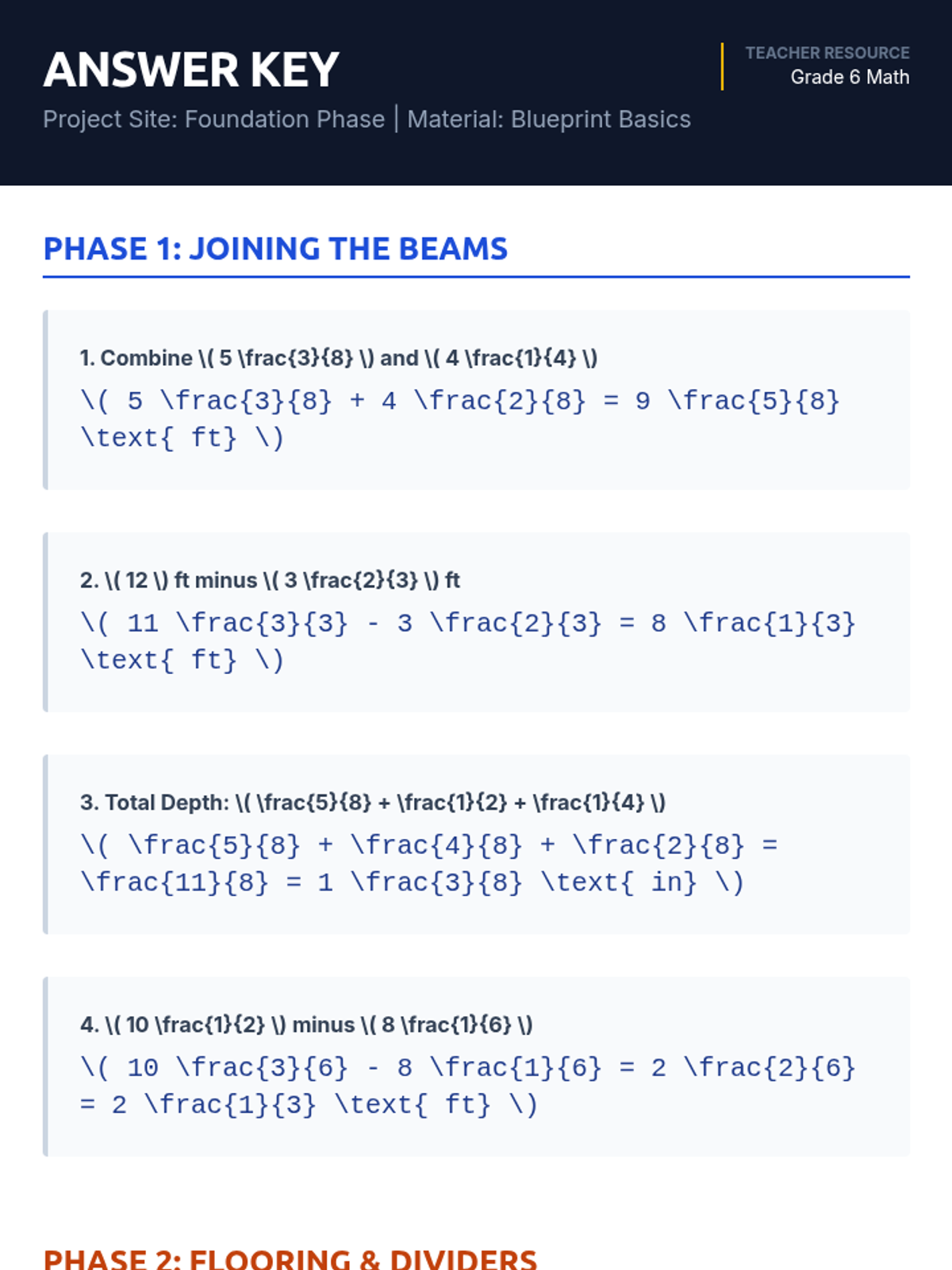
A middle school math sequence centered on fractions, using an architectural and construction theme. It progresses from 6th-grade foundations to 8th-grade applications of slope and rational numbers.
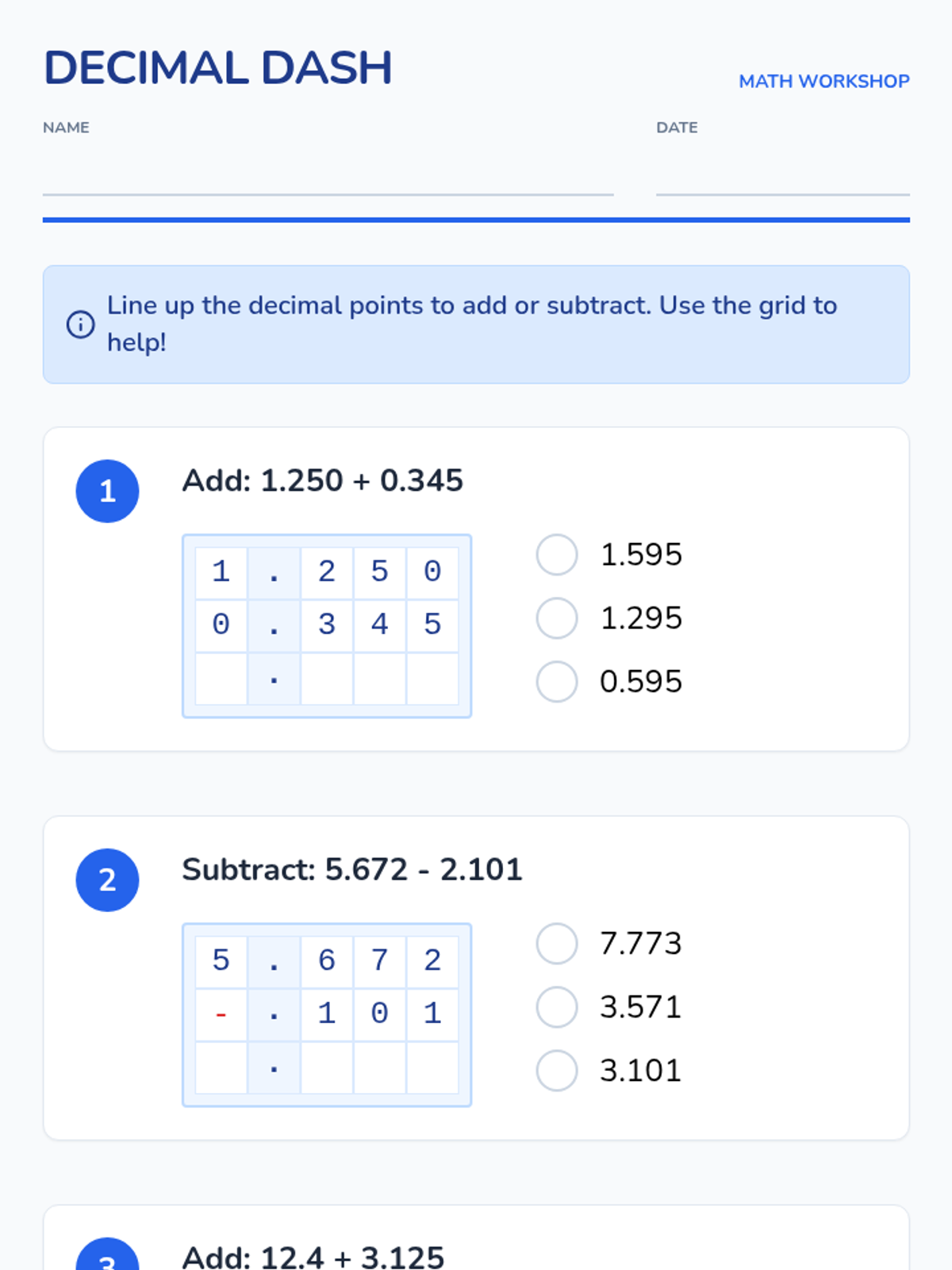
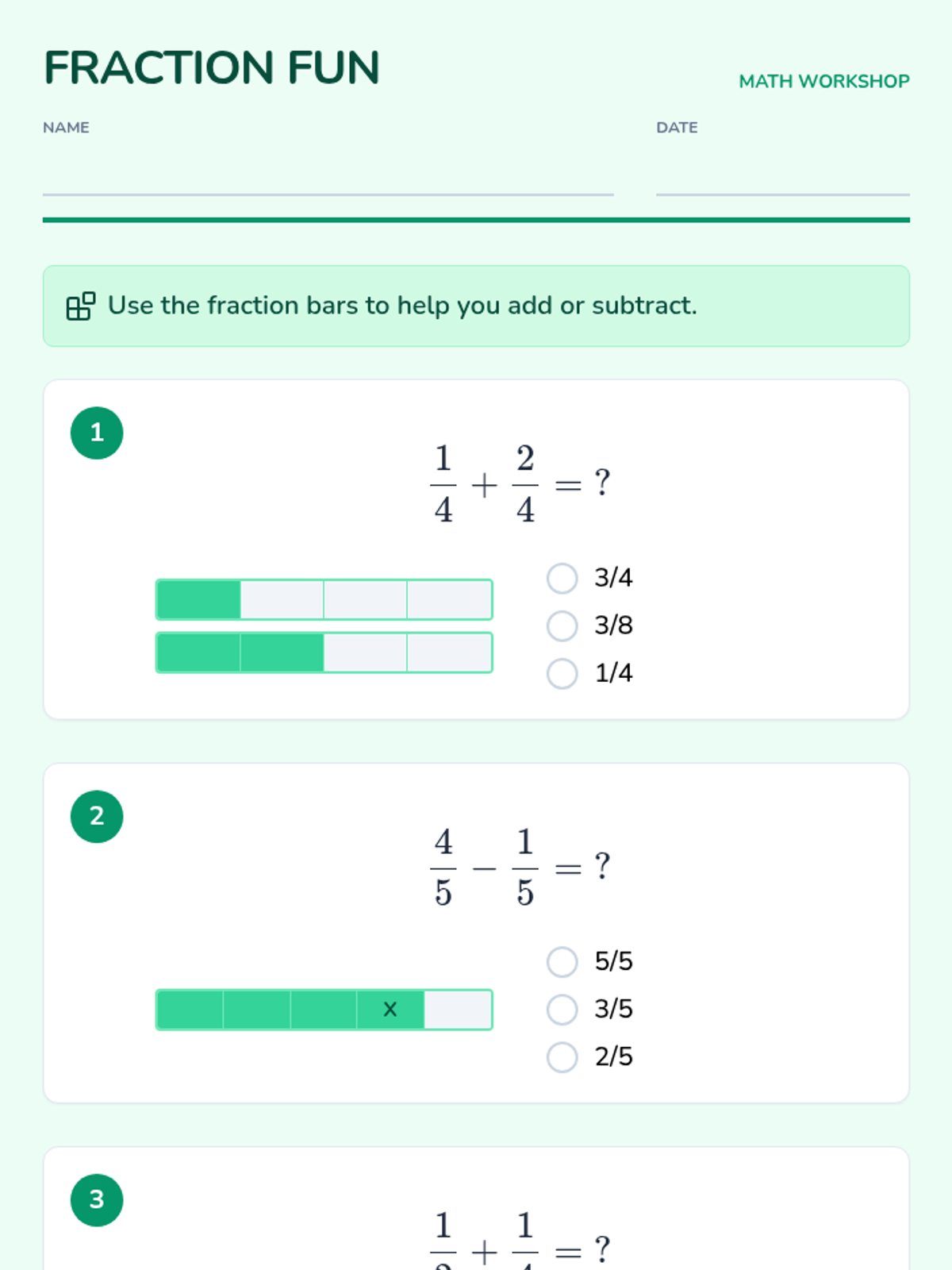
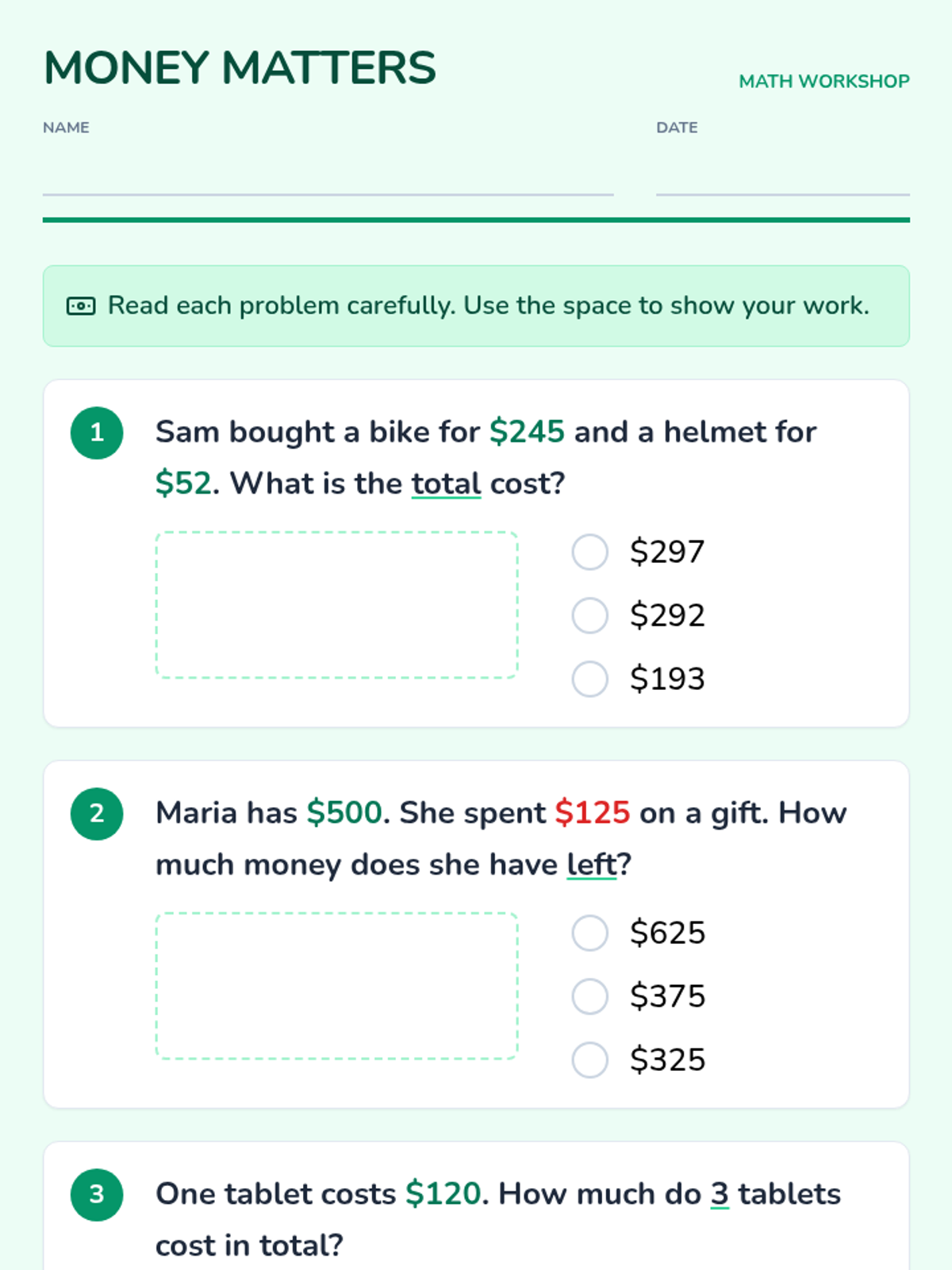
A collection of math worksheets focusing on decimals, fractions, and money operations with built-in visual supports and simplified language.
A collection of sports-themed instructional materials that use real-world events to teach logic, statistics, and organizational skills.
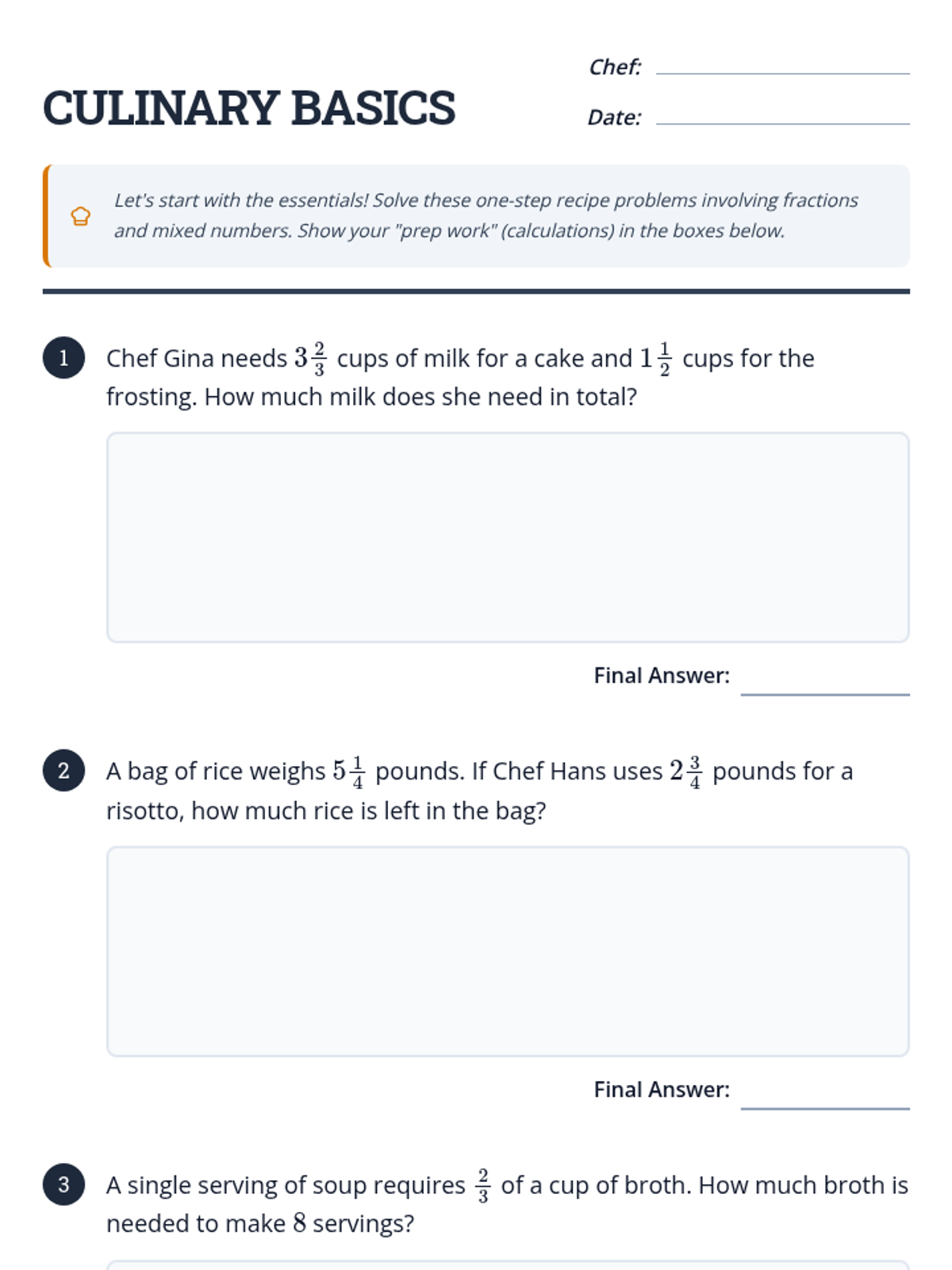
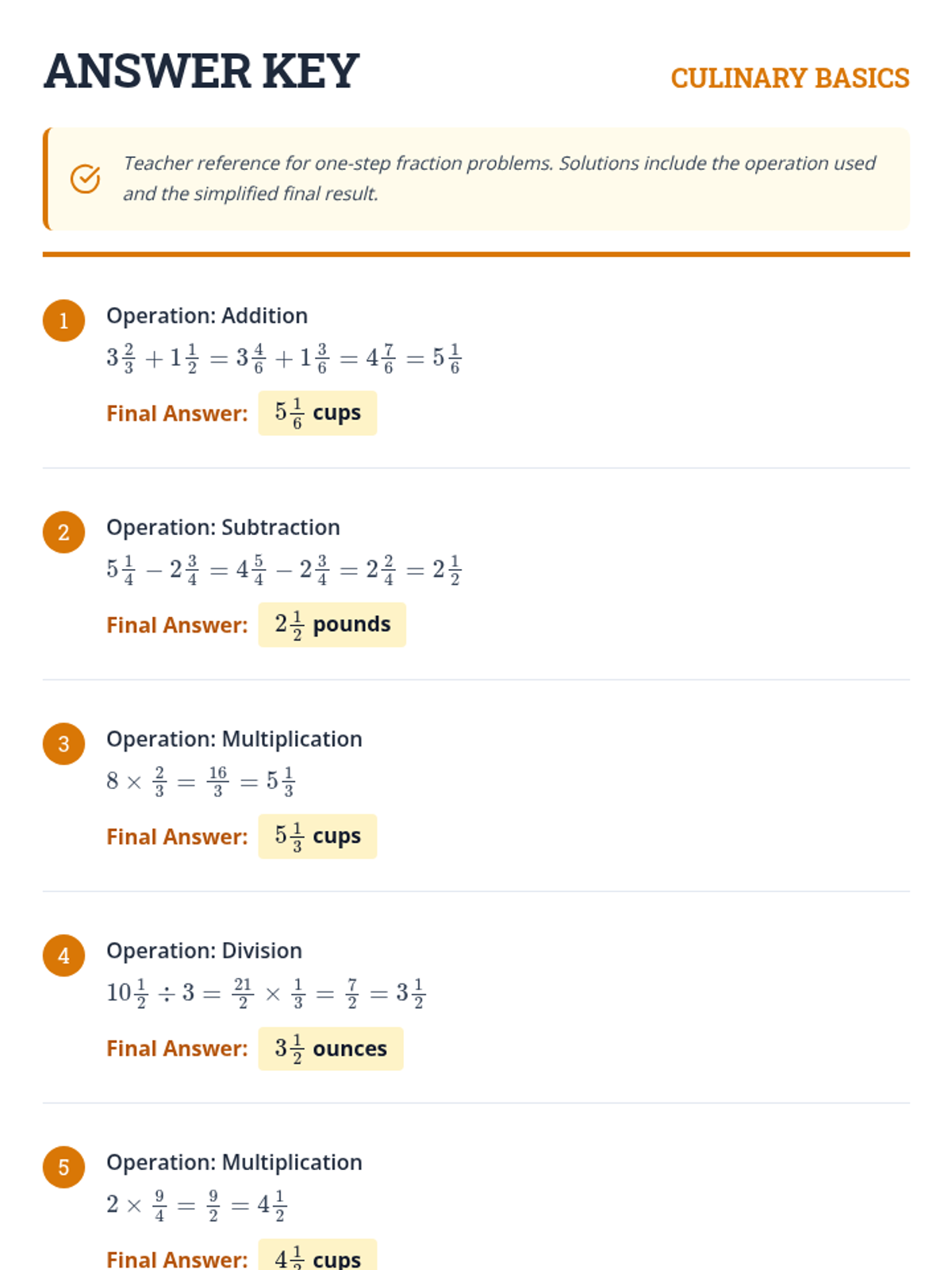
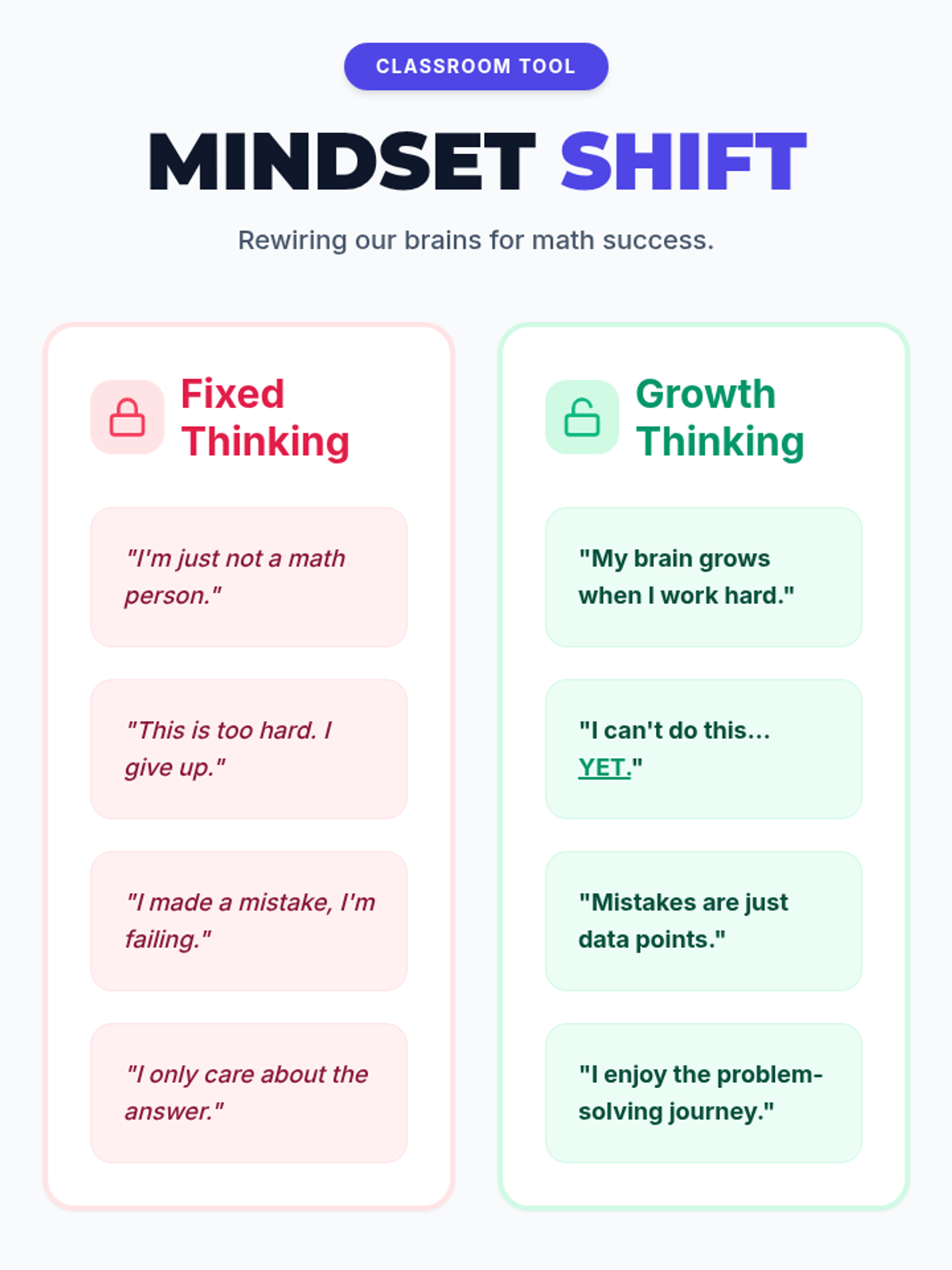
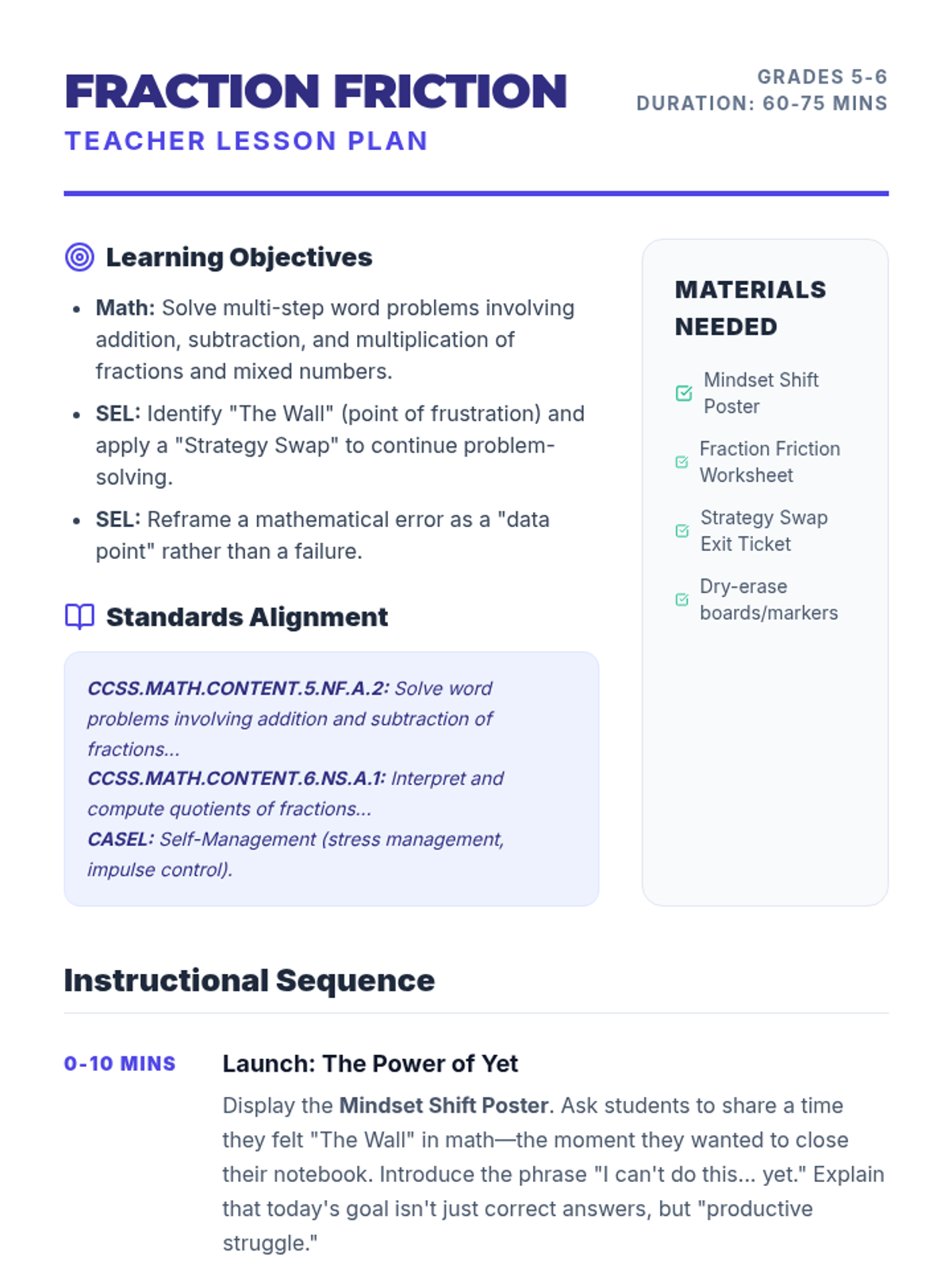
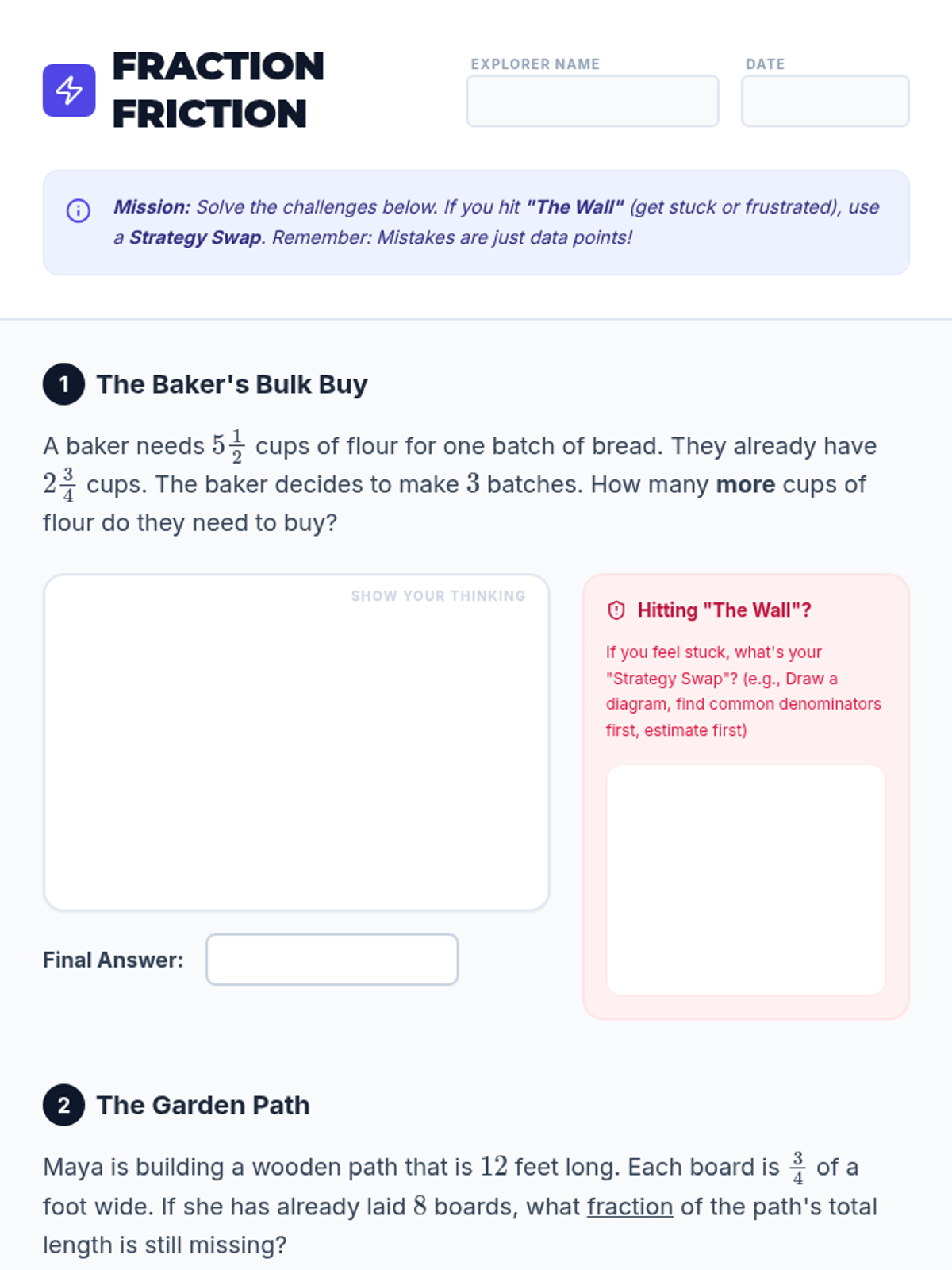
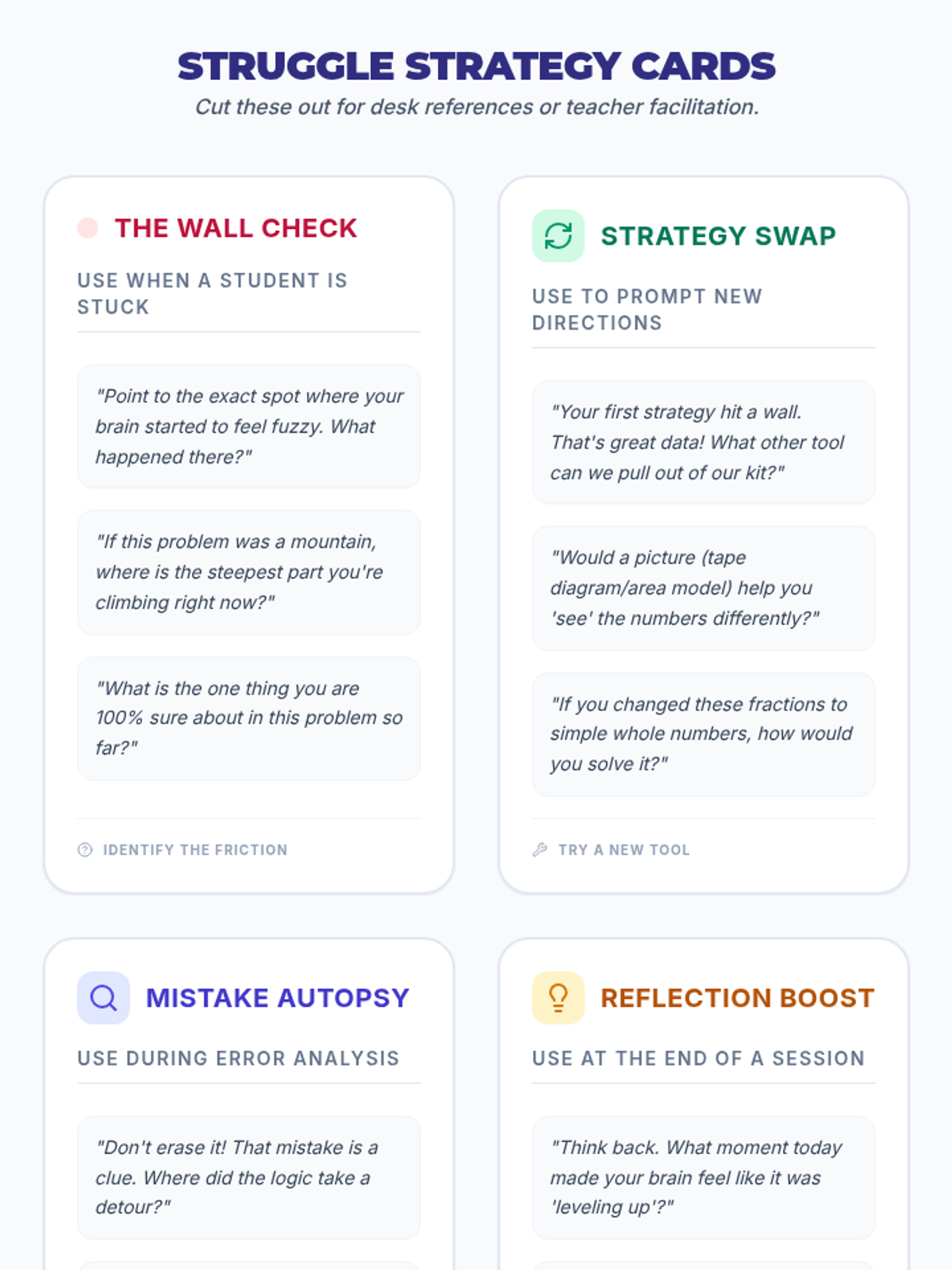
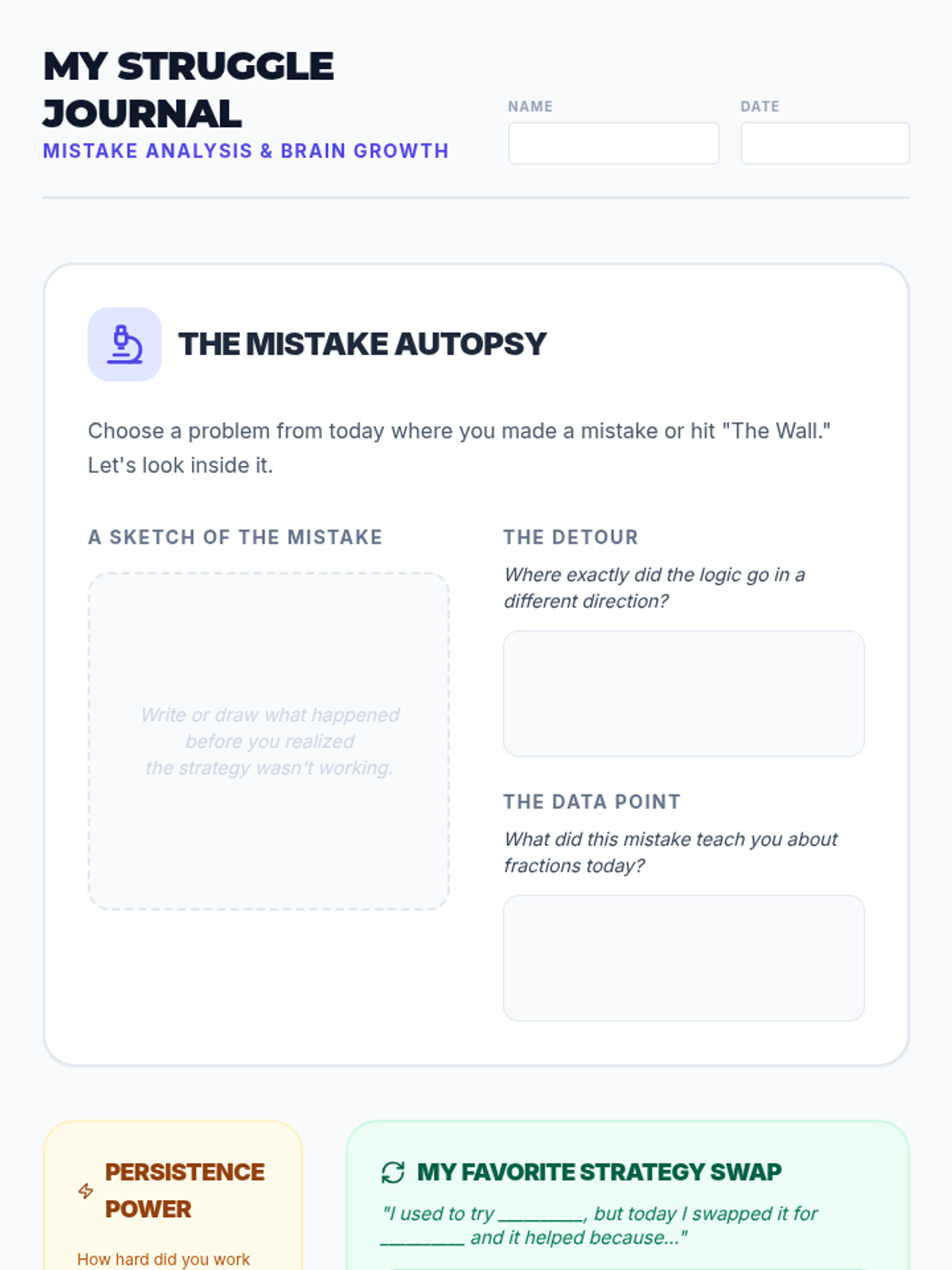
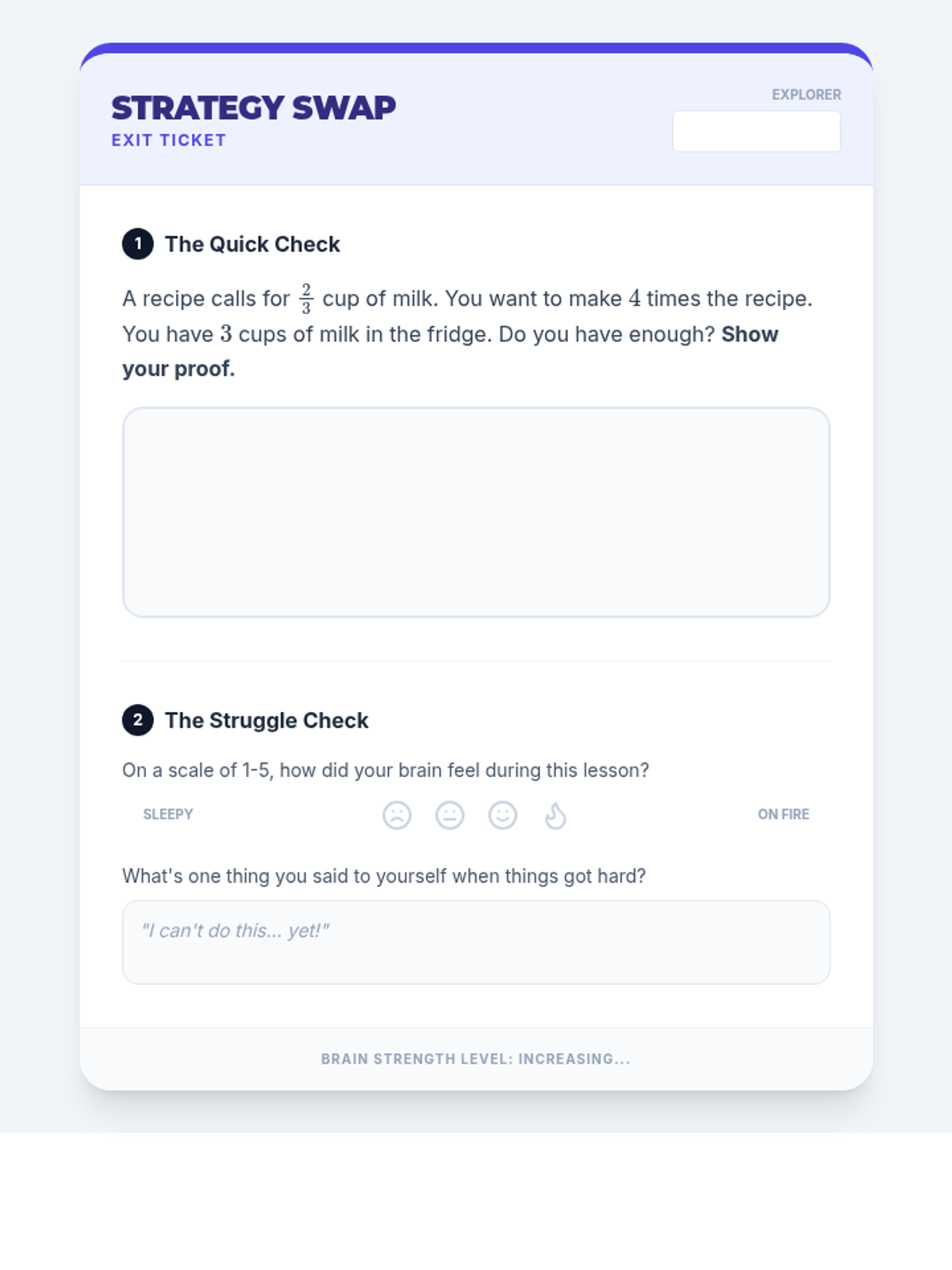
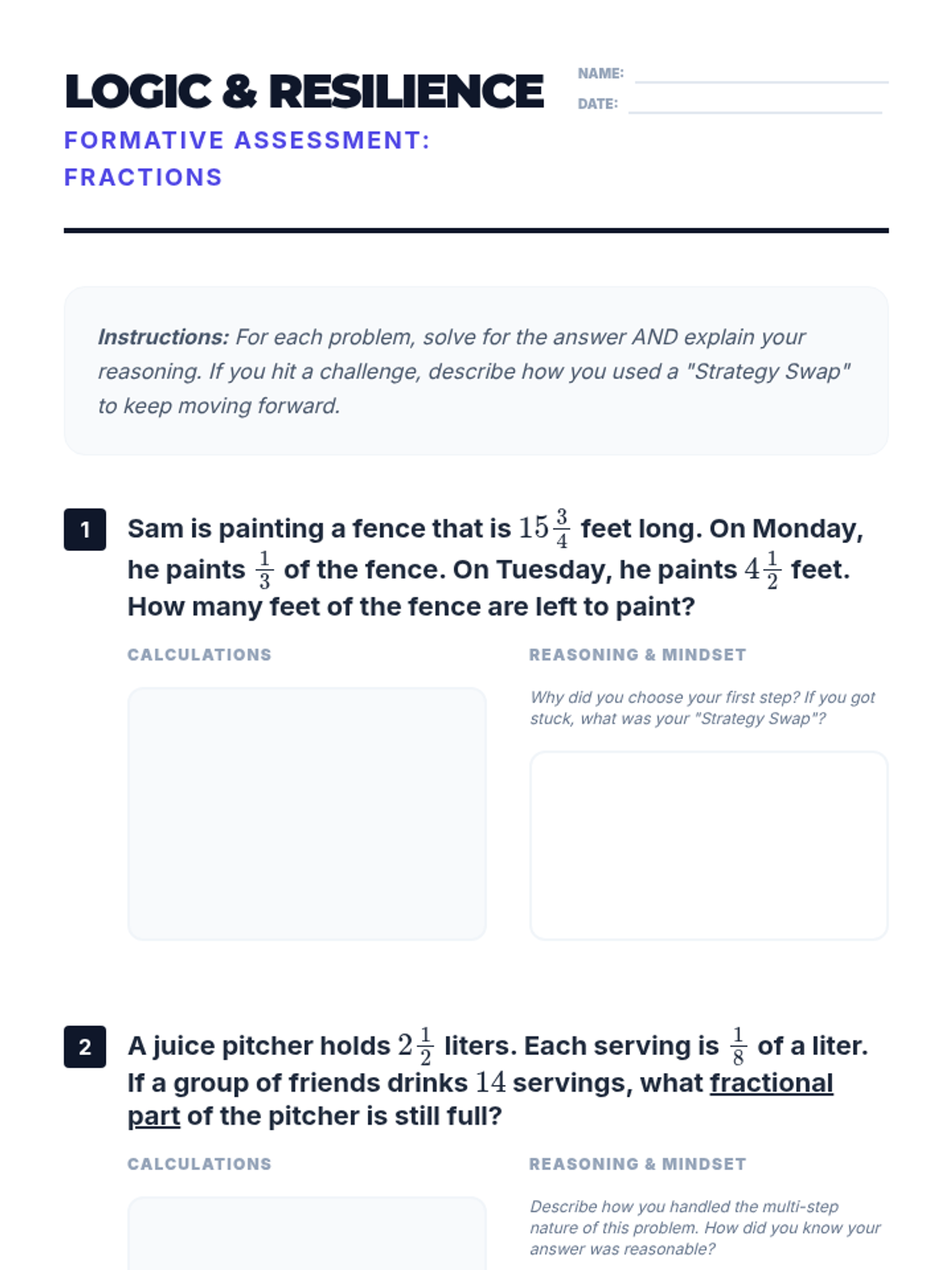
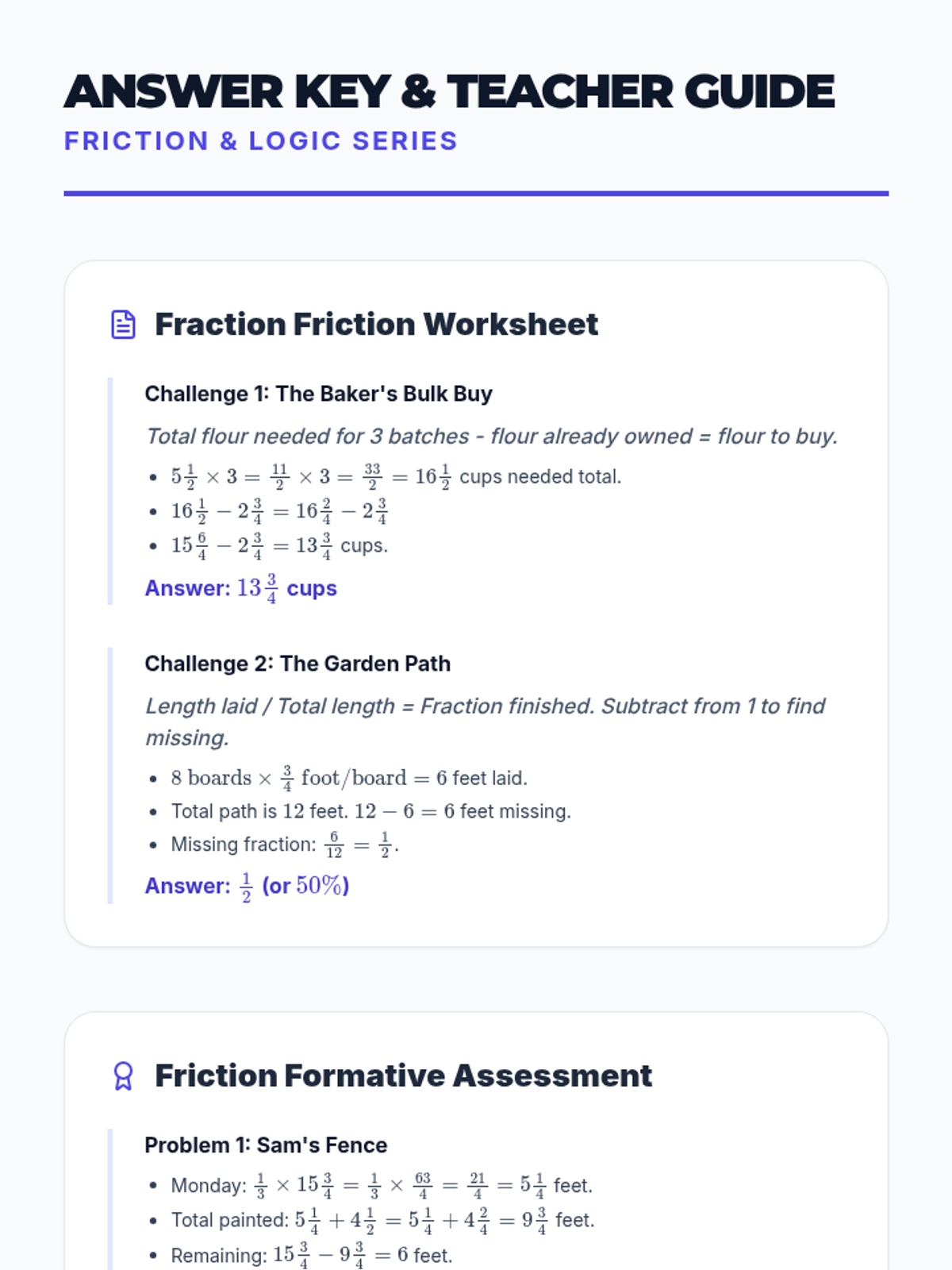
A comprehensive math and SEL integration designed for Grades 5-6, focusing on multi-step fraction word problems through the lens of growth mindset and productive struggle. Students learn to reframe mistakes as data points and persistence as a measurable skill.
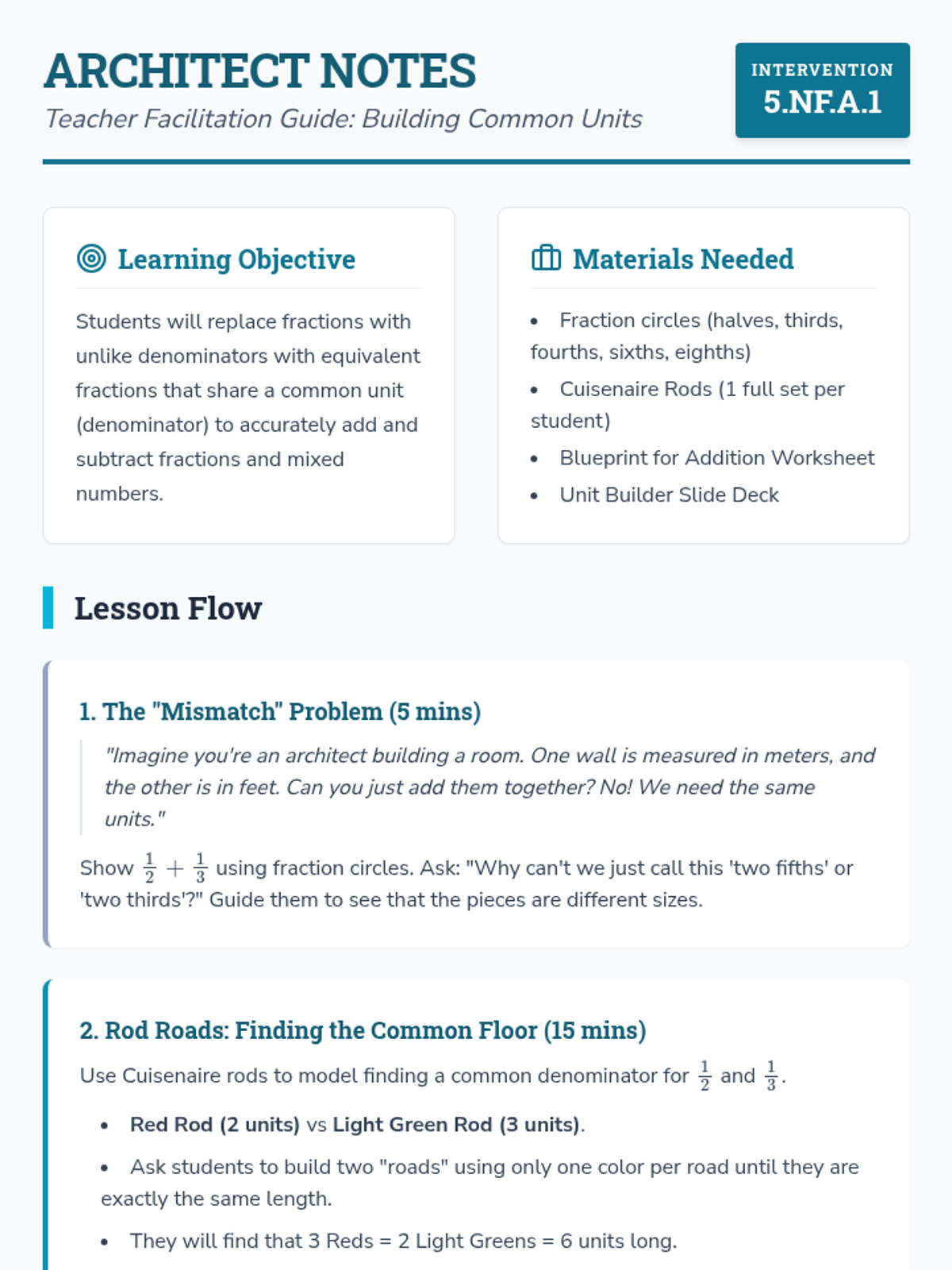
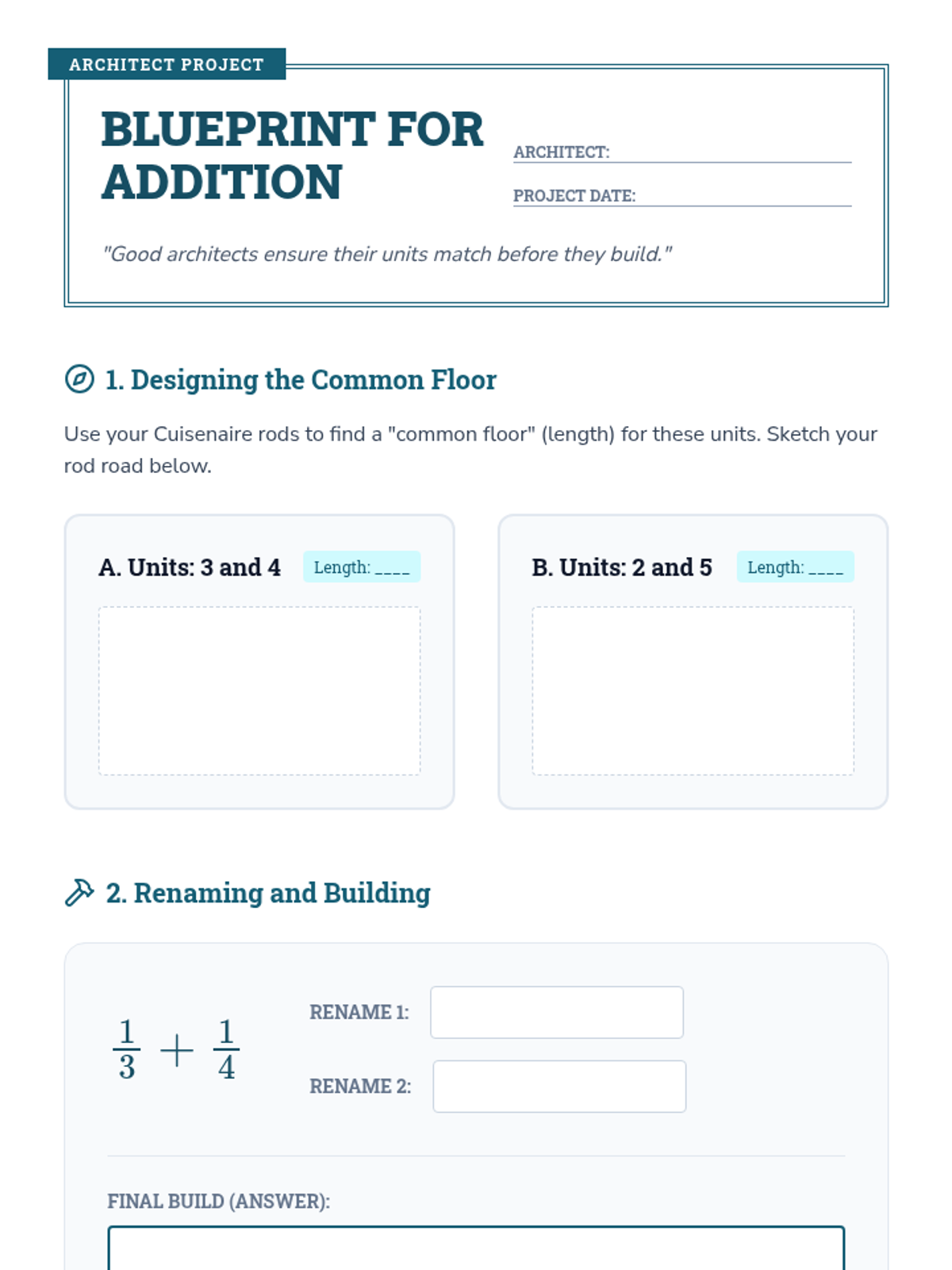
A Tier 2 intervention sequence focused on building conceptual understanding and procedural fluency for adding and subtracting fractions with unlike denominators. Students use visual models and Cuisenaire rods to discover common units and create equivalent fractions.
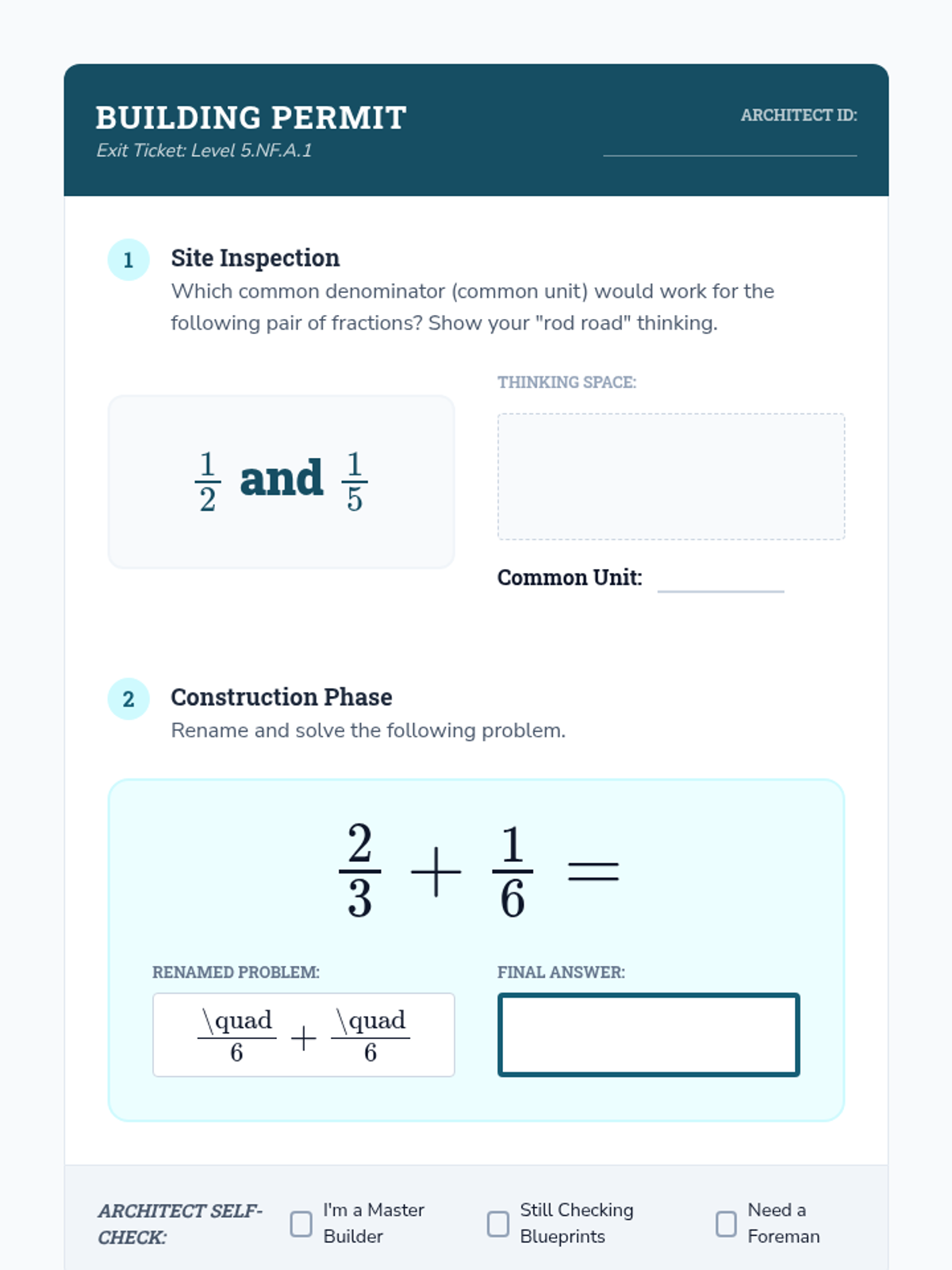
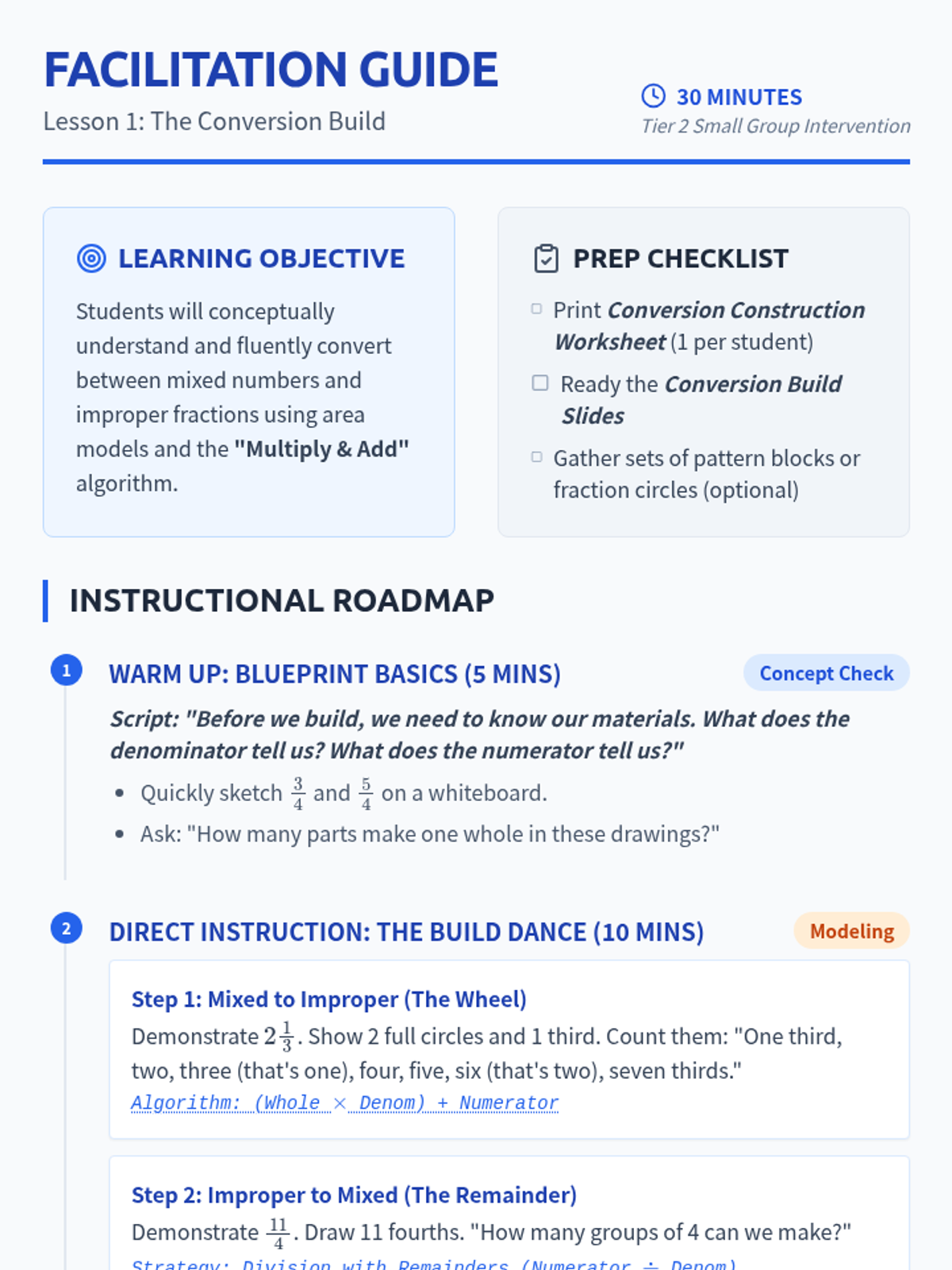
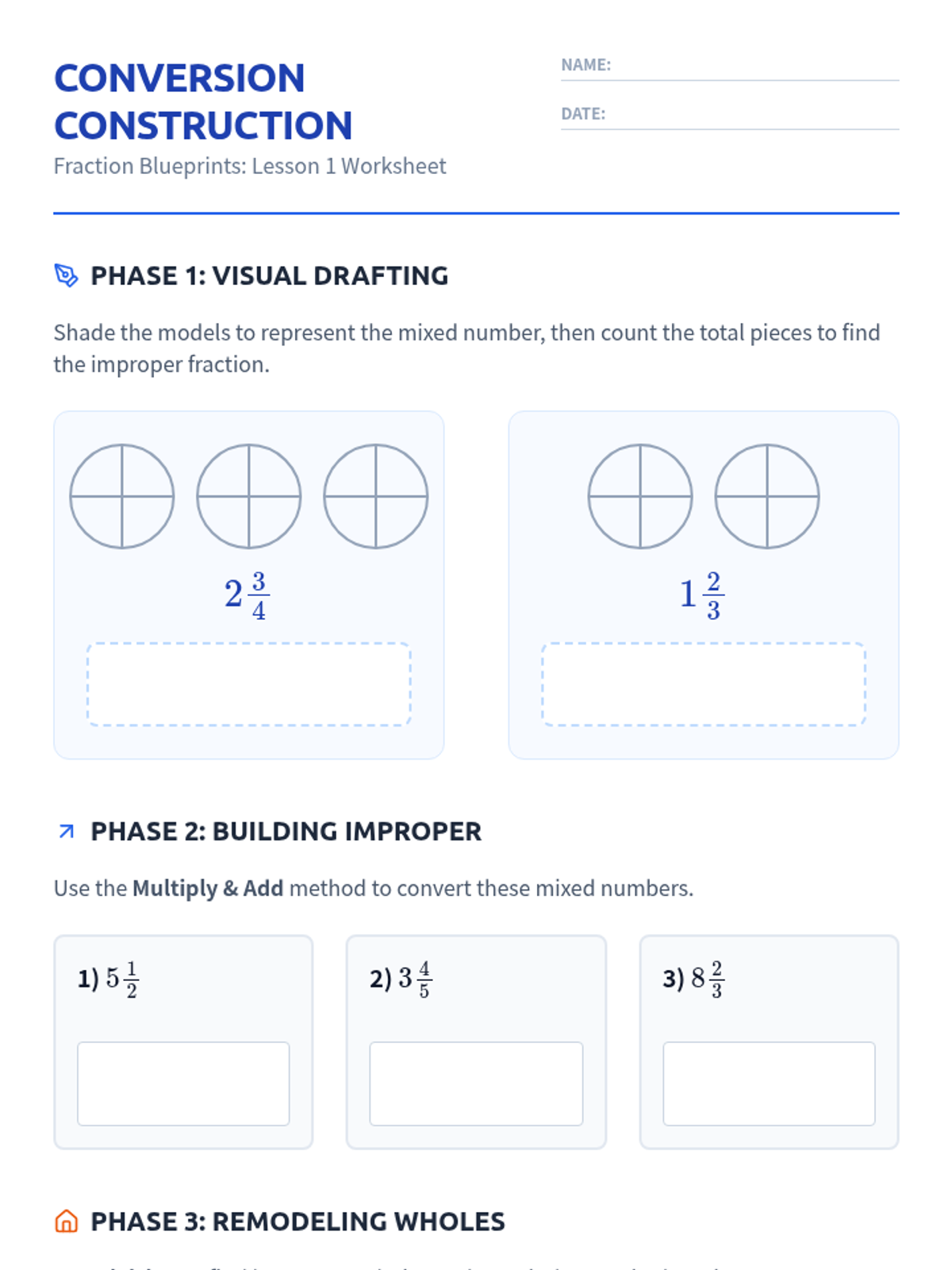
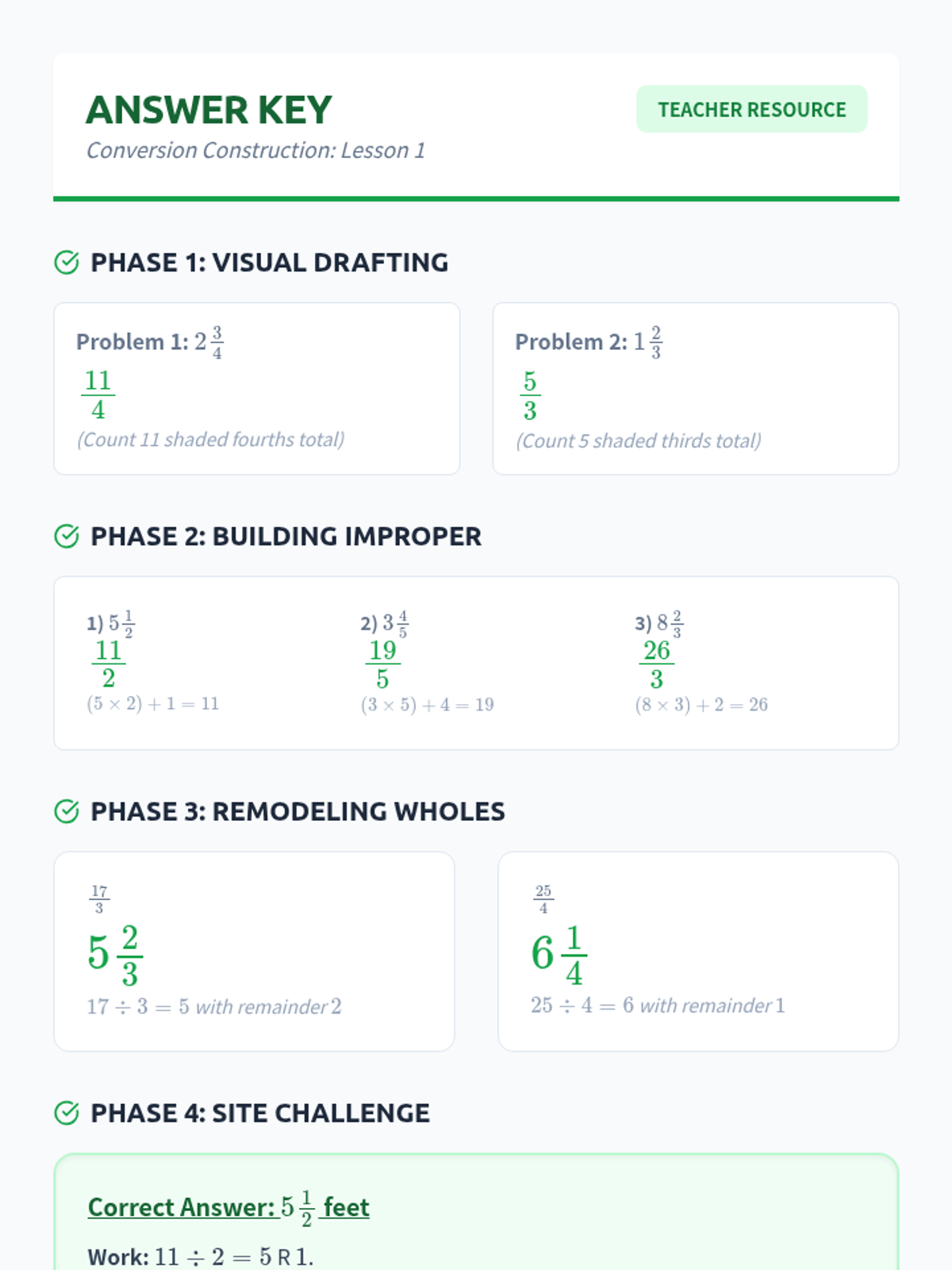
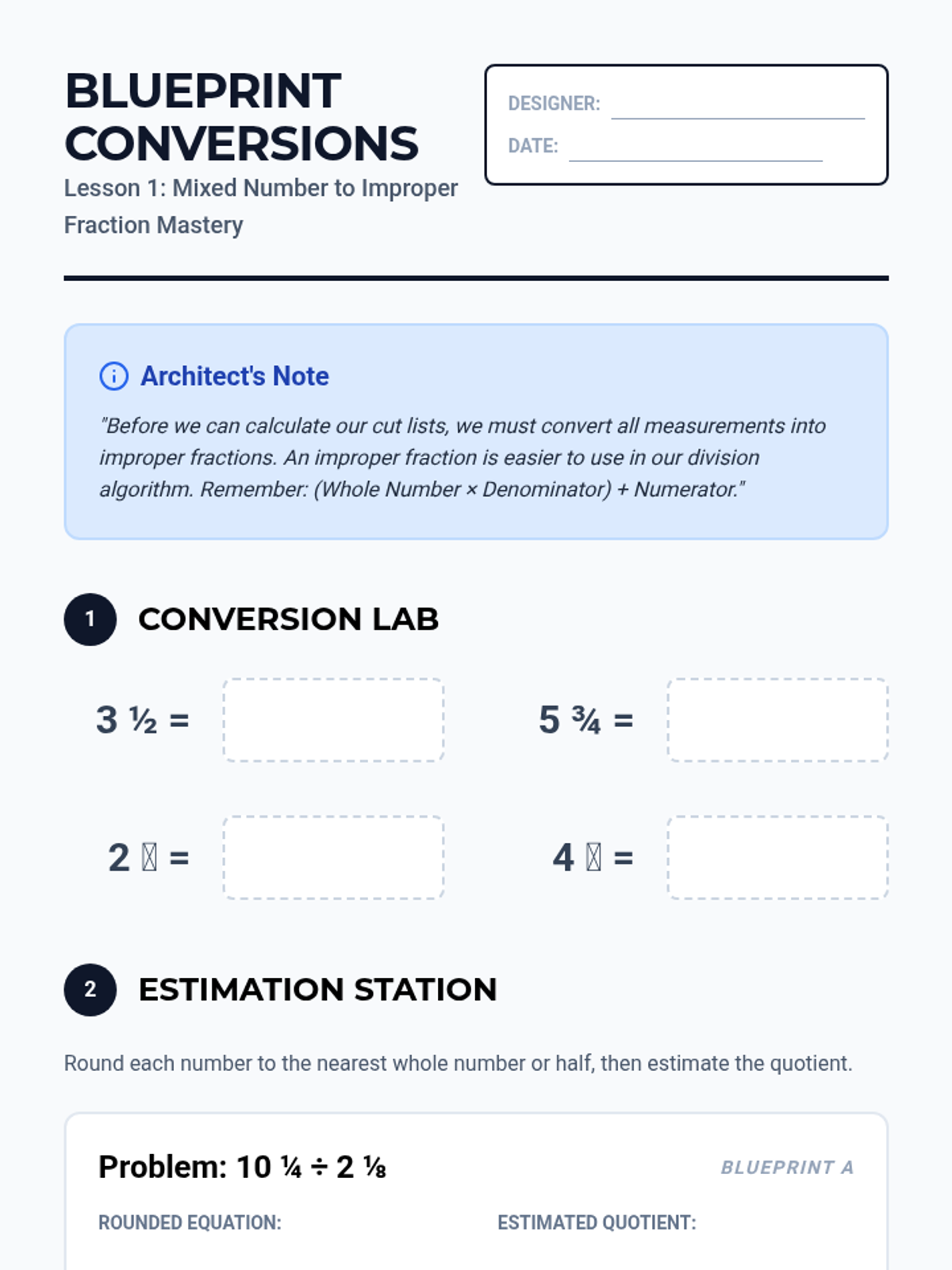
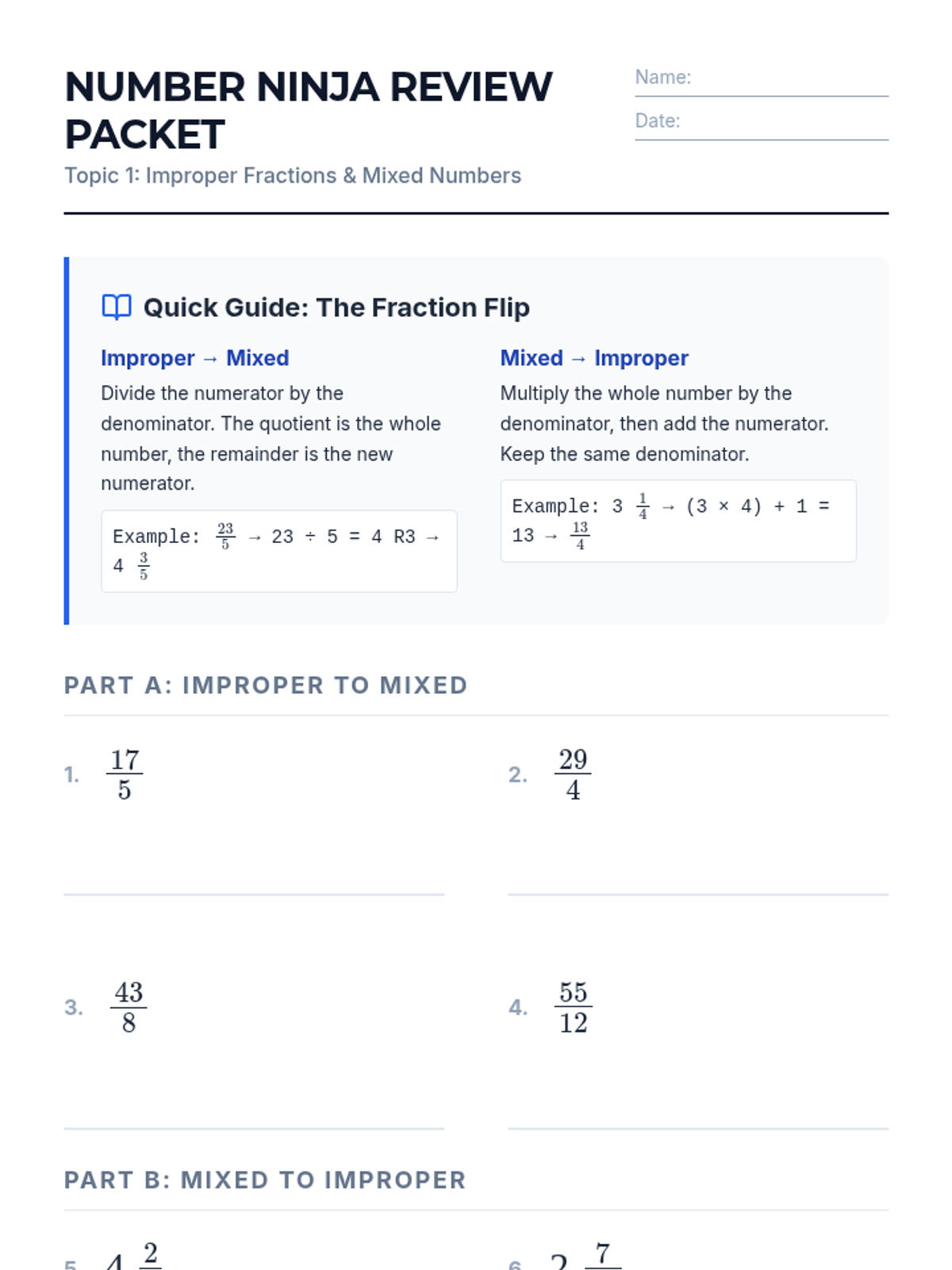
An intensive Tier 2 intervention sequence designed for small groups to master mixed numbers and improper fractions. This series builds conceptual understanding and procedural fluency through visual modeling and structured architectural-themed practice.
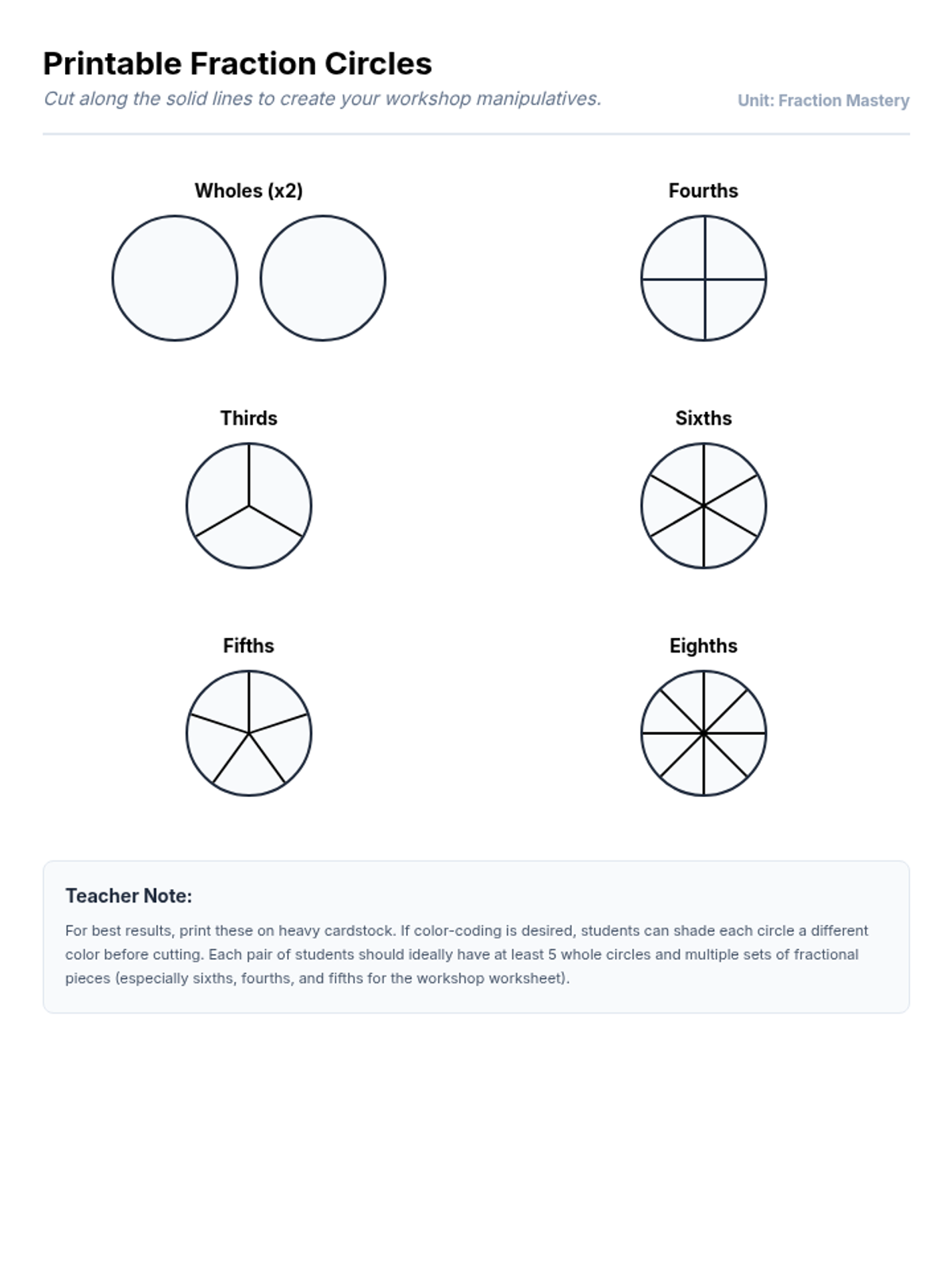
A comprehensive sequence focused on mastering mixed number operations through visual modeling, hands-on manipulatives, and algorithmic fluency.
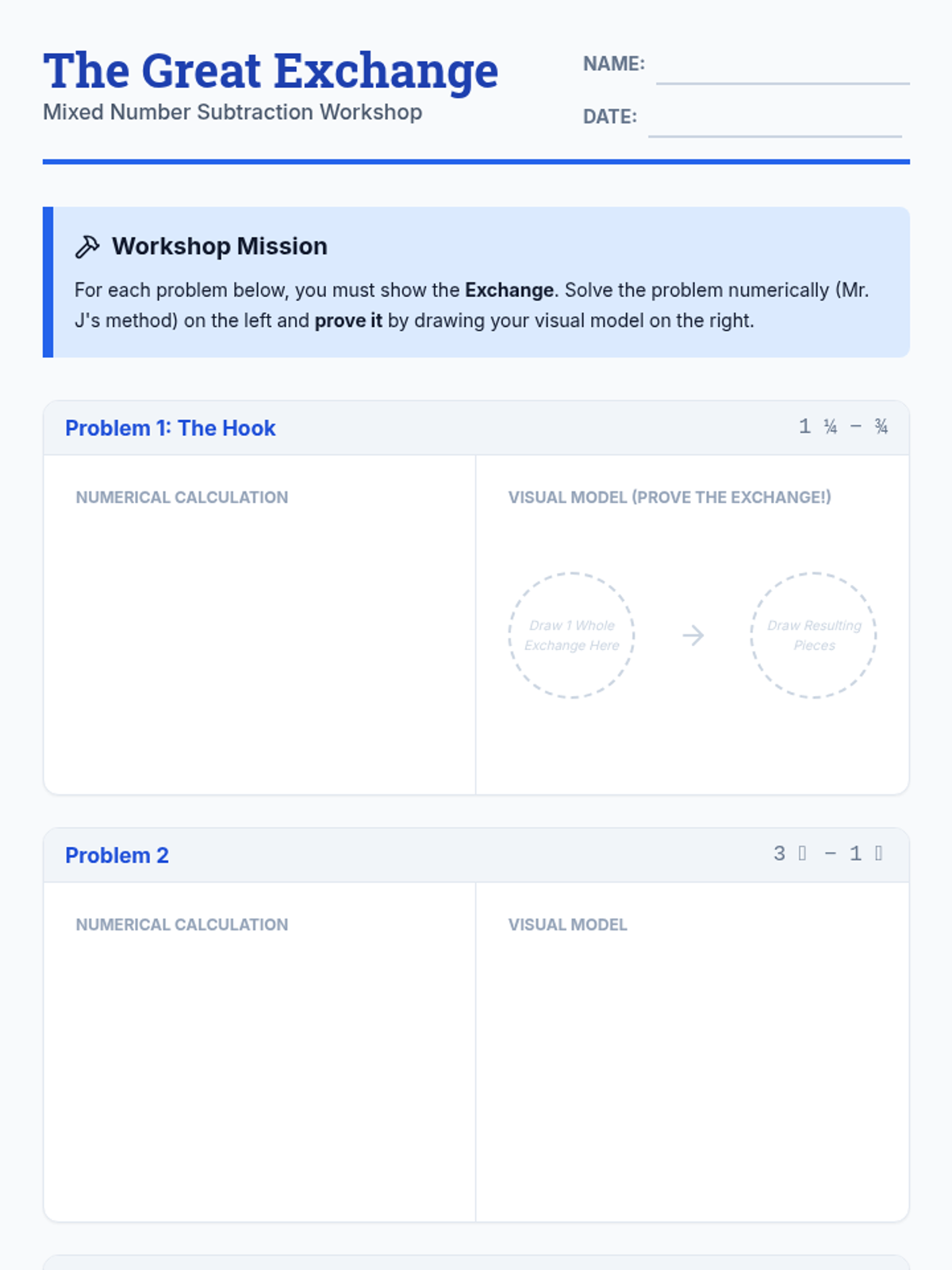
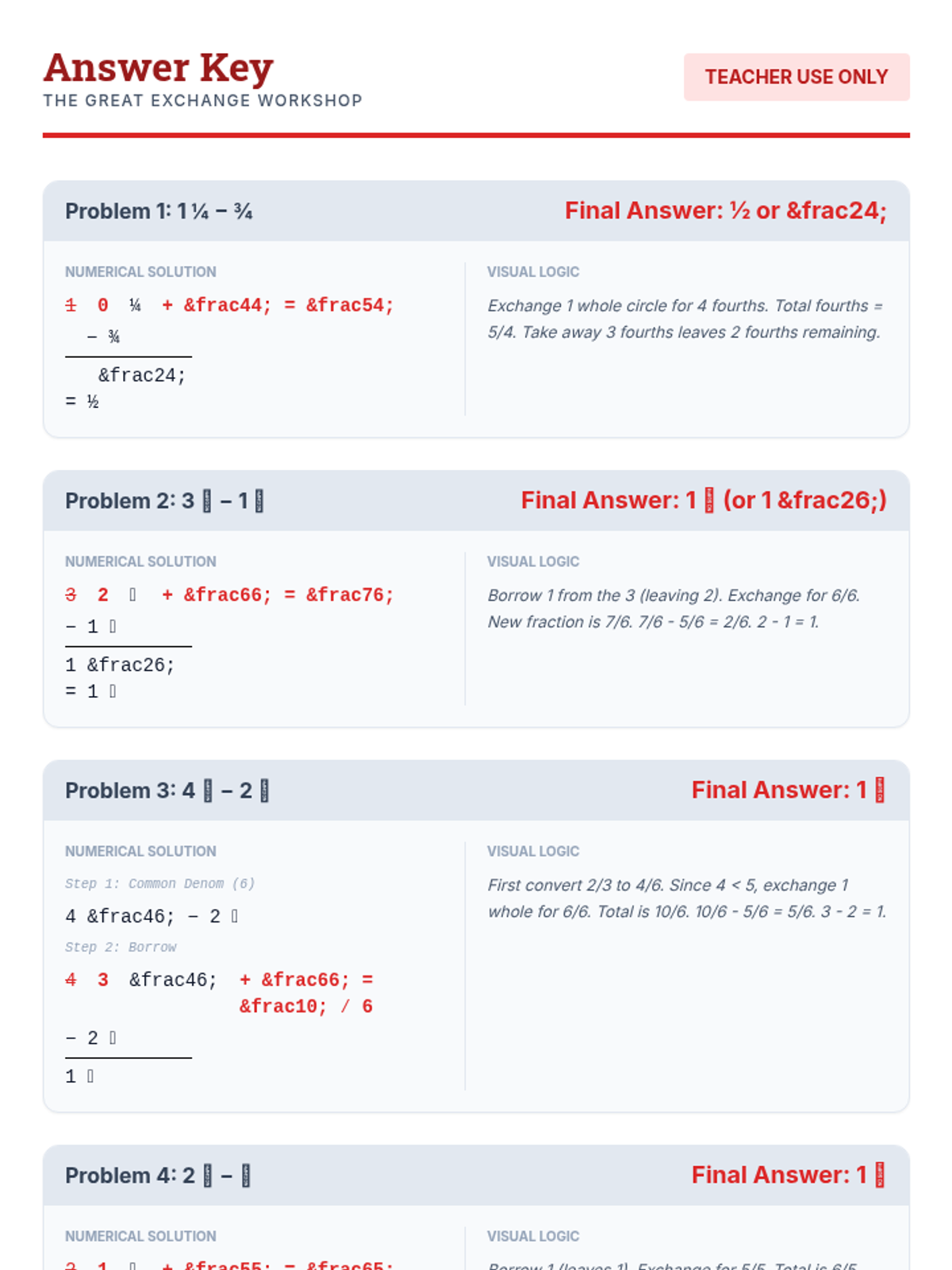
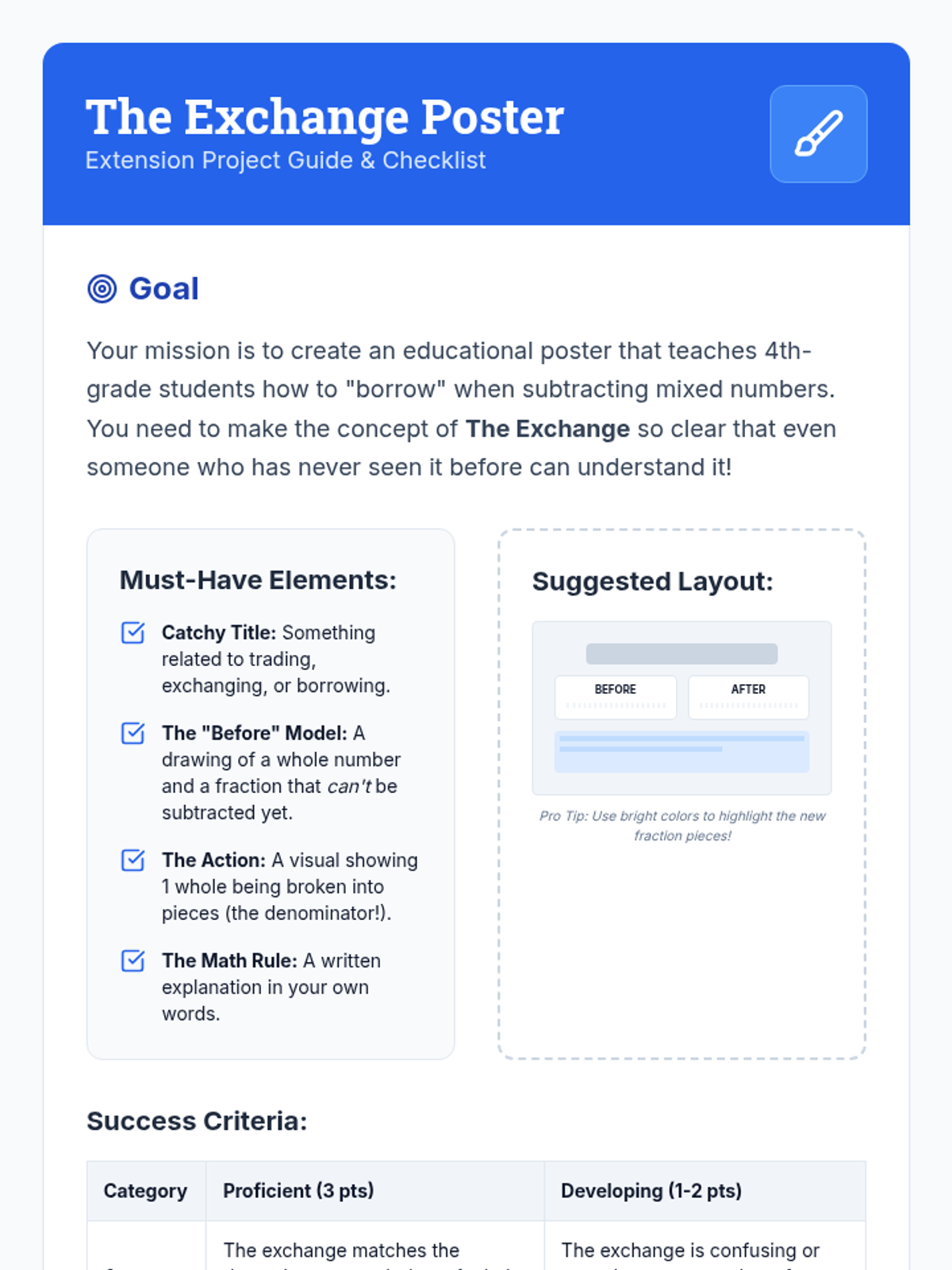
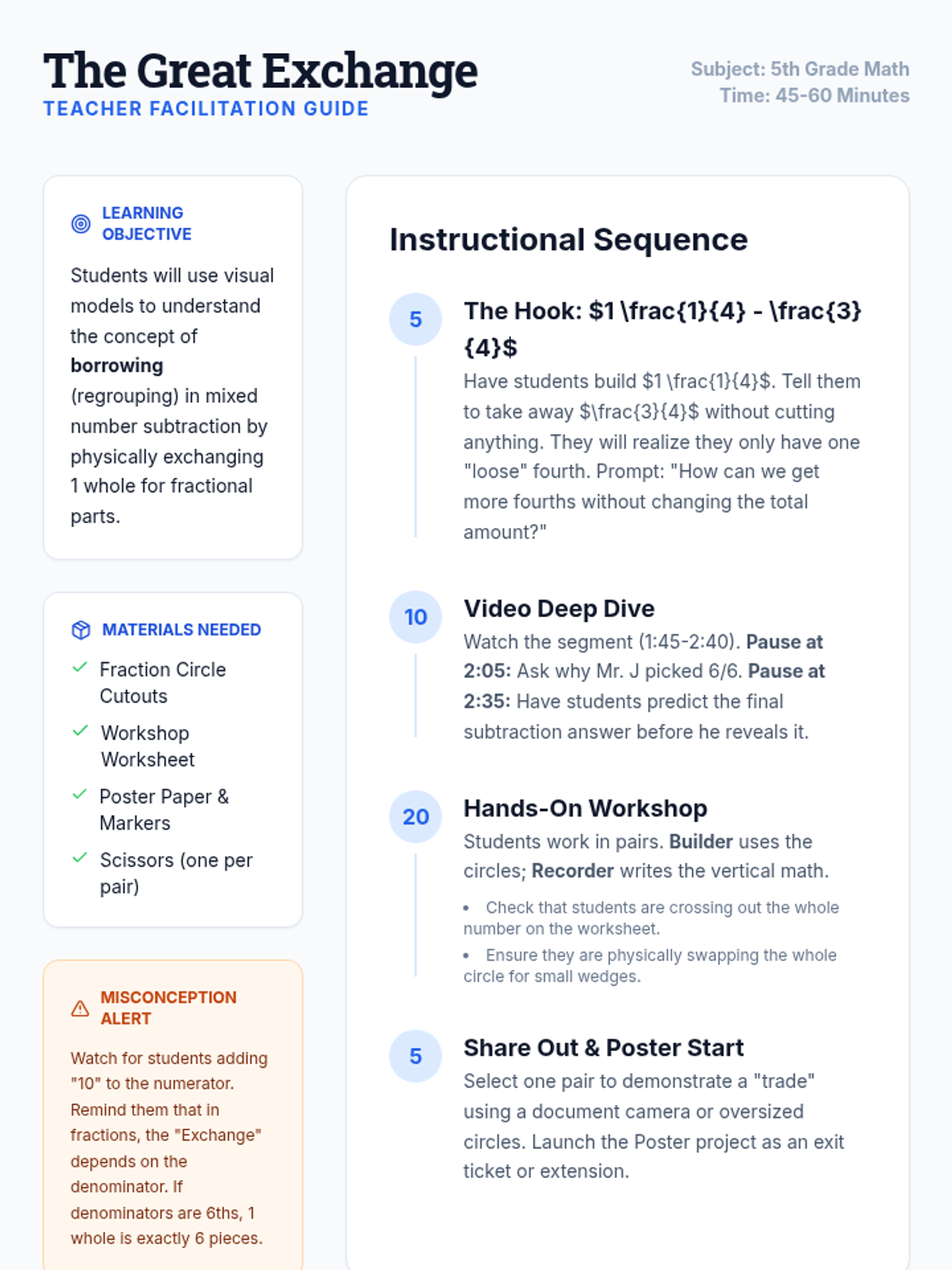
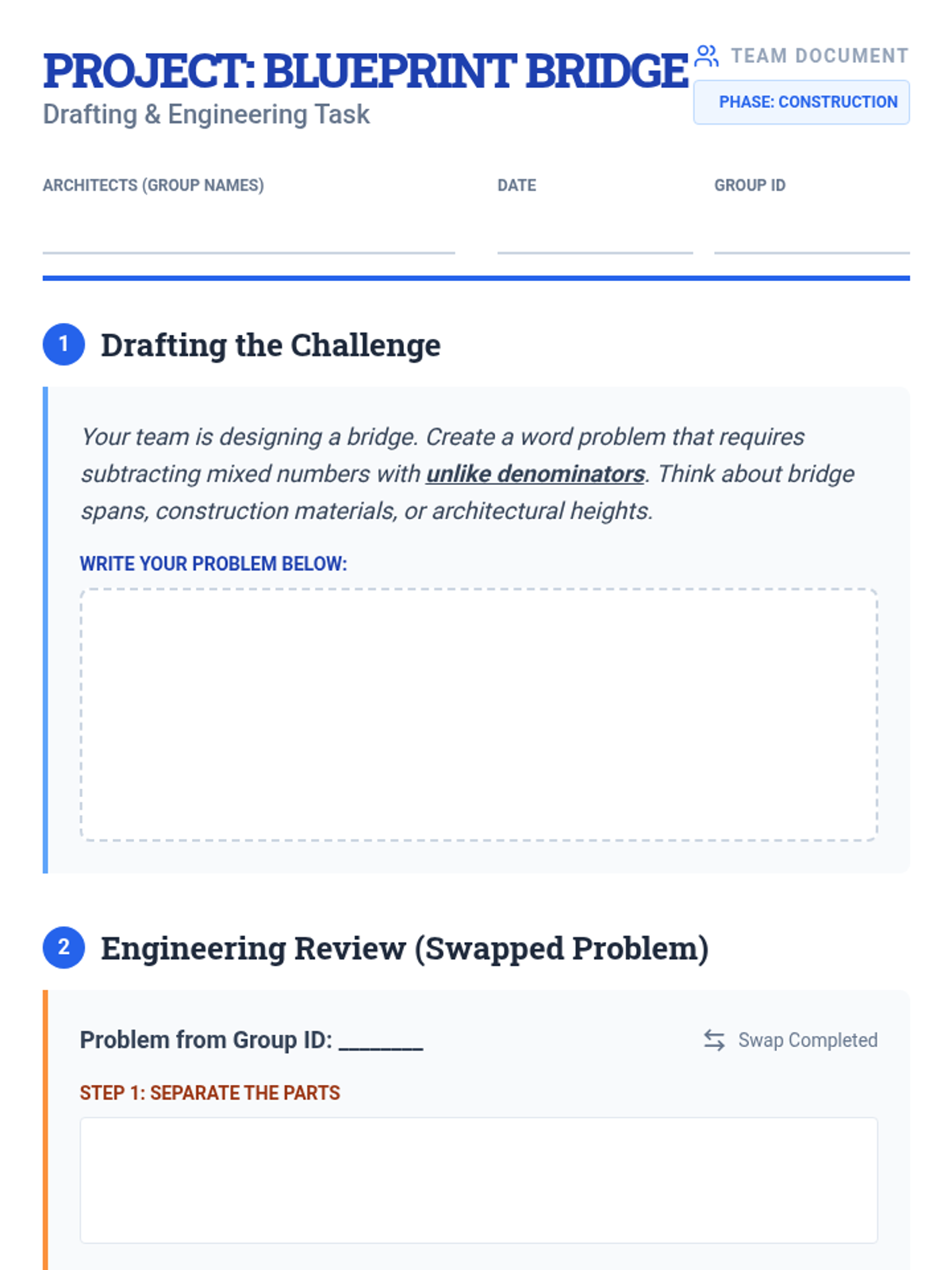
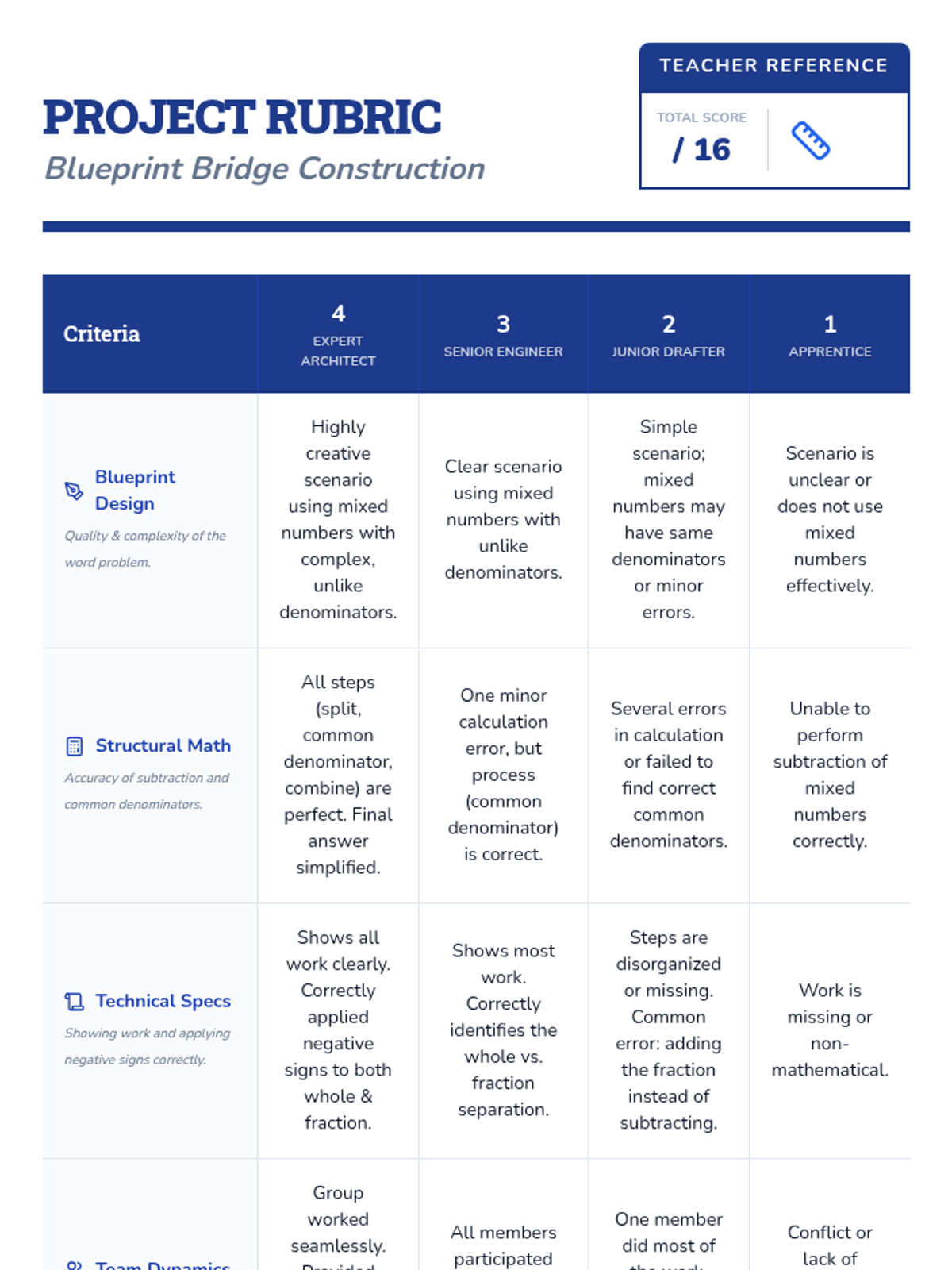
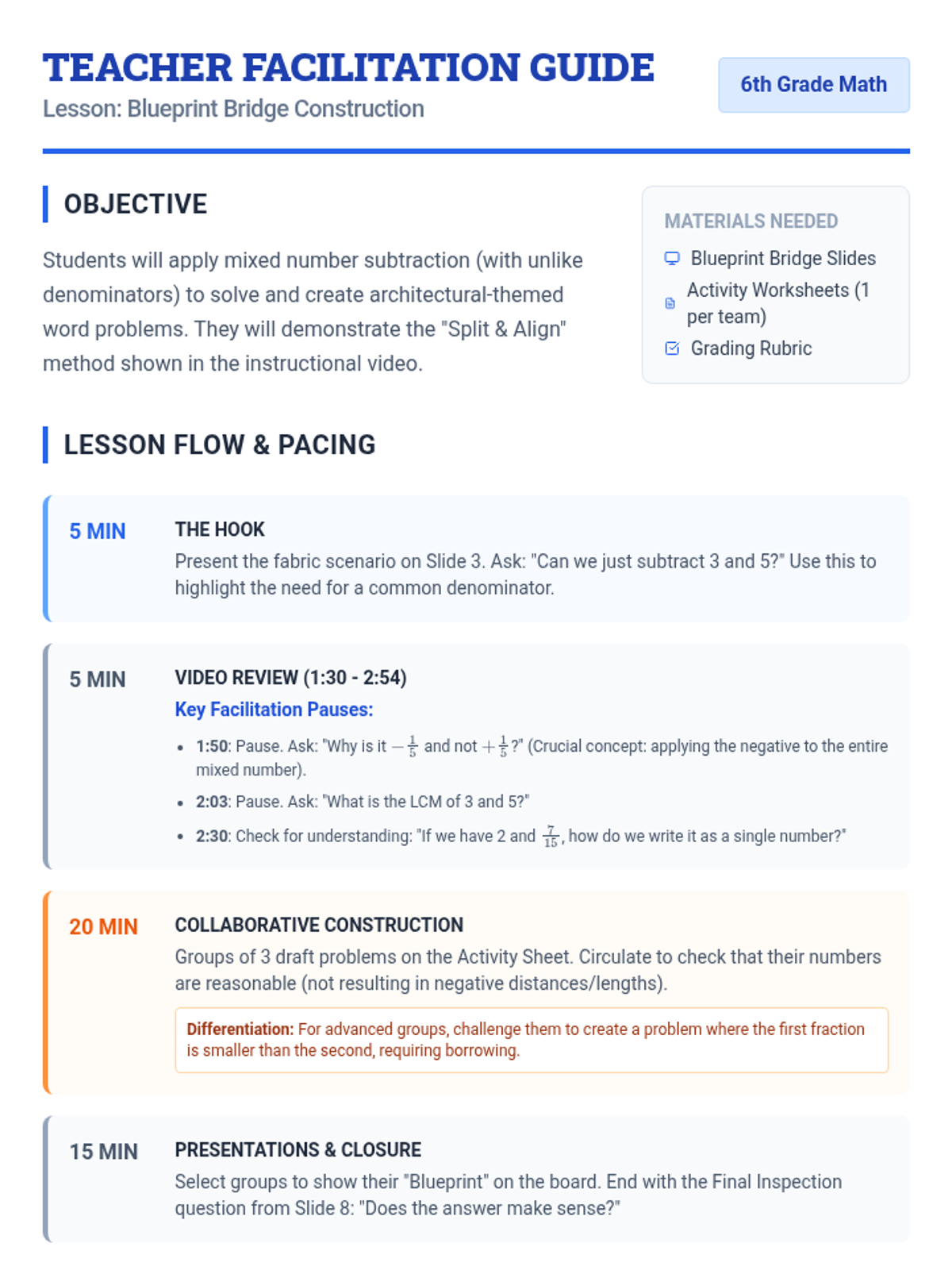
A lesson sequence focused on applying mixed number subtraction to real-world scenarios through collaborative problem-solving and blueprint-themed activities.
A 7-week comprehensive math review sequence designed to prepare 6th-grade students for the New York State (NYS) Math Assessment, aligned with the Next Generation Learning Standards. Covers Ratios, The Number System, Expressions & Equations, Geometry, and Statistics.
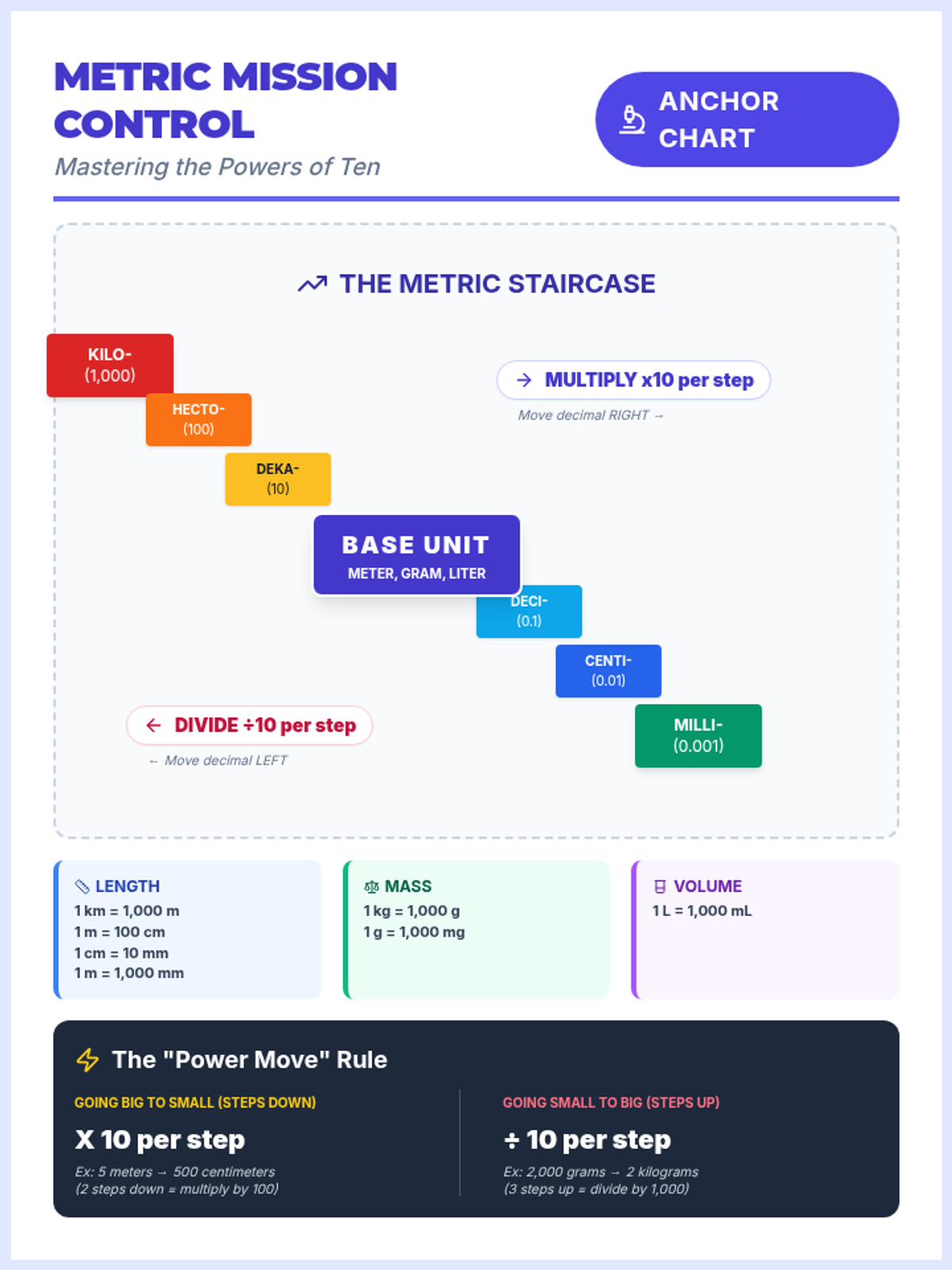
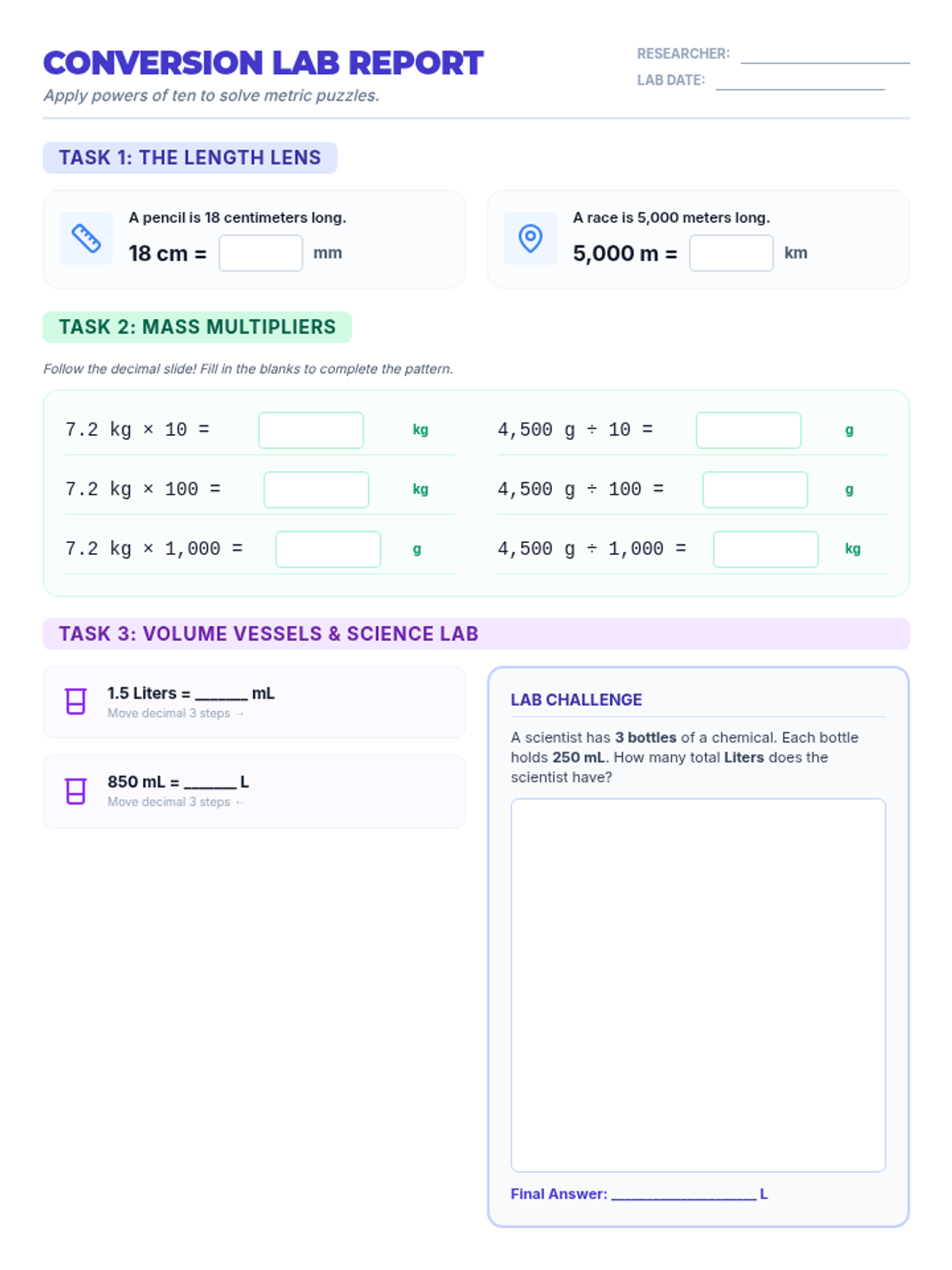
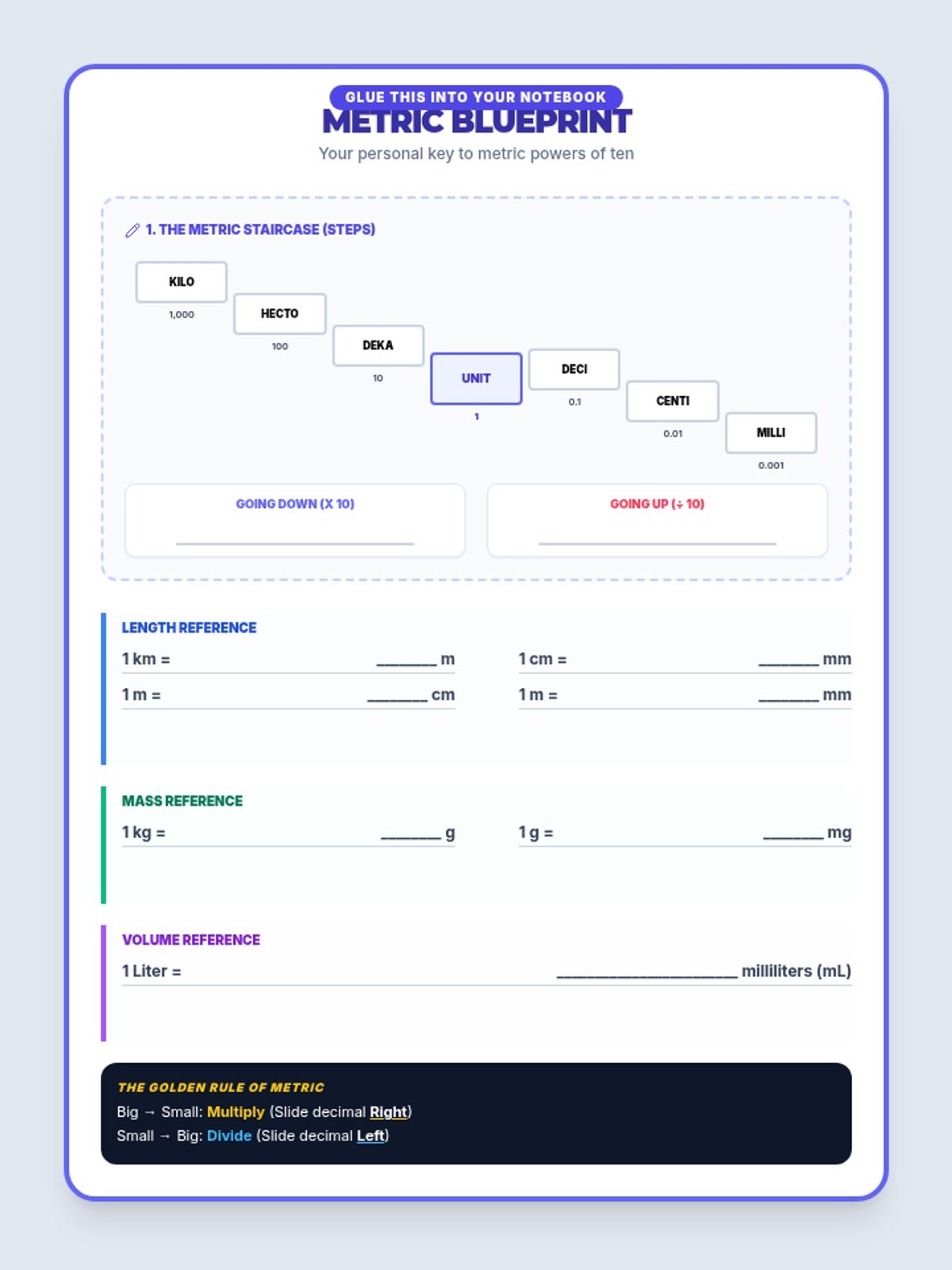
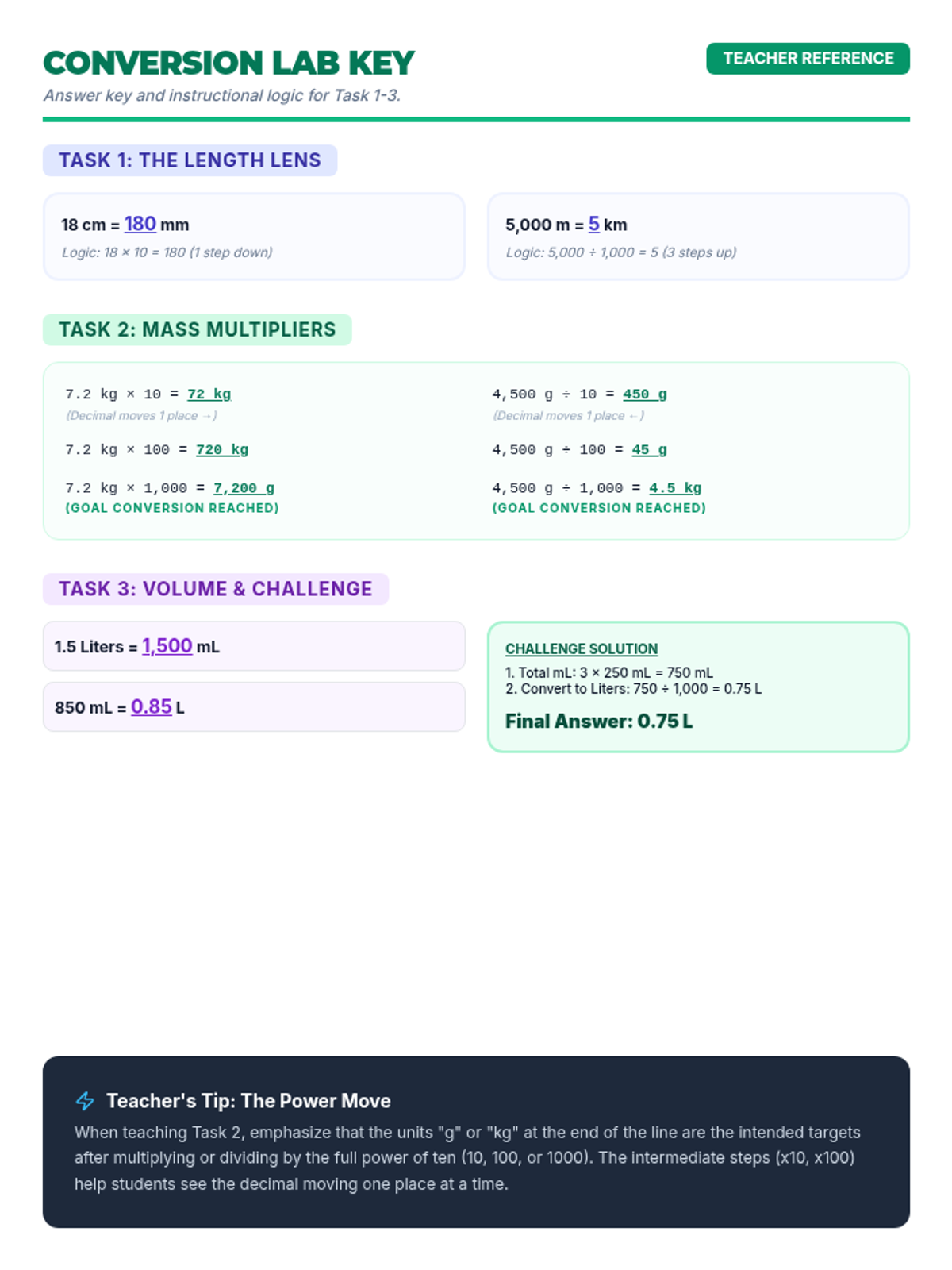
A comprehensive guide to understanding metric conversions and powers of ten through visual models and laboratory-themed activities. Students learn to navigate length, mass, and volume using the decimal nature of the metric system.
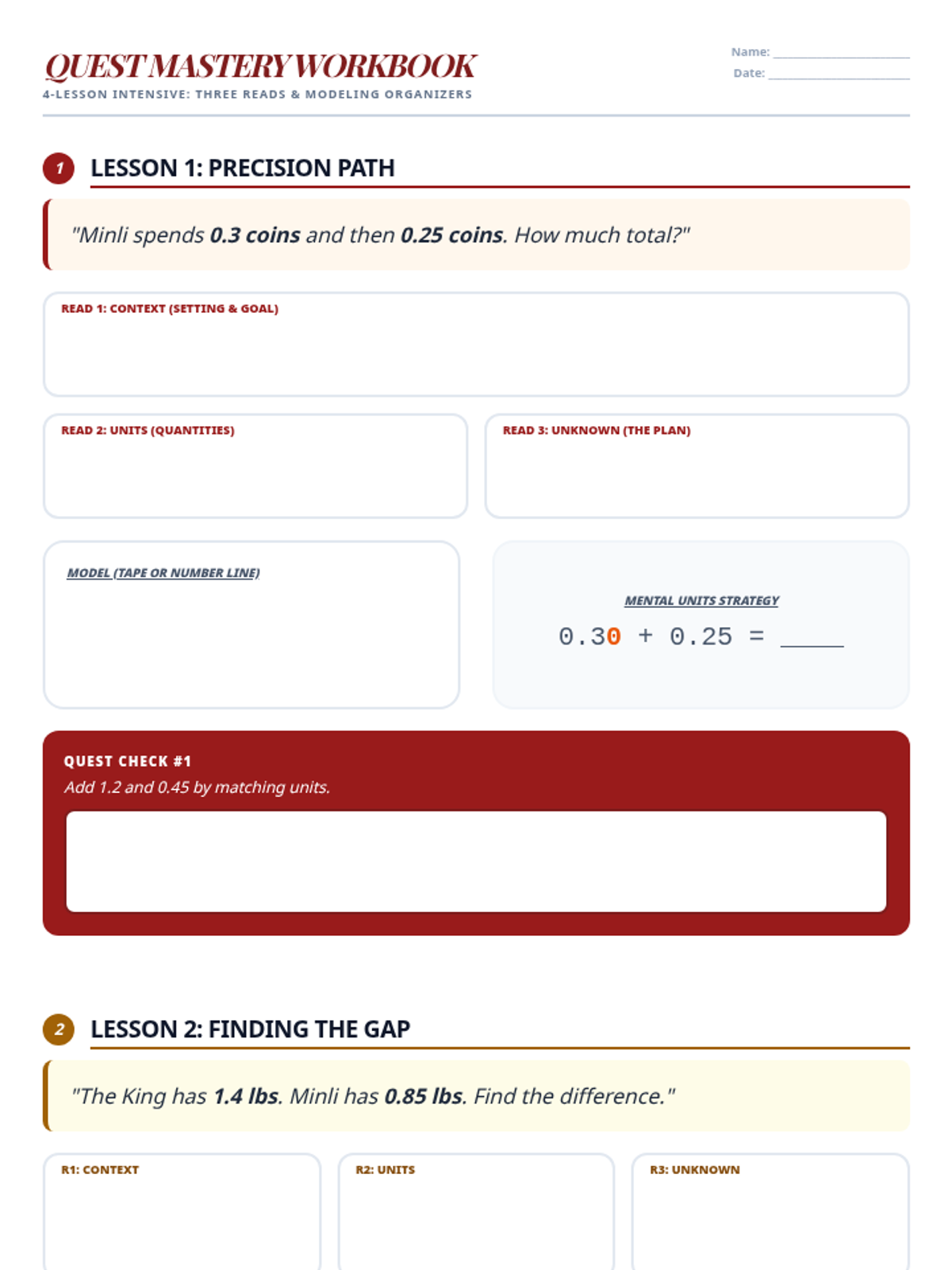
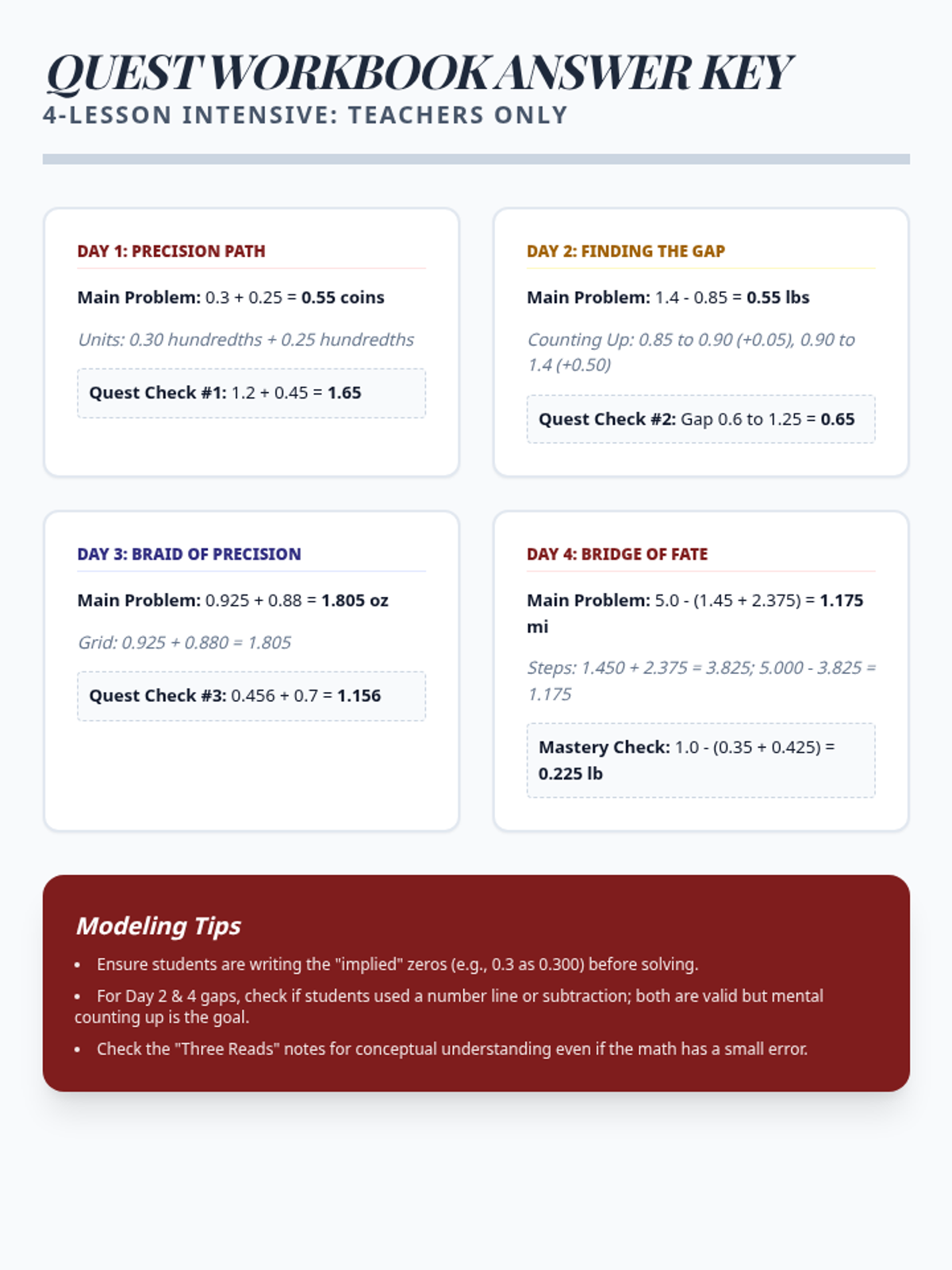
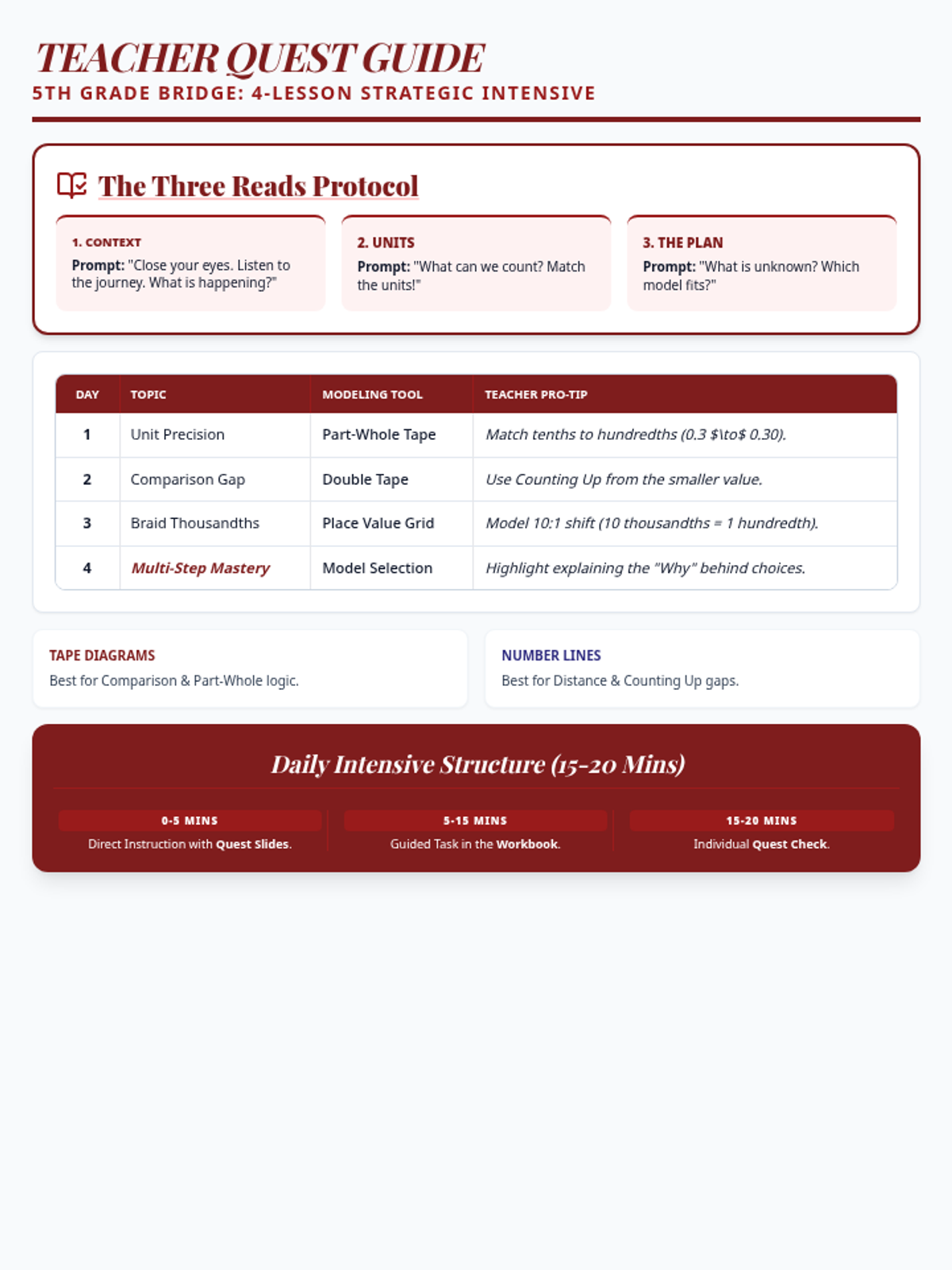
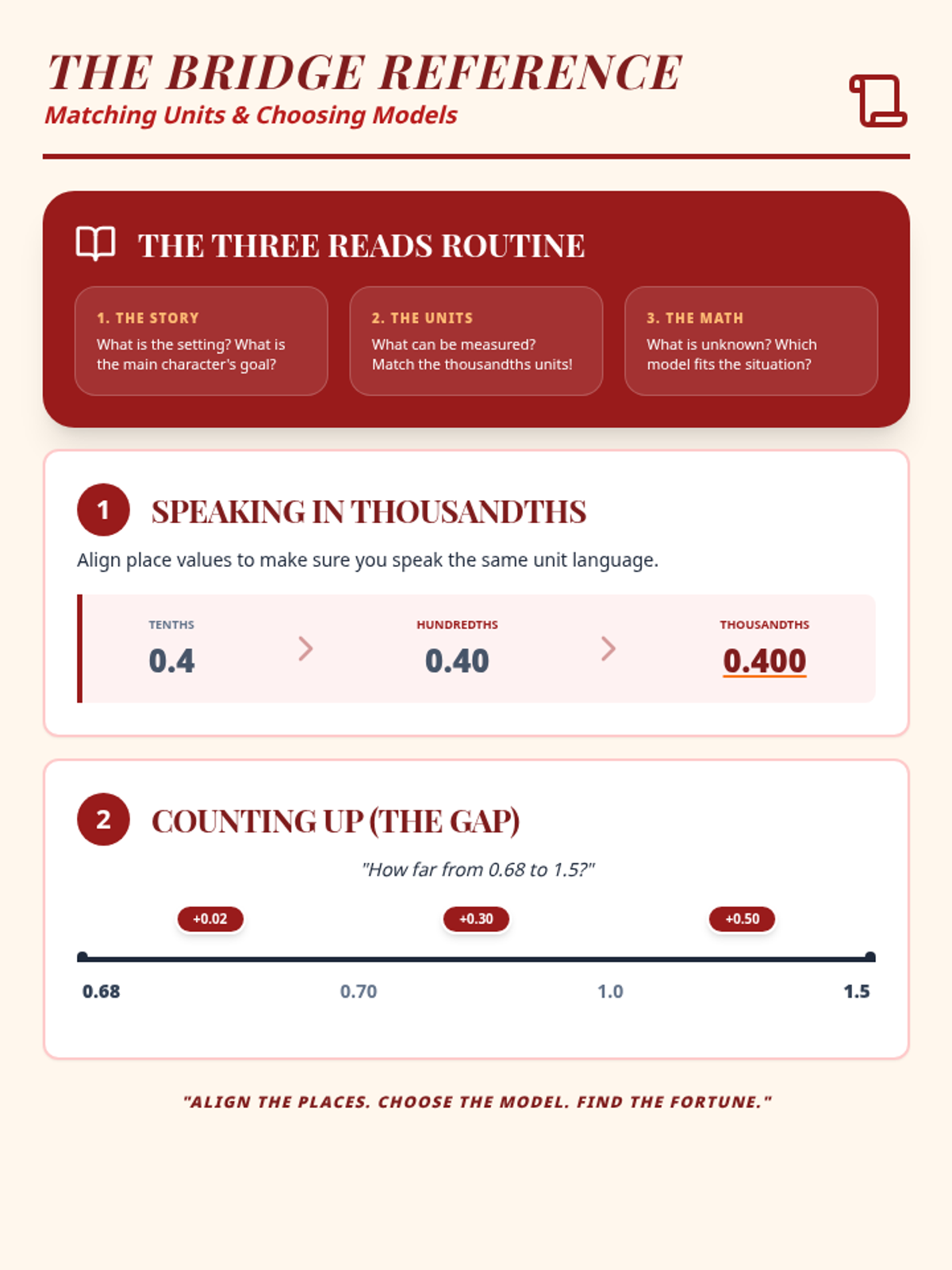
A 4-lesson intensive math intervention for 5th graders designed to bridge 4th-grade decimal foundations to 5th-grade mastery. Features the Three Reads strategy and mental math logic (Counting Up, Matching Units) themed around 'Where the Mountain Meets the Moon'.
A set of targeted skill-building worksheets designed to guide students through common procedural math errors using step-by-step checklists and worked examples in a blueprint-inspired layout.
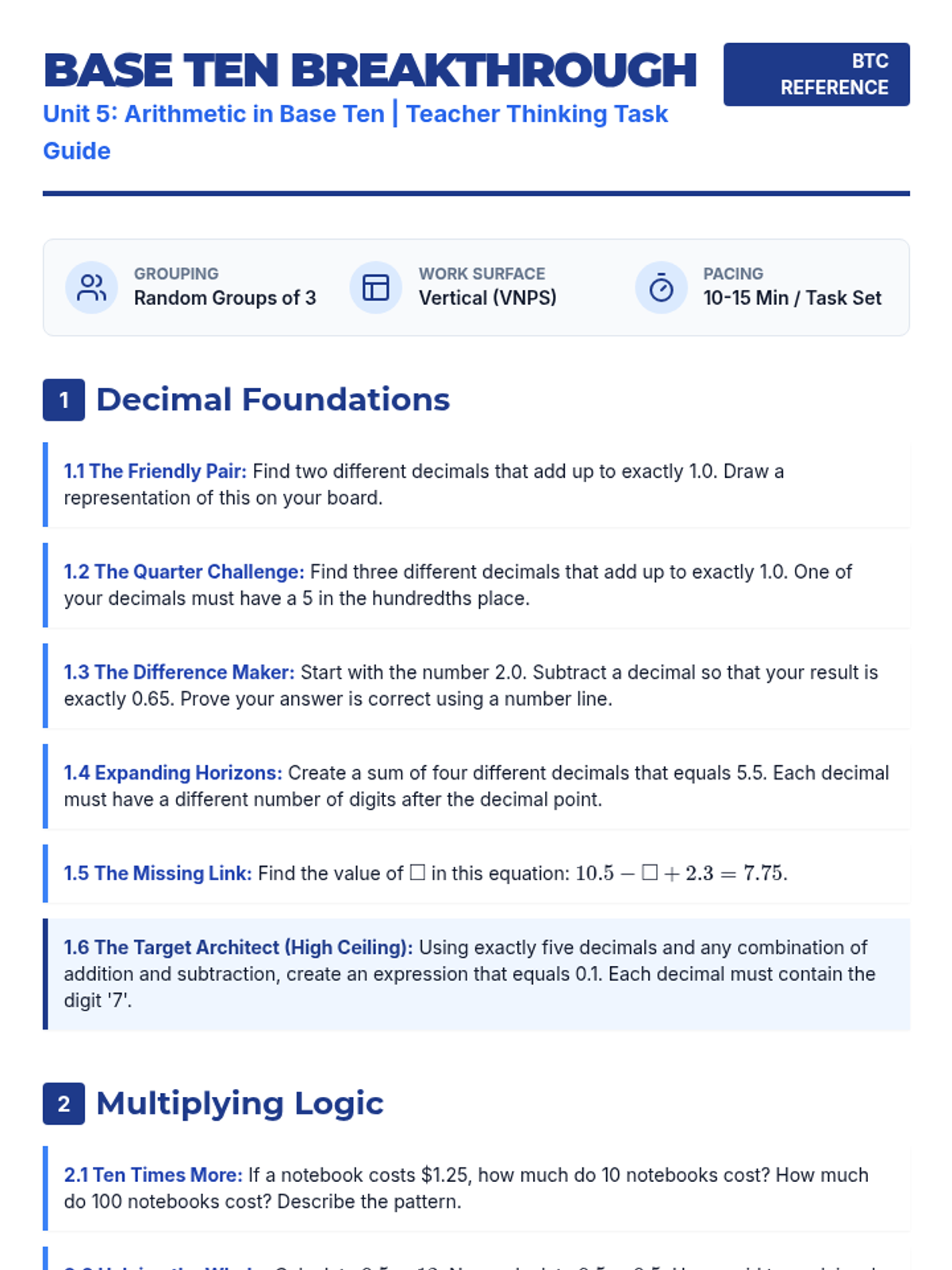
A comprehensive collection of "Building Thinking Classrooms" (BTC) tasks for Grade 6 Mathematics, Units 5-8. Each unit contains thin-sliced, low-floor high-ceiling tasks designed for collaborative problem-solving on vertical surfaces.
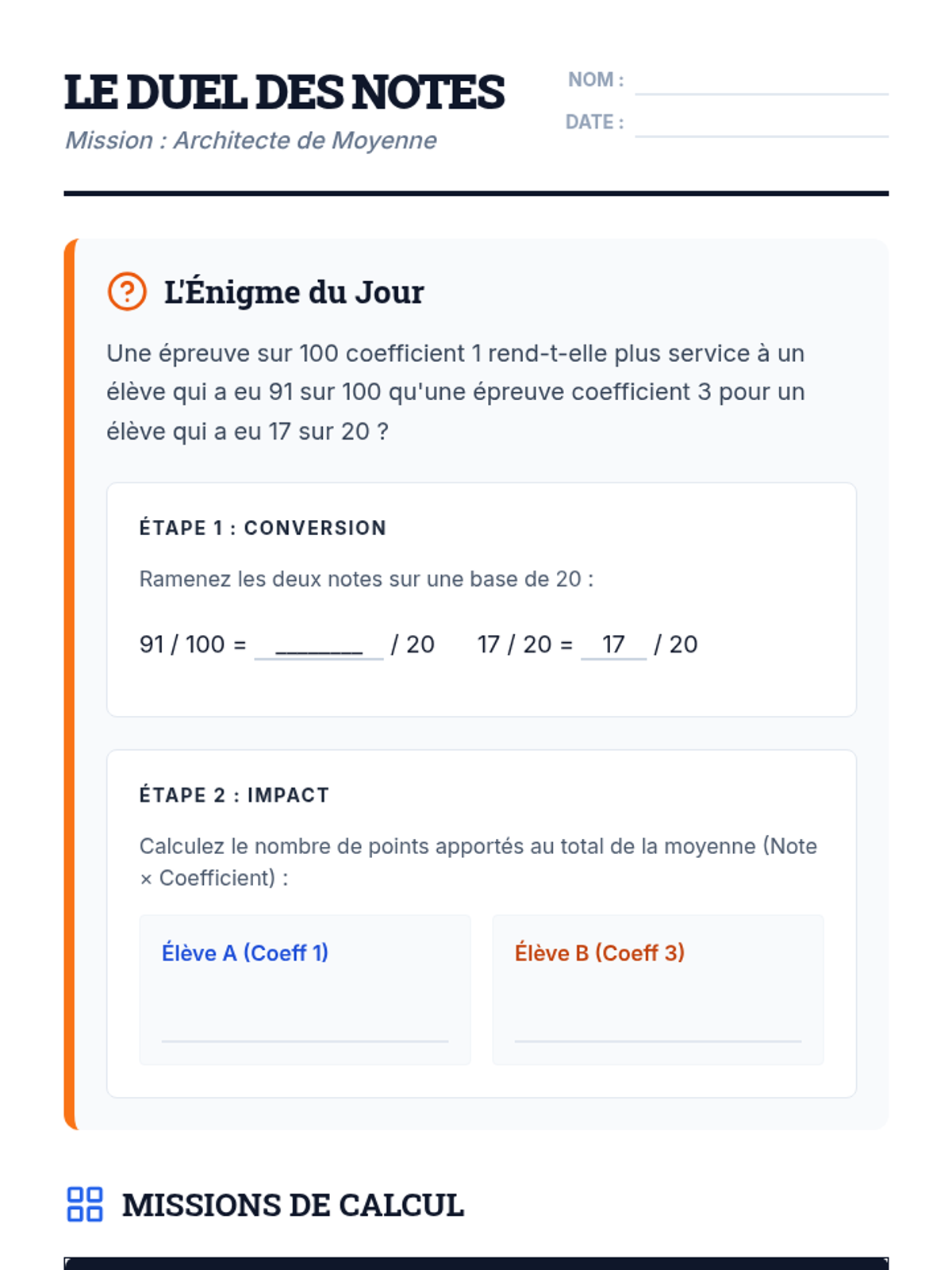
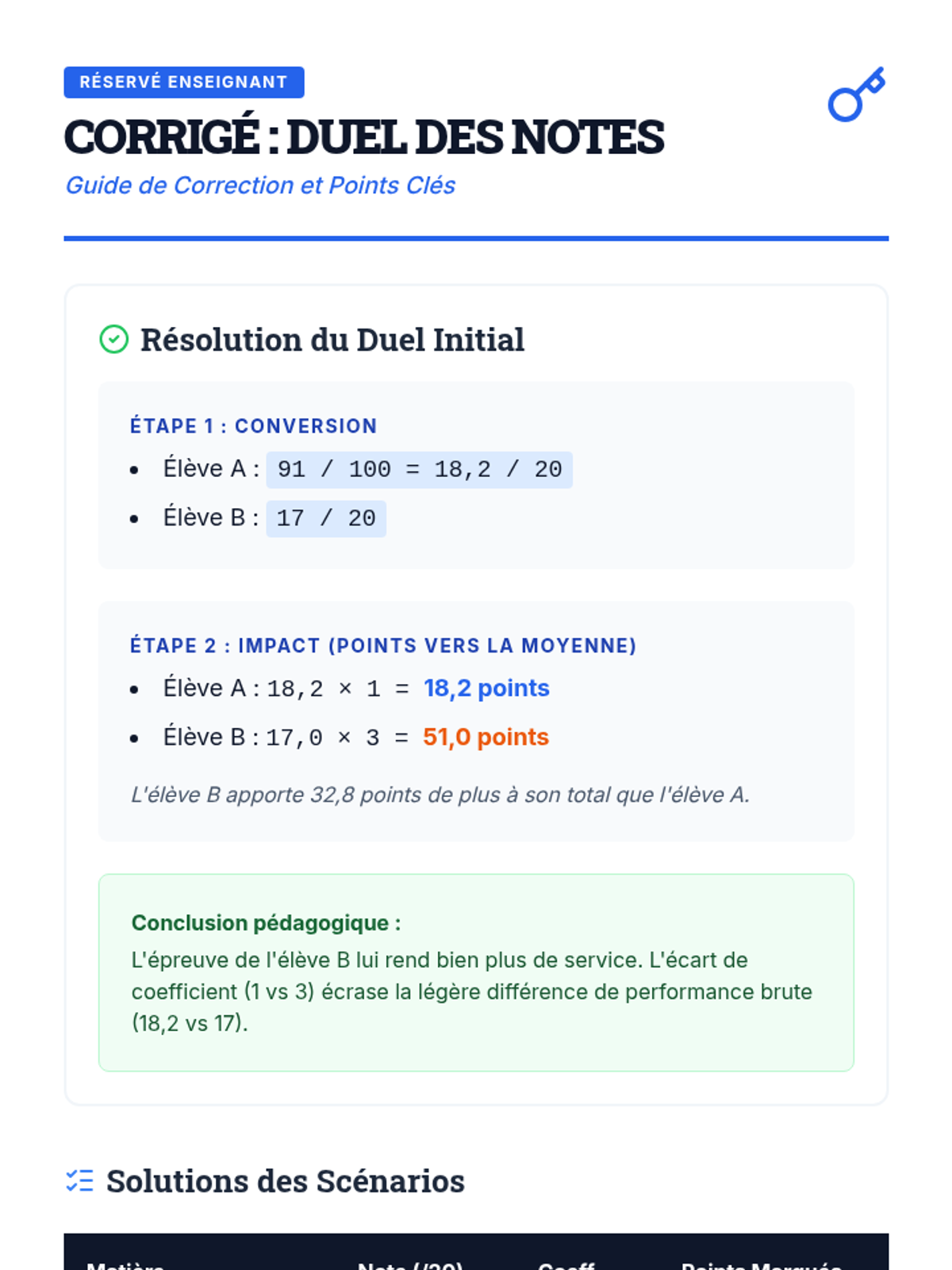
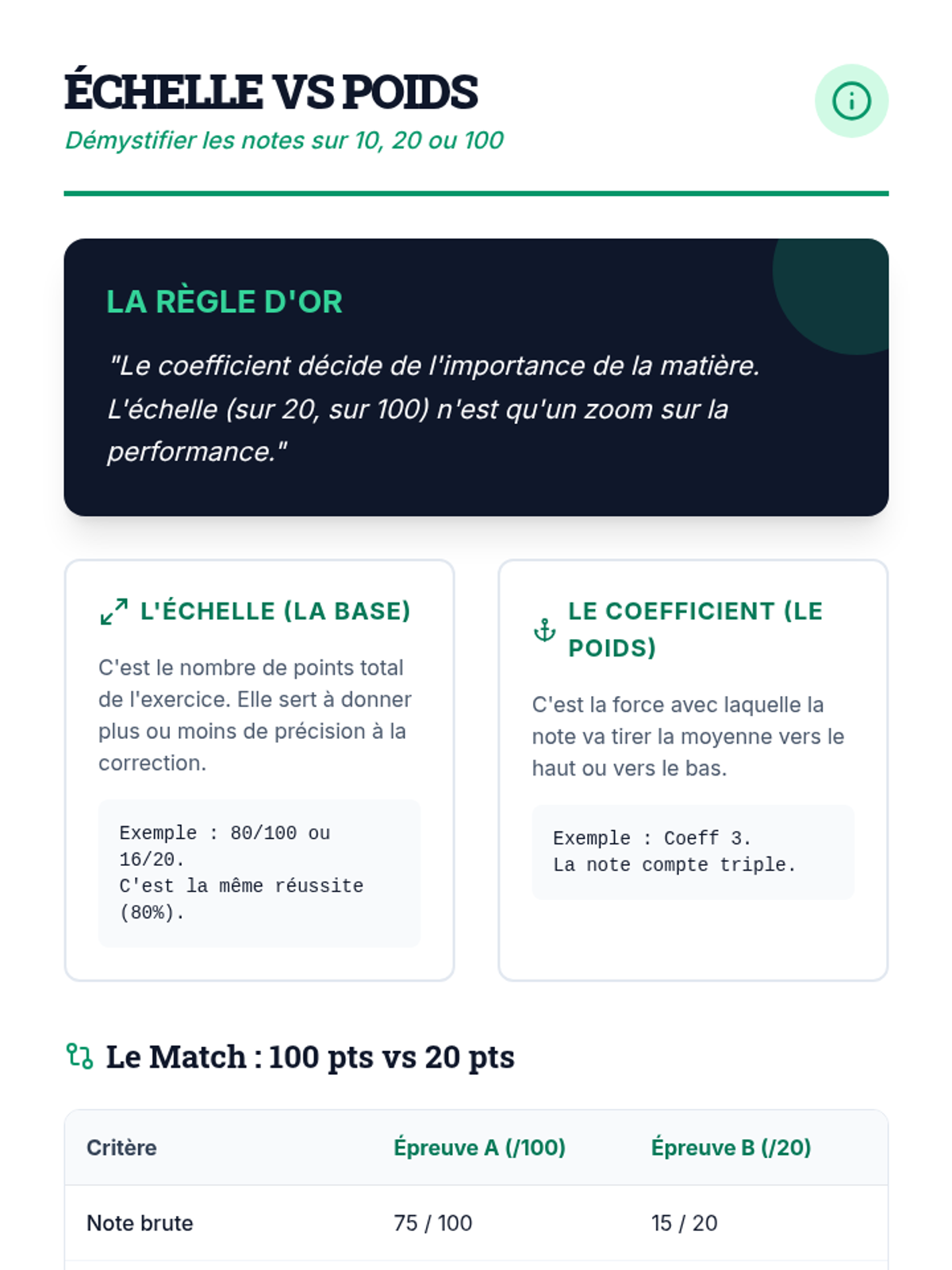
Une exploration mathématique de l'impact des coefficients sur les moyennes, utilisant des cas pratiques concrets pour comprendre la pondération et les moyennes pondérées.
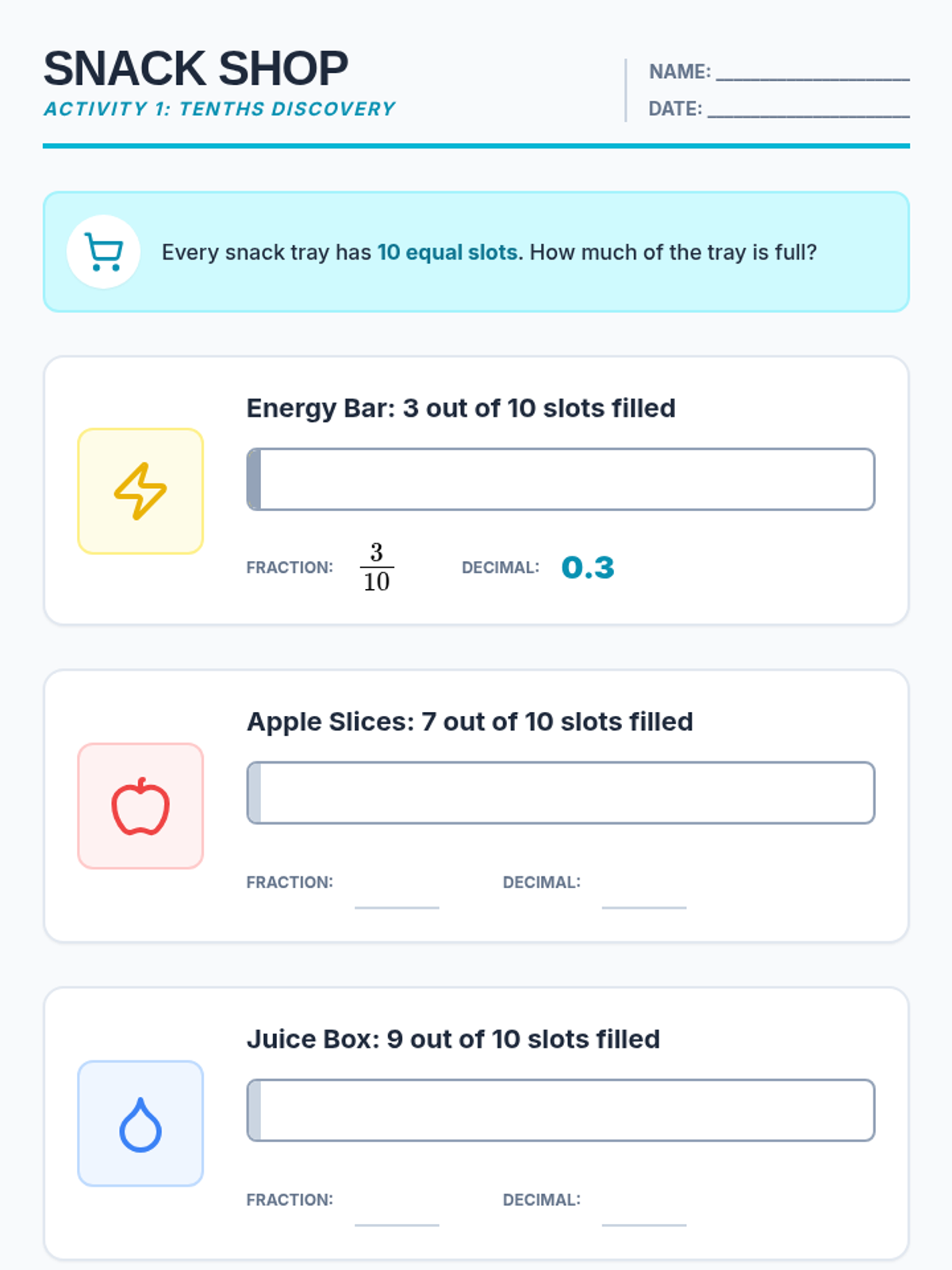
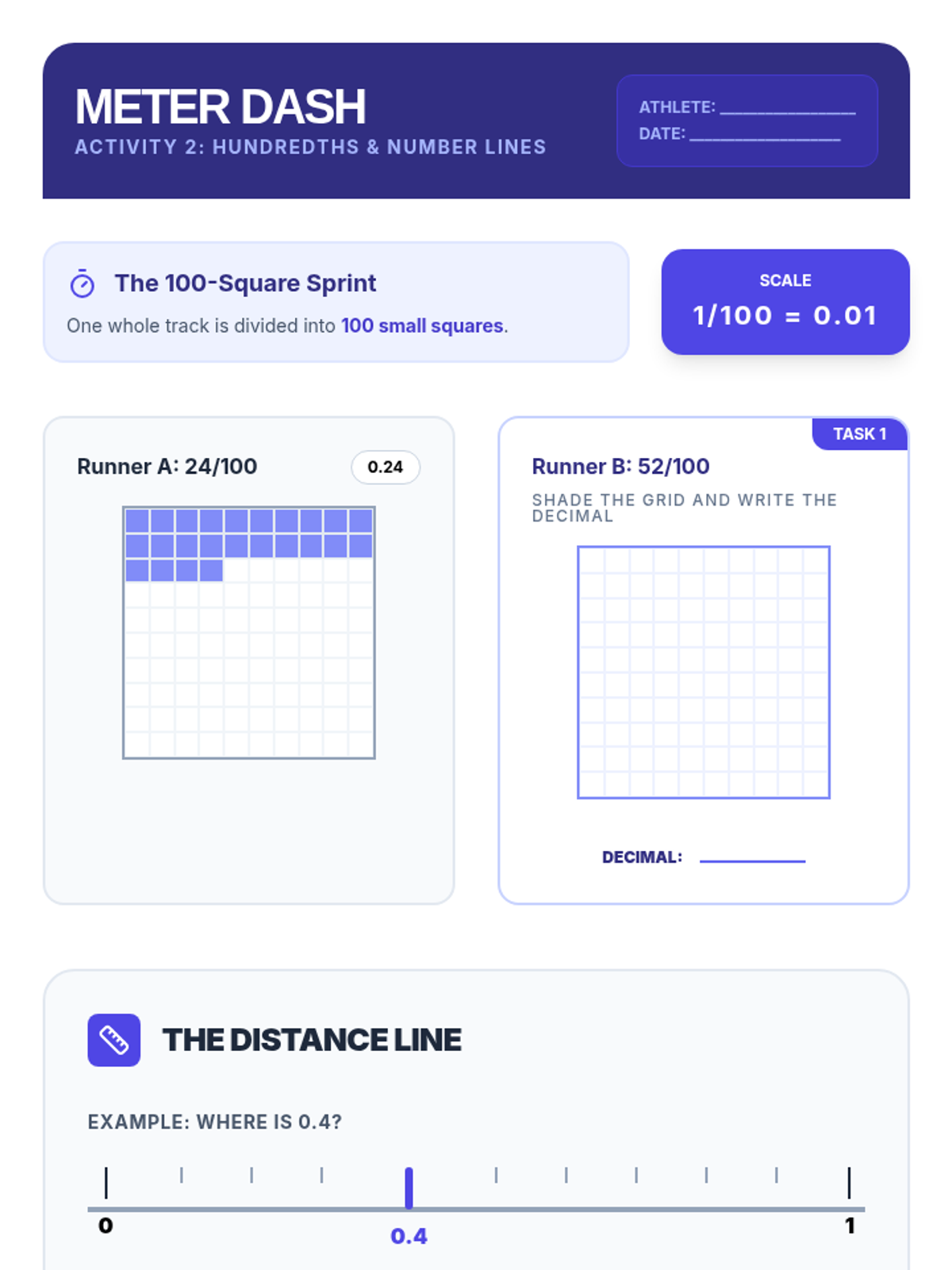
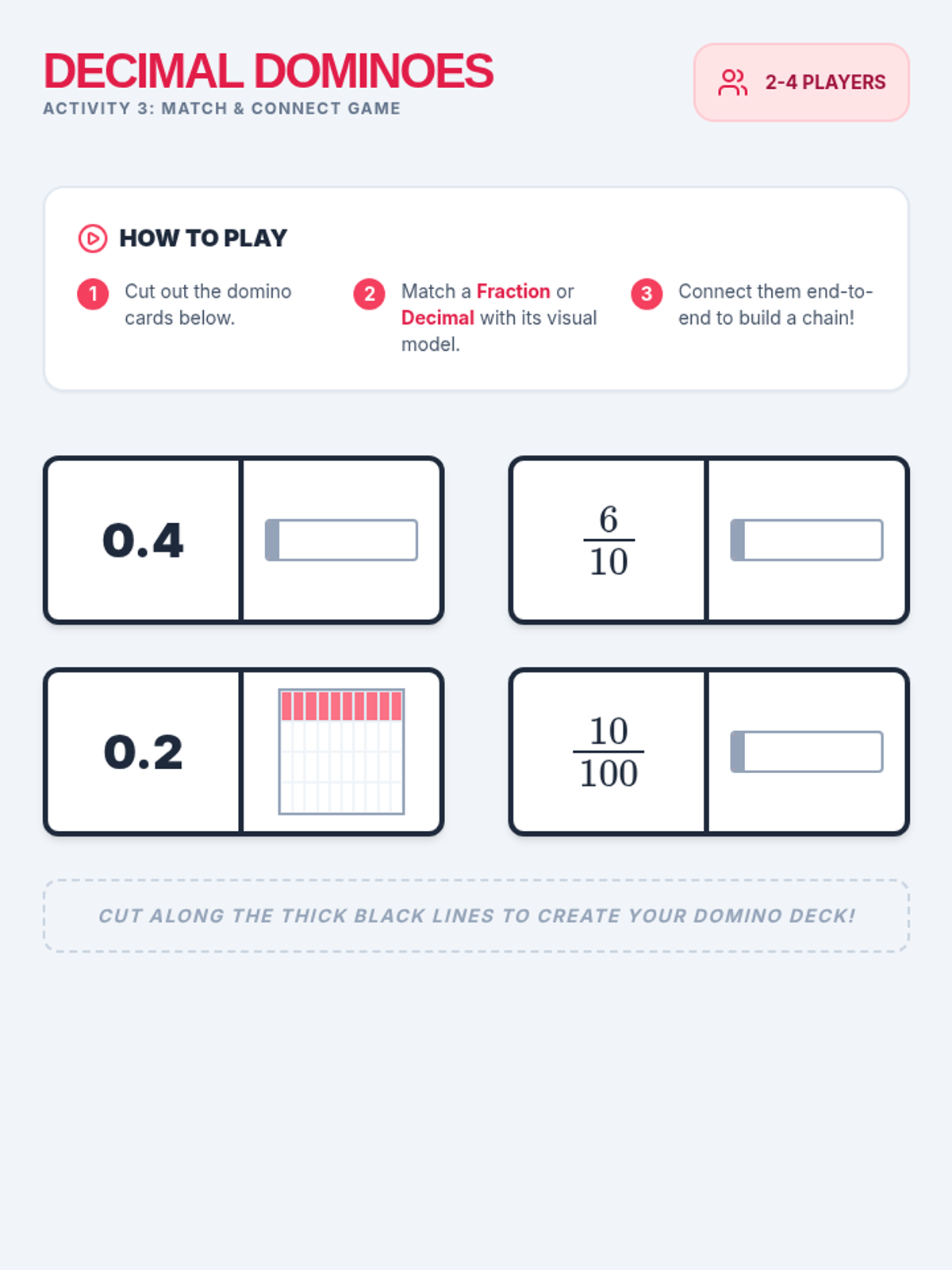
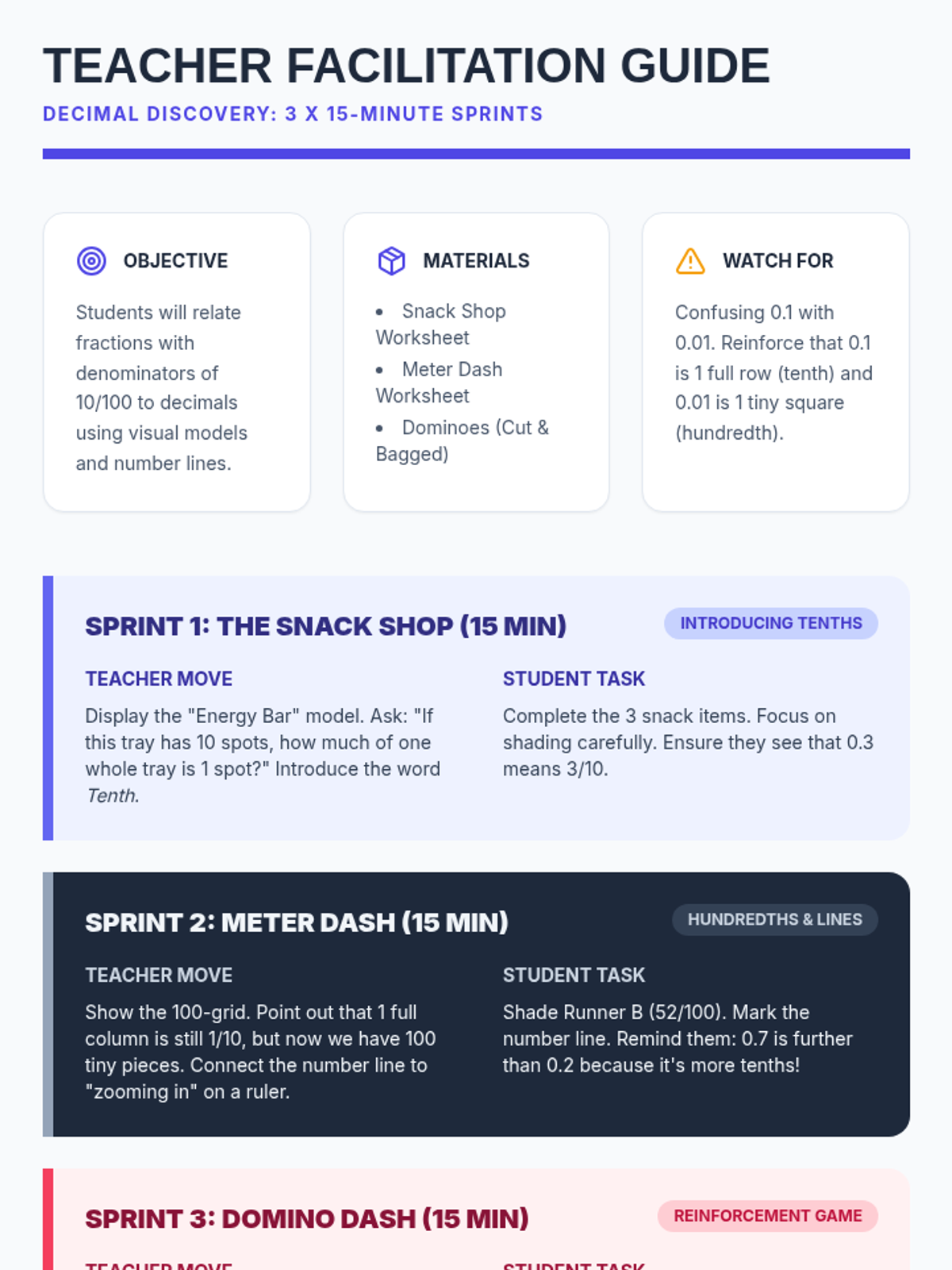
A series of three high-visual, low-text activities introducing decimals through fractions and number lines. Students explore tenths and hundredths using real-world snack shop and track and field scenarios, concluding with a matching game.
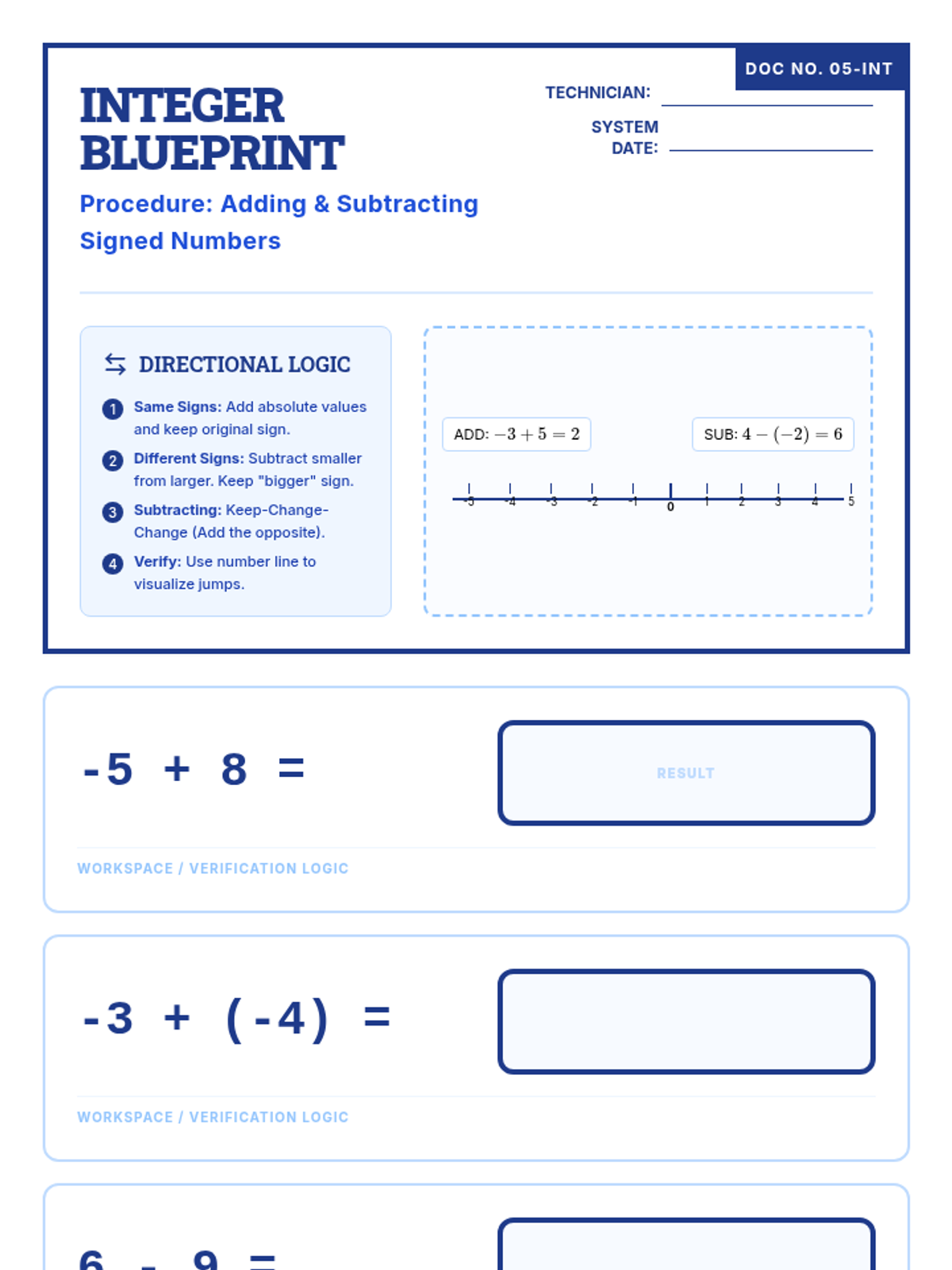
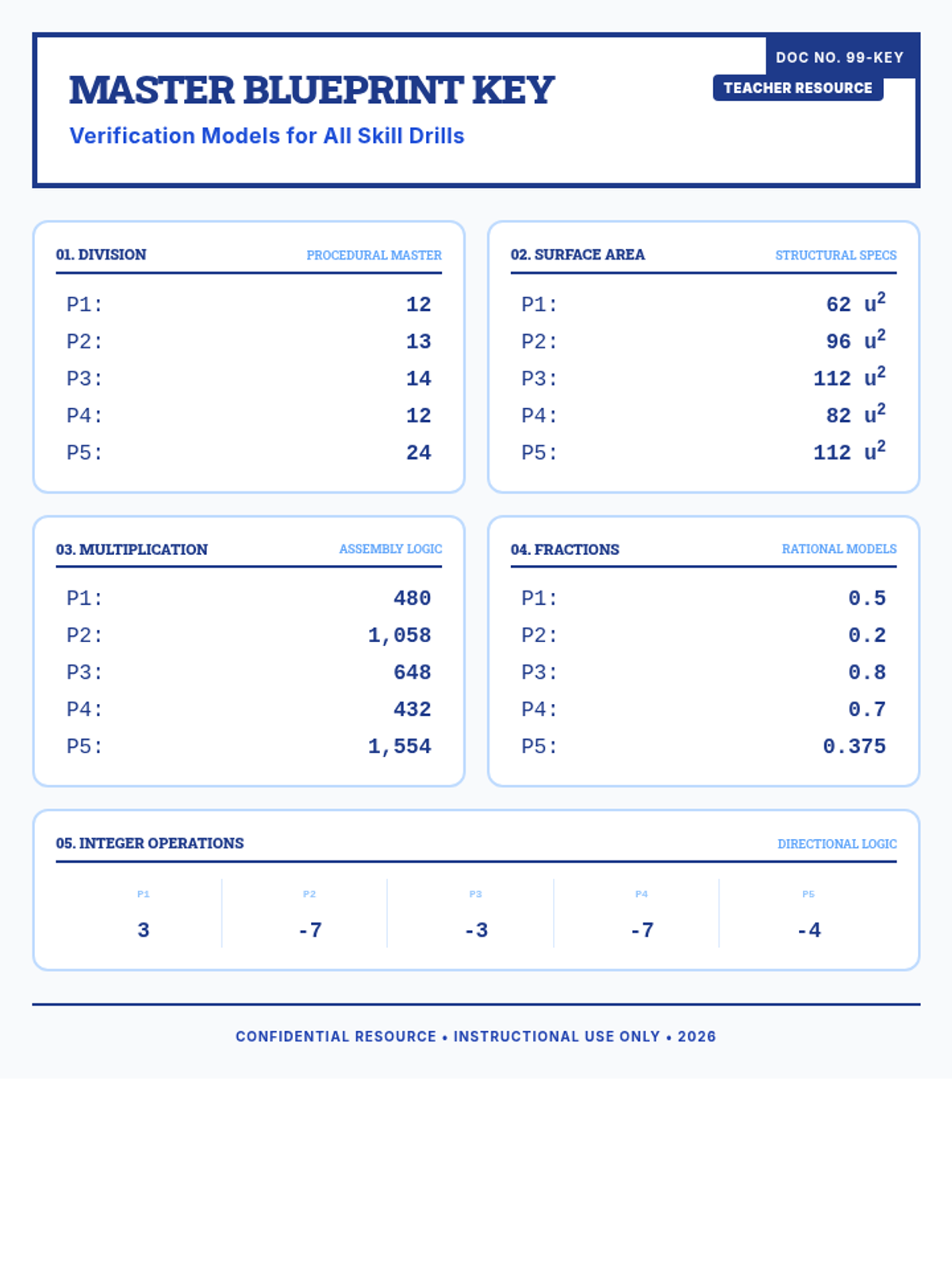
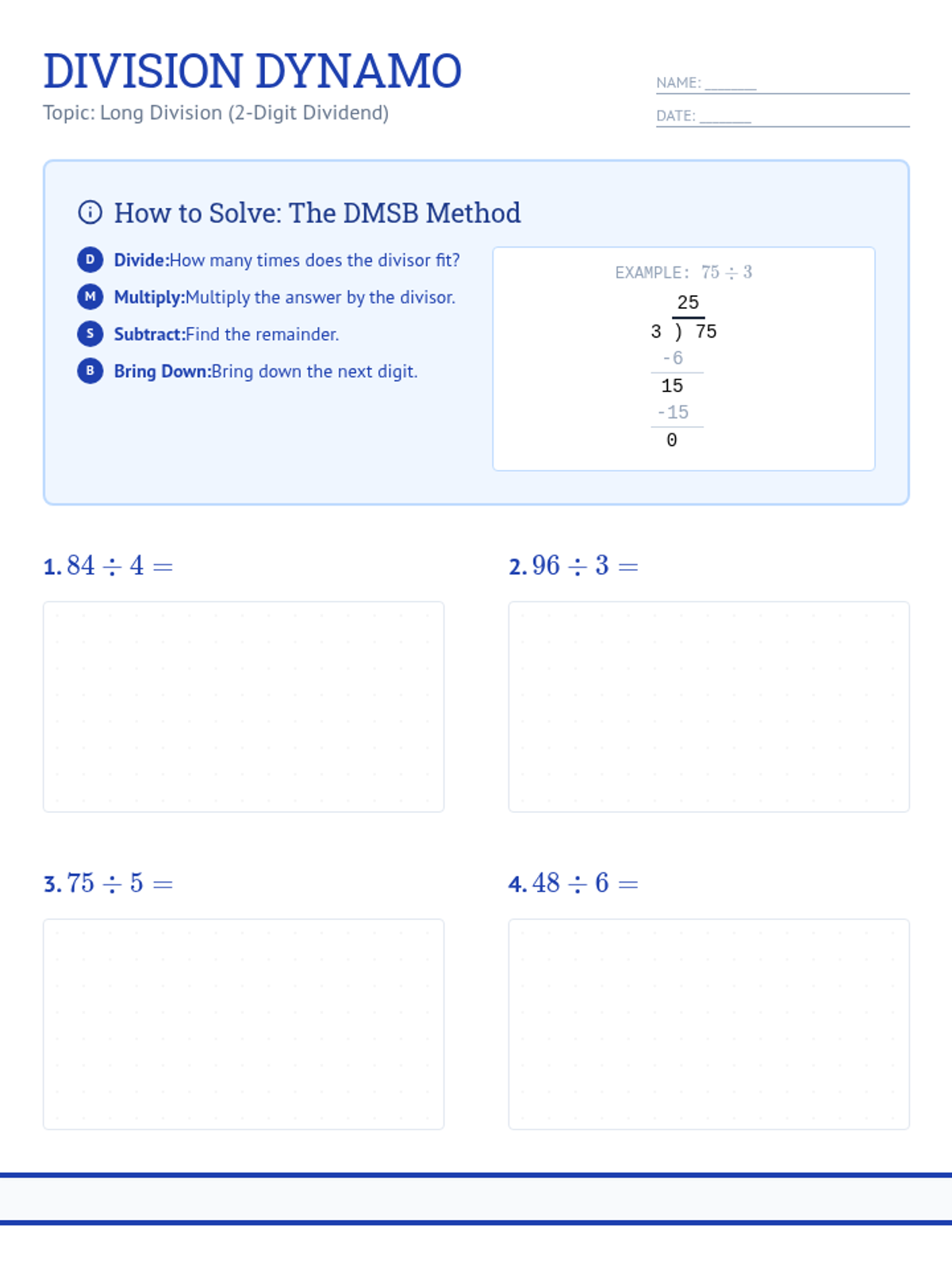
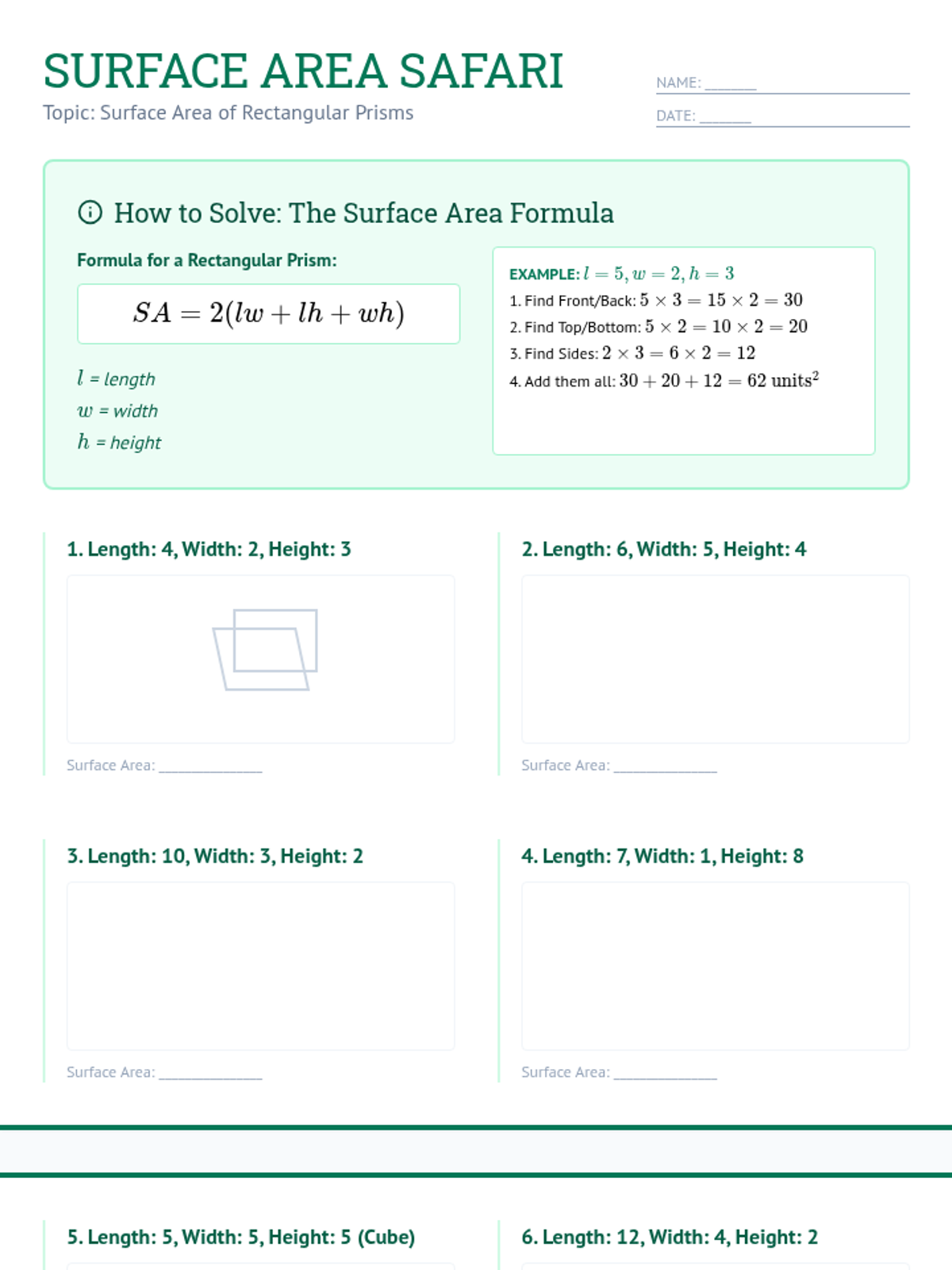
A series of targeted math practice resources designed to reinforce core 6th-grade mathematical concepts including division, decimals, integers, and geometry.
Une série de ressources éducatives couvrant divers concepts mathématiques essentiels comme les statistiques et la trigonométrie.
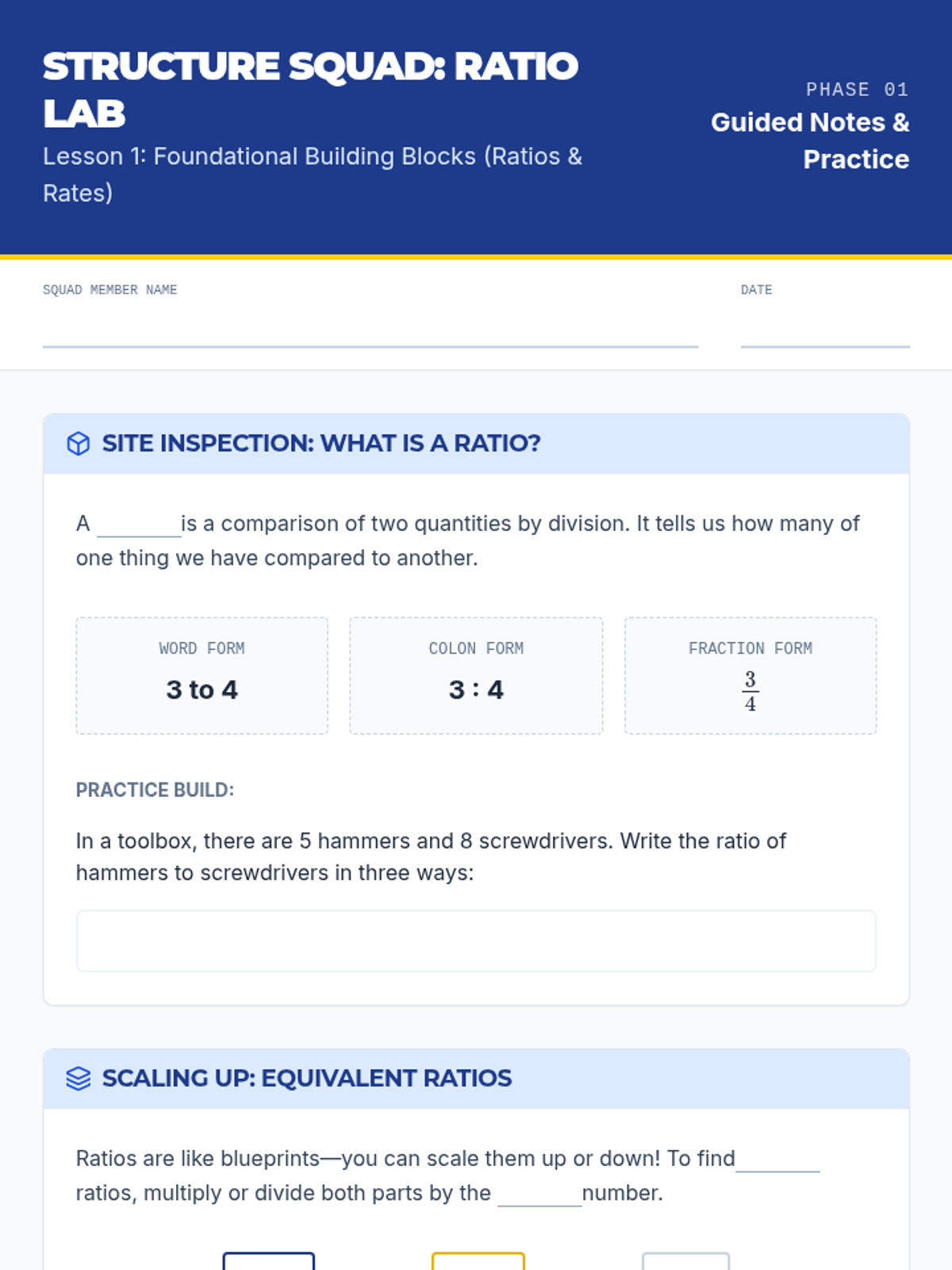
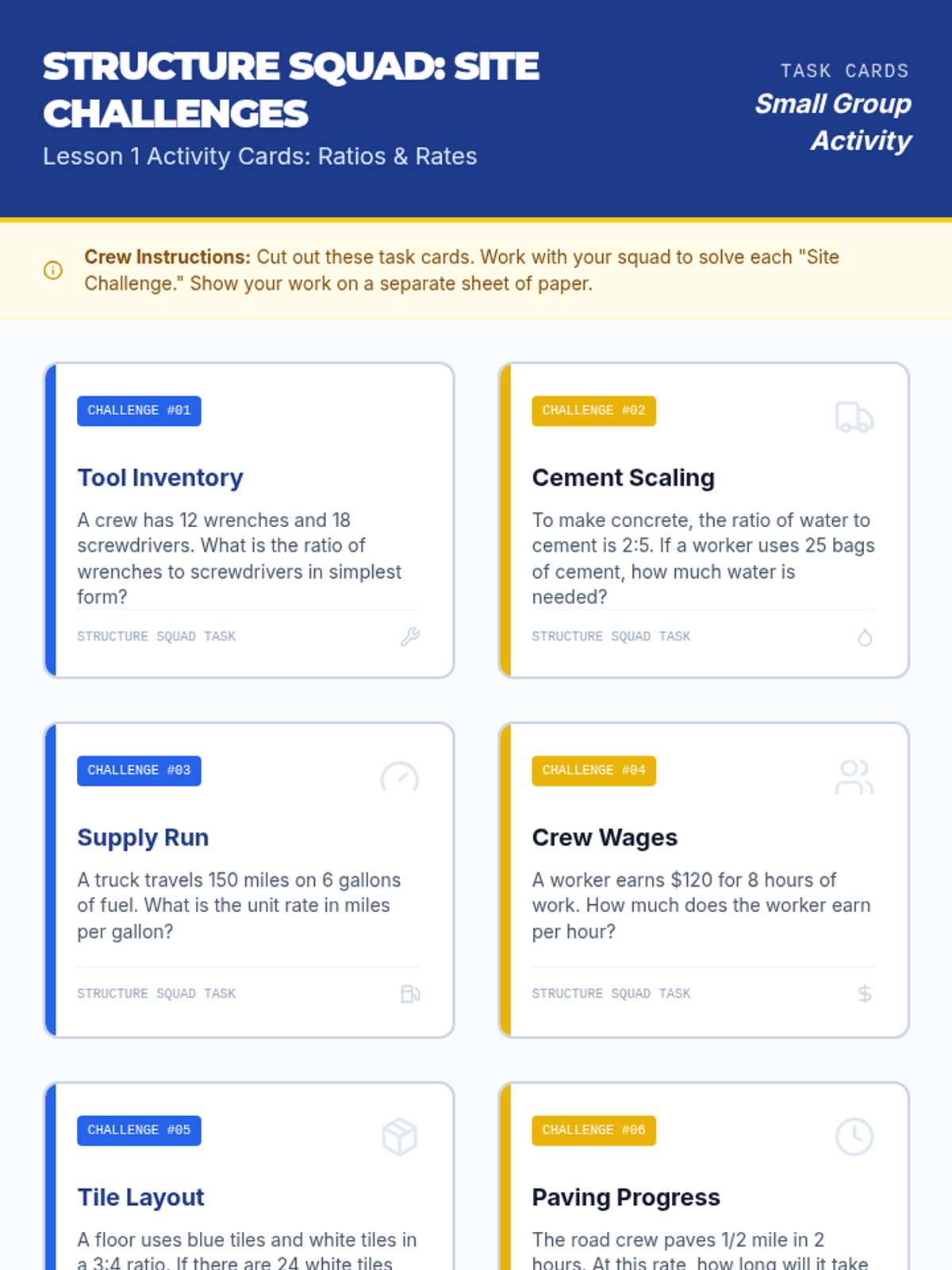
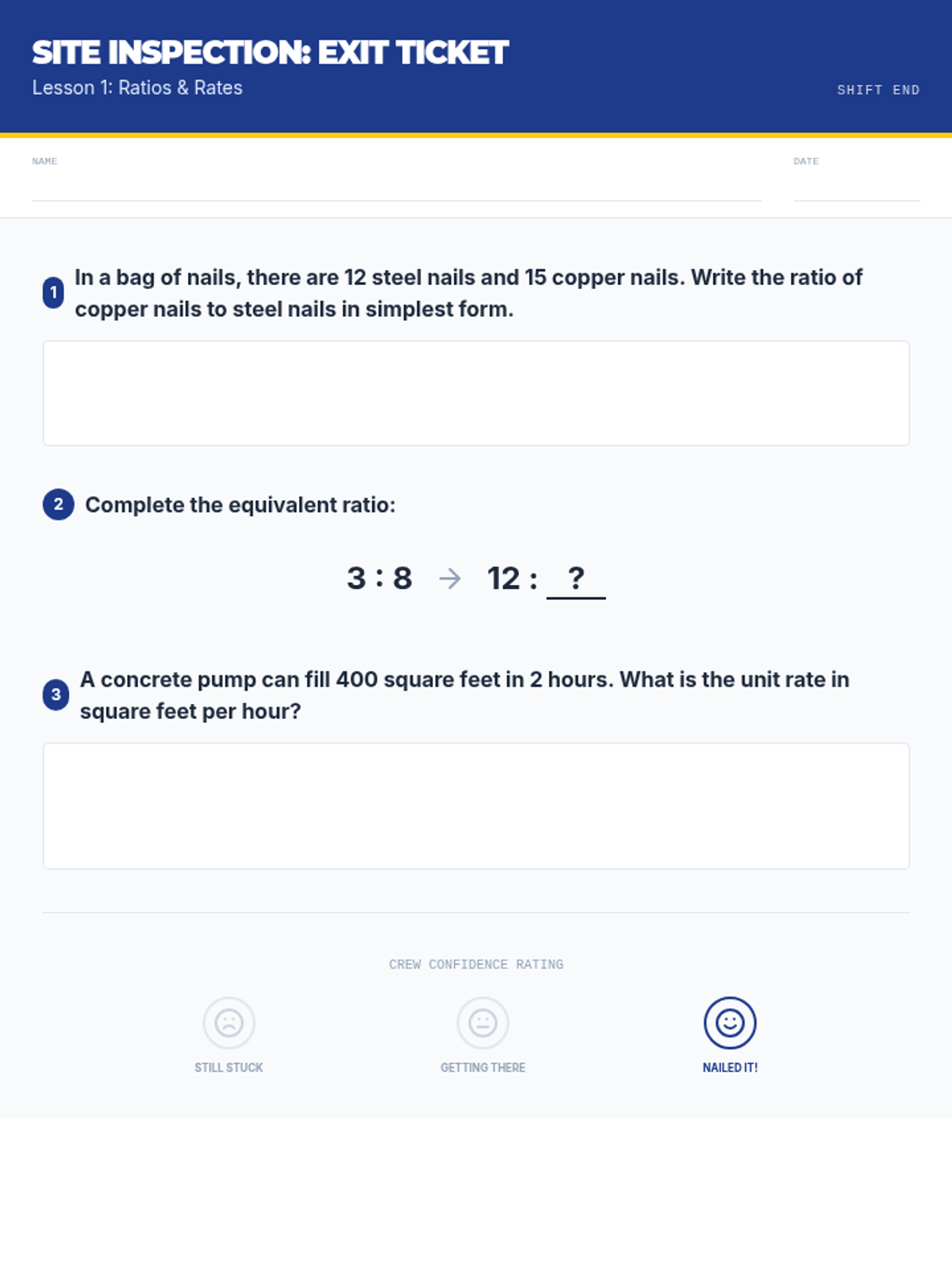
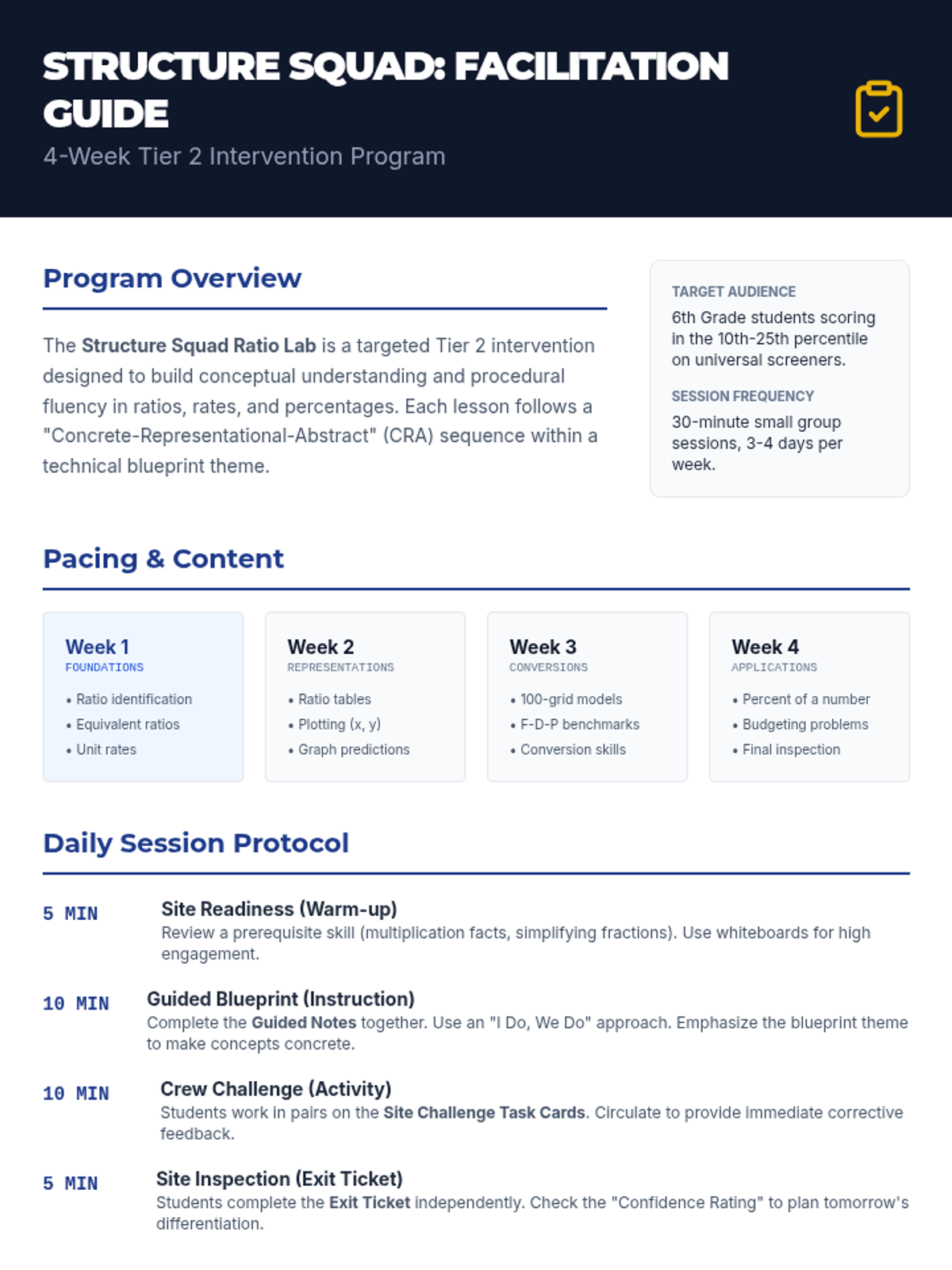
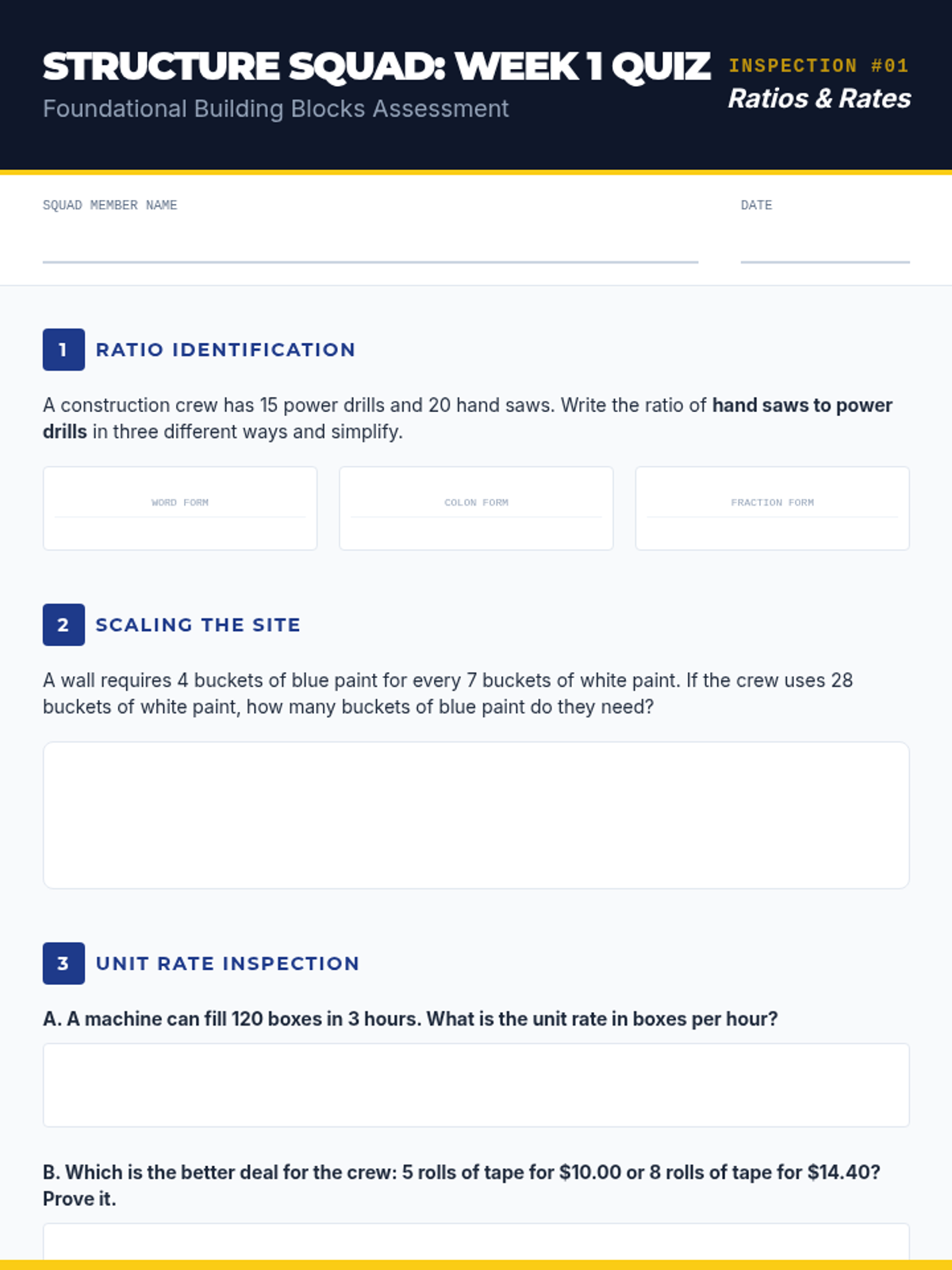
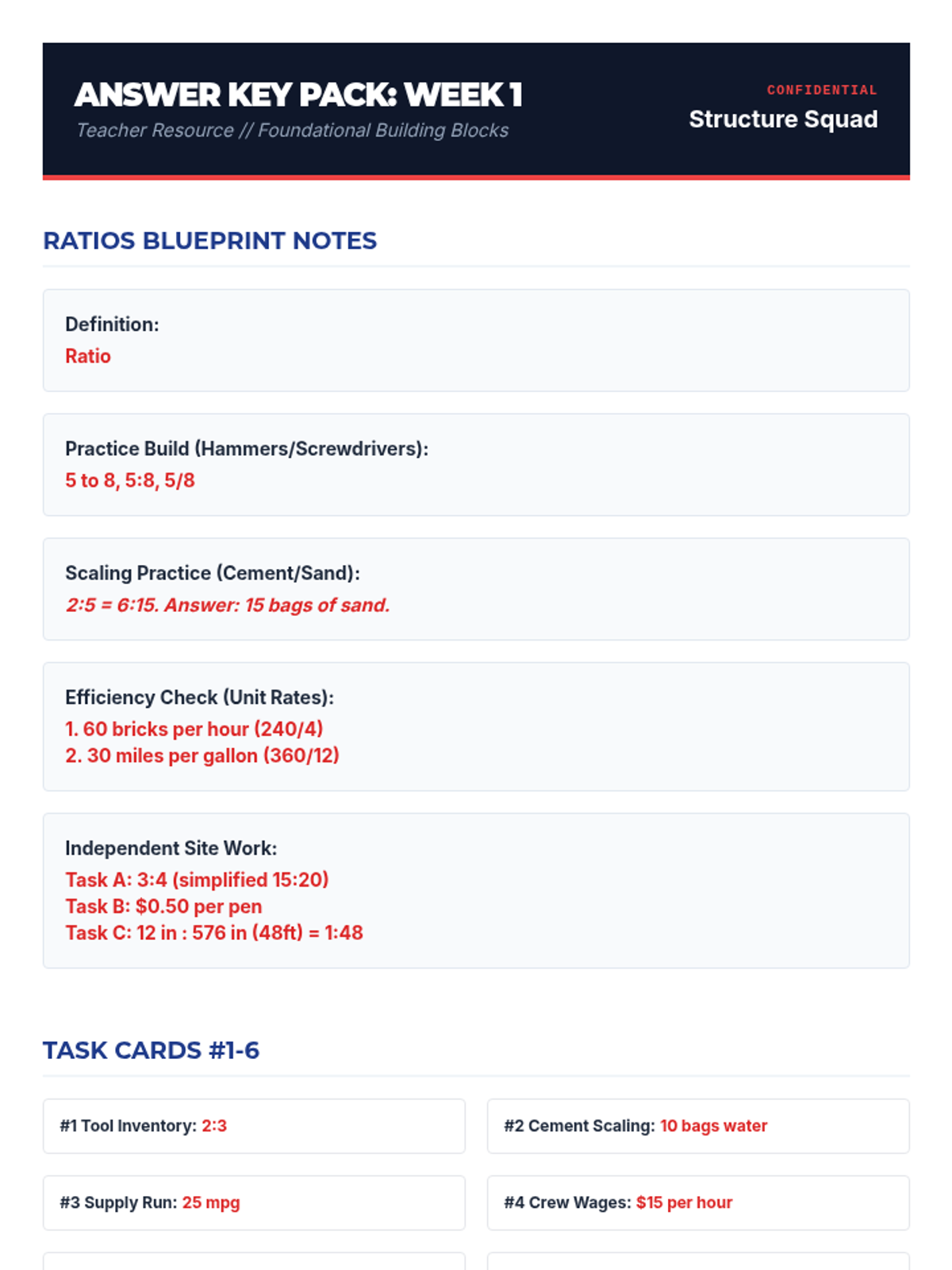
A 4-week Tier 2 intervention designed for 6th-grade students struggling with ratios, rates, and percentages. The program uses a "Structure Squad" blueprint theme to help students build a solid foundation through guided notes, hands-on activities, and targeted practice.
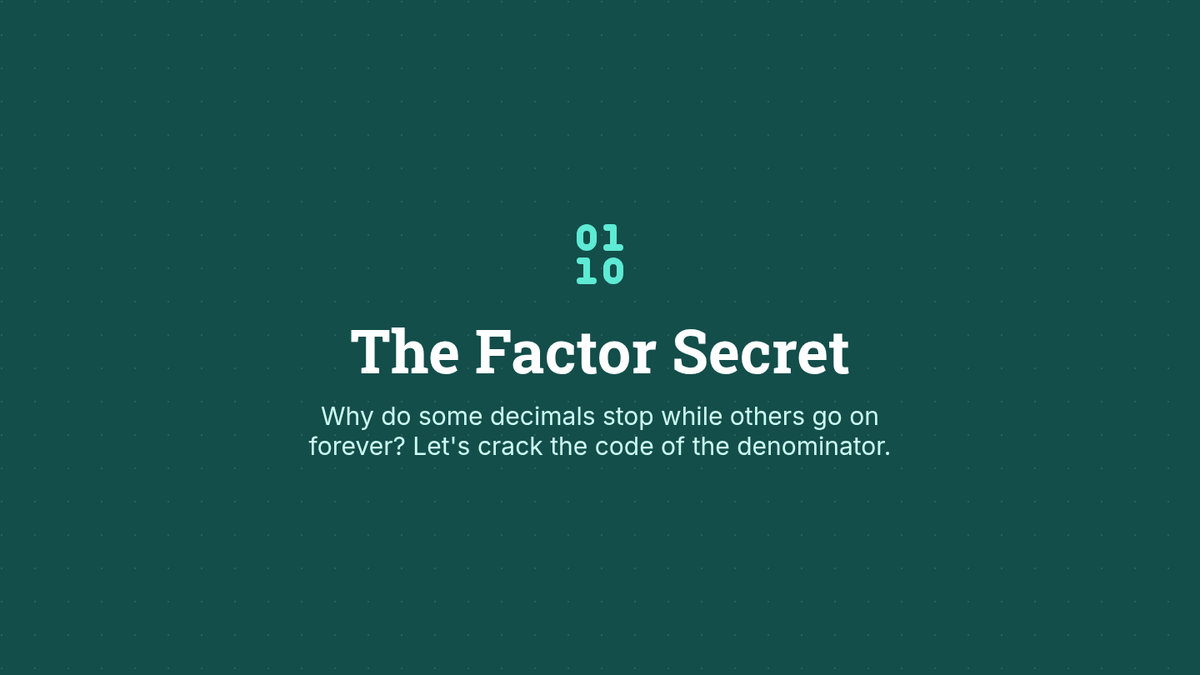
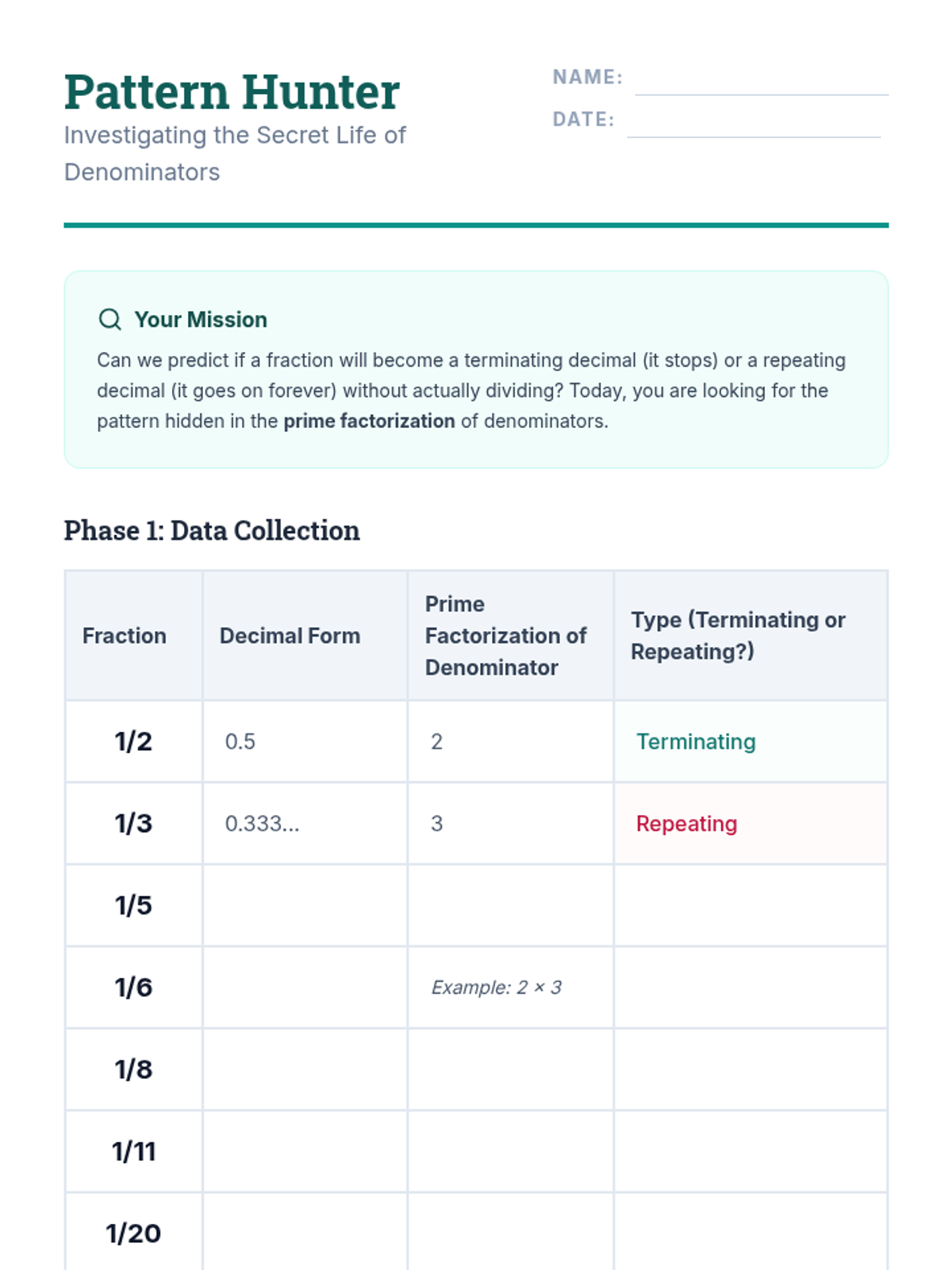
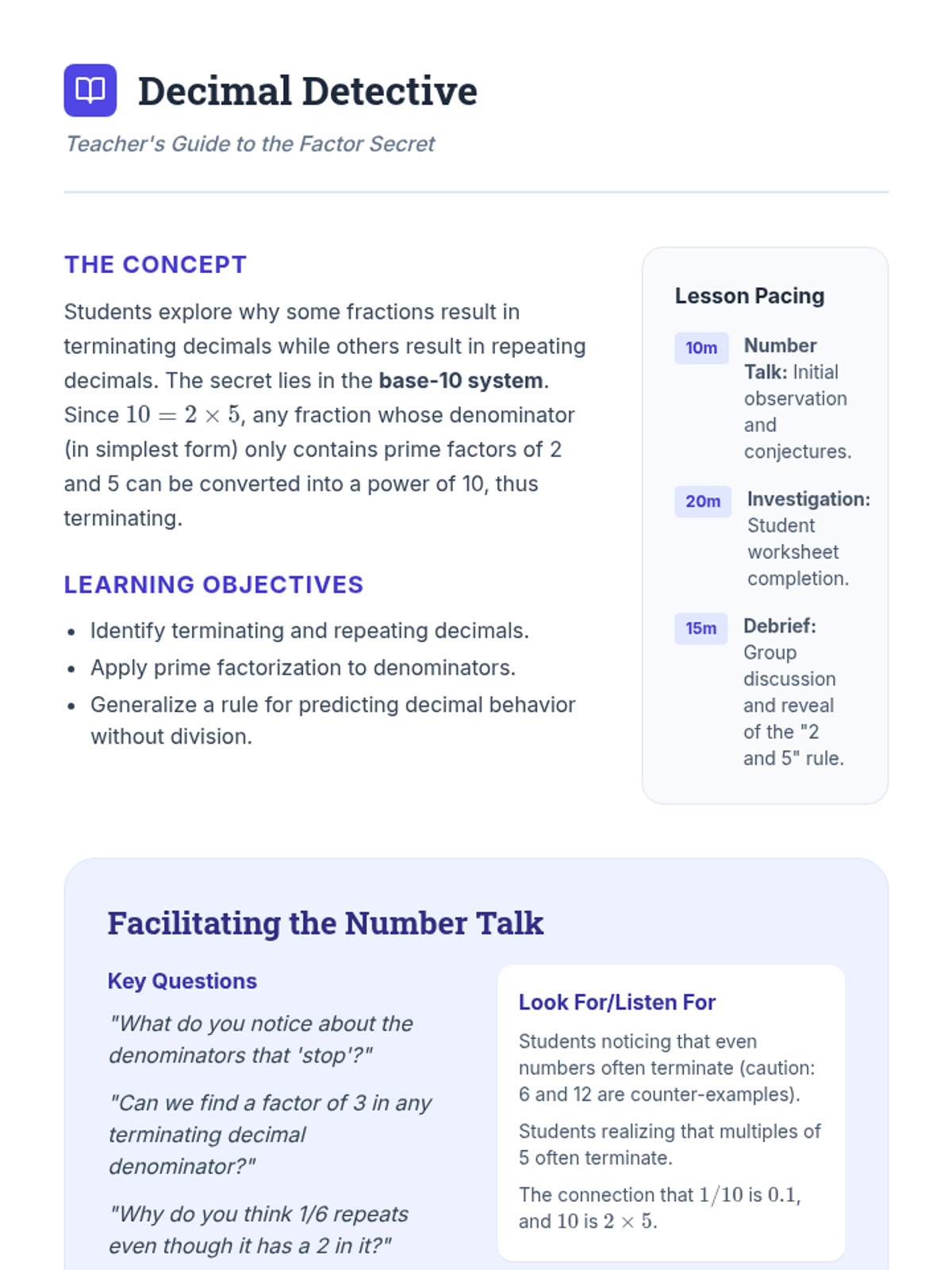
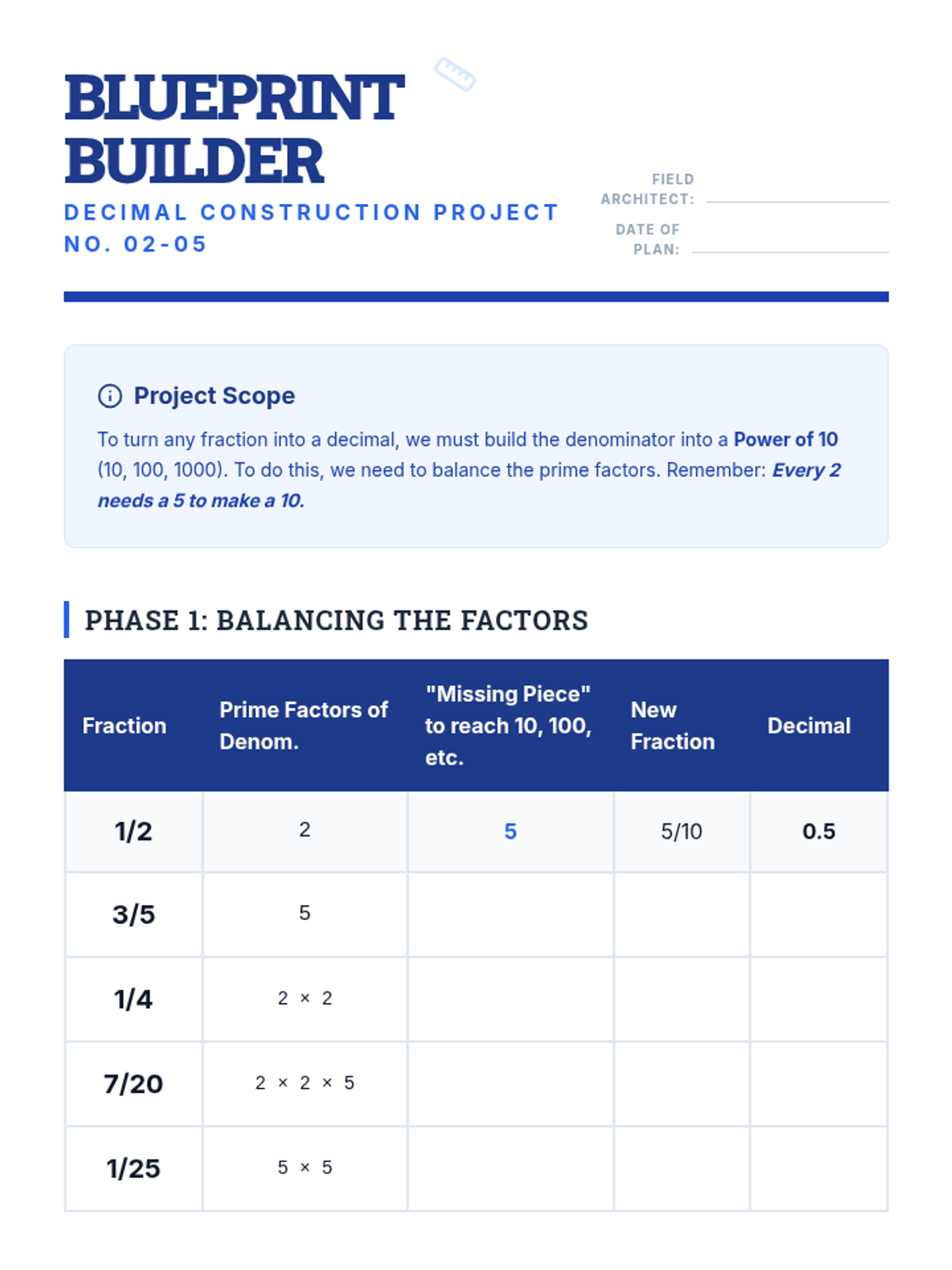
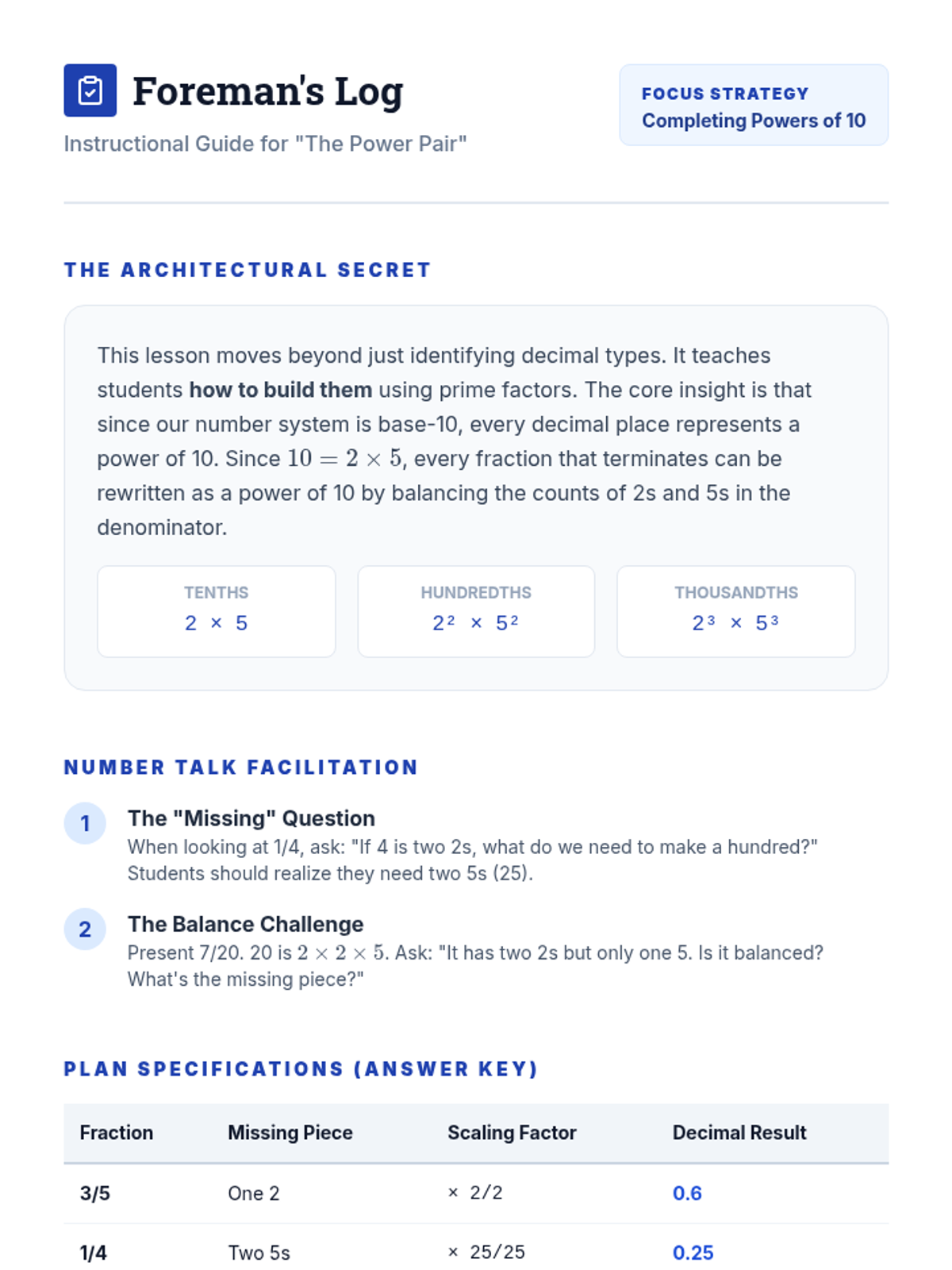
A series of inquiry-based lessons exploring the deep connection between prime factorization and decimal representations. Students move from predicting decimal types to mental conversion strategies and advanced simplification.
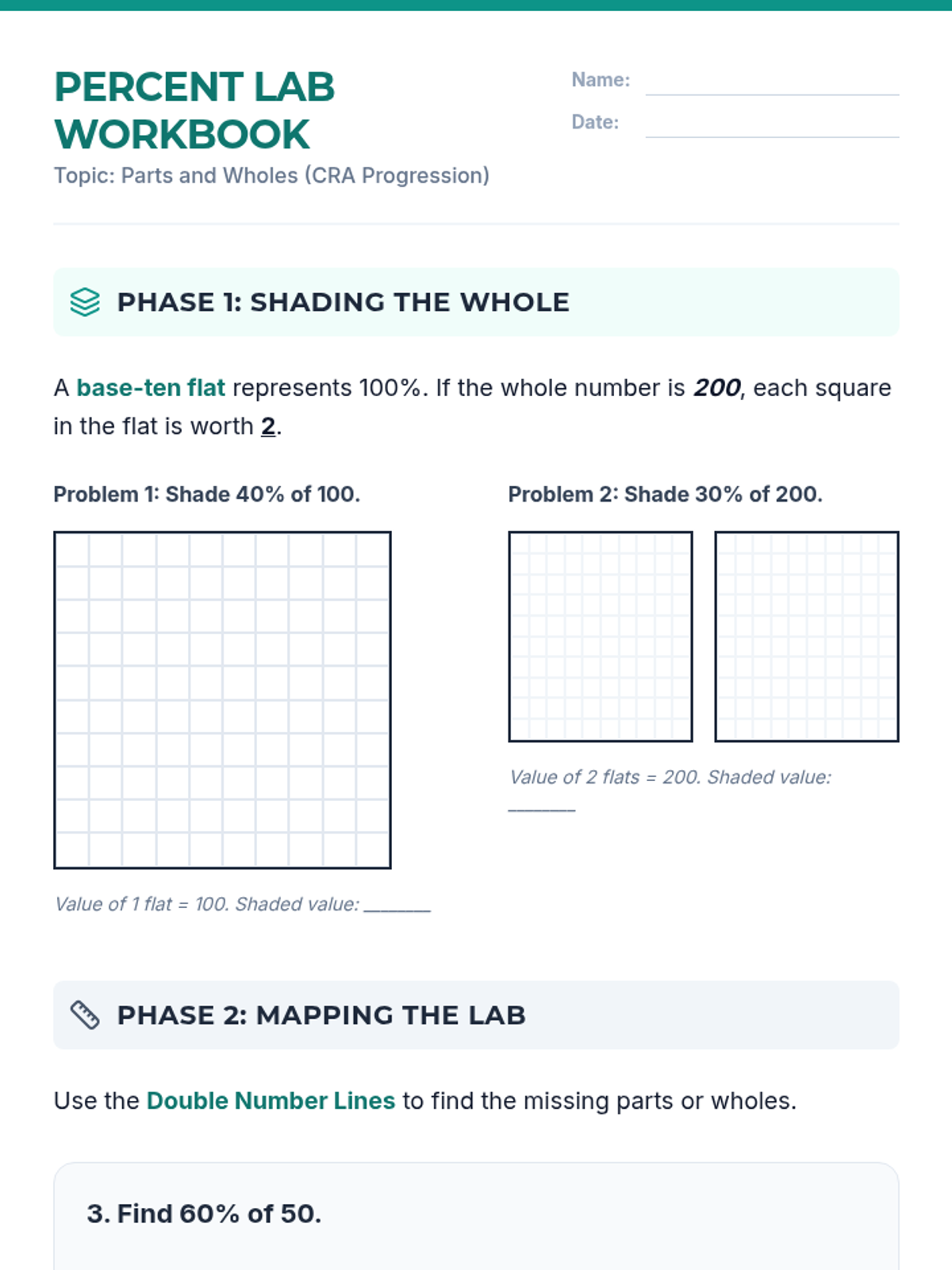
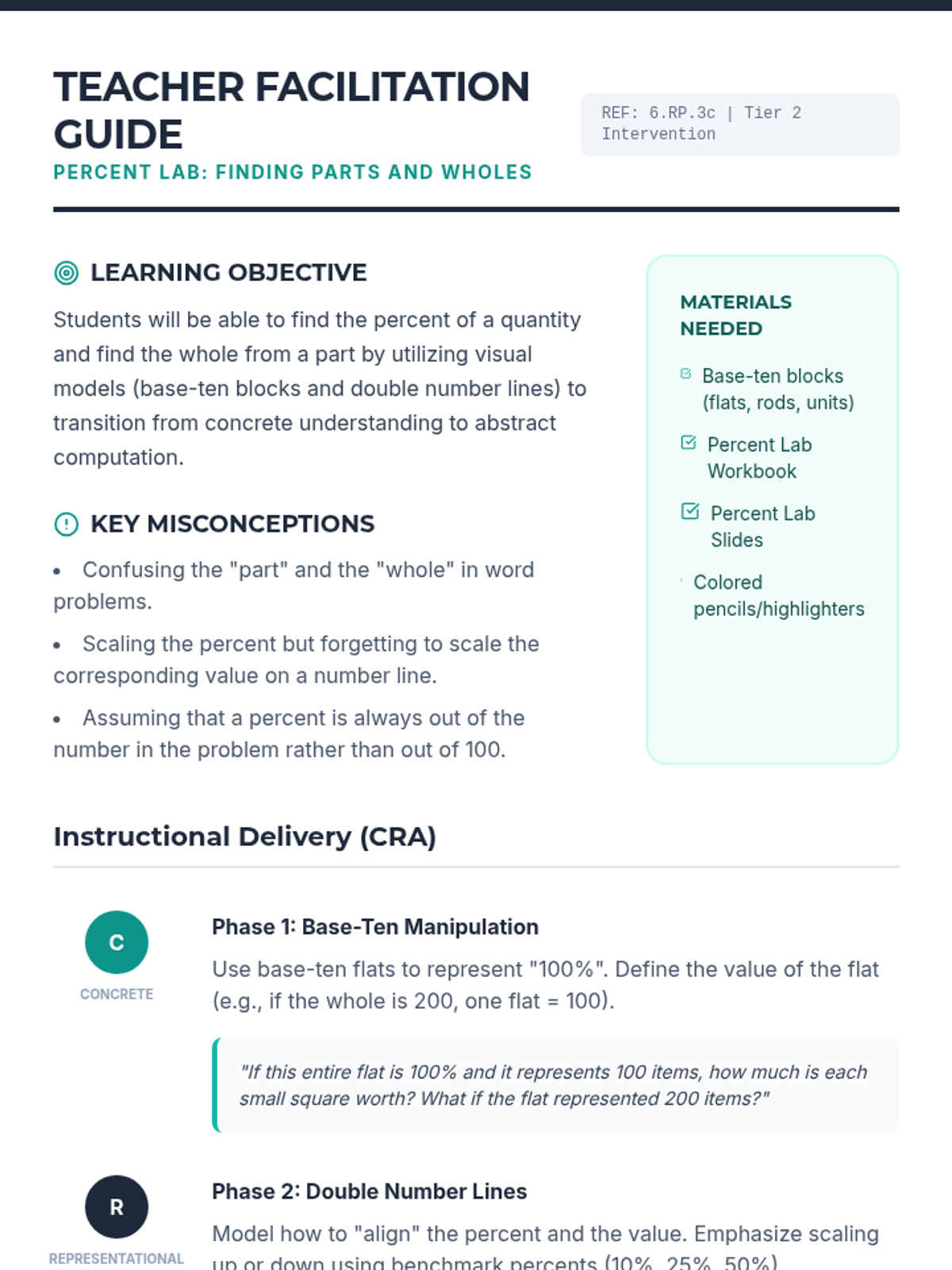
A targeted Tier 2 intervention sequence for 6th grade students focusing on understanding percents as rates per 100 and solving problems involving finding the part and the whole. The sequence utilizes a Concrete-Representational-Abstract (CRA) approach to build conceptual understanding before moving to procedural fluency.
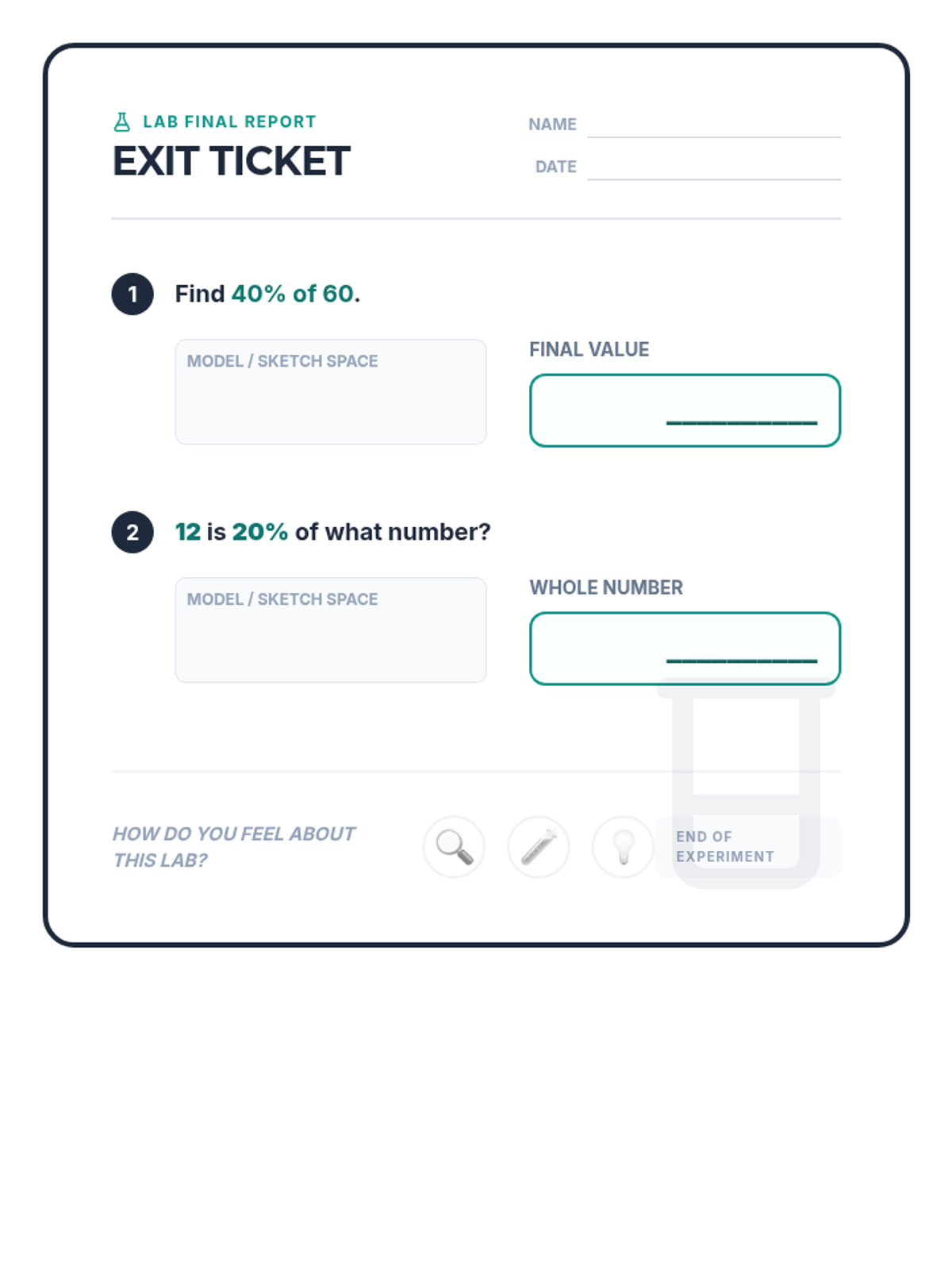
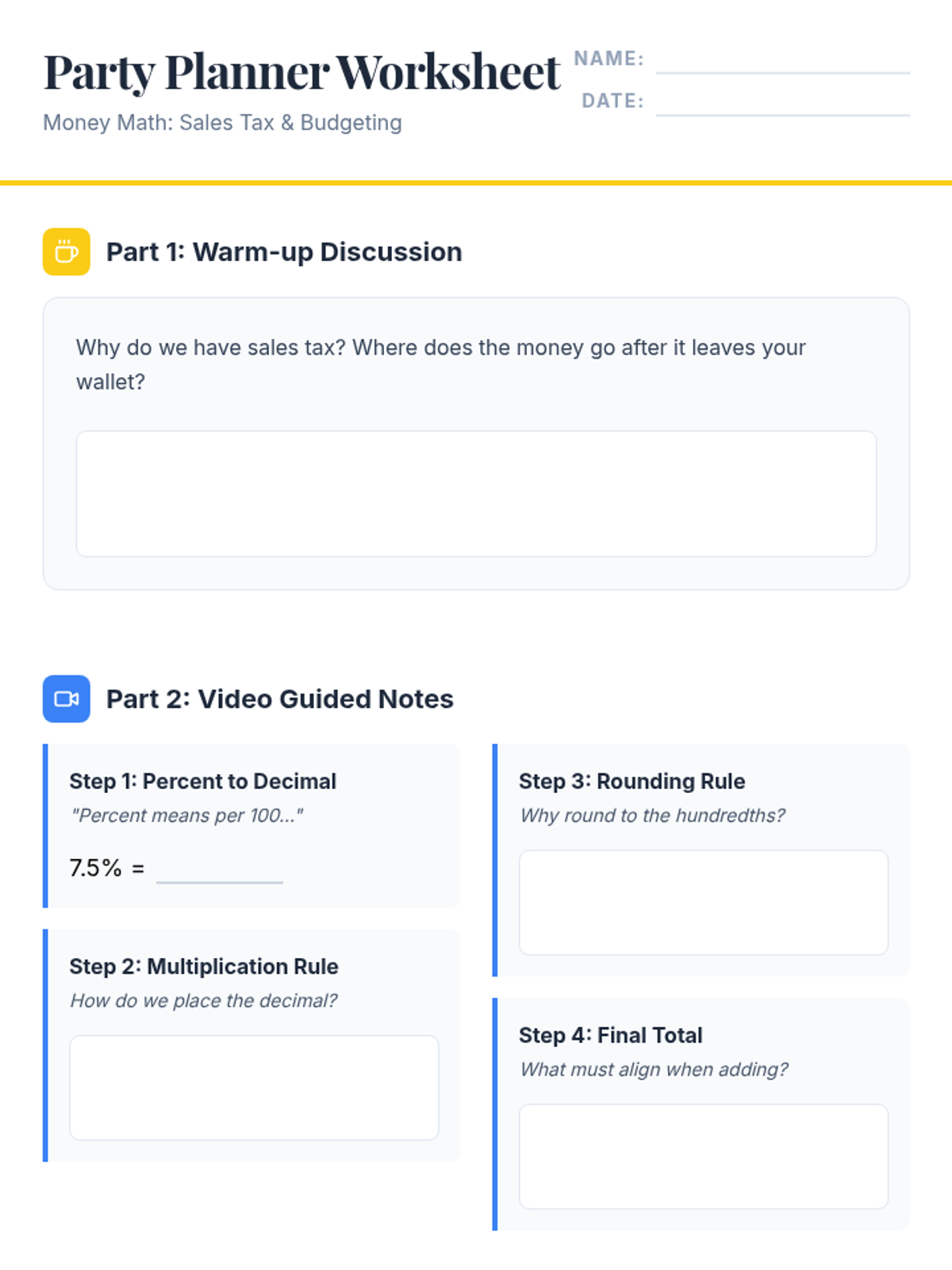
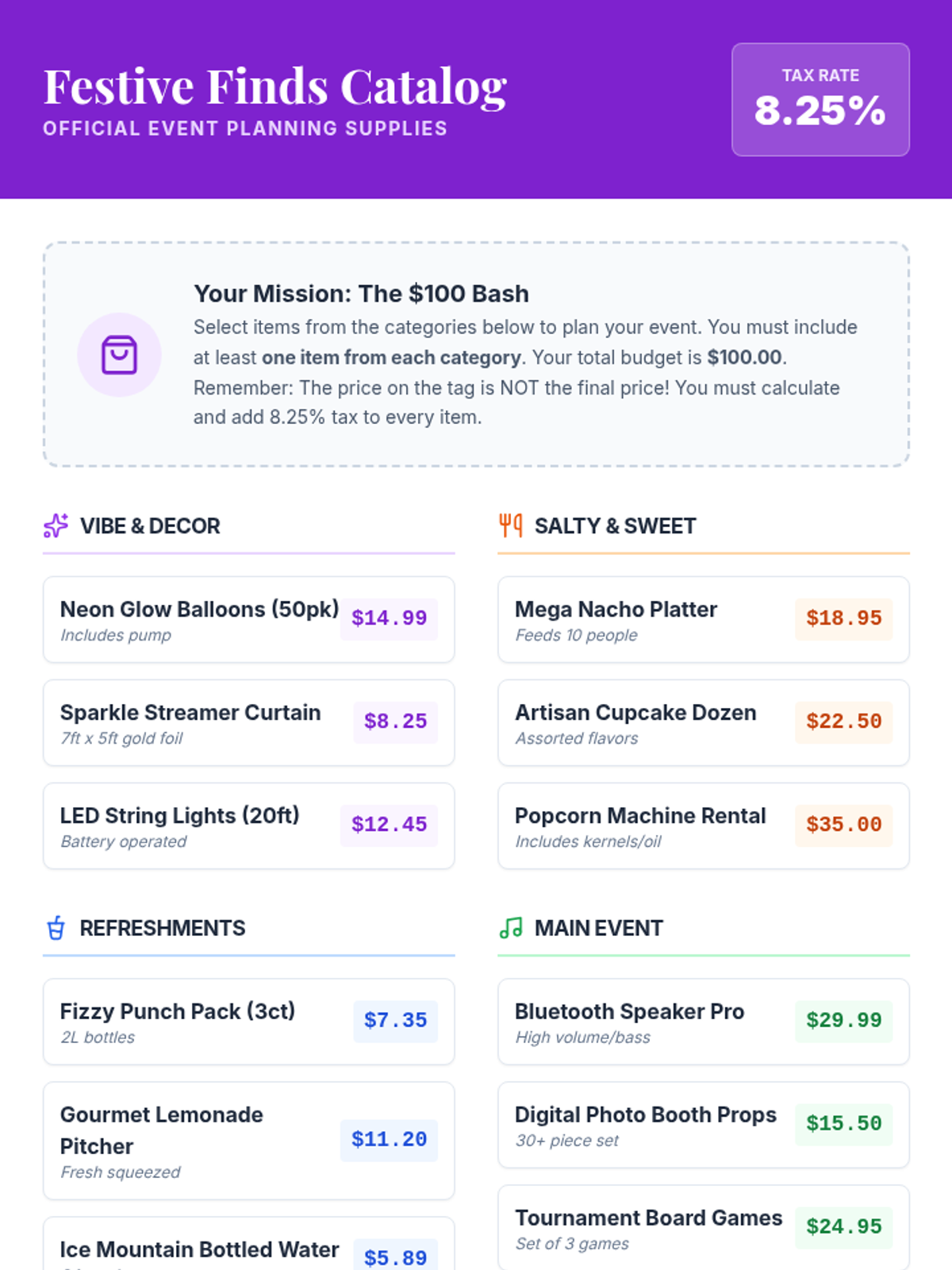
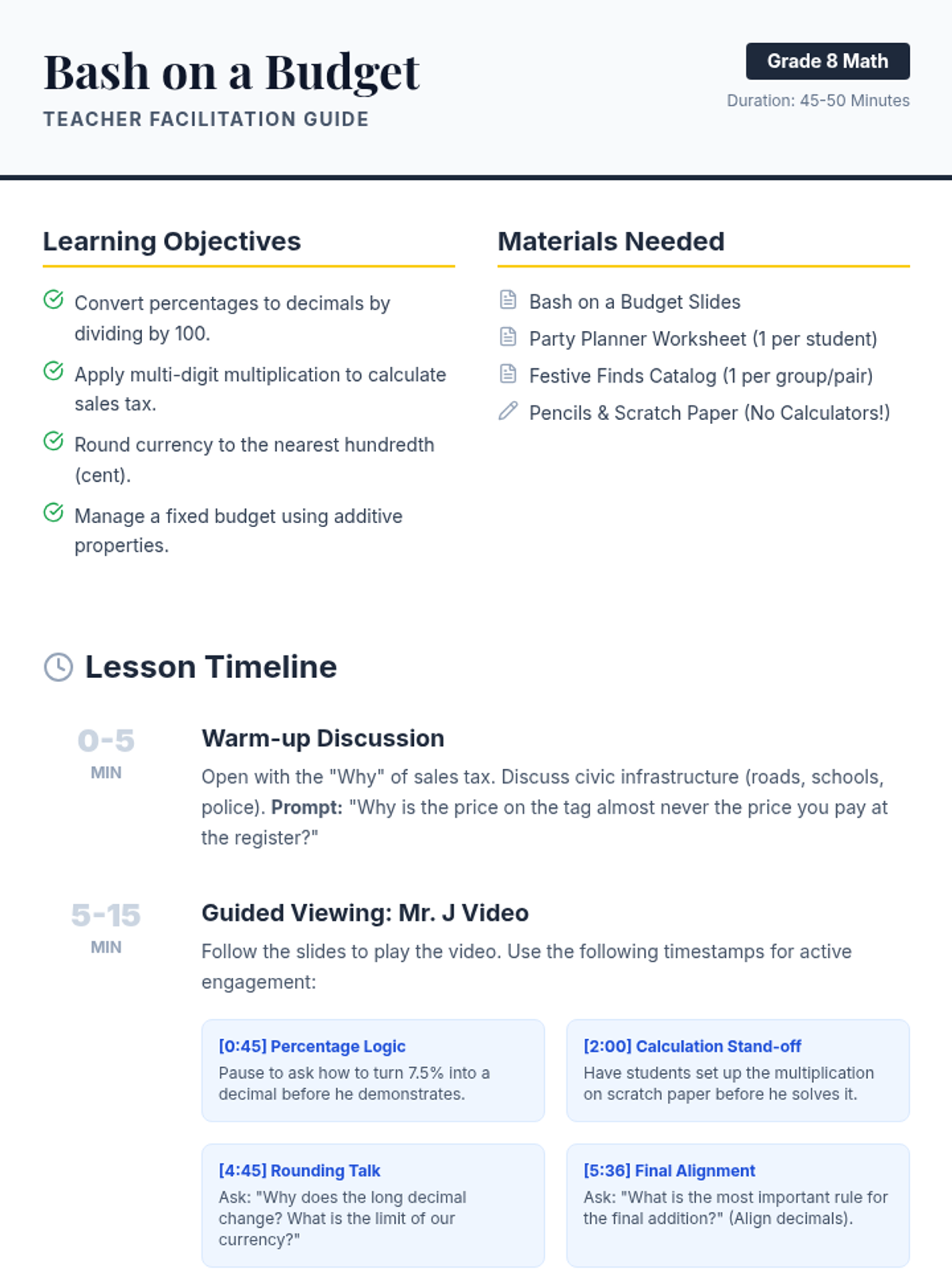
A comprehensive math unit focusing on applying percentage calculations, sales tax, and multi-step budgeting to real-world scenarios. students act as event planners to manage a fixed budget while accounting for specific tax rates.
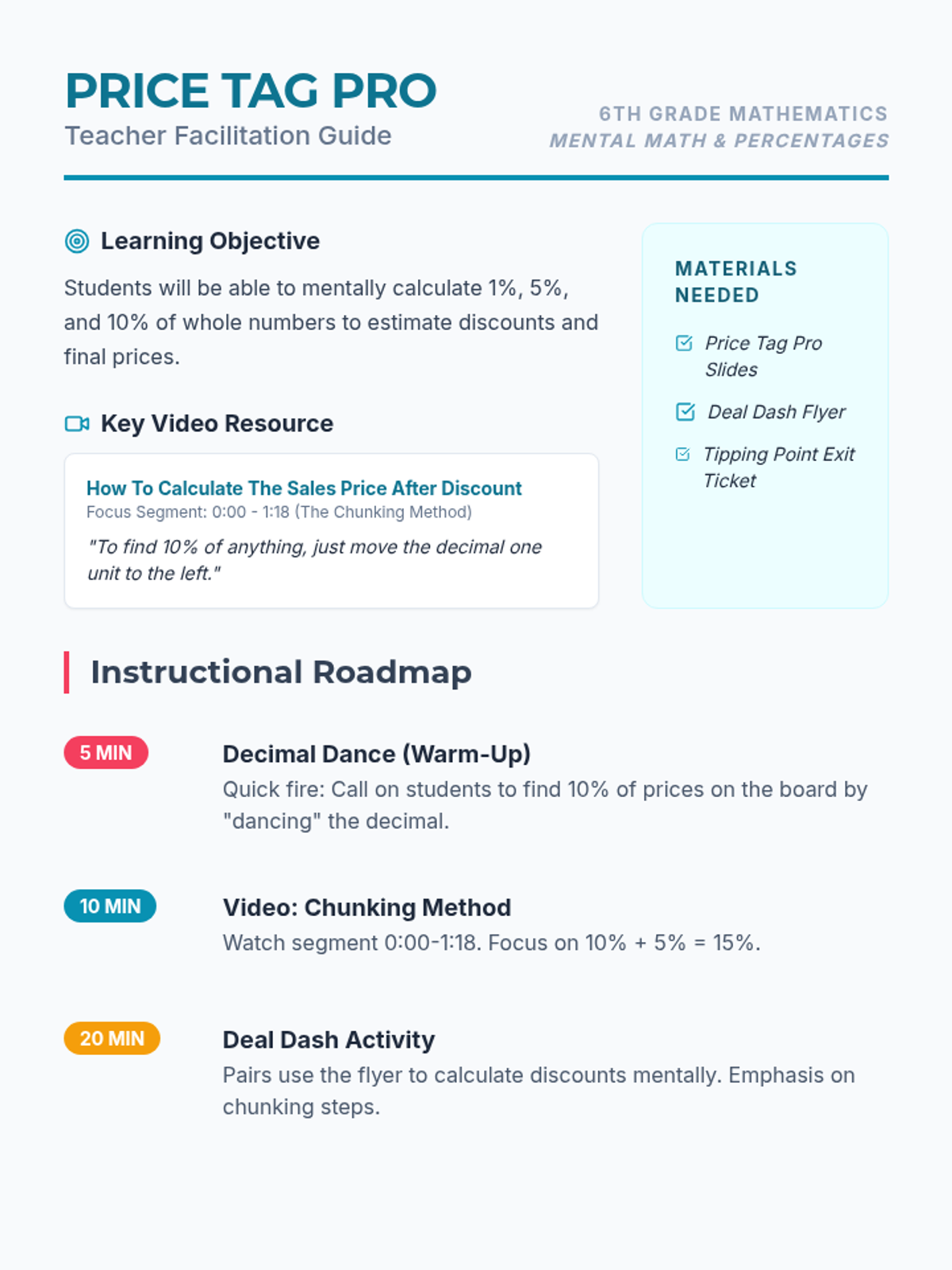
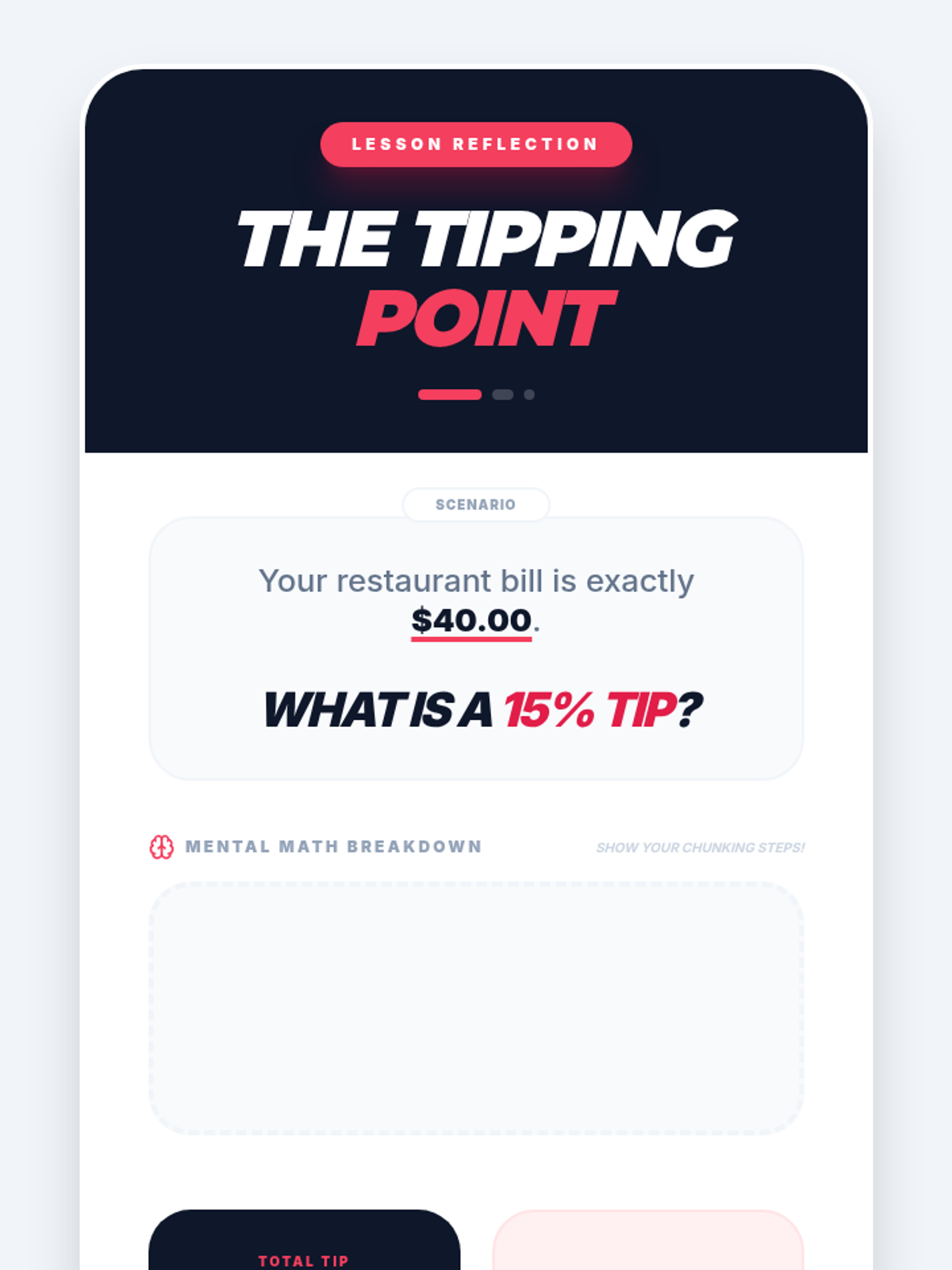
A 6th-grade math sequence focused on building mental math fluency with percentages. Students learn to decompose percentages into friendly numbers (10%, 5%, 1%) to estimate discounts and calculate real-world values like tips and sales prices.
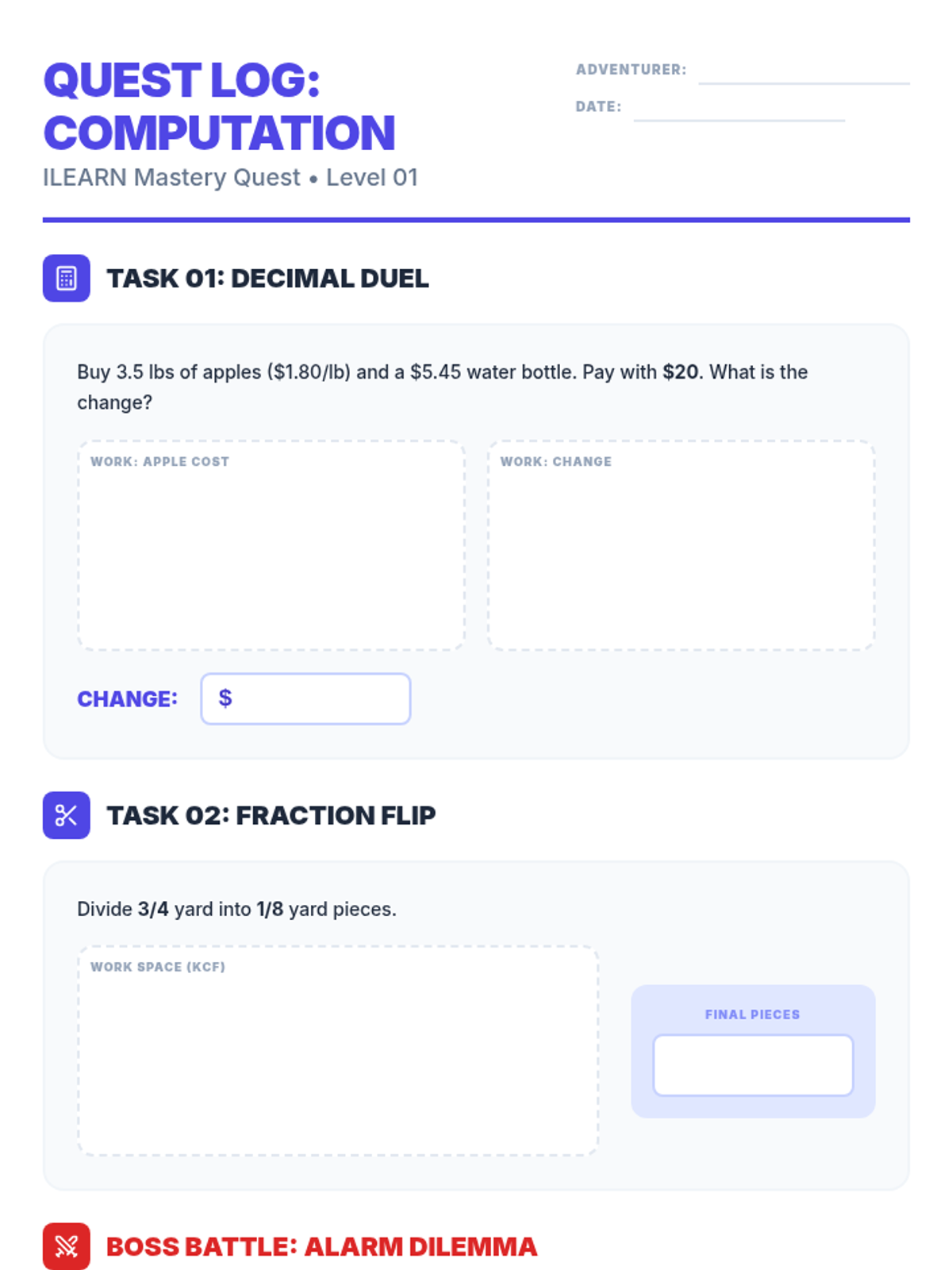
A comprehensive 4-part review sequence designed to prepare 6th-grade students for the ILEARN math assessment. Each stage focuses on a major domain of the Indiana academic standards, using a 'Quest' theme to engage students in digital practice.
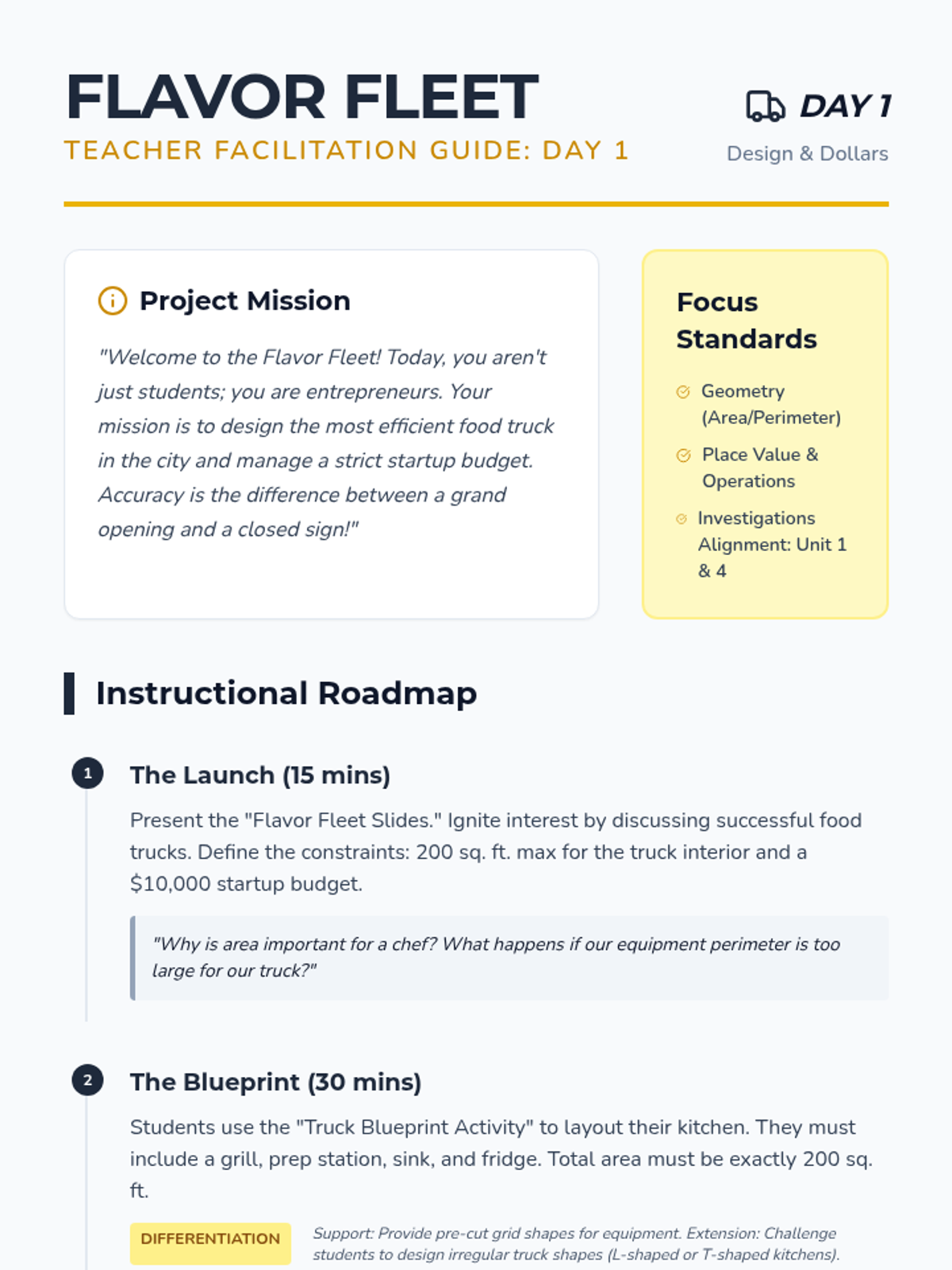
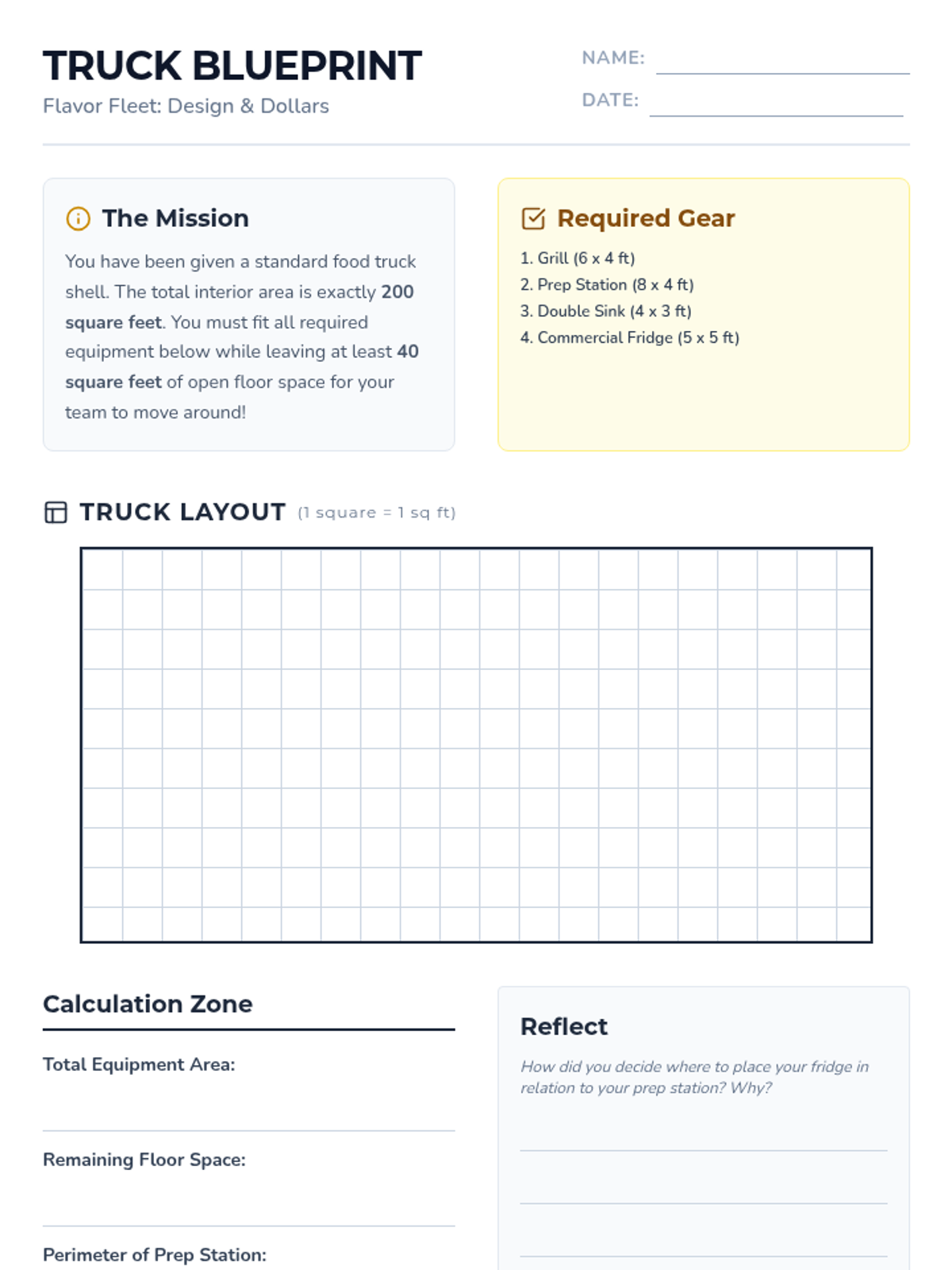
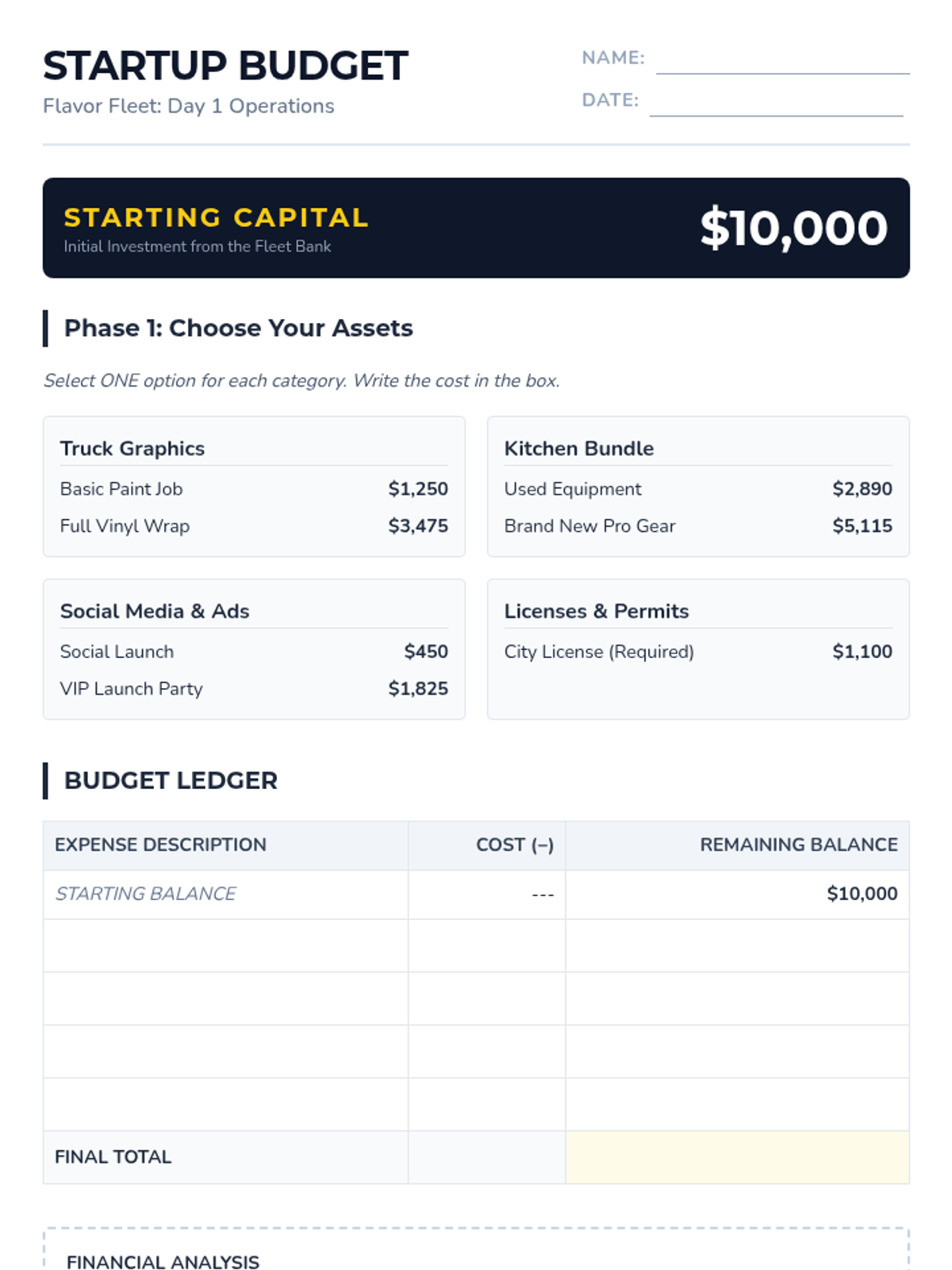
A 3-day project-based learning experience where students design, budget, and run their own food truck business, integrating fractions, geometry, operations, and data analysis.
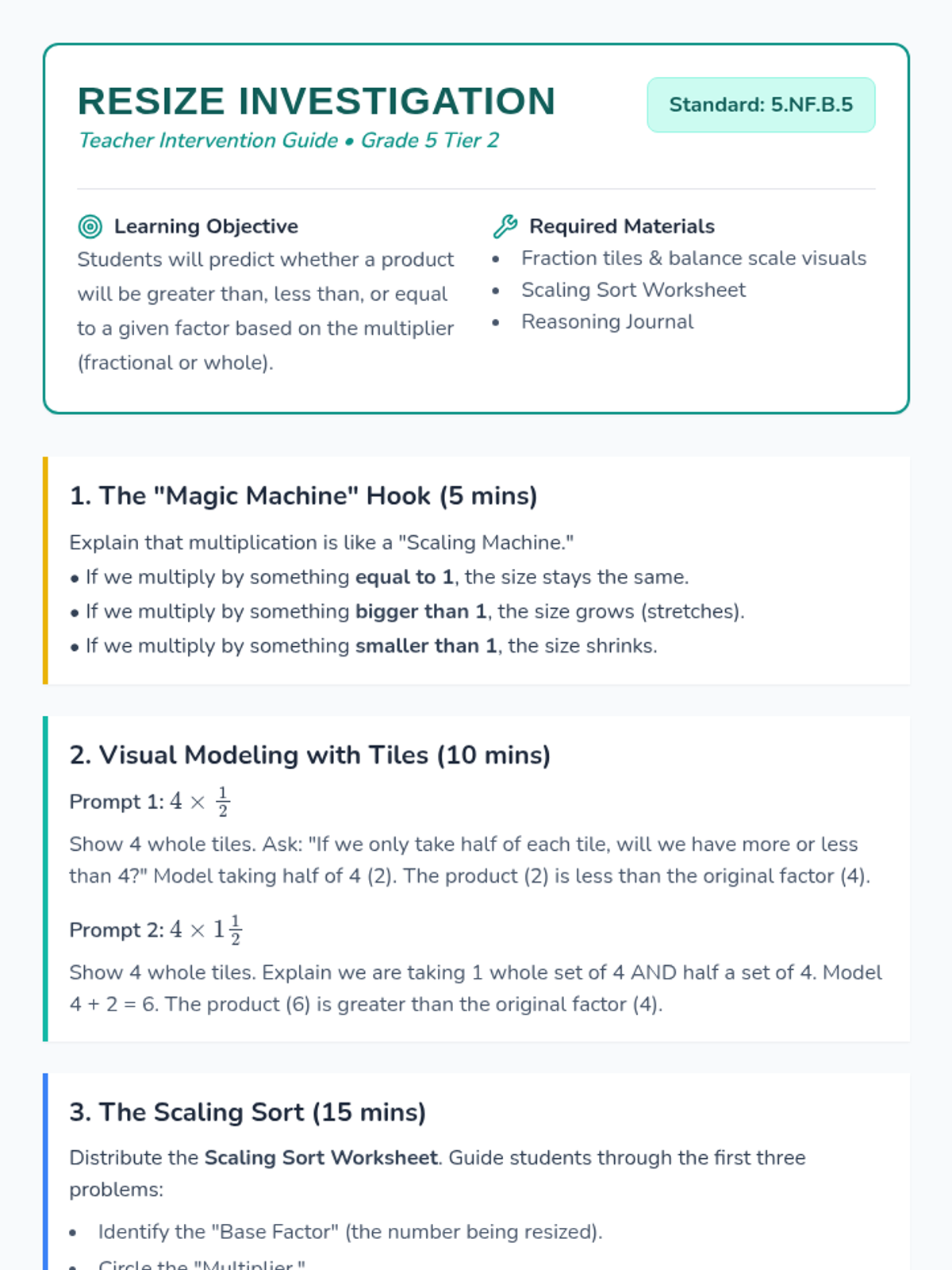
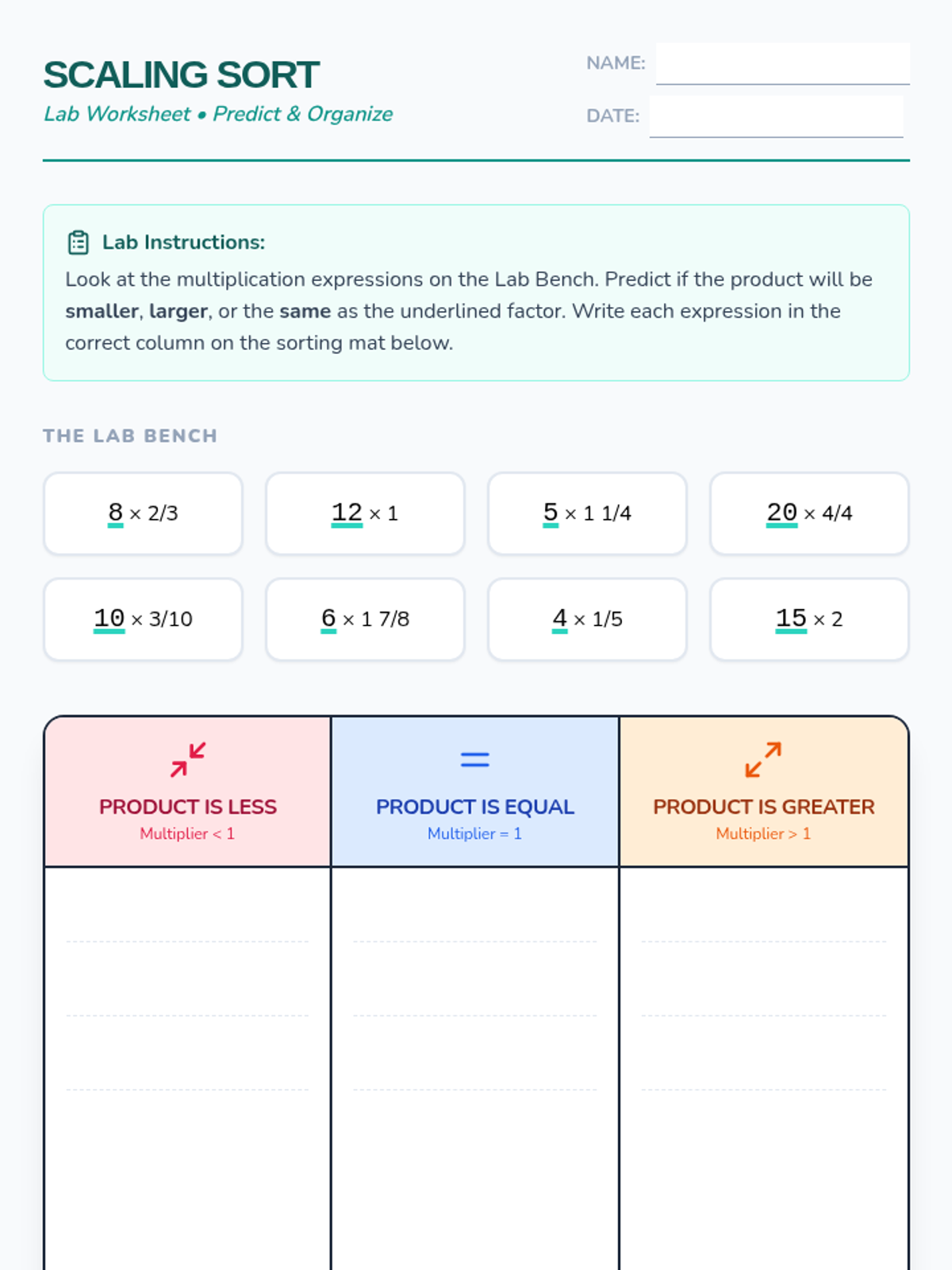
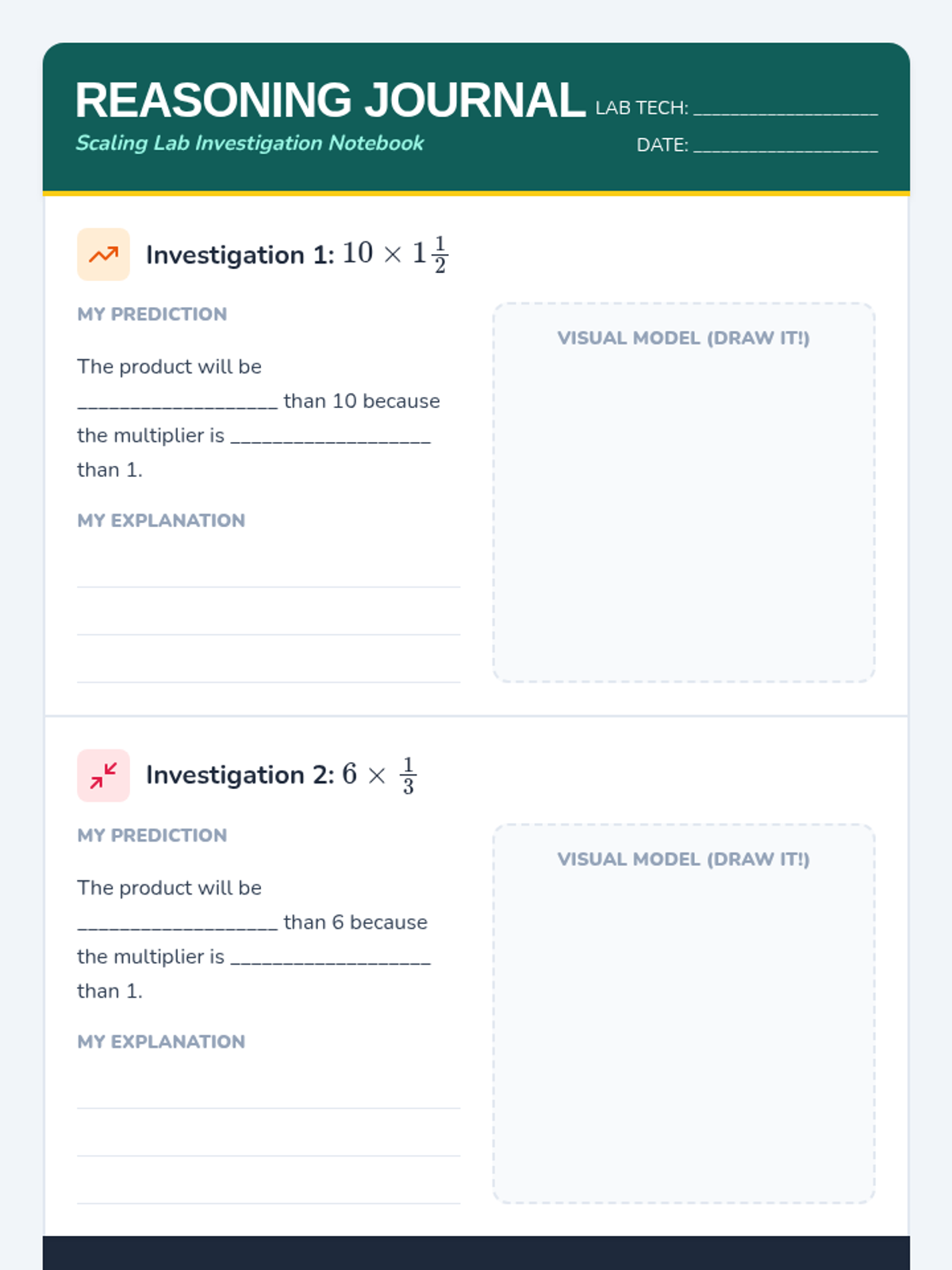
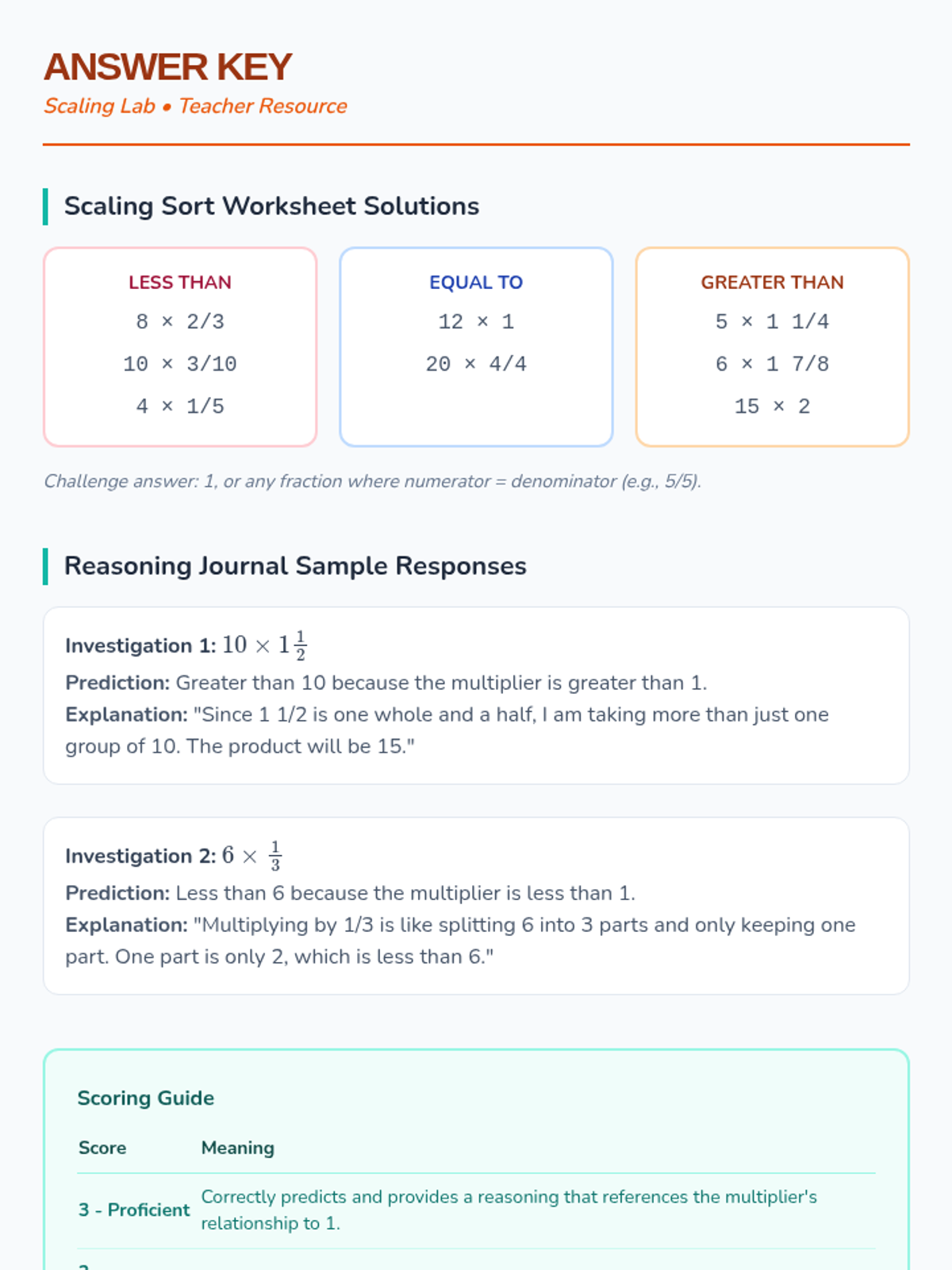
A Tier 2 intervention unit focused on understanding multiplication as scaling. Students explore how multipliers greater than, less than, or equal to one affect the size of the product compared to the original factor.
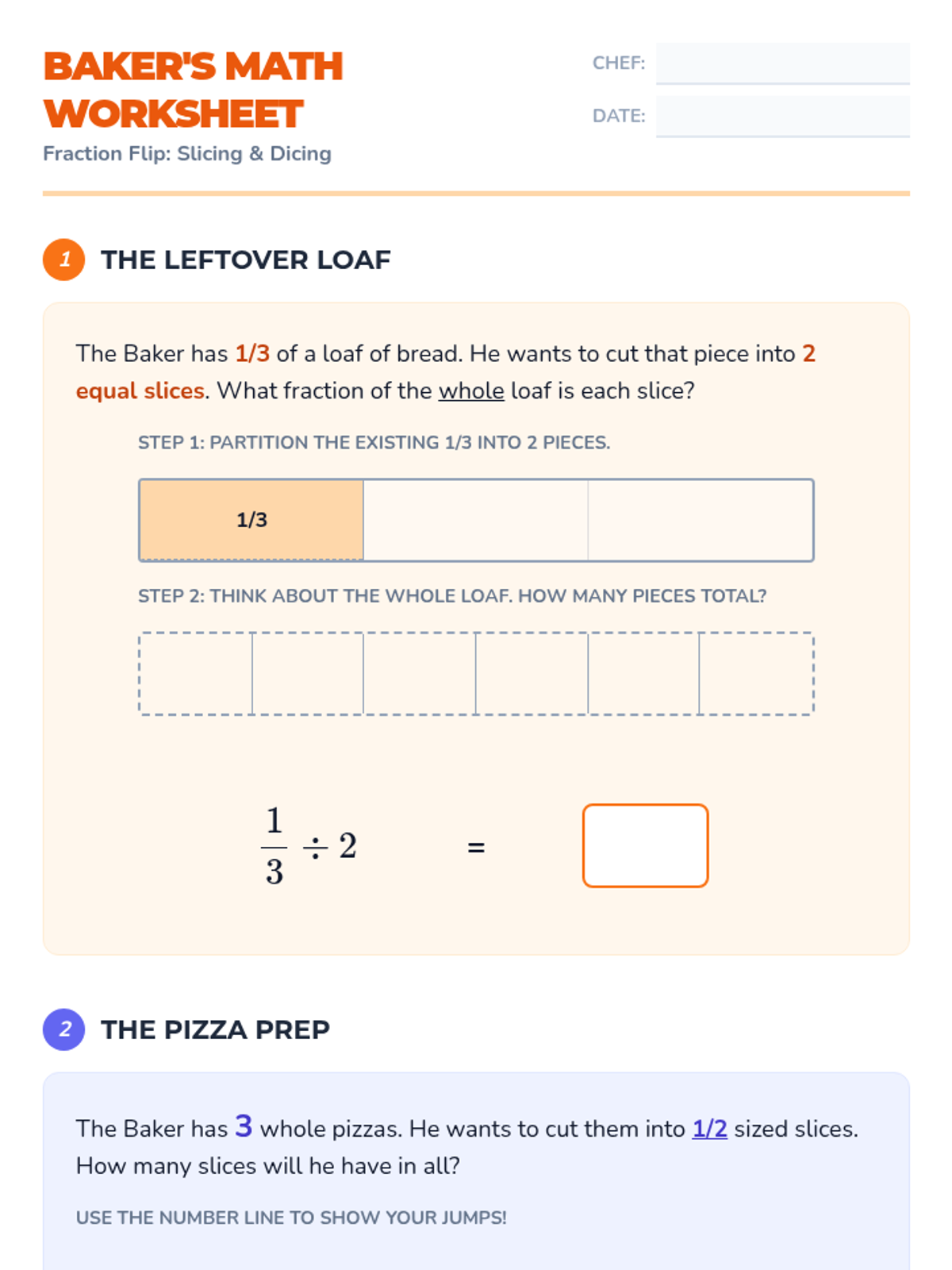
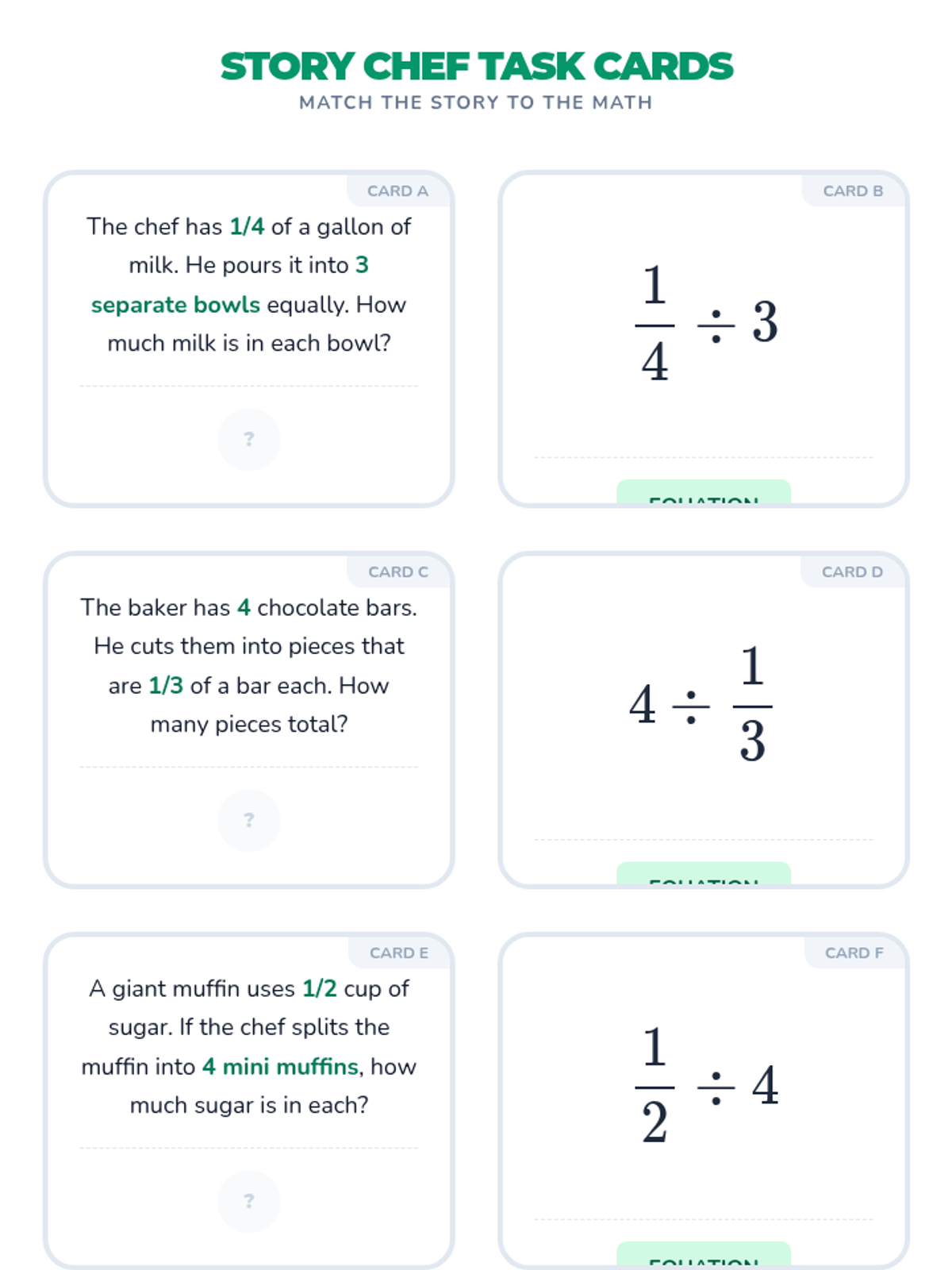
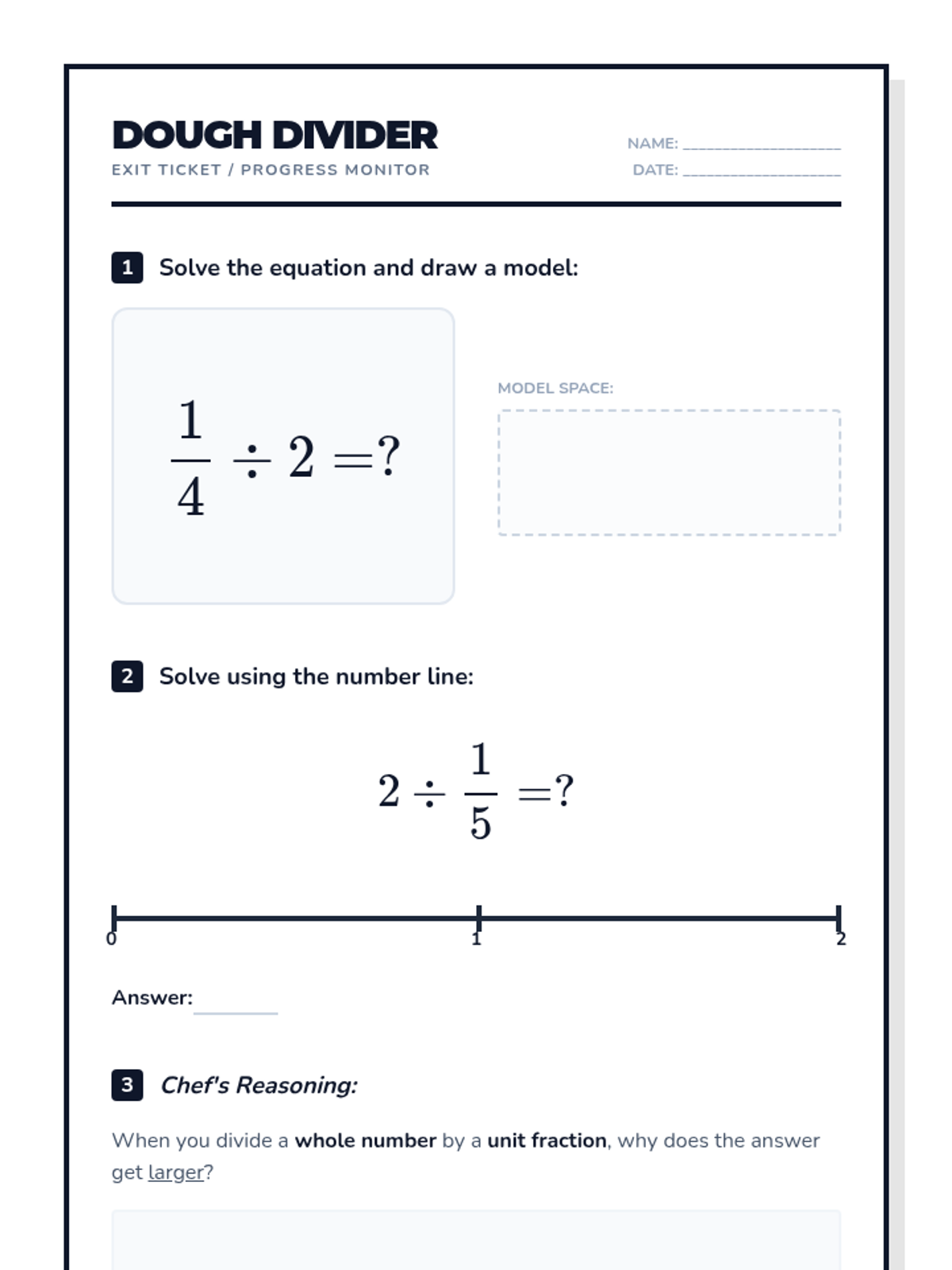
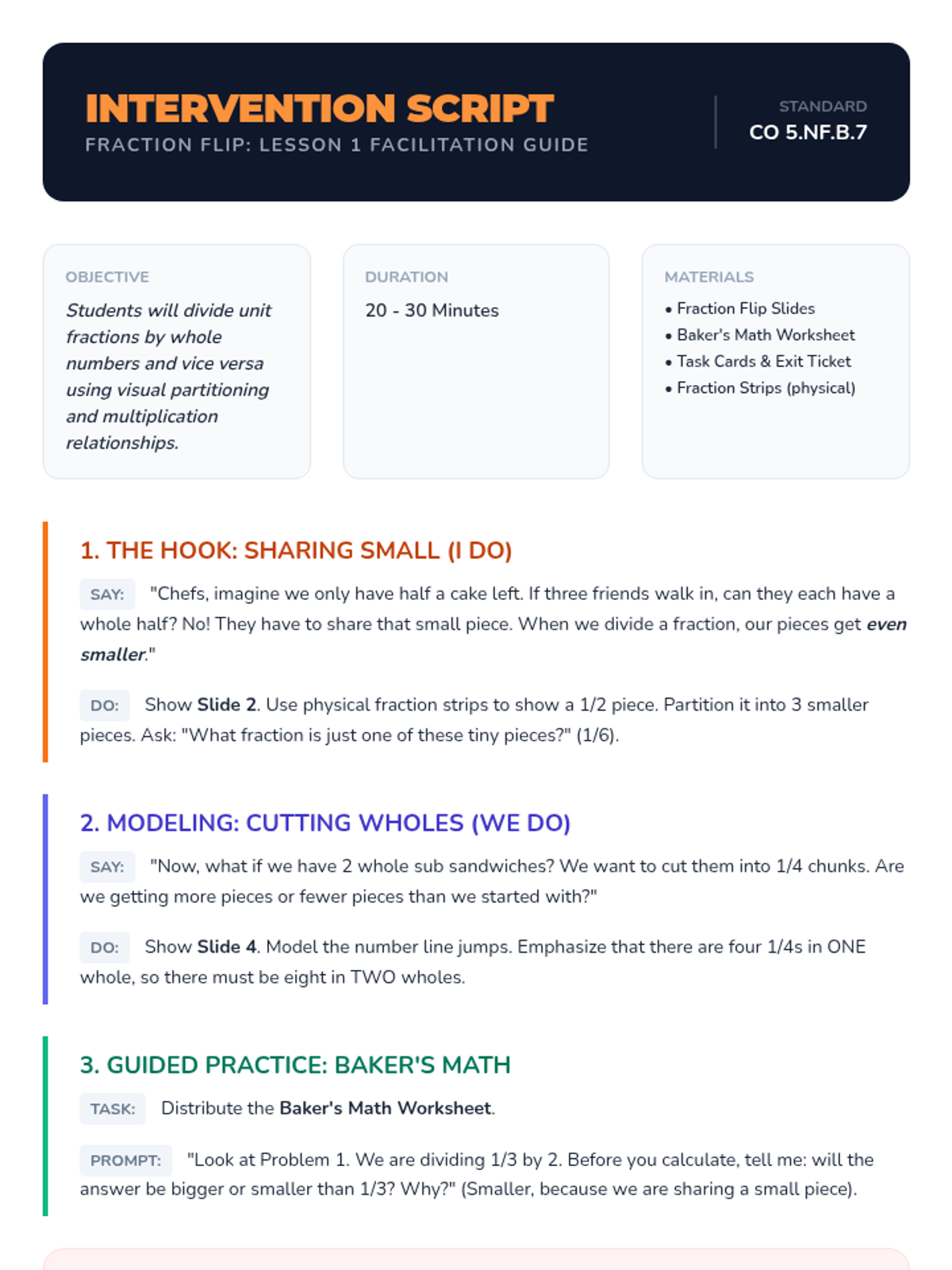
A Tier 2 intervention sequence focused on dividing unit fractions by whole numbers and vice versa, using bakery-themed visual models and story-based learning. Students use fraction strips, number lines, and area models to master 5.NF.B.7.
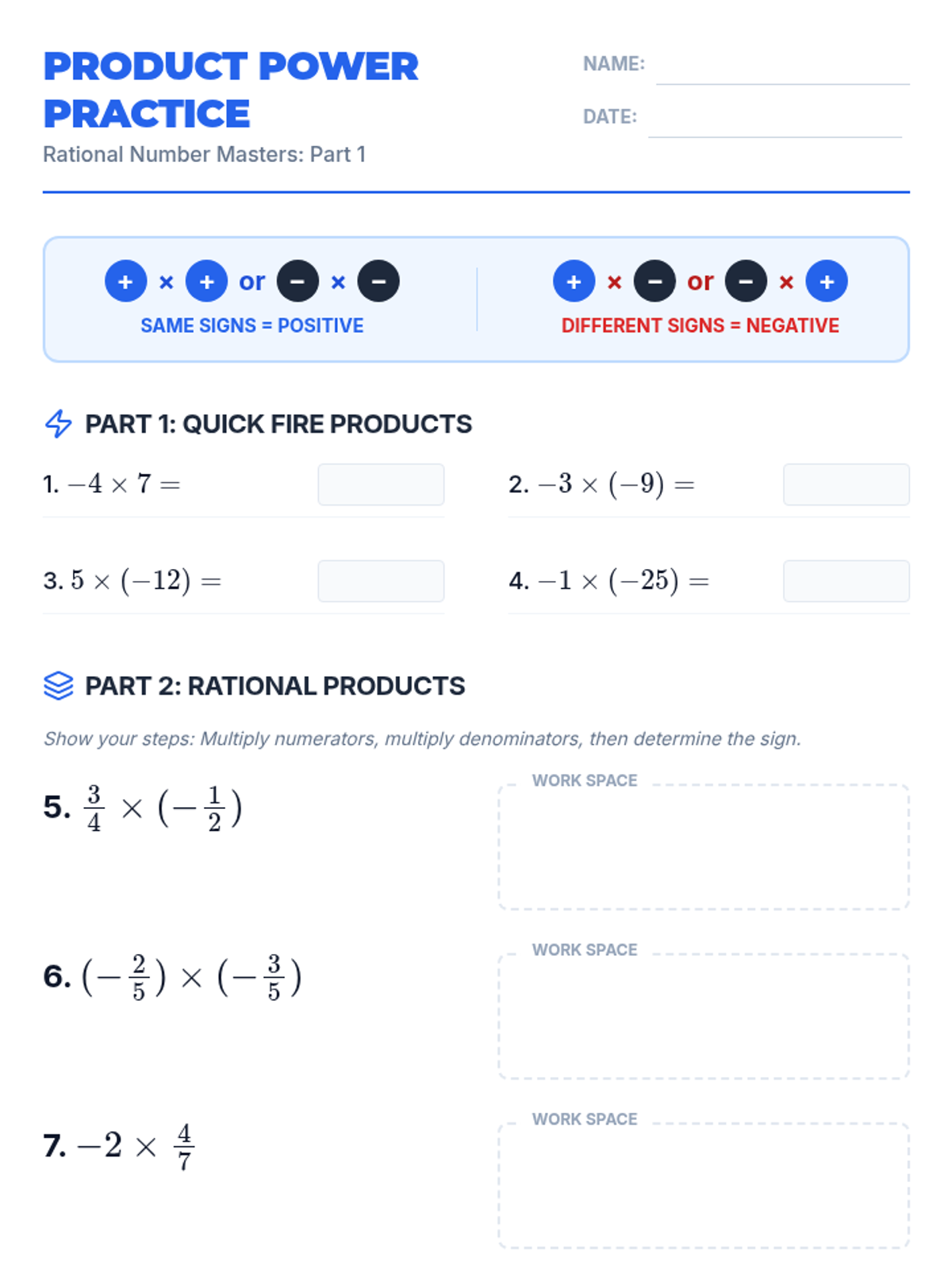
A comprehensive Tier 2 intervention sequence focused on multiplying and dividing rational numbers. Students move from concrete modeling with fraction tiles to abstract long division and fluency practice.
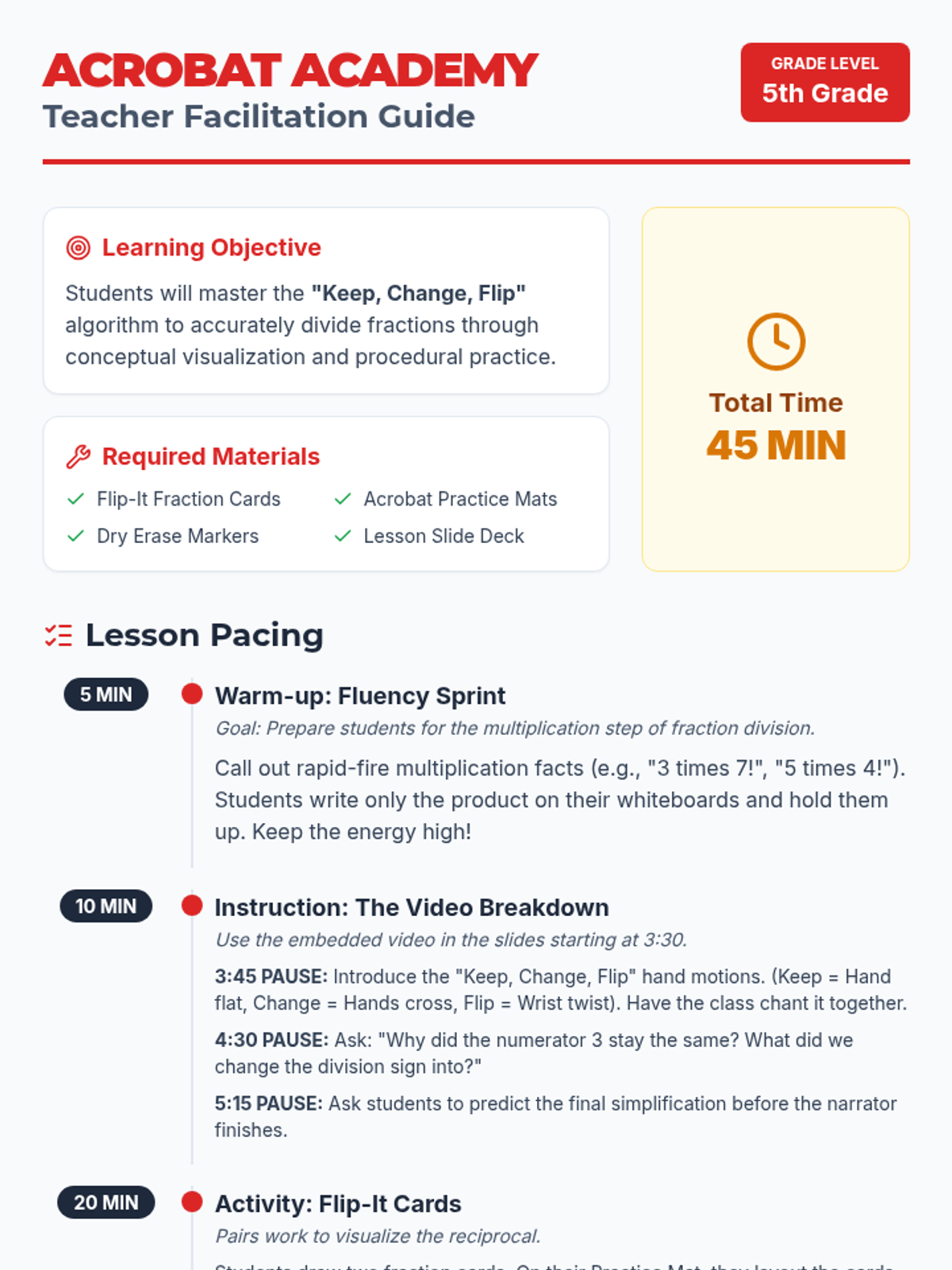
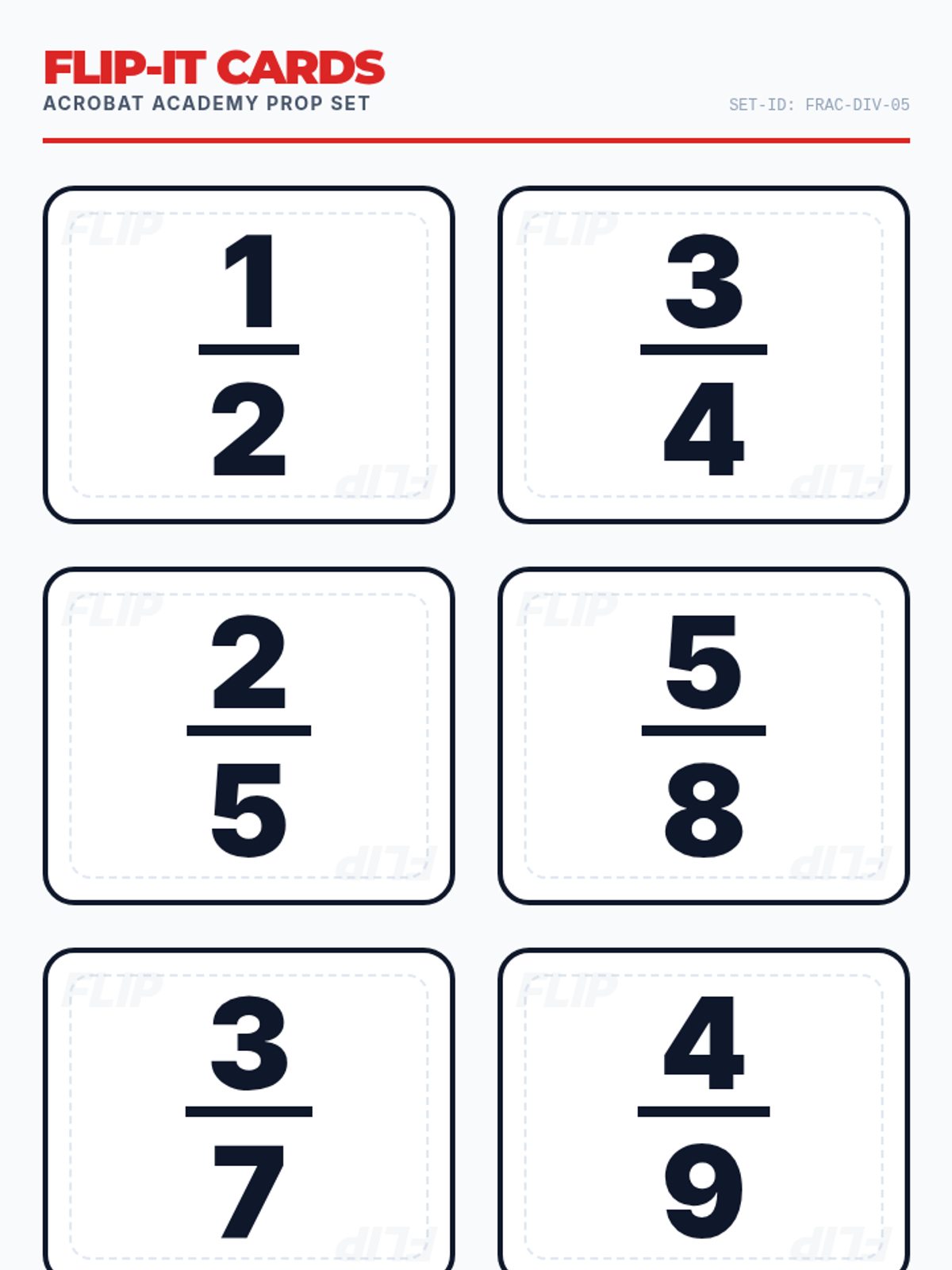
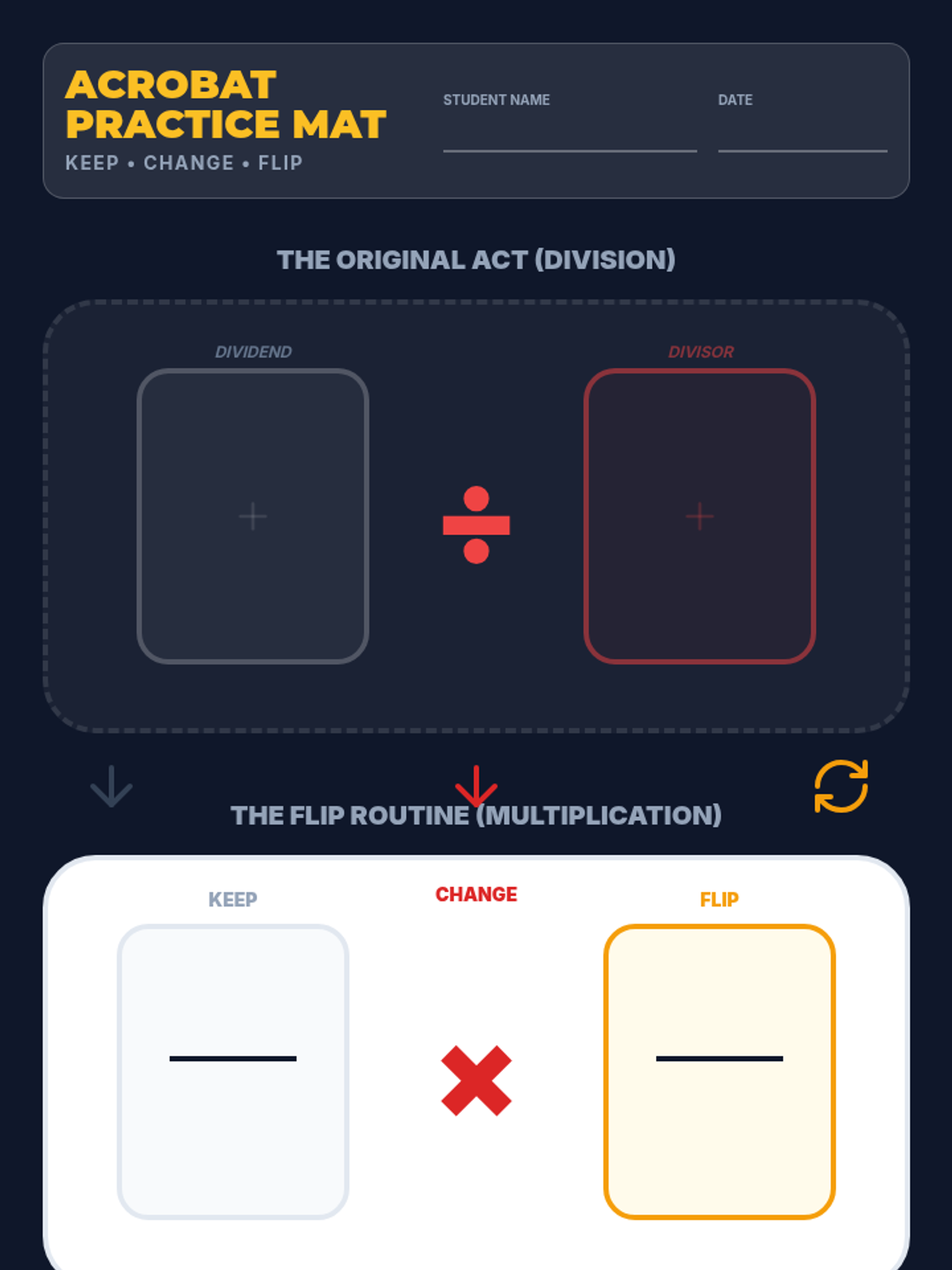
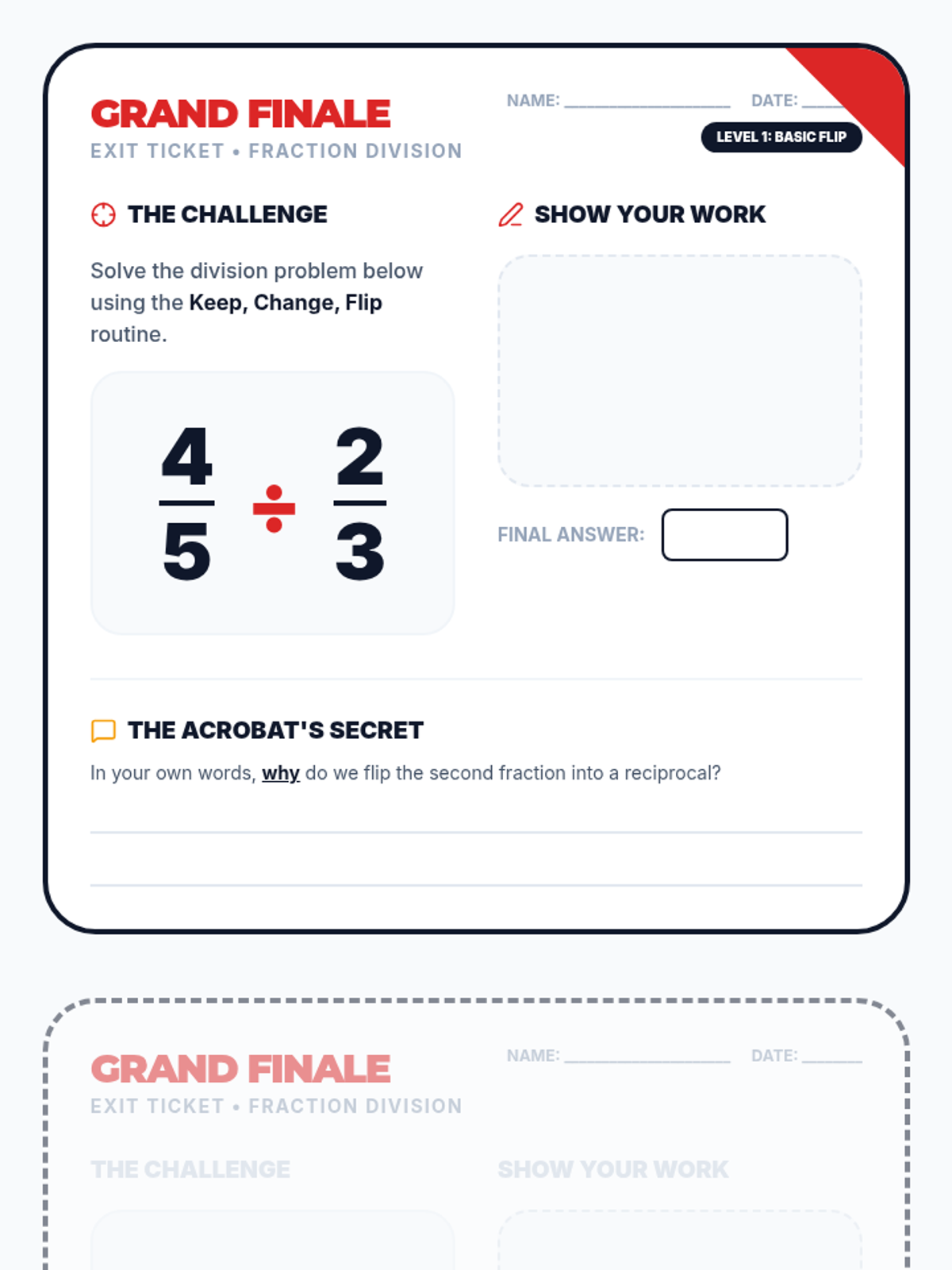
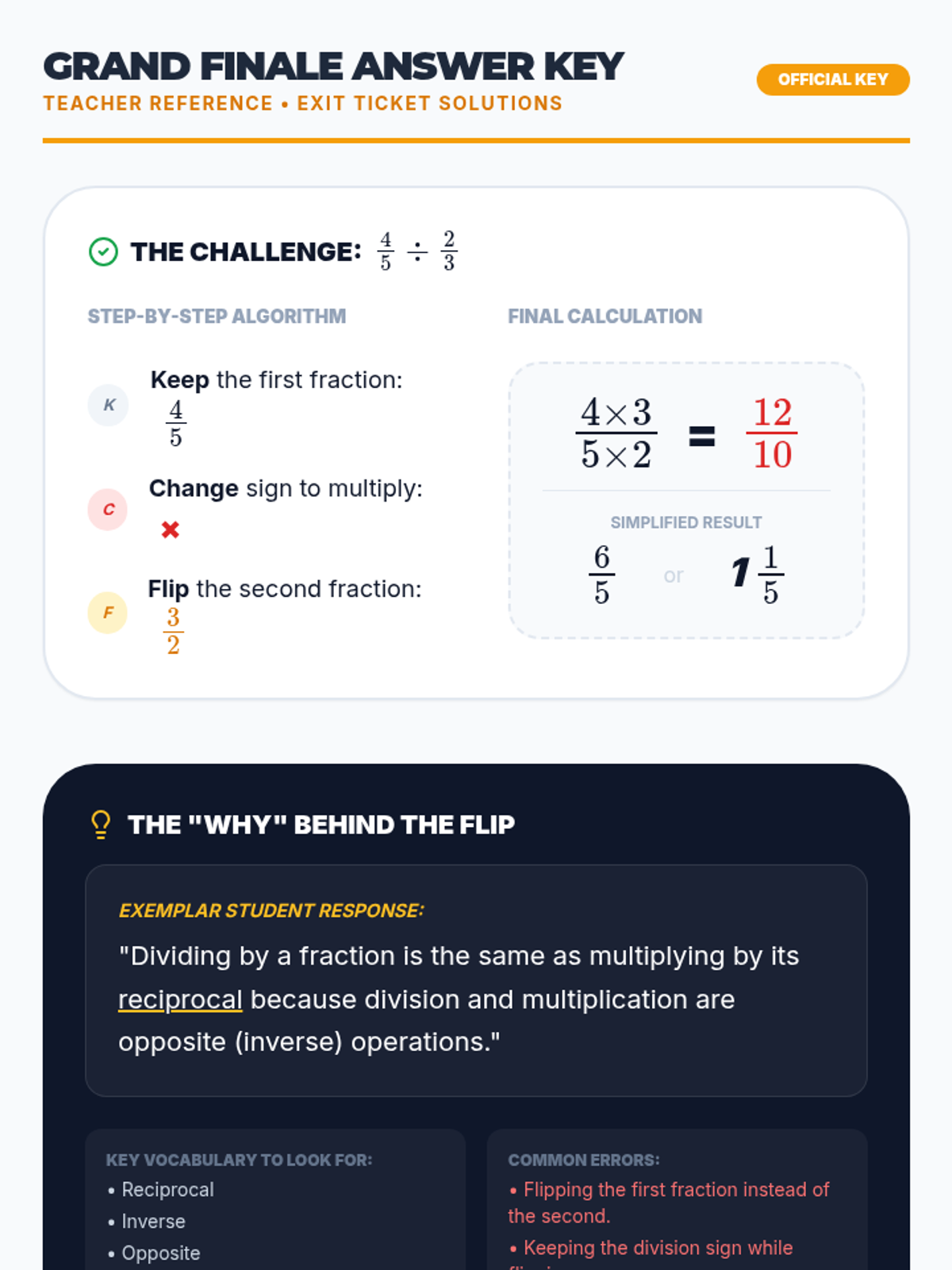
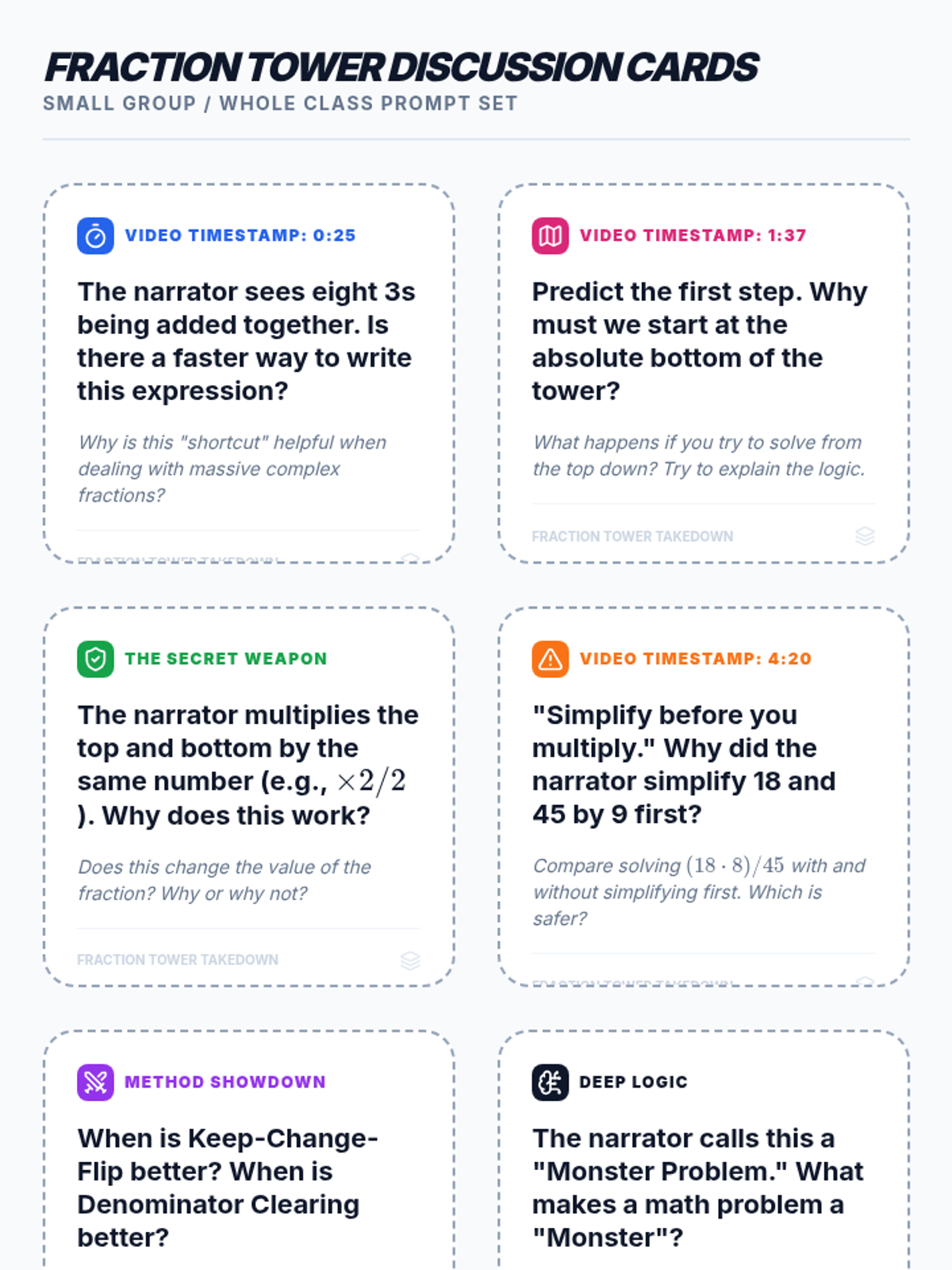
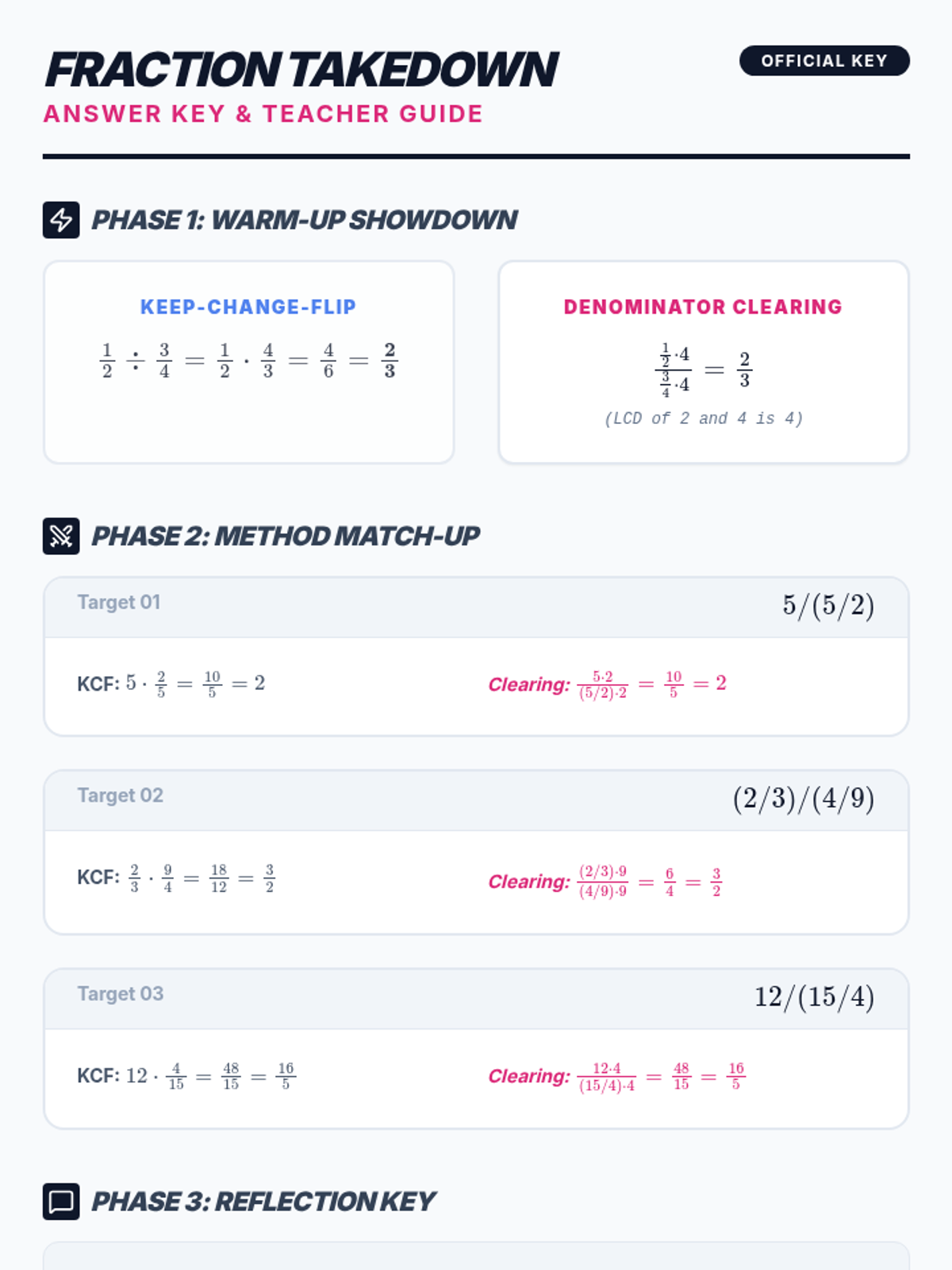
A focused unit on fraction operations, moving from basic multiplication to division using reciprocals and algorithmic shortcuts.
A series of lessons focused on mastering algebraic and numerical fractions through visual strategies and structural simplification.
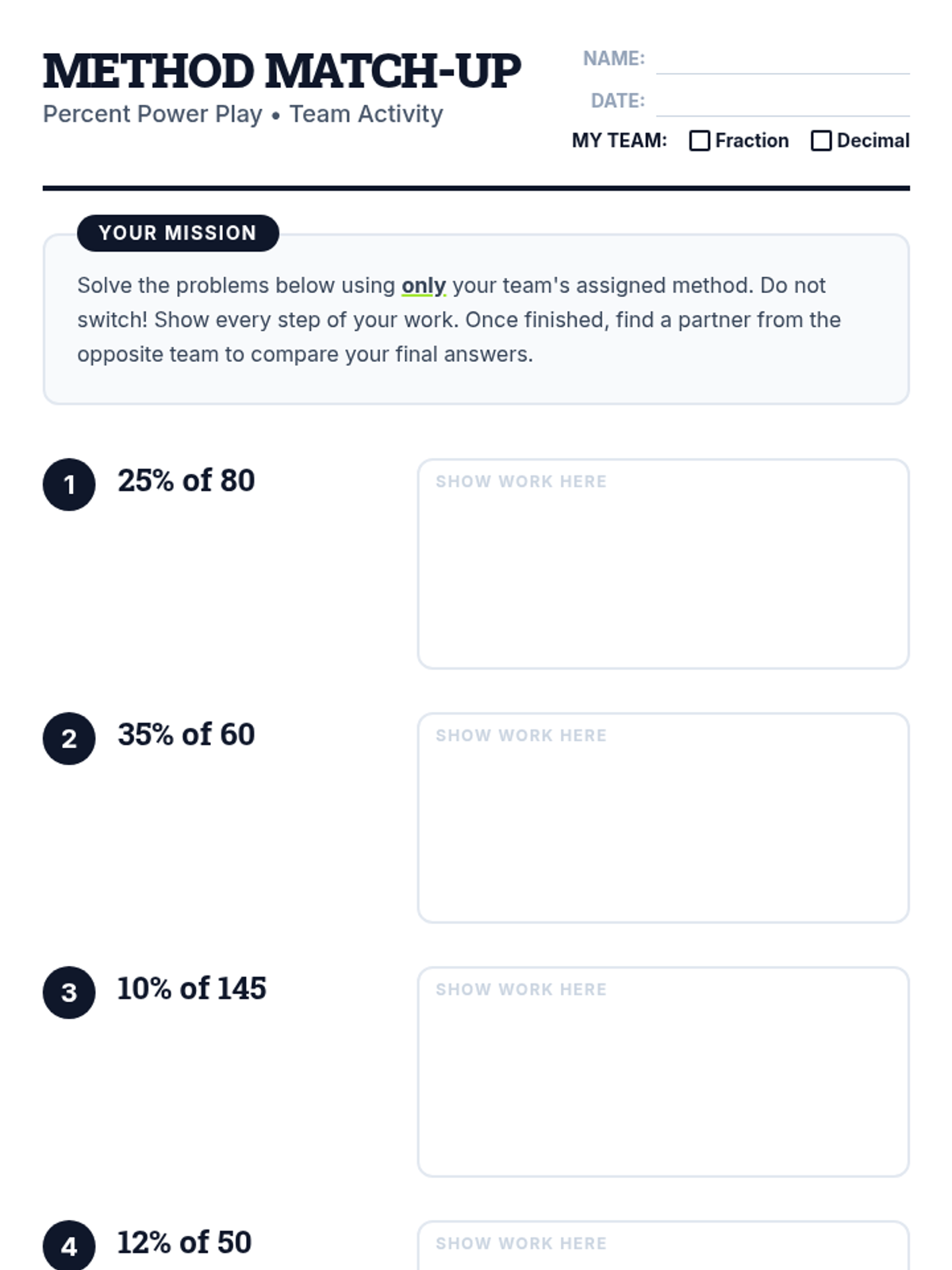
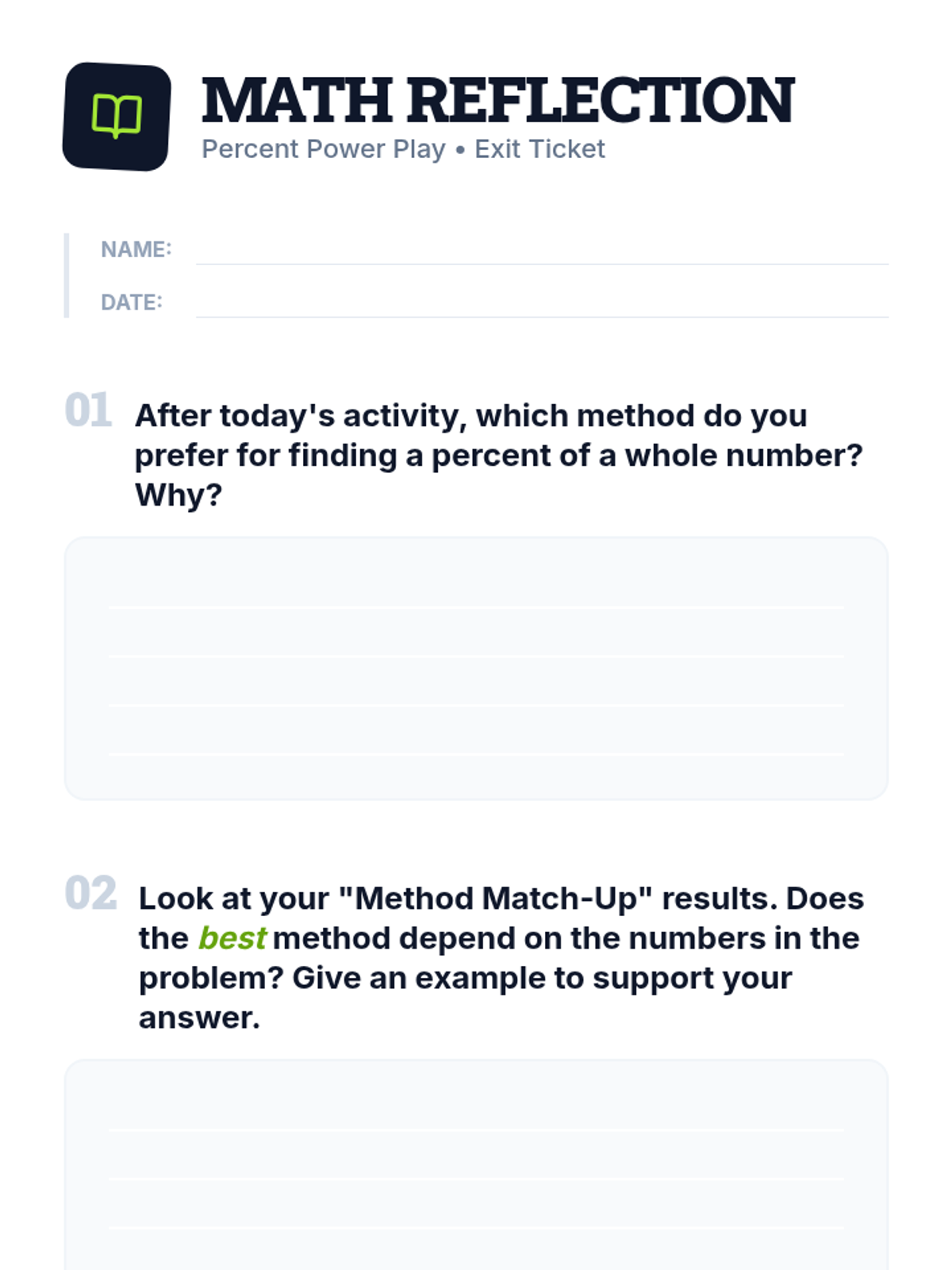
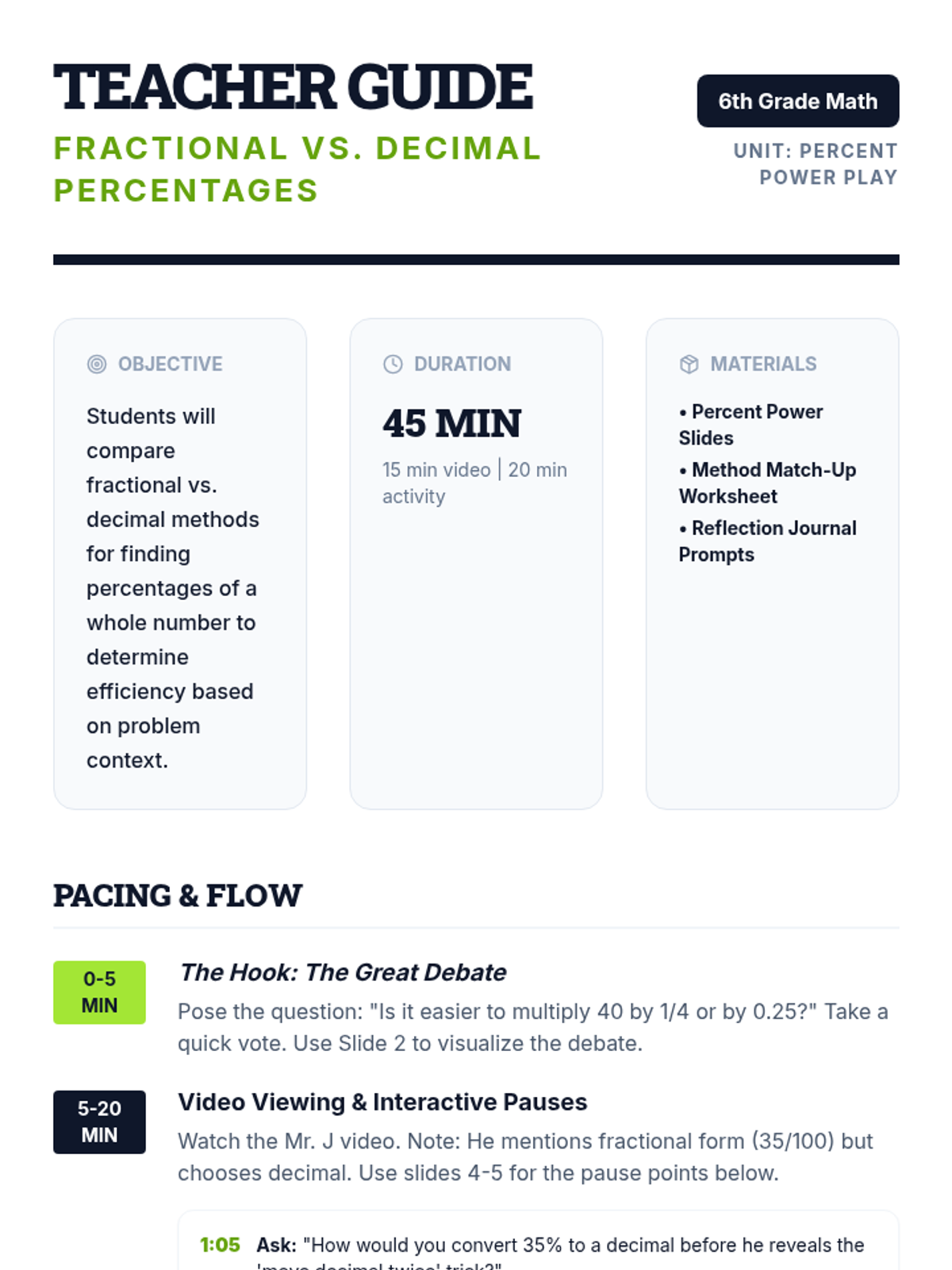
A 6th-grade math sequence exploring different strategies for calculating percentages of numbers, specifically comparing fractional and decimal methods.
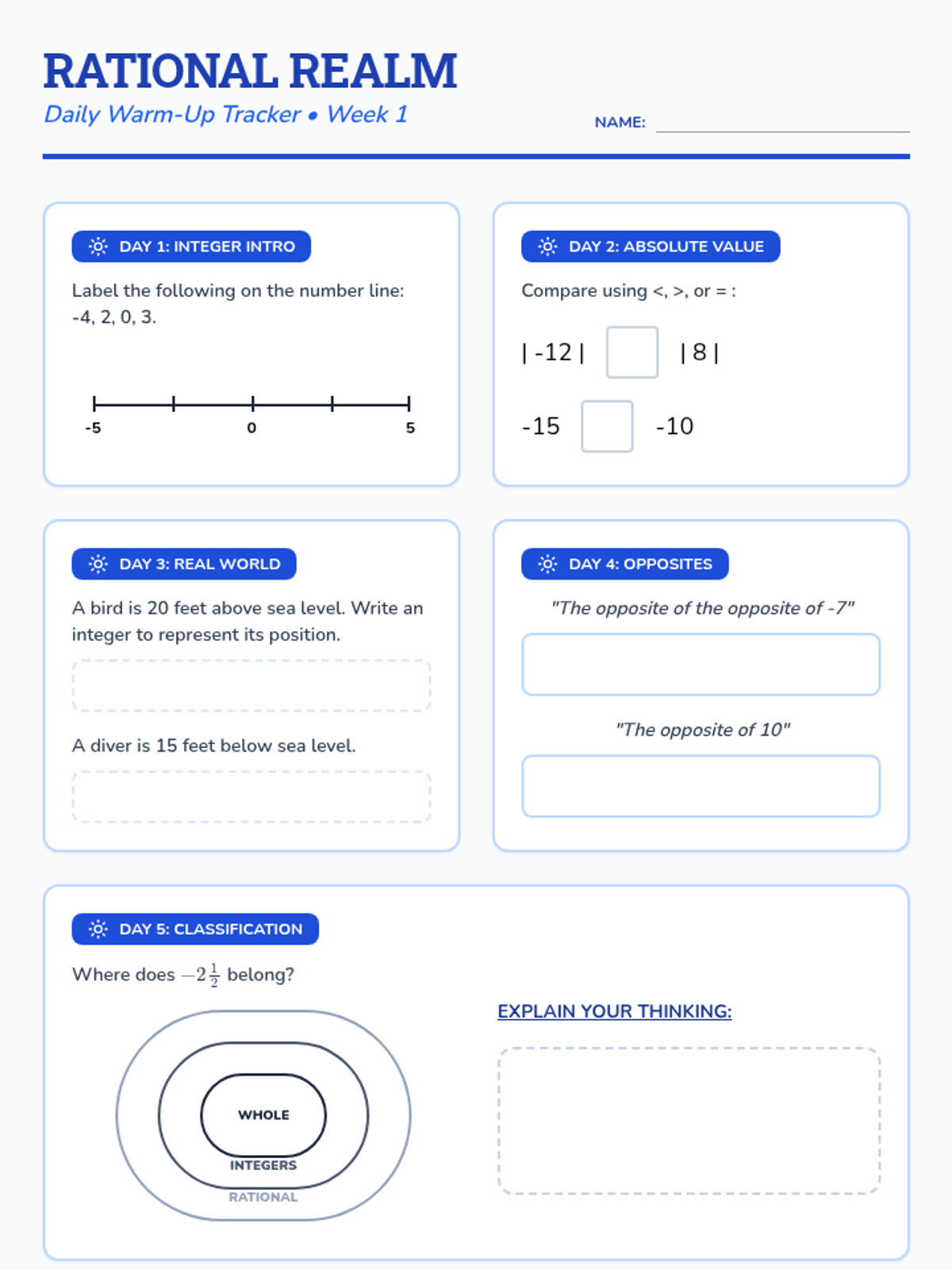
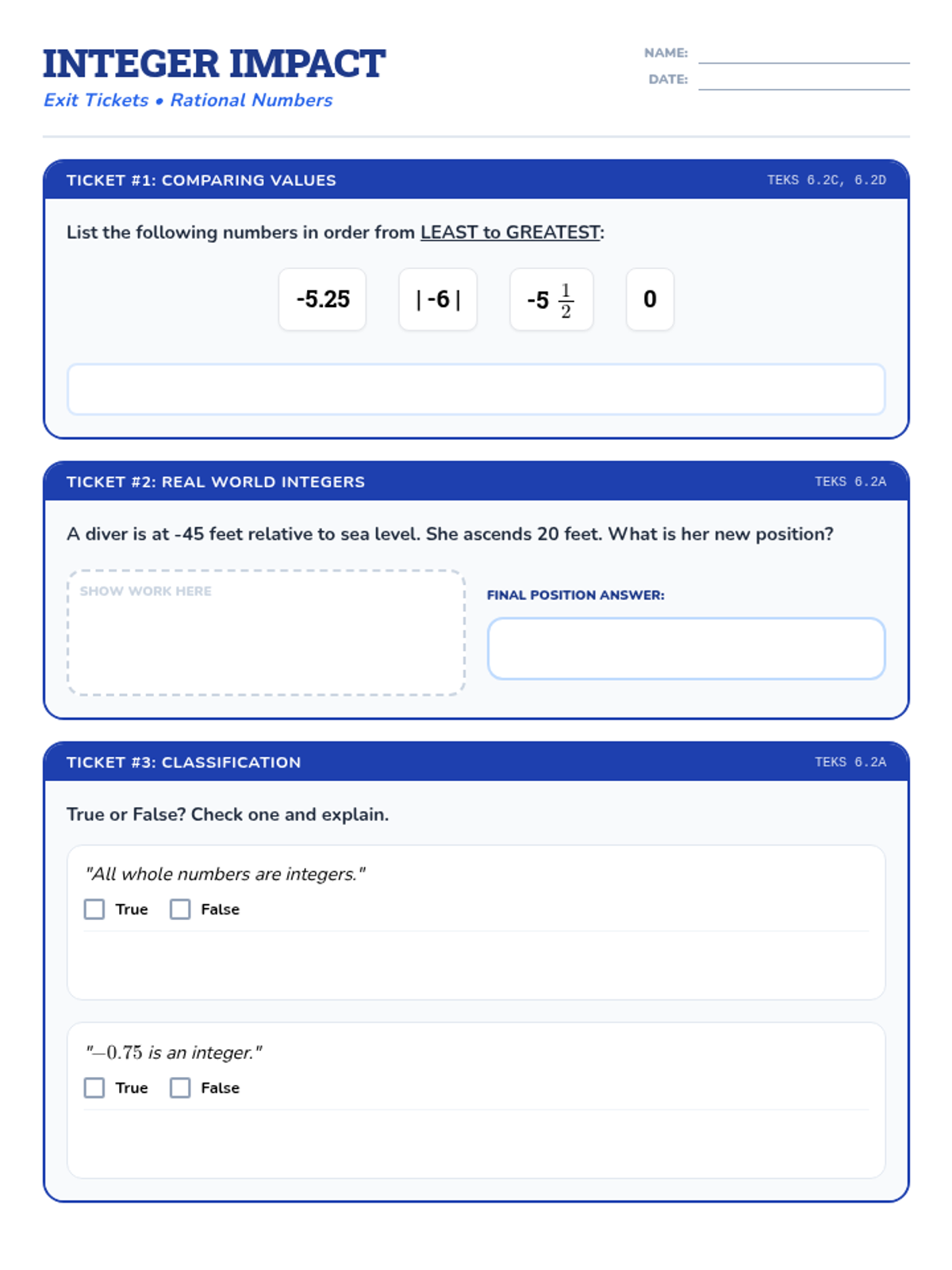
A comprehensive 6-week curriculum for 6th Grade Math covering the Texas Bluebonnet standards, focusing on rational numbers, operations, exponents, and ratios. This sequence provides daily warm-ups, exit tickets, and instructional slides for a complete foundational unit.
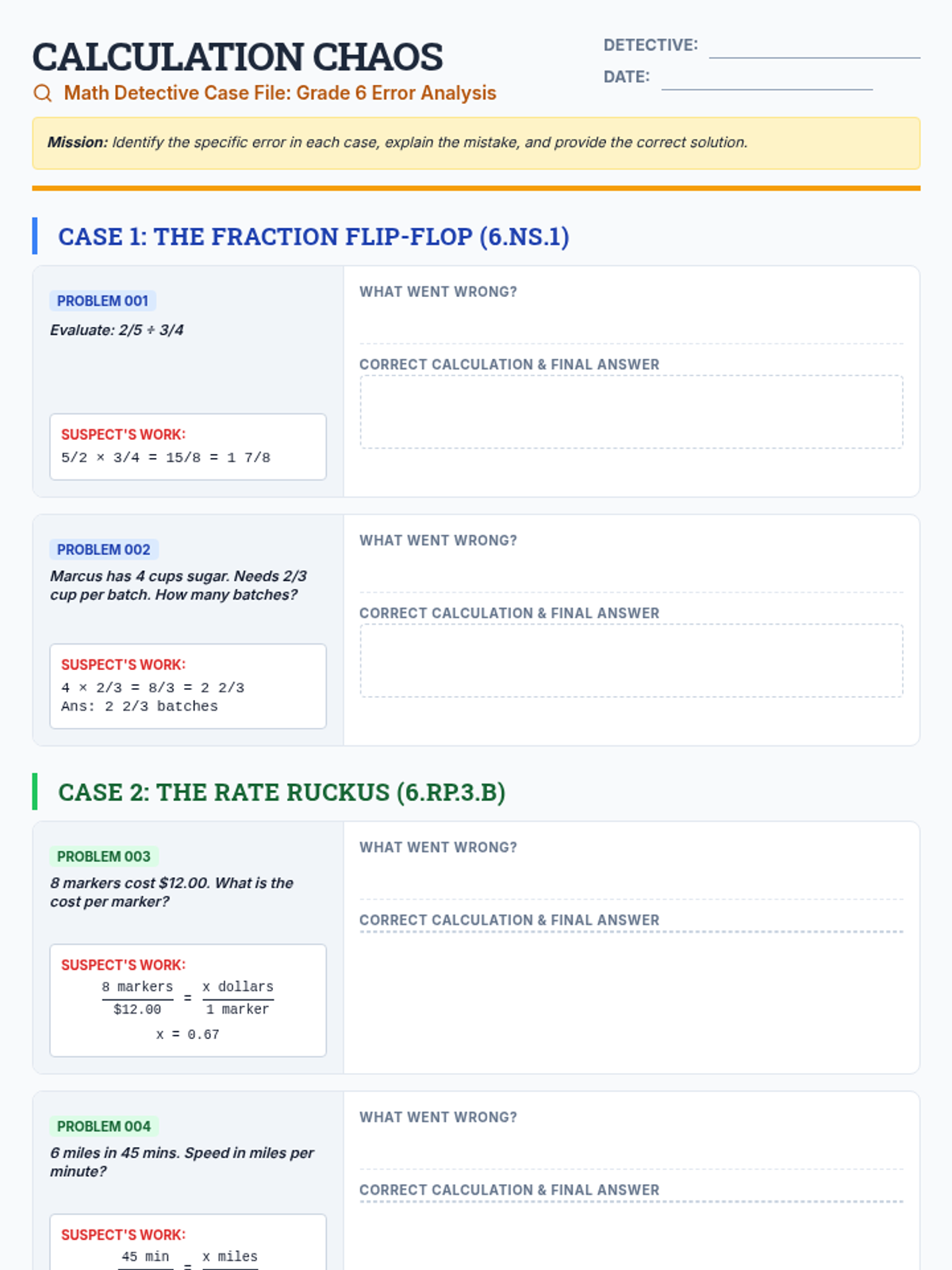
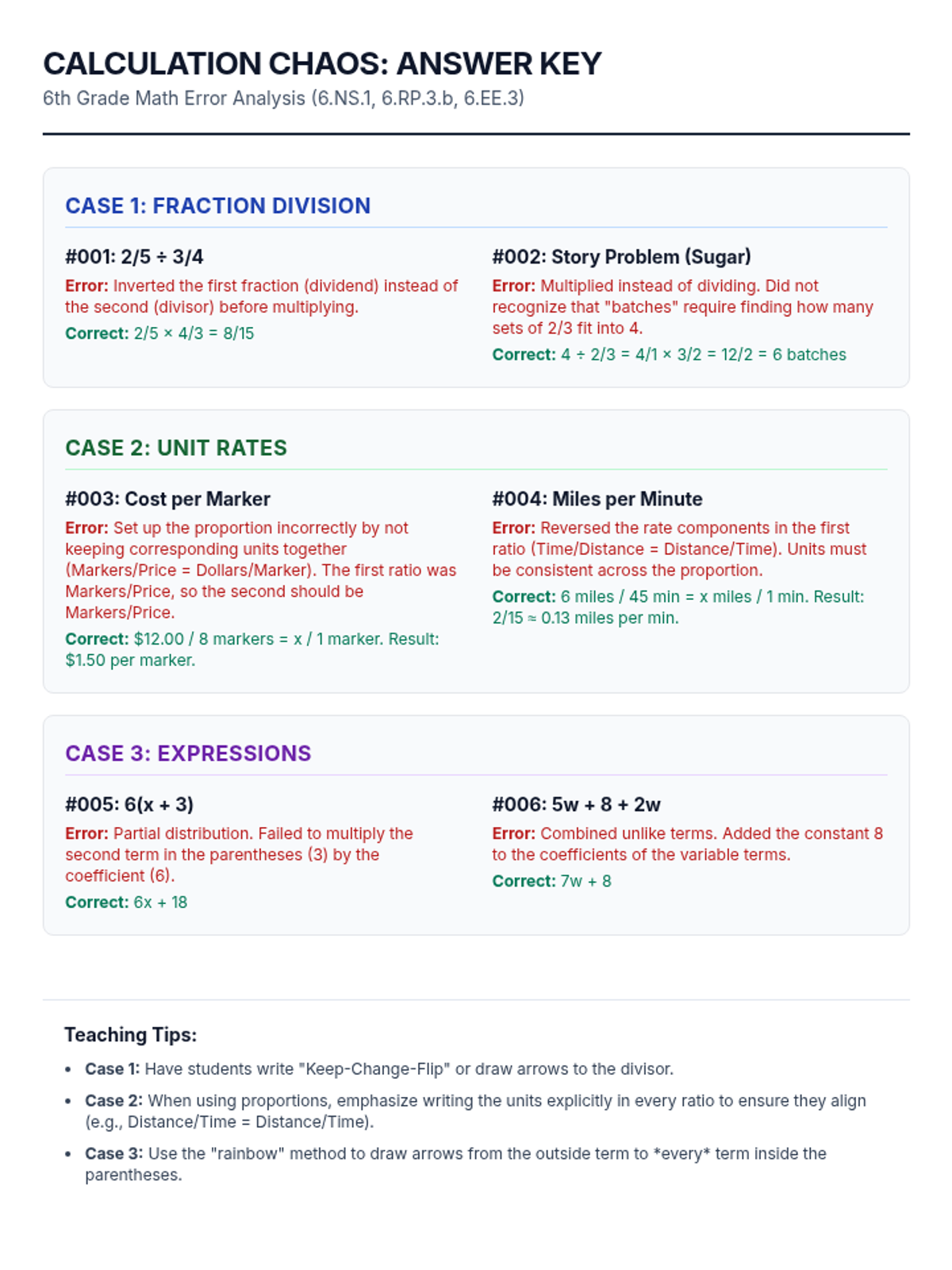
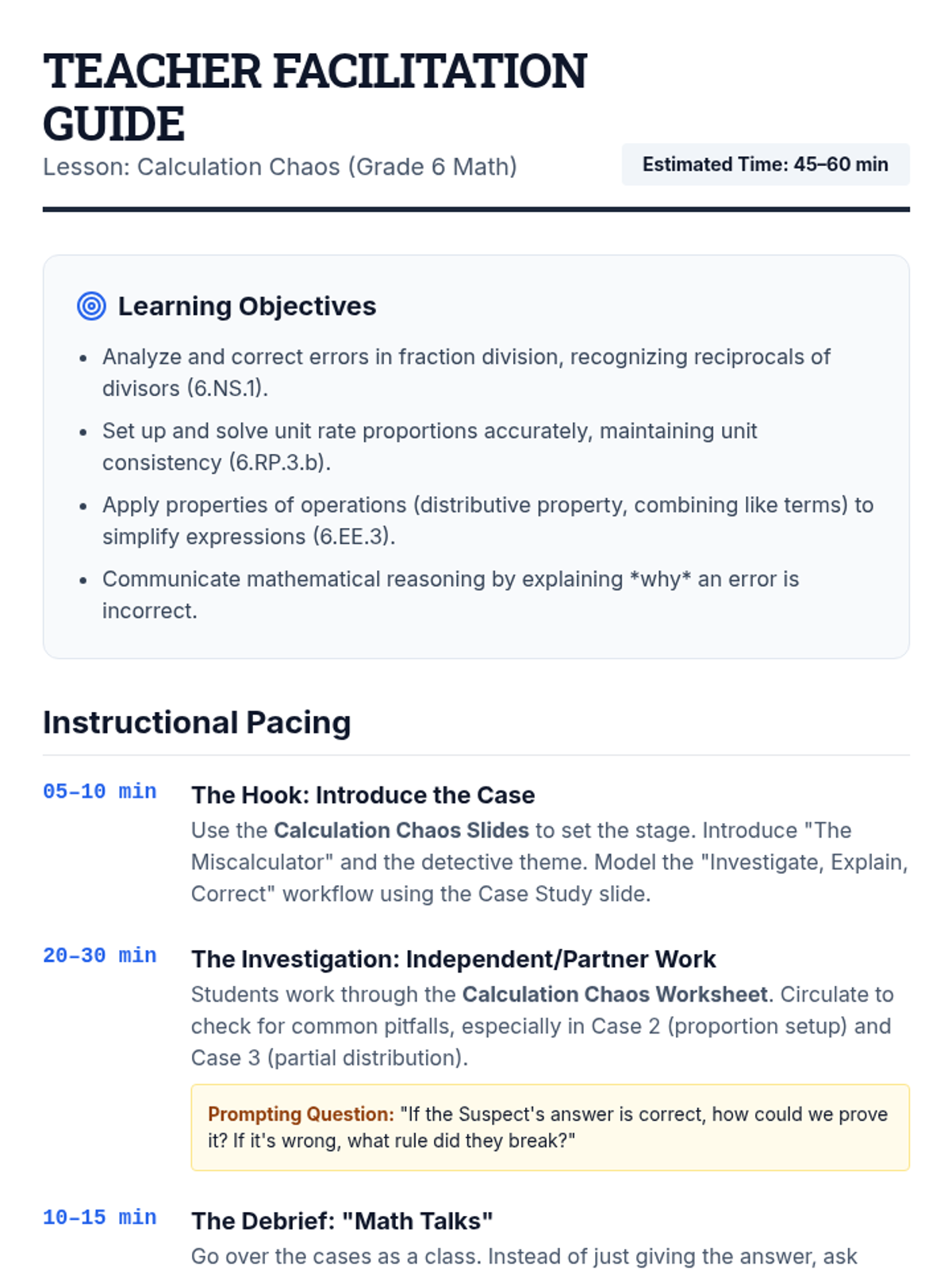
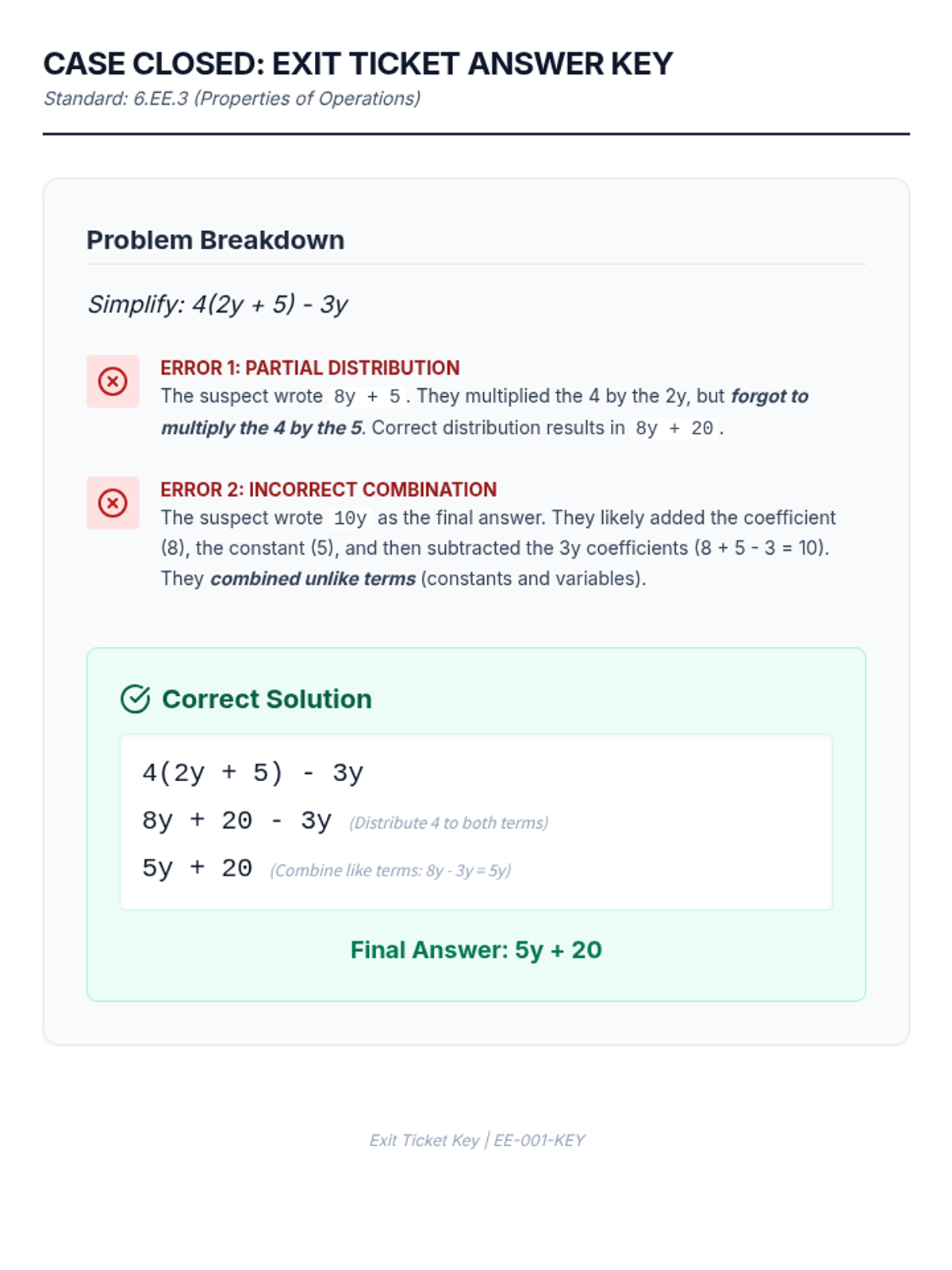
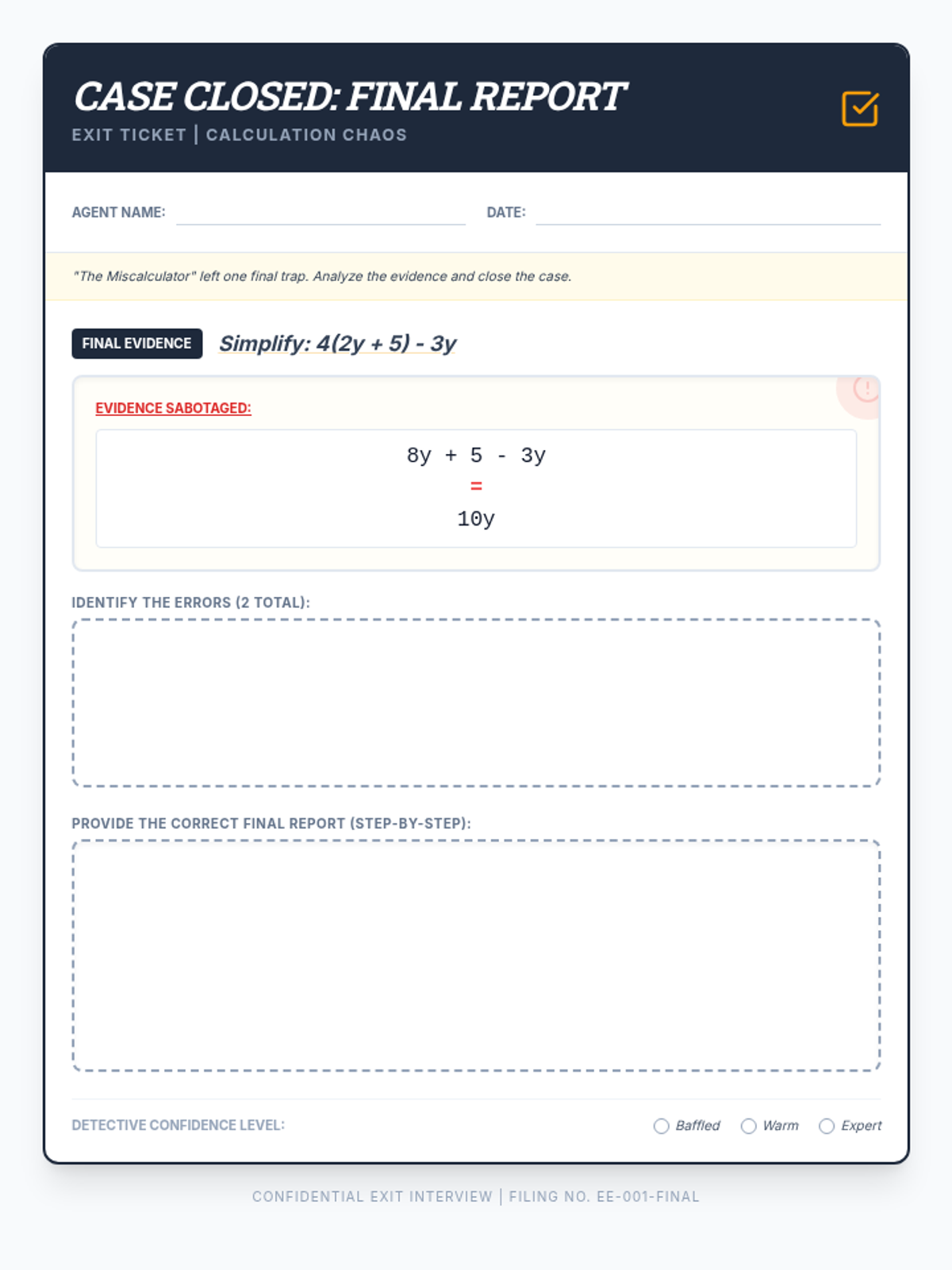
A comprehensive math investigation series where students act as detectives to solve mathematical 'crimes' by identifying and correcting common misconceptions in 6th grade math standards.
A sequence focused on conceptualizing fraction division through visual area models, progressing from whole numbers to fraction-by-fraction division for 6th-grade students needing academic support.
A project-based math sequence where students apply mixed number division to design a Tiny House, focusing on conversion, algorithms, and real-world interpretation of remainders.
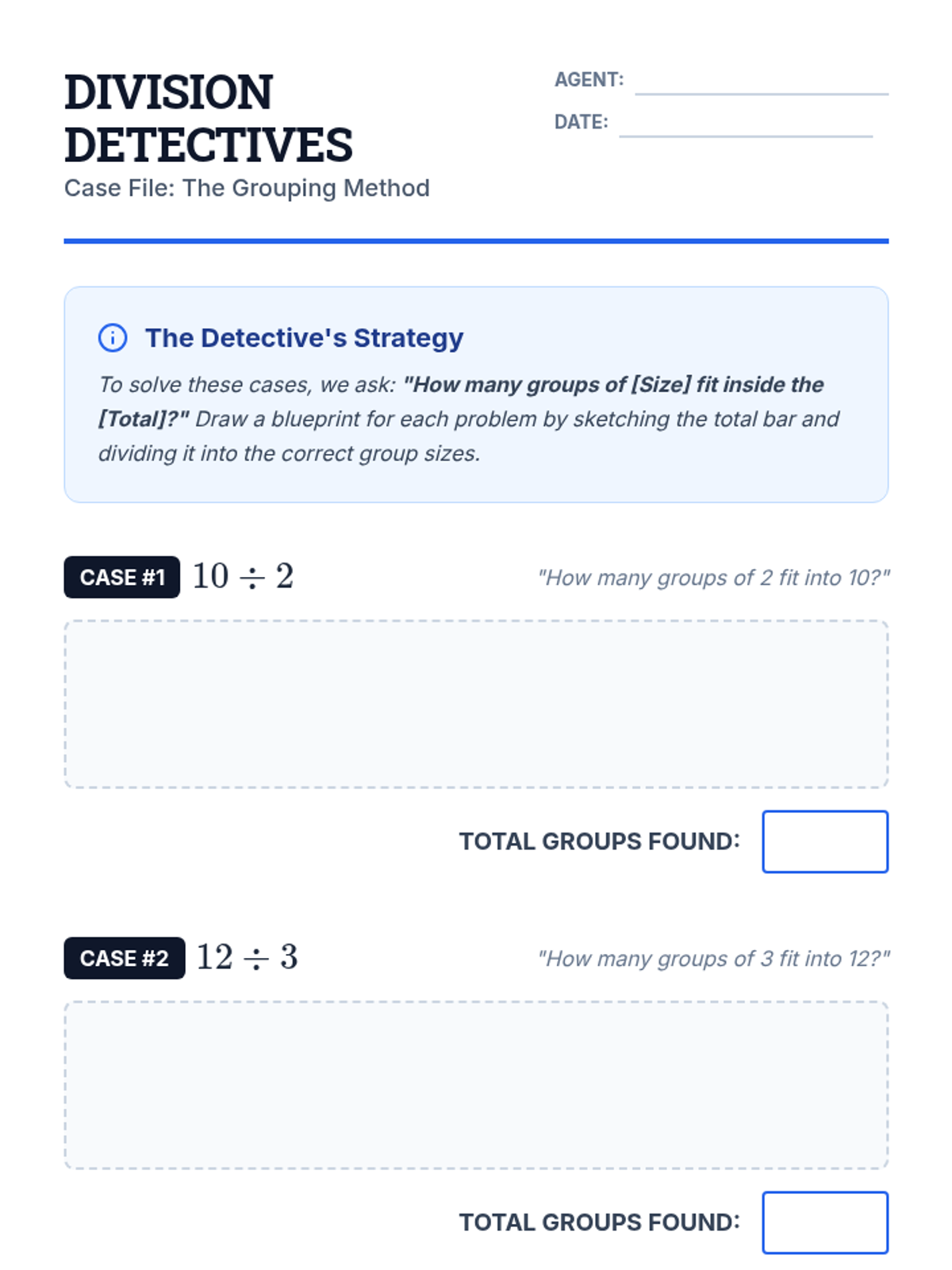
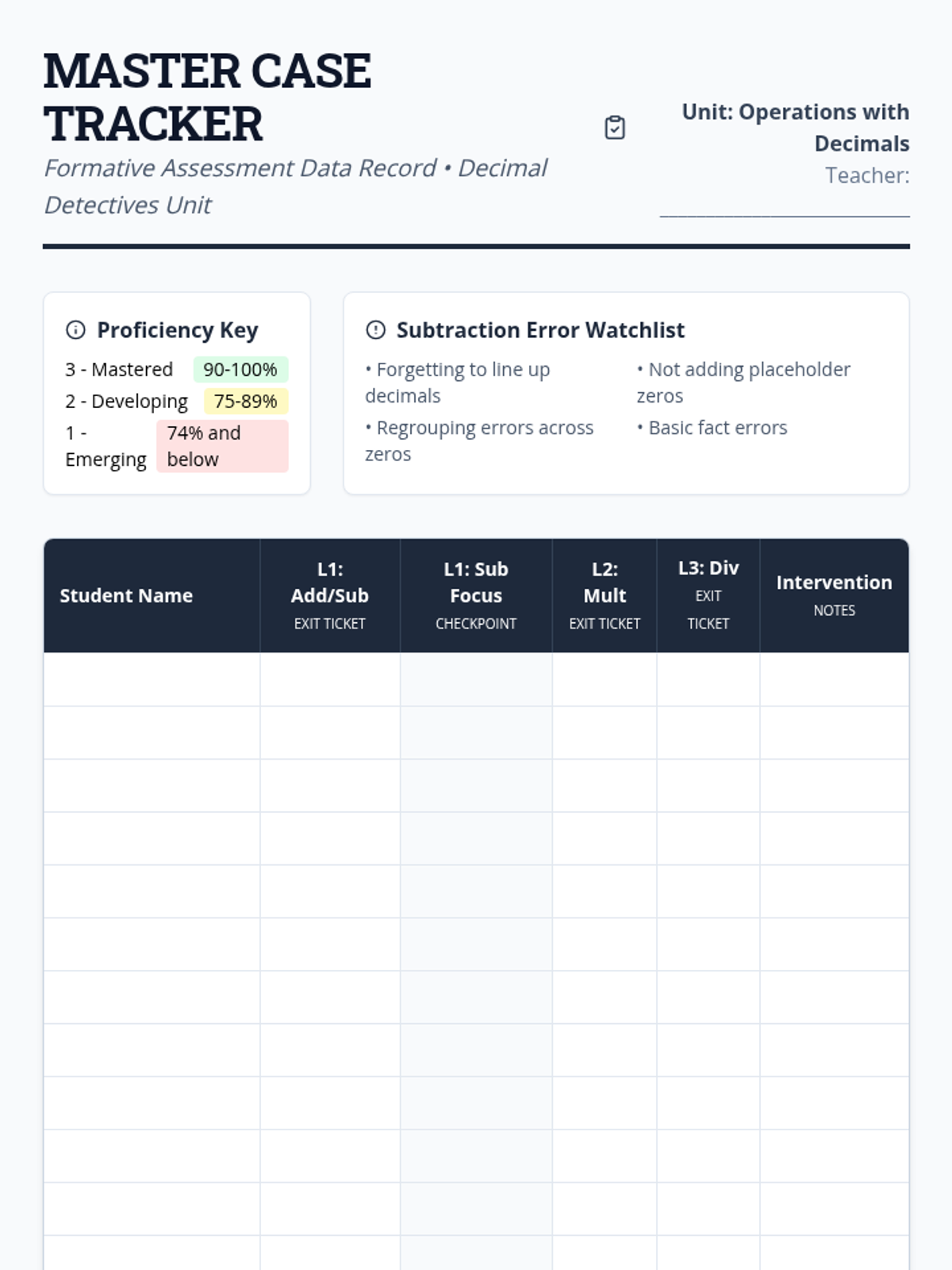
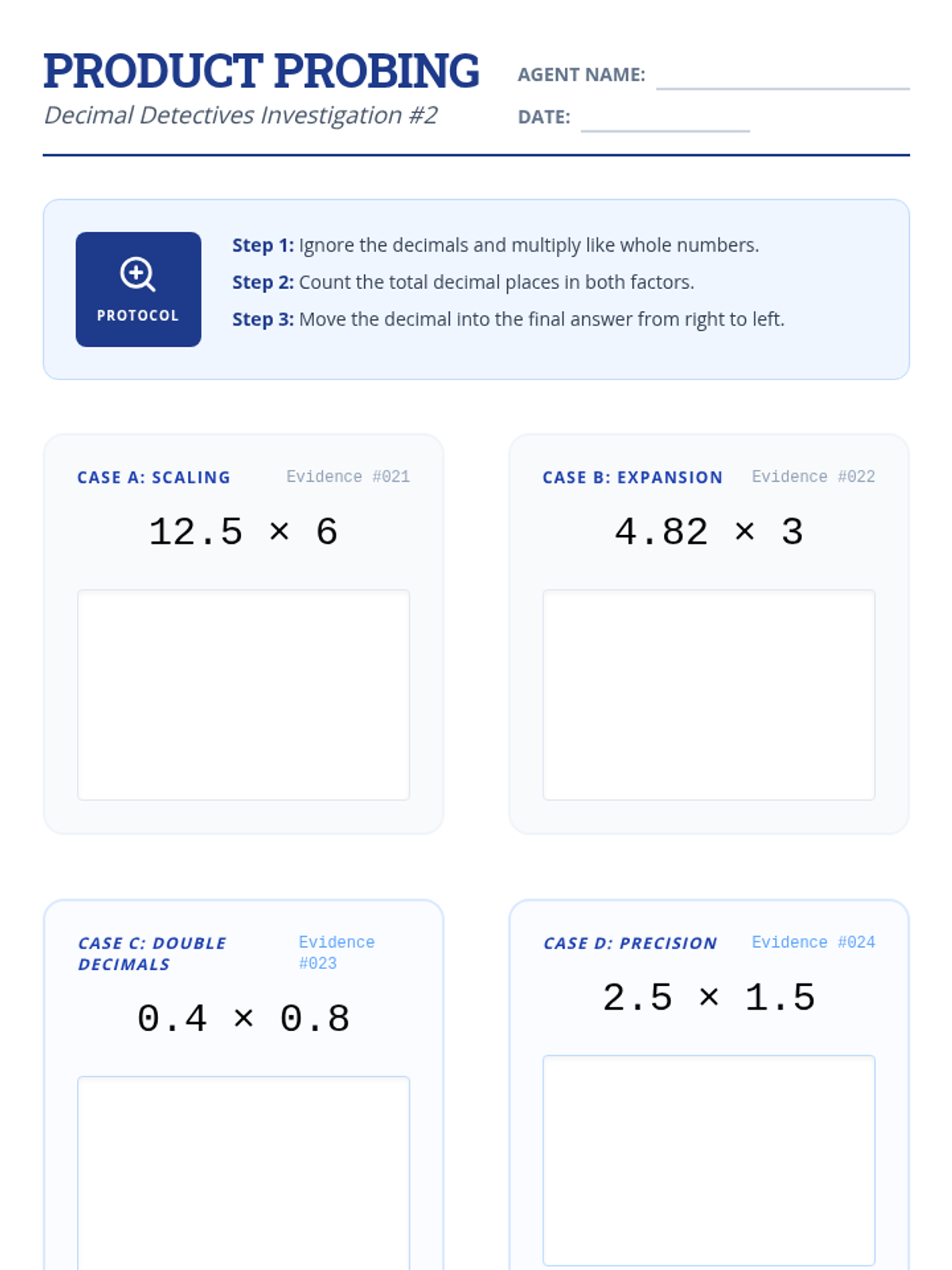
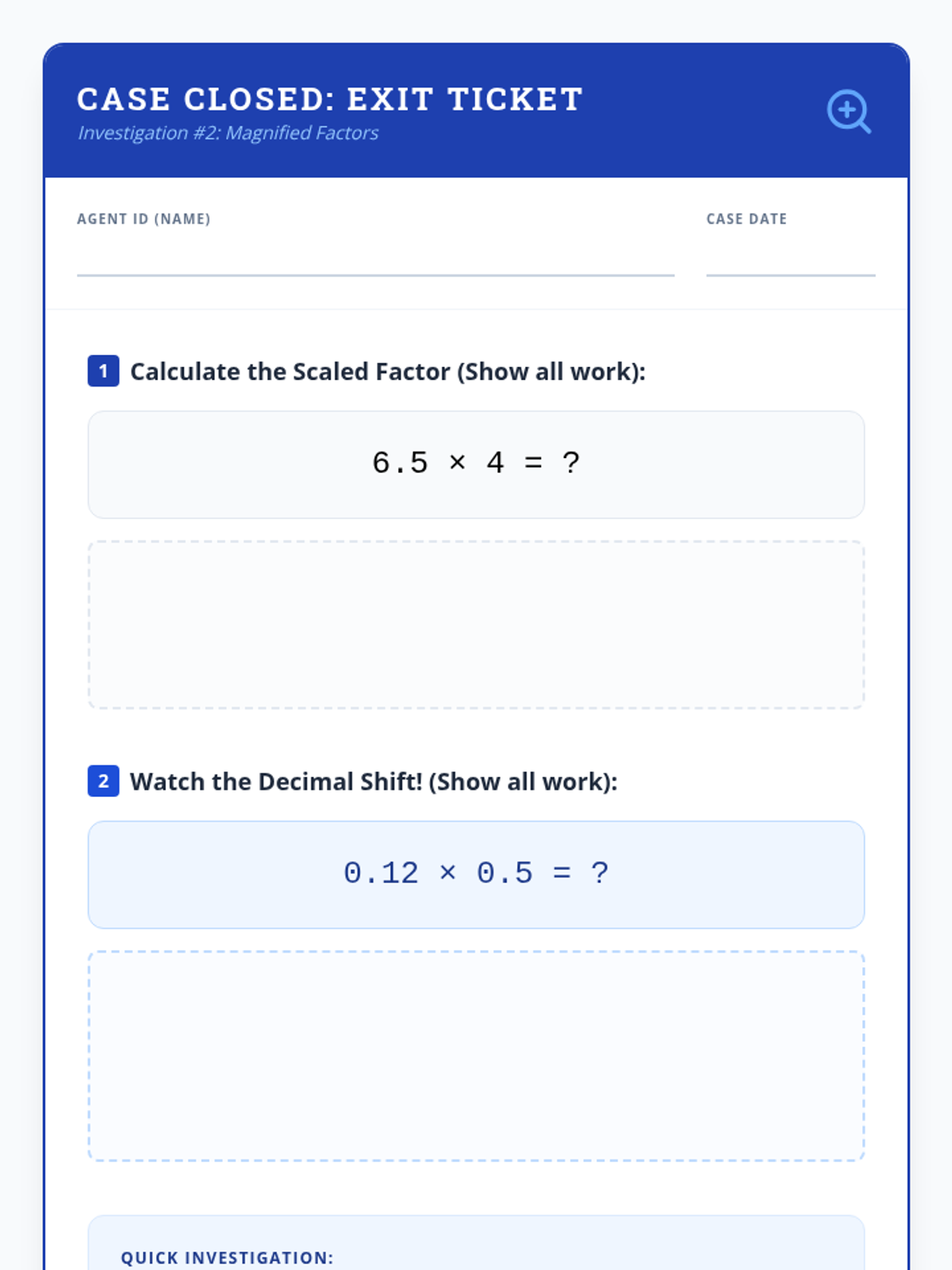
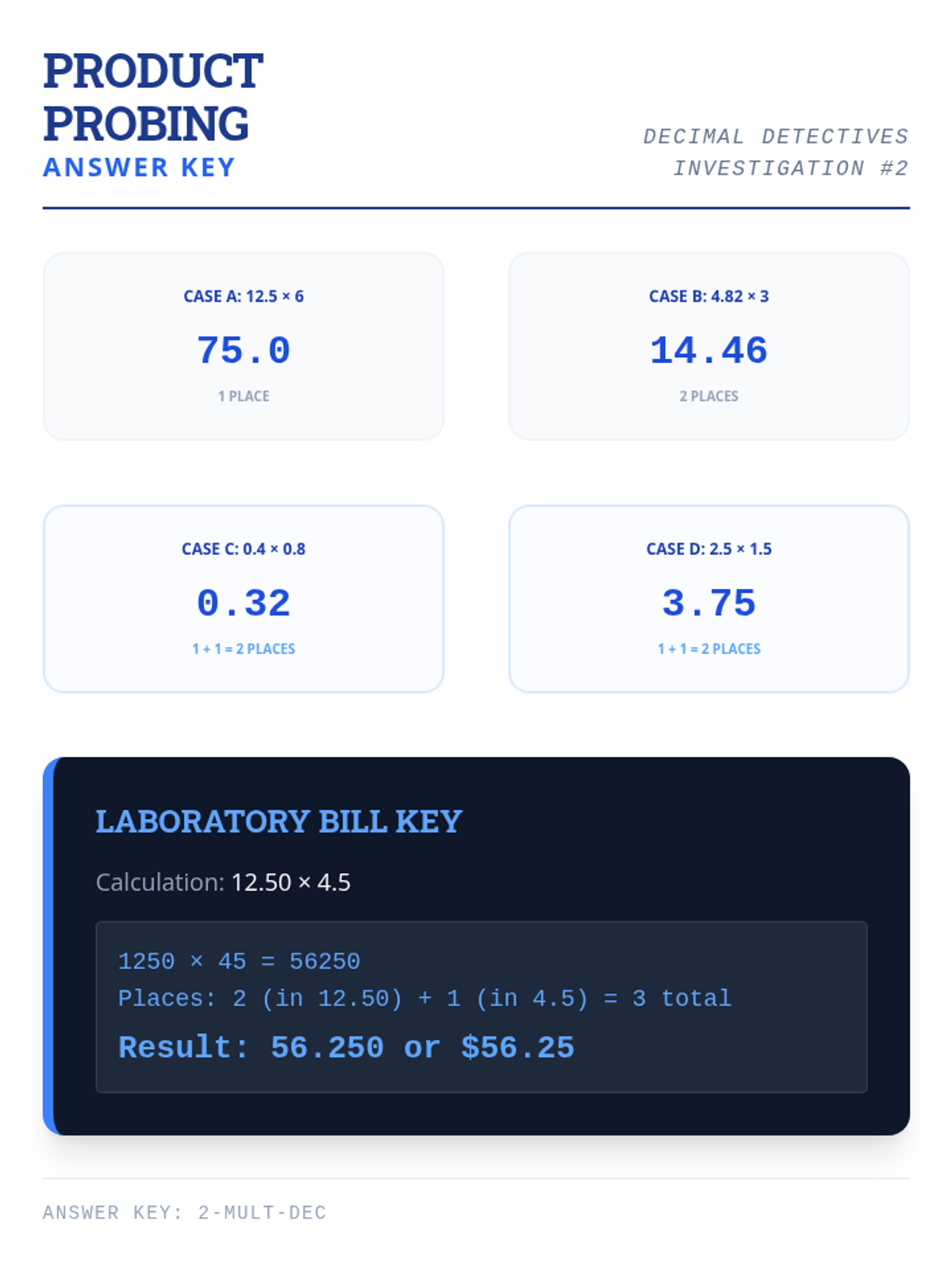
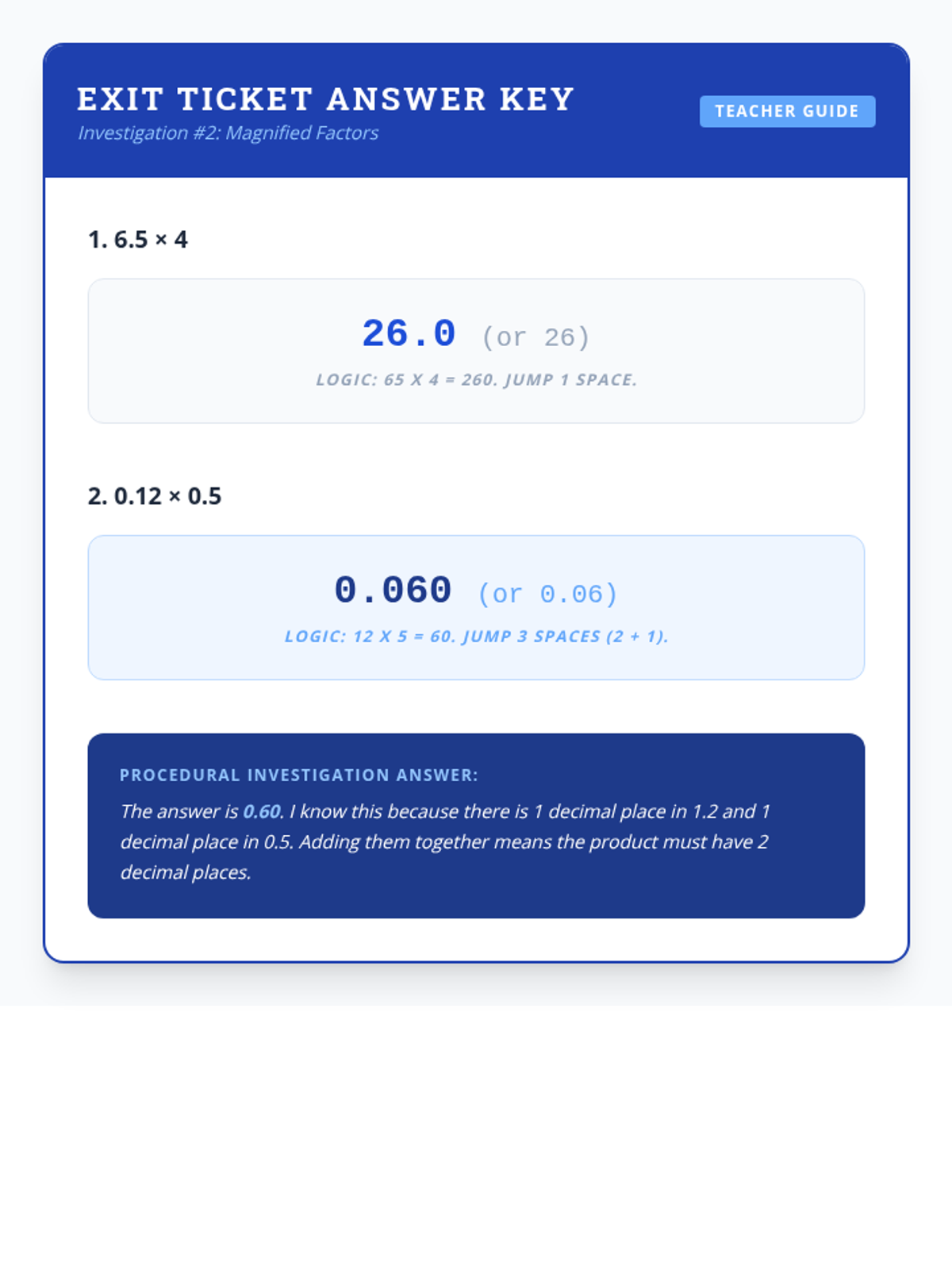
A comprehensive unit on performing the four operations with decimals, using a detective-themed approach to engage students in precision and problem-solving.
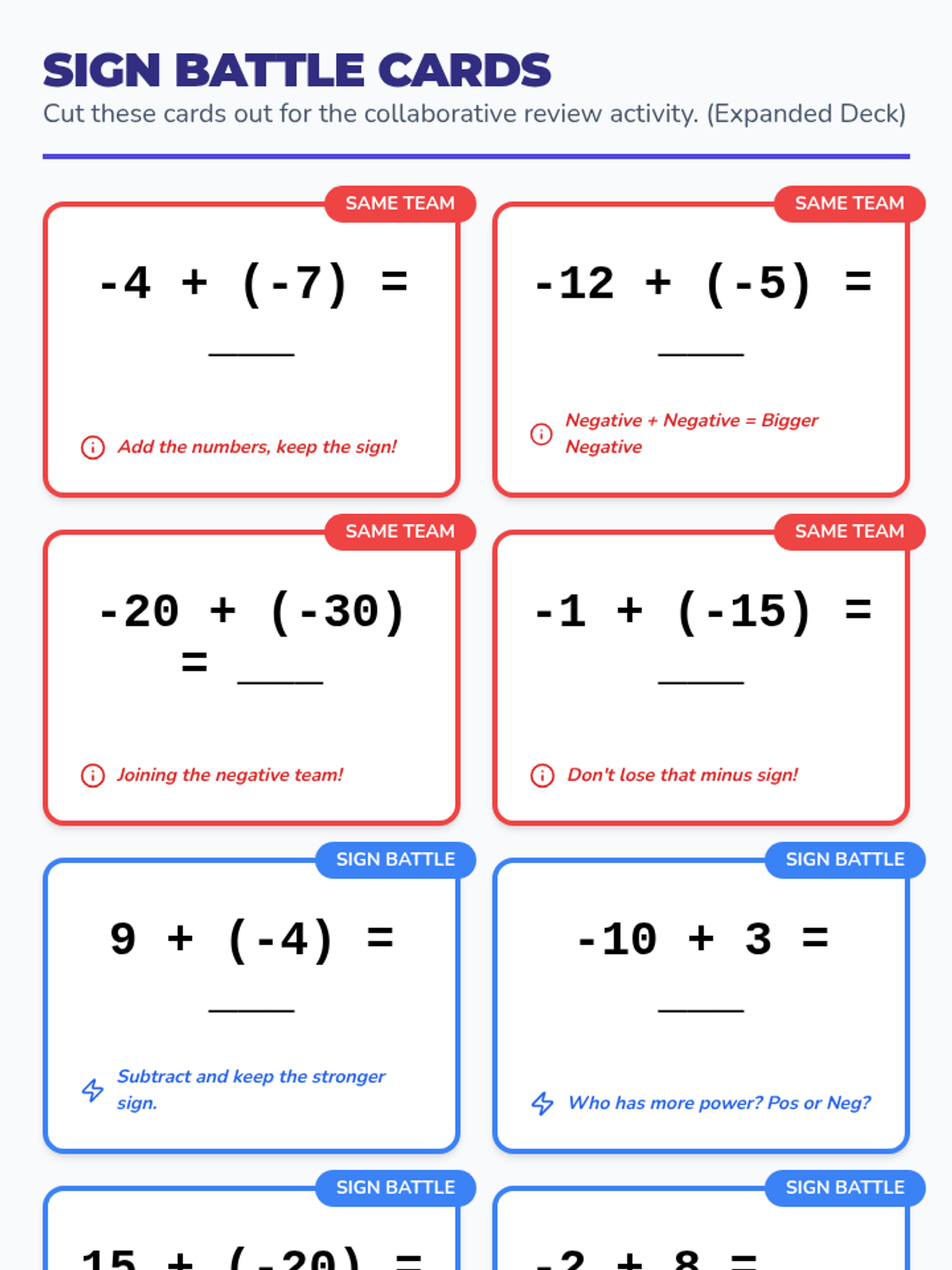
A comprehensive unit on adding and subtracting integers for grades 5-7, focusing on visual supports, mnemonic rules, and scaffolded practice for students with diverse learning needs.
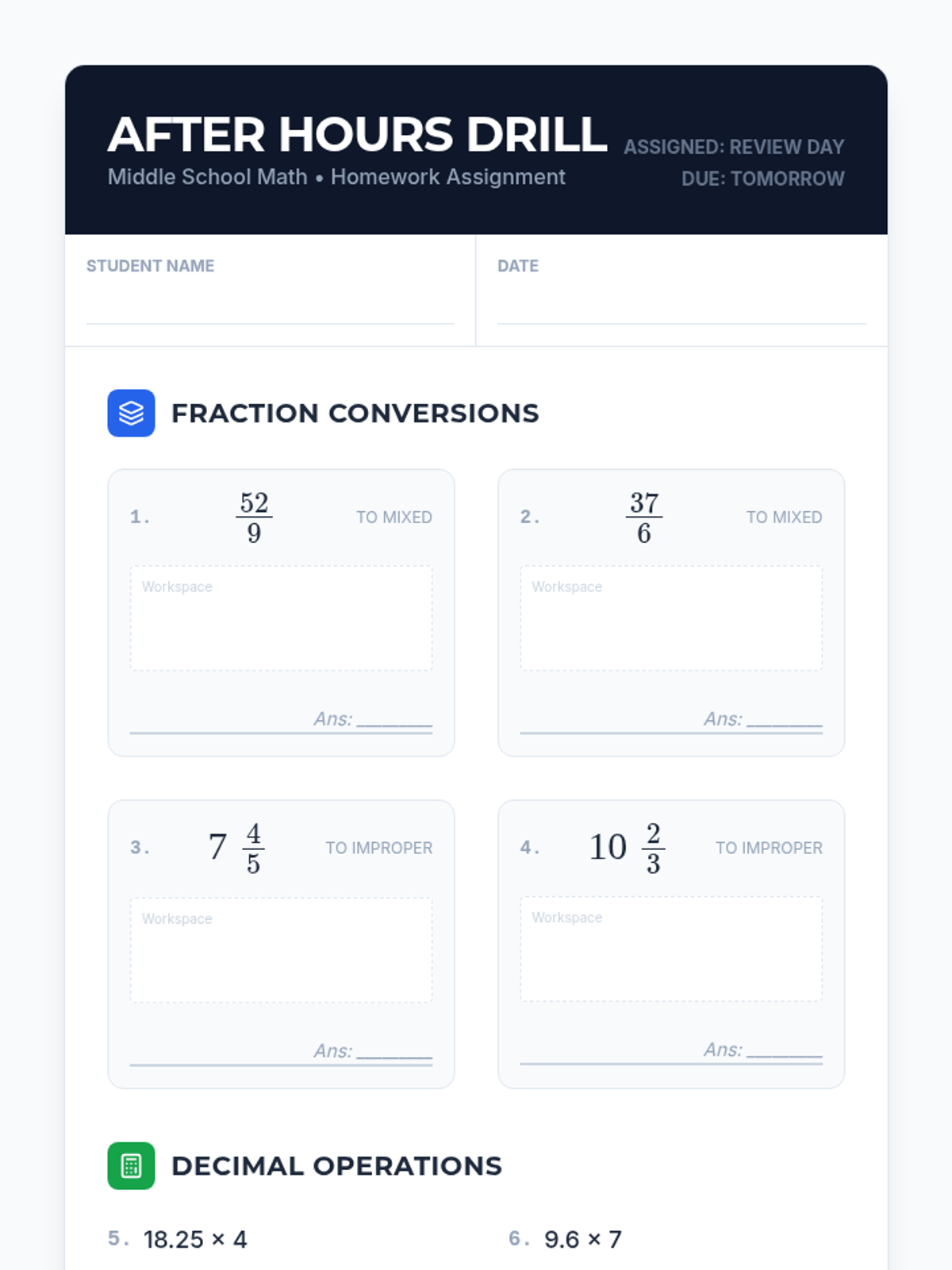
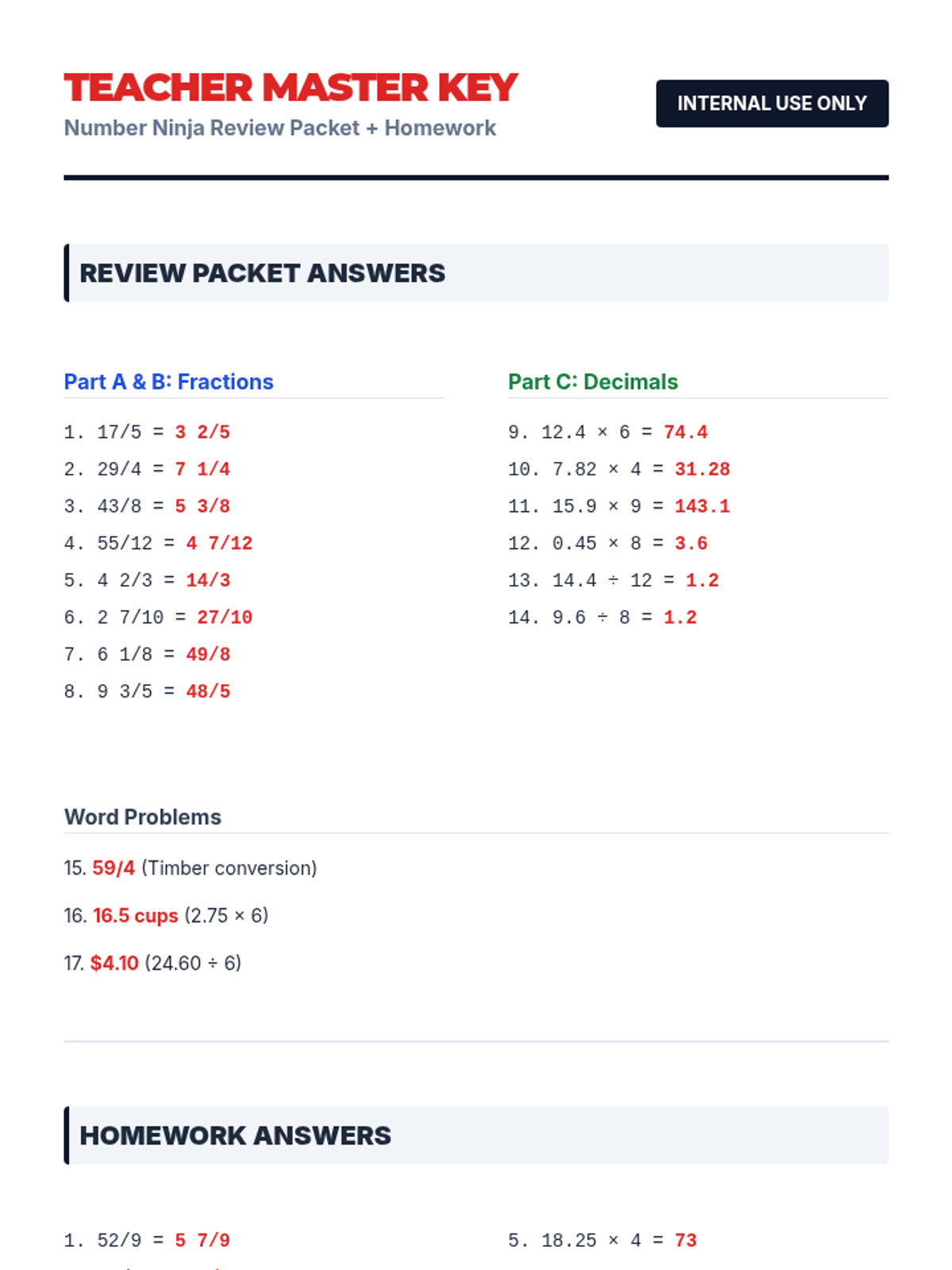
A comprehensive math review sequence focusing on foundational middle school skills including fraction conversions and decimal operations. This unit is designed to bridge conceptual understanding with procedural fluency.
A comprehensive 7-week NYS Math Assessment preparation sequence for 8th grade, covering major clusters including algebra, functions, geometry, and statistics.
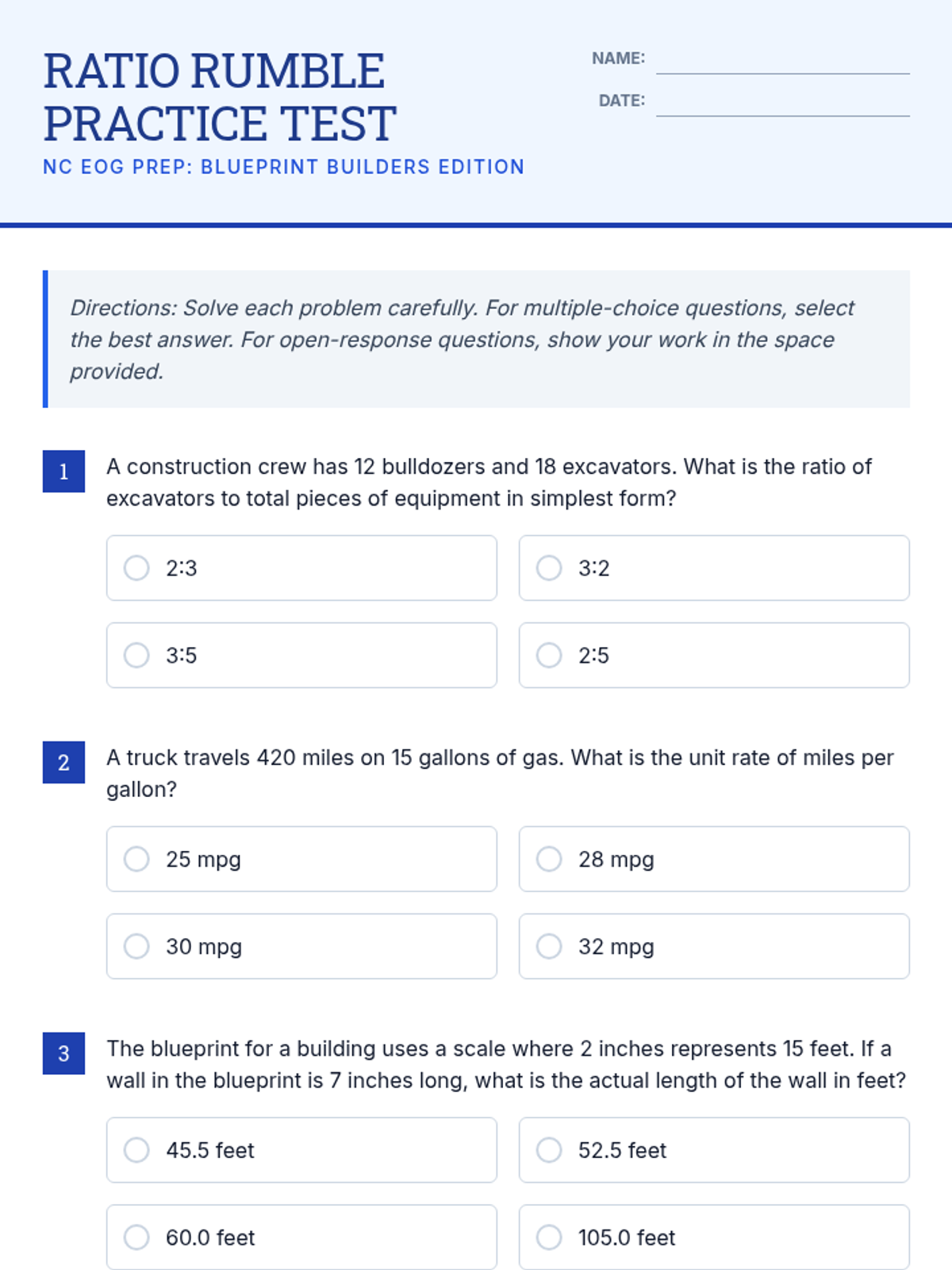
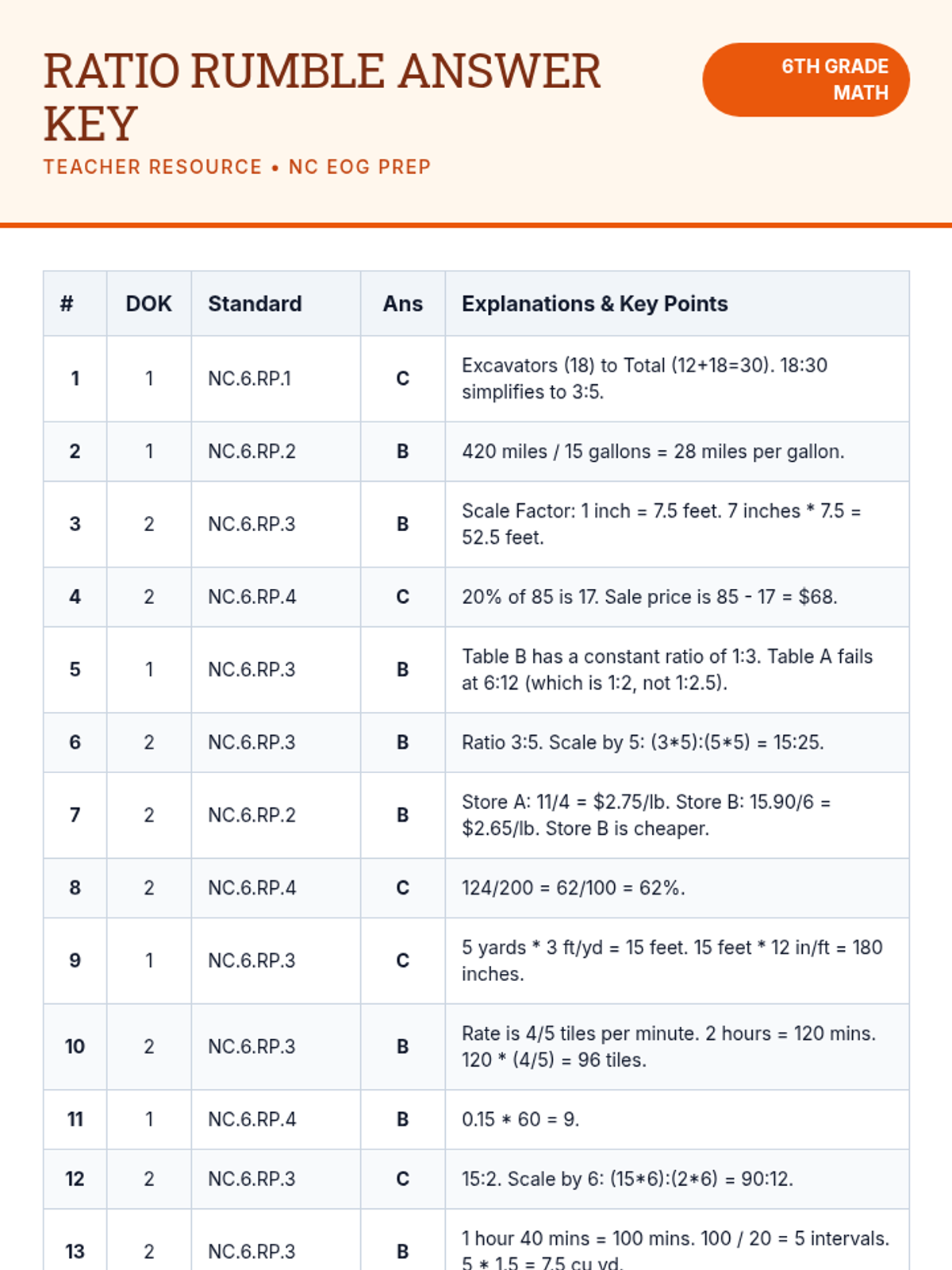
A comprehensive unit on ratios and proportional relationships for 6th grade, designed to align with North Carolina EOG standards and DOK distributions.
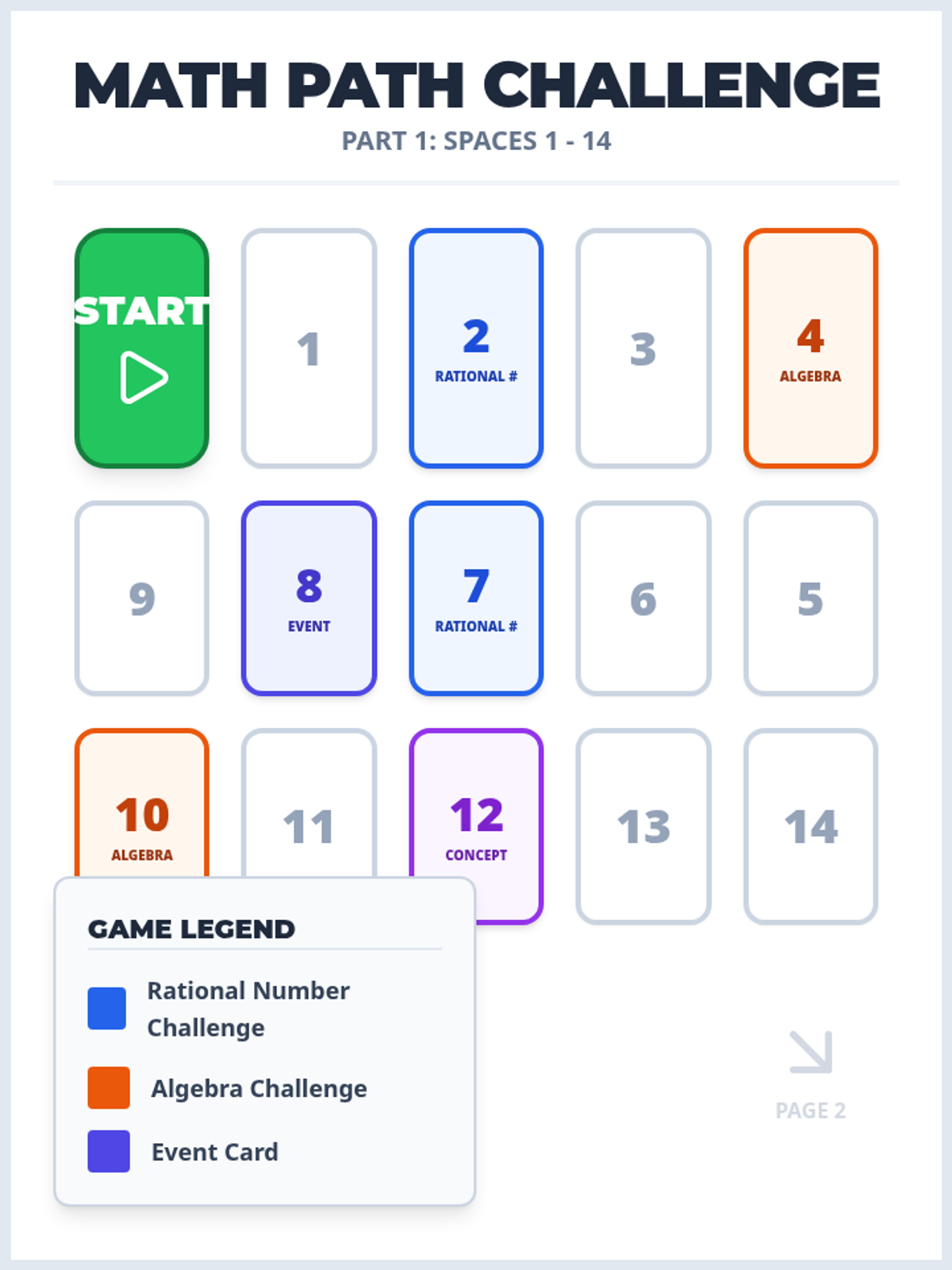
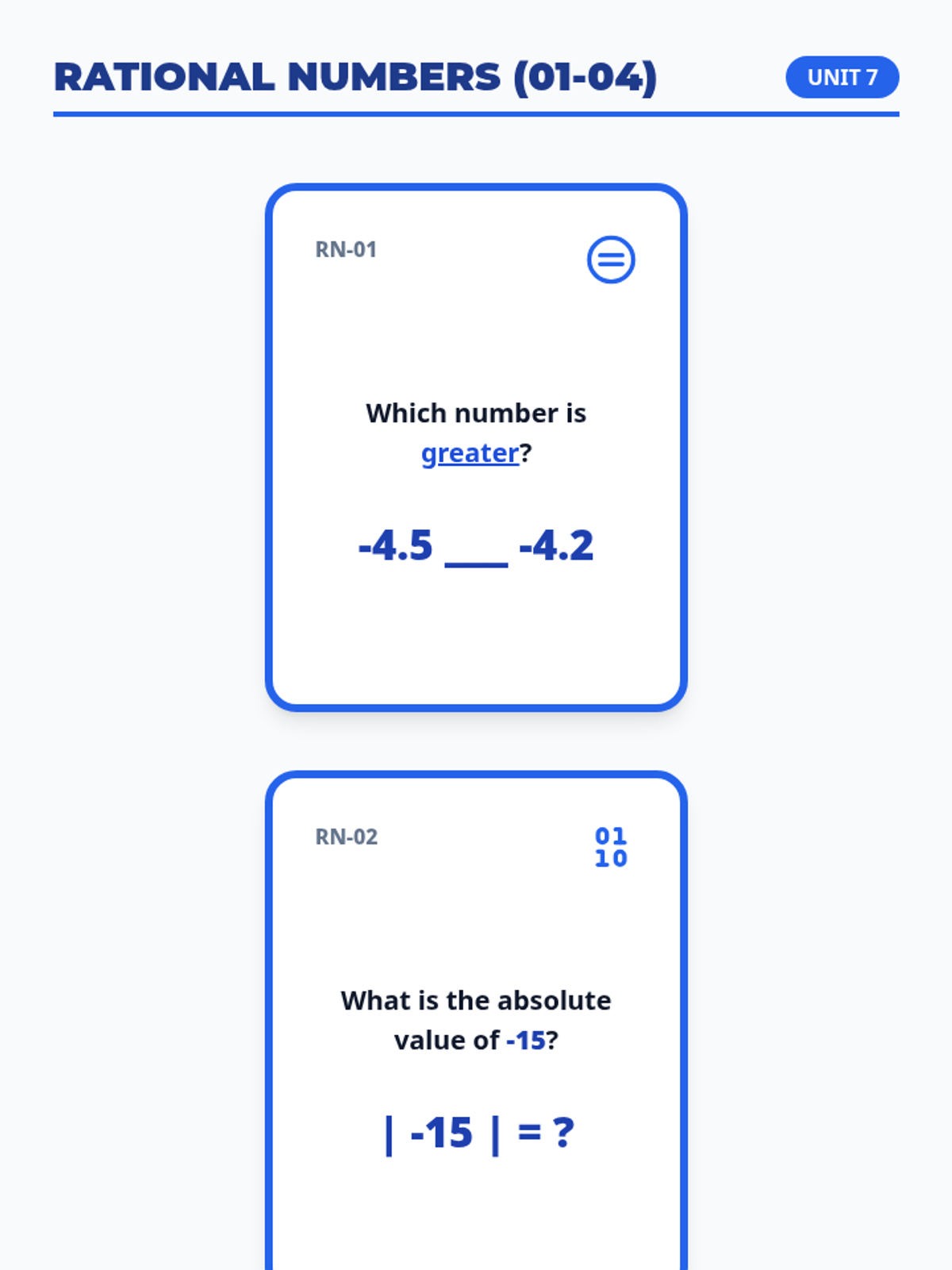
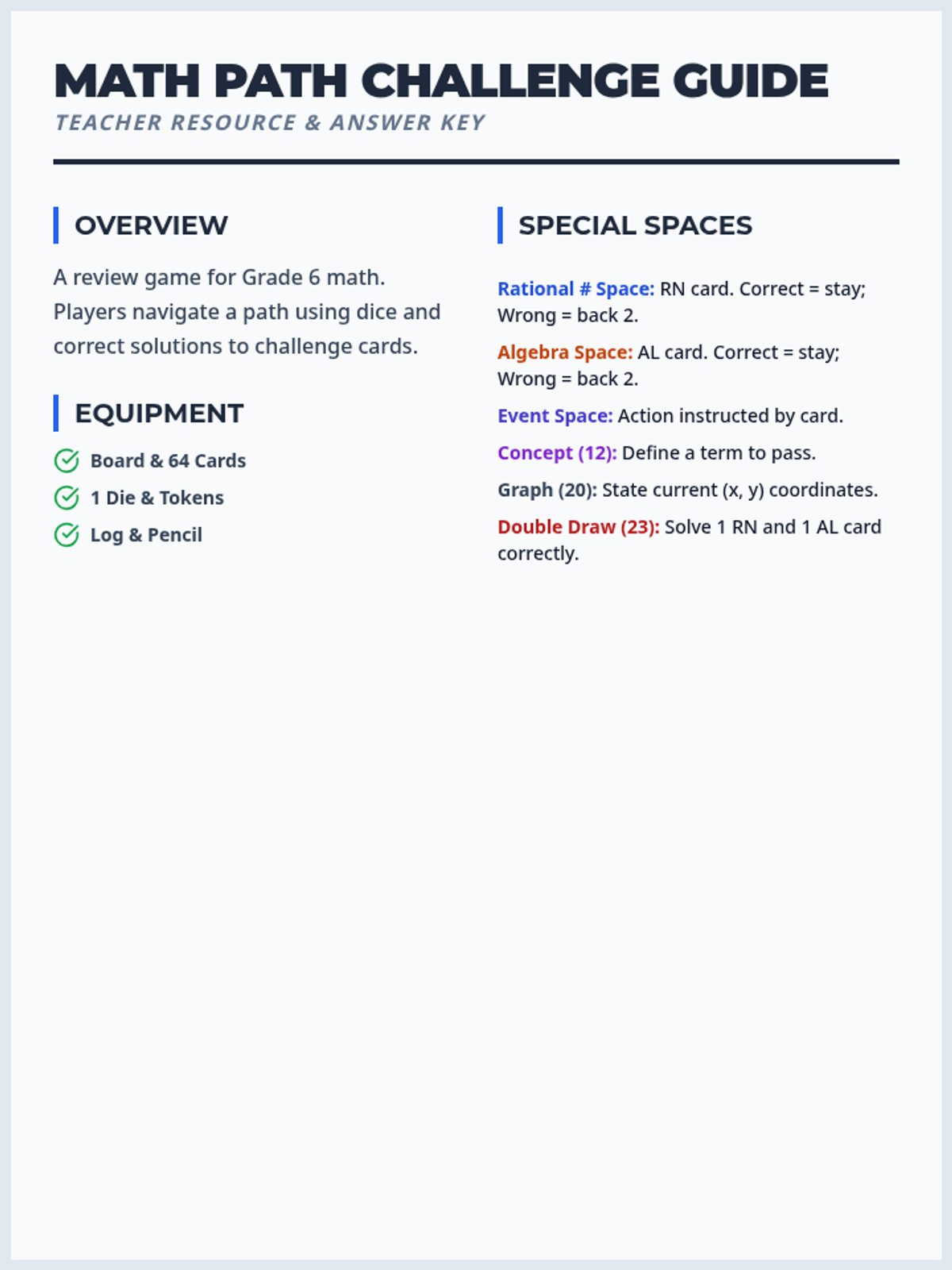
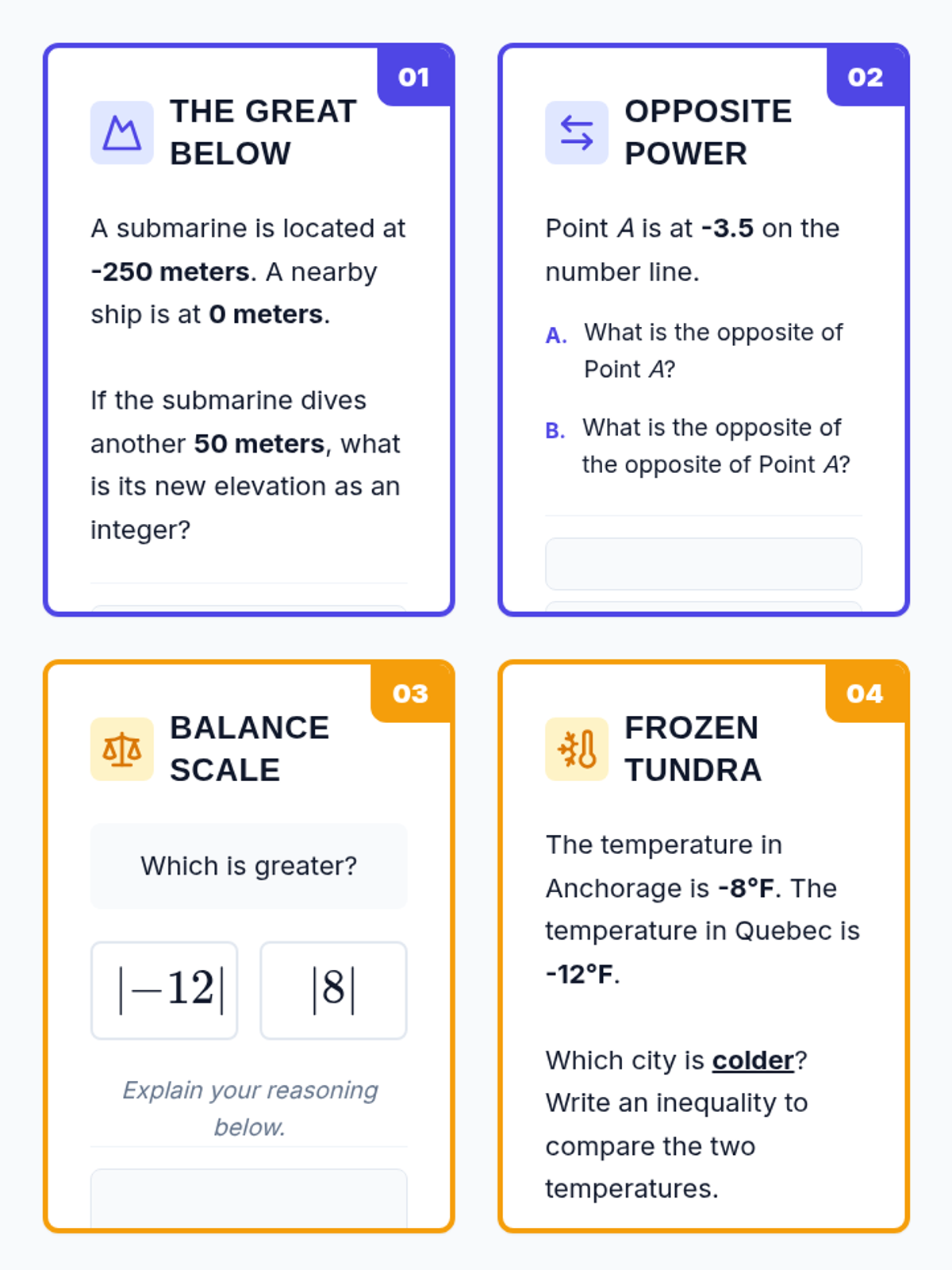
A comprehensive math review unit focused on mastering rational numbers, absolute value, and algebraic expressions through structured gameplay and practice.
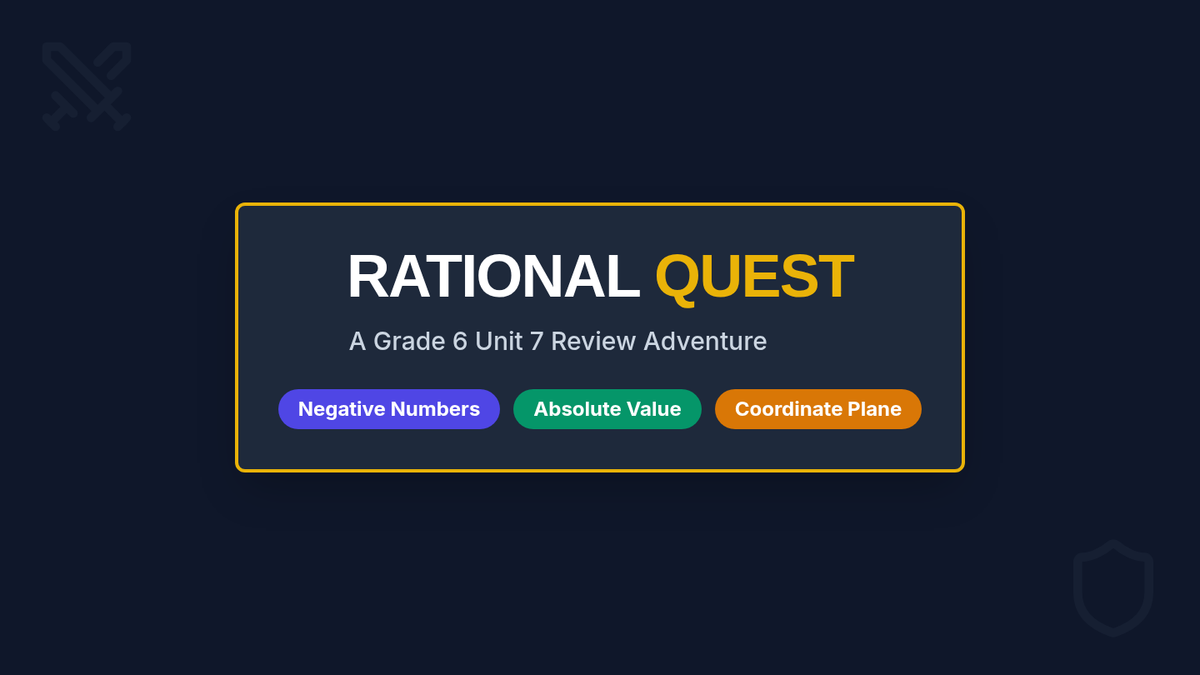
A comprehensive review sequence for Grade 6 Math Unit 7, focusing on rational numbers, absolute value, and the coordinate plane through engaging game-based activities.
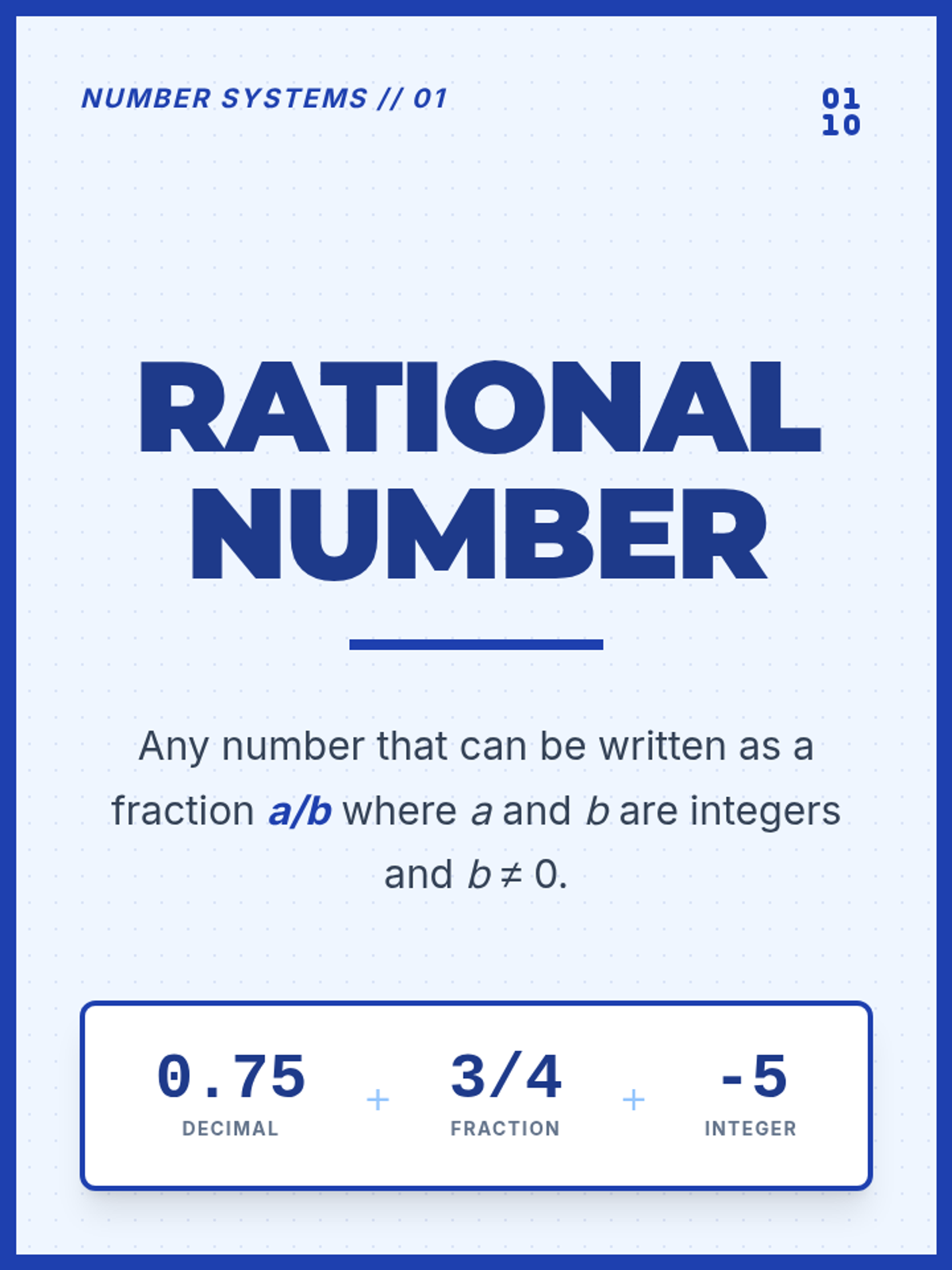
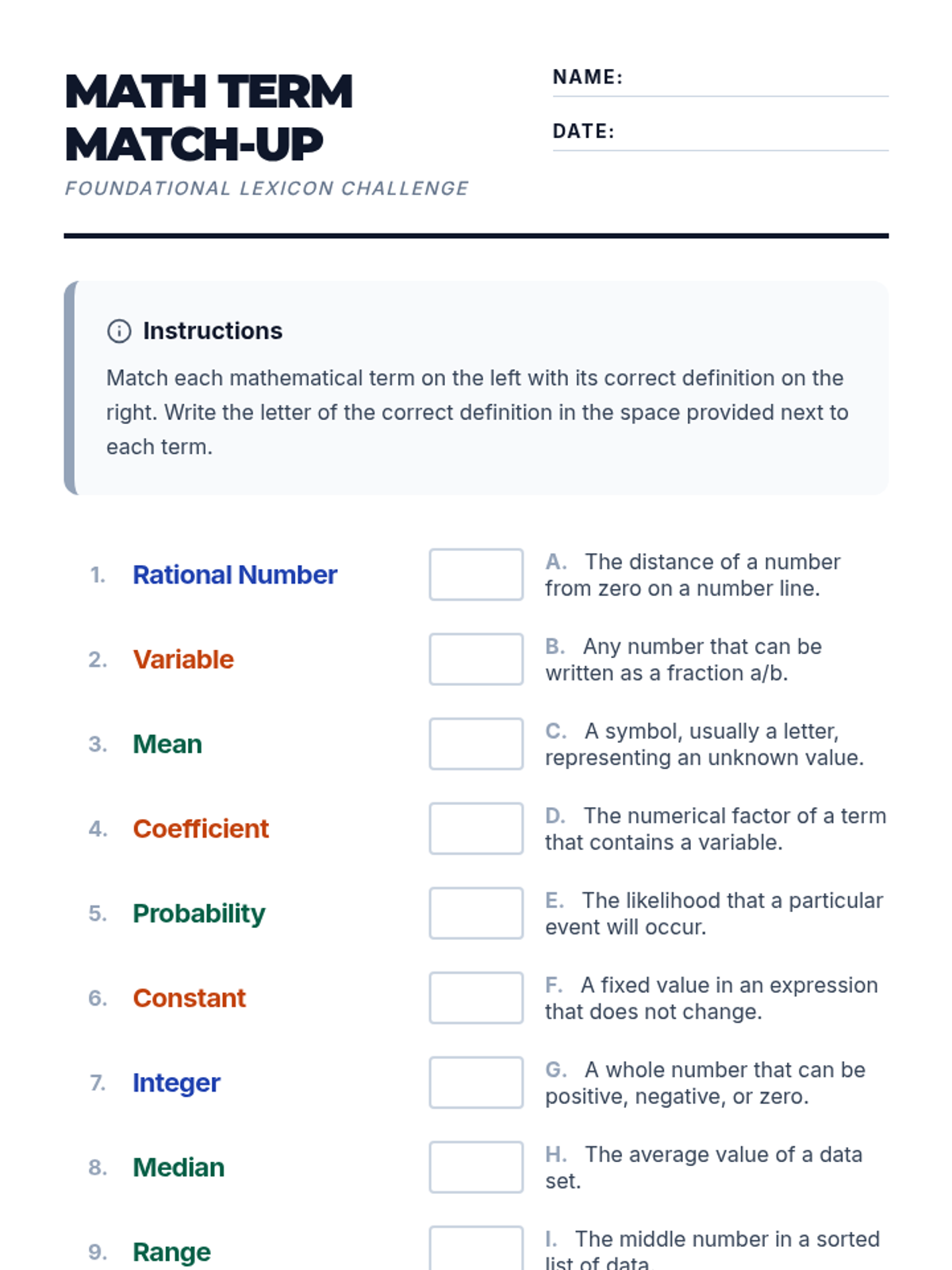
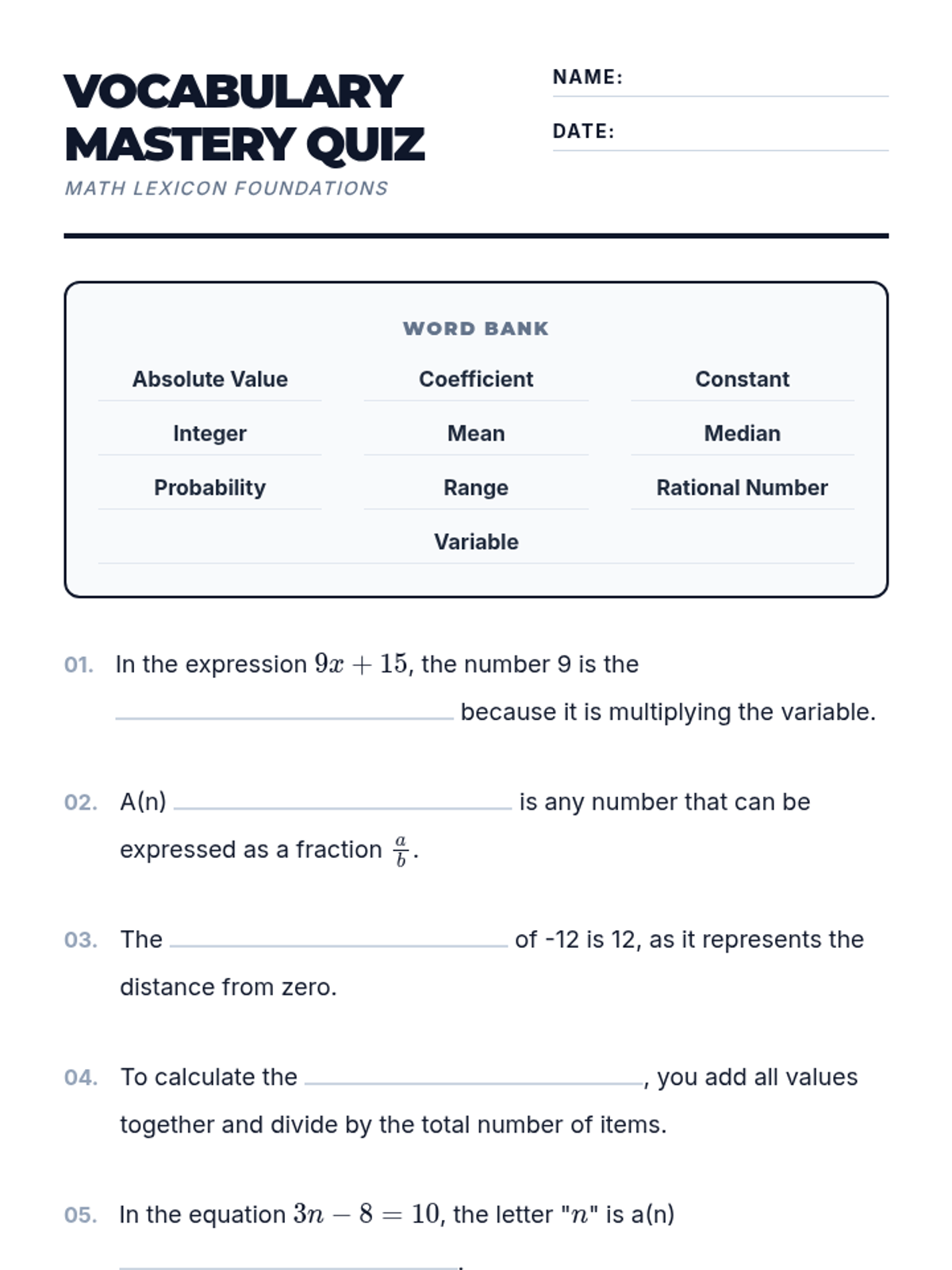
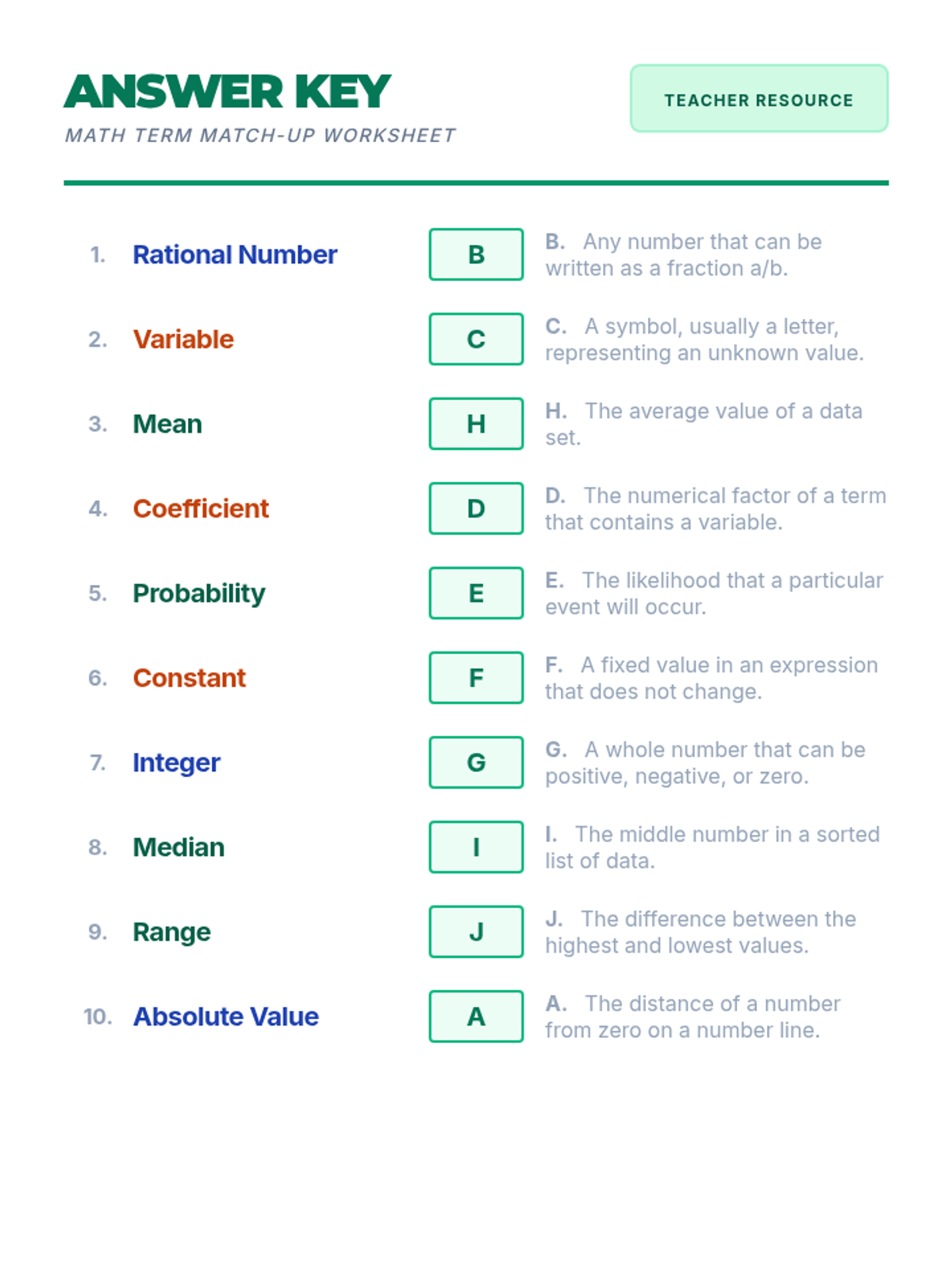
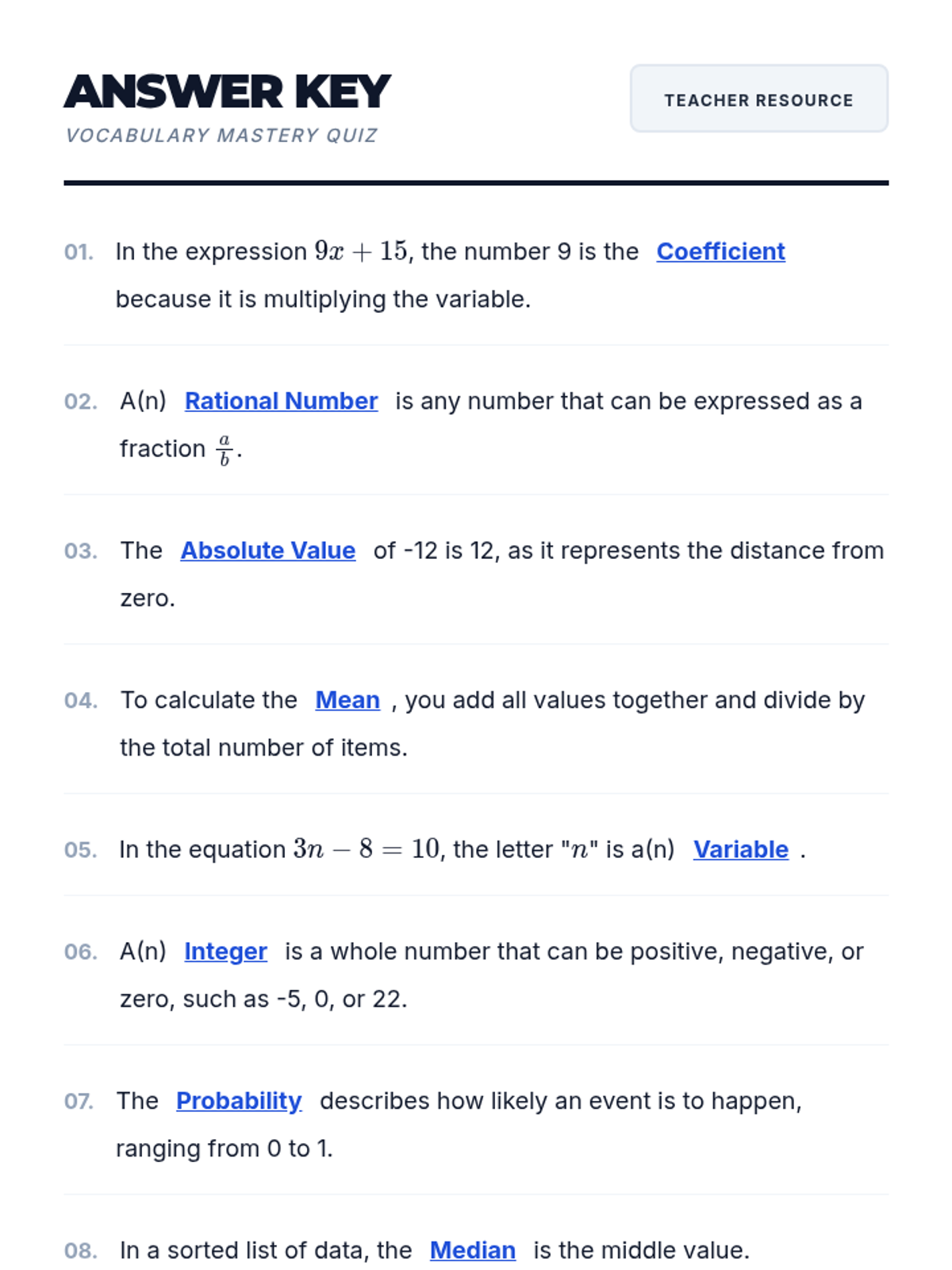
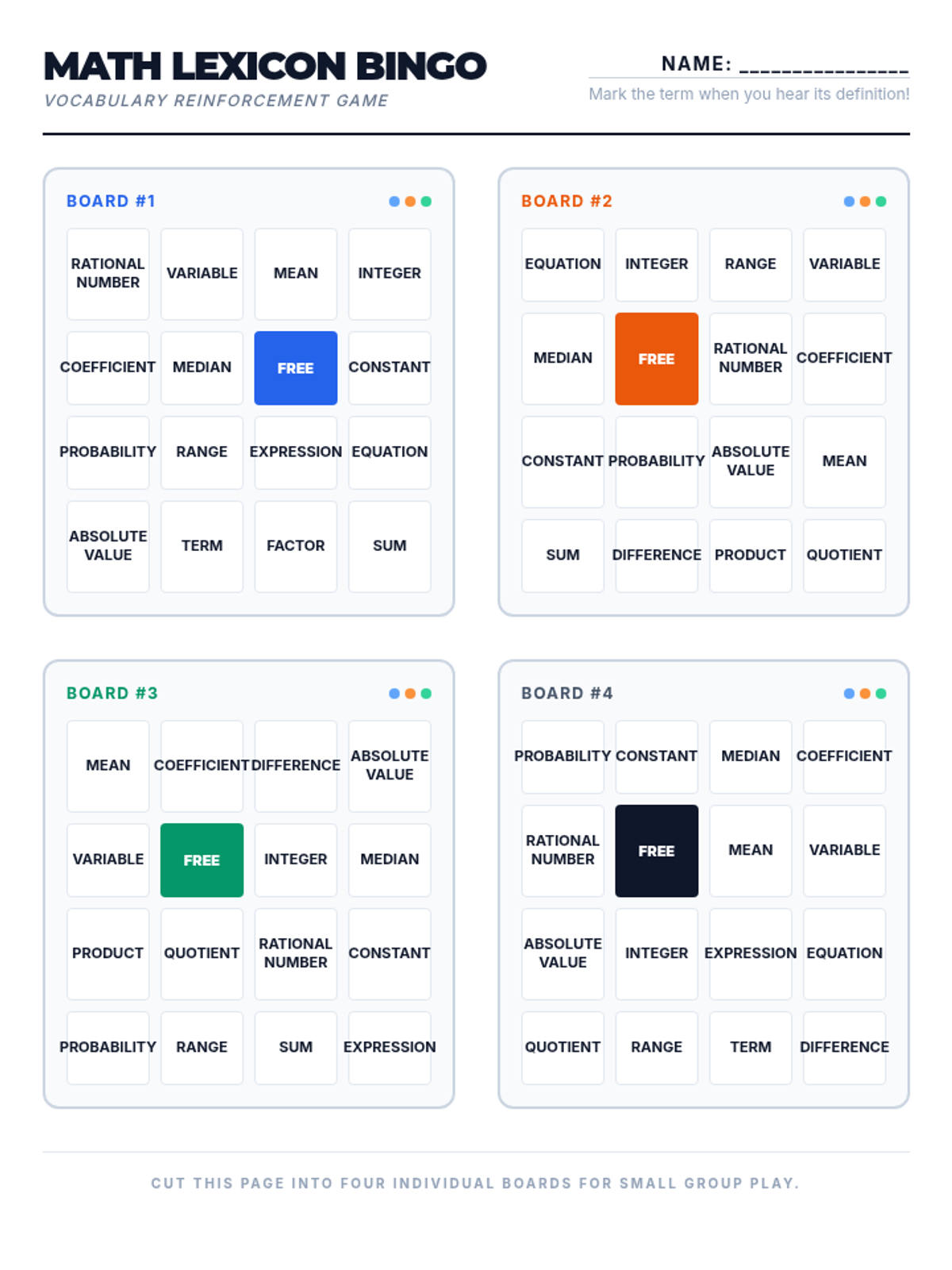
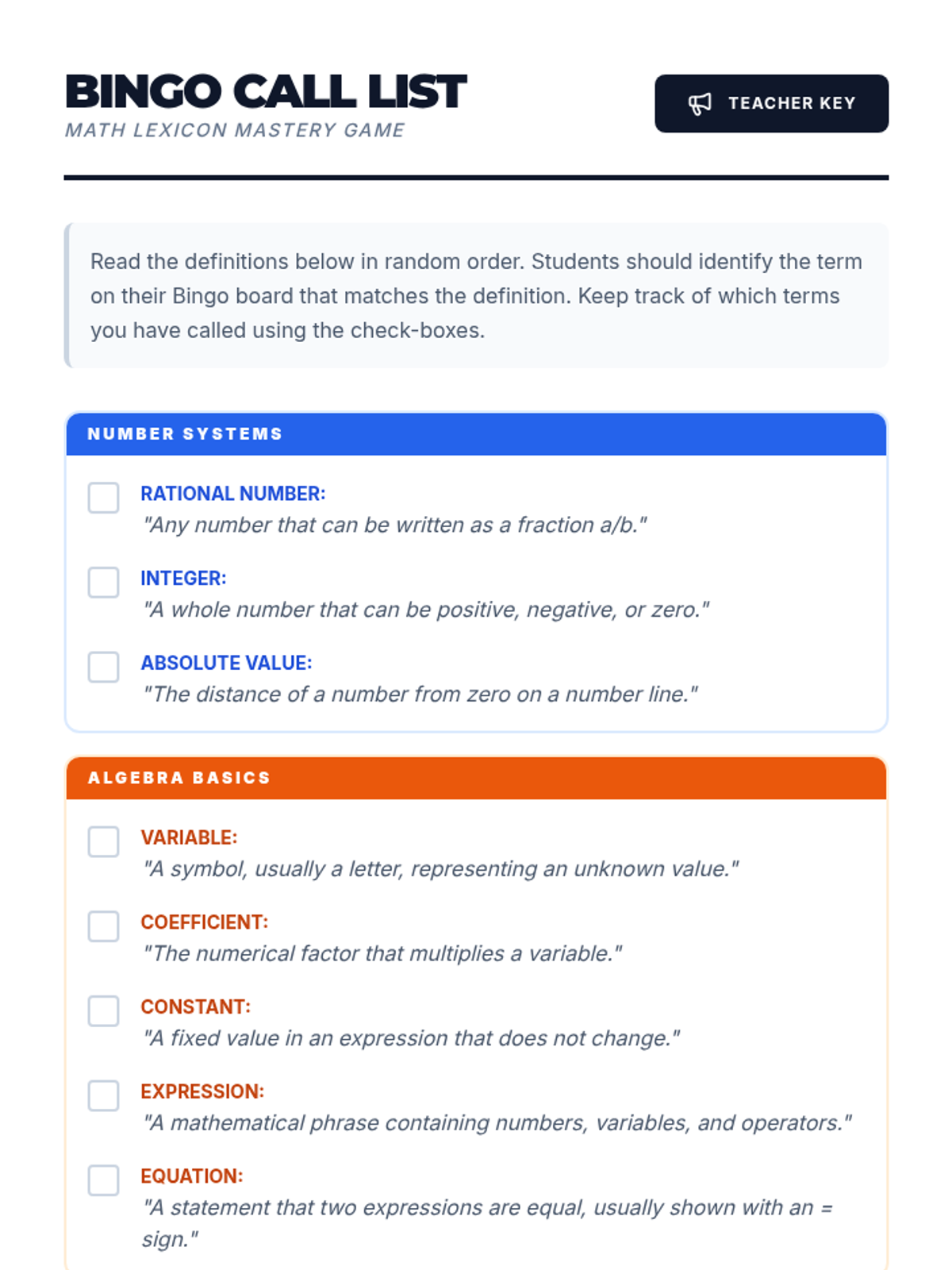
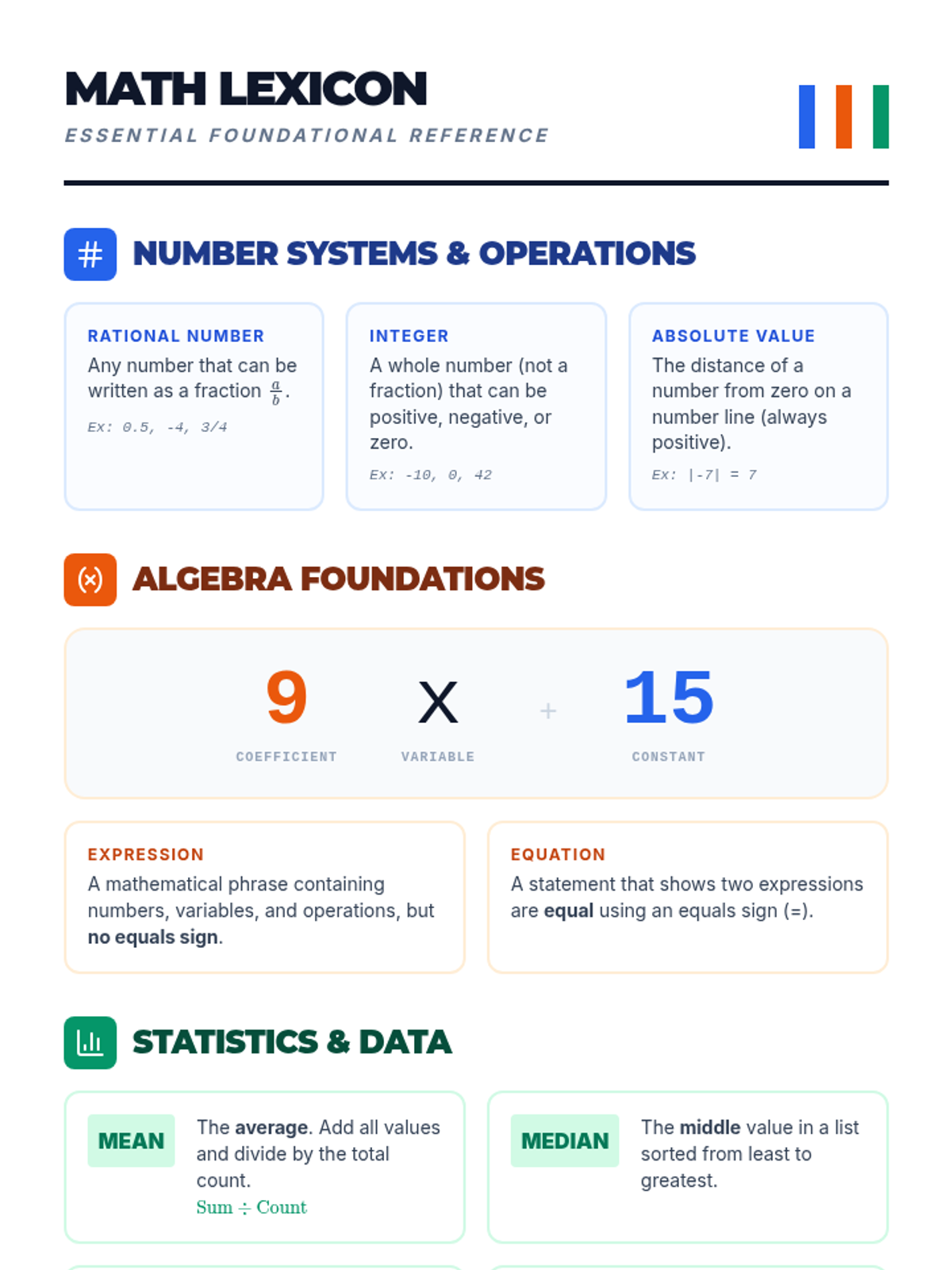
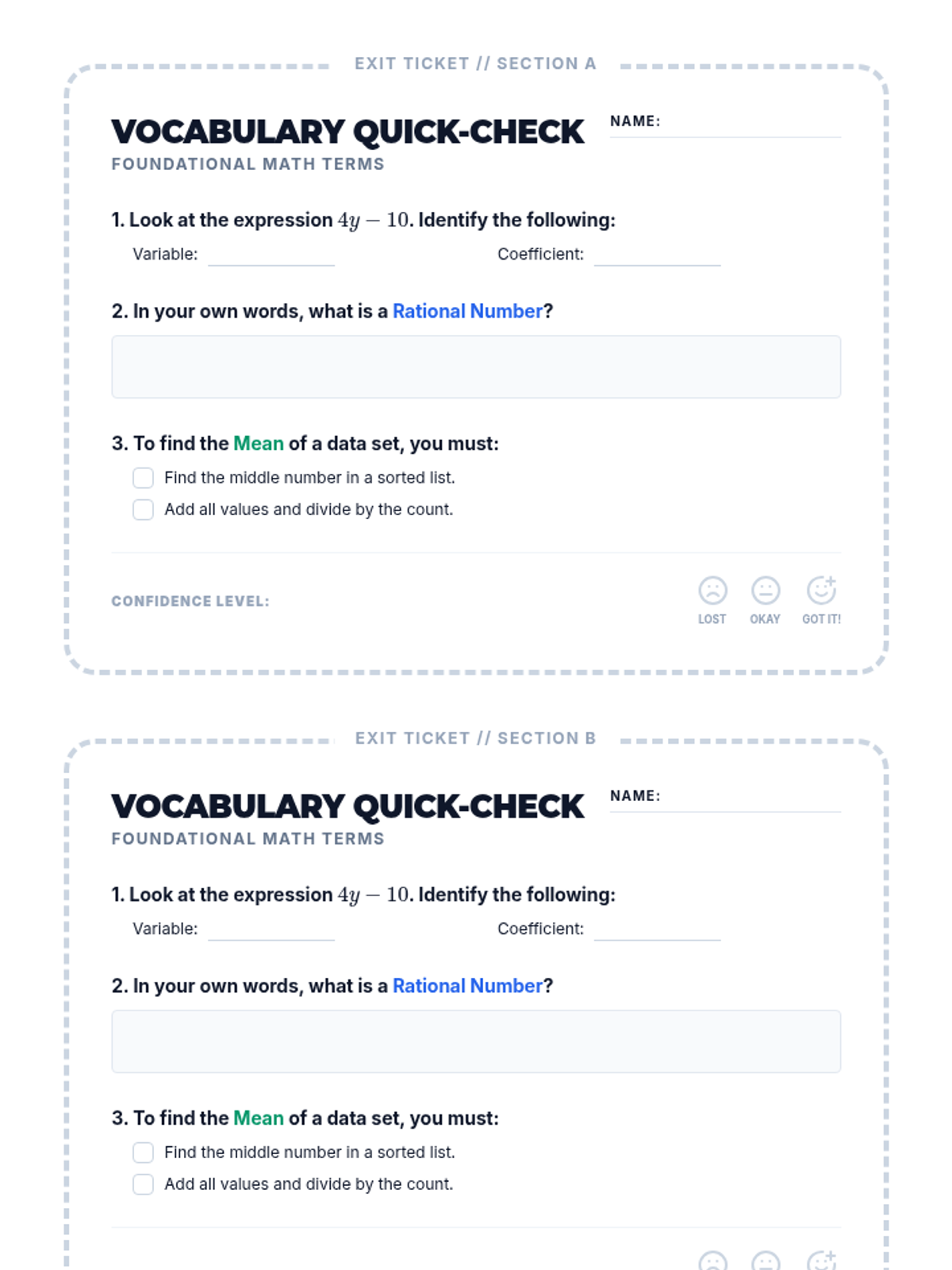
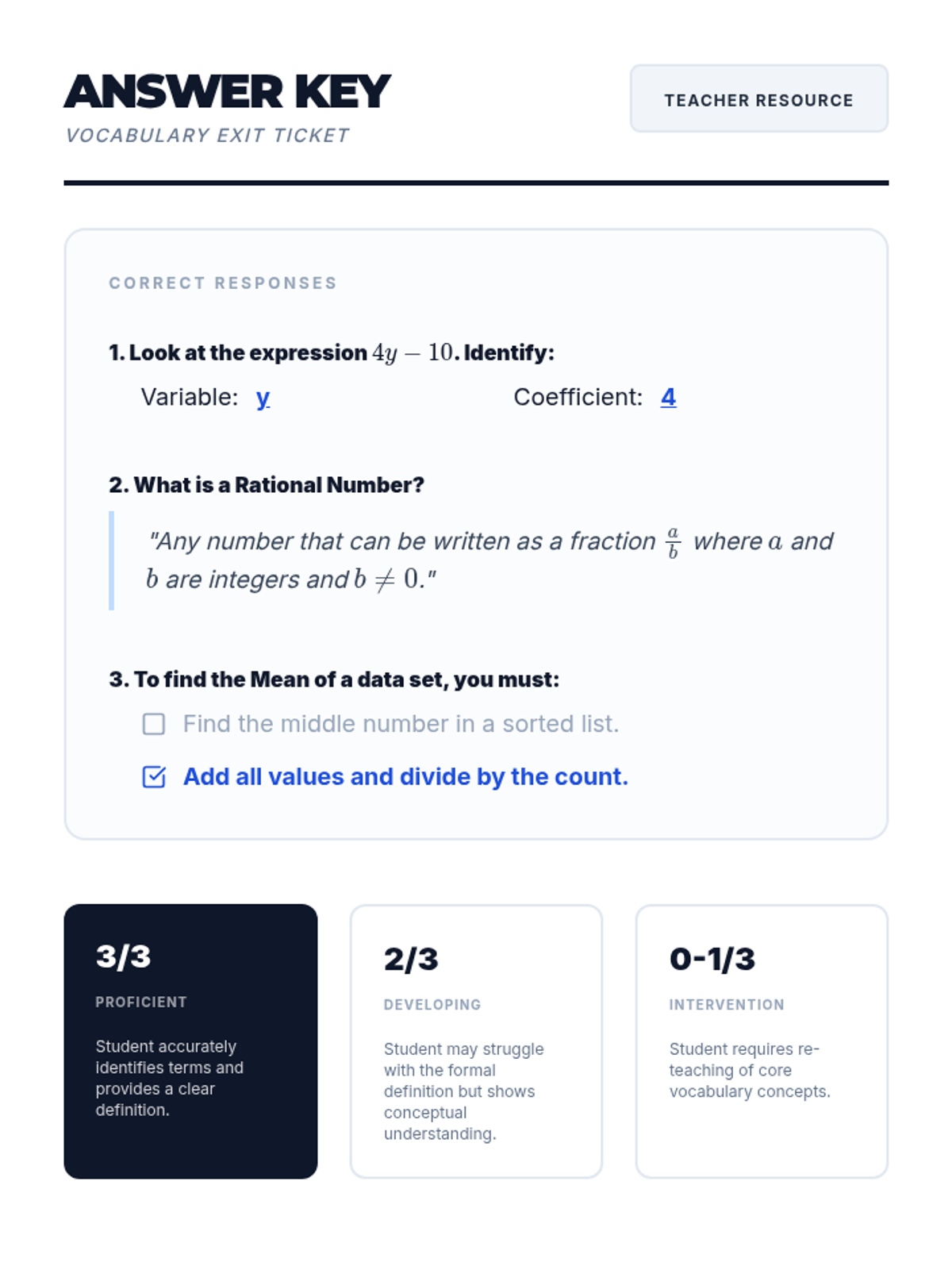
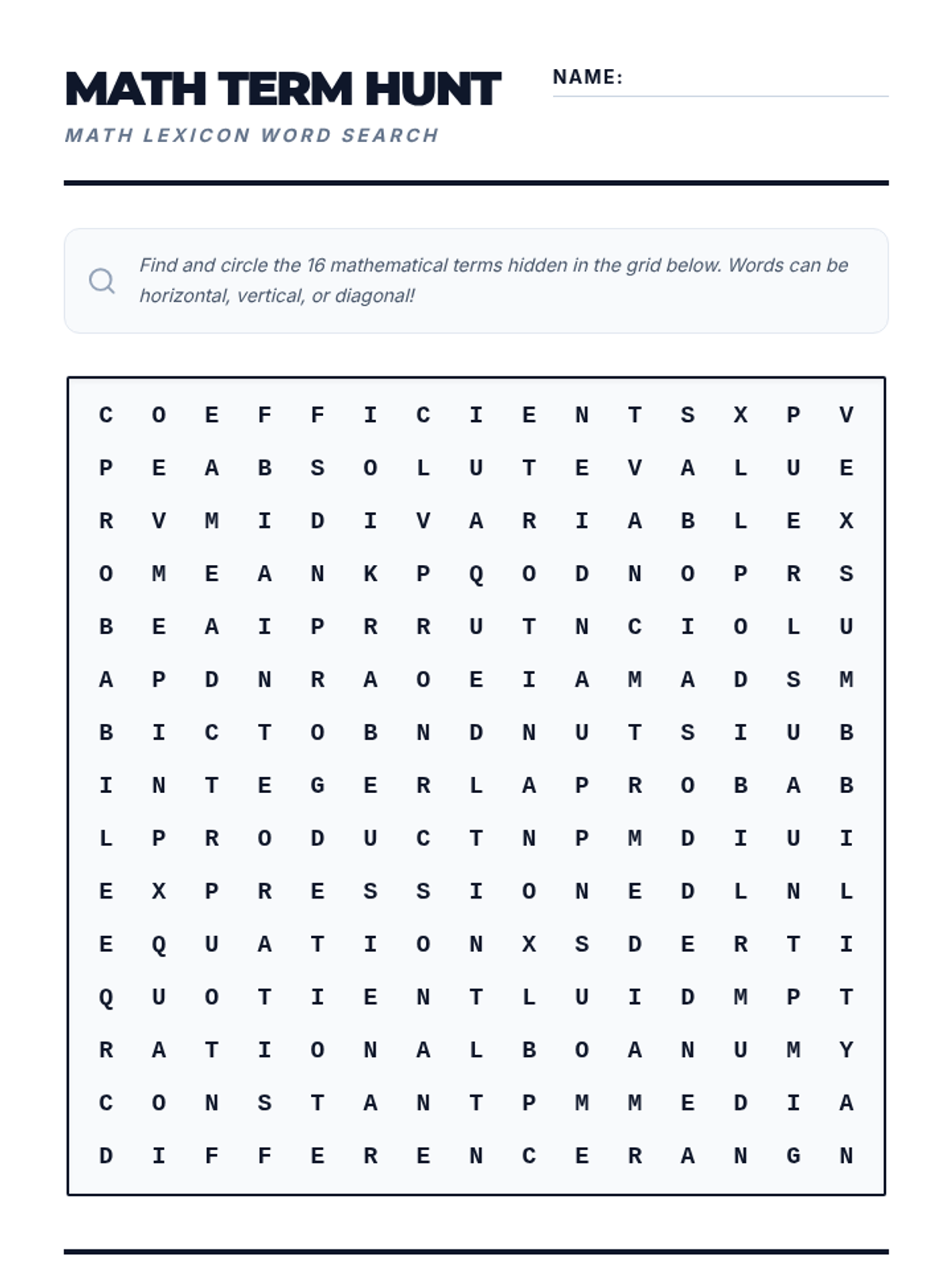
A comprehensive collection of mathematical vocabulary resources covering number systems, algebraic expressions, and statistical analysis. This unit focuses on building precise mathematical language for foundational concepts.
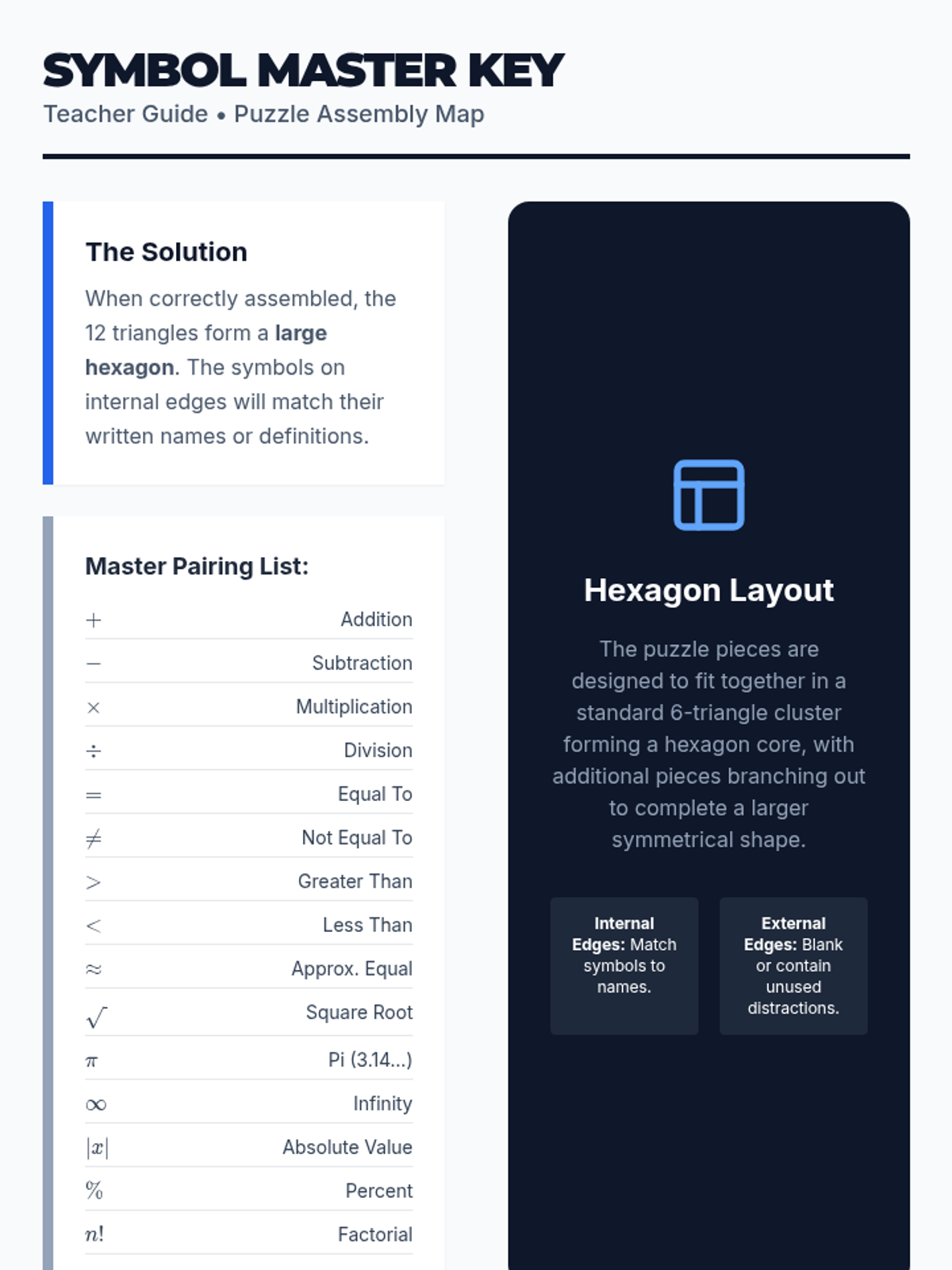
A series of lessons designed to build fluency in mathematical notation and operations through visual and tactile learning.