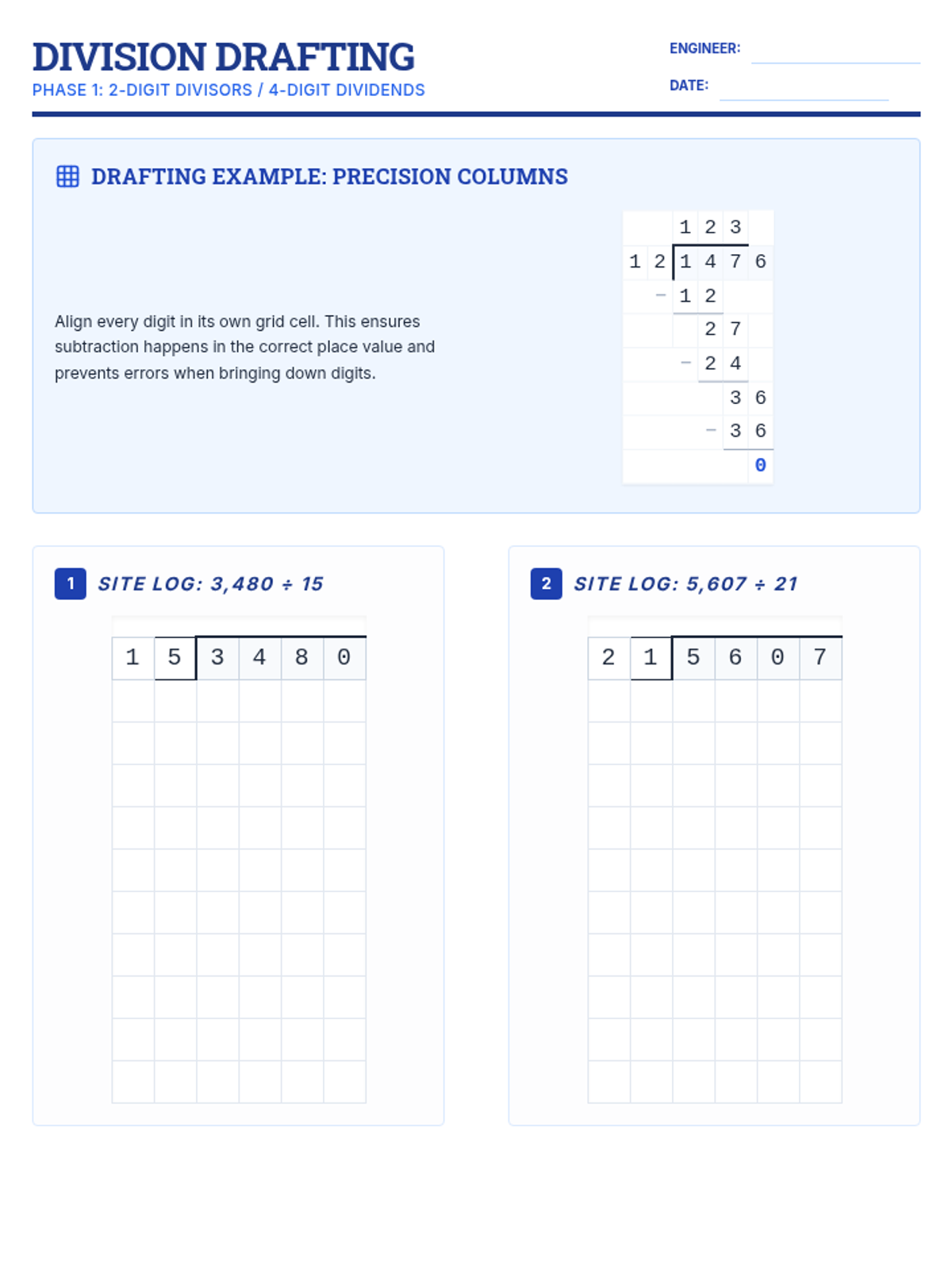
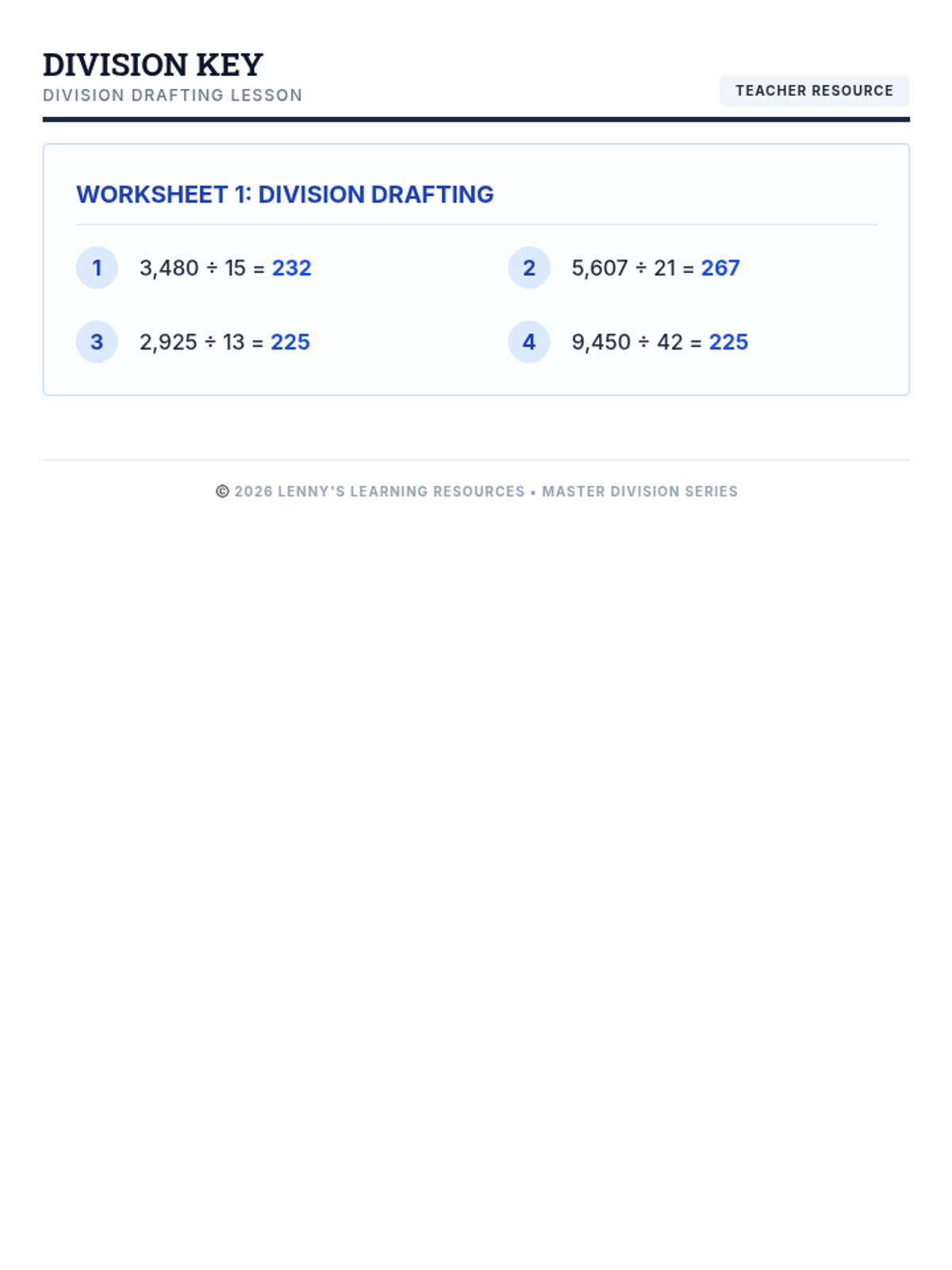
Foundational fraction equivalence, ordering, and operations across the rational number system. Addresses multi-digit computation, decimal conversions, and the distinction between rational and irrational numbers.
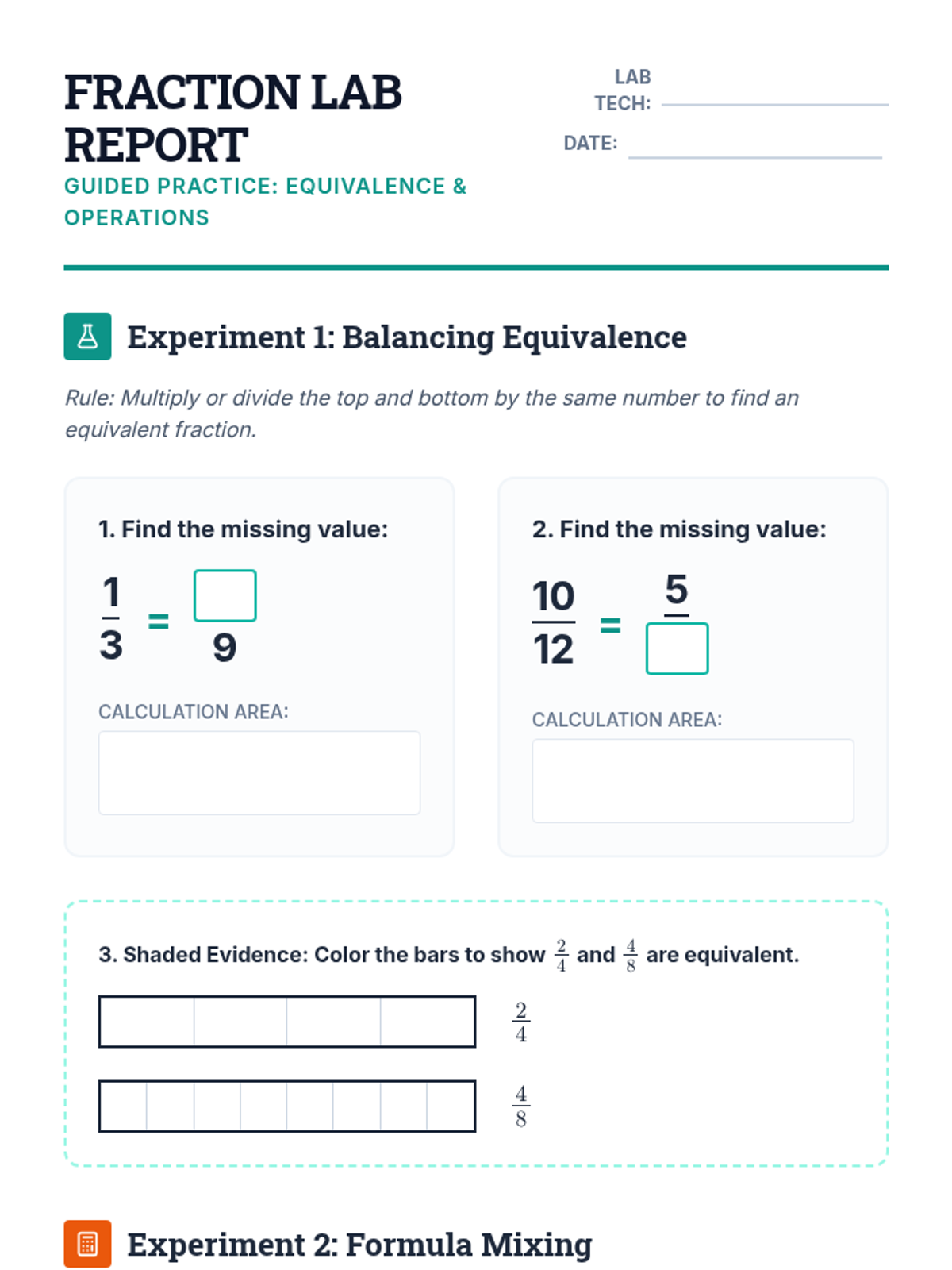
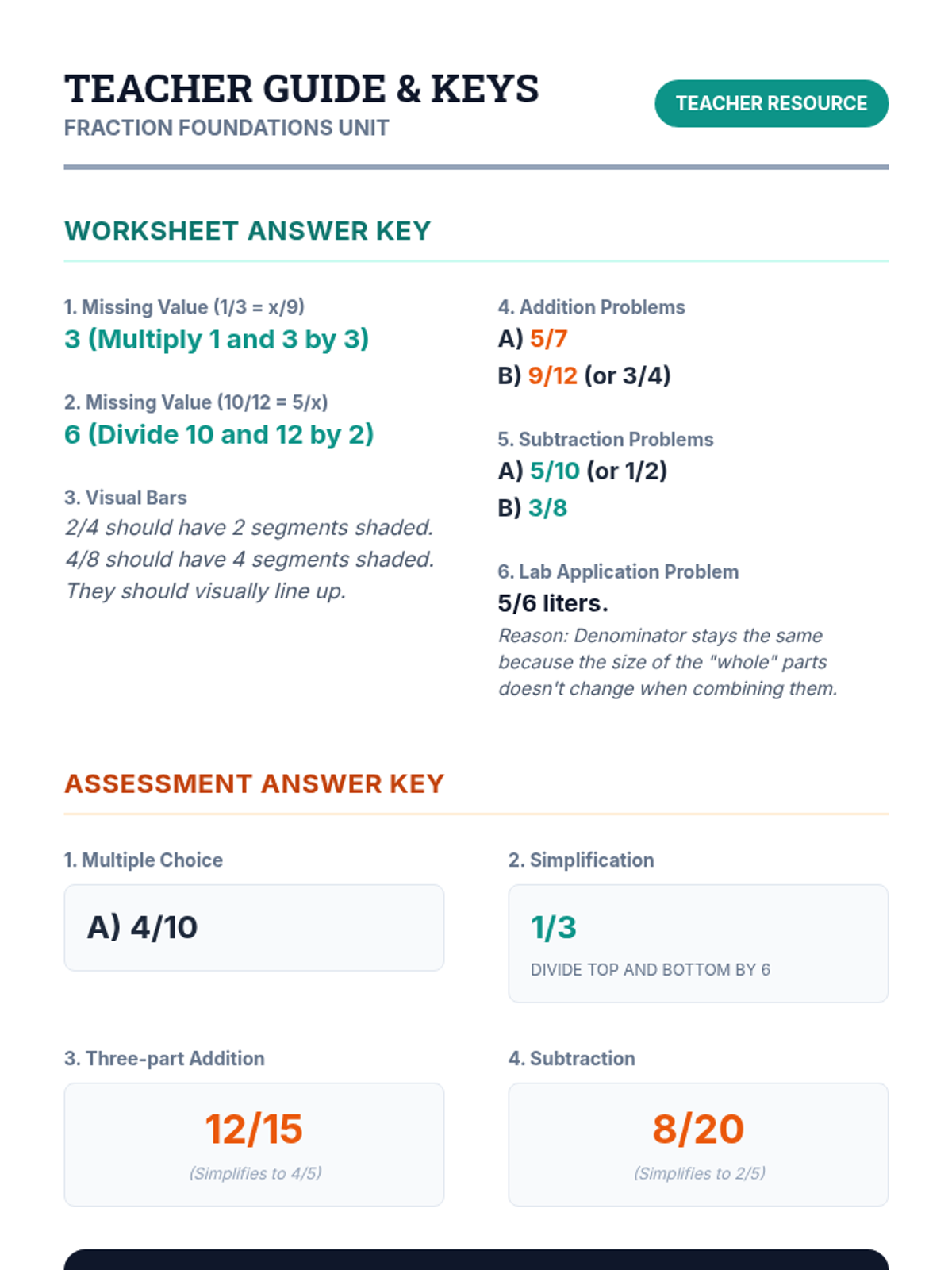
A comprehensive lesson on equivalent fractions and adding/subtracting fractions with like denominators, featuring a science lab theme.
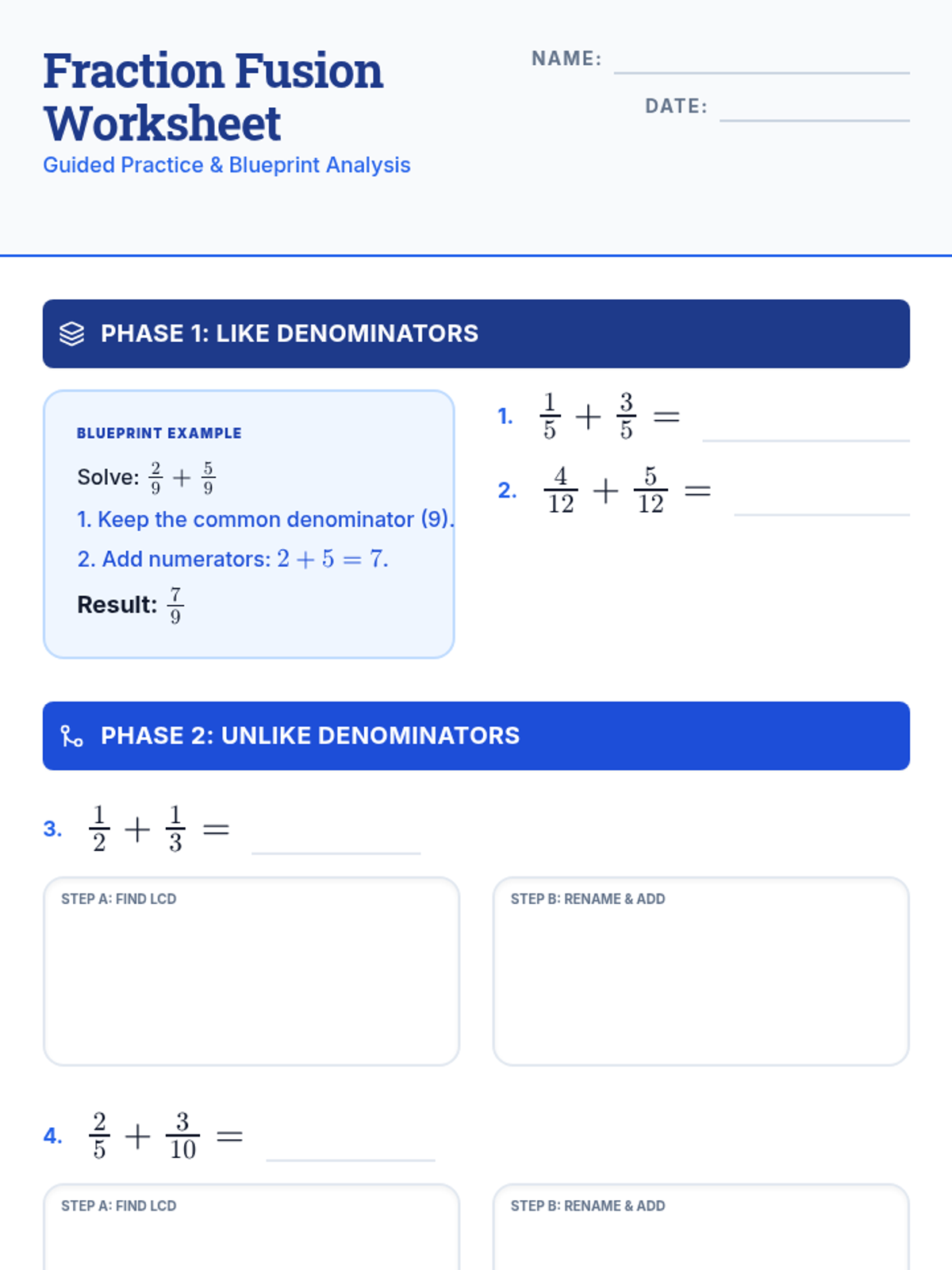
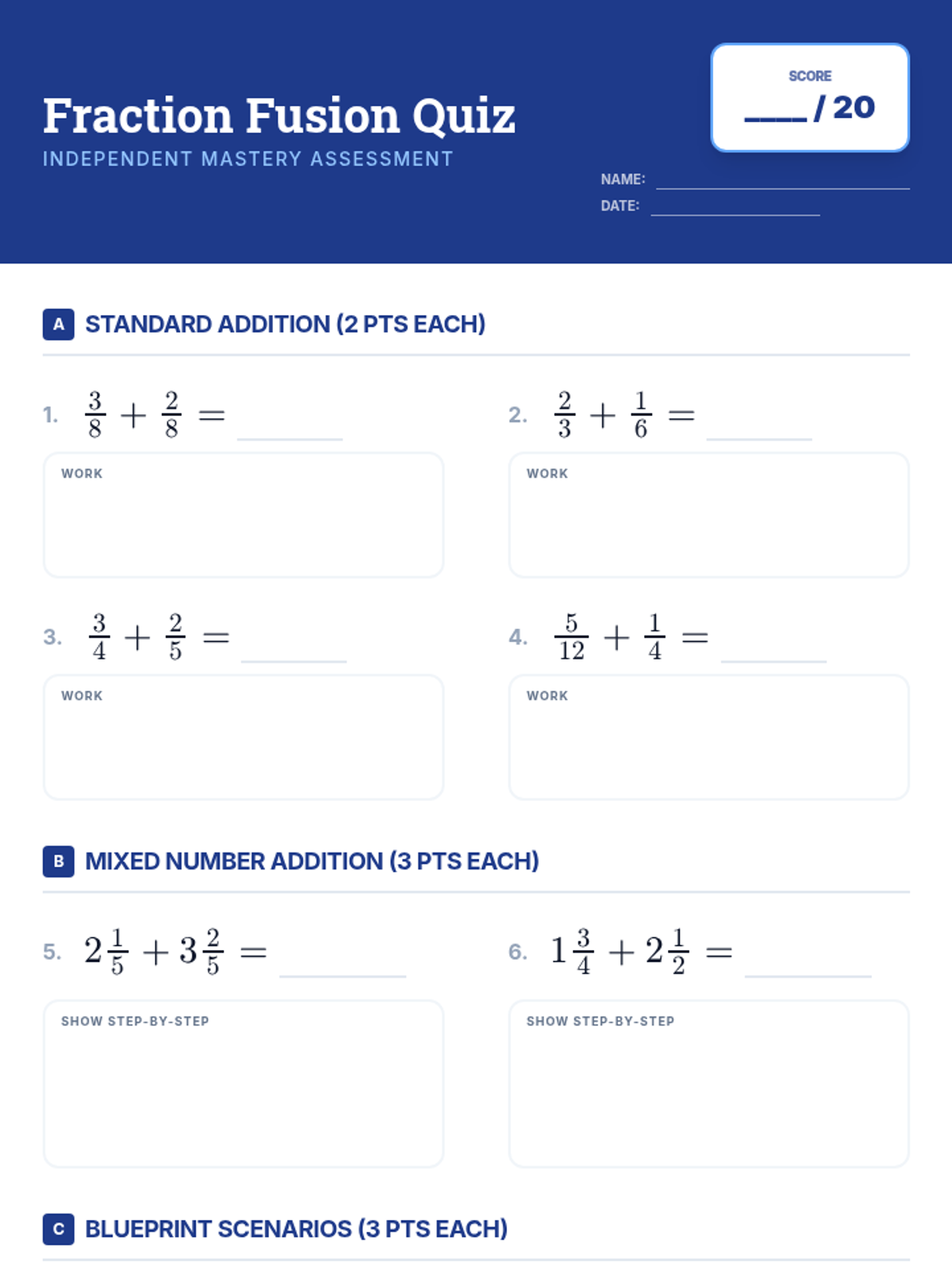
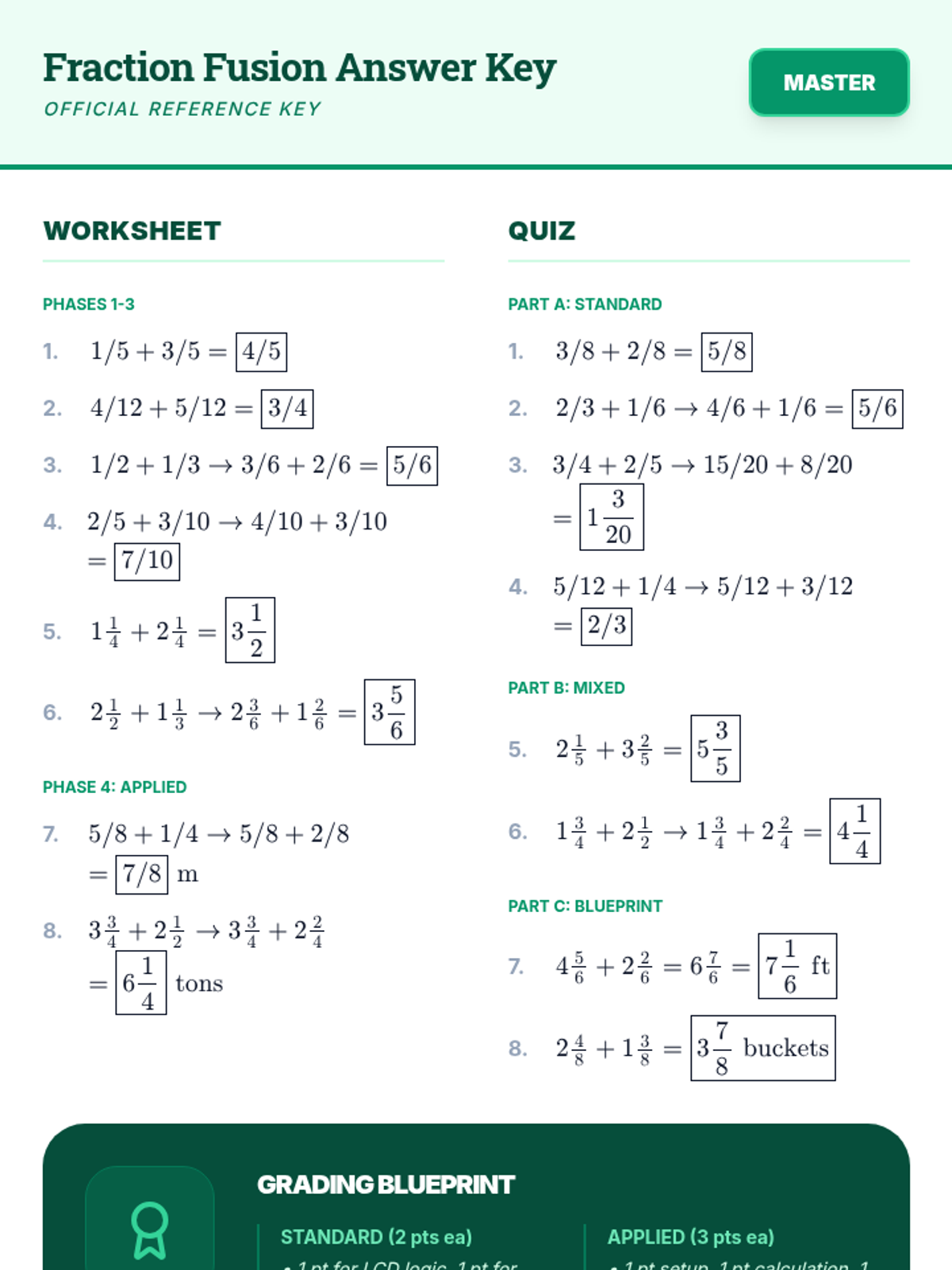
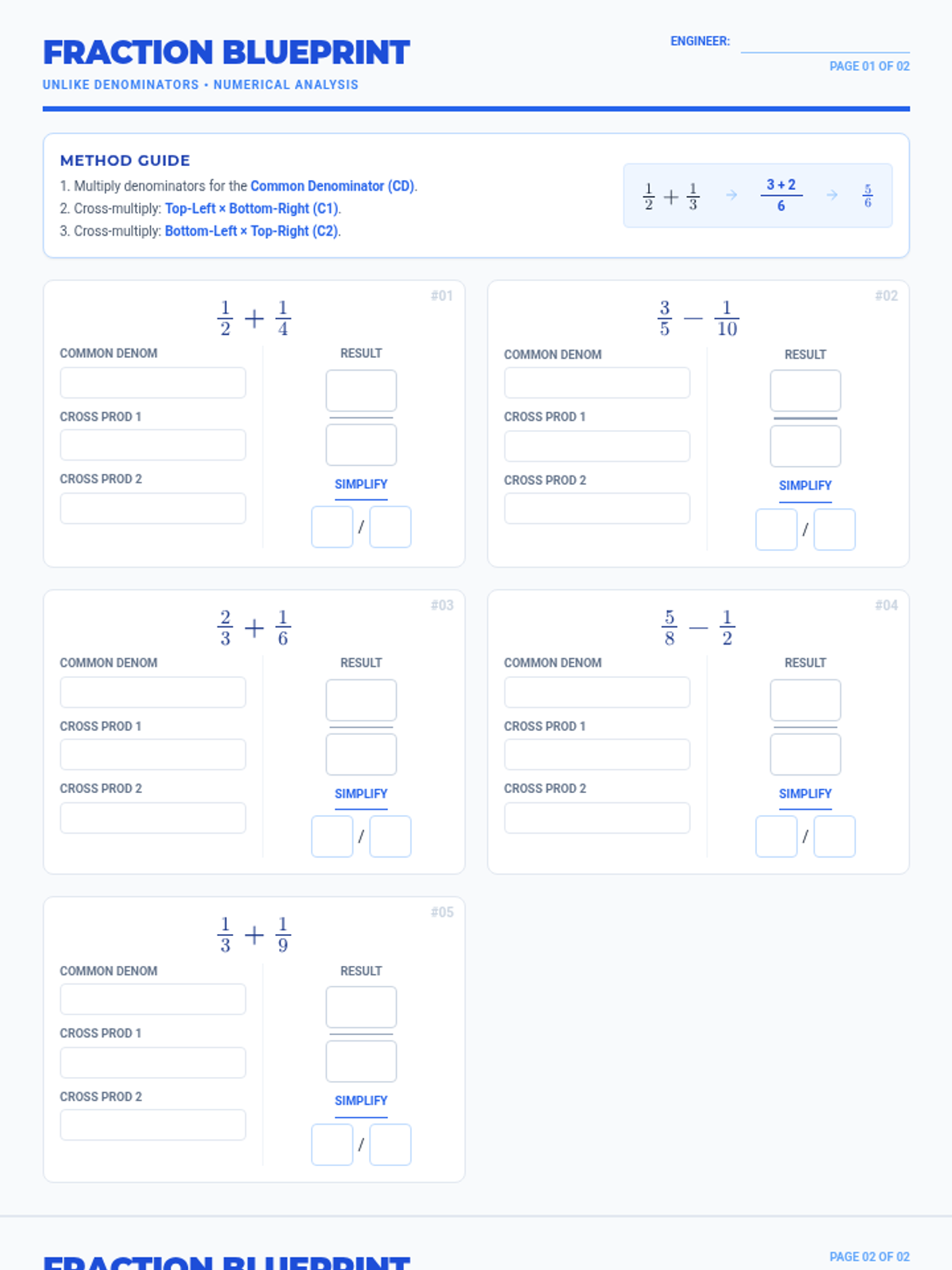
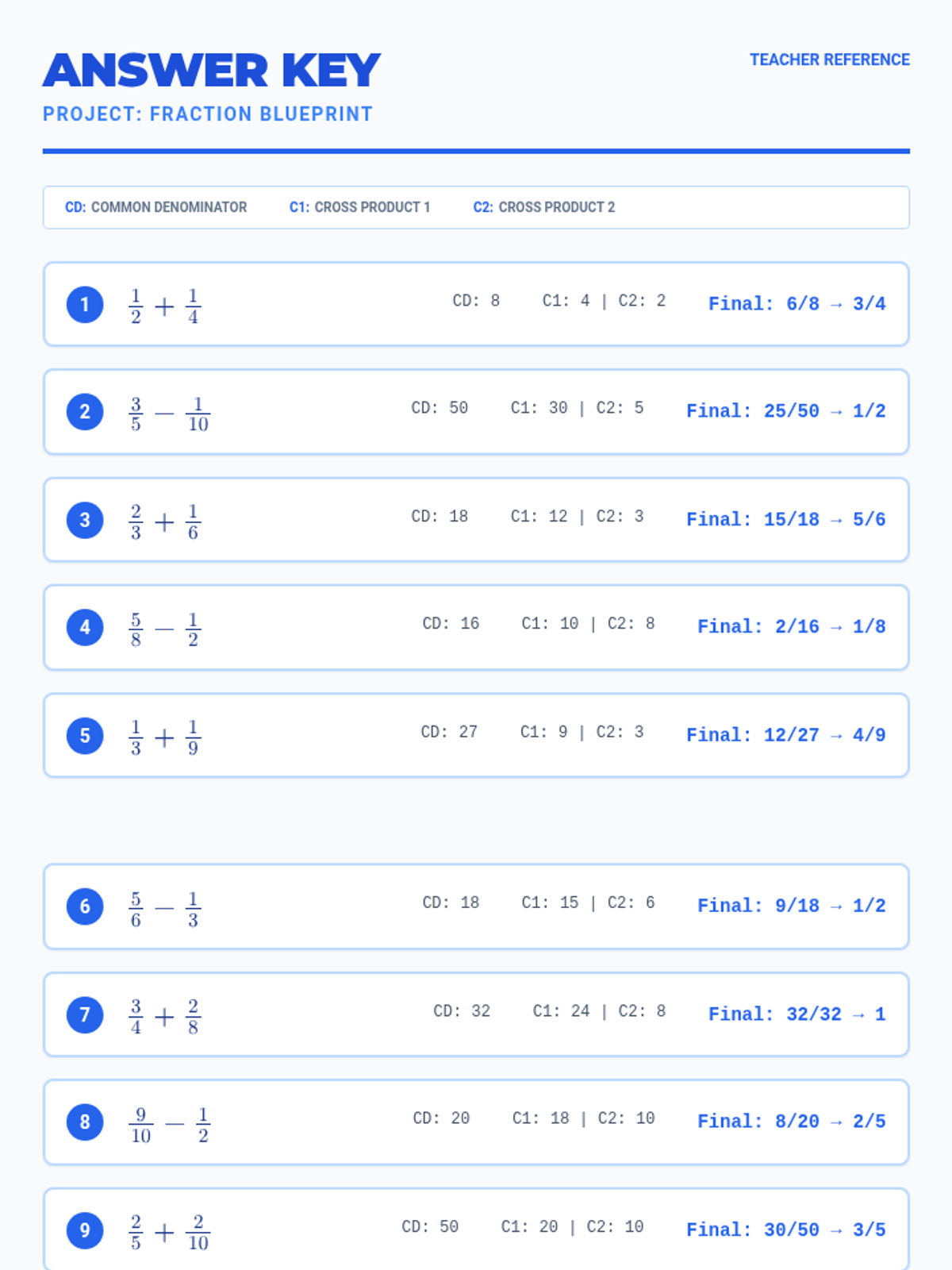
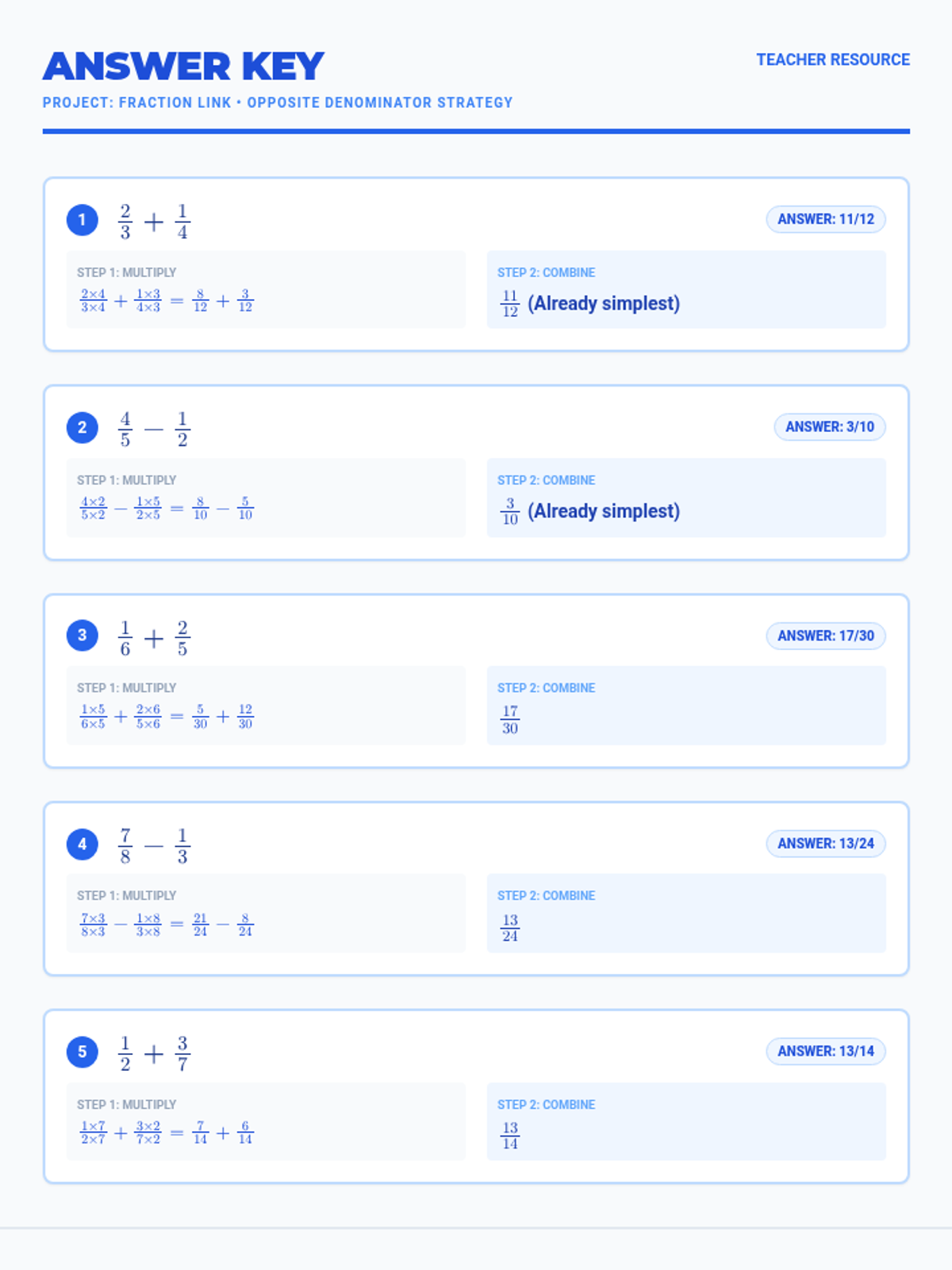
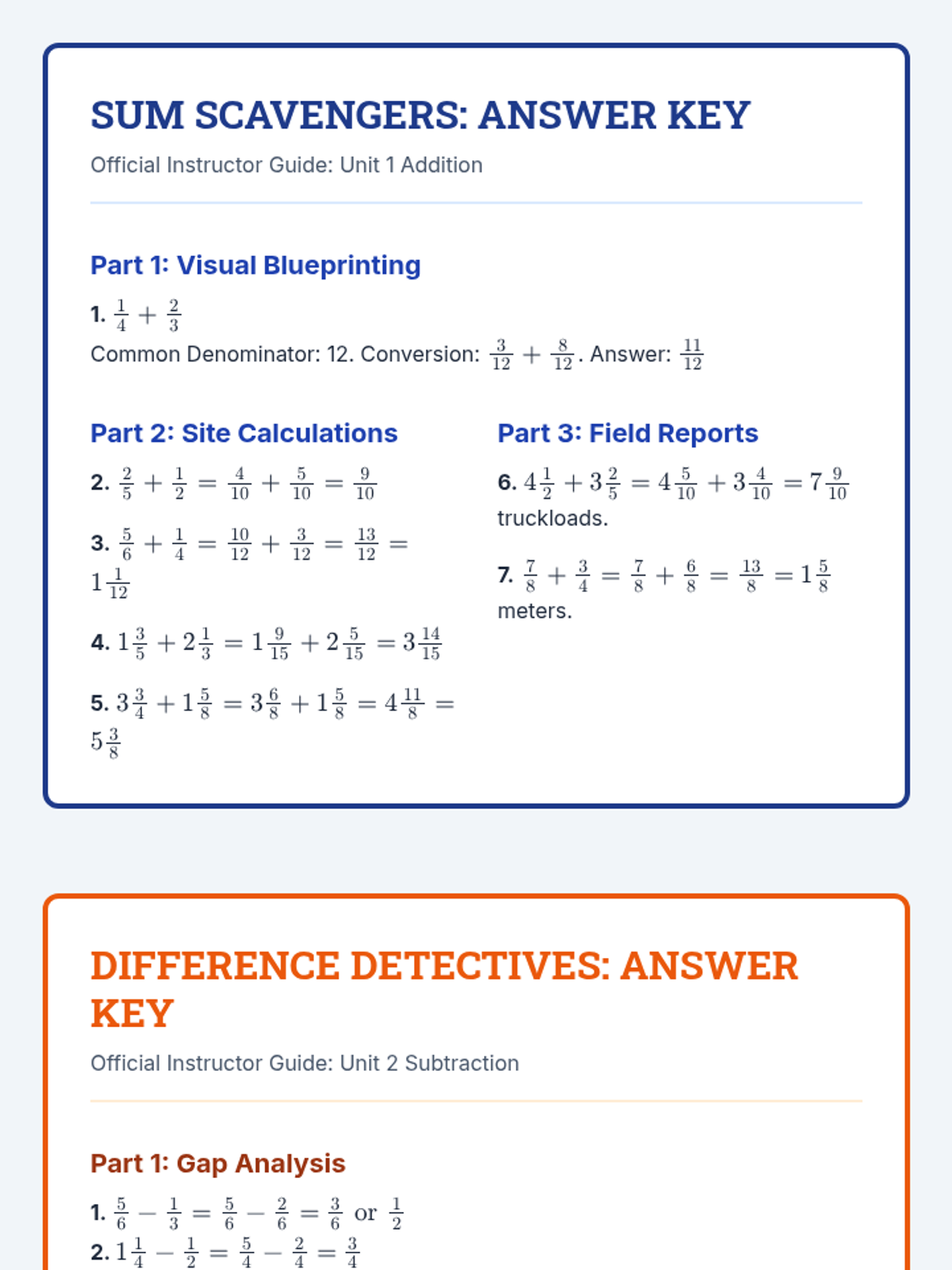
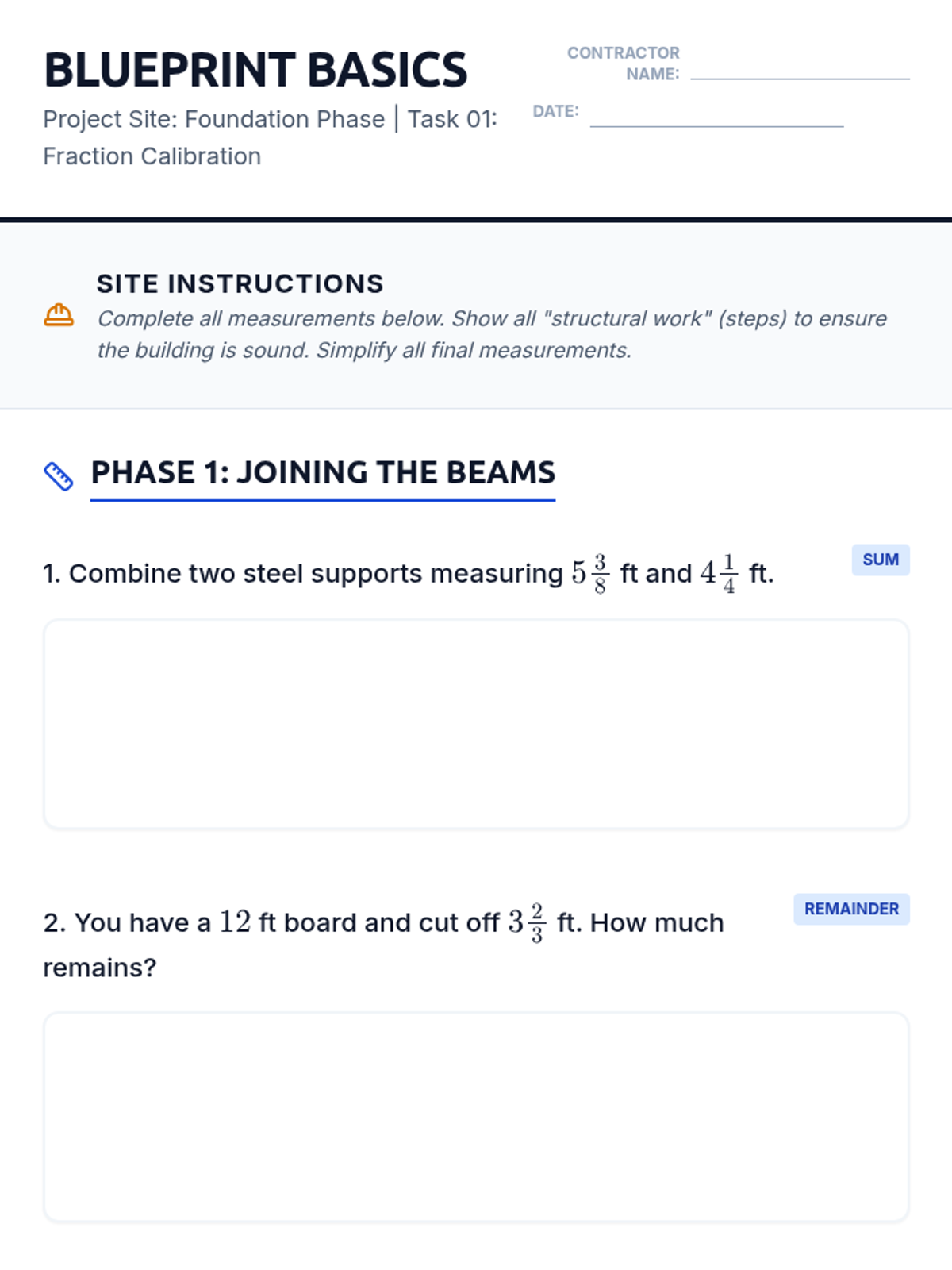
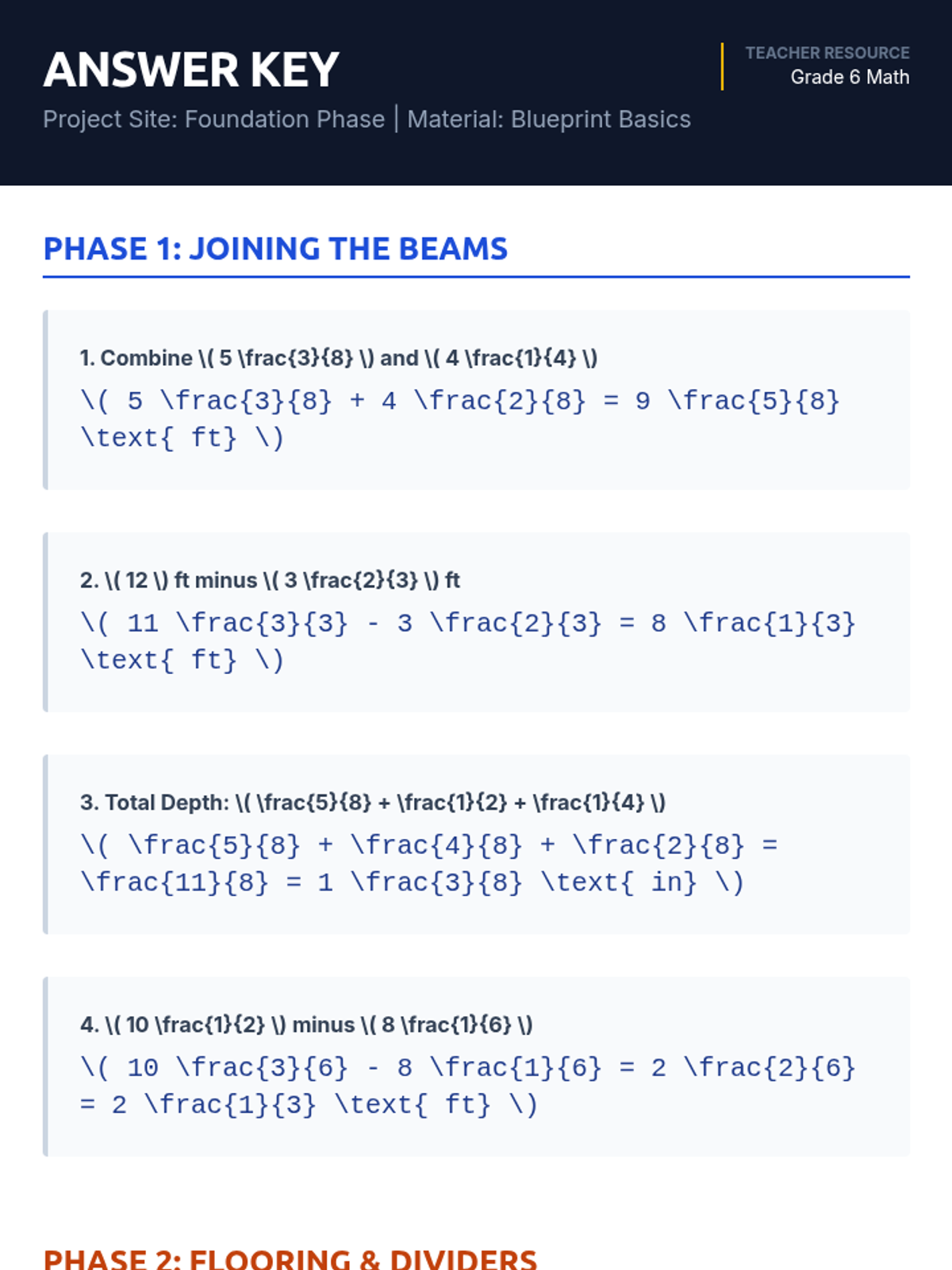
A comprehensive lesson on adding fractions with like and unlike denominators, including mixed numbers and real-world word problems. Students progress from basic addition to complex multi-step problems using a blueprint-themed approach.
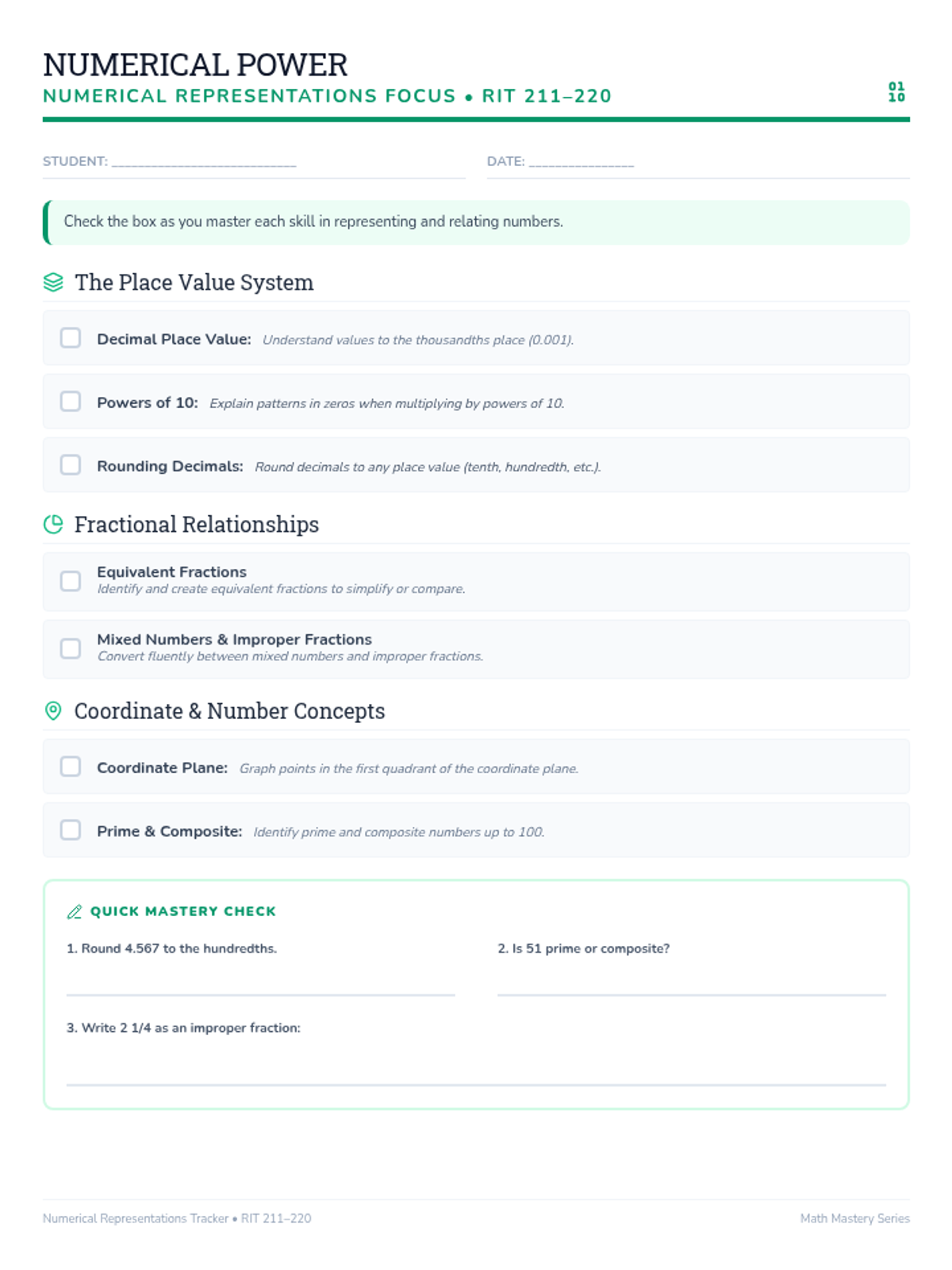
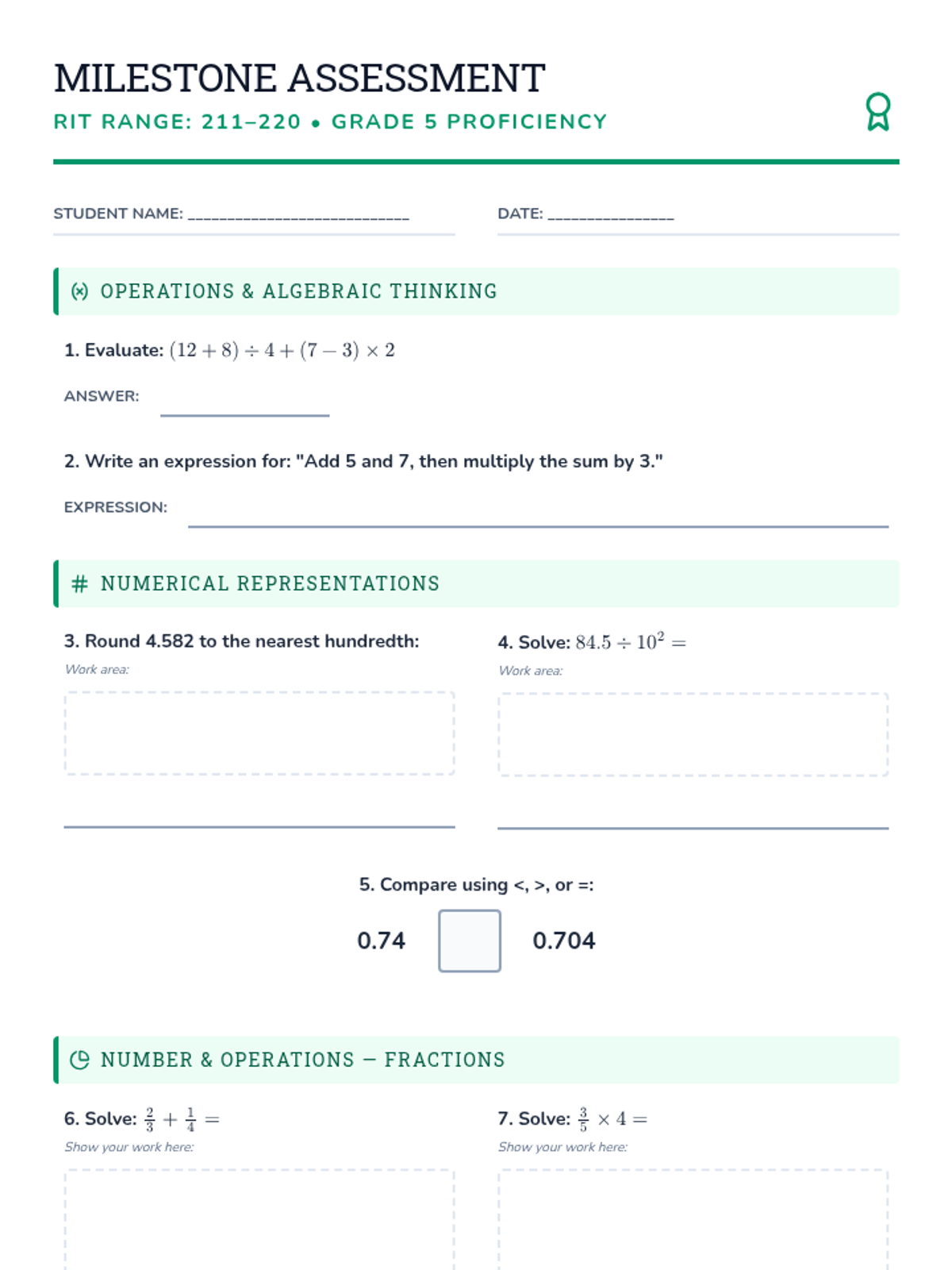
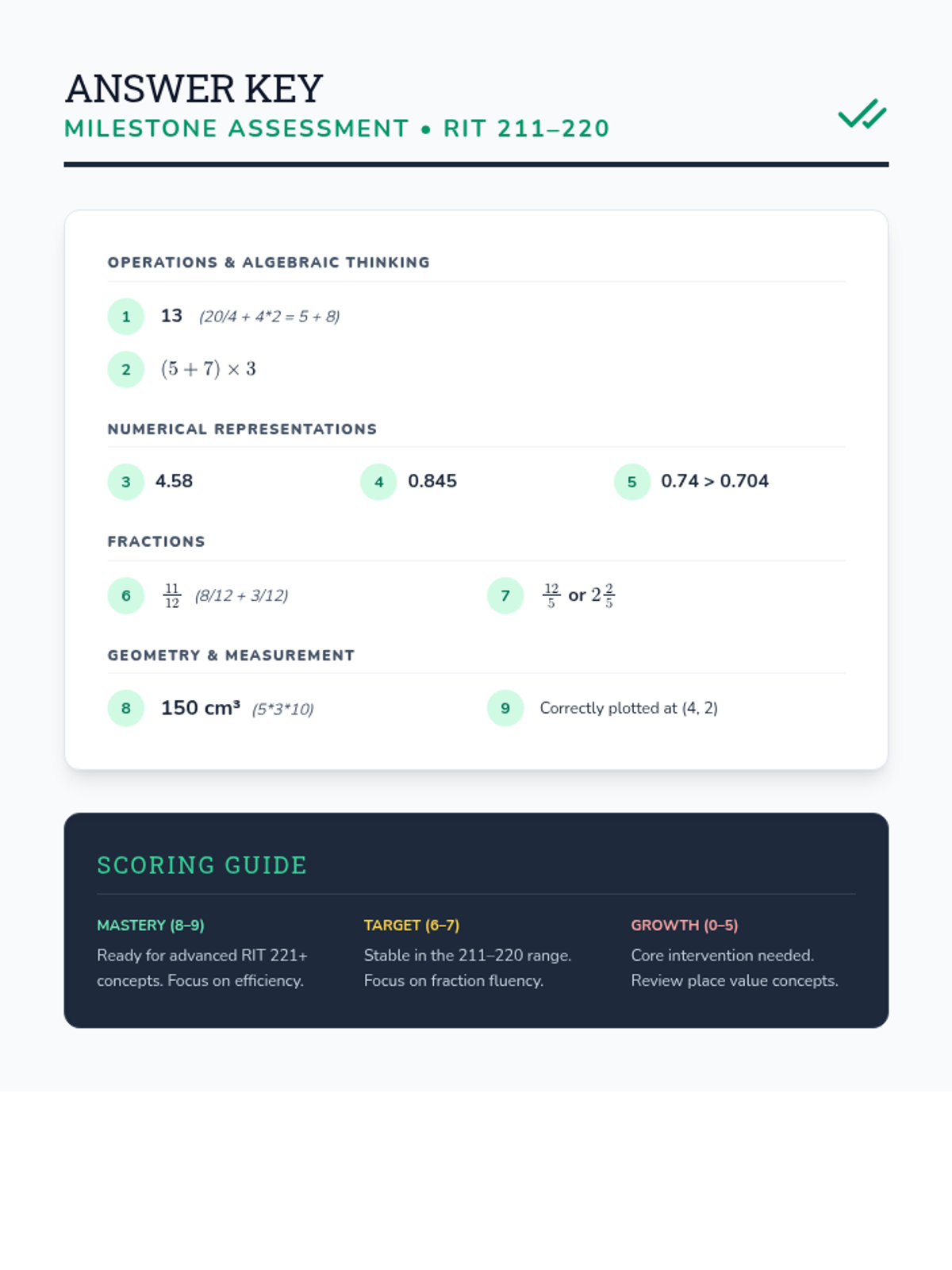
A specialized toolkit for navigating mathematical skills in the 211-220 RIT range, with a focus on foundational decimals, fractions, and place value relationships.
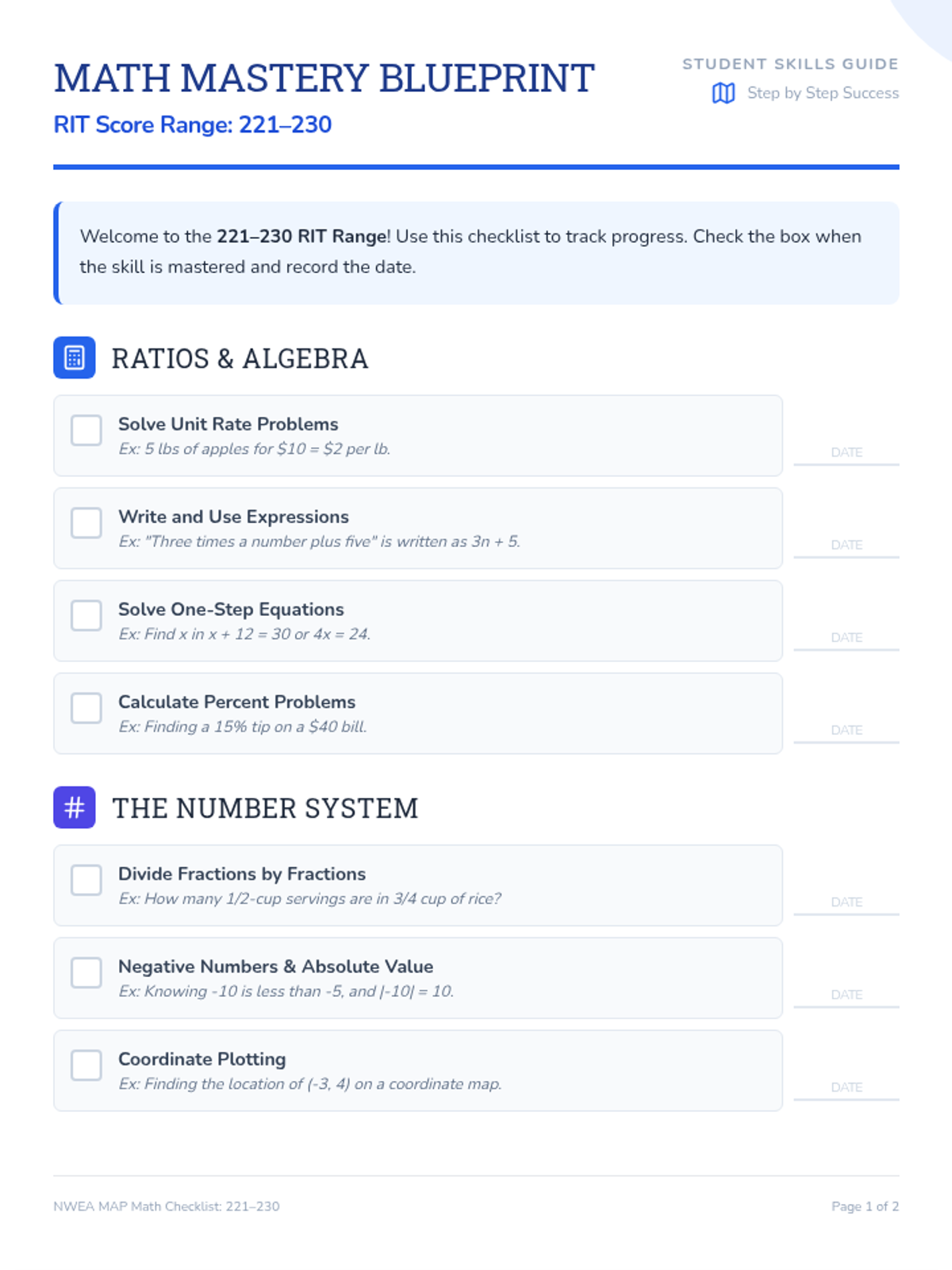
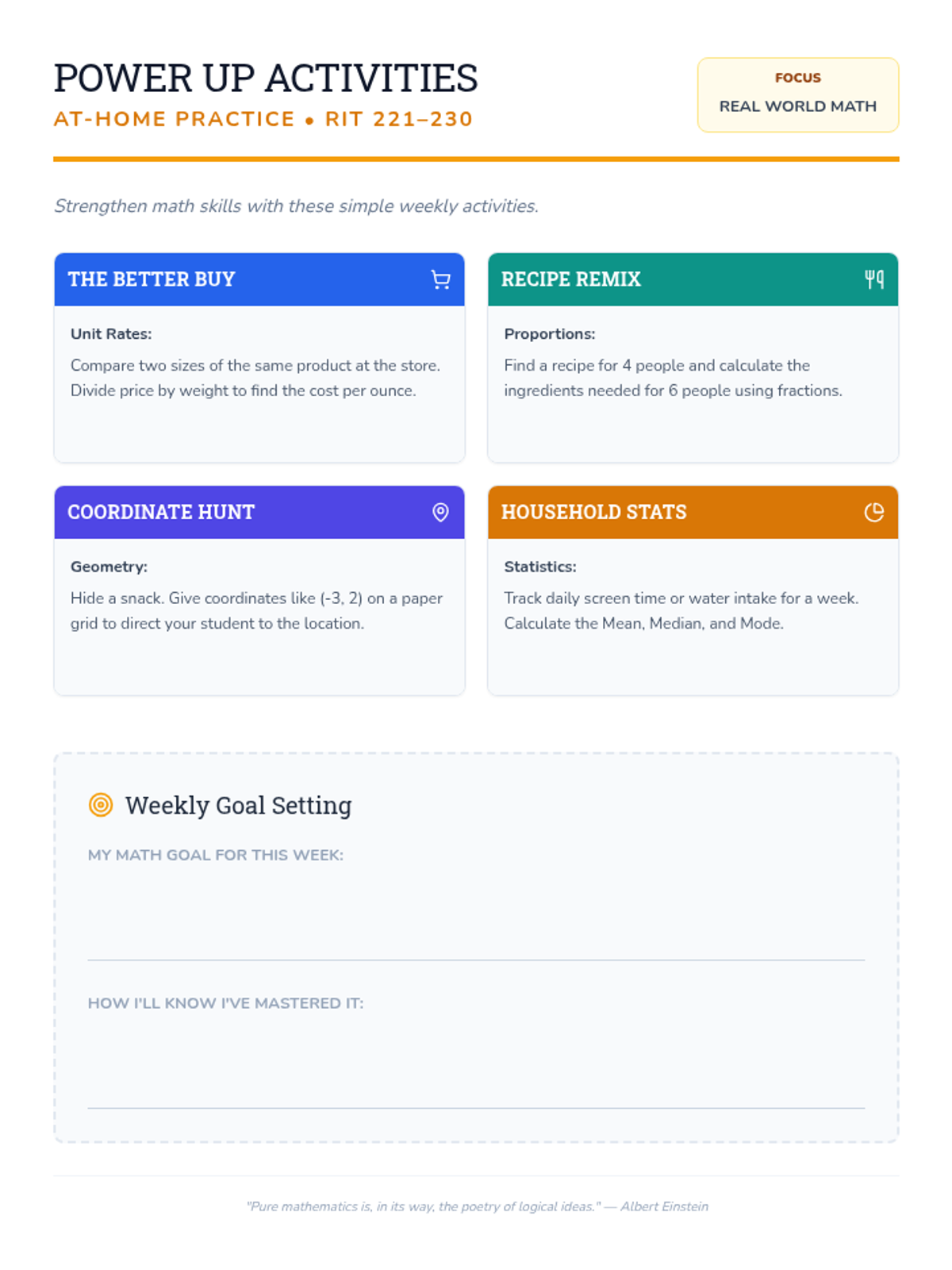
A comprehensive guide for parents and students to navigate the mathematical skills expected in the 221-230 NWEA MAP RIT range, featuring actionable checklists and home-based practice ideas.
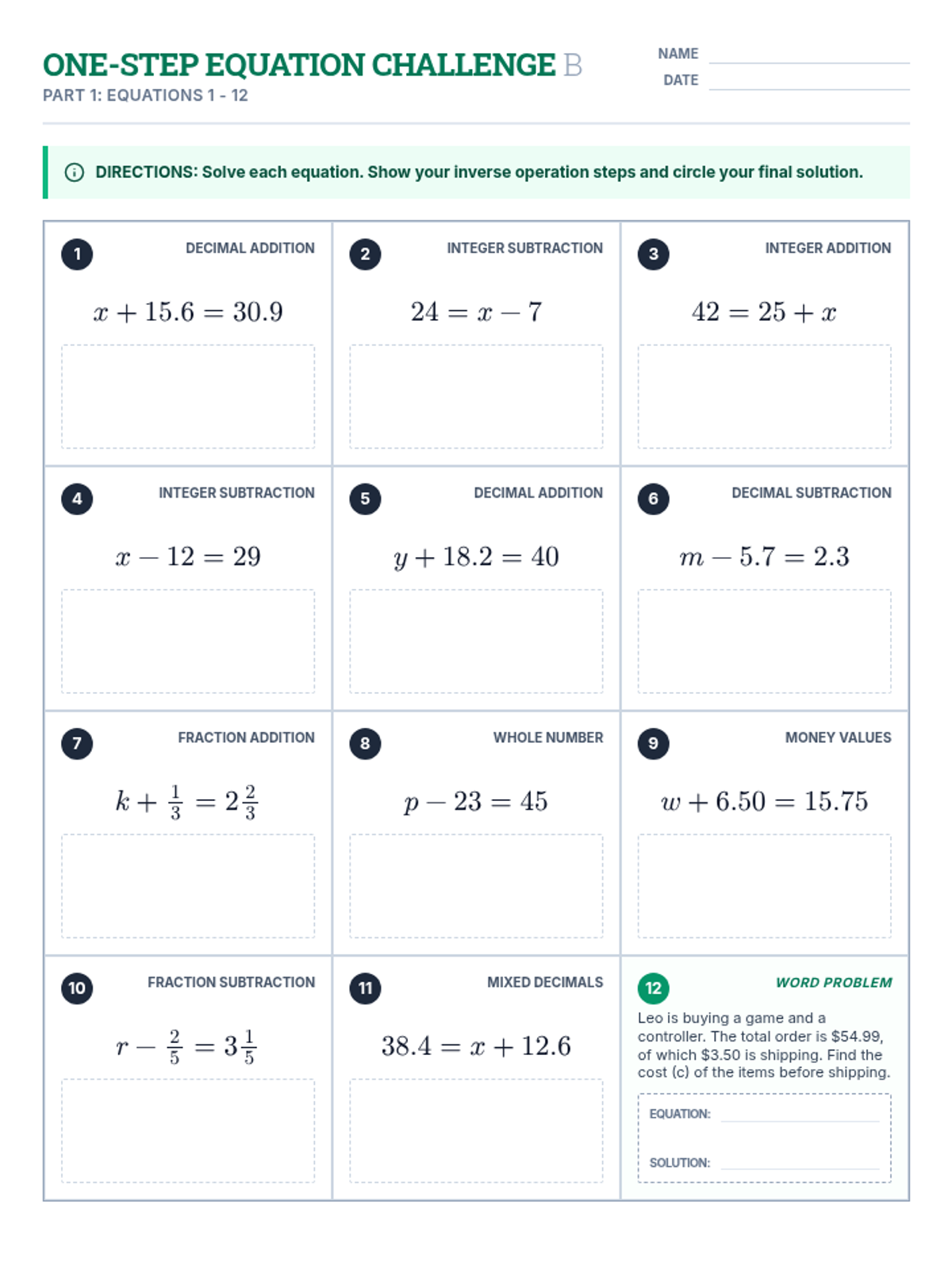
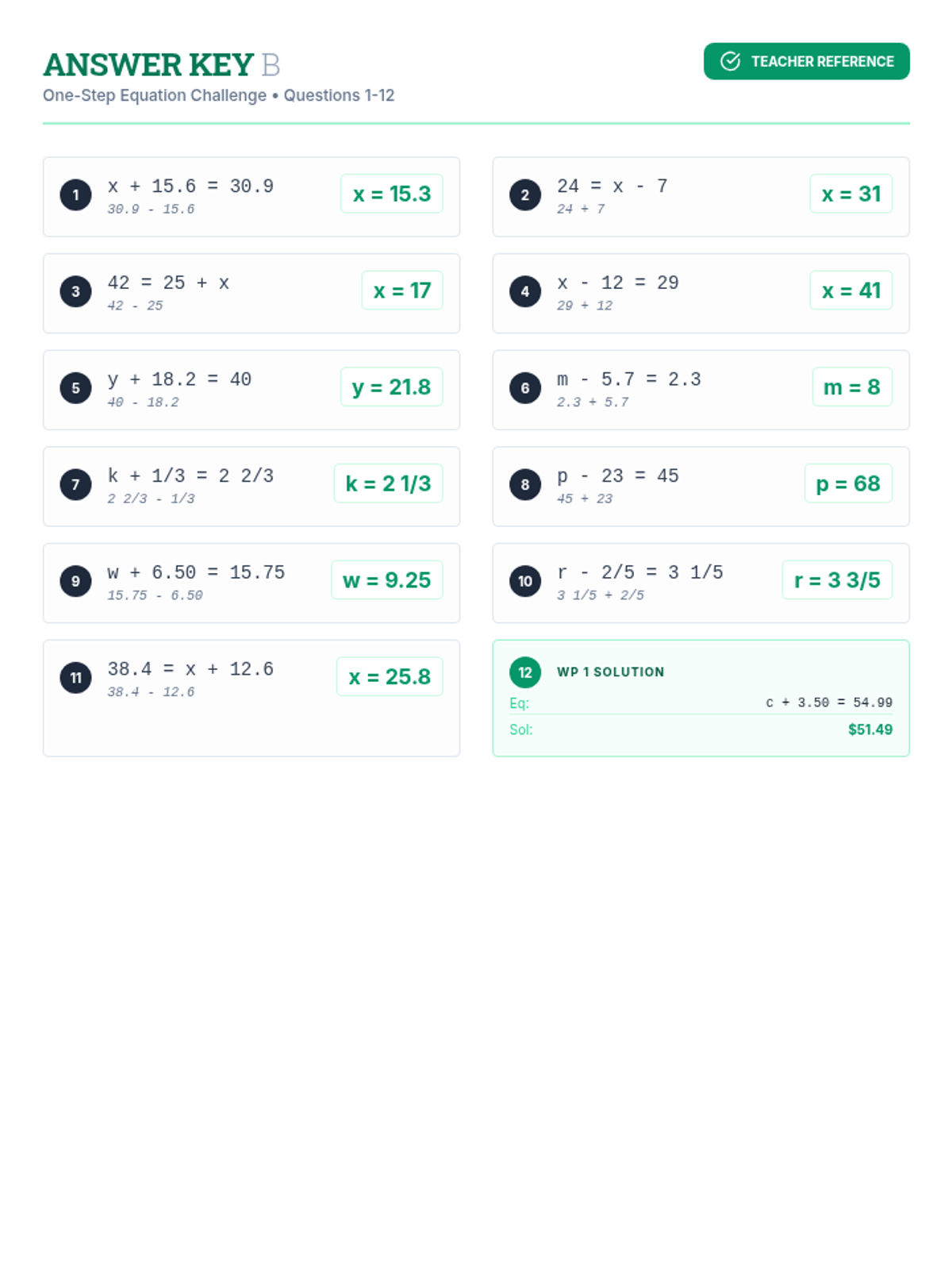
A focused lesson on solving one-step addition and subtraction equations using a variety of number types including whole numbers, decimals, and fractions.
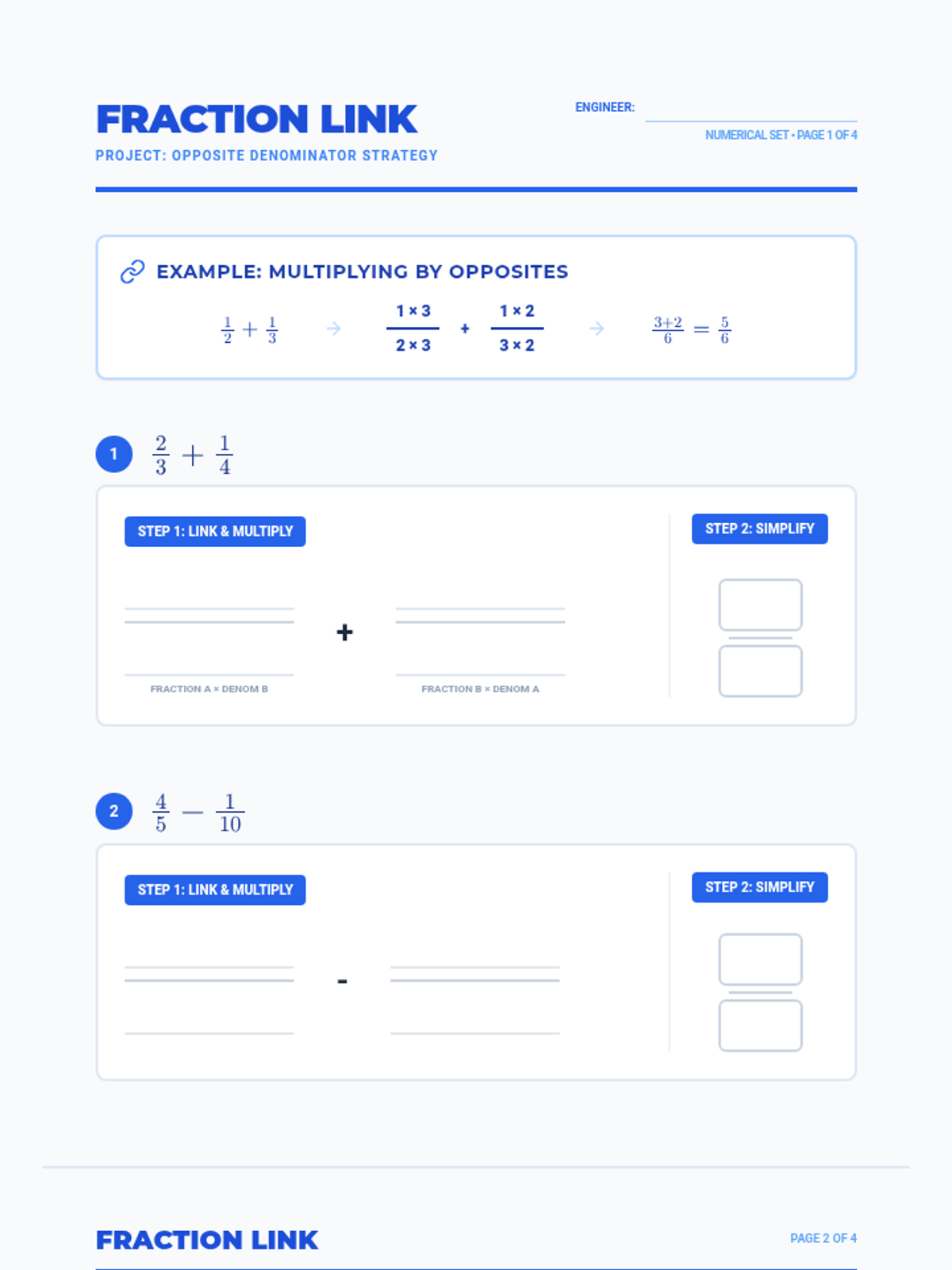
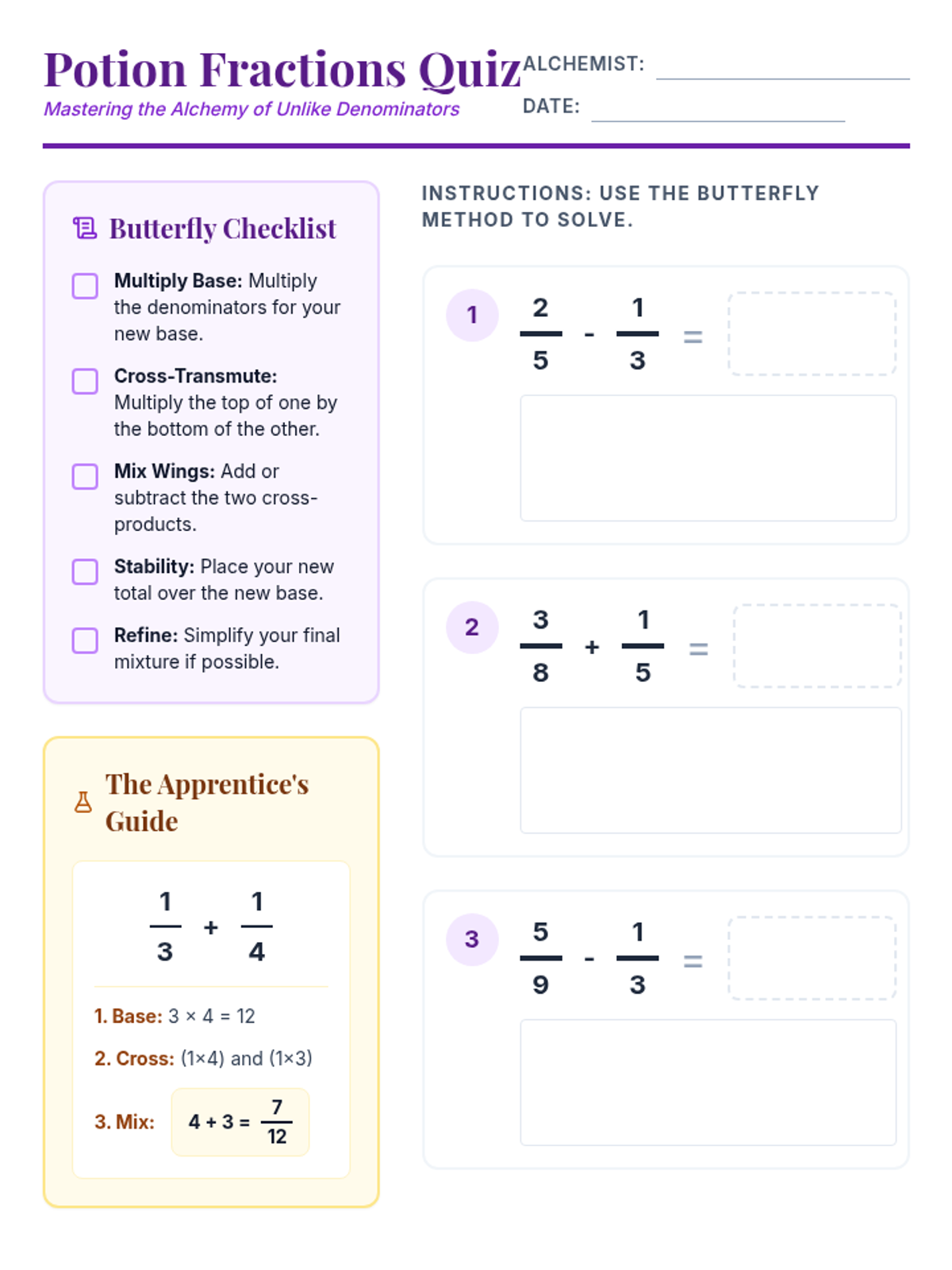
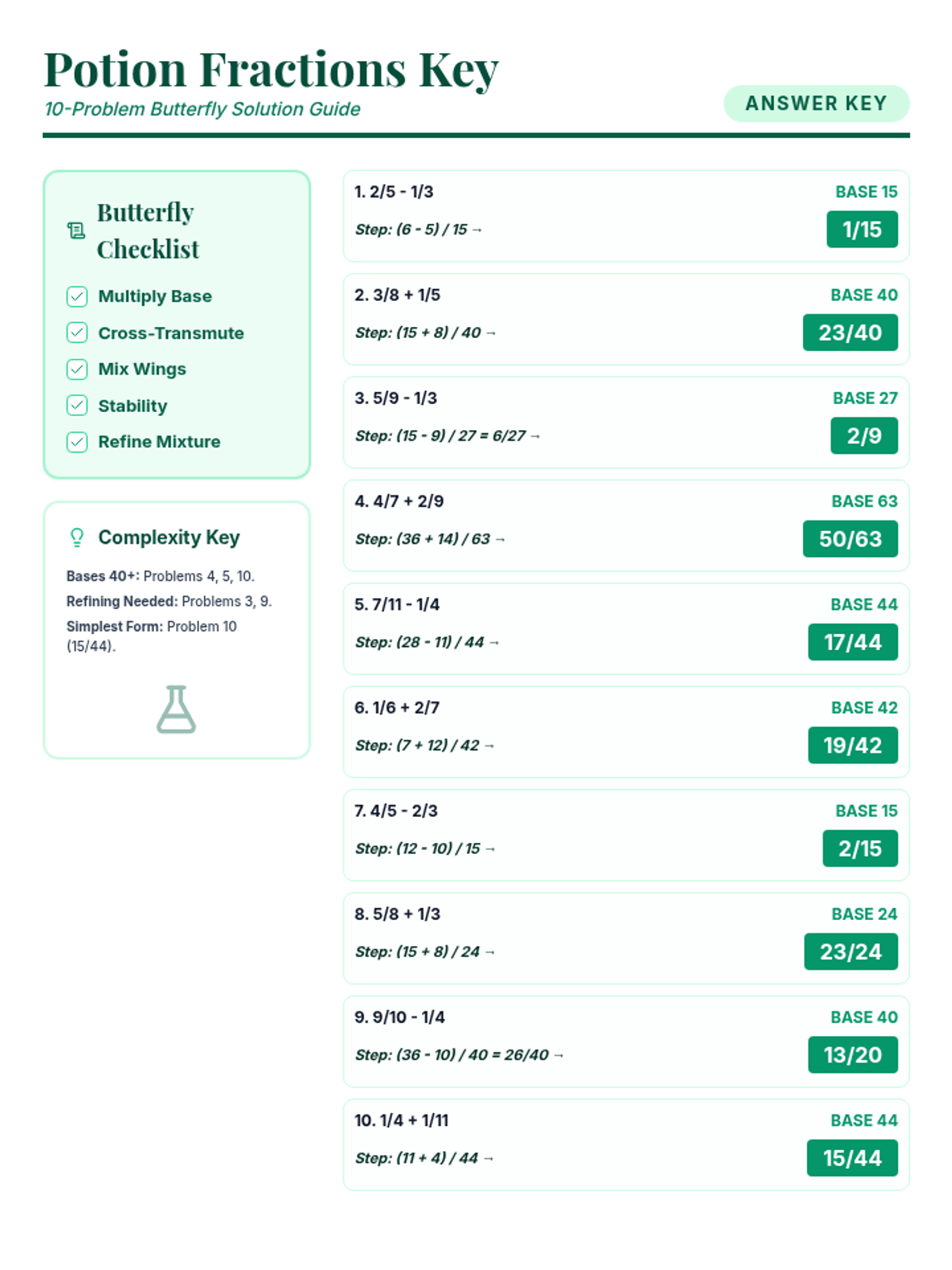
A lesson focused on mastering addition and subtraction of fractions with unlike denominators using the cross-multiplication (butterfly) method. Students use structured graphic organizers to visualize each step of the process.
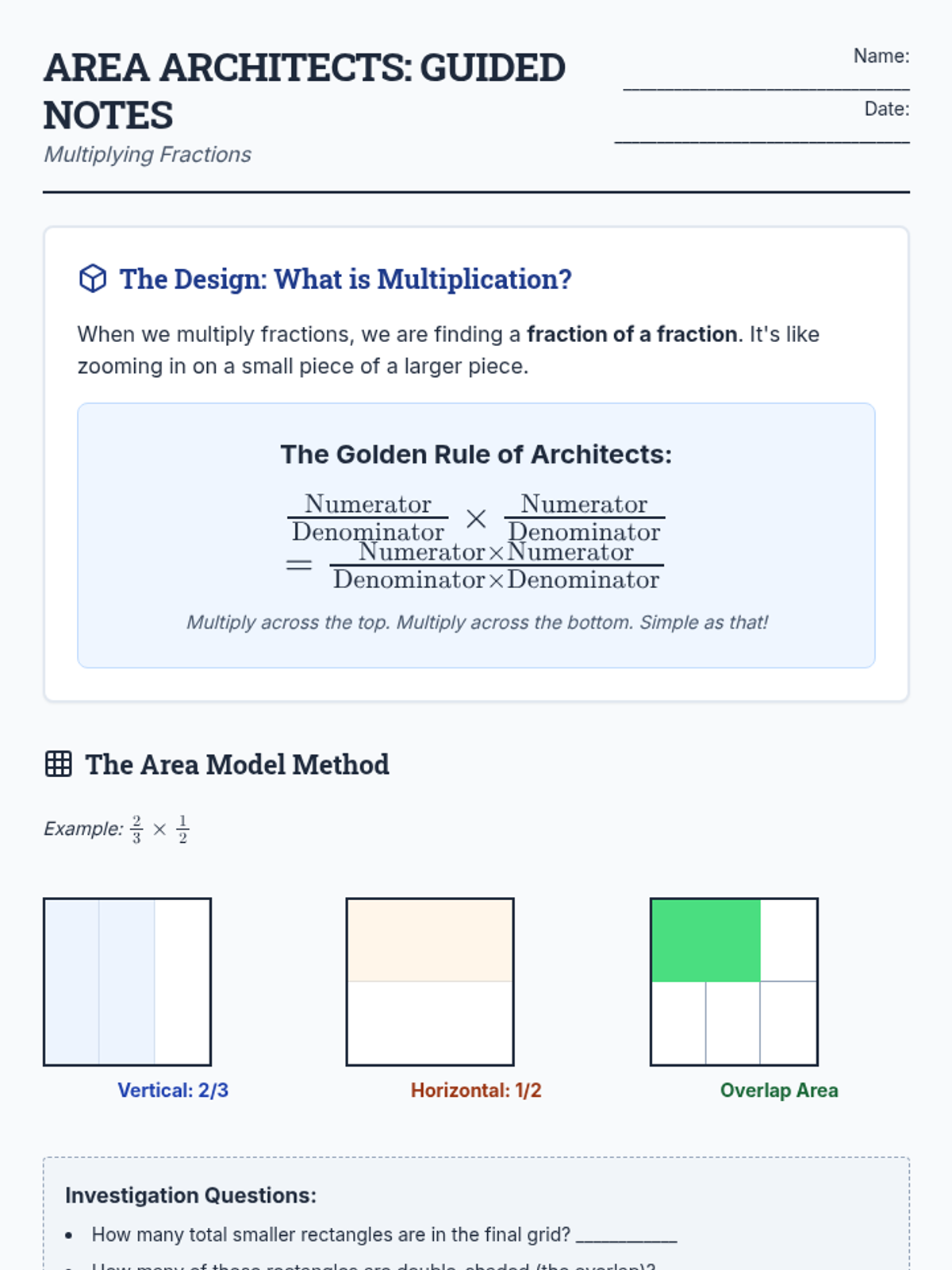
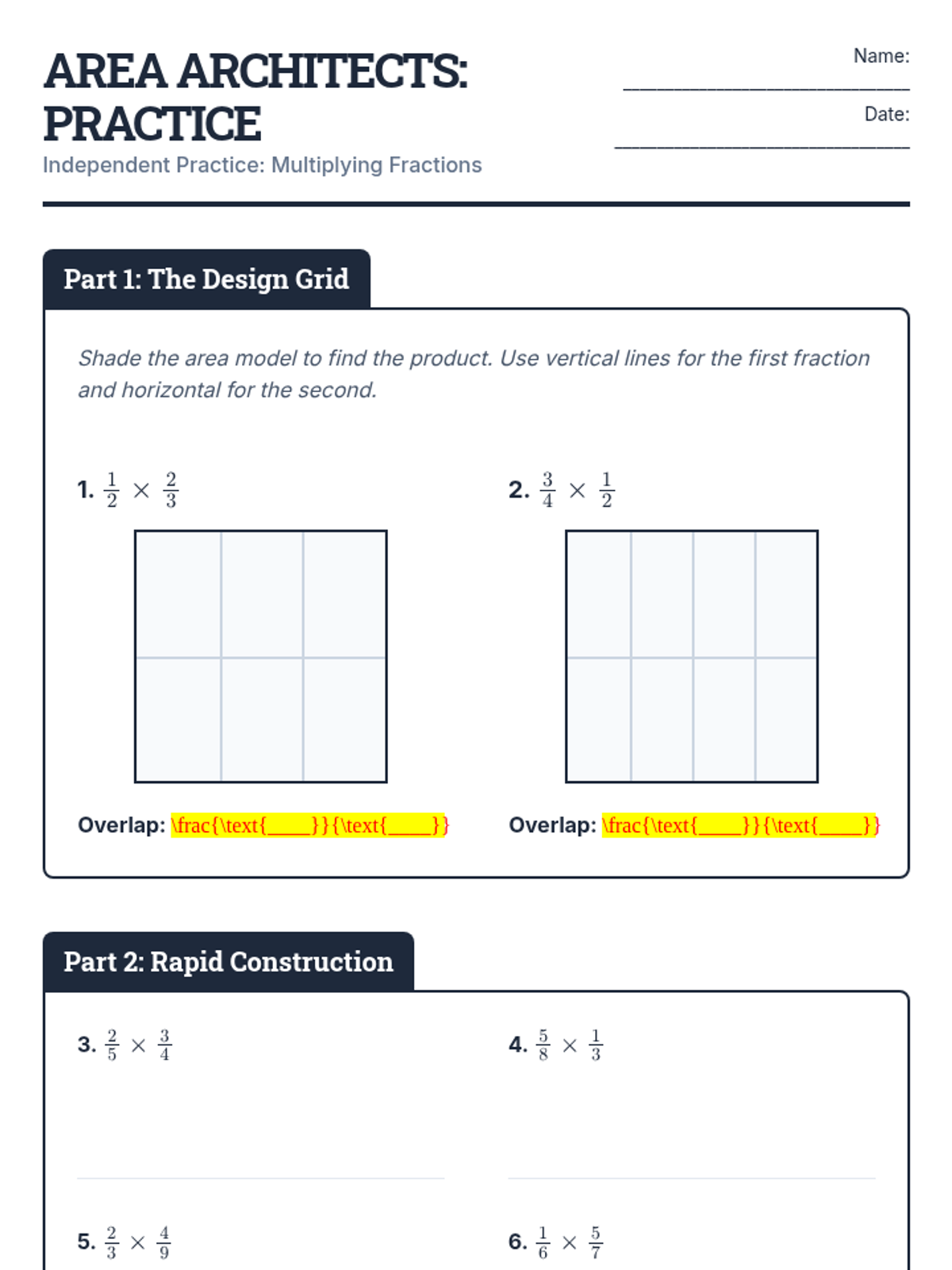
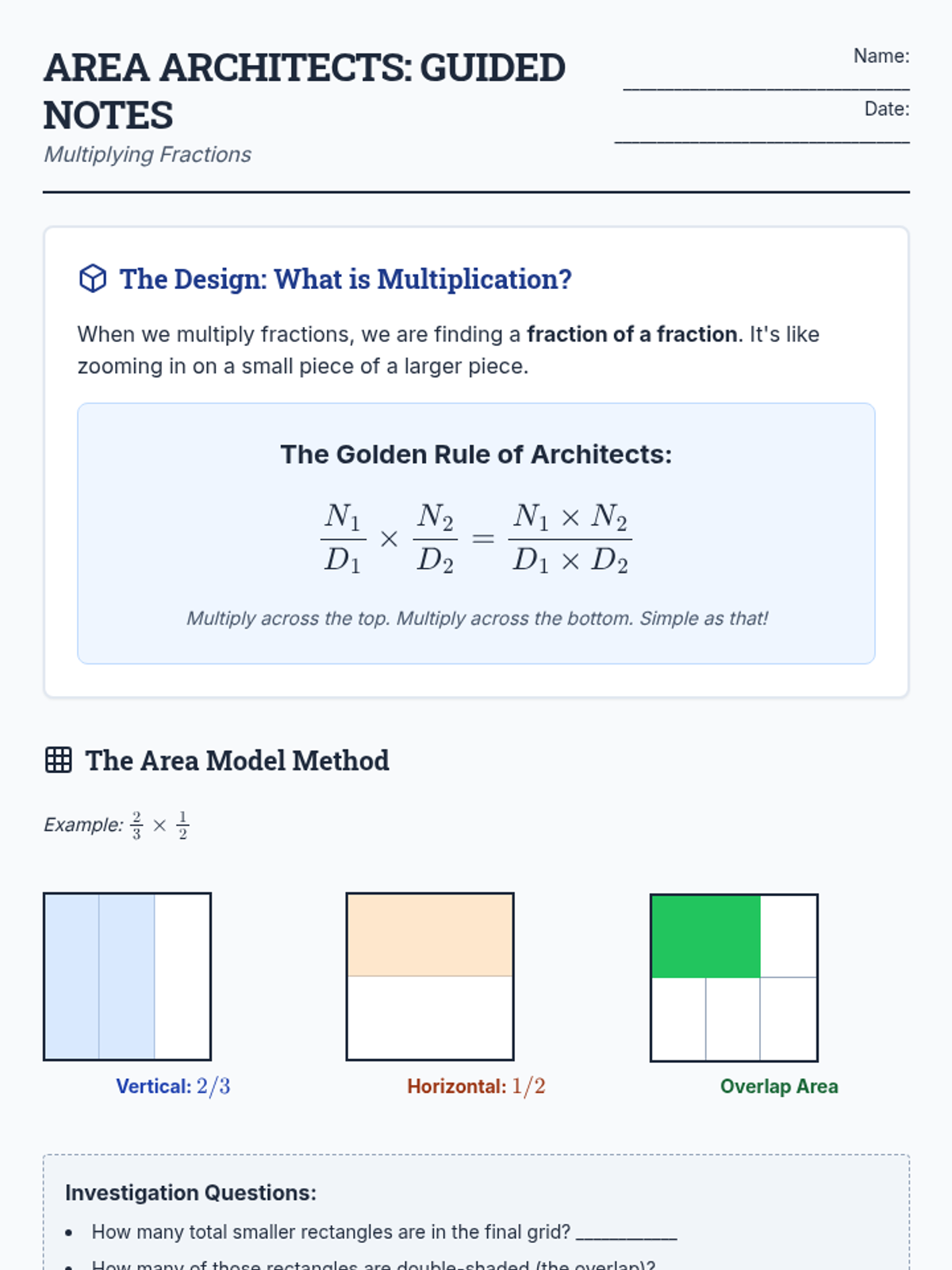
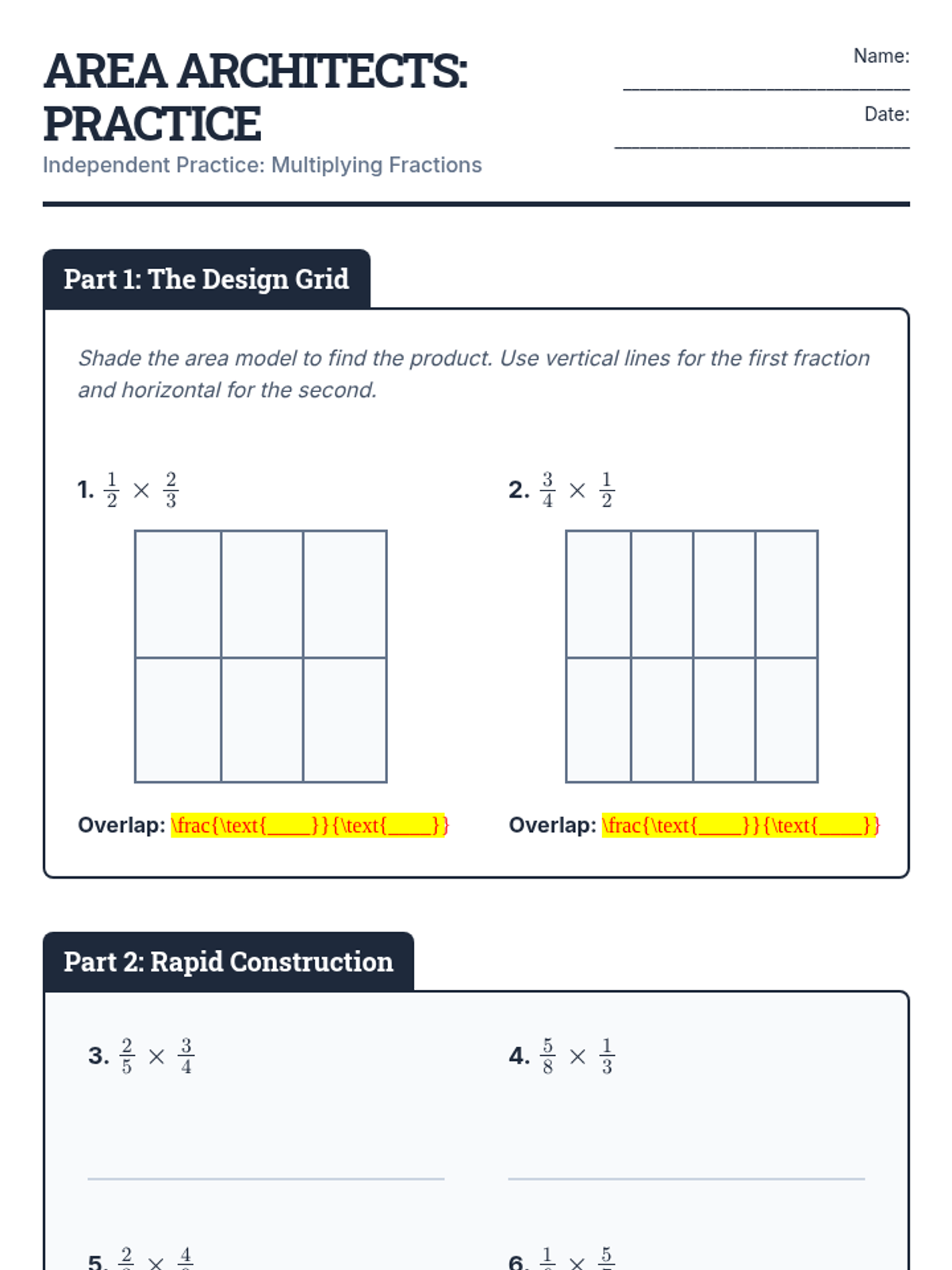
Students explore fraction multiplication through area models, understanding how to find a fraction of a fraction in real-world contexts.
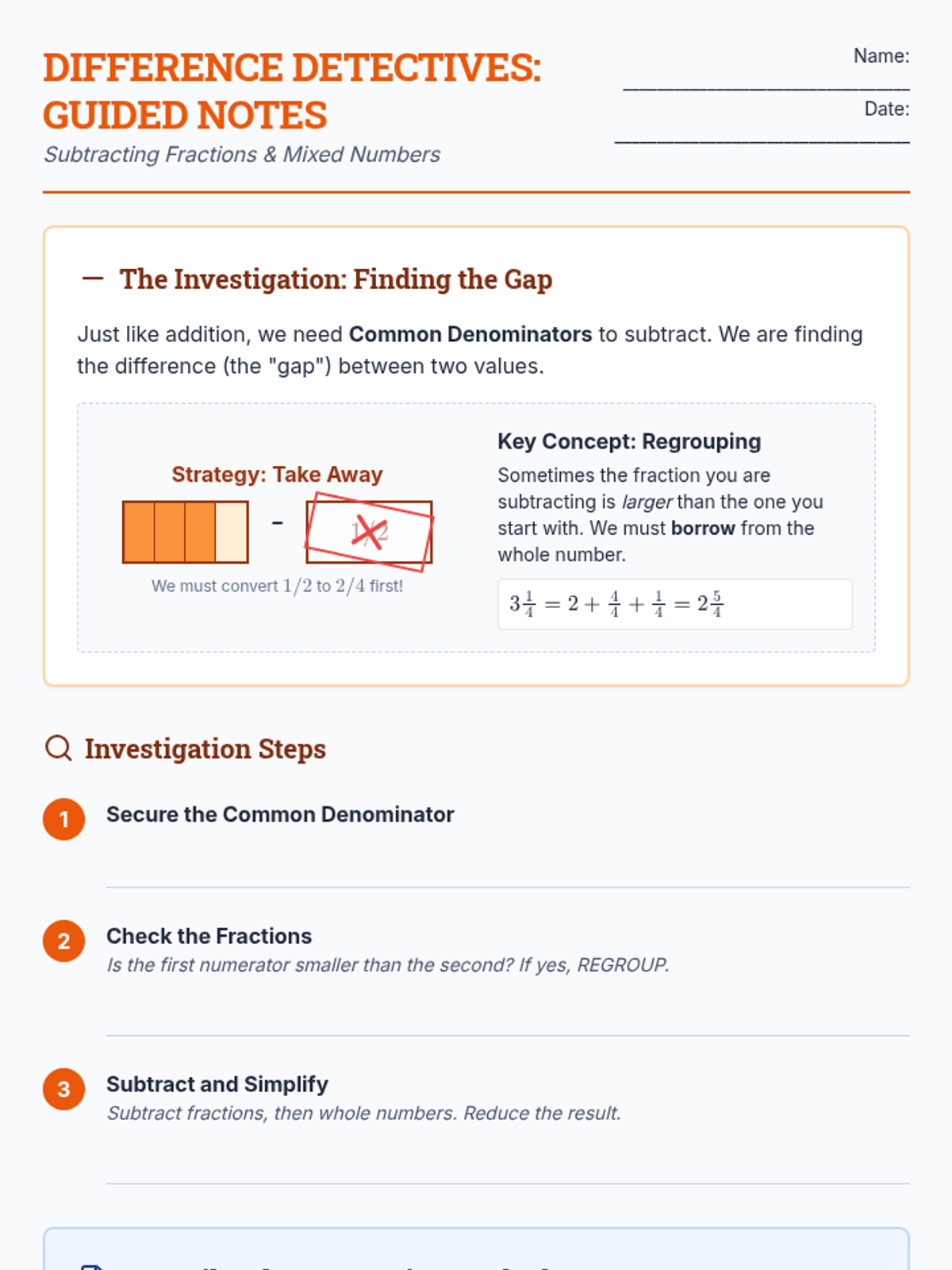
Students master subtracting fractions and mixed numbers with unlike denominators, focusing on regrouping strategies and visual representations.
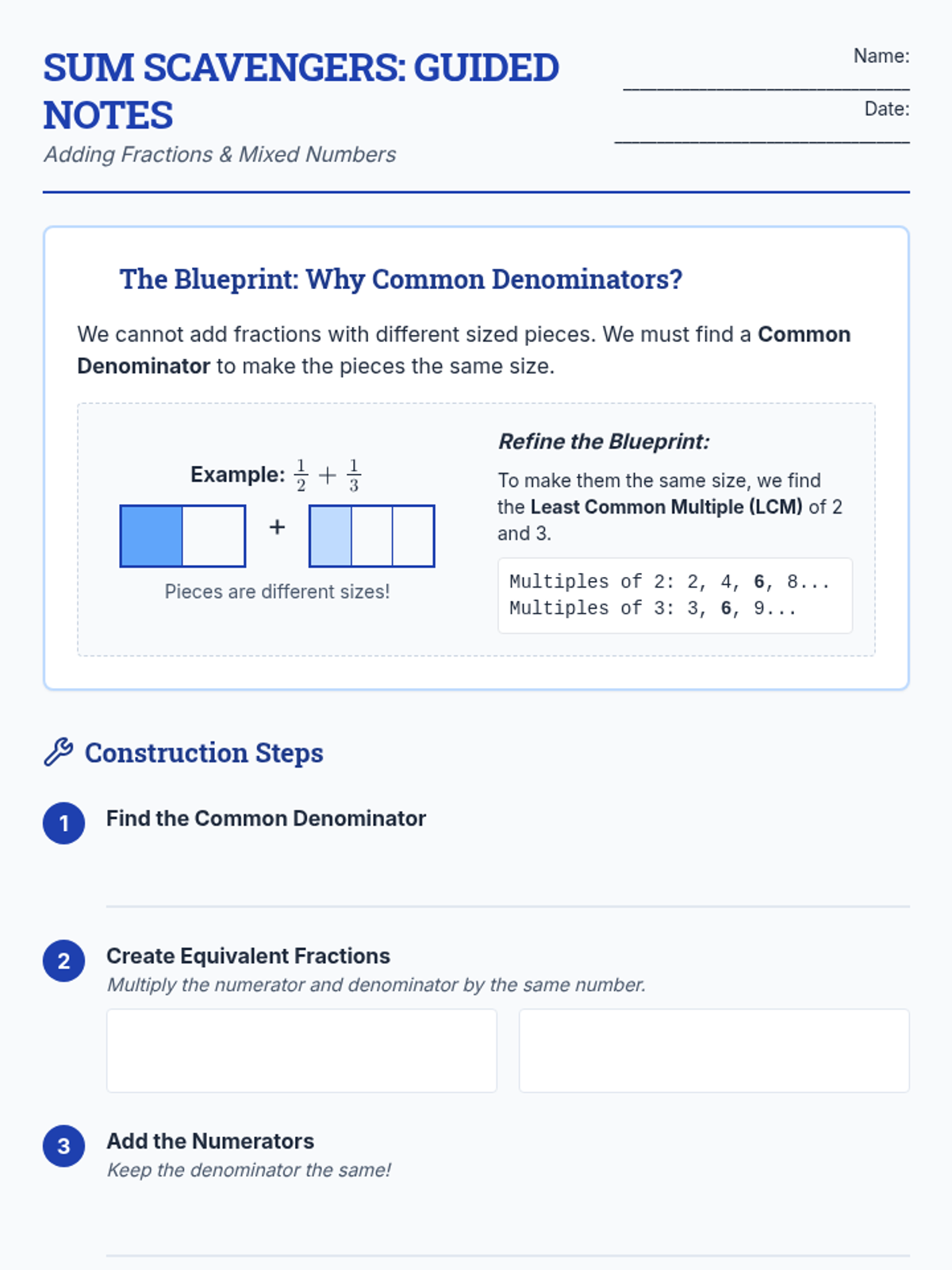
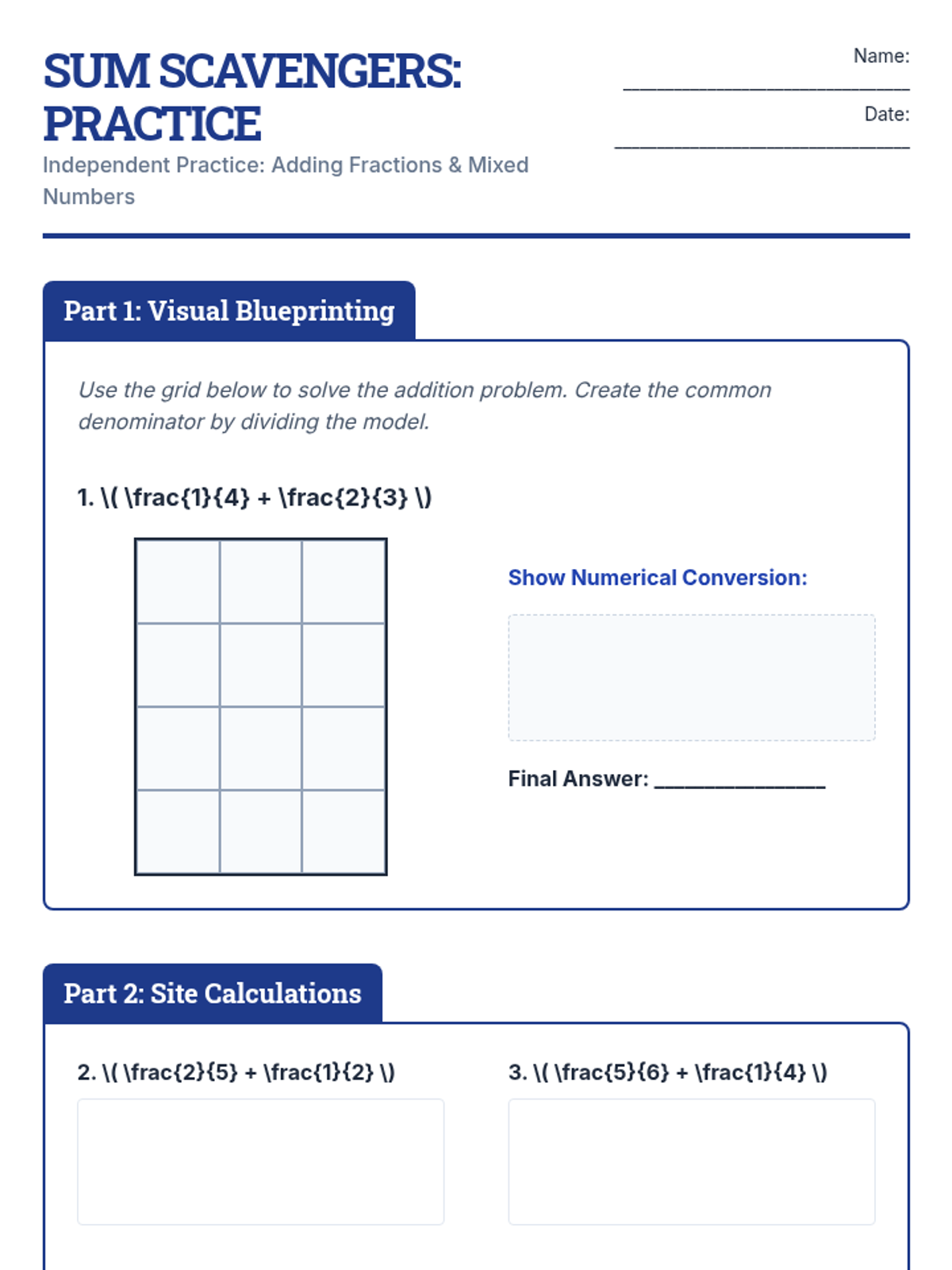
Students learn to add fractions and mixed numbers with unlike denominators using area models and number lines to find common grounds.
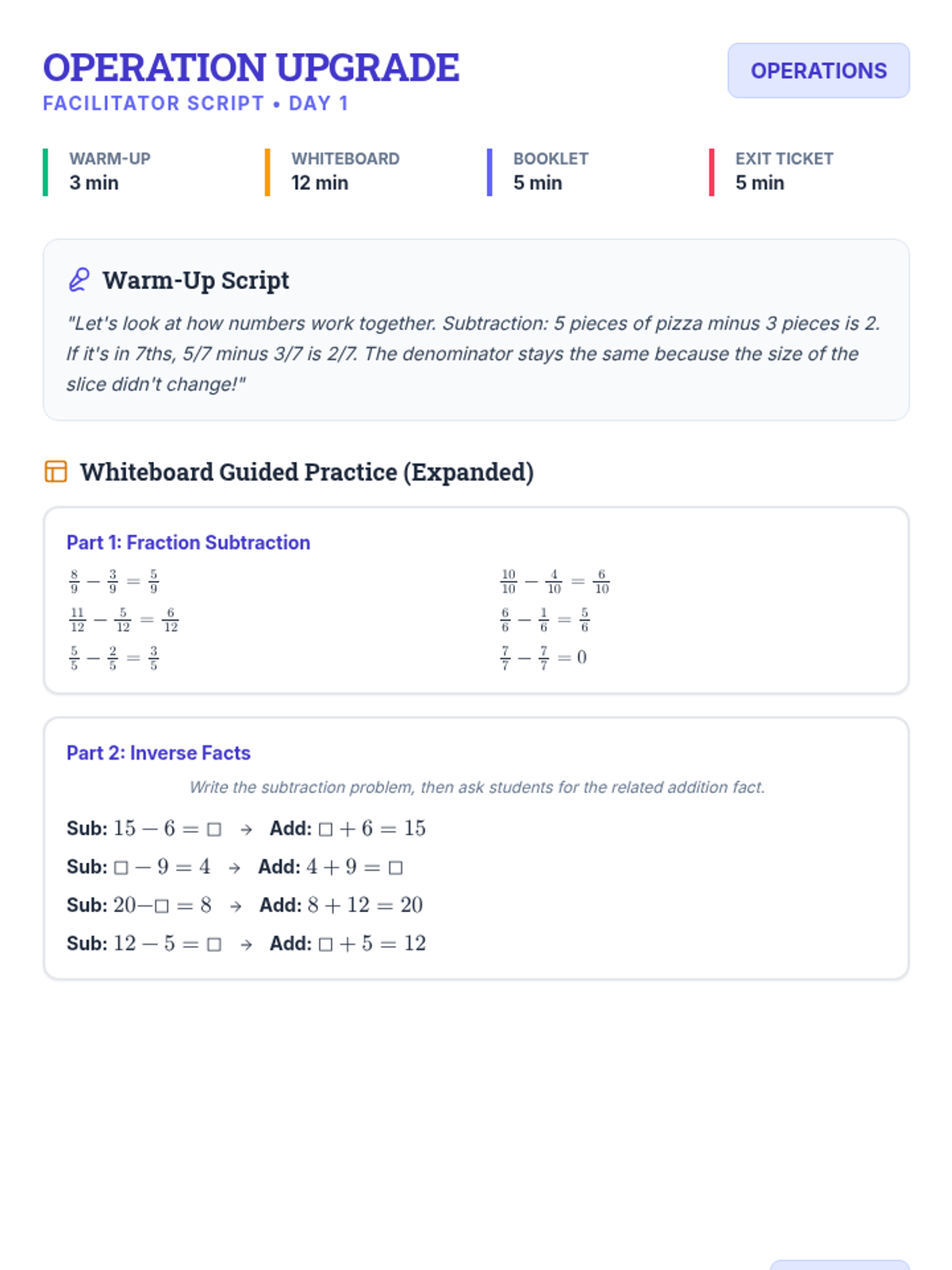
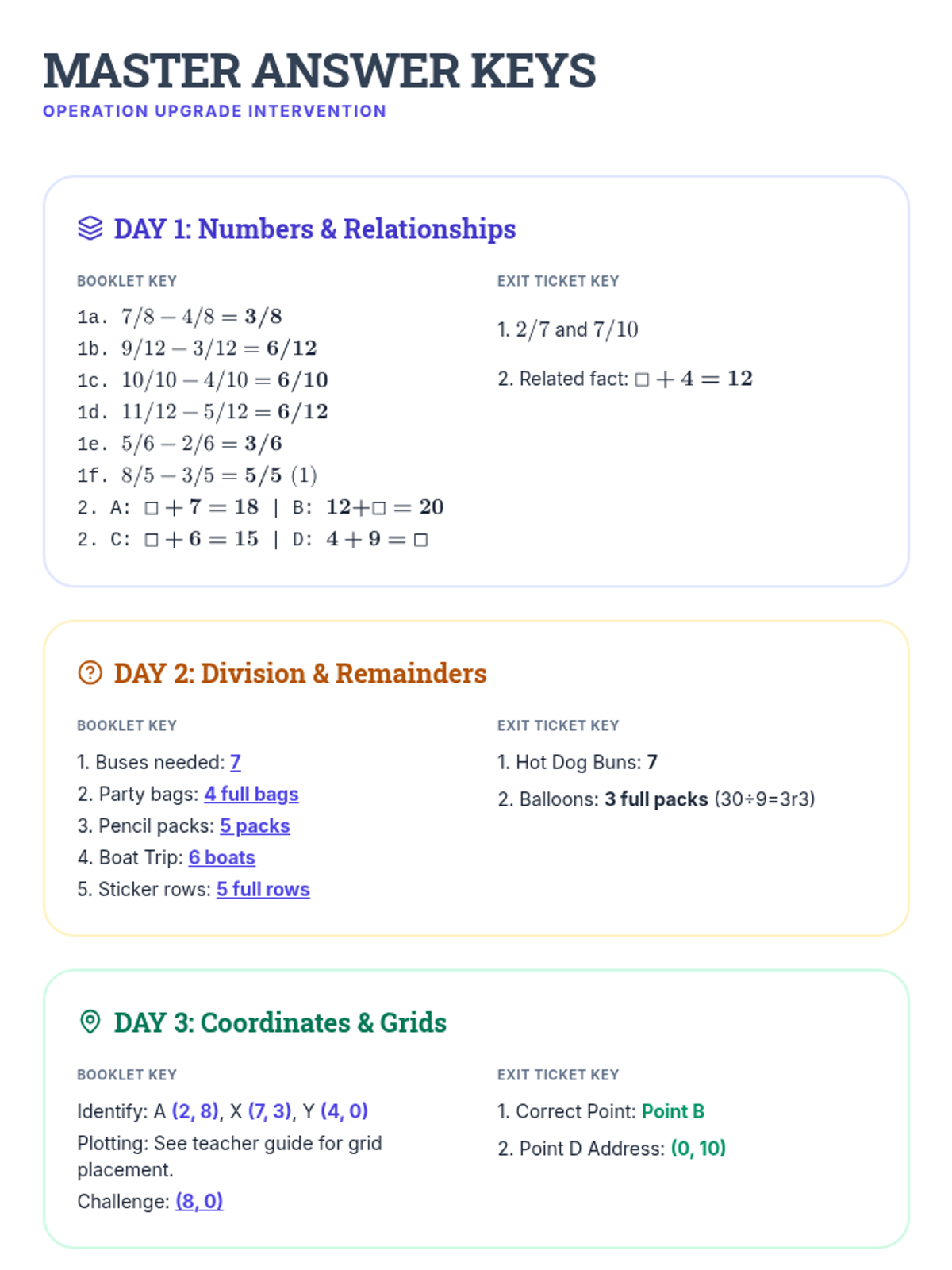
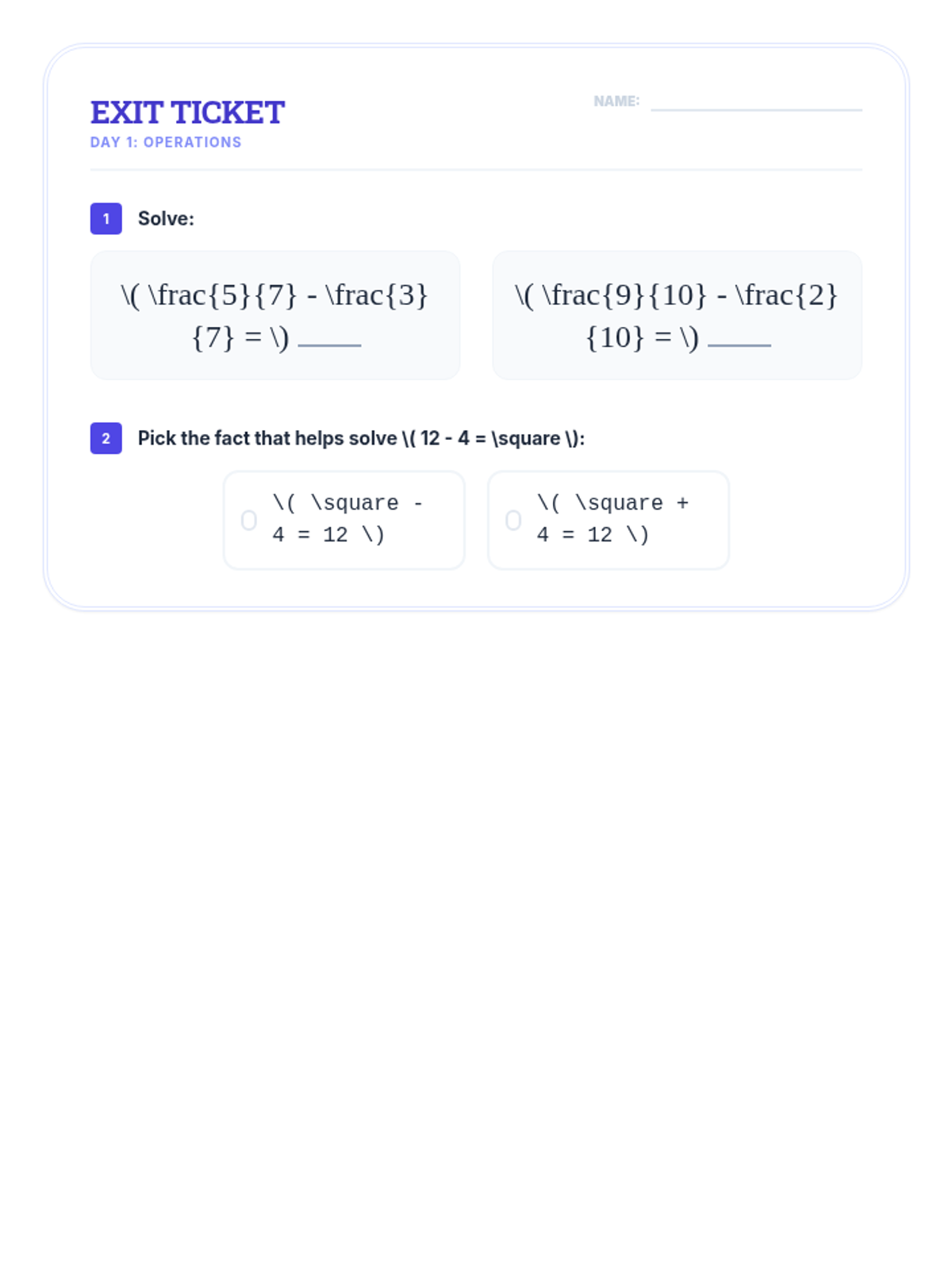
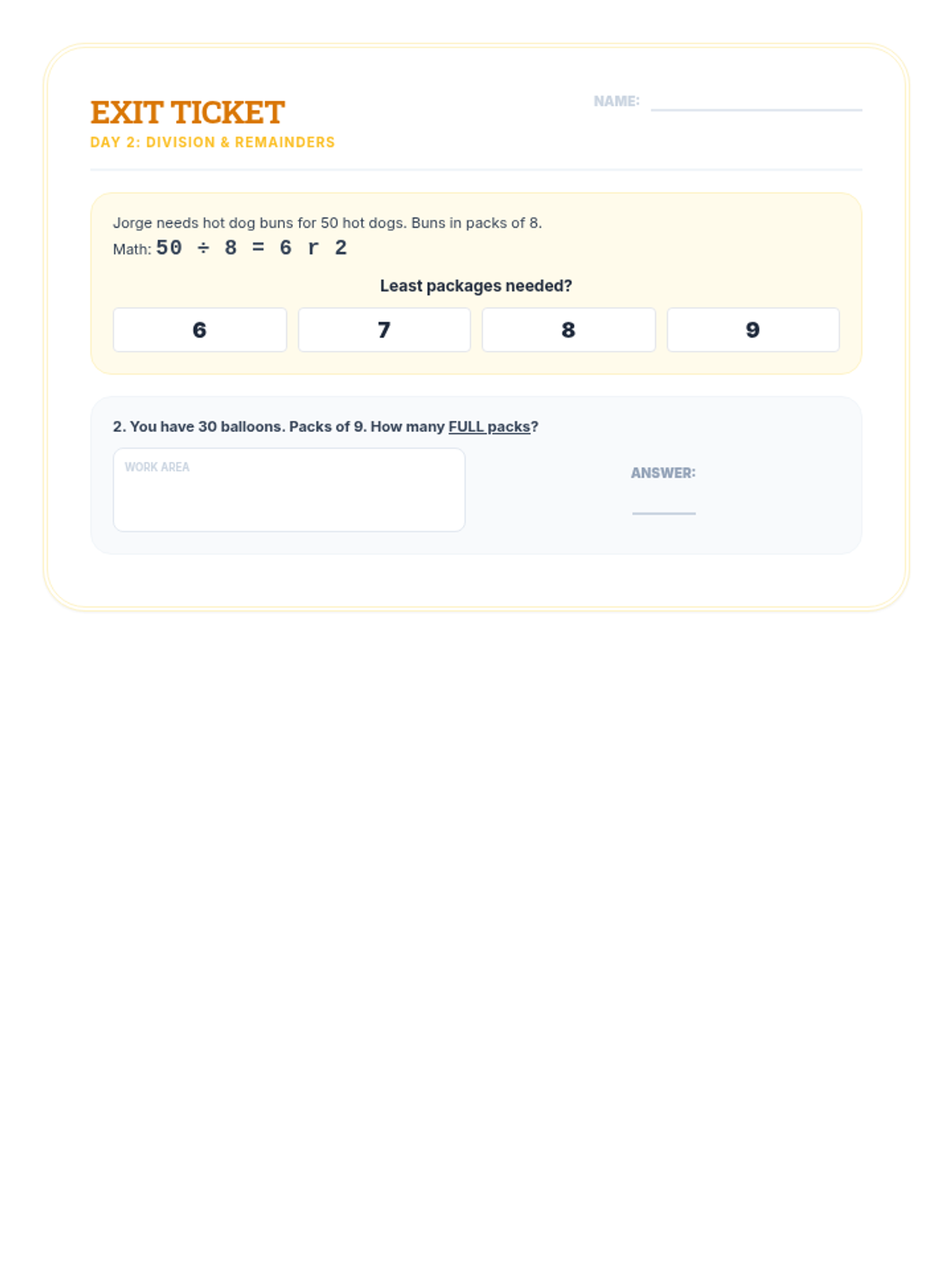
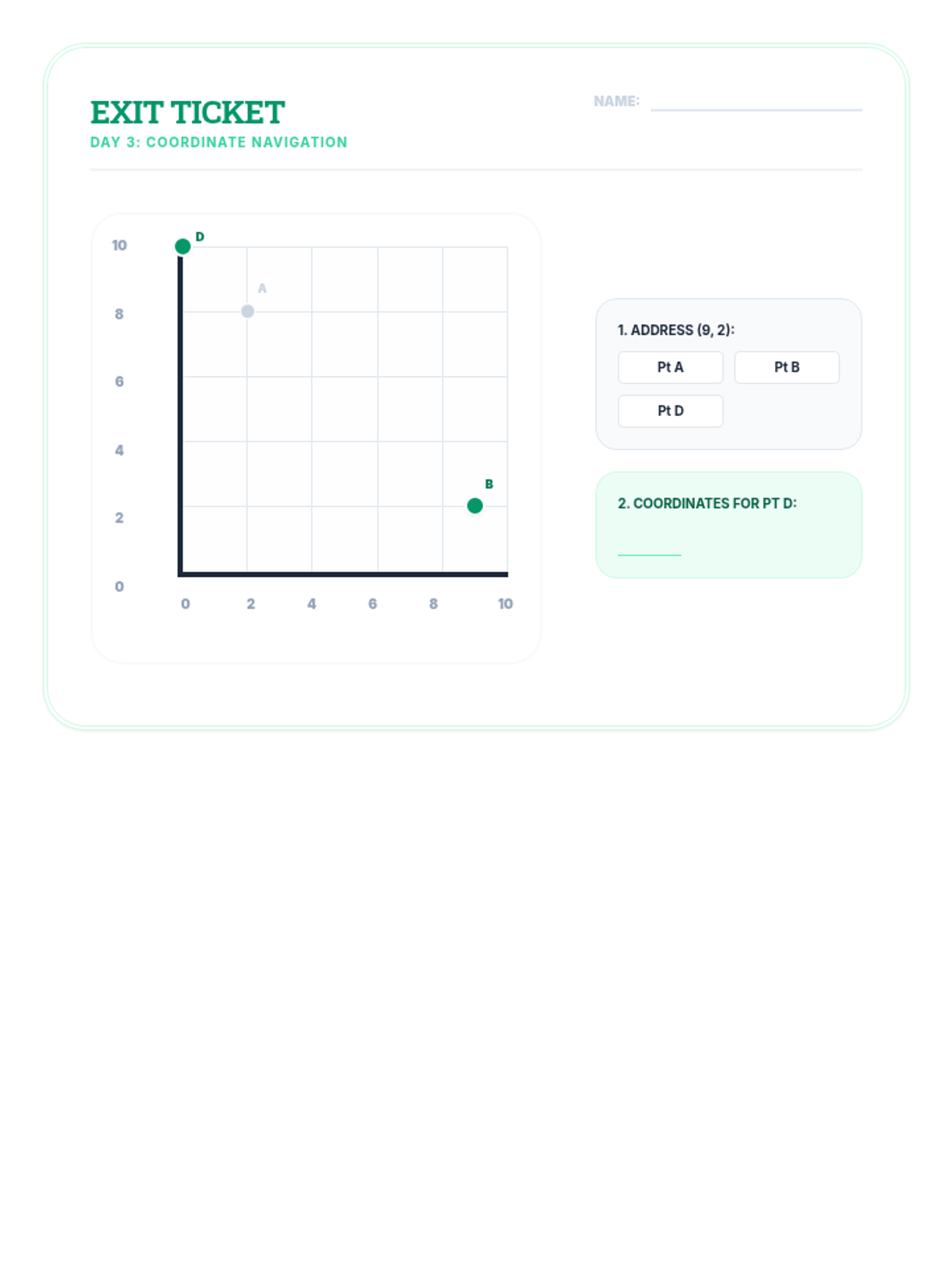
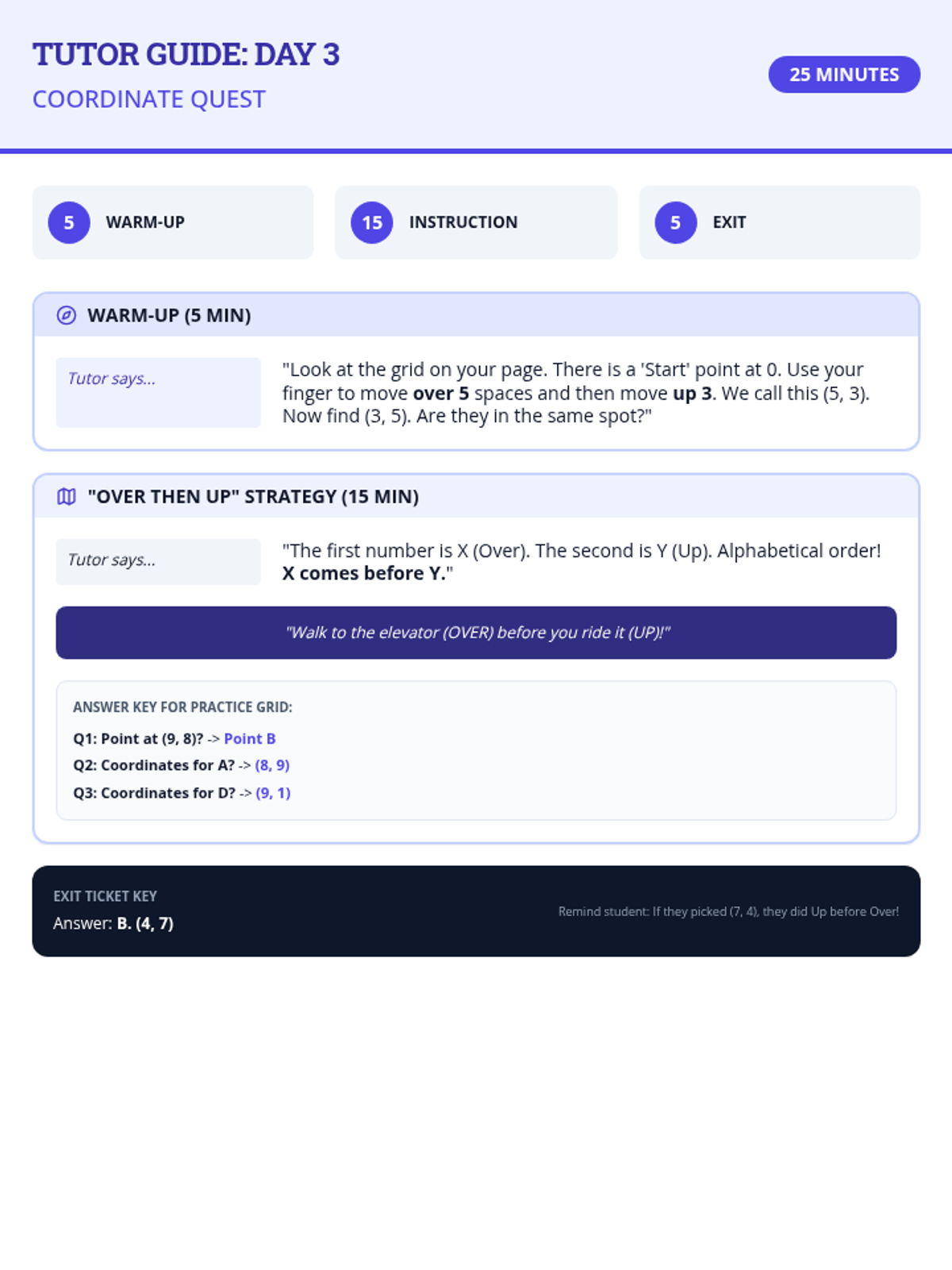
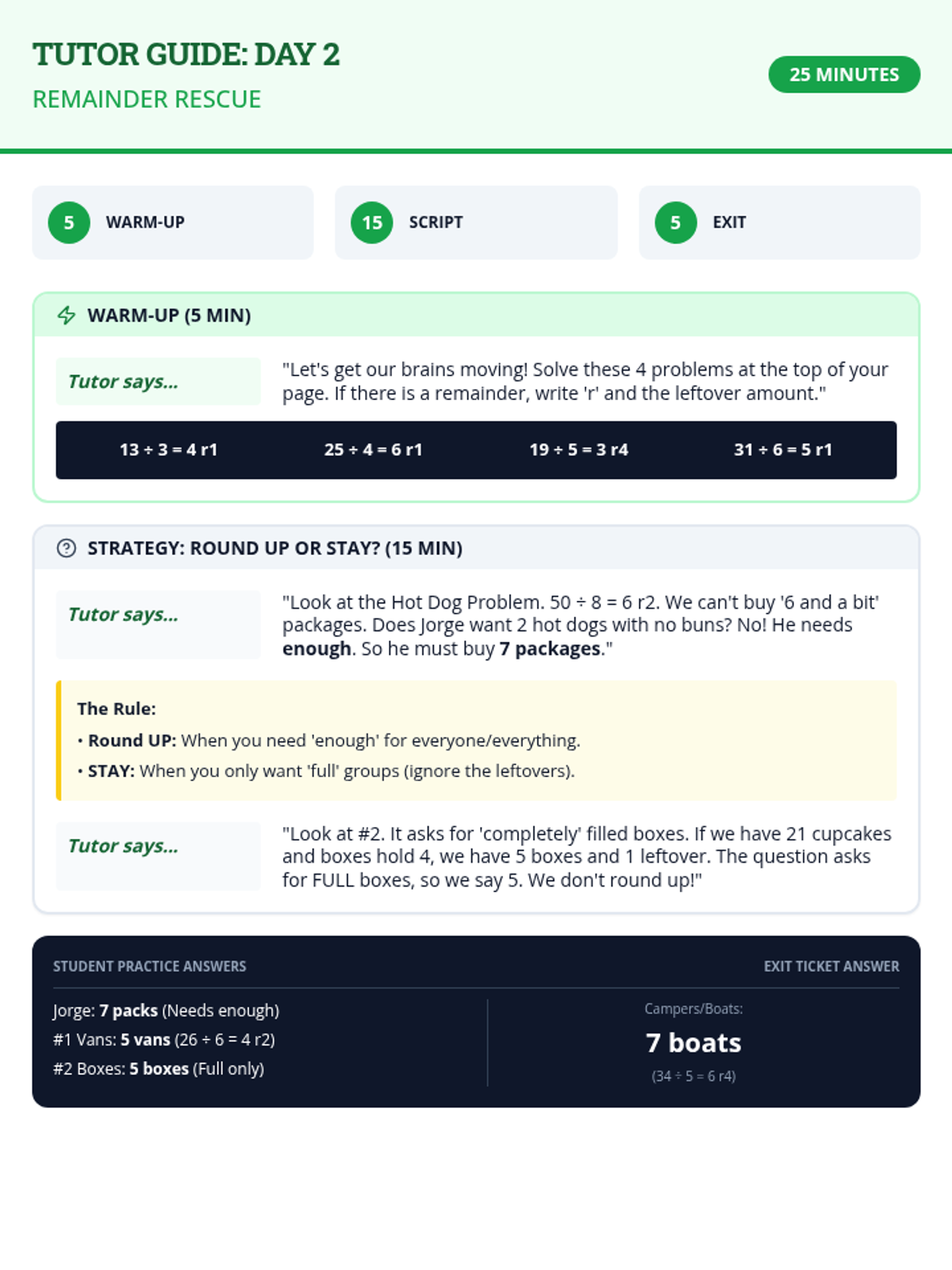
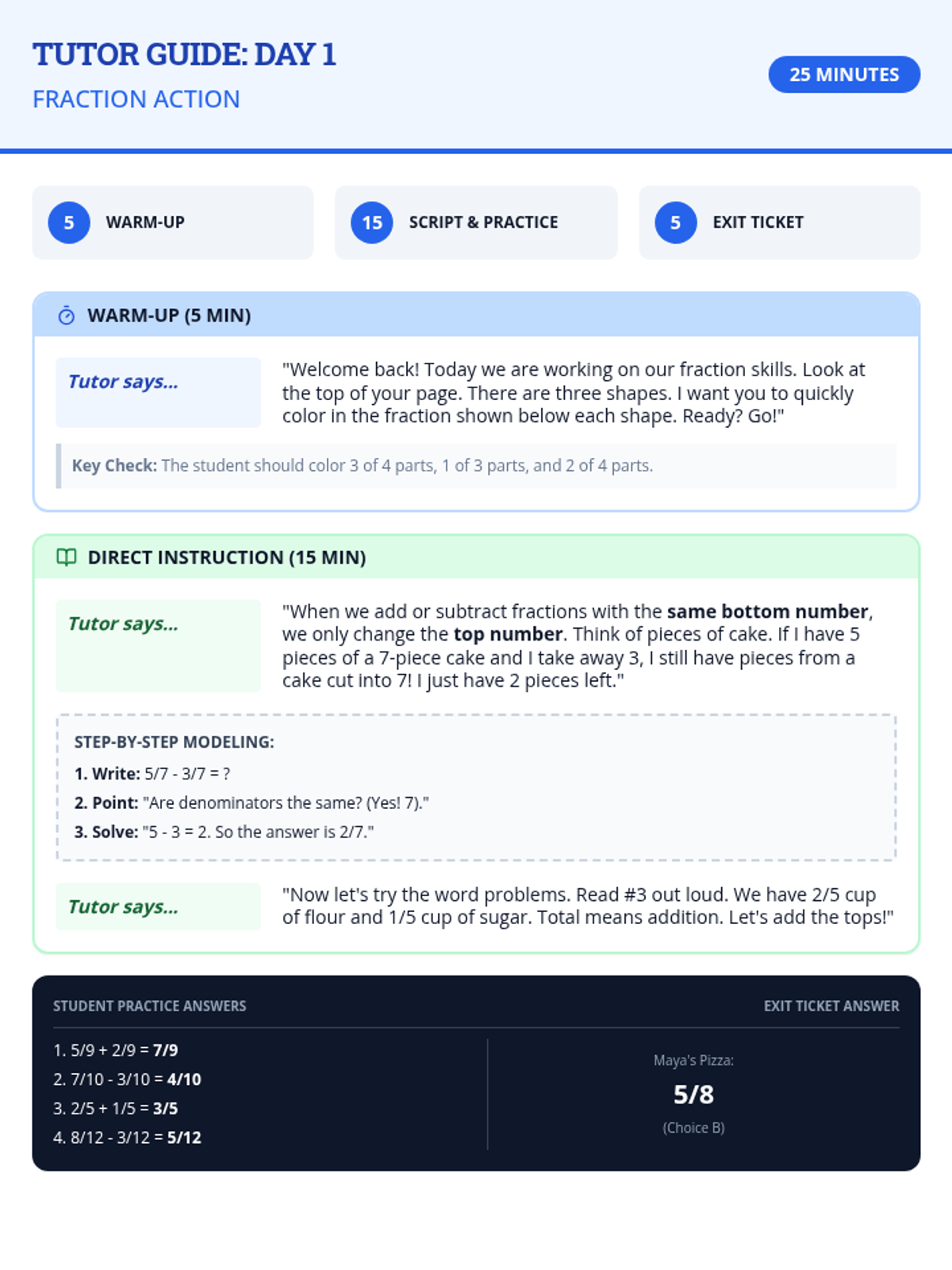
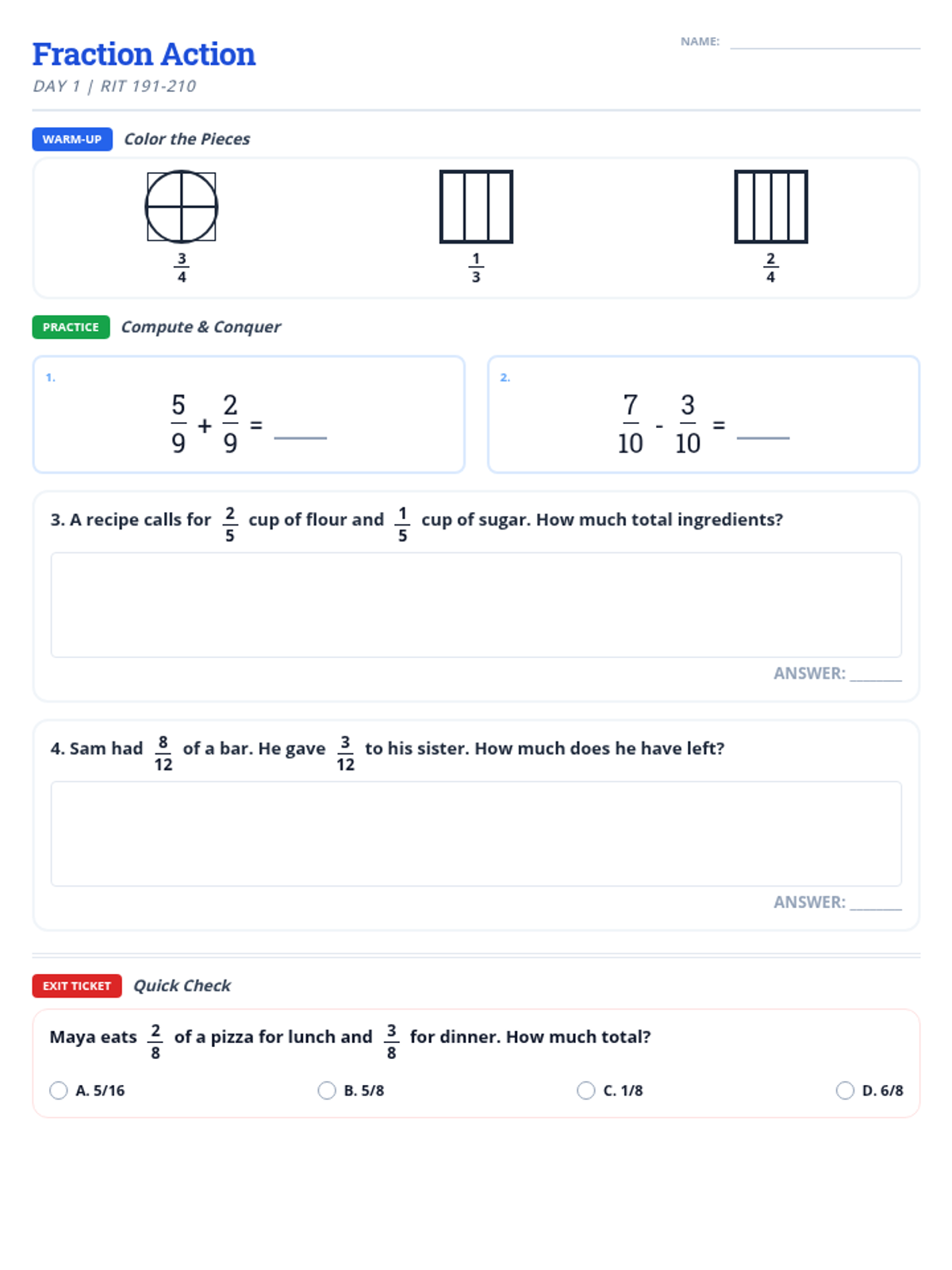
A 3-day small group intervention focused on RIT 191-210 skills: fraction subtraction, inverse operations, interpreting remainders, and coordinate plane graphing. Includes teacher scripts and student workbooks designed for 25-minute sessions without technology.
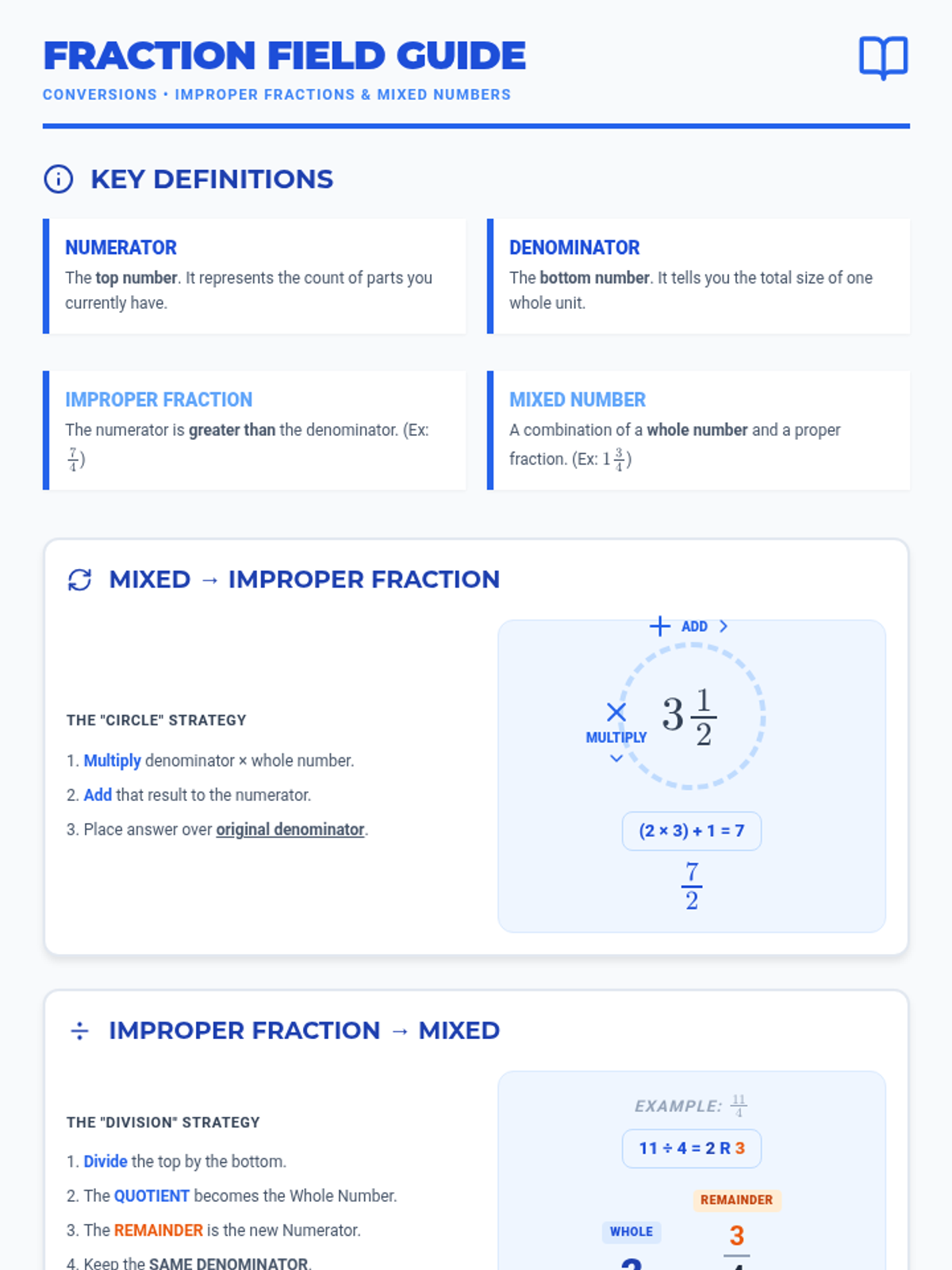
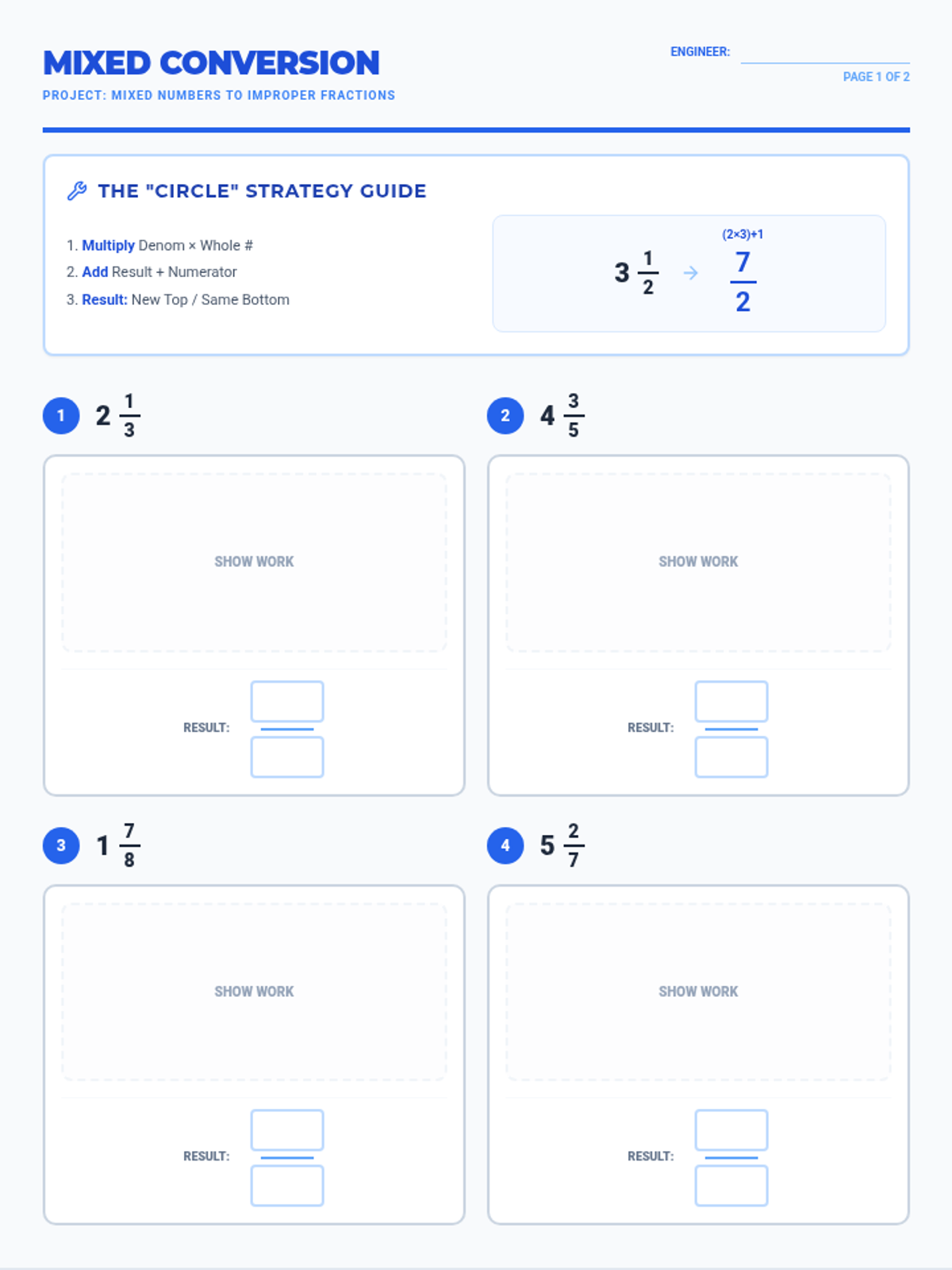
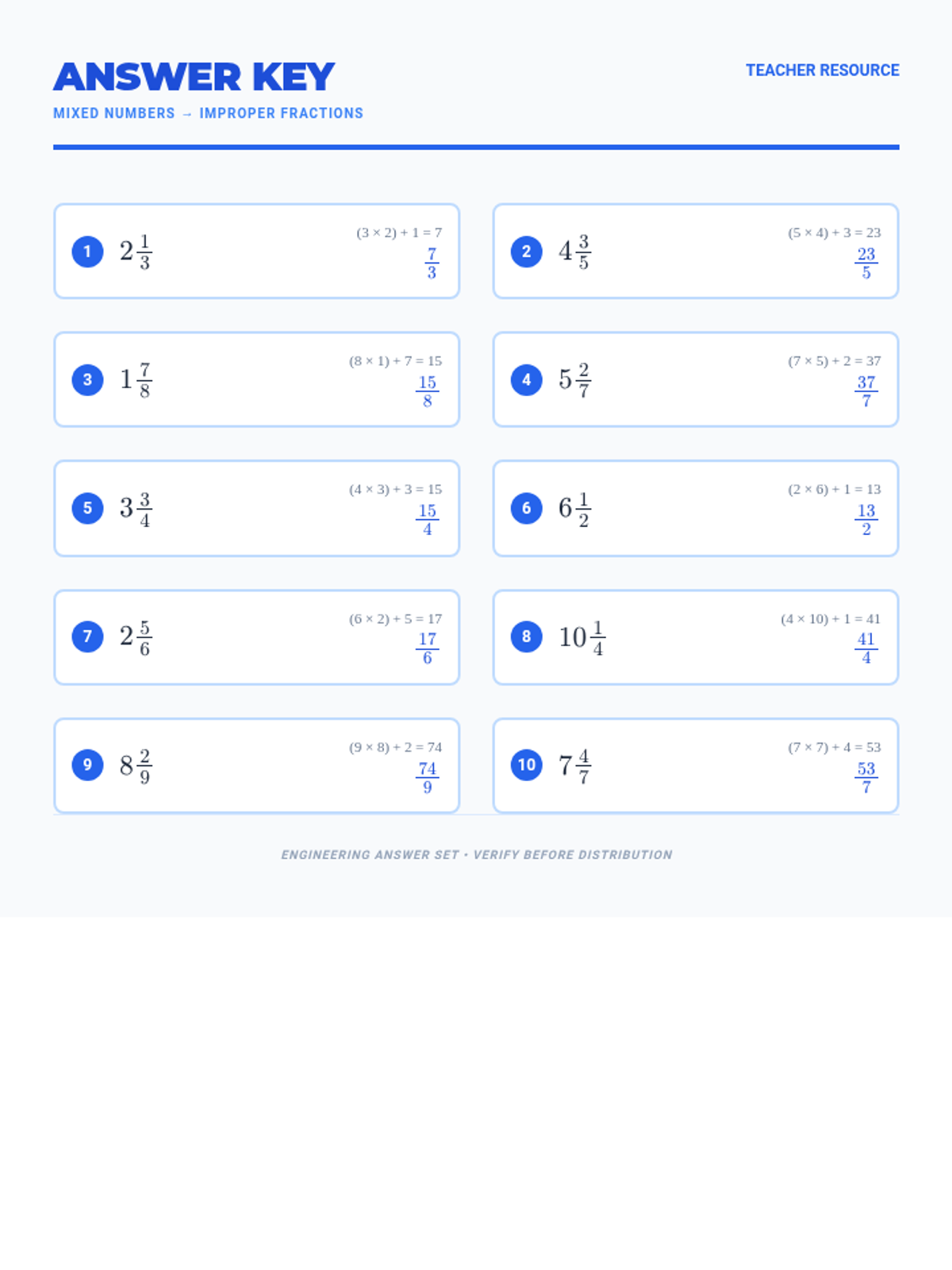
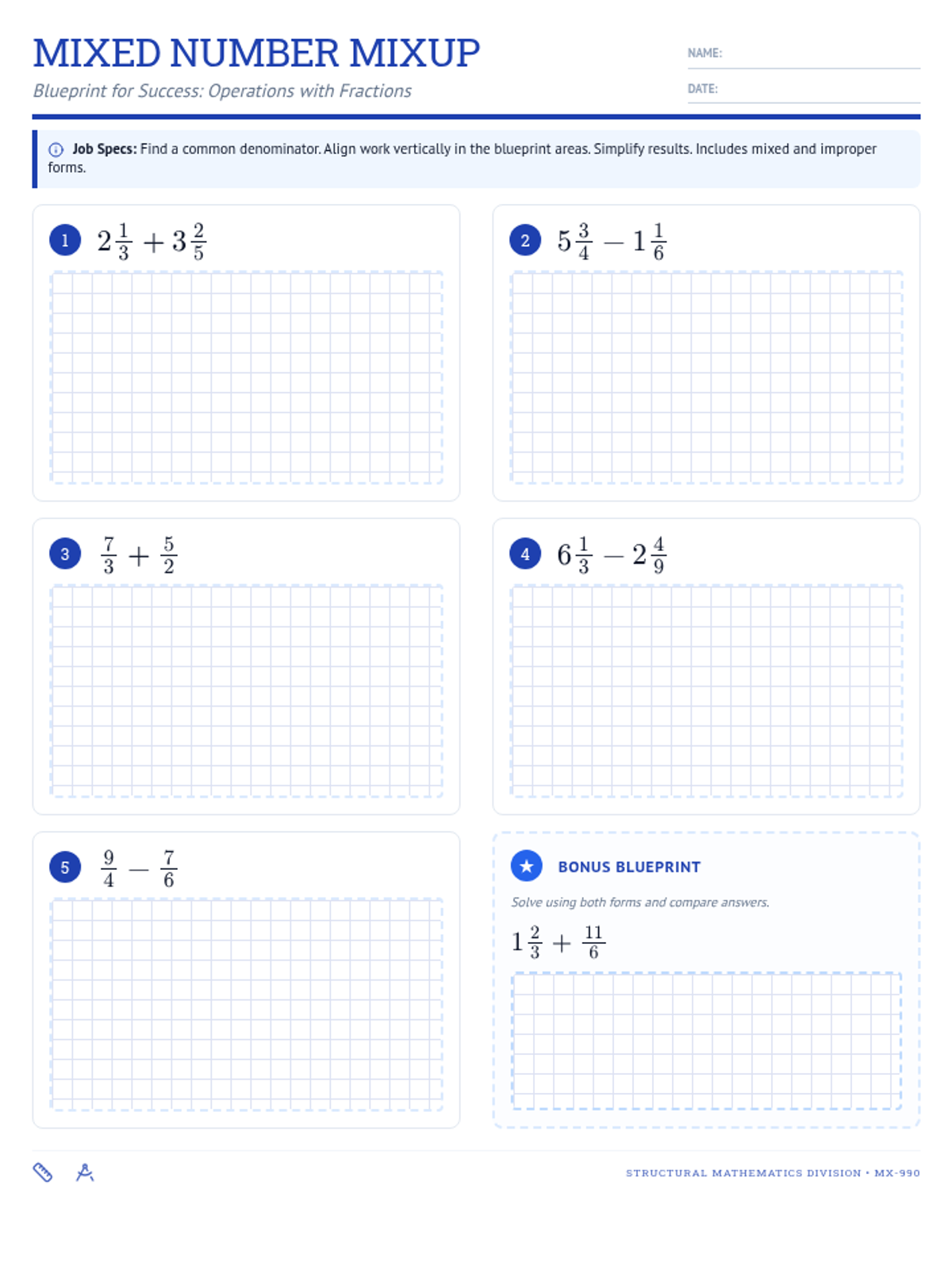
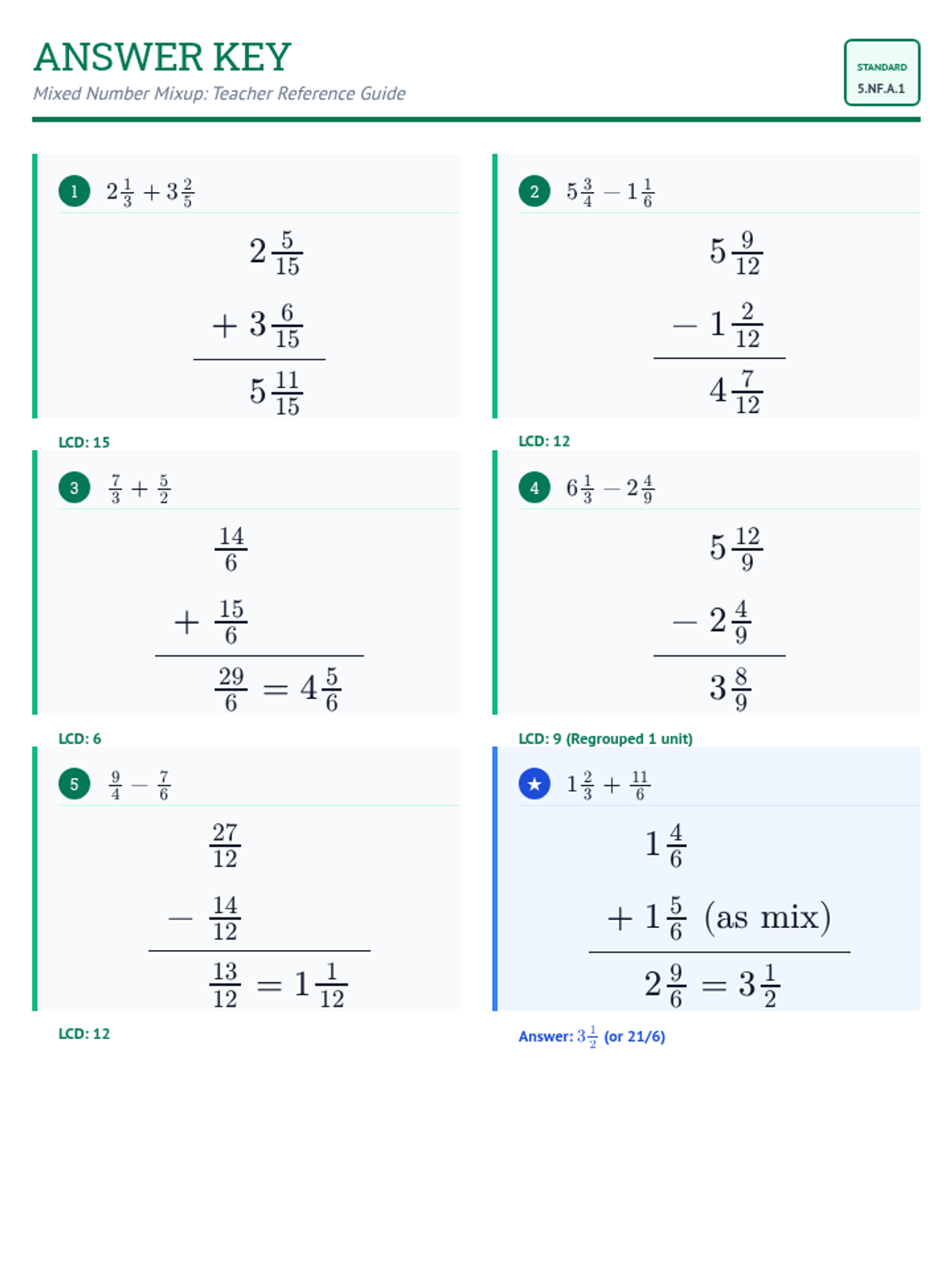
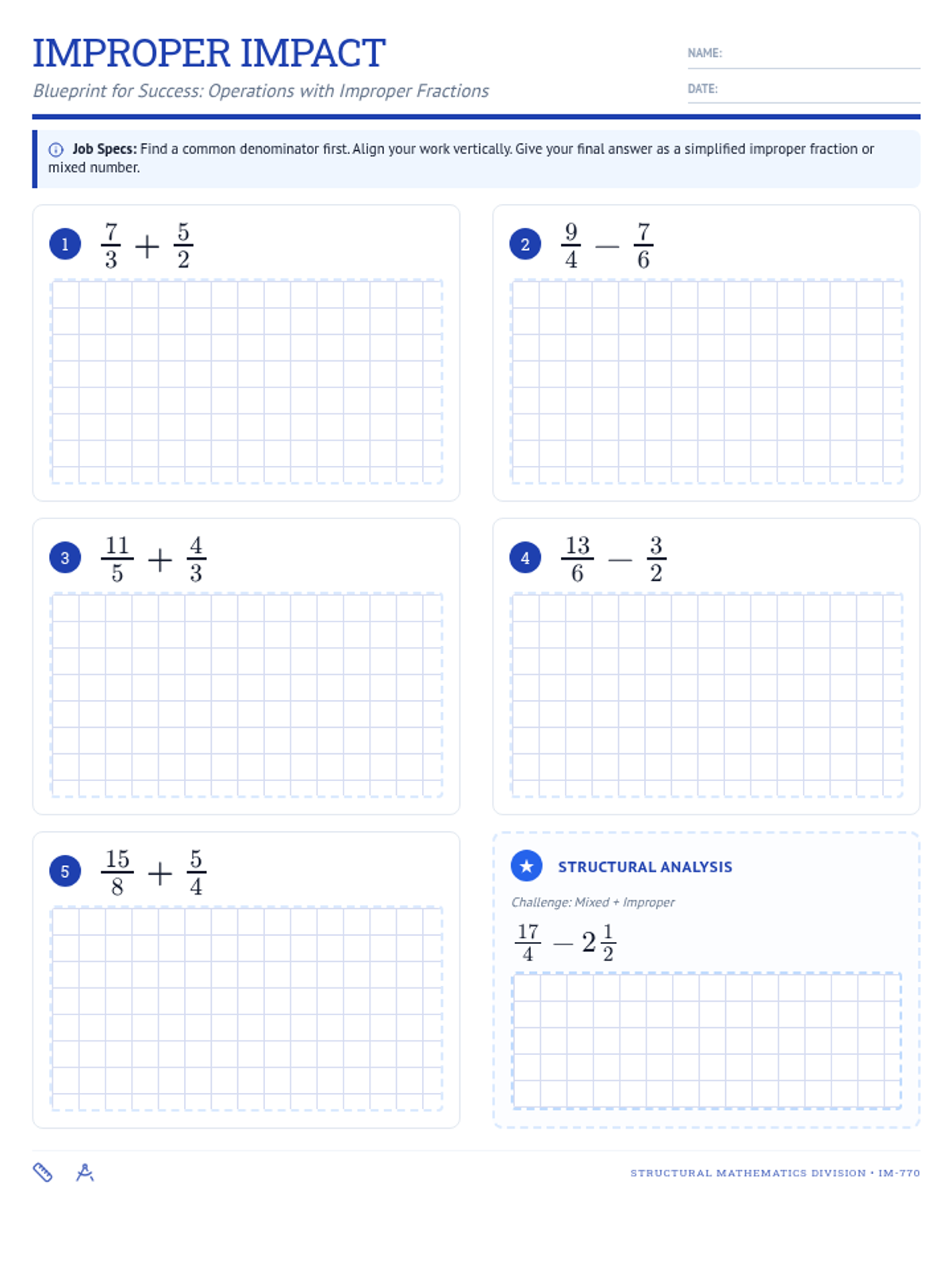
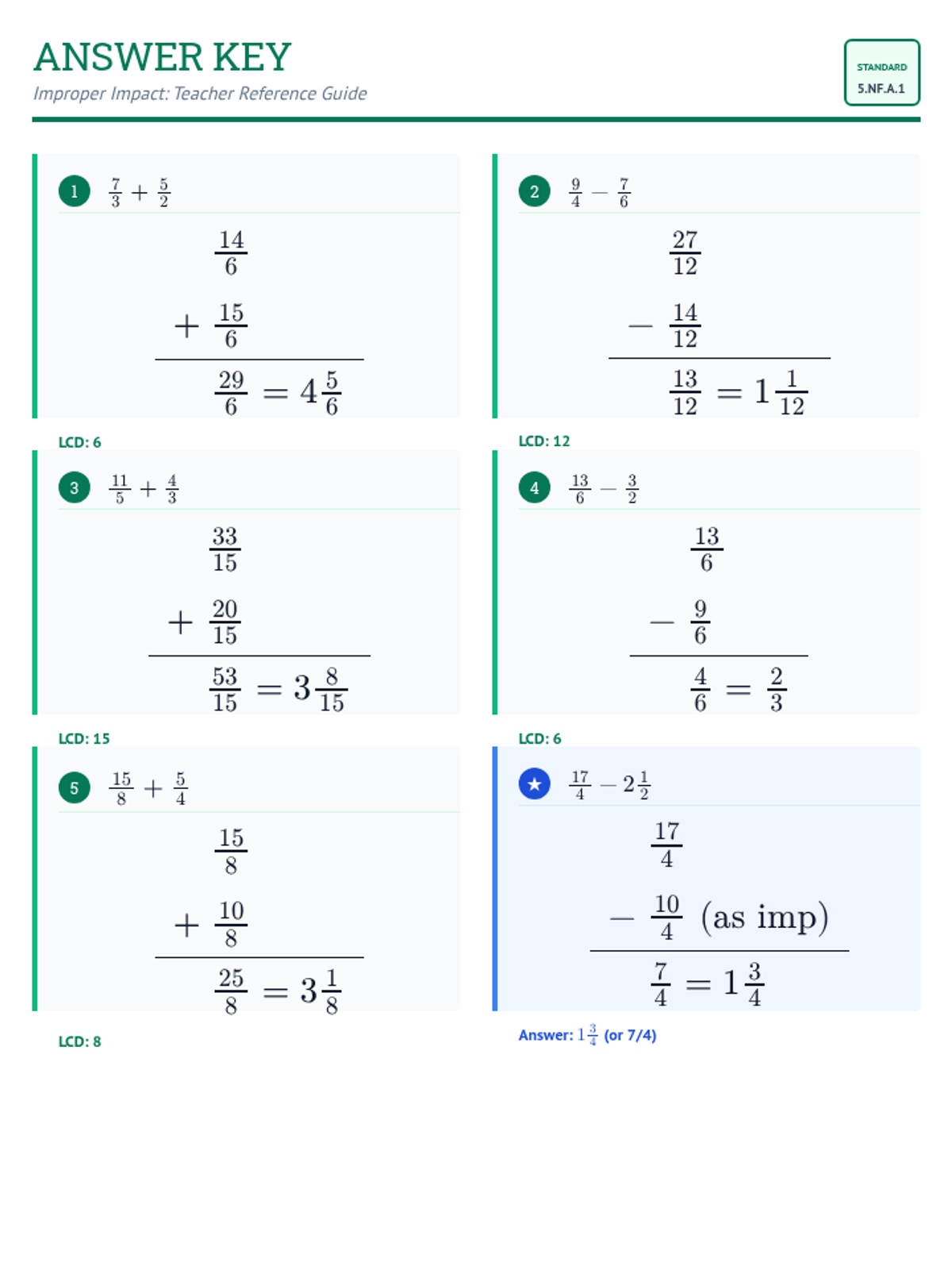
A comprehensive lesson on operations with mixed numbers and improper fractions, focusing on finding common denominators, regrouping, and converting between forms.
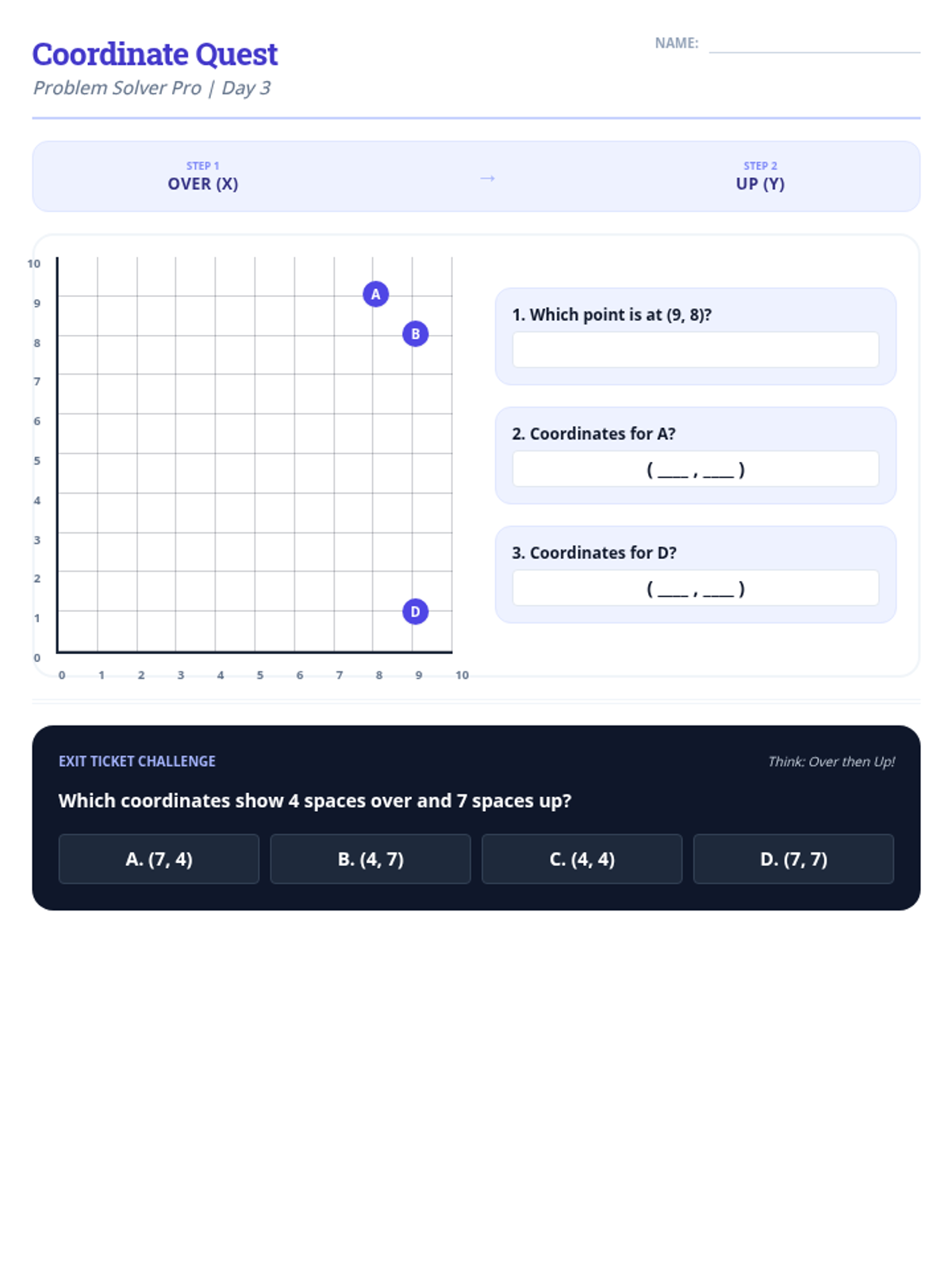
Introduces and reinforces the use of coordinate planes, focusing on identifying (x, y) coordinates using the 'over then up' strategy.
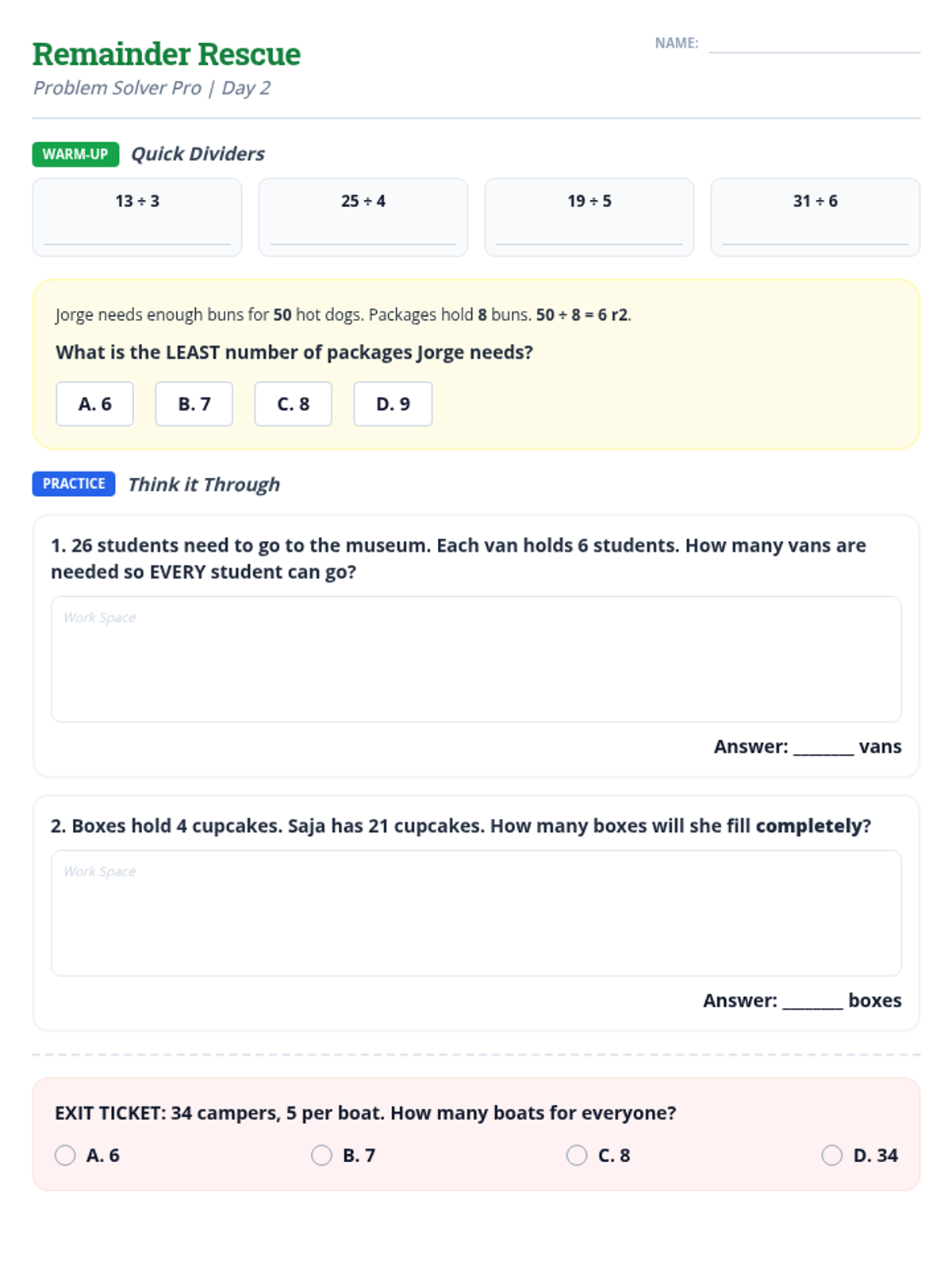
Teaches students how to interpret remainders in real-world division problems, specifically deciding when to 'round up' to ensure everyone or everything is included.
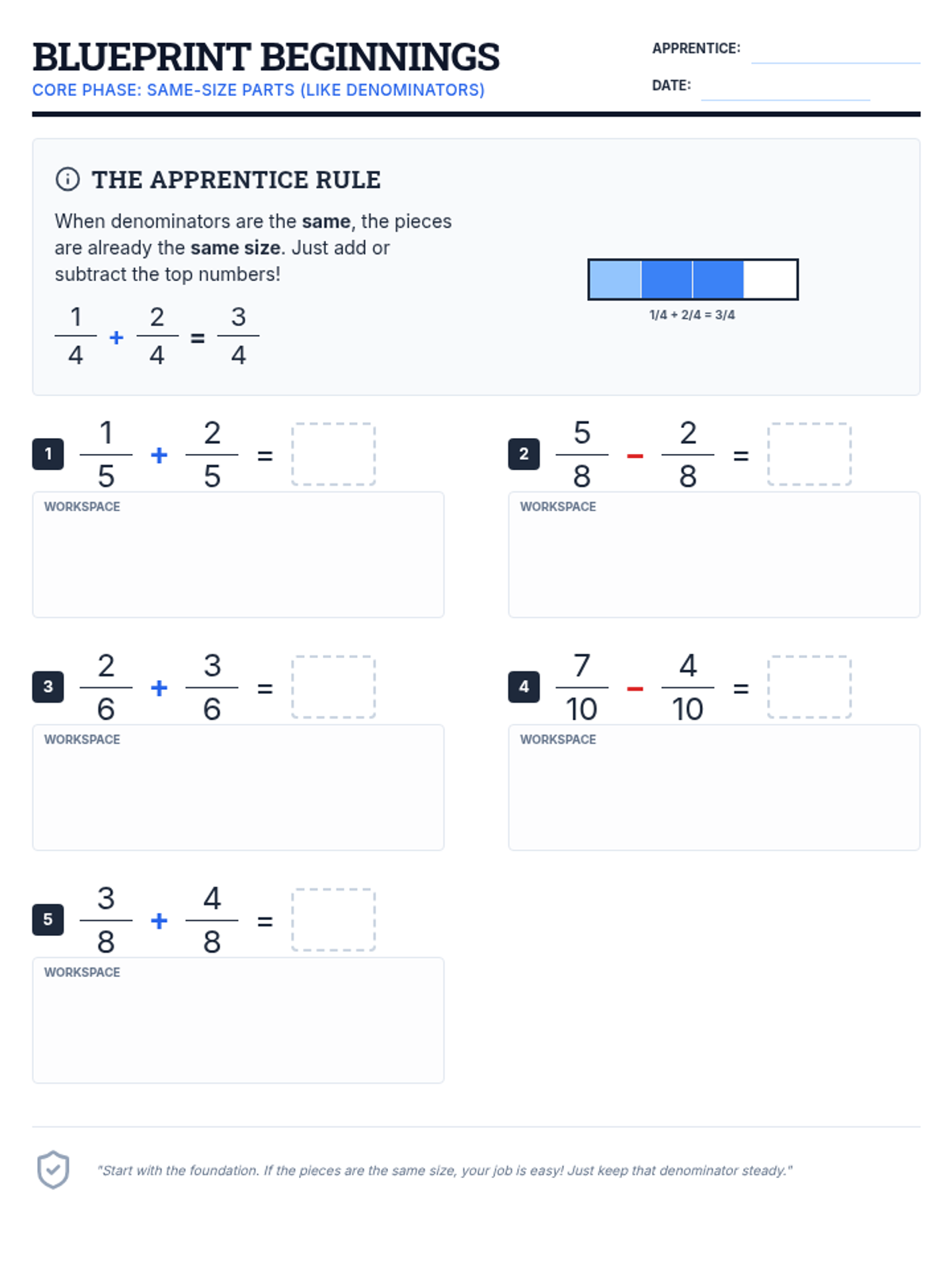
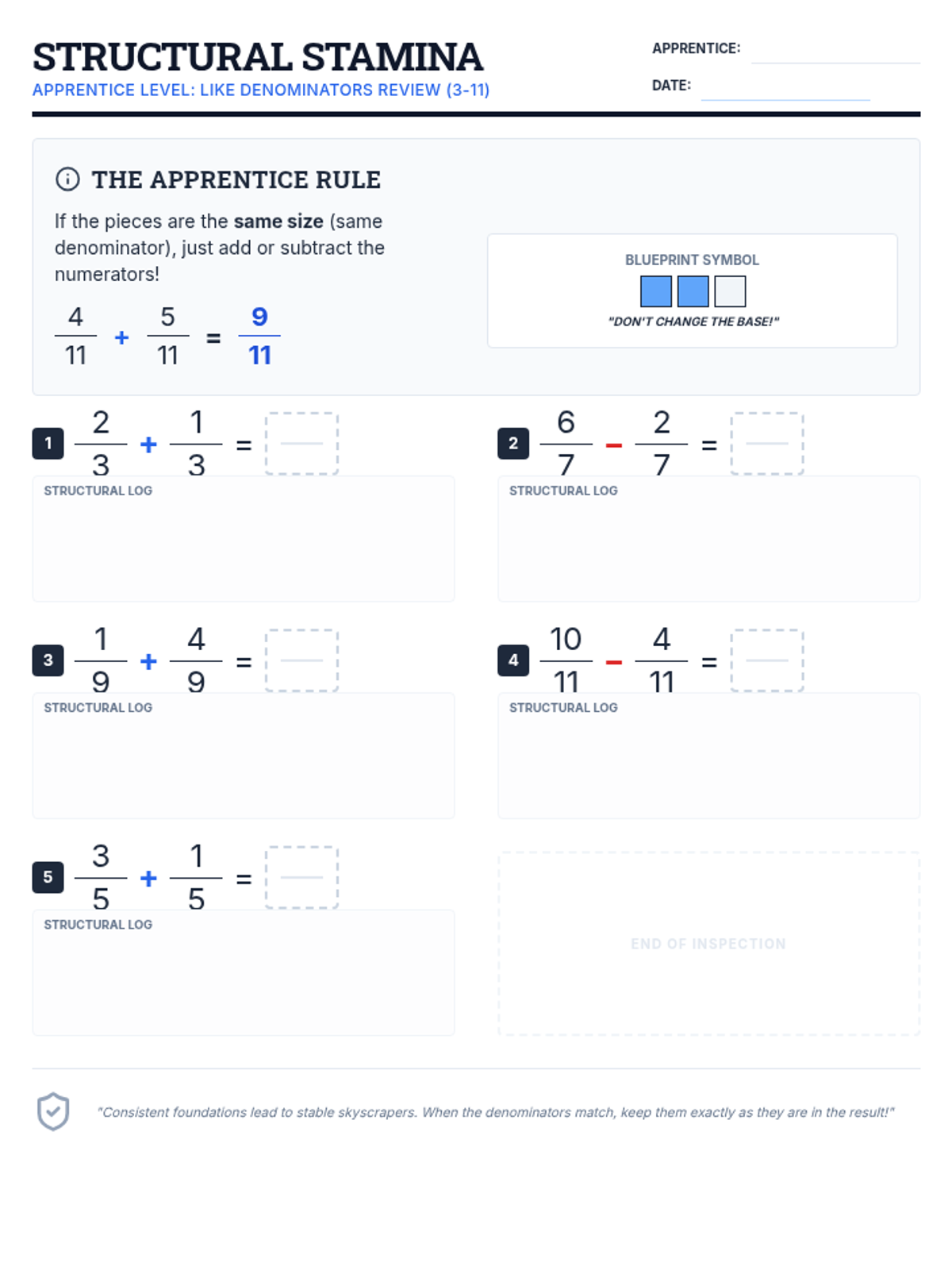
Focuses on adding and subtracting fractions with like denominators, emphasizing that the denominator represents the size of the piece and remains constant.
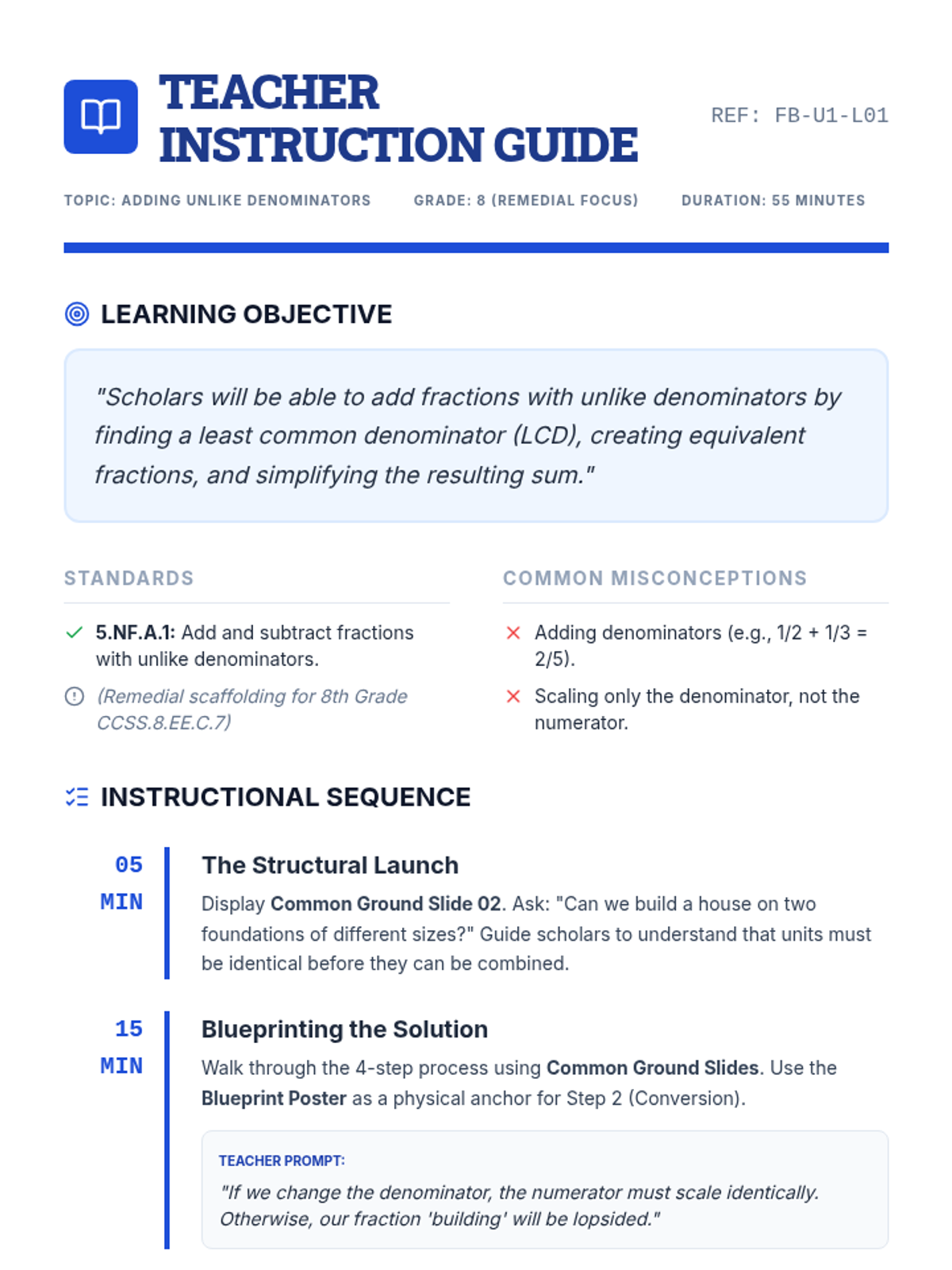
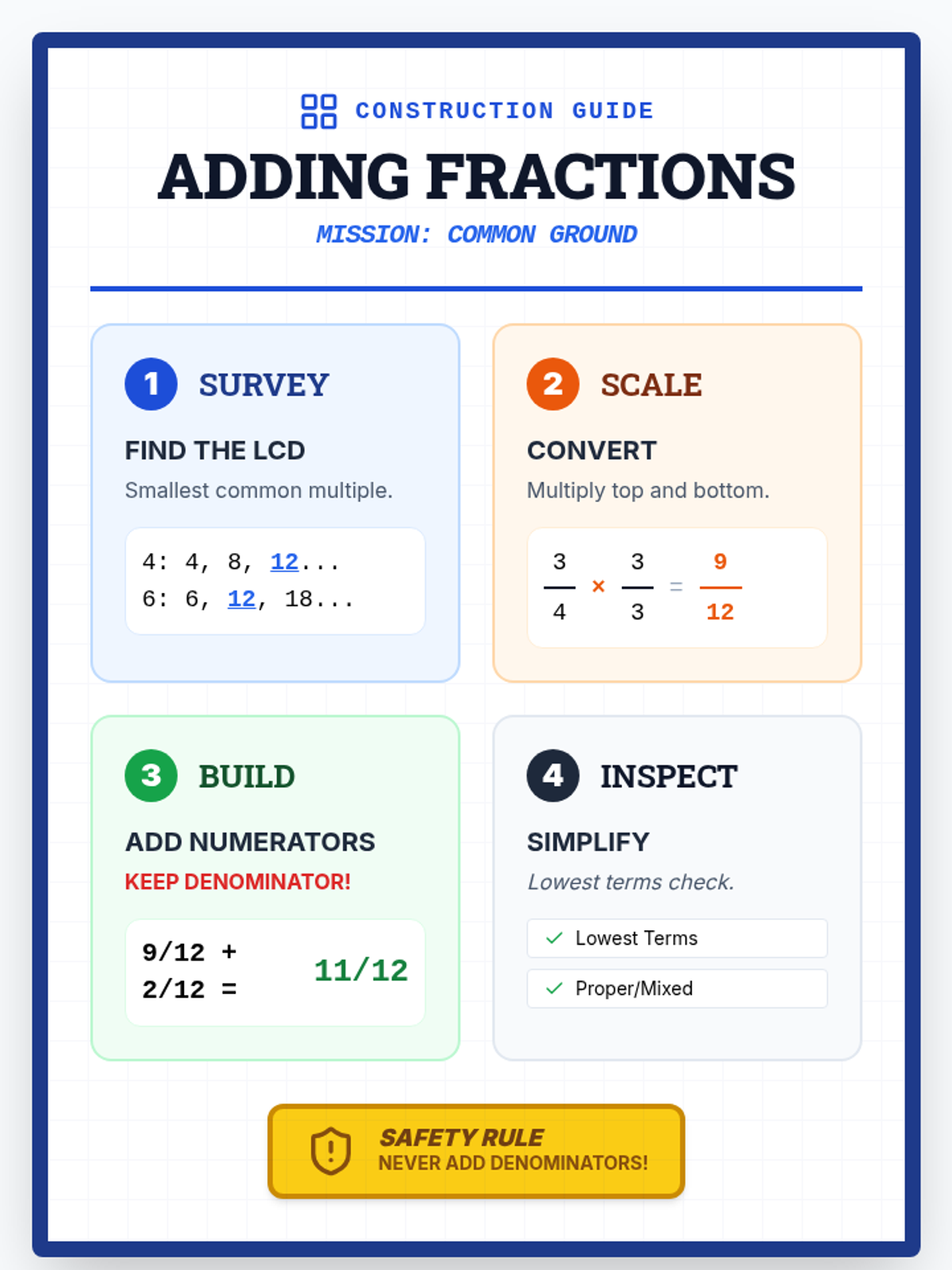
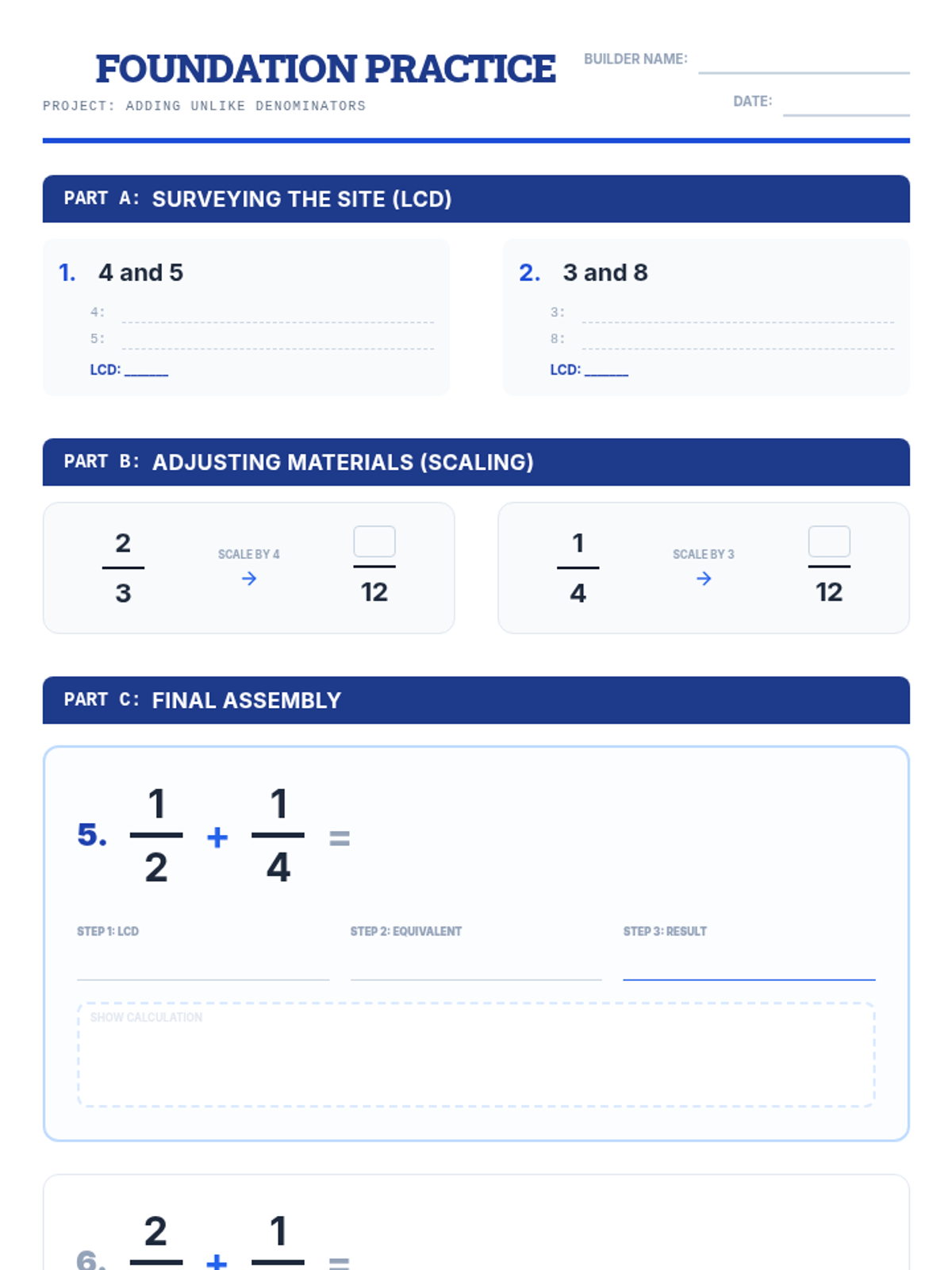
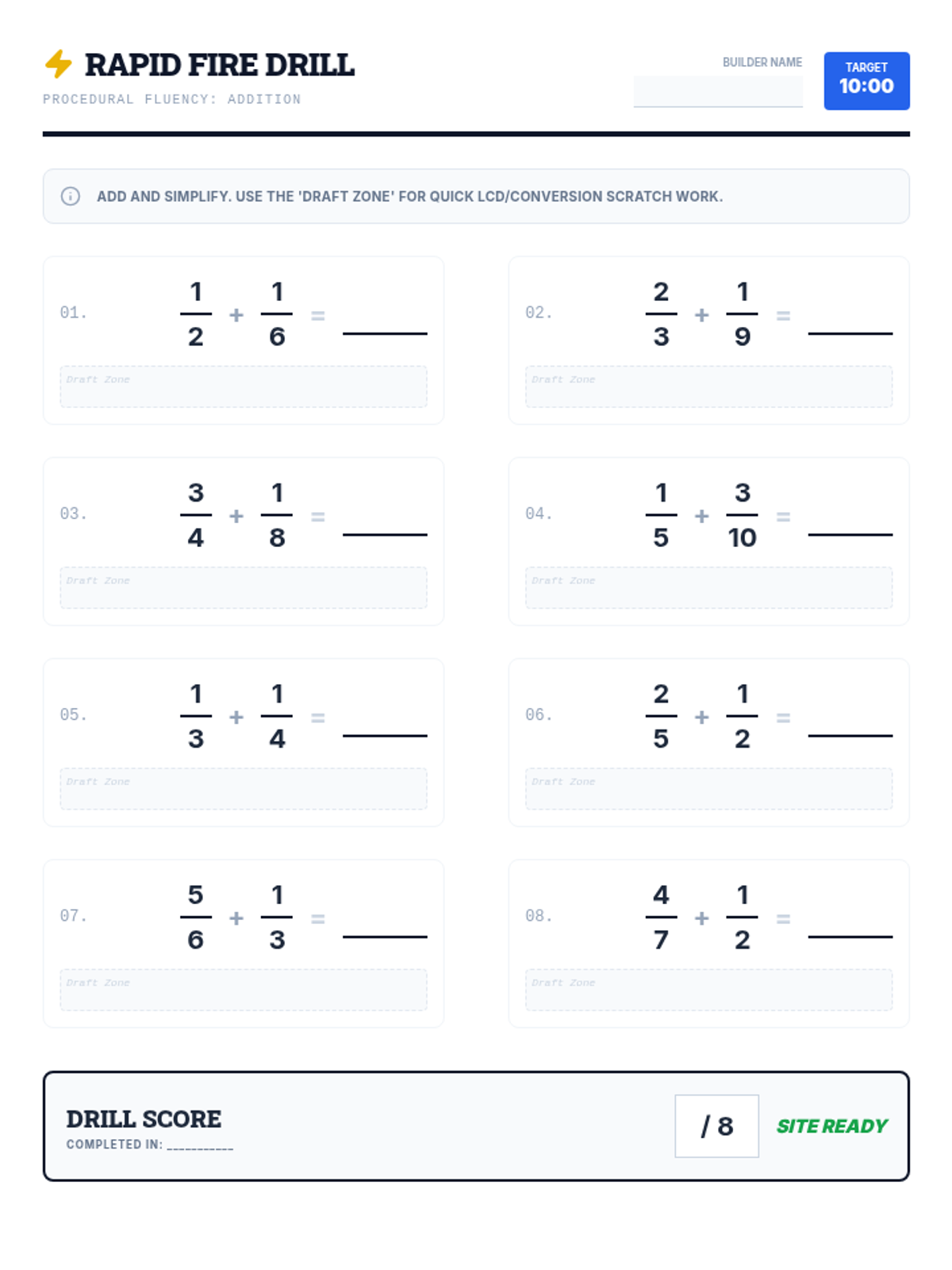
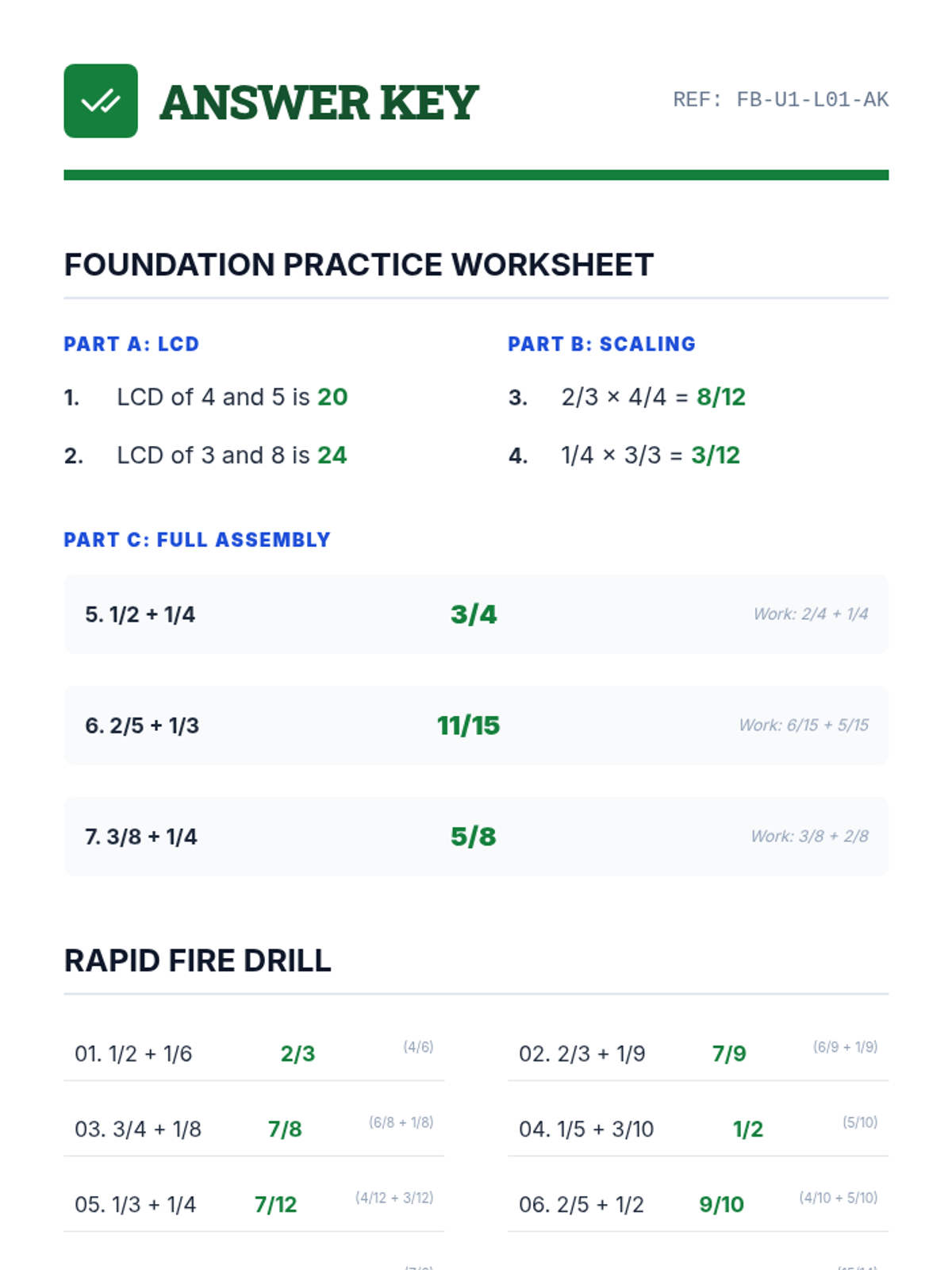
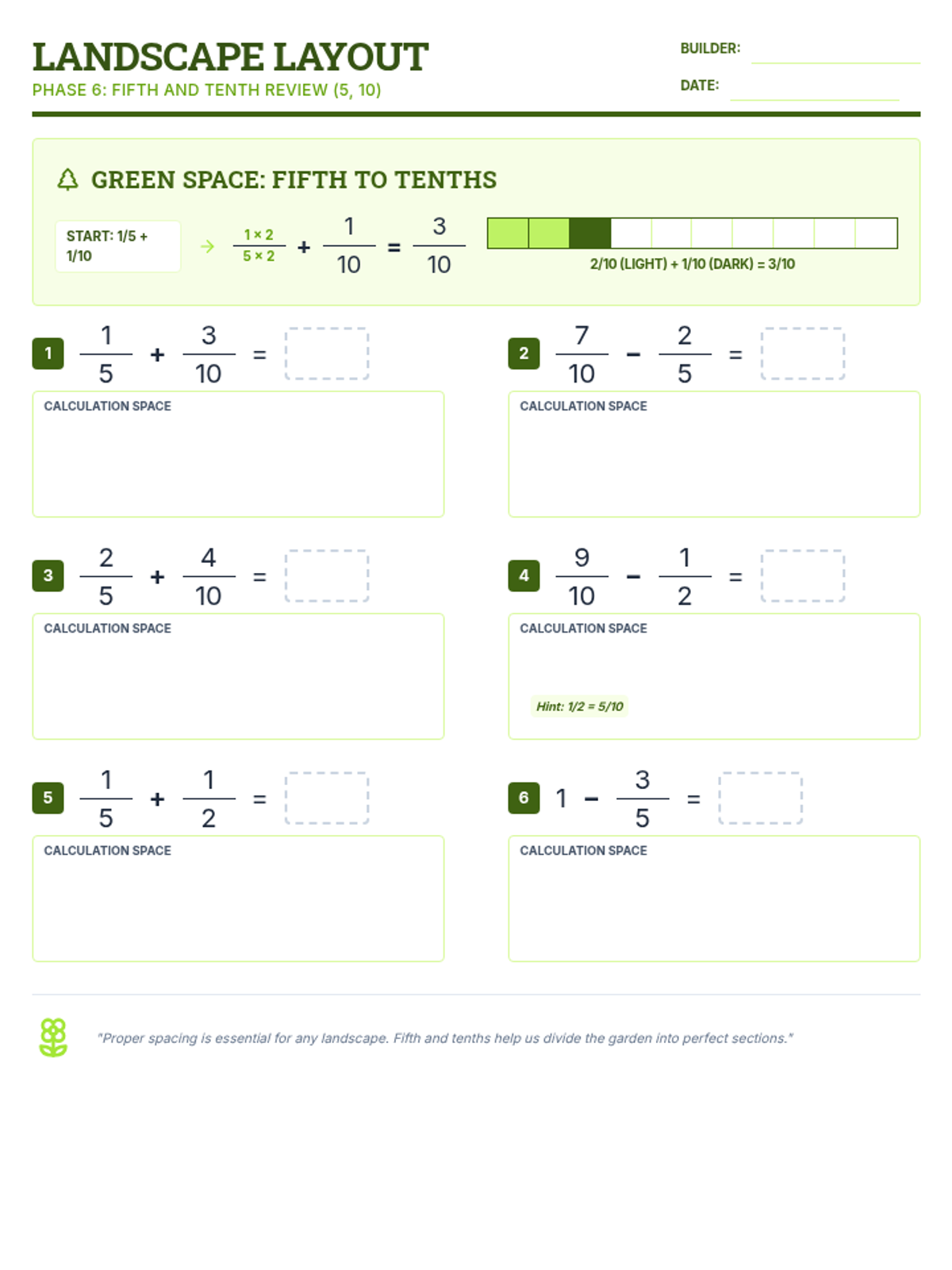
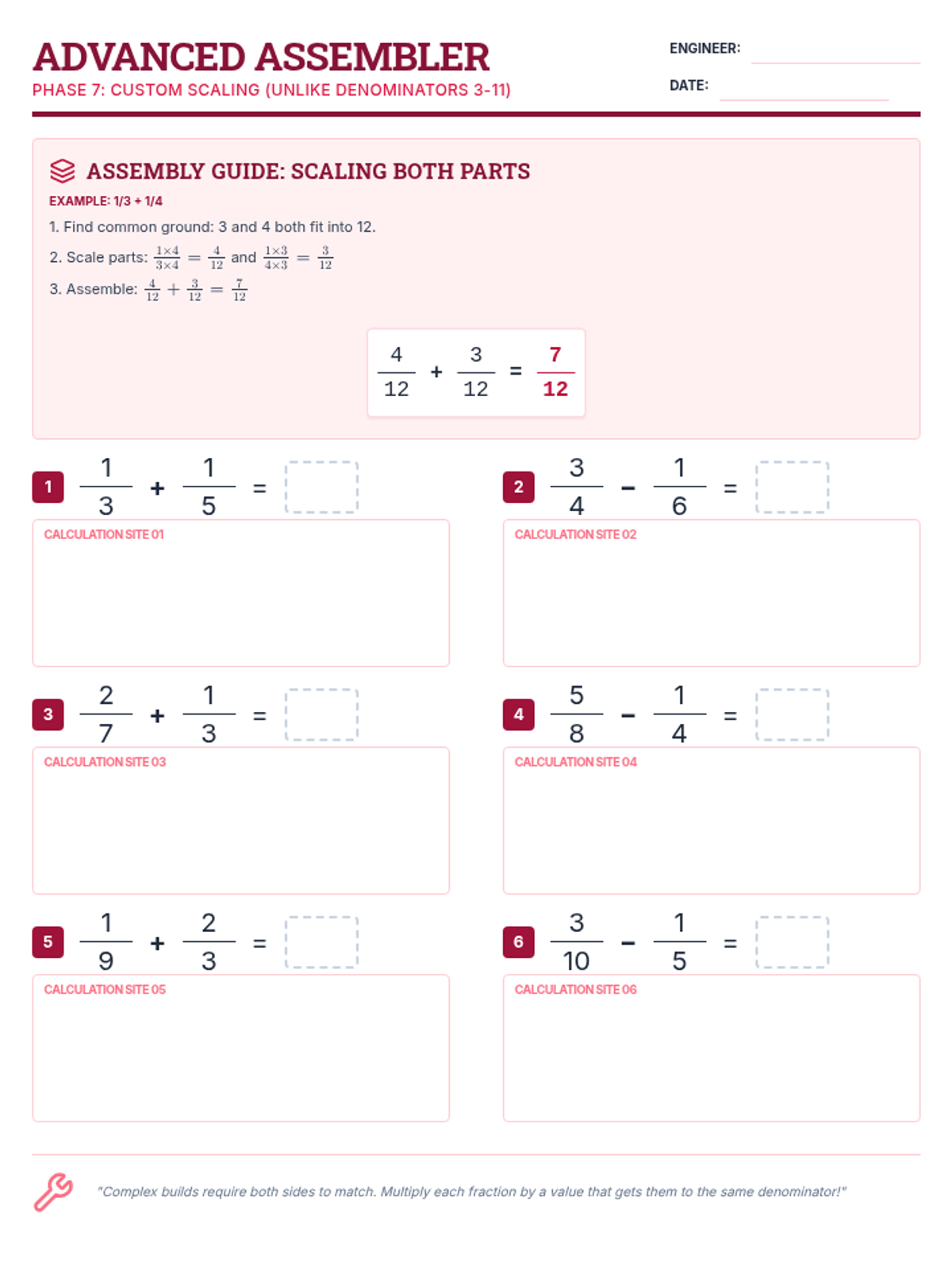
A focused lesson on adding fractions with unlike denominators using a blueprint-inspired approach to building common denominators.
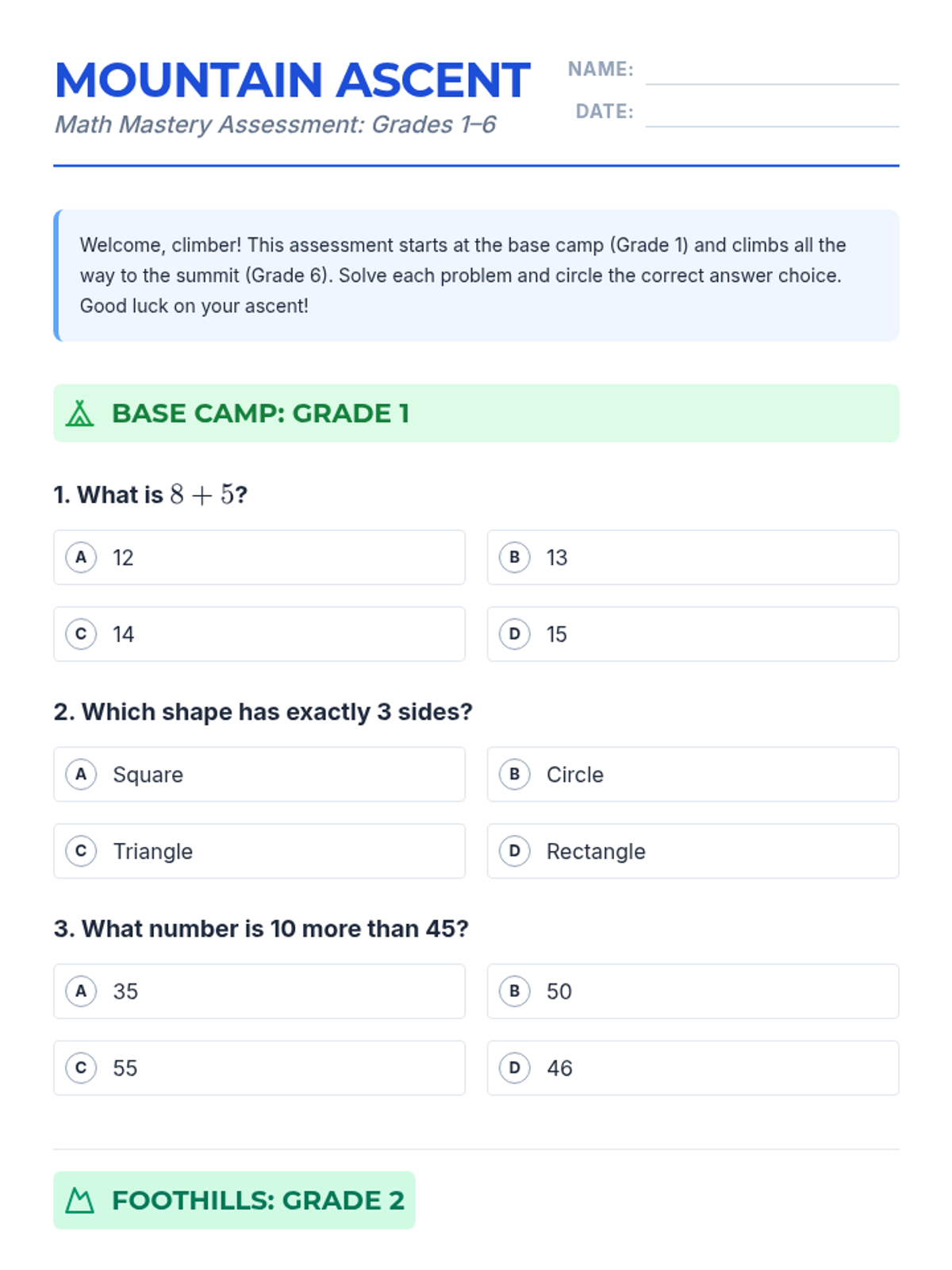
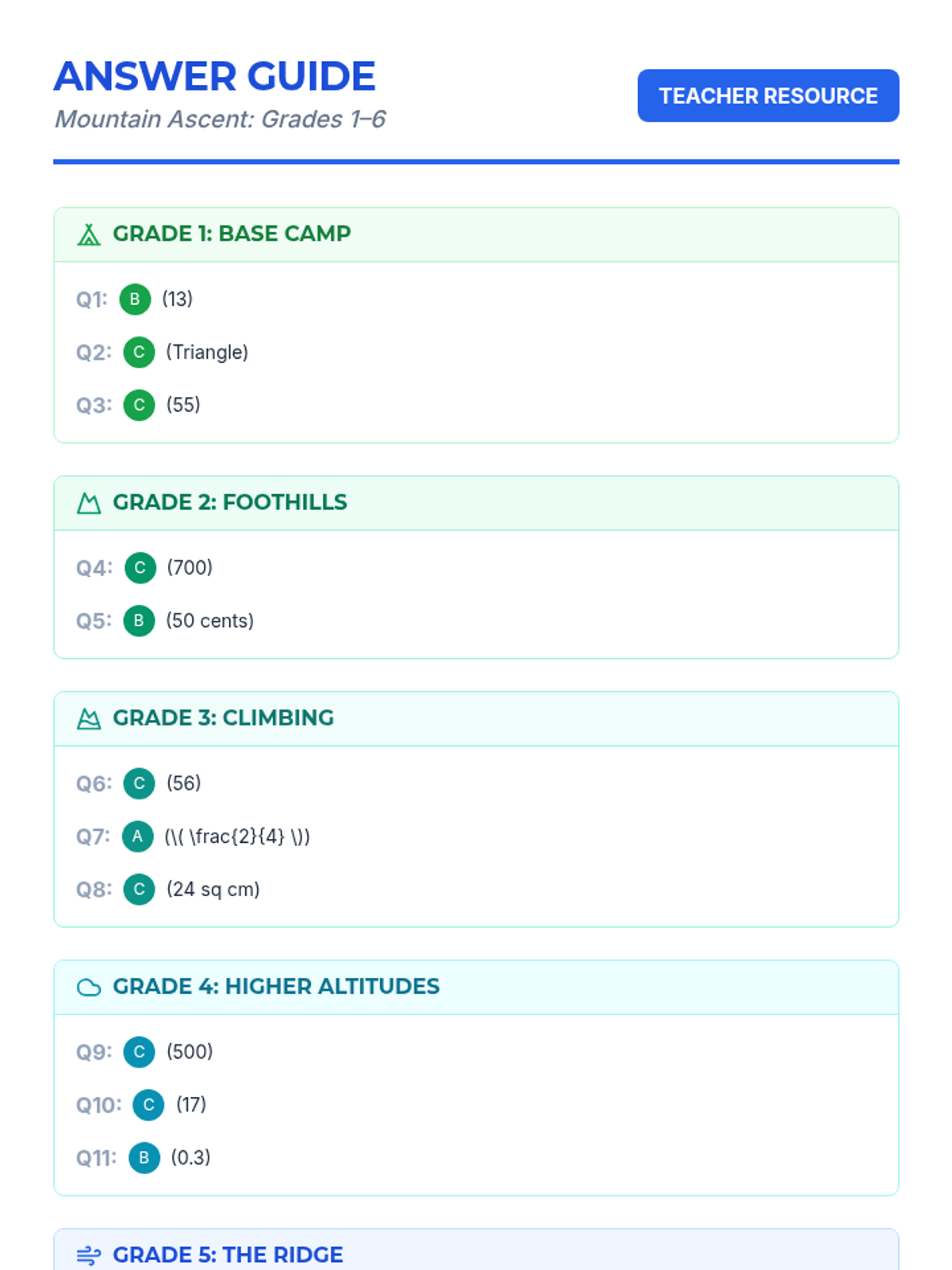
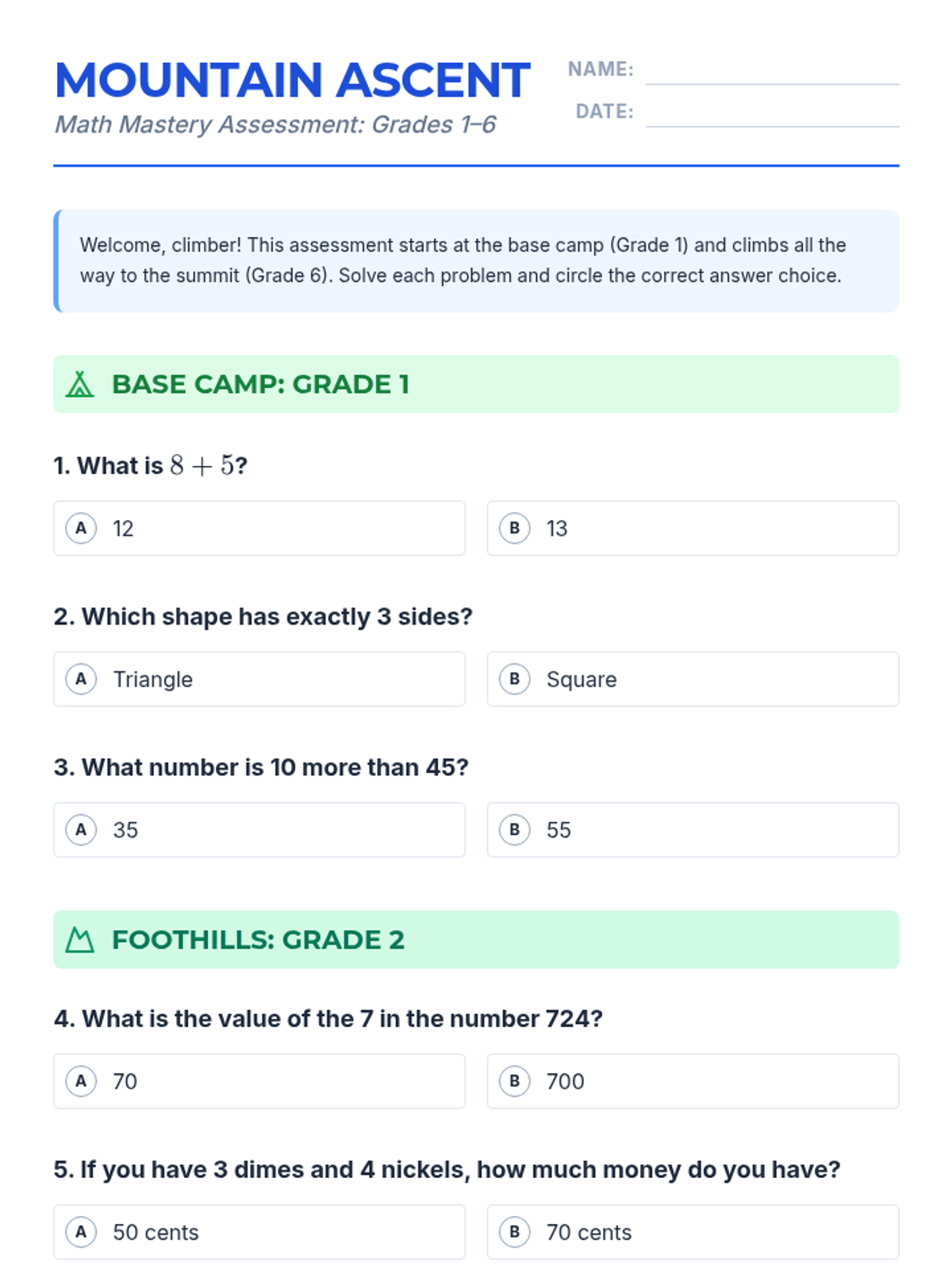
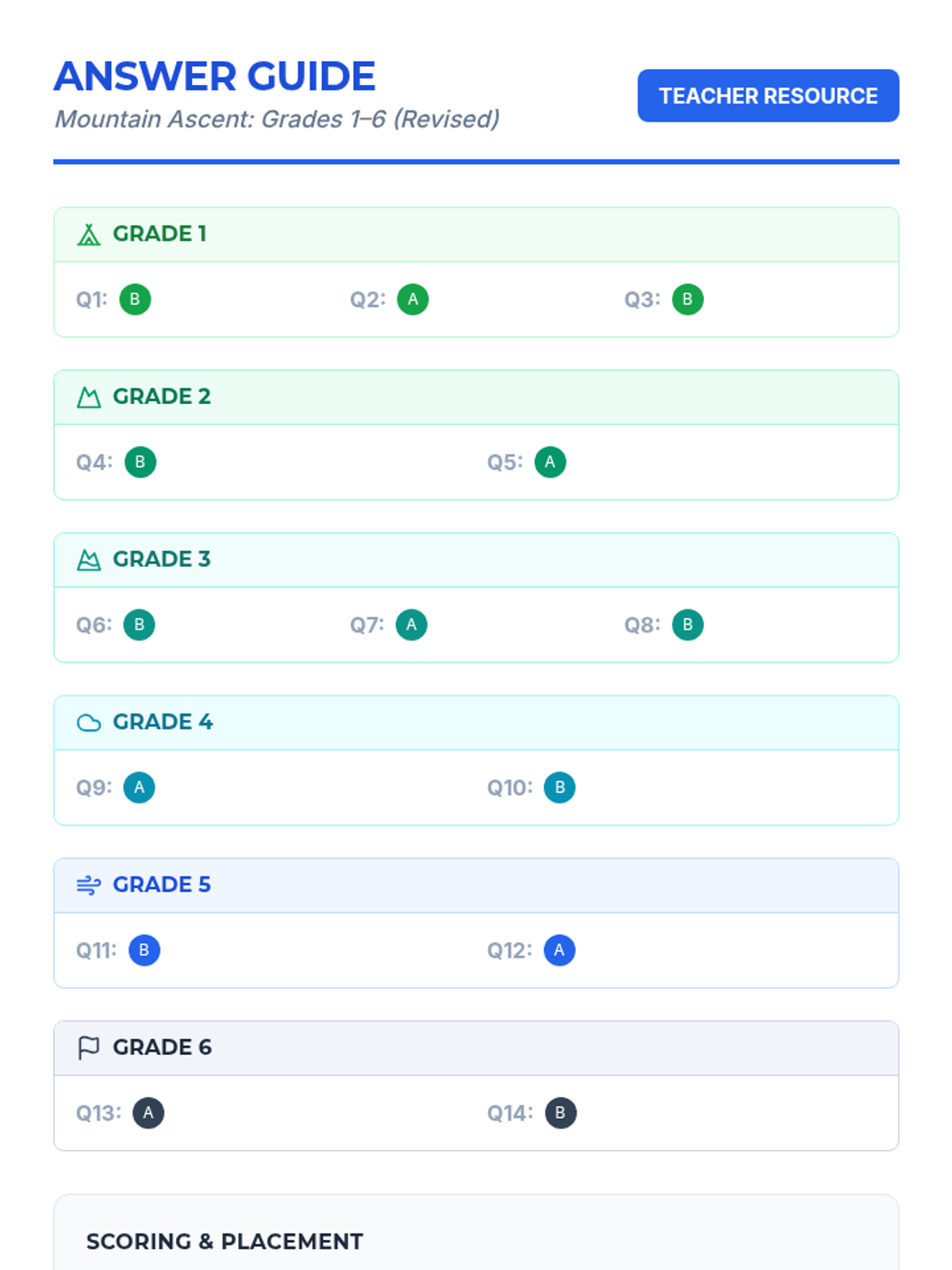
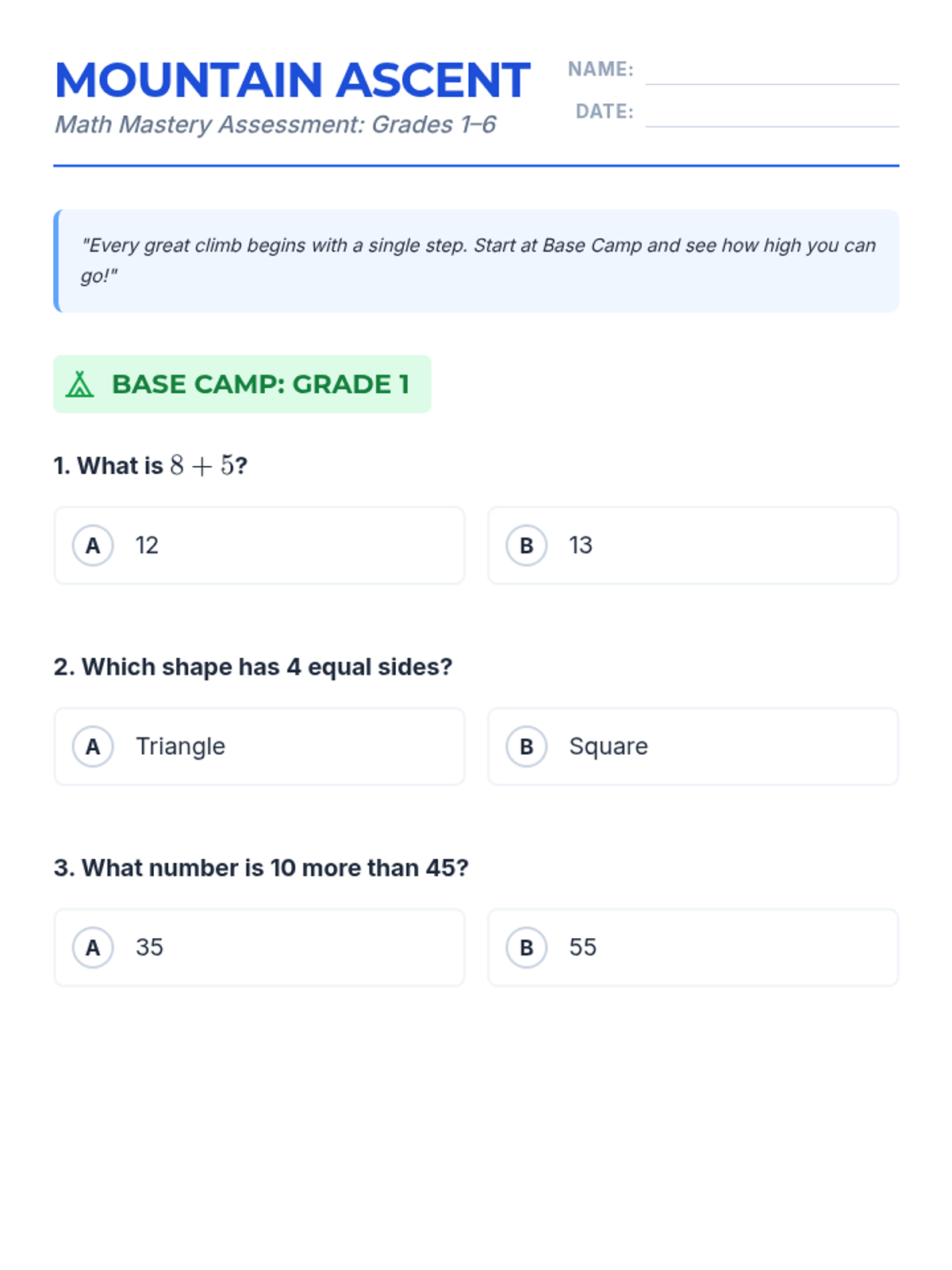
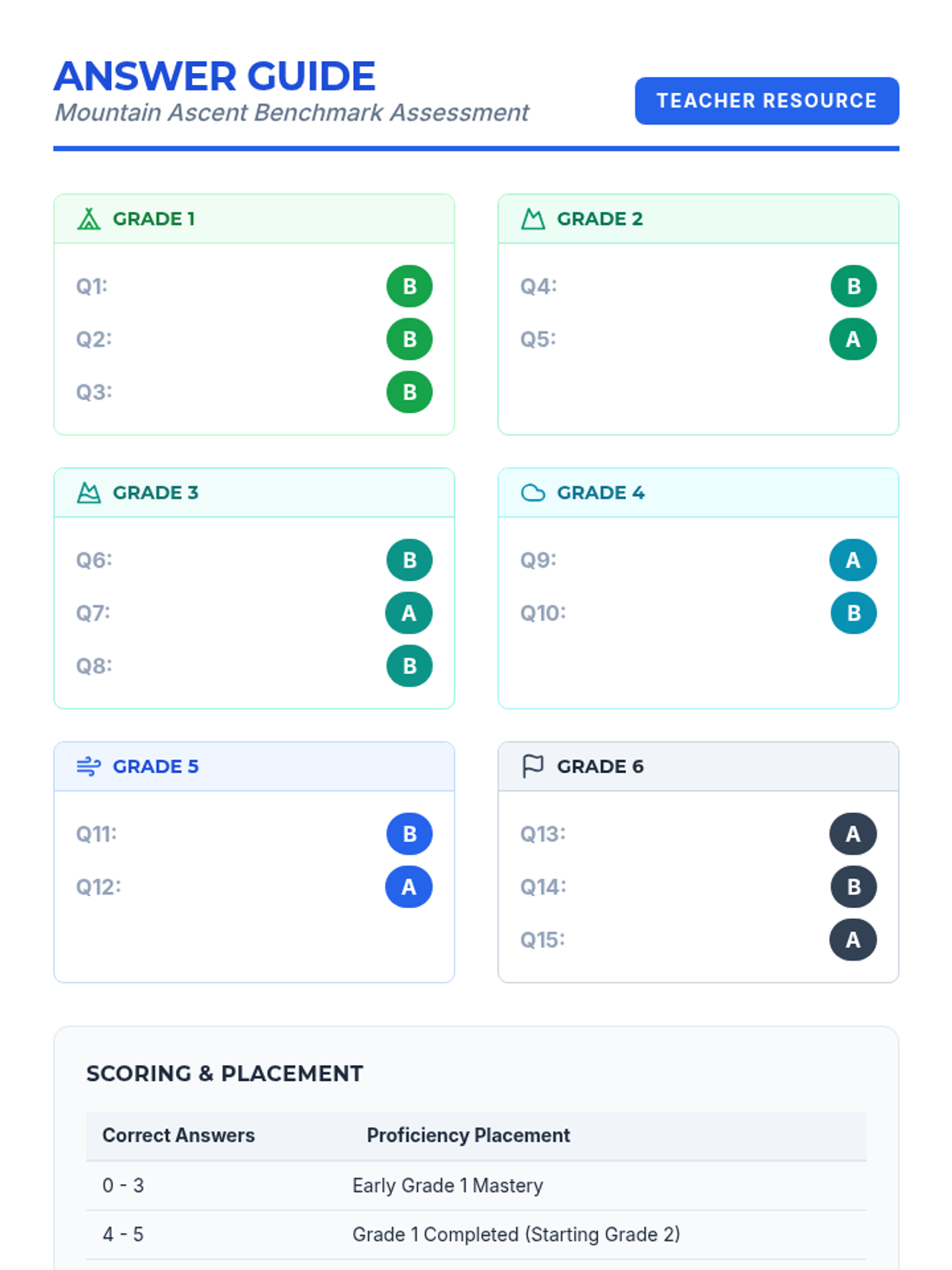
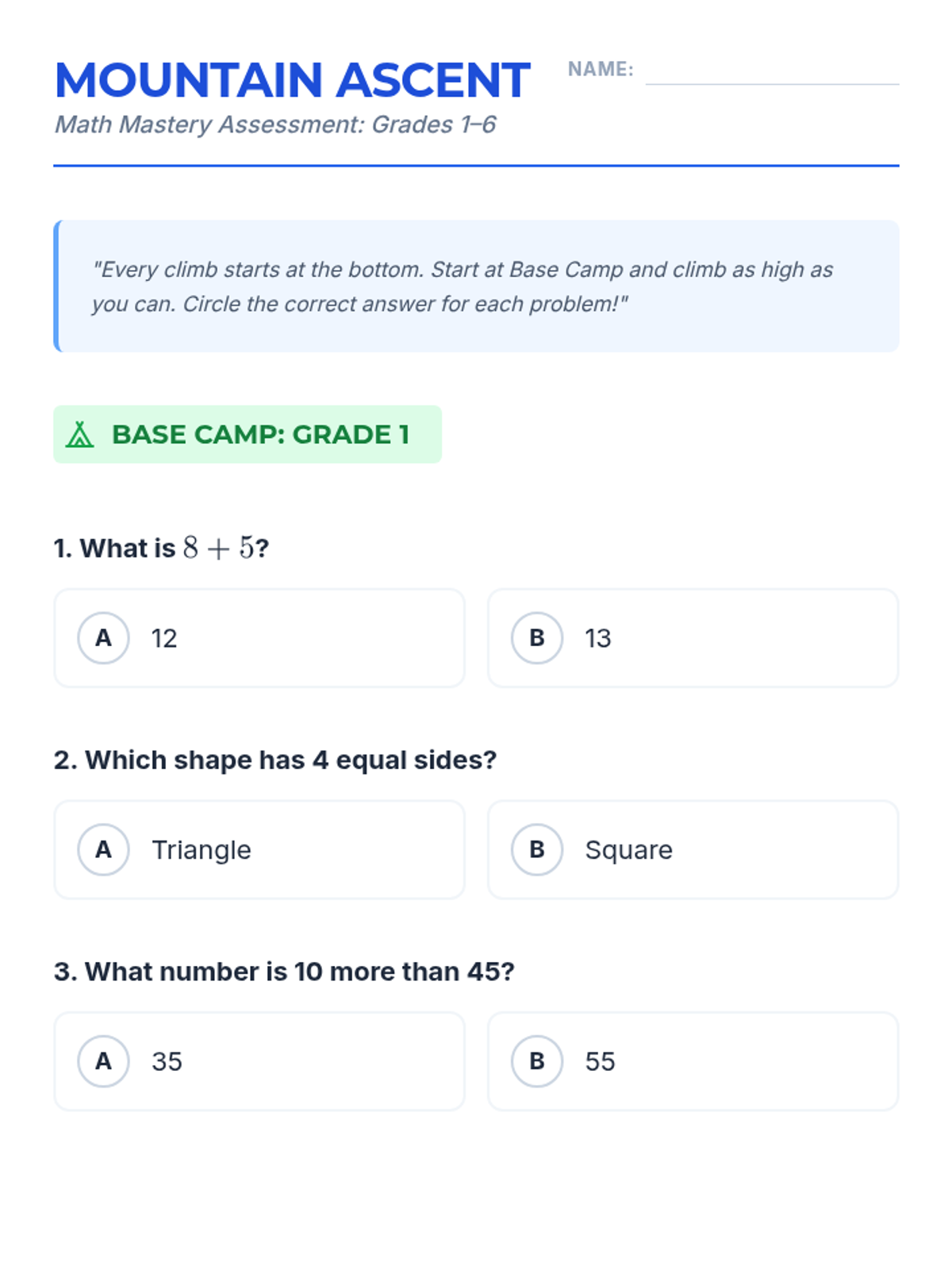
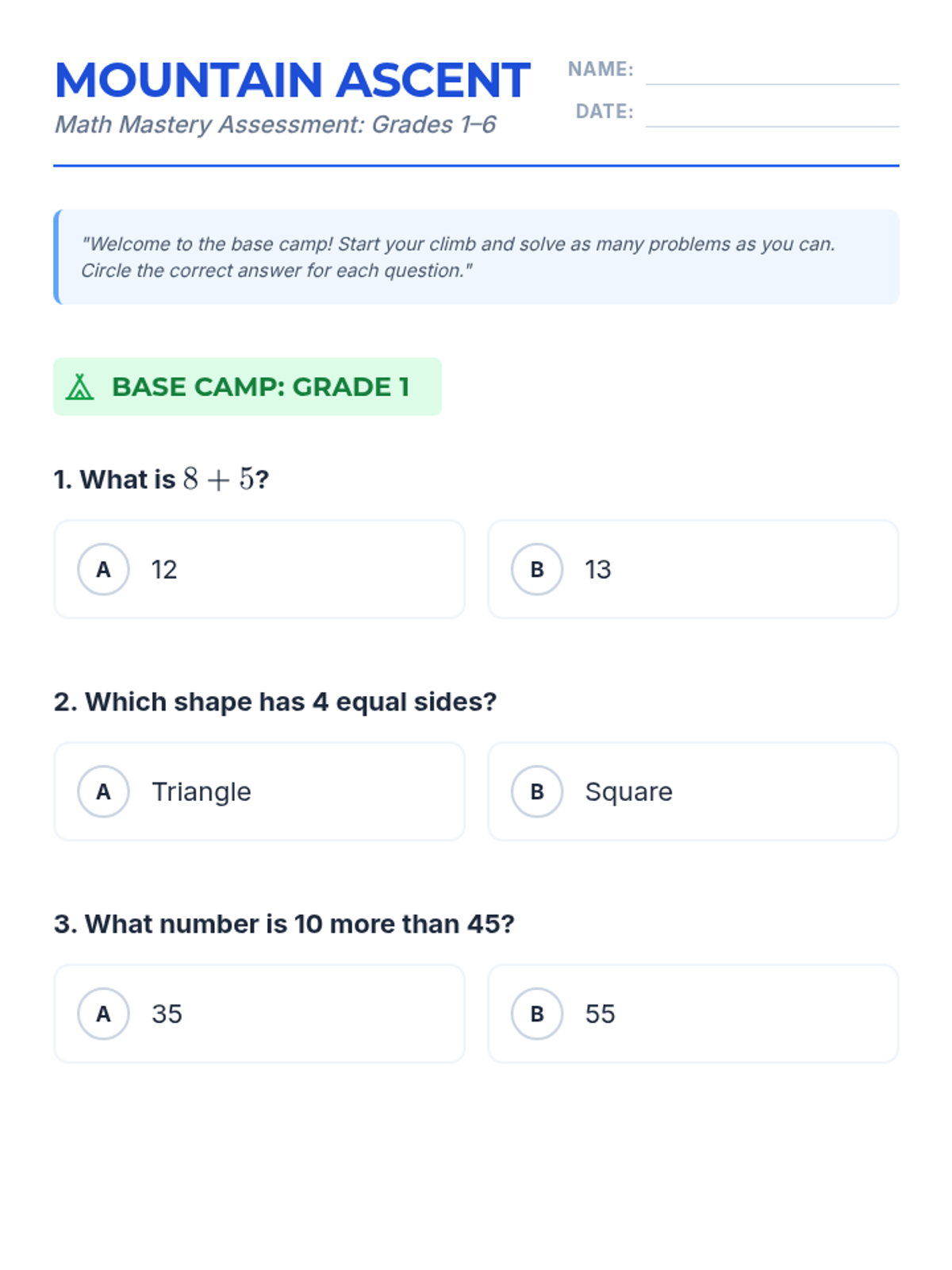
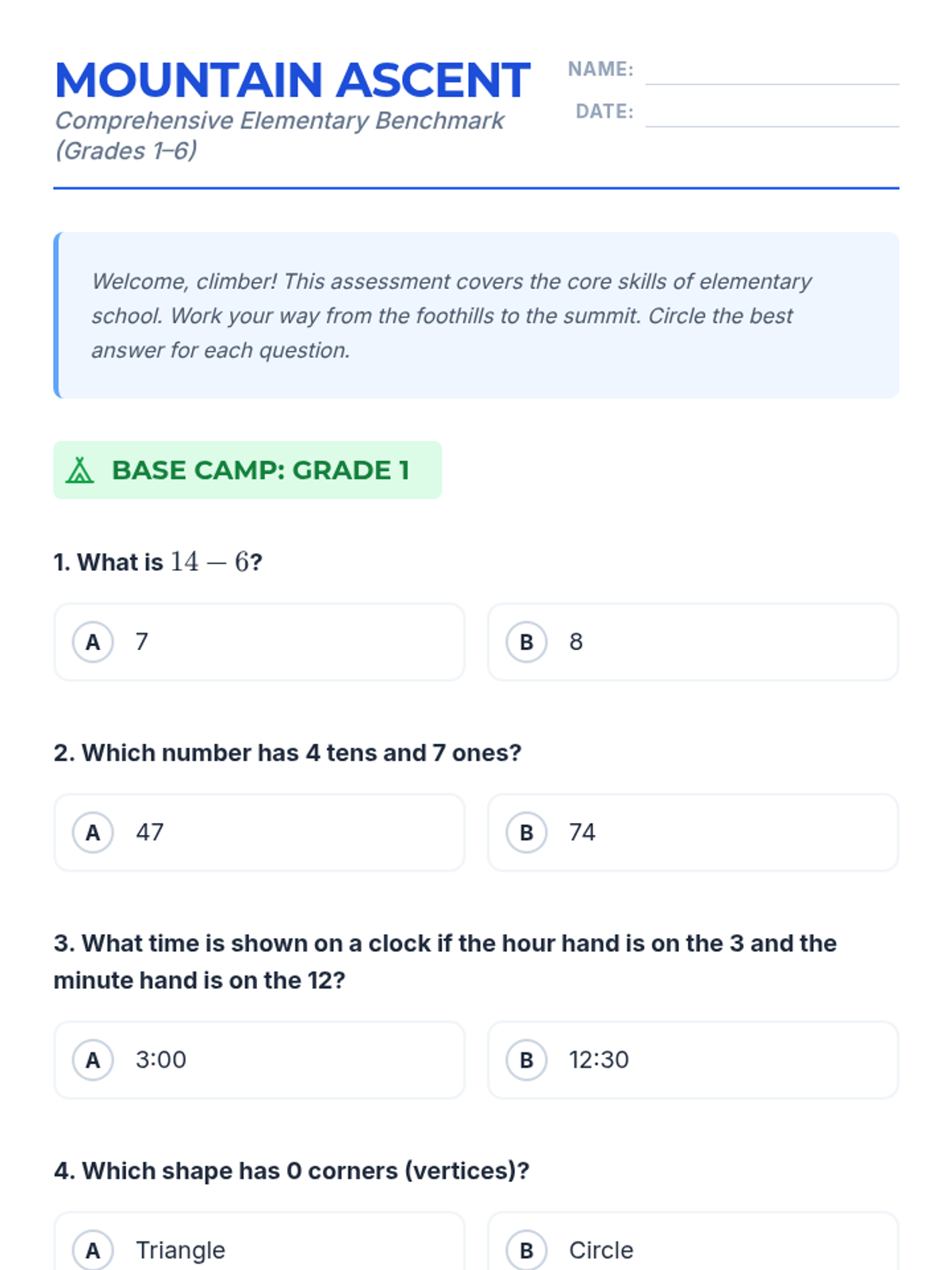
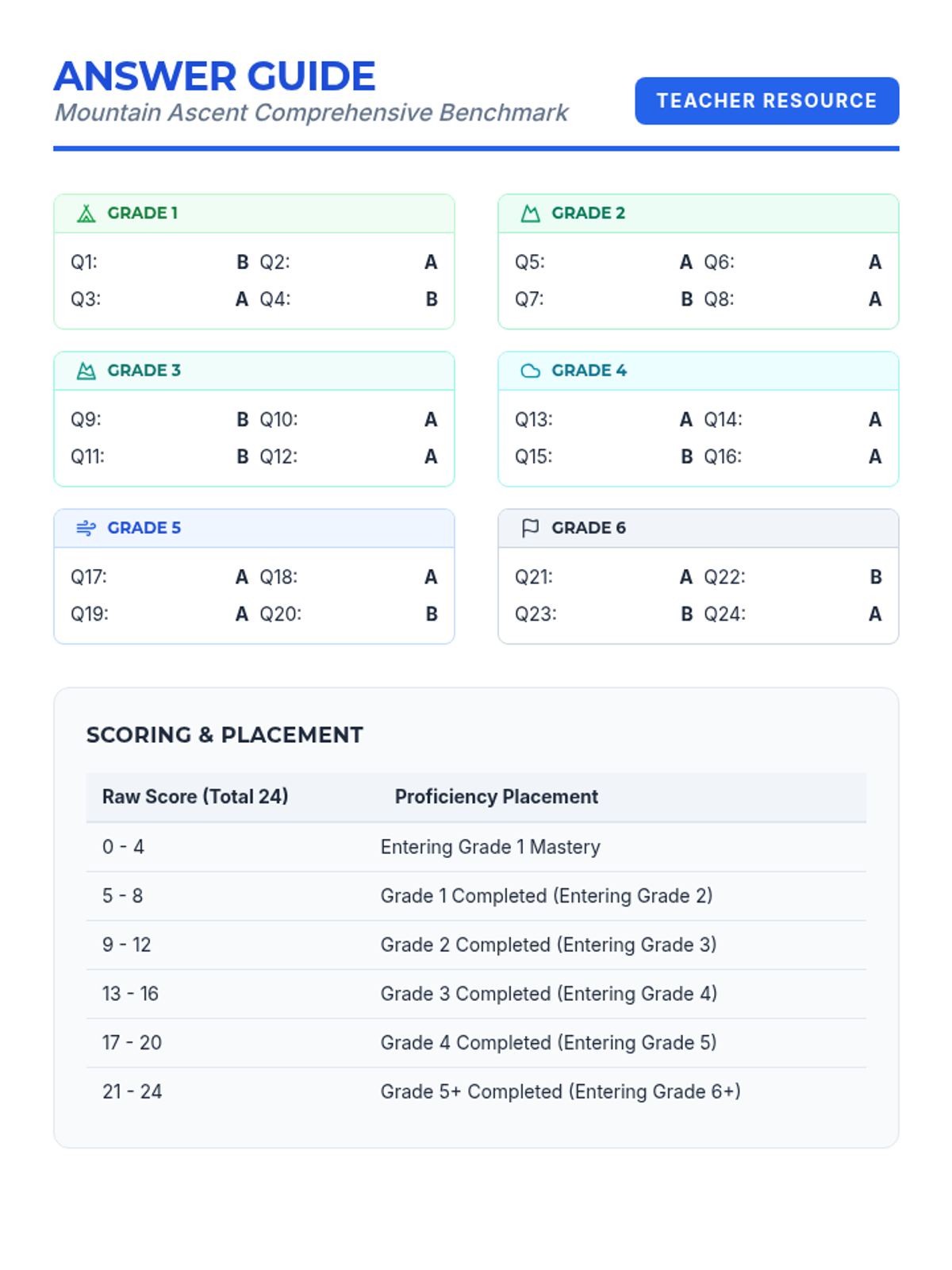
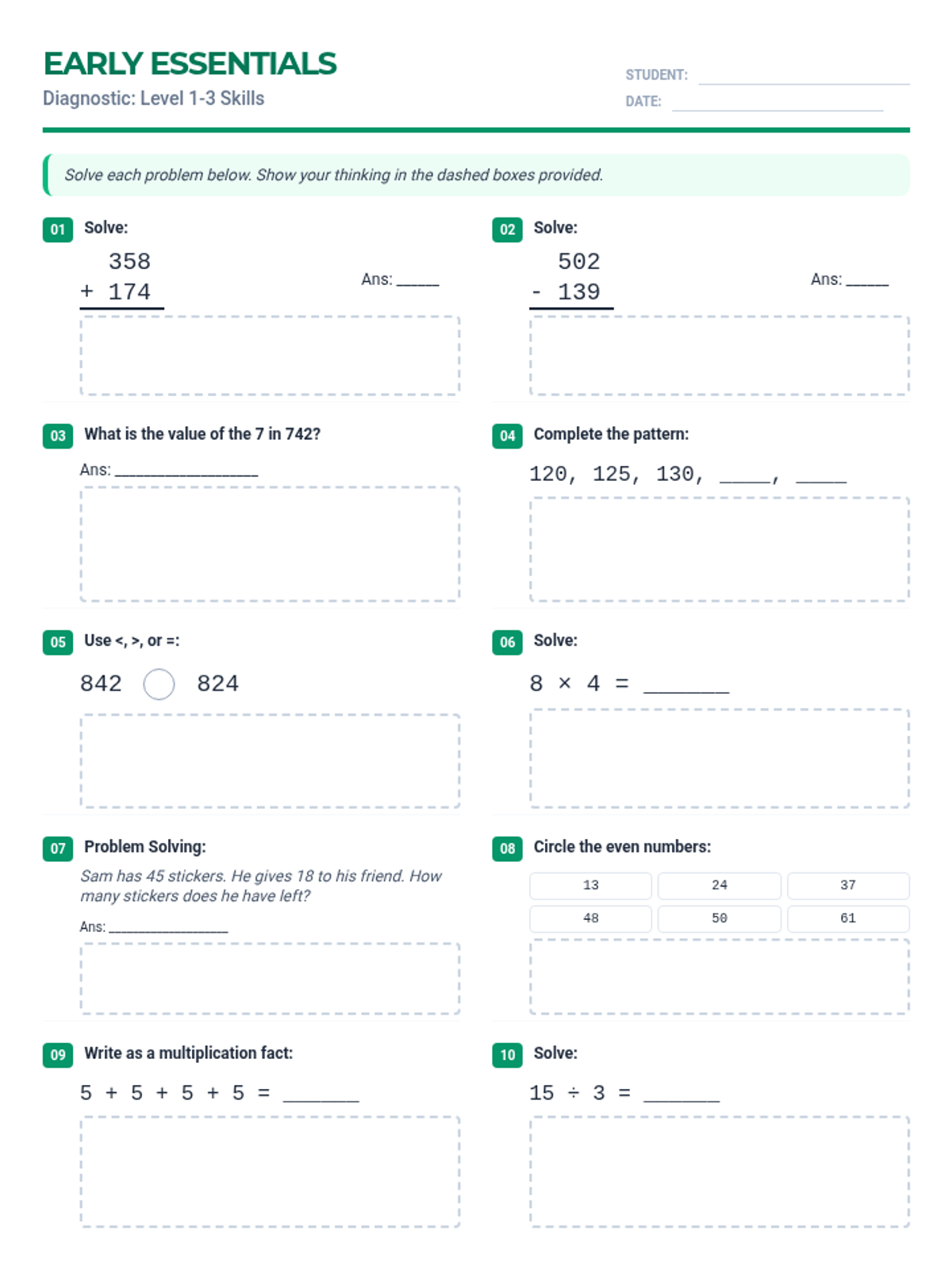
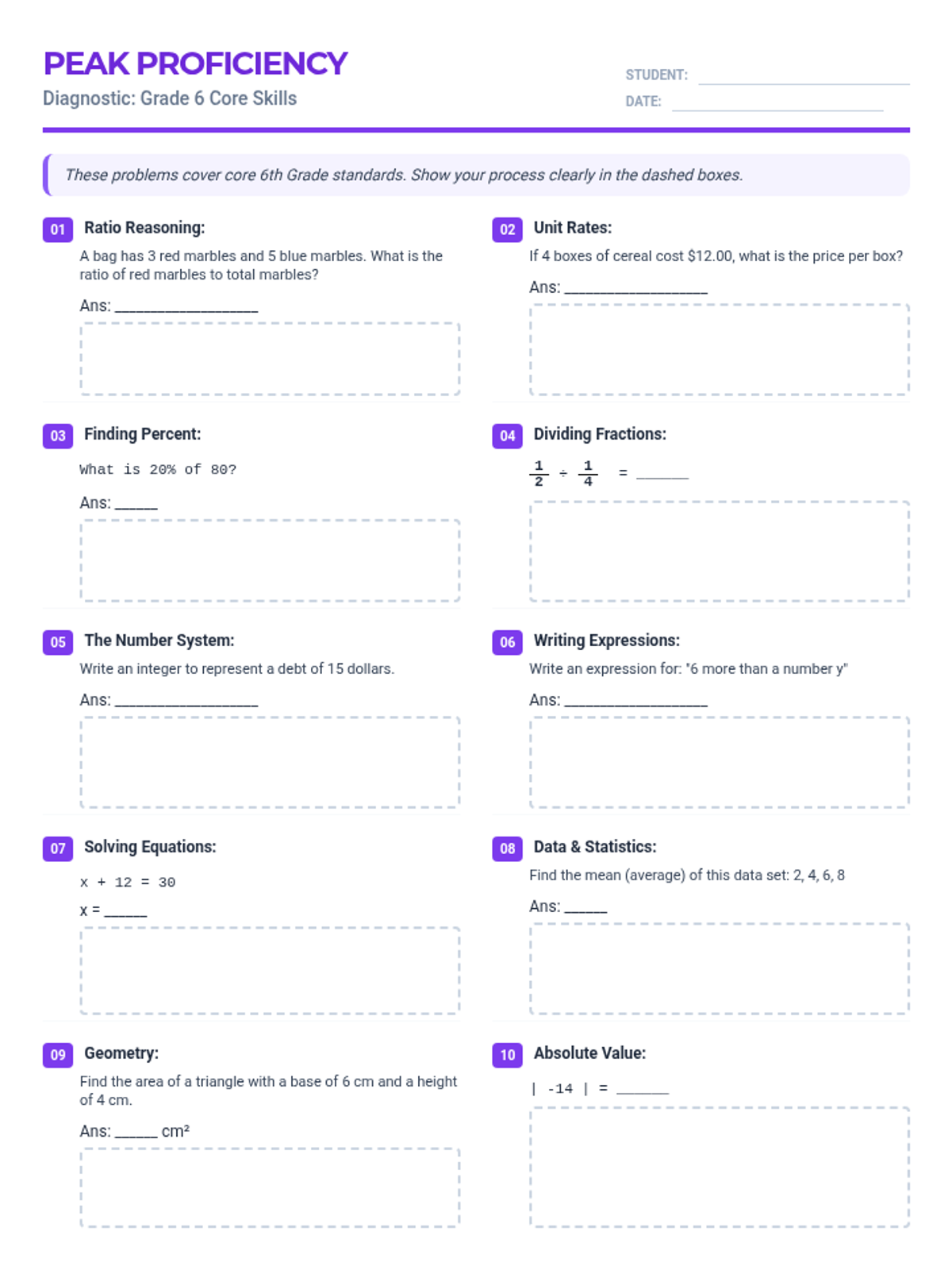
A comprehensive math benchmark assessment covering key standards from Grade 1 through Grade 6, designed to track student progress and identify skill gaps.
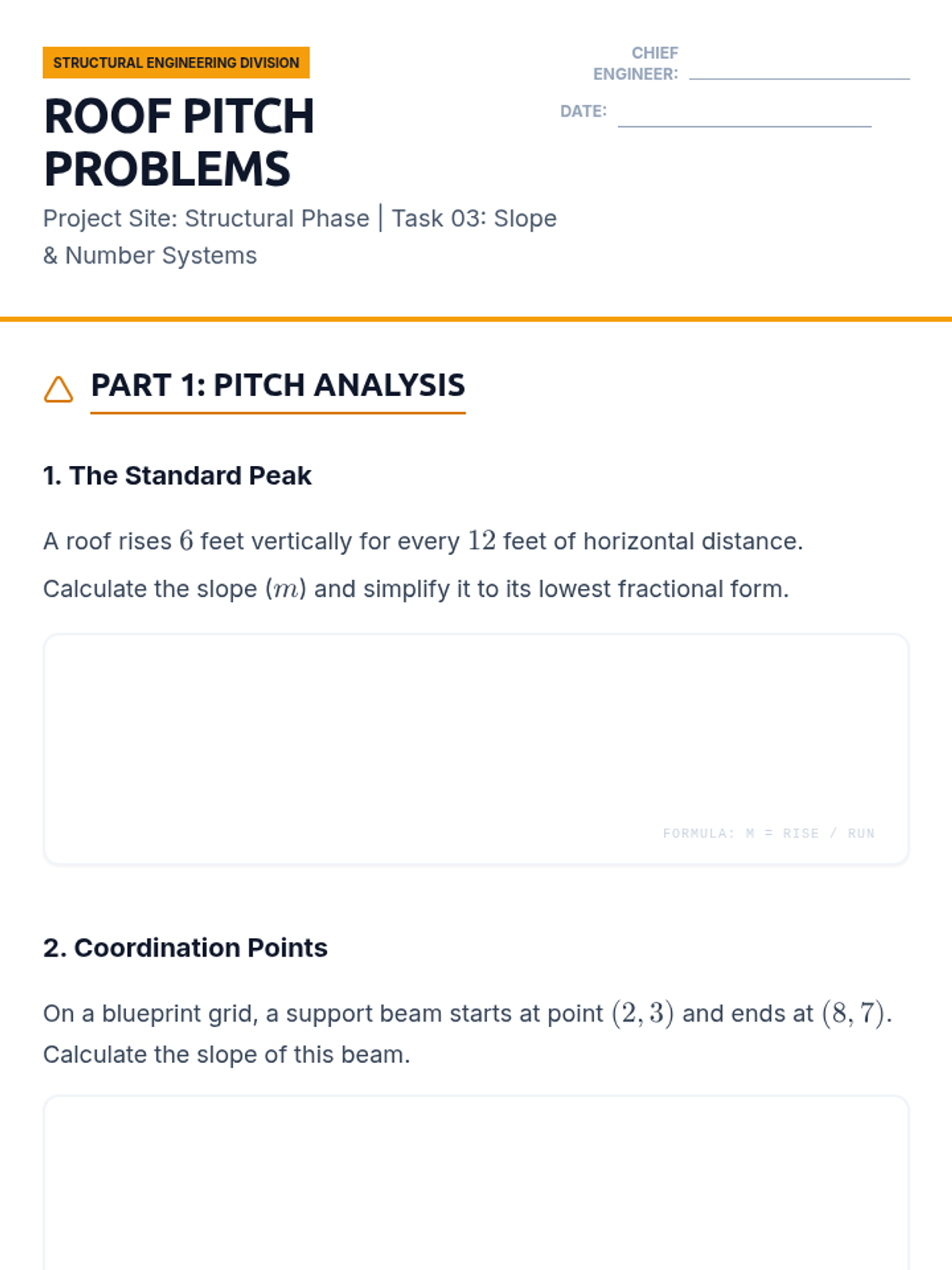
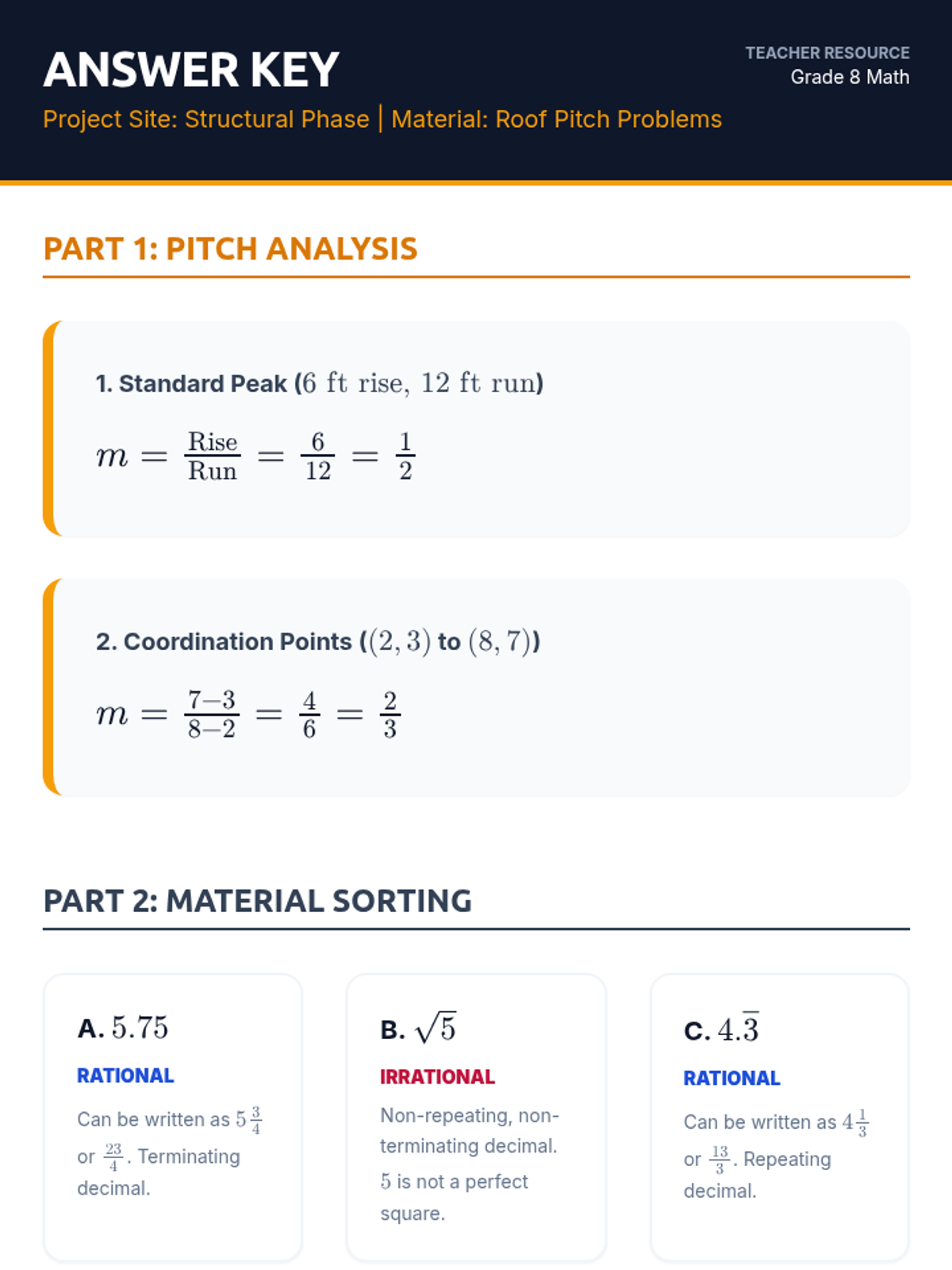
Explores 8th-grade concepts like slope as a fraction (rise over run) and identifying rational vs. irrational numbers in structural engineering.
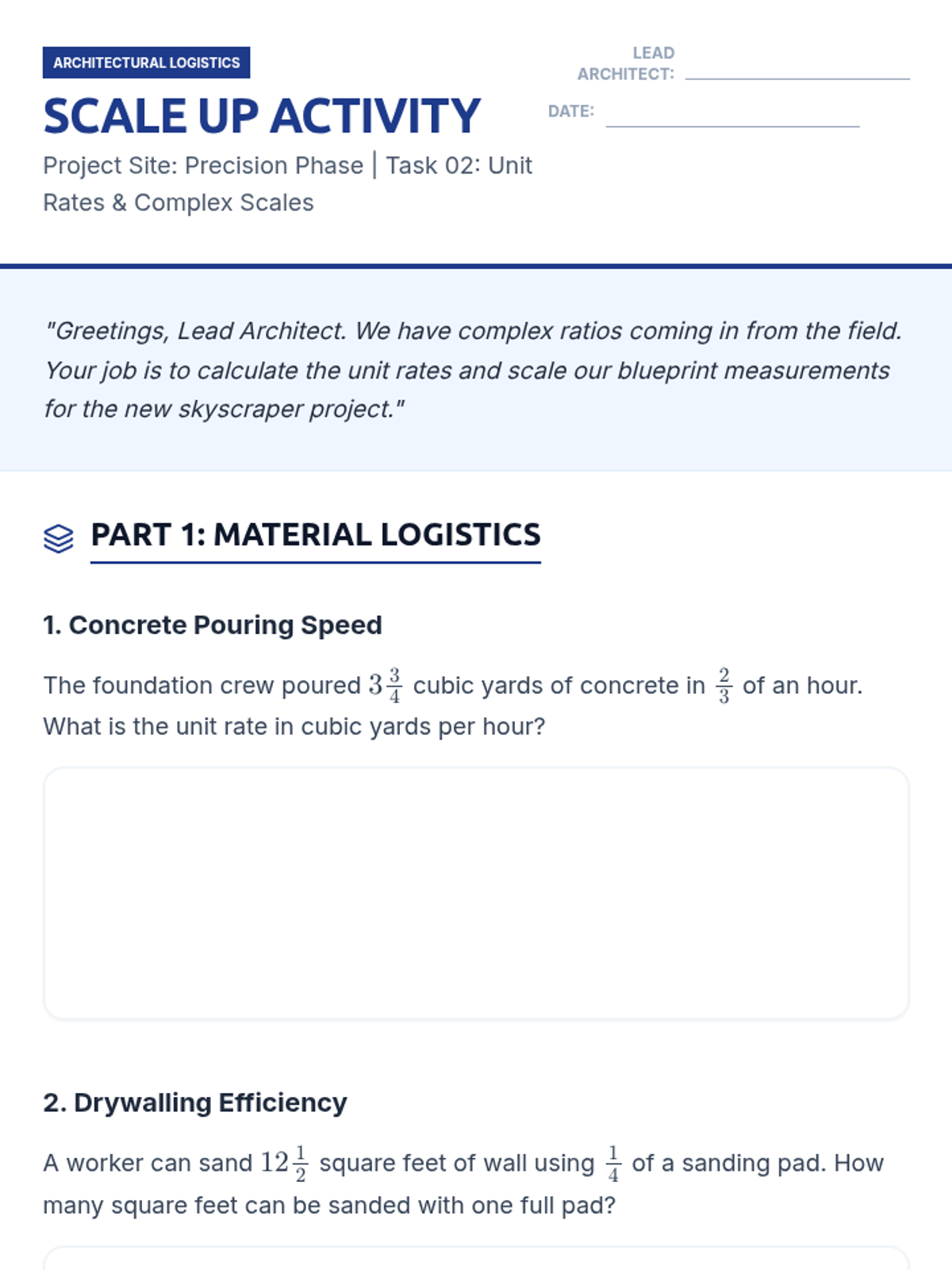
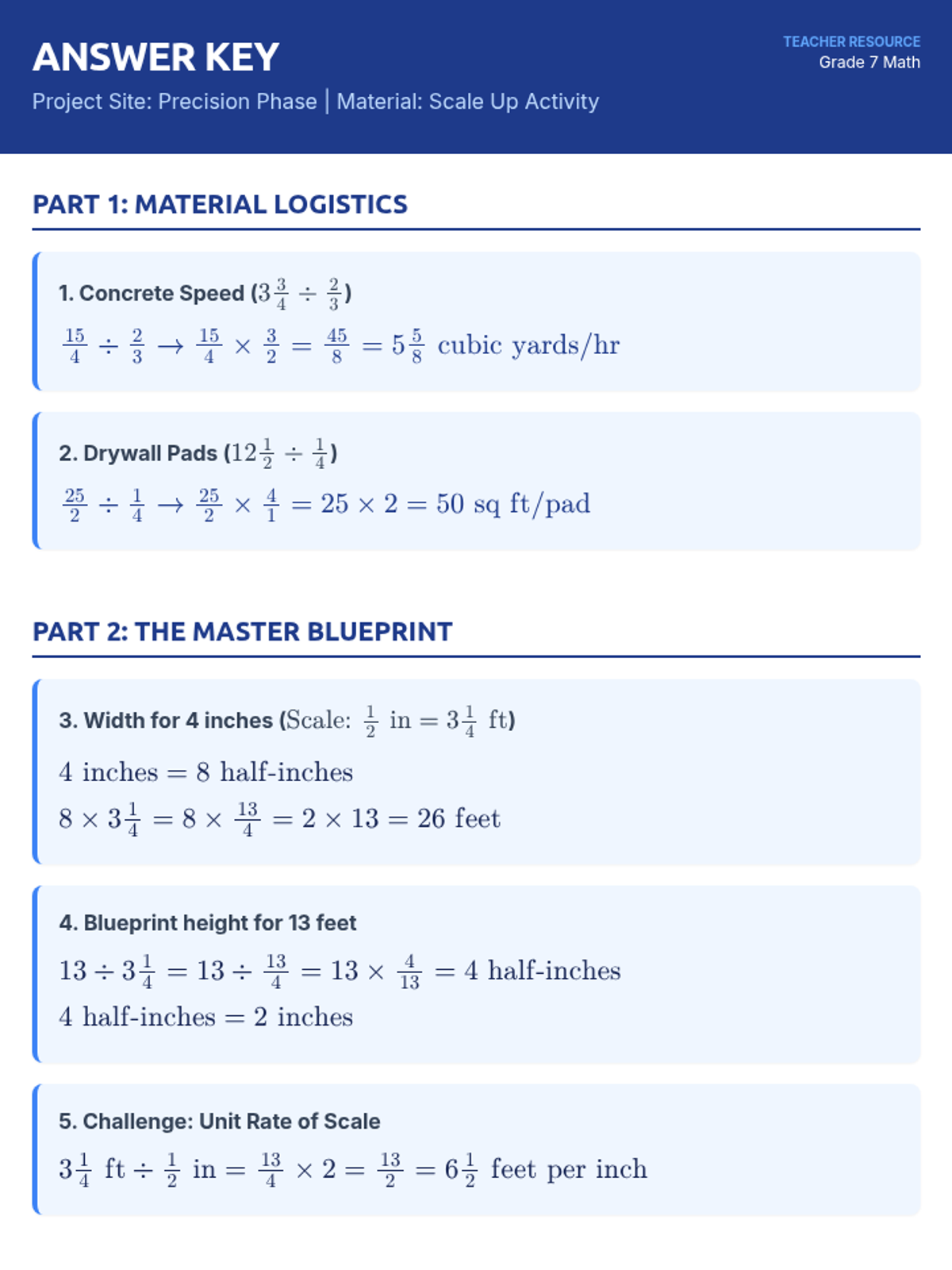
Covers 7th-grade topics including complex fractions, unit rates, and scaling designs for construction projects.
Focuses on 6th-grade fraction operations (addition, subtraction, multiplication, division) through the lens of foundational construction measurements.
A lesson focused on adding and subtracting proper fractions with unlike denominators using a step-by-step checklist and potion-themed problems.
Focusing on surface area (NY-6.G.4), GCF/LCM (NY-6.NS.4), and independent/dependent variables (NY-6.EE.9).
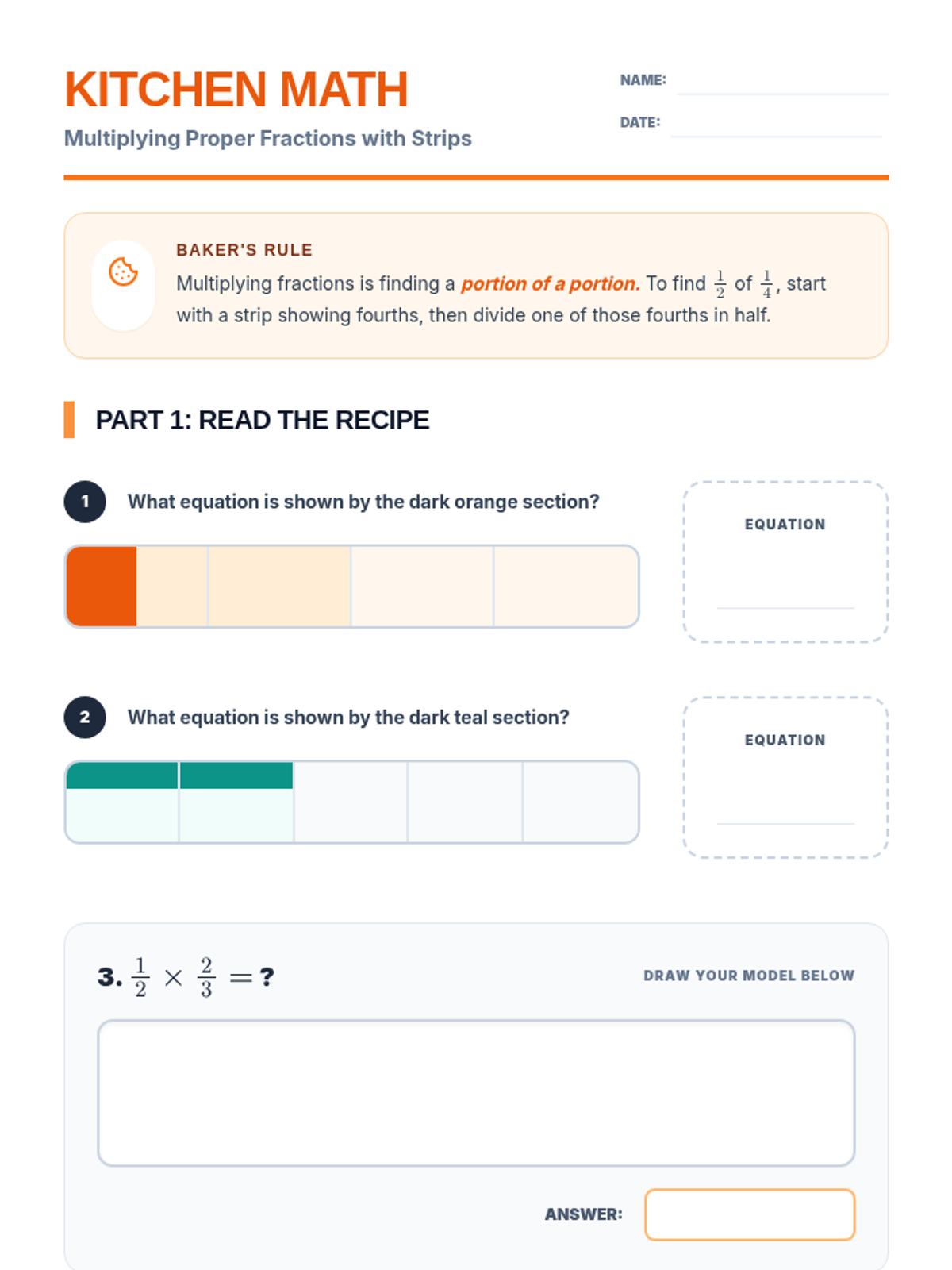
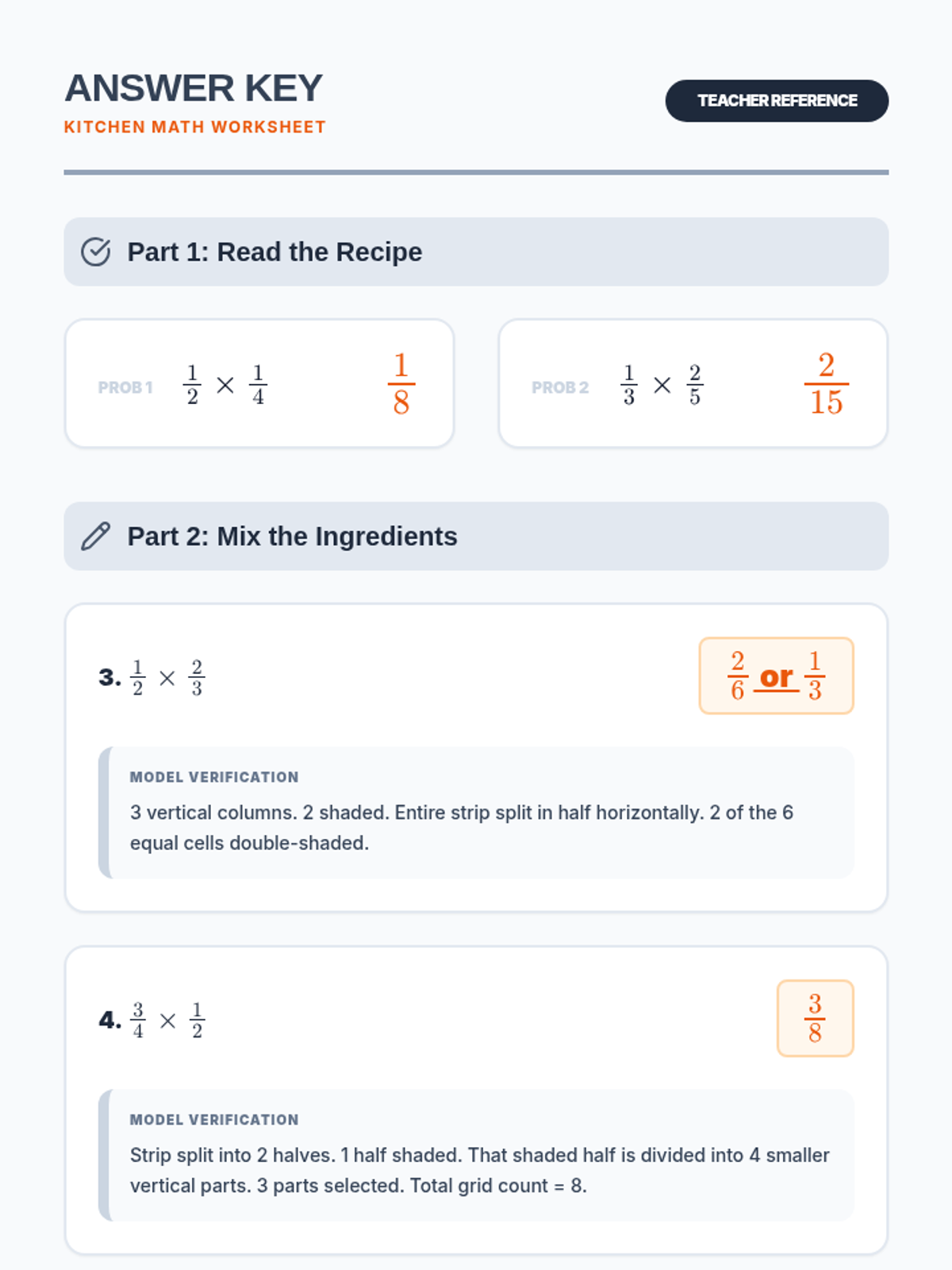
A lesson on multiplying proper fractions using fraction strip models, set in a bakery context to make scaling recipes intuitive and fun.
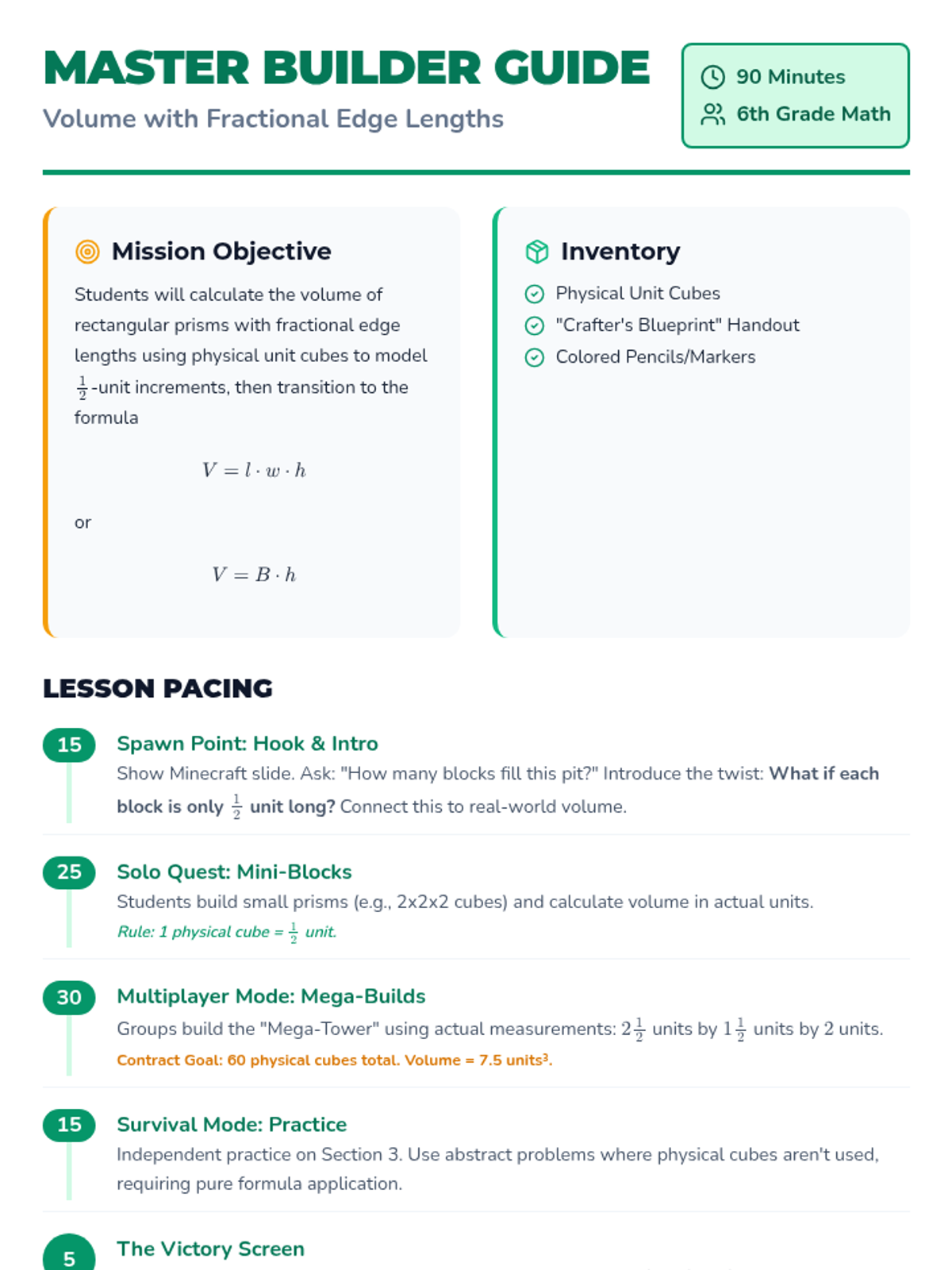
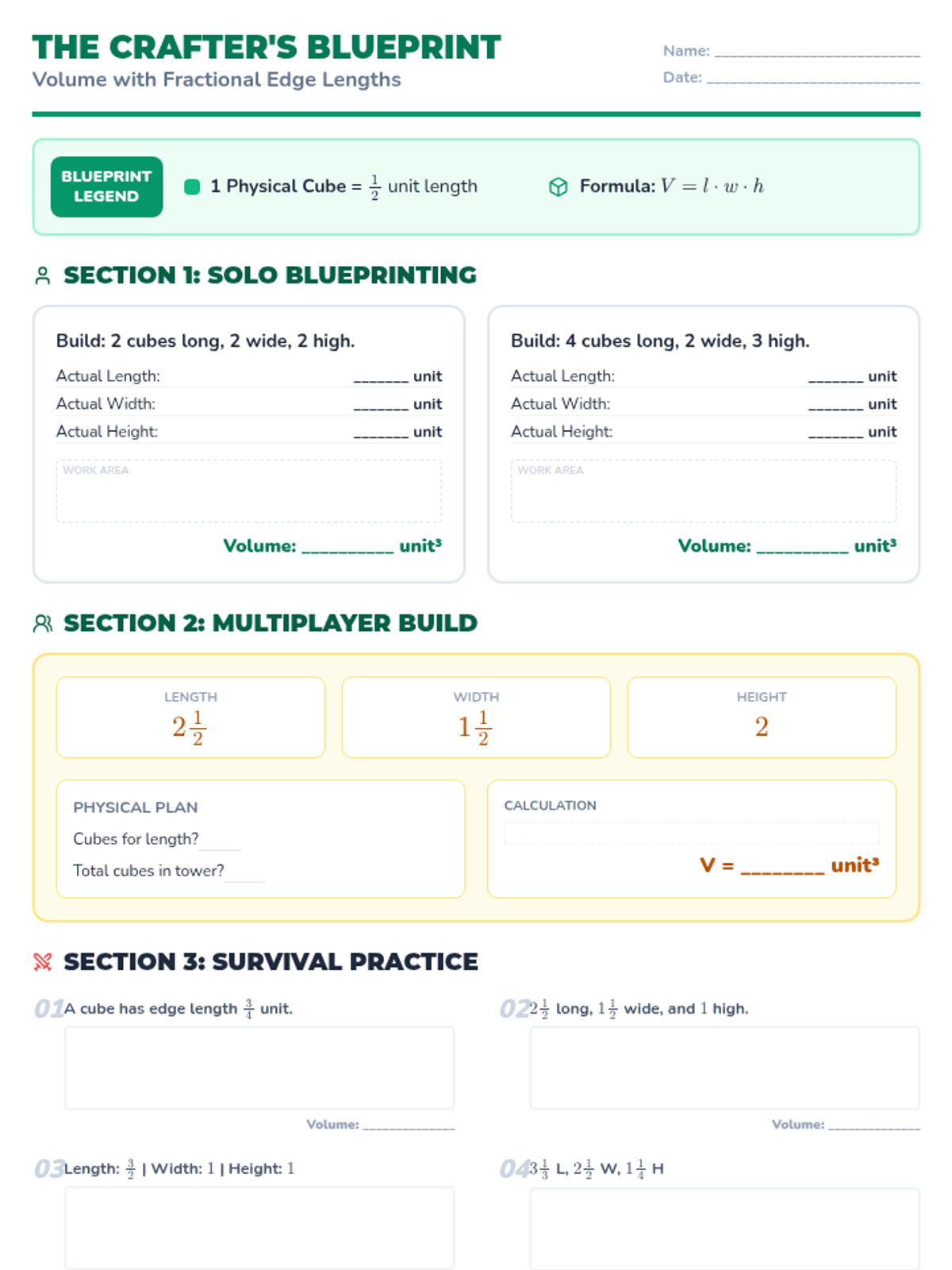
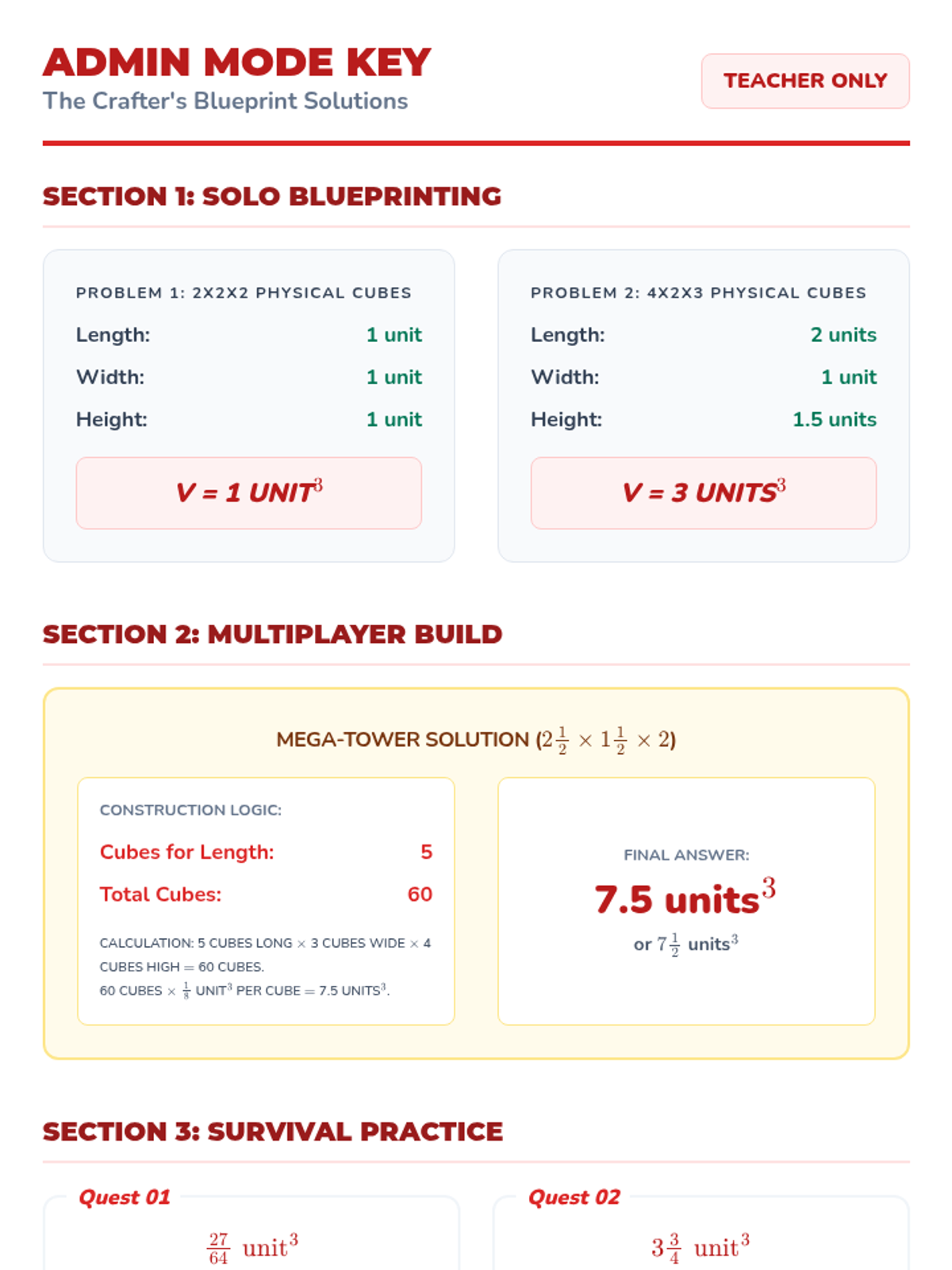
A Minecraft-themed lesson on finding volume with fractional edge lengths. Students use physical unit cubes to model structures and apply formulas to solve building challenges.
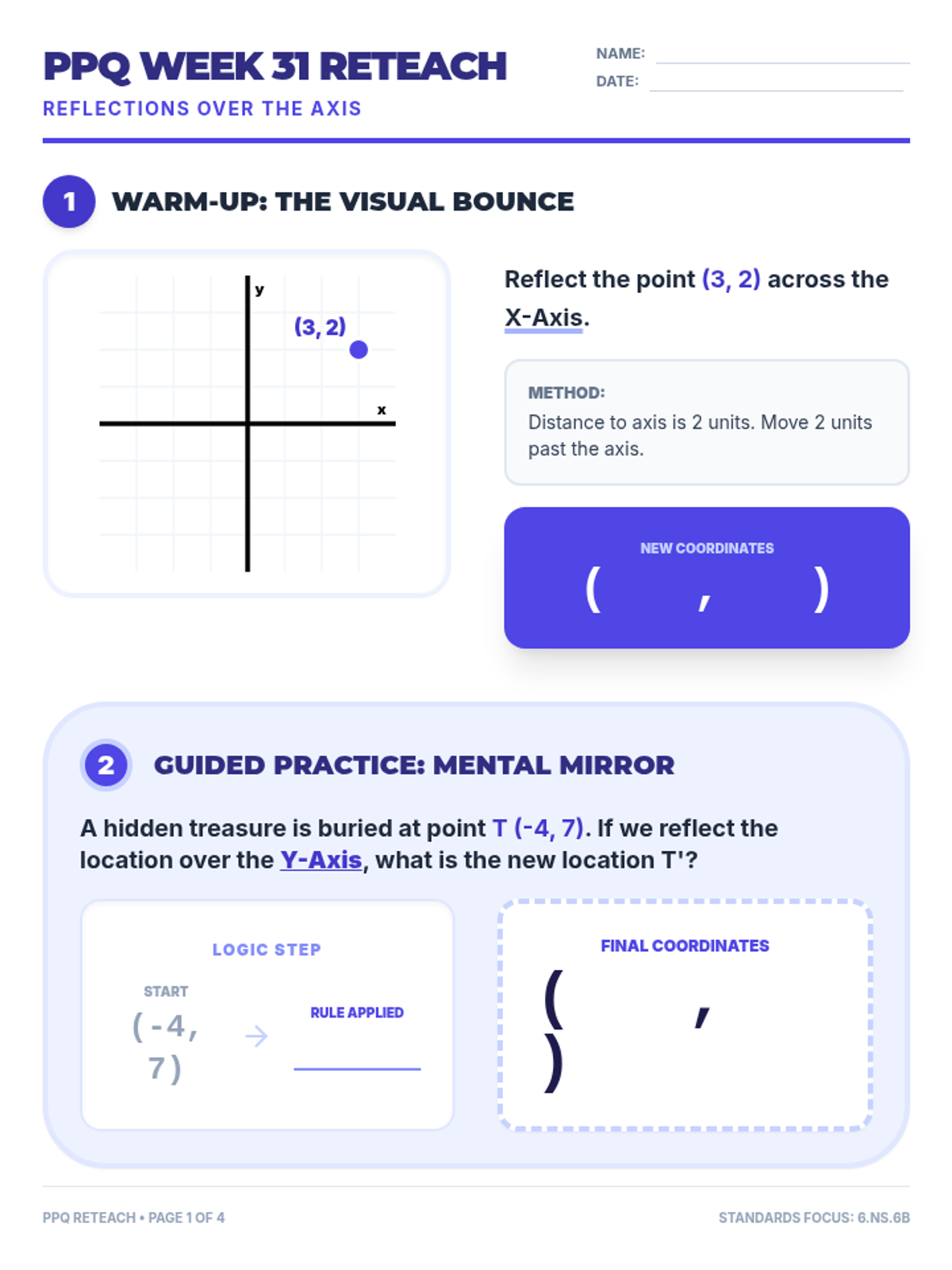
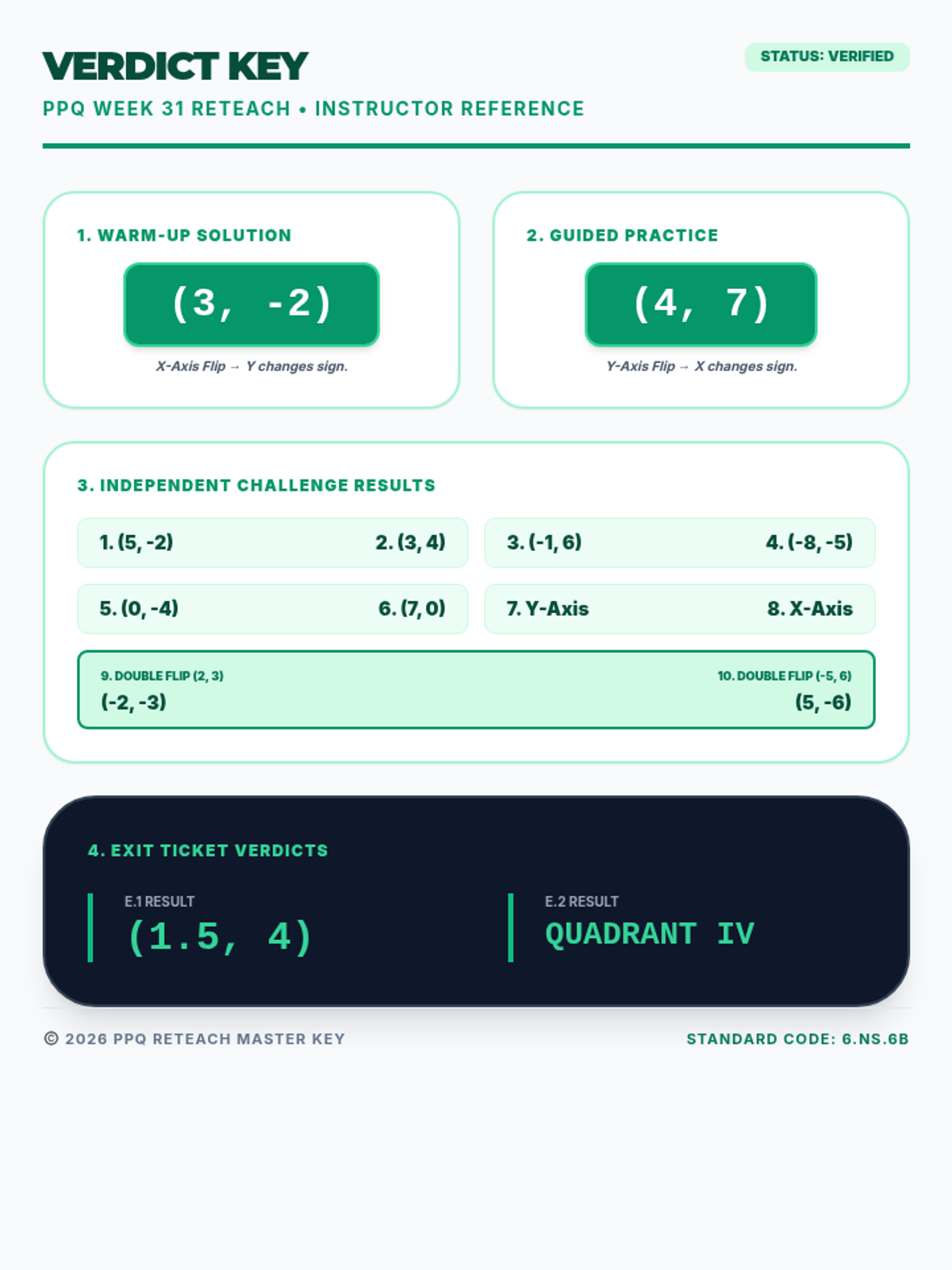
A focused re-teach lesson for 6th-grade standard 6.NS.6b (Reflections). Students master the rules for reflecting points across the x and y axes through visual mapping, mental rules, and repeated practice.
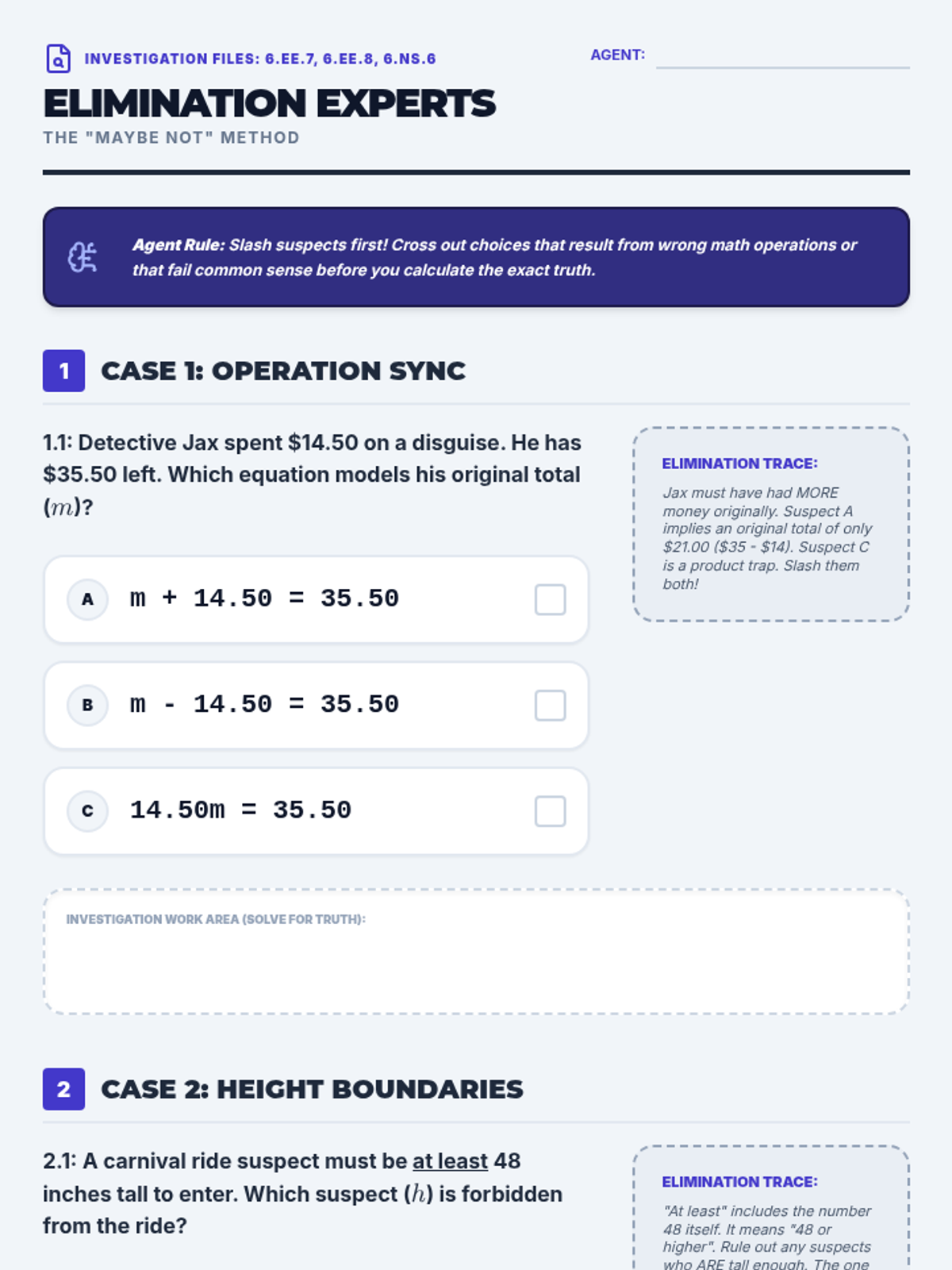
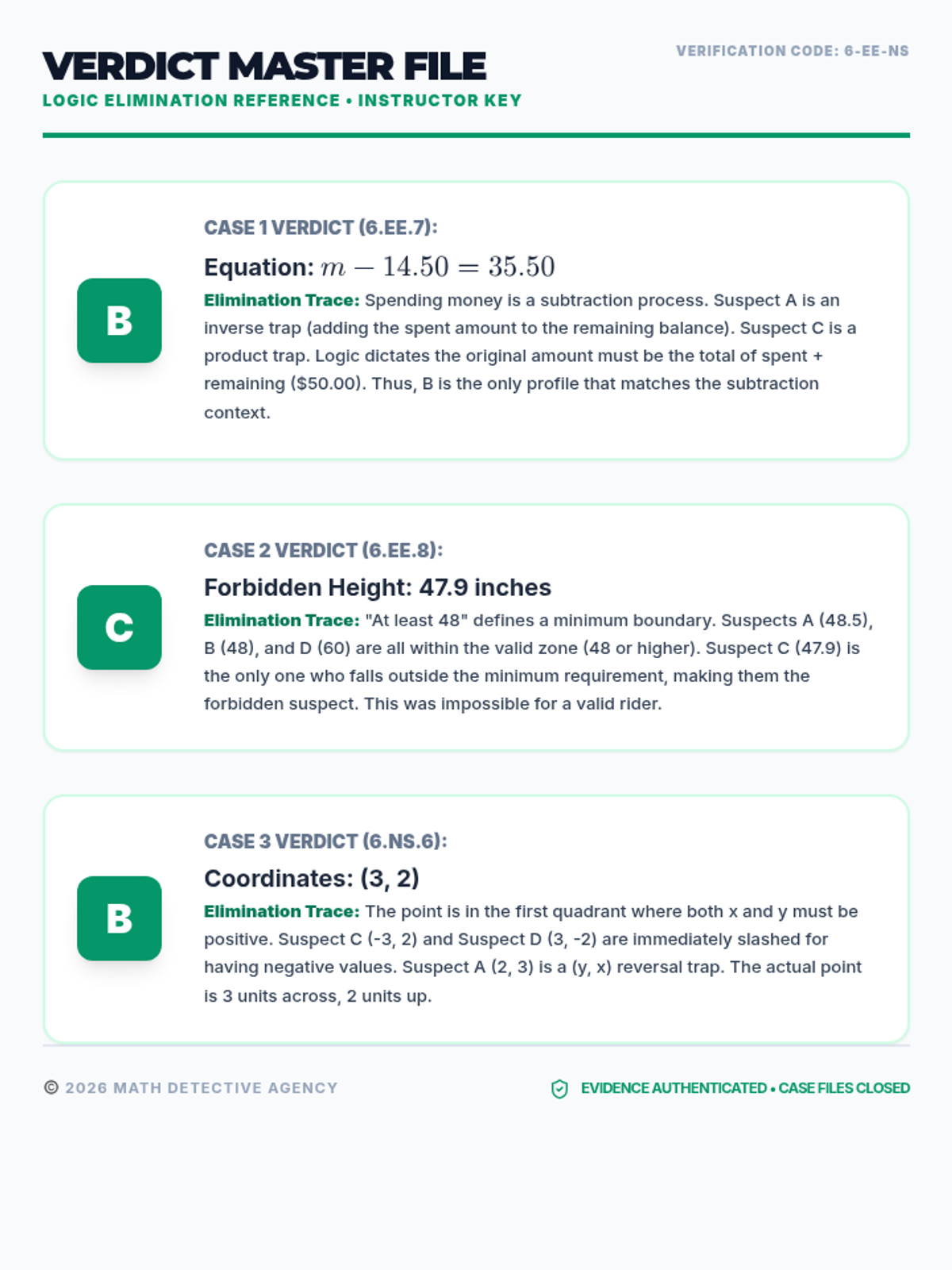
A specialized skill-building lesson focusing on standard 6.EE.7, 6.EE.8, and 6.NS.6. Students learn to use the process of elimination to solve one-step equations, identify inequality constraints, and map points on the coordinate plane.
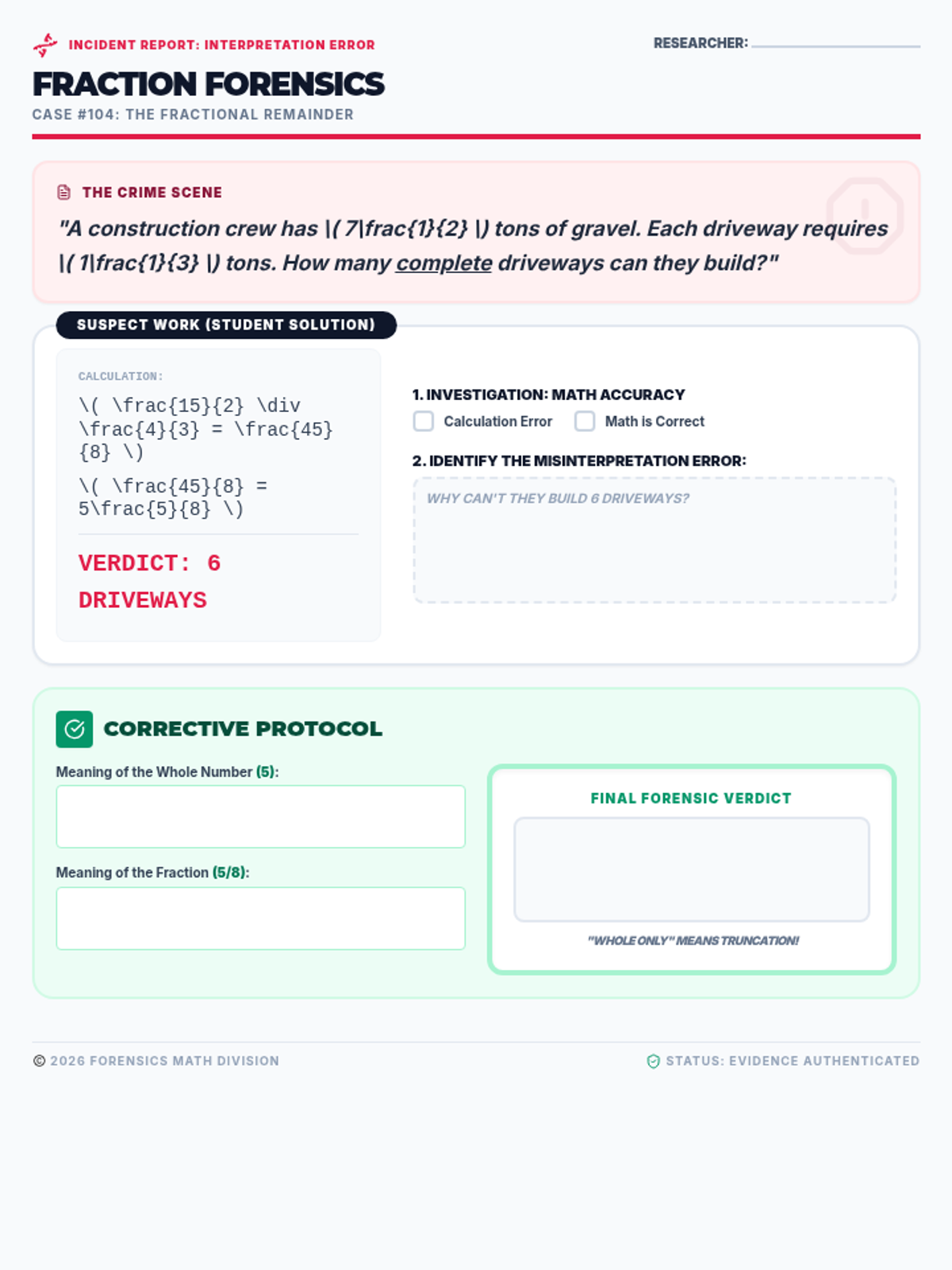
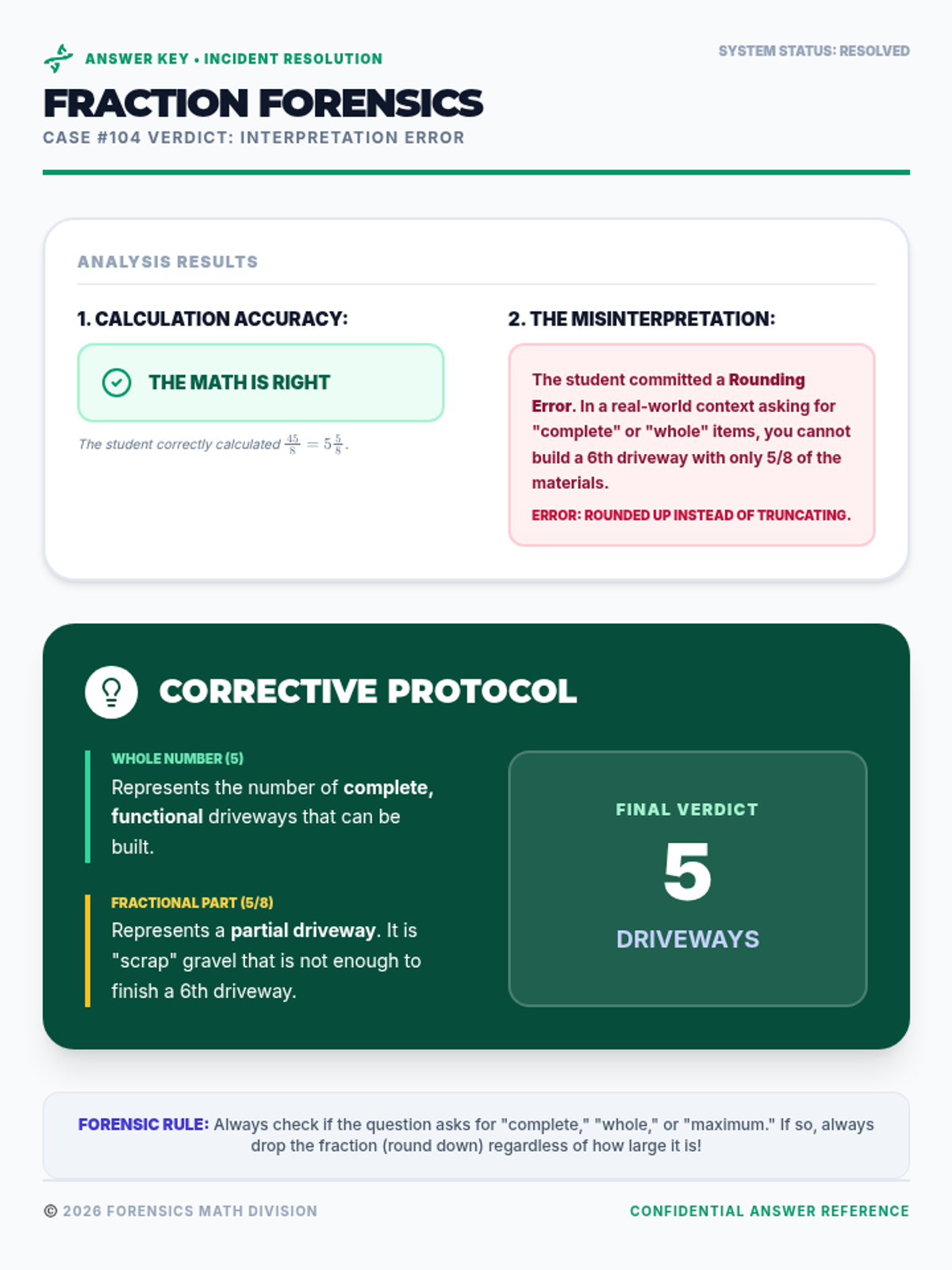
A critical thinking lesson focused on identifying and correcting common misconceptions in fraction division word problems, specifically regarding the interpretation of remainders and mixed number quotients.
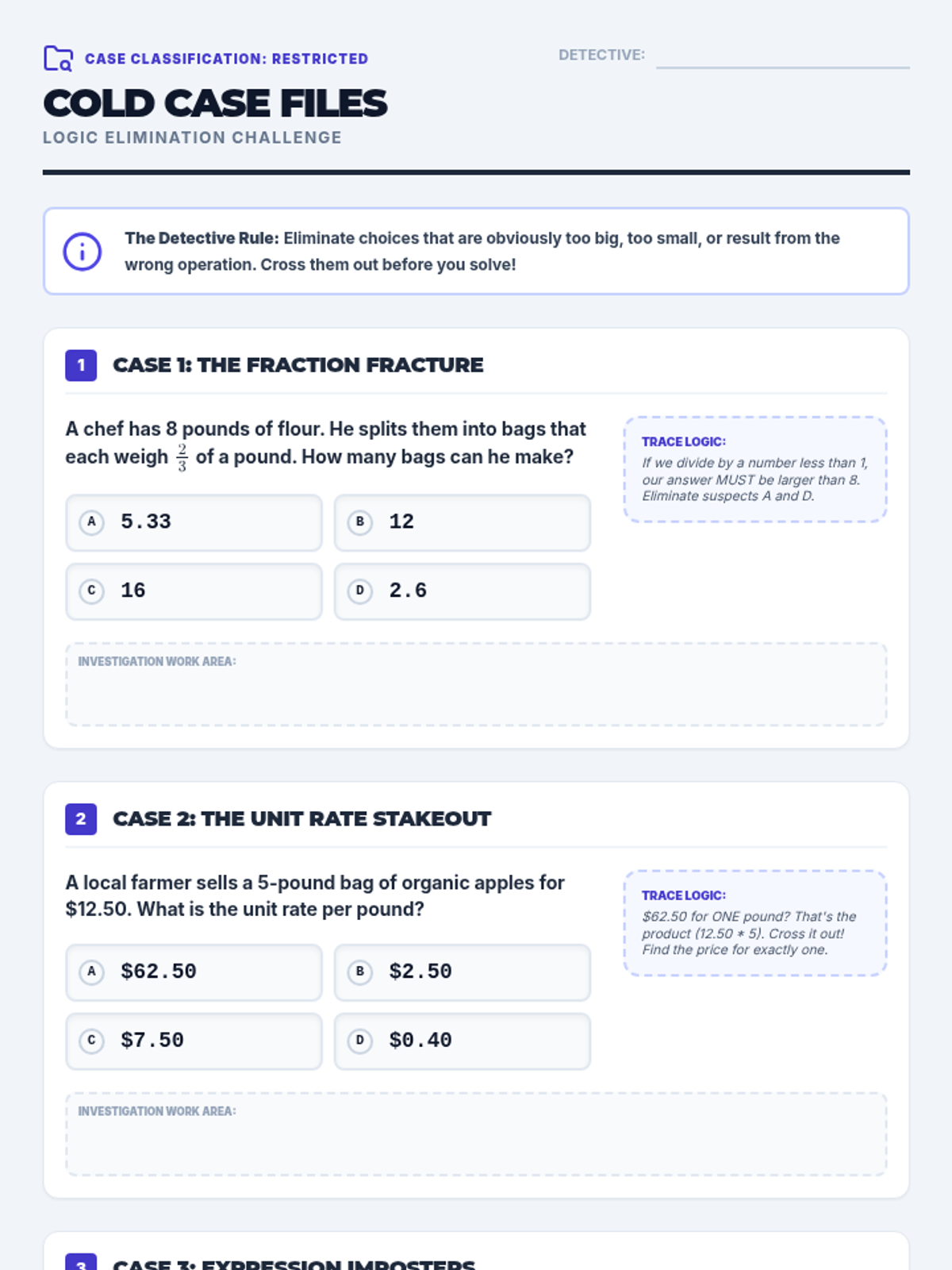
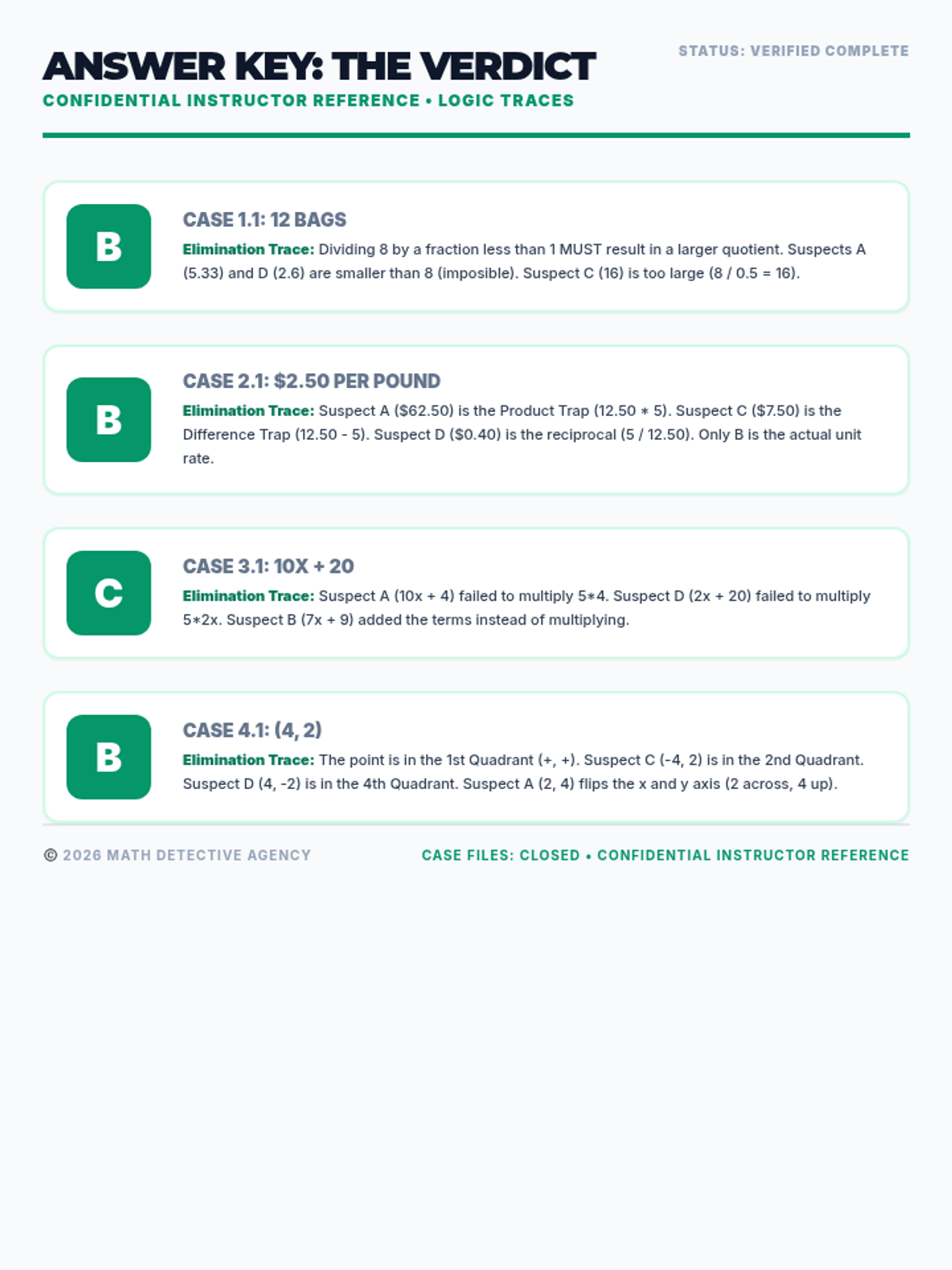
A targeted challenge focusing on solving multiple-choice problems using the process of elimination. Covers division of fractions, unit rates, and equivalent expressions through a detective-themed investigation.
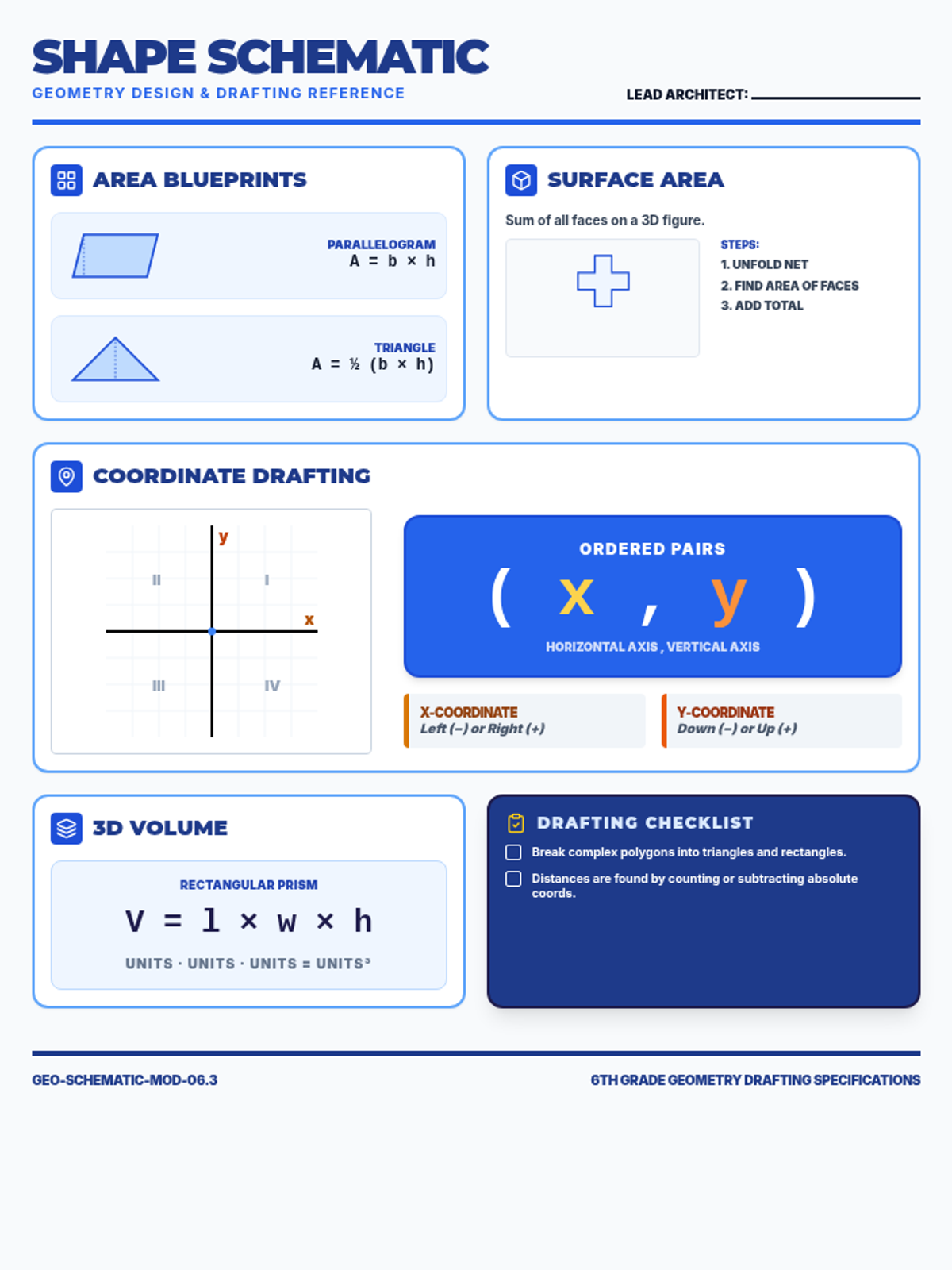
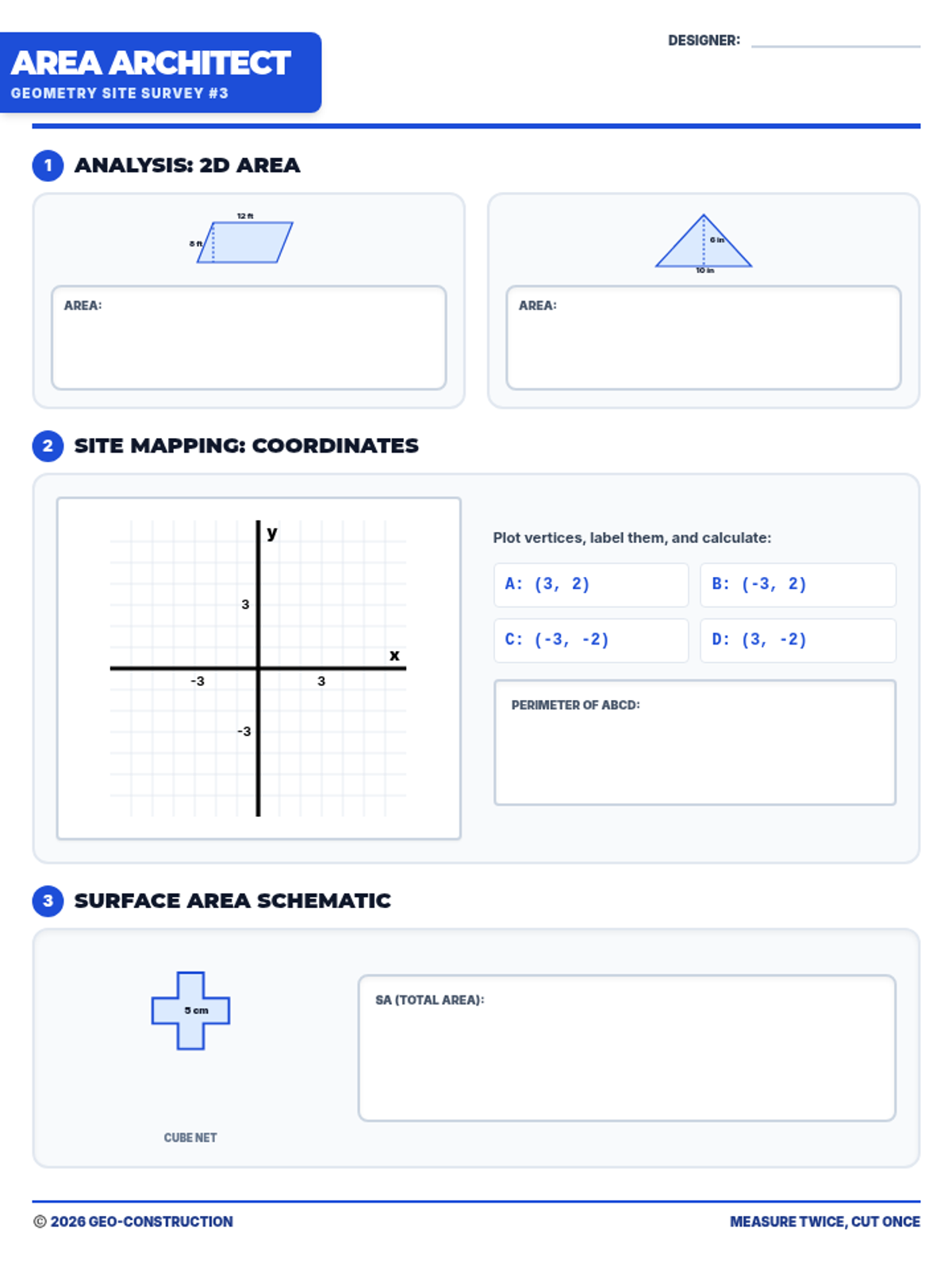
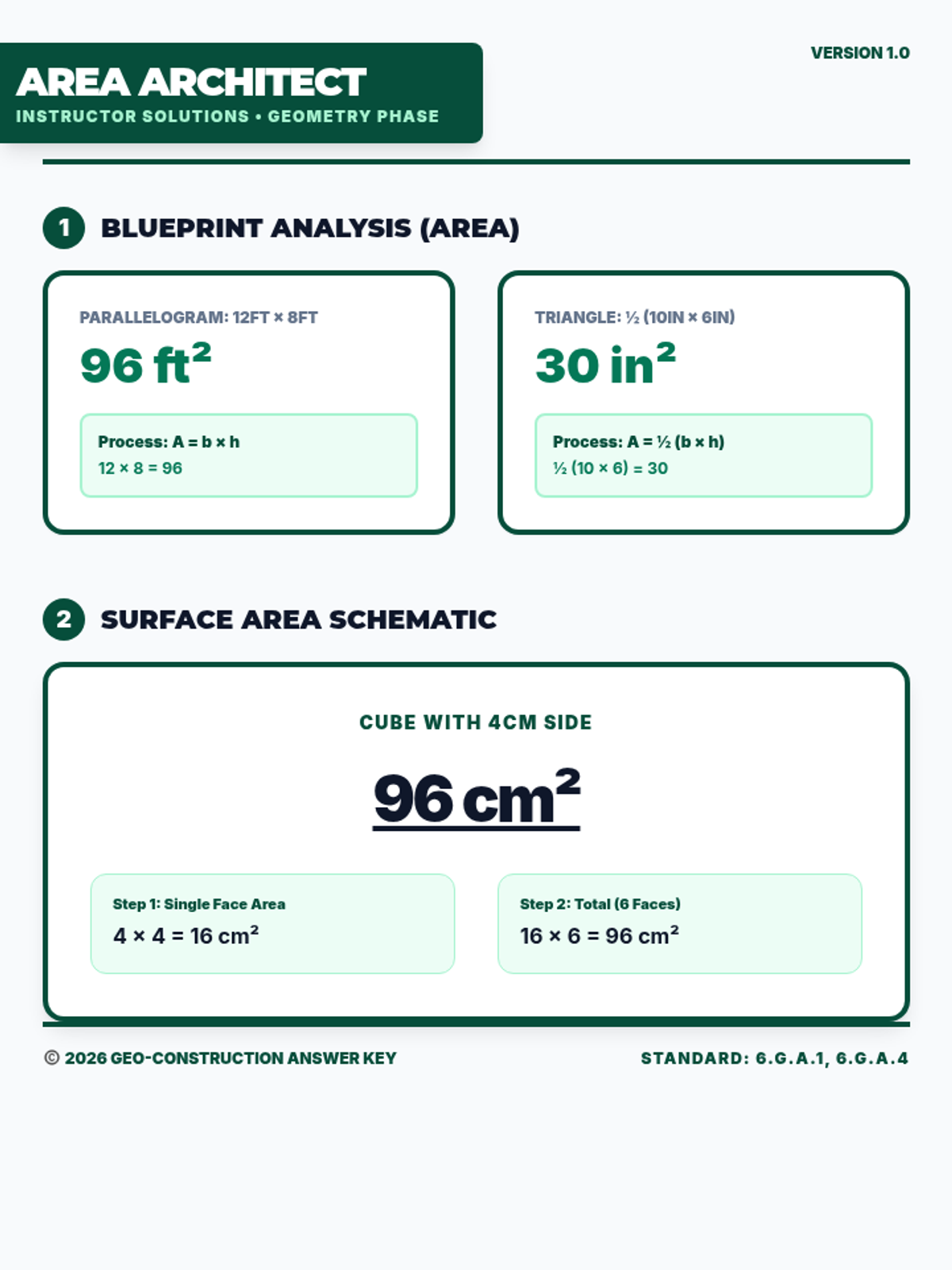
A deep dive into 6th-grade geometry, focusing on area of polygons, surface area using nets, and volume of prisms through an architectural drafting lens.
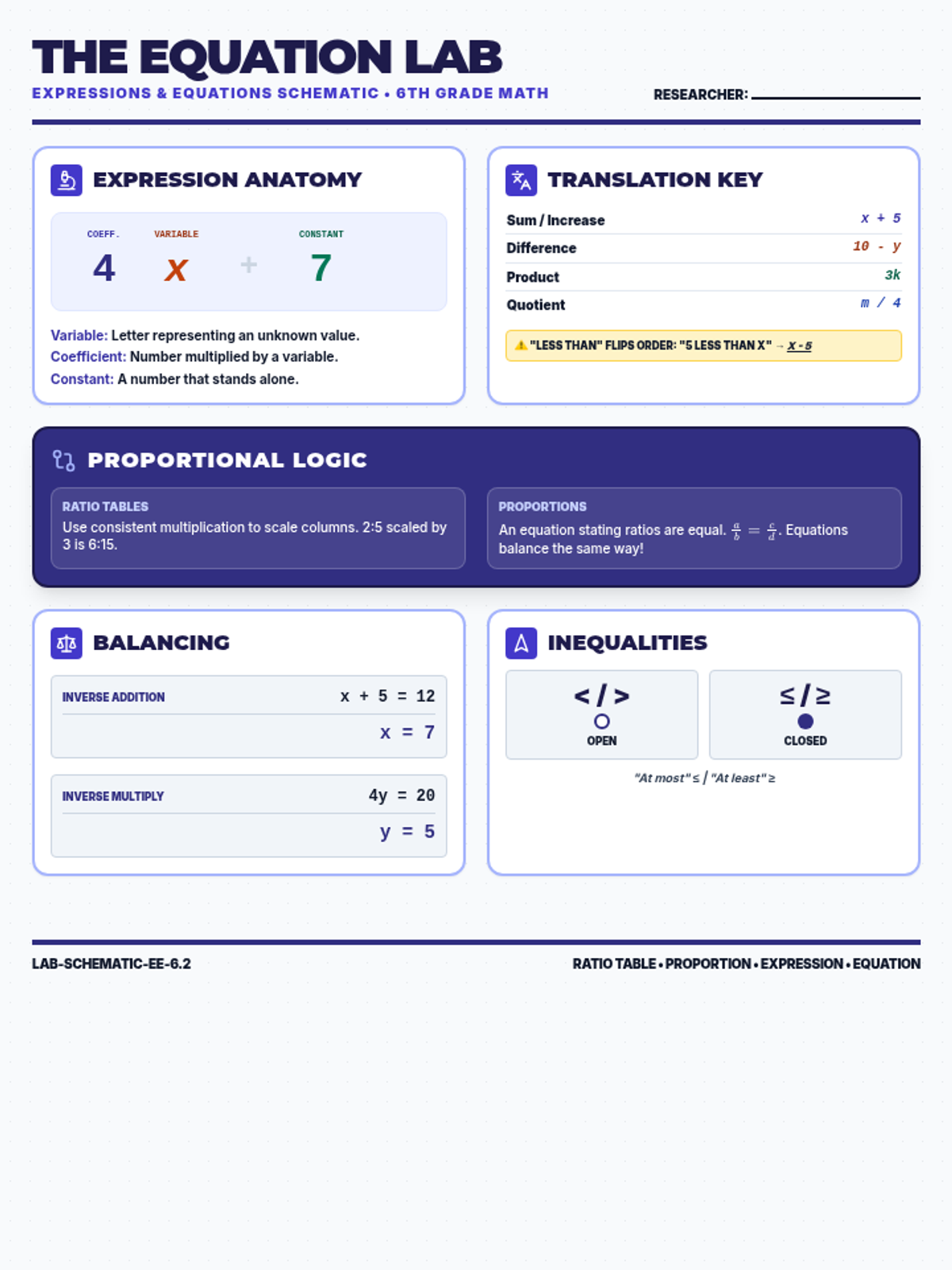
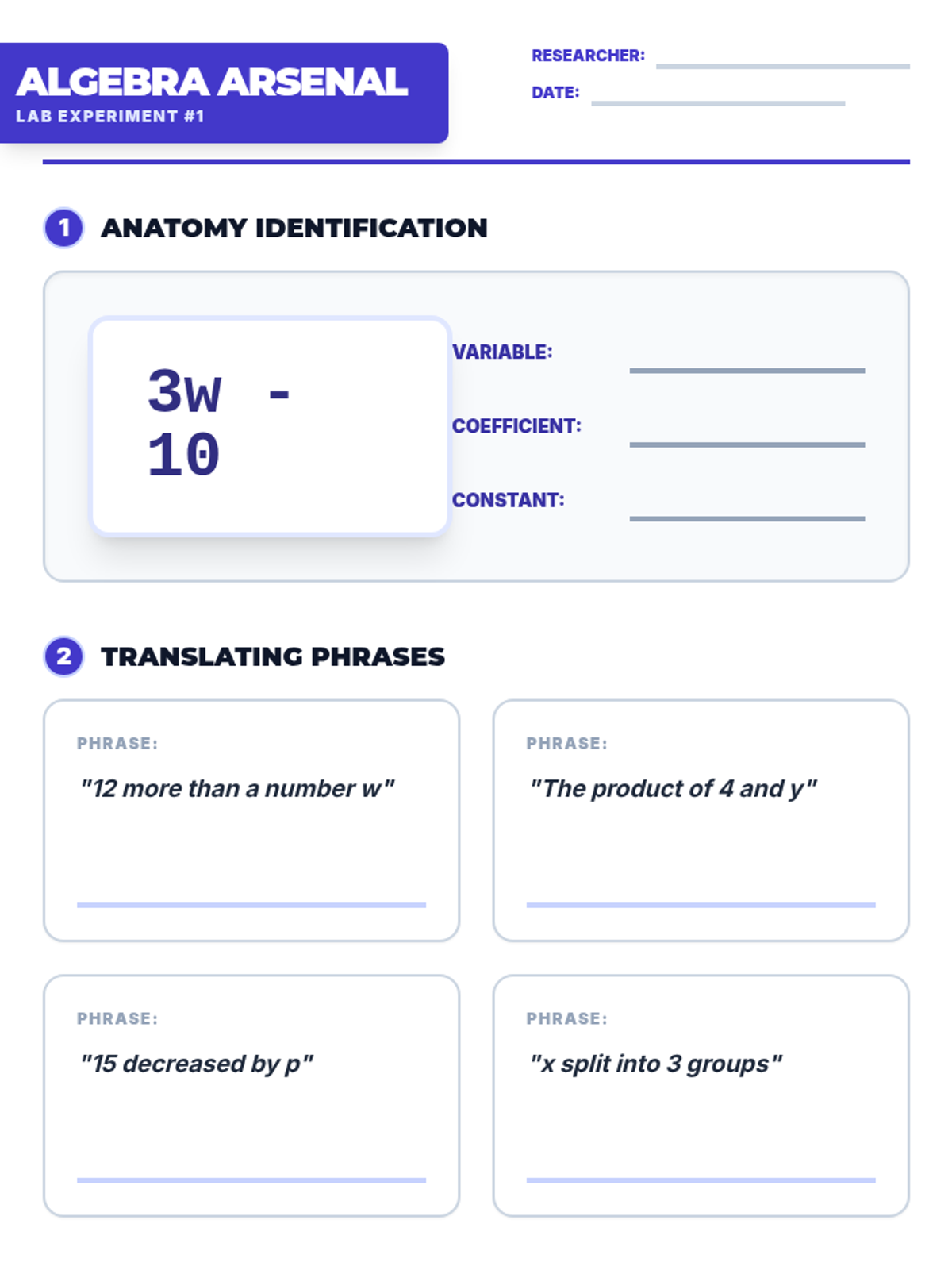
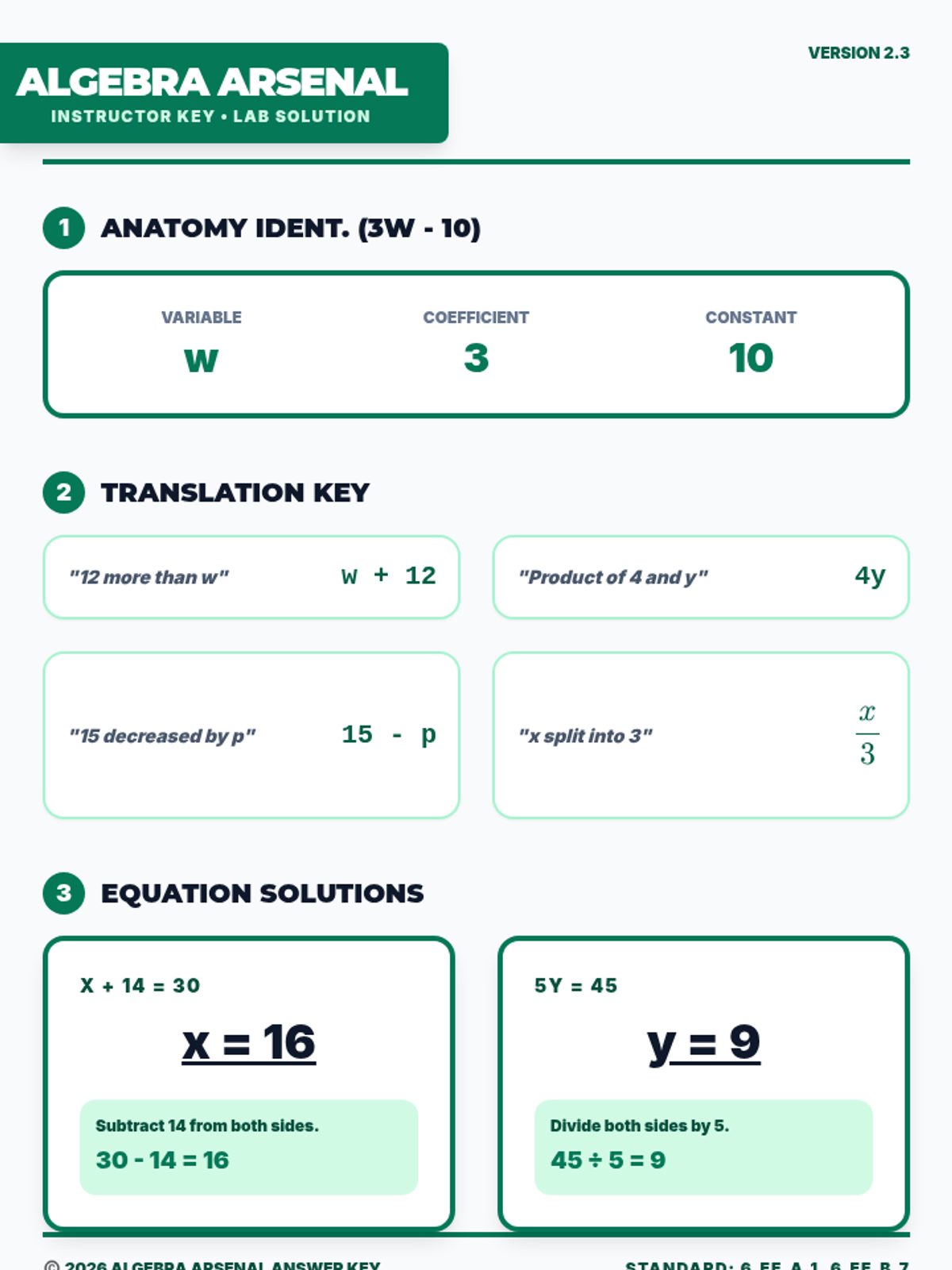
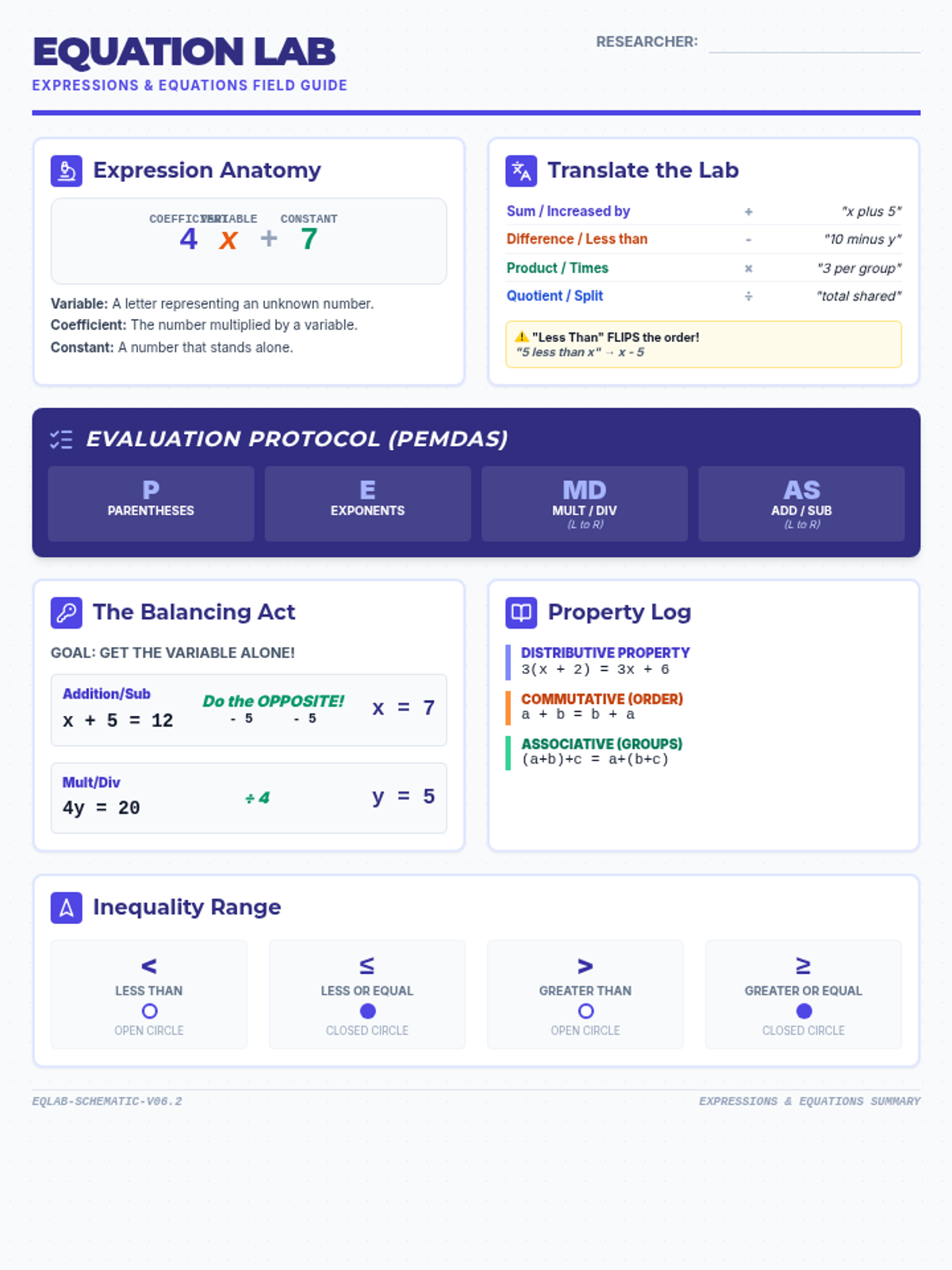
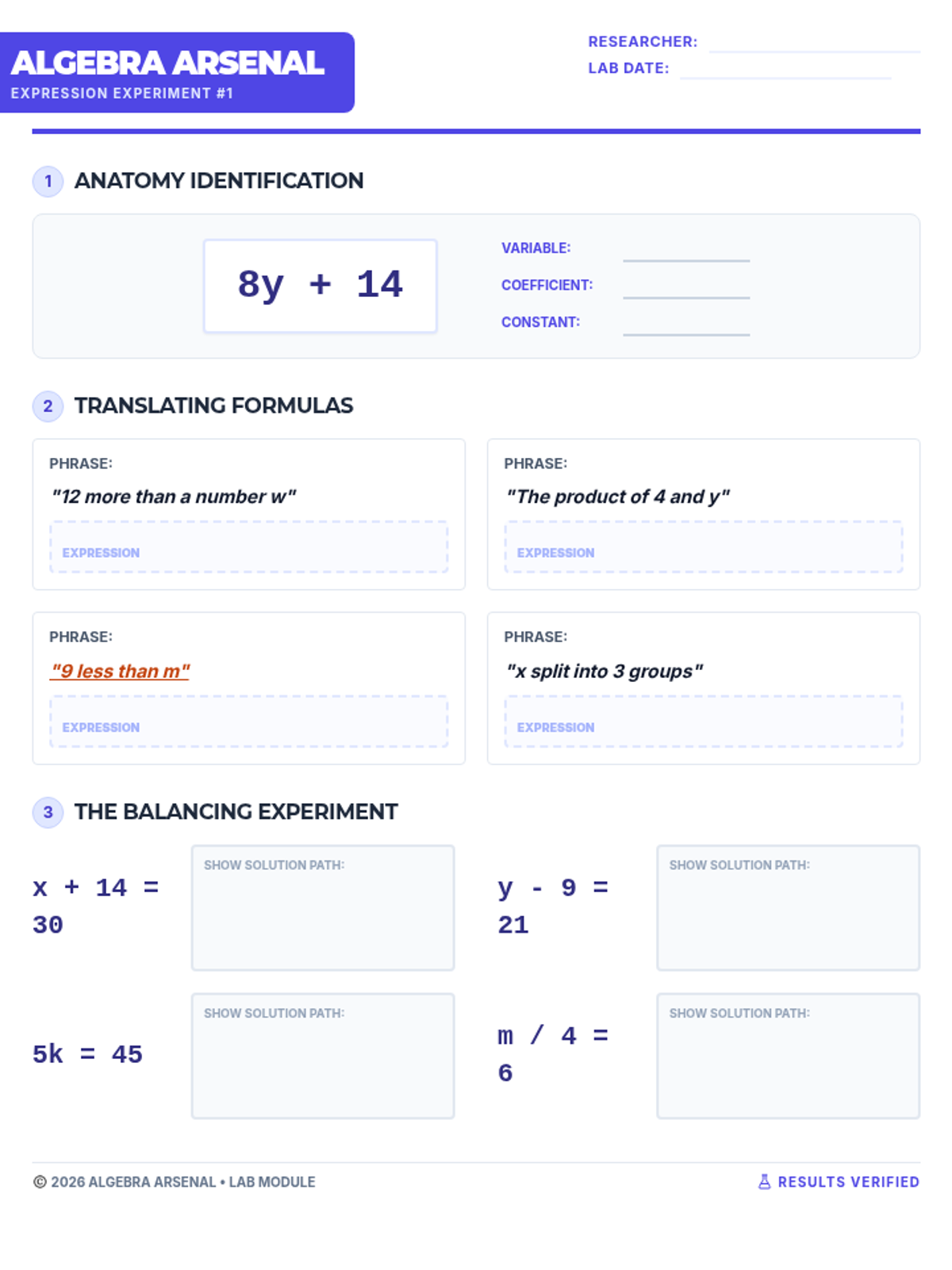
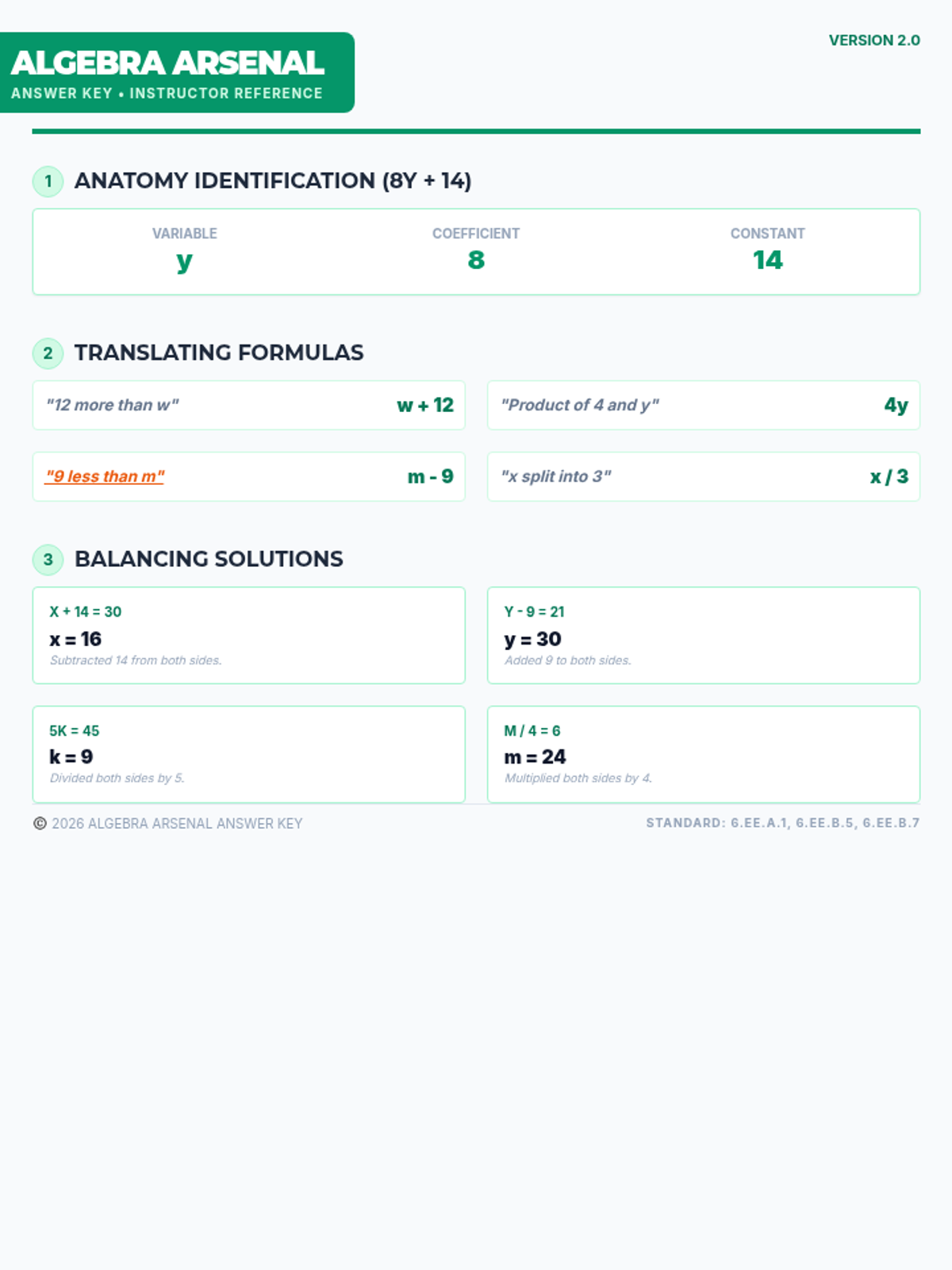
An essential guide to 6th-grade expressions and equations, covering variable basics, writing algebraic statements, and solving one-step equations through a laboratory-themed reference set.
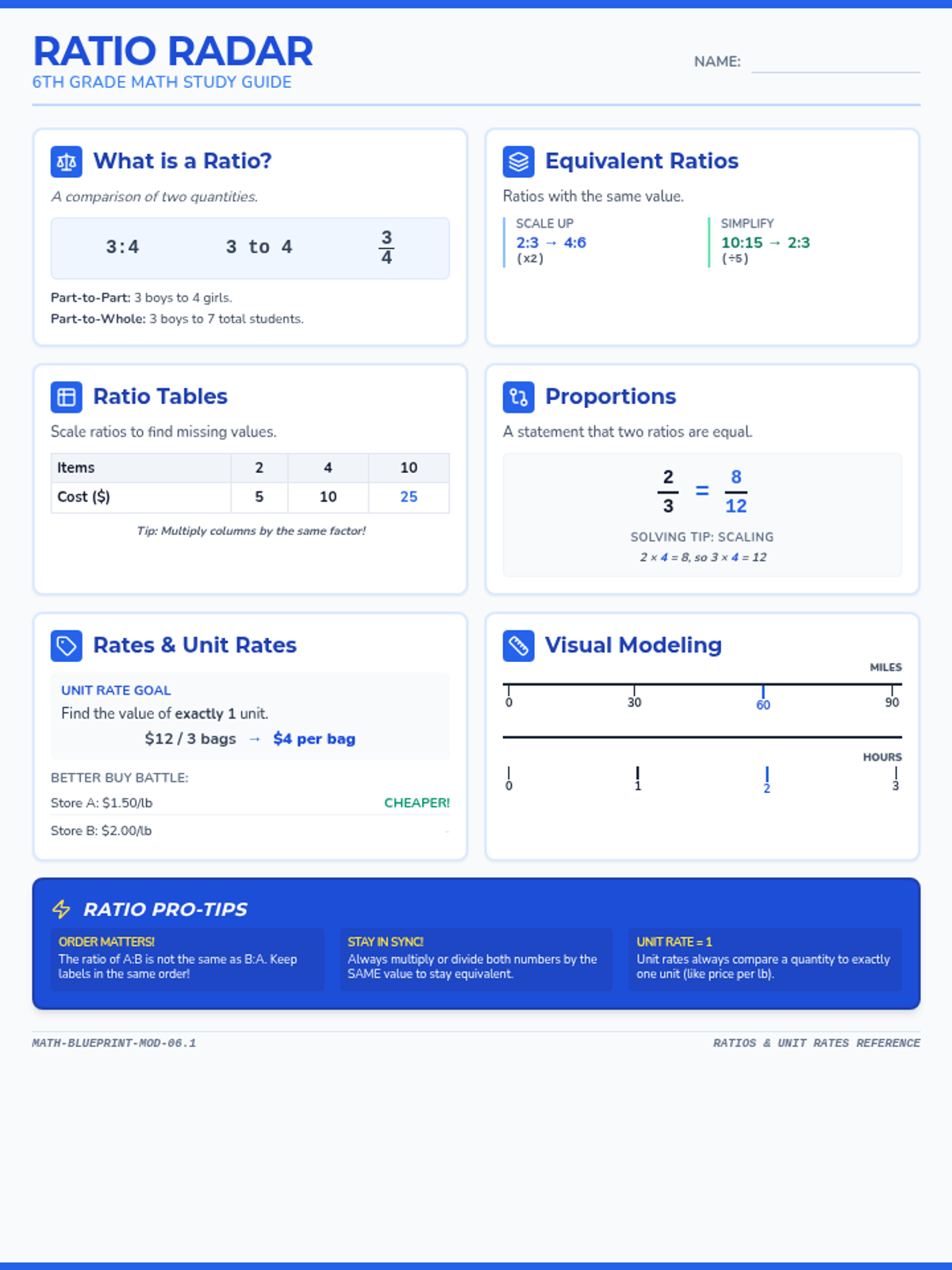
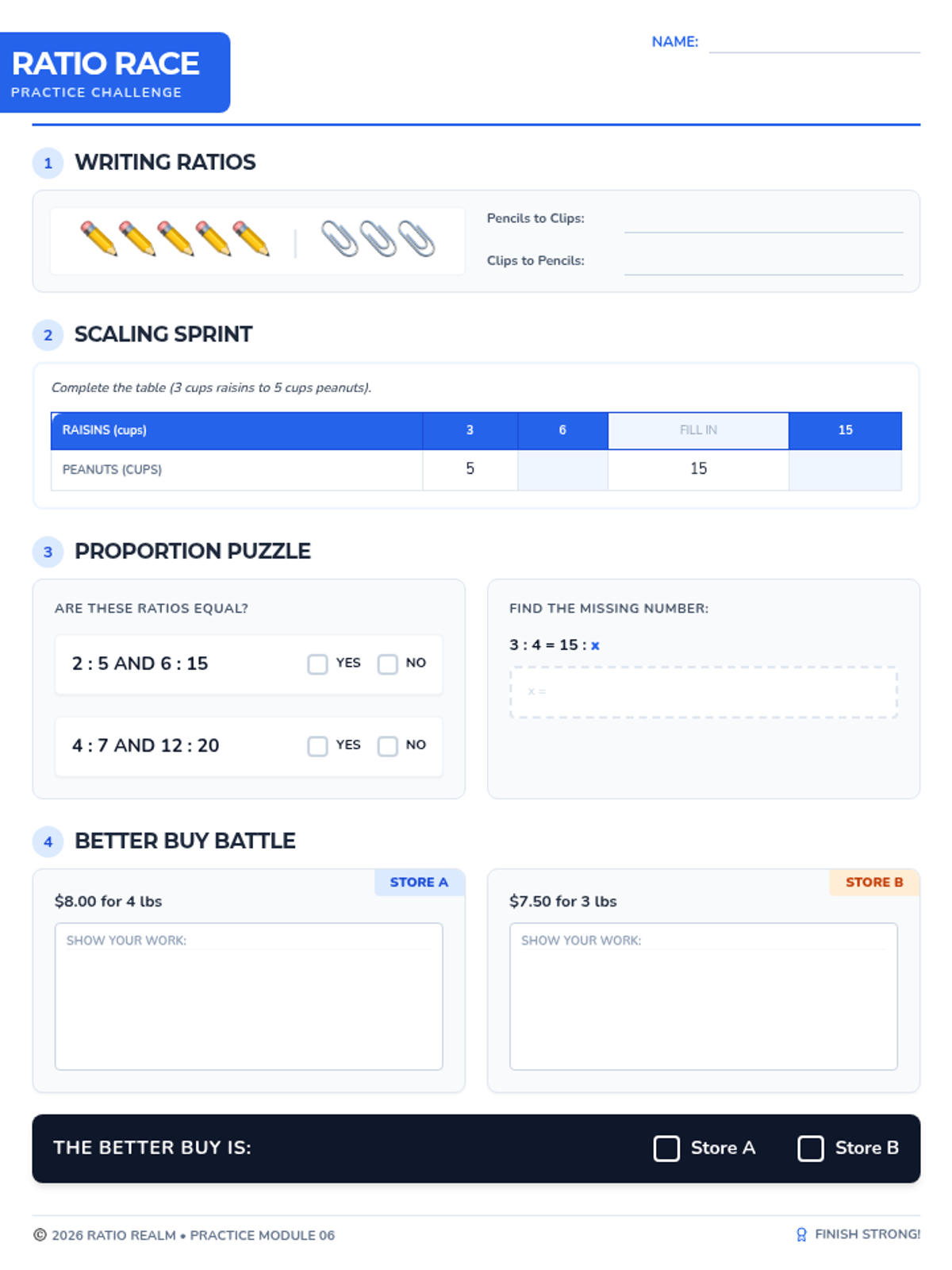
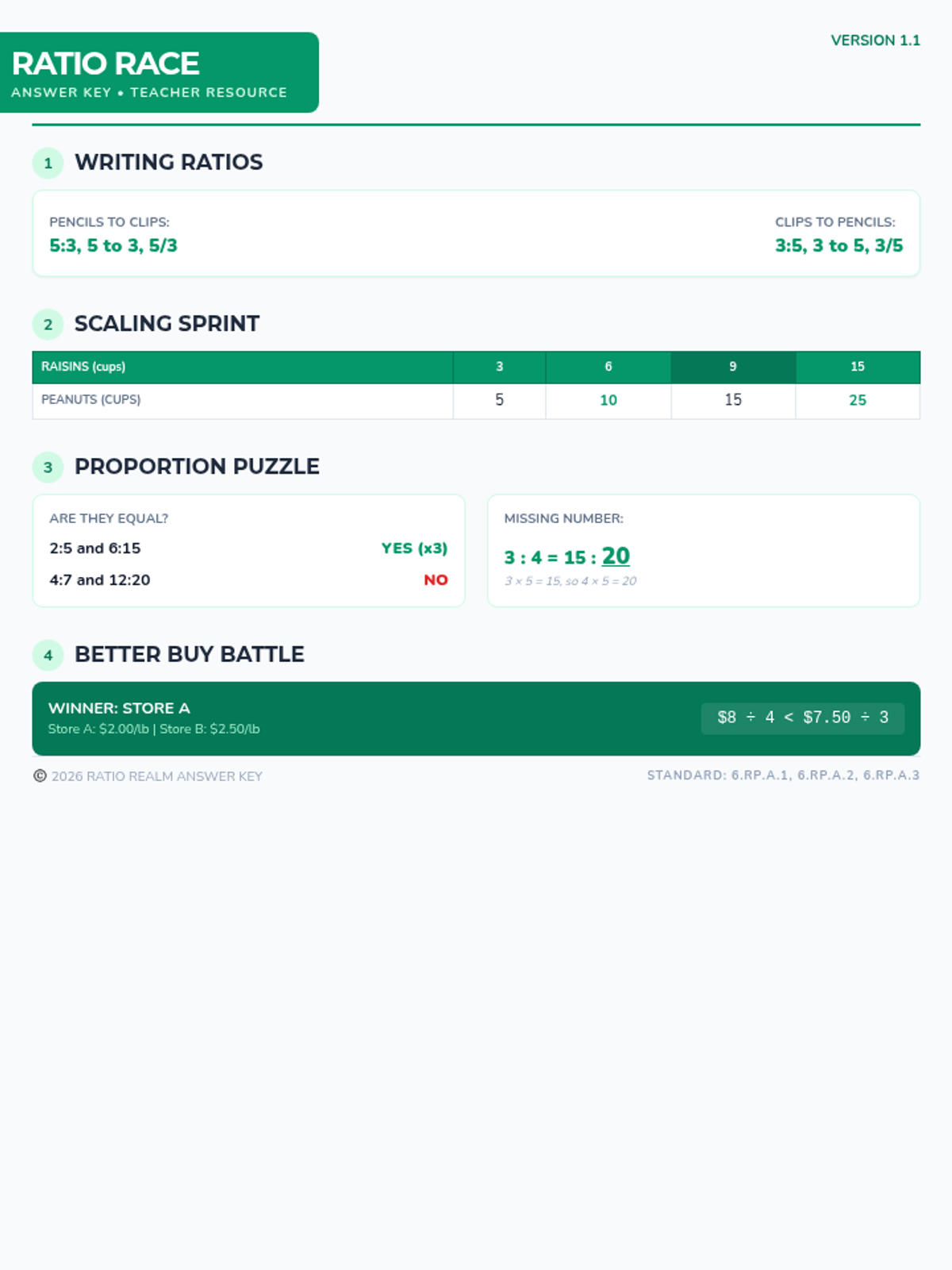
A comprehensive introduction to ratios and unit rates for 6th-grade students, featuring a detailed reference sheet and a practice activity for mastering proportions.
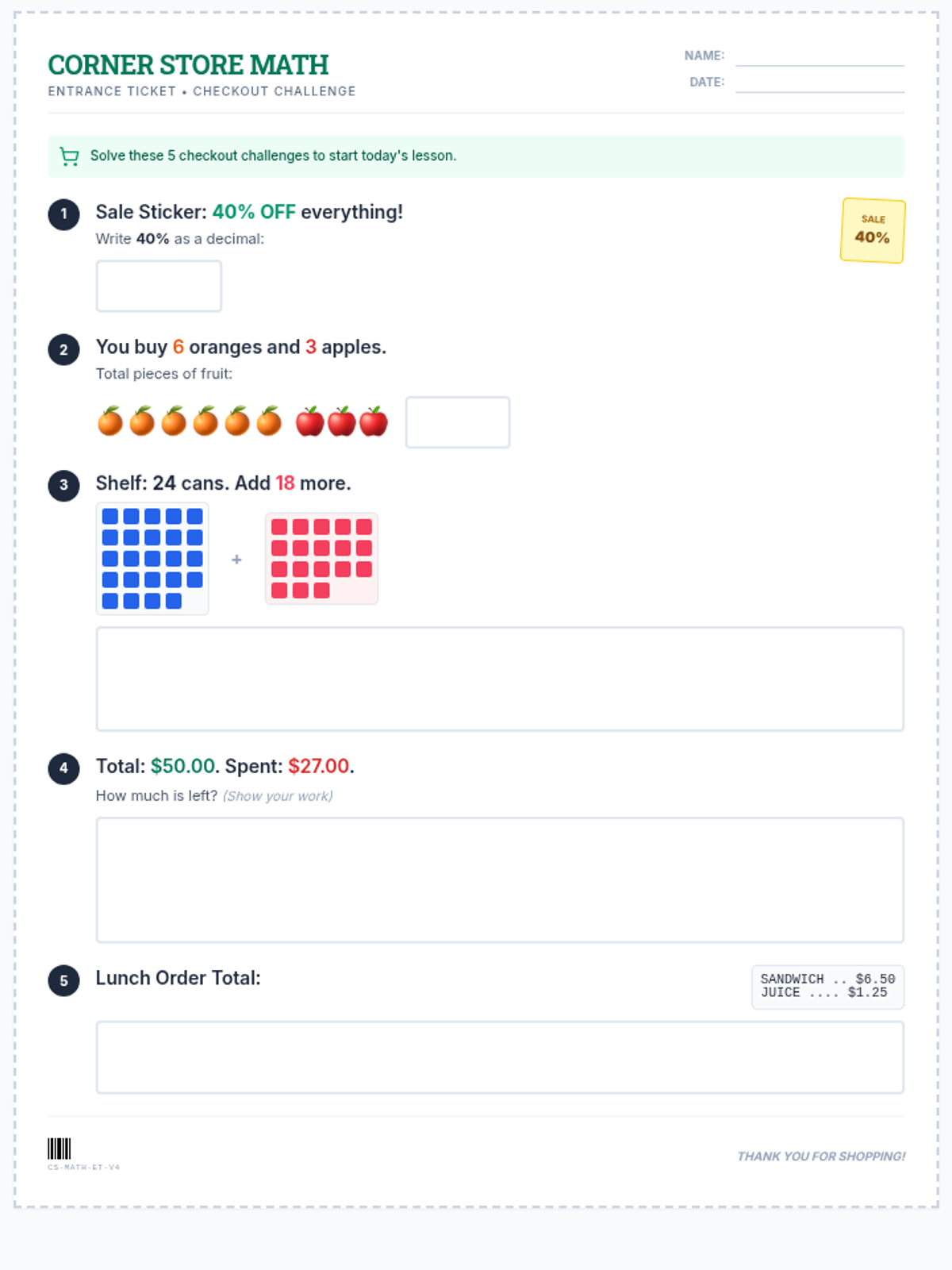
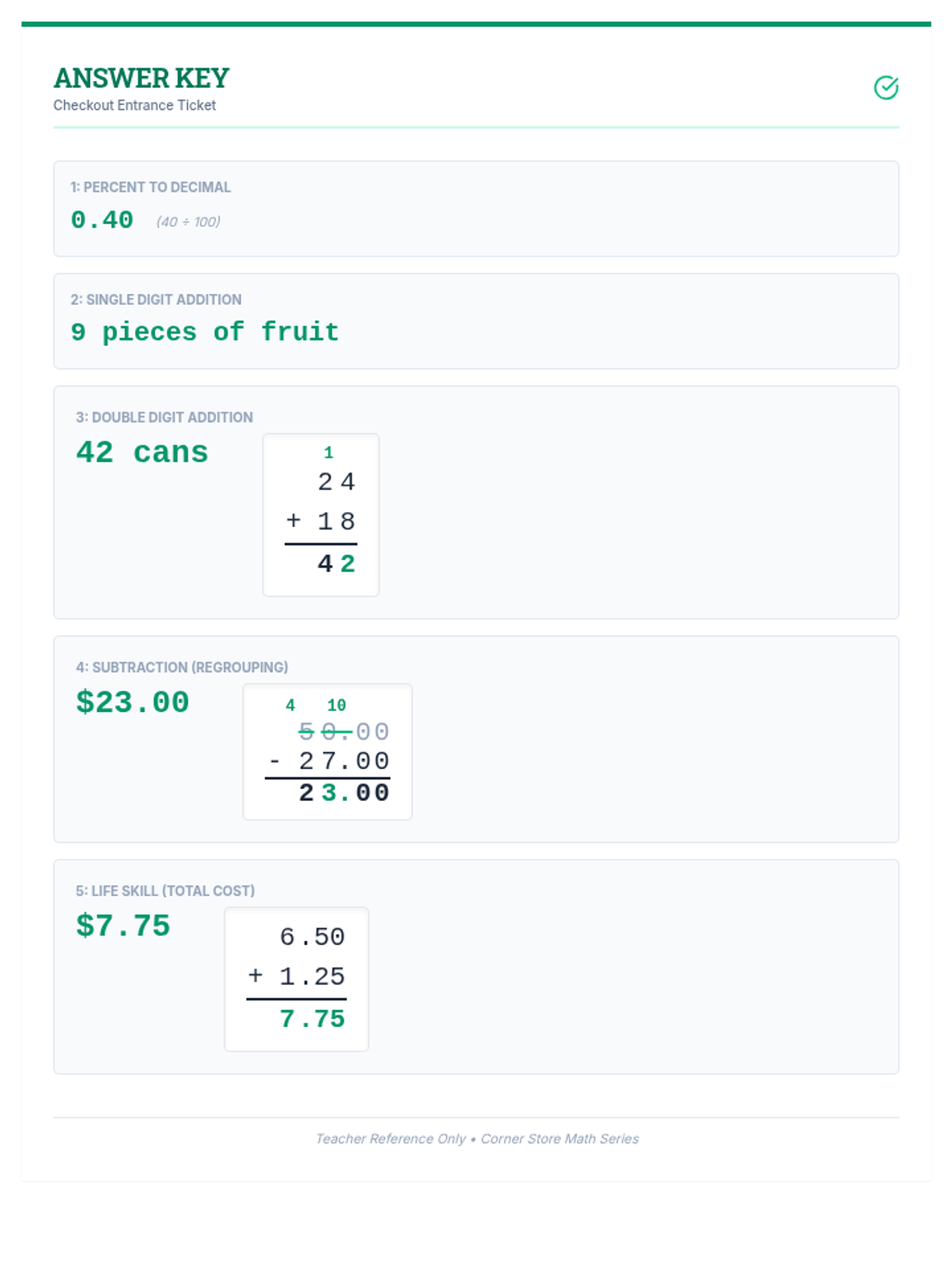
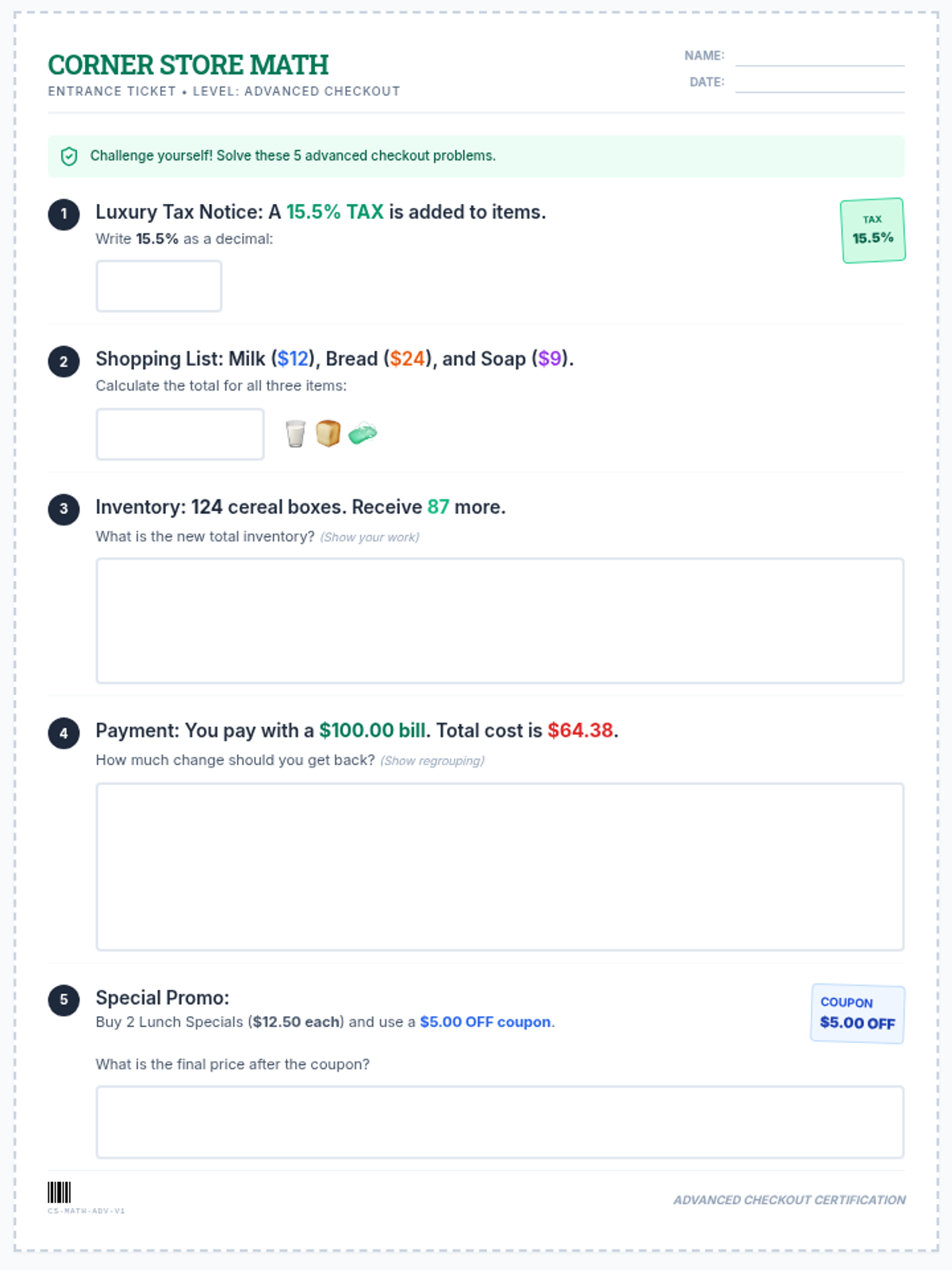
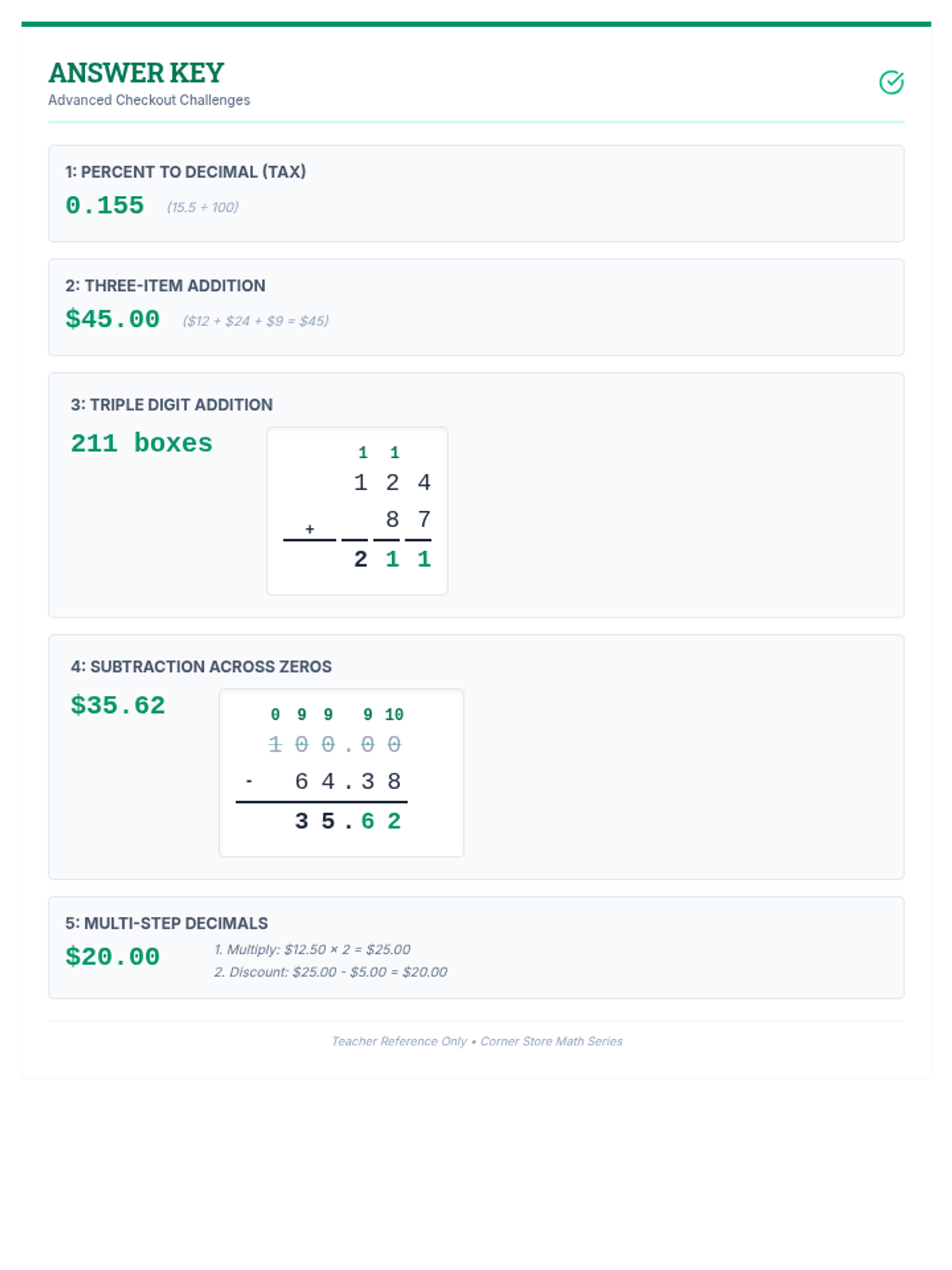
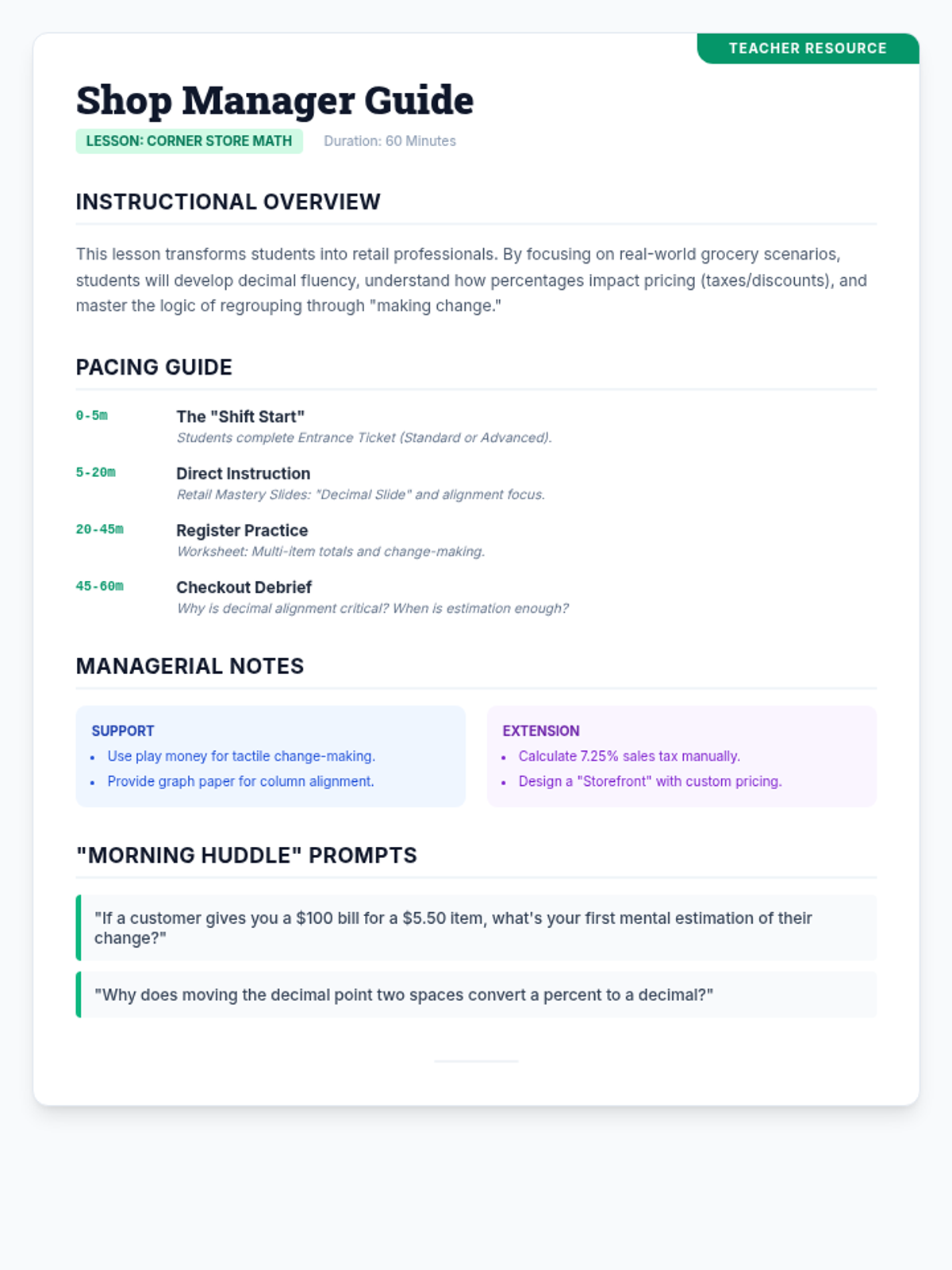
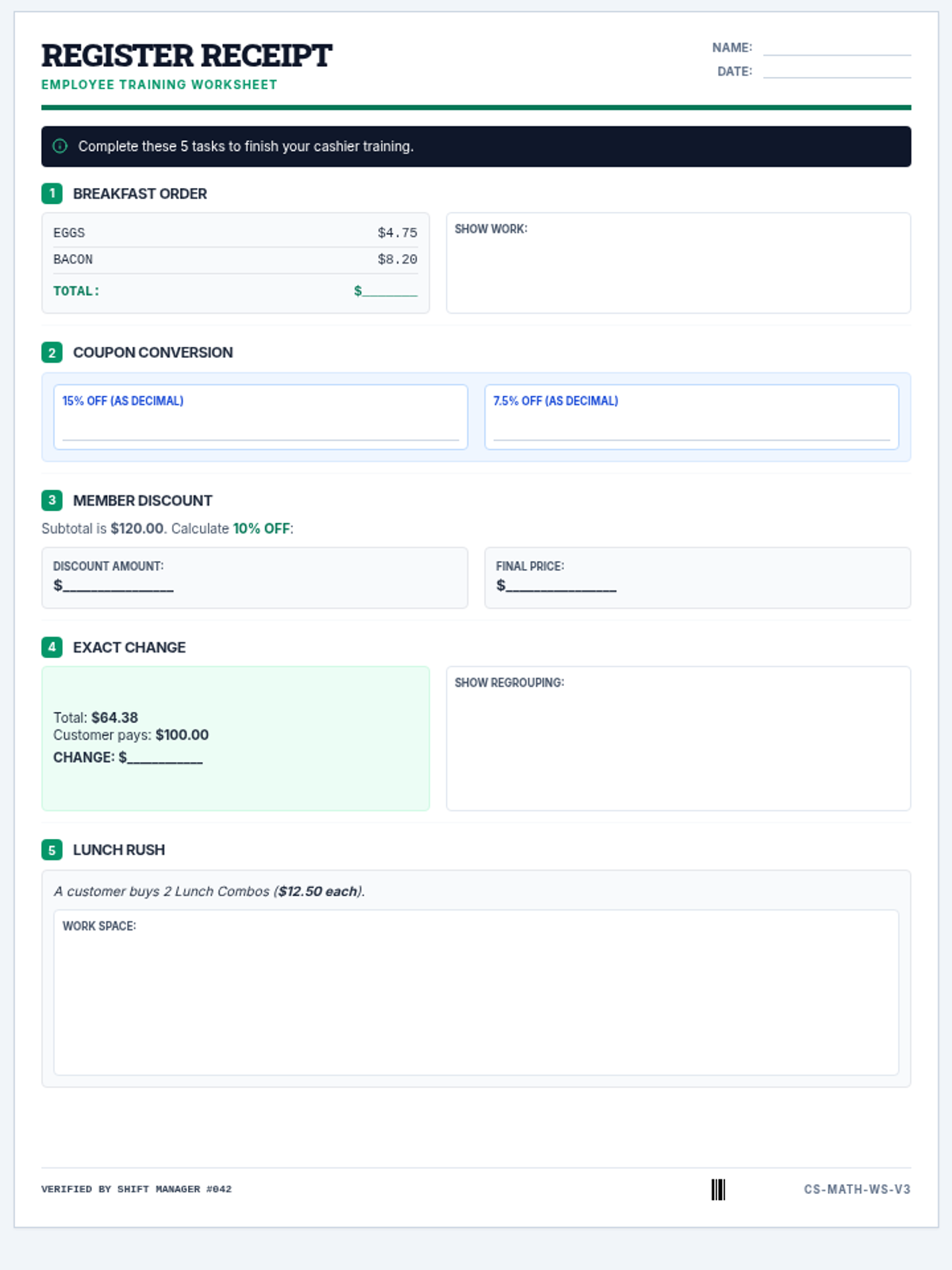
This lesson focuses on practical math applications in a retail setting, covering decimals, percentages, and basic arithmetic with a focus on money management.
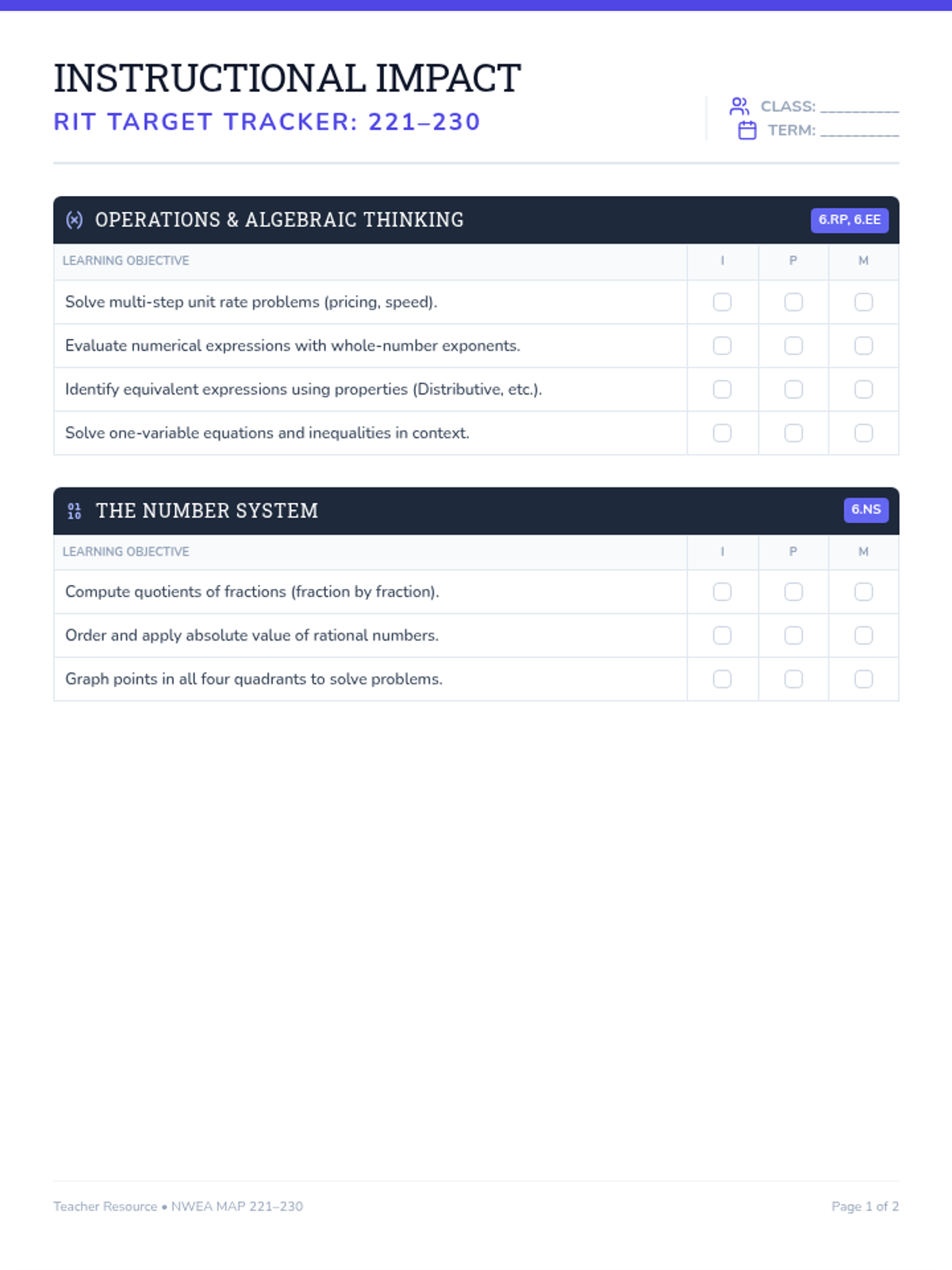
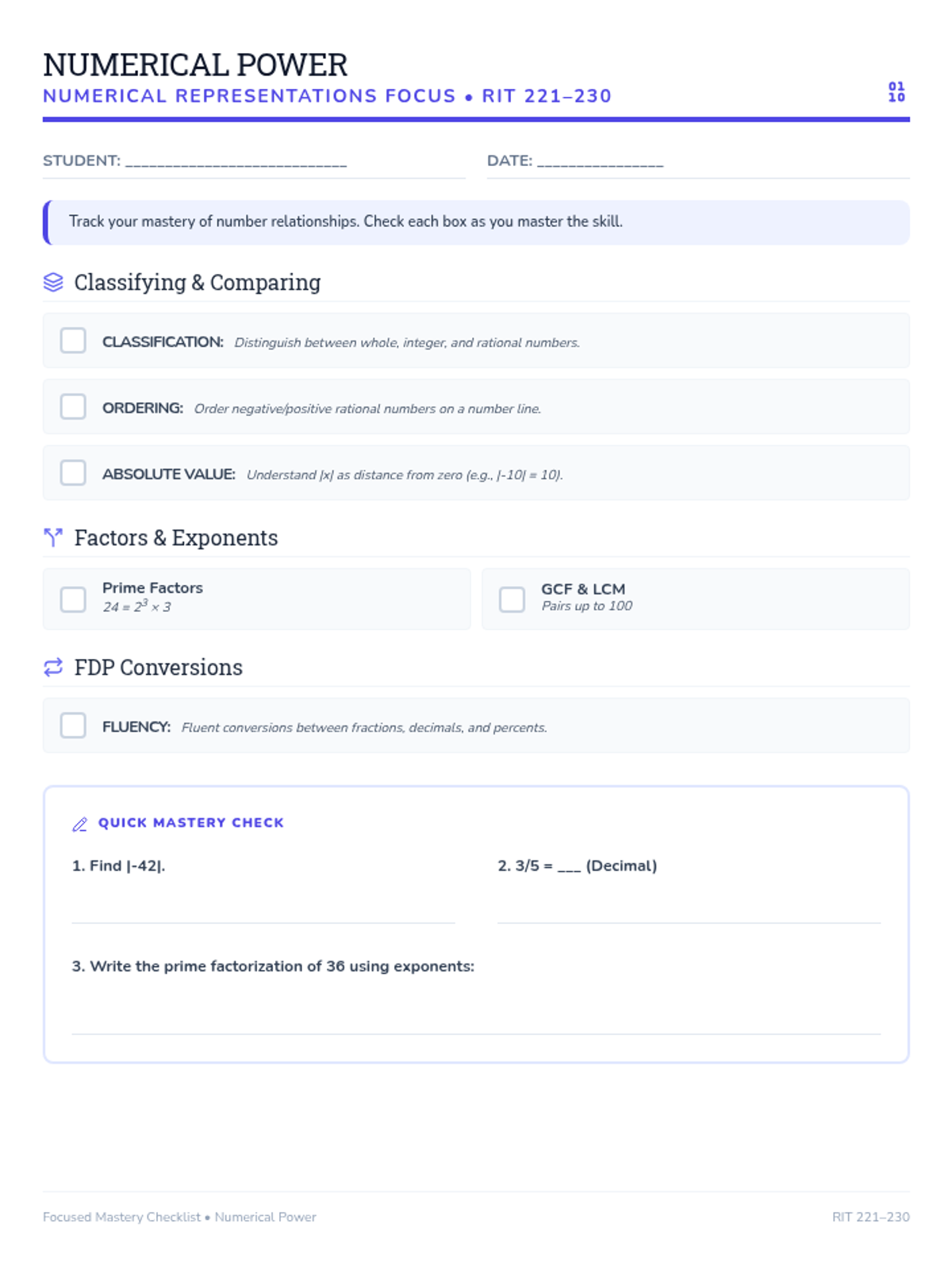
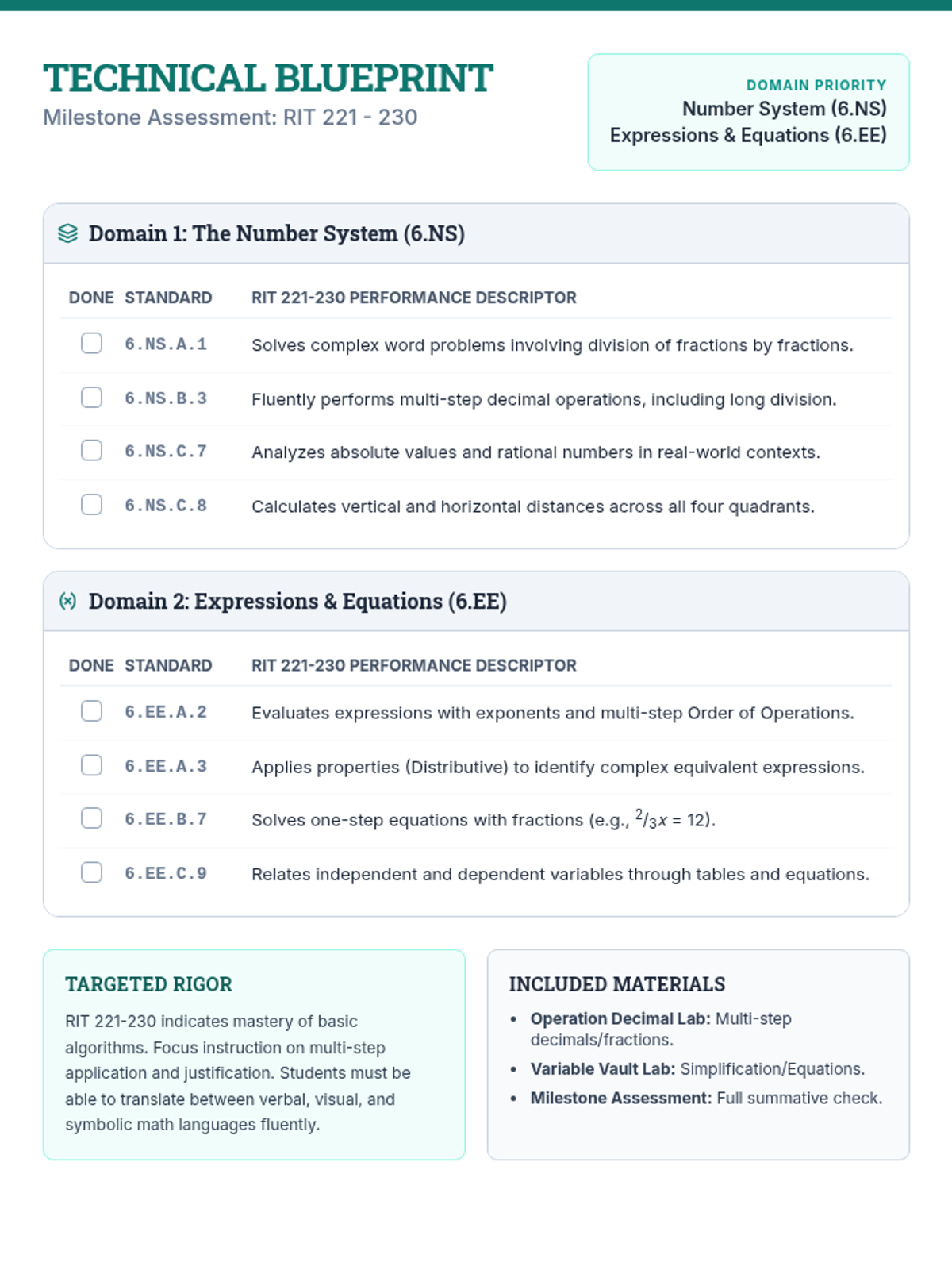
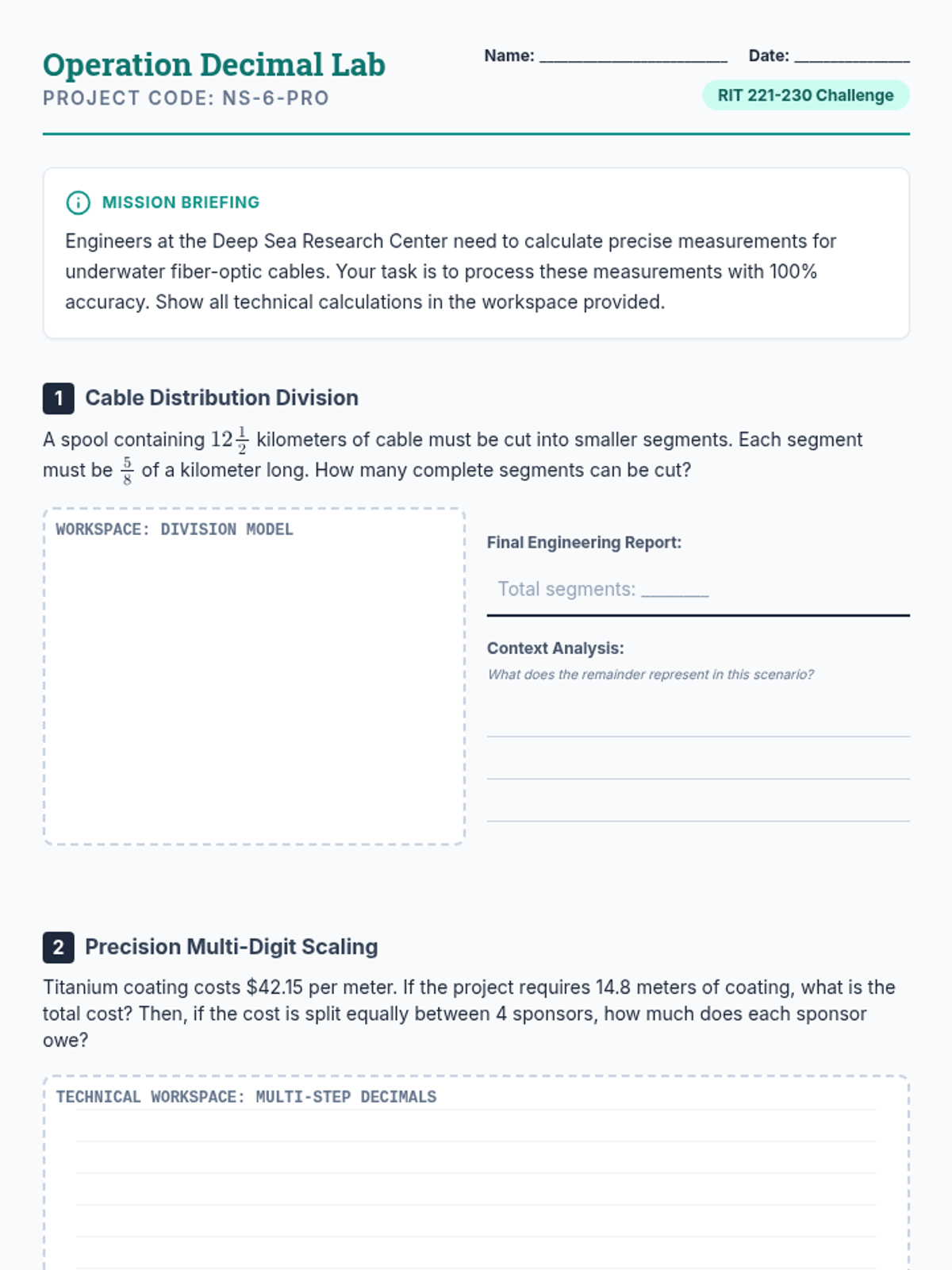
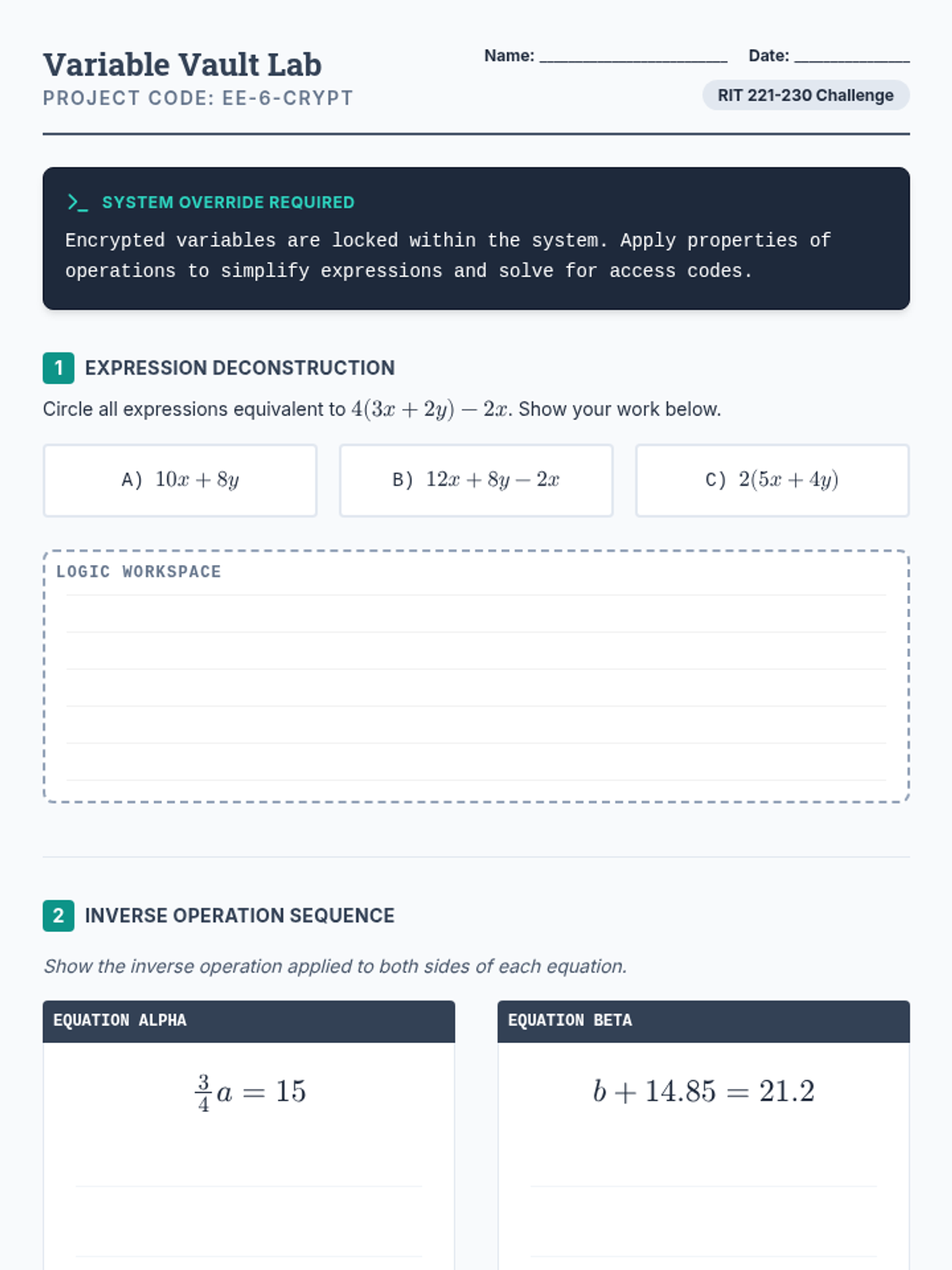
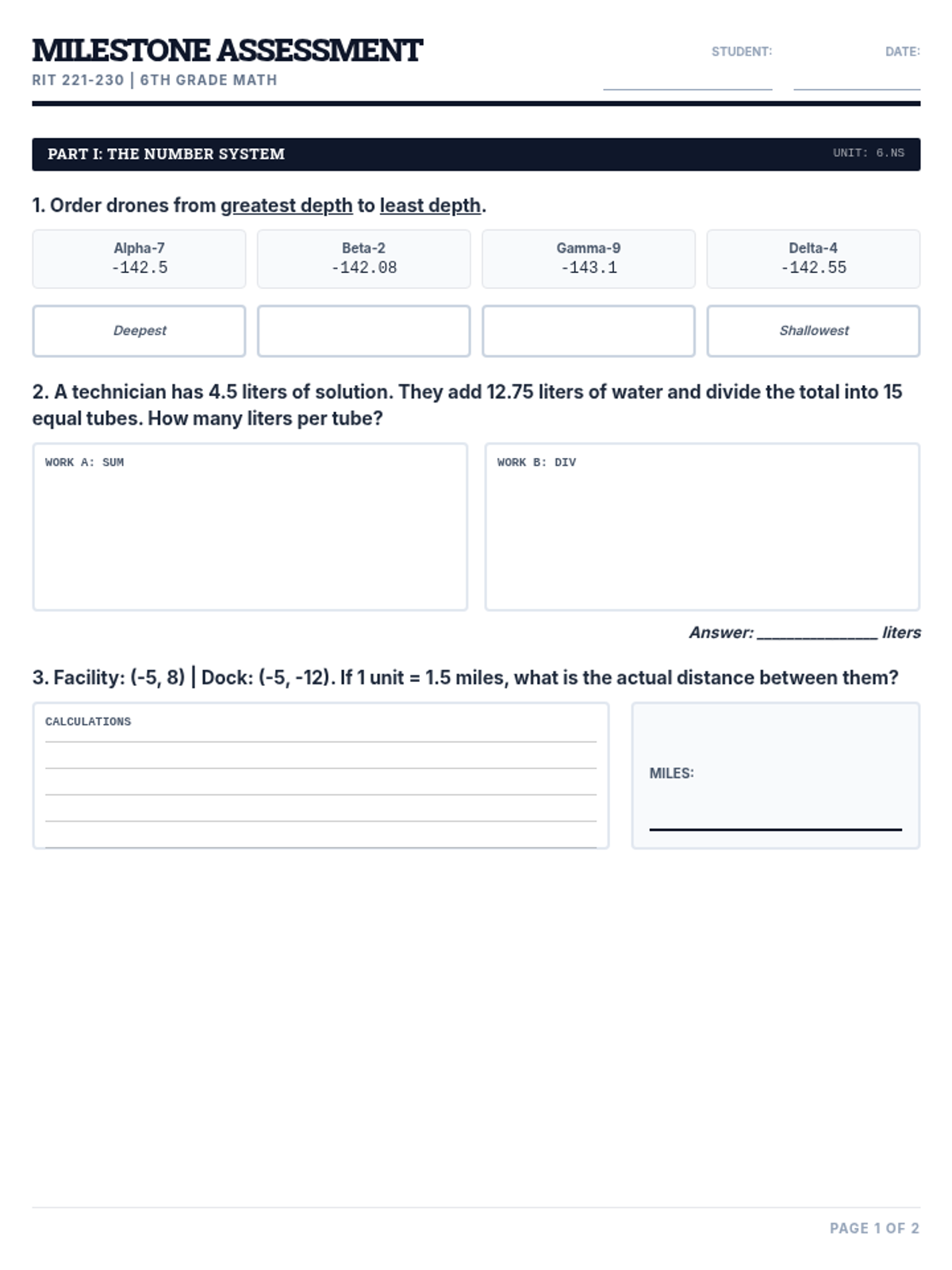
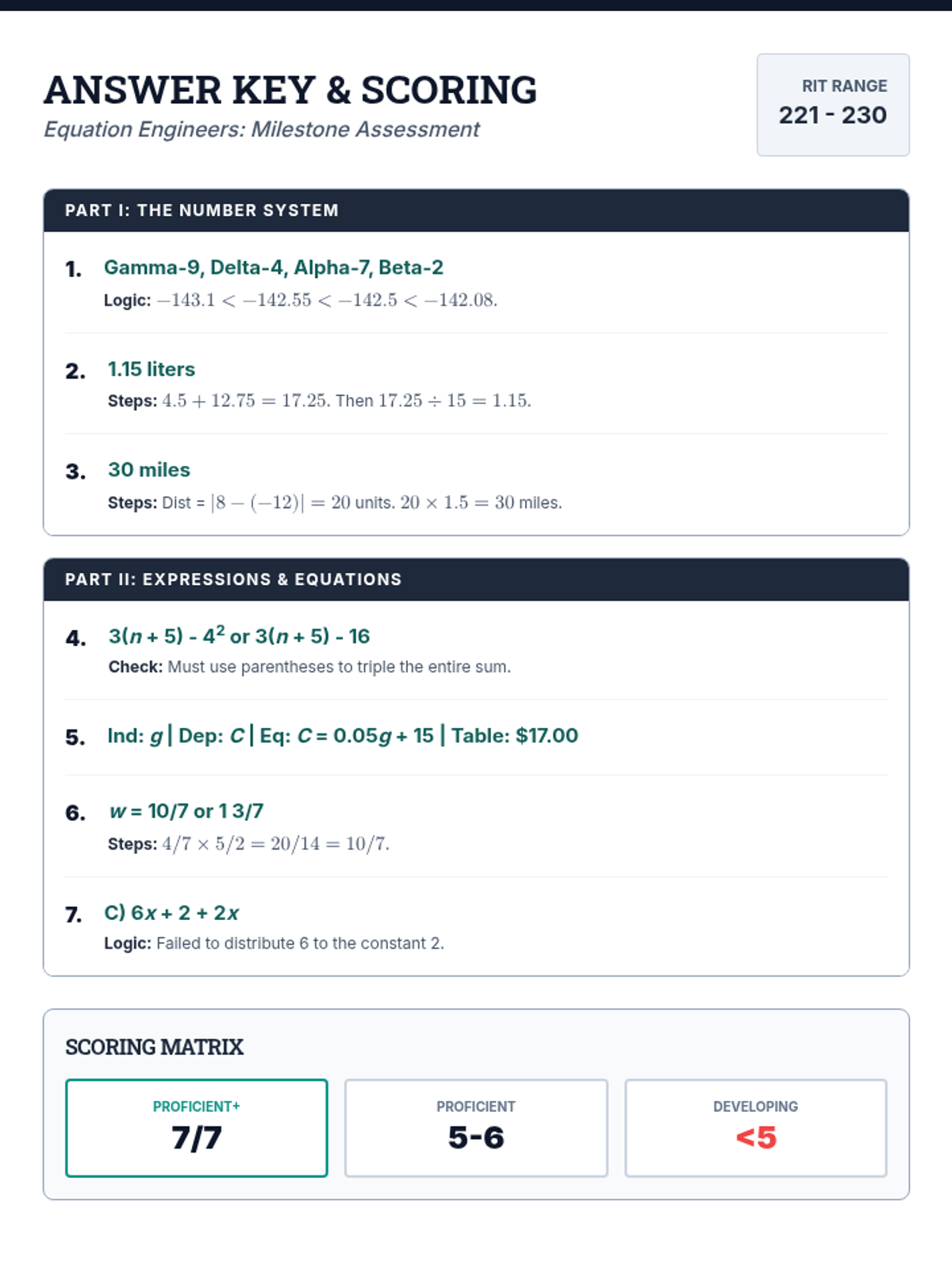
A comprehensive milestone assessment and review unit for 6th-grade students performing in the 221-230 RIT range, focusing on The Number System and Expressions & Equations. Includes a technical blueprint, skill-building lab activities, and a final proficiency assessment.
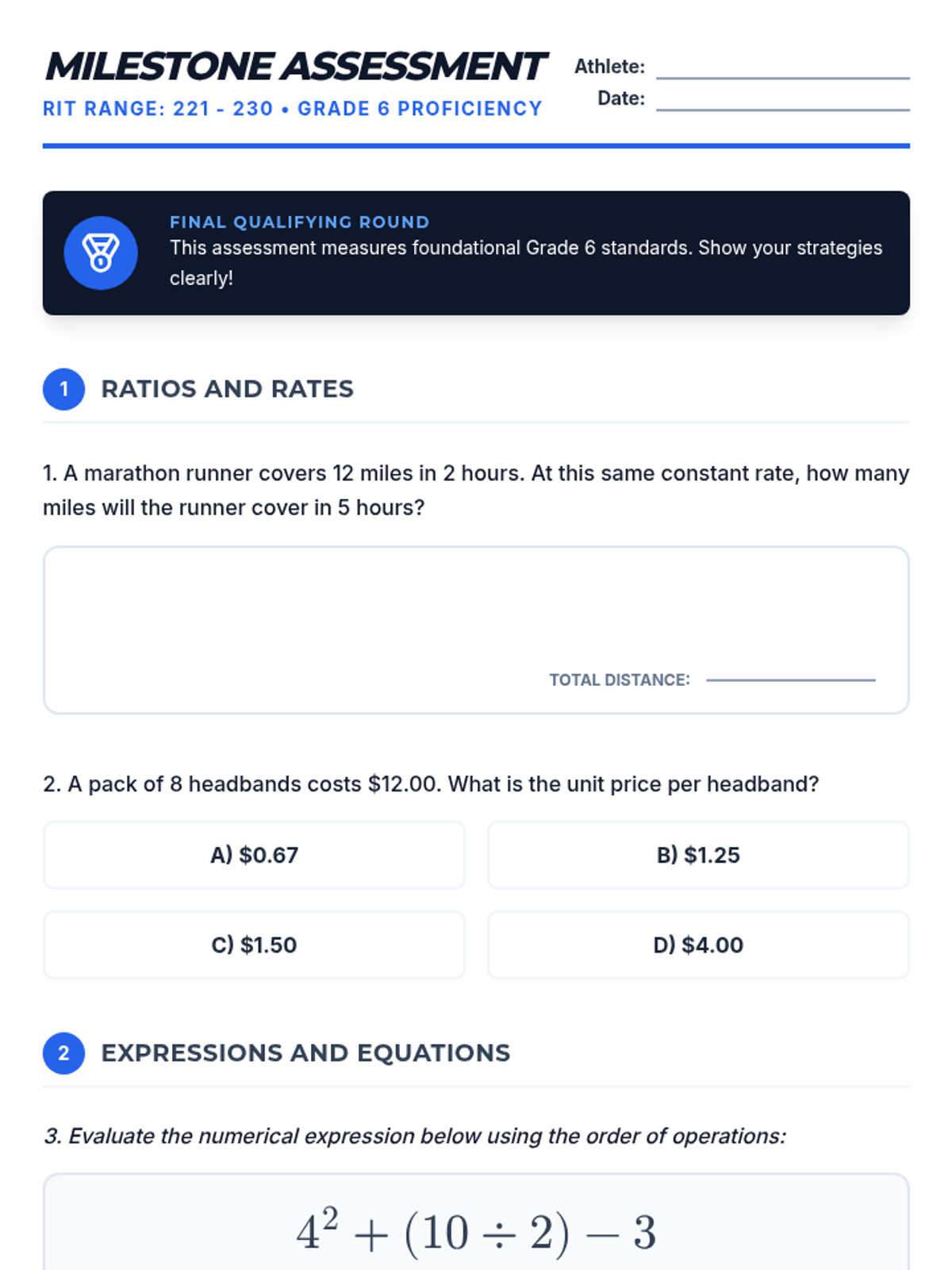
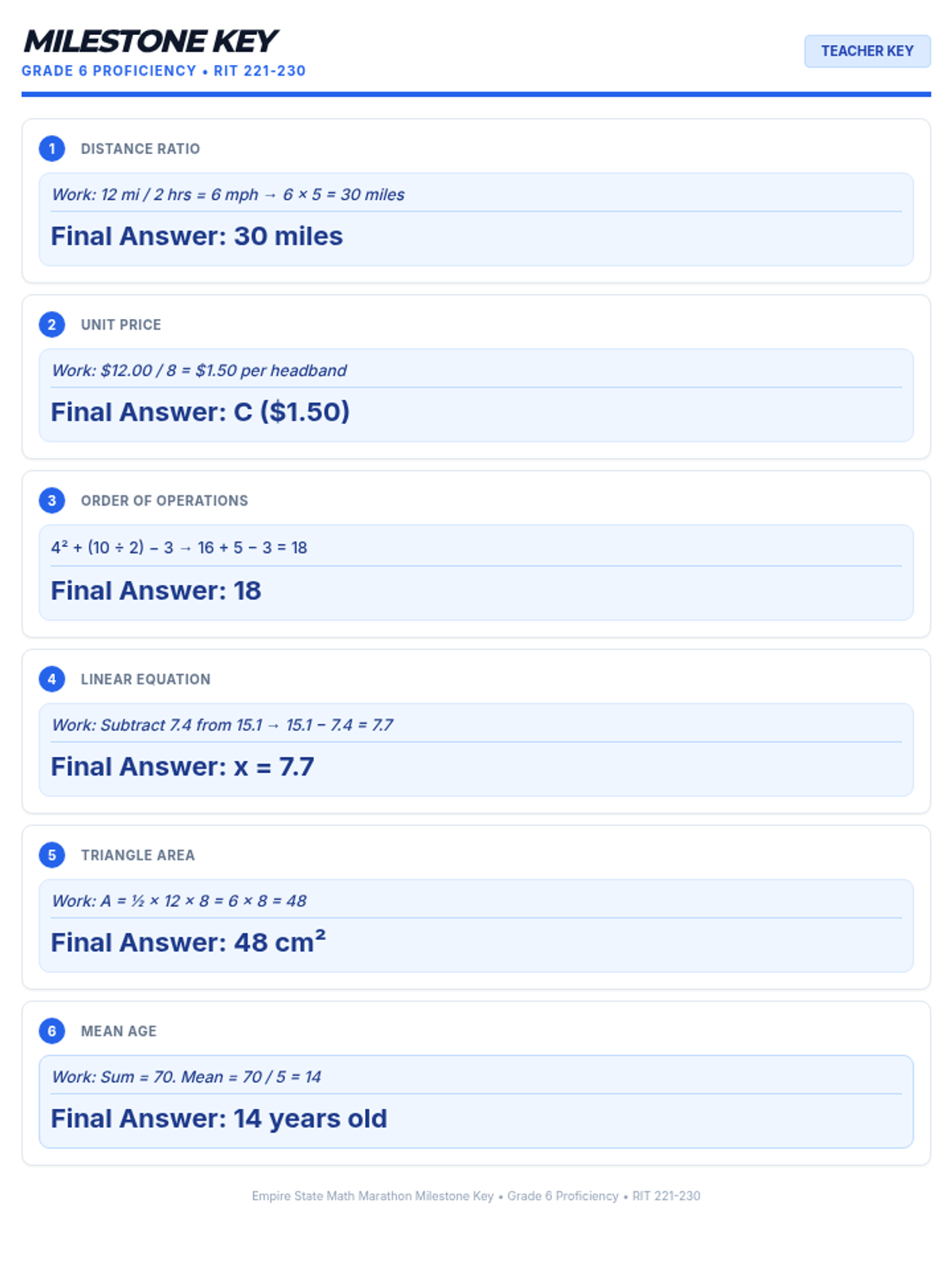
A cumulative milestone assessment designed for students at Grade 6 proficiency (RIT 221-230). This assessment checks foundational understanding of ratios, expressions, and geometry needed for 8th-grade success.
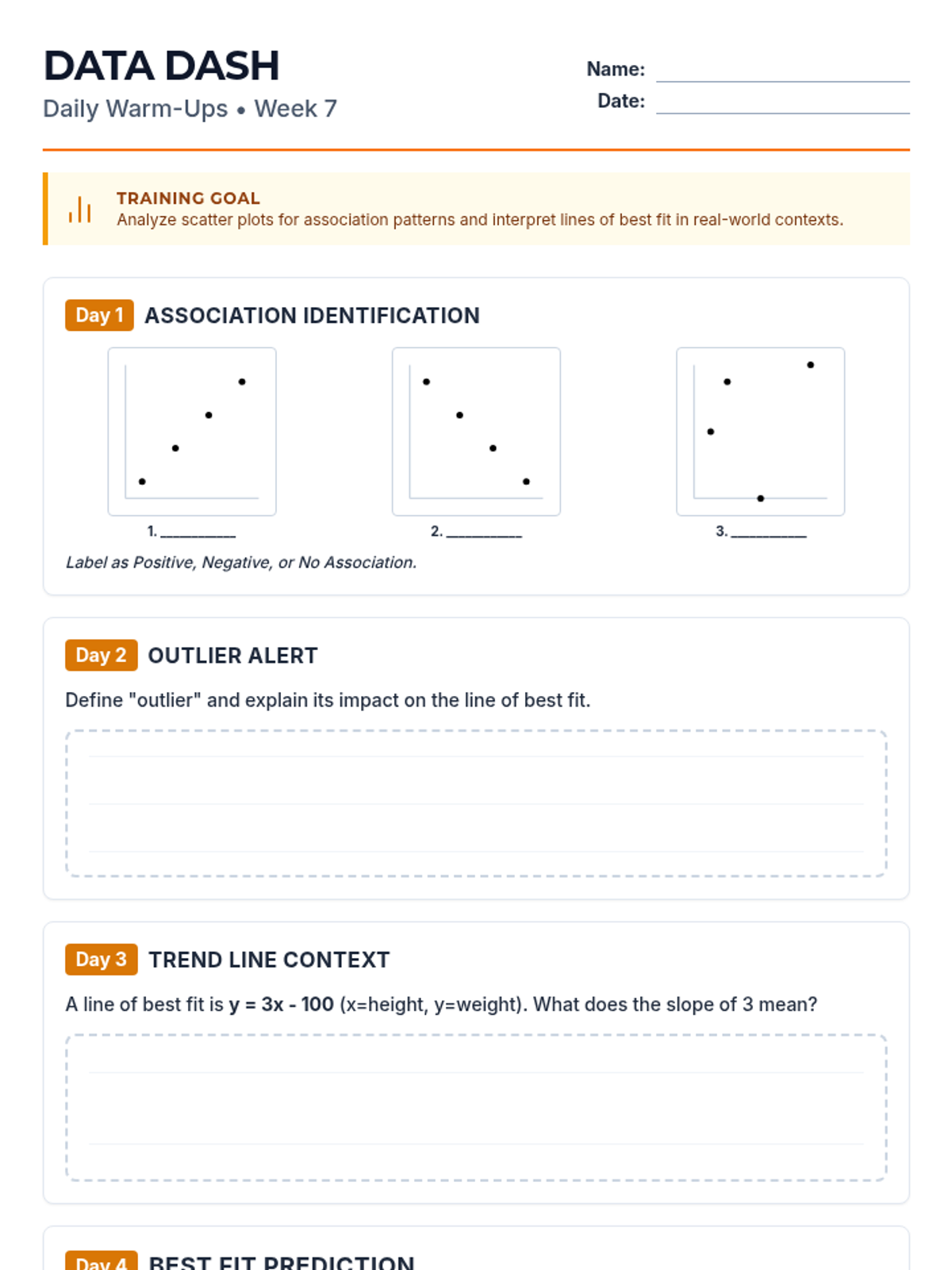
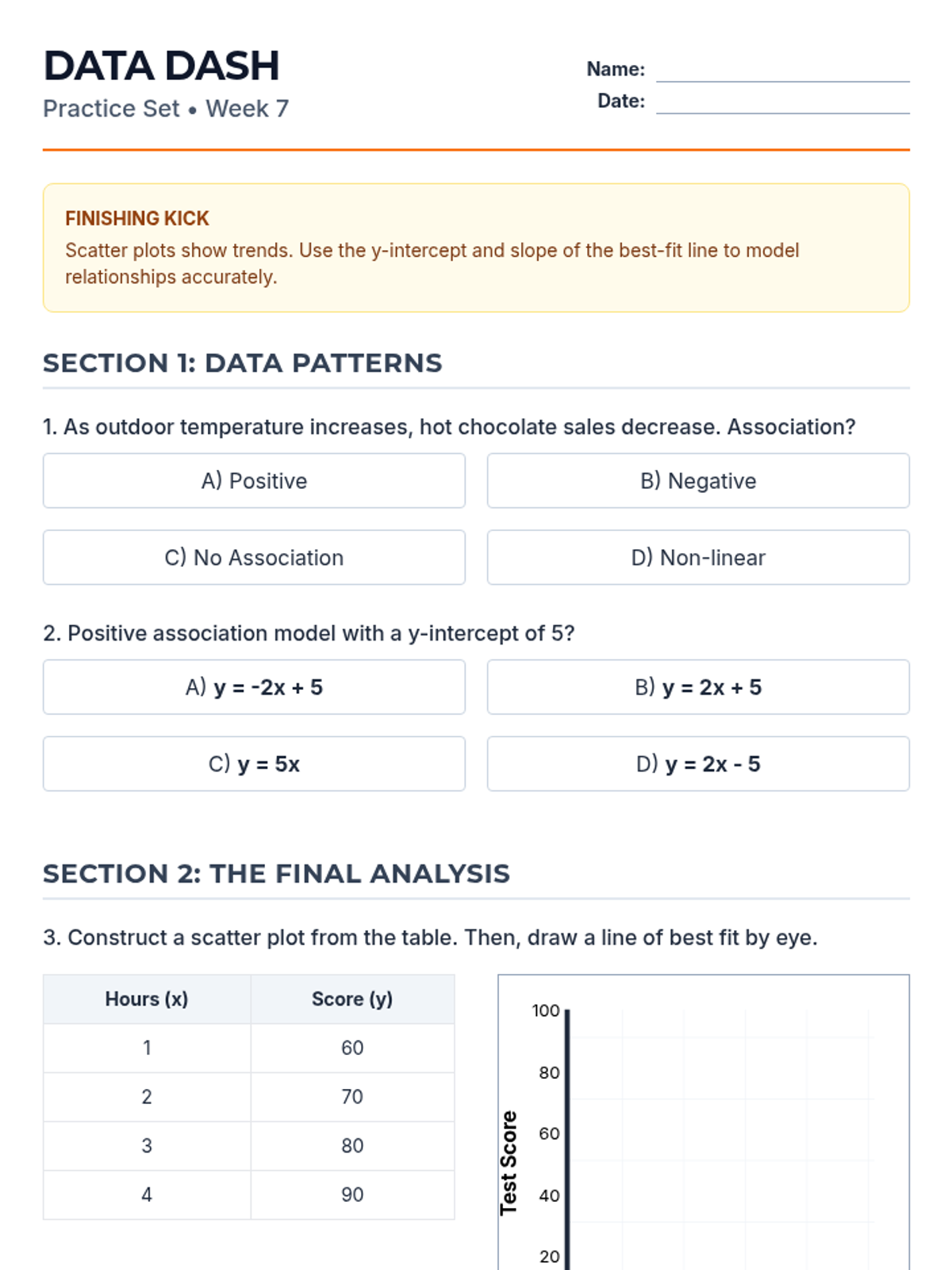
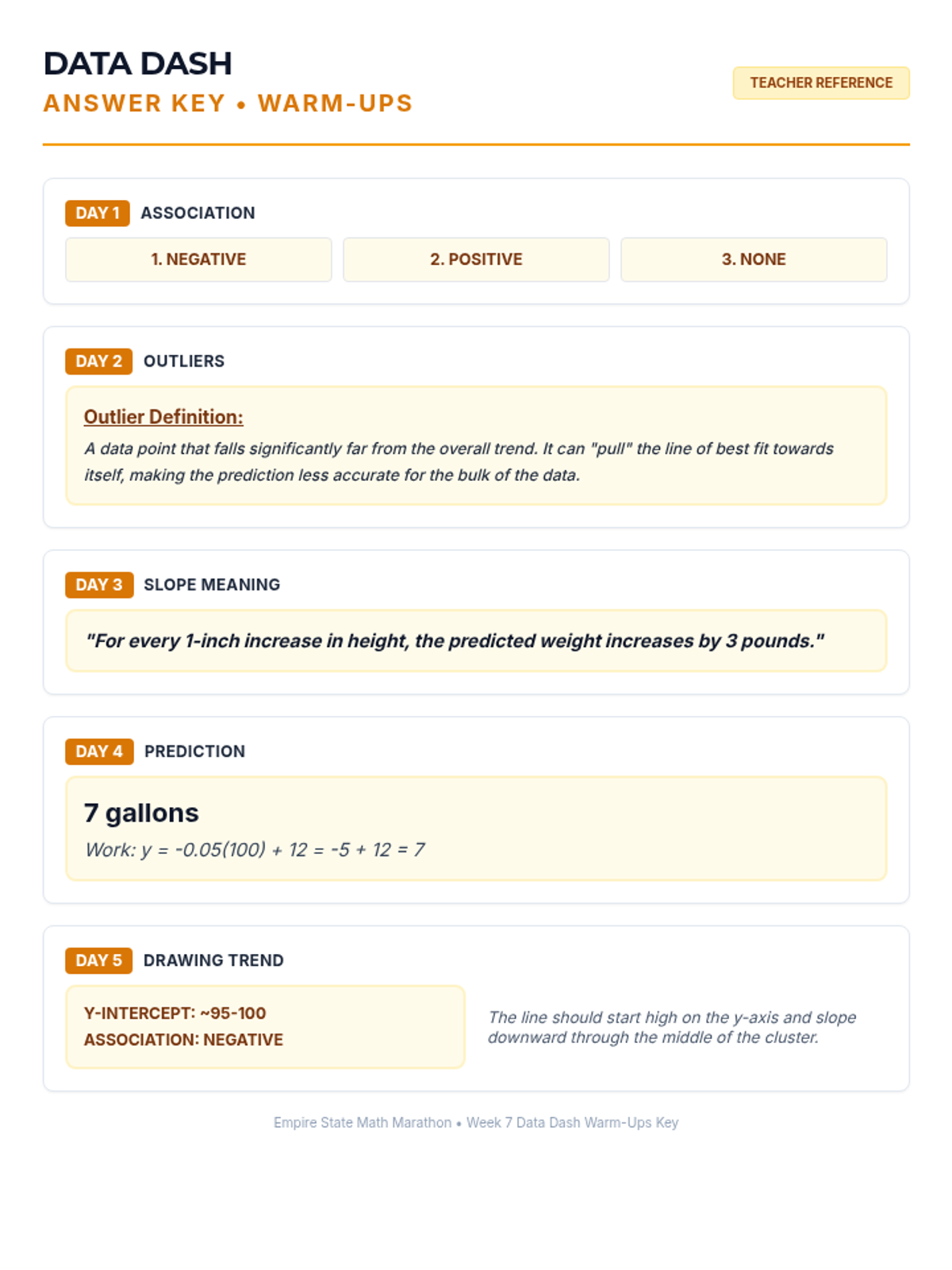
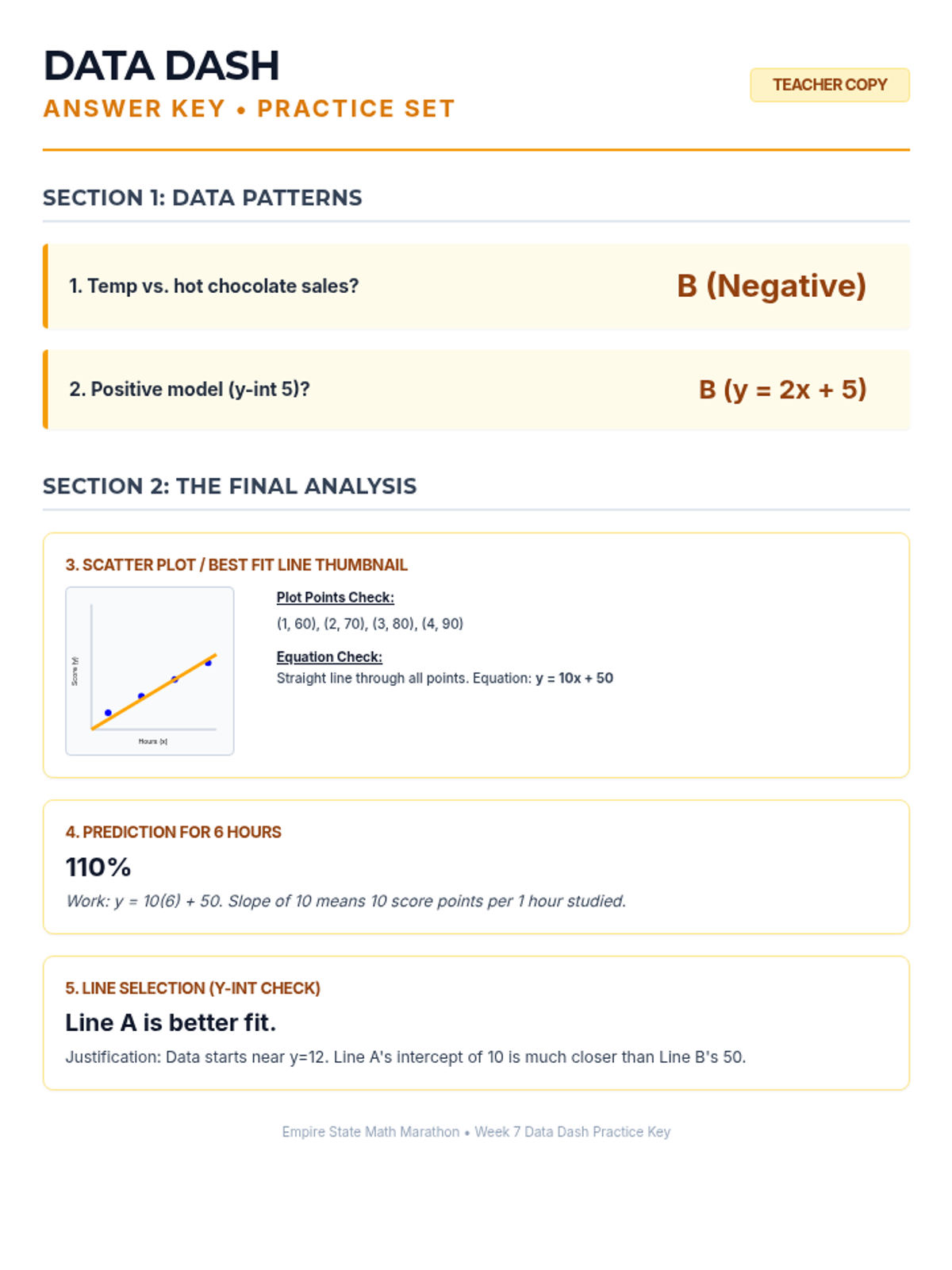
Week 7 analyzes bivariate data through scatter plots, interpreting lines of best fit, and using linear models to make predictions.
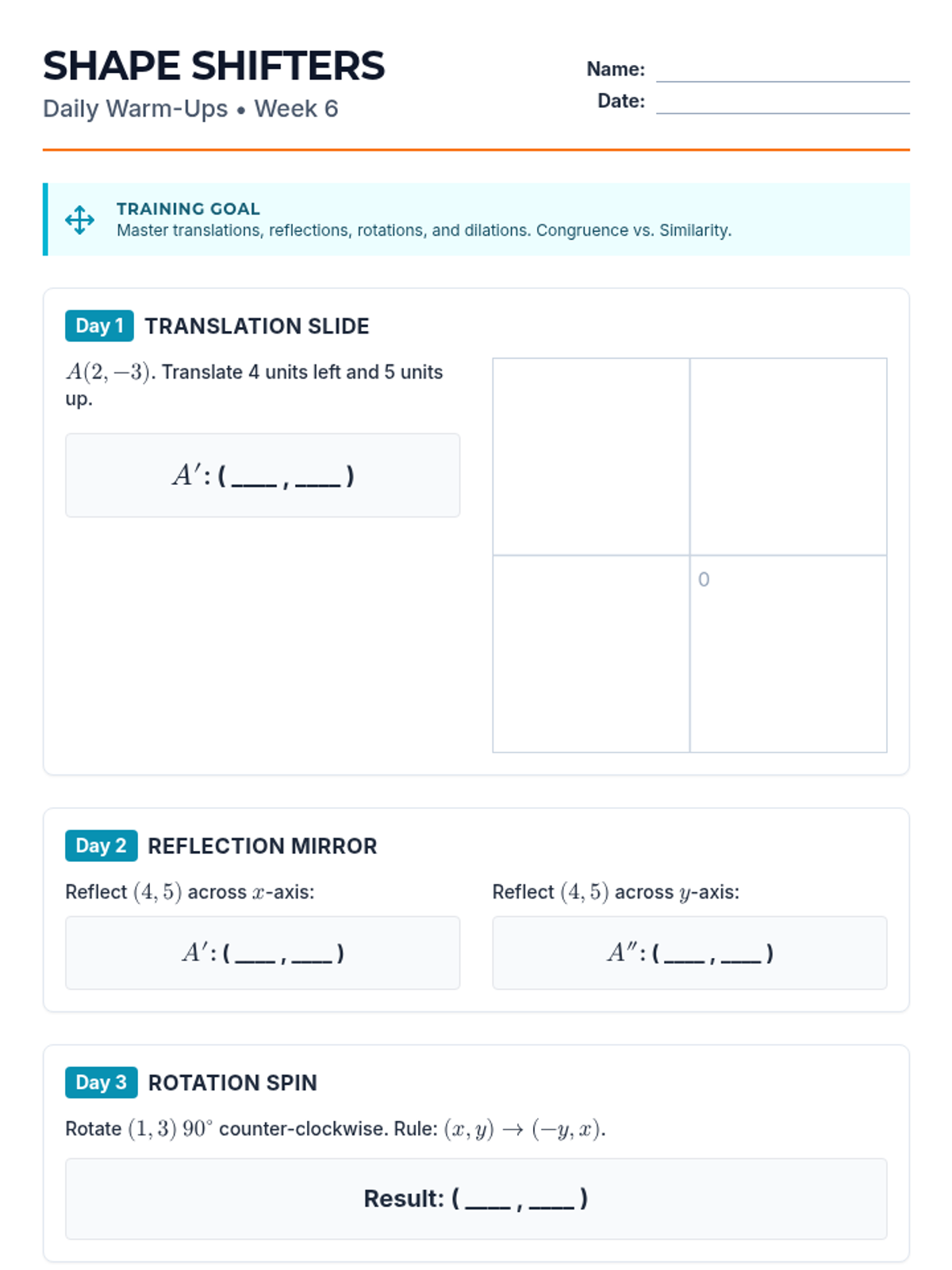
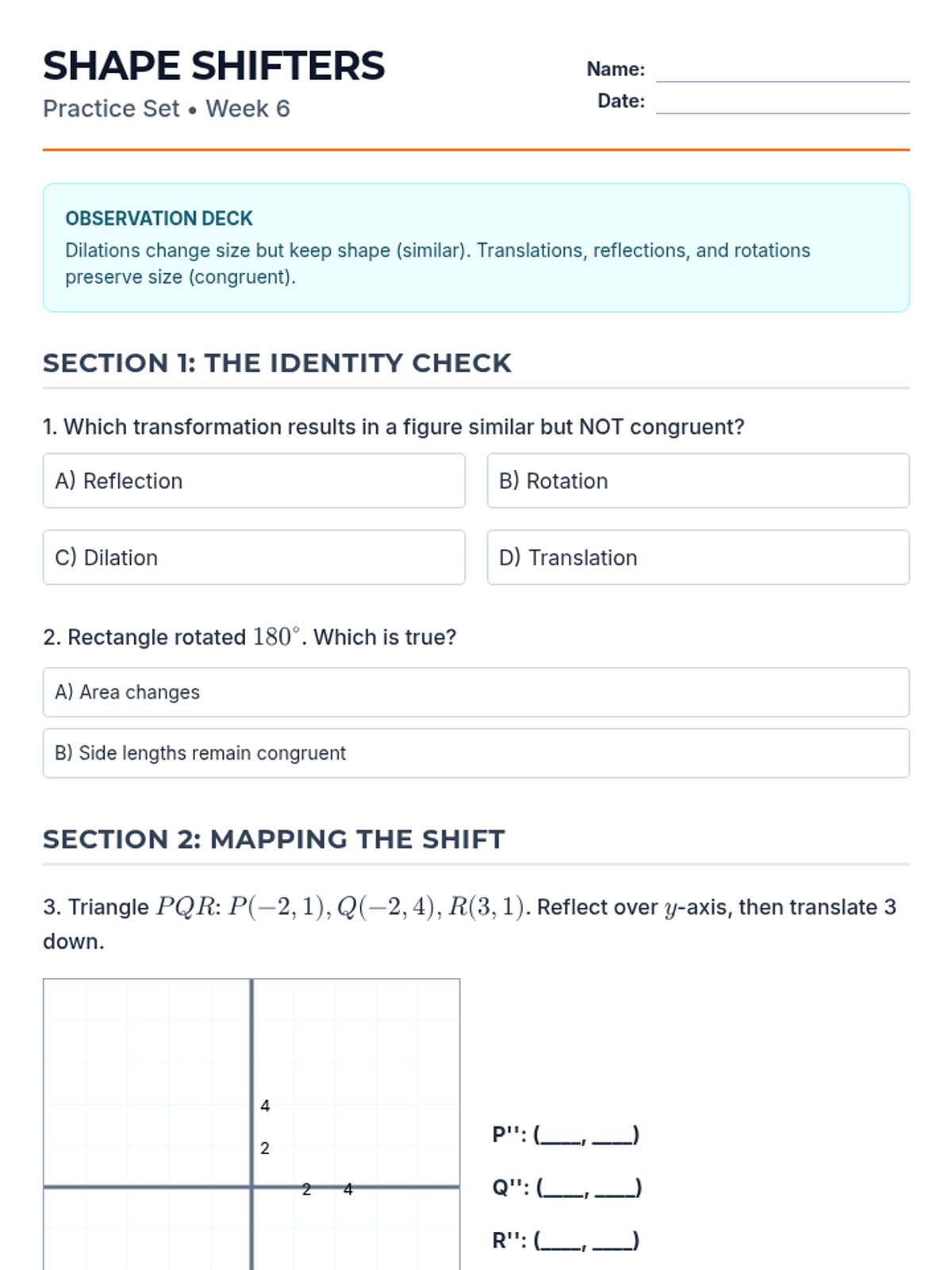
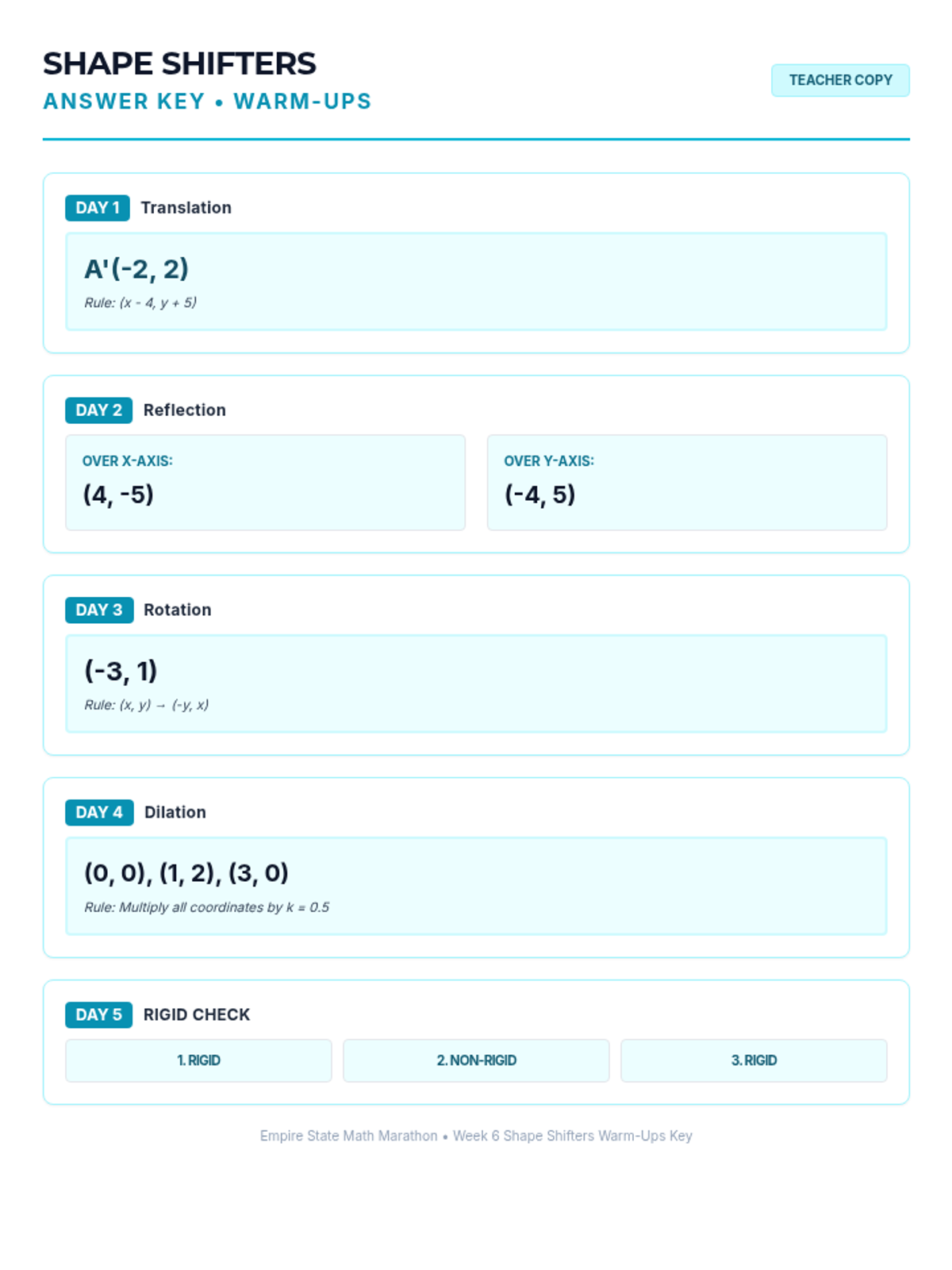
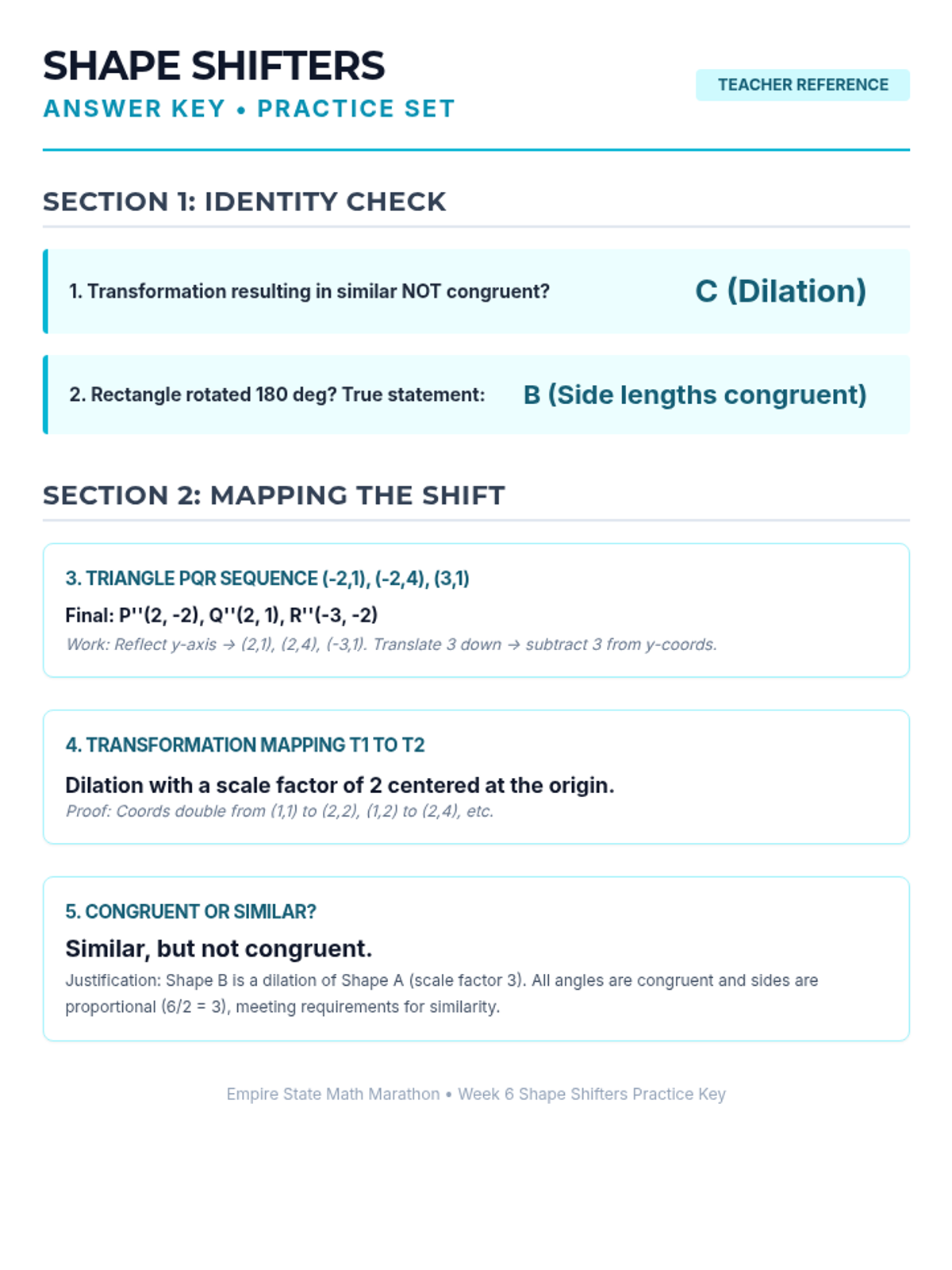
Week 6 focuses on rigid transformations (translations, reflections, rotations) and similarity transformations (dilations).
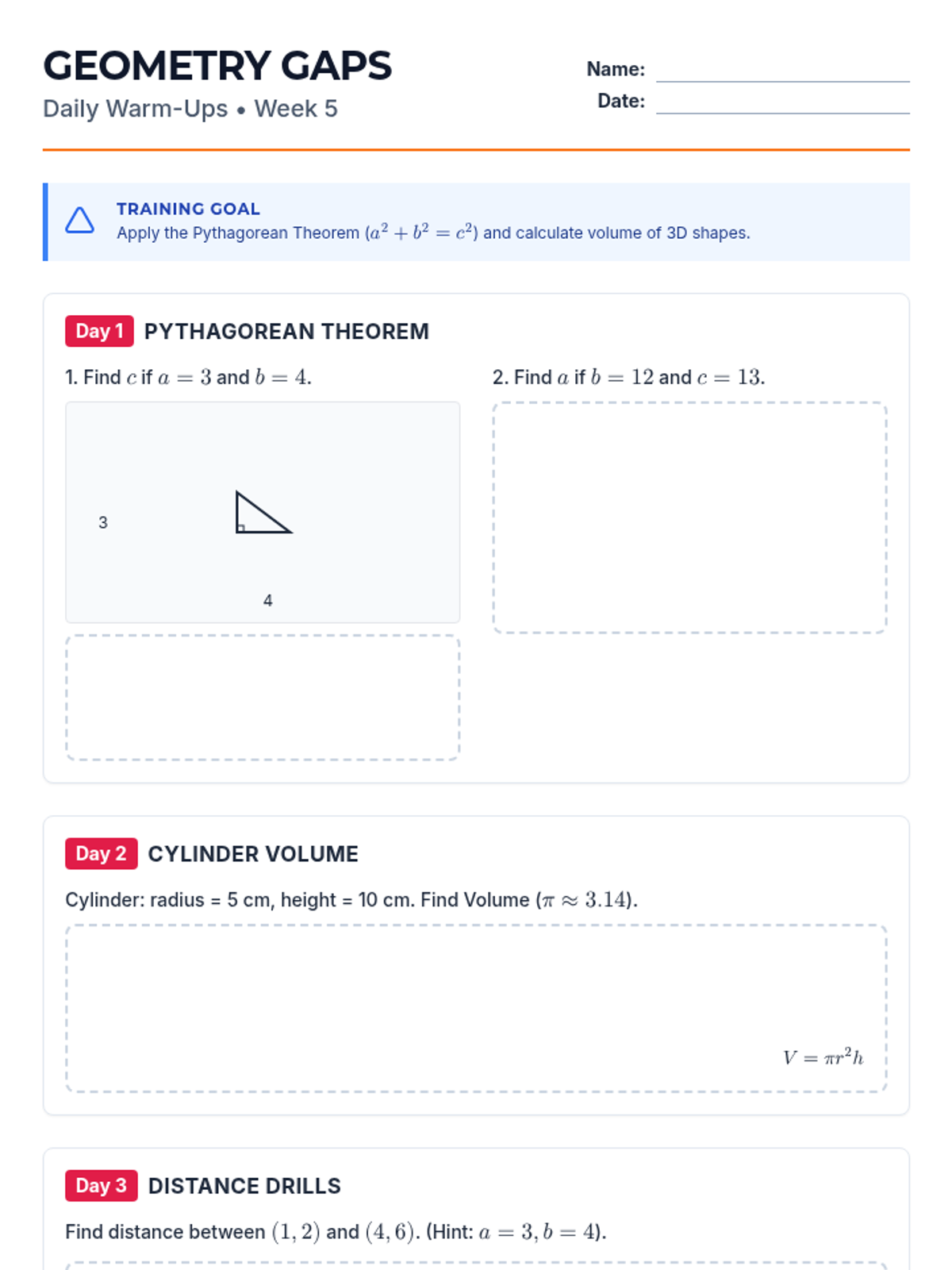
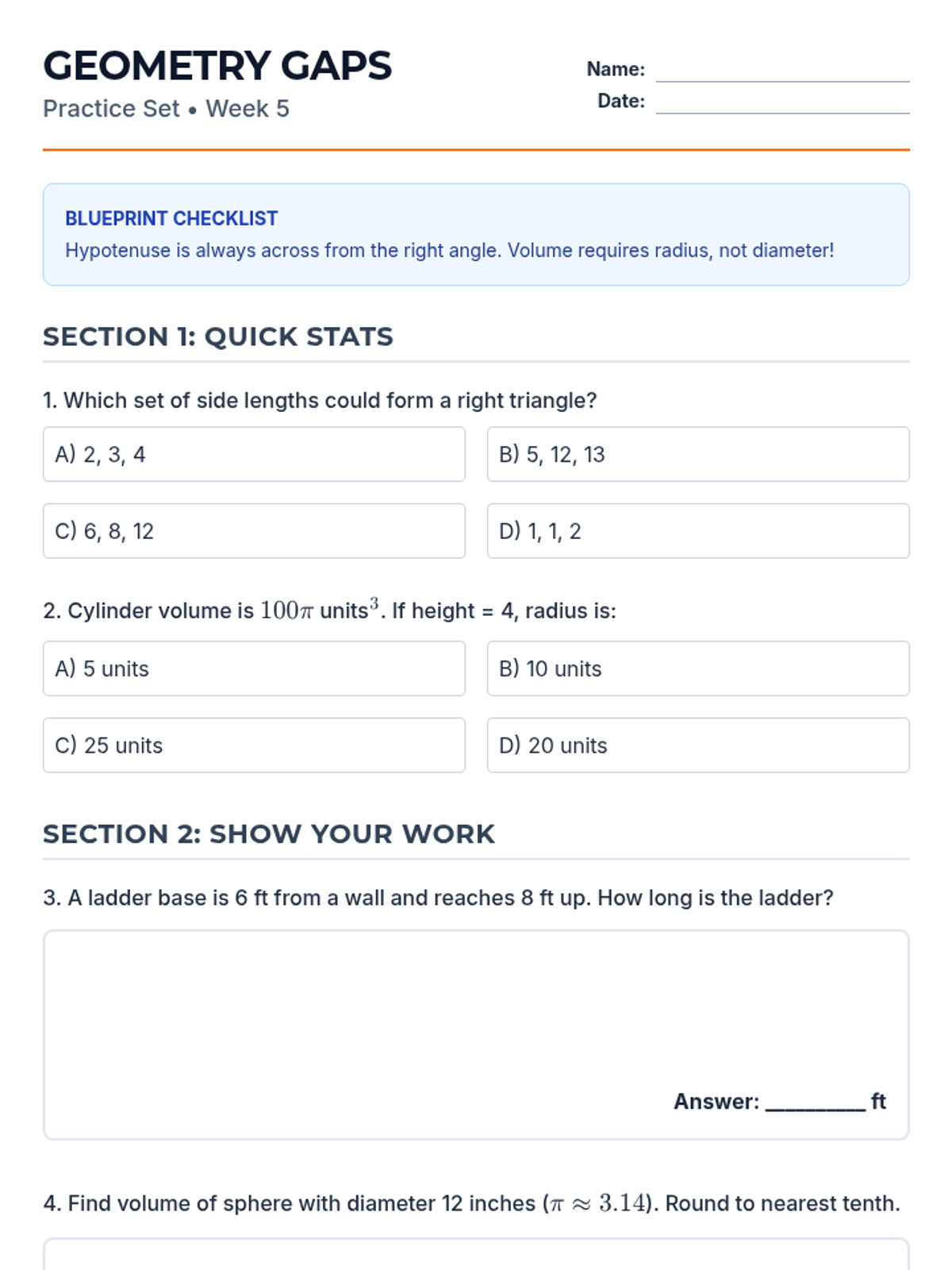
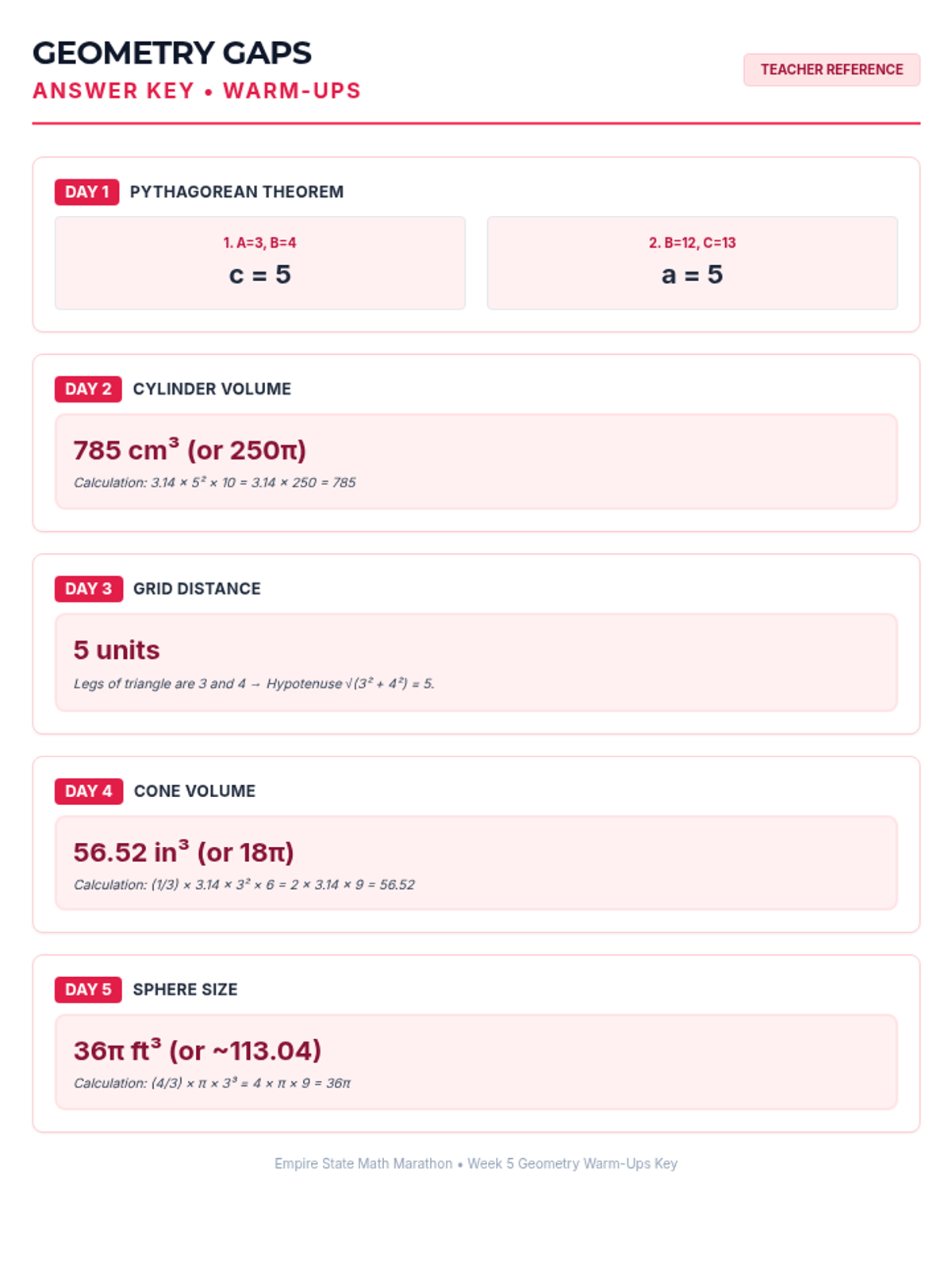
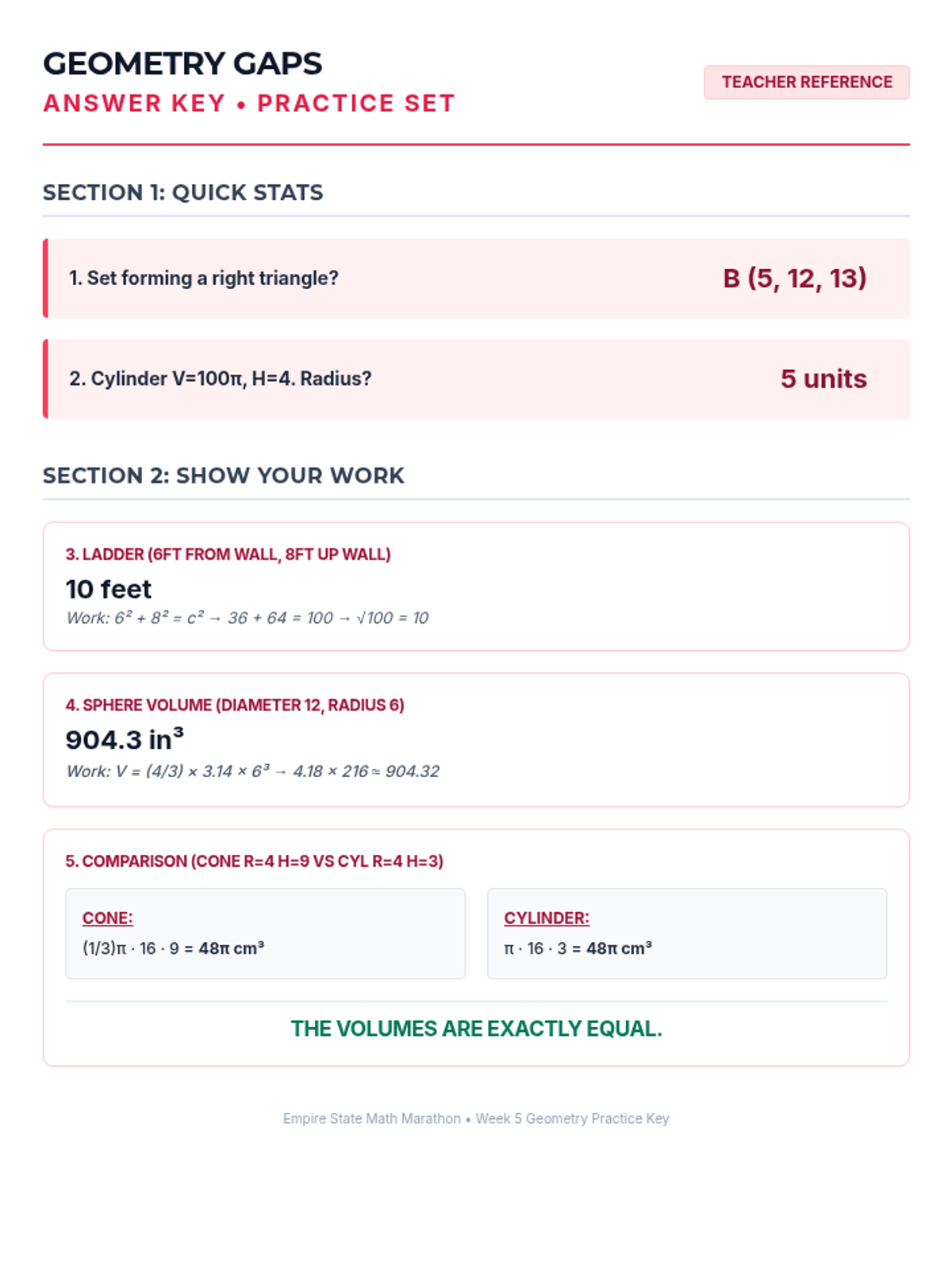
Week 5 reviews the Pythagorean Theorem and volume formulas for cylinders, cones, and spheres.
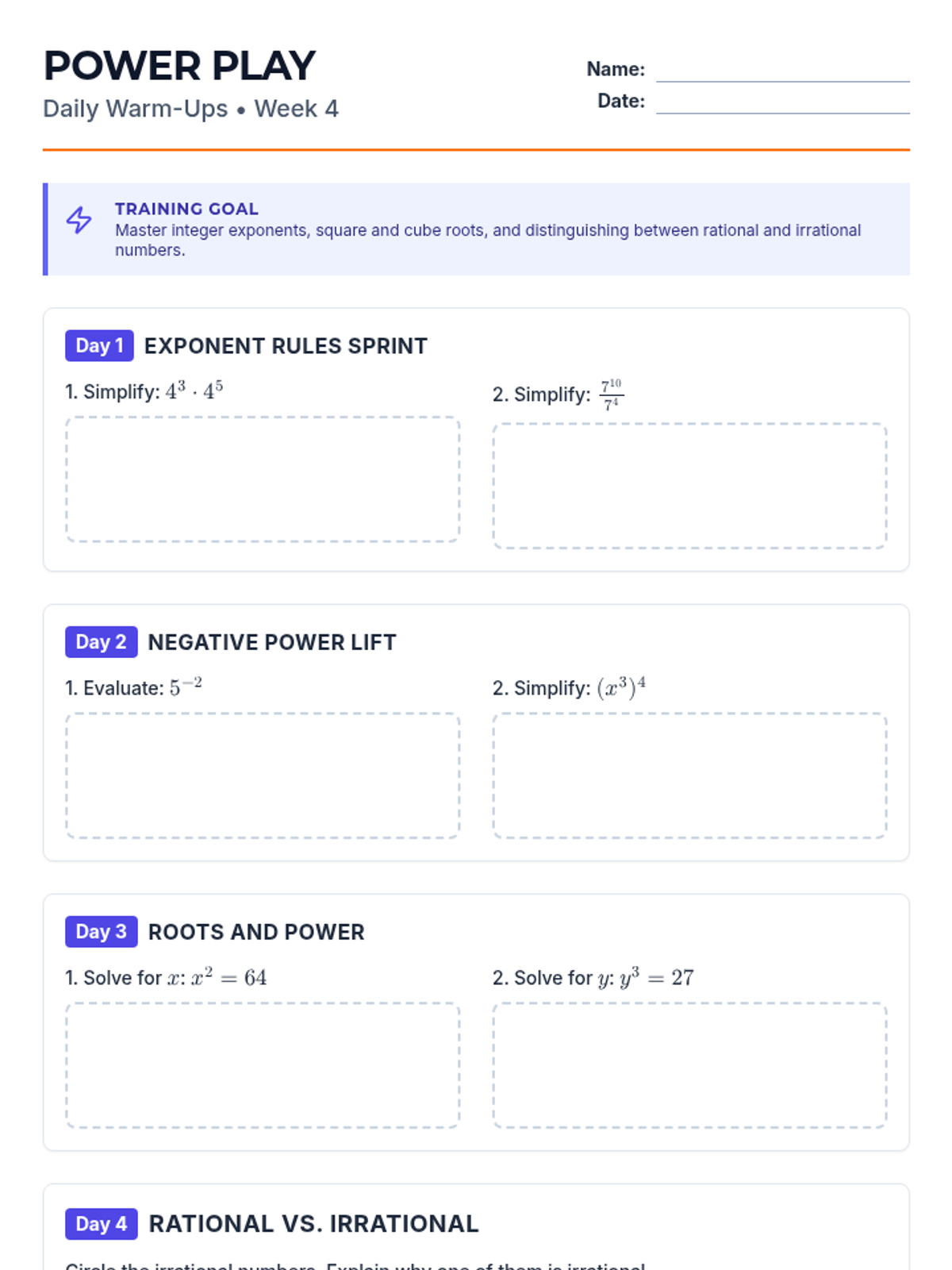
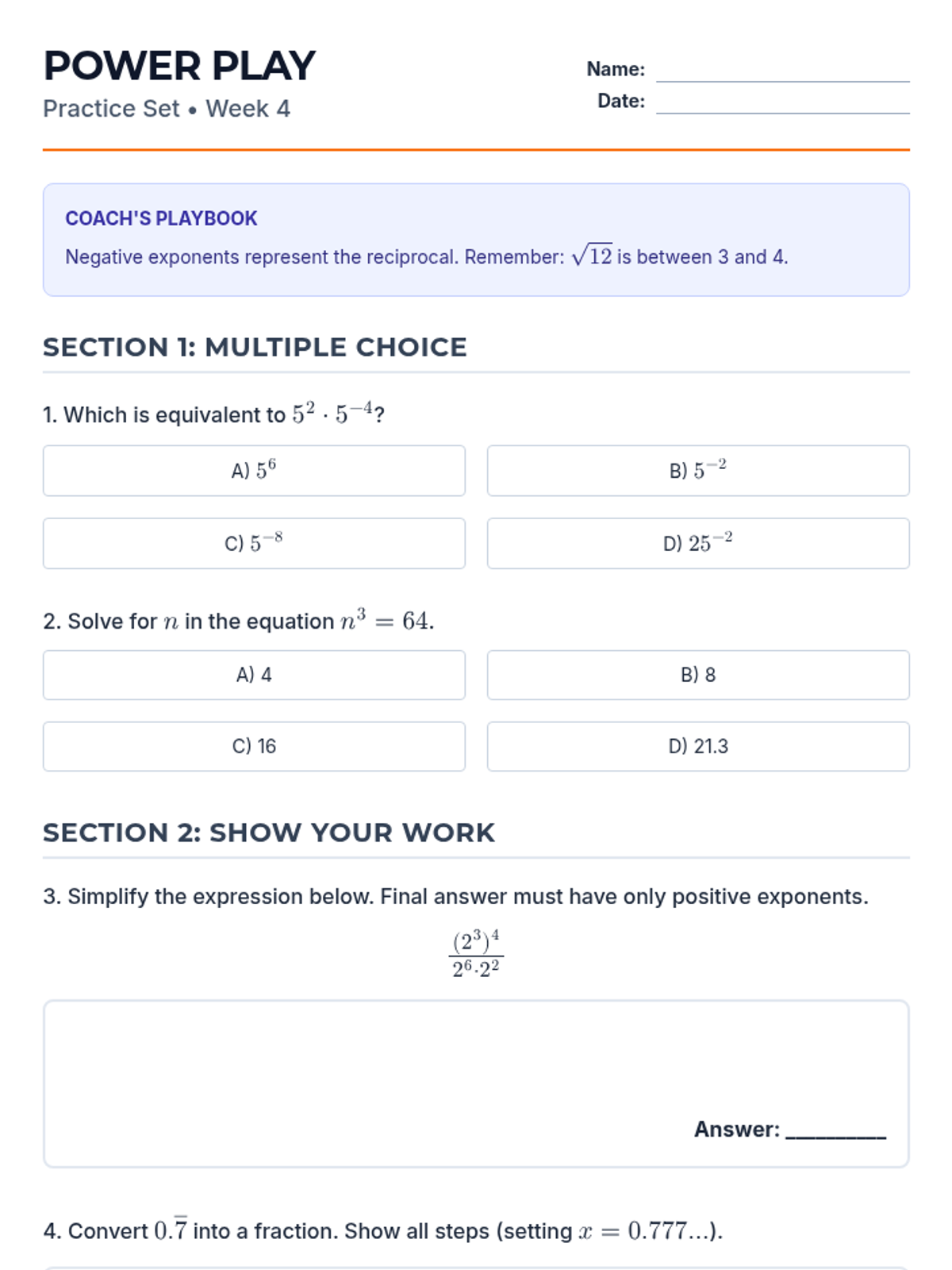
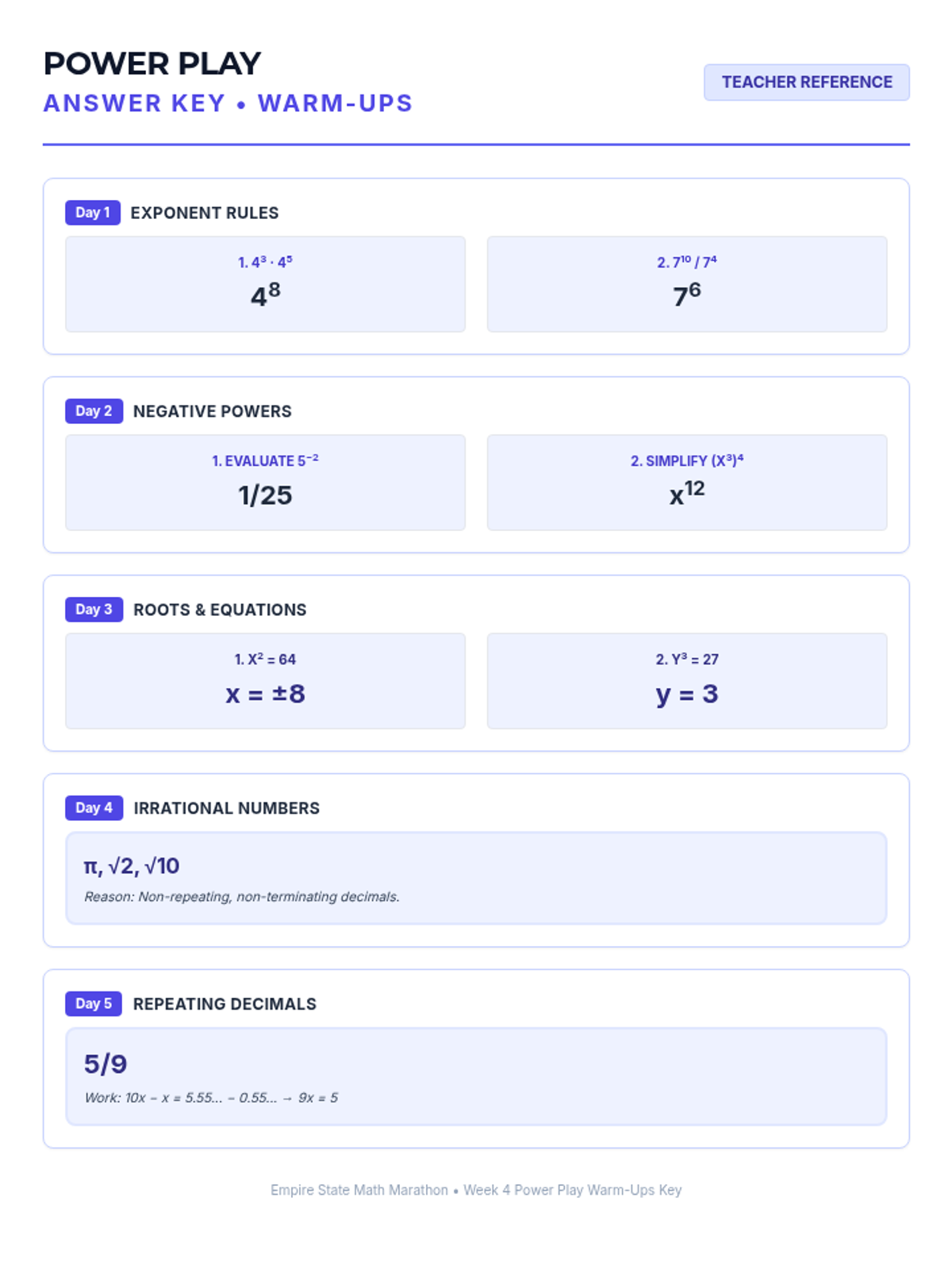
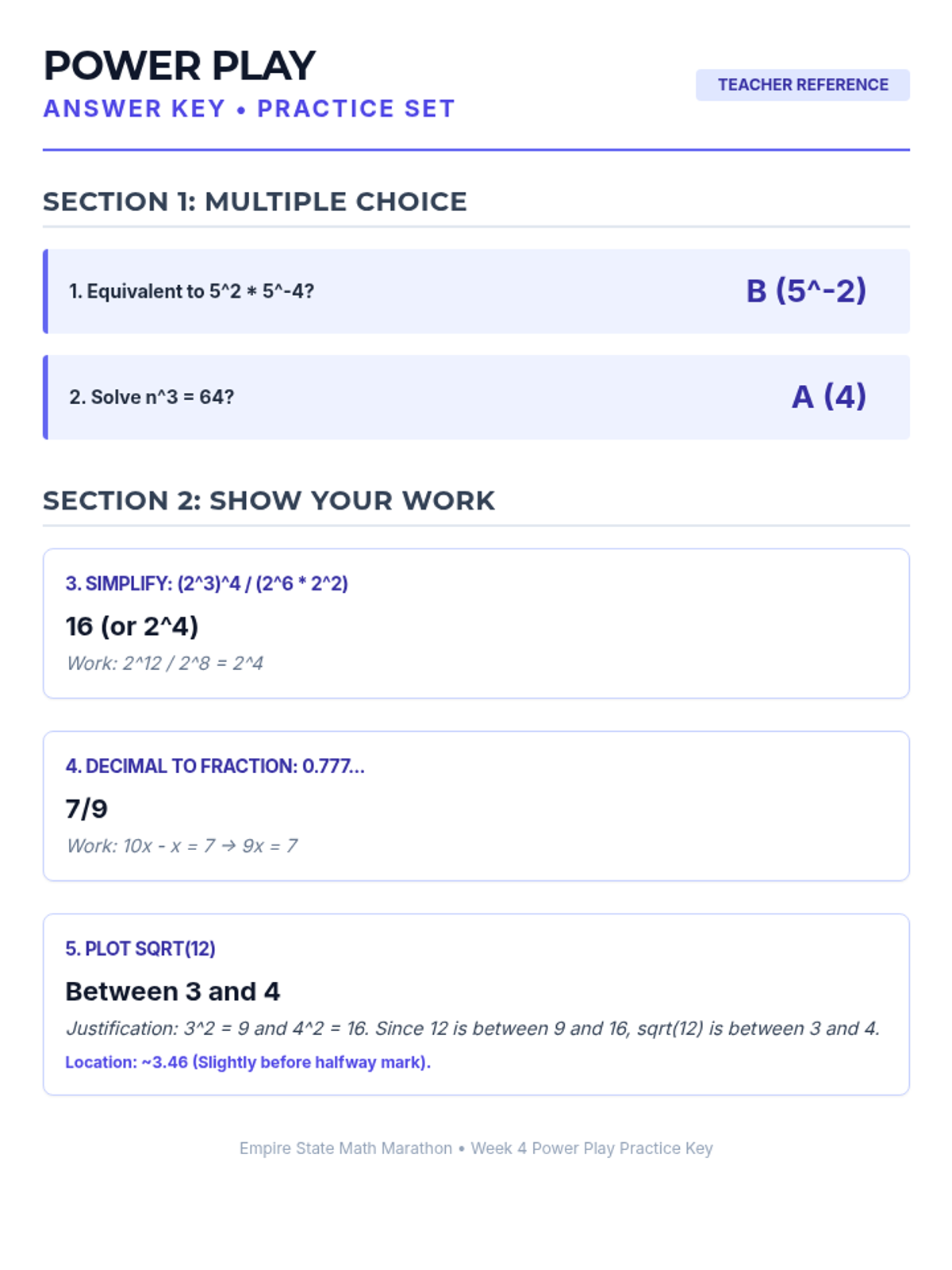
Week 4 explores integer exponent rules, perfect squares and cubes, and distinguishing between rational and irrational numbers.
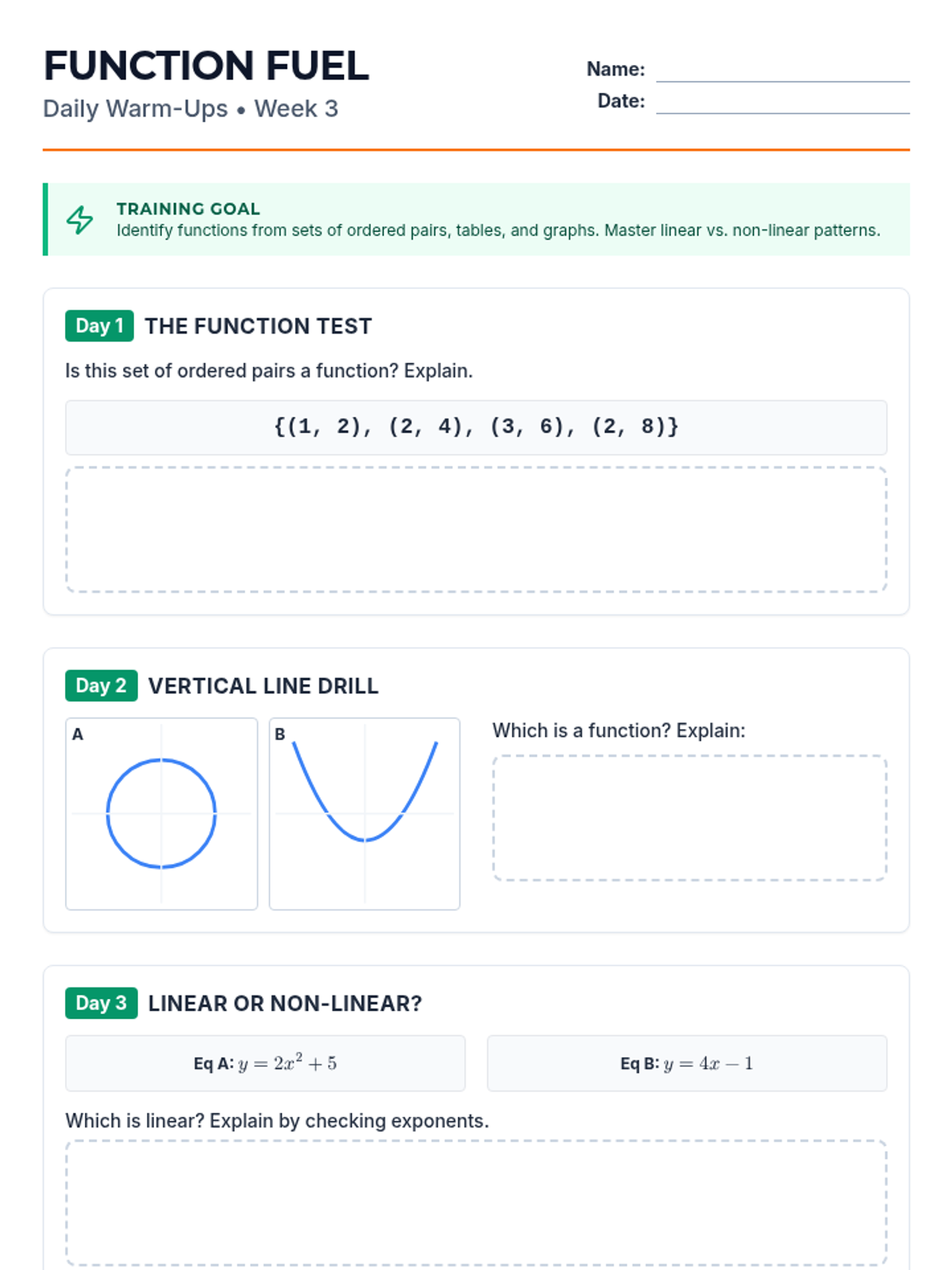
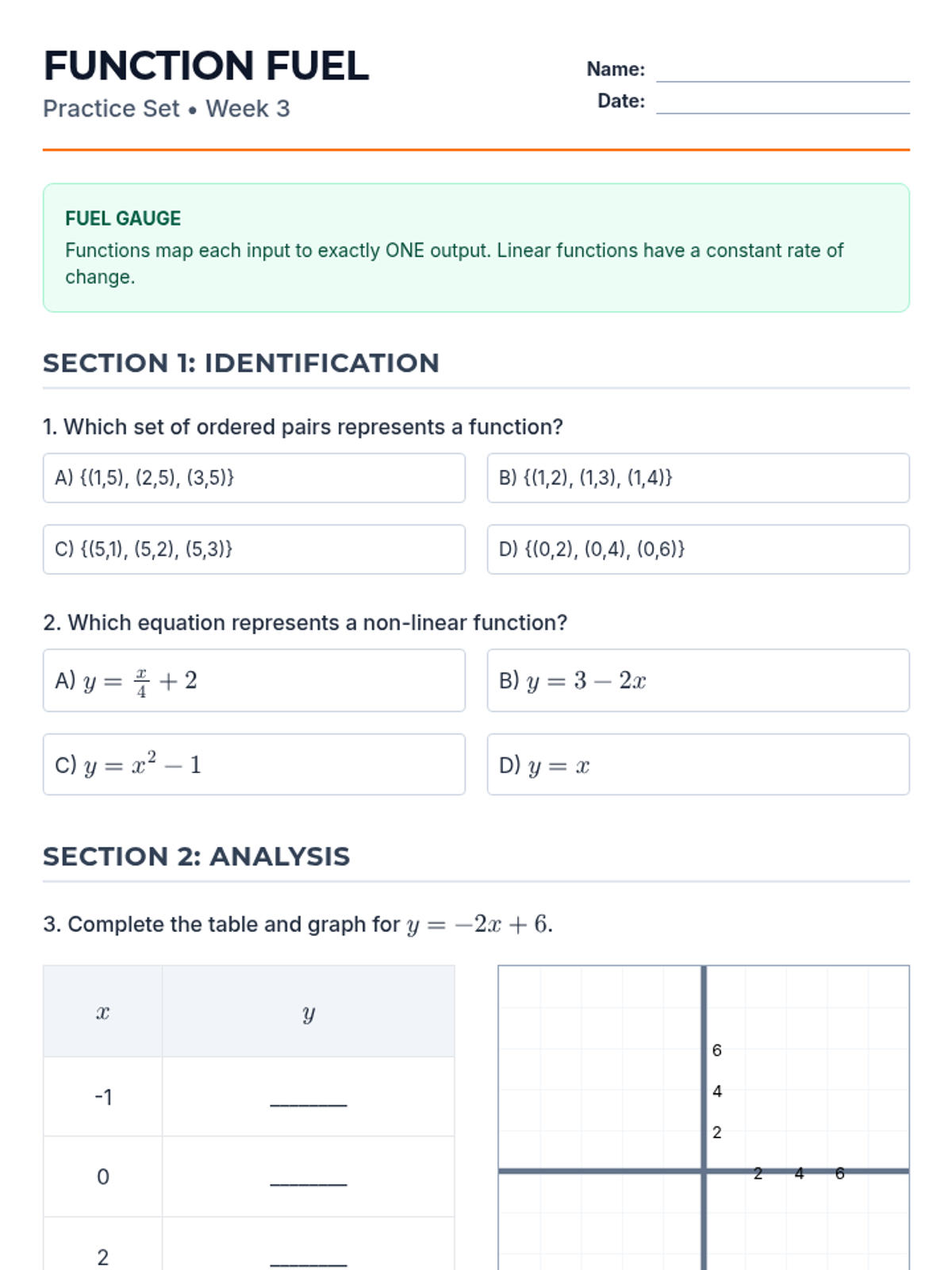
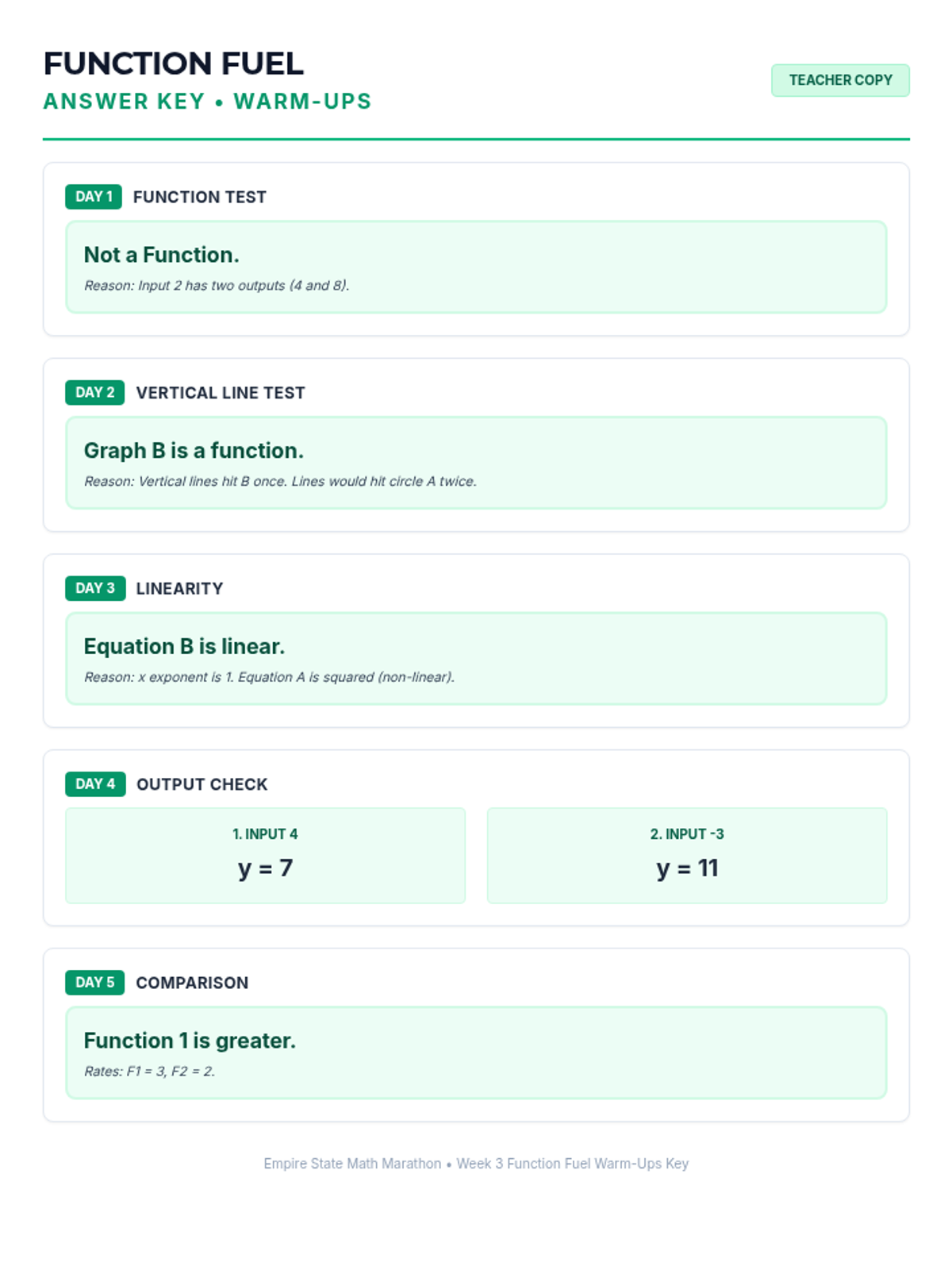
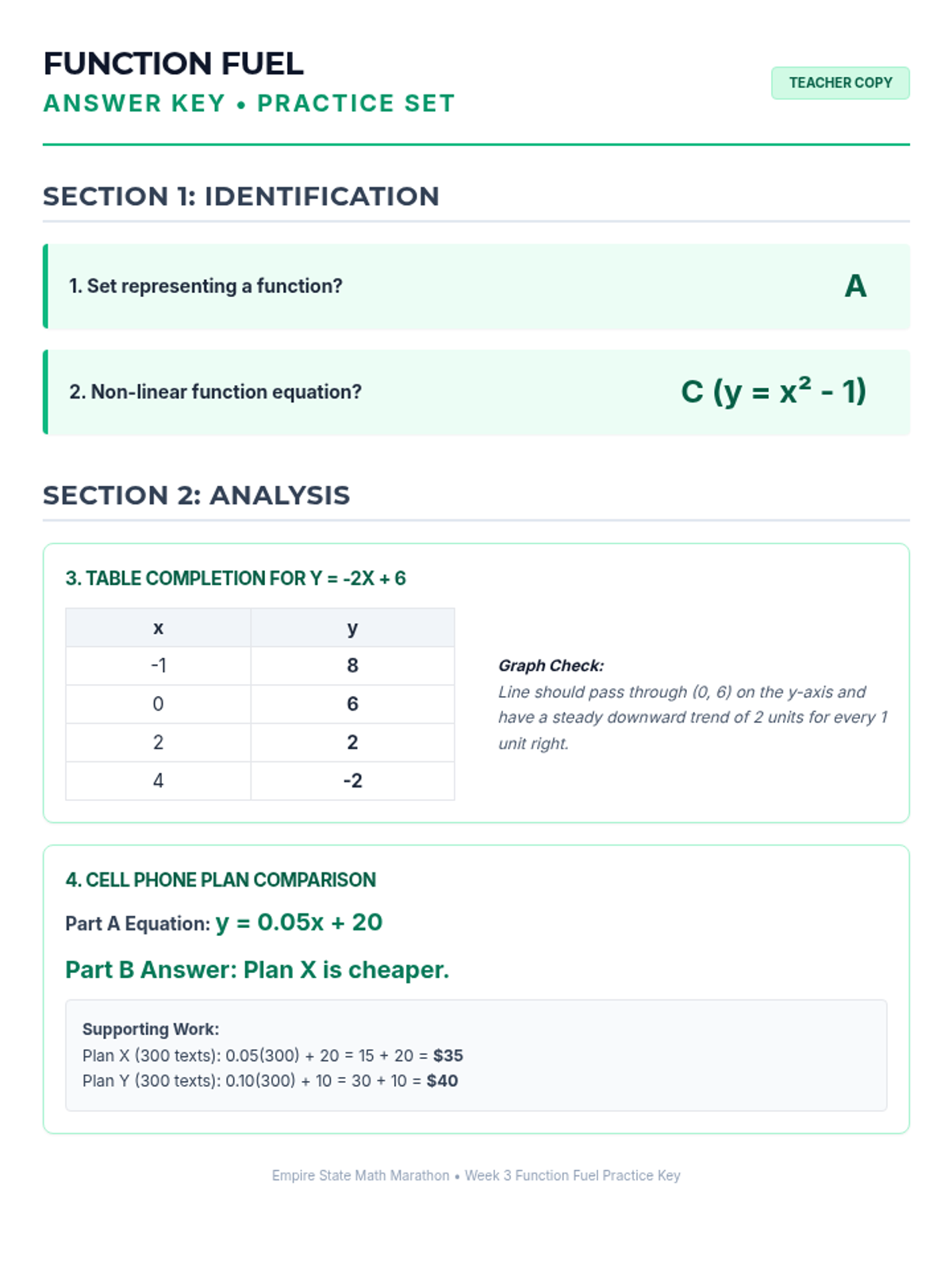
Week 3 defines, evaluates, and compares functions represented in different ways (tables, graphs, equations).
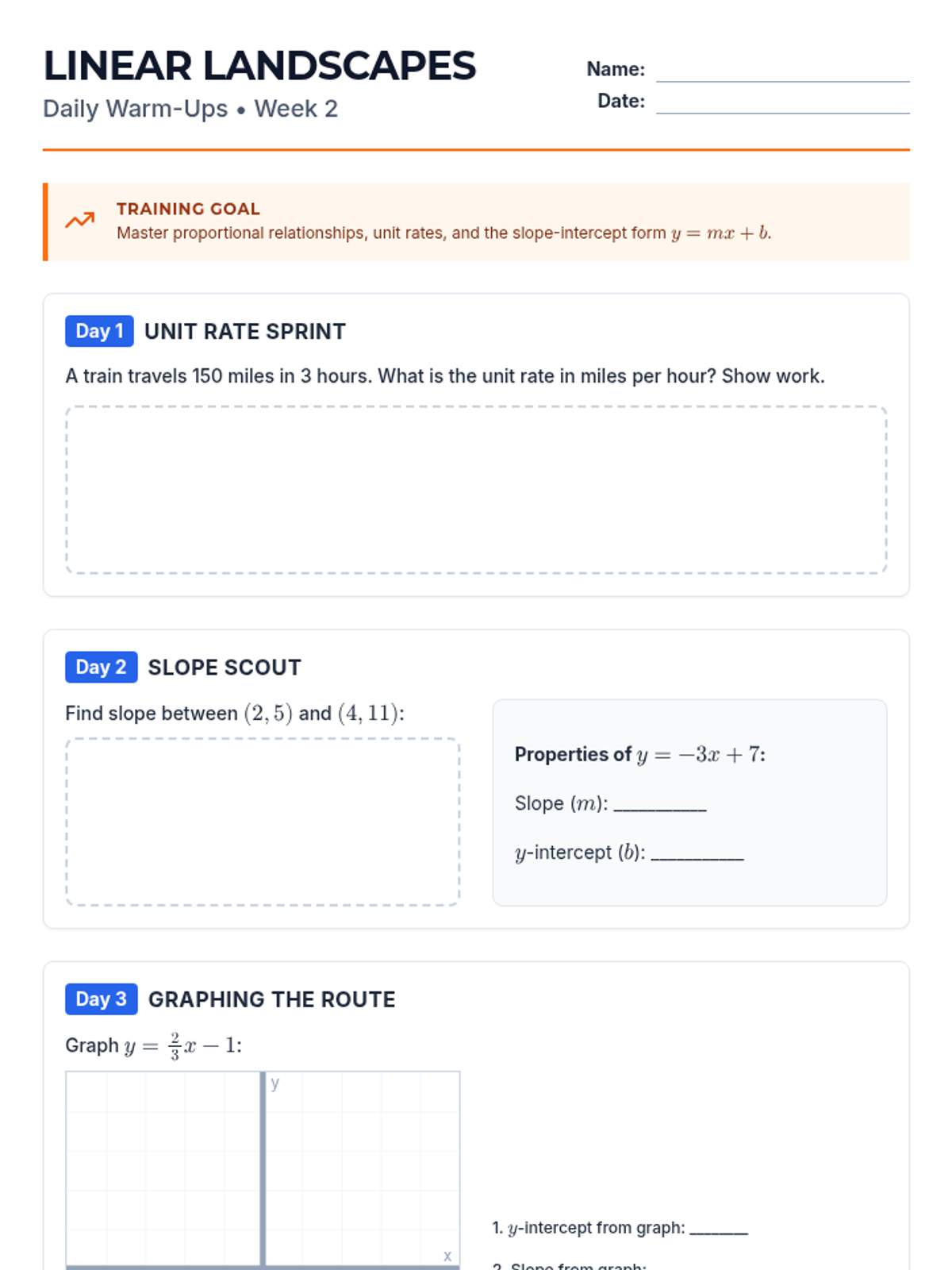
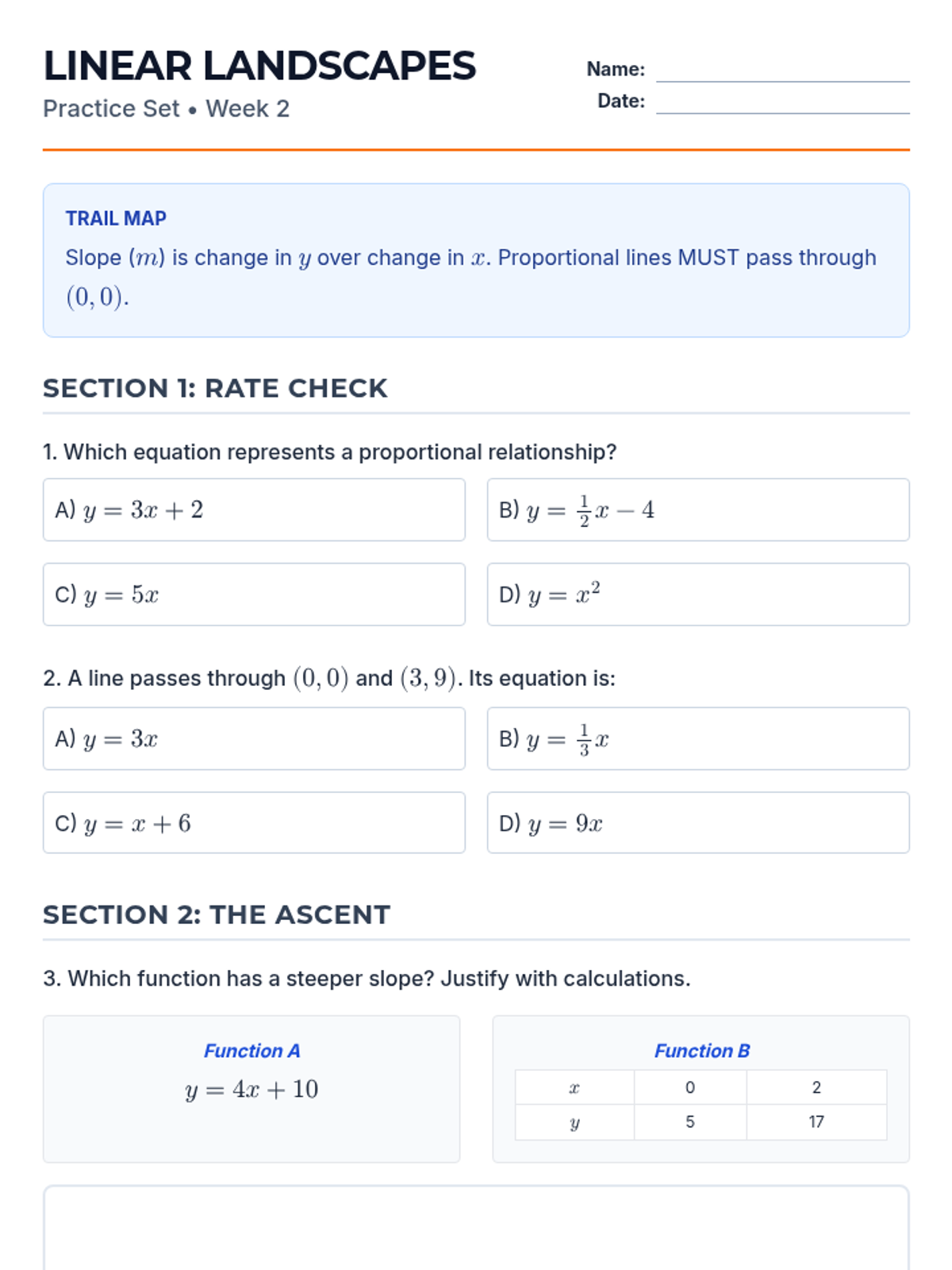
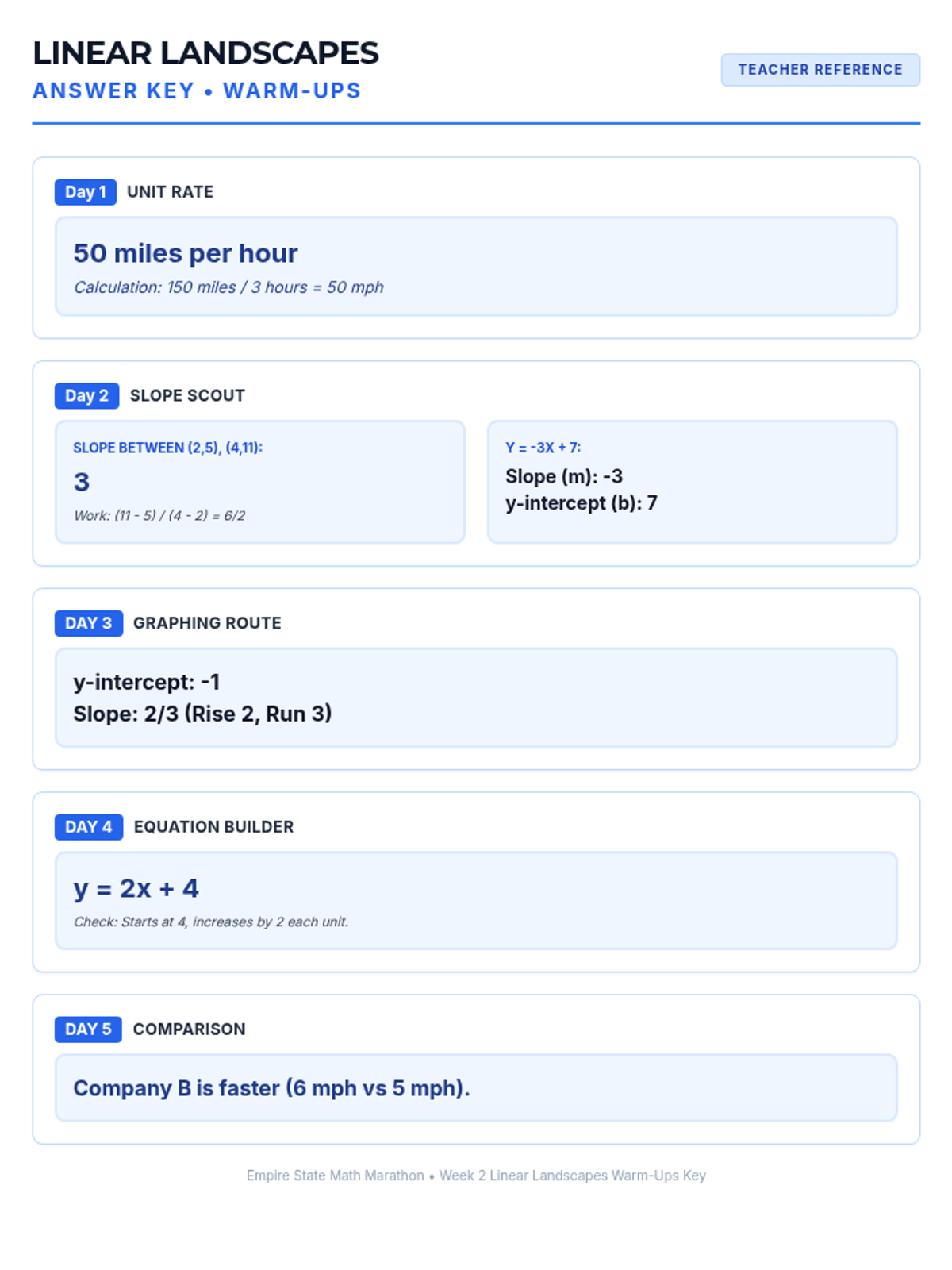
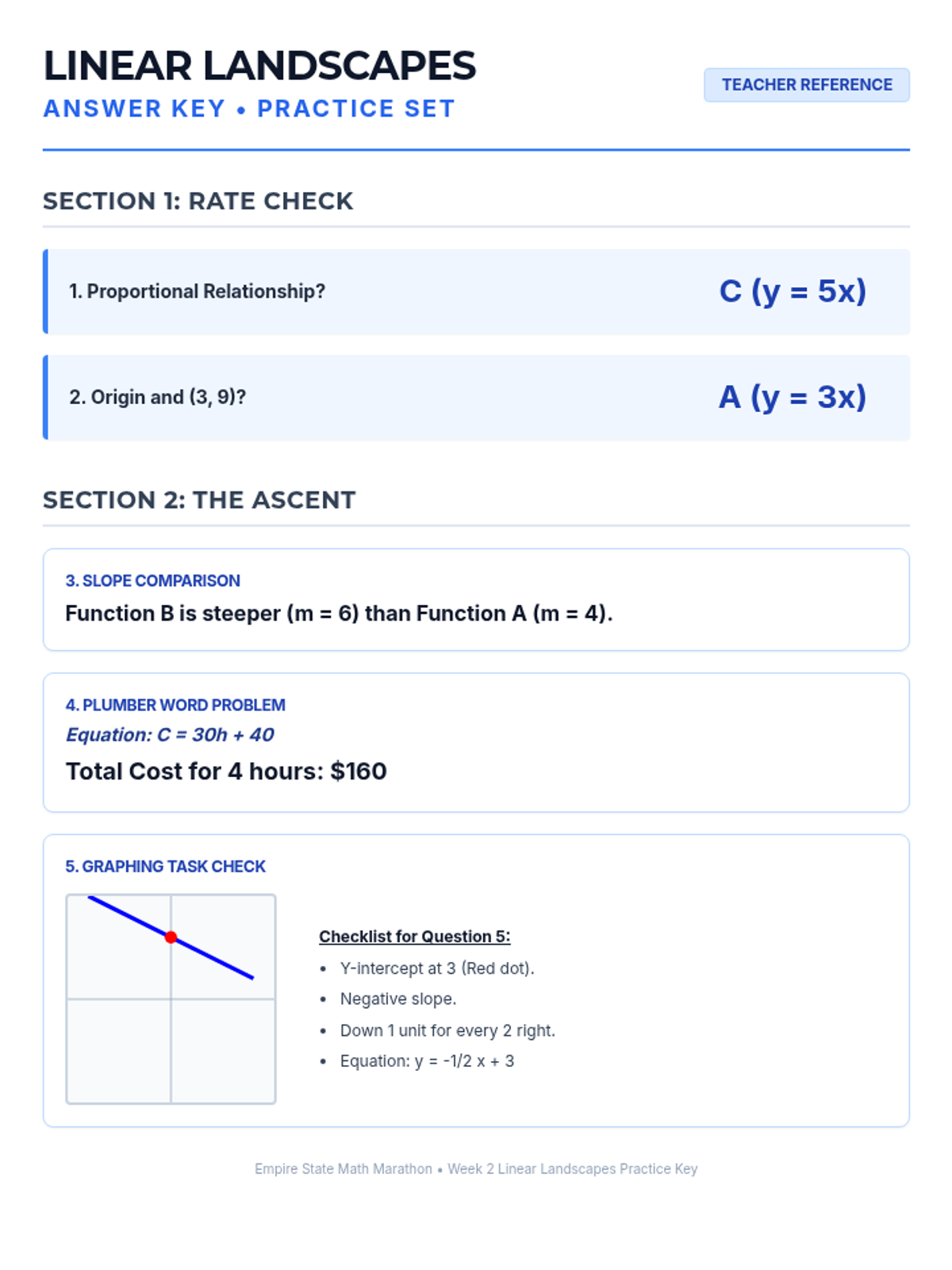
Week 2 covers proportional relationships, unit rates, and the slope-intercept form of linear equations.
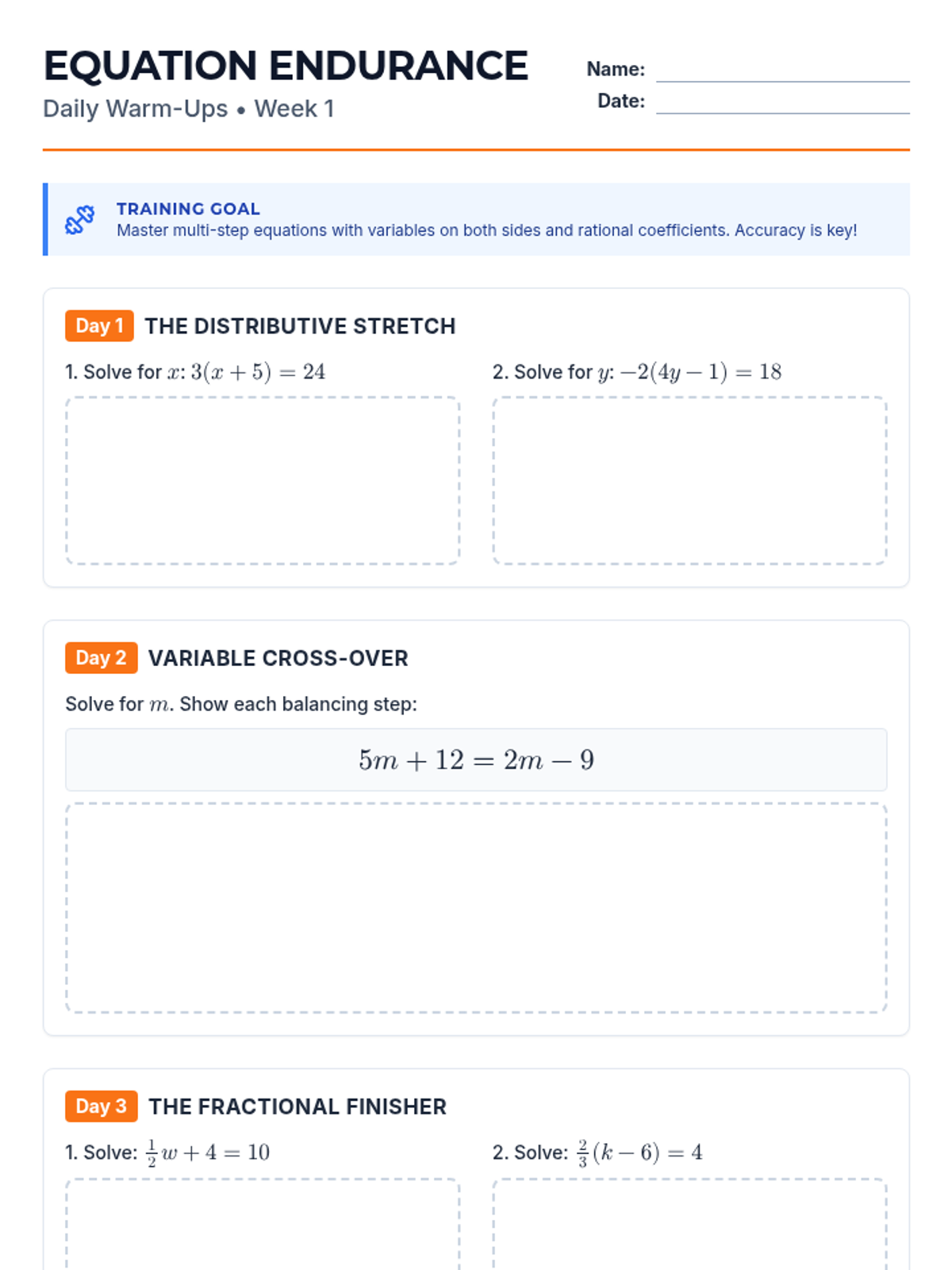
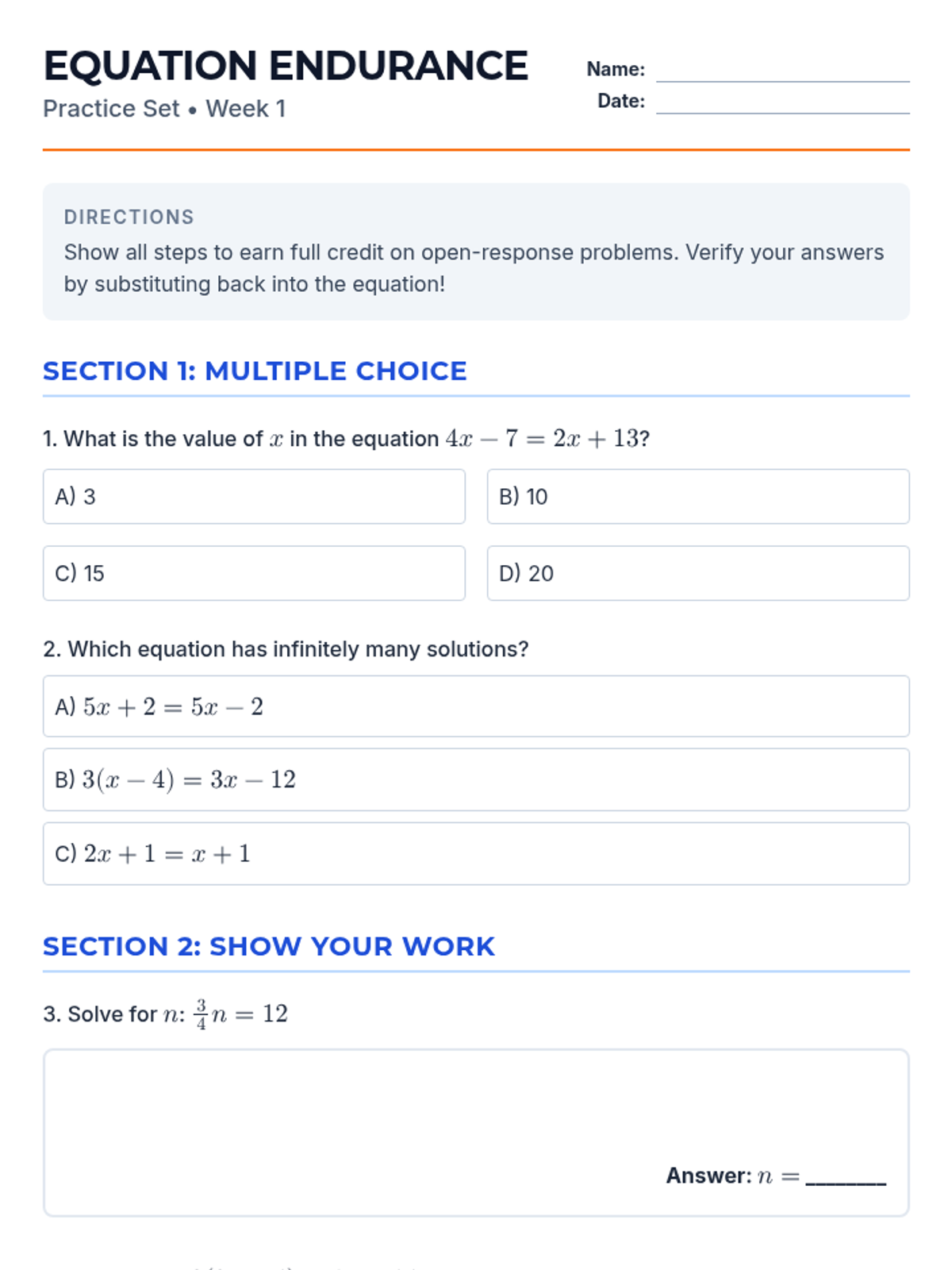
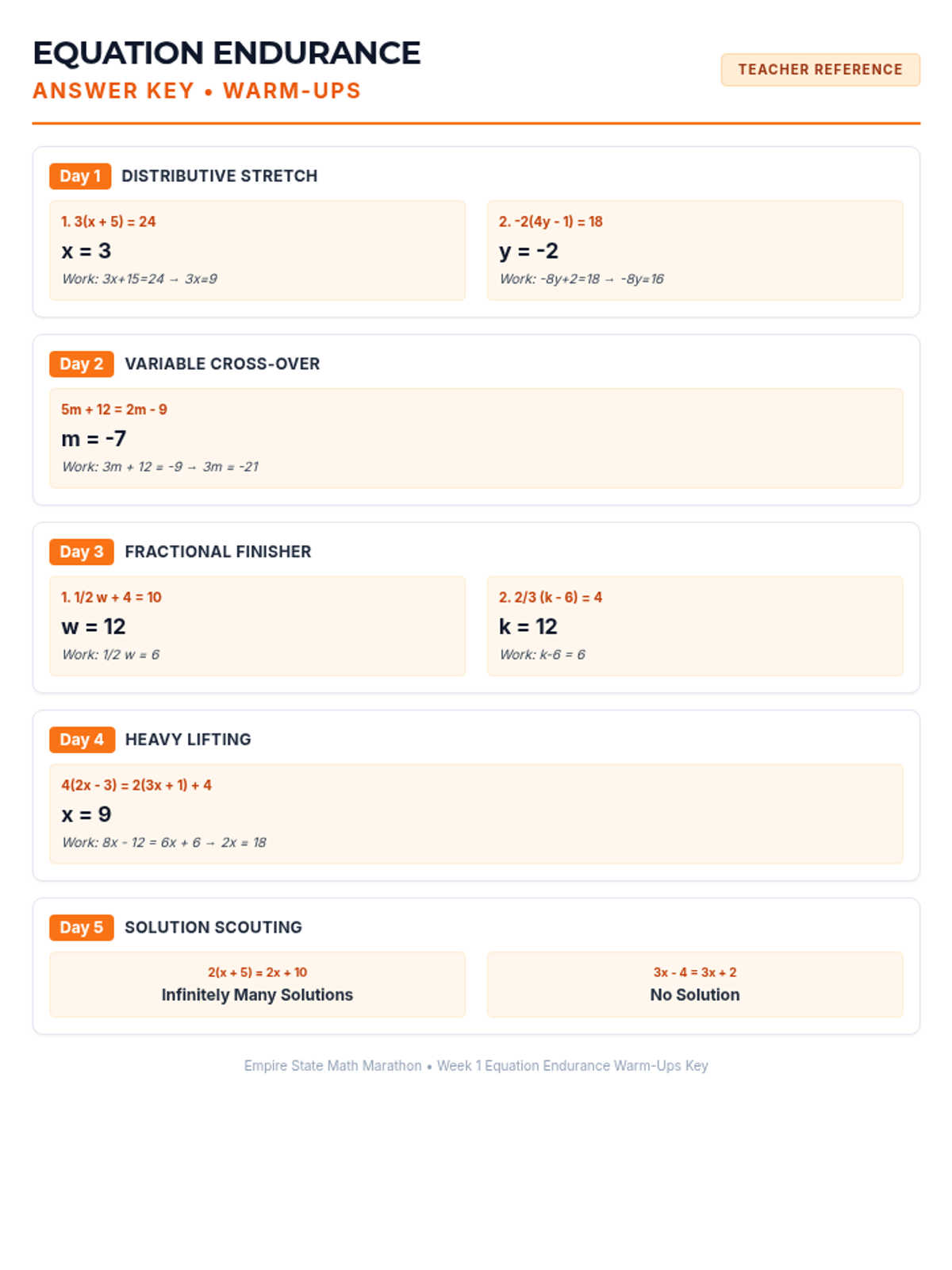
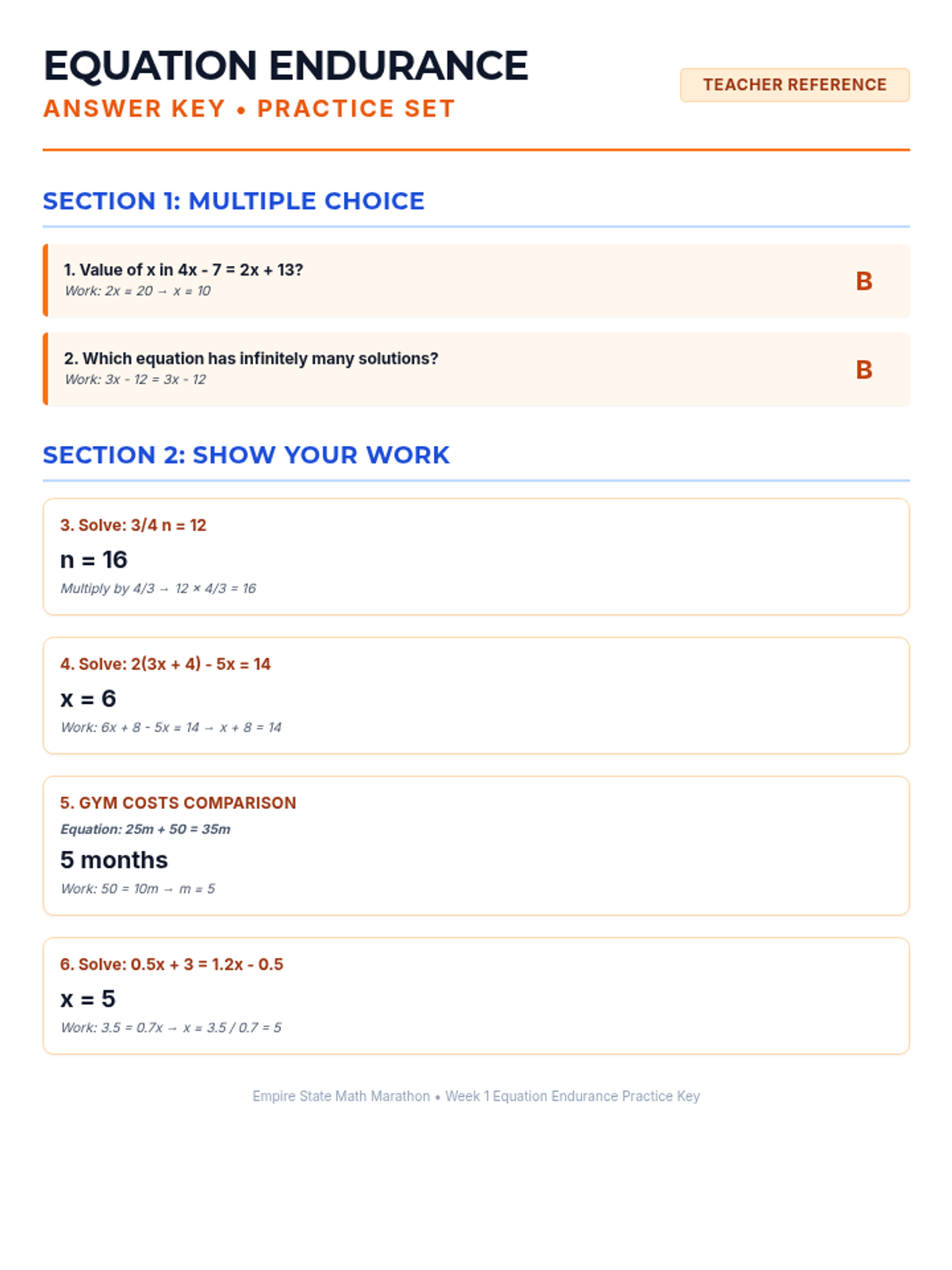
Week 1 focuses on solving multi-step equations, including those with variables on both sides, rational coefficients, and checking solutions.
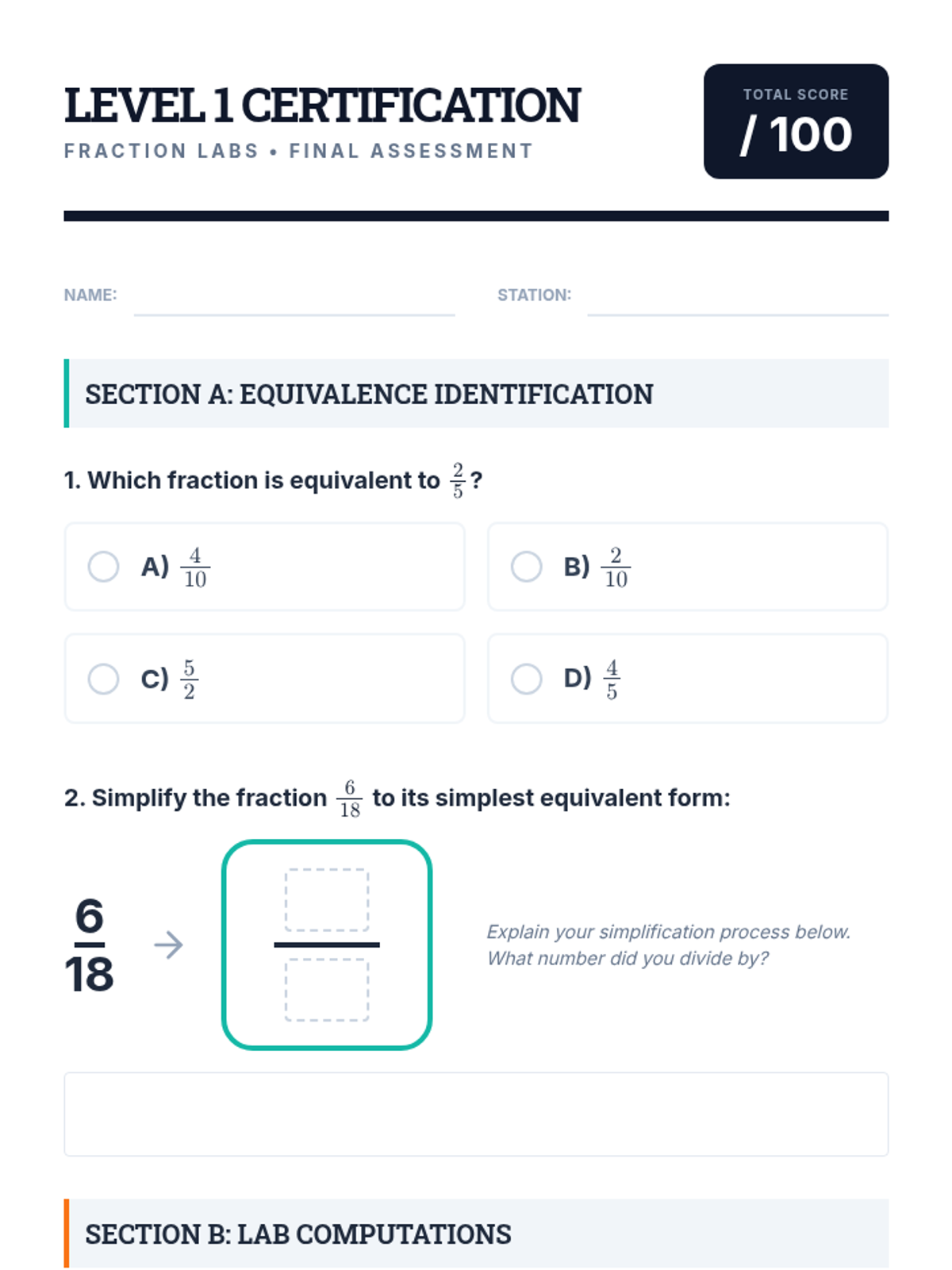
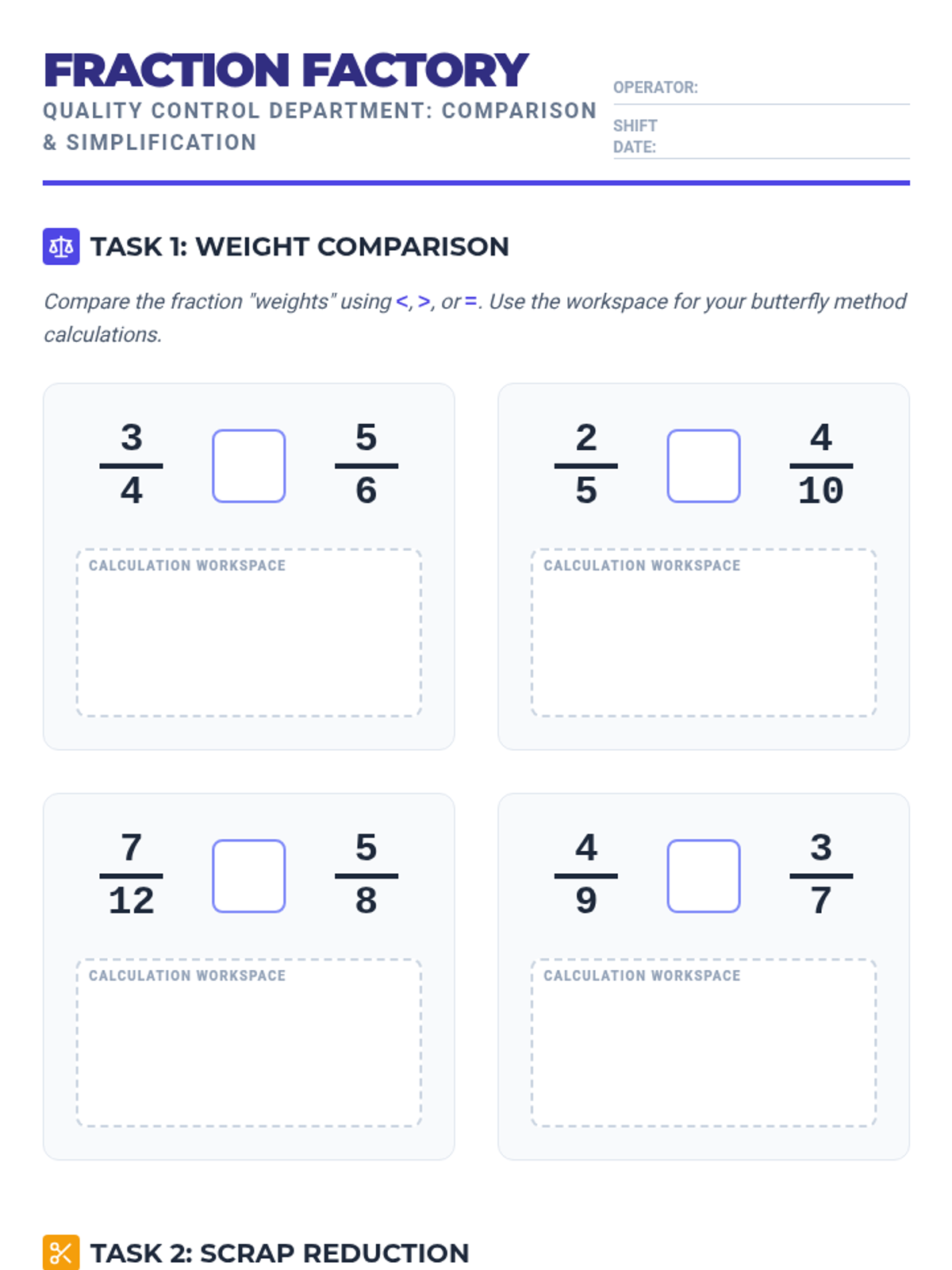
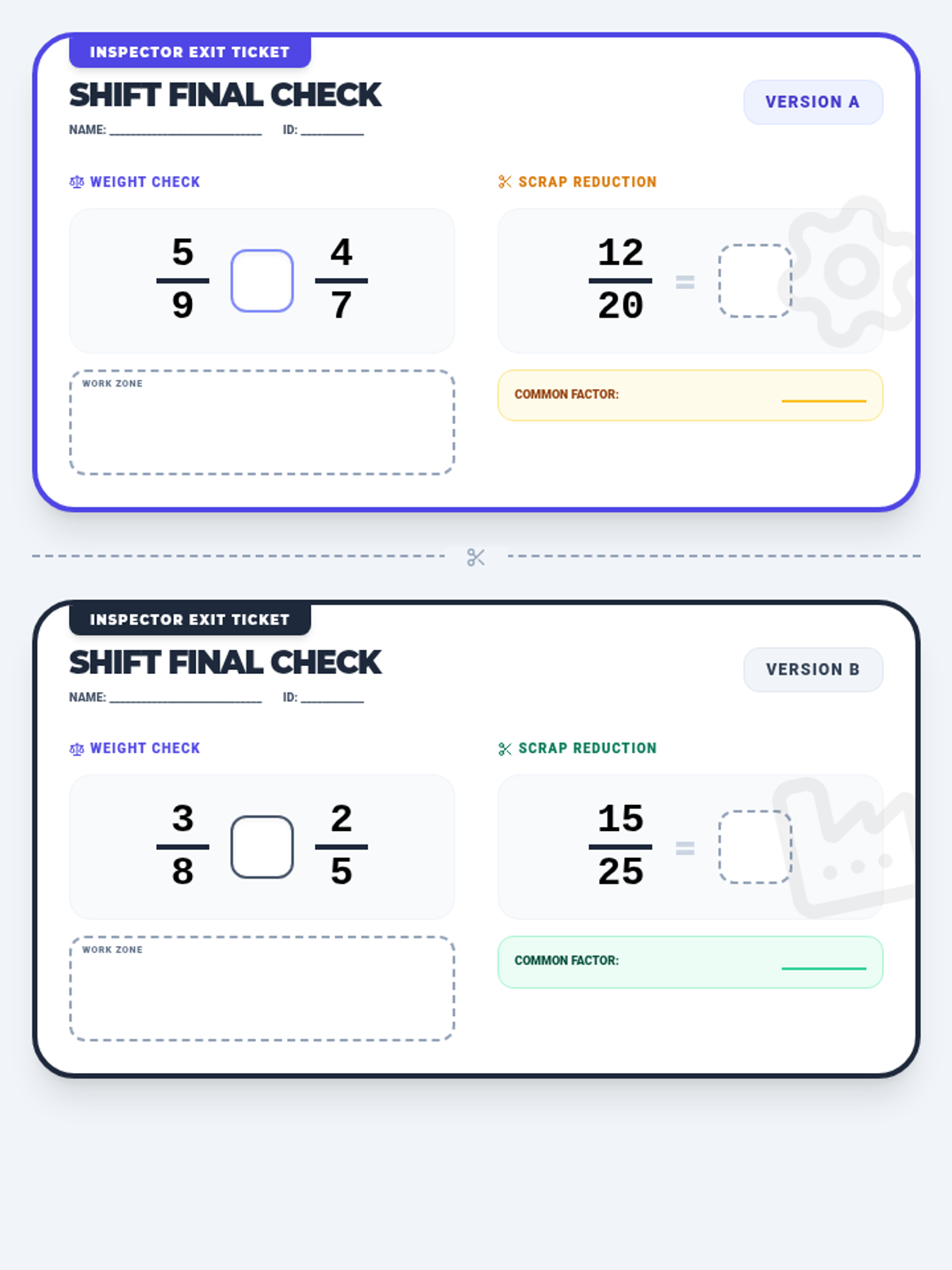
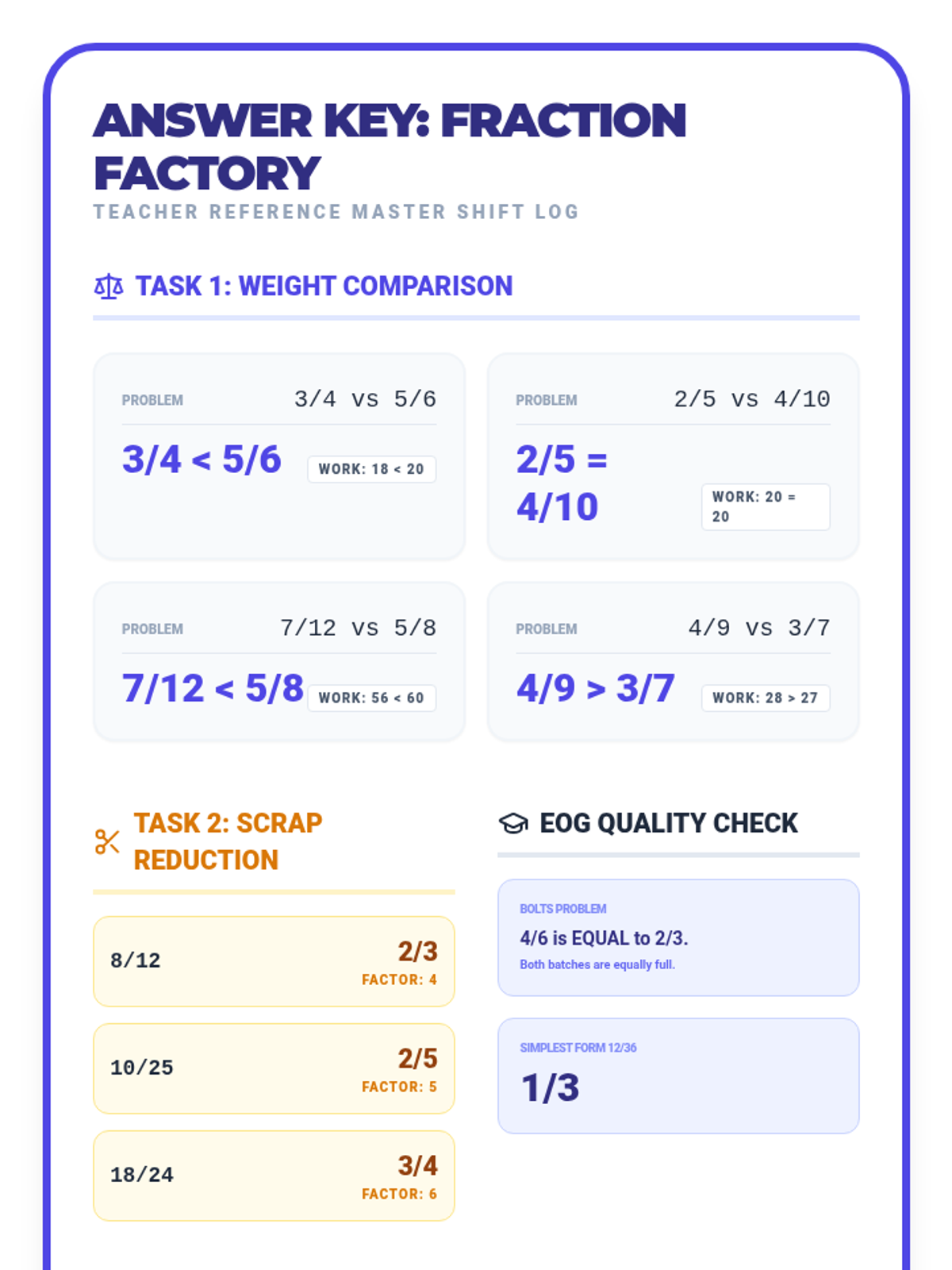
This lesson covers the fundamentals of comparing fractions with like and unlike denominators and the basics of simplifying fractions using common factors.
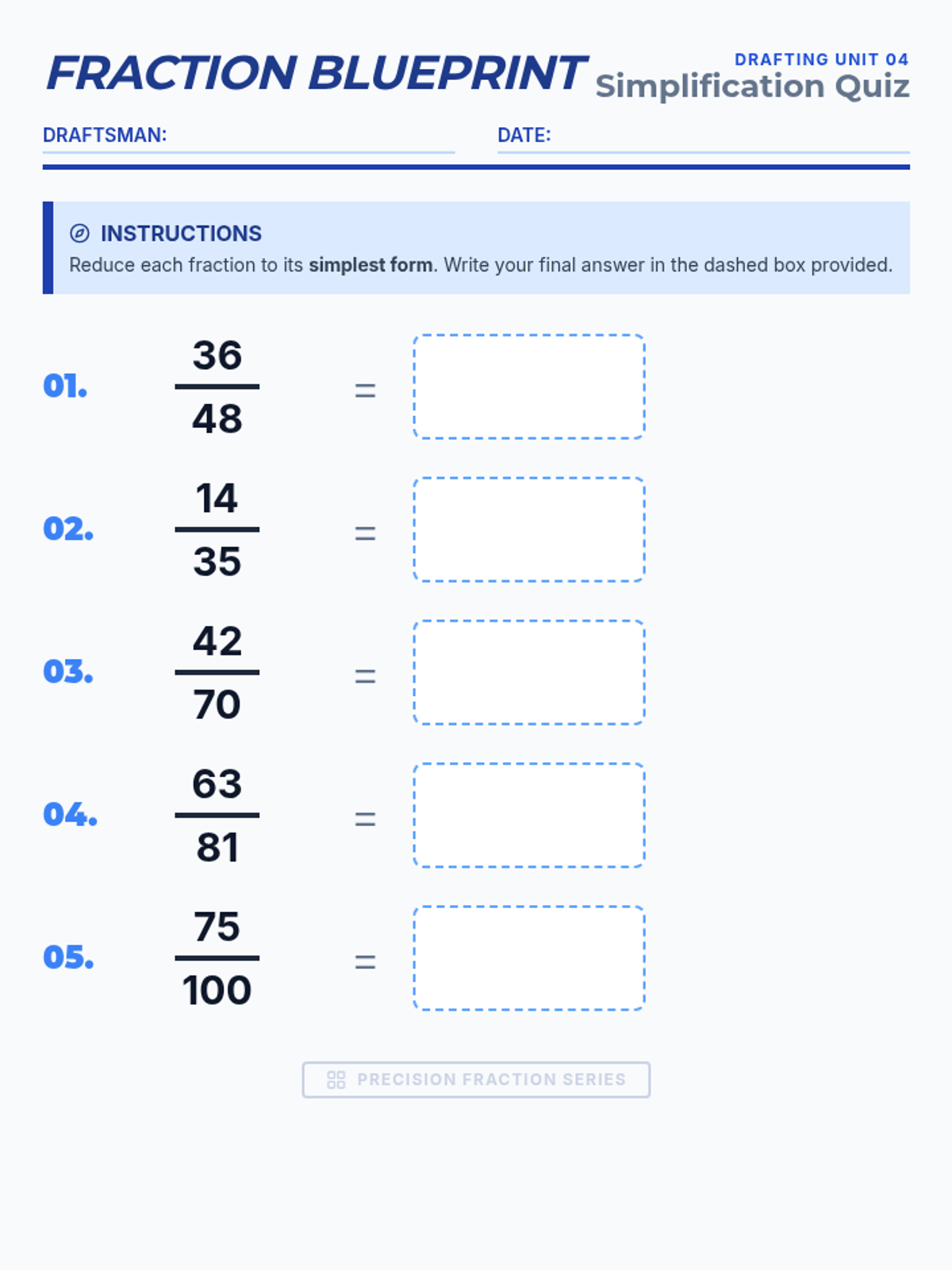
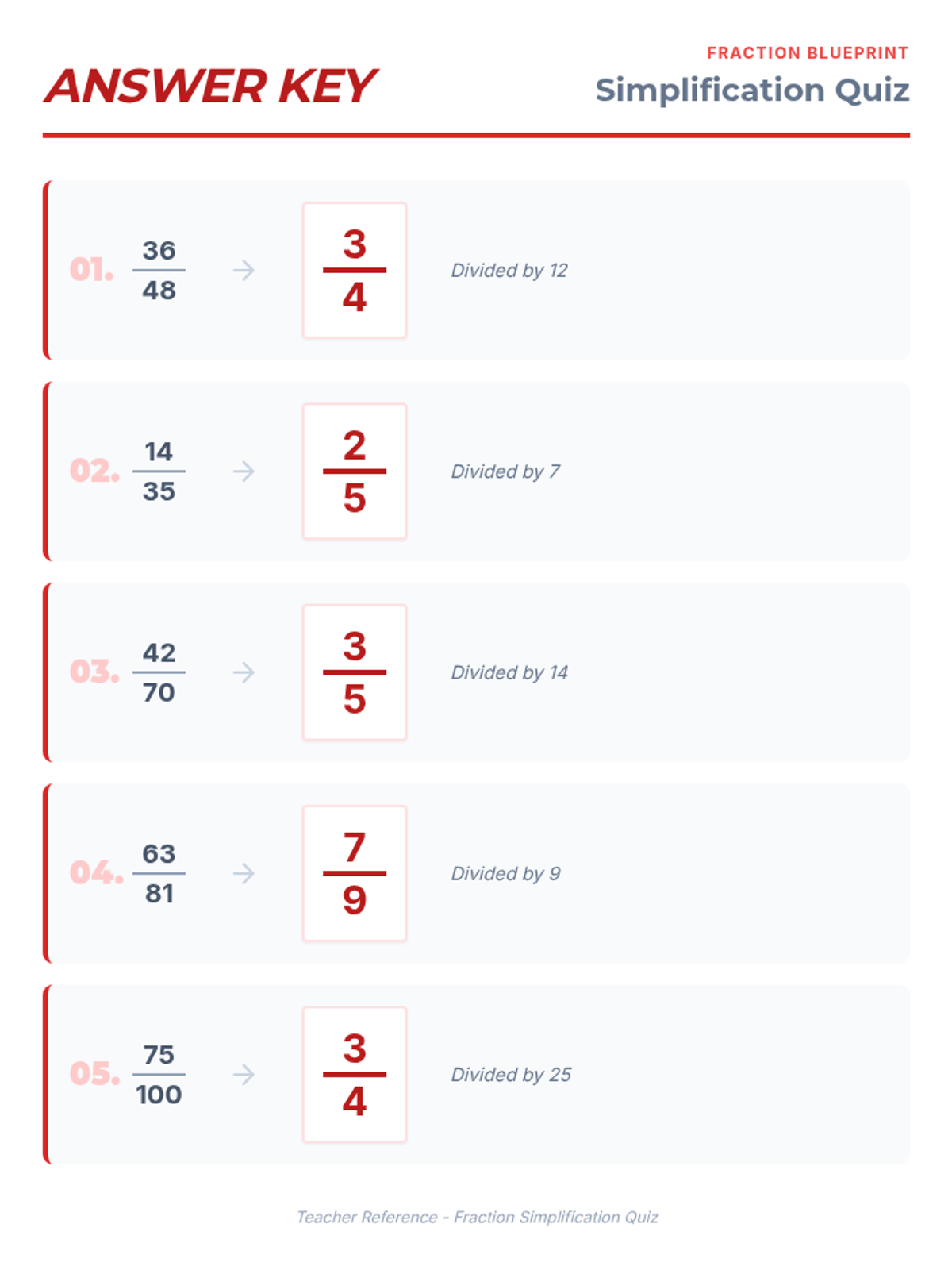
A quick assessment focusing on simplifying fractions with numerators and denominators up to 100 into their simplest form.
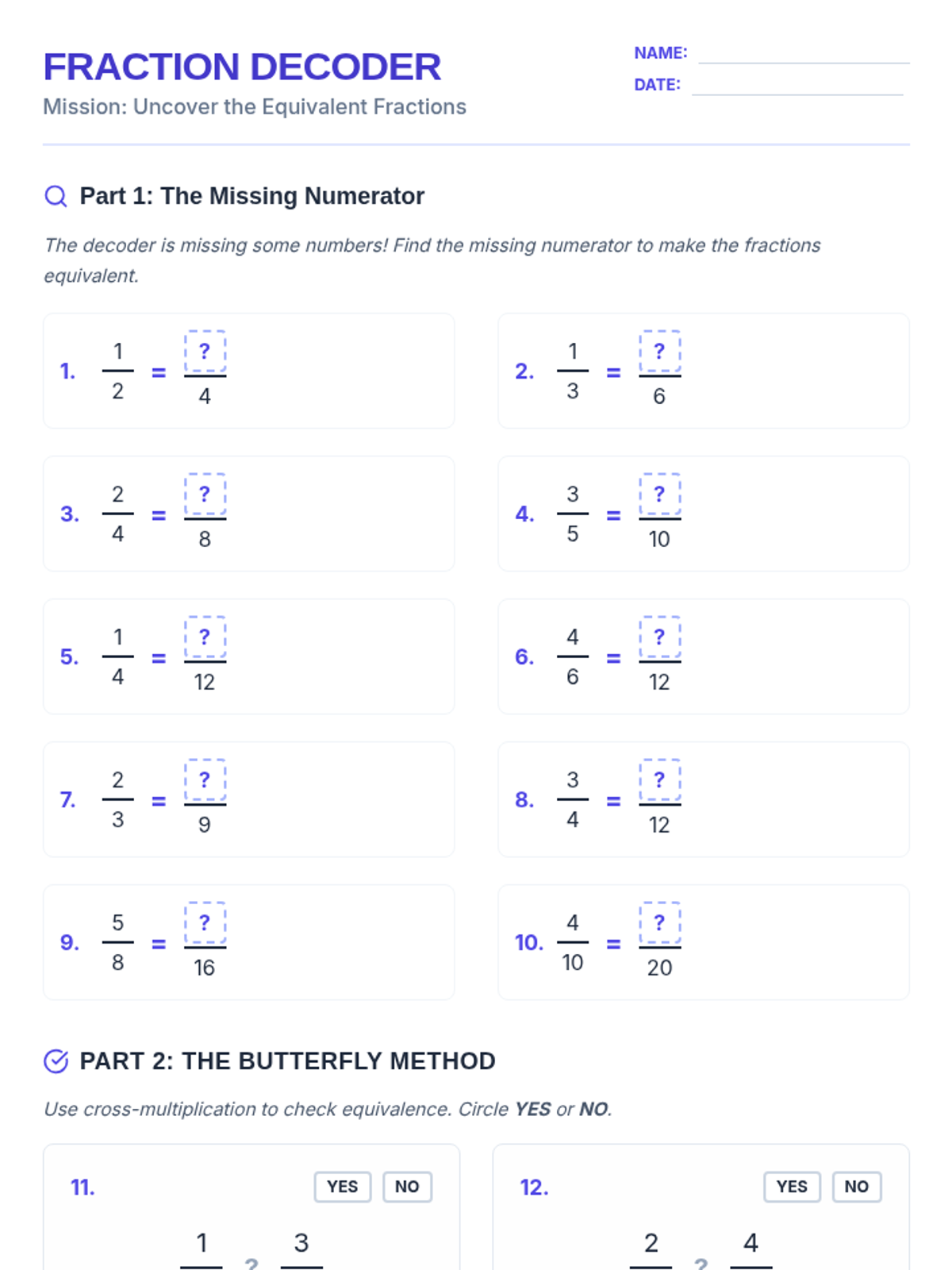
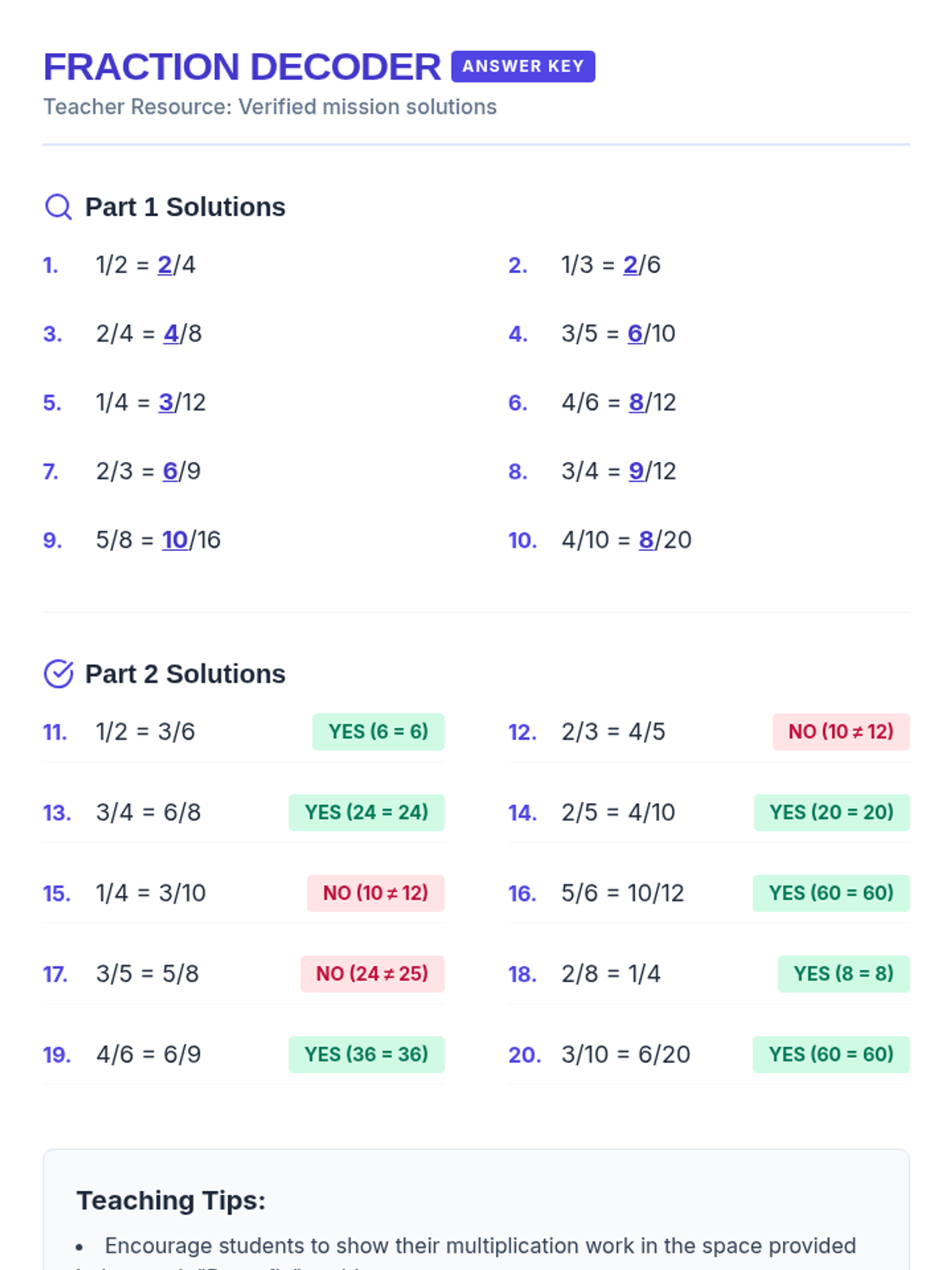
A lesson focused on identifying and creating equivalent fractions using numerical methods like cross-multiplication and scaling, without the use of visual models.
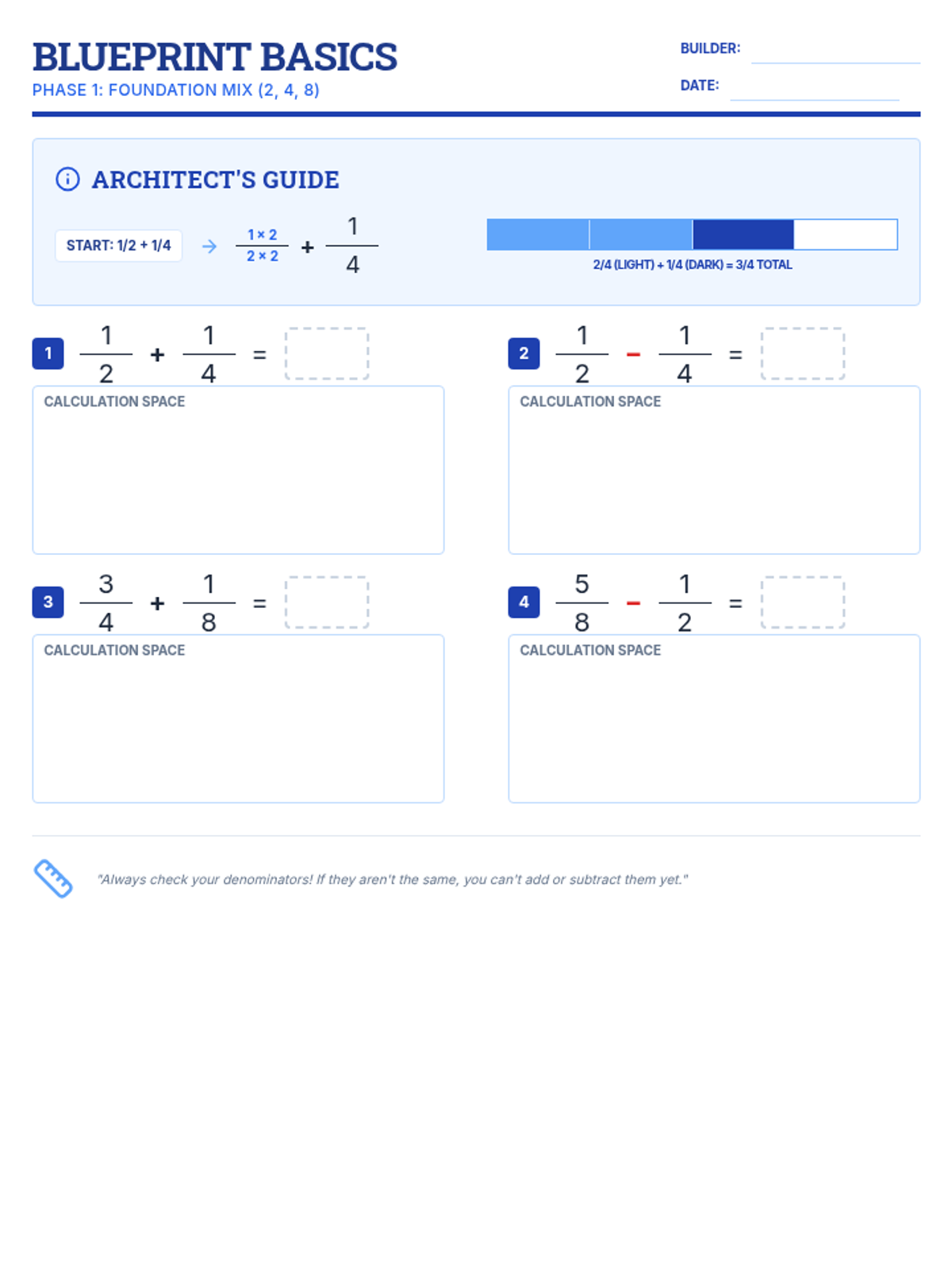
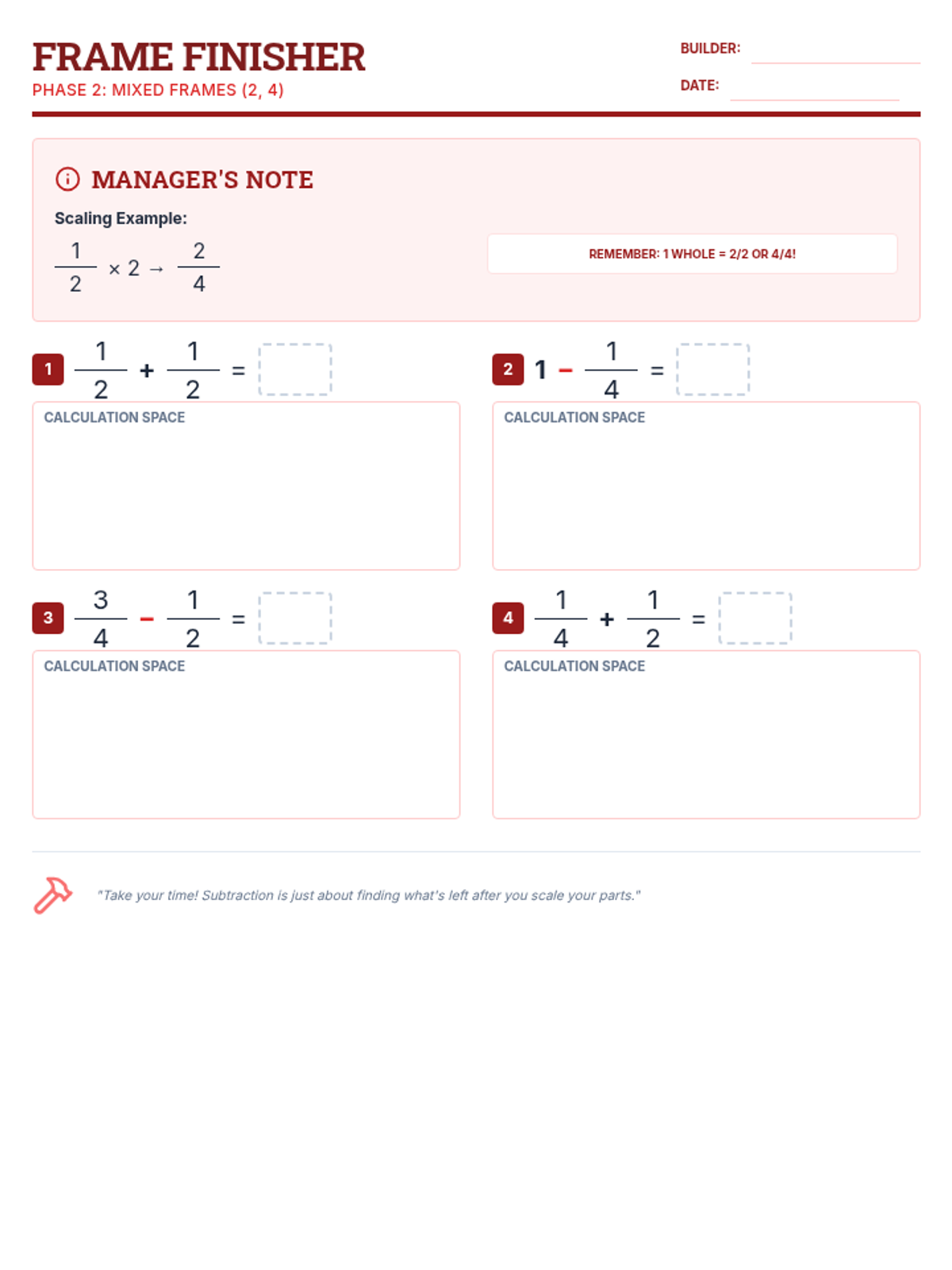
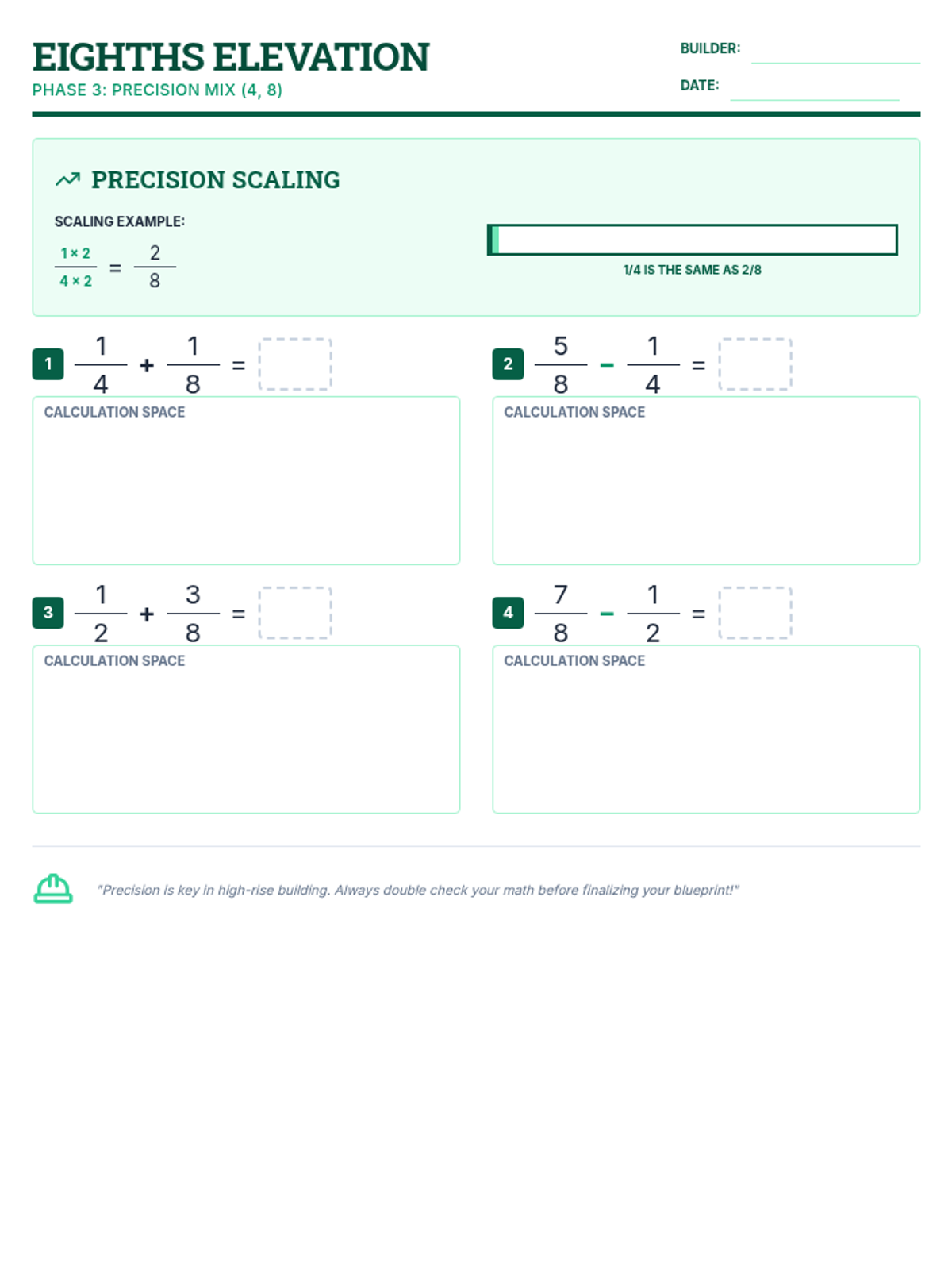
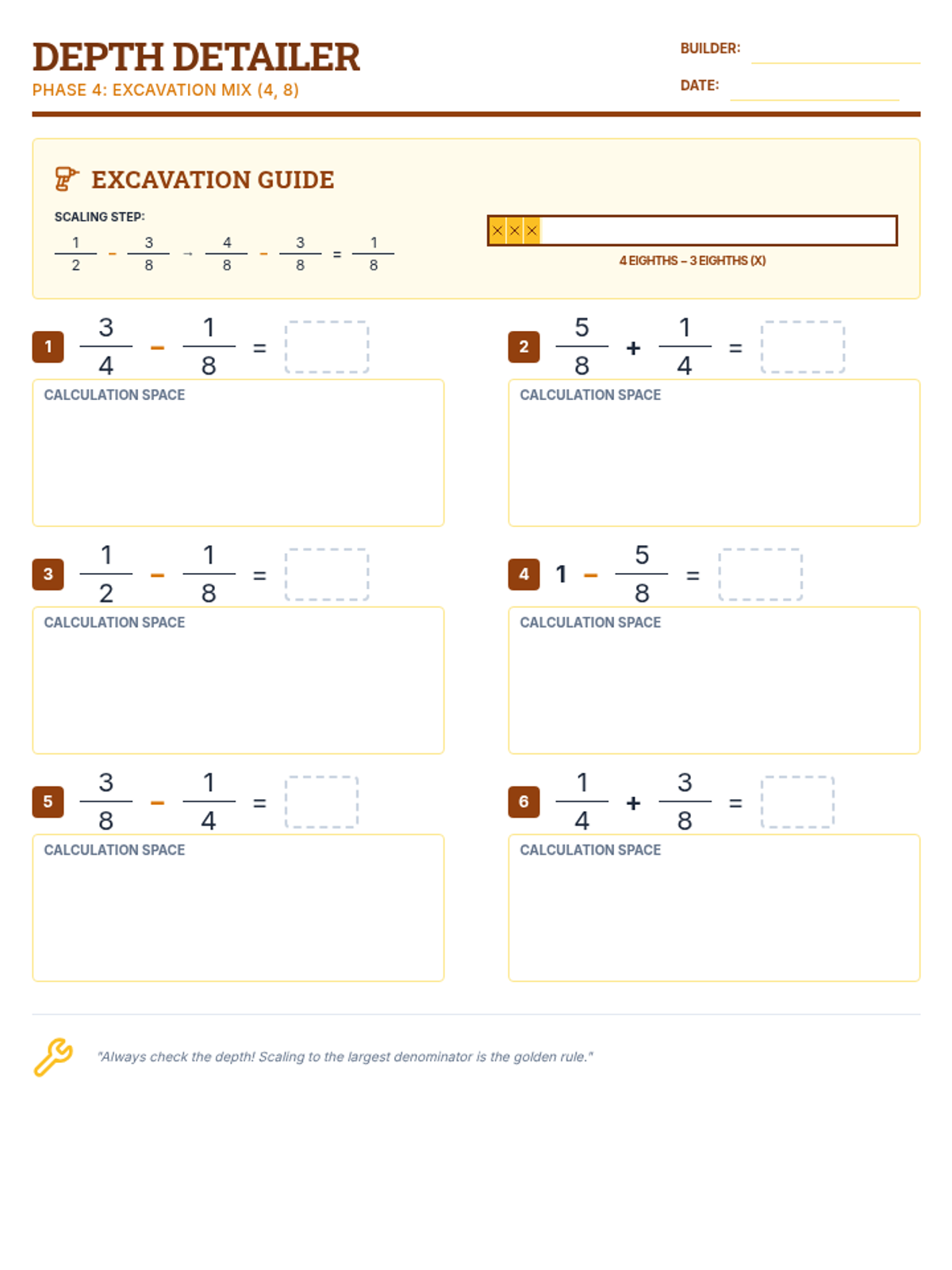
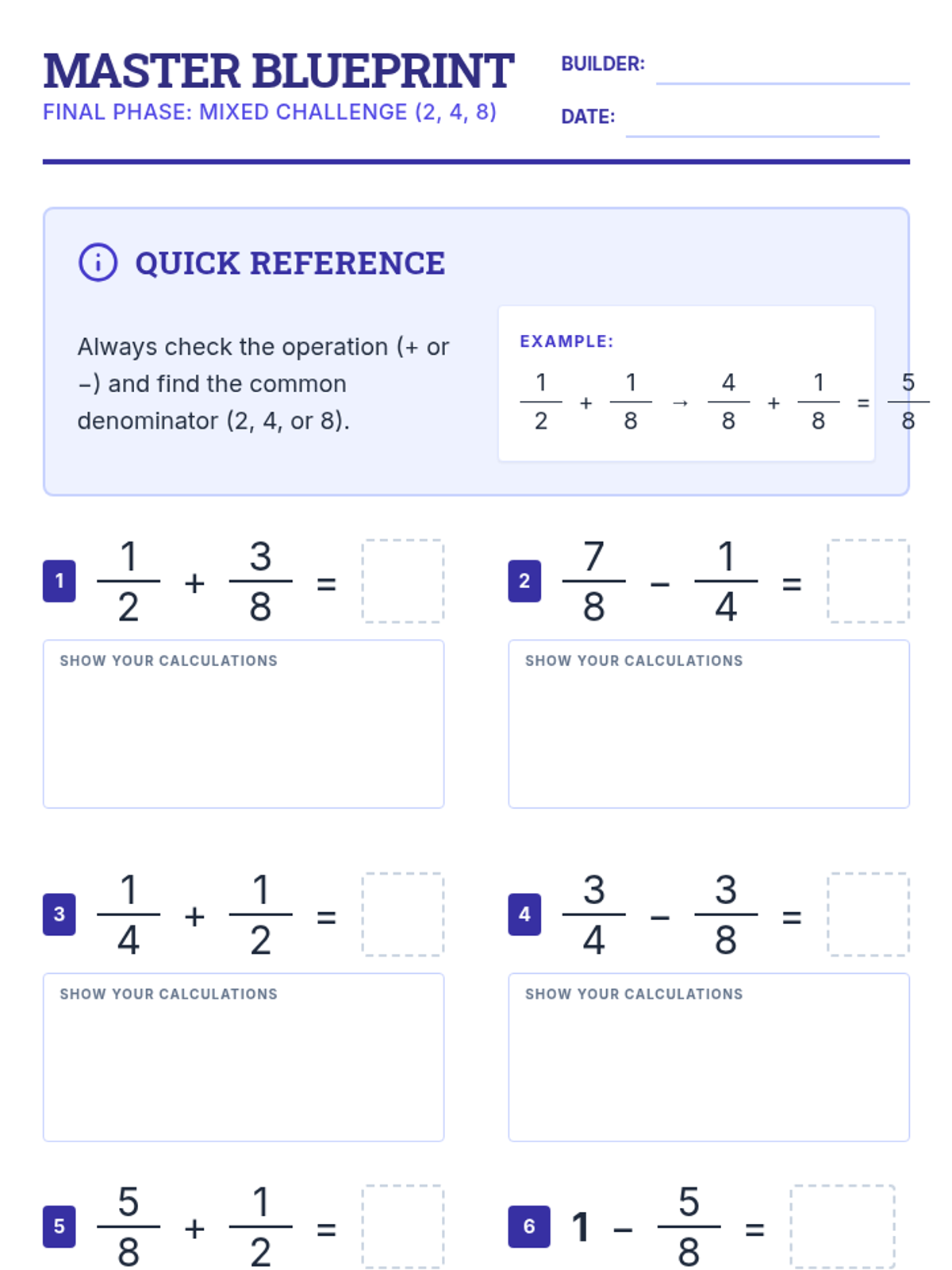
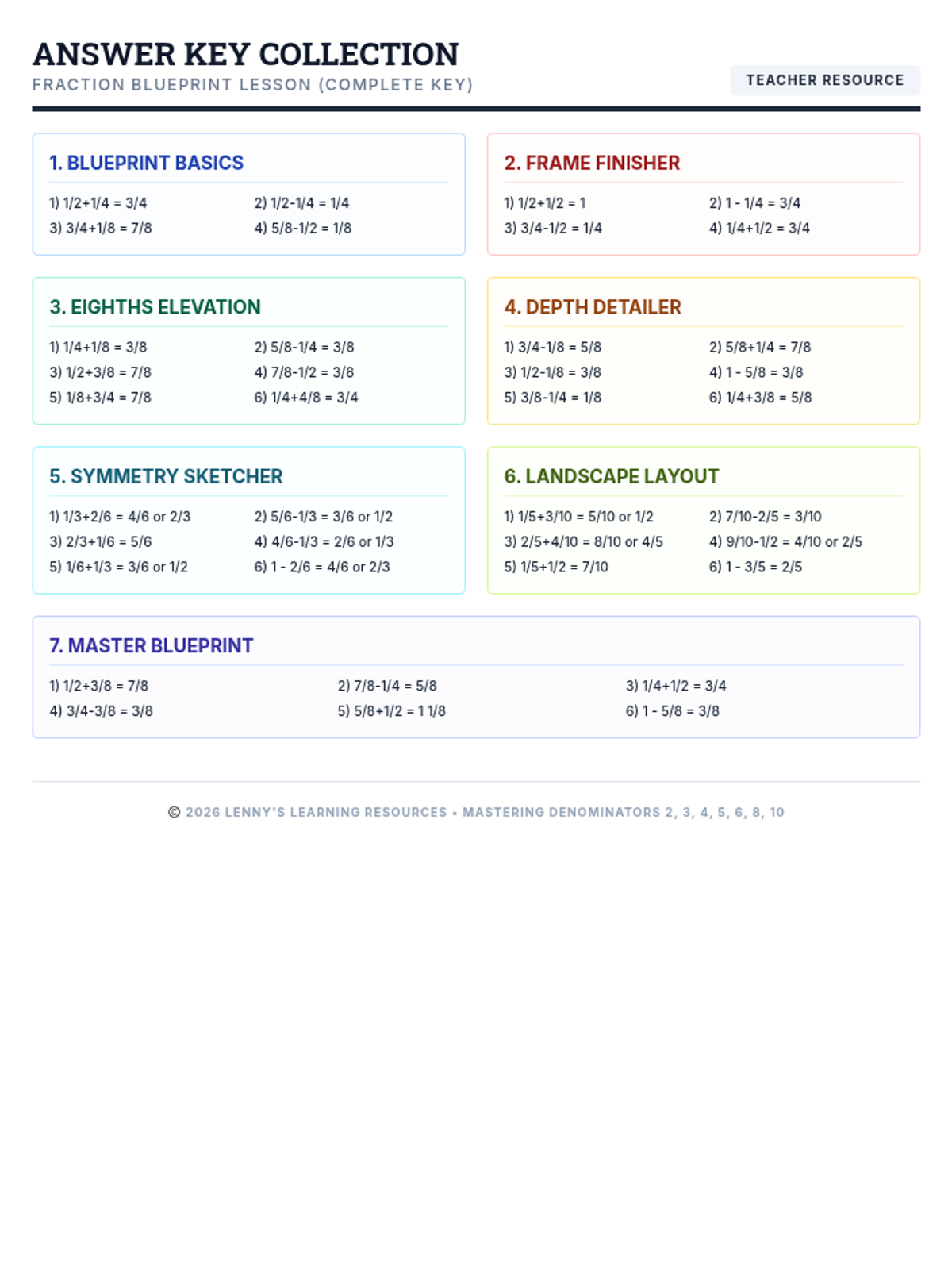
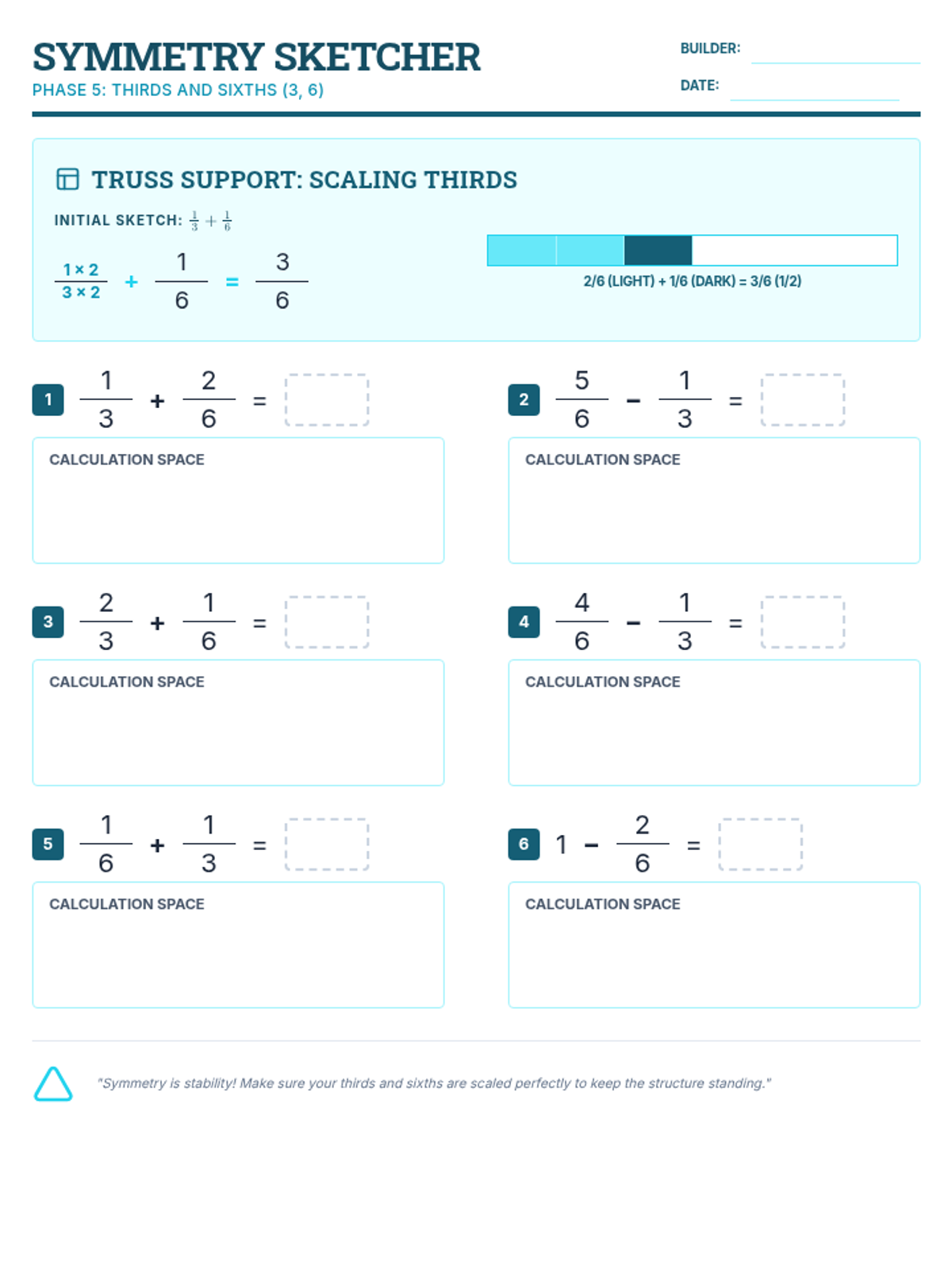
A series of 9 structured worksheets focusing on adding and subtracting fractions with simple denominators (2, 3, 4, 5, 6, 7, 8, 9, 10, 11) using a blueprint-inspired design. Includes step-by-step examples and visual scaffolds for students to master both like and unlike denominators.
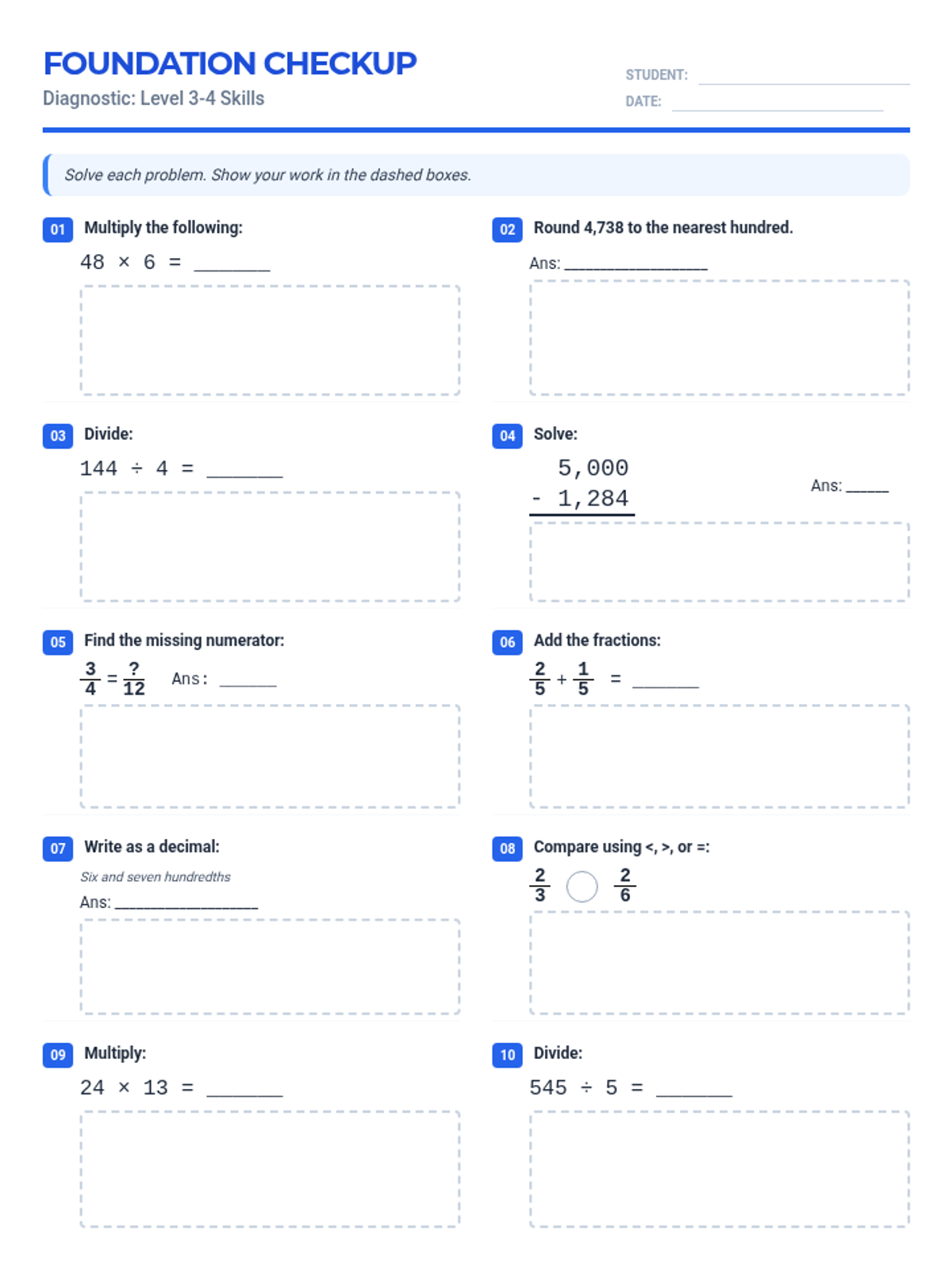
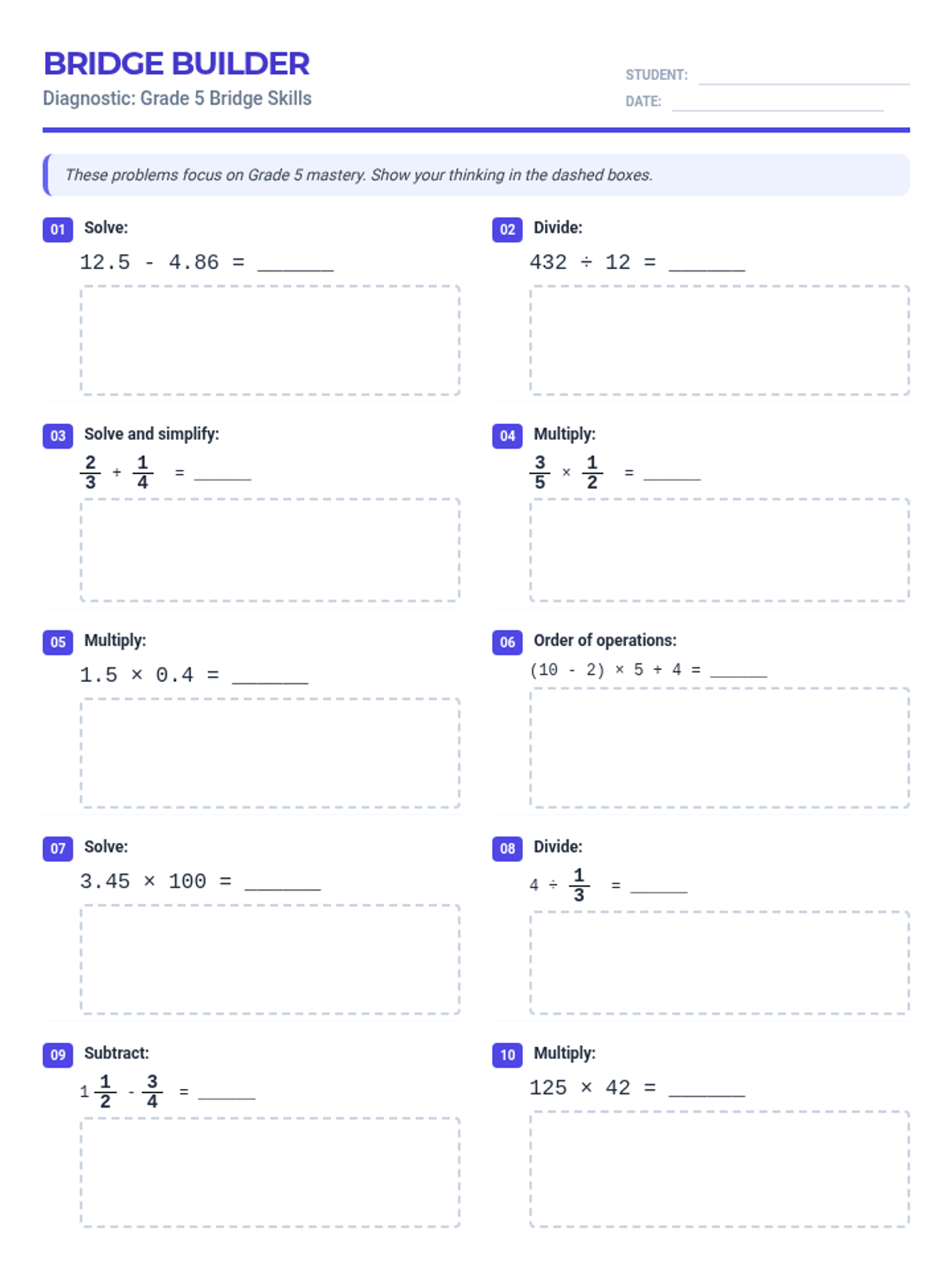
A pair of diagnostic assessments designed to pinpoint gaps in foundational number sense, fractions, and decimals, bridging 3rd-4th grade concepts to 5th grade mastery in preparation for 6th grade math.
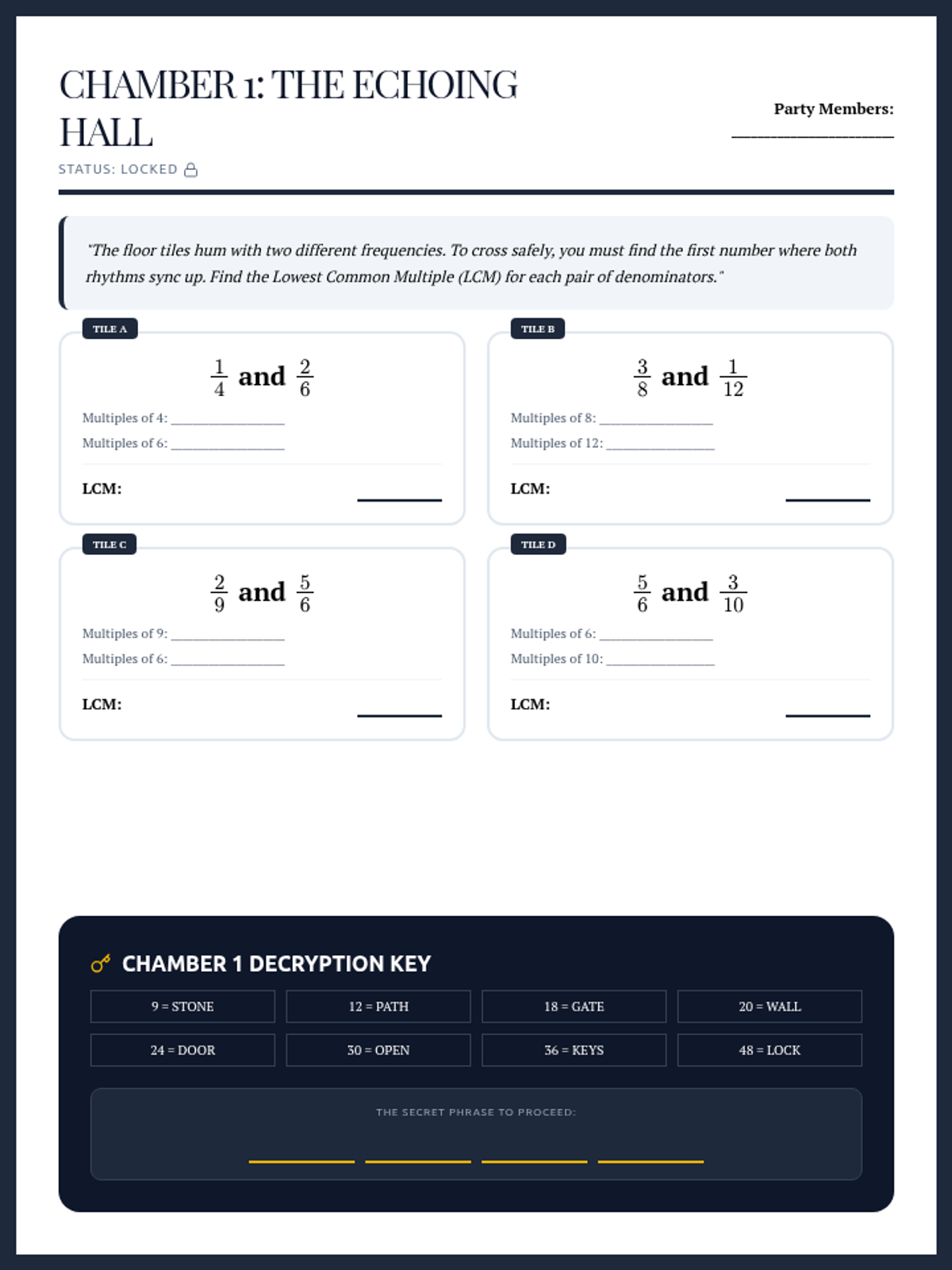
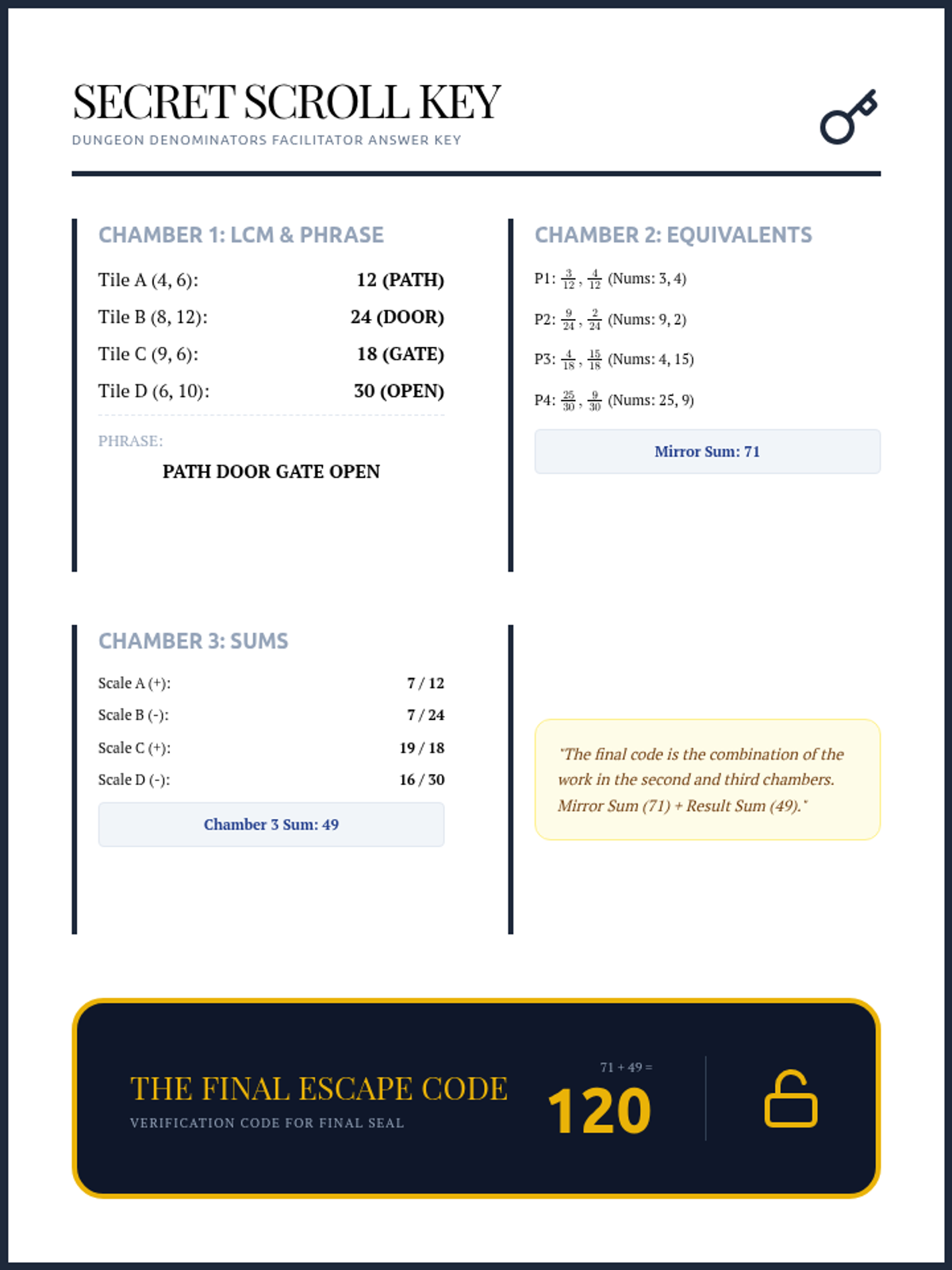
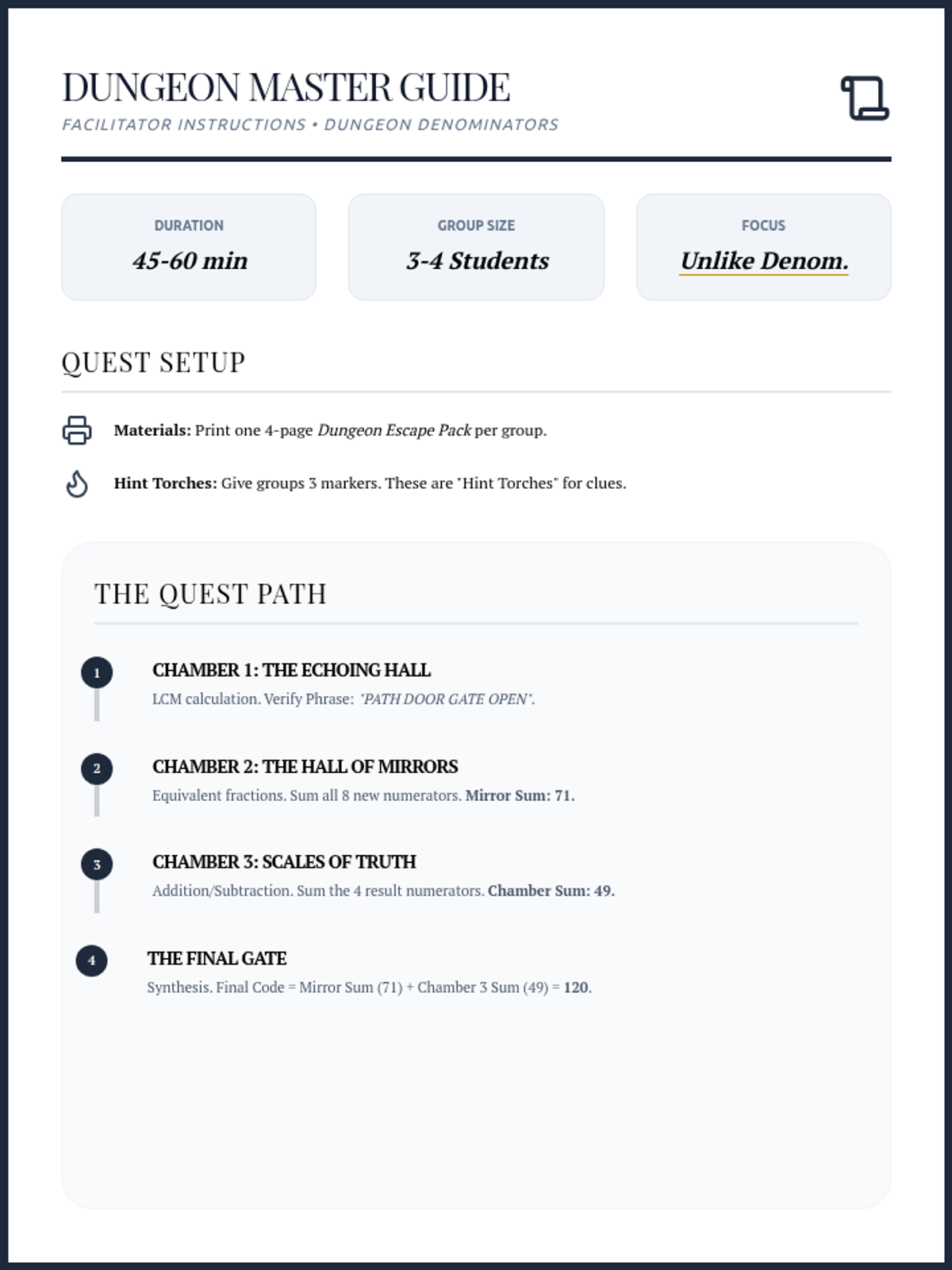
A collaborative escape room activity where students solve puzzles involving common denominators, equivalent fractions, and addition/subtraction to "escape" a dungeon.
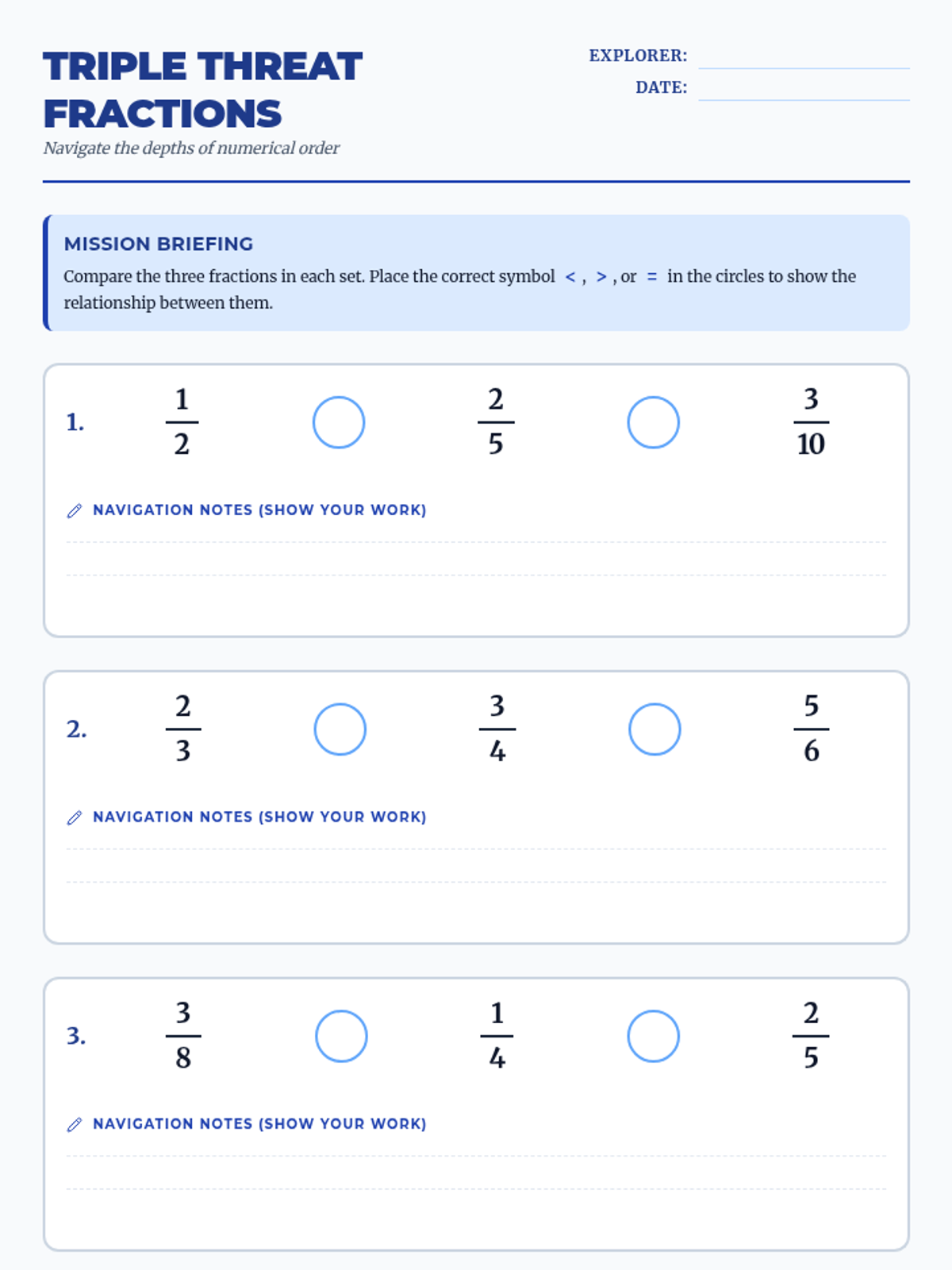
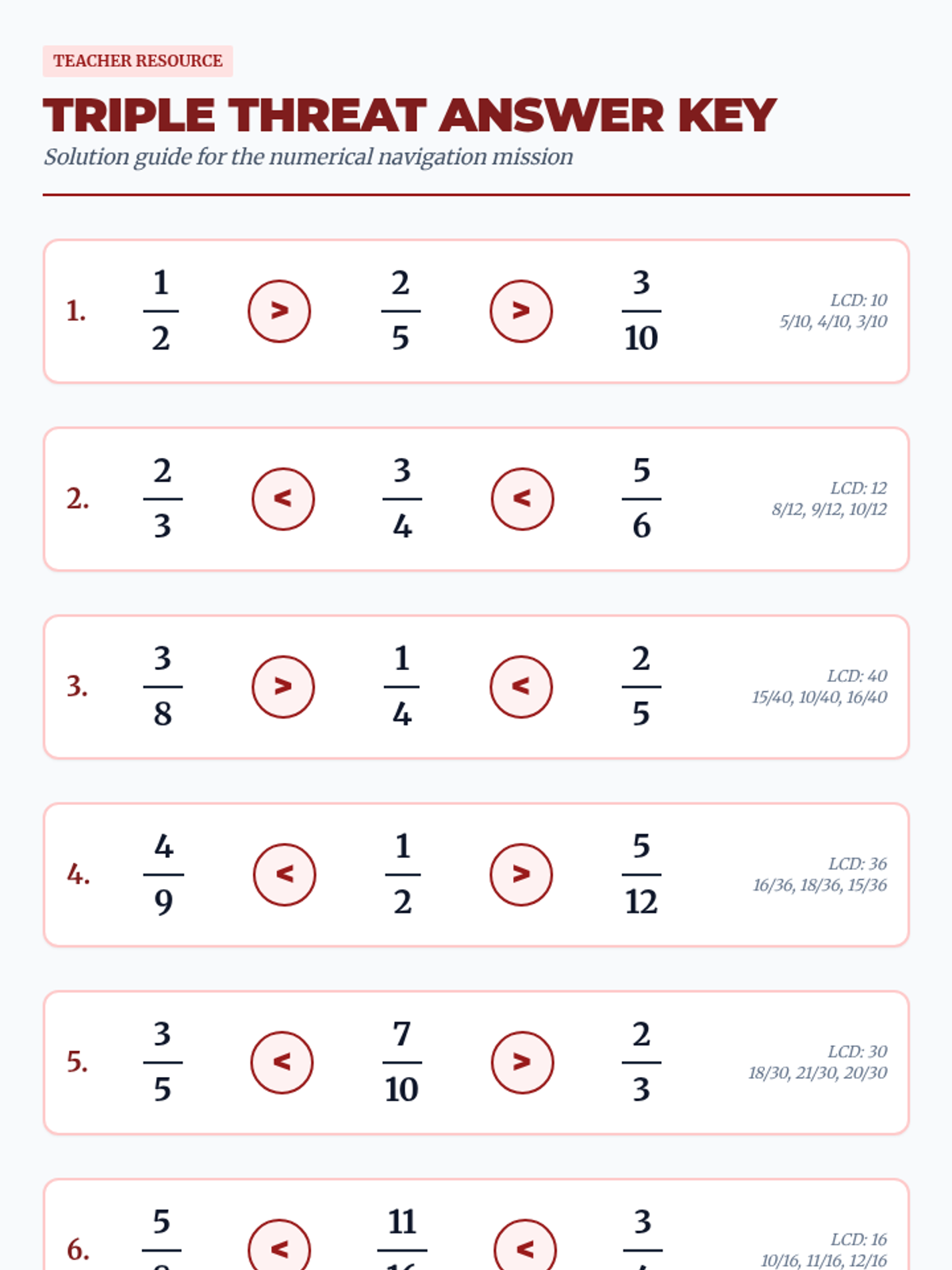
A lesson focused on comparing and ordering three proper fractions with unlike denominators and numerators using inequality symbols.