Develops proficiency in estimating and measuring length, area, volume, and mass using standard units and unit conversions. Integrates time, money, angle measurement, and data classification through counting and arithmetic applications.
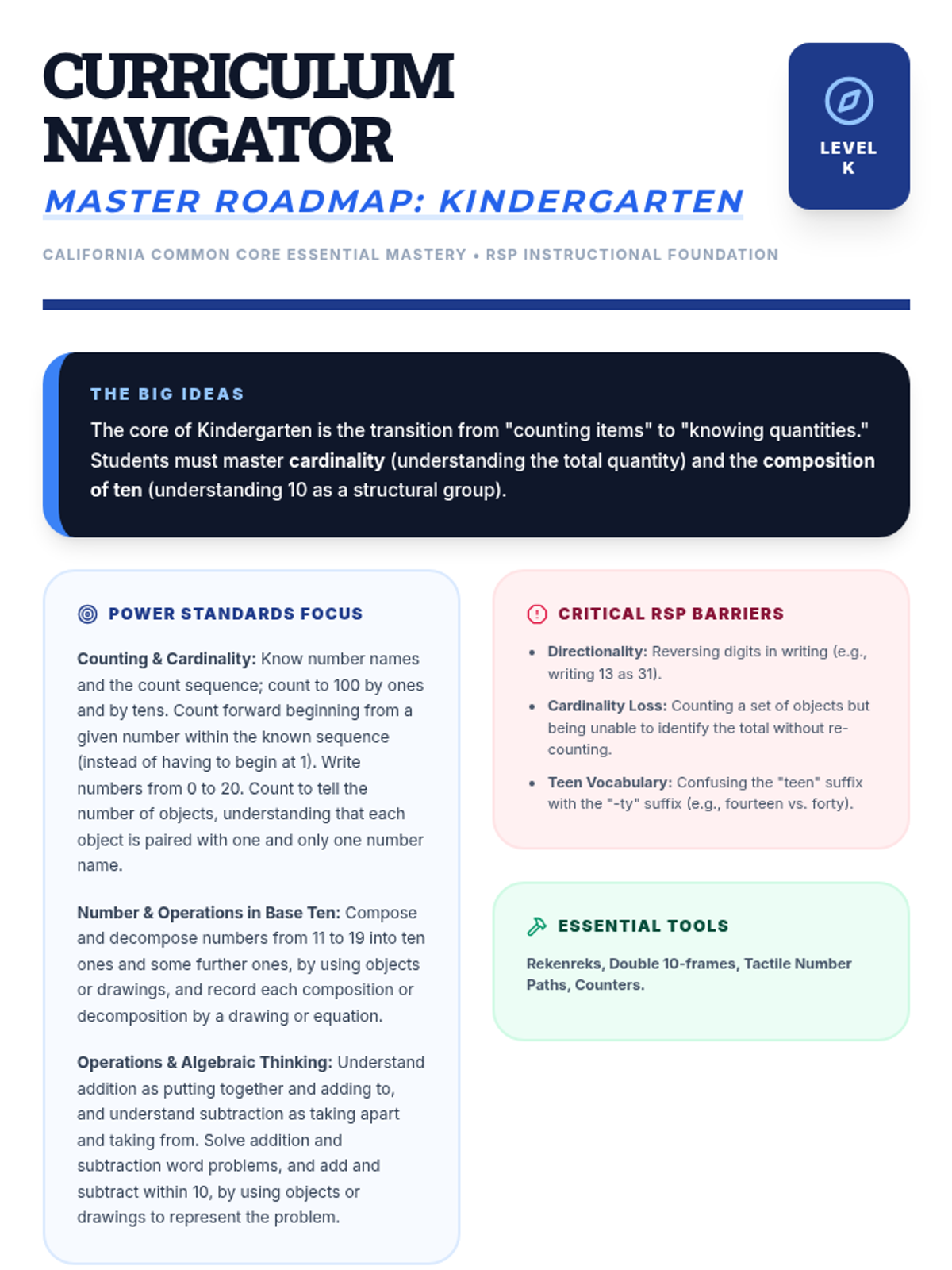
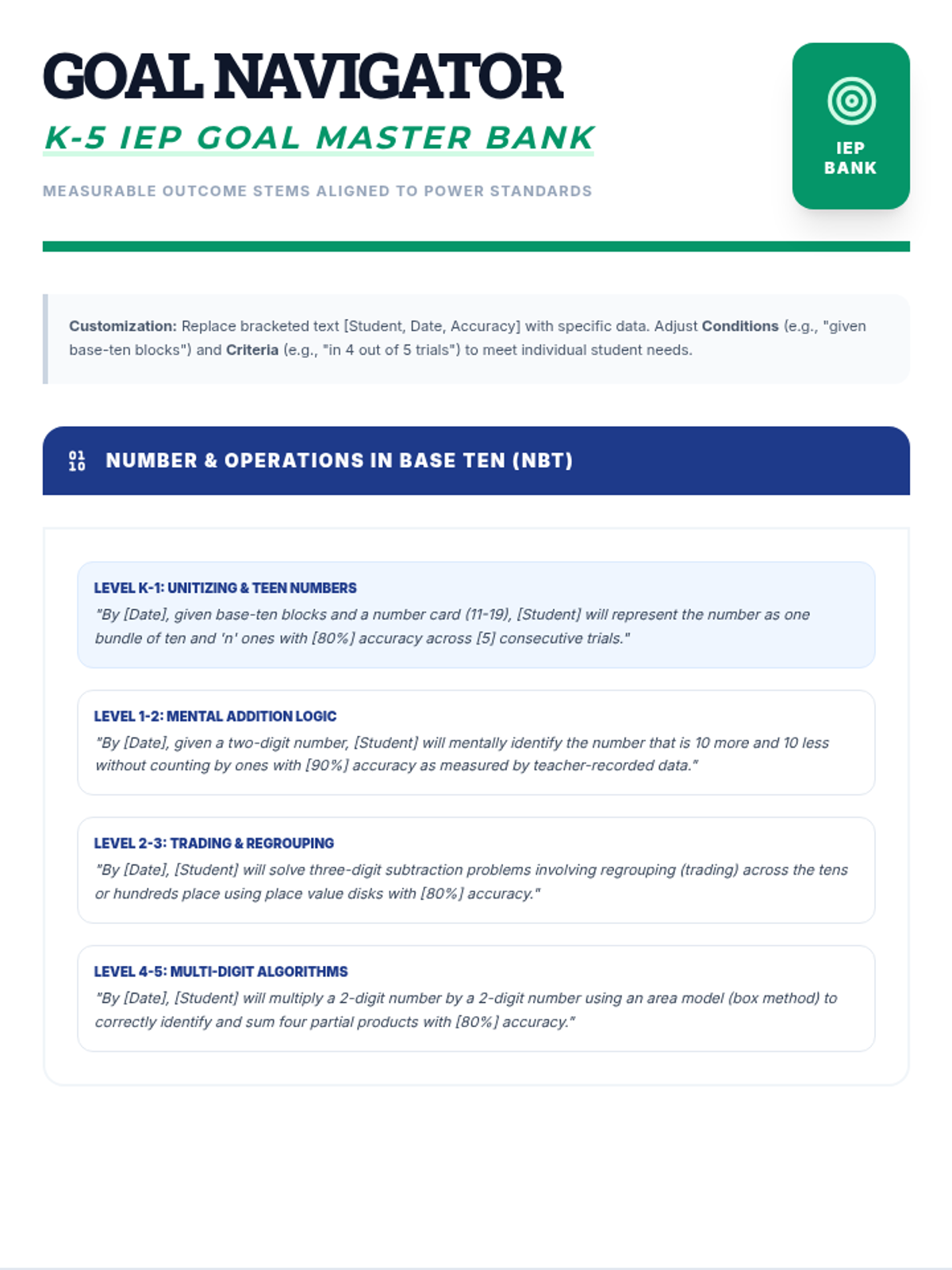
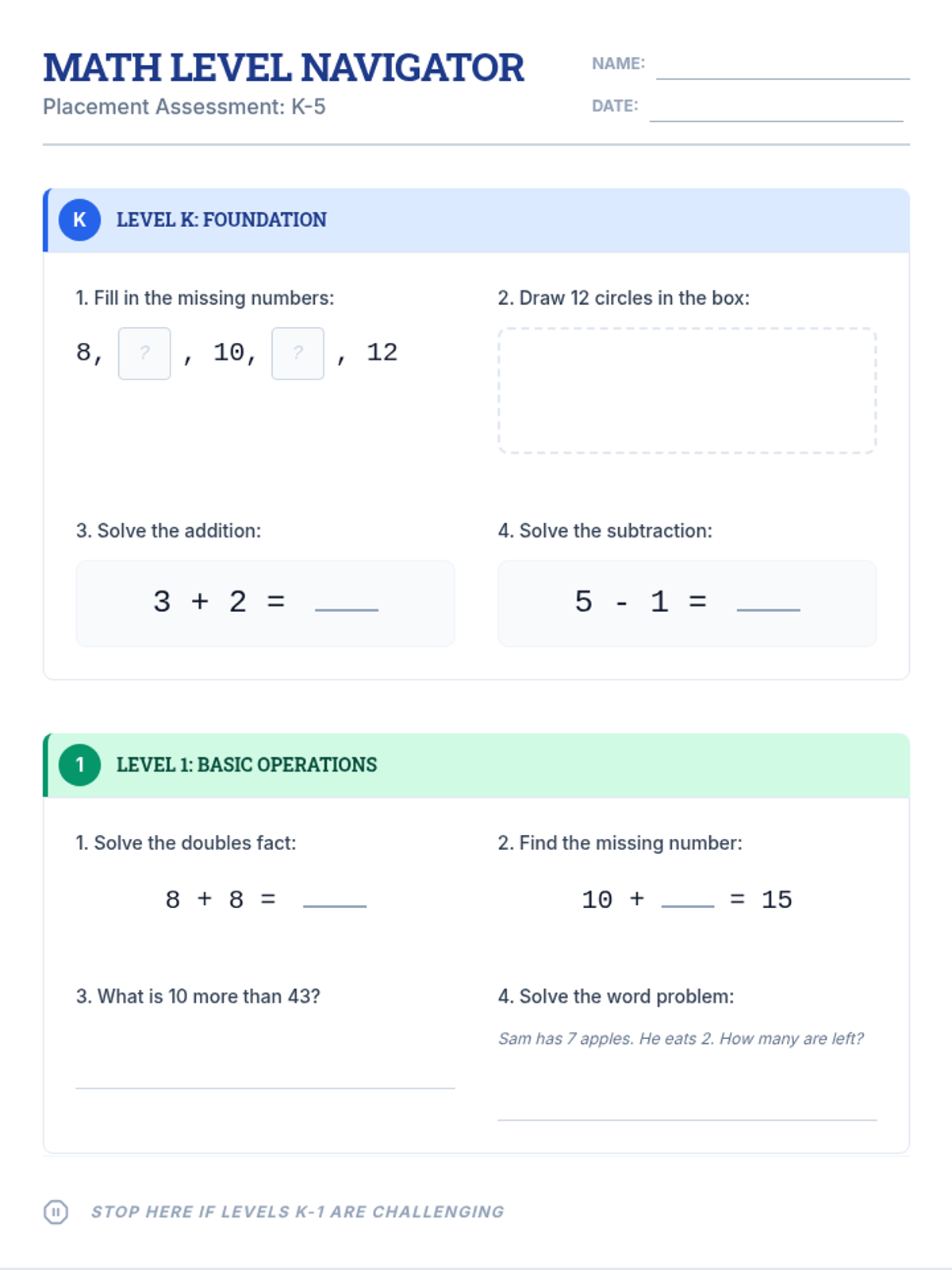
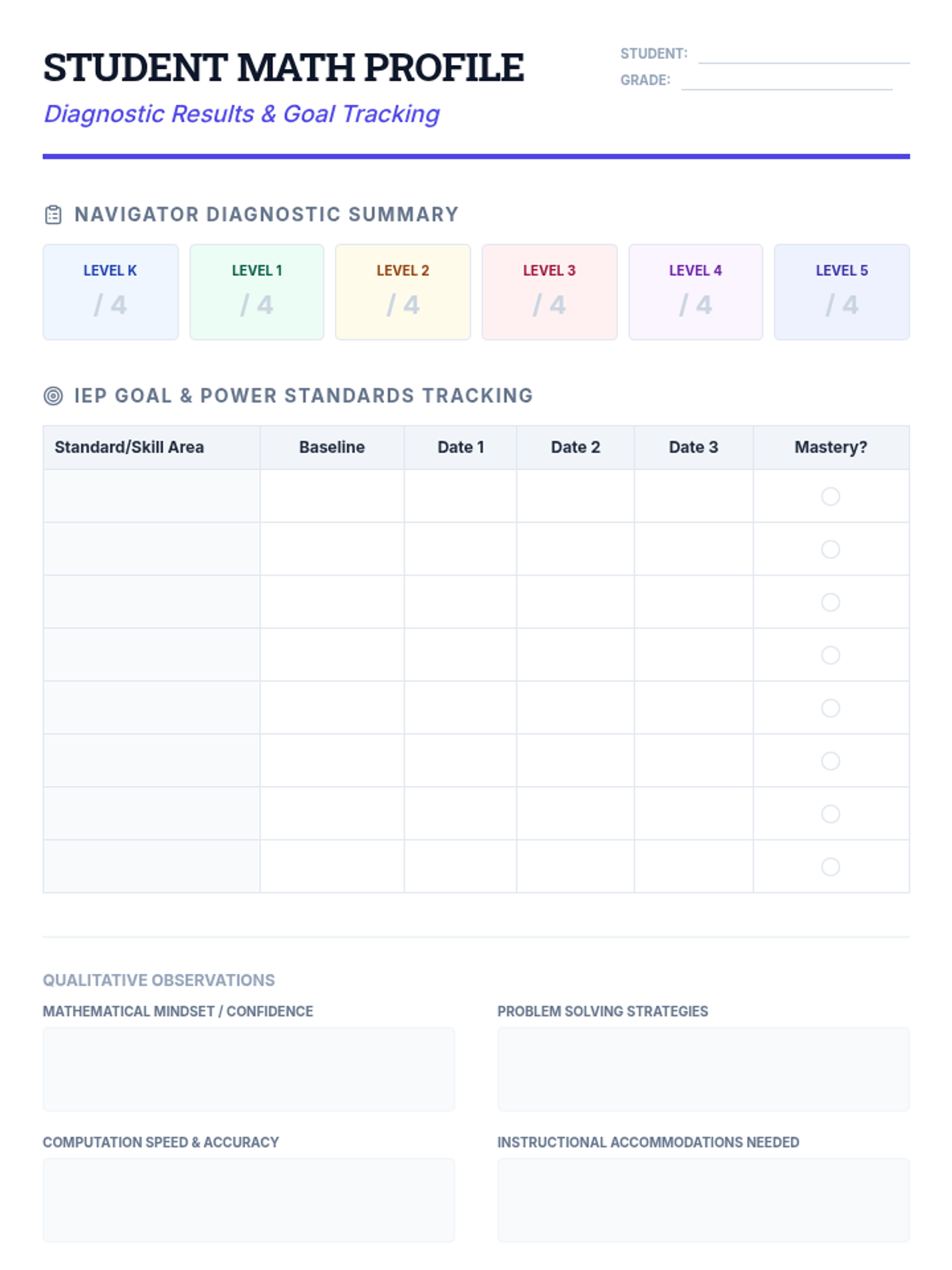
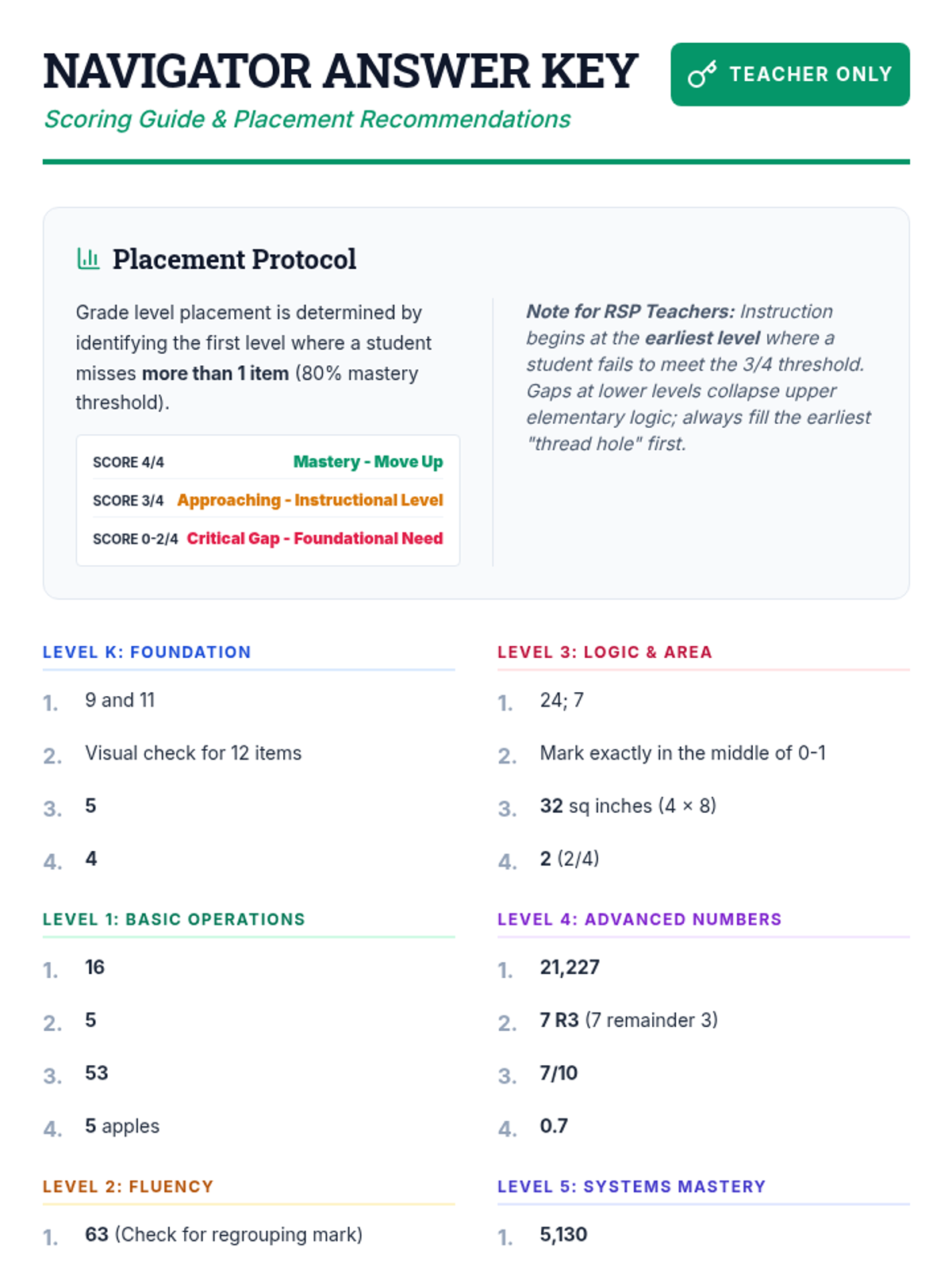
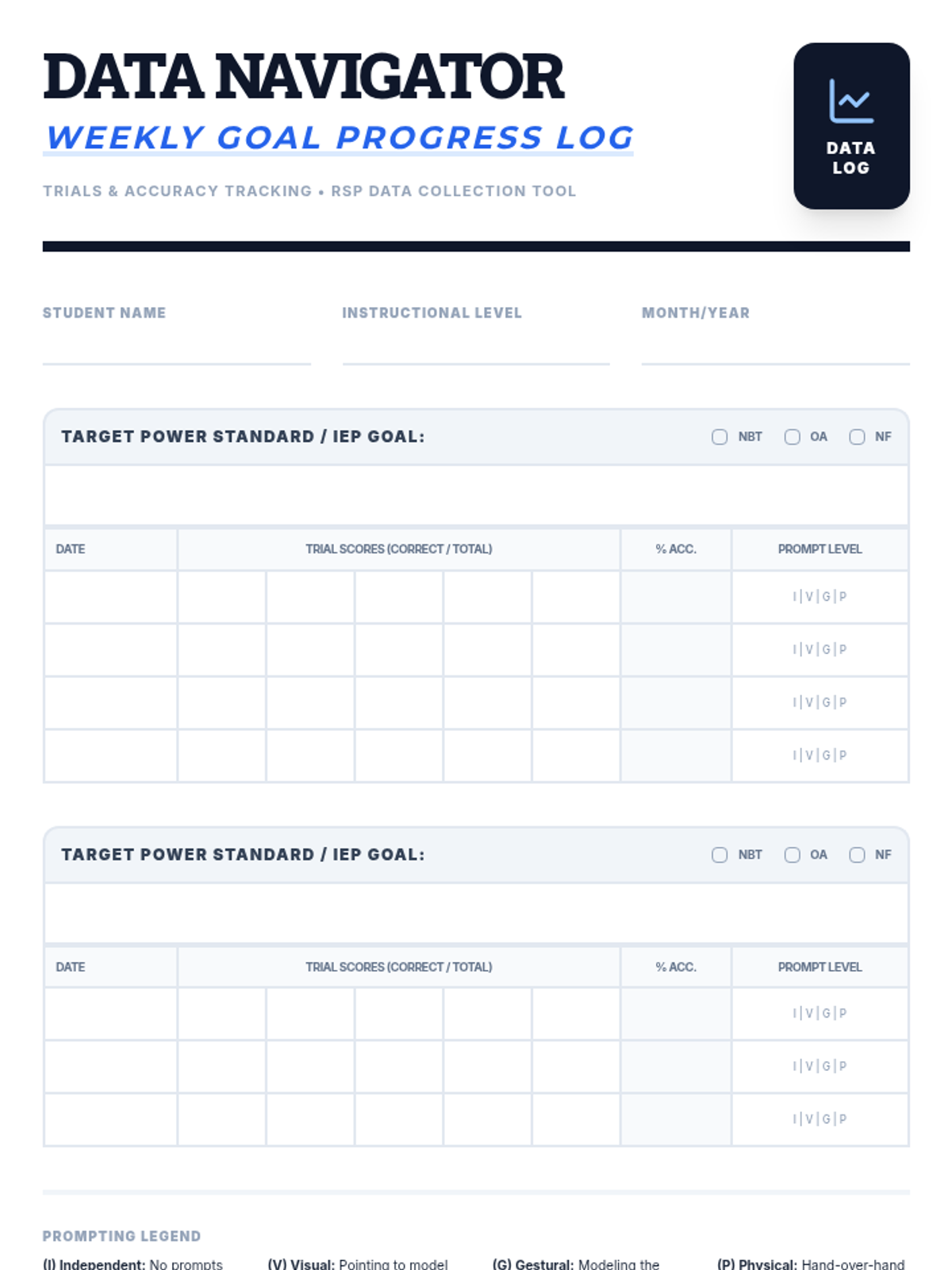
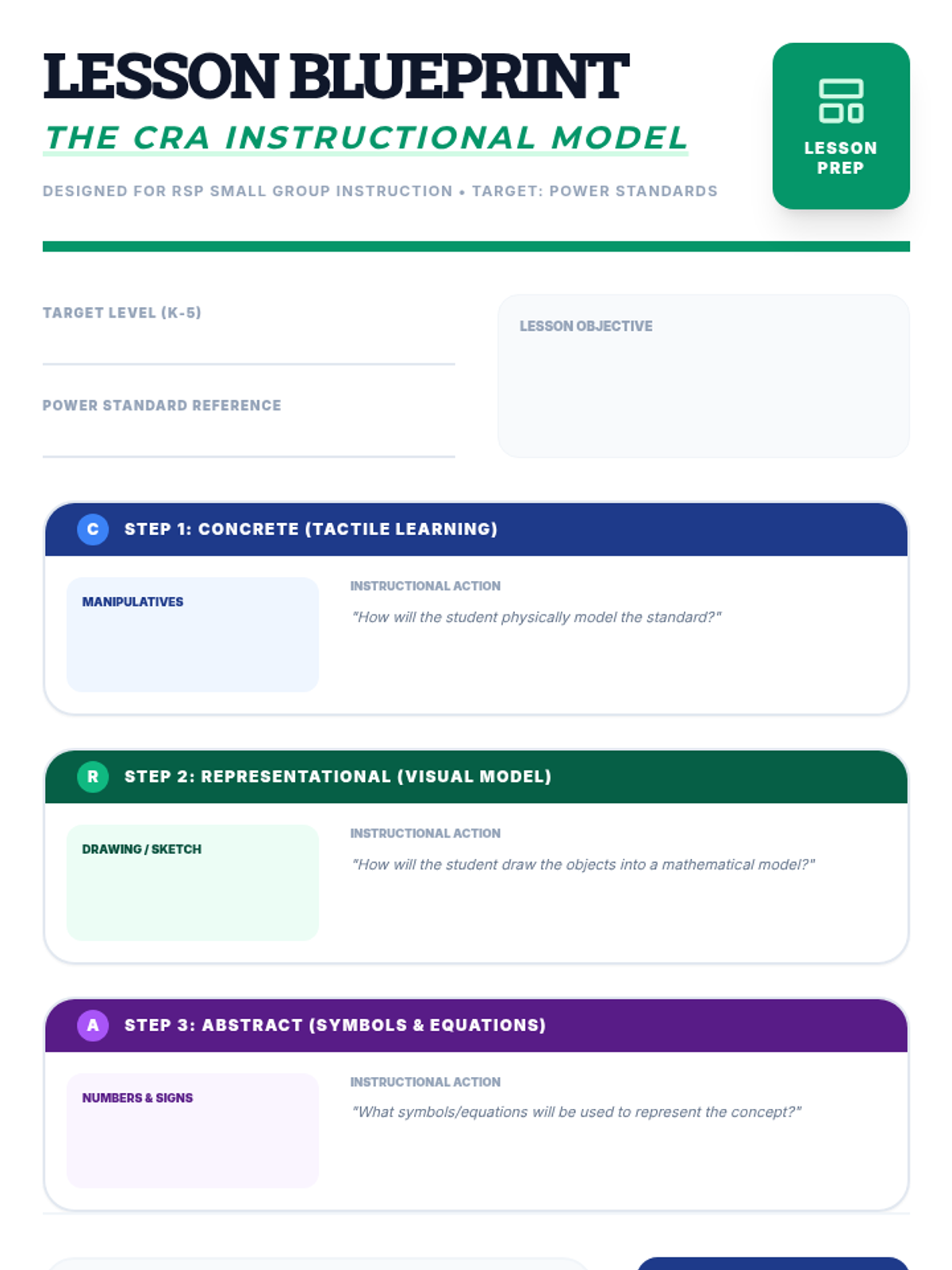
A comprehensive framework for K-5 RSP math instruction, including a California Common Core aligned scope and sequence of power standards and a leveled placement diagnostic.
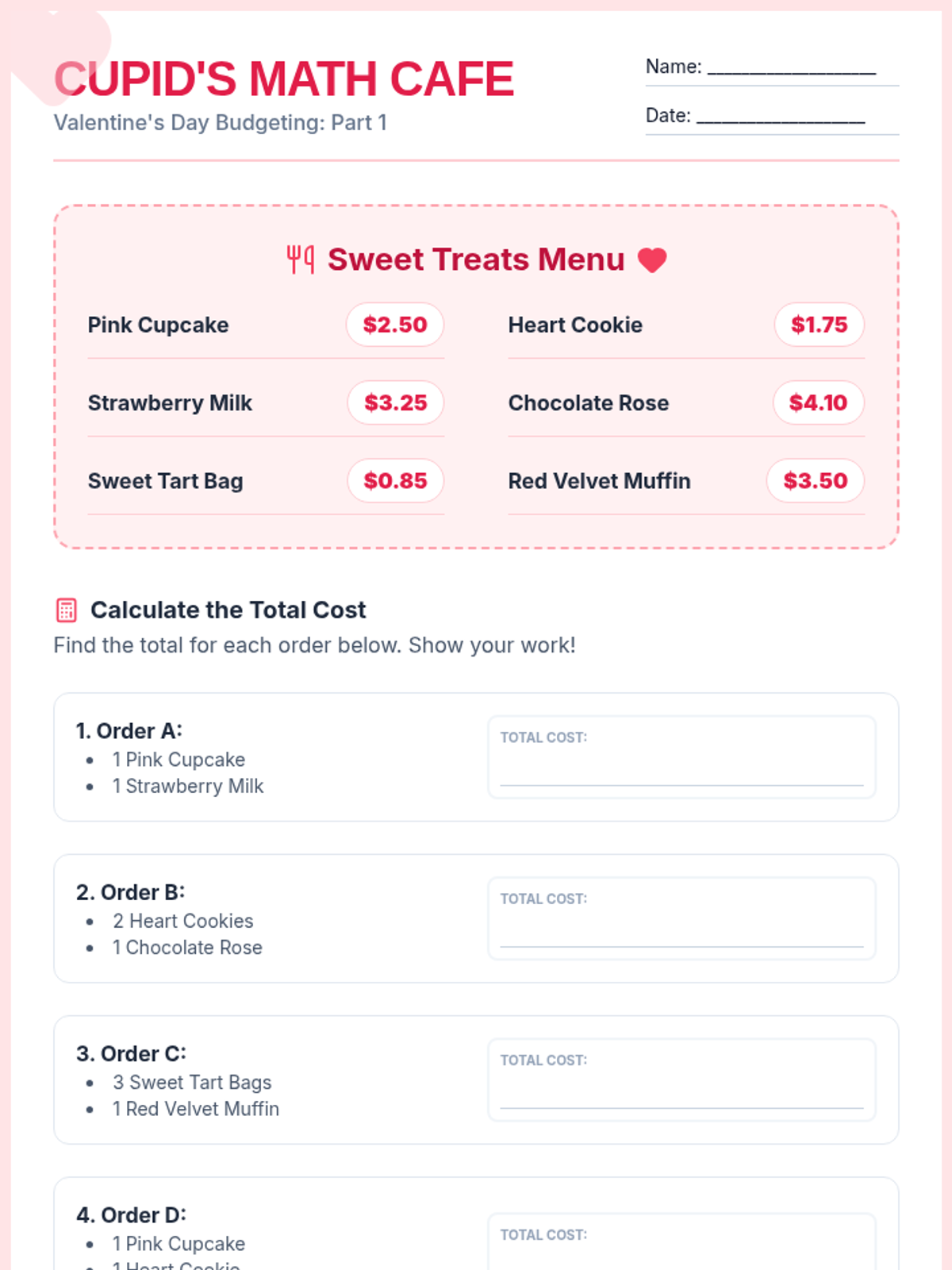
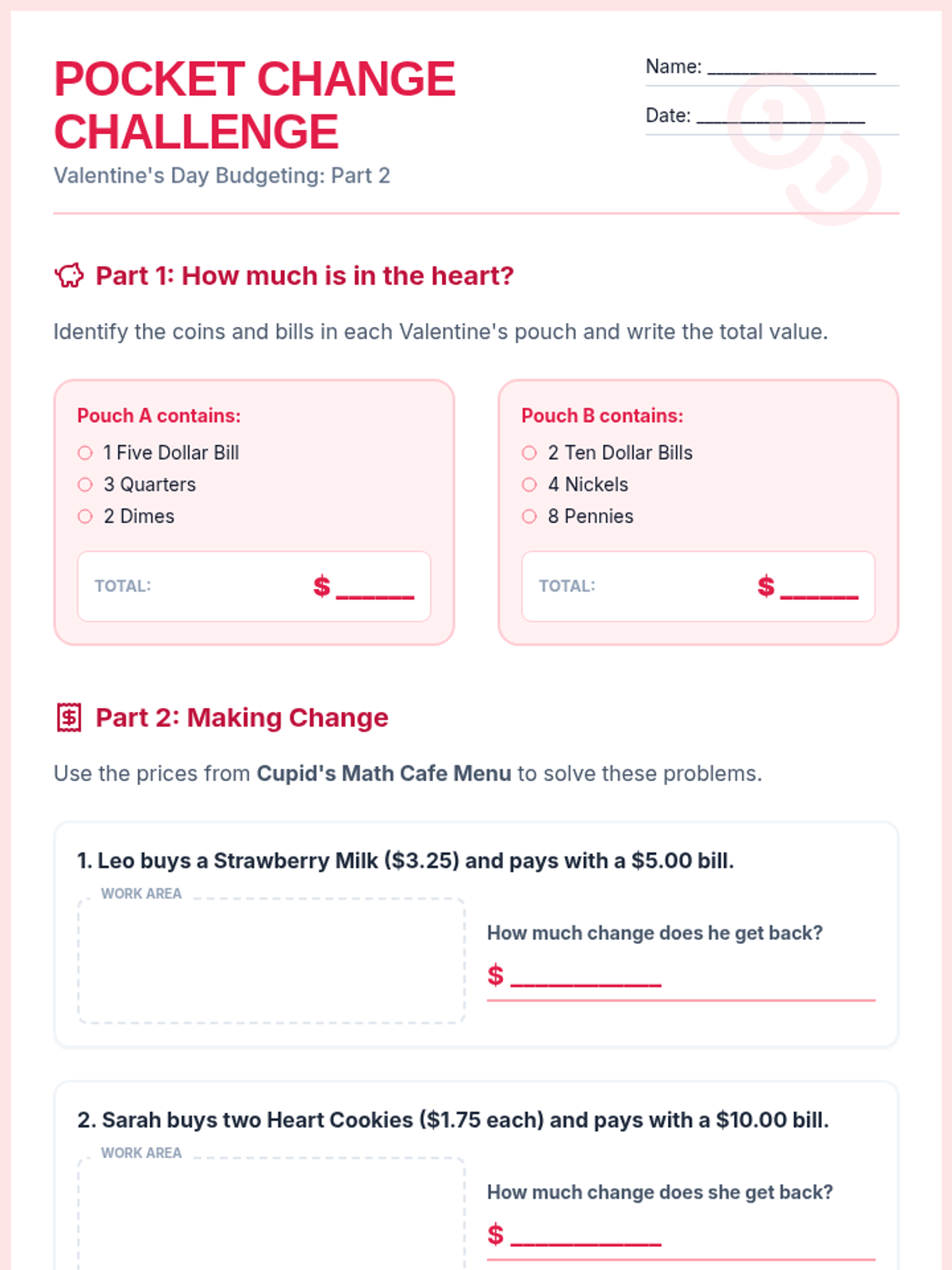
A collection of Valentine's Day math packets at two different levels (Level 1 and Quest), covering budgeting, graphing, measurement, time, and word problems.
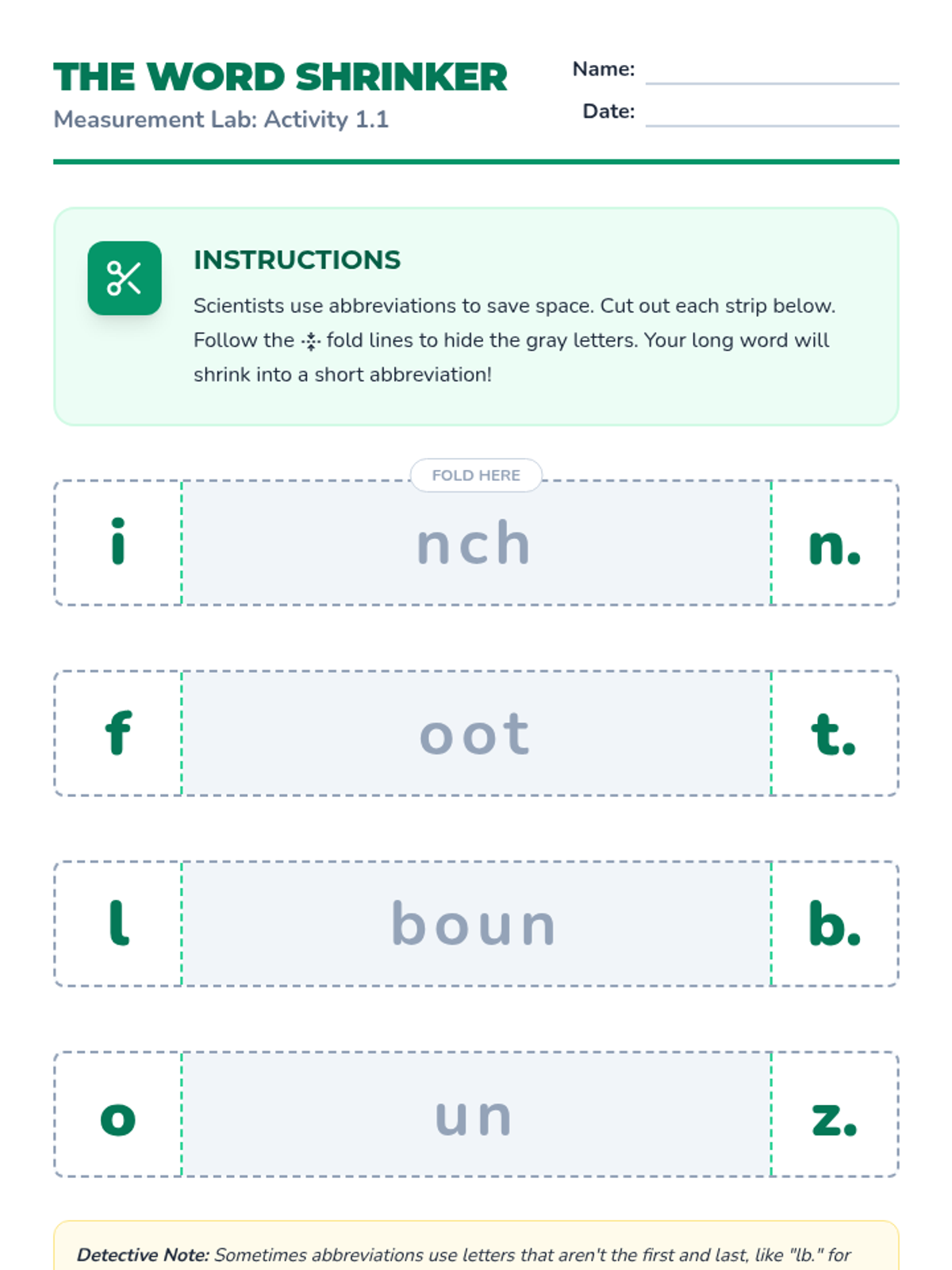
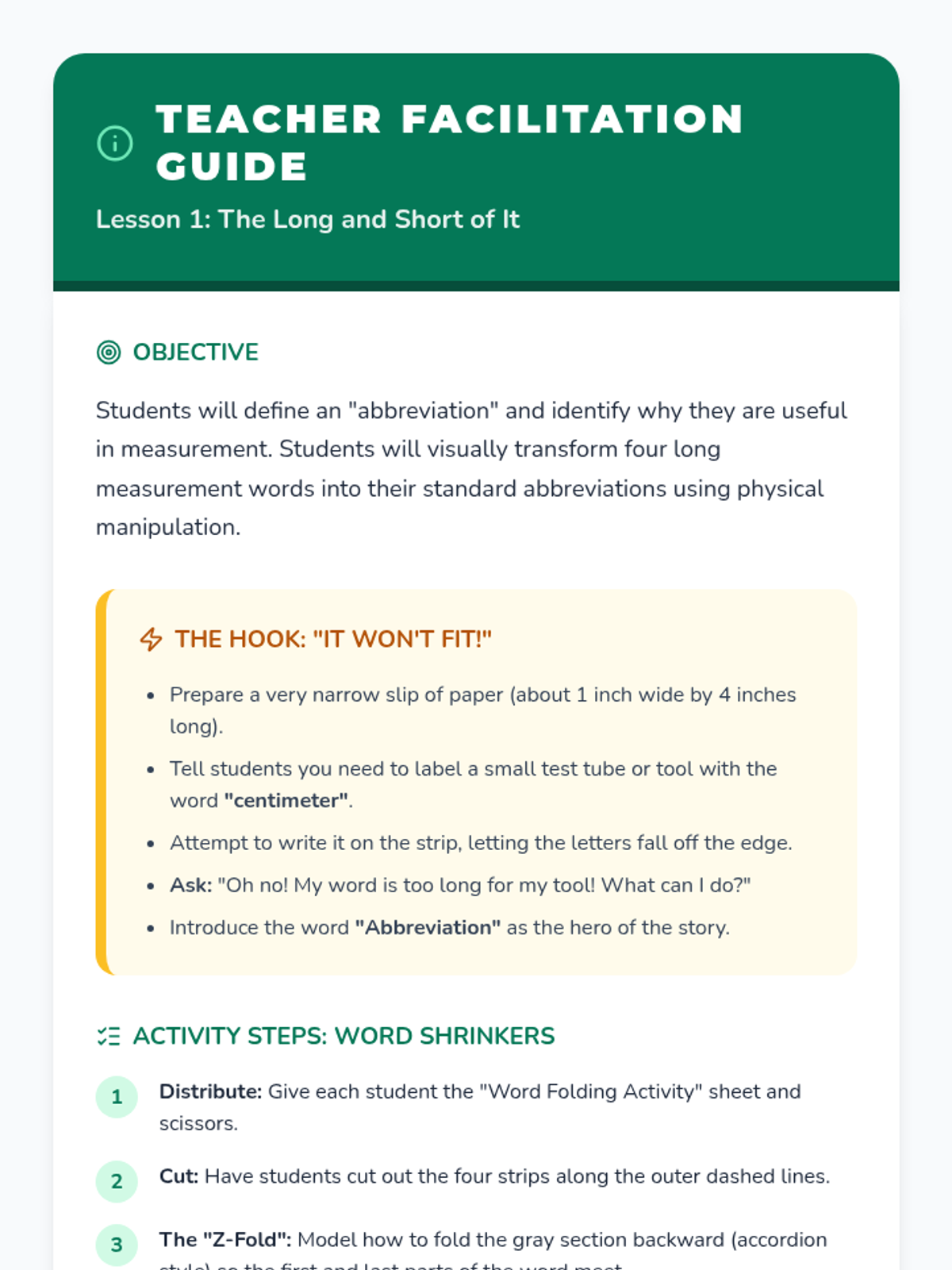
Students explore the practical use of measurement abbreviations through inquiry-based activities involving rulers, grocery packaging, and kitchen tools. This sequence focuses on visual recognition and recording of units like in., ft., oz., lb., tsp., and tbsp. in a scientific context.
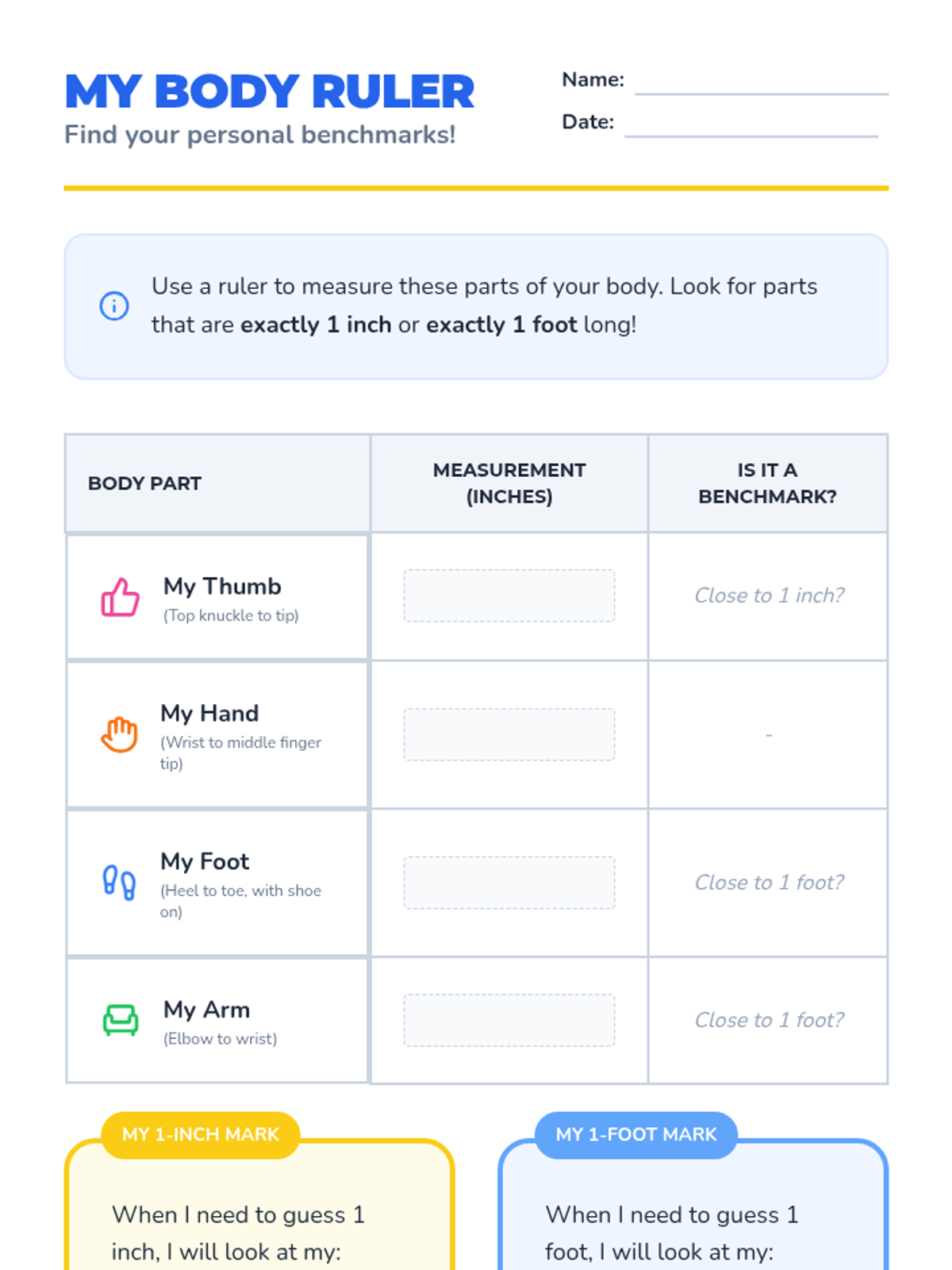
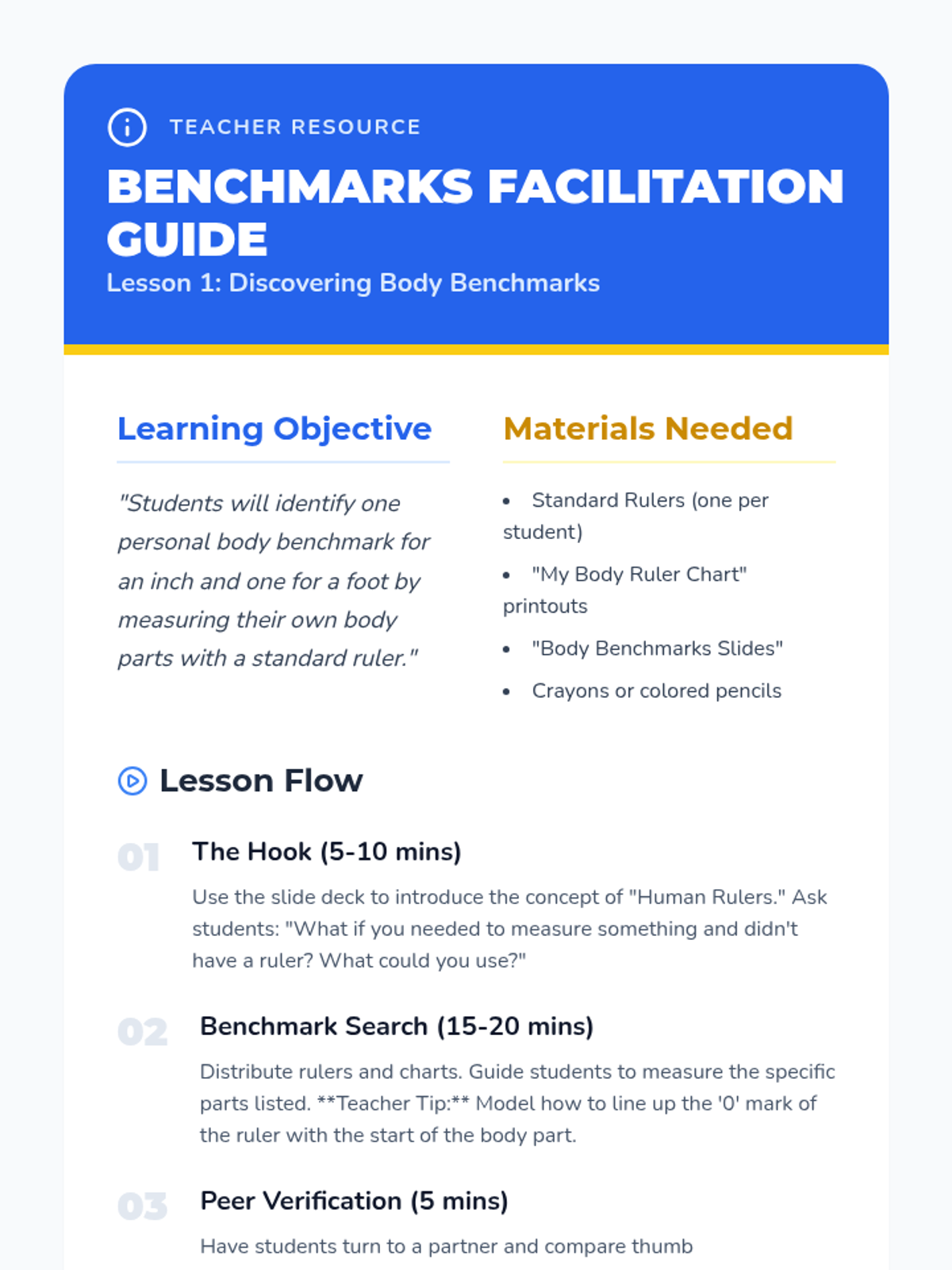
This sequence helps 1st Grade students develop 'measurement sense' by finding personal body benchmarks (like their thumb or foot) to estimate lengths before verifying with standard tools. Through gamified activities like 'The Estimation Jar' and 'Estimation Olympics,' students internalize the magnitude of inches and feet.
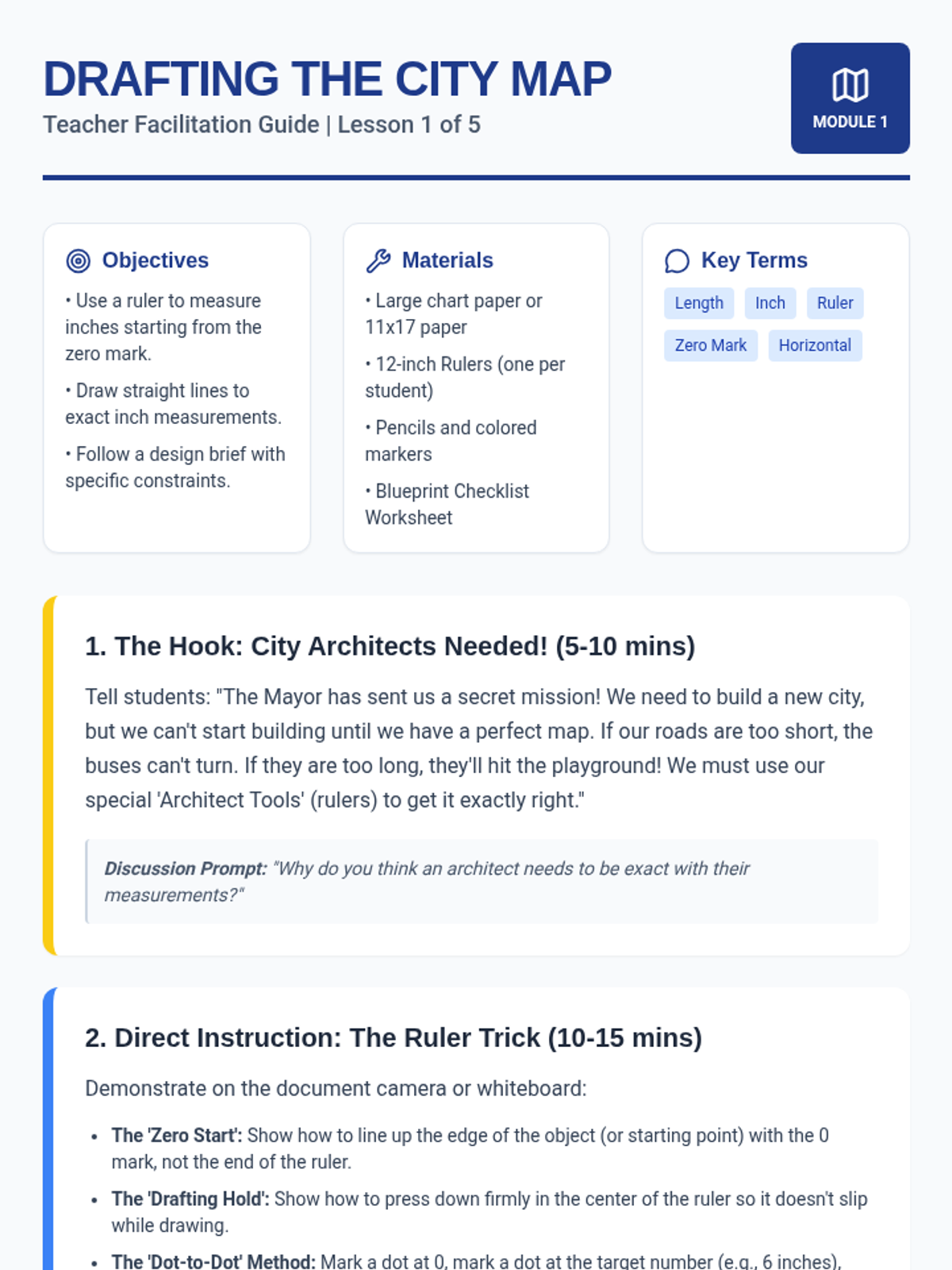
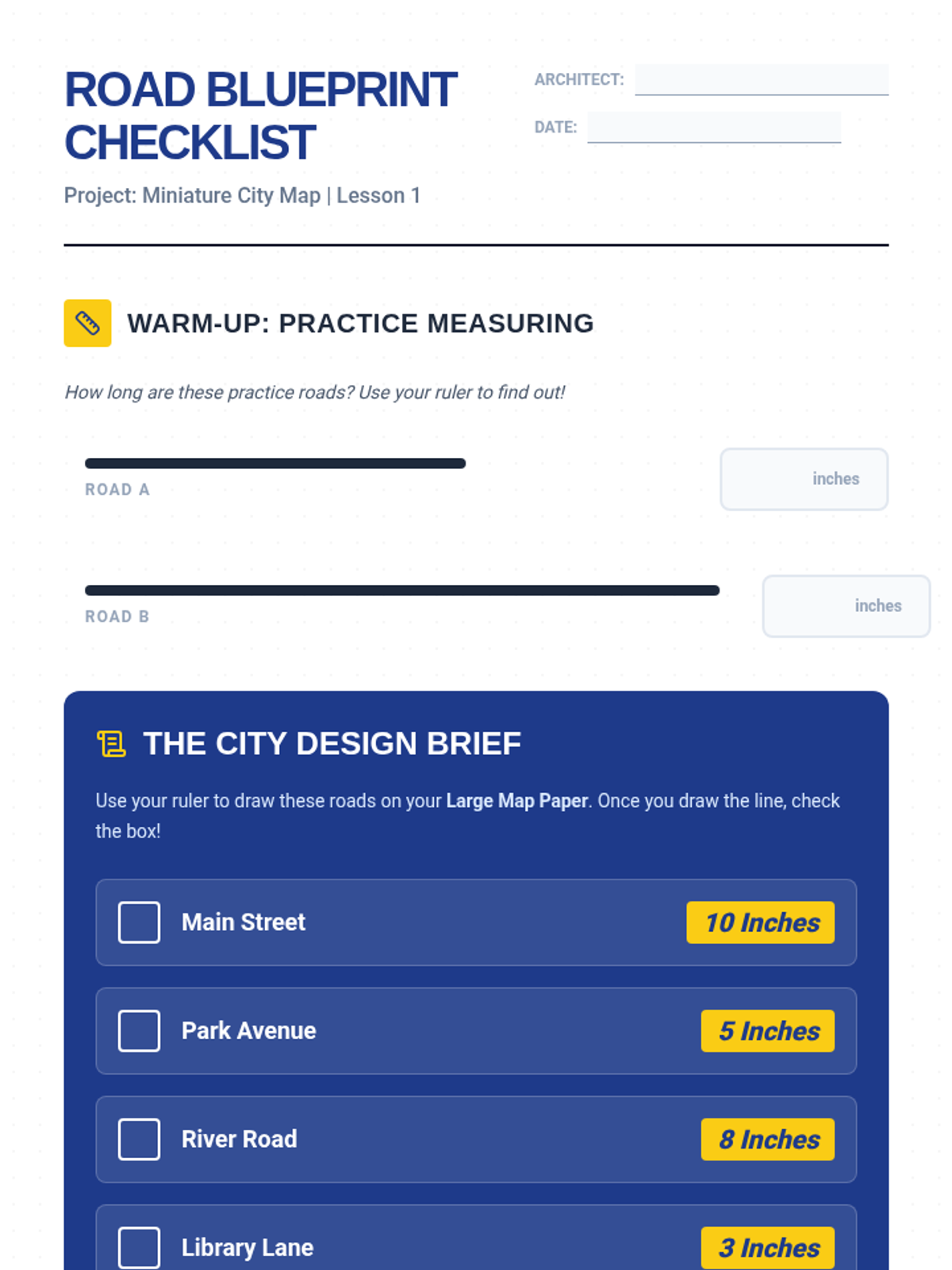
A project-based unit where 1st-grade students act as city architects. They learn to measure and estimate lengths in inches to design streets, construct buildings, and engineer bridges for a miniature city.
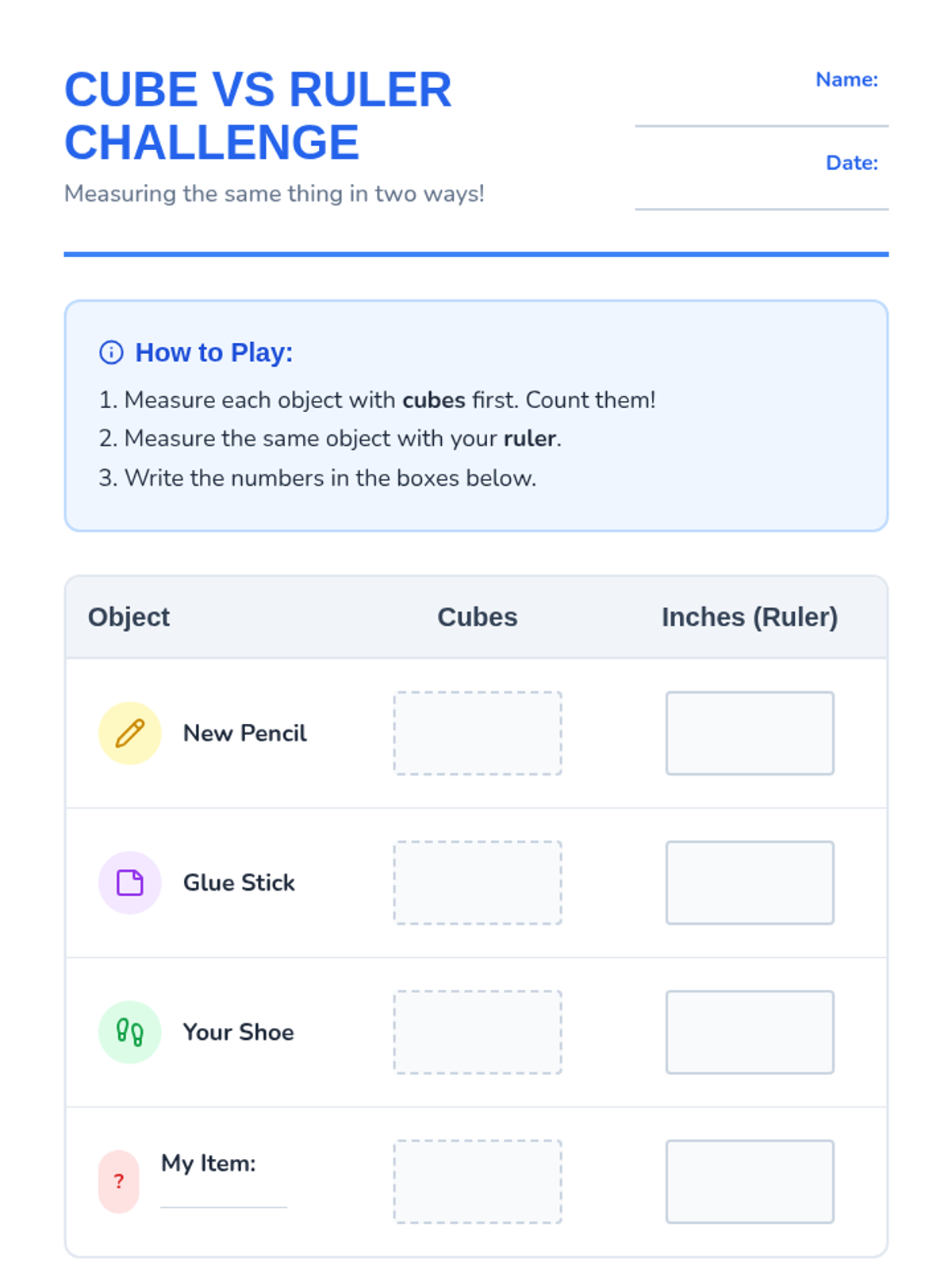
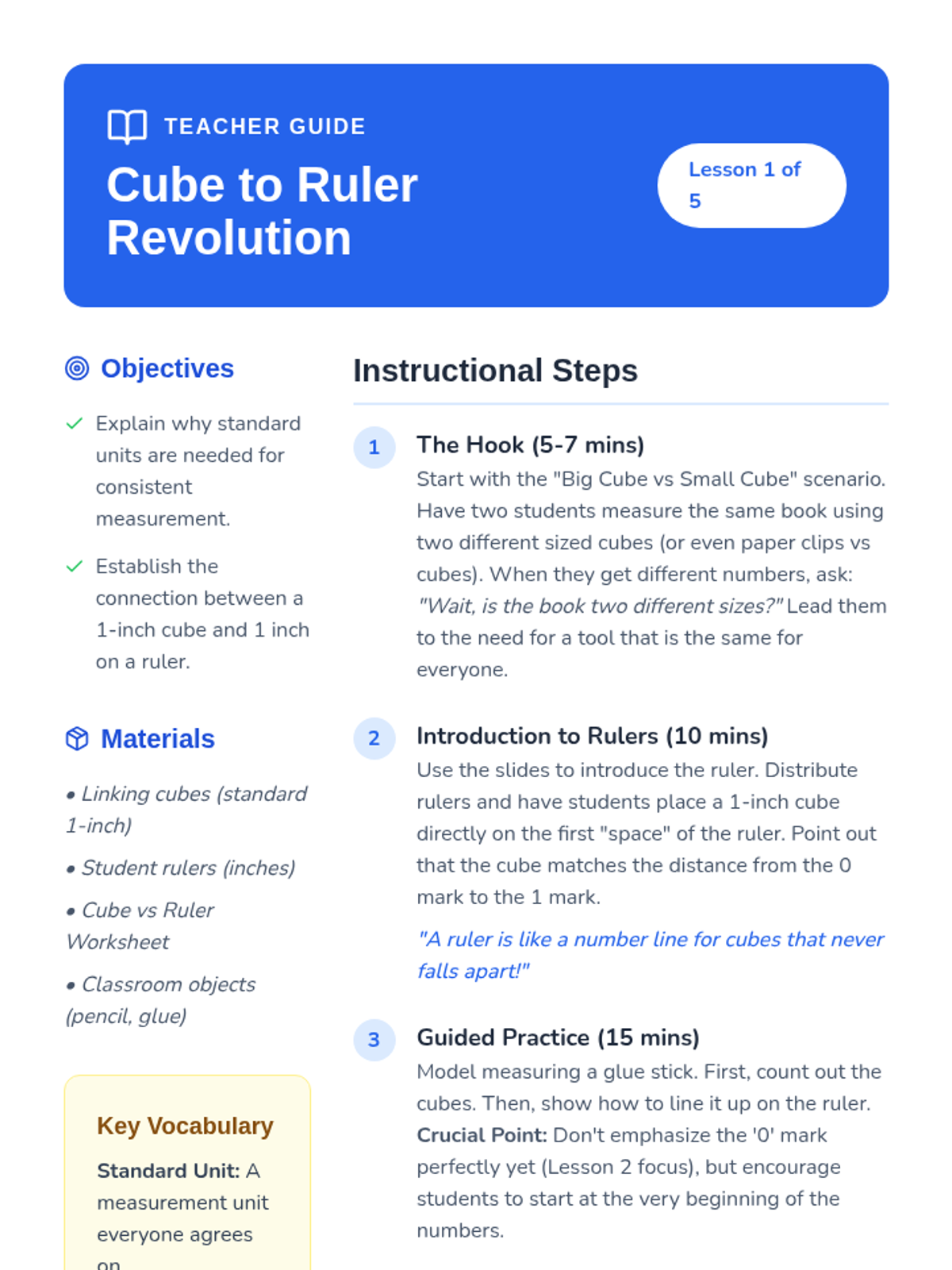
A sequence designed to help 1st graders transition from non-standard measurement to using standard rulers. Students learn to align the zero mark, measure to the nearest inch, and compare lengths.
A 1st-grade sequence exploring the transition from non-standard to standard measurement, focusing on ruler alignment, units (inches/cm), estimation, and real-world application.
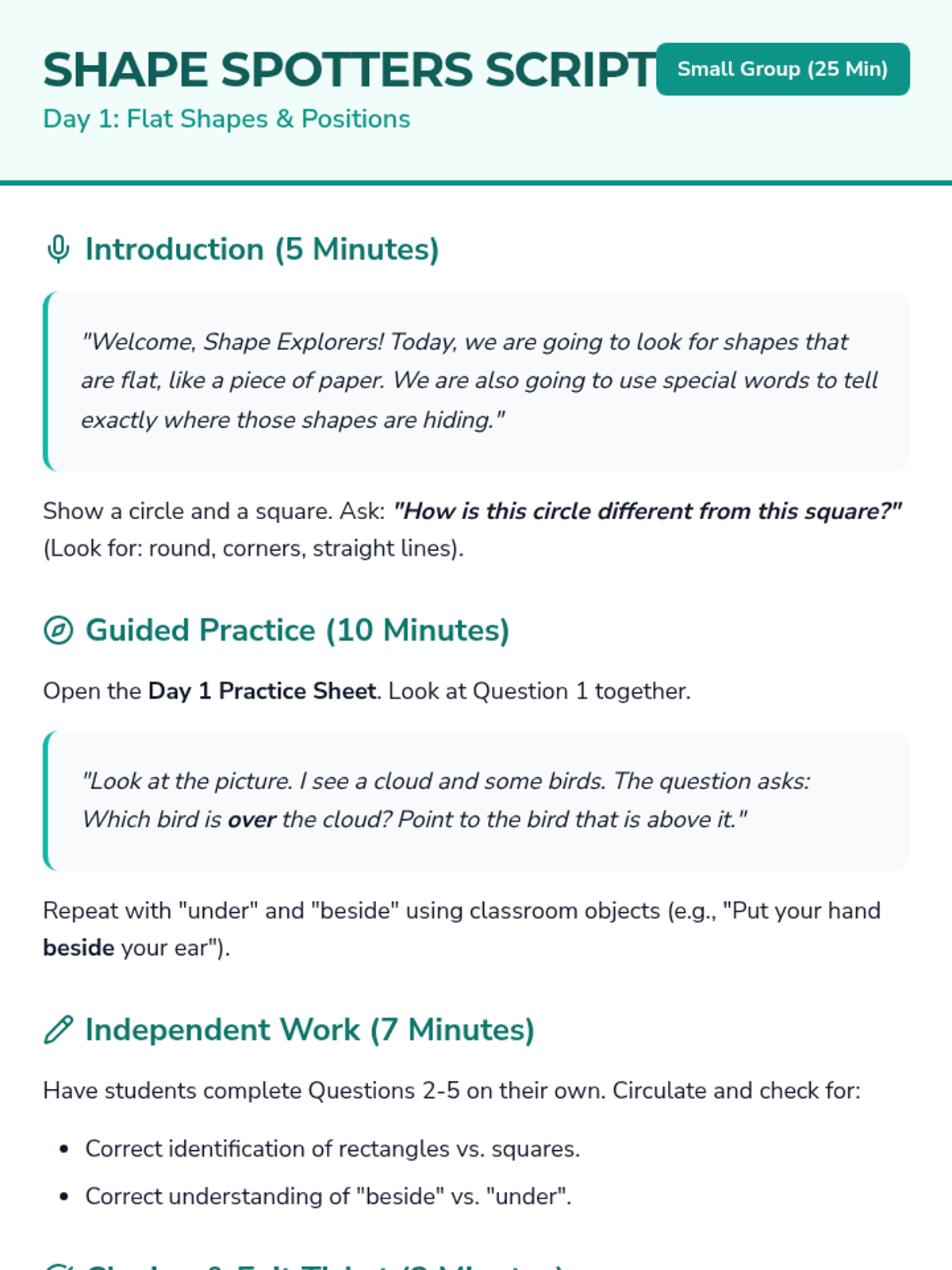
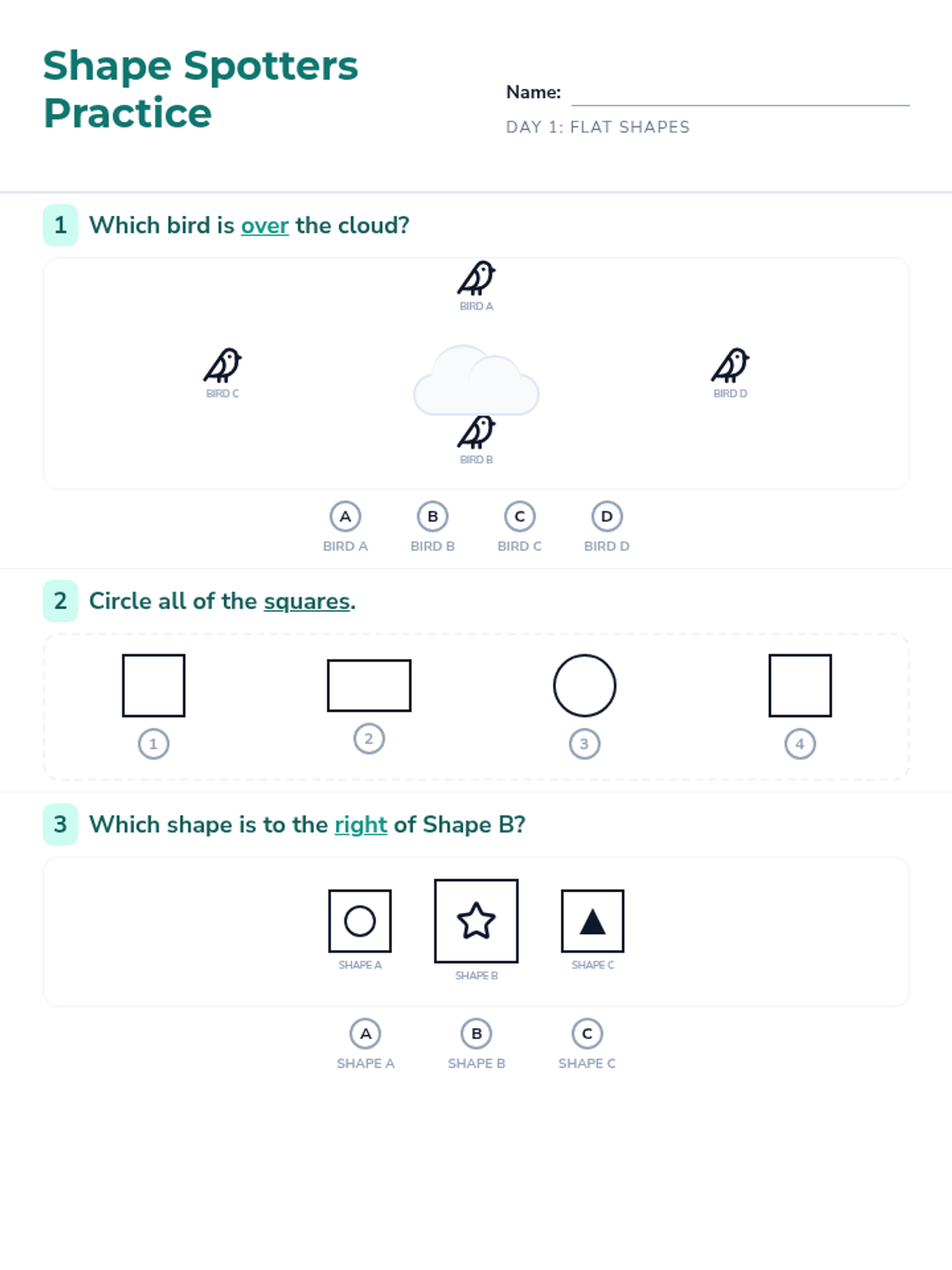
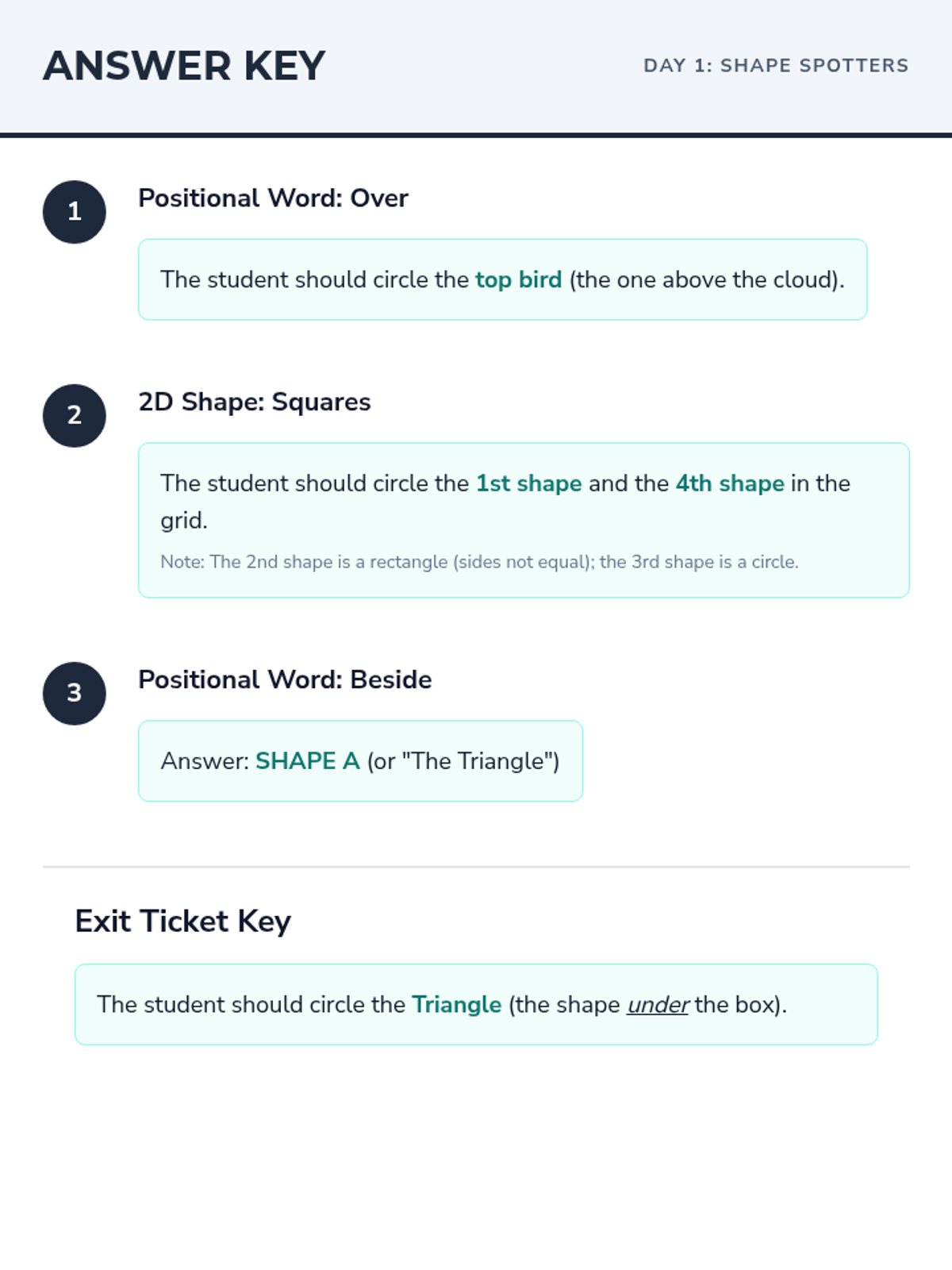
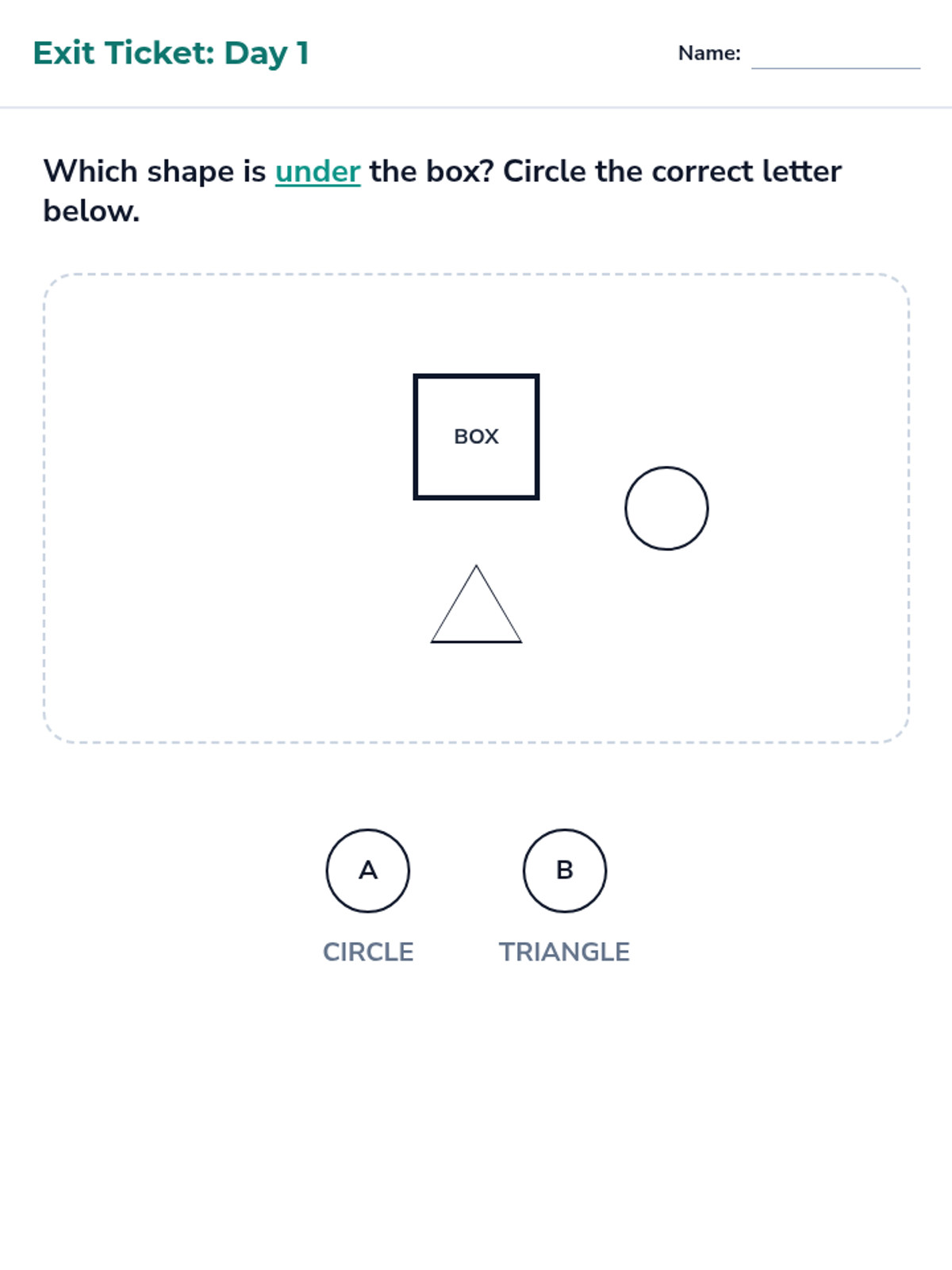
A 3-day small group intervention sequence focused on NWEA RIT 120-130 geometry and measurement standards, including 2D/3D shapes, positional words, and size comparisons.
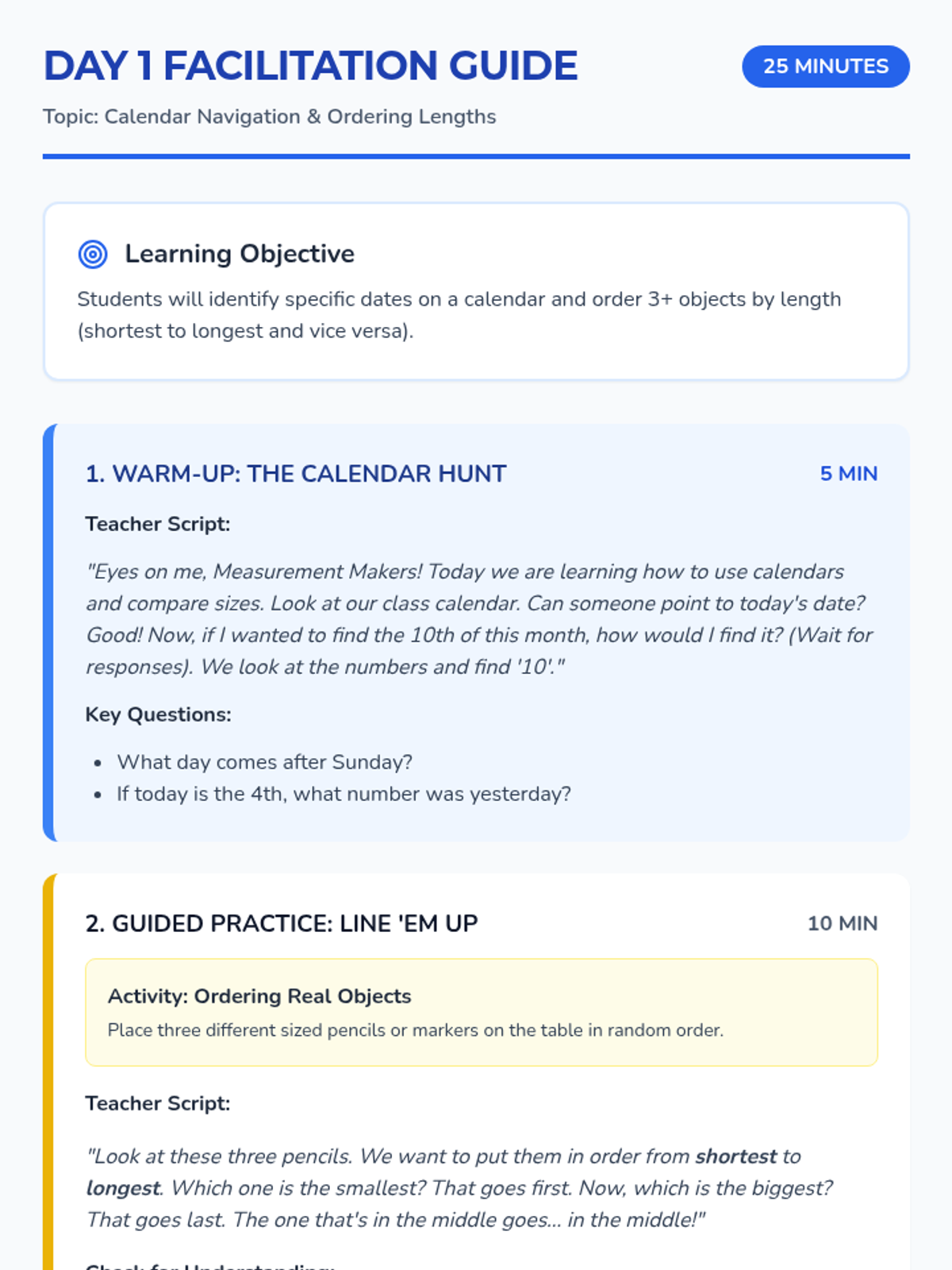
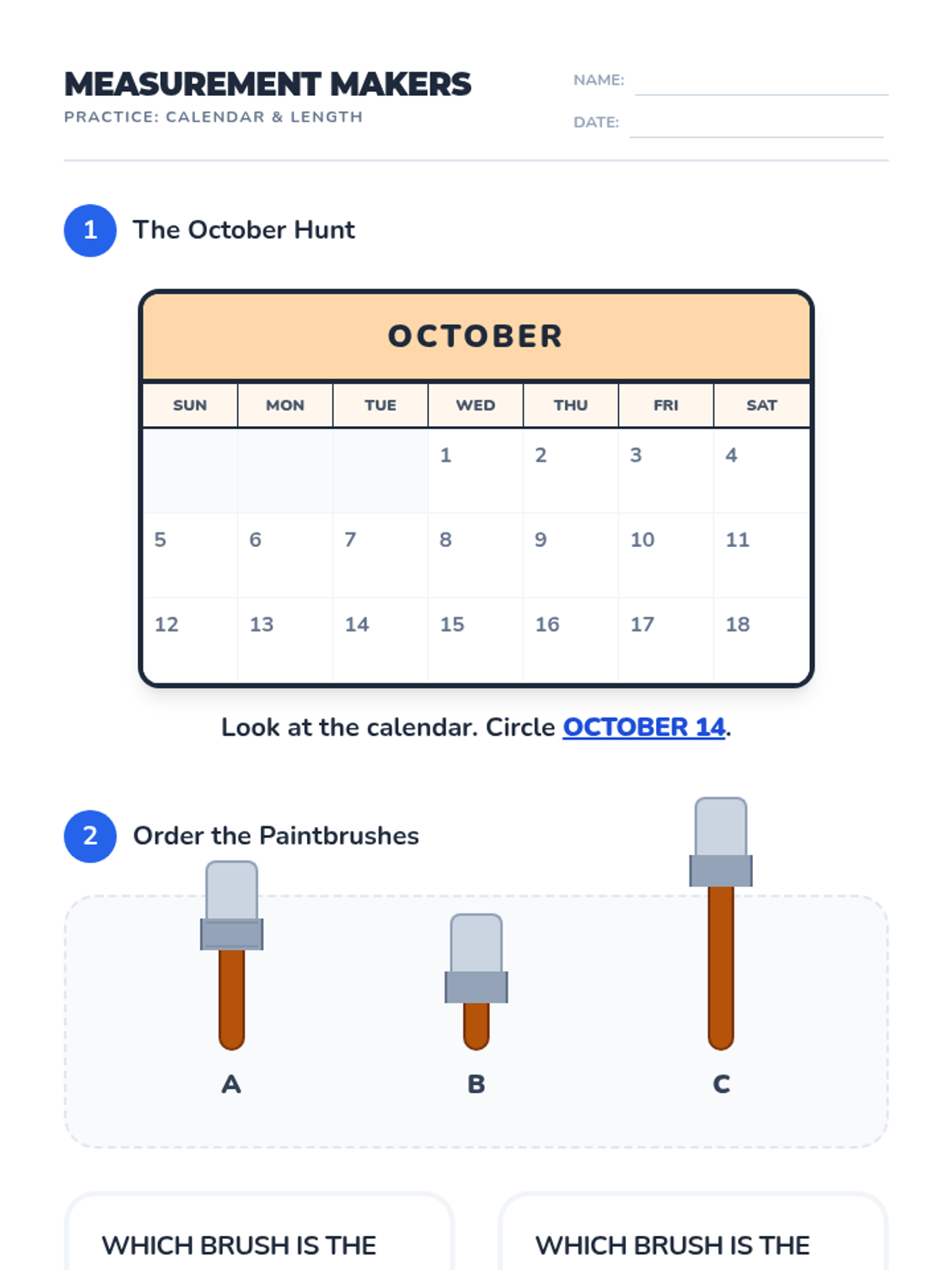
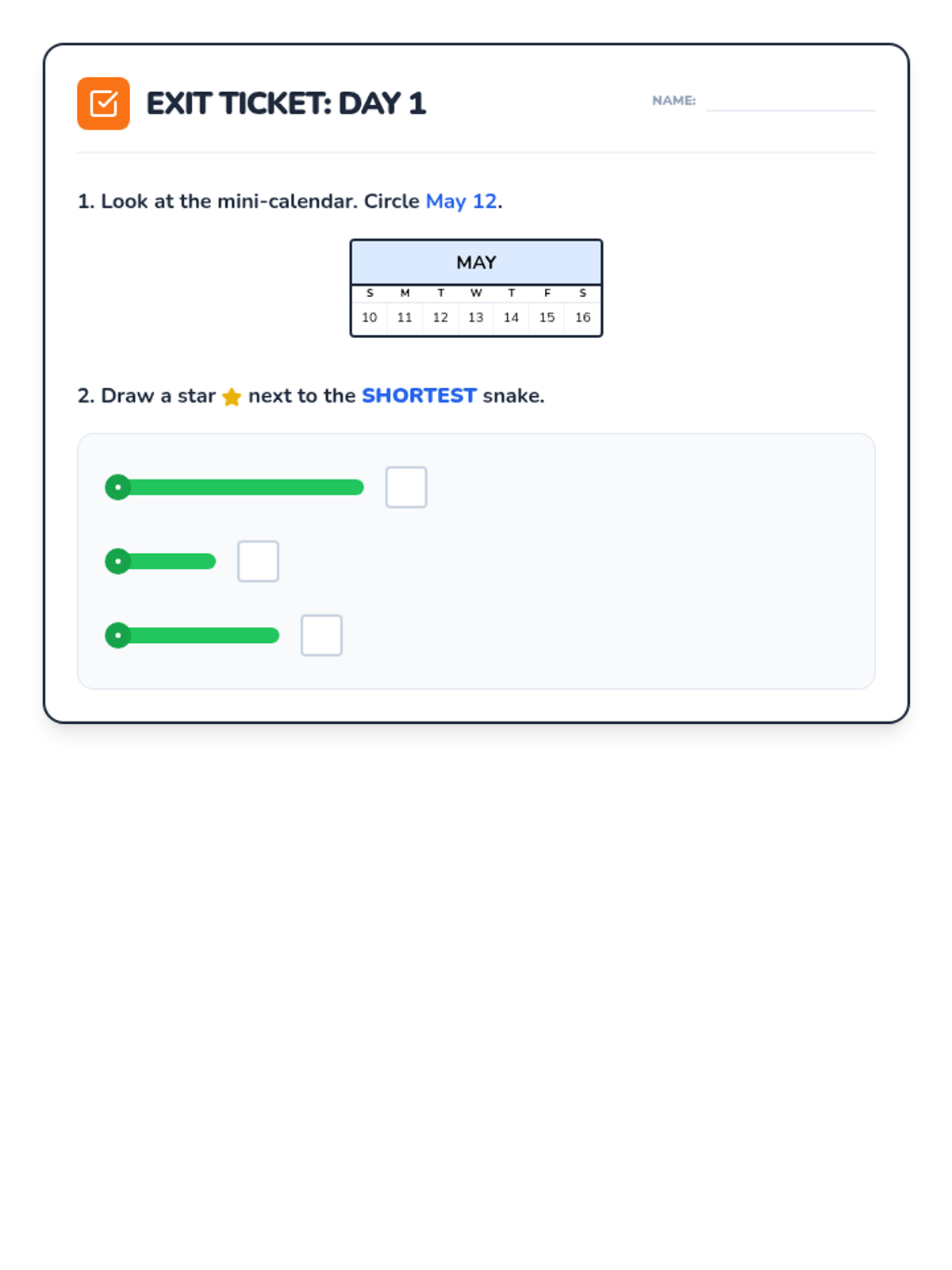
A 3-day small group math sequence designed to move students from NWEA RIT 140-150 to 150-160 in Geometry and Measurement. Focuses on calendar skills, time, length ordering, and 2D/3D shape identification.
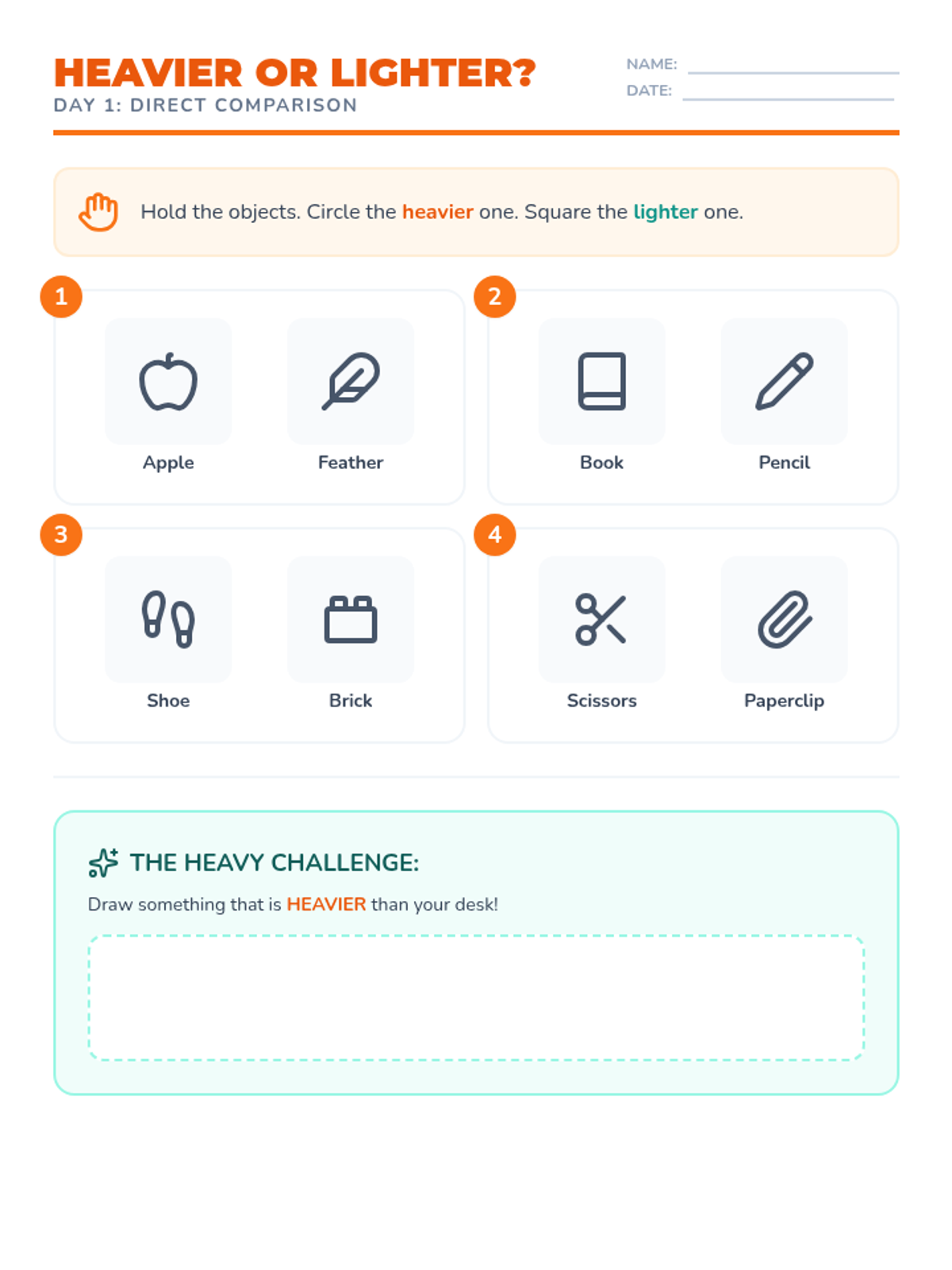
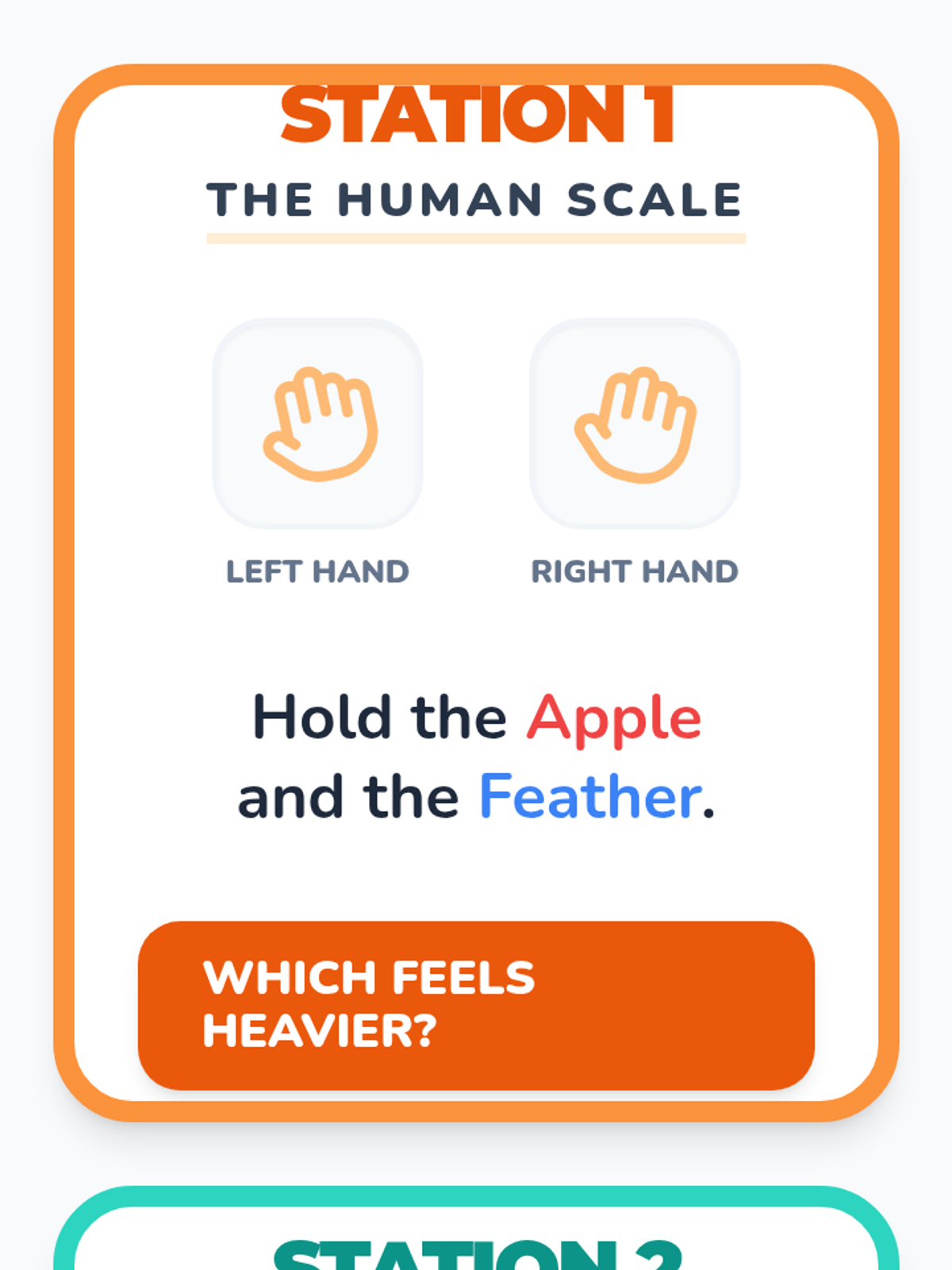
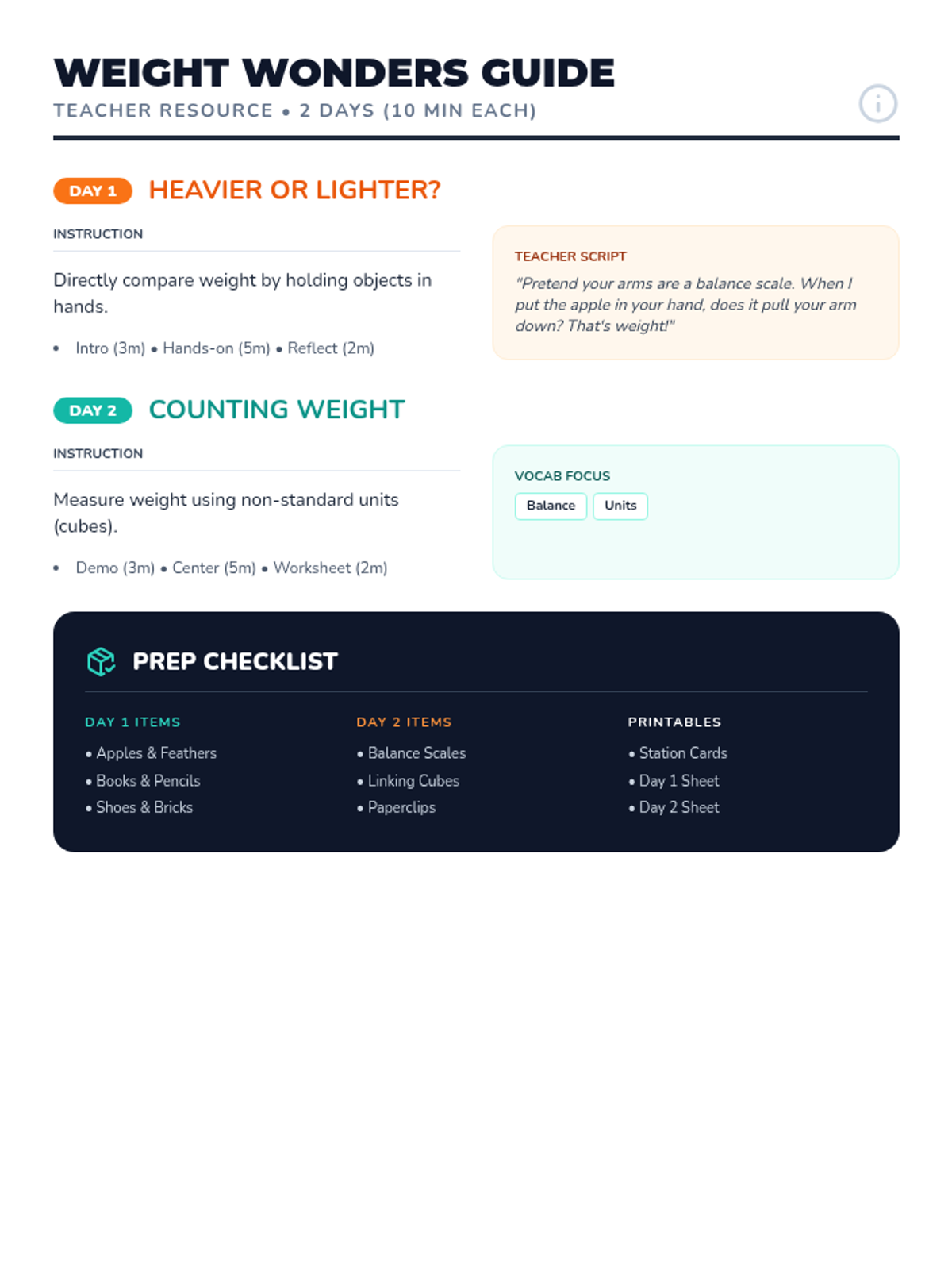
A two-day introductory sequence on weight comparison using direct comparison and non-standard units for young learners.
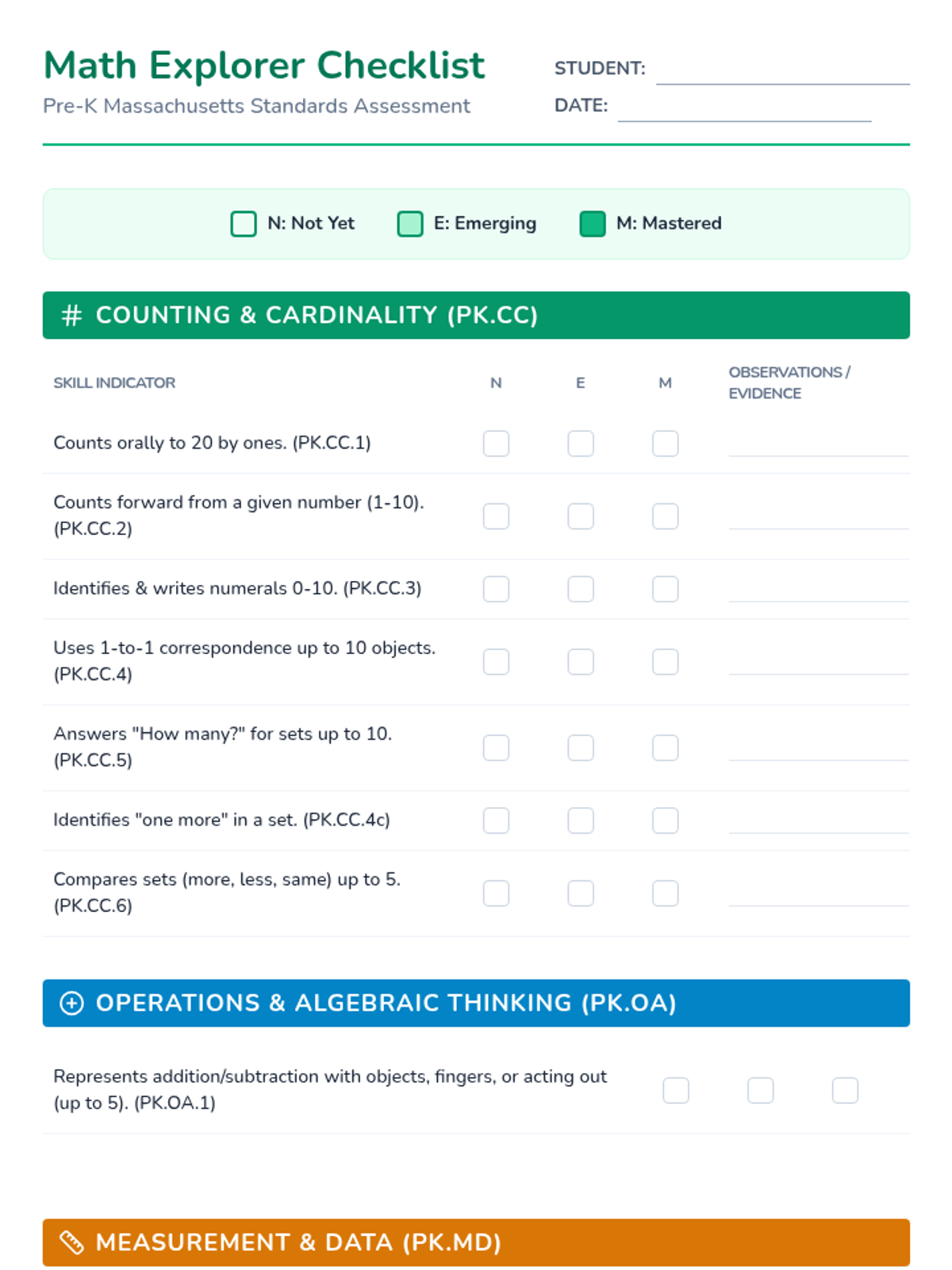
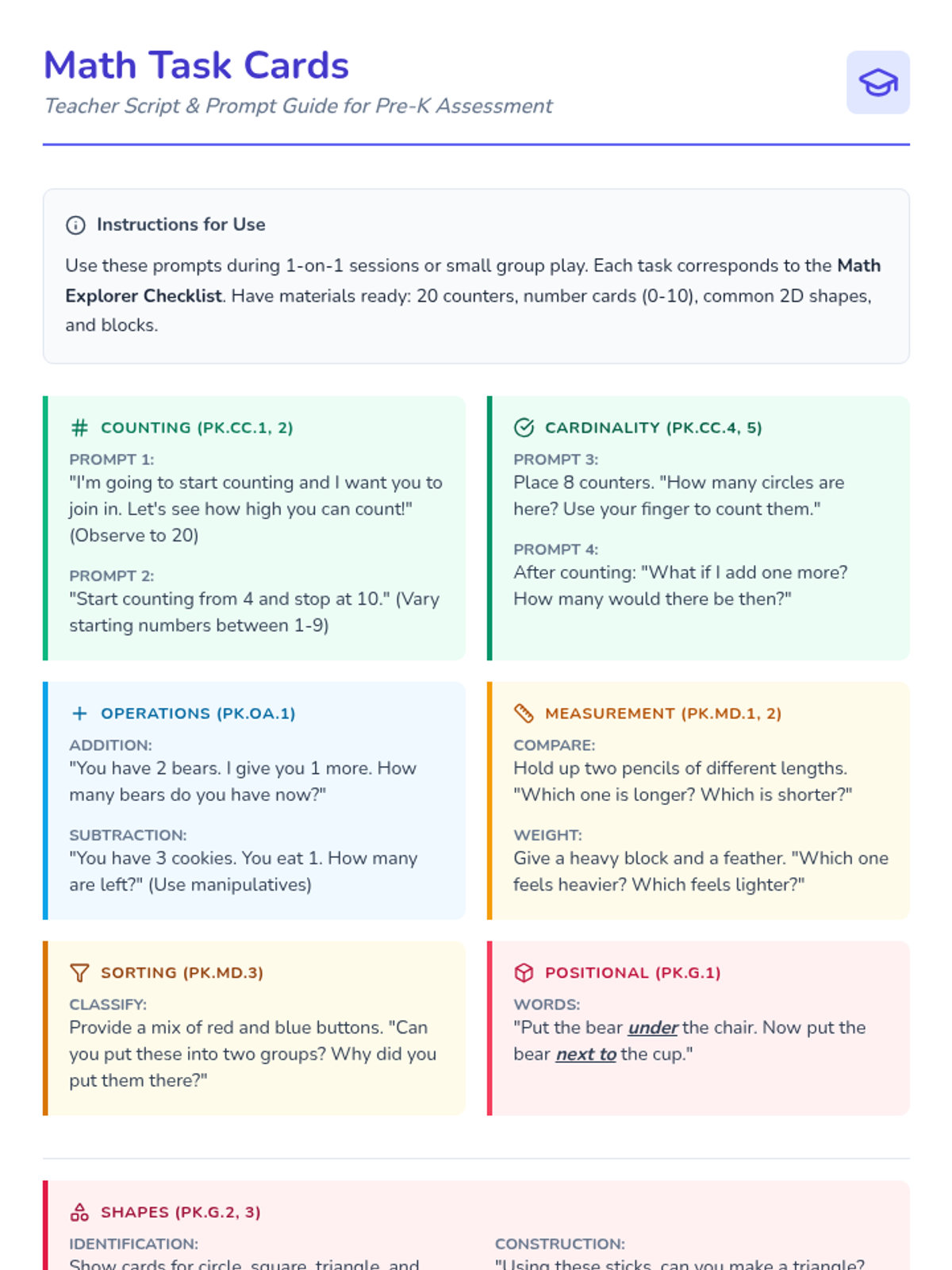
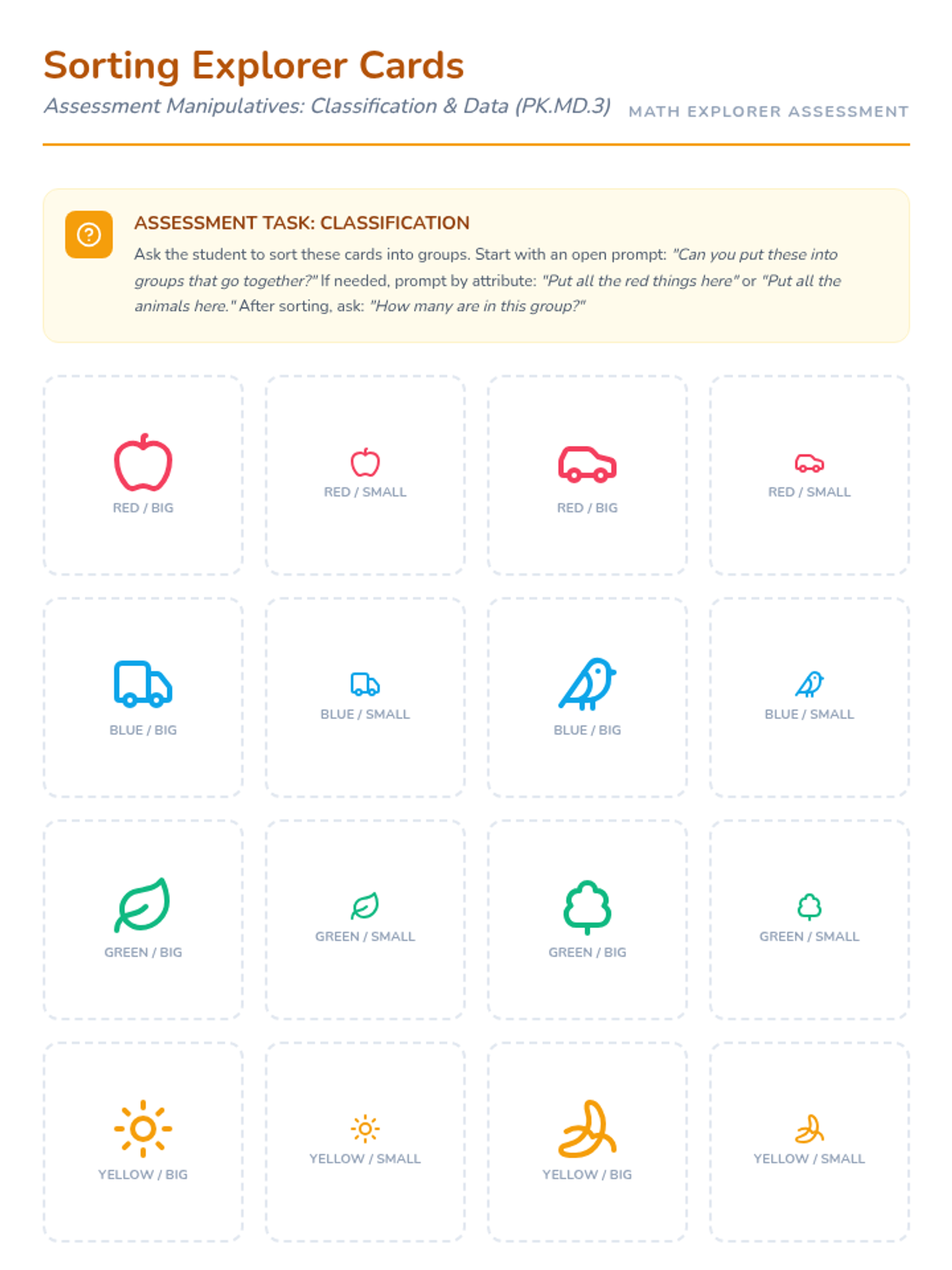
A series of assessment resources for foundational mathematics based on the Massachusetts Curriculum Frameworks, spanning Pre-K and early elementary grades.
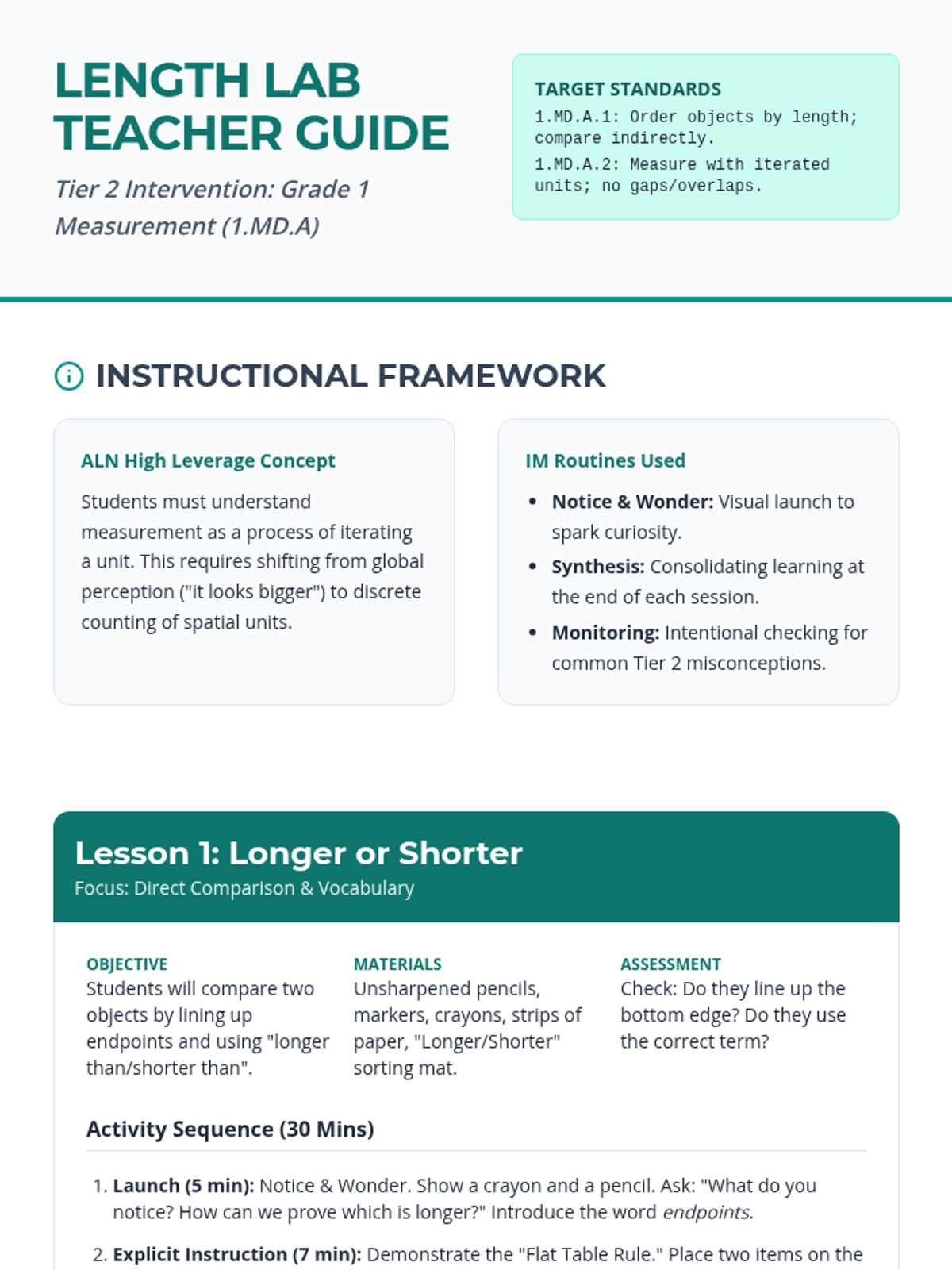
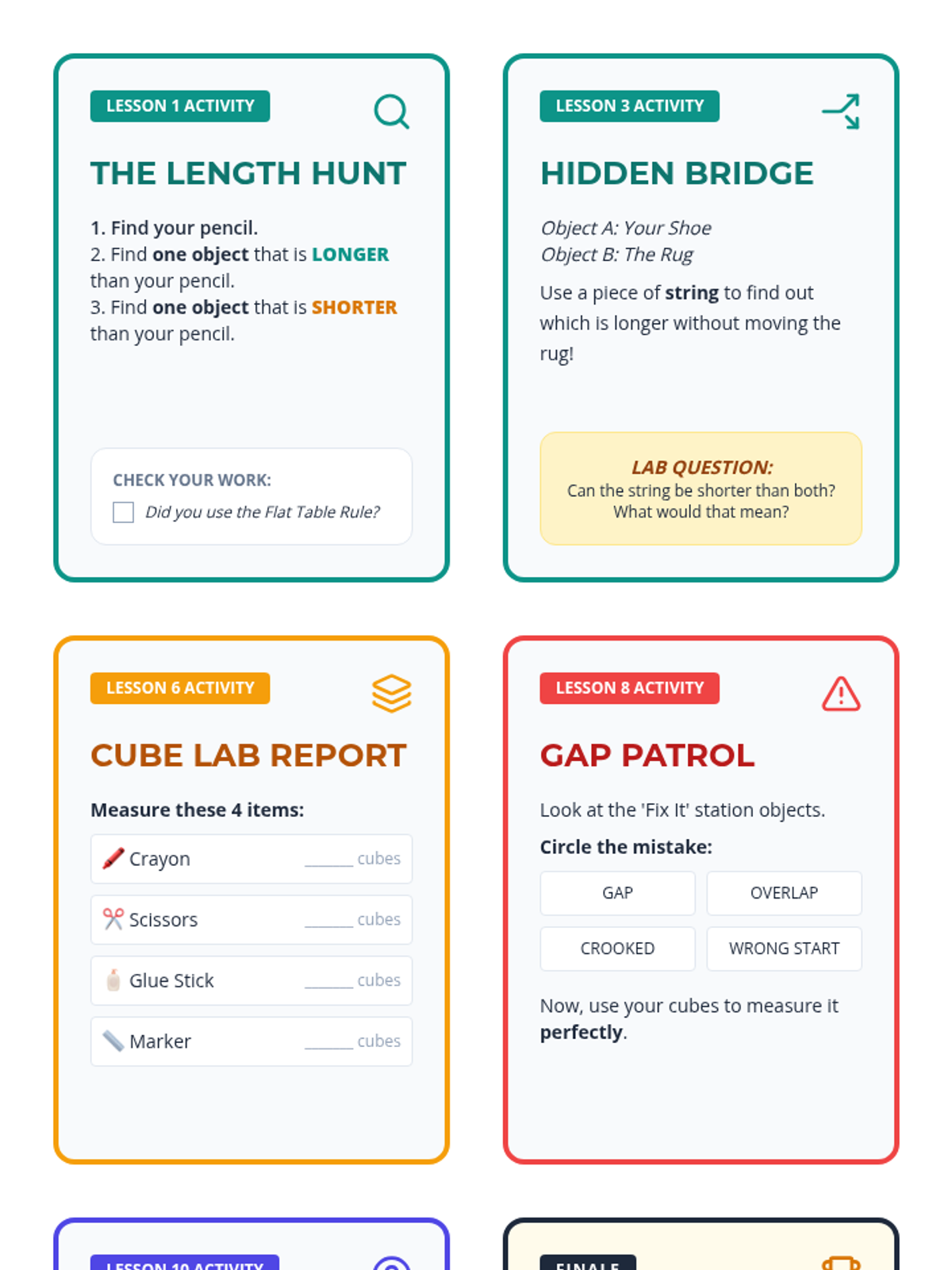
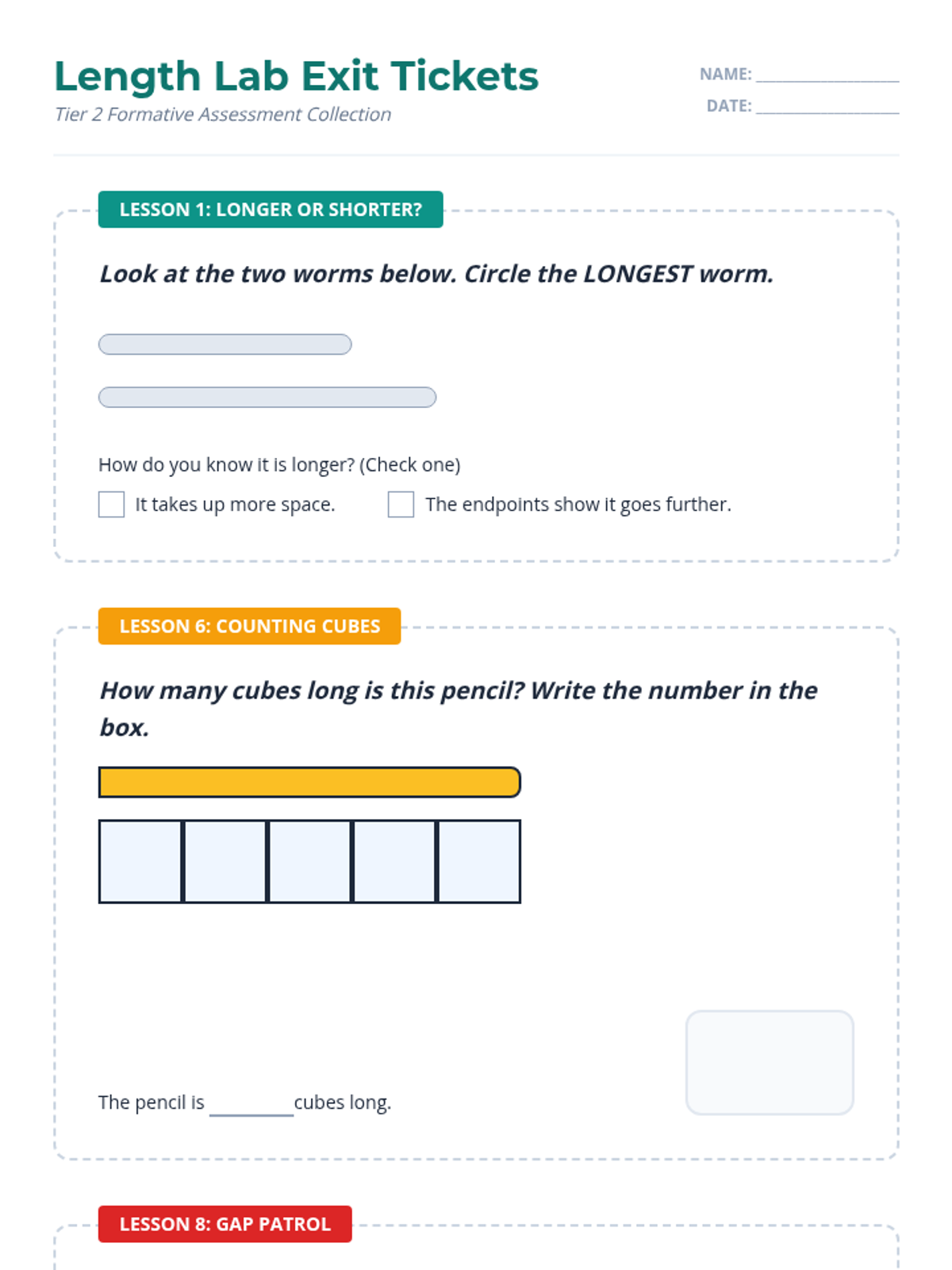
A 12-lesson Tier 2 intervention sequence for first-grade students focused on measurement concepts (1.MD.A). The sequence progresses from direct comparison to non-standard unit iteration, utilizing High Leverage Concepts and Illustrative Mathematics instructional routines.
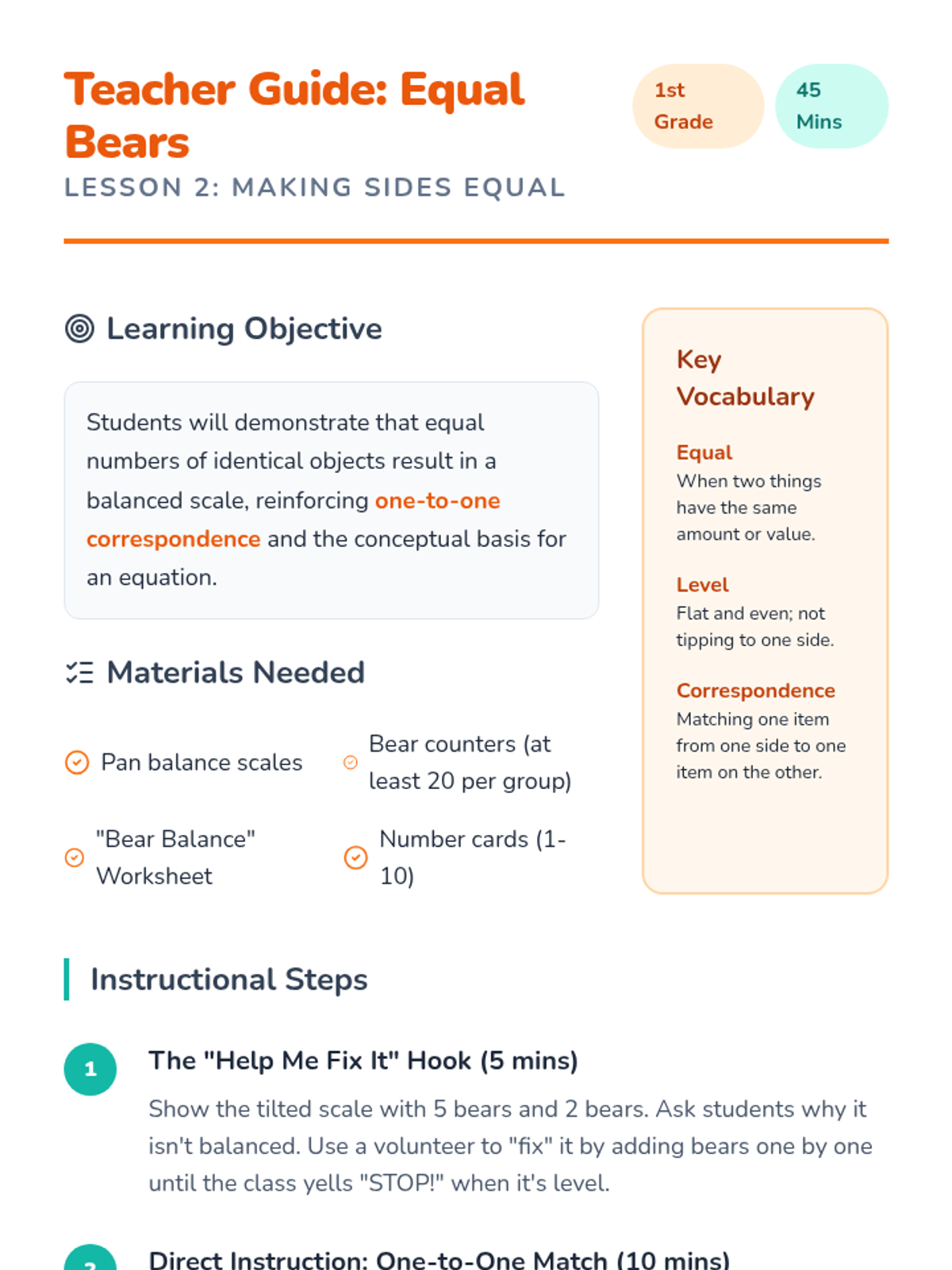
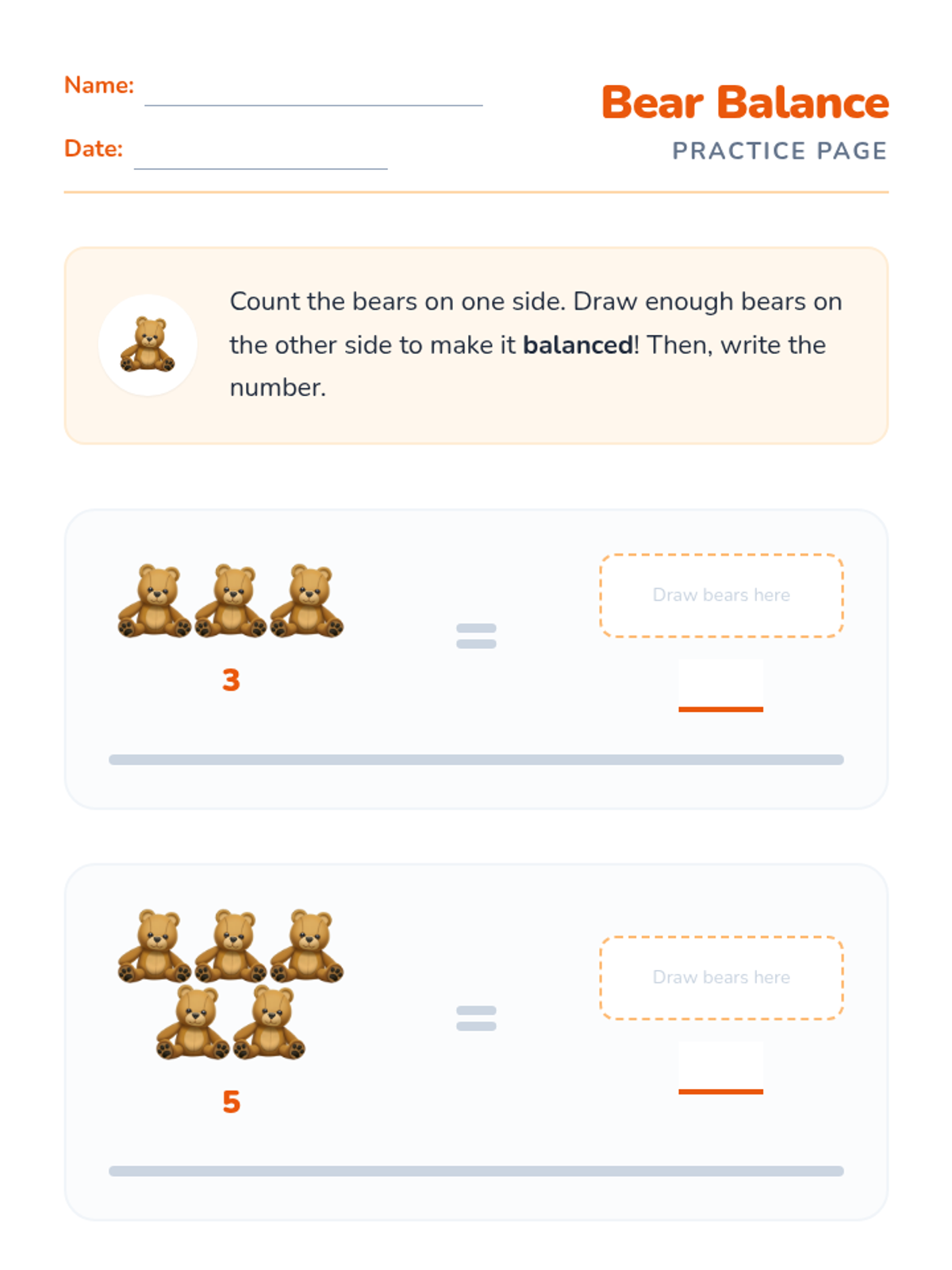
This sequence introduces 1st-grade students to the concept of equality using physical balance scales. Students explore balance, 1:1 correspondence, maintaining equilibrium by adding to both sides, and representing weight relationships symbolically.
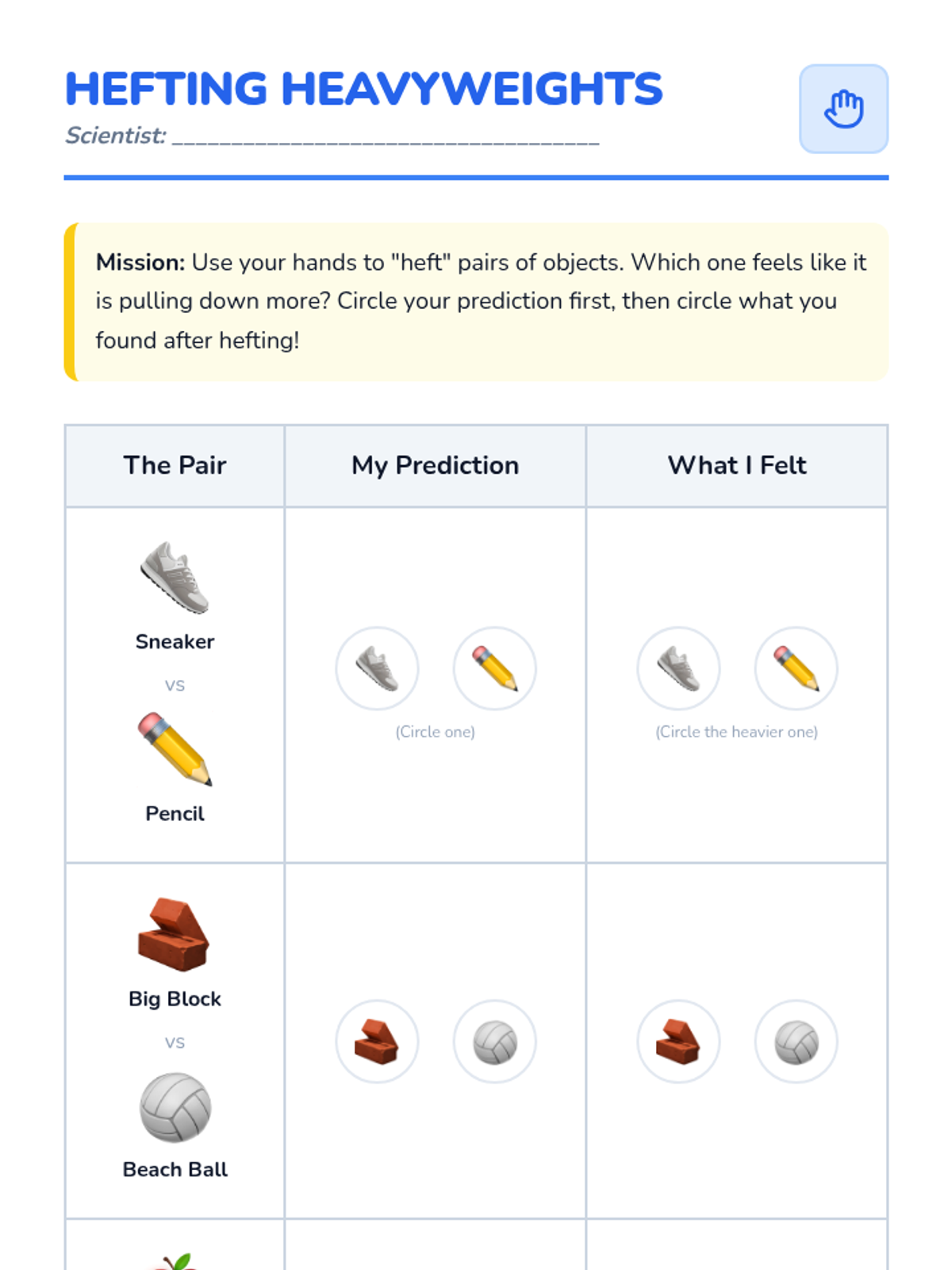
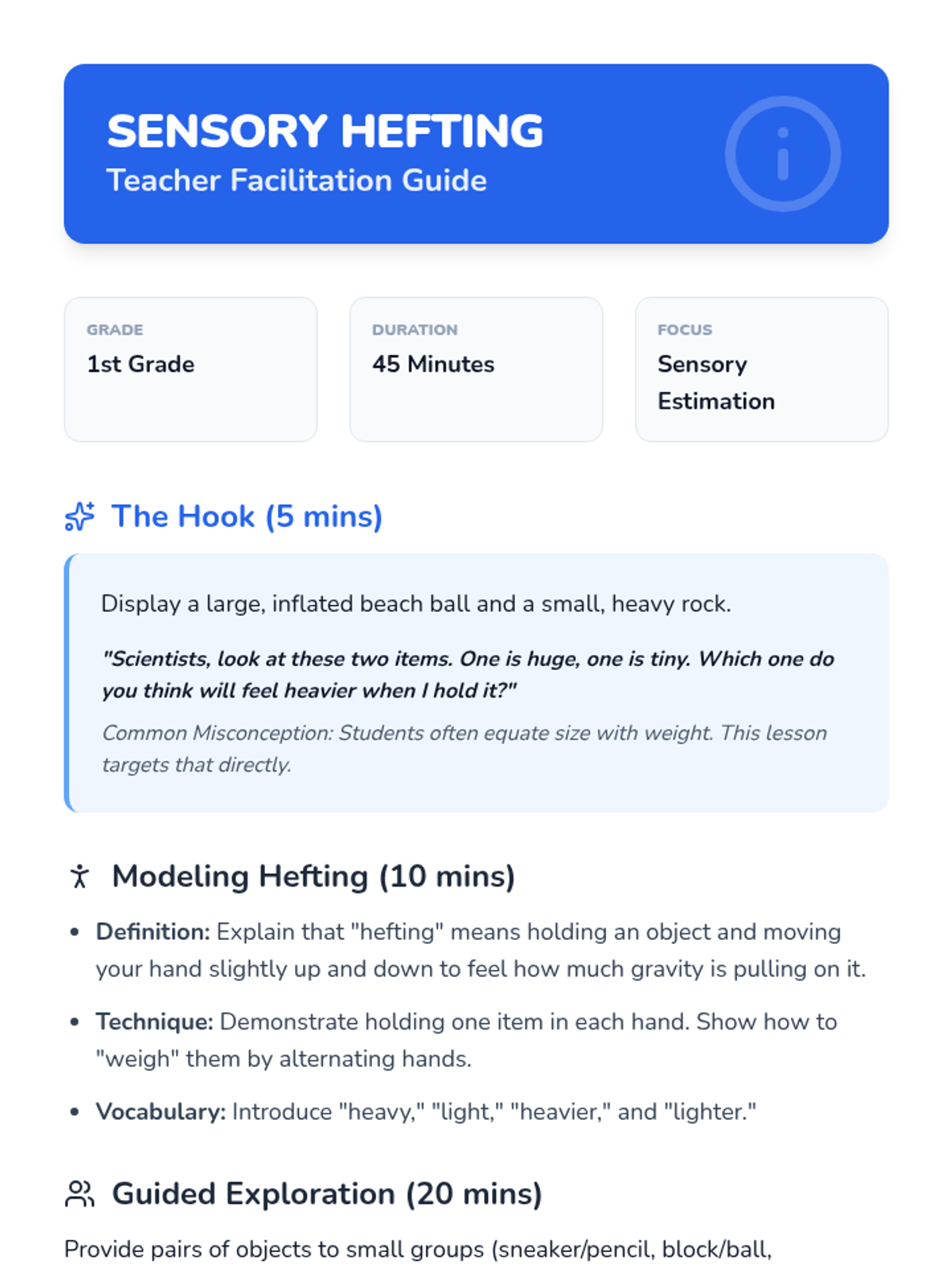
An inquiry-based sequence for 1st Grade students to explore mass and weight using balance scales. Students progress from sensory hefting to using standard units and conducting a mystery bag lab to understand measurement.
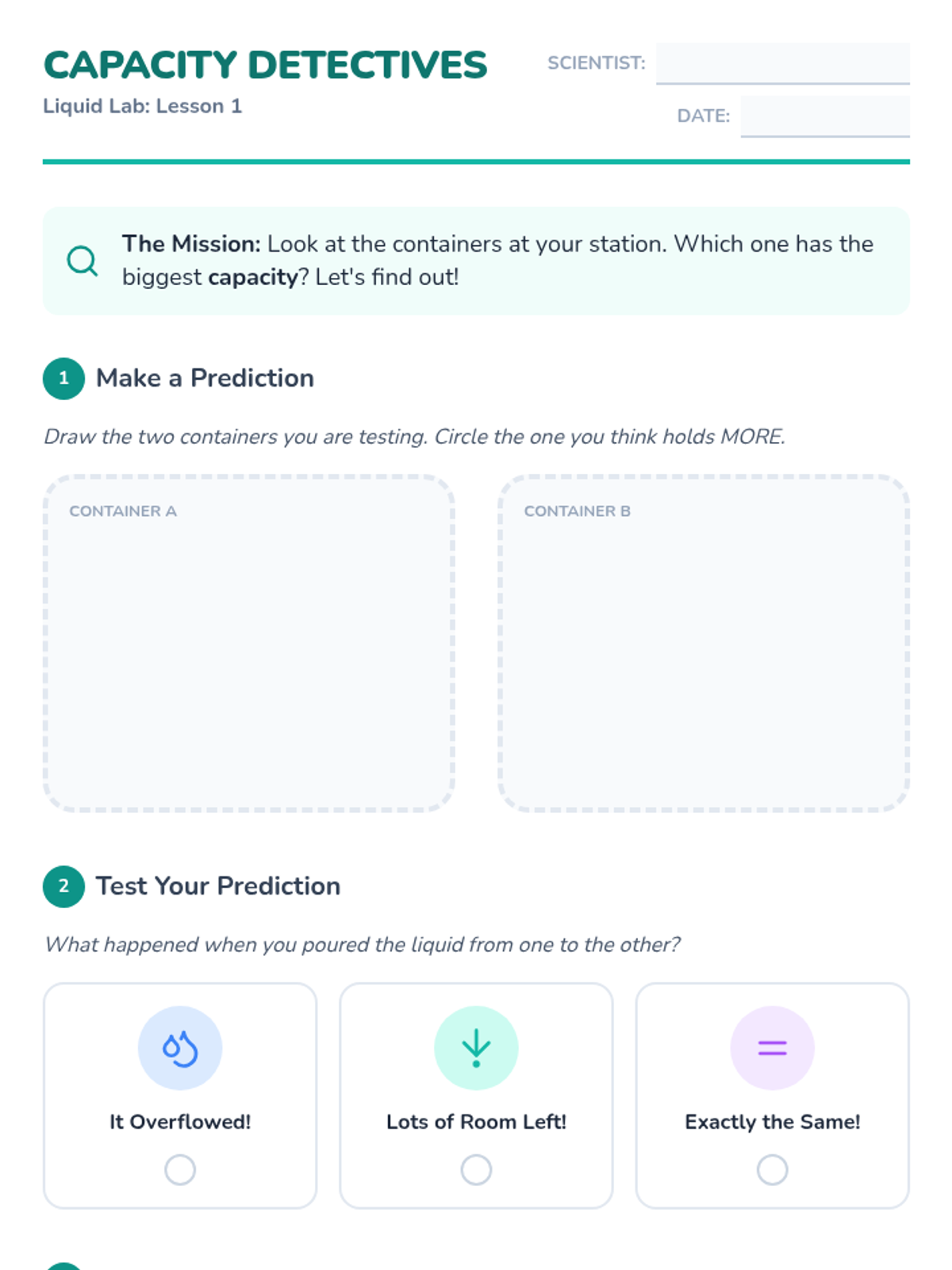
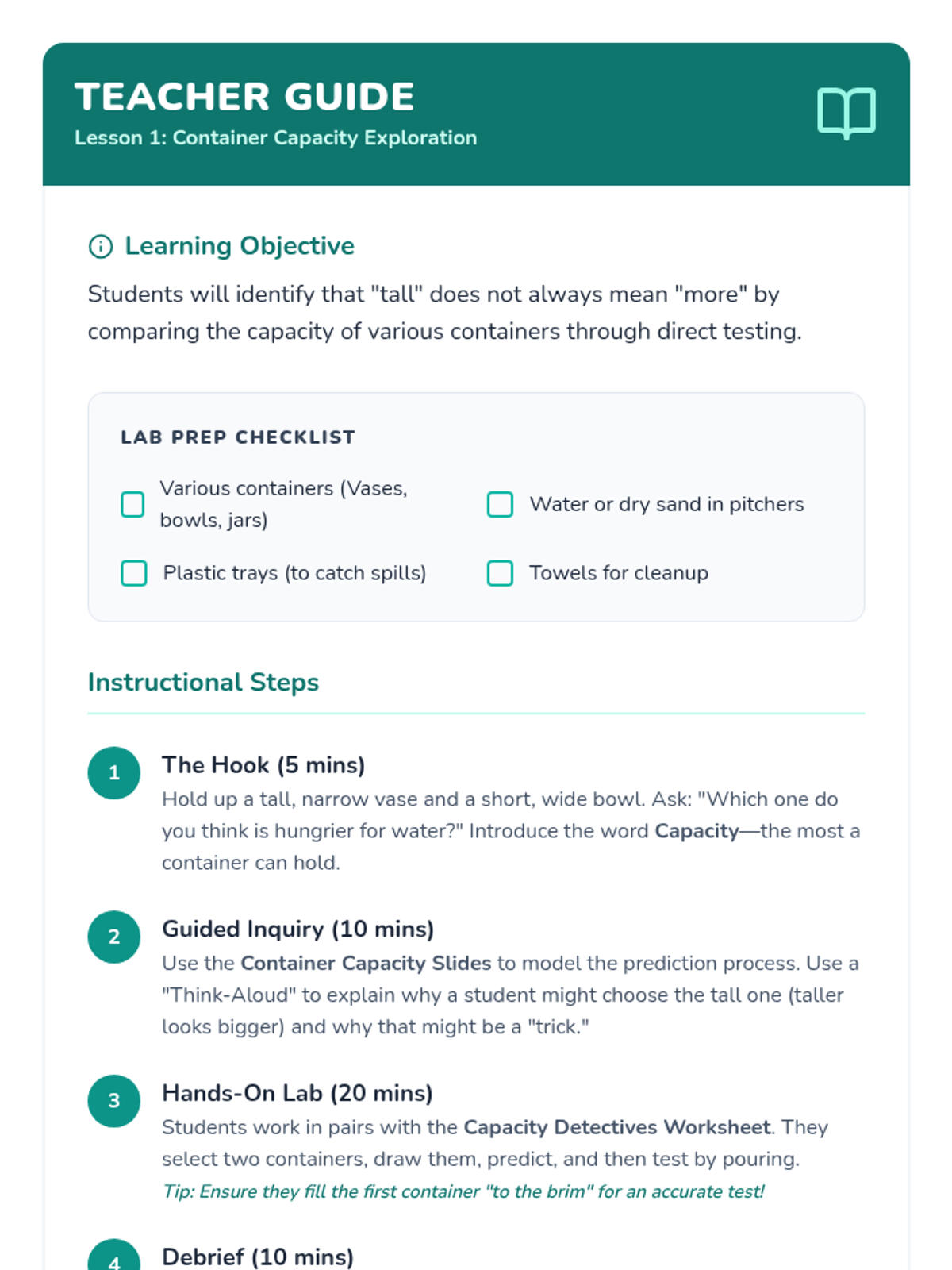
A project-based exploration for 1st graders where they transform into 'liquid scientists'. Students investigate capacity, learn to use standard tools, and discover that volume remains constant regardless of container shape through hands-on pouring and mixing activities.
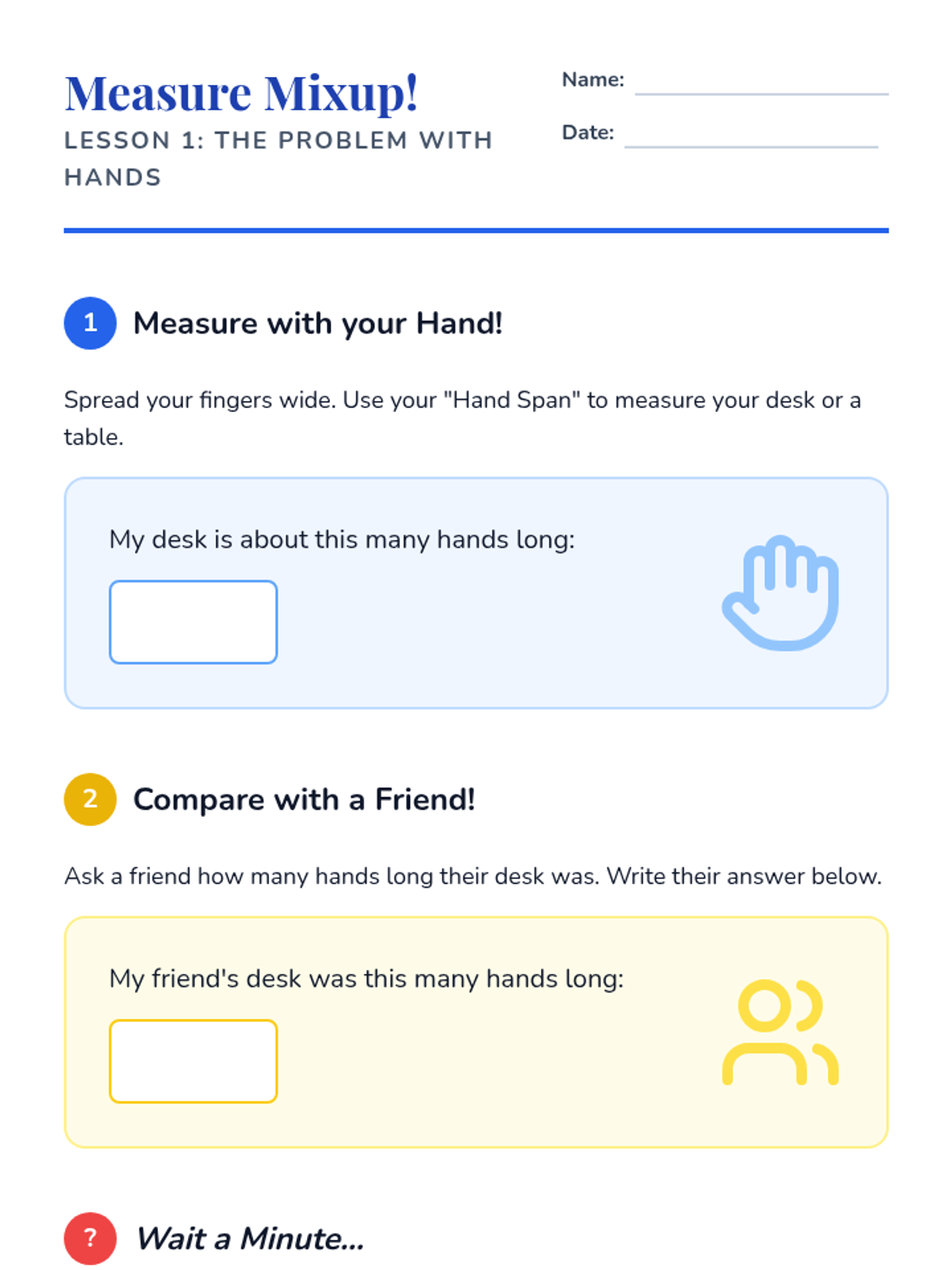
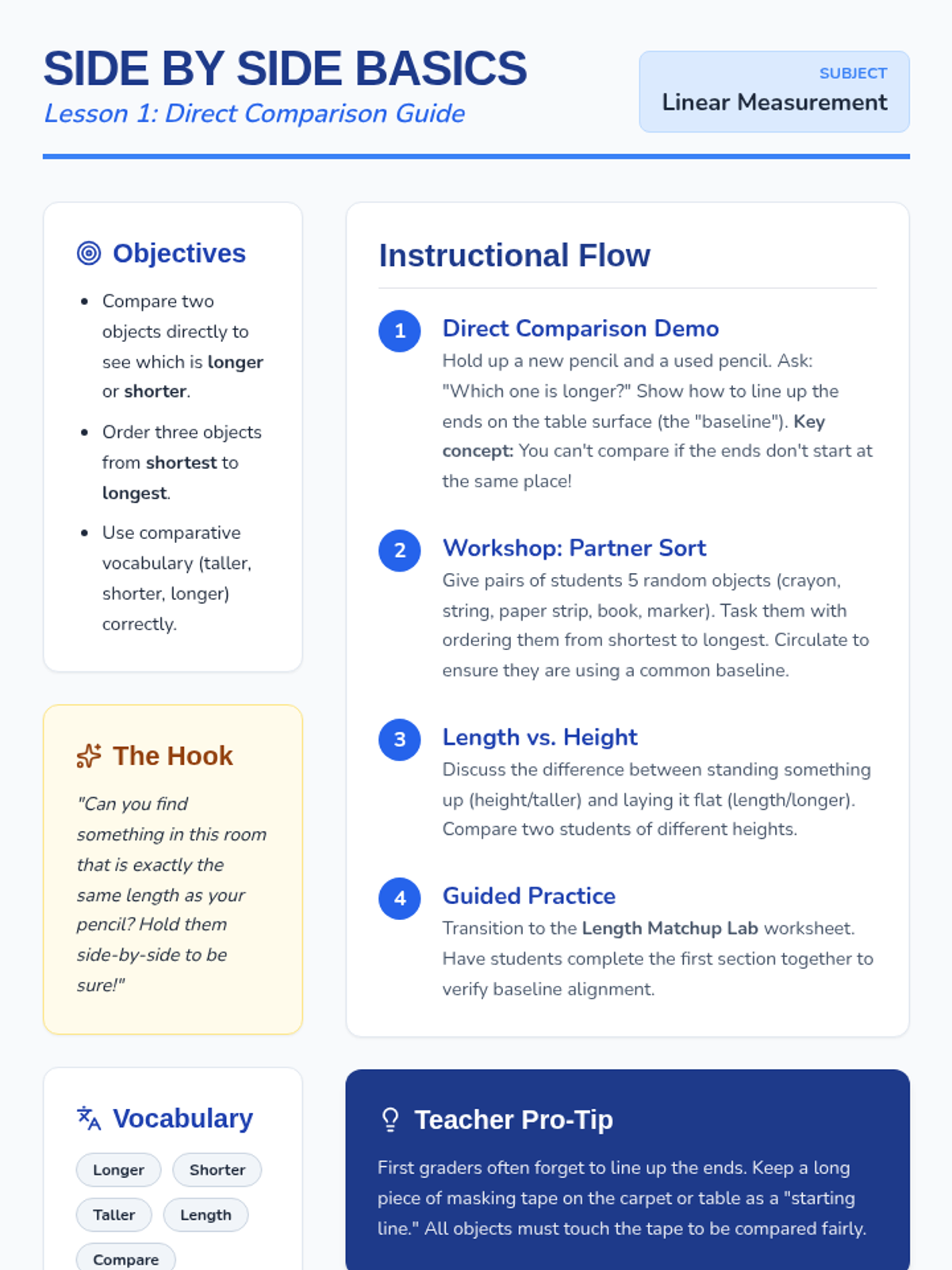
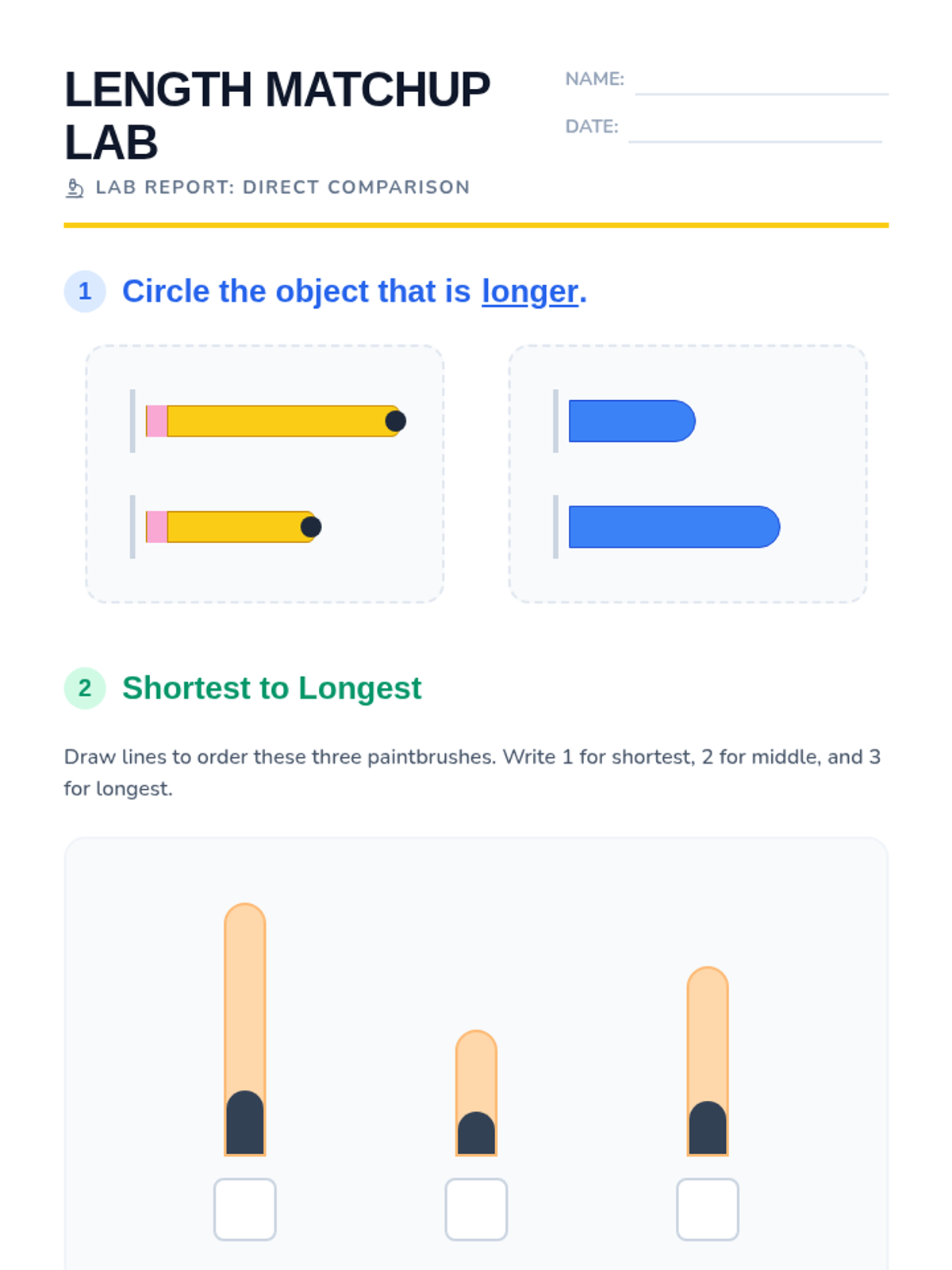
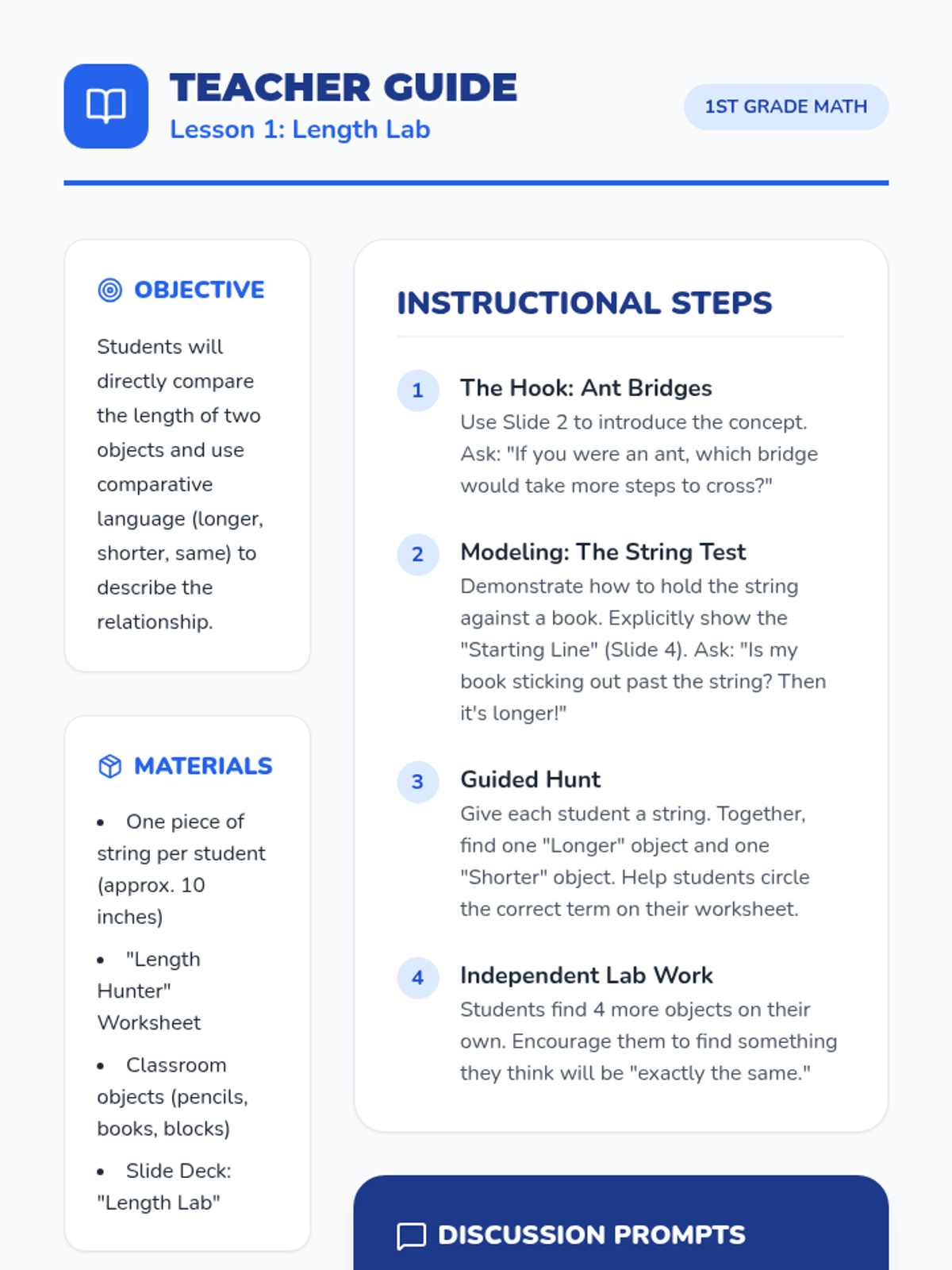
A 5-lesson sequence for 1st graders introducing linear measurement through direct comparison, non-standard units, precision techniques, and unit comparison.
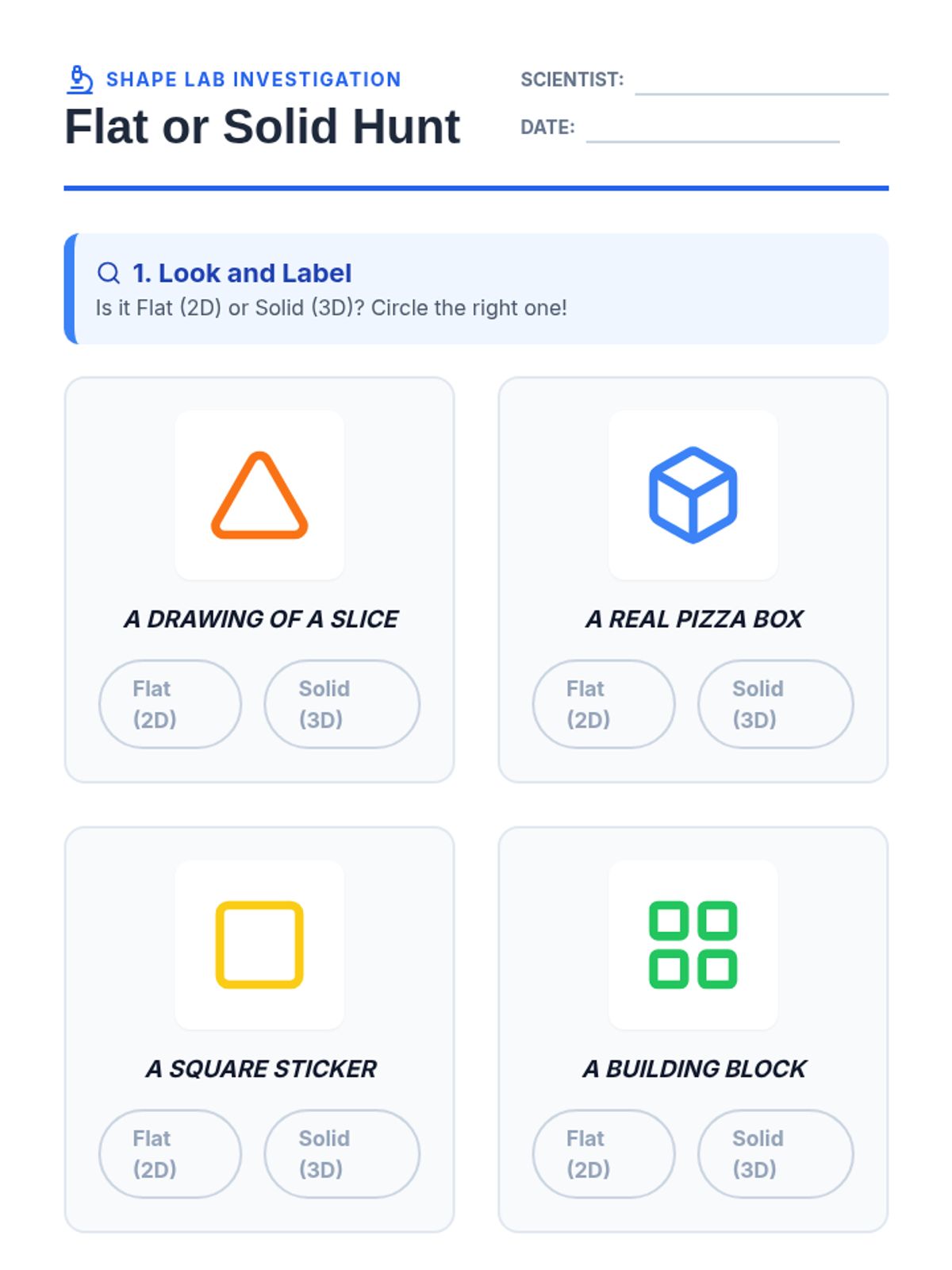
A hands-on geometry sequence for 1st graders to explore 3D shapes, capacity, and volume using 'Shape Lab' investigations. Students progress from distinguishing 2D from 3D to measuring volume with unit cubes and exploring capacity through liquid displacement and estimation.
A foundational unit for 1st graders exploring the comparative language and logic of measurement. Students master direct and indirect comparison, ordering by attributes, and spatial reasoning before moving to standard units.
This 1st Grade geometry sequence introduces students to linear measurement and the concept of perimeter using non-standard units. Students progress from direct comparison of lengths to measuring straight edges with cubes, and finally calculating the total distance around shapes in a culminating project.
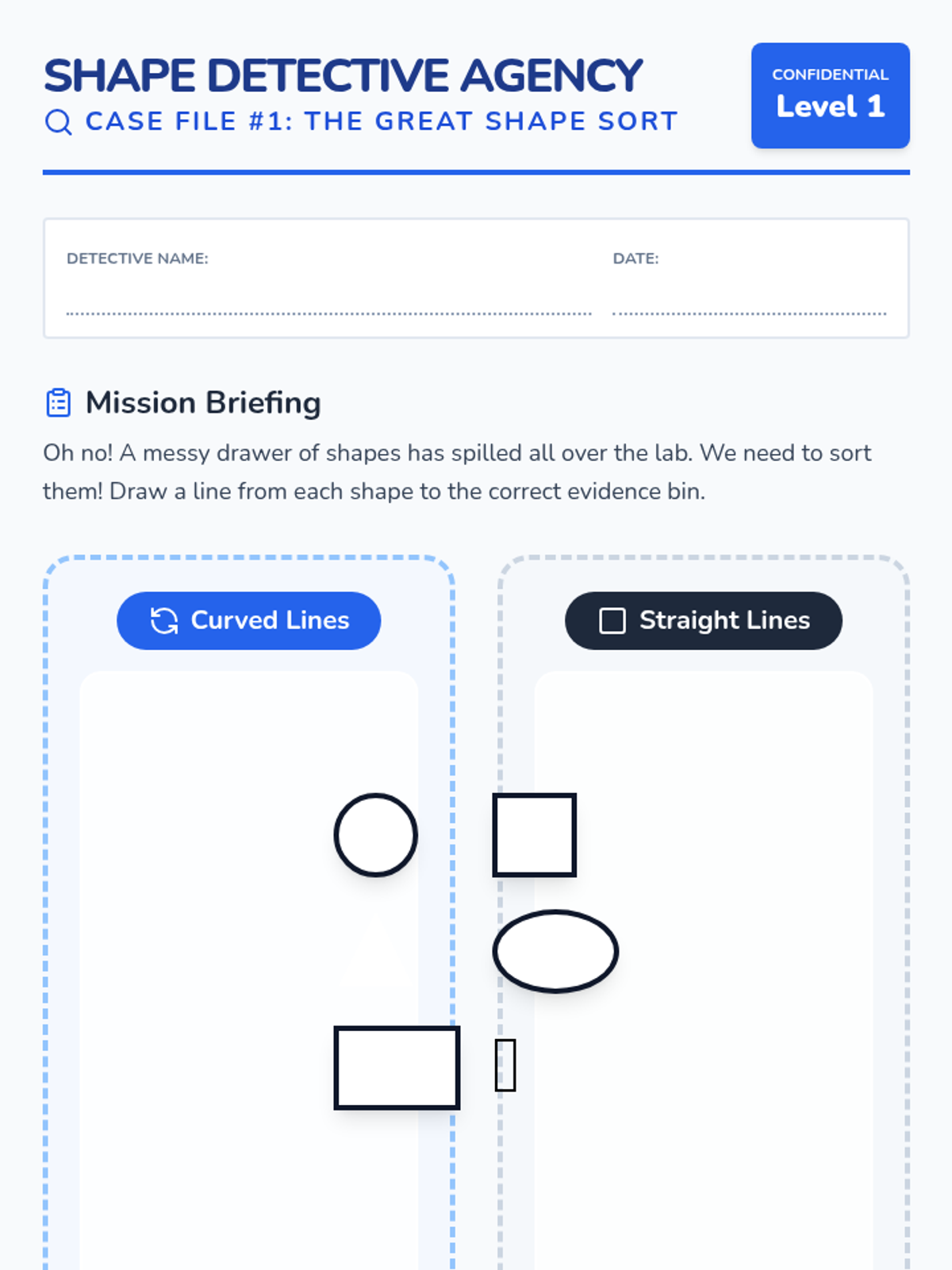
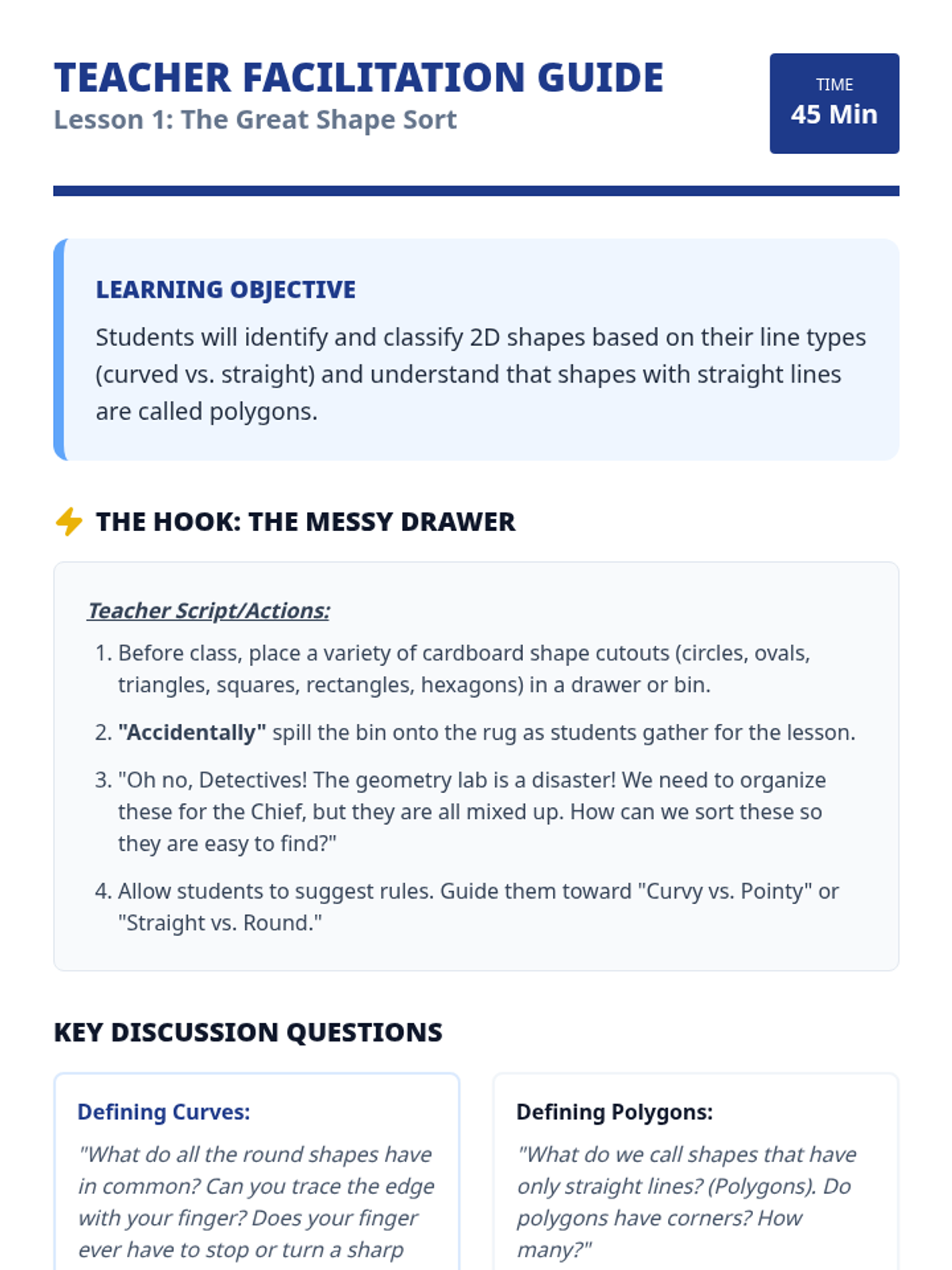
A 1st Grade geometry unit where students act as 'Shape Detectives' to classify 2D figures by their physical attributes, including line type, side count, and corner types. The sequence culminates in complex multi-attribute sorting and inductive reasoning games.
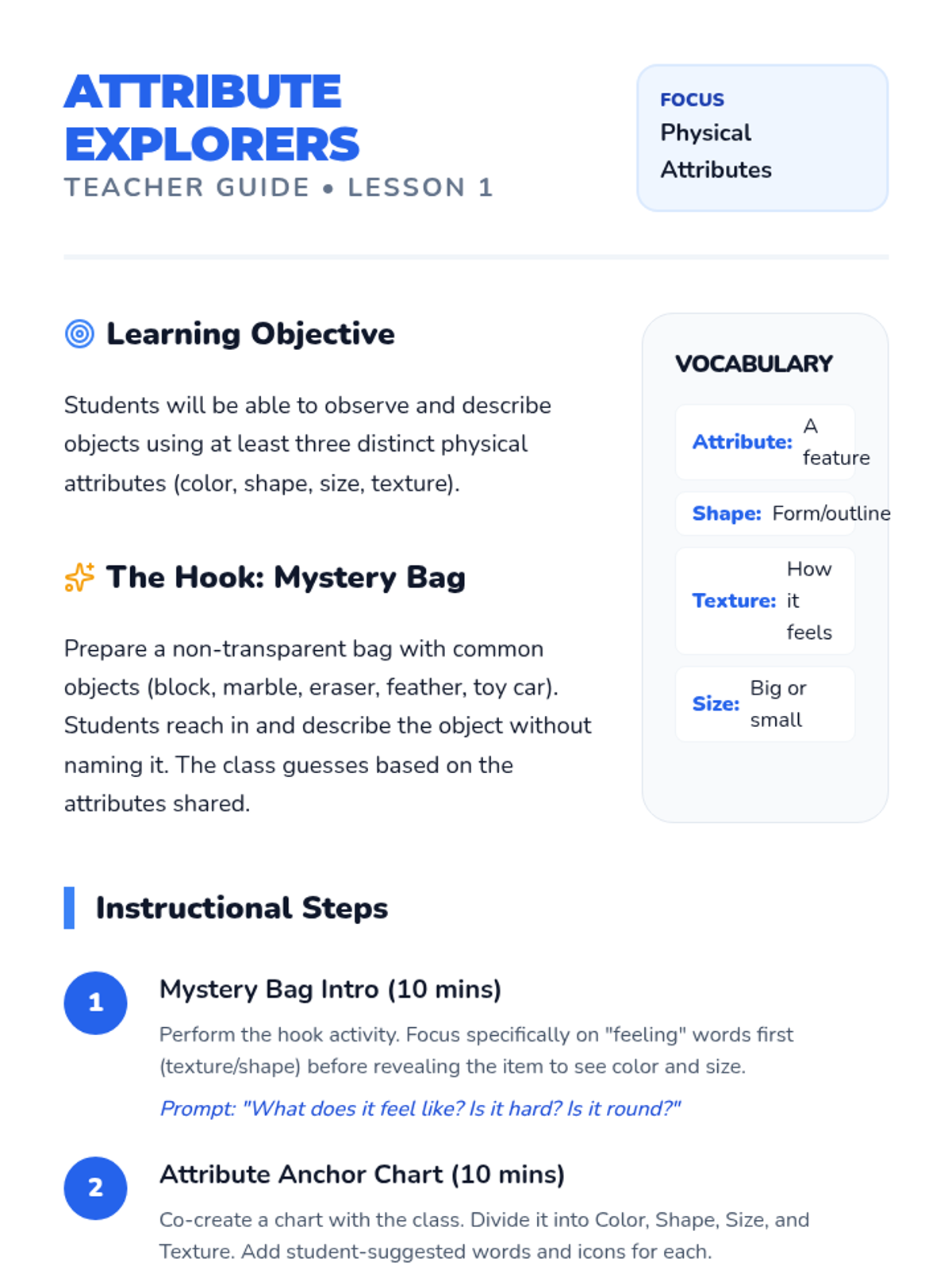
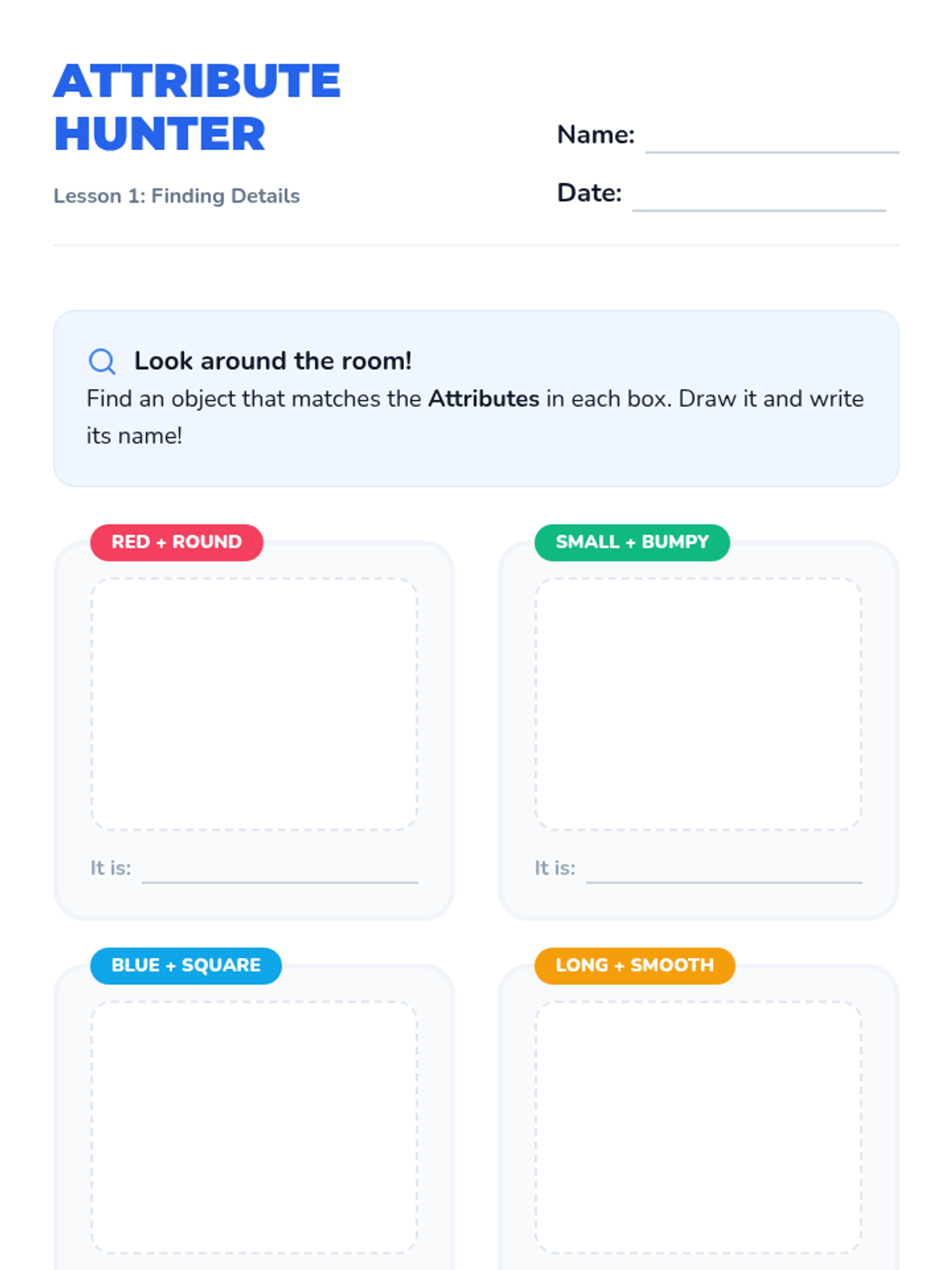
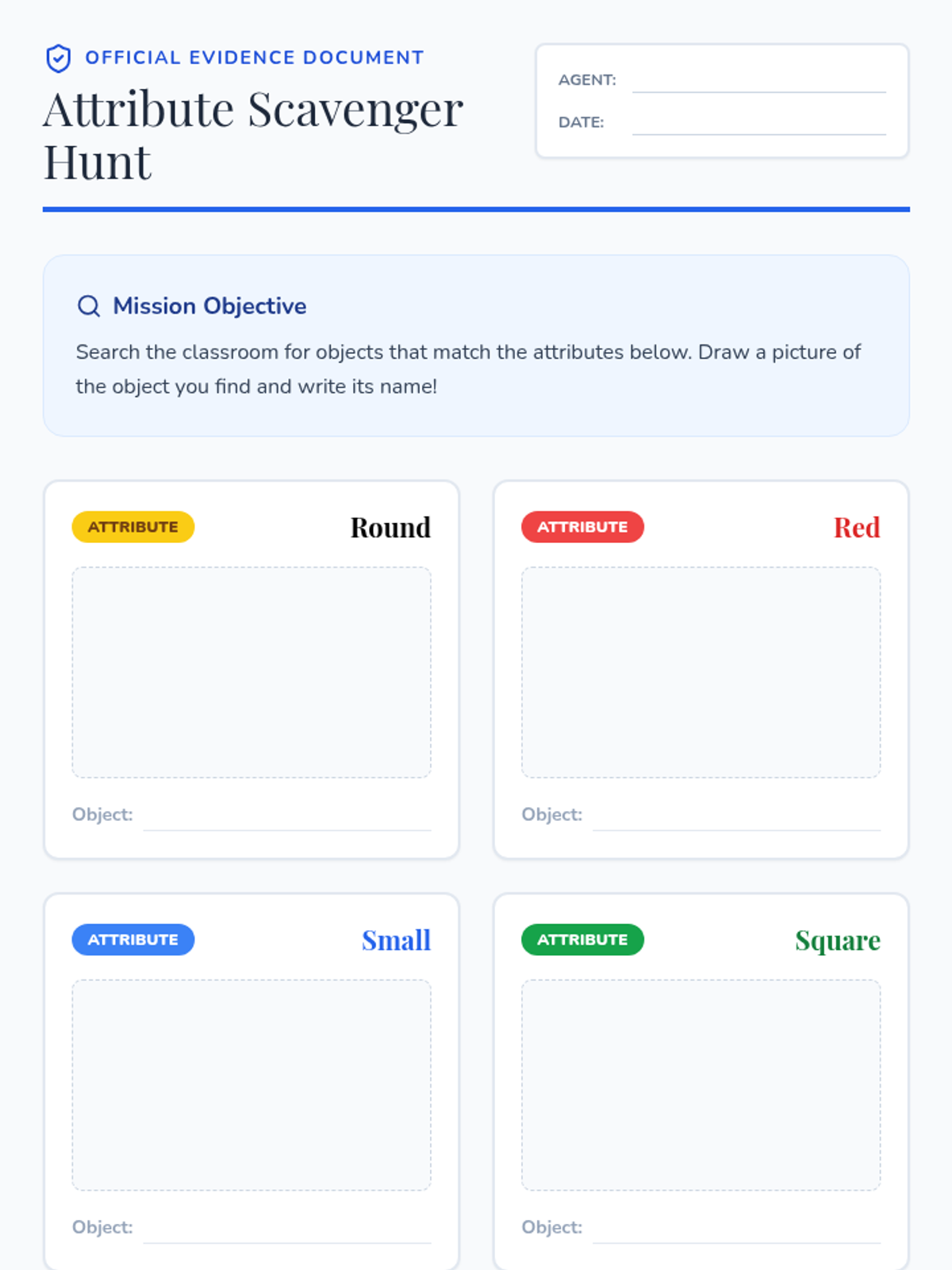
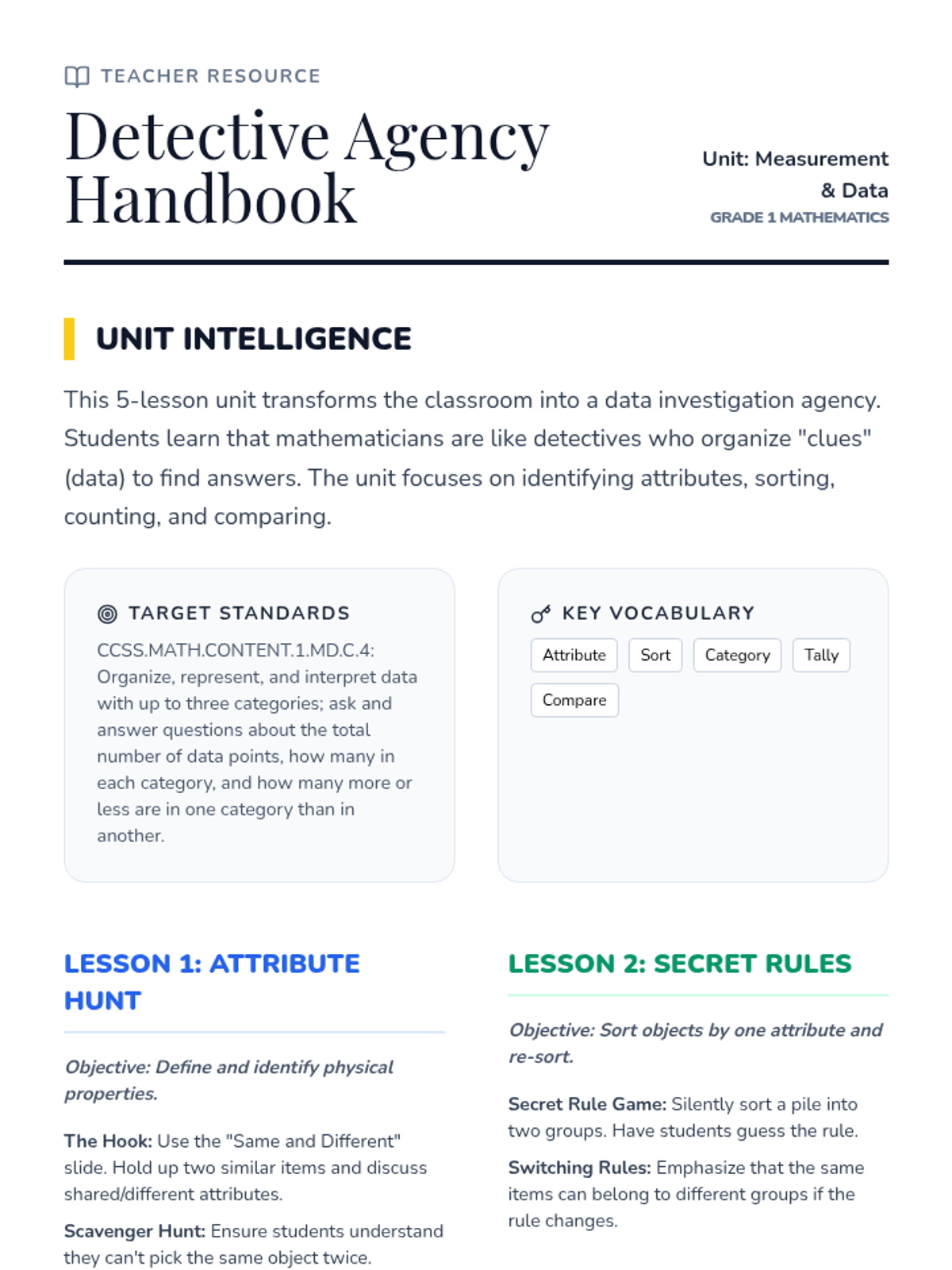
A foundational first-grade sequence that takes students from observing physical attributes to sorting, counting, and comparing data sets of up to three categories. Students transition from hands-on sorting to abstract data analysis through engaging, play-based scenarios.
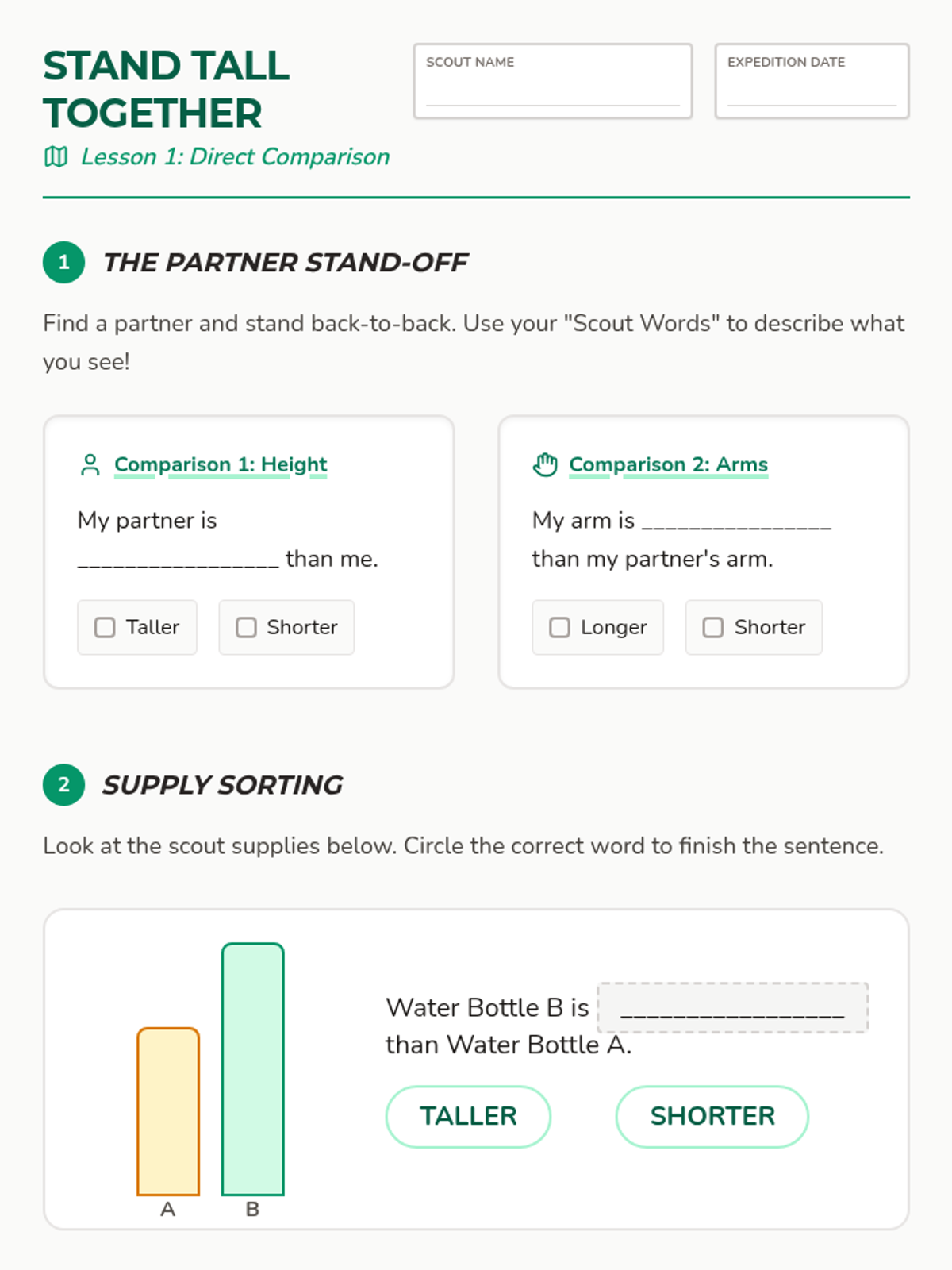
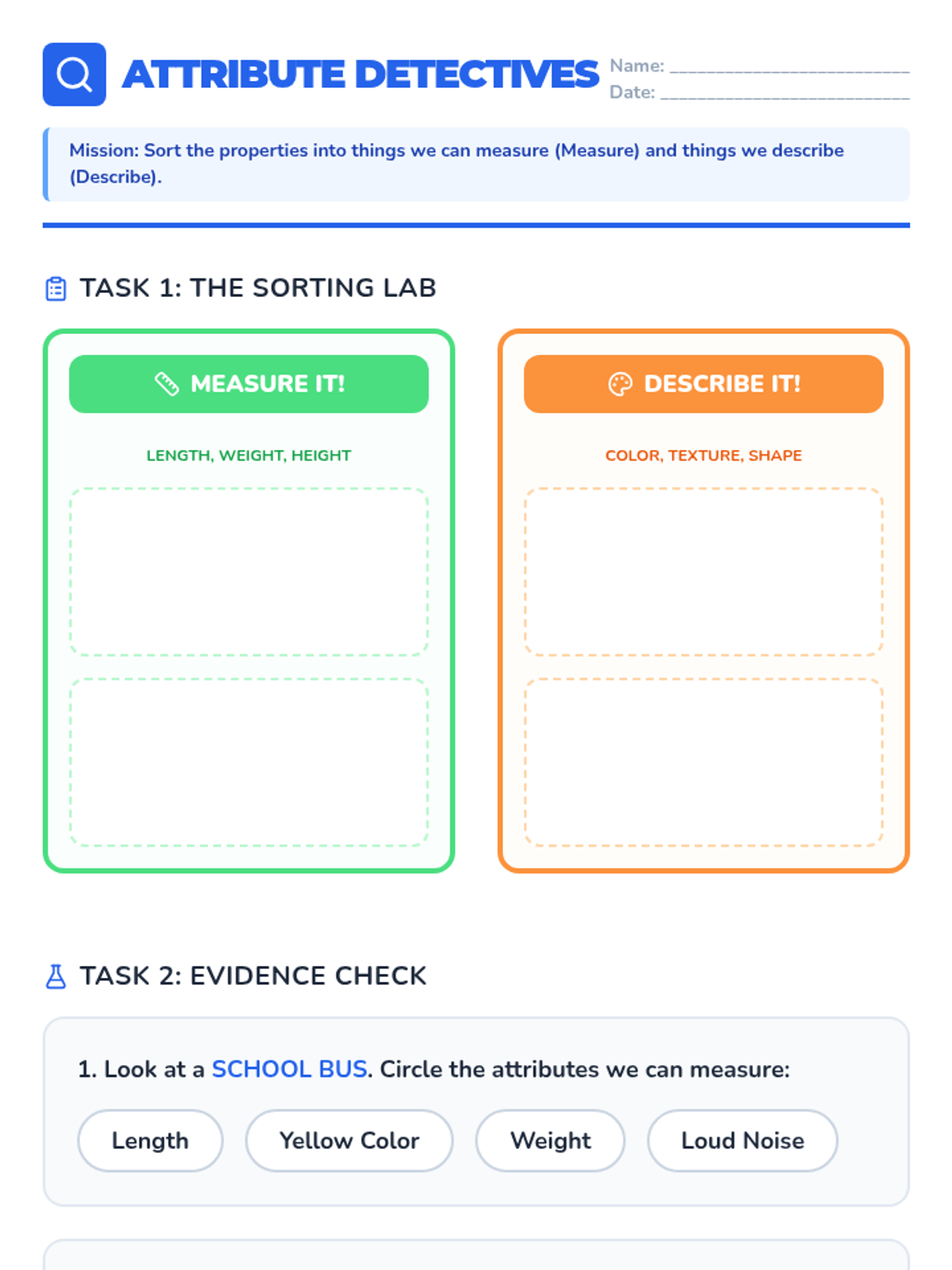
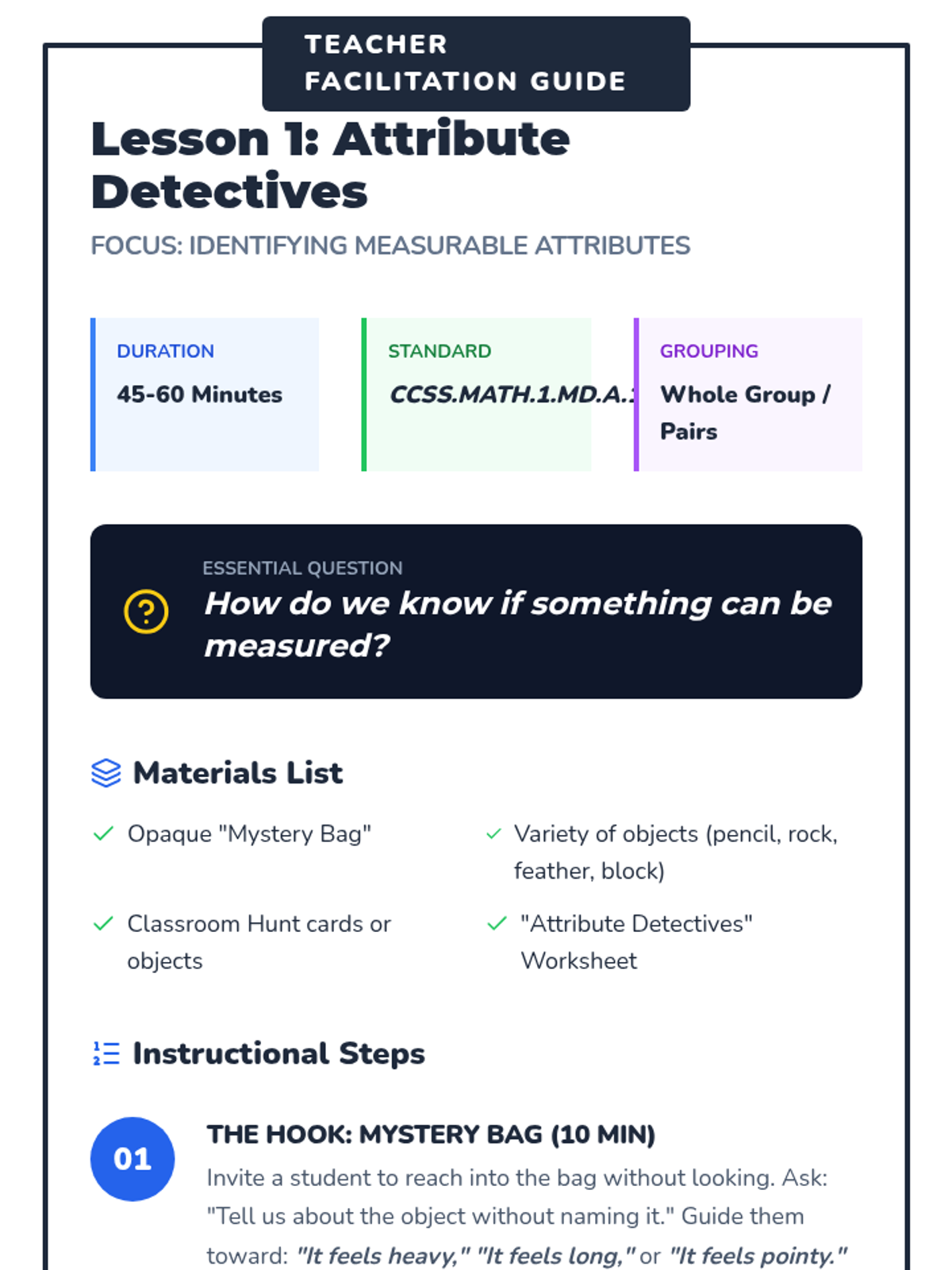
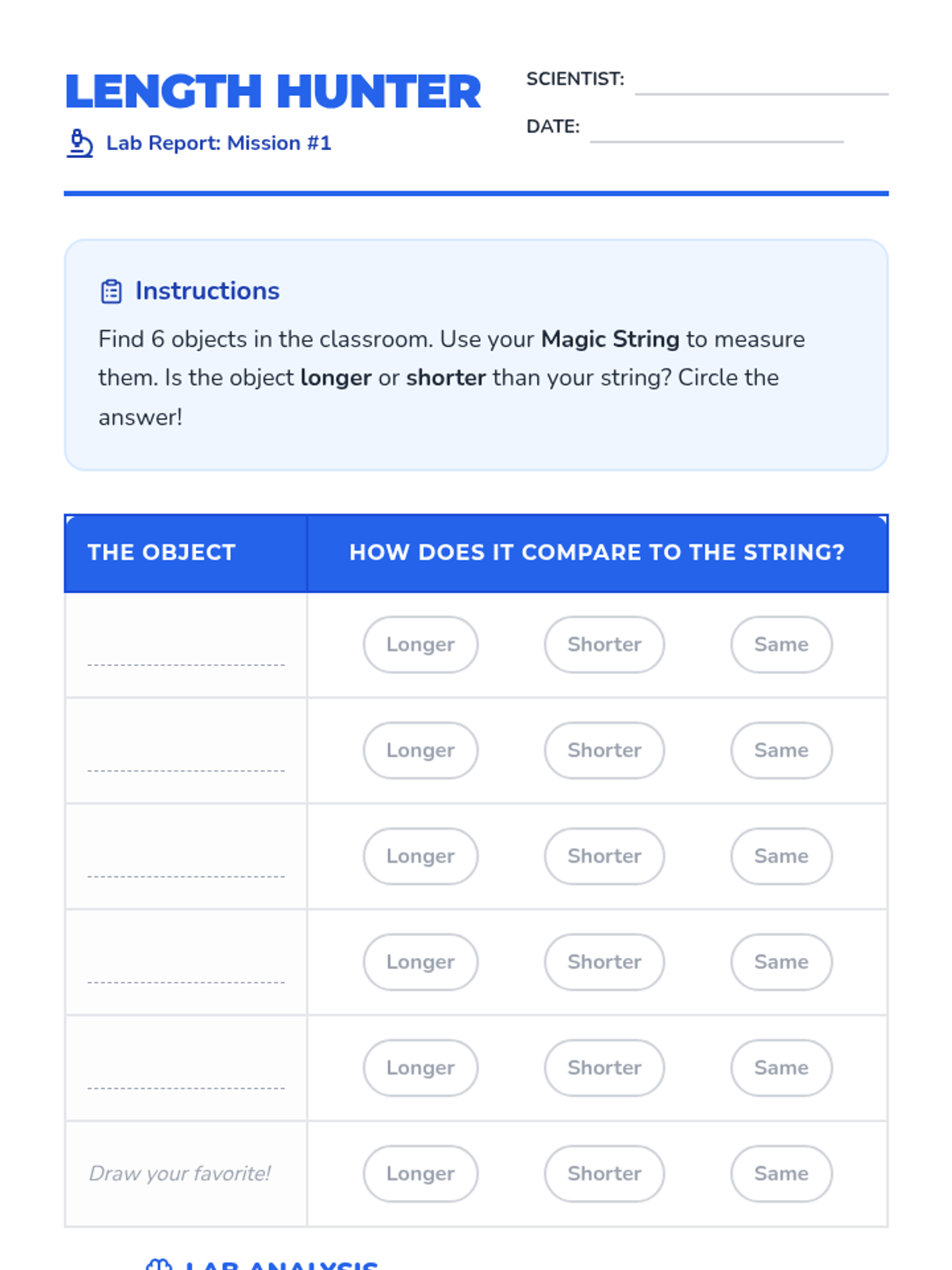
A foundational first-grade sequence focusing on measurable attributes like length and weight. Students learn to distinguish measurable properties, use direct comparison techniques, order multiple objects, and explore indirect comparison using intermediary tools.
A hands-on introduction to measurement for 1st graders, focusing on comparing and ordering length, weight, and capacity through direct comparison and logical reasoning. Students explore physical attributes using classroom objects, balance scales, and volume experiments.
A comprehensive 1st-grade math unit where students learn to identify physical attributes, sort objects into categories, count totals, and compare data sets using a 'Data Detective' theme.
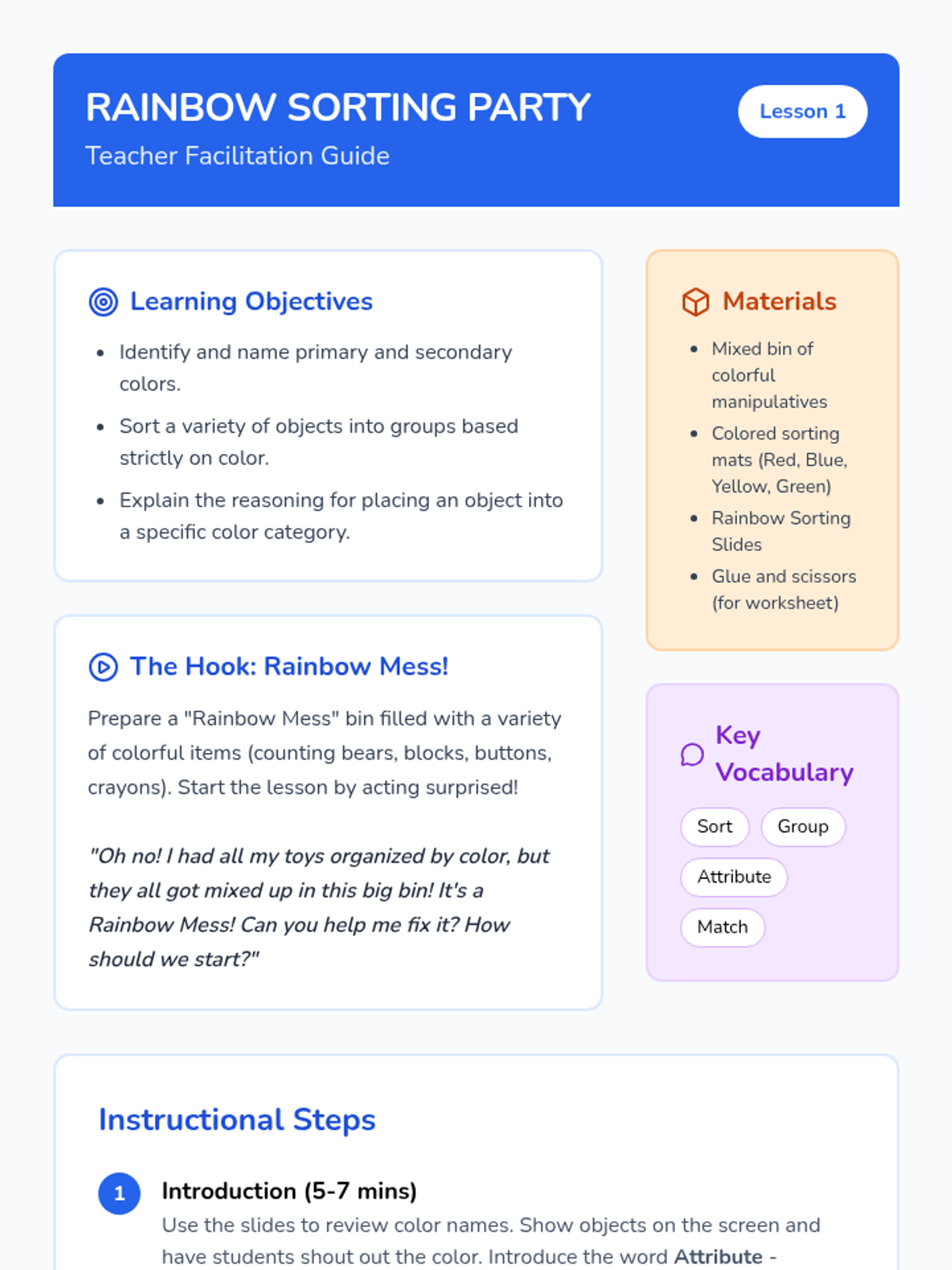
This sequence guides early learners through organizing their world by observing physical properties and grouping objects accordingly, bridging classification and early data analysis.
A series of materials designed to evaluate and document first-grade students' mastery of year-long mathematical standards in preparation for second grade.
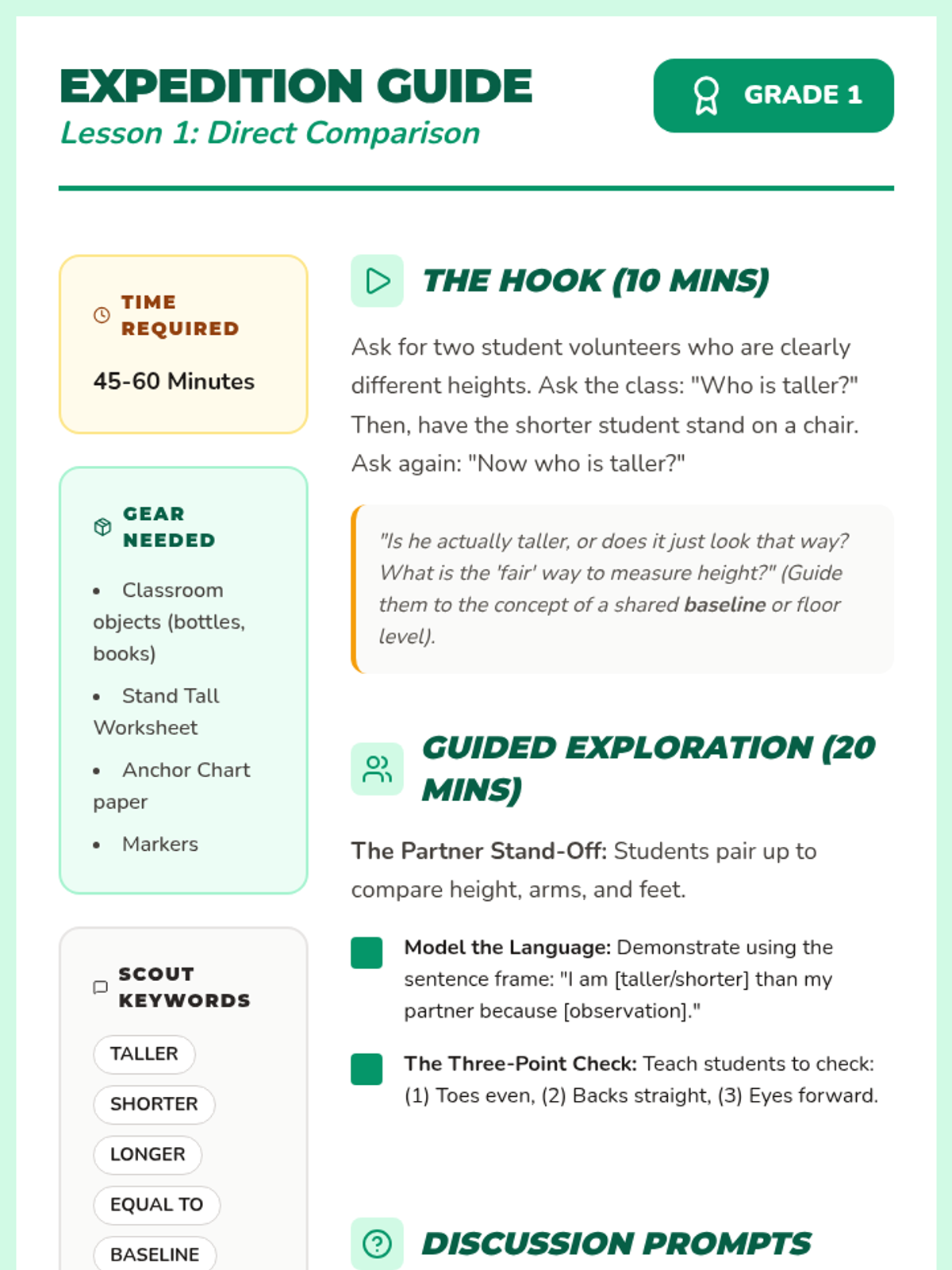
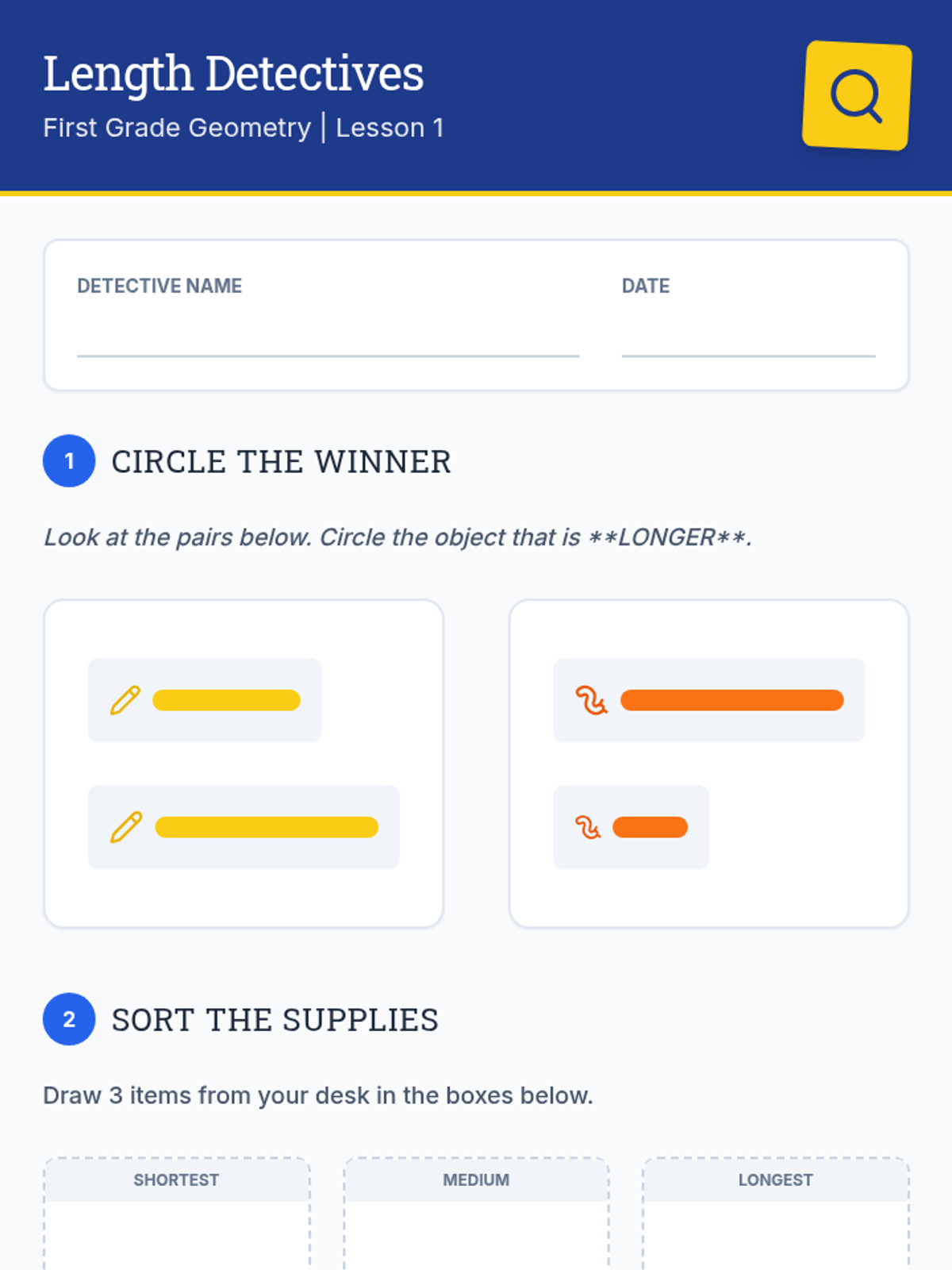
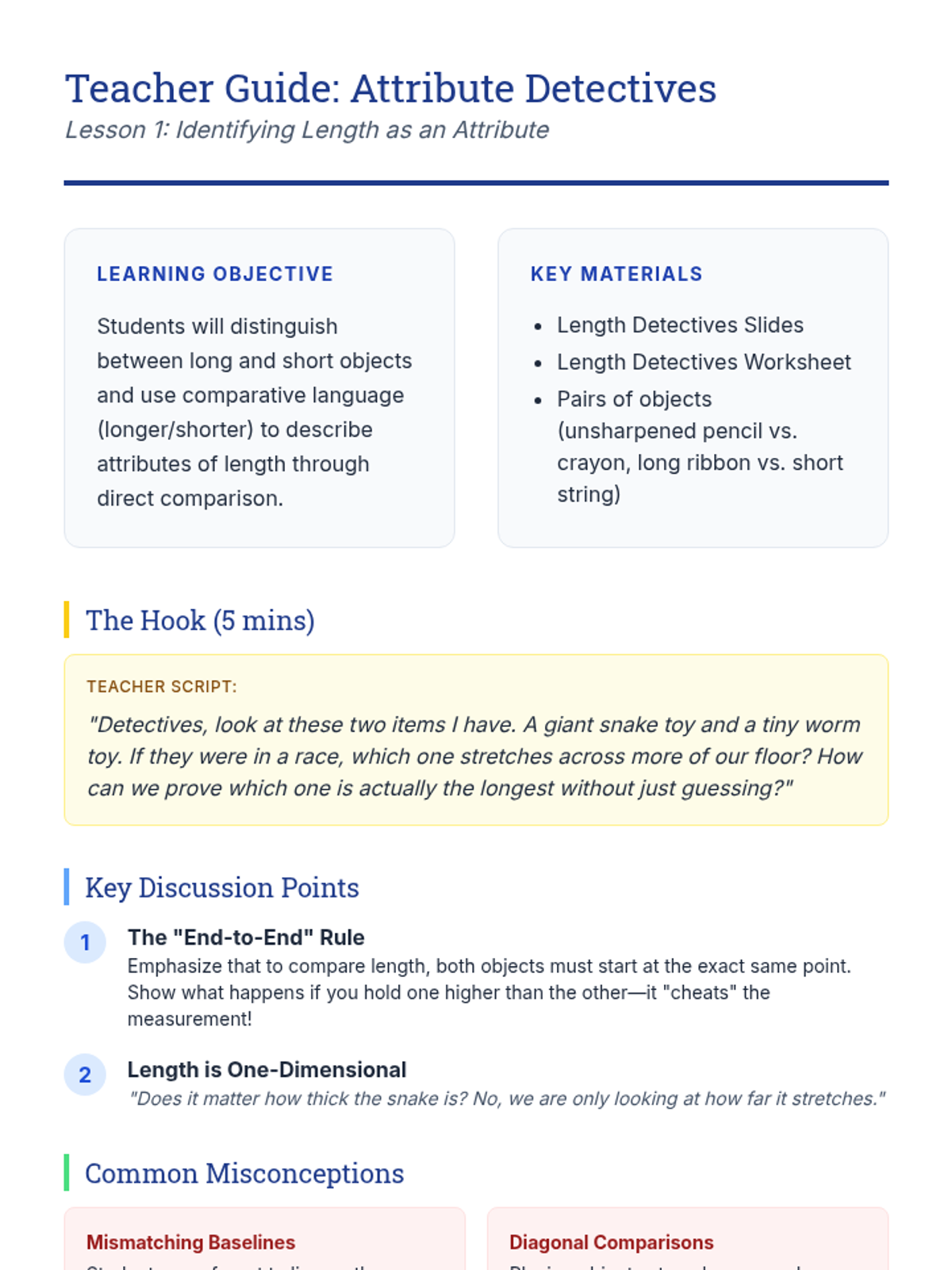
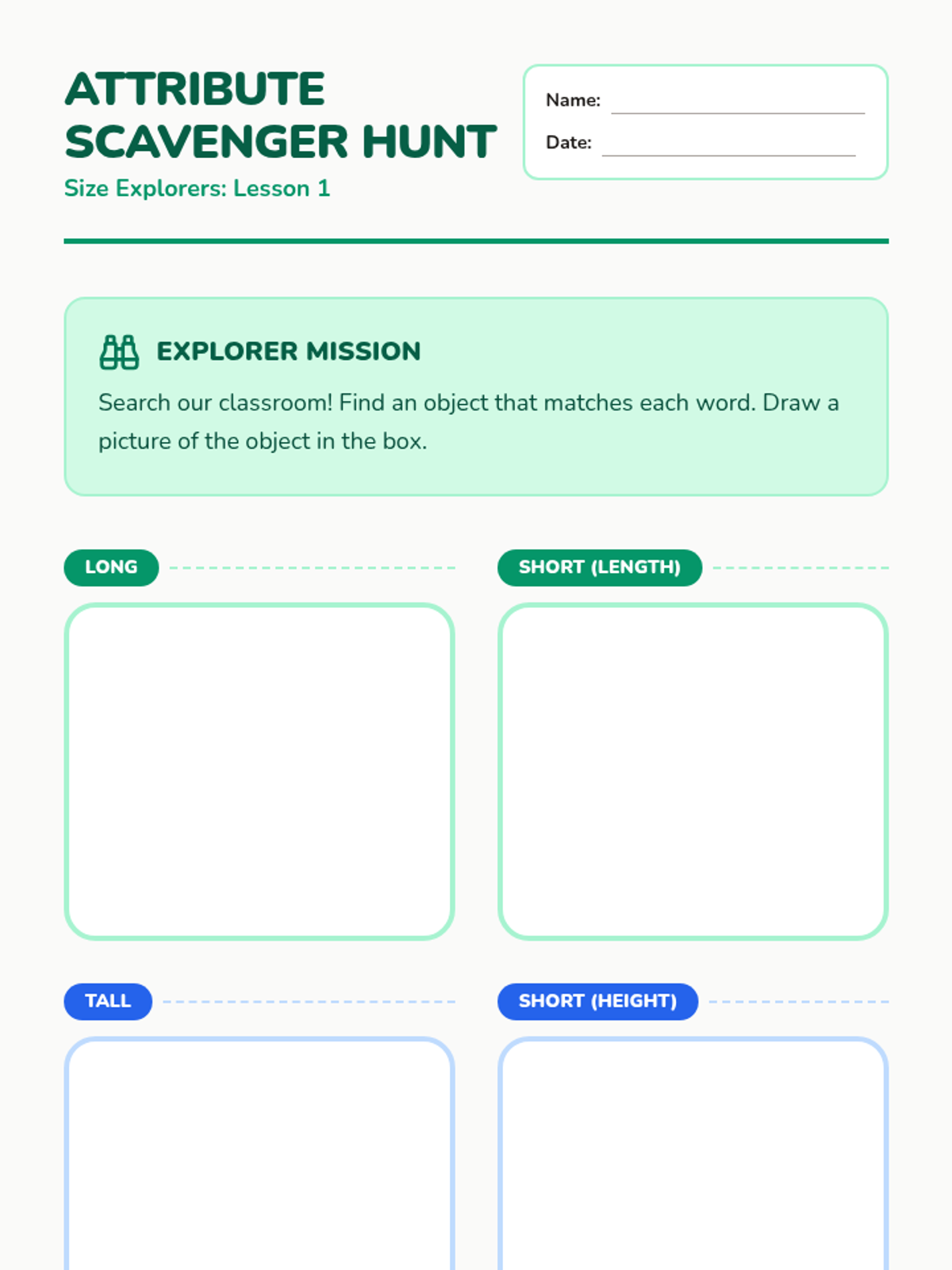
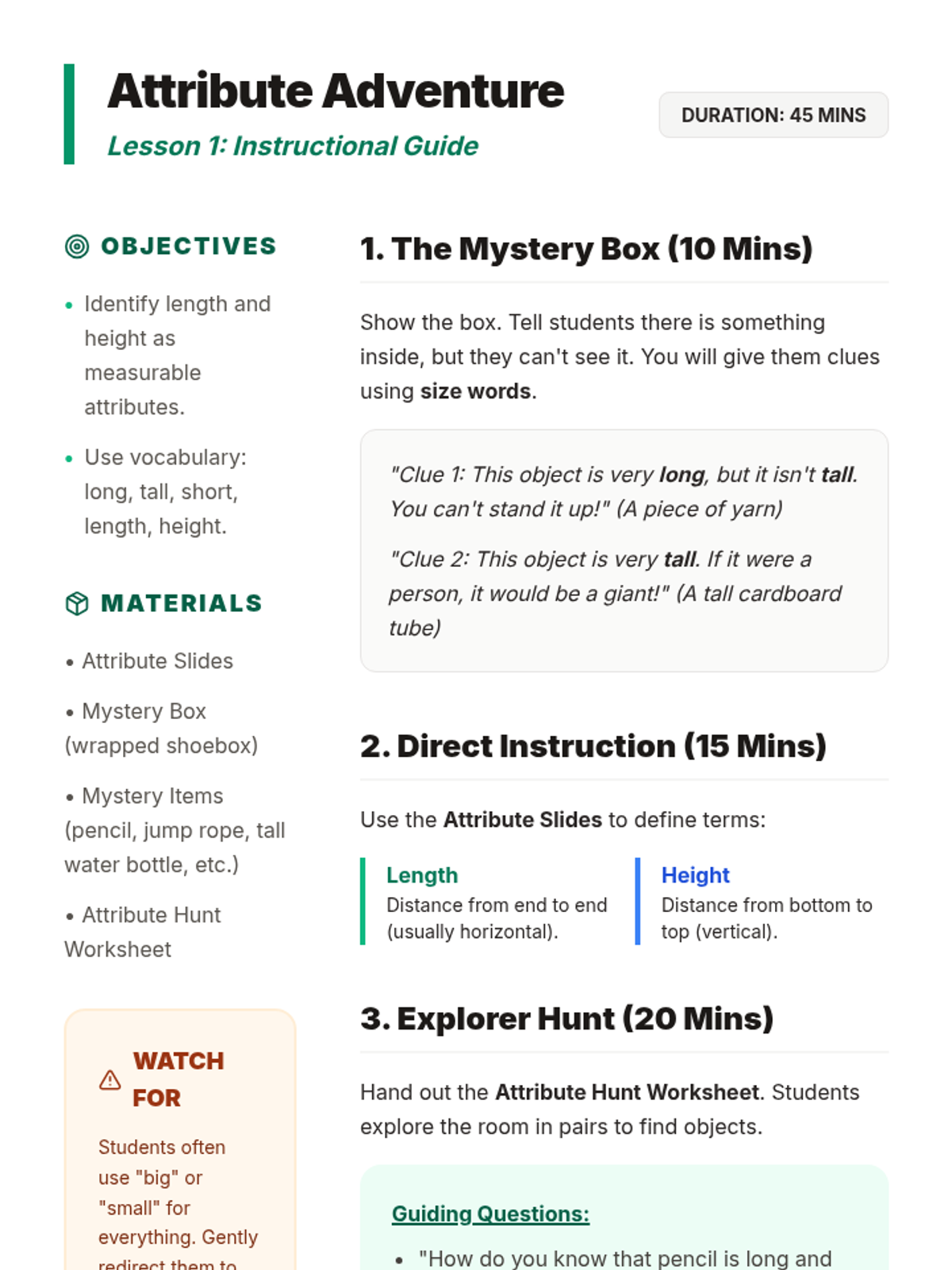
A foundational sequence for first-grade students to explore length and height through direct comparison, ordering, and non-standard measurement units. Students progress from using descriptive vocabulary to quantifying length with uniform tools.
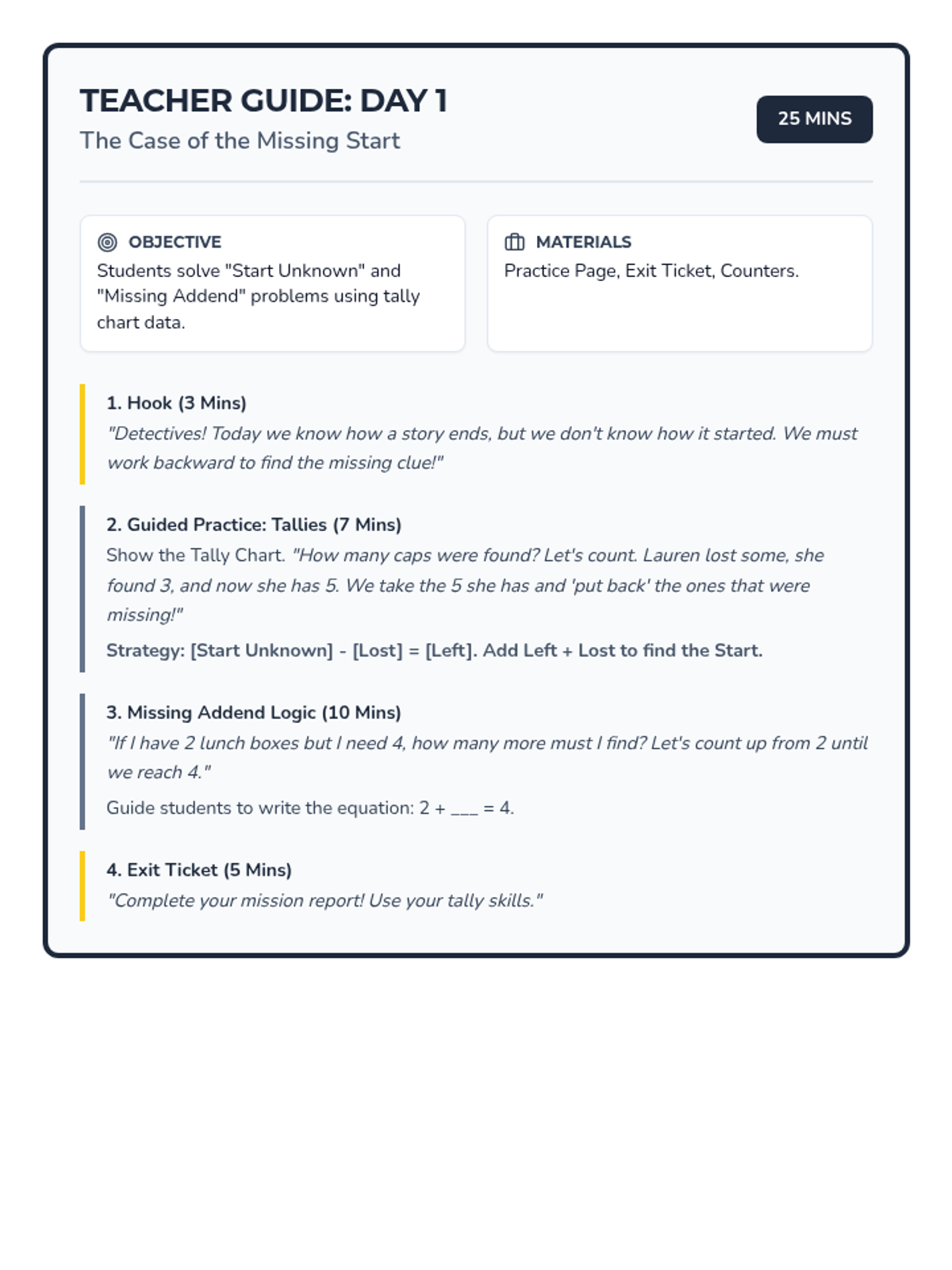
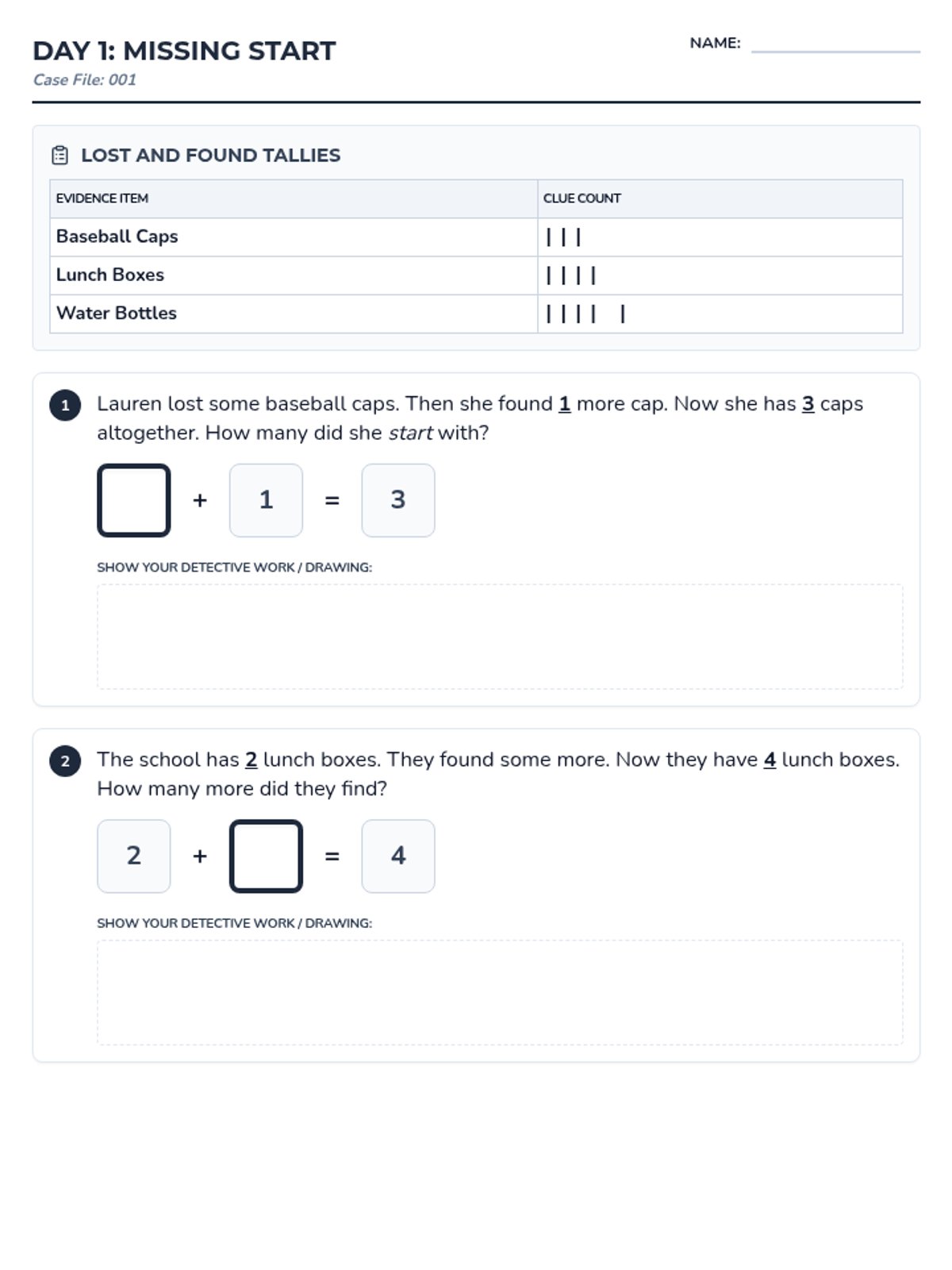
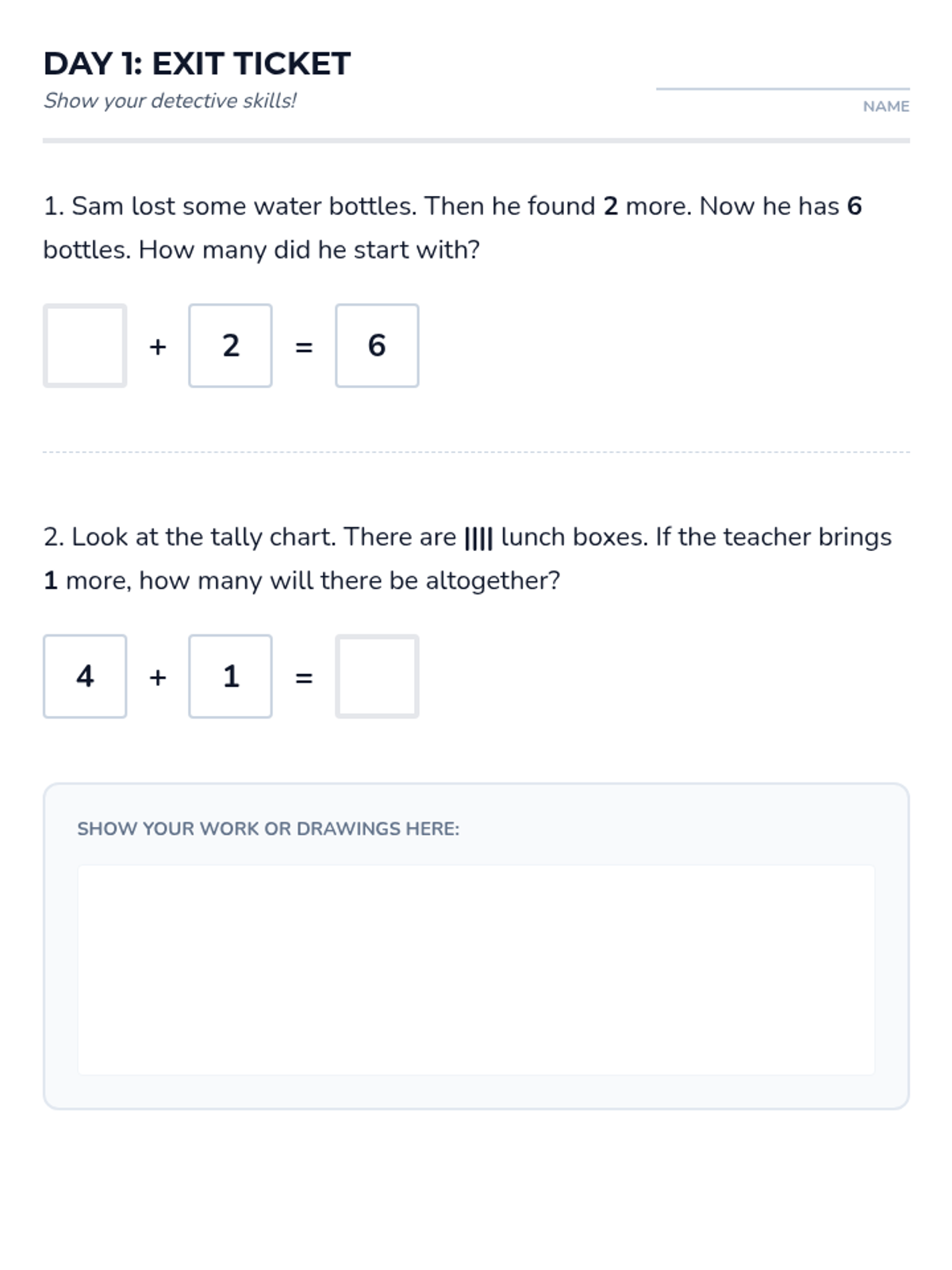
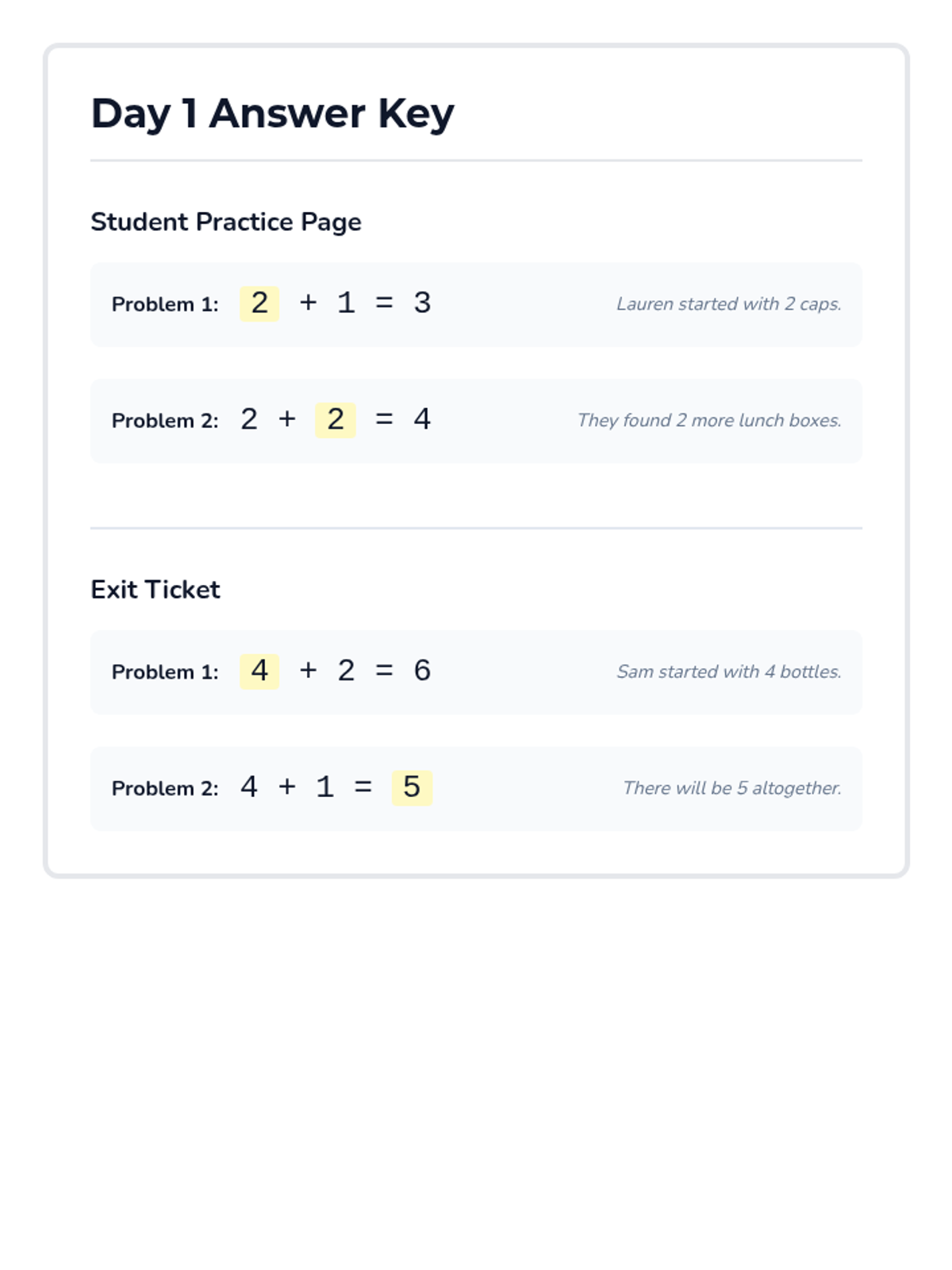
A 3-day small group intervention sequence for RIT 160-180 students focusing on start-unknown problems, missing addends, and comparison word problems integrated with data analysis.
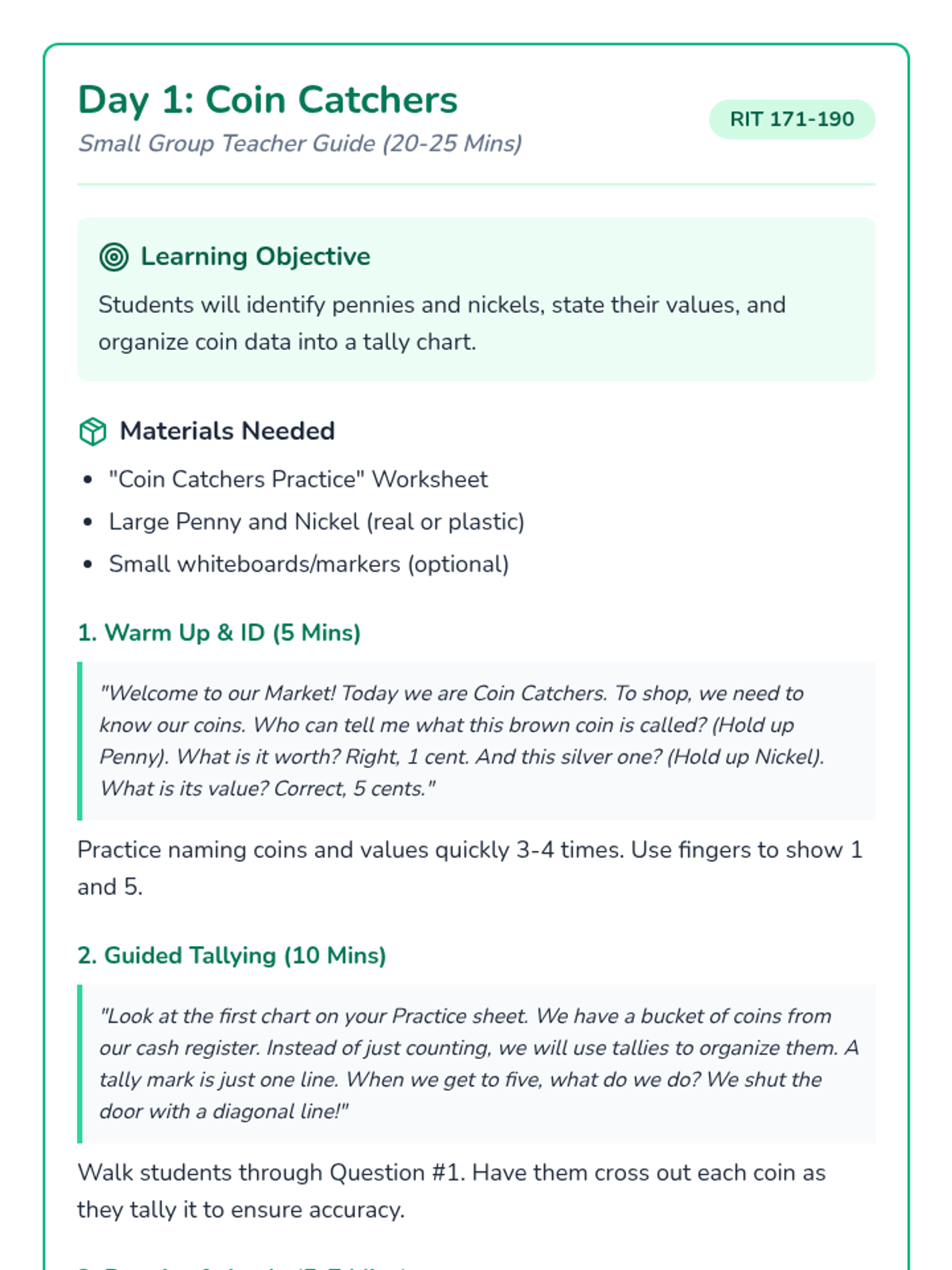
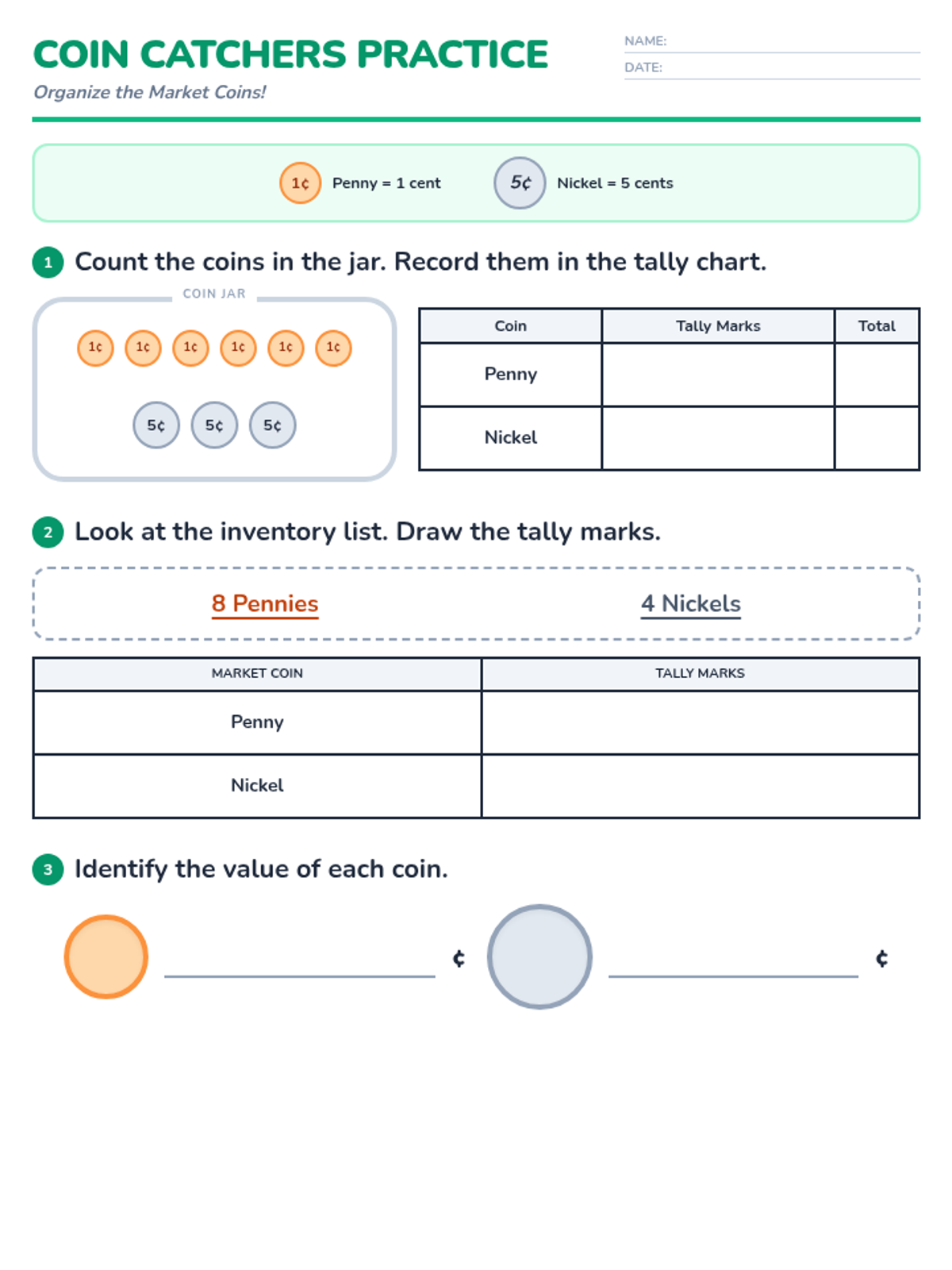
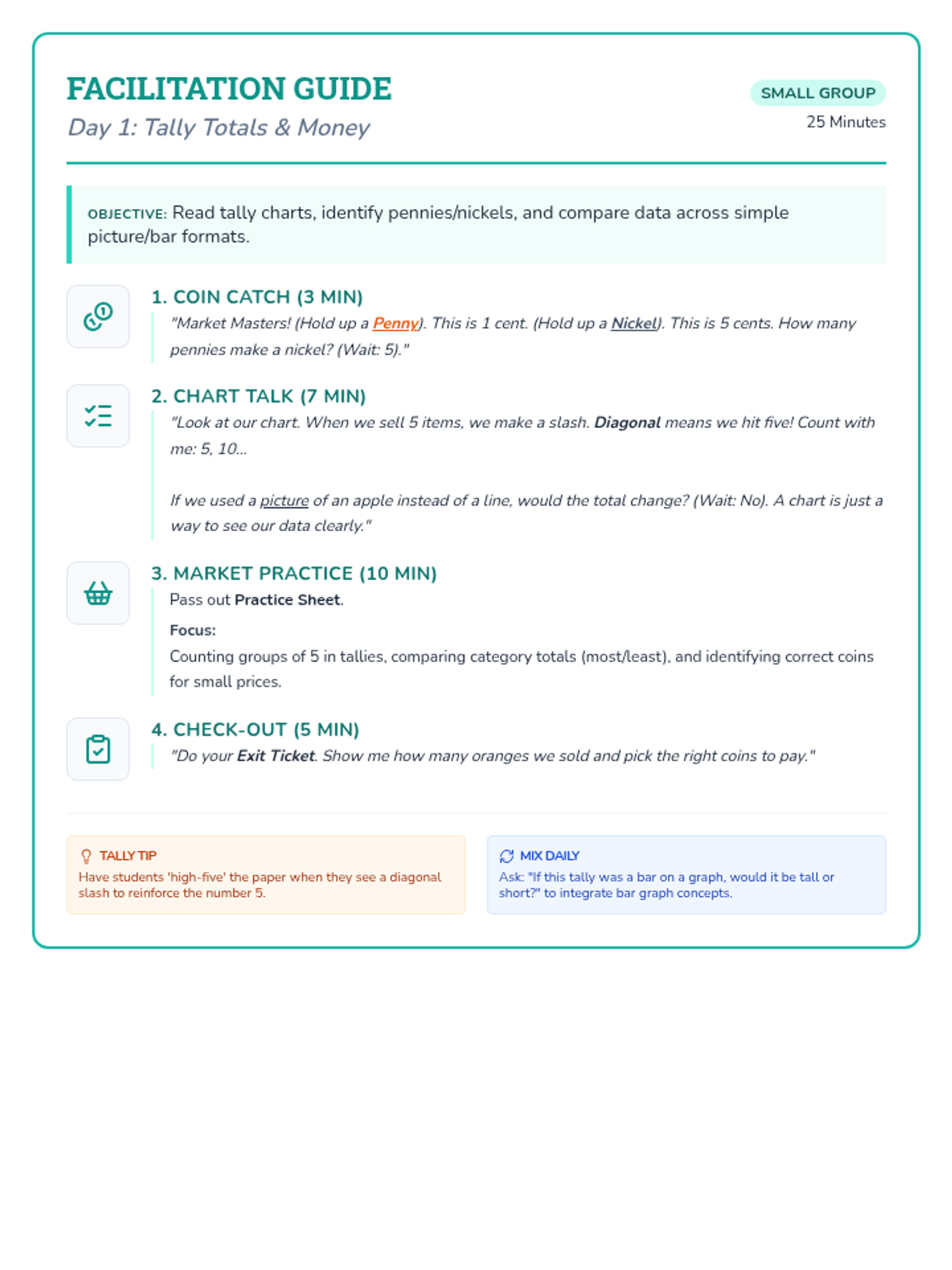
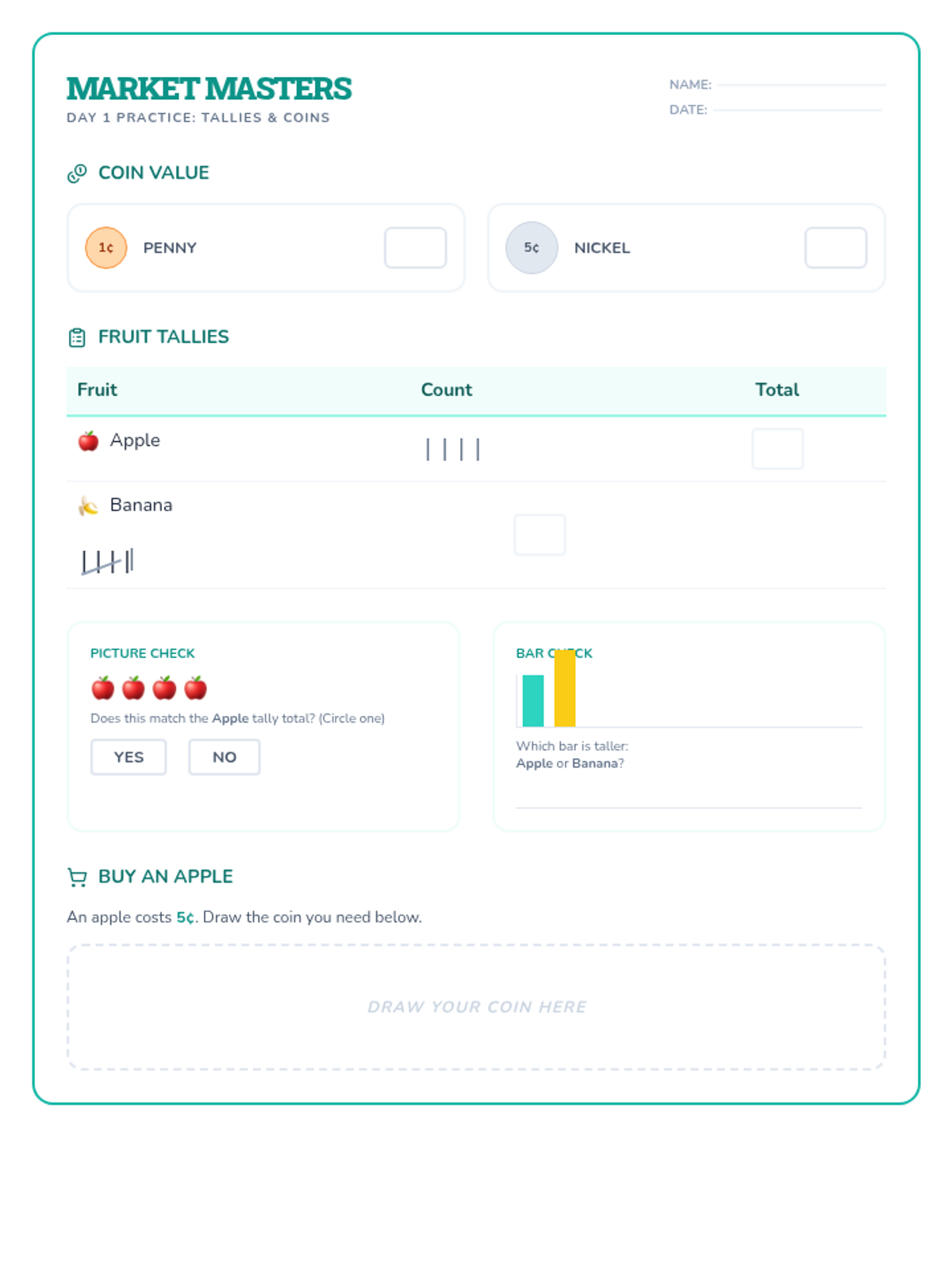
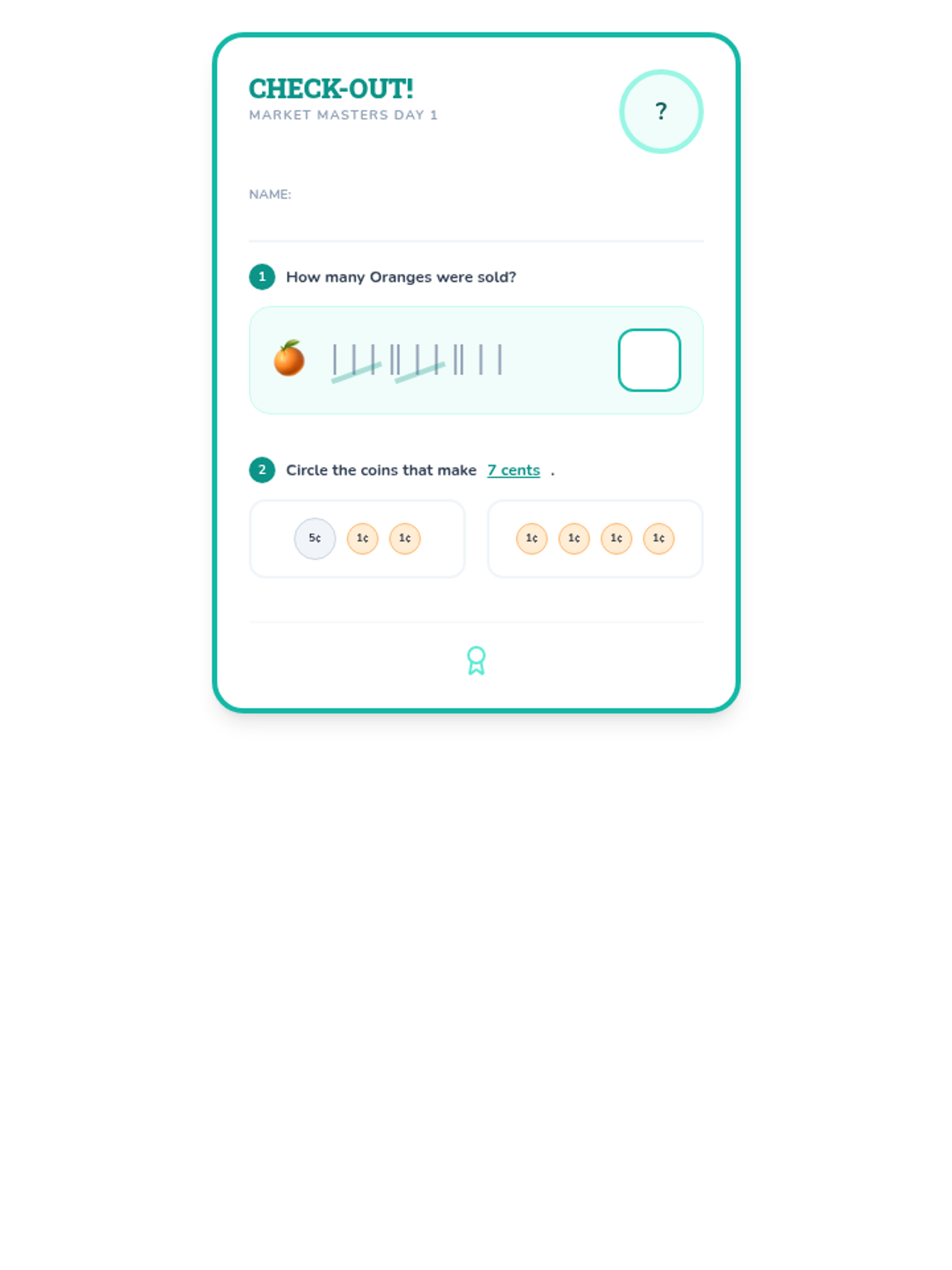
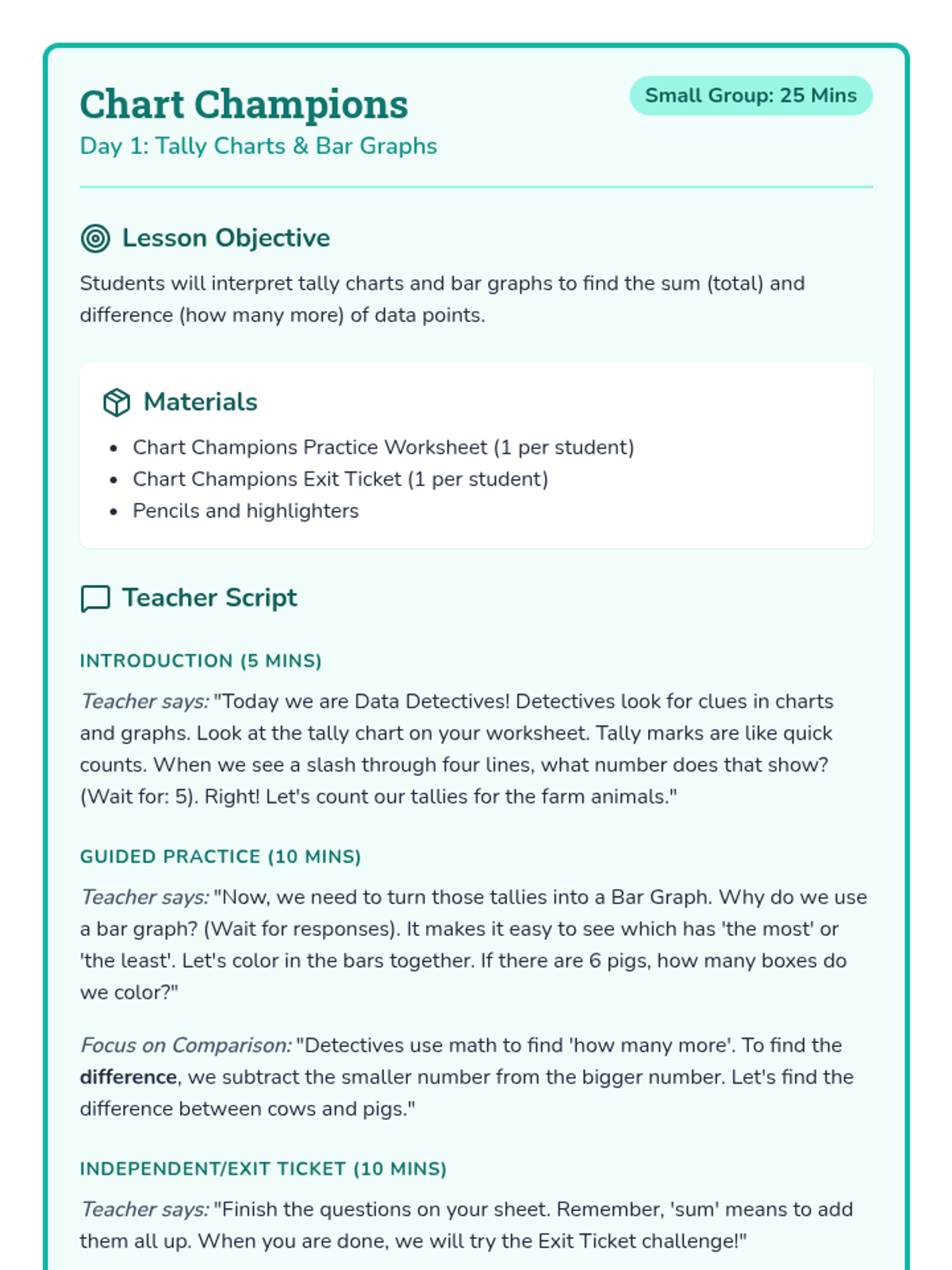
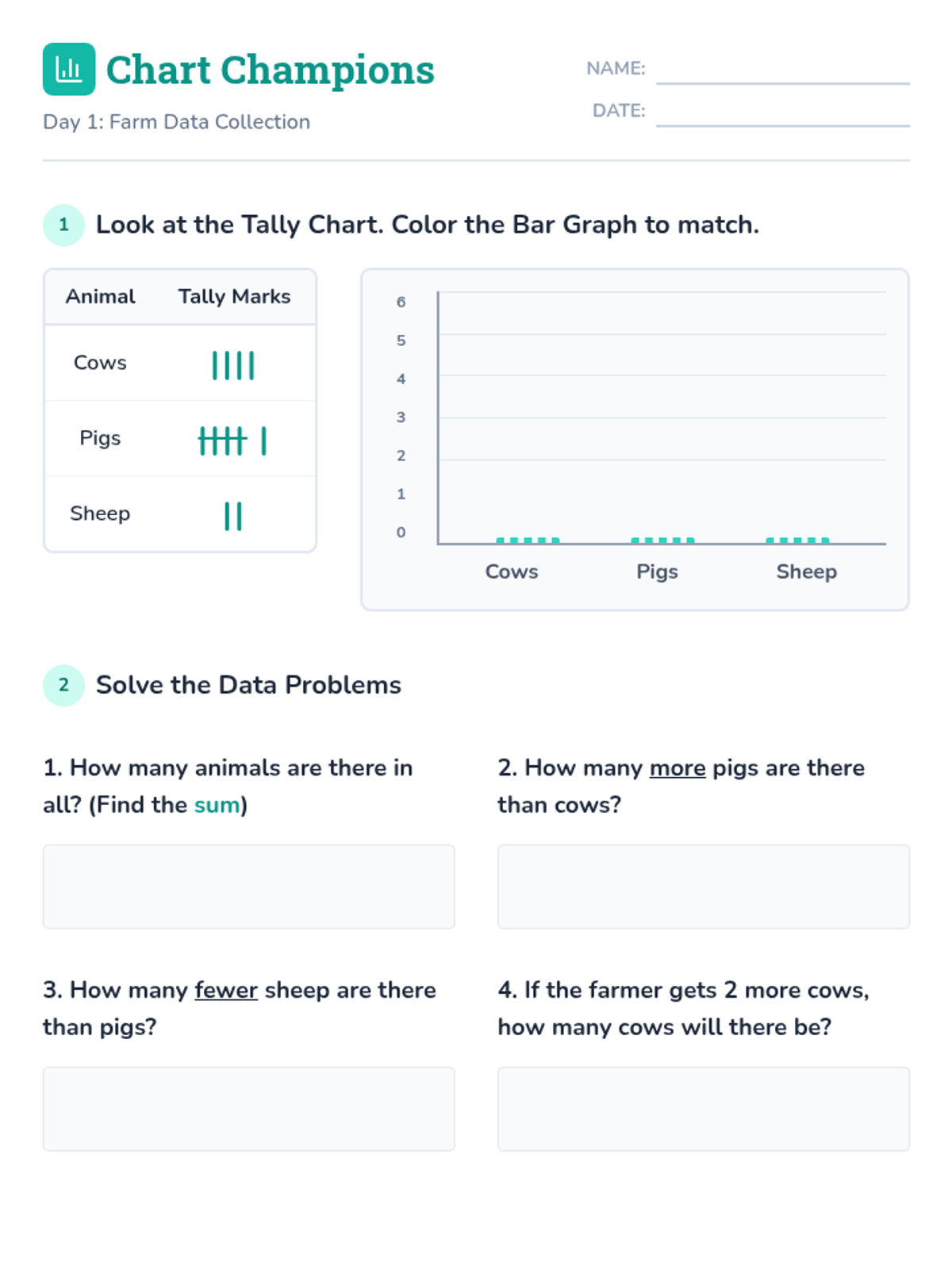
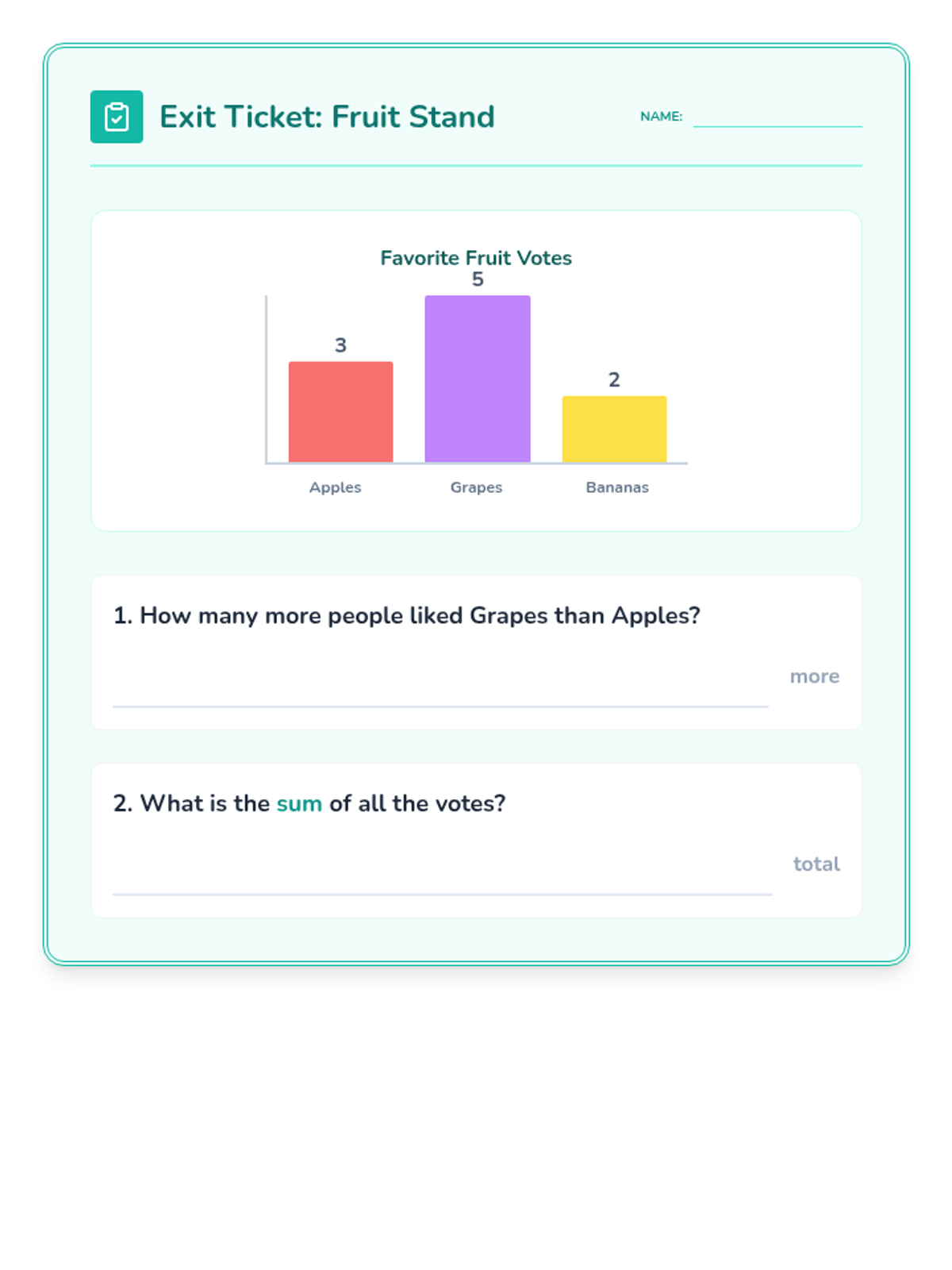
A 3-day small group math sequence focused on bridging NWEA RIT scores from 170-180 to 181-190. Students master coin identification (pennies/nickels), counting, and data analysis through tally charts, picture graphs, and bar graphs with a market-themed aesthetic.
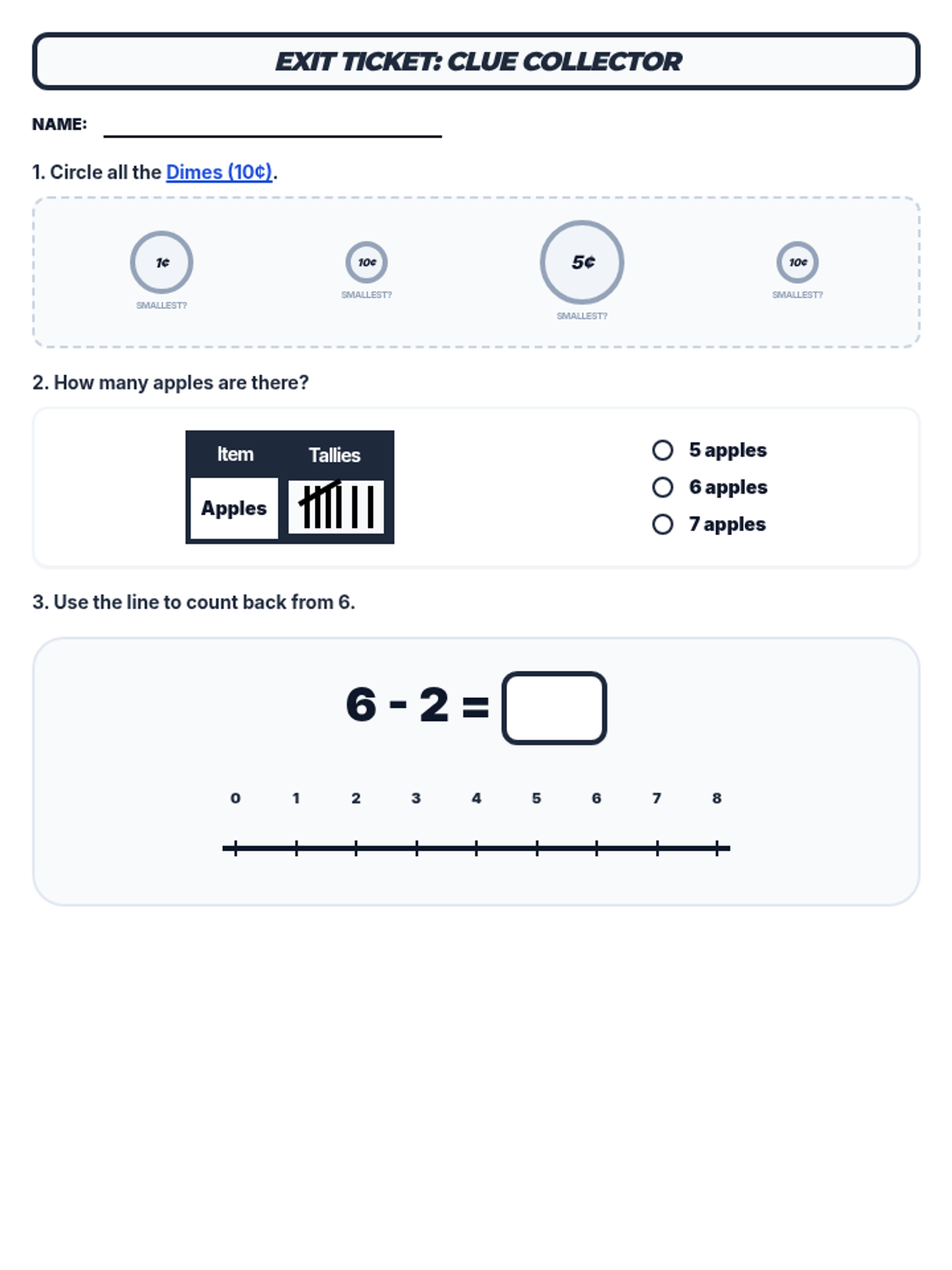
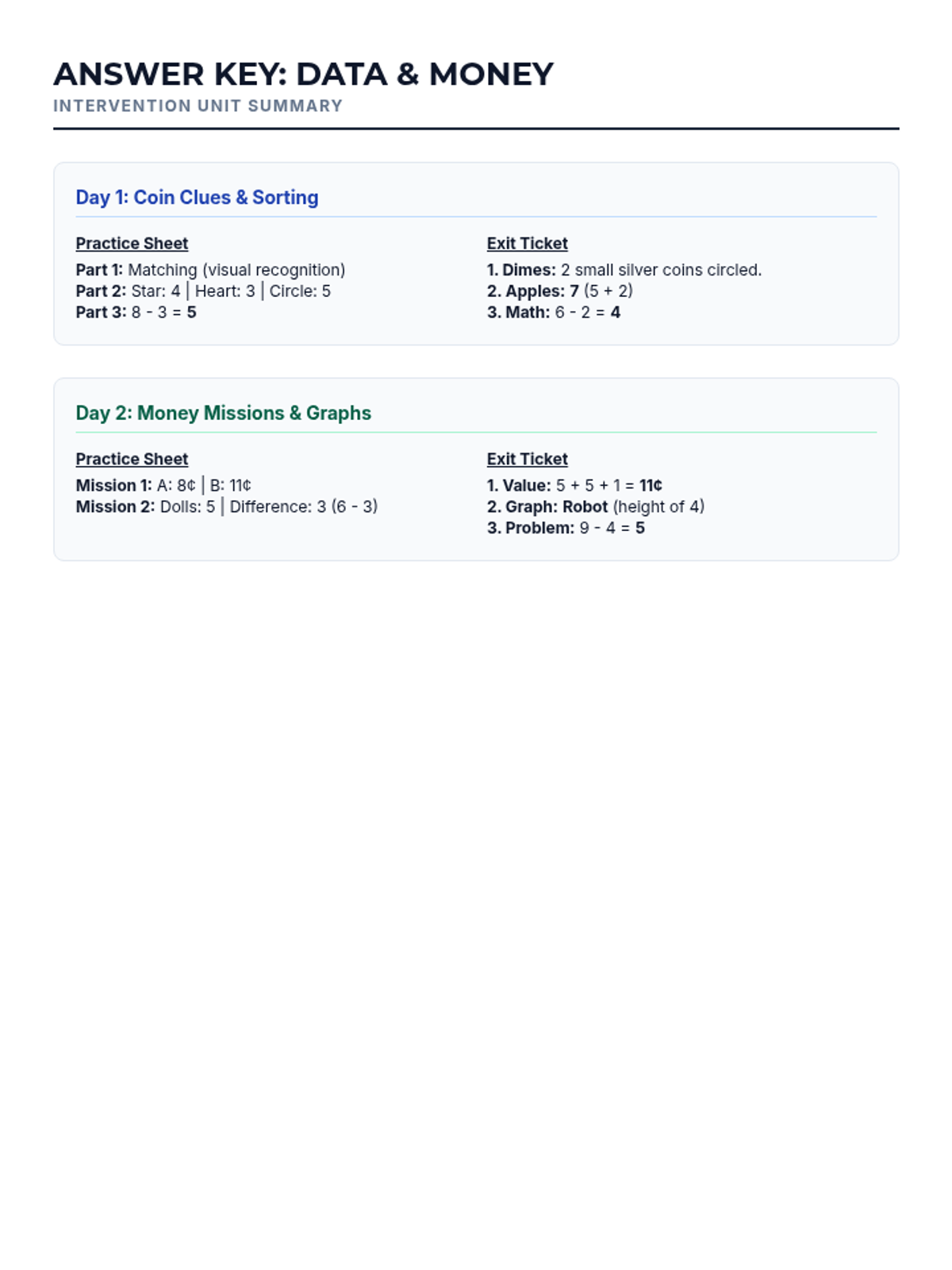
A 2-day small group intervention sequence focused on foundational data analysis and coin identification. Students progress from sorting objects and identifying coins to reading bar graphs and counting sets of money, while reinforcing subtraction strategies like number lines and counting back.
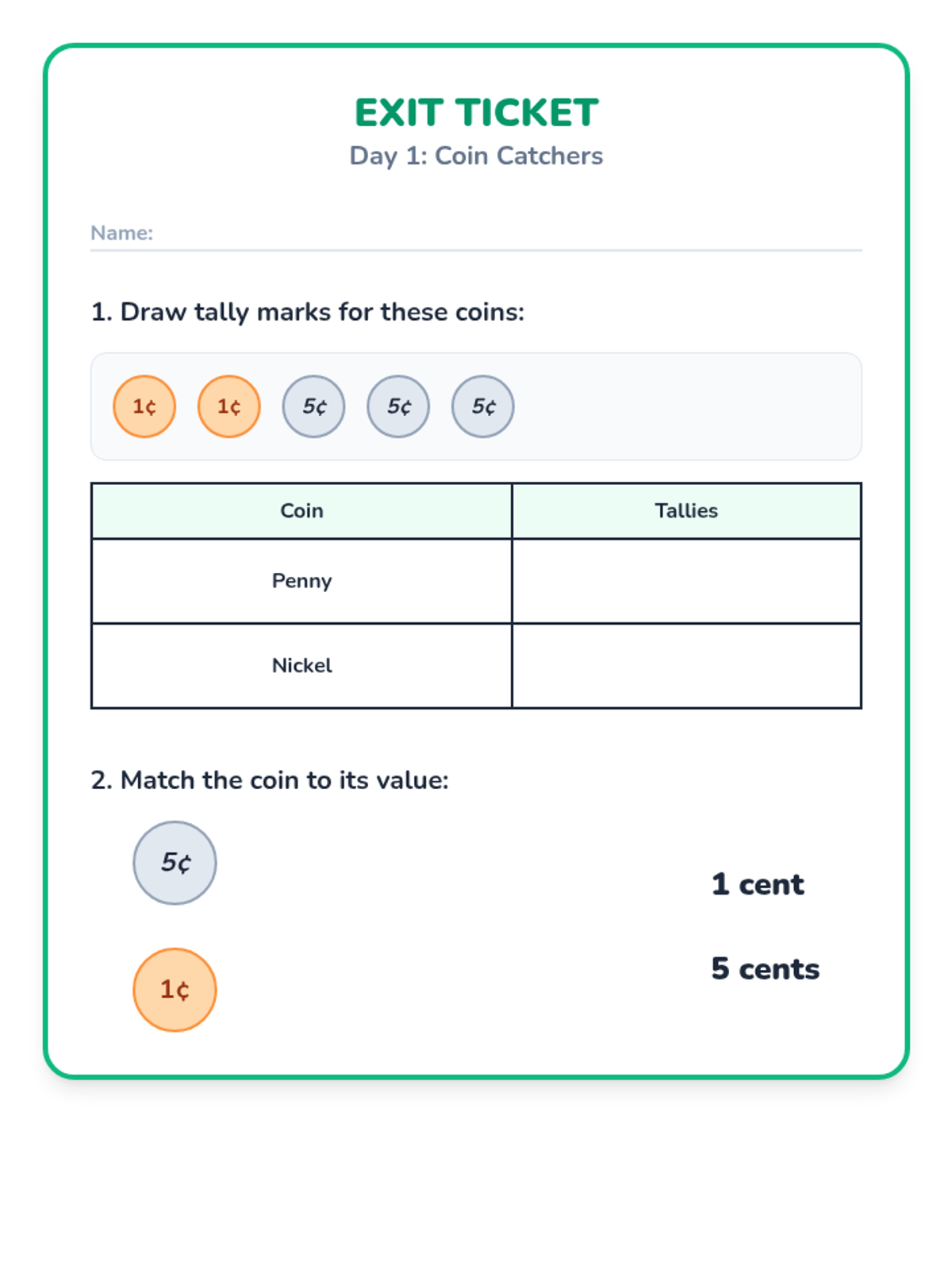
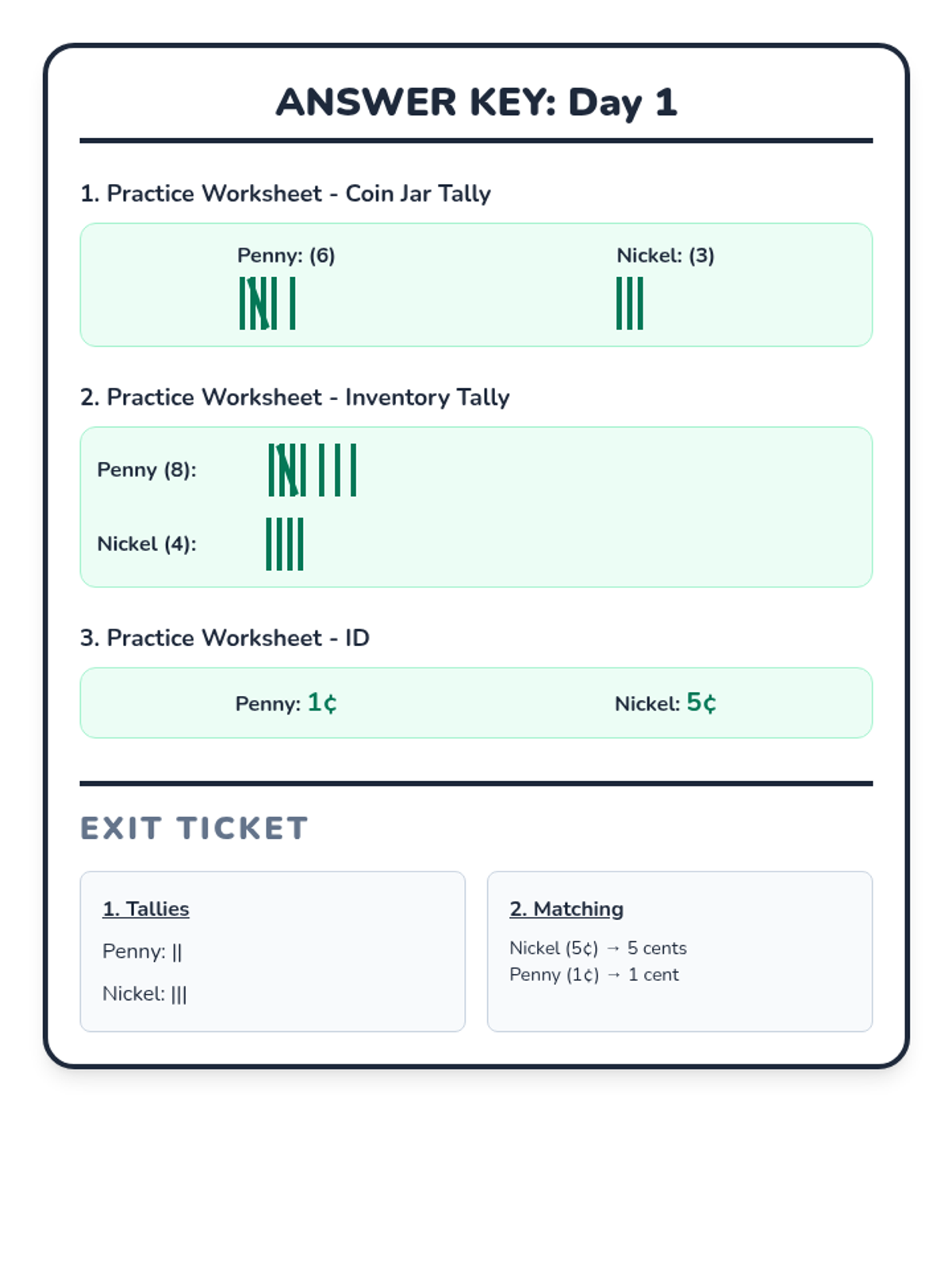
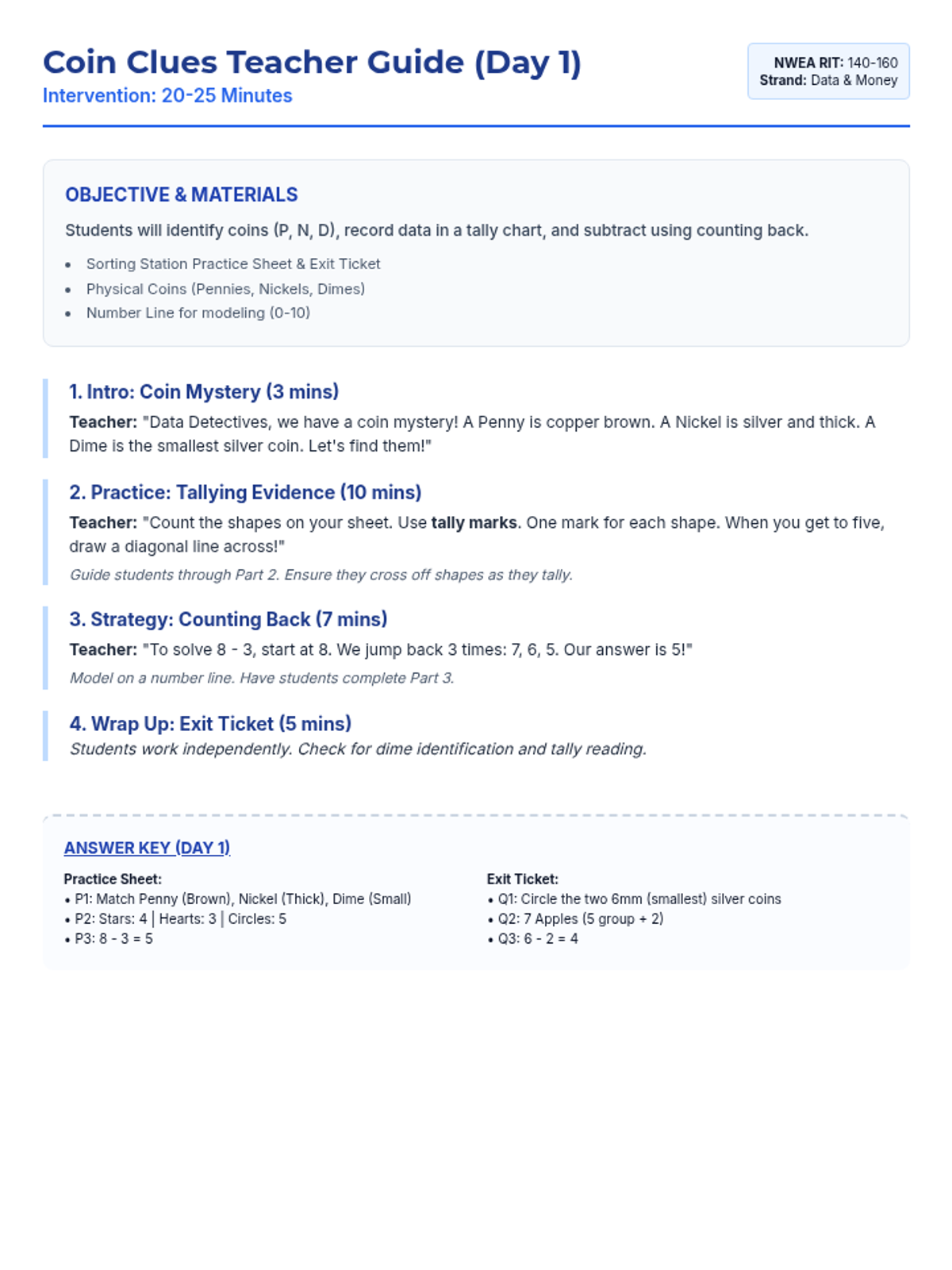
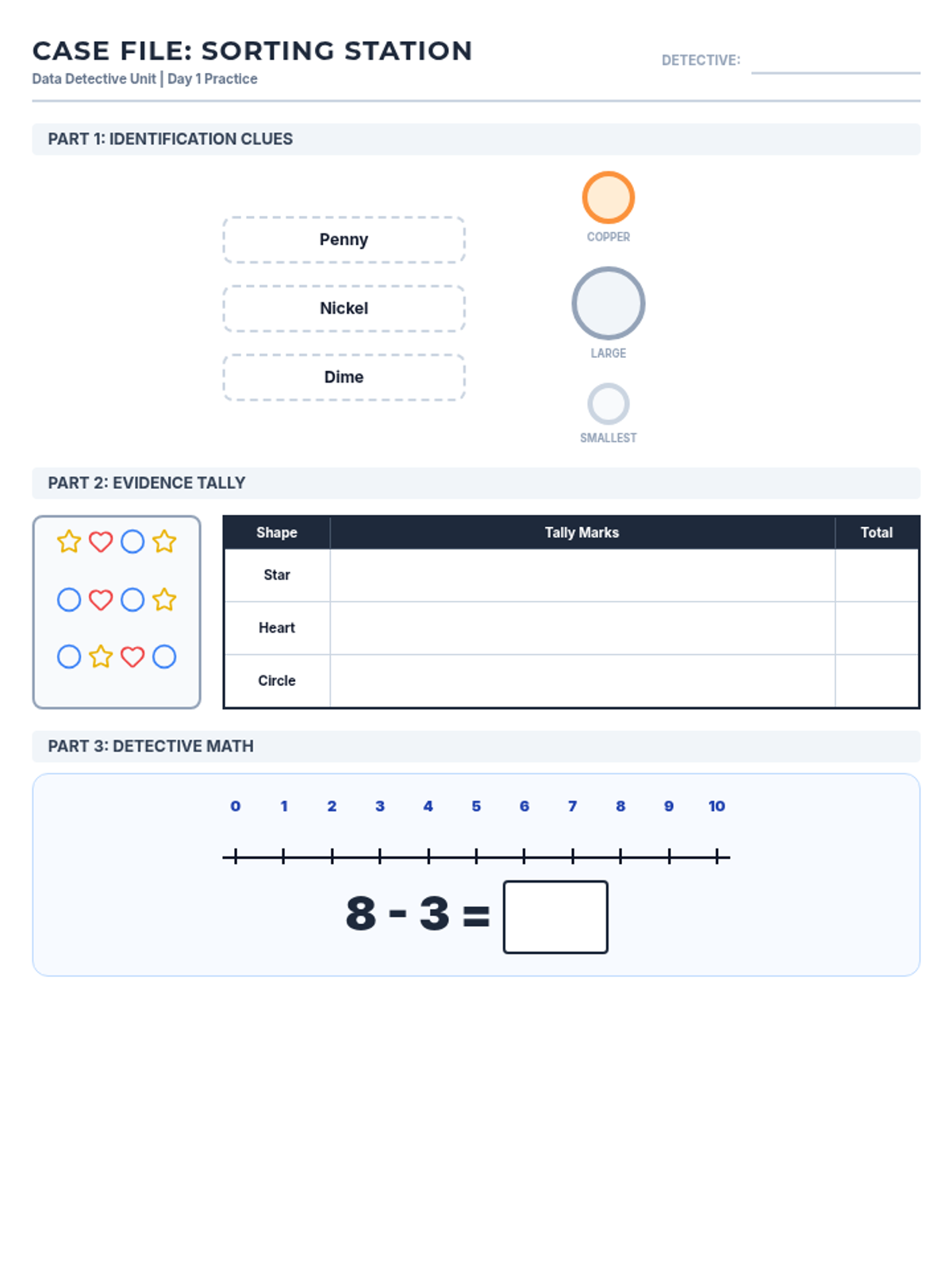
A 3-day small group math sequence for students moving from NWEA RIT 140-150 to 151-160, focusing on data analysis (tally, picture, bar) and basic money concepts (pennies, nickels, dimes).
A 3-day small group intervention sequence focused on data interpretation, coin values, and probability predictions for students moving toward the NWEA RIT 171-180 range.
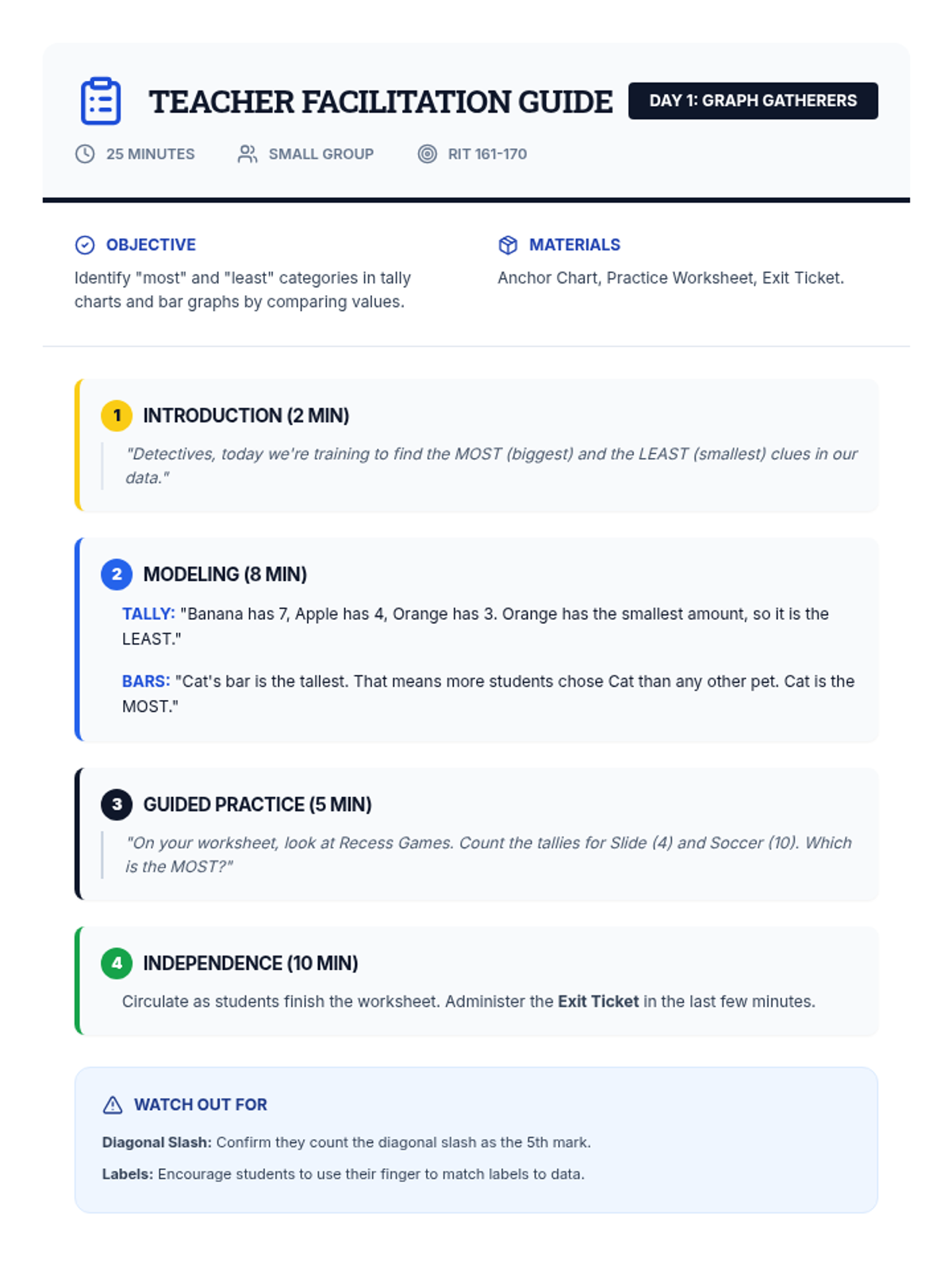
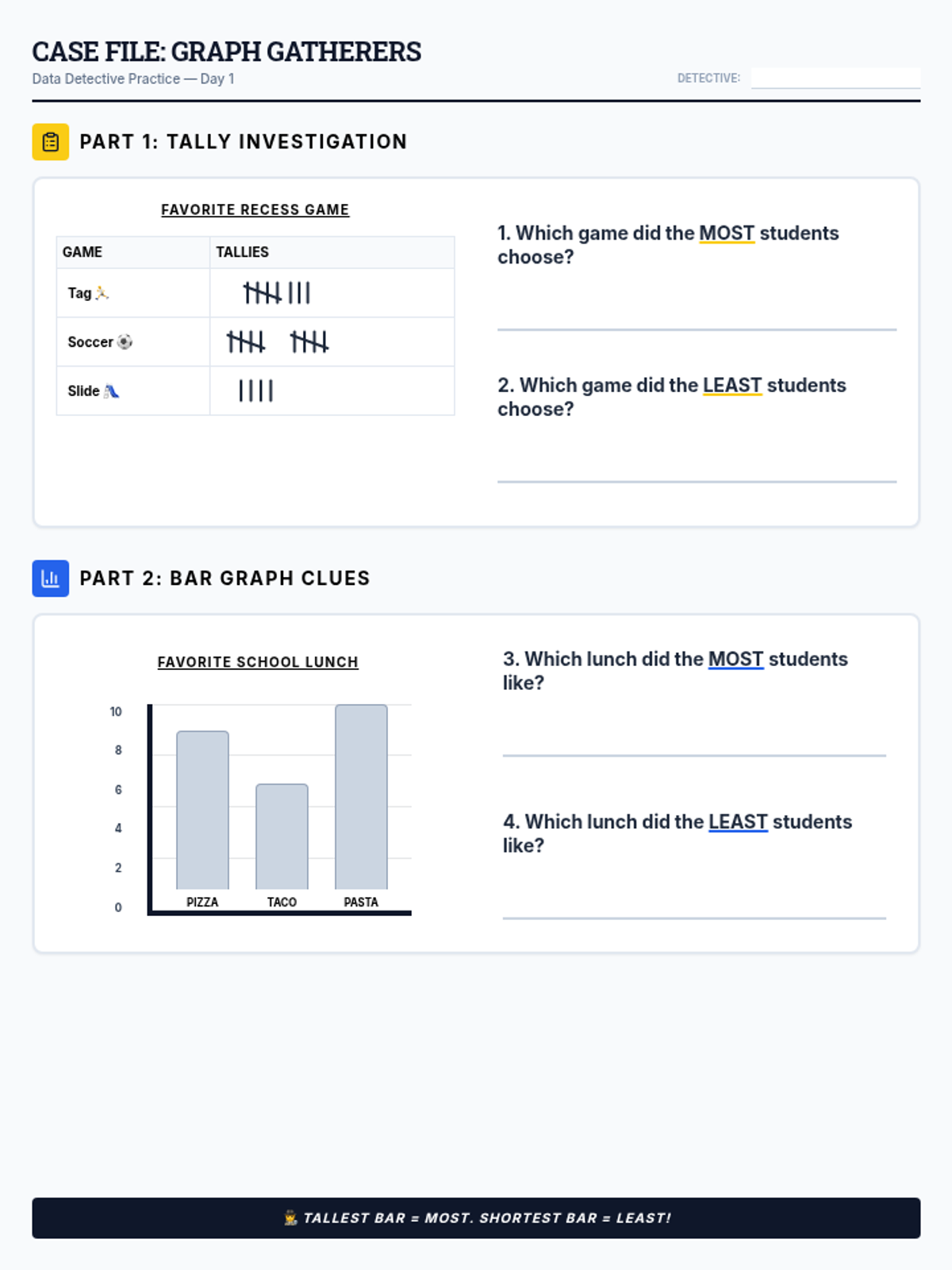
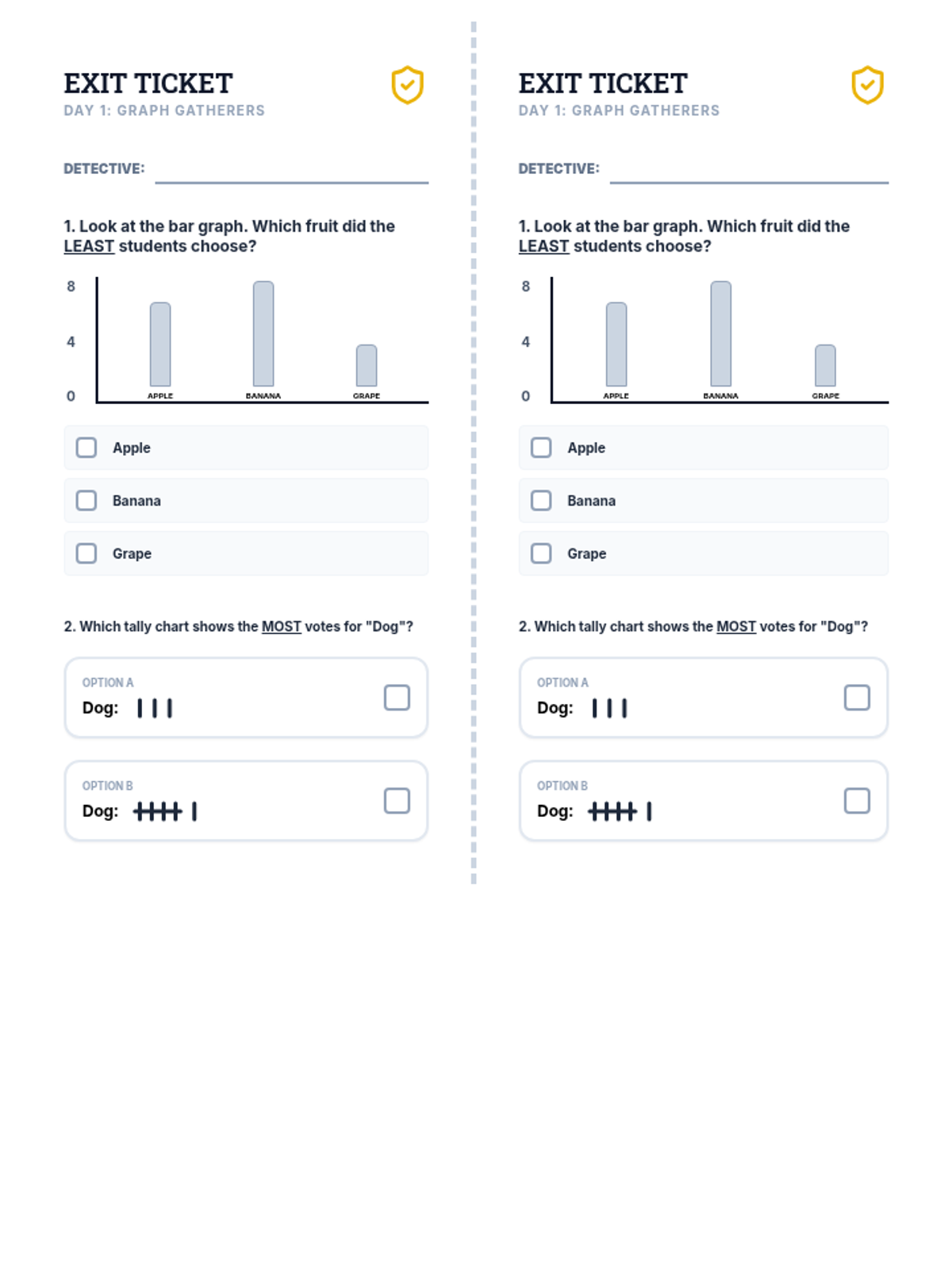
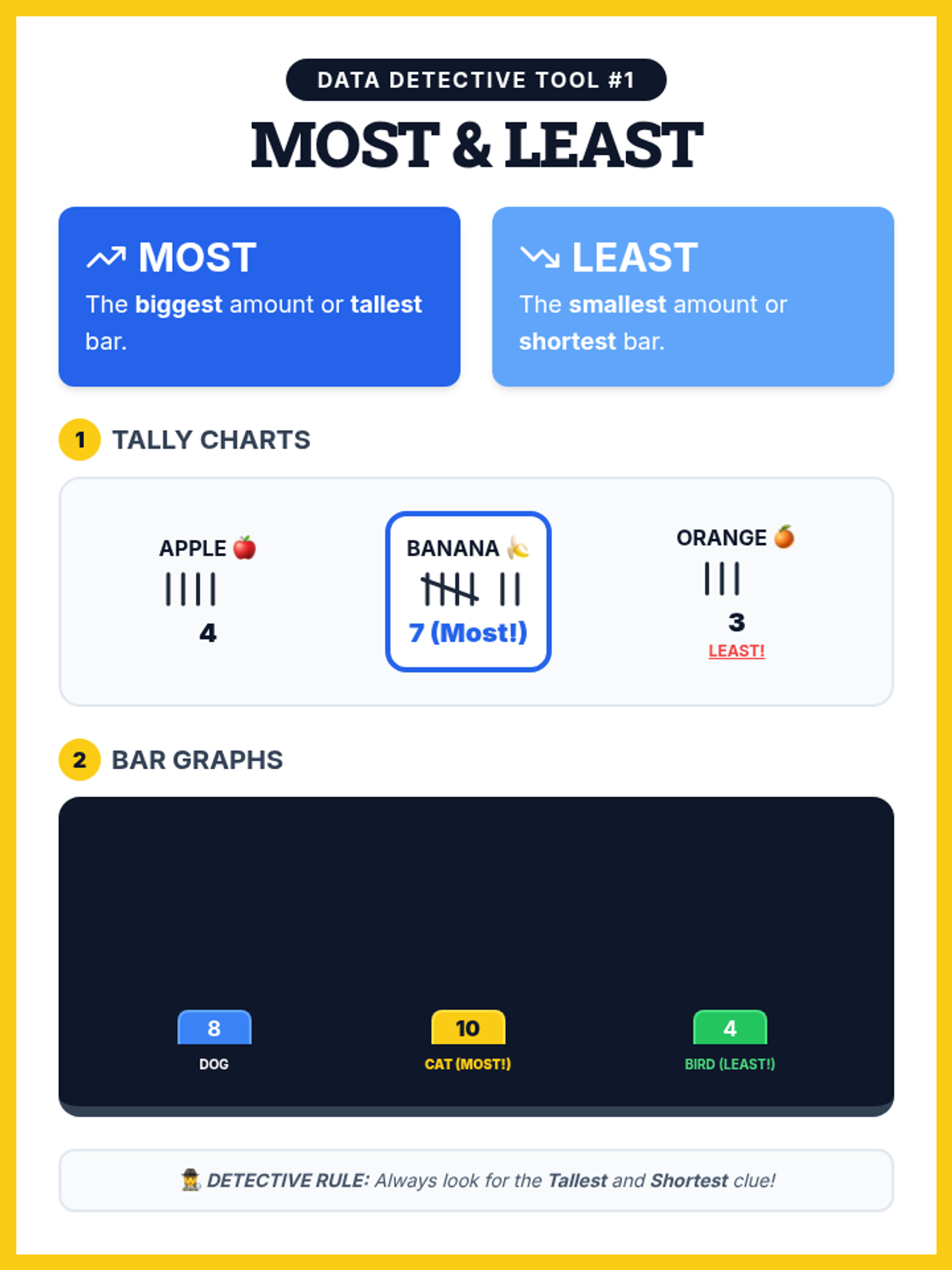
A two-day small group intervention sequence designed to move students from RIT 151-160 to 161-170 in data analysis. Students will learn to interpret and compare data using bar graphs, tally charts, tables, and circle graphs.
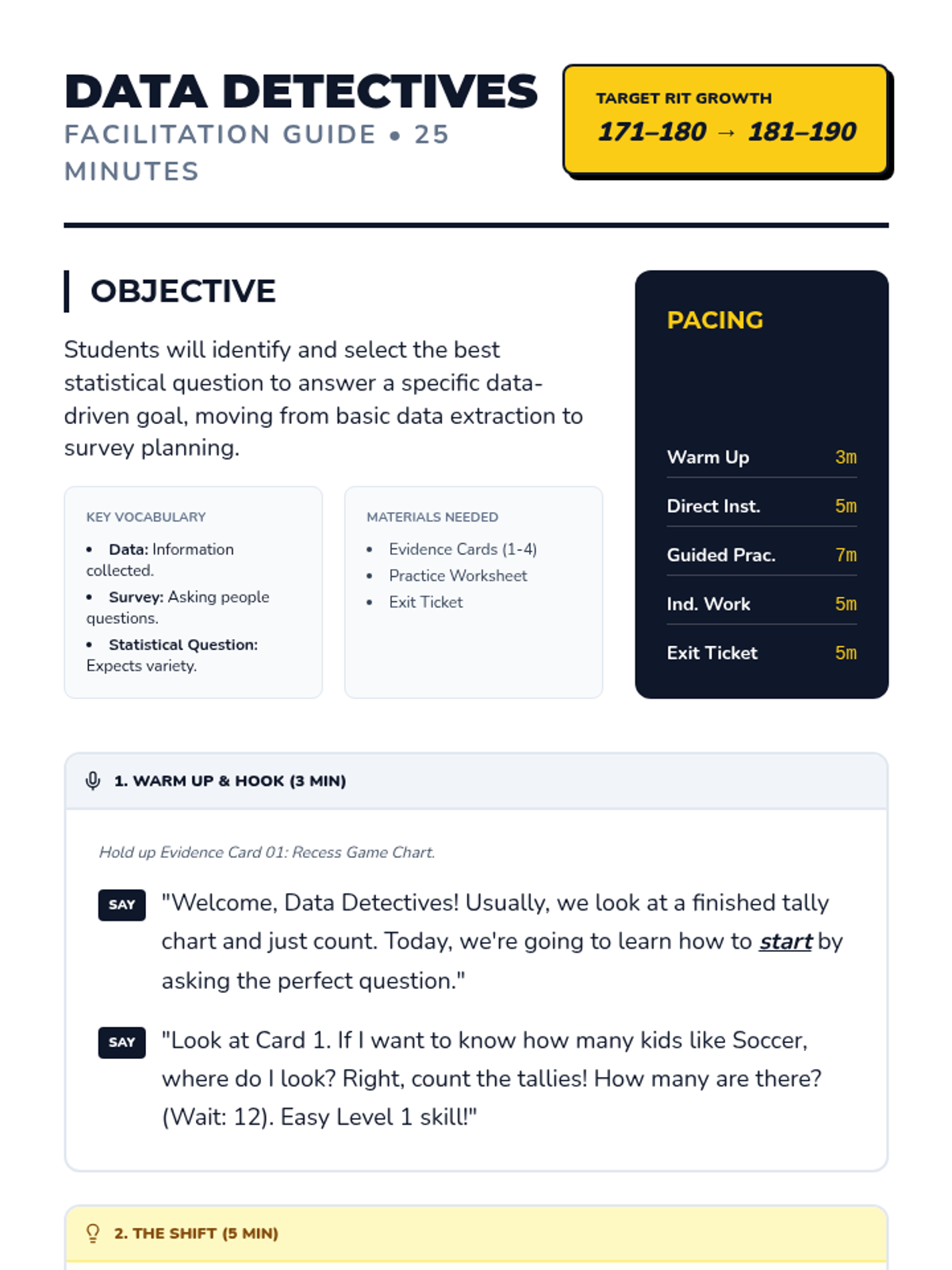
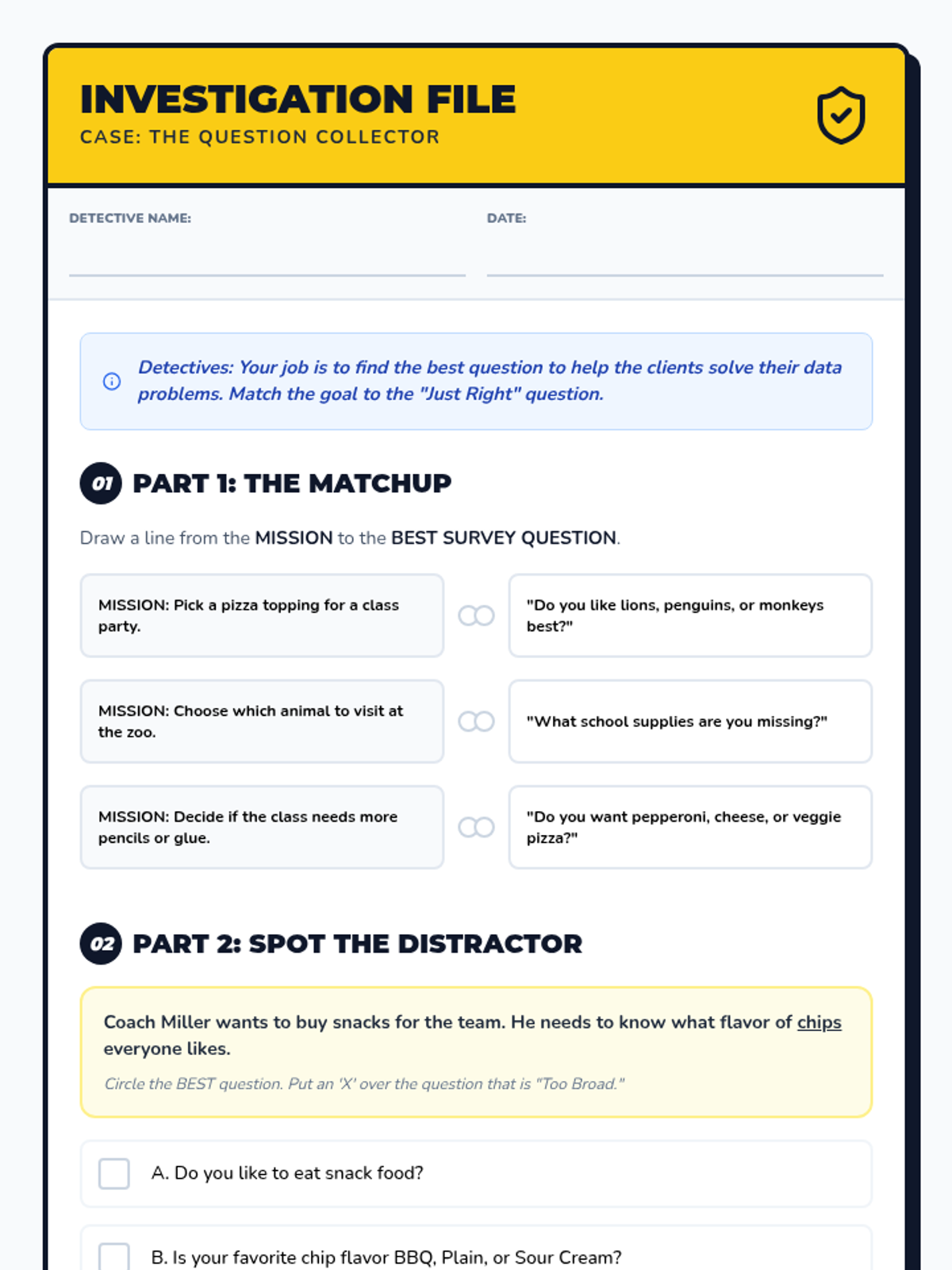
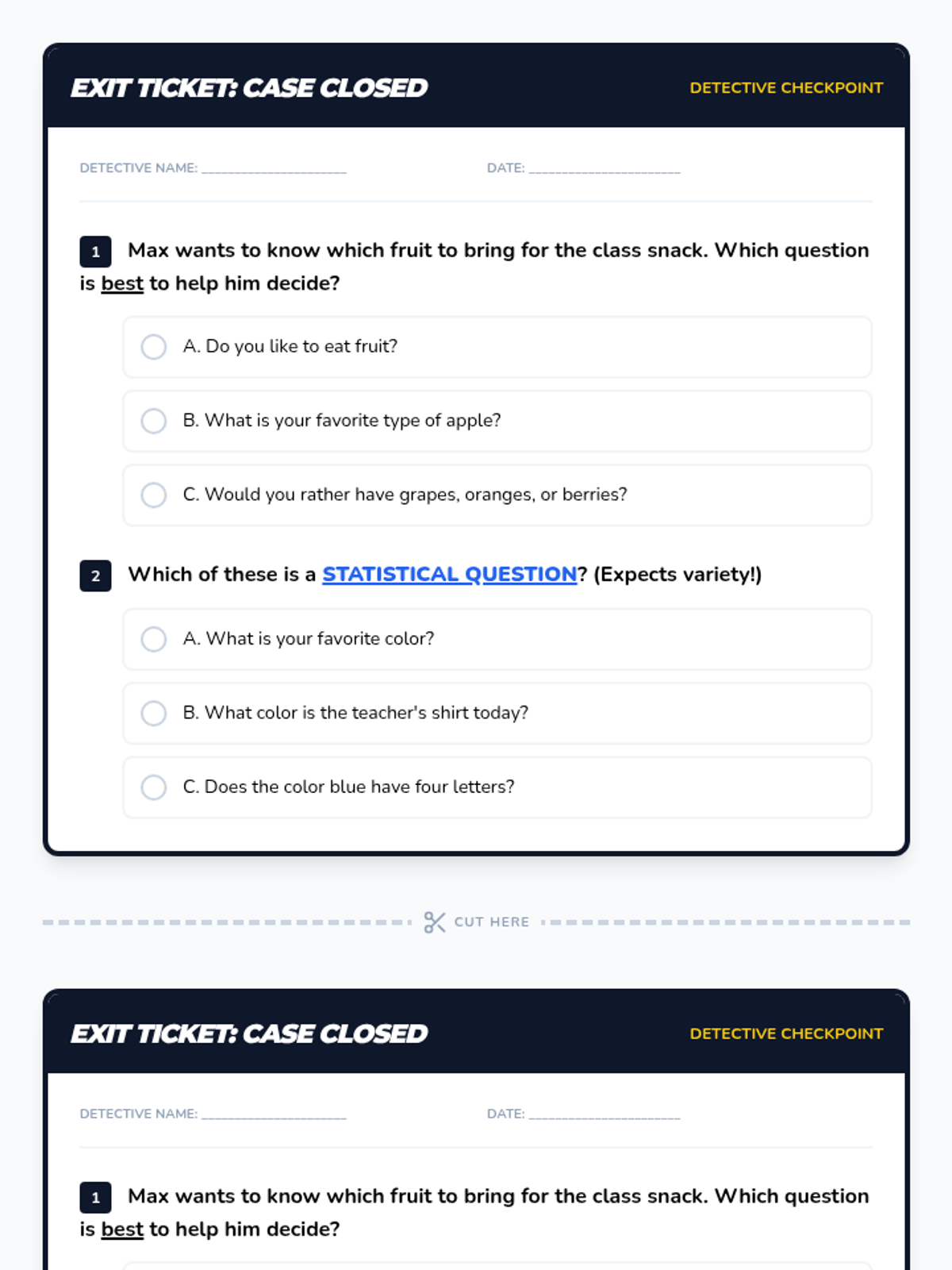
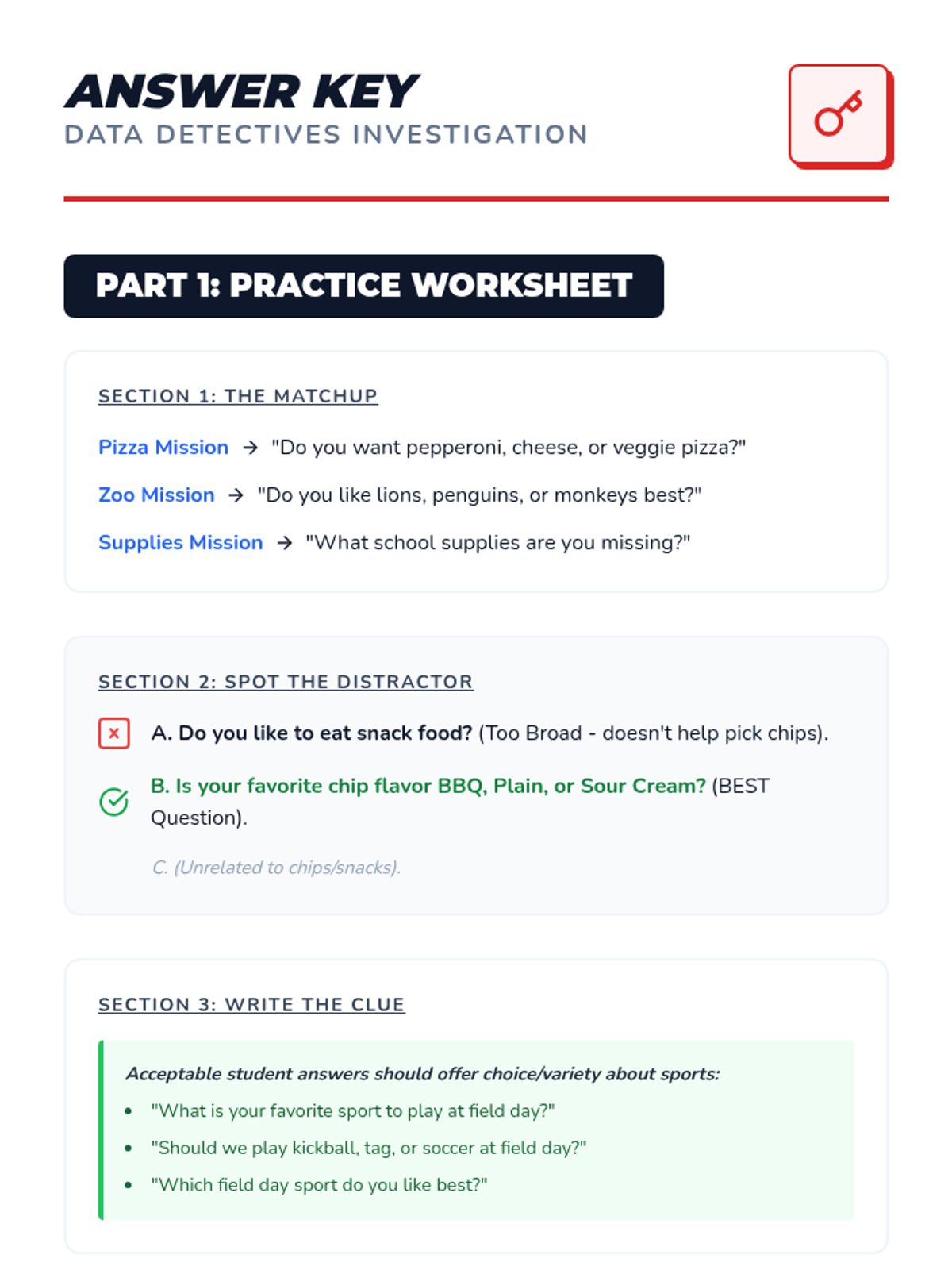
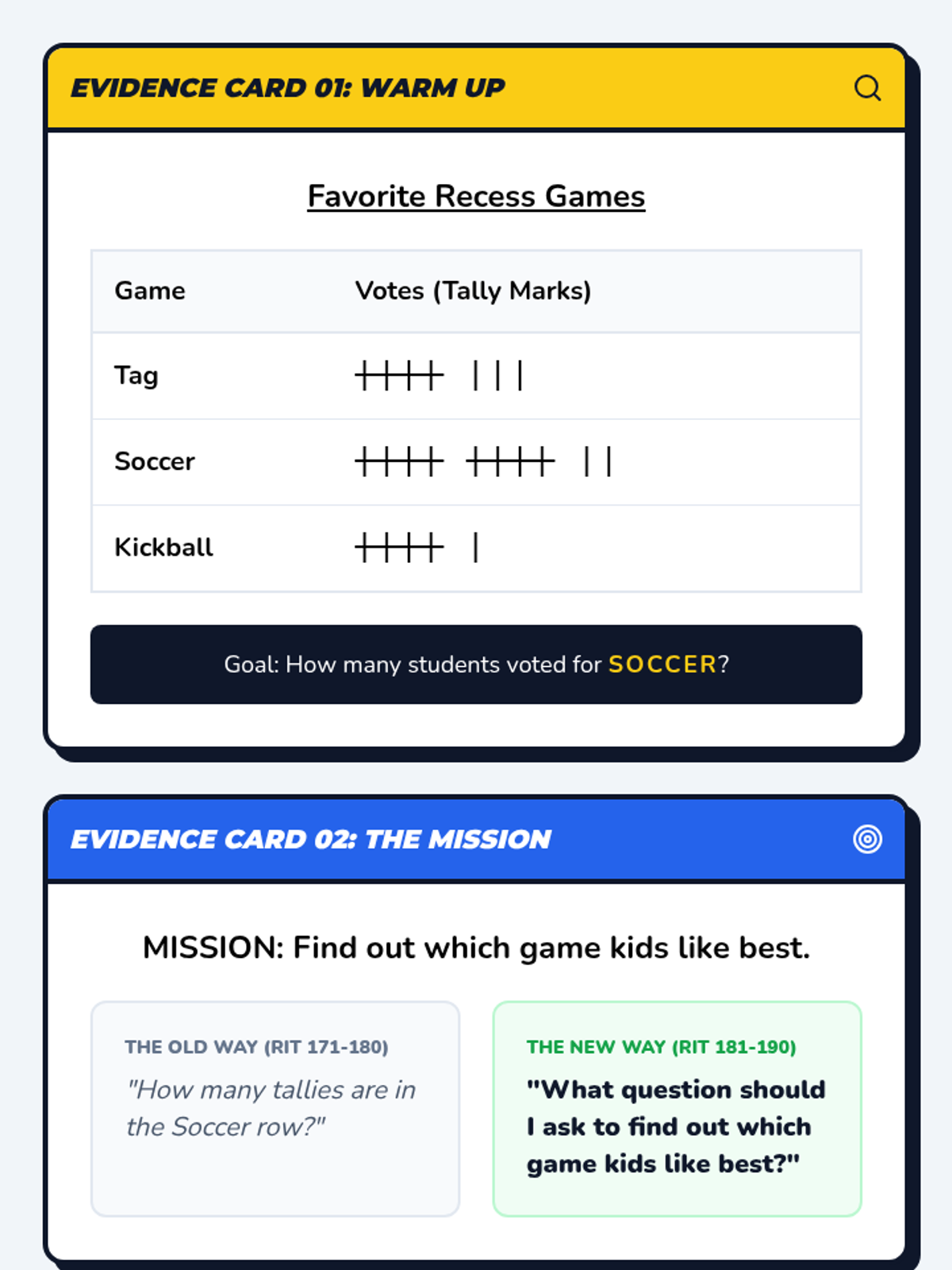
A 3-day small group intervention sequence designed to move students from RIT 171-180 to 181-190 in Data Analysis. Students progress from selecting appropriate survey questions to formulating their own and evaluating the effectiveness of data collection methods.
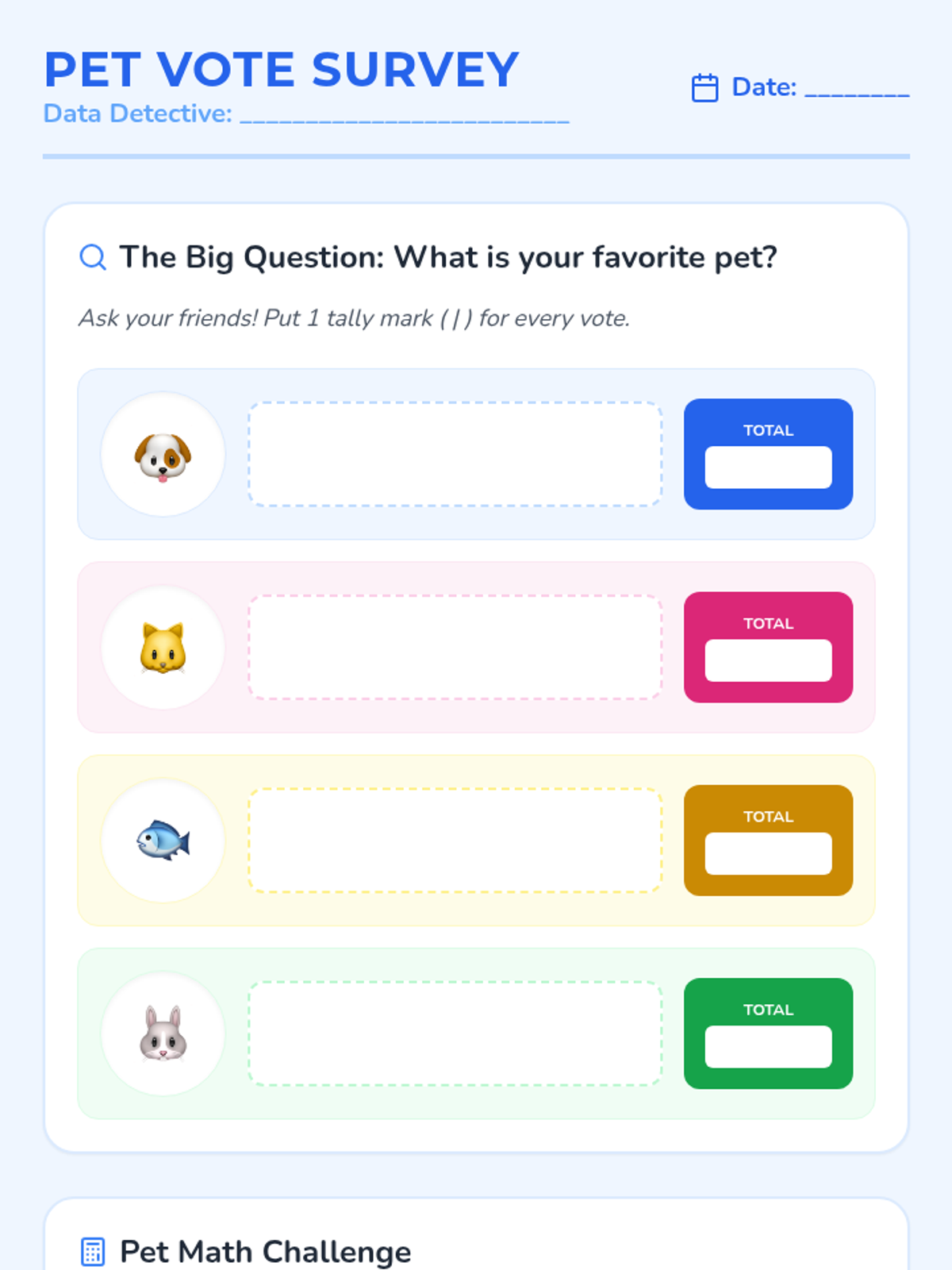
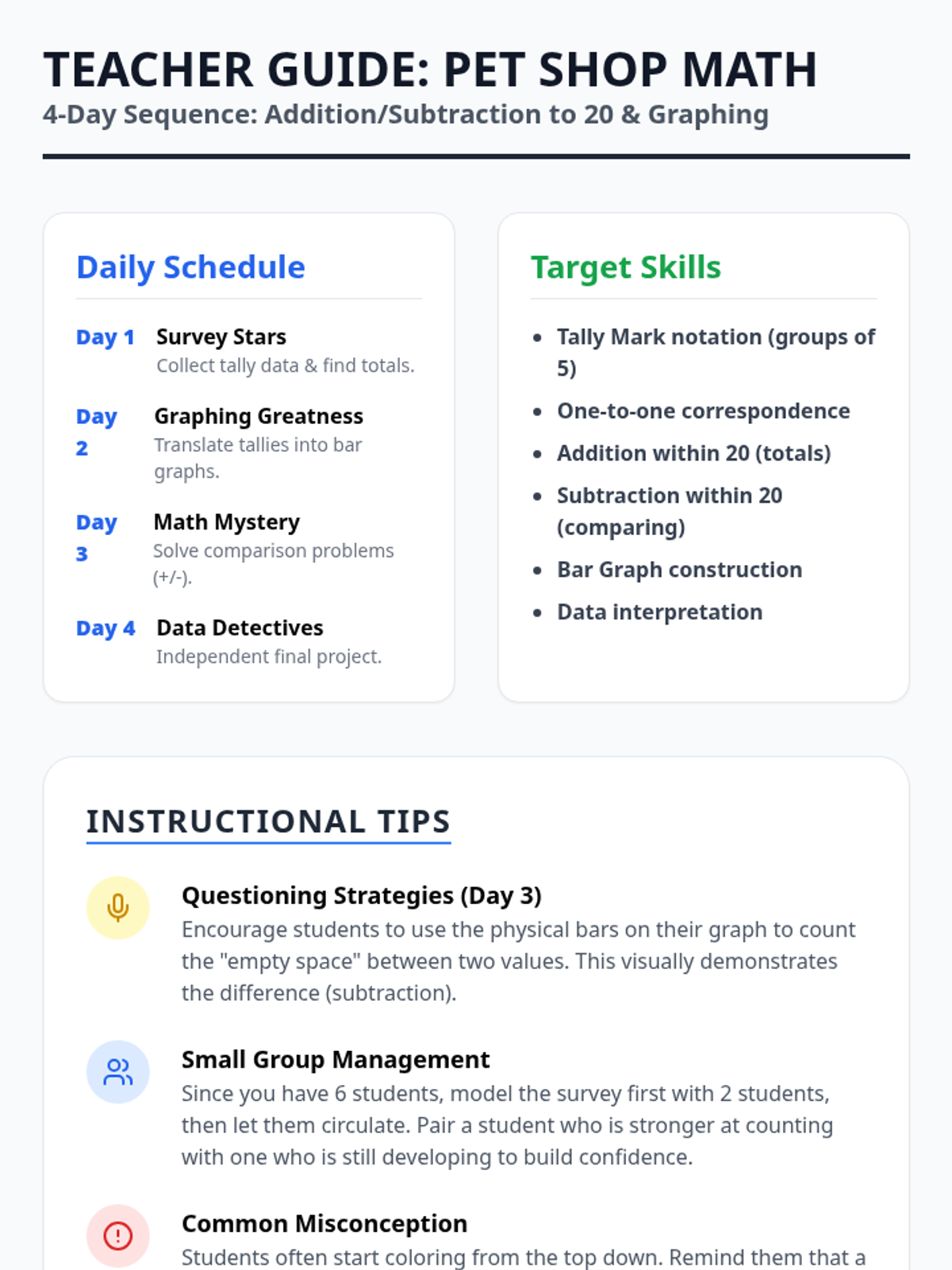
A 4-day math sequence for 1st graders combining addition/subtraction within 20 with data collection and bar graphing, themed around a friendly pet shop.
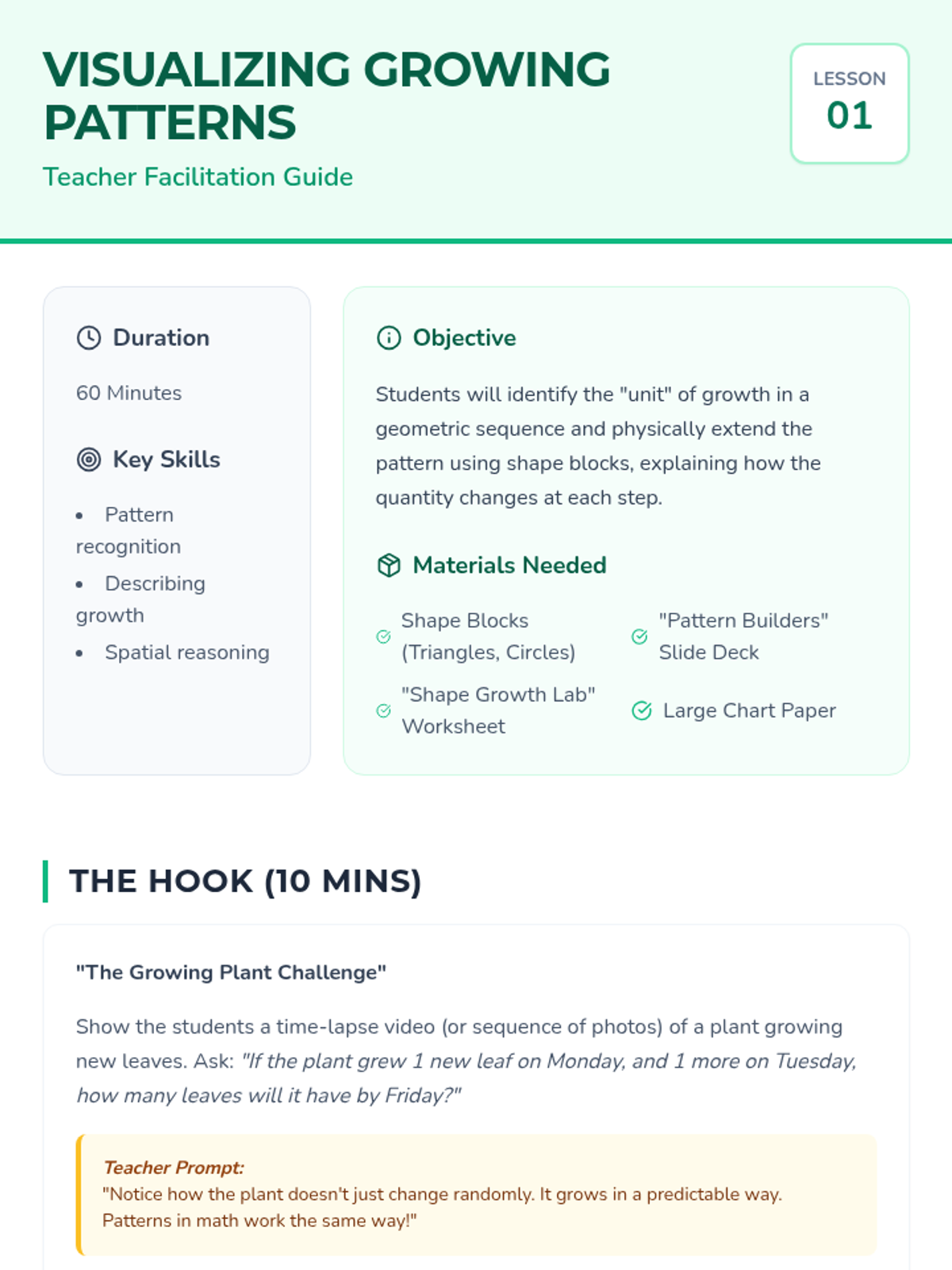
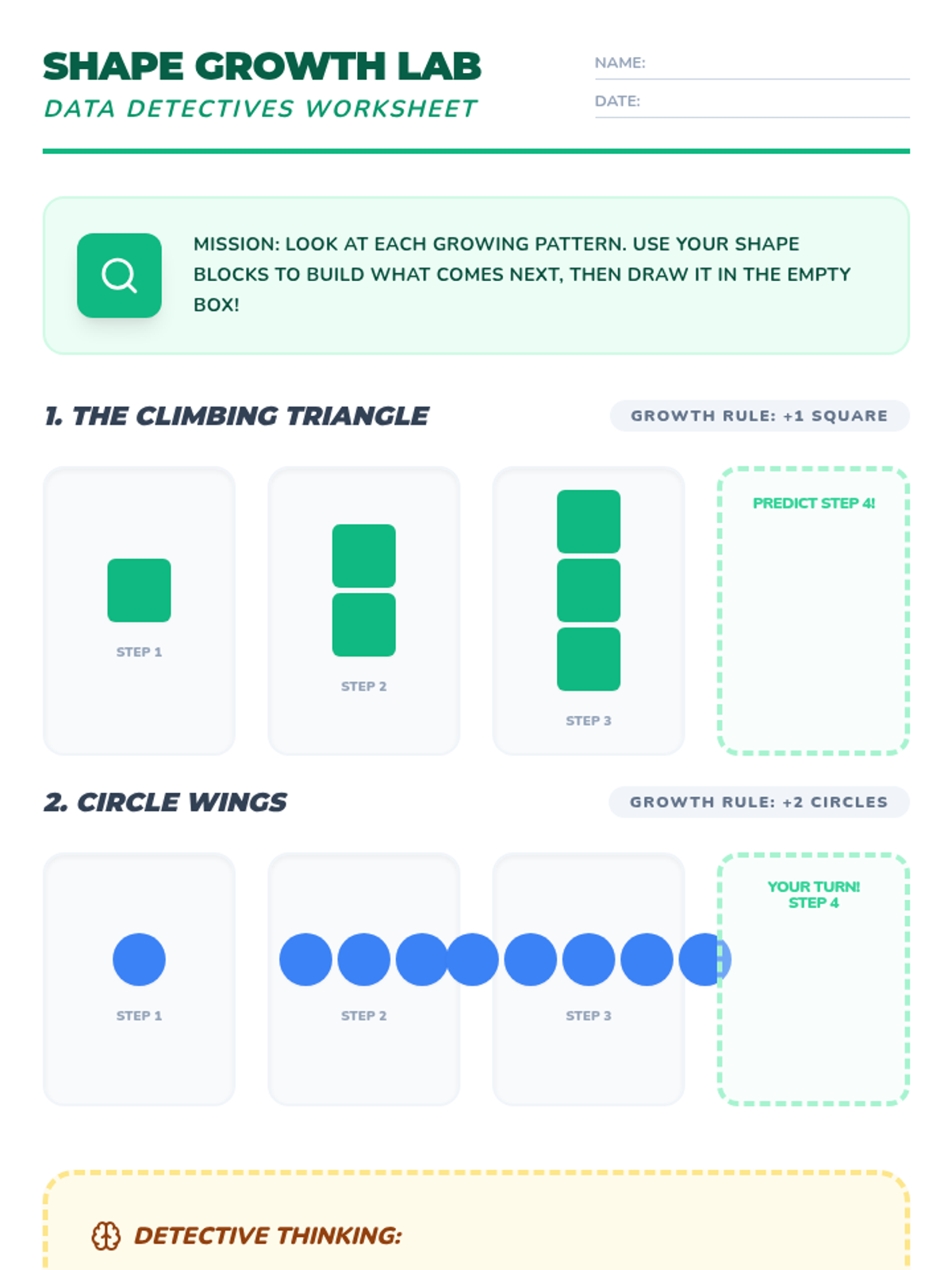
A 1st-grade sequence exploring quantitative relationships through geometric patterns, T-charts, skip counting, and simple graphing to build foundational algebraic thinking.
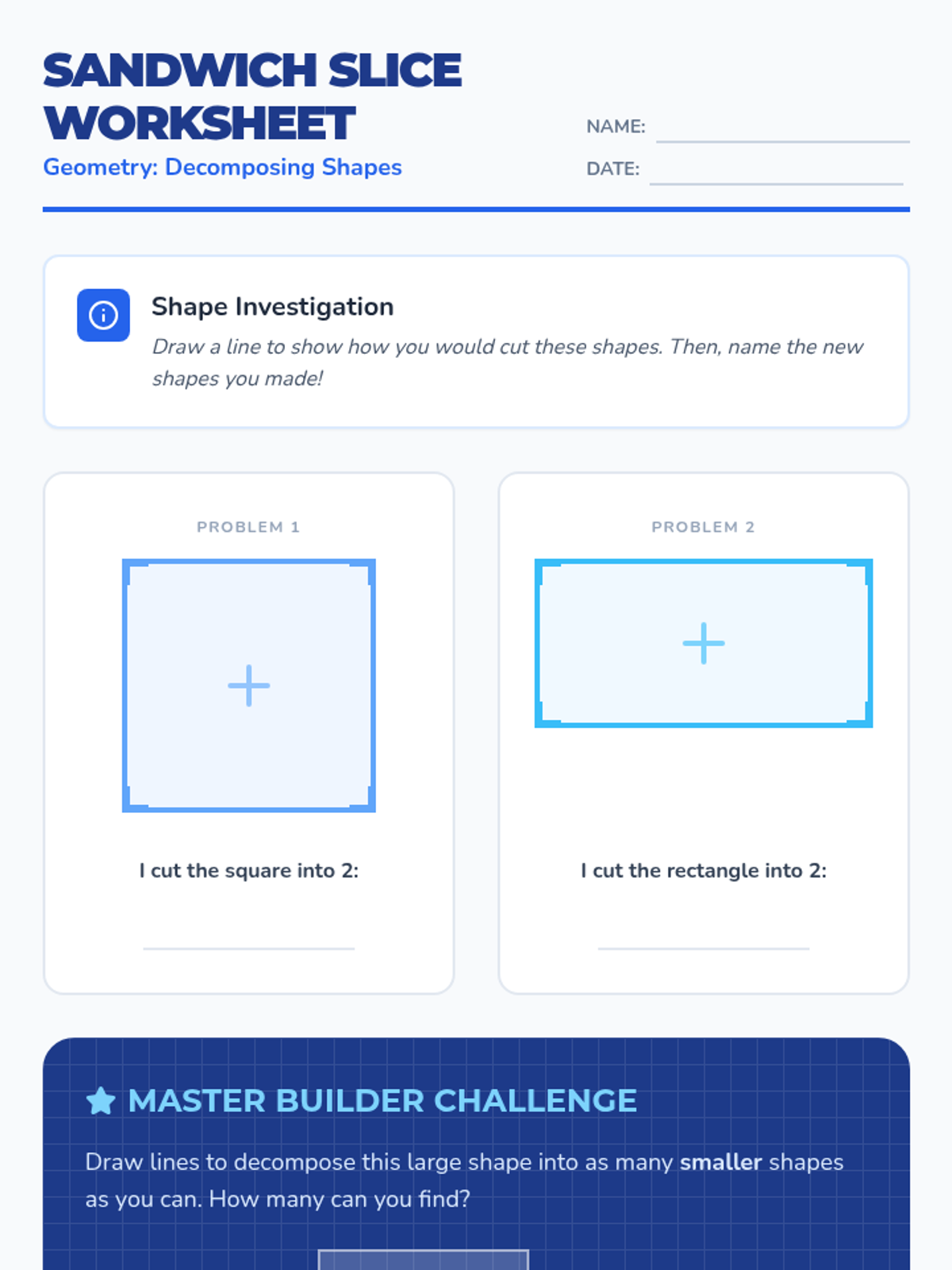
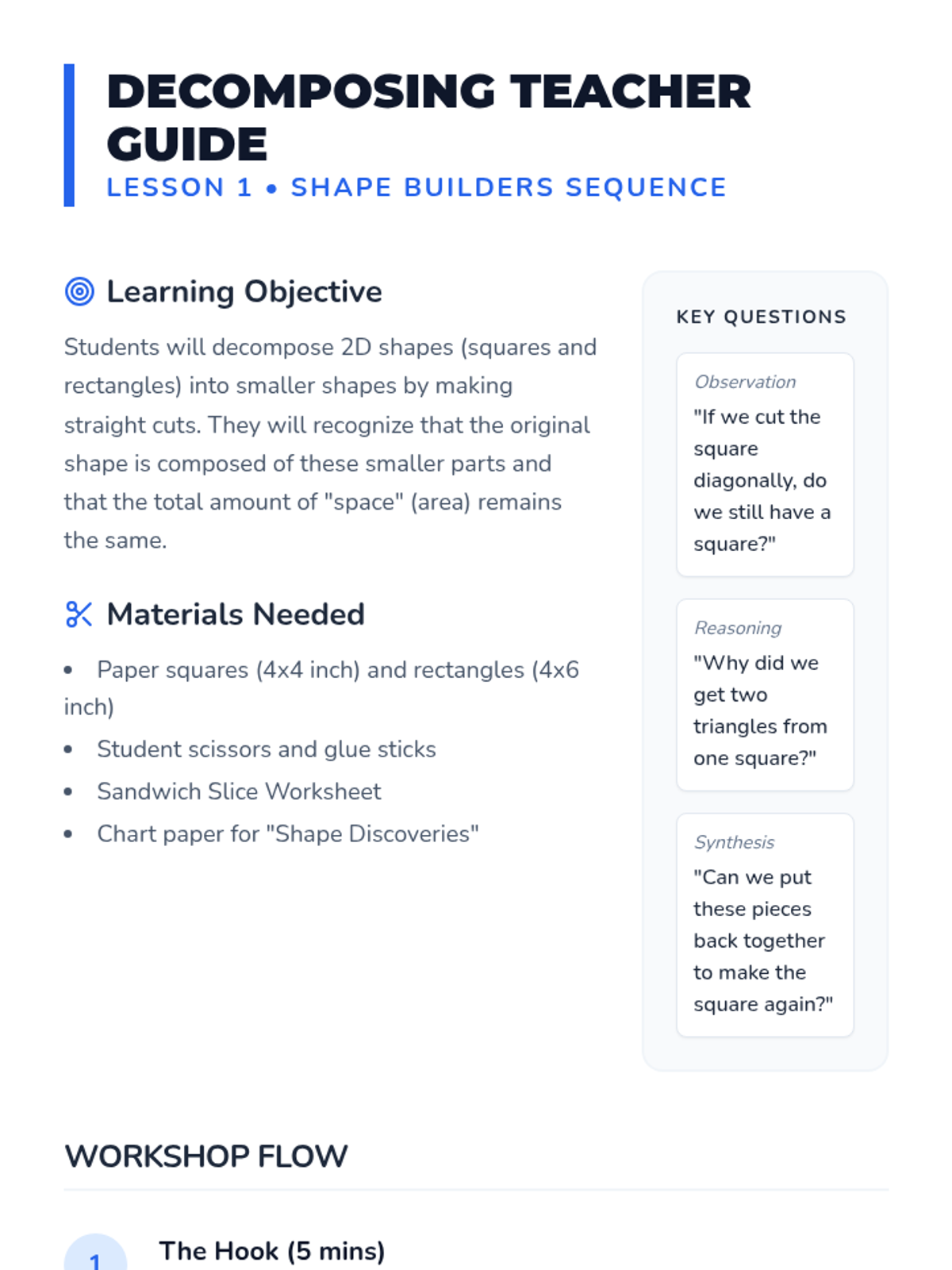
A 1st-grade geometry sequence exploring how shapes combine and break apart. Students use hands-on materials like tangrams, pattern blocks, and geoboards to develop spatial reasoning and understand the part-whole relationship in geometric figures.
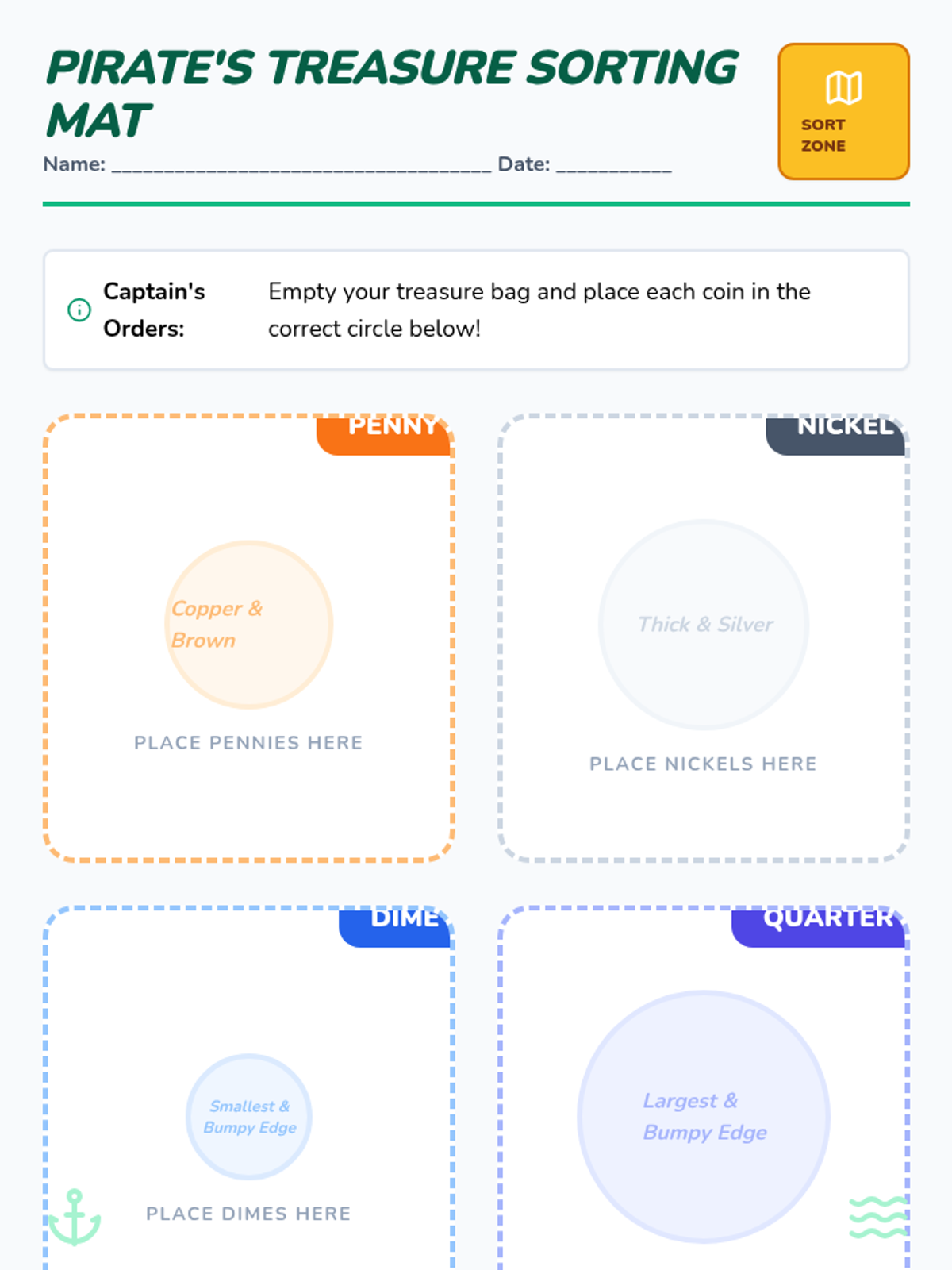
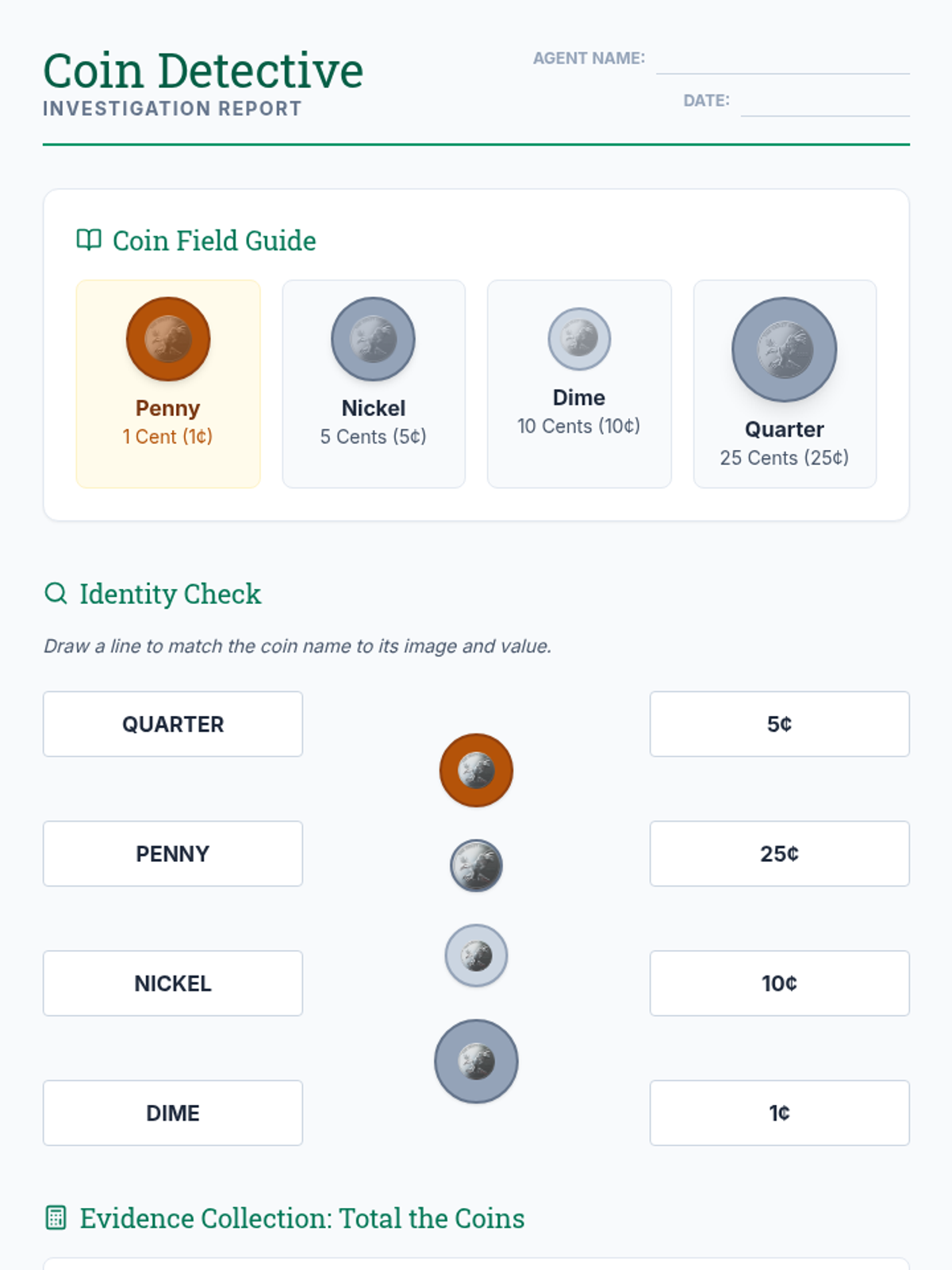
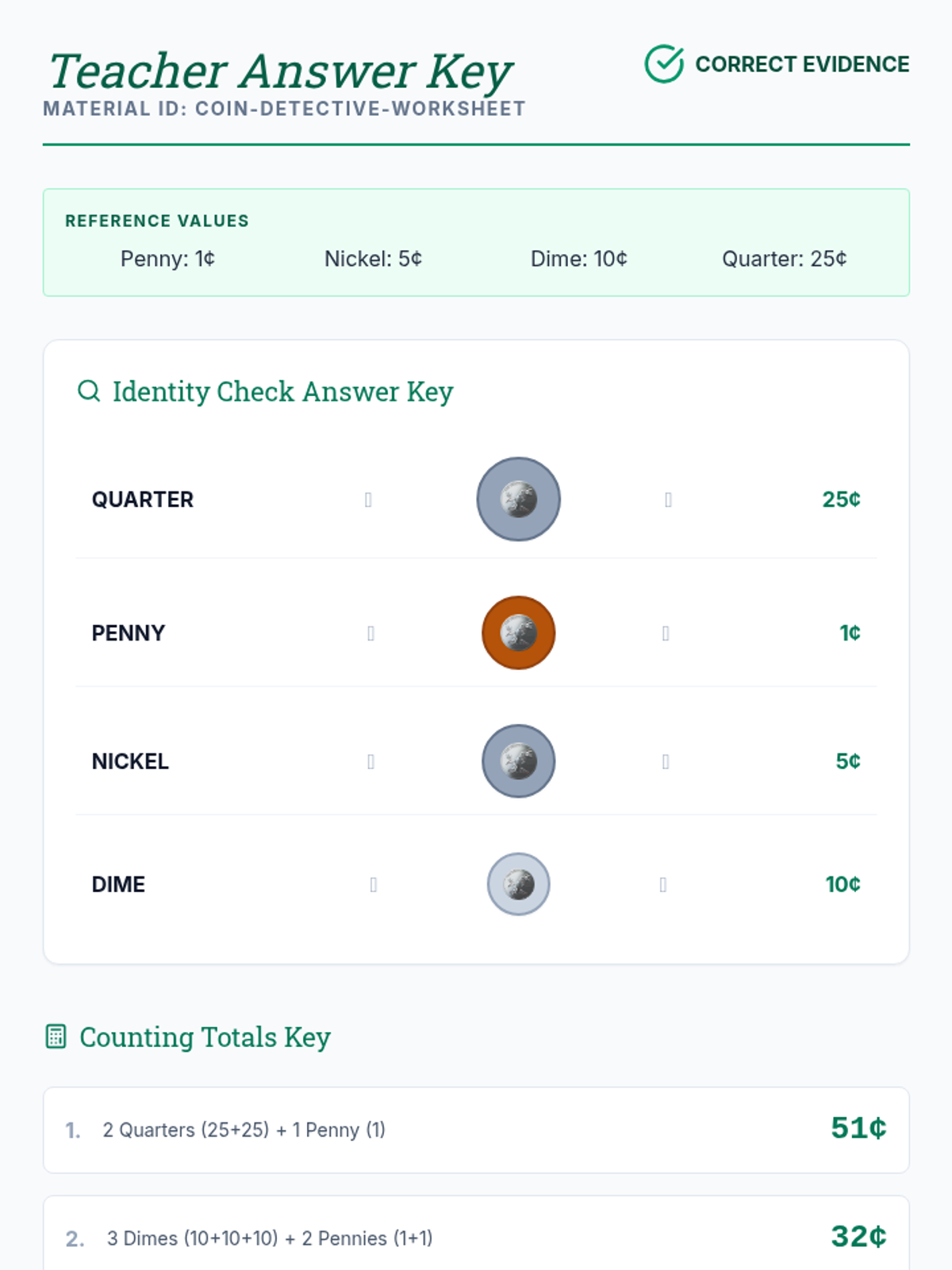
A 1st Grade math sequence focused on identifying coins, understanding their values, and applying skip-counting skills to sum mixed collections in a classroom market simulation.
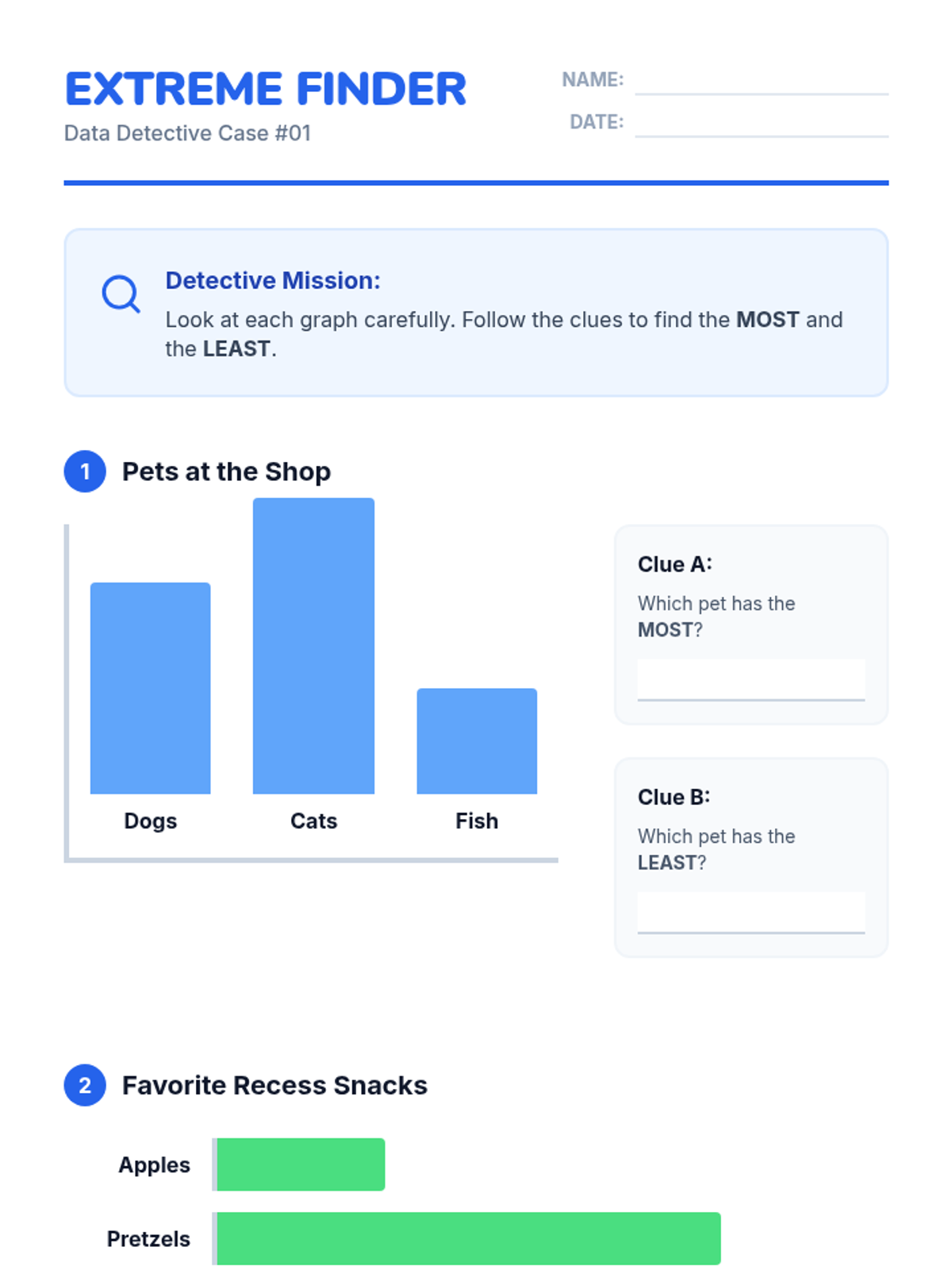
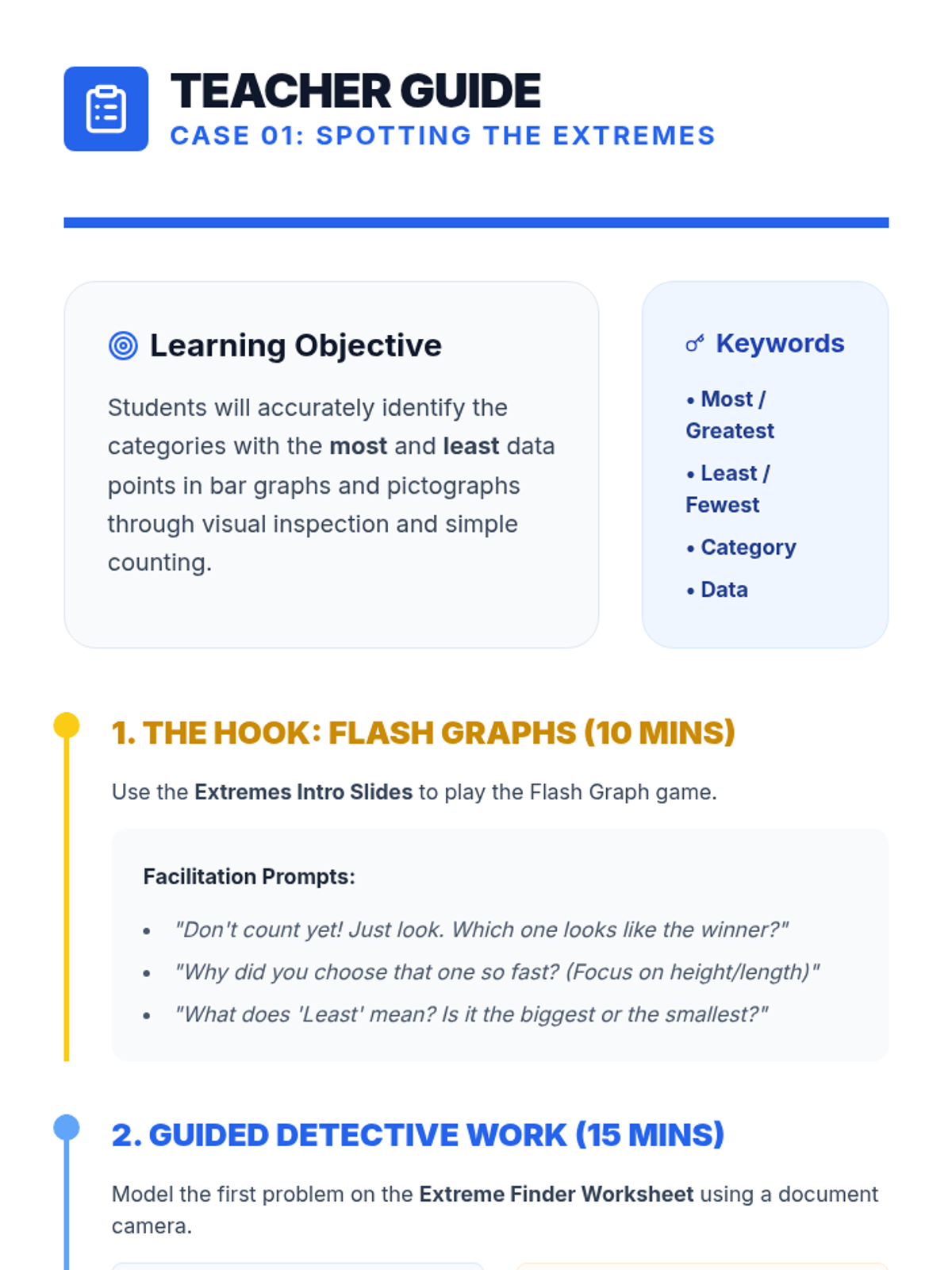
A comprehensive 1st Grade sequence focused on interpreting and comparing data using pictographs and bar graphs. Students learn to identify extremes, calculate totals, and solve complex 'how many more/fewer' comparison problems through the lens of a 'Data Detective' mystery theme.
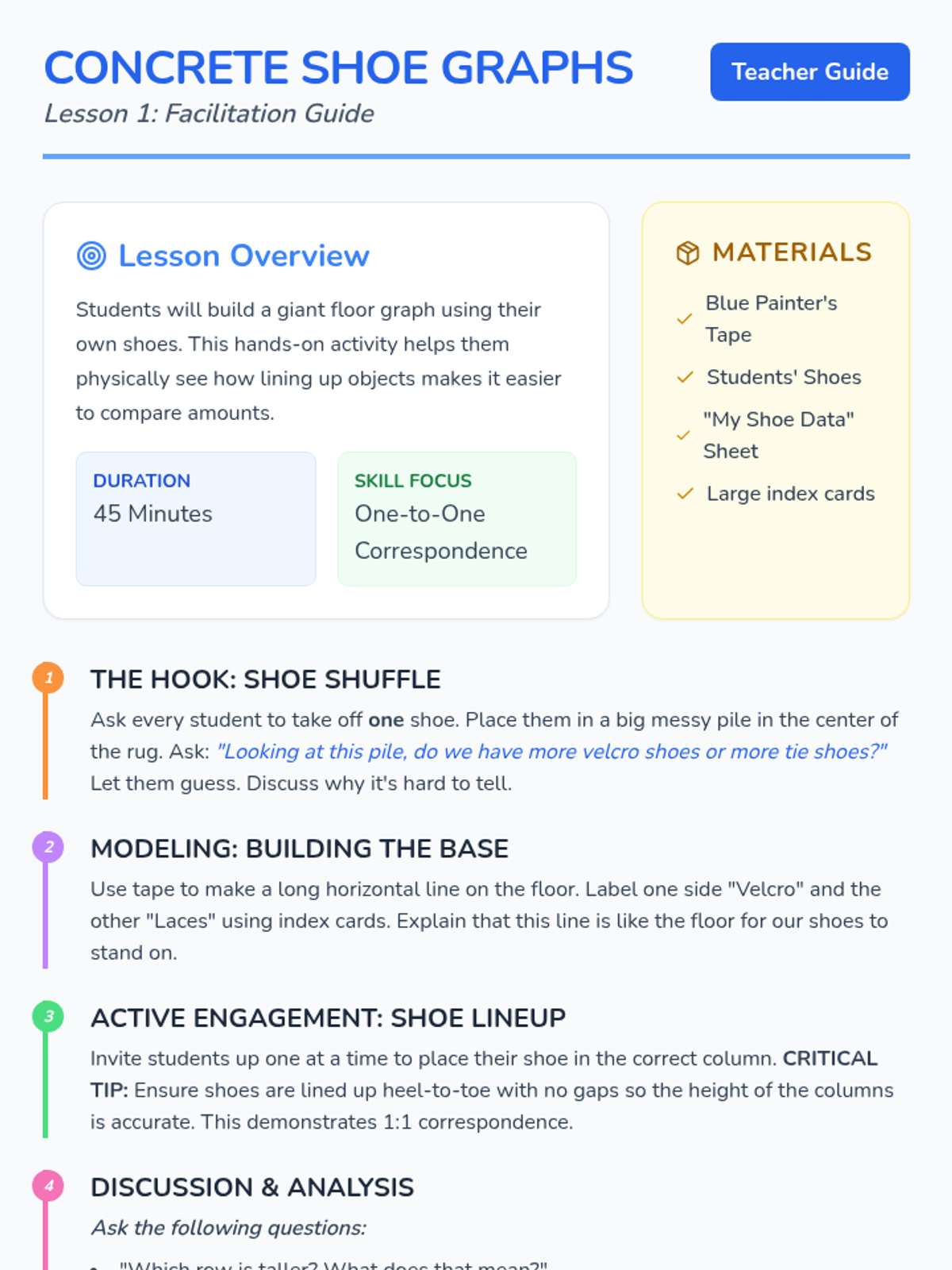
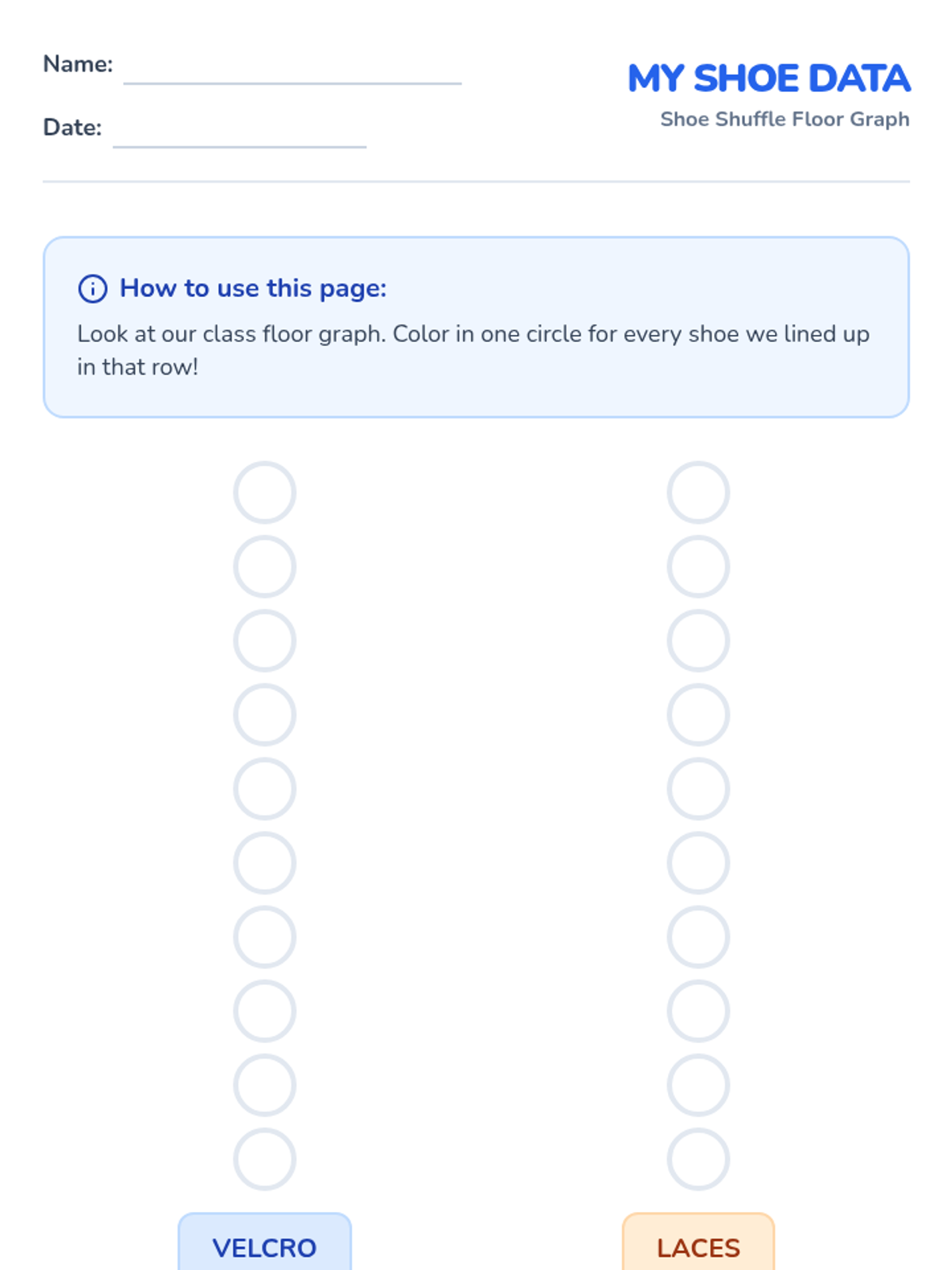
A 1st-grade unit on creating and interpreting picture graphs, moving from concrete 3D objects to abstract 2D representations. Students learn one-to-one correspondence, alignment, and data interpretation through hands-on activities.
A 3-day small group sequence focused on Geometry and Measurement for NWEA RIT 171-180, covering time reading to the nearest 5 minutes and 2D/3D shape attributes.
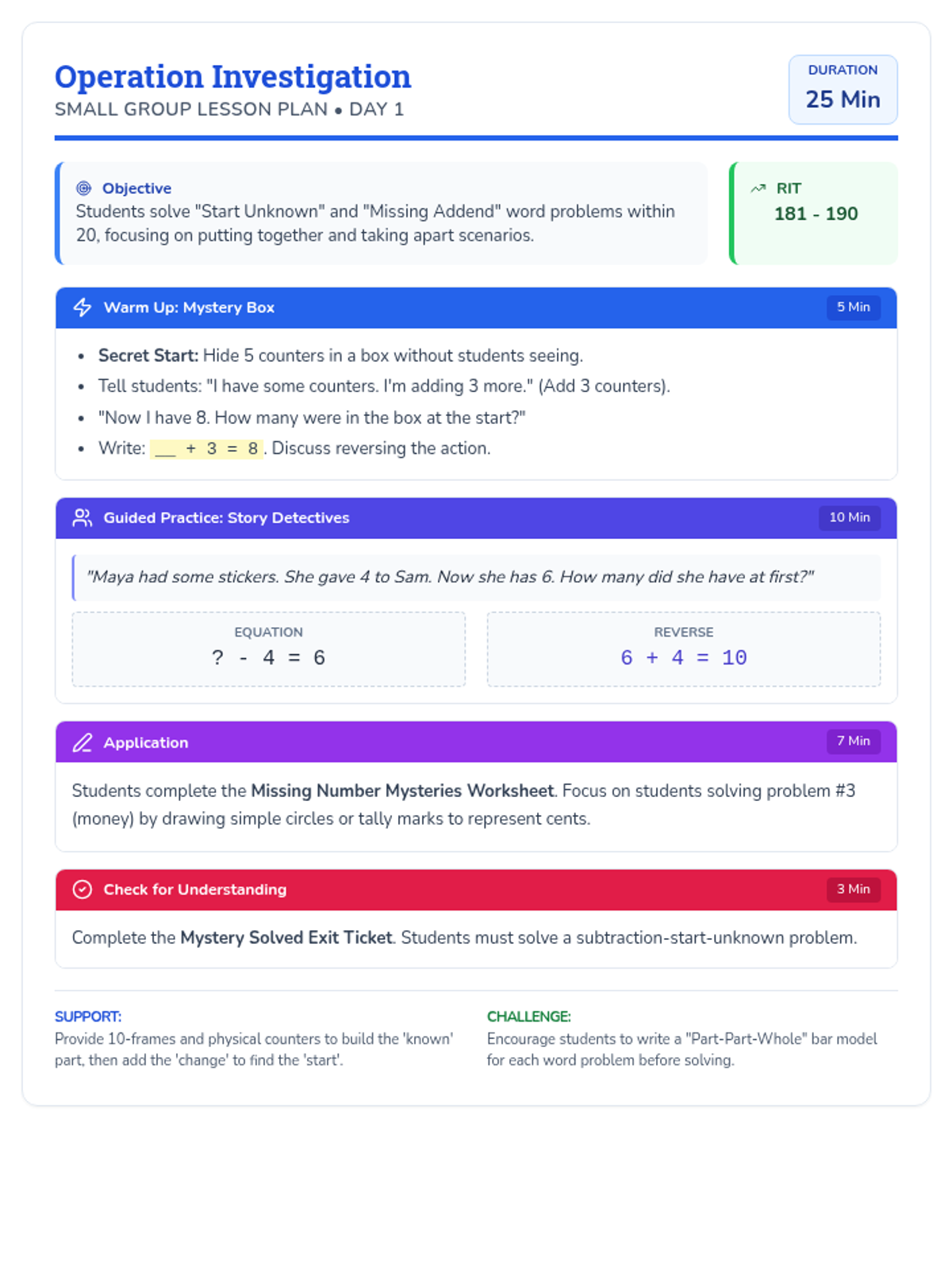
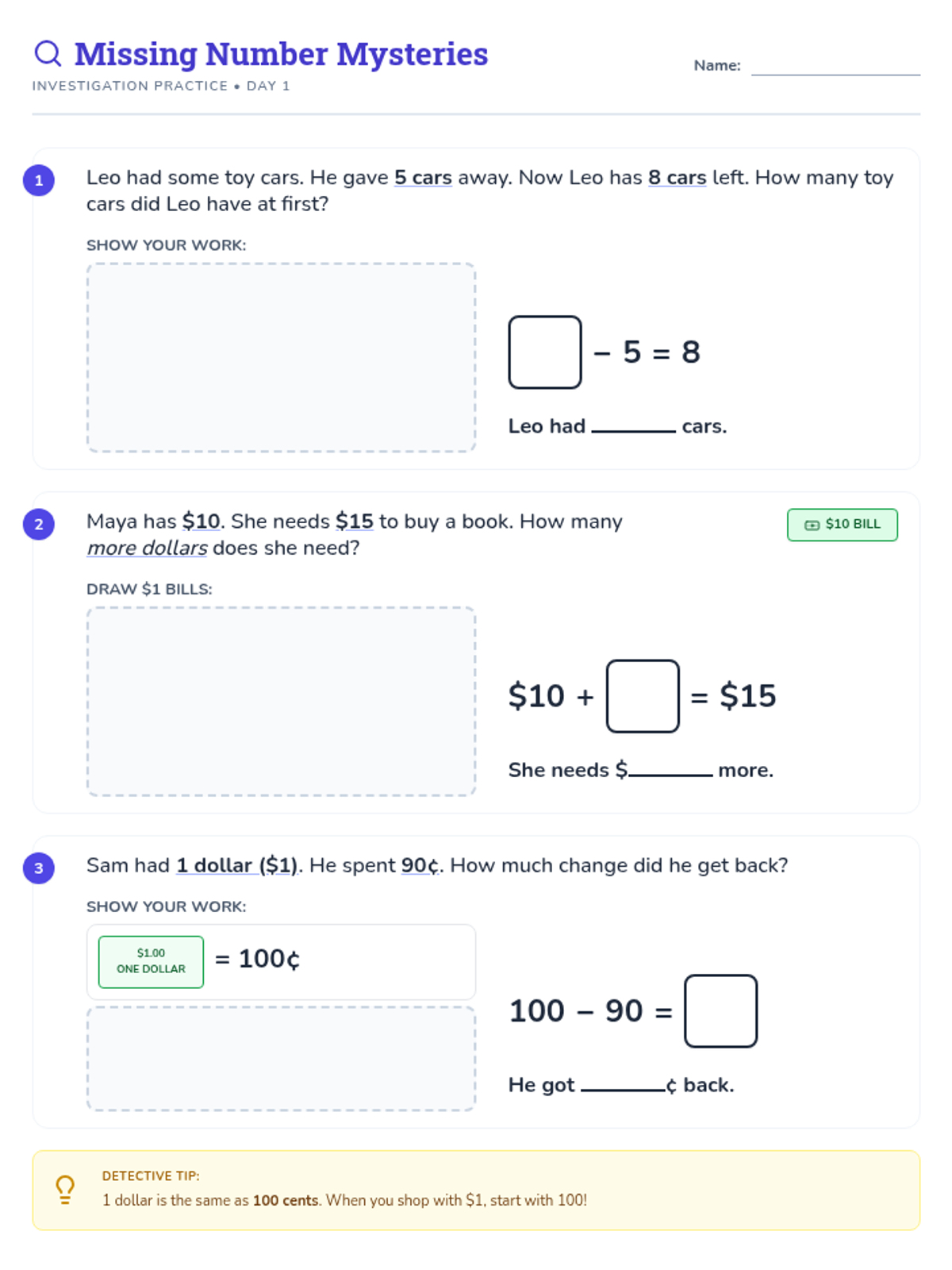
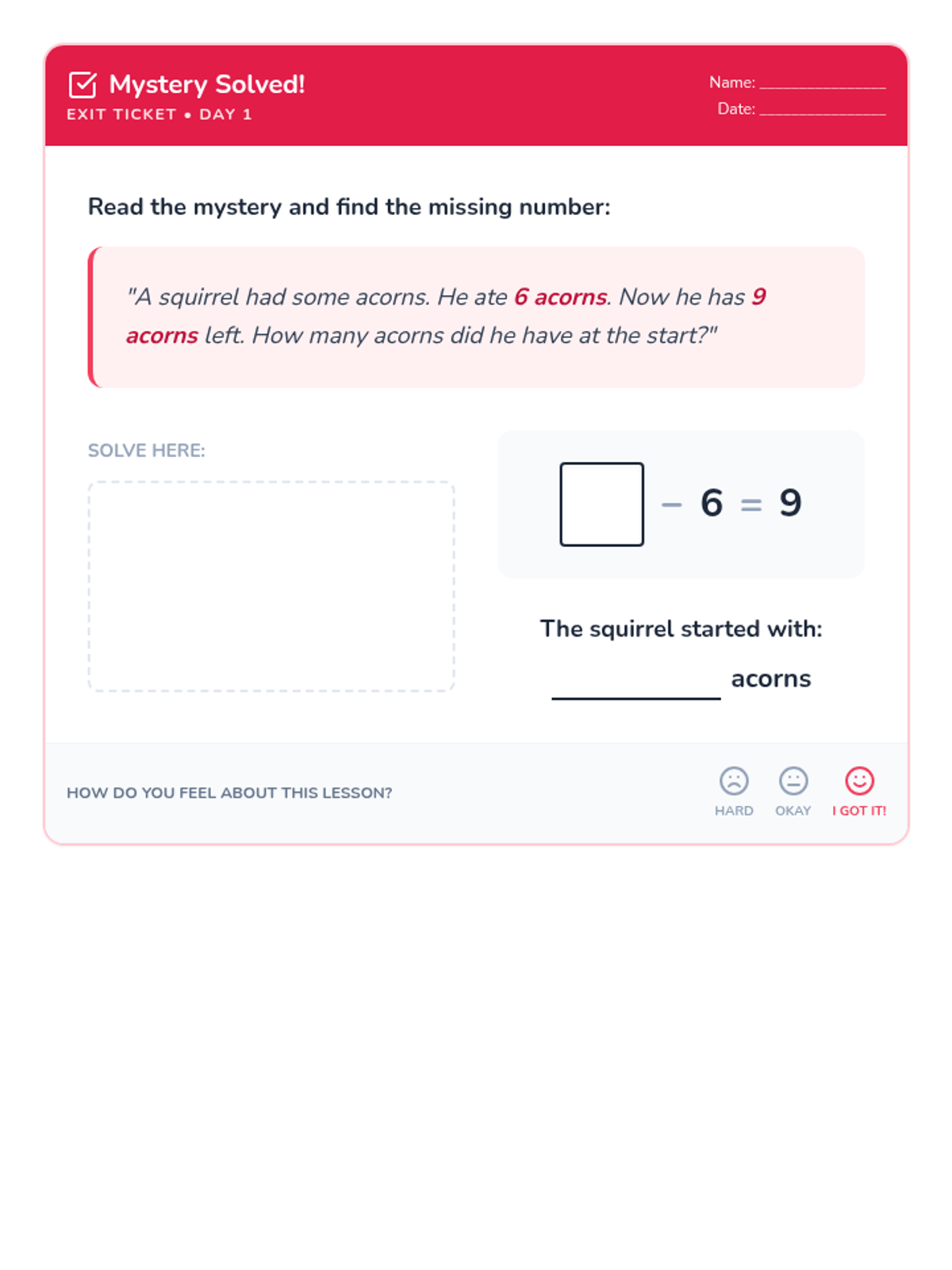
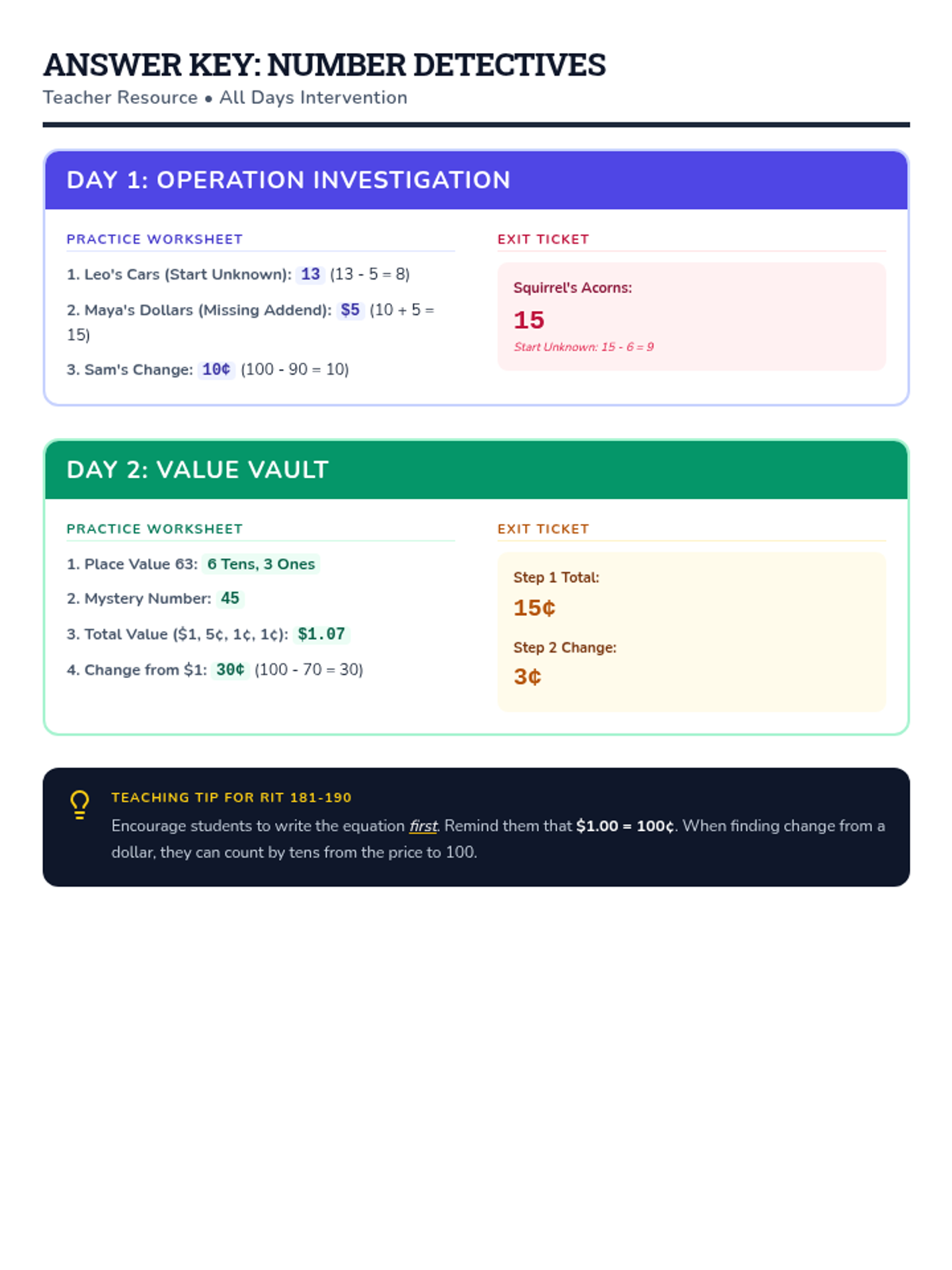
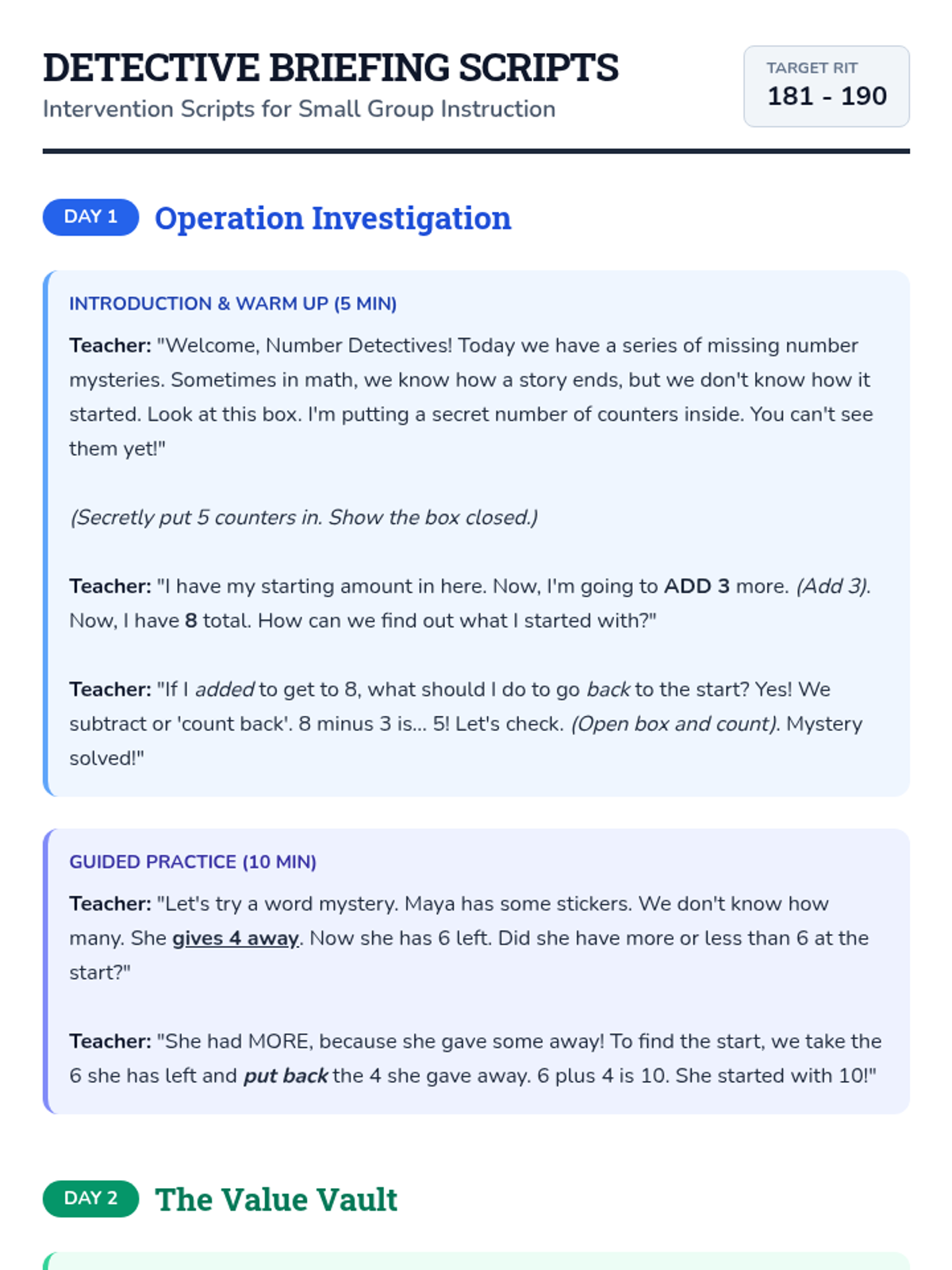
A targeted intervention sequence designed to move students from NWEA RIT 171-180 to 181-190, focusing on missing addends, subtraction, start-unknown word problems, place value, and monetary concepts.
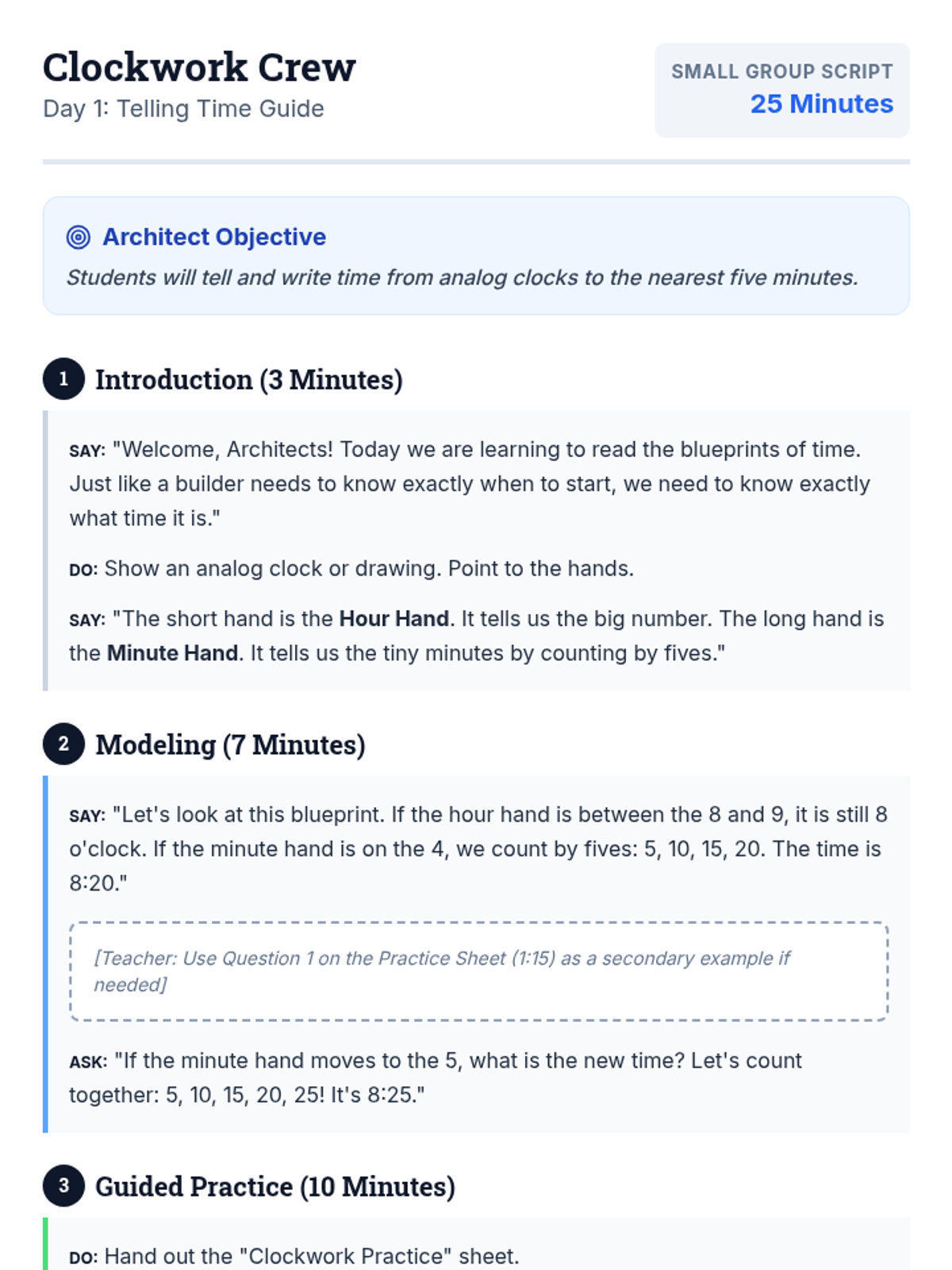
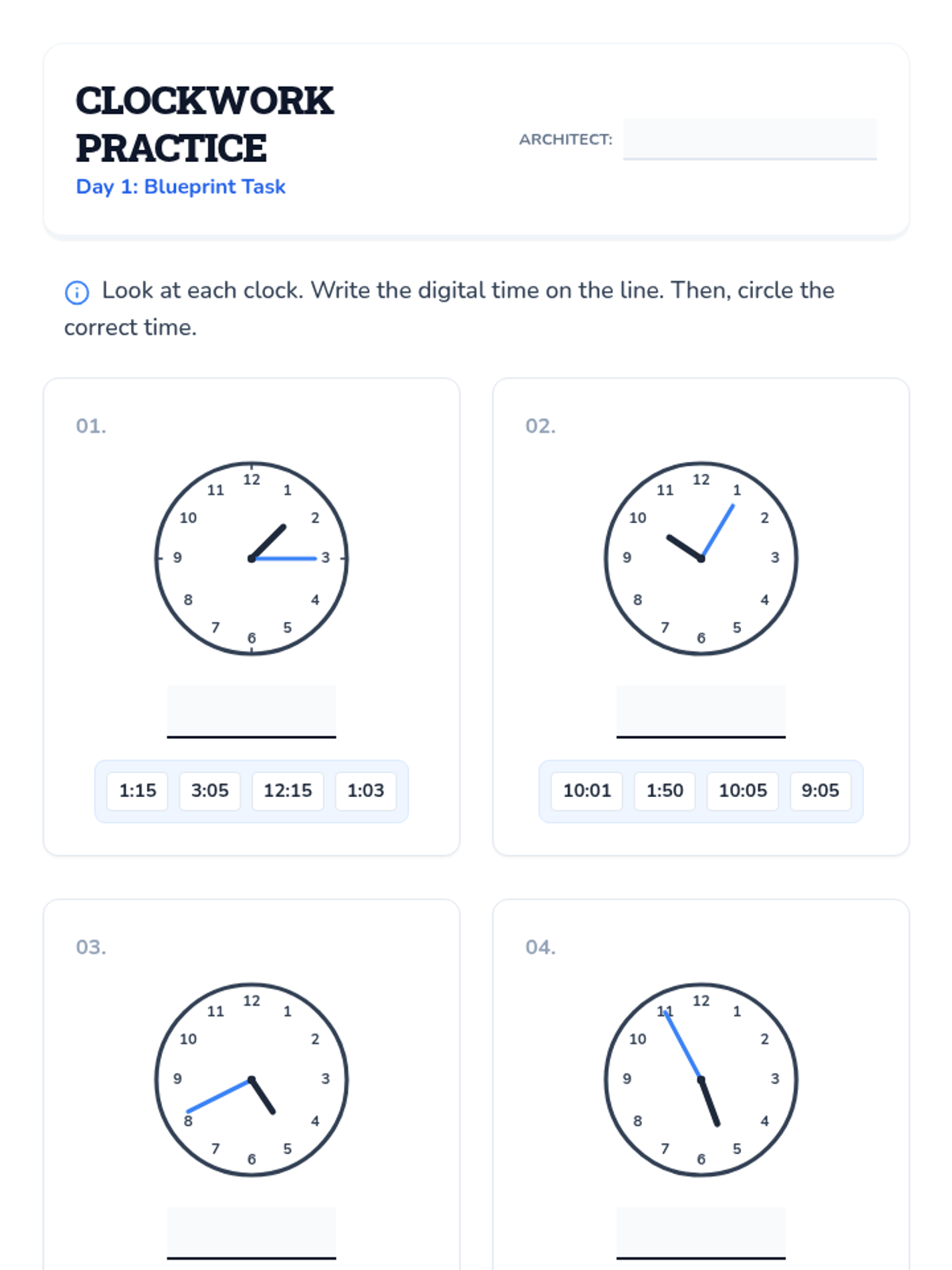
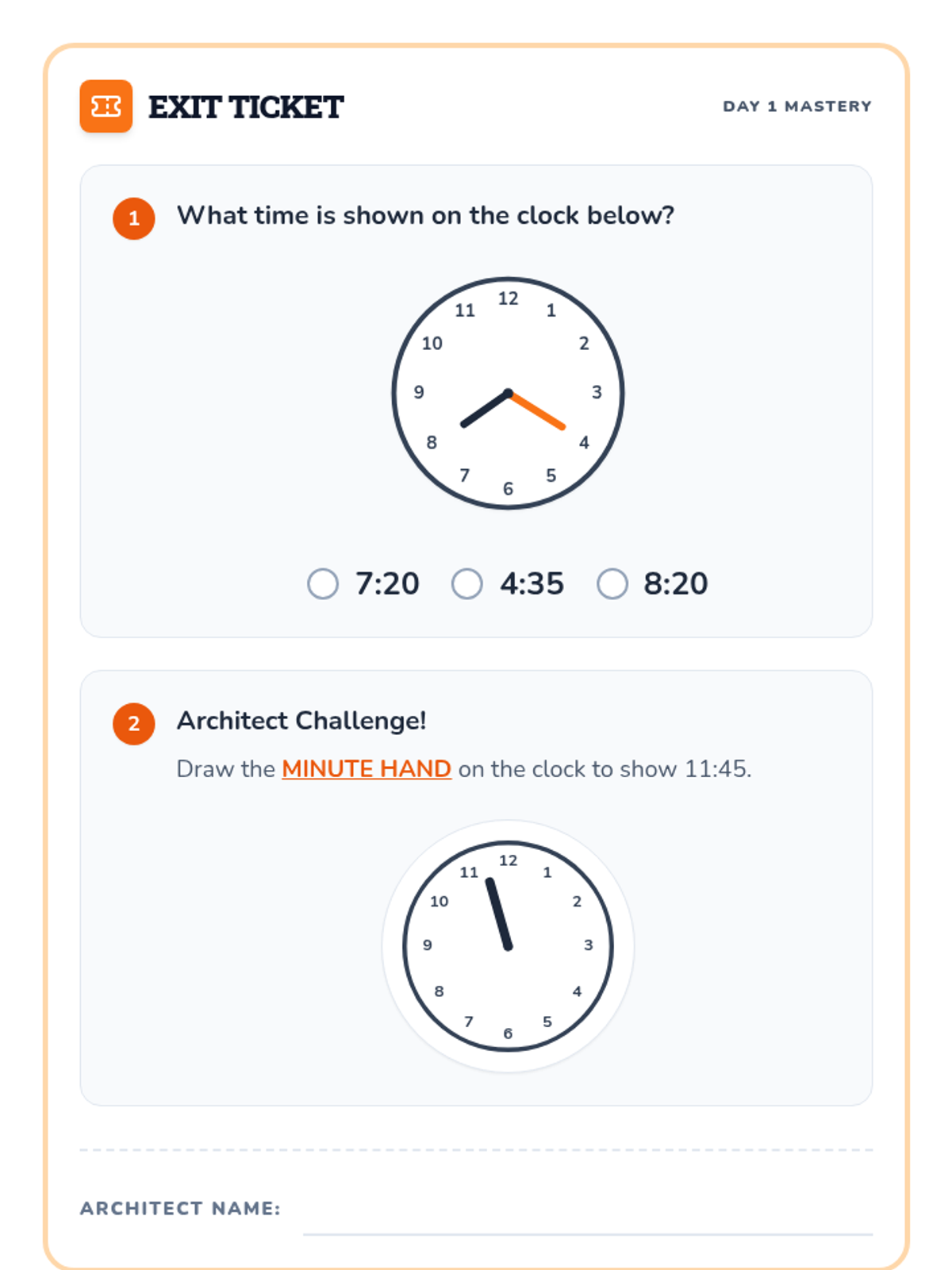
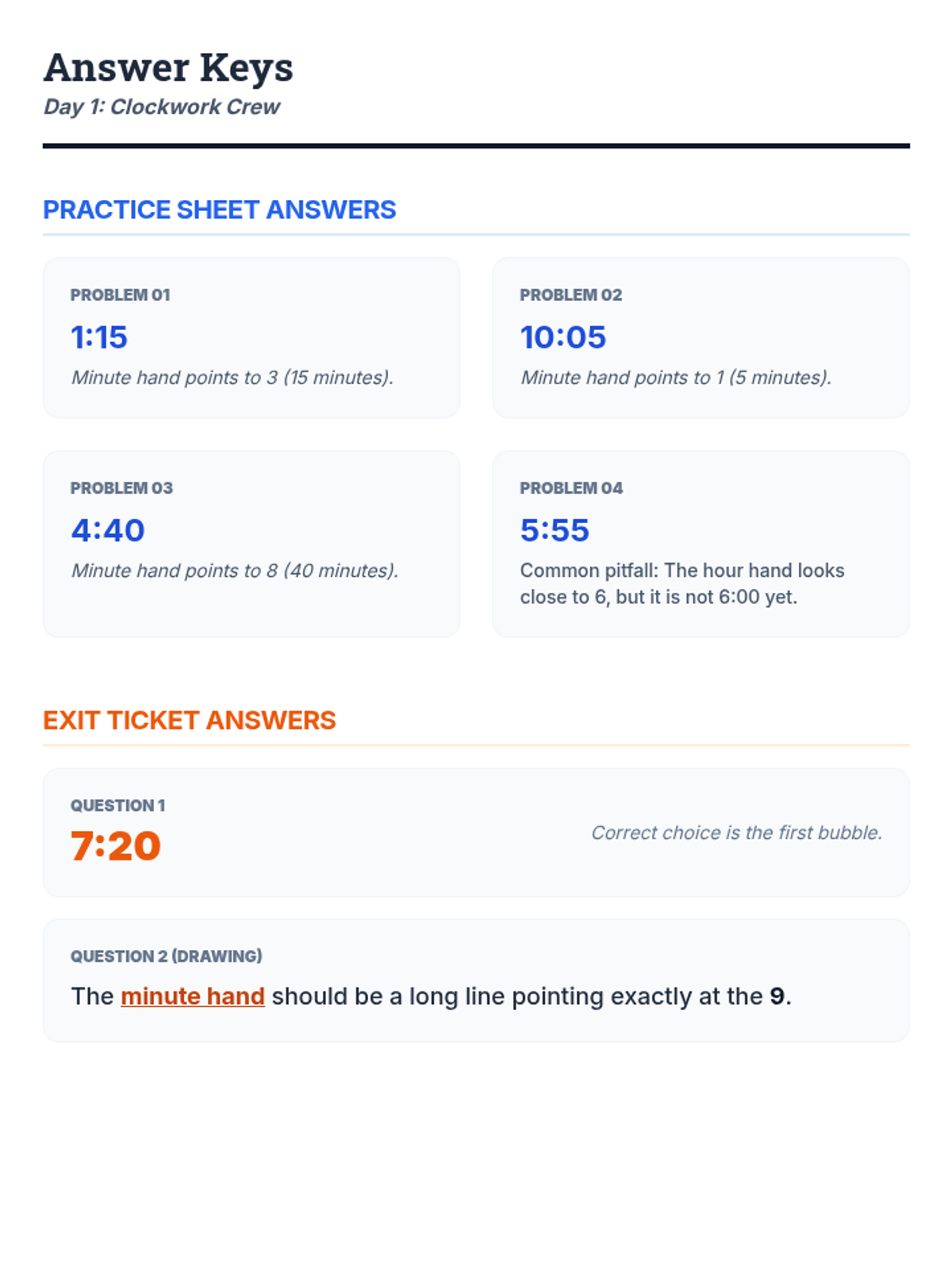
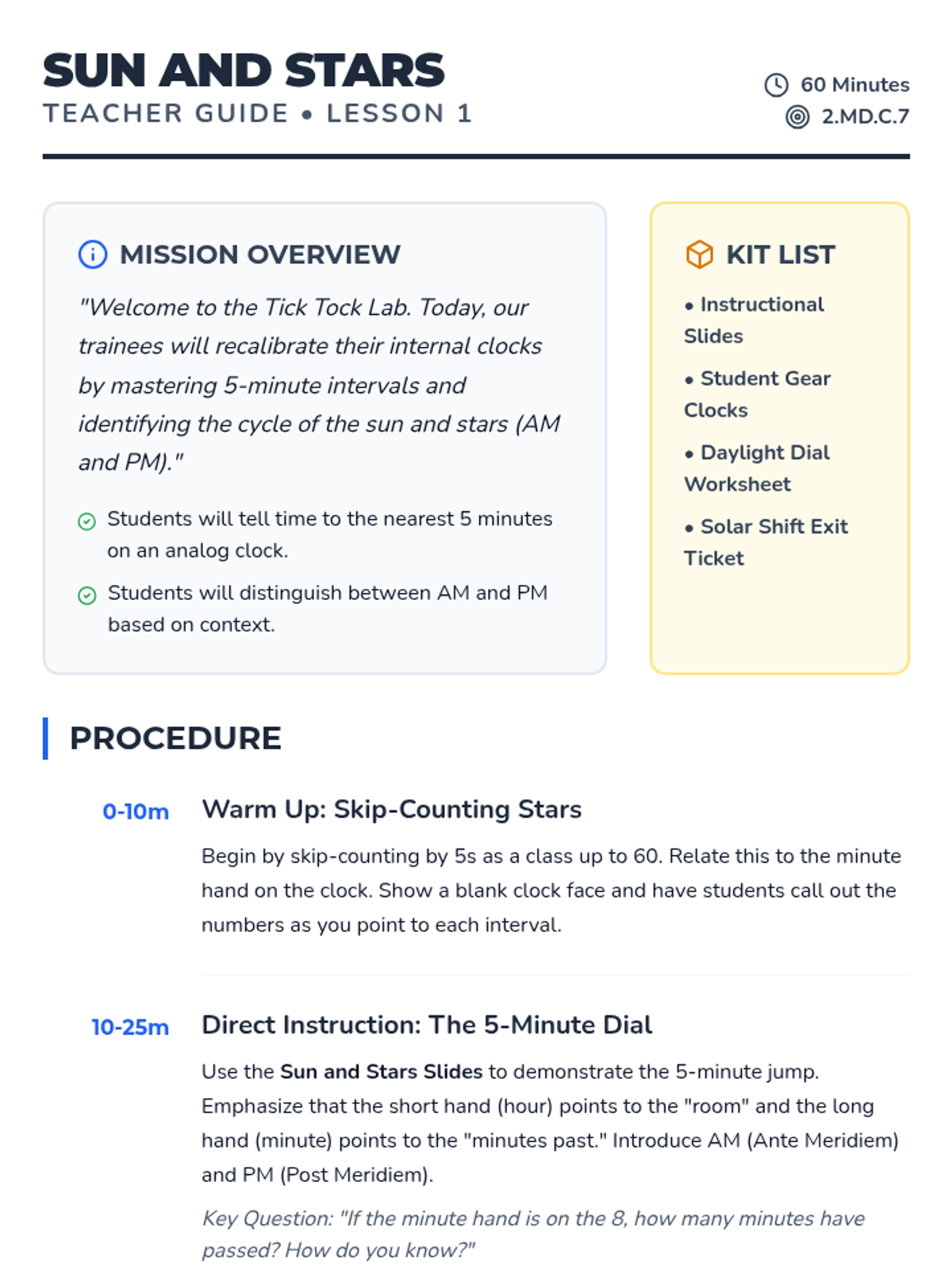
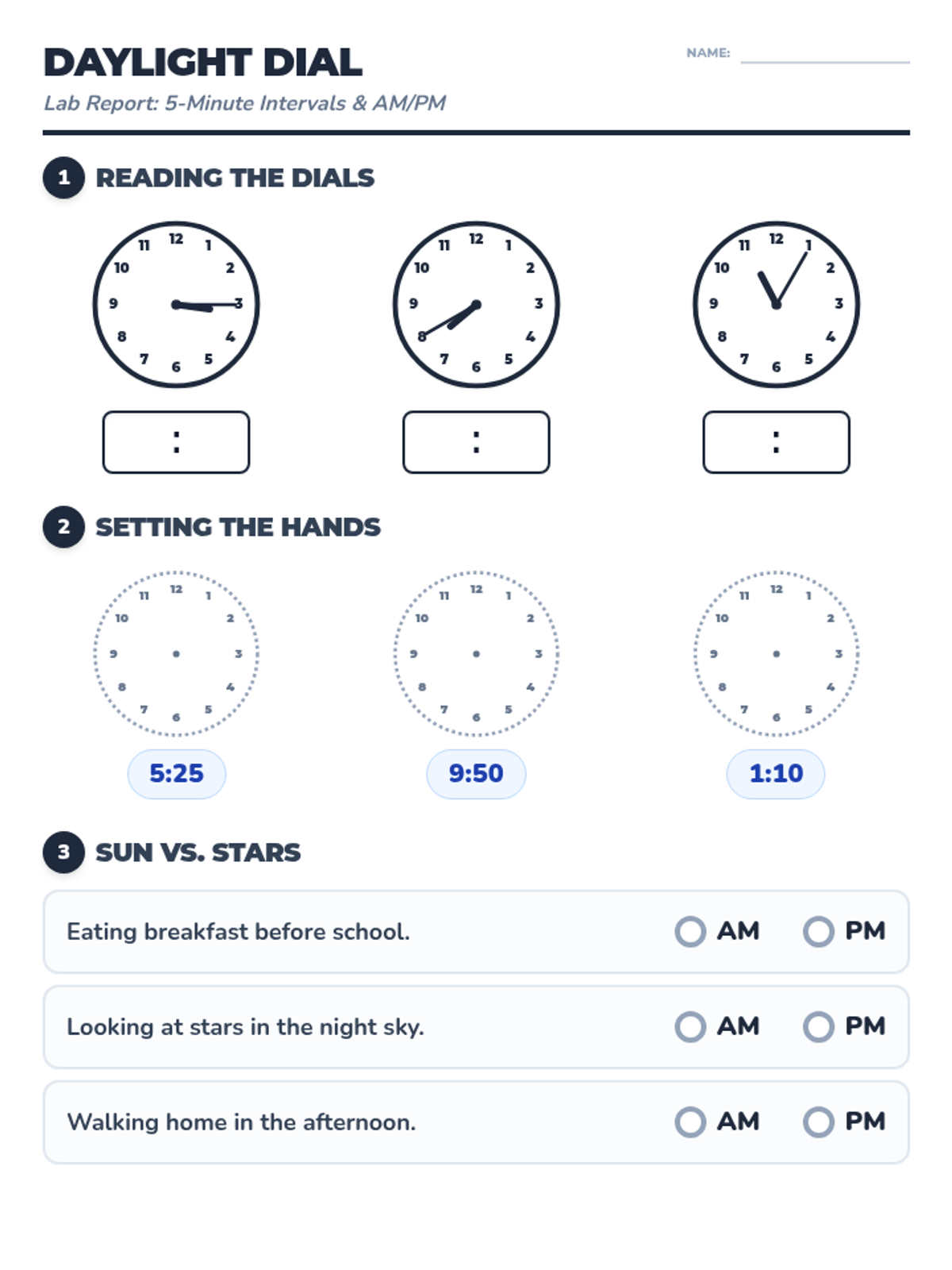
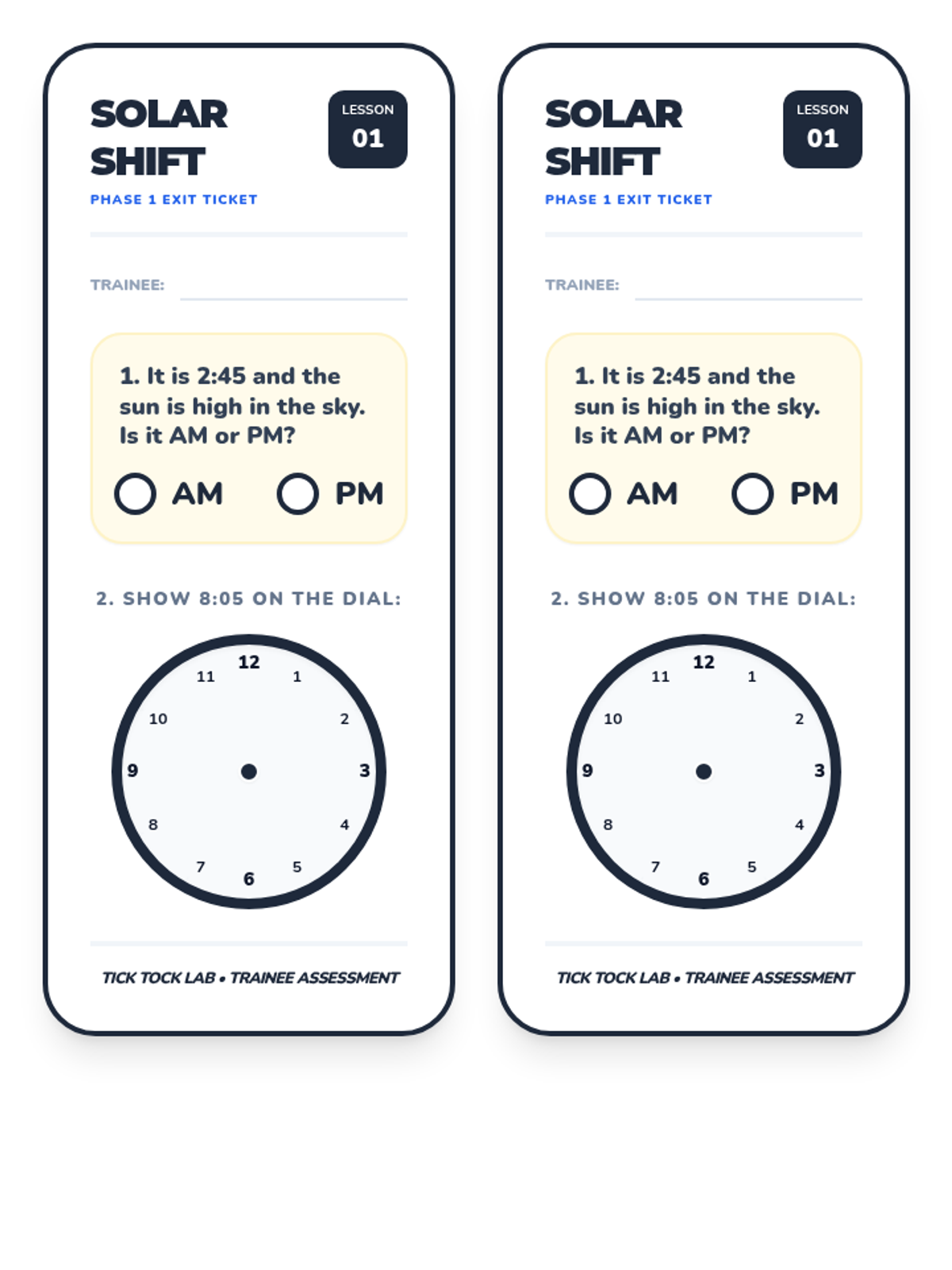
A comprehensive 3-day unit focused on mastering analog time-telling to the nearest 5 minutes, distinguishing between AM and PM, and navigating the common pitfall of the 'almost hour' hand positioning. Students move from basic interval review to solving tricky time representations through hands-on practice and visual aids.
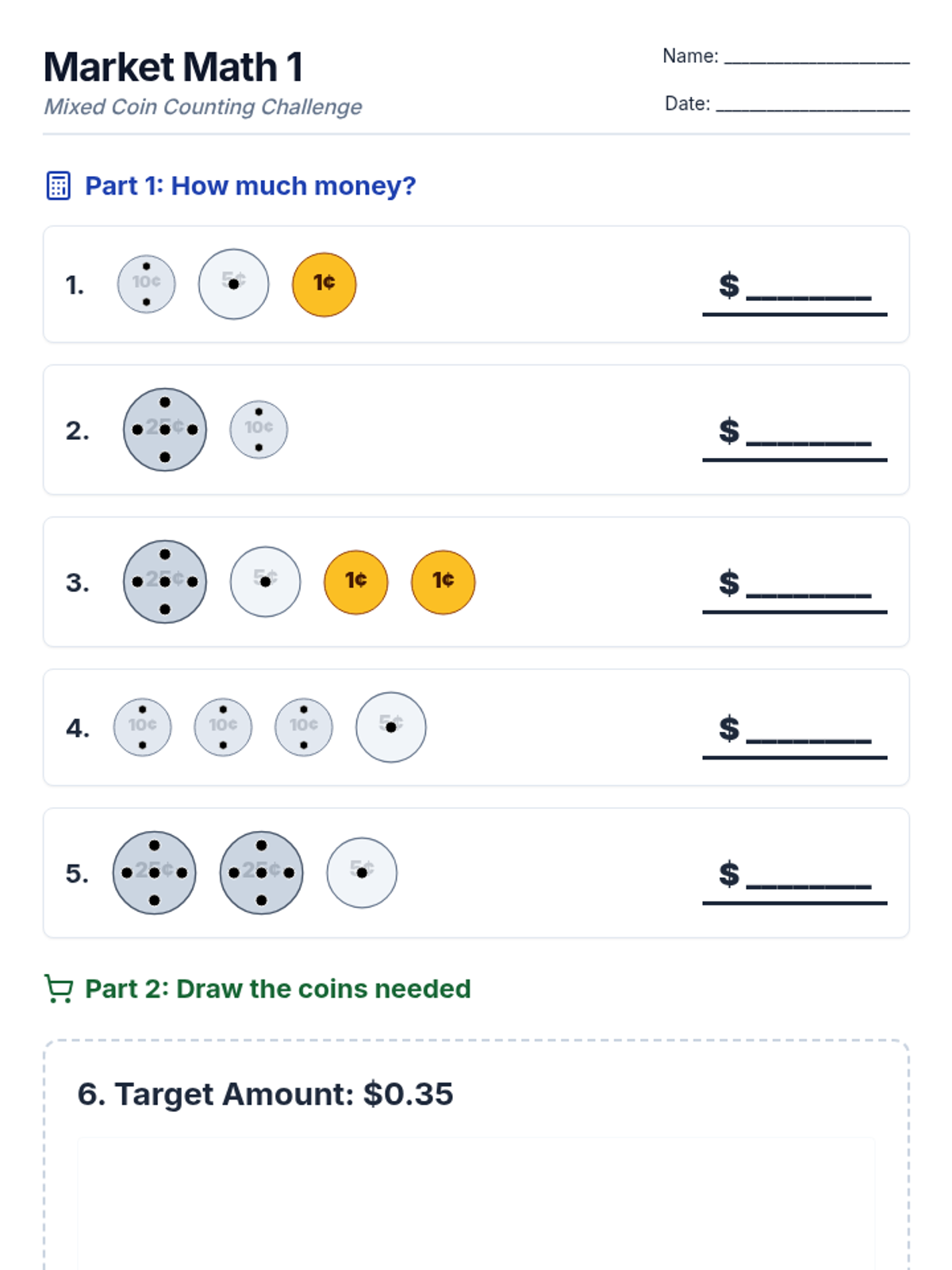
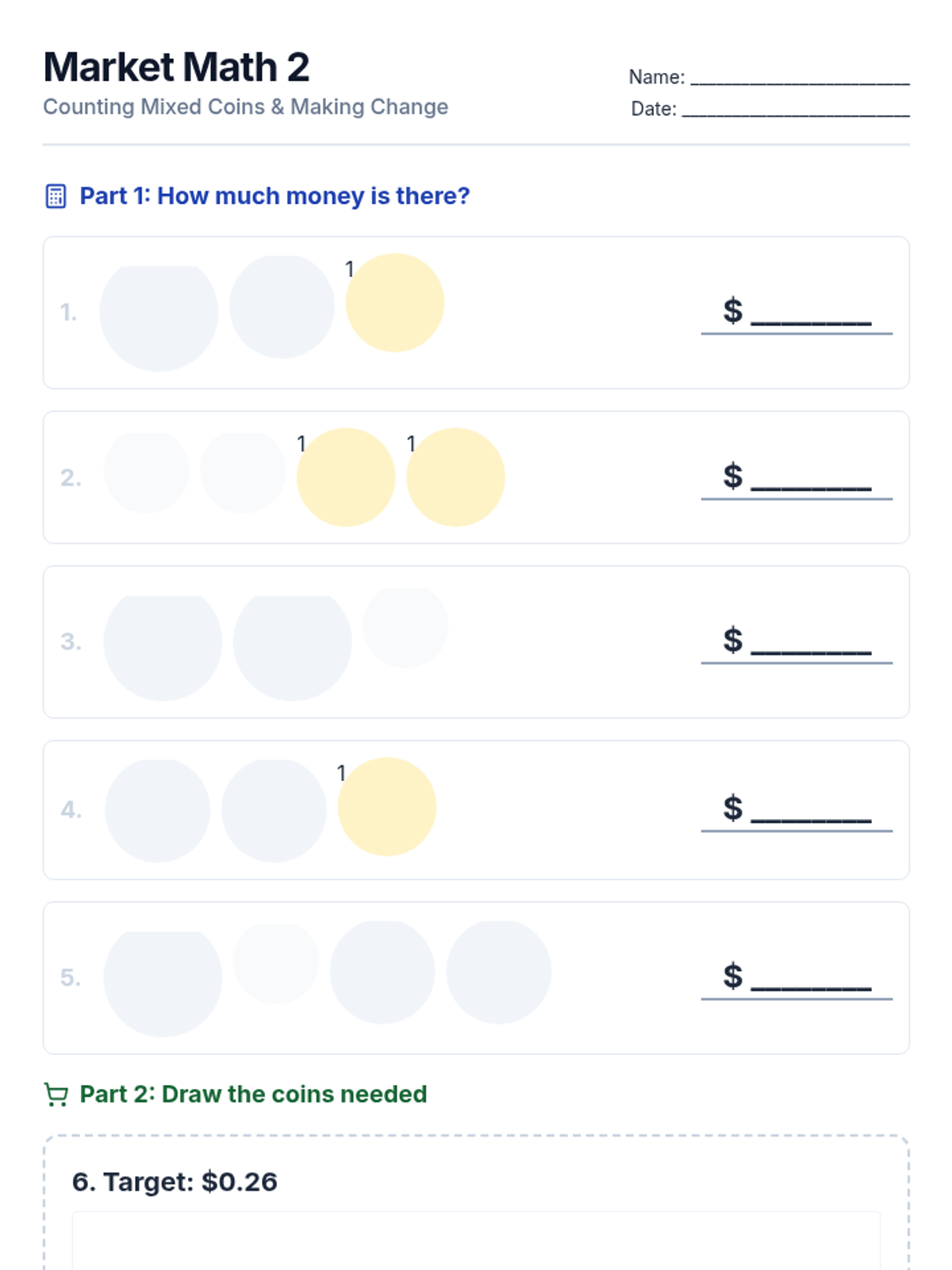
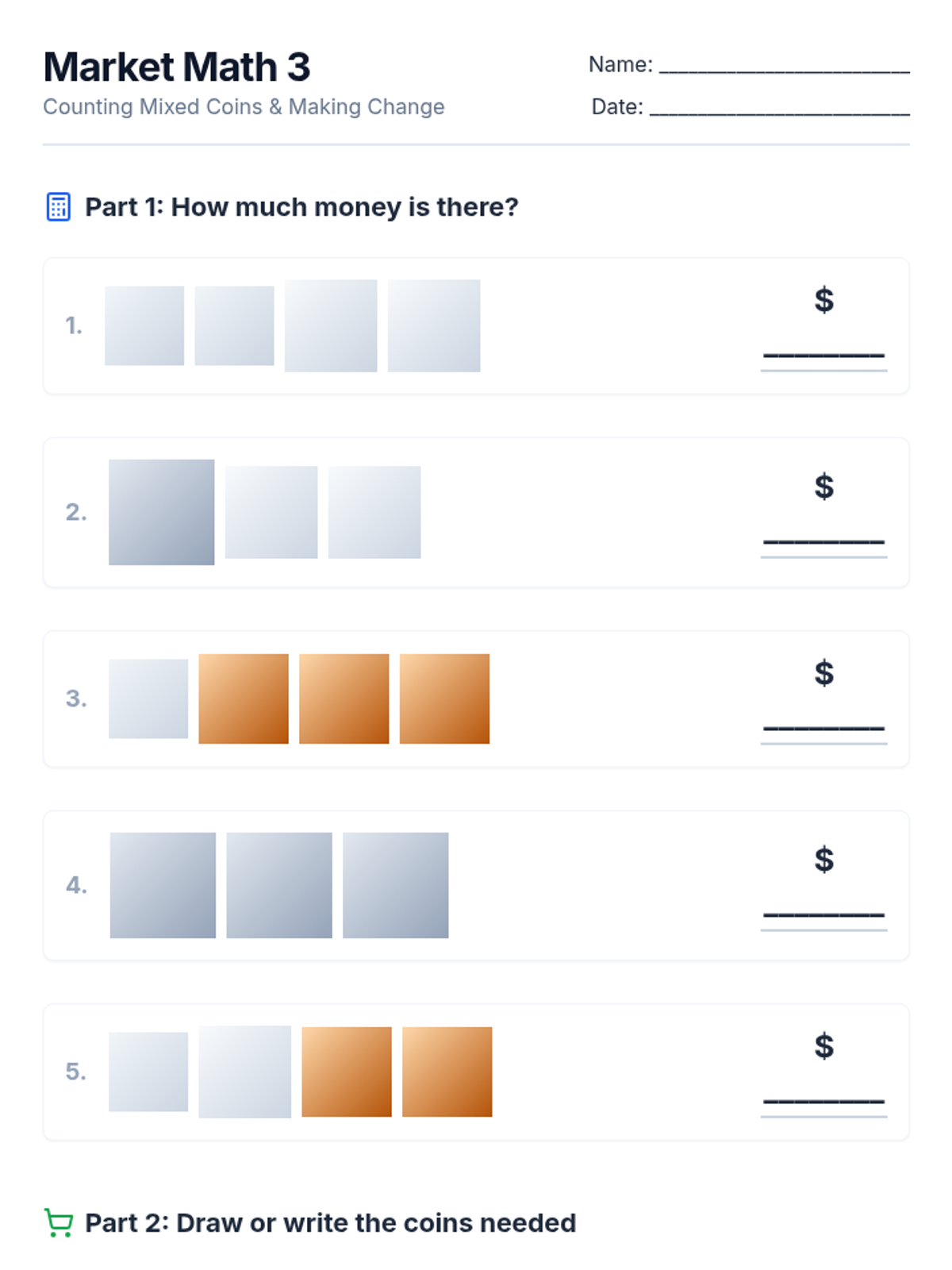
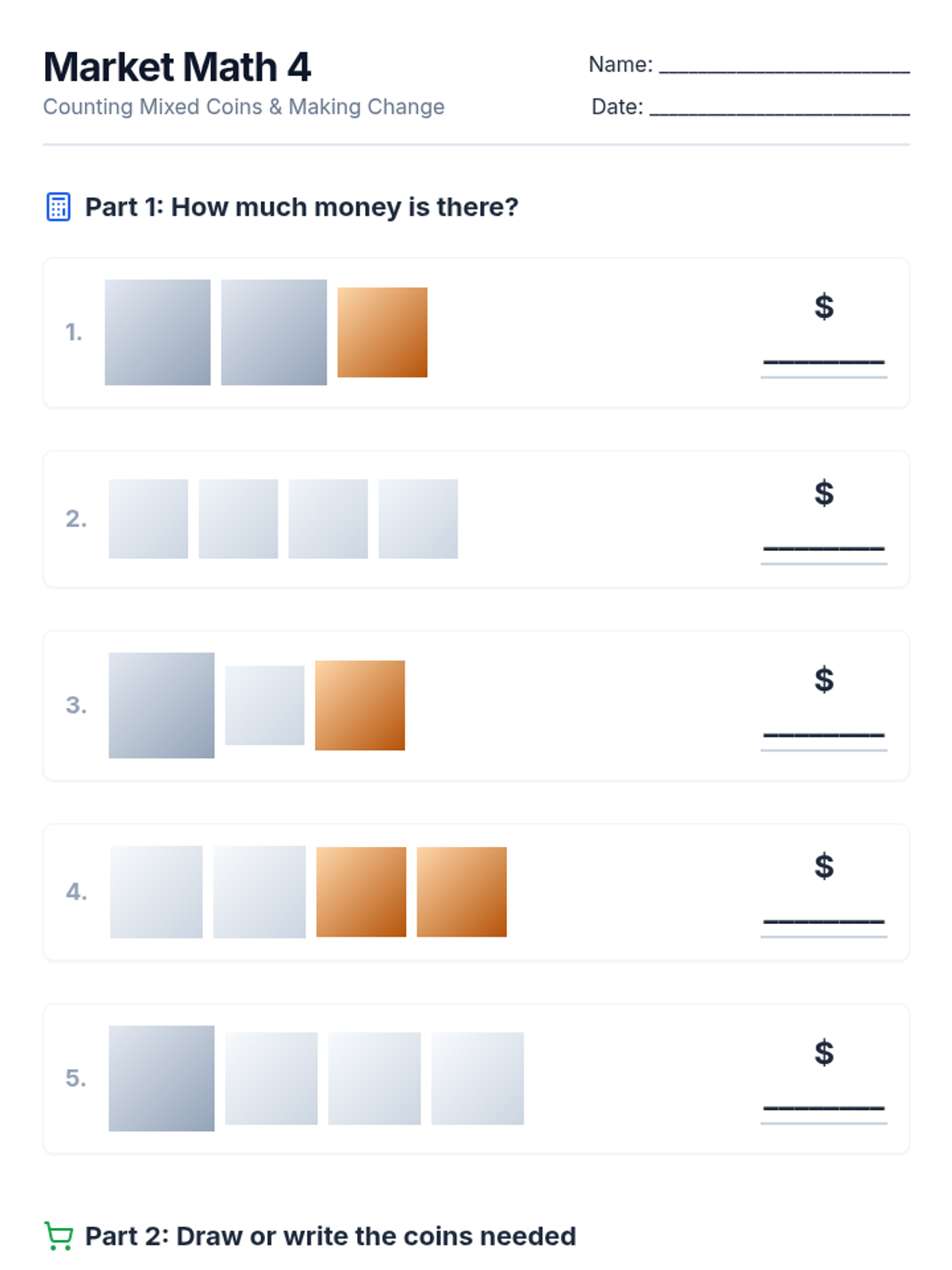
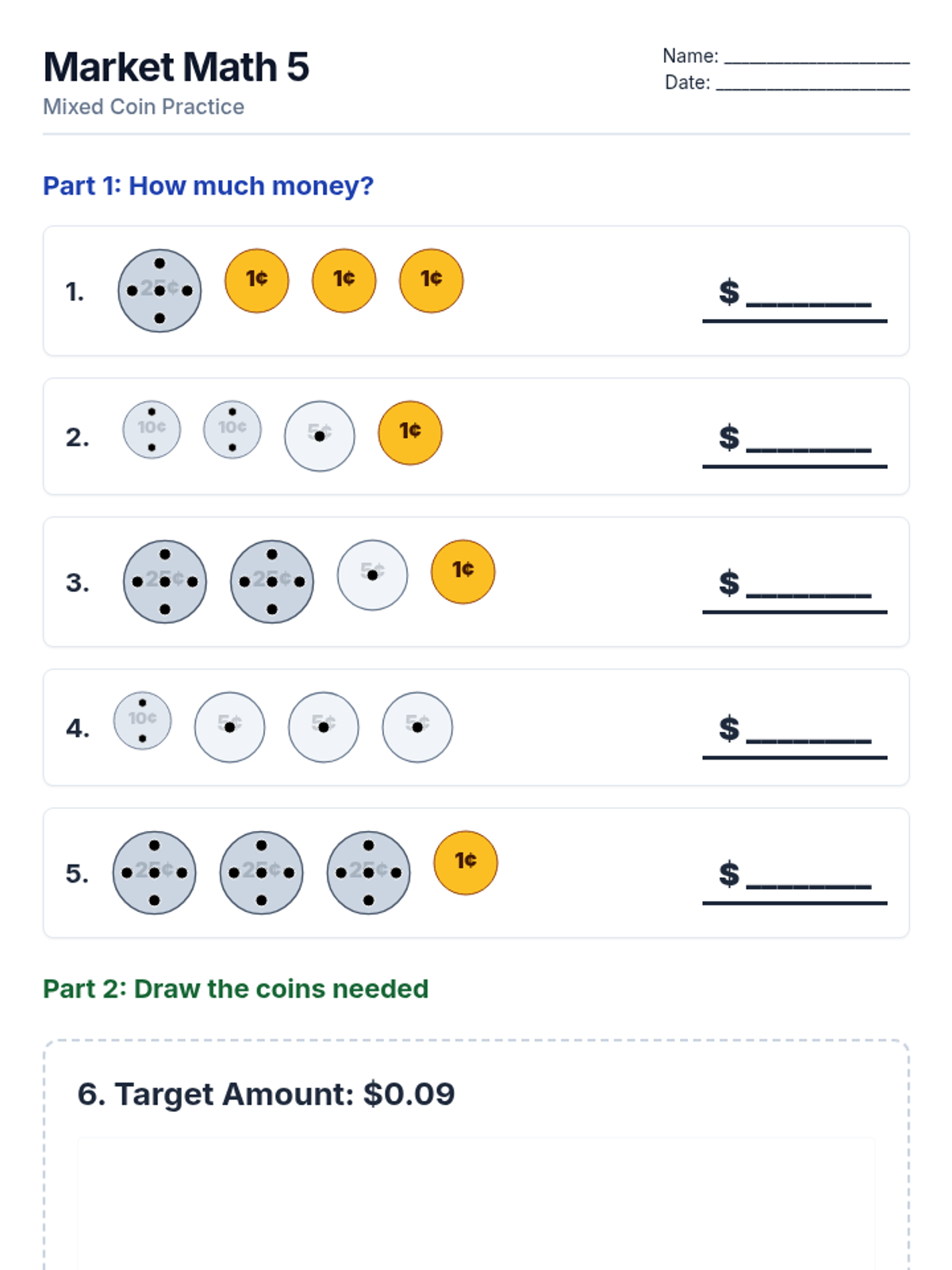
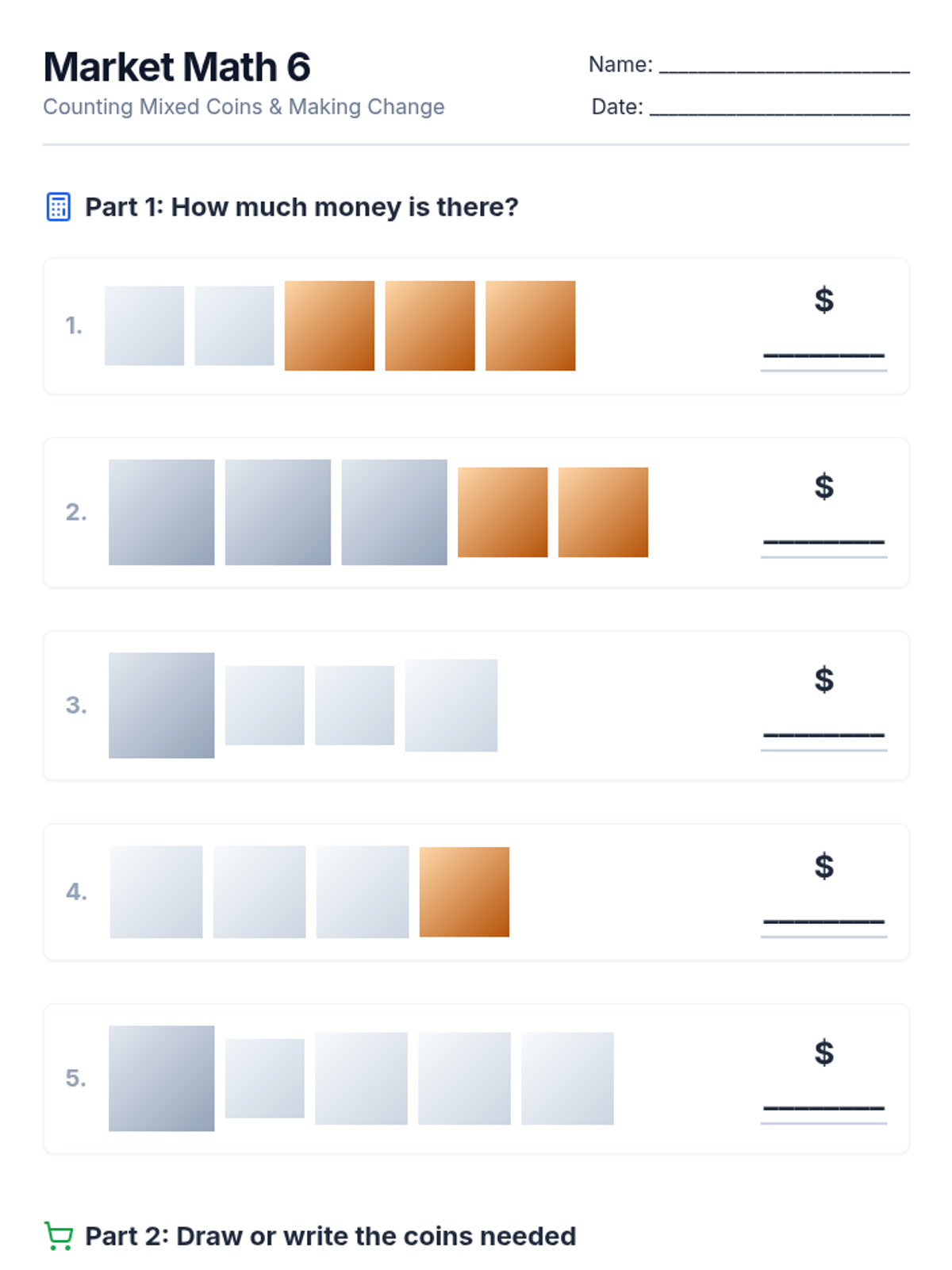
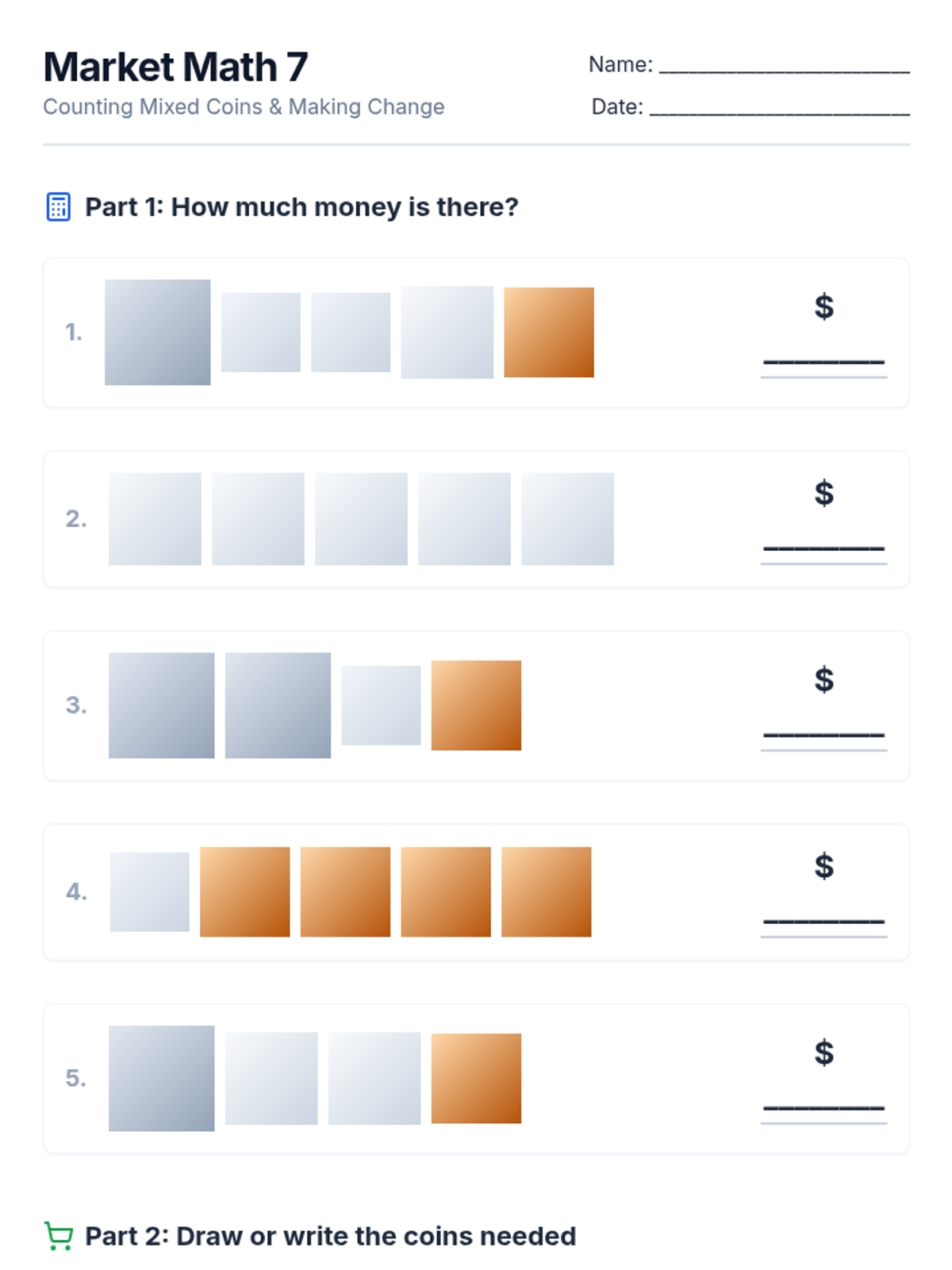
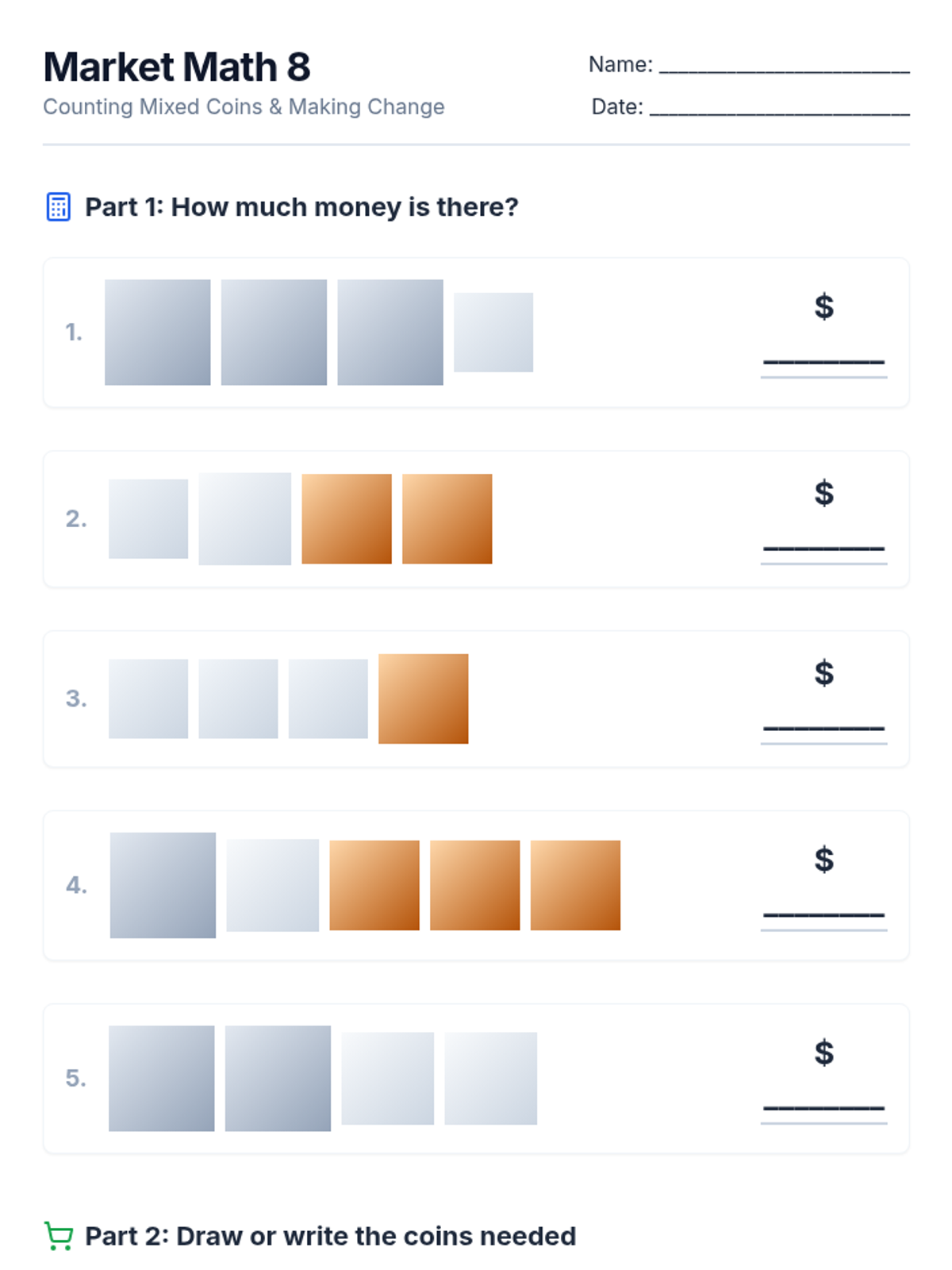
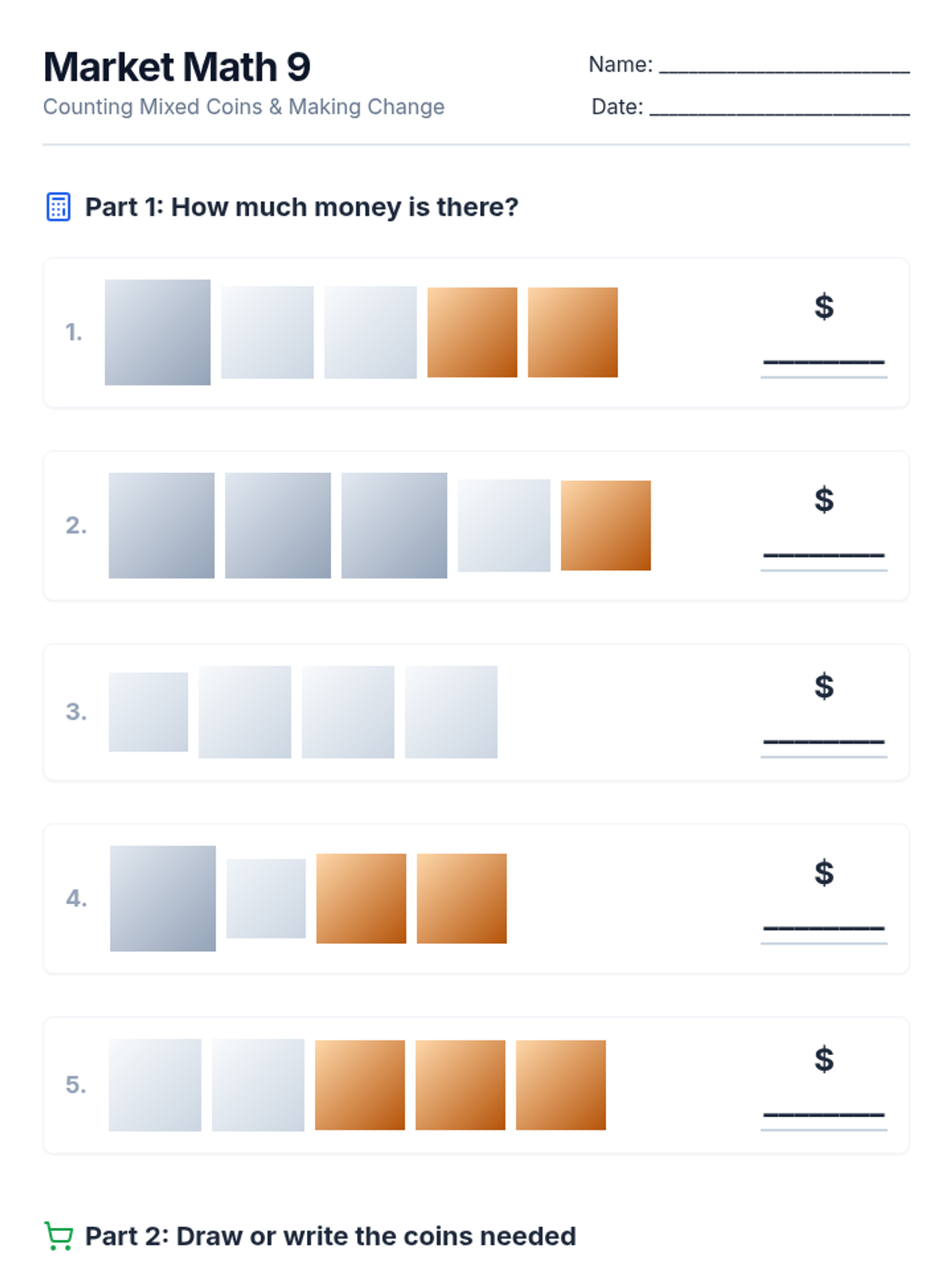
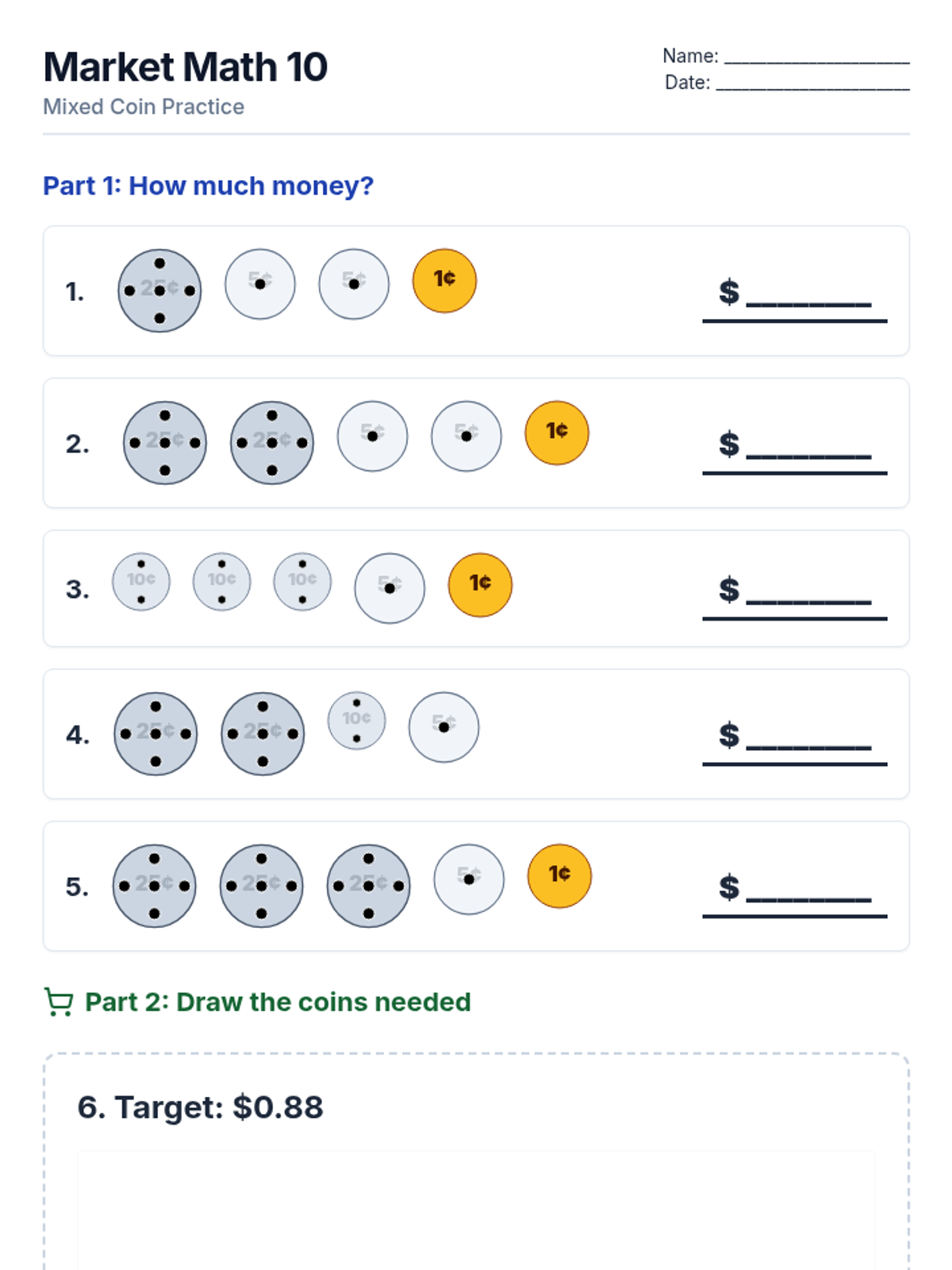
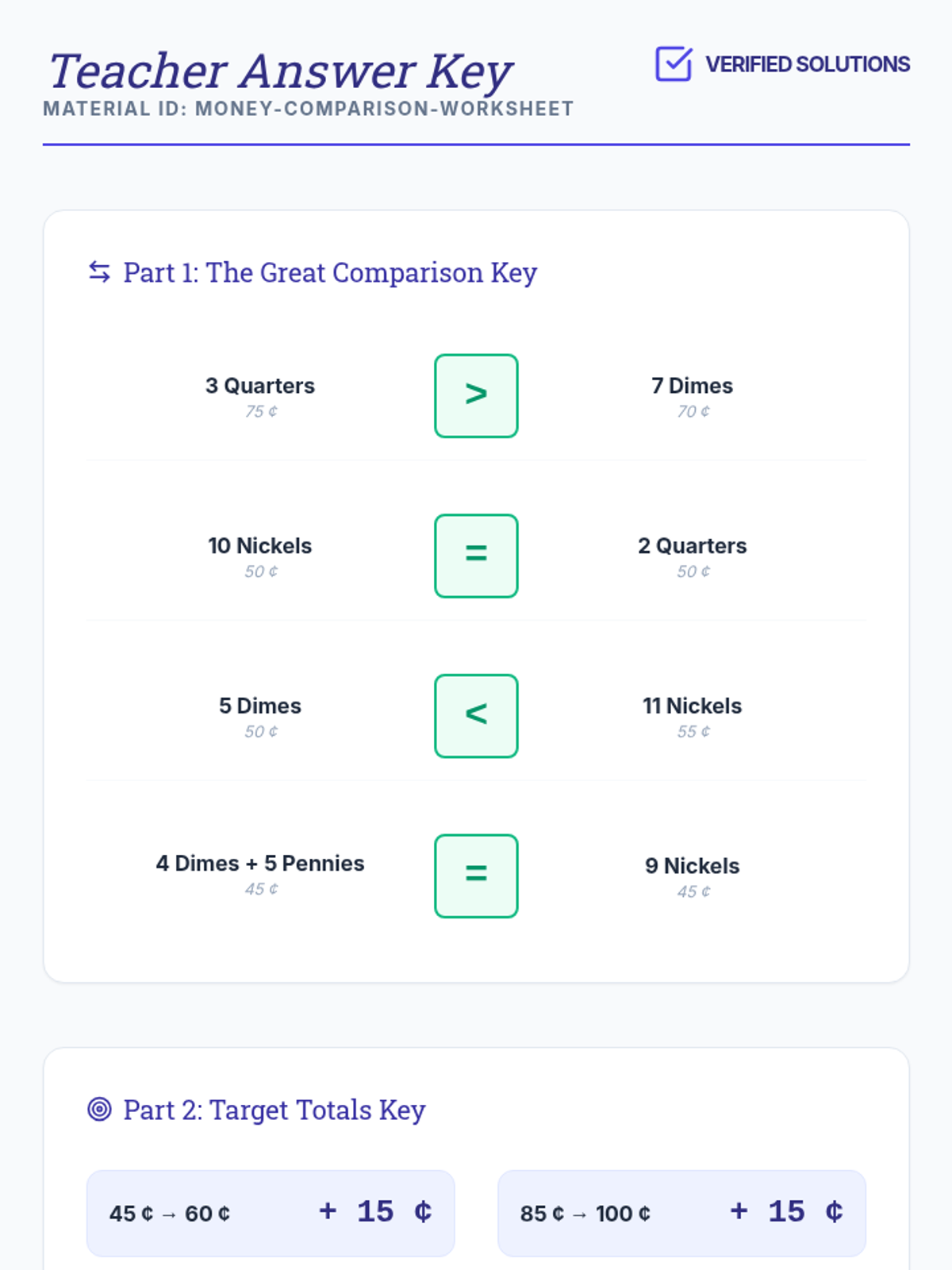
A comprehensive practice series for students to master counting mixed coins and making change up to $1.00, featuring realistic visuals and Touch-math supports.
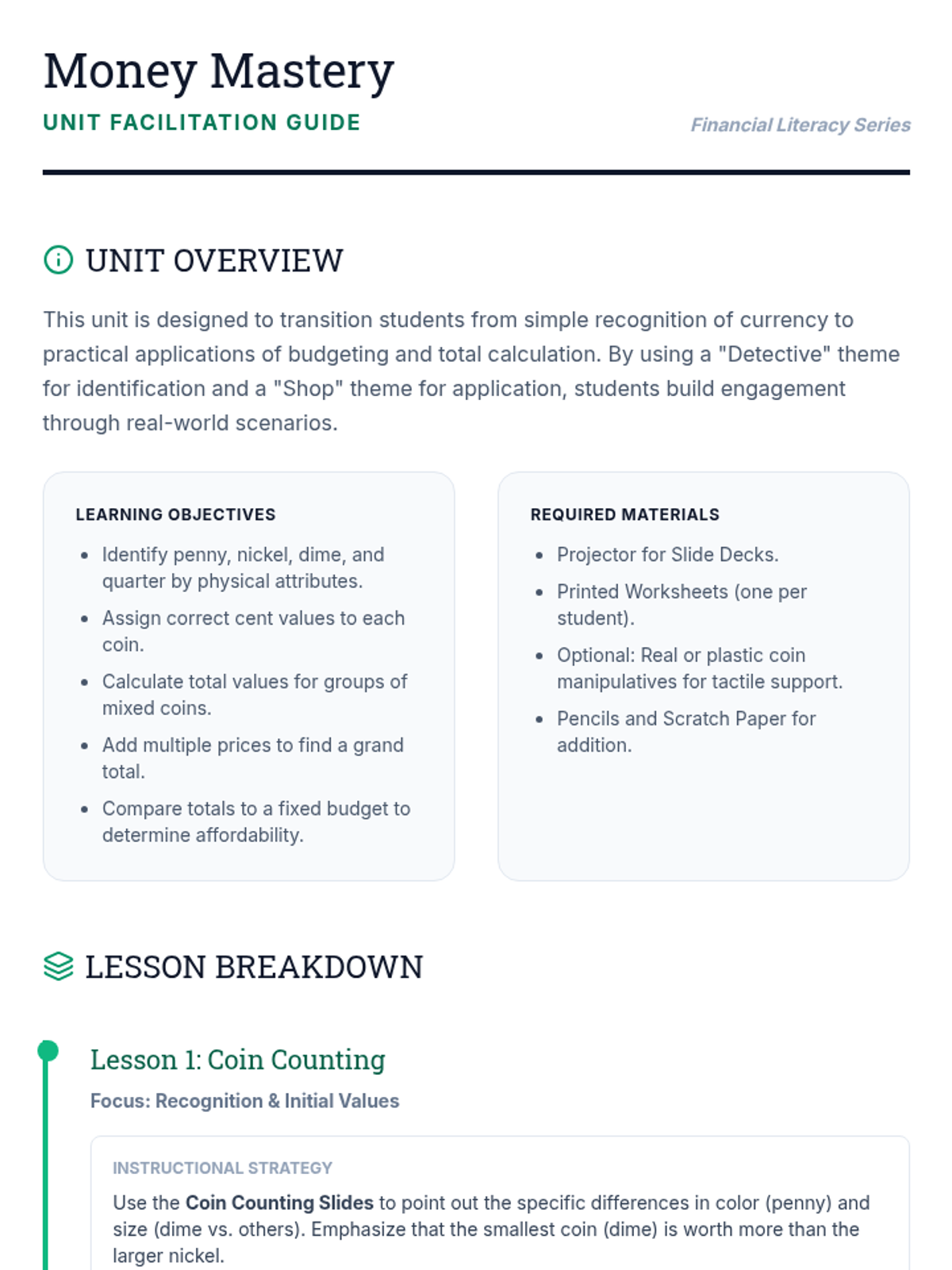
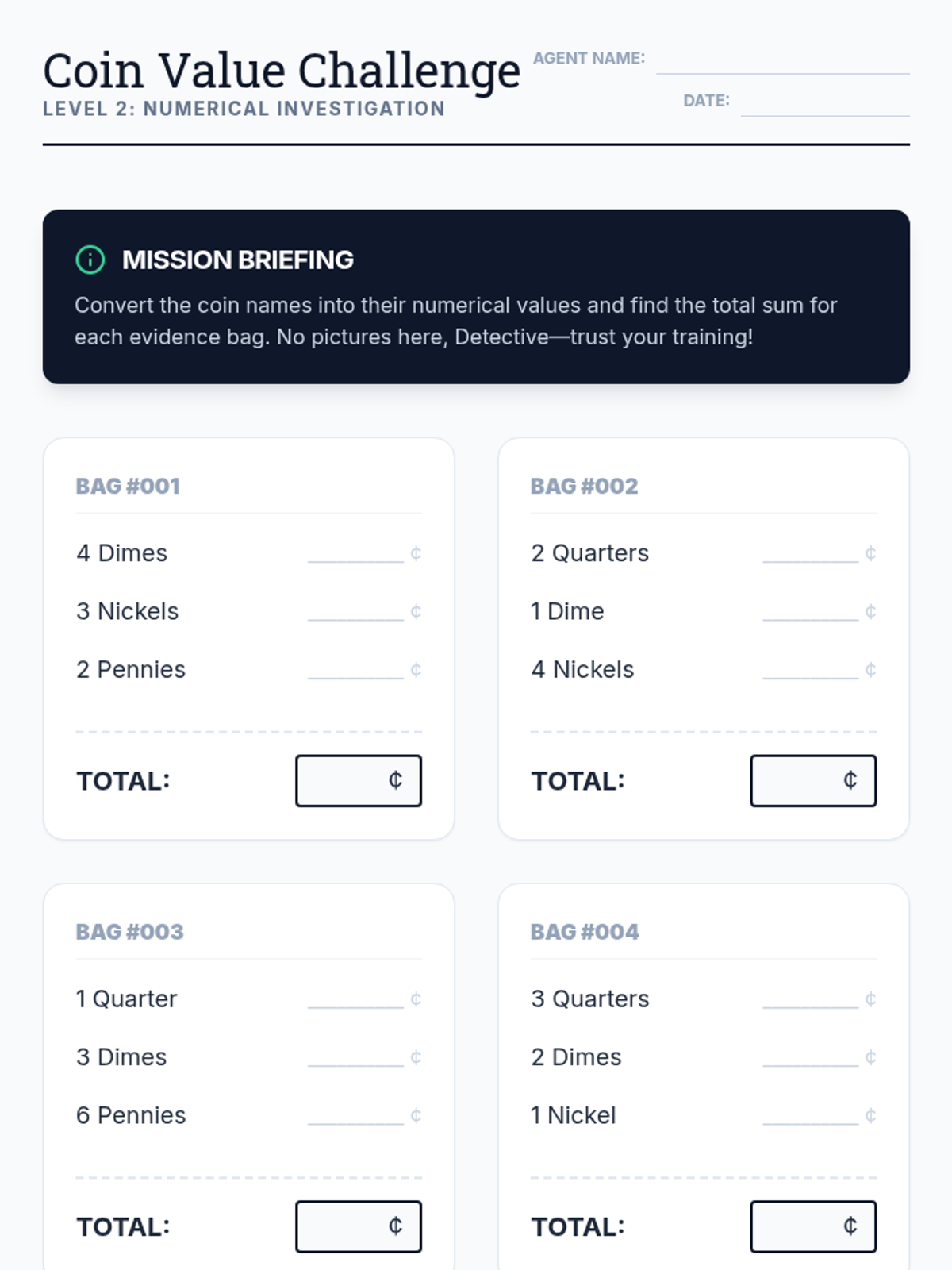
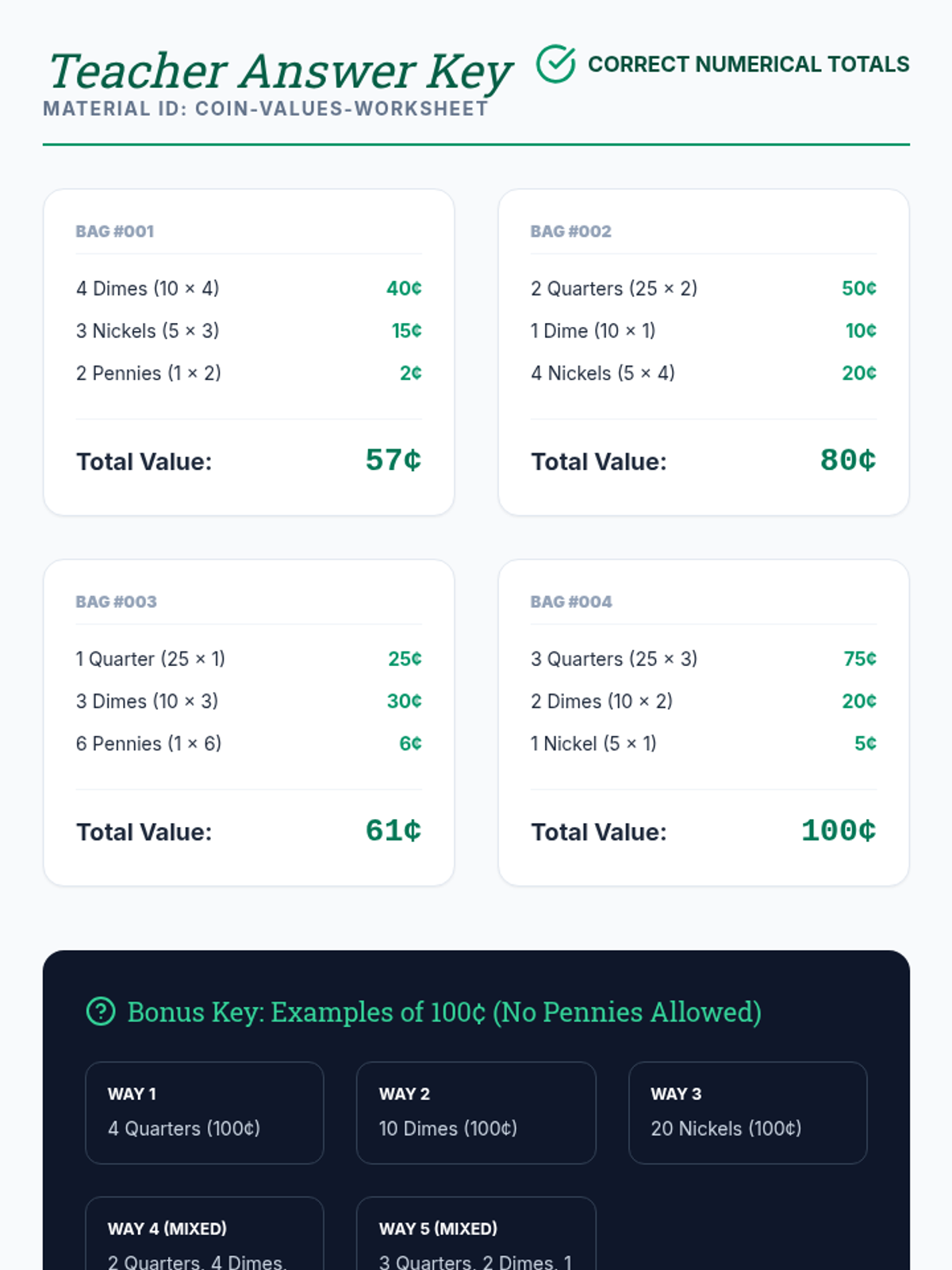
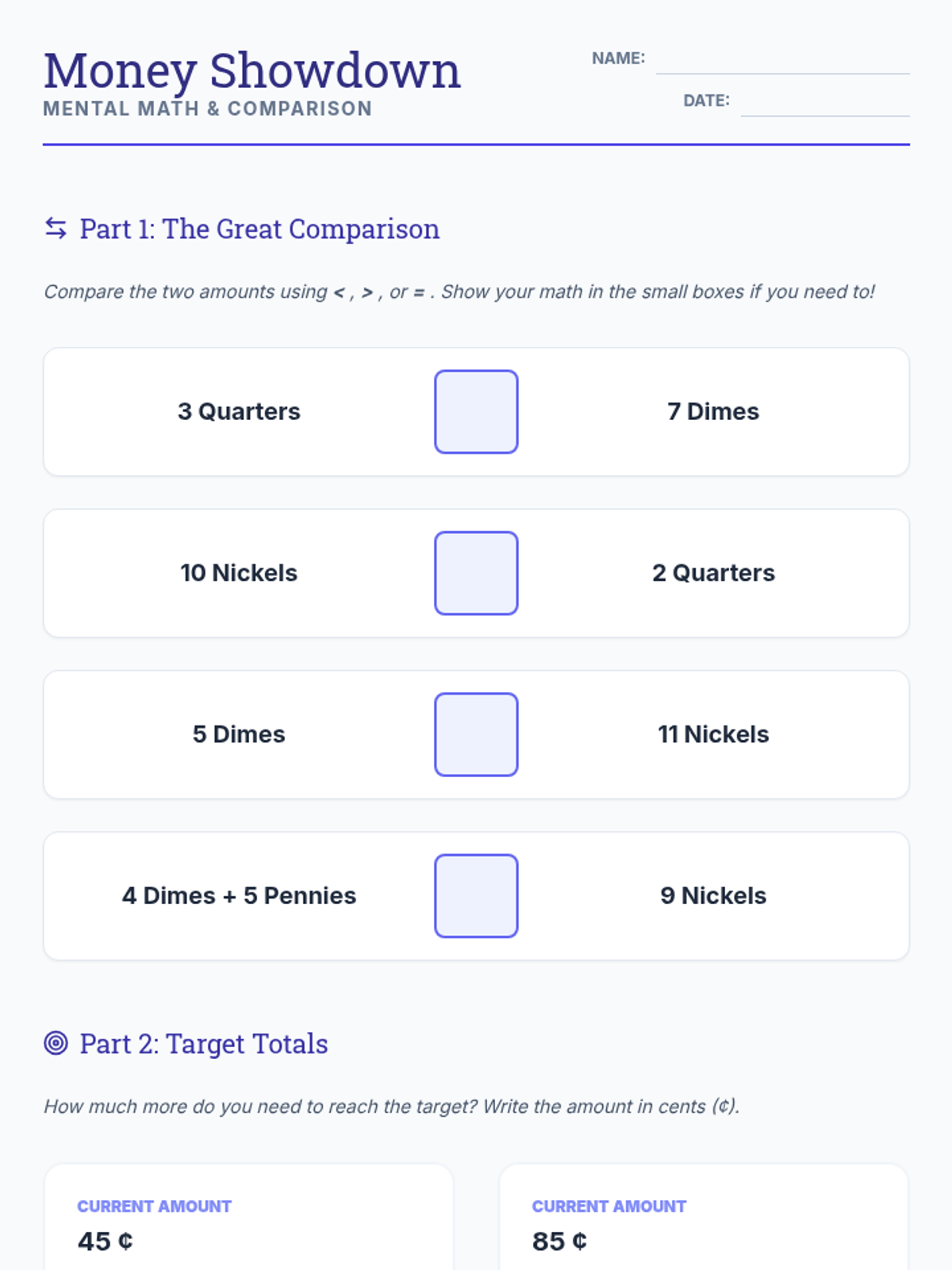
A comprehensive unit on essential financial literacy skills, ranging from basic coin identification to practical budgeting and total calculation.
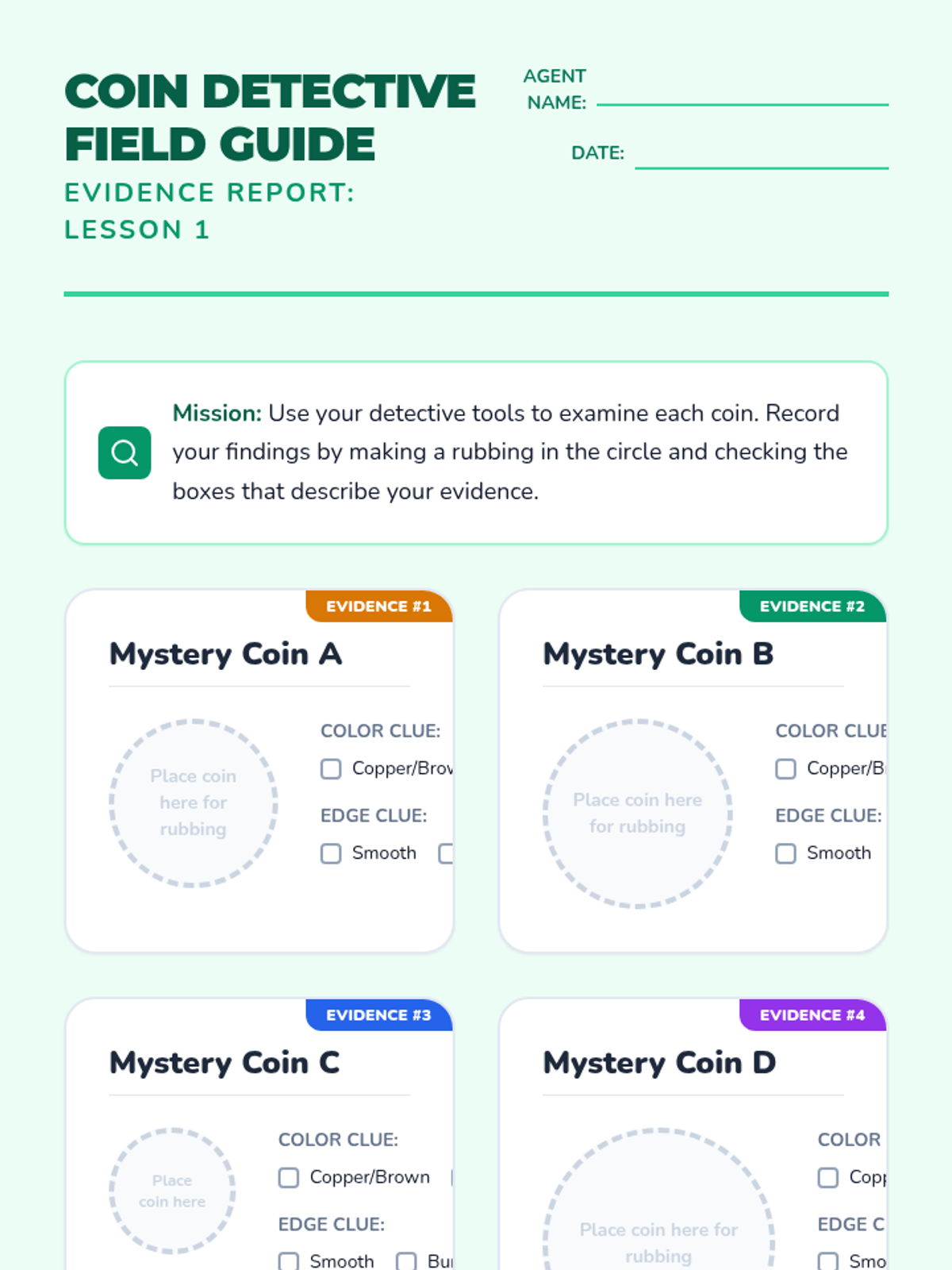
A comprehensive 1st-grade introduction to United States currency, focusing on physical identification, numerical value, paper bills, equivalencies, and the concept of digital money through the theme of 'Money Detectives'.
A comprehensive 1st Grade unit on telling time to the hour and half-hour using analog and digital clocks, connecting time-telling to daily routines.
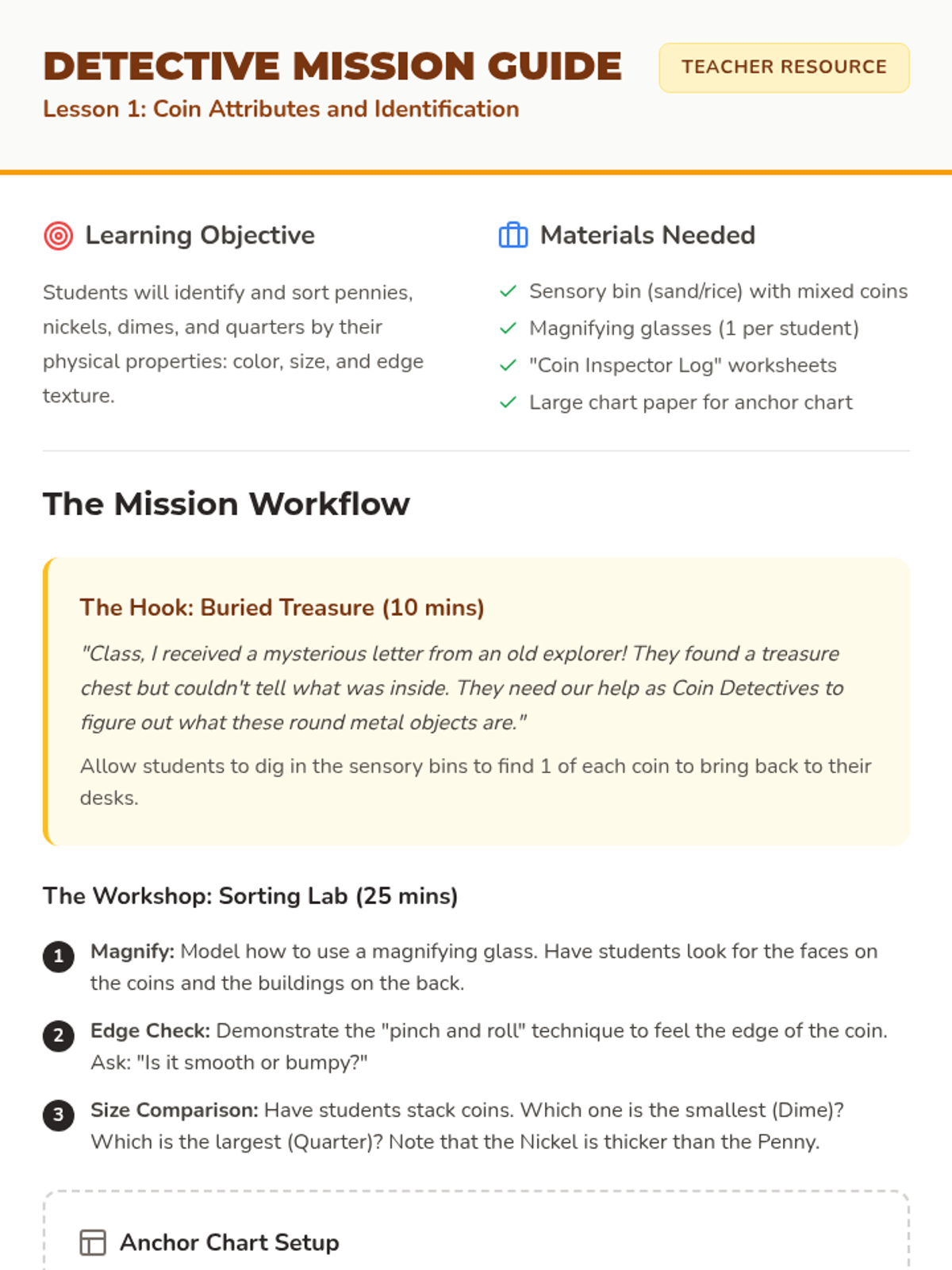
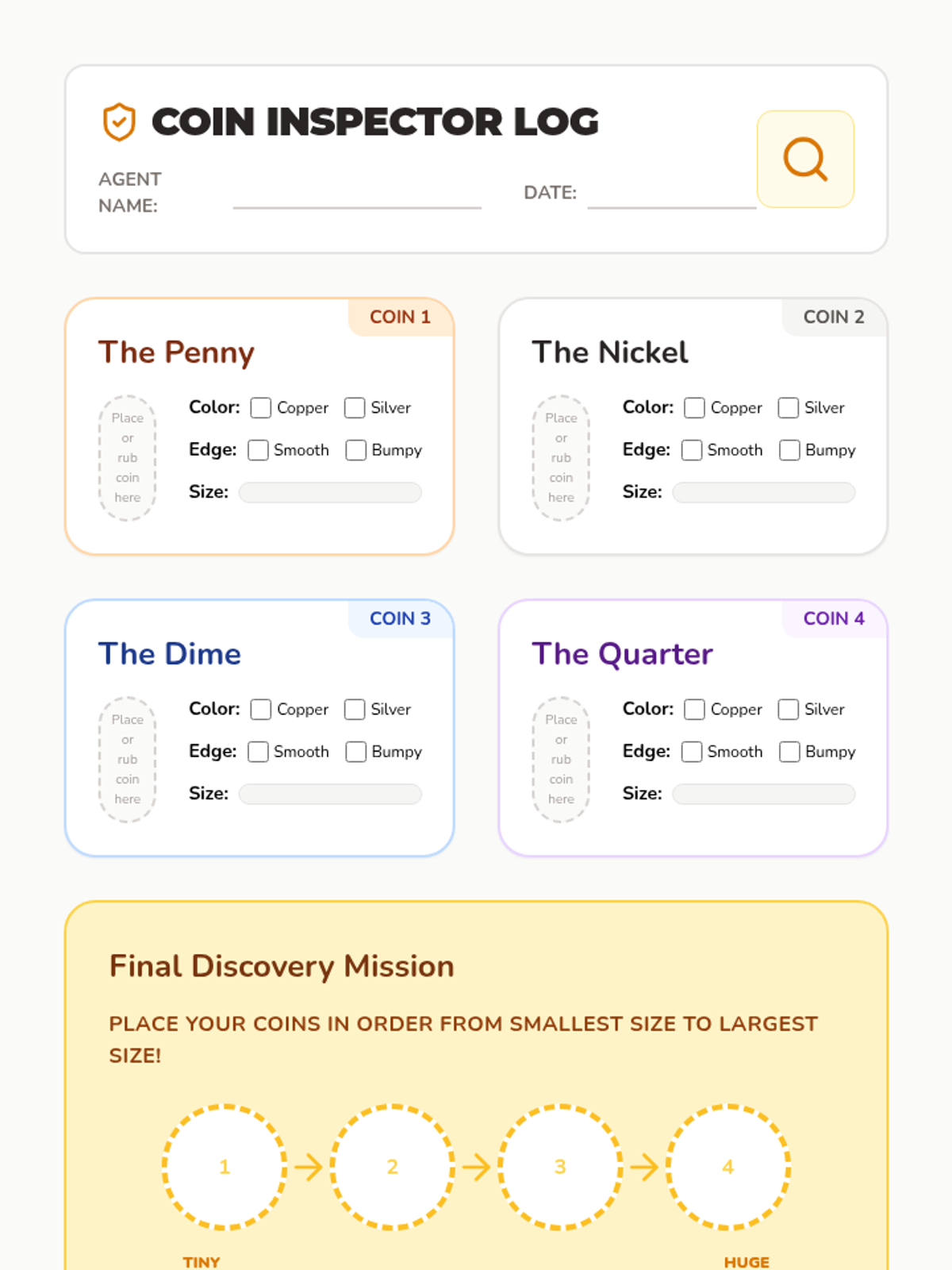
A comprehensive 1st-grade unit on identifying U.S. coins and counting their value using skip-counting and sorting strategies, culminating in a classroom store simulation.
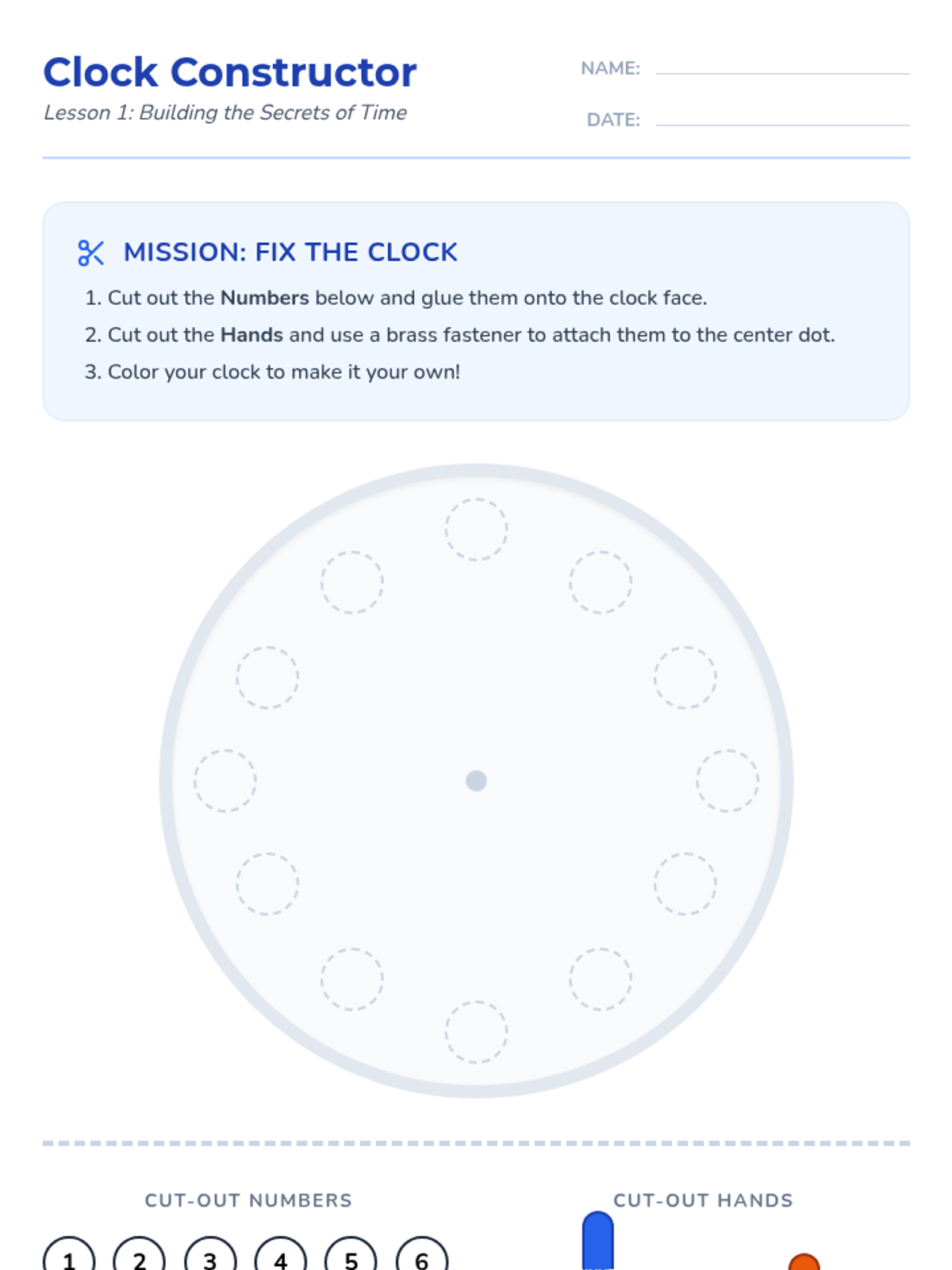
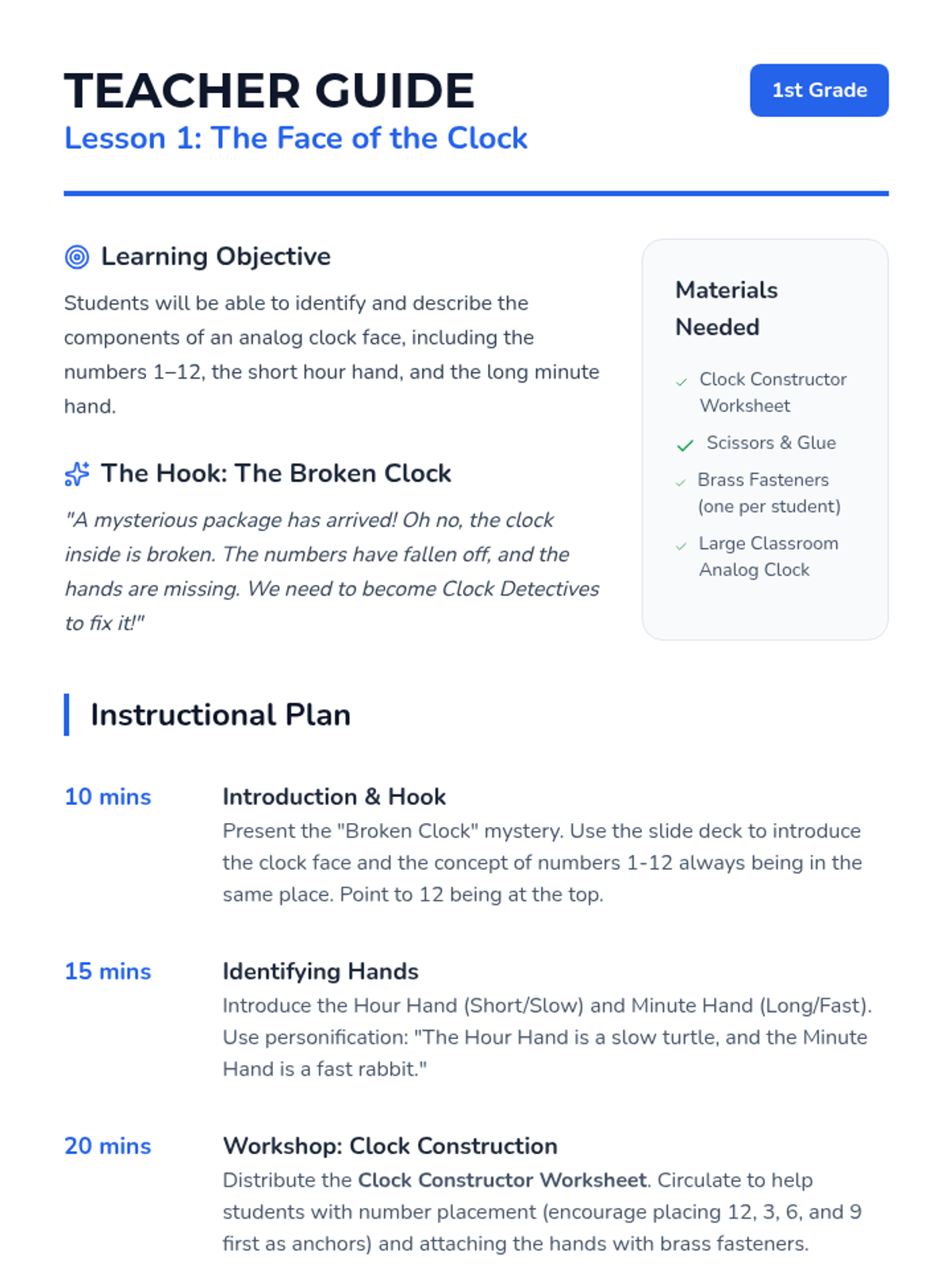
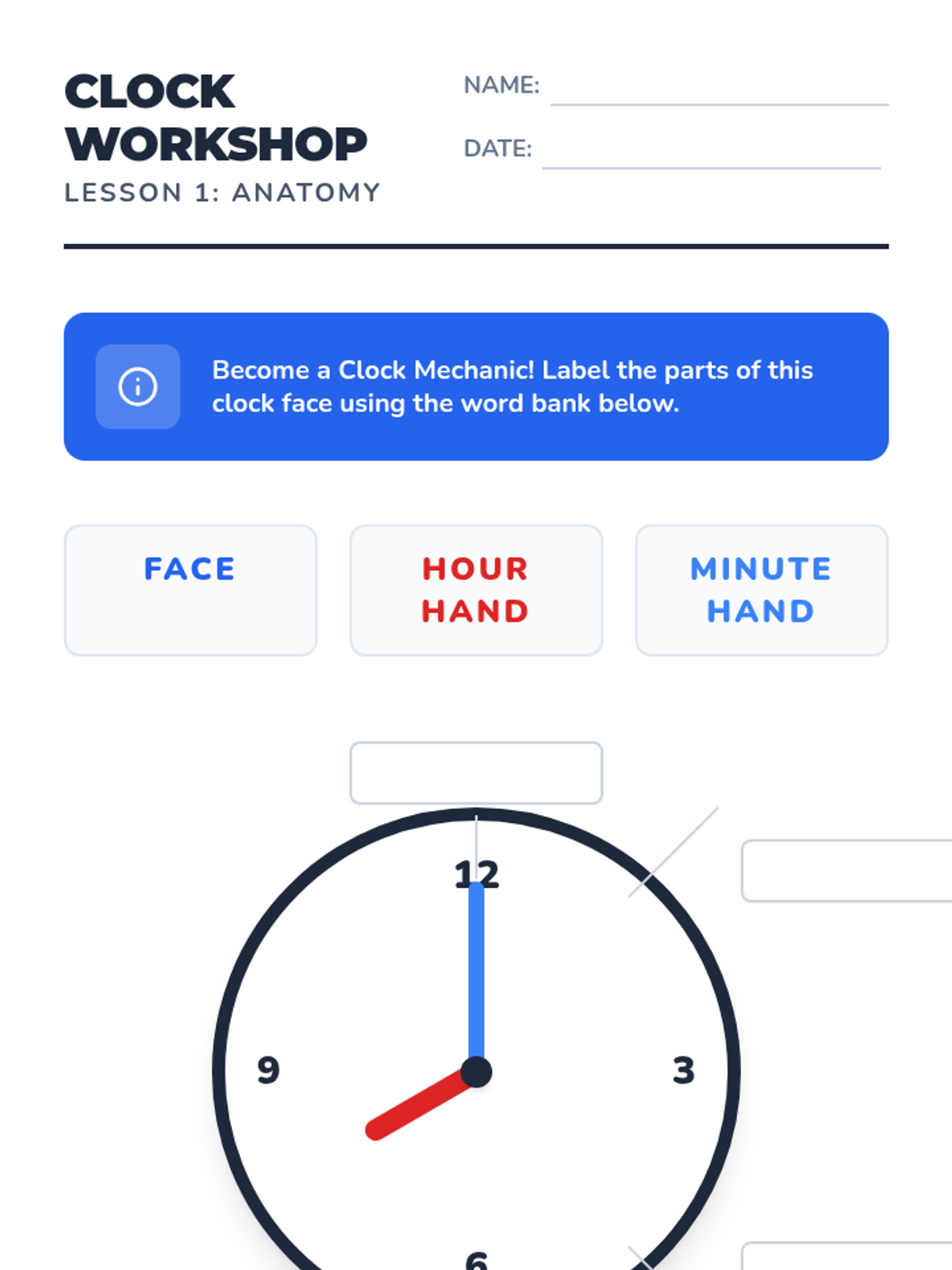
A comprehensive 1st Grade sequence exploring analog and digital time. Students learn clock anatomy, telling time to the hour and half-hour, and connecting time to their daily routines through hands-on activities and interactive lessons.