Develops proficiency in estimating and measuring length, area, volume, and mass using standard units and unit conversions. Integrates time, money, angle measurement, and data classification through counting and arithmetic applications.
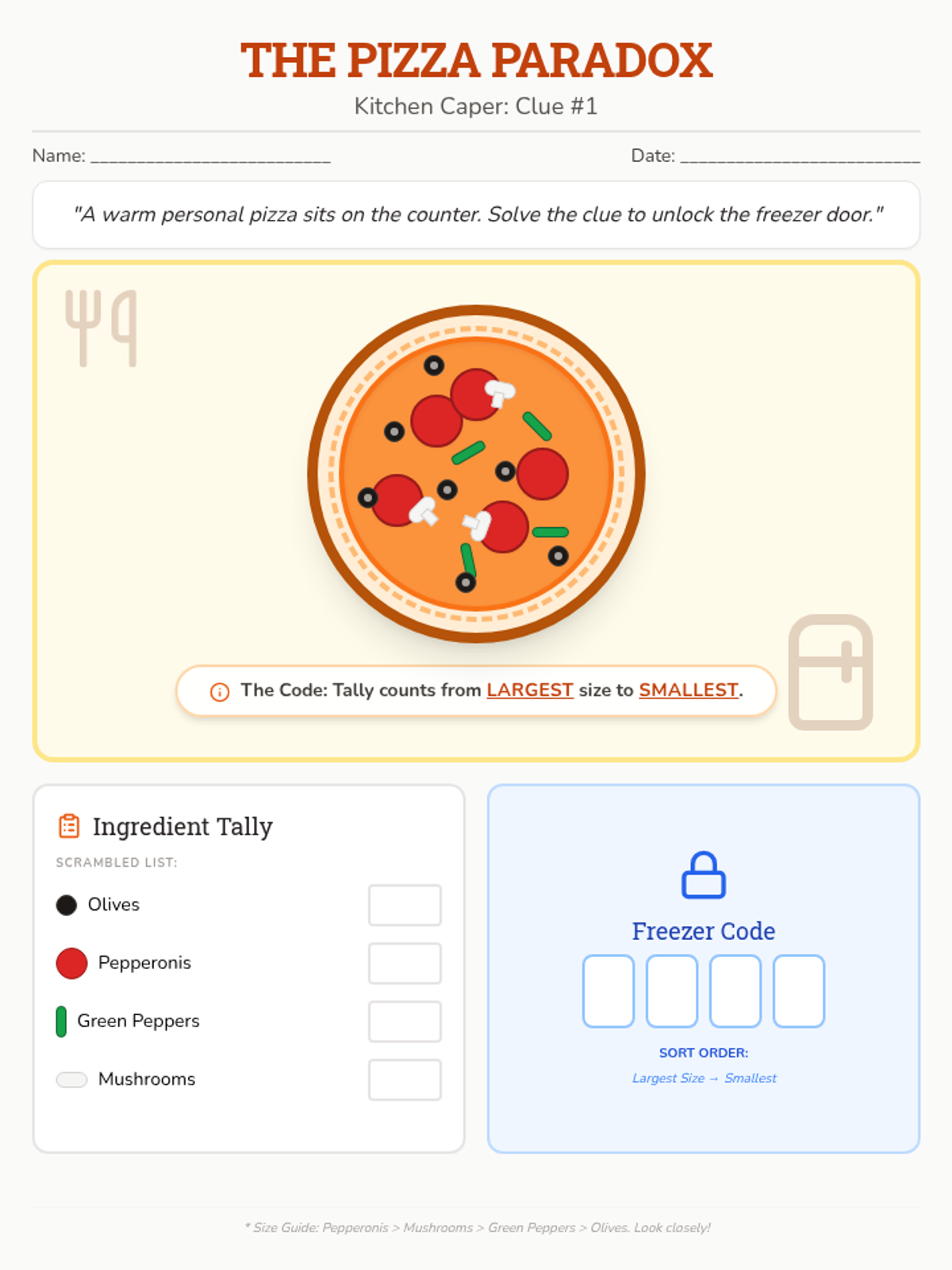
A mini-mystery centered around a kitchen scene where students use observation and logic to solve a visual puzzle.
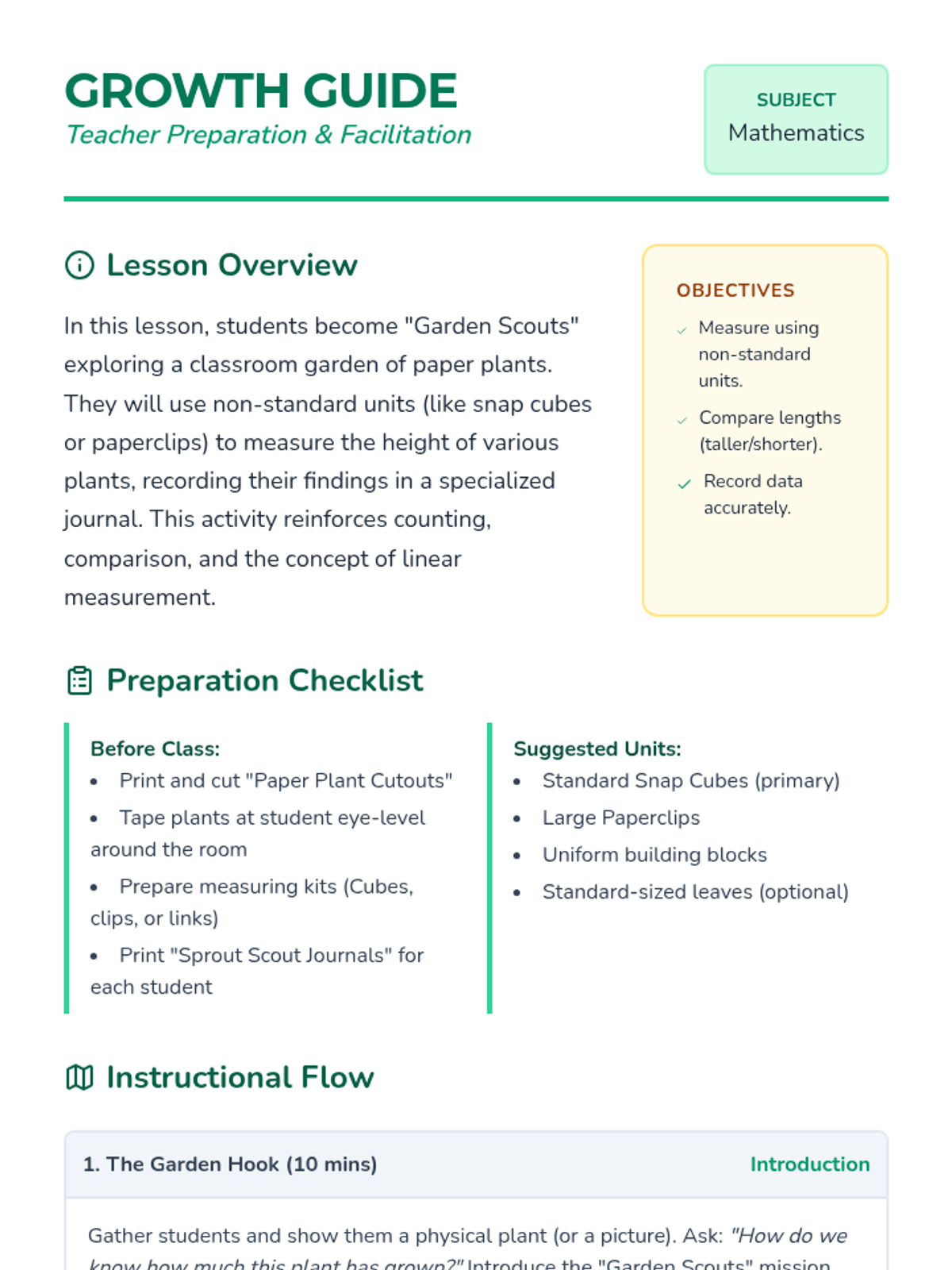
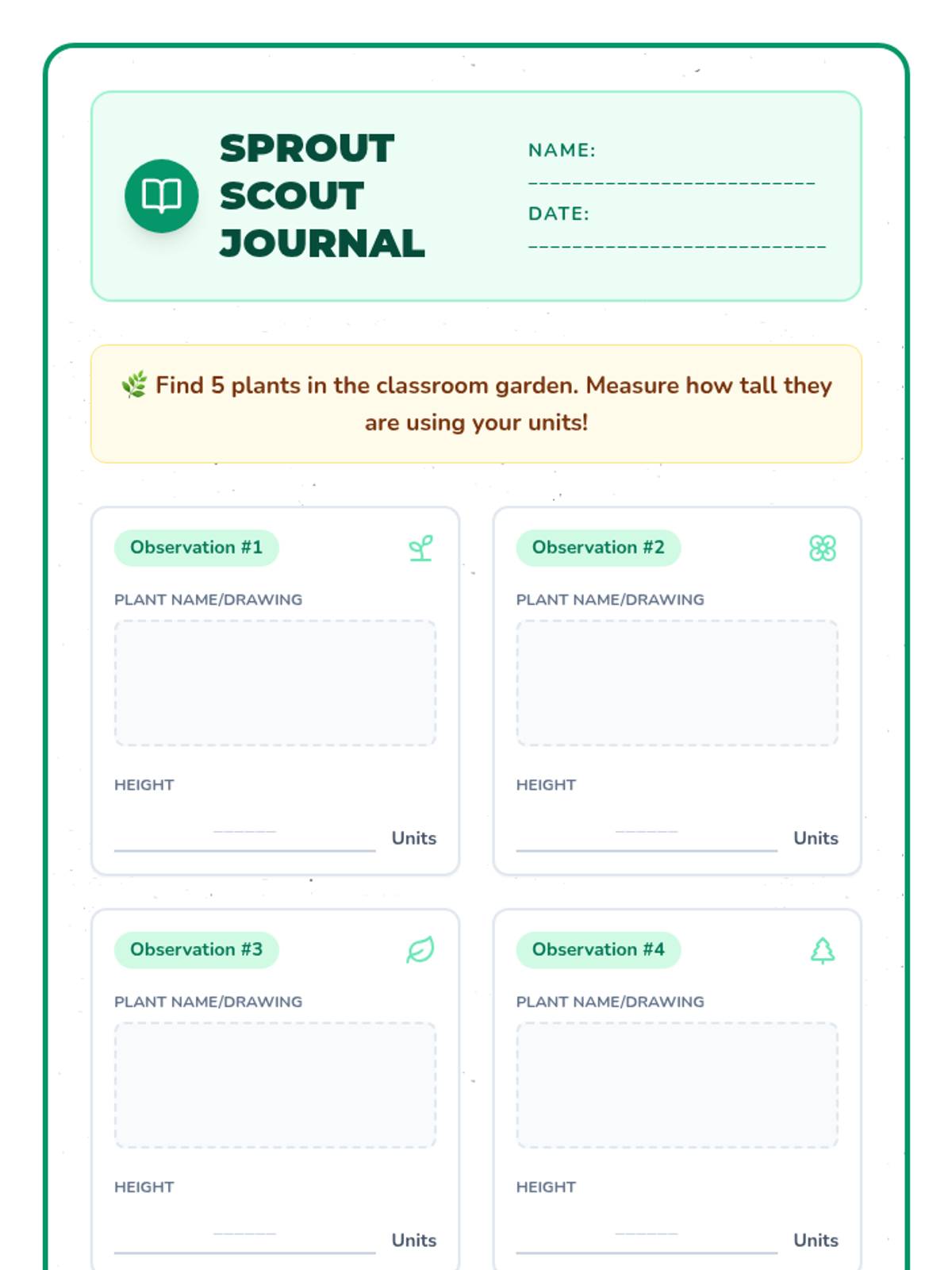
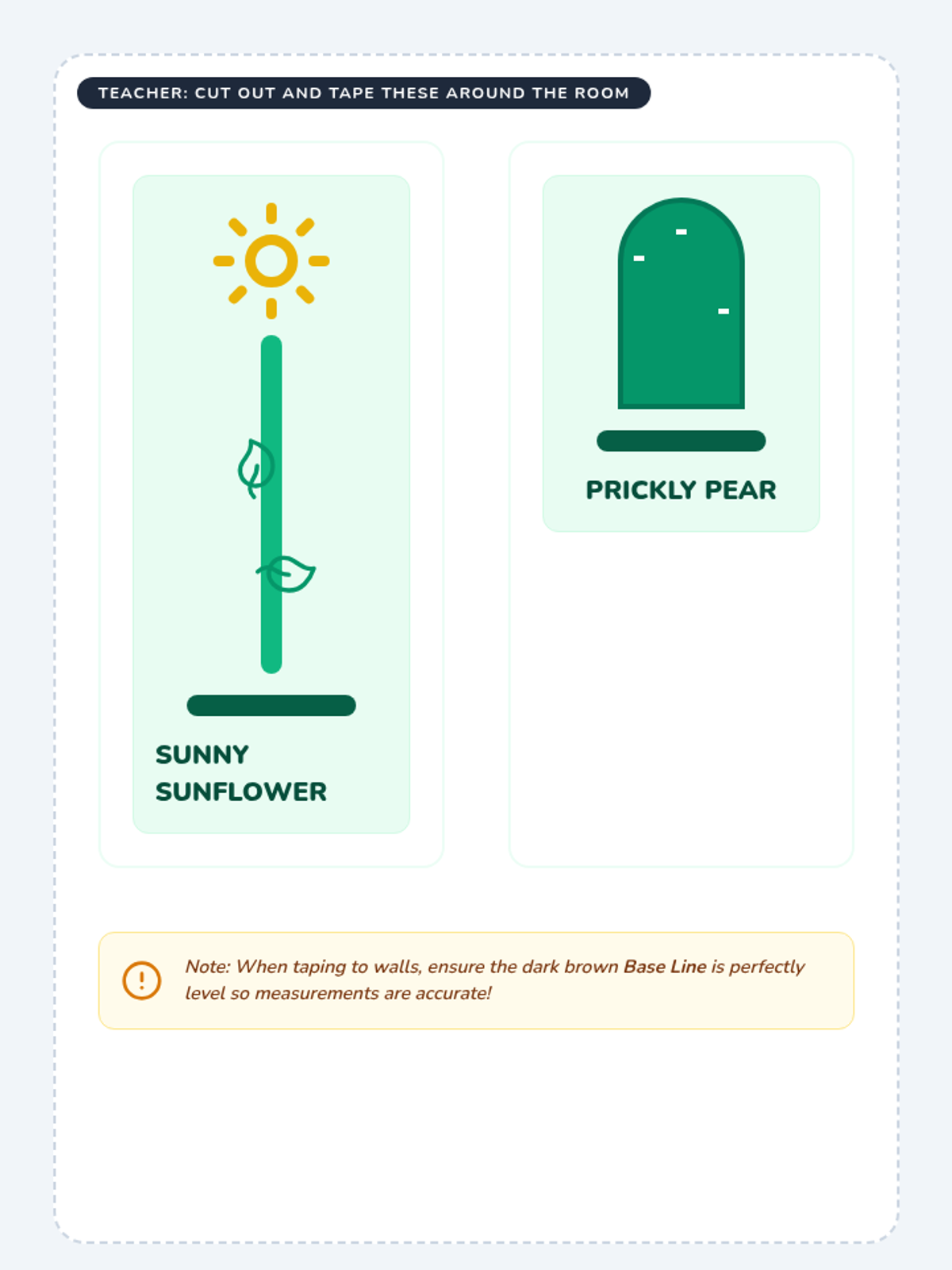
A hands-on measurement lesson where students use non-standard units to measure paper plants, fostering number sense and comparison skills through movement-based learning.
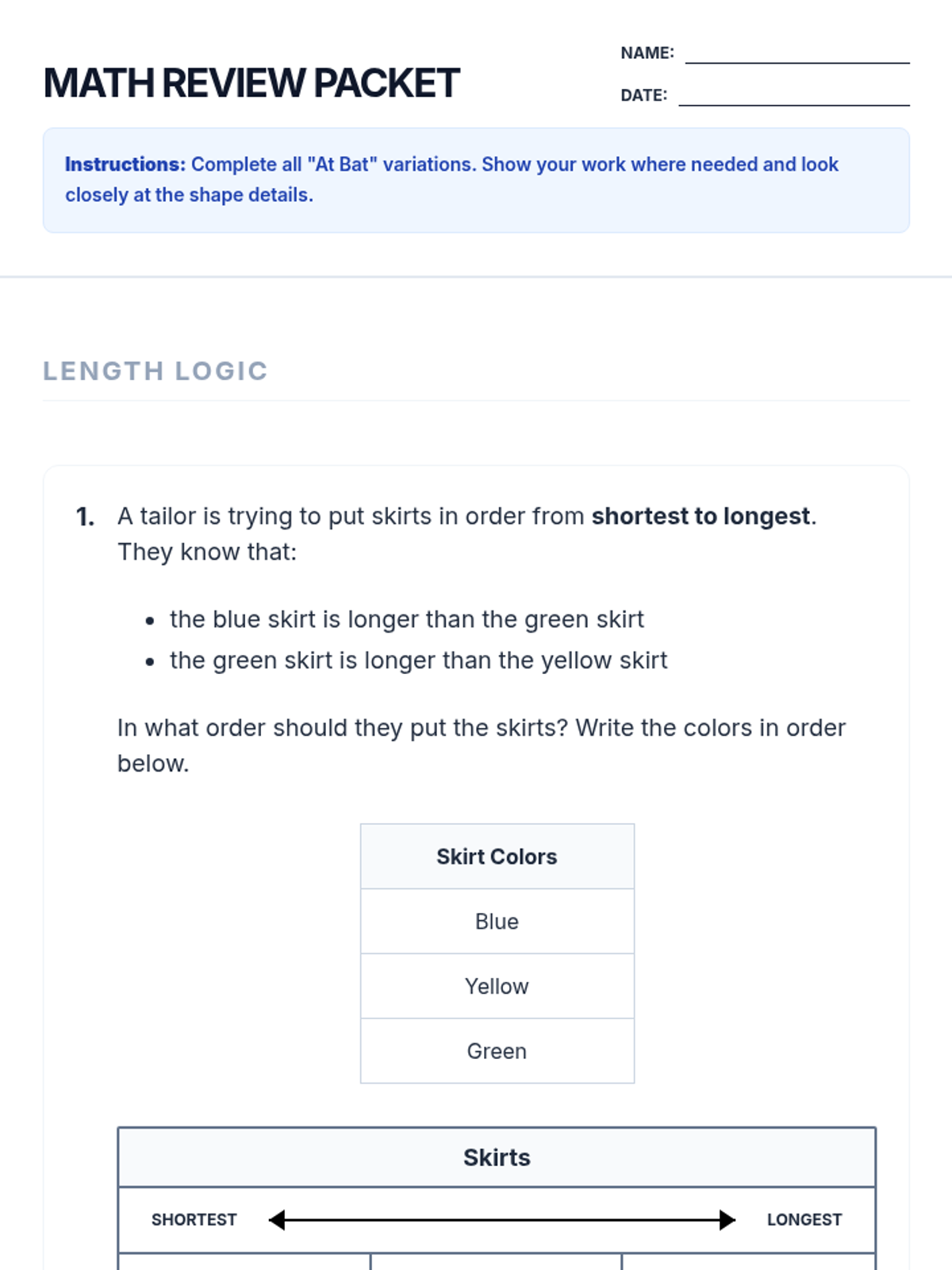
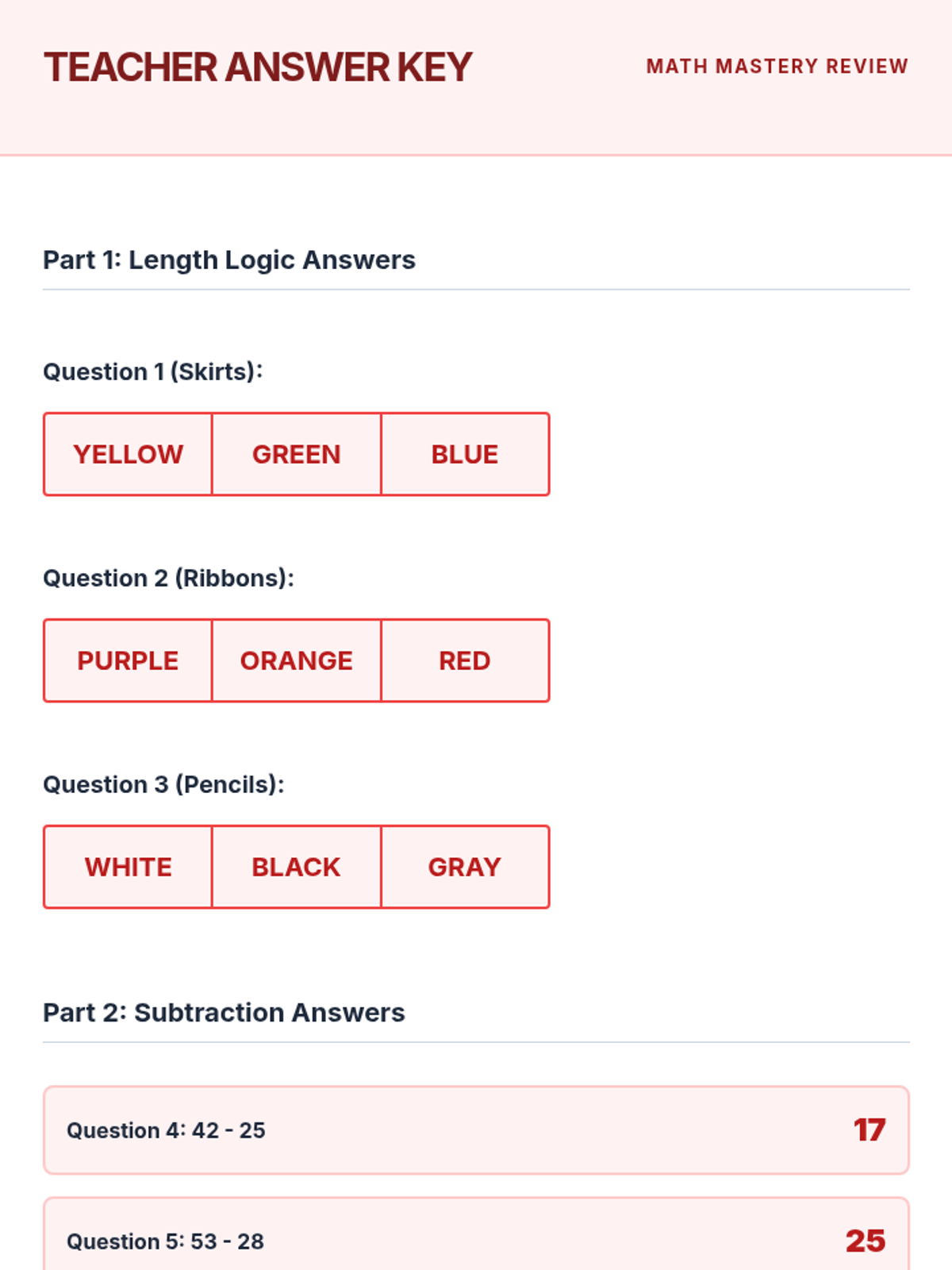
A comprehensive math review lesson designed to reinforce key elementary math skills including logical ordering, 2-digit subtraction, geometric attributes, and equal parts/fractions. This lesson uses a repeated "at-bat" structure to build mastery through multiple variations of the same problem format.
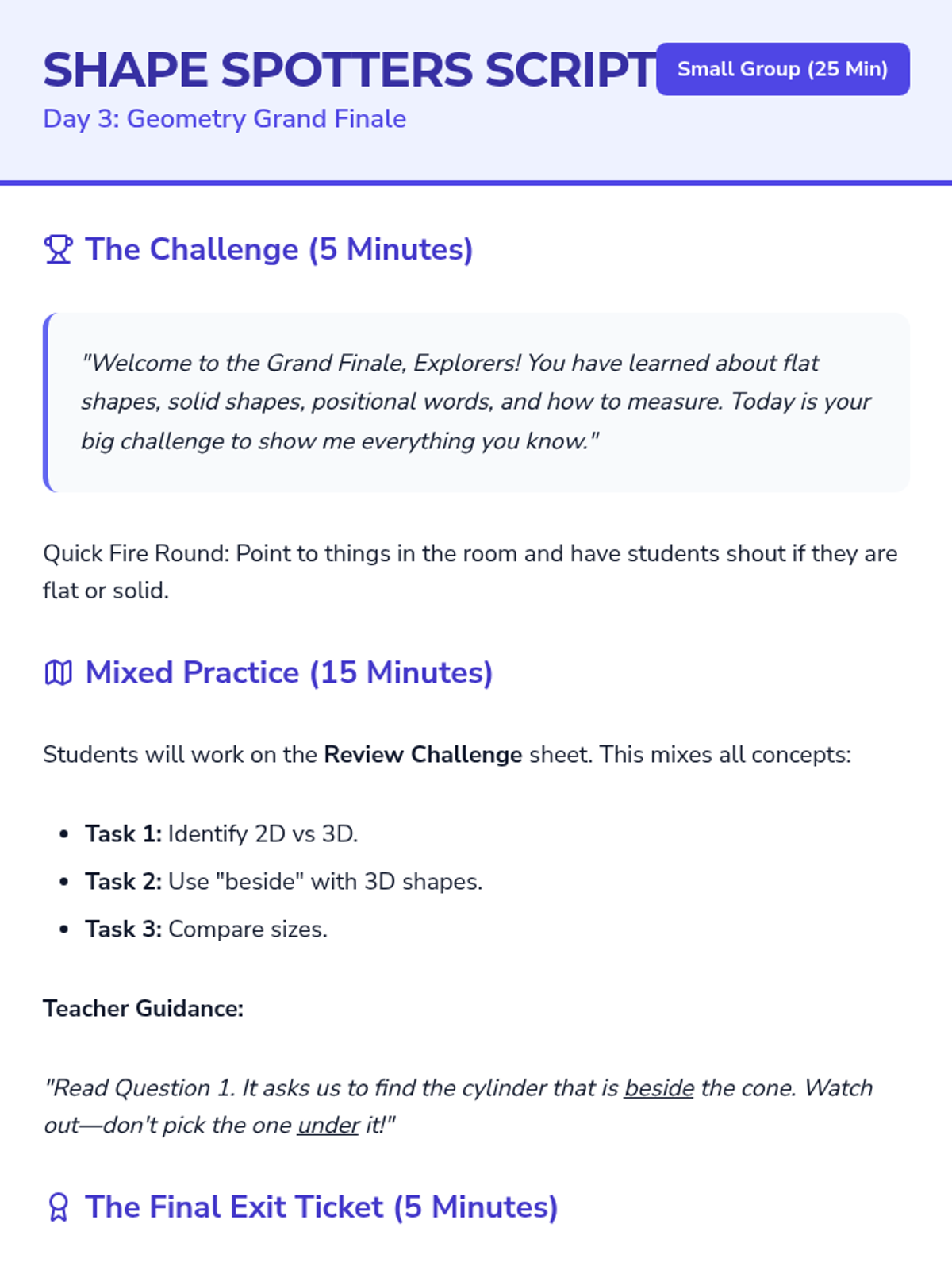
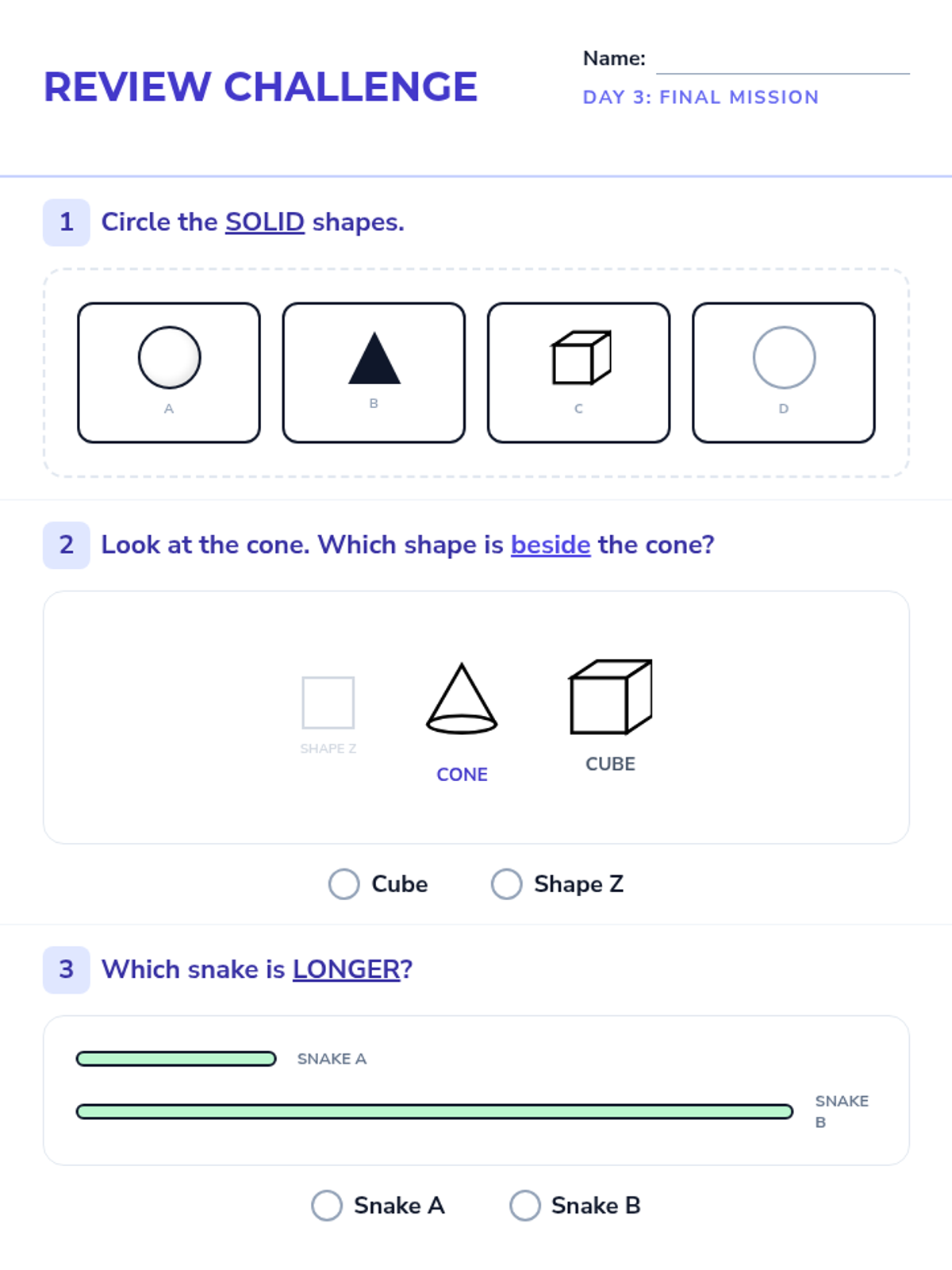
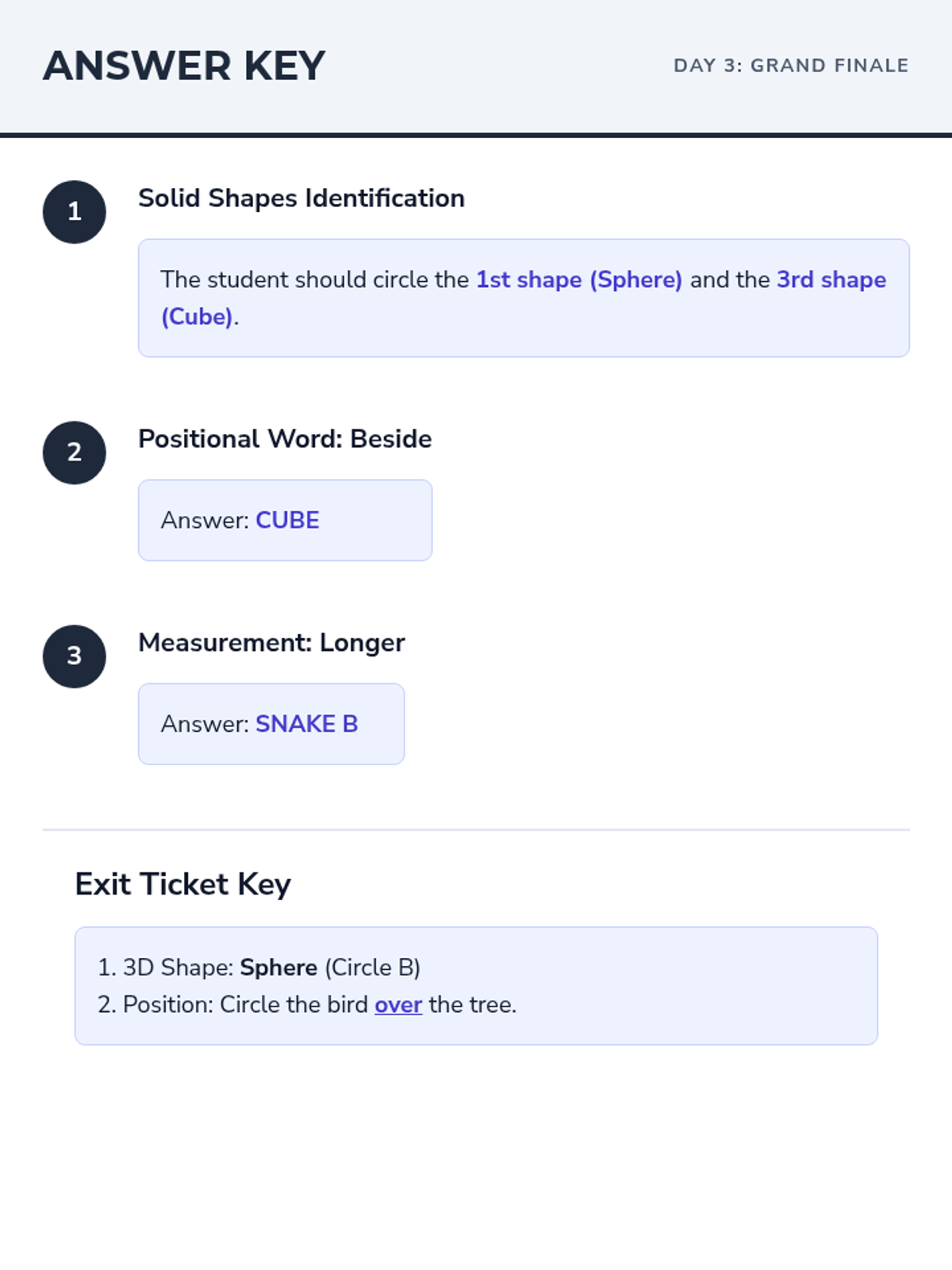
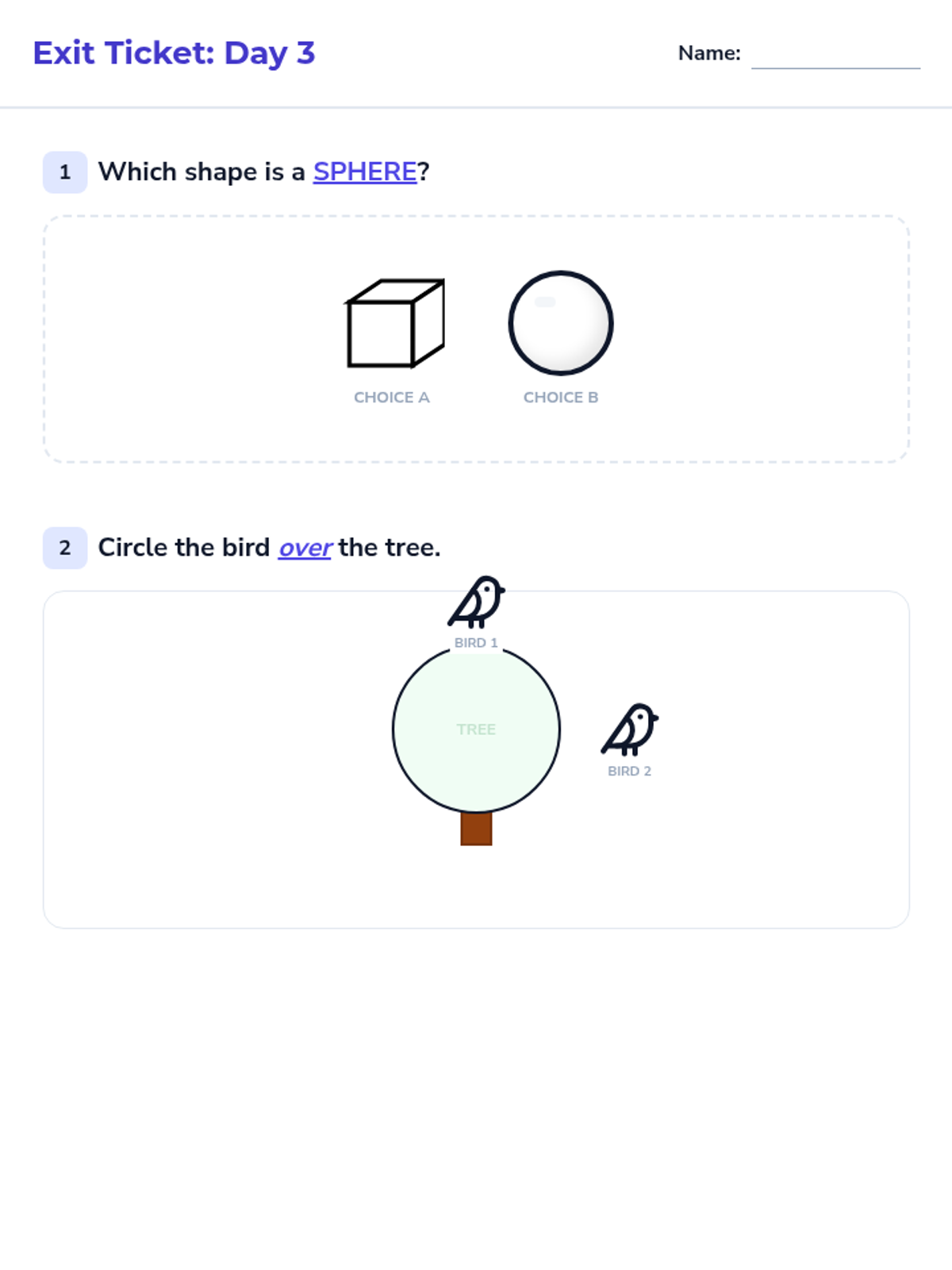
A cumulative review of 2D/3D shapes, positional words, and measurement comparisons to assess mastery.
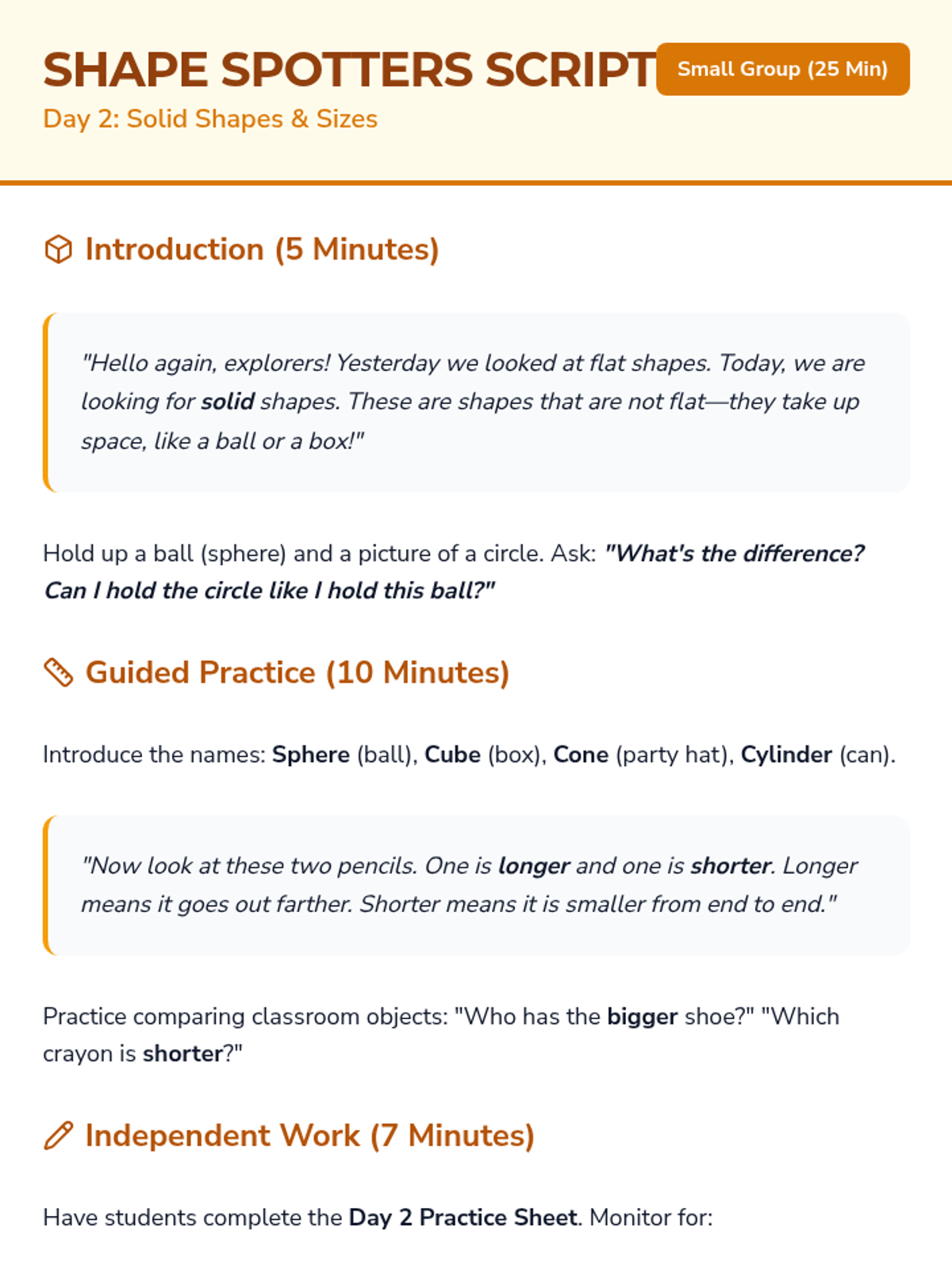
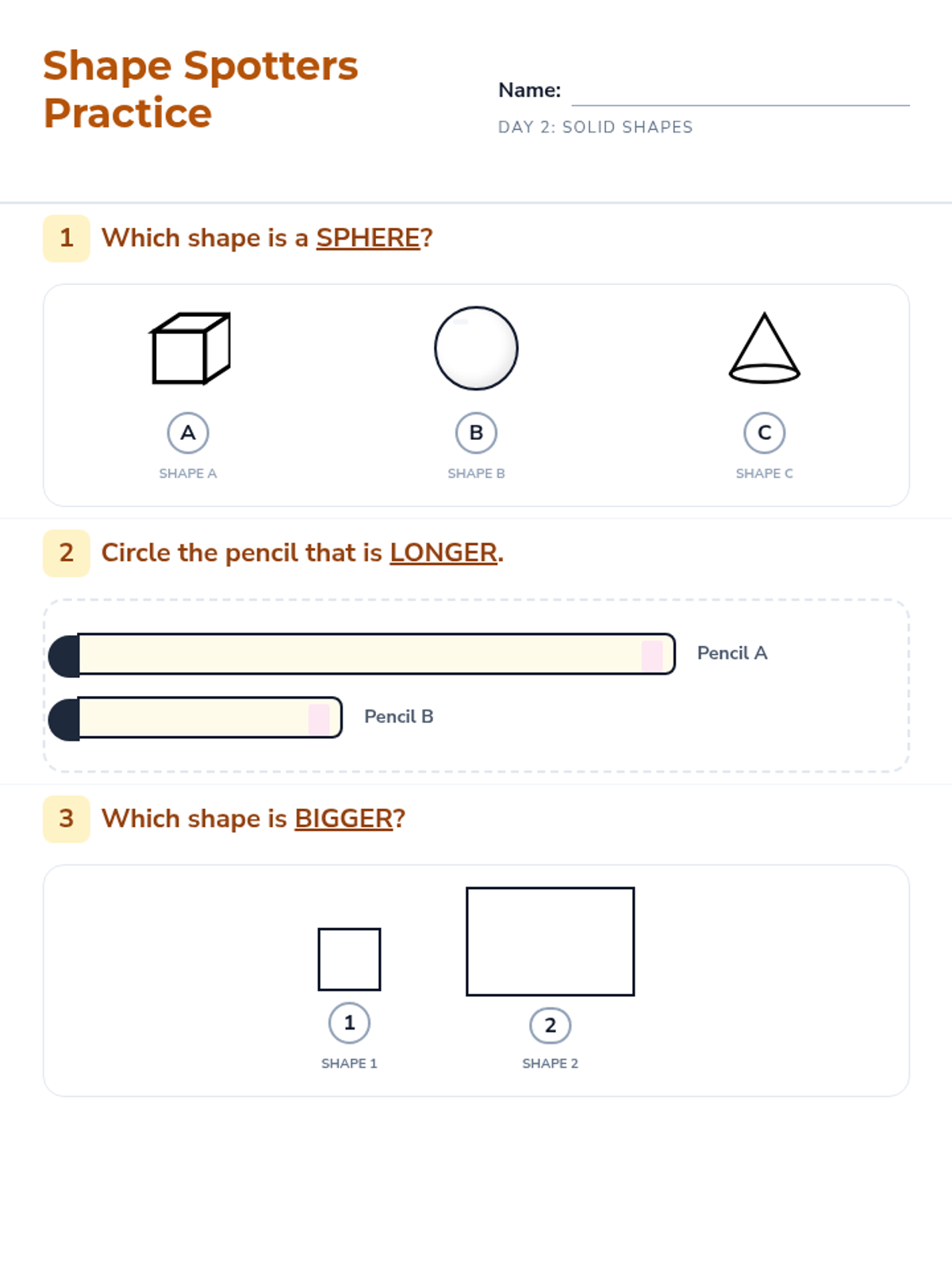
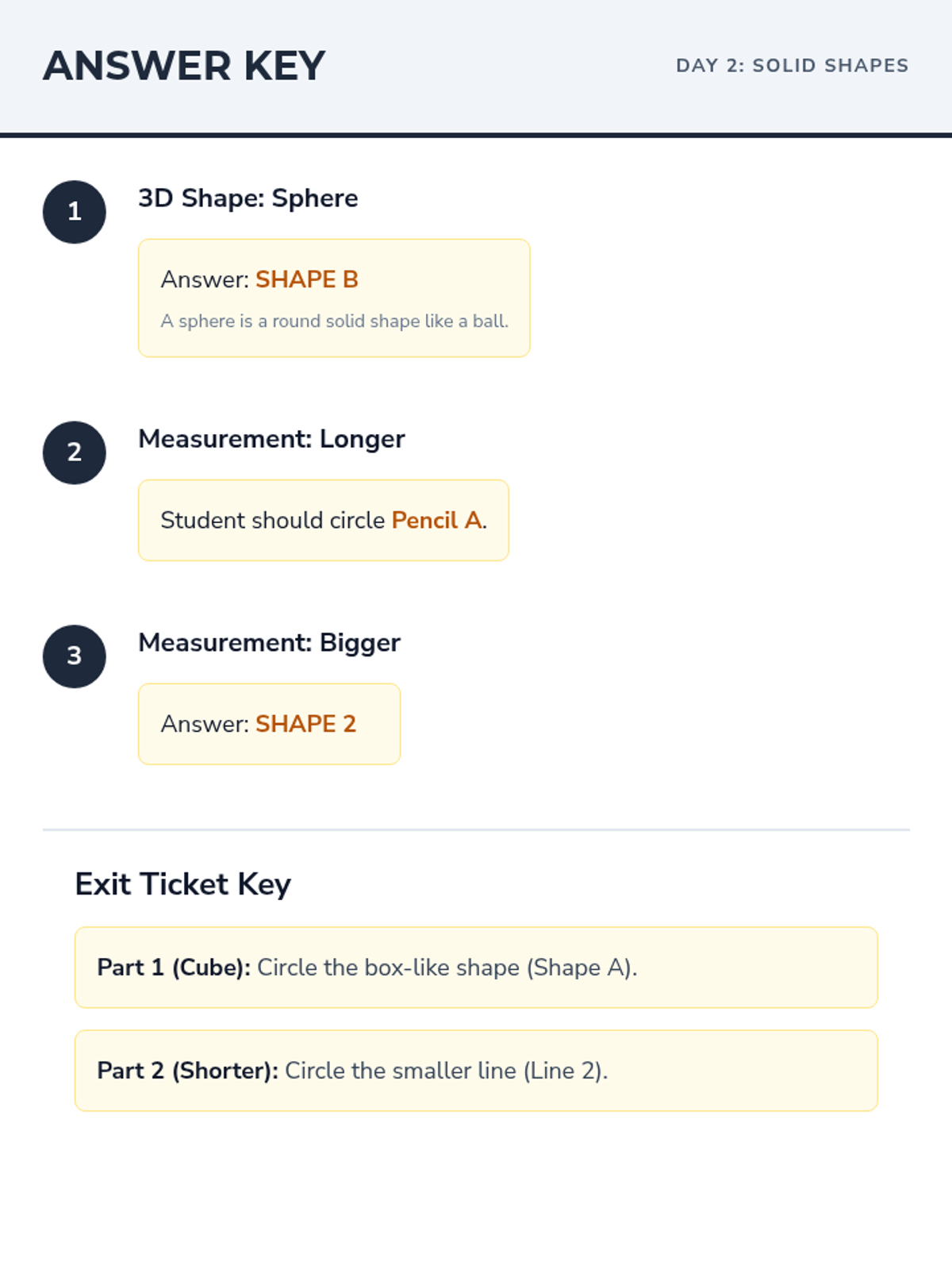
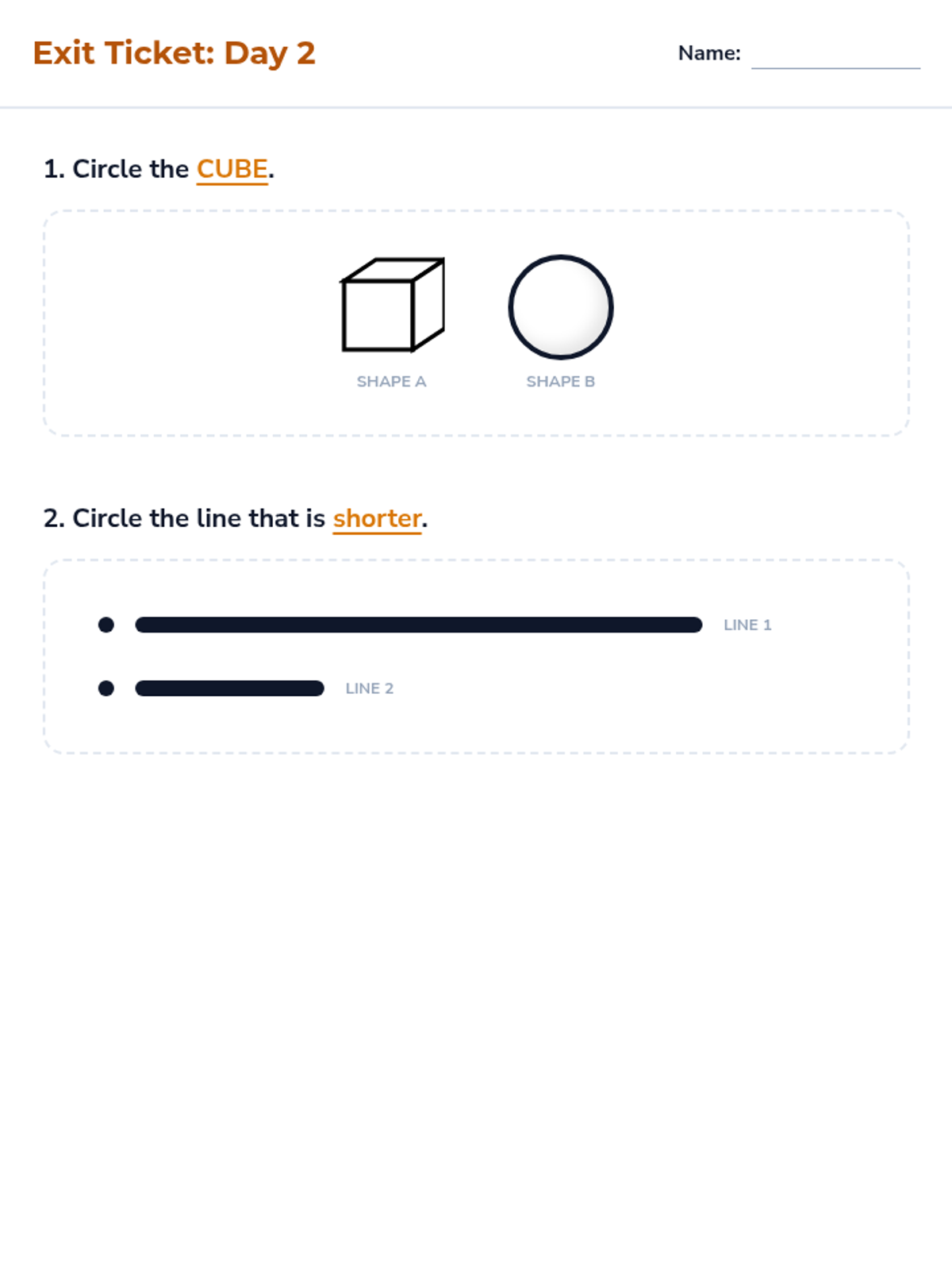
Students identify 3D shapes (cube, sphere, cone, cylinder) and compare objects based on size and length.
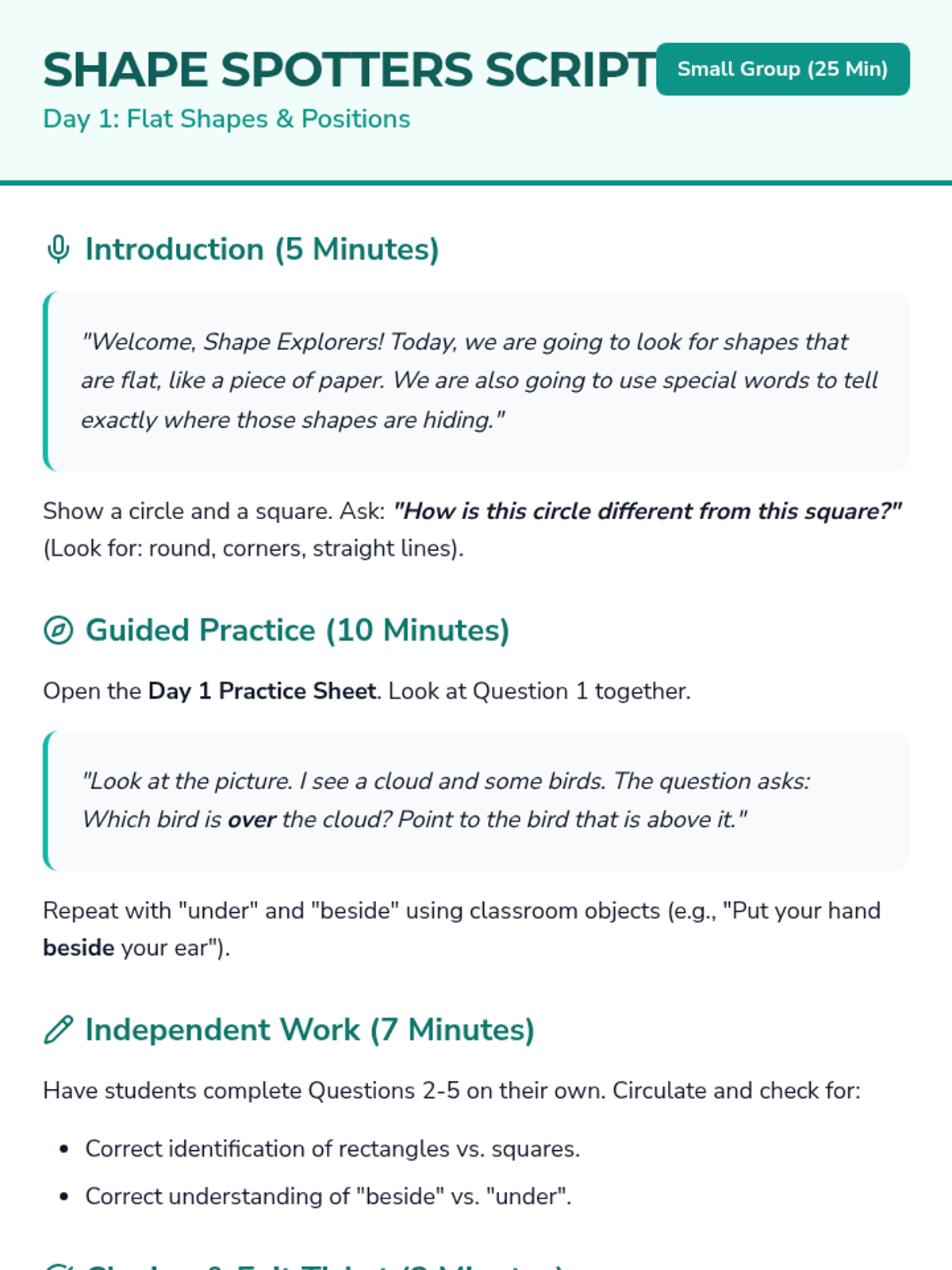
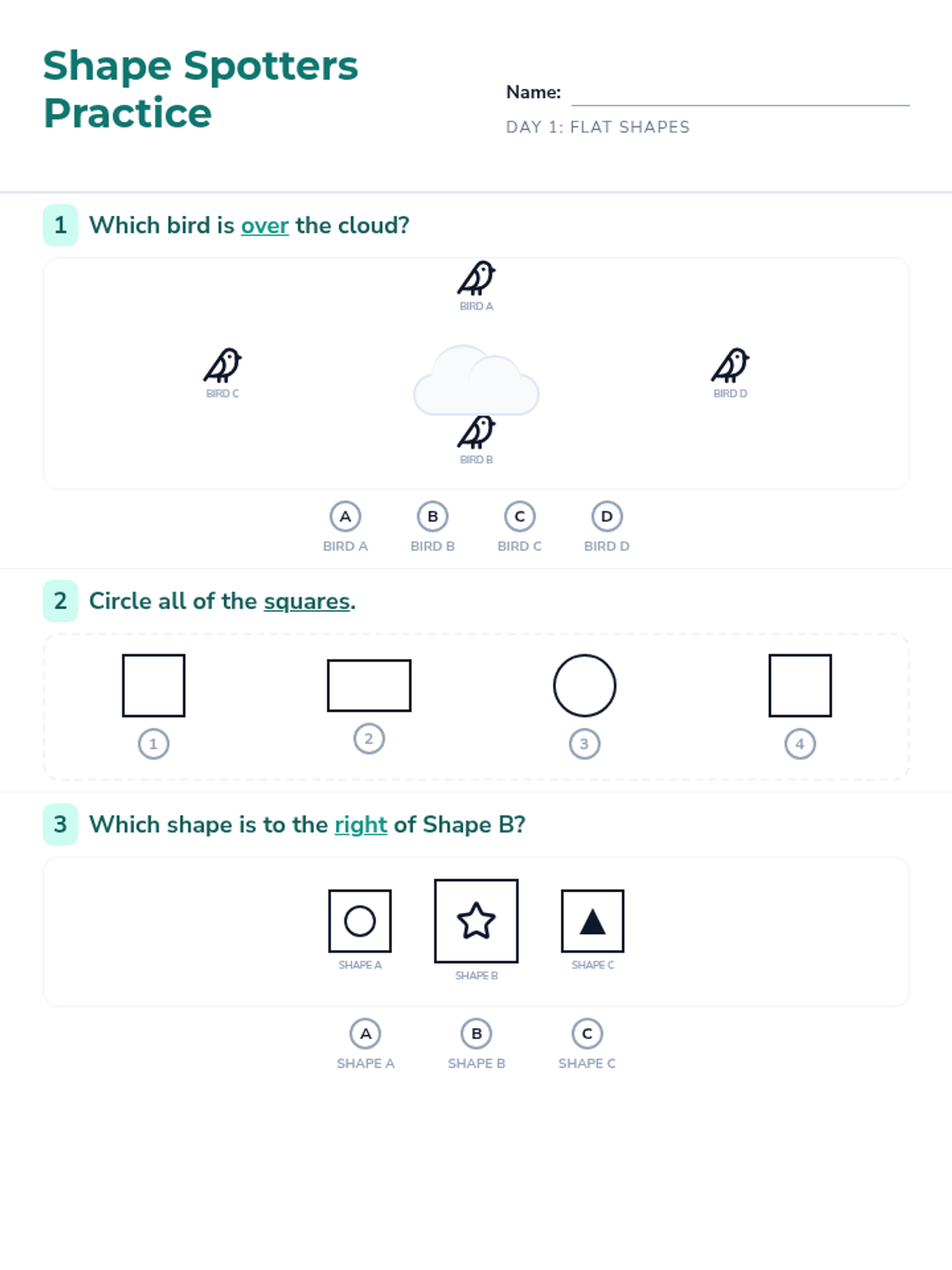
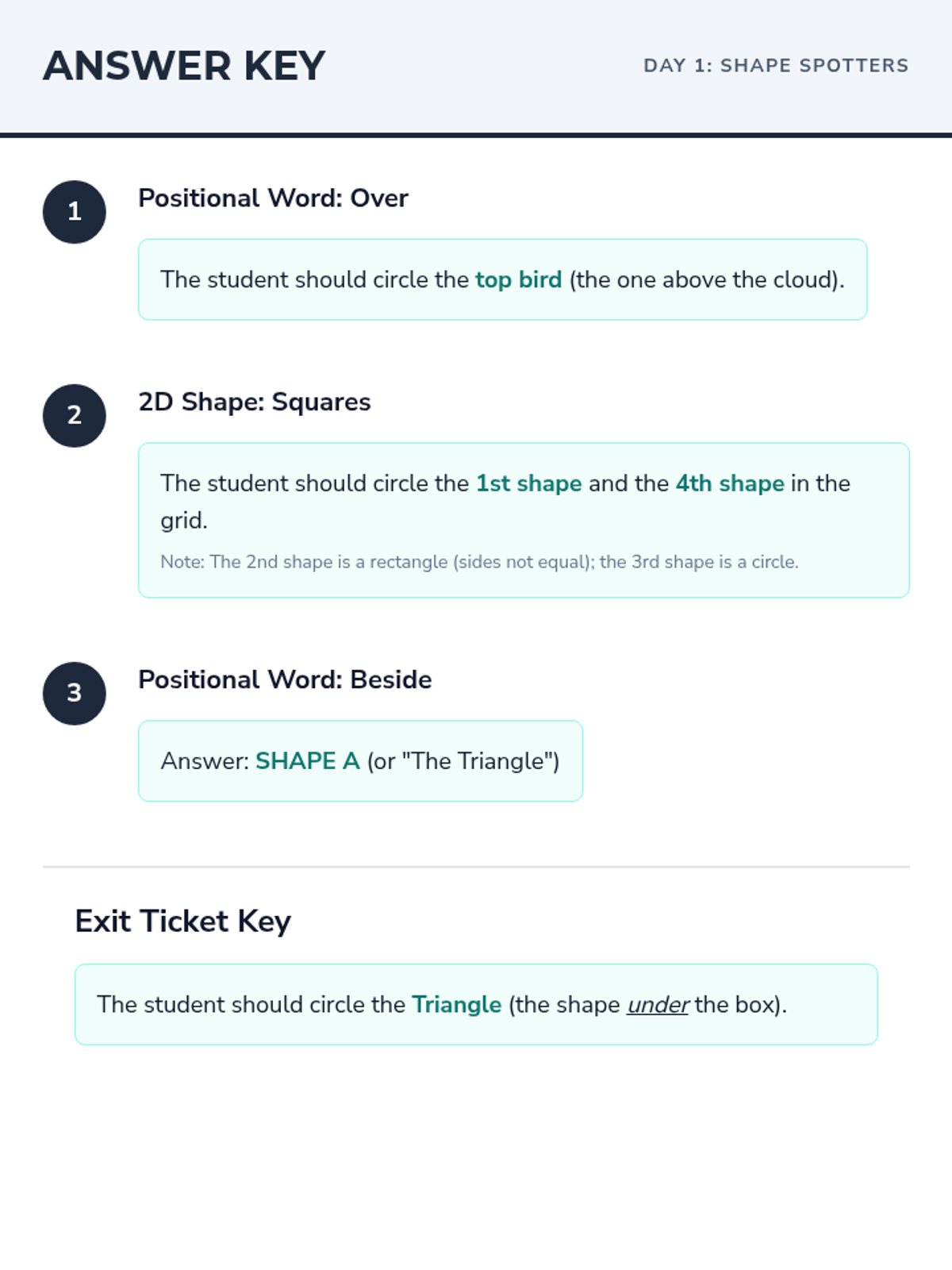
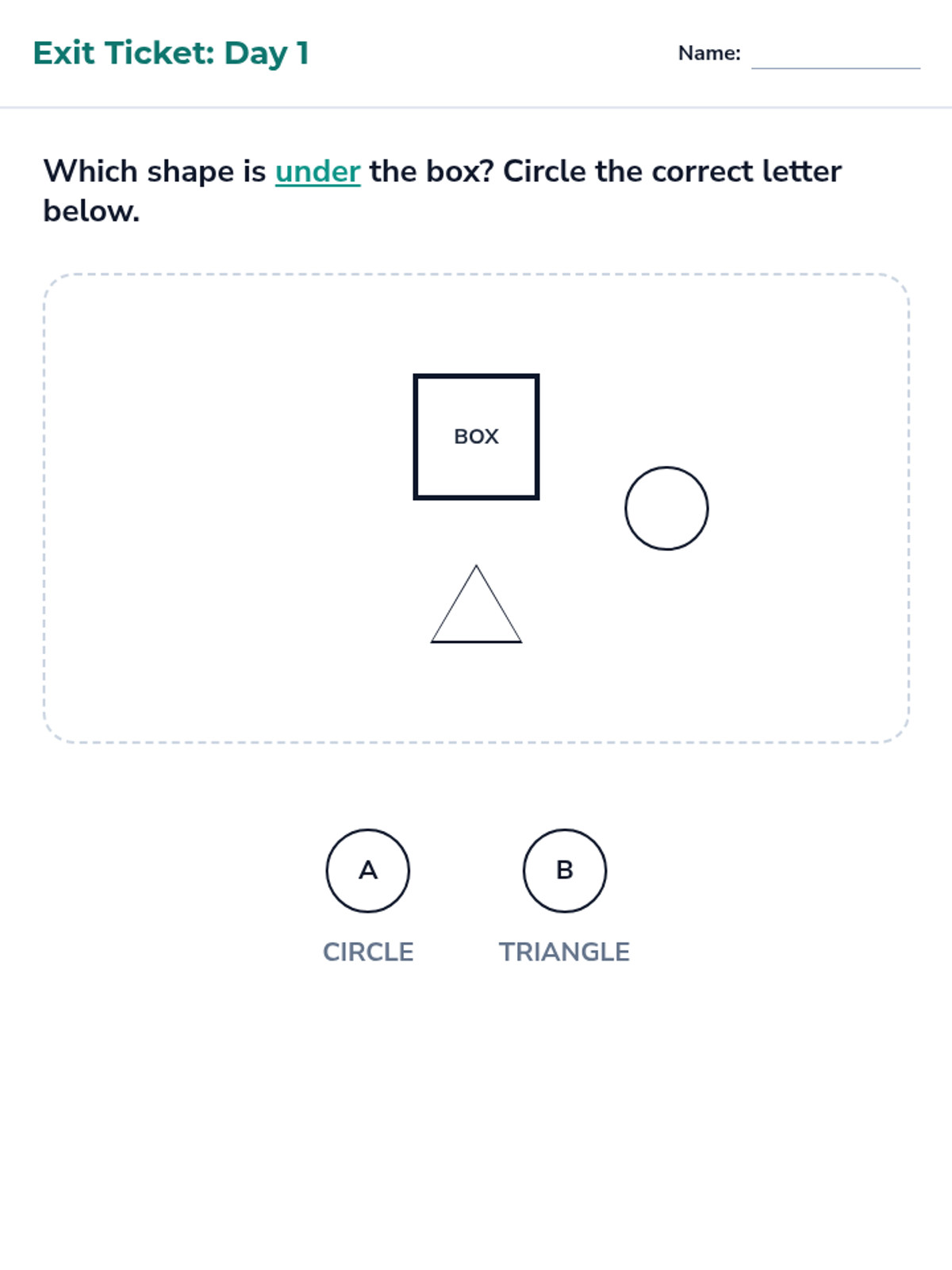
Students identify 2D shapes (circle, square, triangle, rectangle) and use positional language (over, under, beside) to describe location.
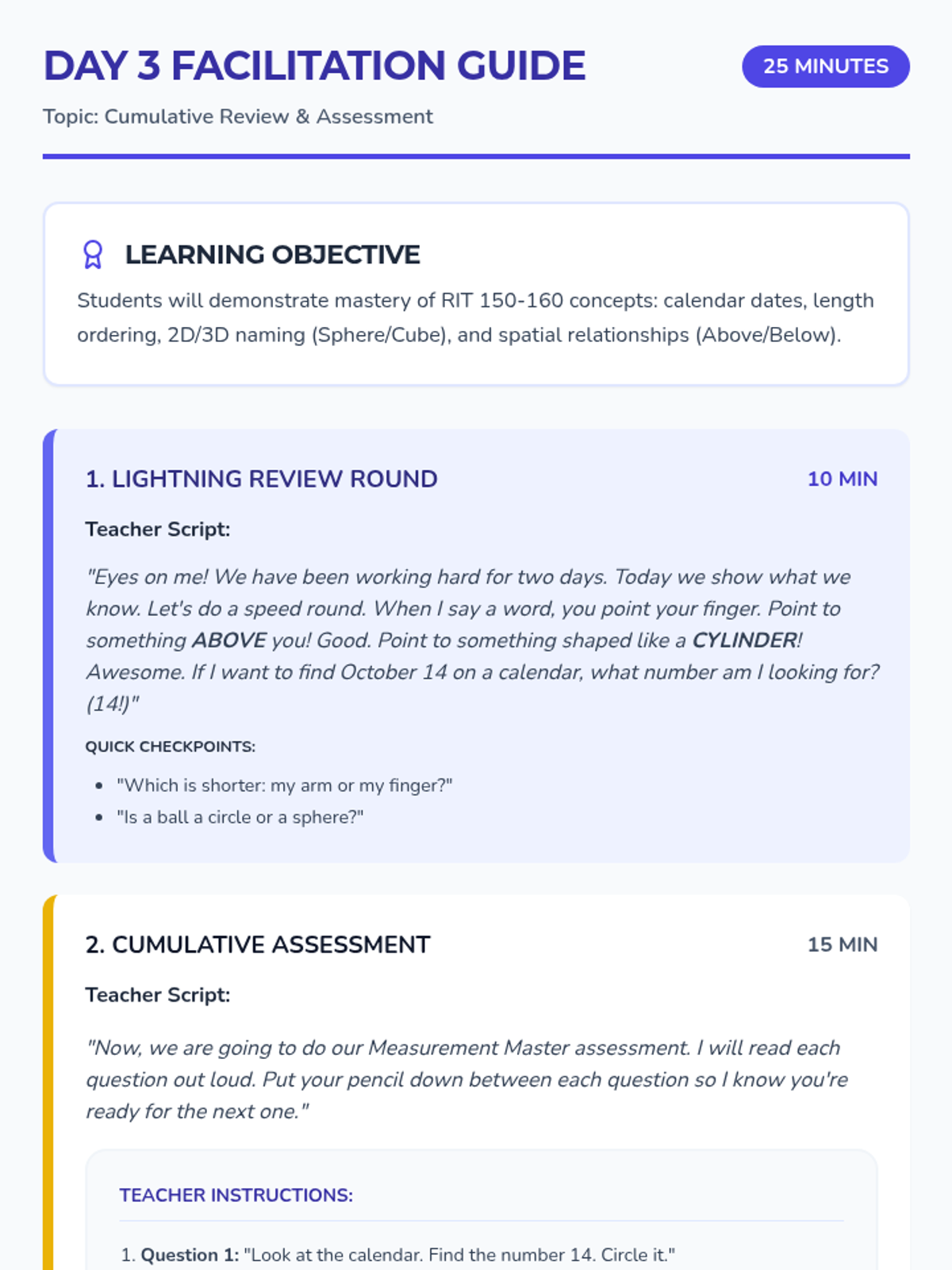
Day 3 provides a comprehensive review of all measurement and geometry concepts from the week, culminating in a cumulative assessment.
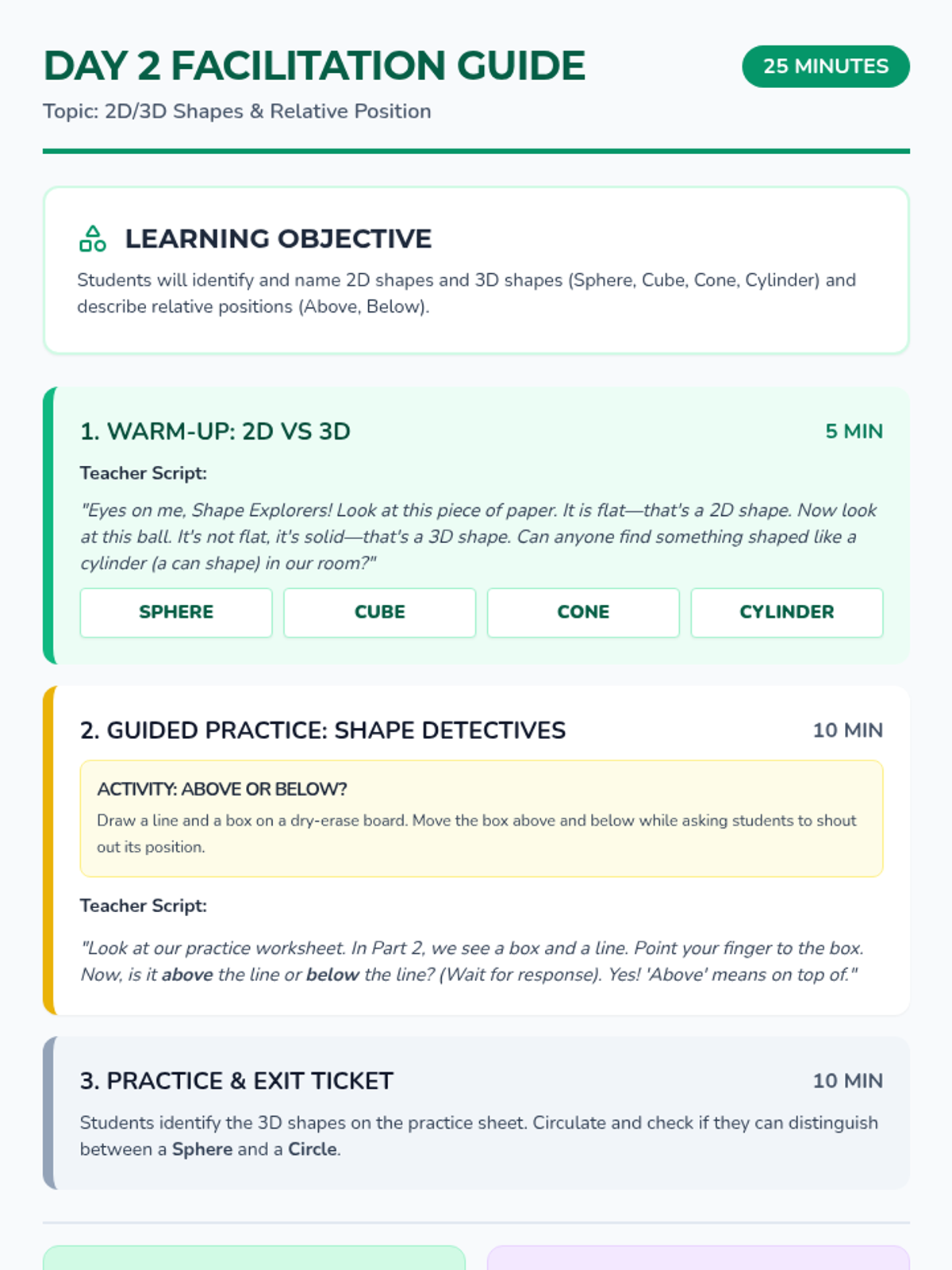
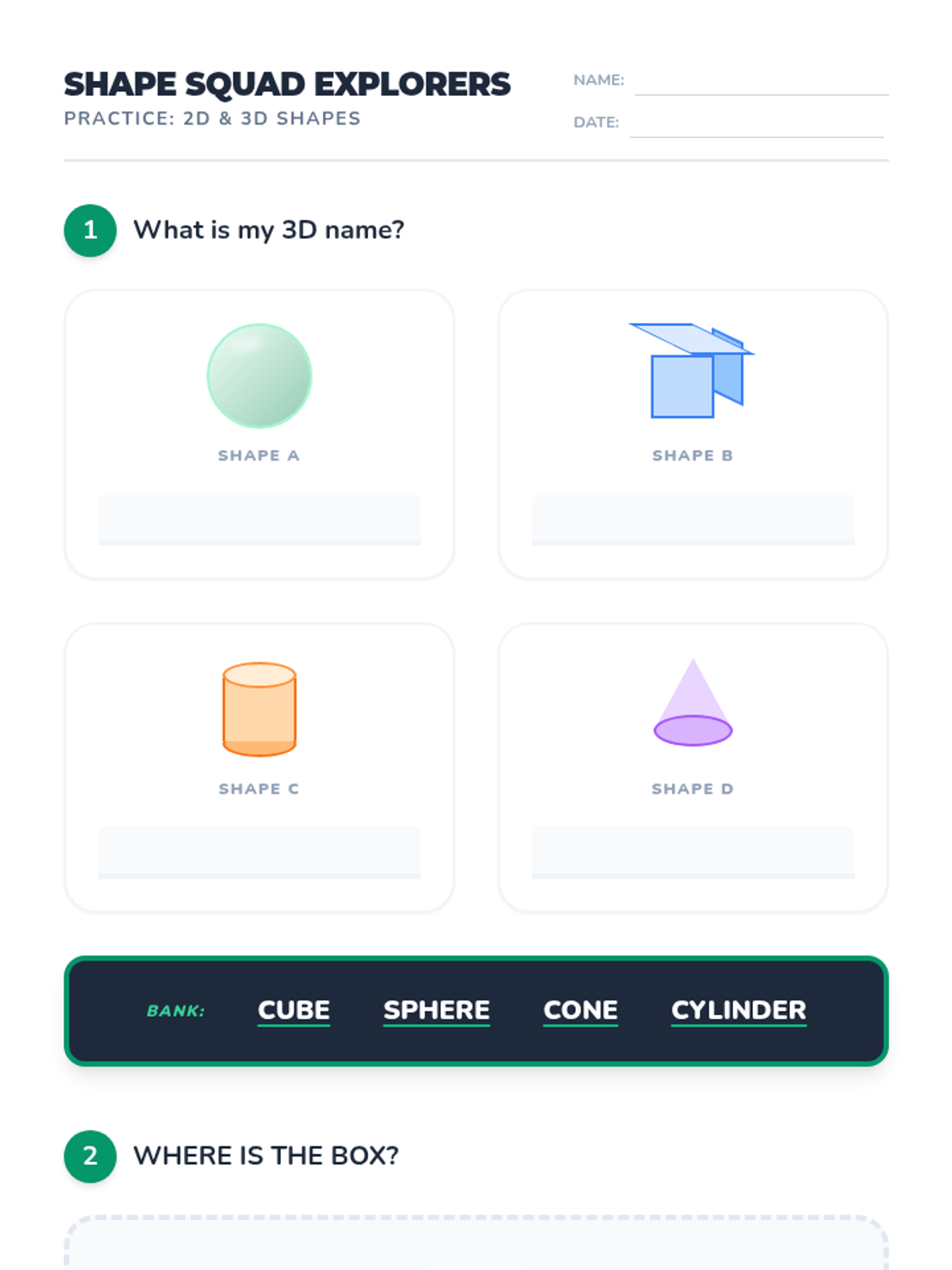
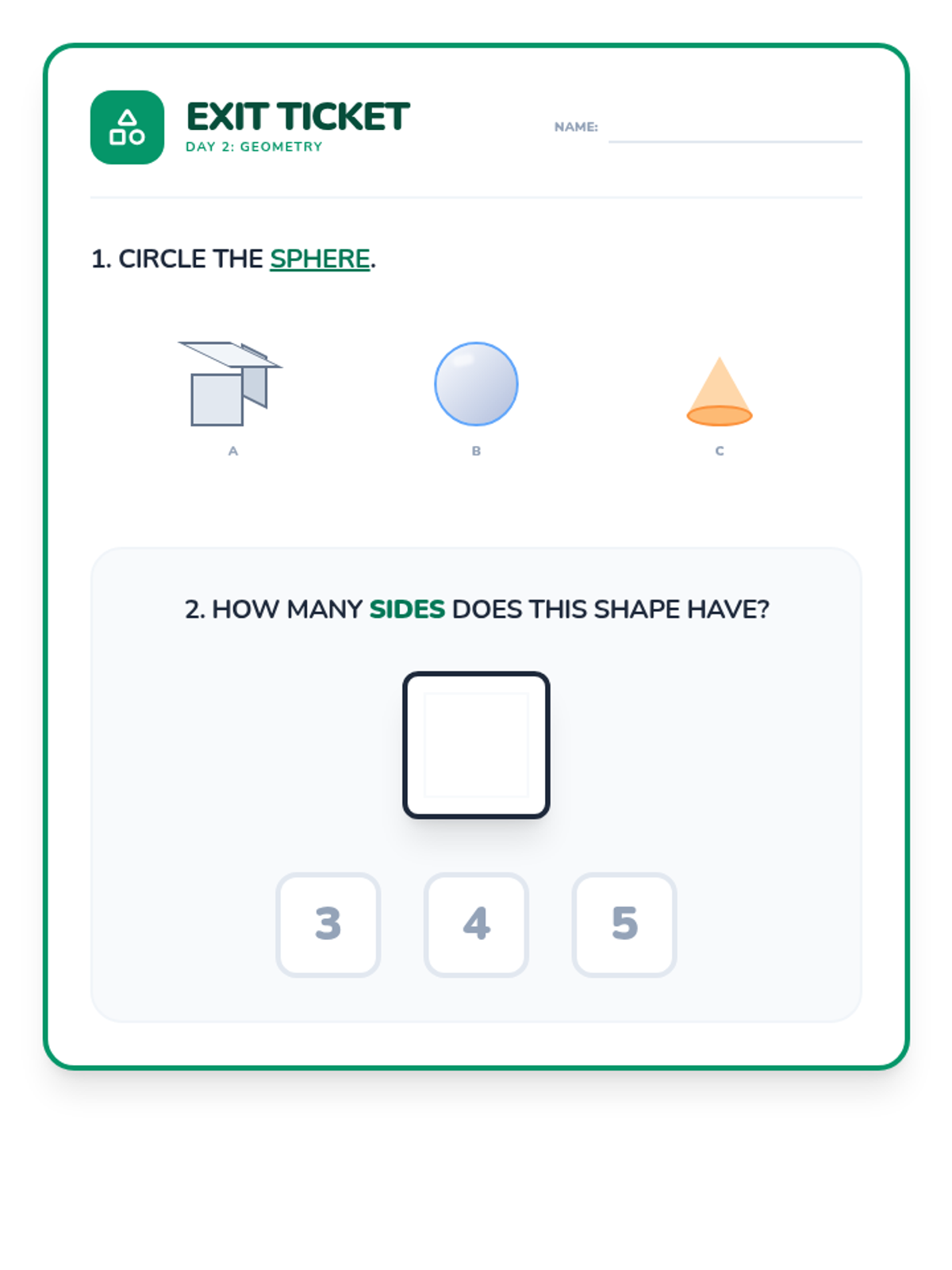
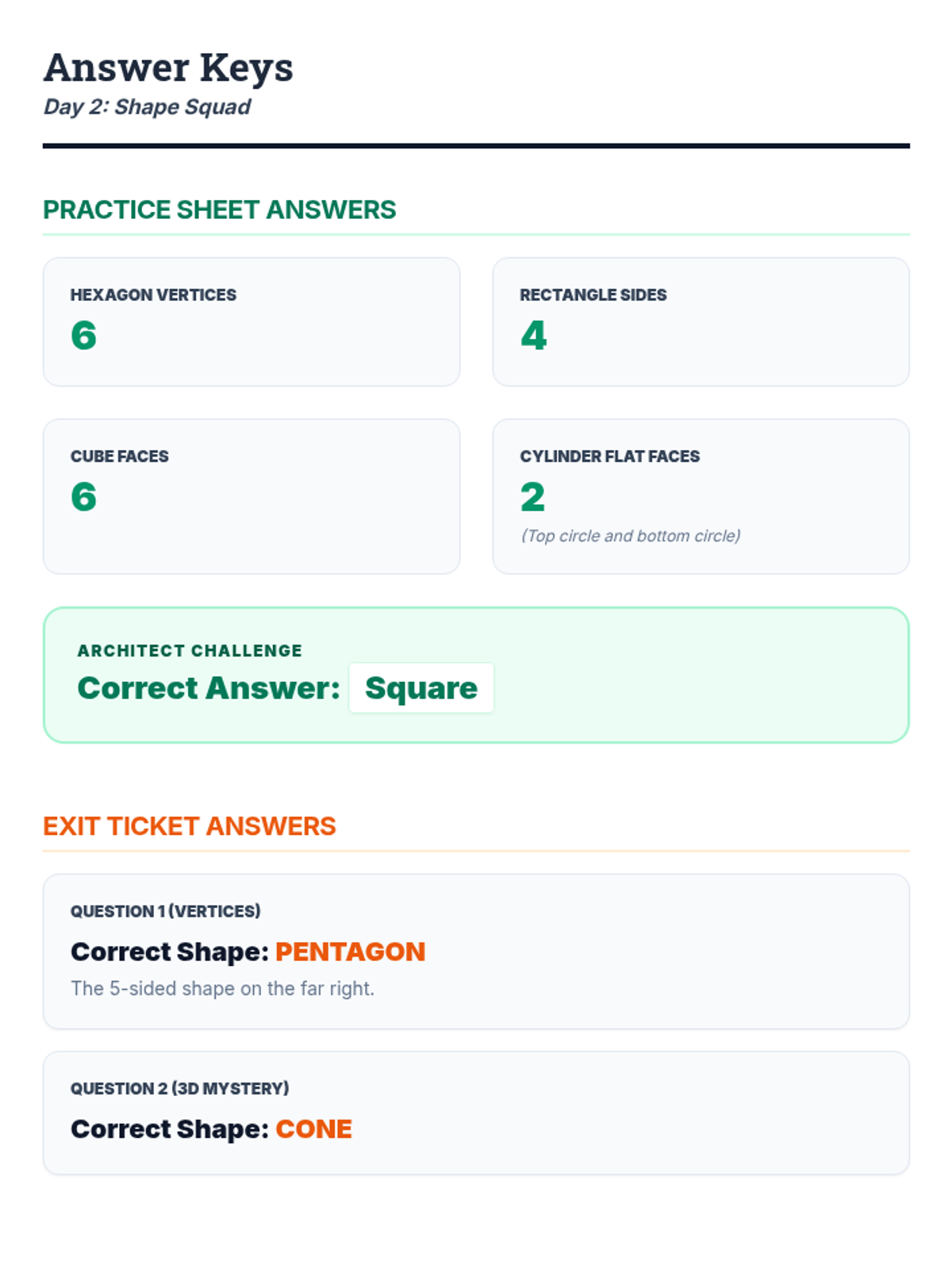
Day 2 covers identifying 2D and 3D shapes by name and attributes, as well as mixed geometry concepts like relative position and composite shapes.
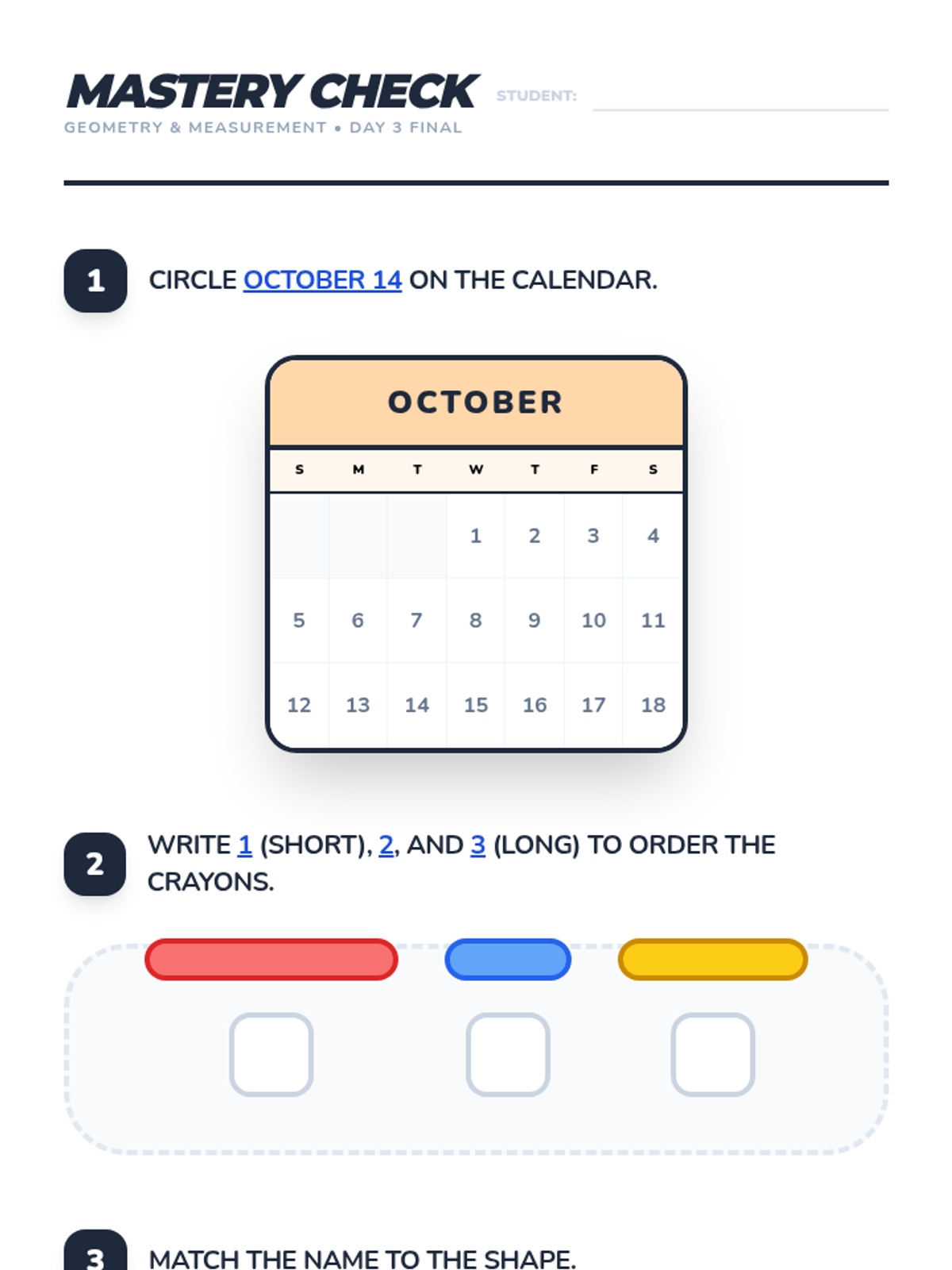
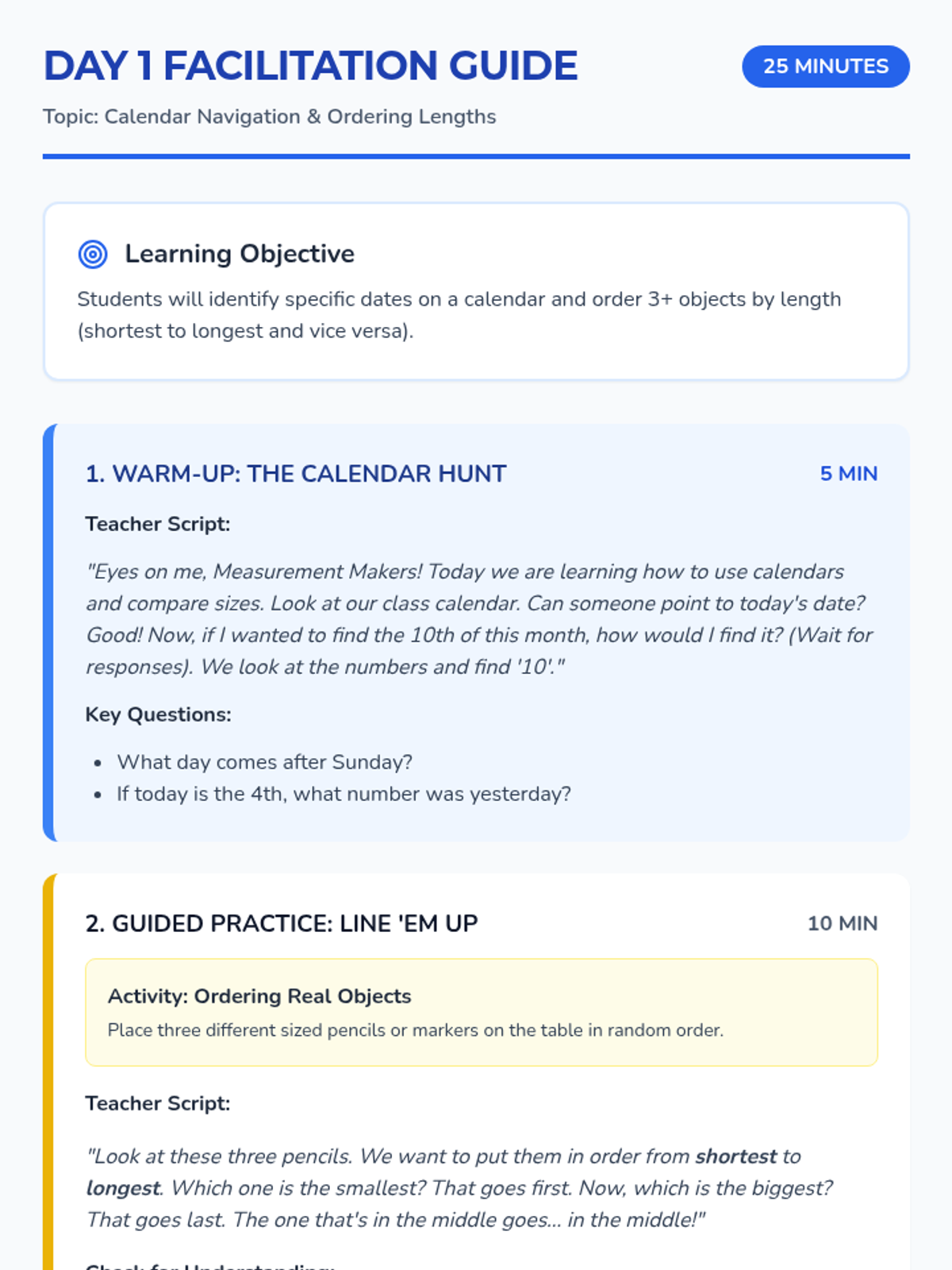
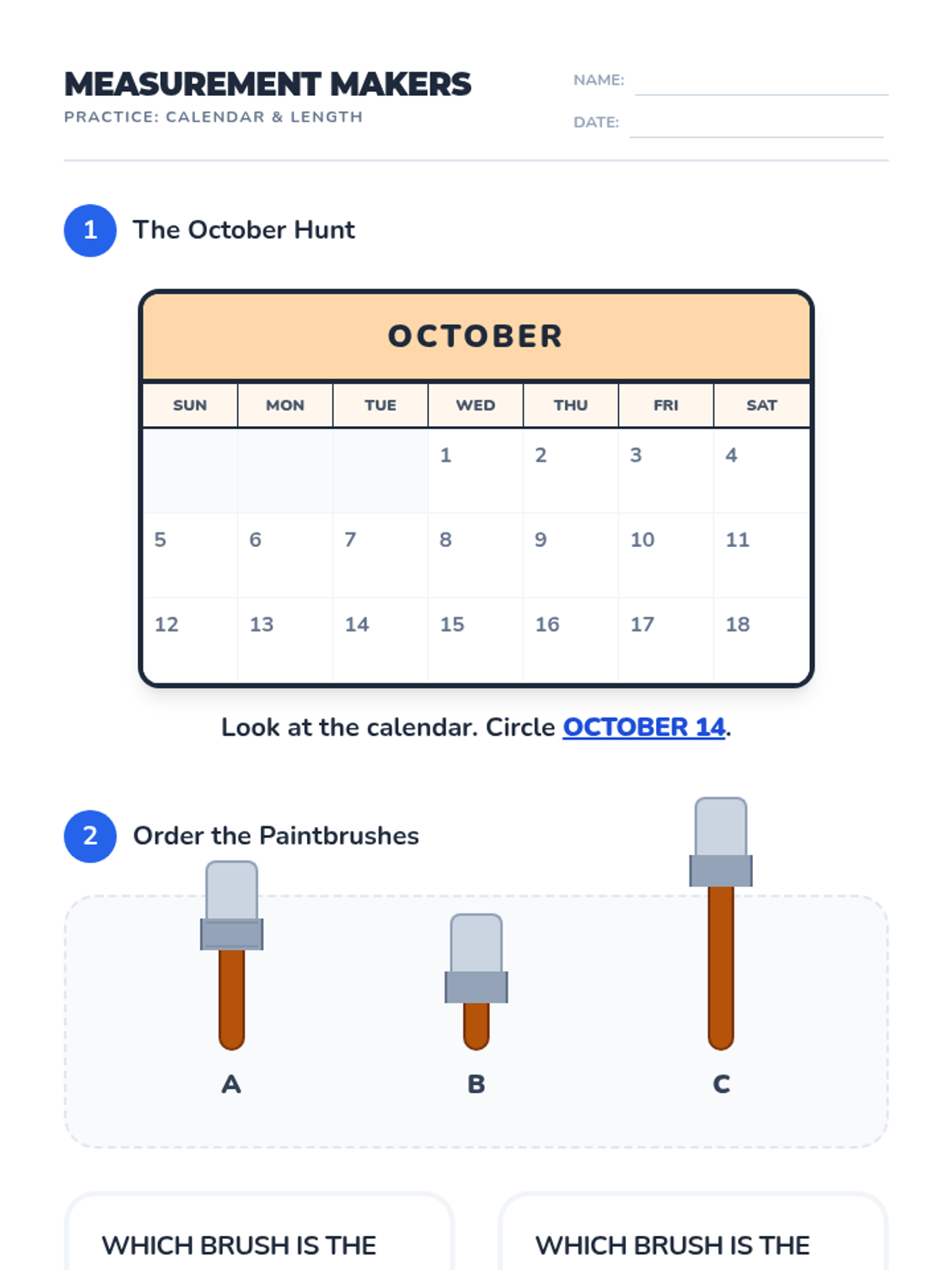
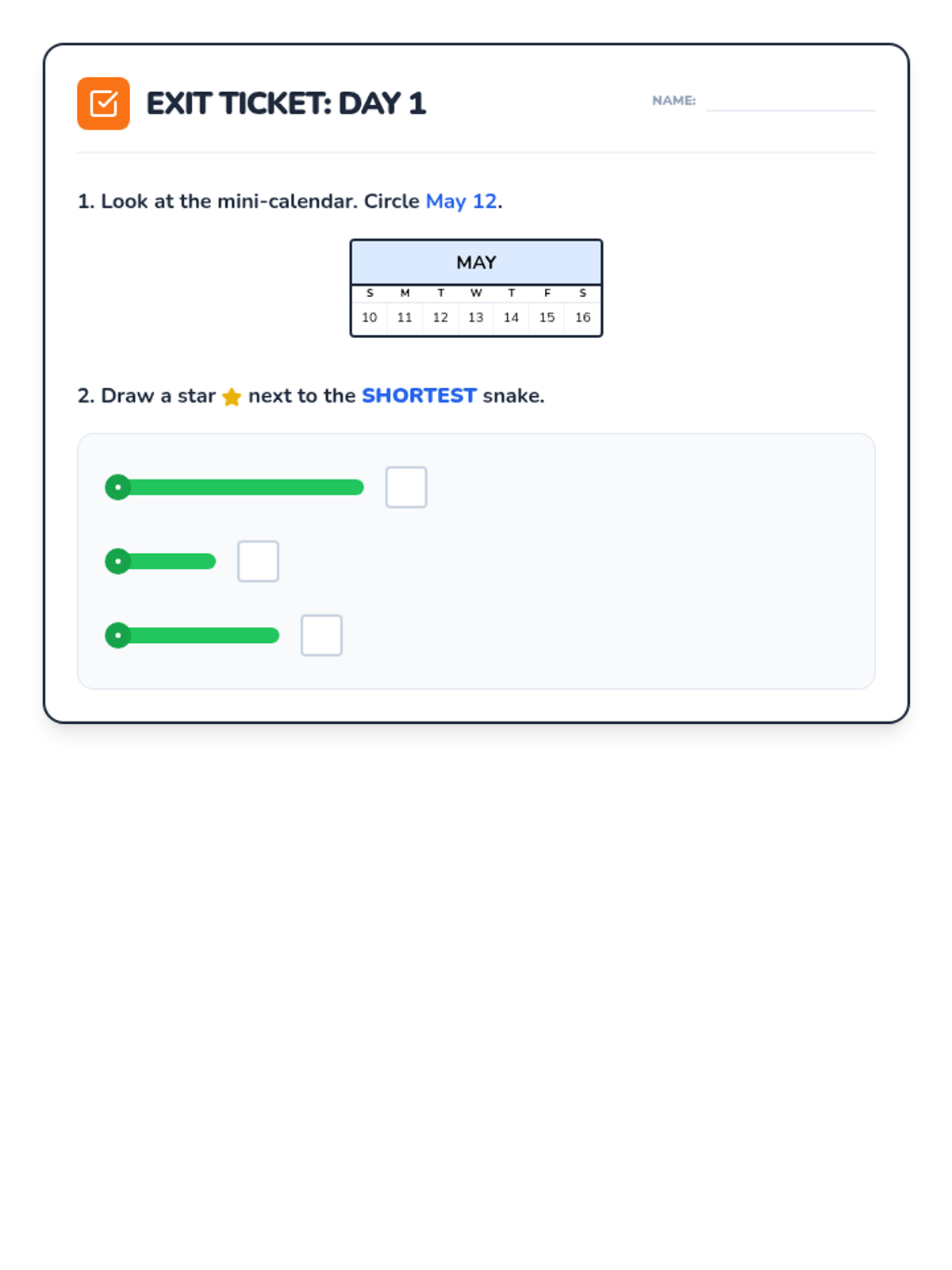
Day 1 focuses on calendar navigation (finding specific dates) and ordering objects by length, targeting foundational RIT 150-160 skills.
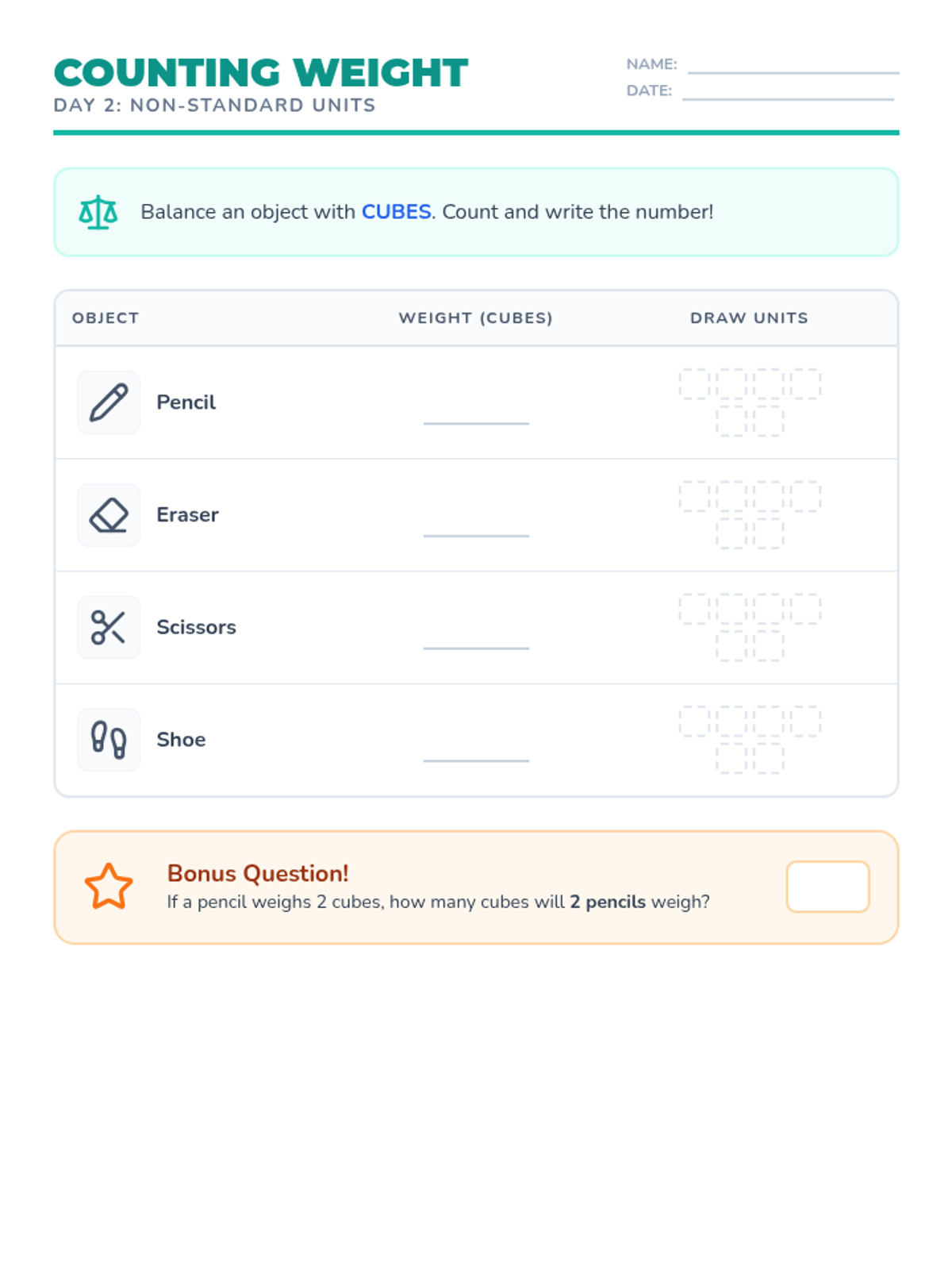
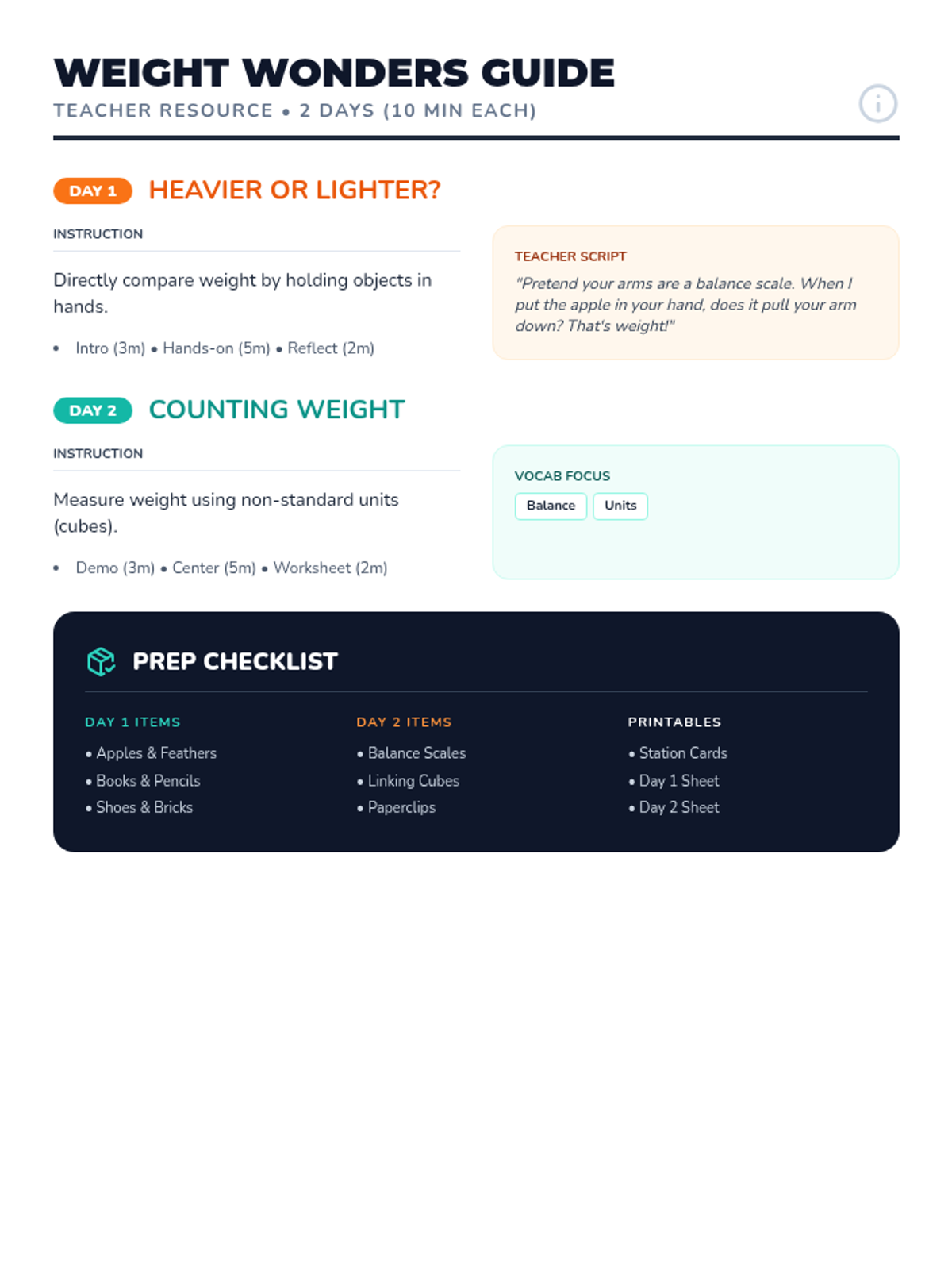
Students measure the weight of objects using non-standard units like cubes and paperclips with a balance scale.
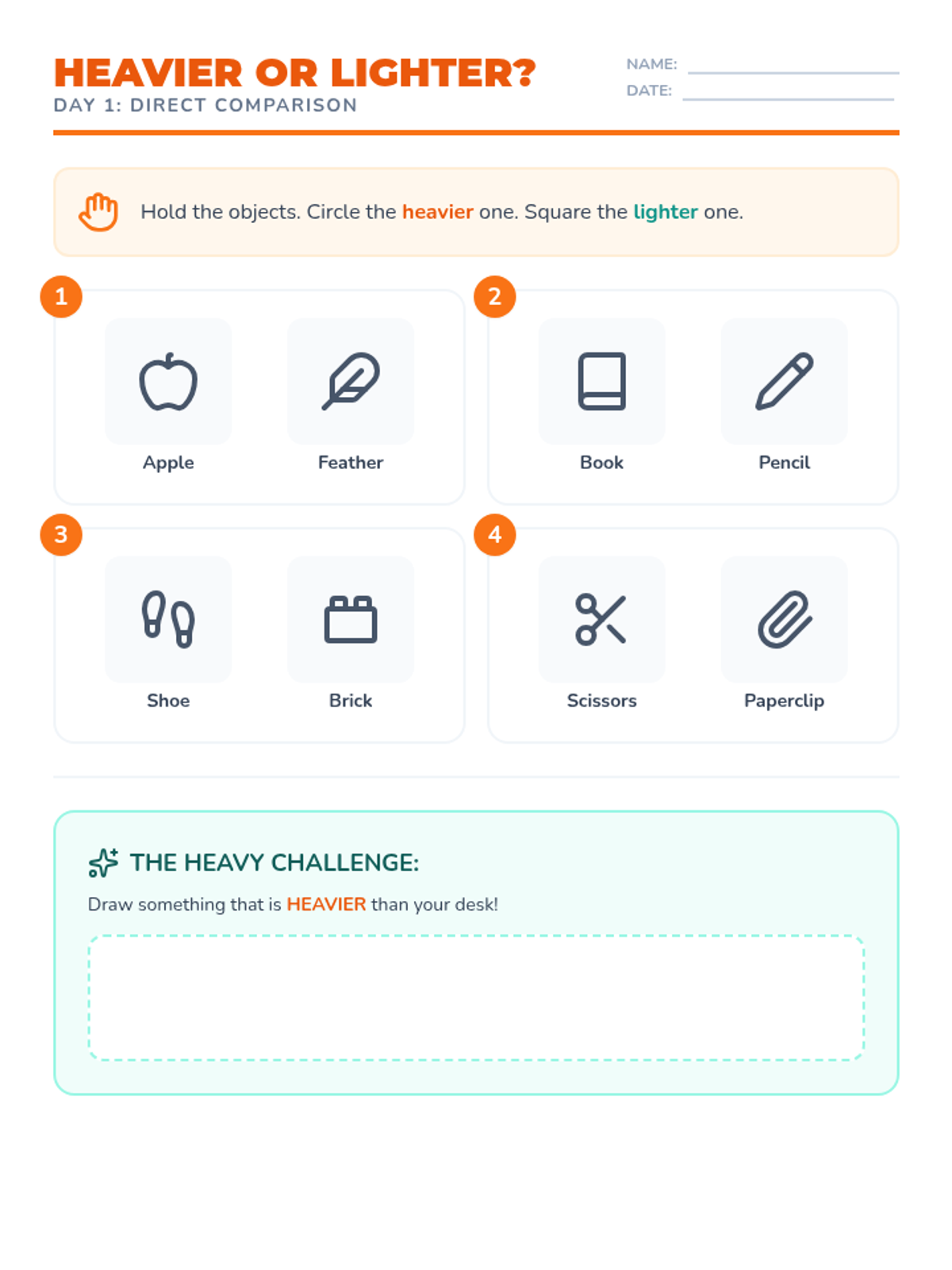
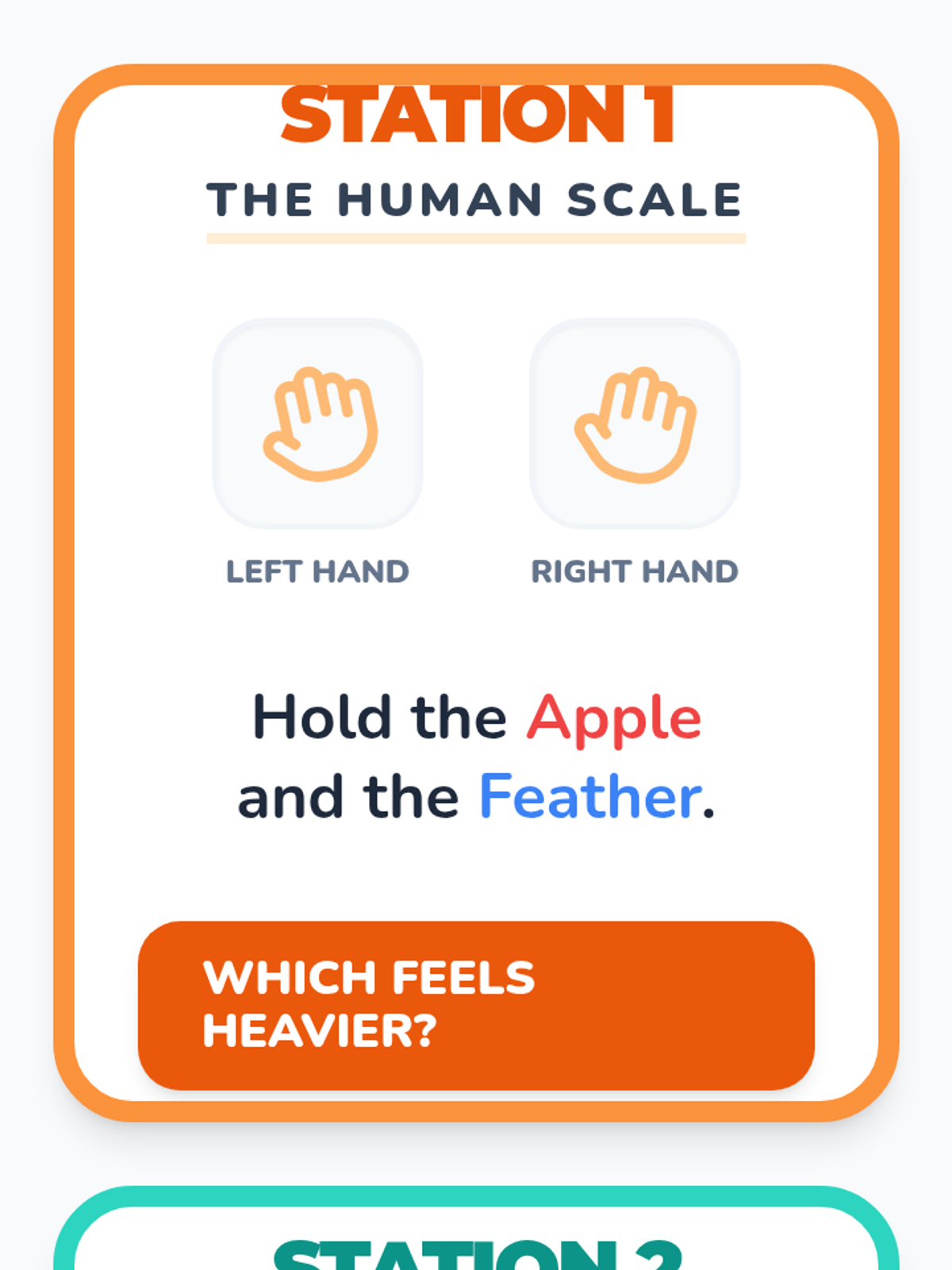
Students learn to compare the weight of two objects directly by holding them and using the terms 'heavier' and 'lighter'.
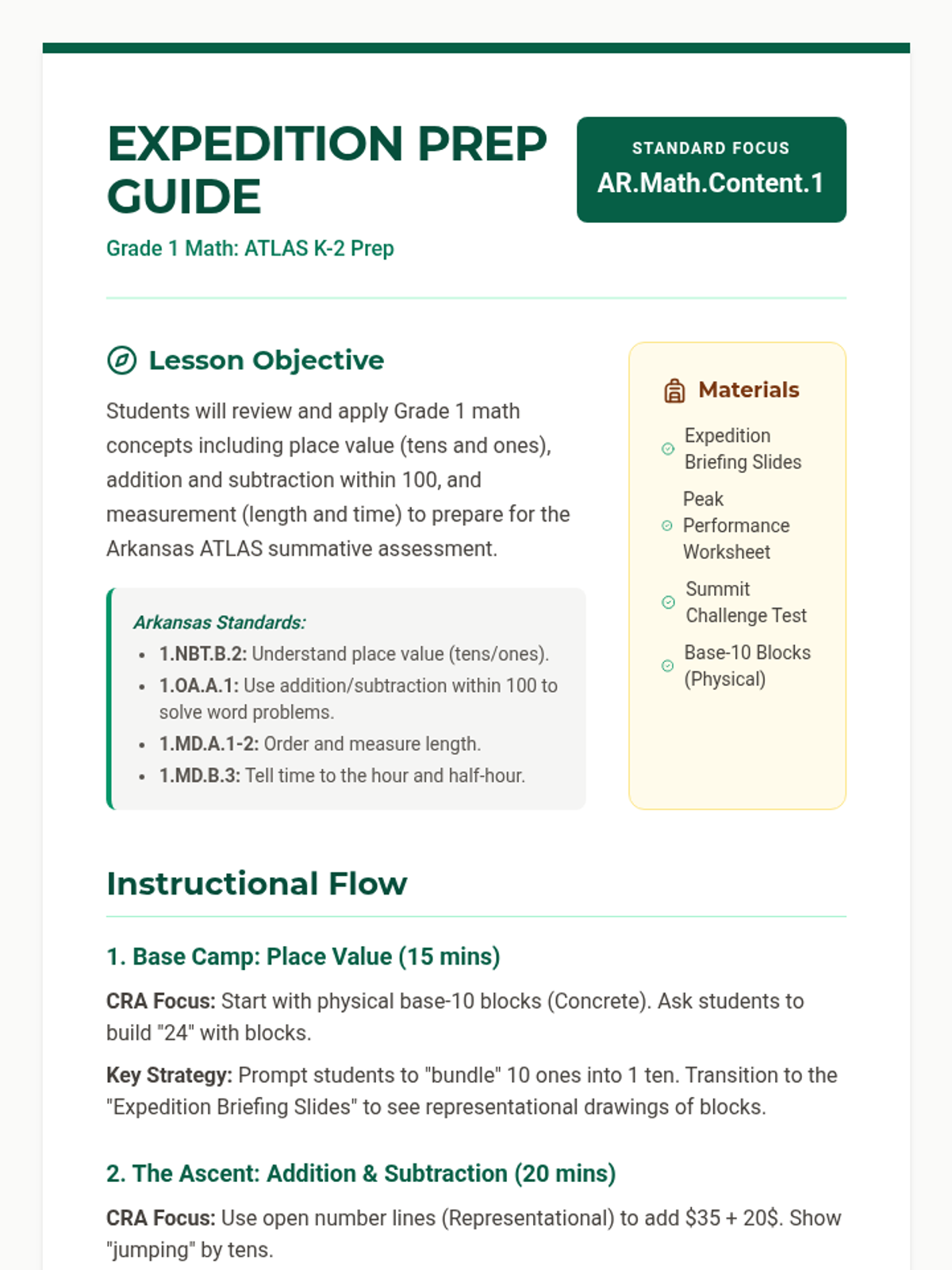
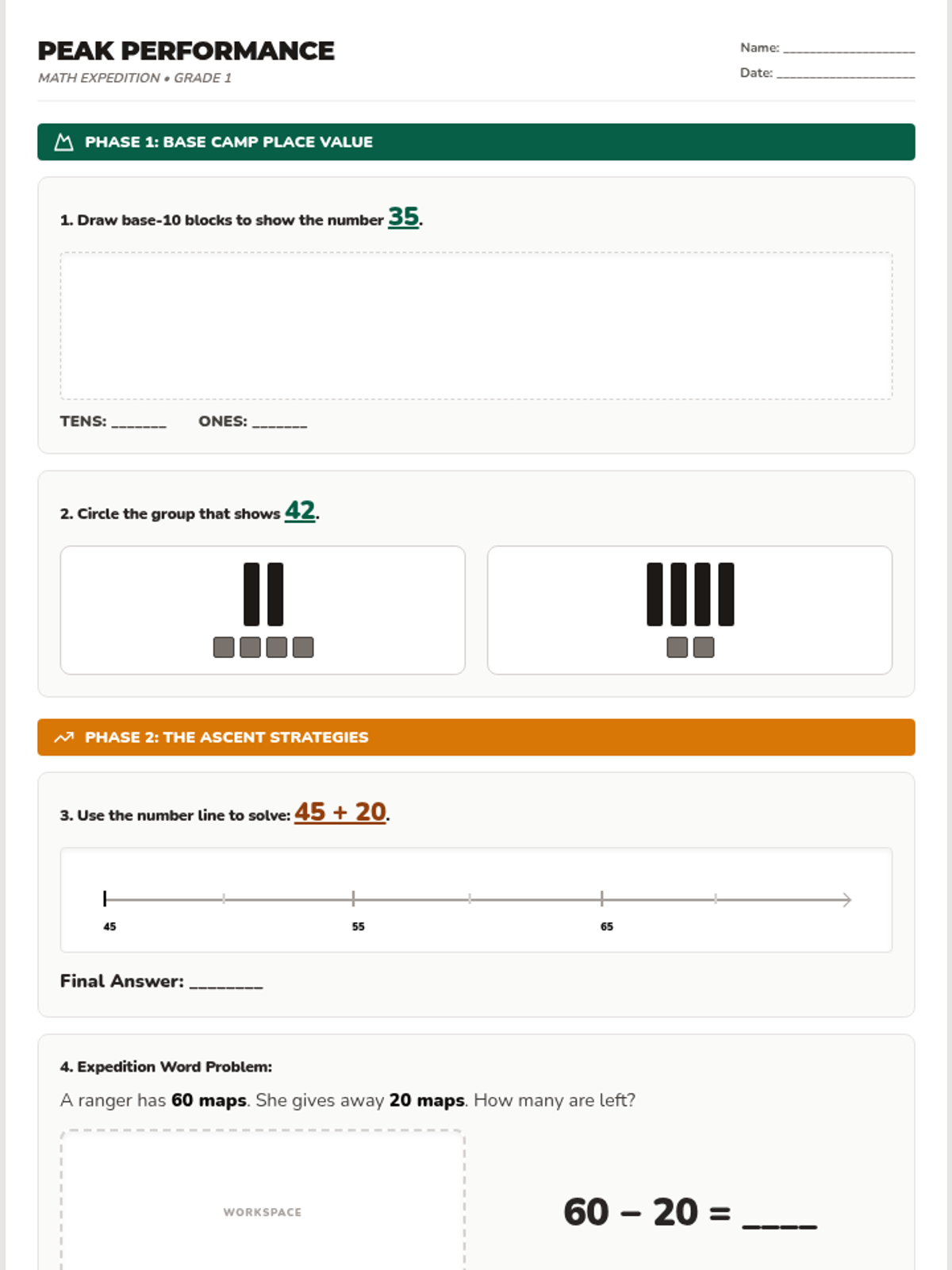
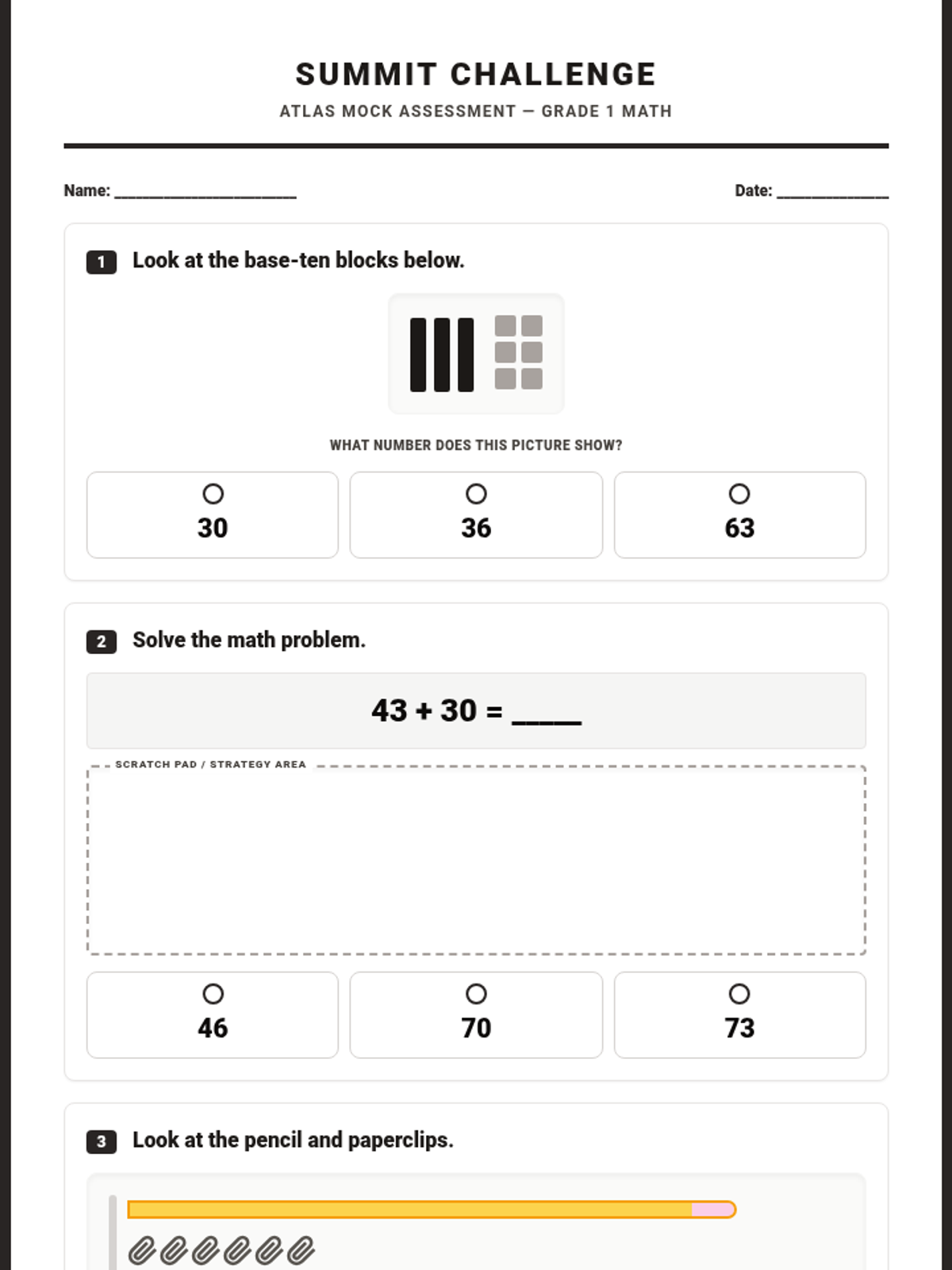
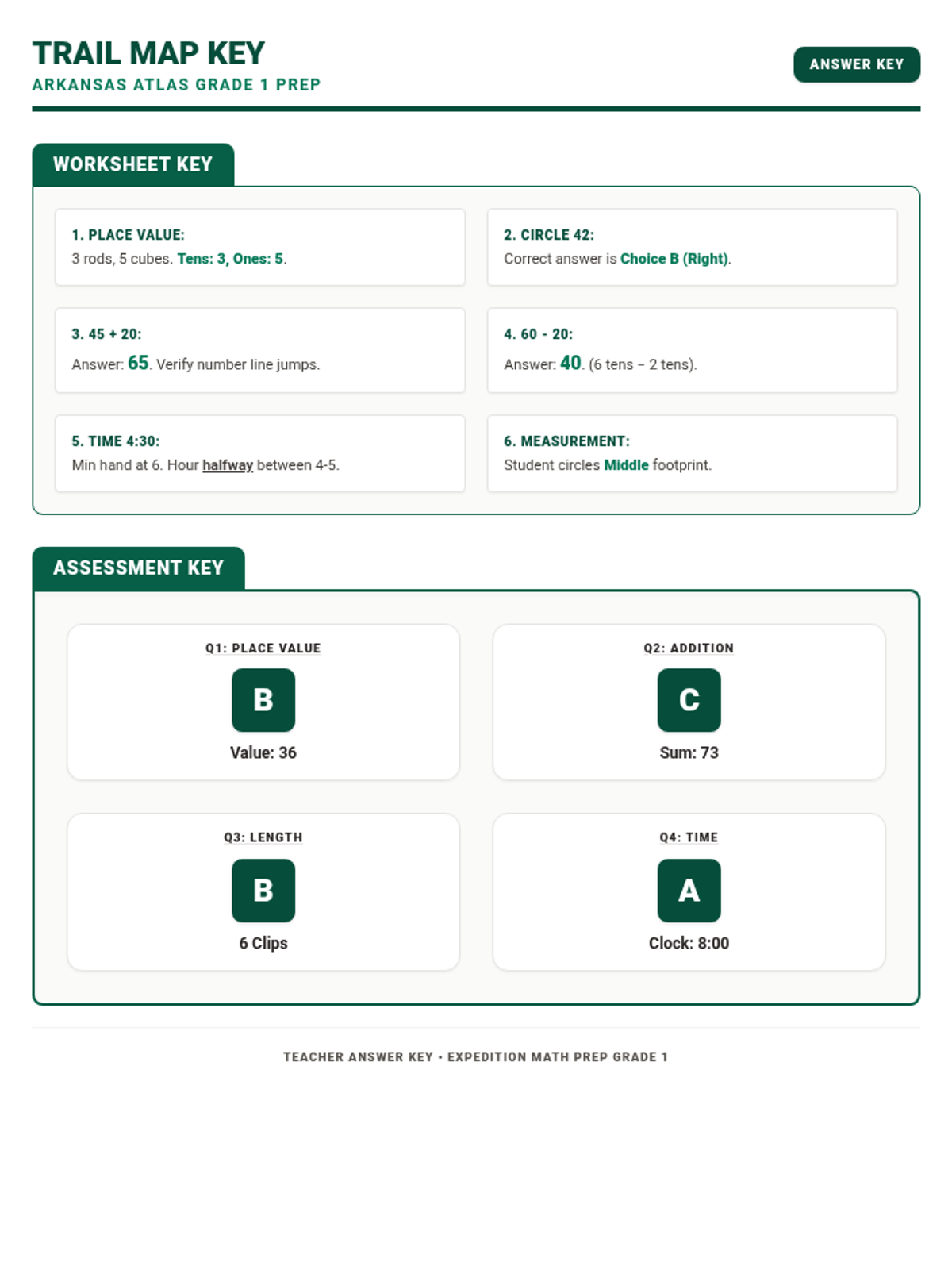
A comprehensive test preparation lesson for Grade 1 students in Arkansas, focusing on place value, addition/subtraction within 100, and measurement (length/time). The lesson follows a Concrete-Representational-Abstract (CRA) progression to build deep conceptual understanding aligned with Arkansas Academic Standards.
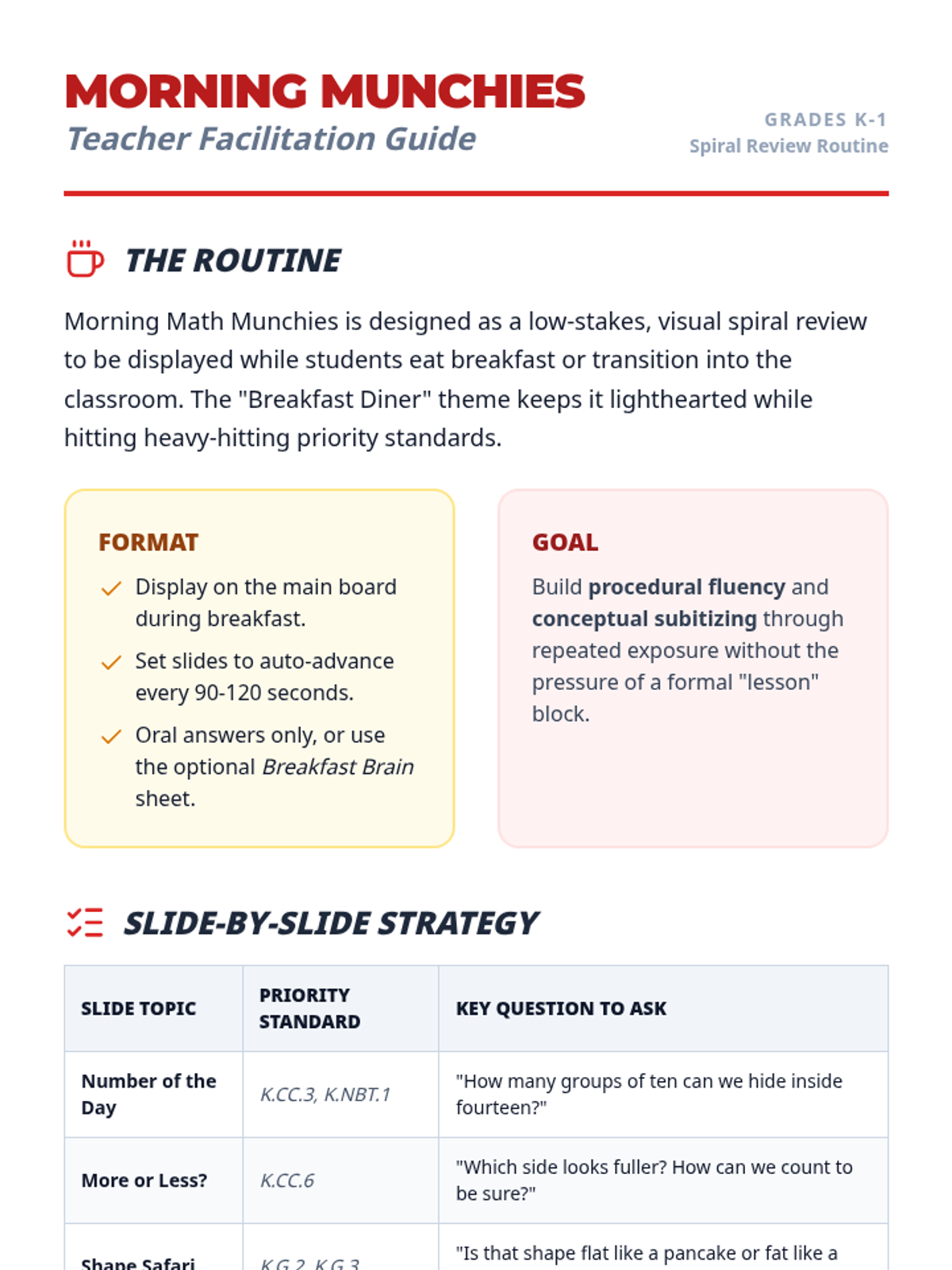
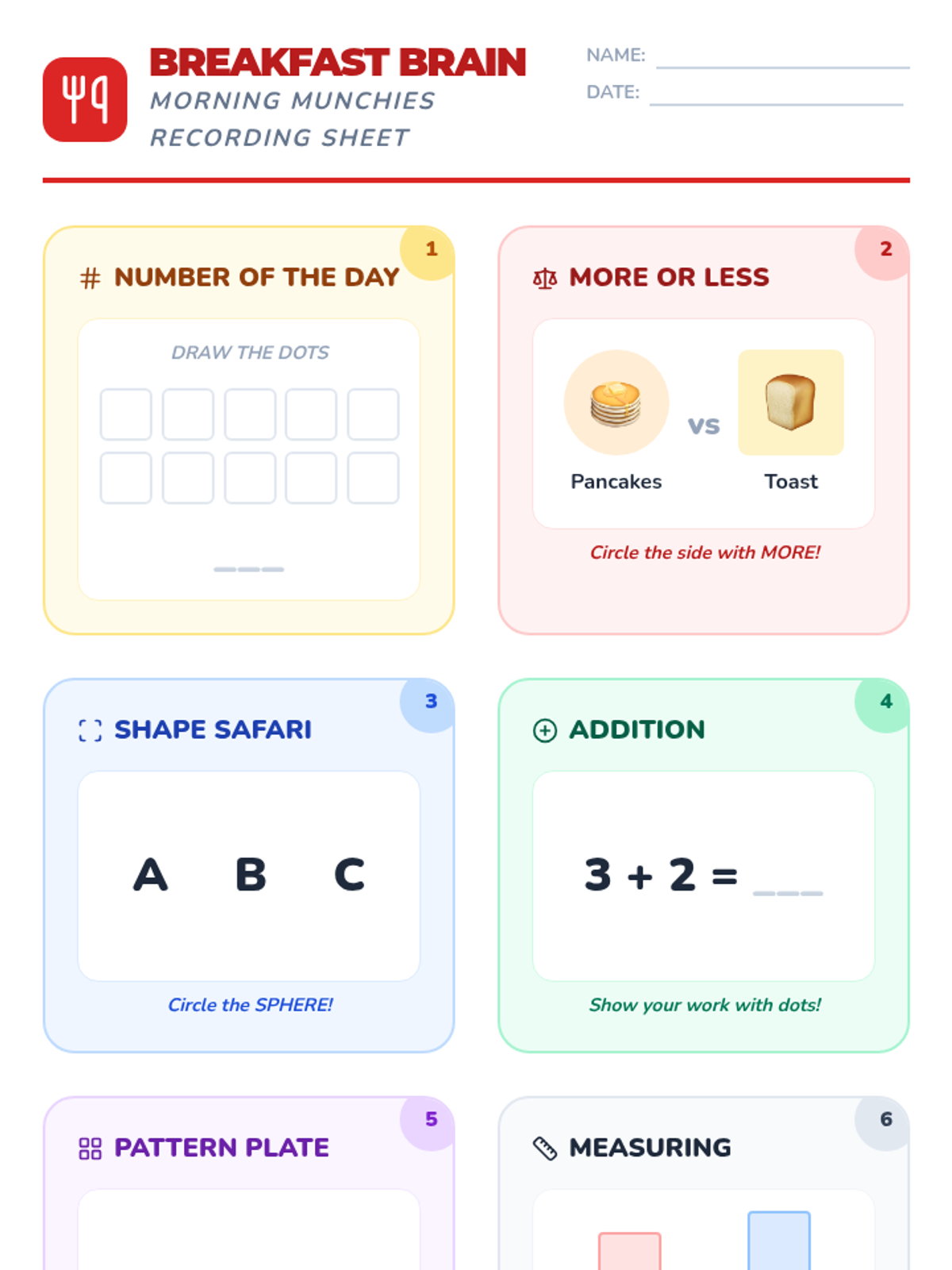
A daily spiral review of priority Kindergarten math standards, designed to be visually engaging and accessible for students to view during breakfast or morning routines.
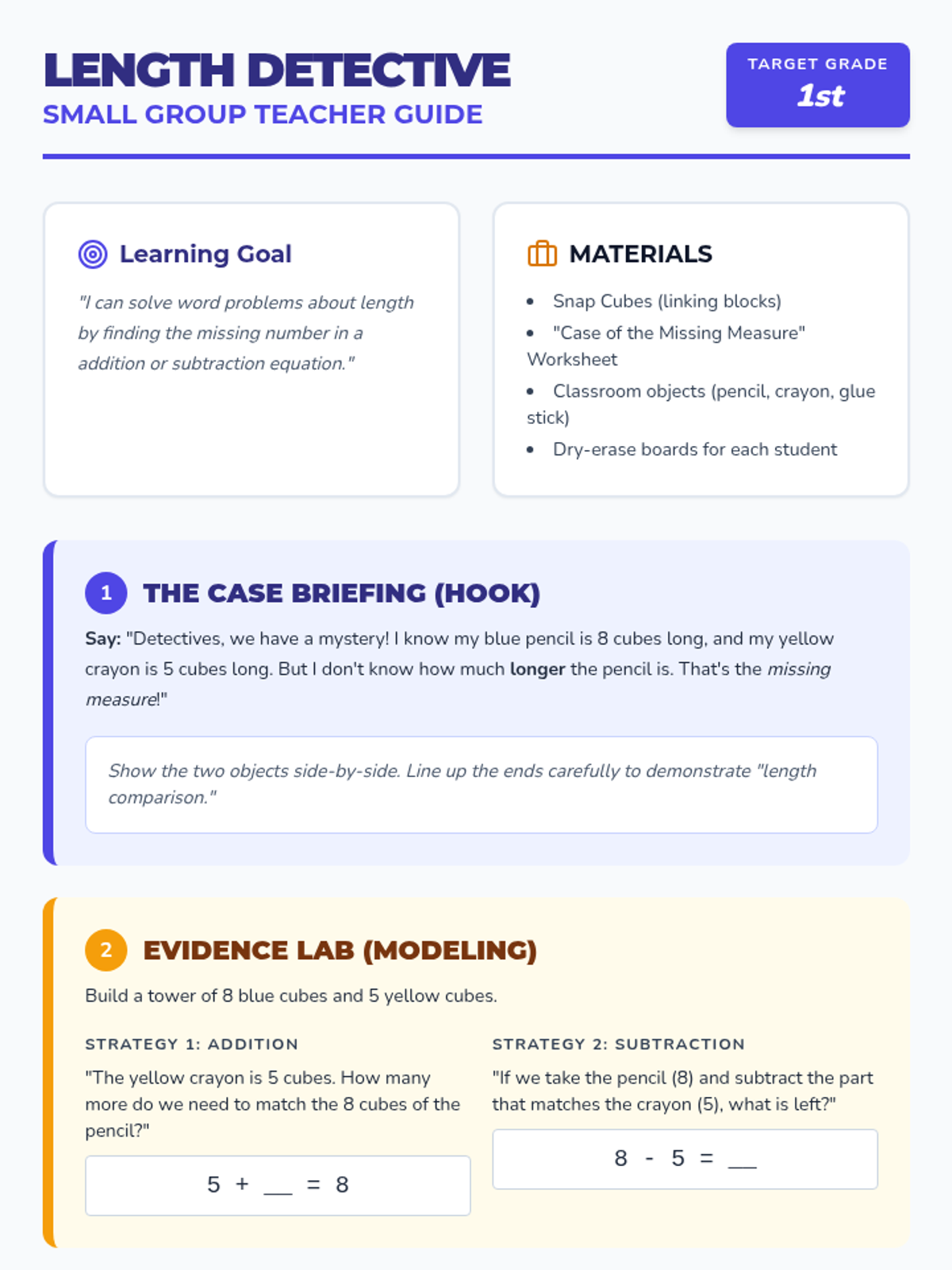
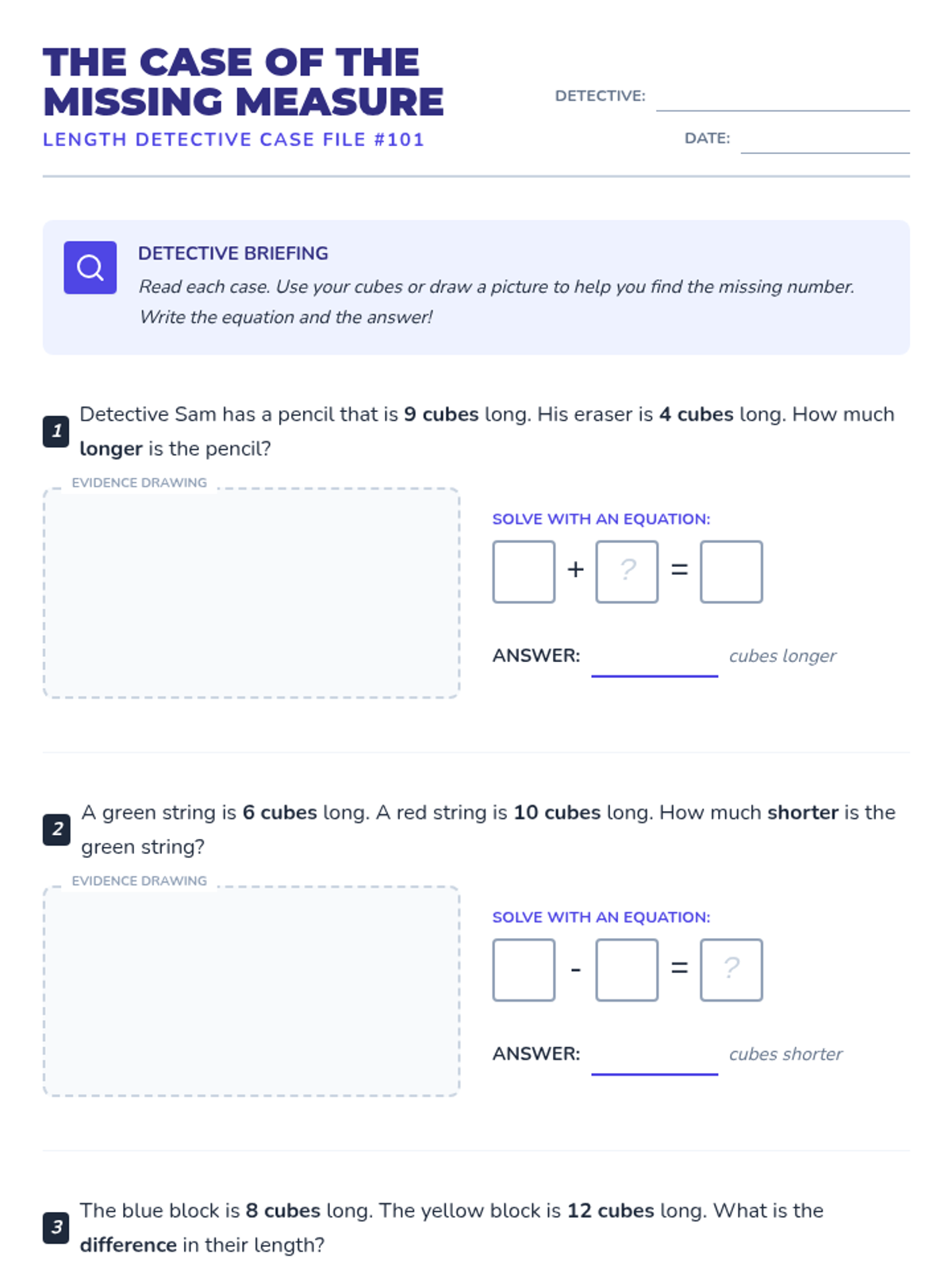
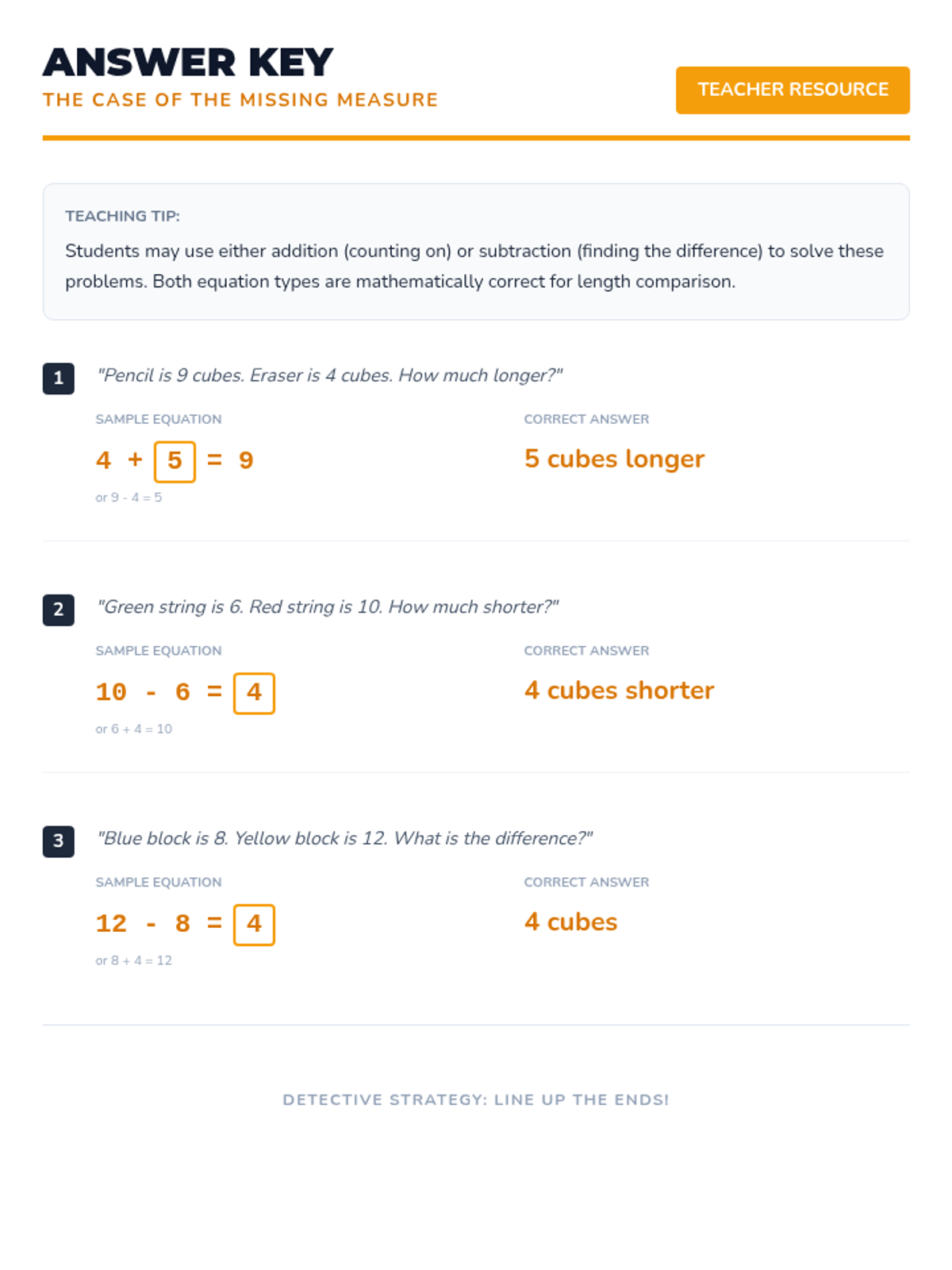
A small group lesson for 1st grade students focused on solving comparison word problems involving length by finding unknown numbers in addition and subtraction equations. Students use manipulatives to visualize length differences and translate them into algebraic thinking.
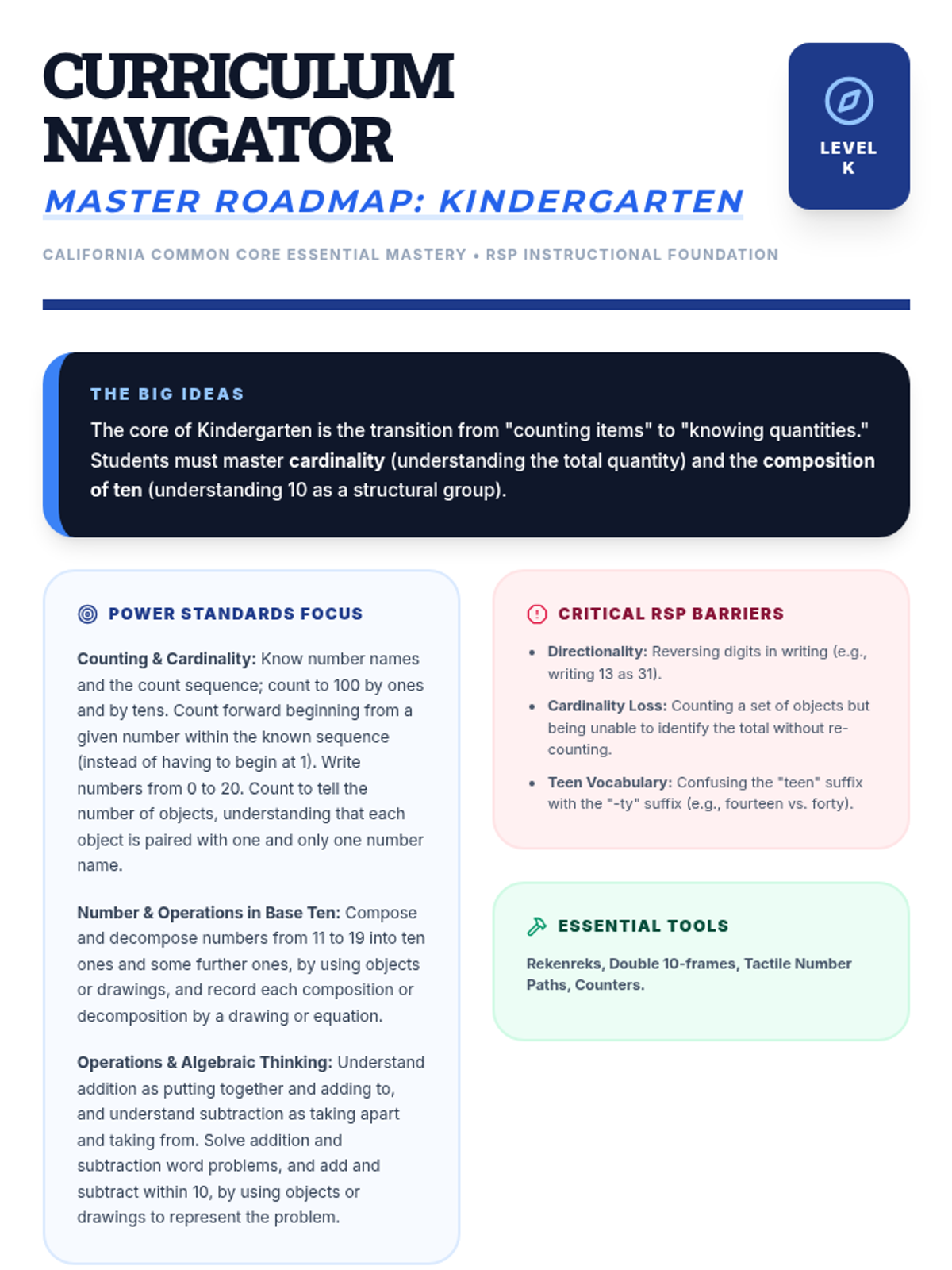
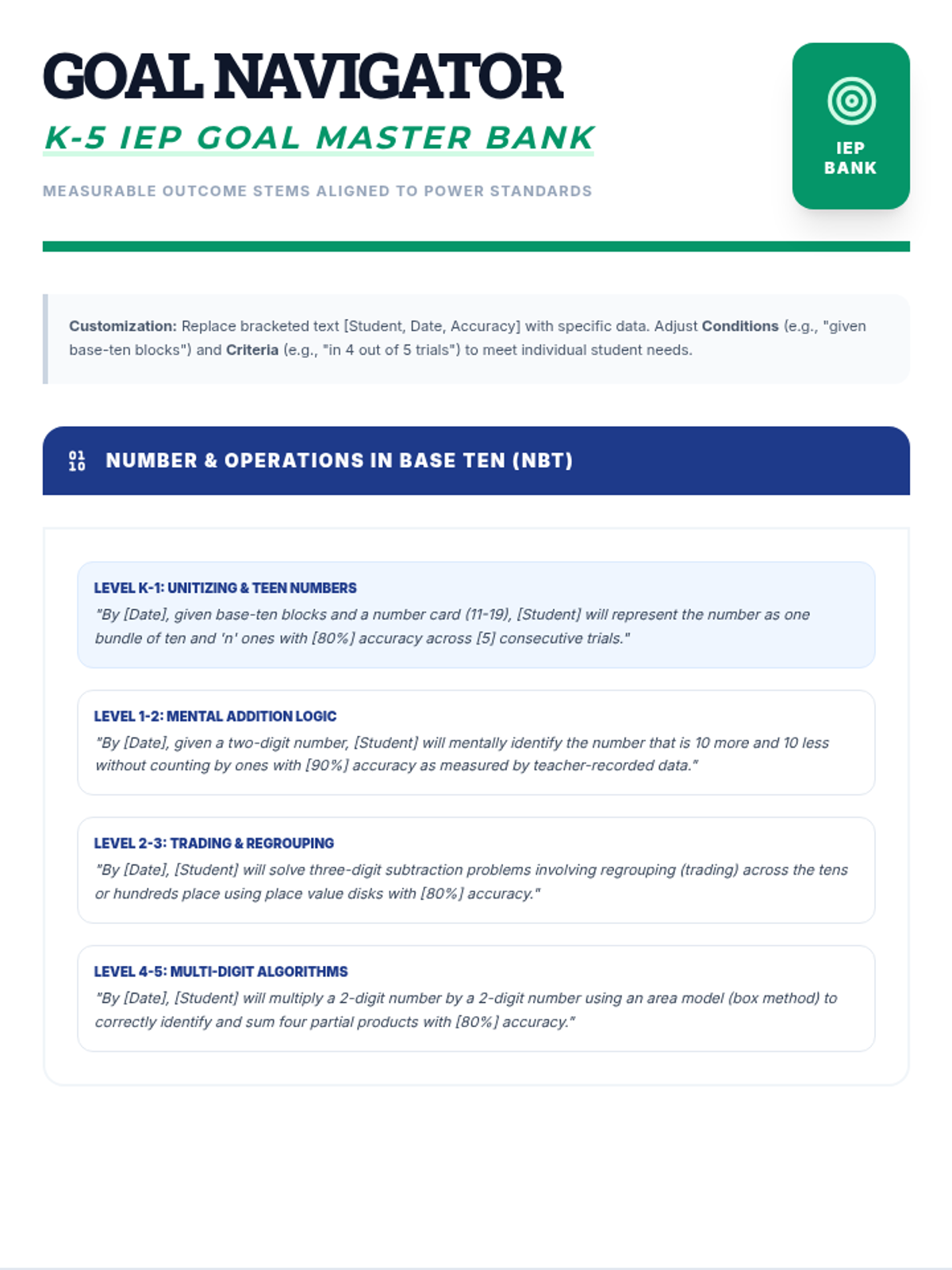
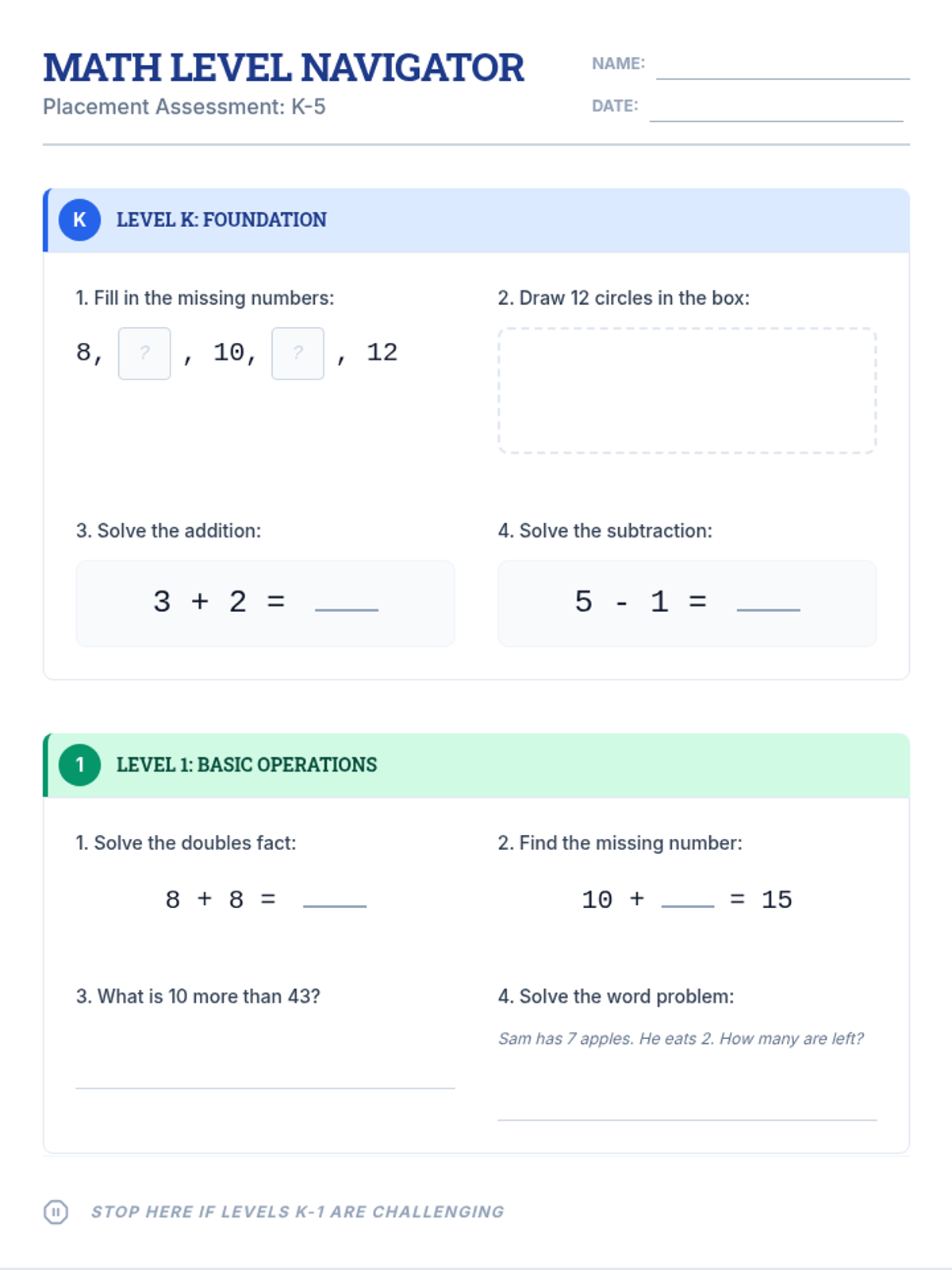
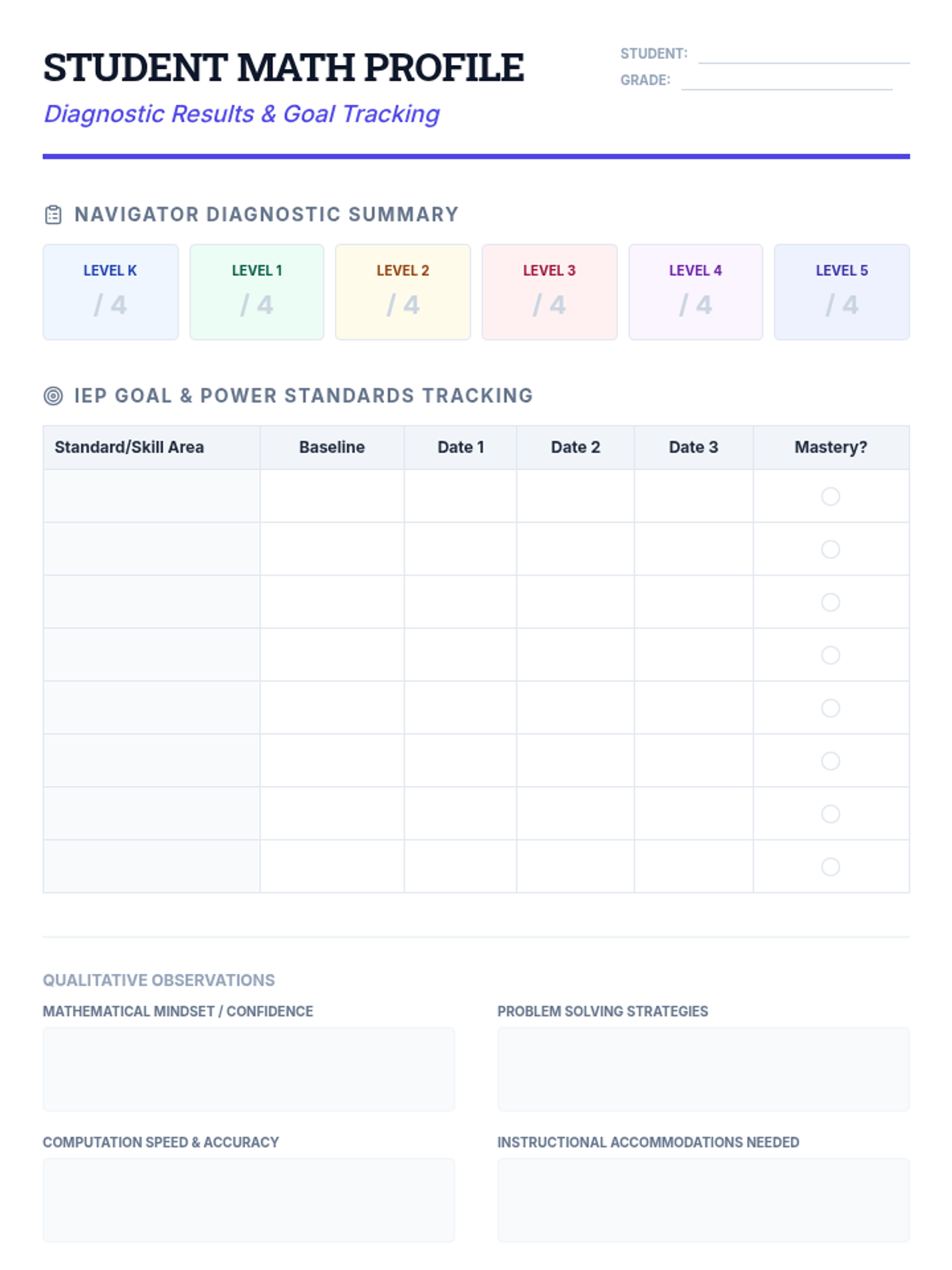
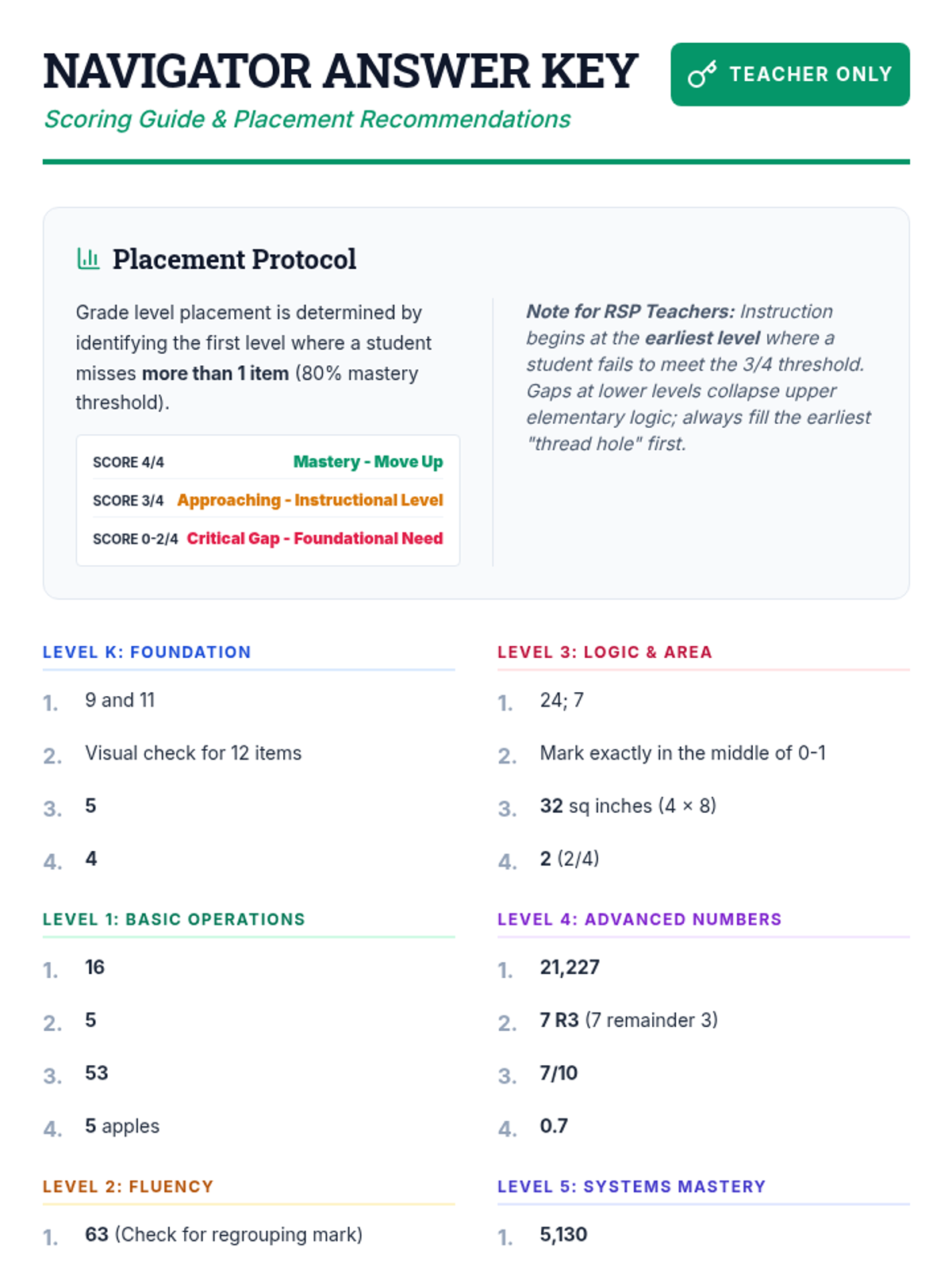
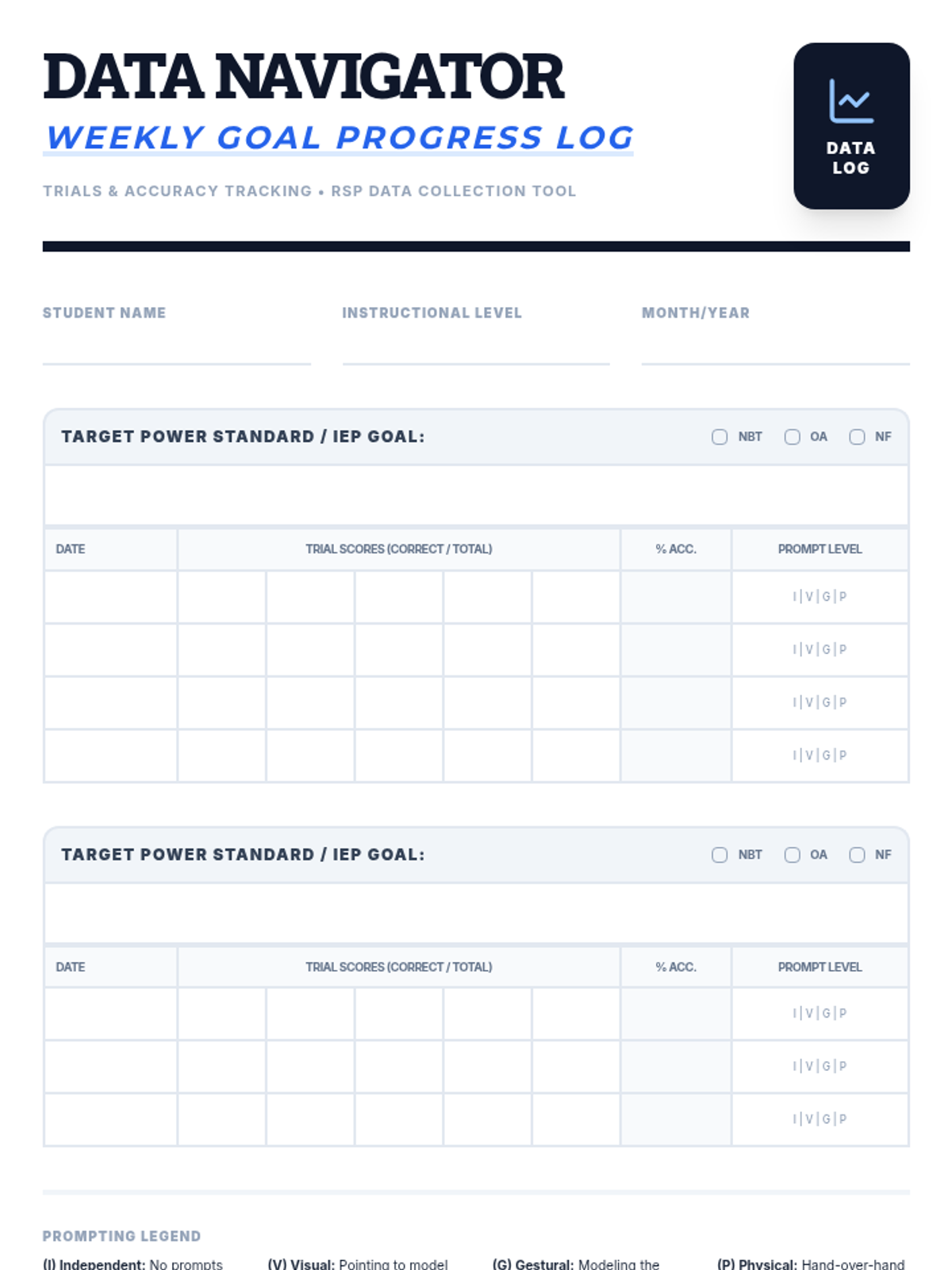
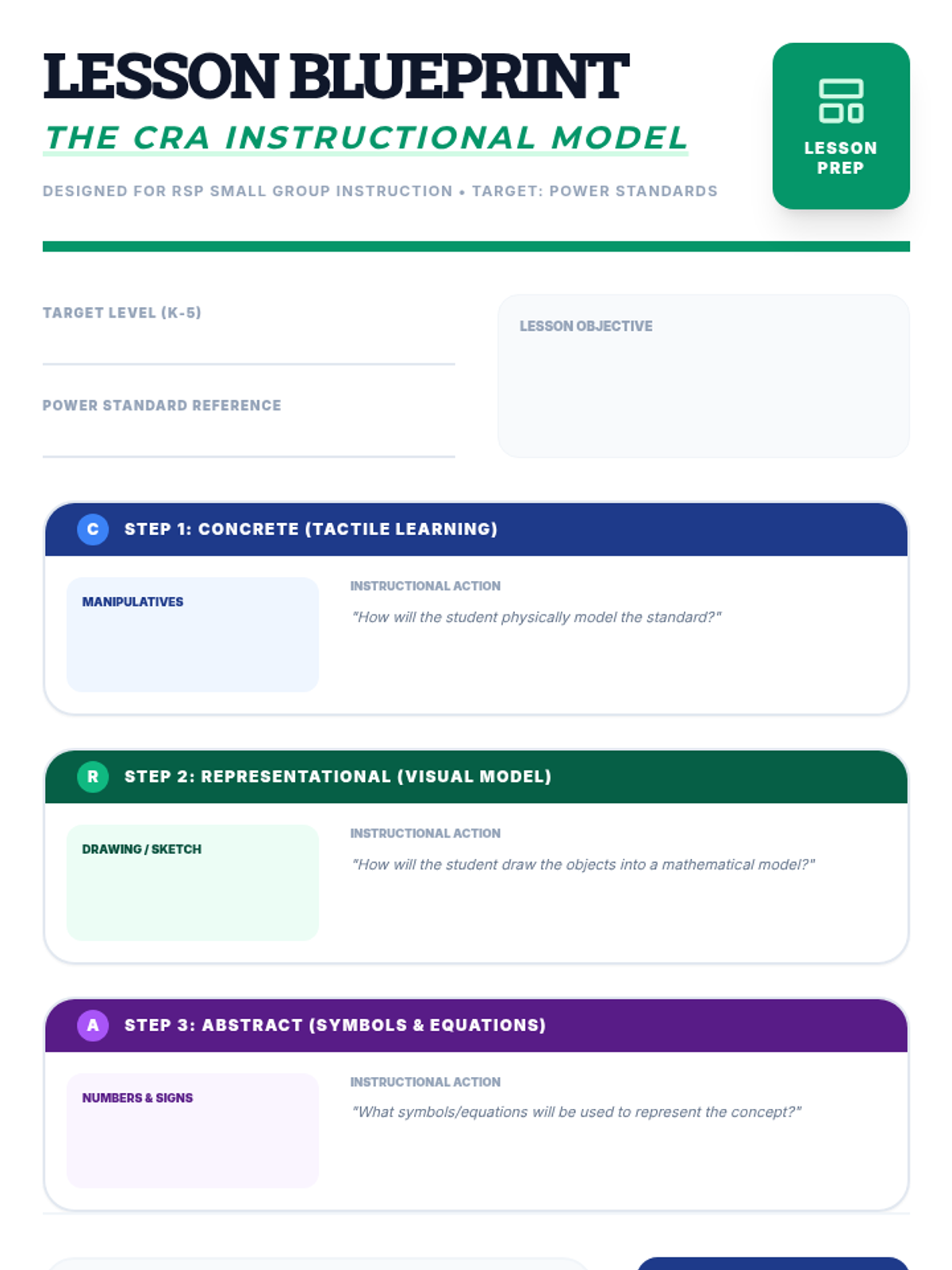
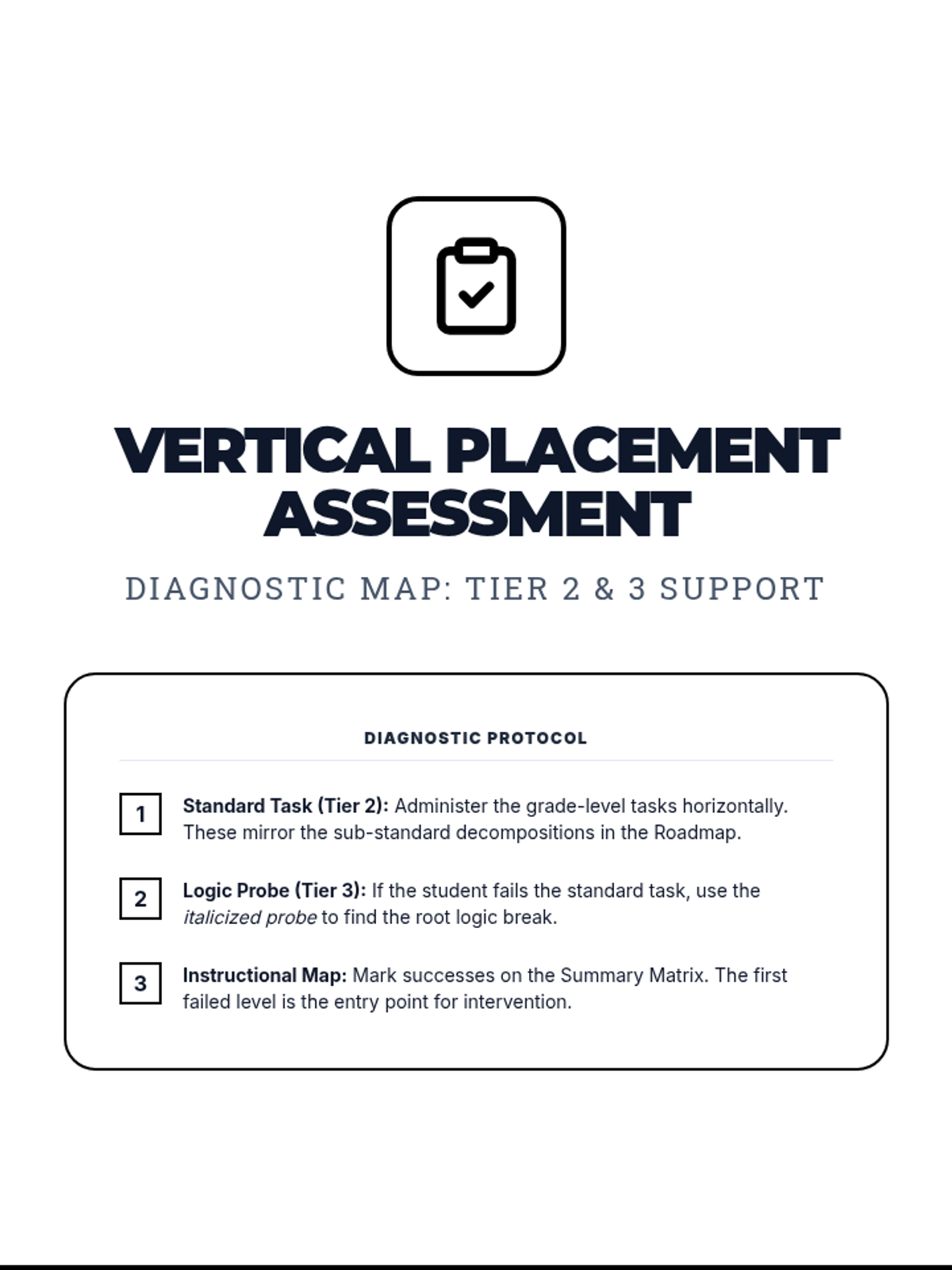
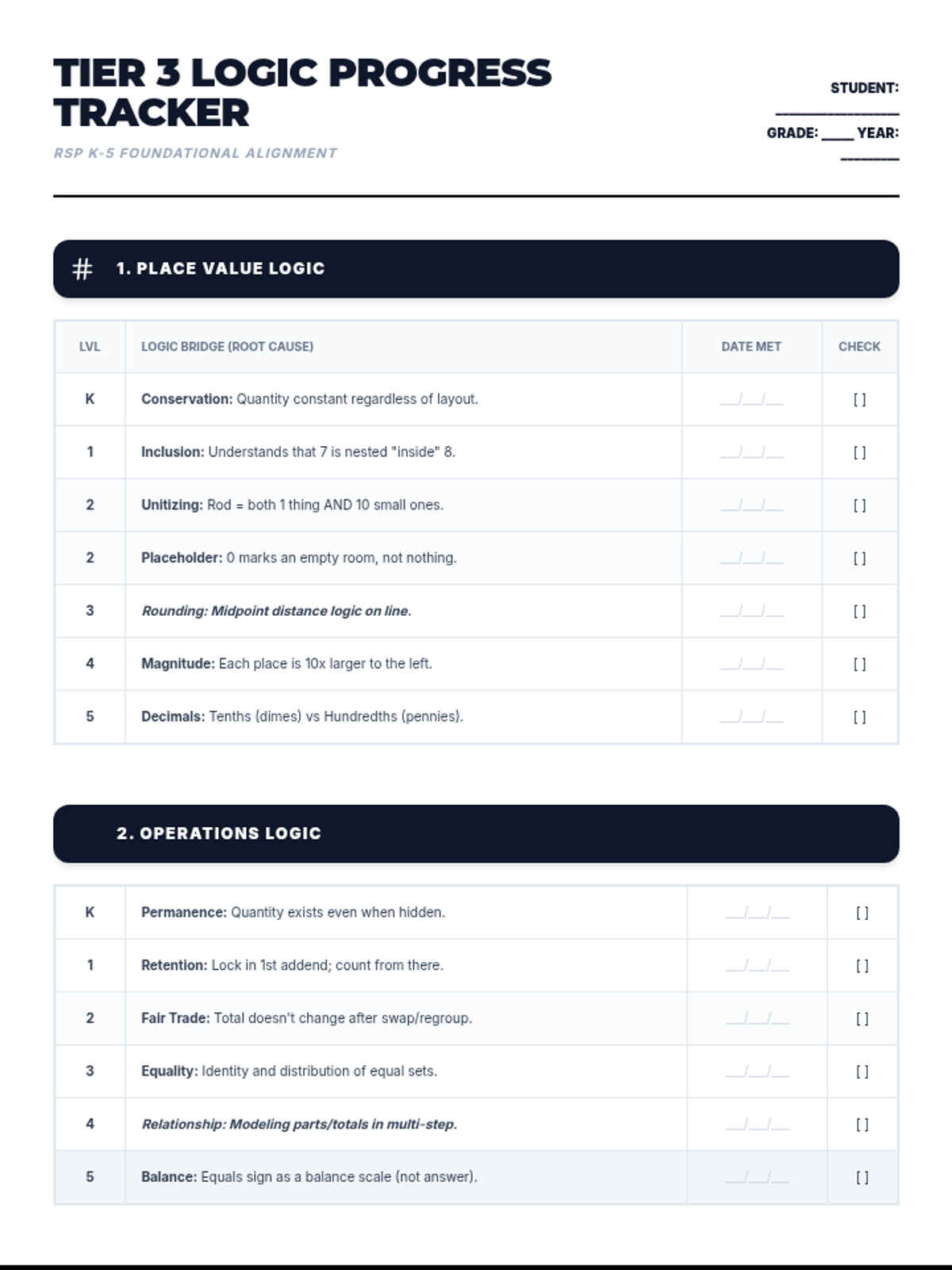
Foundational tools for assessing student levels and planning instruction based on California Power Standards across grades K-5.
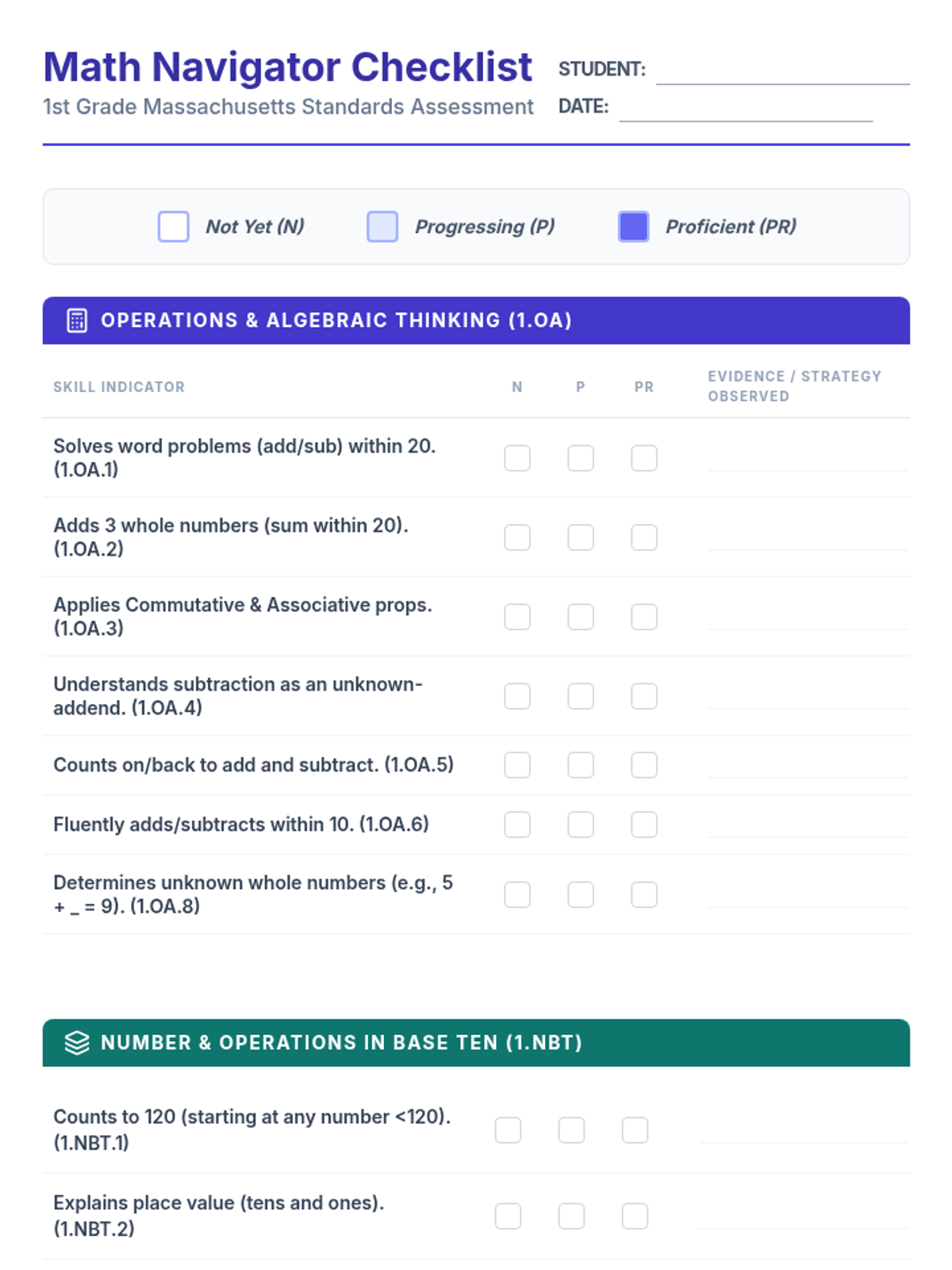
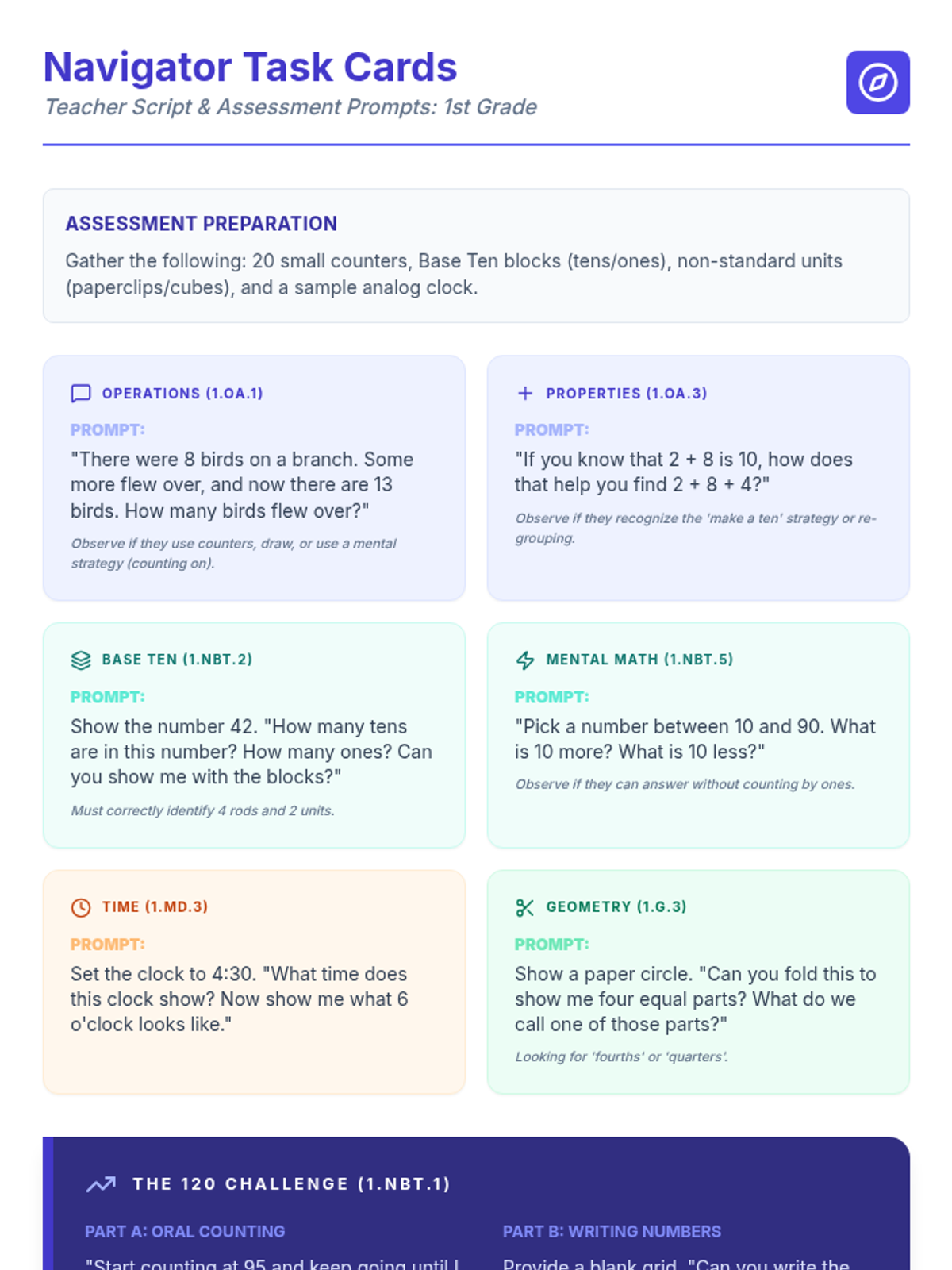
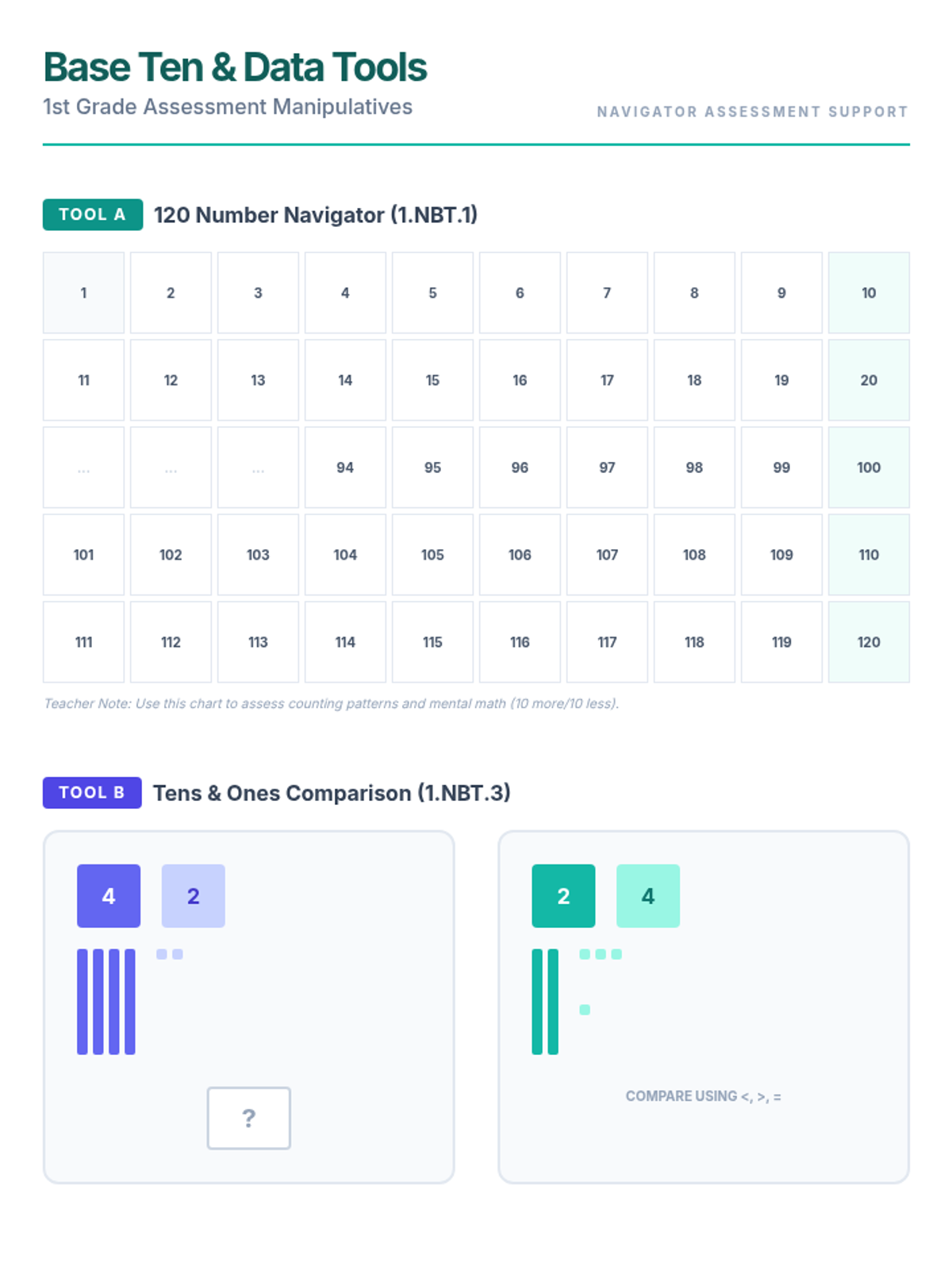
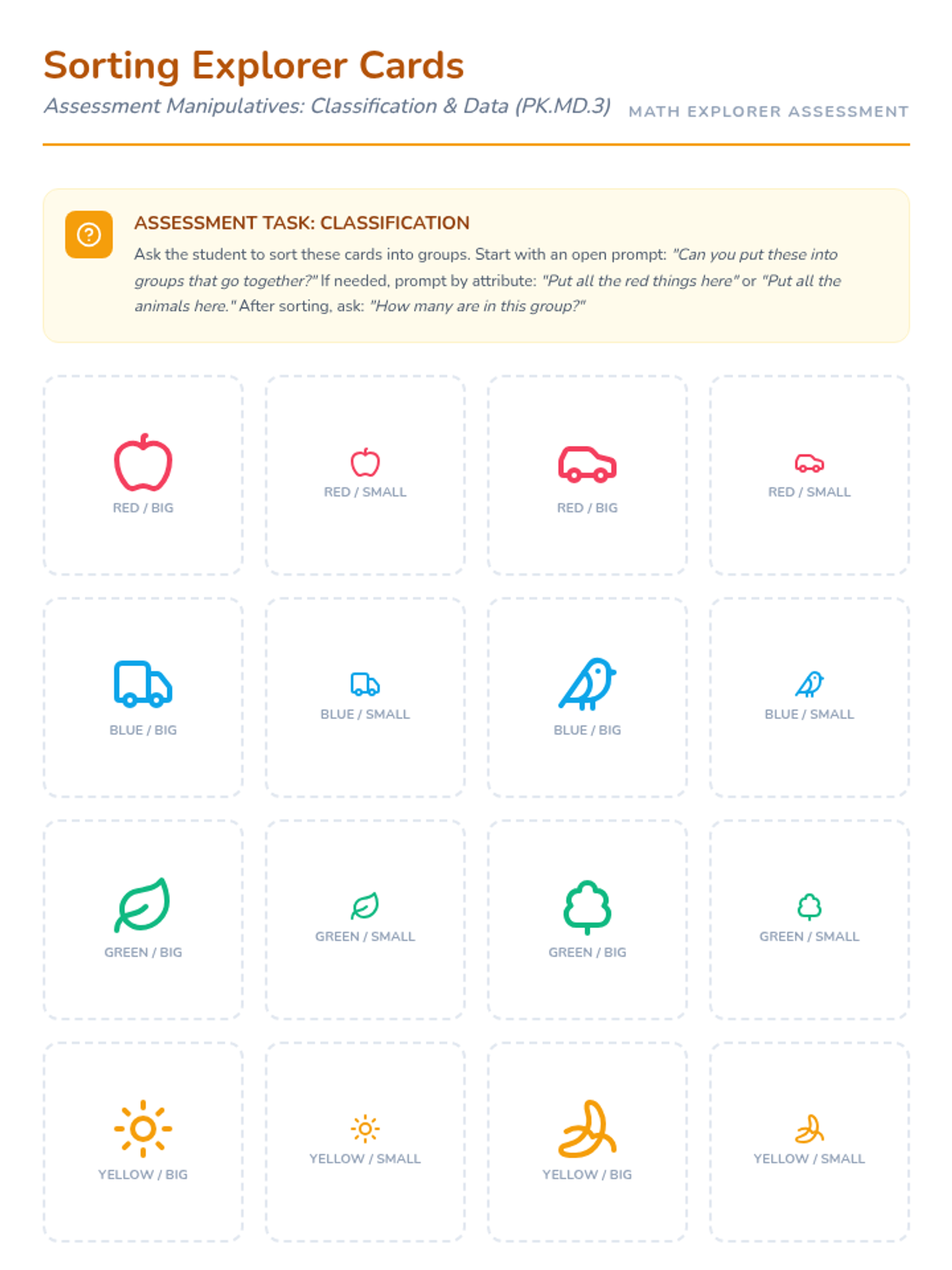
A comprehensive assessment package for 1st Grade mathematics based on the Massachusetts Curriculum Frameworks, including an observation checklist and a teacher's task guide for conducting the assessment.
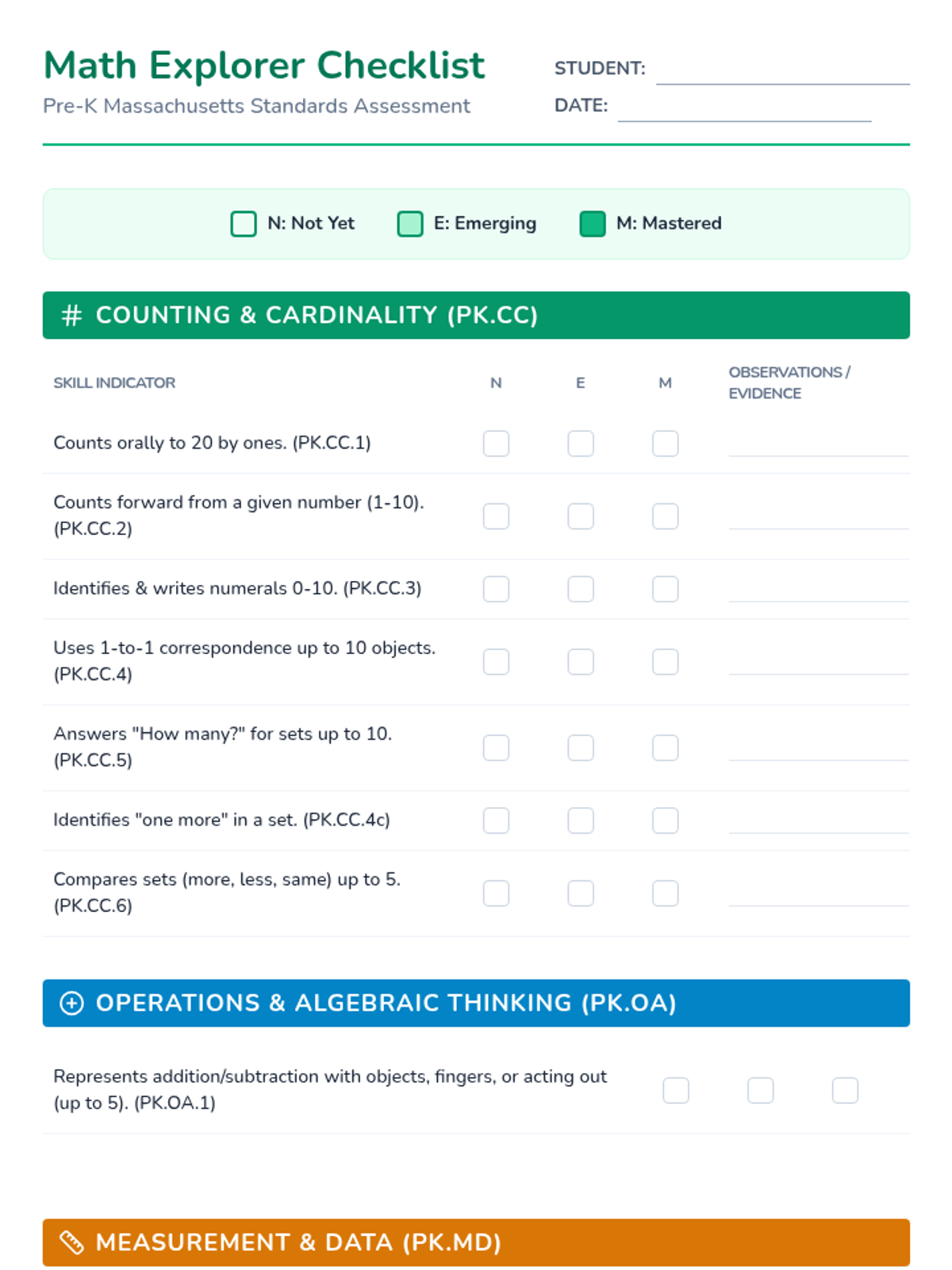
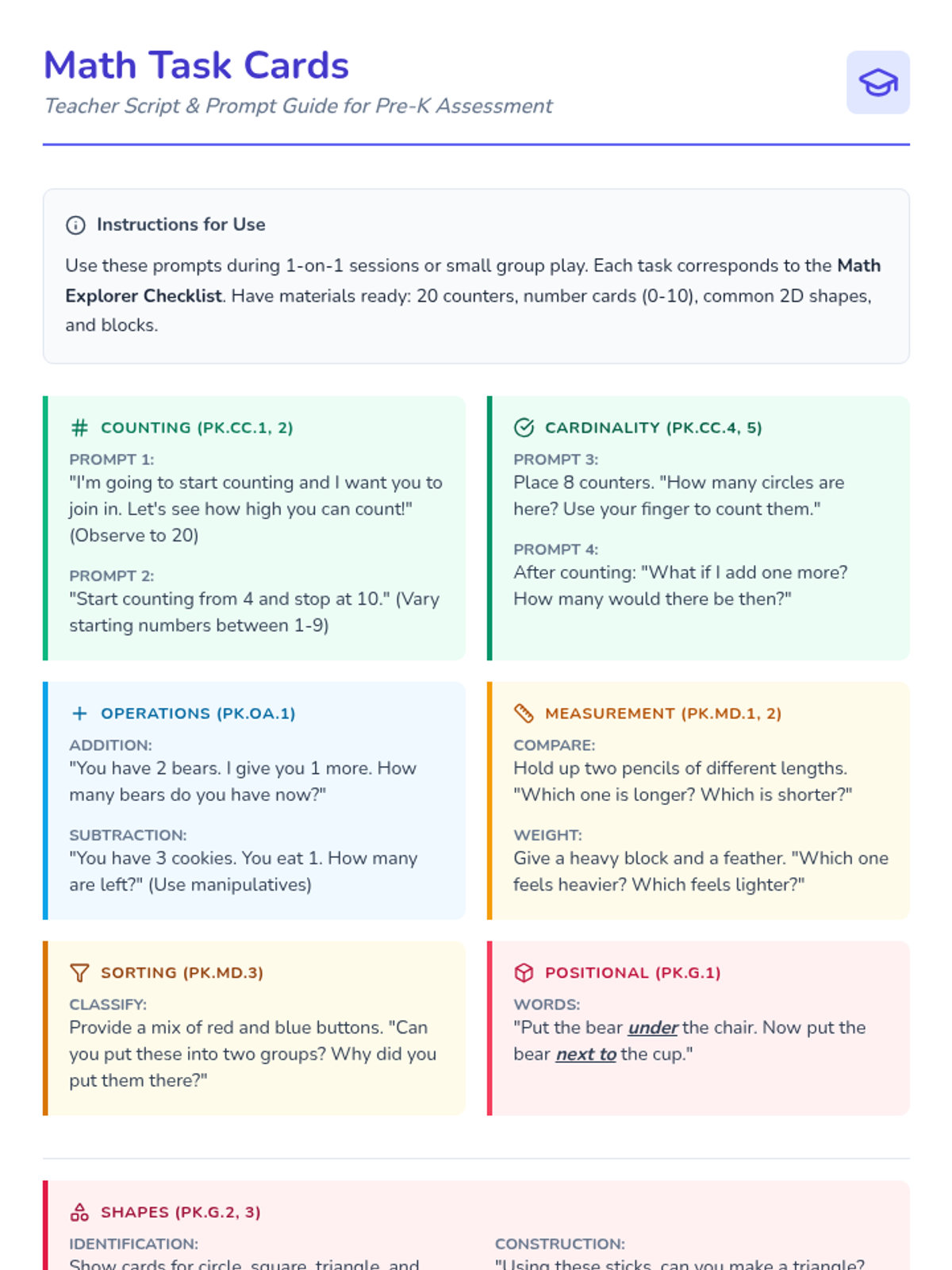
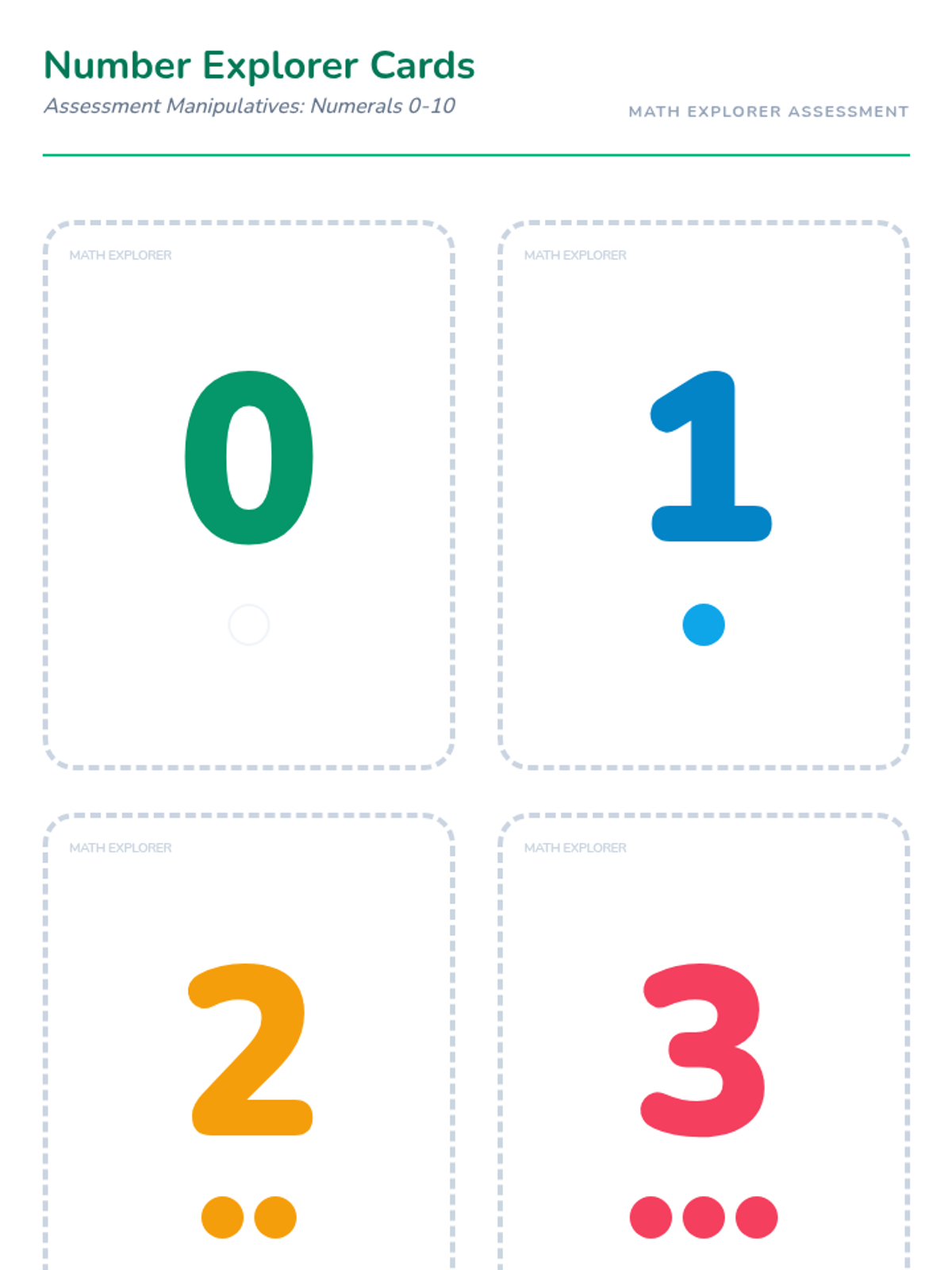
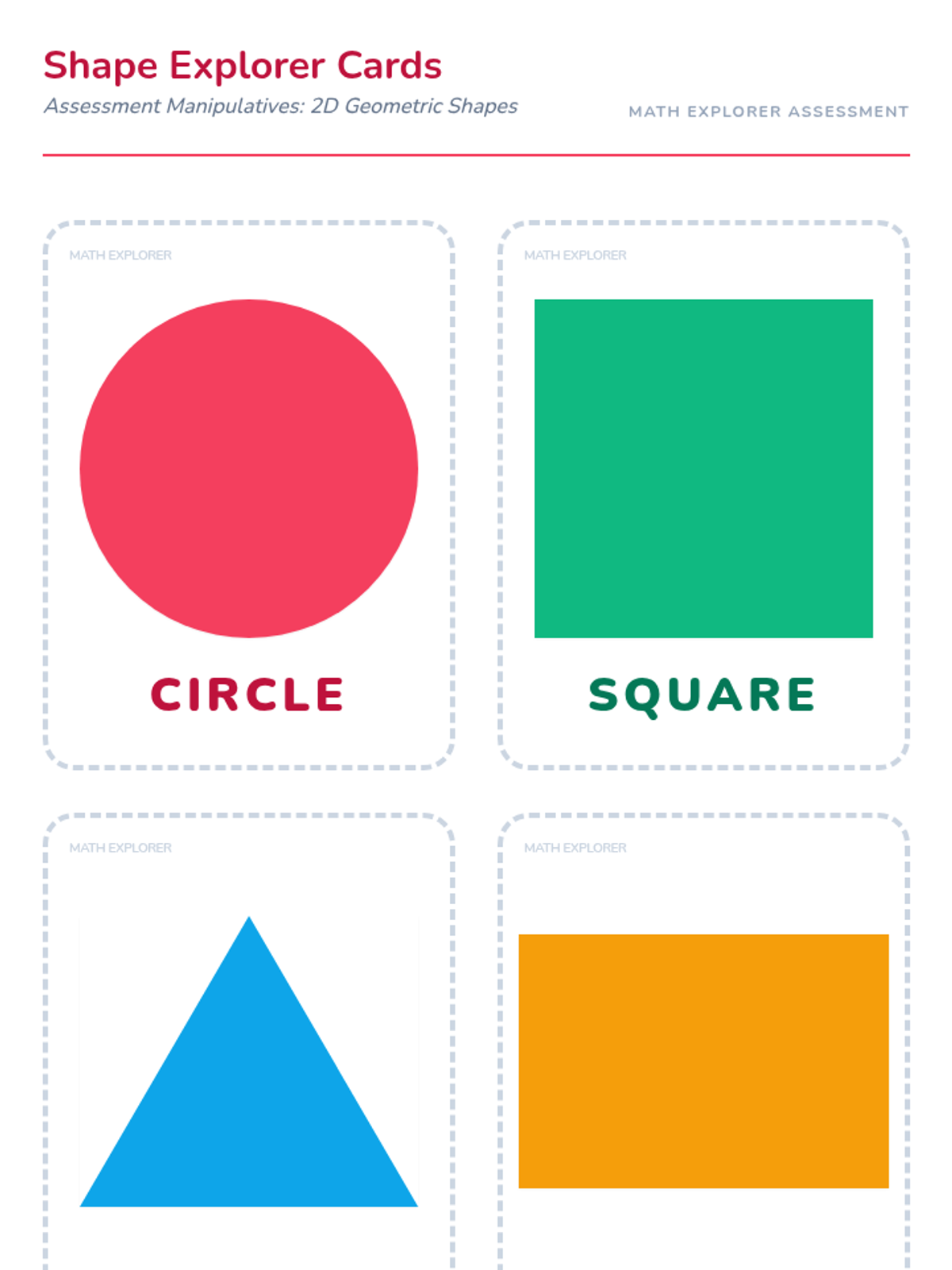
A comprehensive assessment package for Pre-K mathematics based on the Massachusetts Curriculum Frameworks, including an observation checklist and a teacher's task guide for conducting the assessment.
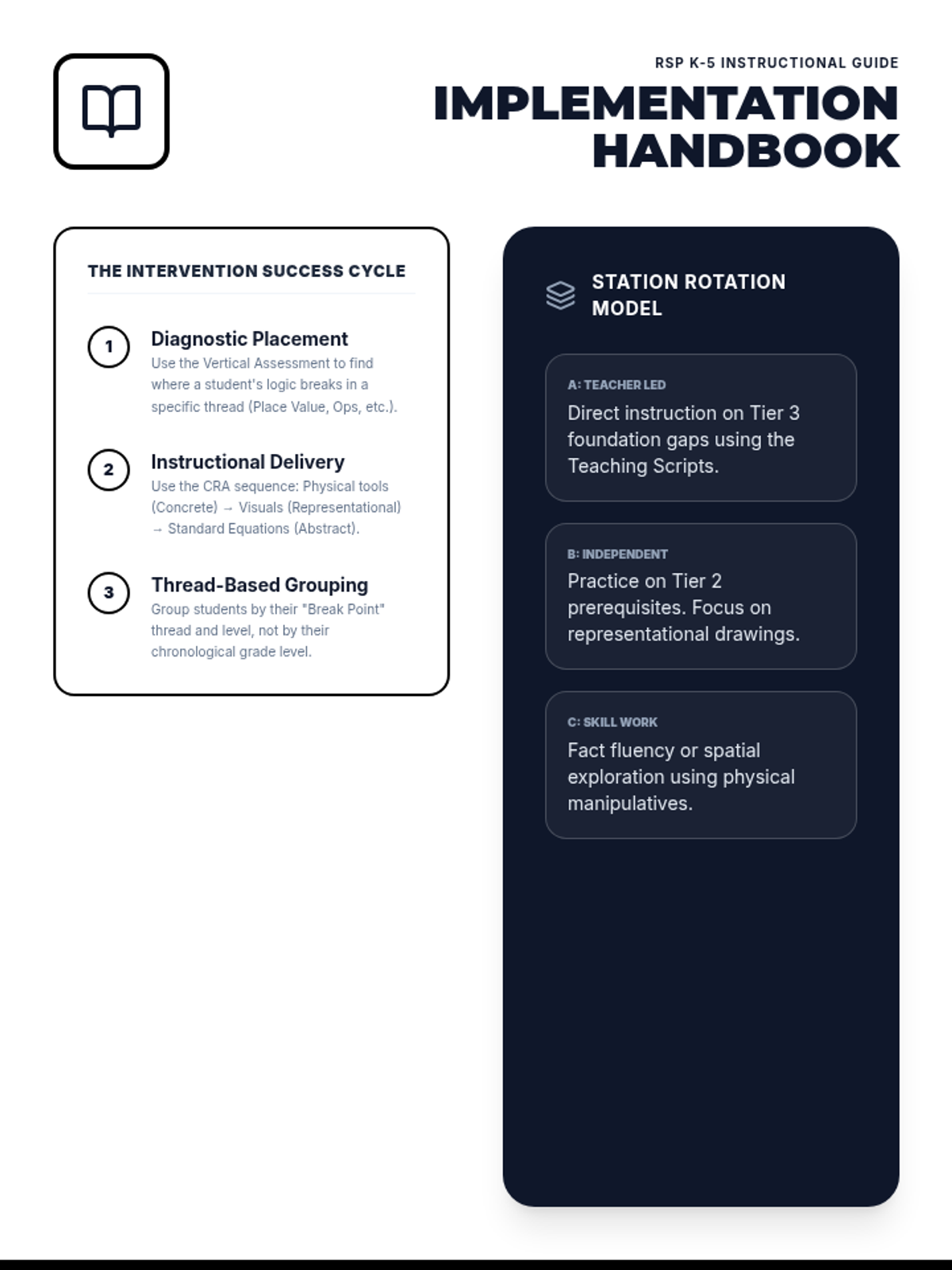
A toolkit for RSP teachers to transform a scope and sequence into a functional daily curriculum. Includes instructional frameworks, diagnostic tools, and planning templates specifically designed for multi-grade math intervention.
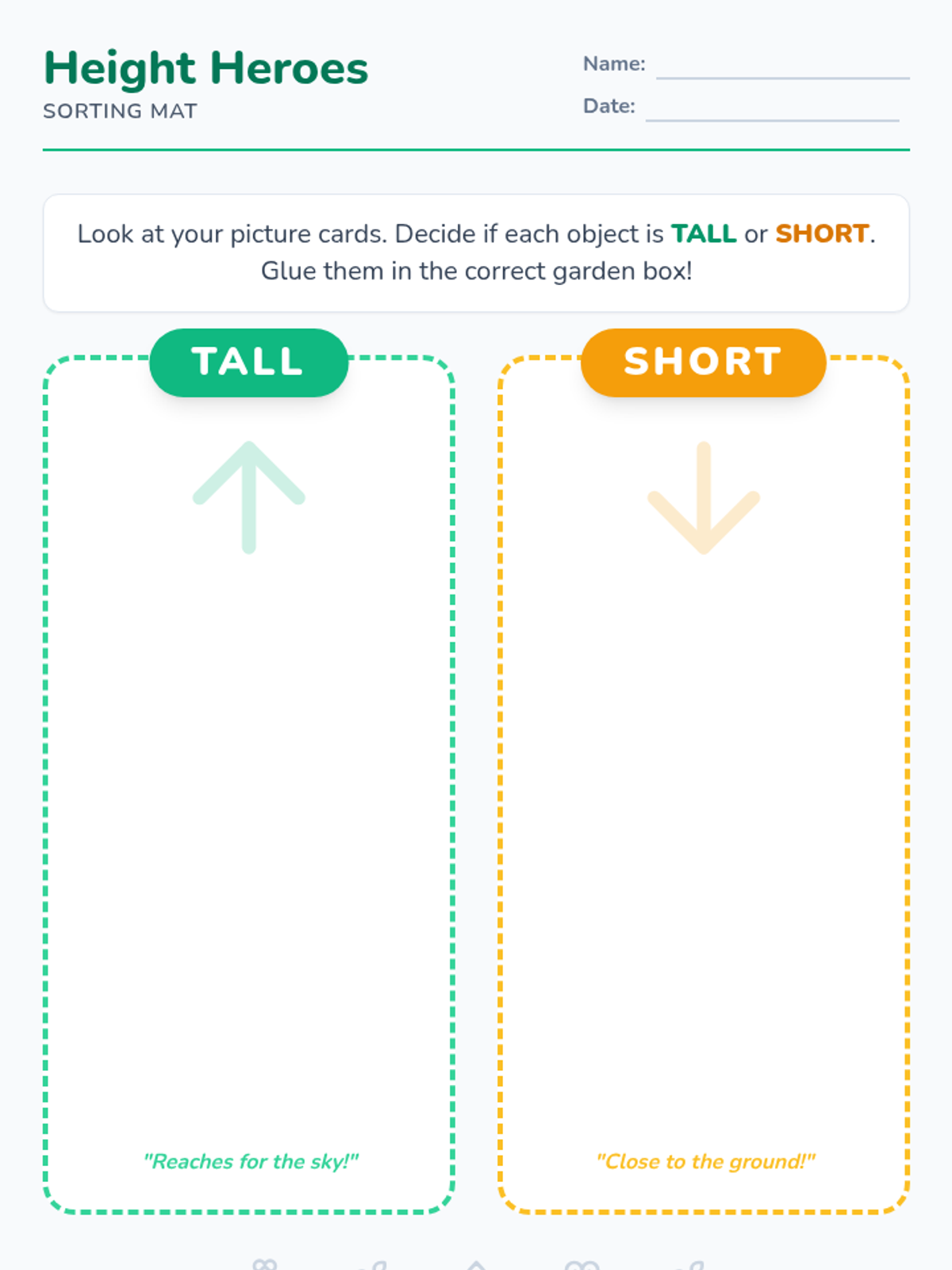
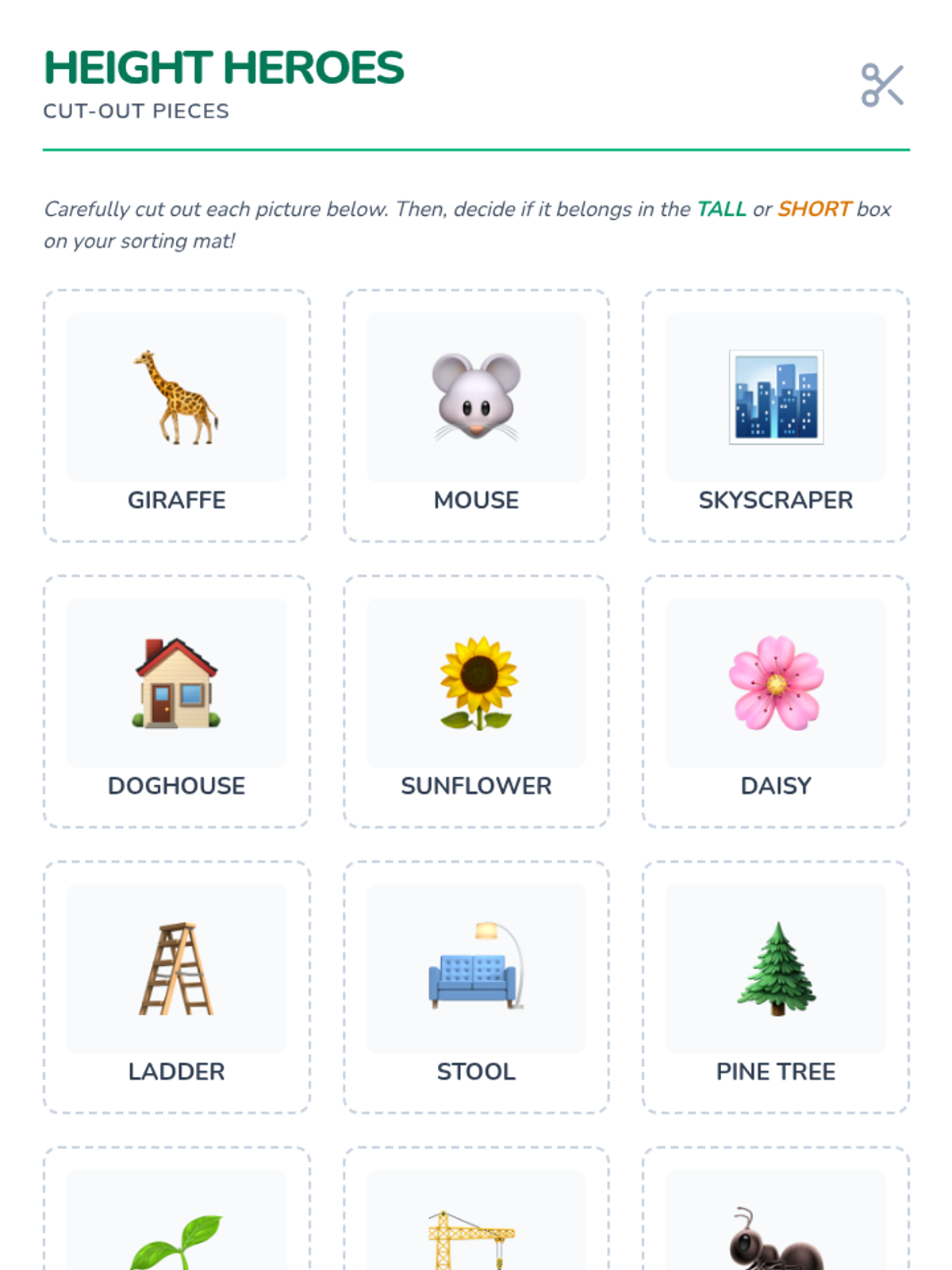
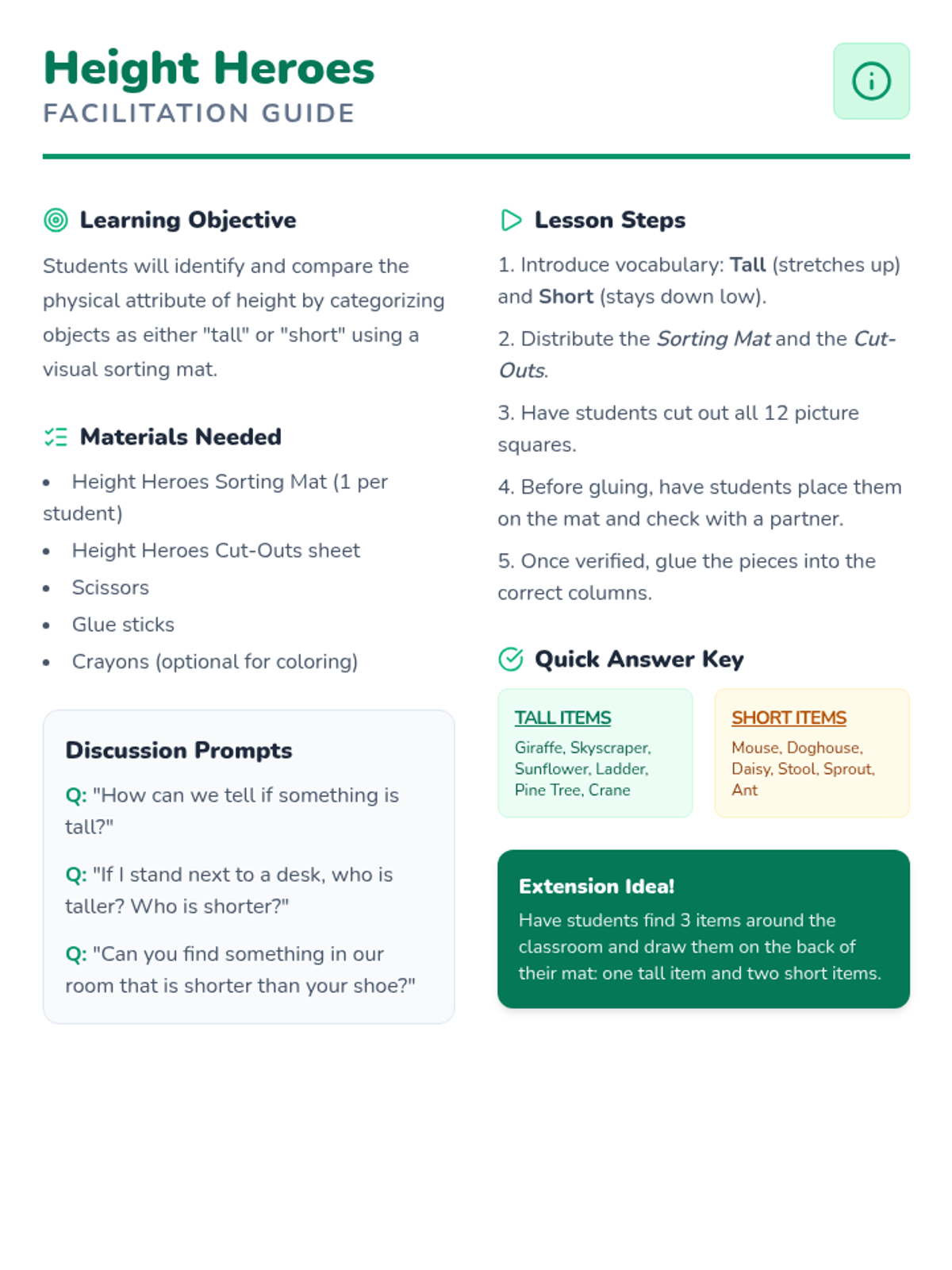
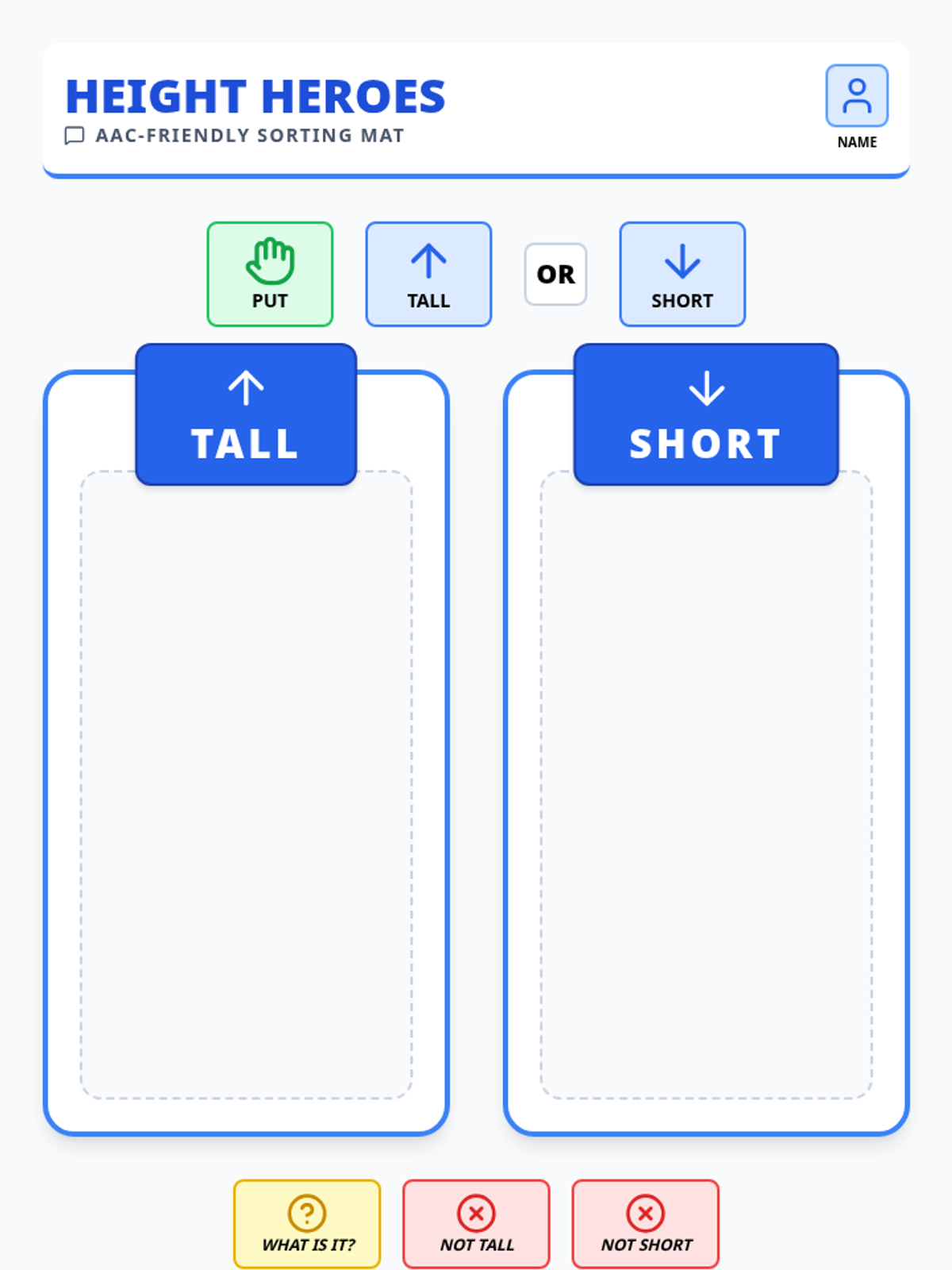
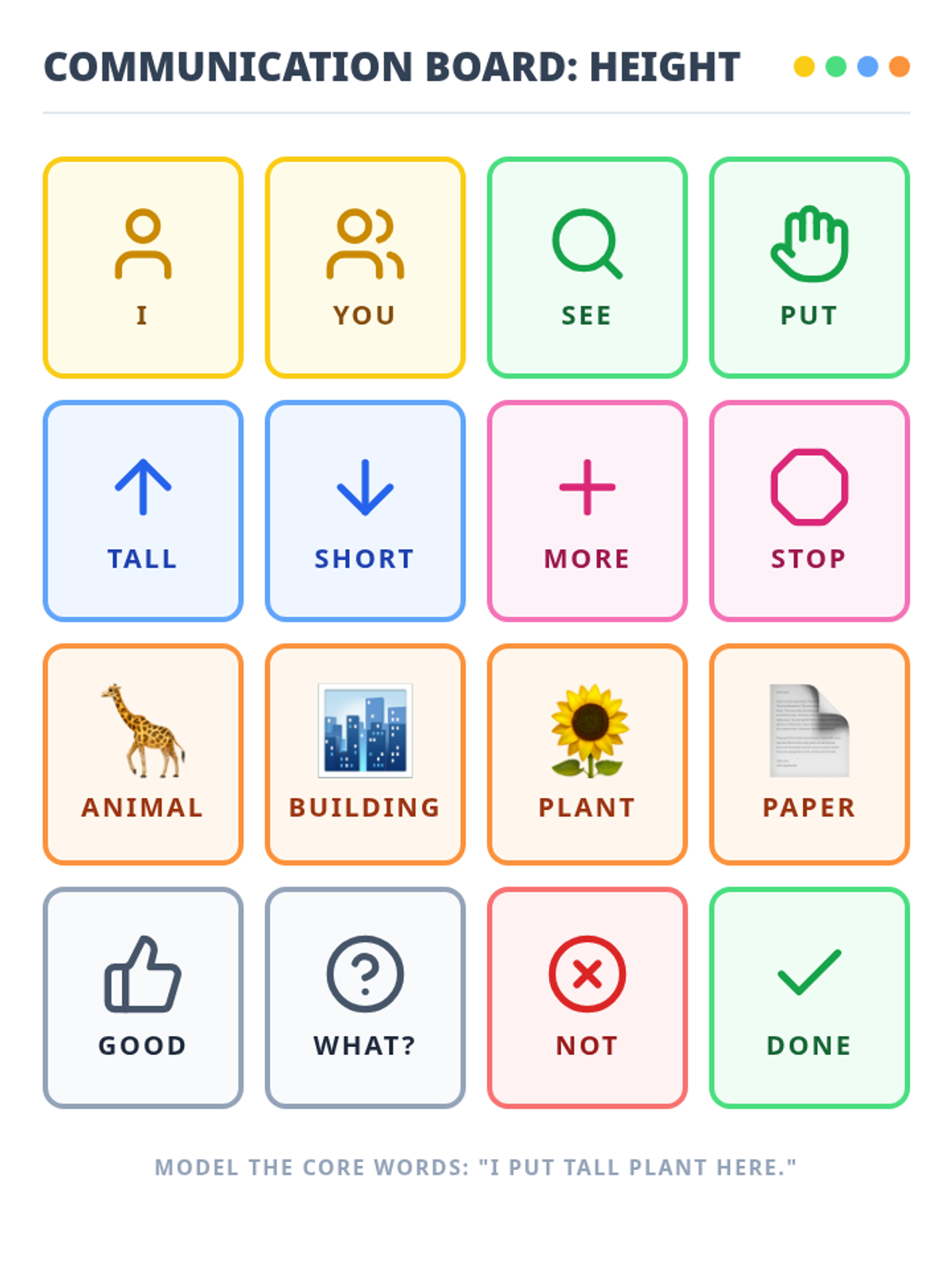
A hands-on activity for early learners to distinguish between tall and short objects through visual sorting and comparison.
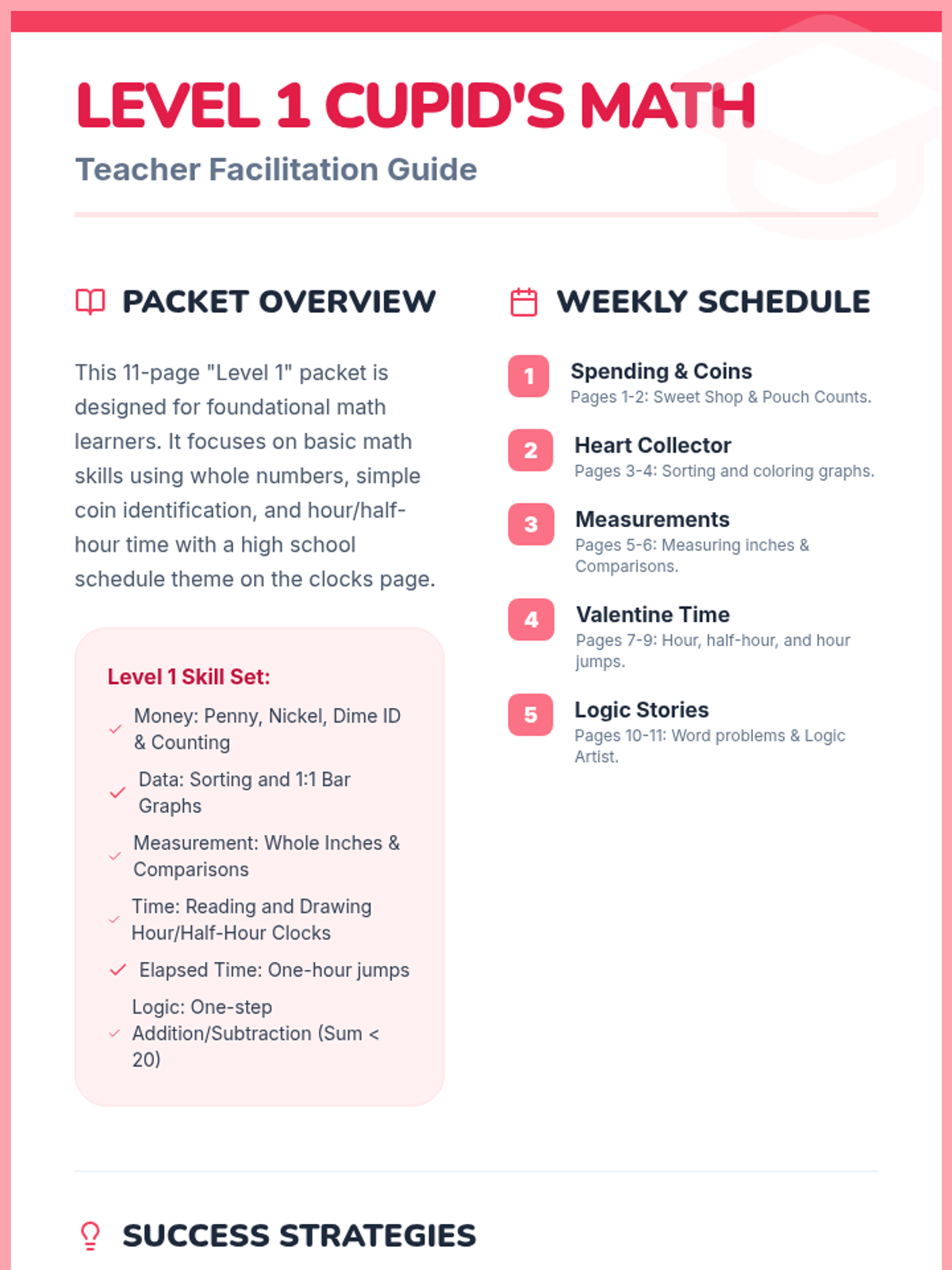
Teacher overview and answer keys for the Level 1 Valentine's Day math packet.
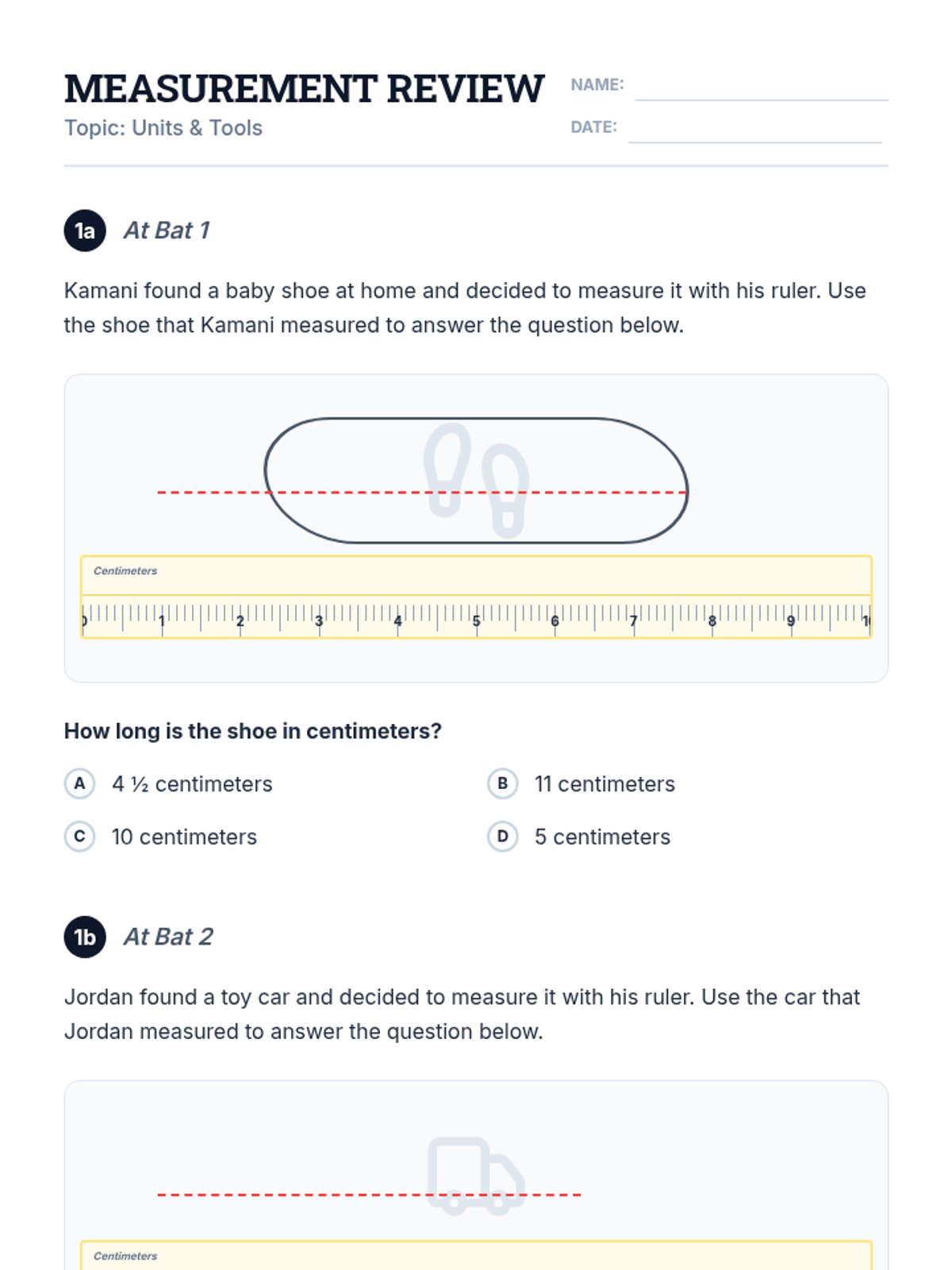
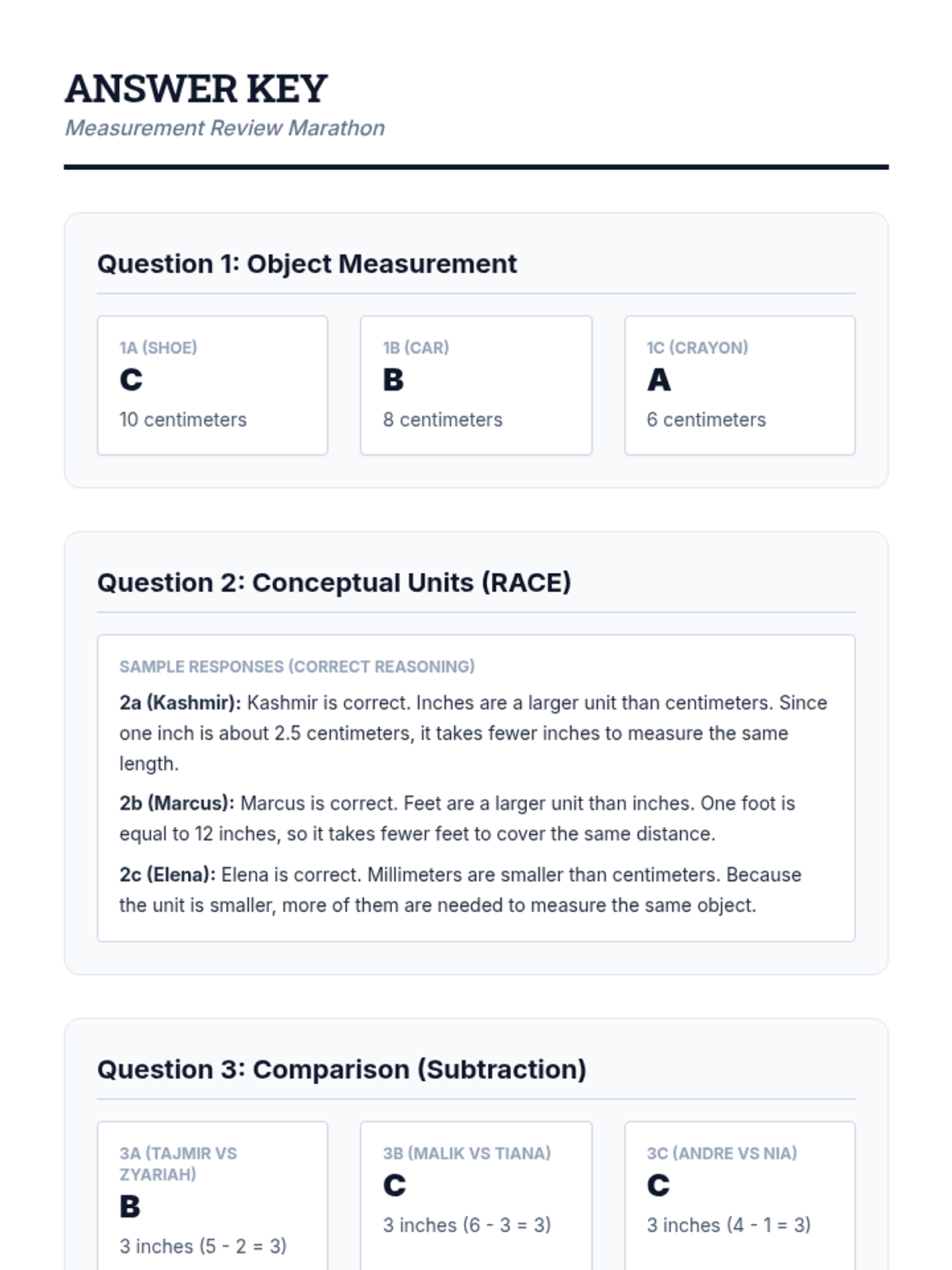
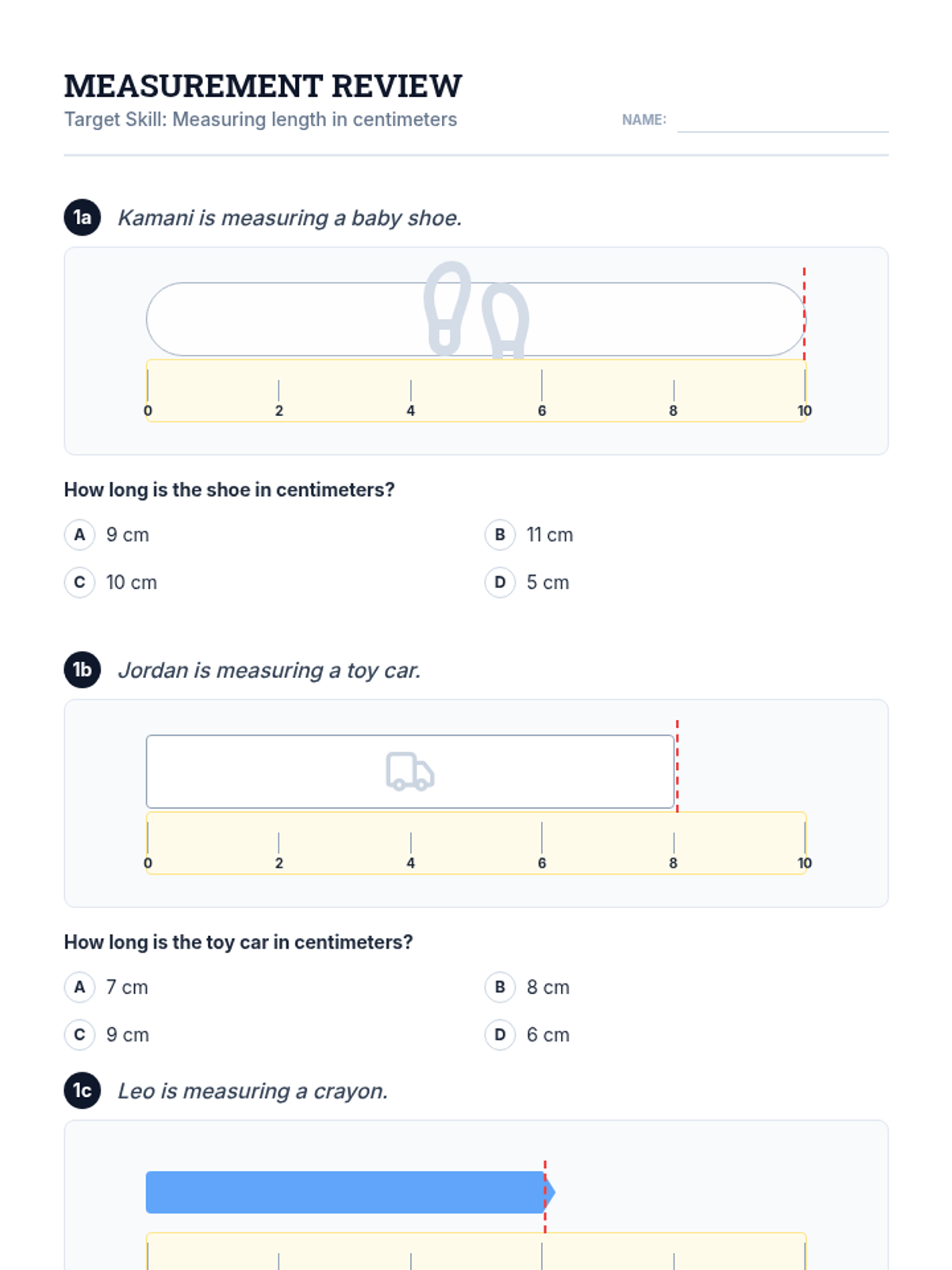
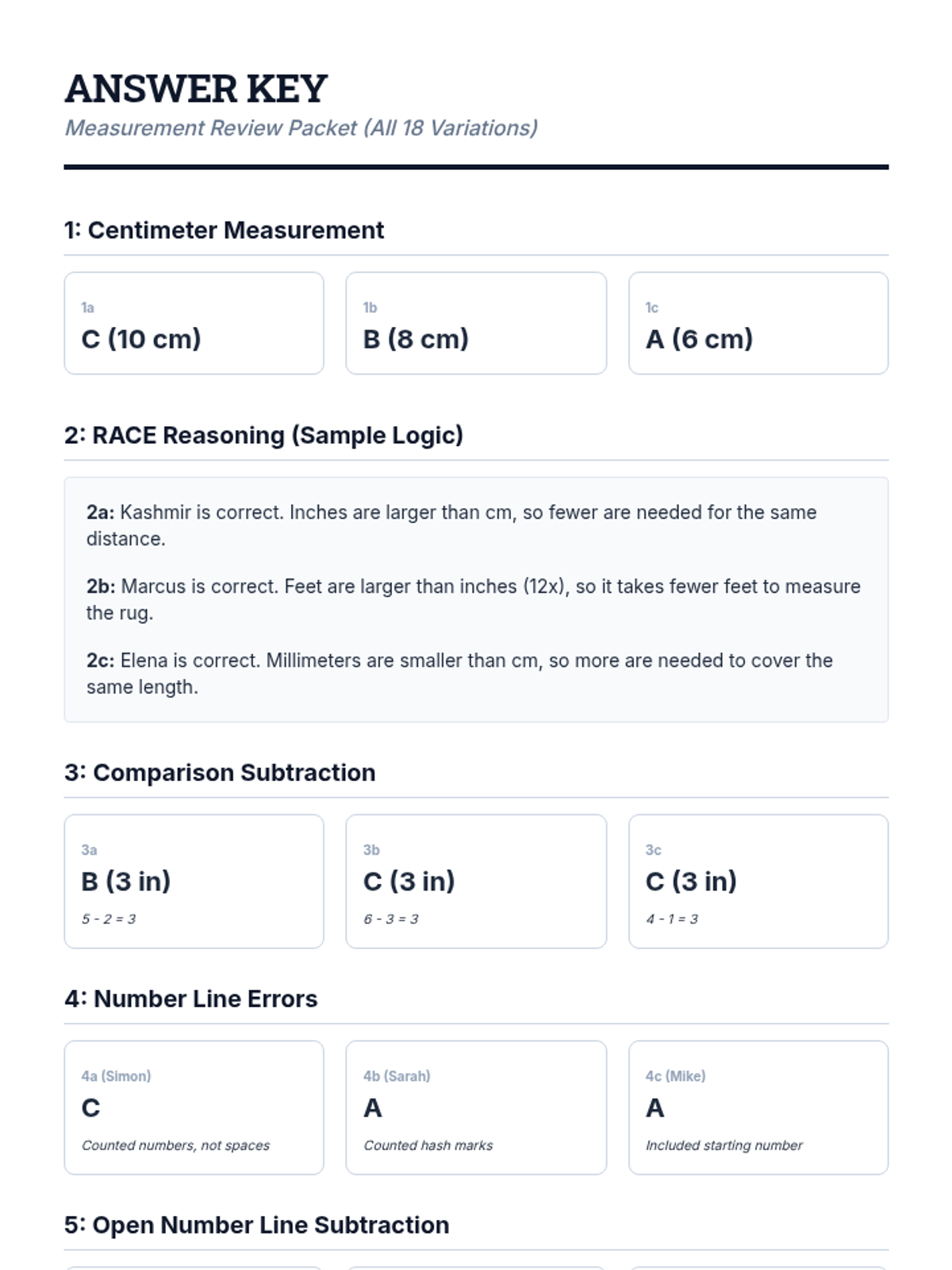
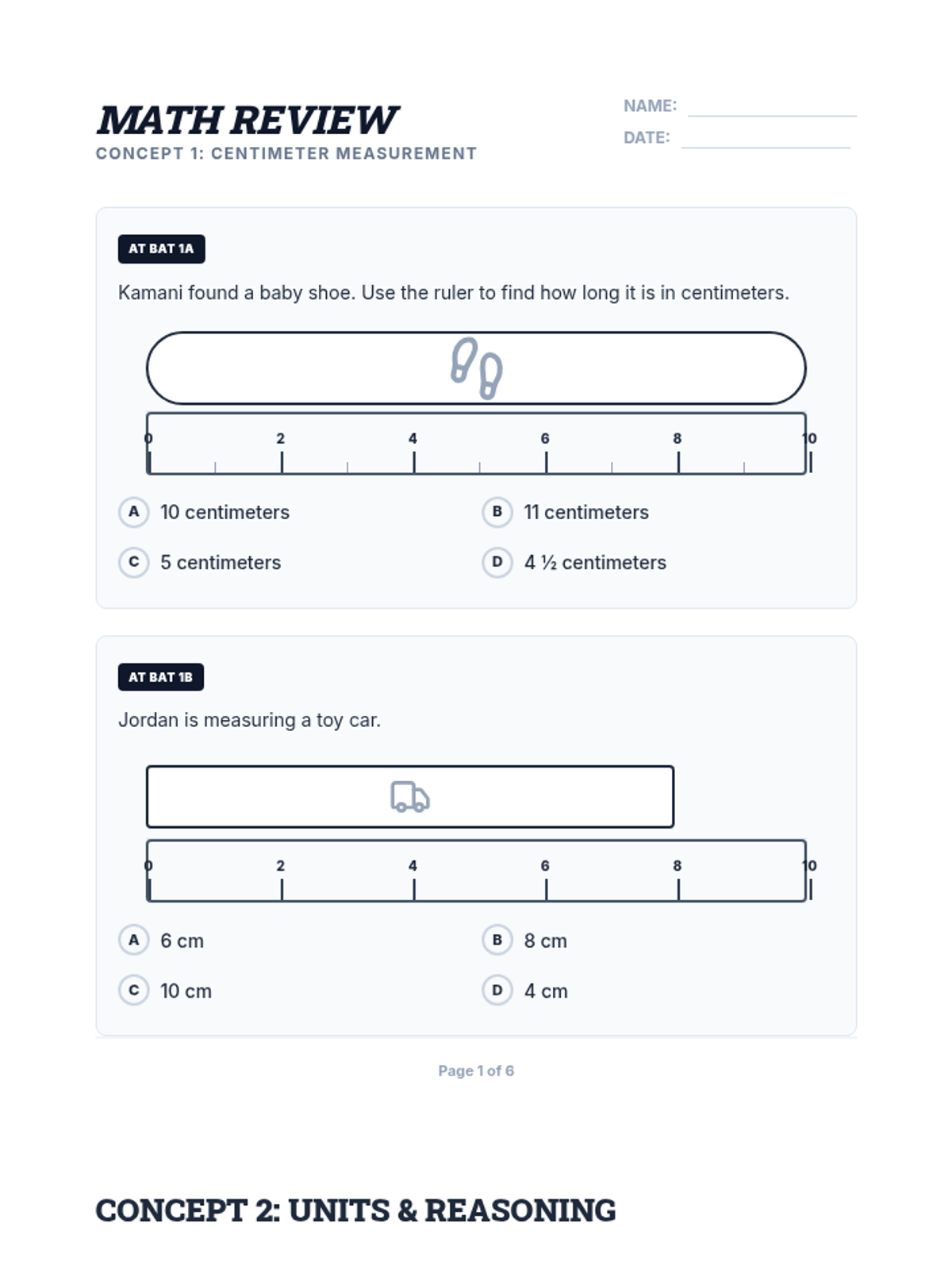
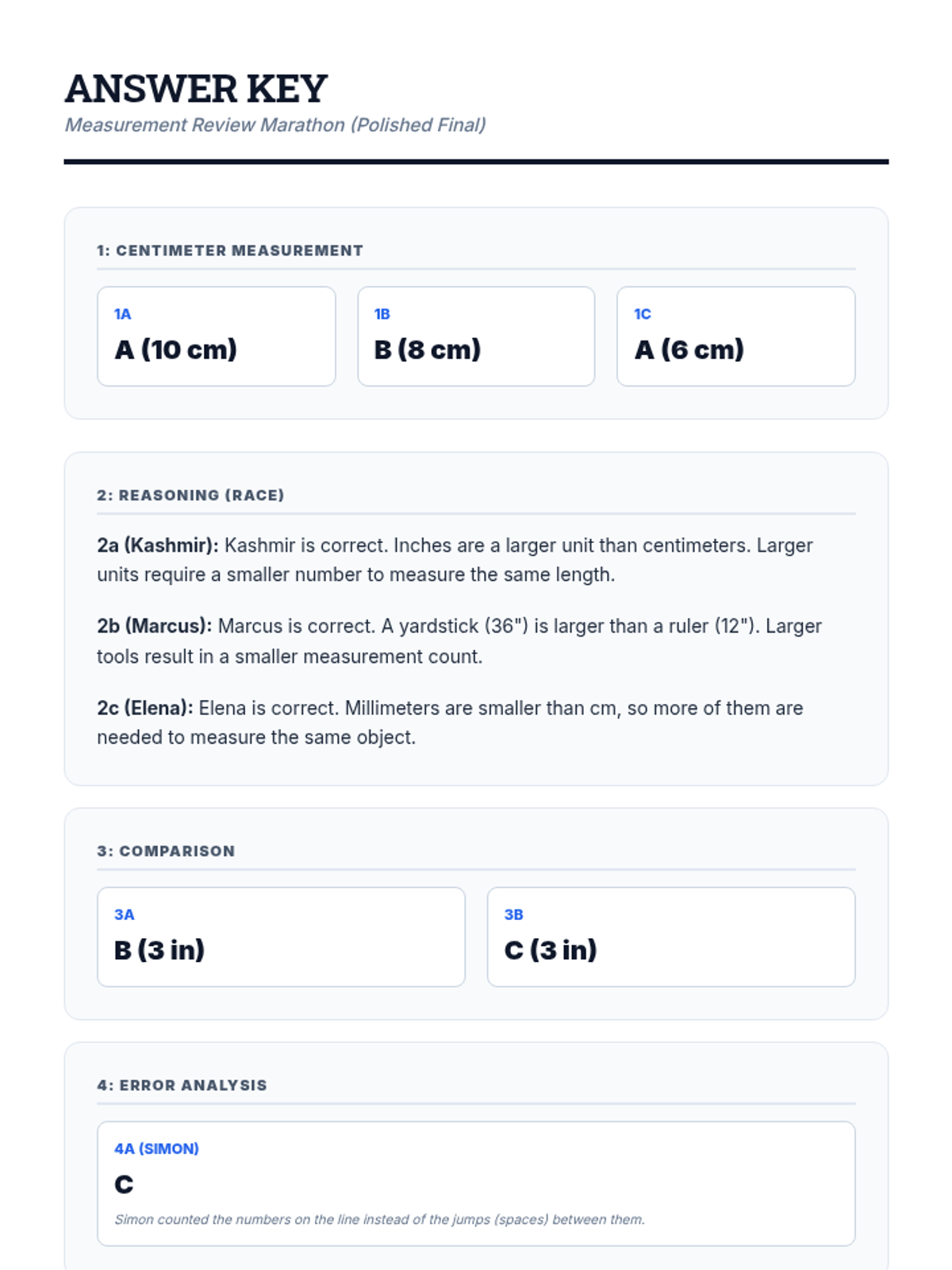
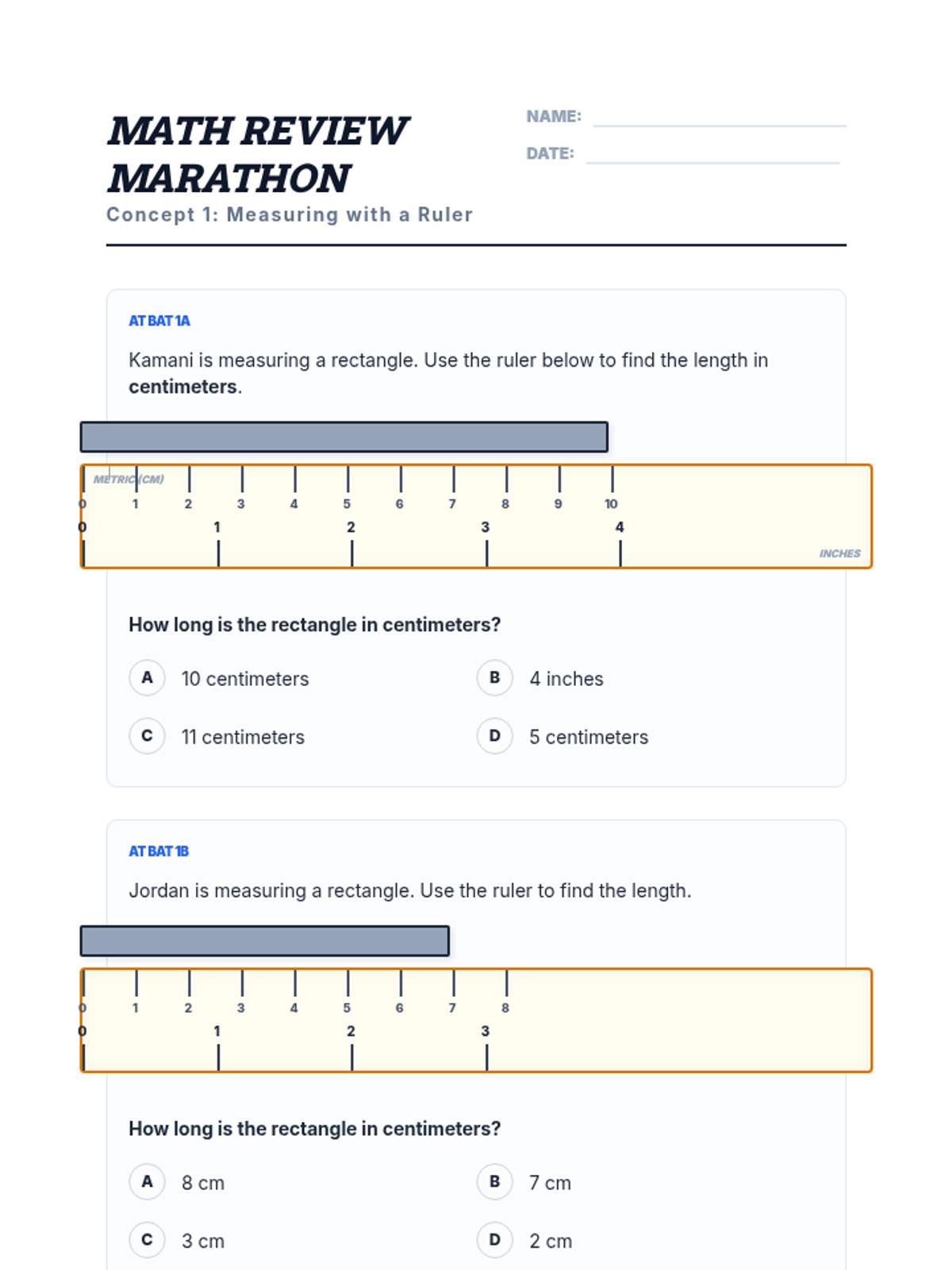
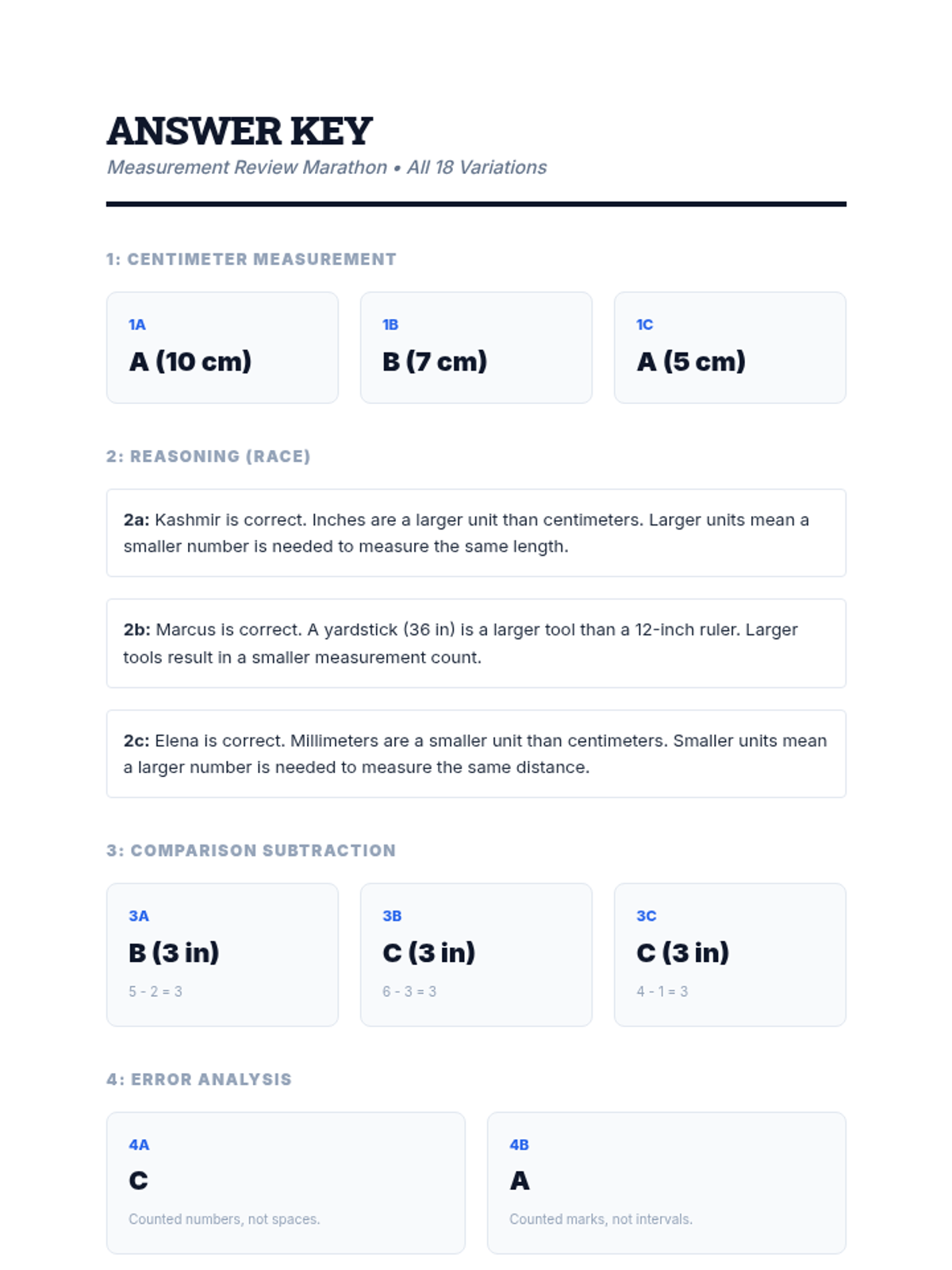
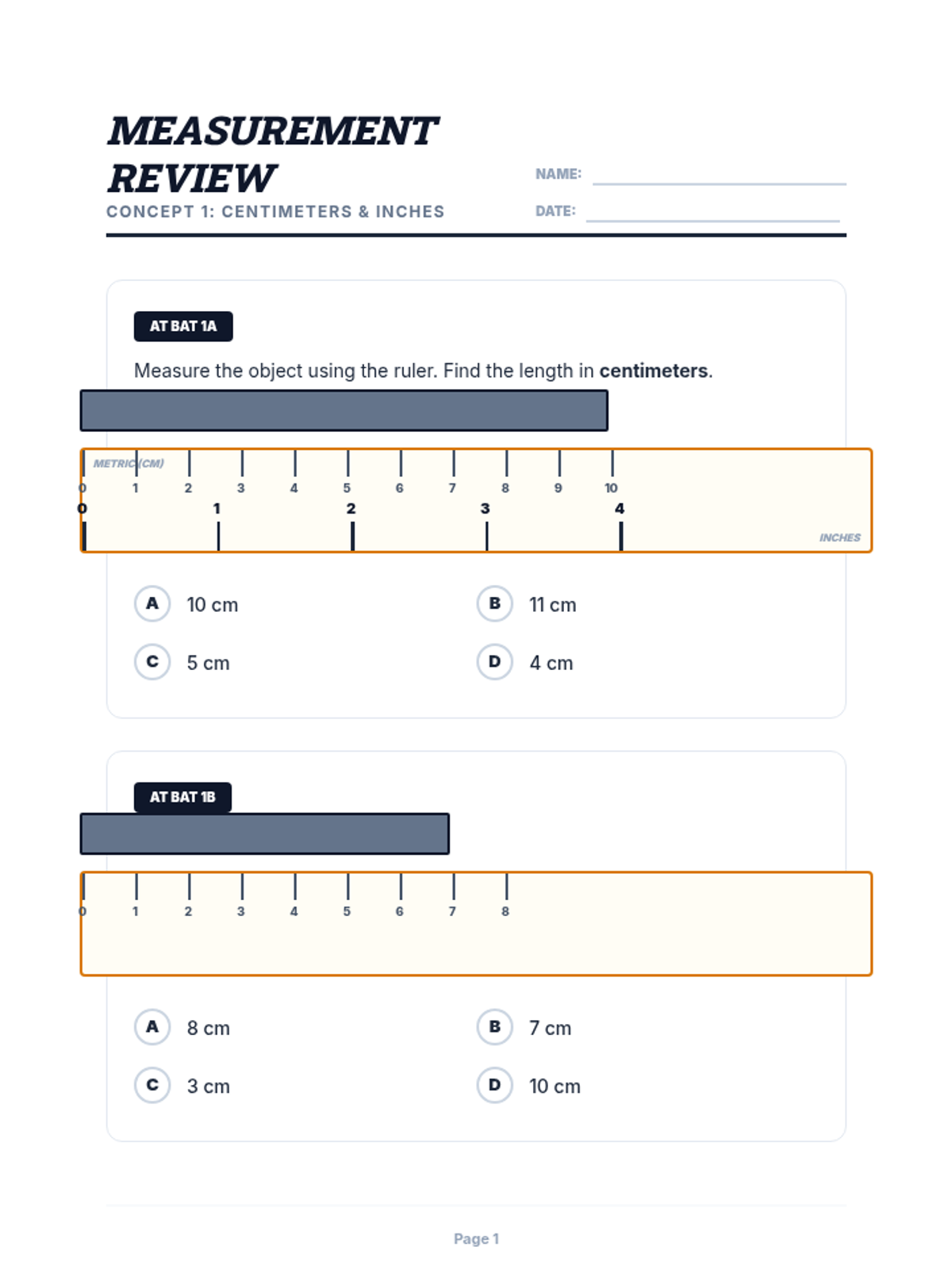
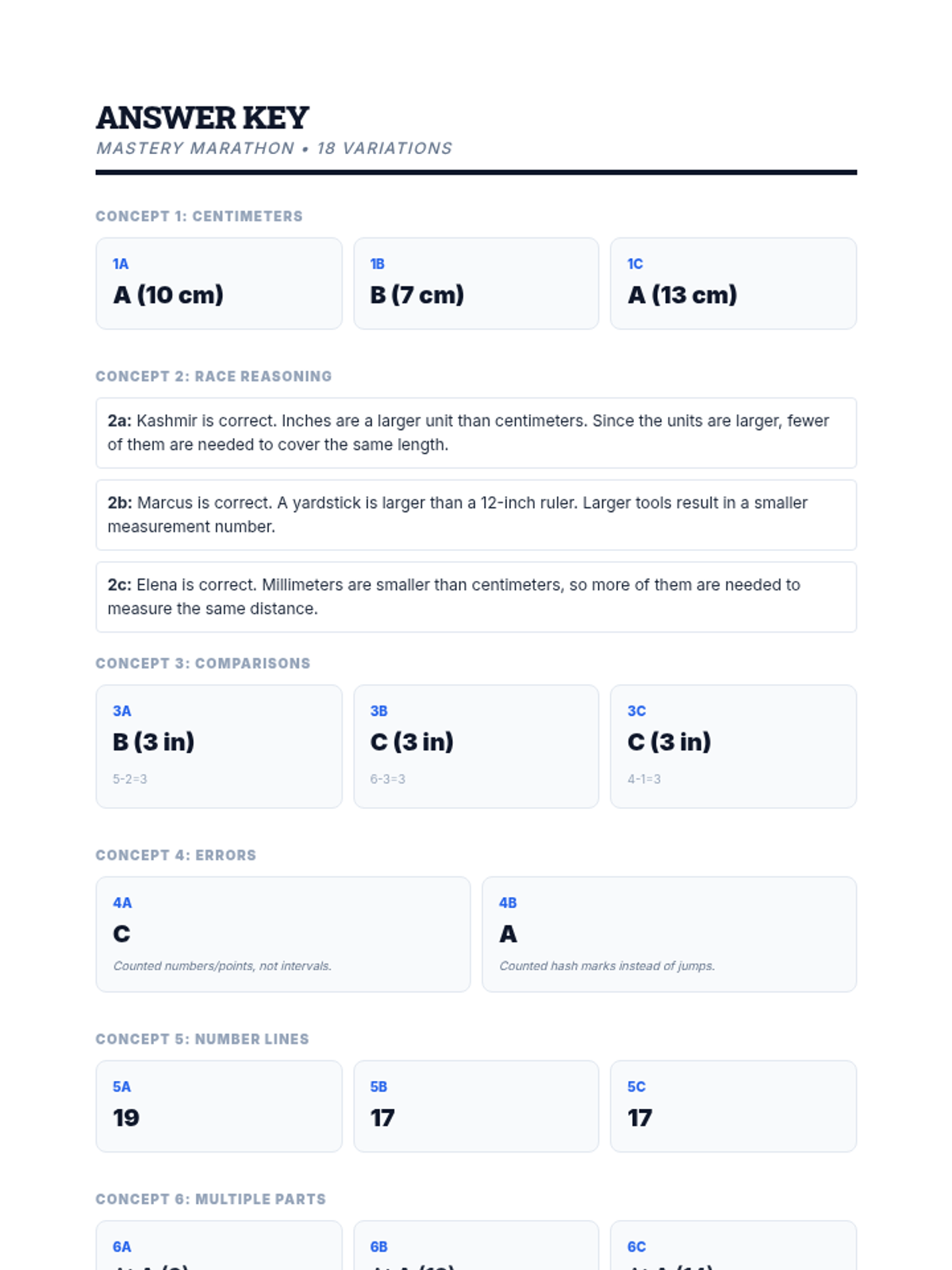
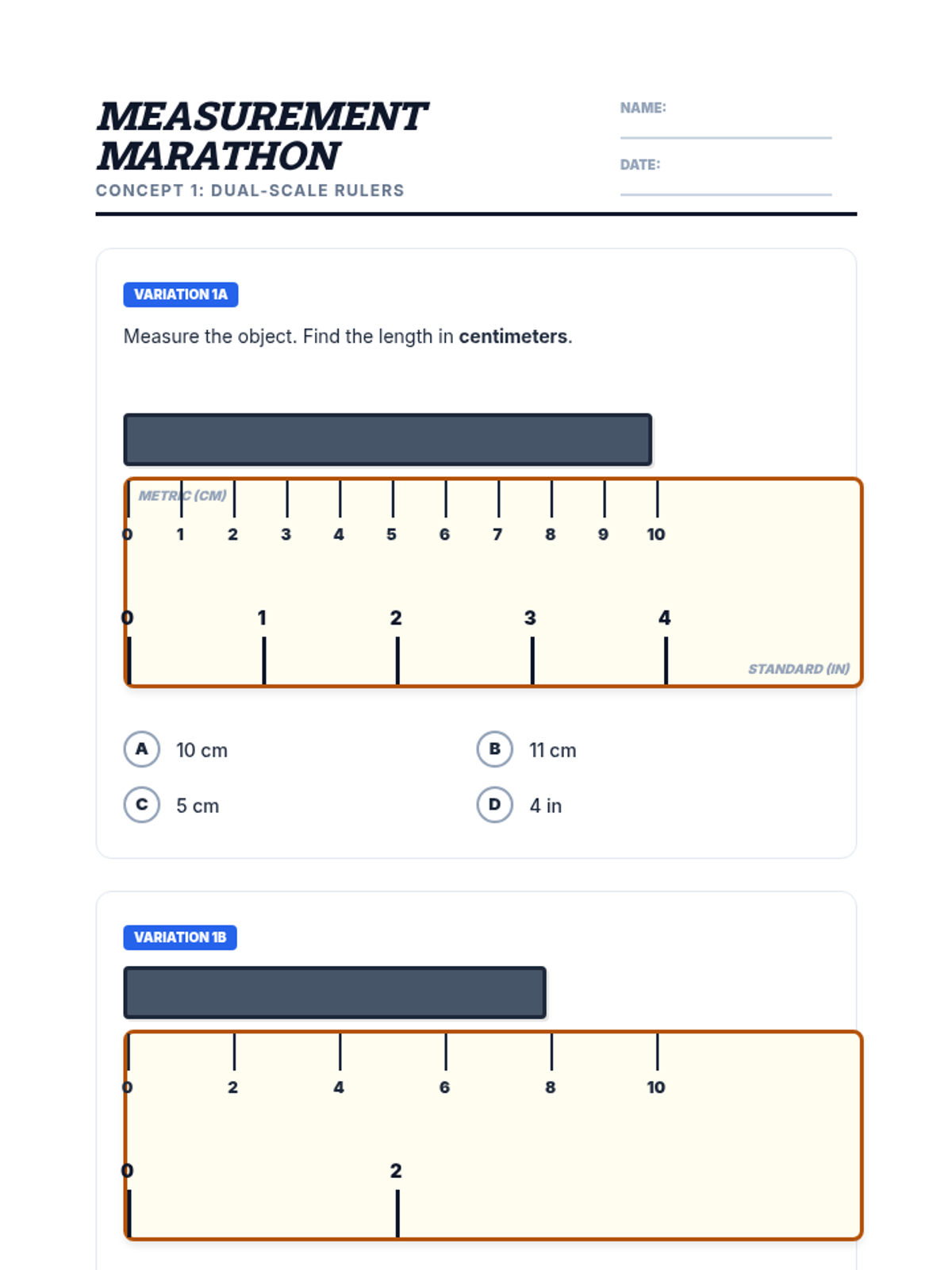
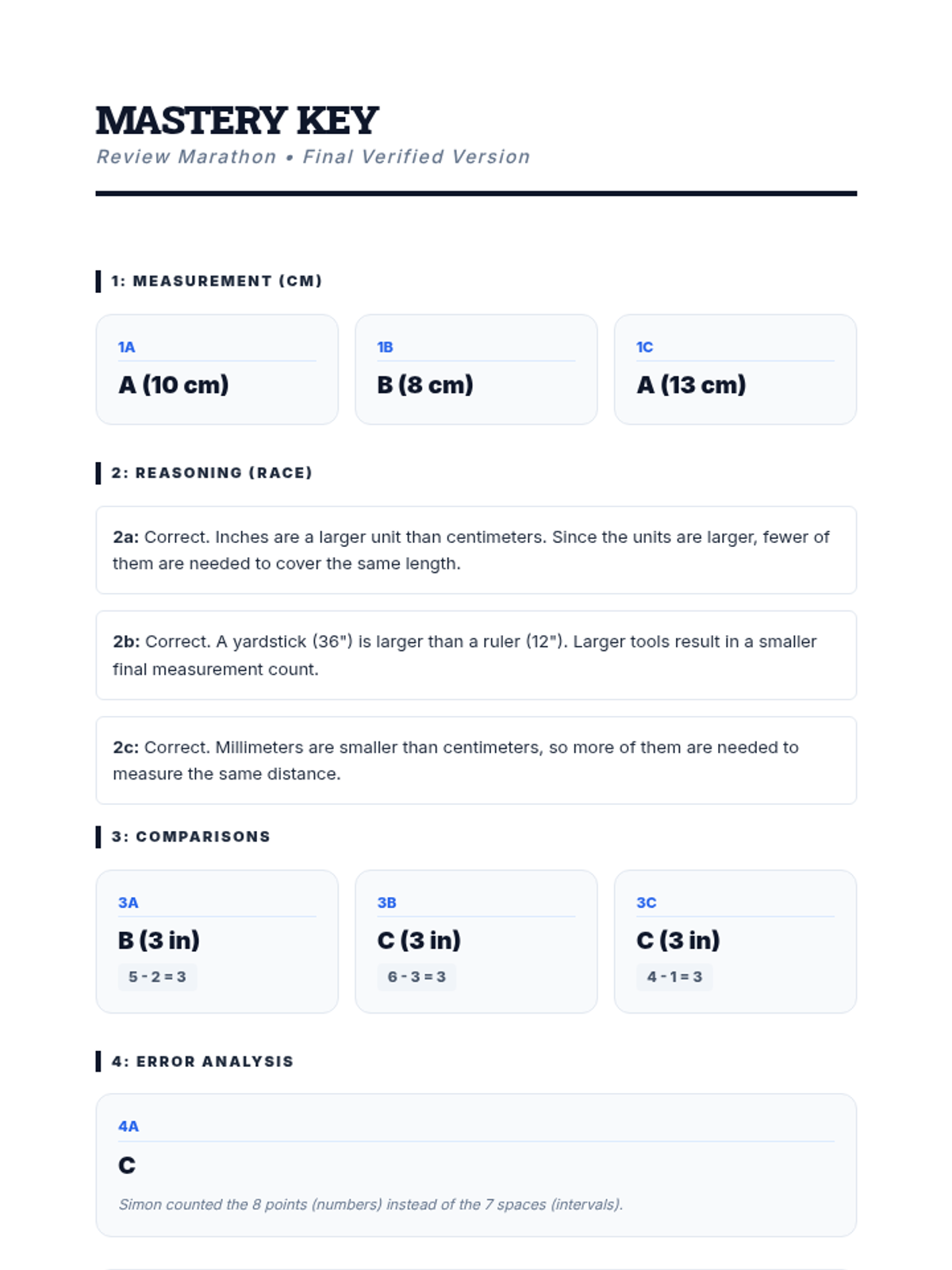
A comprehensive math review packet focusing on measurement, number line operations, and conceptual understanding of units, featuring multiple practice opportunities for each skill.
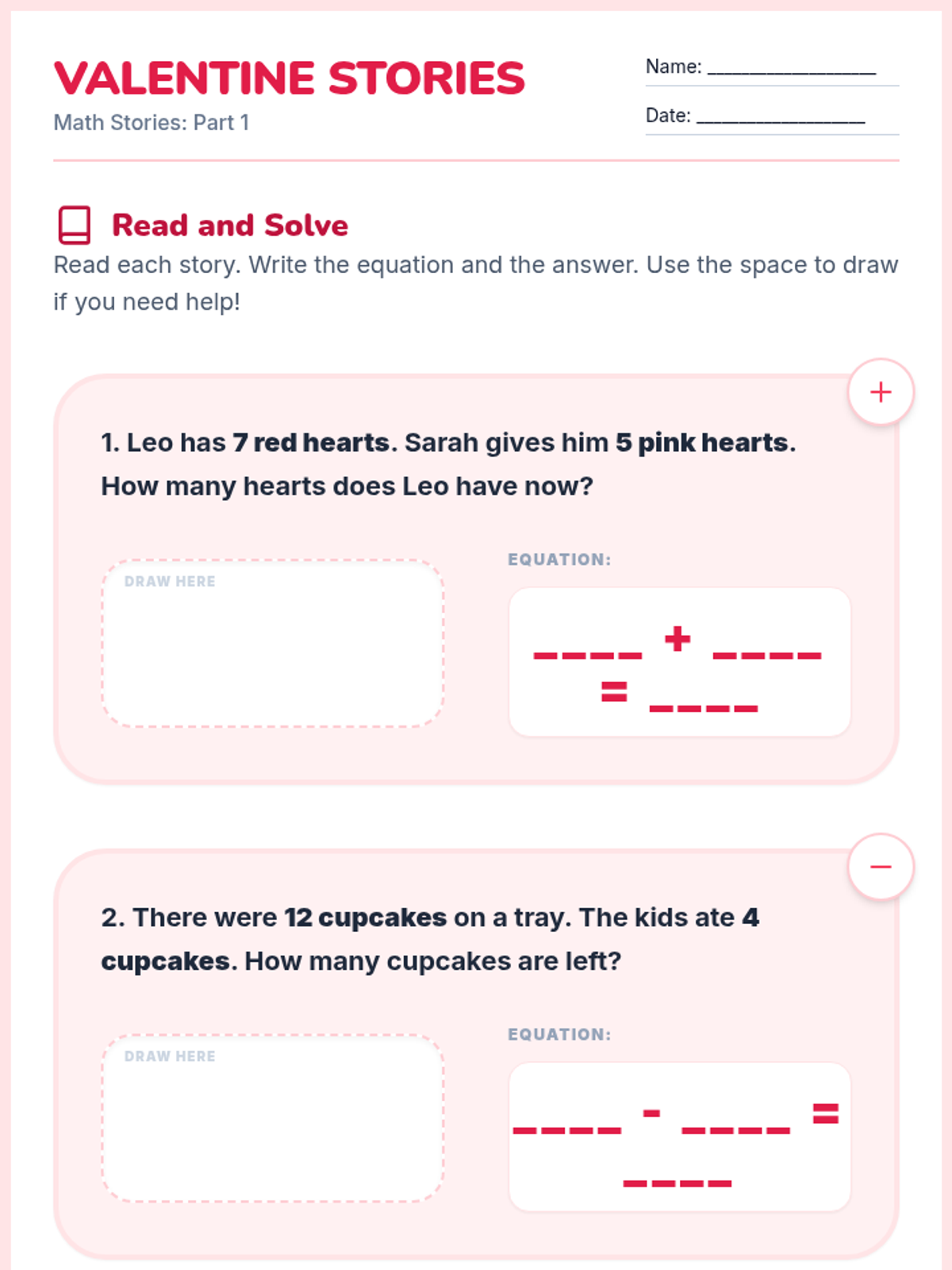
Students will solve one-step addition and subtraction word problems within 20 with a Valentine's Day theme.
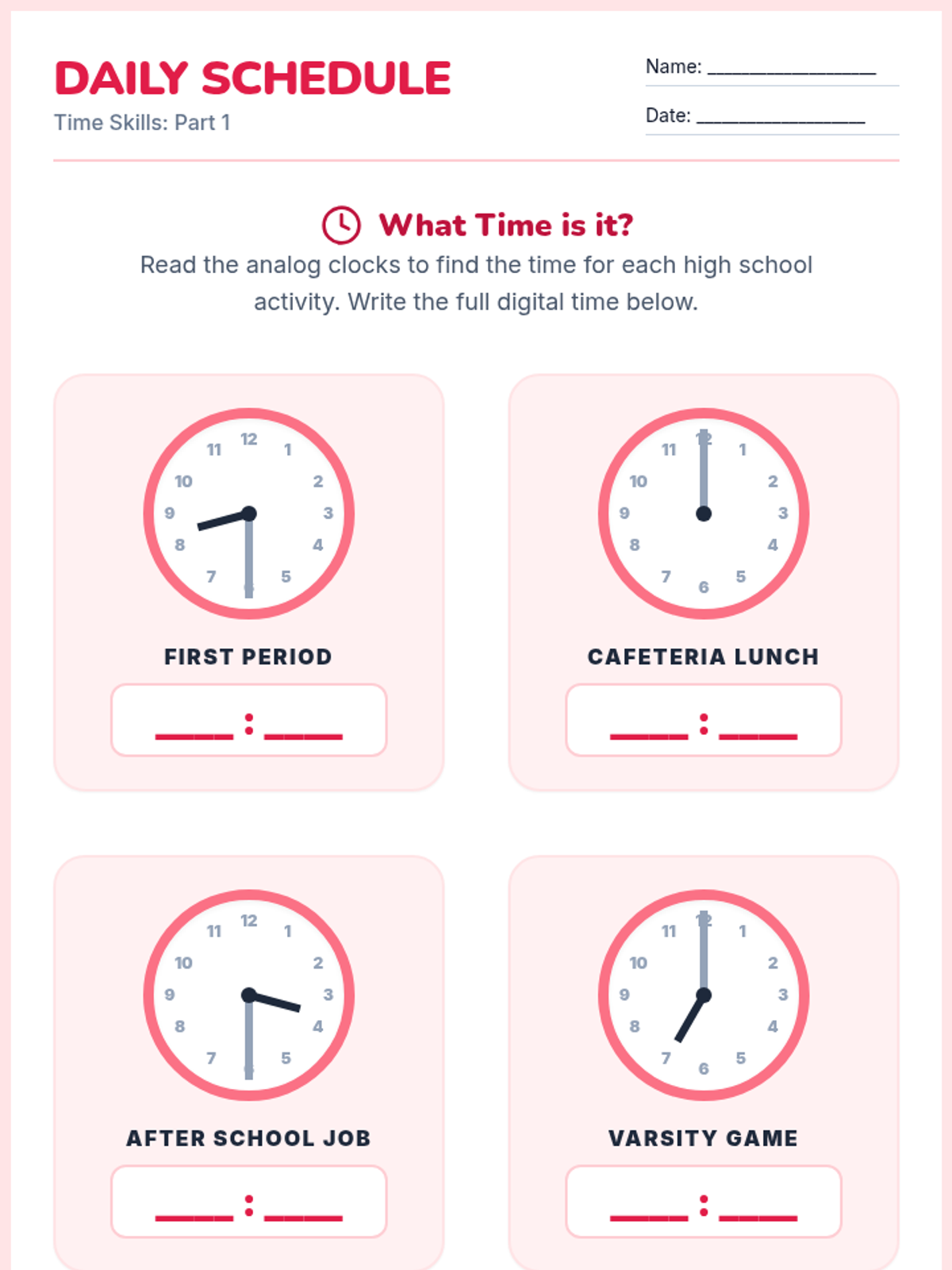
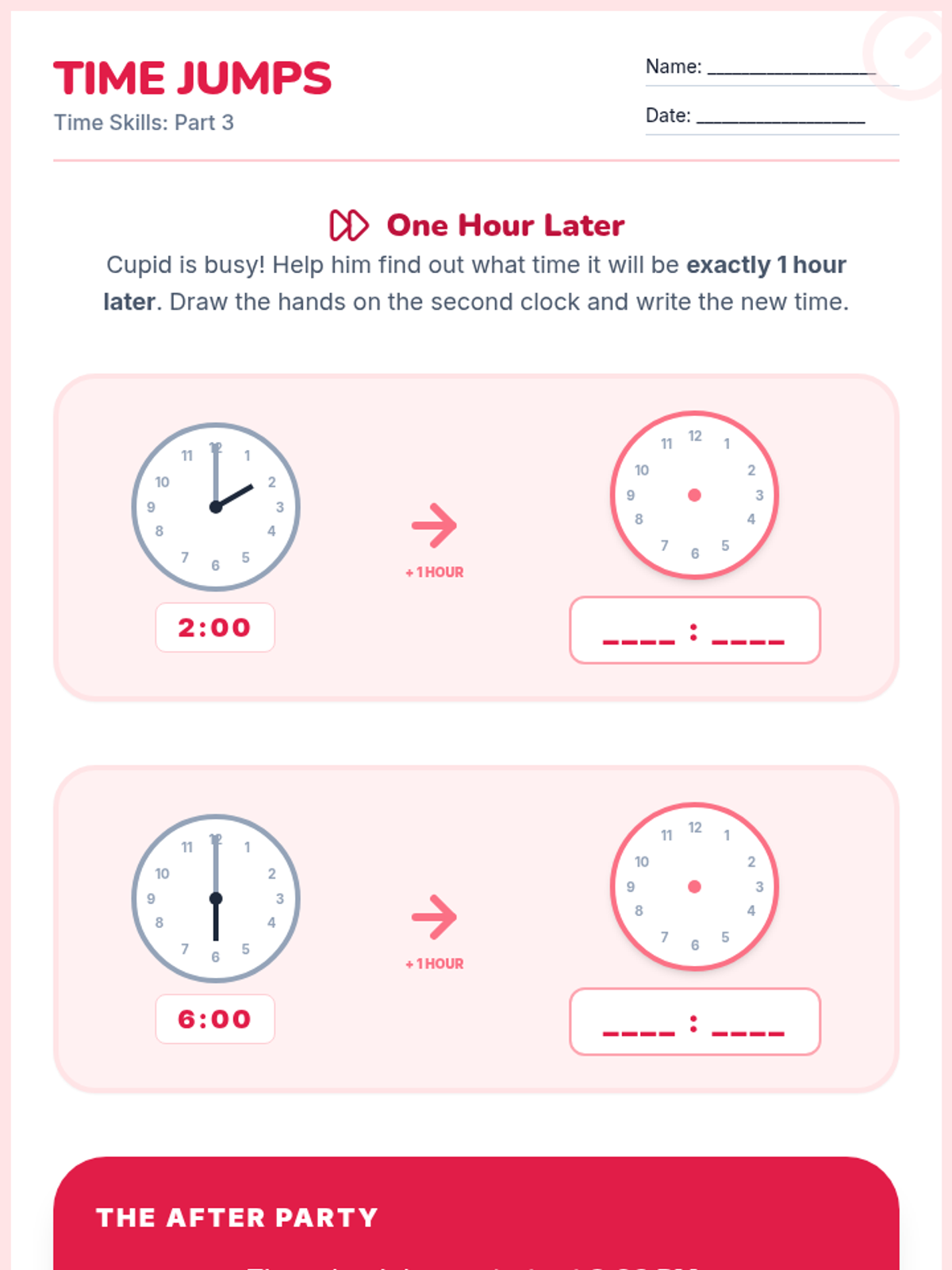
Students will practice reading and drawing analog clocks to the nearest hour and half-hour with a high school schedule theme.
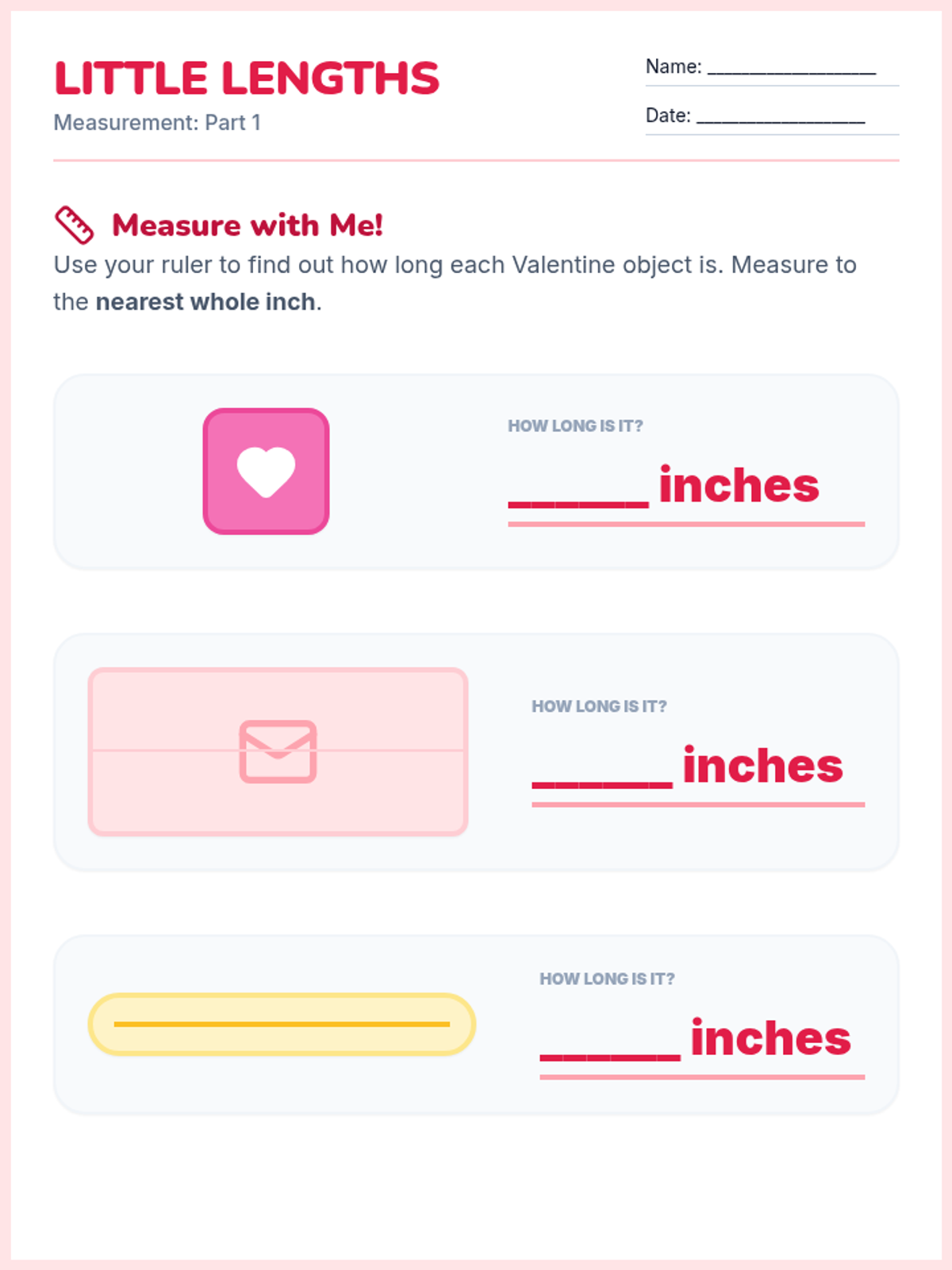
Students will measure Valentine-themed objects to the nearest whole inch and compare lengths using terms like longer and shorter.
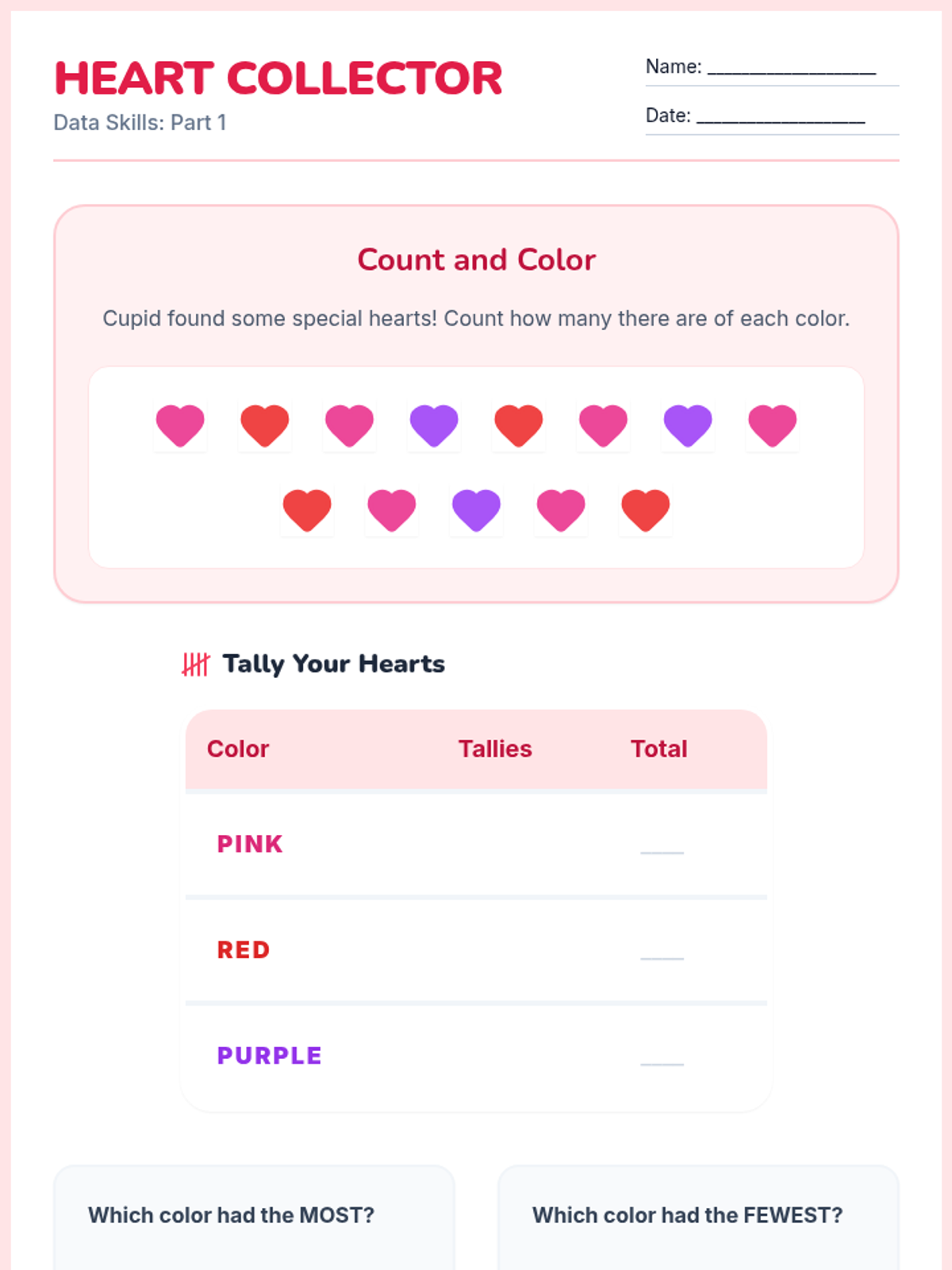
Students will sort candy heart colors, create simple tally charts, and build basic bar graphs with a 1:1 scale.
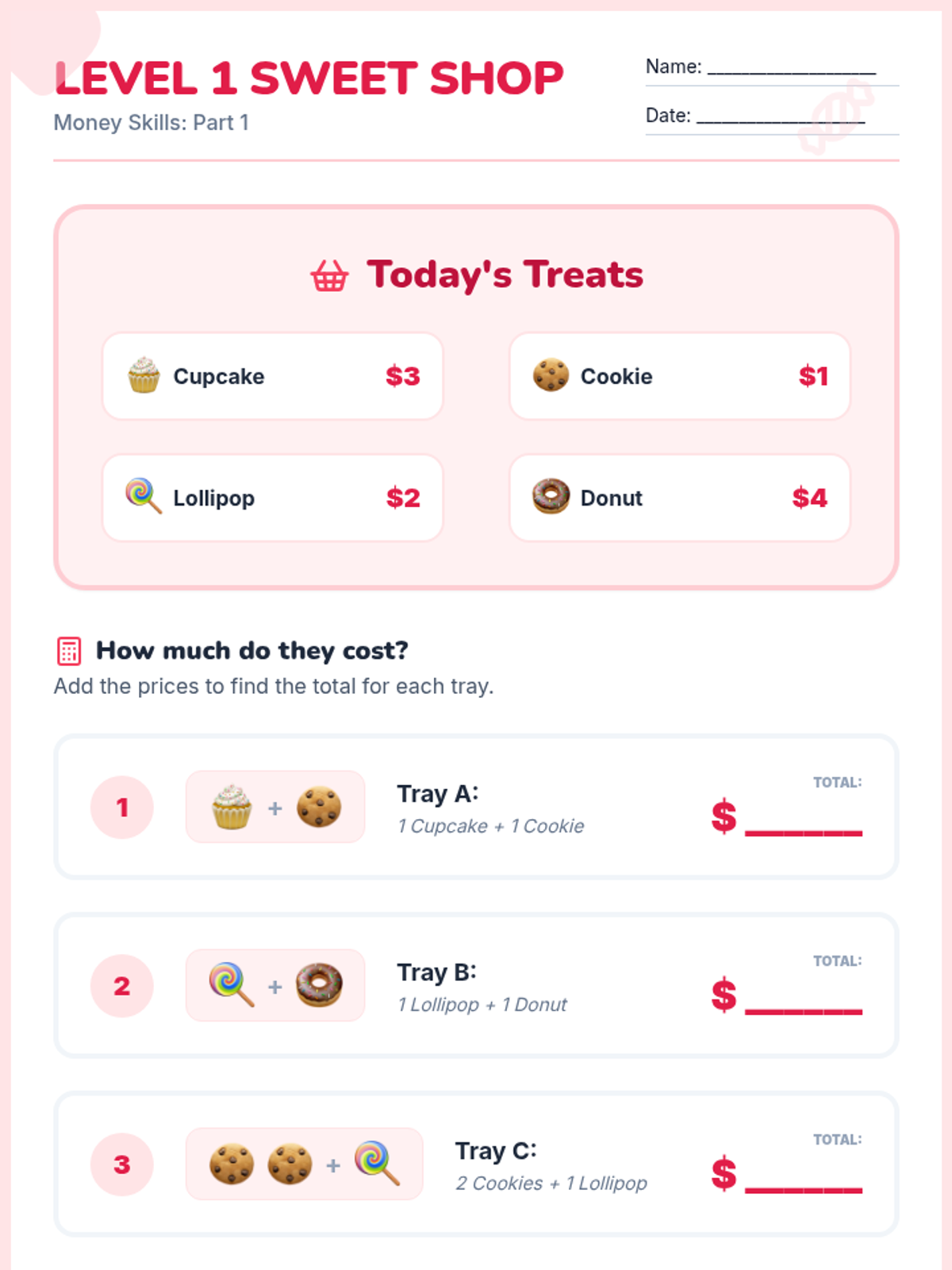
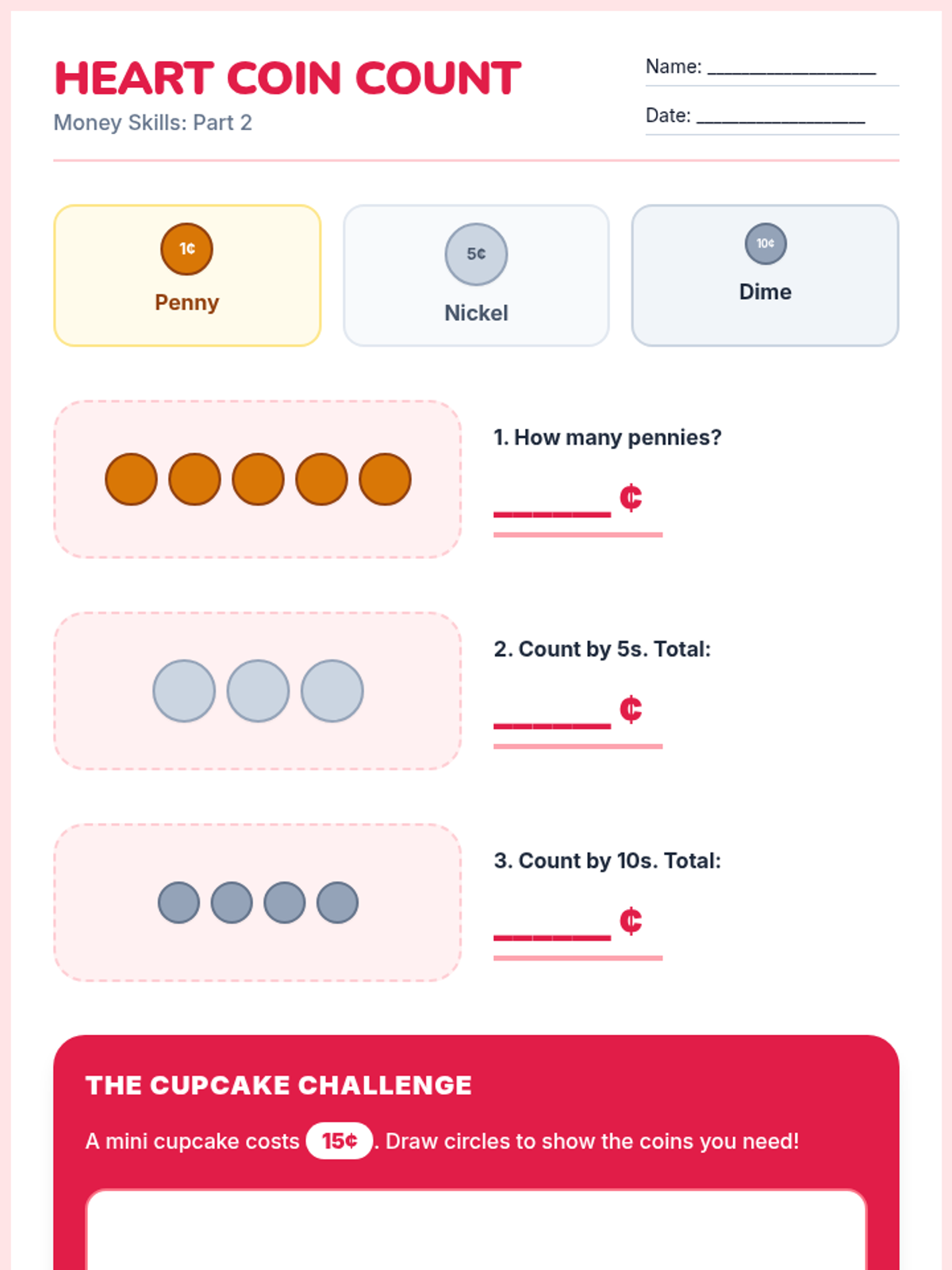
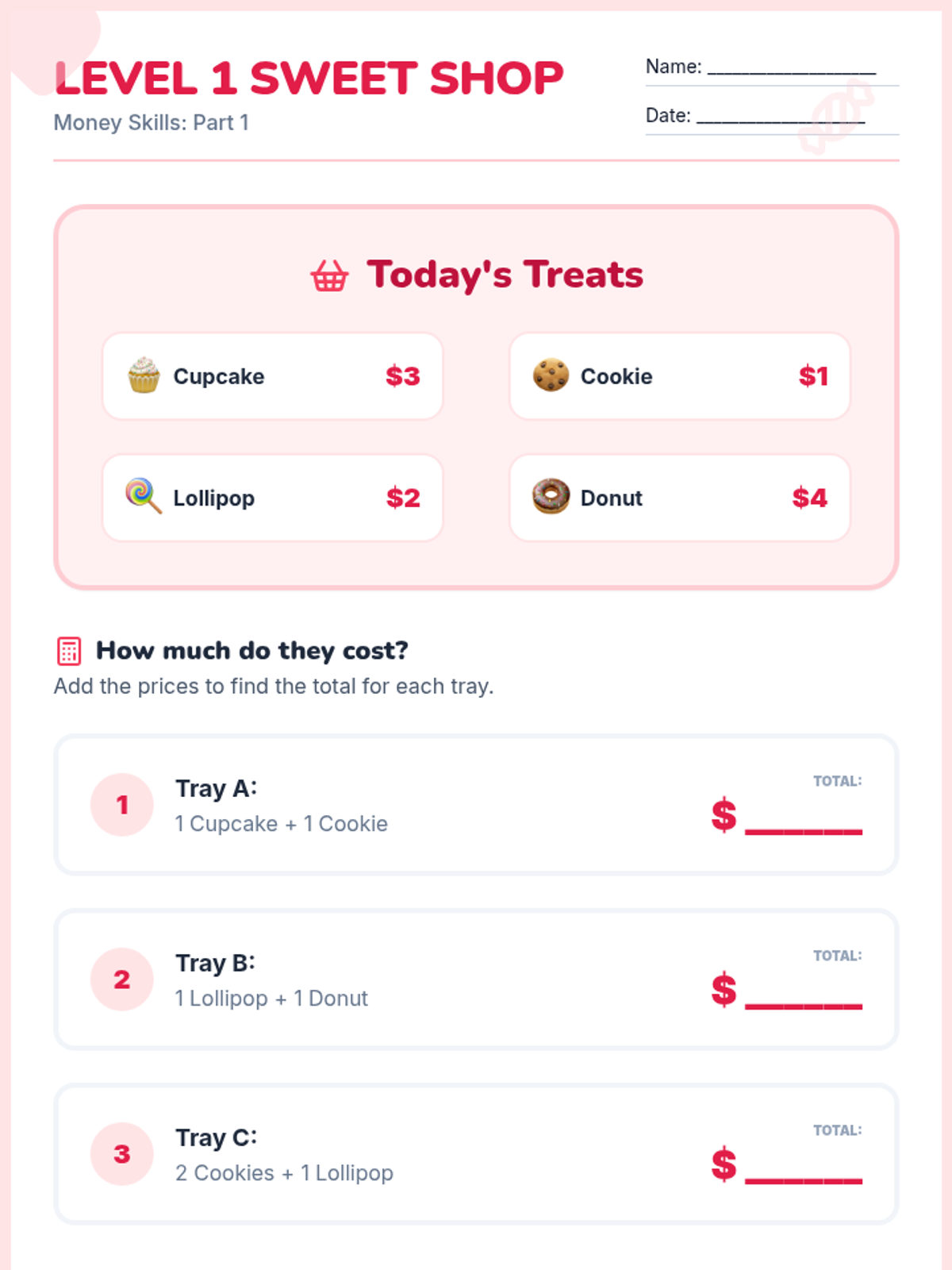
Students will practice identifying single coins, calculating costs with whole numbers, and buying items from a Level 1 sweet shop menu.
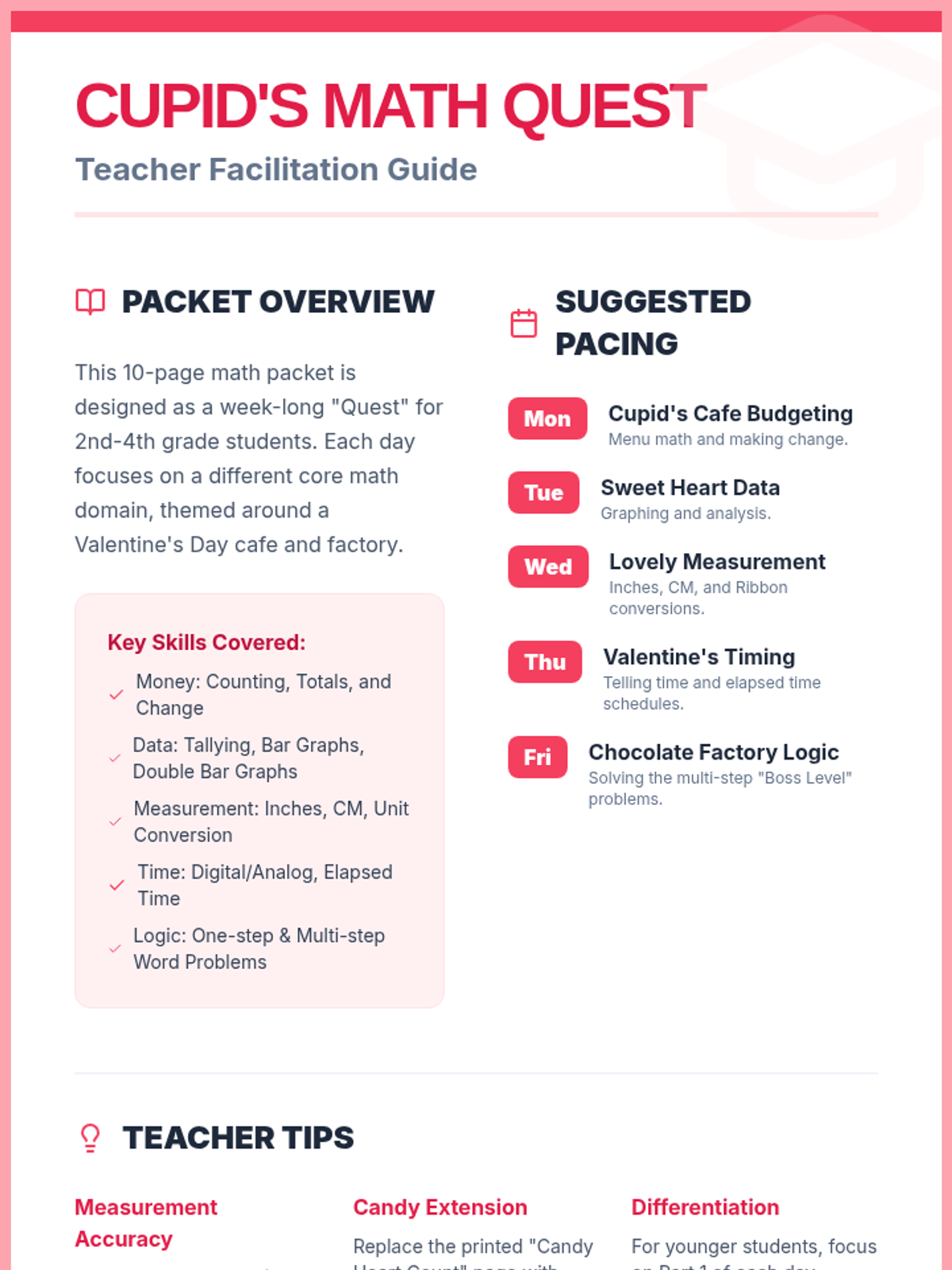
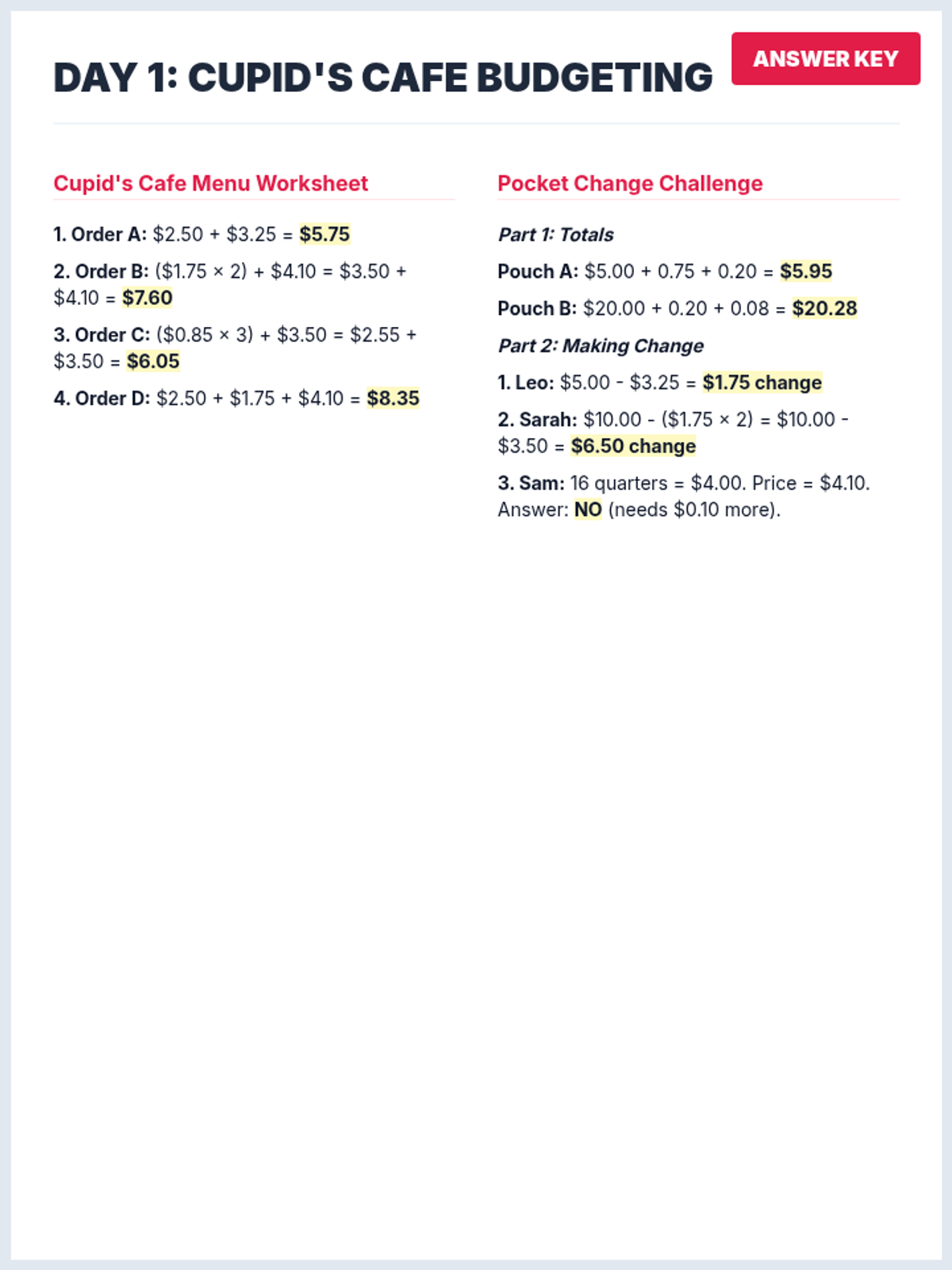
Teacher overview and answer keys for the Quest Valentine's Day math packet.
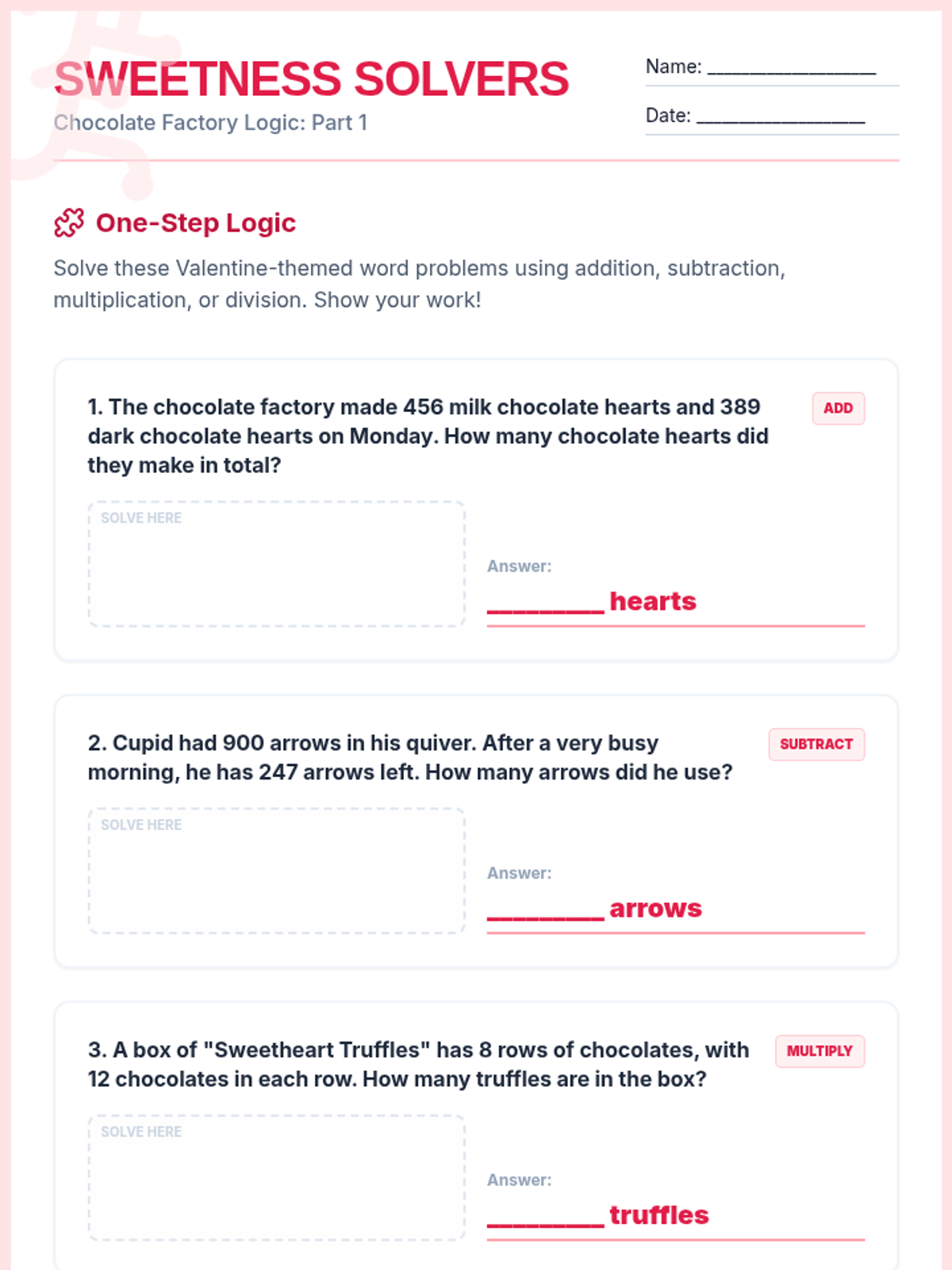
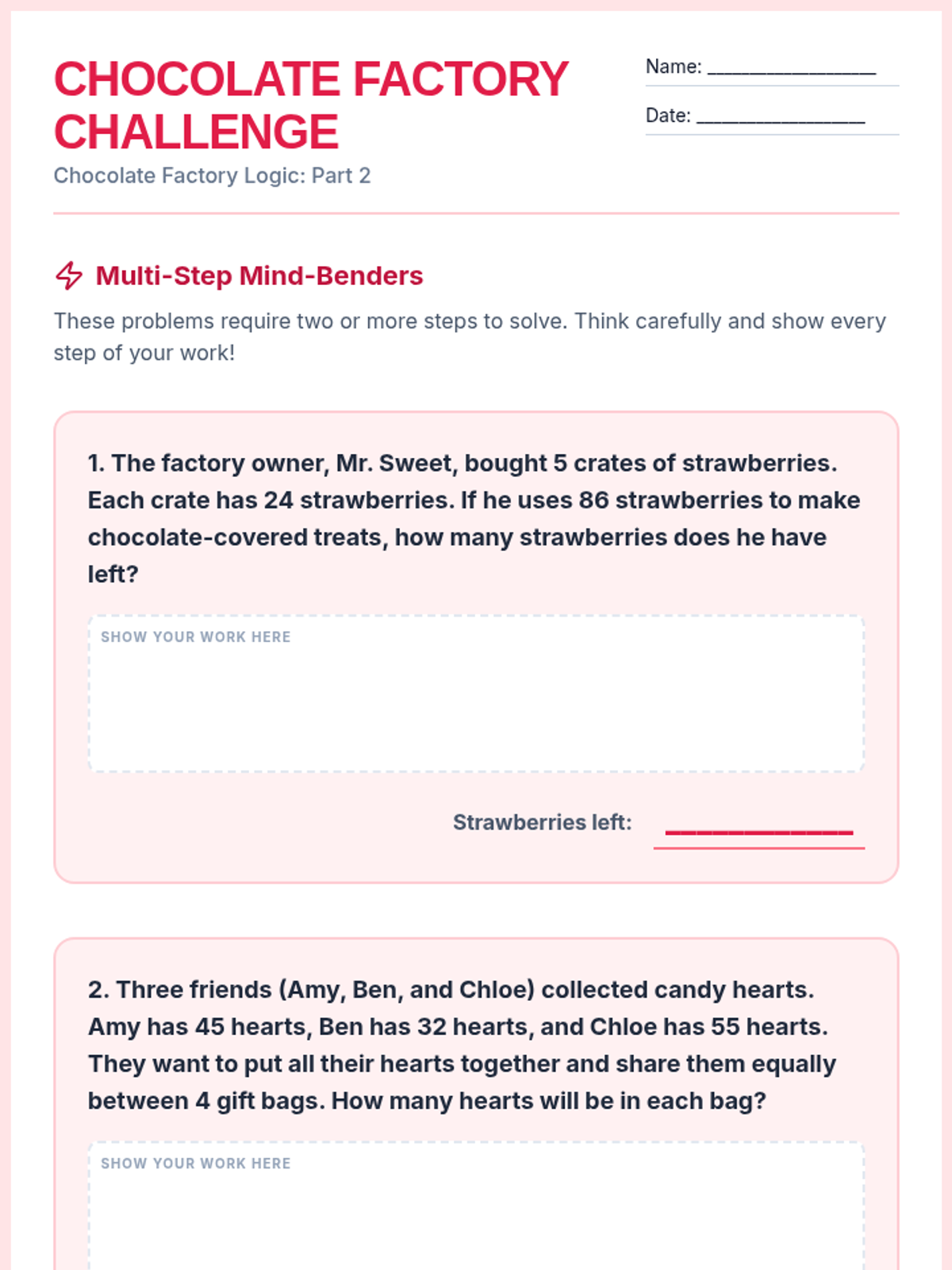
Students will solve a variety of one-step and multi-step math word problems involving all four operations with a Valentine's Day theme.
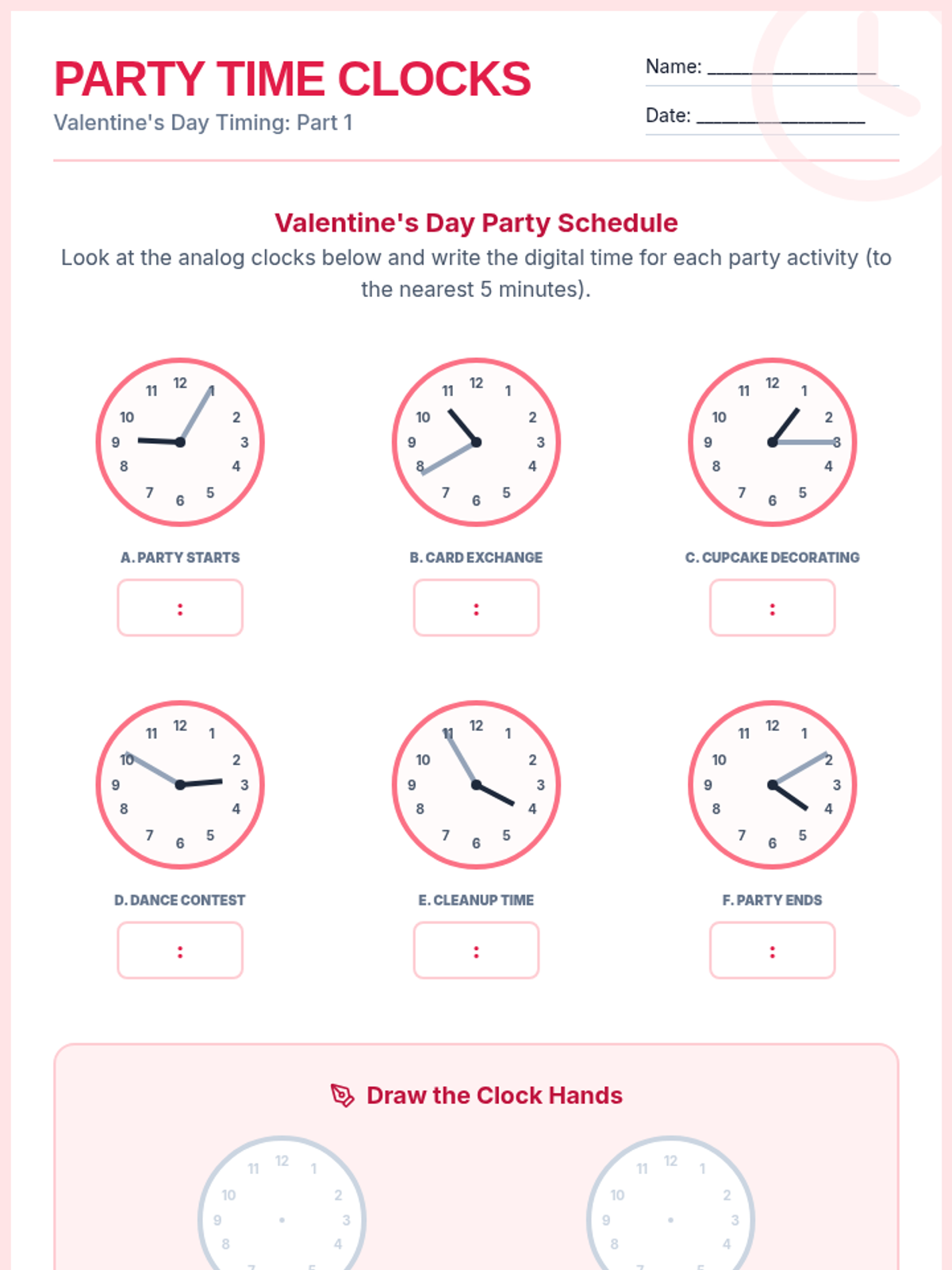
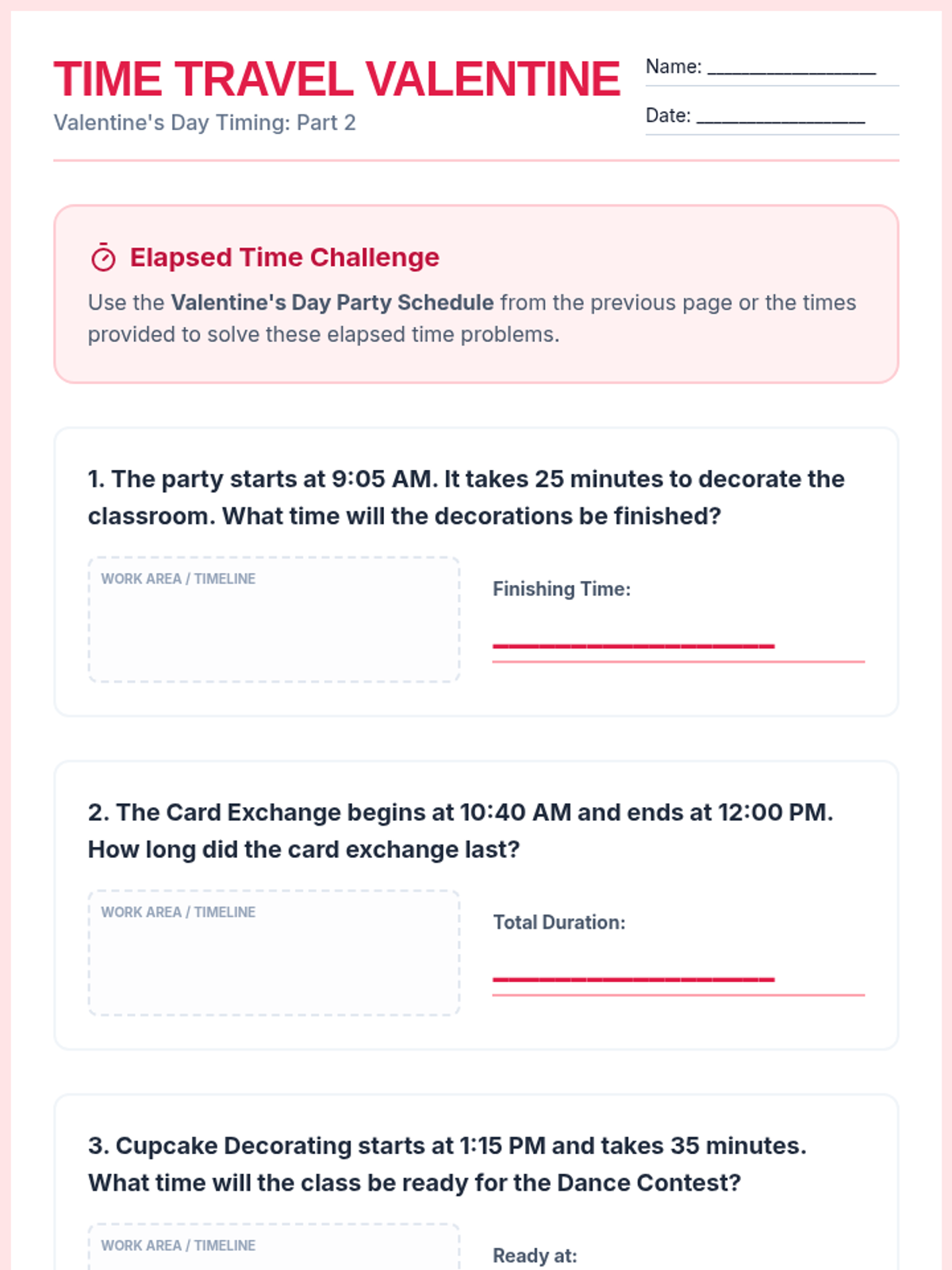
Students will read analog clocks with full numbers to the hour, half-hour, and nearest 5 minutes based on a Valentine's Day party schedule.
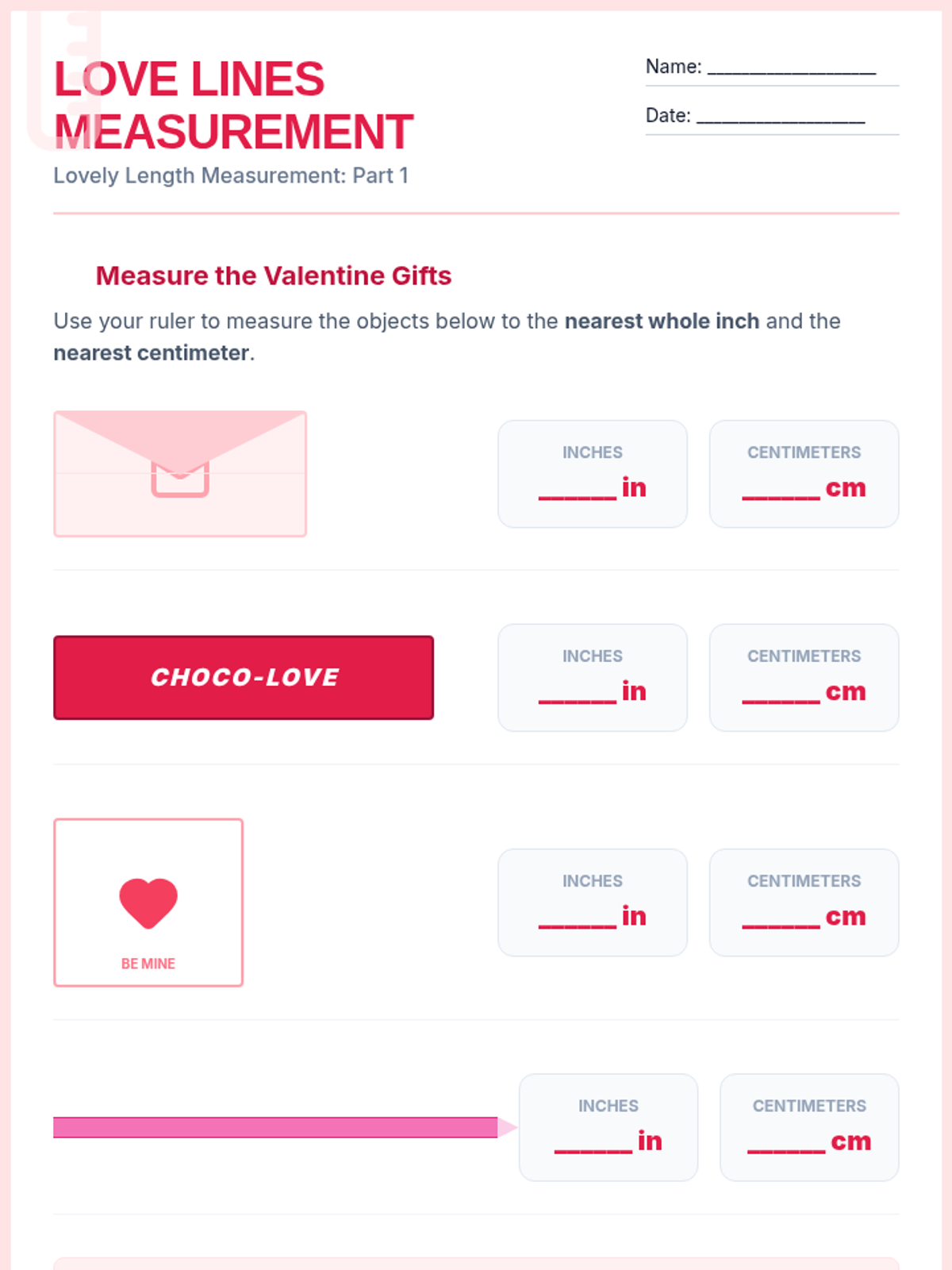
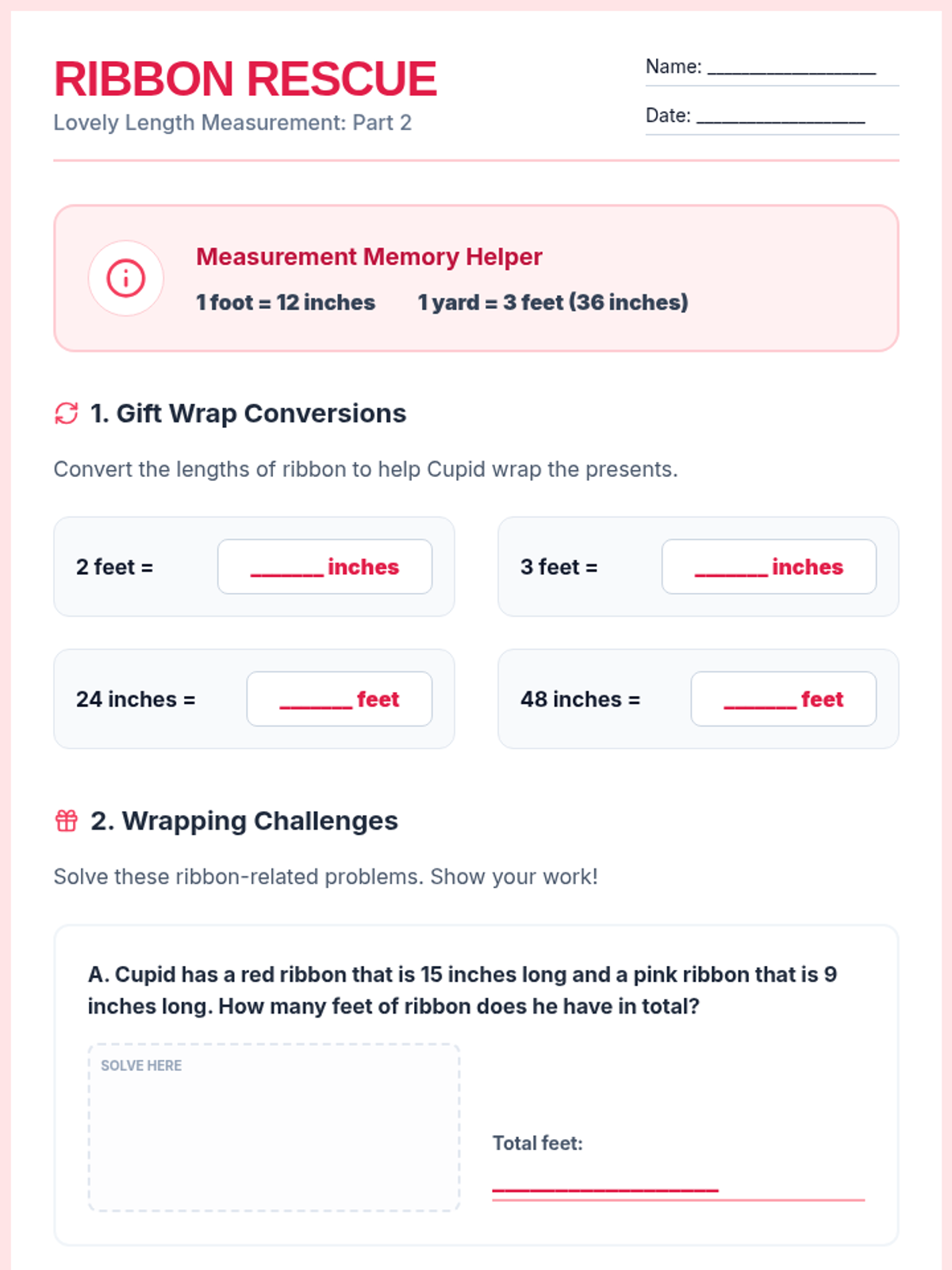
Students will measure Valentine-themed objects to the nearest inch and centimeter and practice converting basic units of length for gift wrapping.
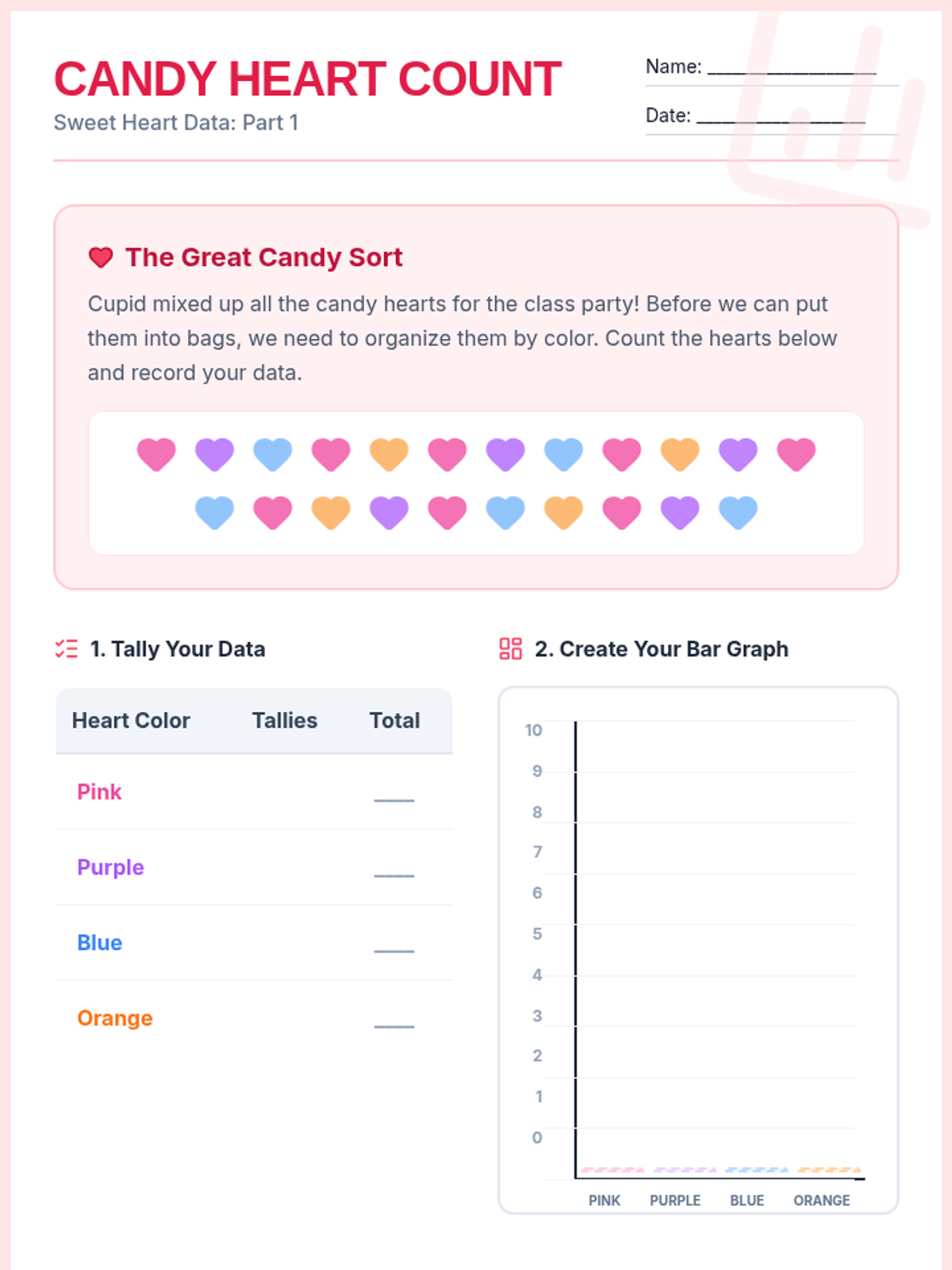
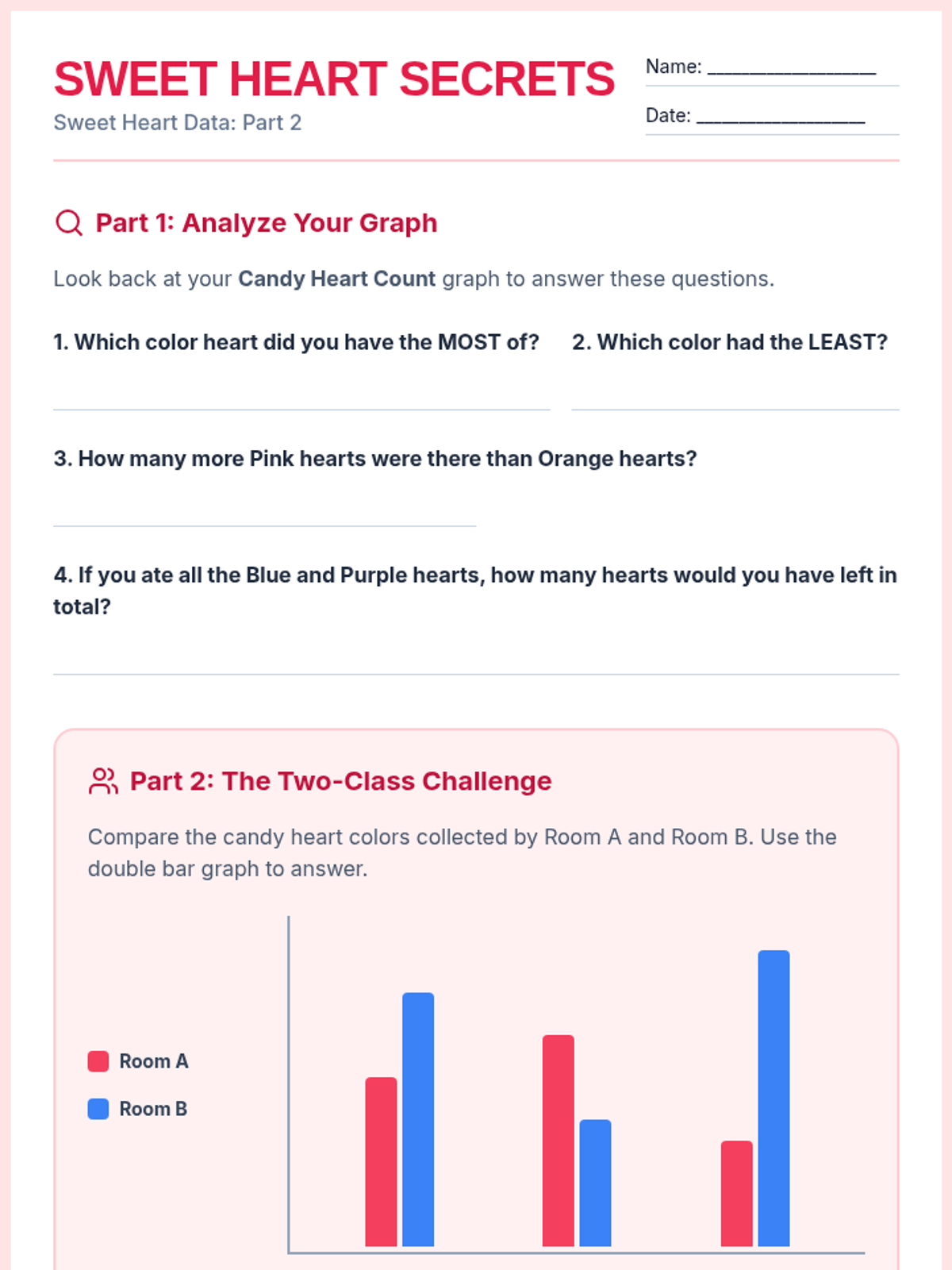
Students will collect data from candy heart assortments, create bar graphs with multiple data sets, and interpret the results to solve comparison problems.
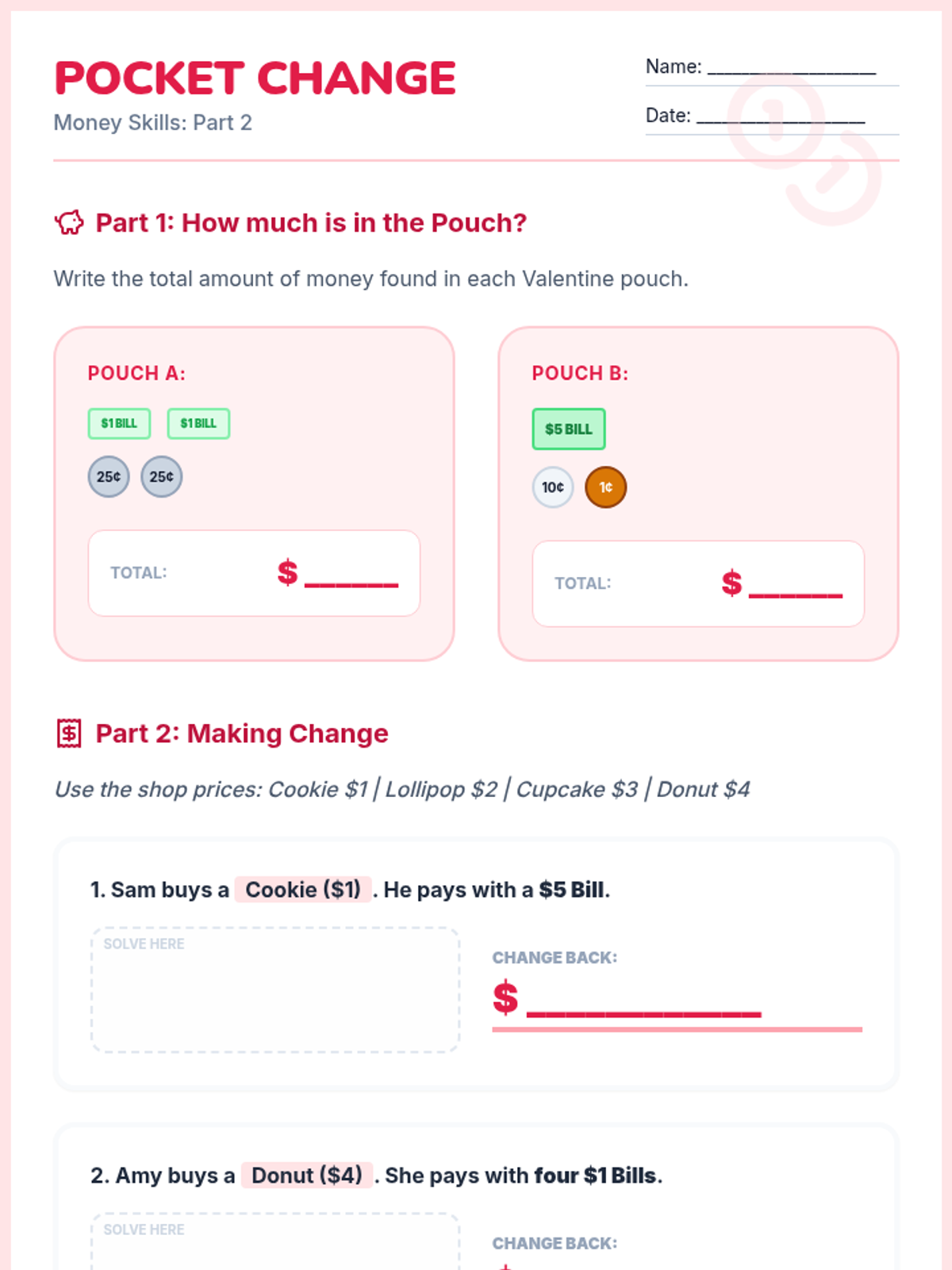
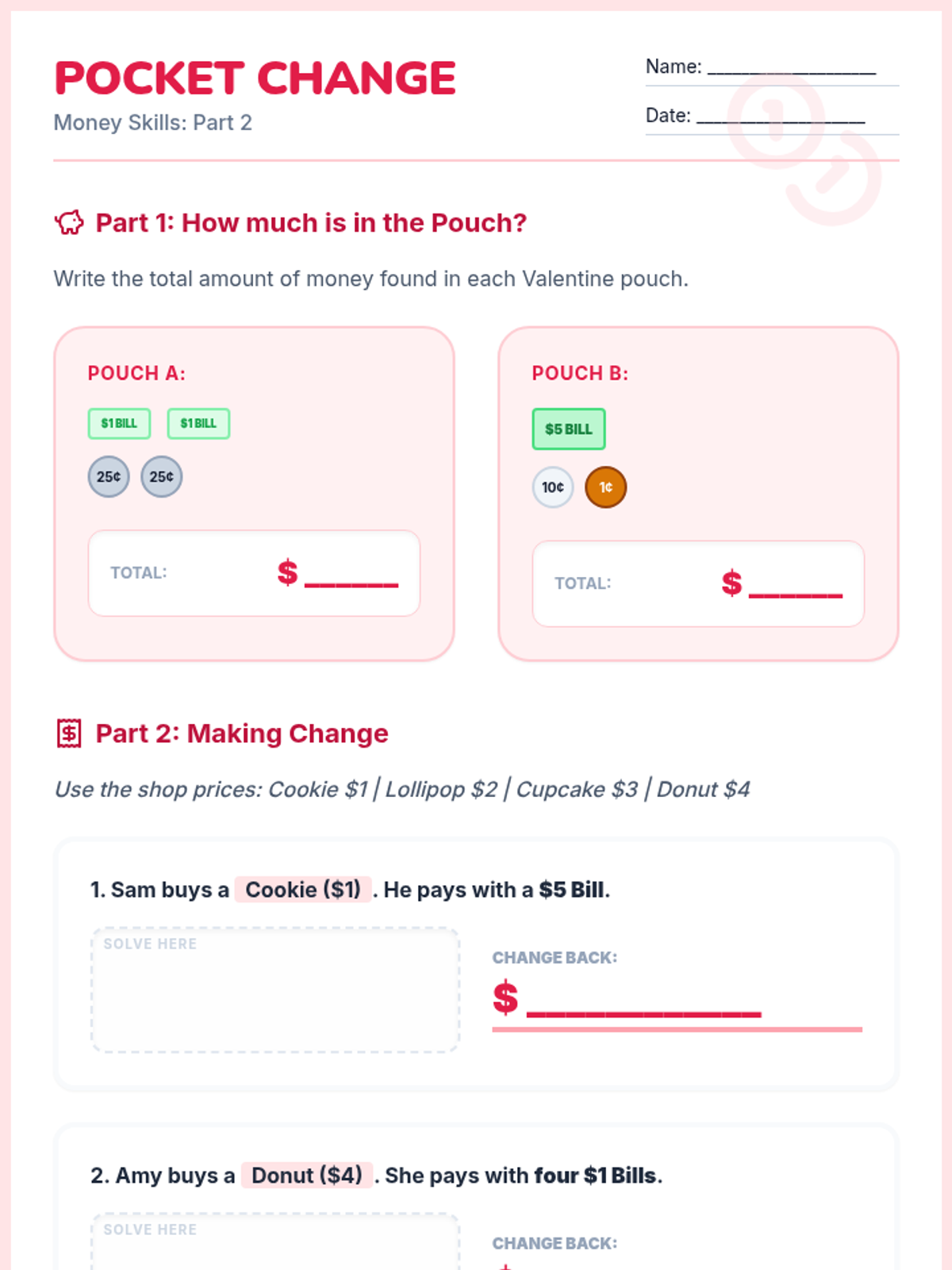
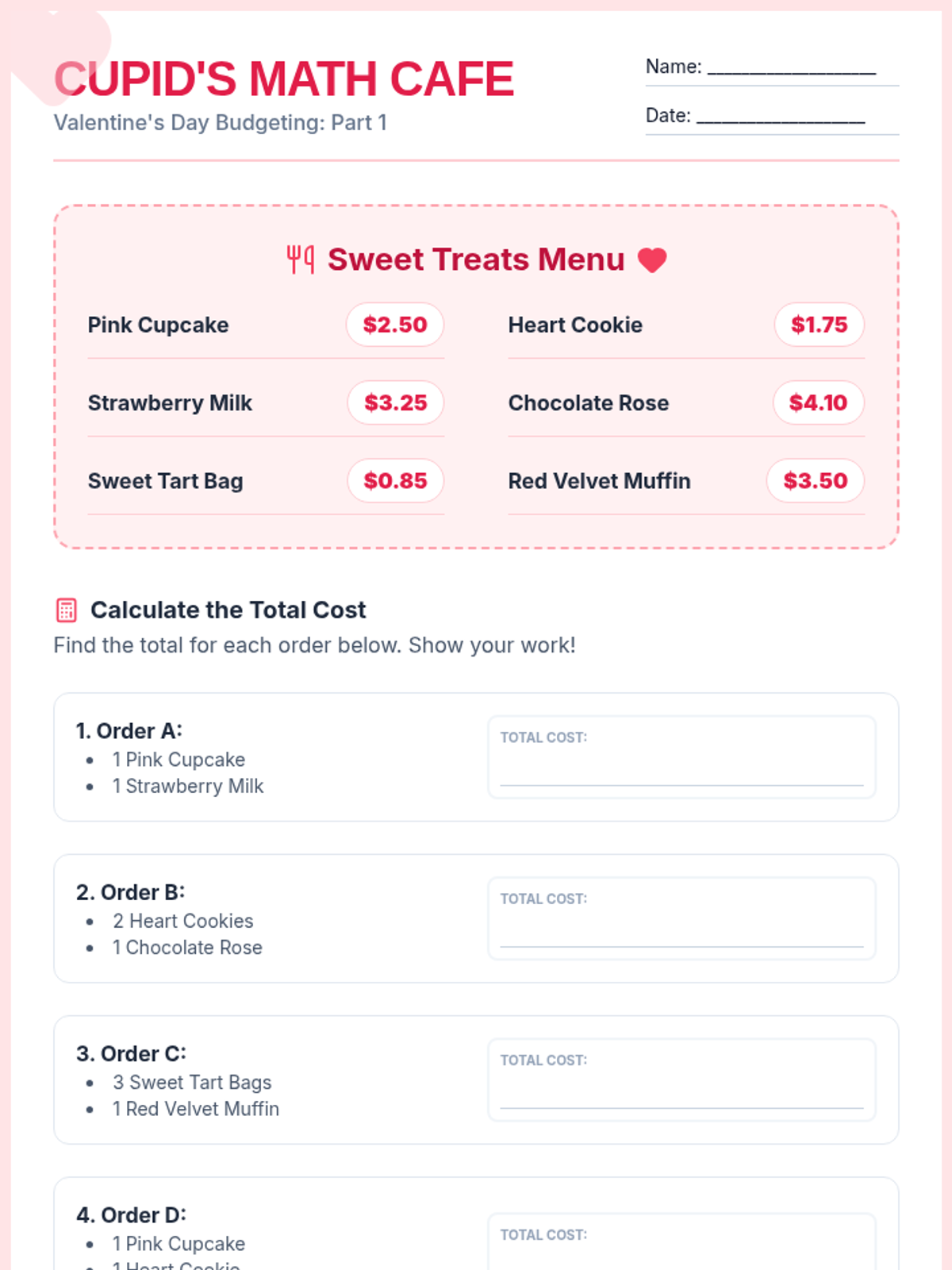
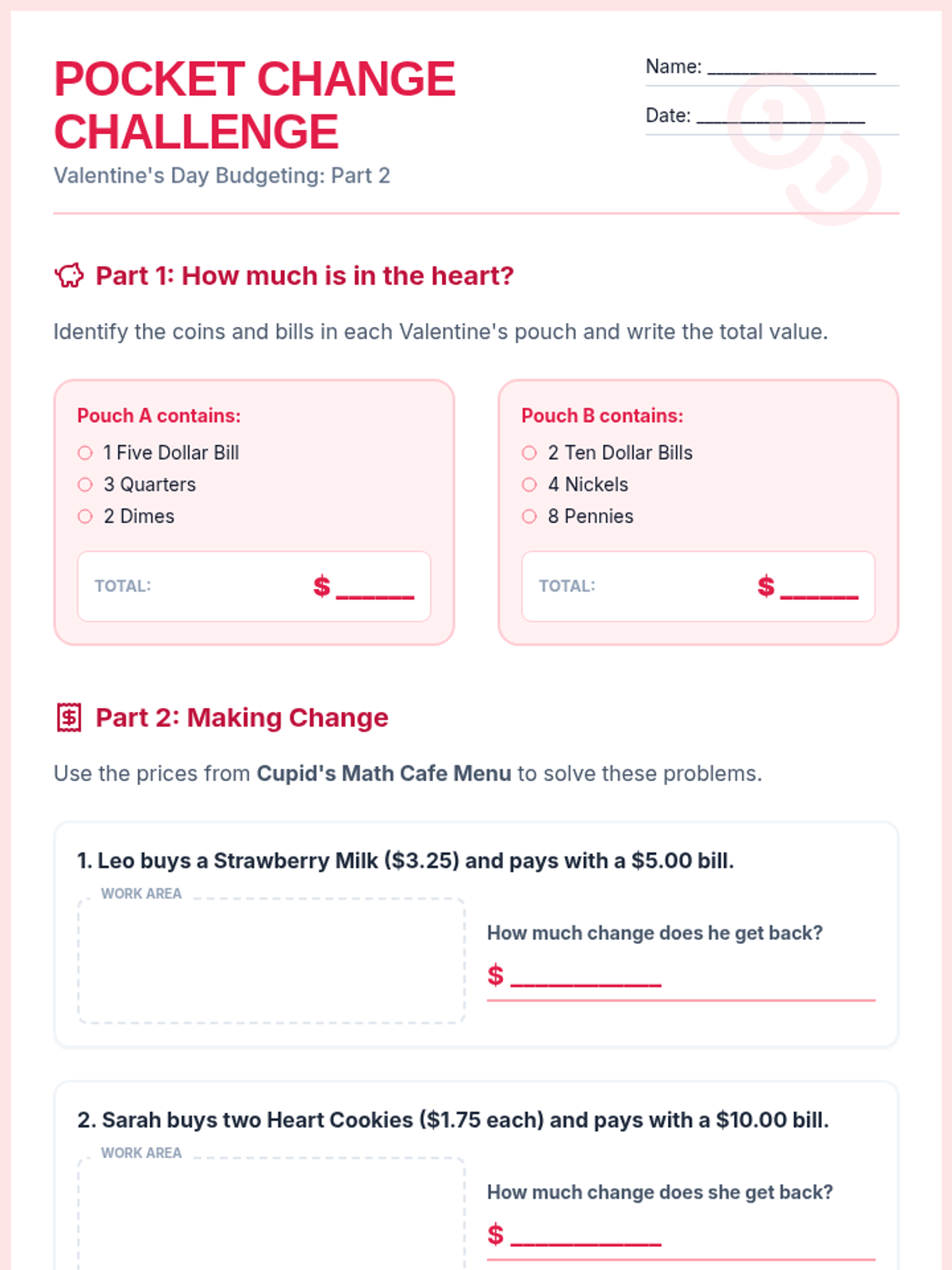
Students will practice identifying coins and bills, calculating the total cost of items from a cafe menu, and determining change for various purchases.
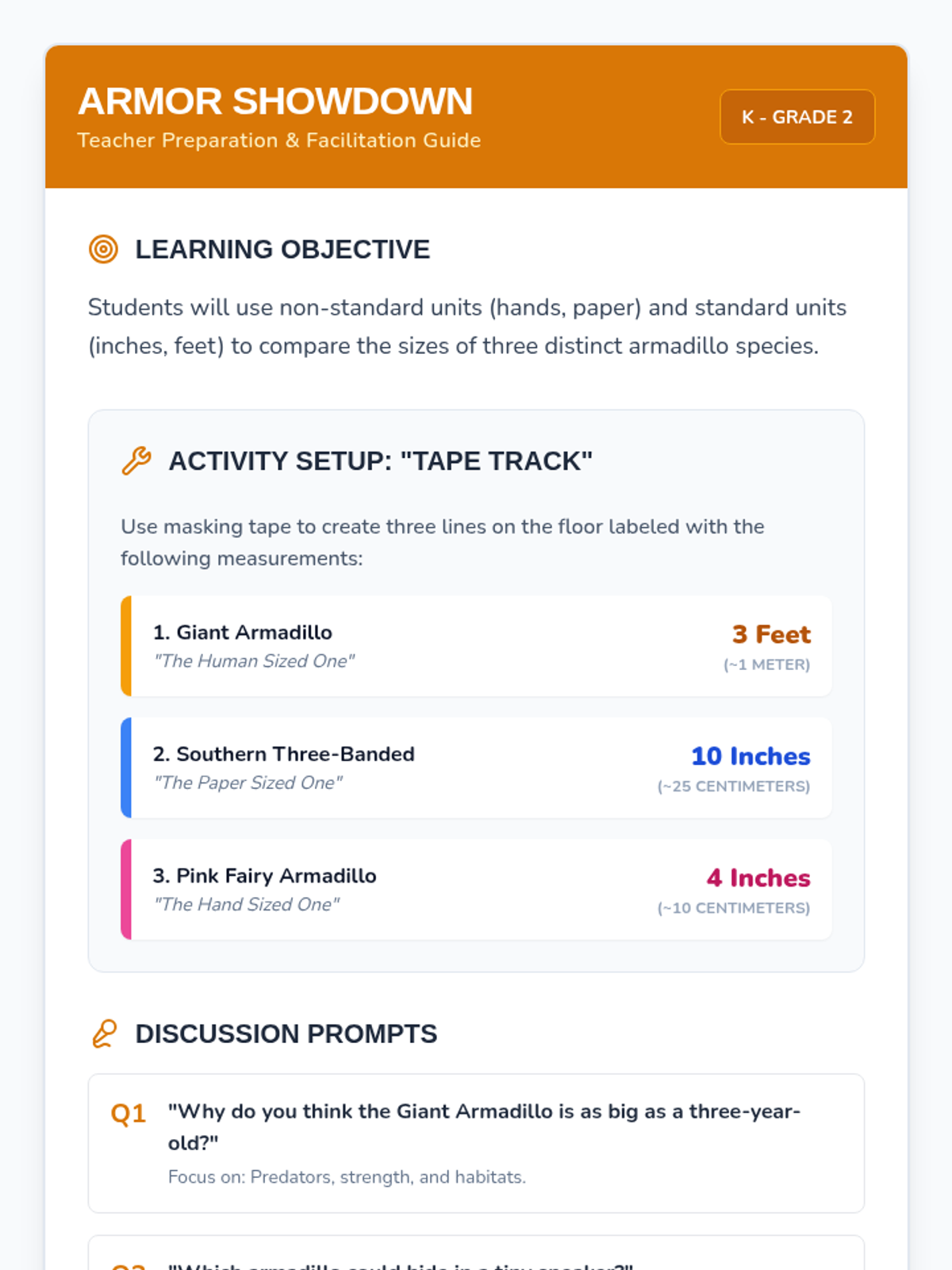
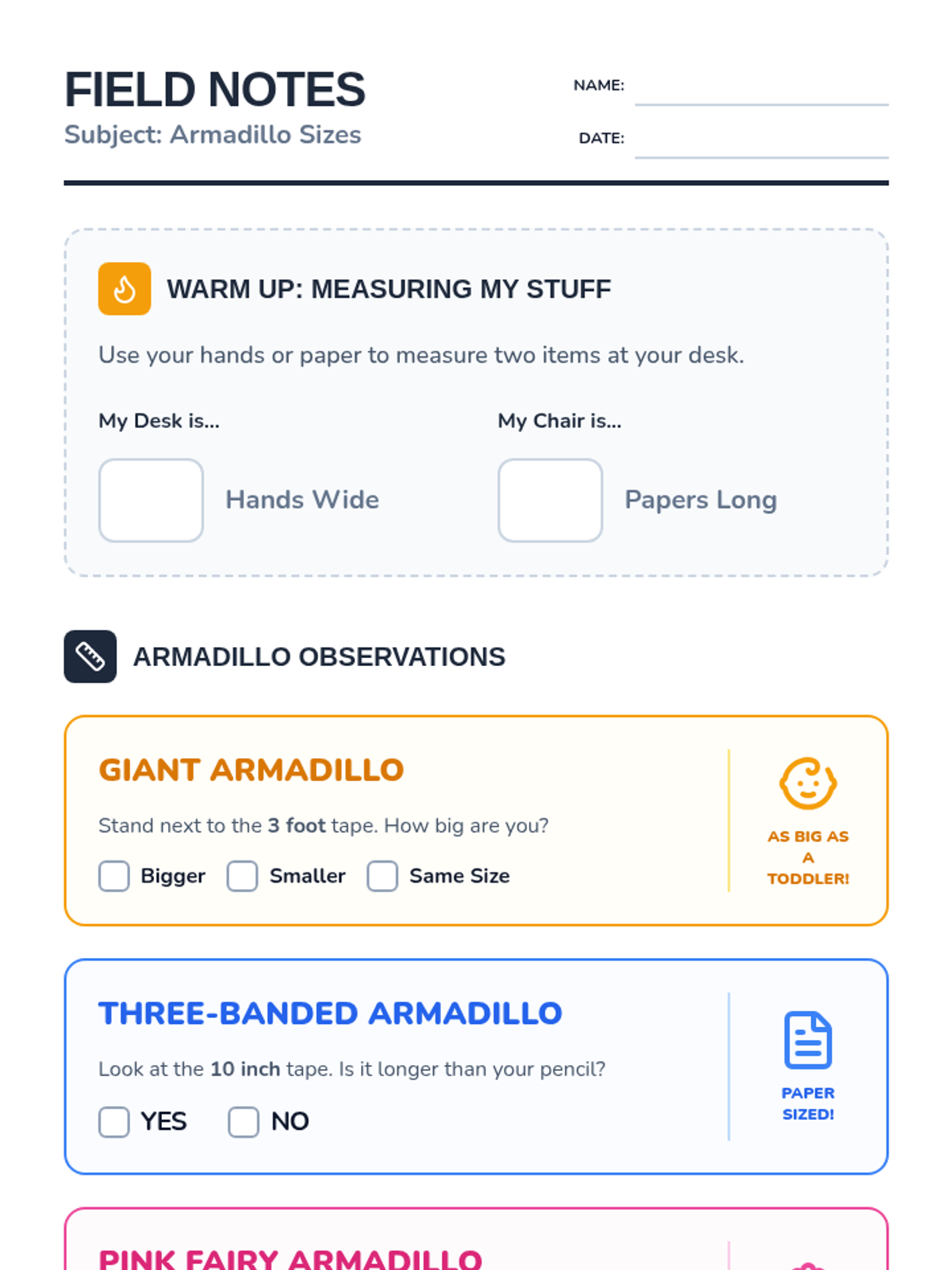
Students will explore animal diversity and measurement by comparing different armadillo species using non-standard units (hands, paper) and standard units (inches, feet).
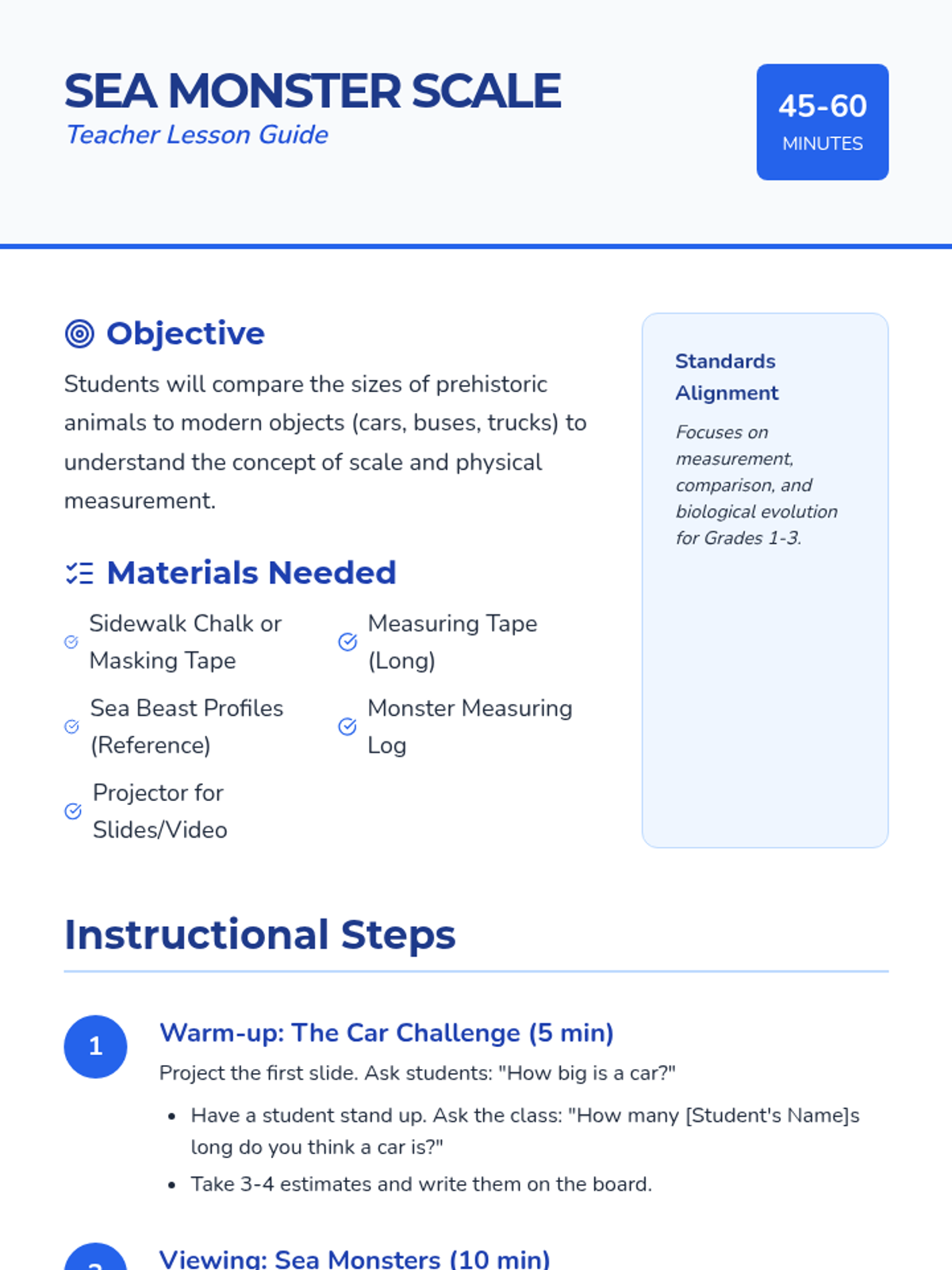
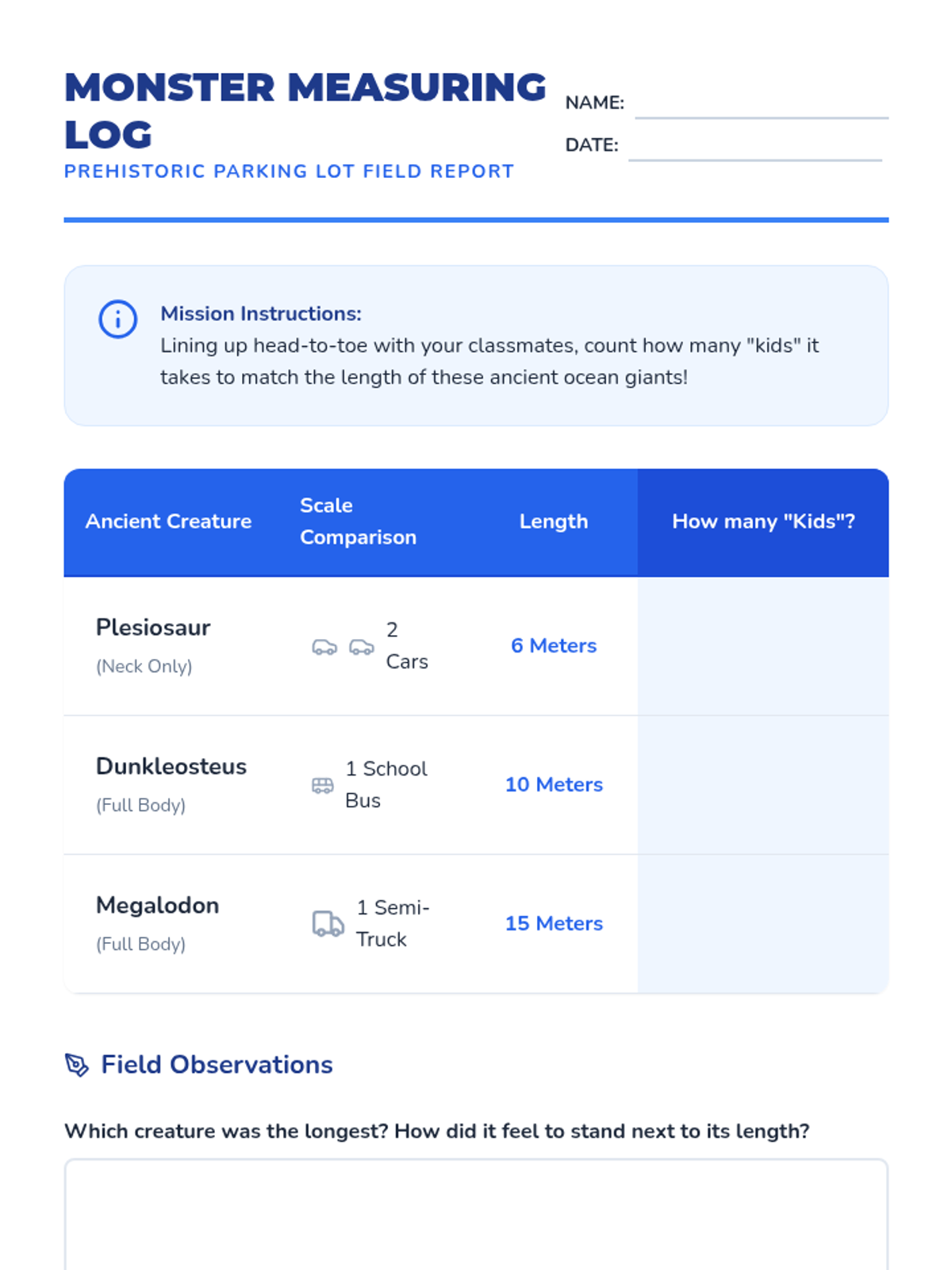
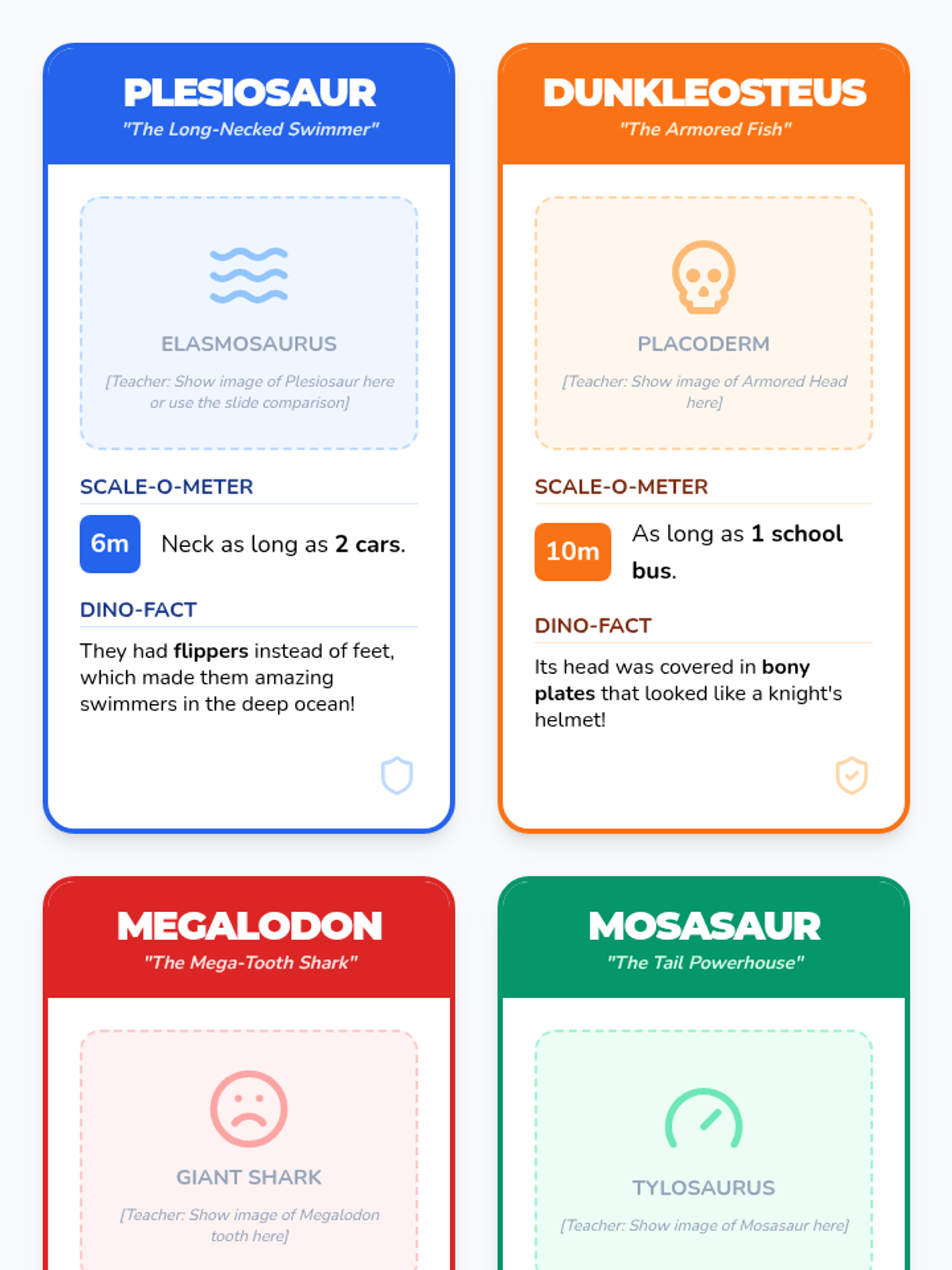
A lesson where students explore the incredible scale of prehistoric sea creatures by comparing them to modern objects and using their own bodies as units of measurement.
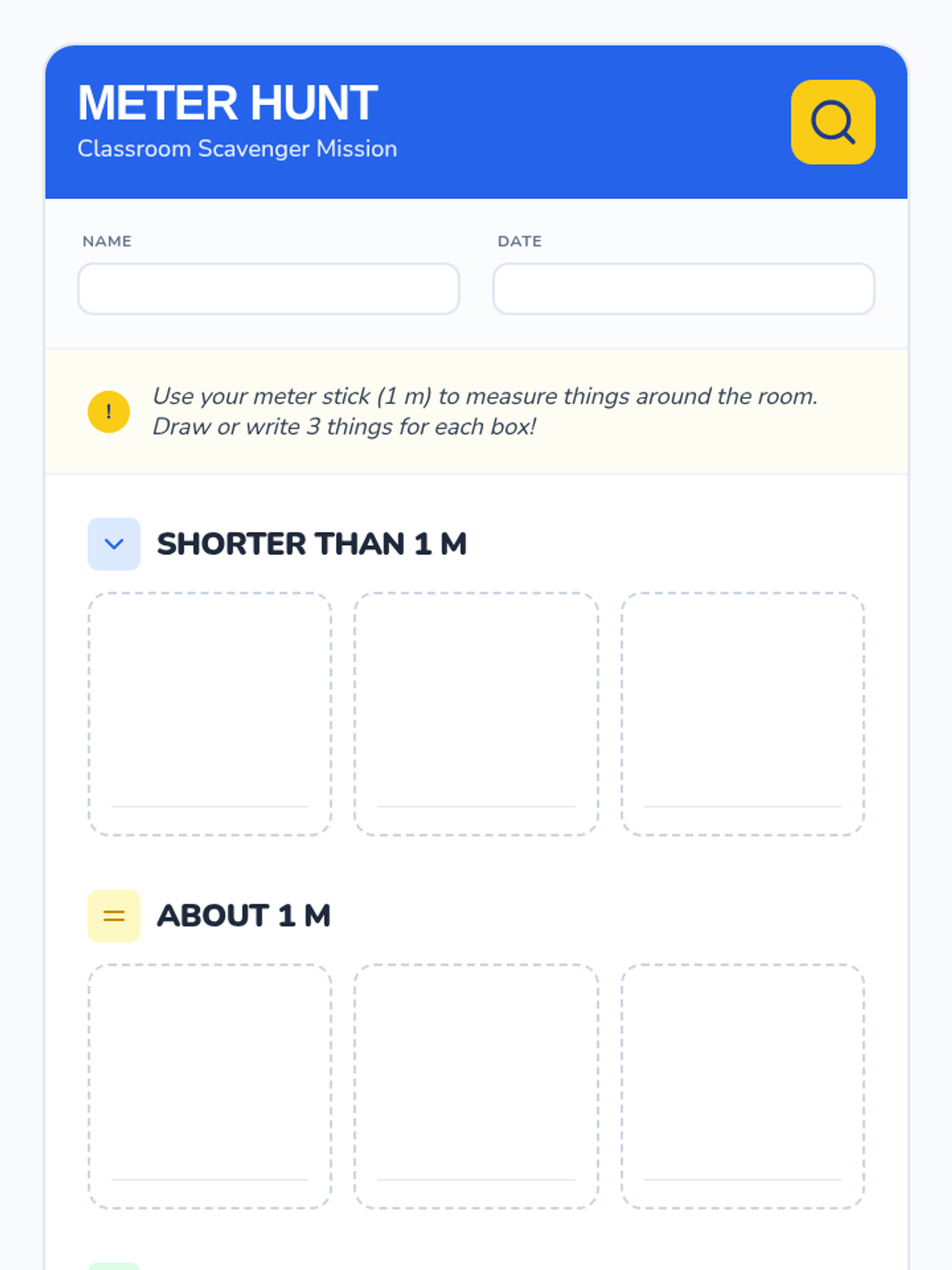
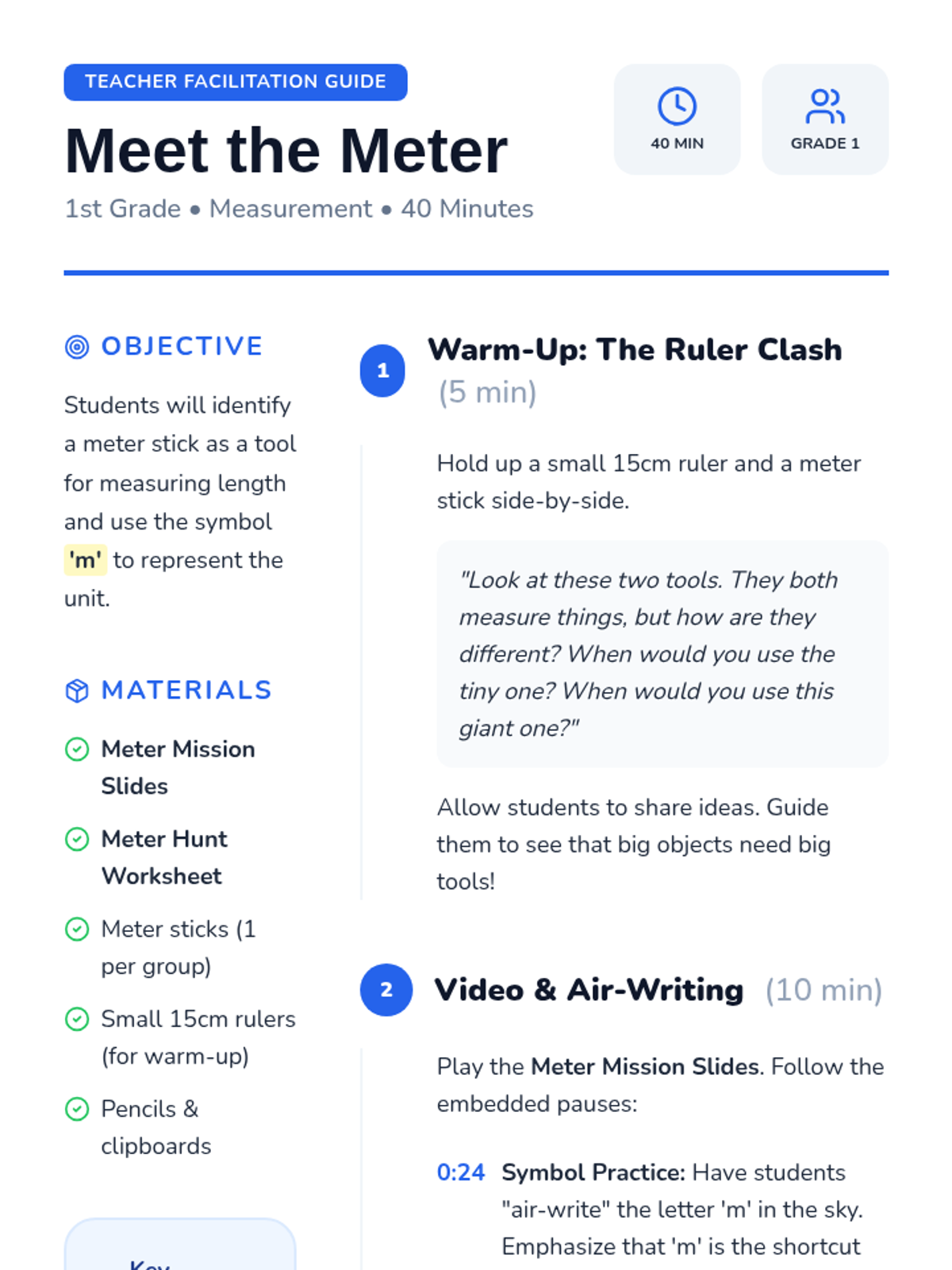
A 1st Grade lesson introducing the meter as a unit of length, using a meter stick tool, the symbol 'm', and a classroom scavenger hunt to compare objects to 1 meter.
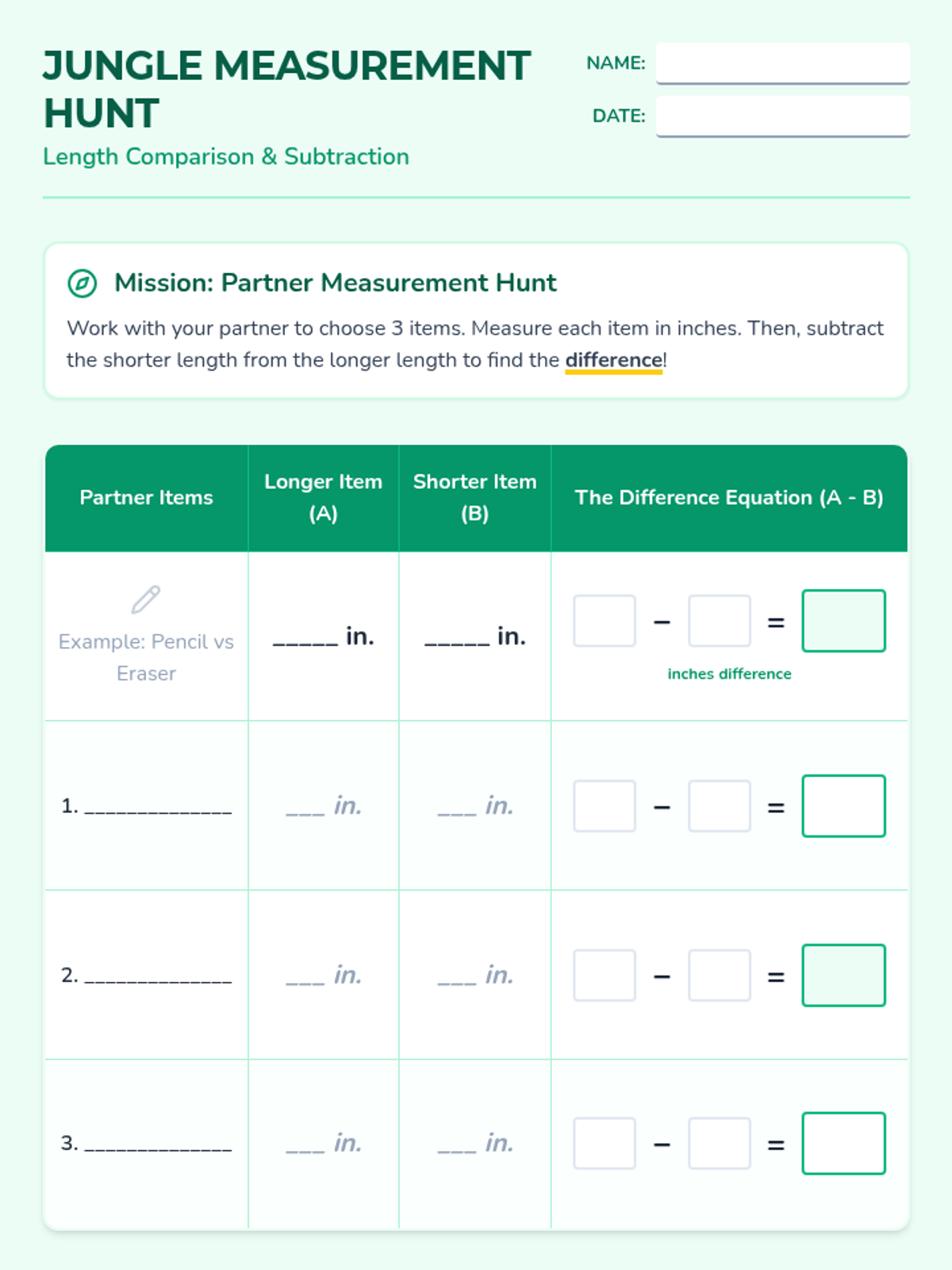
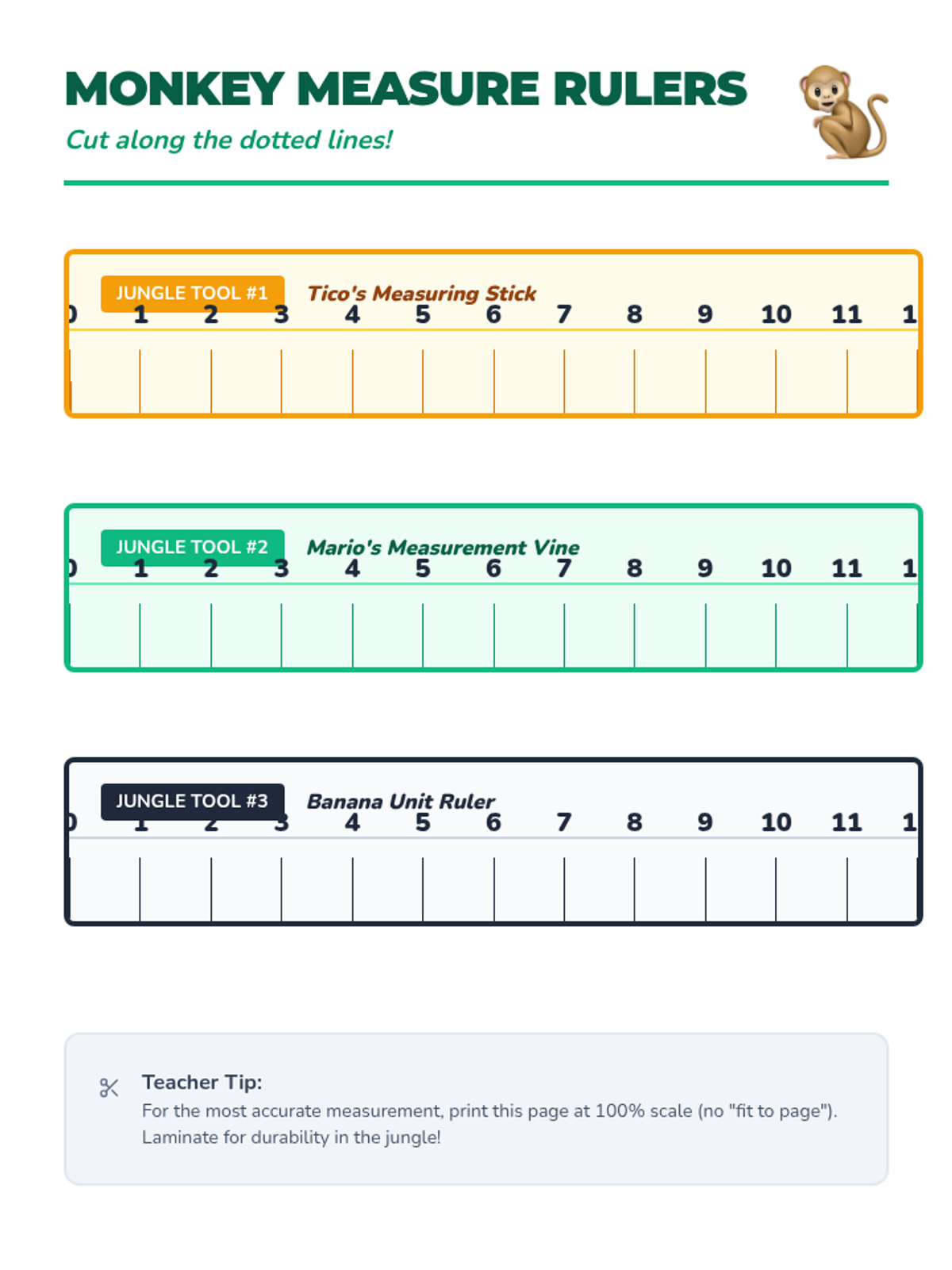
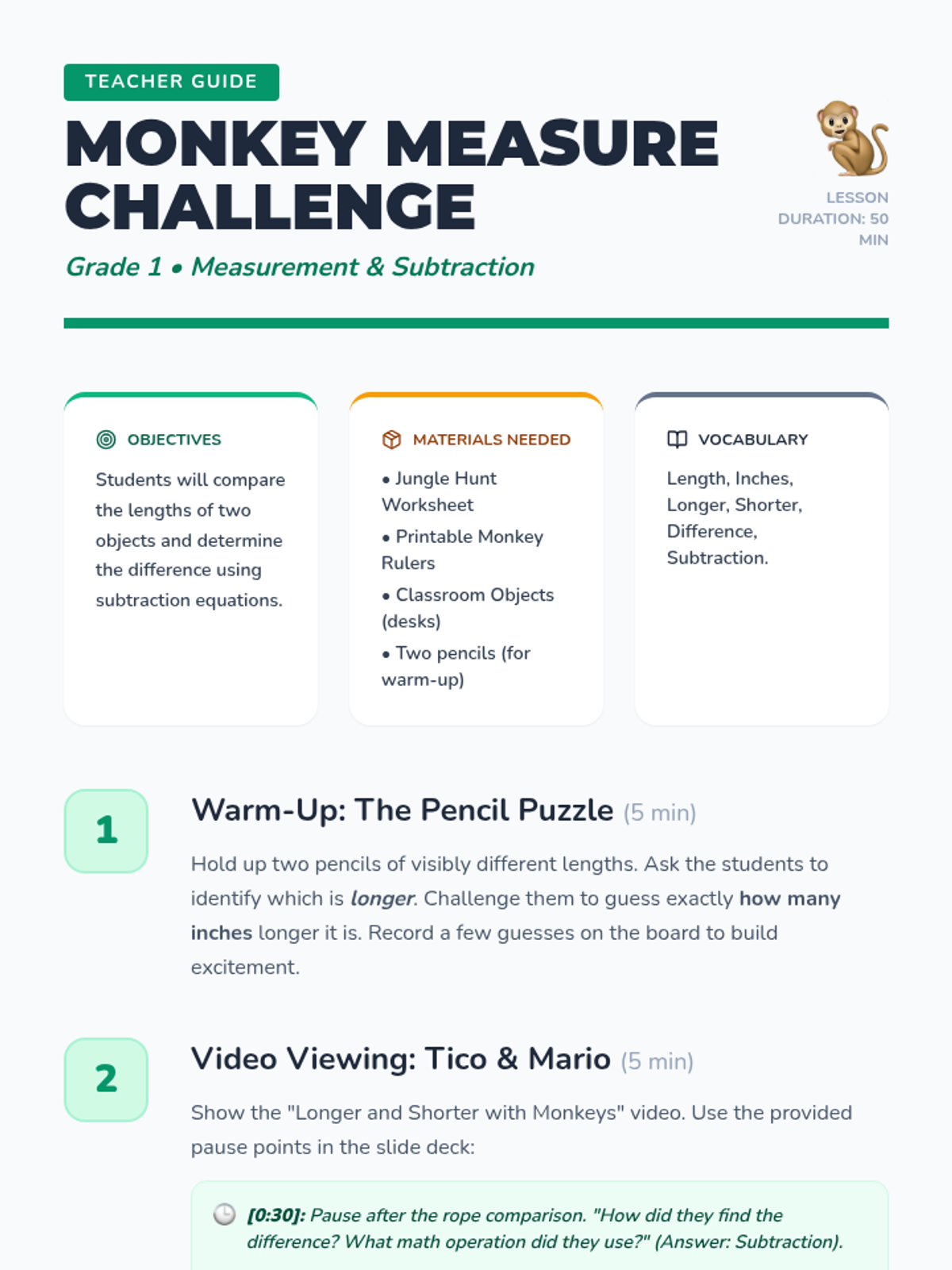
A 1st-grade lesson focused on comparing lengths using subtraction, inspired by the 'Longer and Shorter with Monkeys' video. Students engage in a hands-on 'Partner Measurement Hunt' to find real-world differences in length.
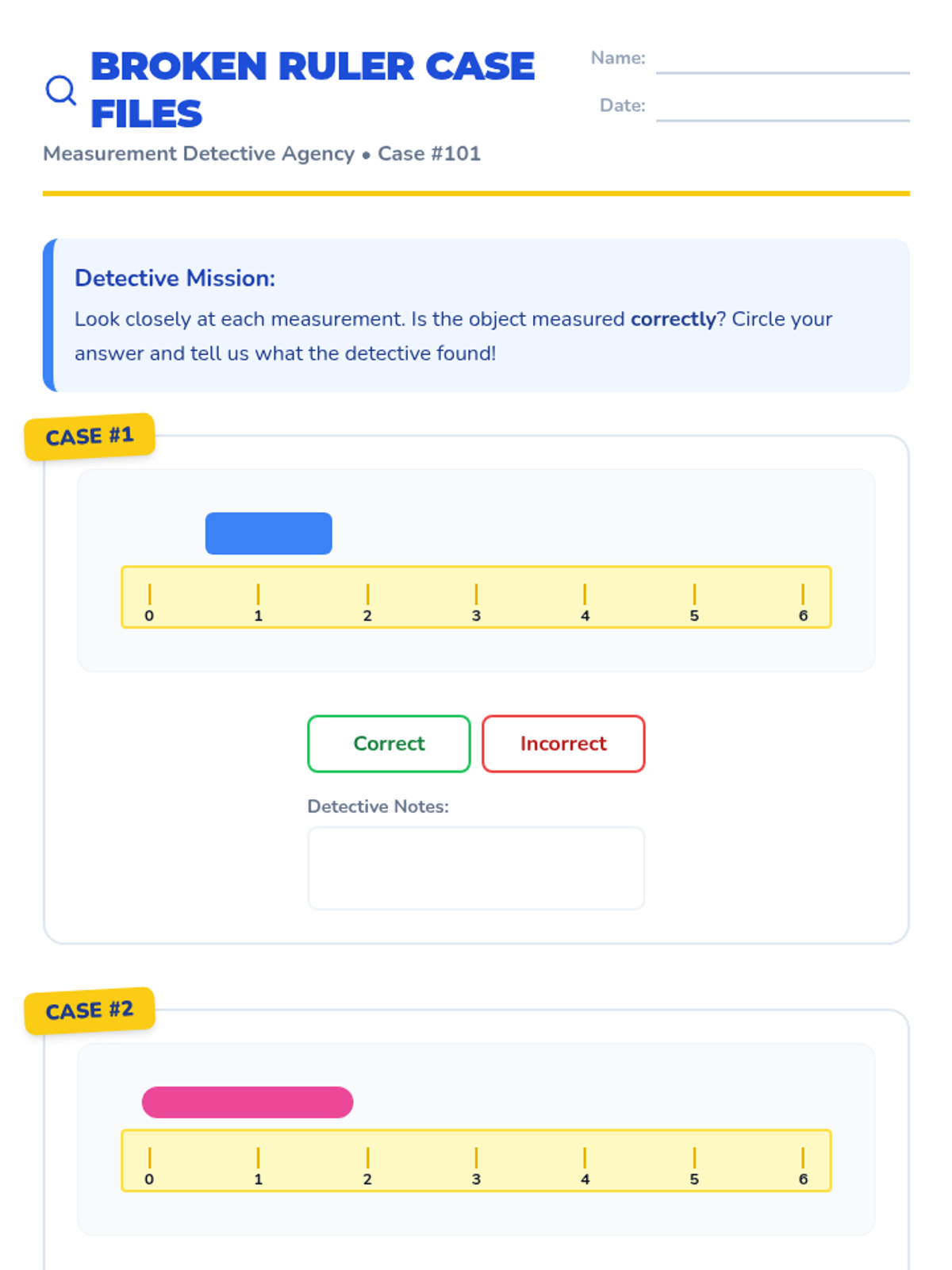
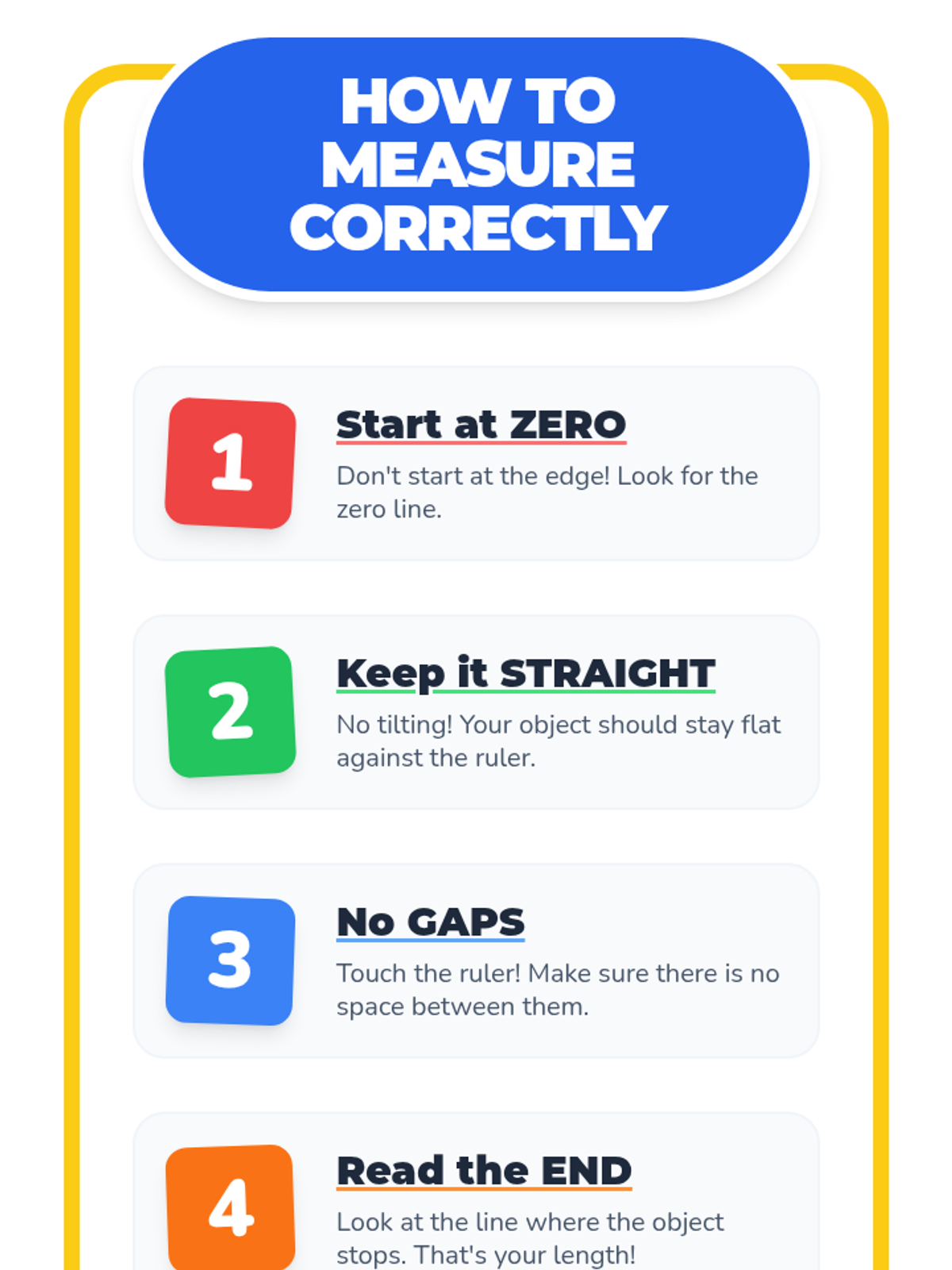
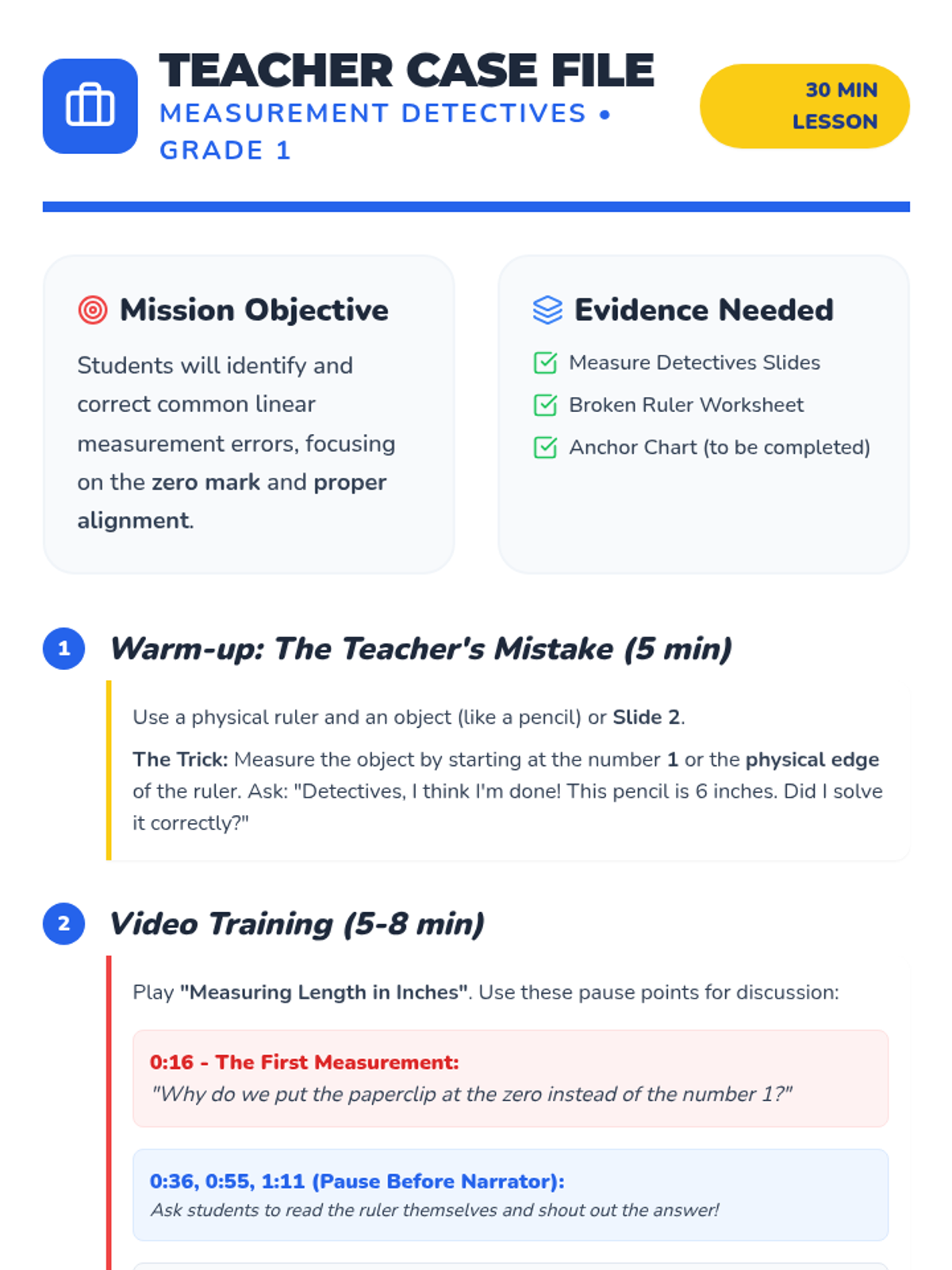
Students will learn to identify and correct common linear measurement errors, focusing on the importance of the 'zero mark' and proper alignment through a detective-themed investigation.
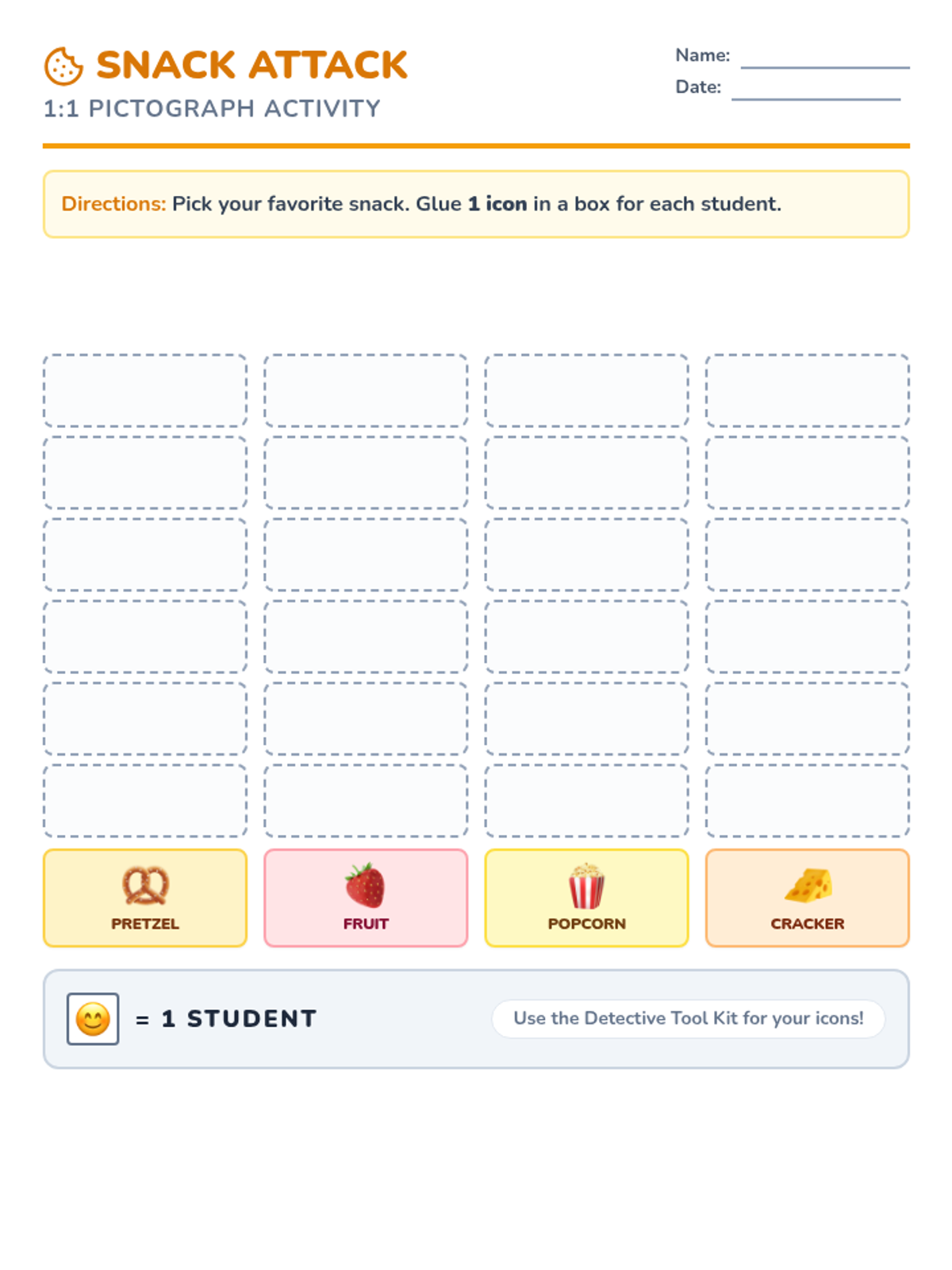
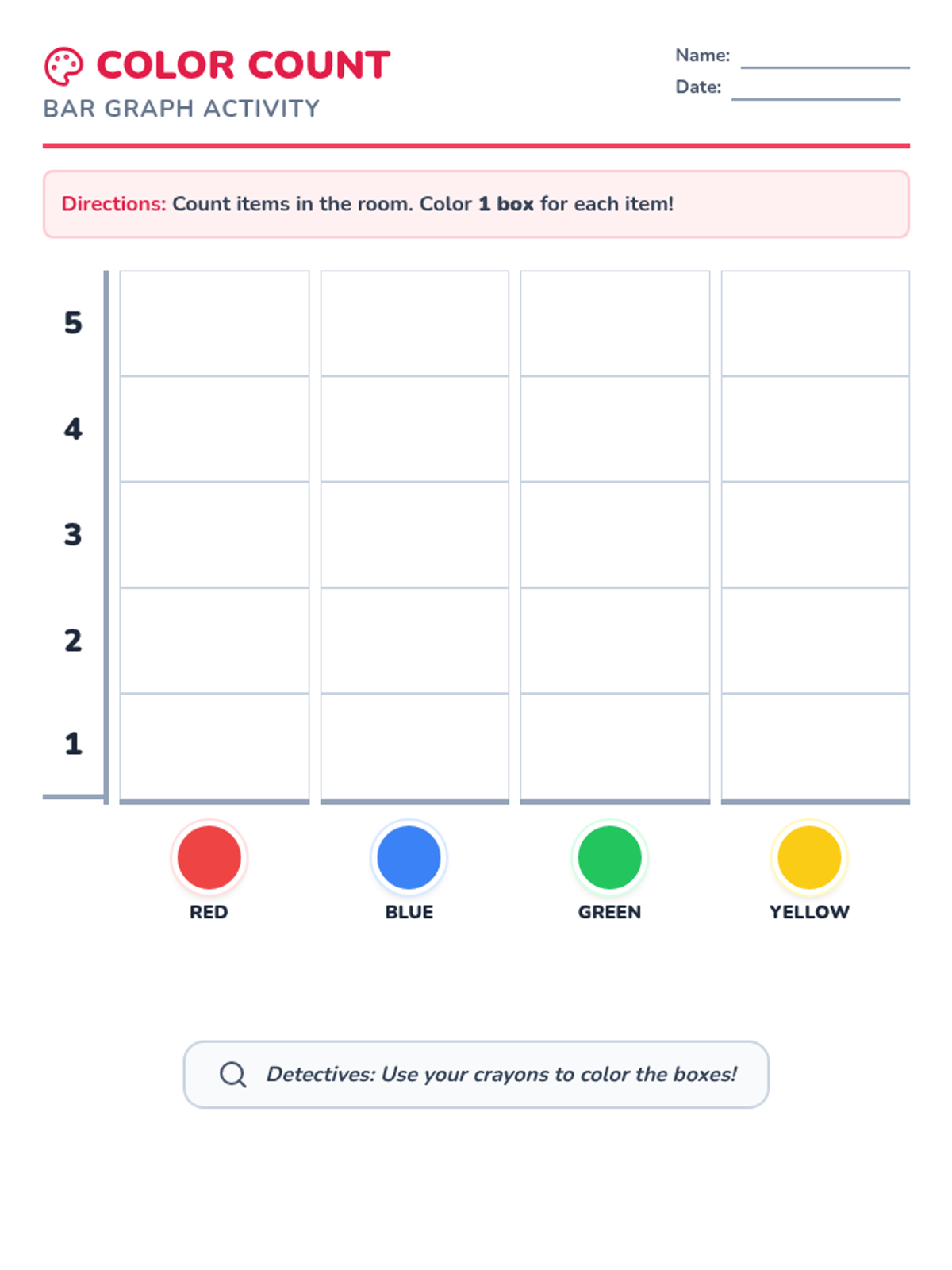
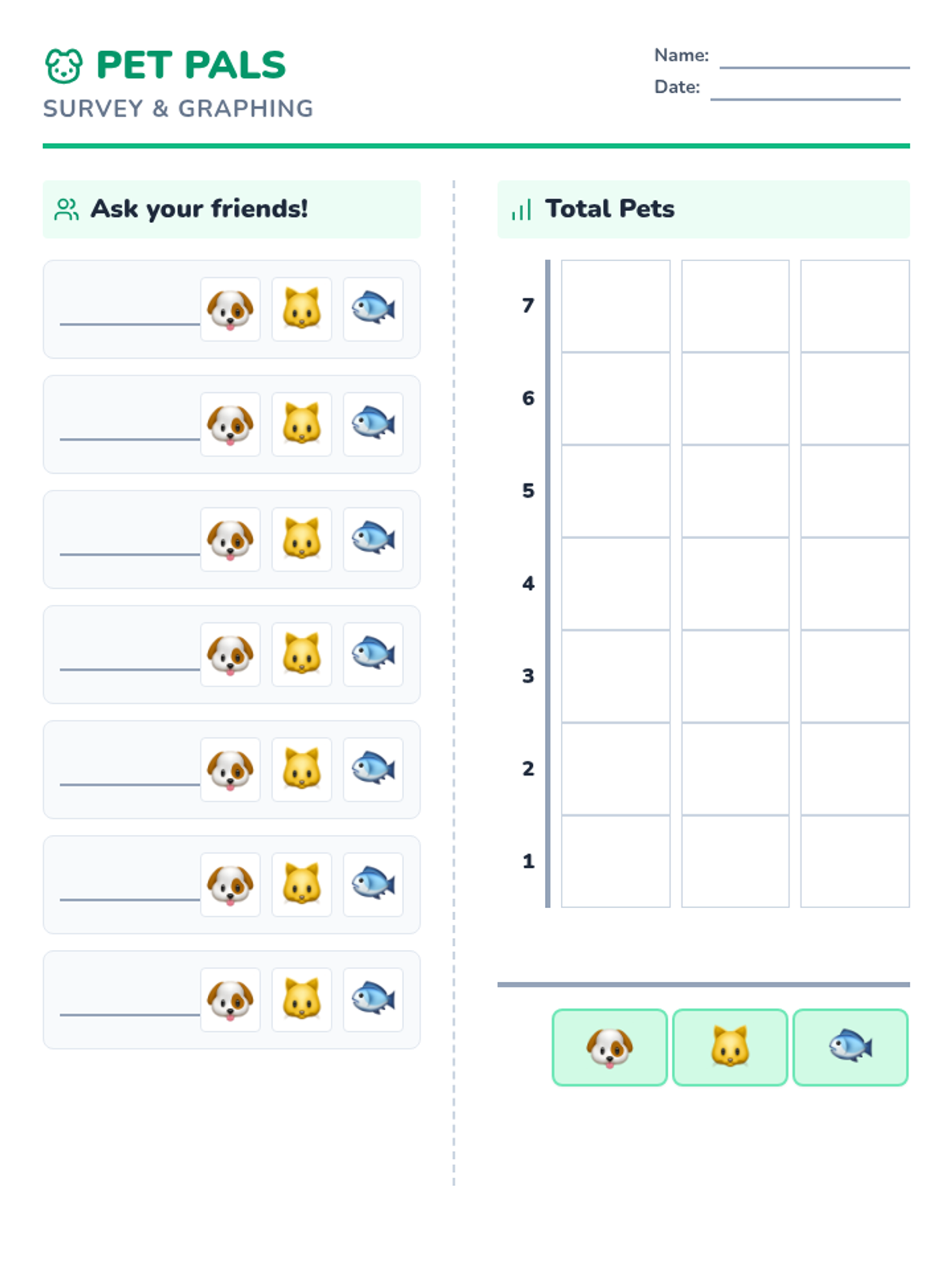
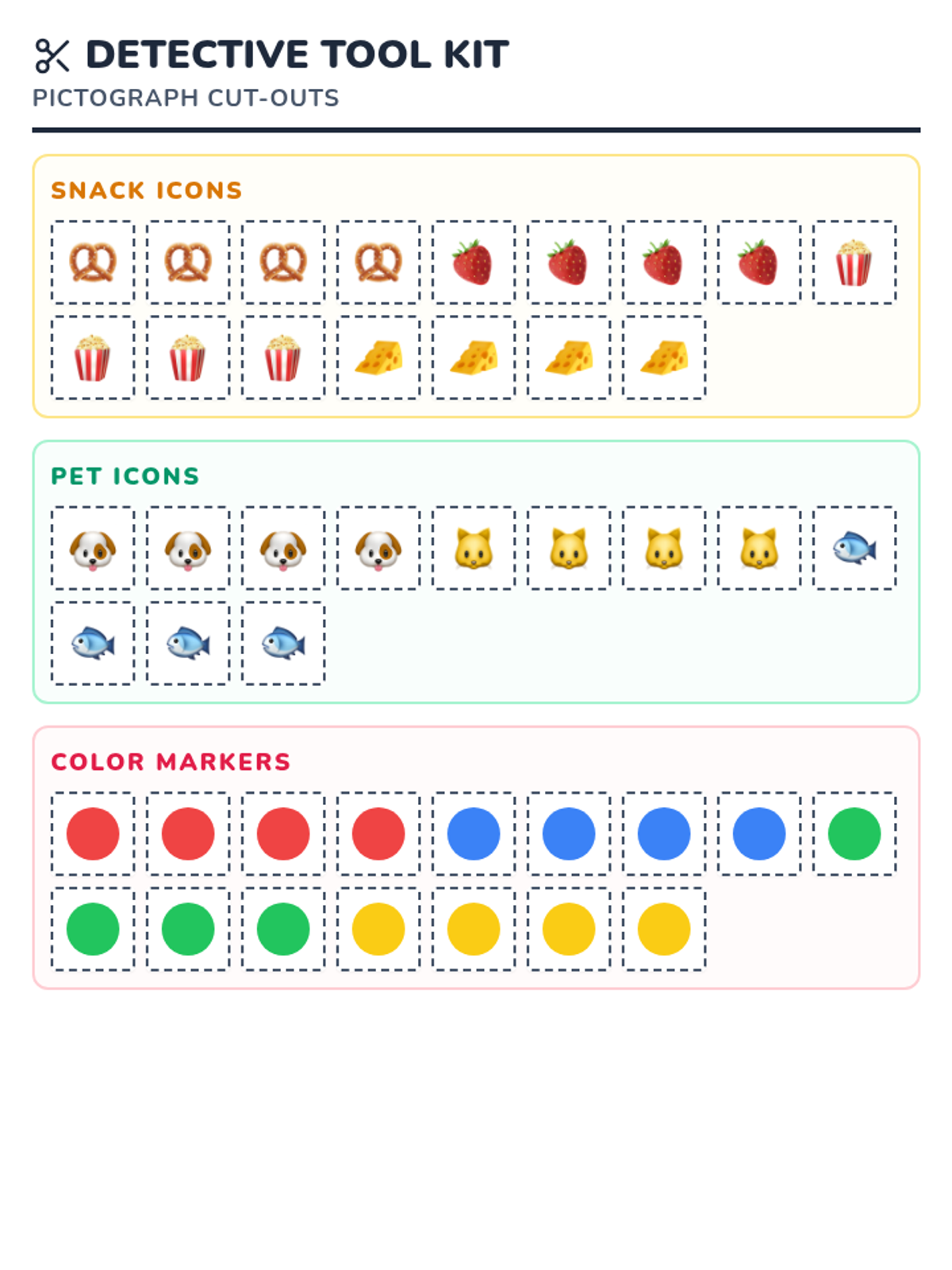
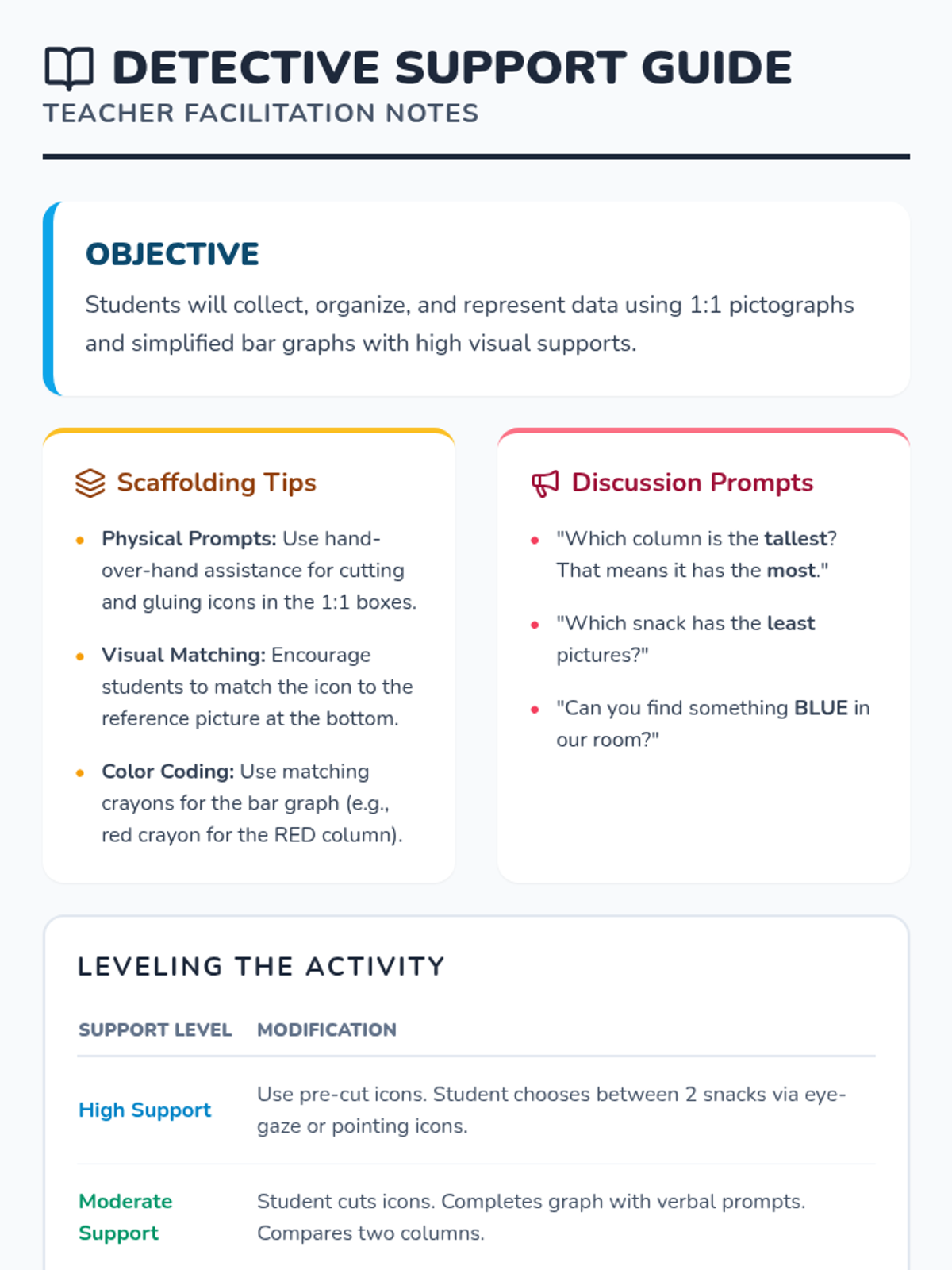
A hands-on graphing lesson designed for Essential Skills students, focusing on 1:1 pictographs and bar graphs using snack, color, and pet data with heavy visual supports.
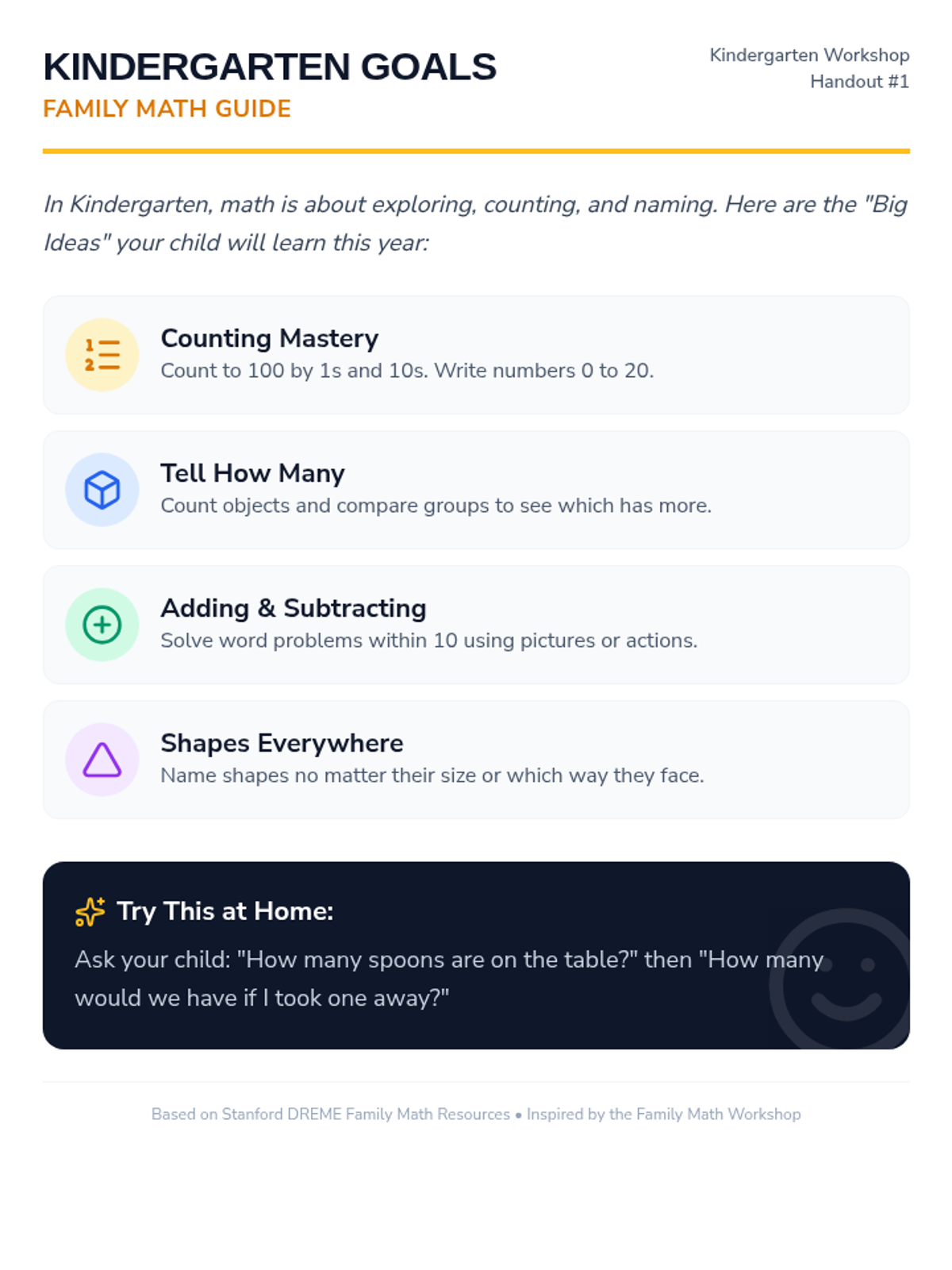
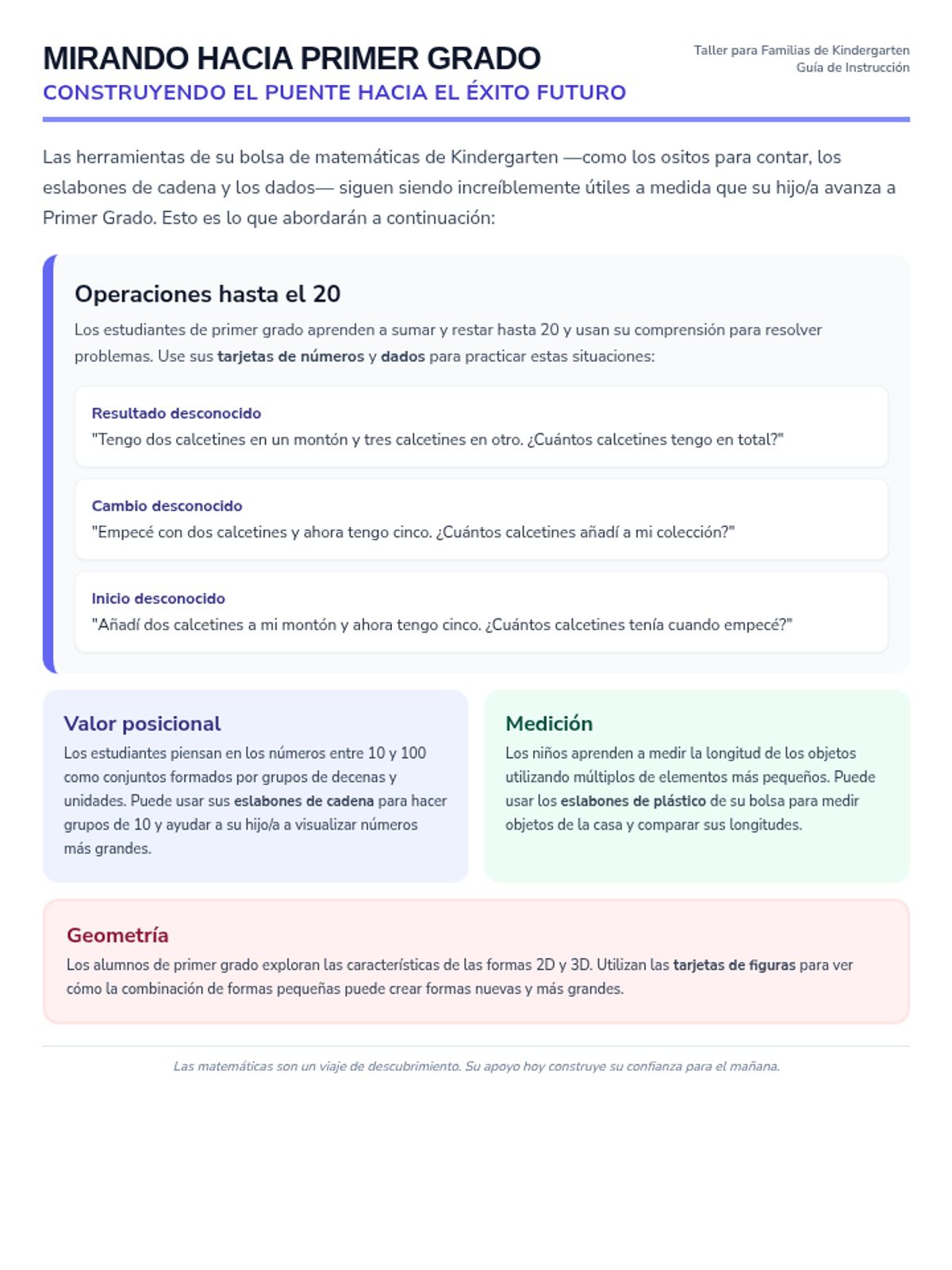
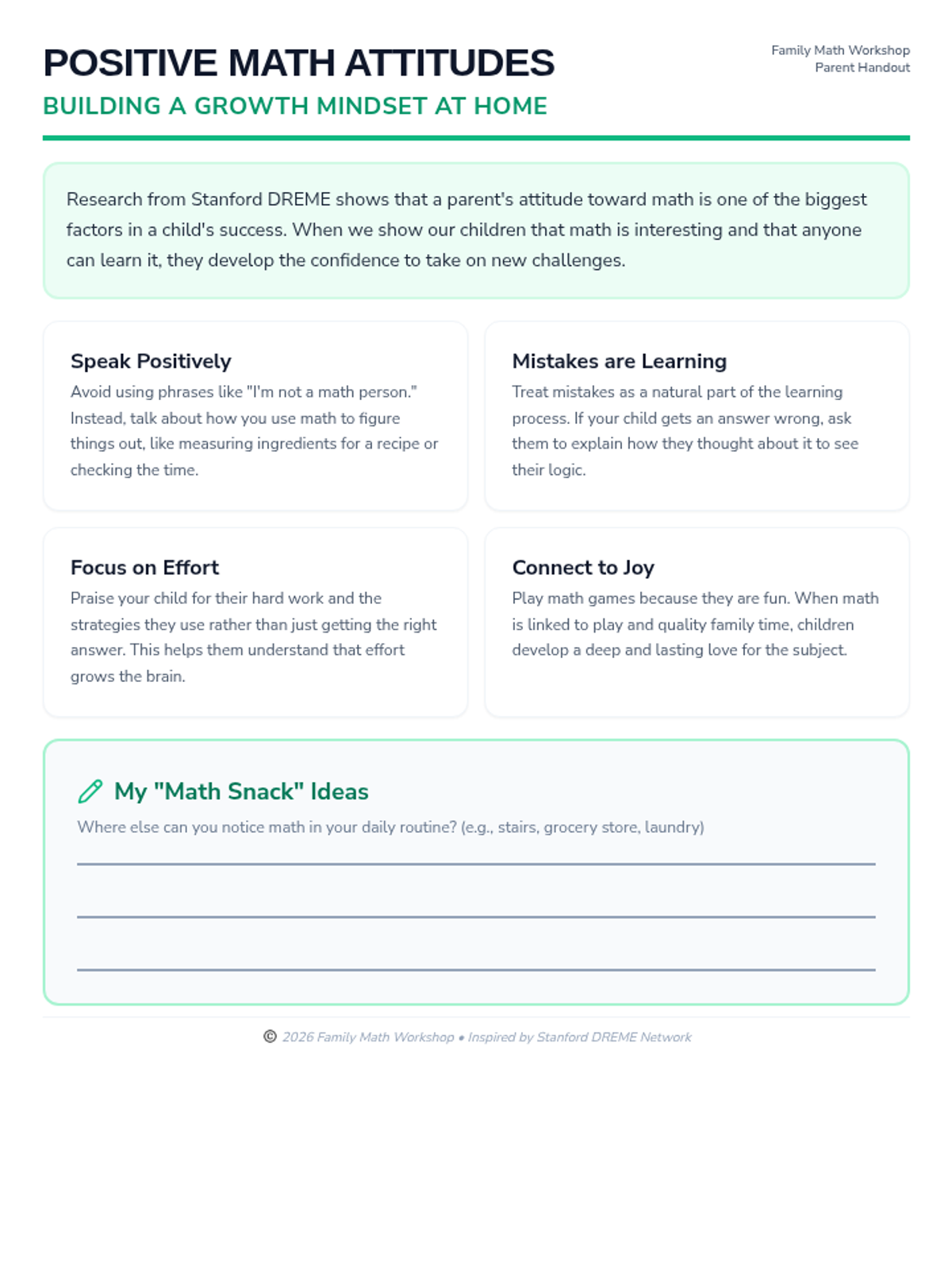
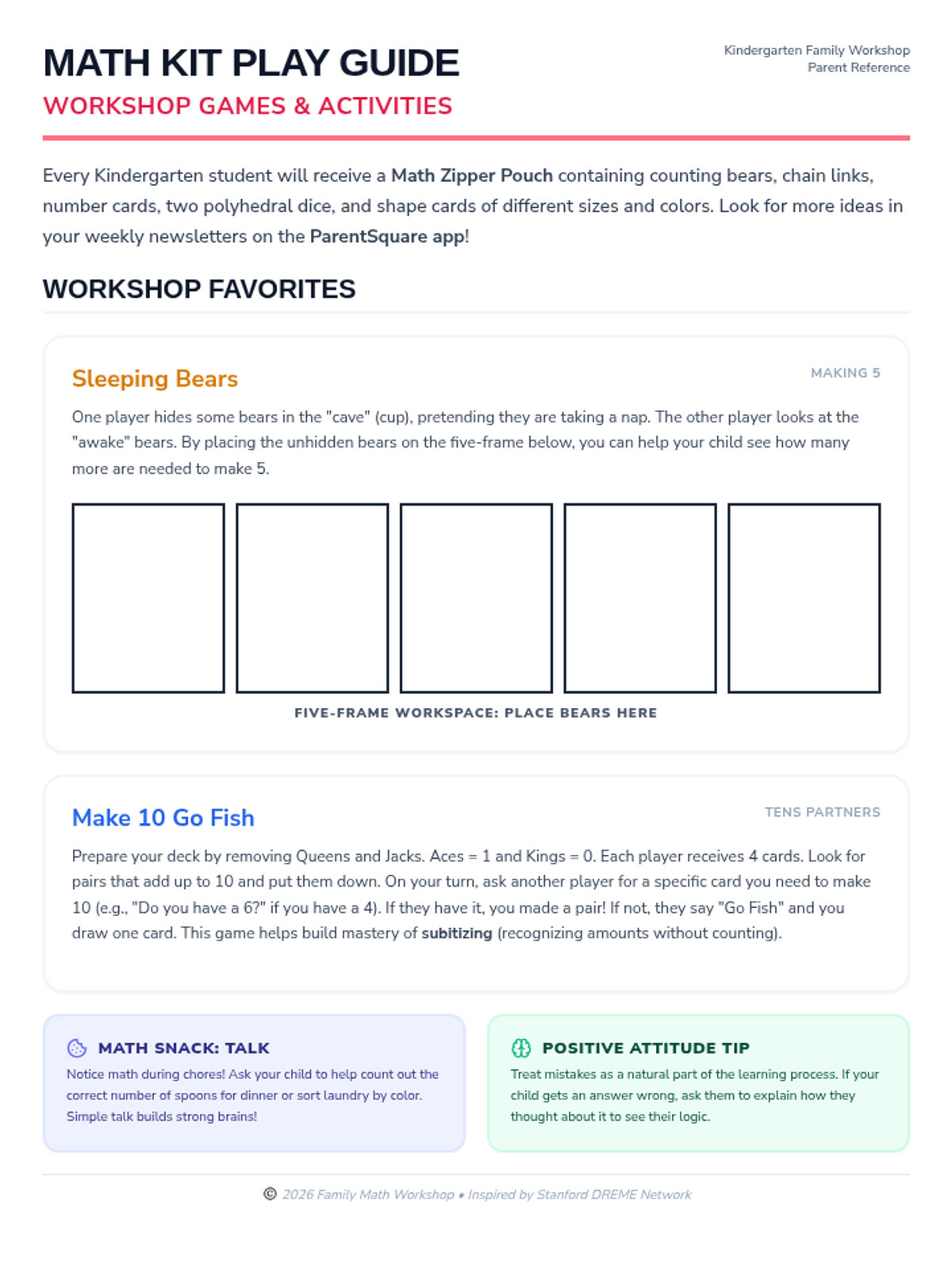
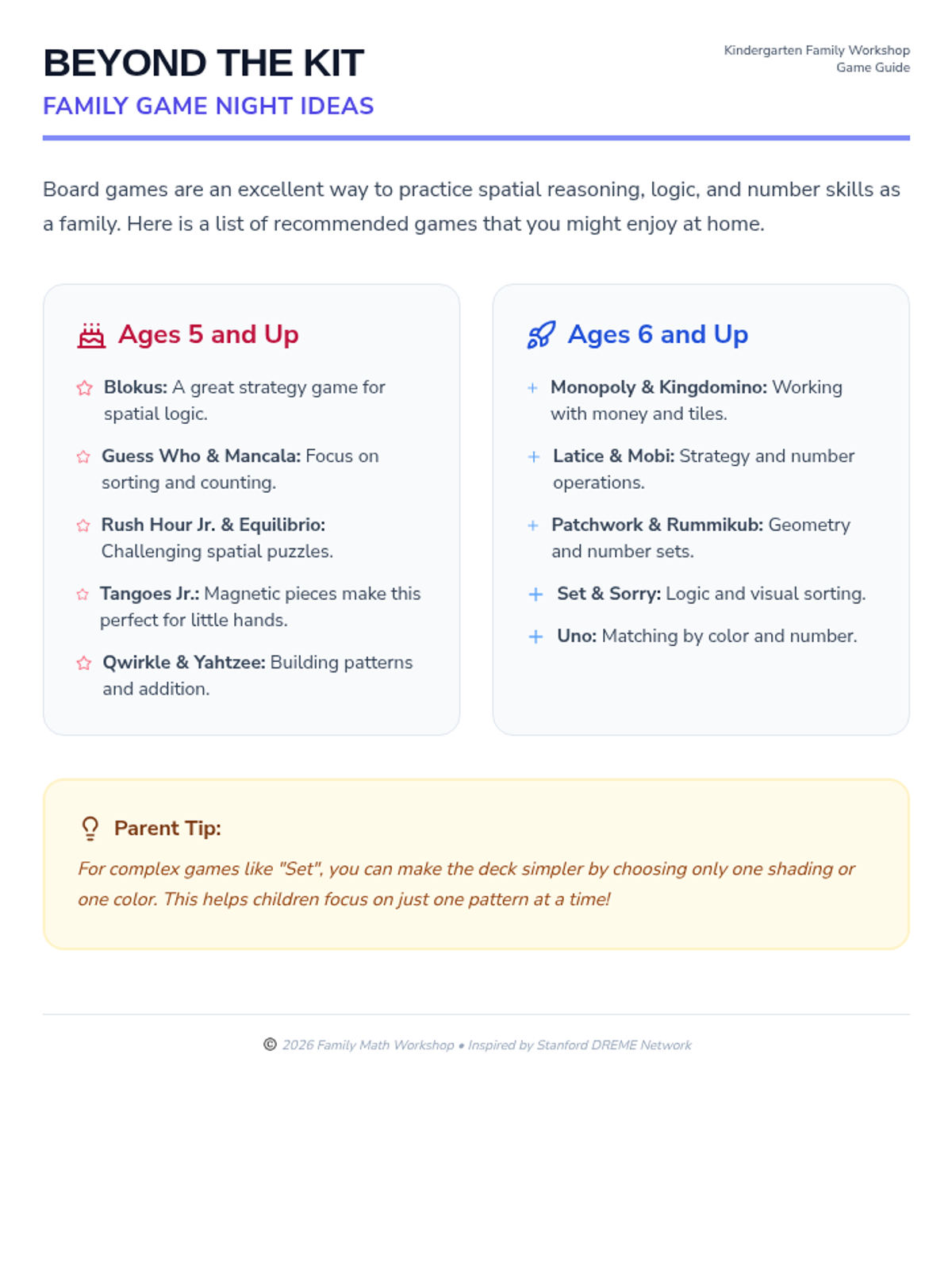
A comprehensive workshop for Kindergarten parents and guardians focused on building positive math attitudes and supporting math learning at home through play and daily routines. Based on Stanford DREME research.
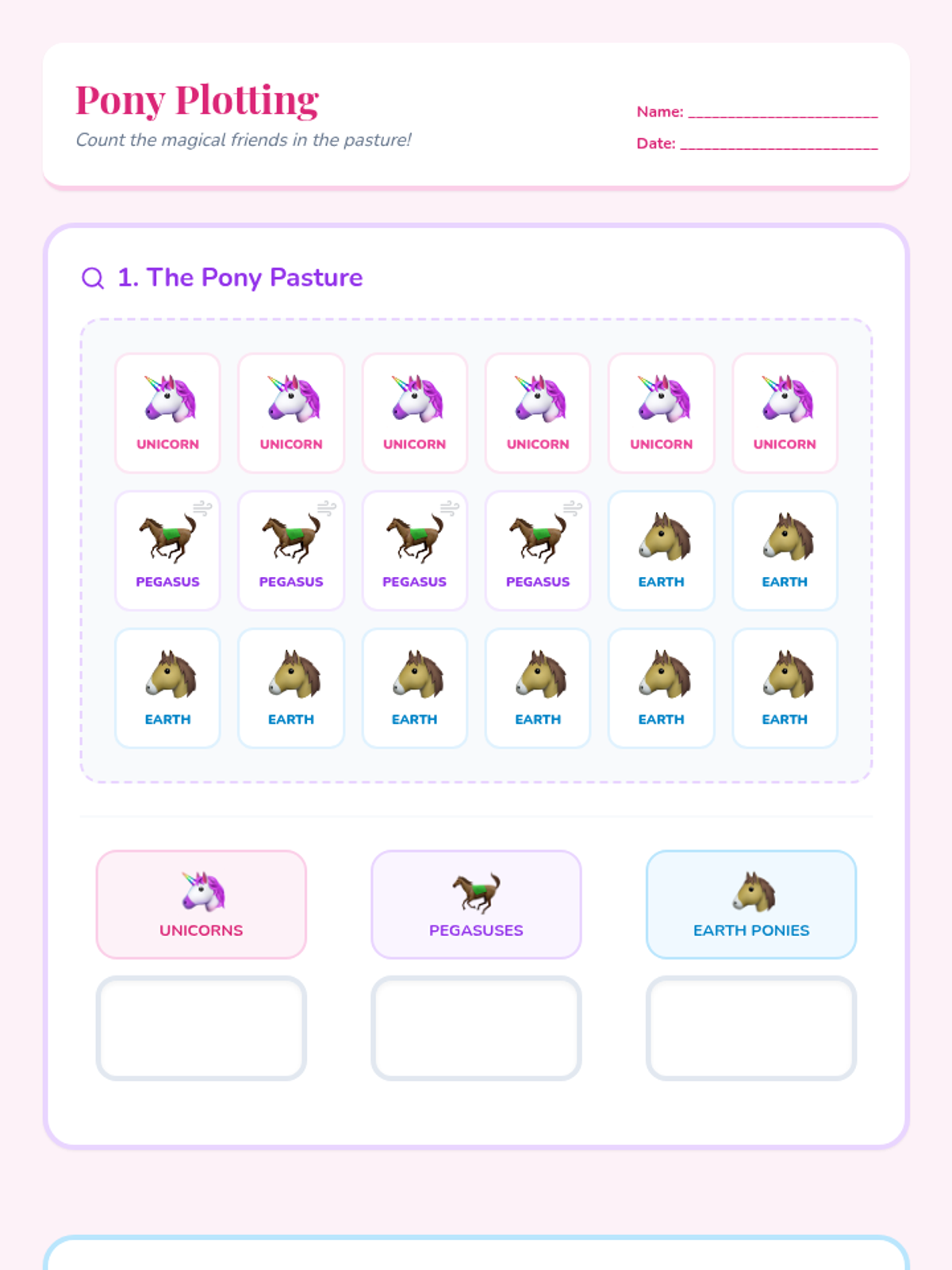
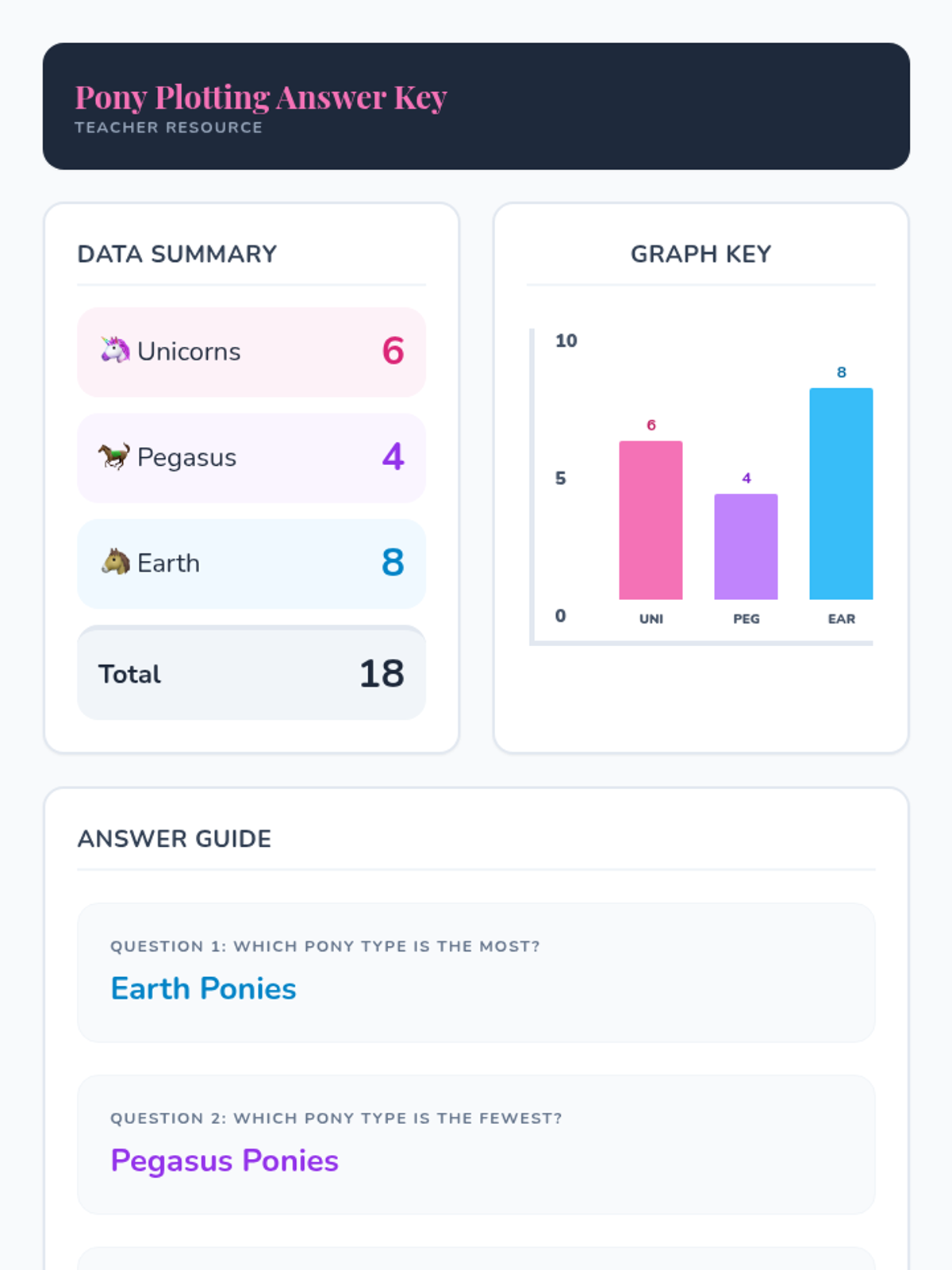
A magical math lesson where students count, sort, and graph different types of ponies to practice data representation and comparison skills.
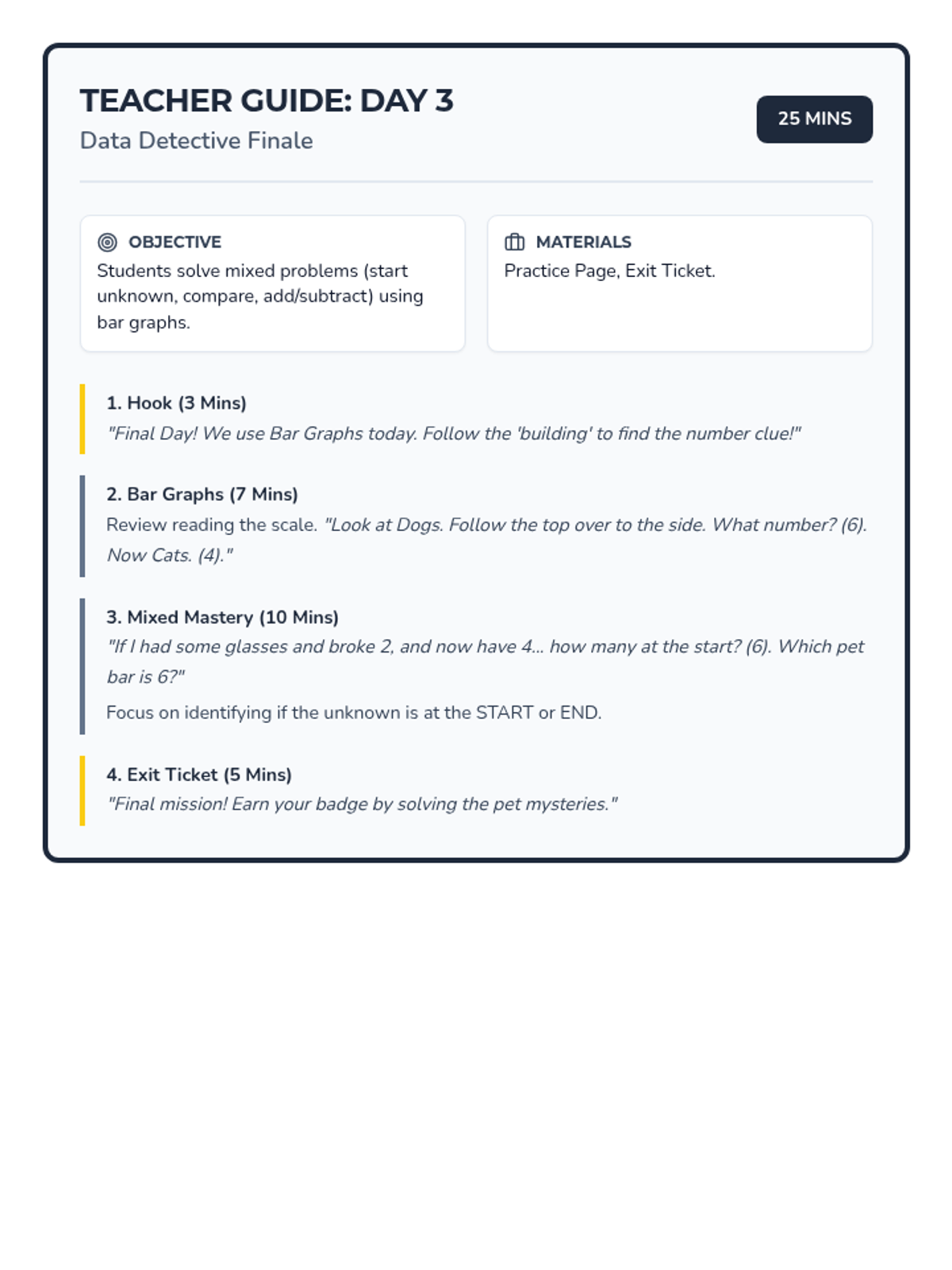
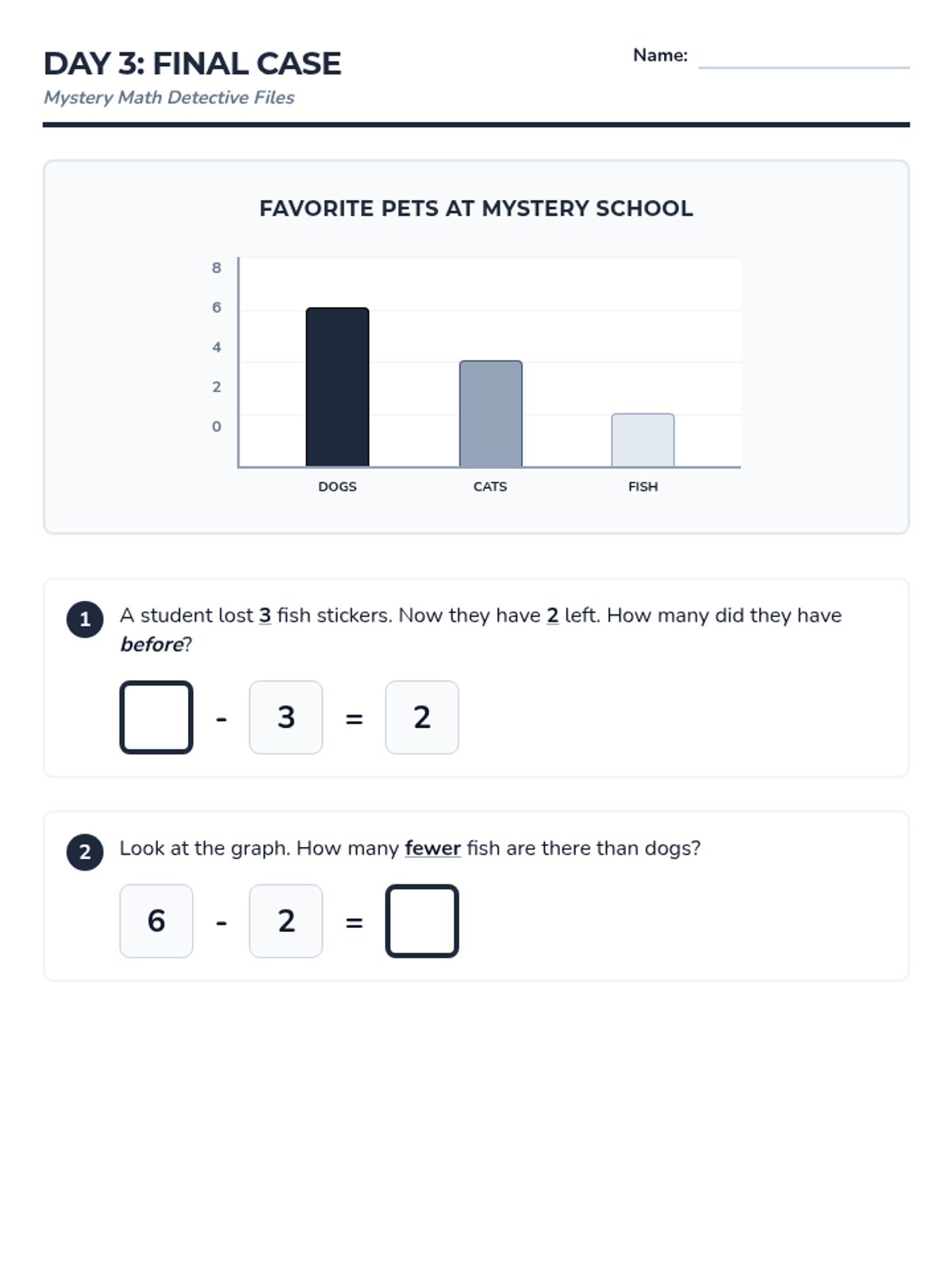
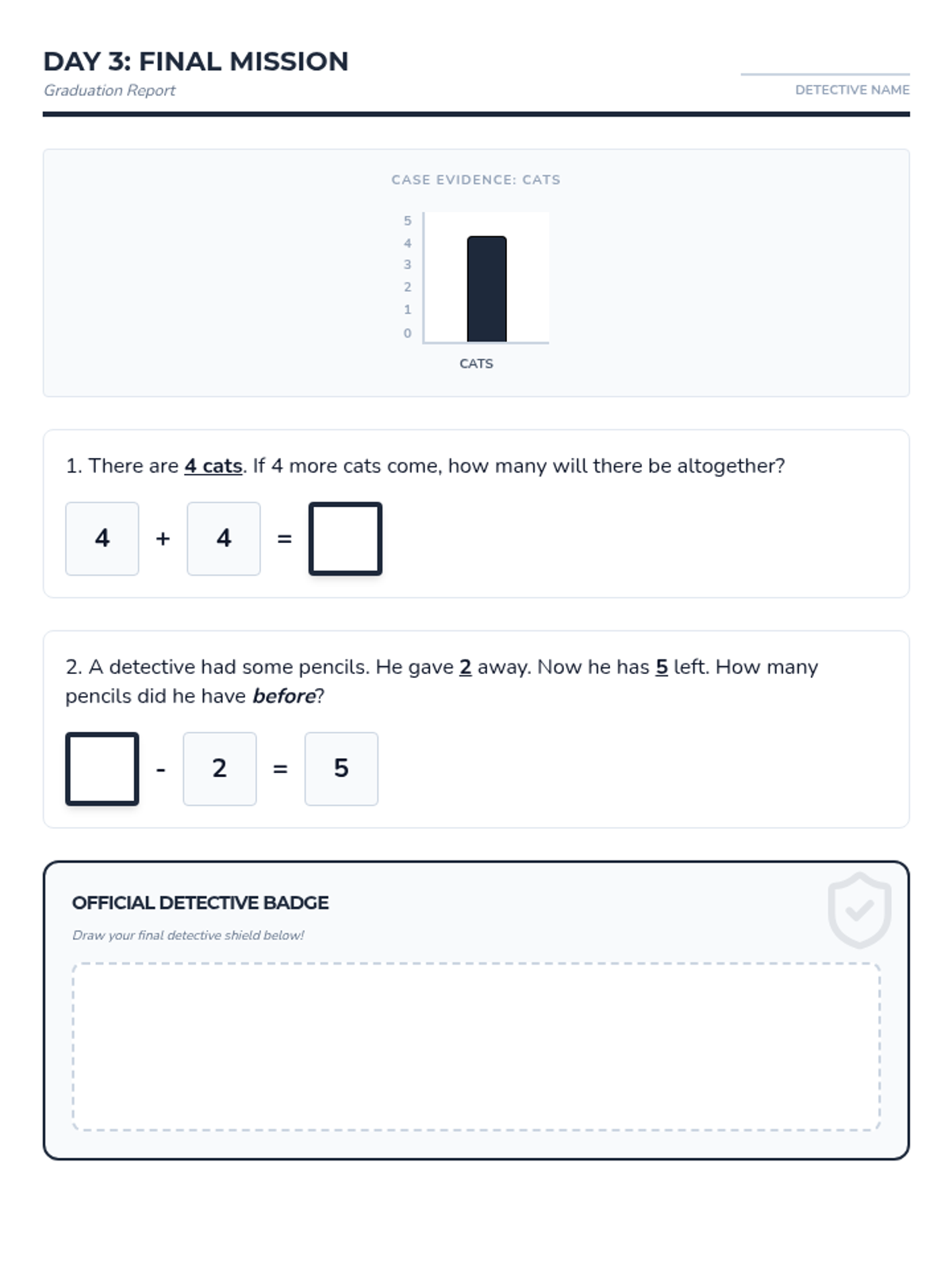
Integrates all previous word problem types (start-unknown, compare, and mix) using simple bar graphs.
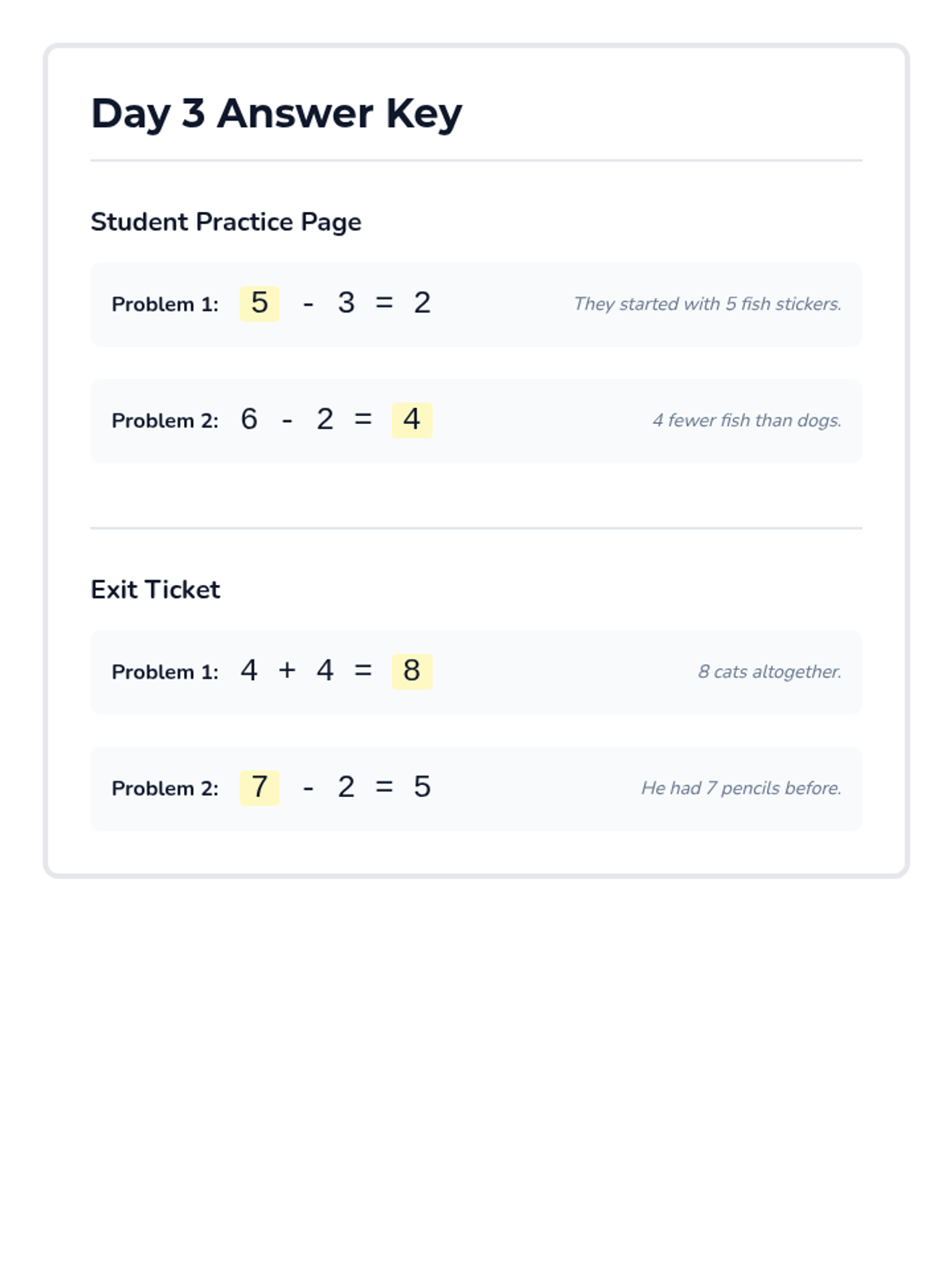
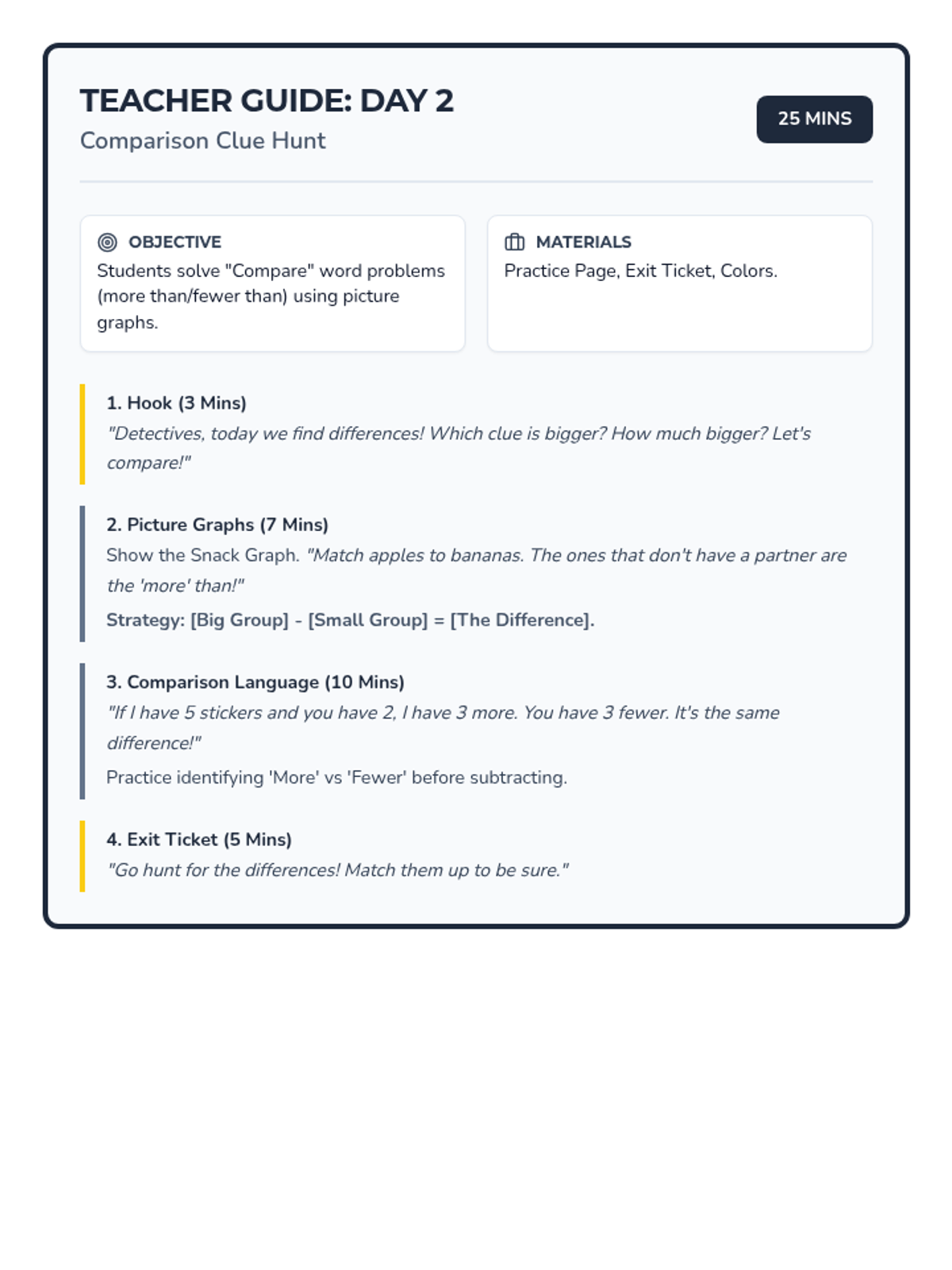
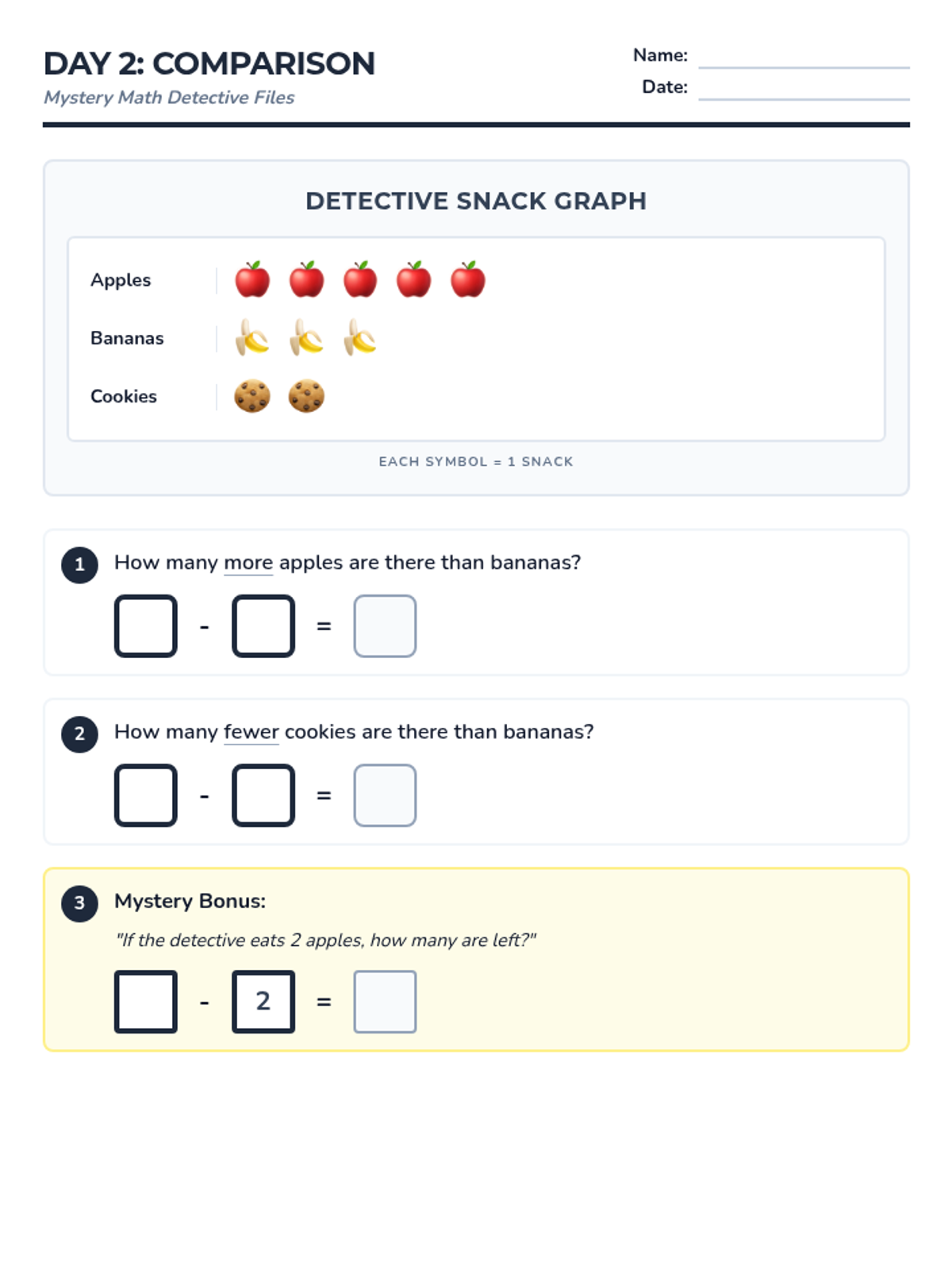
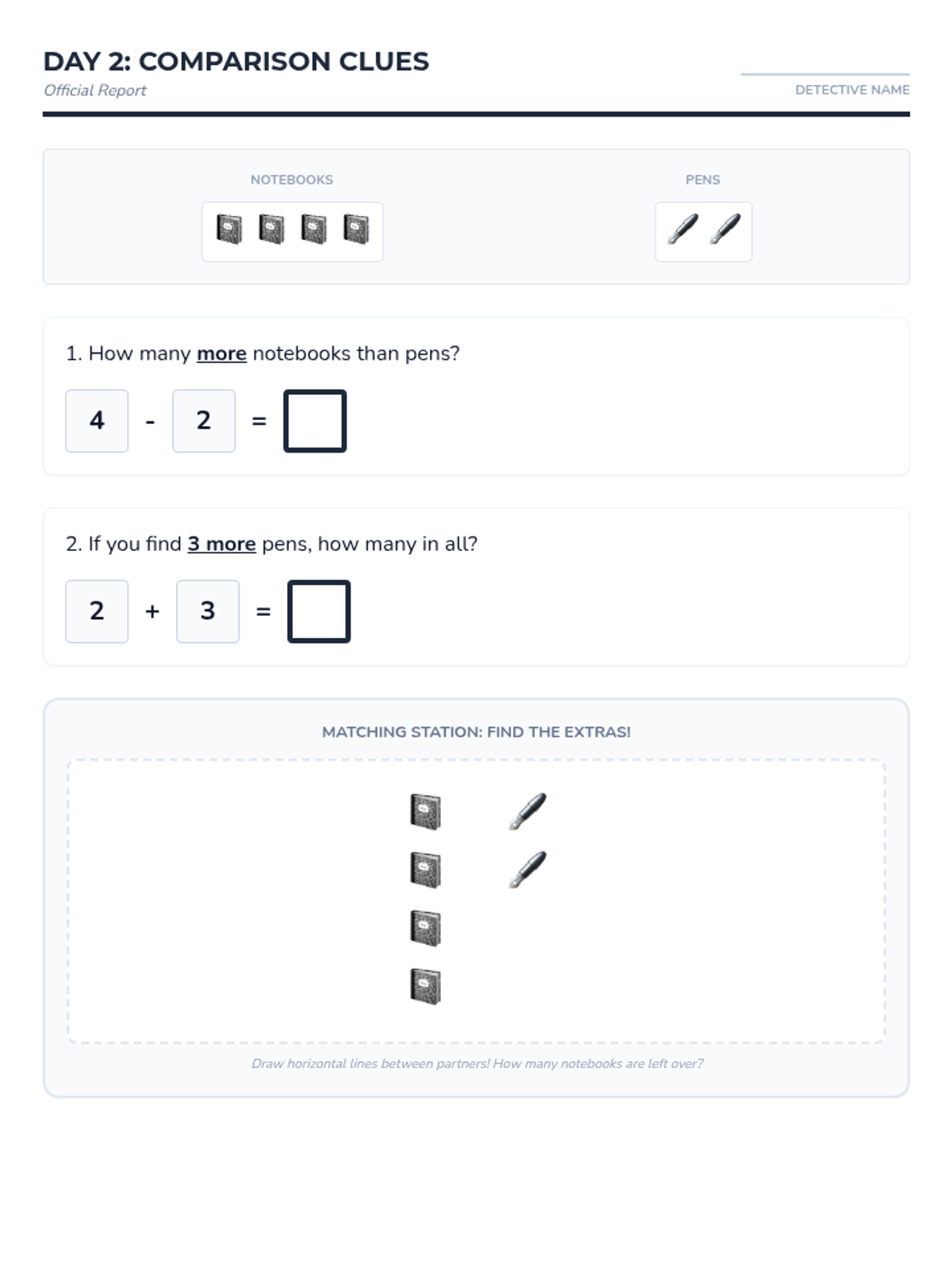
Focuses on comparison word problems (more than/fewer than) and mixed operations using picture graphs.
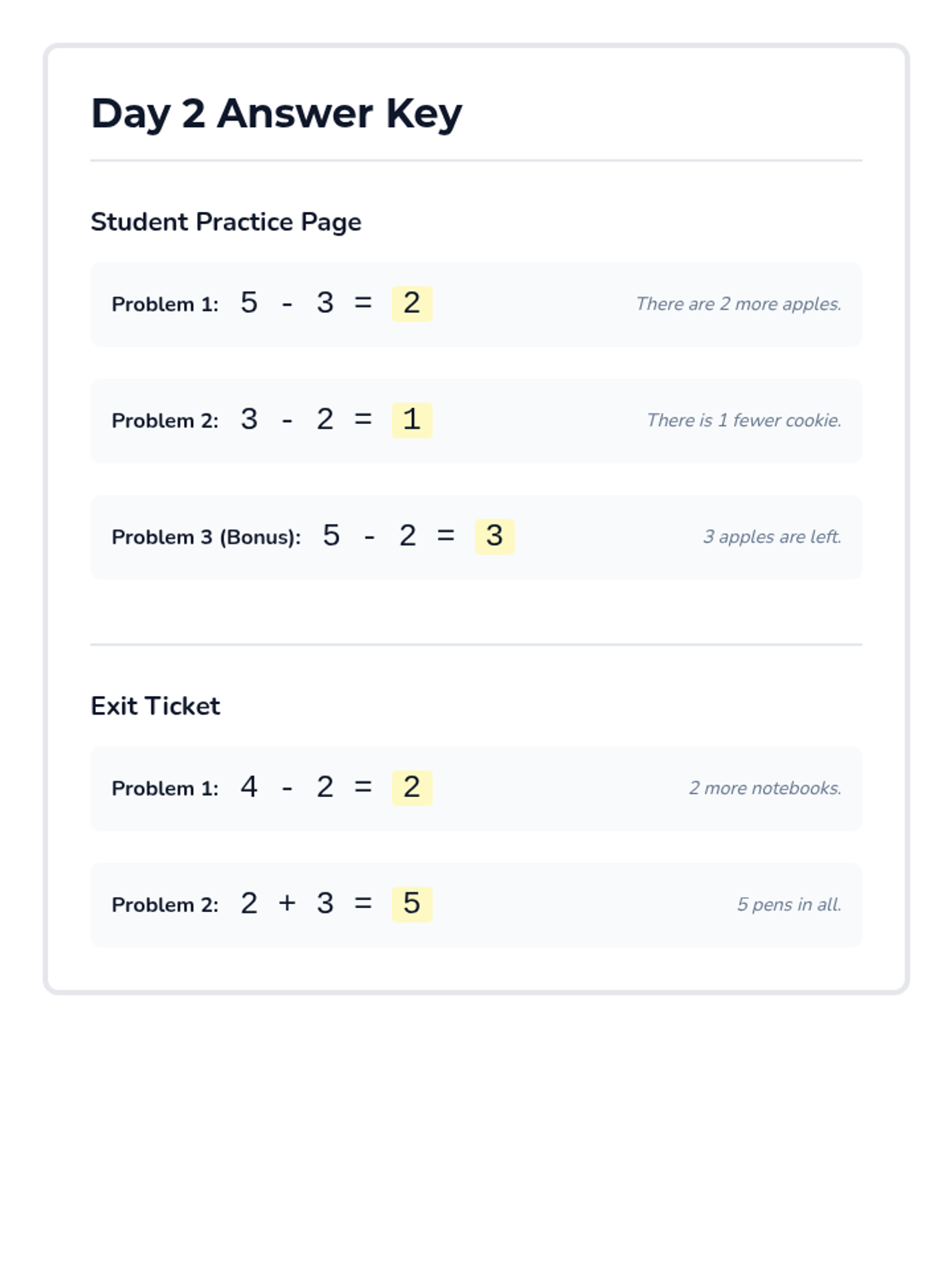
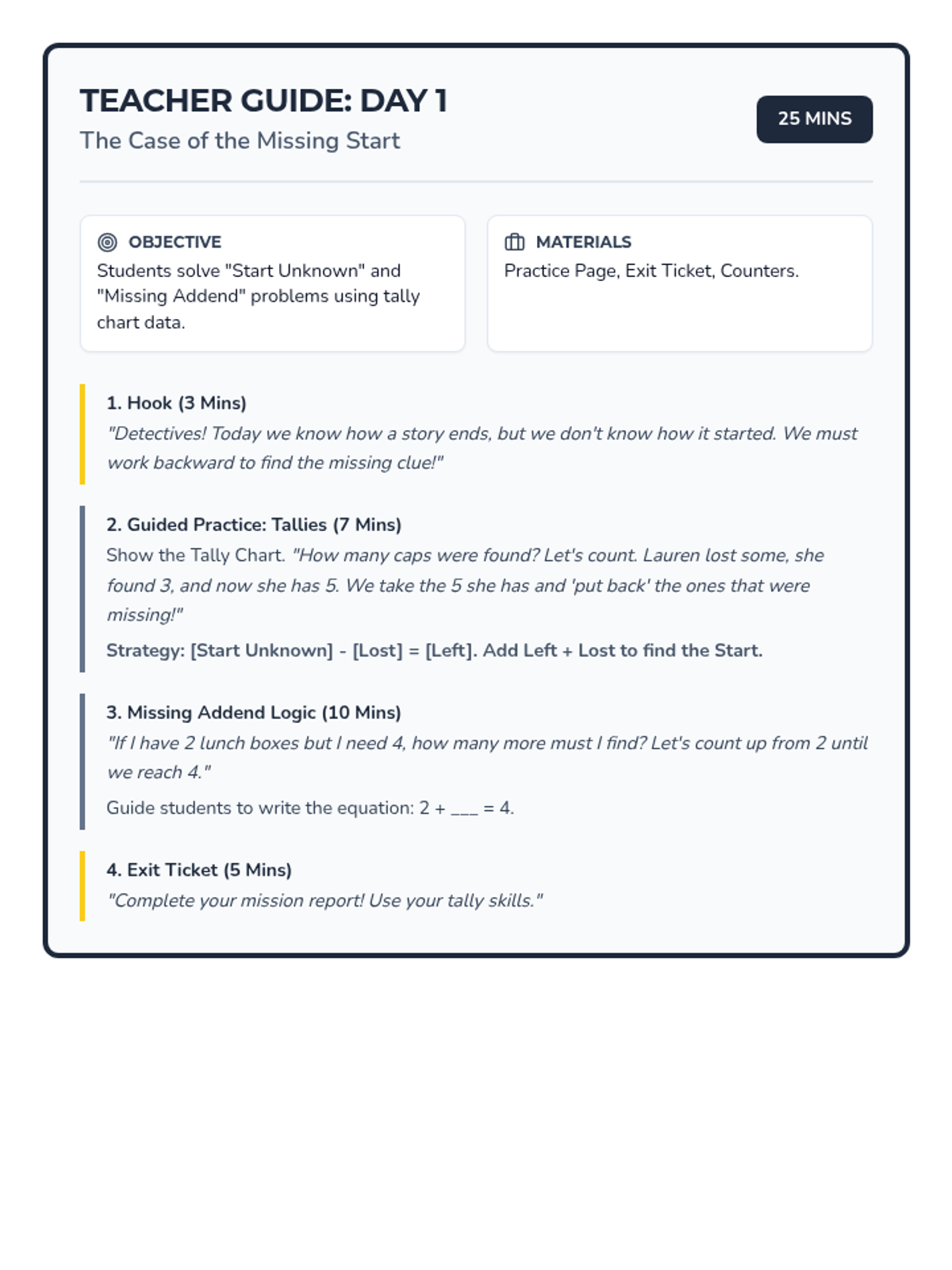
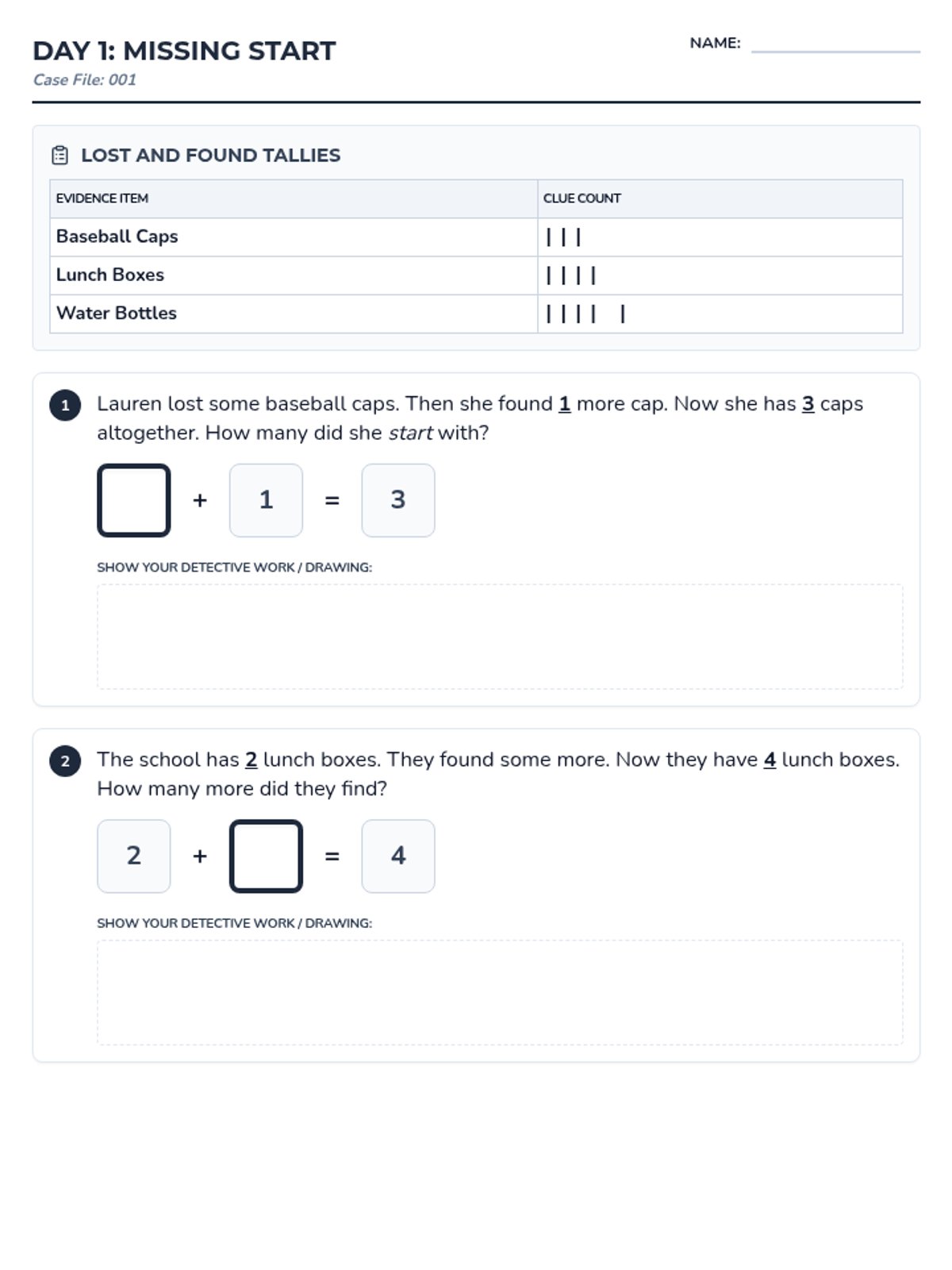
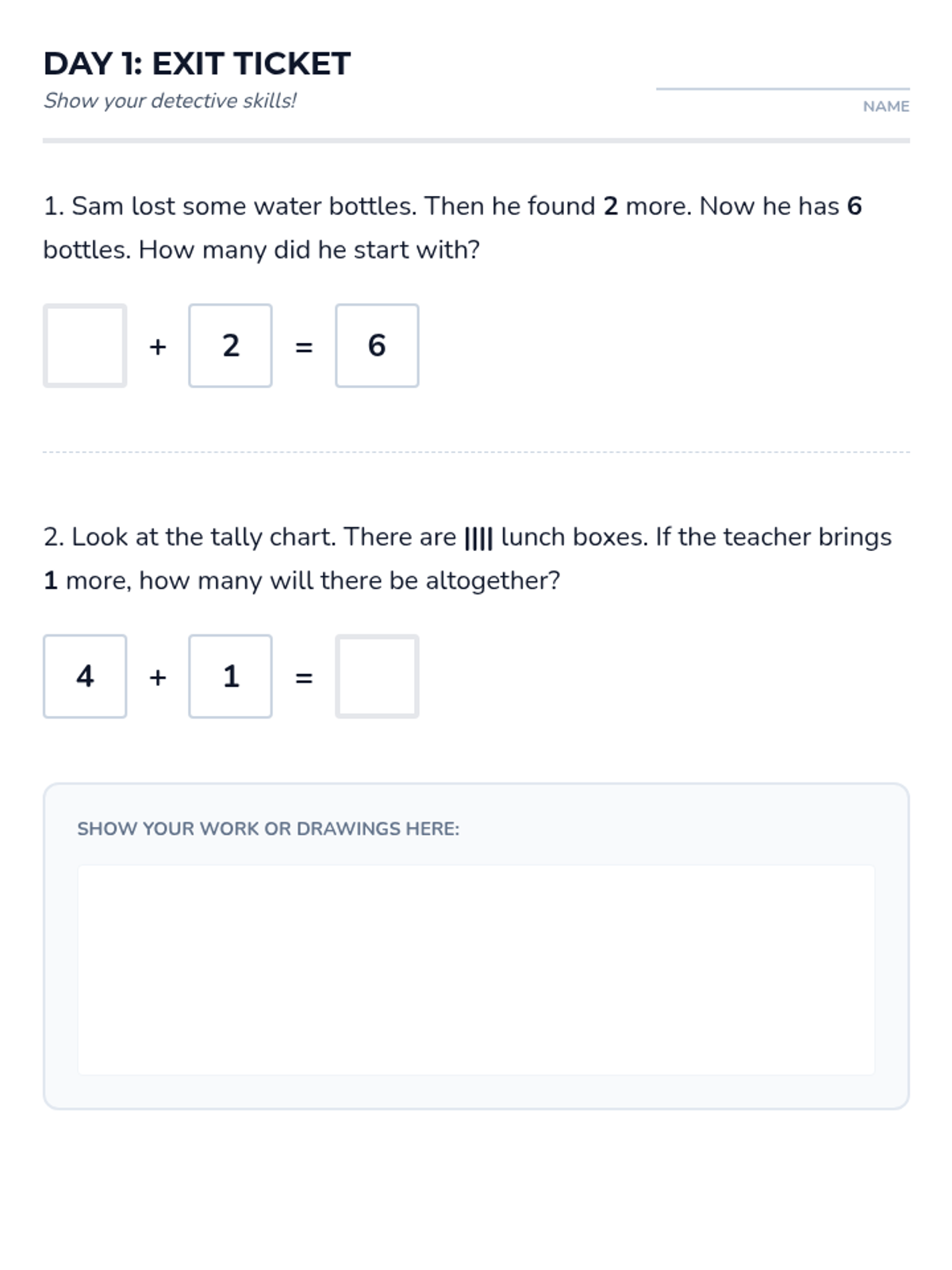
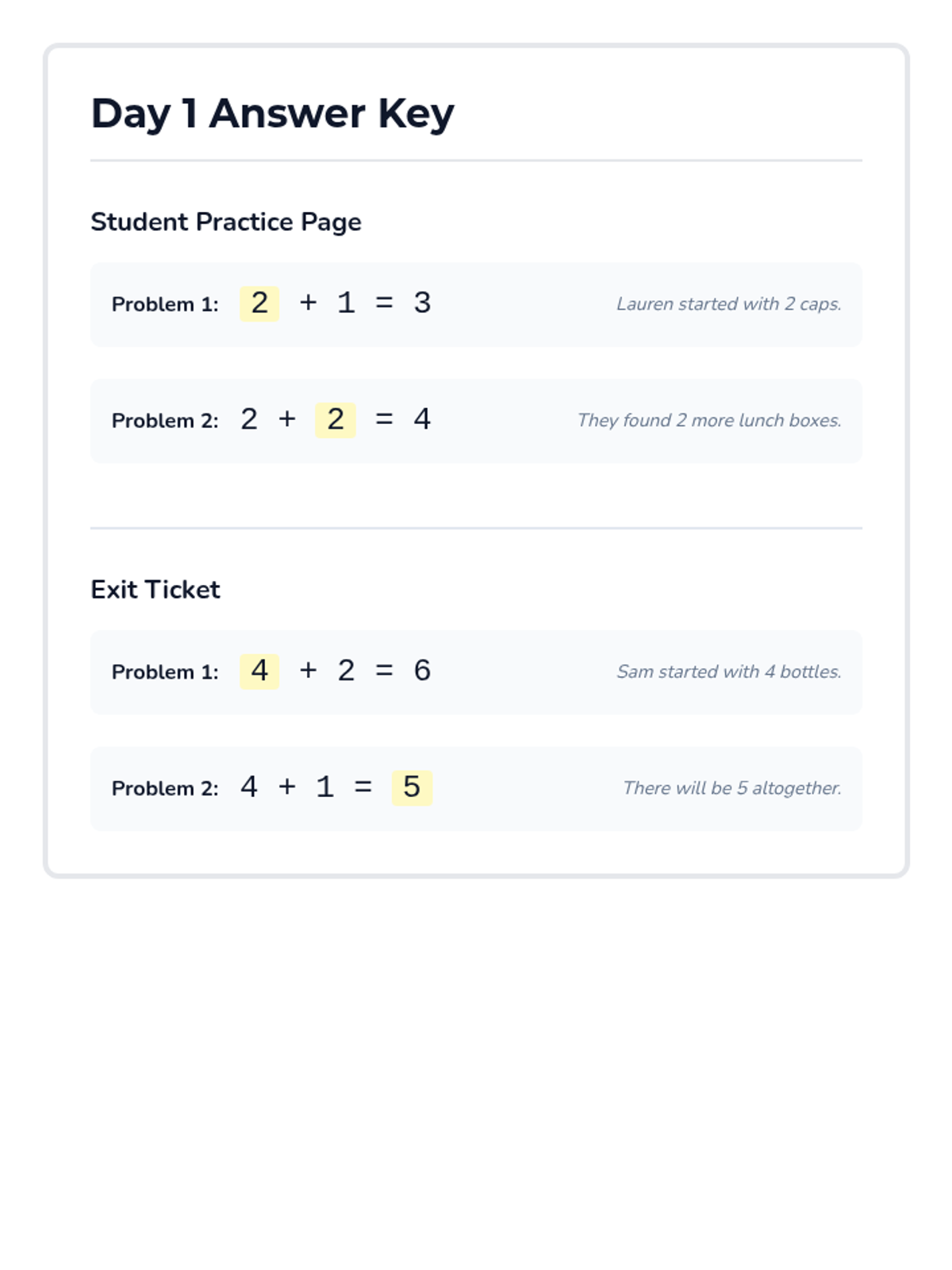
Focuses on solving start-unknown subtraction and missing addend addition problems using tally mark data.
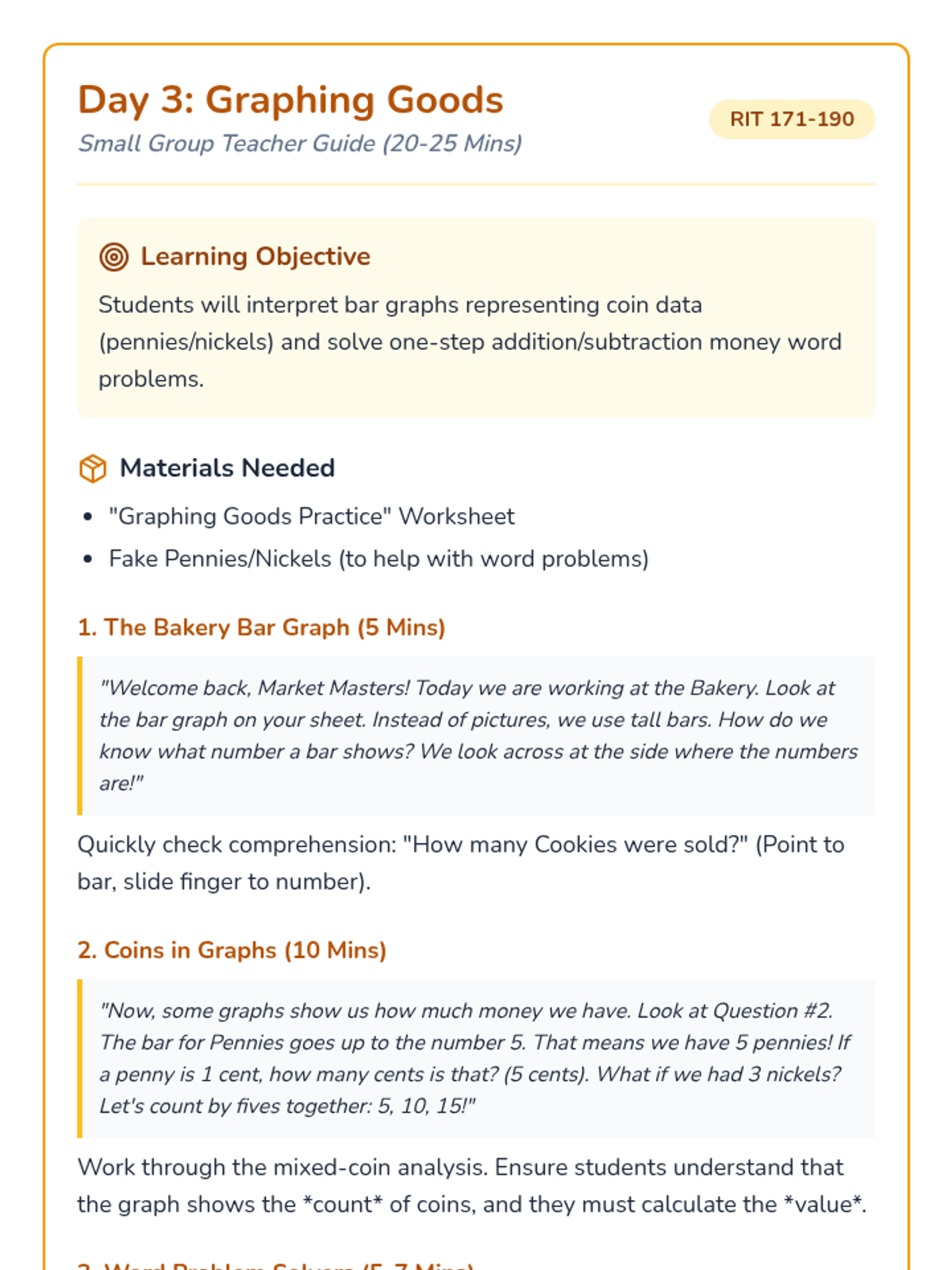
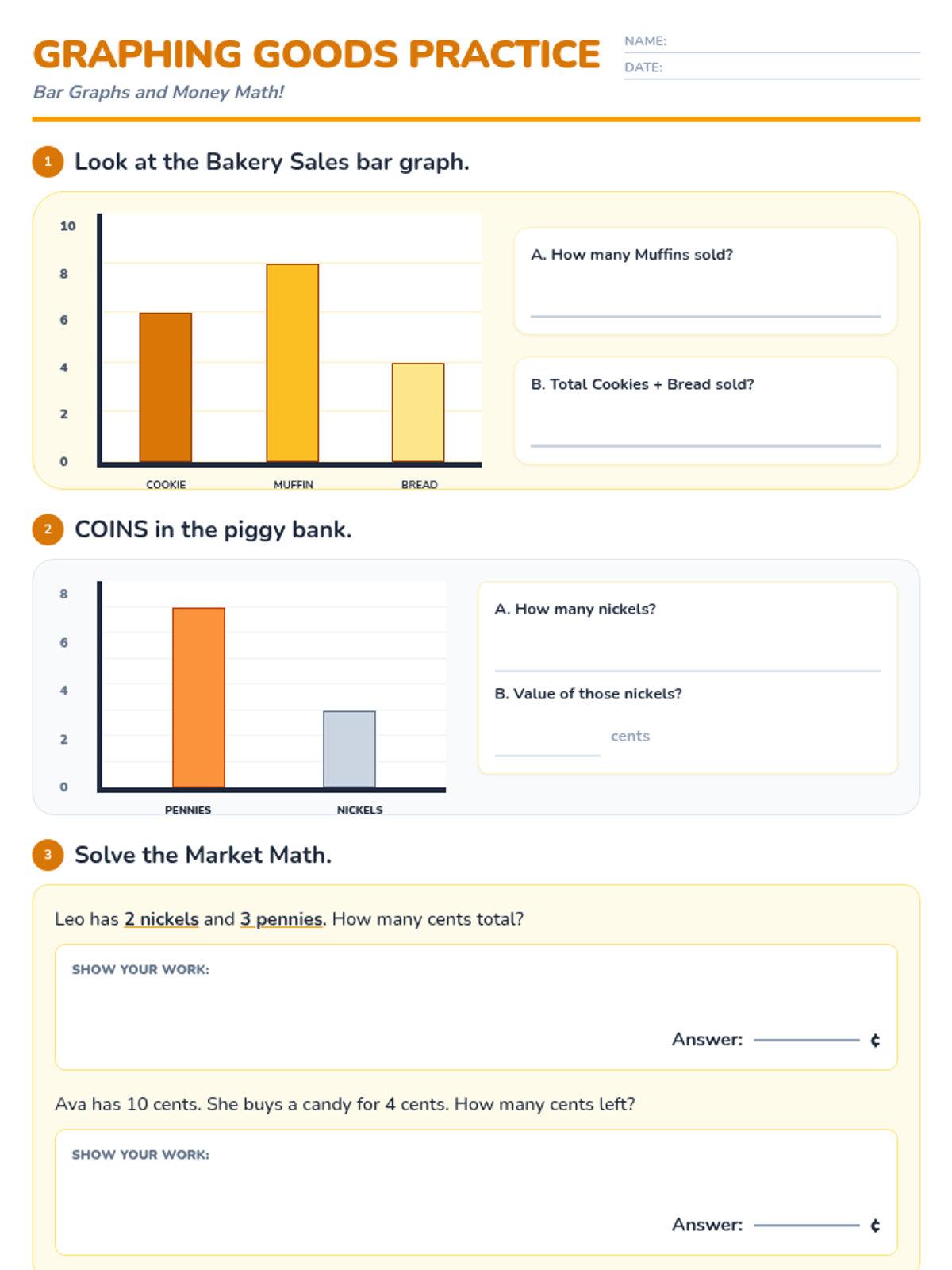
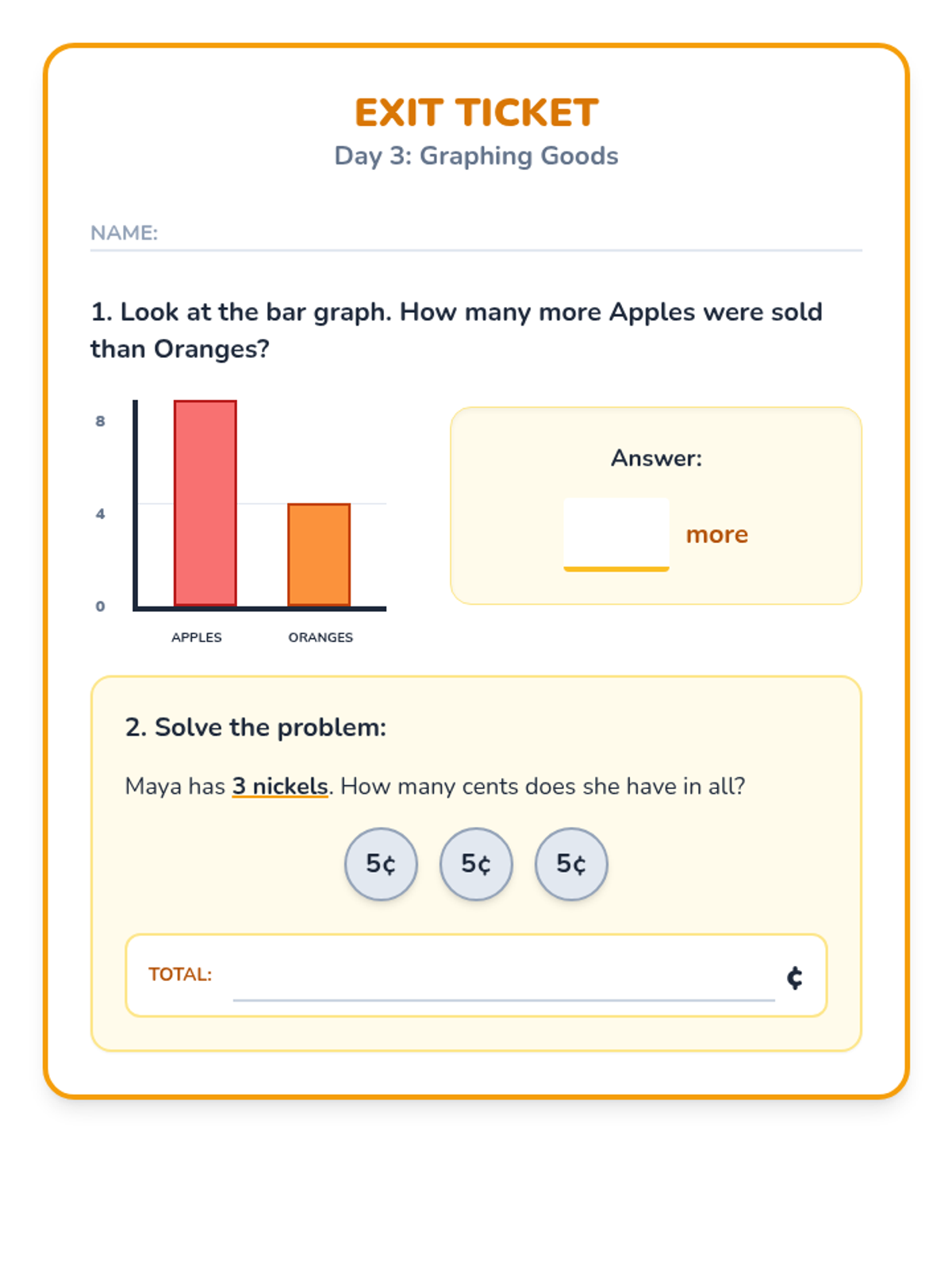
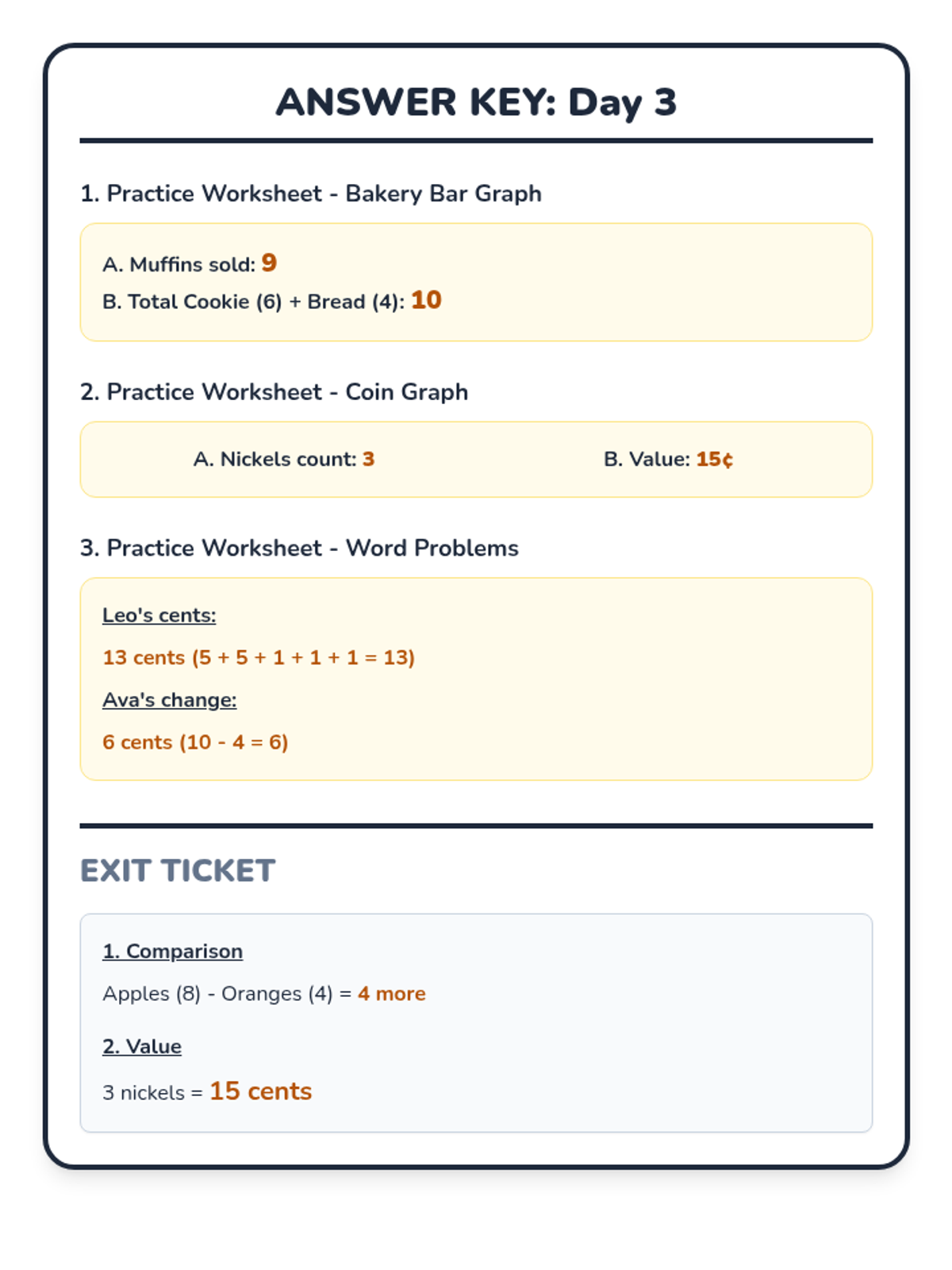
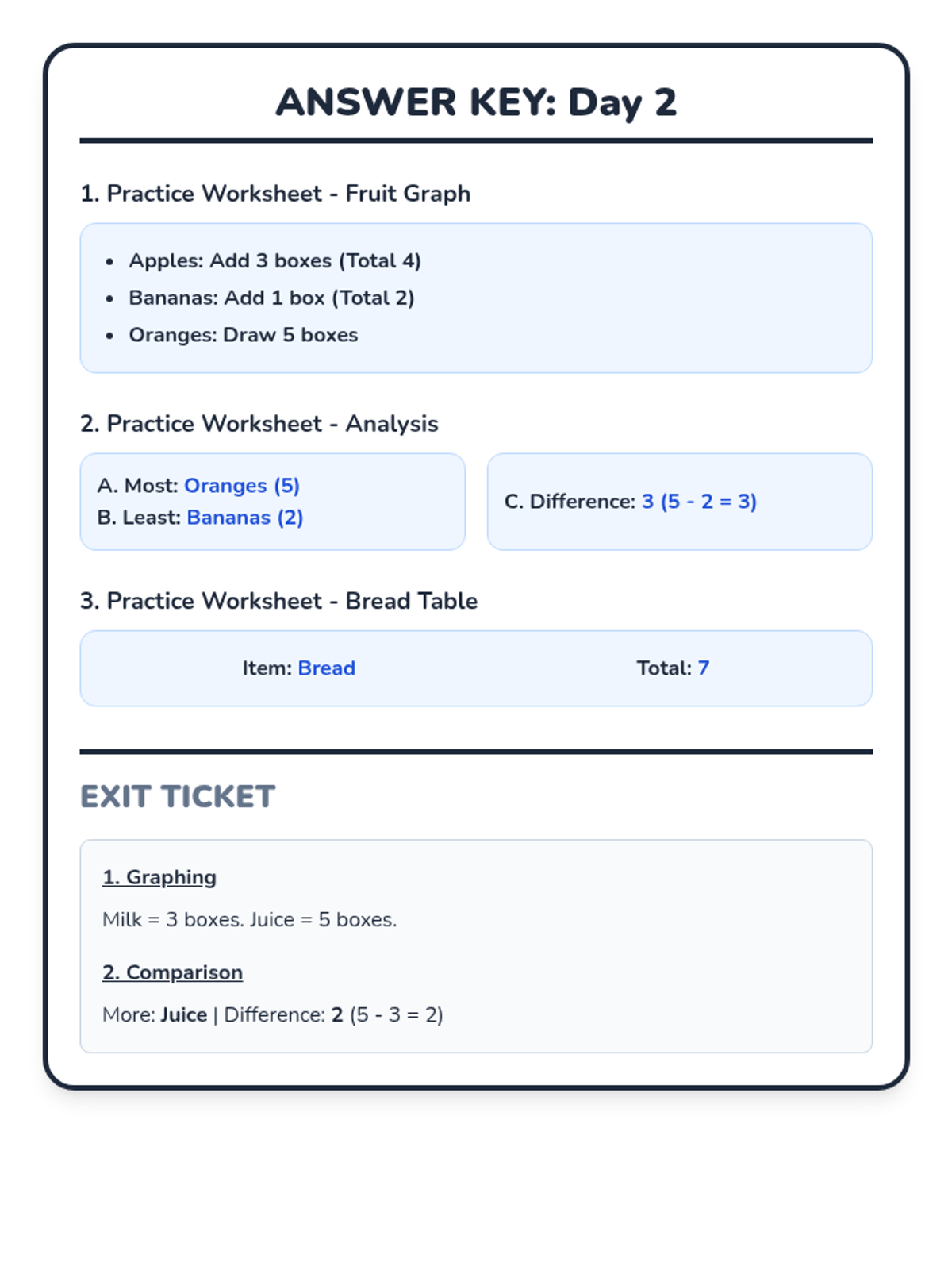
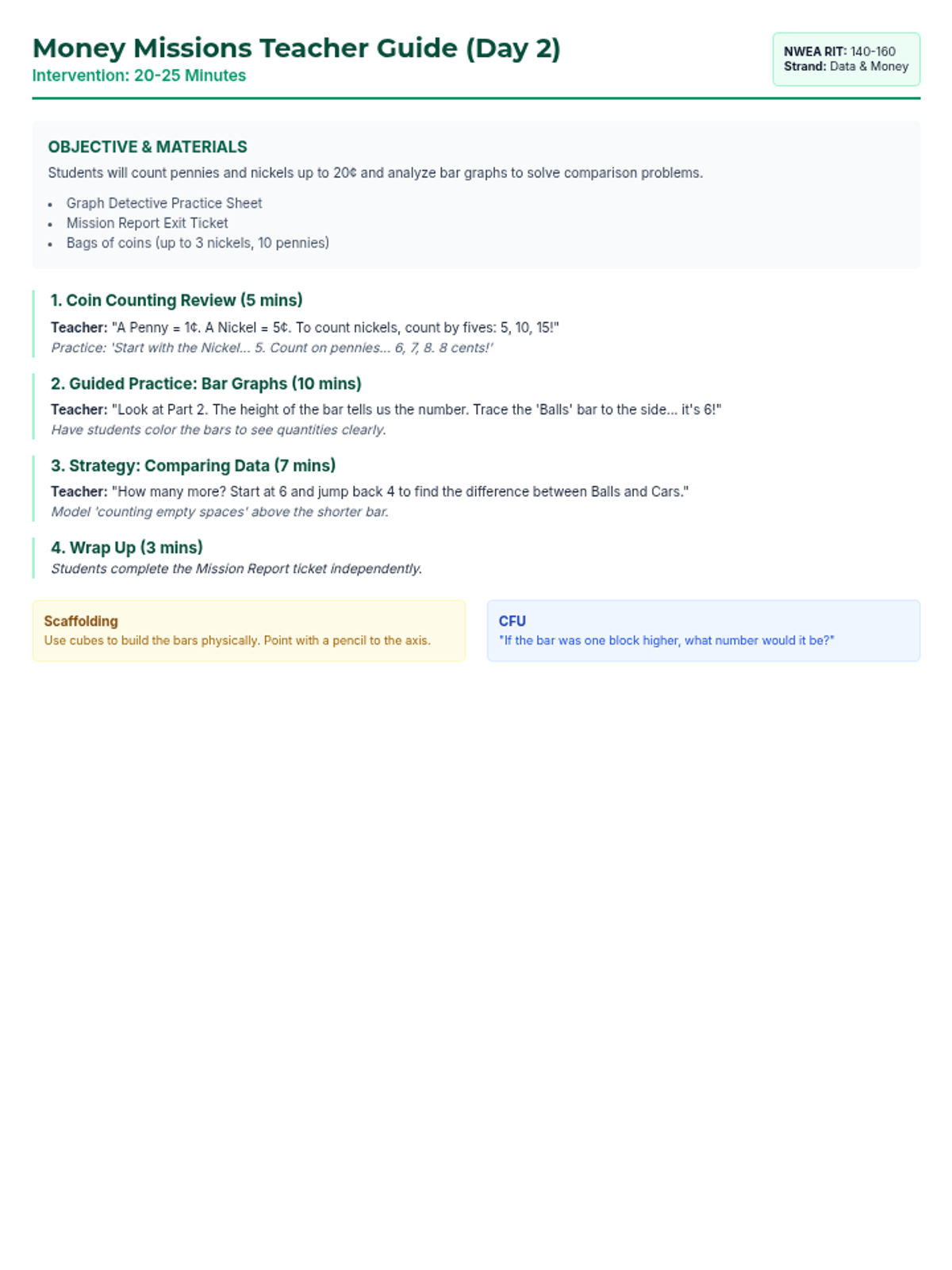
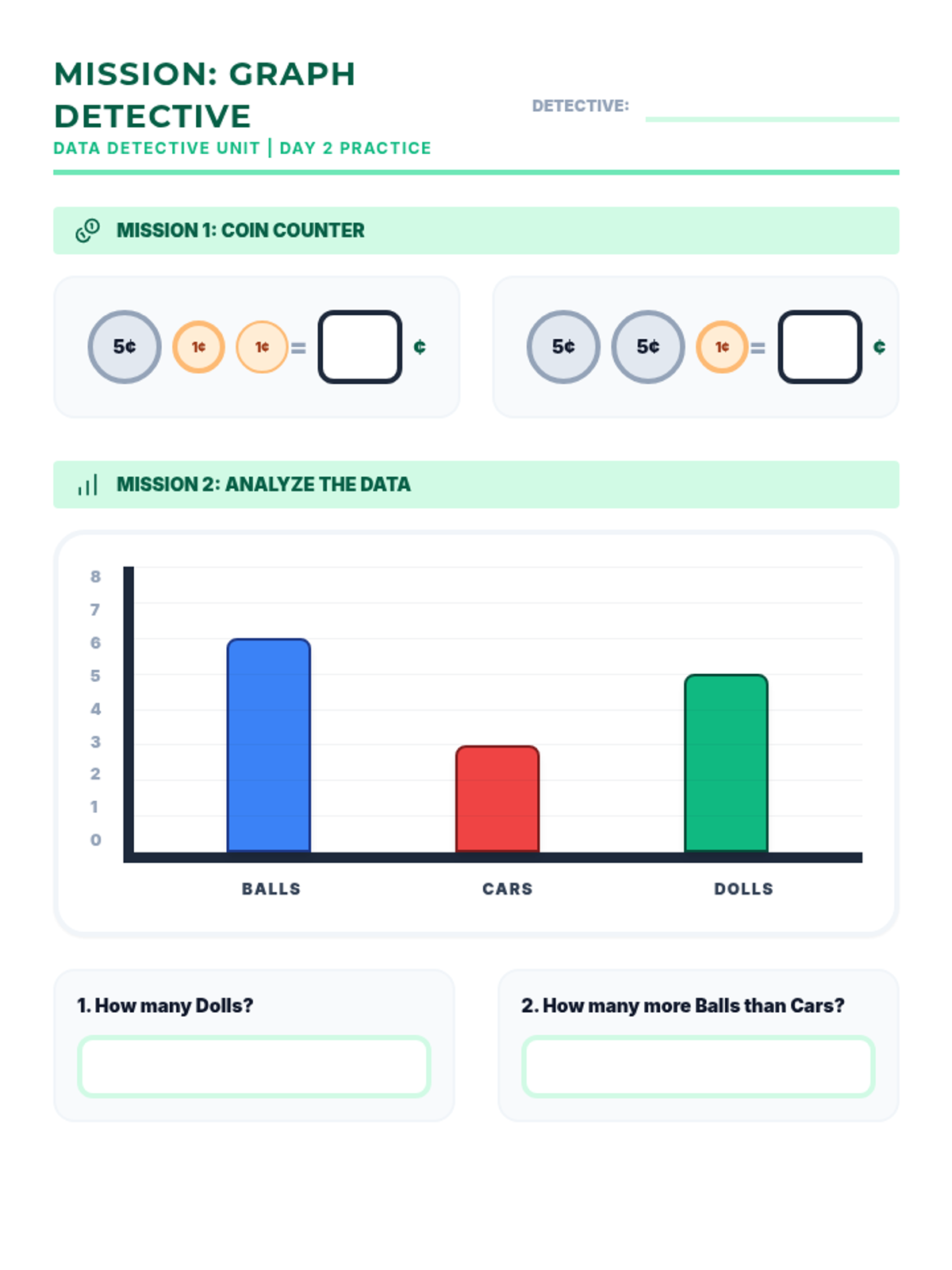
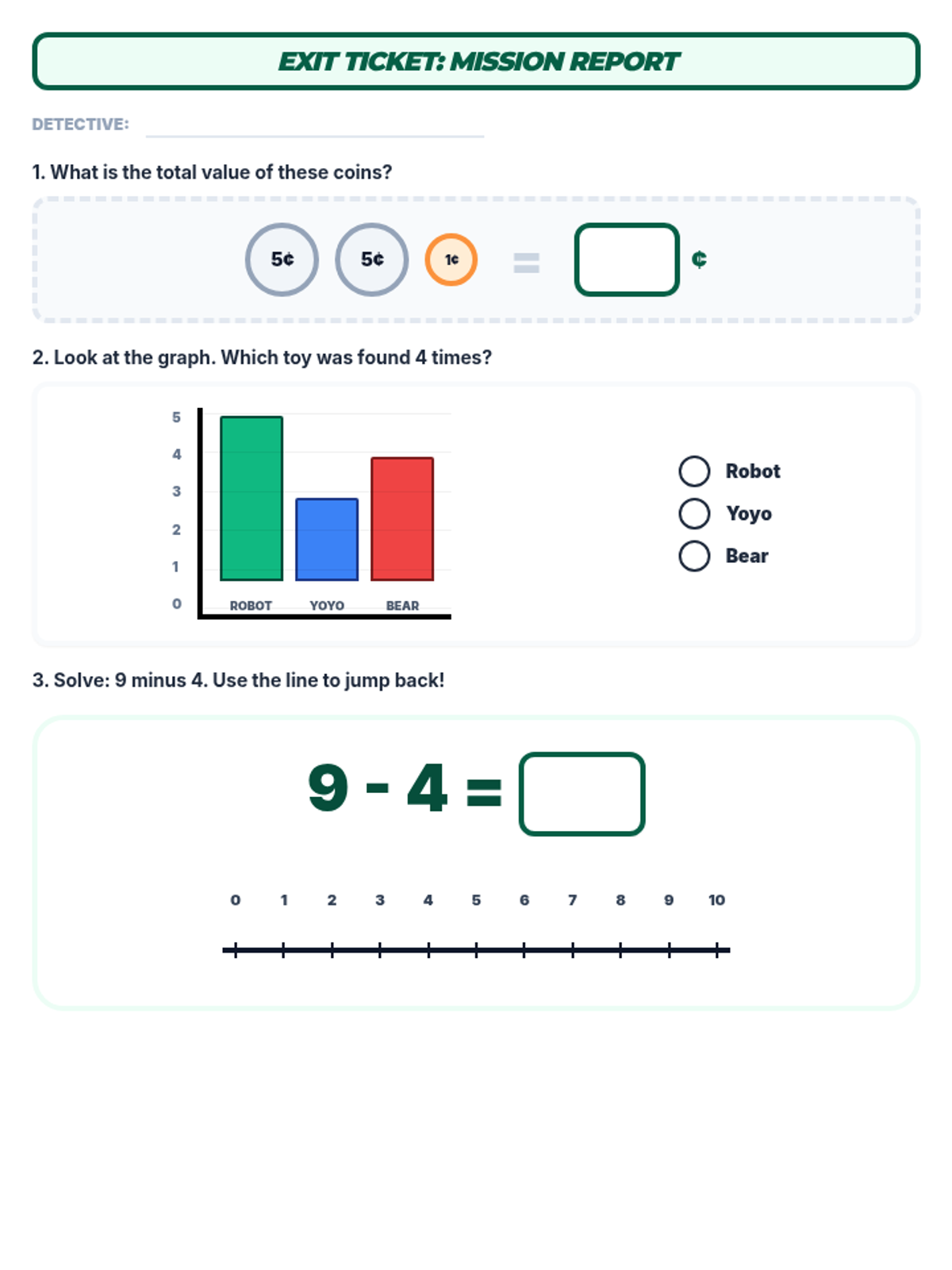
Students analyze bar graphs representing money values (pennies and nickels) and solve one-step word problems. This lesson integrates money counting with data interpretation to reach higher RIT band objectives.
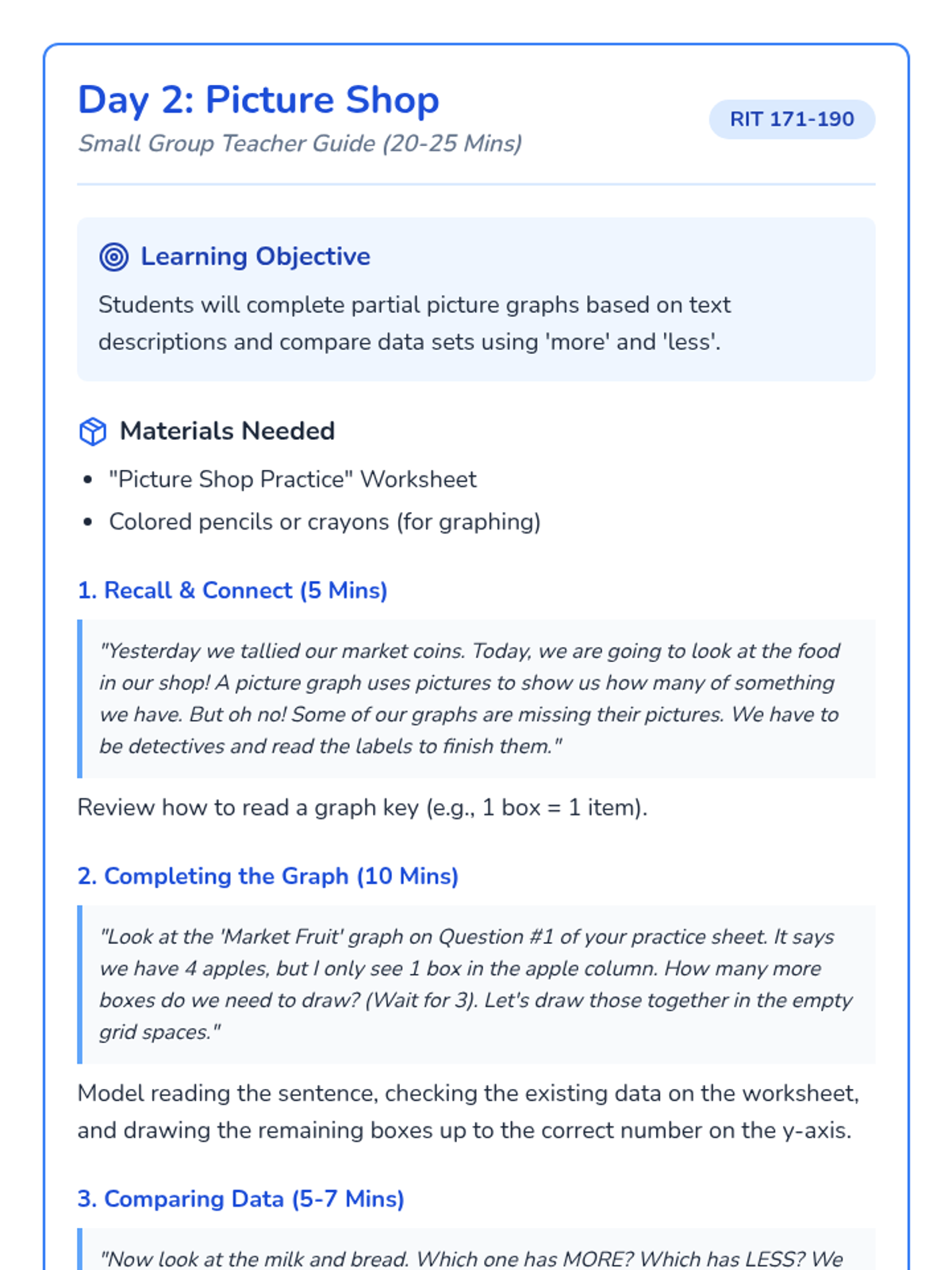
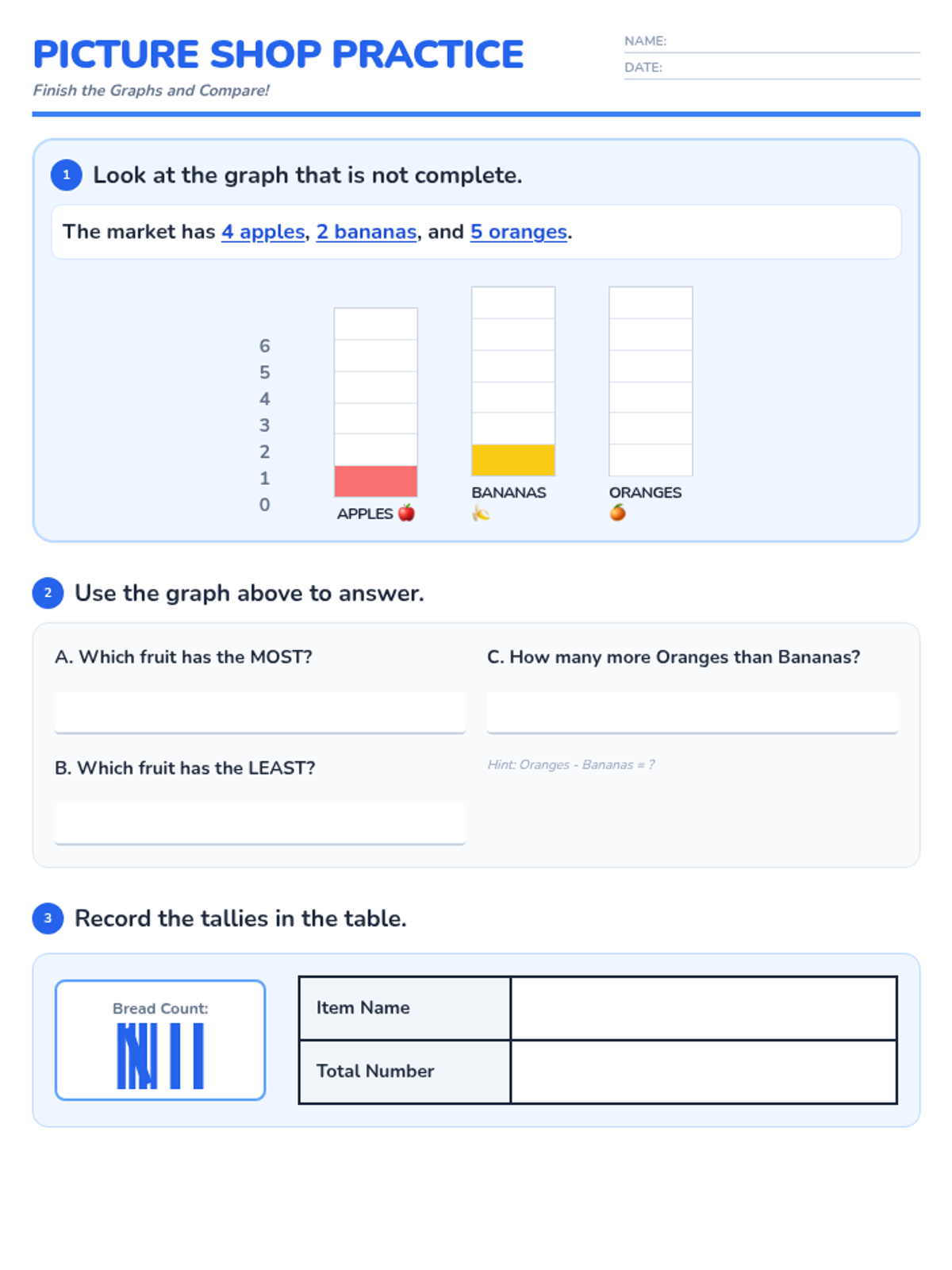
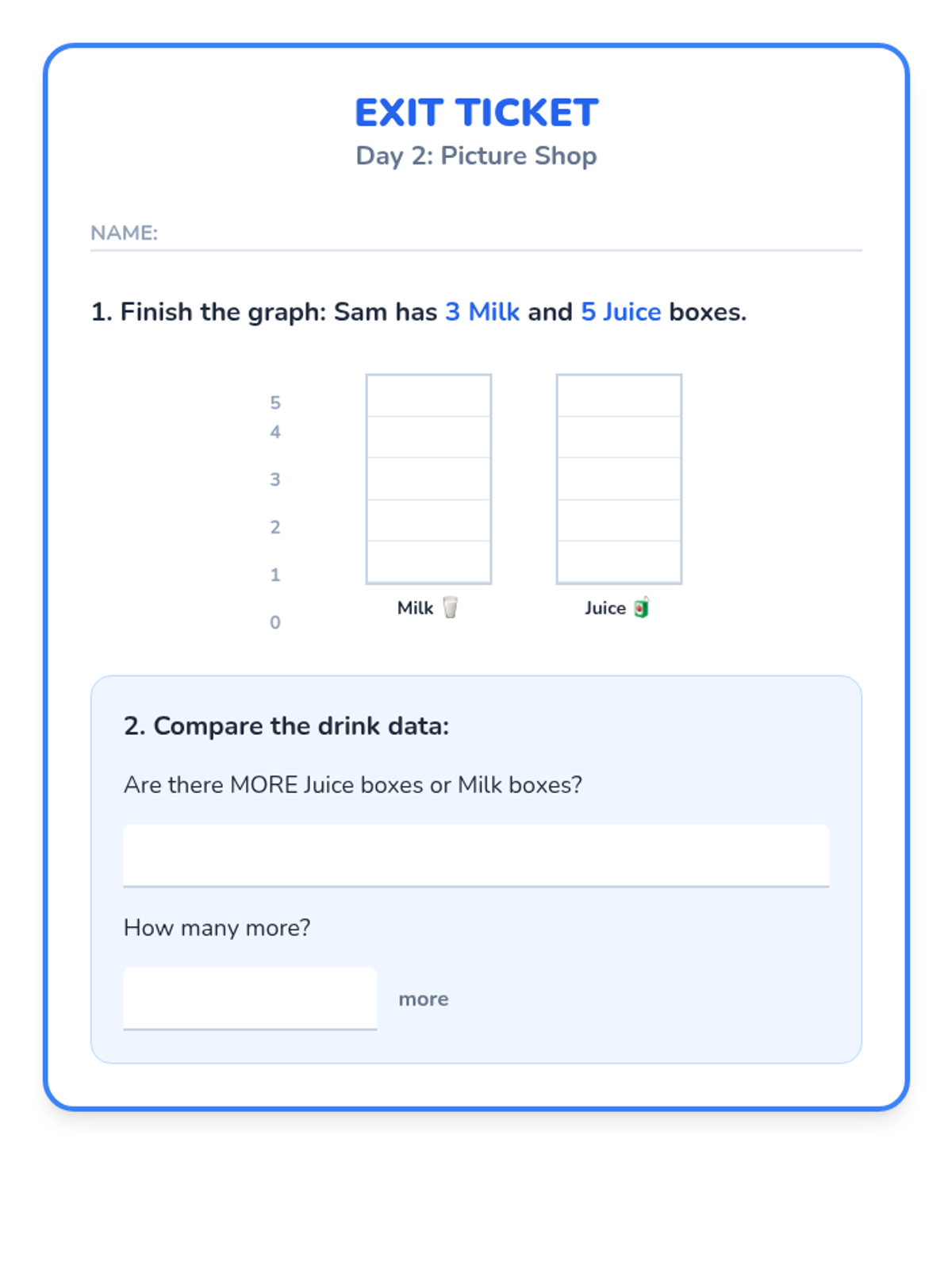
Students complete picture graphs based on text descriptions and compare data to find 'more' or 'less'. This lesson directly targets the NWEA skill of completing partial graphs and interpreting visual data.
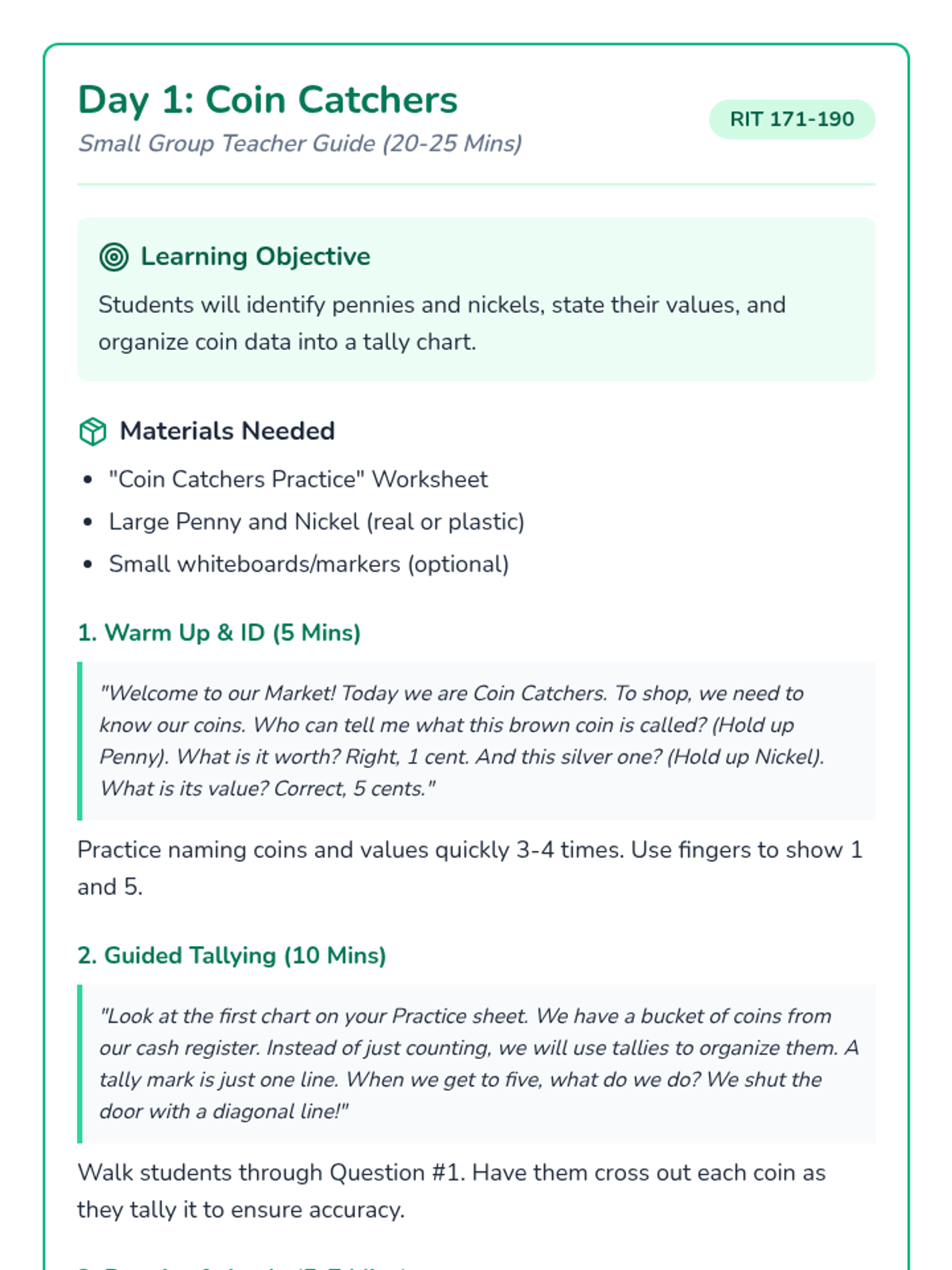
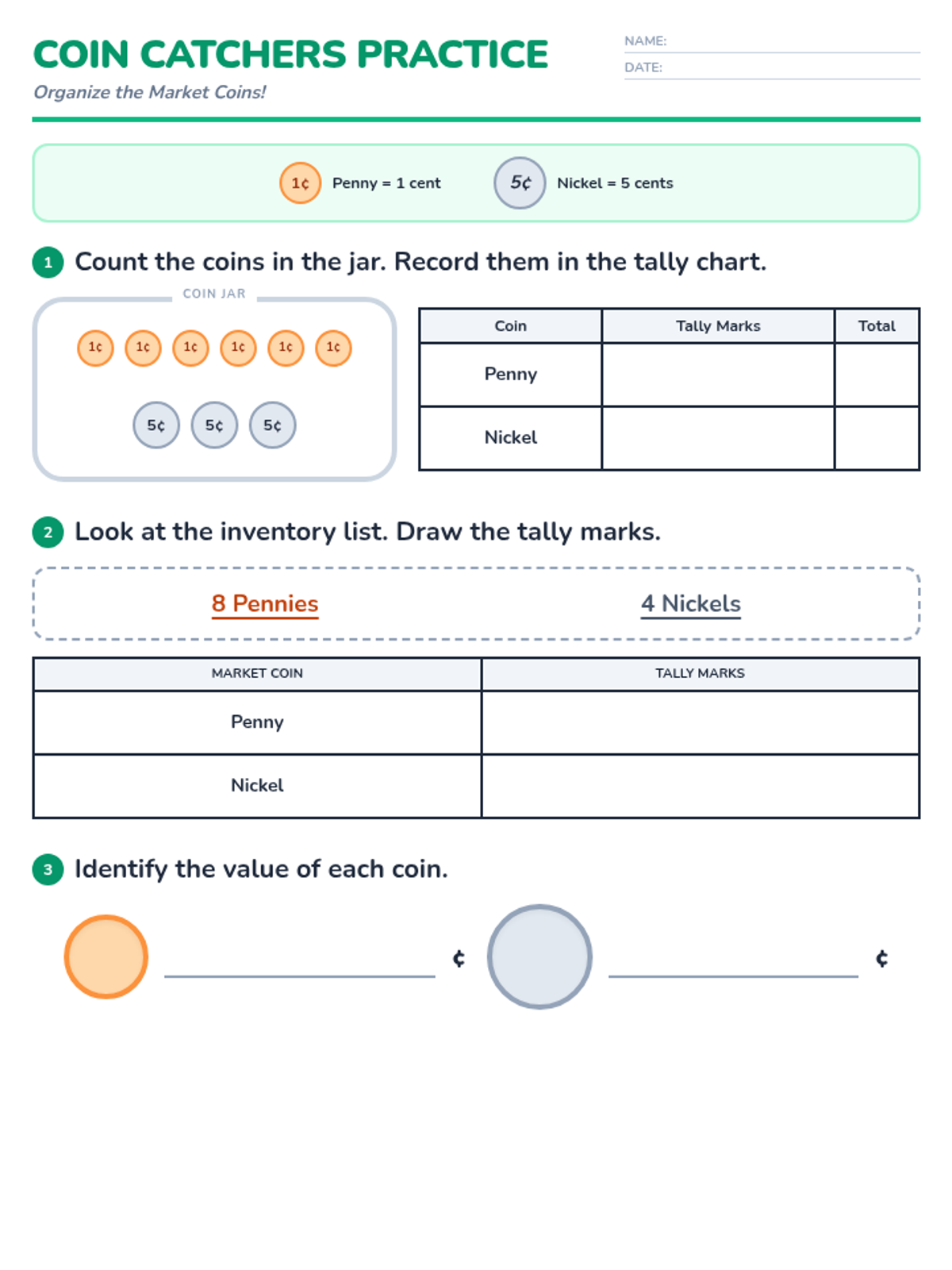
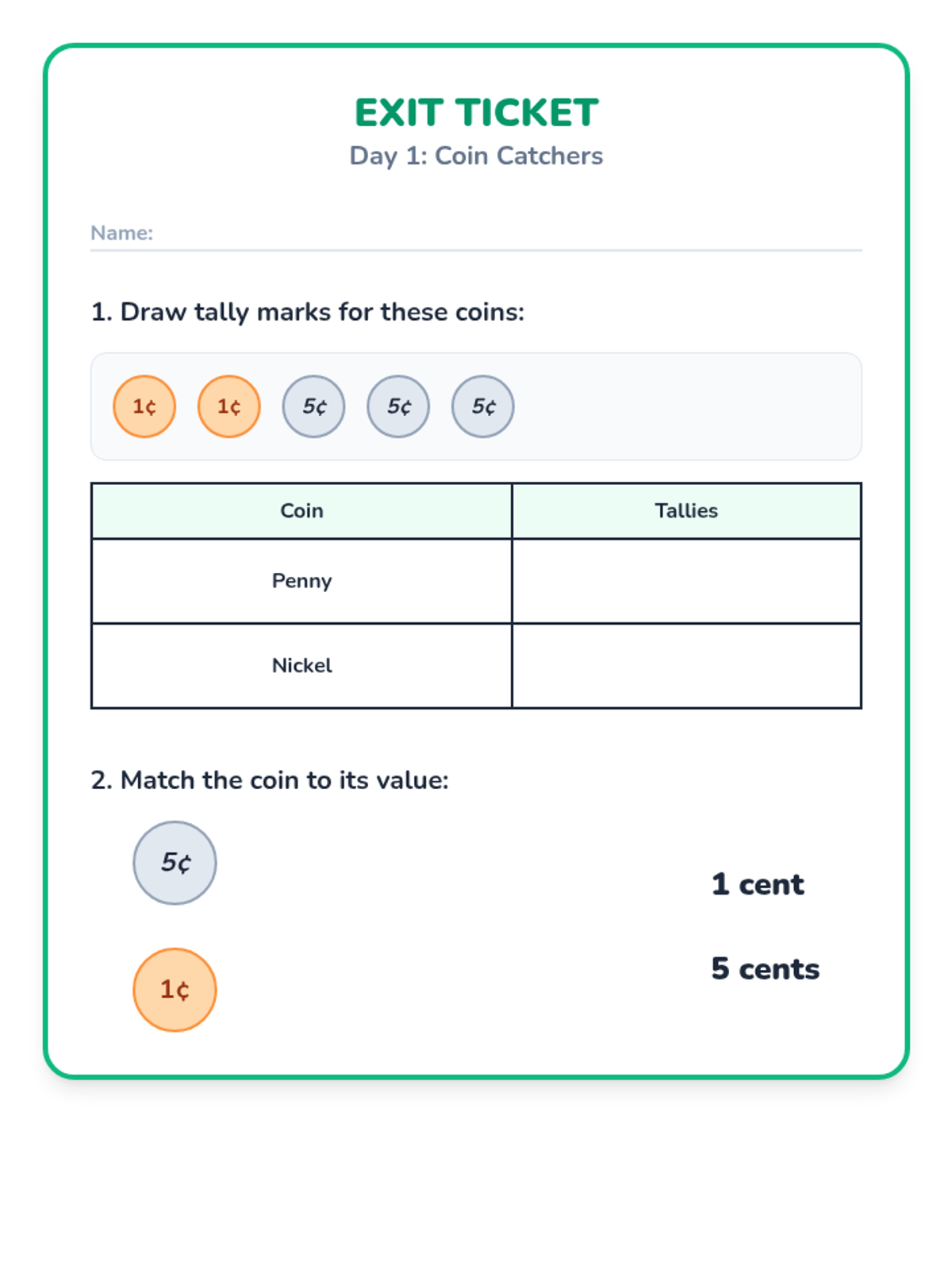
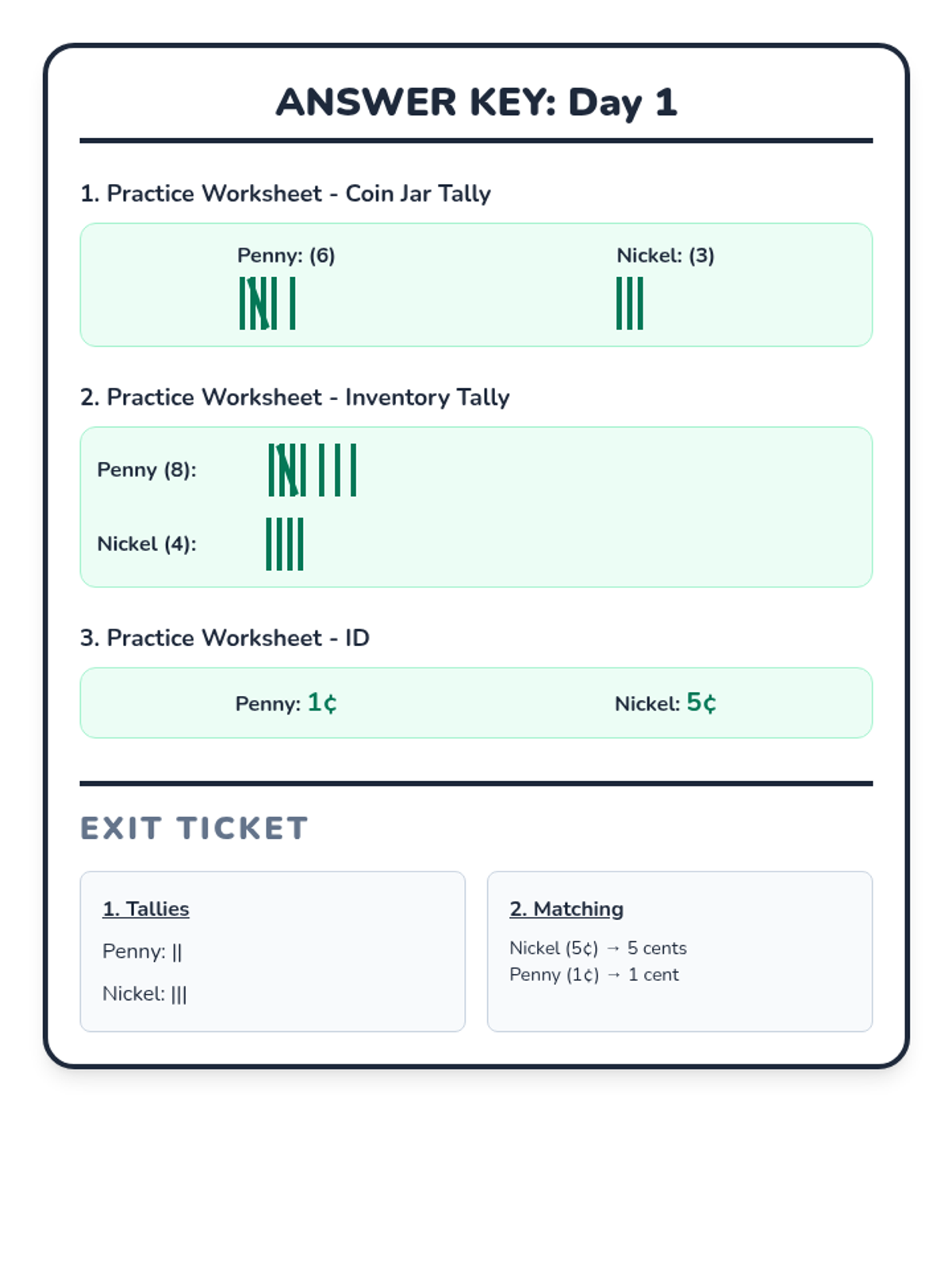
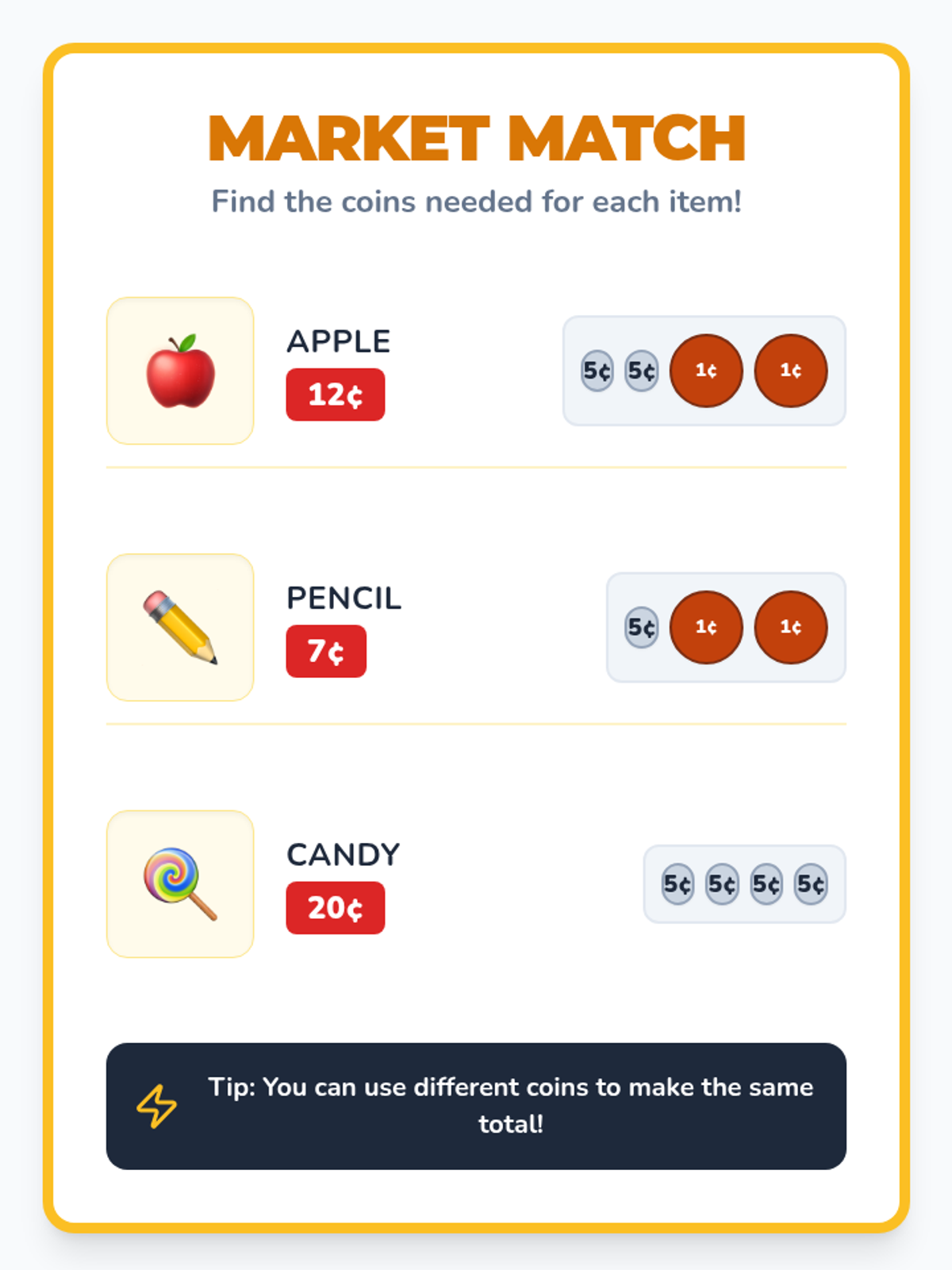
Students identify pennies and nickels, determine their values, and use tally charts to record inventory in a mock market setting. This lesson focuses on the transition from simple identification to organizing data.
Students count sets of pennies and nickels and analyze data from bar graphs to solve comparison problems. Subtraction skills are reinforced through data-based word problems.
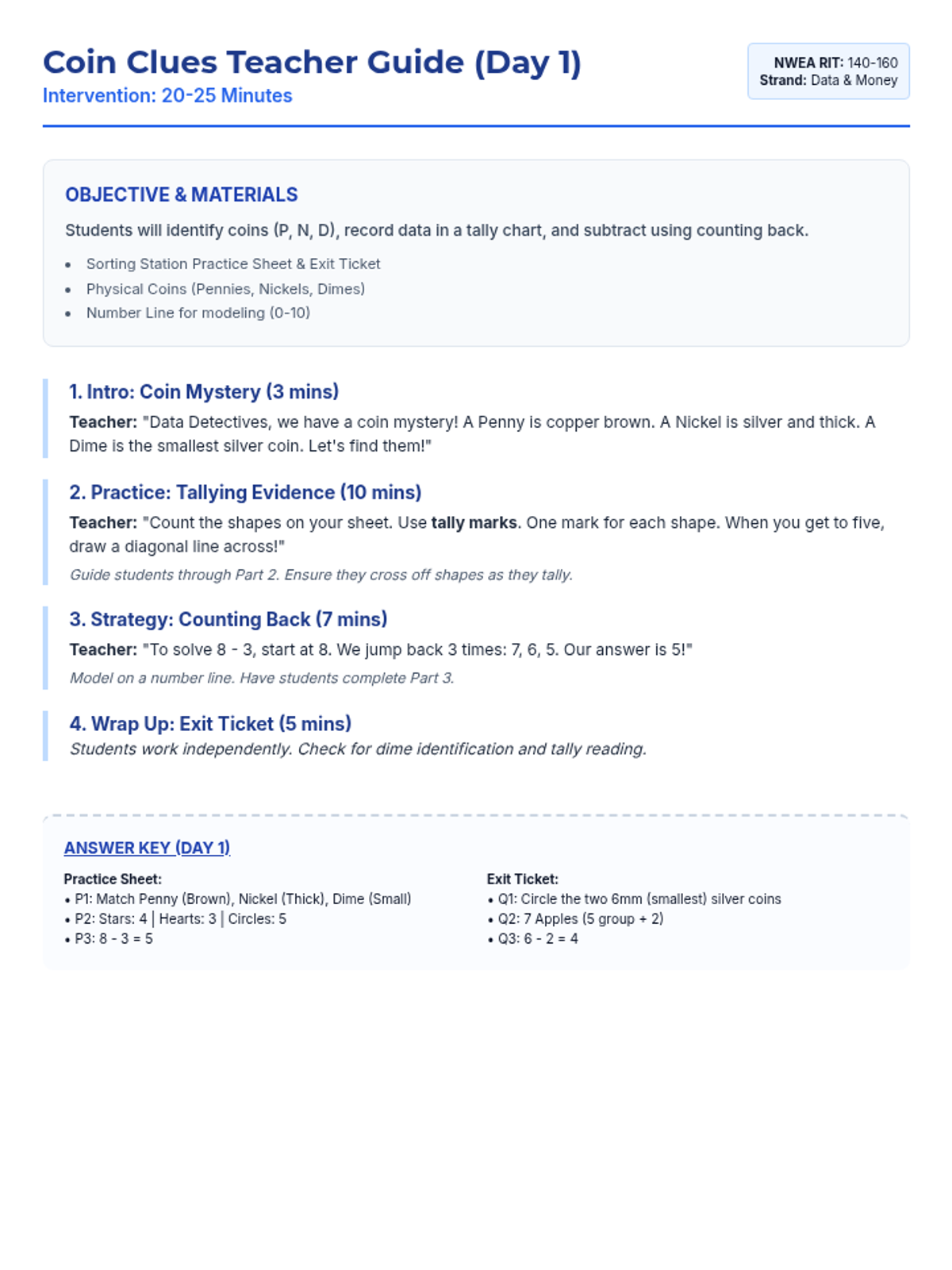
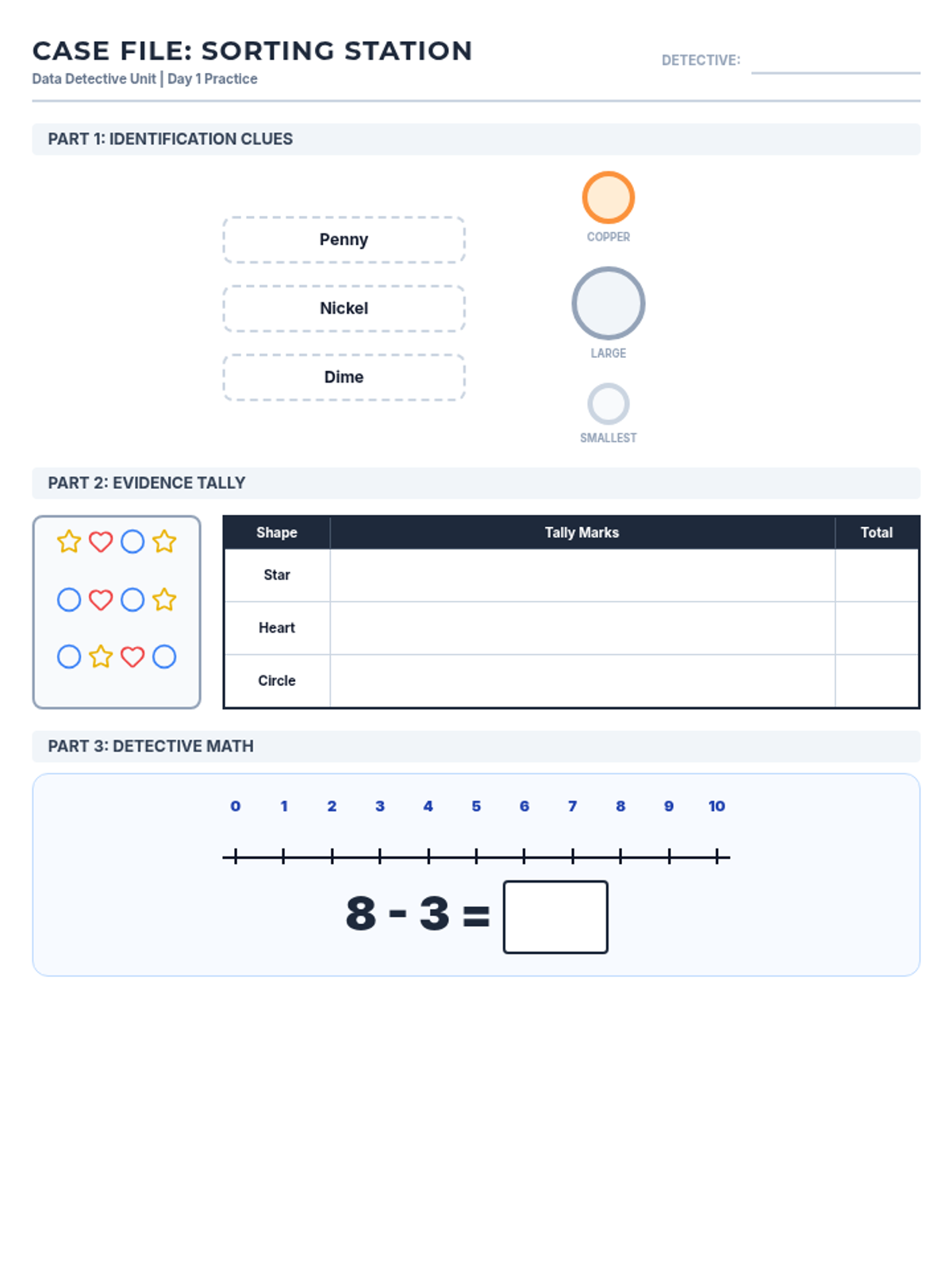
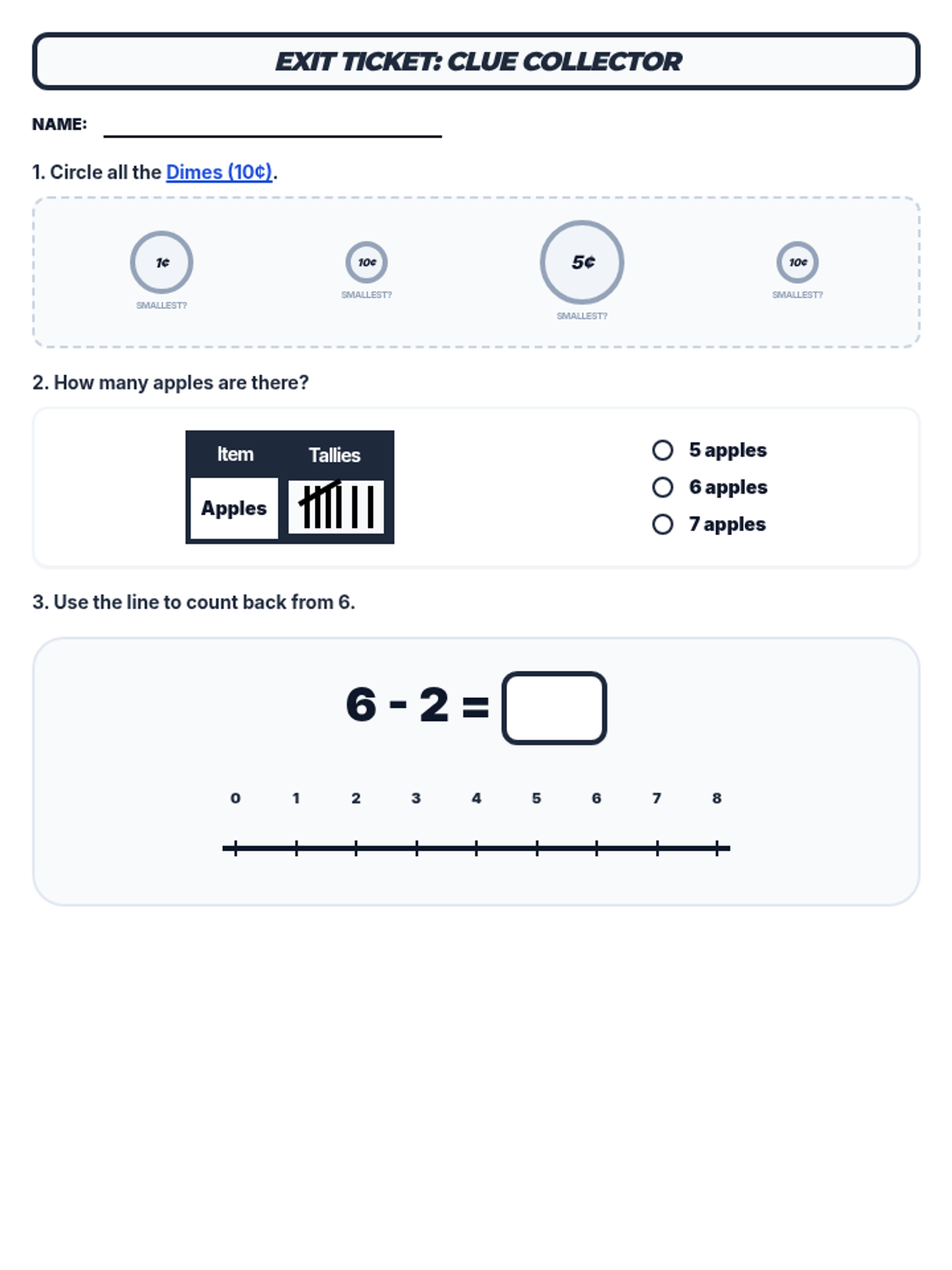
Students identify pennies, nickels, and dimes, sort objects into categories, and record data using tally charts. The lesson also introduces subtraction by counting back on a number line.
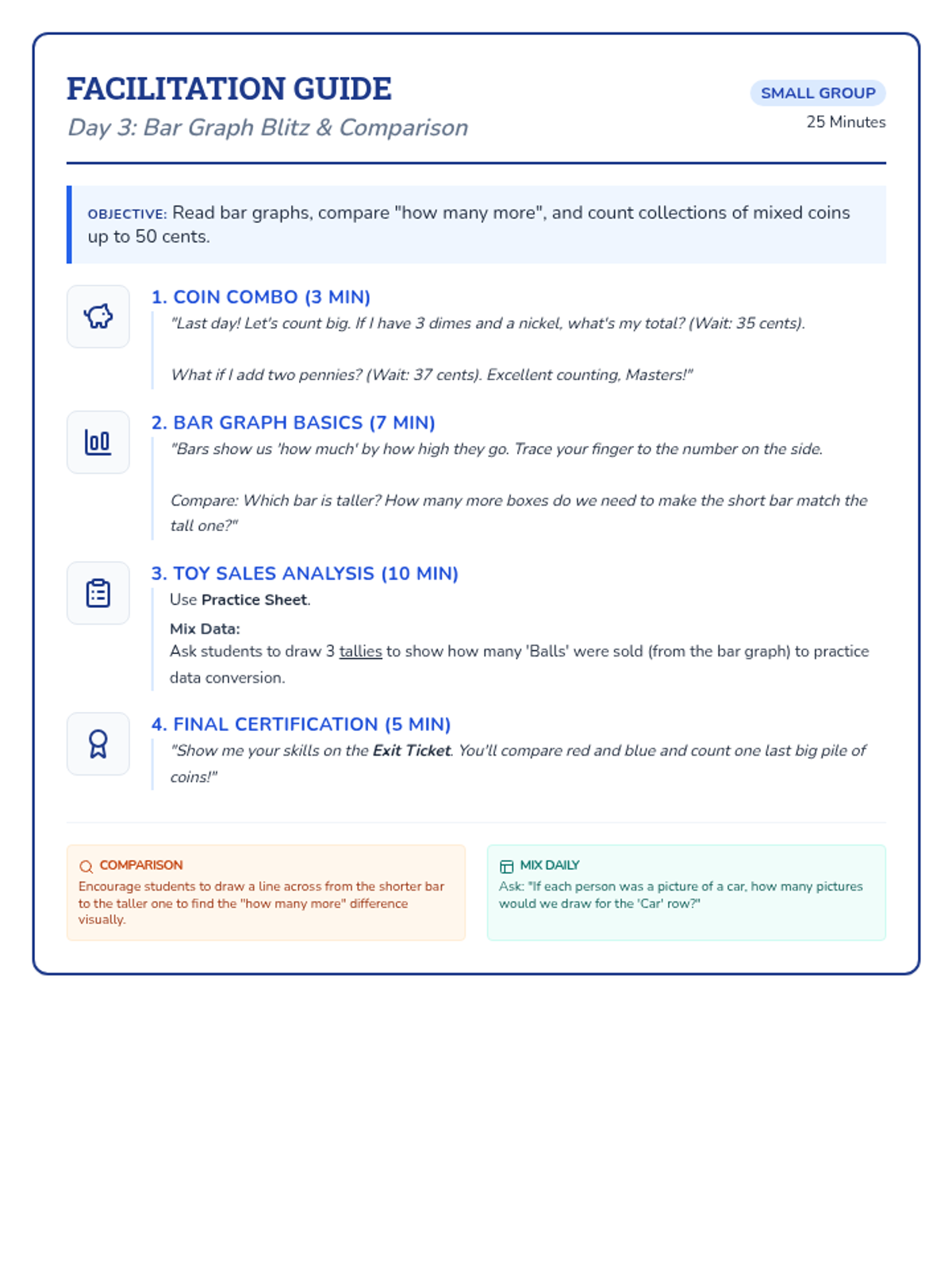
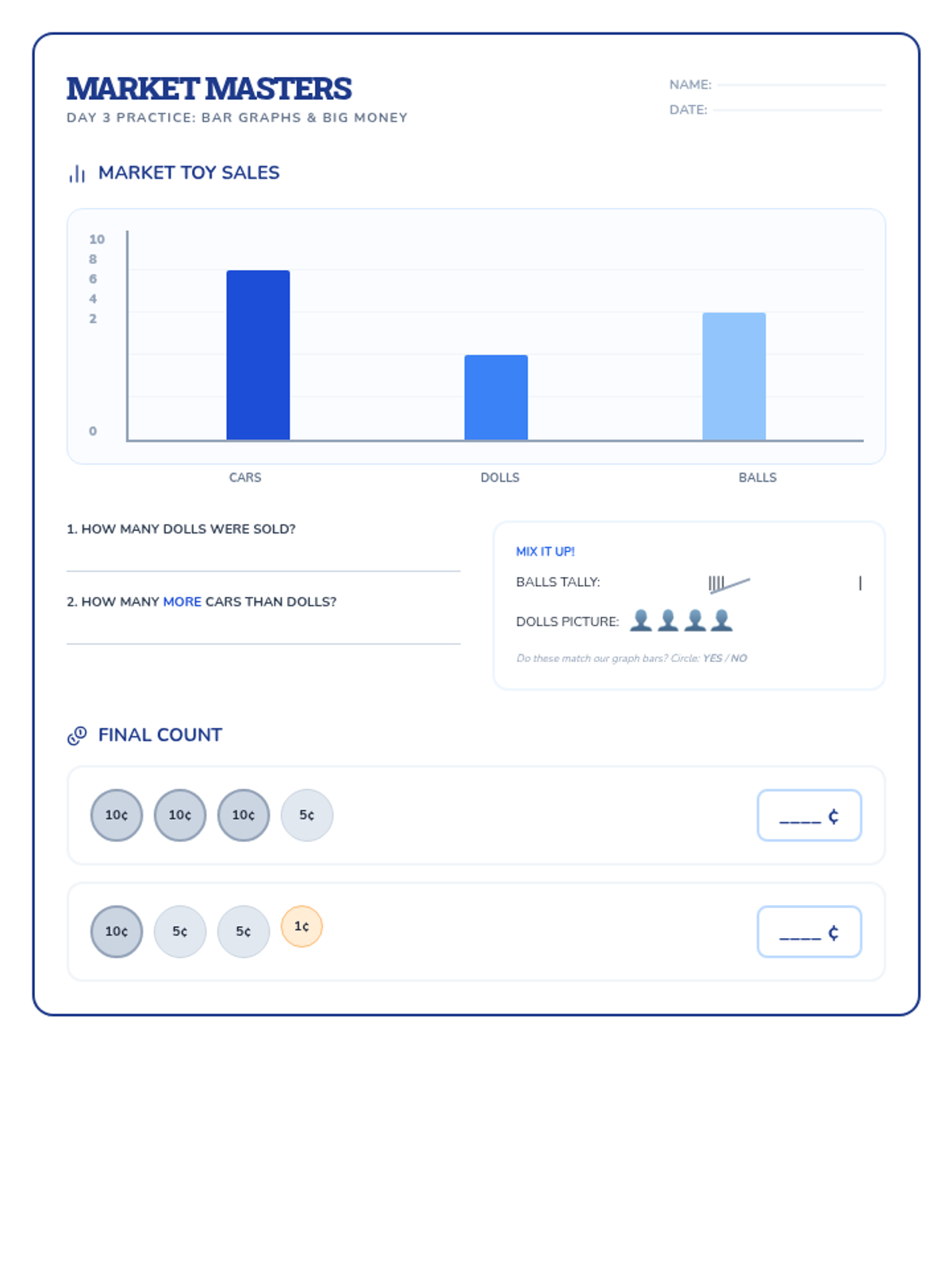
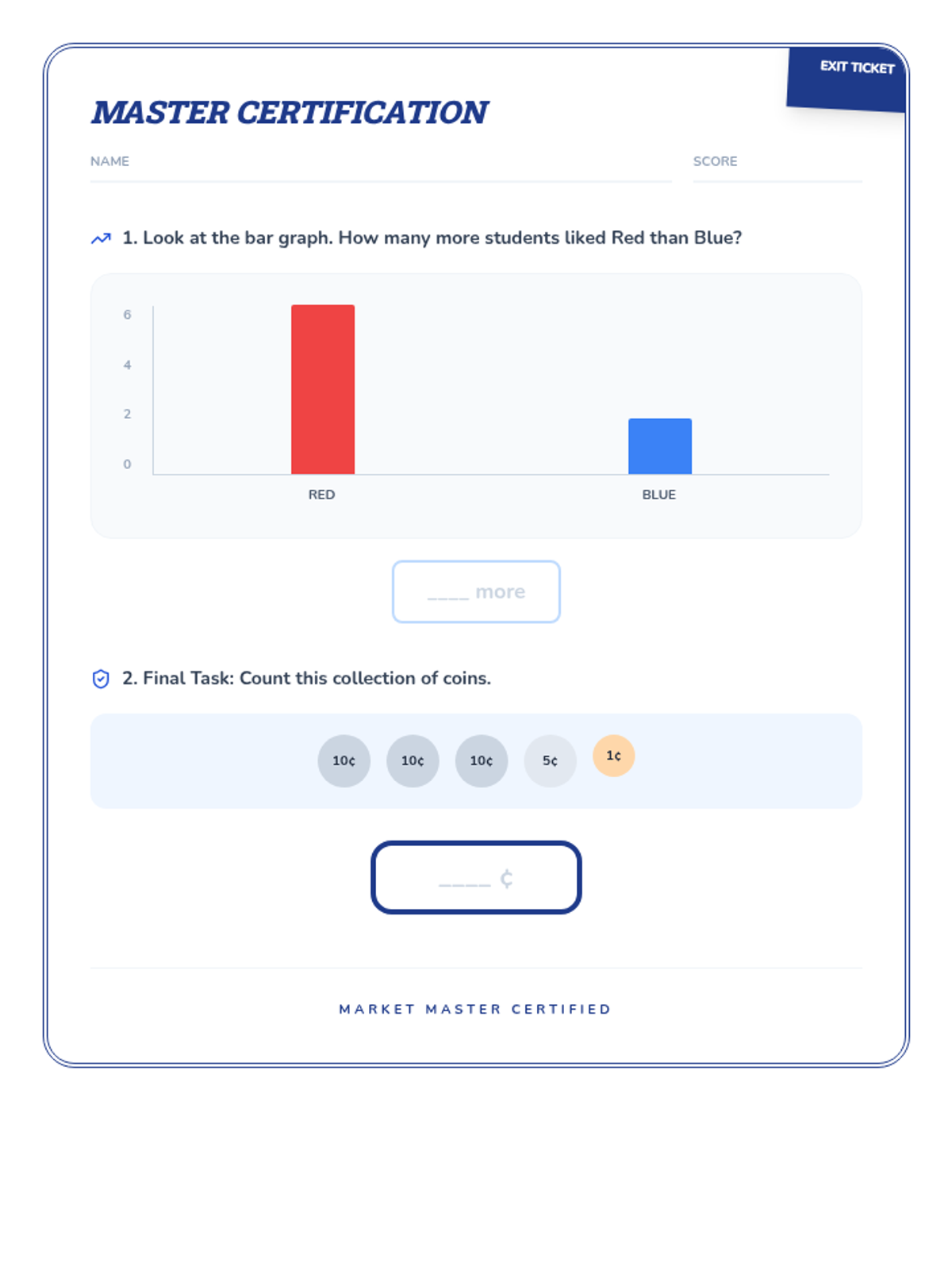
Focuses on bar graphs and comparing data. Students analyze categories and count collections of mixed coins.
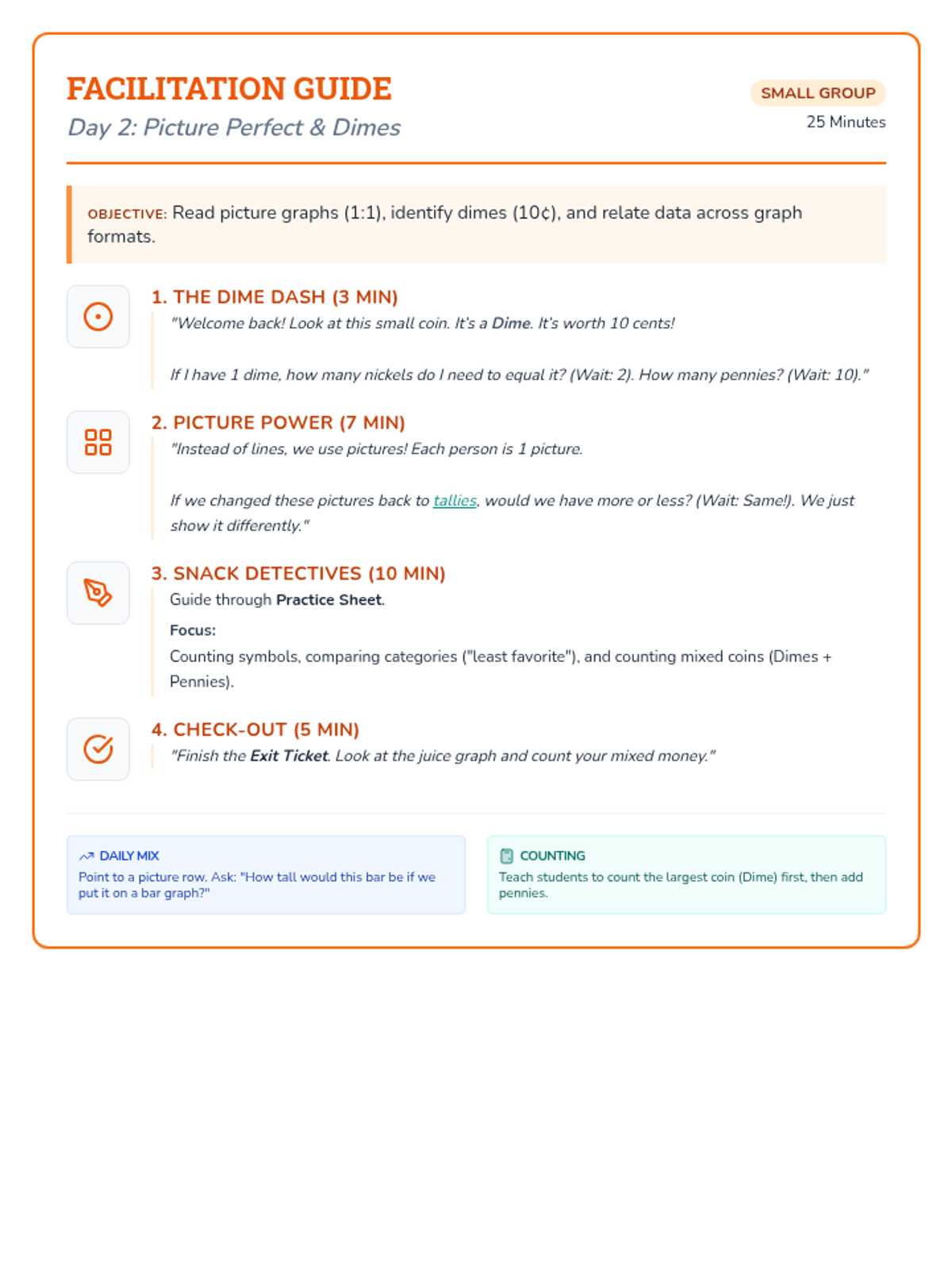
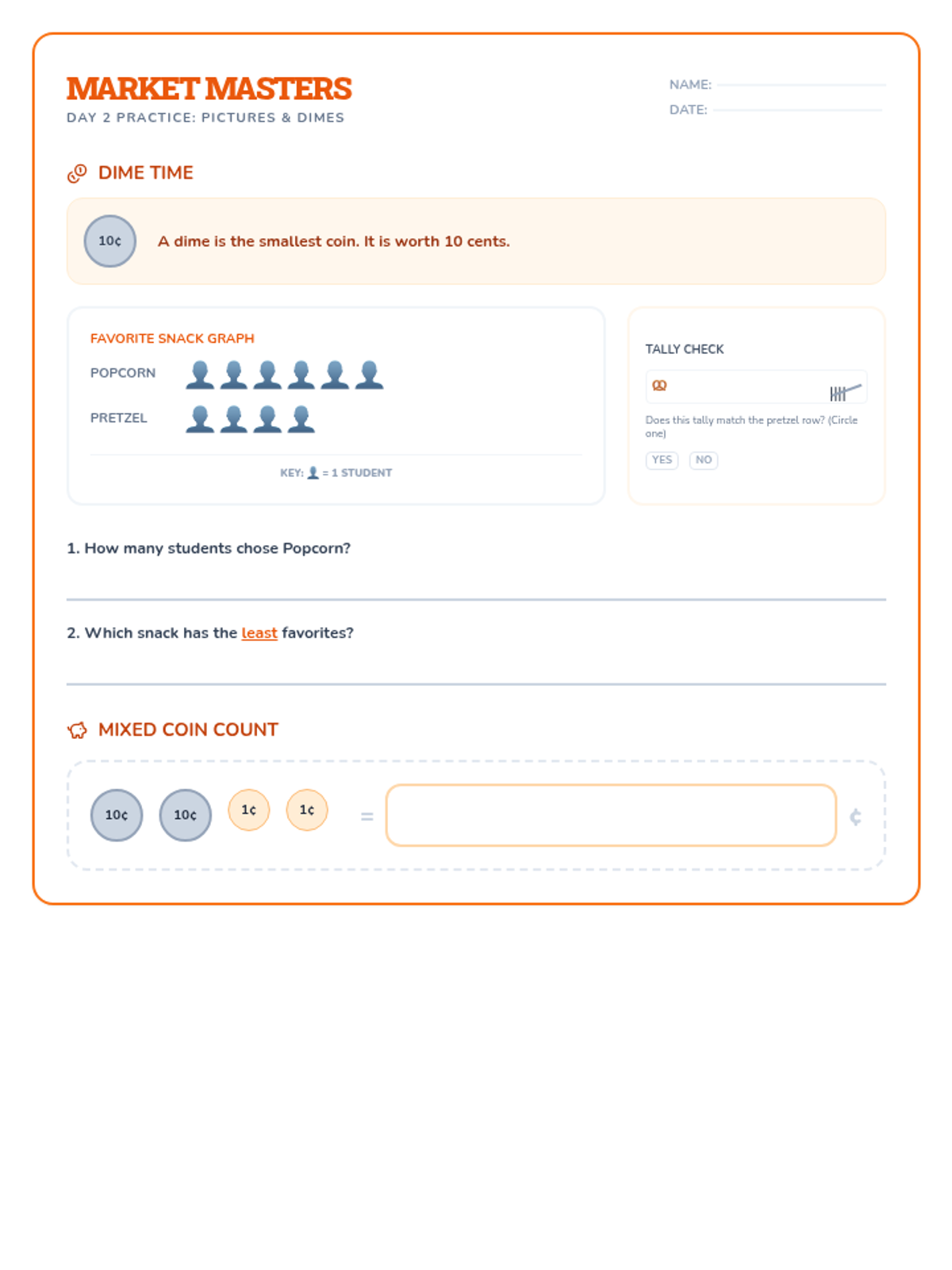
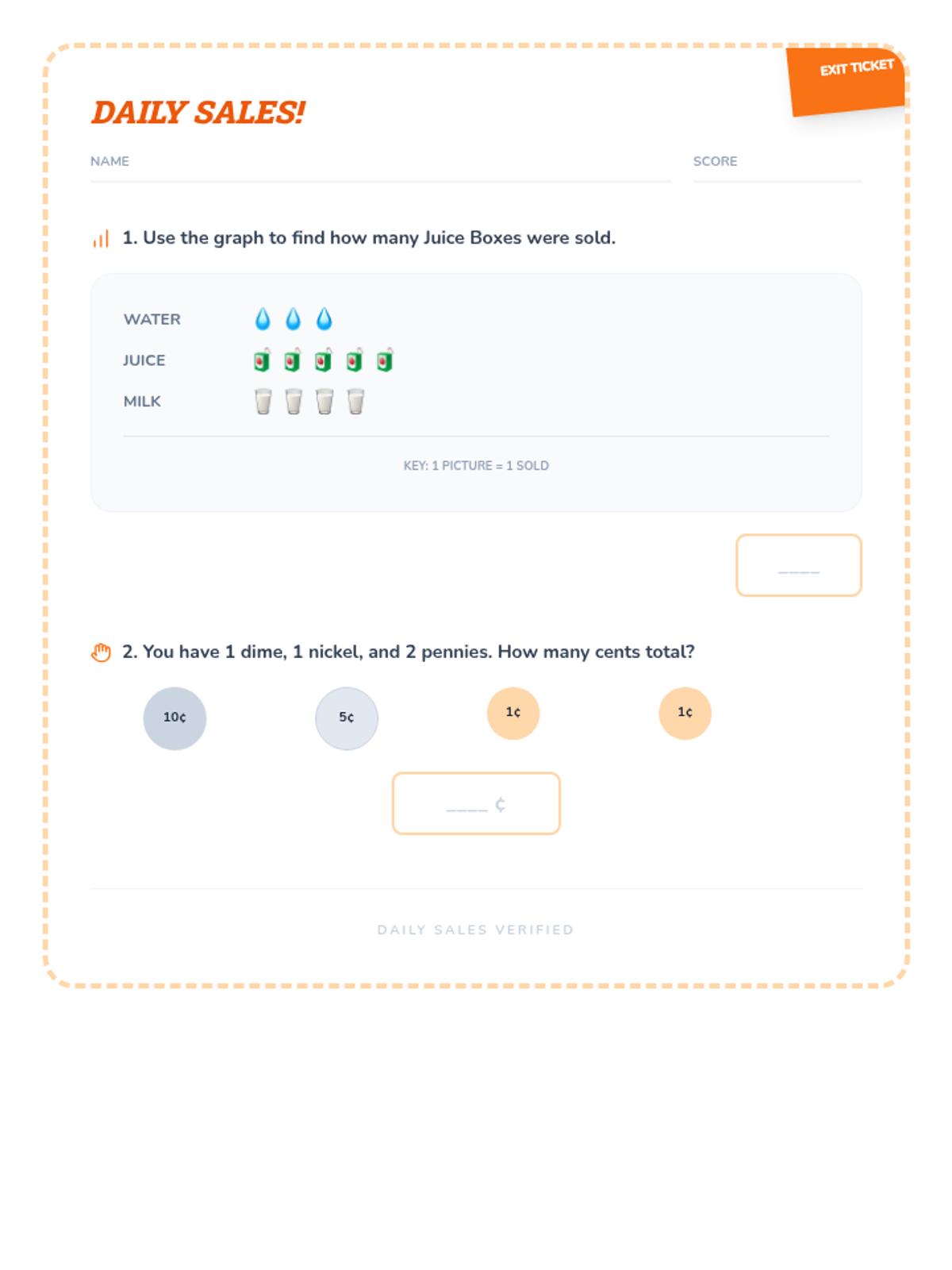
Focuses on picture graphs and dimes. Students interpret data with 1:1 correspondence and count mixed coins.
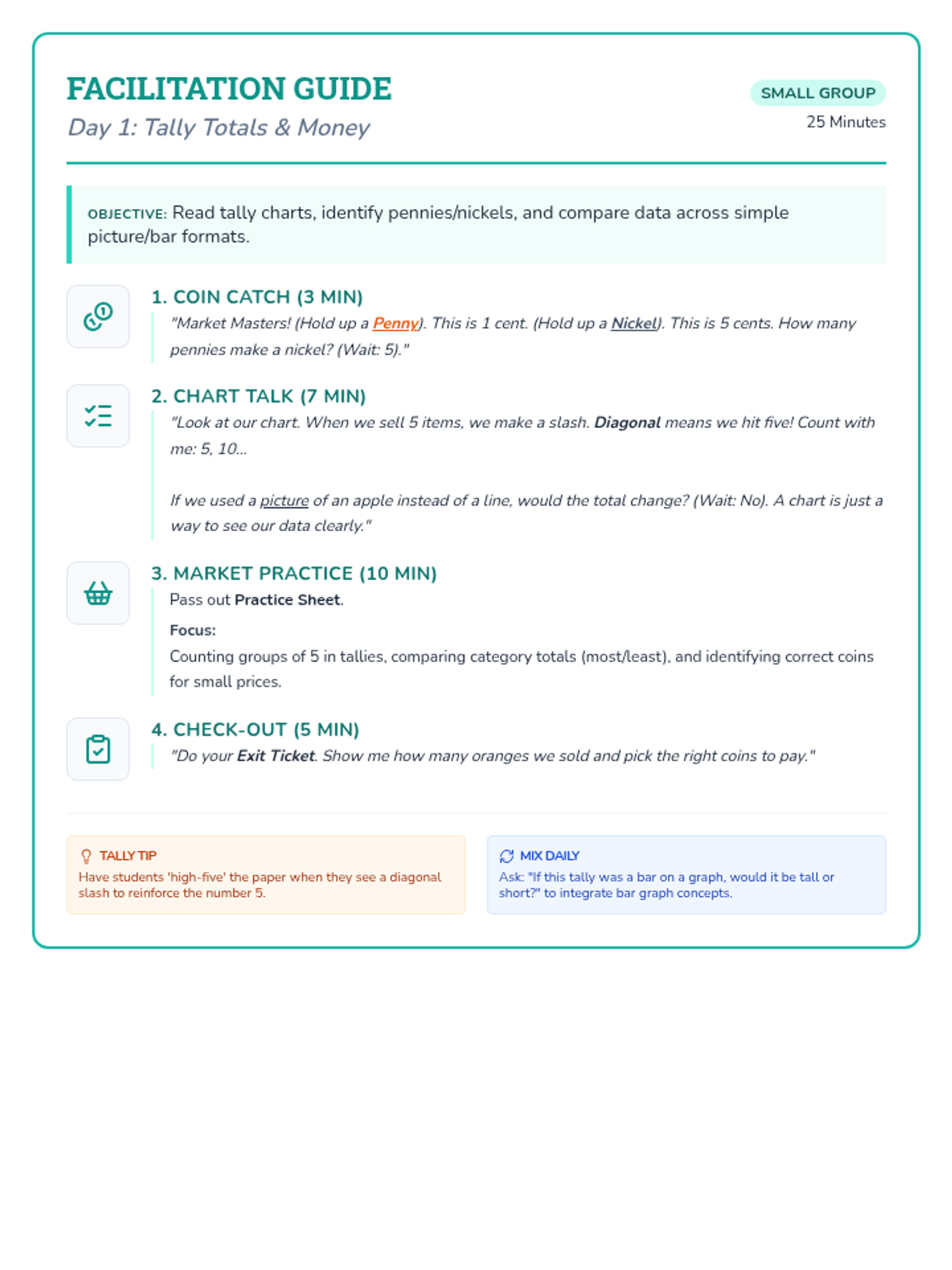
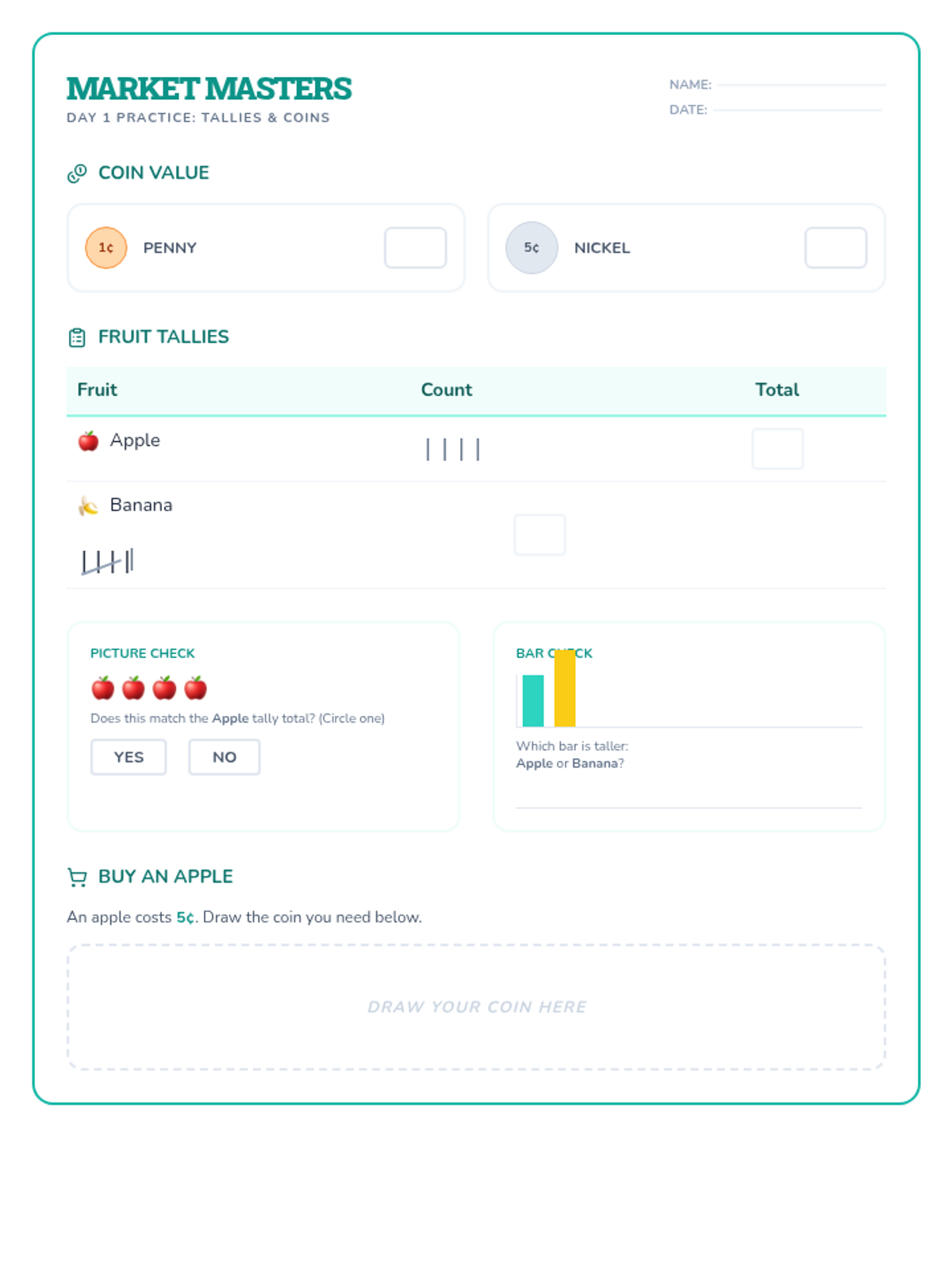
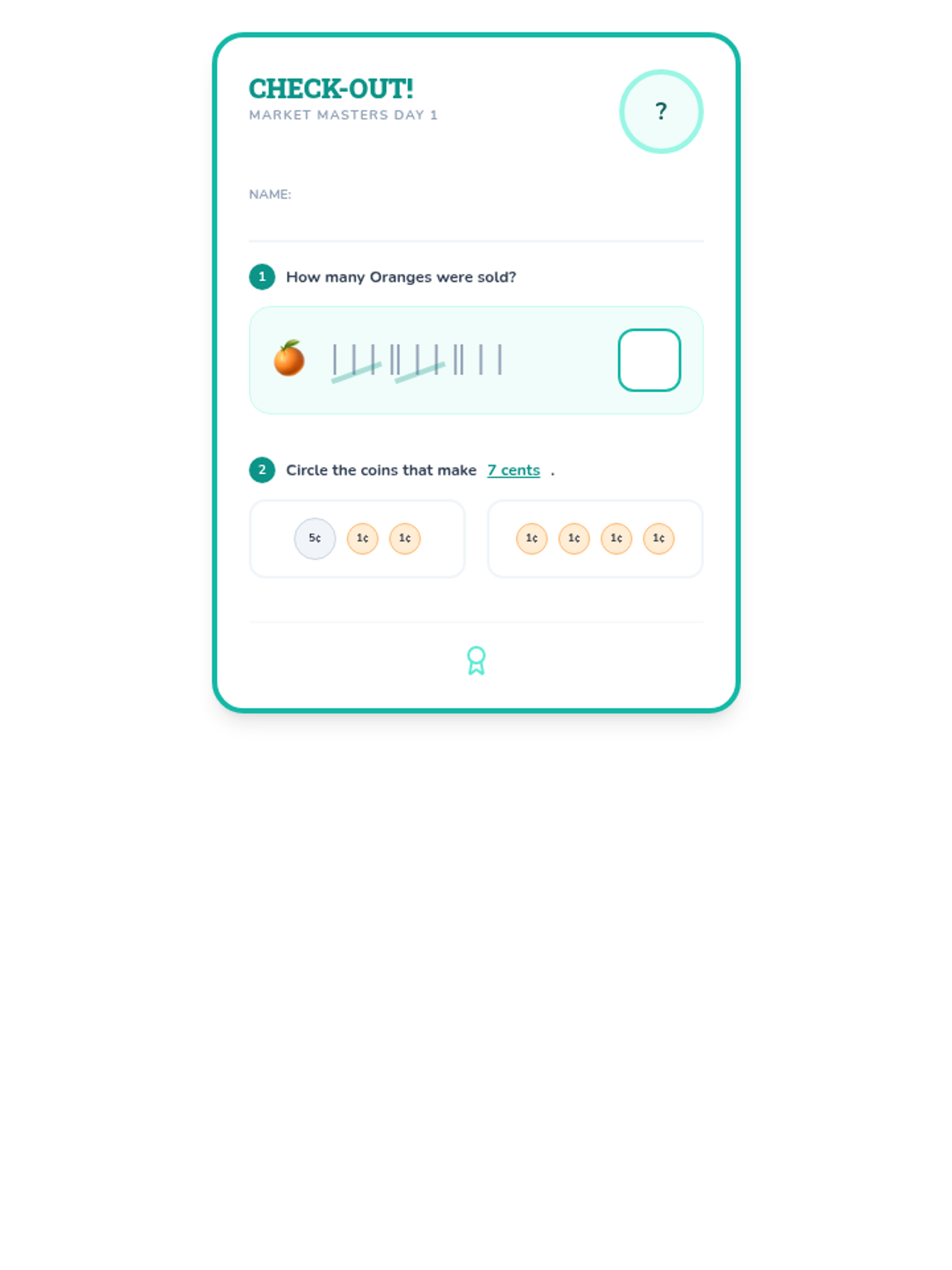
Focuses on tally charts and pennies/nickels. Students learn to read tallies and identify coins to 'buy' items from the market.
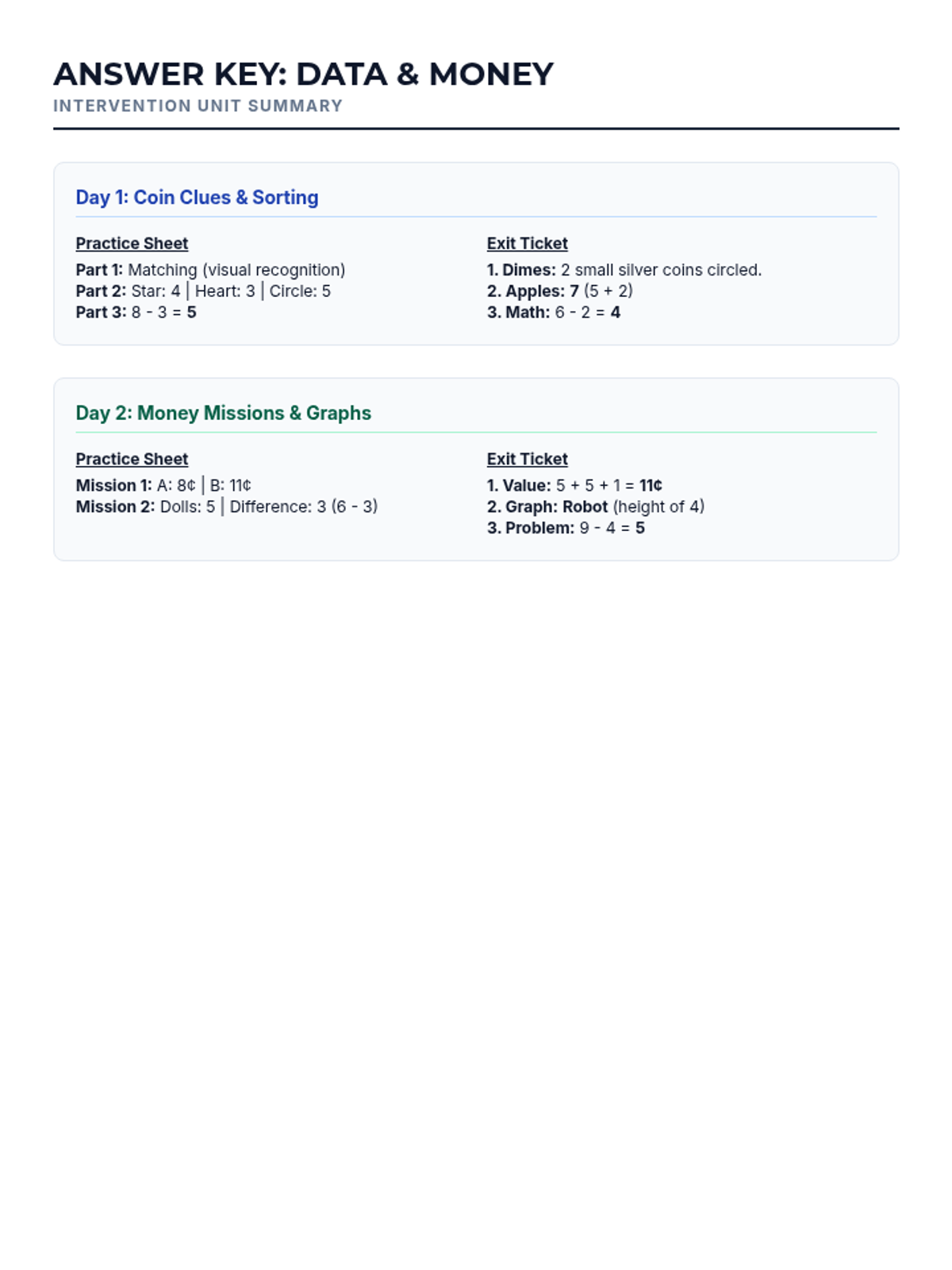
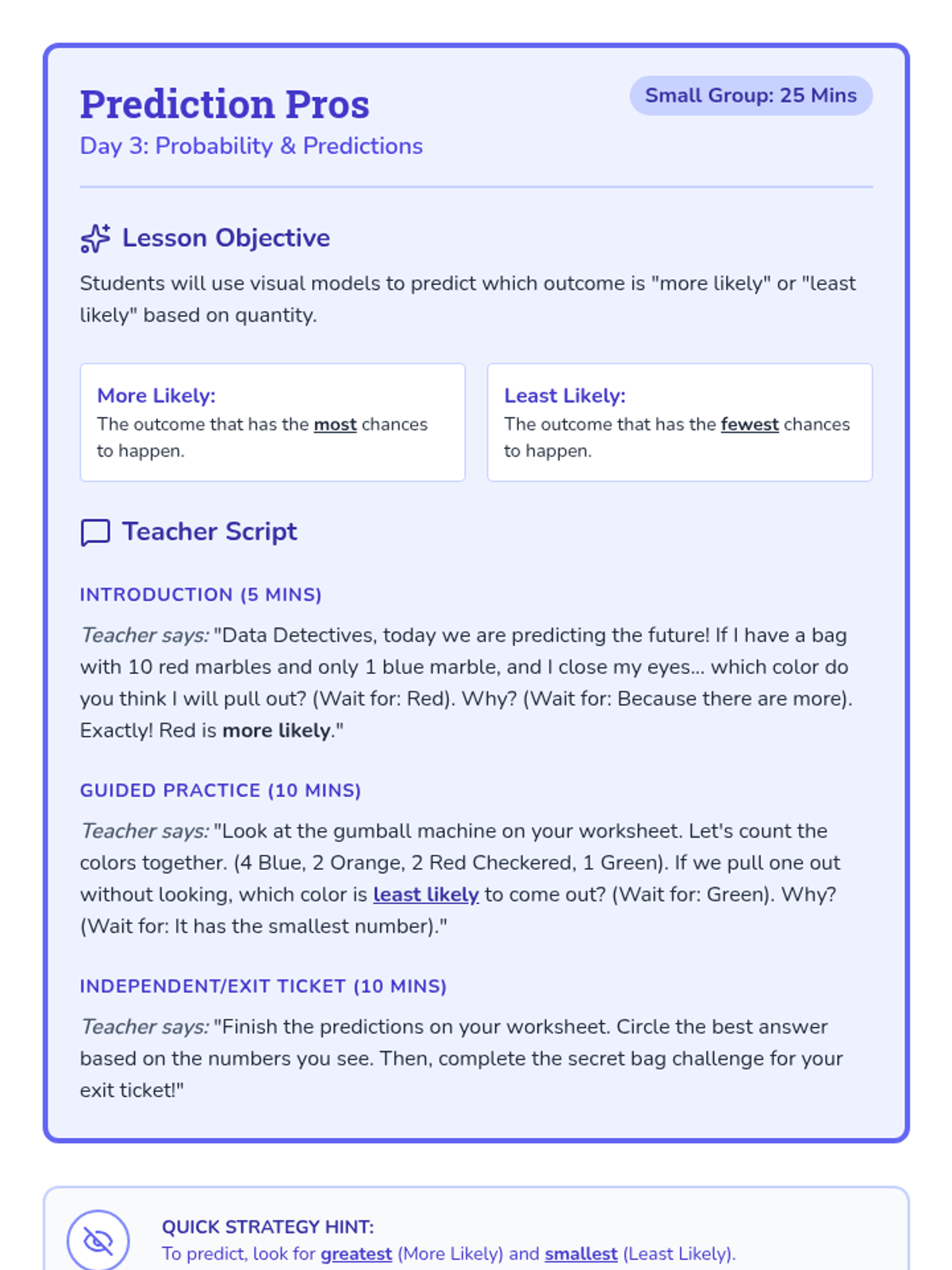
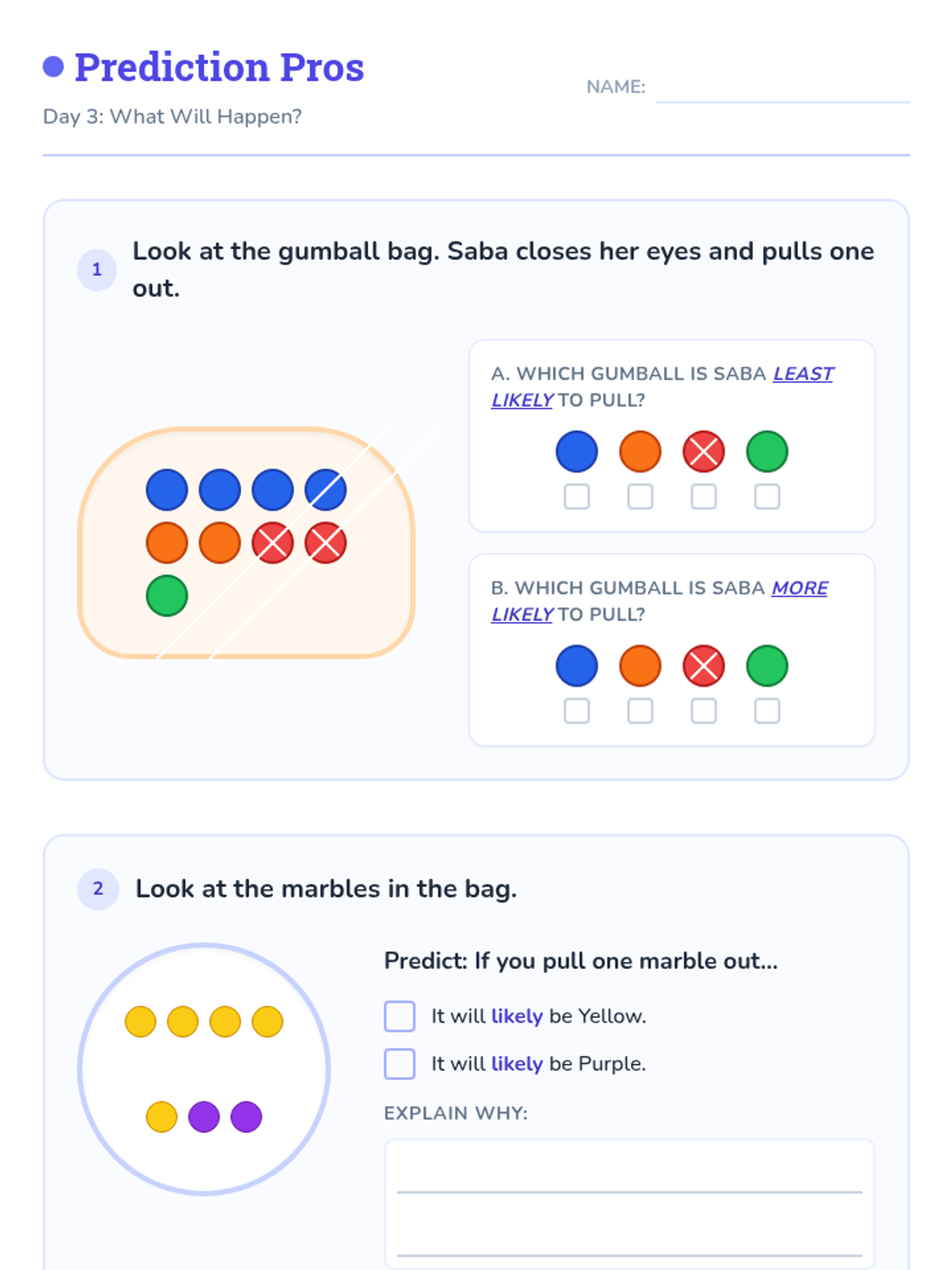
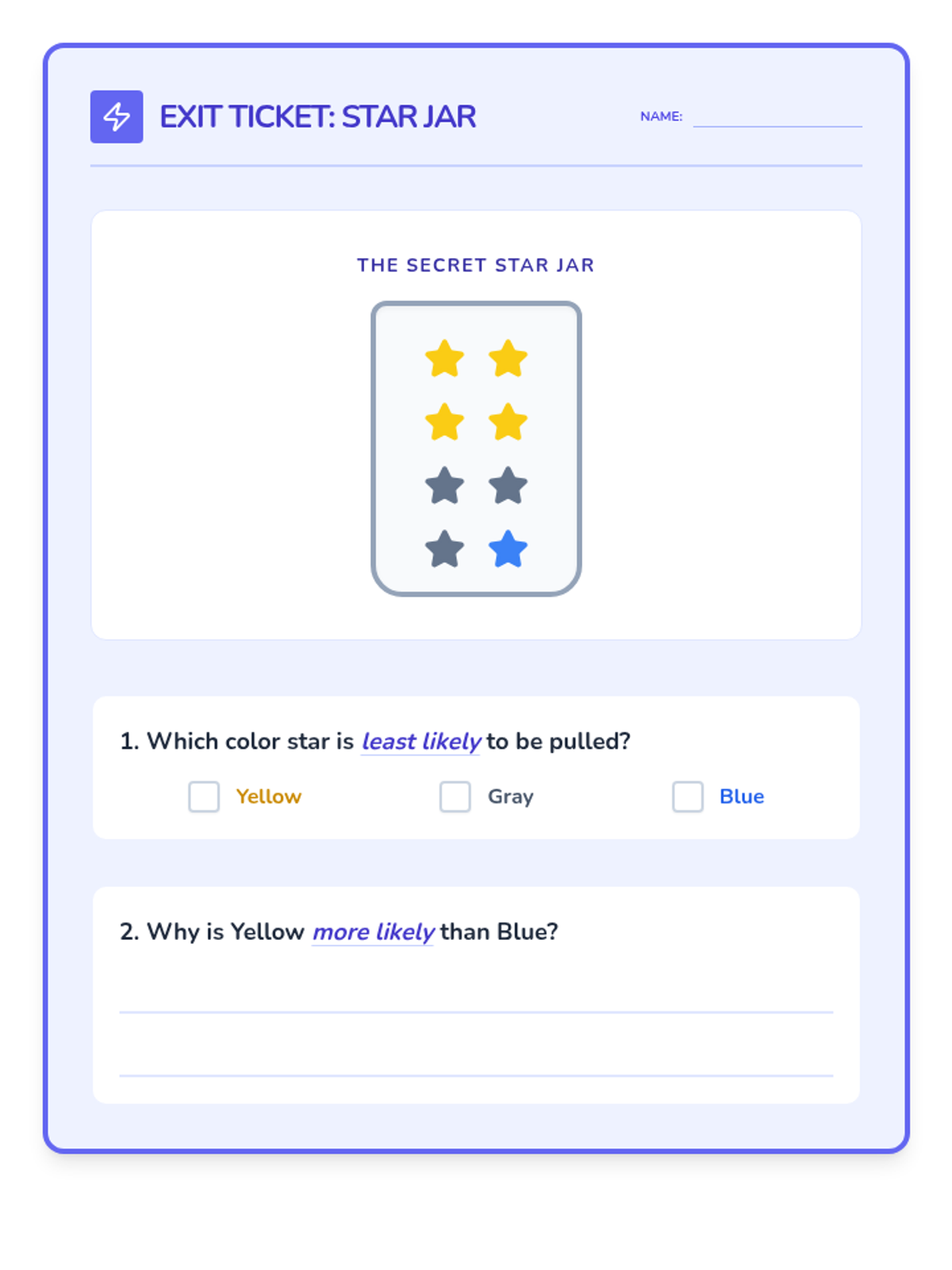
Day 3 covers probability and predictions, teaching students to identify 'more likely' and 'least likely' outcomes based on visual data.
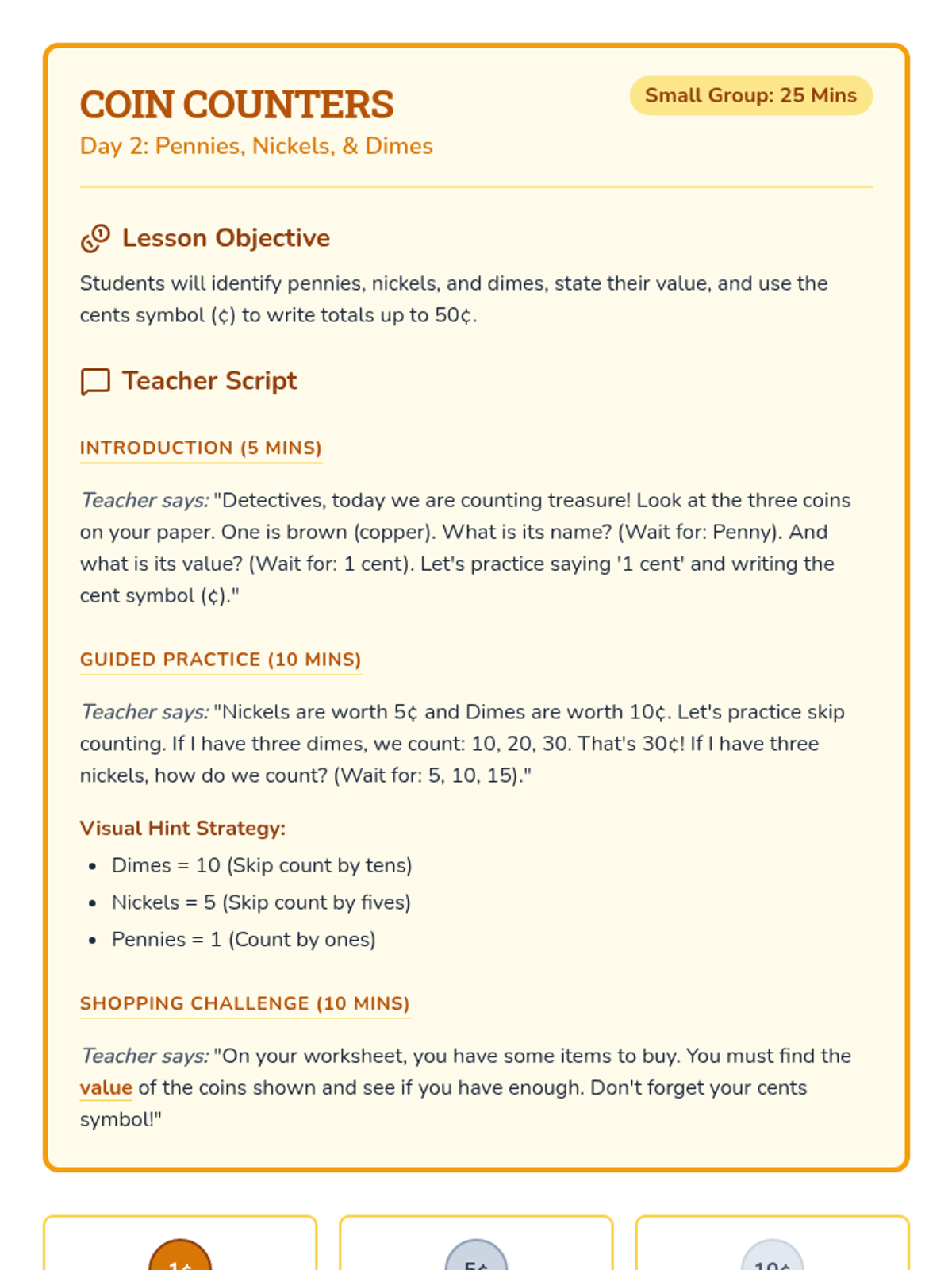
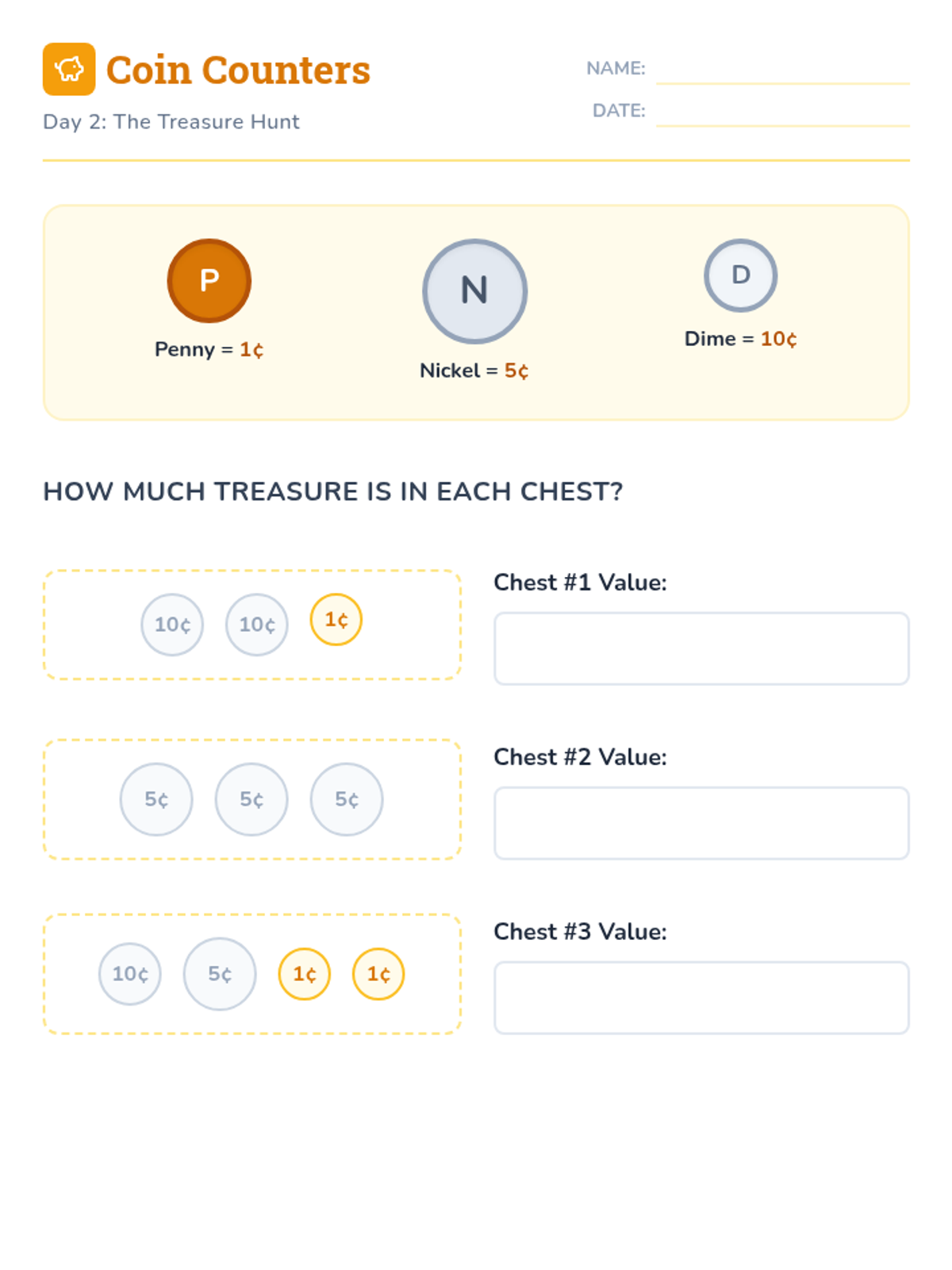
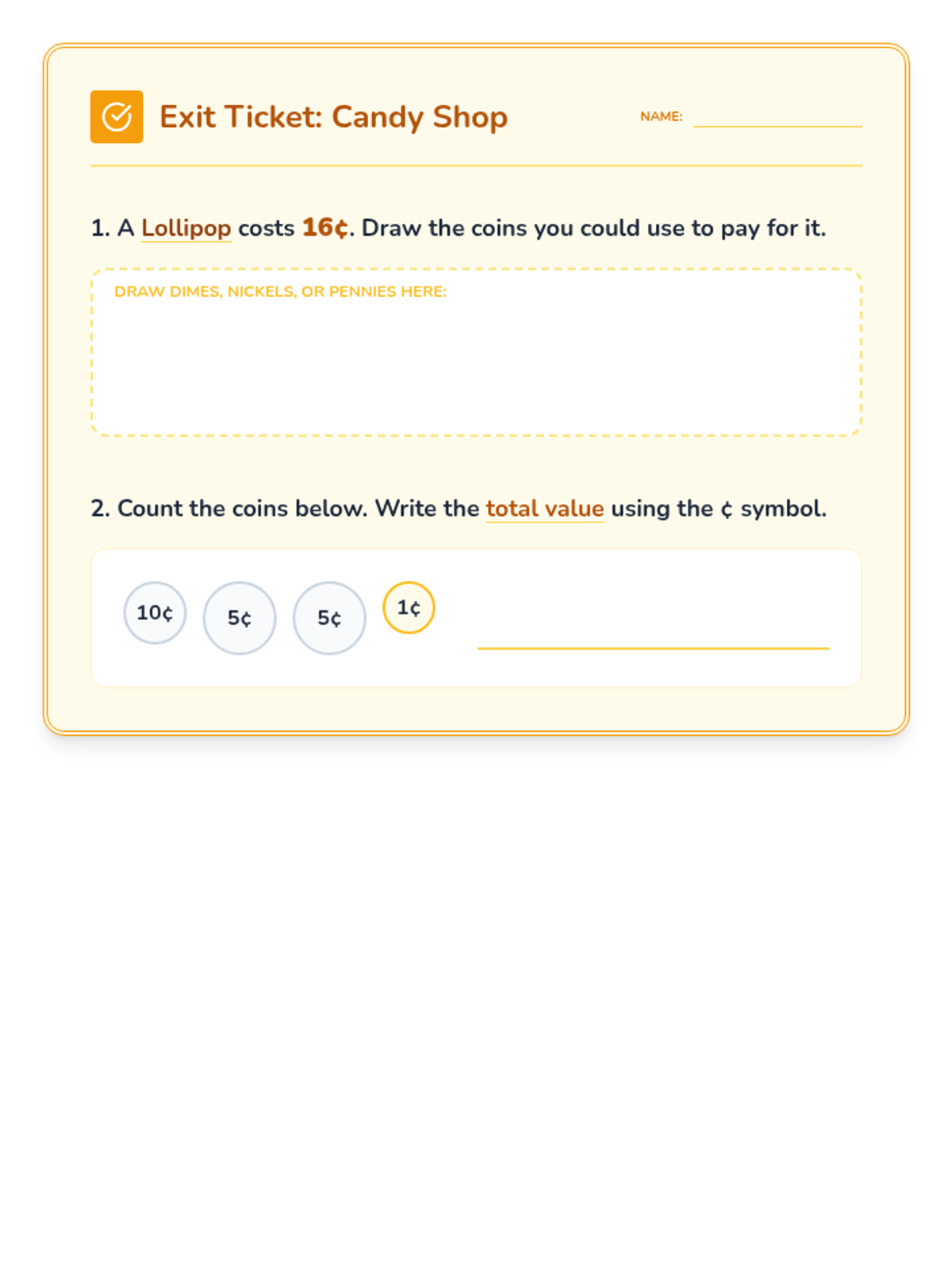
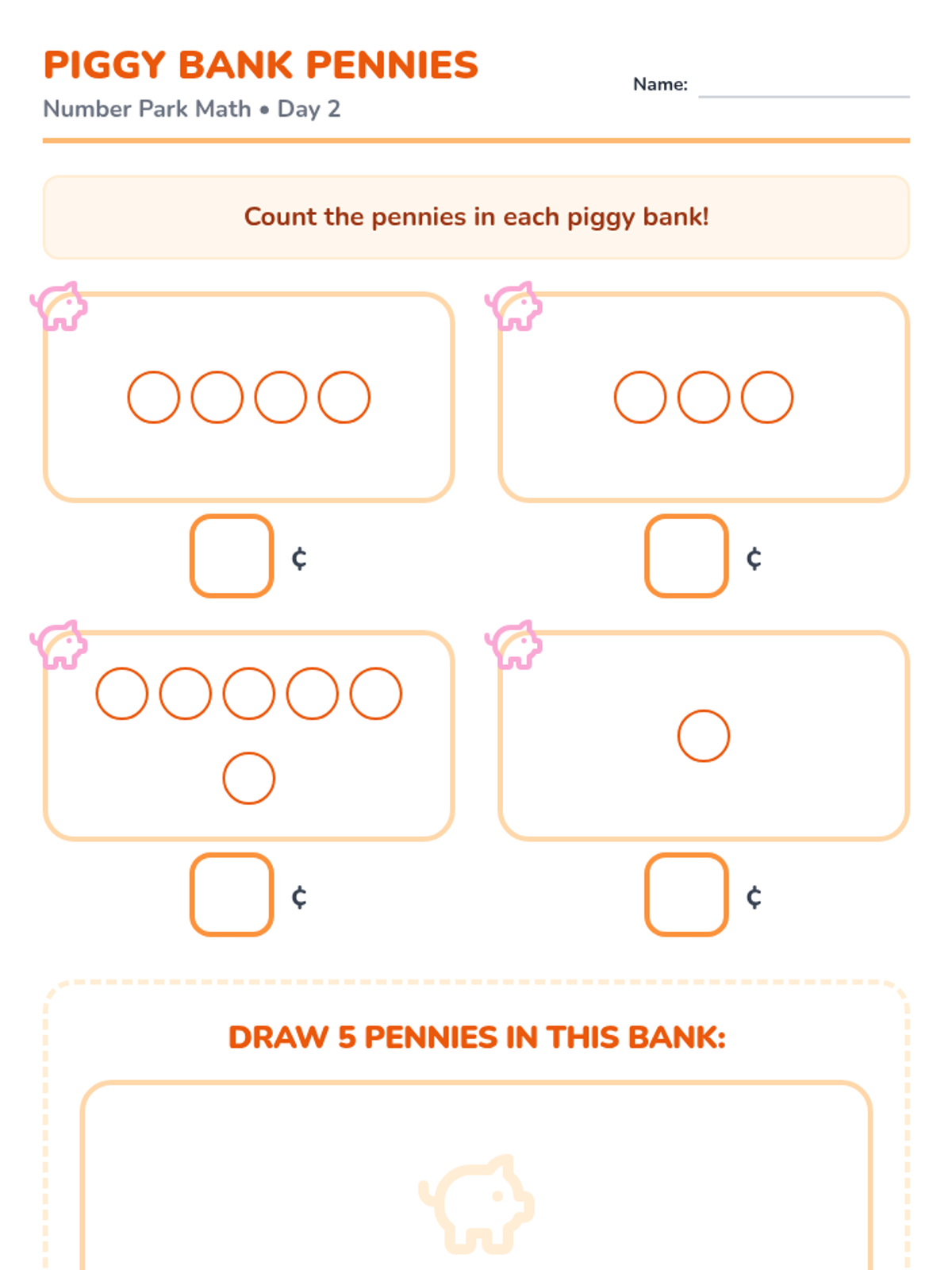
Day 2 introduces pennies, nickels, and dimes, focusing on identifying values, using the cents symbol, and counting mixed coin groups.
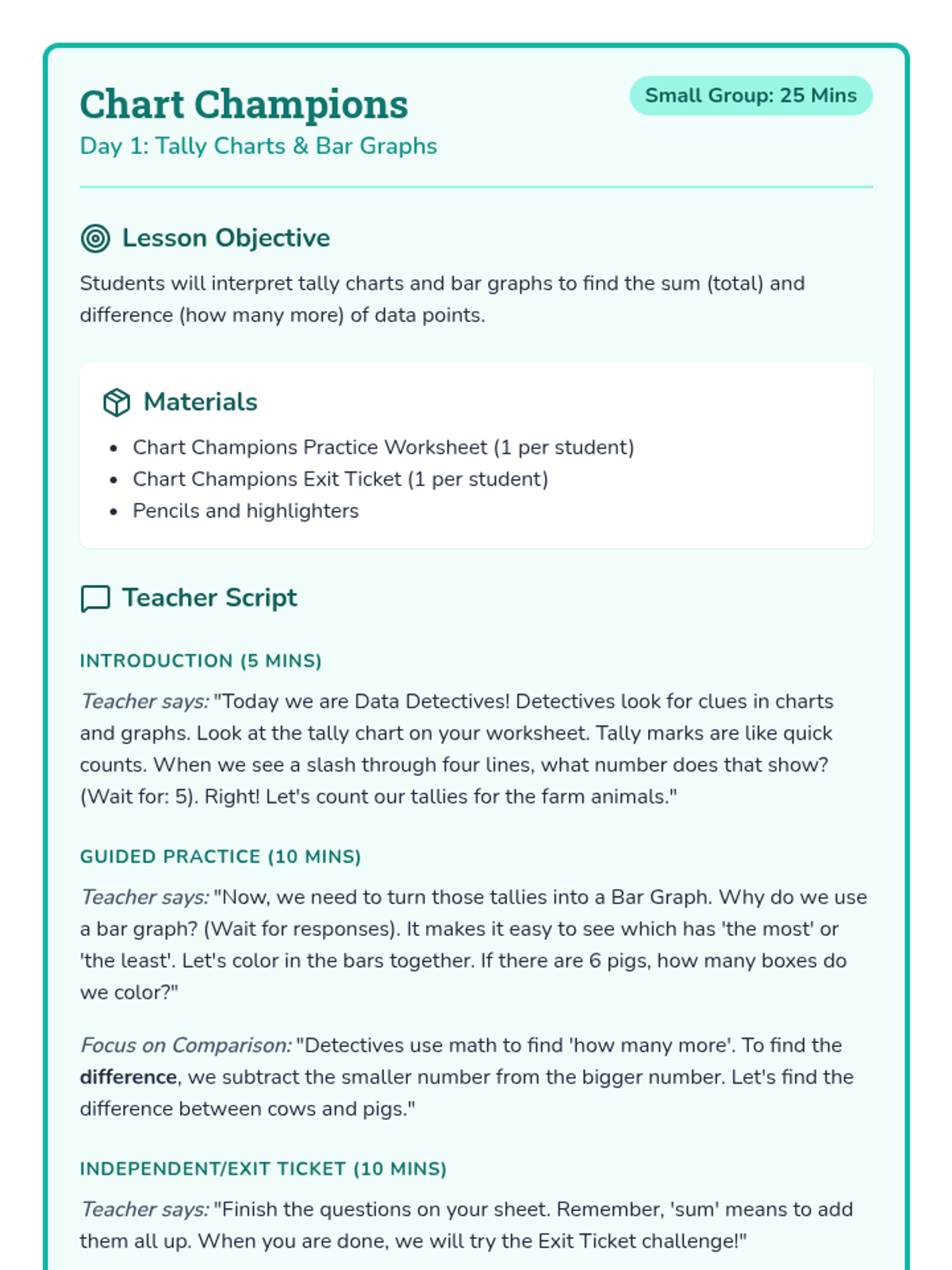
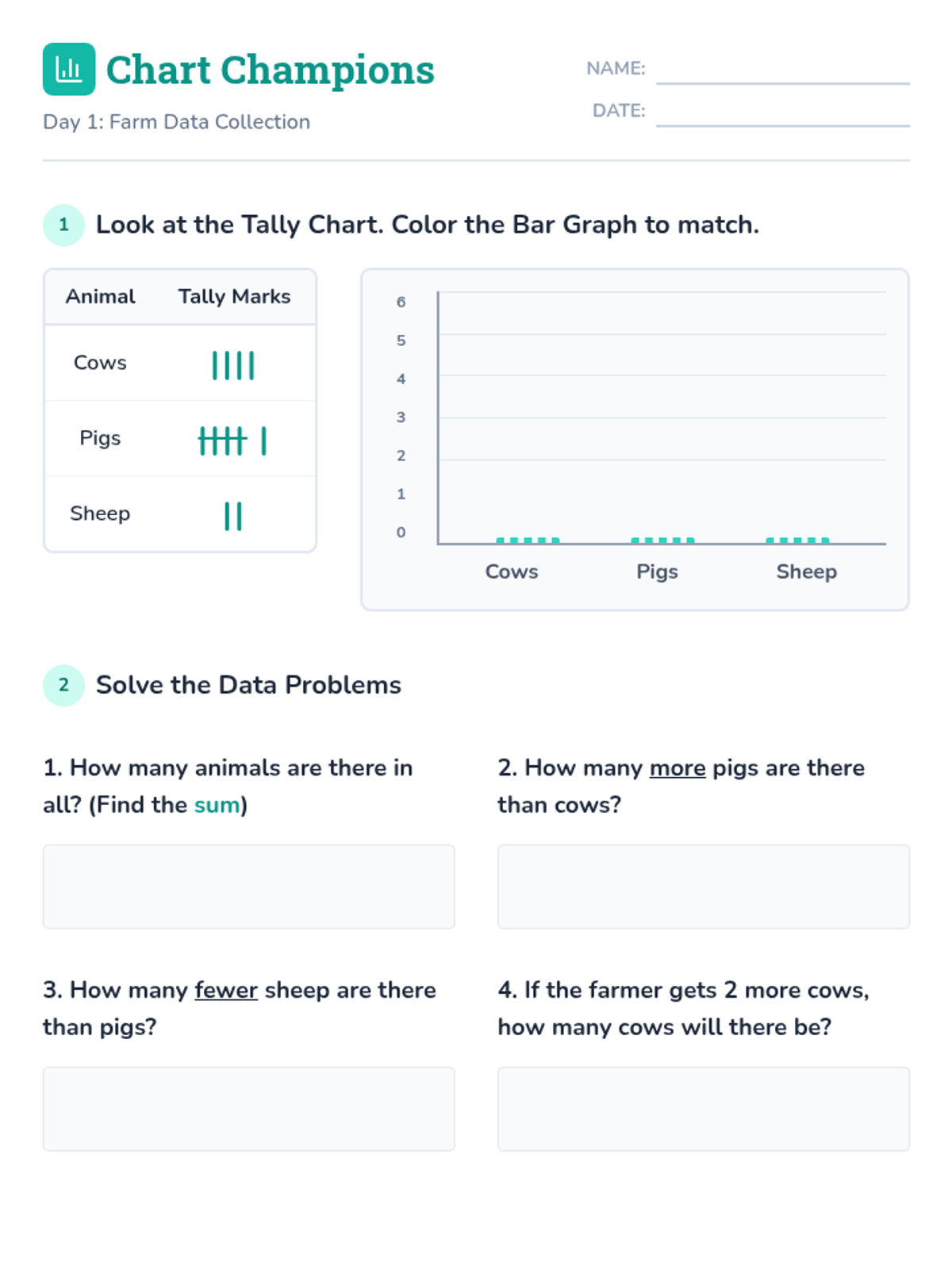
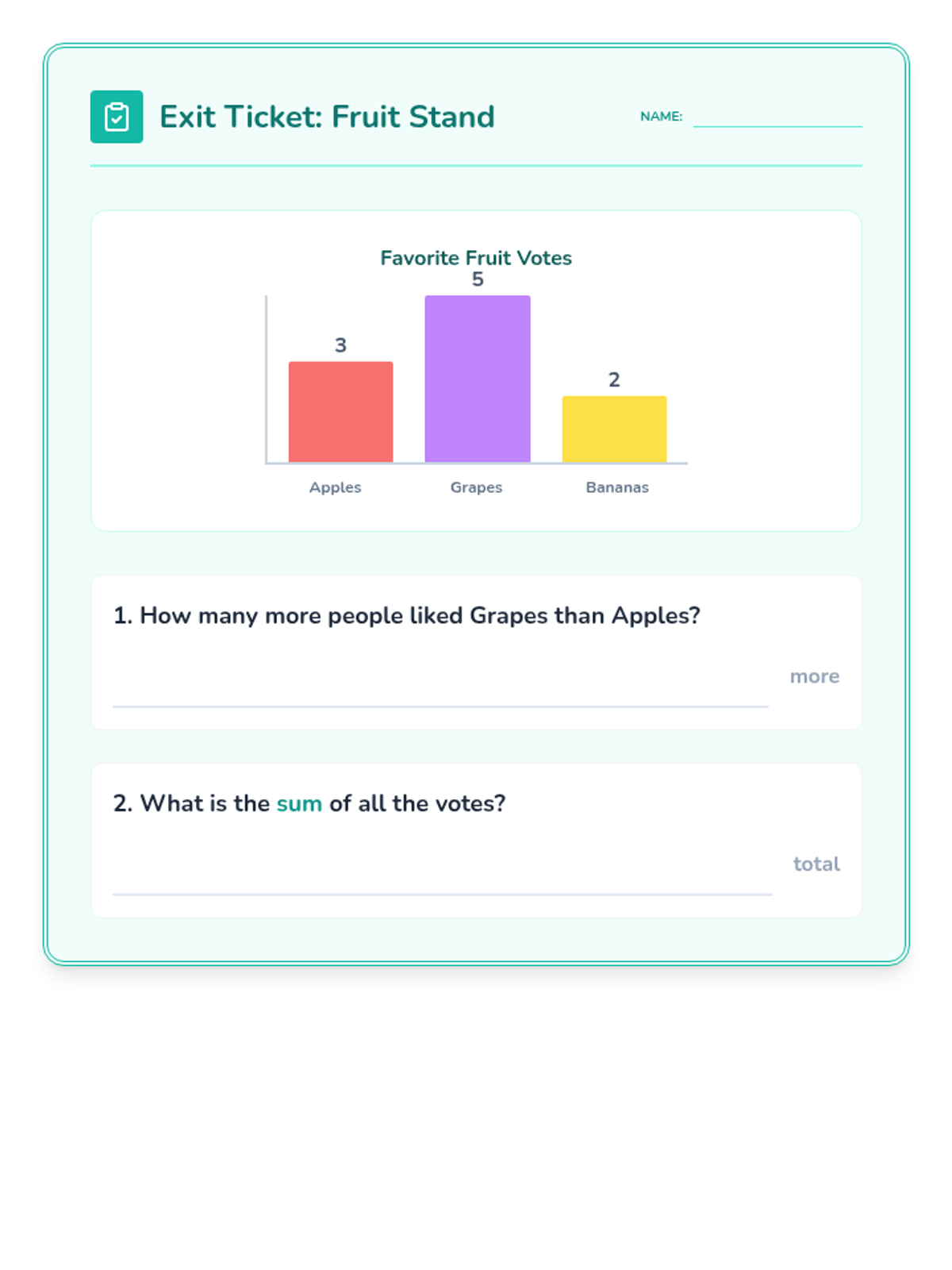
Day 1 focuses on tally charts and bar graphs, emphasizing calculating sums and differences to compare data points.
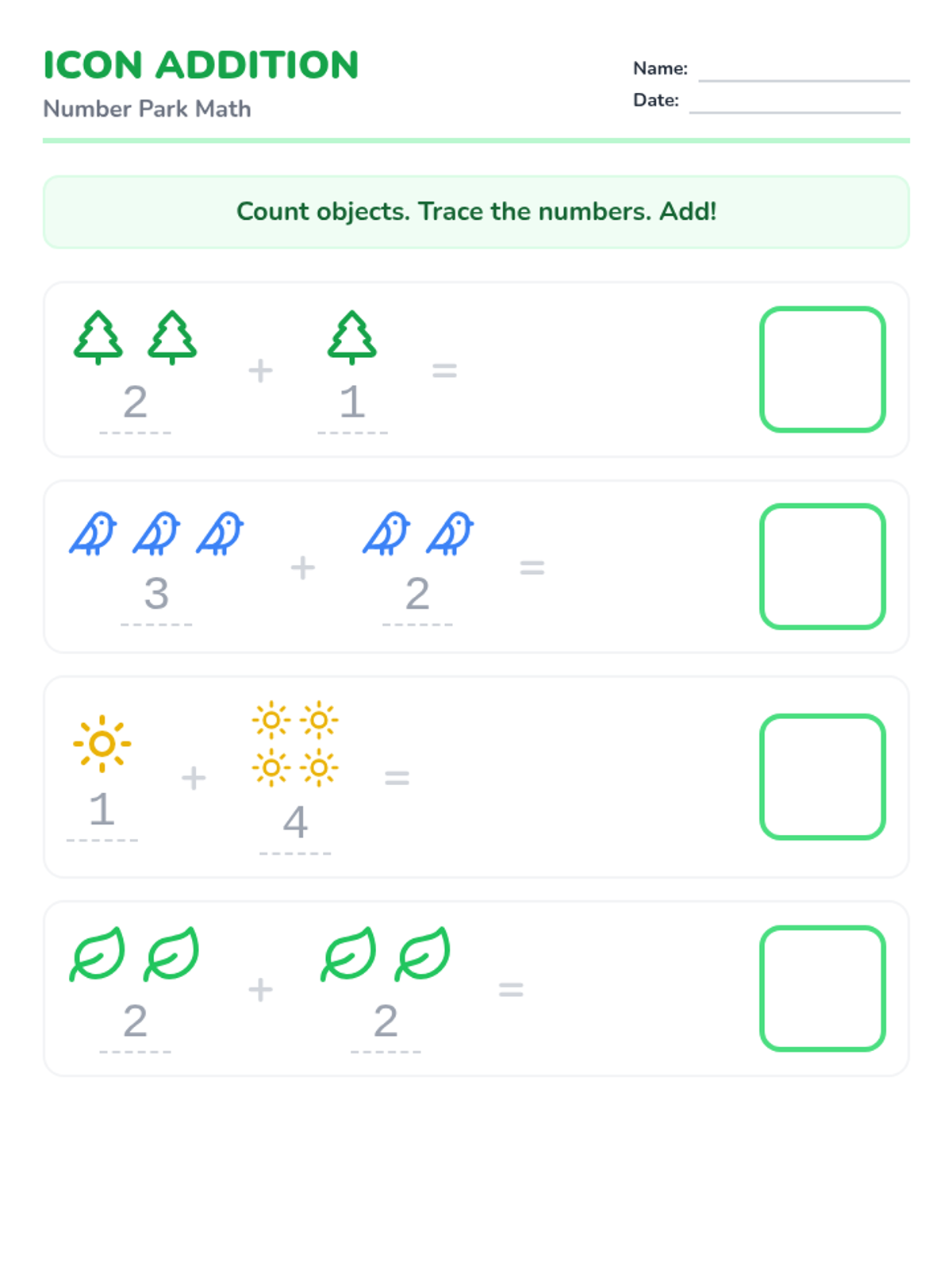
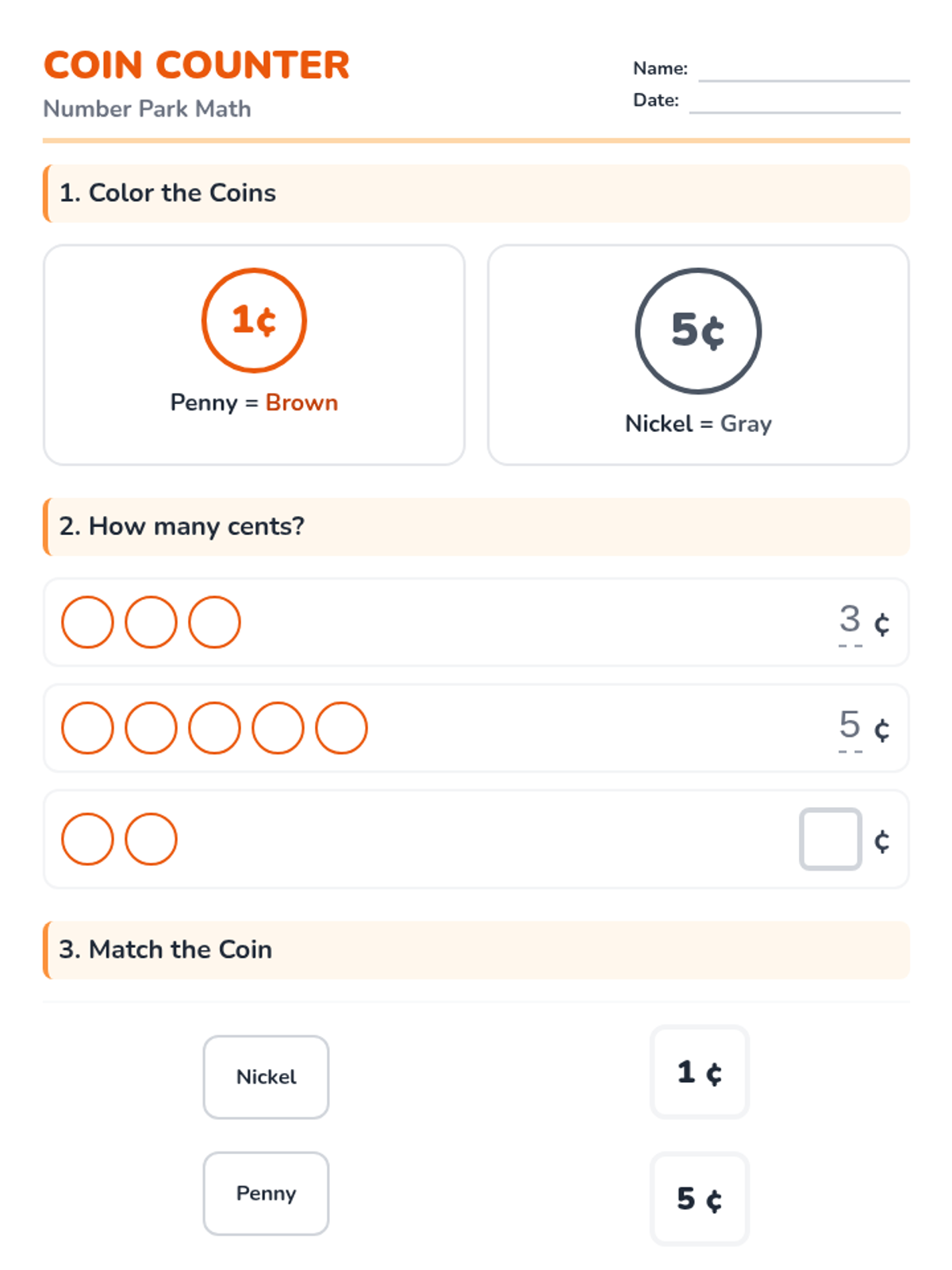
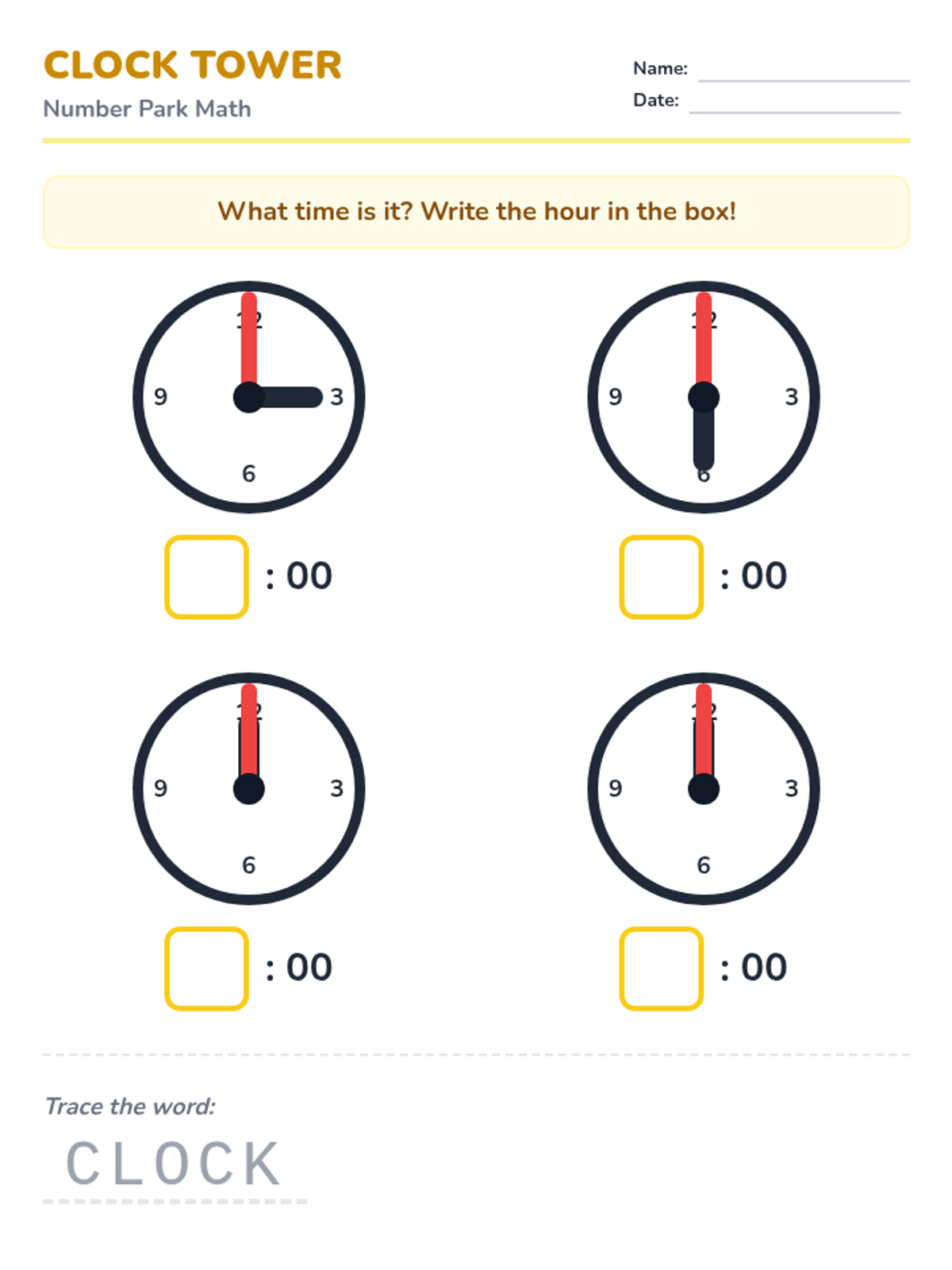
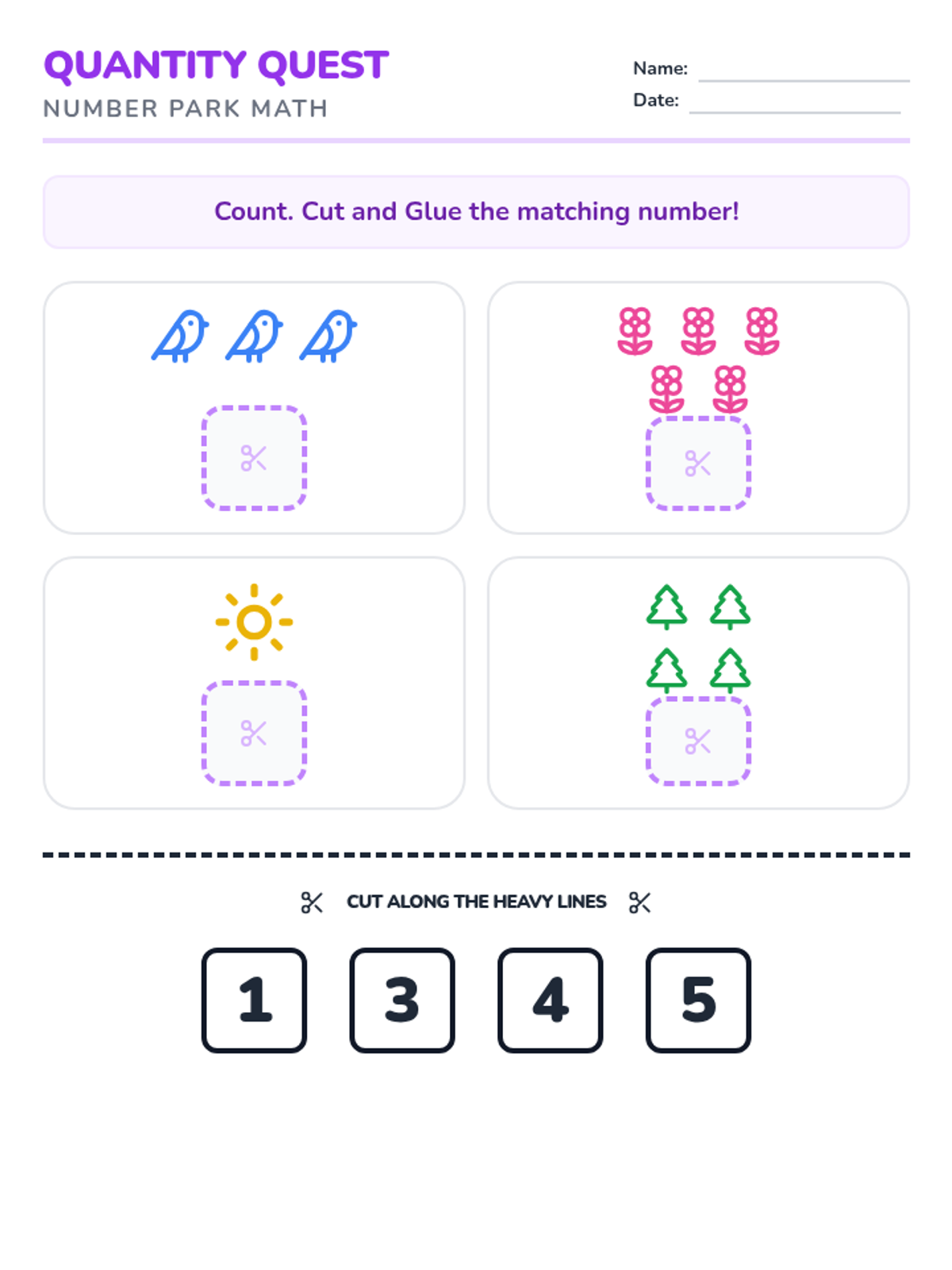
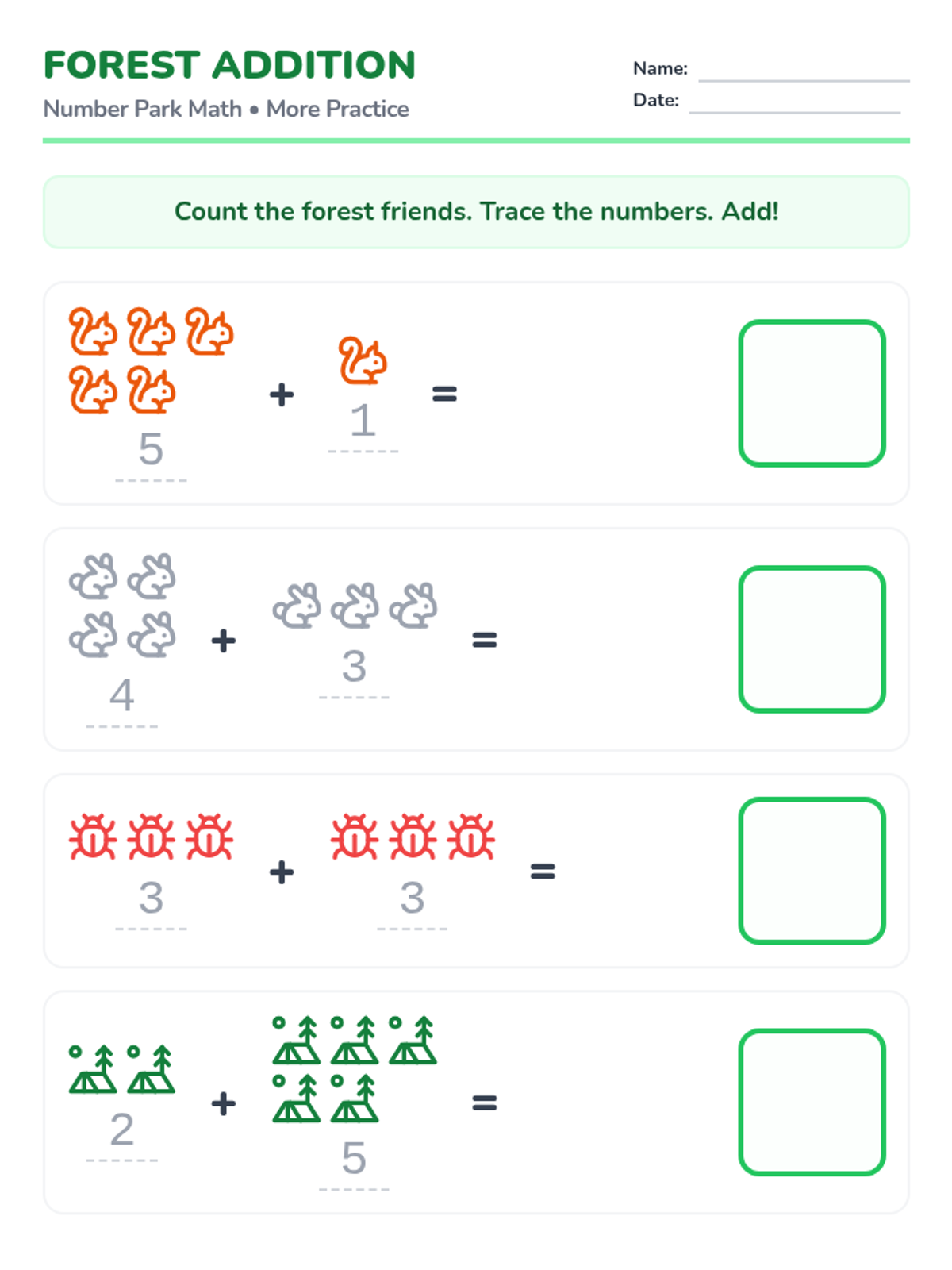
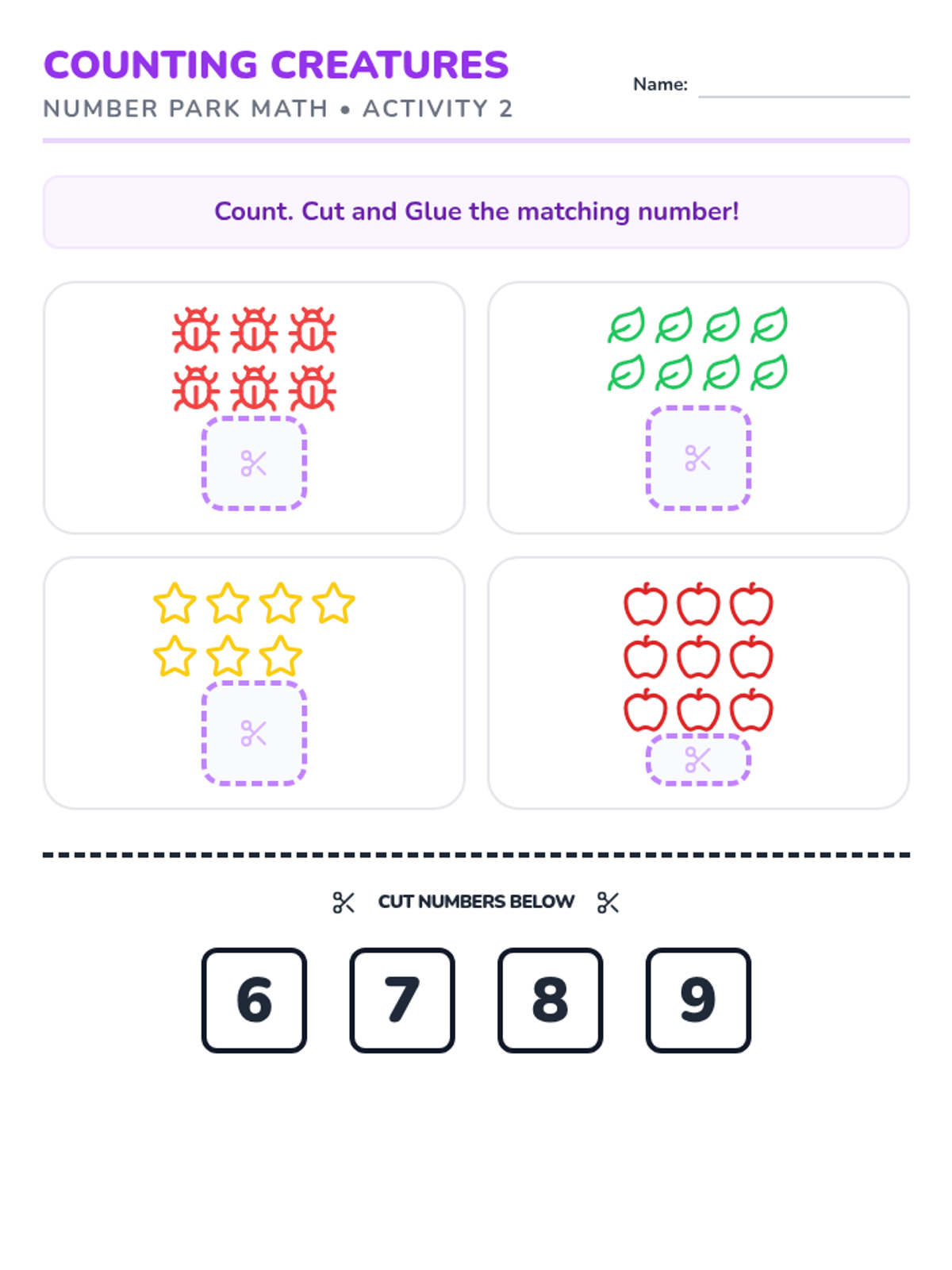
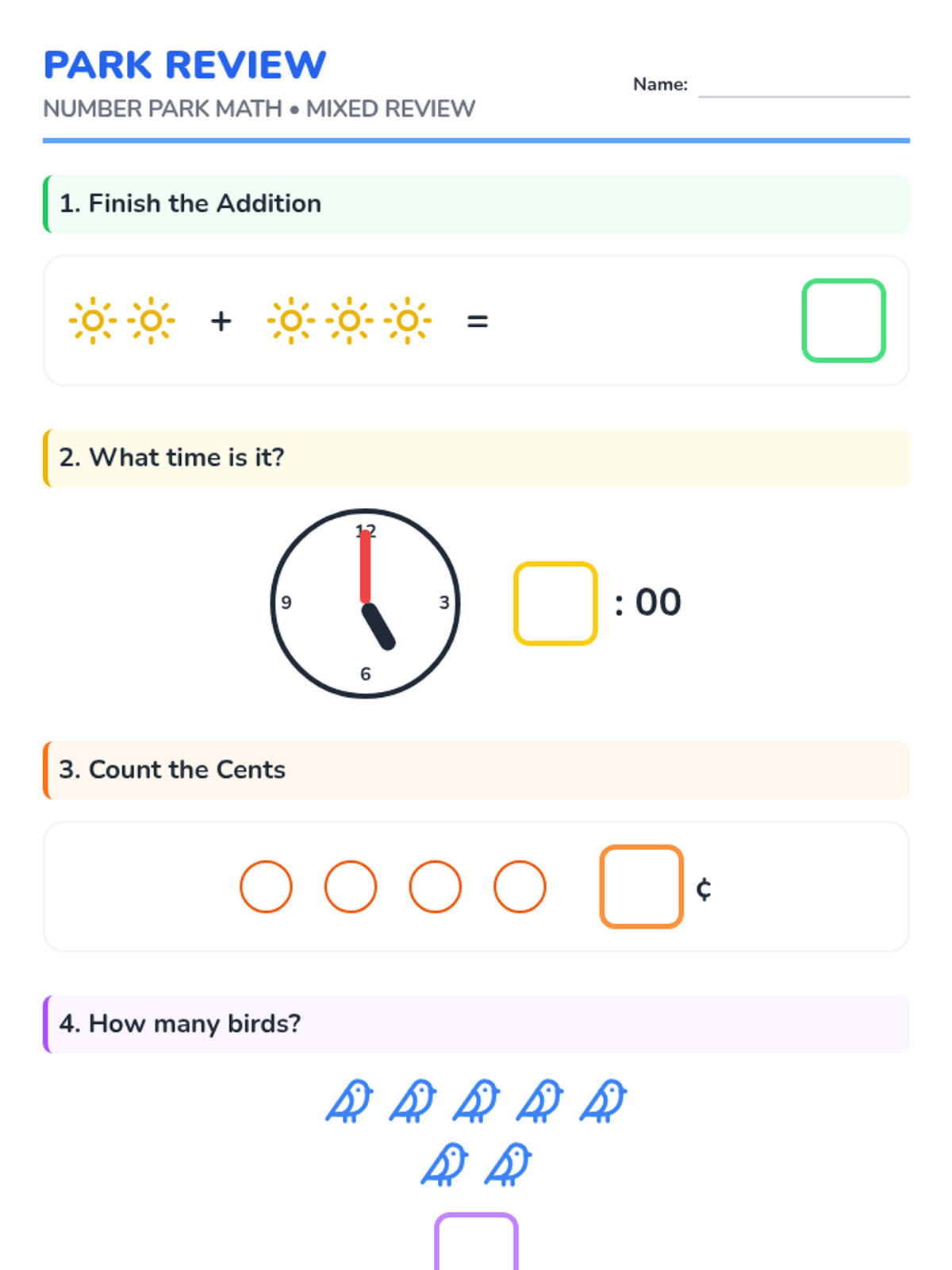
An expanded foundational math unit focusing on single-digit addition, coin identification, telling time to the hour, and number-quantity matching. This comprehensive packet includes multiple worksheets per skill for multi-day practice.
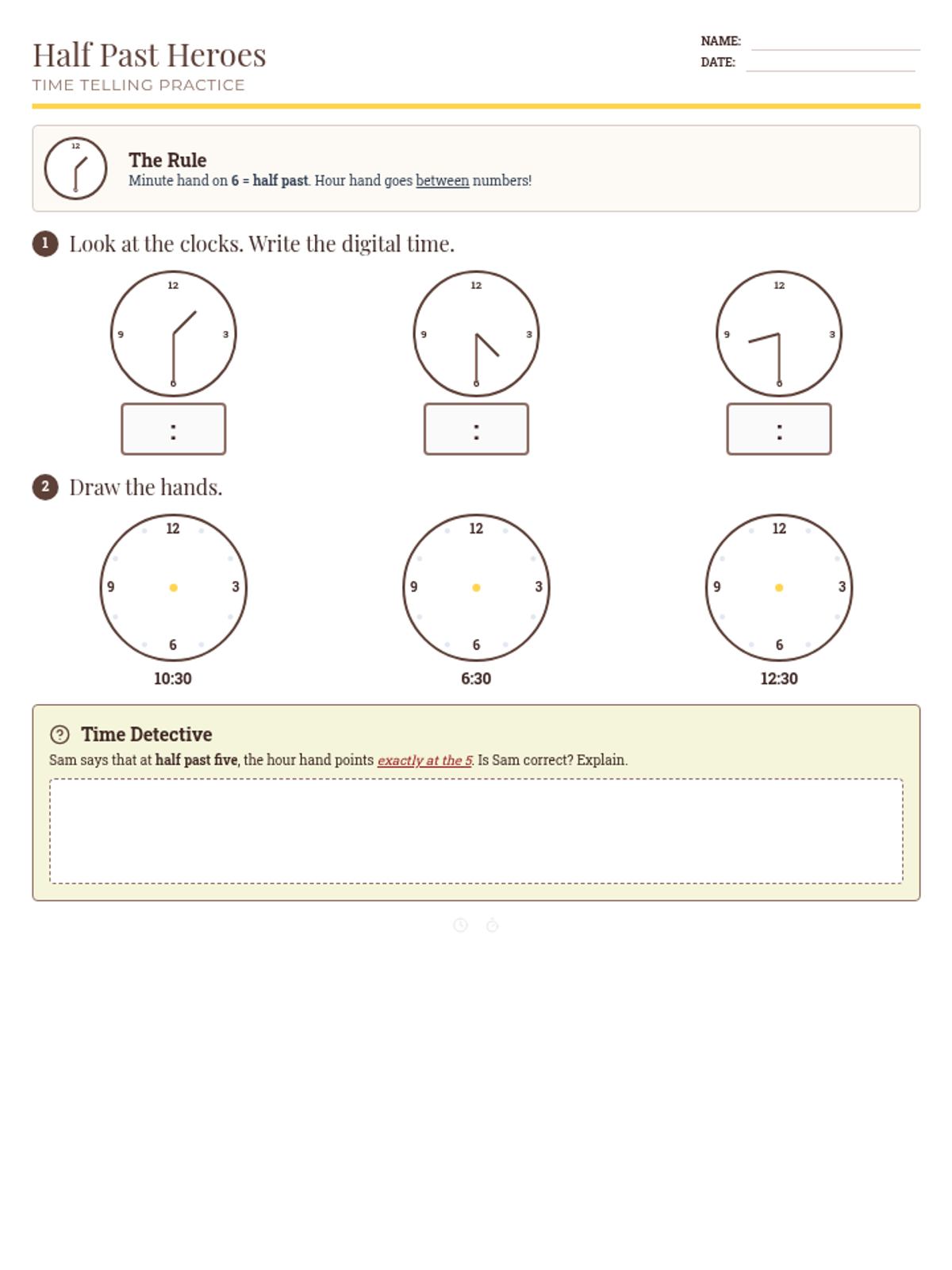
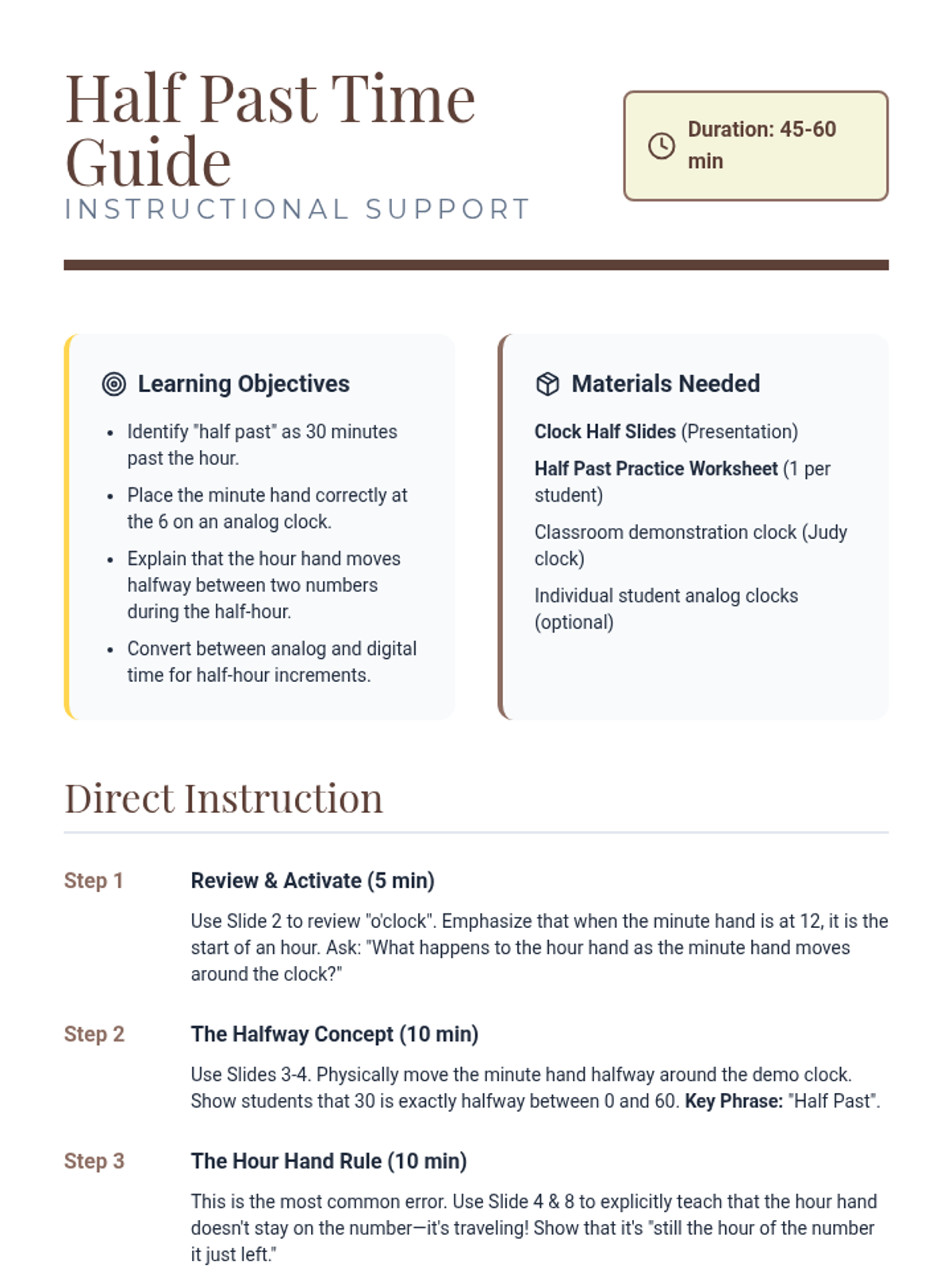
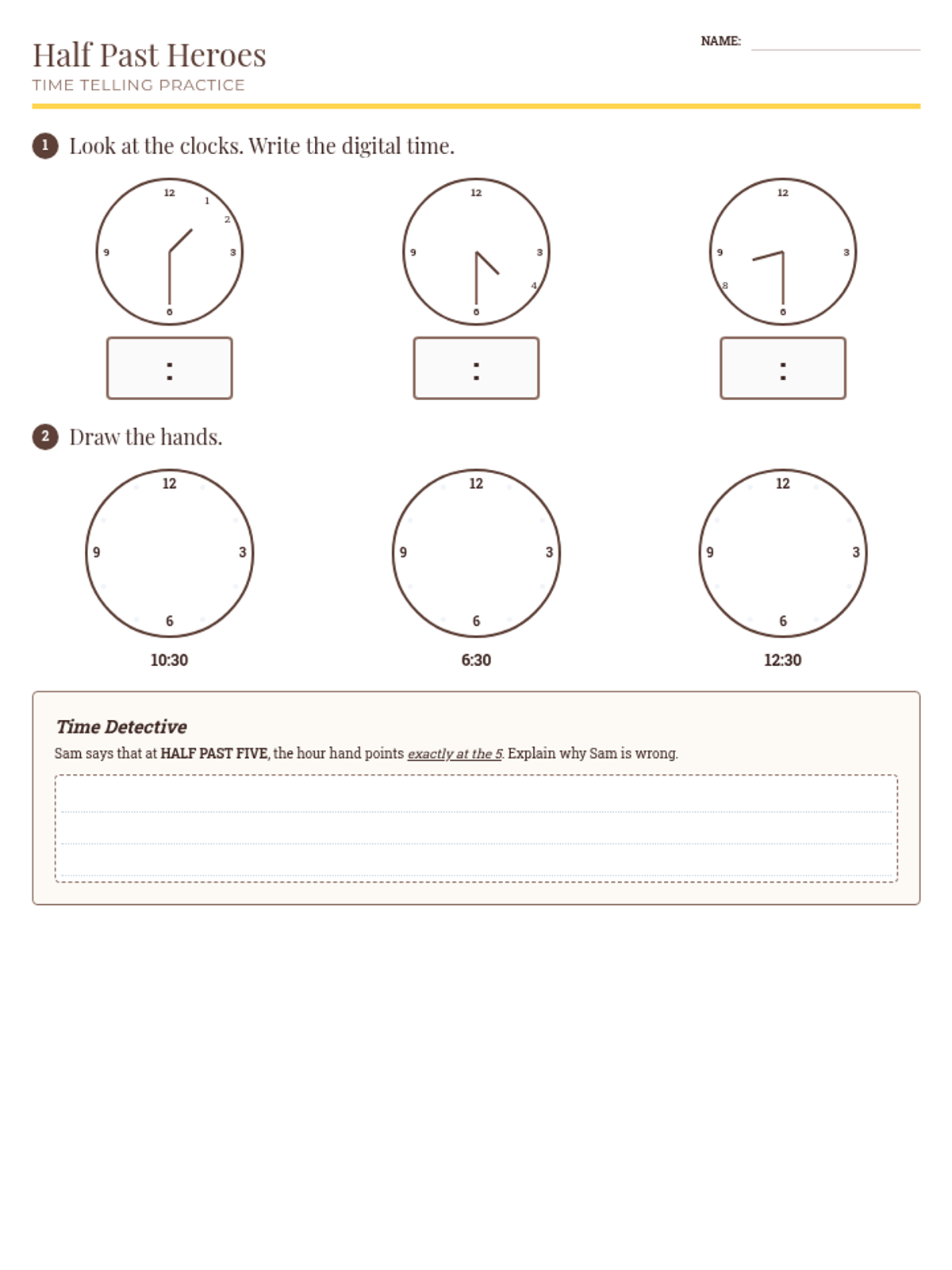
A lesson focused on introducing and practicing telling time to the half-hour, connecting analog and digital representations.
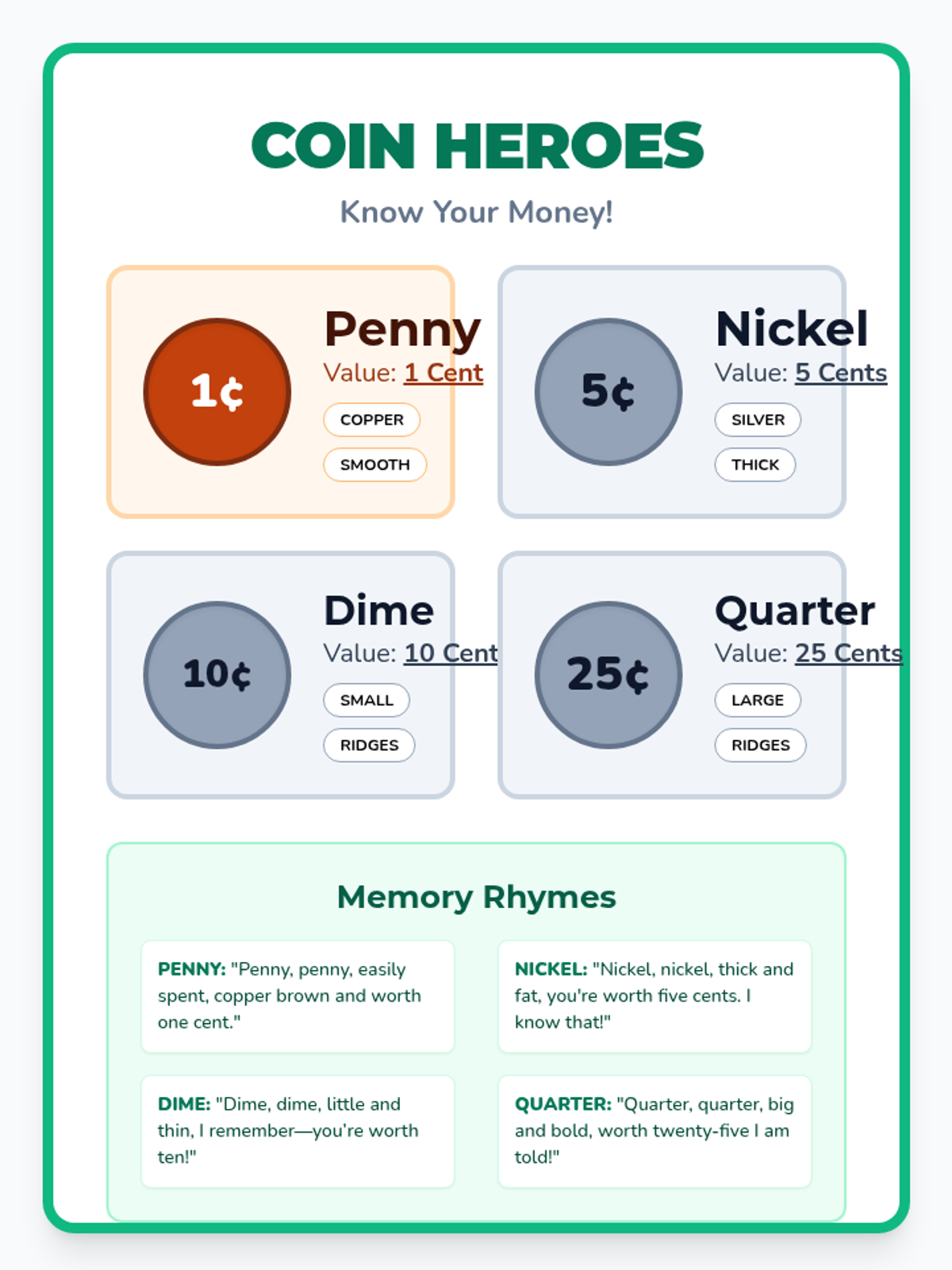
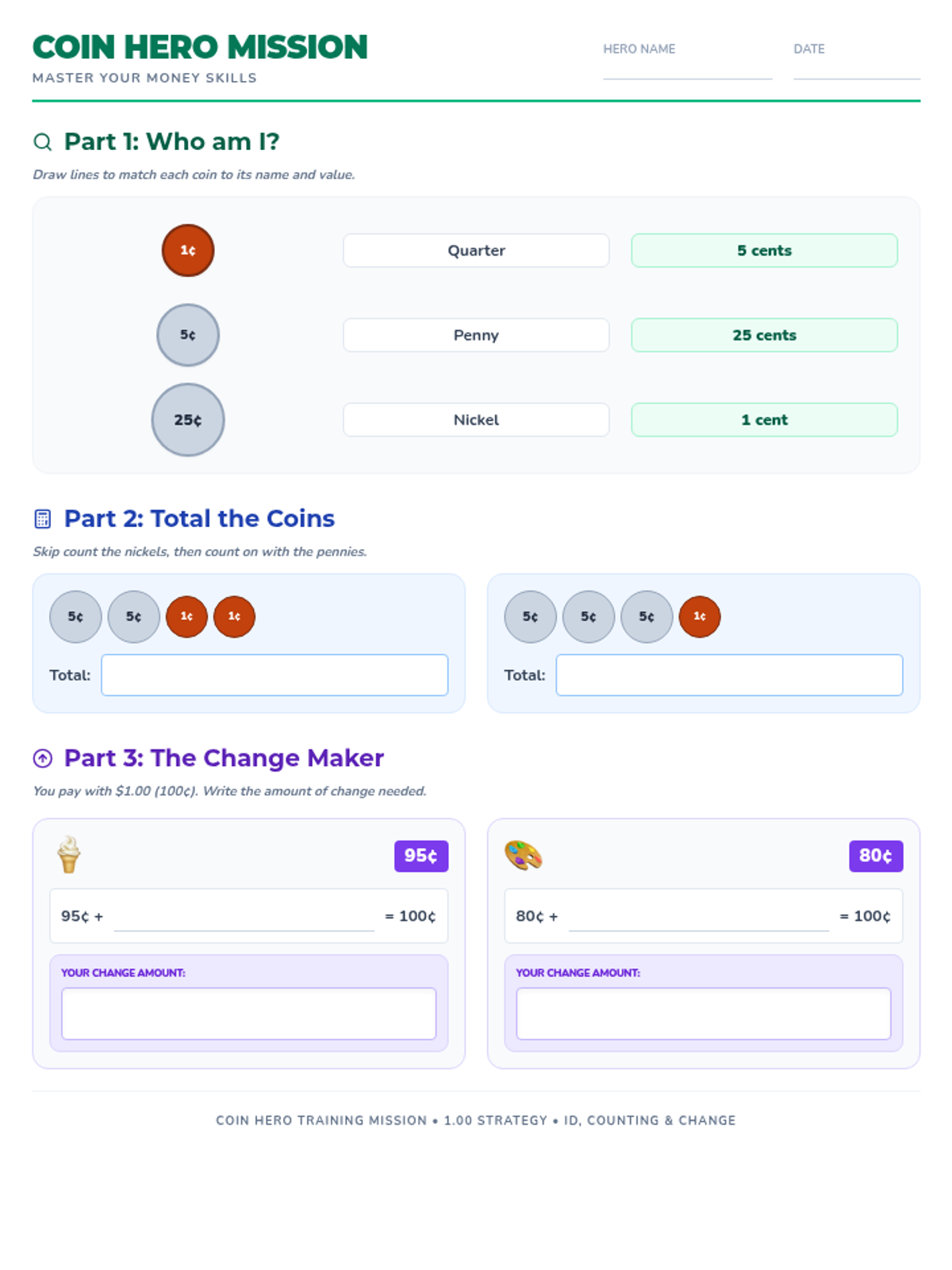
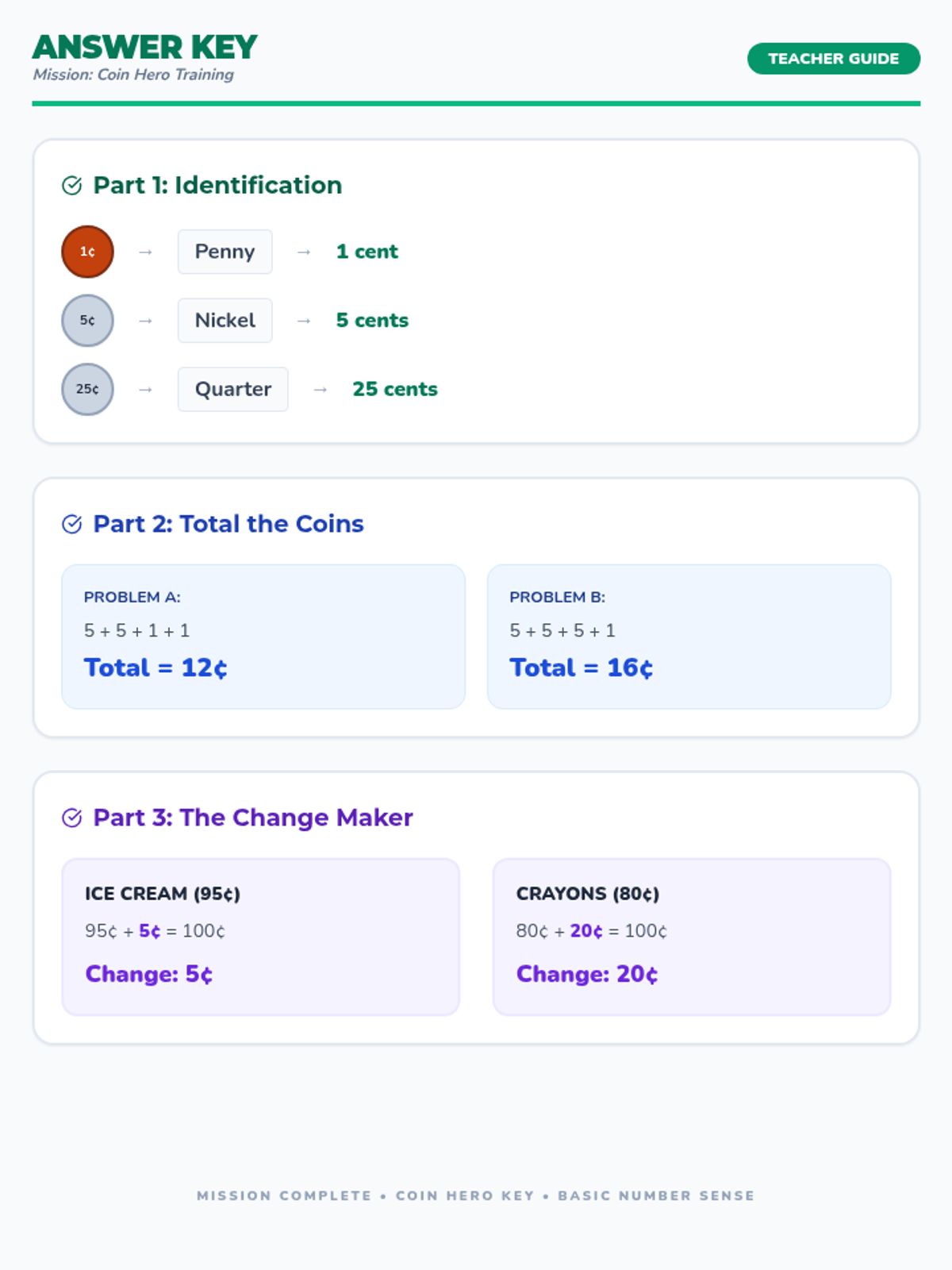
A collection of visual anchor charts and posters designed to teach basic coin identification, counting, and making change from a dollar. These materials use large visuals and clear strategies for early elementary students.
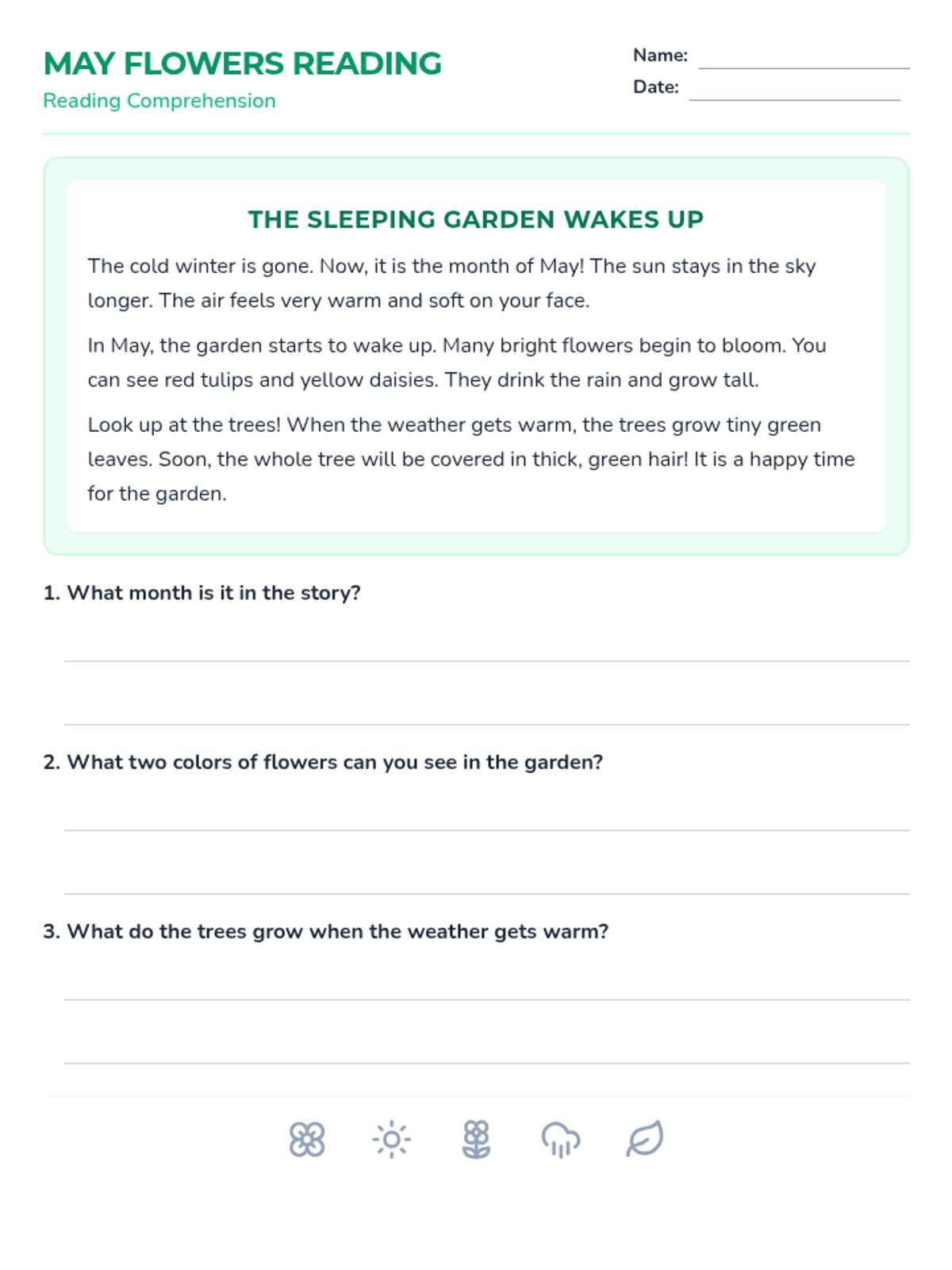
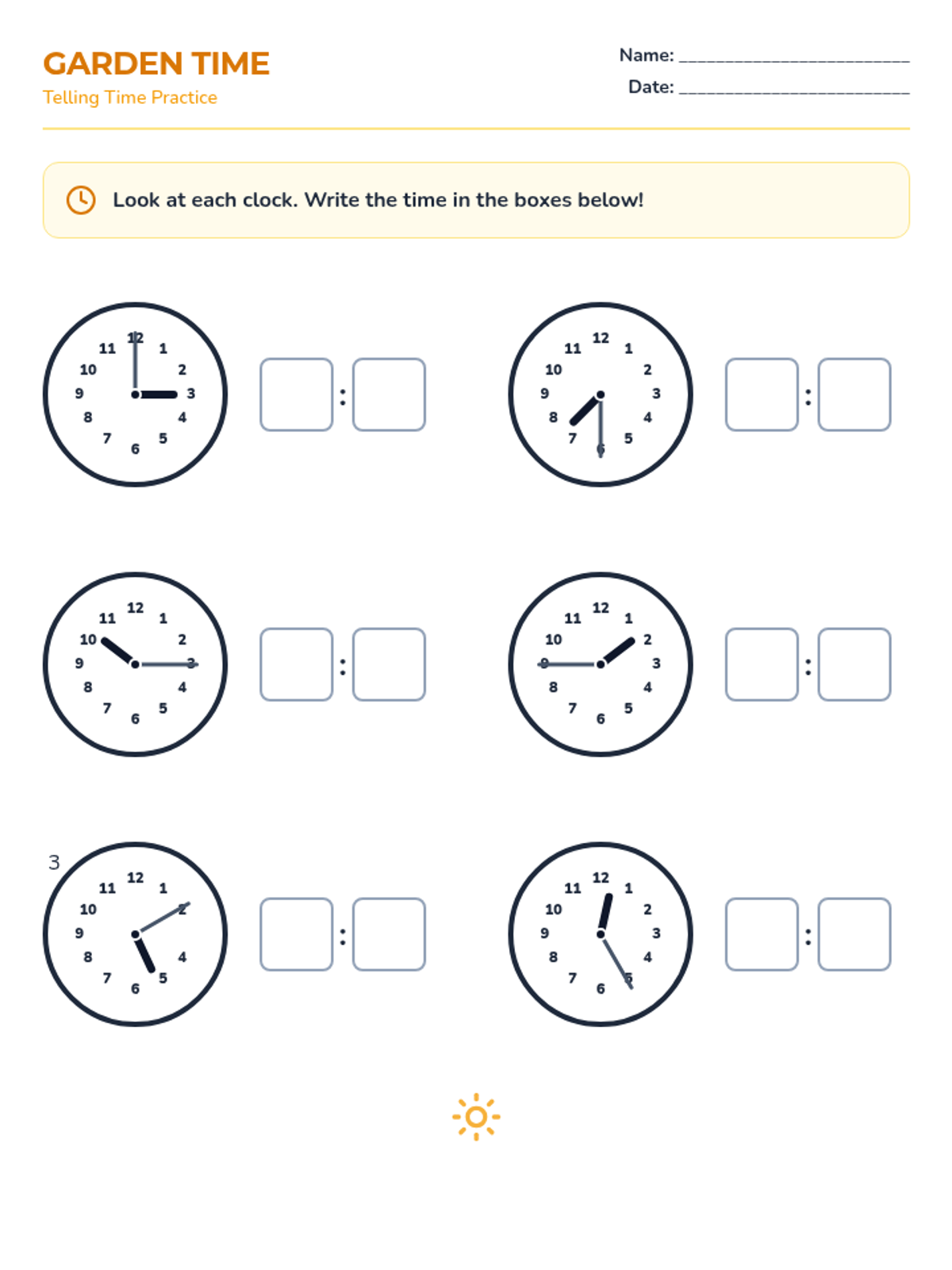
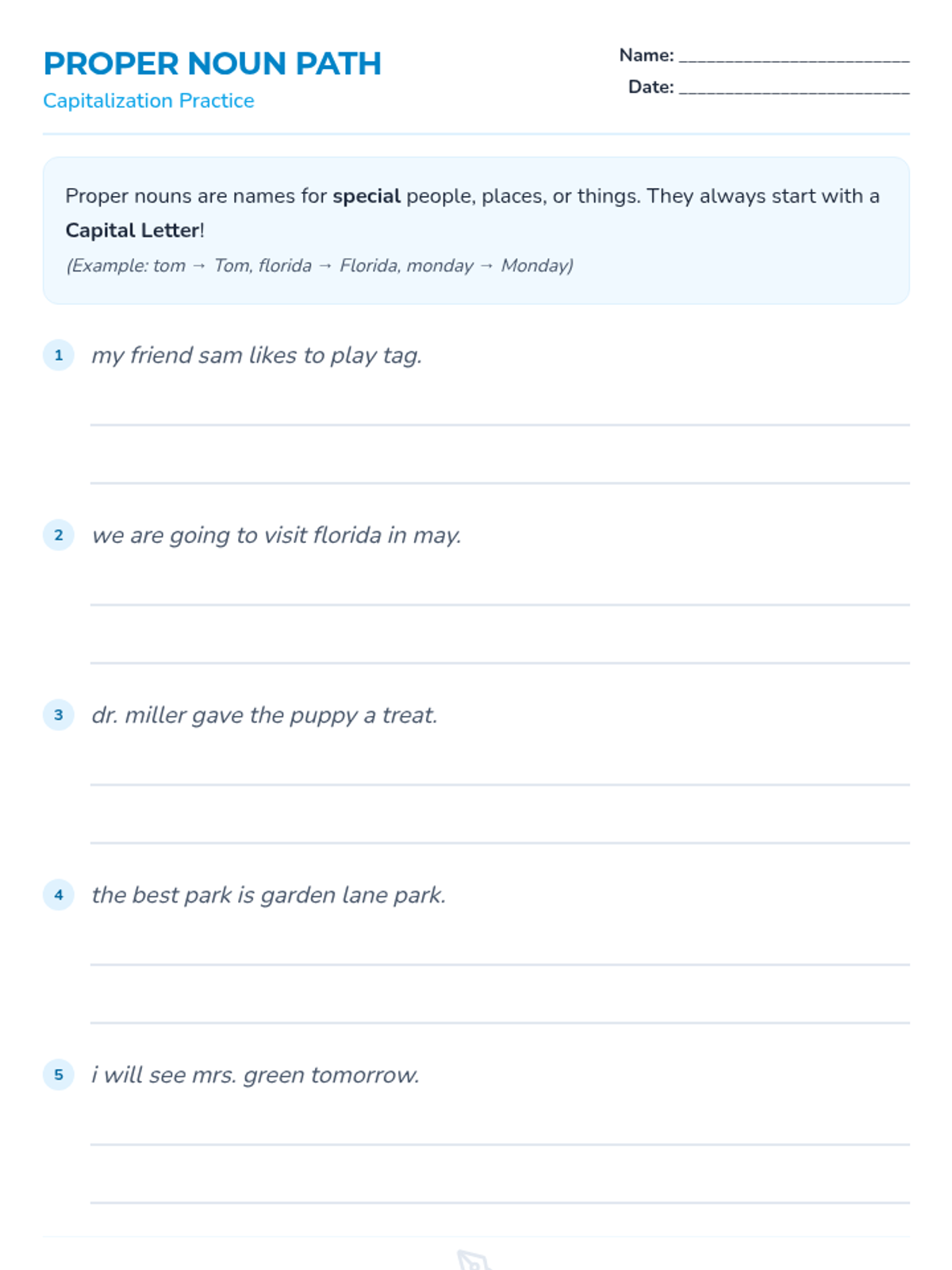
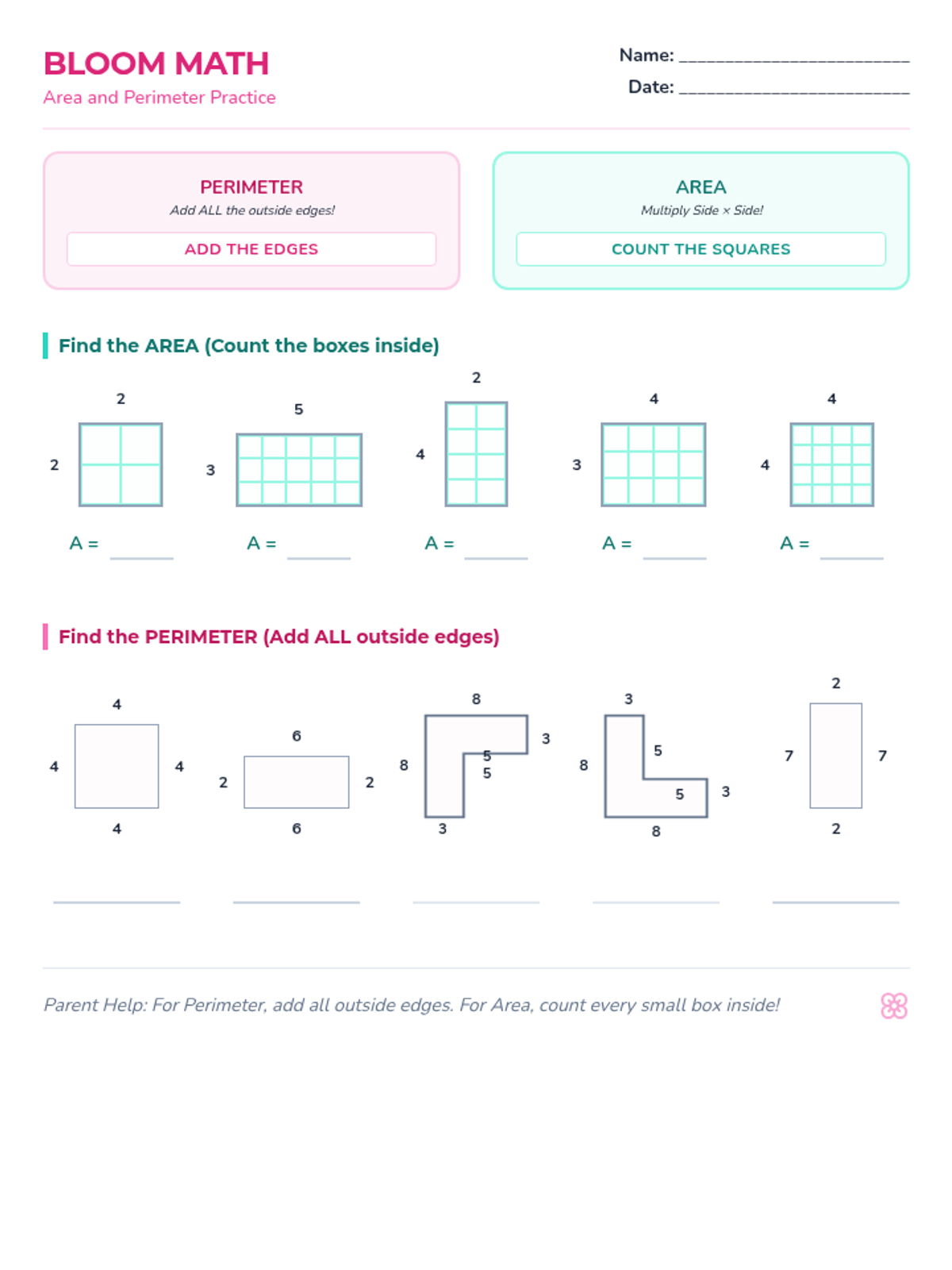
A set of four independent practice worksheets themed around springtime growth, focusing on reading comprehension, time-telling, grammar, and geometry.
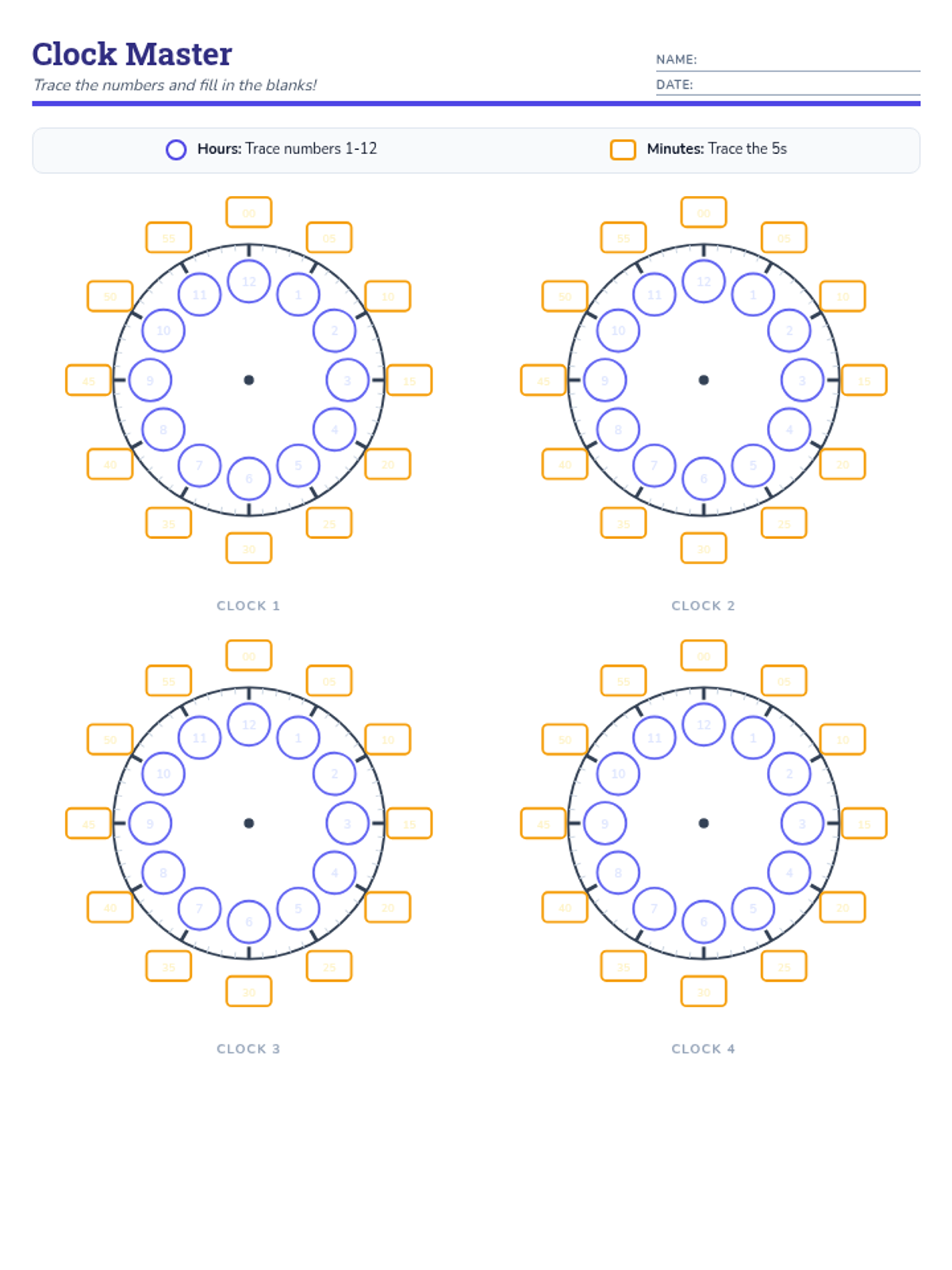
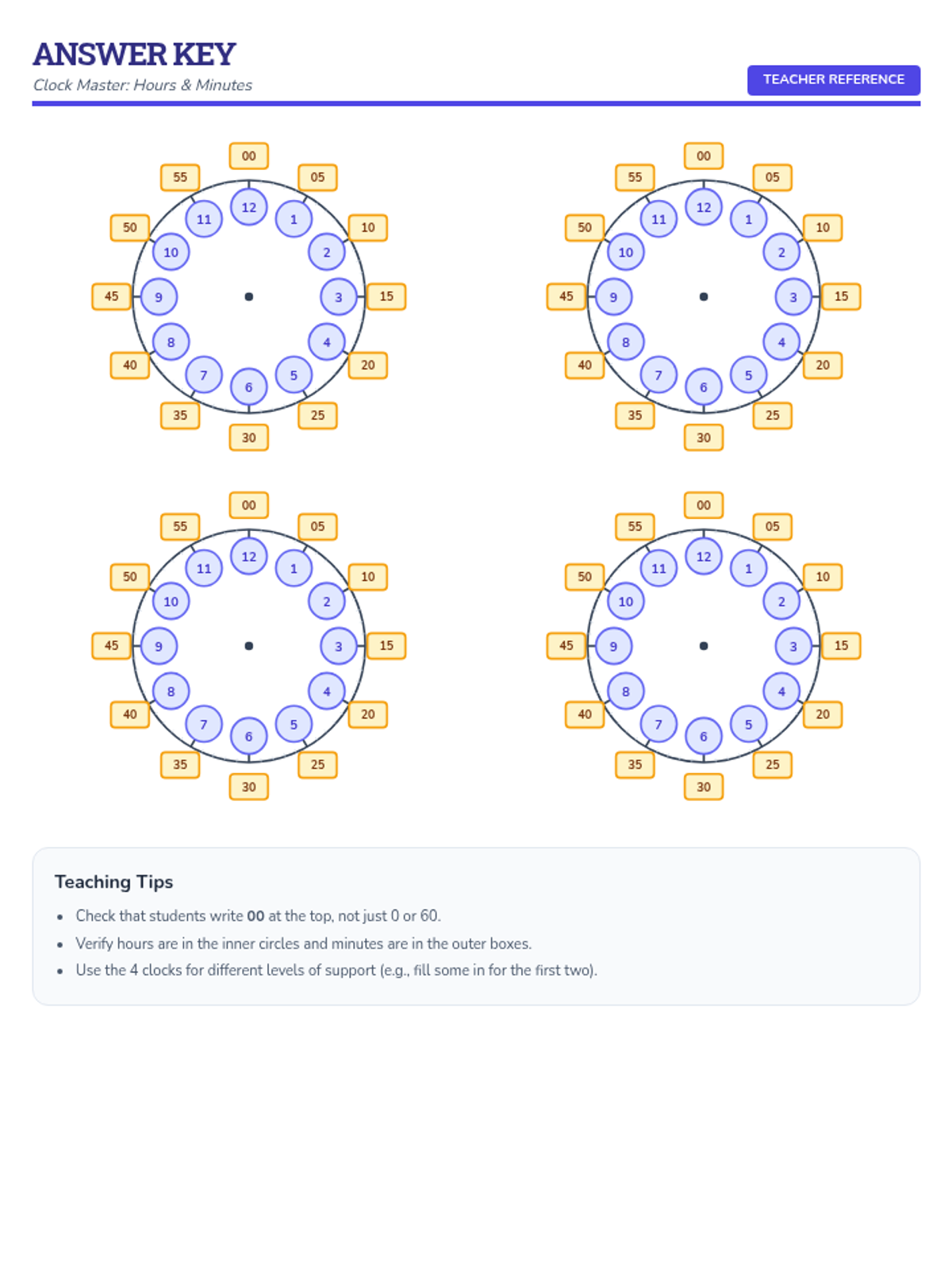
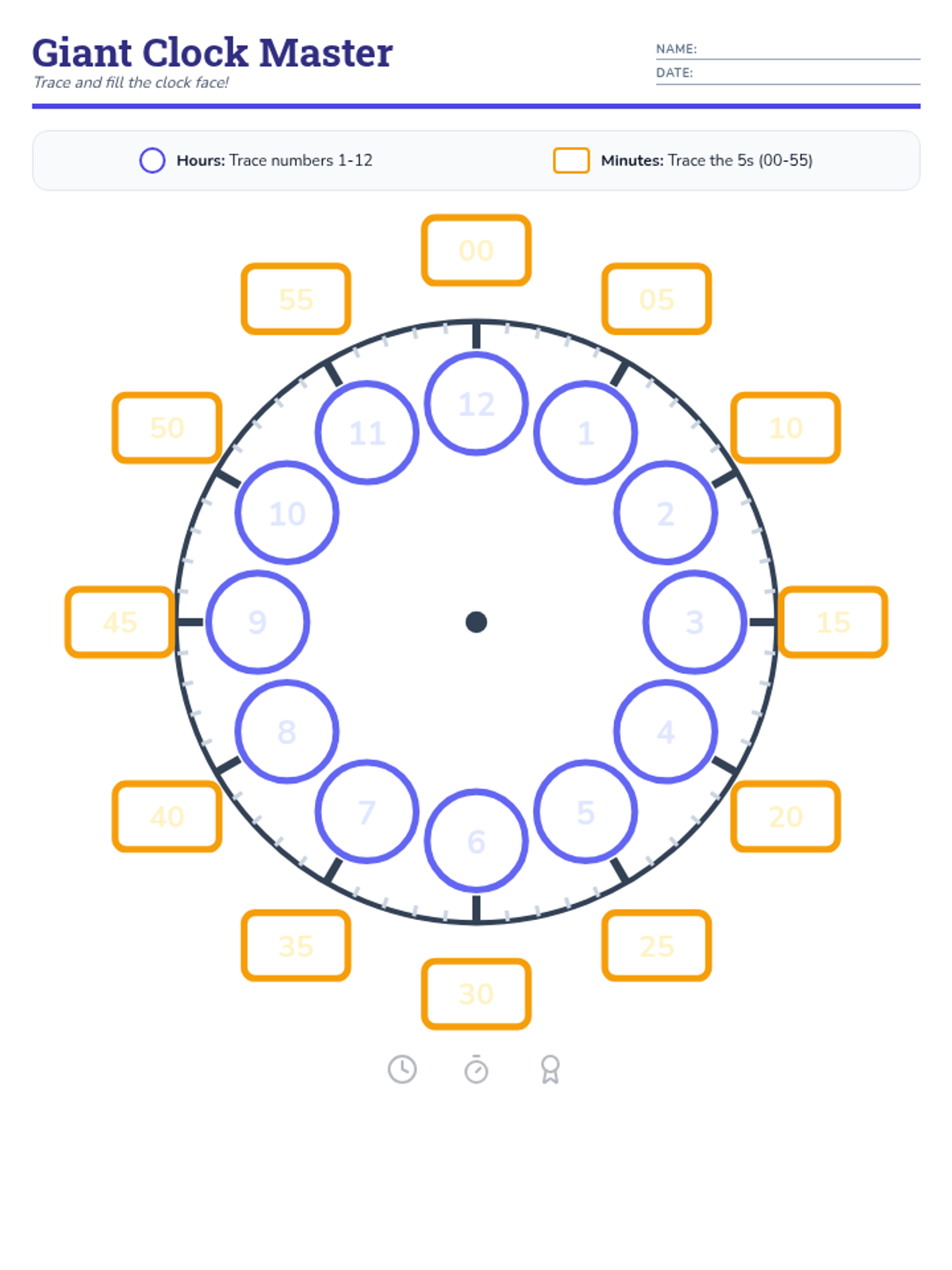
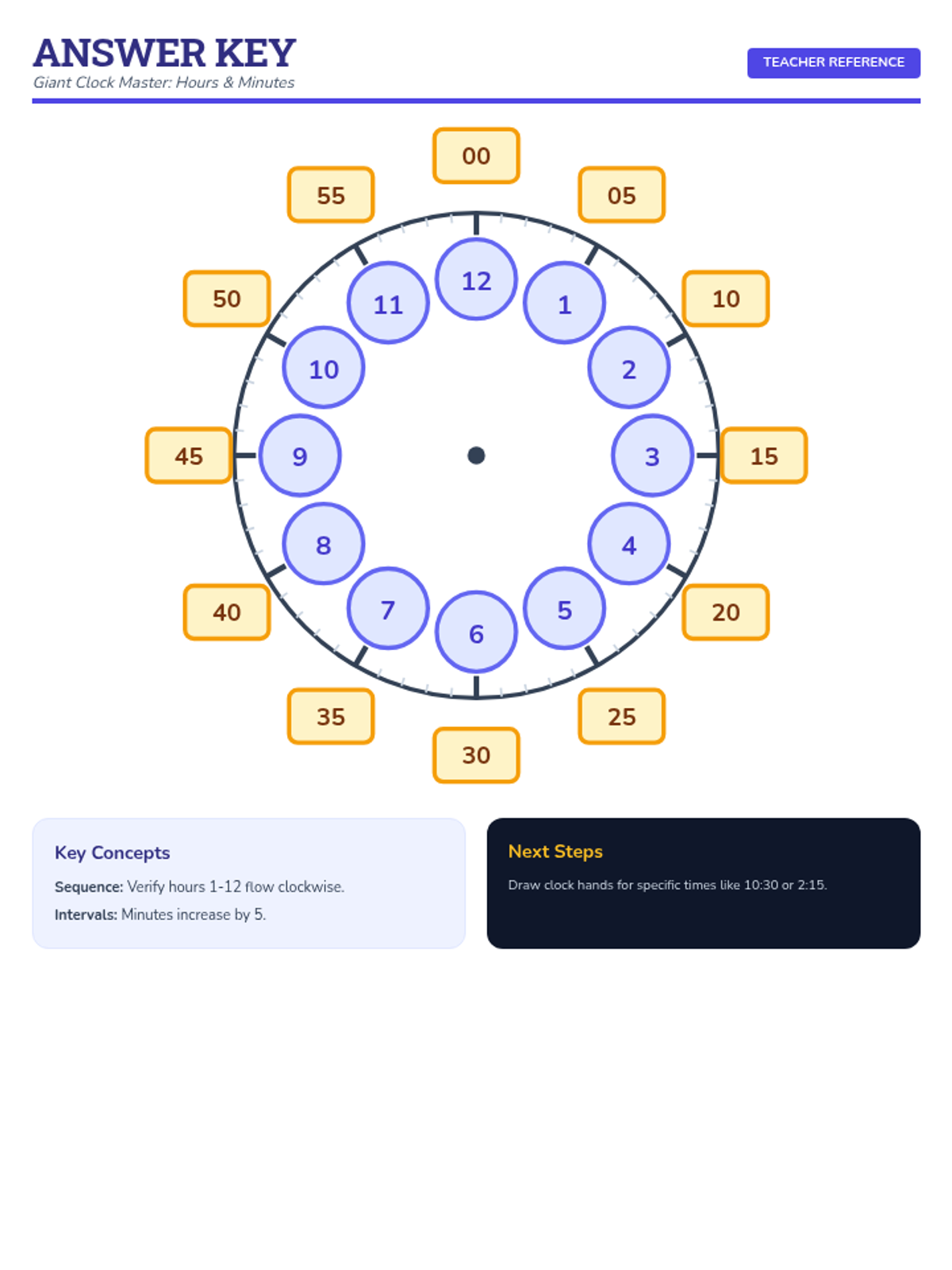
A foundational lesson on clock anatomy, focusing on identifying hour numbers and five-minute increments. Students practice spatial reasoning and number sequencing within a circular layout.
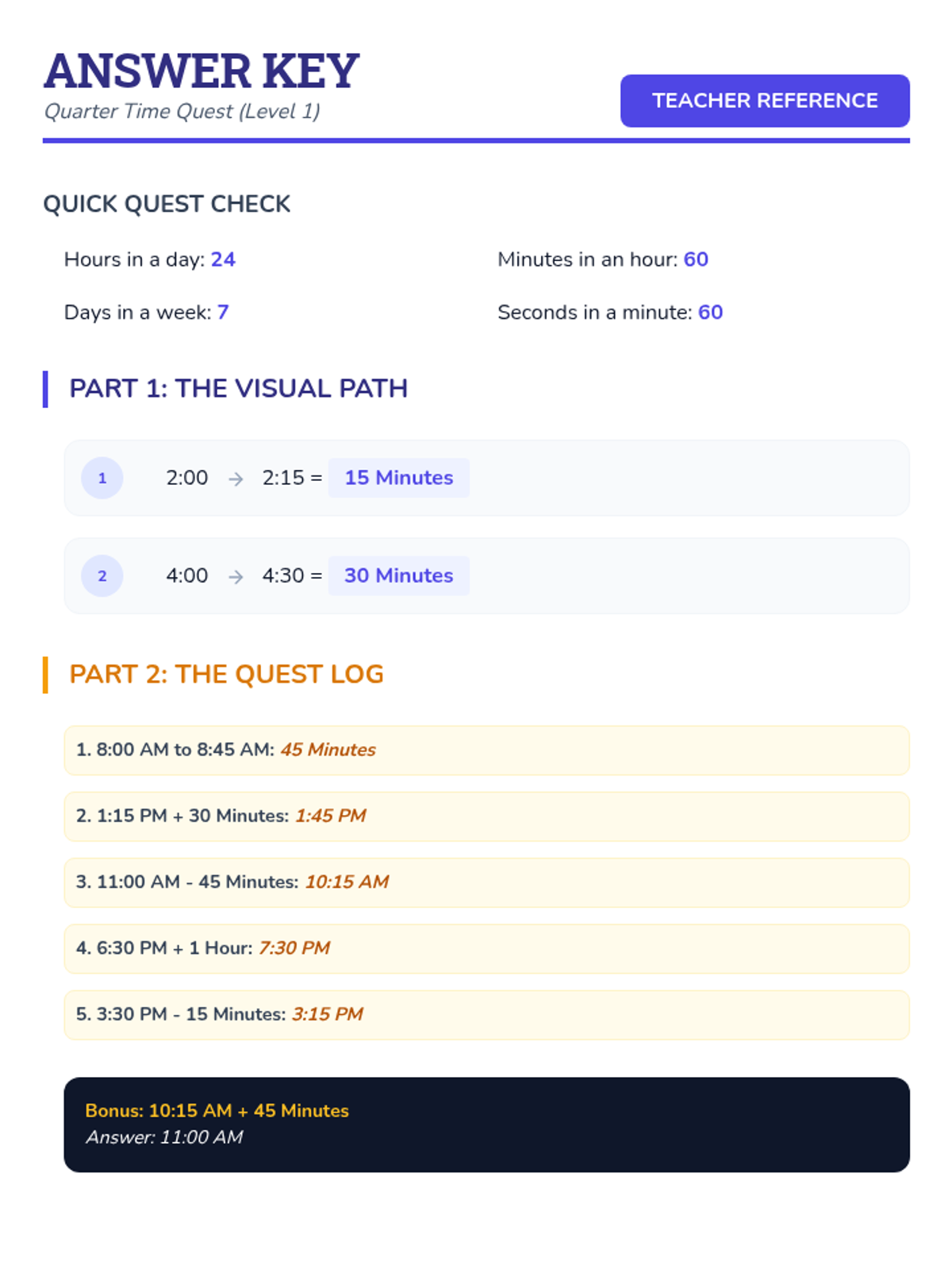
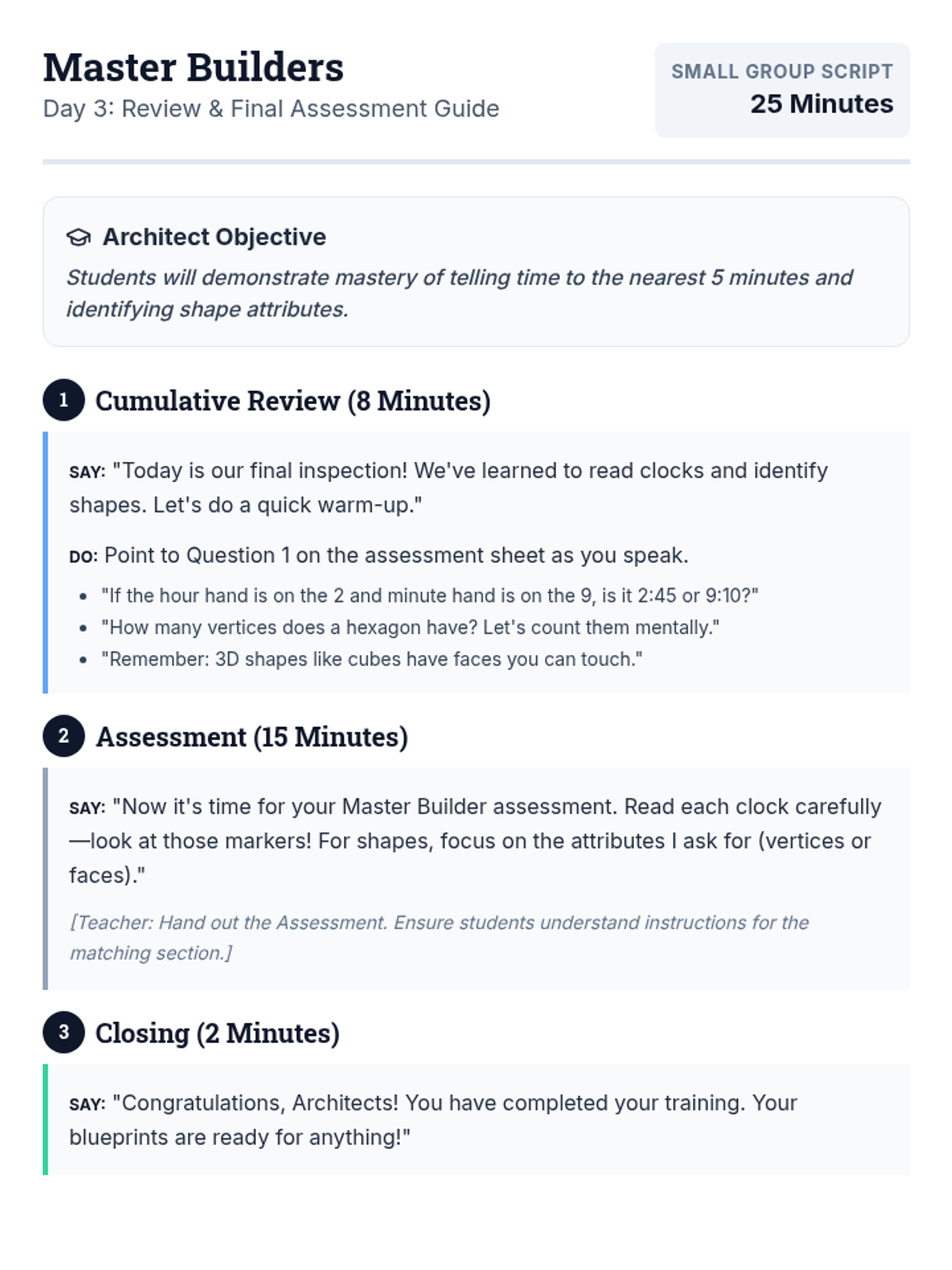
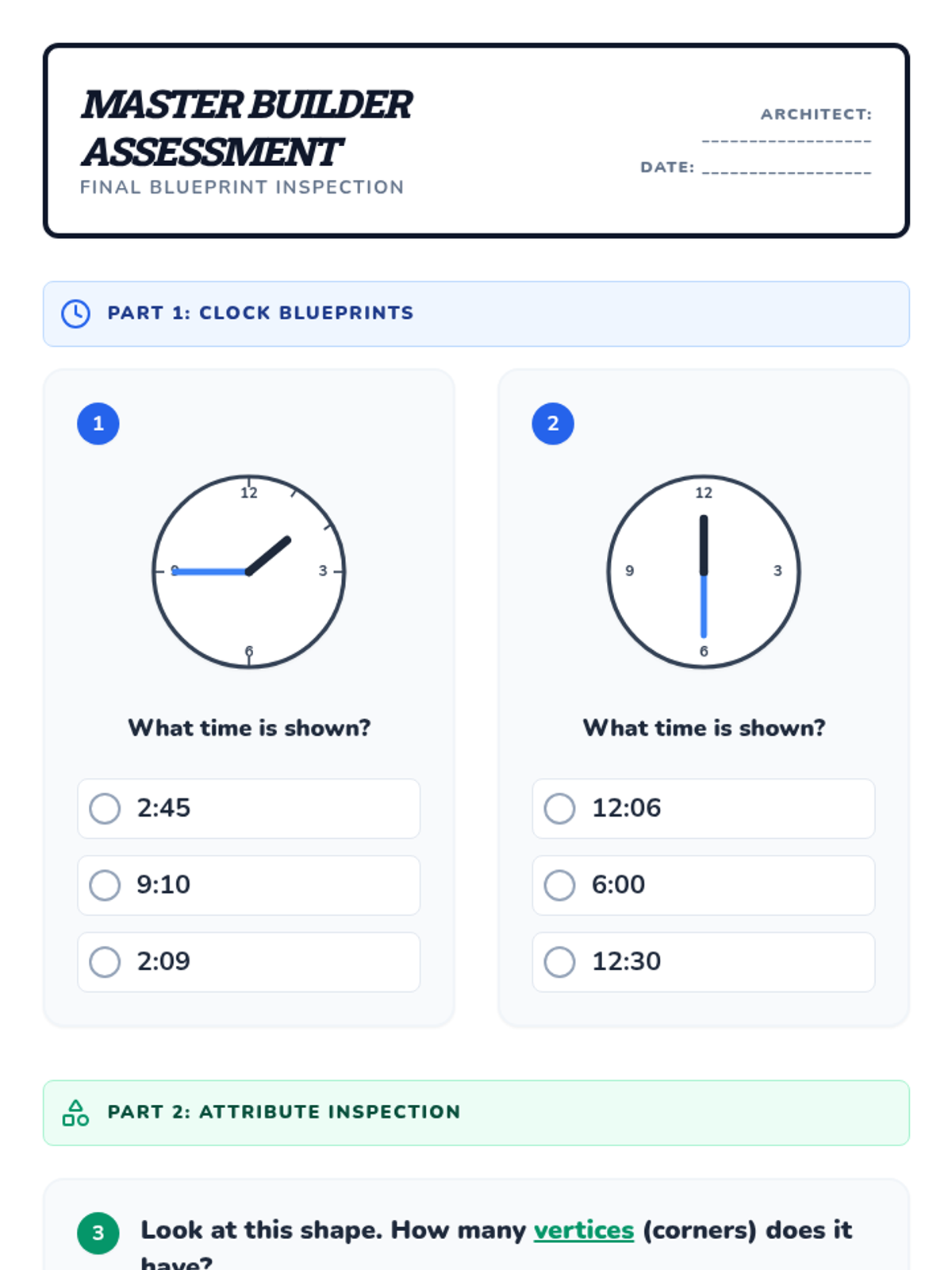
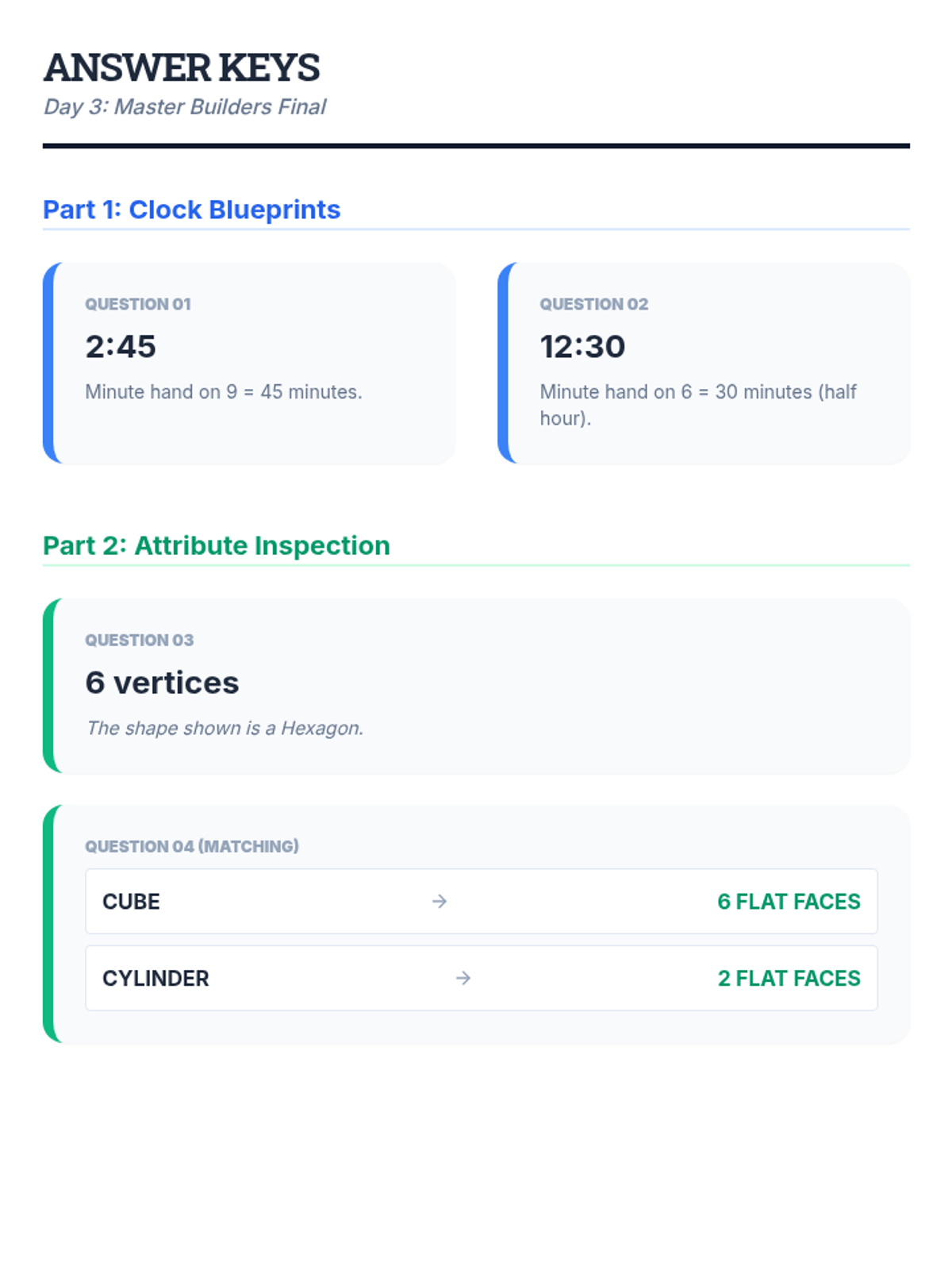
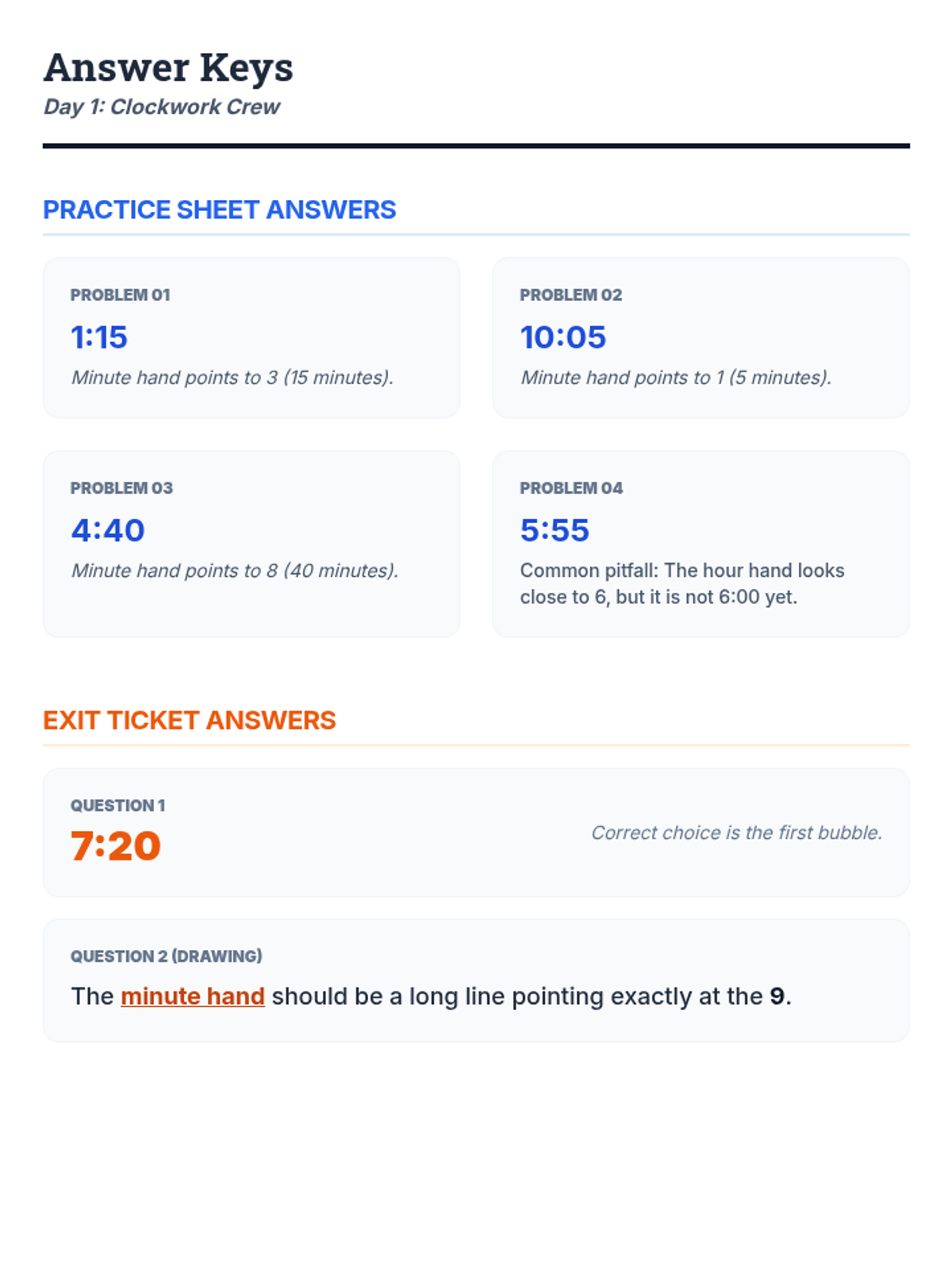
A cumulative review of time and shape attributes followed by a formal assessment to track student growth toward RIT 180 goals.
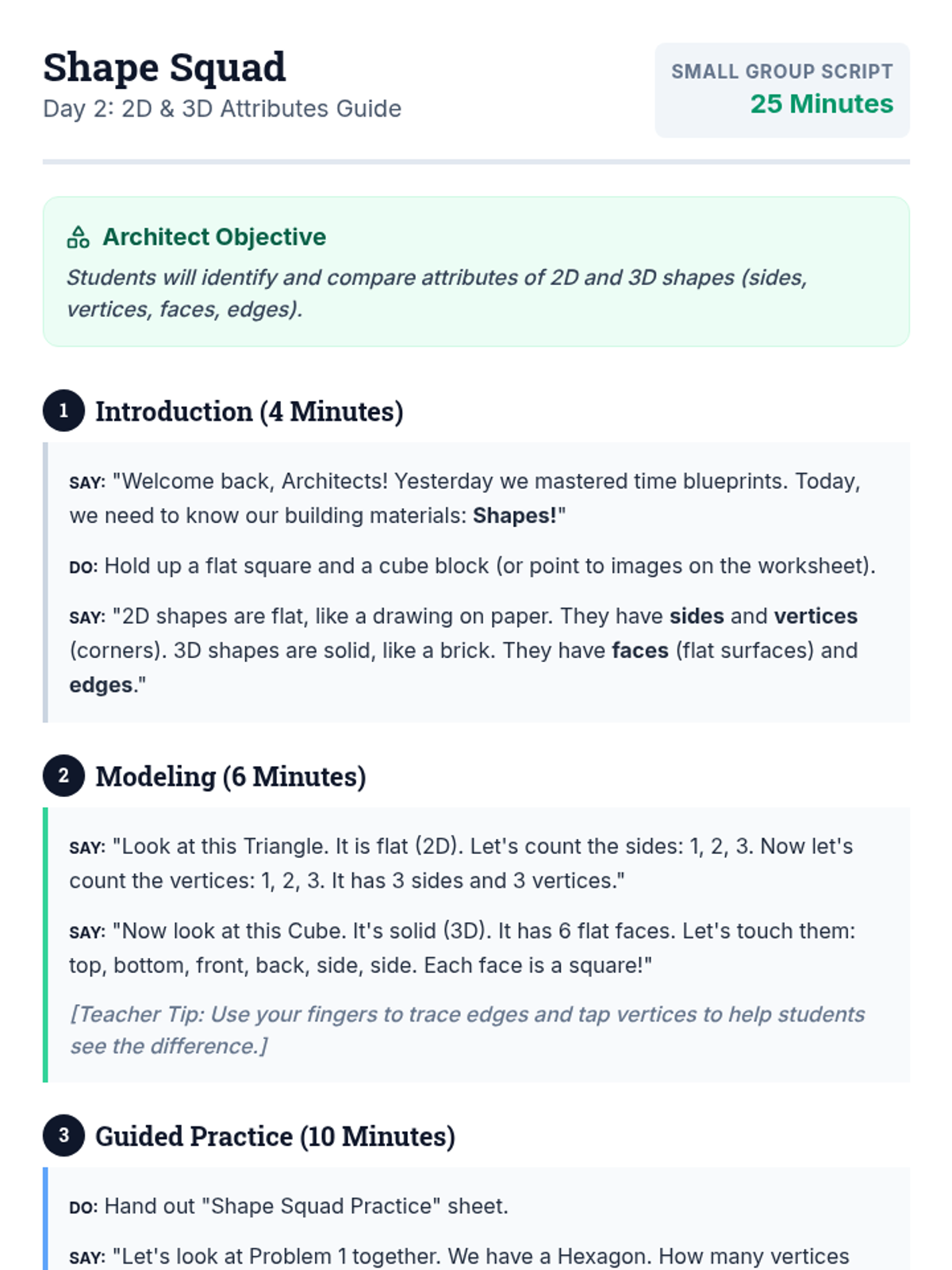
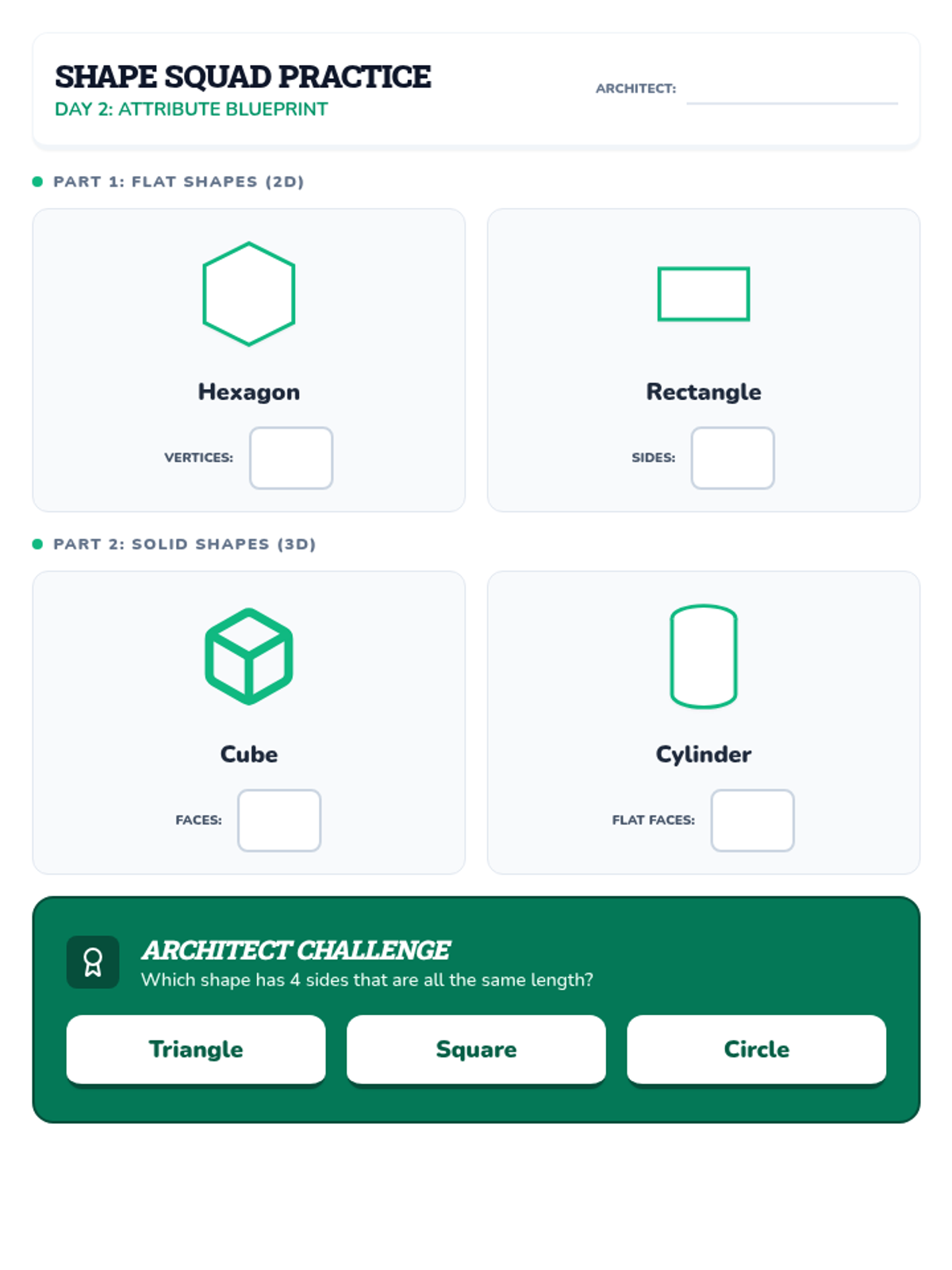
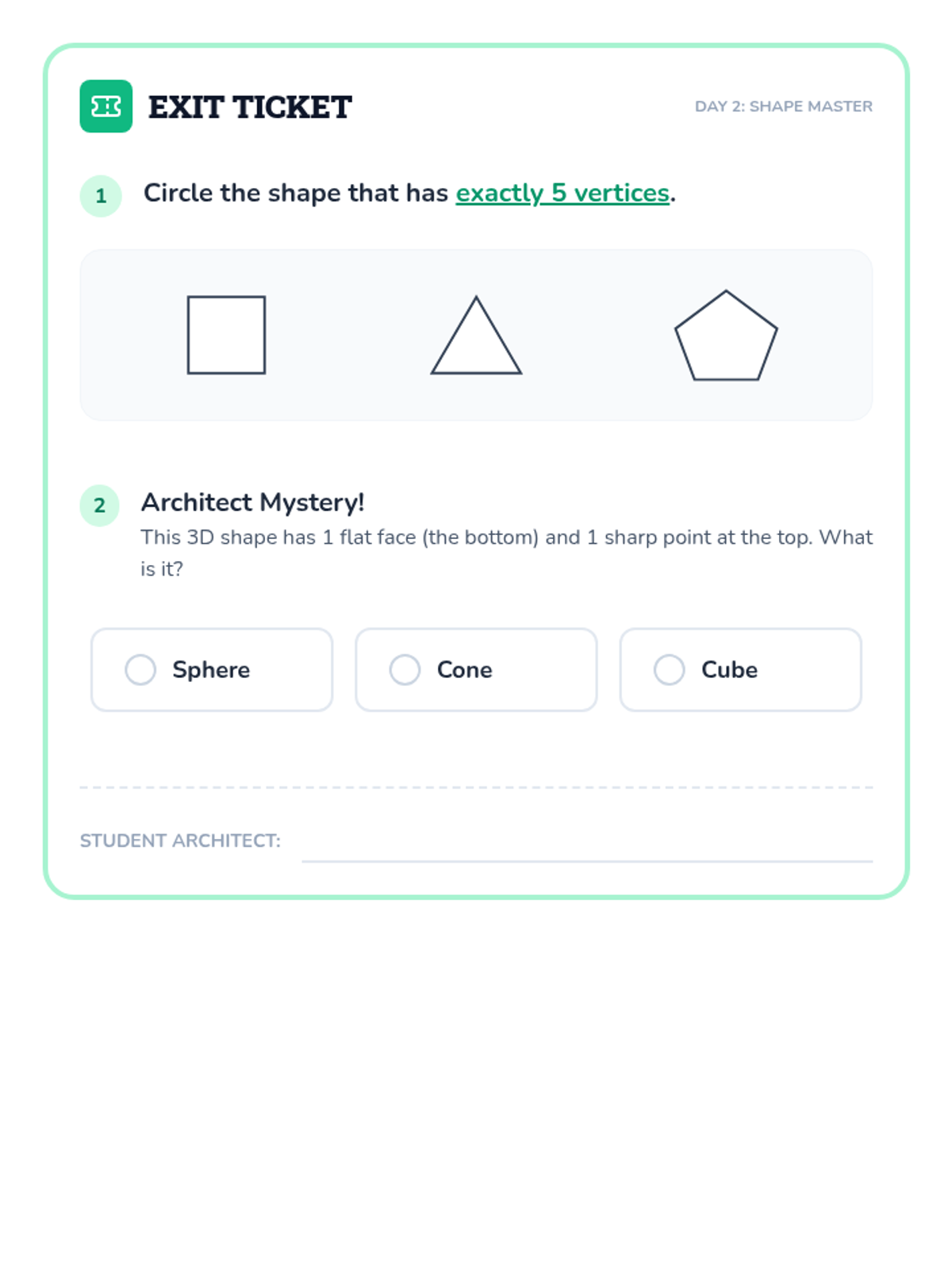
Identifying and describing defining attributes of 2D and 3D shapes, including sides, vertices, faces, and edges.
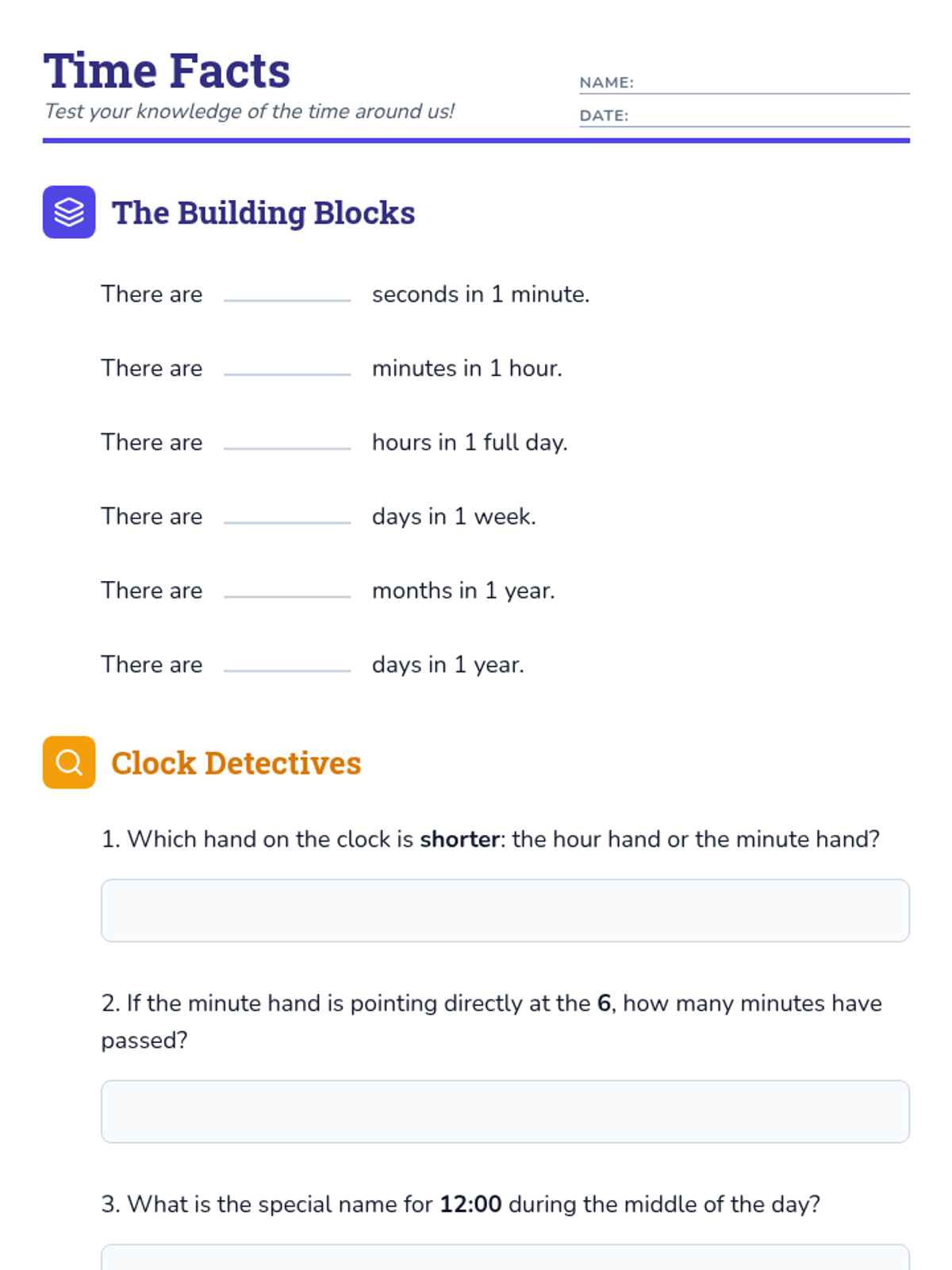
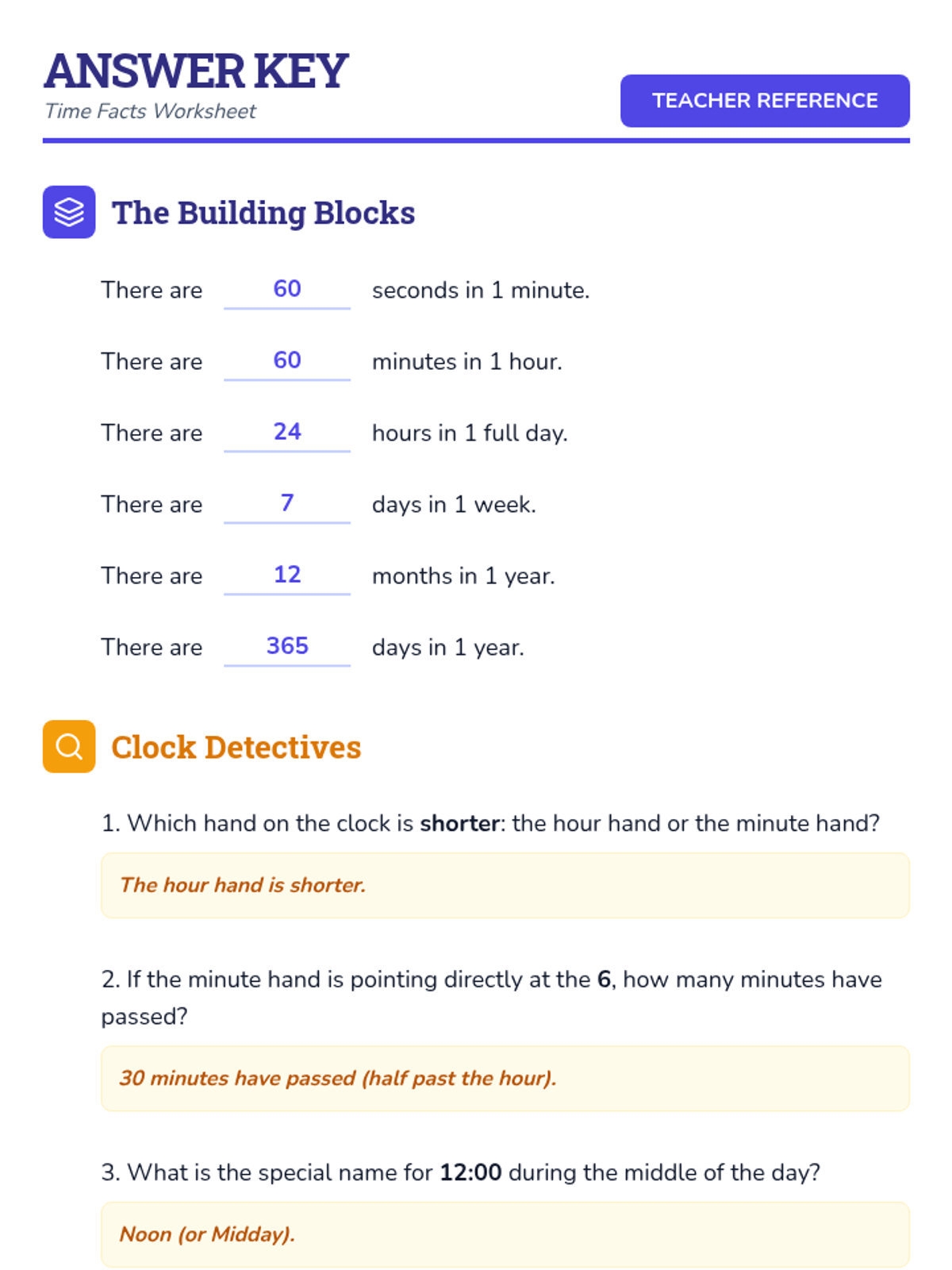
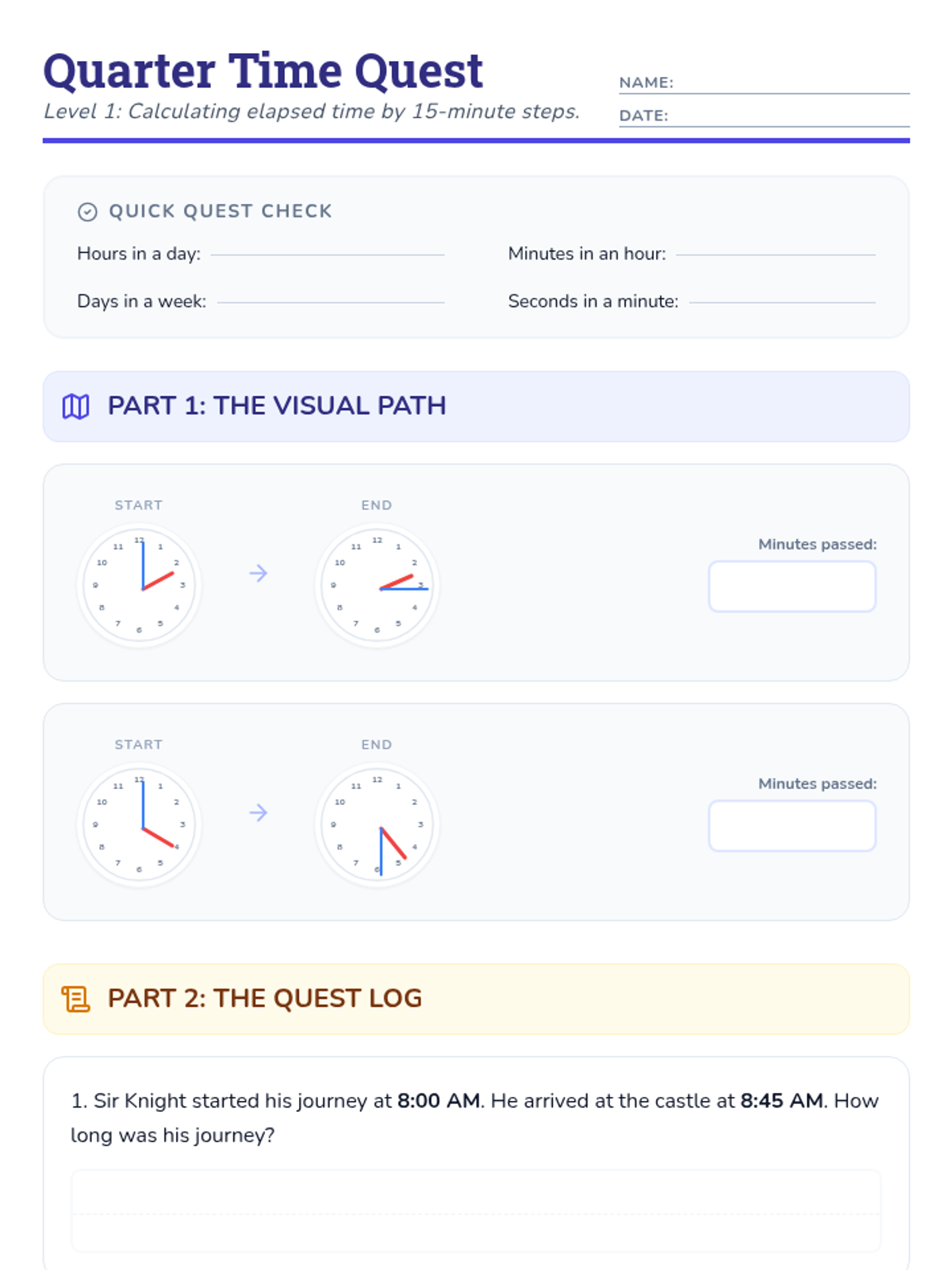
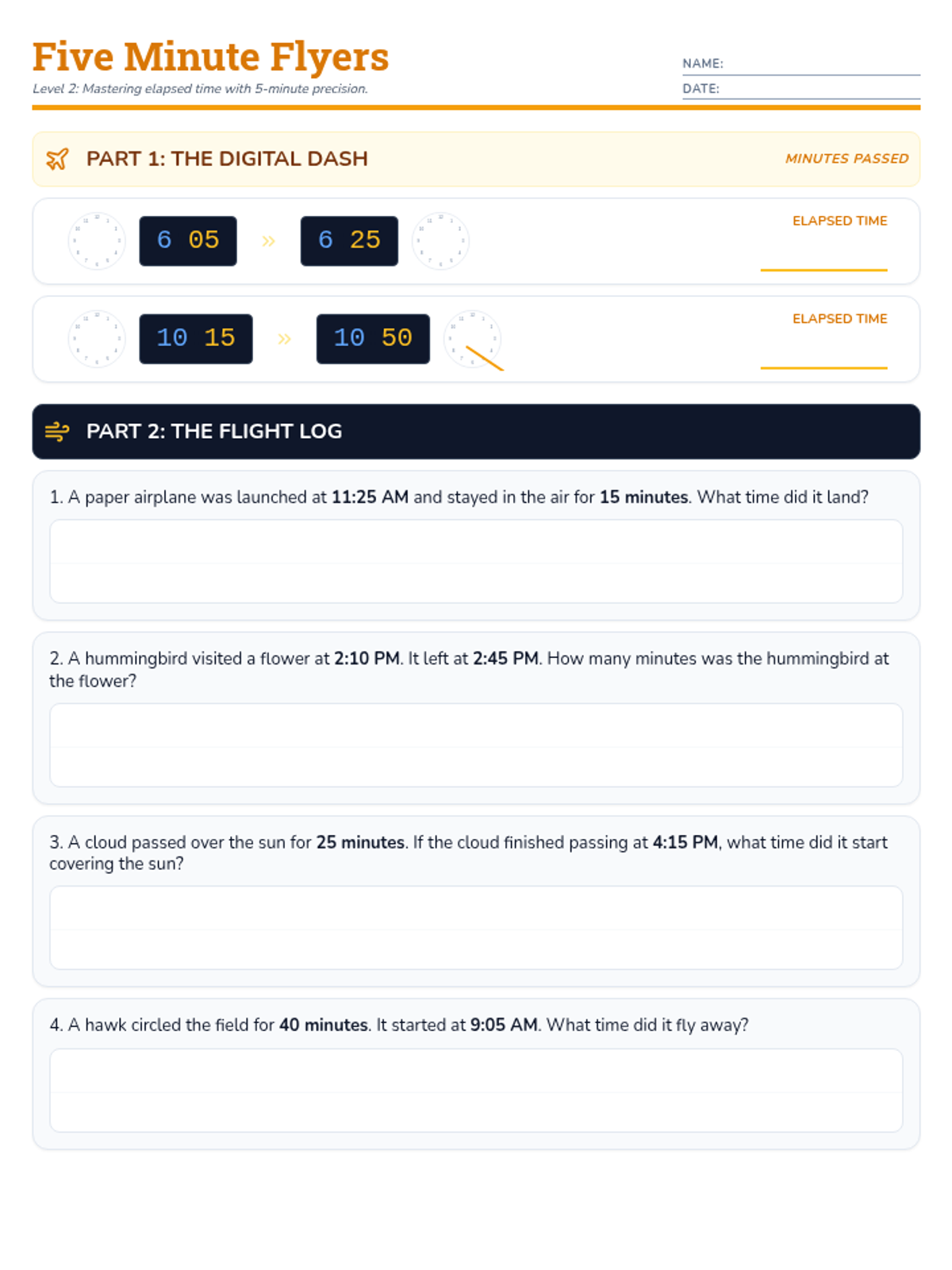
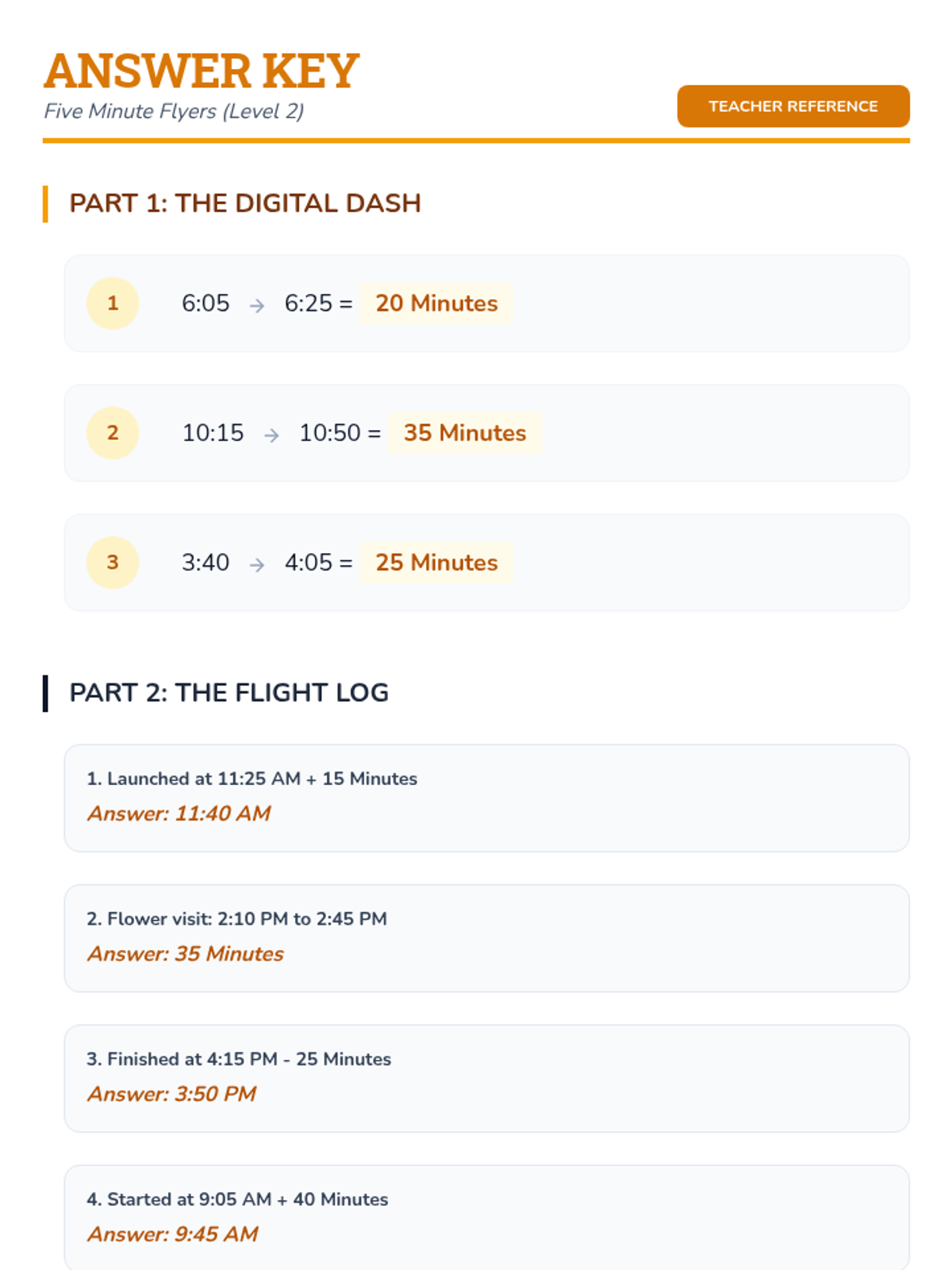
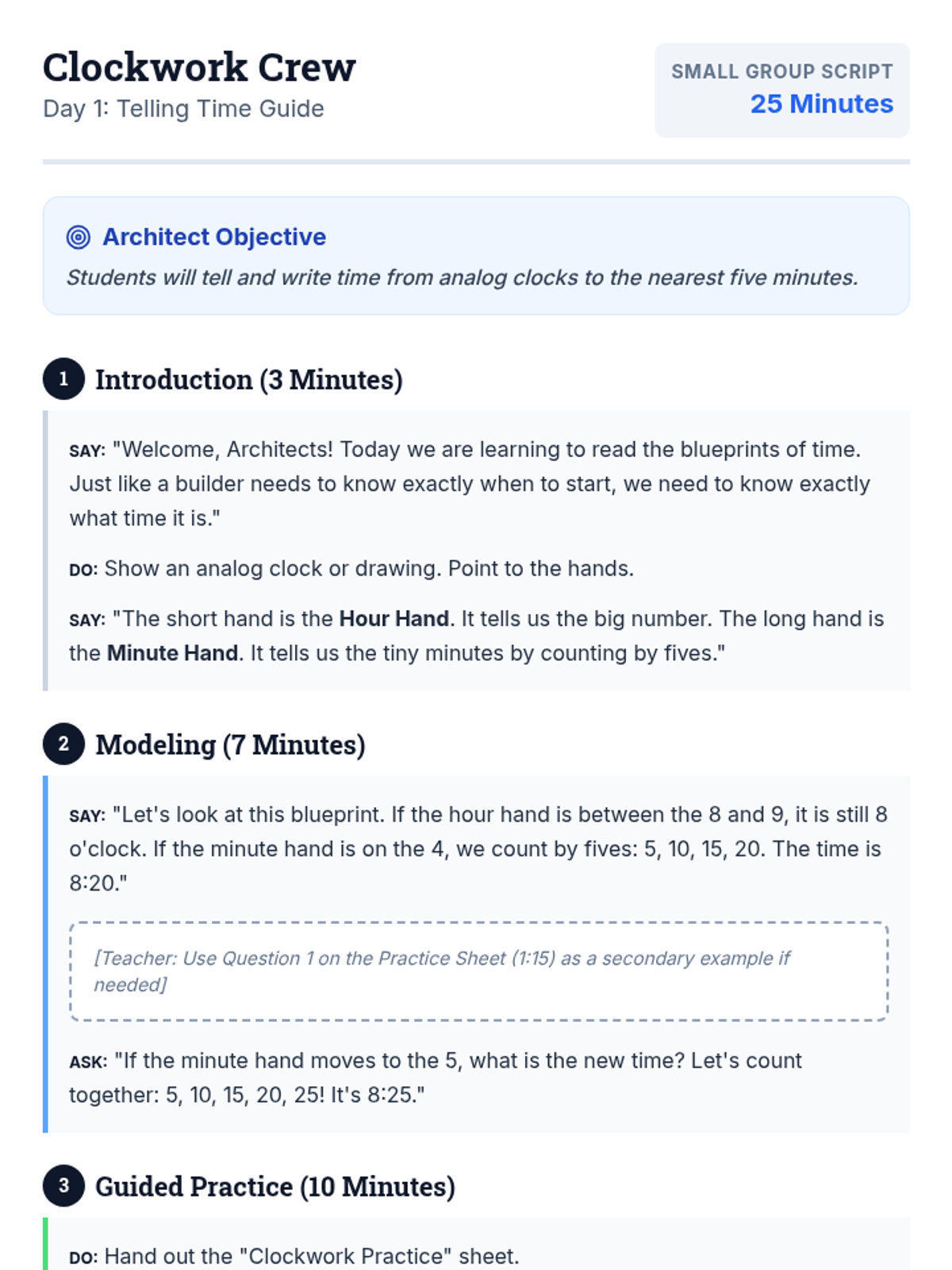
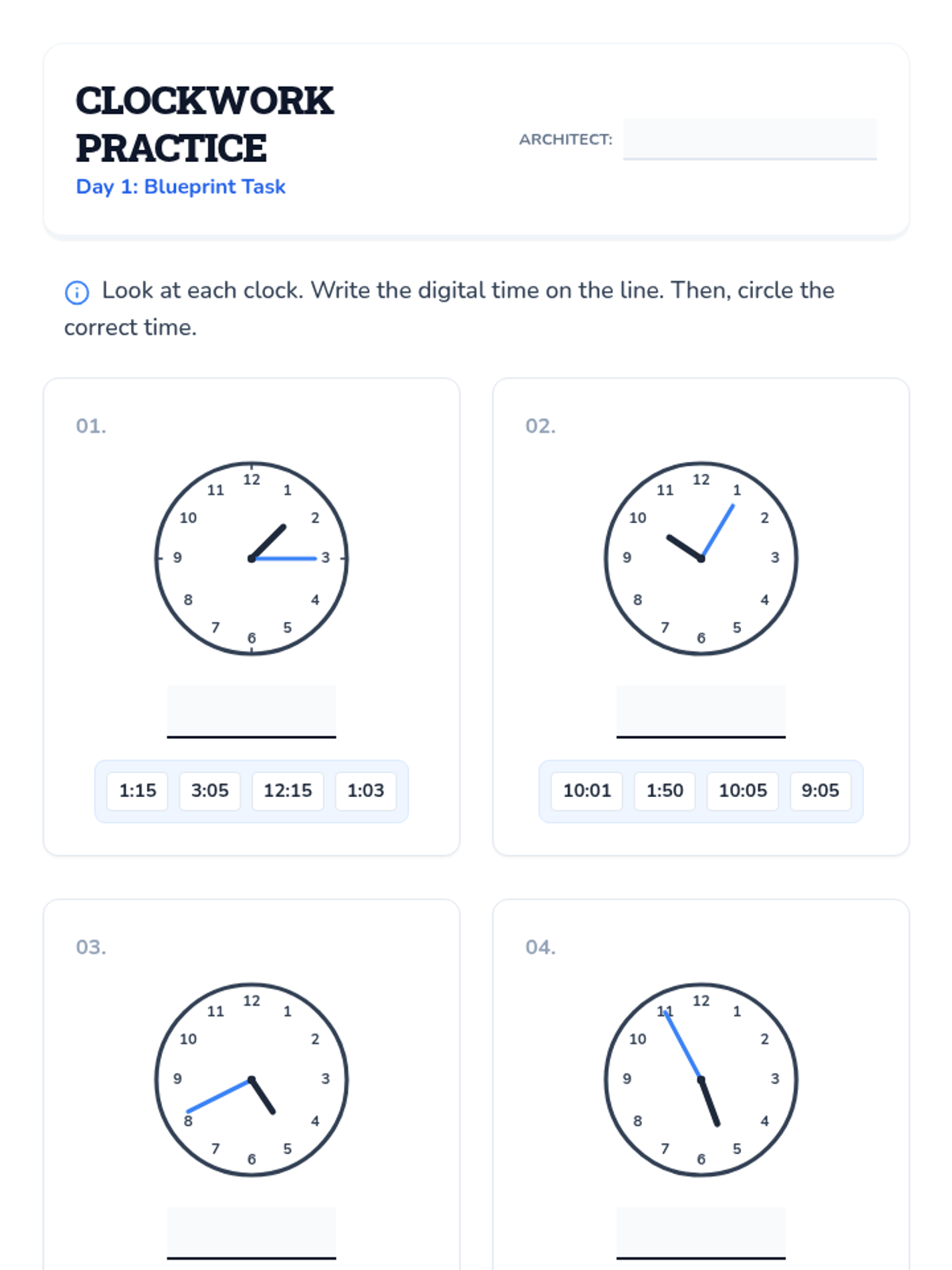
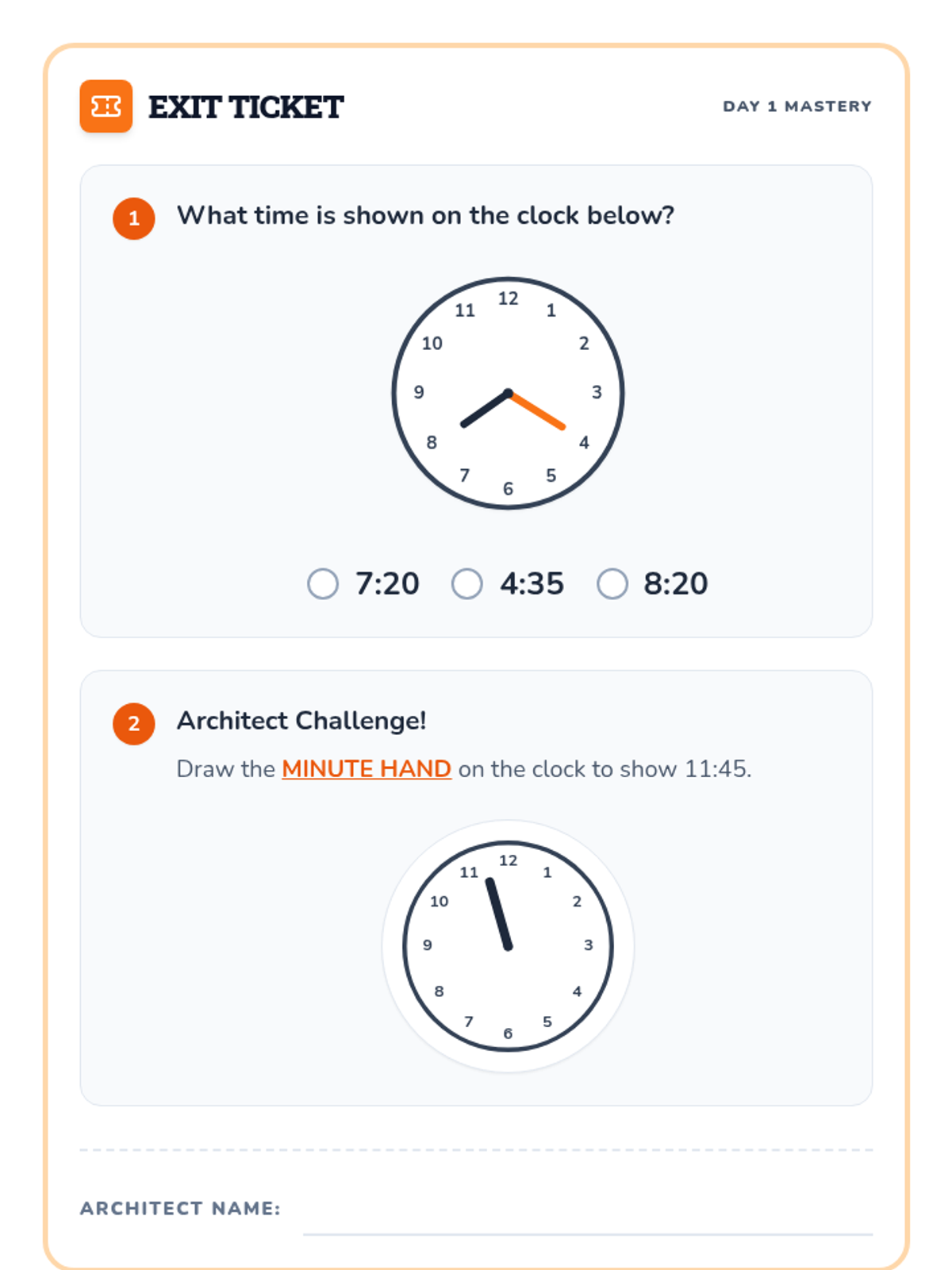
Mastering telling time to the nearest 5 minutes on an analog clock through guided practice and independent application.
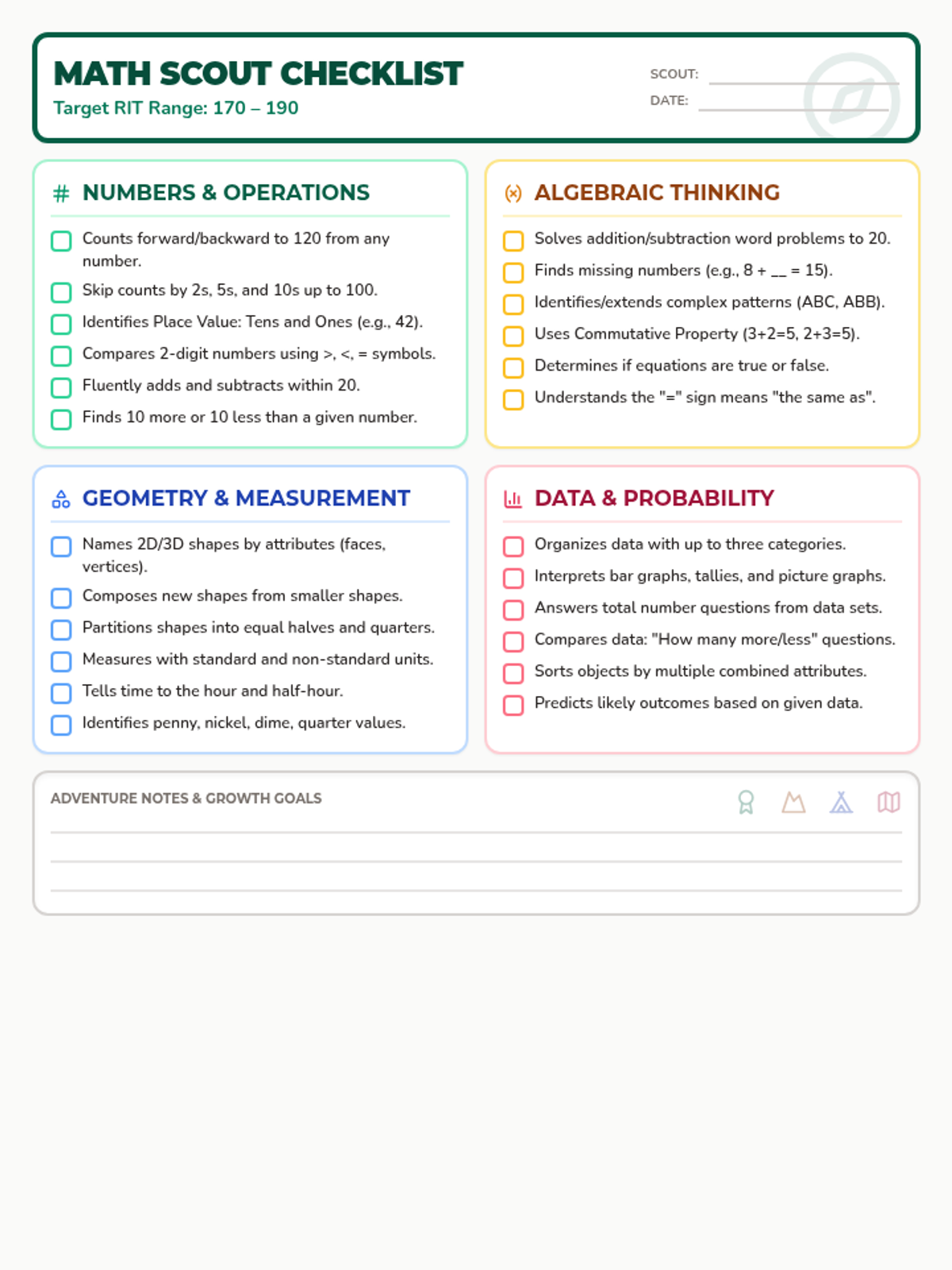
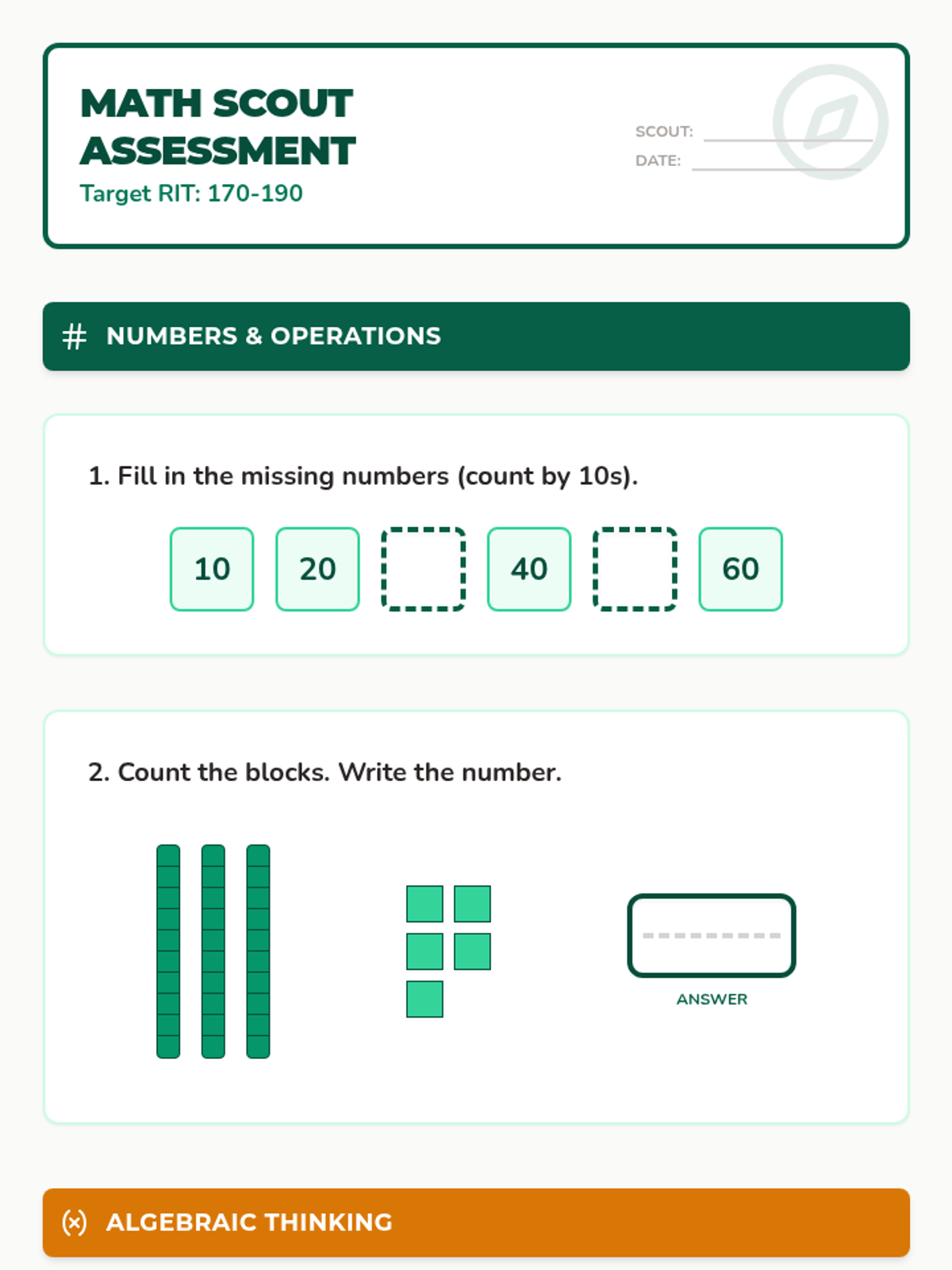
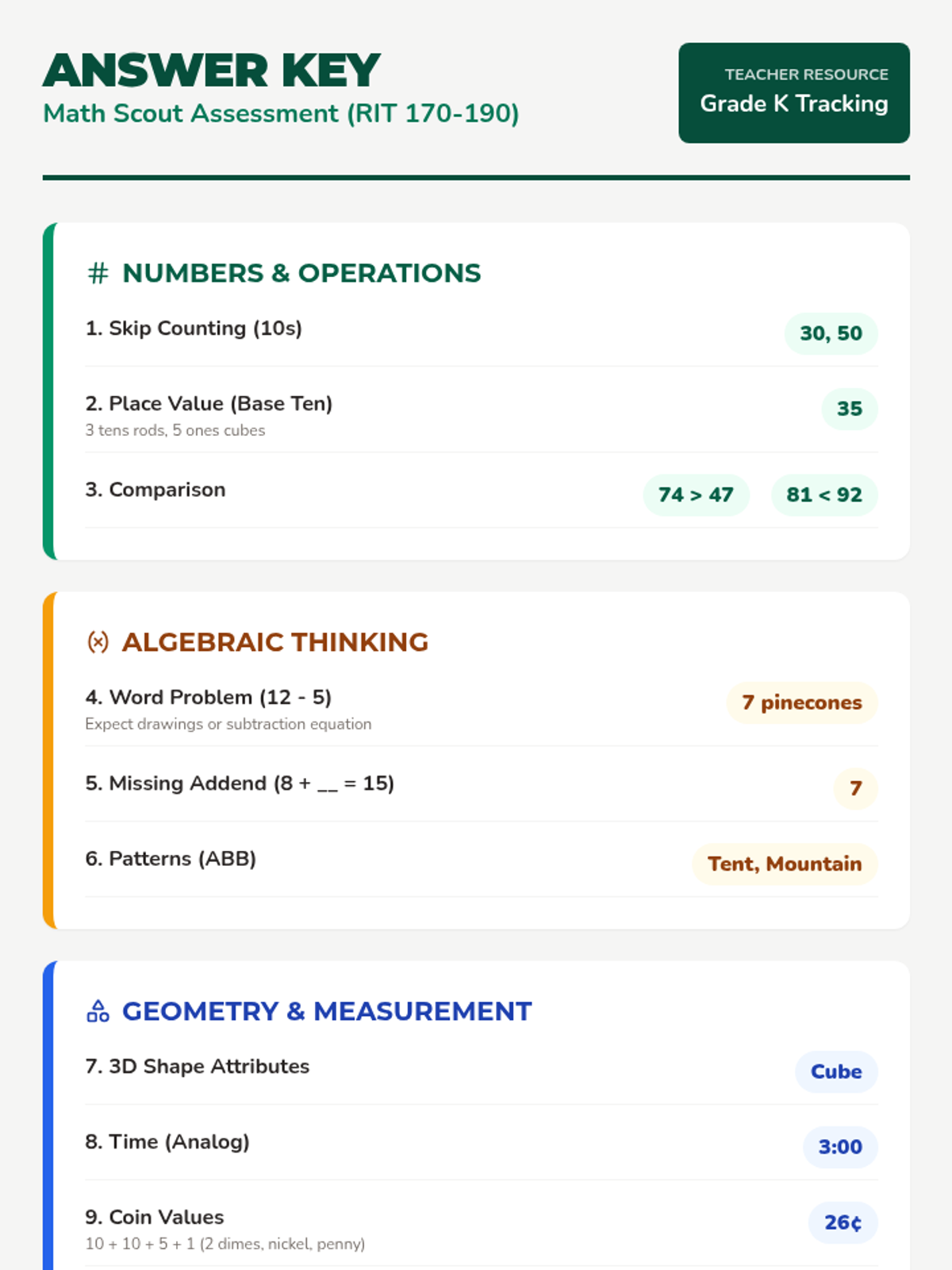
A comprehensive tracking resource for Kindergarten students aiming for advanced NWEA MAP RIT scores in mathematics, covering all key domains.
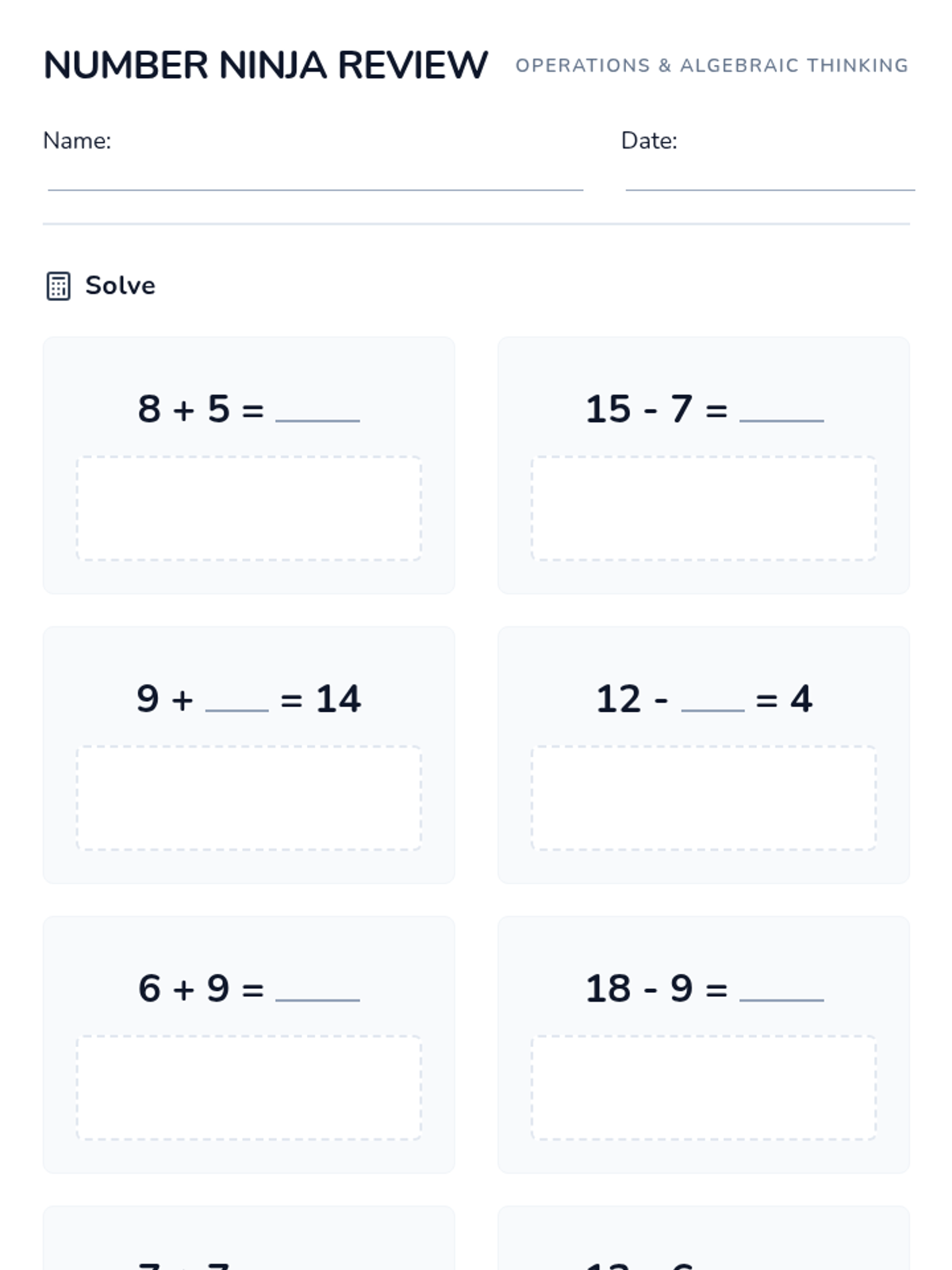
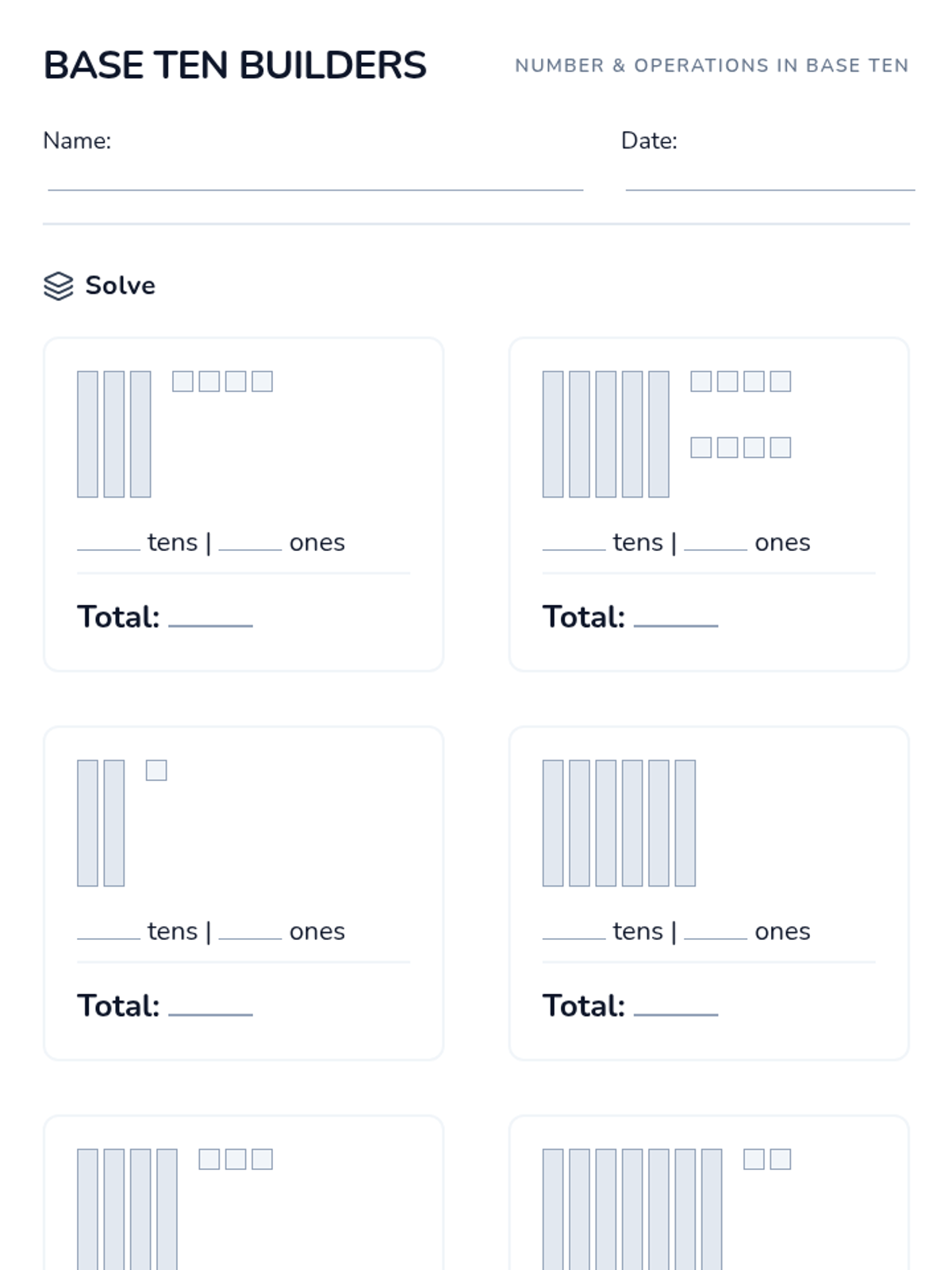
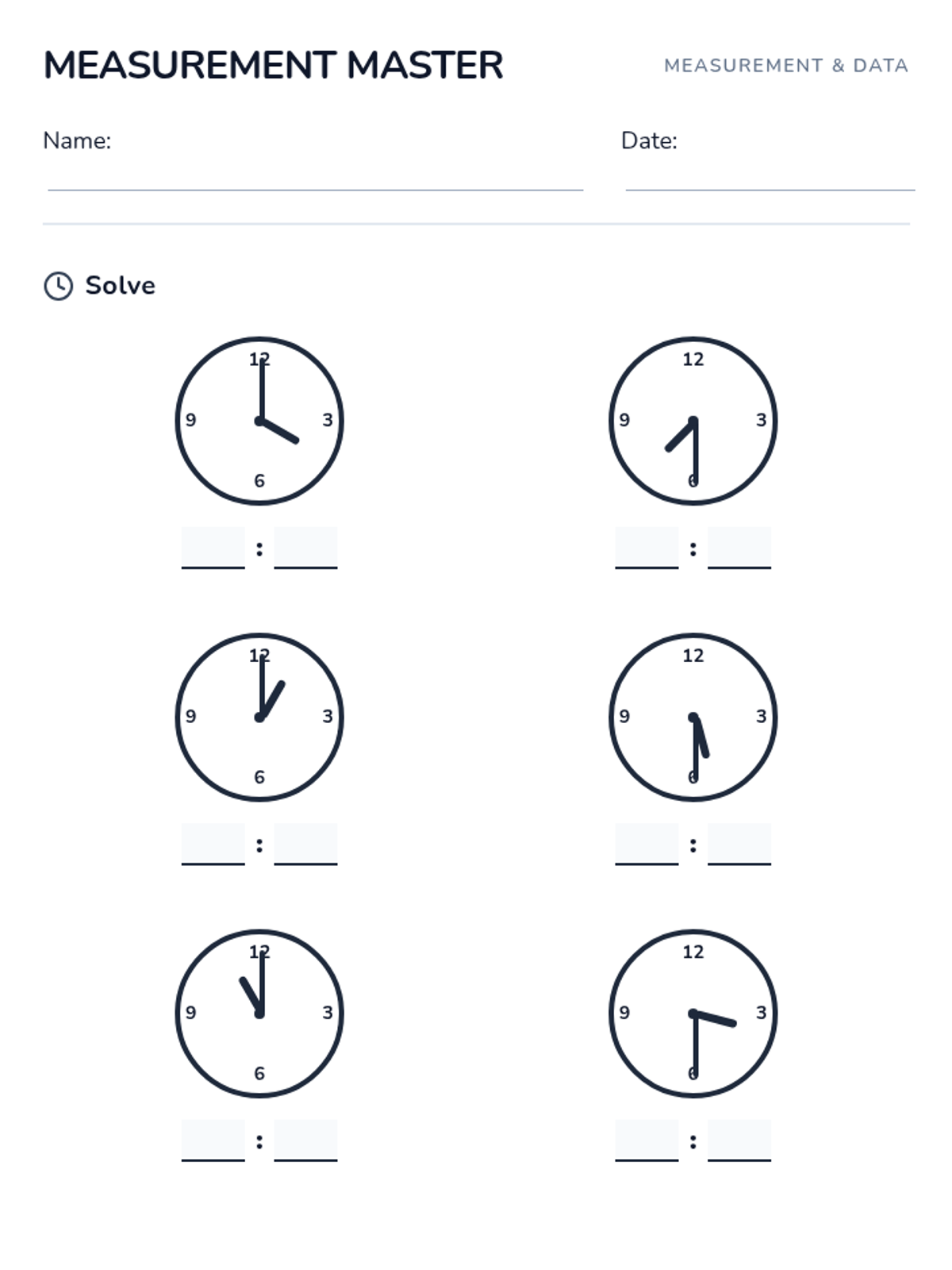
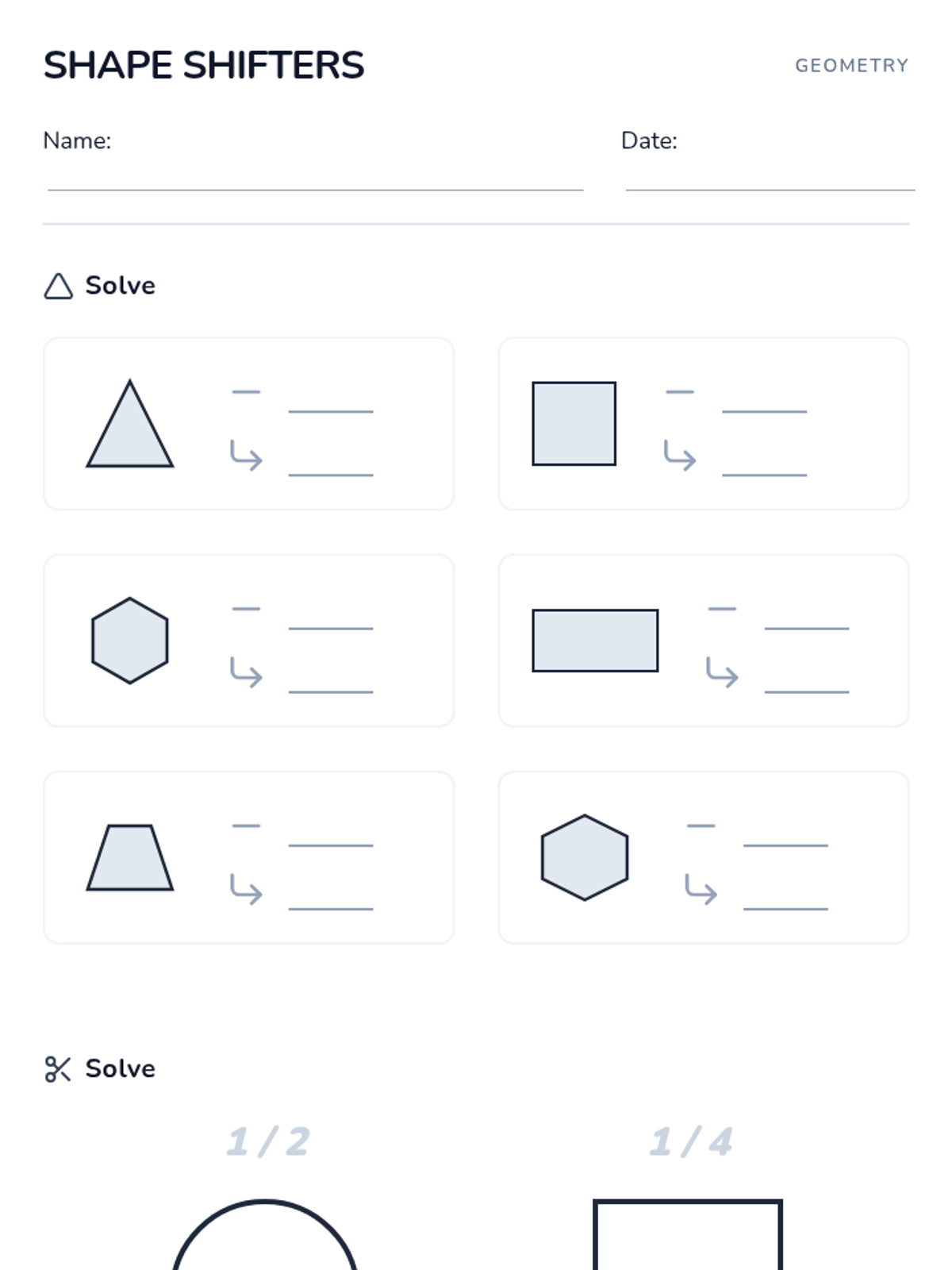
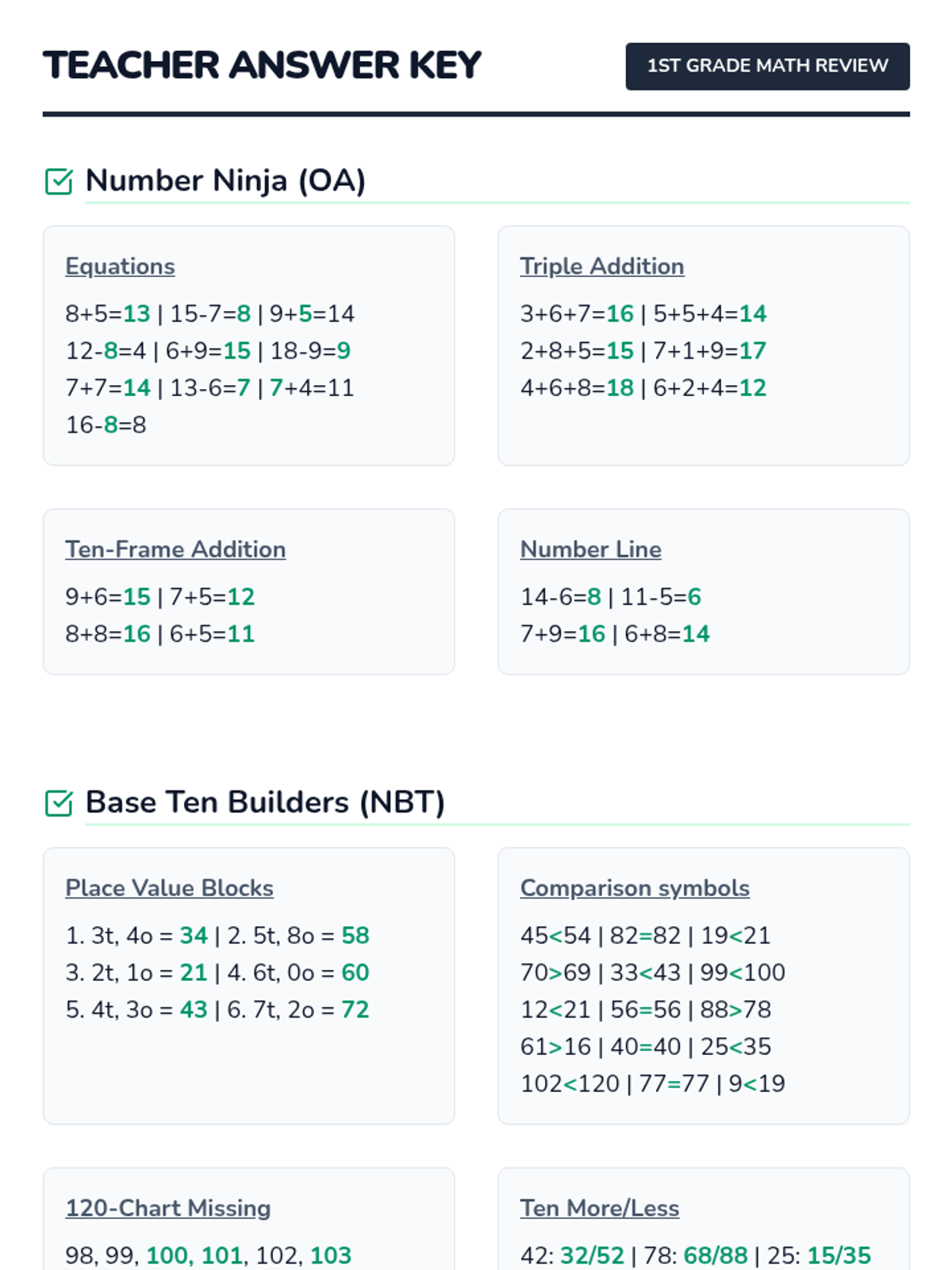
A comprehensive end-of-year math review for 1st grade students, aligned with Illinois Learning Standards. The lesson covers all major domains including Operations, Base Ten, Measurement, and Geometry through minimalist, high-legibility worksheets.
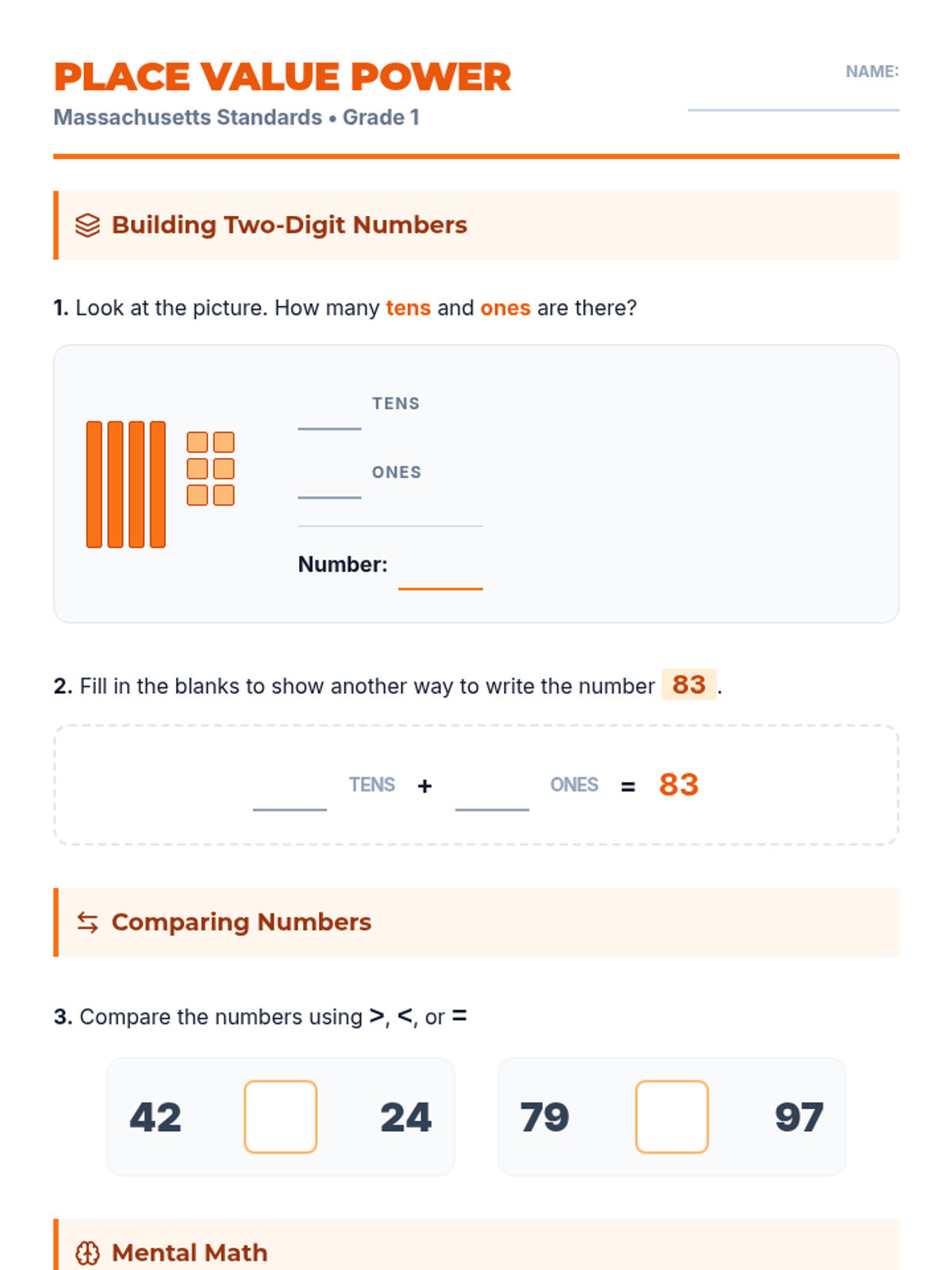
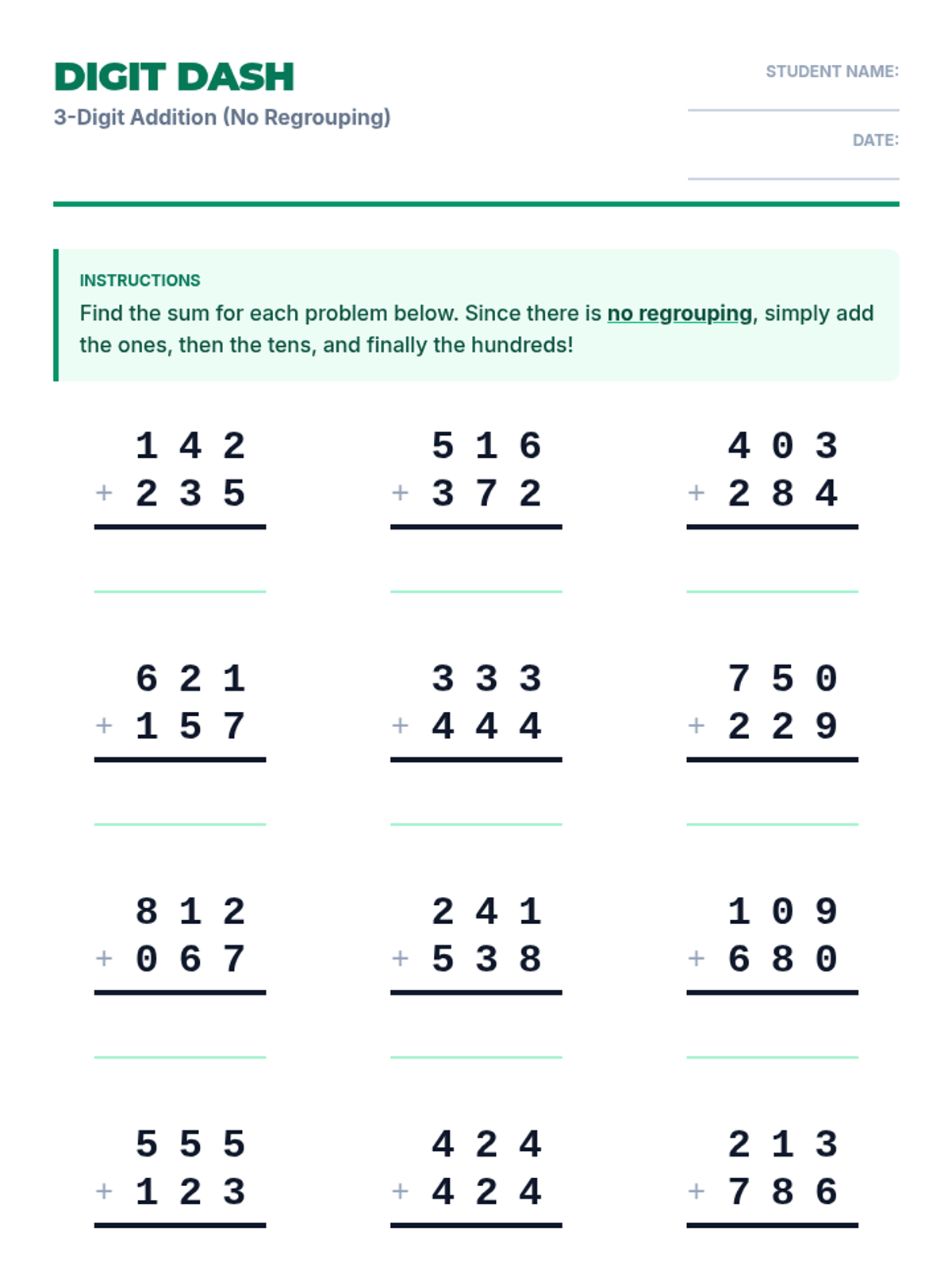
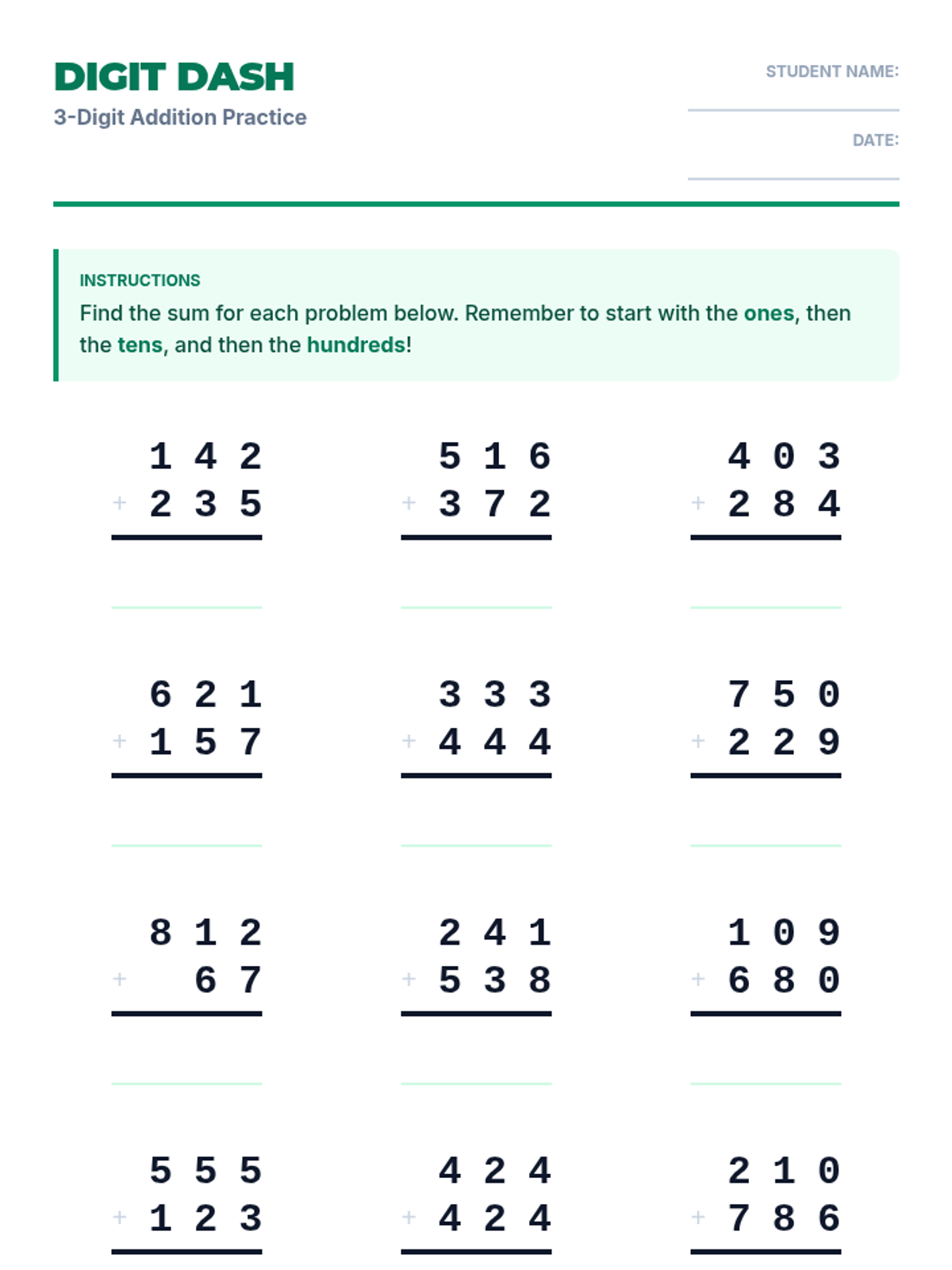
A series of focused practice materials for Massachusetts place value standards in Grades 1 and 2, including tens/ones, hundreds, expanded form, and number comparisons.
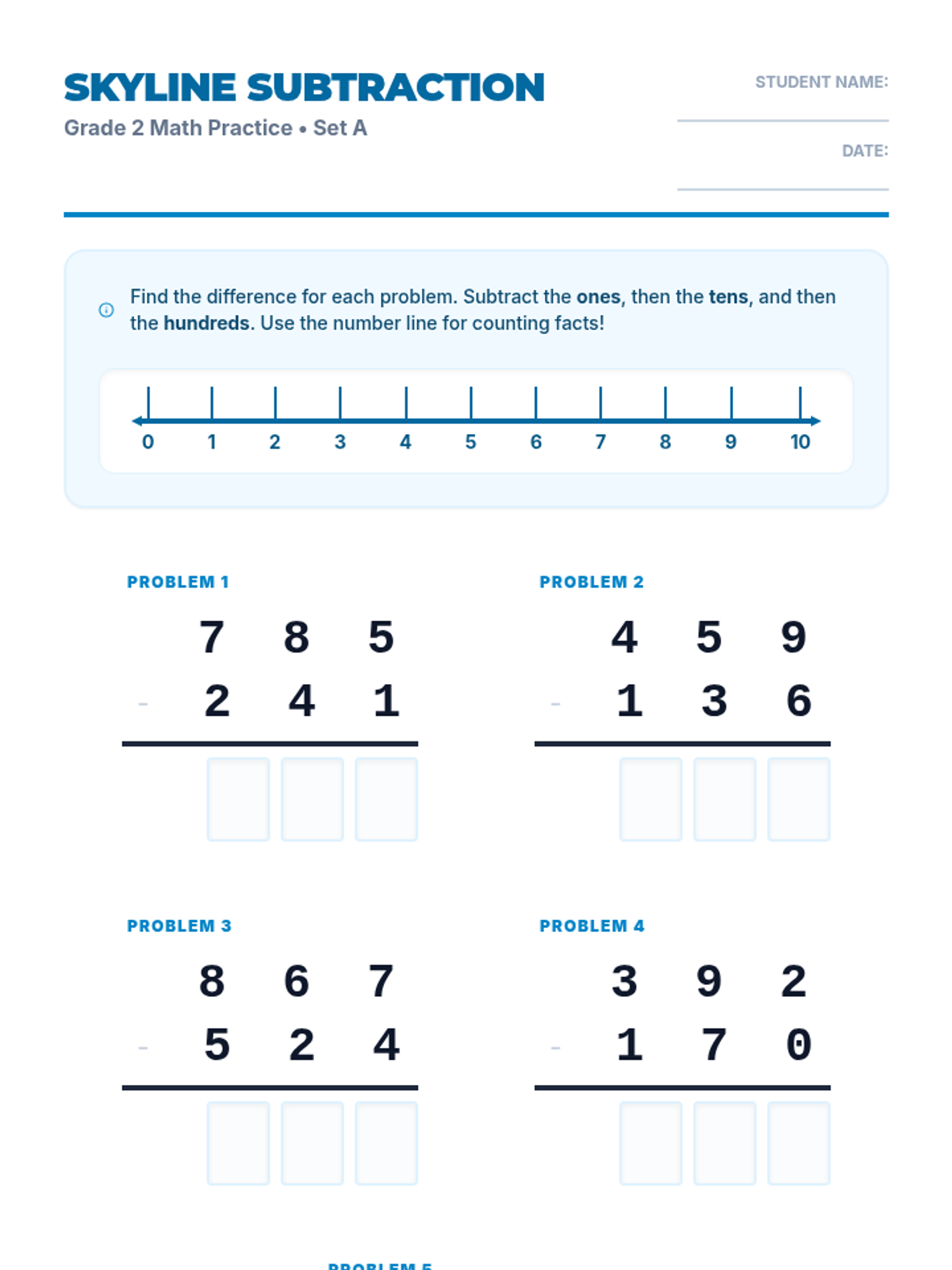
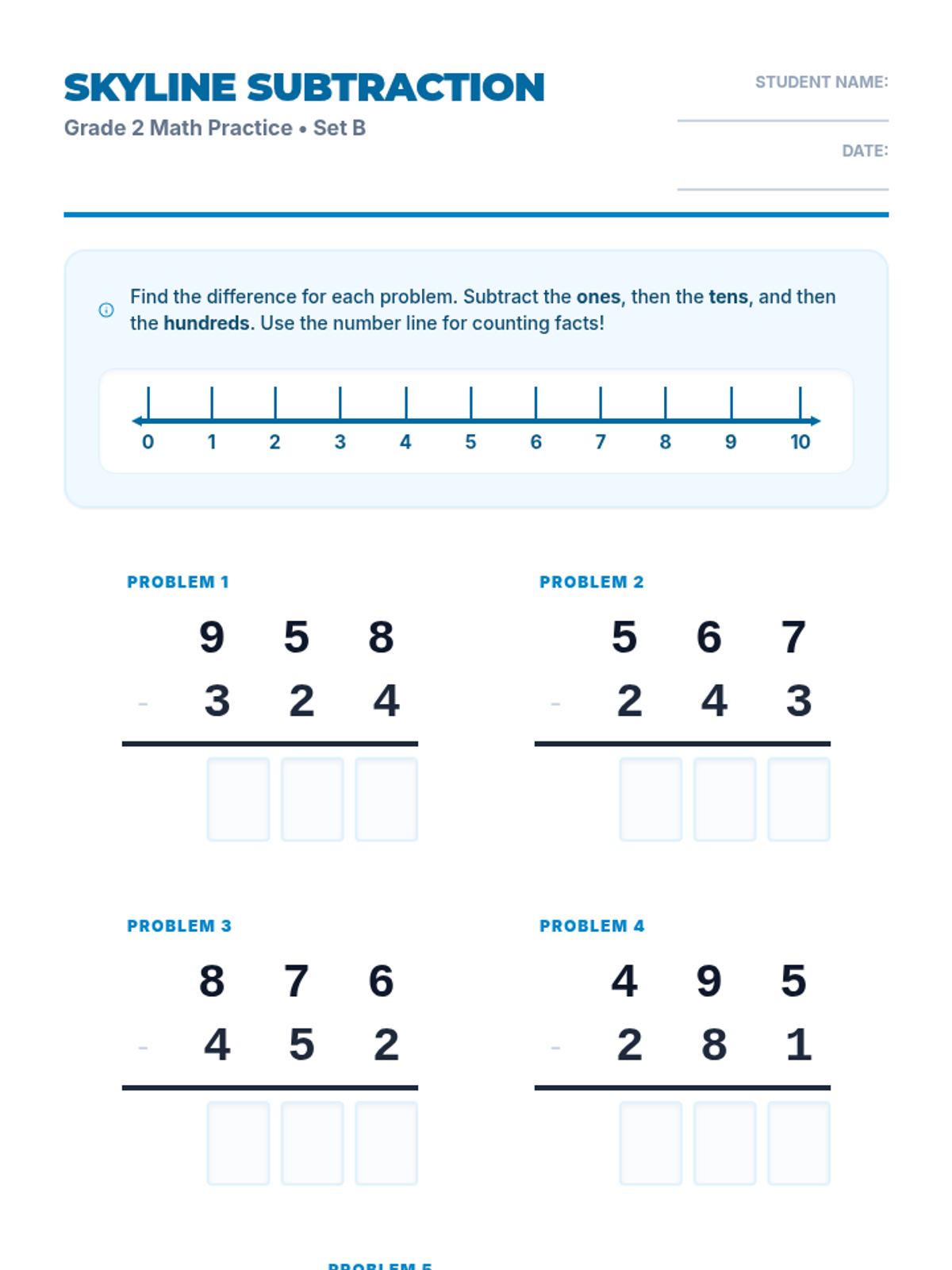
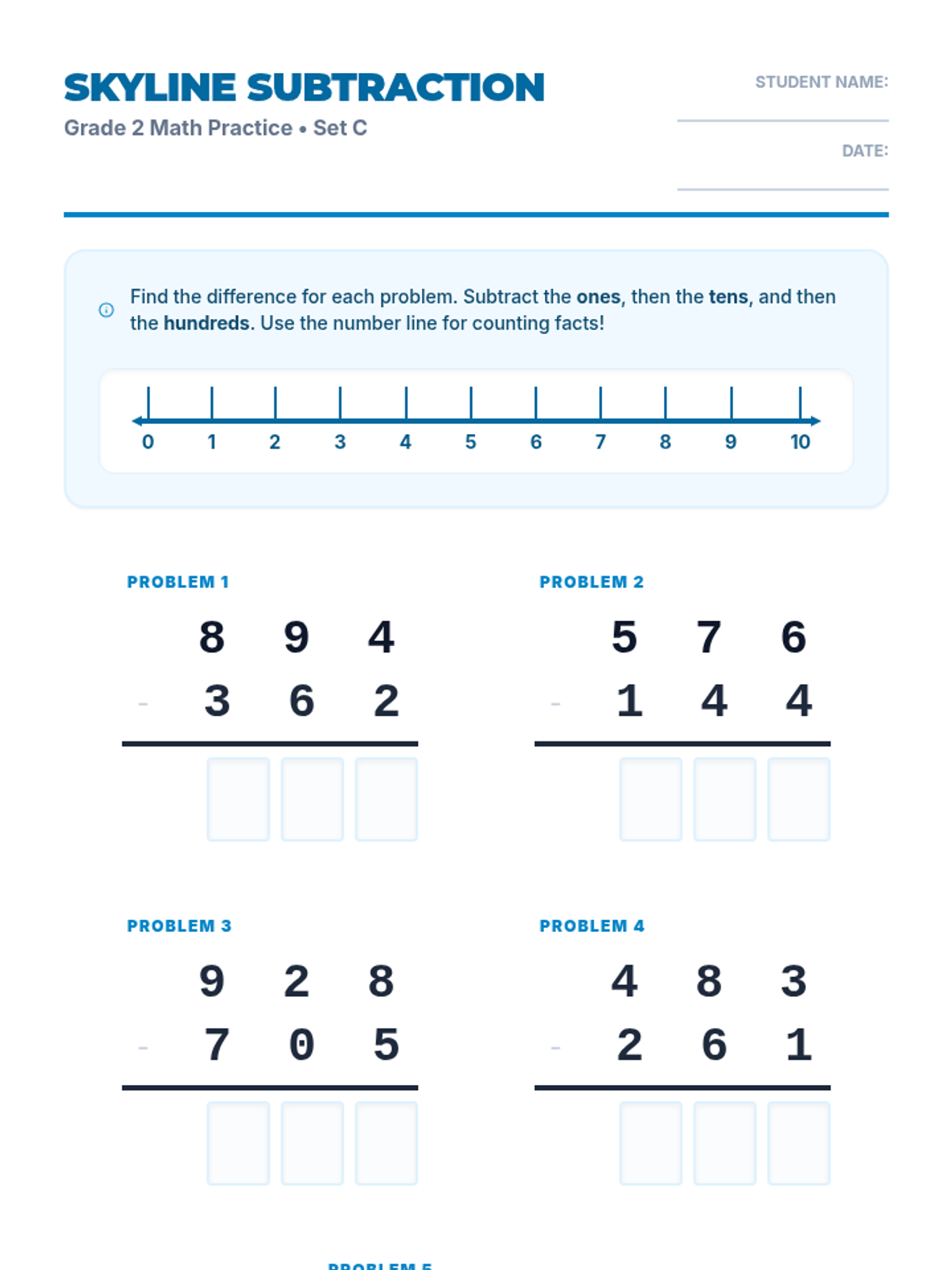
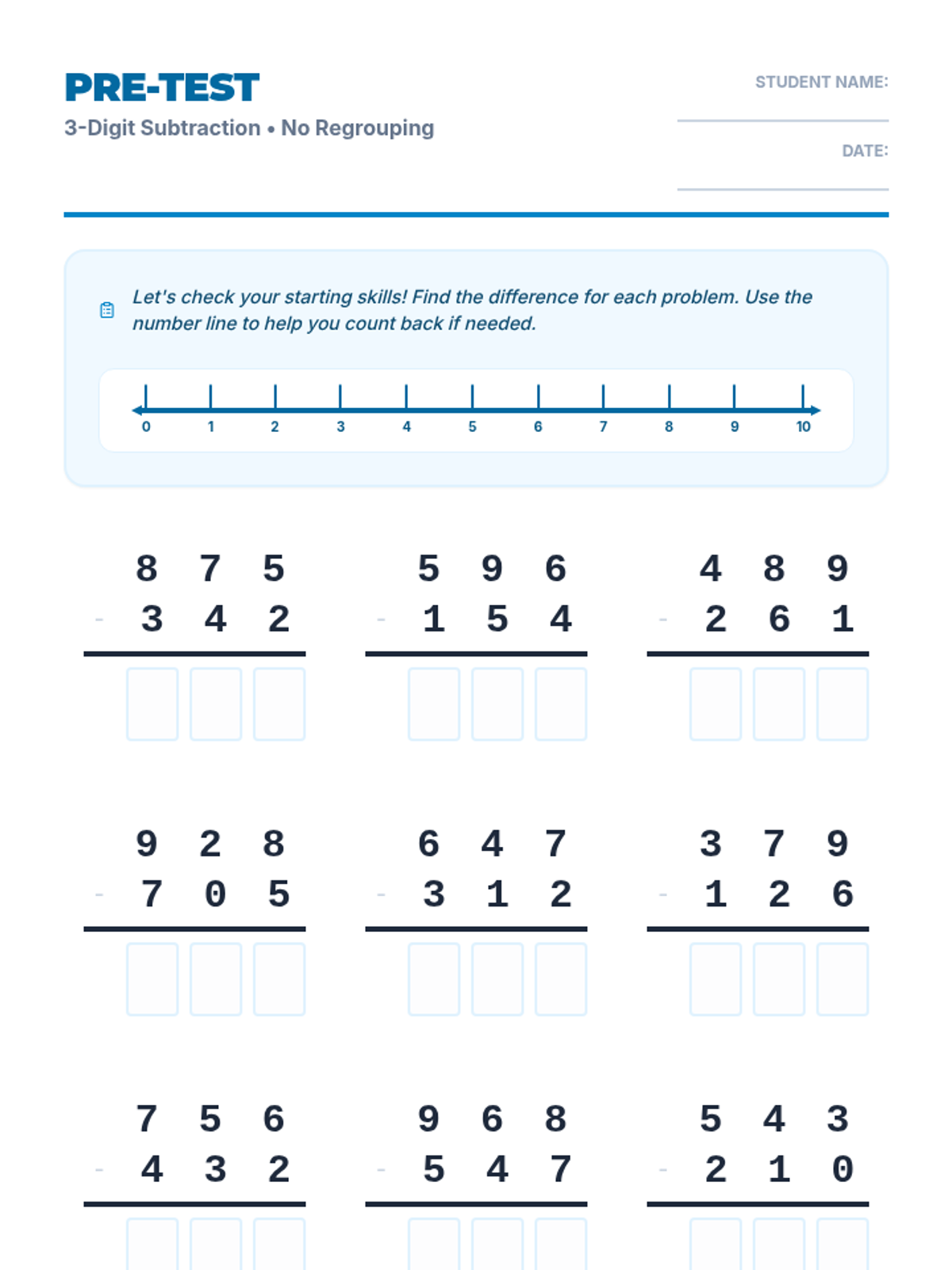
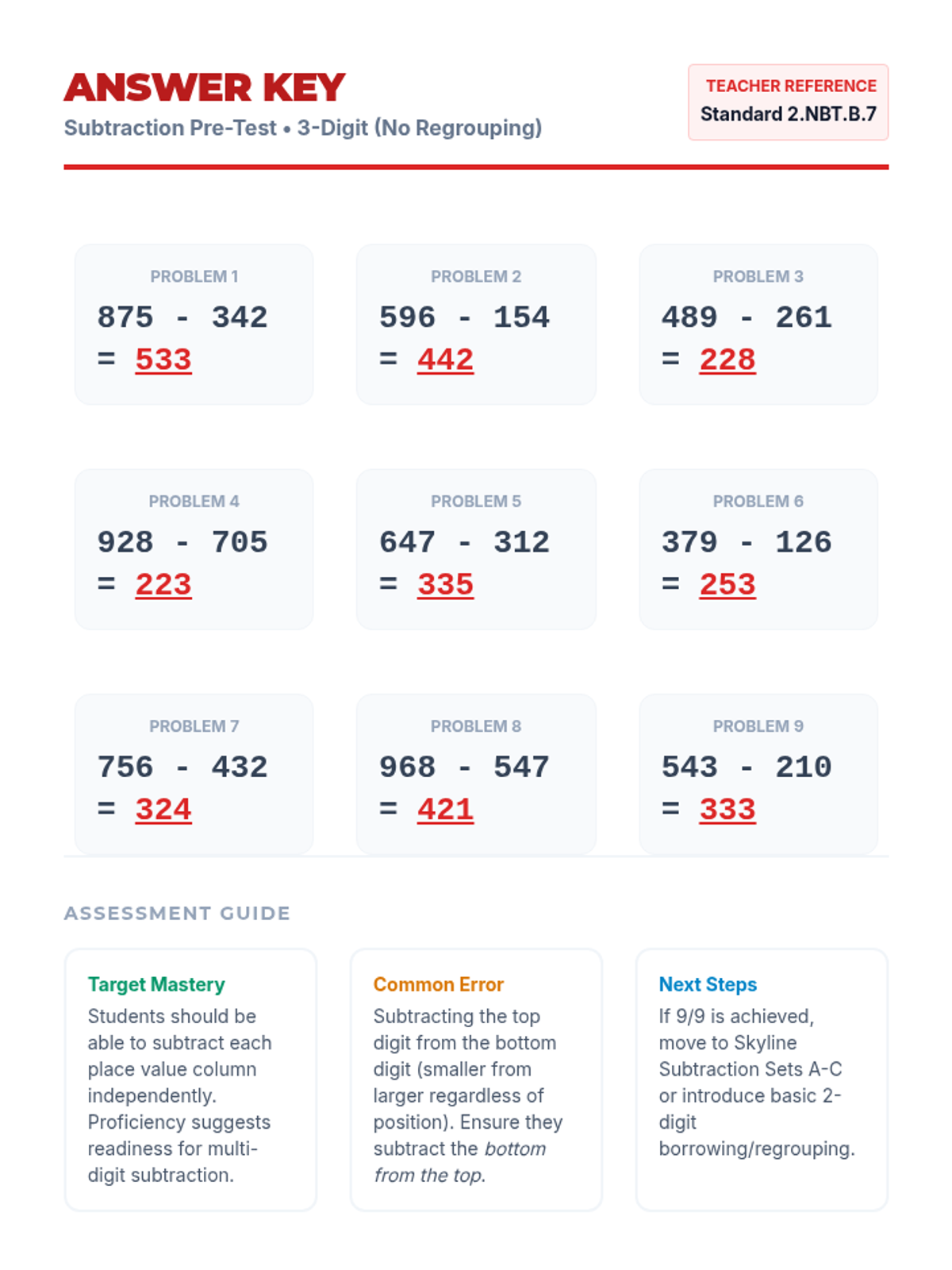
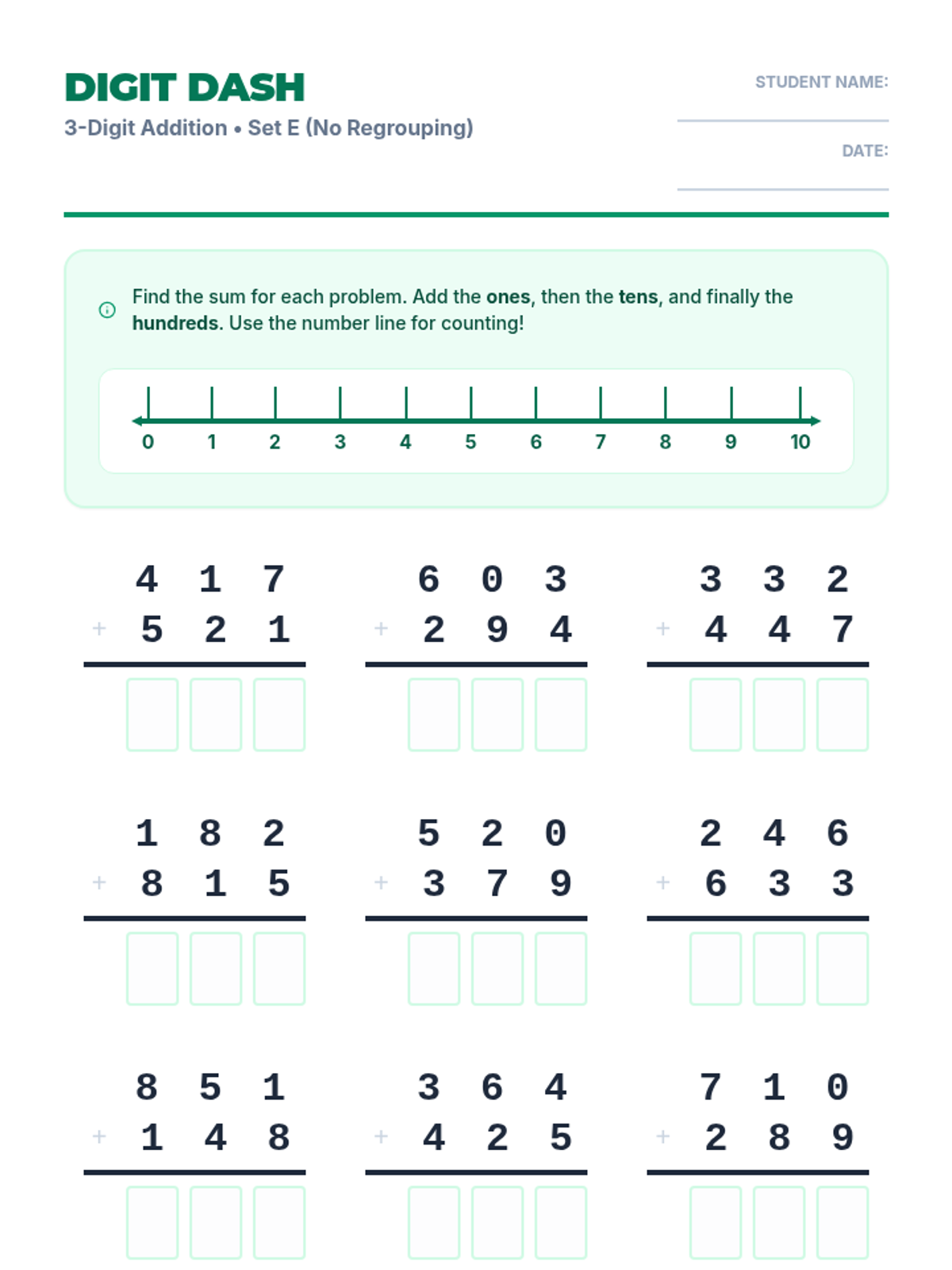
A series of practice worksheets focused on three-digit subtraction without regrouping, featuring a visual number line to assist with mental math and place value visualization.
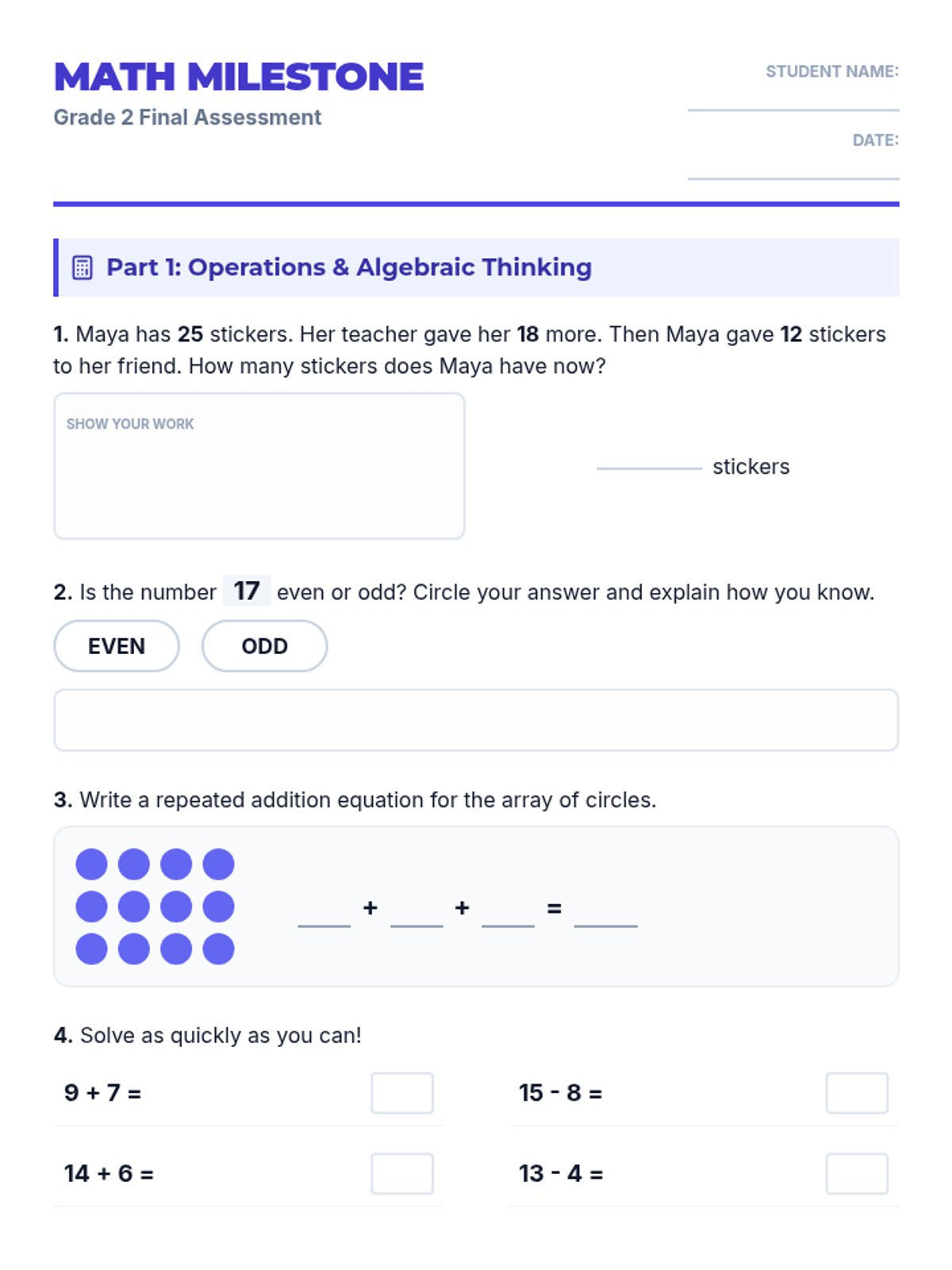
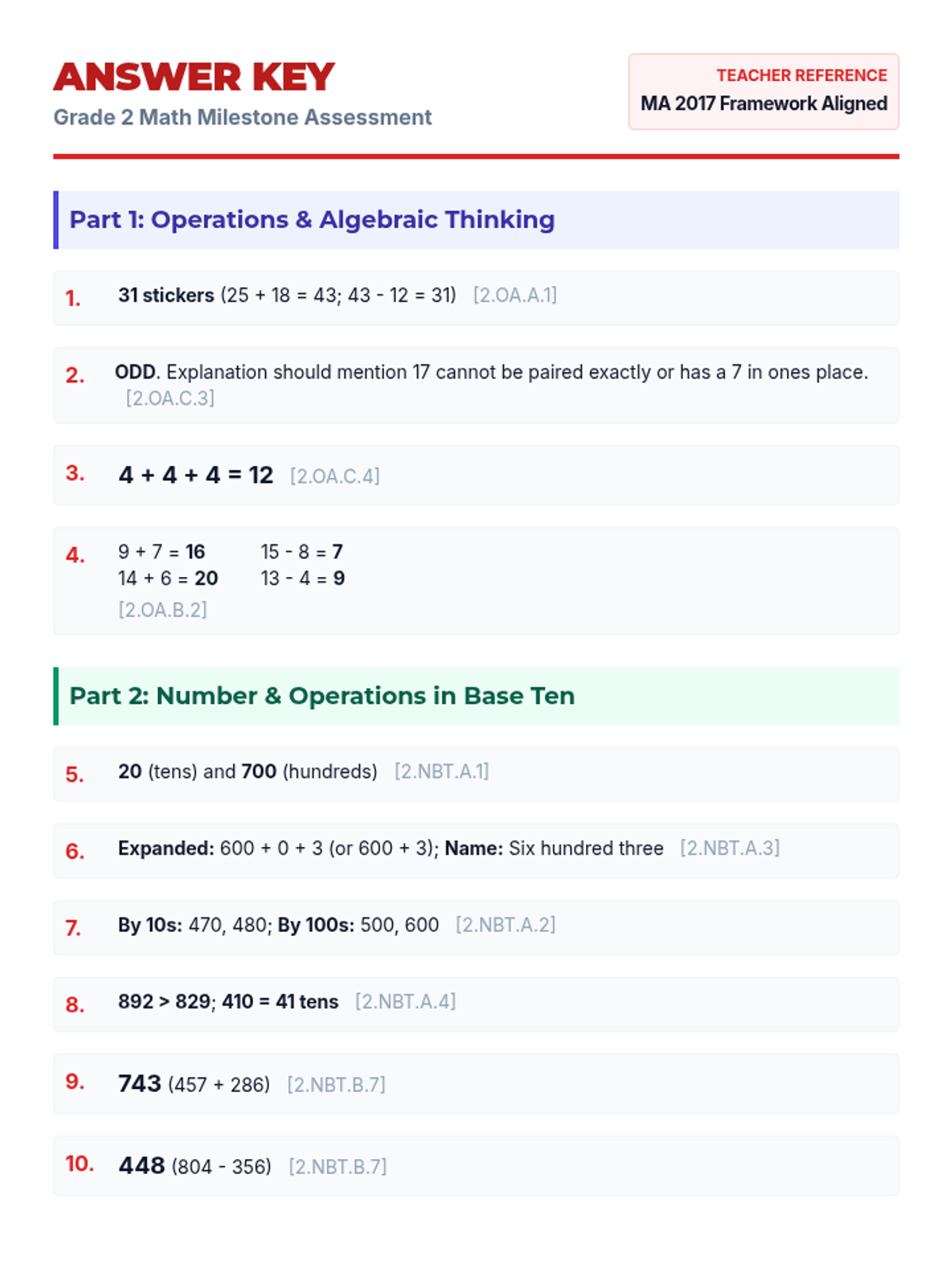
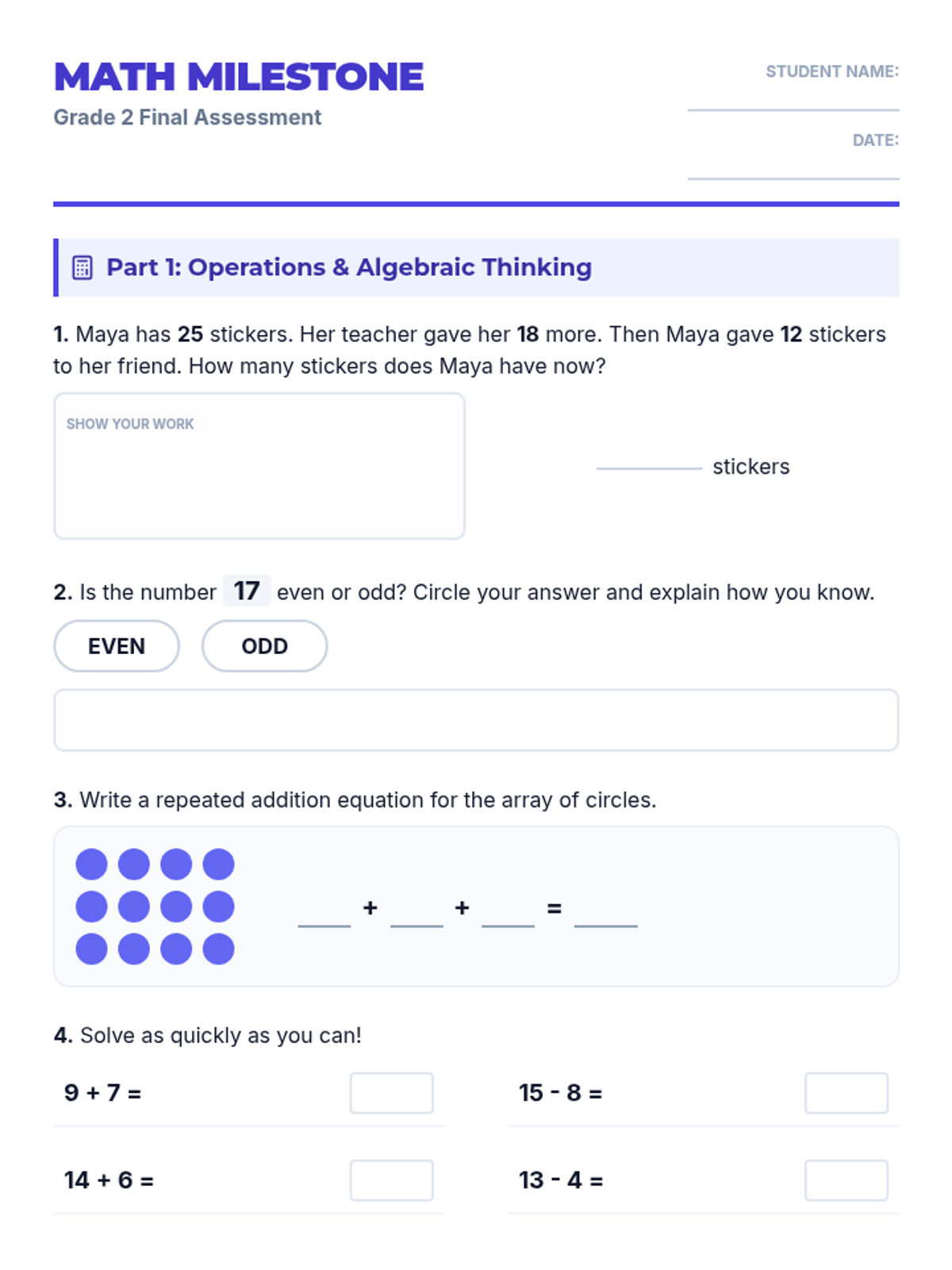
A comprehensive end-of-year assessment for second-grade students, covering all Massachusetts Mathematics Curriculum Framework standards including Operations and Algebraic Thinking, Number and Operations in Base Ten, Measurement and Data, and Geometry.
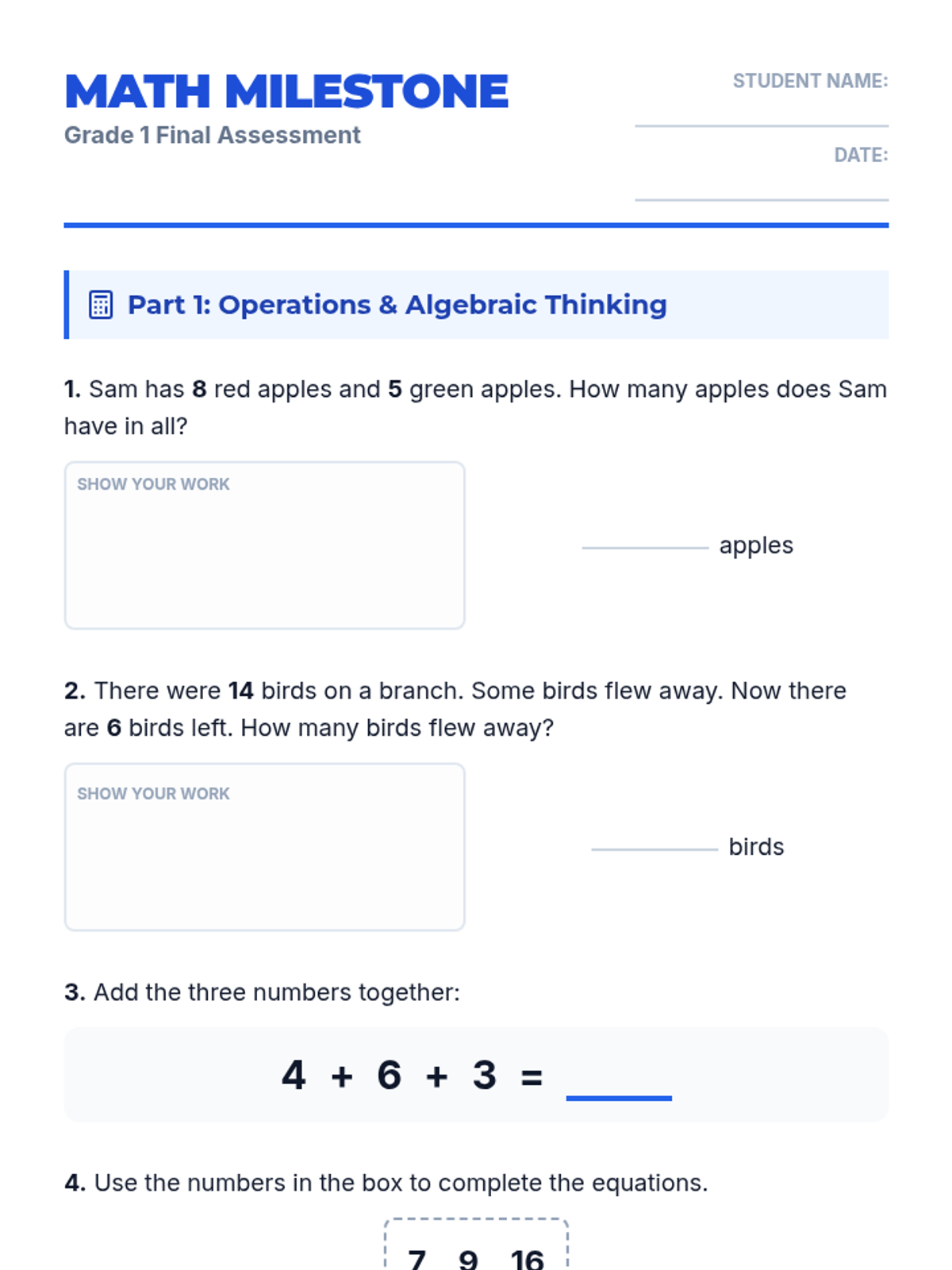
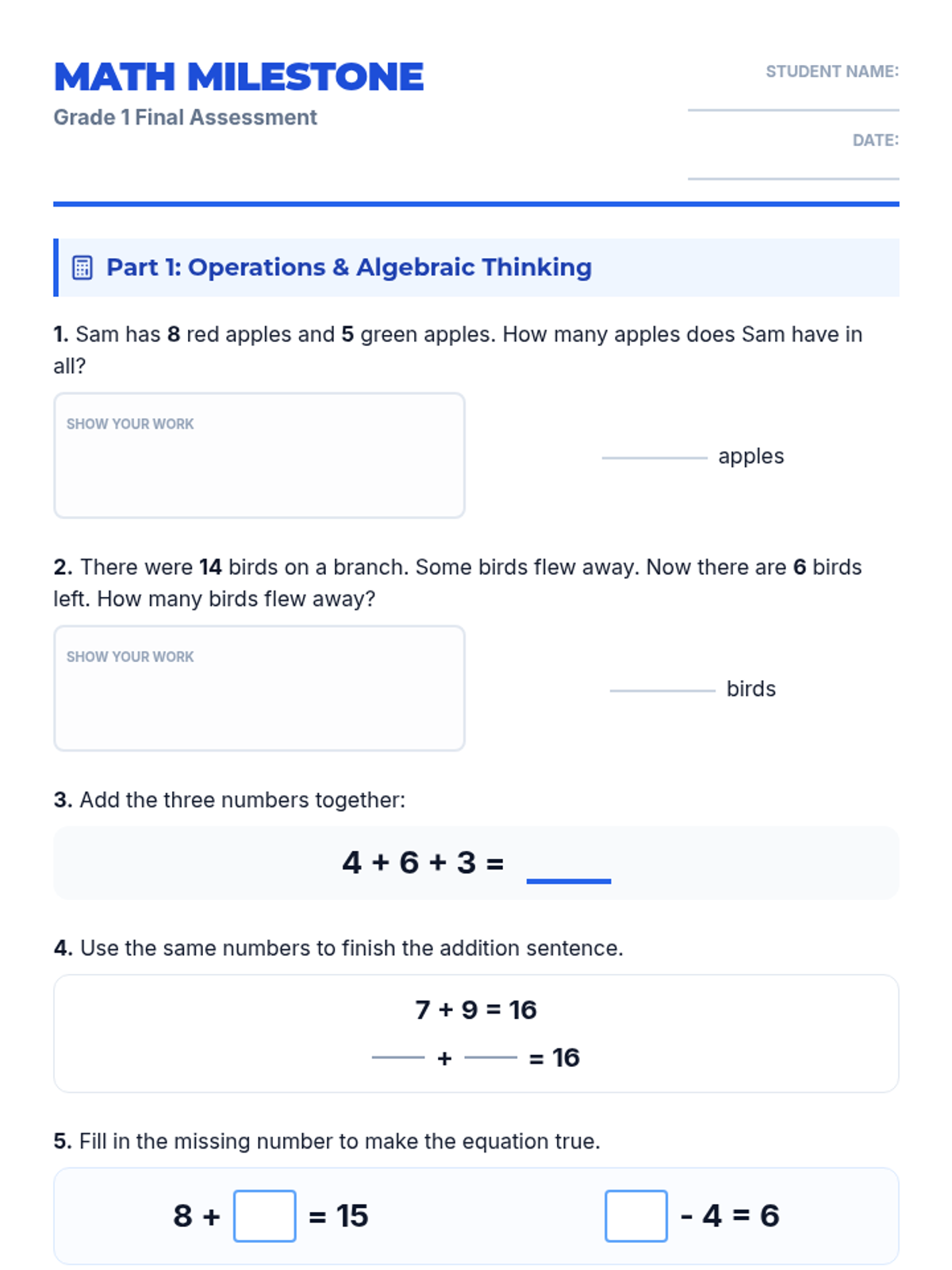
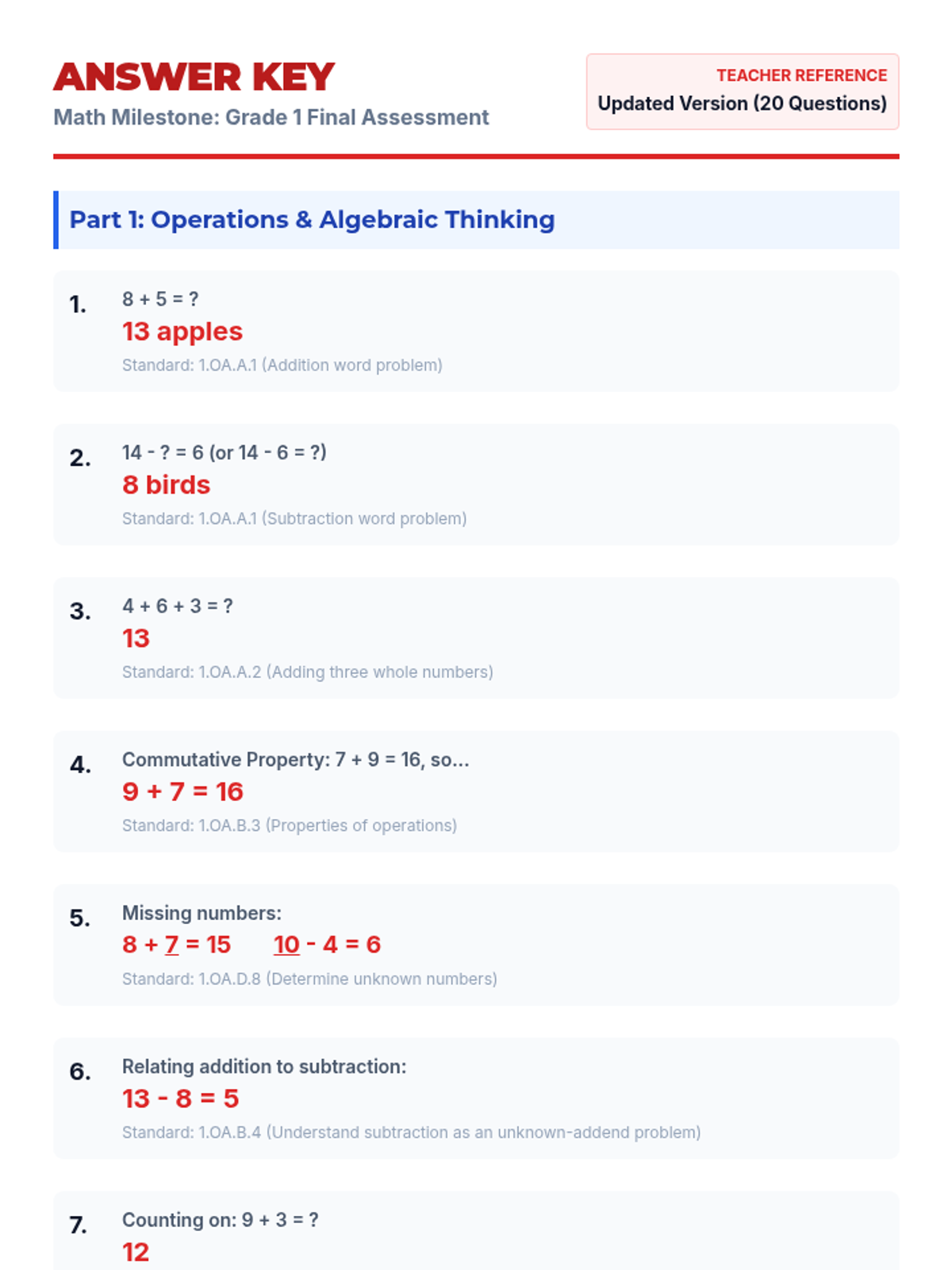
A comprehensive end-of-year assessment for first-grade students, covering all Massachusetts Mathematics Curriculum Framework standards including Operations and Algebraic Thinking, Number and Operations in Base Ten, Measurement and Data, and Geometry.