Geometric classification, measurement of area and volume, and the study of transformations and rigid motions. Builds toward complex proofs, trigonometry for general triangles, and the algebraic representation of conic sections.
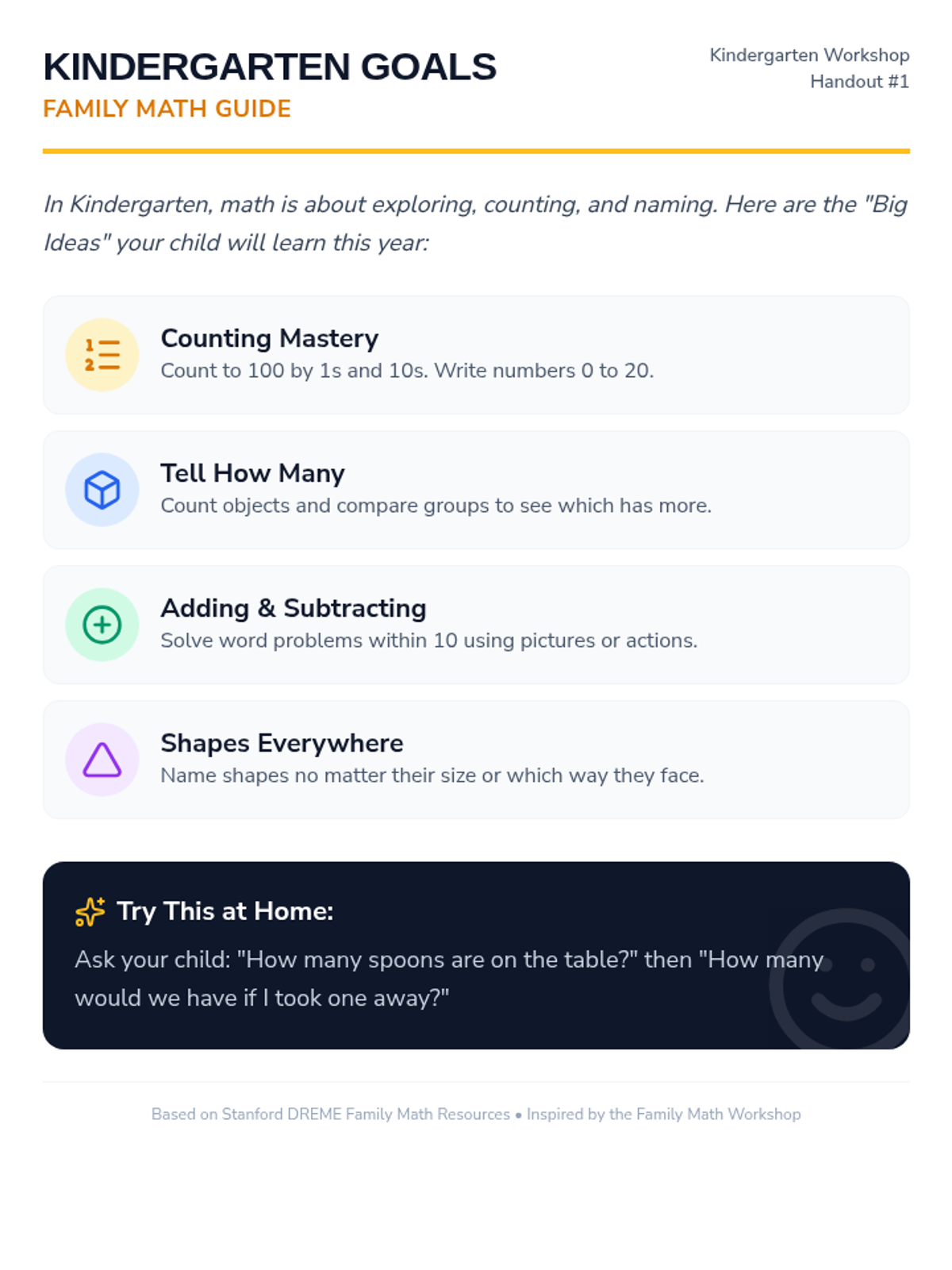
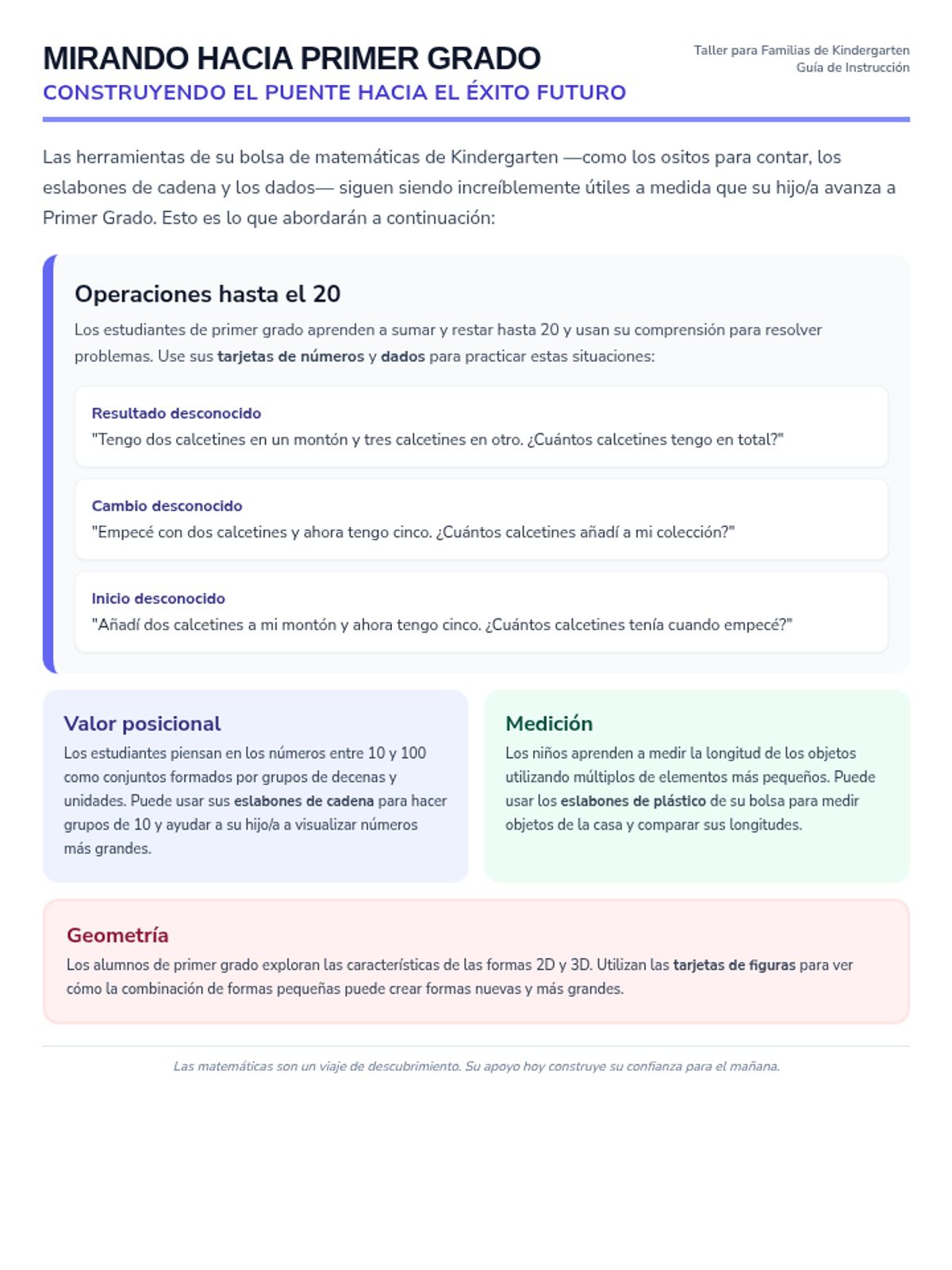
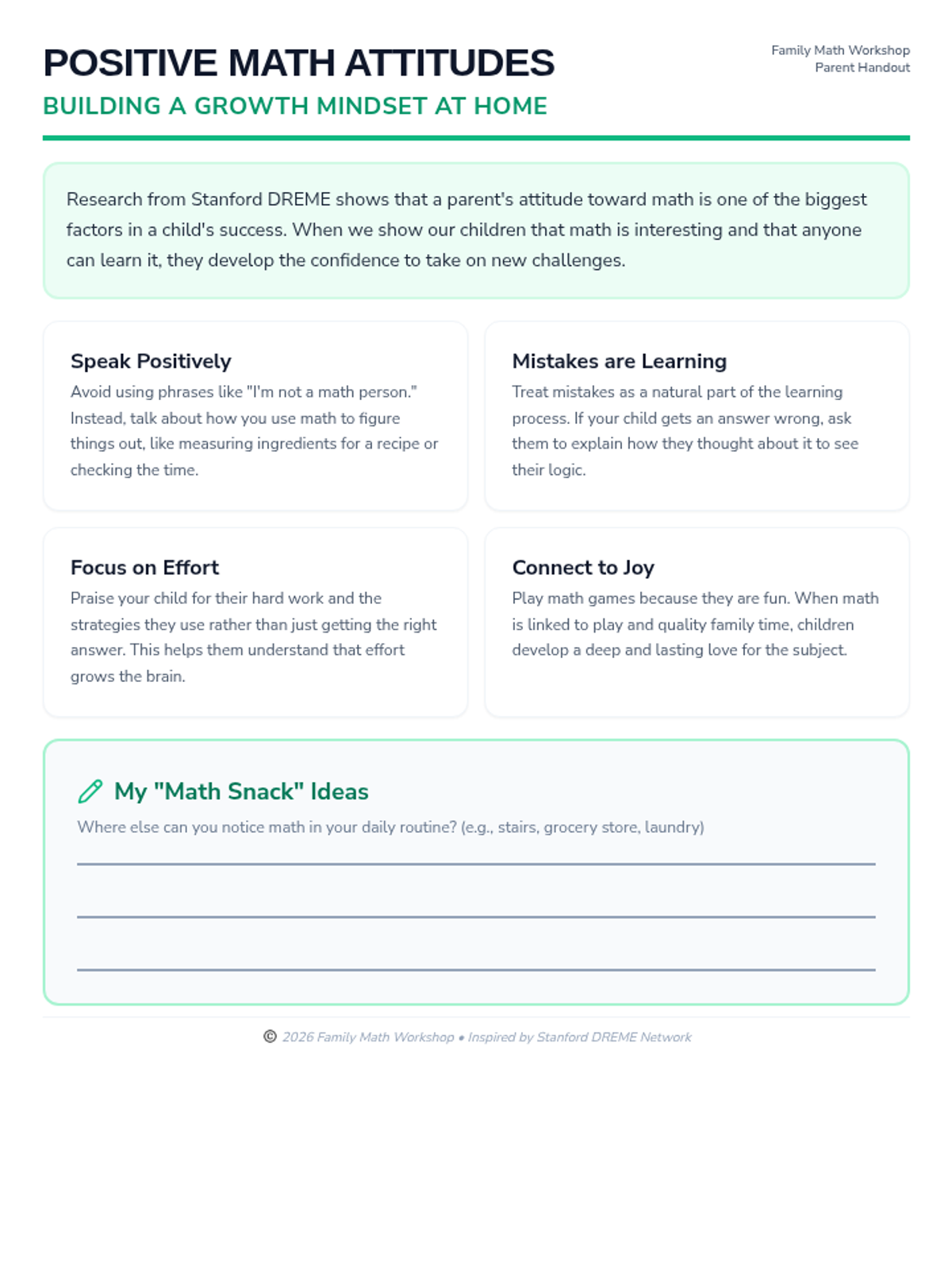
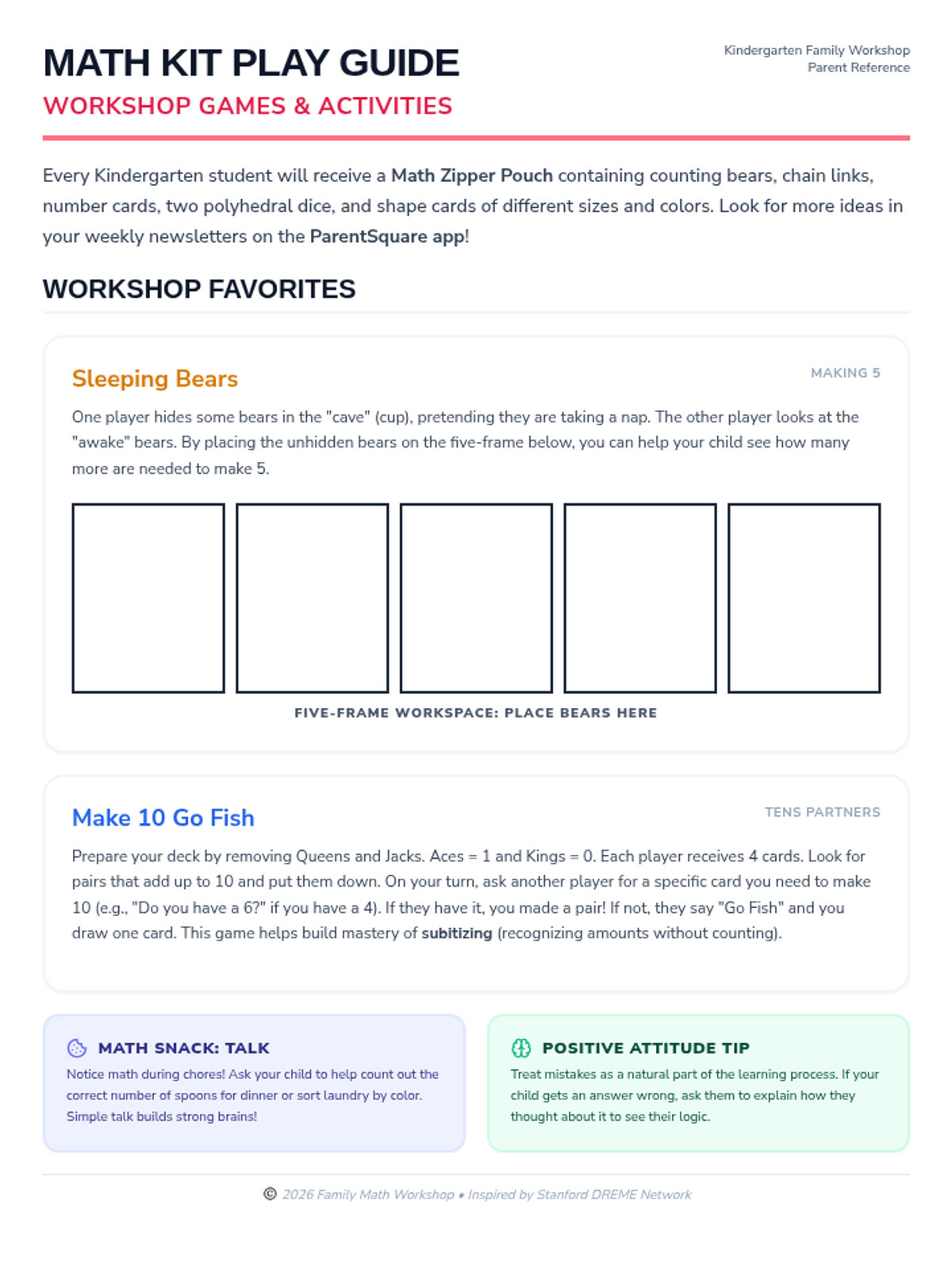
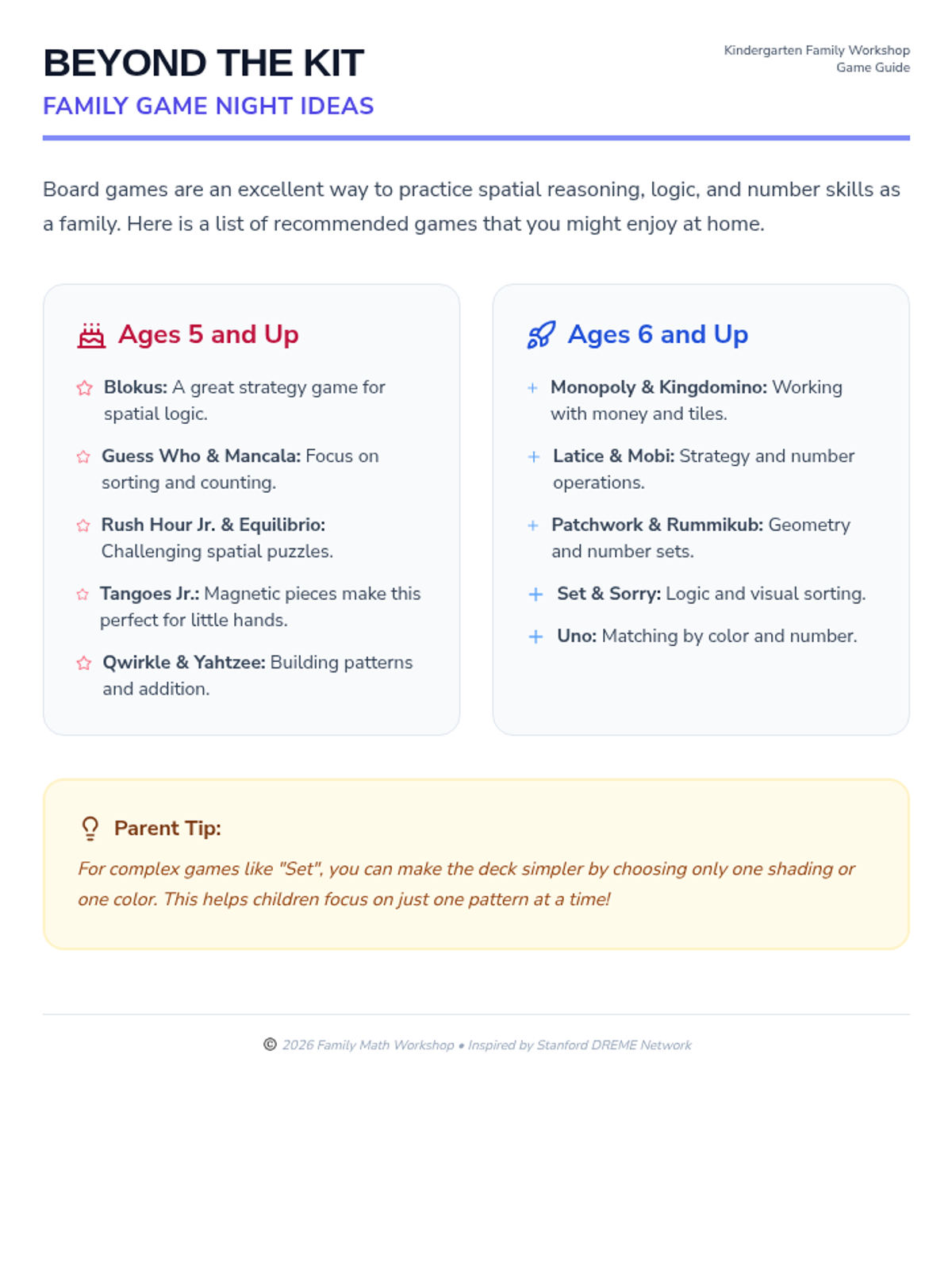
A comprehensive workshop for Kindergarten parents and guardians focused on building positive math attitudes and supporting math learning at home through play and daily routines. Based on Stanford DREME research.
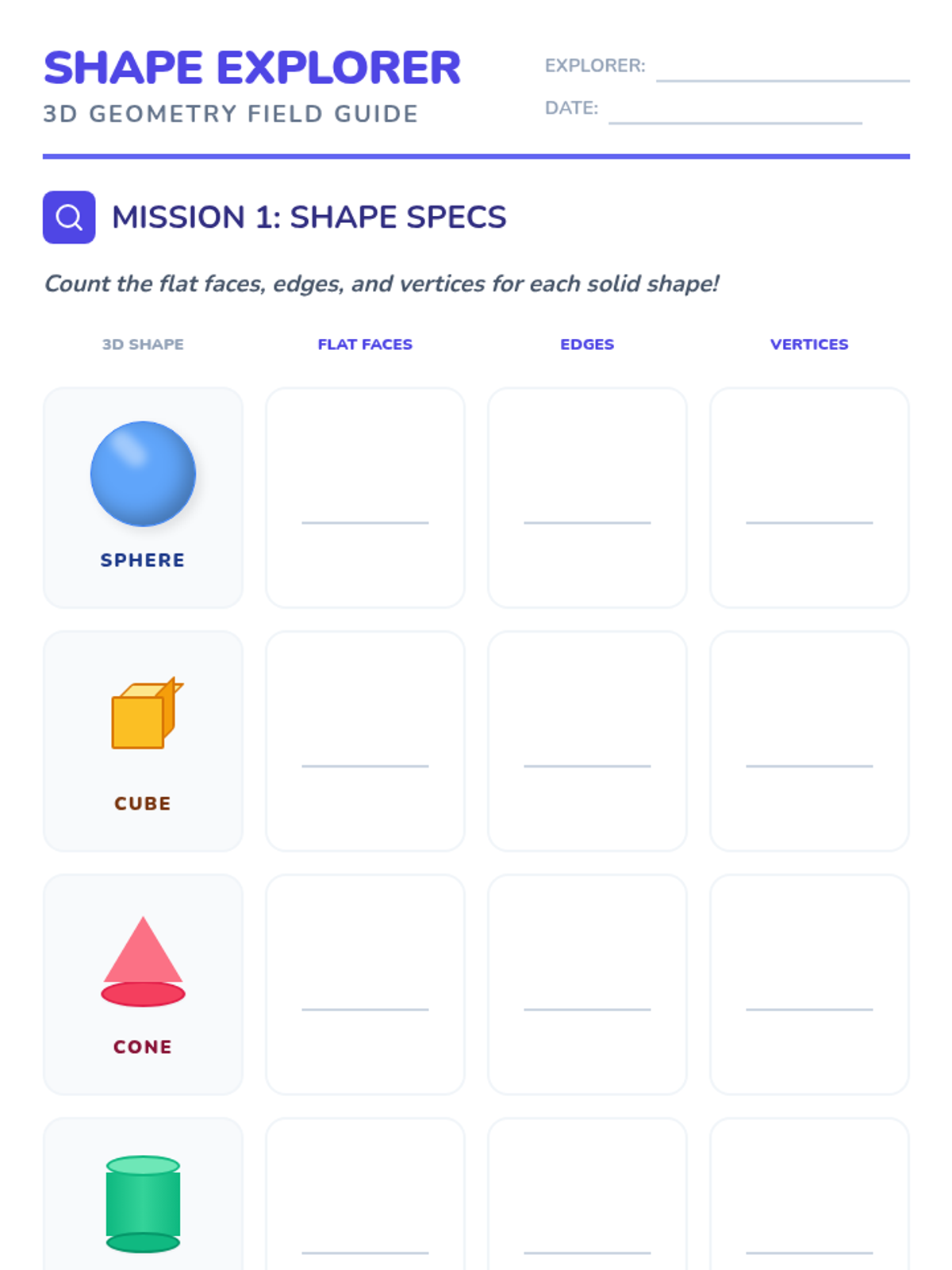
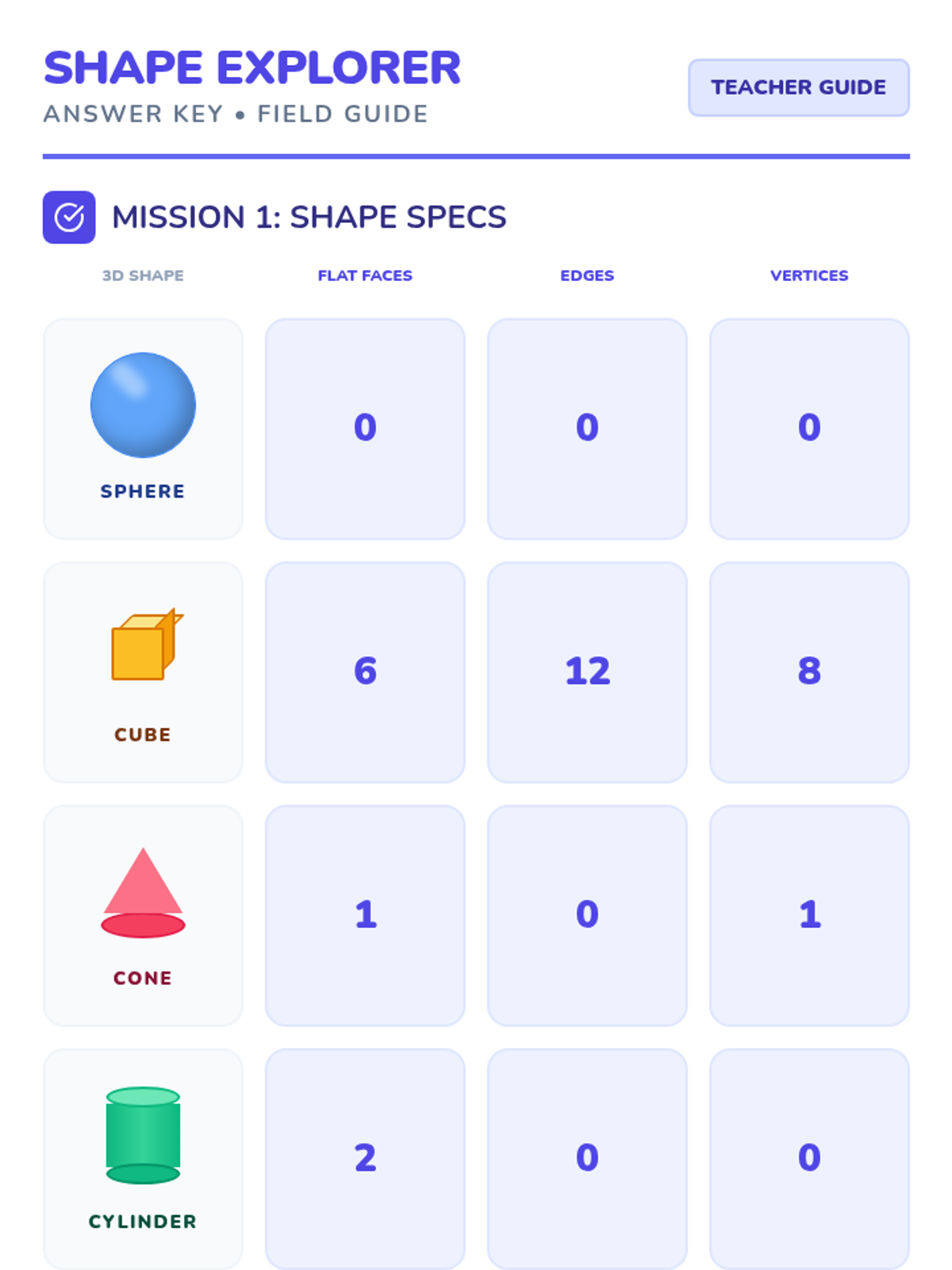
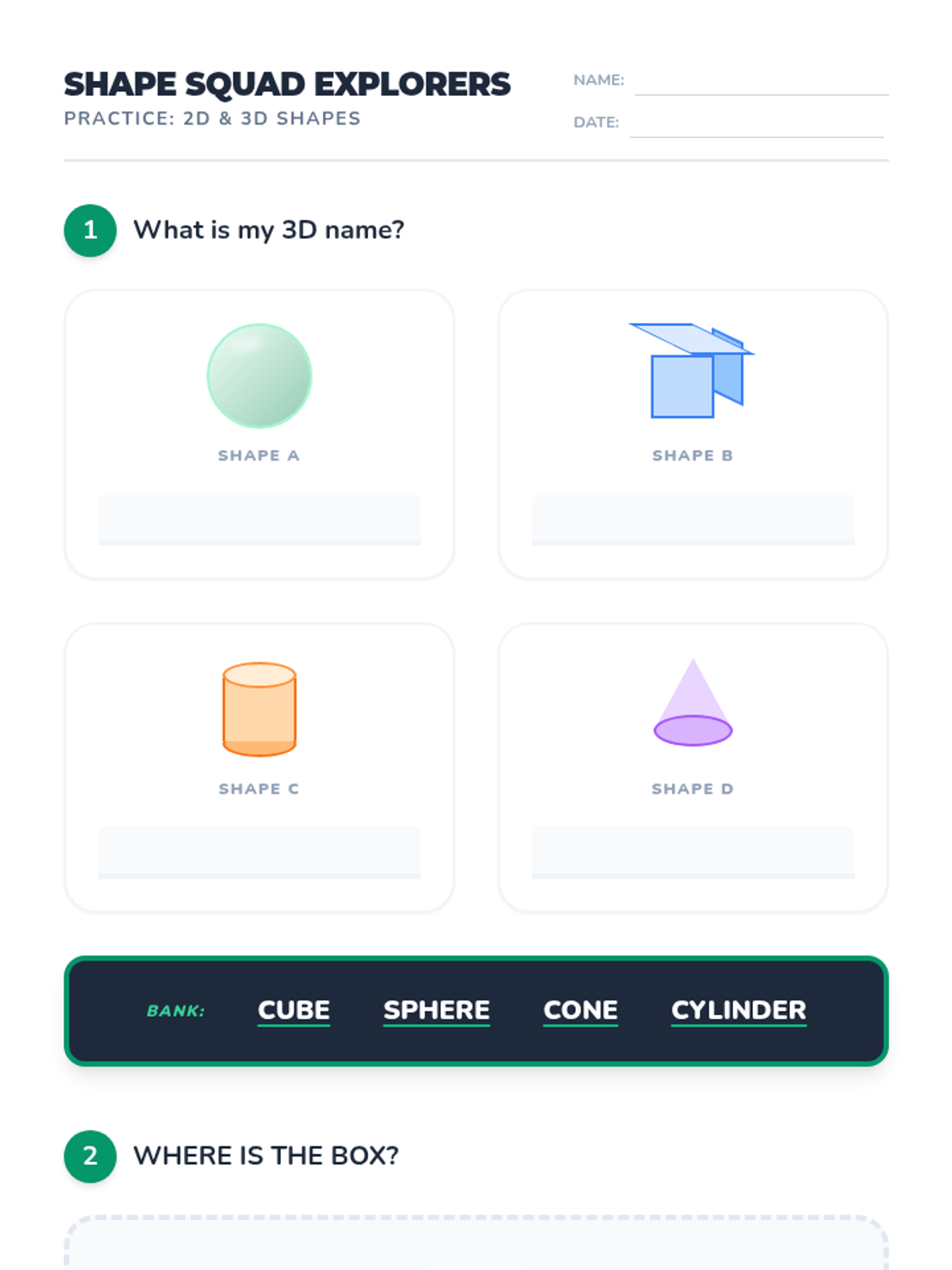
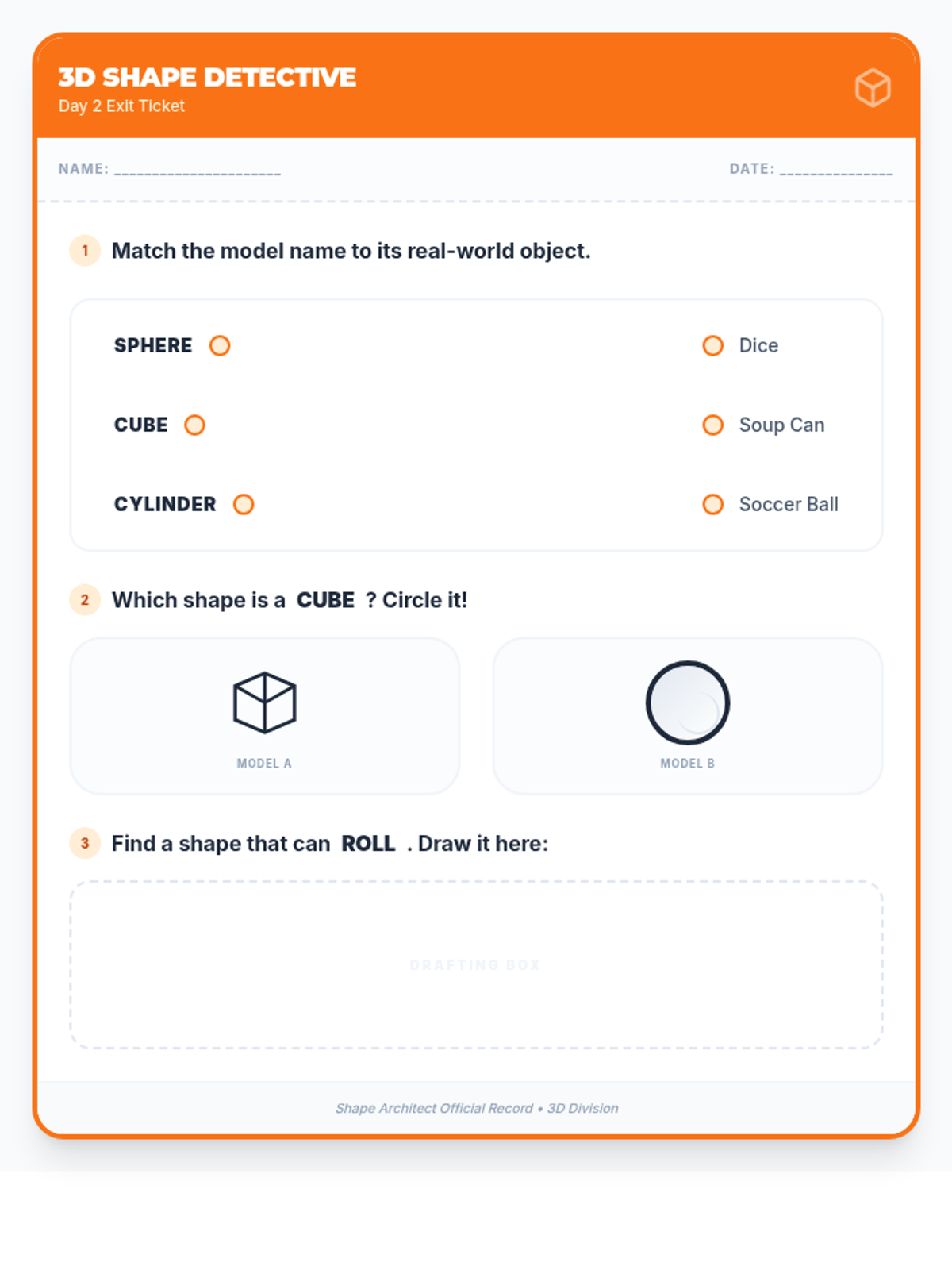
A fun, hands-on introduction to 3D shapes where students explore the properties of spheres, cubes, cones, and cylinders through a 'Shape Expedition' theme. Students identify faces, edges, and vertices and learn how to decompose composite structures into their component shapes.
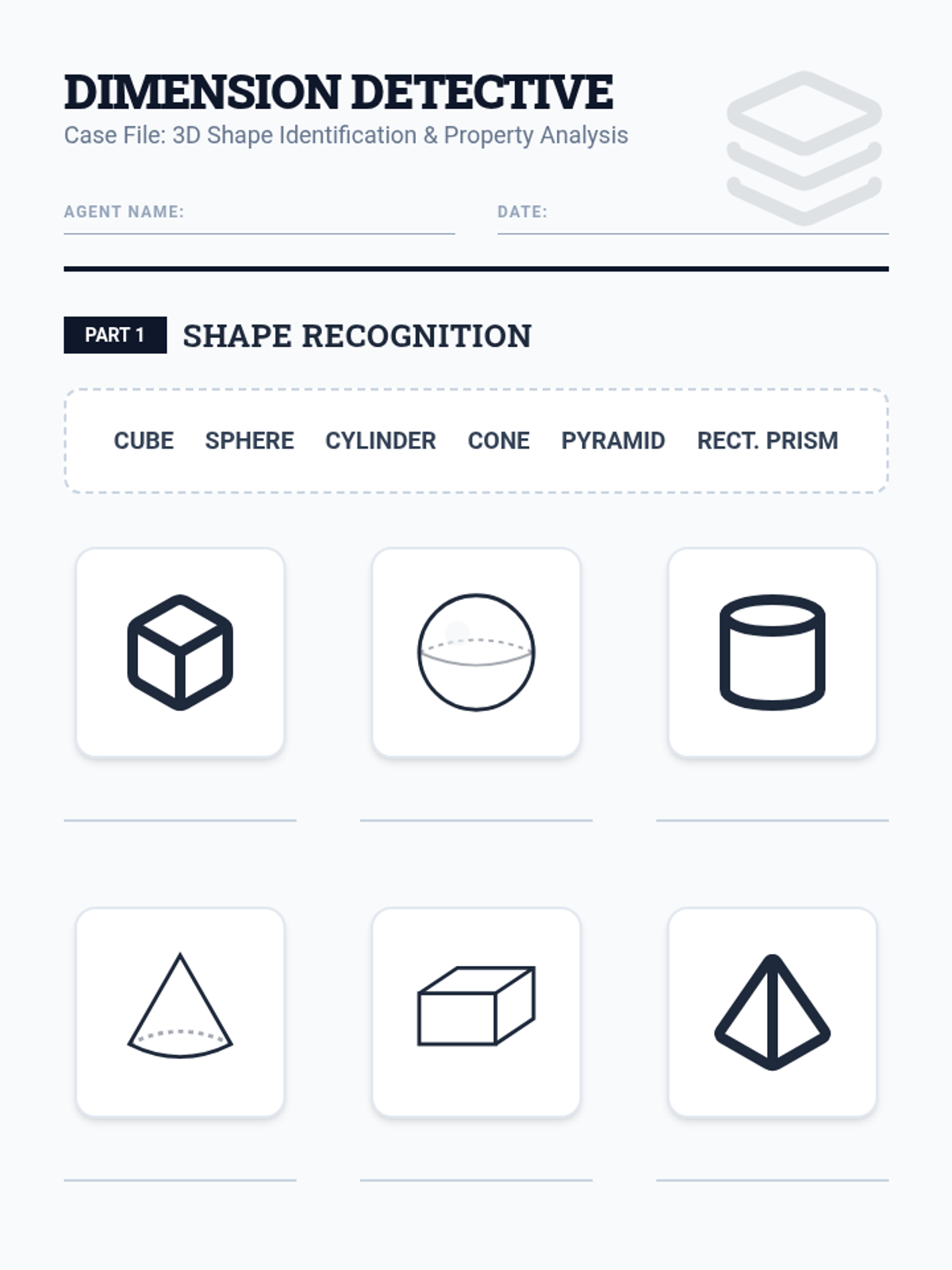
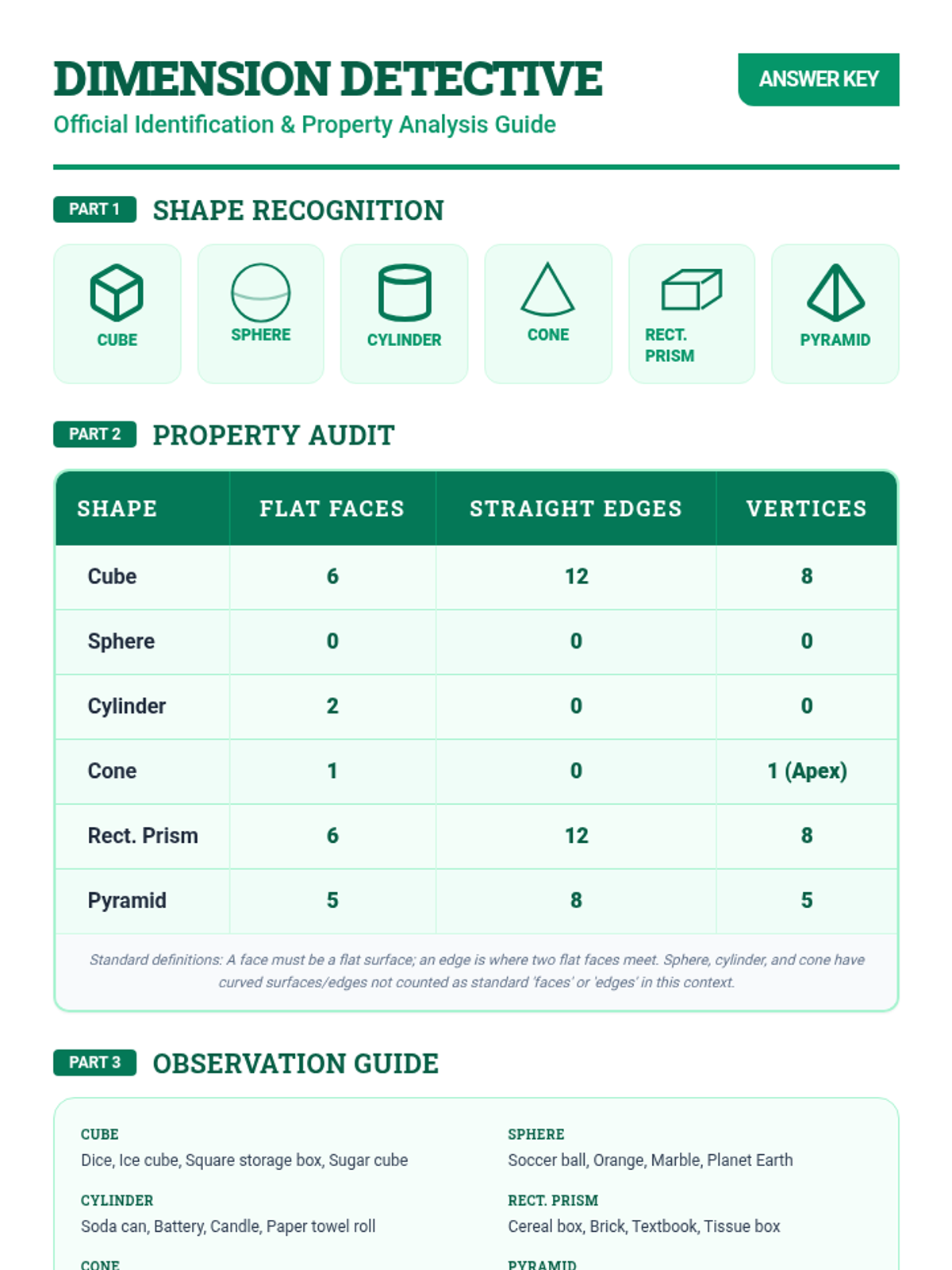
A comprehensive introduction to 3D geometric shapes including cubes, spheres, rectangular prisms, cones, pyramids, and cylinders. Students will learn to identify these shapes, count their attributes (faces, edges, vertices), and find them in the real world.
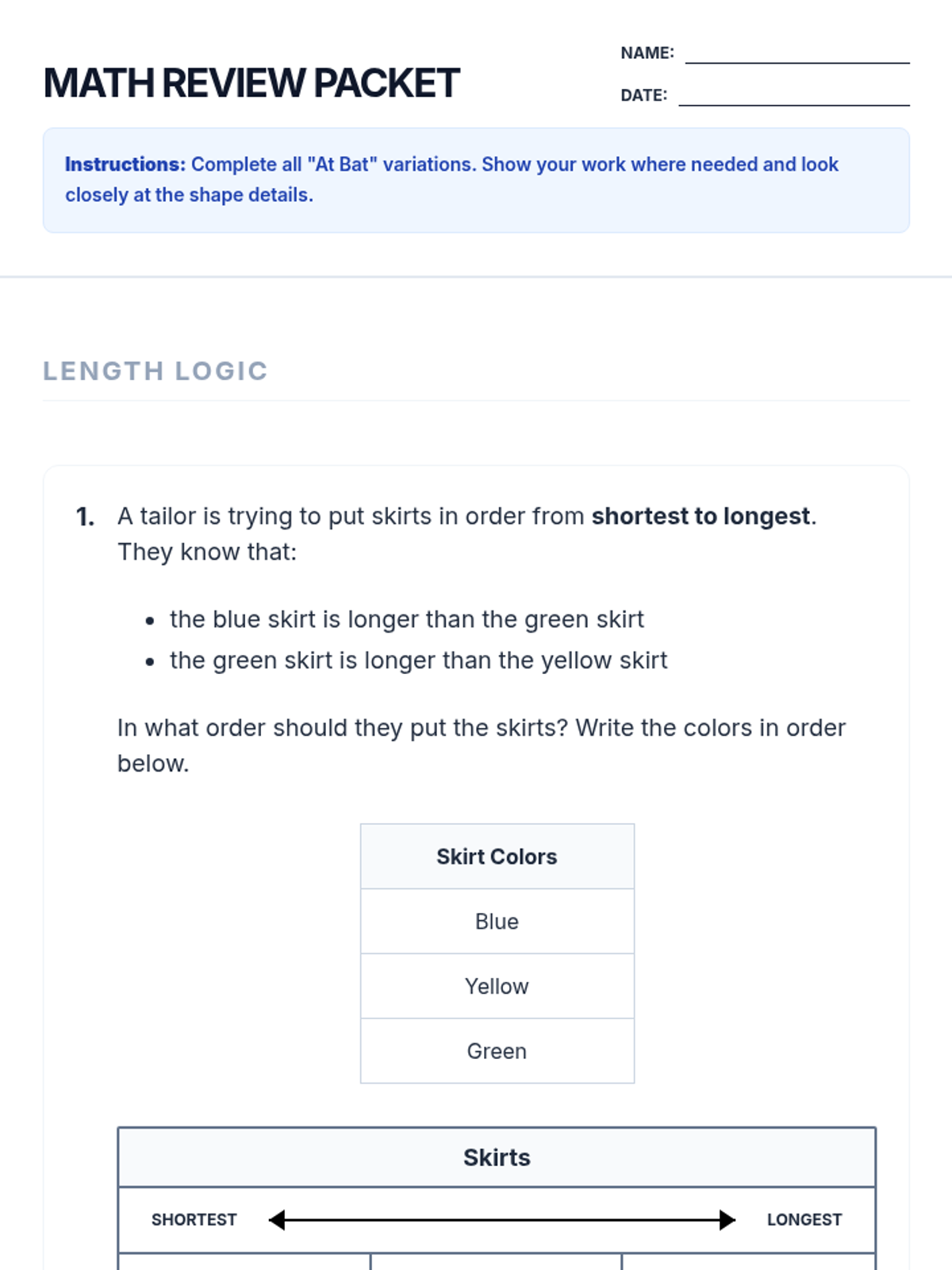
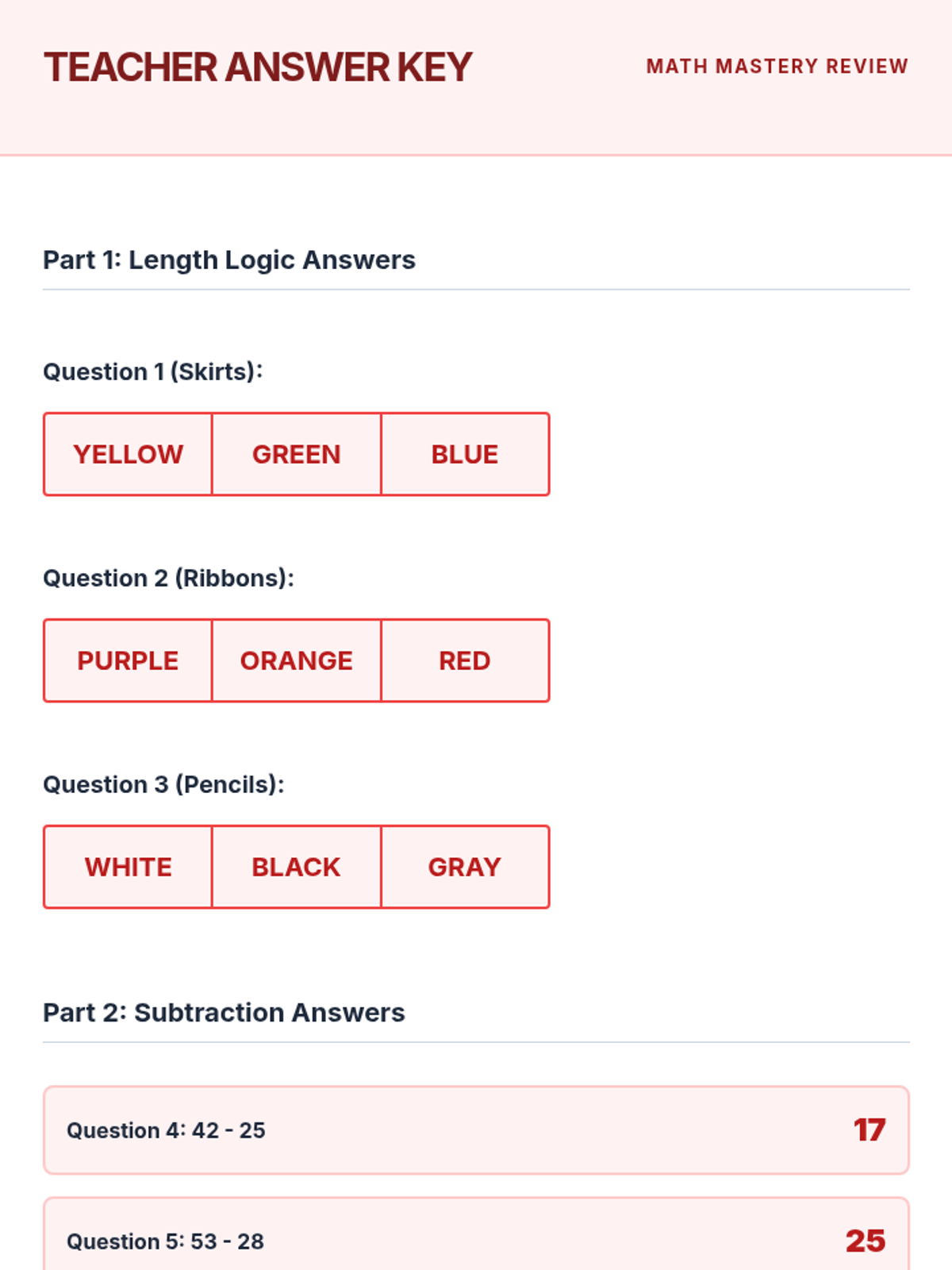
A comprehensive math review lesson designed to reinforce key elementary math skills including logical ordering, 2-digit subtraction, geometric attributes, and equal parts/fractions. This lesson uses a repeated "at-bat" structure to build mastery through multiple variations of the same problem format.
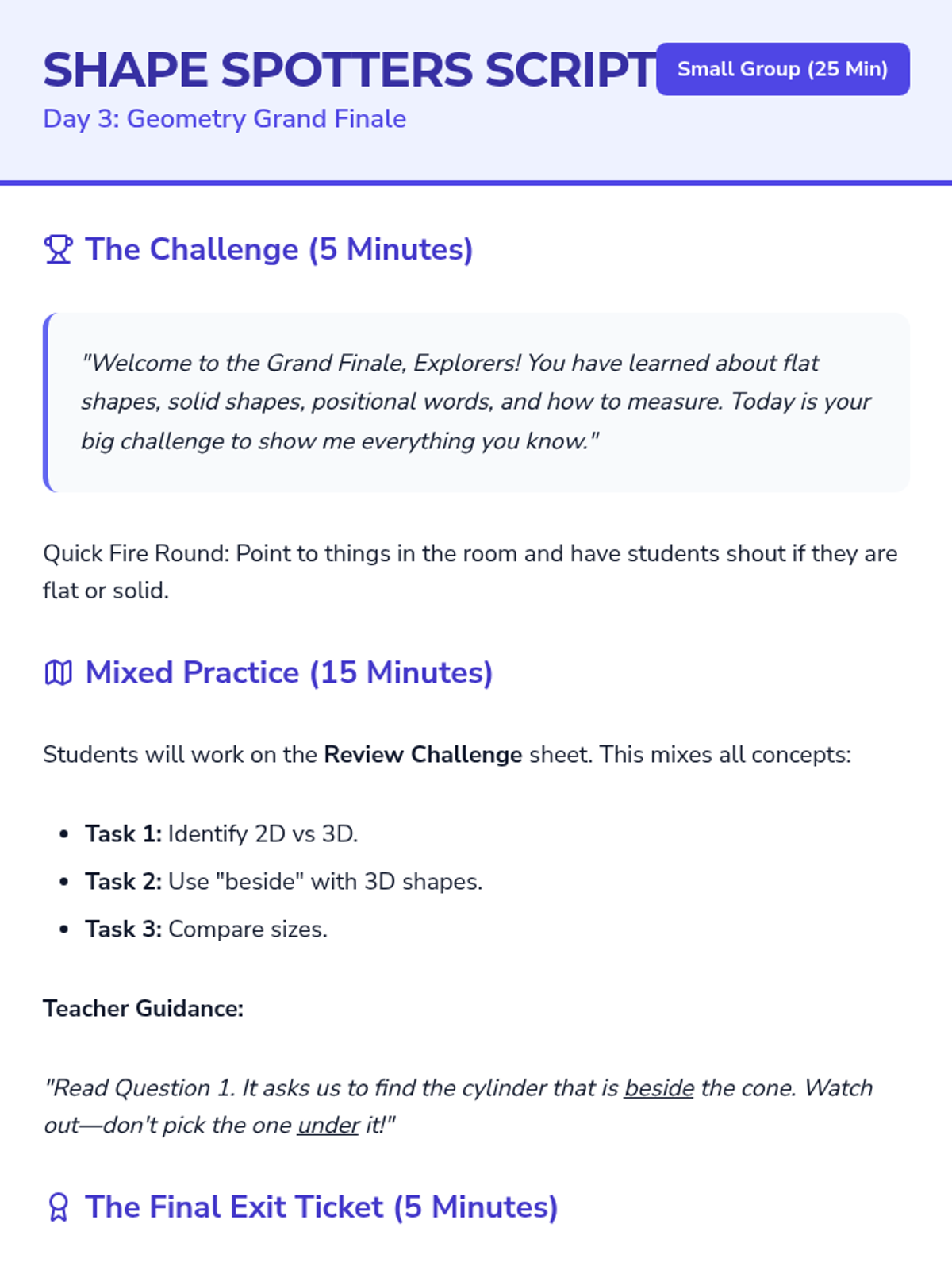
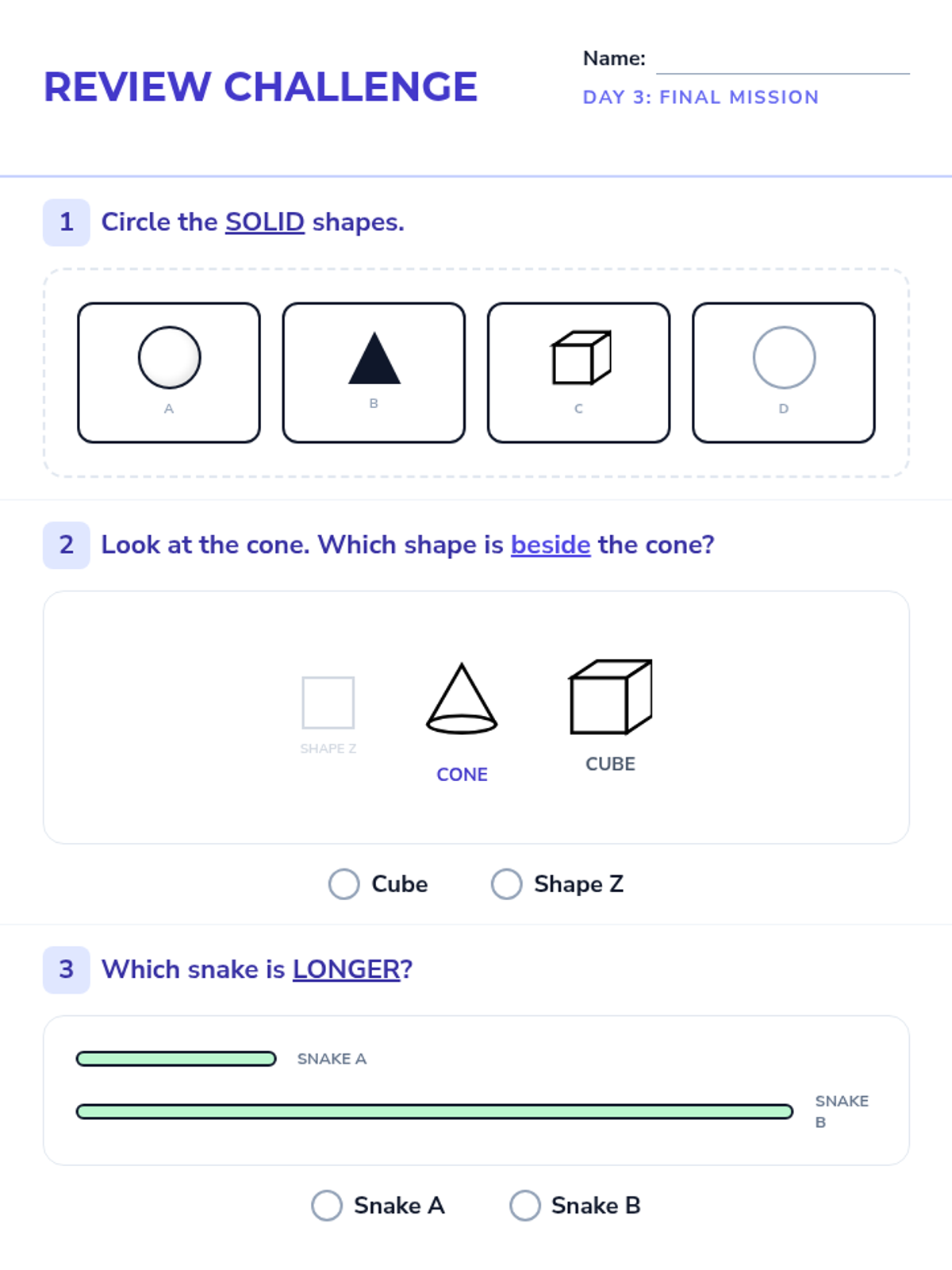
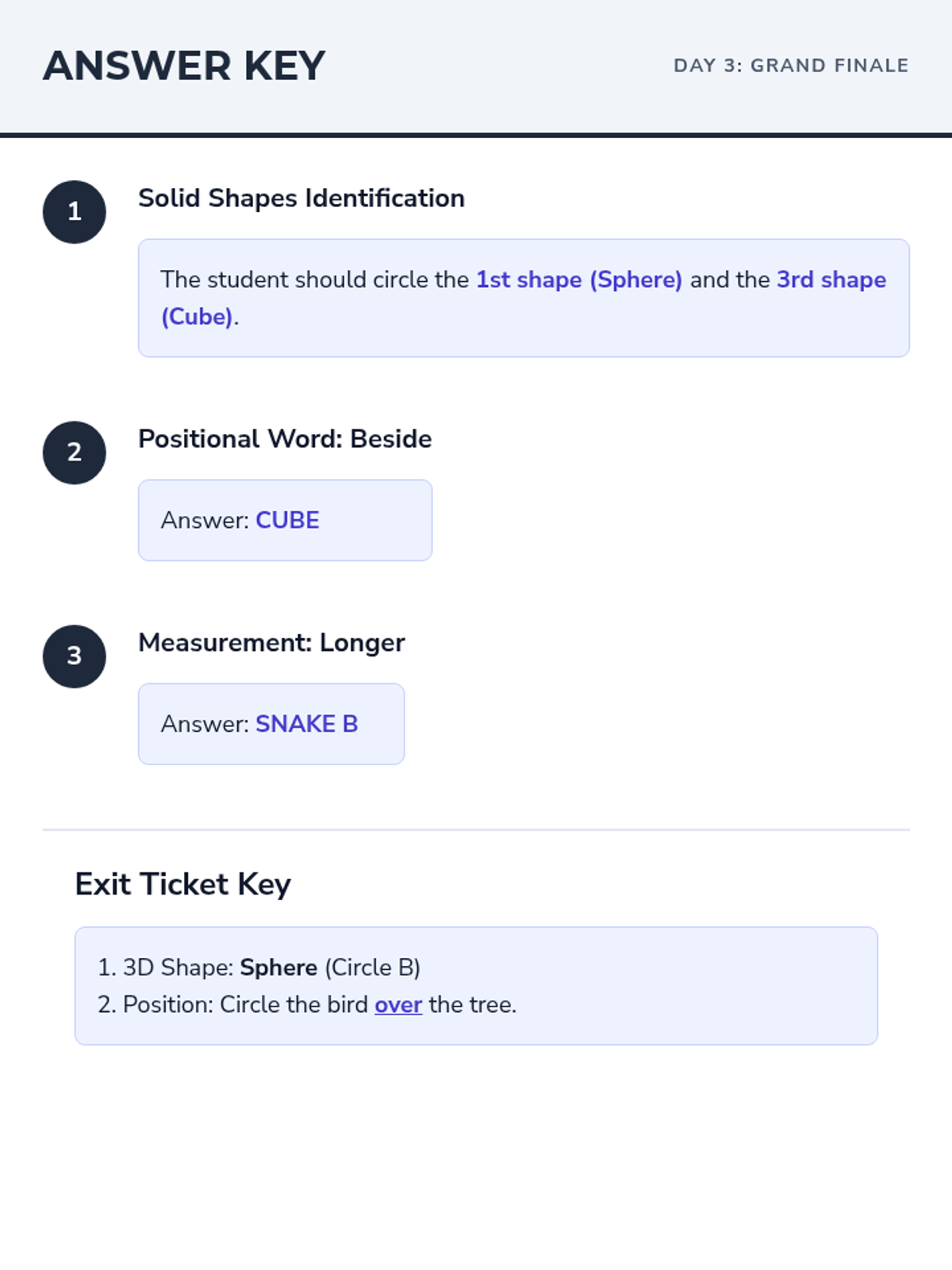
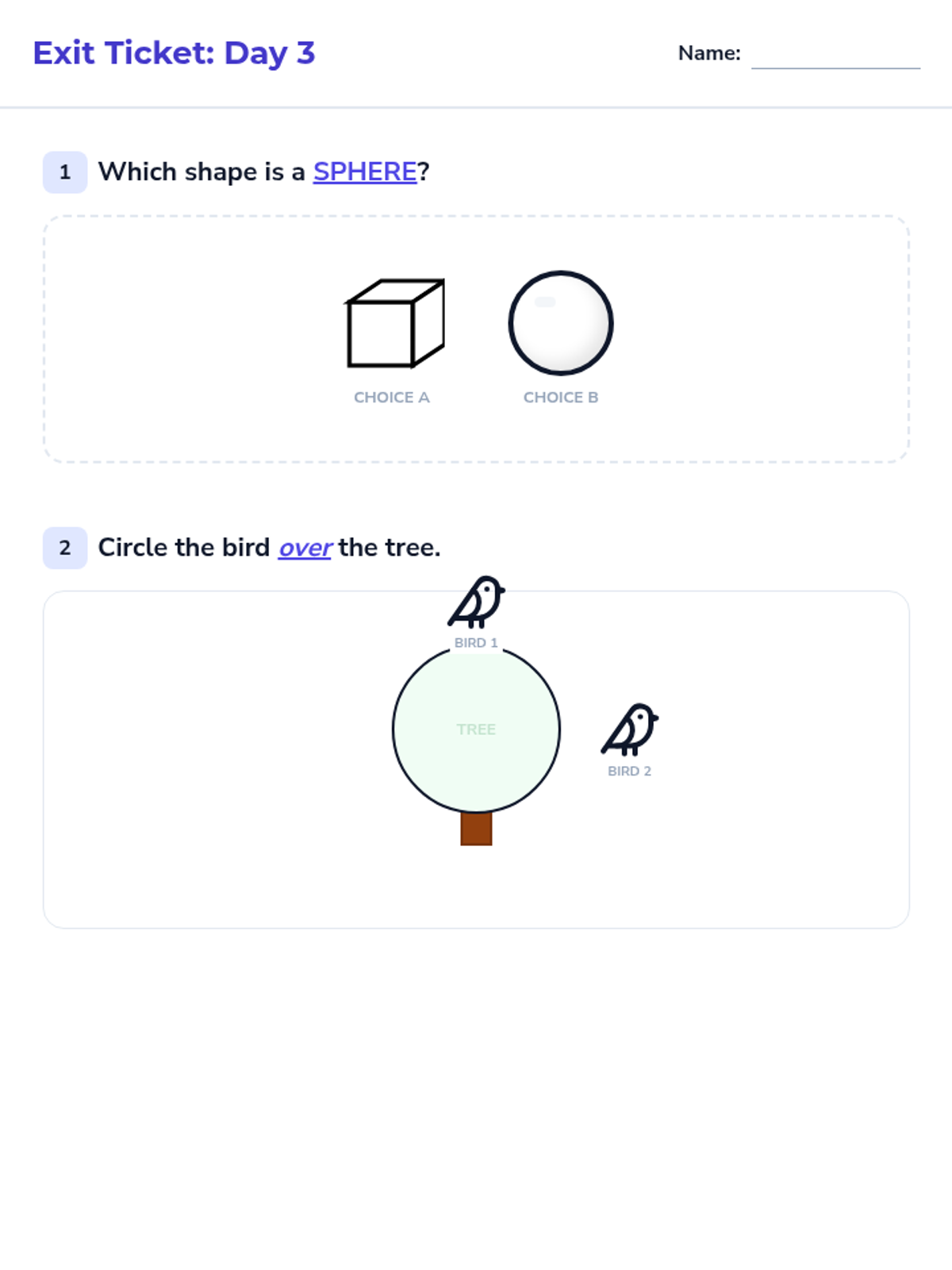
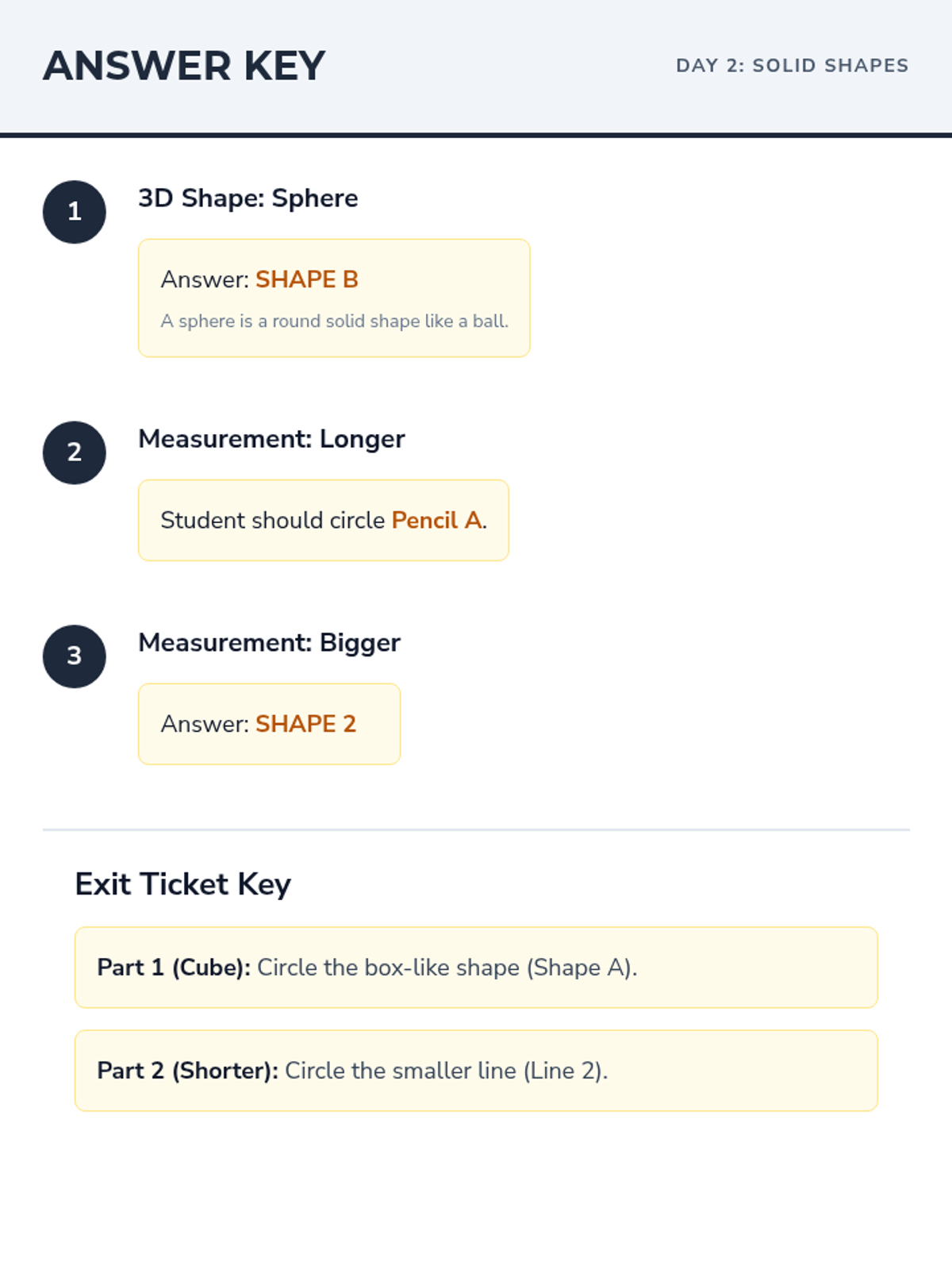
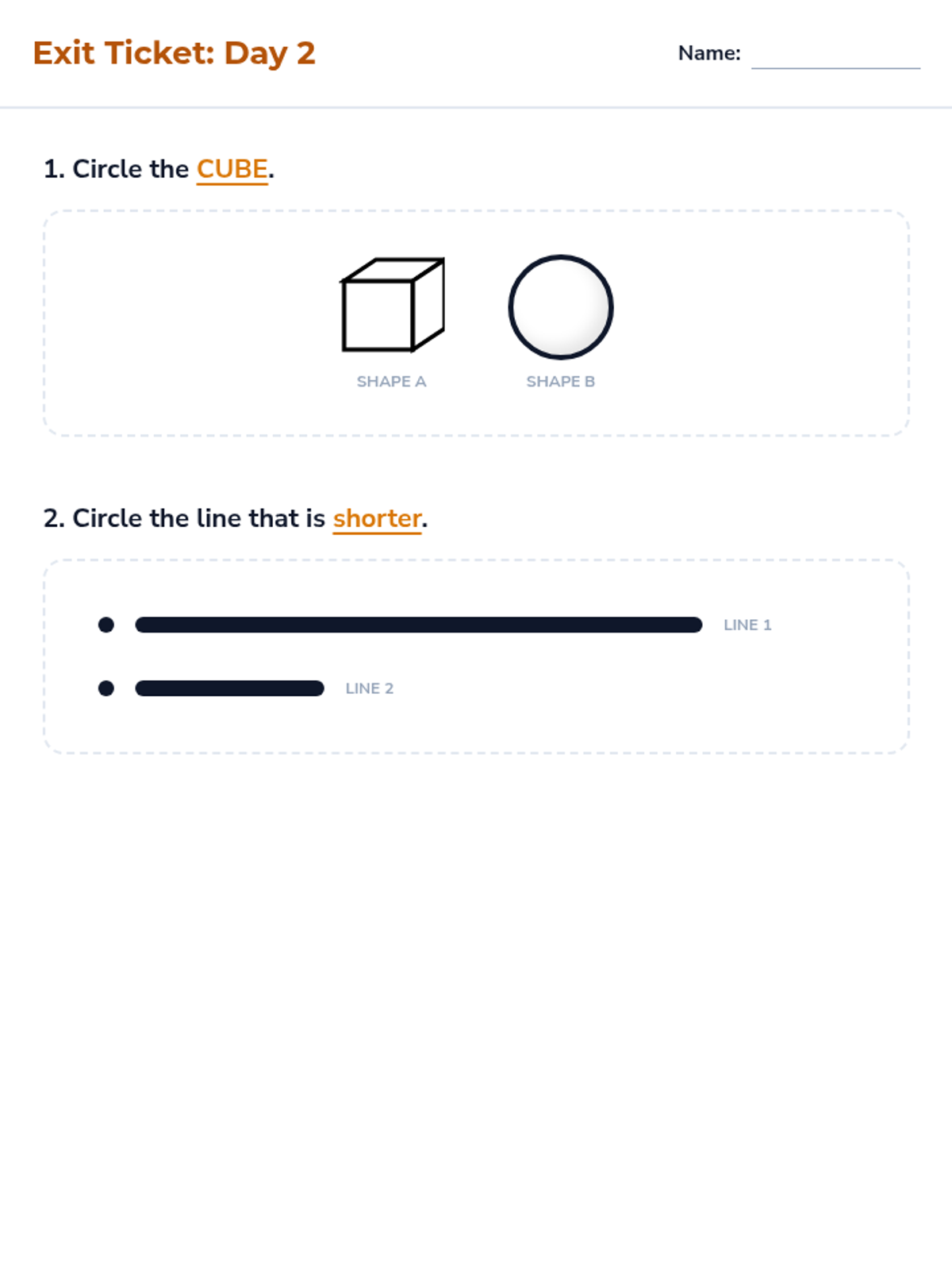
A cumulative review of 2D/3D shapes, positional words, and measurement comparisons to assess mastery.
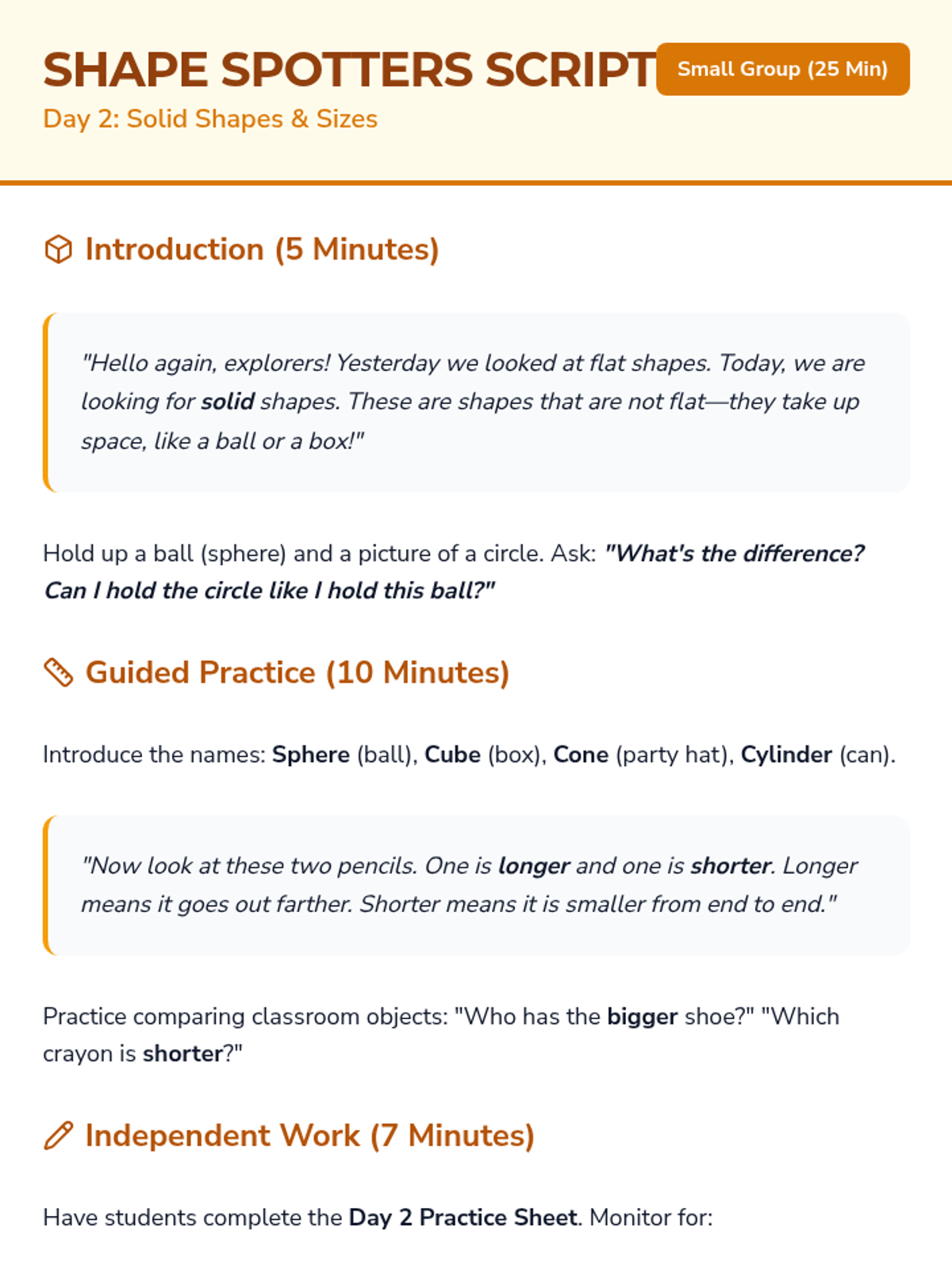
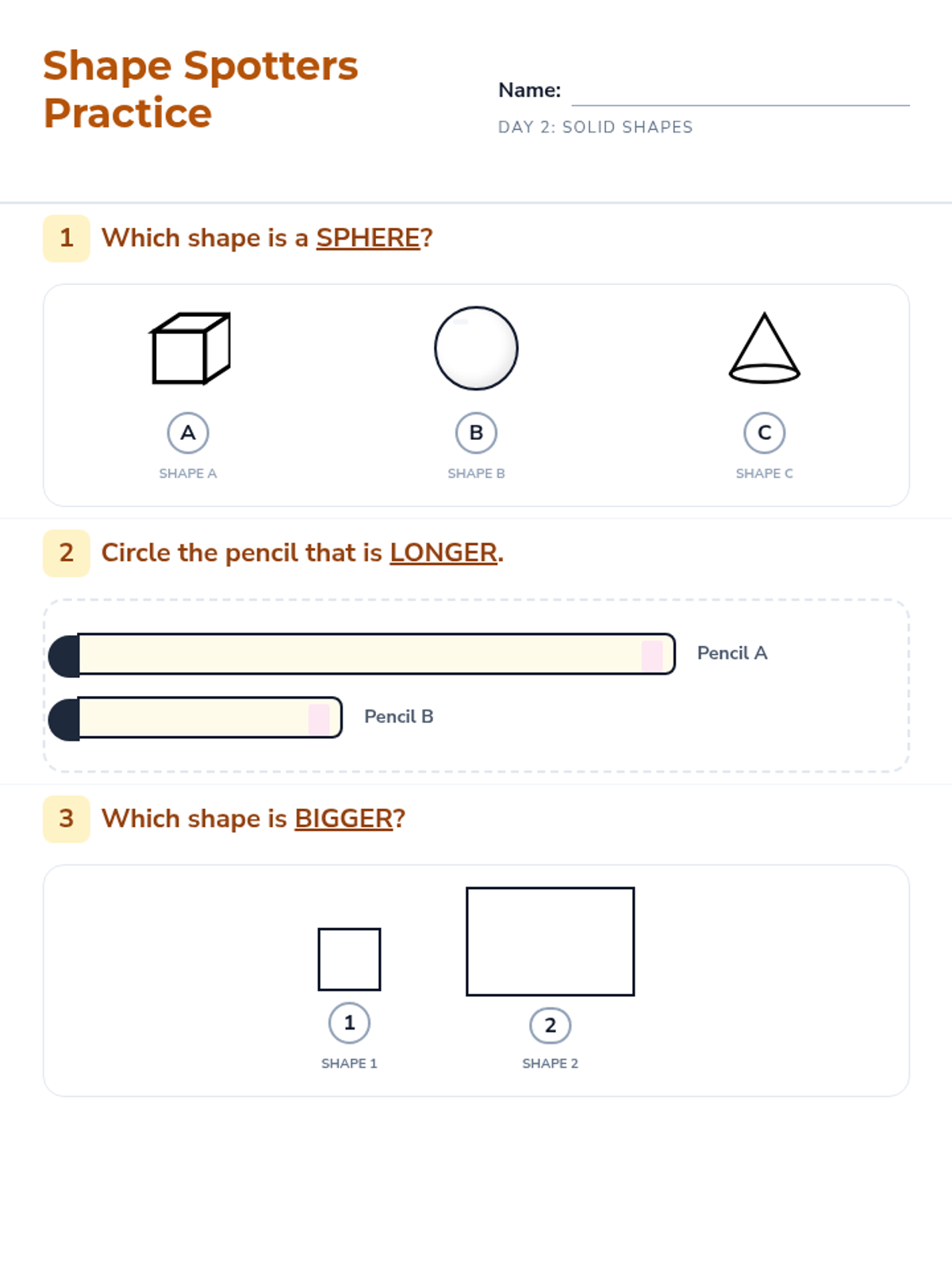
Students identify 3D shapes (cube, sphere, cone, cylinder) and compare objects based on size and length.
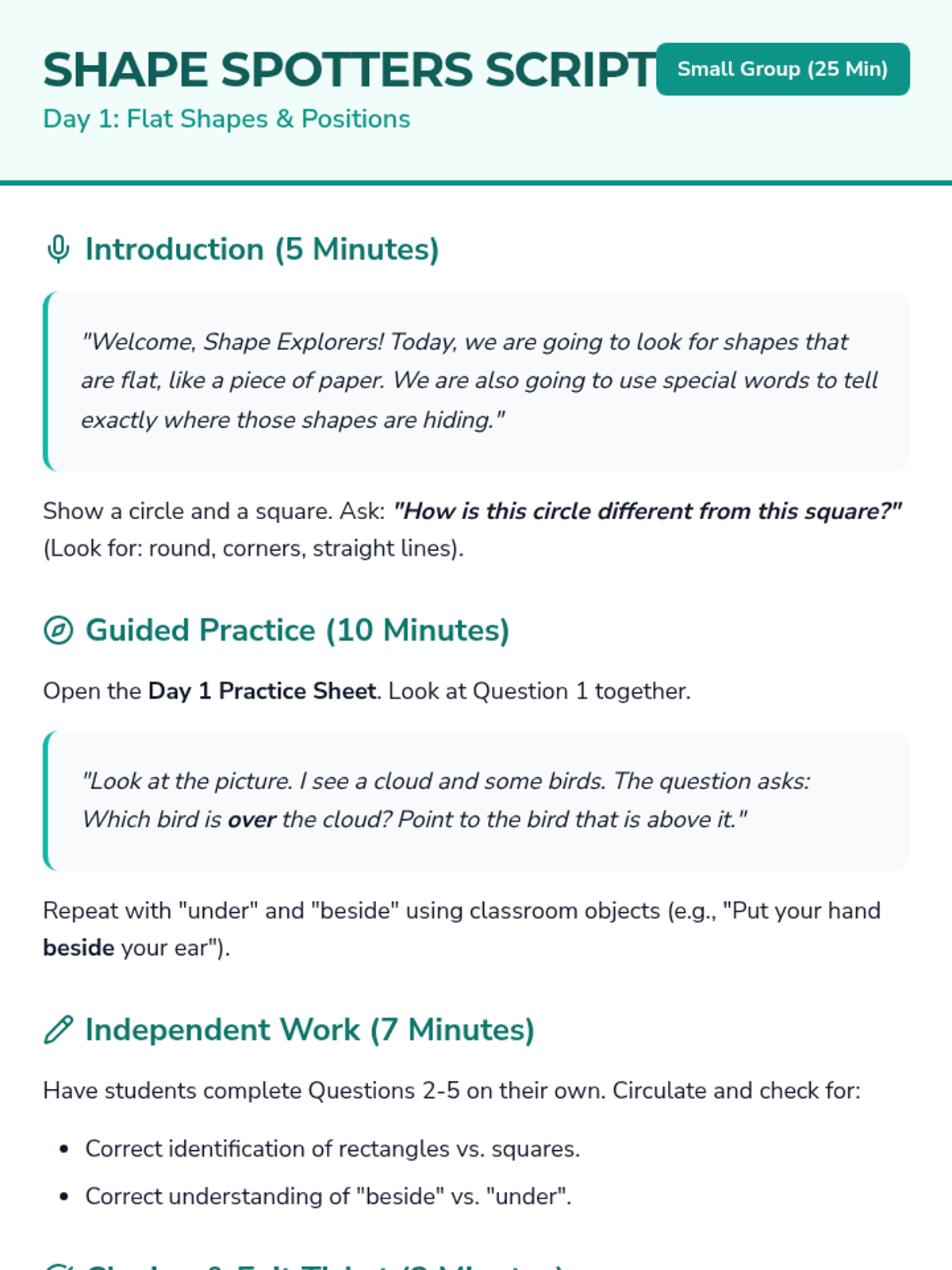
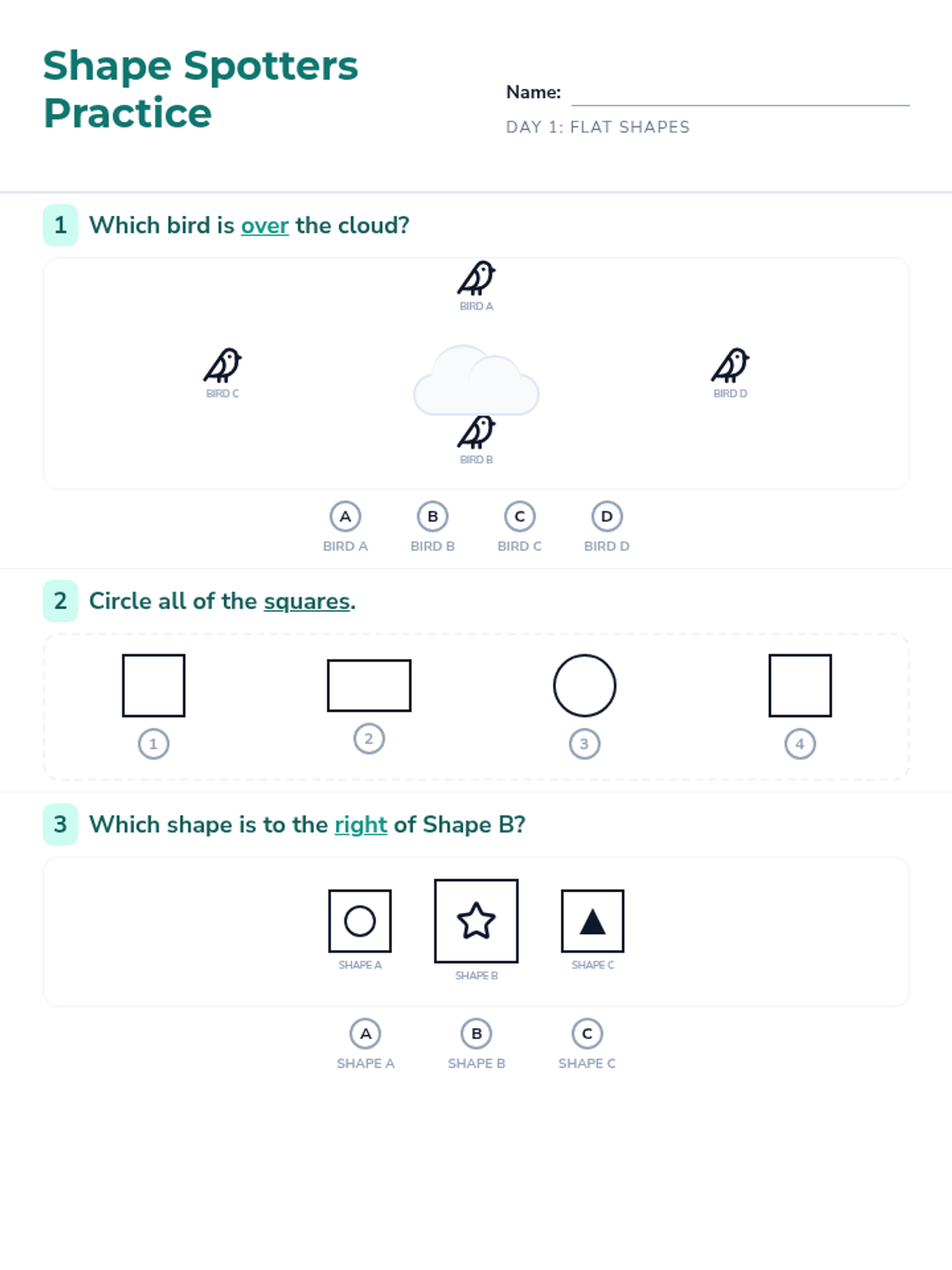
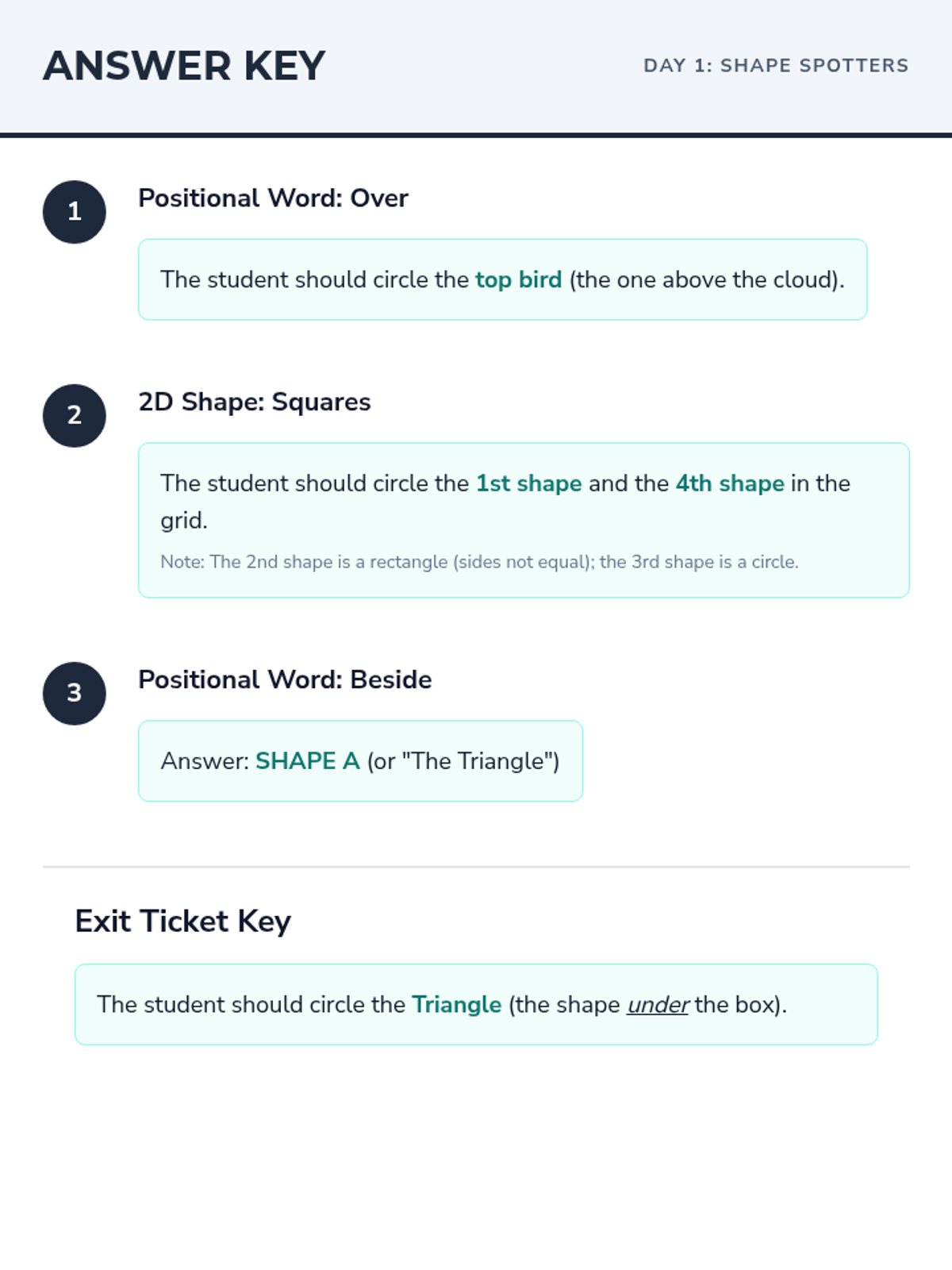
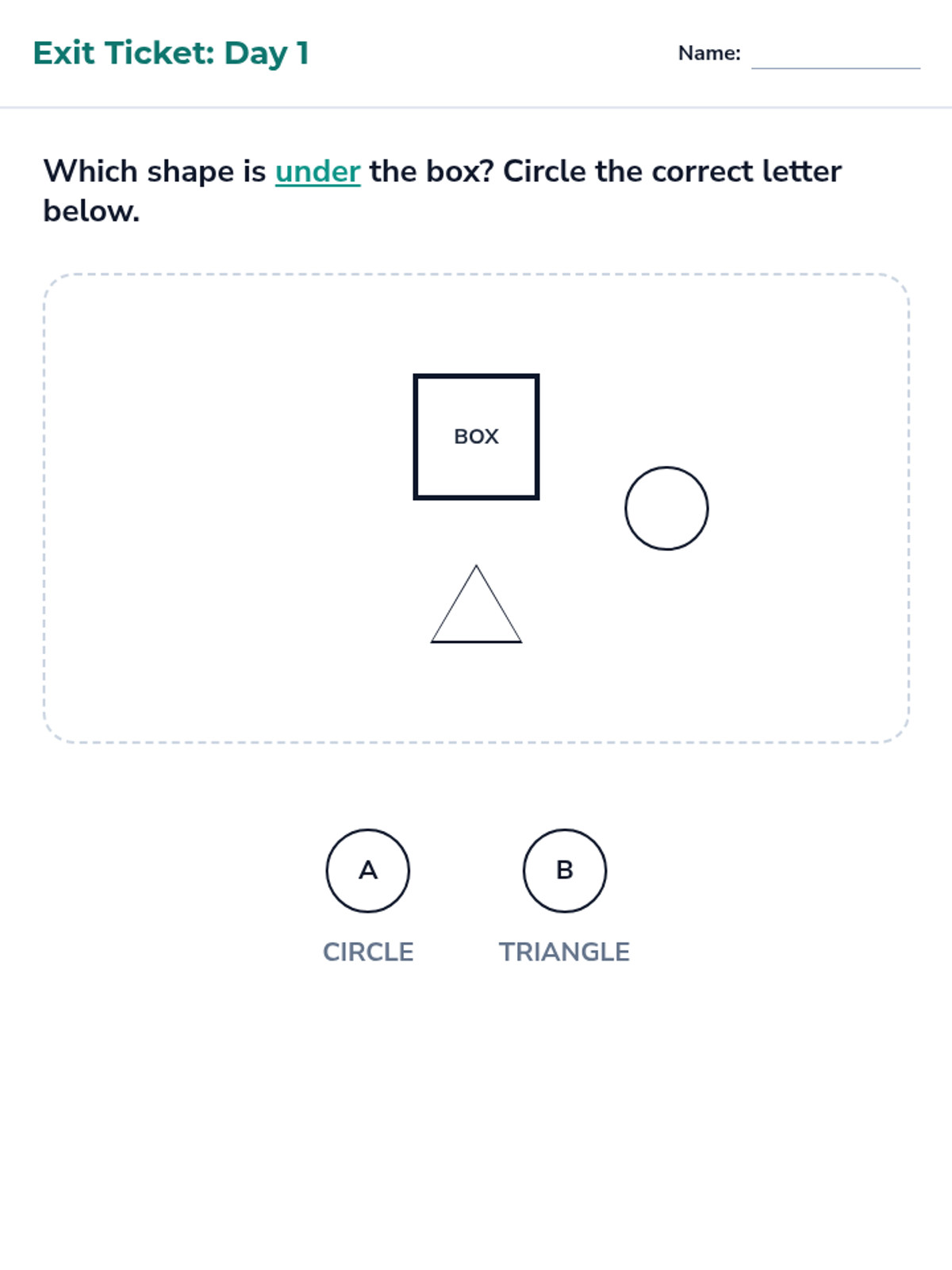
Students identify 2D shapes (circle, square, triangle, rectangle) and use positional language (over, under, beside) to describe location.
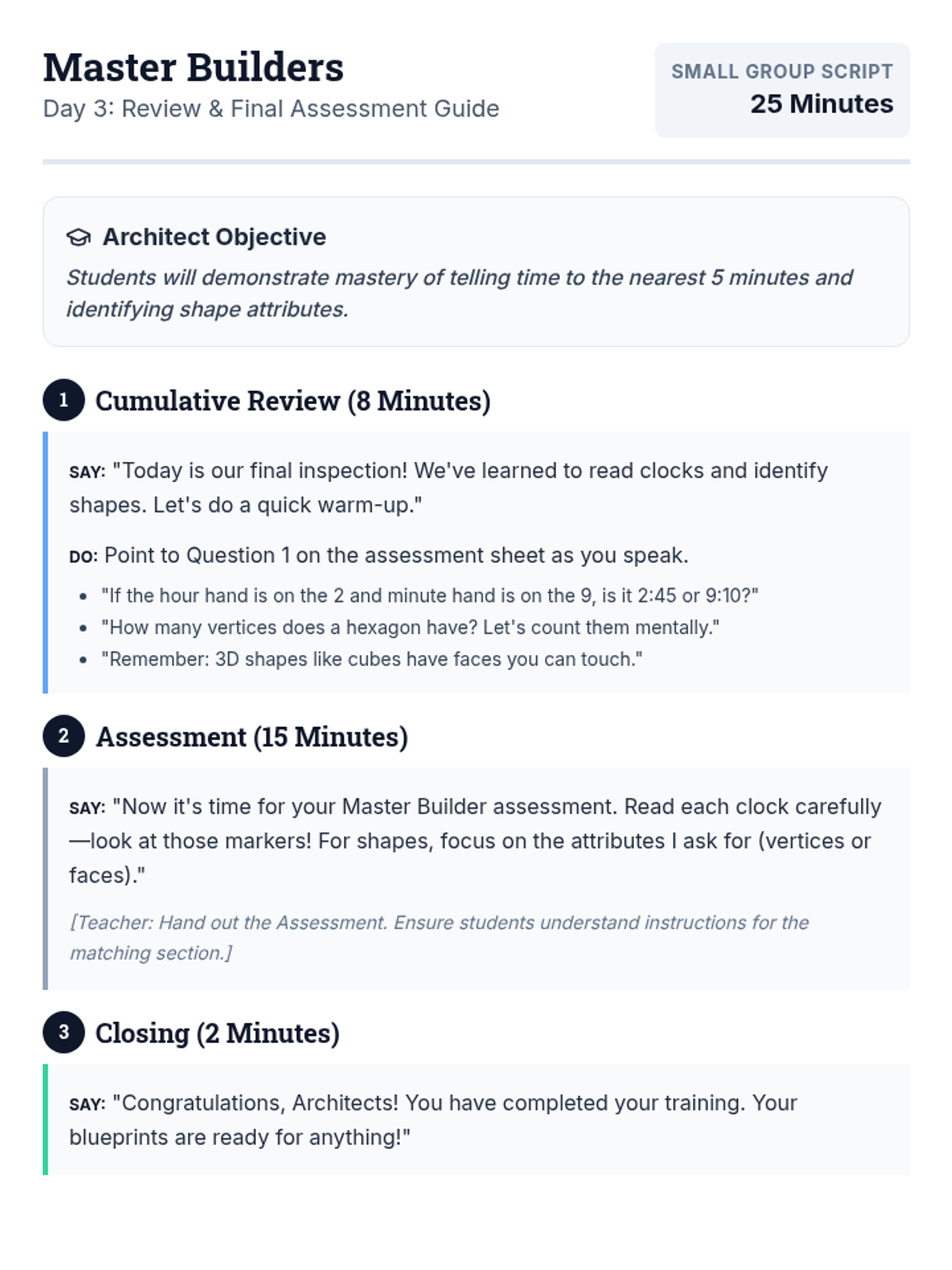
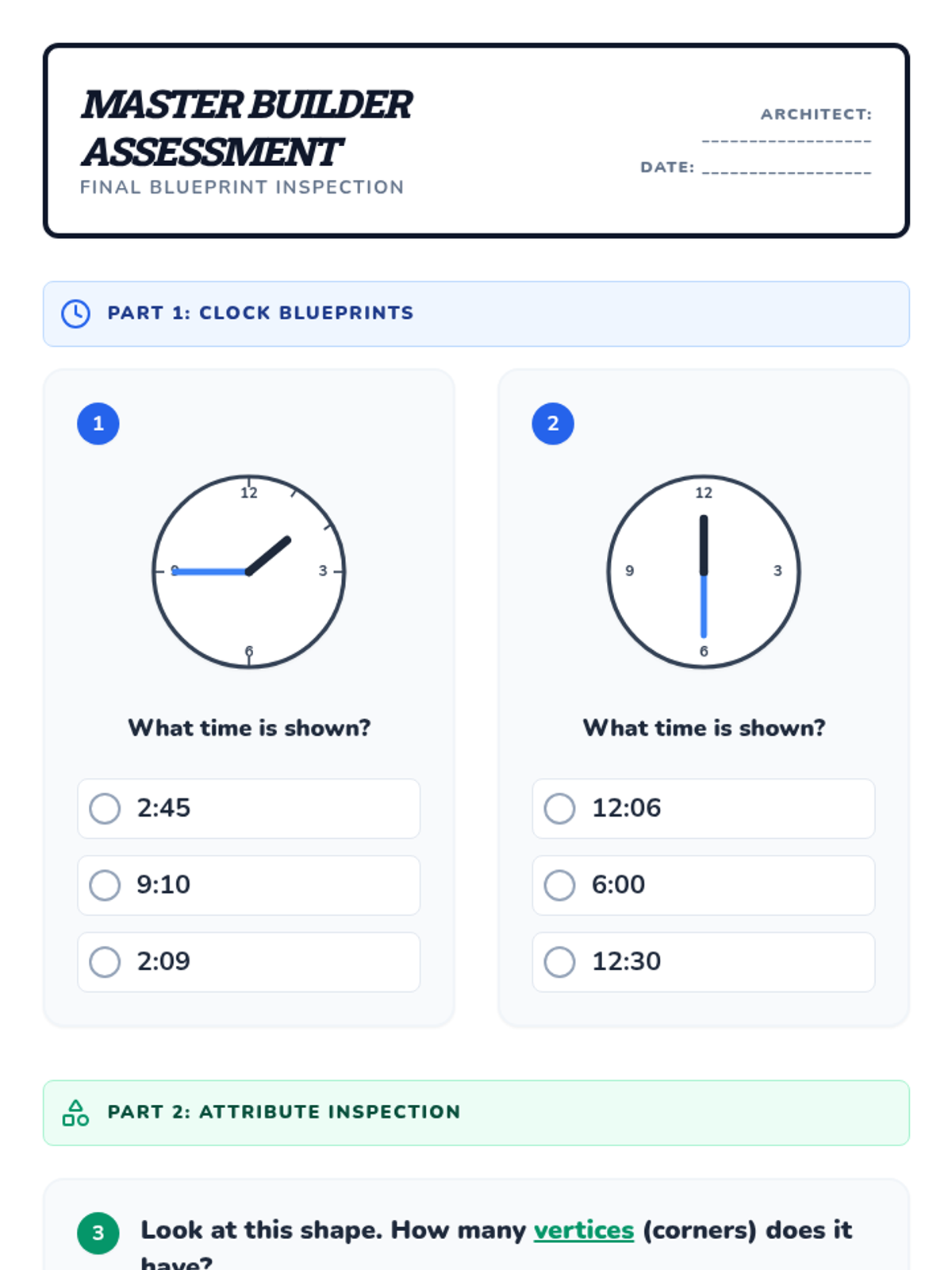
A cumulative review of time and shape attributes followed by a formal assessment to track student growth toward RIT 180 goals.
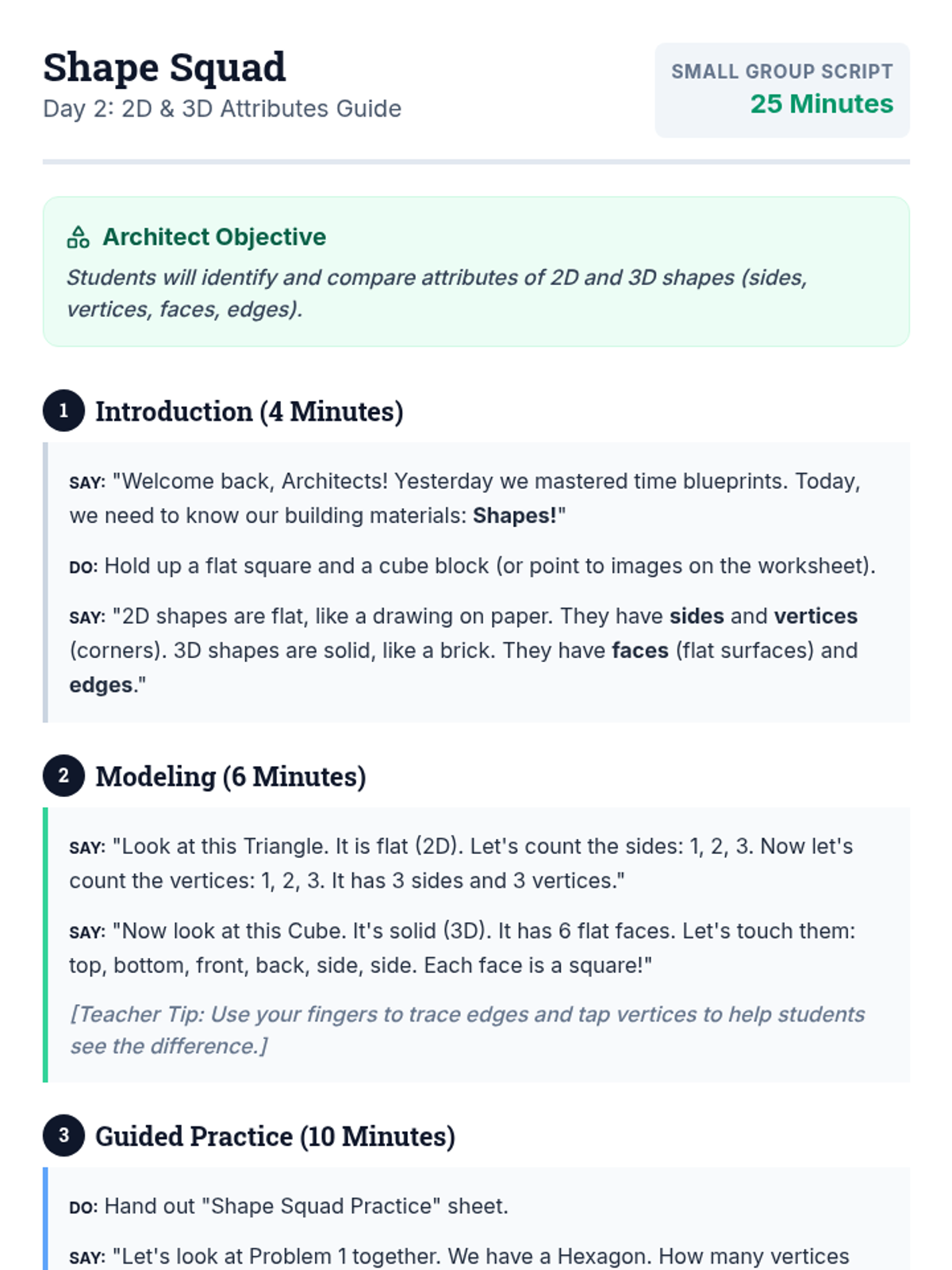
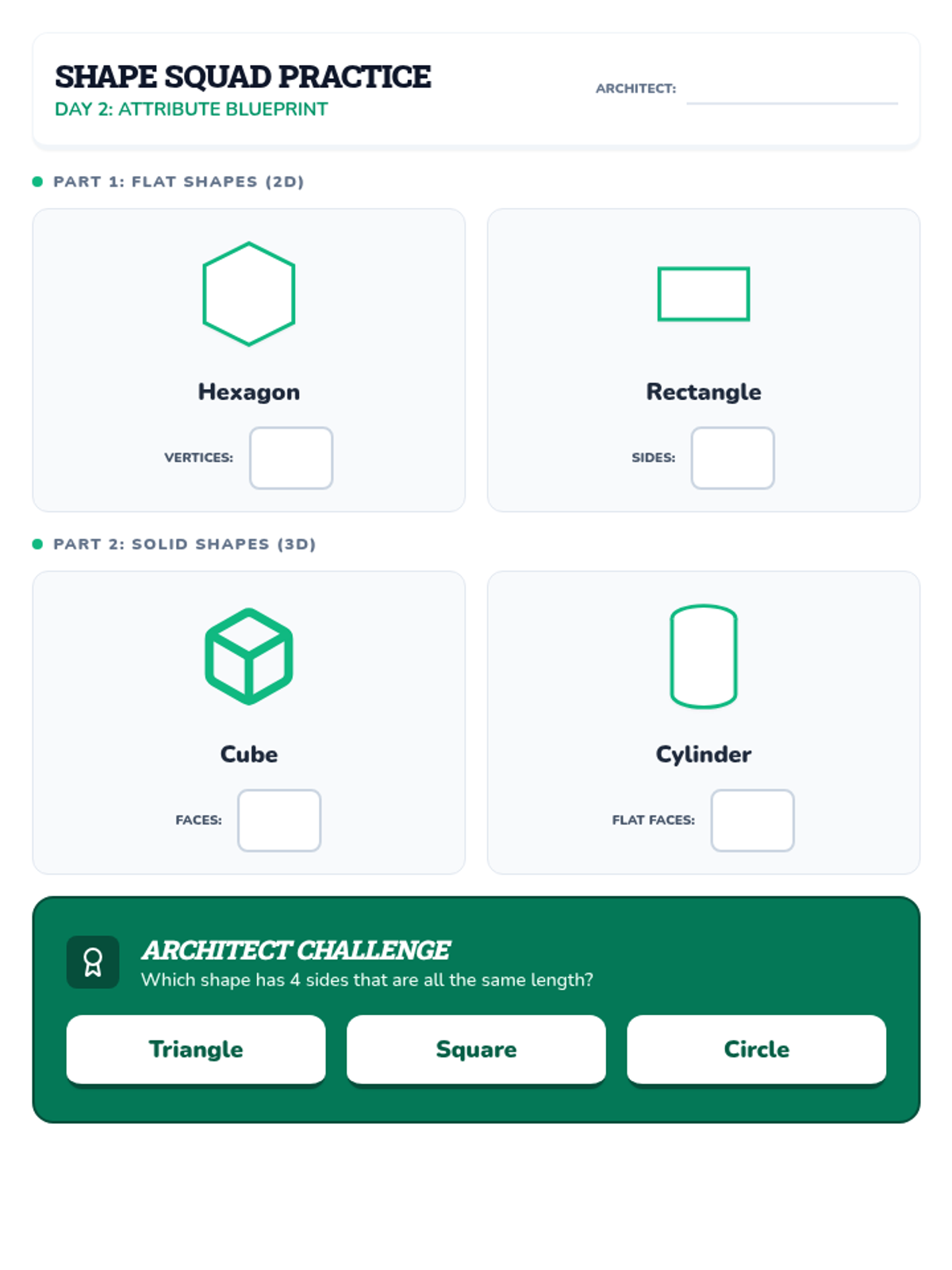
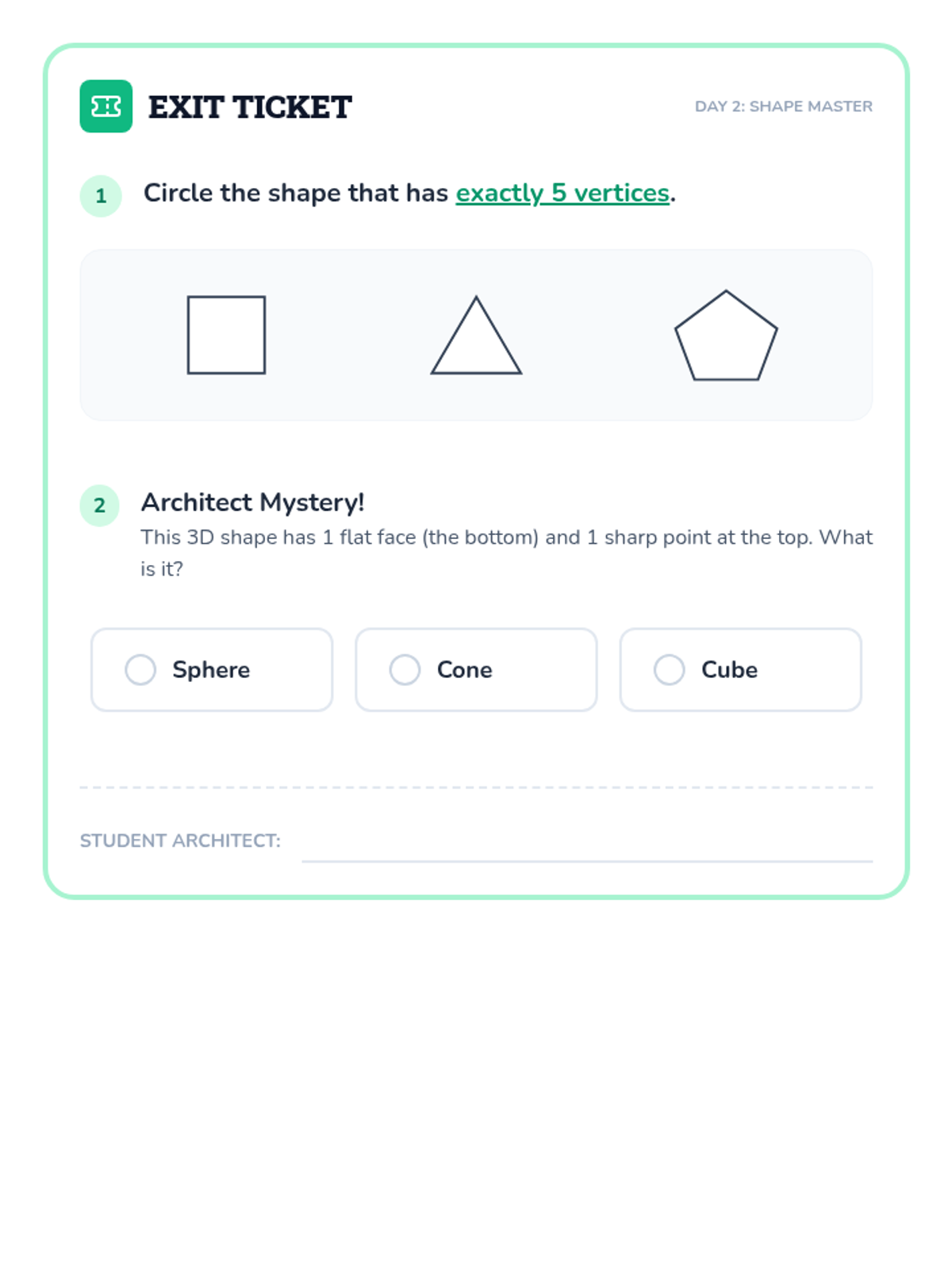
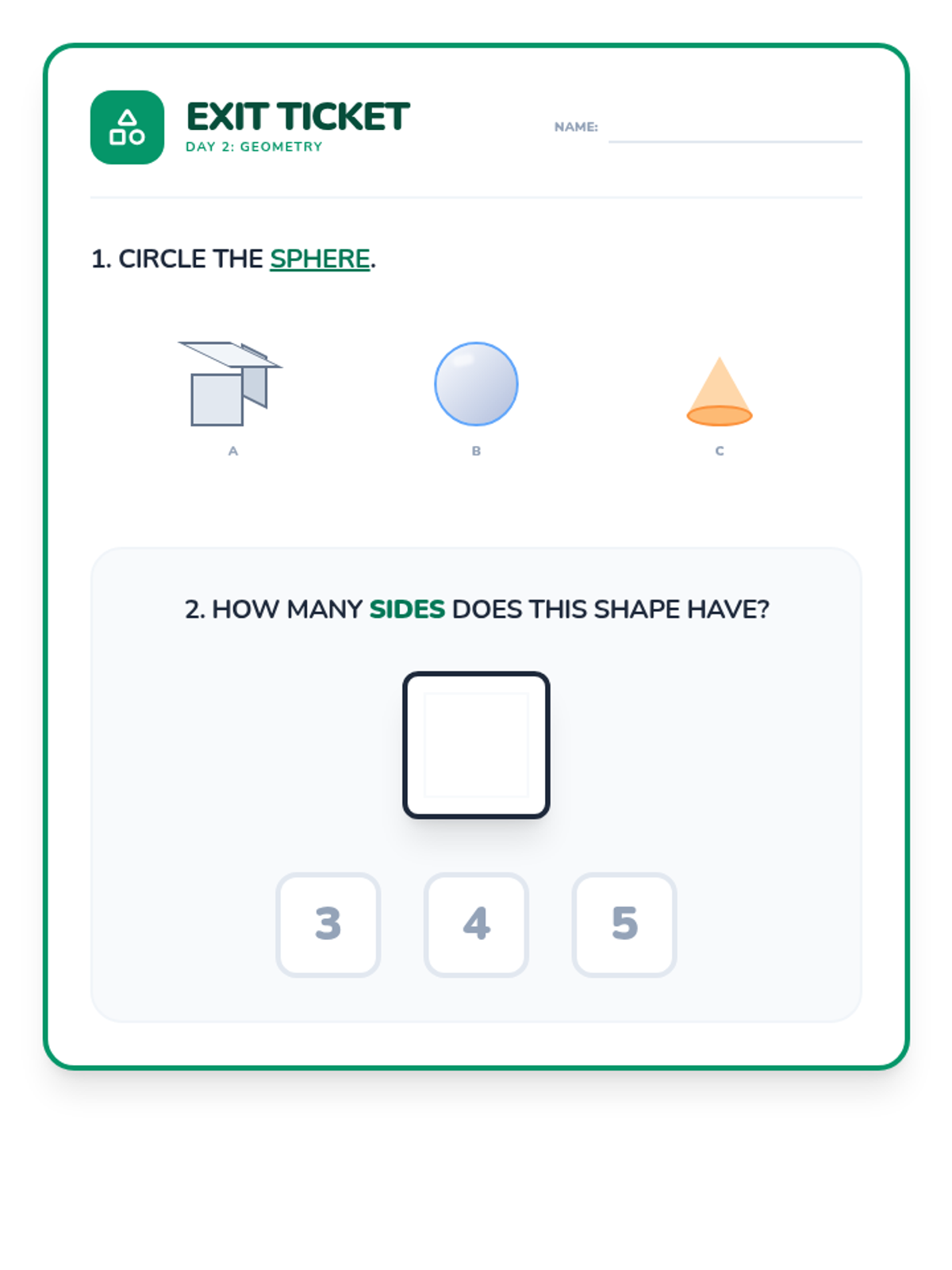
Identifying and describing defining attributes of 2D and 3D shapes, including sides, vertices, faces, and edges.
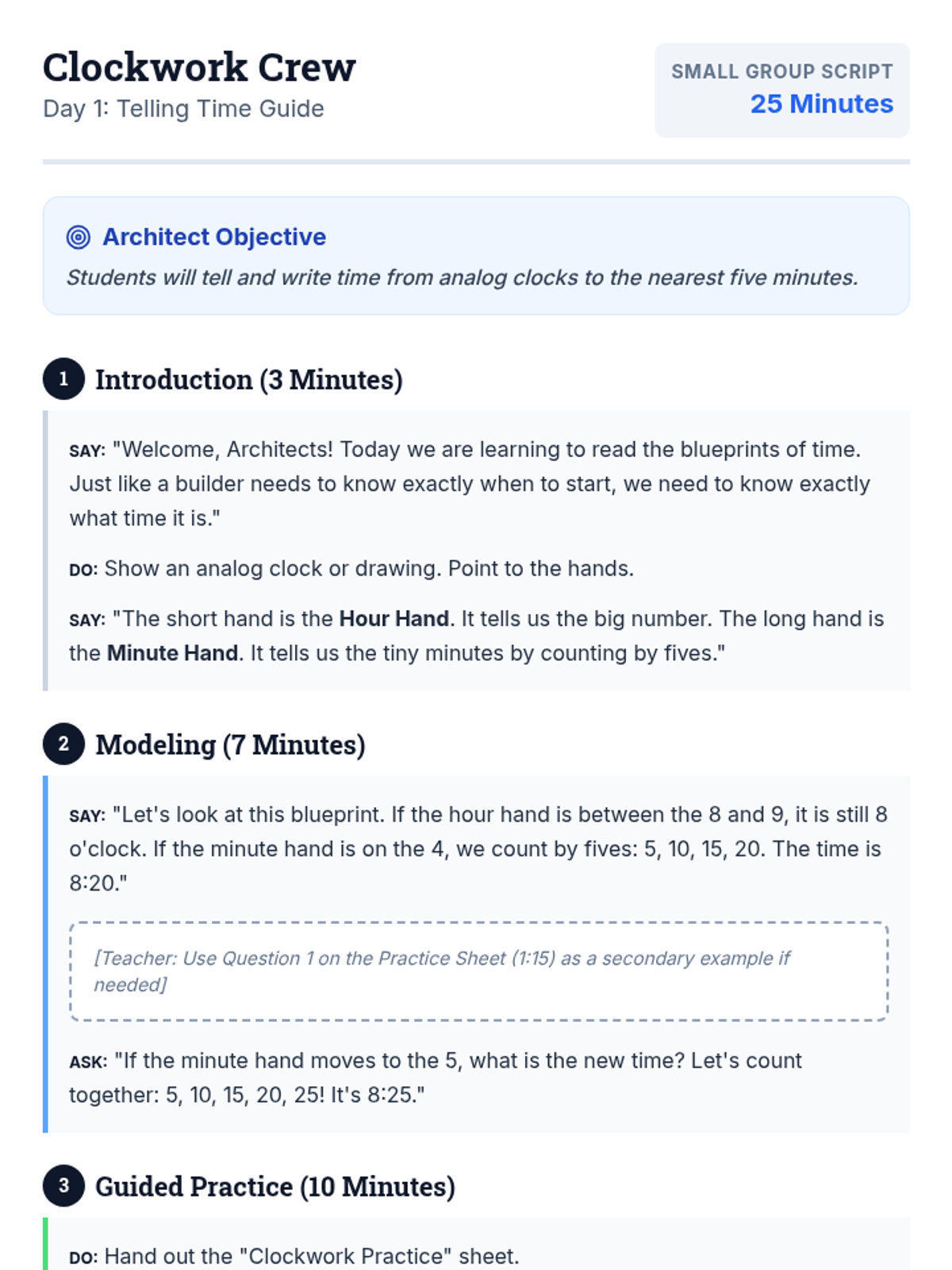
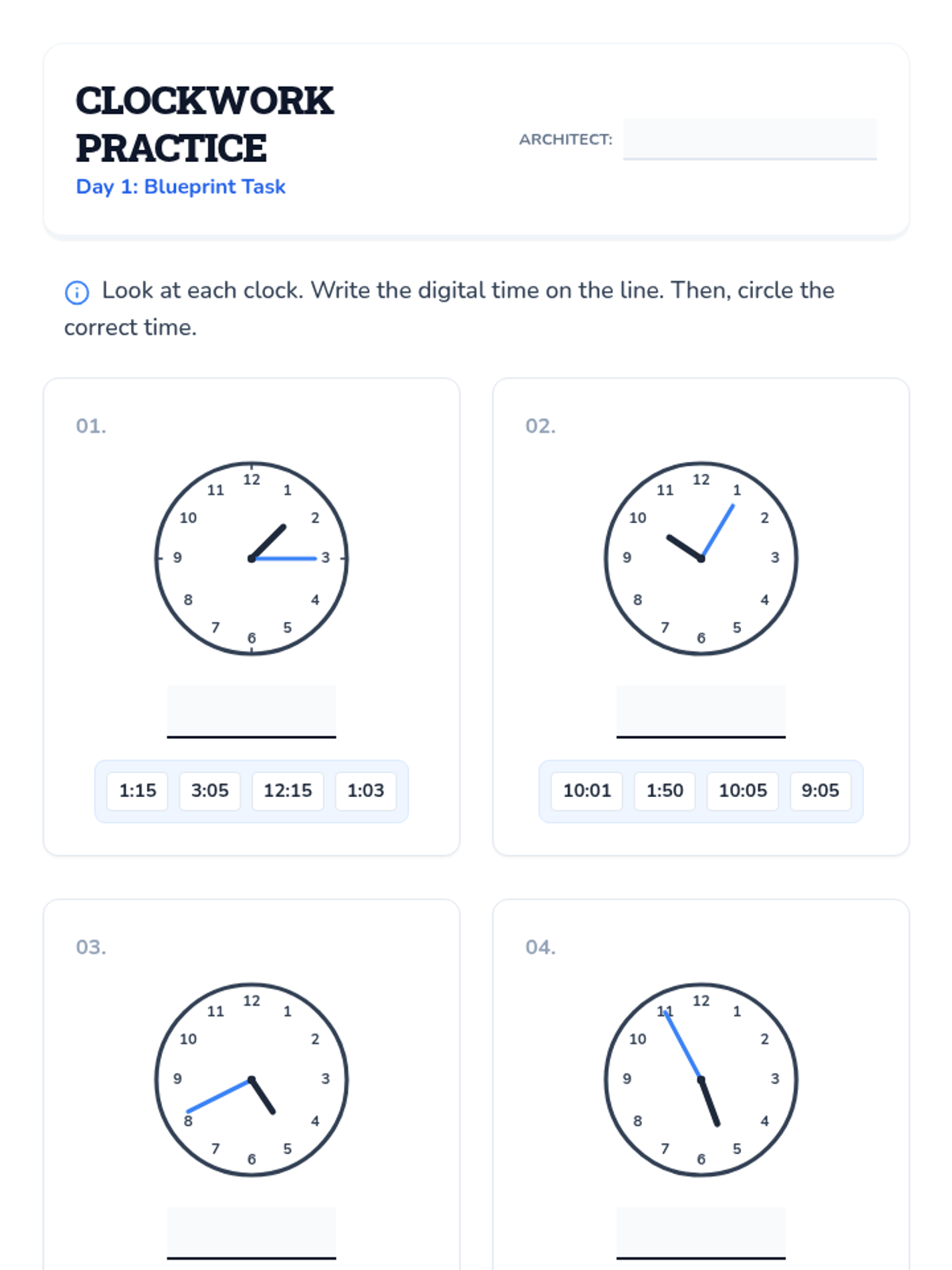
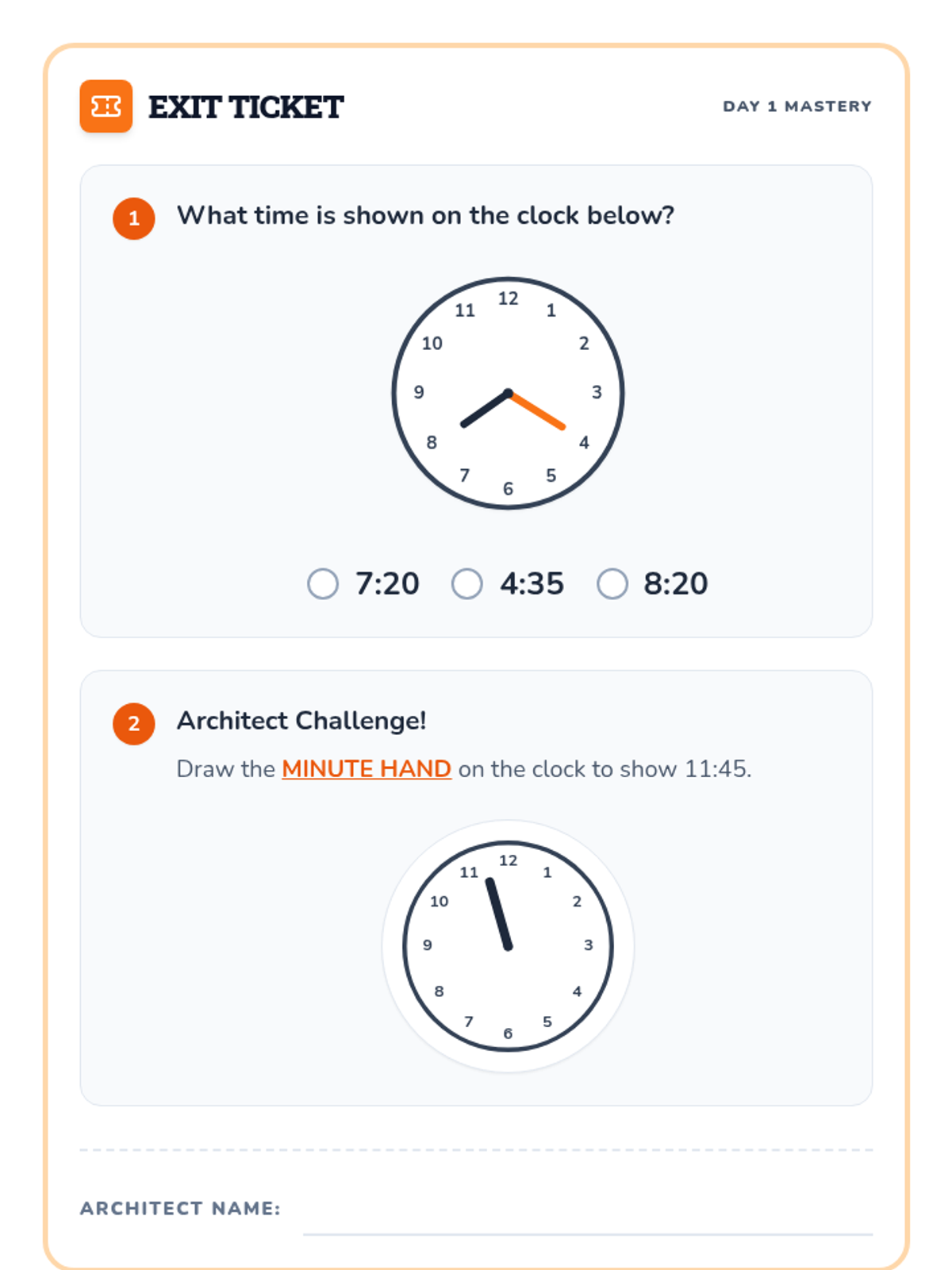
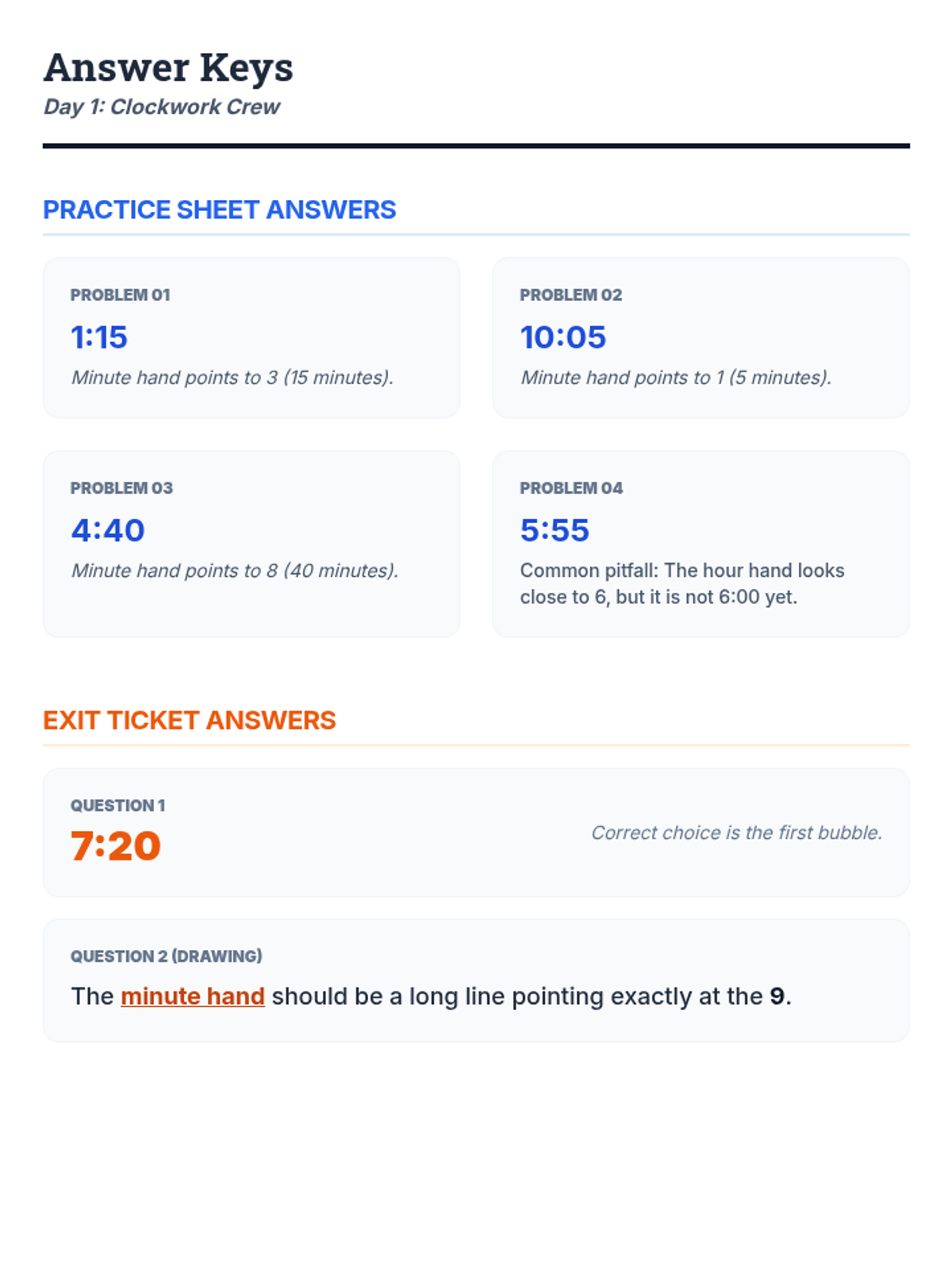
Mastering telling time to the nearest 5 minutes on an analog clock through guided practice and independent application.
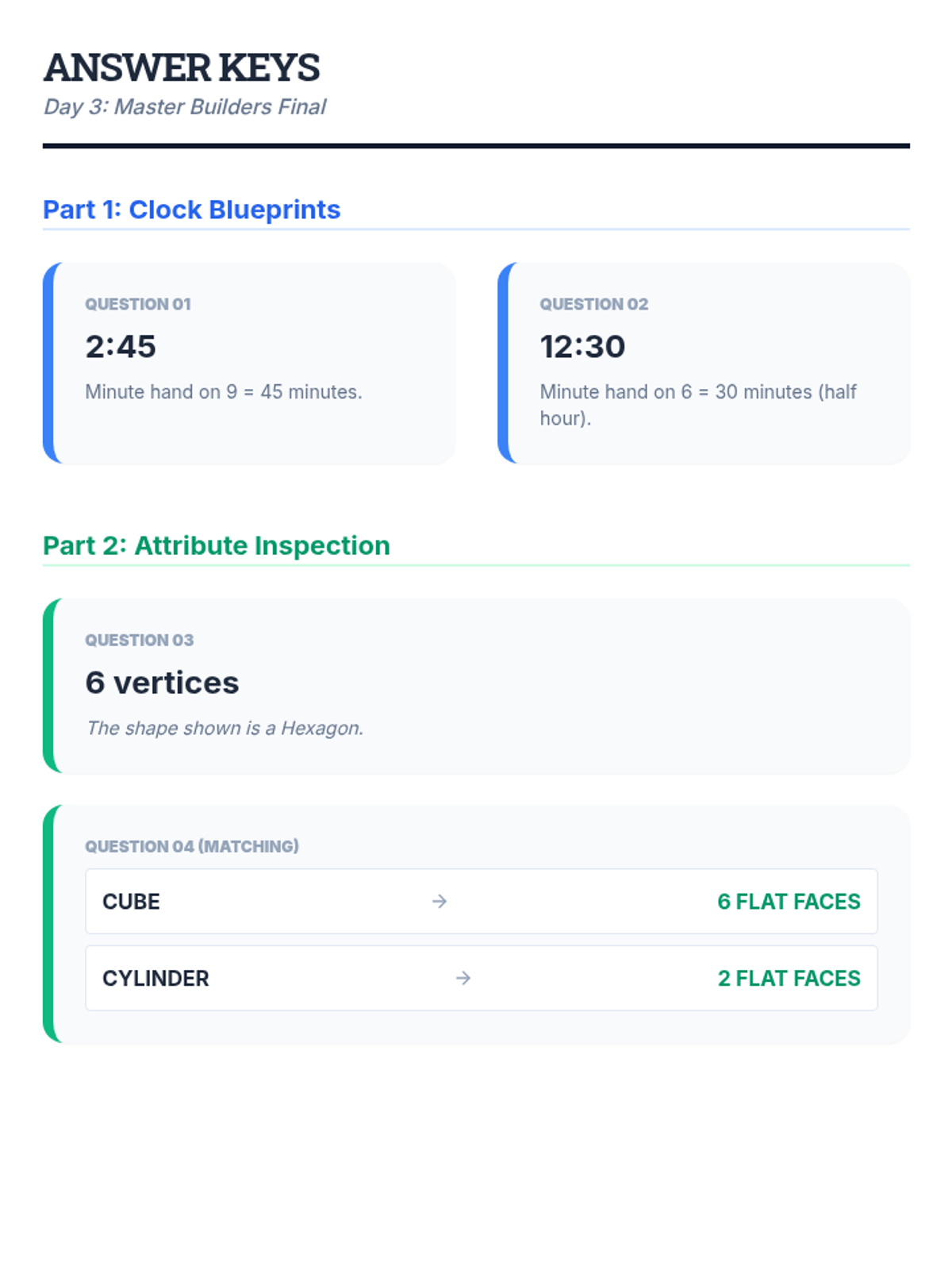
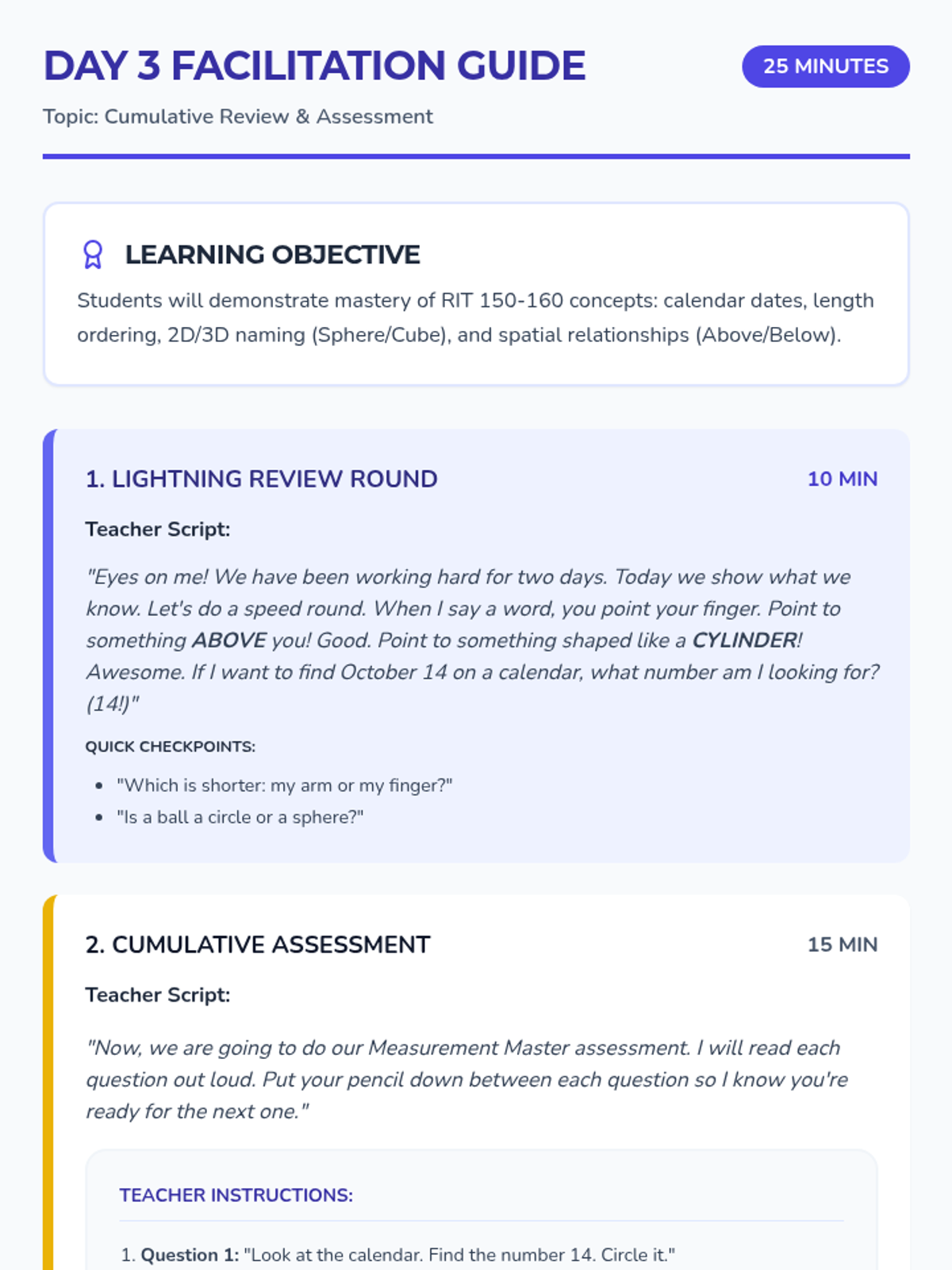
Day 3 provides a comprehensive review of all measurement and geometry concepts from the week, culminating in a cumulative assessment.
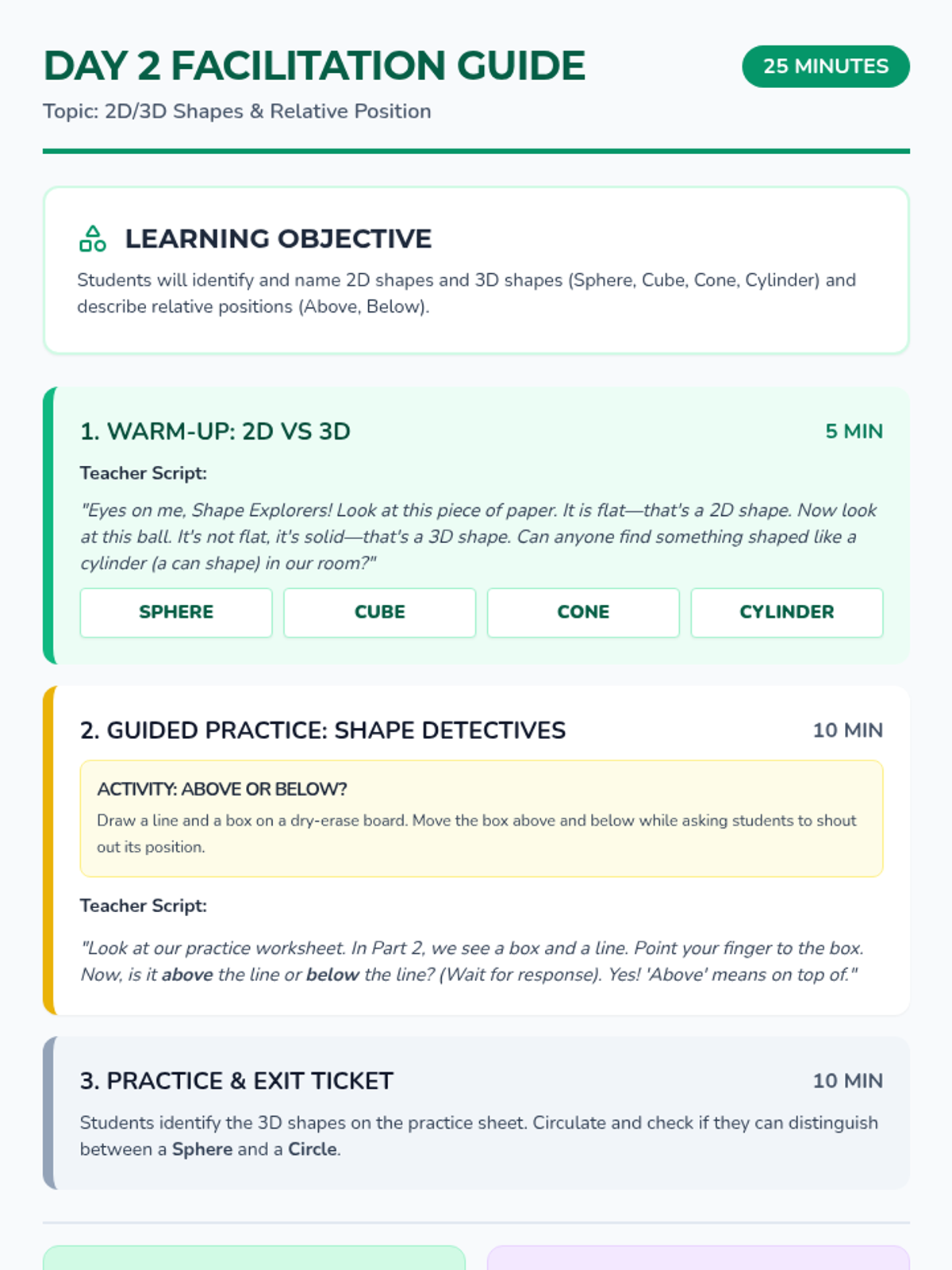
Day 2 covers identifying 2D and 3D shapes by name and attributes, as well as mixed geometry concepts like relative position and composite shapes.
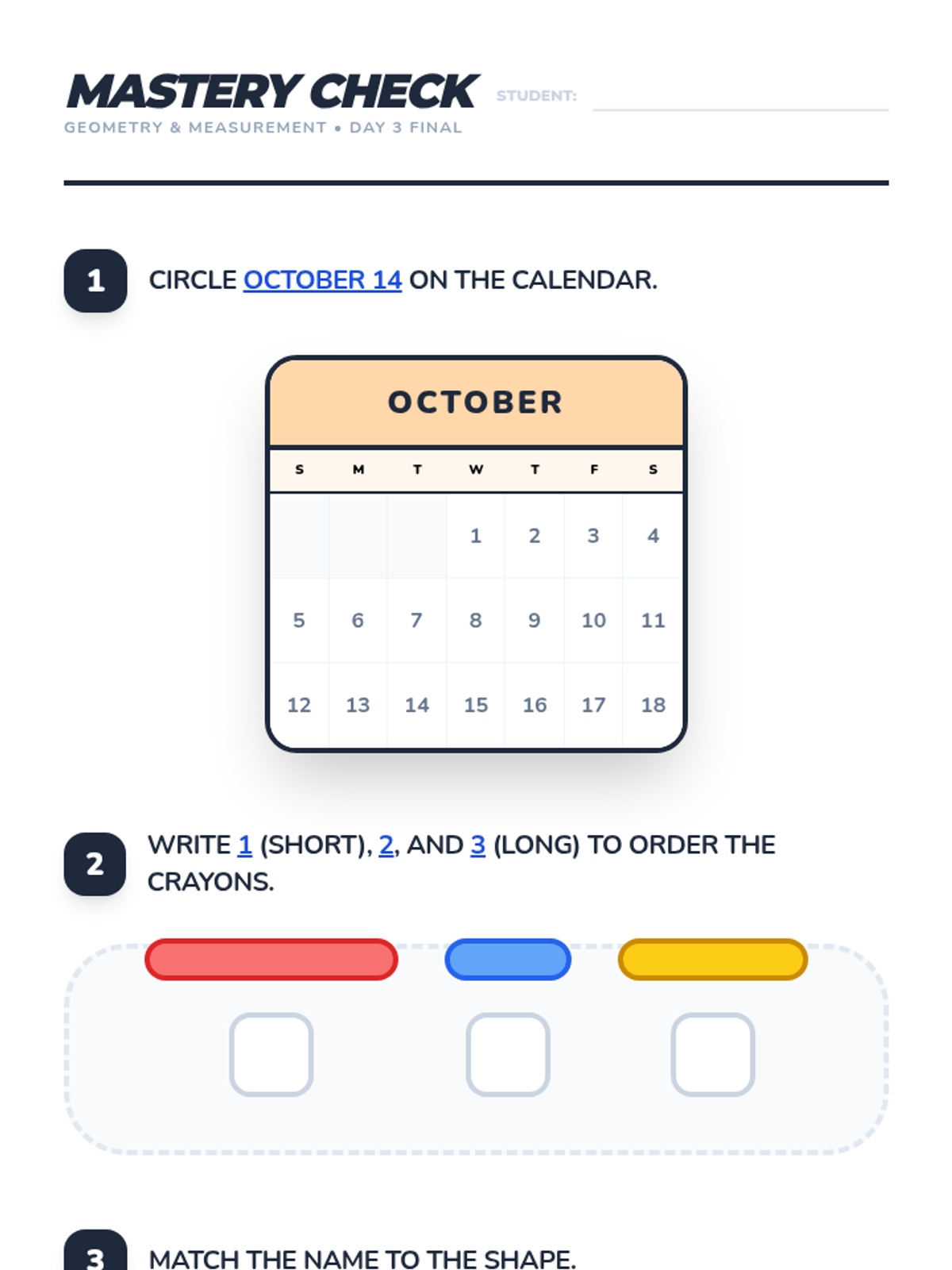
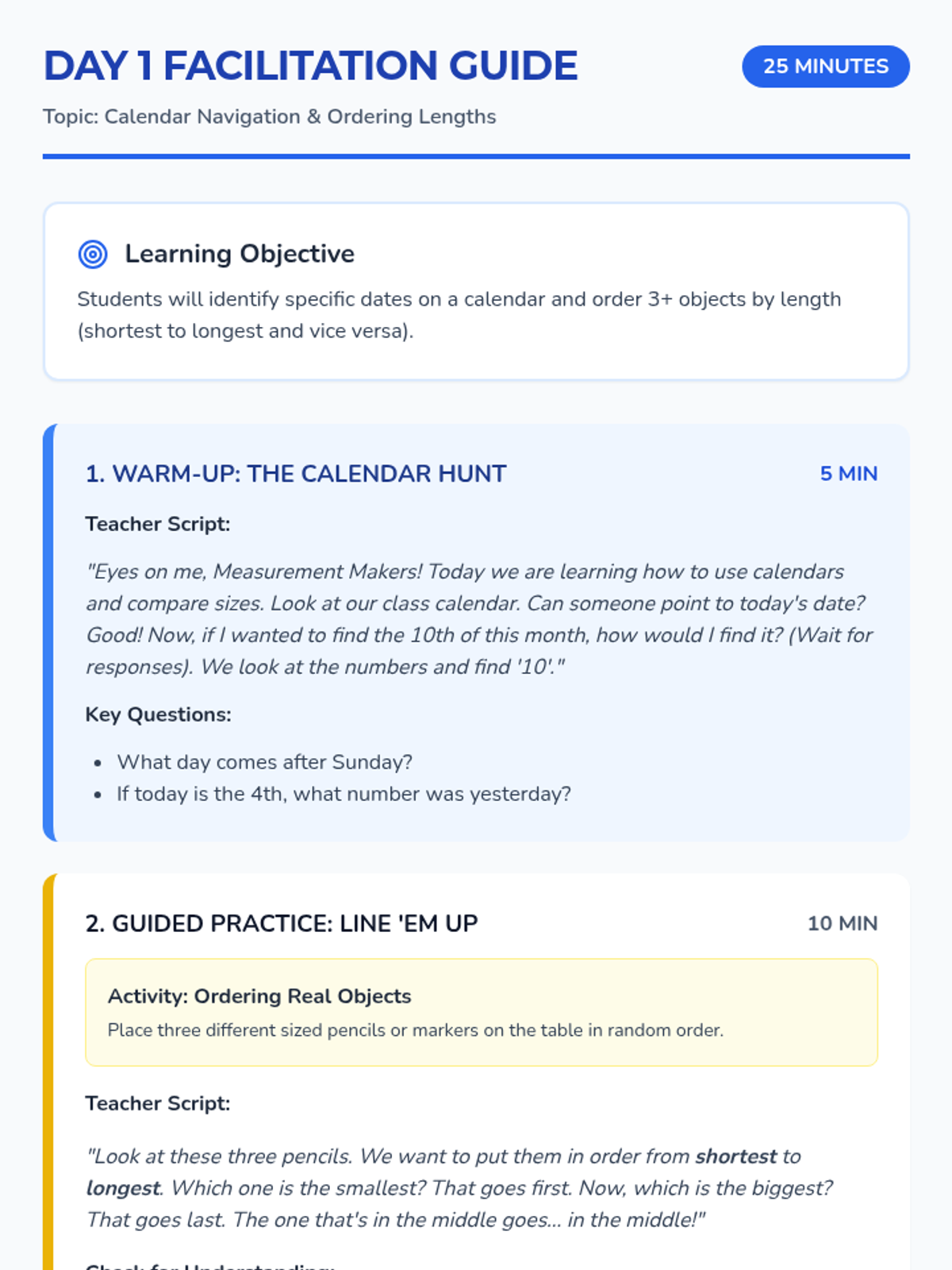
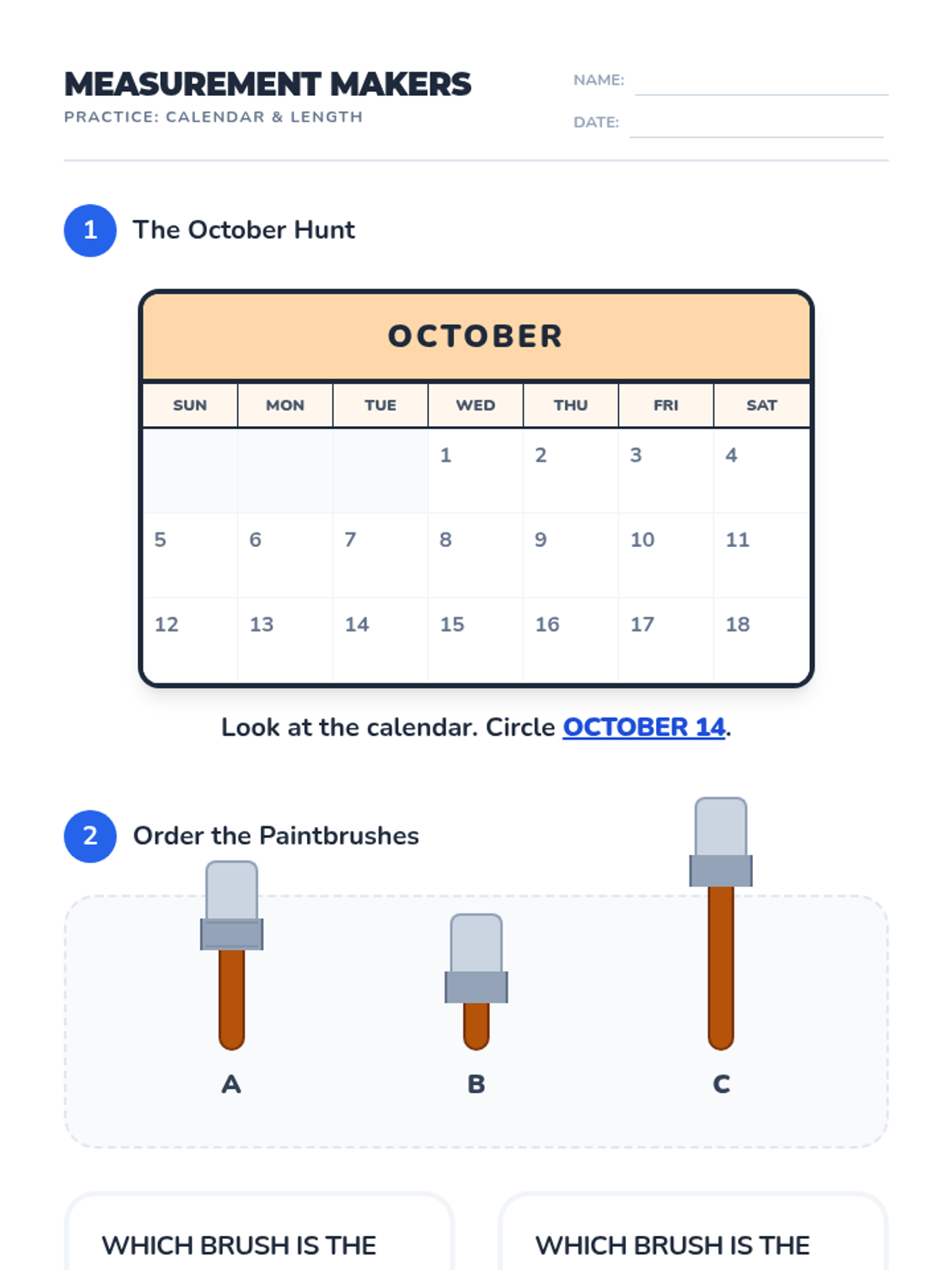
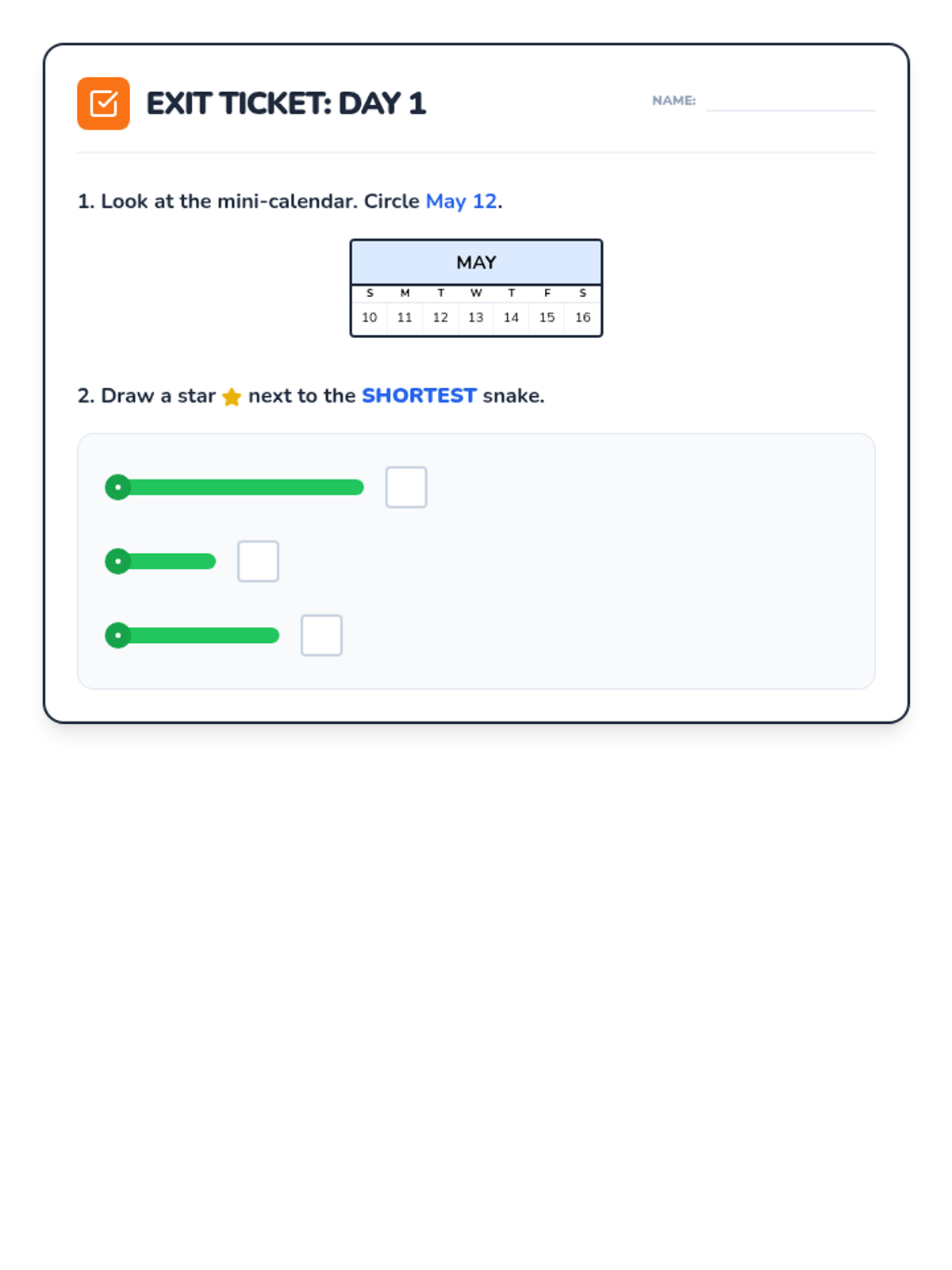
Day 1 focuses on calendar navigation (finding specific dates) and ordering objects by length, targeting foundational RIT 150-160 skills.
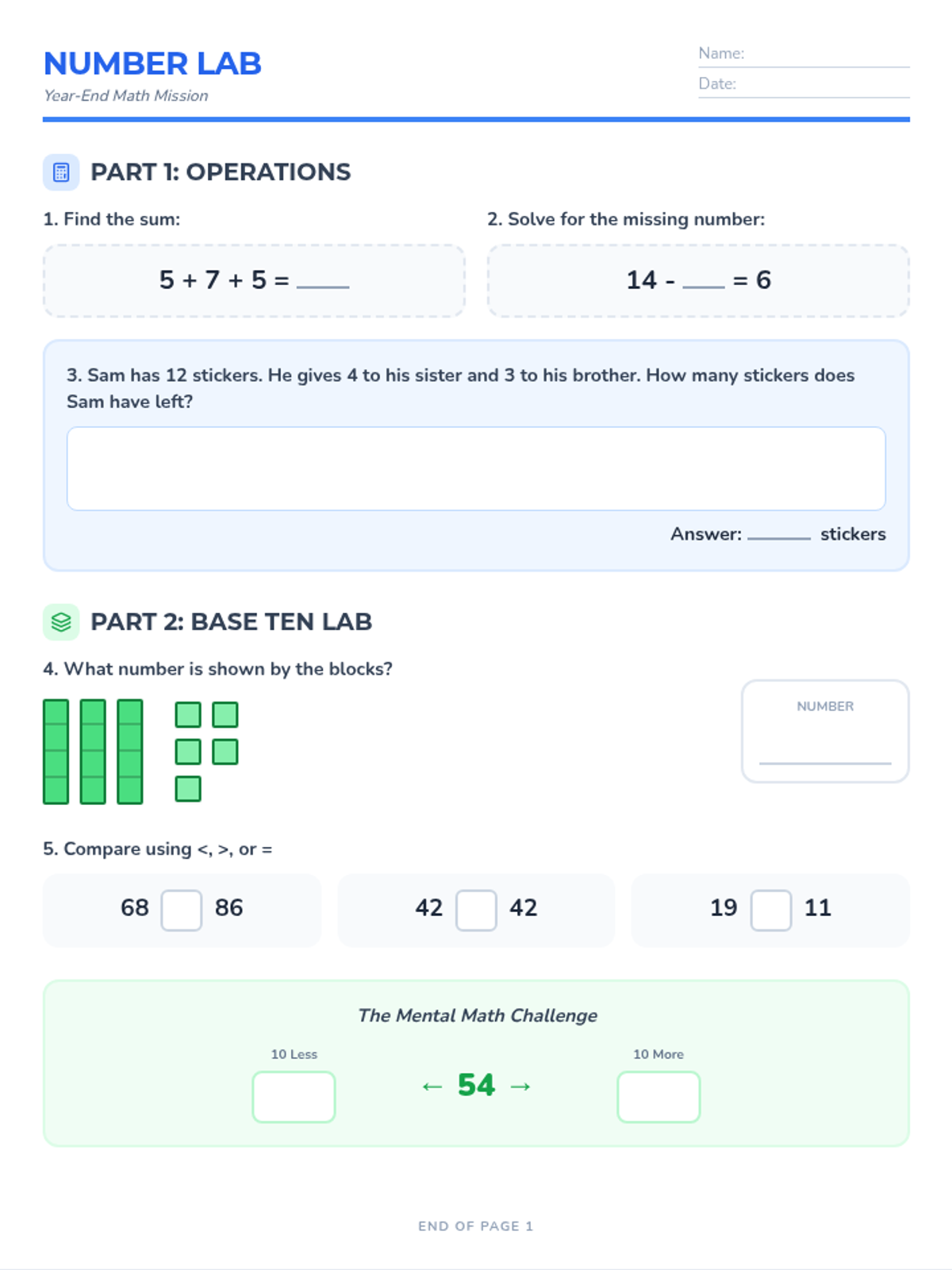
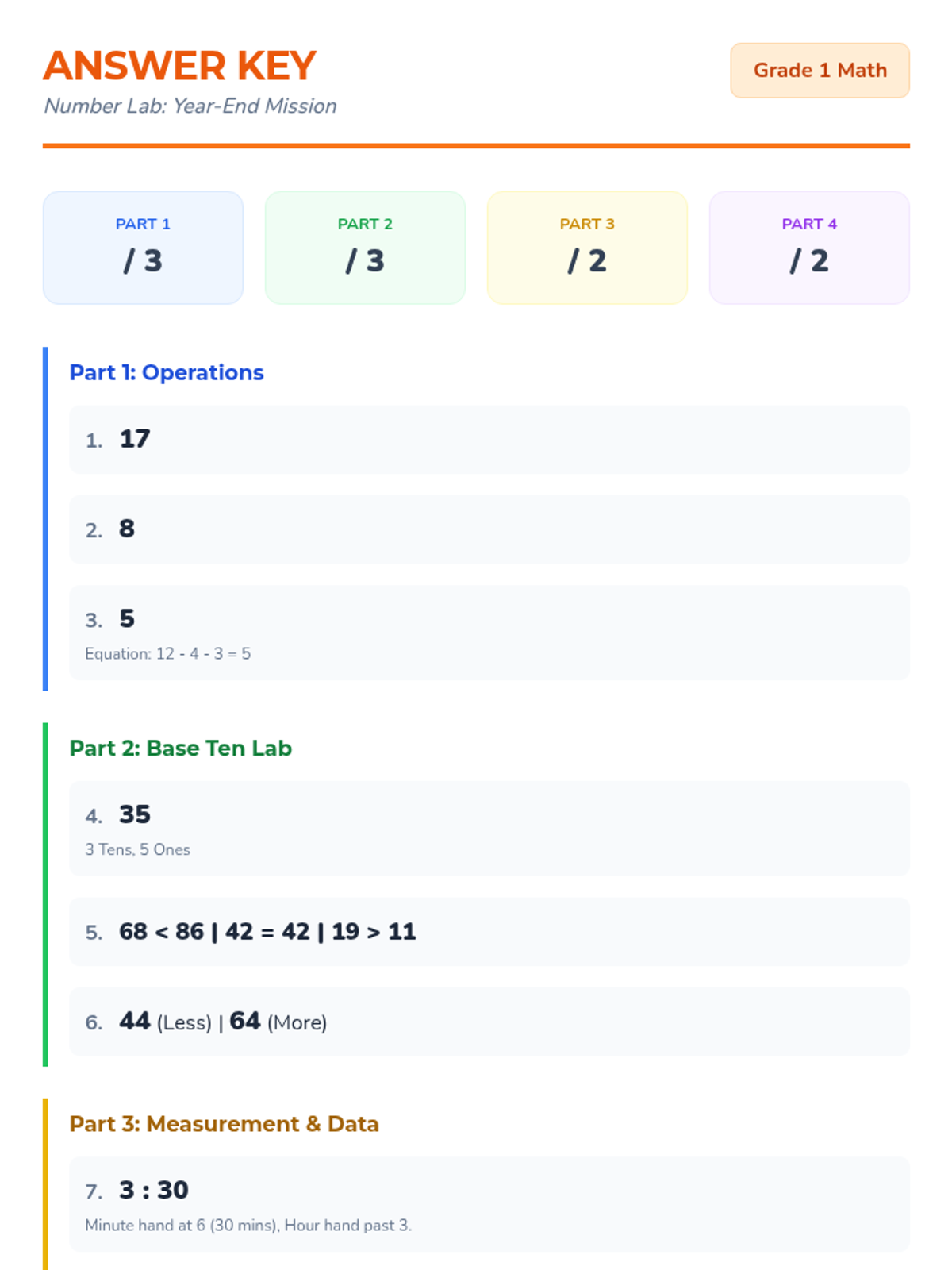
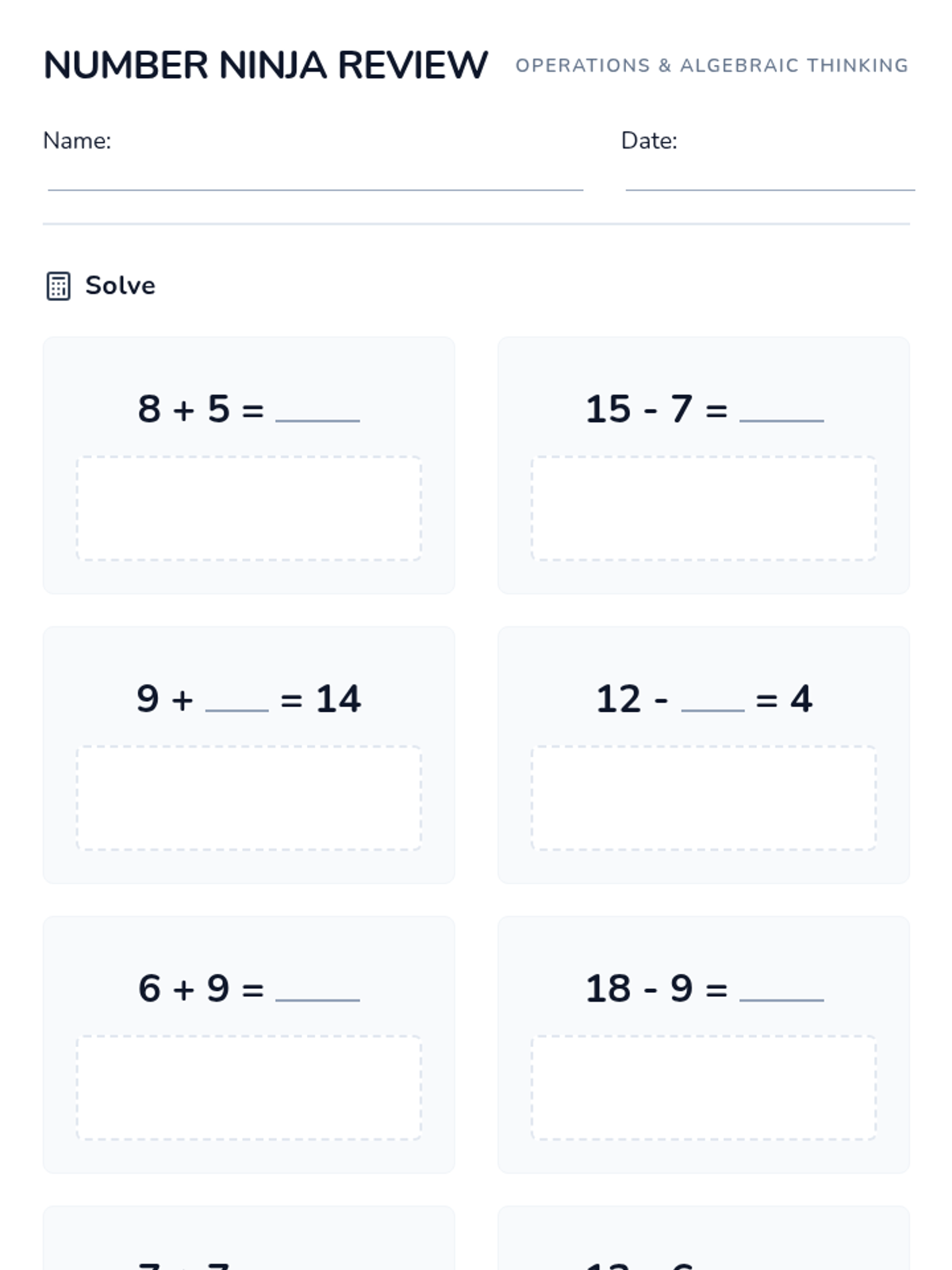
A comprehensive review of 1st-grade math standards to prepare students for end-of-year diagnostics, covering operations, base ten, measurement, data, and geometry.
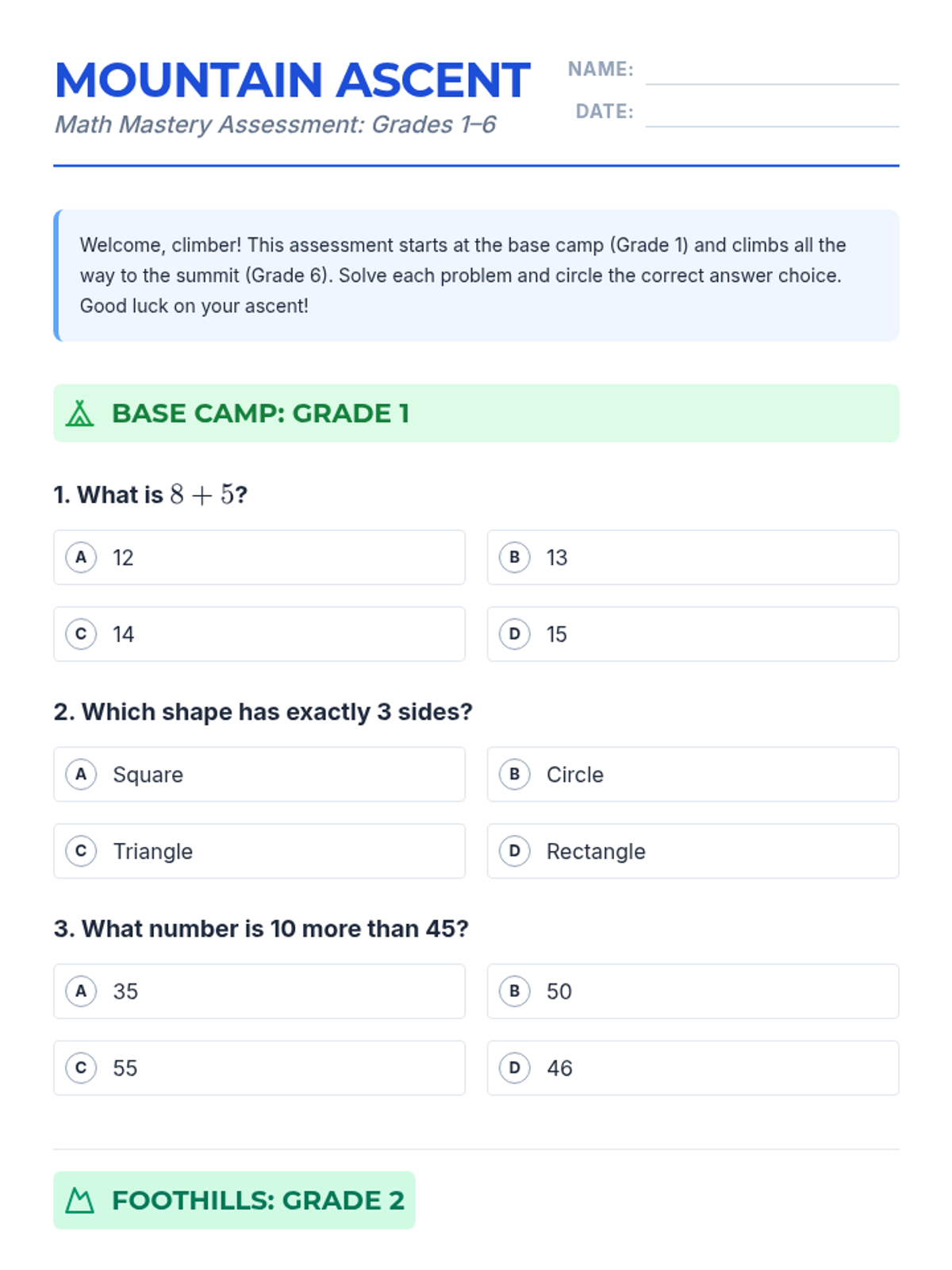
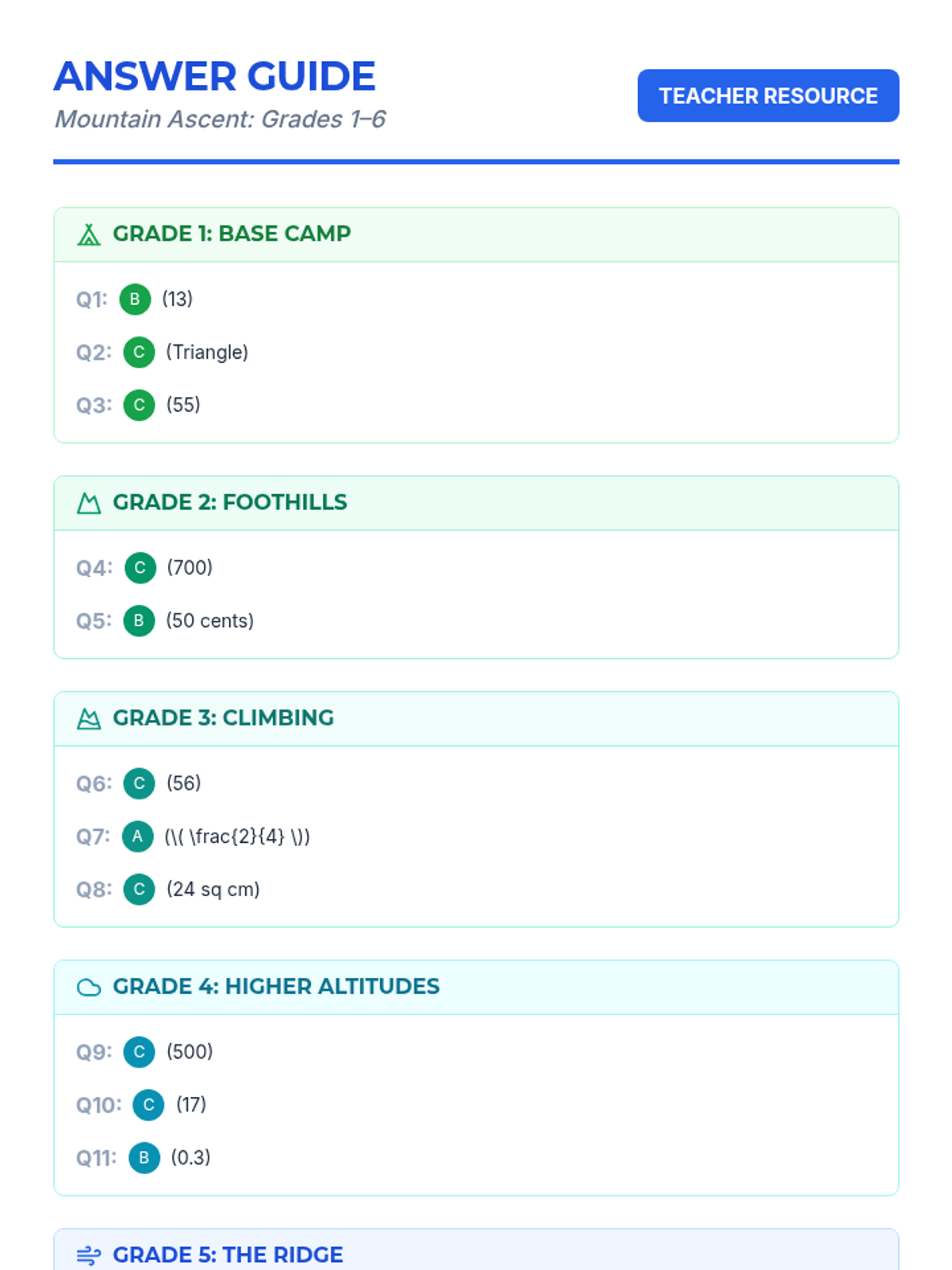
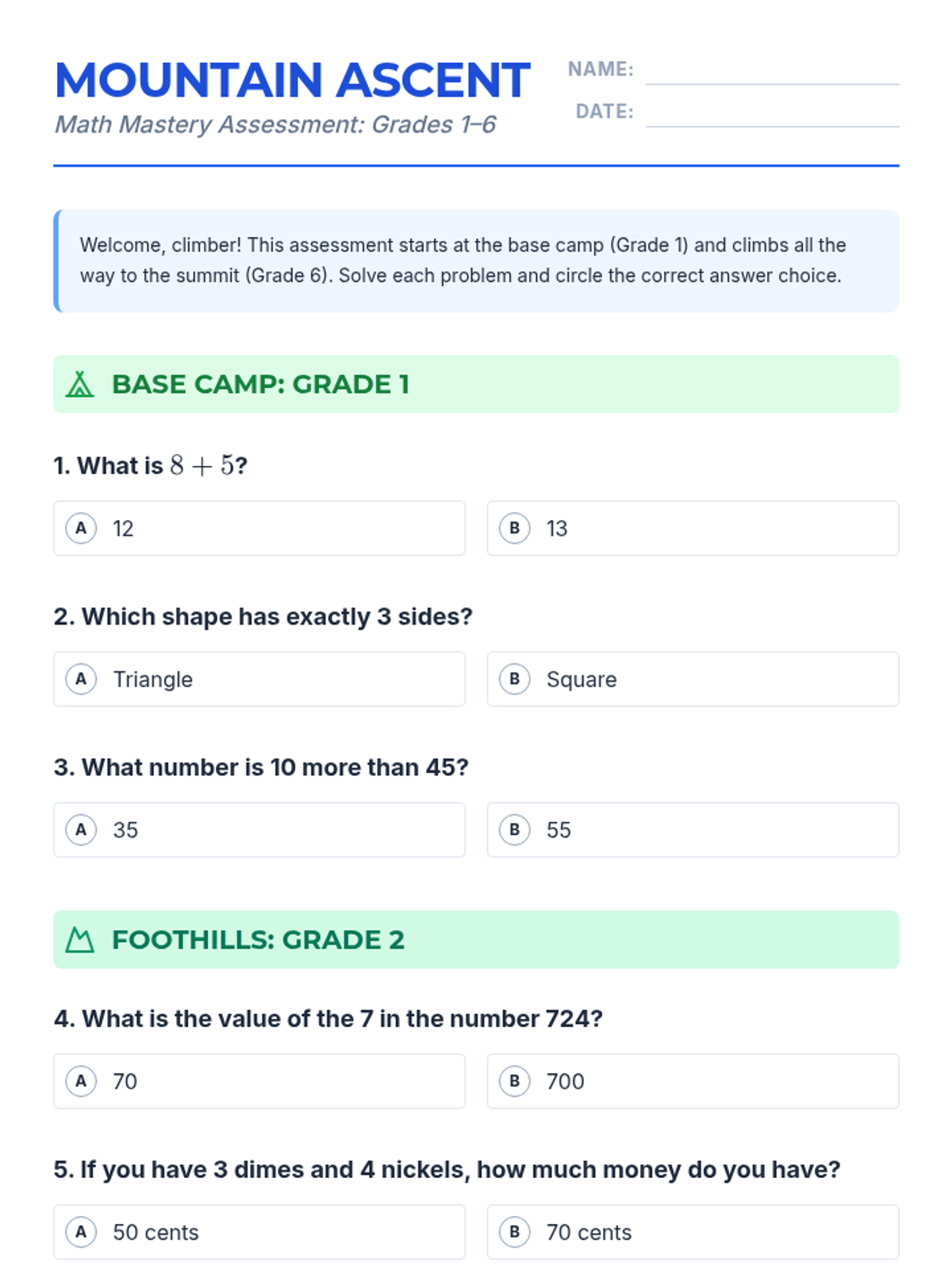
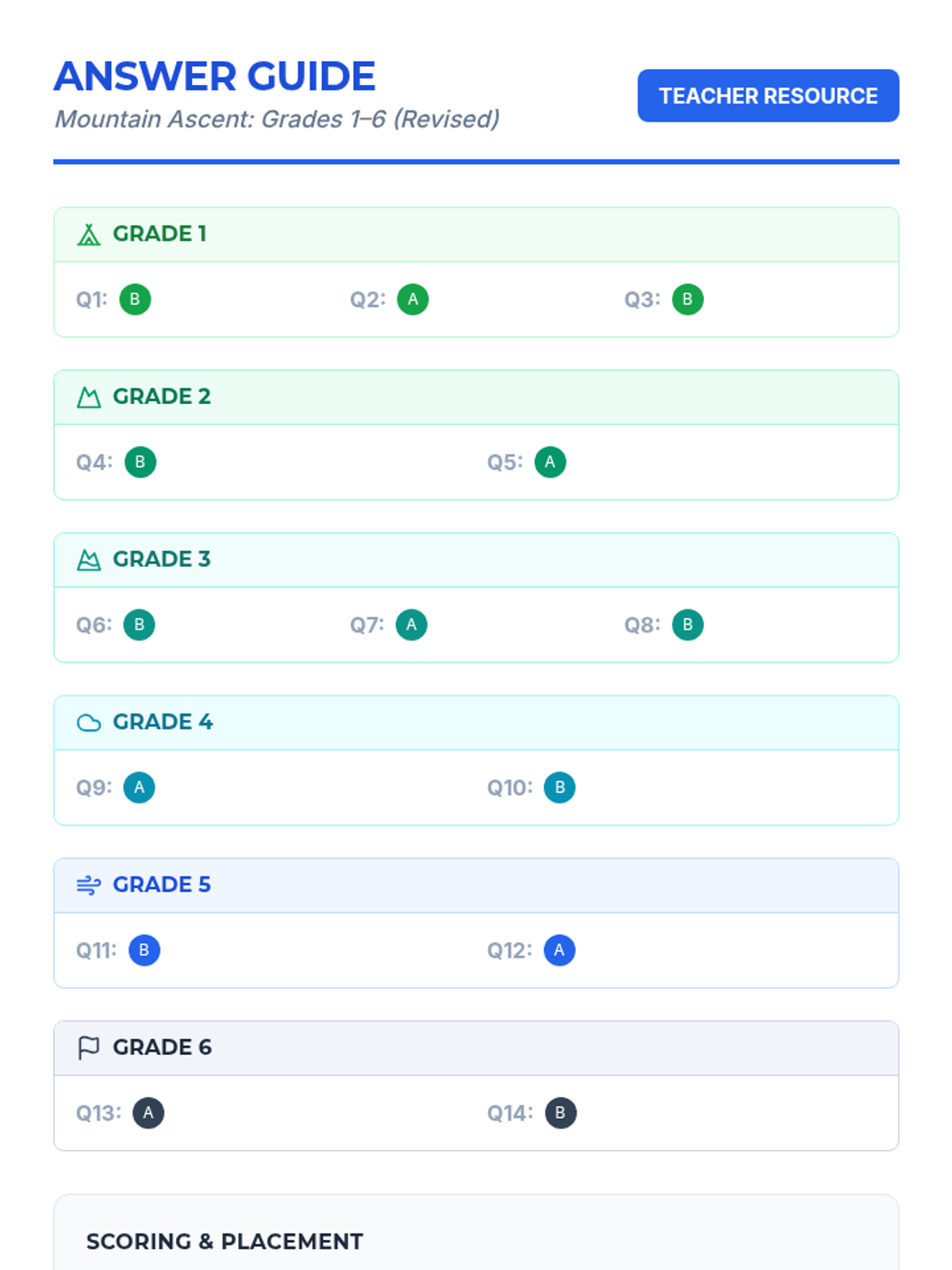
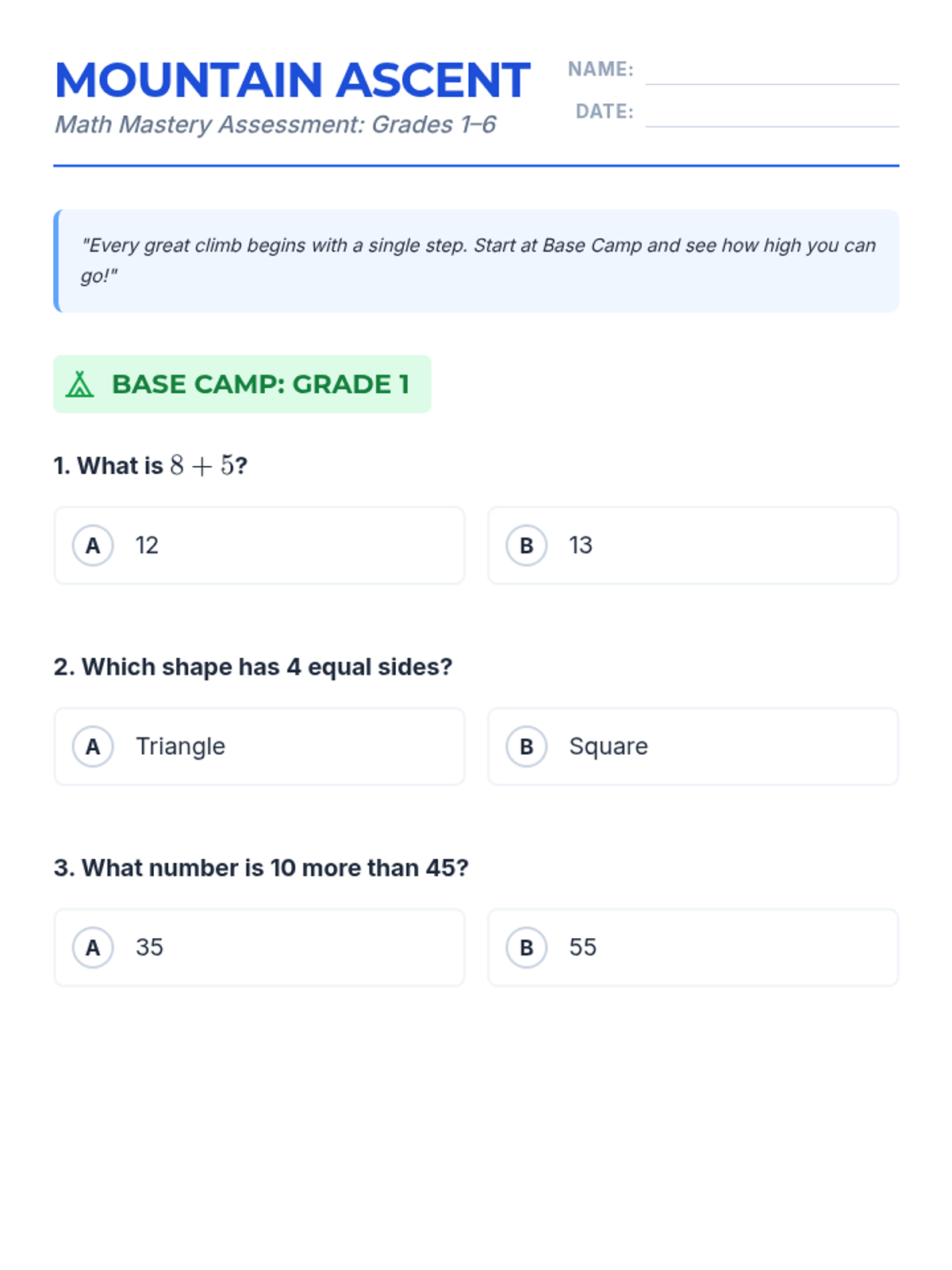
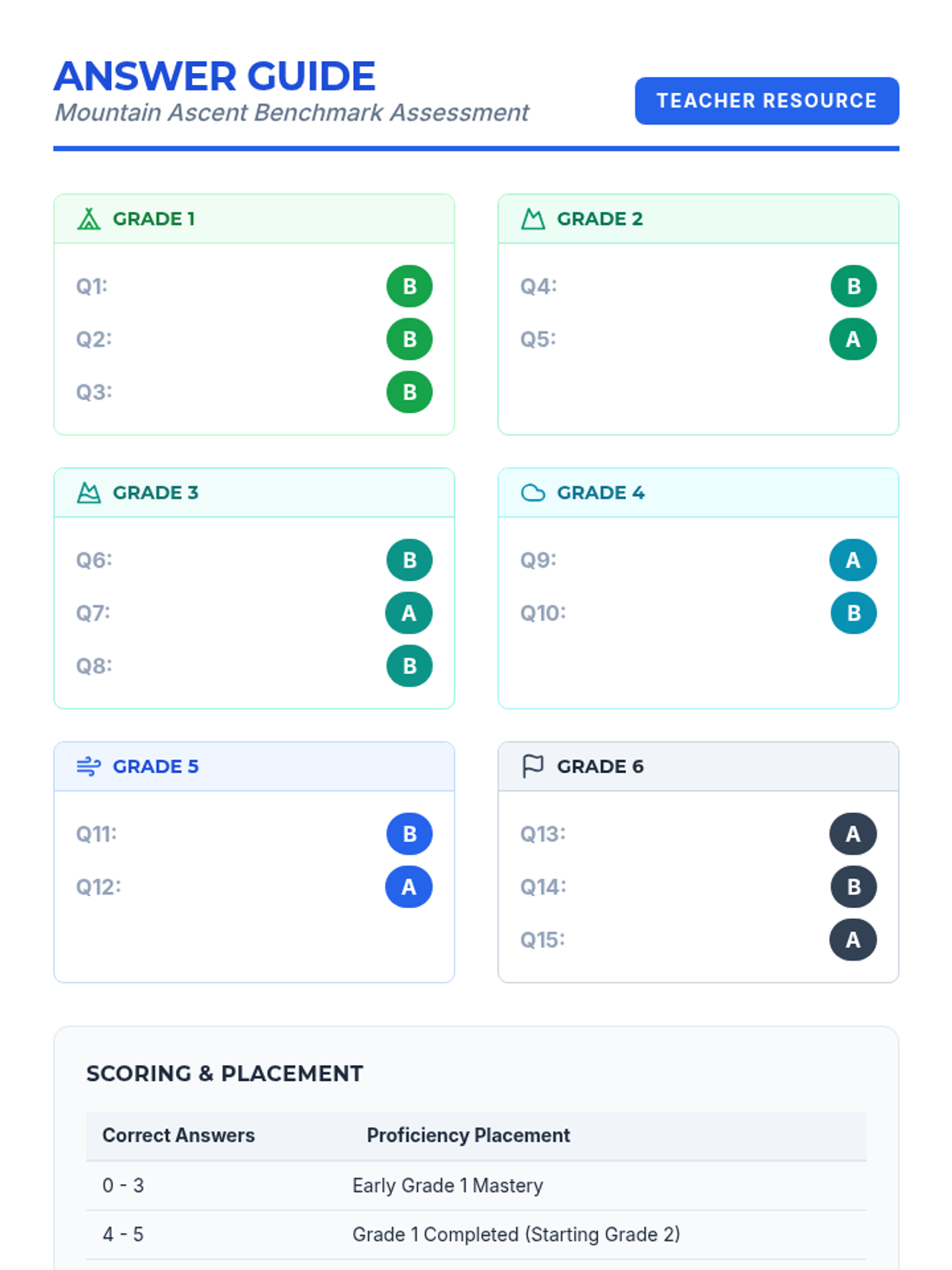
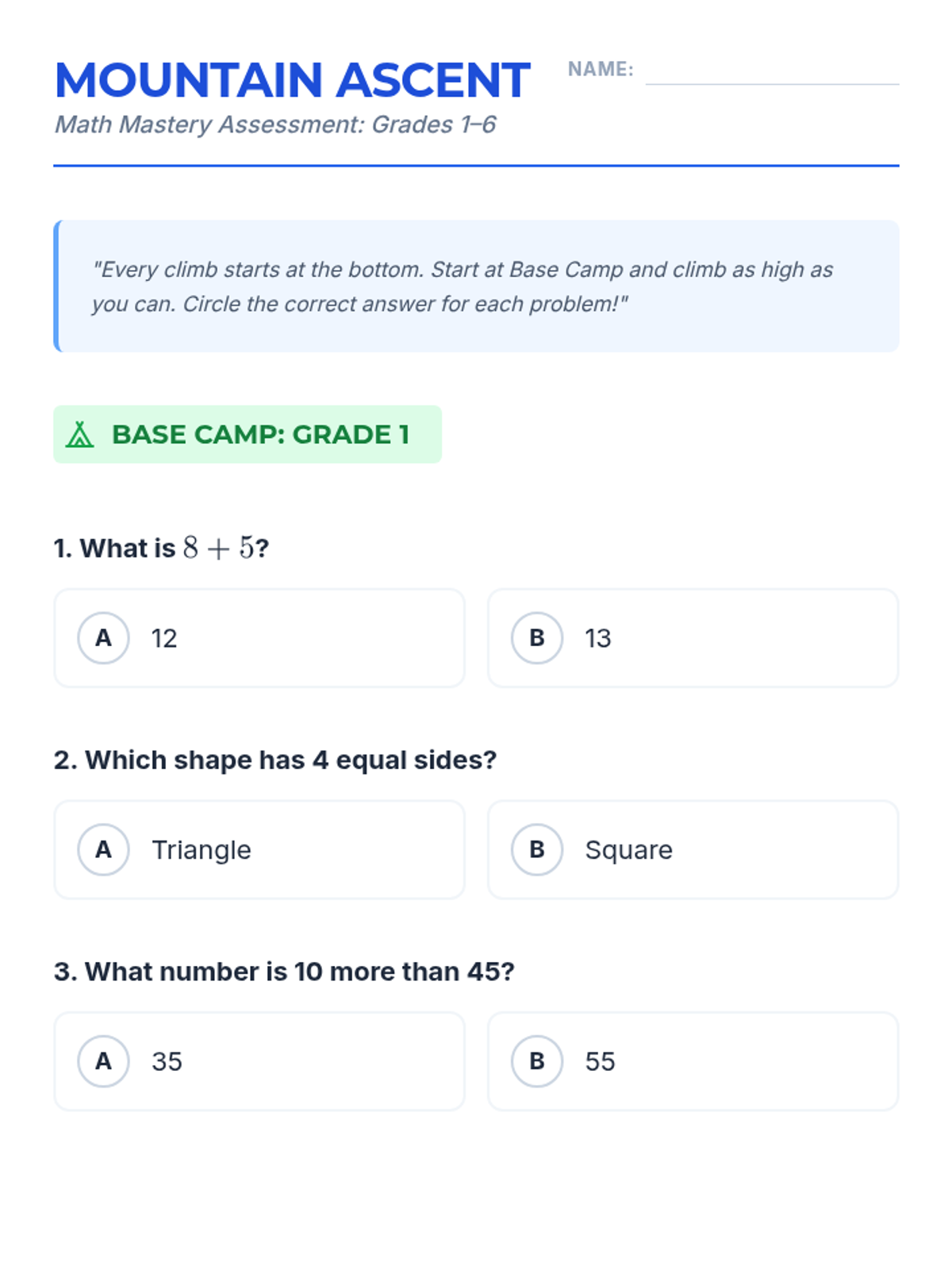
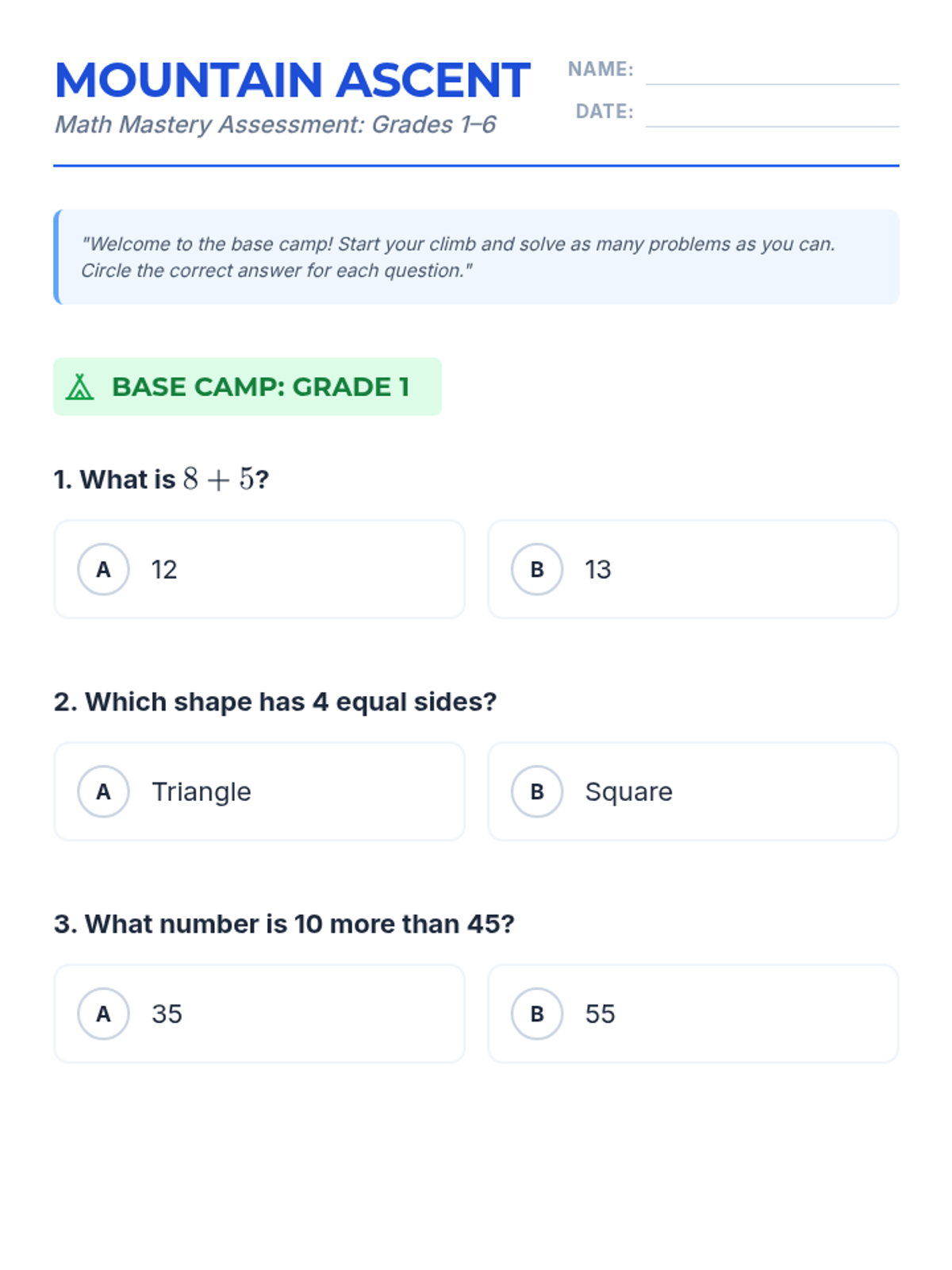
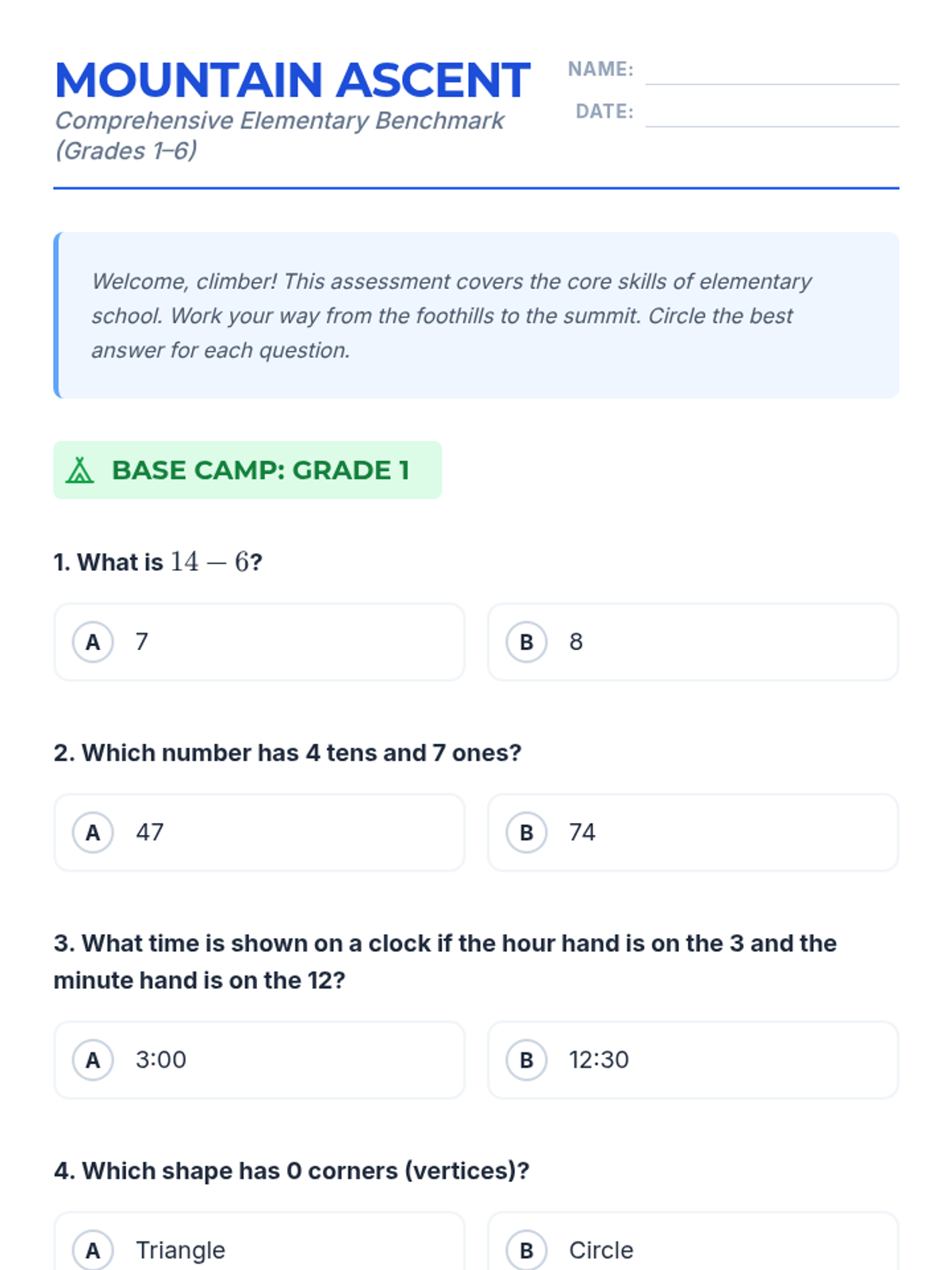
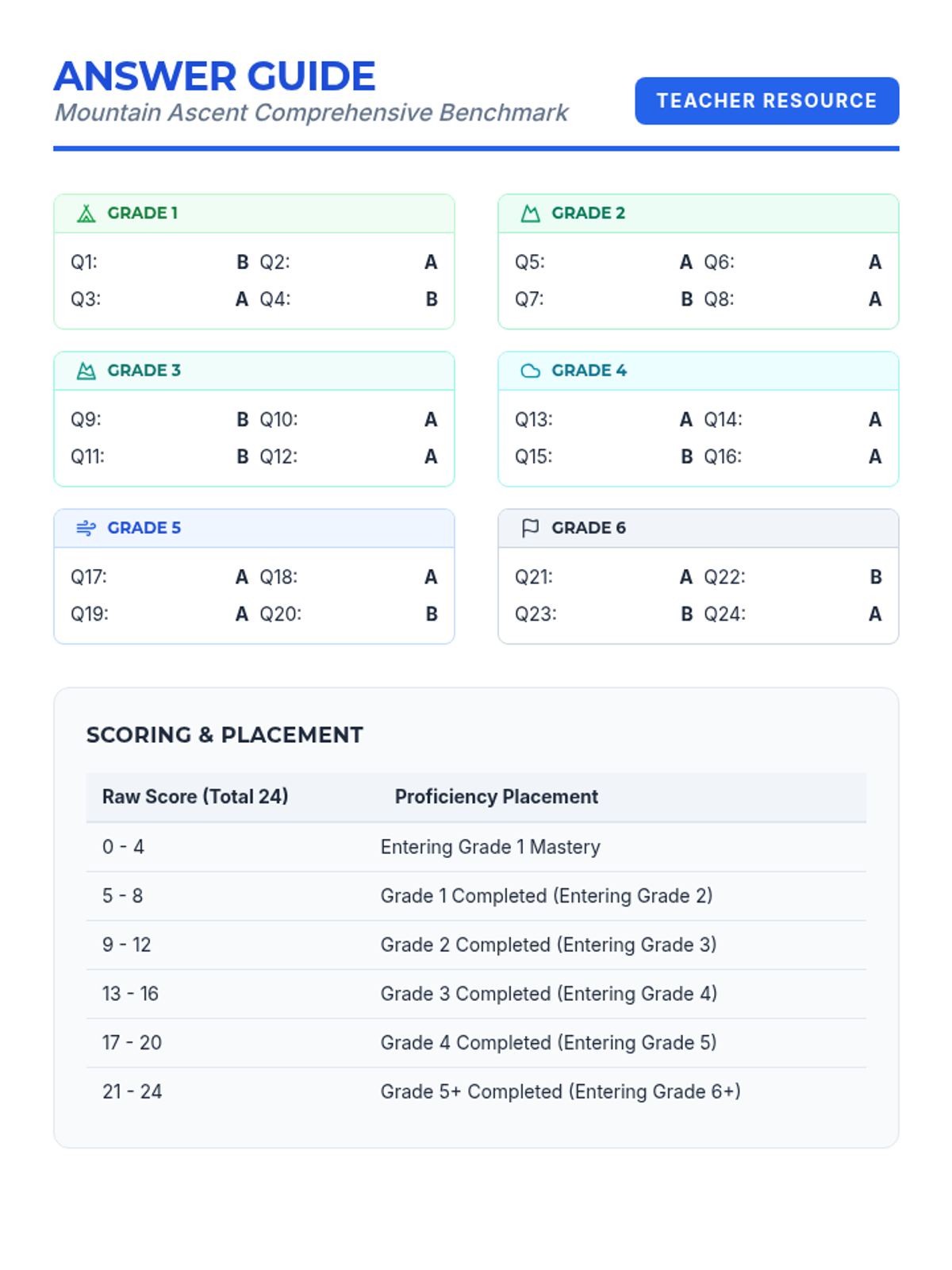
A comprehensive math benchmark assessment covering key standards from Grade 1 through Grade 6, designed to track student progress and identify skill gaps.
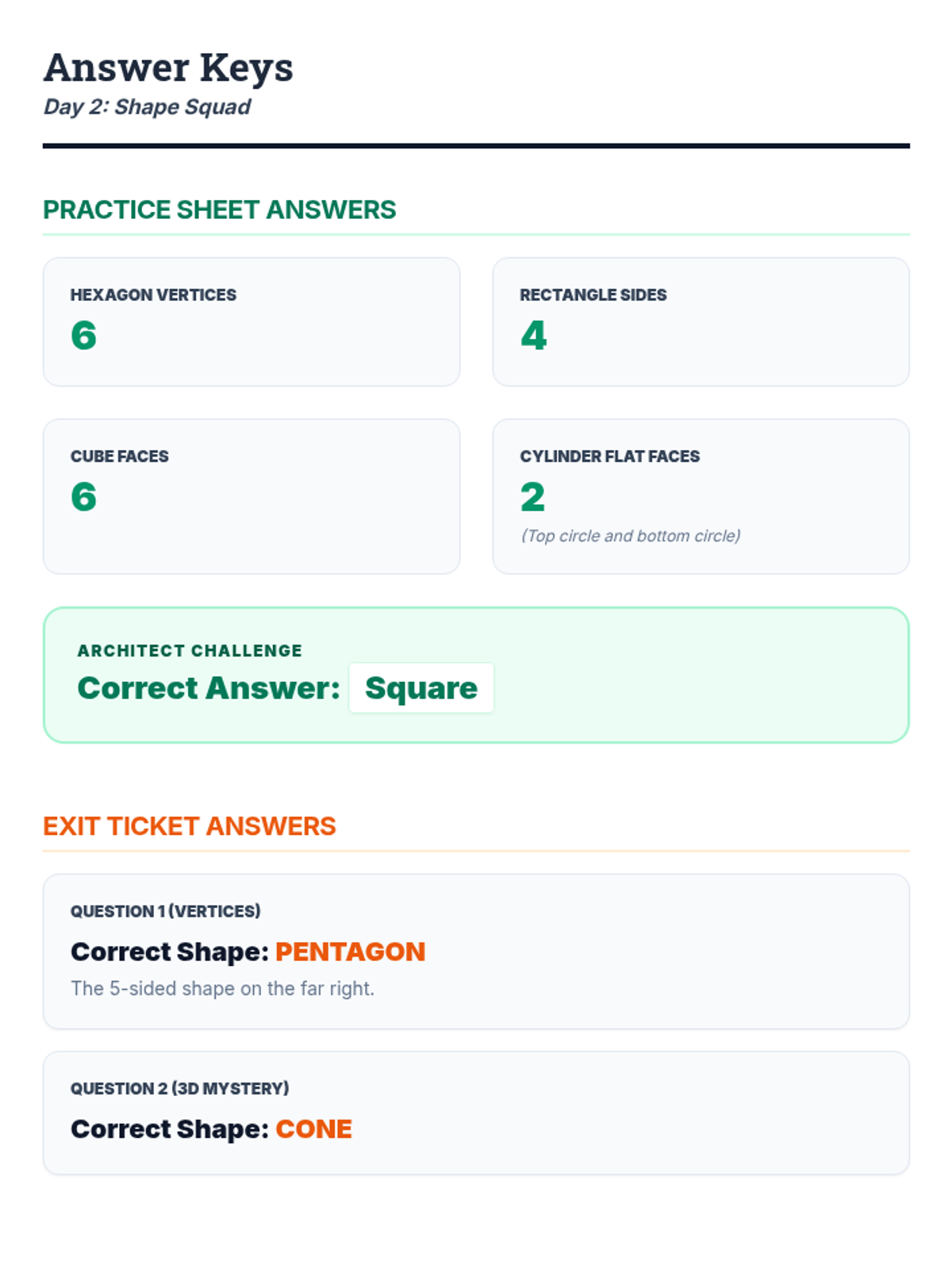
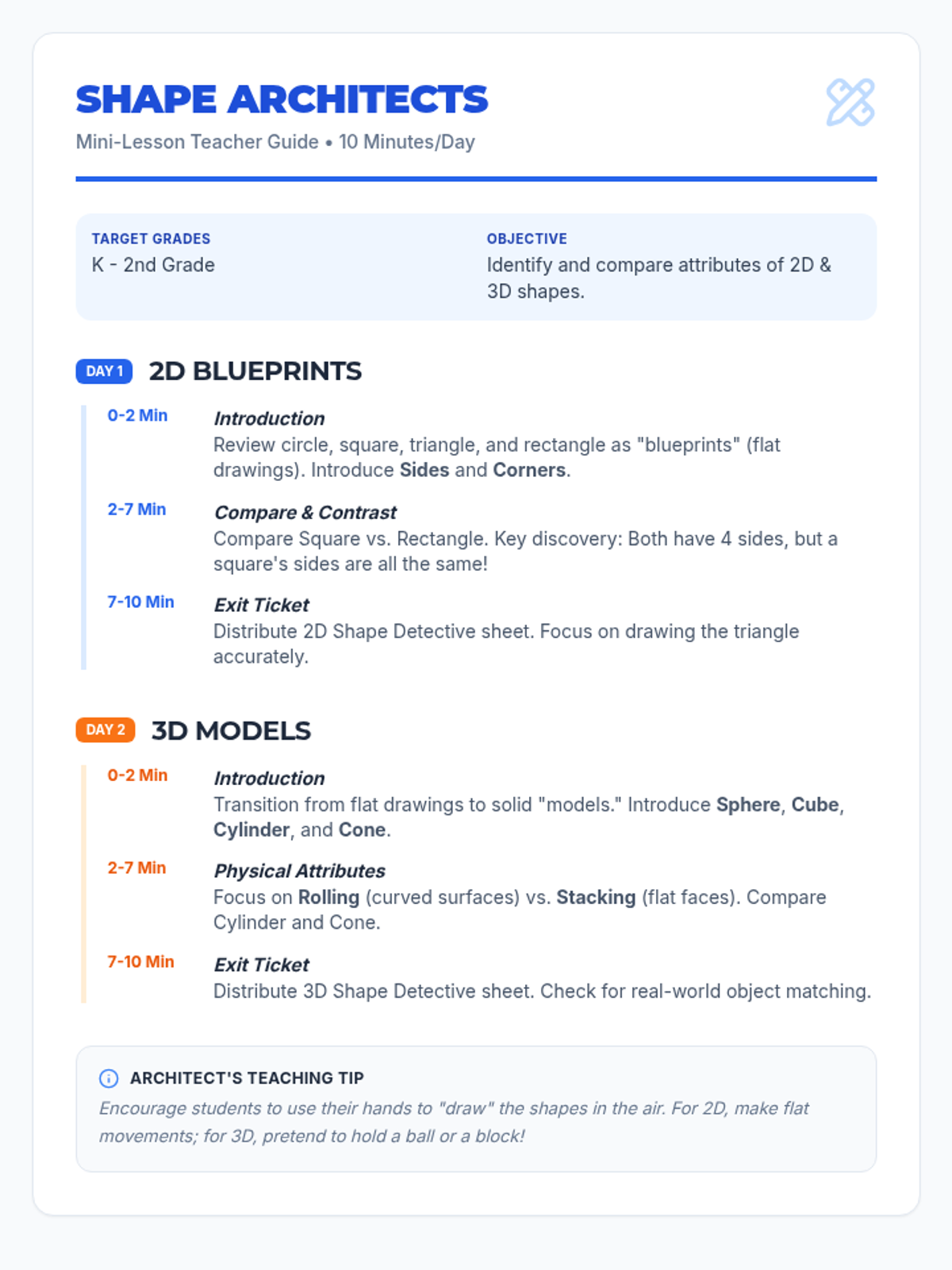
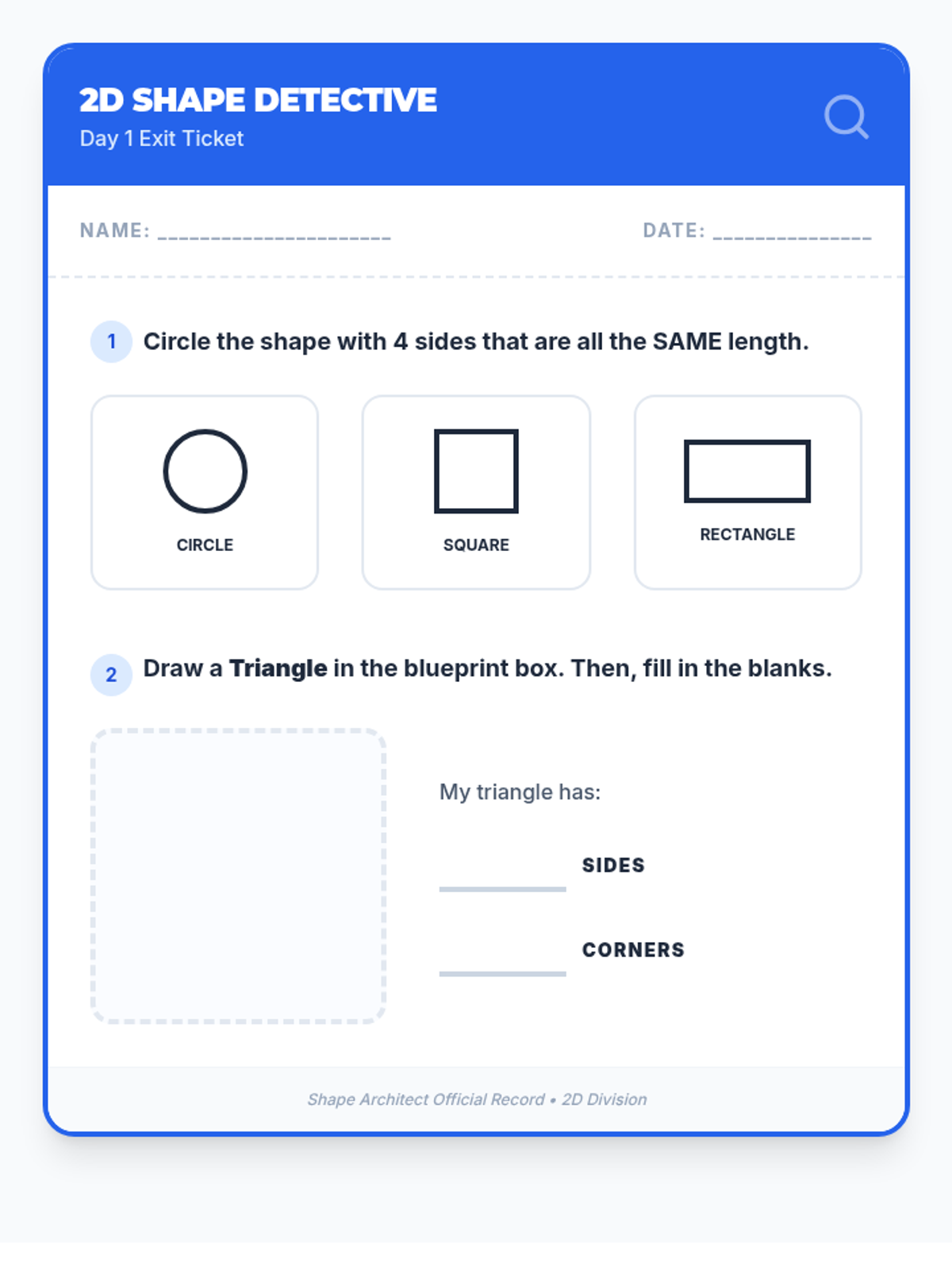
A two-day mini-lesson sequence focused on identifying, describing, and comparing 2D and 3D shapes through the lens of a "Shape Architect". Day 1 covers flat shapes (circles, squares, triangles, rectangles), while Day 2 explores solid shapes (spheres, cubes, cylinders, cones).
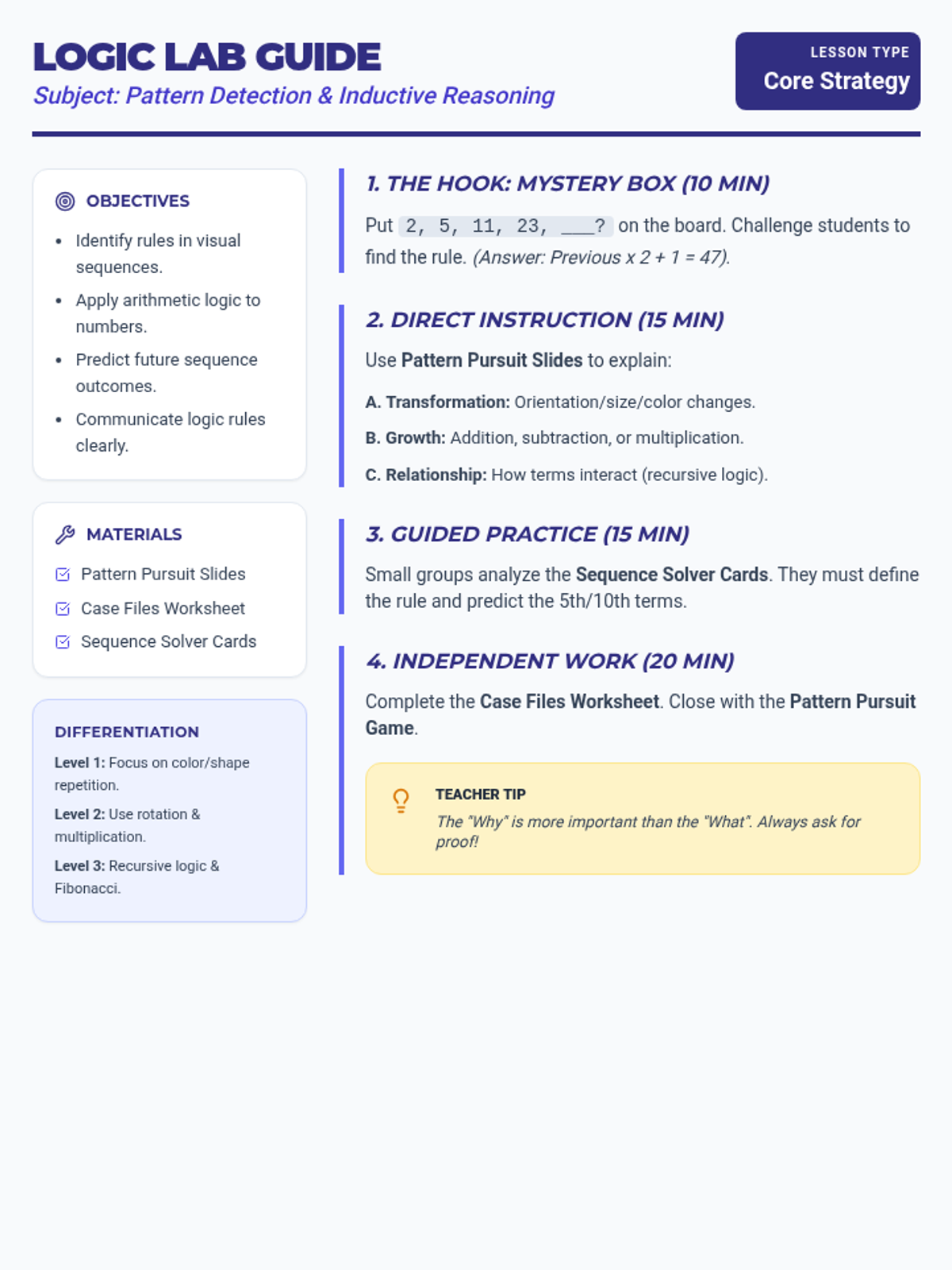
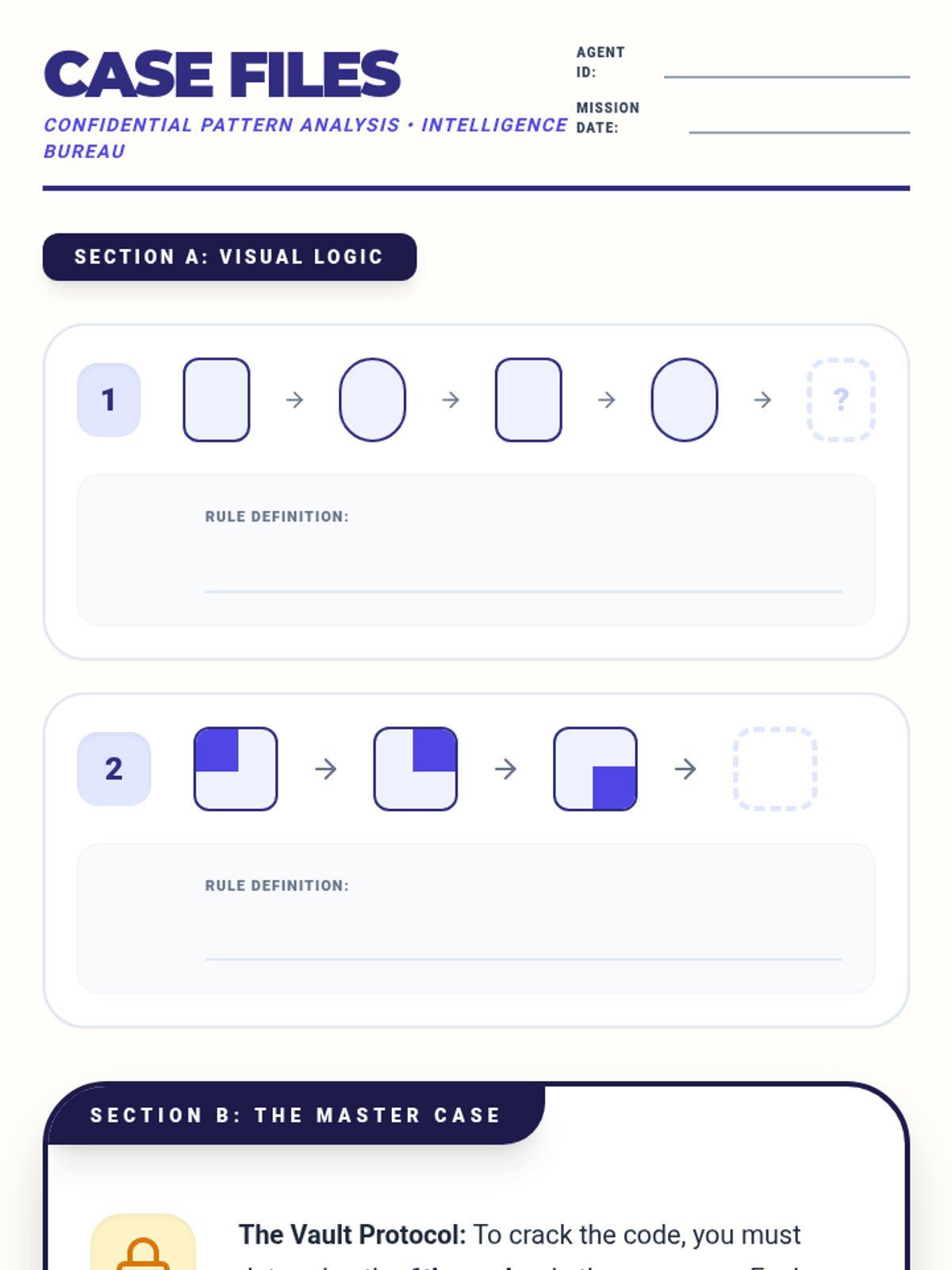
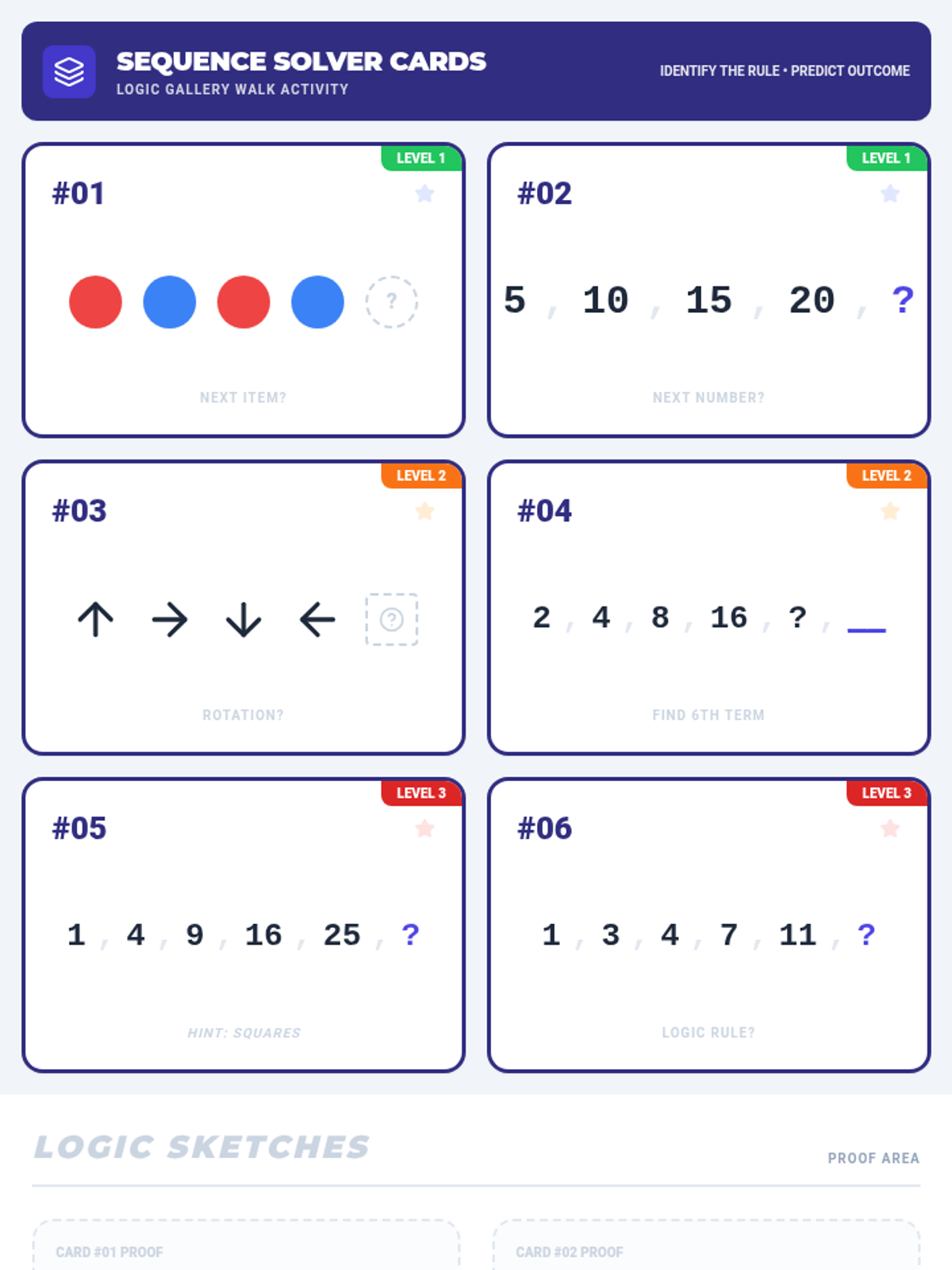
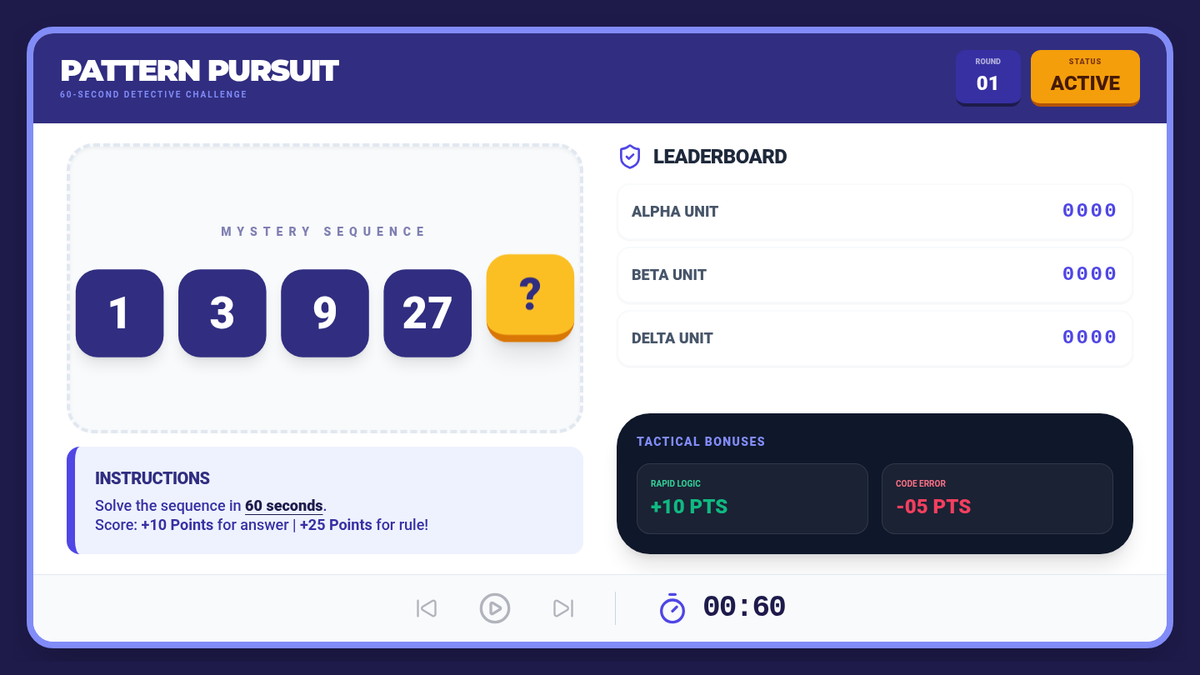
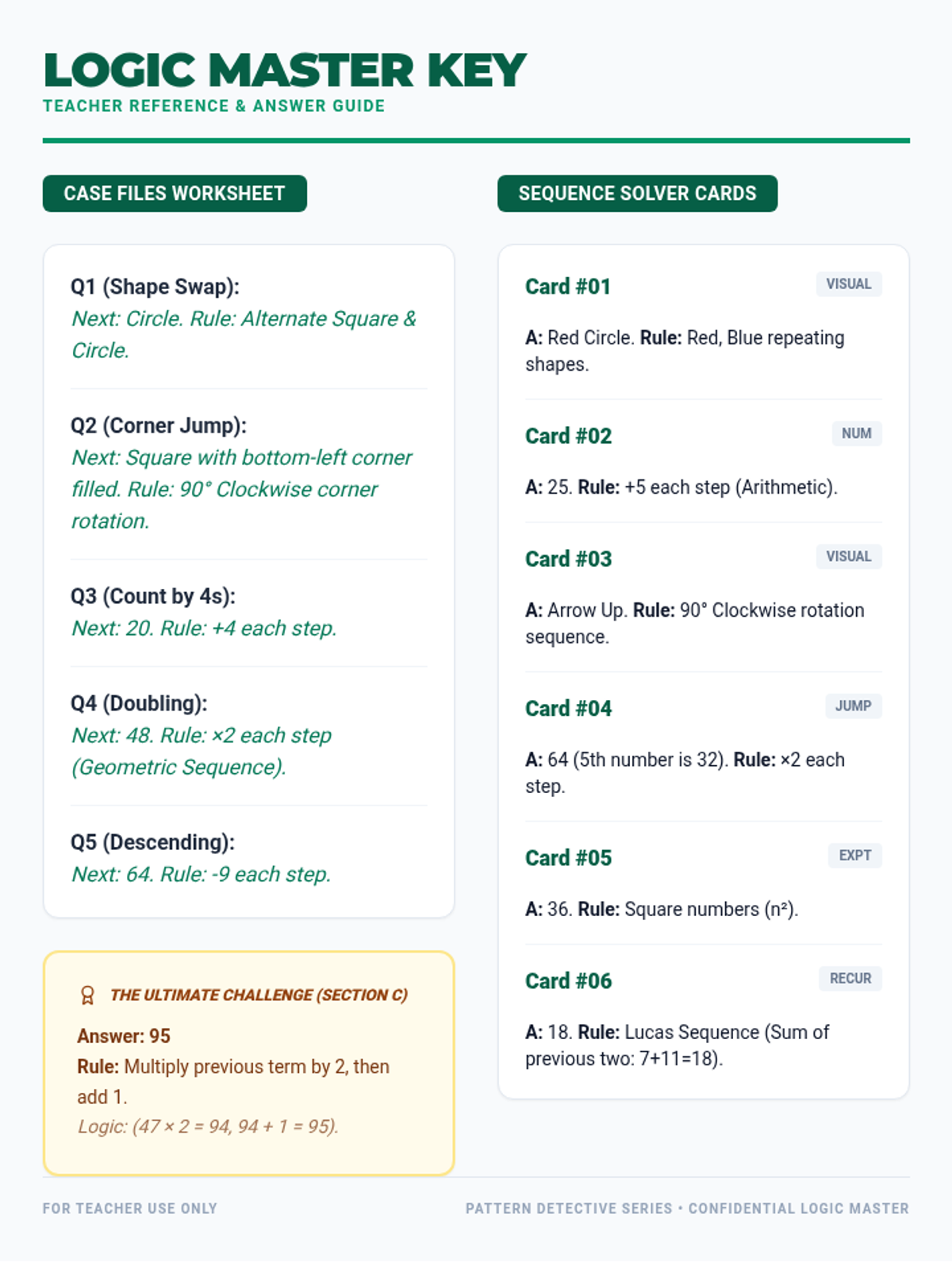
A comprehensive logic lesson where students act as detectives to identify rules in visual and numerical sequences, building inductive reasoning and prediction skills.
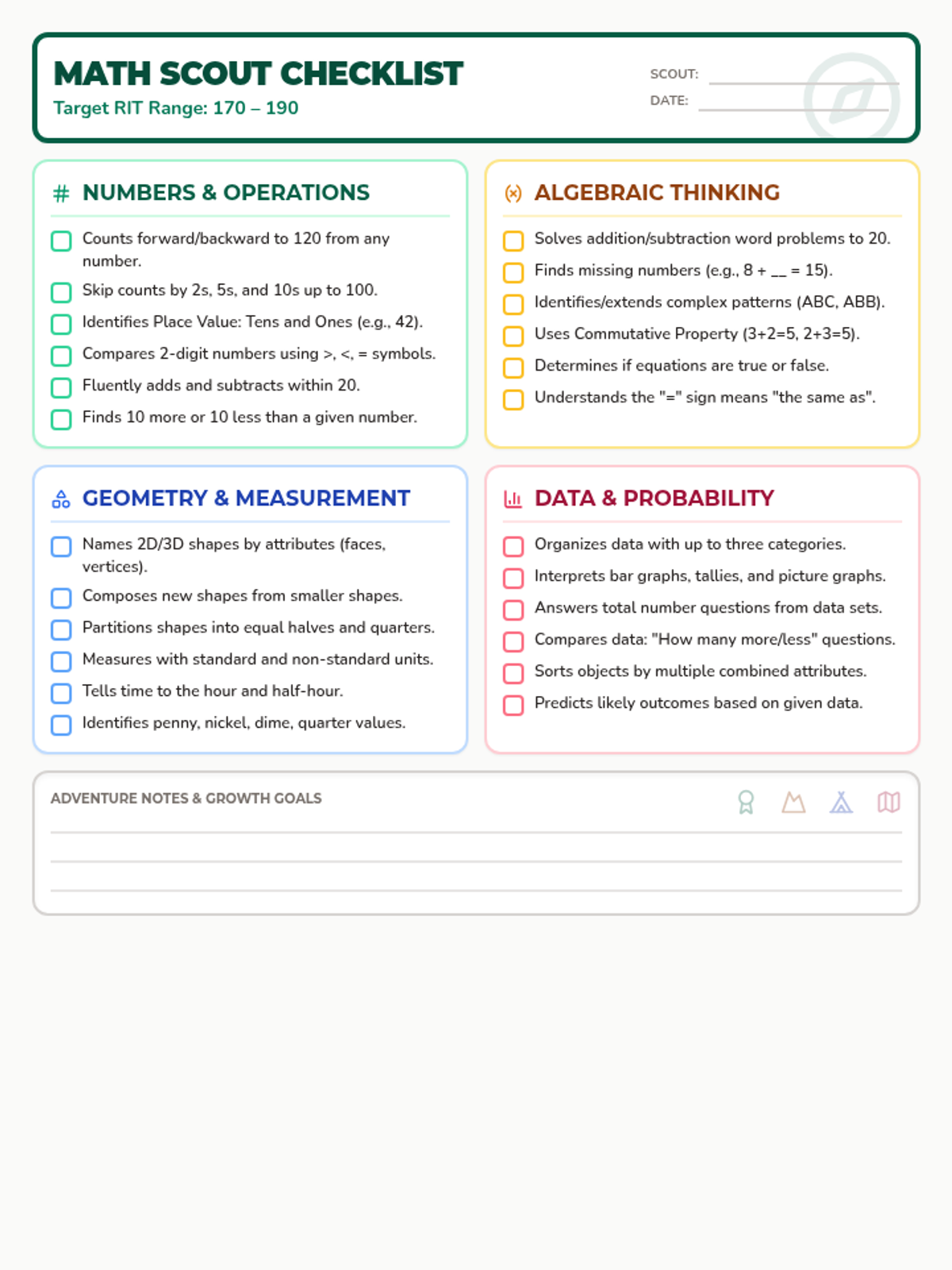
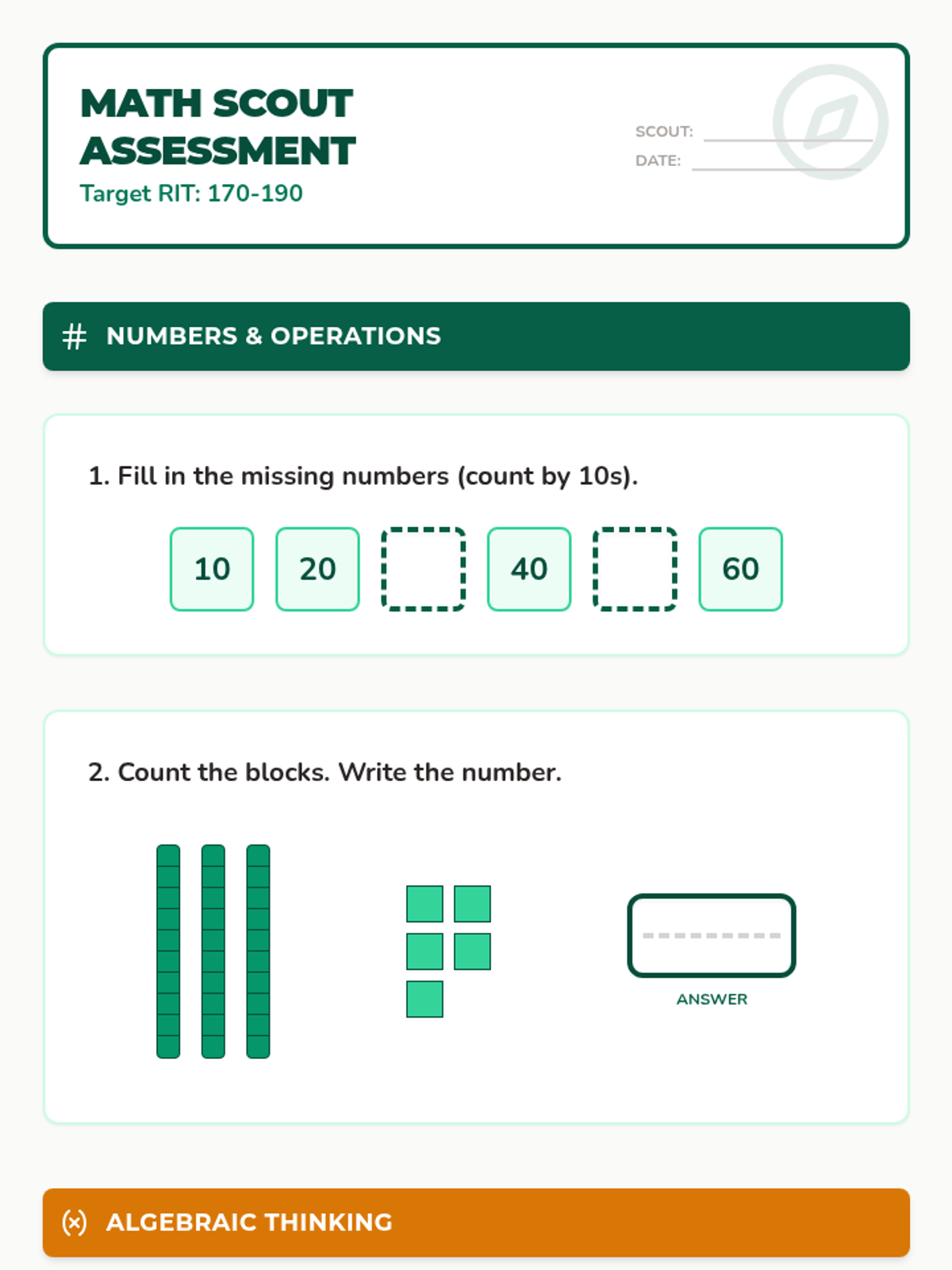
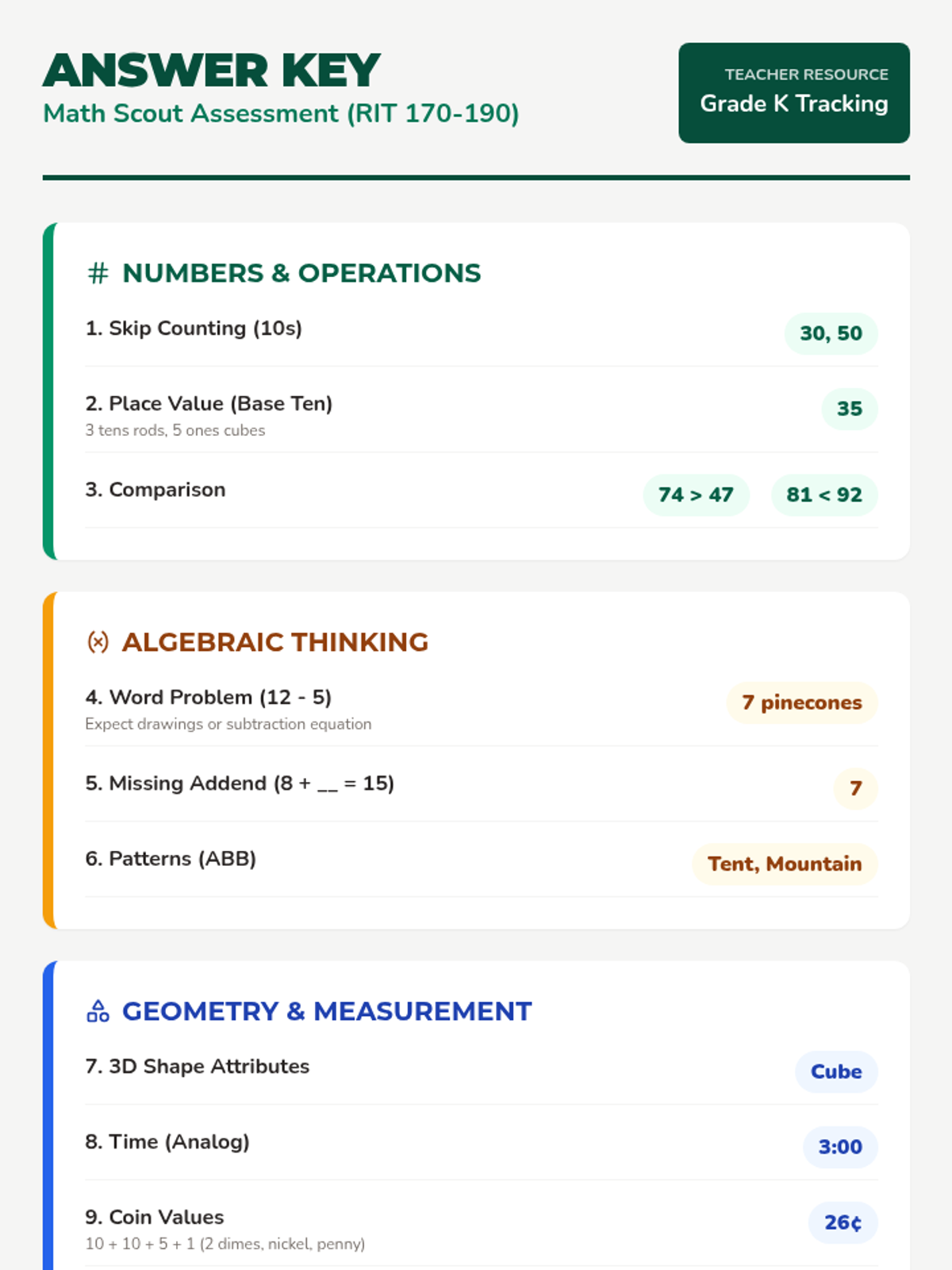
A comprehensive tracking resource for Kindergarten students aiming for advanced NWEA MAP RIT scores in mathematics, covering all key domains.
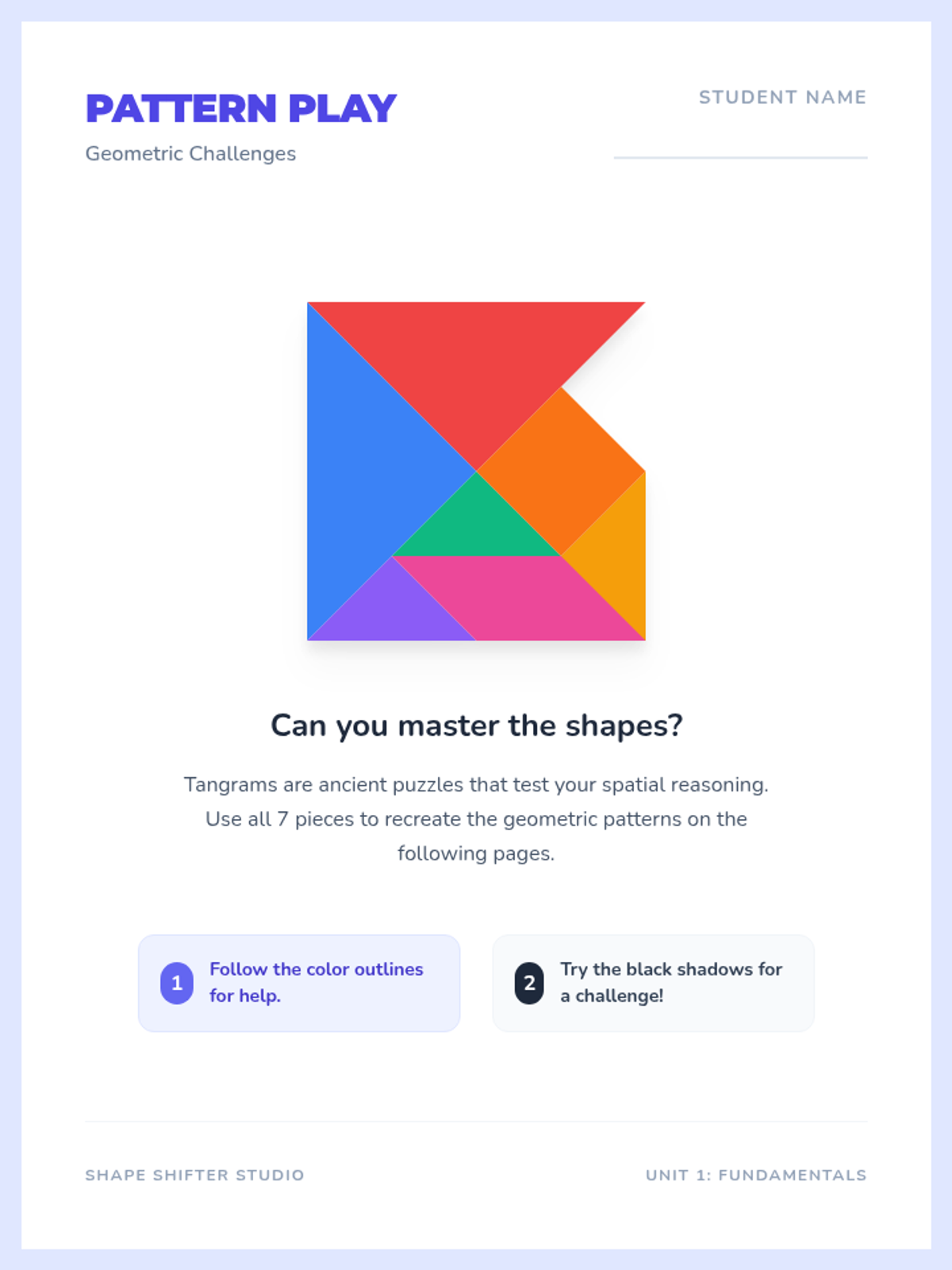
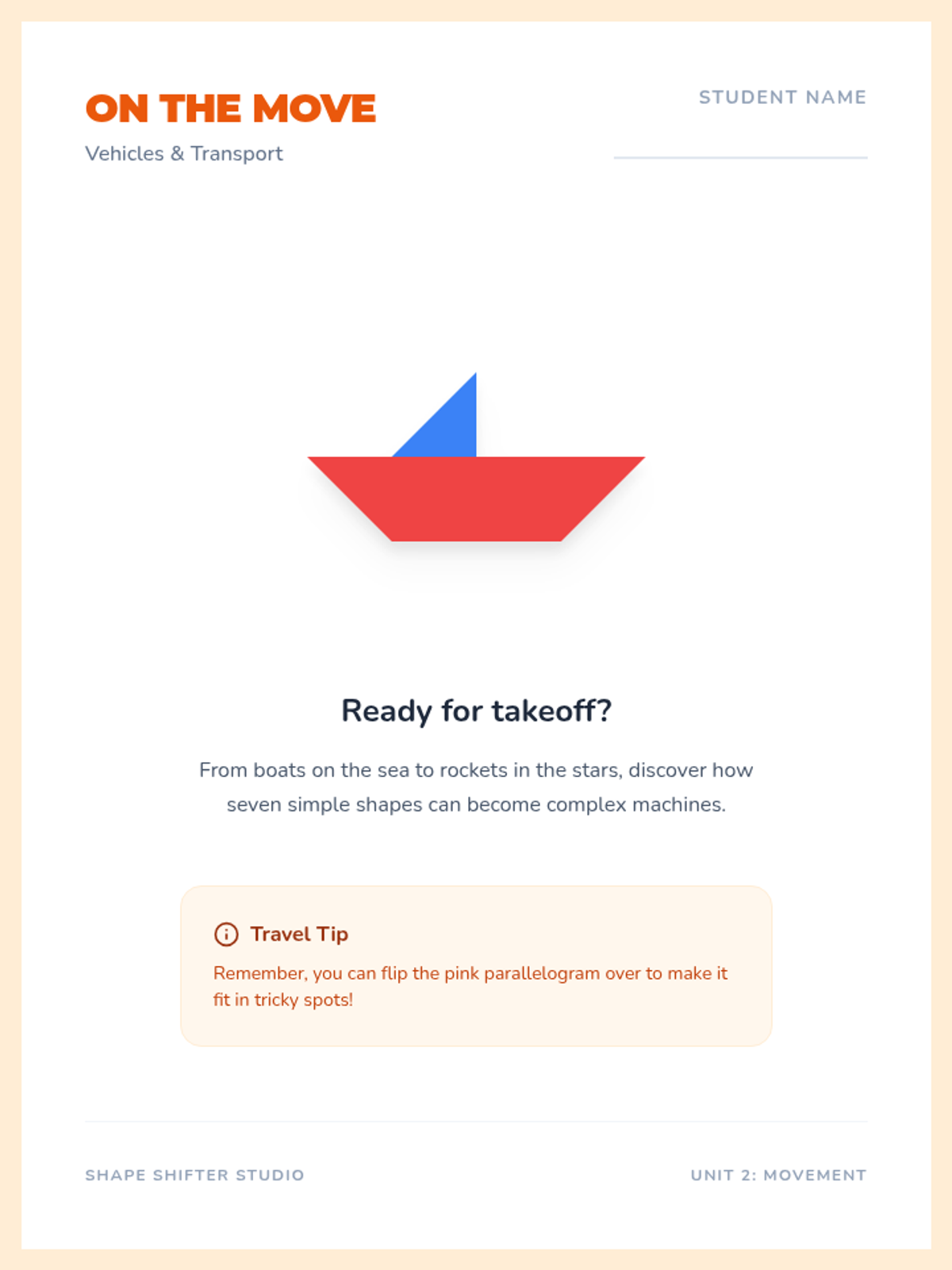
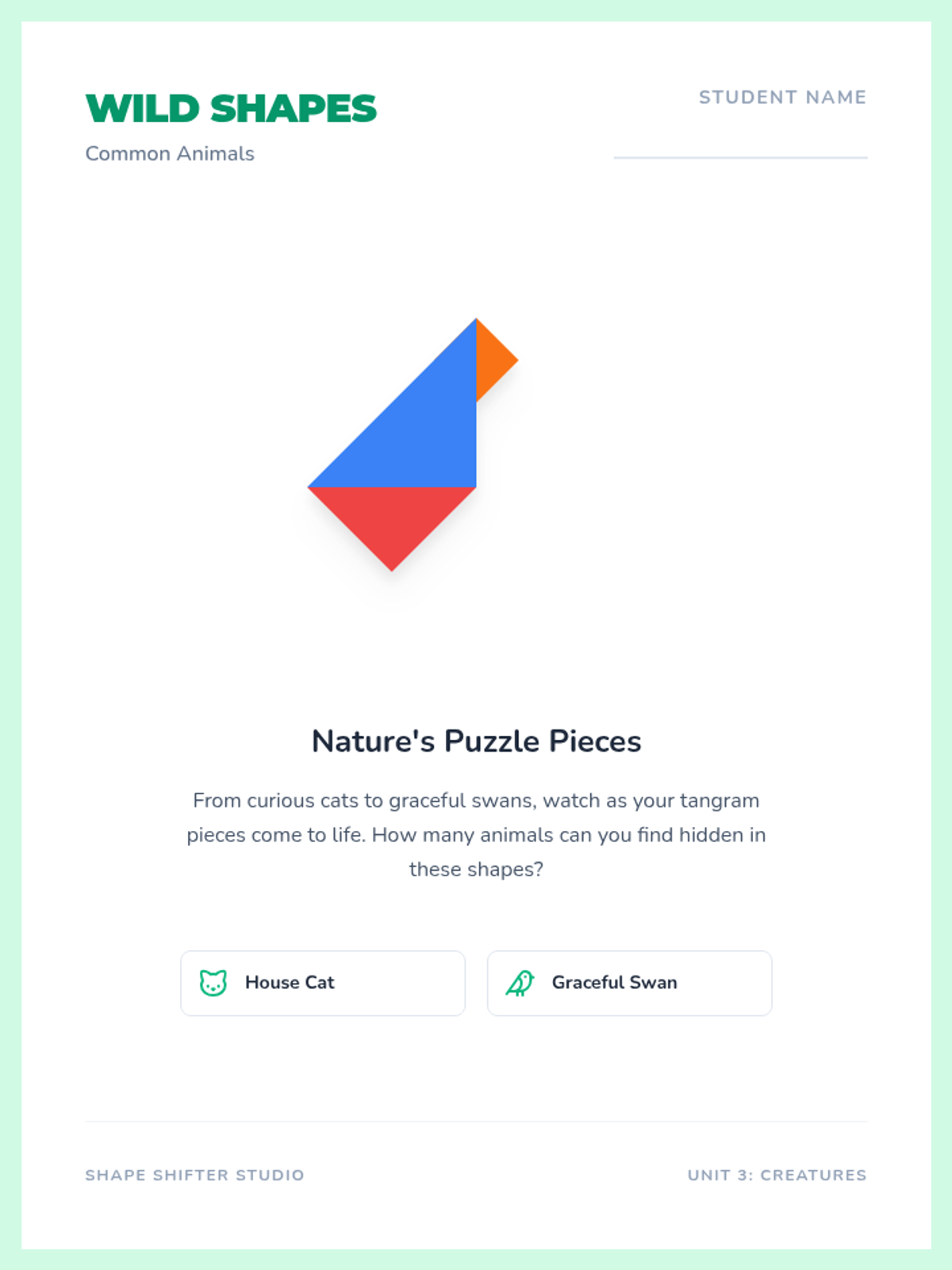
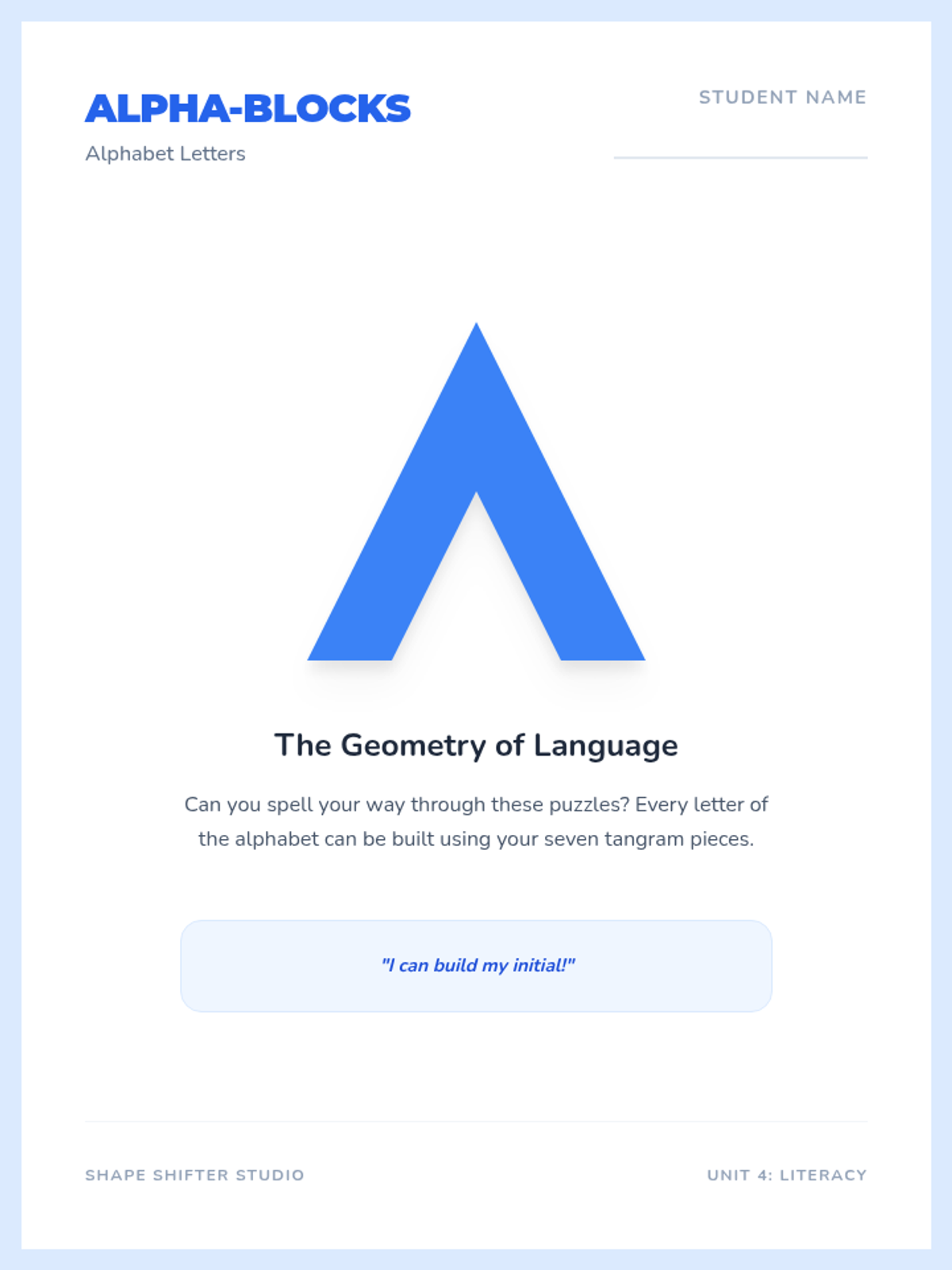
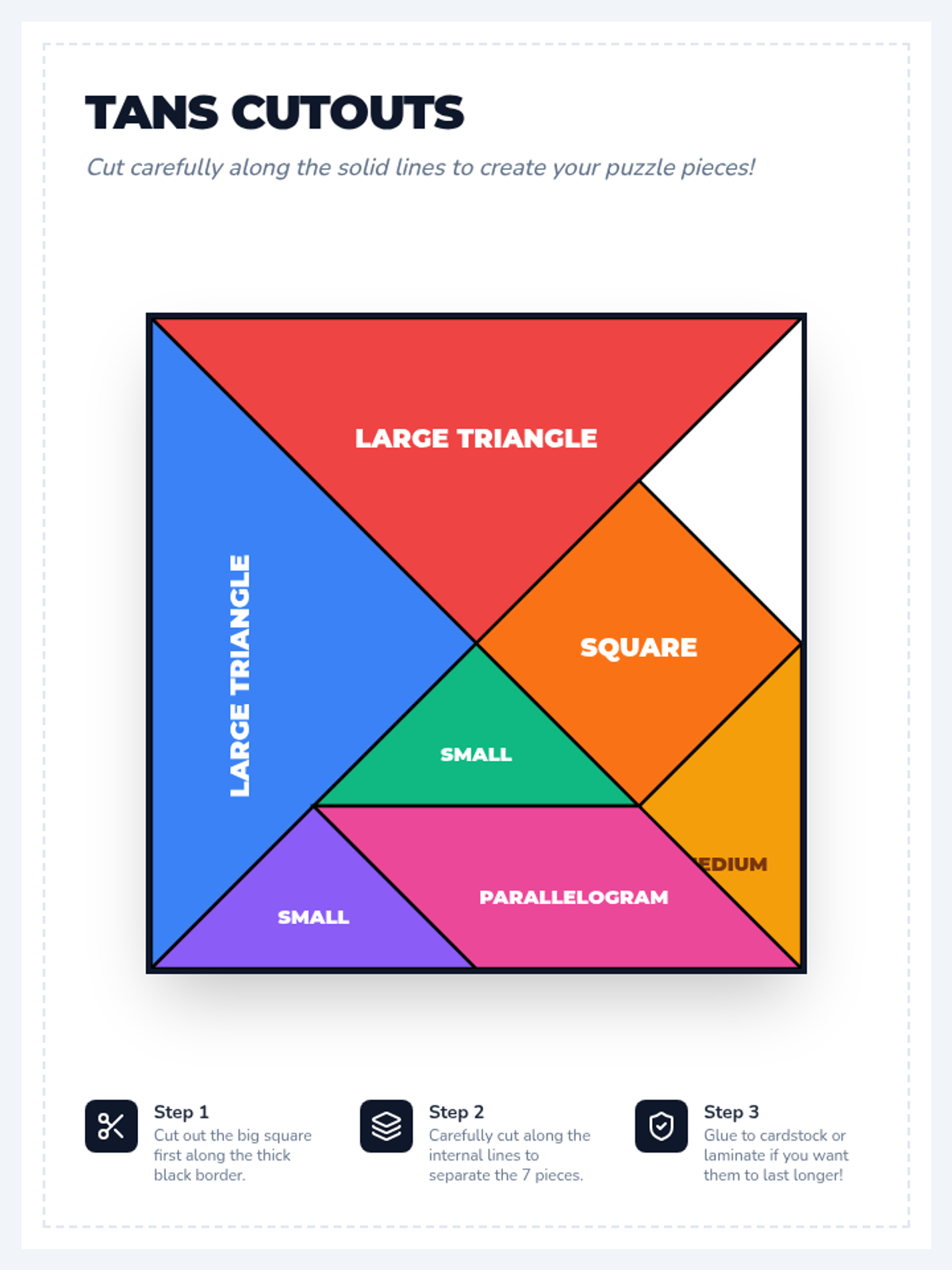
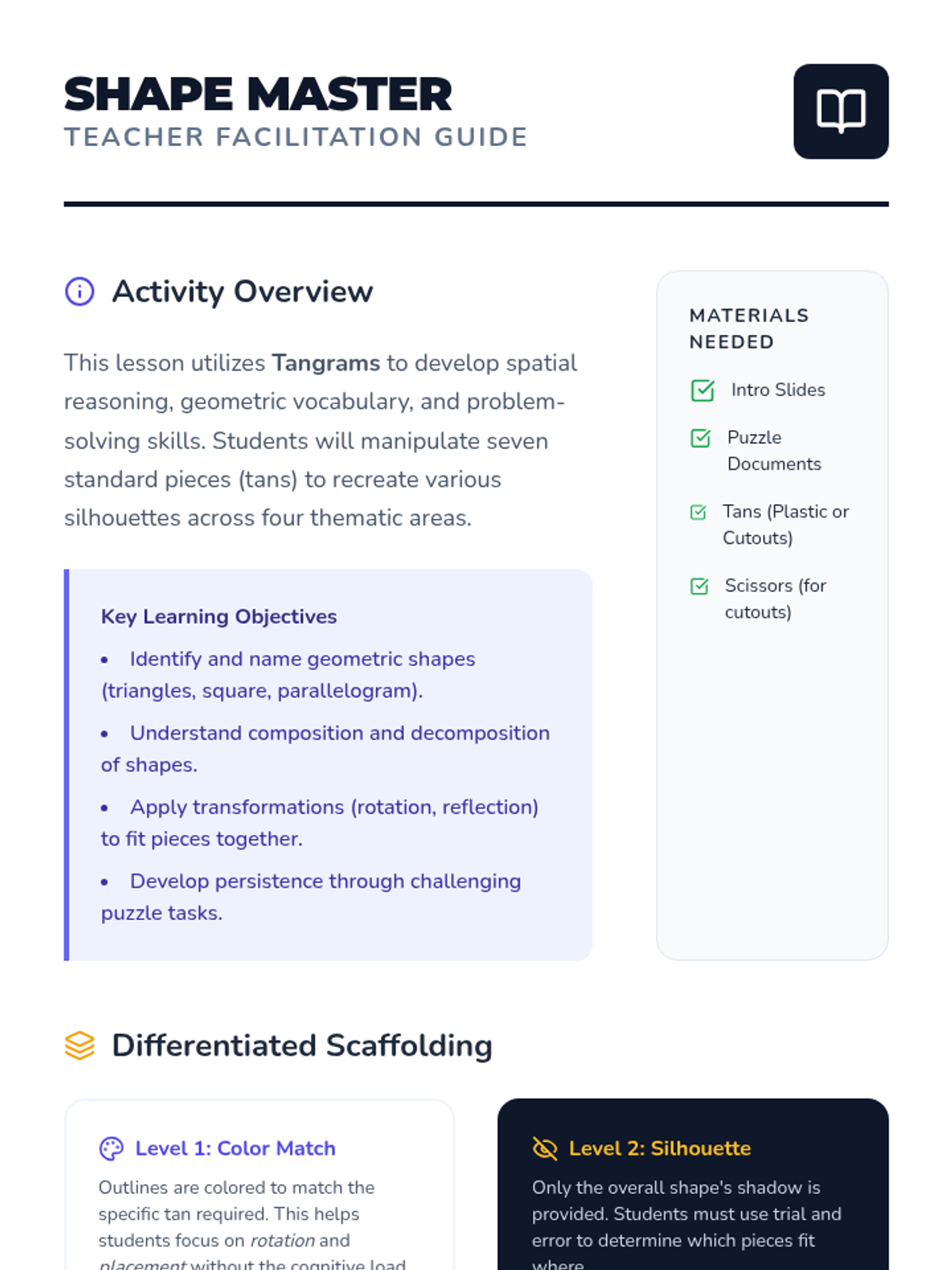
A hands-on exploration of geometry and spatial reasoning using tangrams, featuring puzzles across four diverse themes with varying difficulty levels.
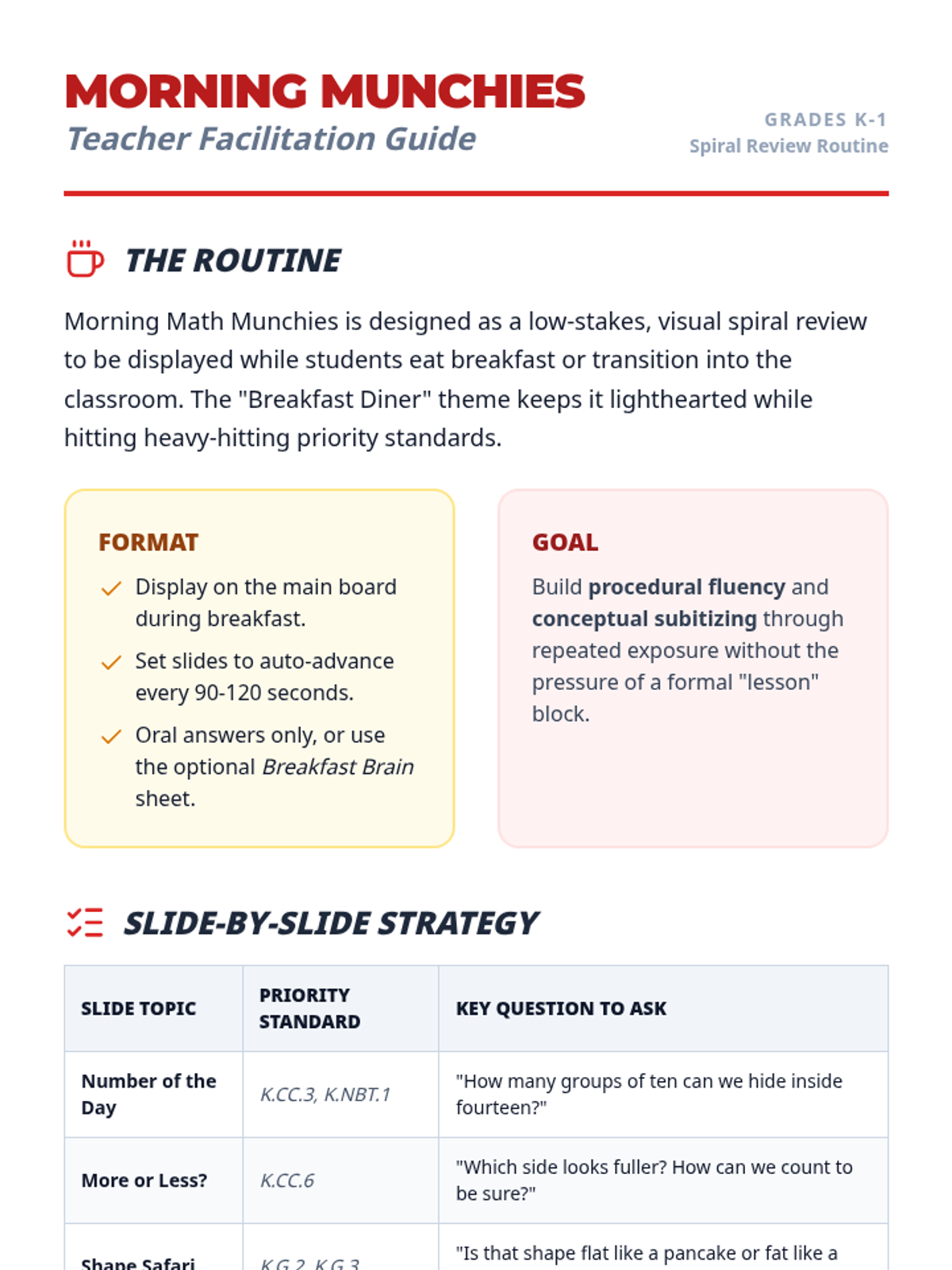
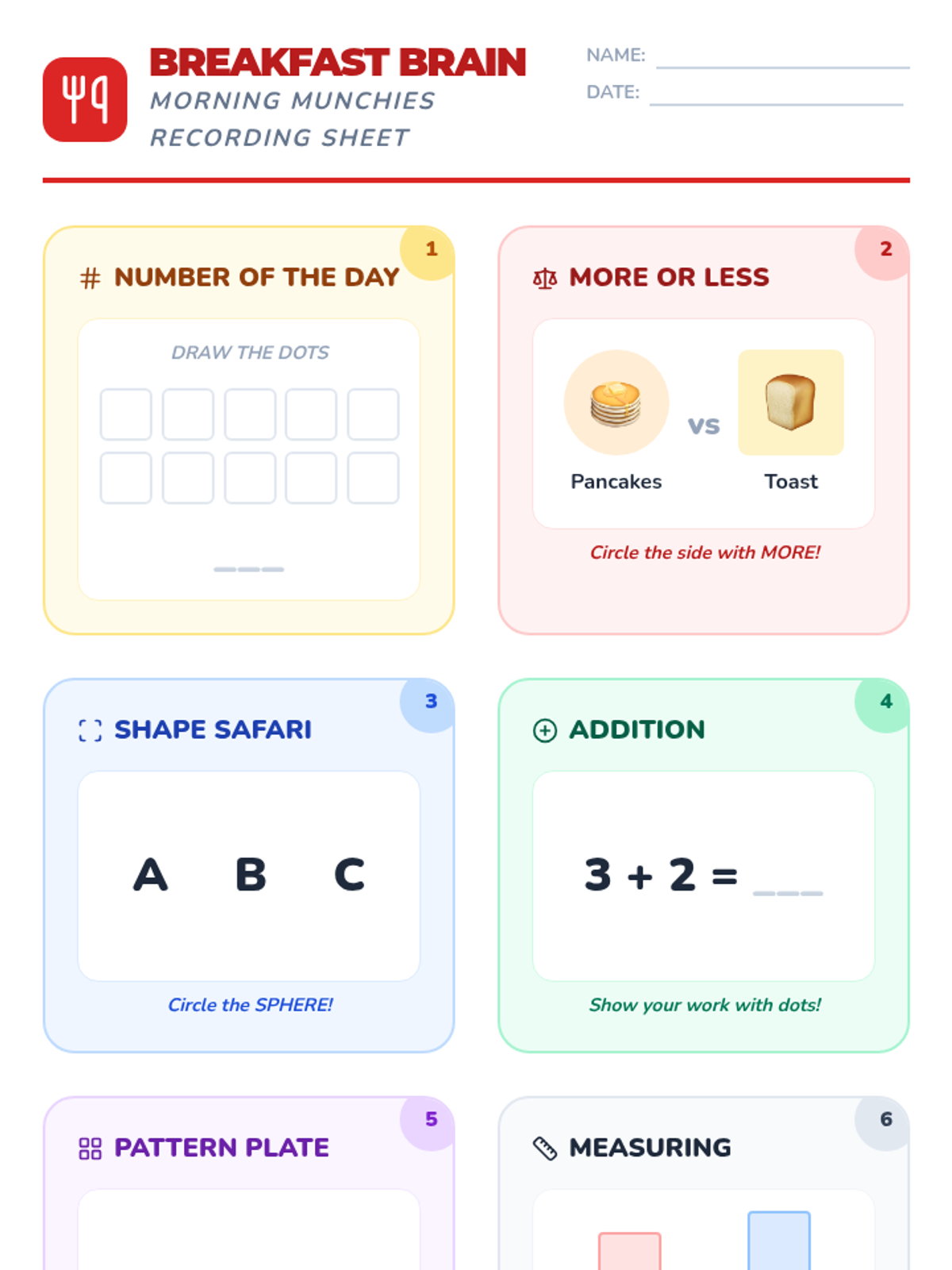
A daily spiral review of priority Kindergarten math standards, designed to be visually engaging and accessible for students to view during breakfast or morning routines.
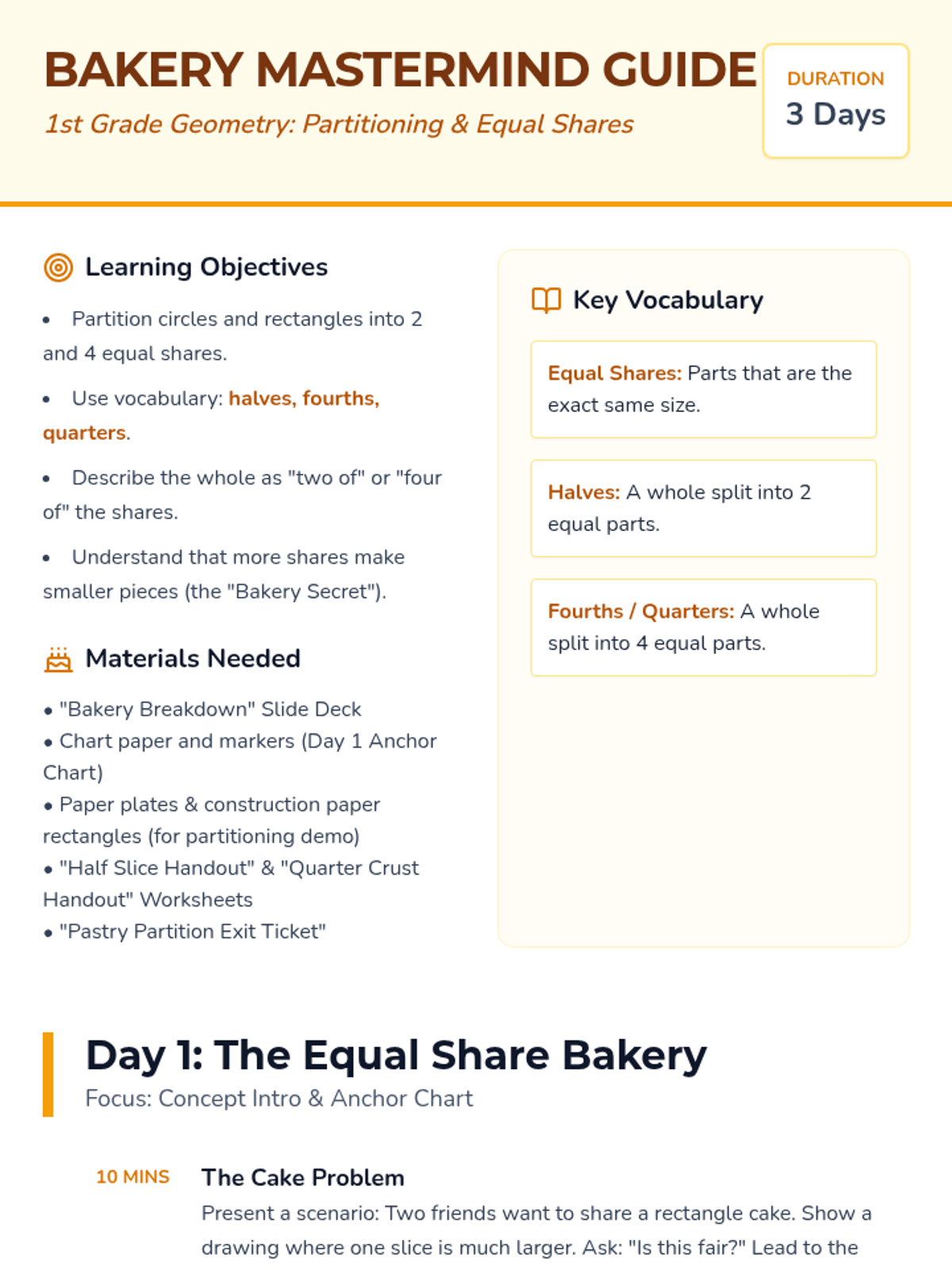
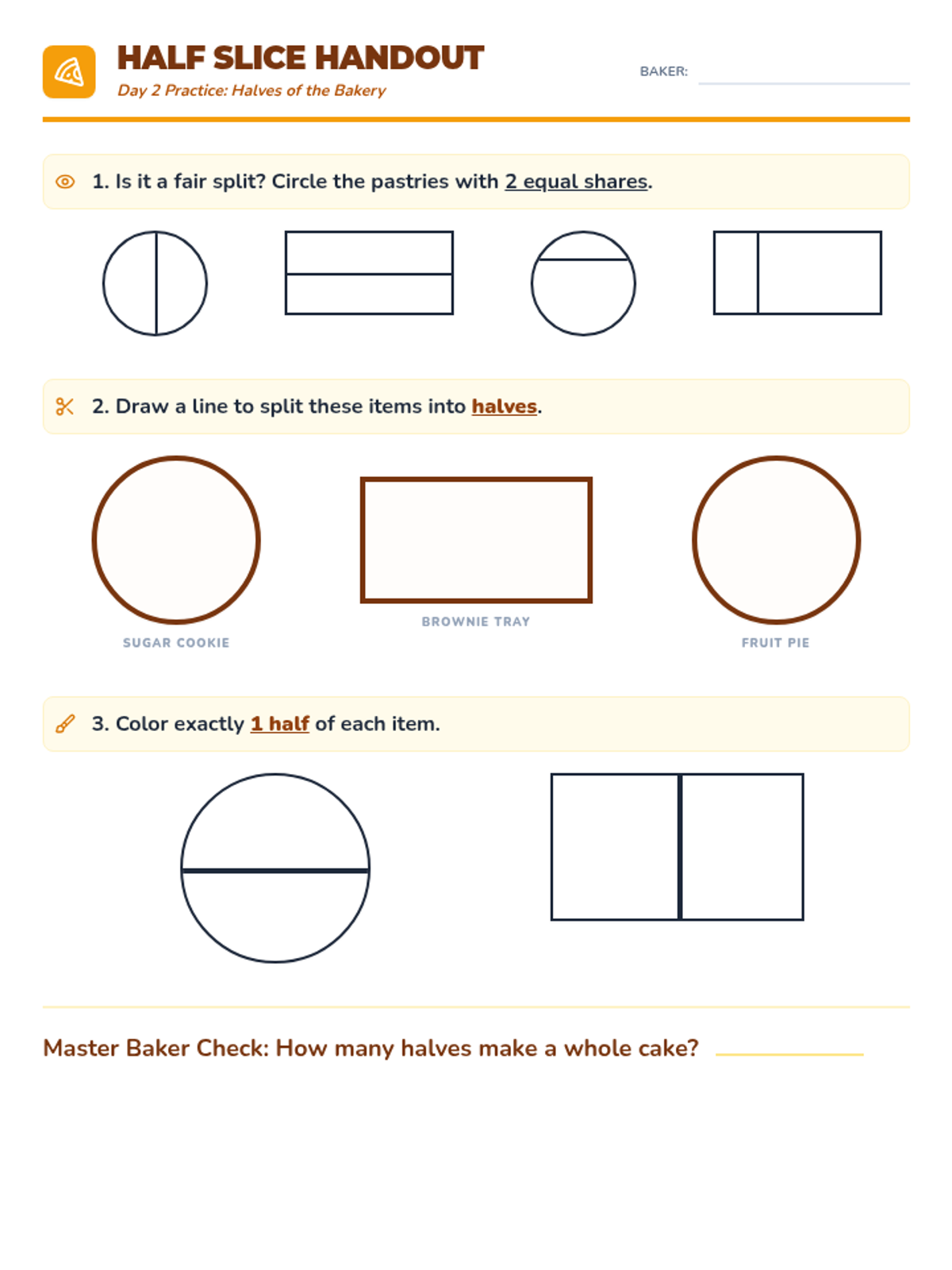
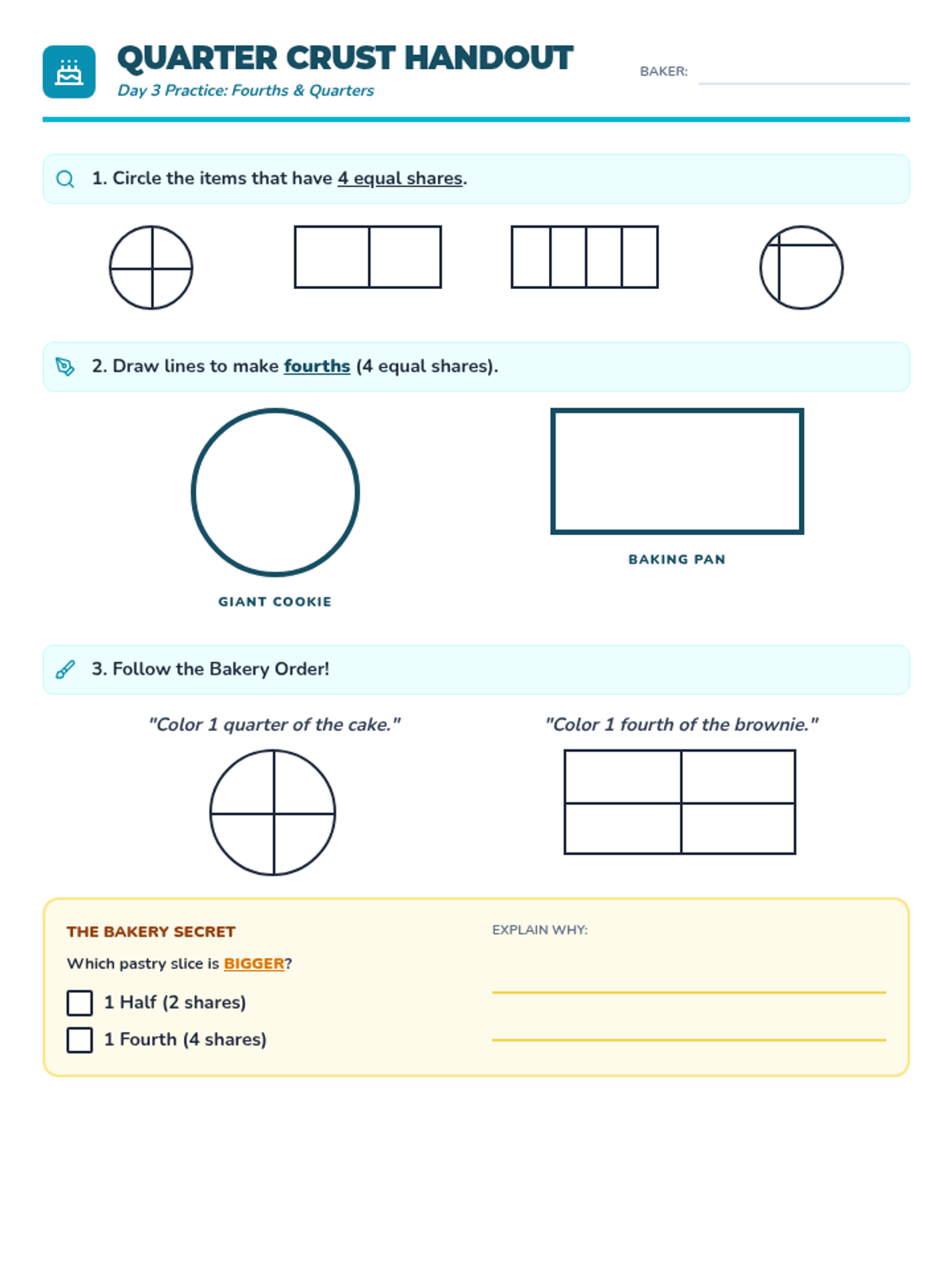
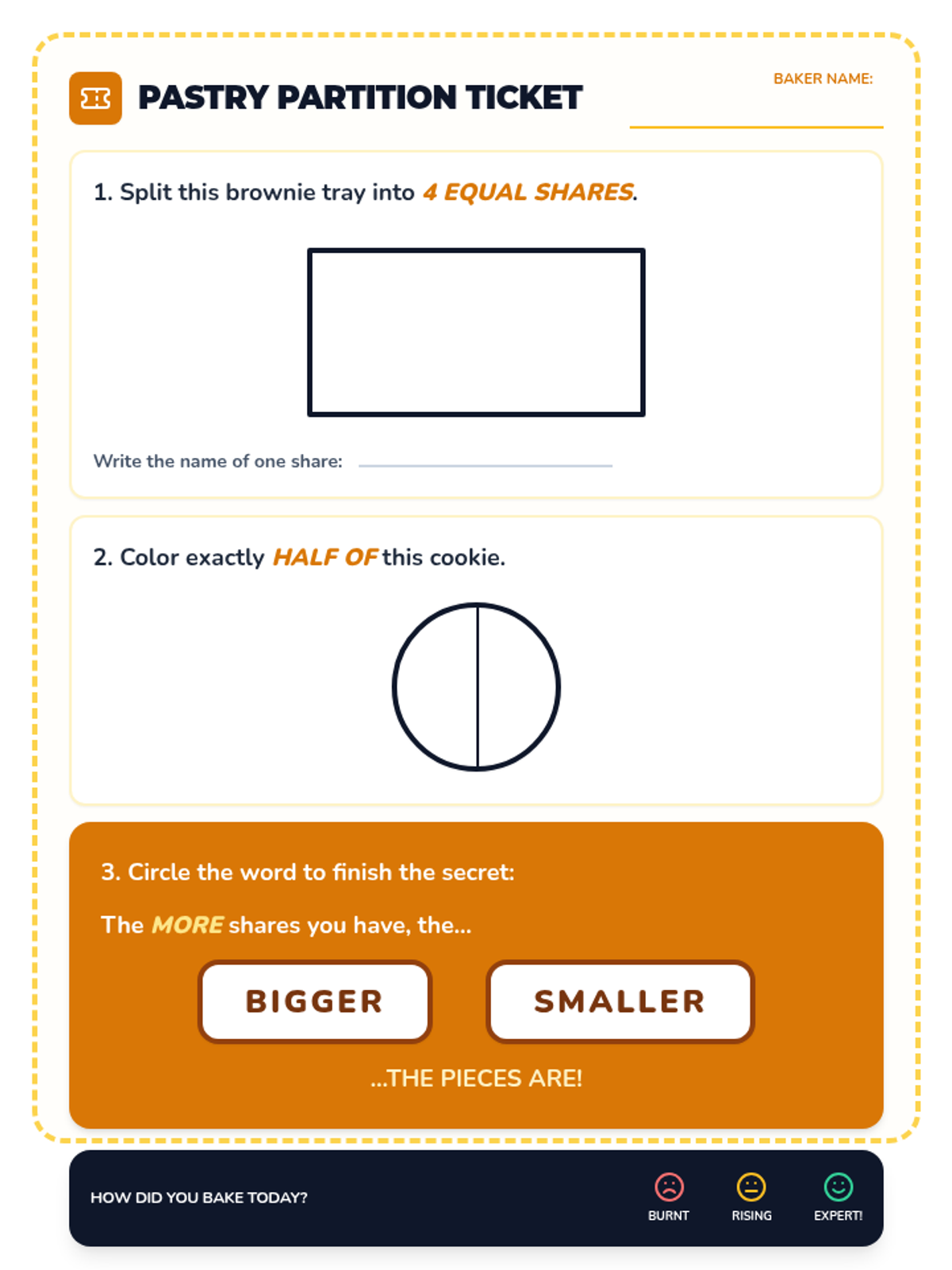
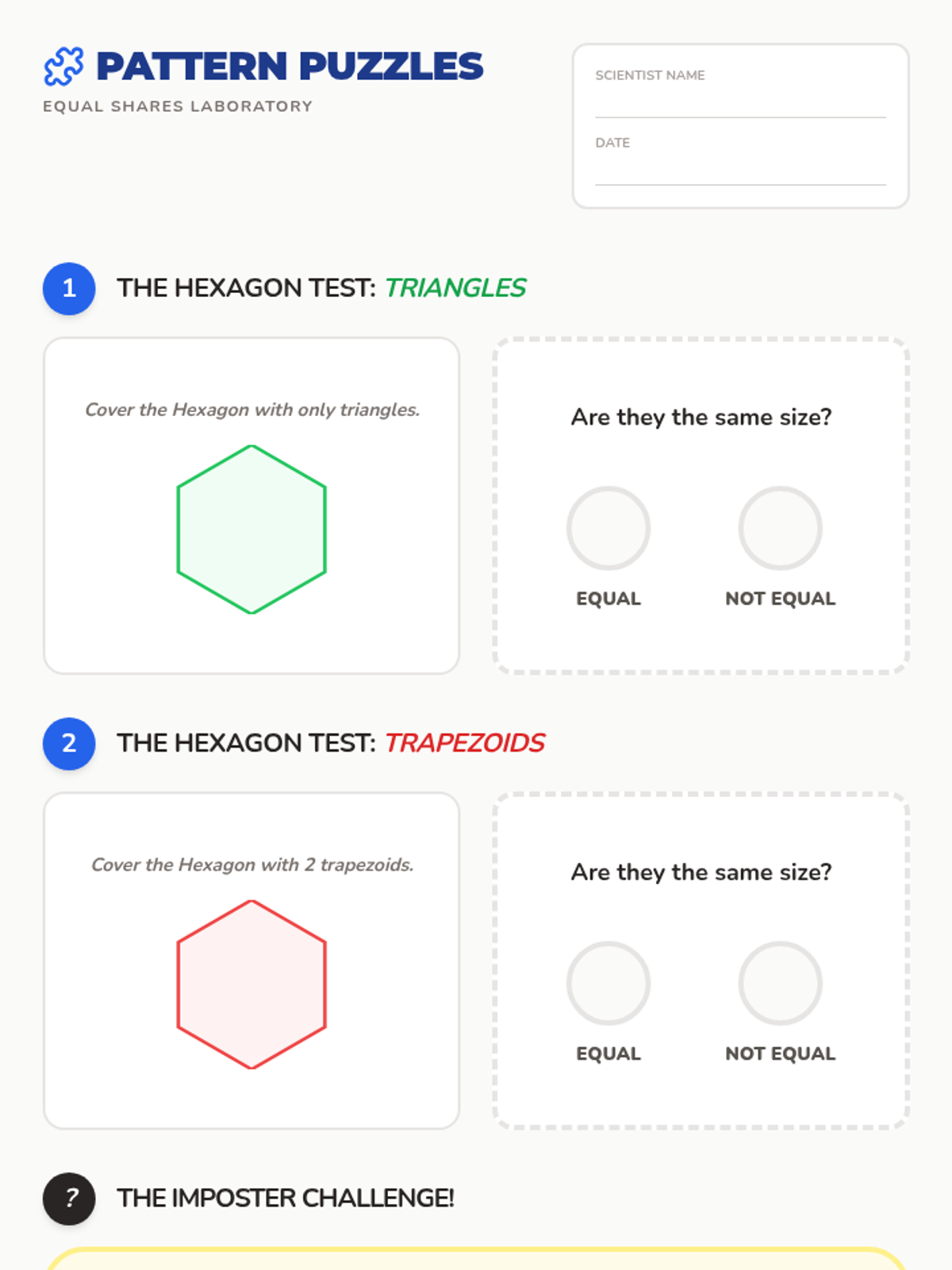
A 3-day lesson series covering the partitioning of circles and rectangles into equal shares (halves and fourths/quarters) through baking.
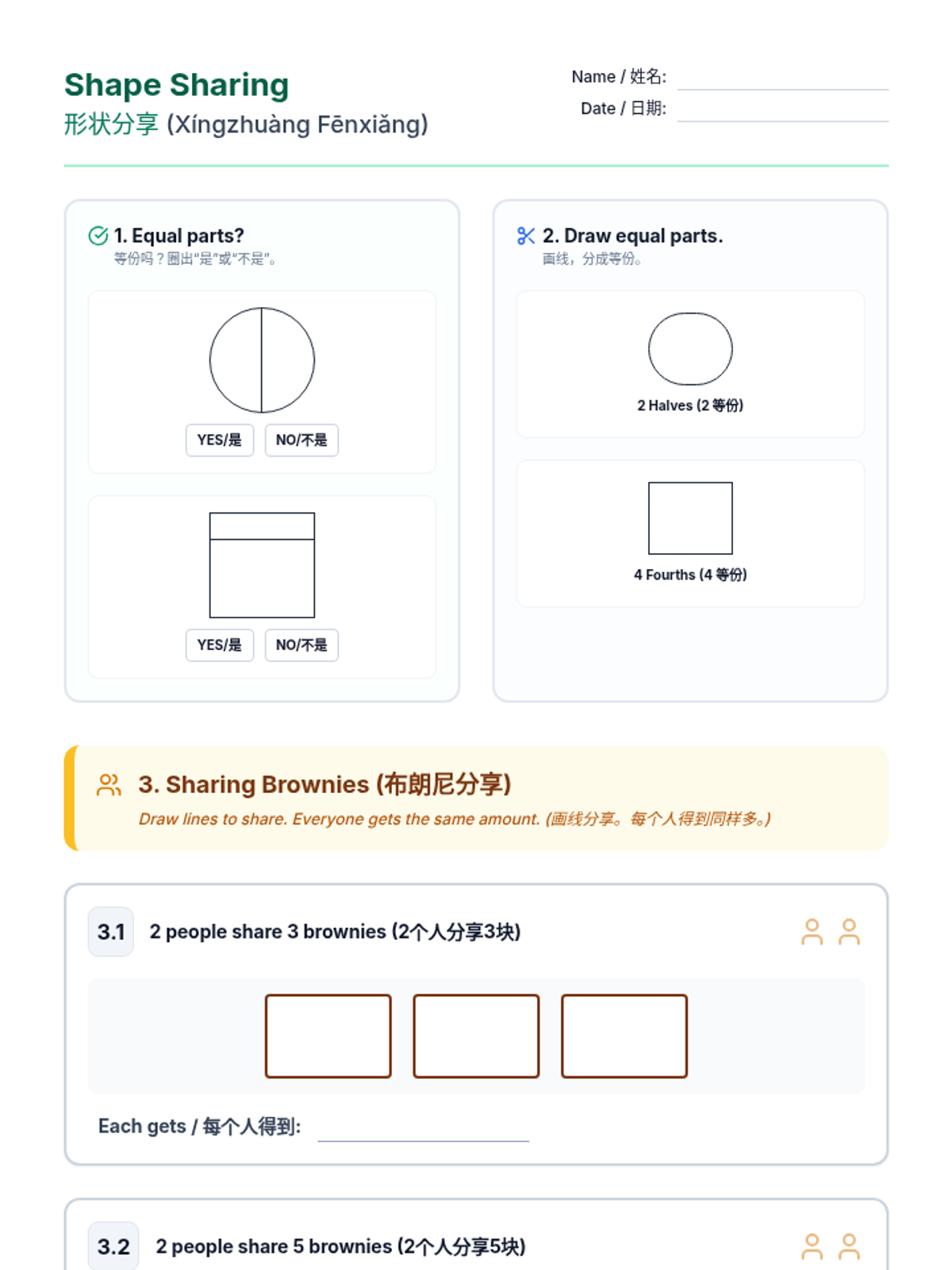
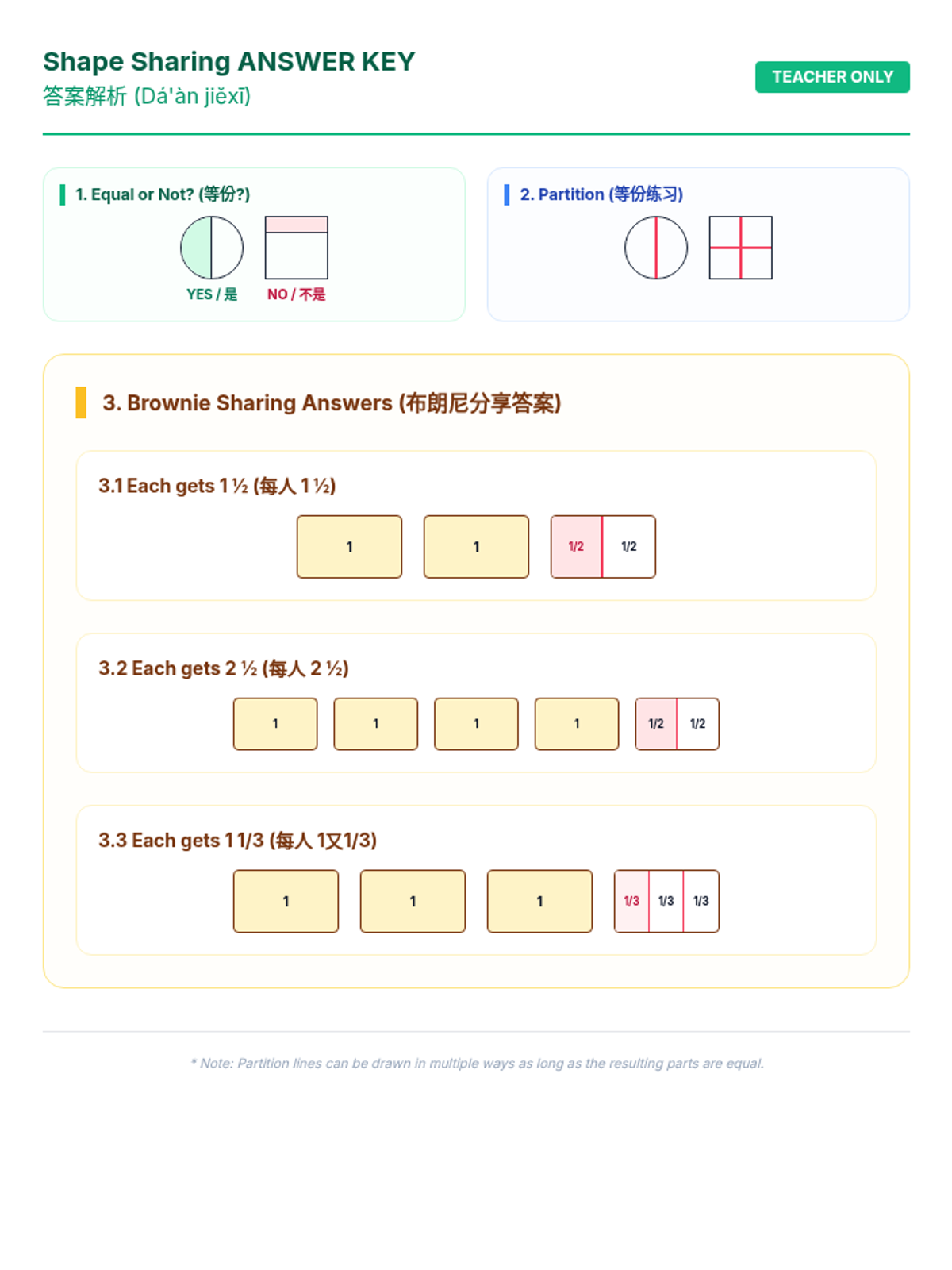
A bilingual (English/Simplified Chinese) lesson on partitioning shapes into equal shares (halves and fourths) for Level 1 ELL students. The lesson focuses on visual understanding and basic vocabulary like 'equal', 'half', and 'fourth'.
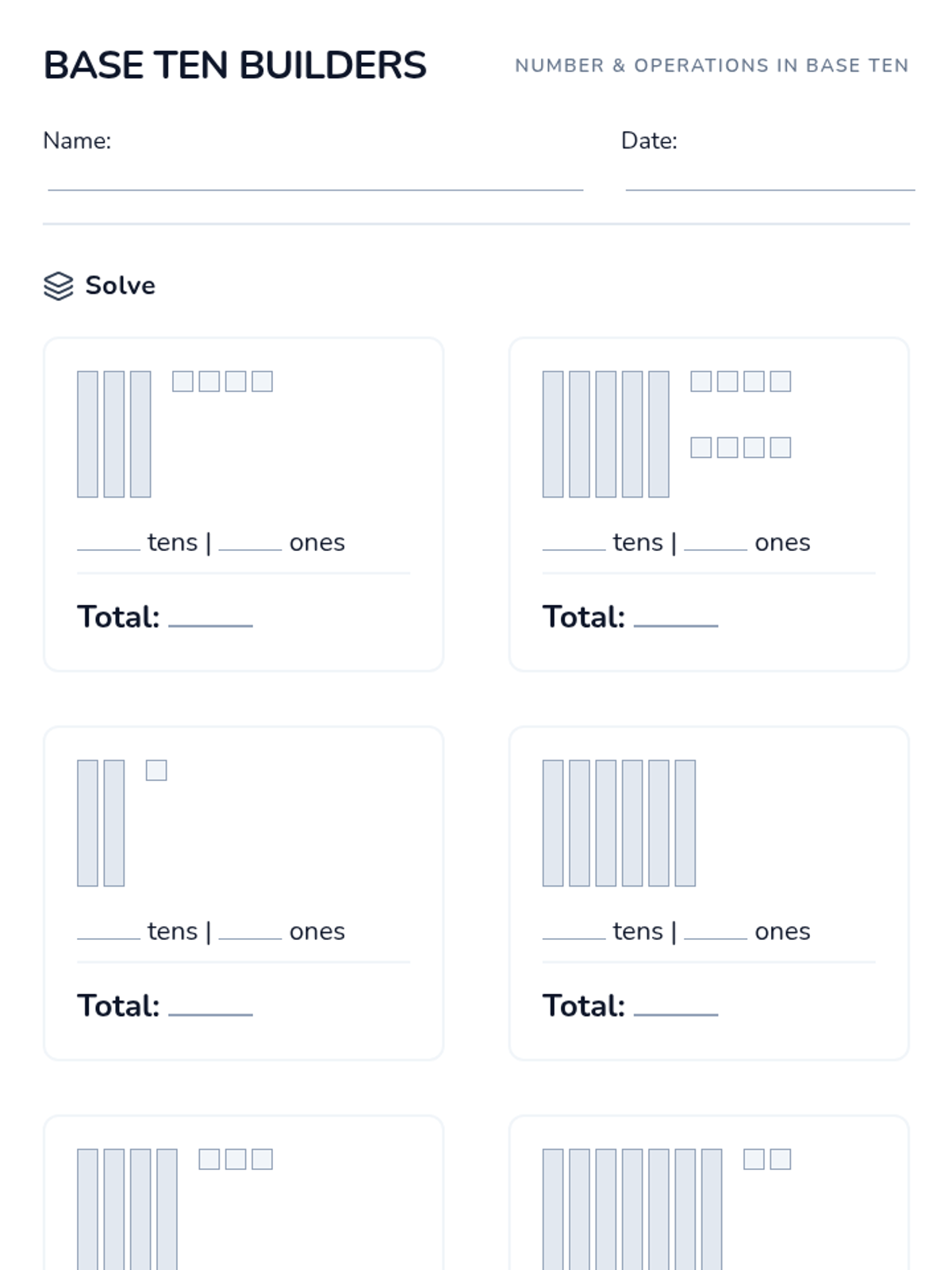
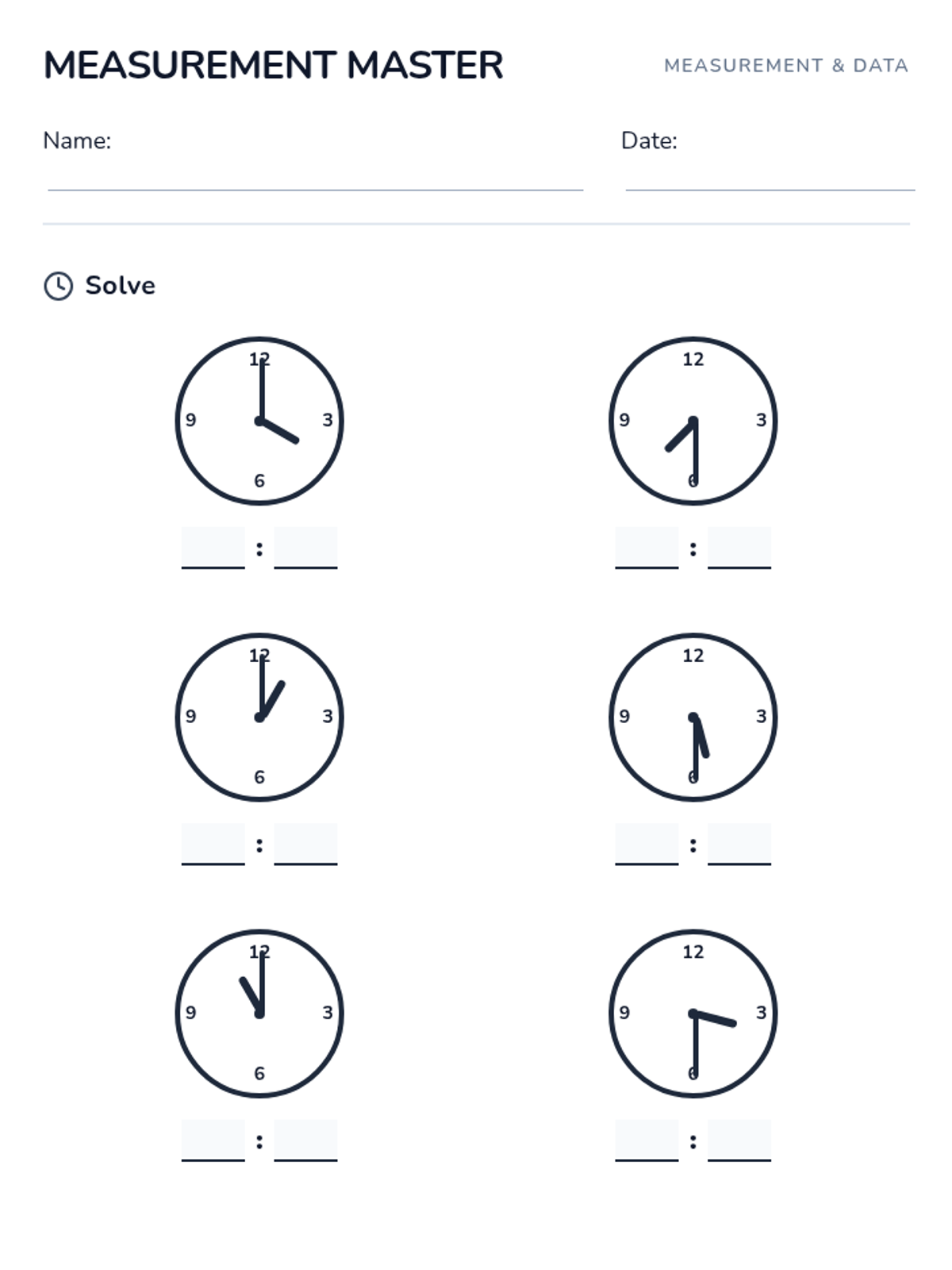
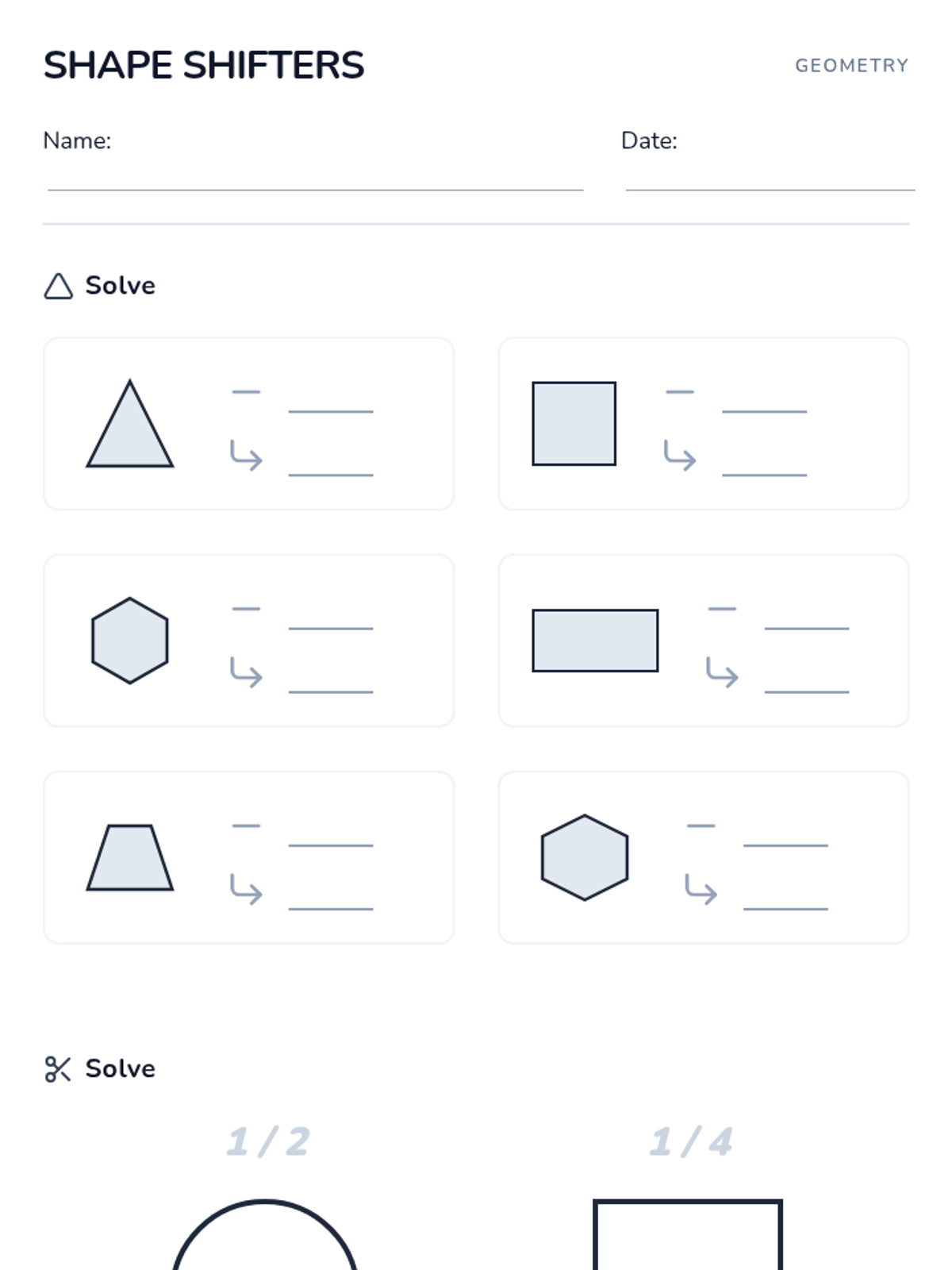
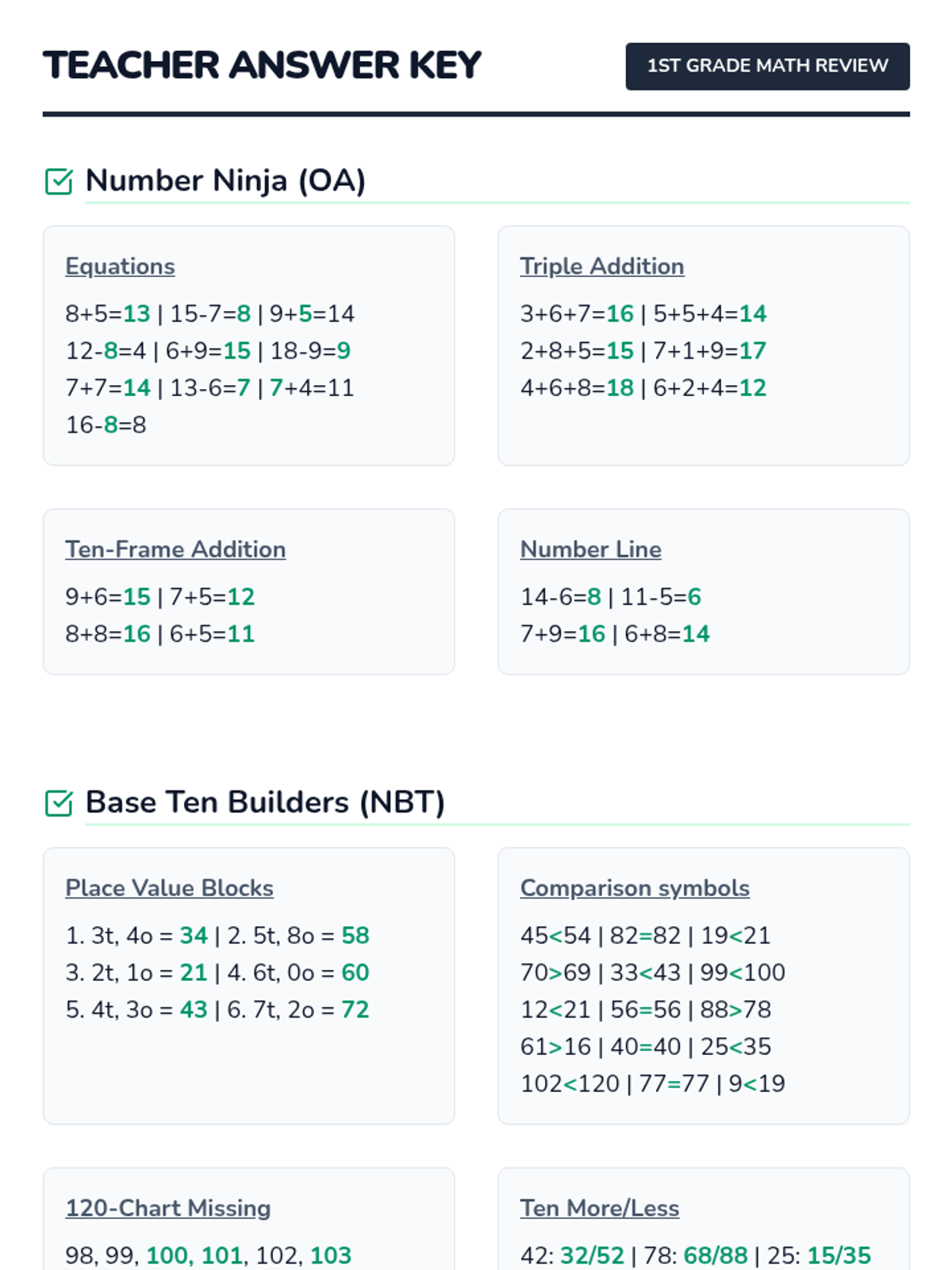
A comprehensive end-of-year math review for 1st grade students, aligned with Illinois Learning Standards. The lesson covers all major domains including Operations, Base Ten, Measurement, and Geometry through minimalist, high-legibility worksheets.
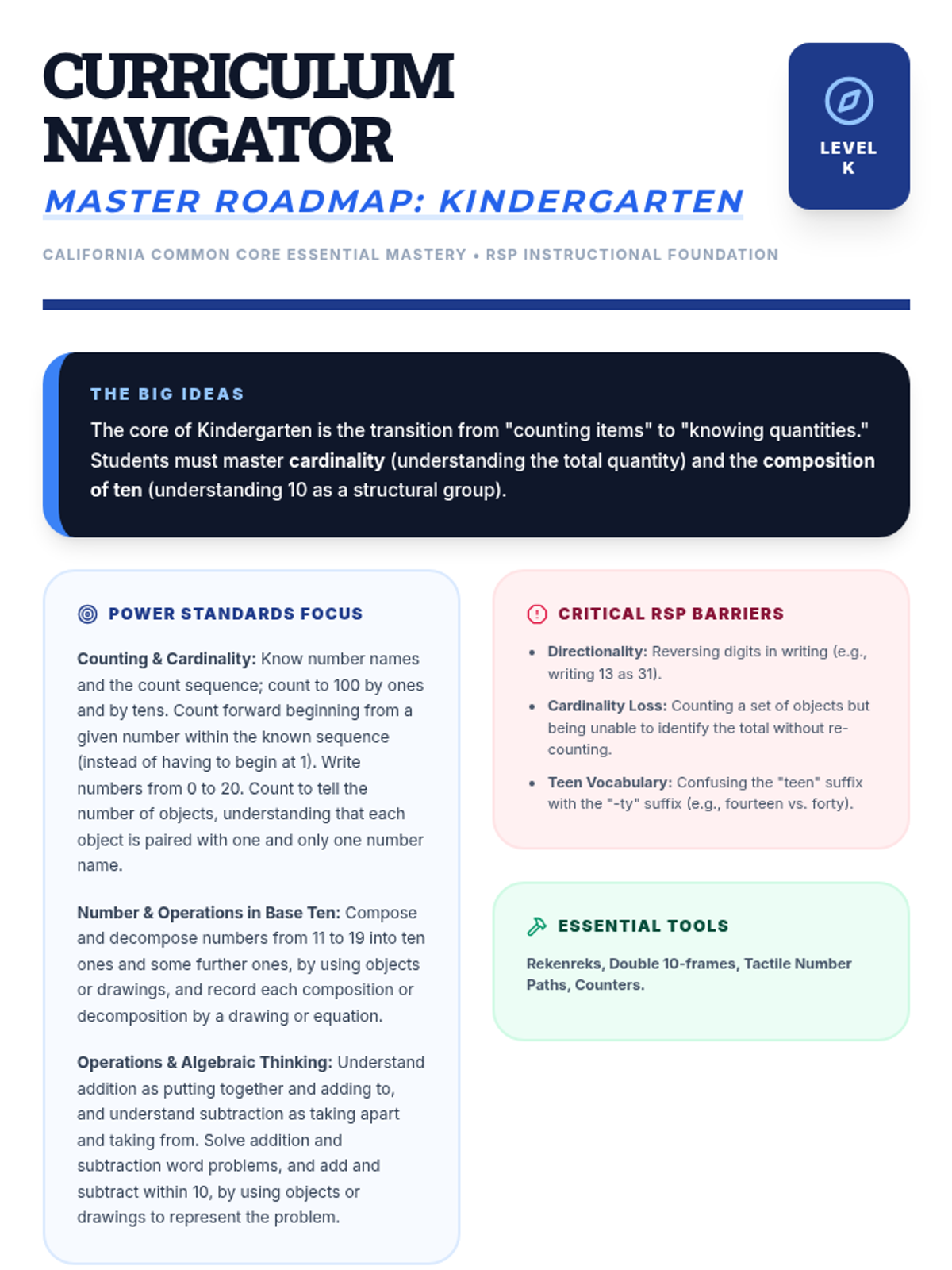
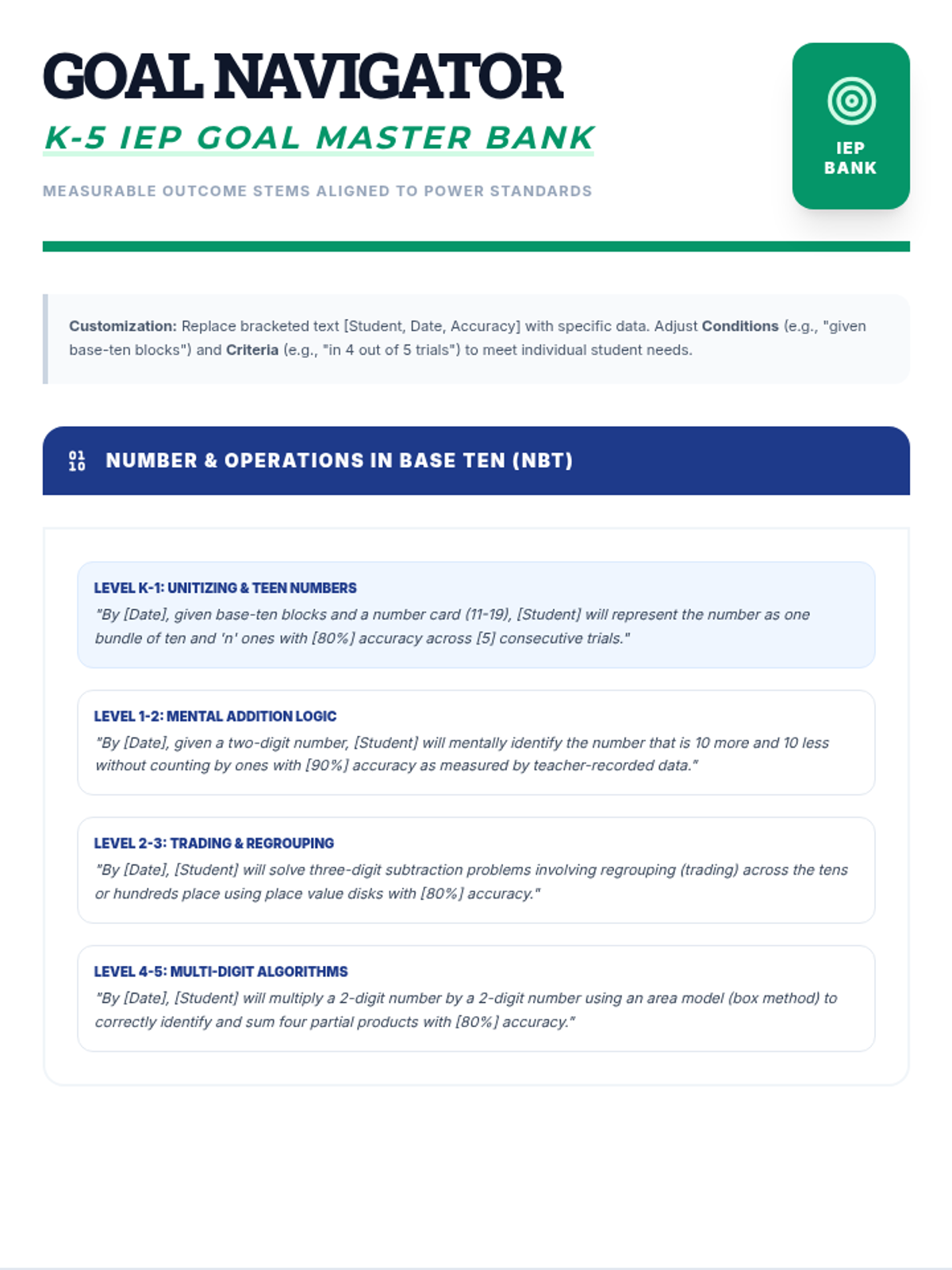
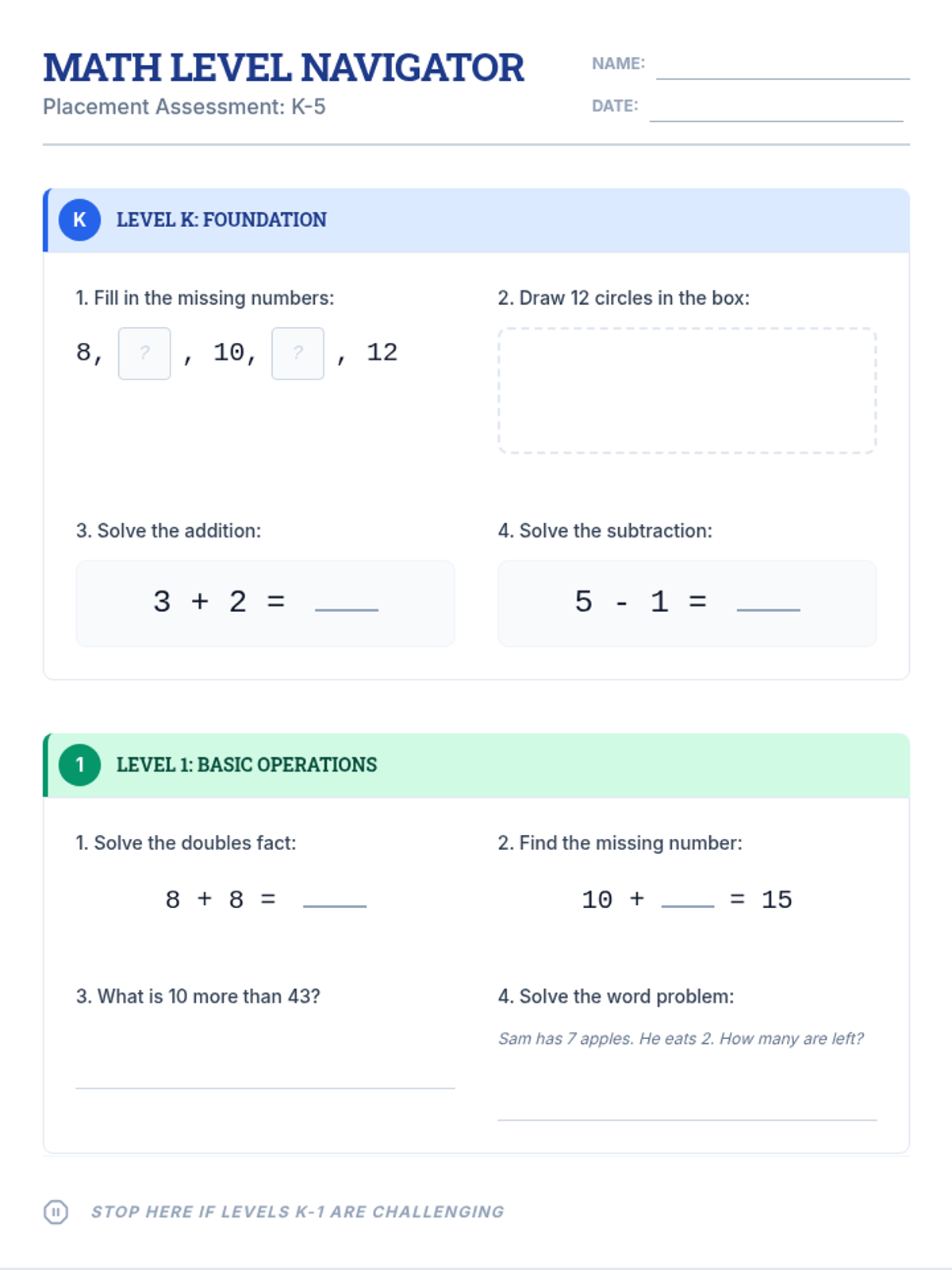
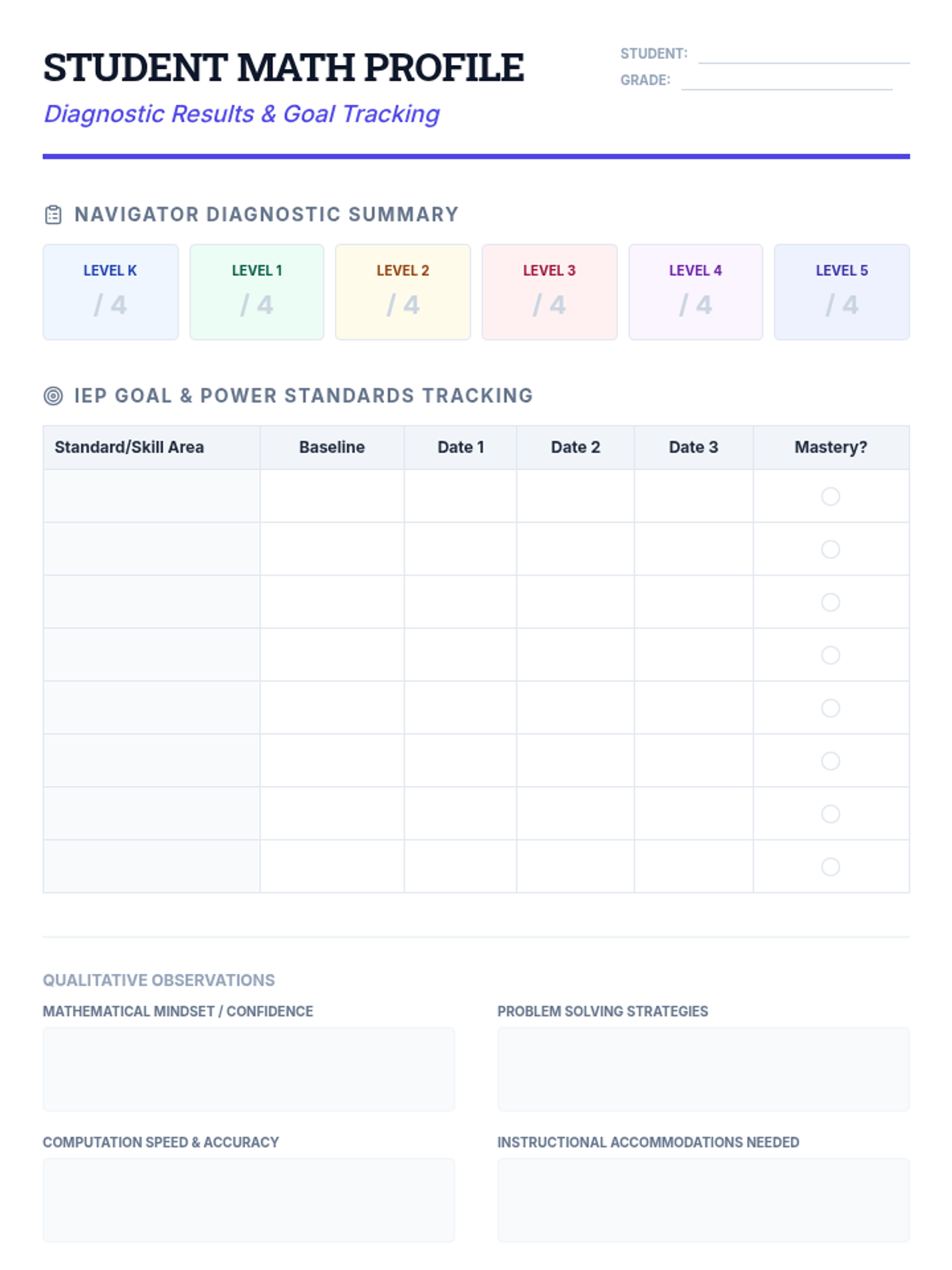
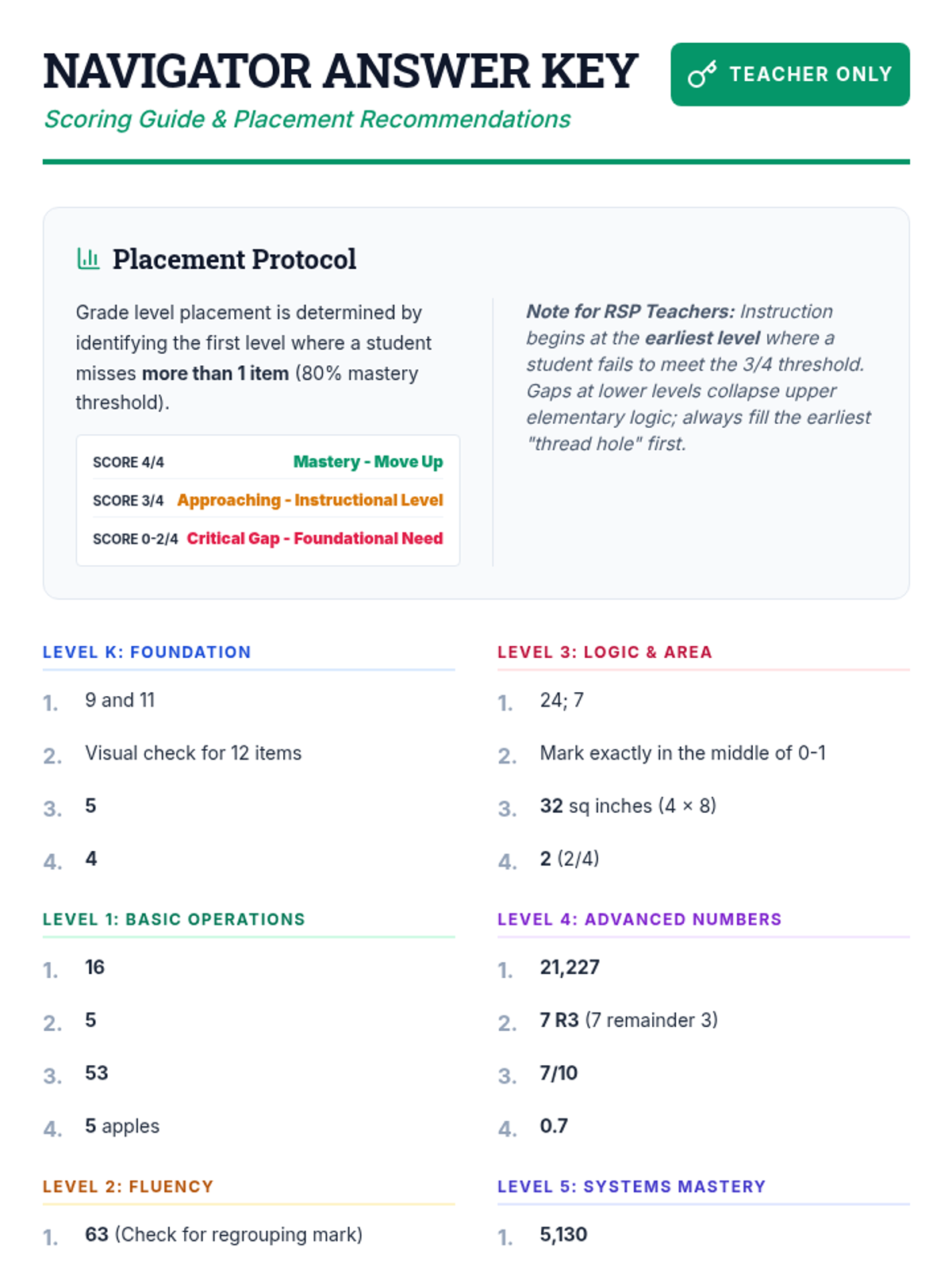
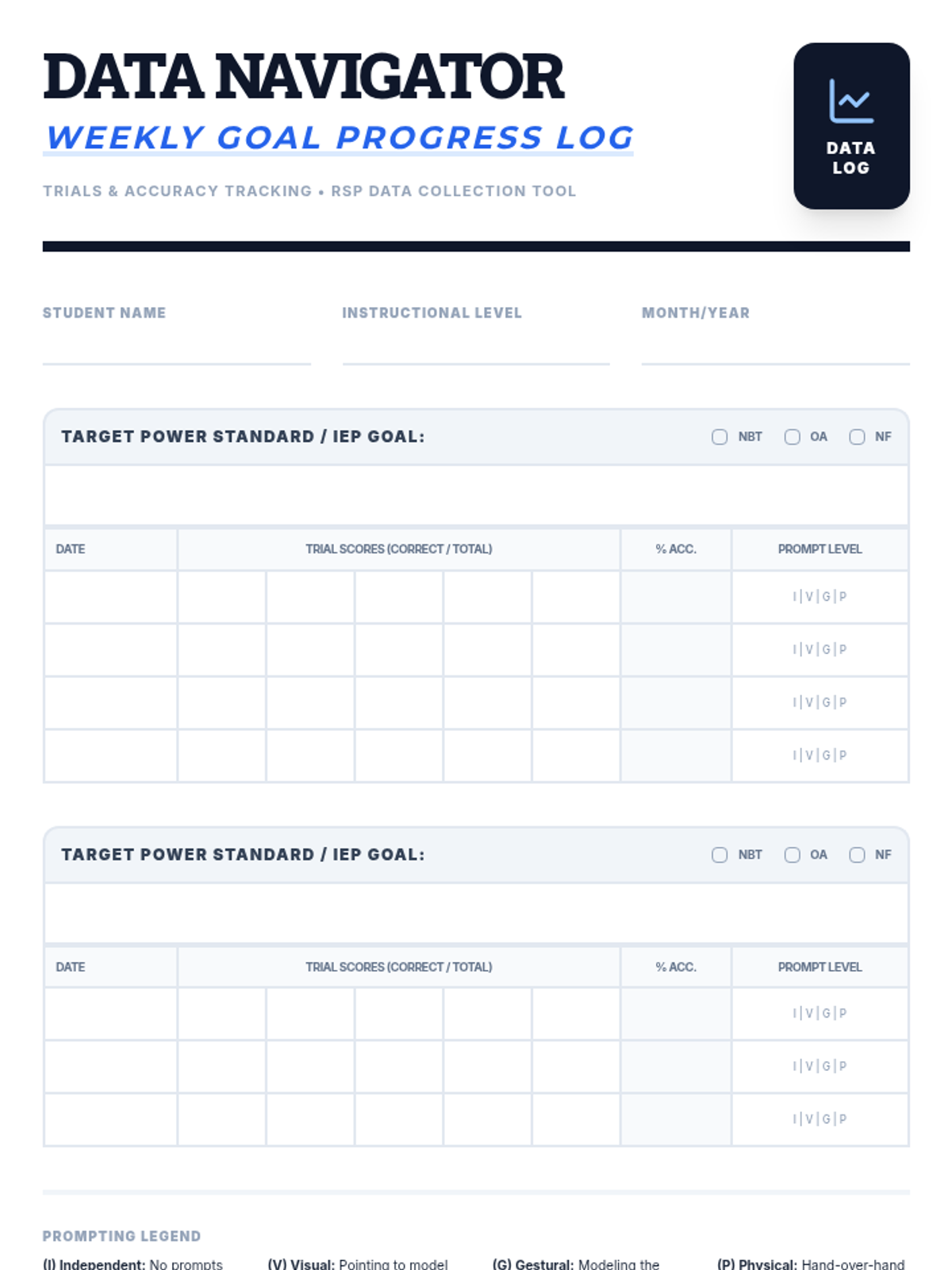
Foundational tools for assessing student levels and planning instruction based on California Power Standards across grades K-5.
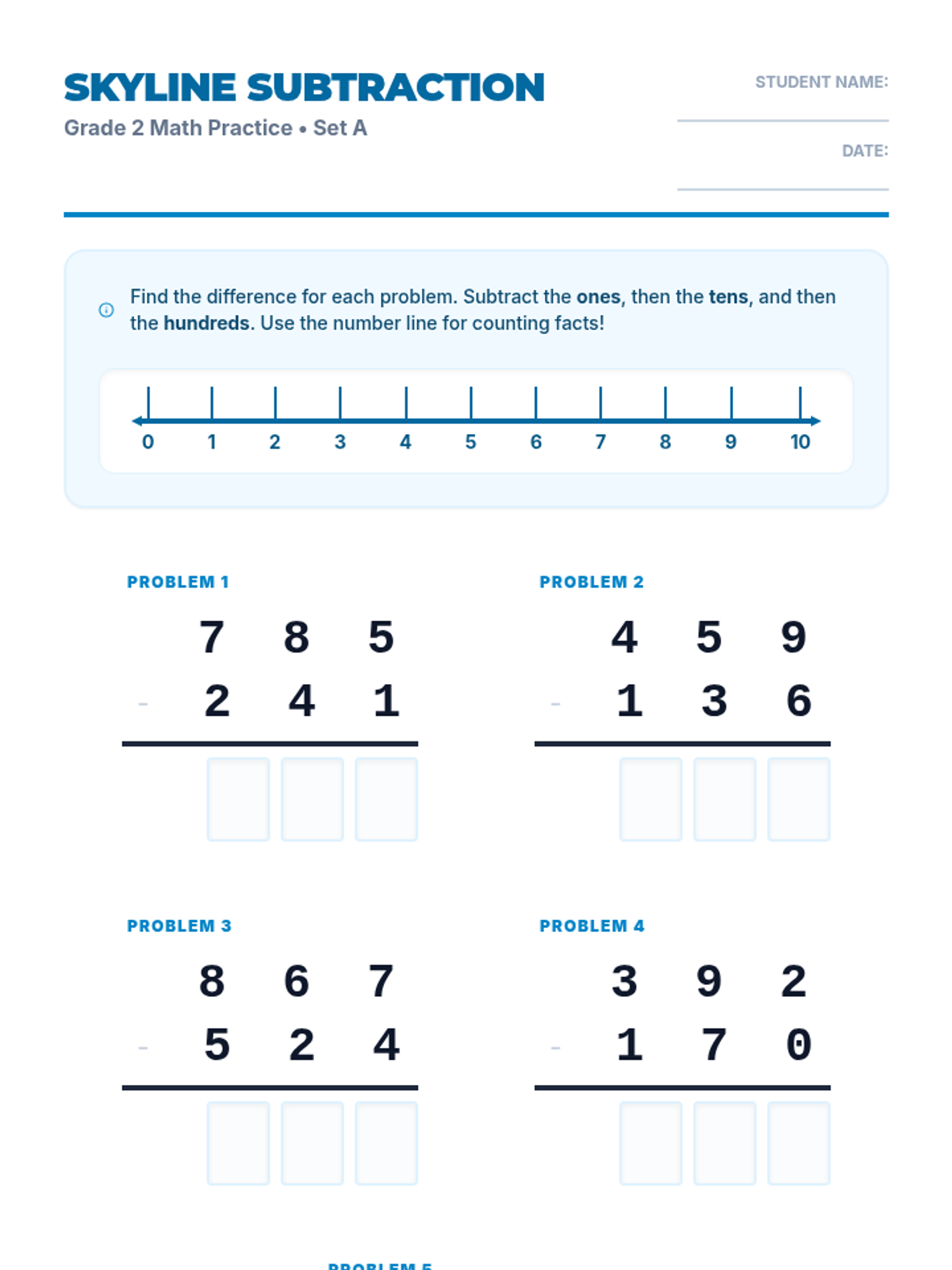
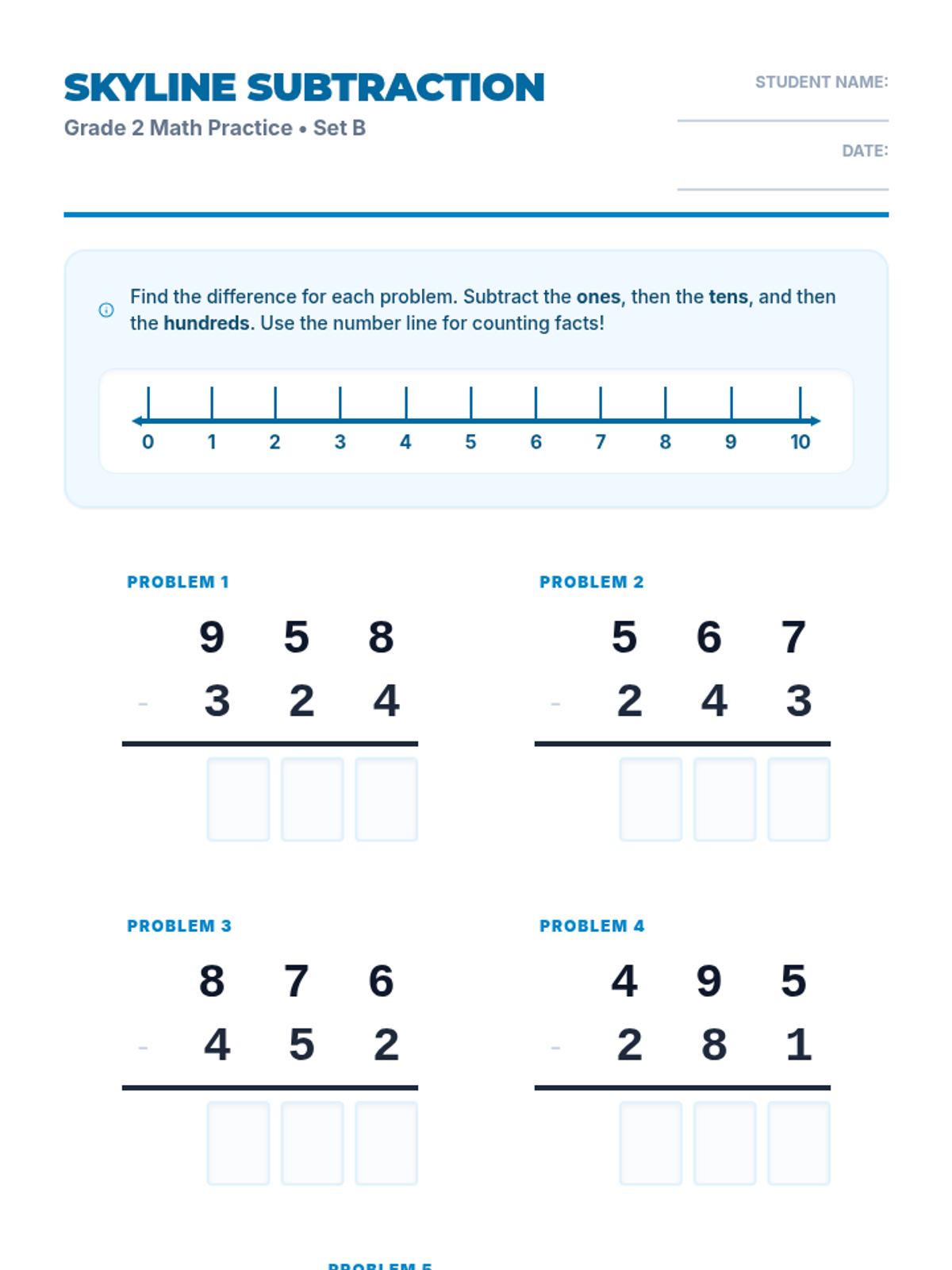
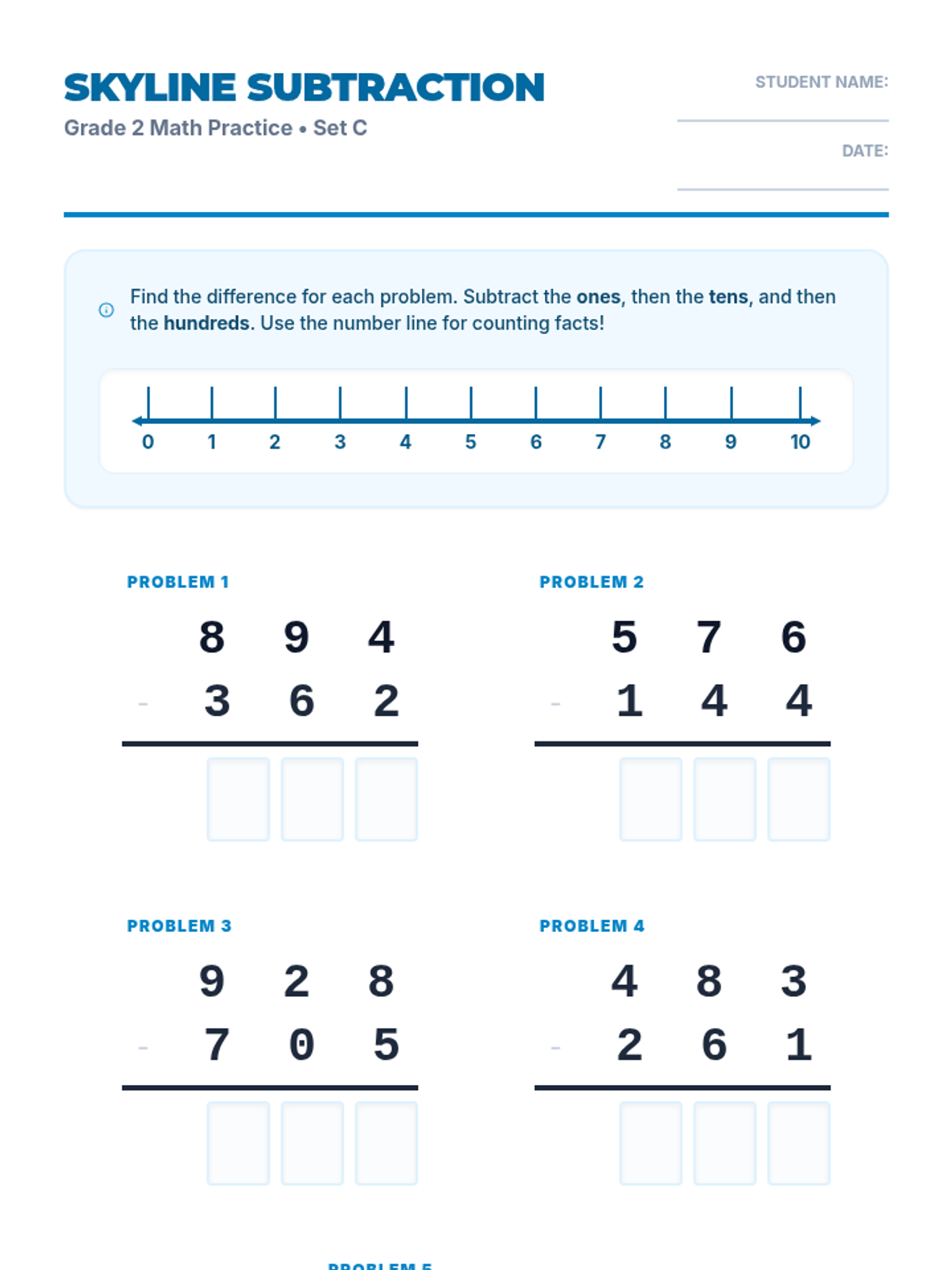
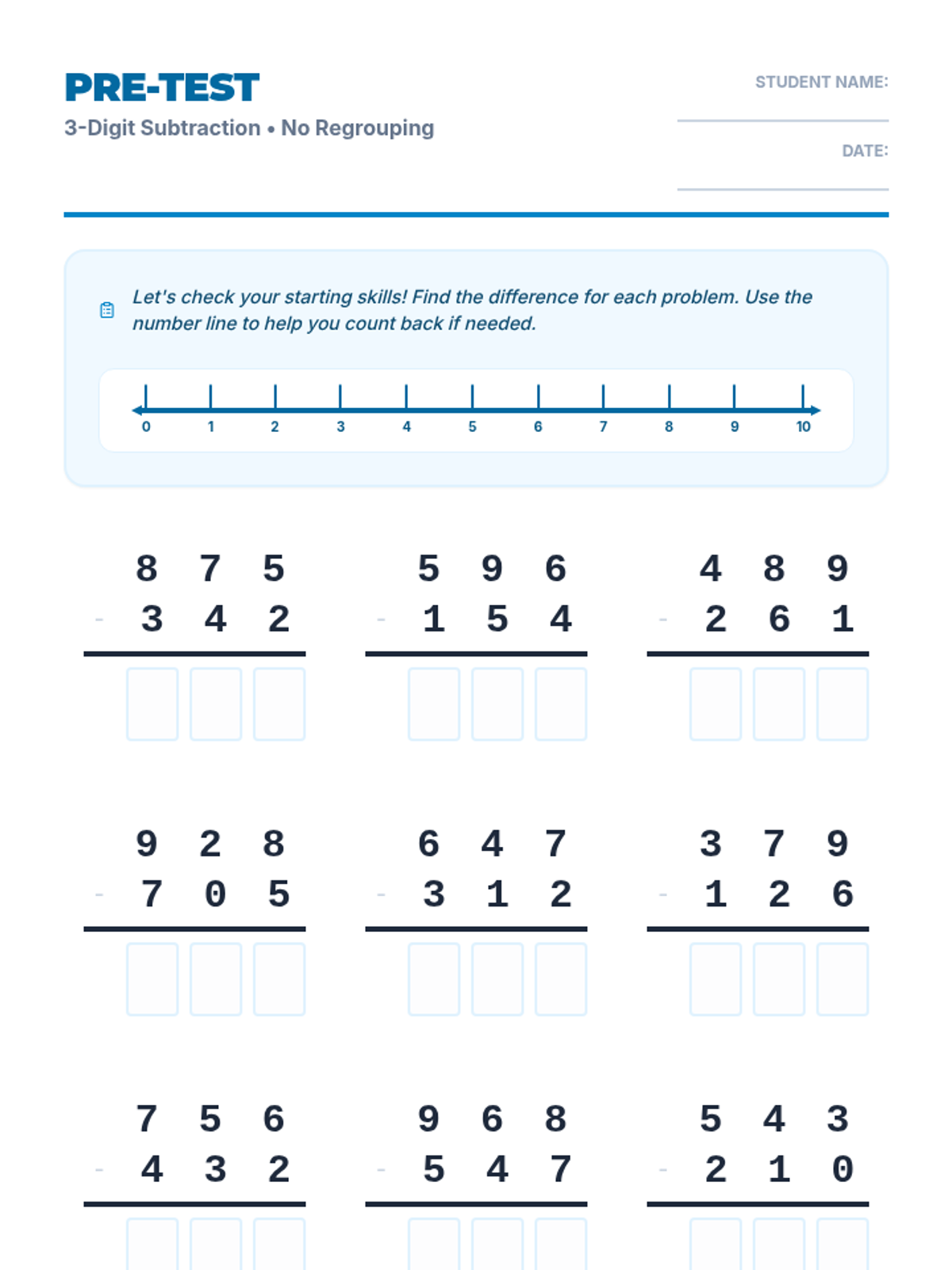
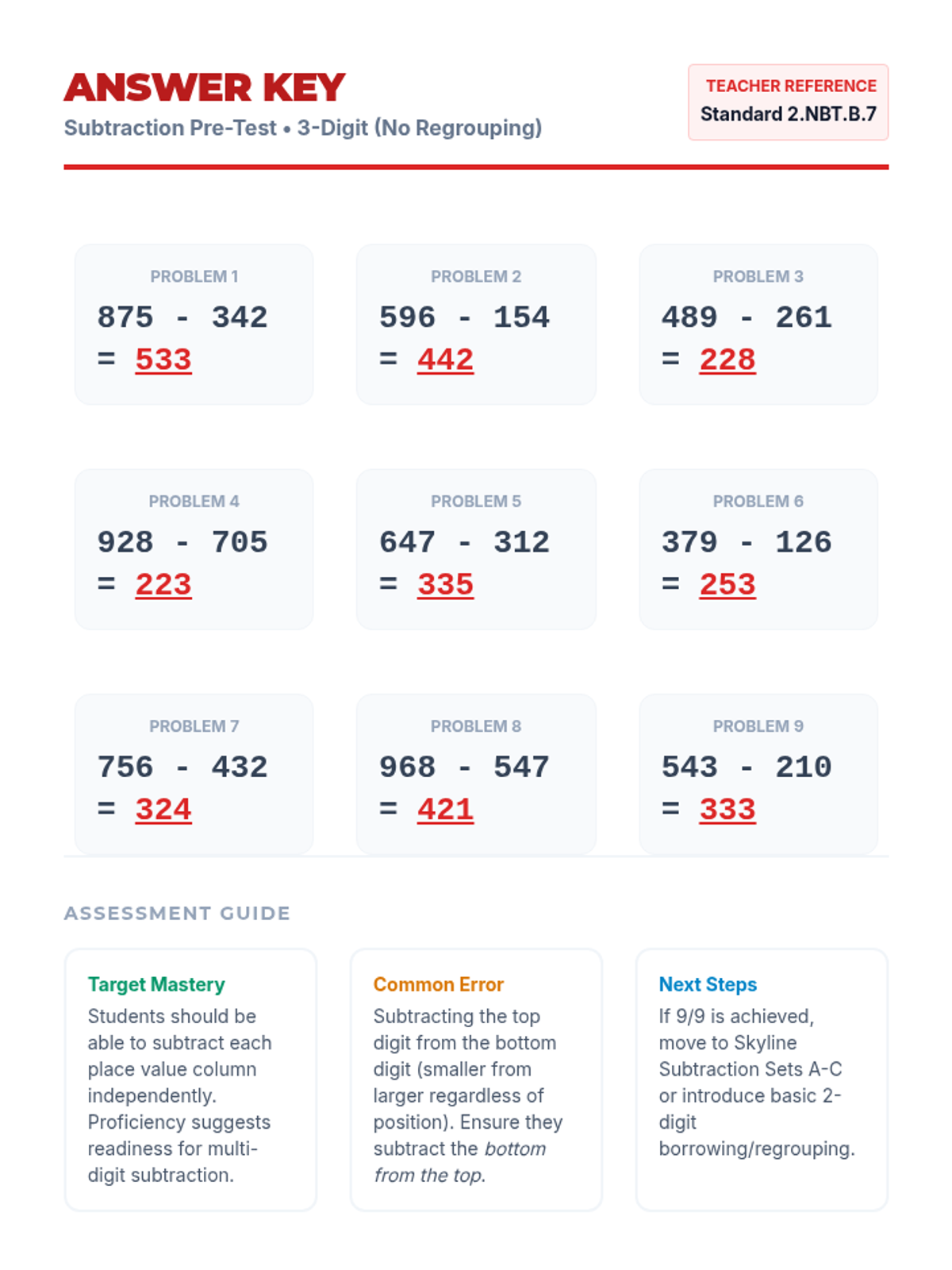
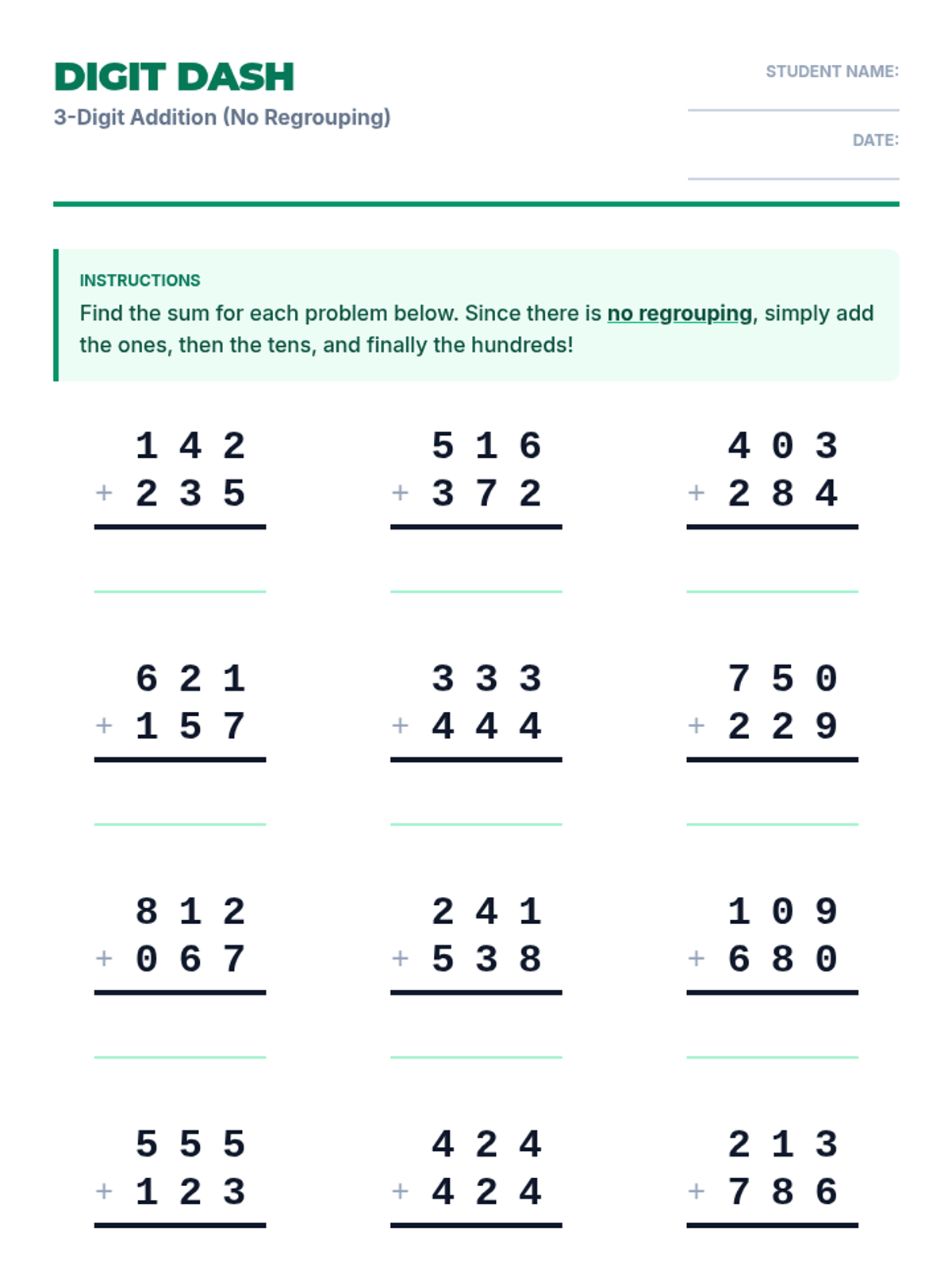
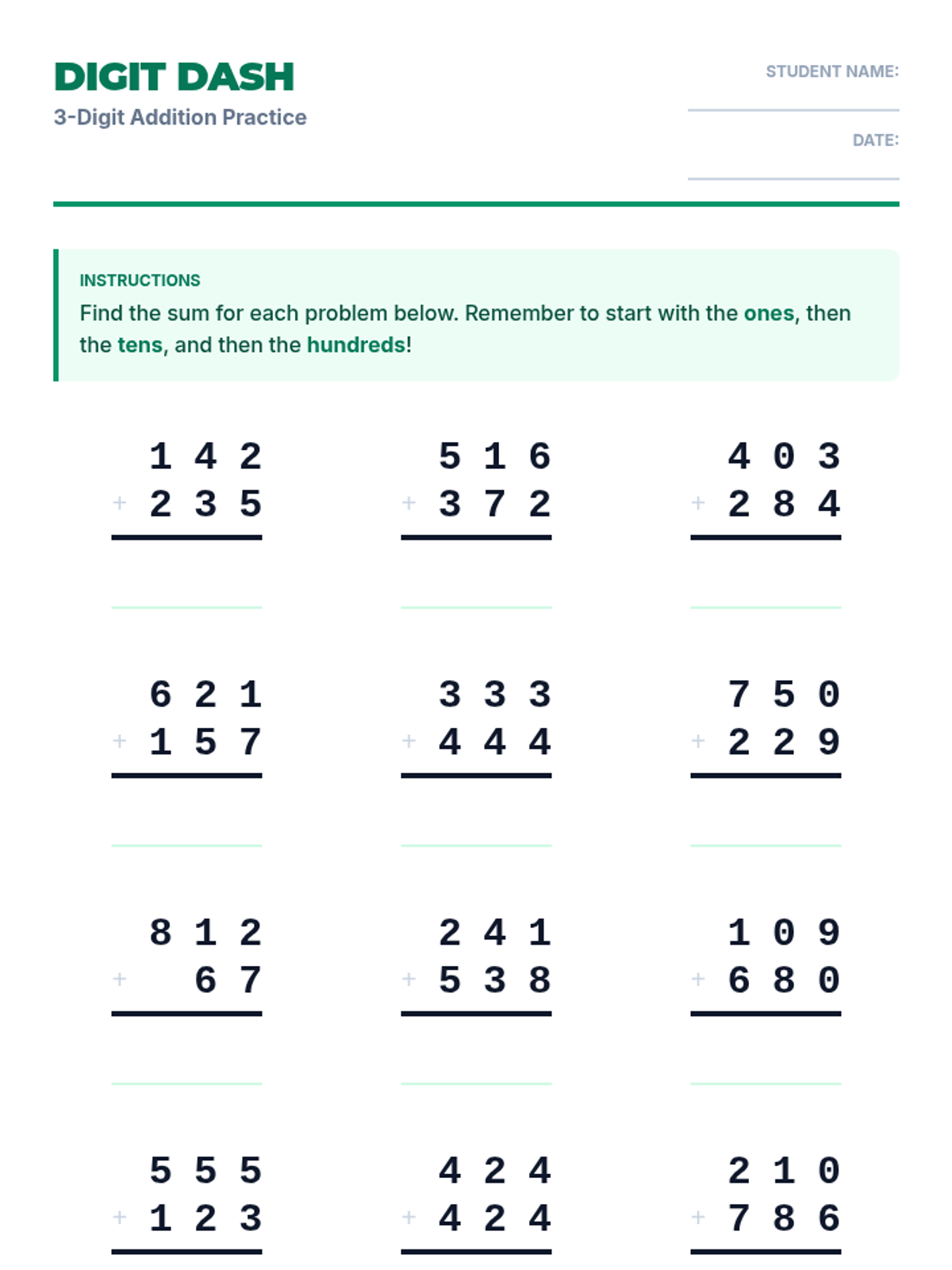
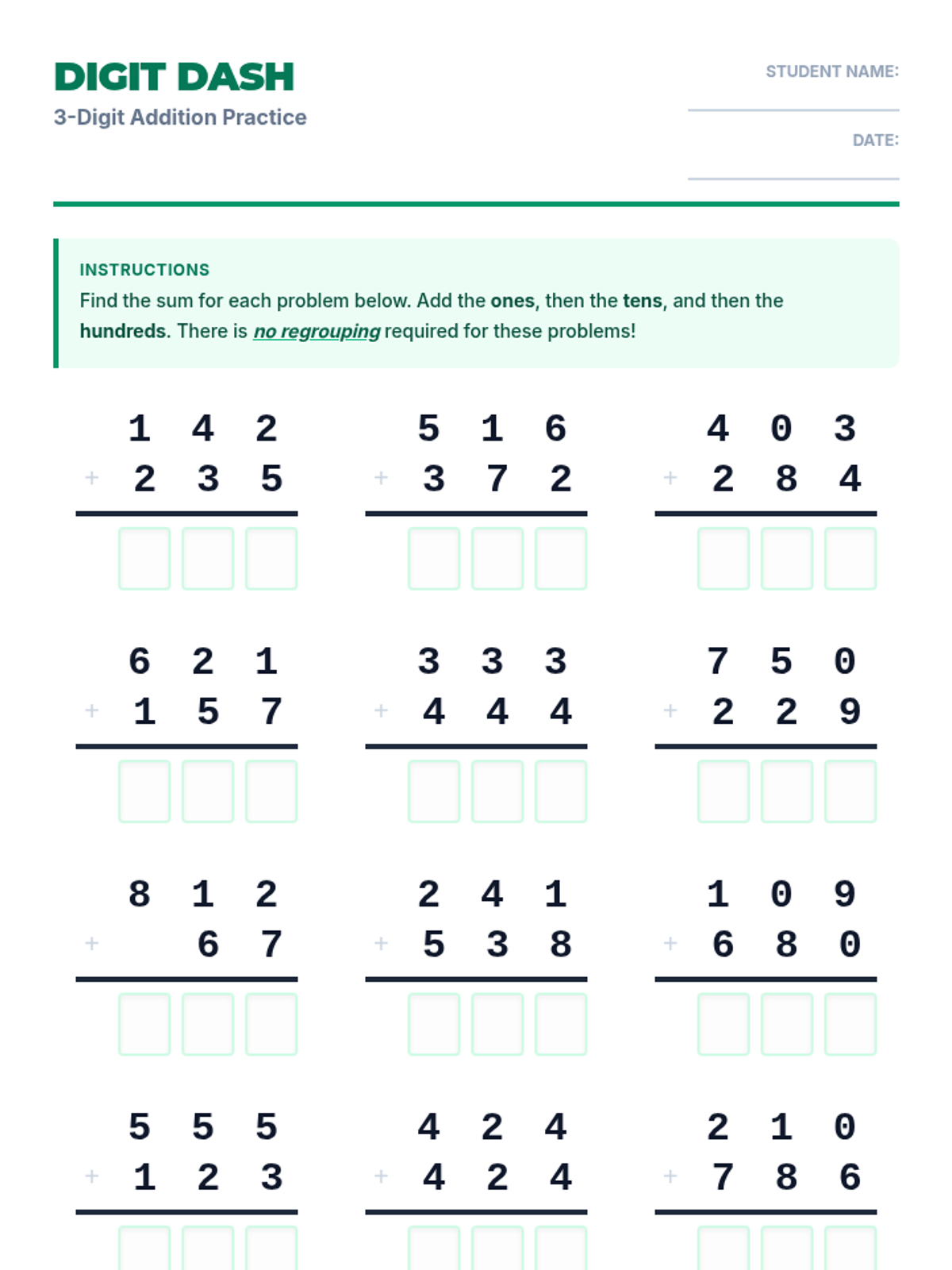
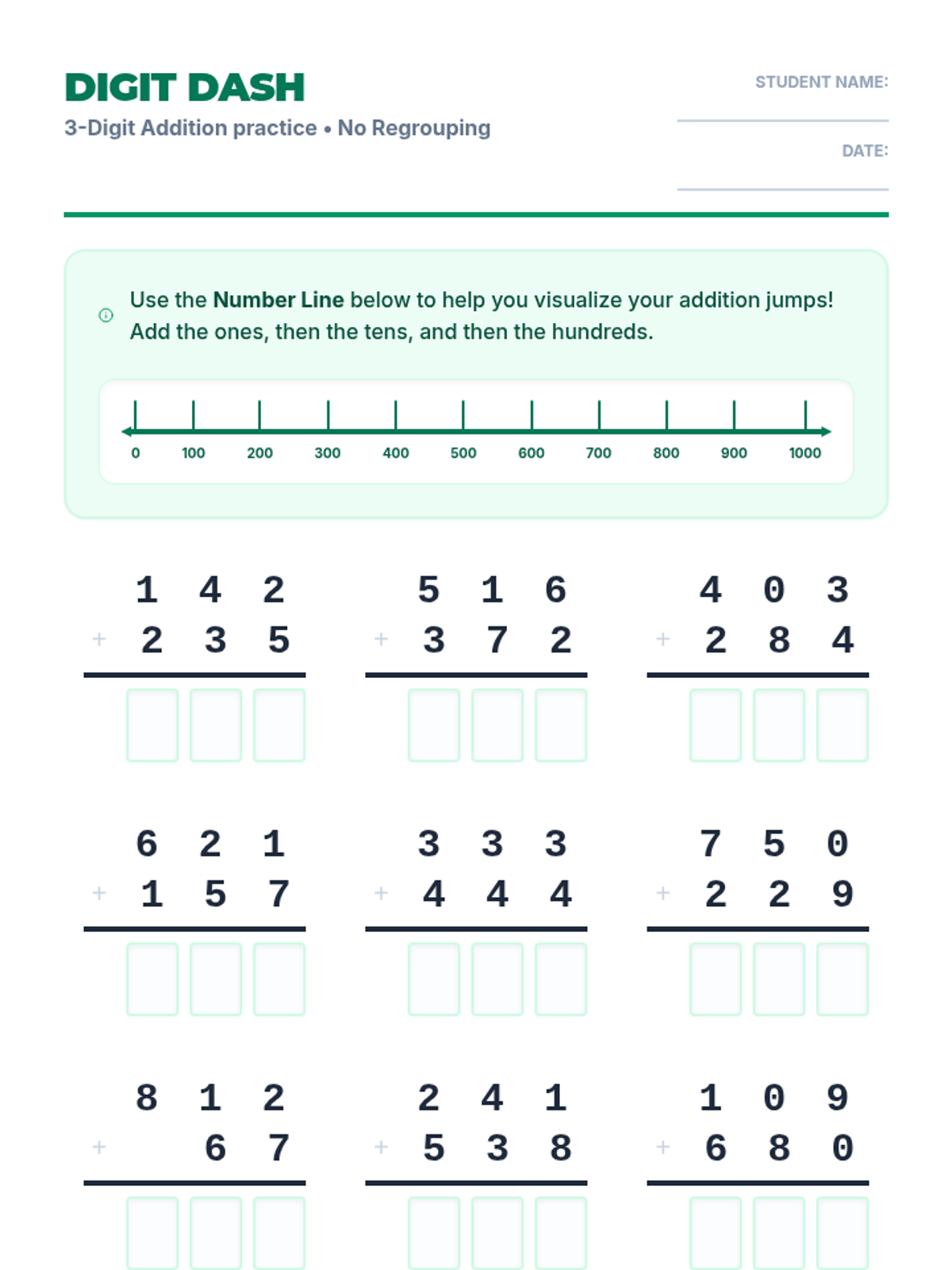
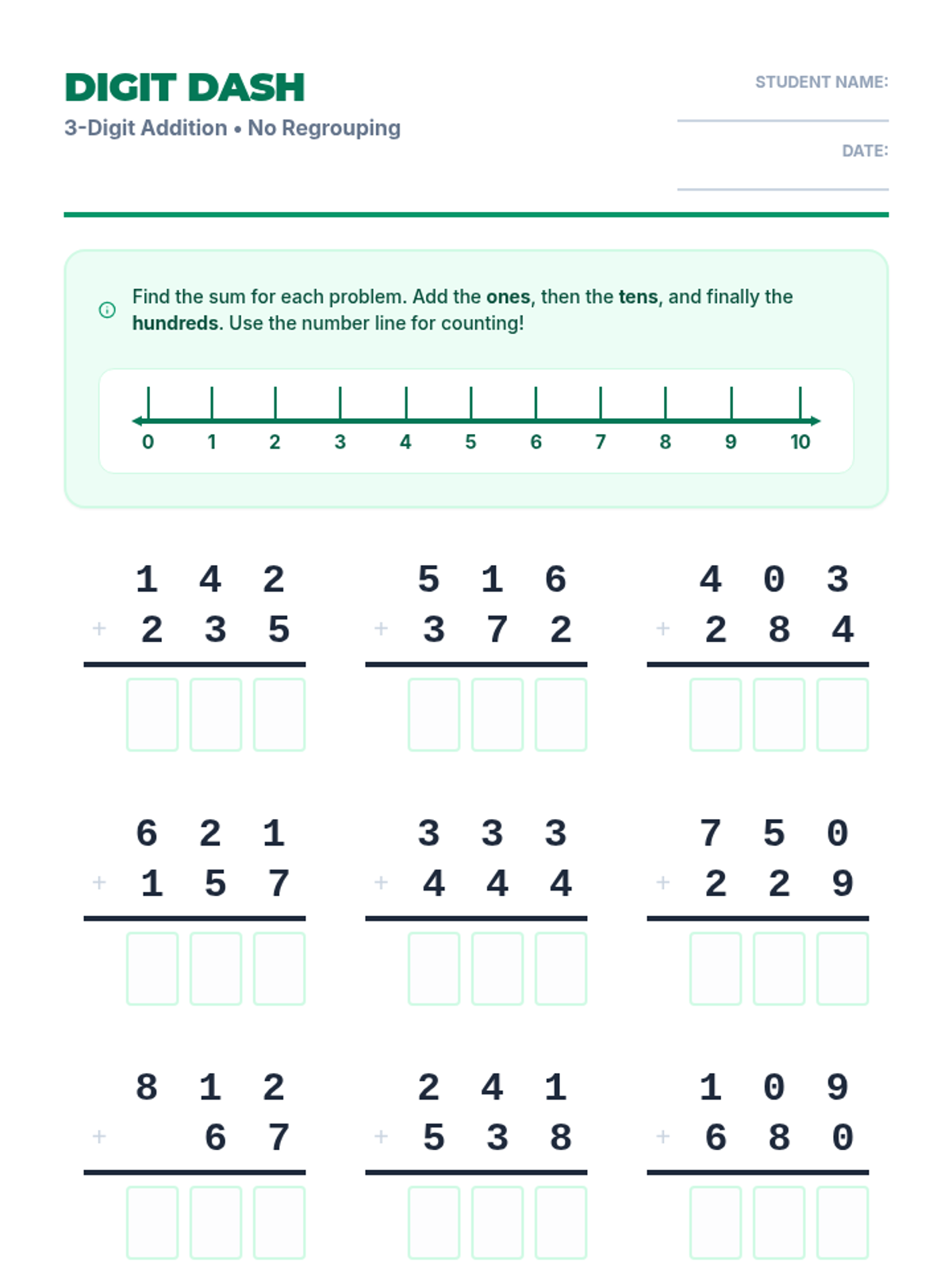
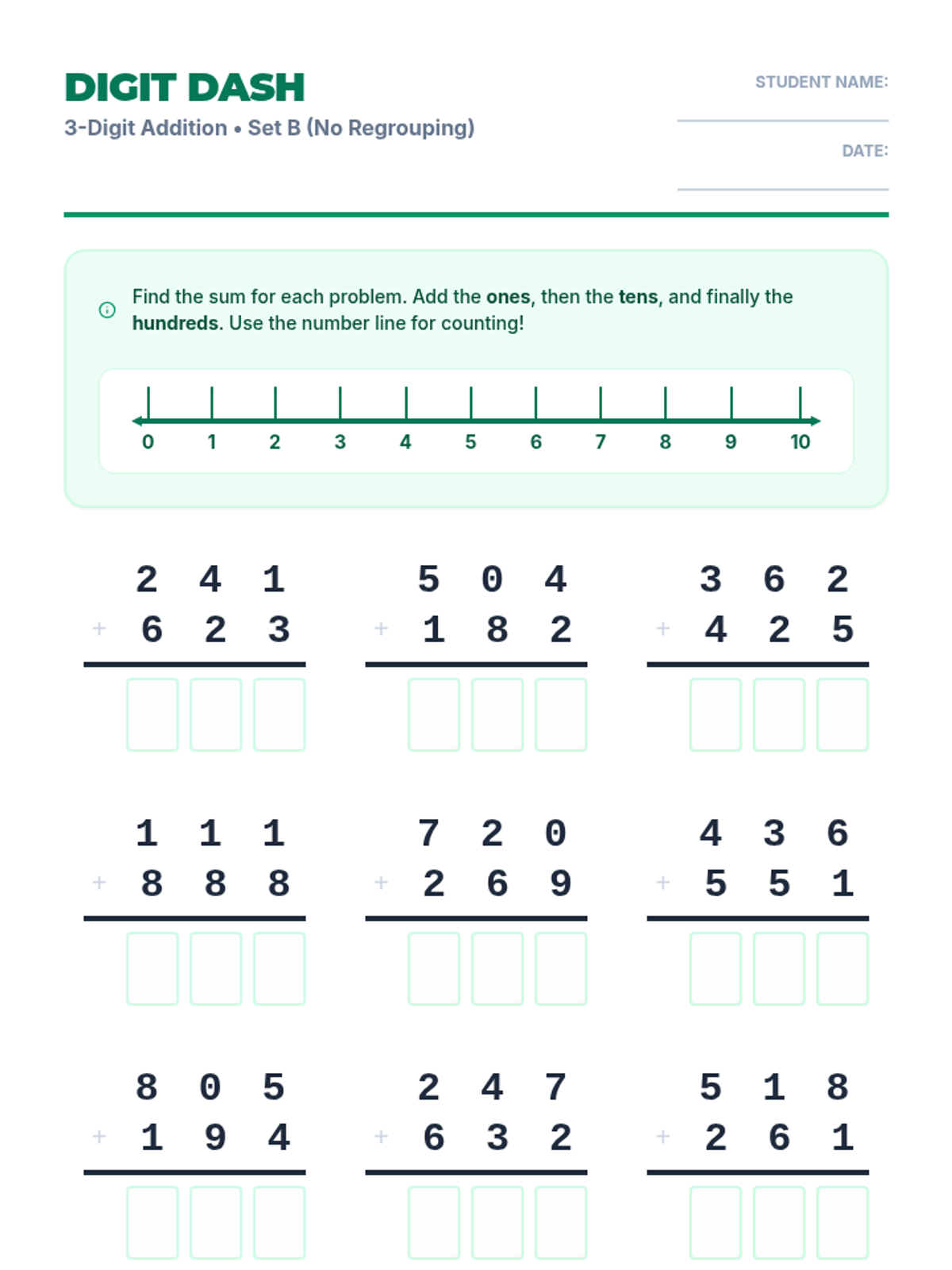
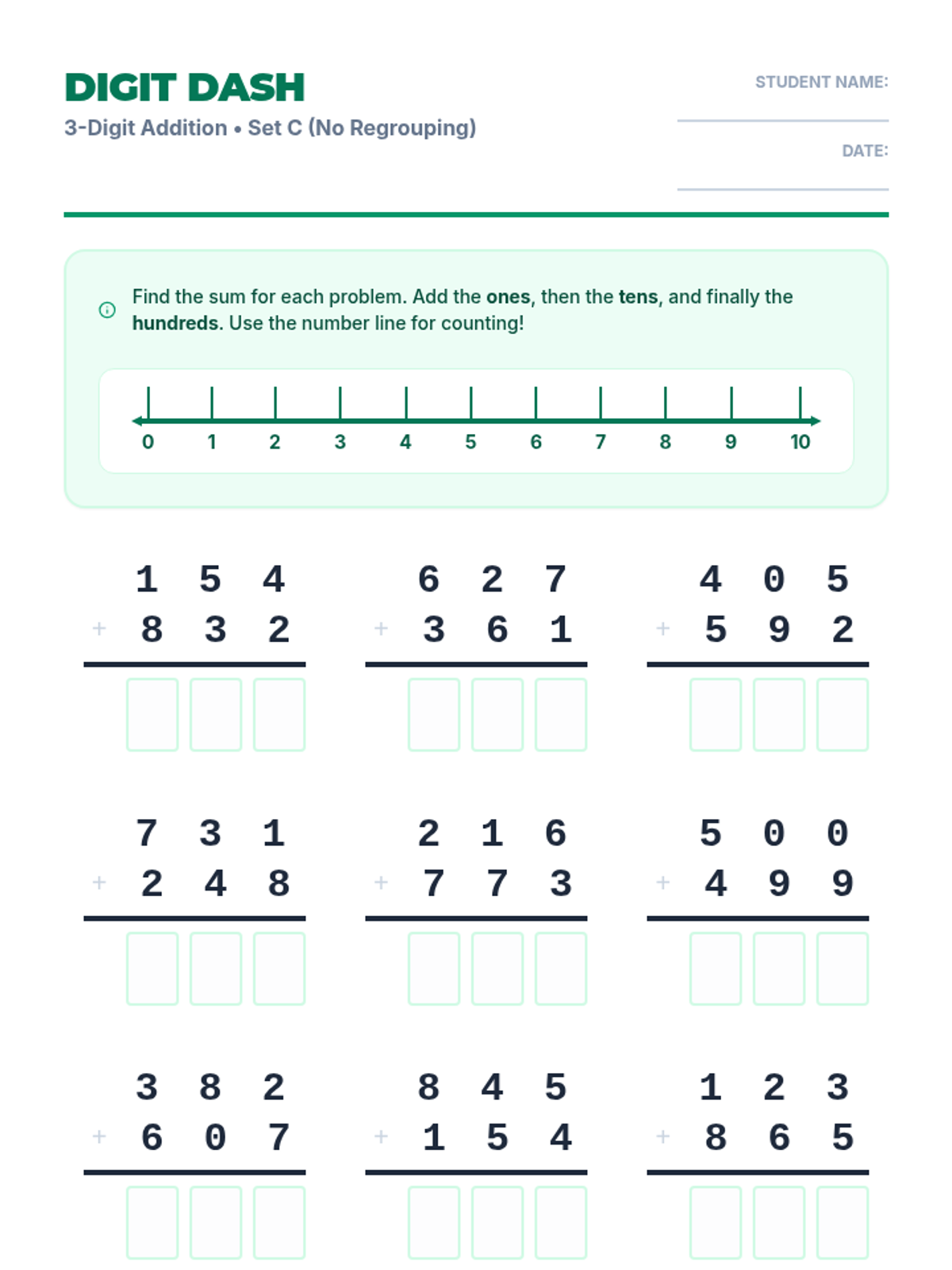
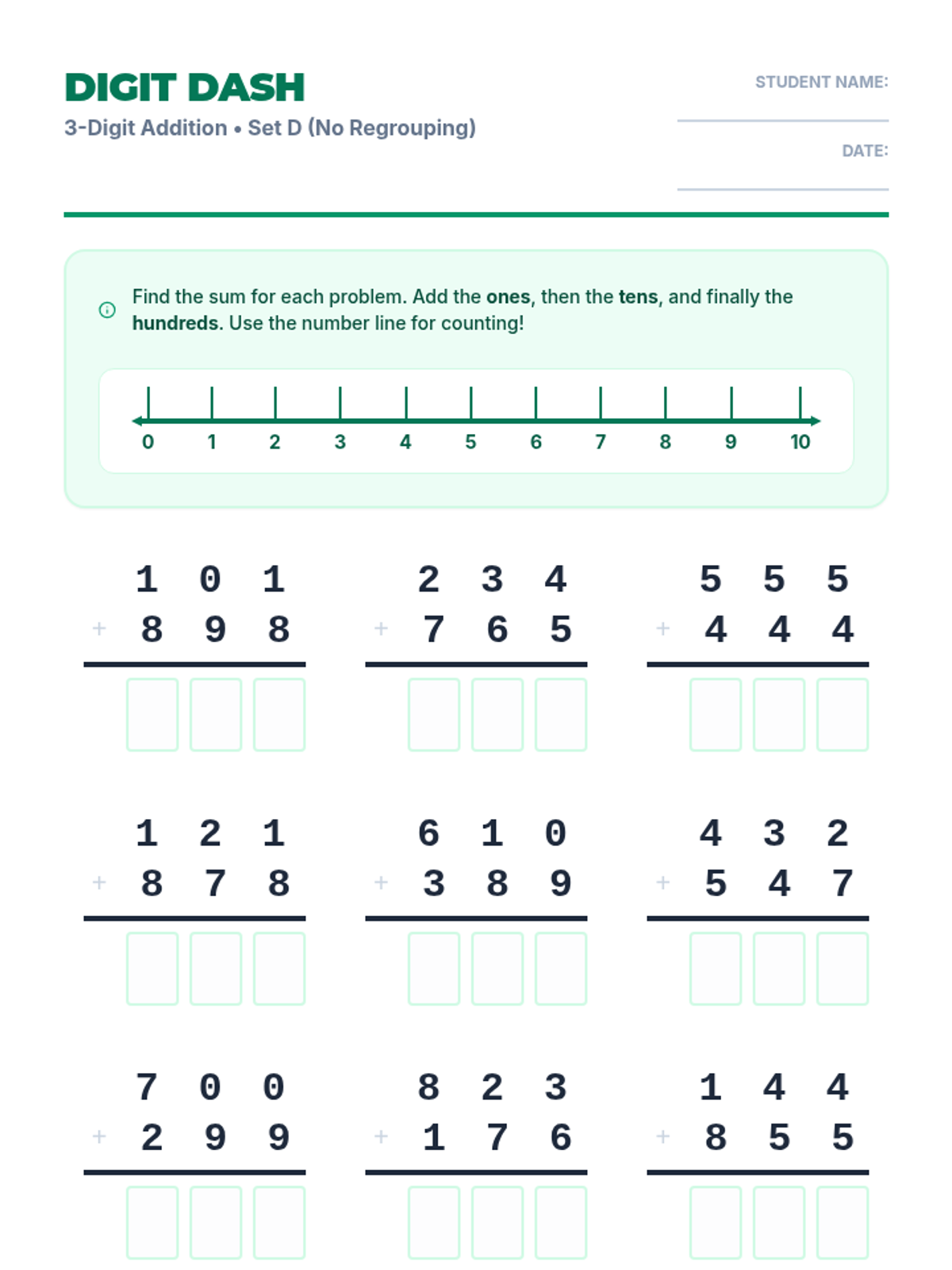
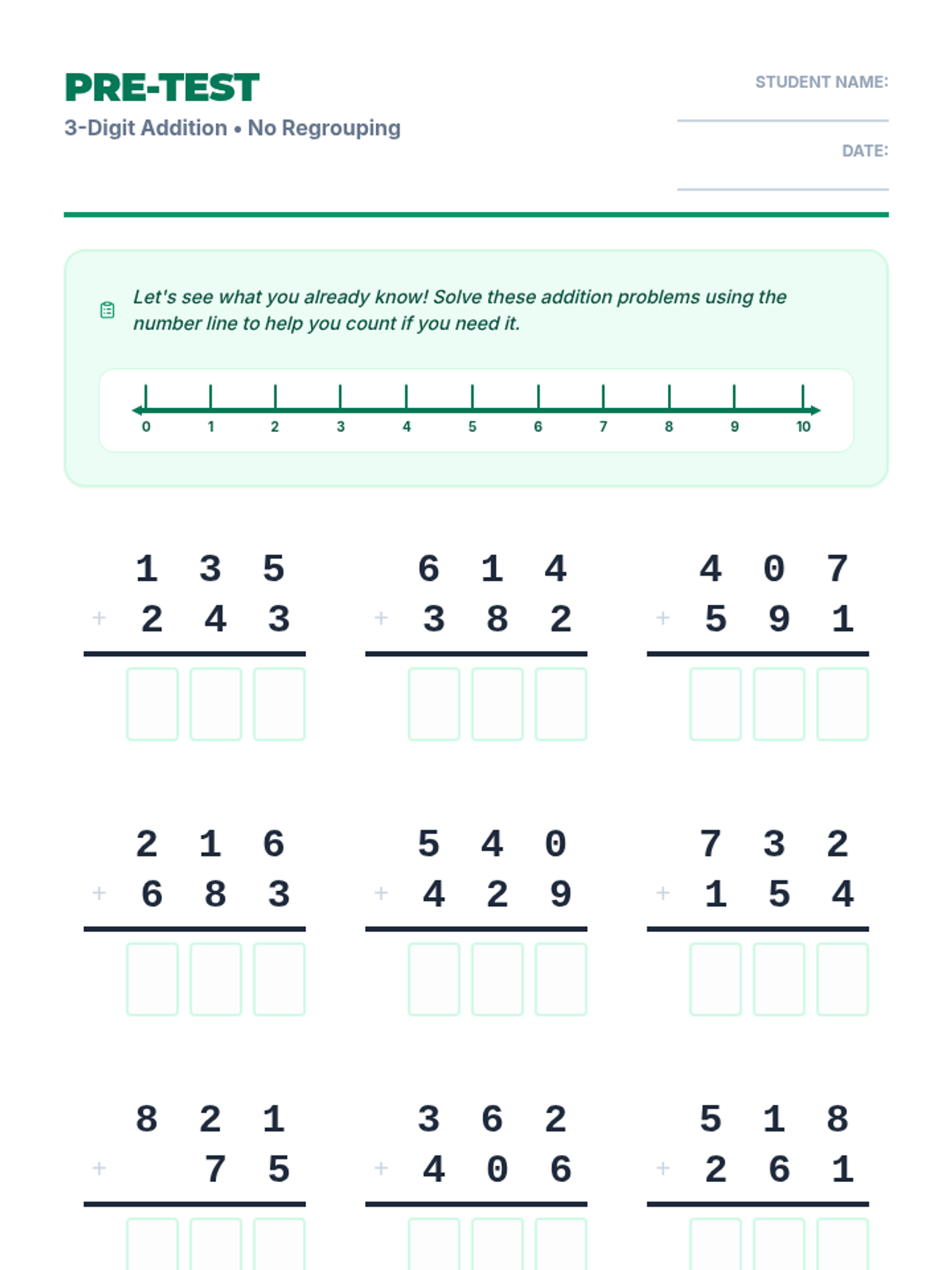
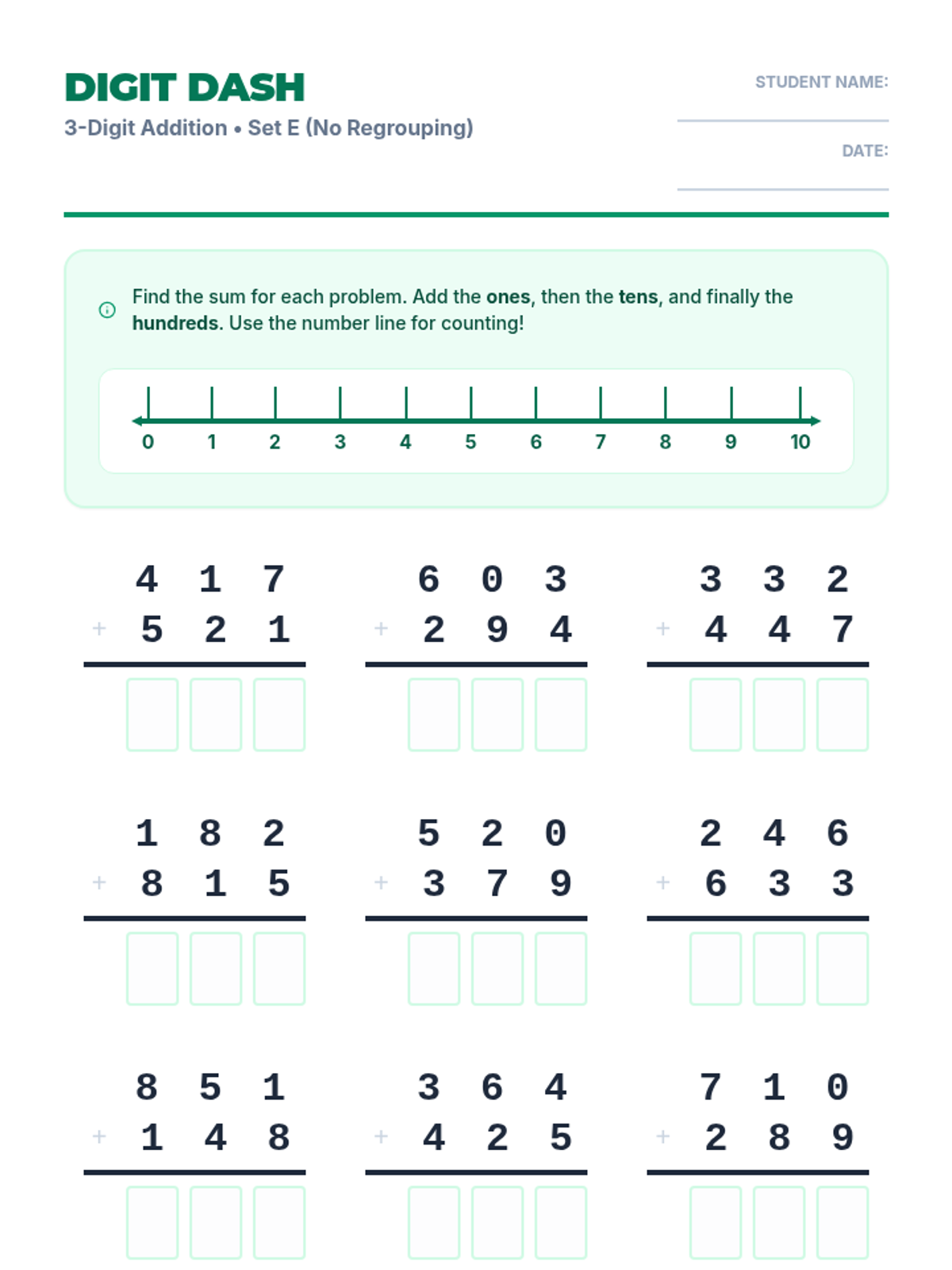
A series of practice worksheets focused on three-digit subtraction without regrouping, featuring a visual number line to assist with mental math and place value visualization.
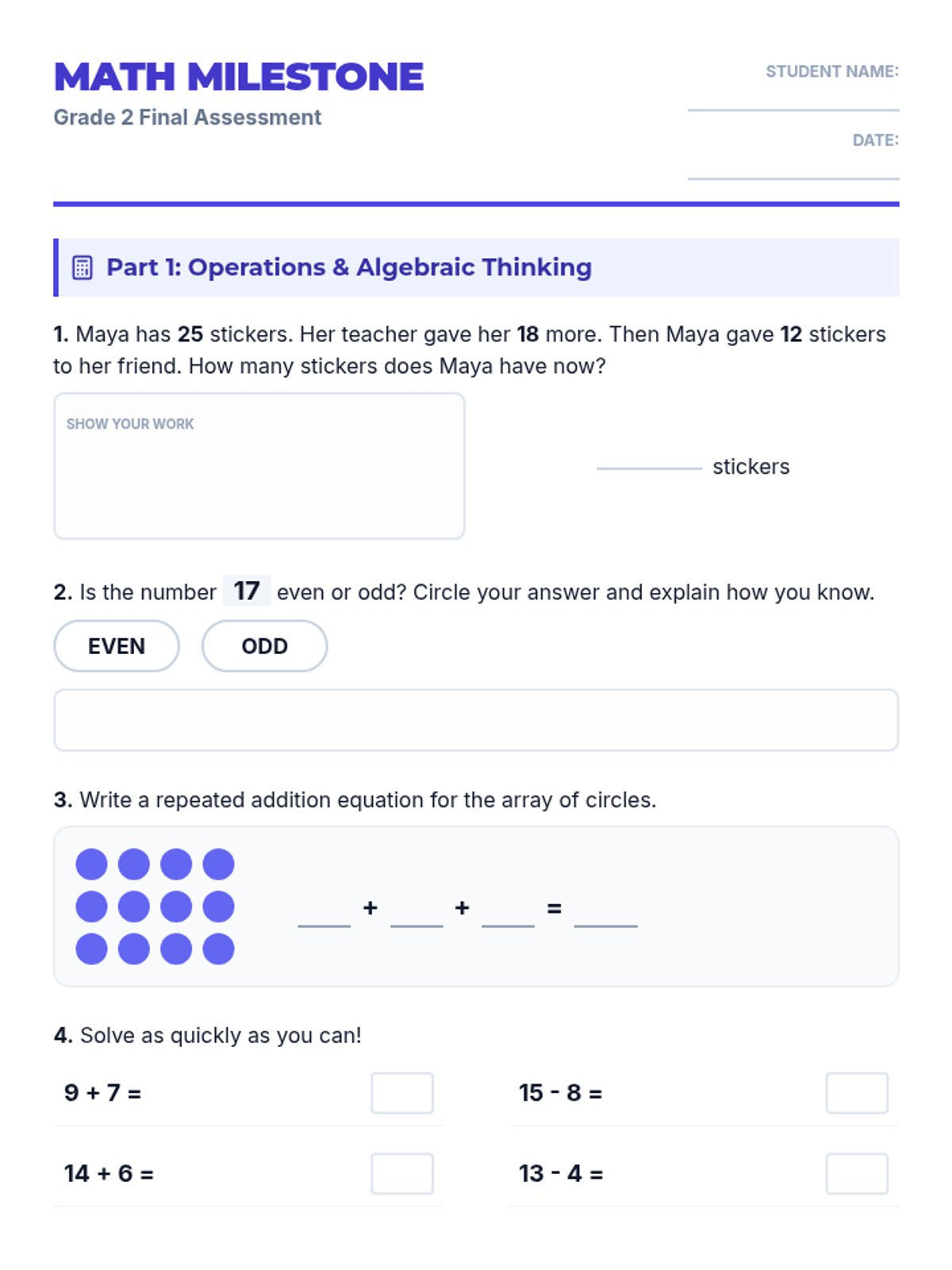
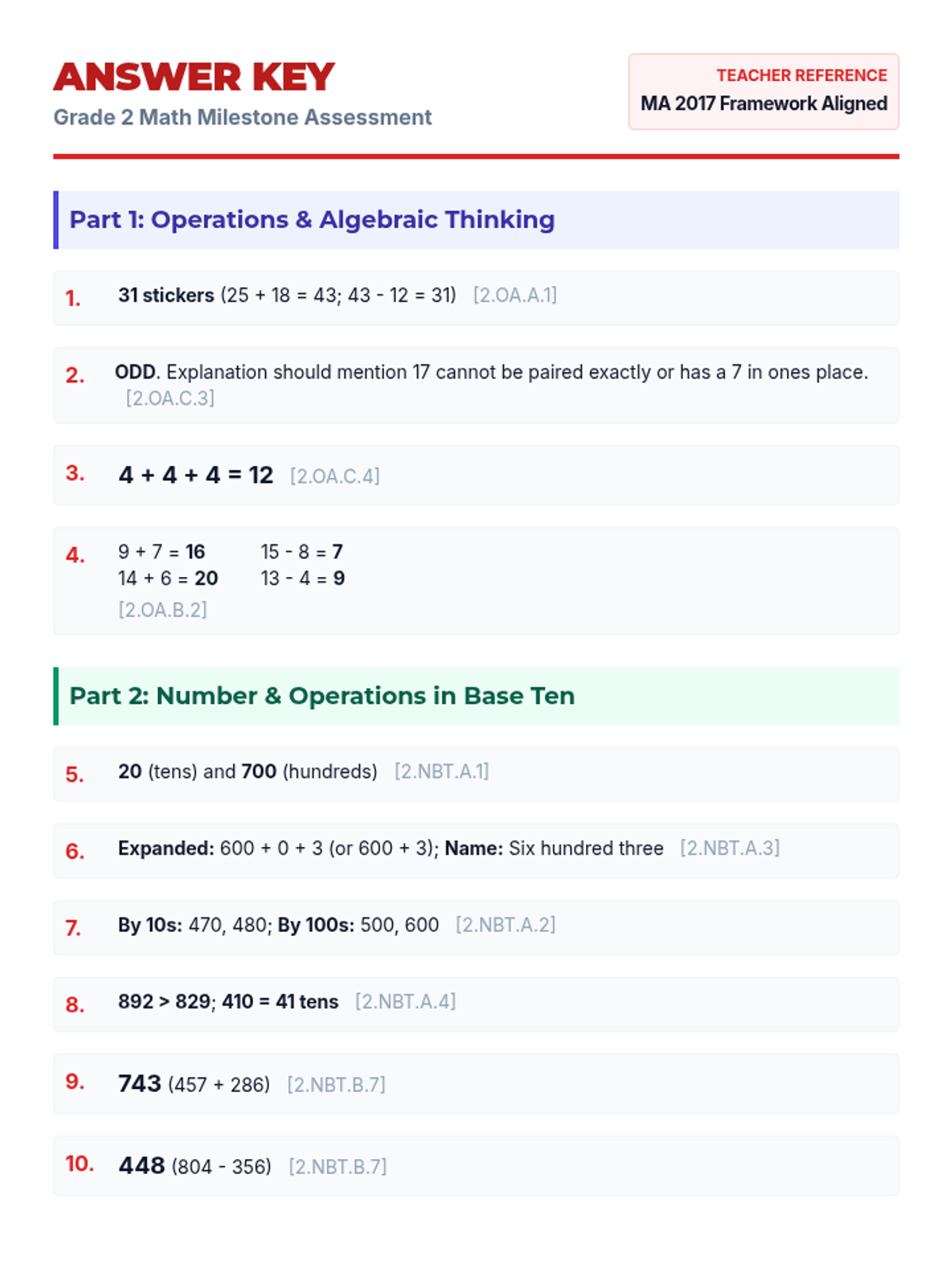
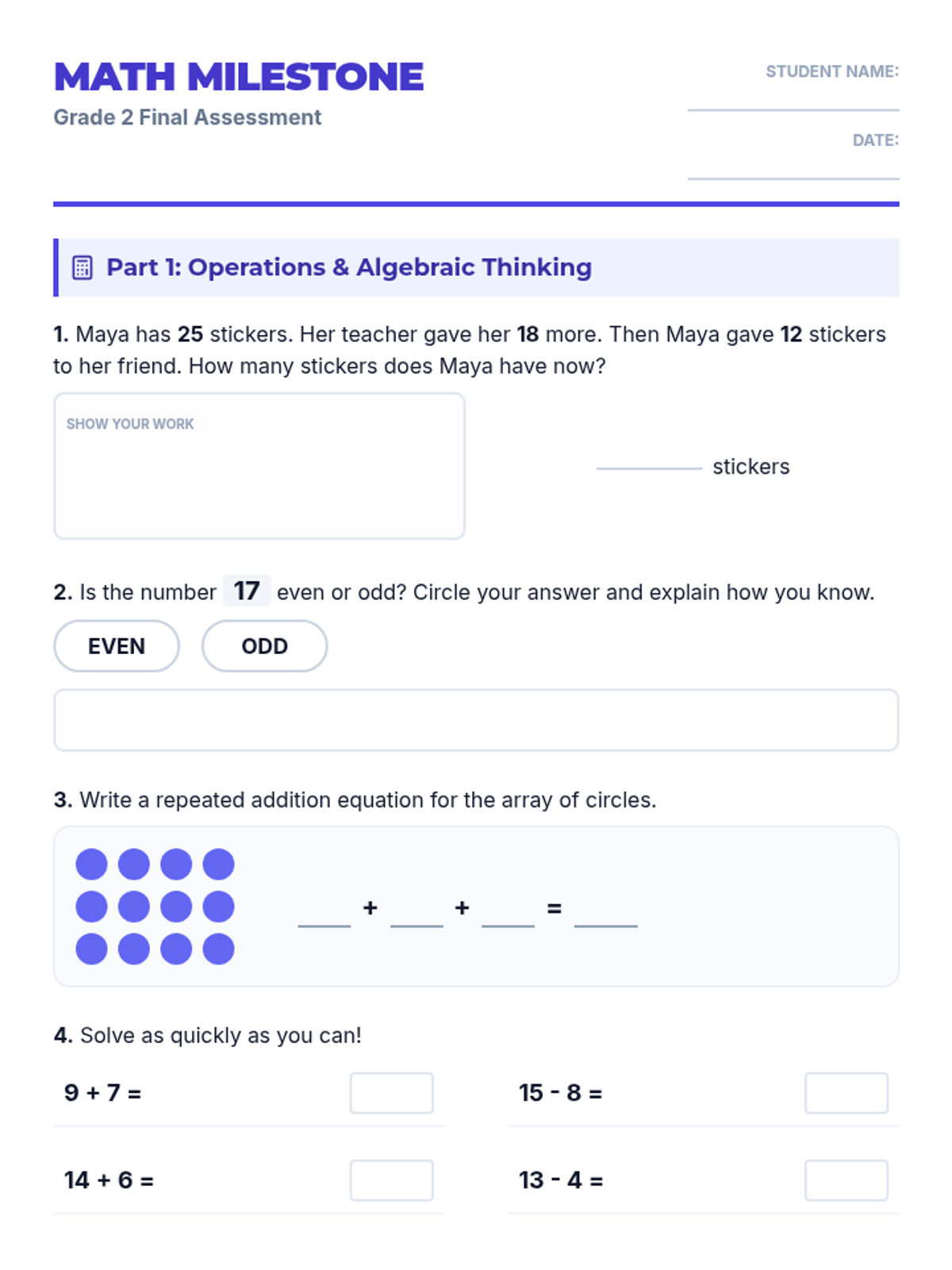
A comprehensive end-of-year assessment for second-grade students, covering all Massachusetts Mathematics Curriculum Framework standards including Operations and Algebraic Thinking, Number and Operations in Base Ten, Measurement and Data, and Geometry.
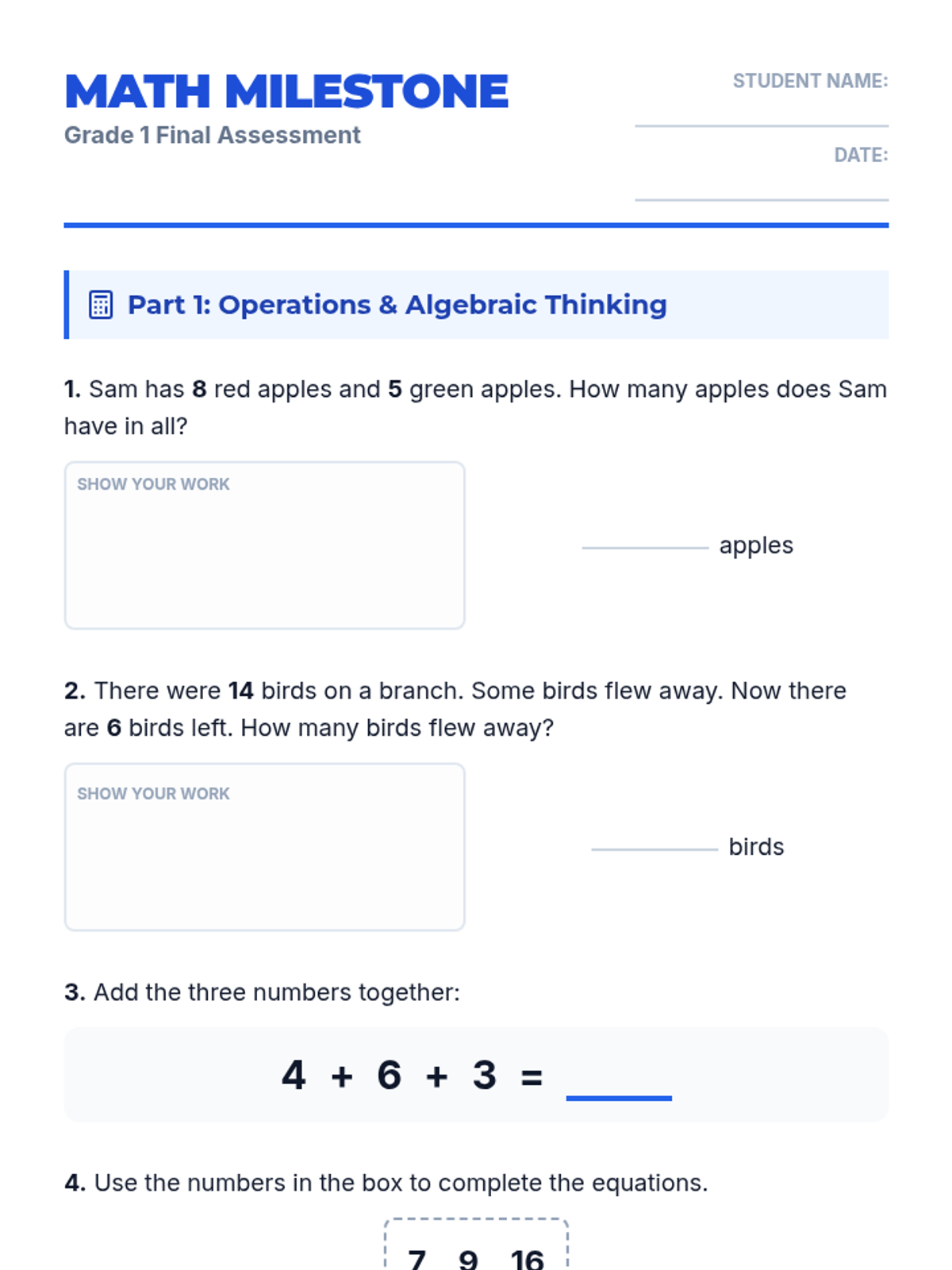
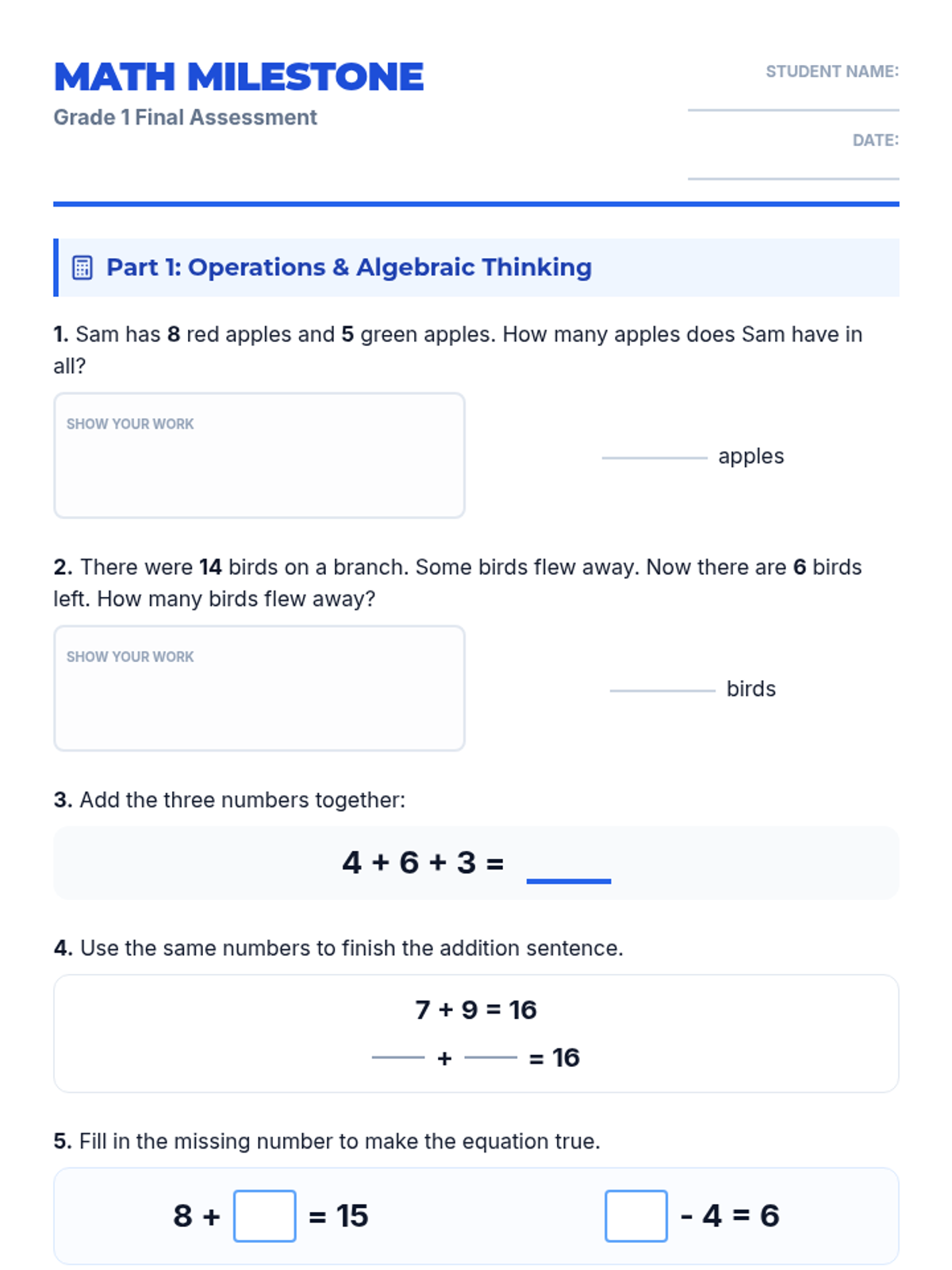
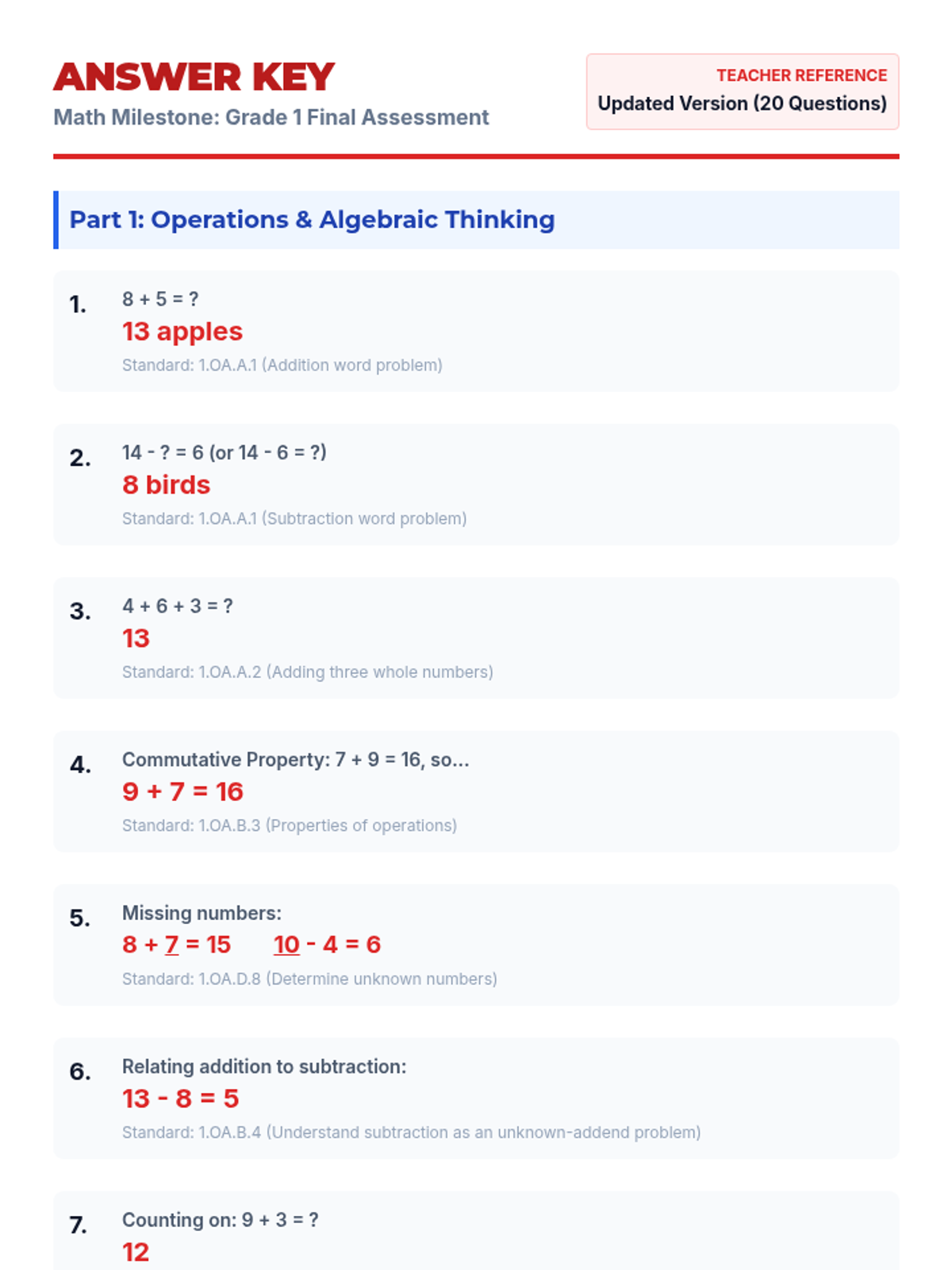
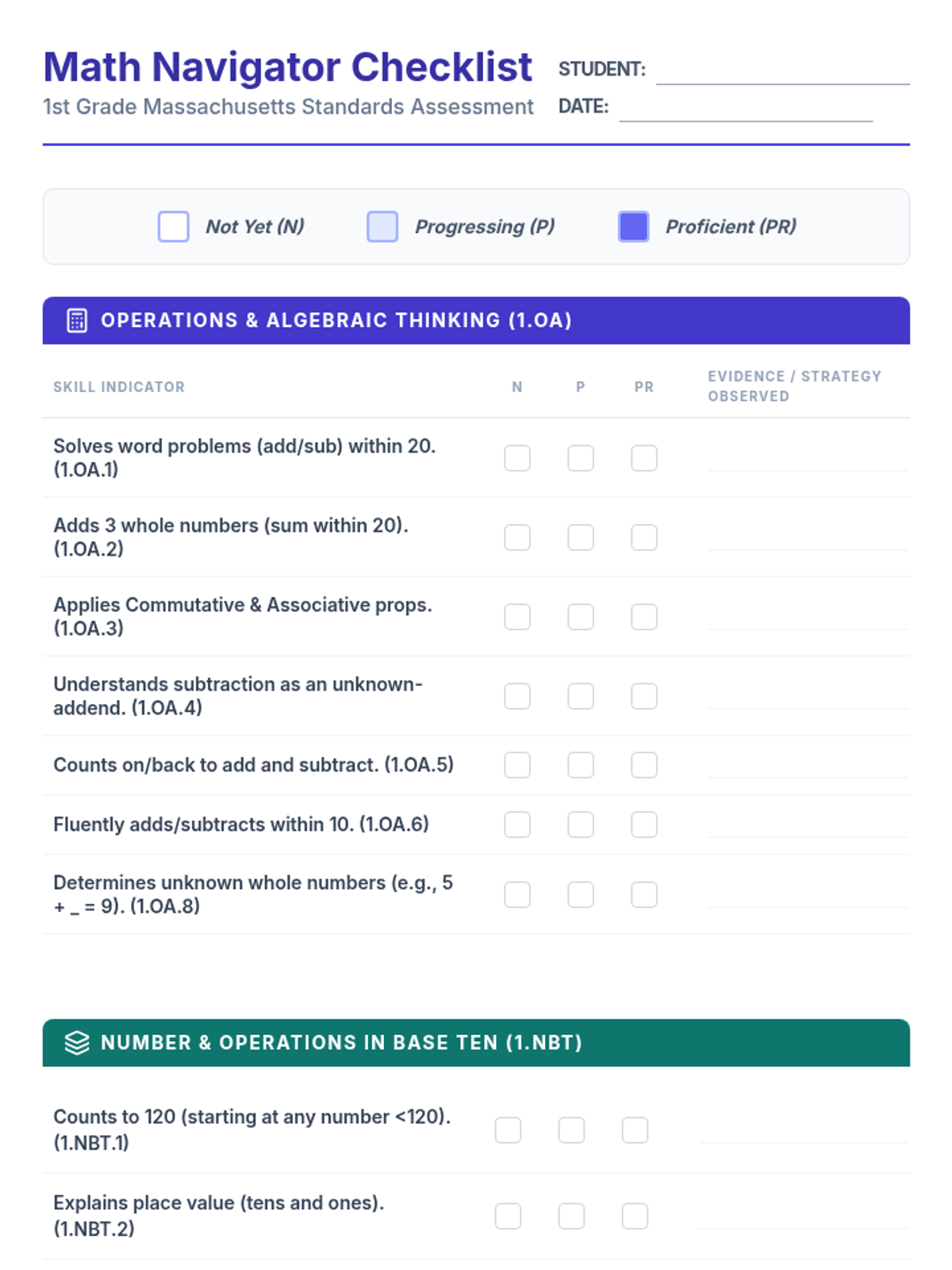
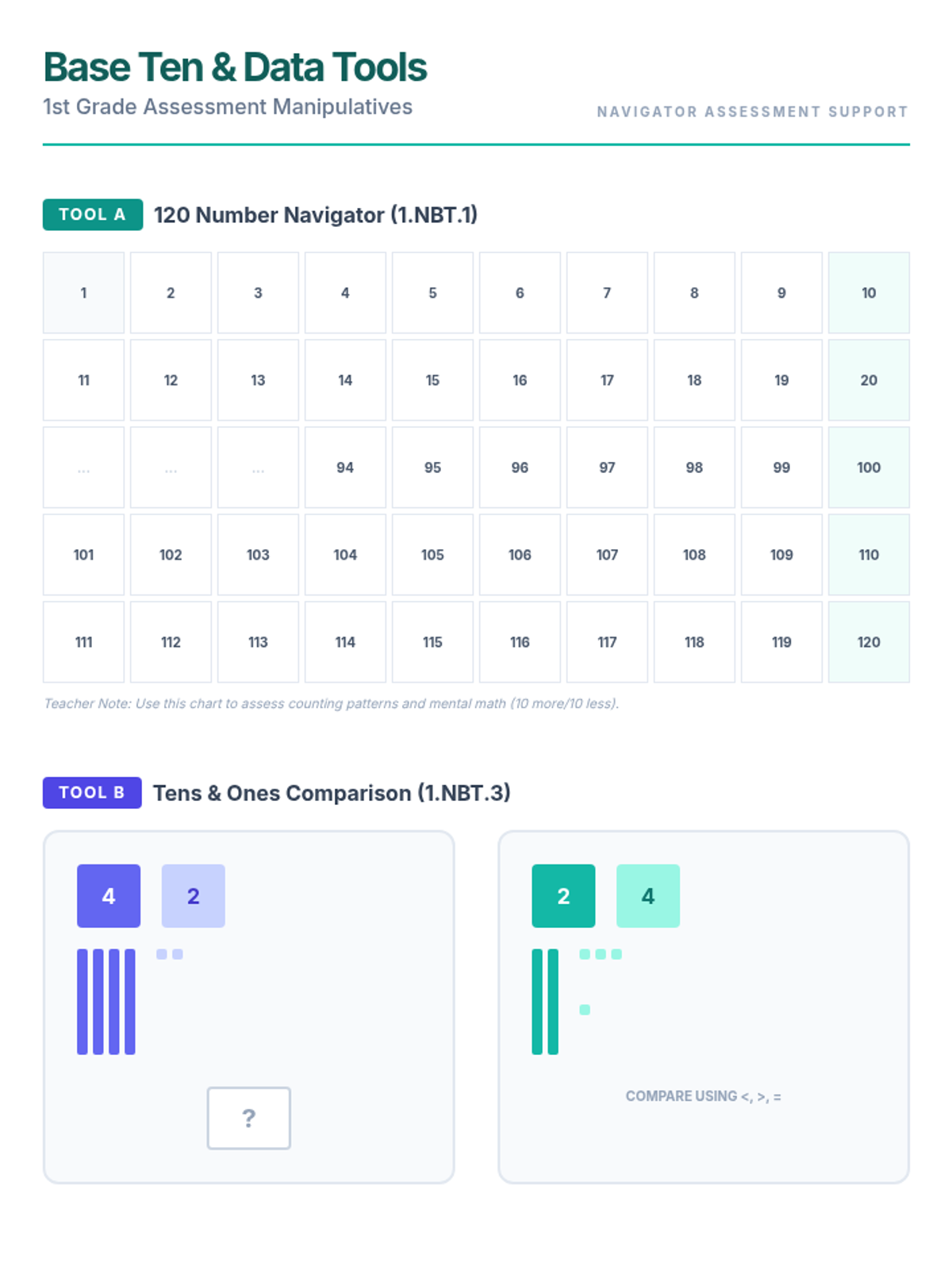
A comprehensive end-of-year assessment for first-grade students, covering all Massachusetts Mathematics Curriculum Framework standards including Operations and Algebraic Thinking, Number and Operations in Base Ten, Measurement and Data, and Geometry.
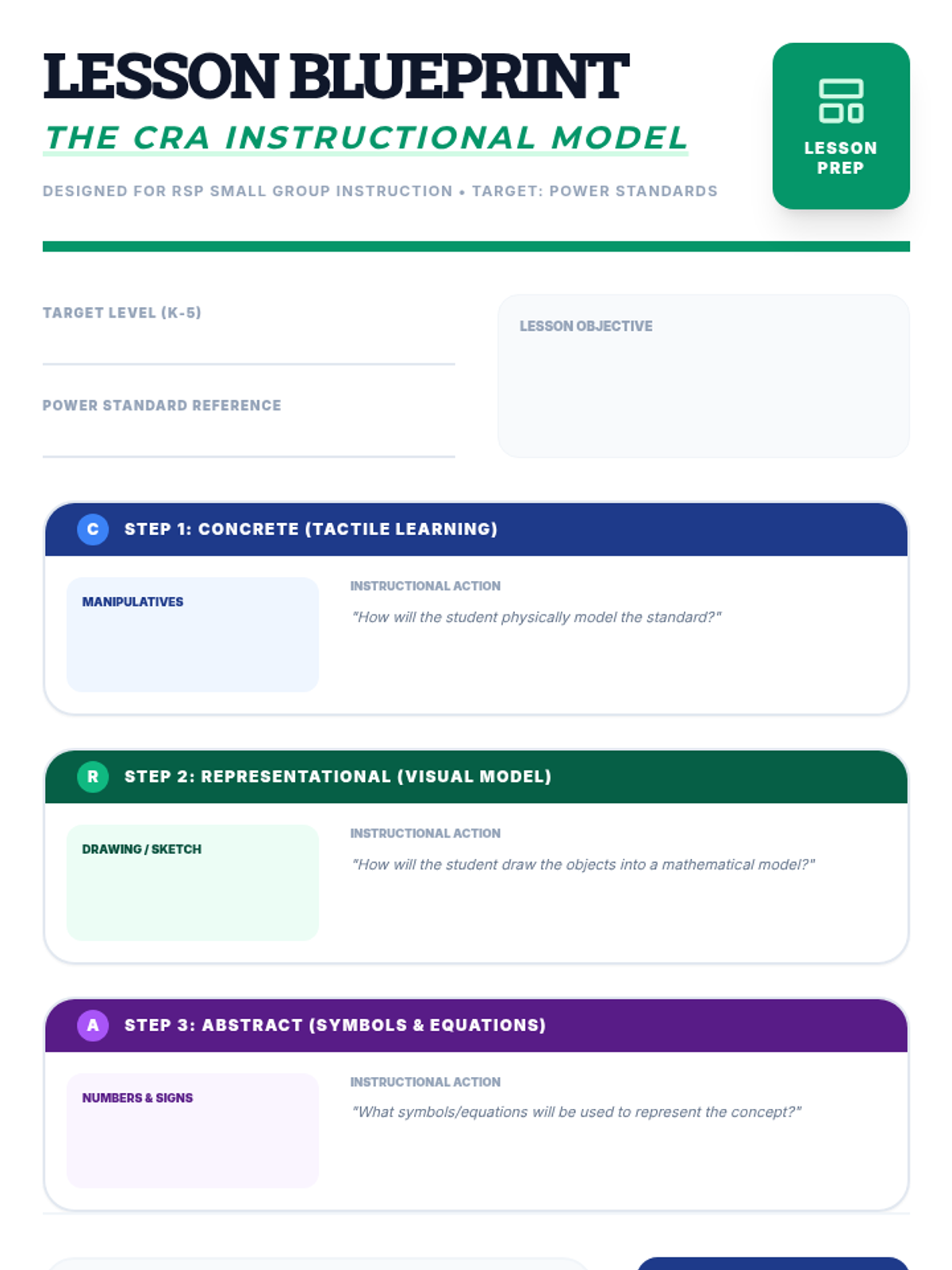
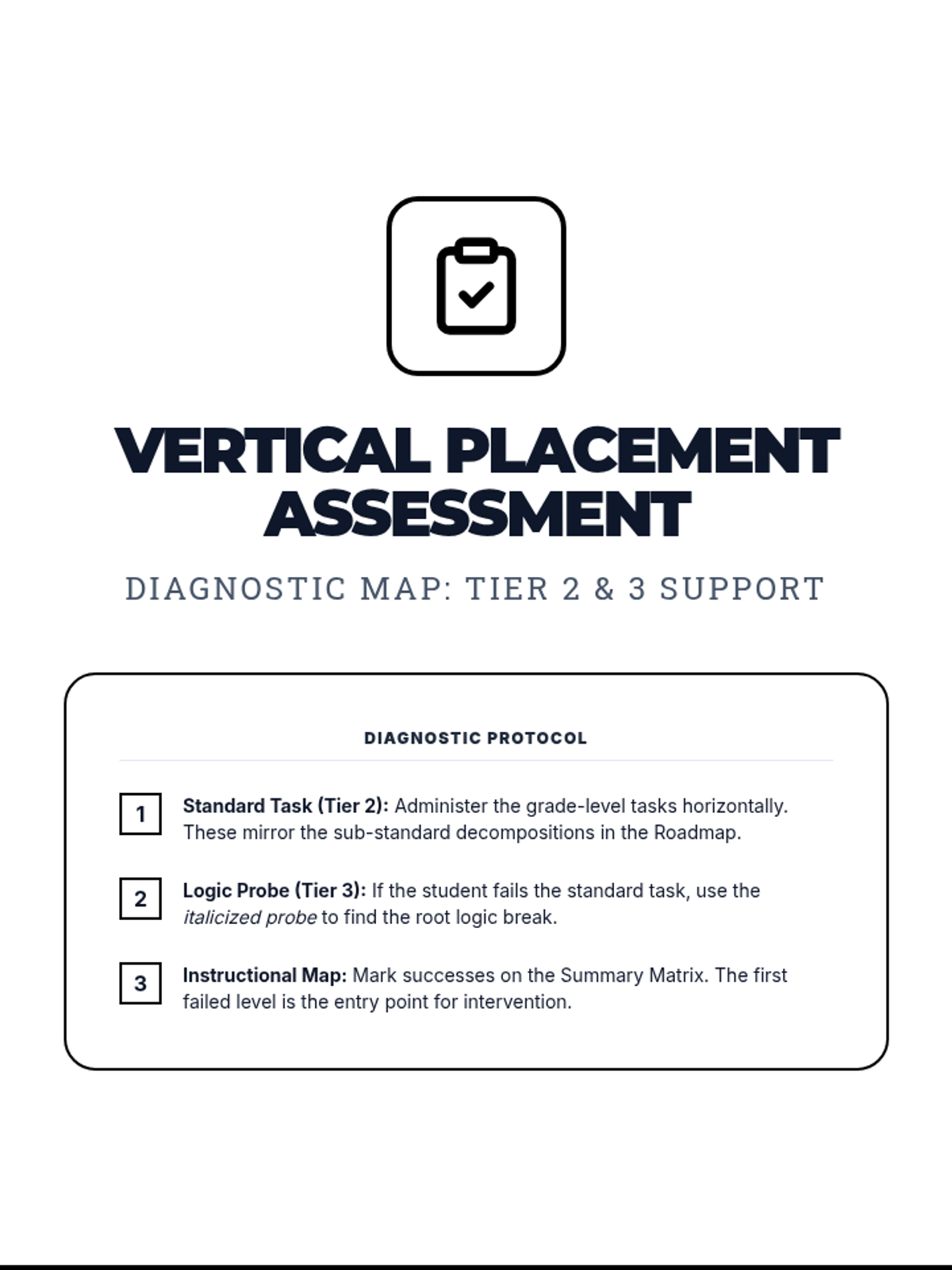
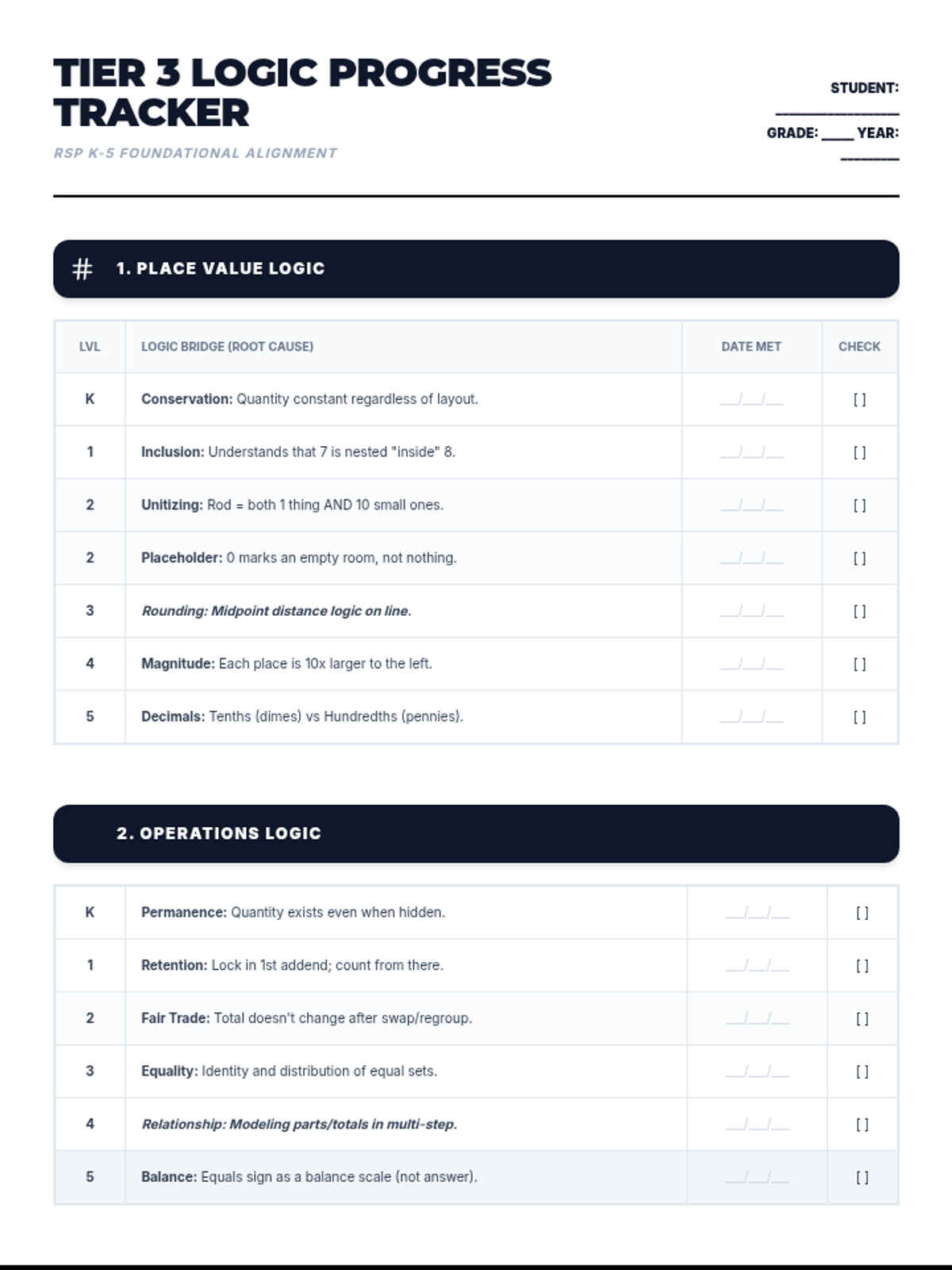
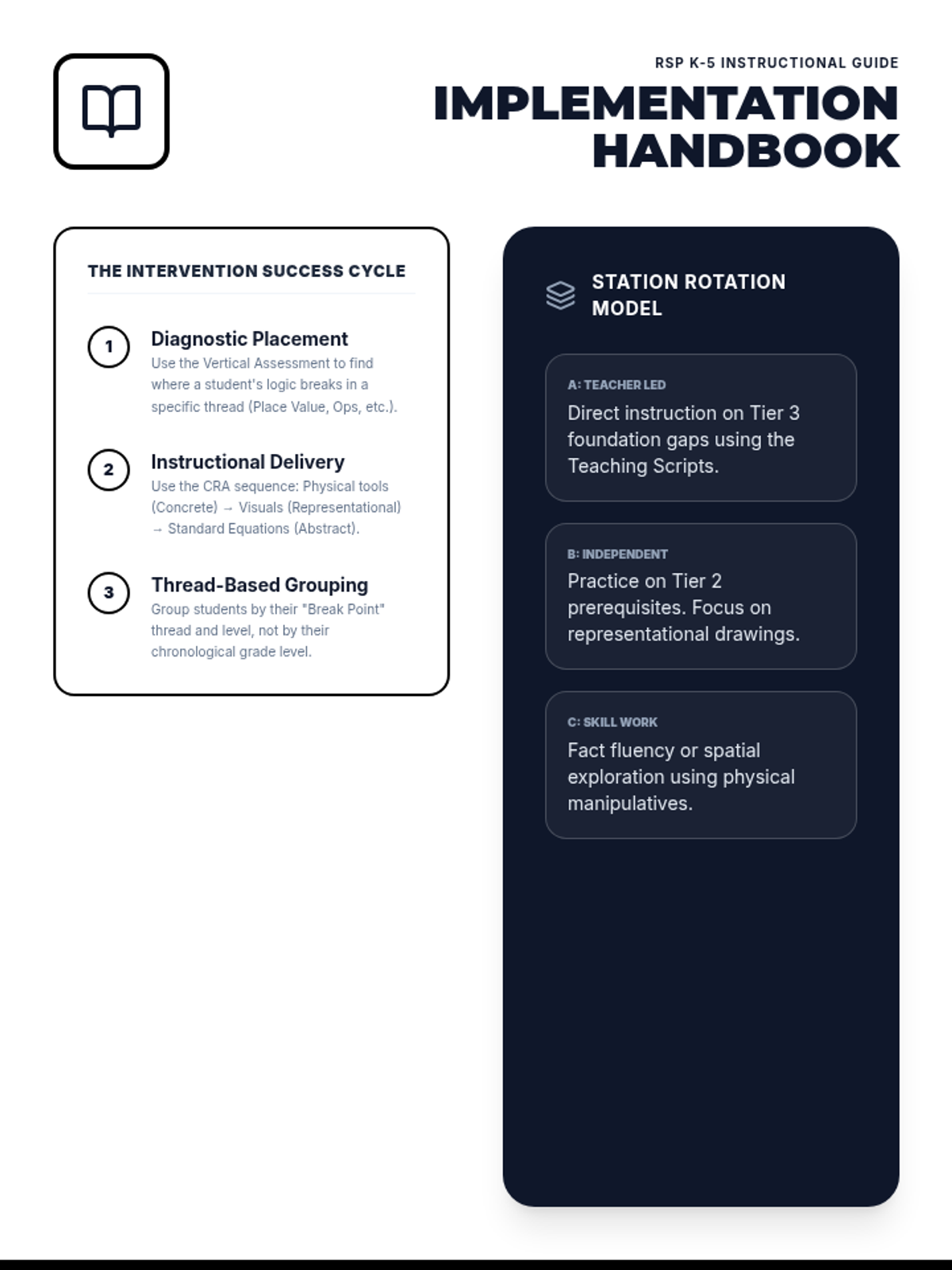
A toolkit for RSP teachers to transform a scope and sequence into a functional daily curriculum. Includes instructional frameworks, diagnostic tools, and planning templates specifically designed for multi-grade math intervention.
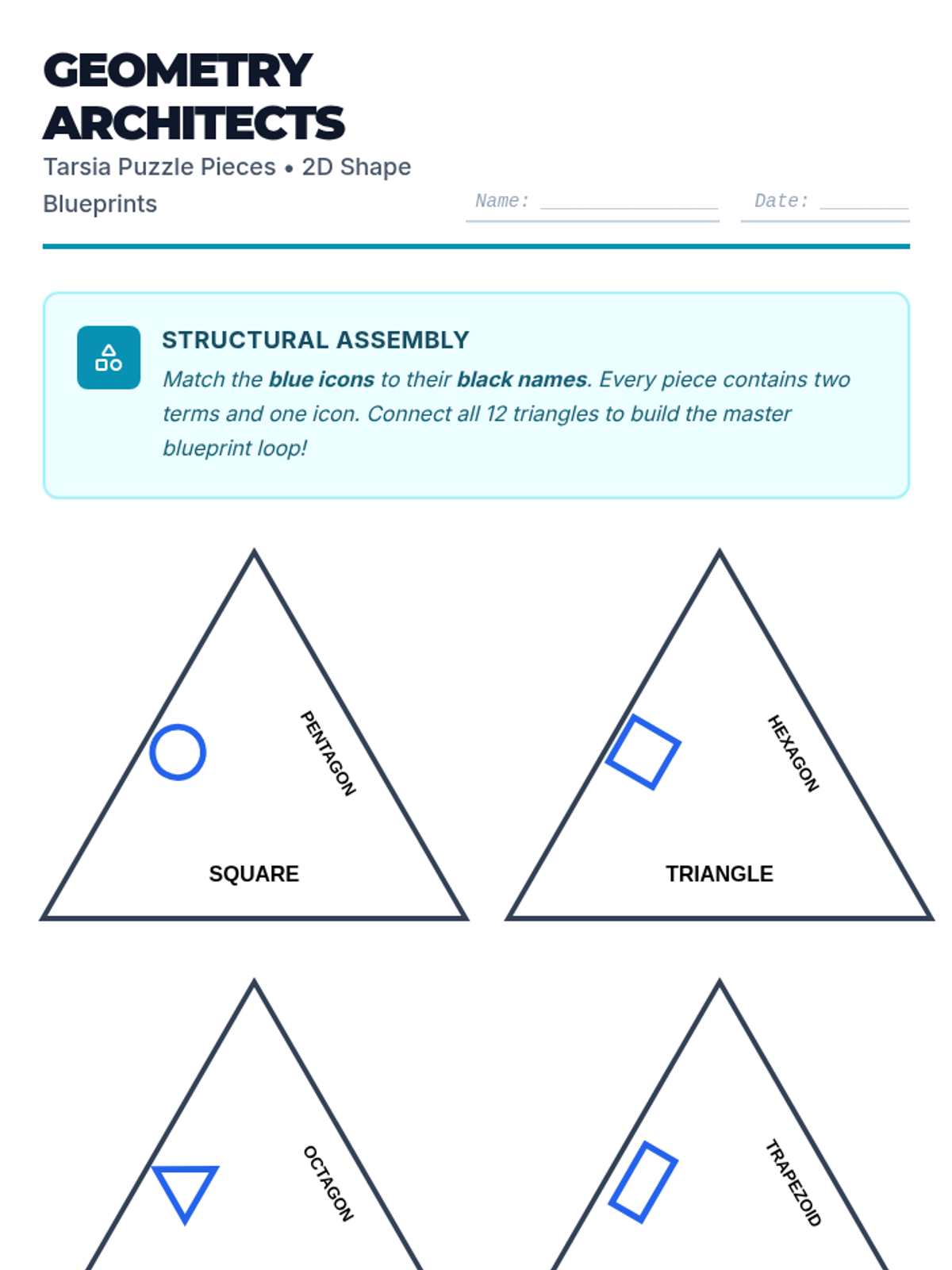
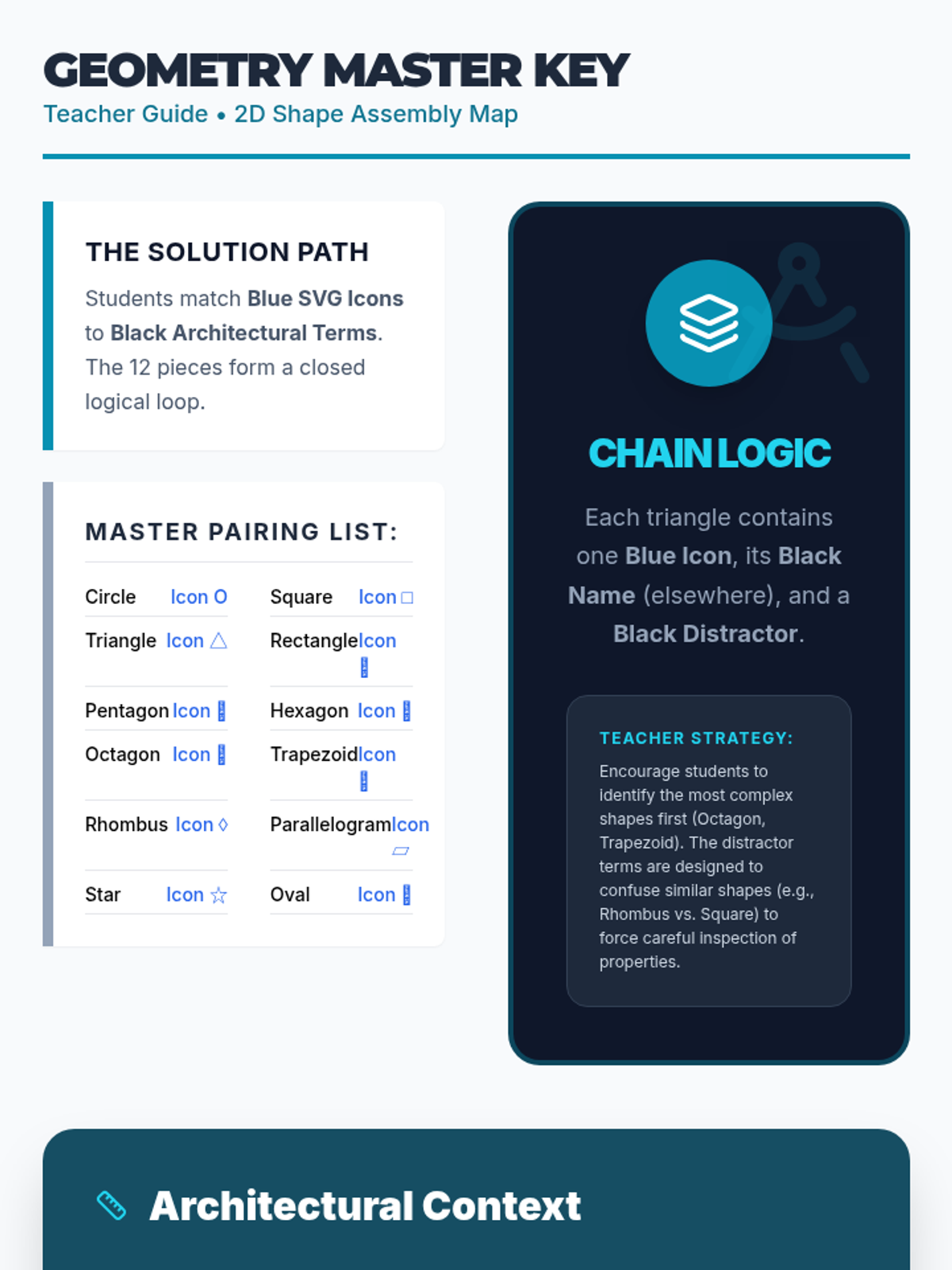
A visual exploration of 2D geometric shapes, focusing on identifying names and properties through an architectural-themed Tarsia puzzle.
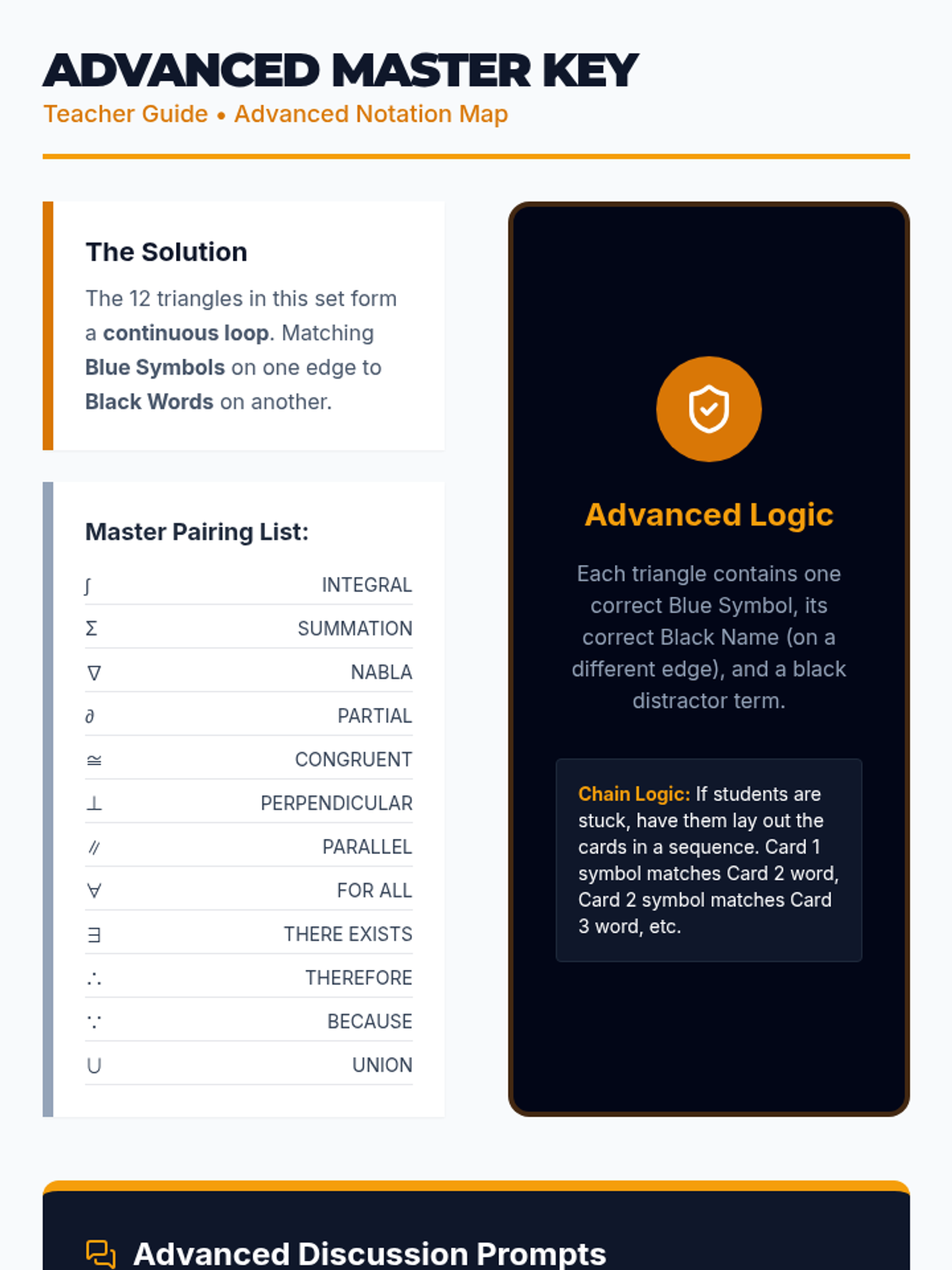
A deep dive into higher-level mathematical notation, focusing on calculus, set theory, and Greek symbols through a complex Tarsia challenge.
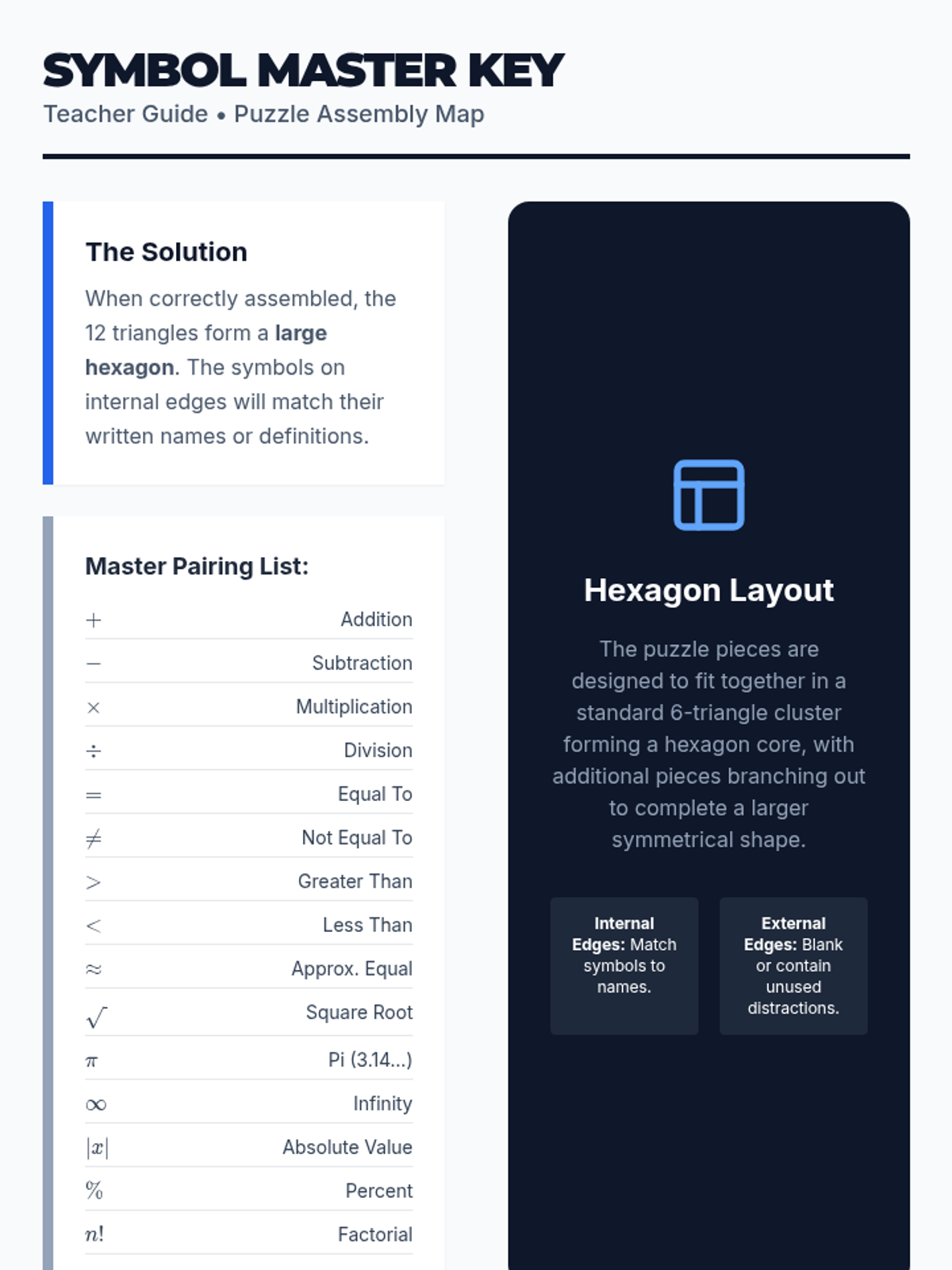
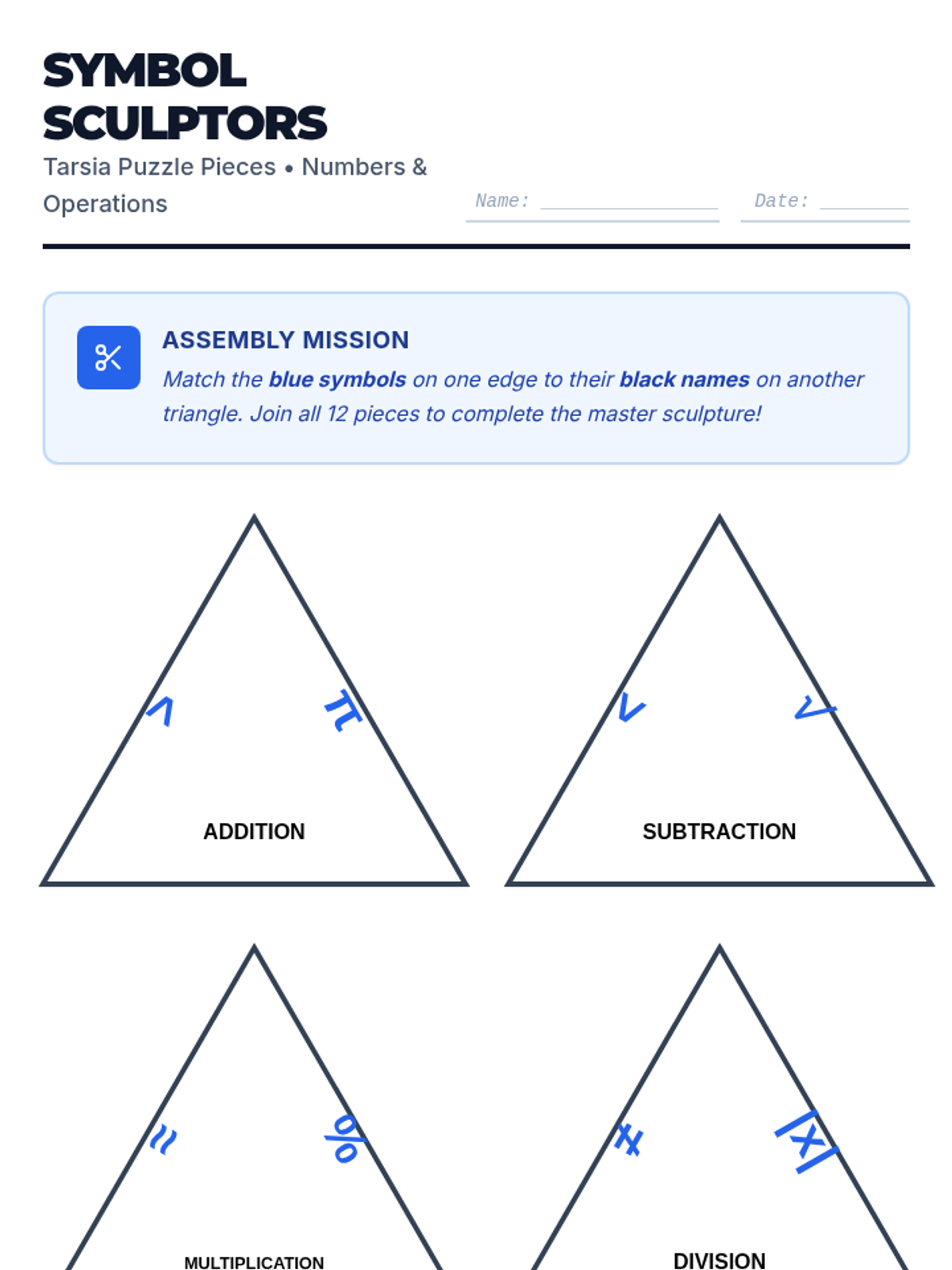
A hands-on lesson focusing on the recognition and application of mathematical symbols in numbers and operations through a collaborative Tarsia puzzle activity.
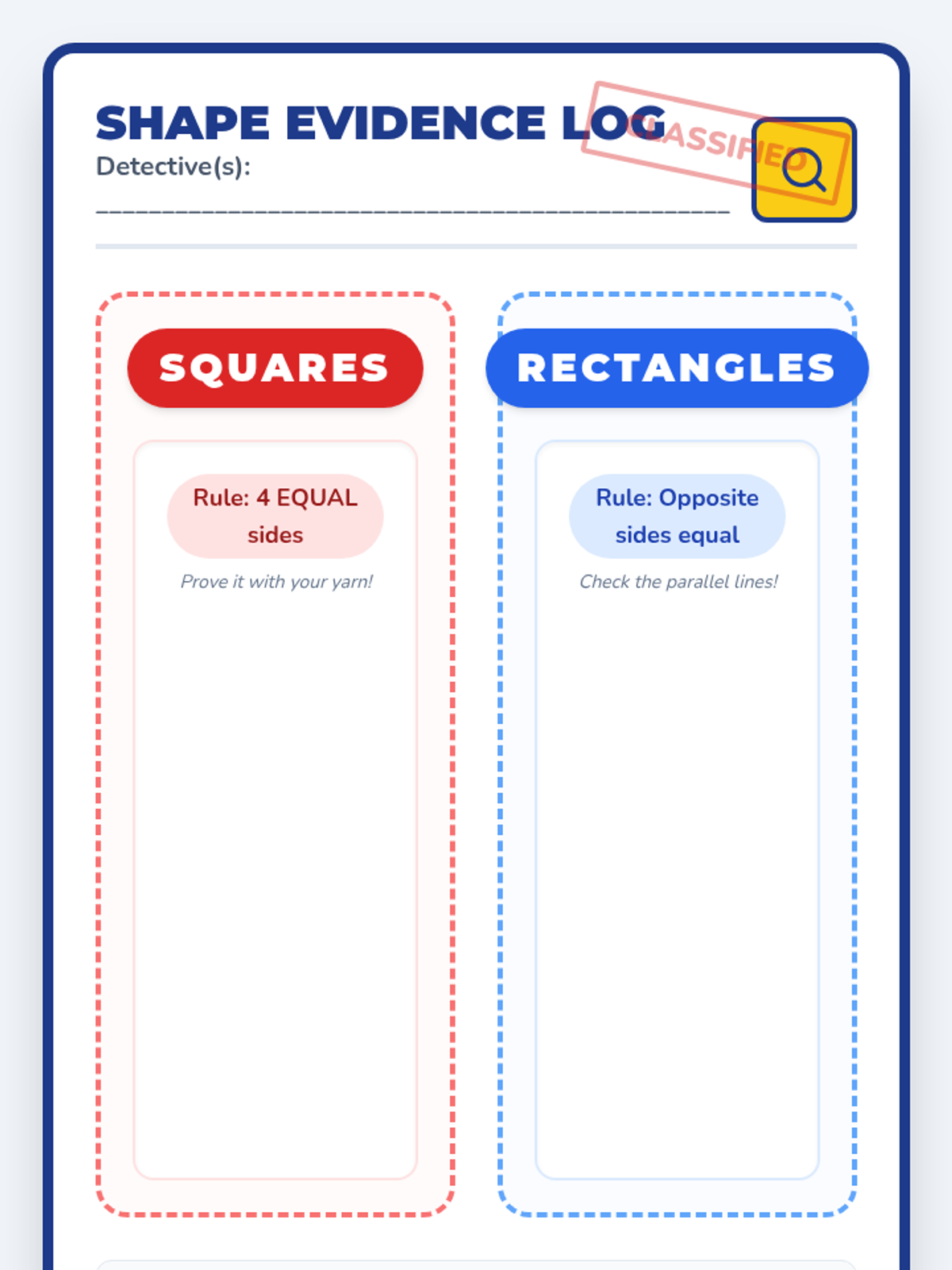
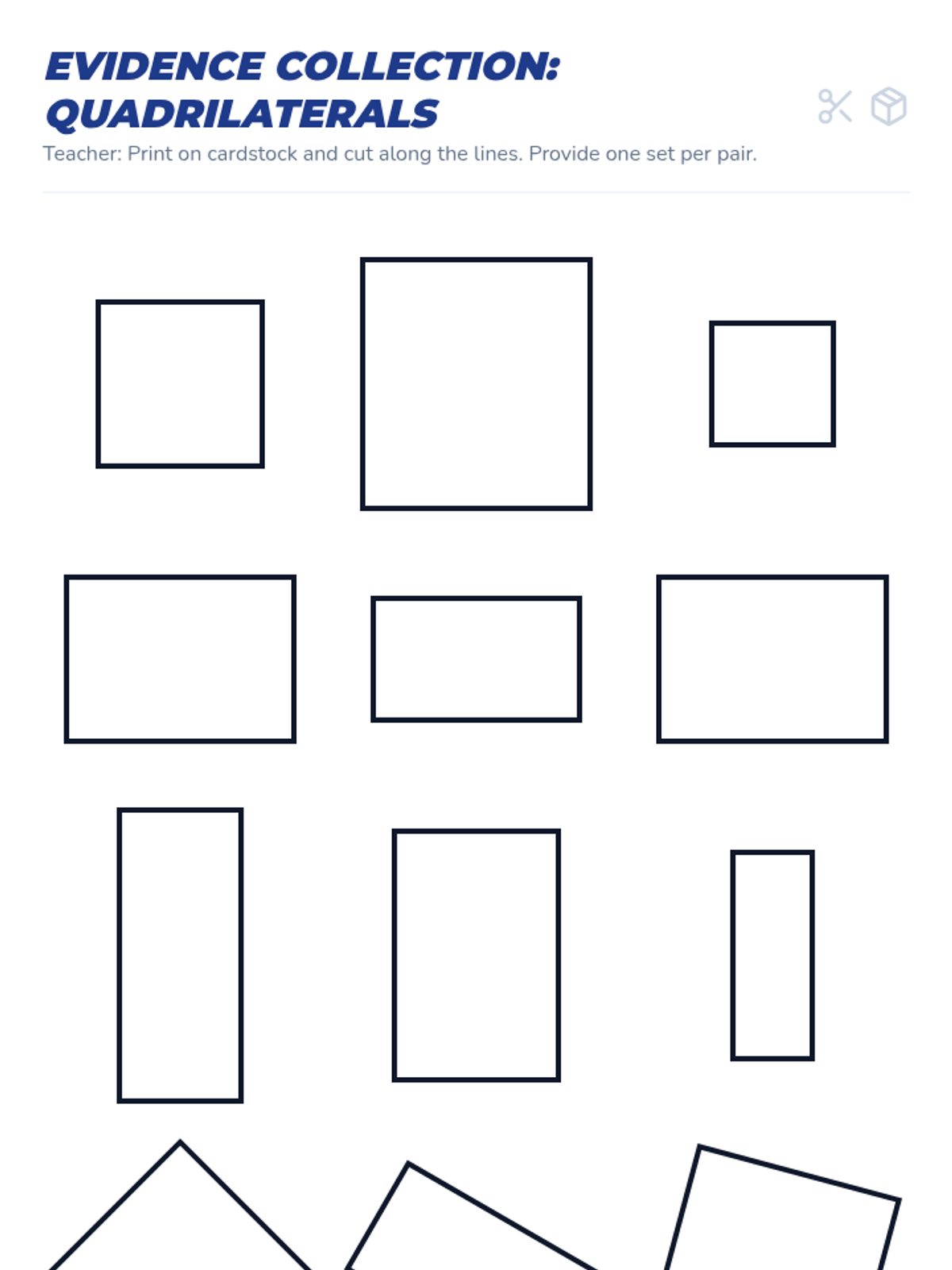
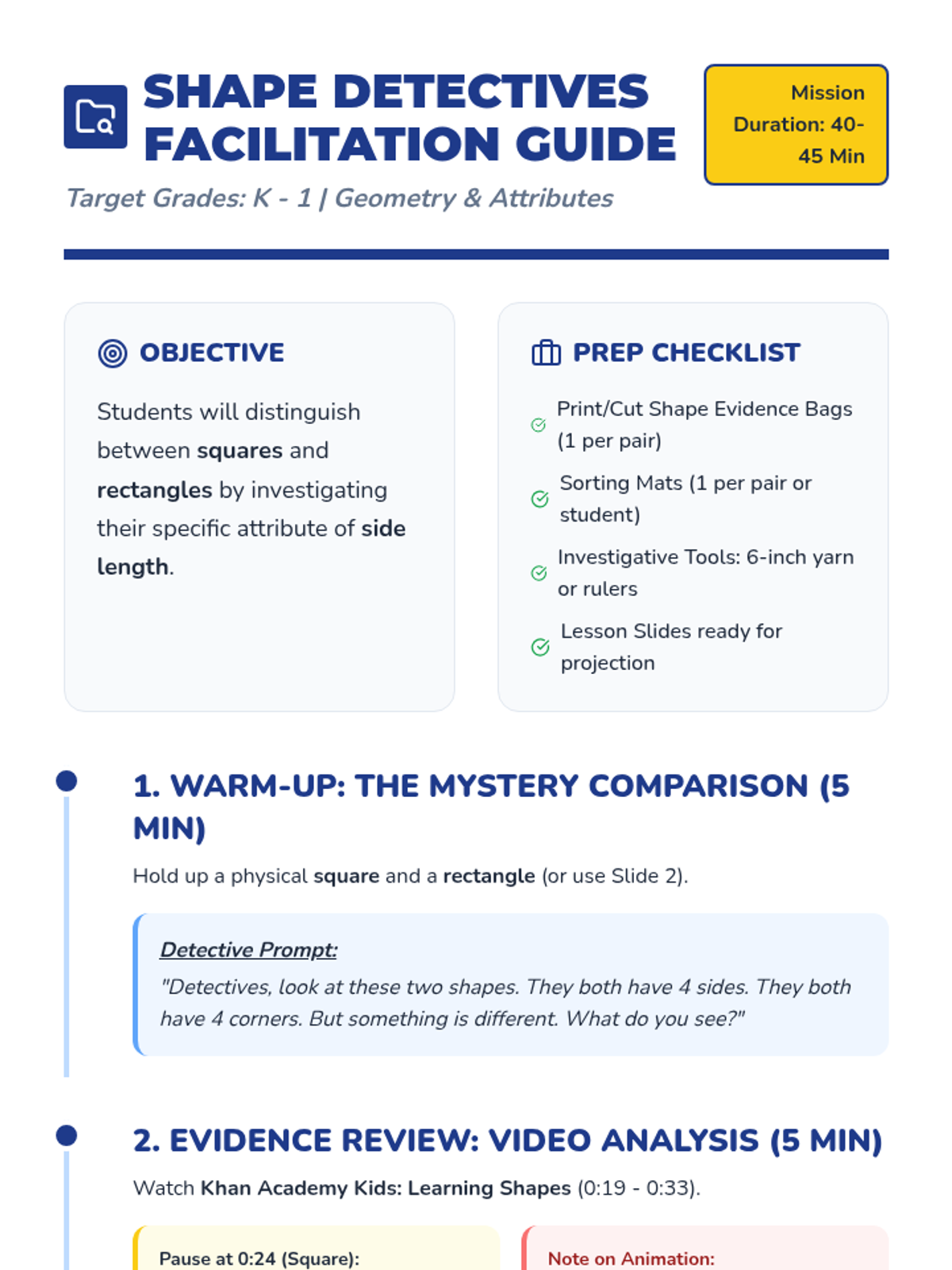
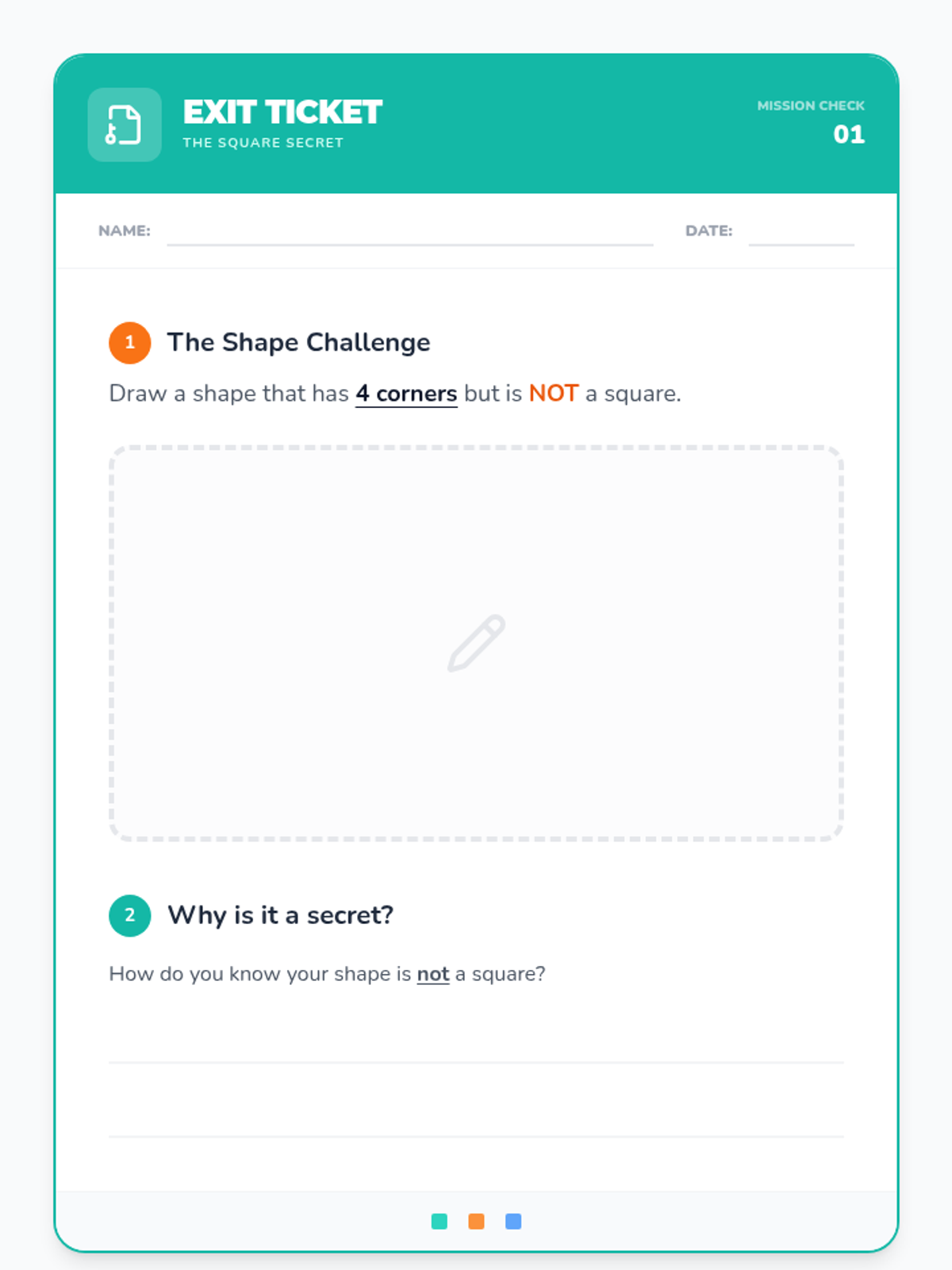
A Kindergarten to 1st Grade lesson where students become 'Shape Detectives' to distinguish between squares and rectangles by investigating side lengths and using the concept of 'equal' sides.
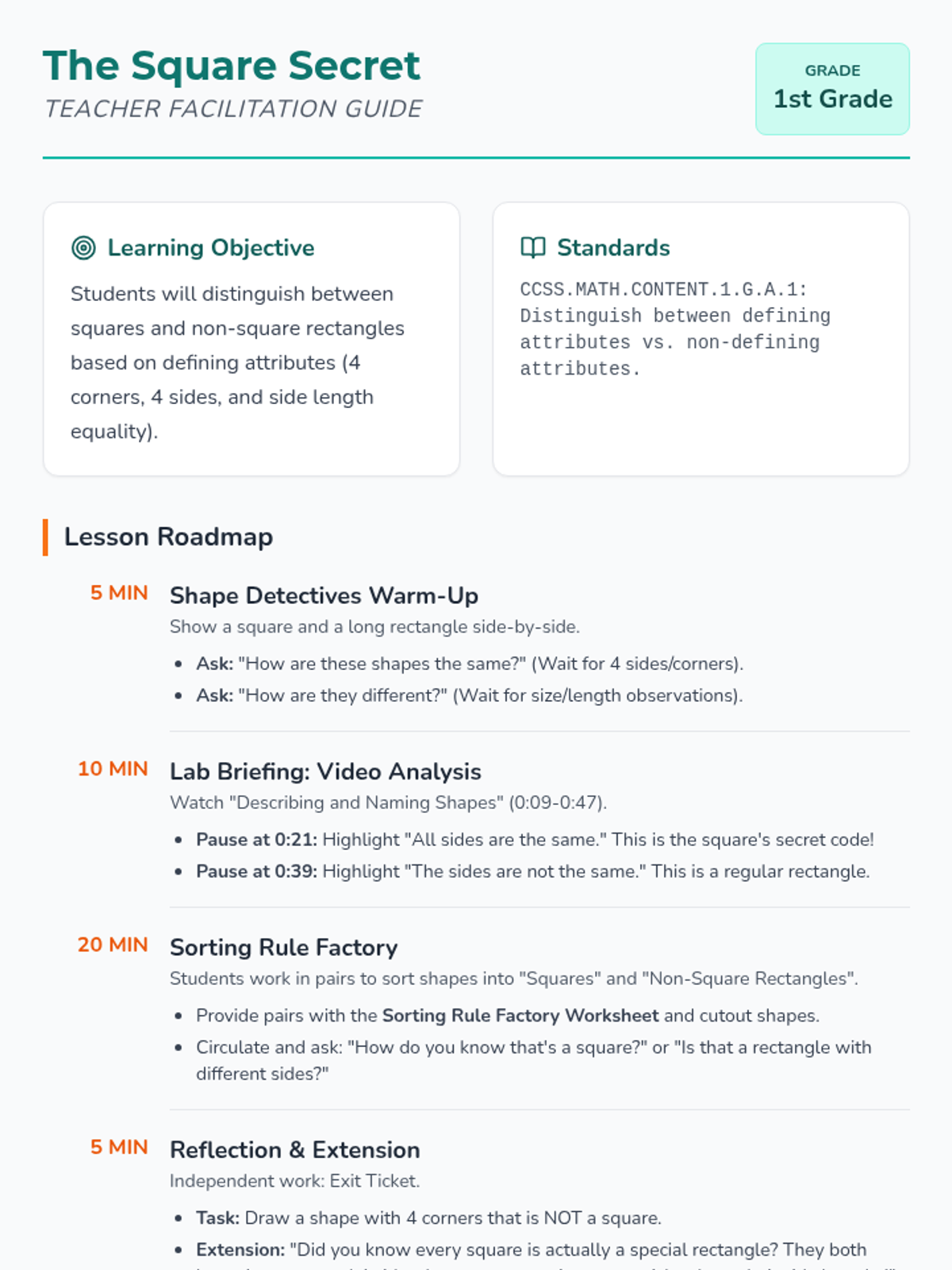
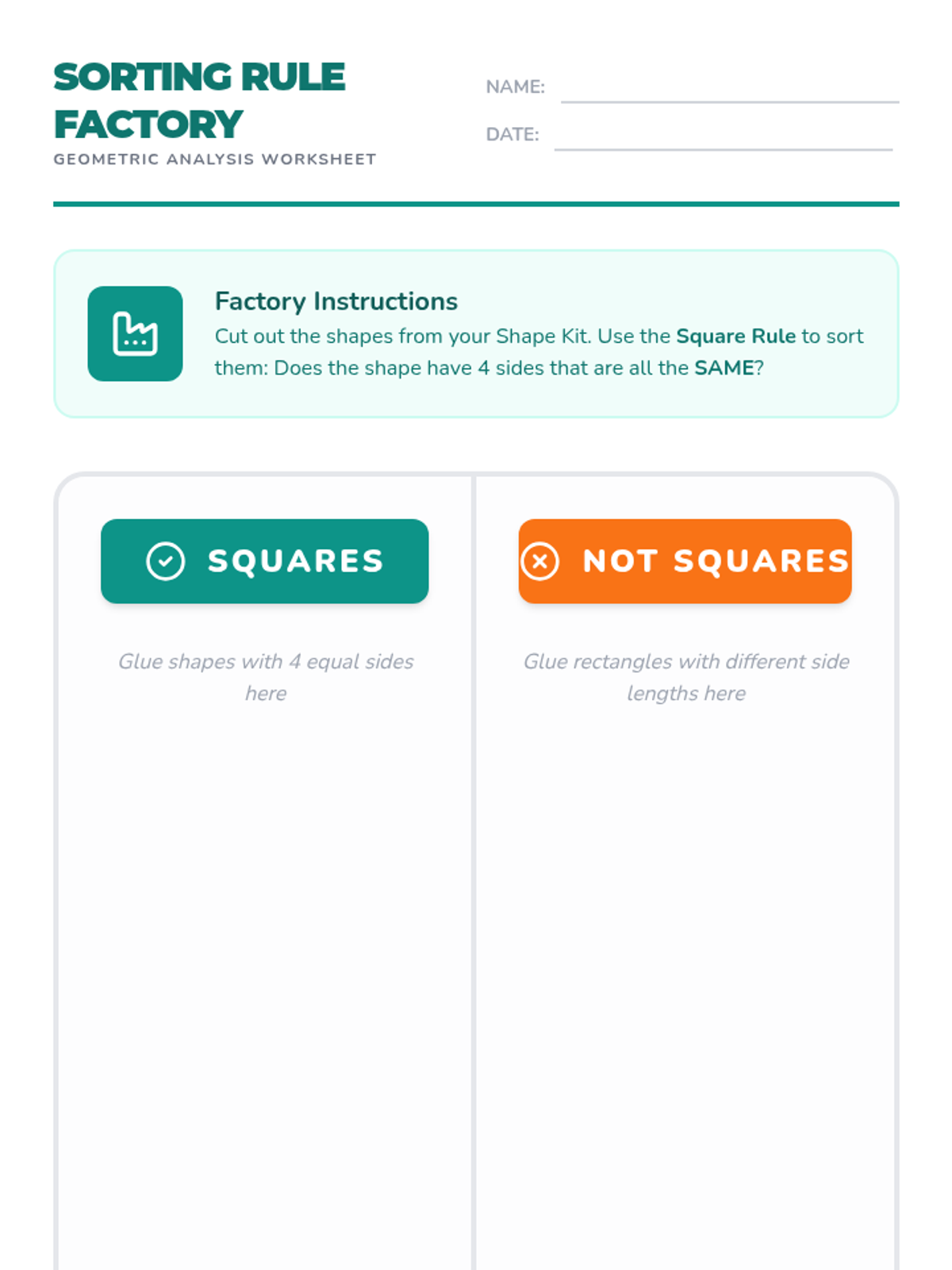
A 1st Grade geometry lesson focusing on the defining attributes of squares and non-square rectangles. Students use a 'Sorting Rule Factory' to categorize shapes and explore the relationship between these two quadrilaterals.
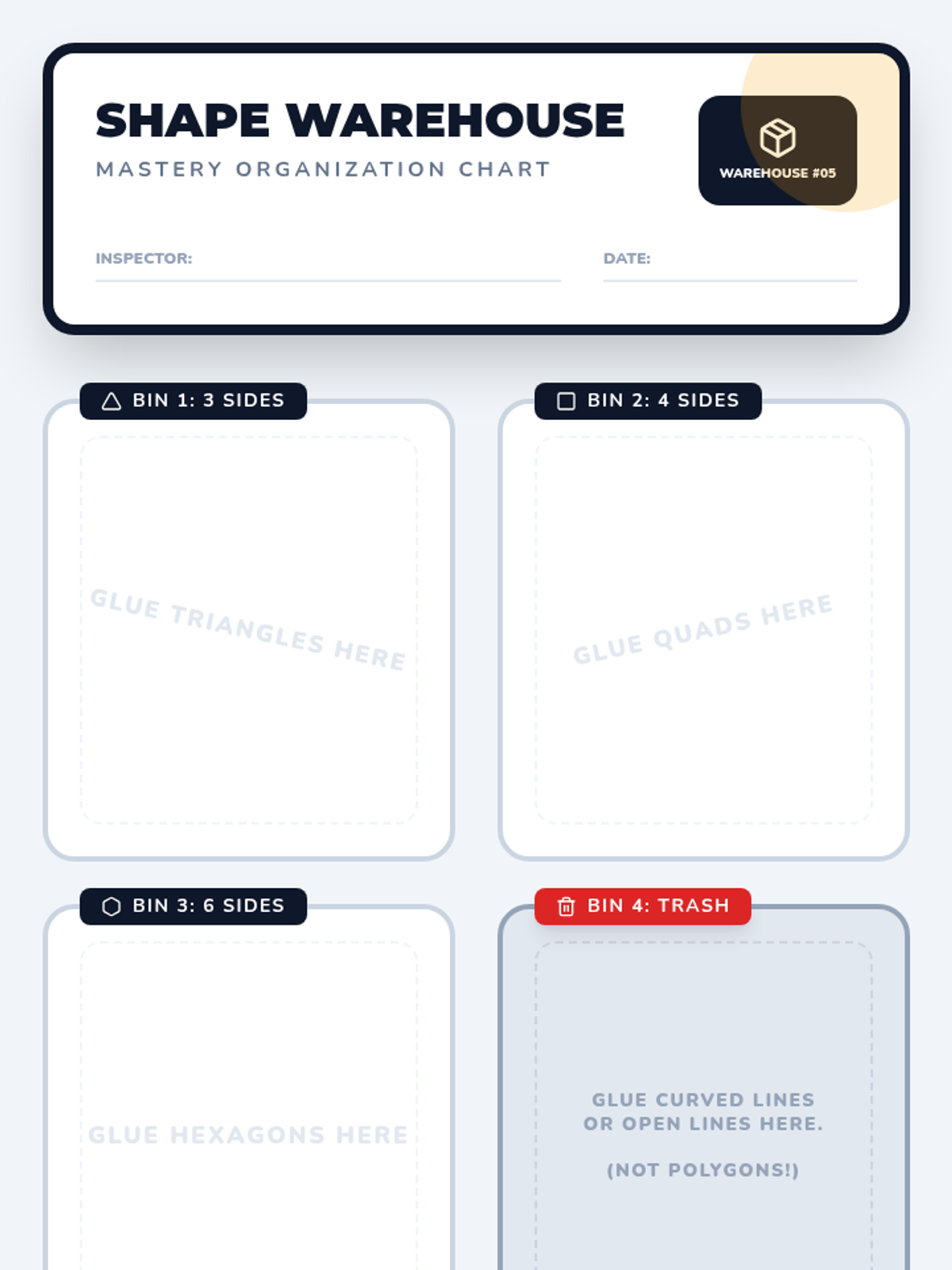
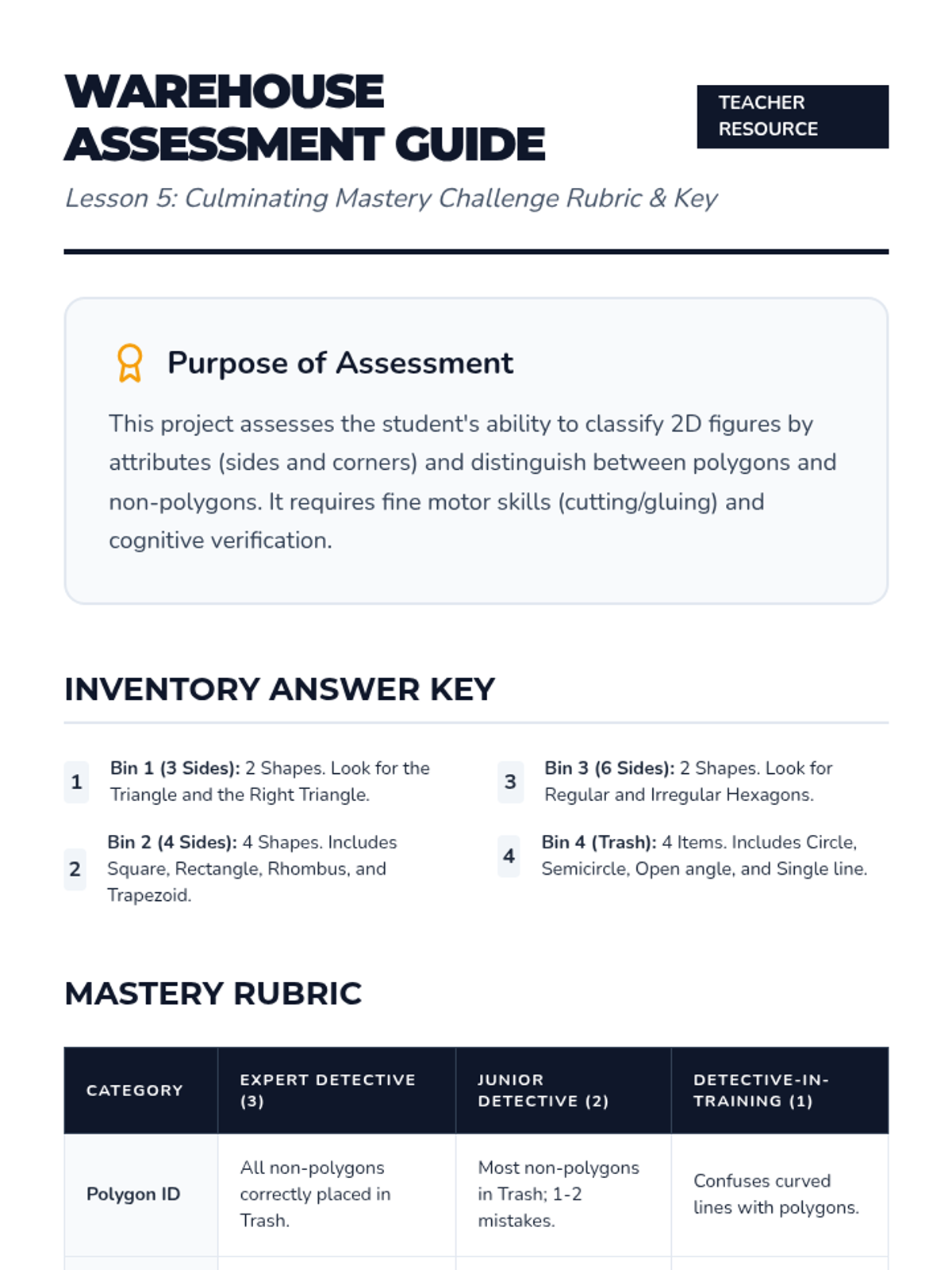
A culminating project where students organize a 'Shape Warehouse' by sorting polygons and non-polygons into a hierarchical classification chart.
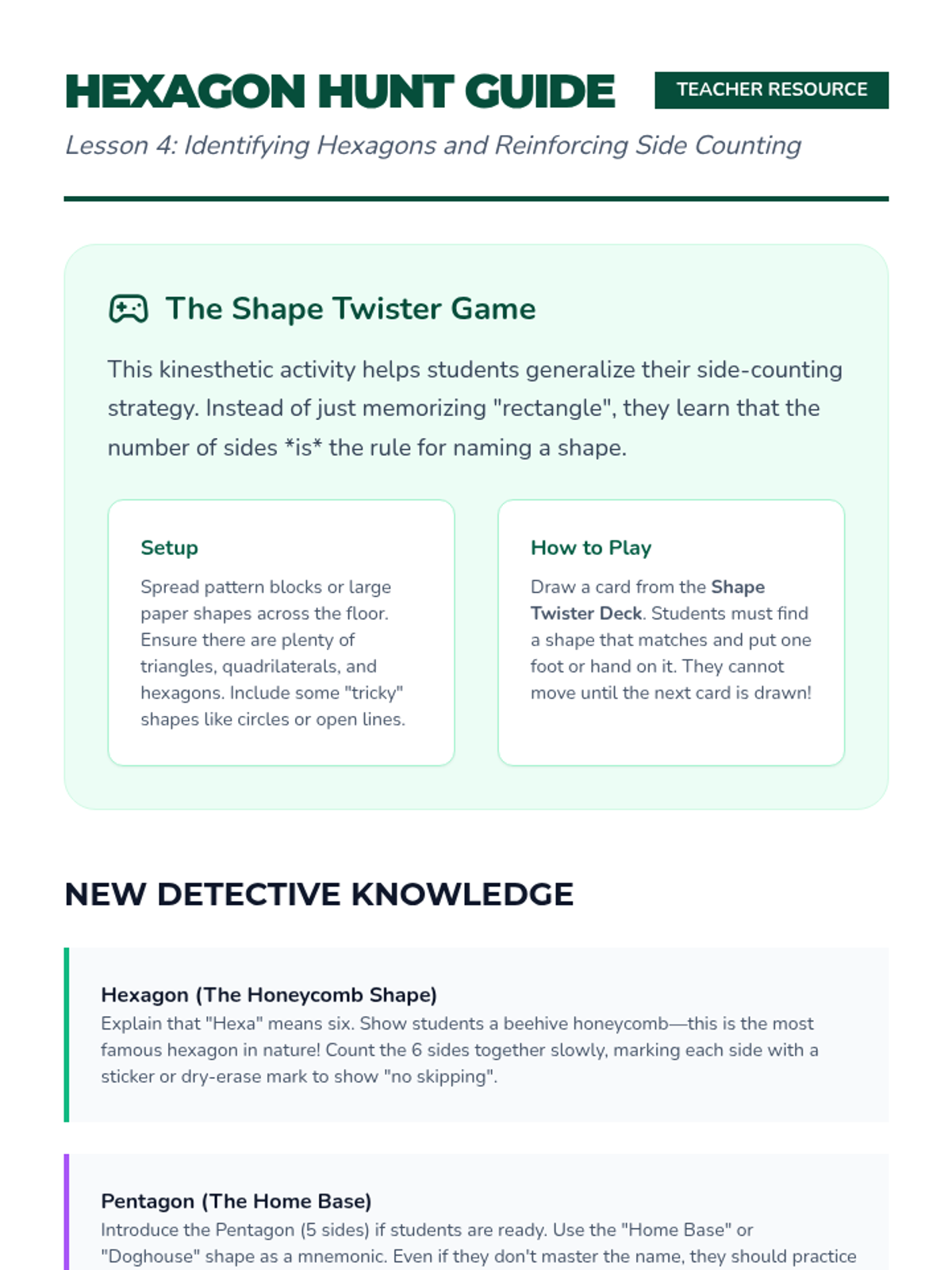
Expansion of polygon knowledge to include hexagons and other many-sided shapes, reinforcing side-counting as a classification strategy.
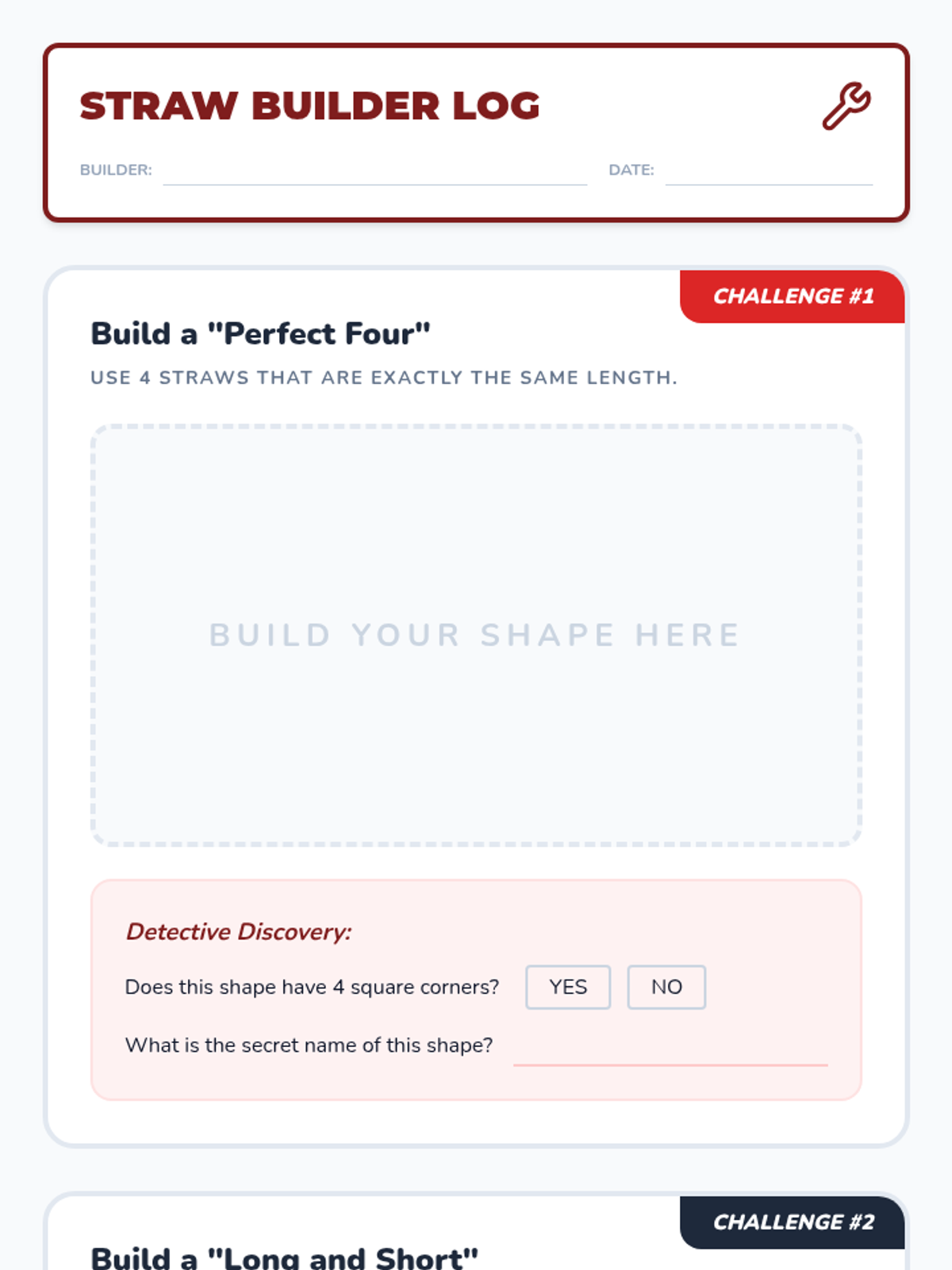
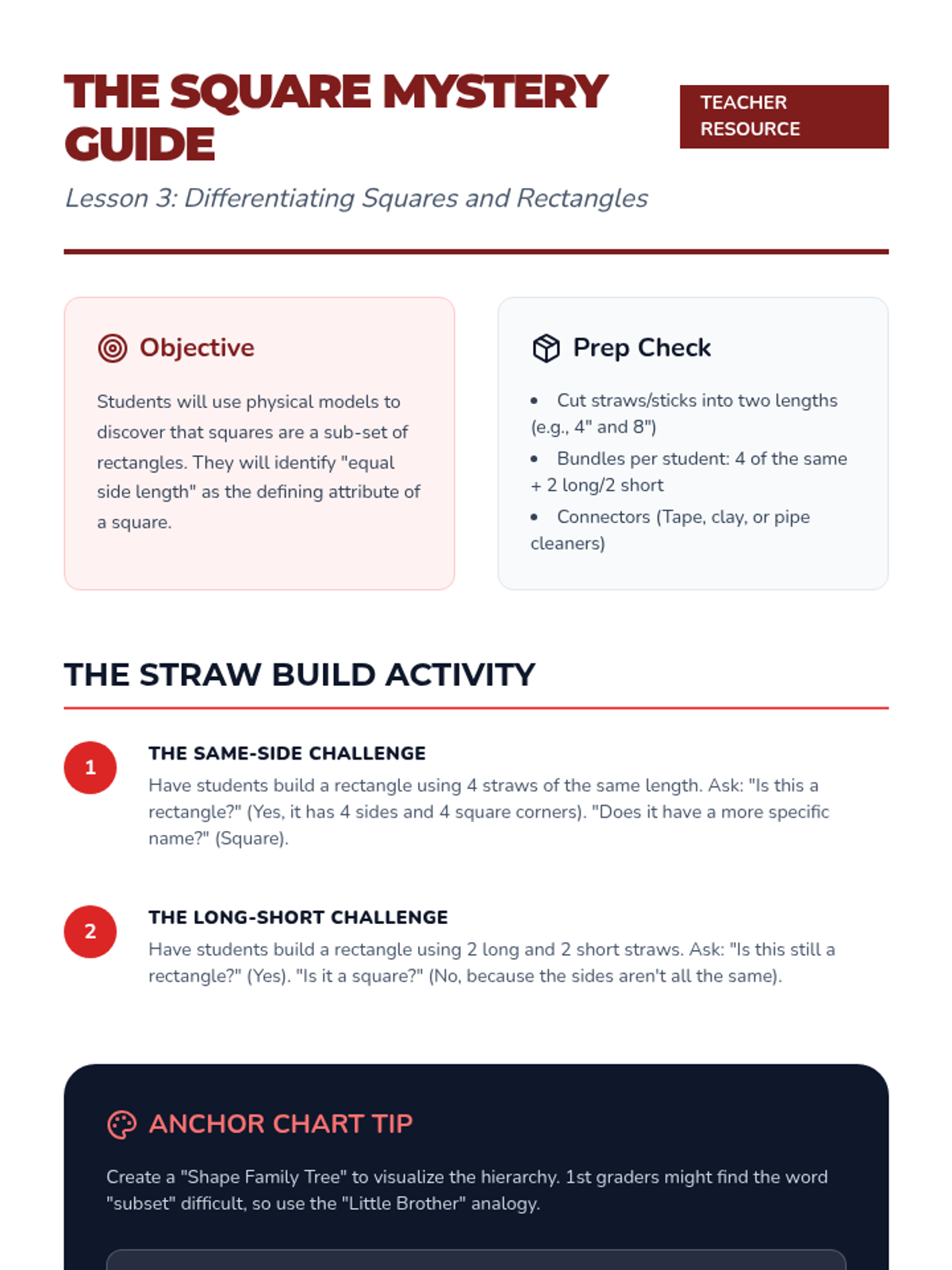
Students compare side lengths to distinguish squares from non-square rectangles, discovering that squares are special rectangles with equal sides.
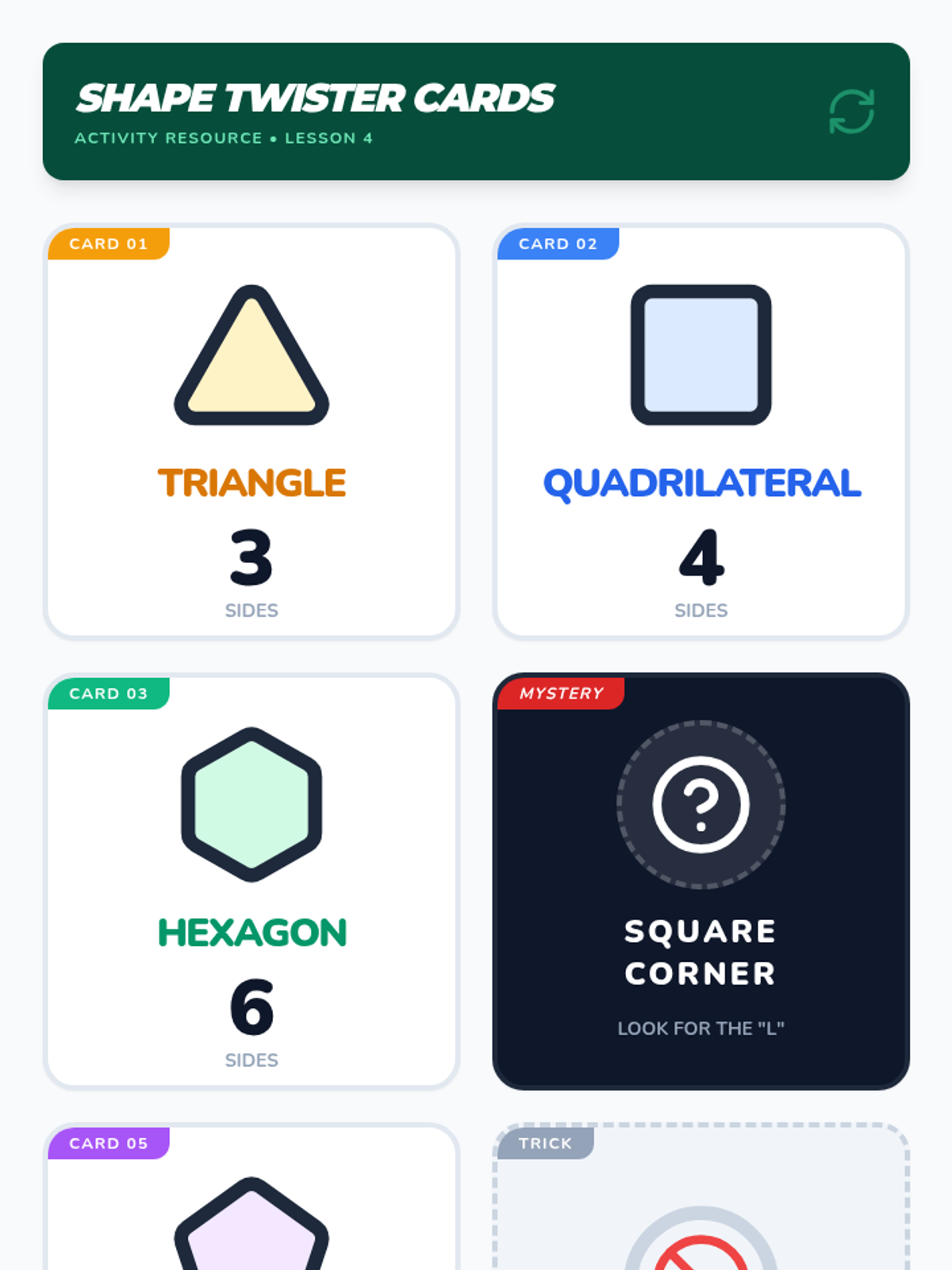
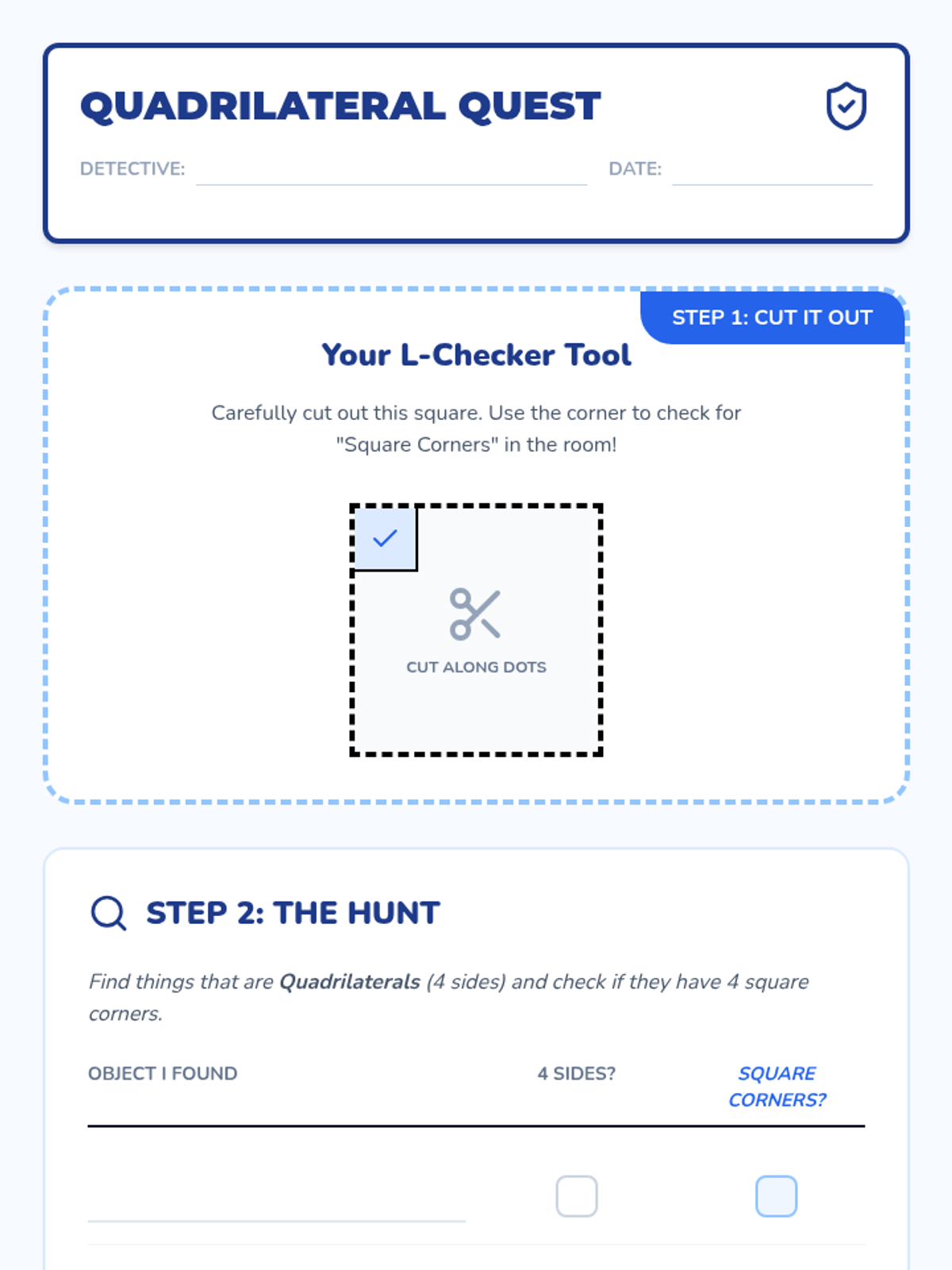
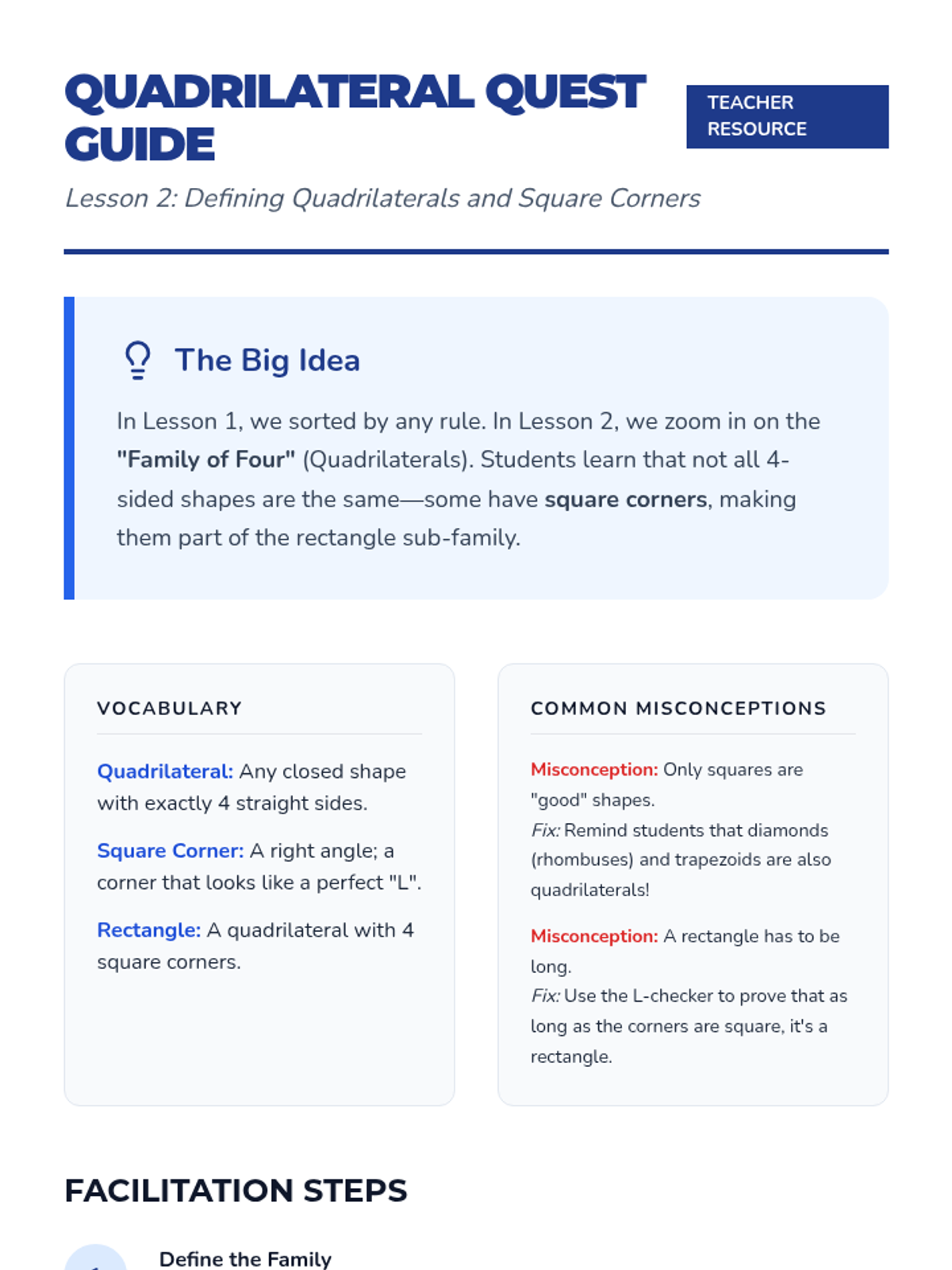
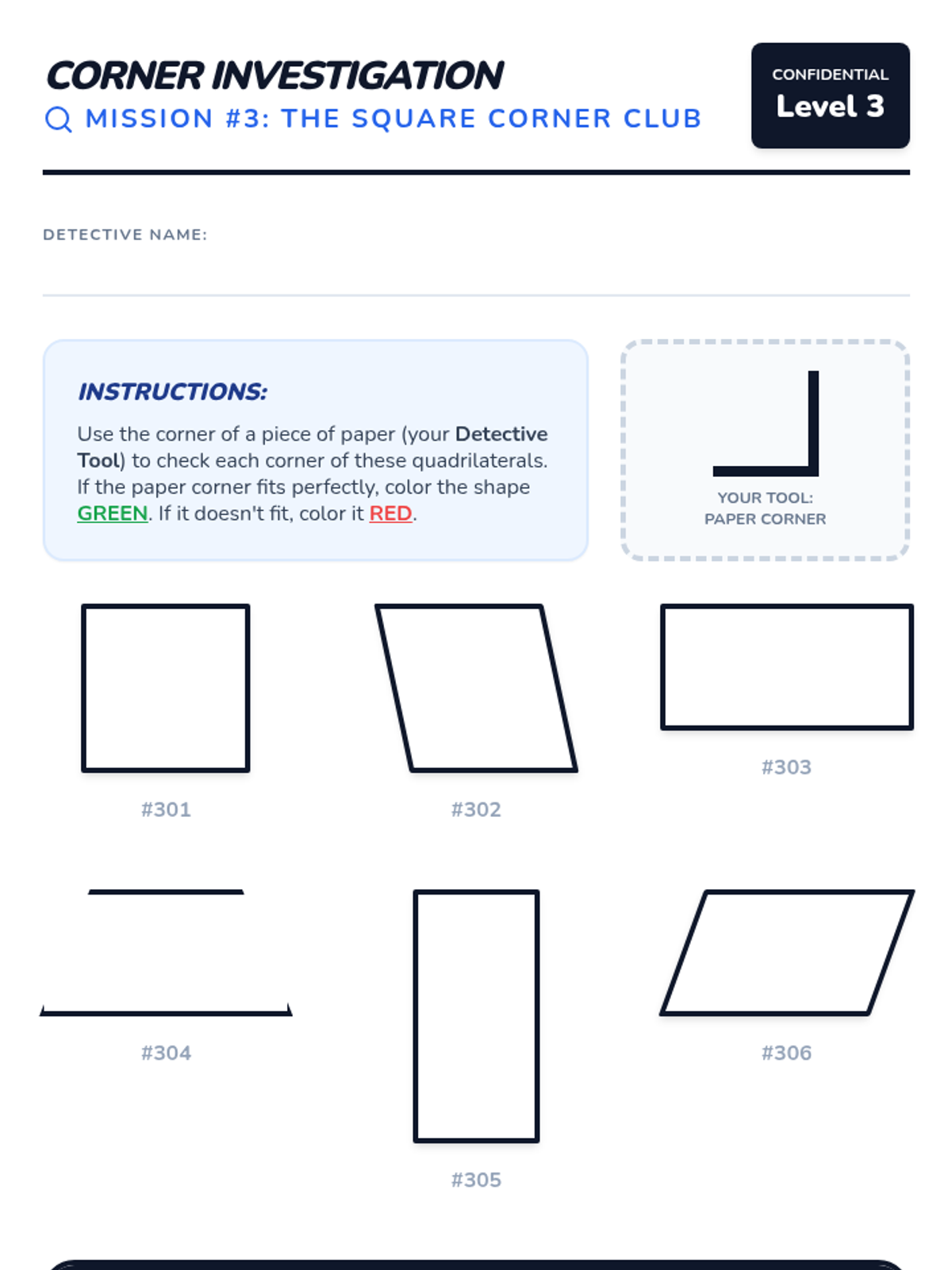
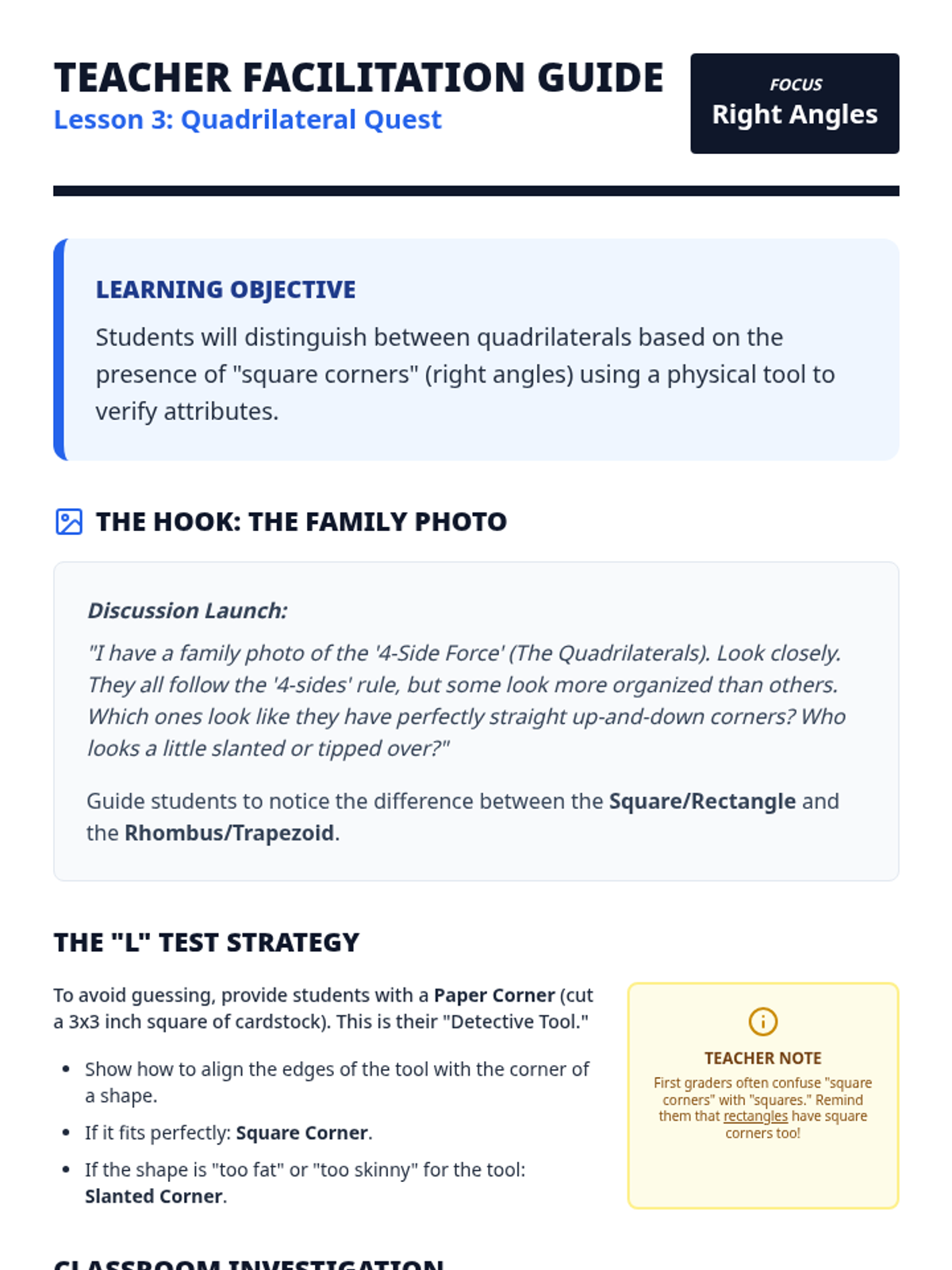
Focuses on the 'Family of Four' (quadrilaterals), introducing the concept of square corners using 'L-checker' tools to identify rectangles.
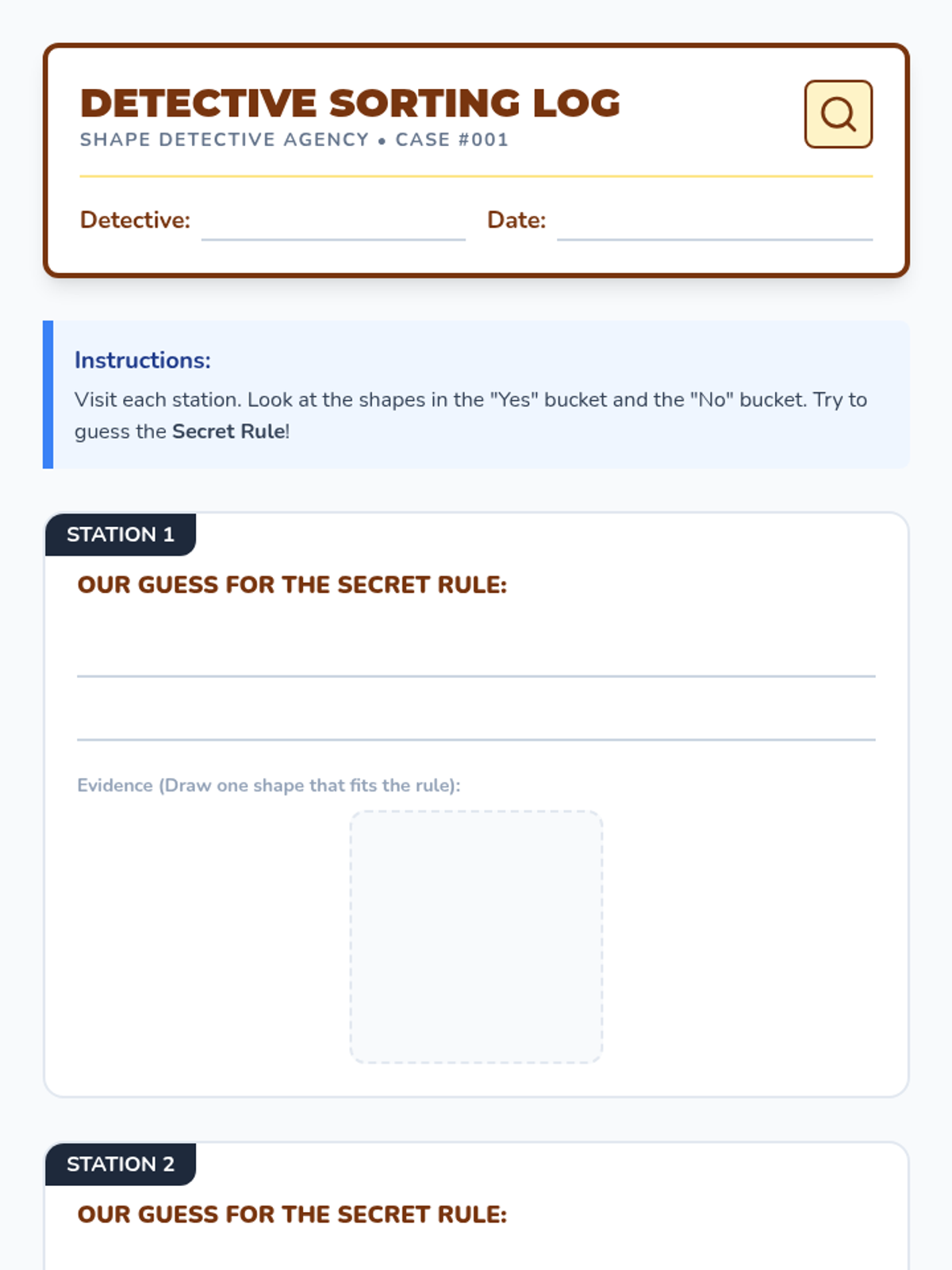
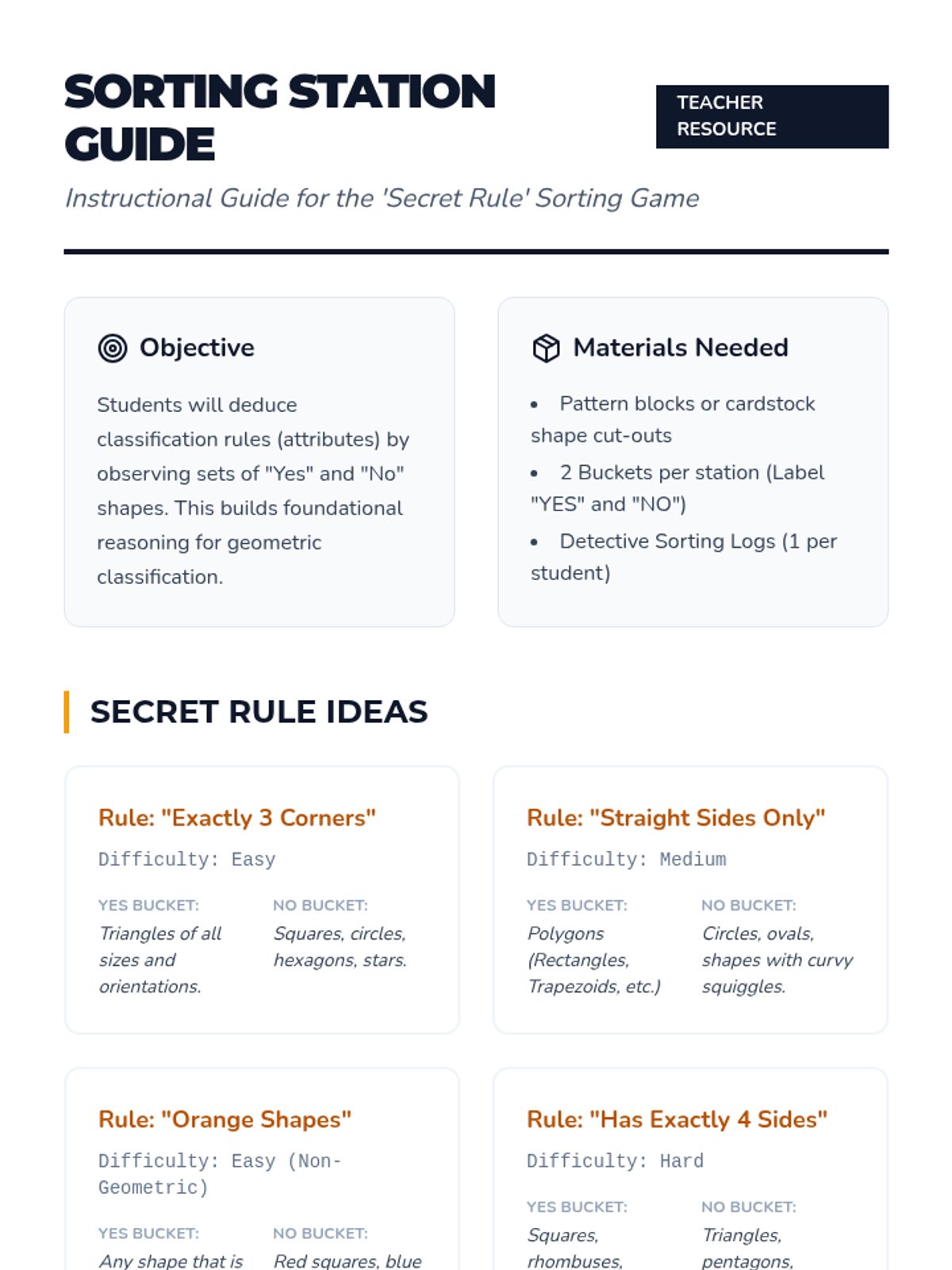
Students investigate 'Secret Rules' to sort shapes by attributes like side count and corner count. They rotate through stations to deduce classification rules used by their peers.
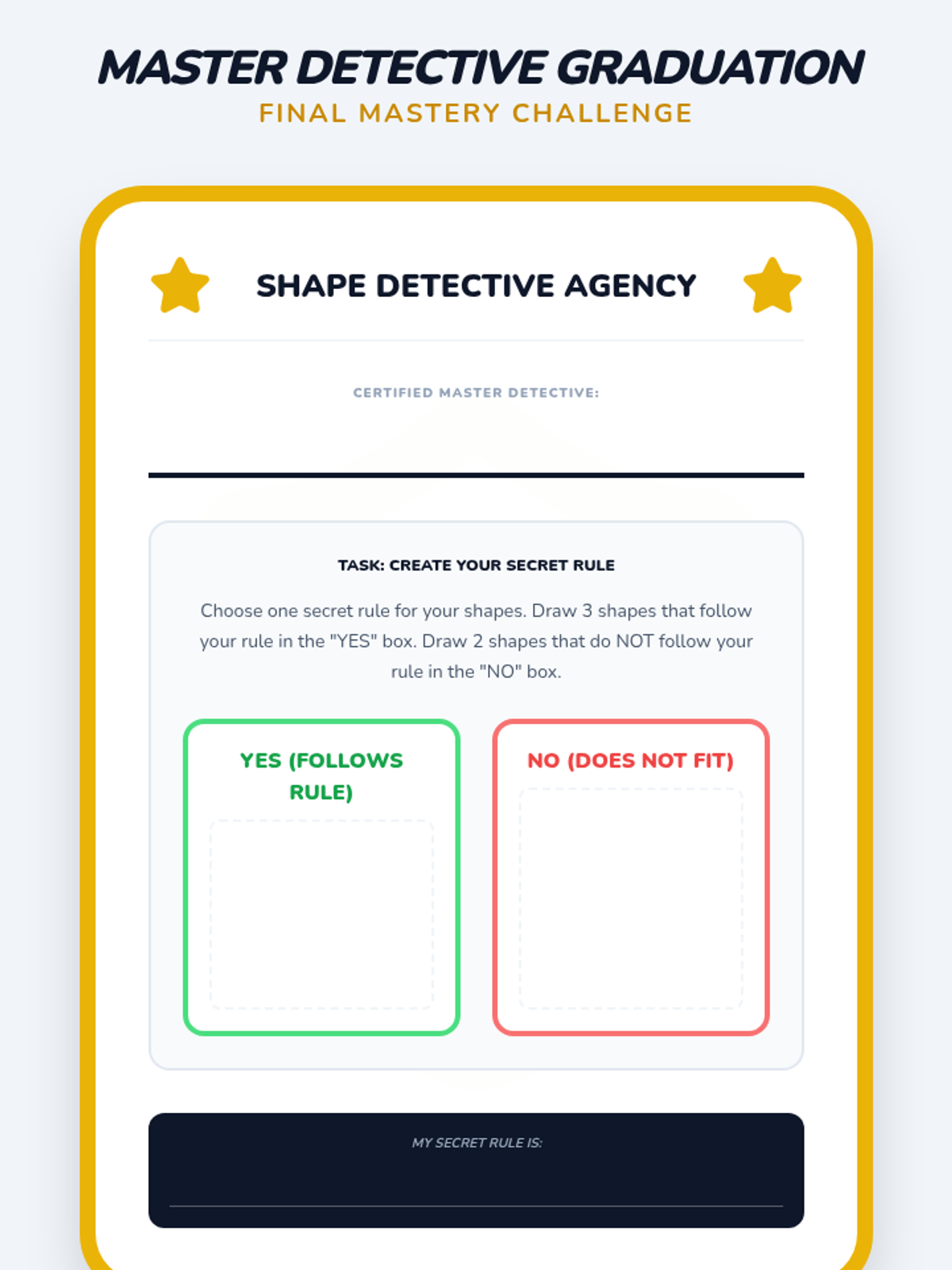
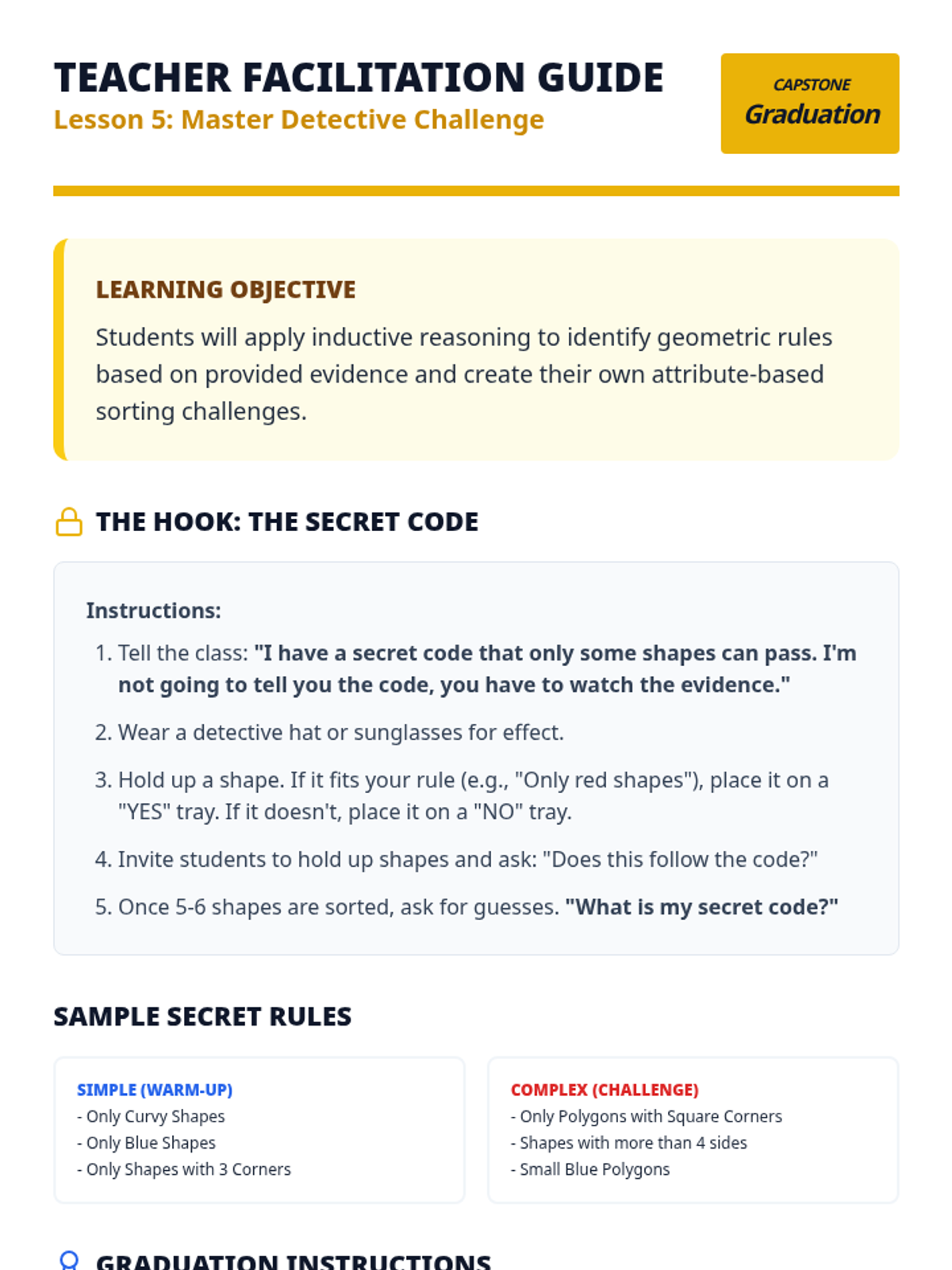
Students use inductive reasoning to identify secret sorting rules based on geometric properties.
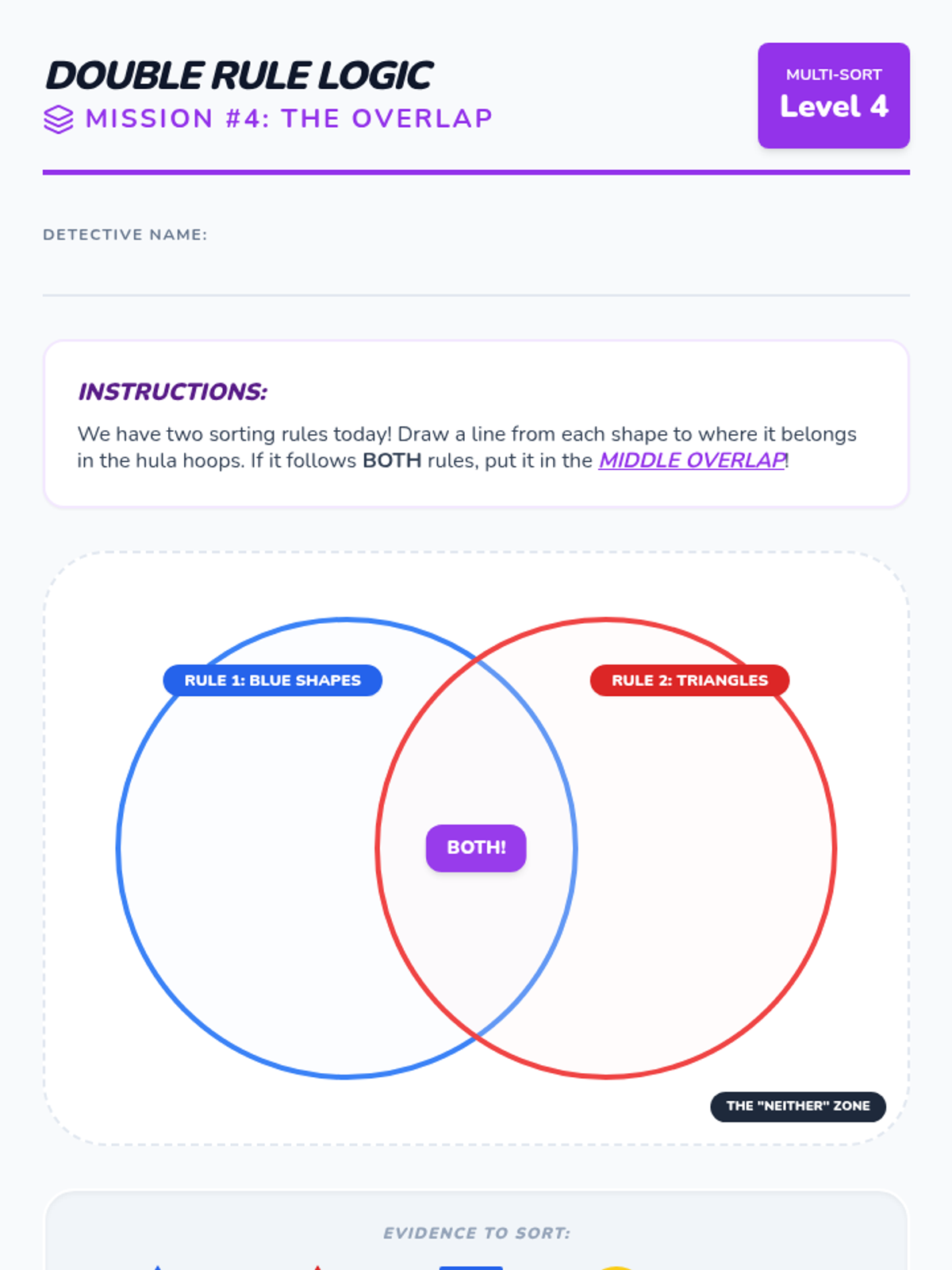
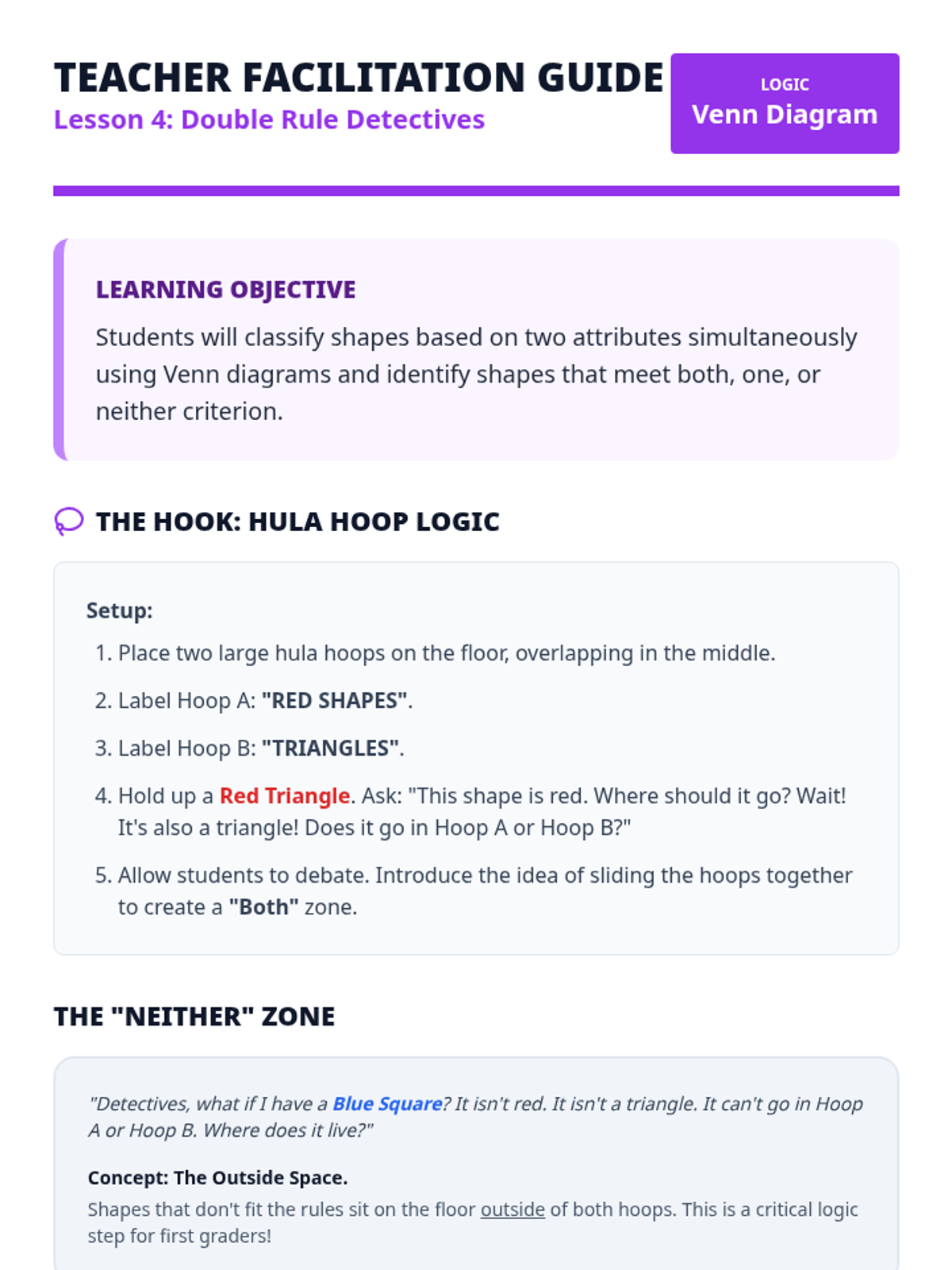
Students use Venn diagrams to sort shapes by two attributes at once, such as color and side count.
Students investigate four-sided shapes, distinguishing between those with 'square corners' (right angles) and those without.
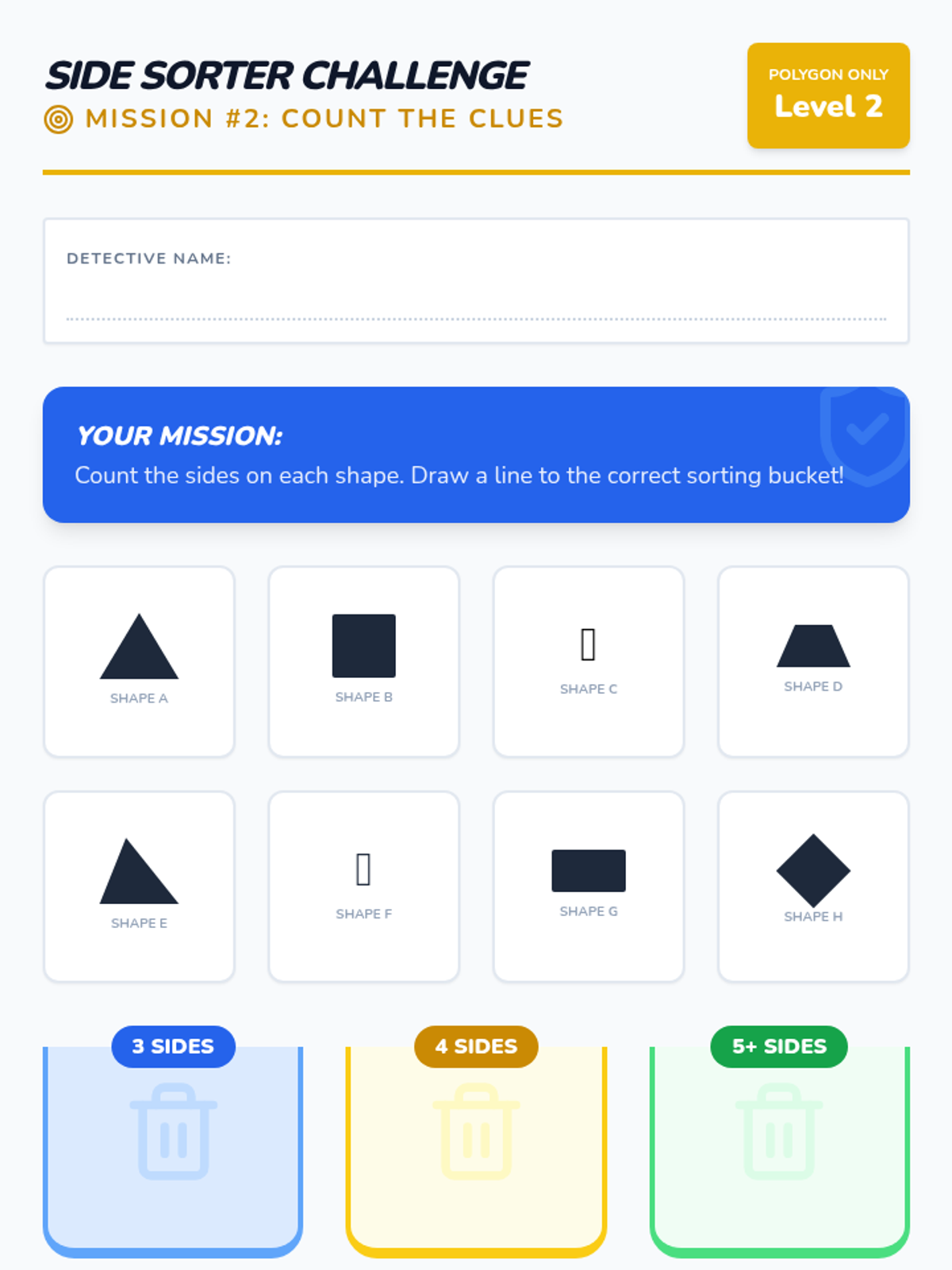
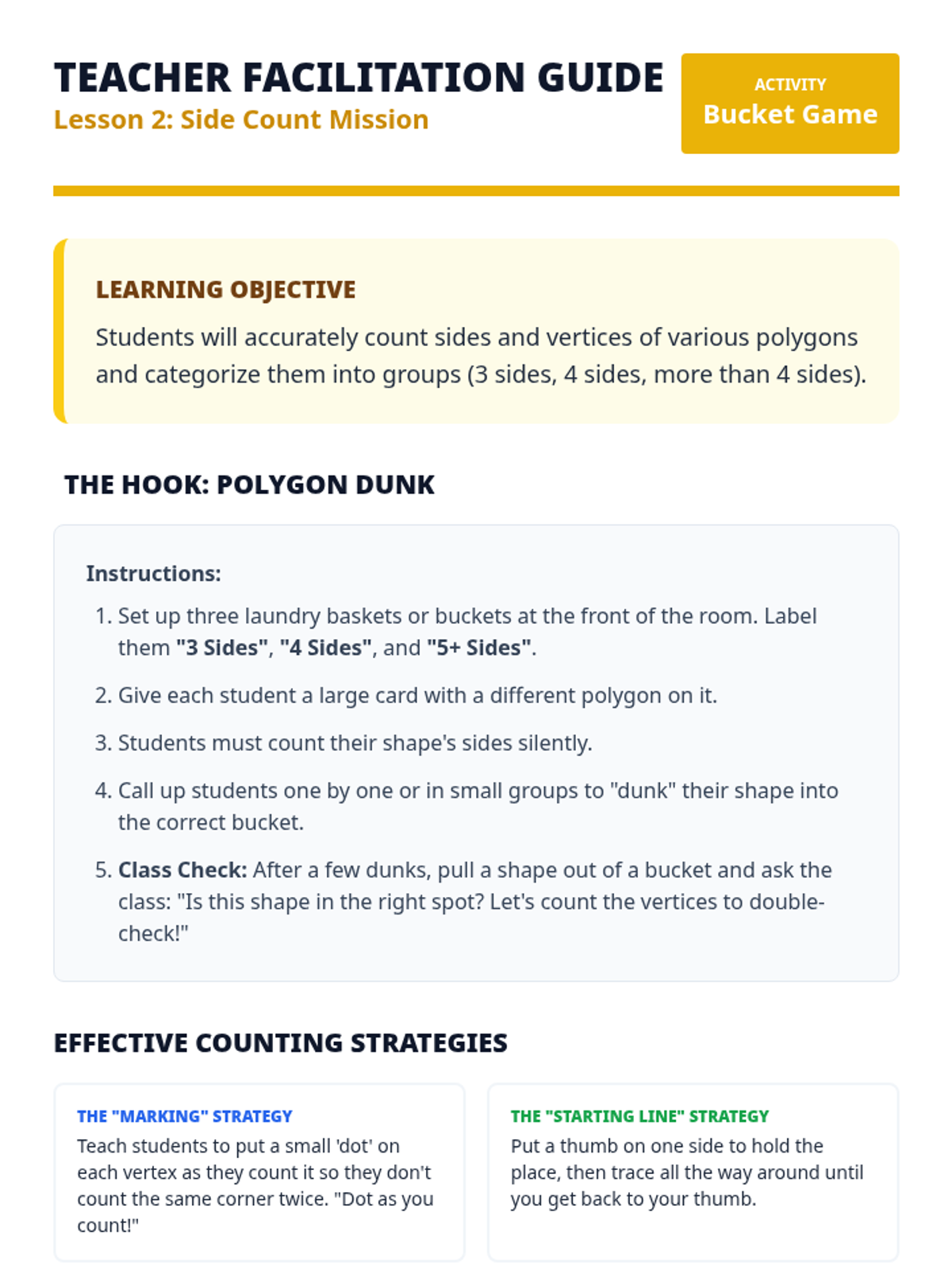
Students focus on polygons to categorize them by their number of sides: 3, 4, or more.
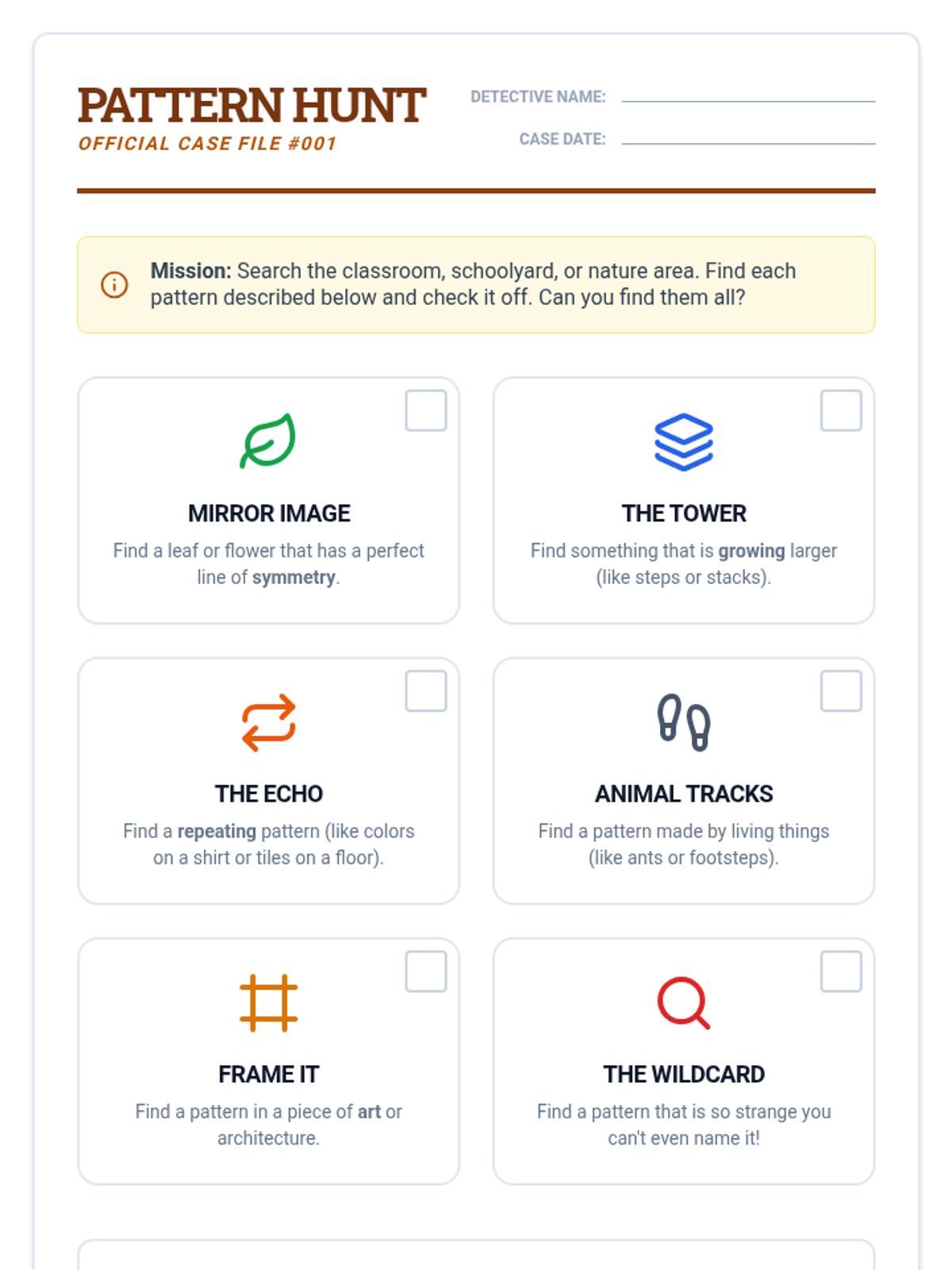
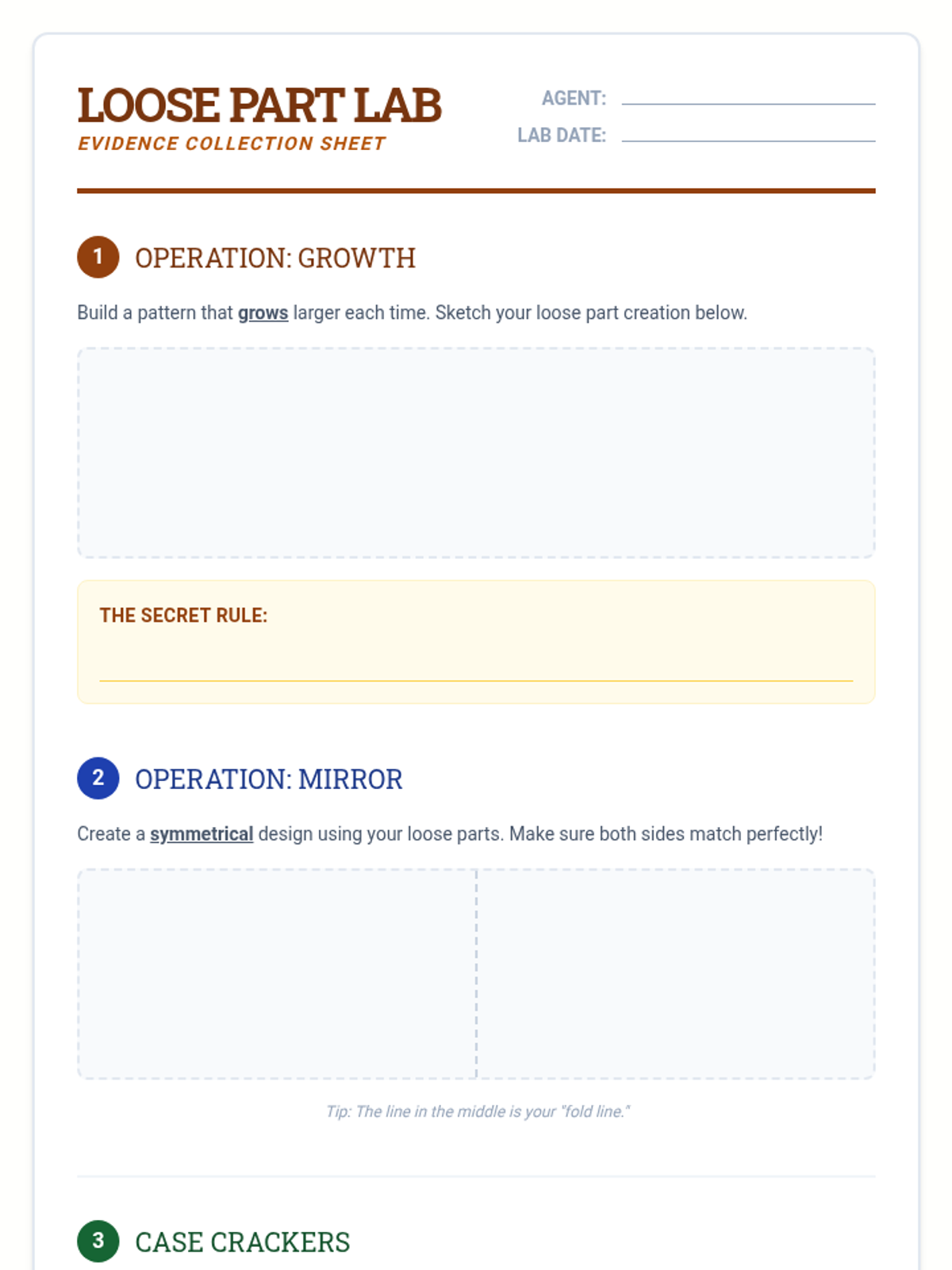
A hands-on exploration of patterns in nature, art, and the environment. Students move beyond simple repetition to discover growing patterns and symmetry using loose parts and detective-style observation.
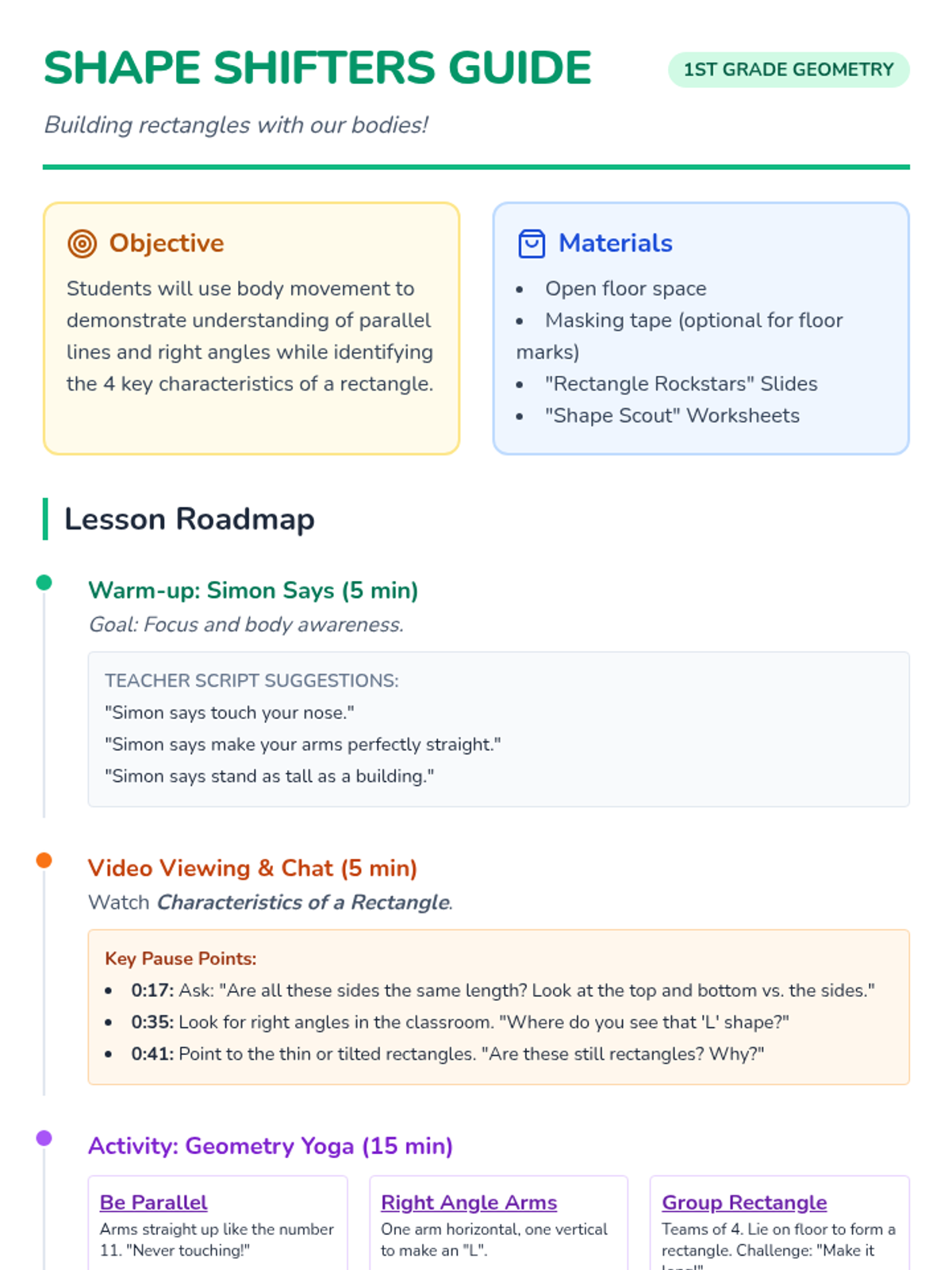
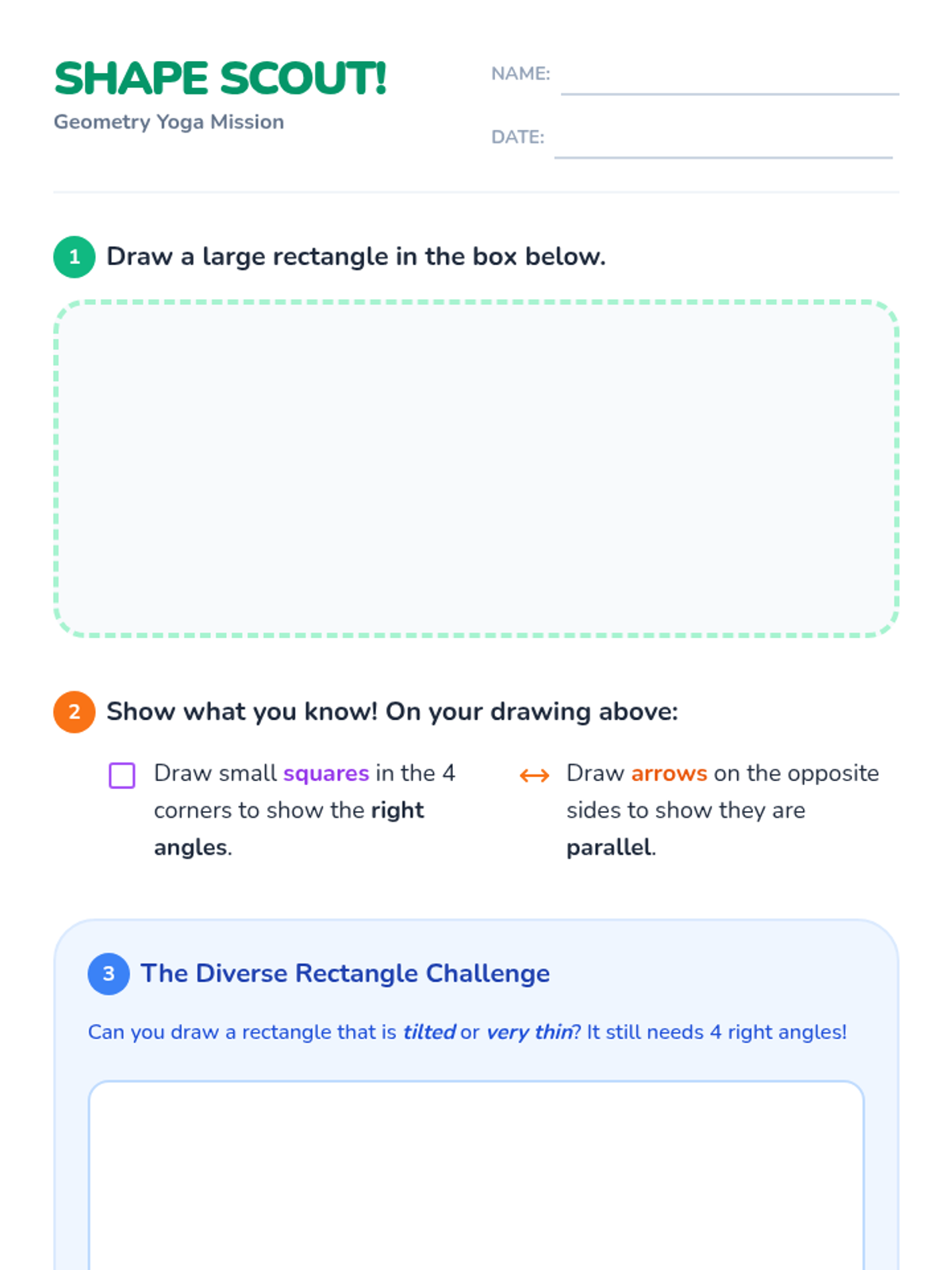
A high-energy, movement-based lesson where 1st graders use their bodies to learn the properties of rectangles, including parallel lines and right angles. Includes a video-guided discussion and a 'Geometry Yoga' activity.
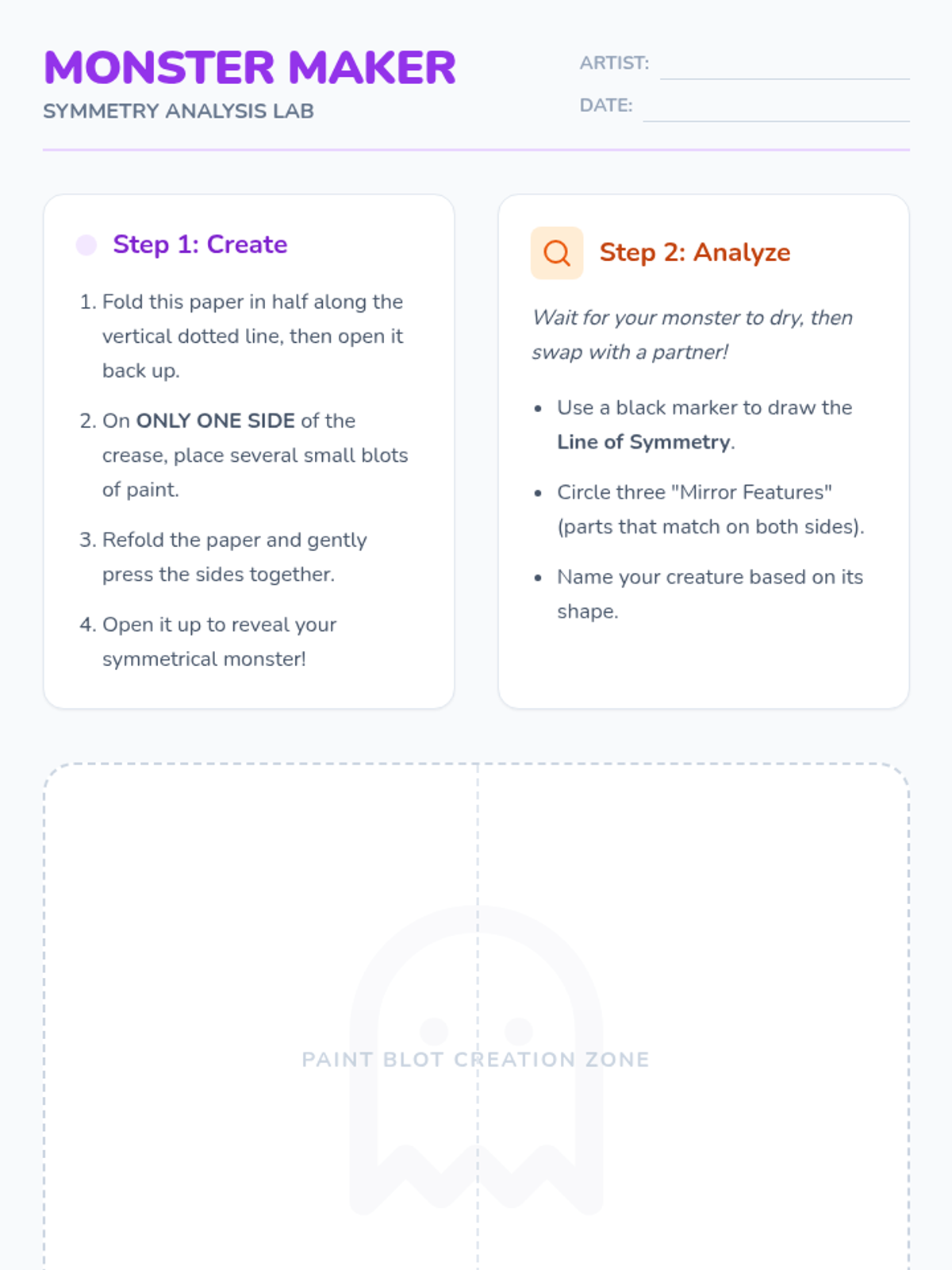
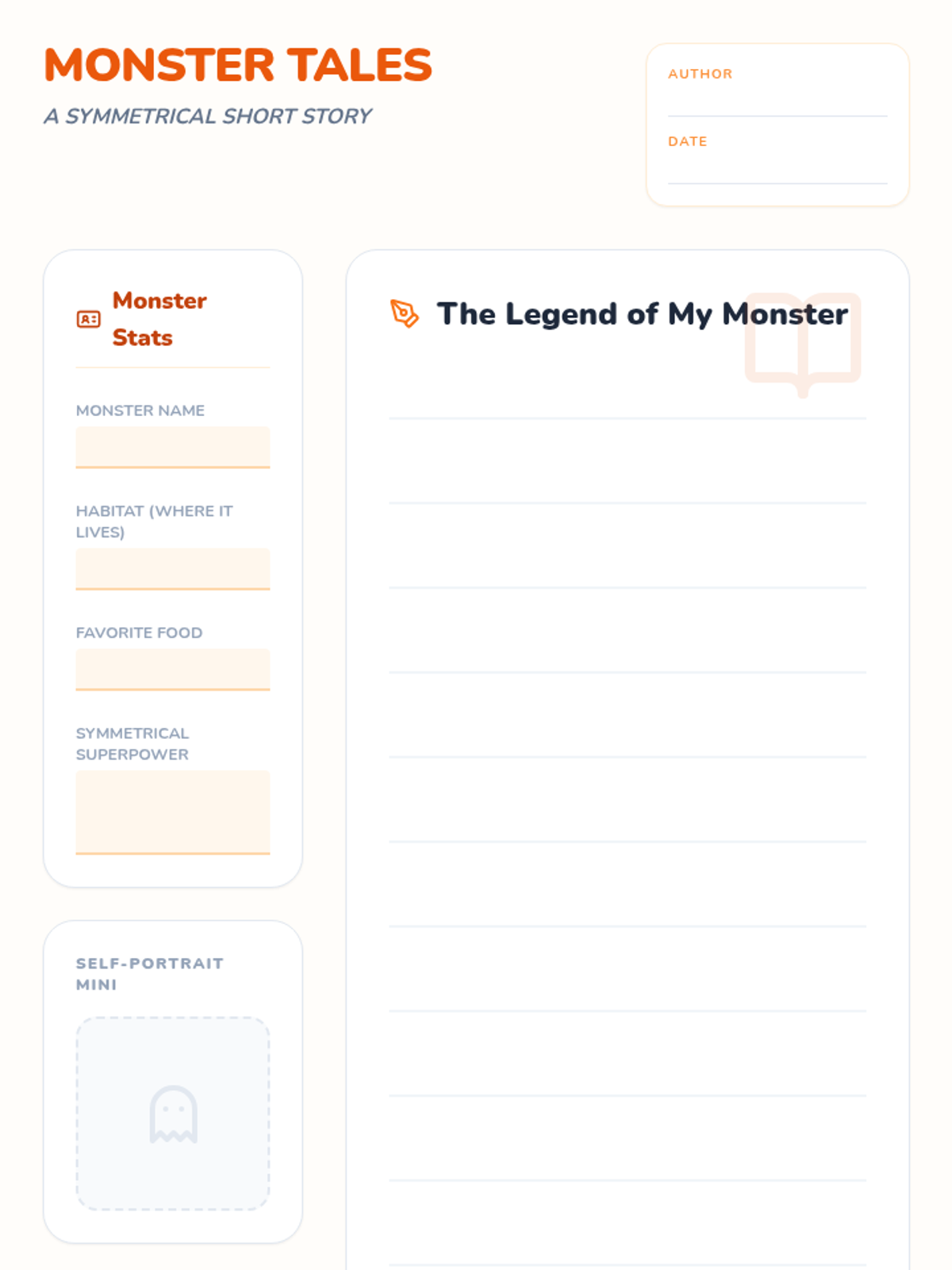
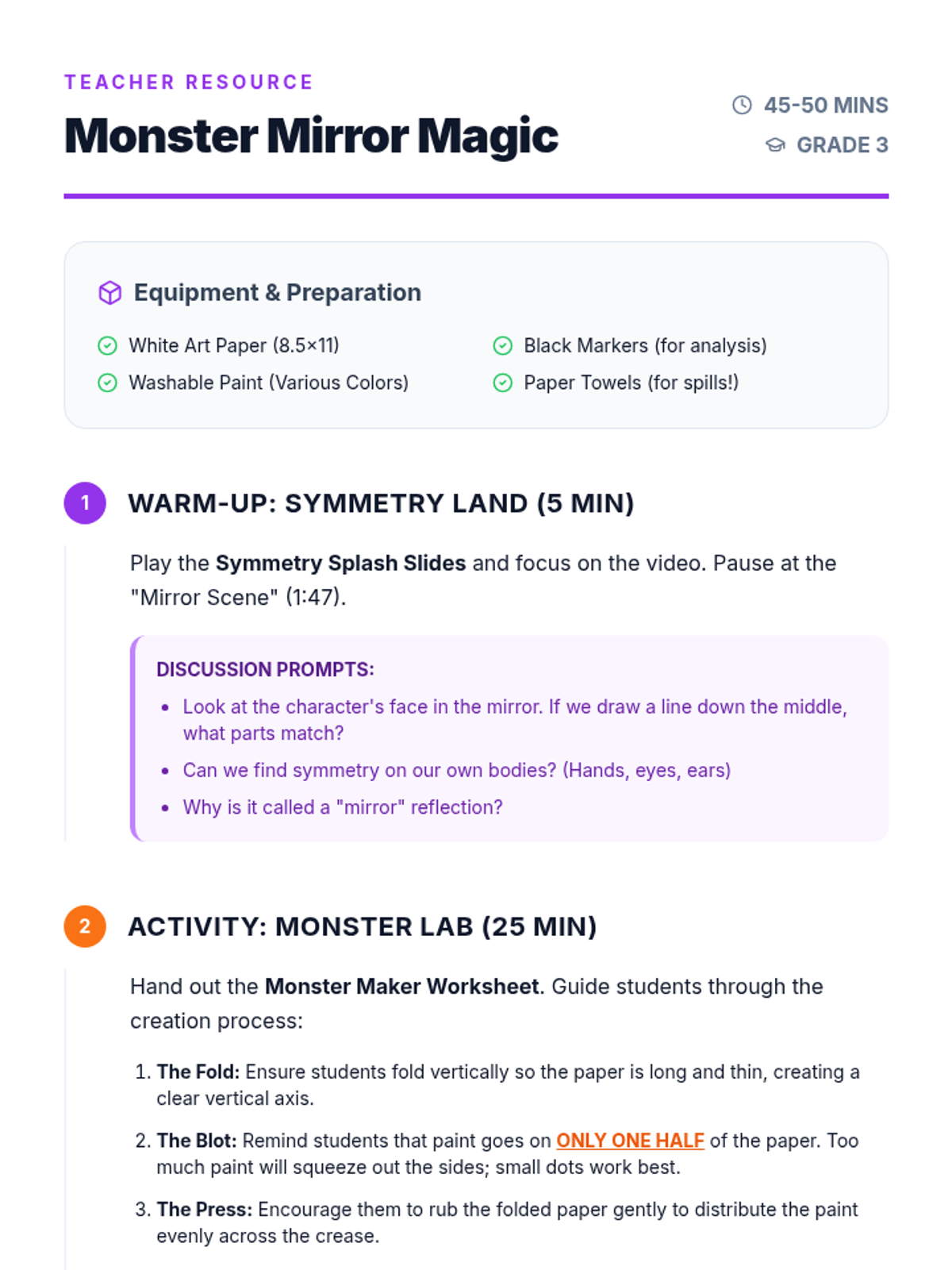
Students will explore the concept of reflection and lines of symmetry through a hands-on paint blot art project, inspired by a video about "Symmetry Land." They will create "Rorschach Monsters," analyze their work for symmetrical properties, and write a creative story about their creation.
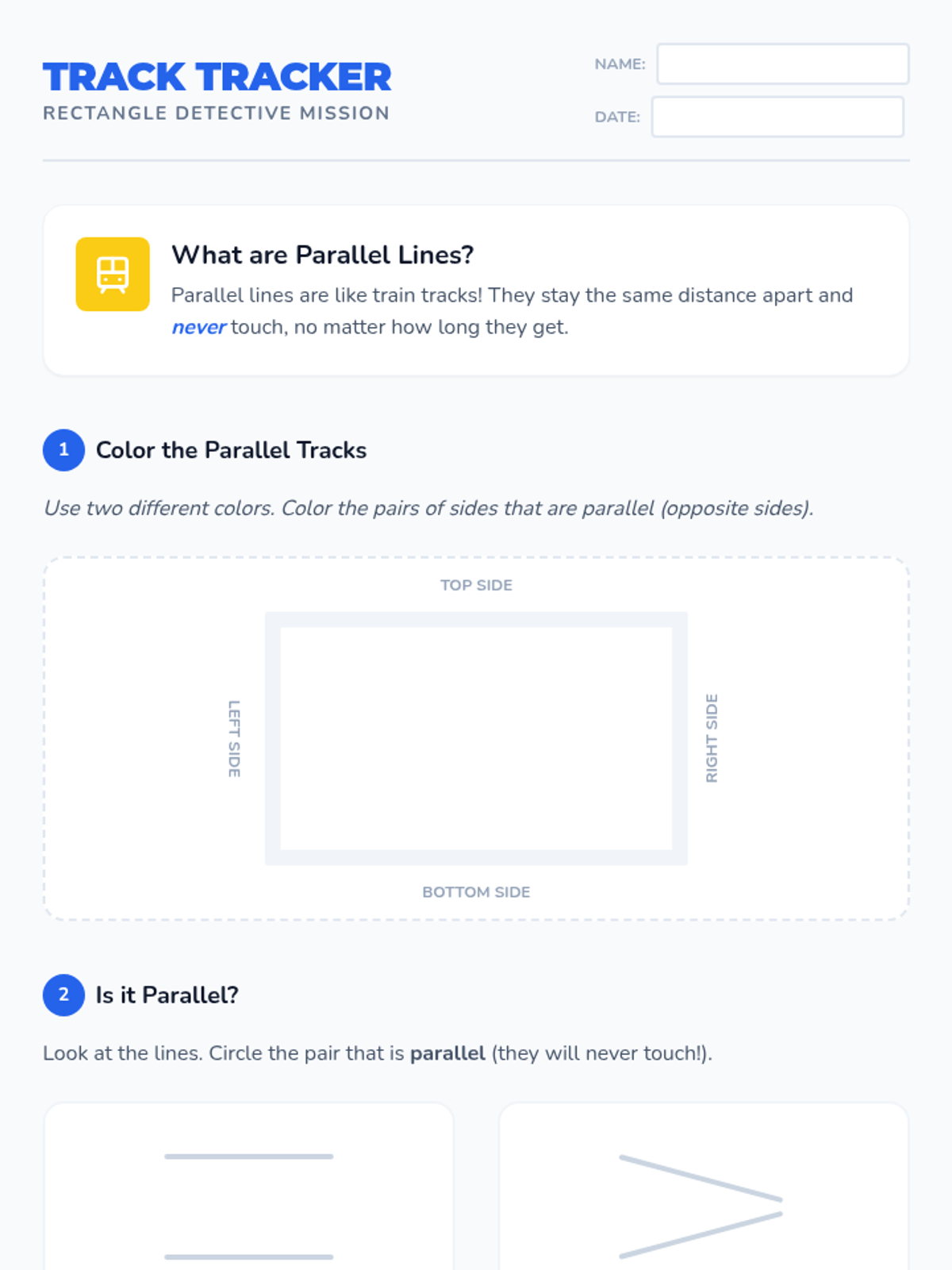
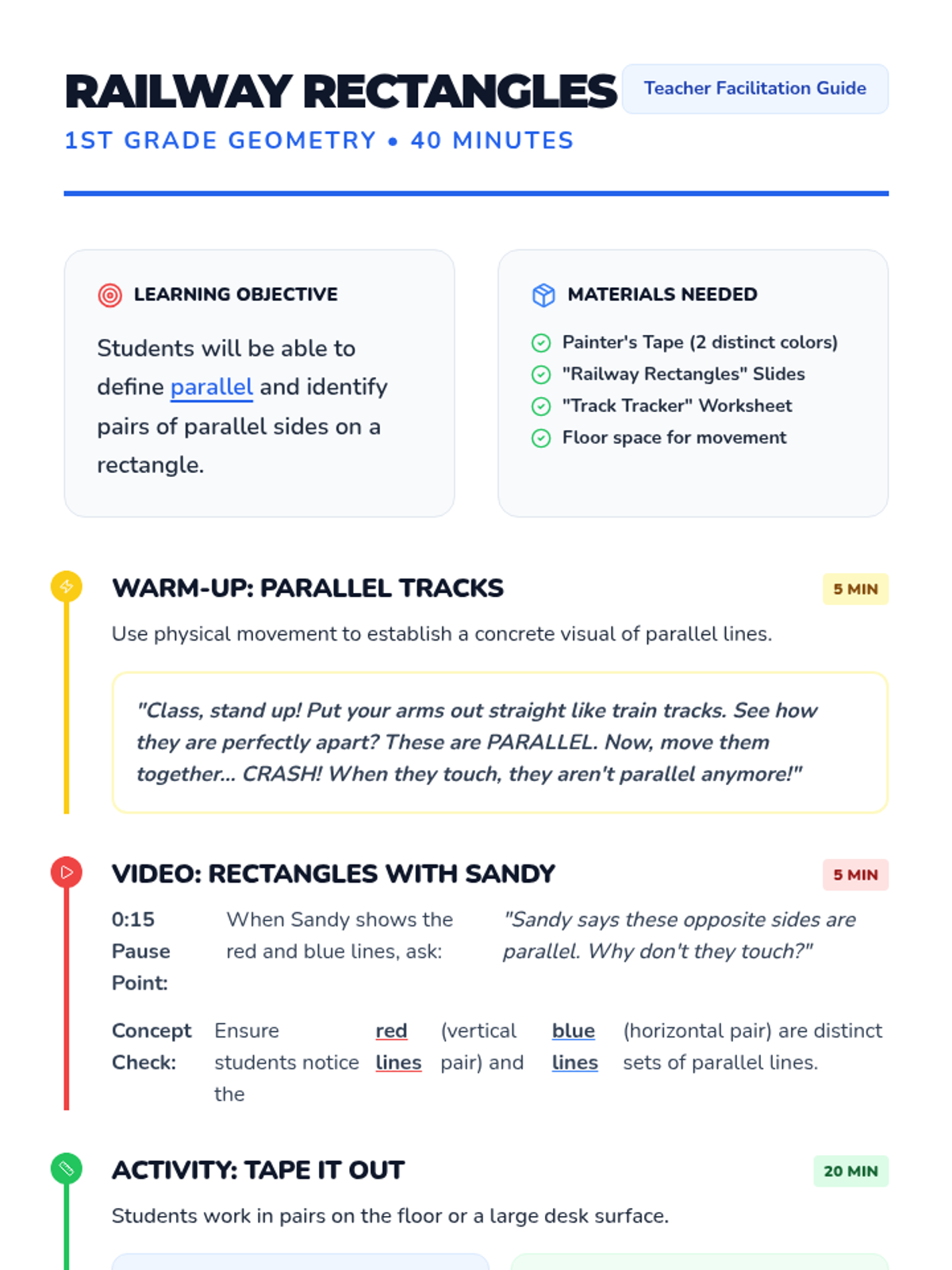
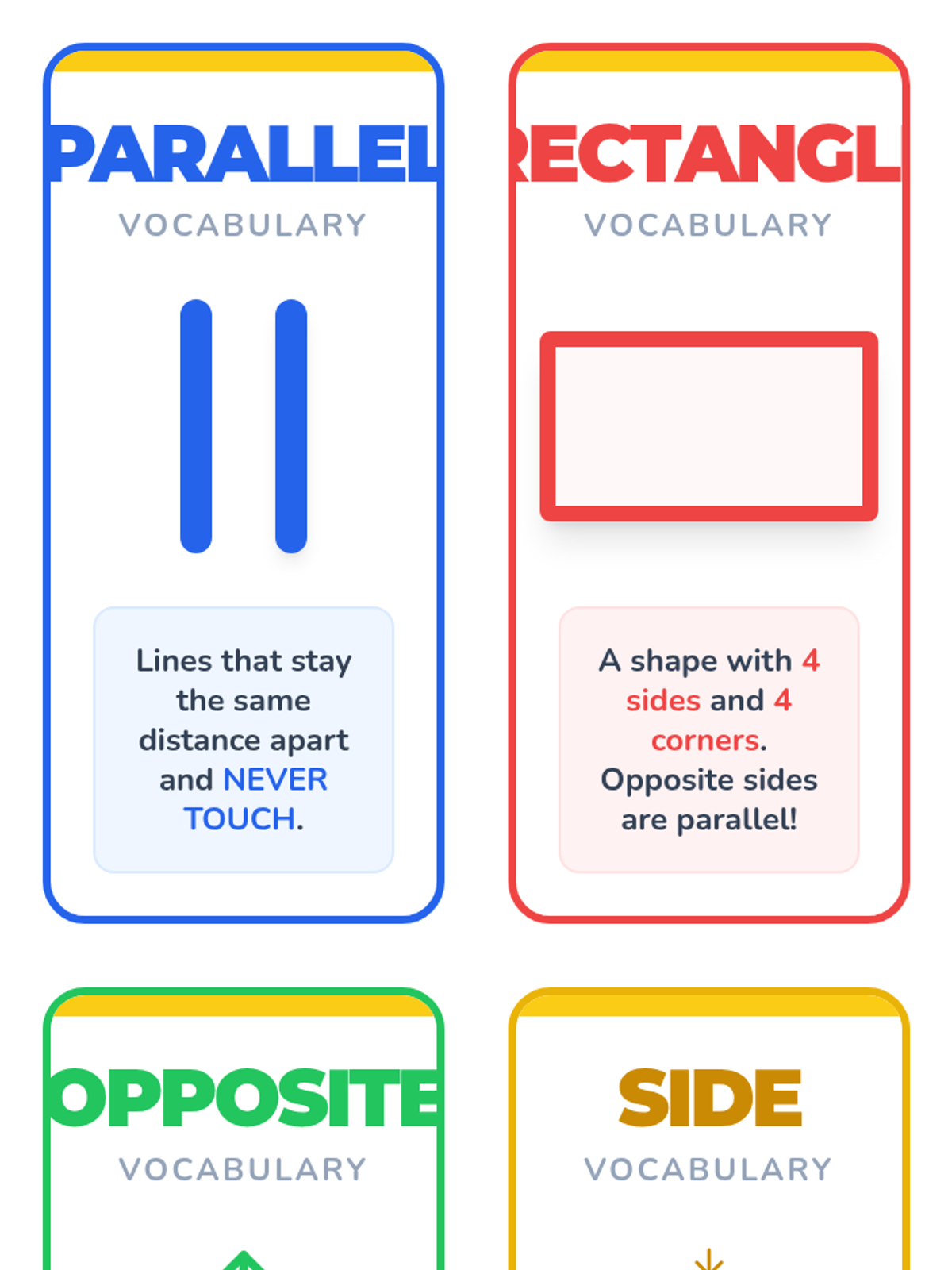
Students will learn the concept of parallel lines by exploring rectangles, using their bodies to mimic train tracks, watching a video, and building tape rectangles on the floor.
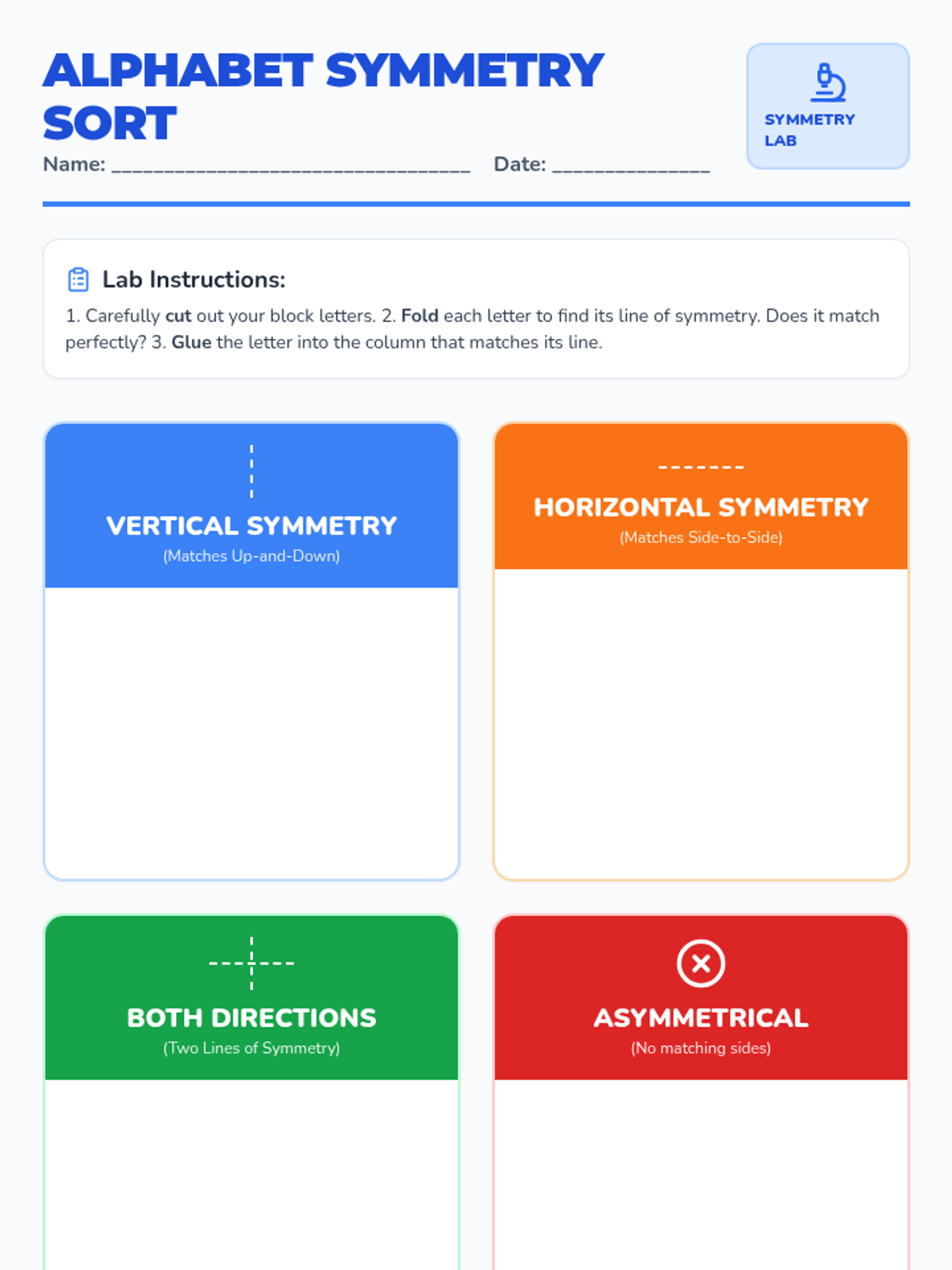
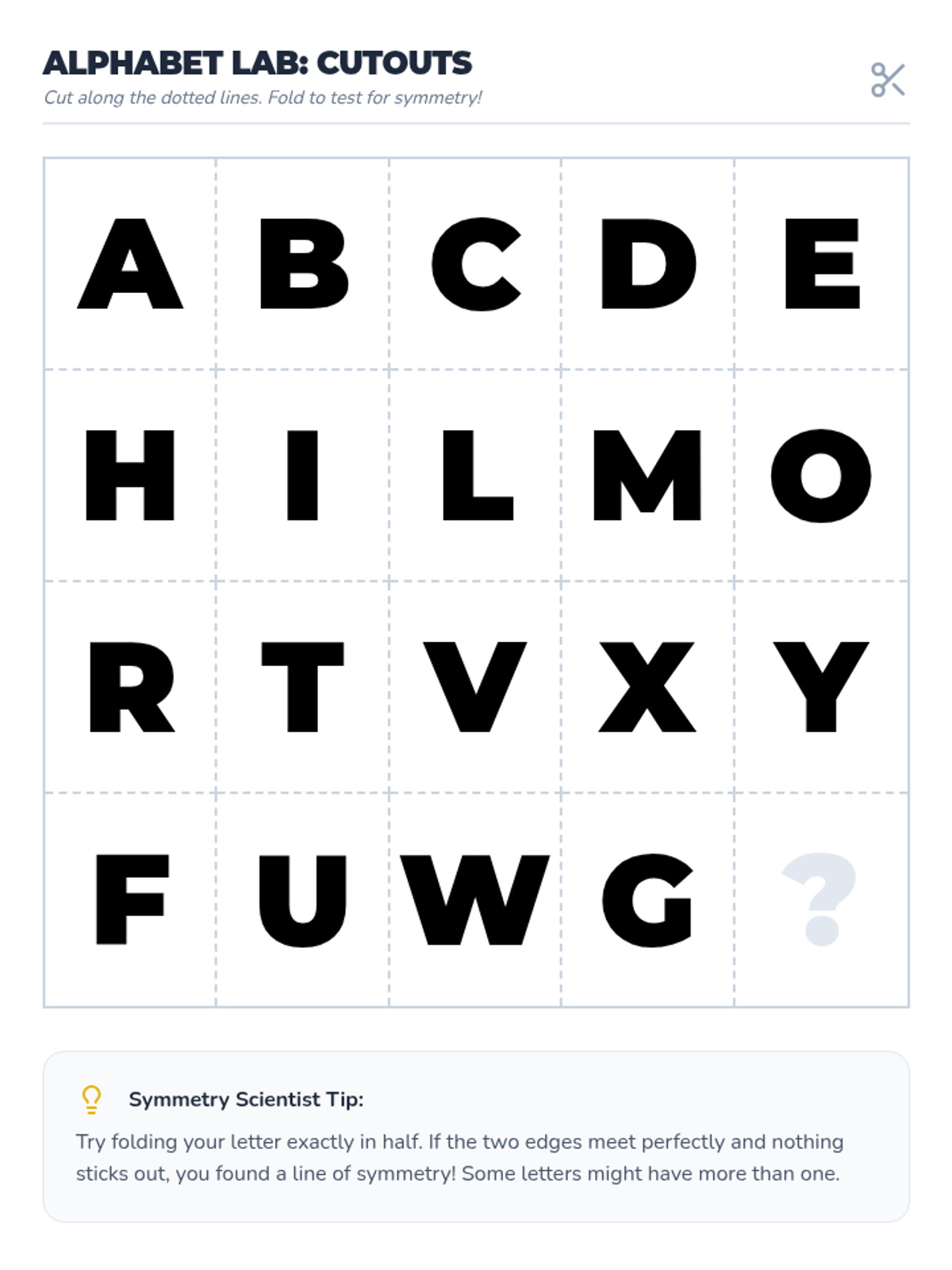
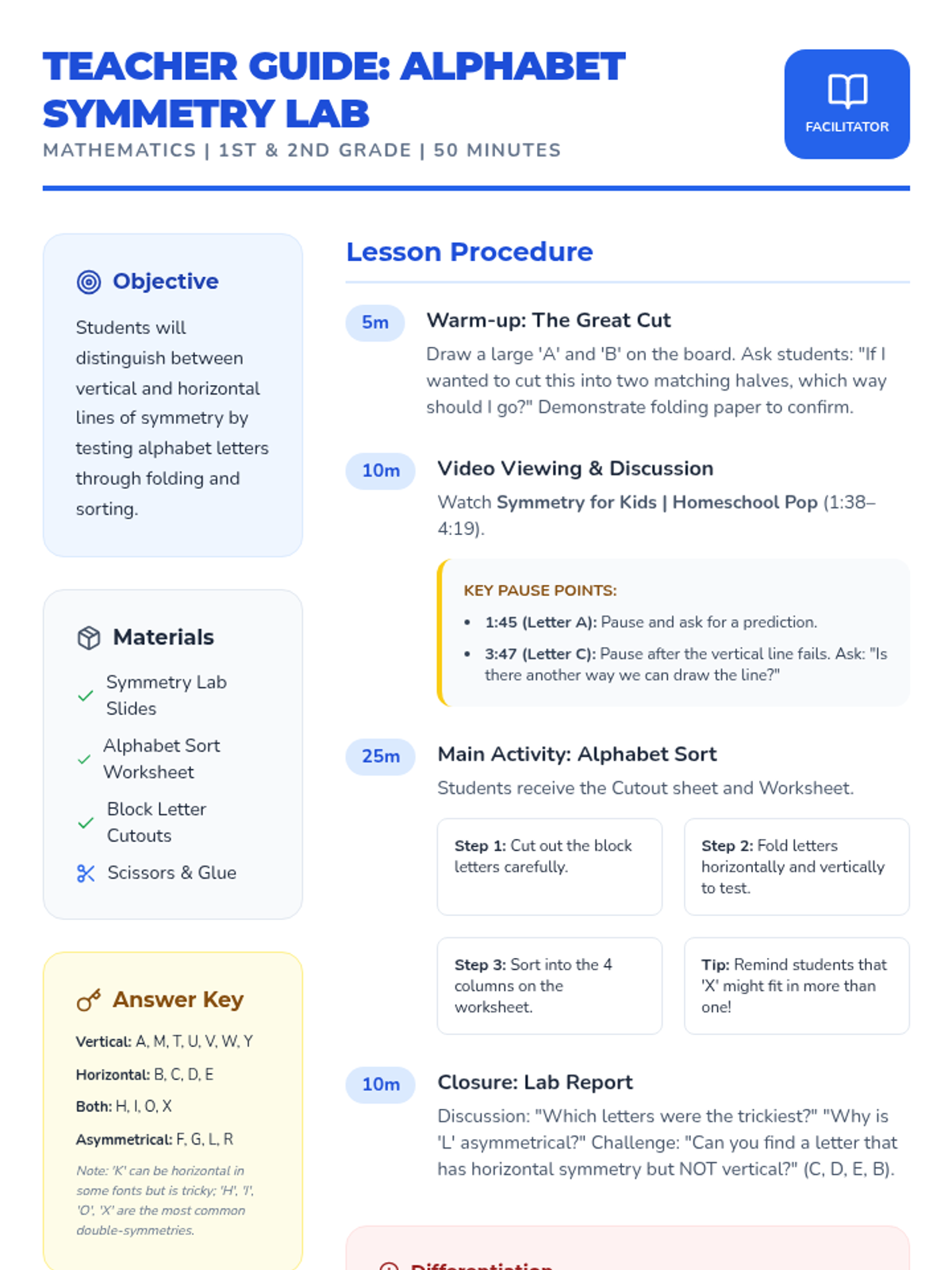
Students will learn to distinguish between vertical and horizontal lines of symmetry using alphabet letters through a video, discussion, and a hands-on 'cut and fold' sorting activity.
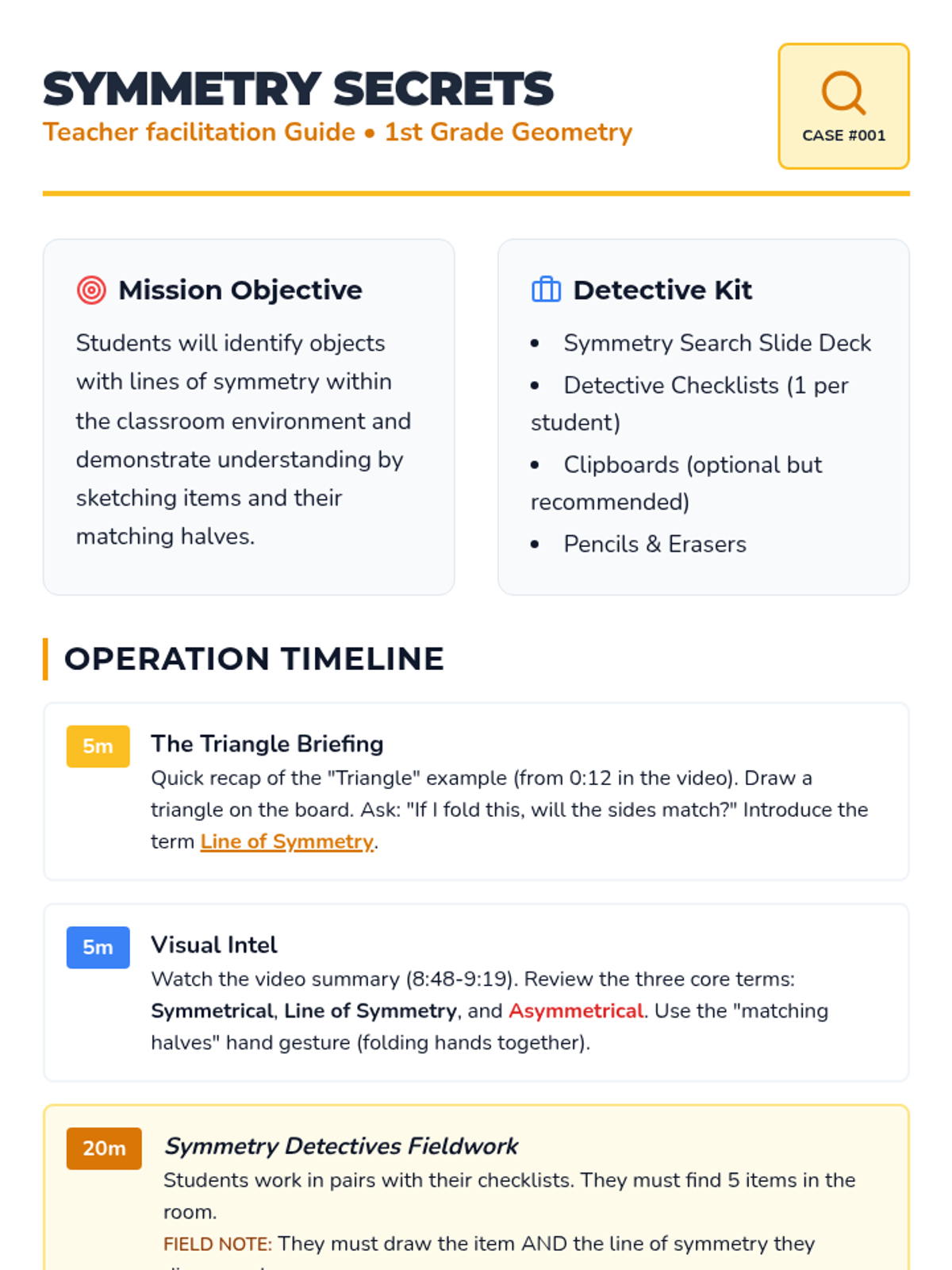
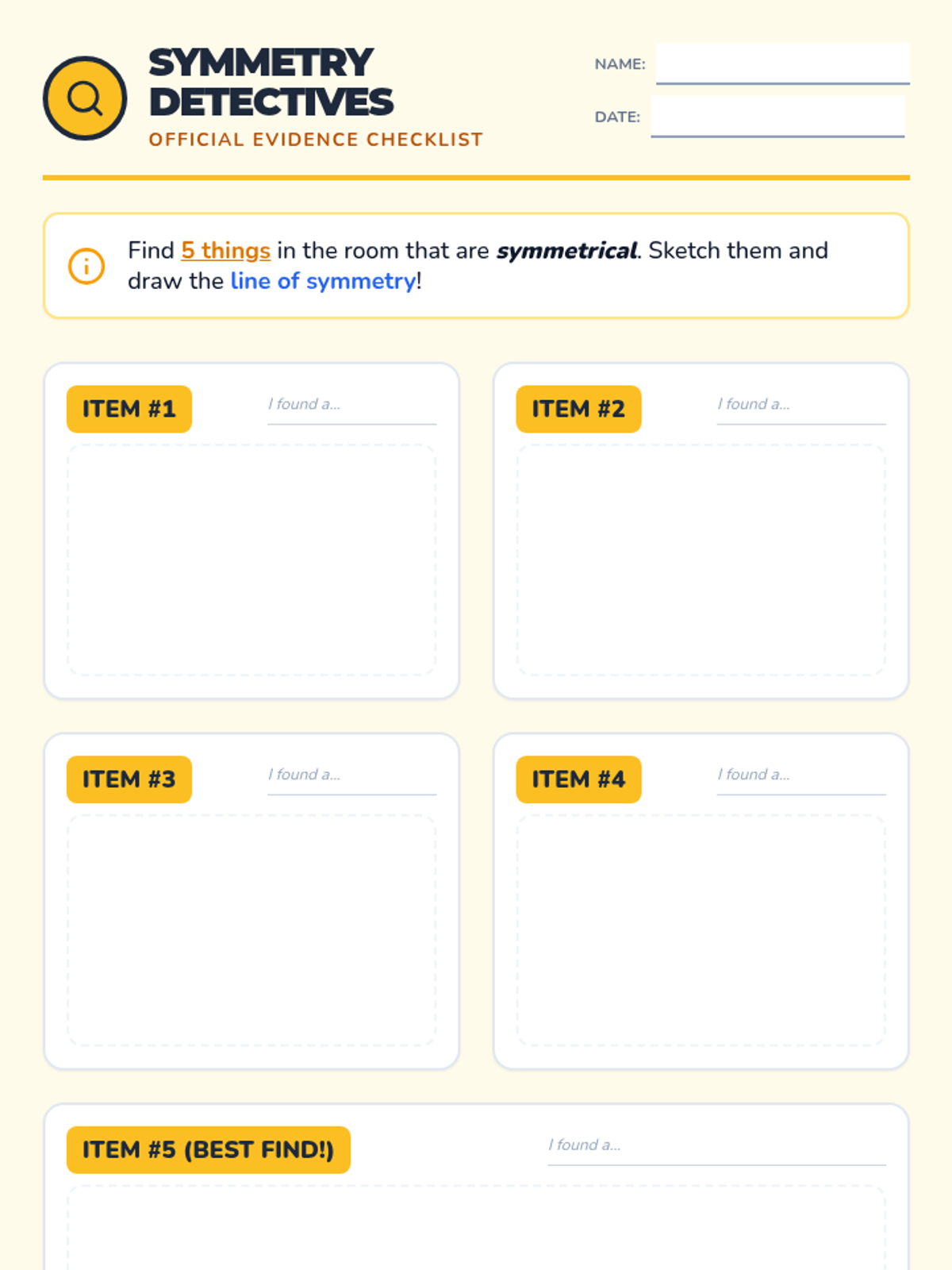
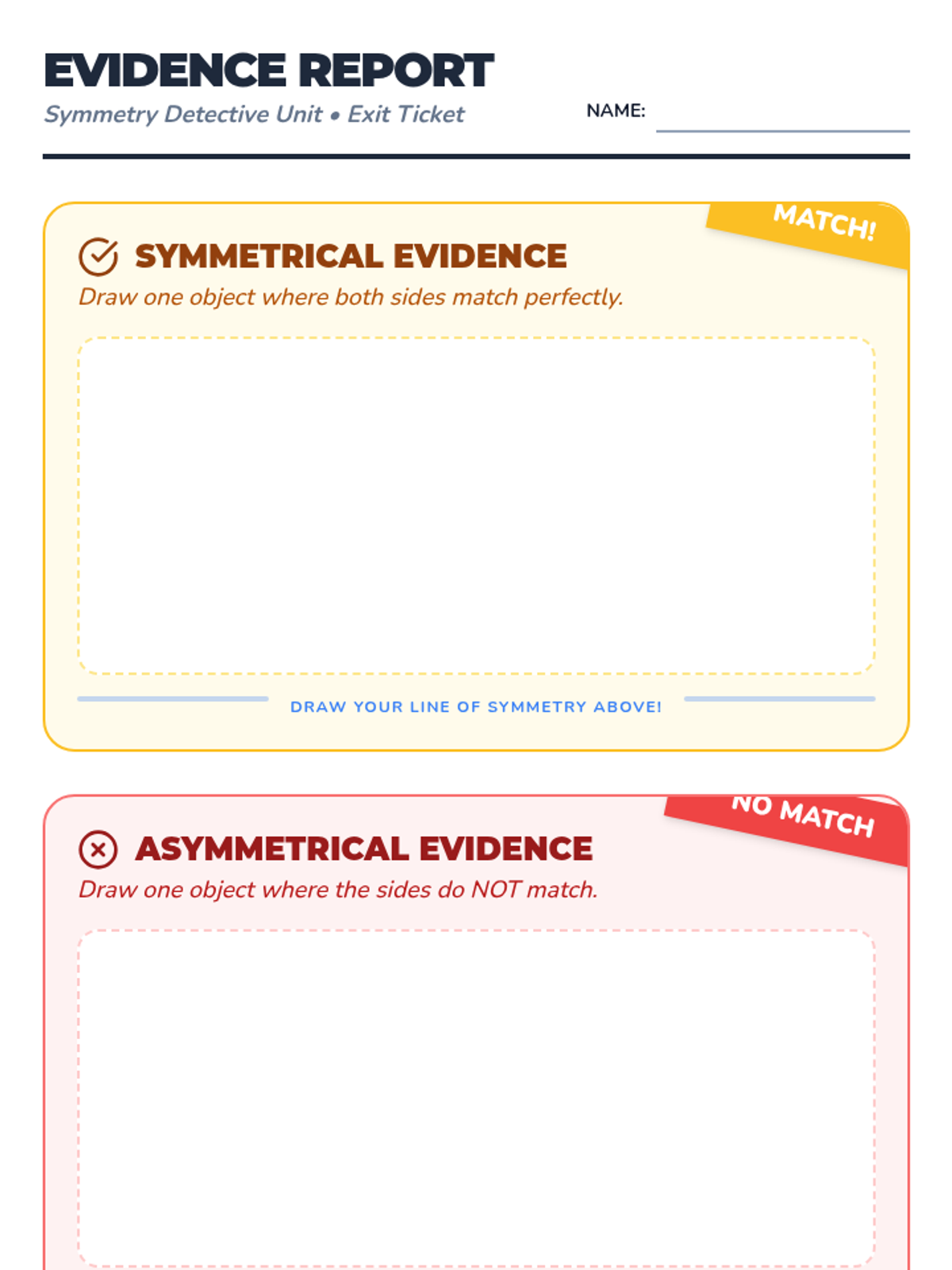
A 1st-grade geometry lesson where students become 'Symmetry Detectives,' finding and sketching symmetrical objects in their classroom after watching a focused video recap.
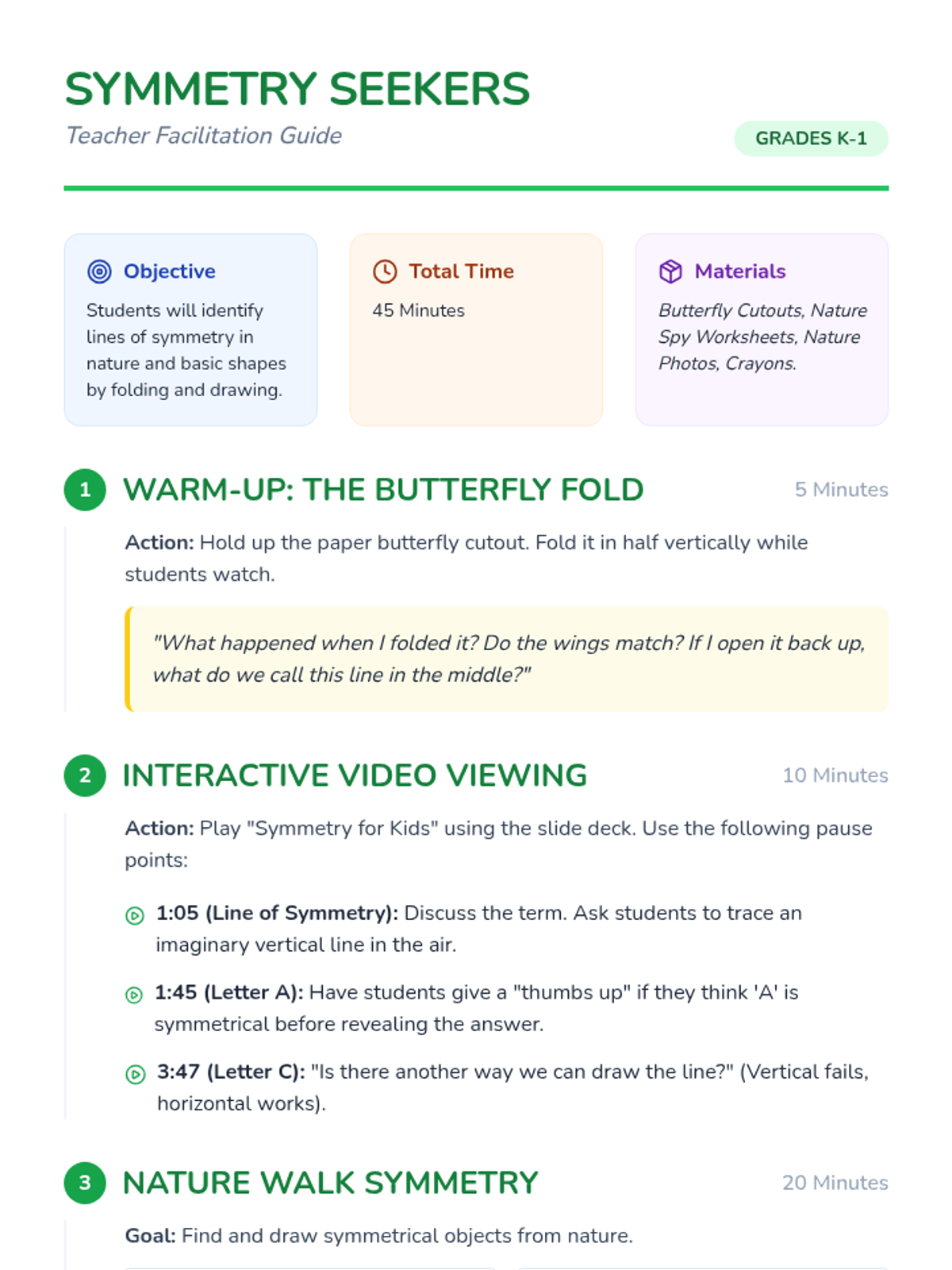
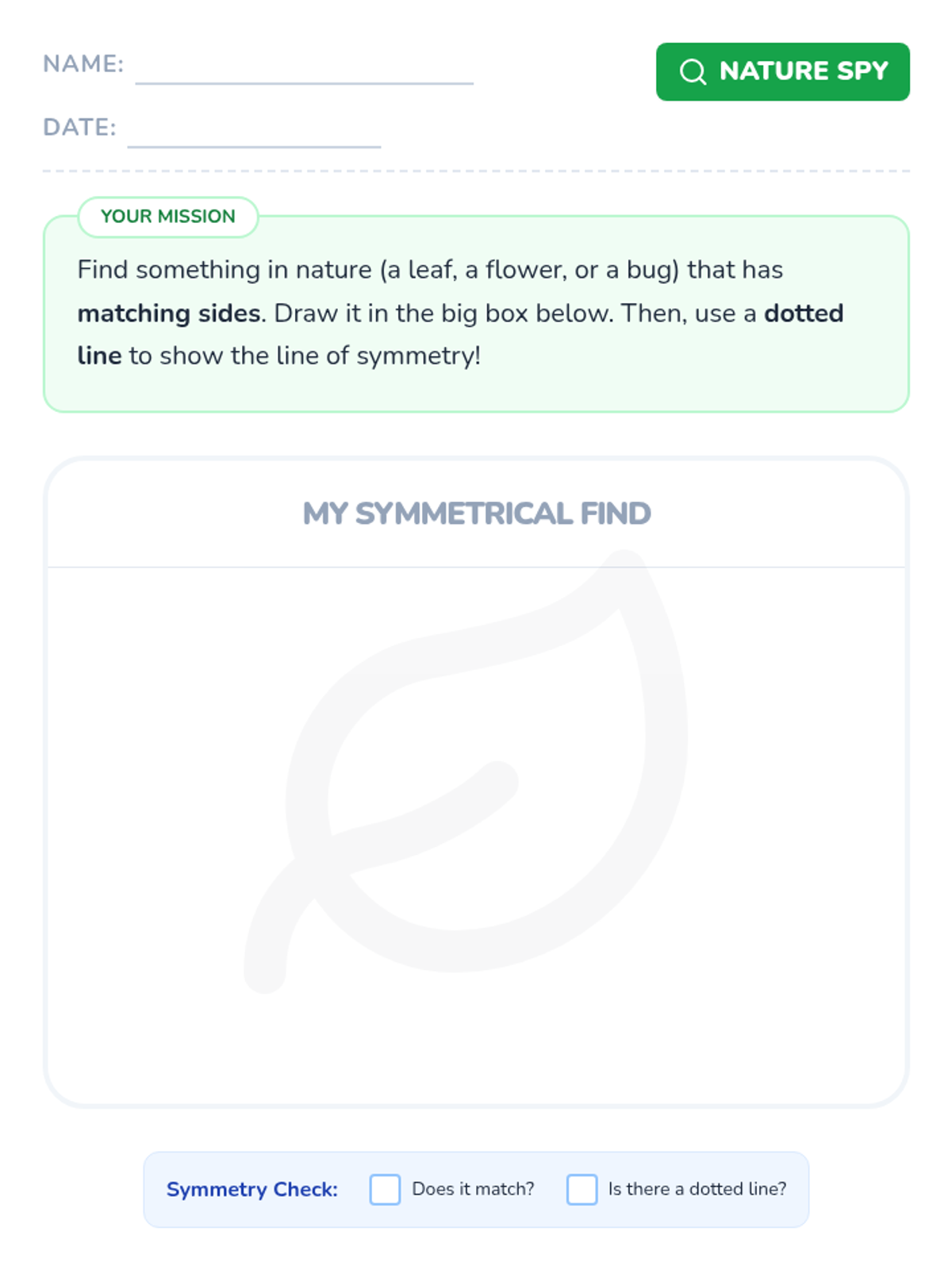
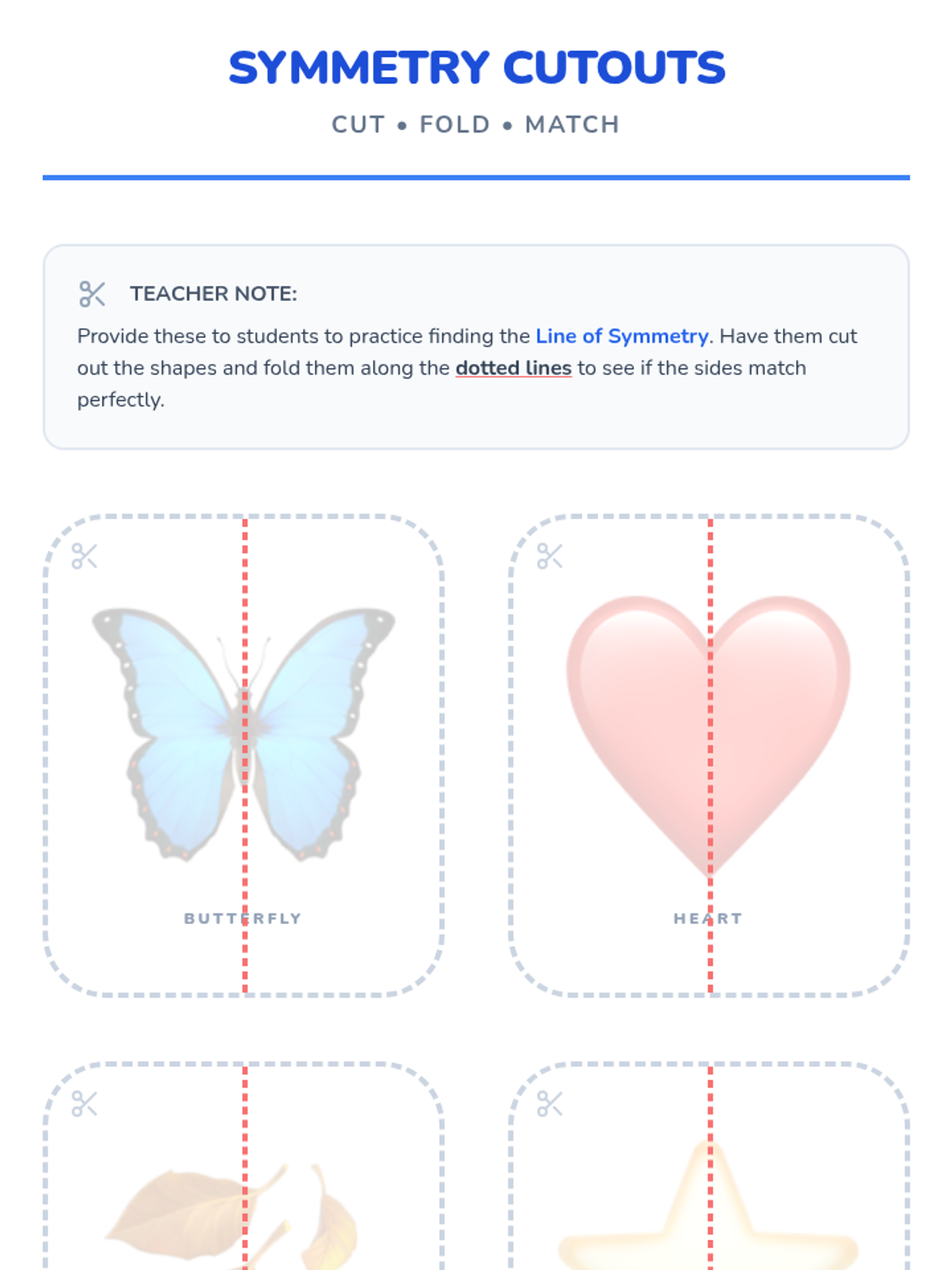
A hands-on introduction to symmetry for Kindergarten and 1st Grade students, using nature and letters to explore how things match. Students will identify lines of symmetry in the real world through a nature walk and creative drawing.
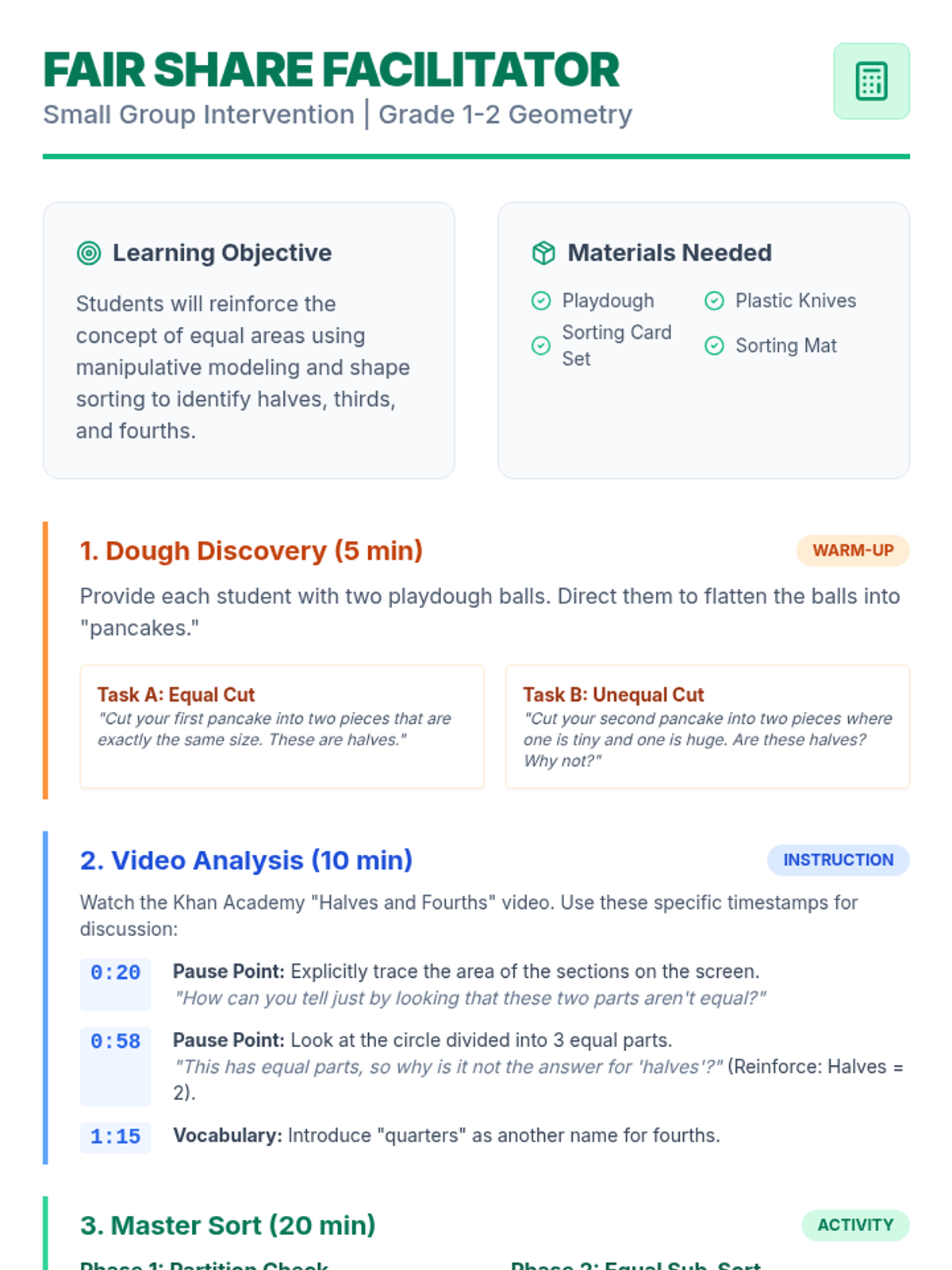
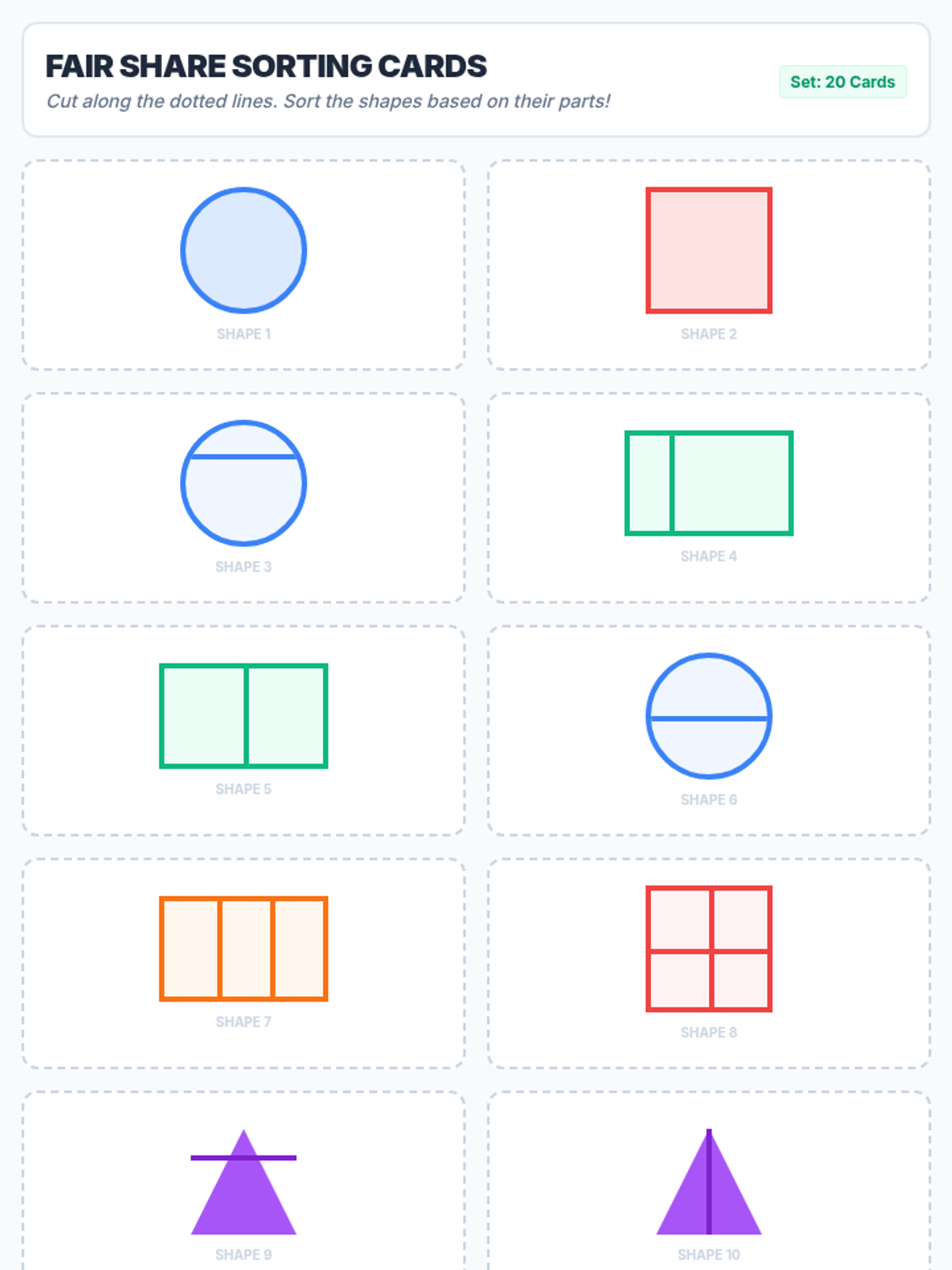
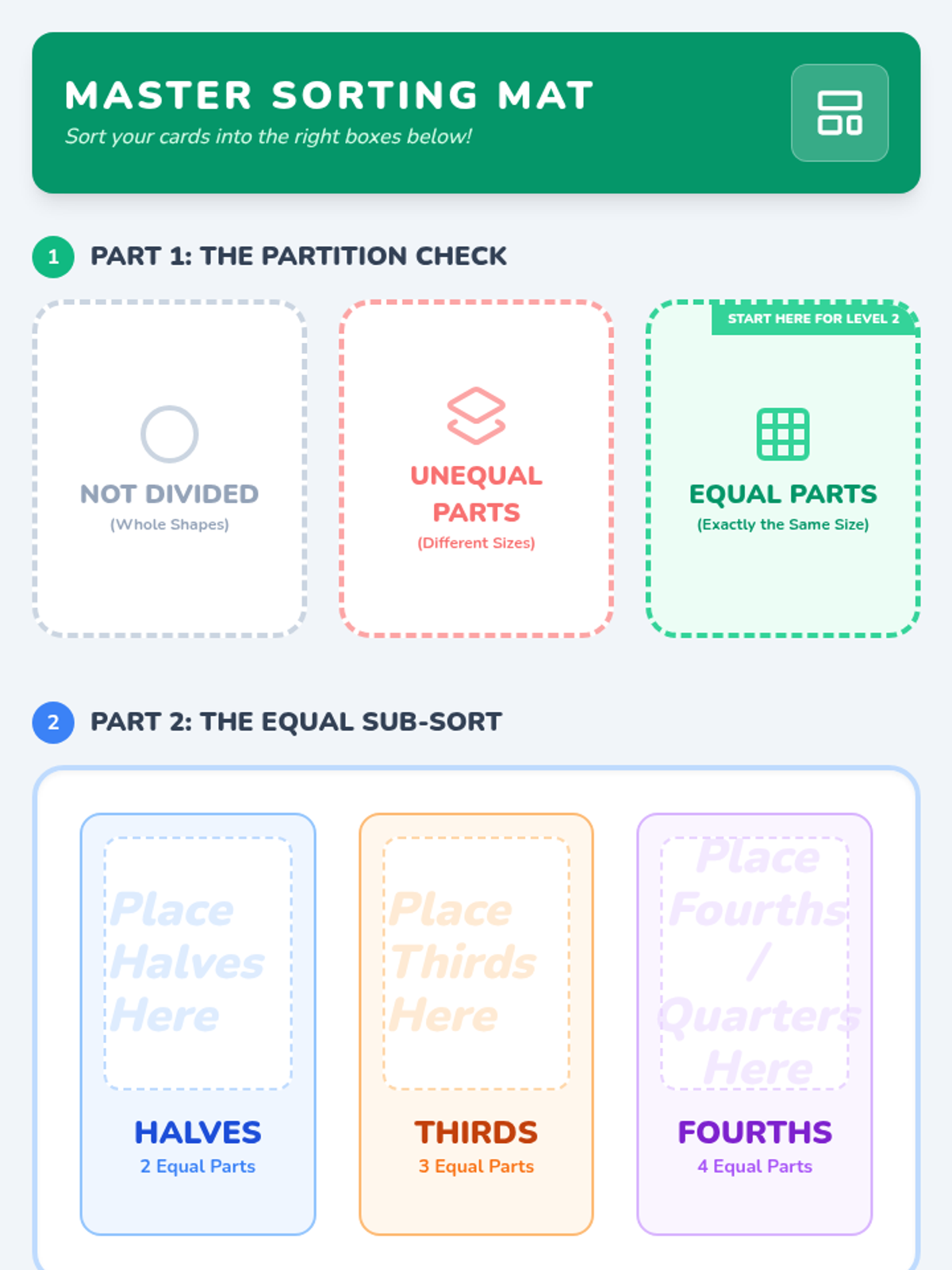
A small group intervention lesson focused on identifying equal and unequal areas through hands-on playdough modeling, video analysis, and a tiered card sorting activity. Students learn to distinguish between halves, thirds, and fourths based on the equality of their parts.
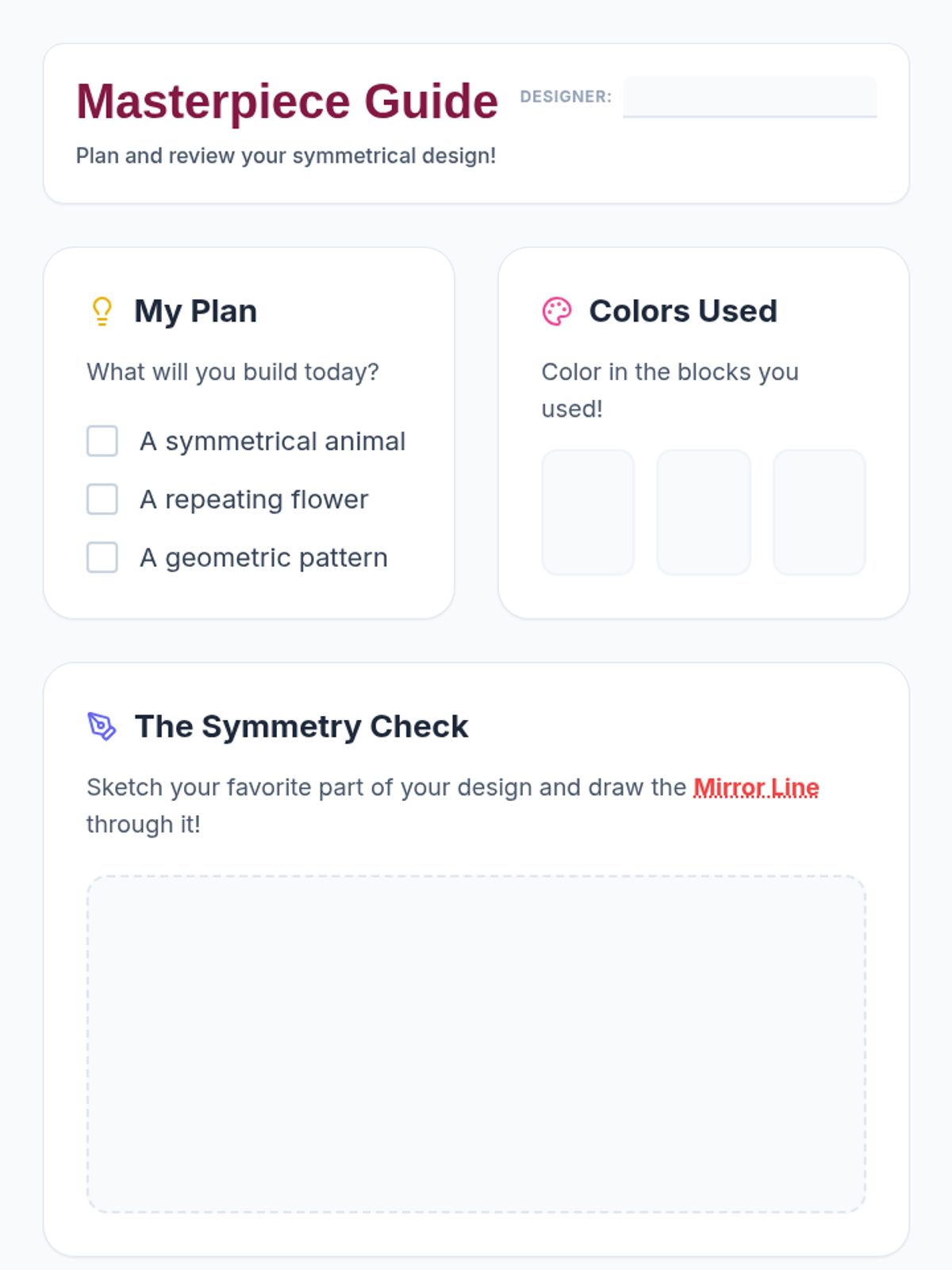
Students use pattern blocks to build radial designs or linear patterns that exhibit symmetry. They explain their design choices and point out the lines of symmetry to peers.
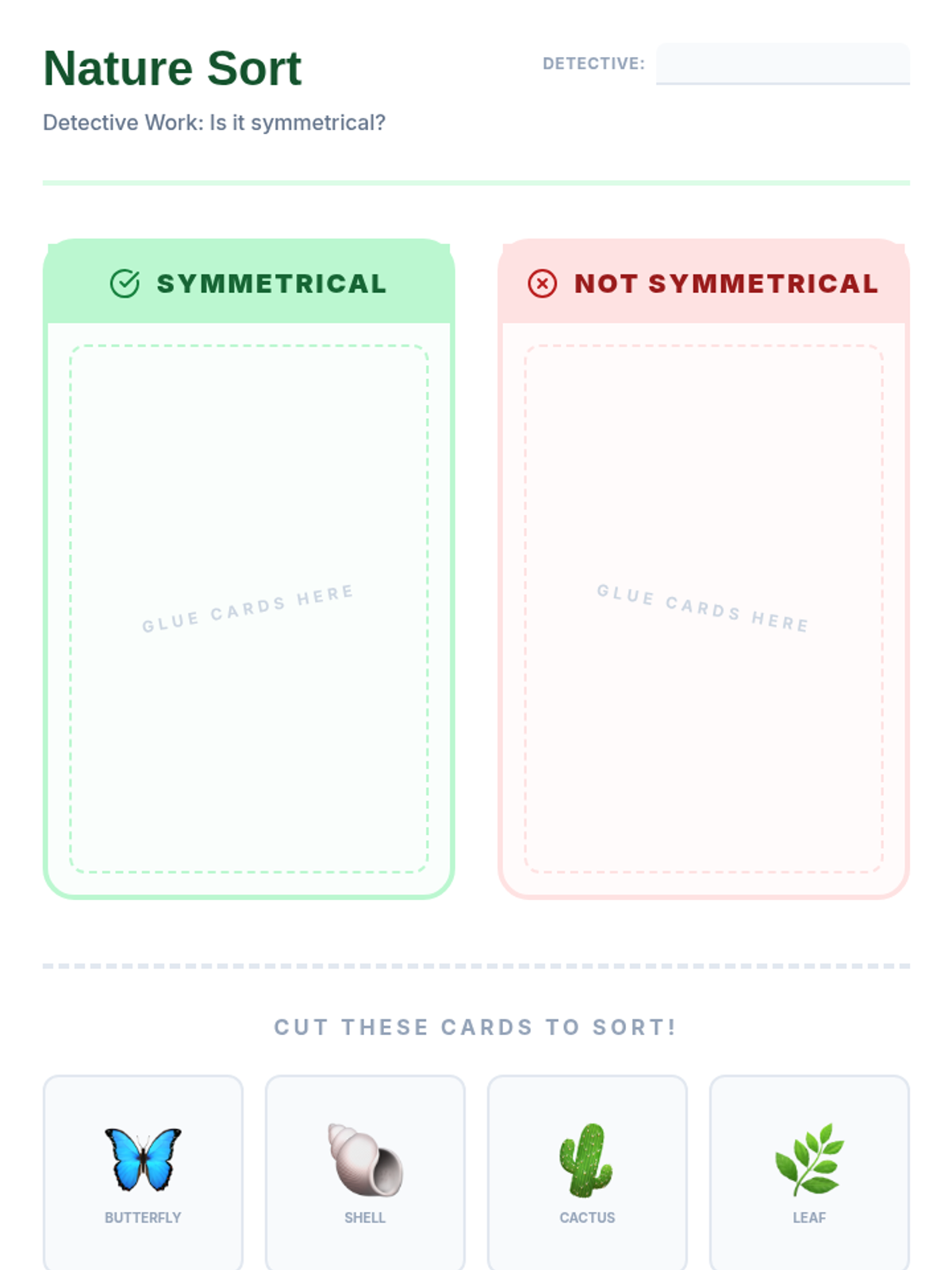
Learners observe leaves, insects, and flowers to identify lines of symmetry in the natural world. They sort images into 'Symmetrical' and 'Not Symmetrical' categories.
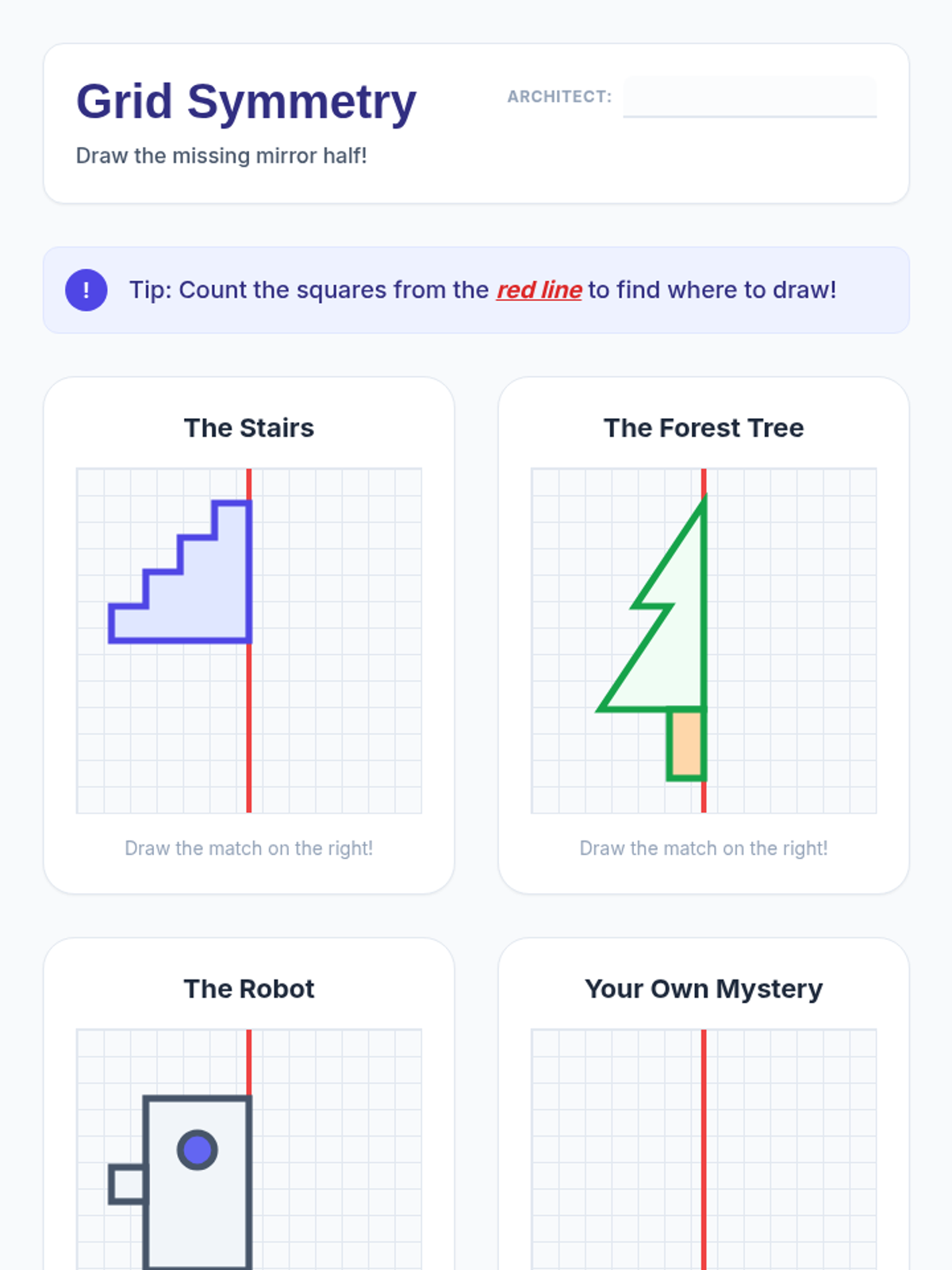
Students are given grid paper with half of a shape or pattern drawn on it. They must use counting and spatial reasoning to draw the matching half across the line of symmetry.
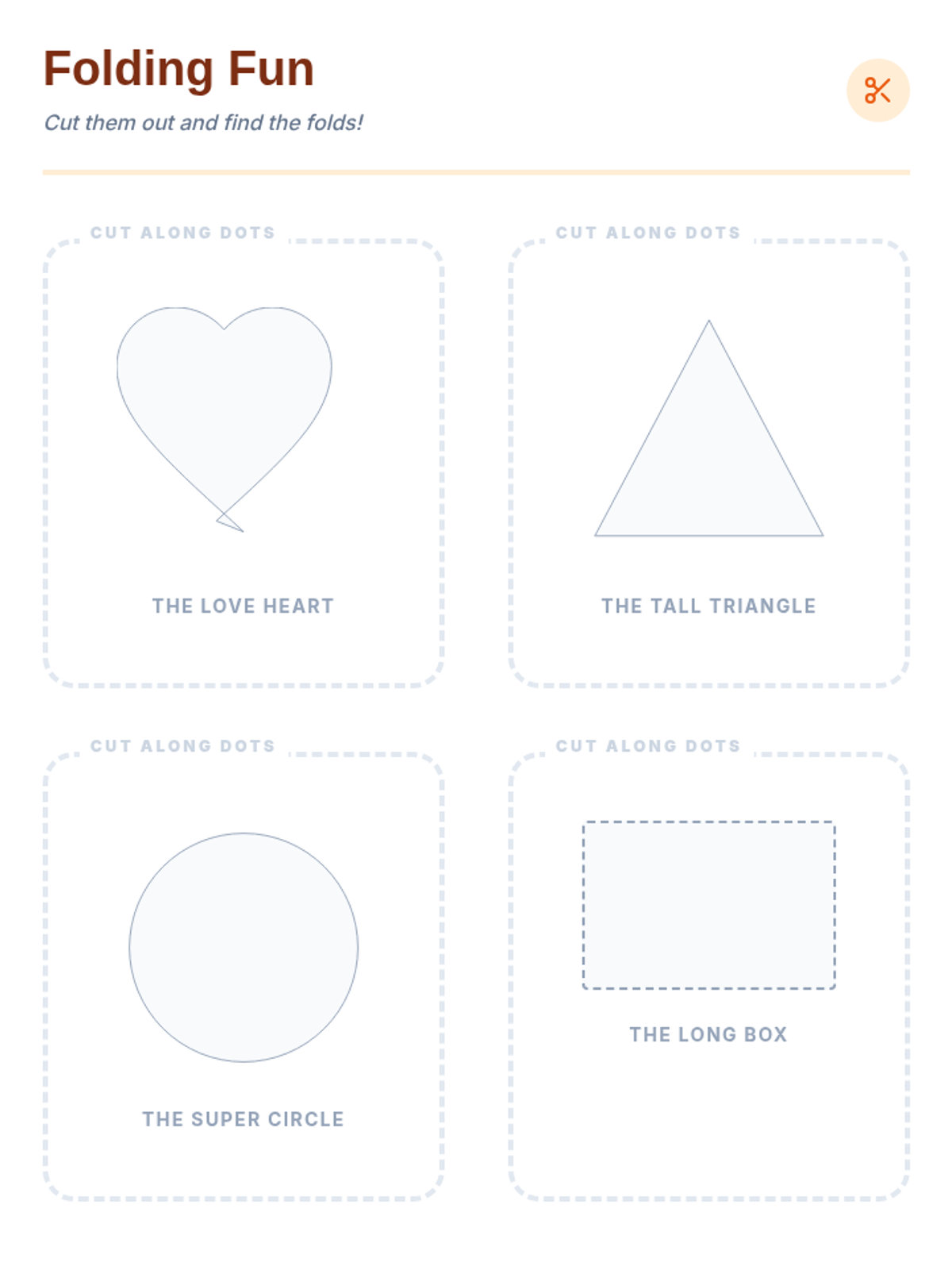
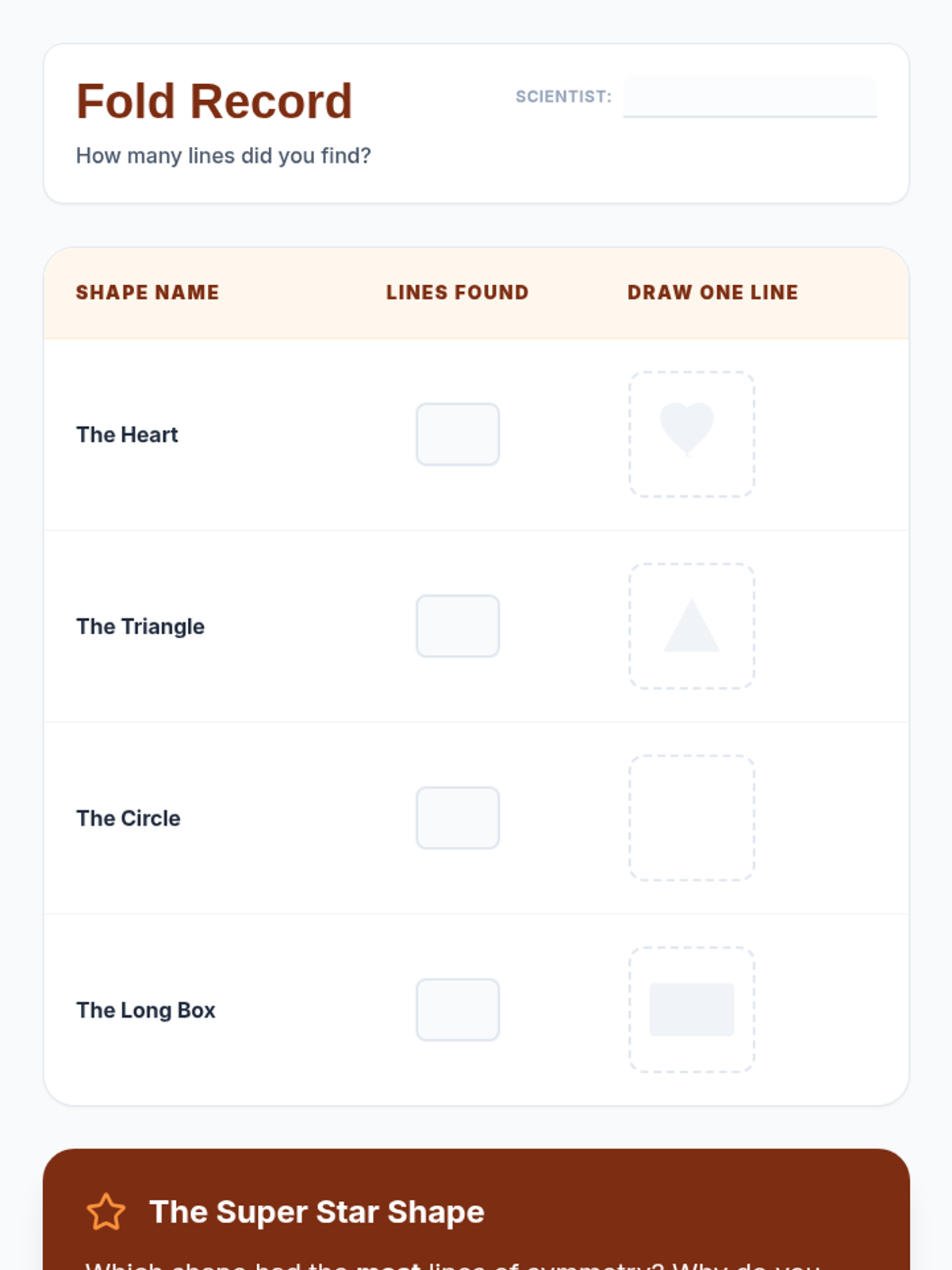
Using paper cutouts of various shapes, students fold paper to find lines of symmetry. They learn that some shapes have one line, some have many, and some have none.
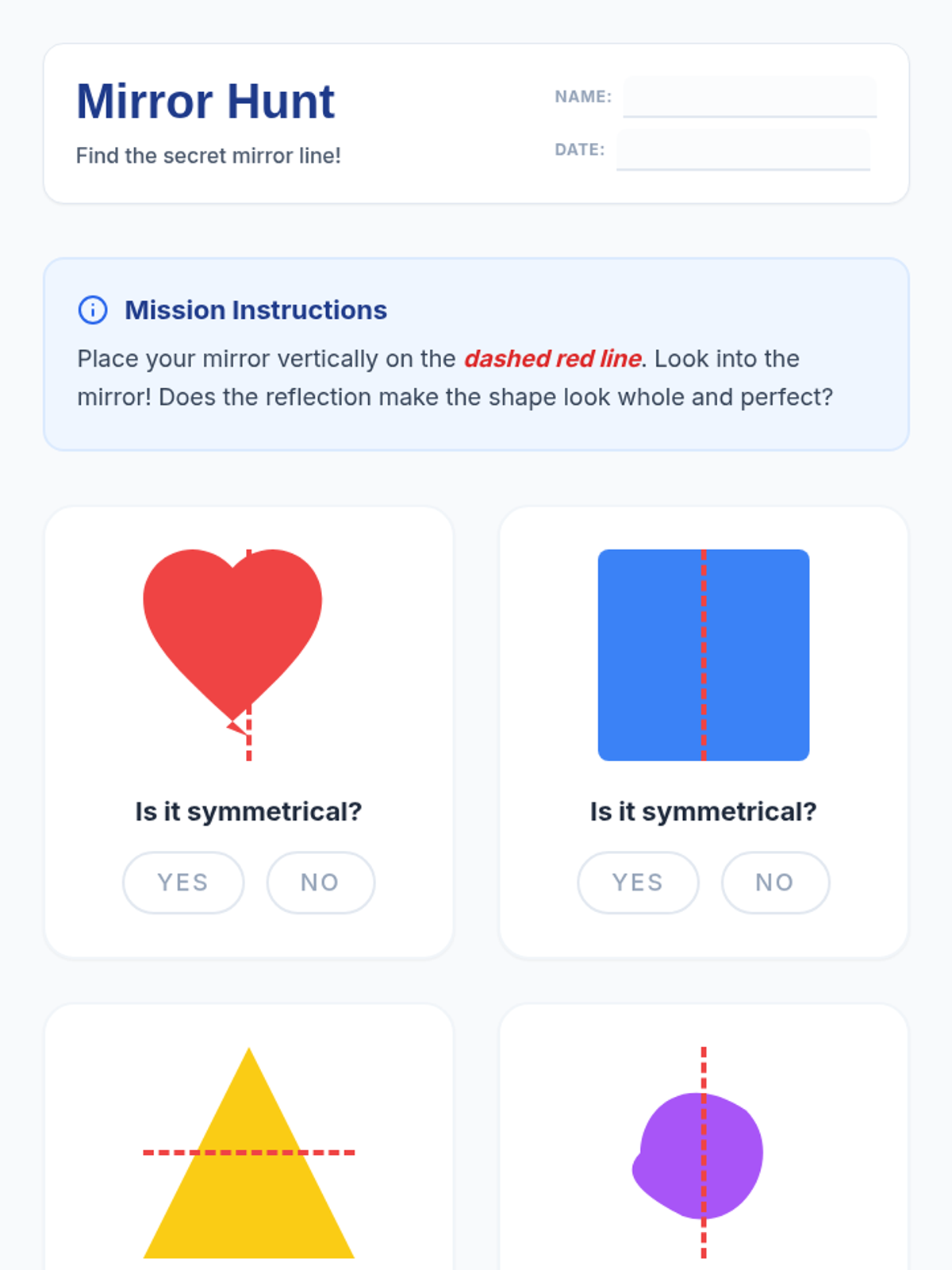
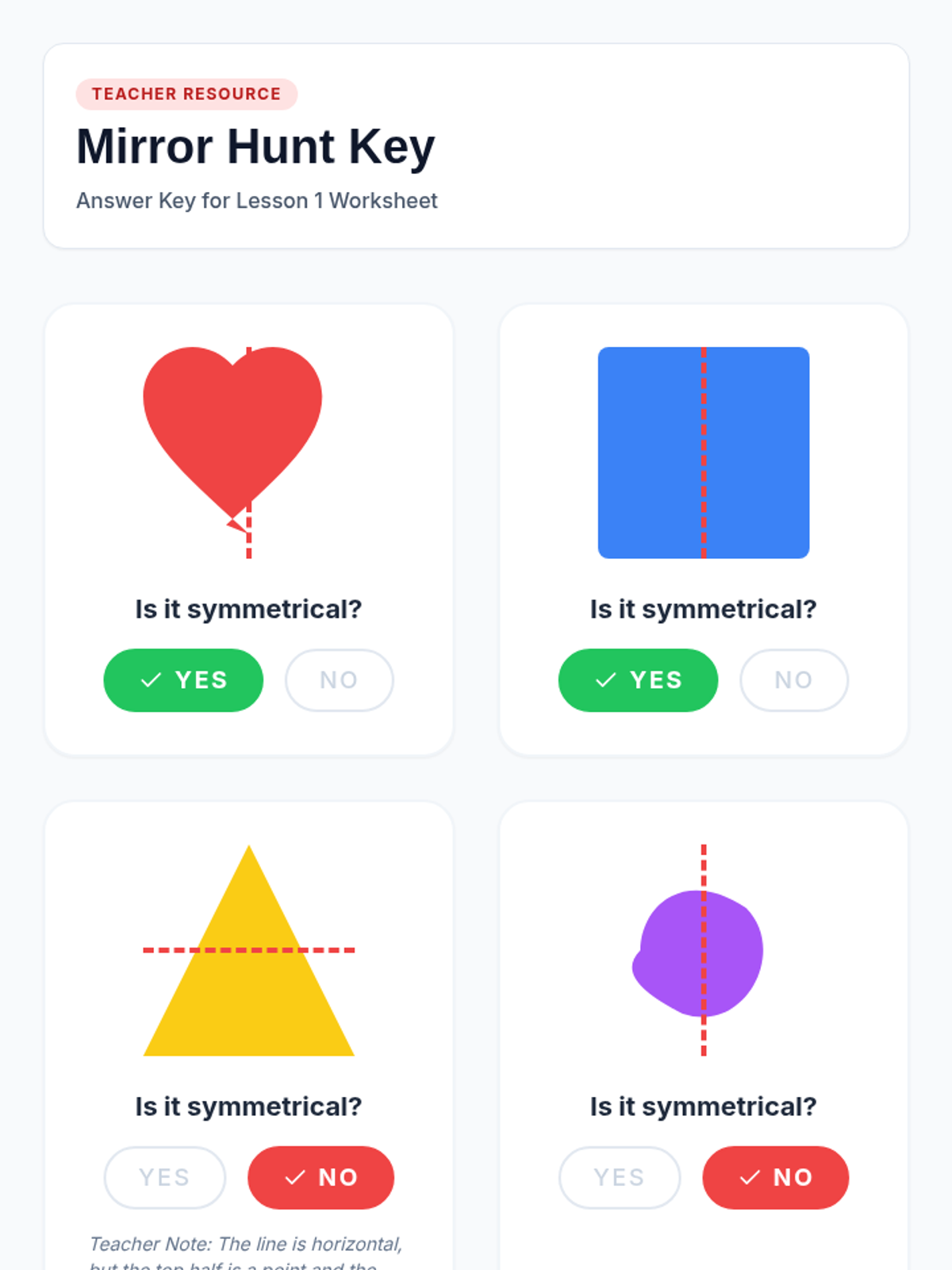
Students explore the concept of a 'mirror line' using mirrors and shapes. They discover that for a shape to be symmetrical, one side must be an exact reflection of the other.
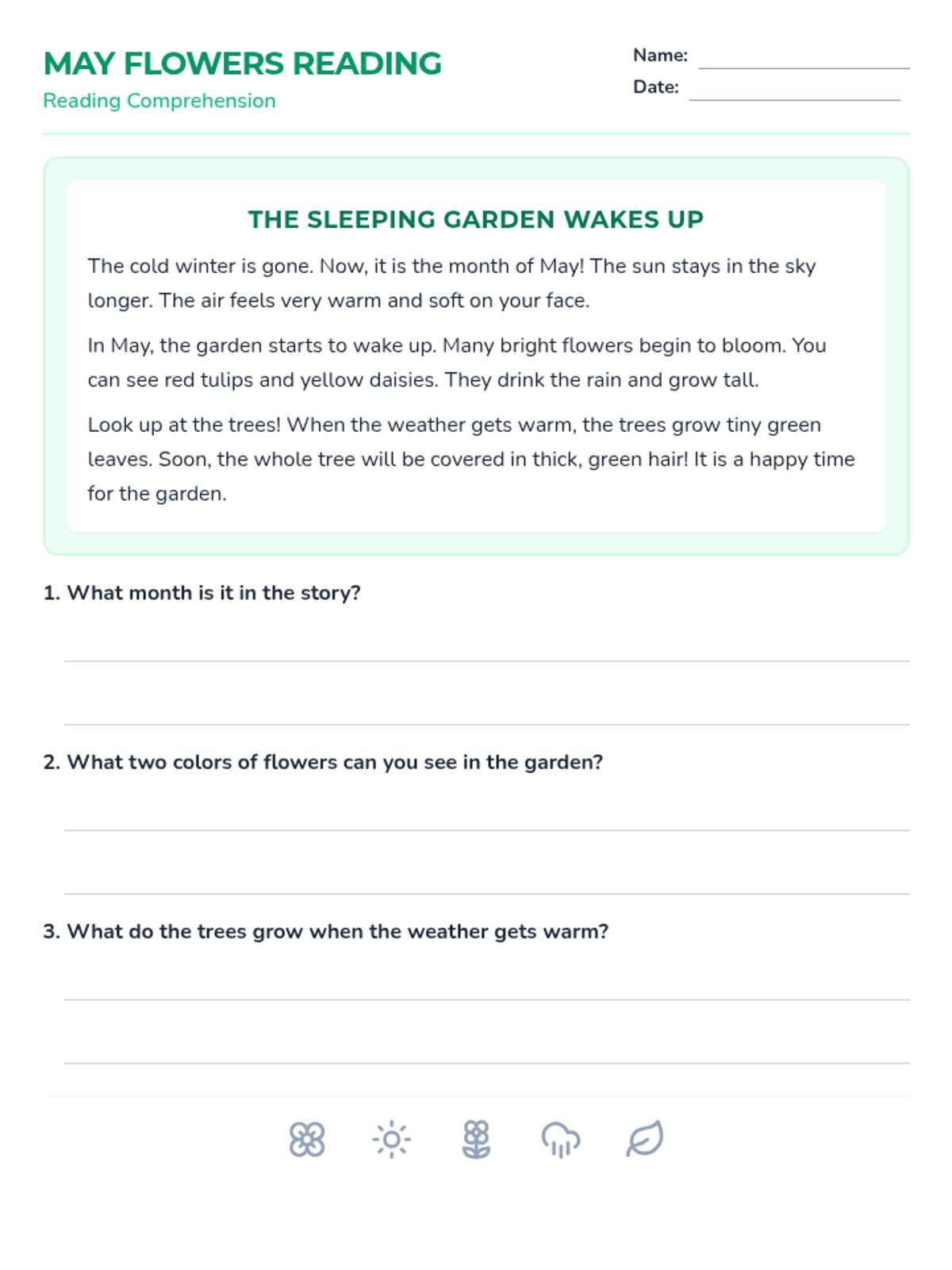
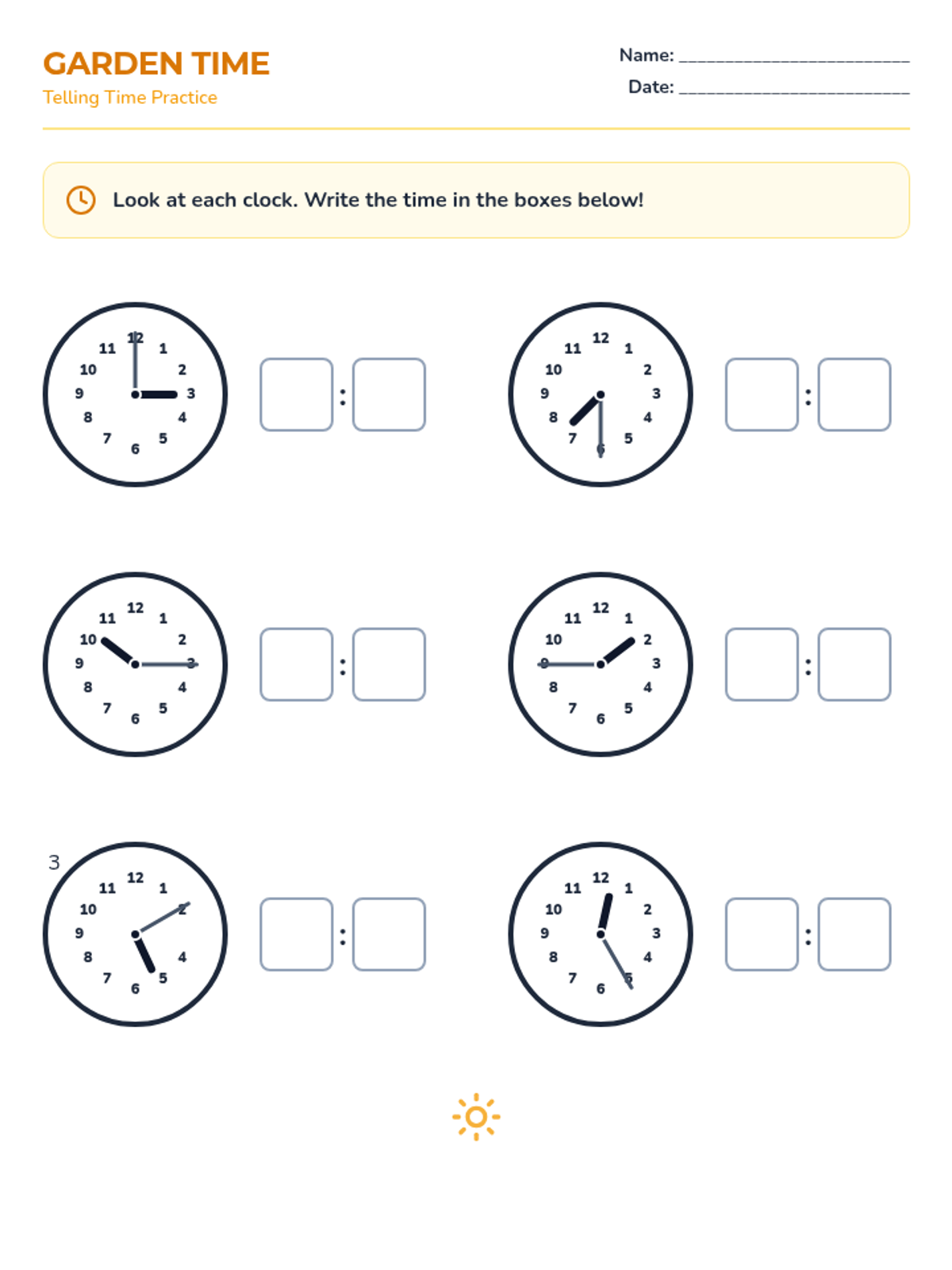
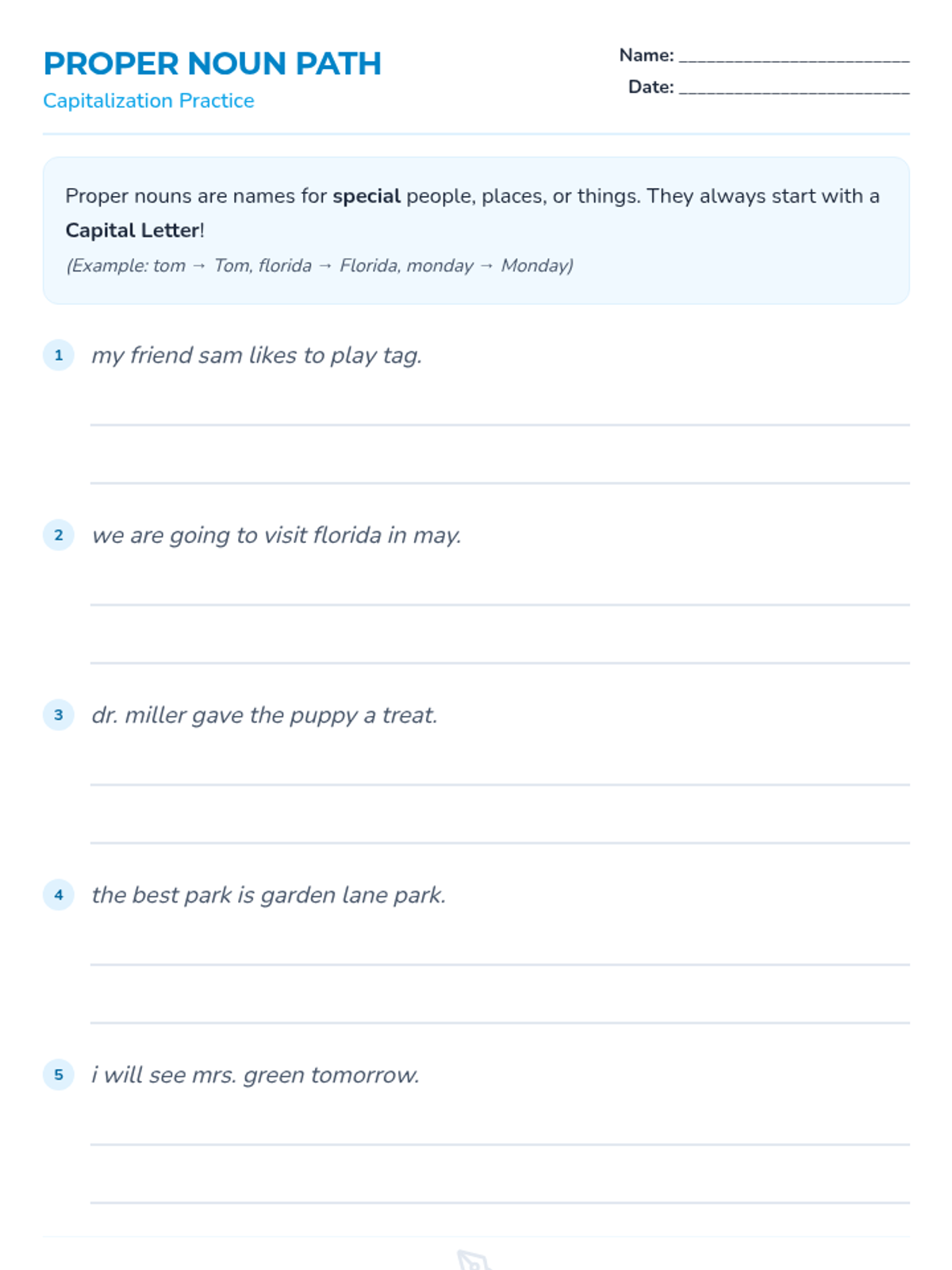
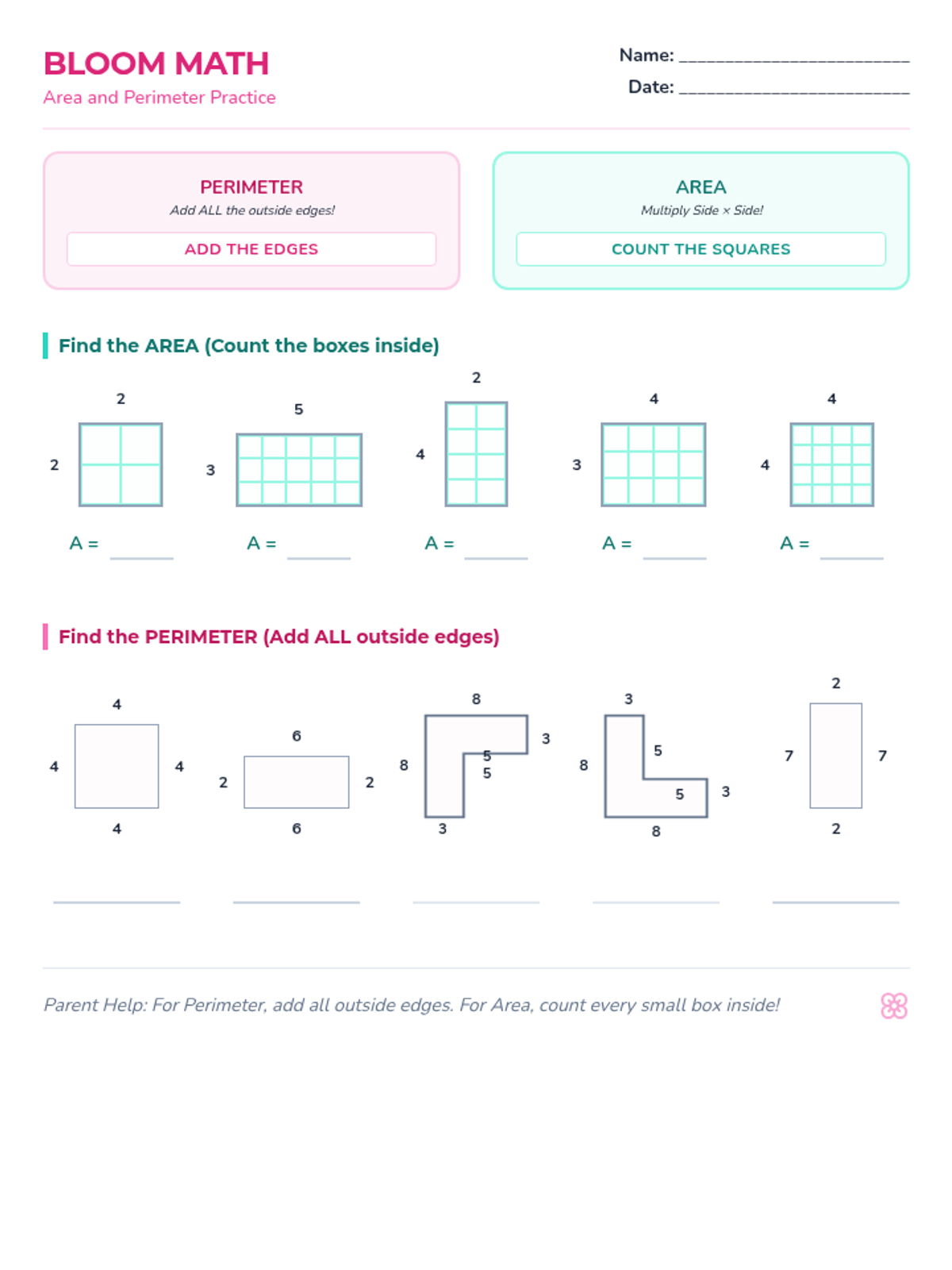
A set of four independent practice worksheets themed around springtime growth, focusing on reading comprehension, time-telling, grammar, and geometry.
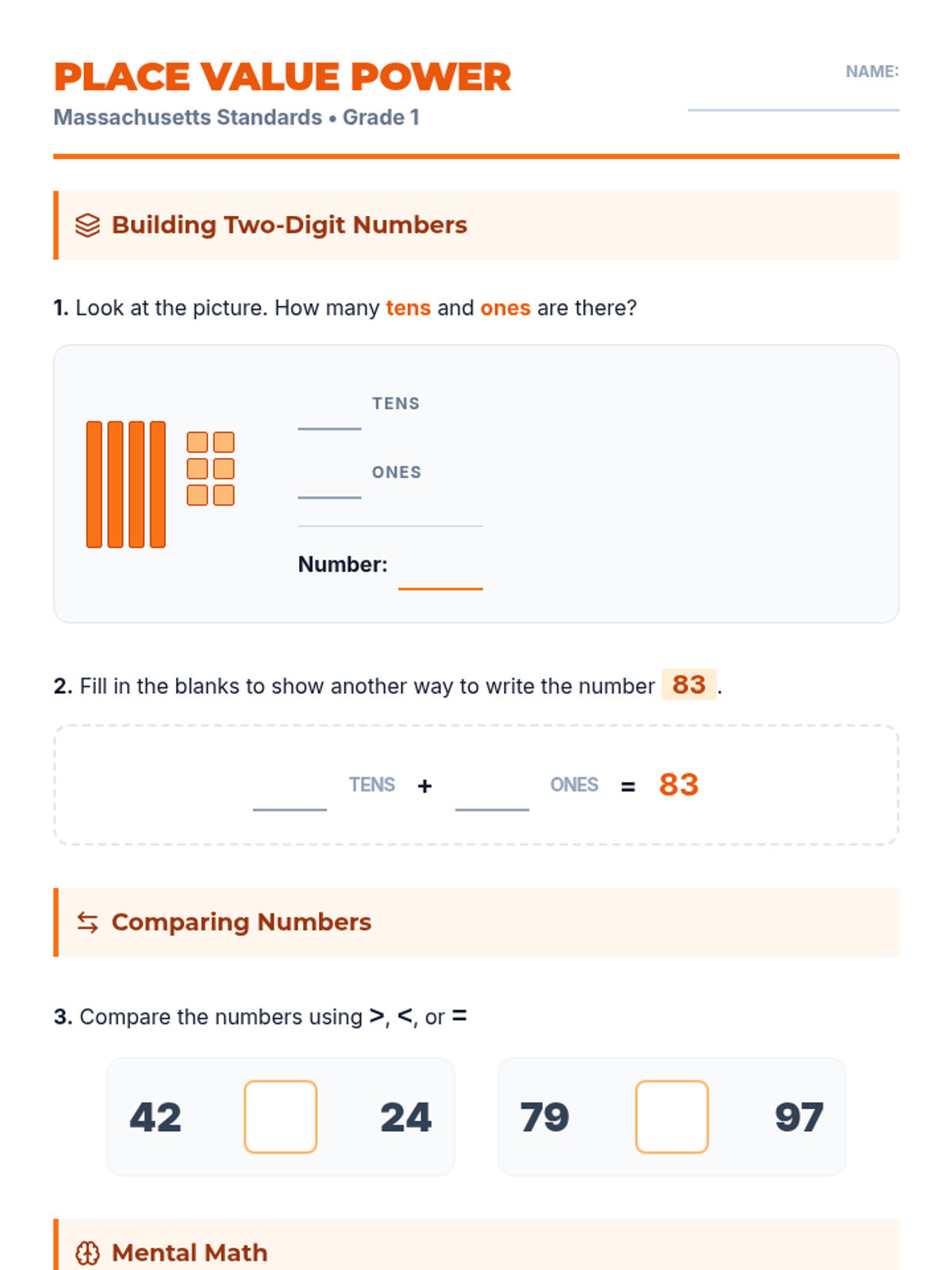
A series of focused practice materials for Massachusetts place value standards in Grades 1 and 2, including tens/ones, hundreds, expanded form, and number comparisons.
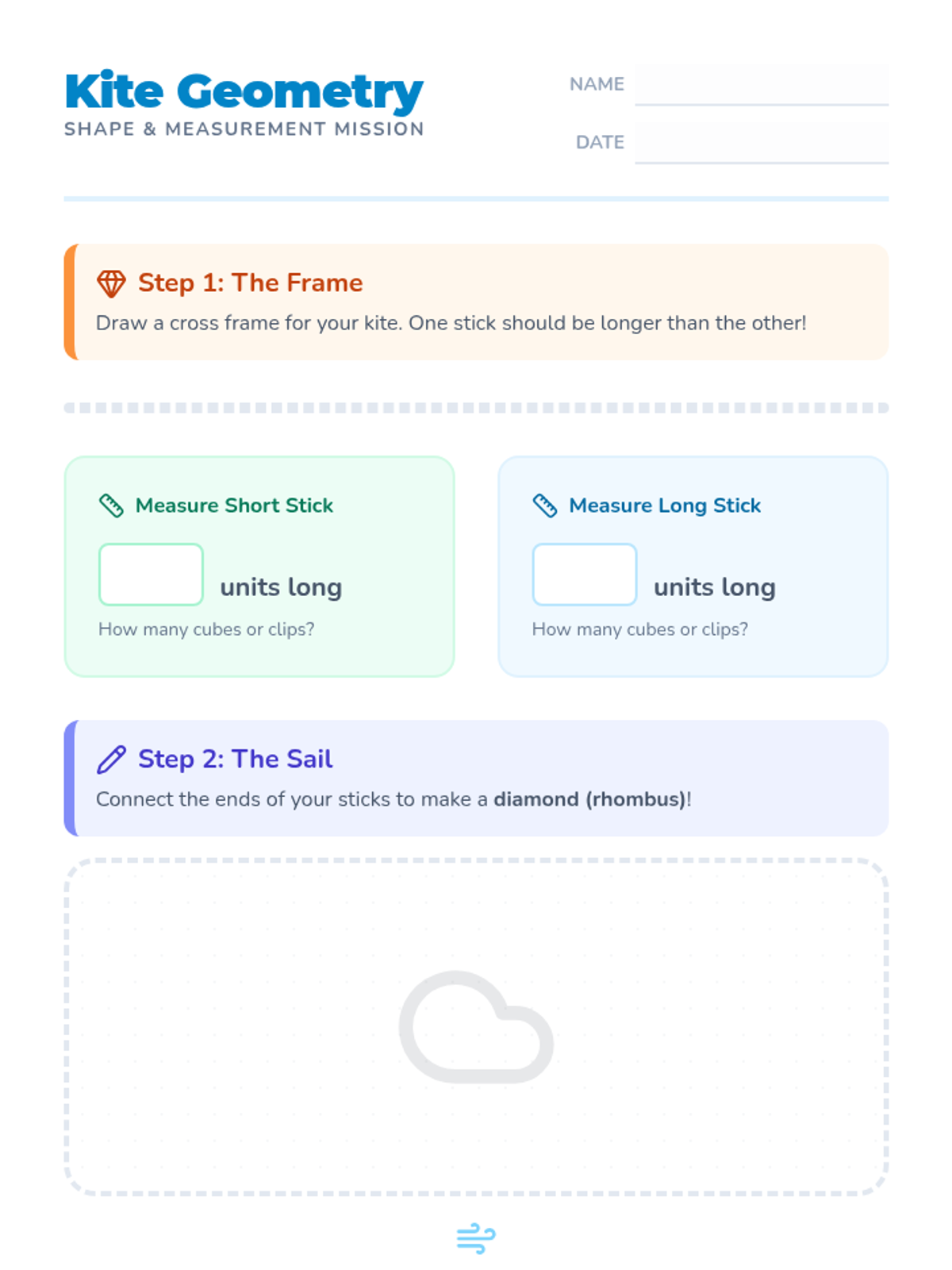
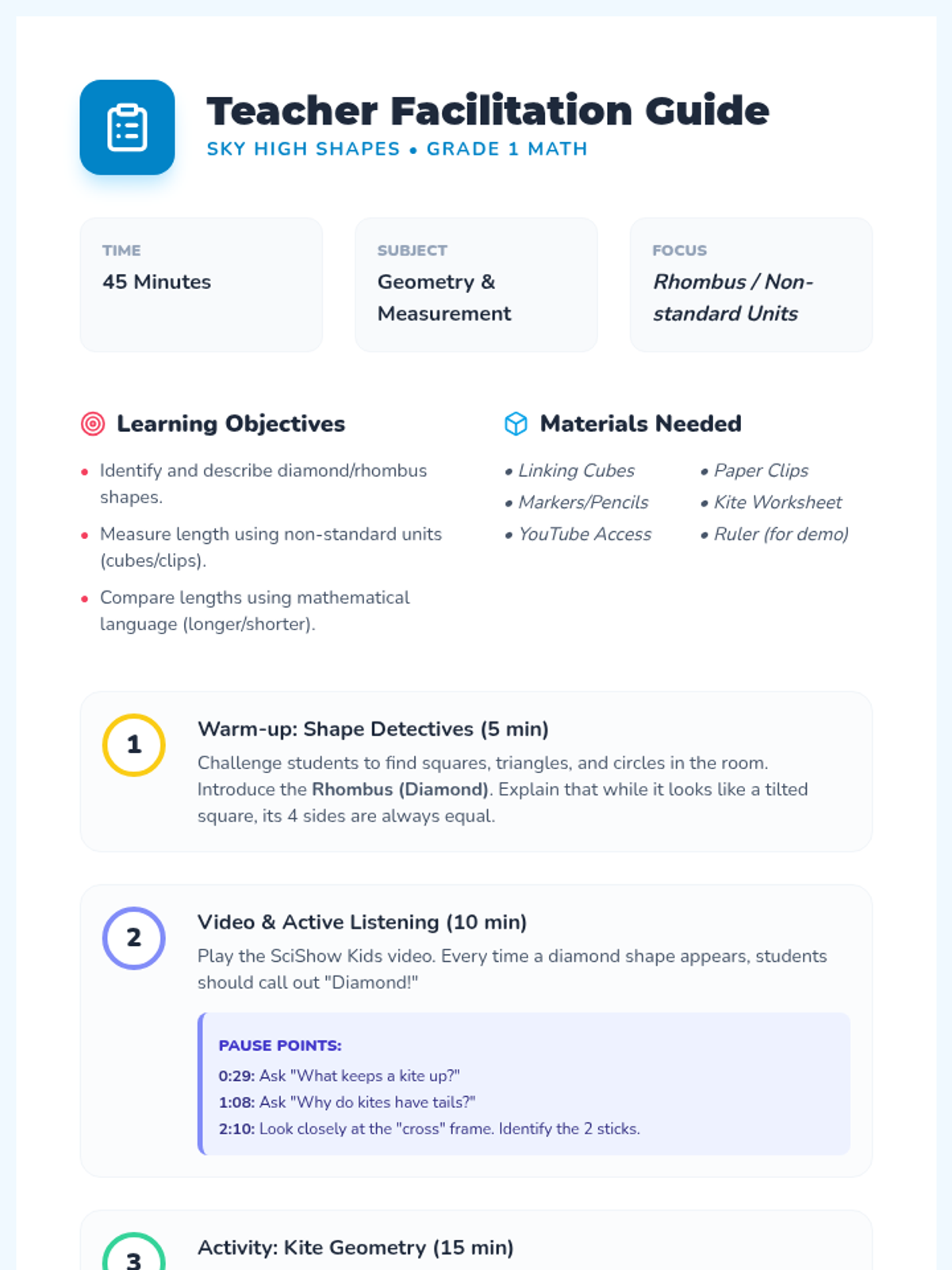
A 1st Grade math lesson where students identify diamond shapes and use non-standard units (linking cubes or paper clips) to measure kite frames based on a kite-building video.
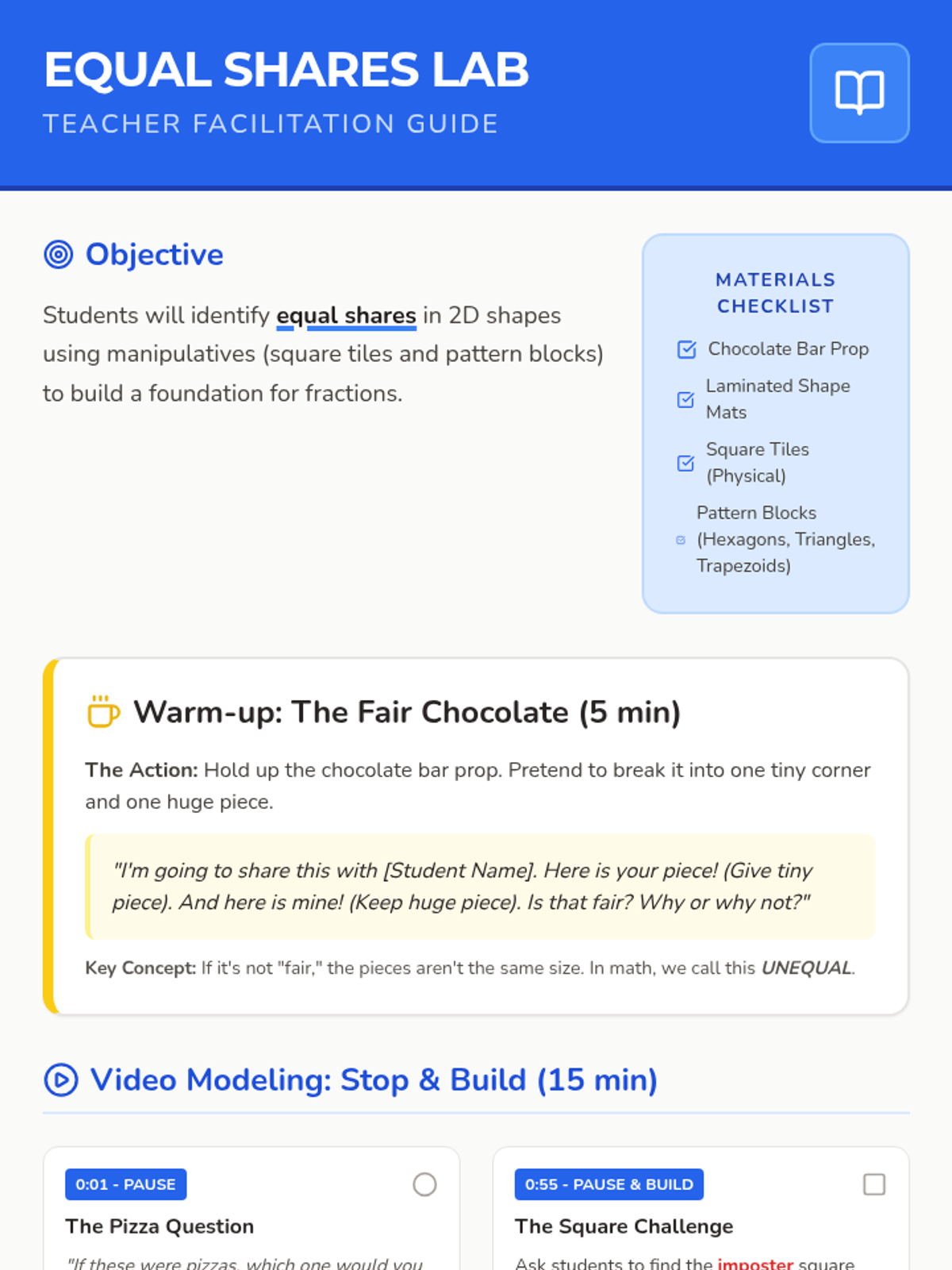
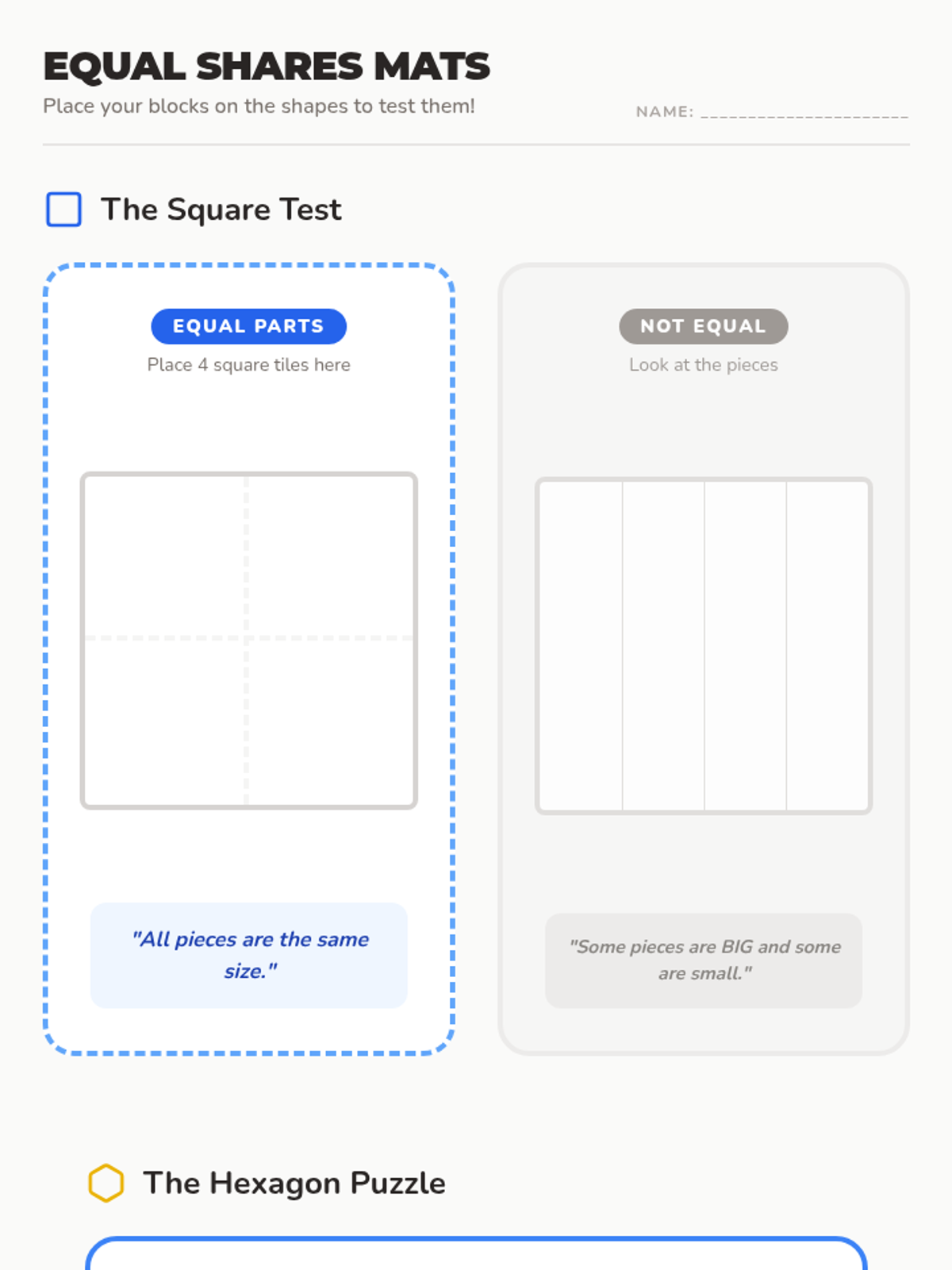
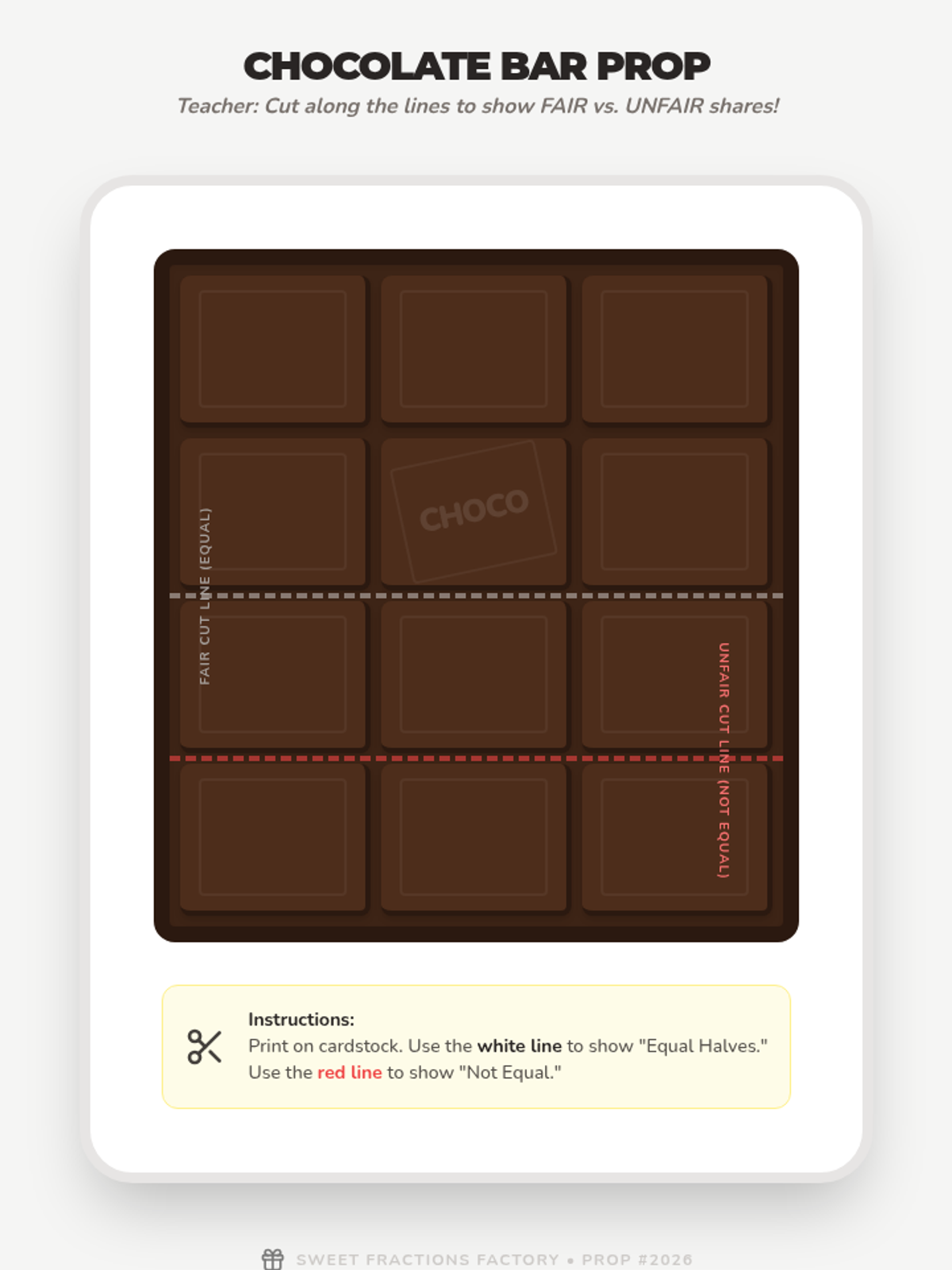
A hands-on introductory lesson on equal shares and fractions using chocolate bars, pattern blocks, and interactive video modeling for 1st-3rd grade special education.
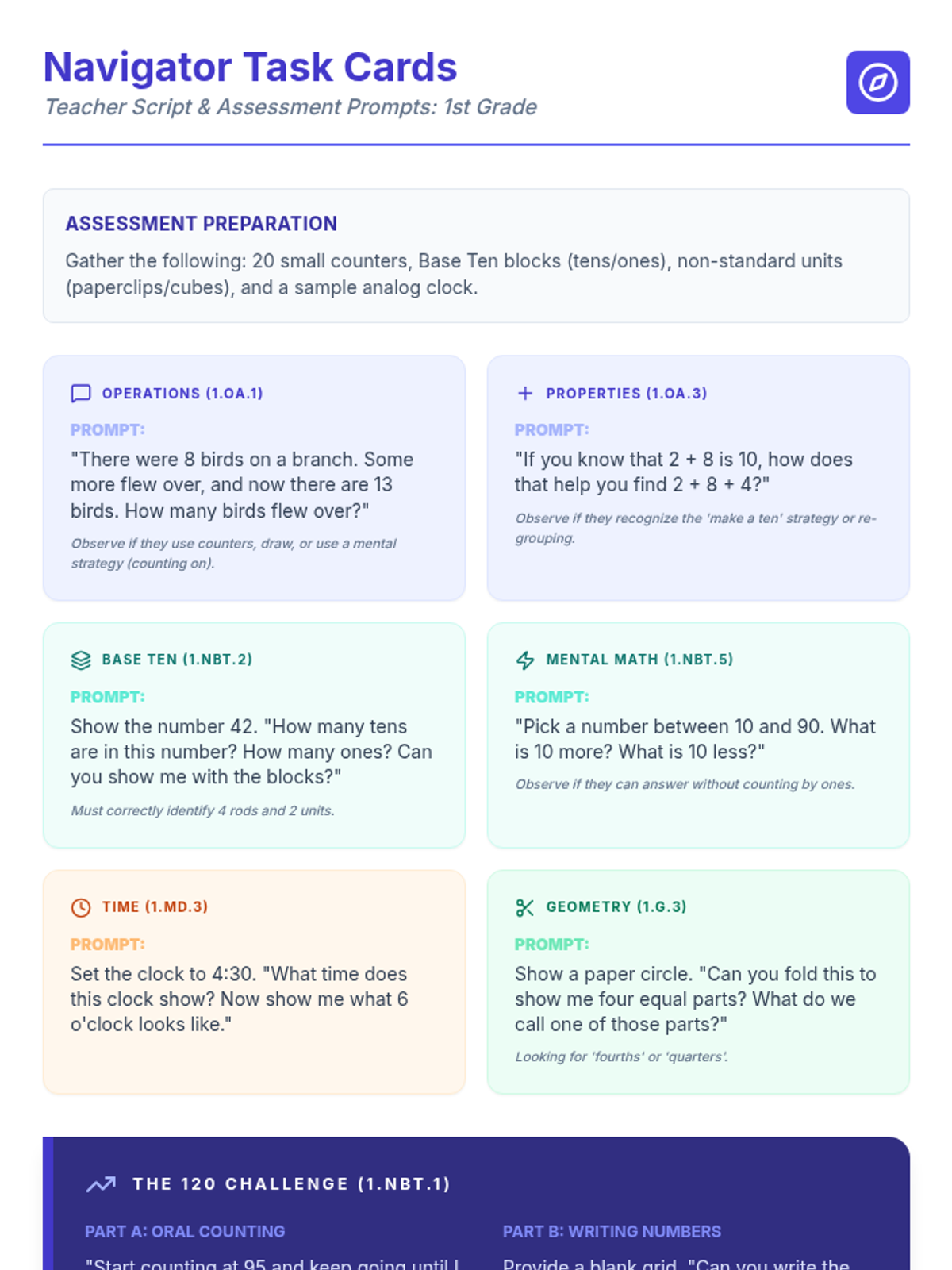
A comprehensive assessment package for 1st Grade mathematics based on the Massachusetts Curriculum Frameworks, including an observation checklist and a teacher's task guide for conducting the assessment.
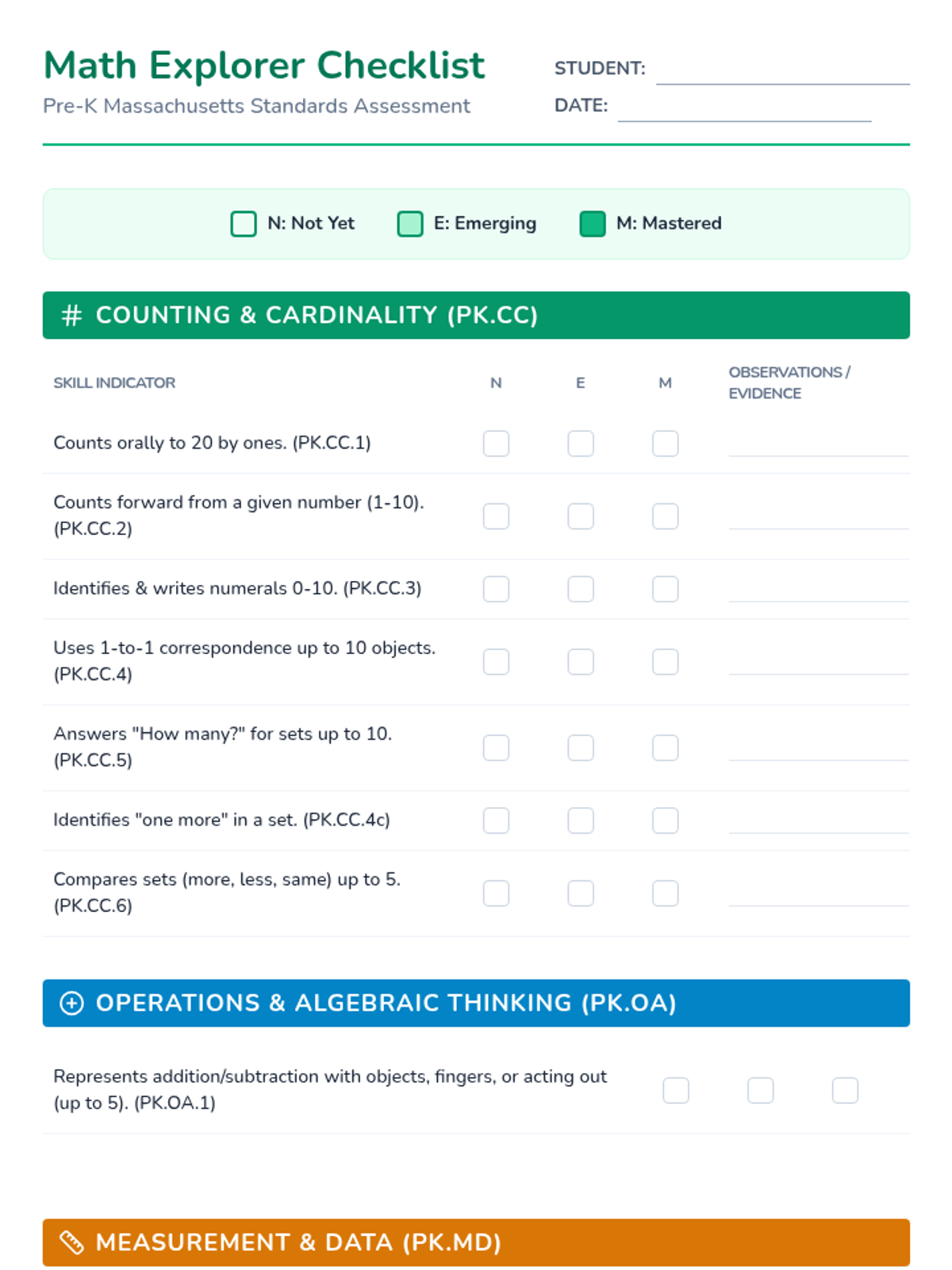
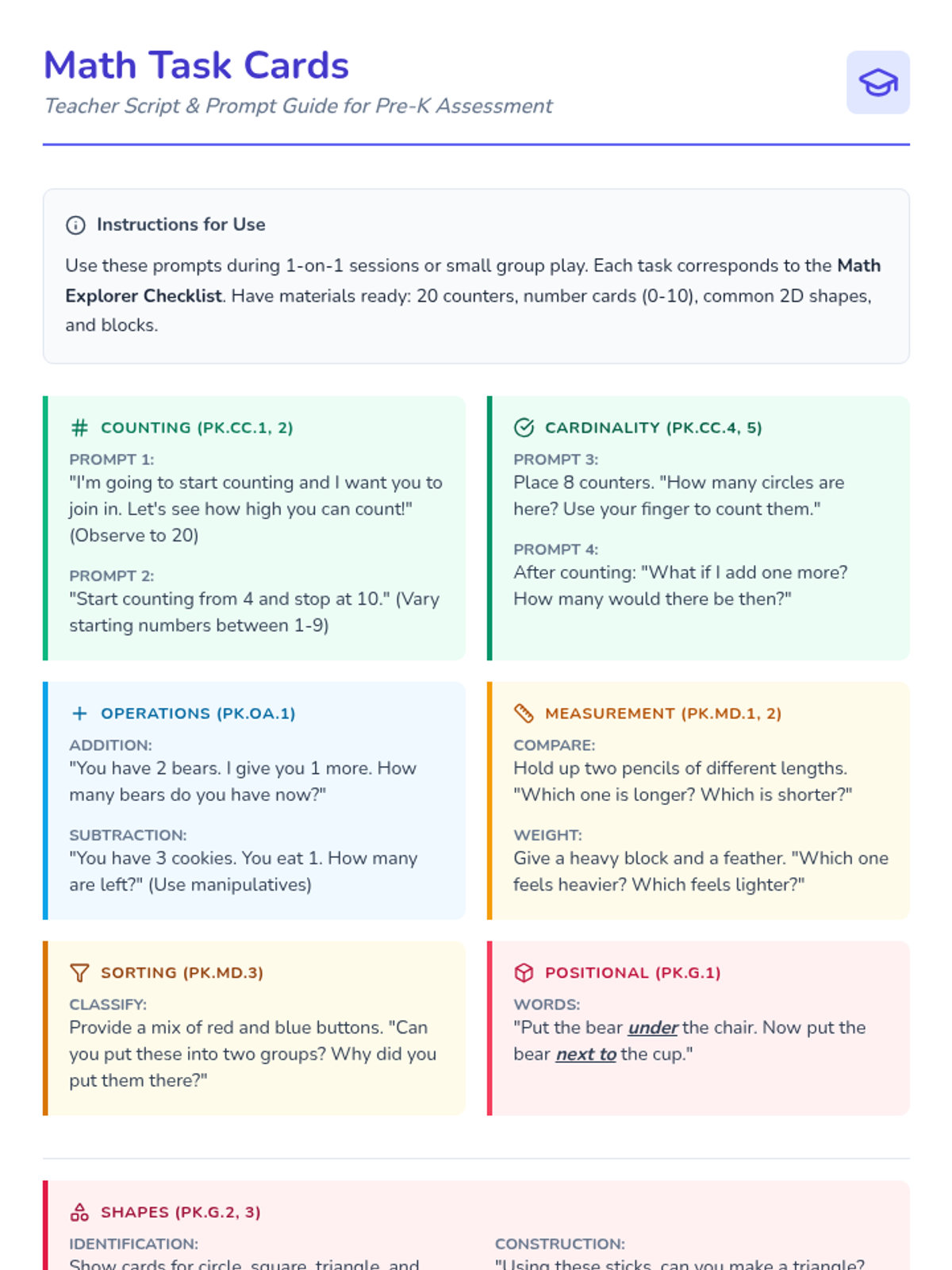
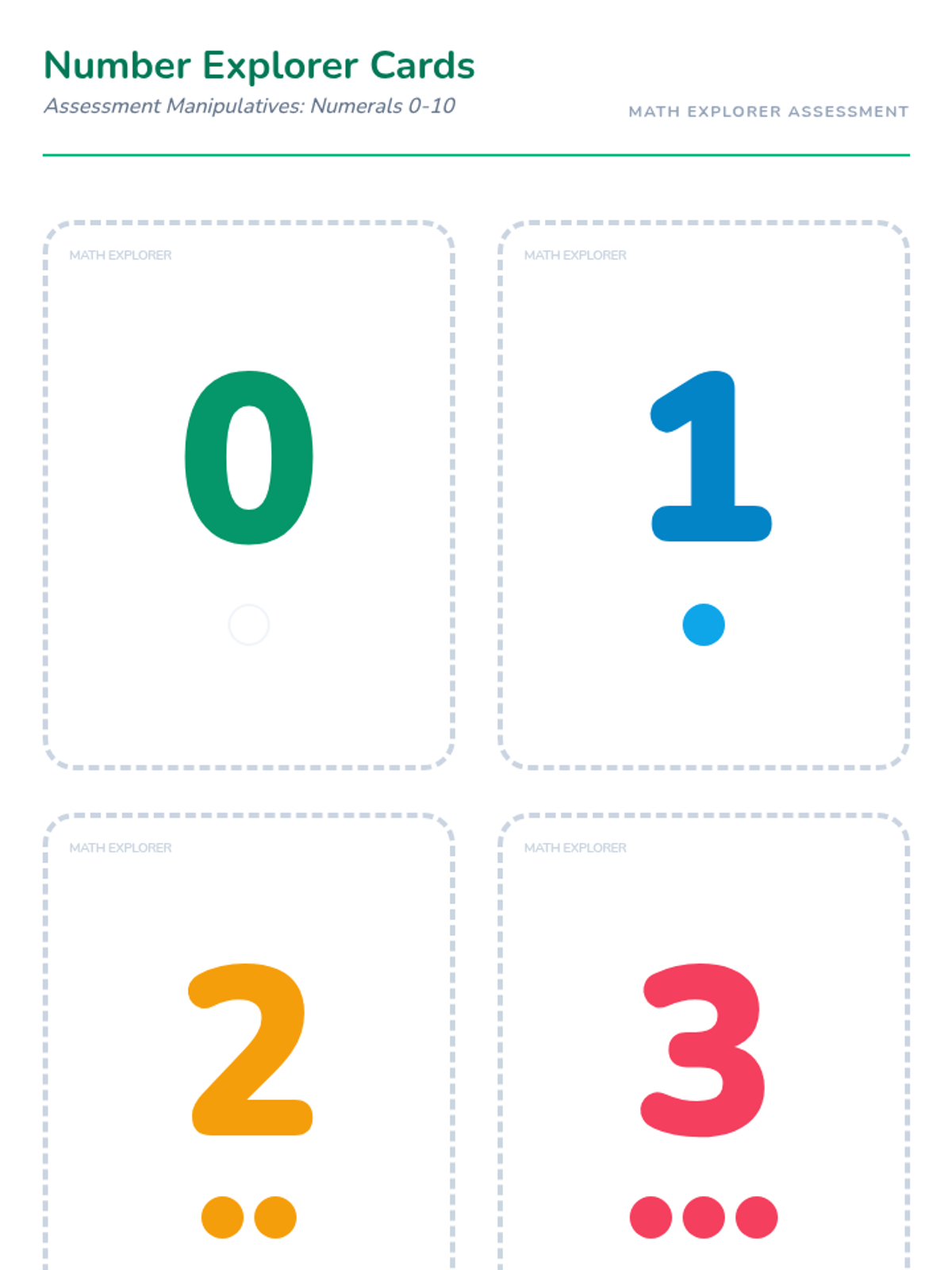
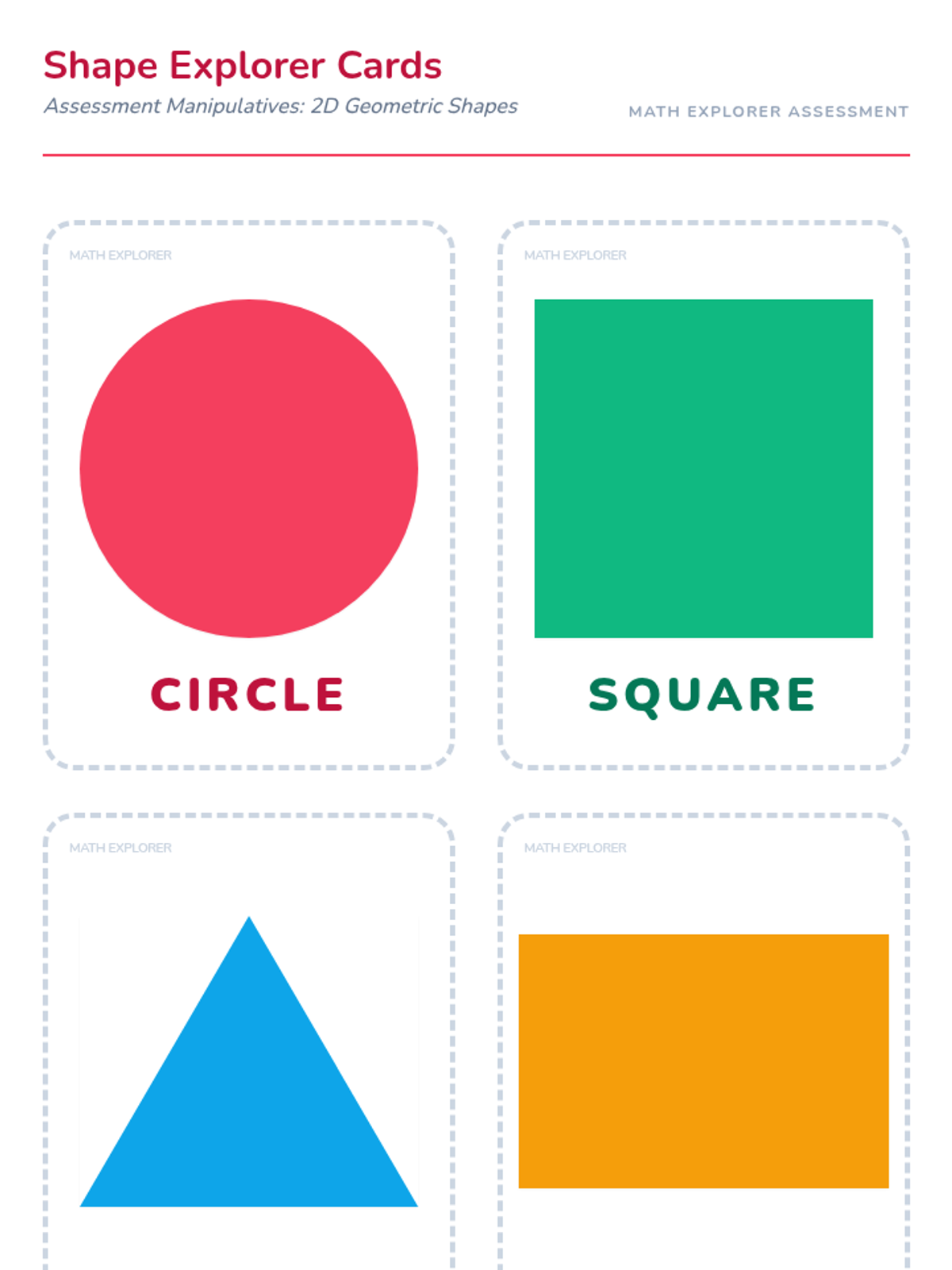
A comprehensive assessment package for Pre-K mathematics based on the Massachusetts Curriculum Frameworks, including an observation checklist and a teacher's task guide for conducting the assessment.
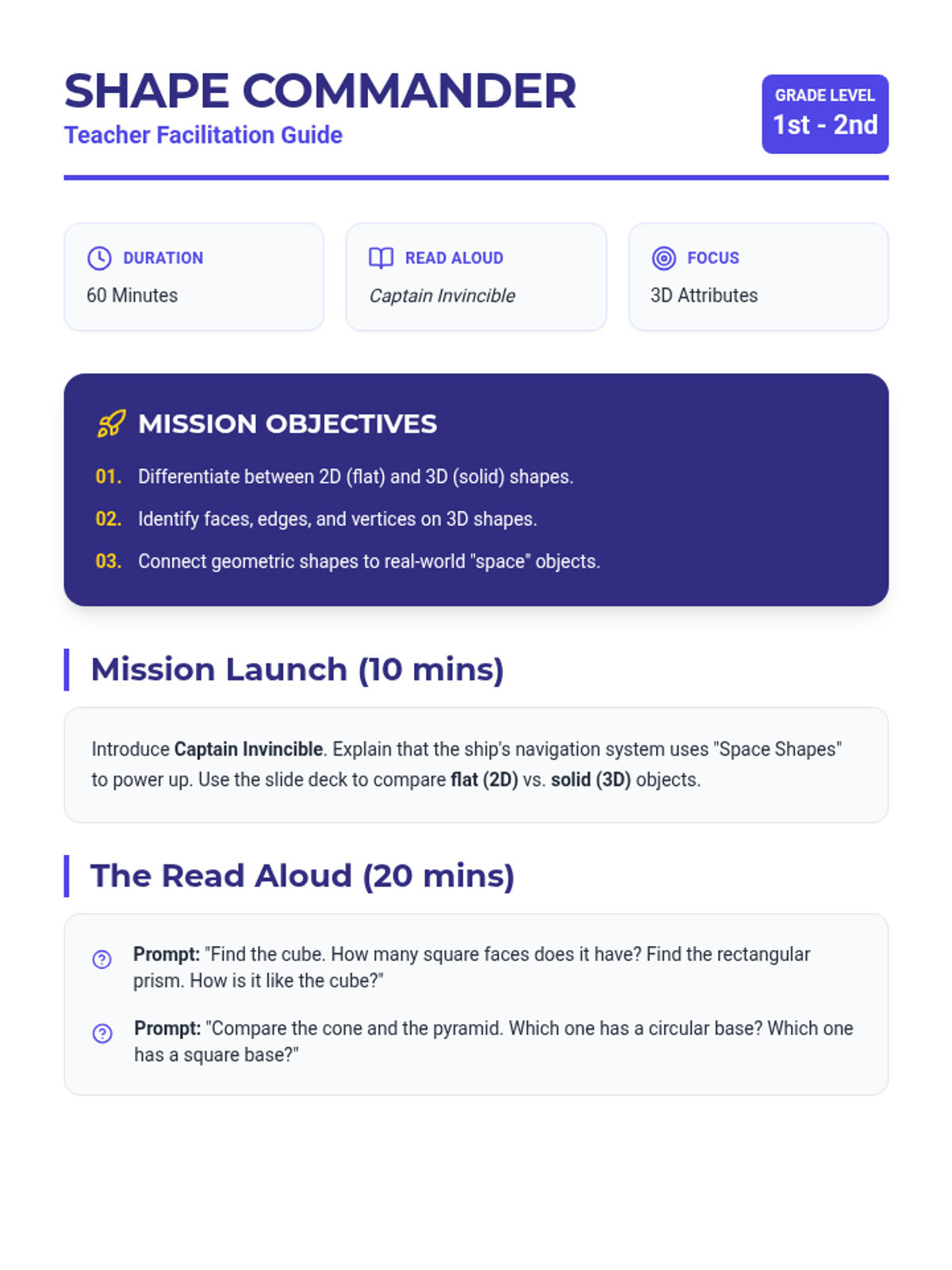
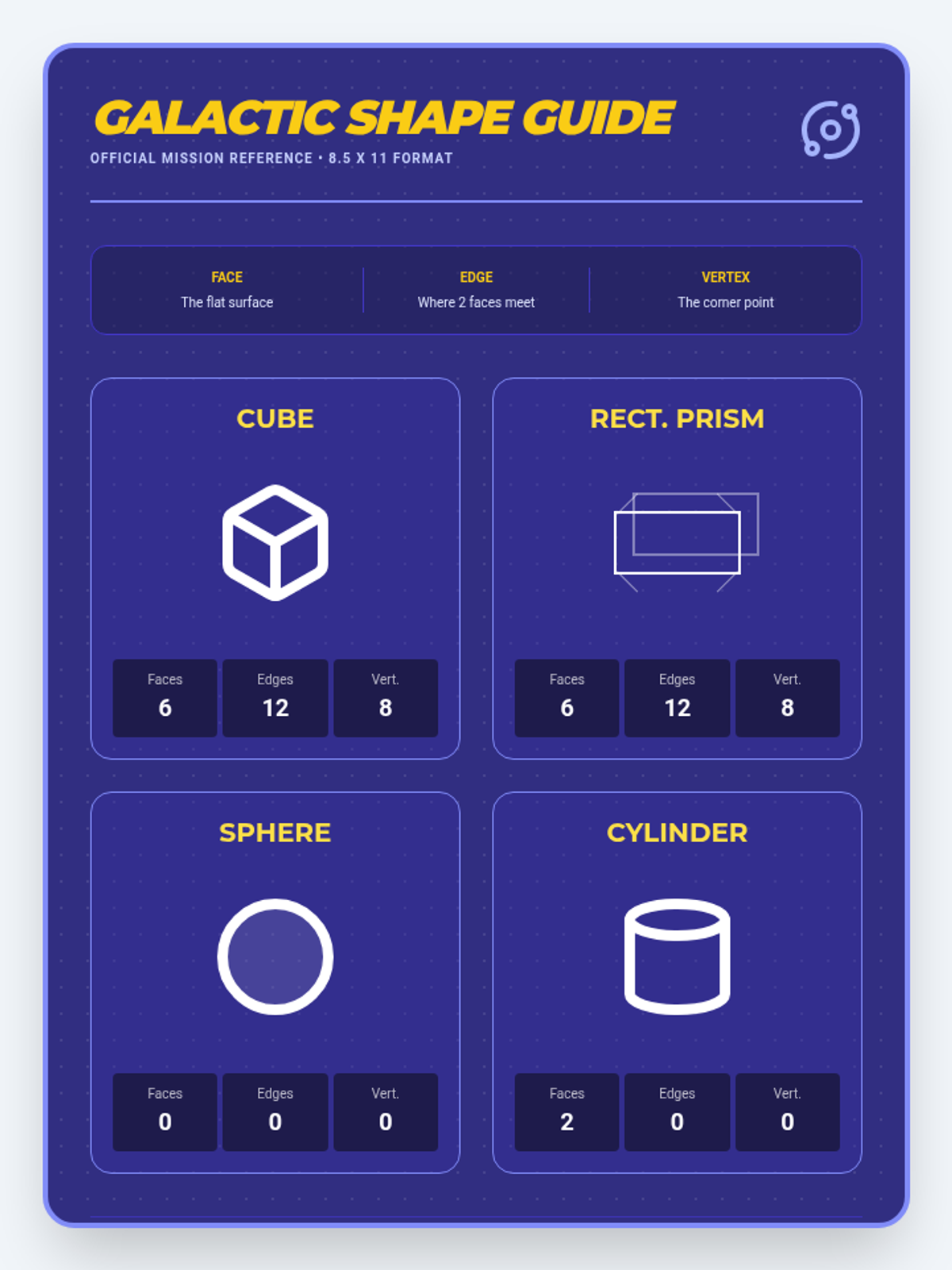
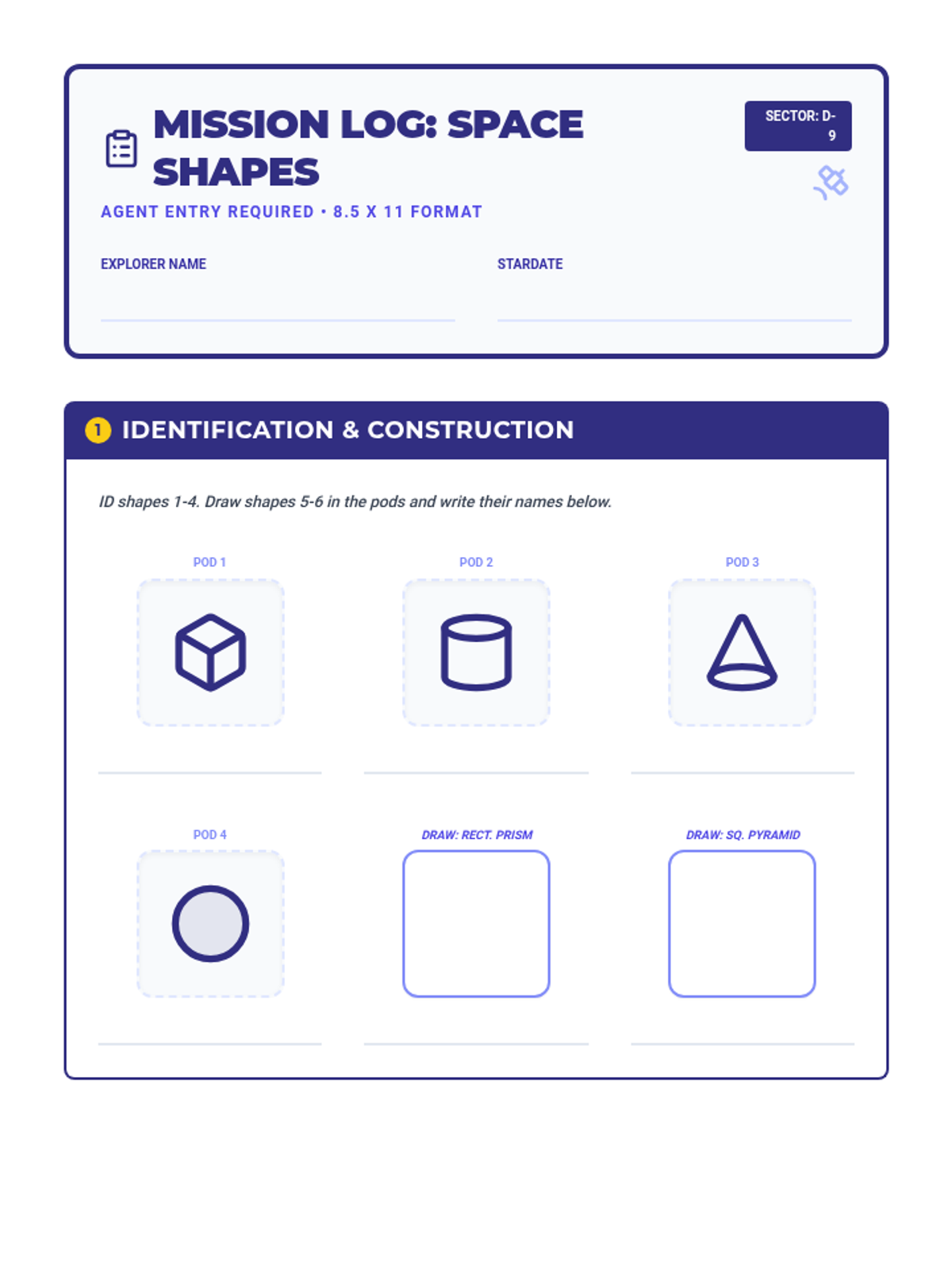
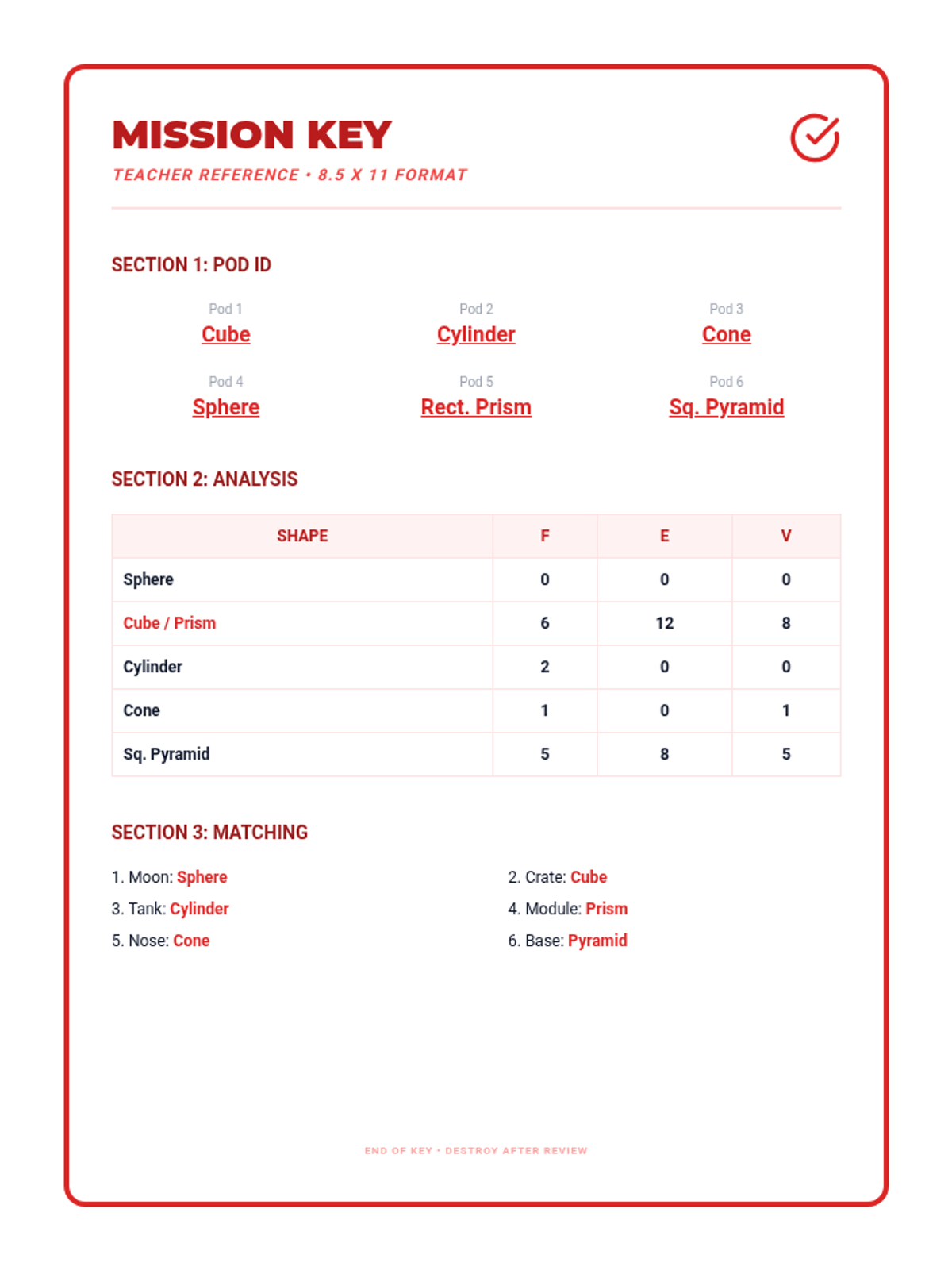
An intergalactic adventure where students identify 2D and 3D shapes and their characteristics using 'Captain Invincible and the Space Shapes'. Students will explore faces, edges, and vertices through a story-based mission.
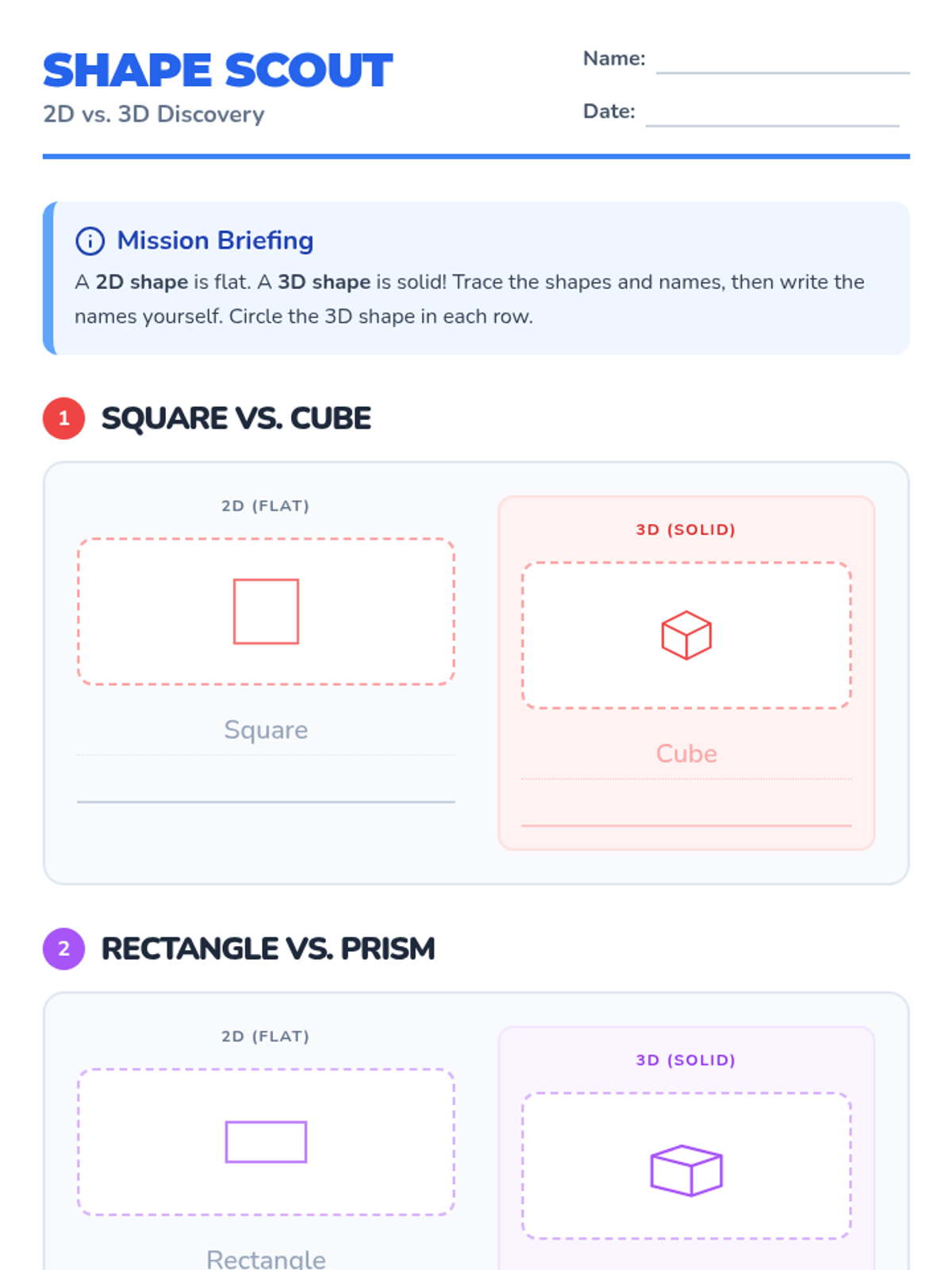
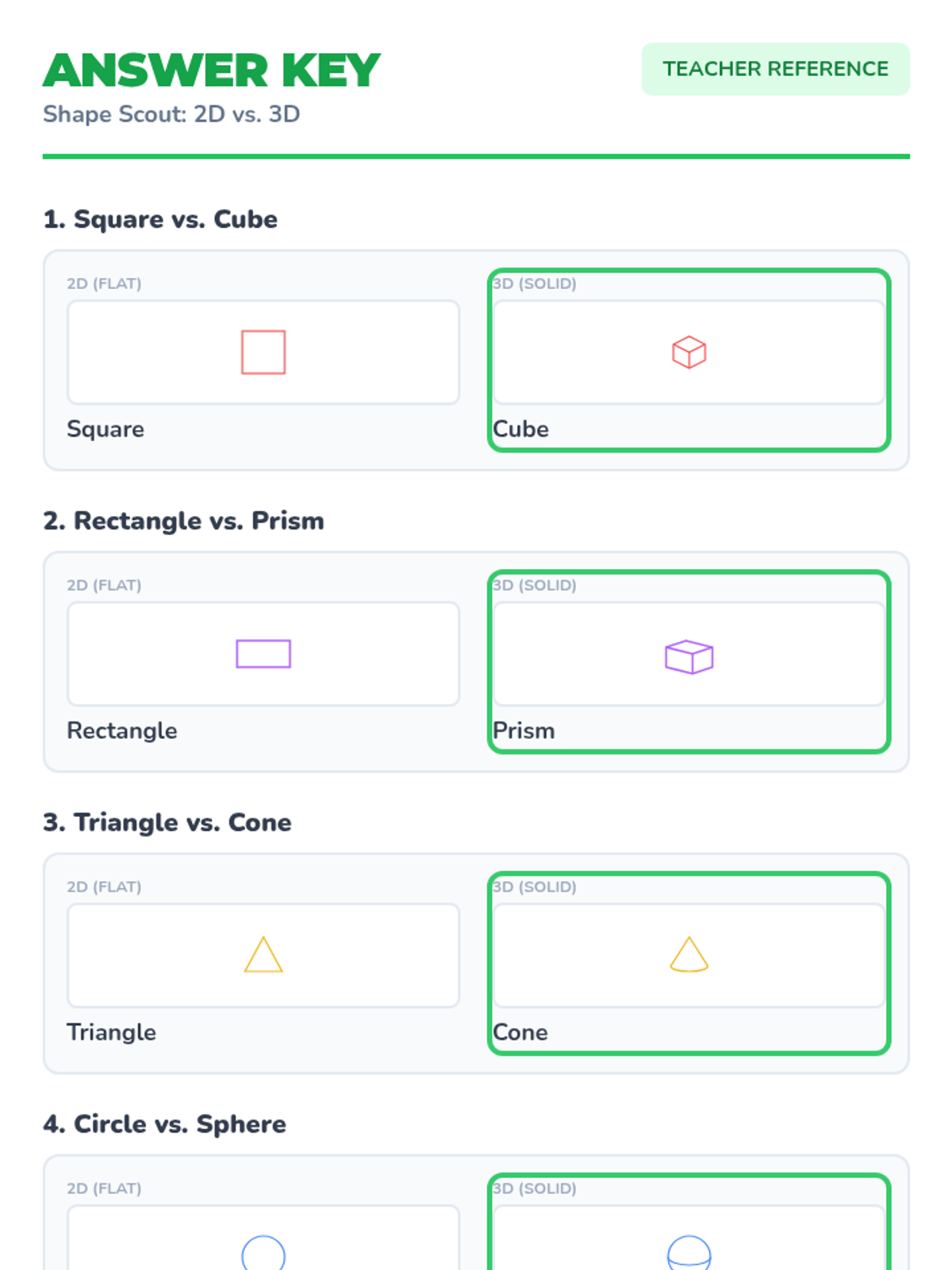
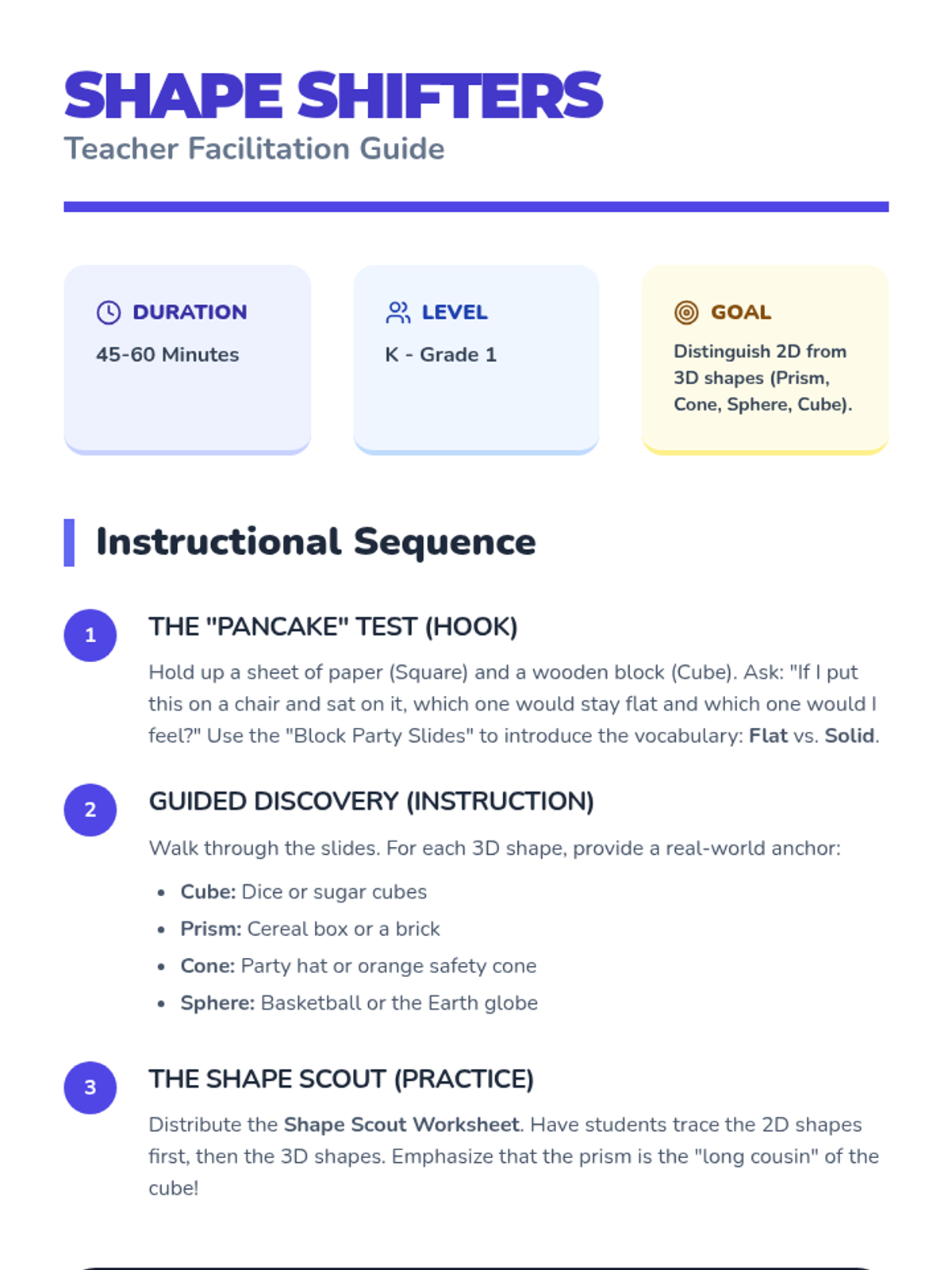
A foundational lesson exploring the differences between flat 2D shapes and solid 3D shapes, focusing on squares, cubes, triangles, cones, circles, and spheres. Students will learn to identify, trace, and name these geometric figures.
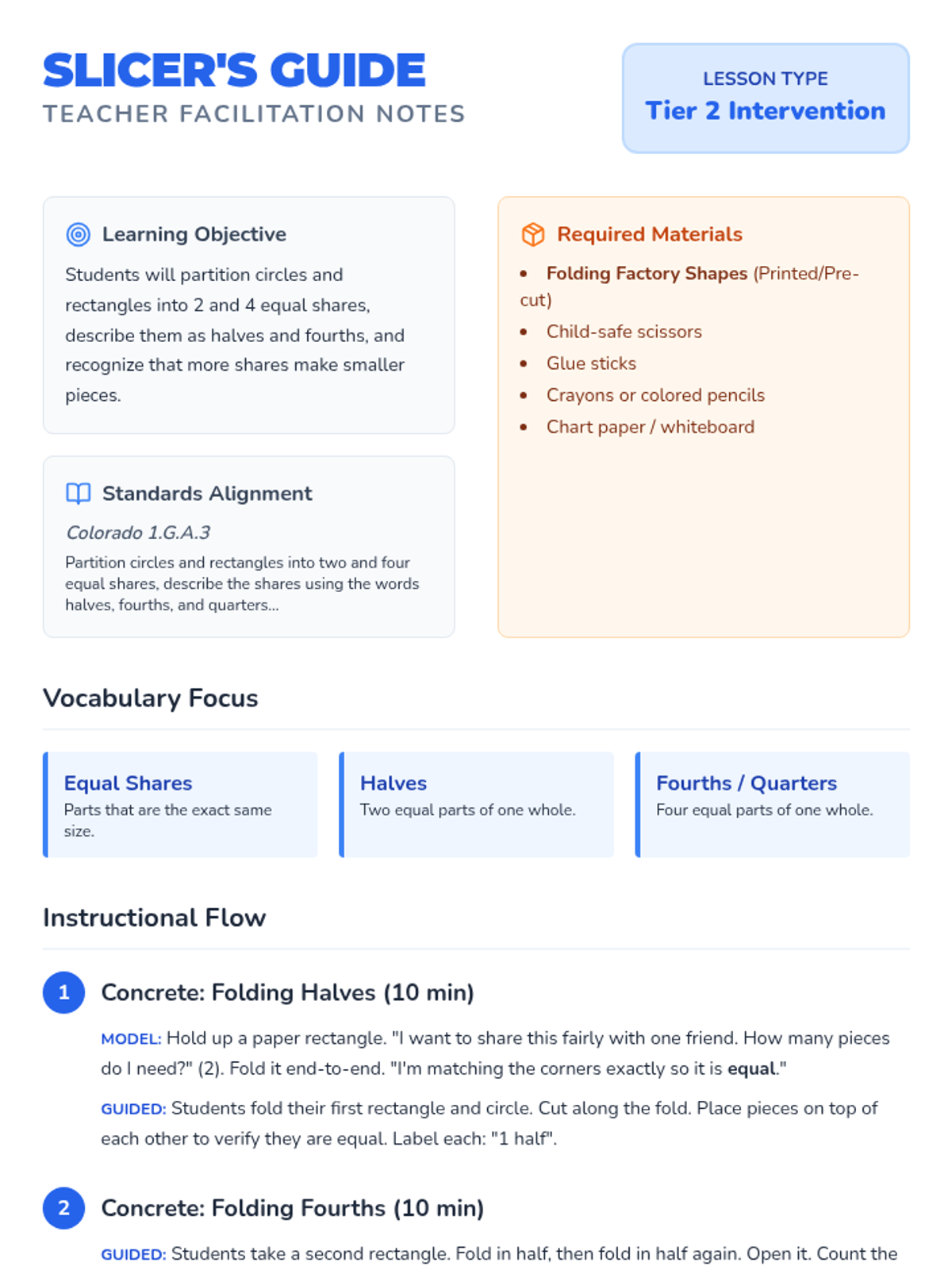
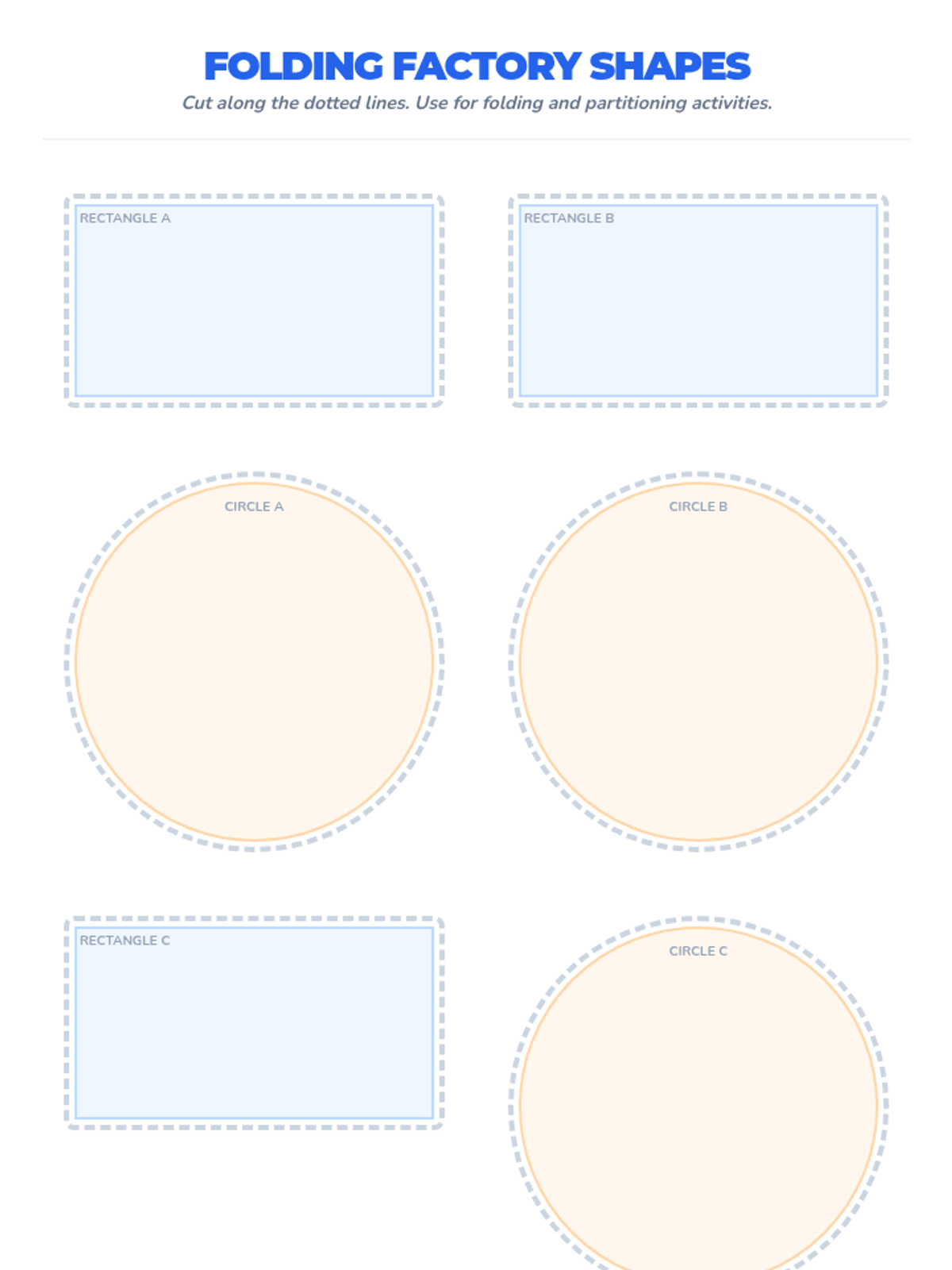
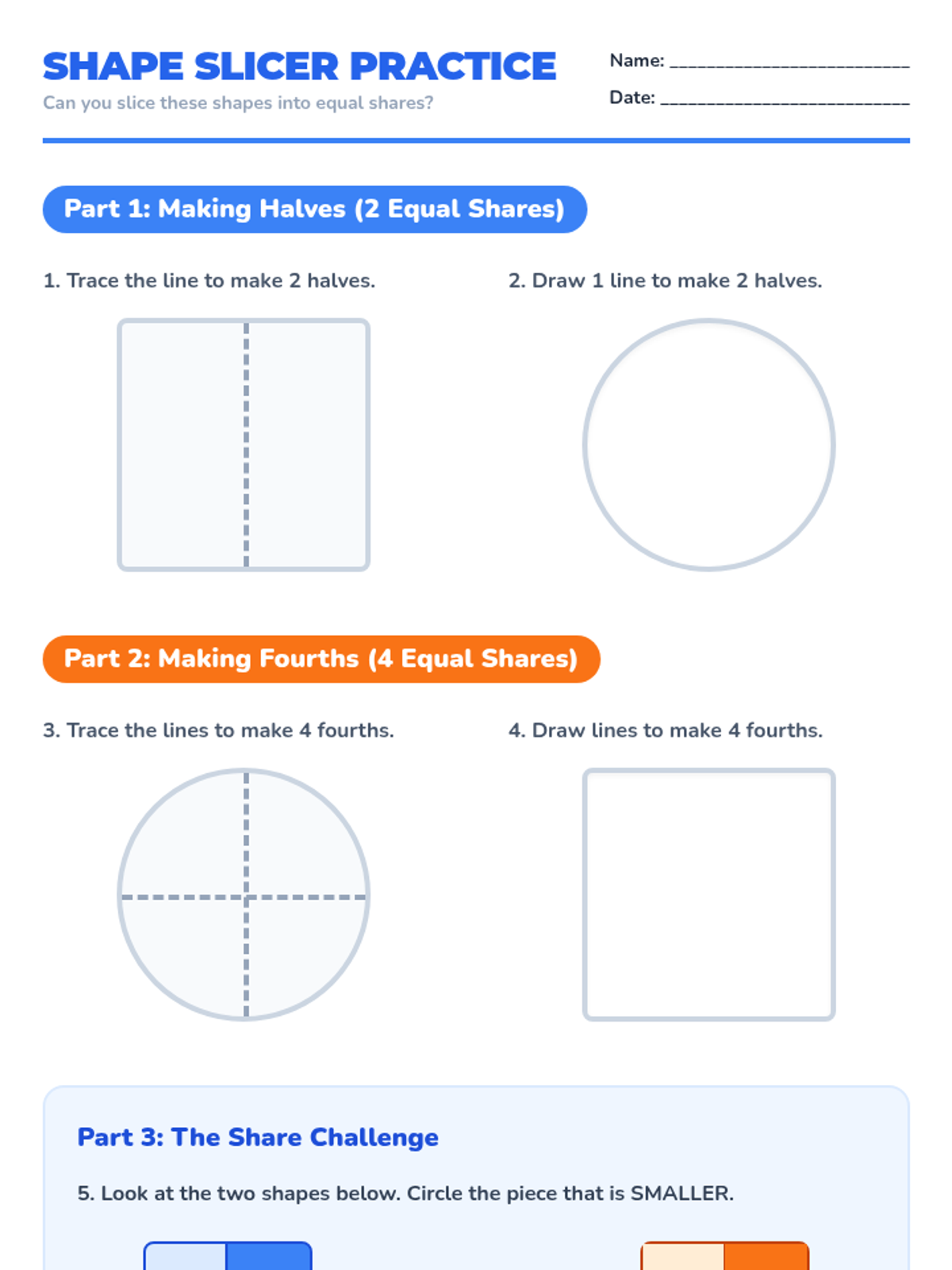
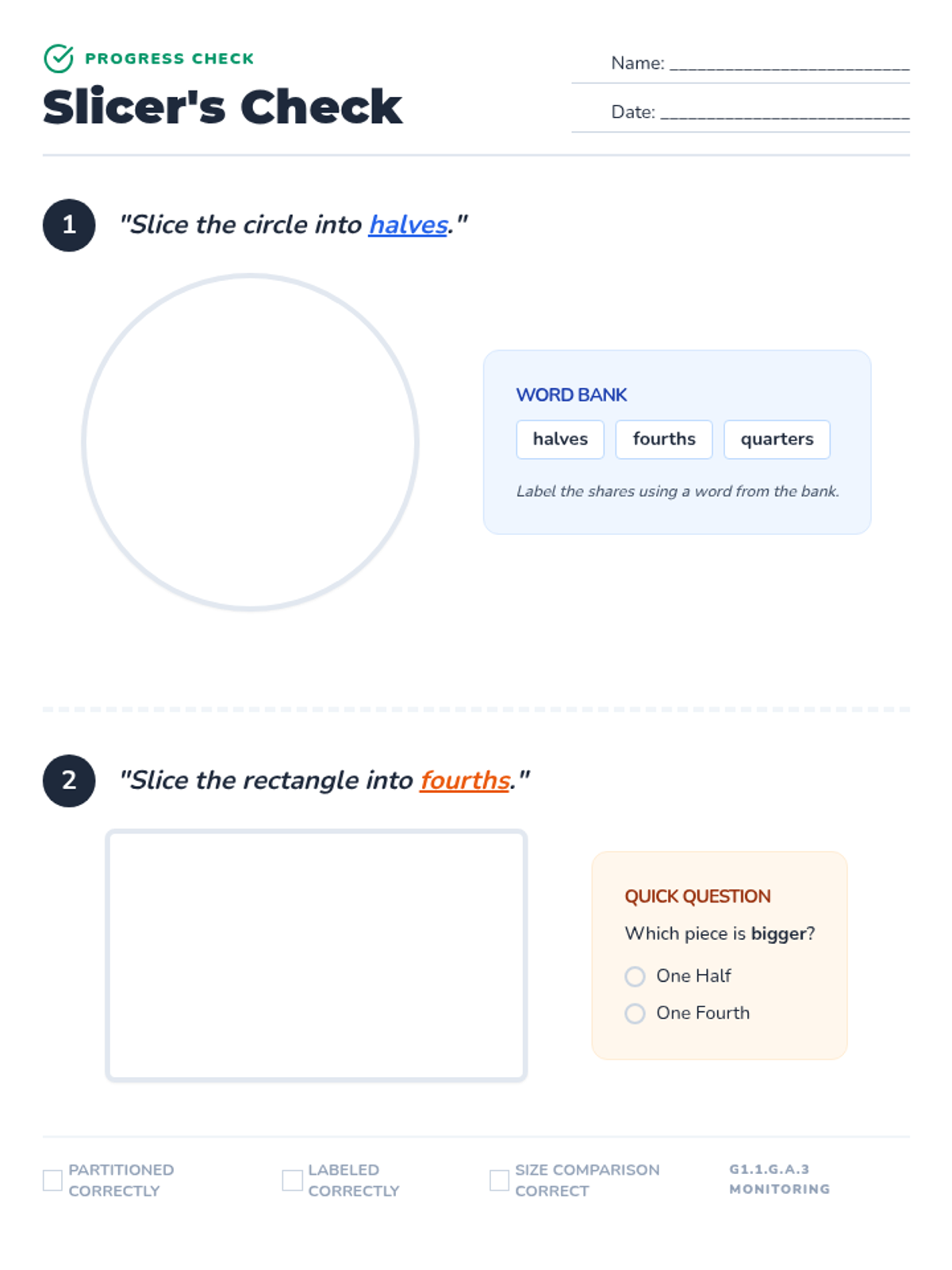
A targeted small-group lesson where students fold, cut, and compare equal shares of circles and rectangles to understand halves, fourths, and relative share sizes.
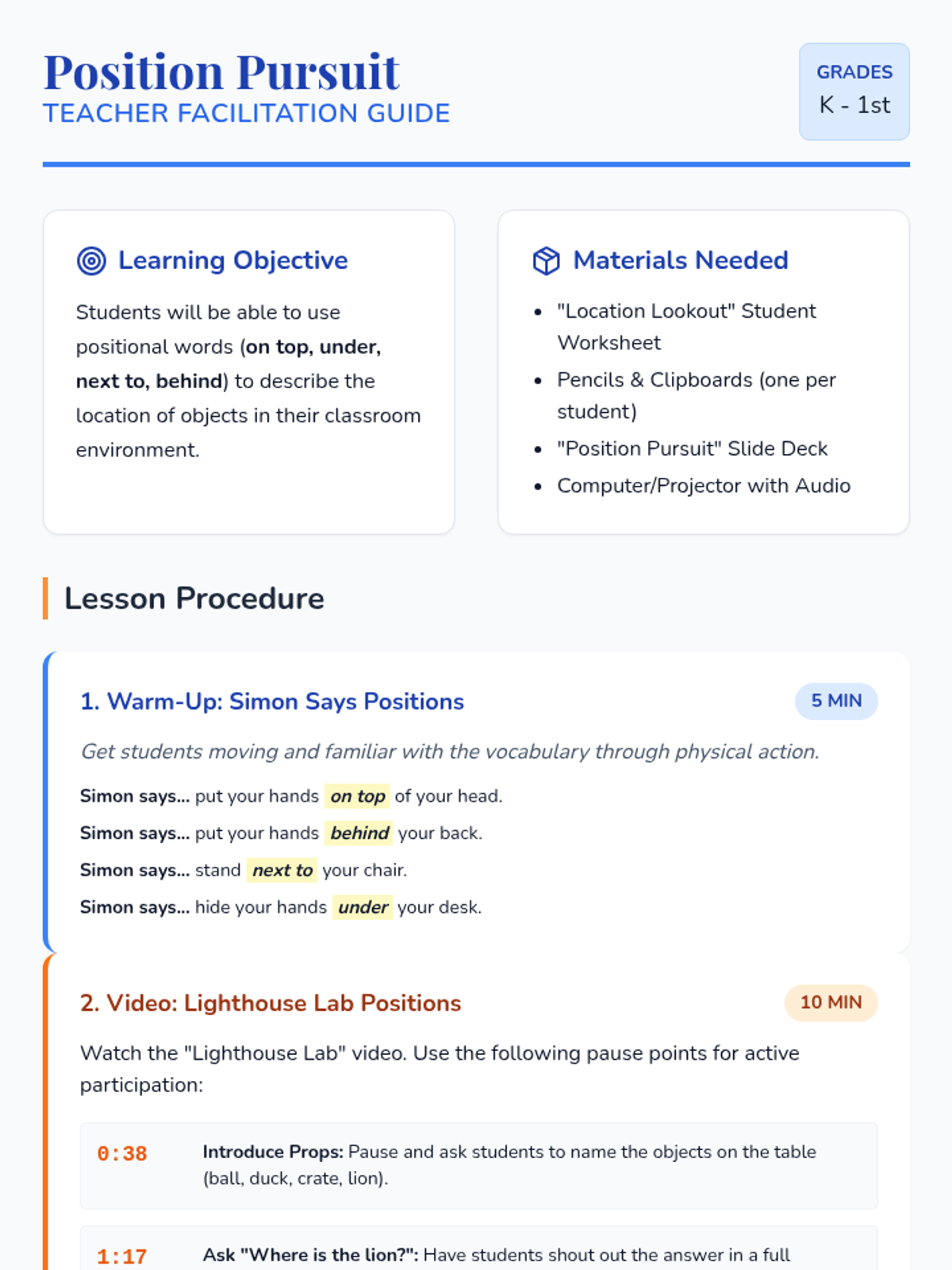
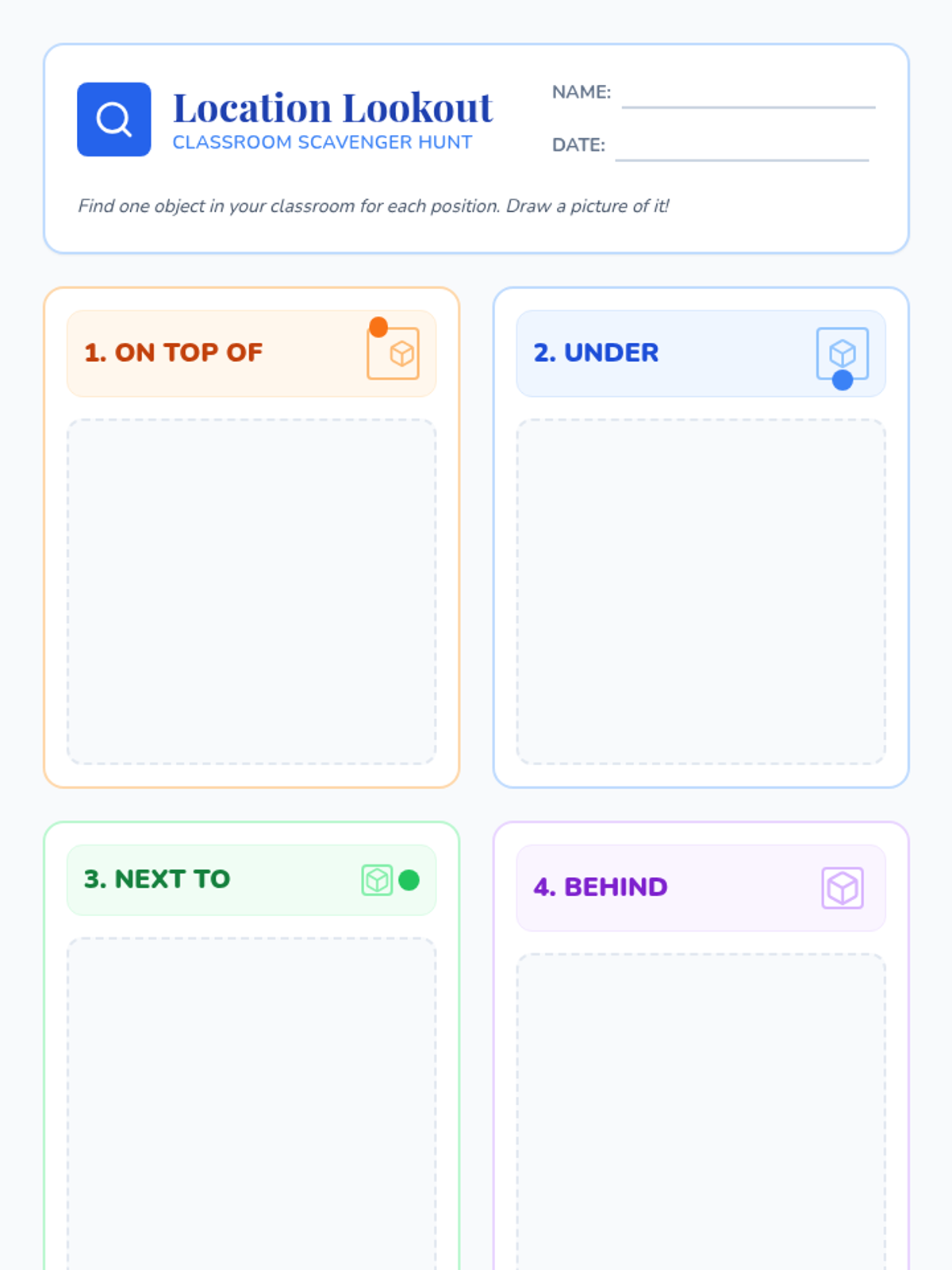
A foundational lesson for K-1 students to learn and practice positional words through a classroom scavenger hunt and interactive video viewing. Students will identify and describe locations using terms like 'on top', 'under', 'next to', and 'behind'.
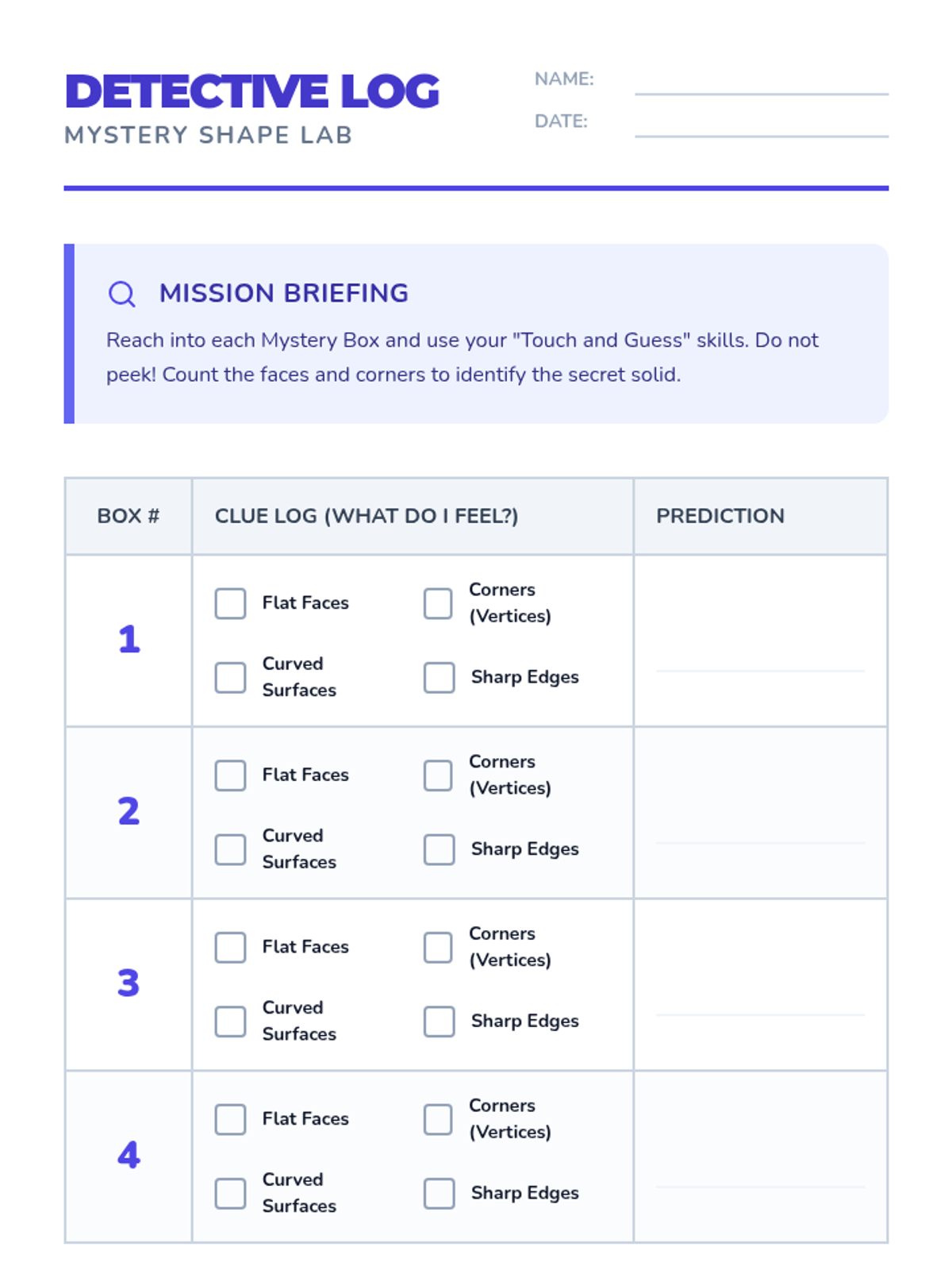
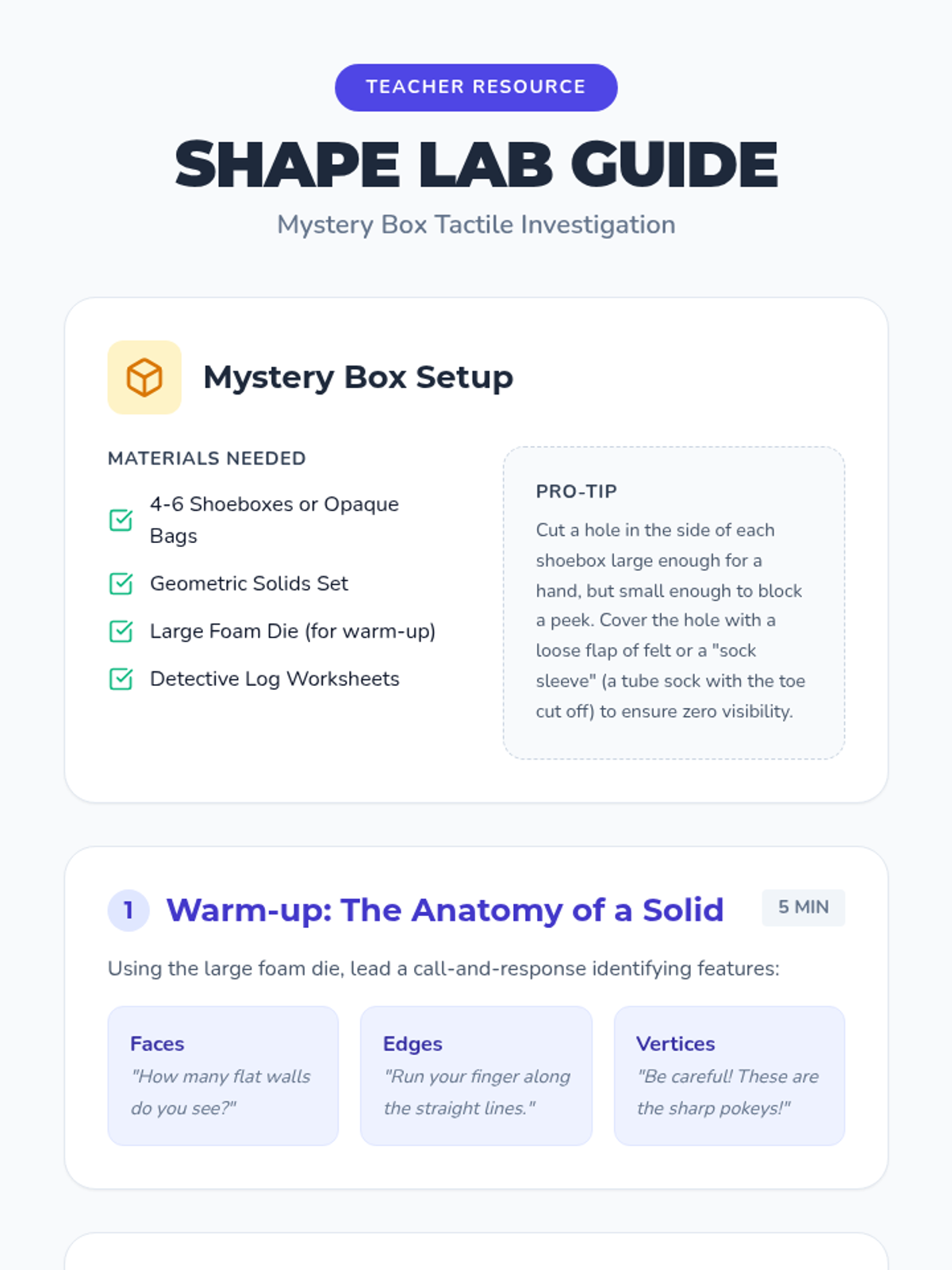
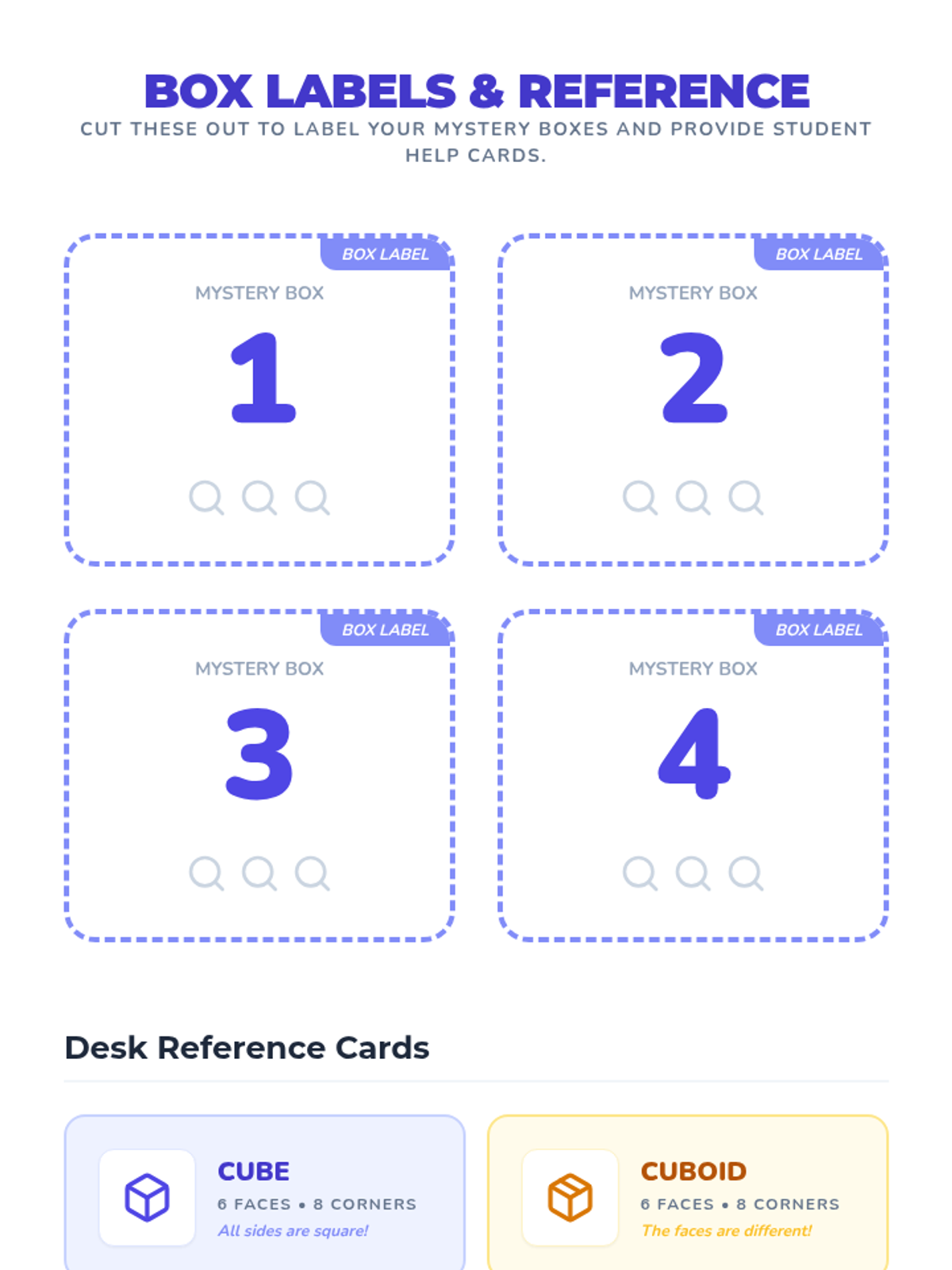
A tactile geometry lesson where students identify 3D shapes by touch, using key vocabulary like faces, vertices (corners), and edges. Includes a video-based attribute review and a hands-on Mystery Box investigation.
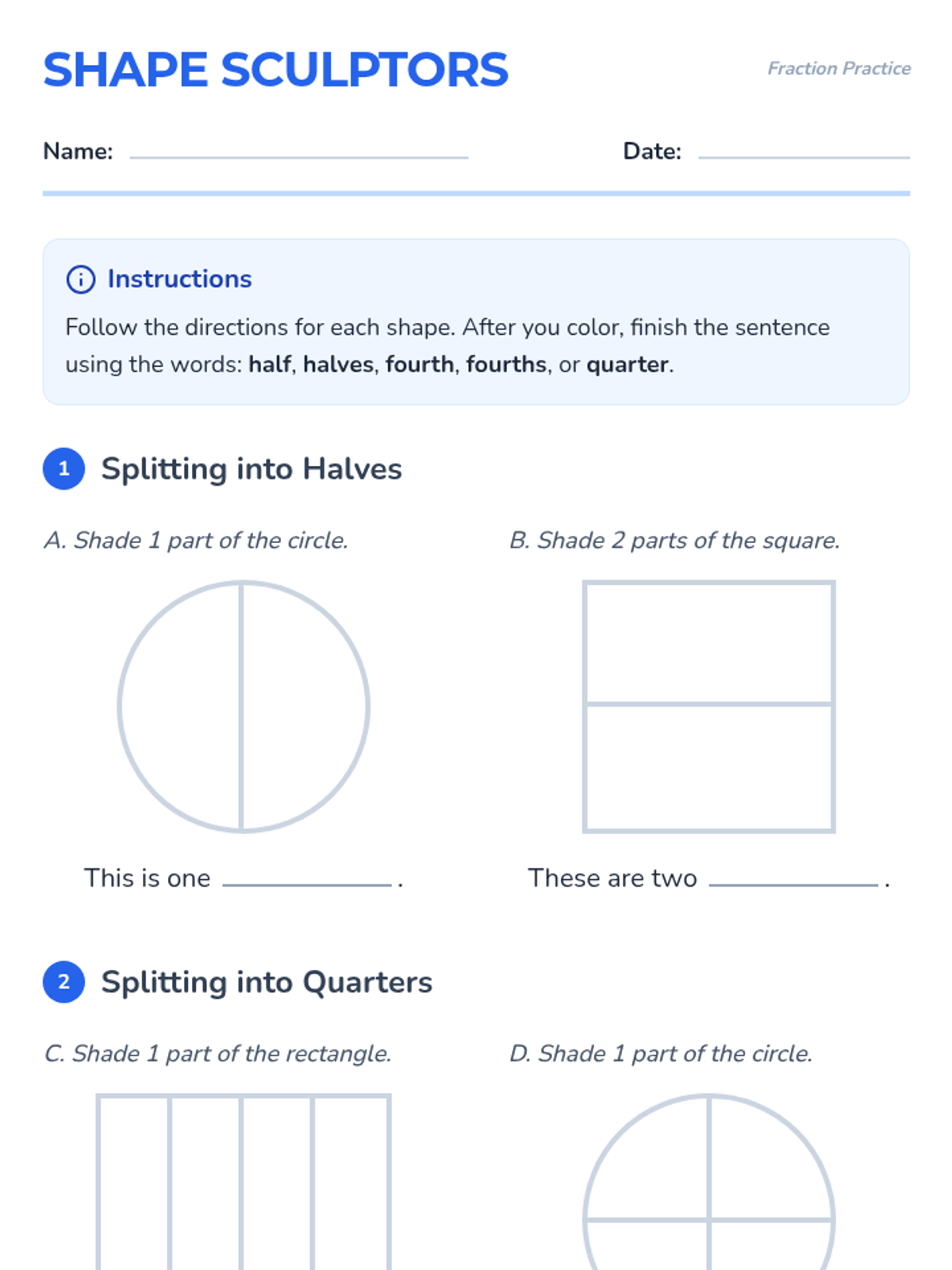
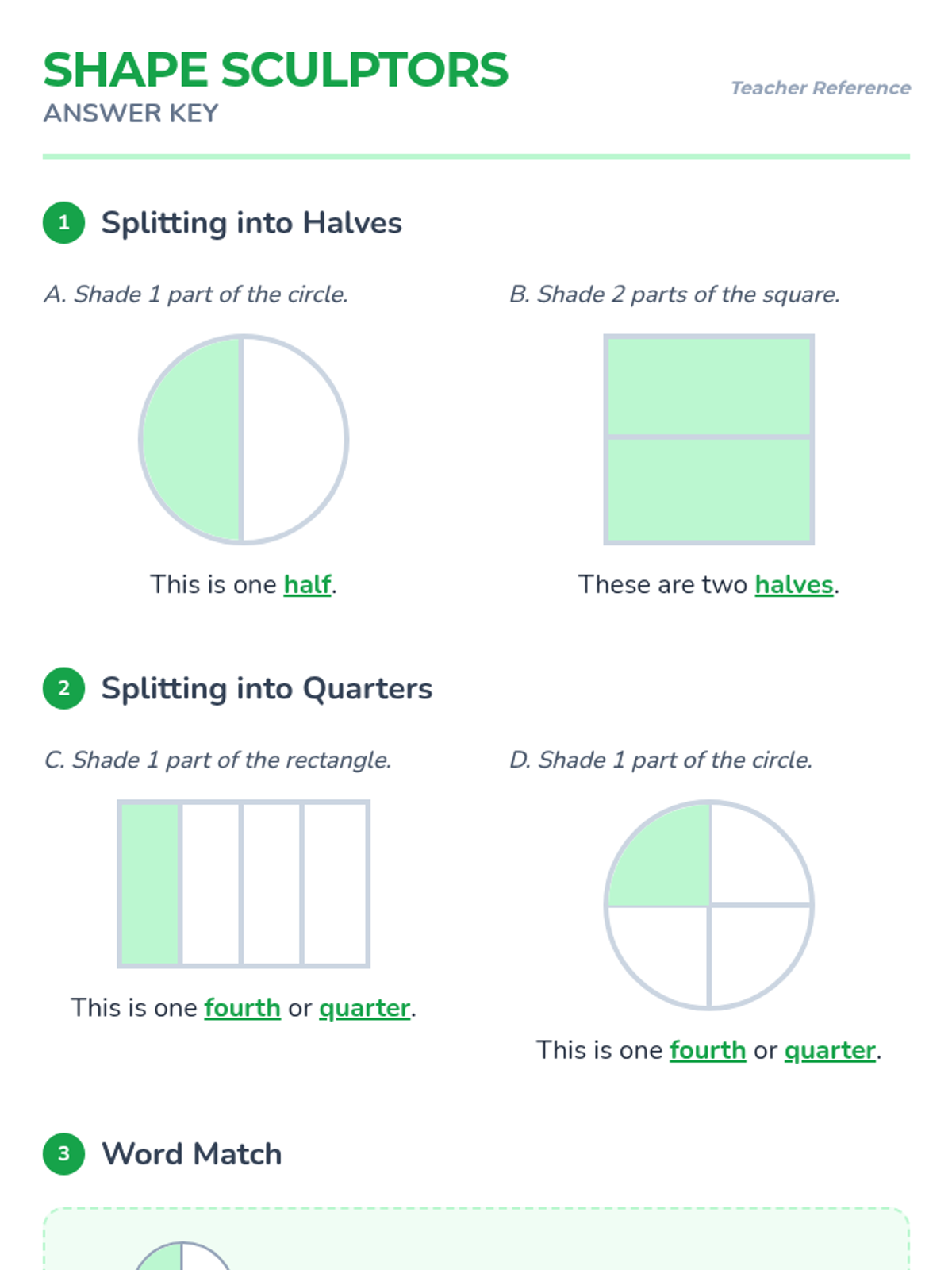
A first-grade lesson focused on partitioning shapes and identifying equal parts as halves and fourths (quarters). Students will practice shading partitioned shapes and completing descriptive sentences using fraction vocabulary.