Geometric classification, measurement of area and volume, and the study of transformations and rigid motions. Builds toward complex proofs, trigonometry for general triangles, and the algebraic representation of conic sections.
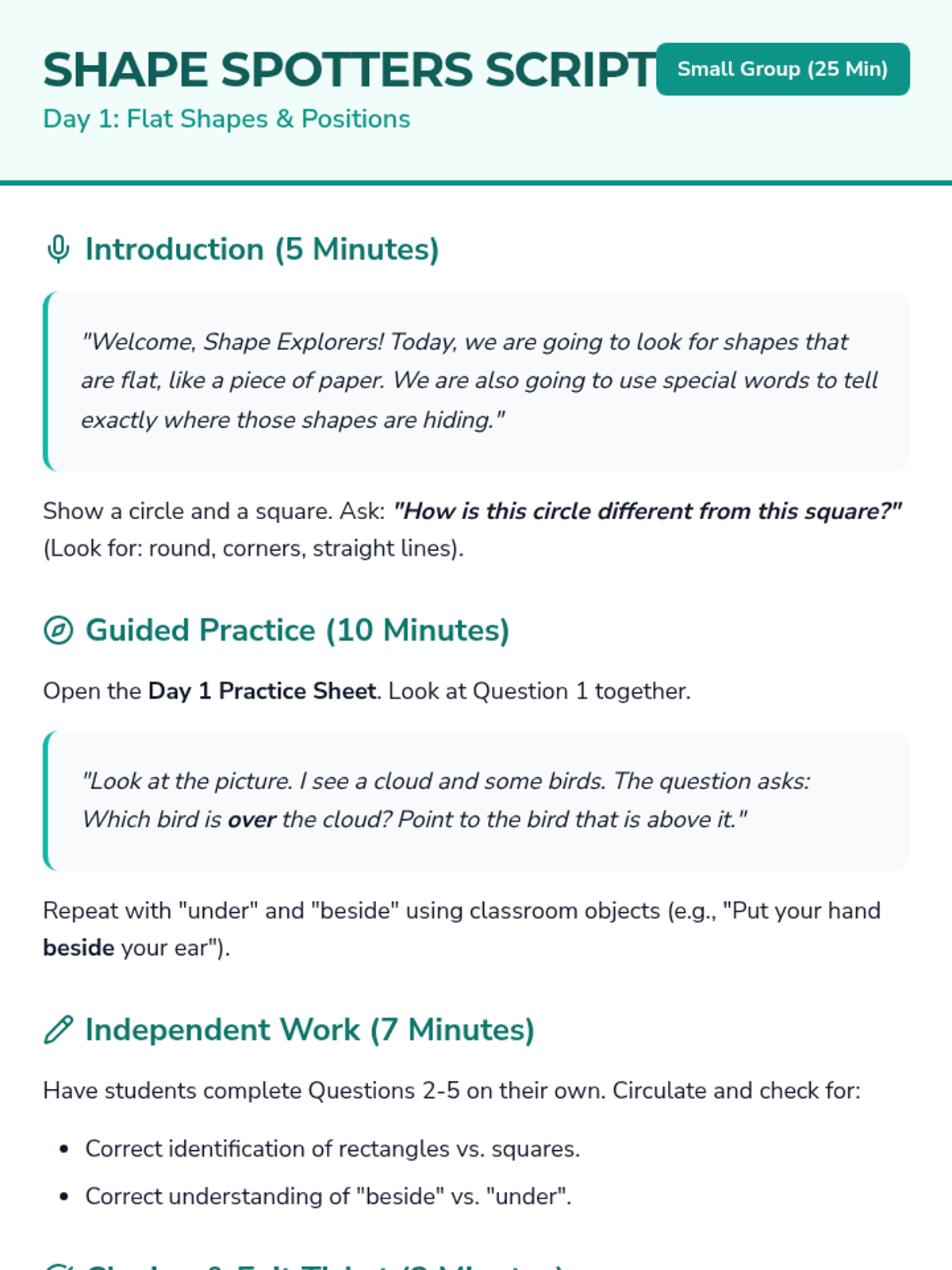
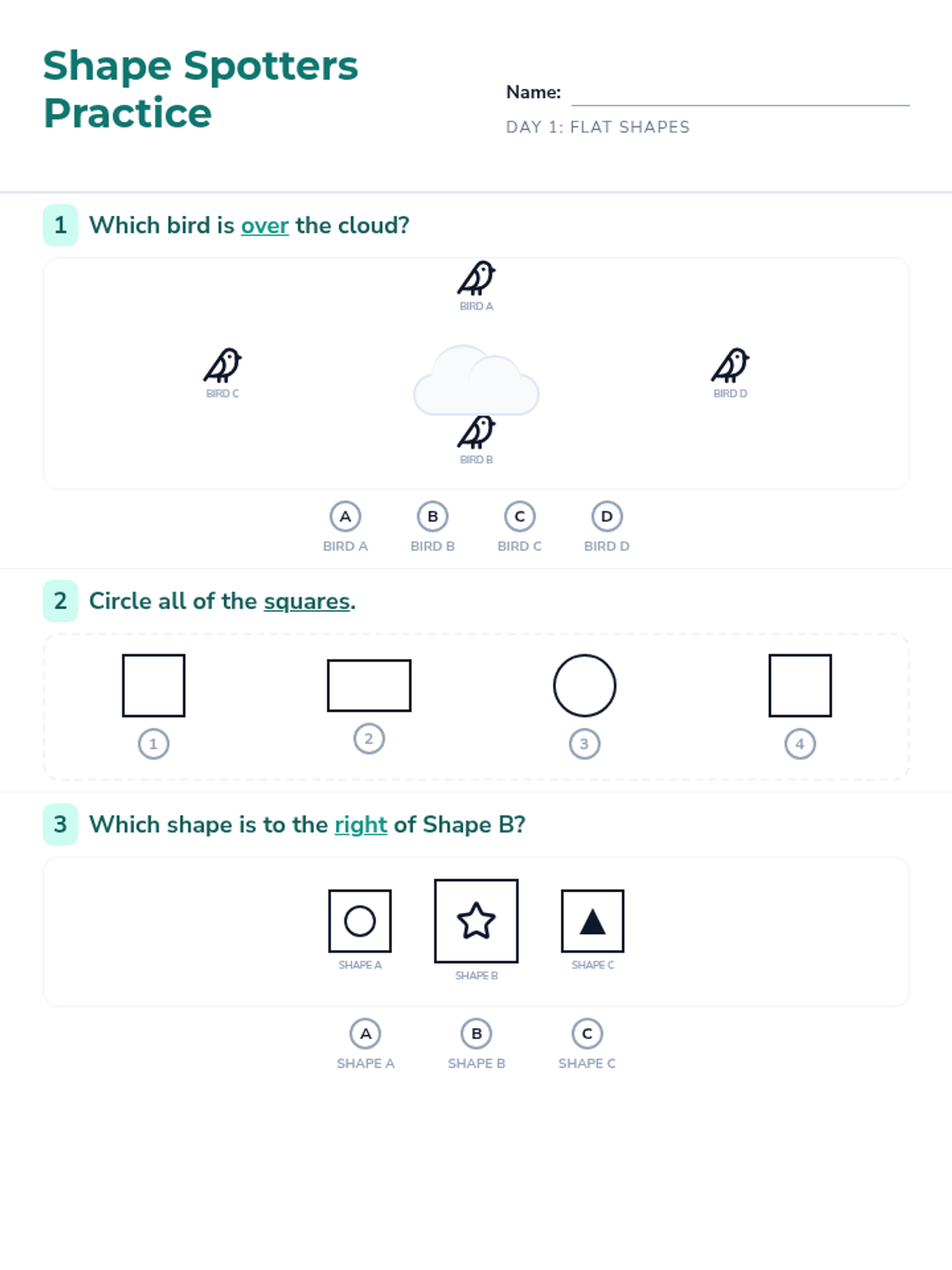
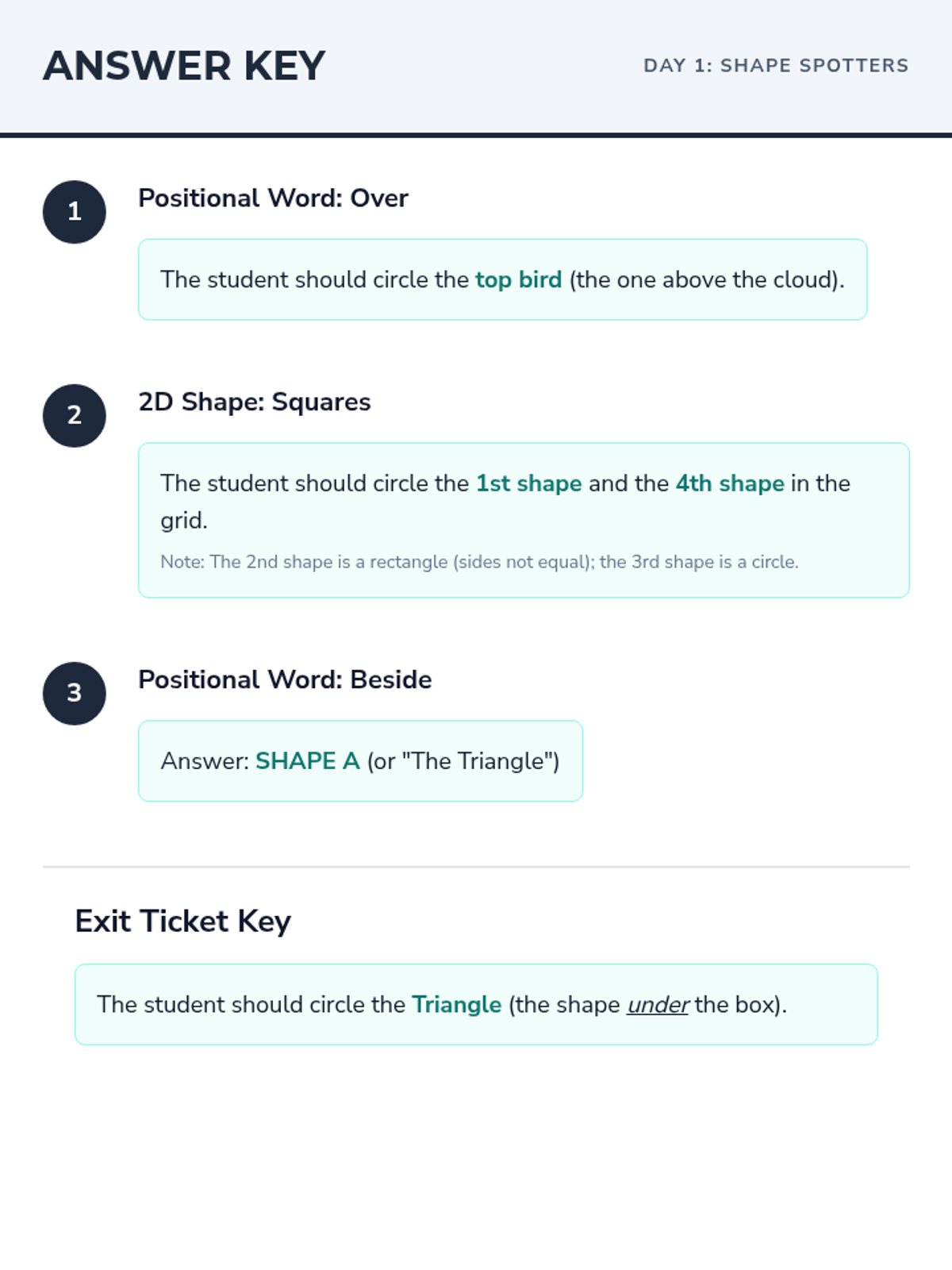
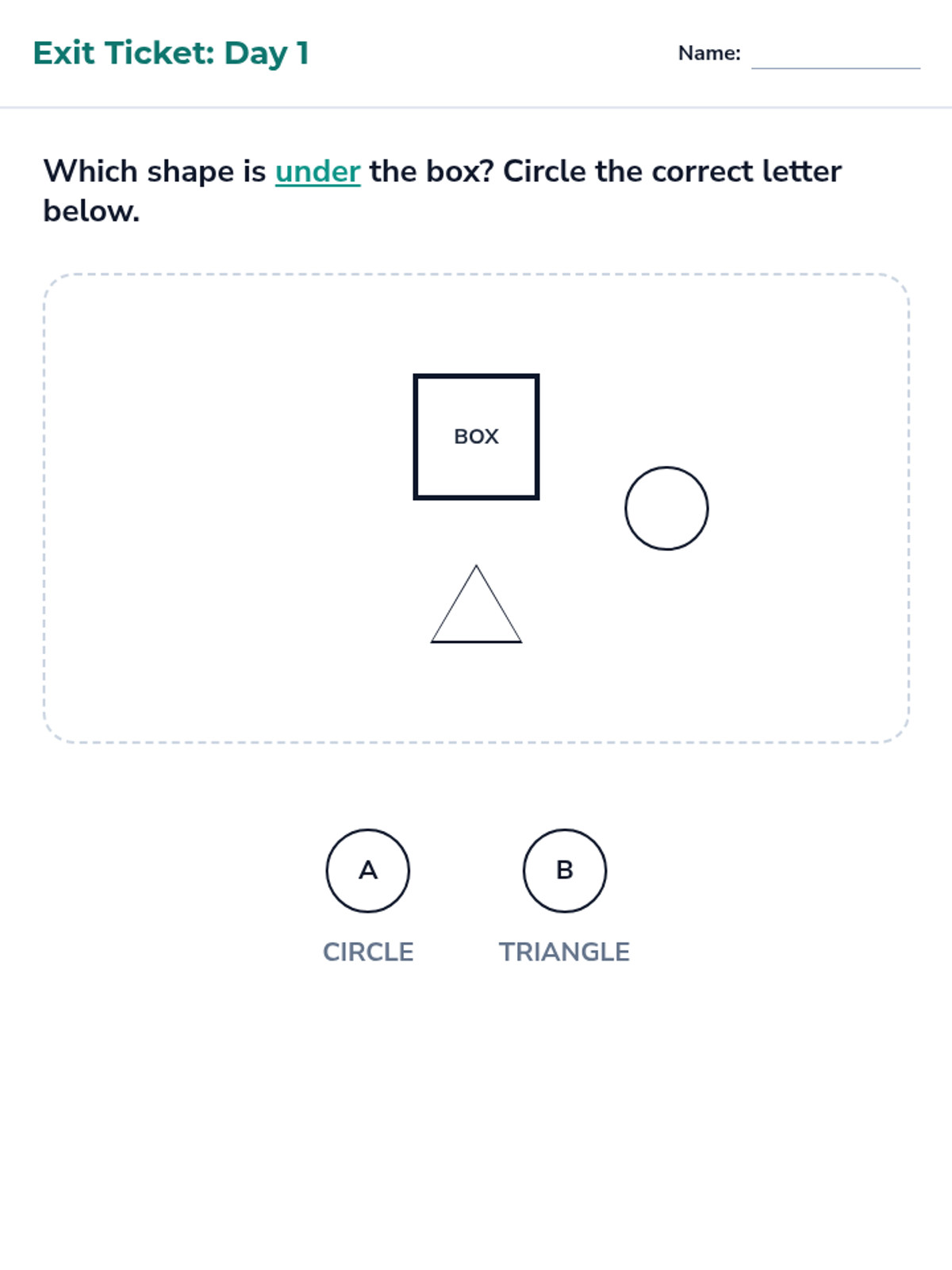
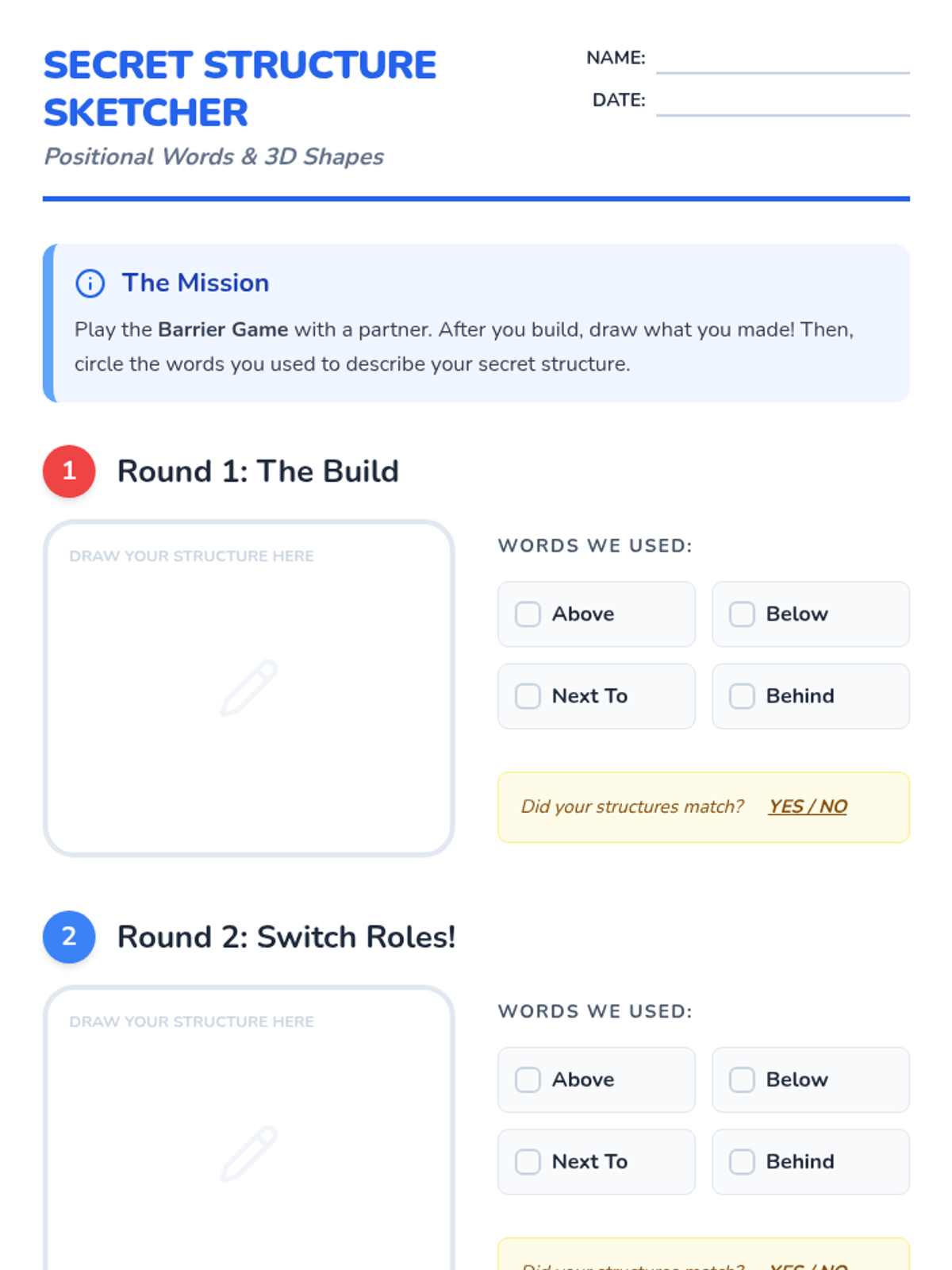
A 3-day small group intervention sequence focused on NWEA RIT 120-130 geometry and measurement standards, including 2D/3D shapes, positional words, and size comparisons.
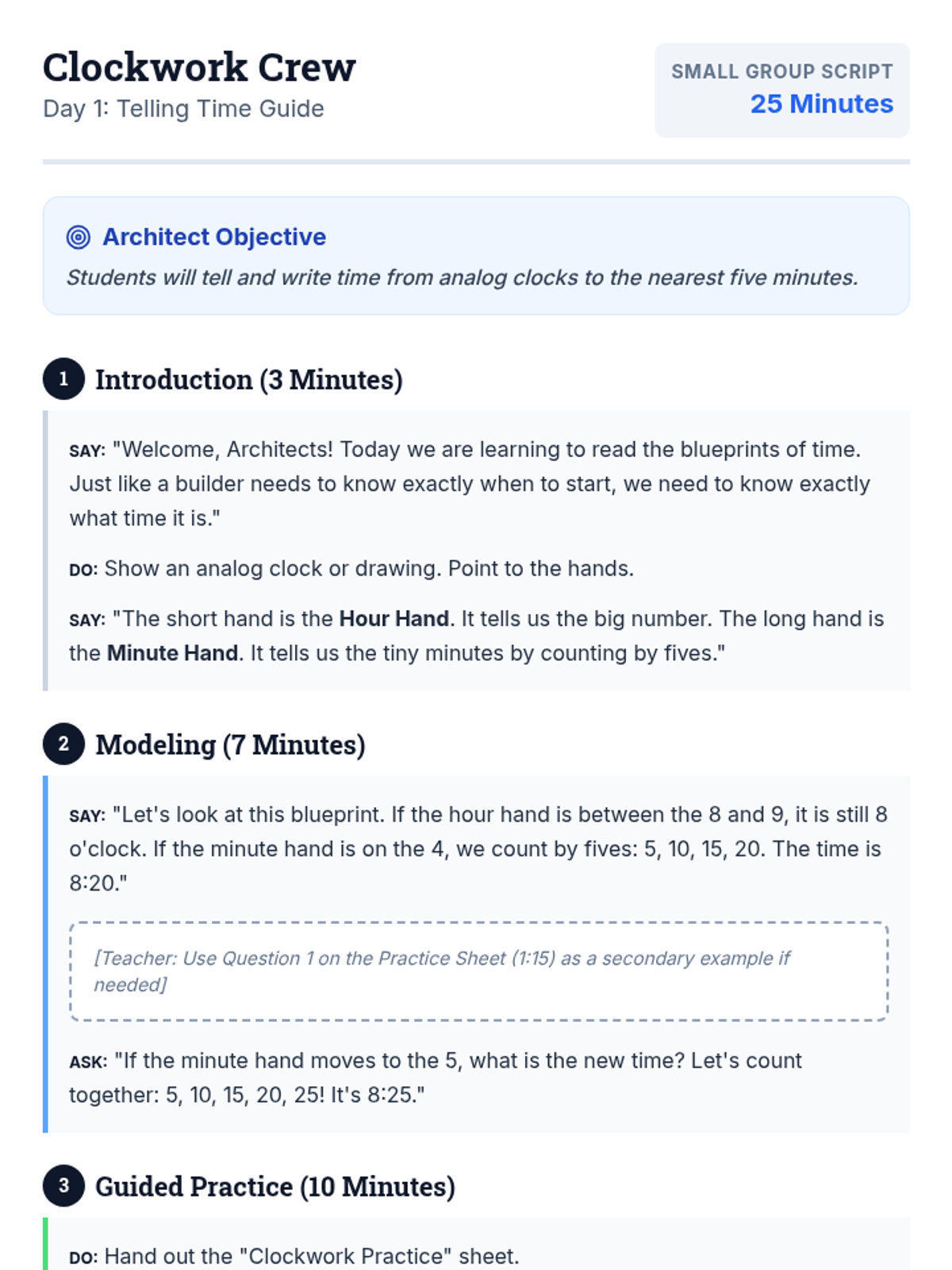
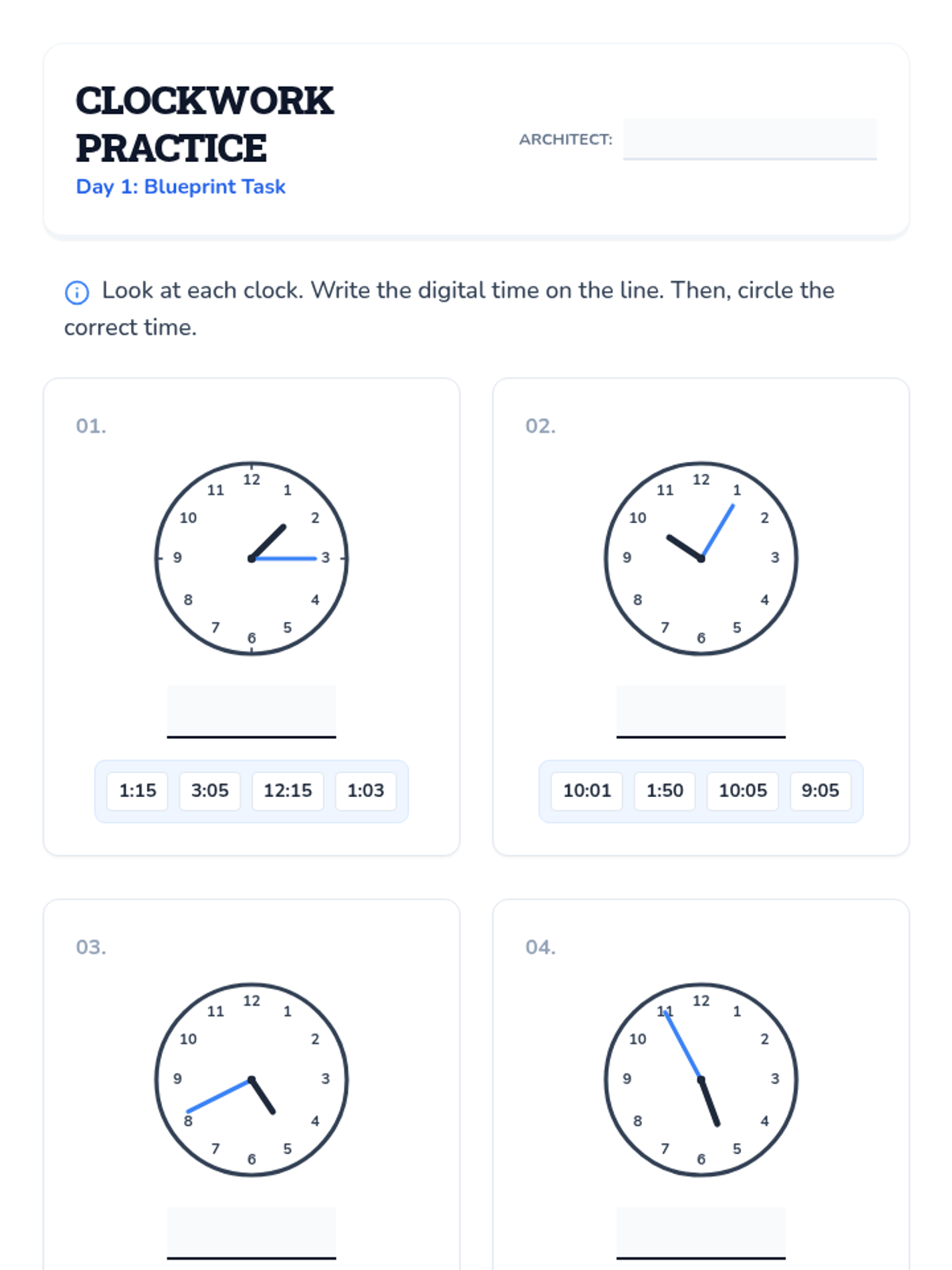
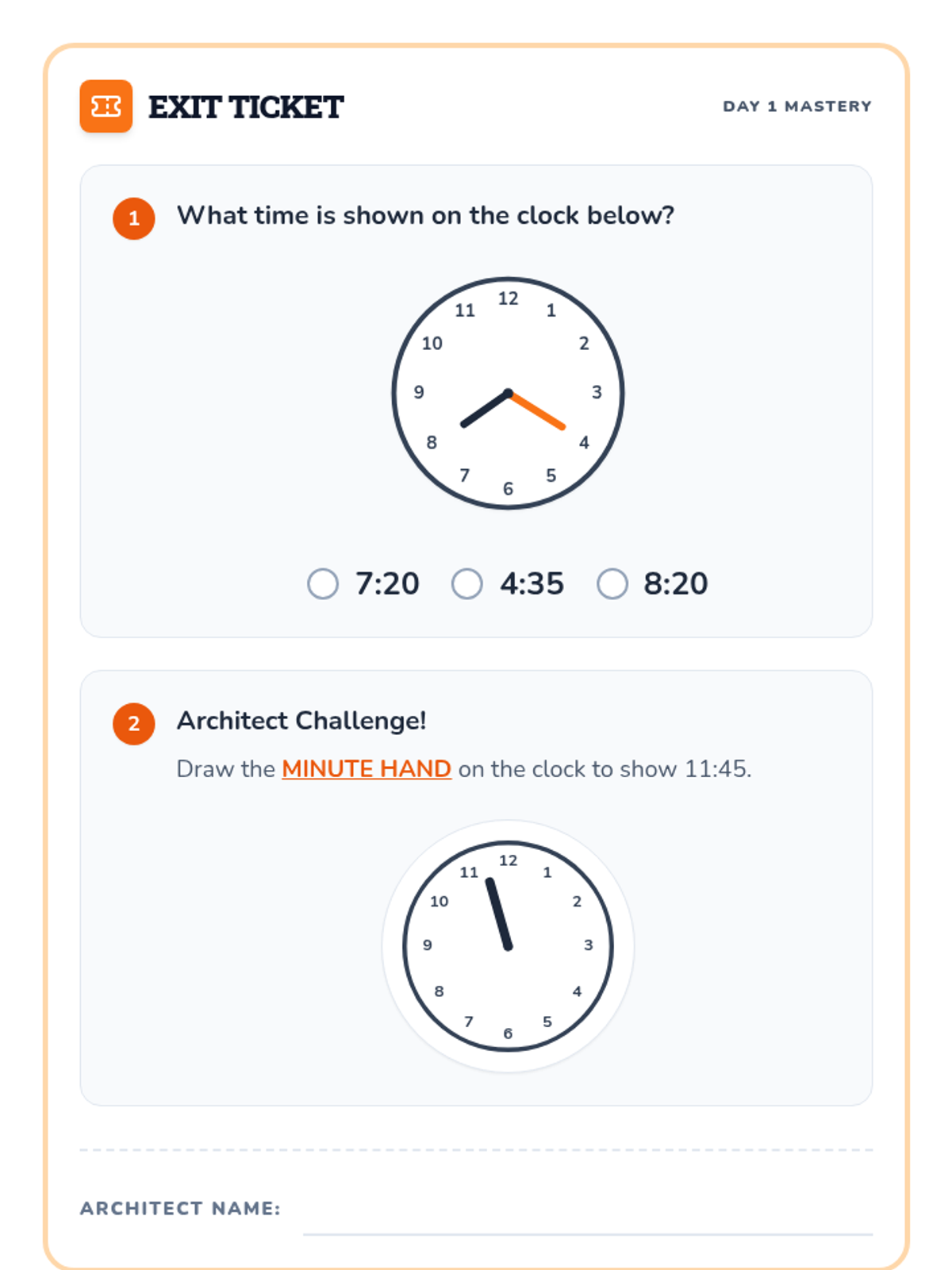
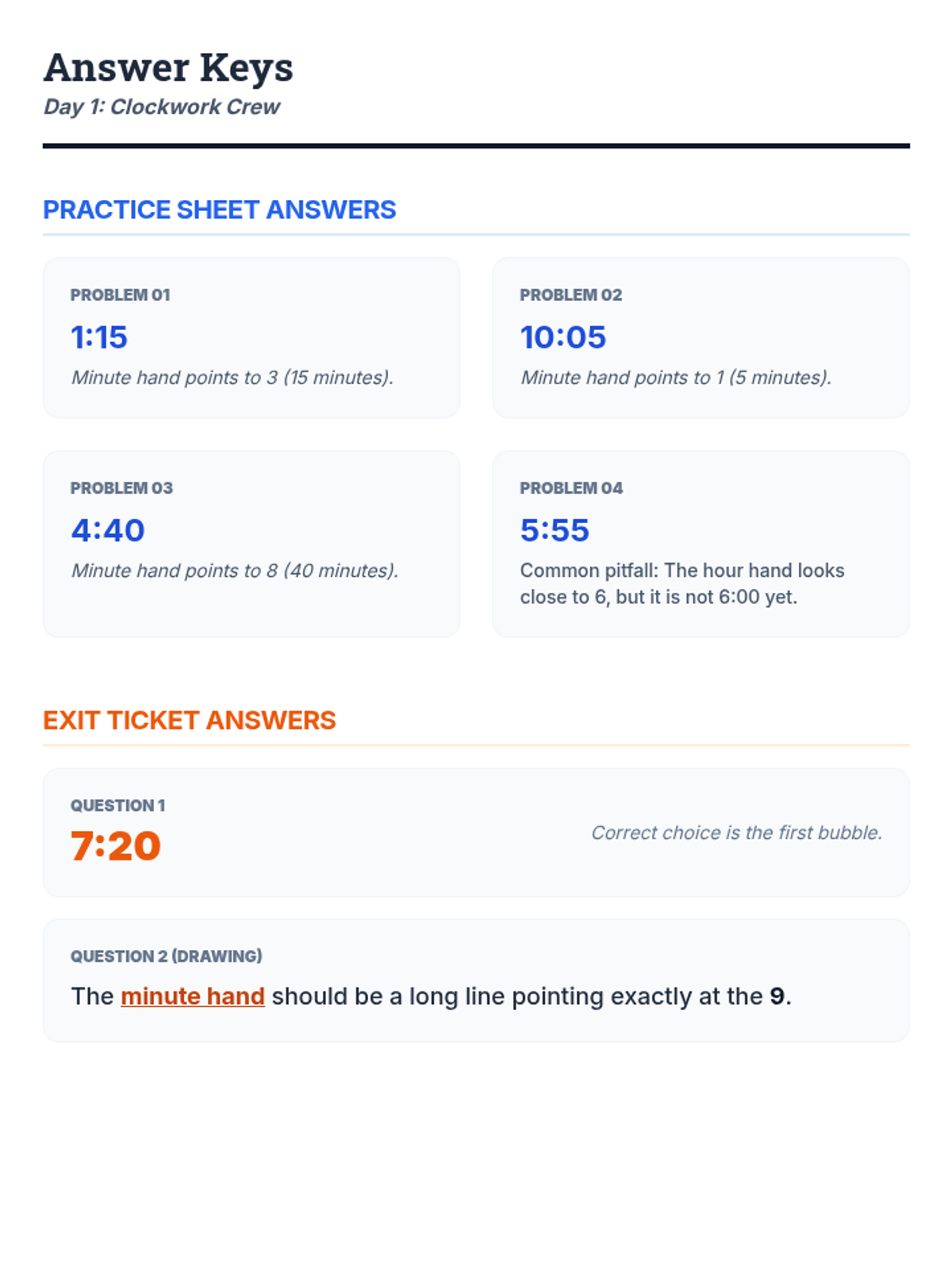
A 3-day small group sequence focused on Geometry and Measurement for NWEA RIT 171-180, covering time reading to the nearest 5 minutes and 2D/3D shape attributes.
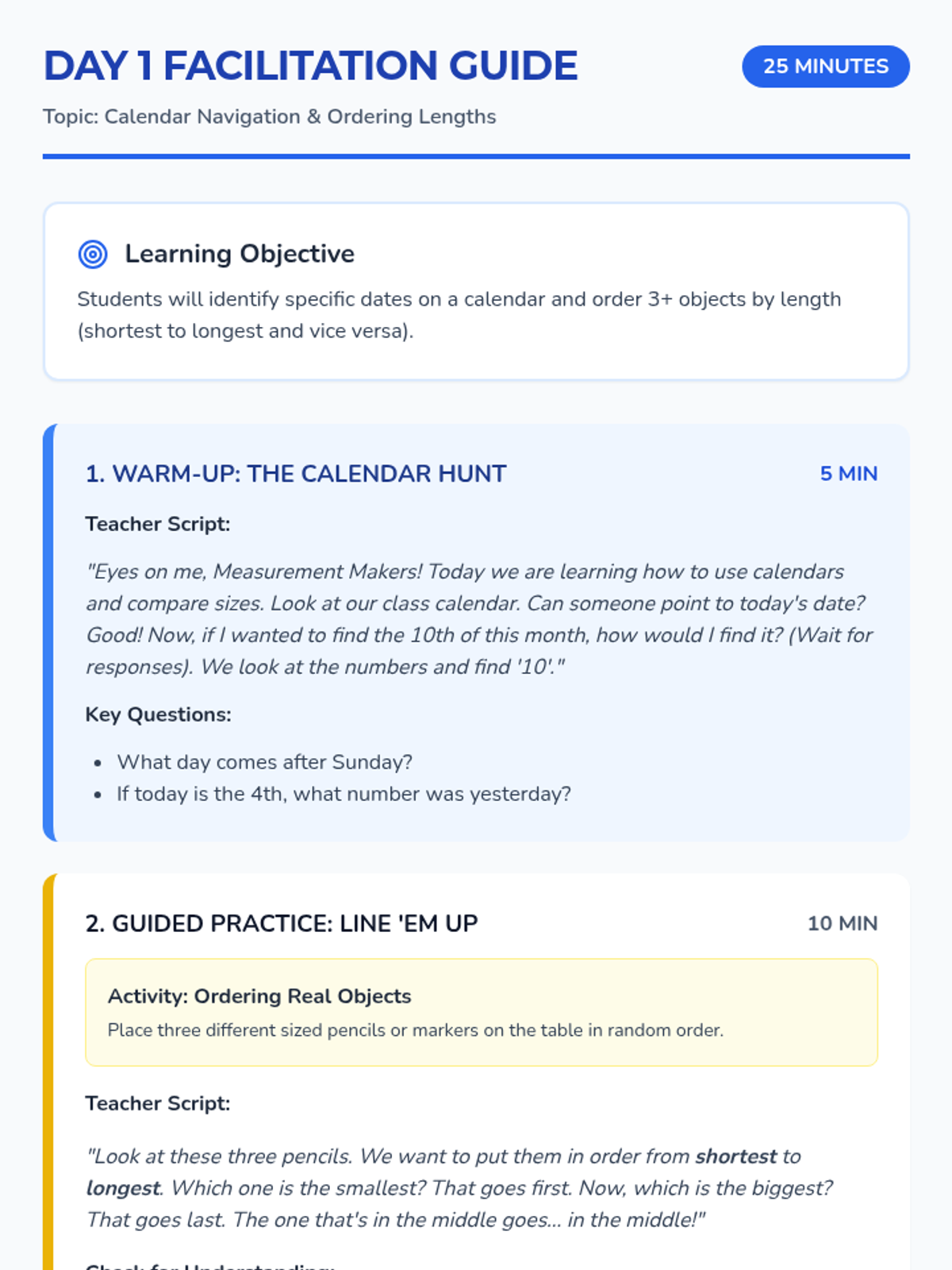
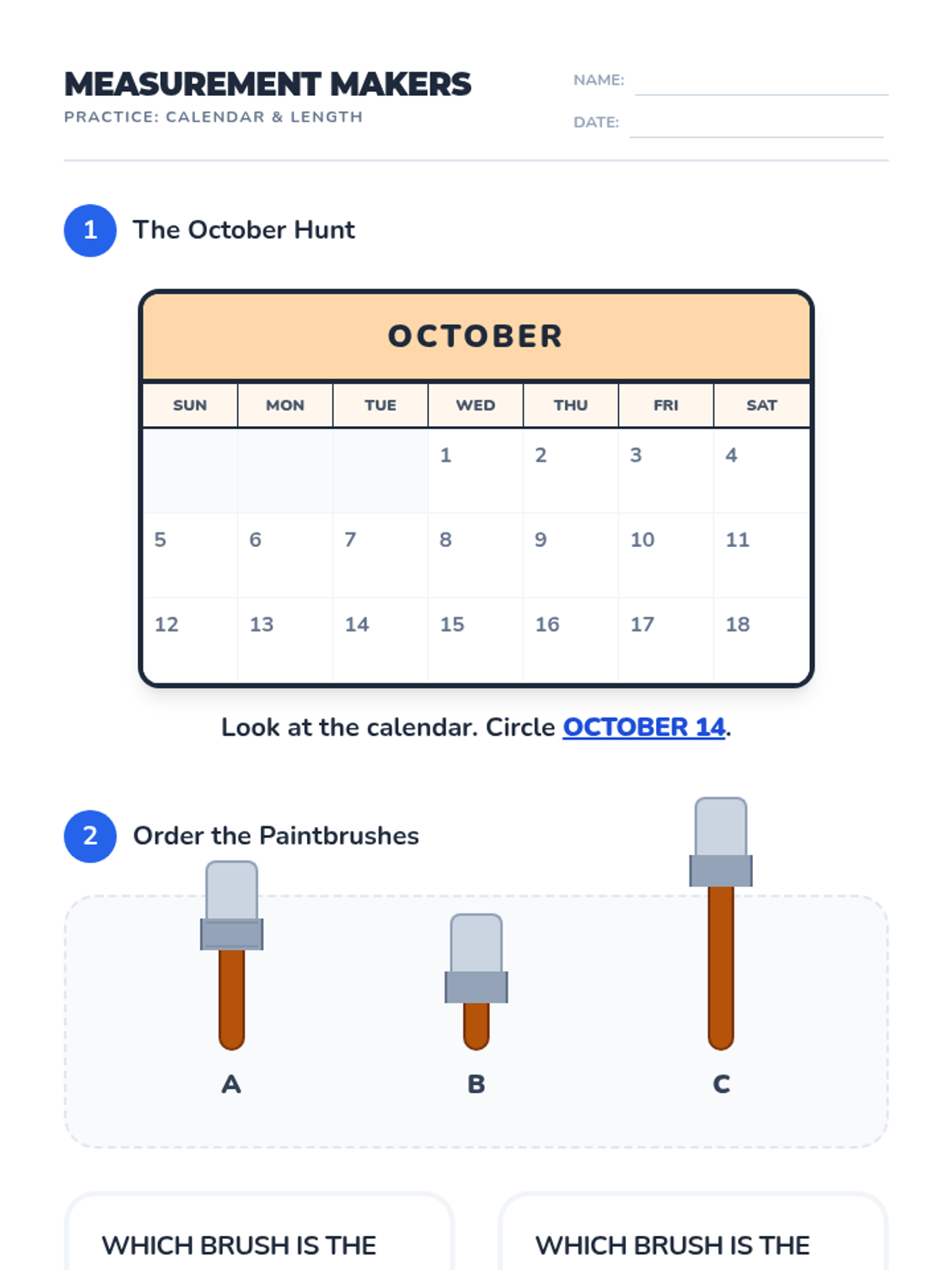
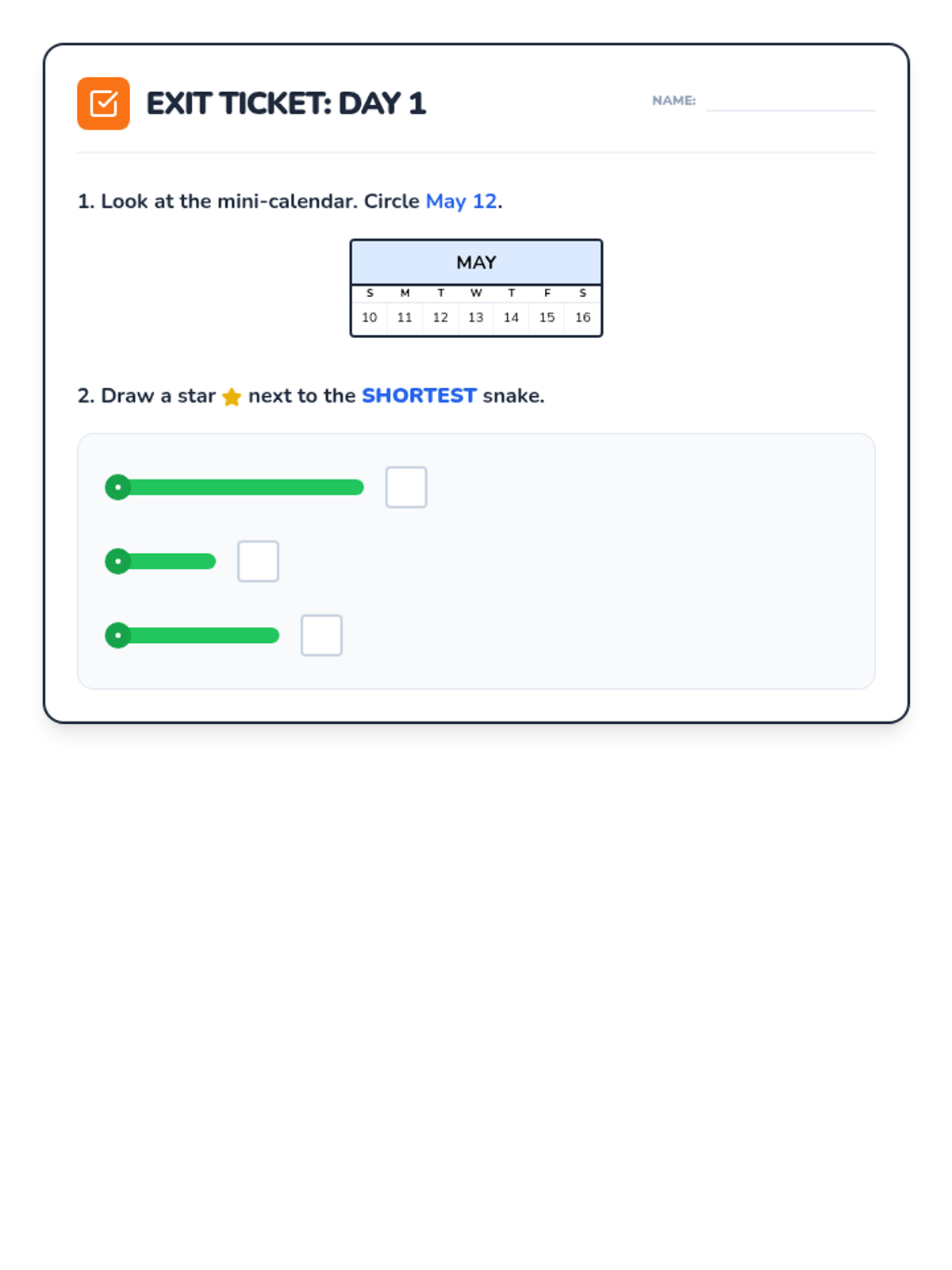
A 3-day small group math sequence designed to move students from NWEA RIT 140-150 to 150-160 in Geometry and Measurement. Focuses on calendar skills, time, length ordering, and 2D/3D shape identification.
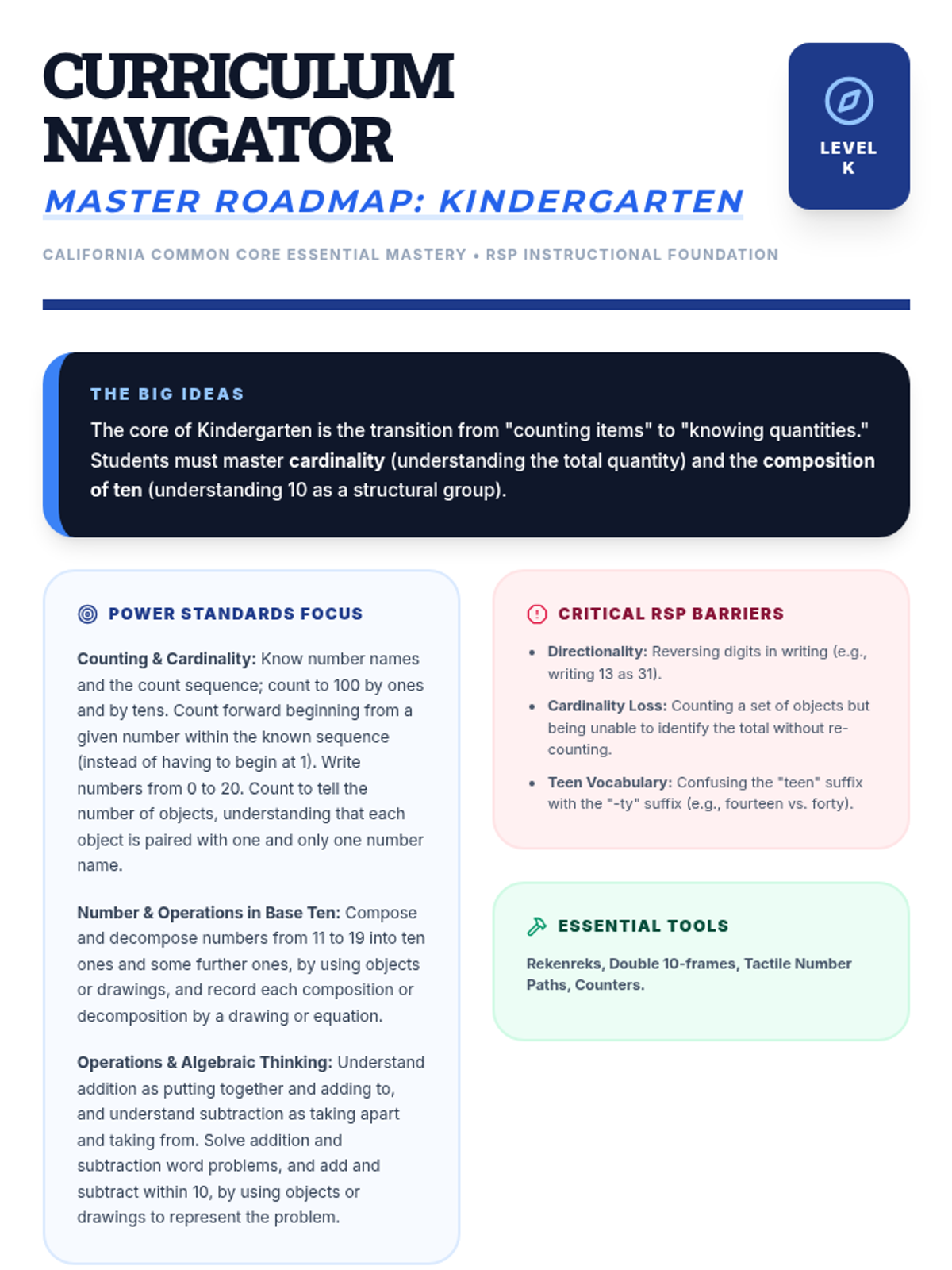
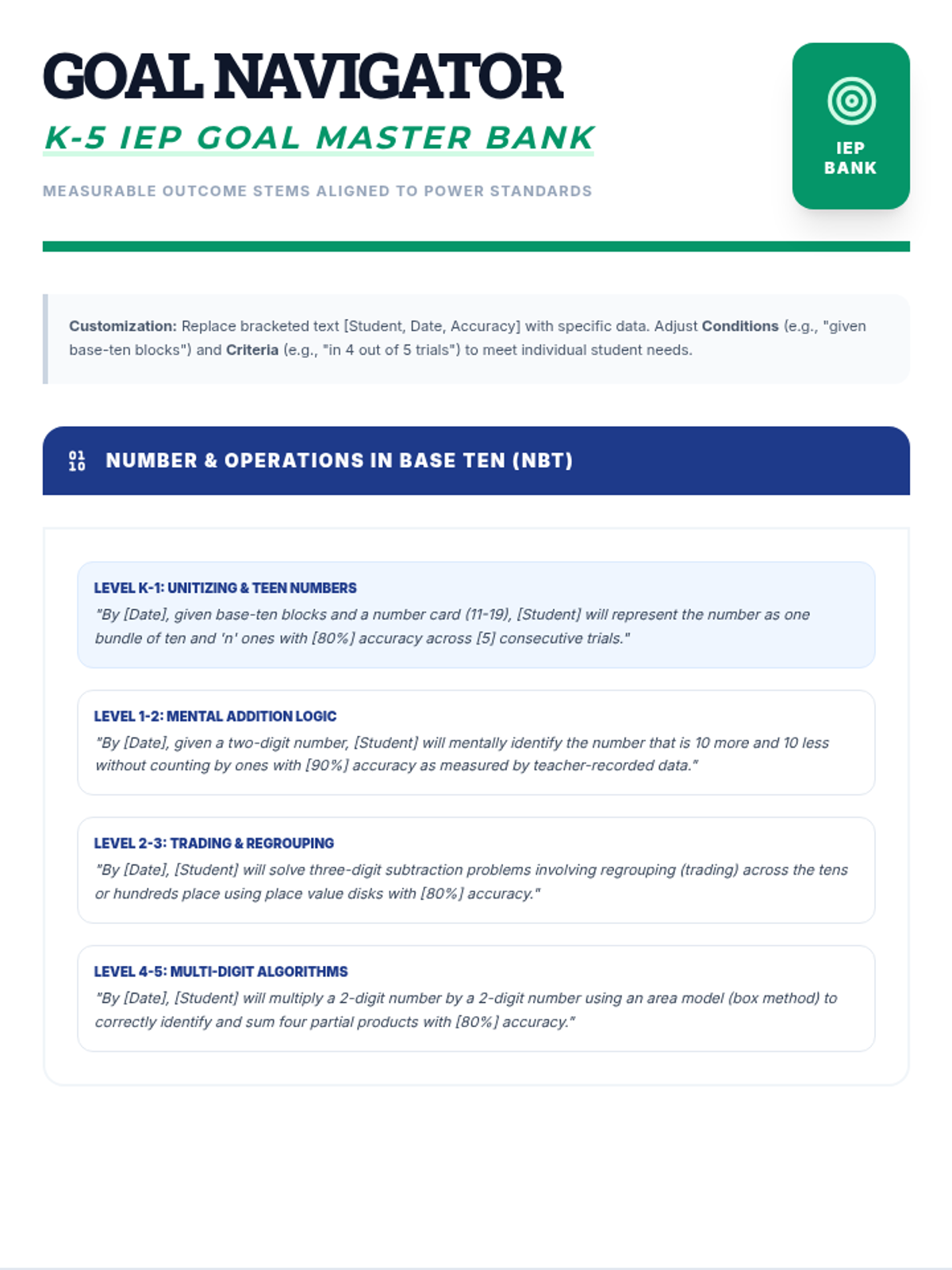
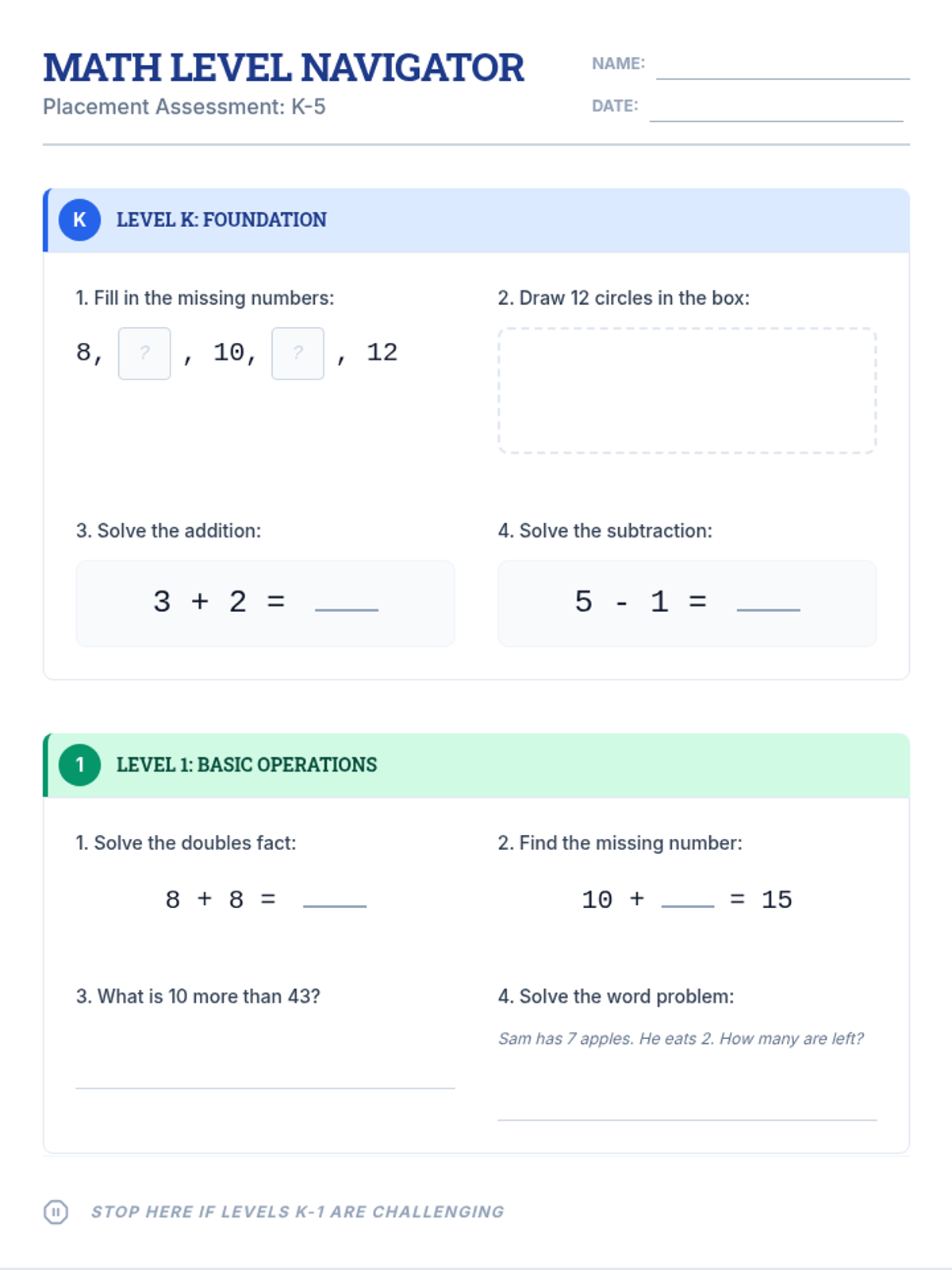
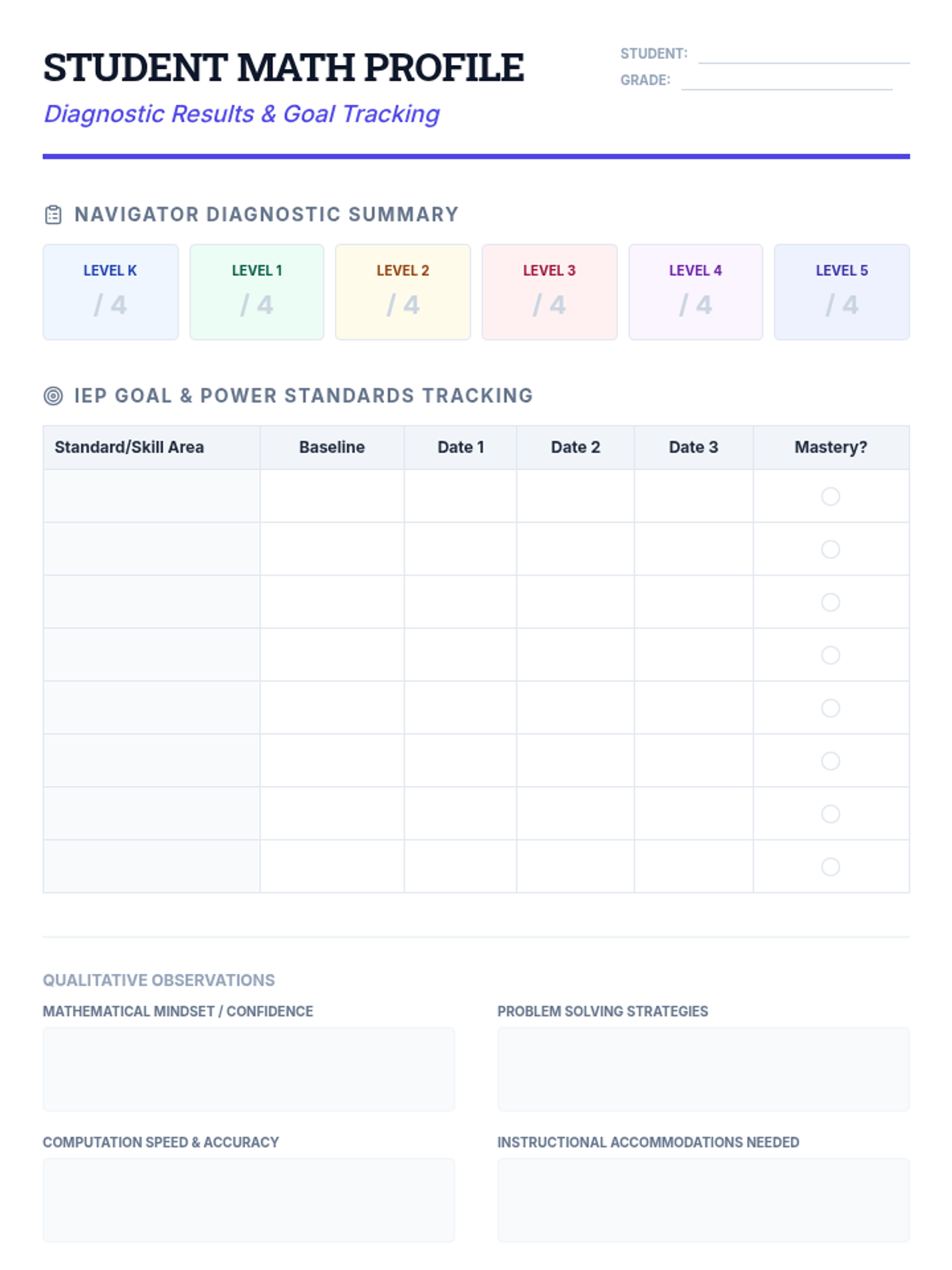
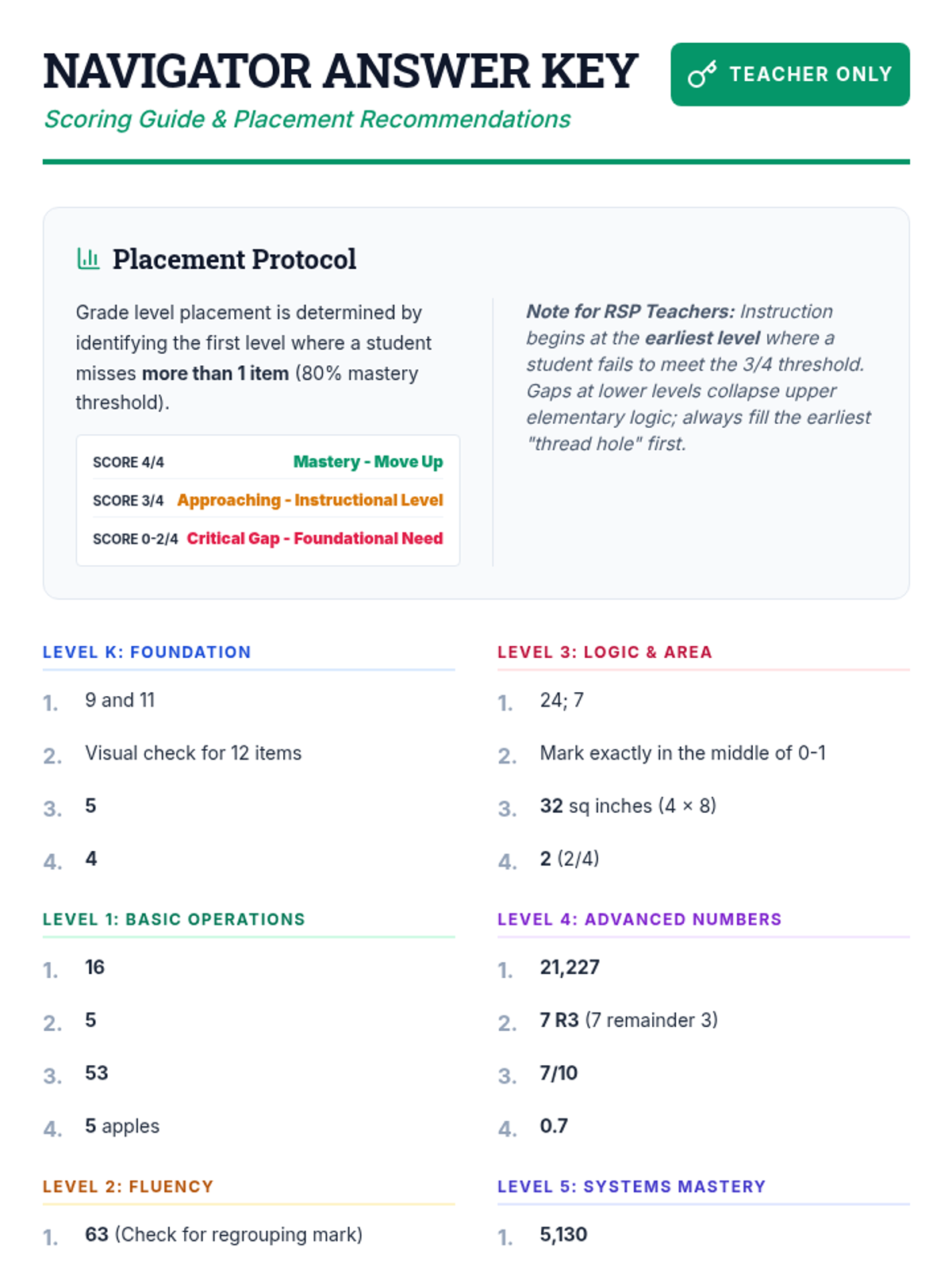
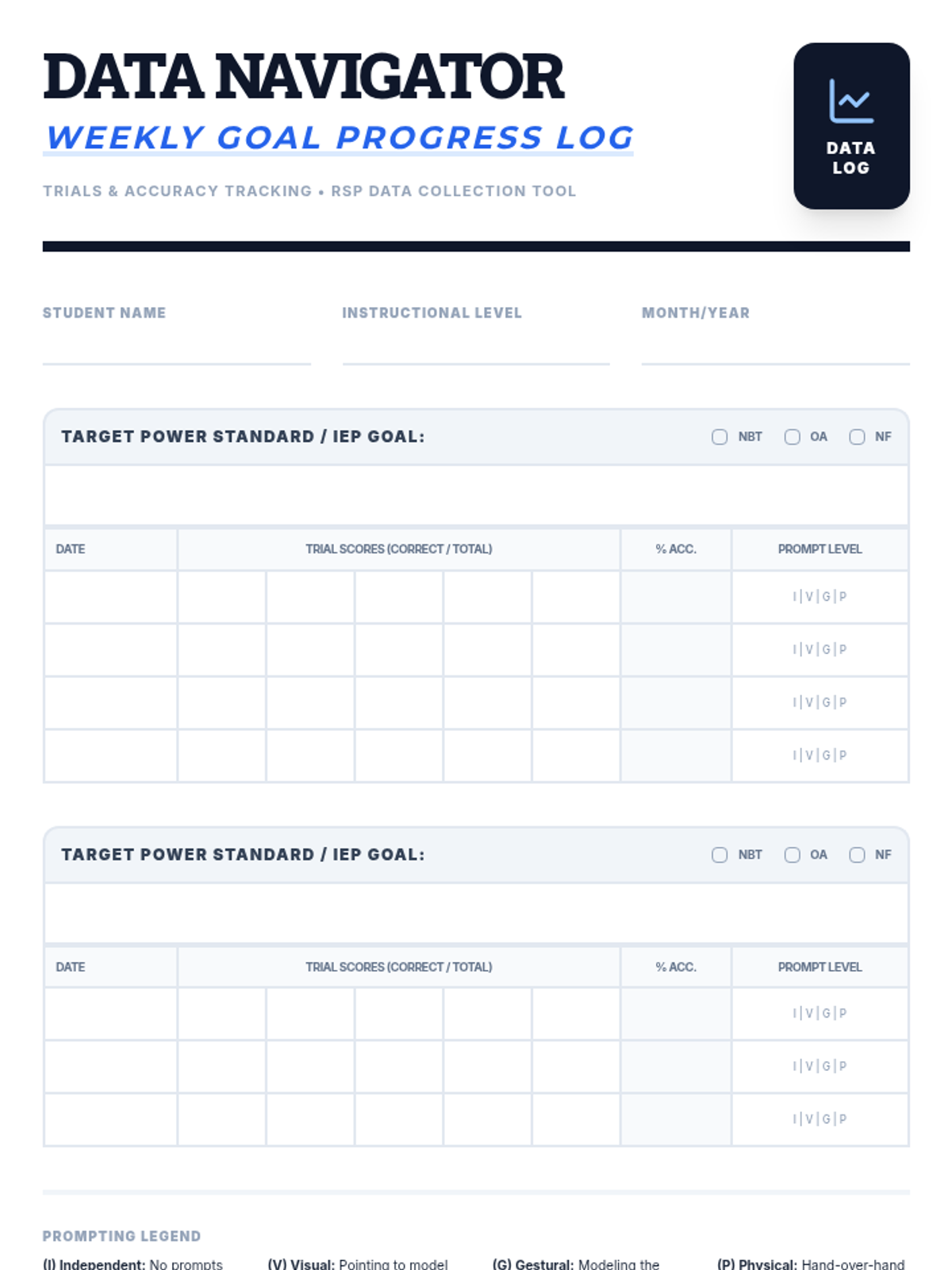
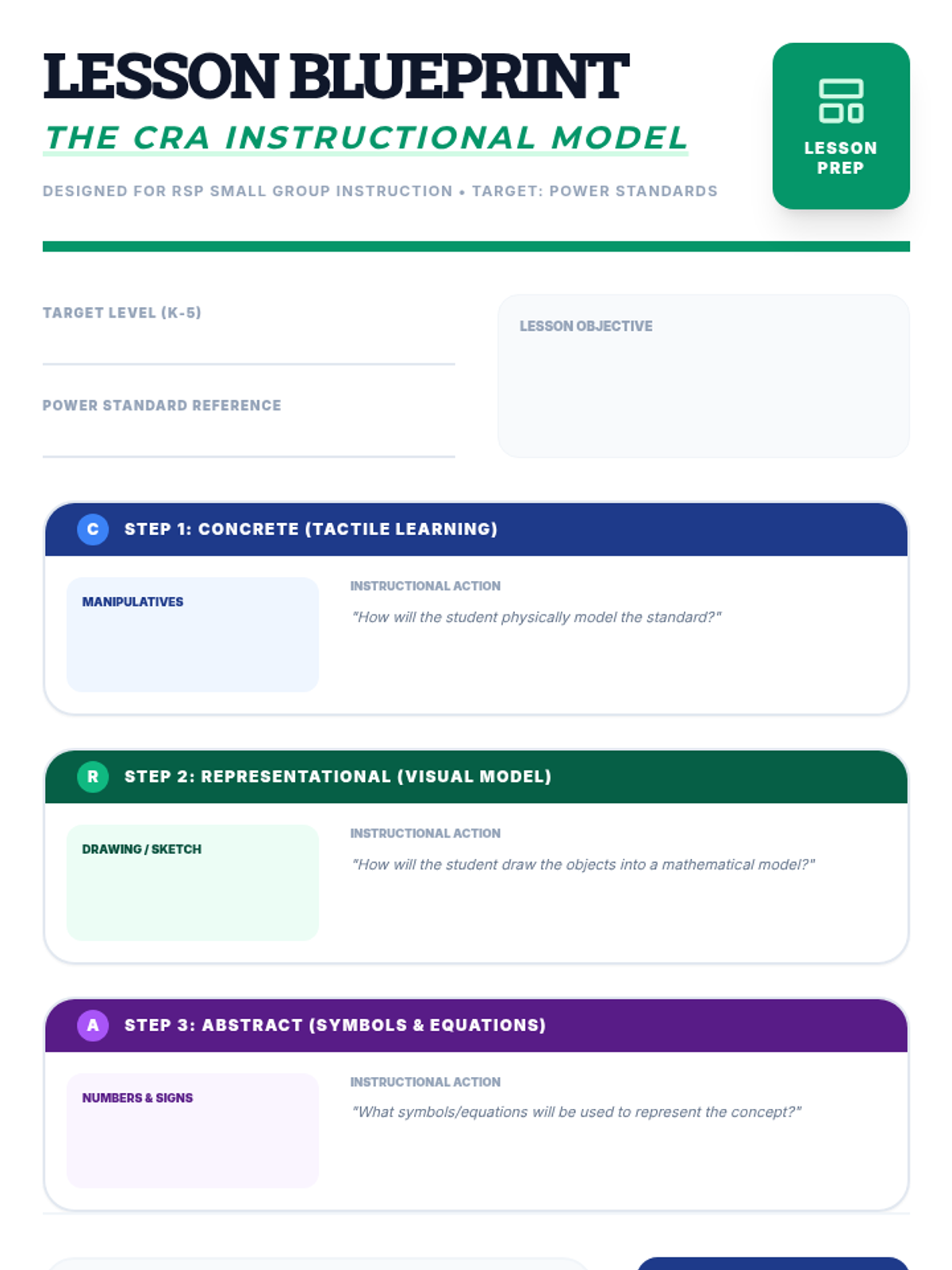
A comprehensive framework for K-5 RSP math instruction, including a California Common Core aligned scope and sequence of power standards and a leveled placement diagnostic.
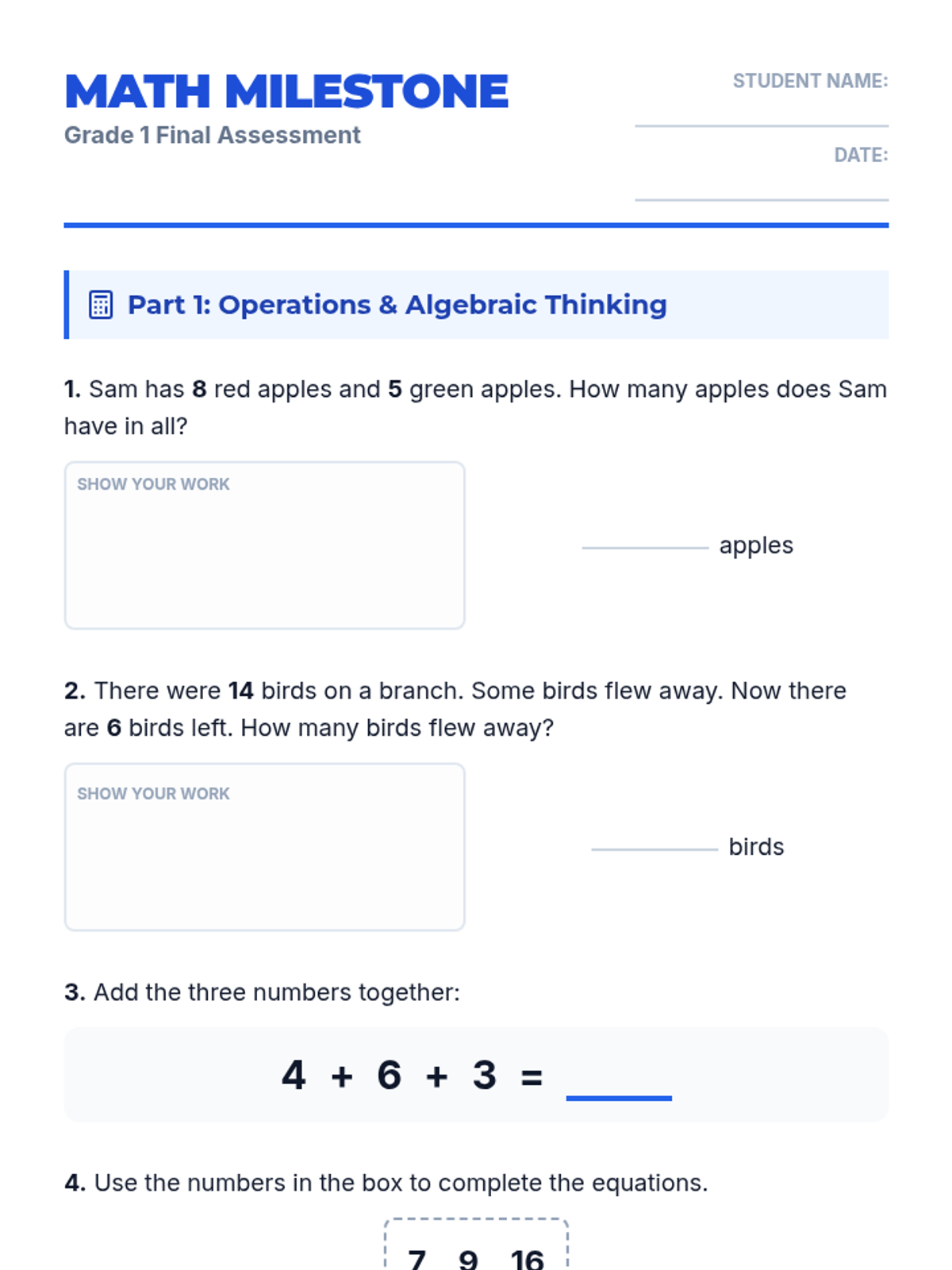
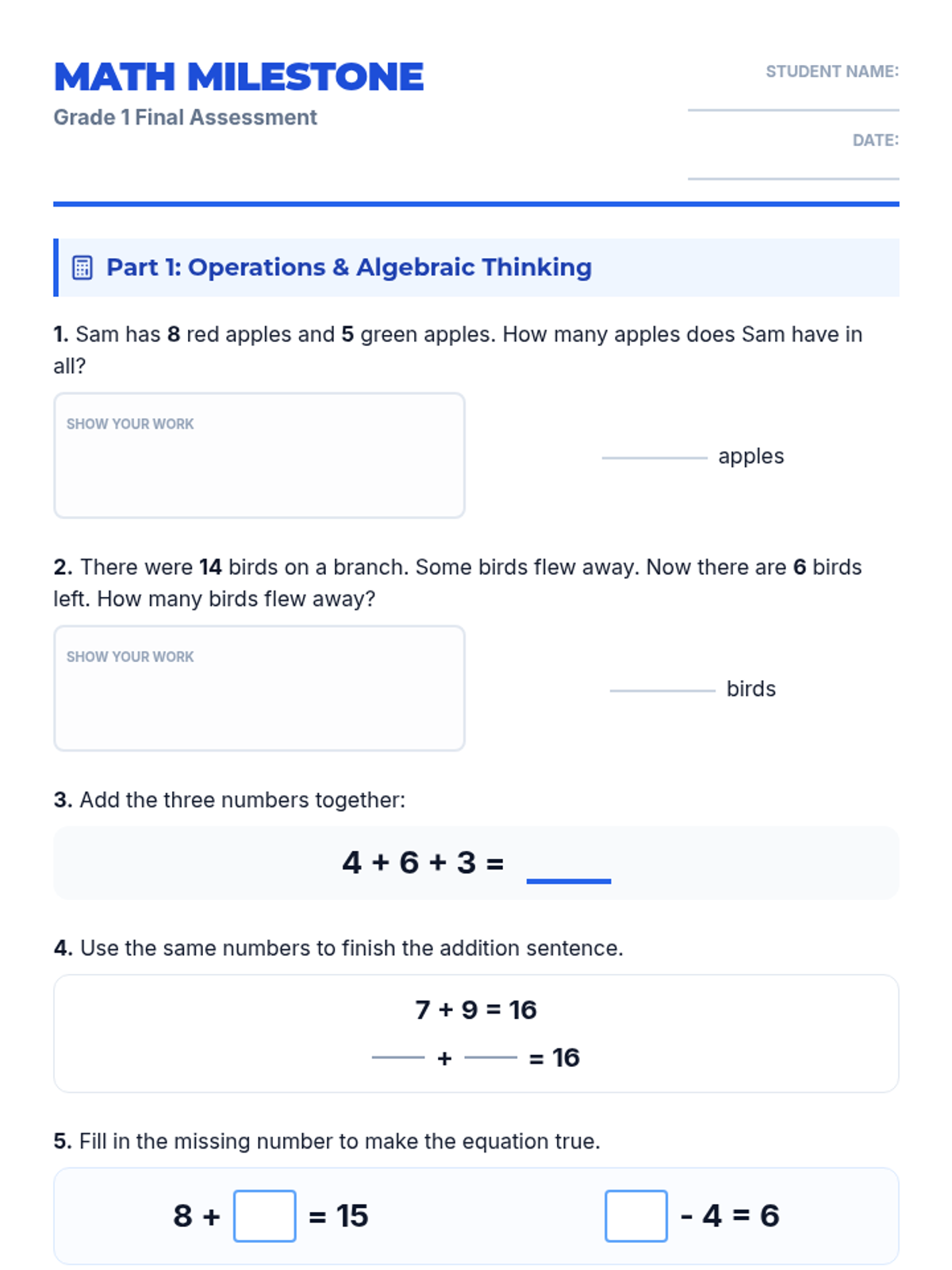
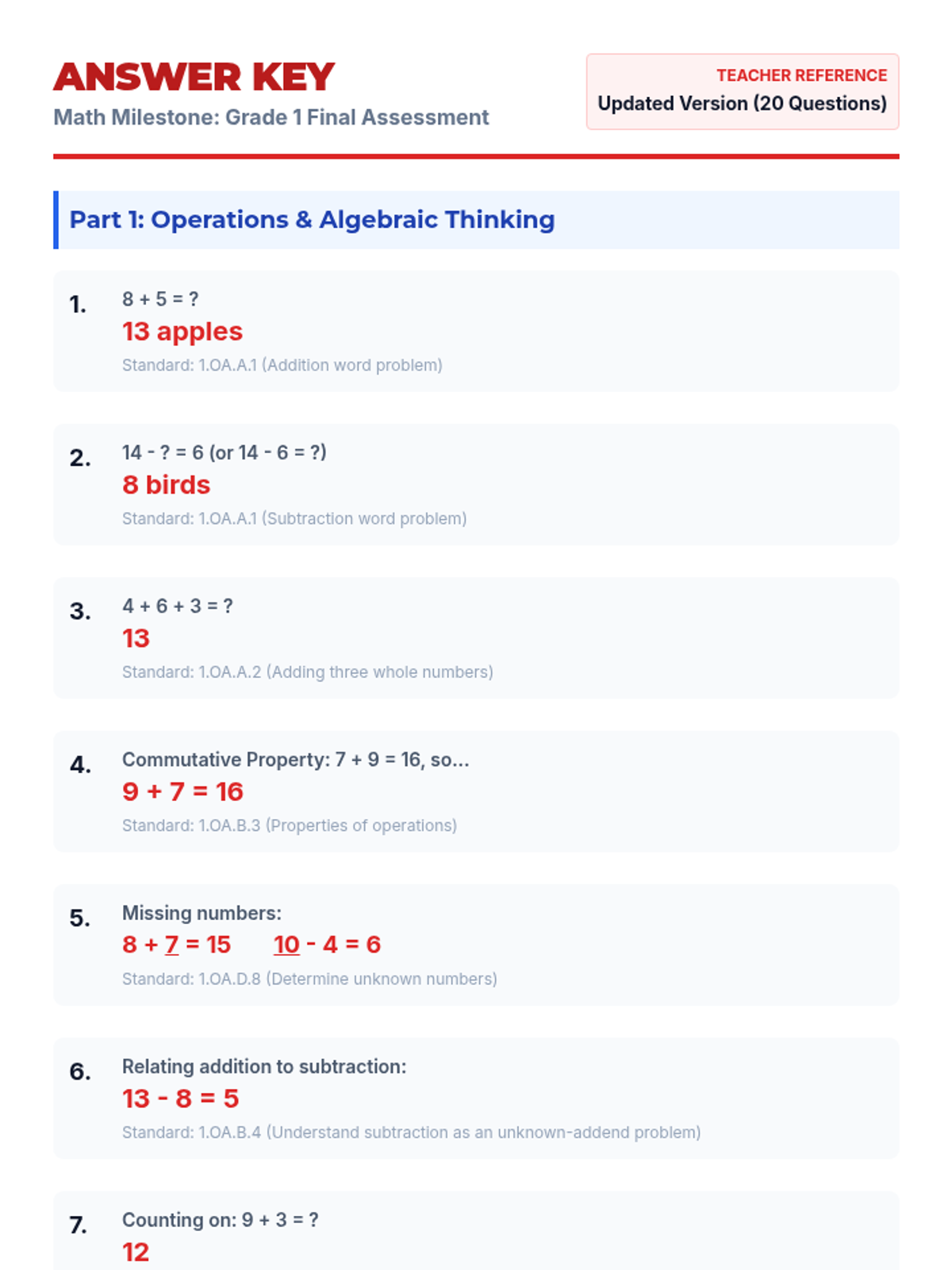
A series of materials designed to evaluate and document first-grade students' mastery of year-long mathematical standards in preparation for second grade.
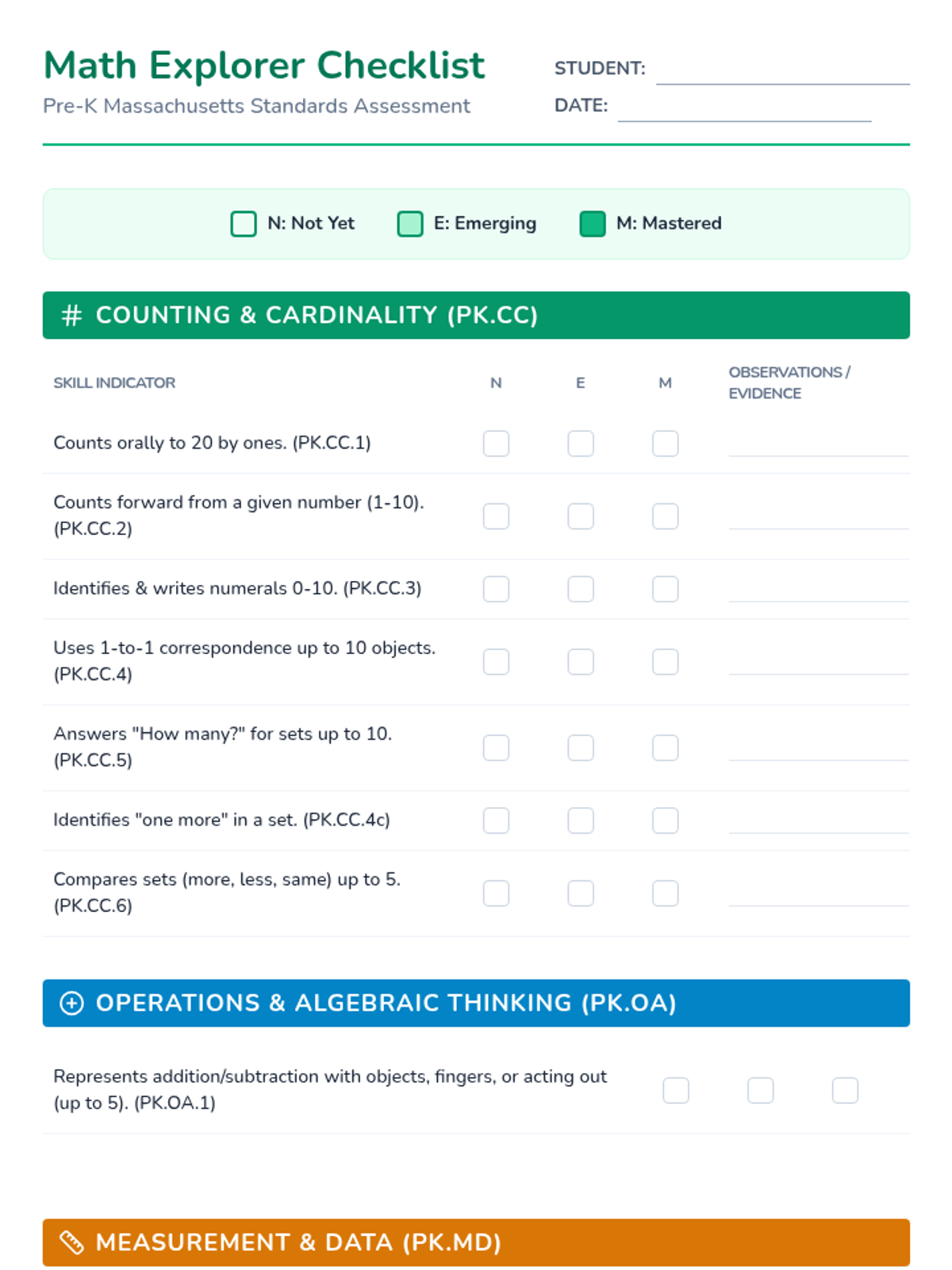
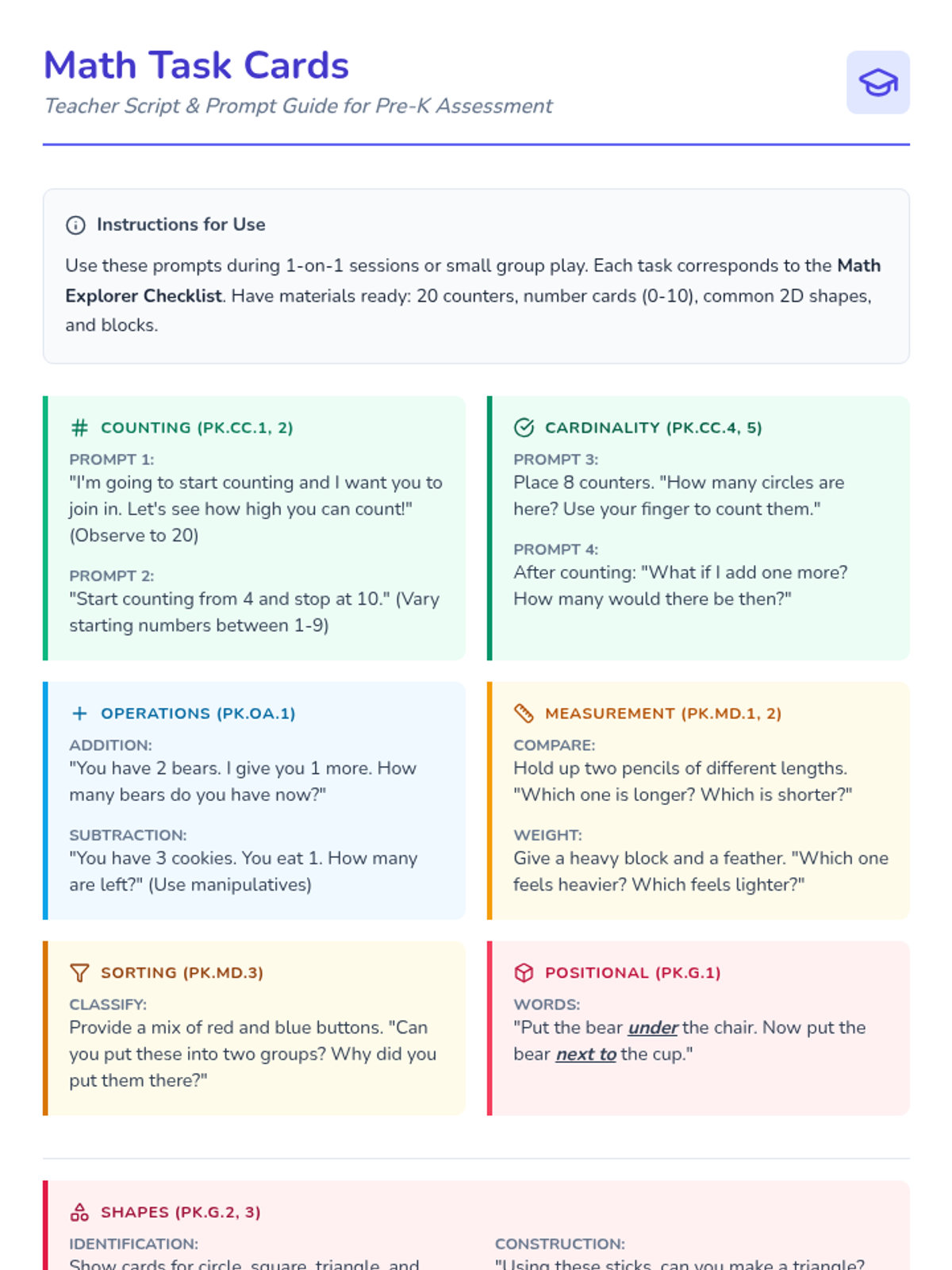
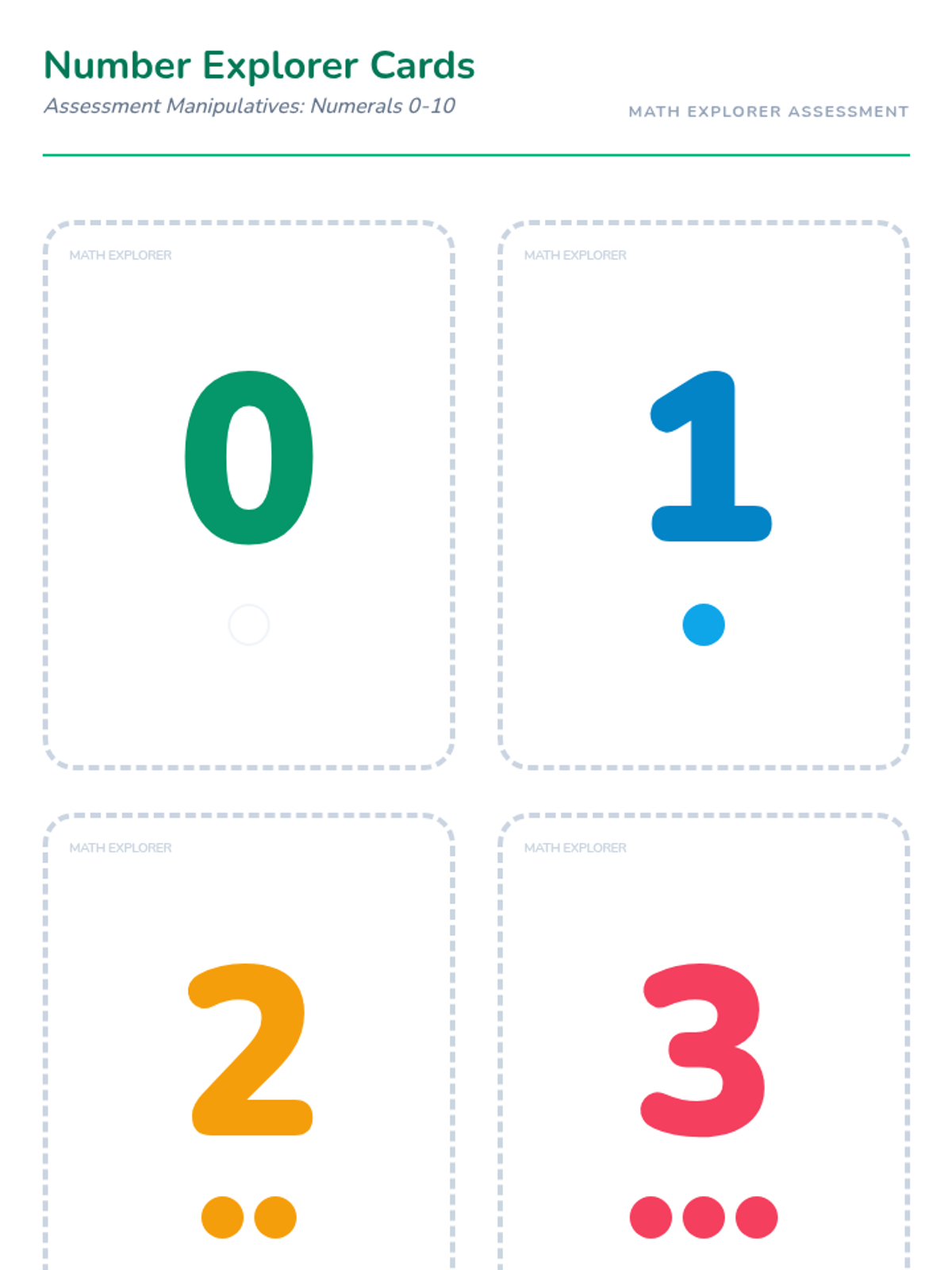
A series of assessment resources for foundational mathematics based on the Massachusetts Curriculum Frameworks, spanning Pre-K and early elementary grades.
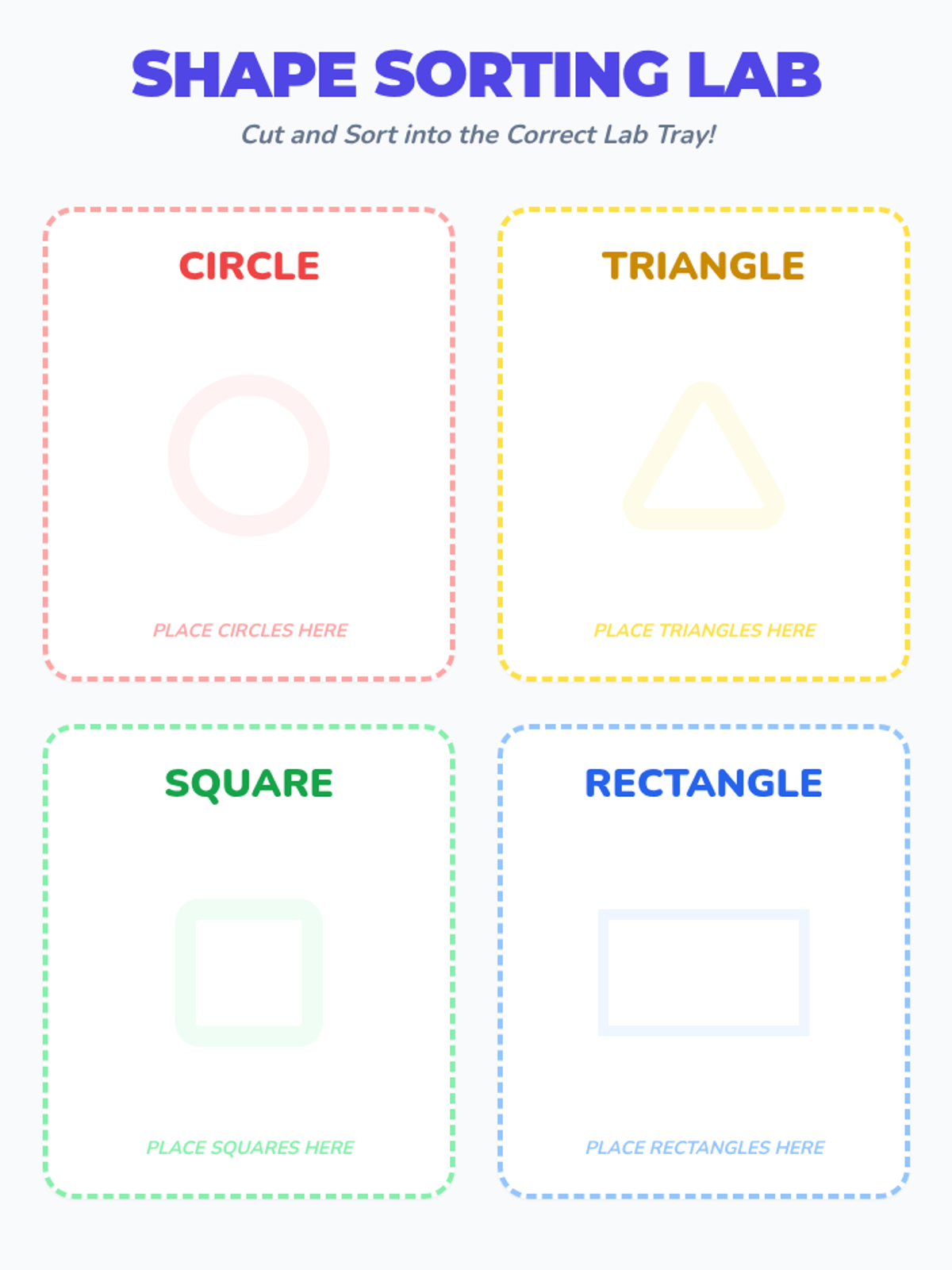
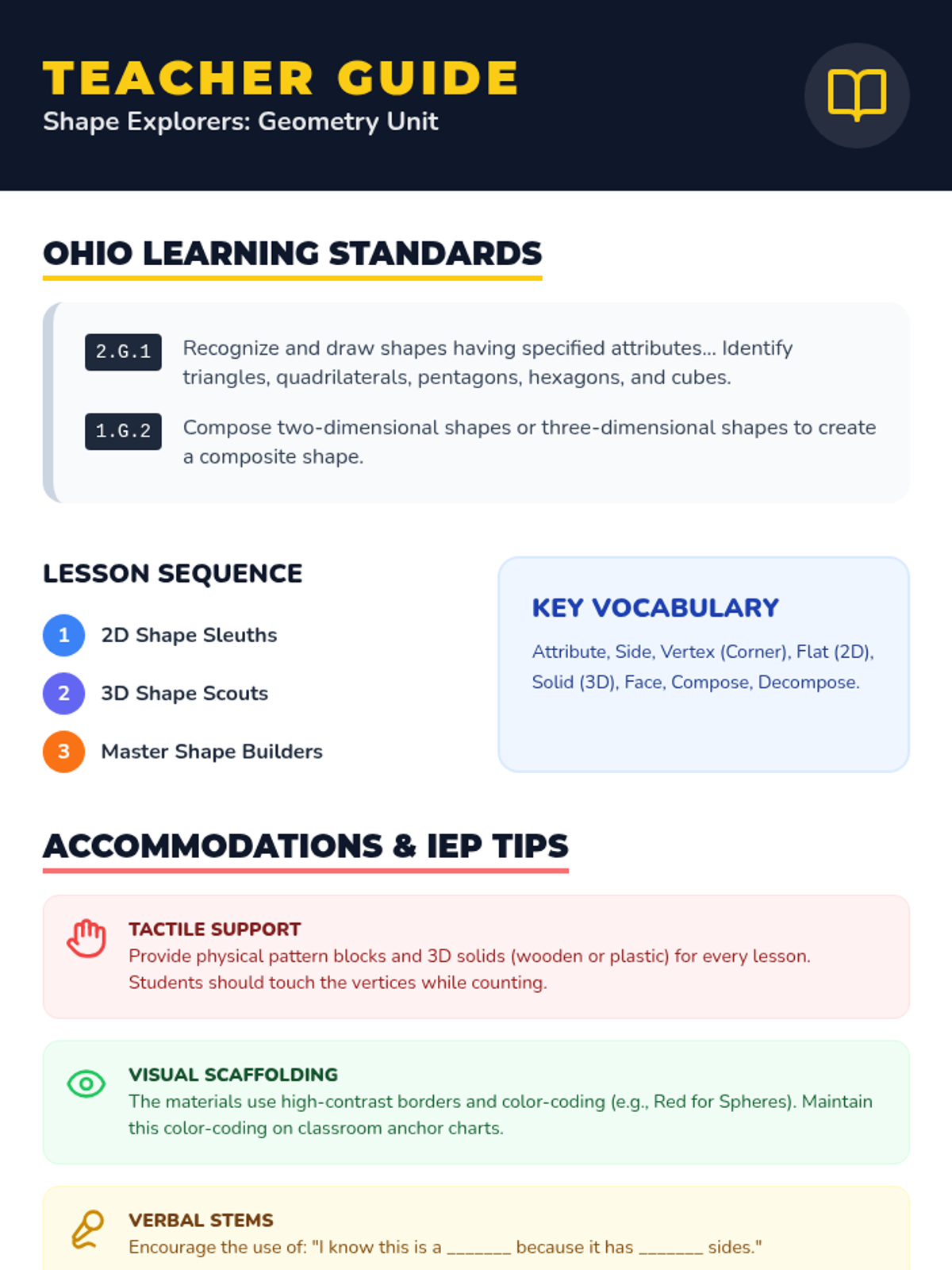
A comprehensive geometry unit for 2nd-grade special education students, focusing on 2D and 3D shape identification, attributes, and composition through visual and hands-on activities.
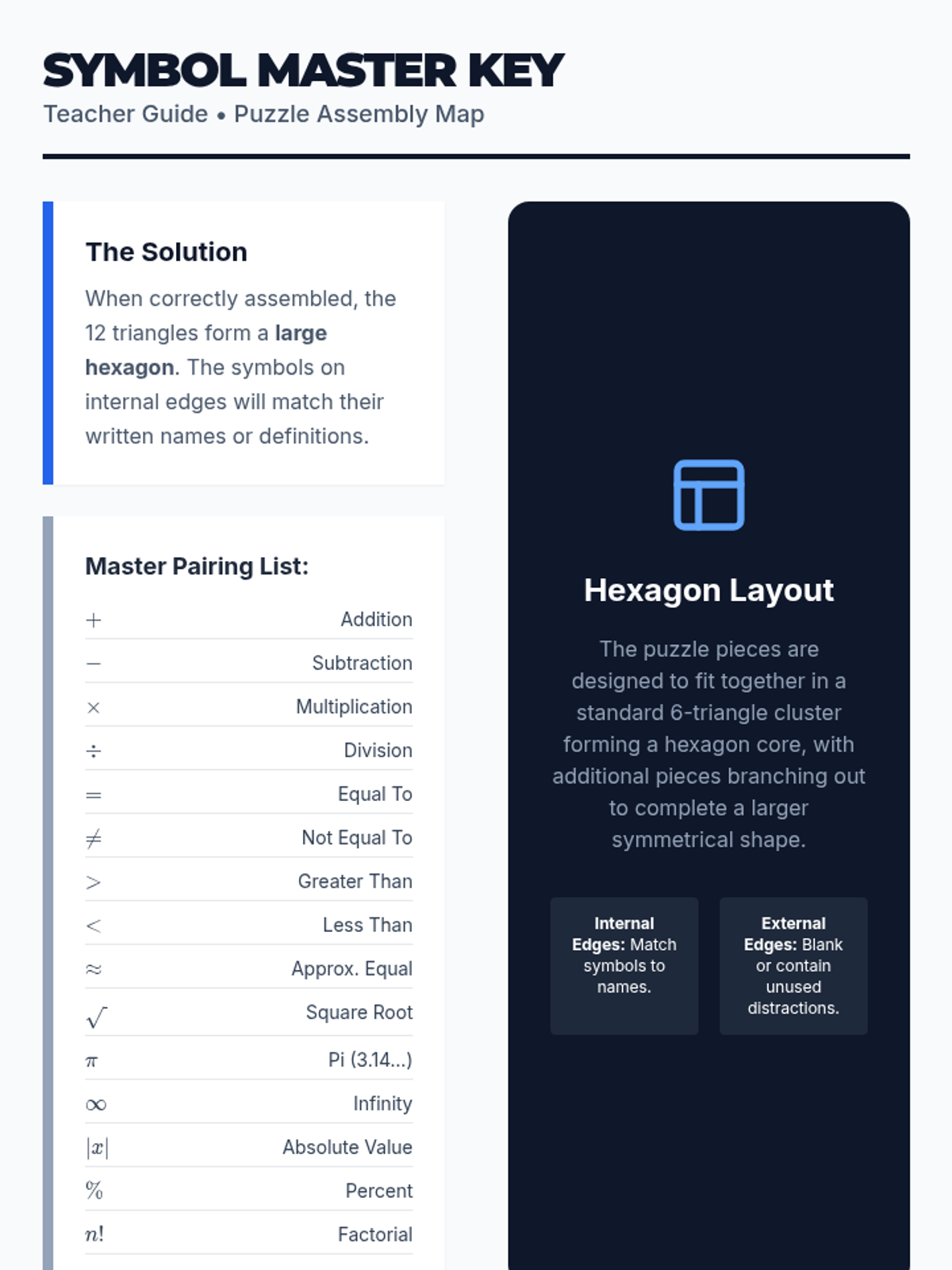
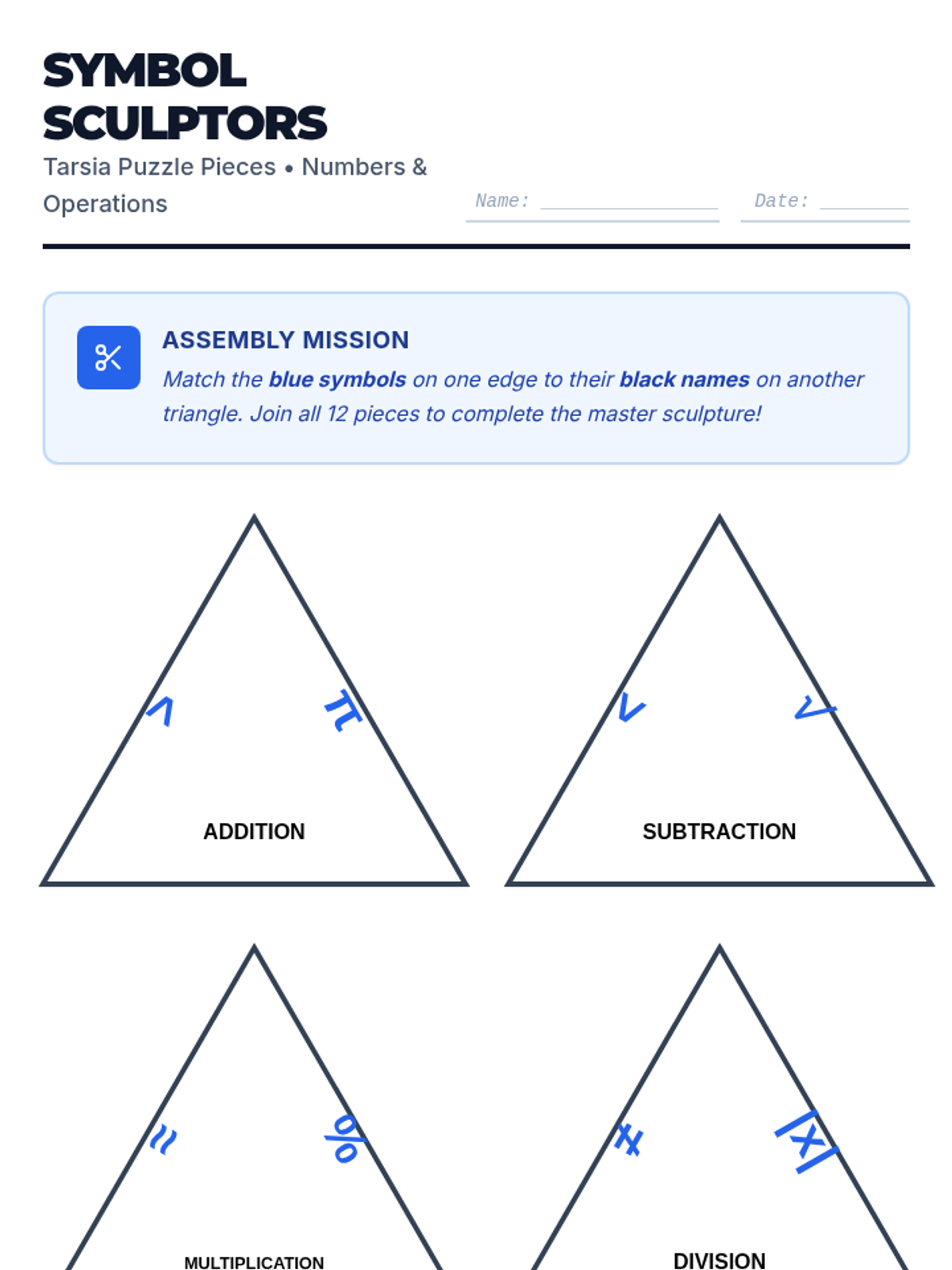
A series of lessons designed to build fluency in mathematical notation and operations through visual and tactile learning.
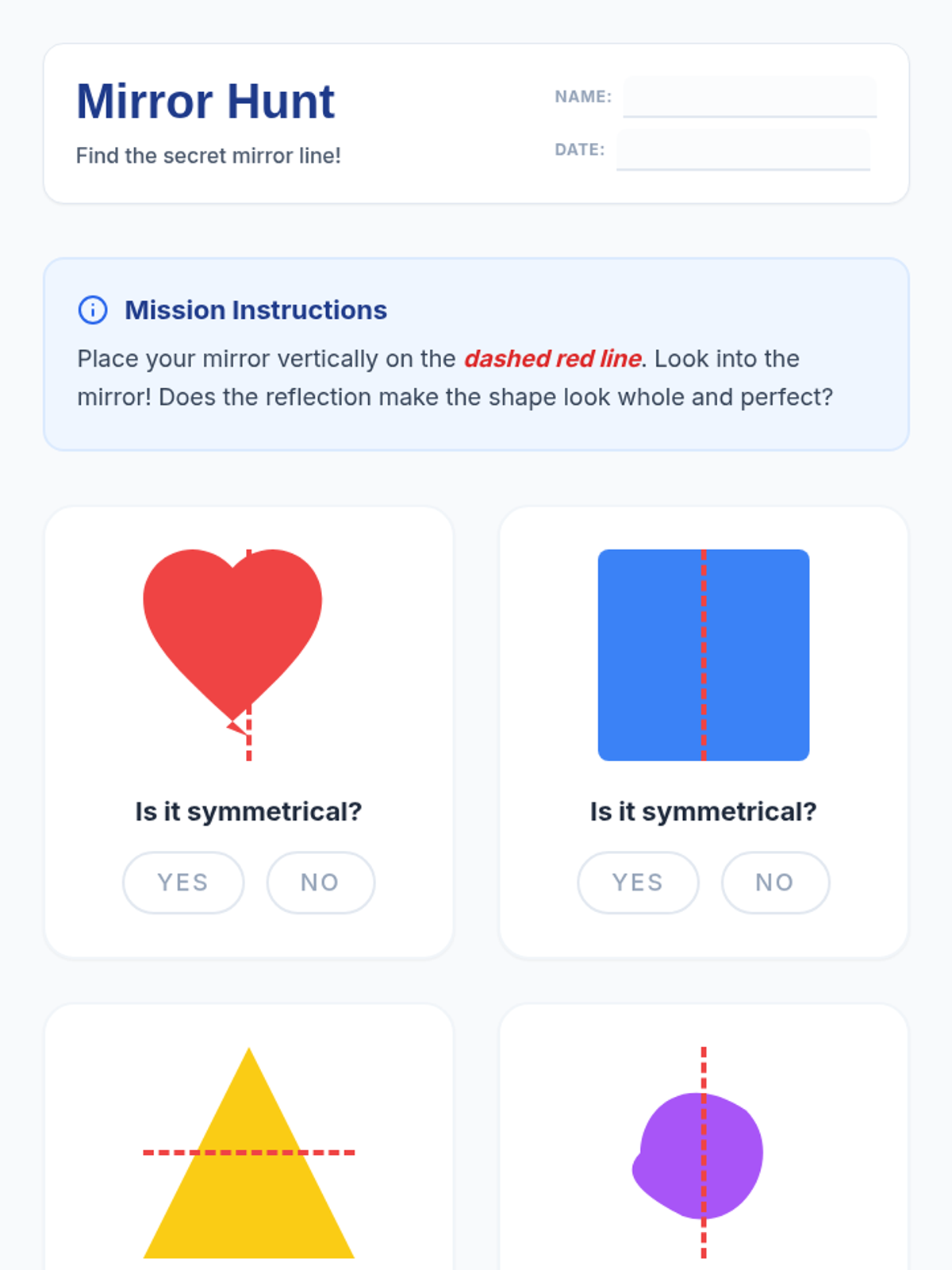
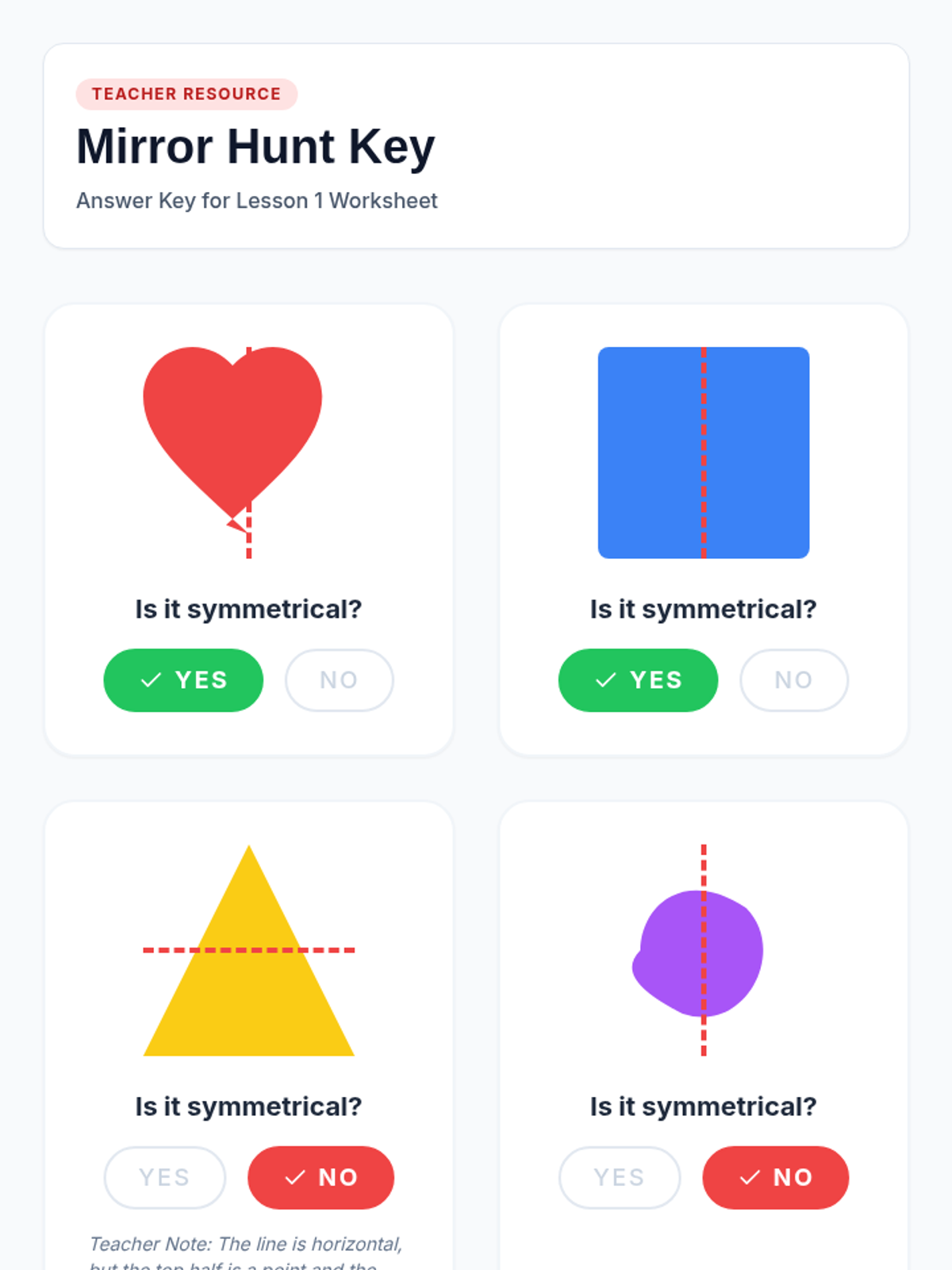
A 1st-grade sequence exploring the concept of line symmetry through mirrors, paper folding, grid drawing, and natural observations. Students move from identifying simple mirror lines to creating complex symmetrical patterns using geometric shapes.
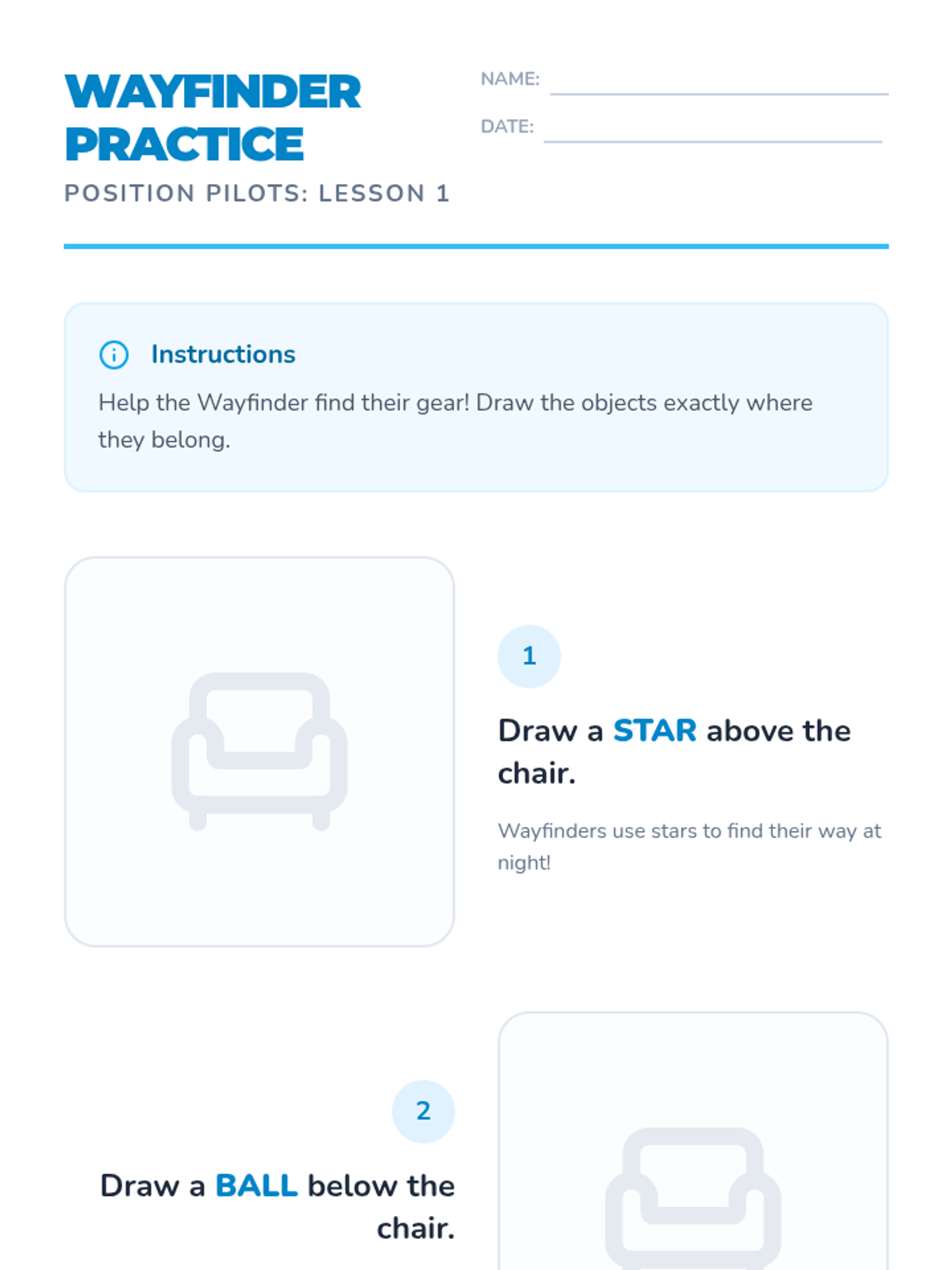
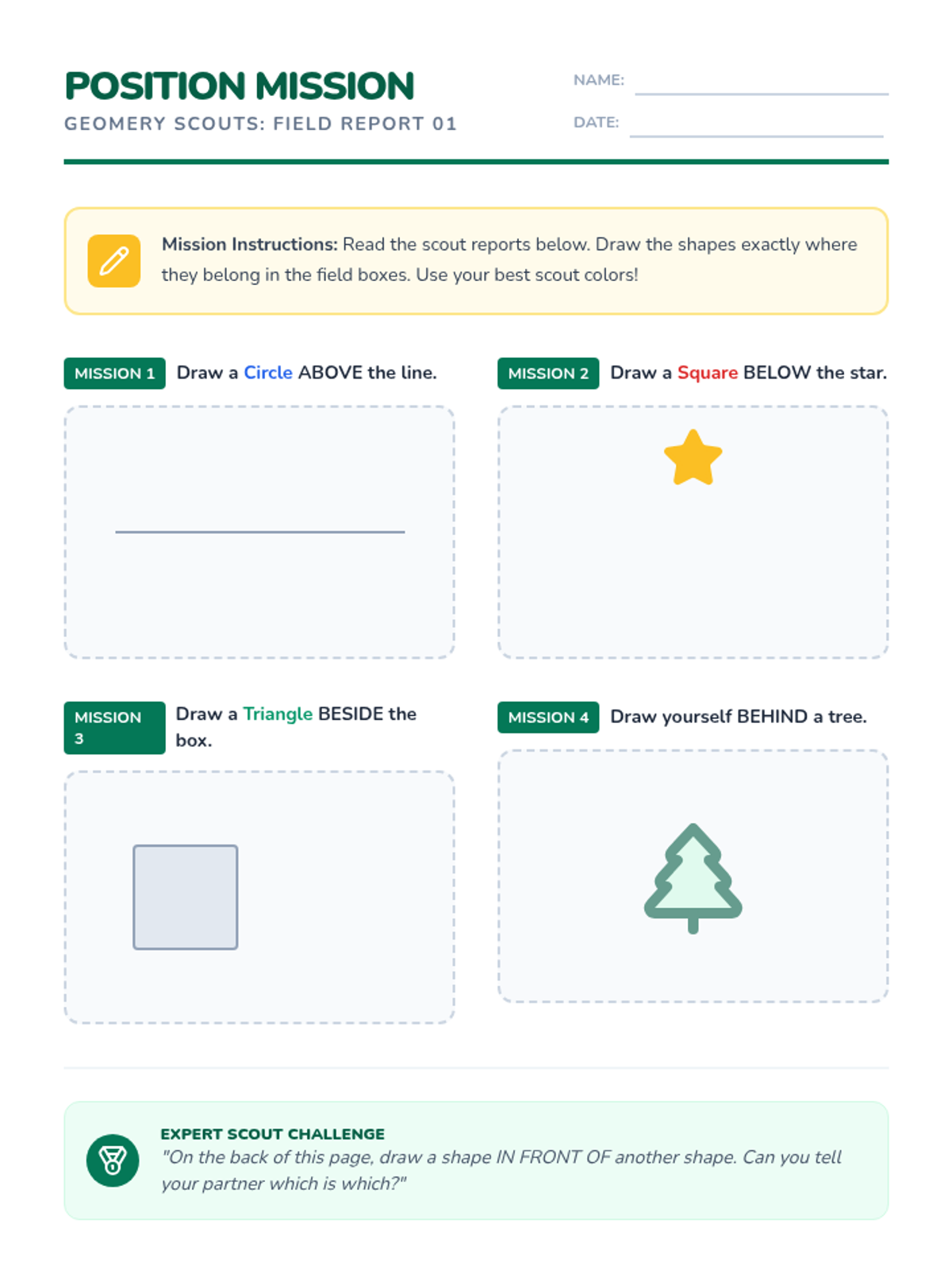
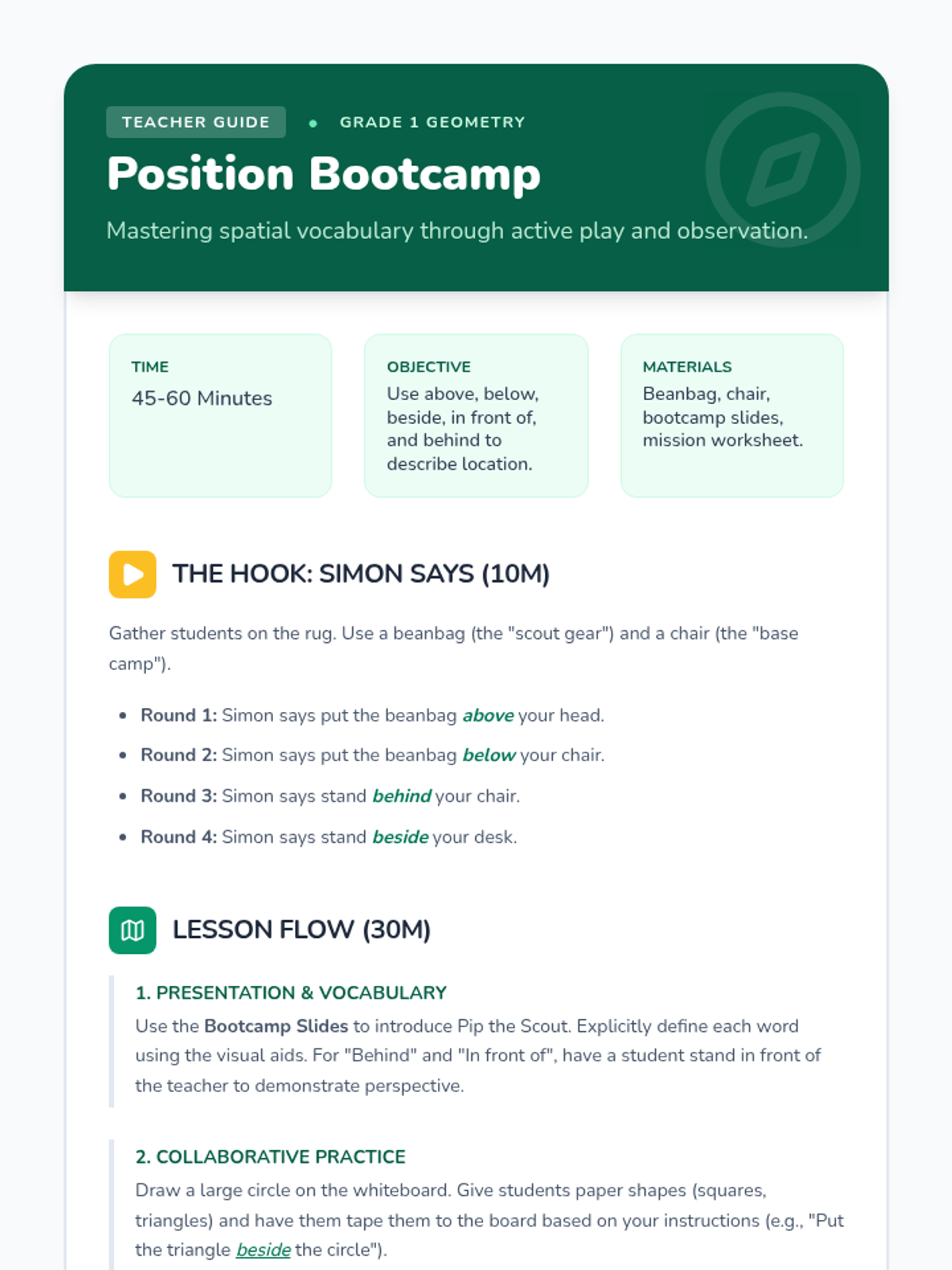
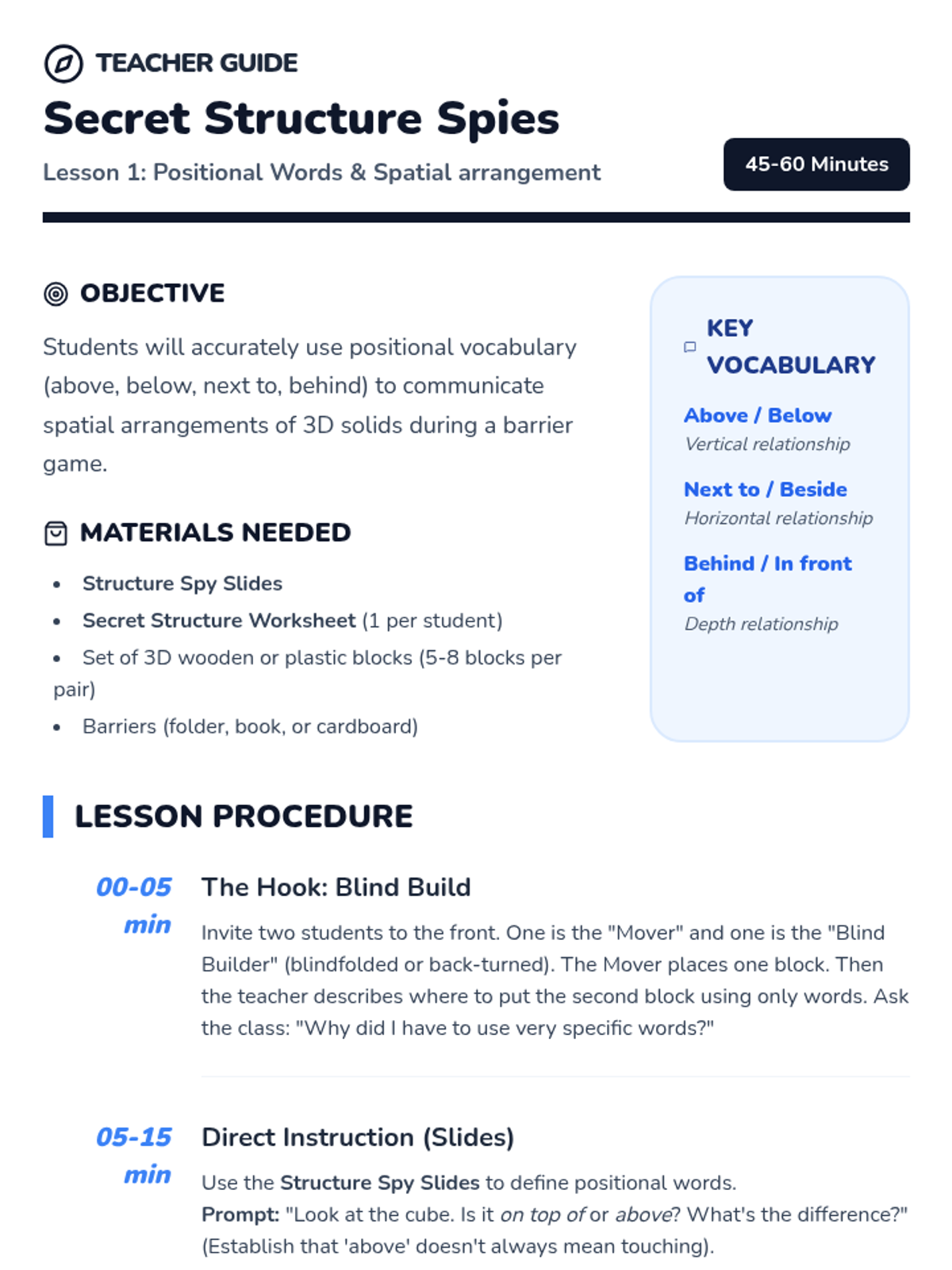
A 1st-grade sequence exploring spatial relationships and coordinate geometry through positional language. Students progress from physical movement to map-making, grid navigation, and basic algorithmic thinking.
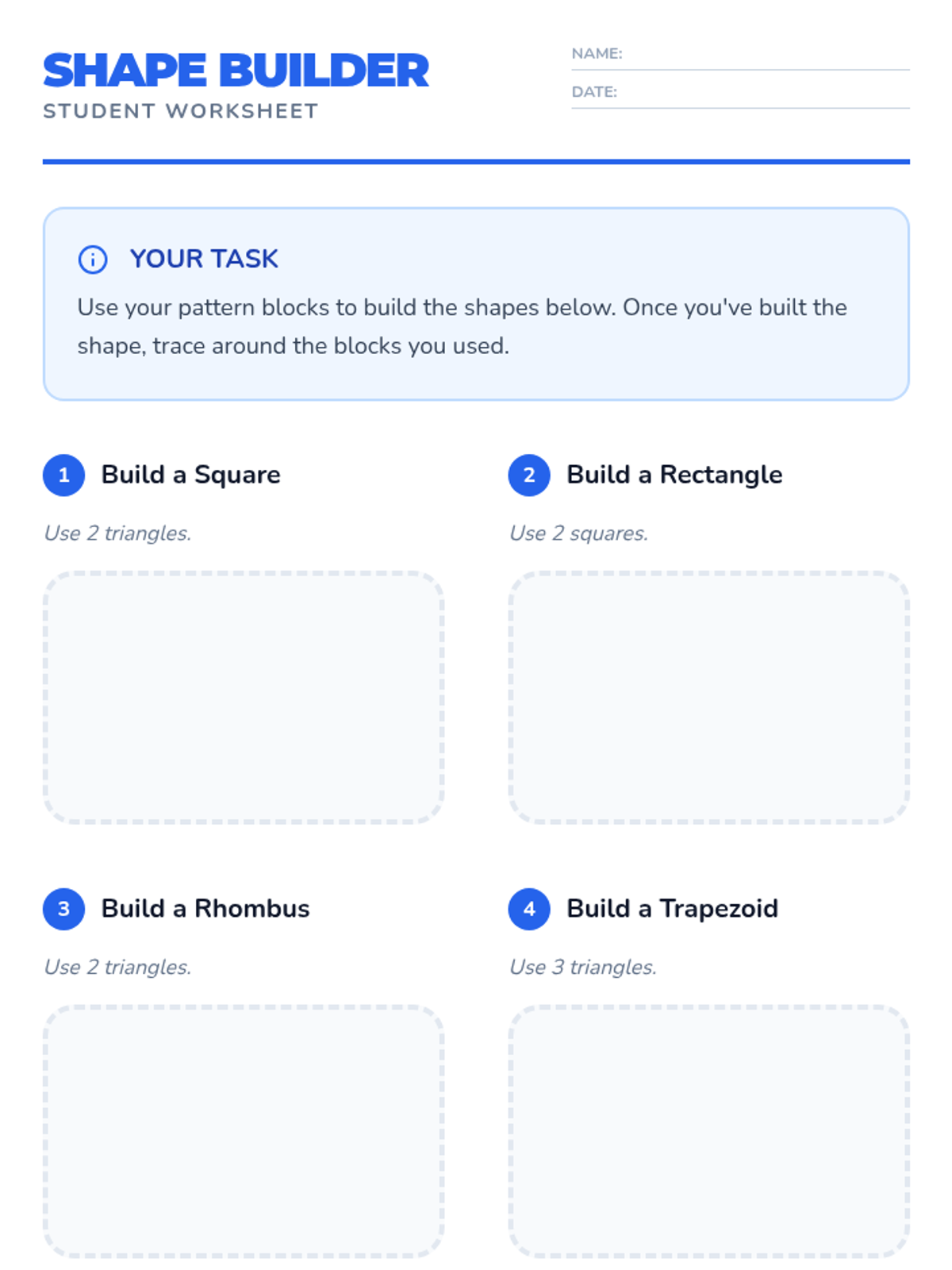
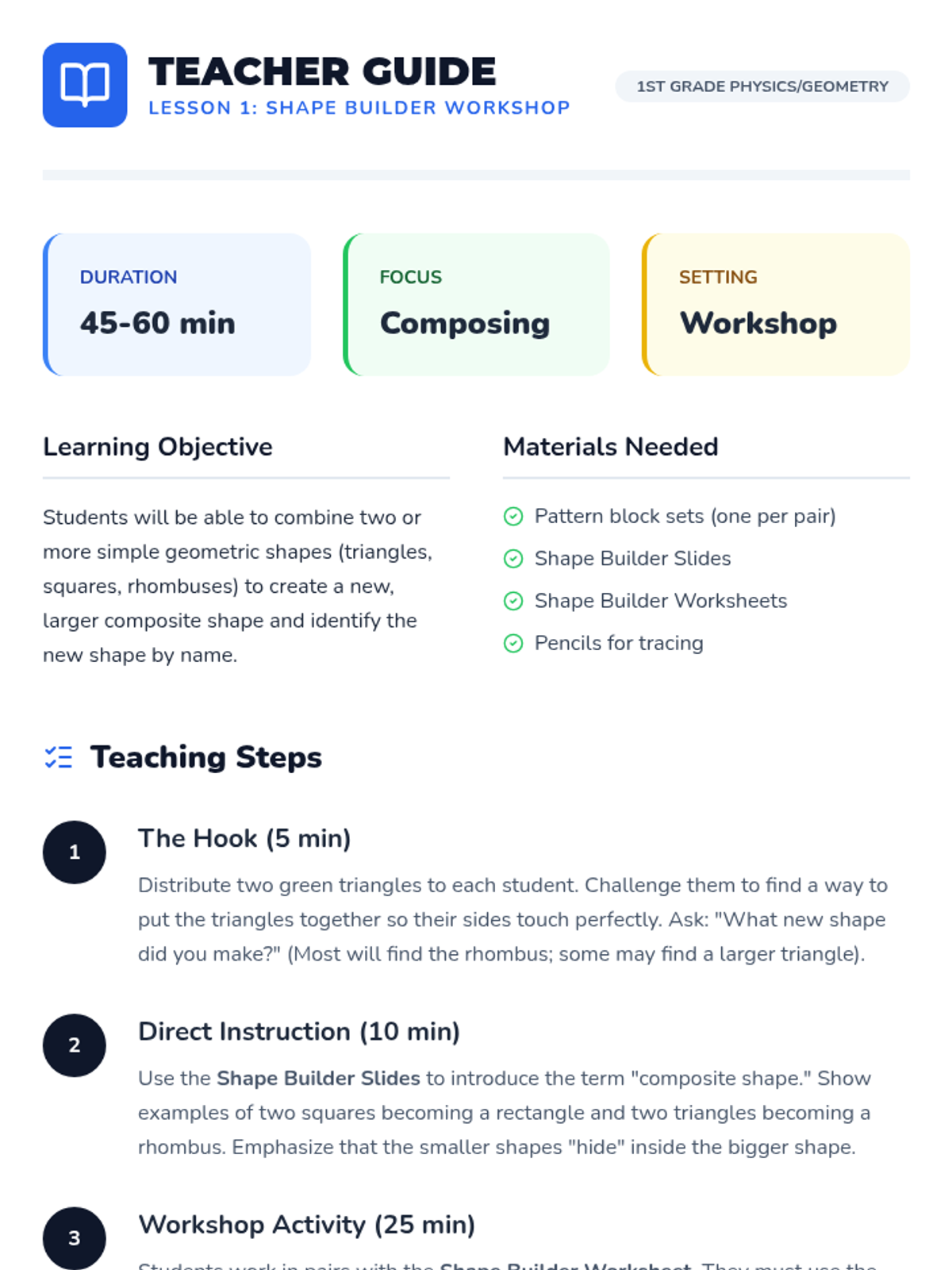
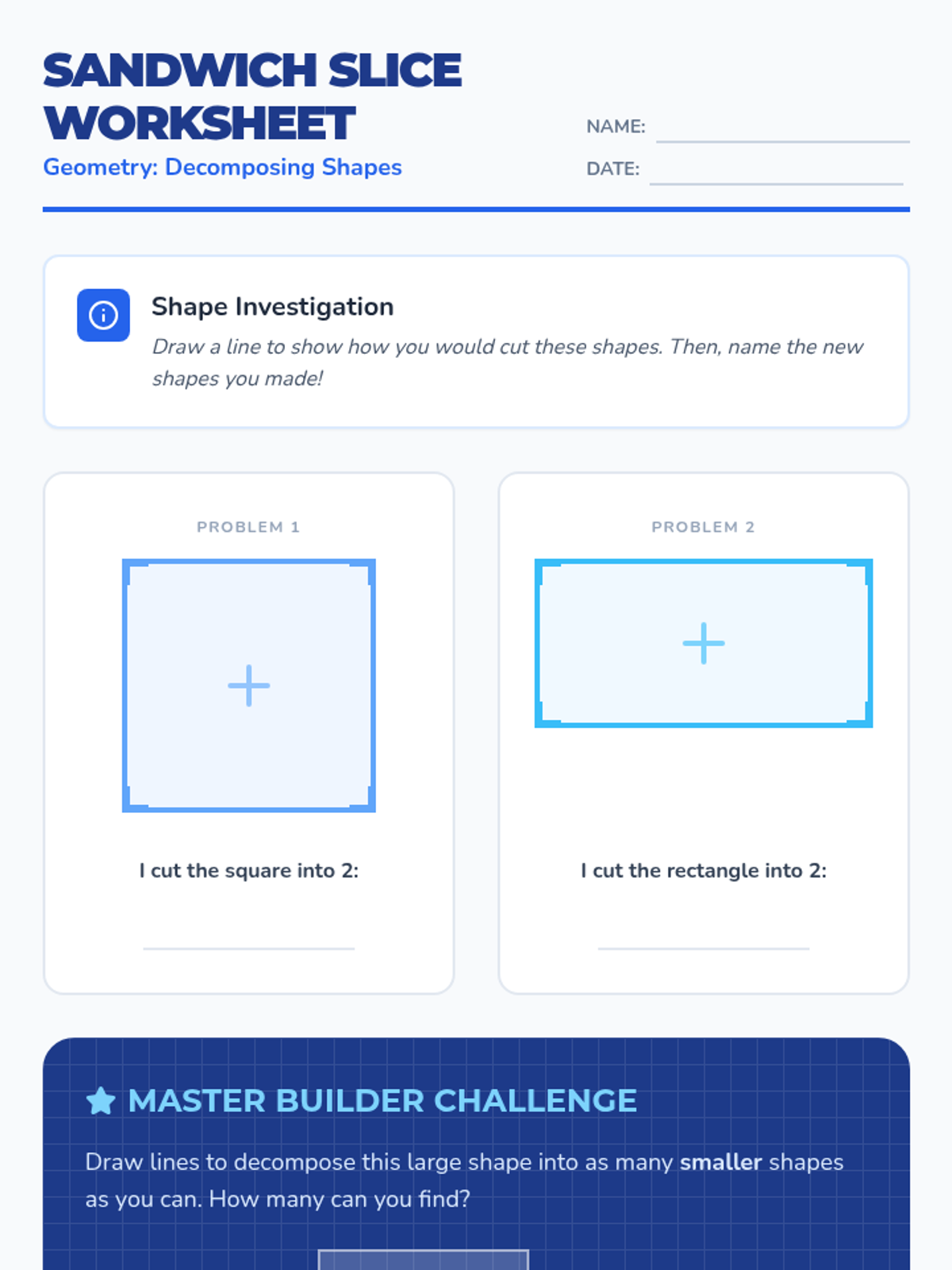
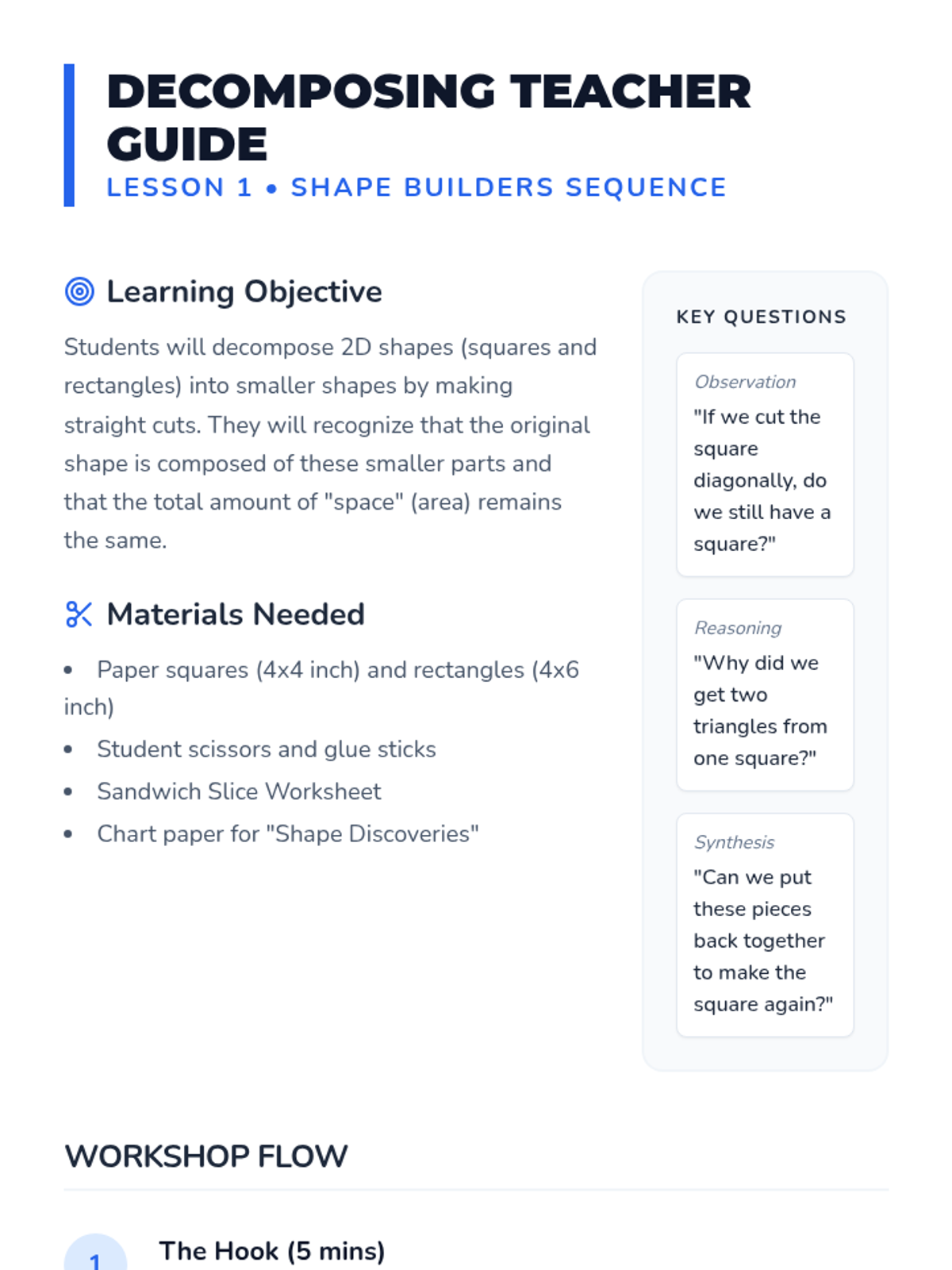
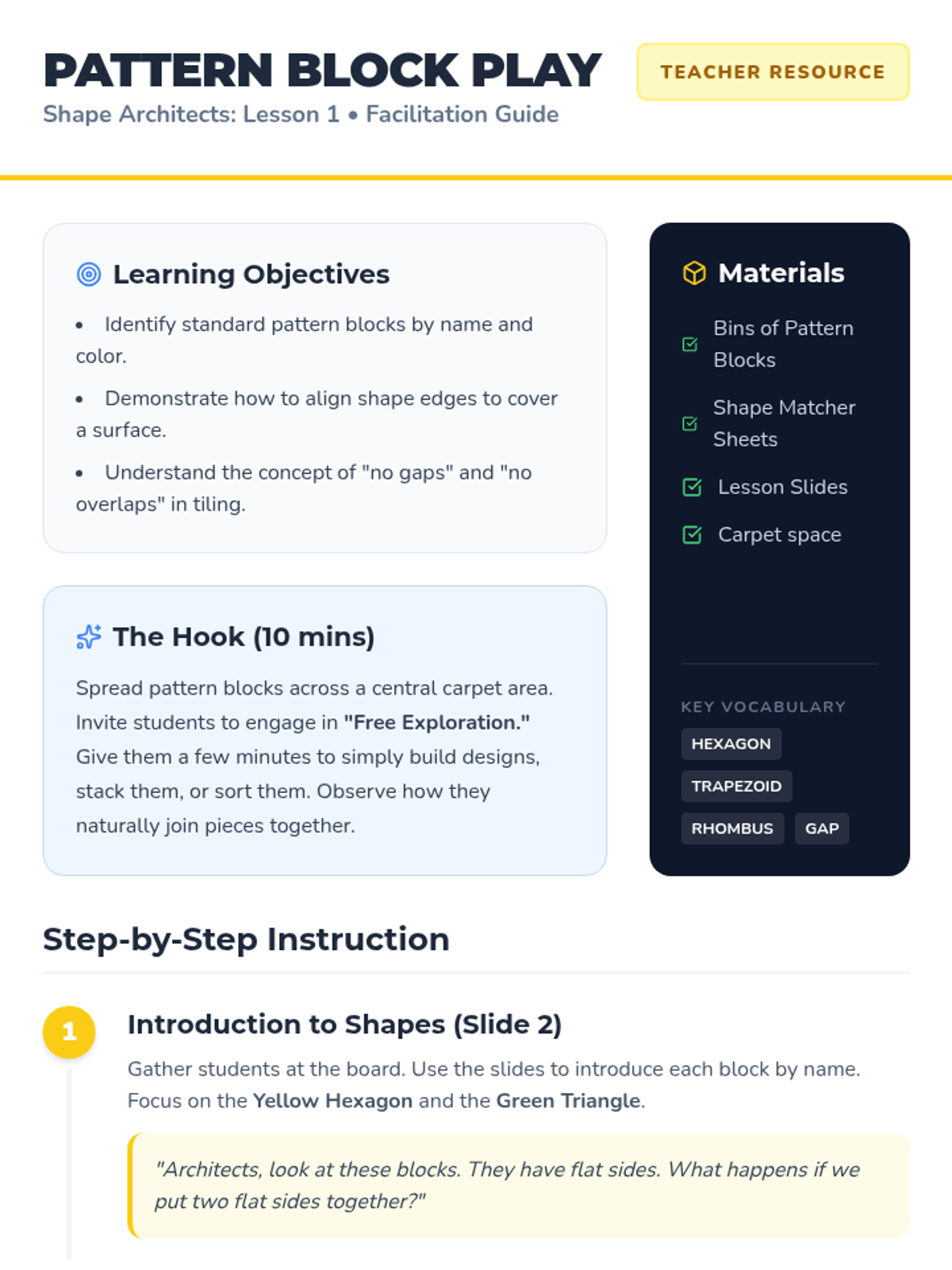
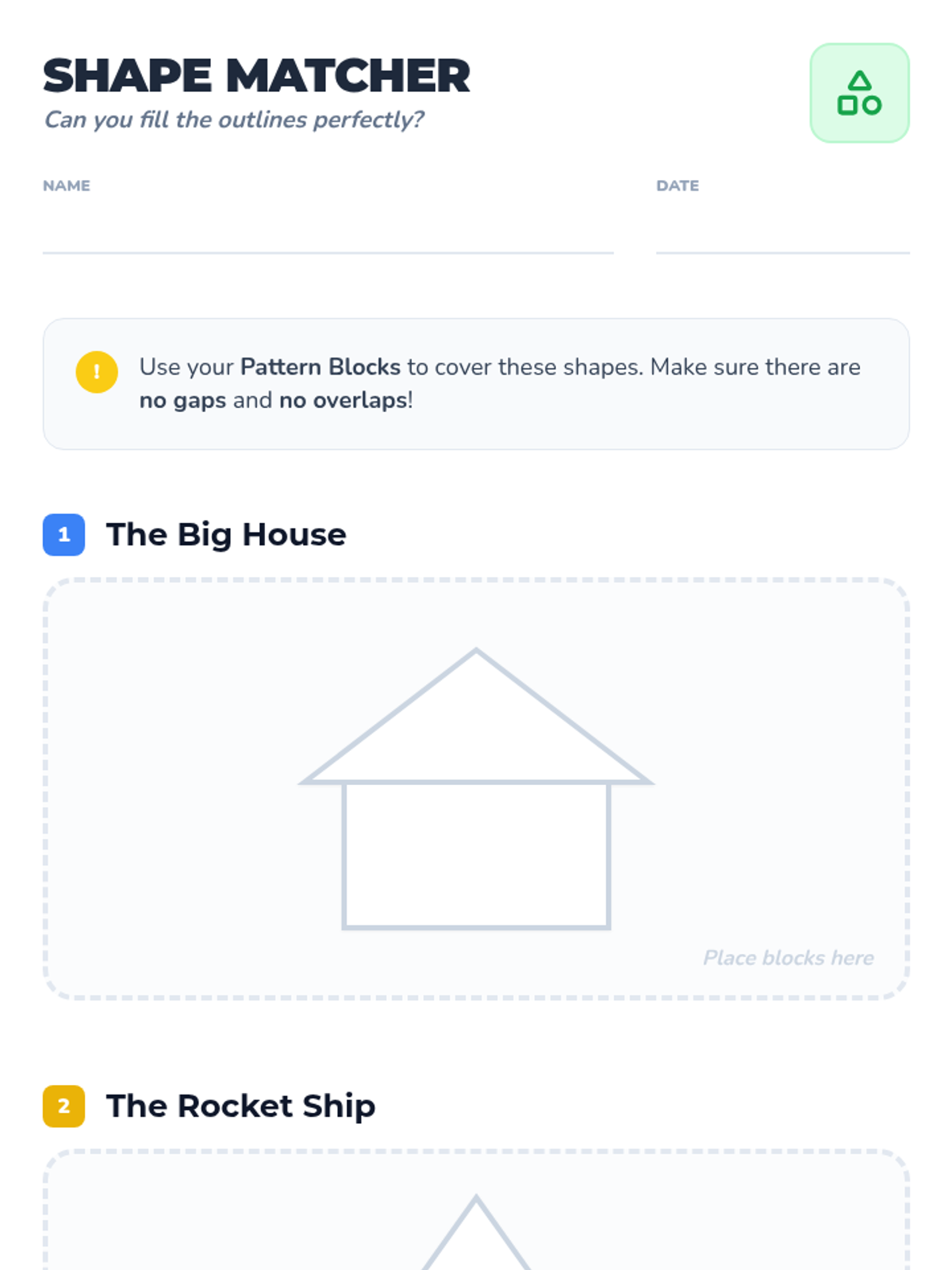
This sequence introduces 1st-grade students to spatial reasoning through the composition and decomposition of geometric figures. Students explore how shapes can be combined and divided using pattern blocks, tangrams, and paper-folding activities, building a foundation for understanding area and fractions.
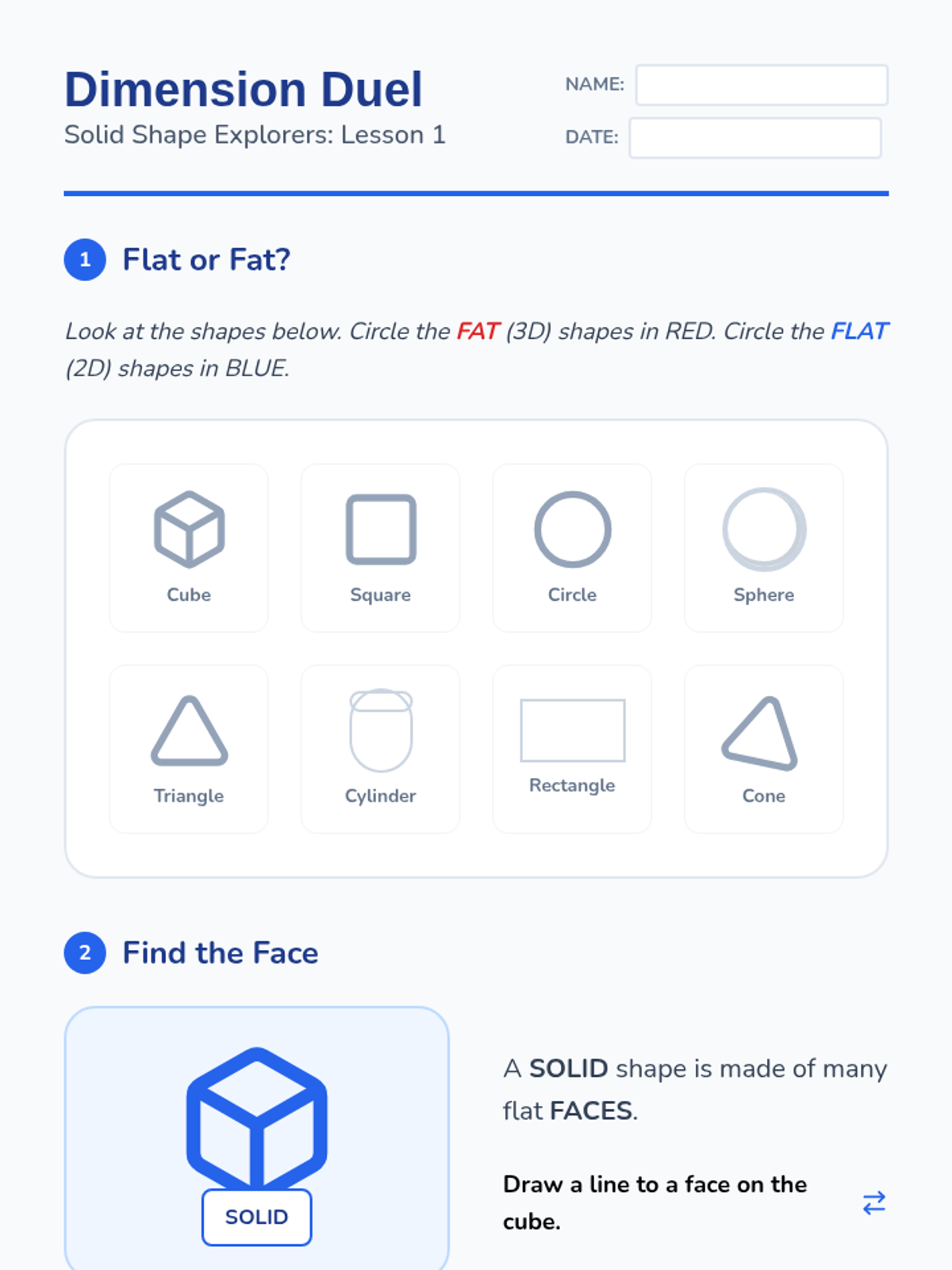
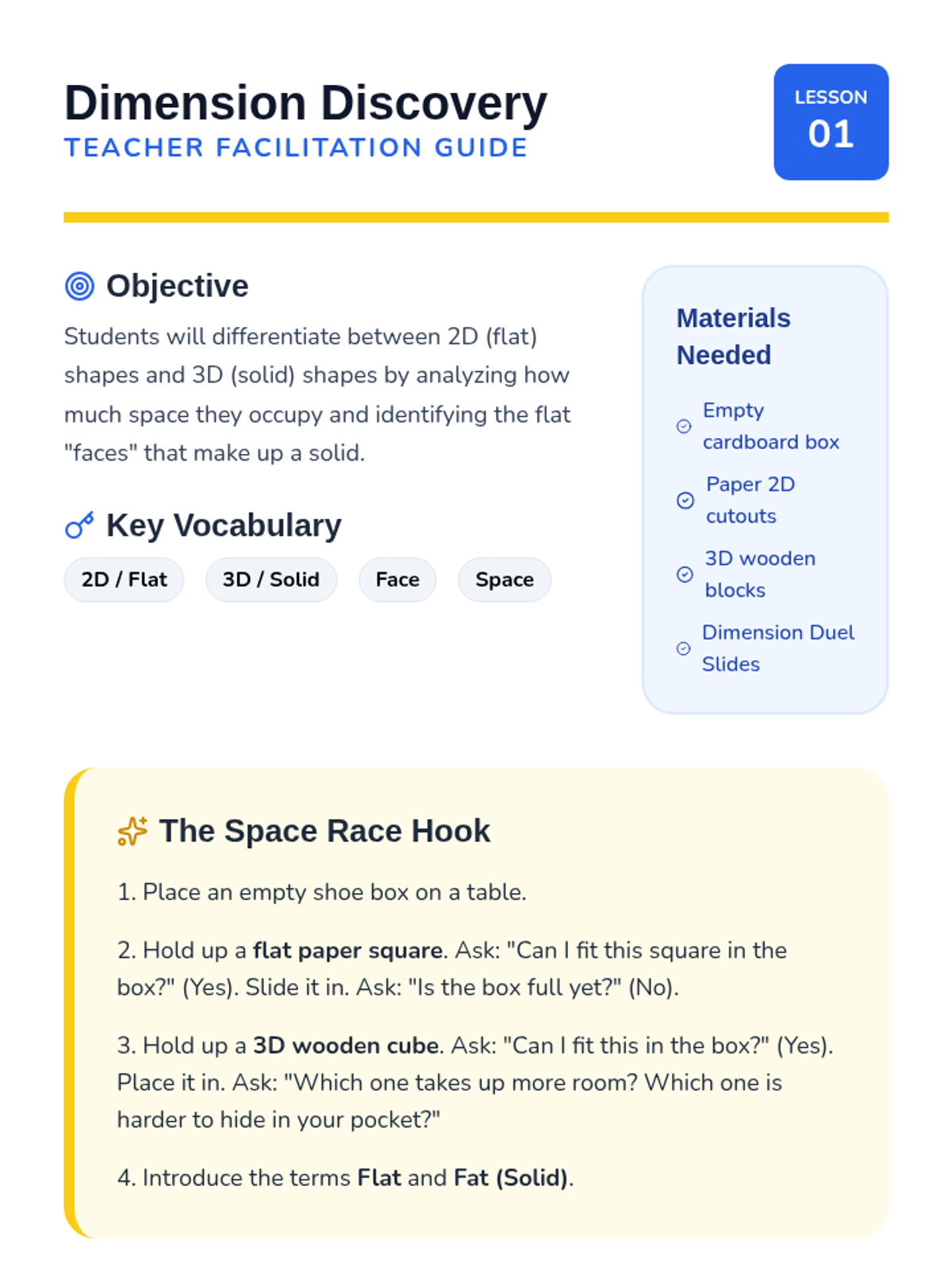
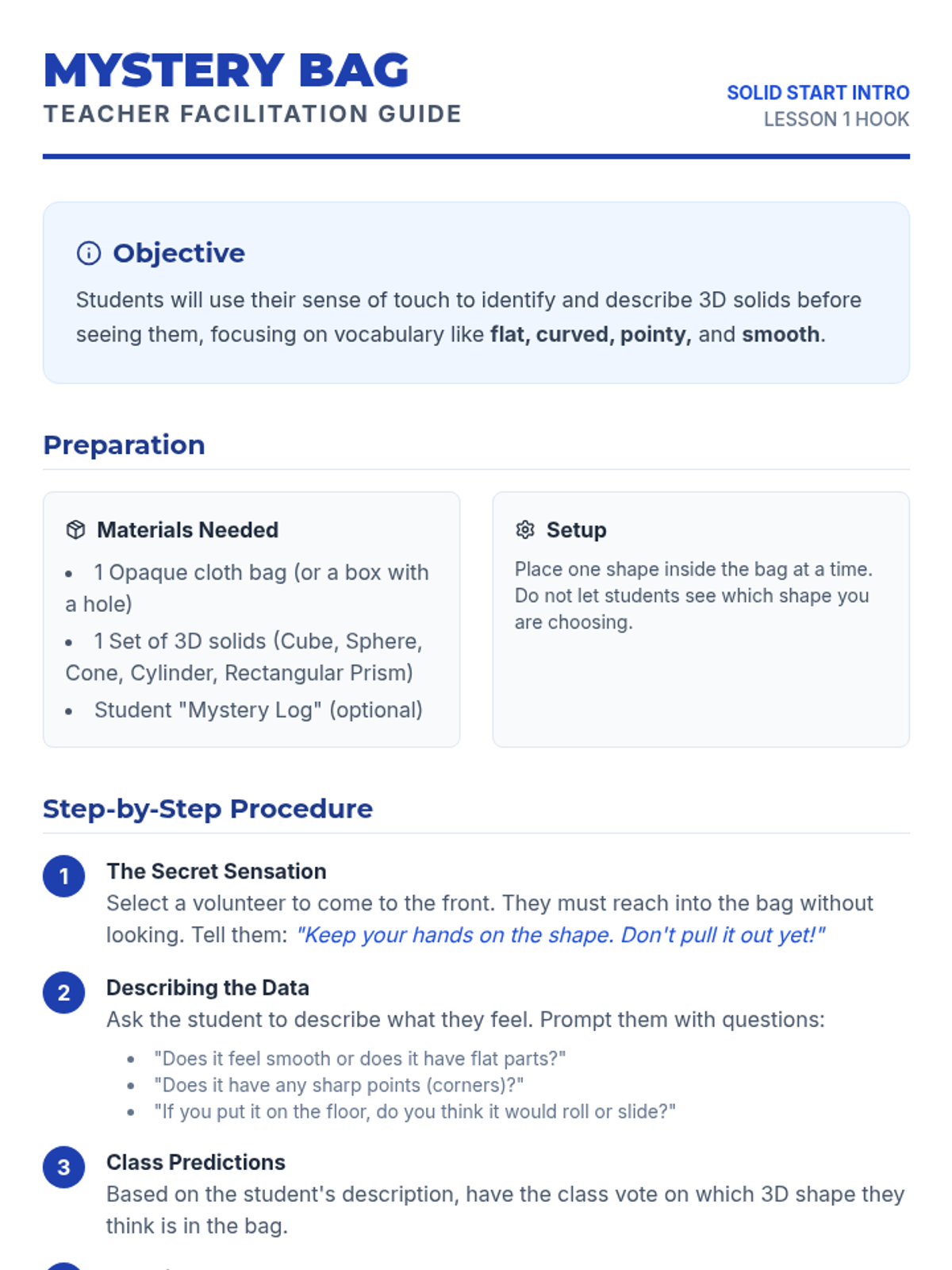
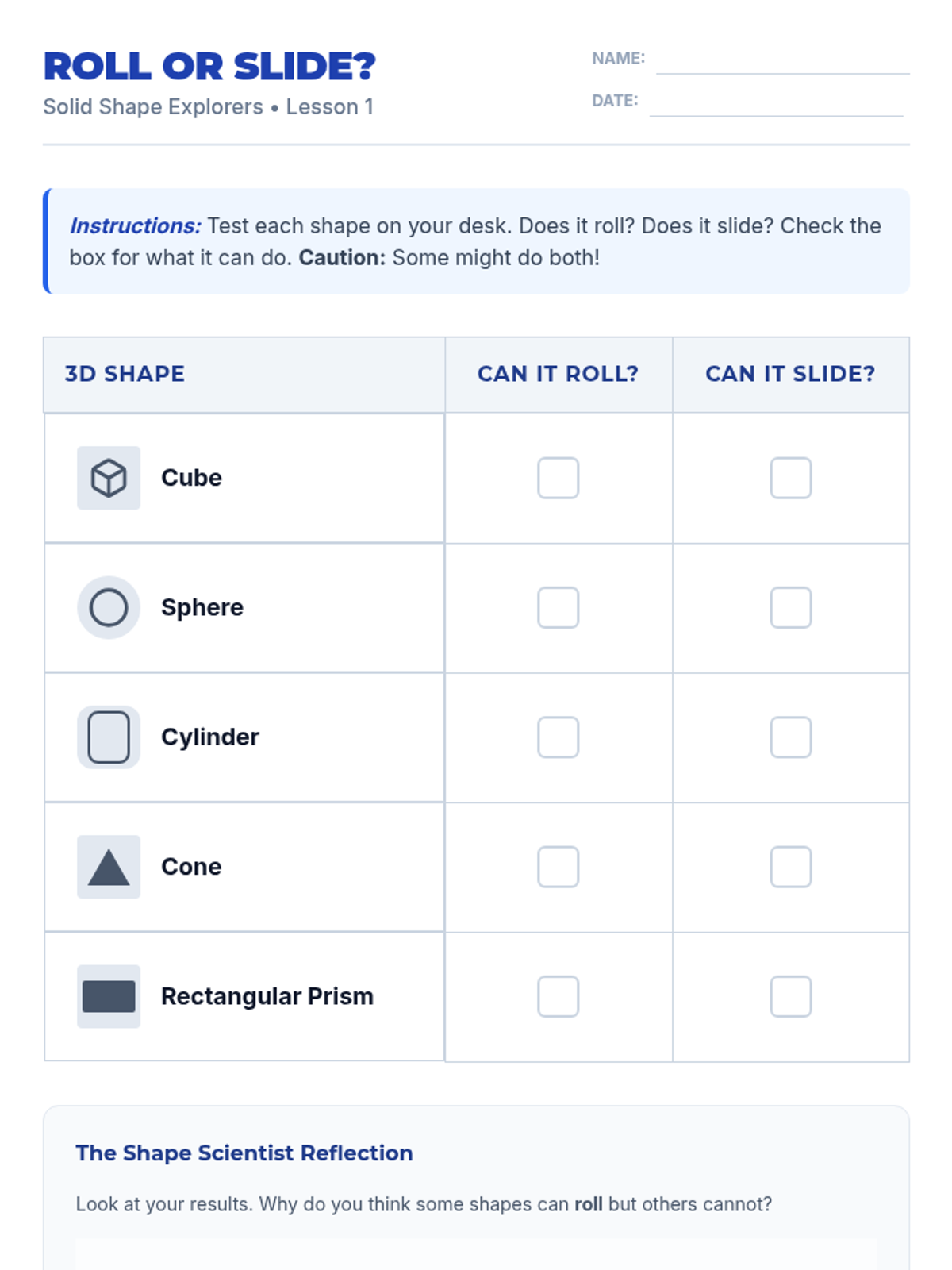
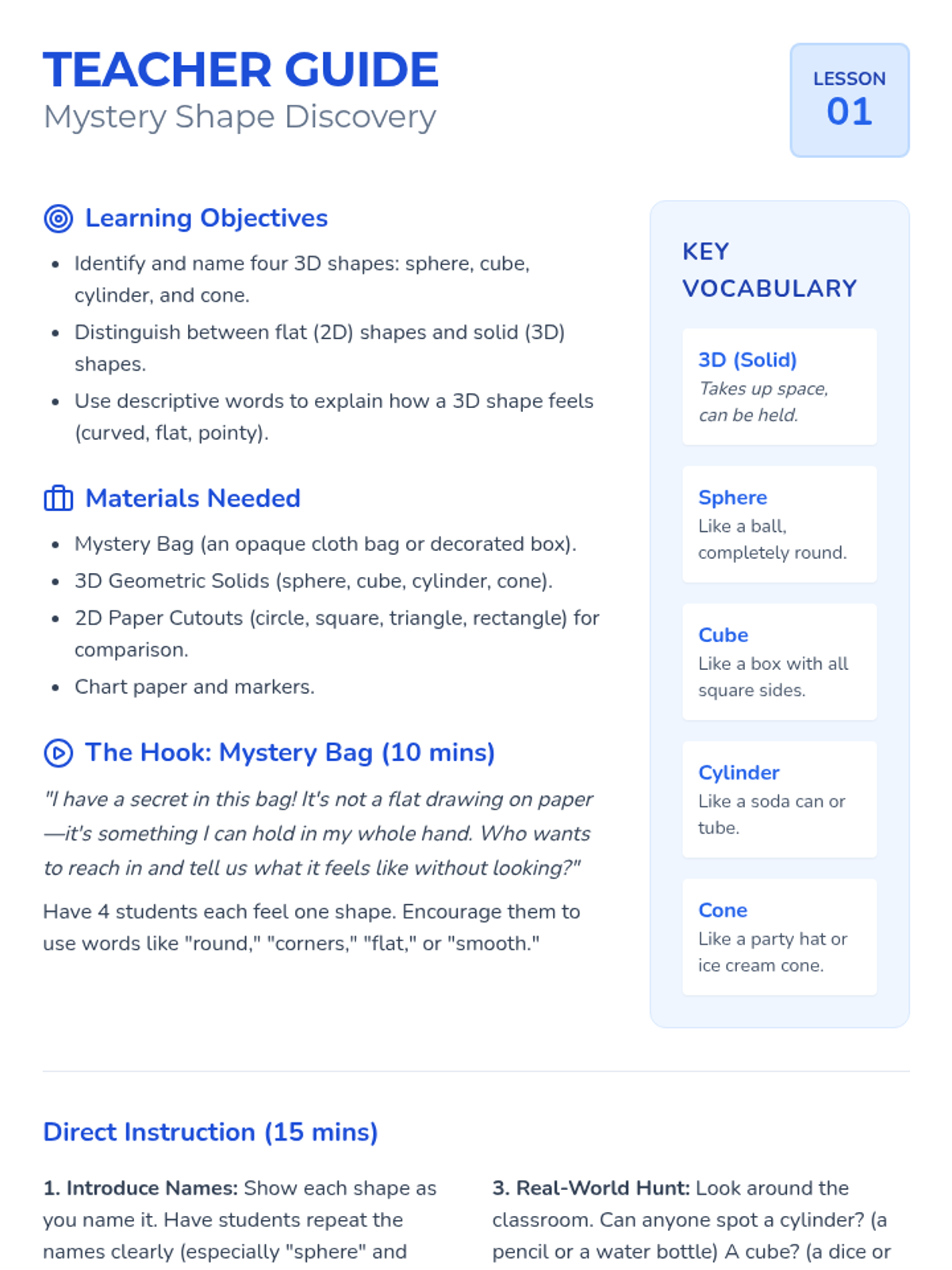
A 1st-grade physics sequence exploring 3D solids, their properties (rolling, stacking, sliding), and their relationship to 2D faces through hands-on inquiry and engineering challenges.
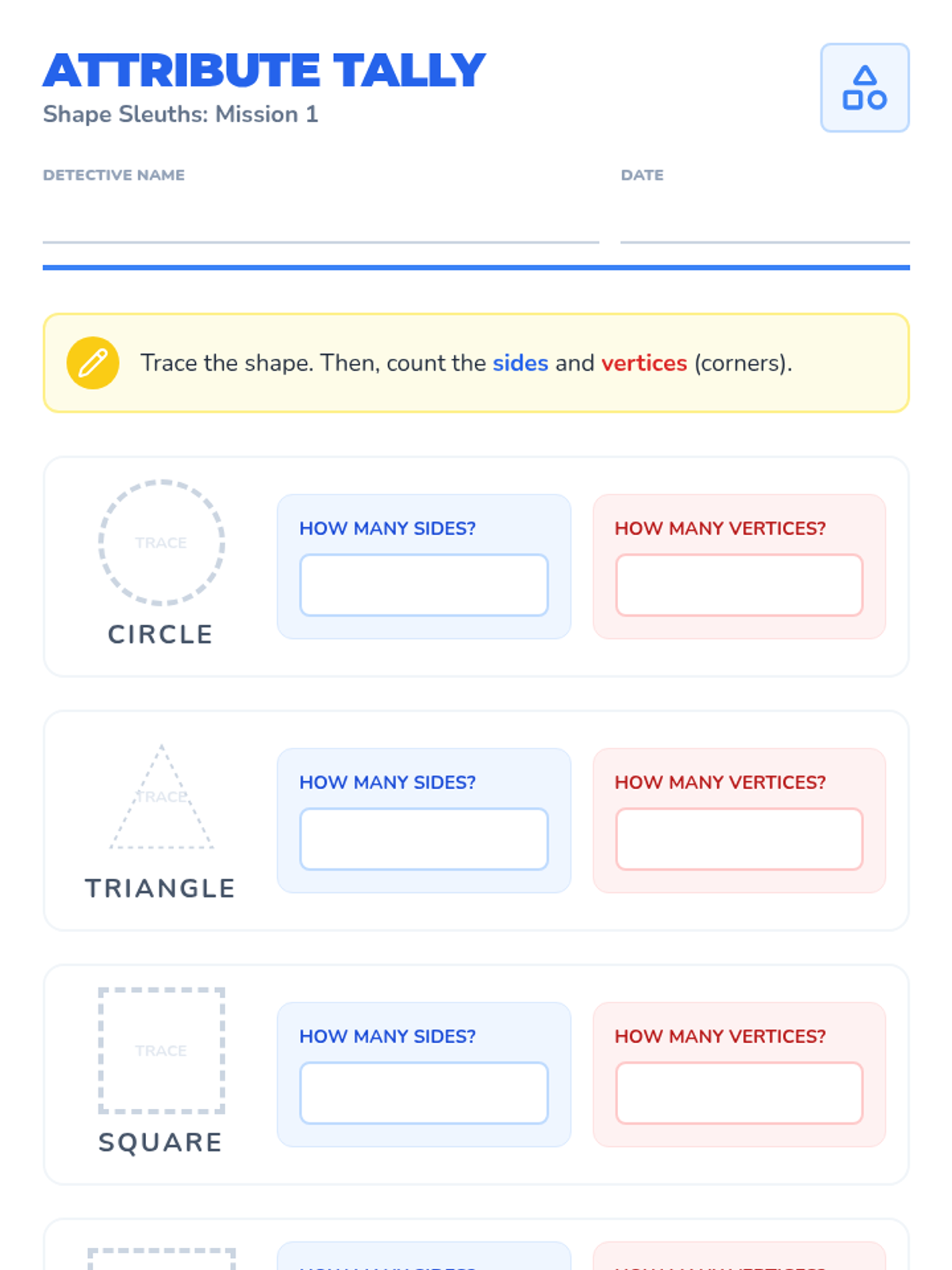
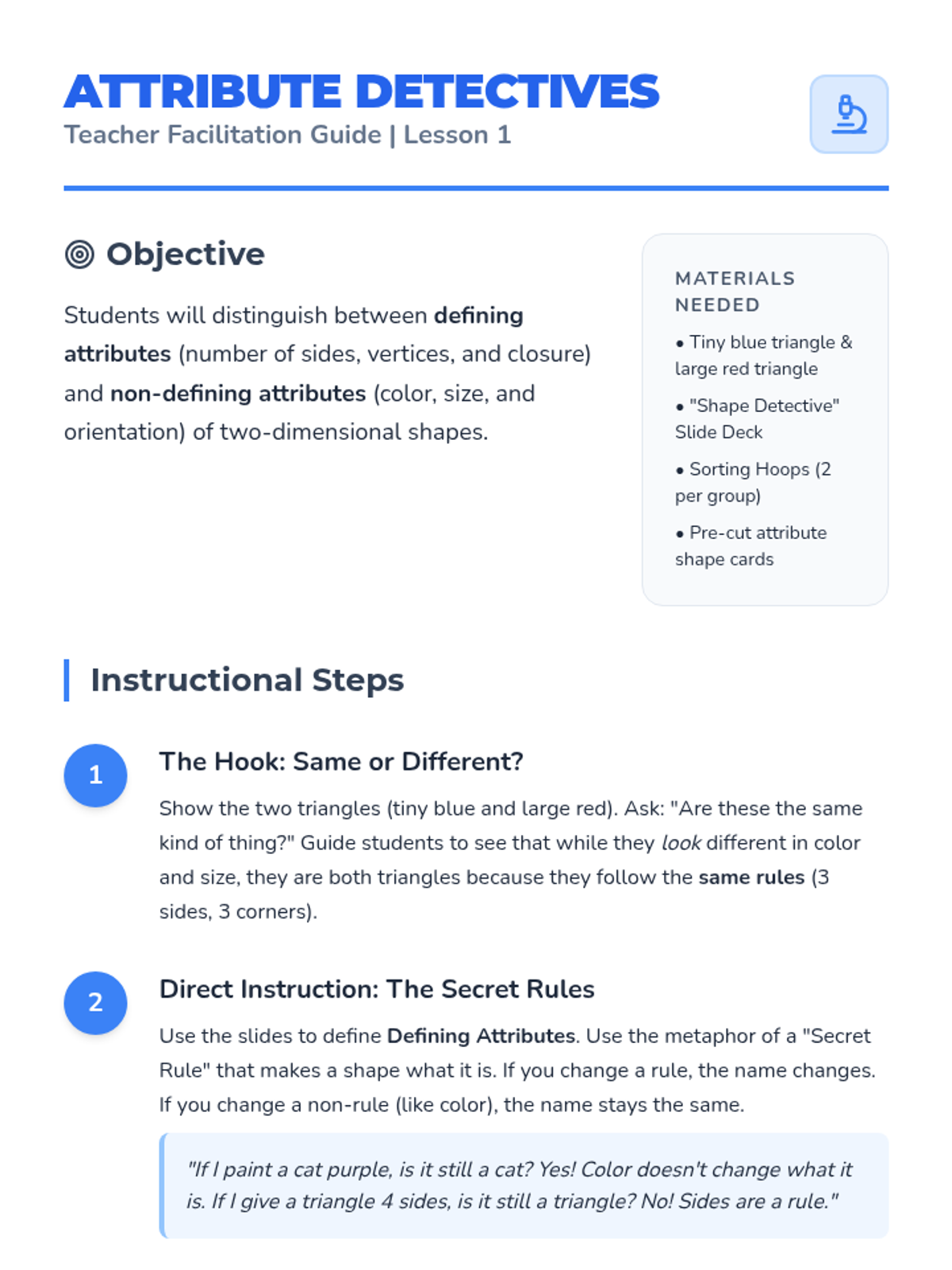
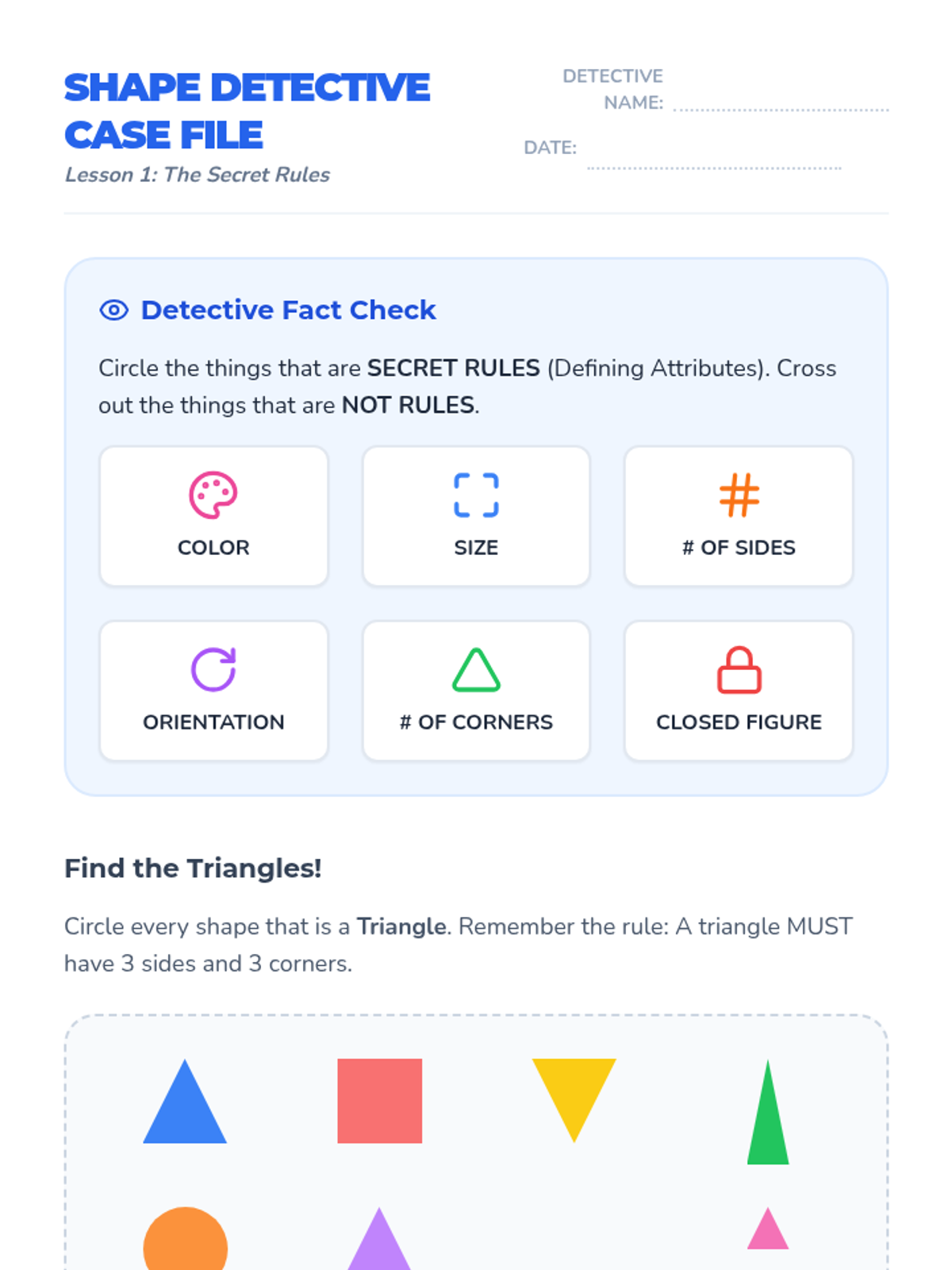
A comprehensive first-grade geometry unit focusing on the defining attributes of 2D shapes, including sides, vertices, and closure, while distinguishing them from non-defining attributes like size and color.
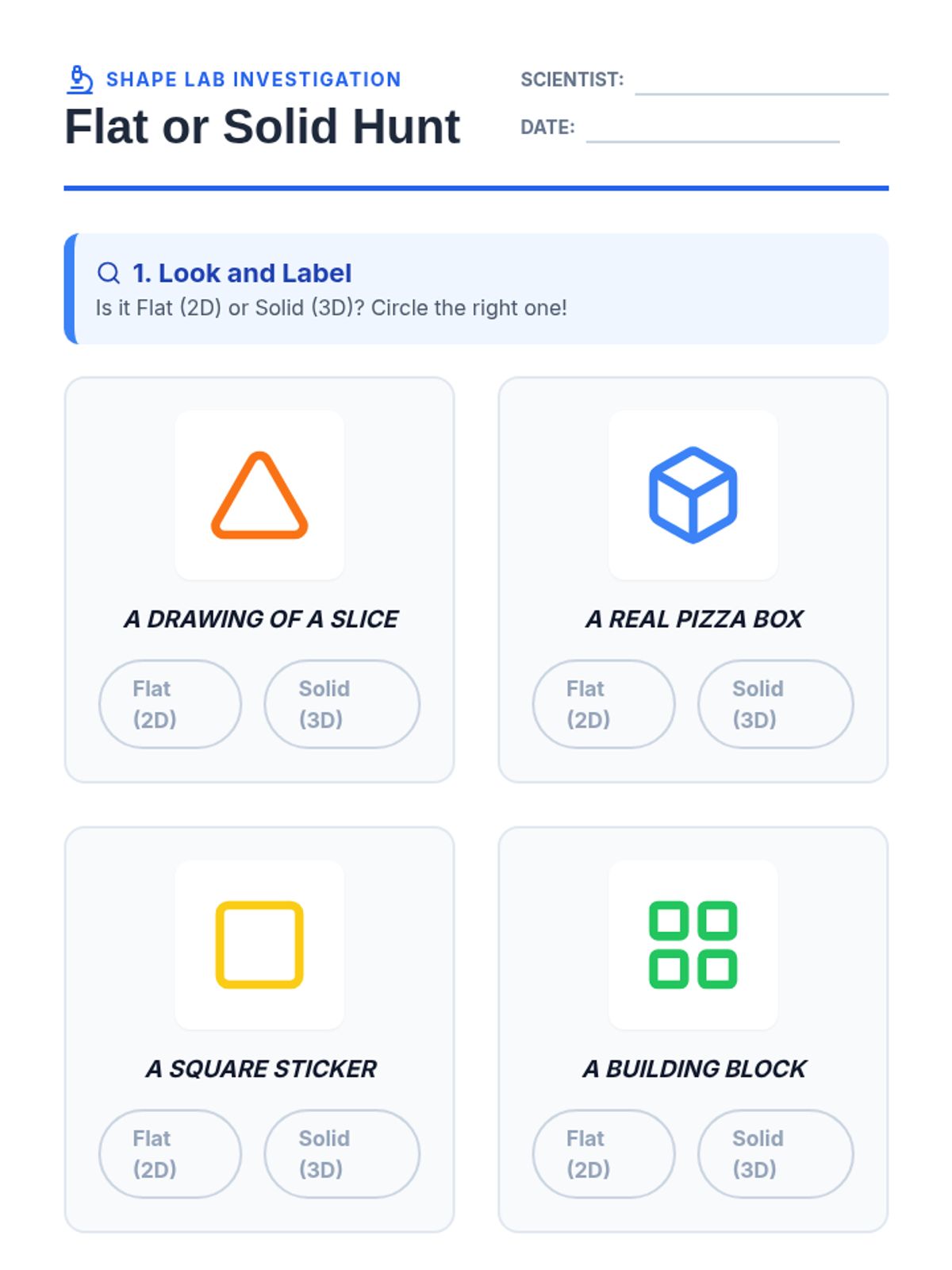
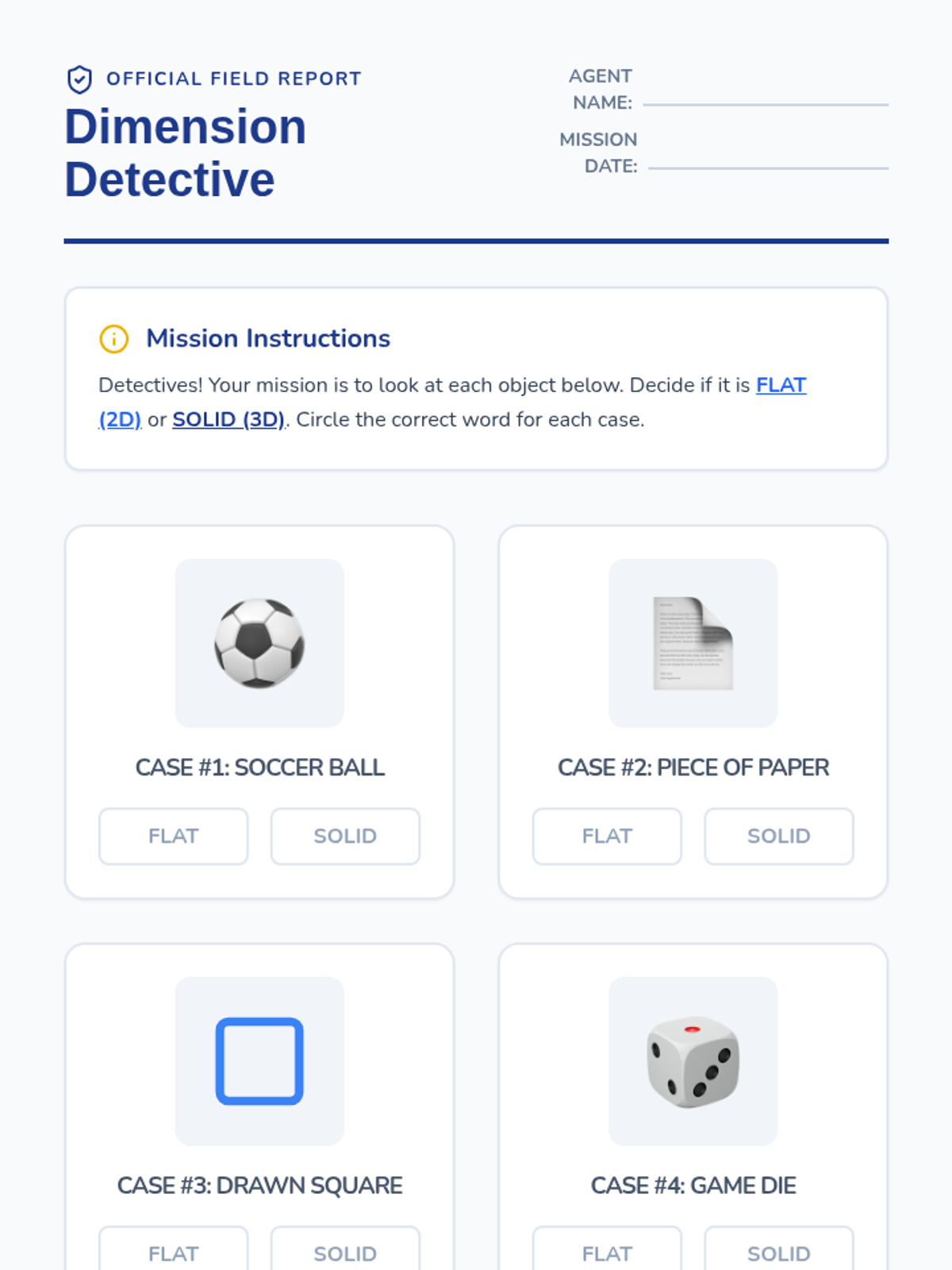
A hands-on geometry sequence for 1st graders to explore 3D shapes, capacity, and volume using 'Shape Lab' investigations. Students progress from distinguishing 2D from 3D to measuring volume with unit cubes and exploring capacity through liquid displacement and estimation.
A 1st-grade geometry sequence exploring how shapes combine and break apart. Students use hands-on materials like tangrams, pattern blocks, and geoboards to develop spatial reasoning and understand the part-whole relationship in geometric figures.
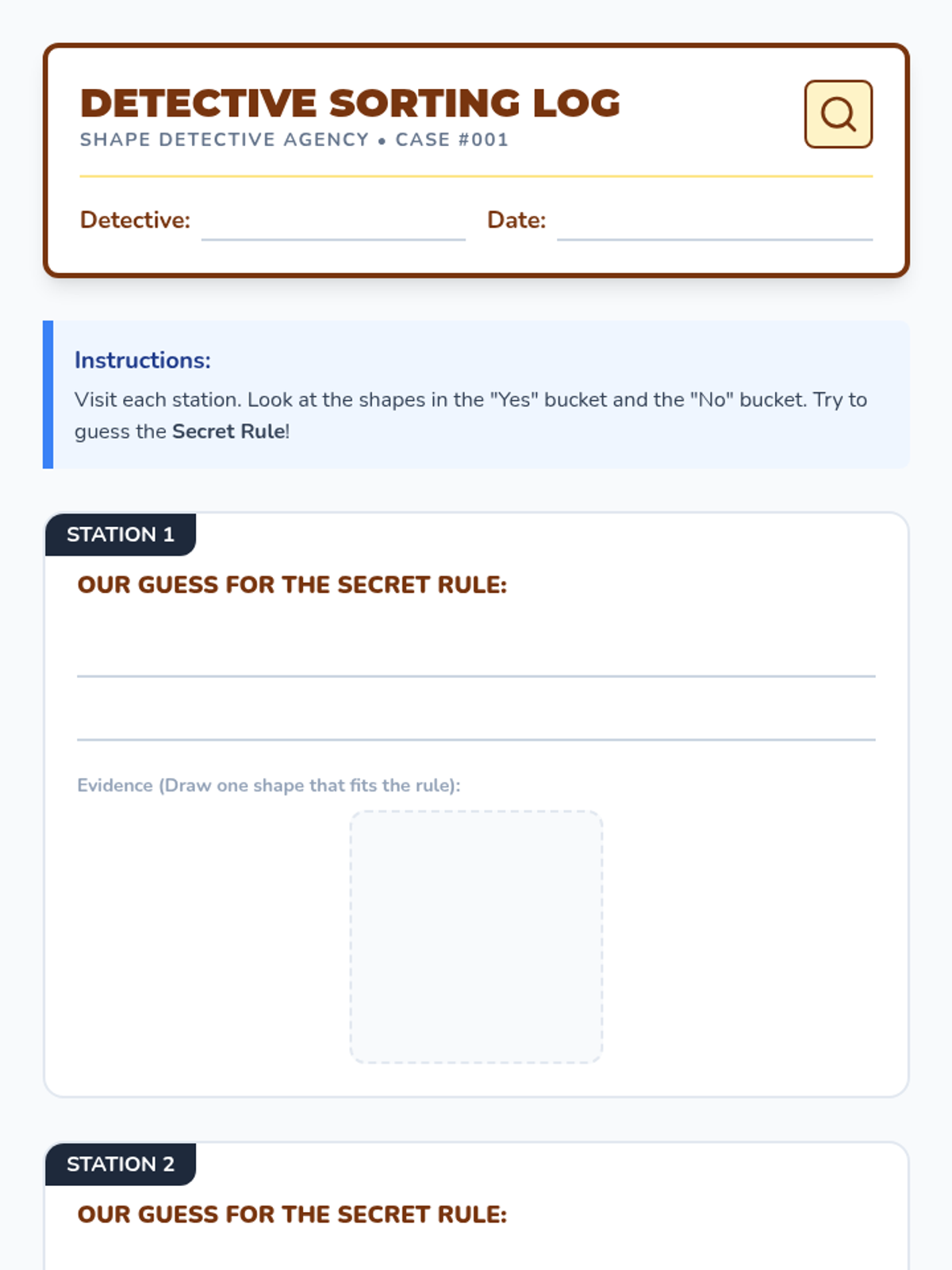
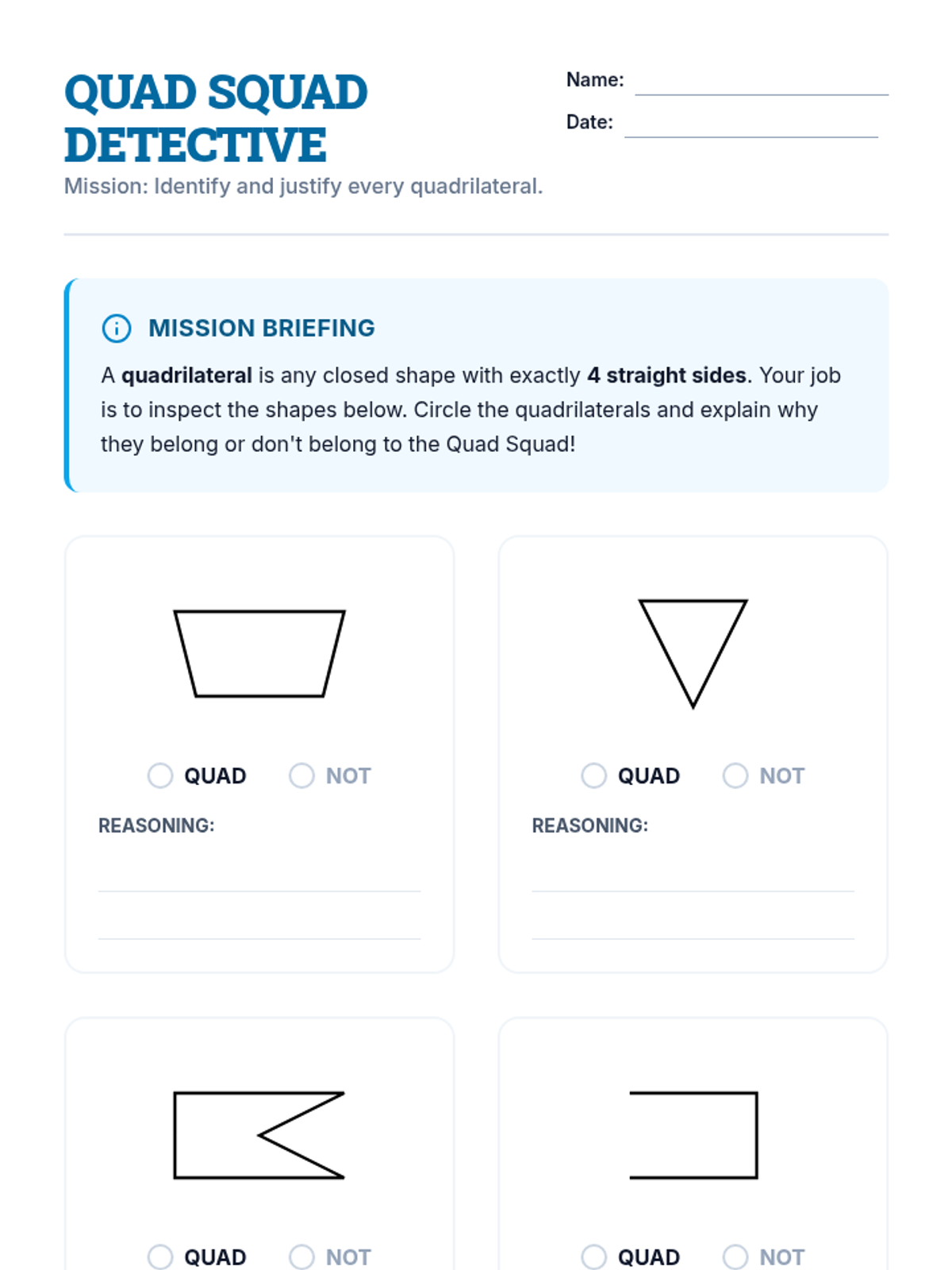
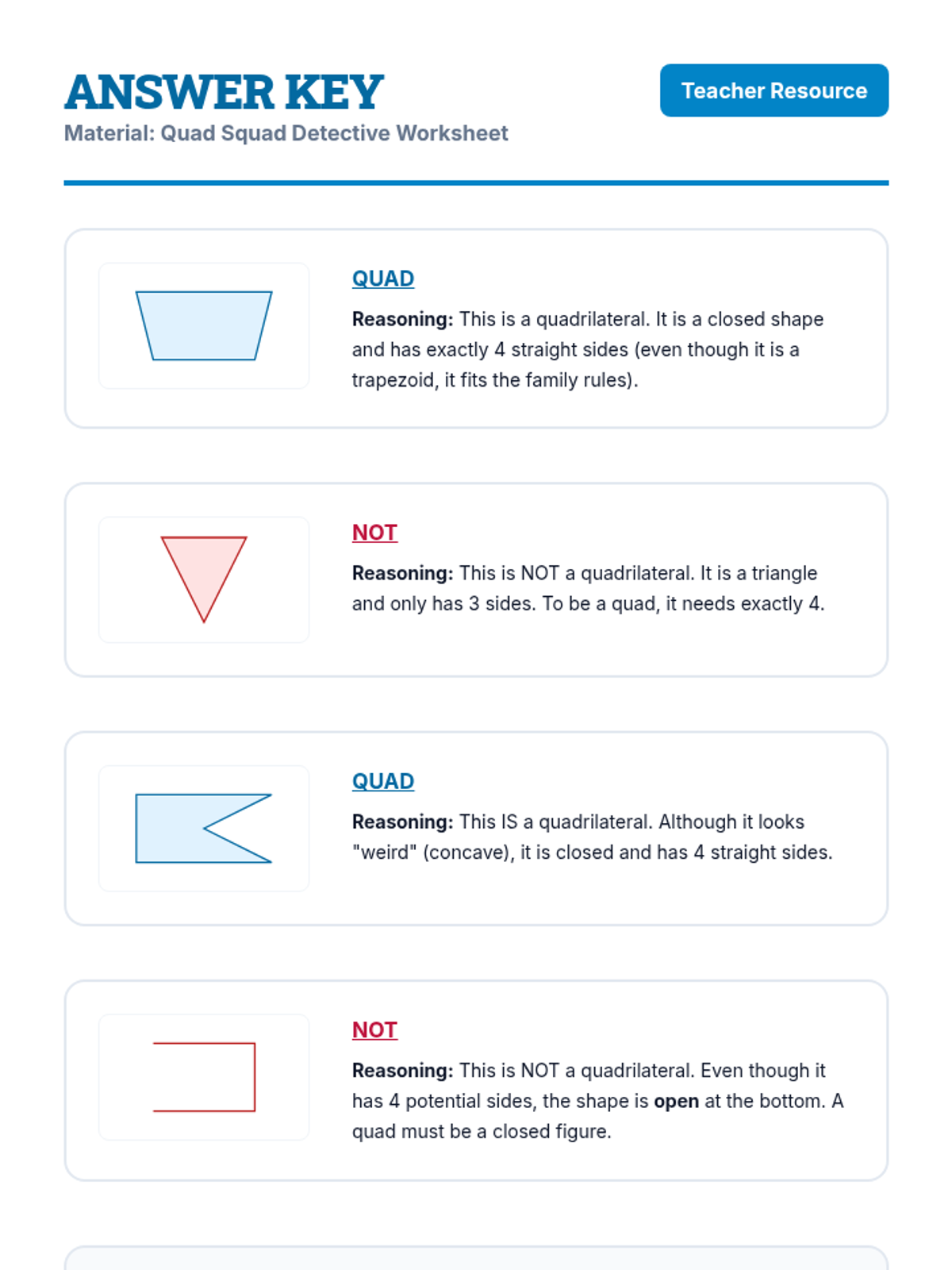
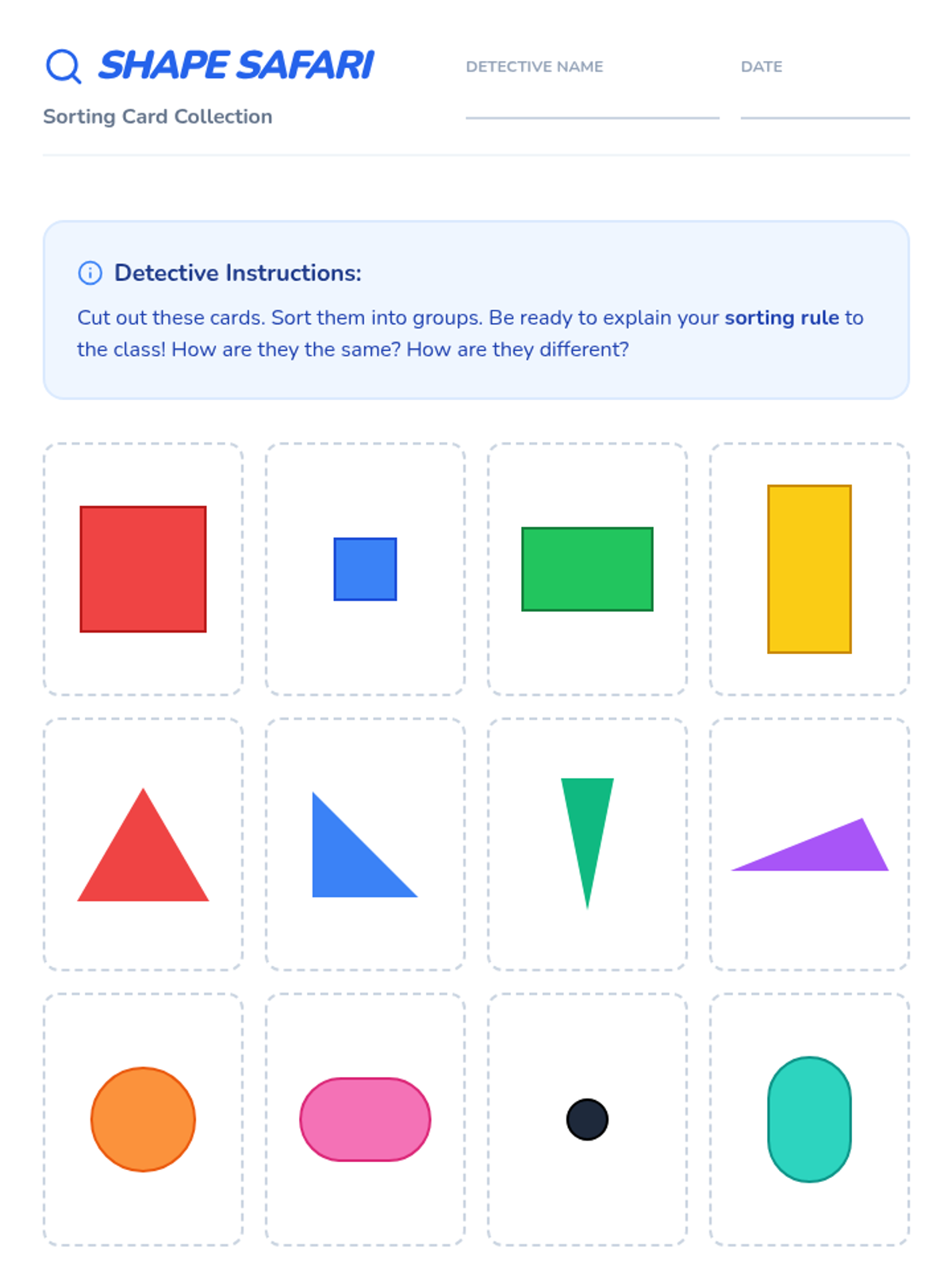
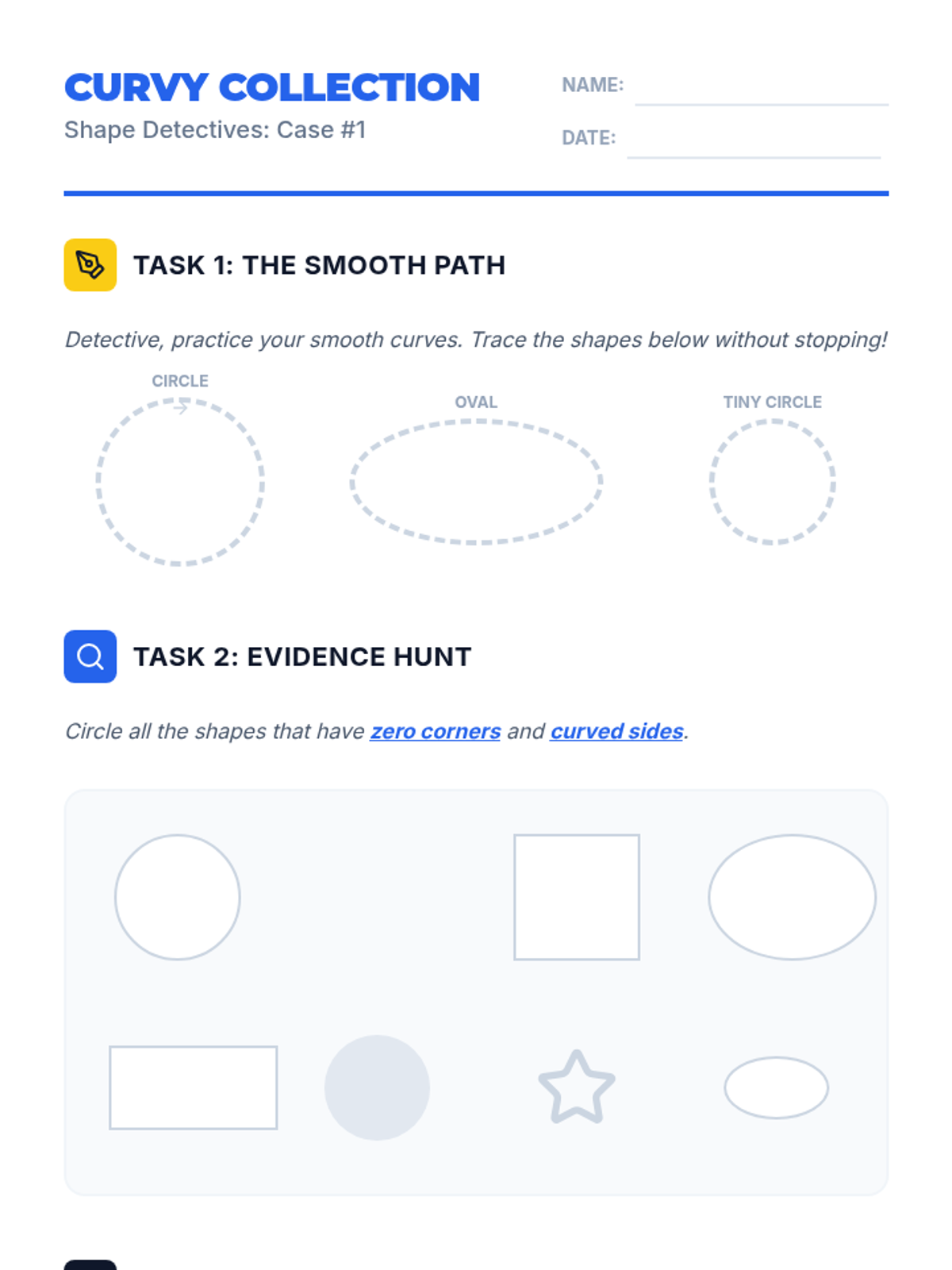
A 1st-grade geometry unit where students act as 'Shape Detectives' to classify 2D figures by sides, corners, and side lengths. The sequence moves from general sorting to specific quadrilateral classification and identifying polygons like hexagons.
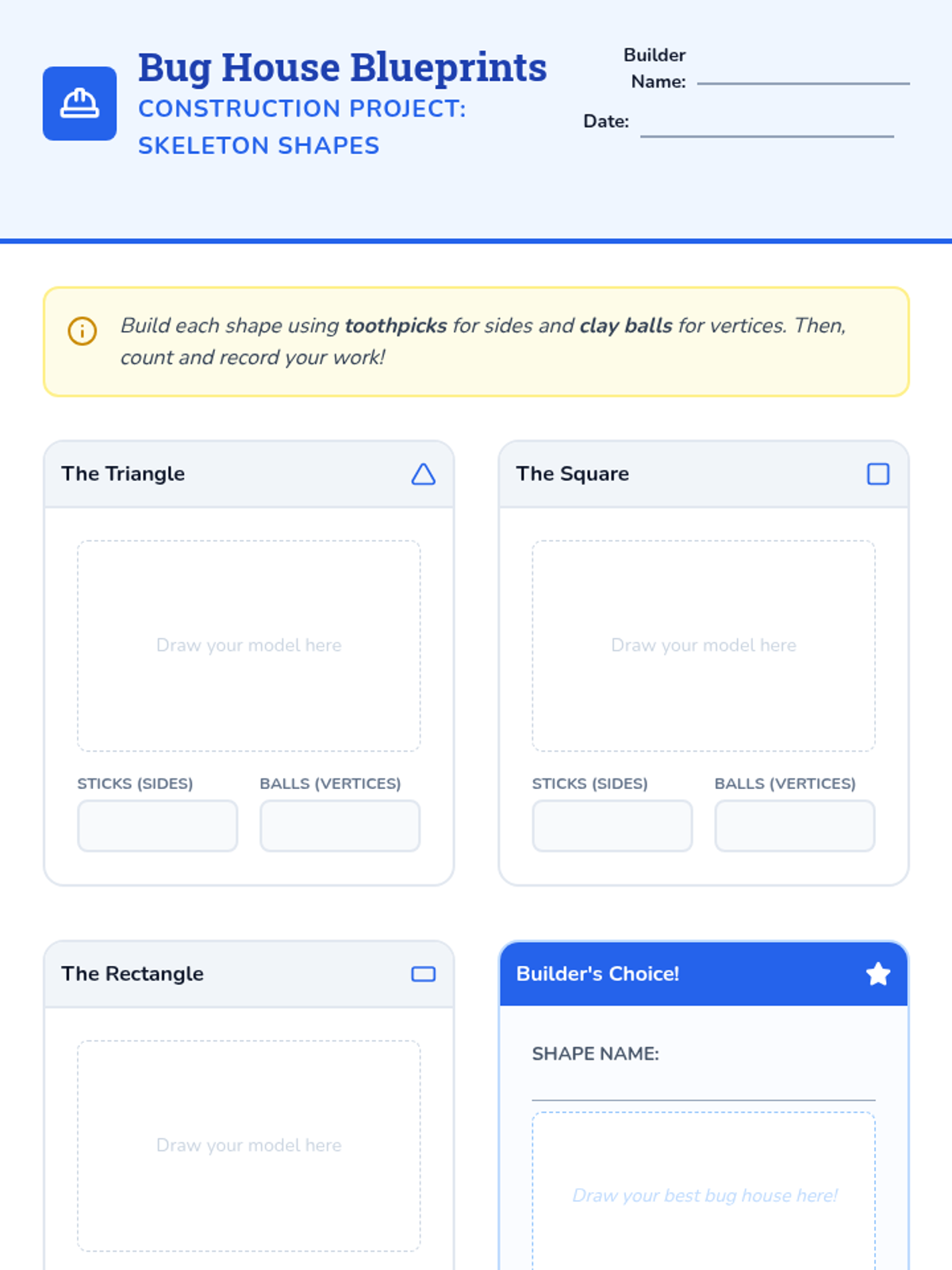
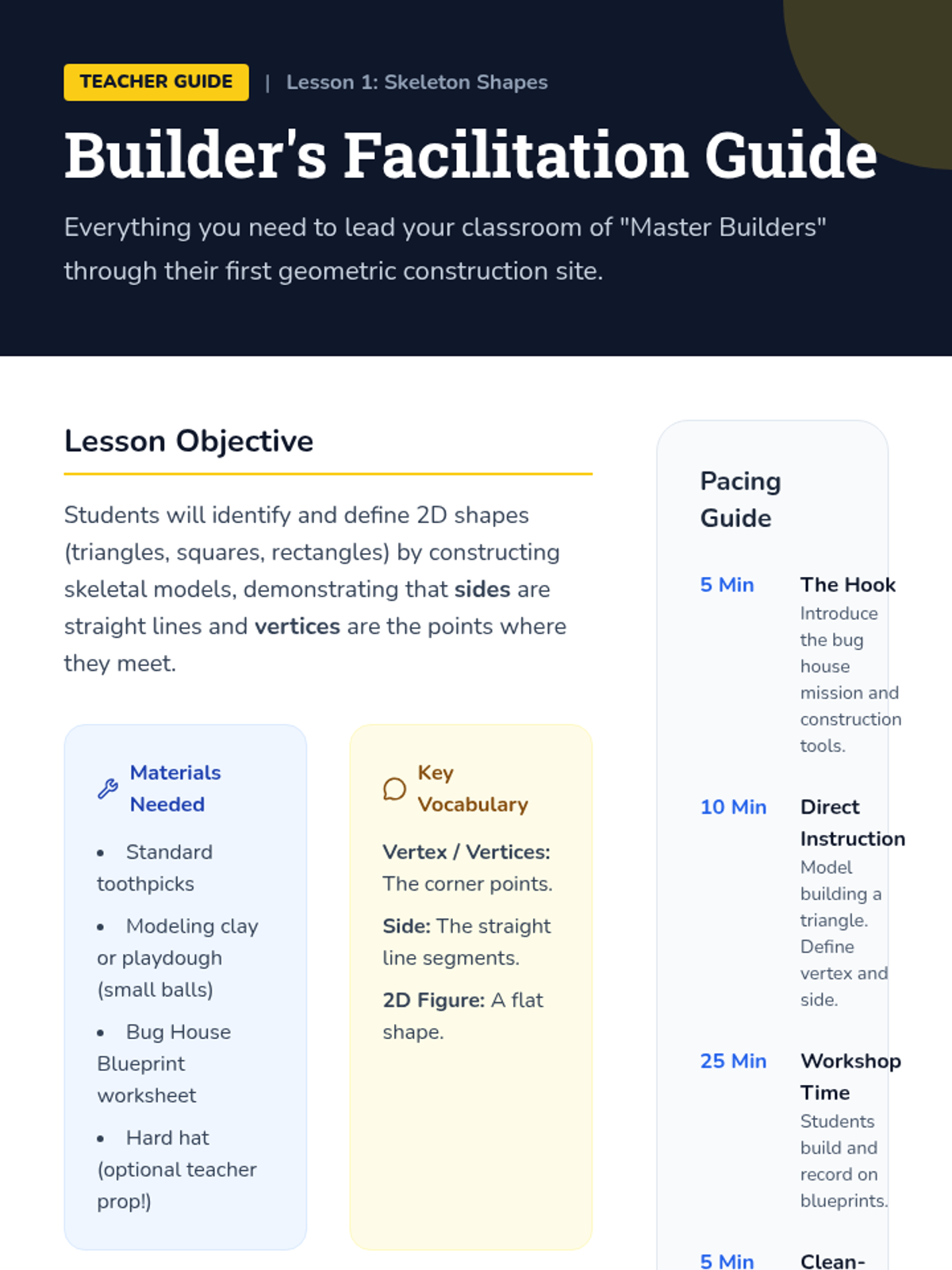
A project-based sequence focusing on the construction and composition of 2D shapes. Students move from building skeletal models to composing complex images using geometric components.
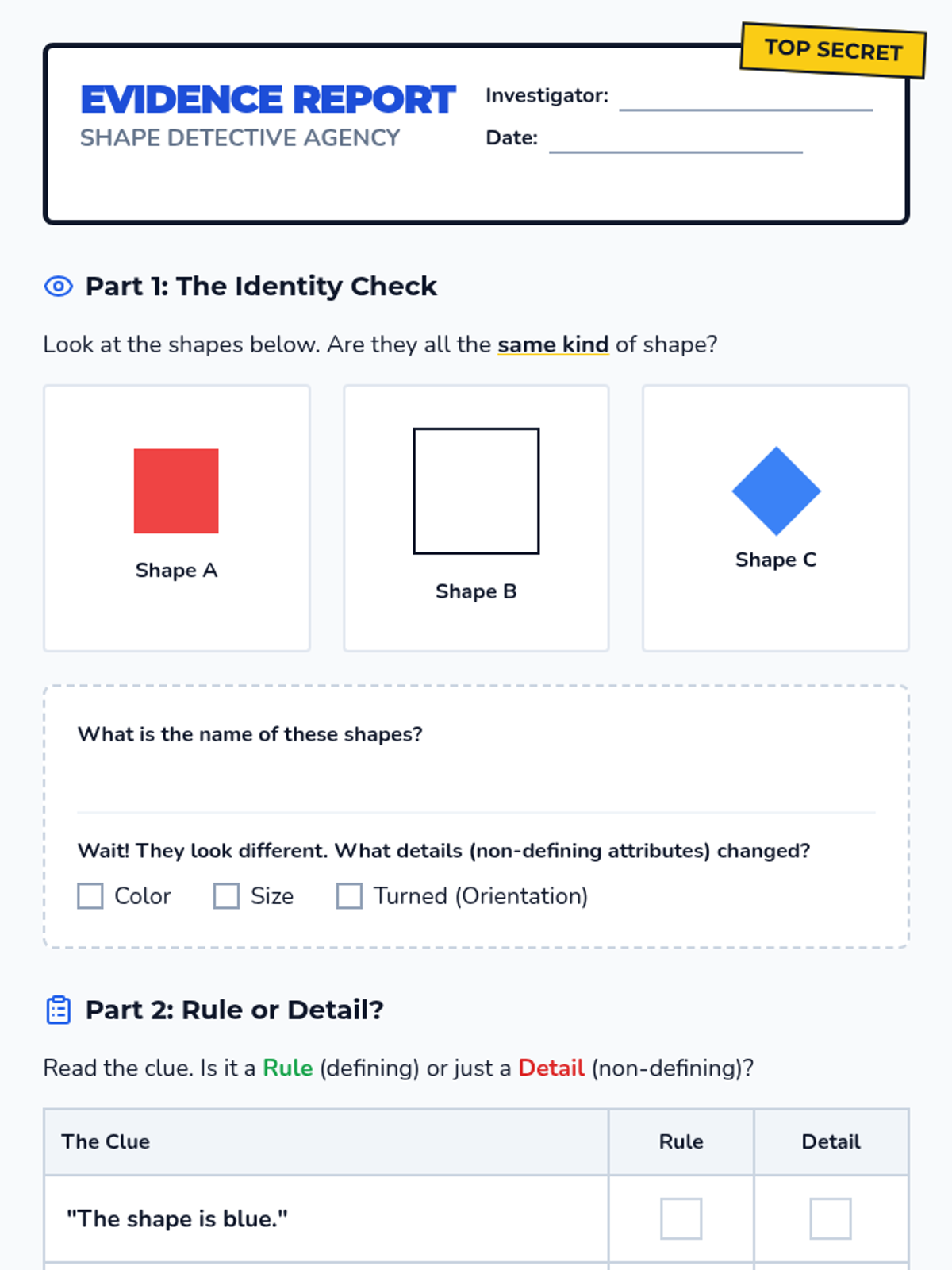
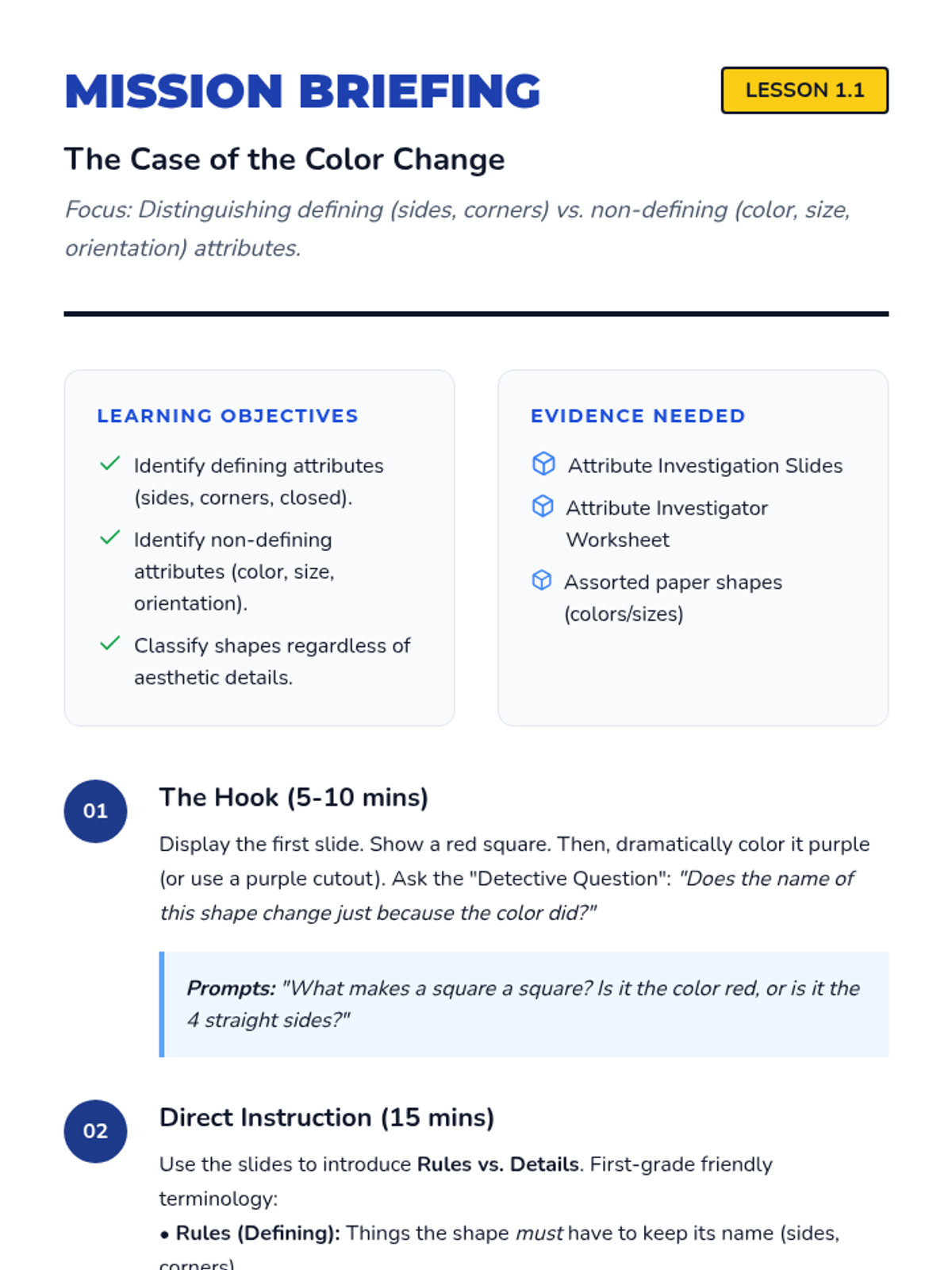
A 1st Grade geometry sequence that teaches students to distinguish between defining attributes (sides, corners, closed figures) and non-defining attributes (color, size, orientation) through the lens of a Shape Detective Agency.
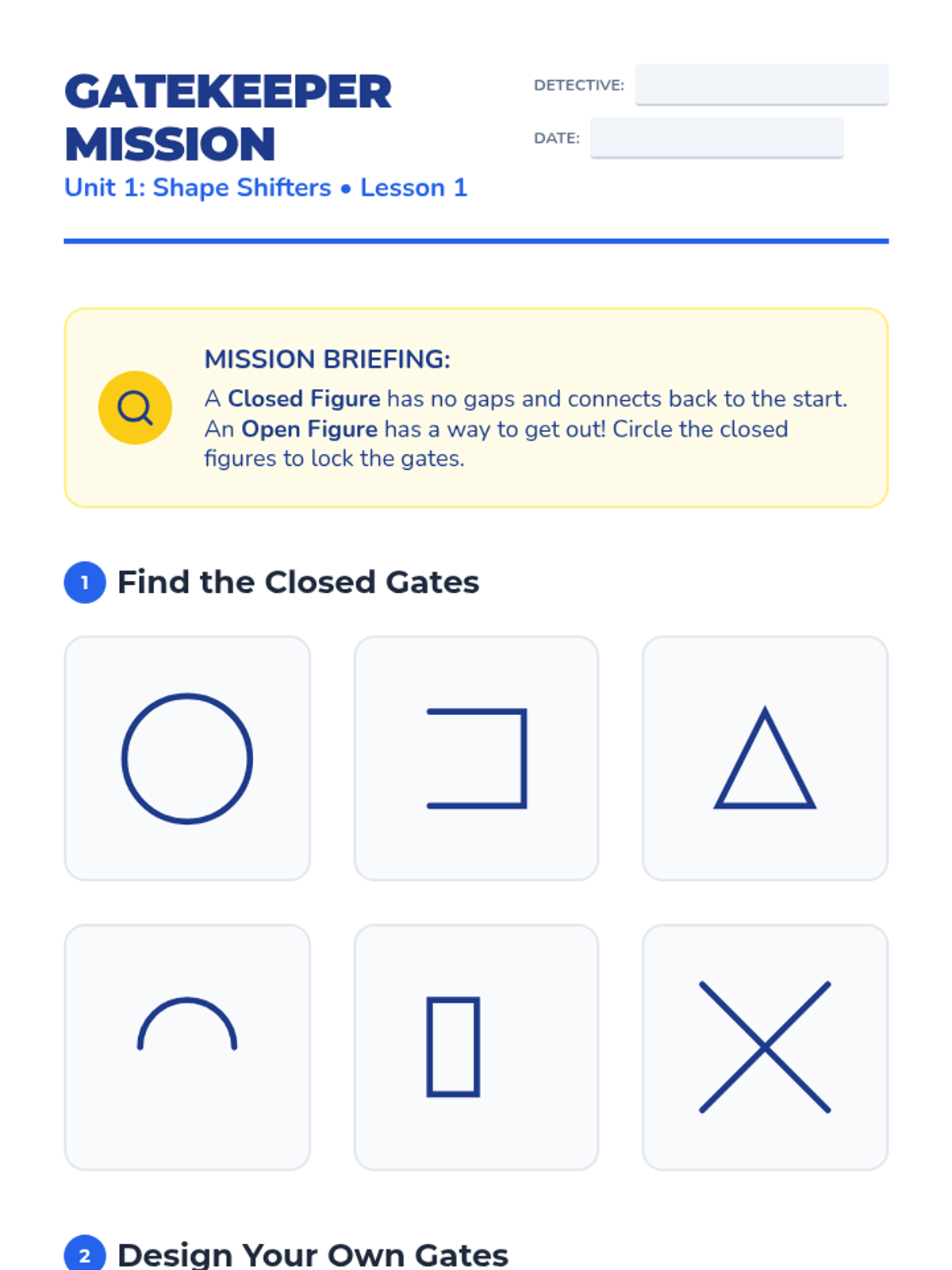
This sequence guides first-grade students through the exploration of geometric properties, focusing on the defining attributes of two-dimensional shapes. Students explore open and closed figures, identify sides and corners, distinguish defining attributes from non-defining ones, and learn to build and compose shapes.
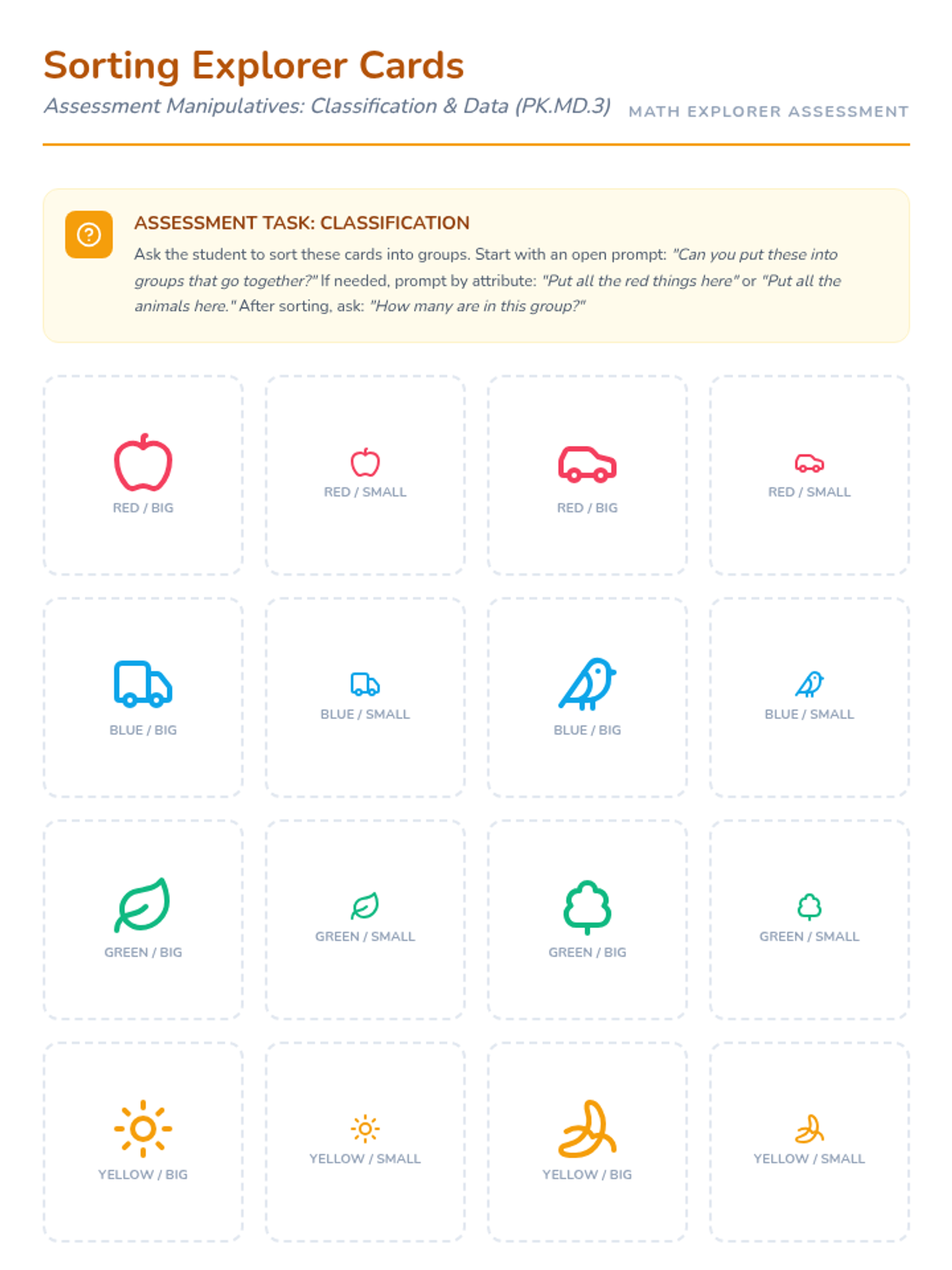
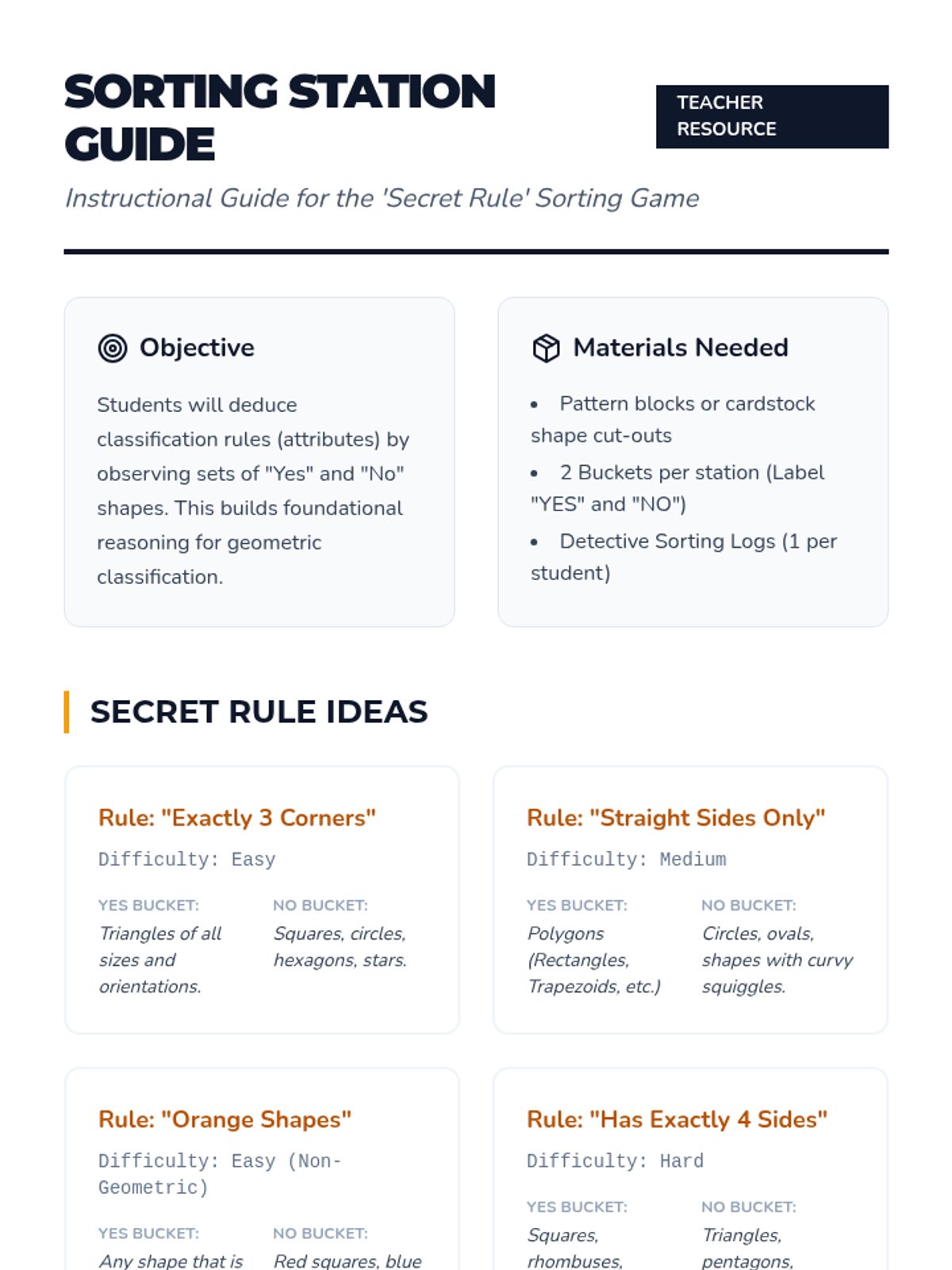
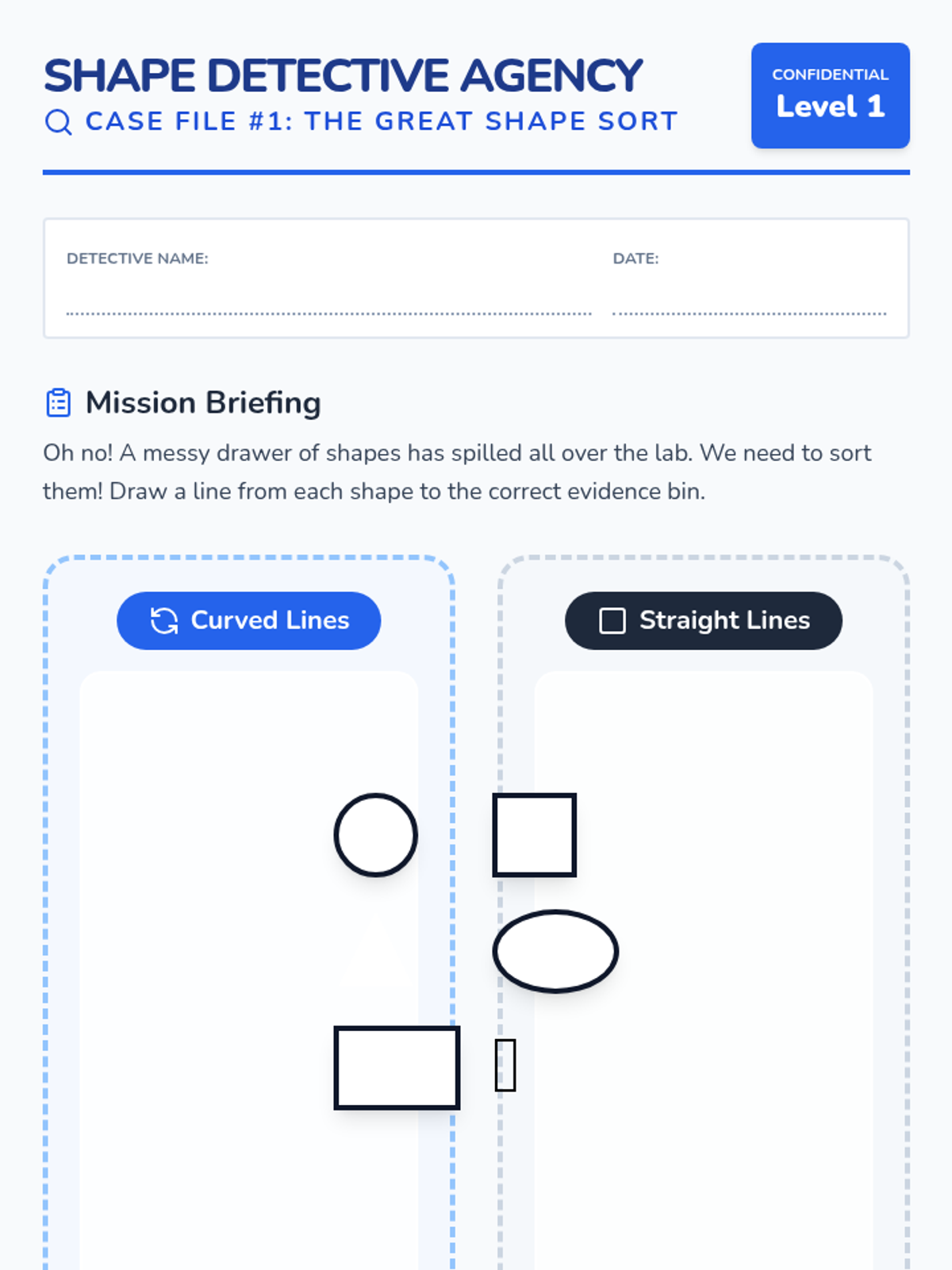
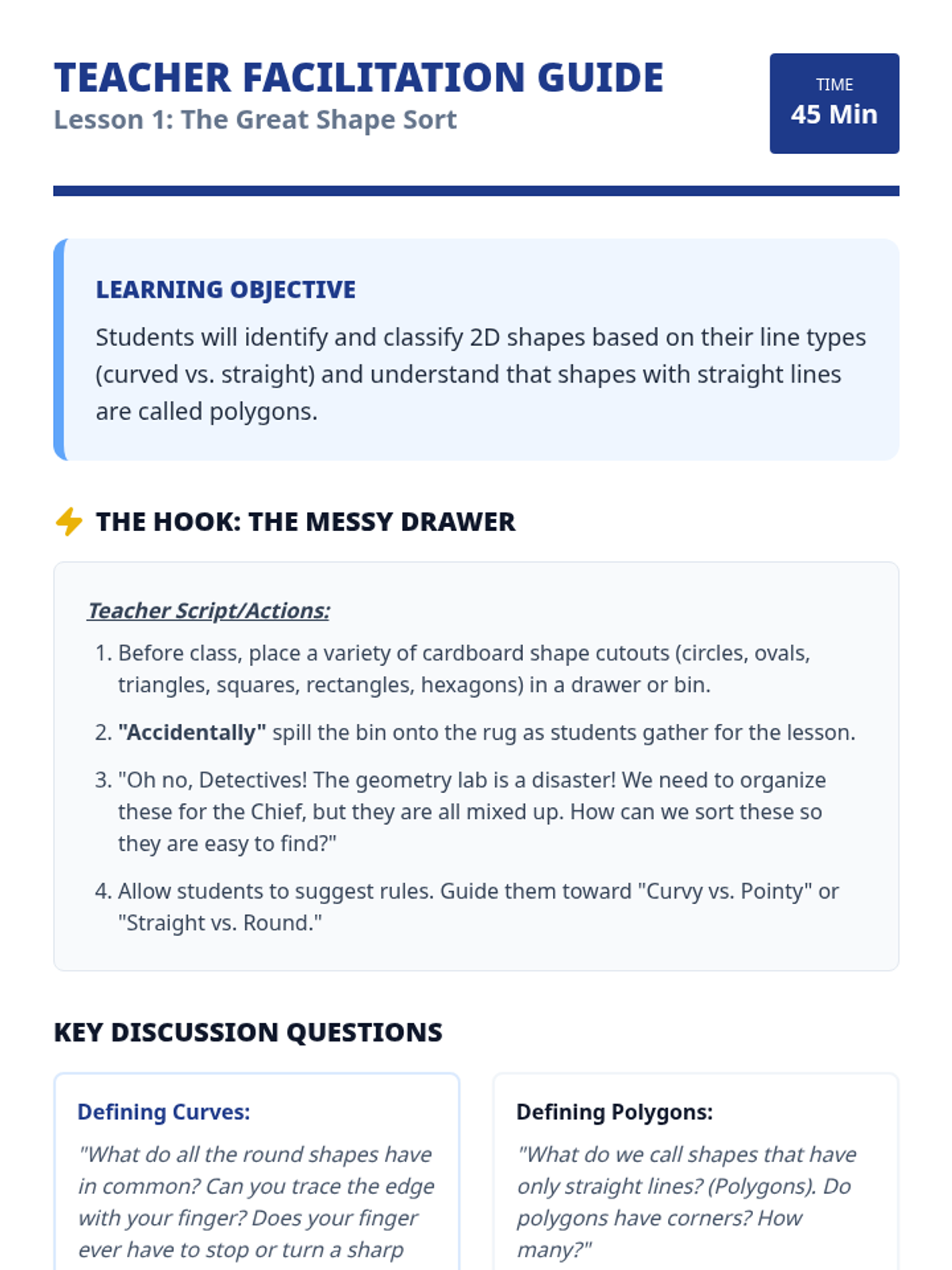
A 1st Grade geometry unit where students act as 'Shape Detectives' to classify 2D figures by their physical attributes, including line type, side count, and corner types. The sequence culminates in complex multi-attribute sorting and inductive reasoning games.
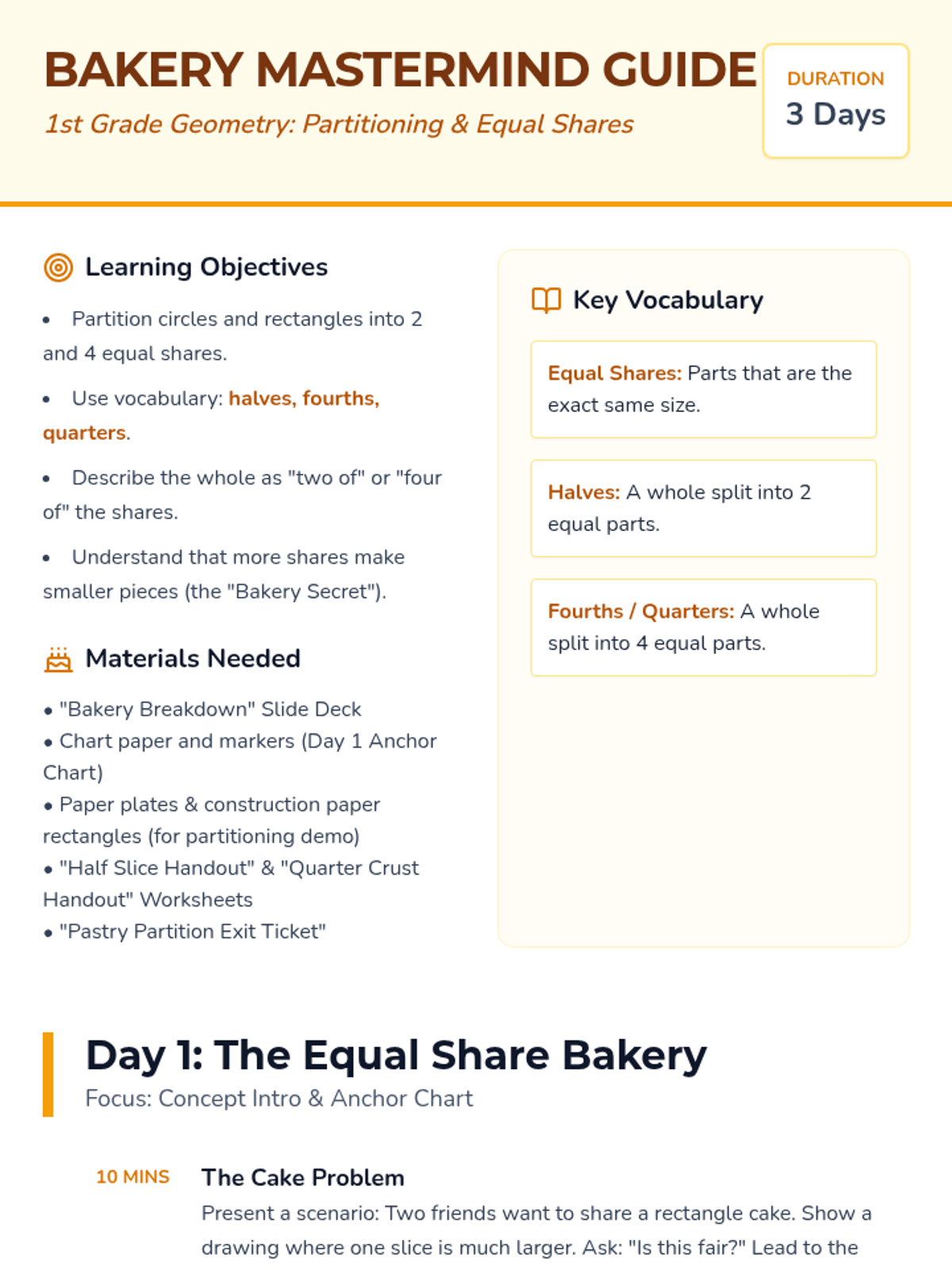
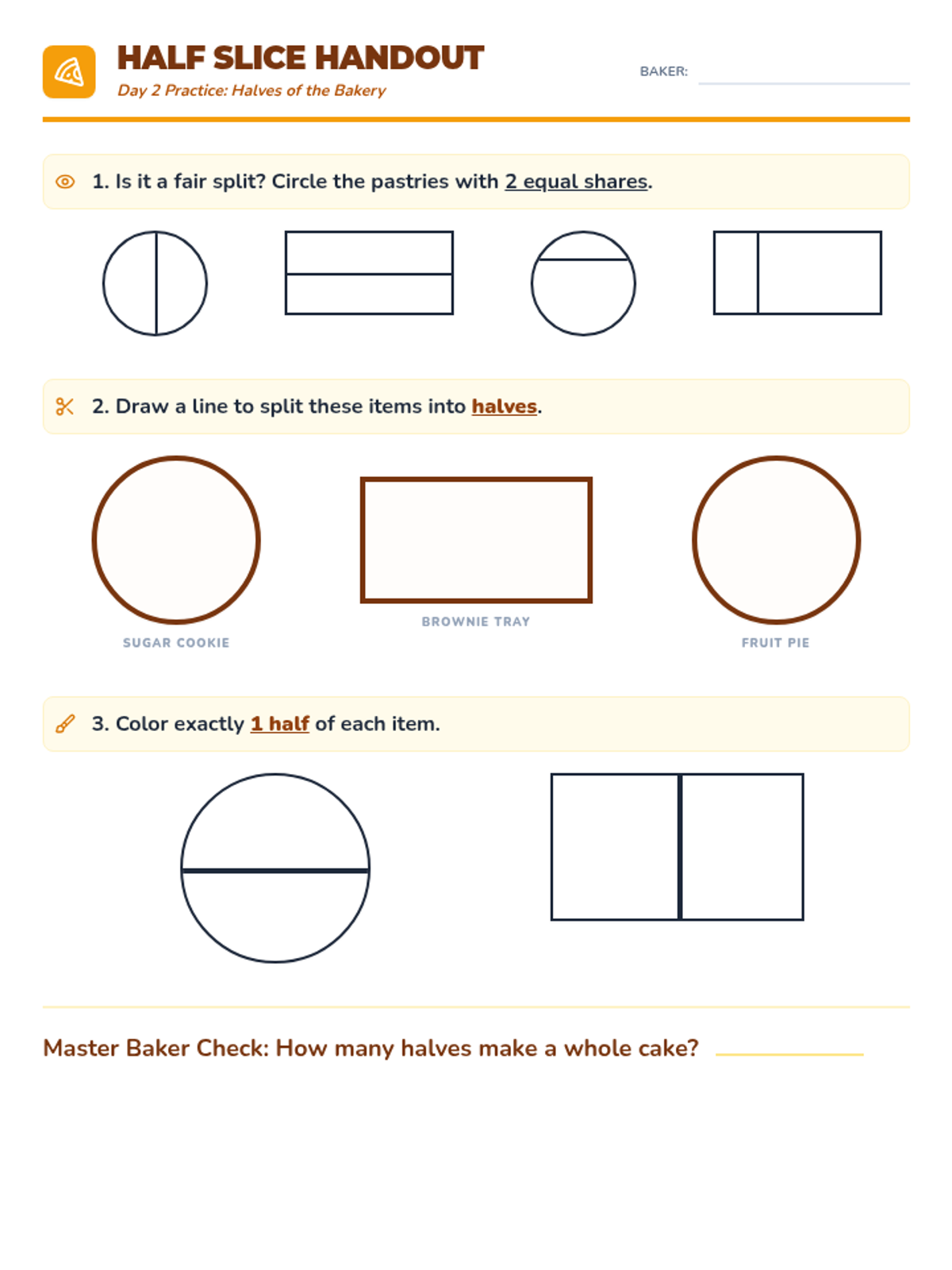
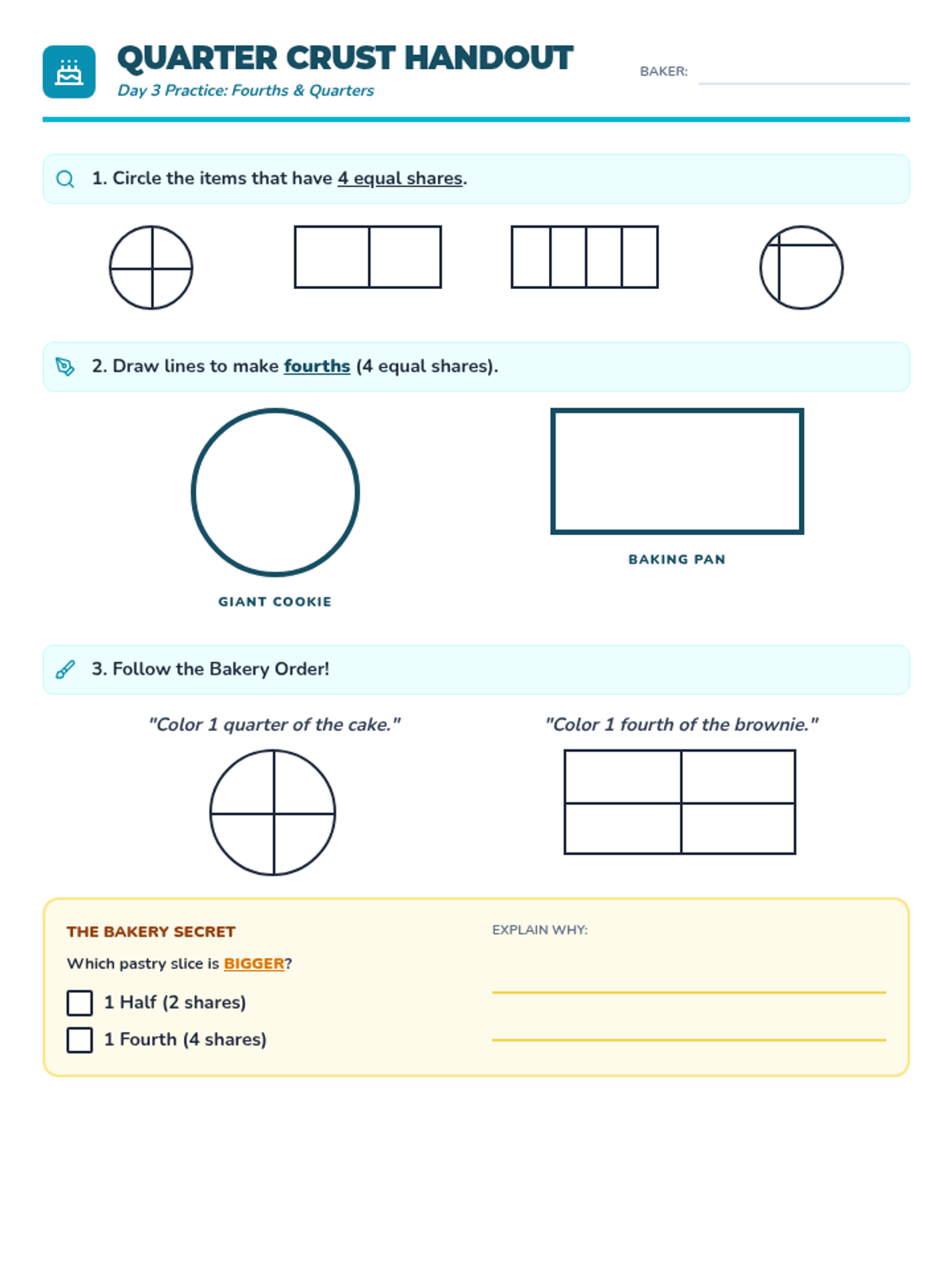
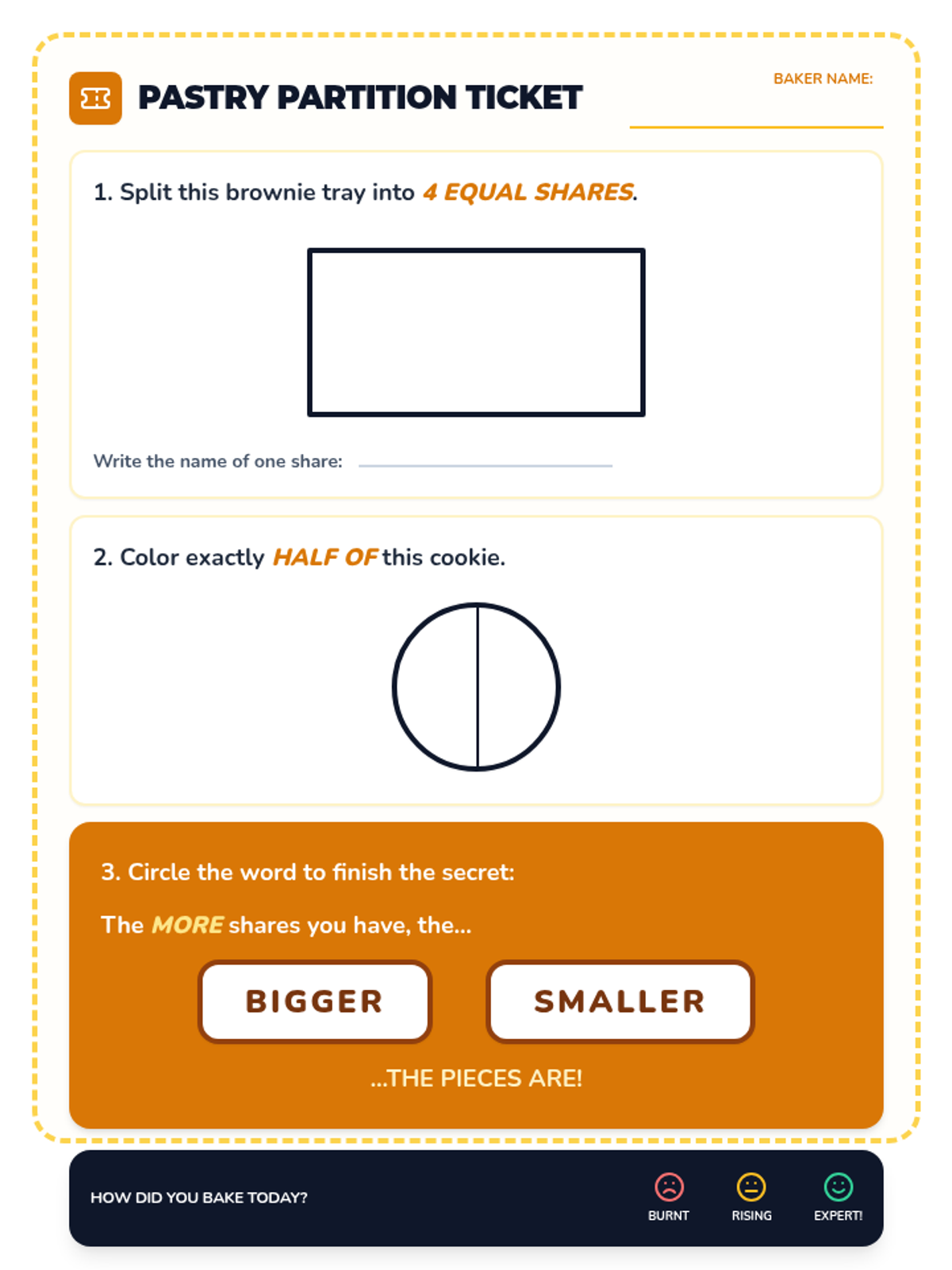
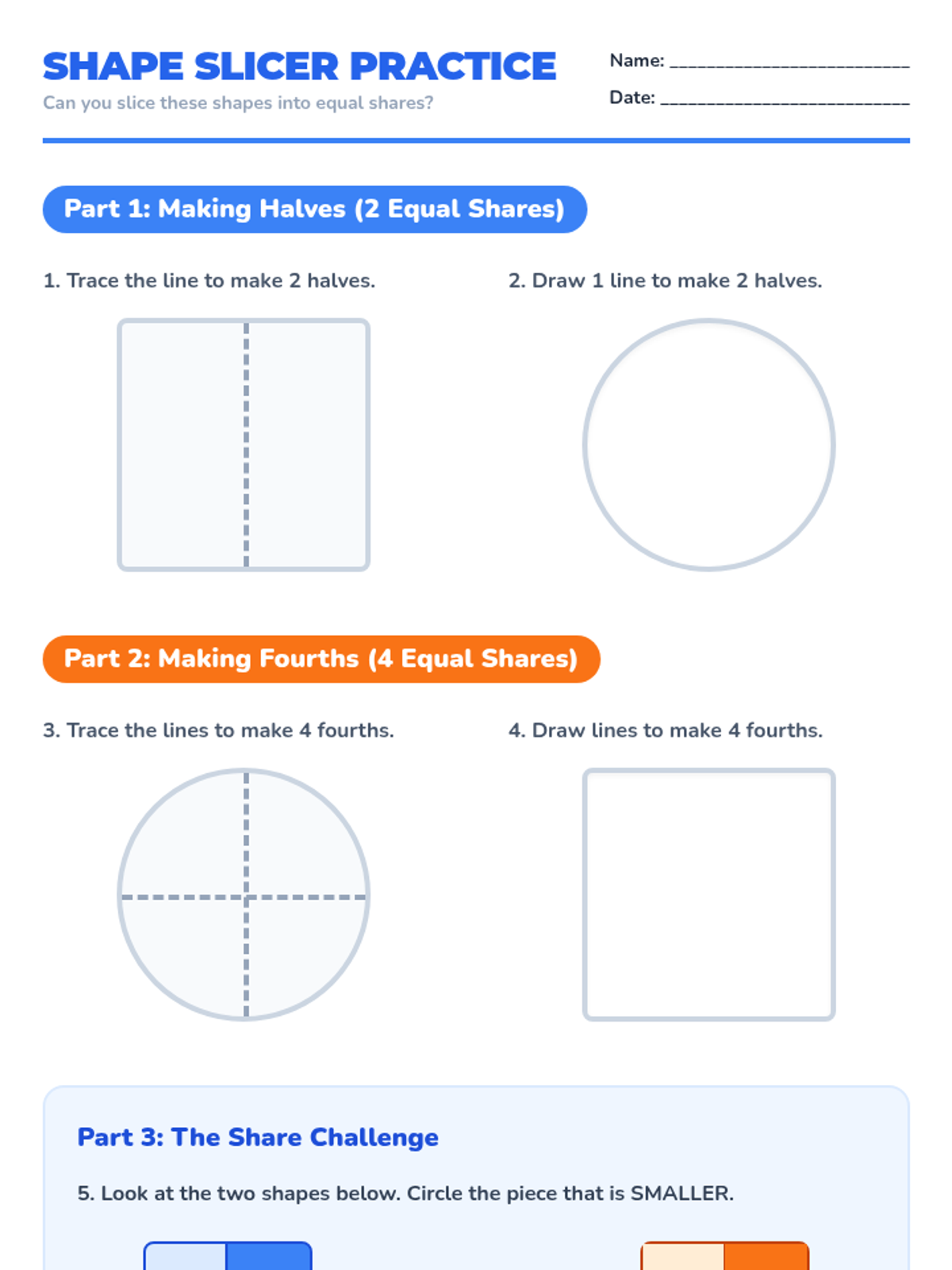
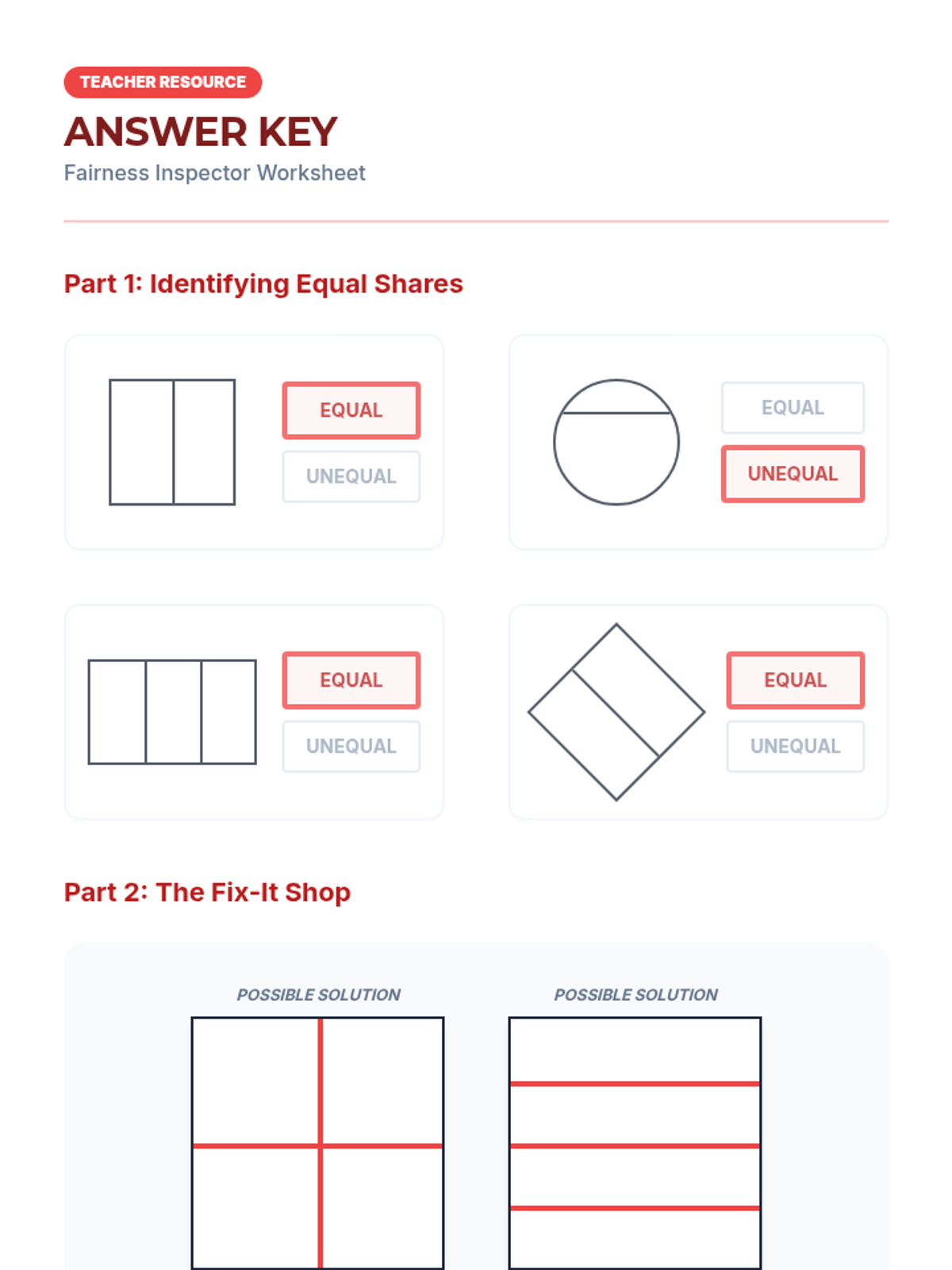
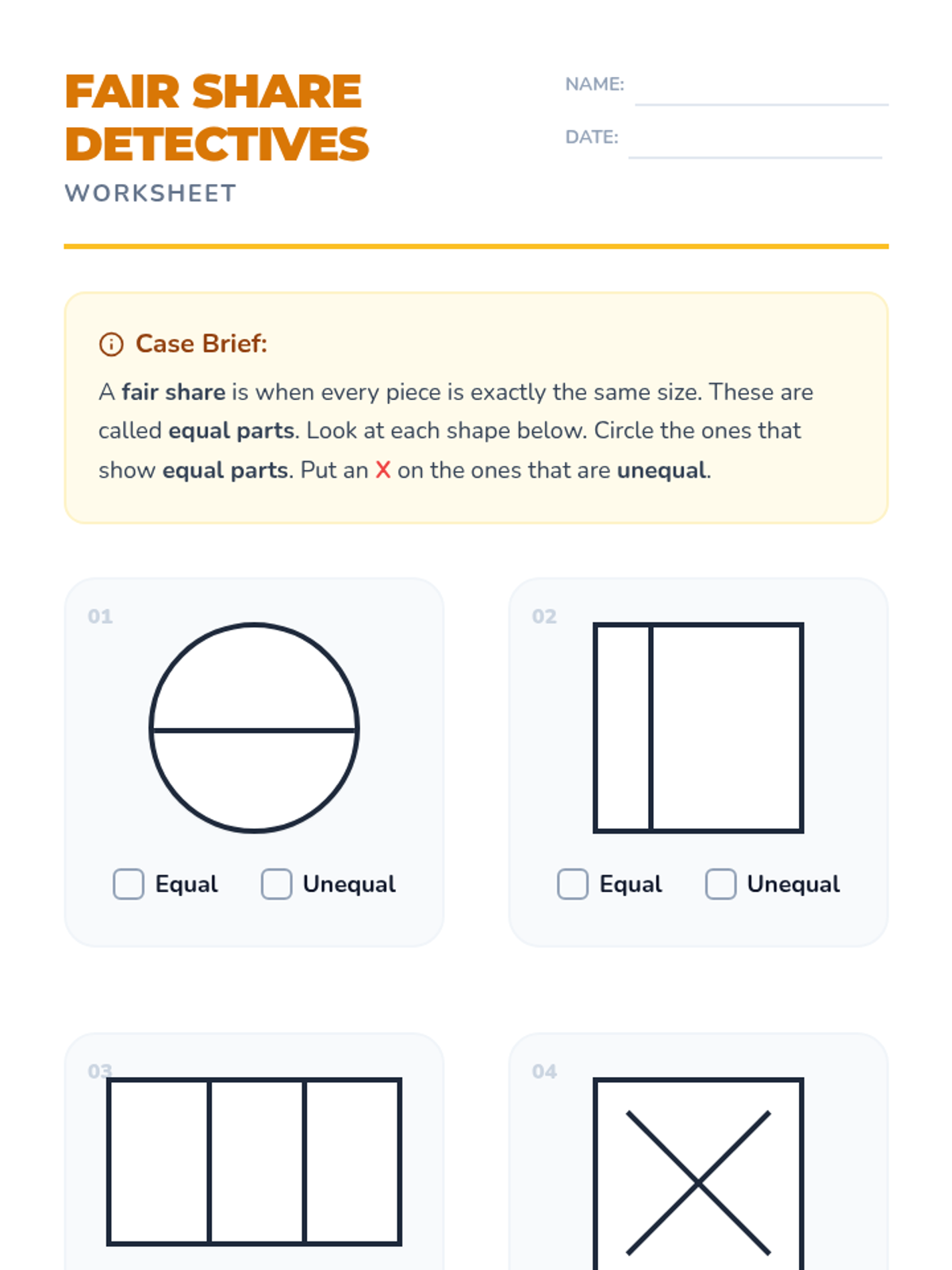
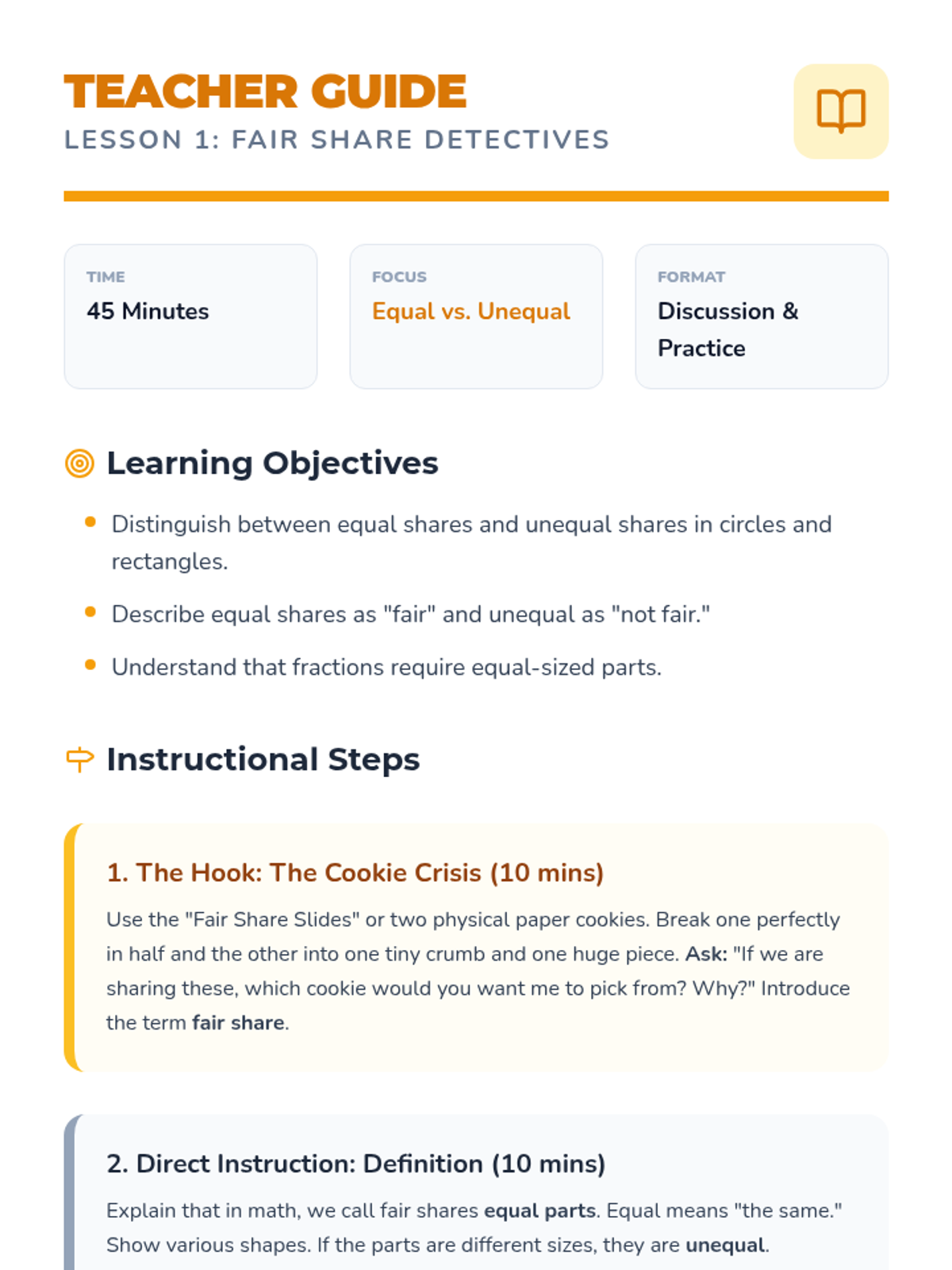
A 3-day introductory unit for 1st grade on partitioning circles and rectangles into halves and fourths using a fun bakery theme.
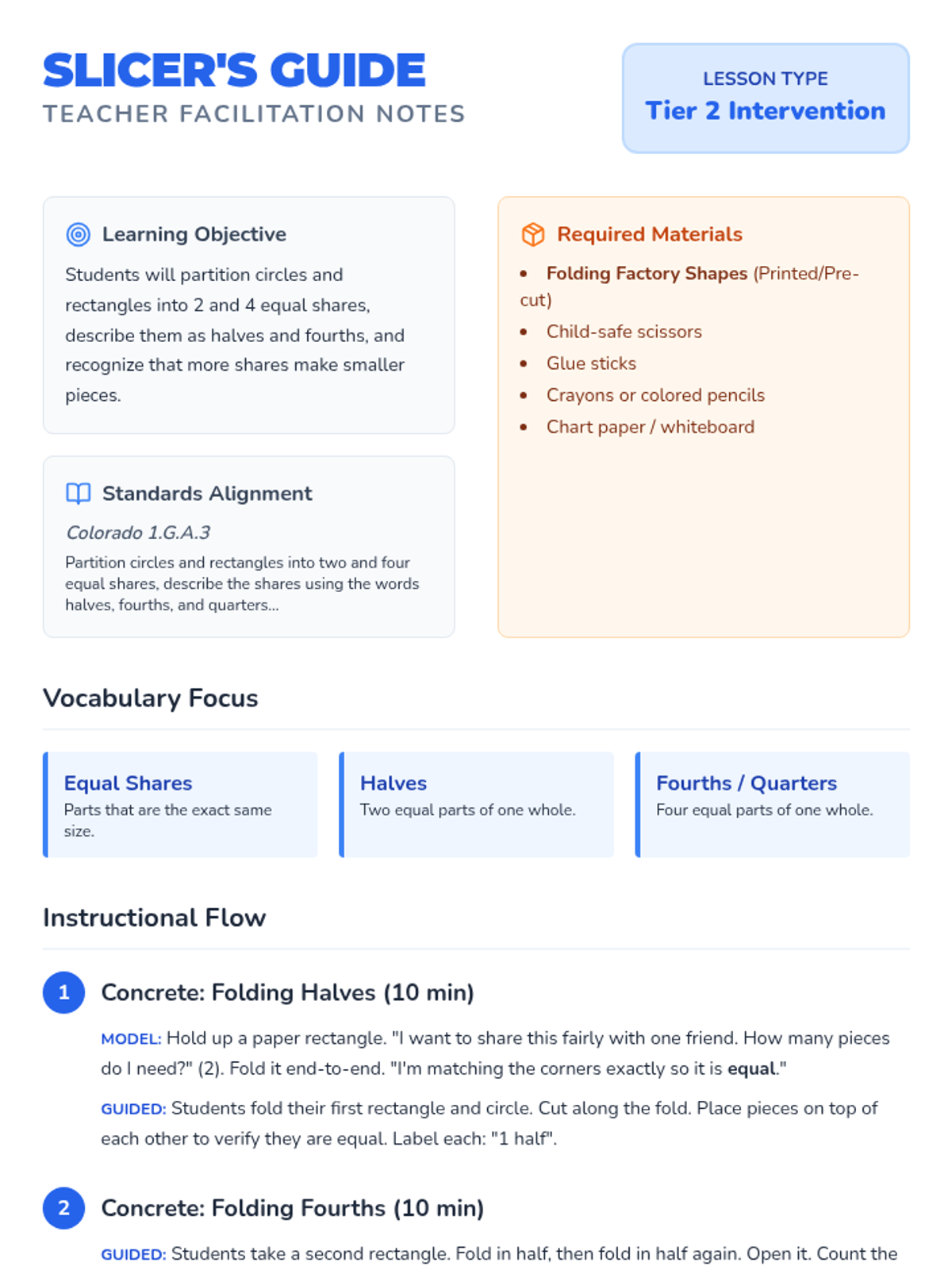
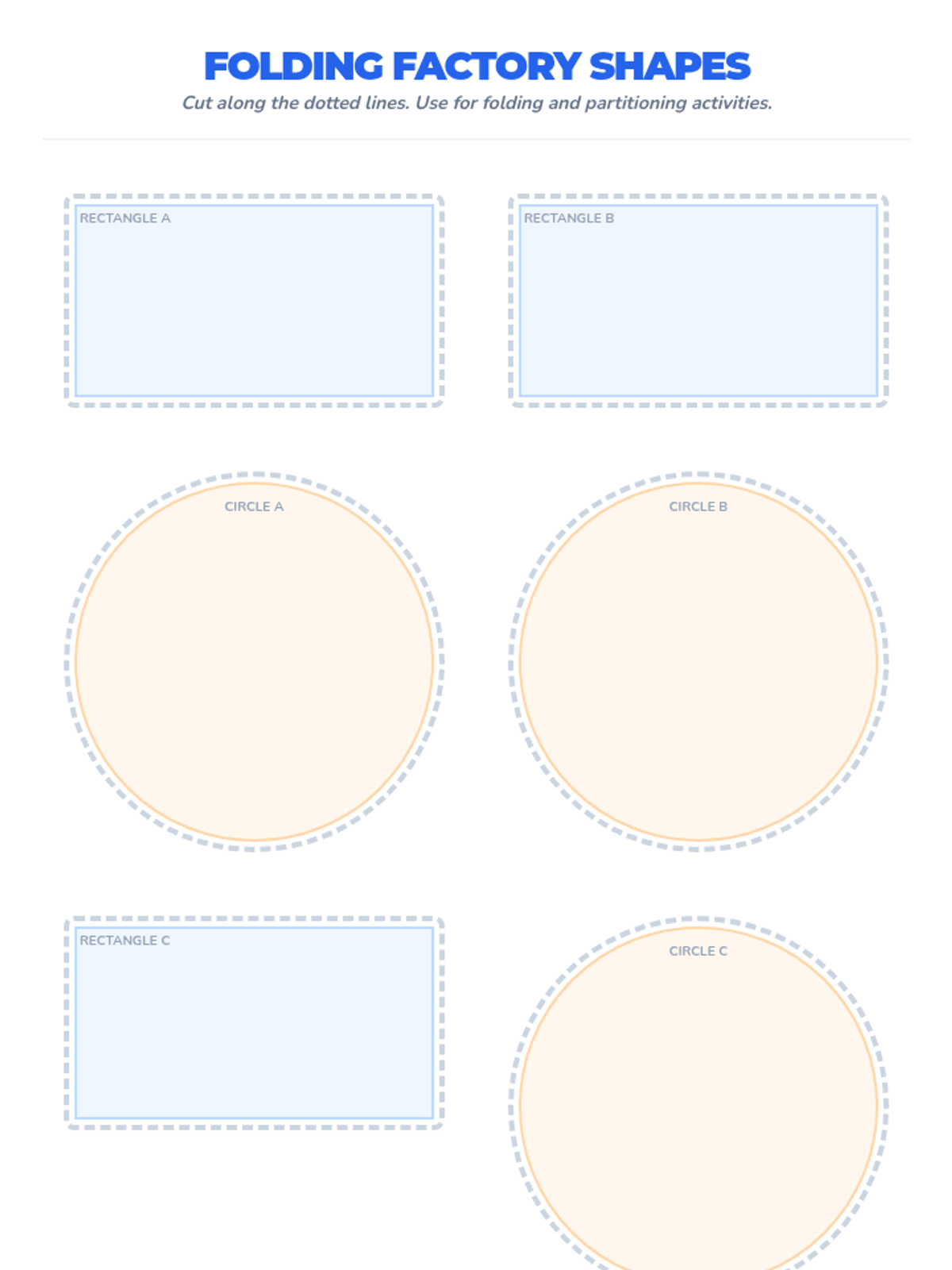
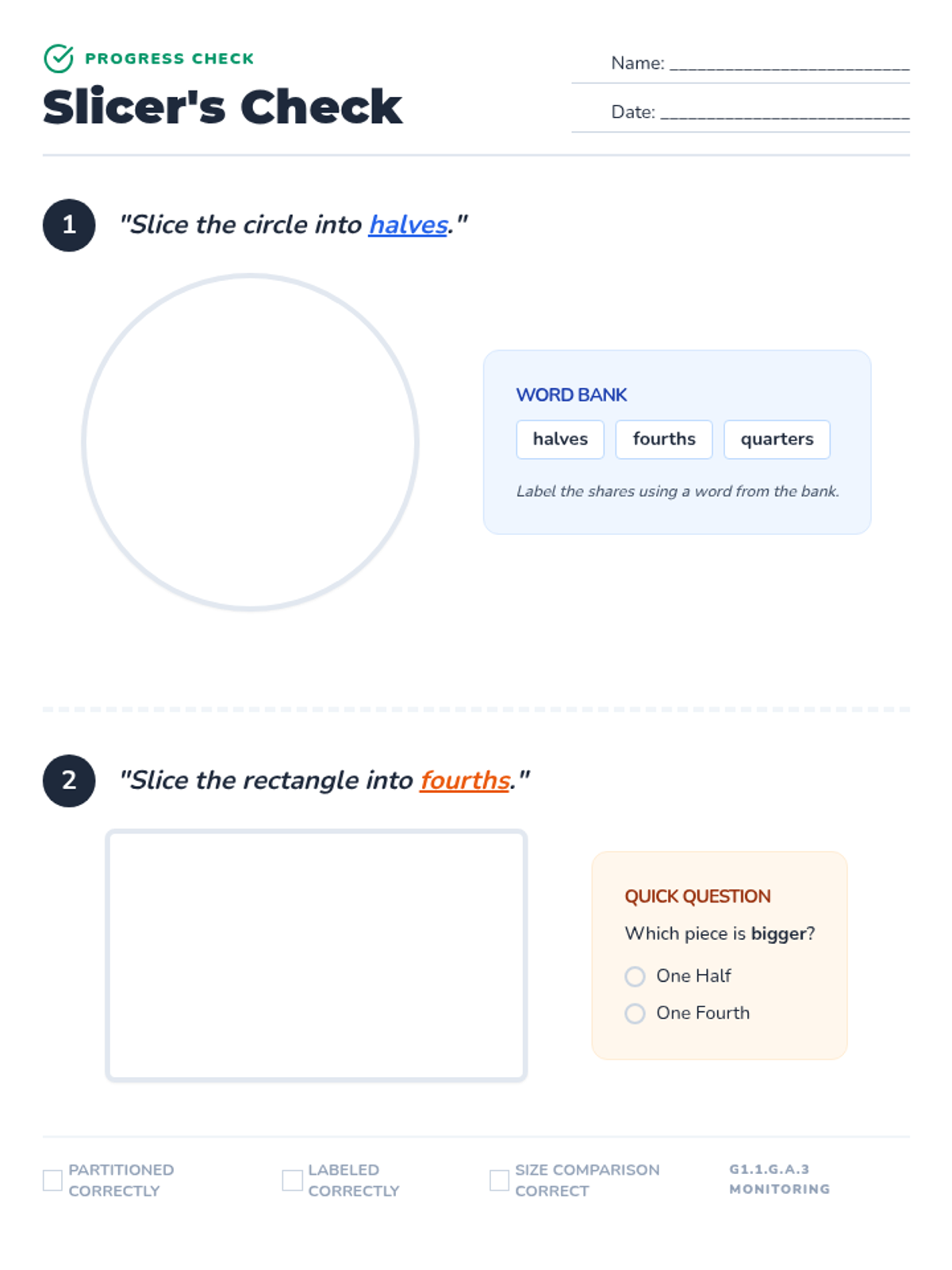
A Tier 2 intervention sequence for Grade 1 students focusing on partitioning circles and rectangles into halves and fourths using a concrete folding approach. Includes instructional slides, teacher guidance, printable manipulatives, and progress monitoring.
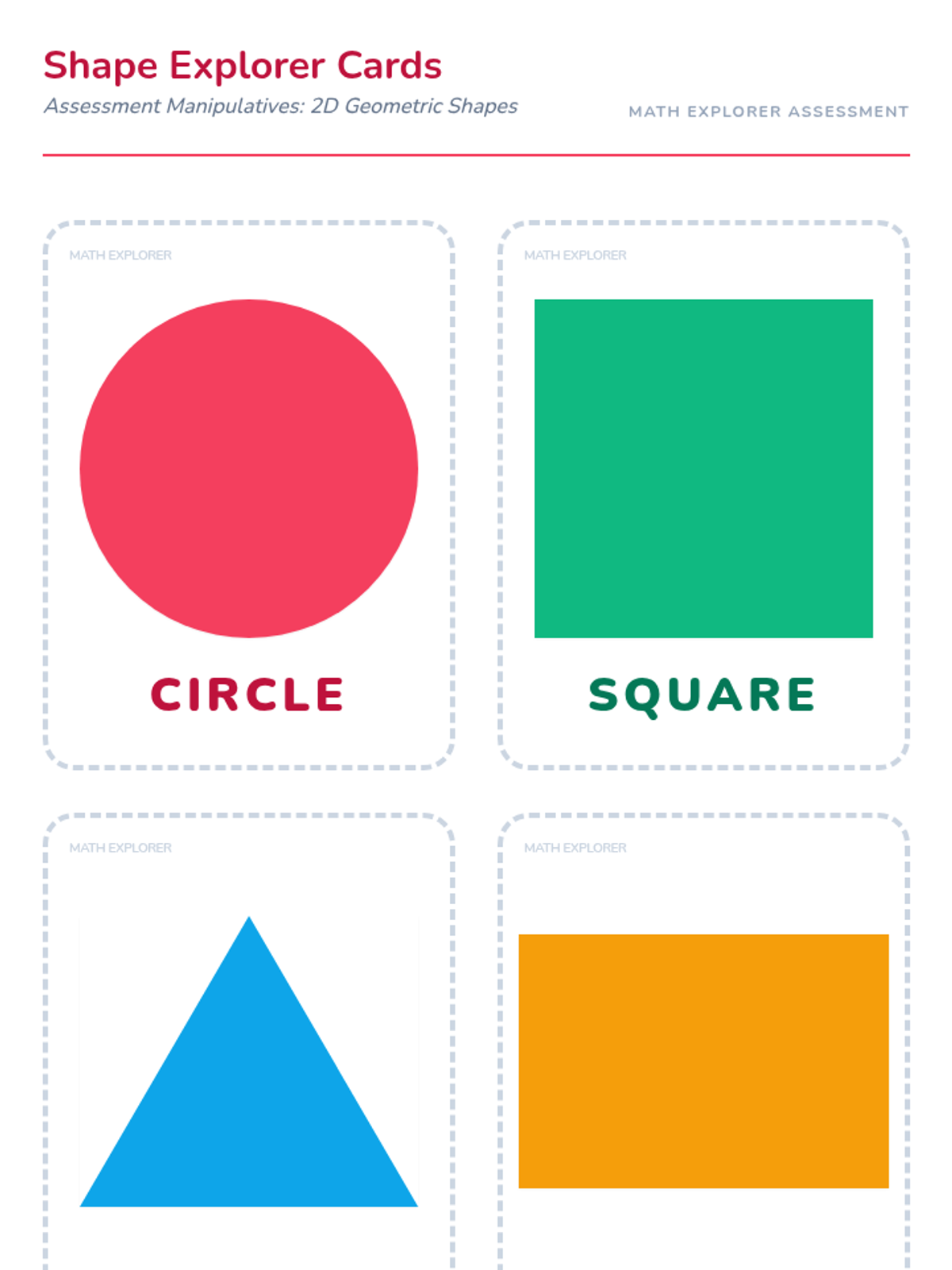
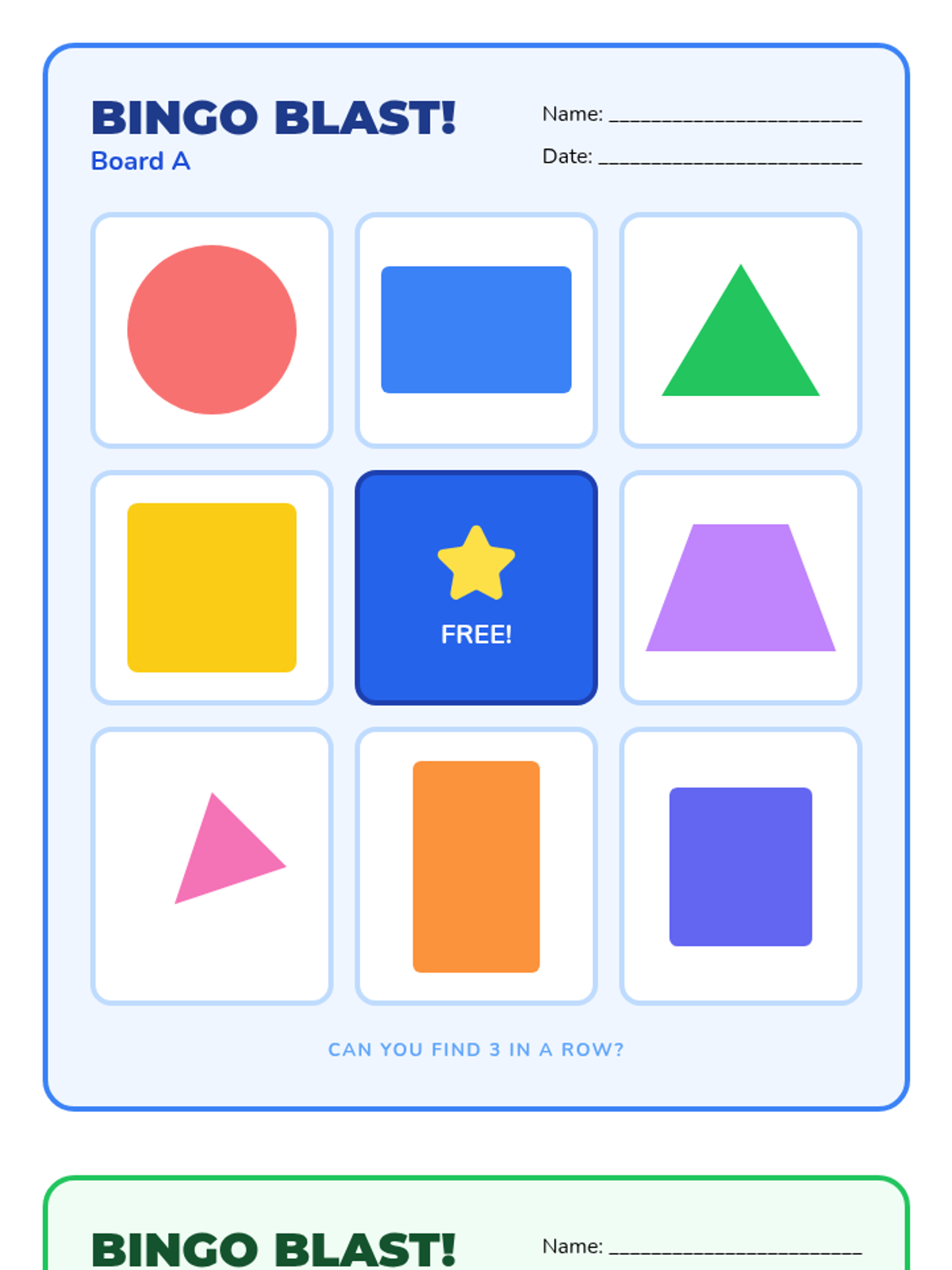
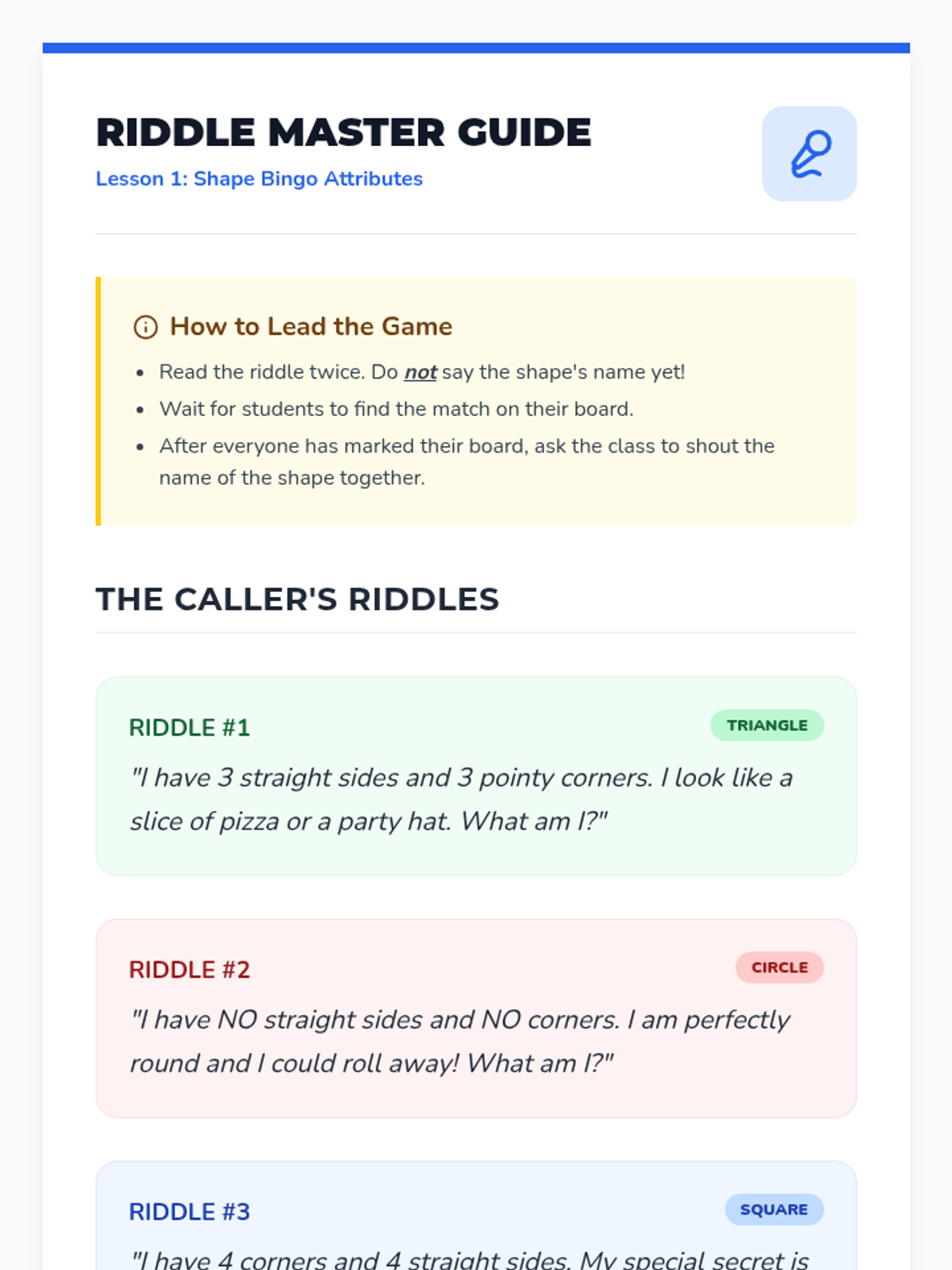
A high-energy, game-based sequence for 1st graders to master naming and classifying 2D figures (rectangles, squares, trapezoids, triangles, and circles) by their attributes, regardless of orientation or size.
This mastery-based sequence focuses on precise mathematical communication and reasoning. Students engage in discussions and logic exercises to refine their definitions of shapes, moving beyond basic naming to attribute-based definitions and hierarchical relationships.
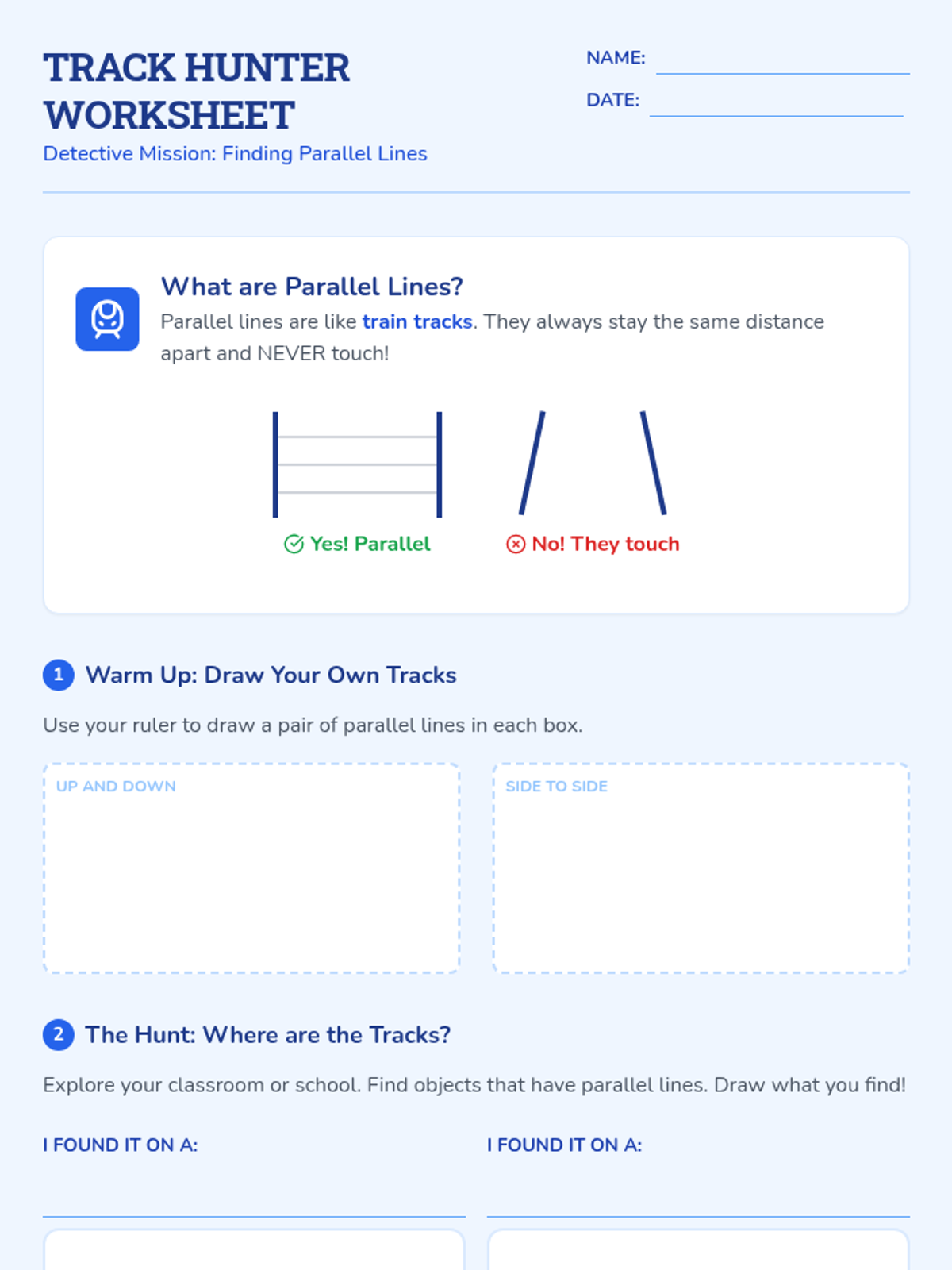
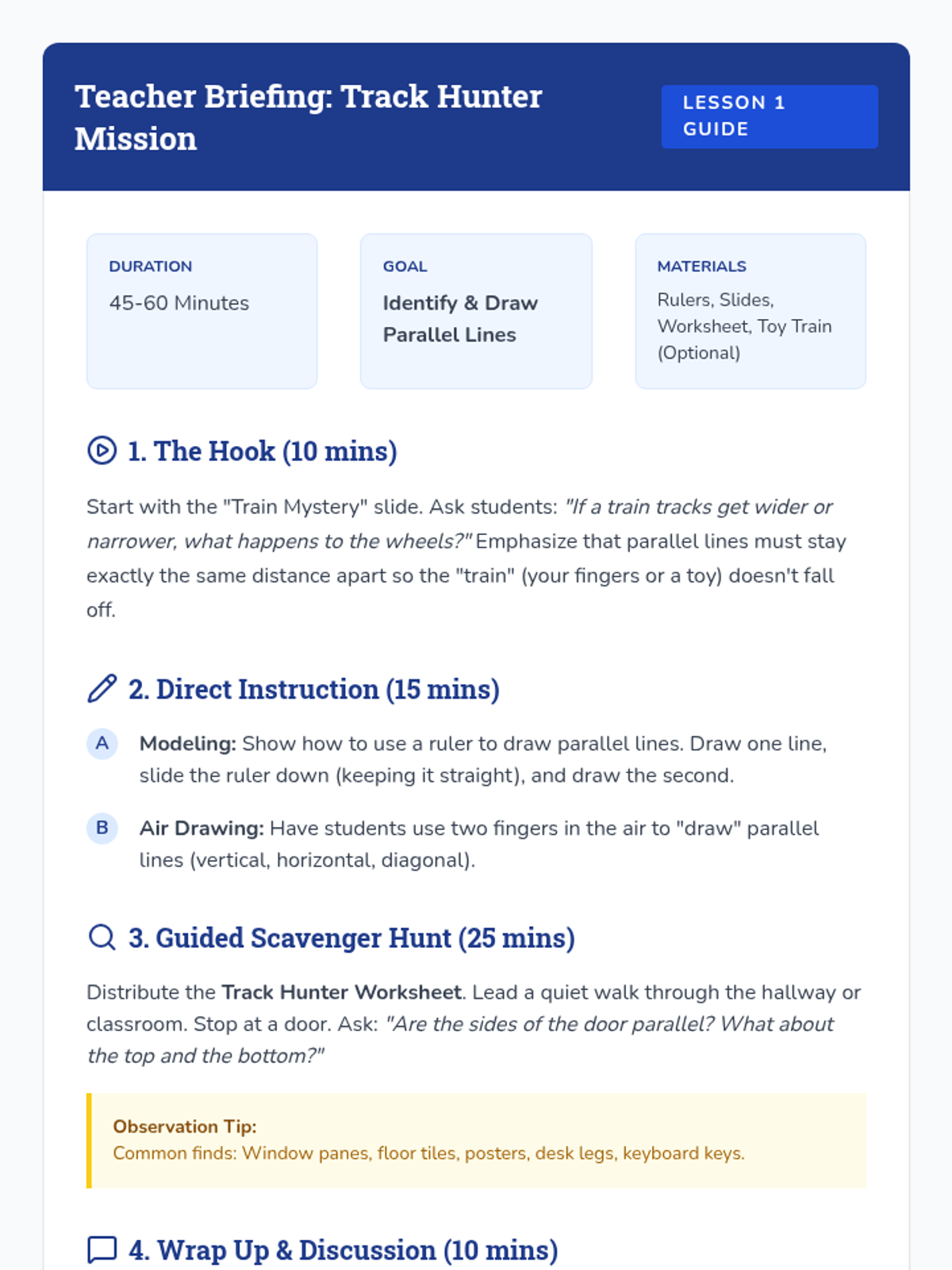
This sequence bridges abstract geometry with the physical world, focusing on spatial orientation and angle types for 1st graders. Students explore parallel lines, square corners, and the relationship between 3D and 2D shapes through hands-on activities and mapping.
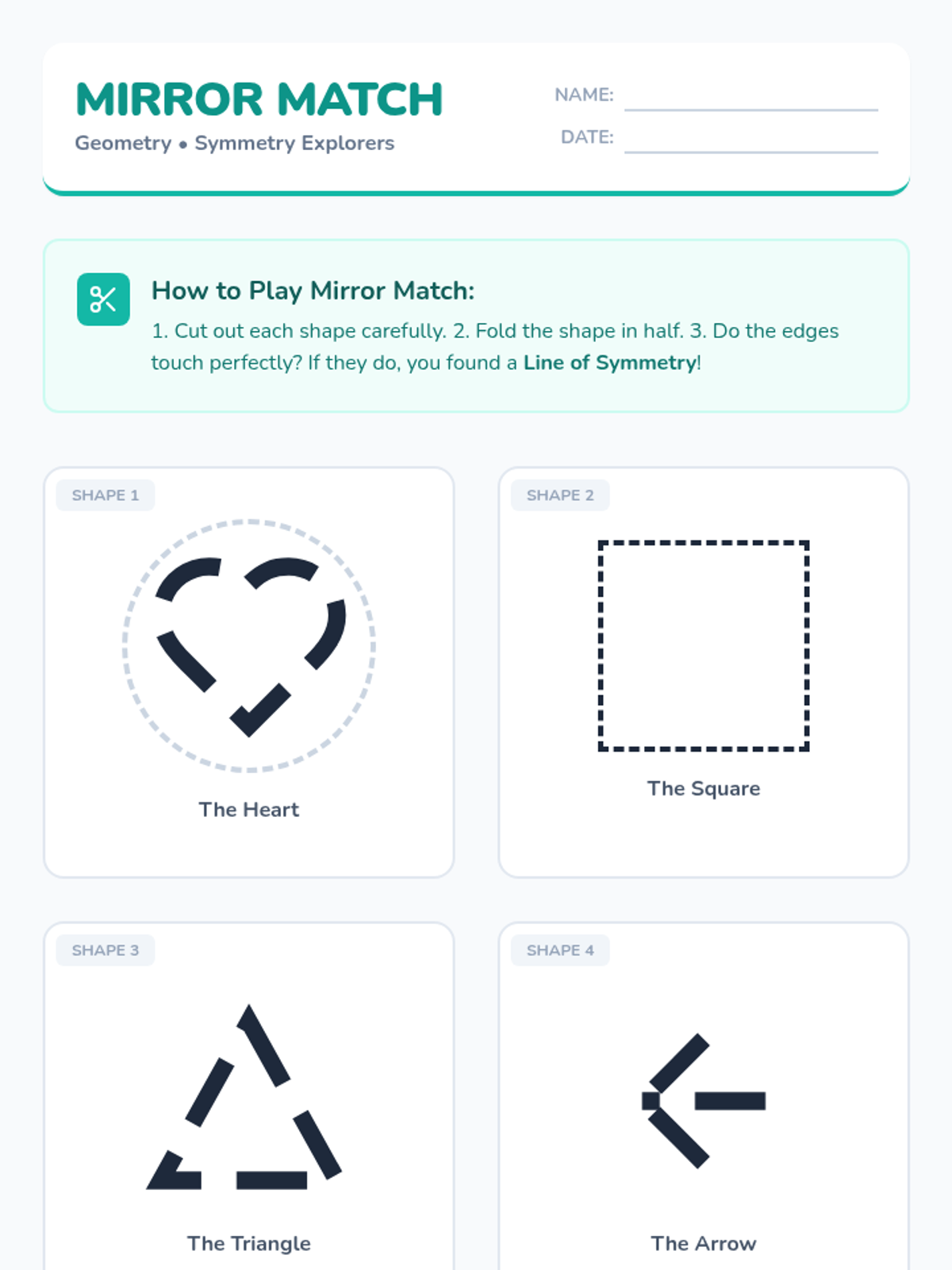
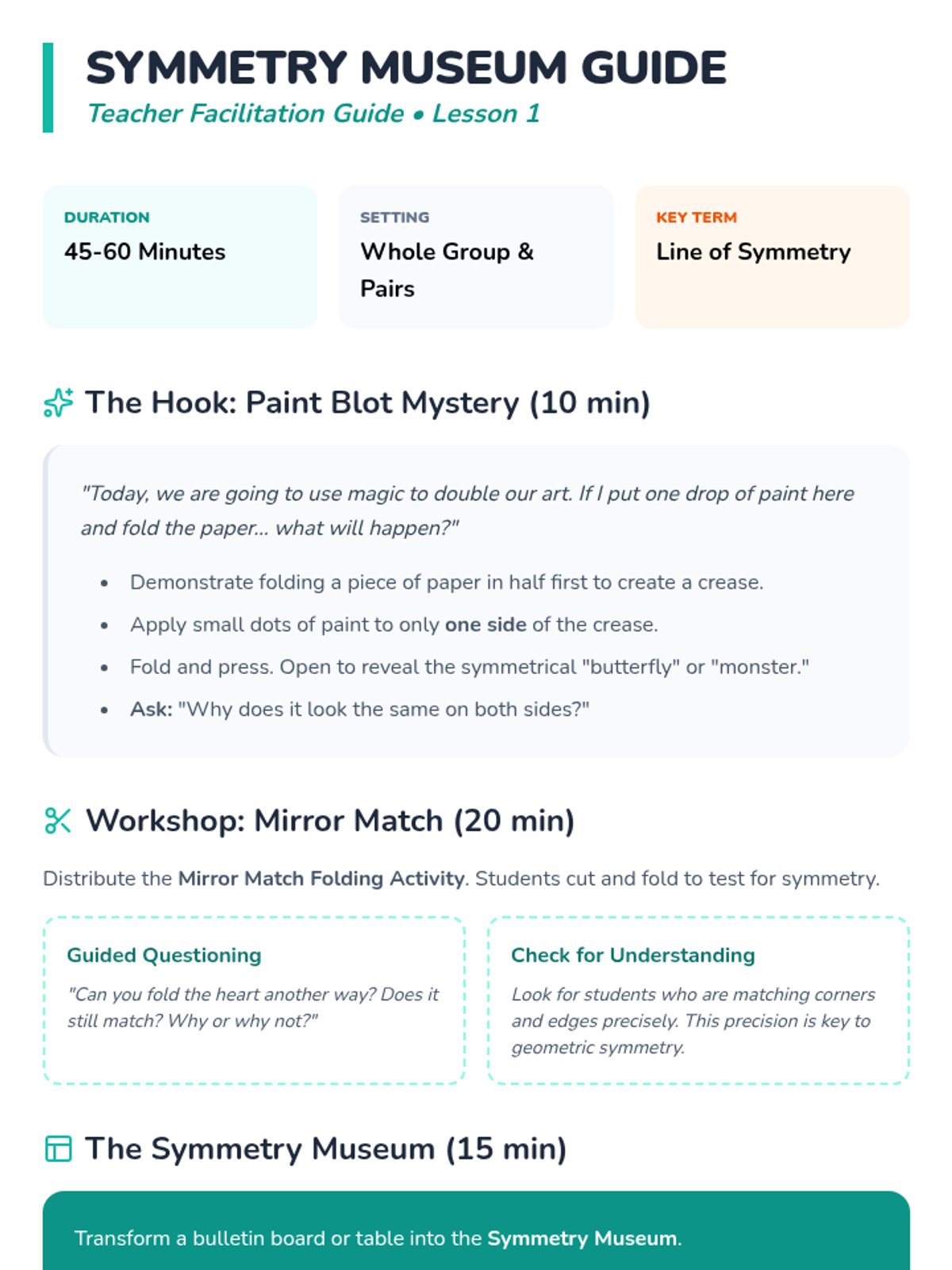
A hands-on geometry unit for 1st graders to explore the concept of symmetry and reflection through folding, drawing, and artistic creation. Students learn to identify lines of symmetry in everyday objects, standard geometric shapes, and alphabetical letters.
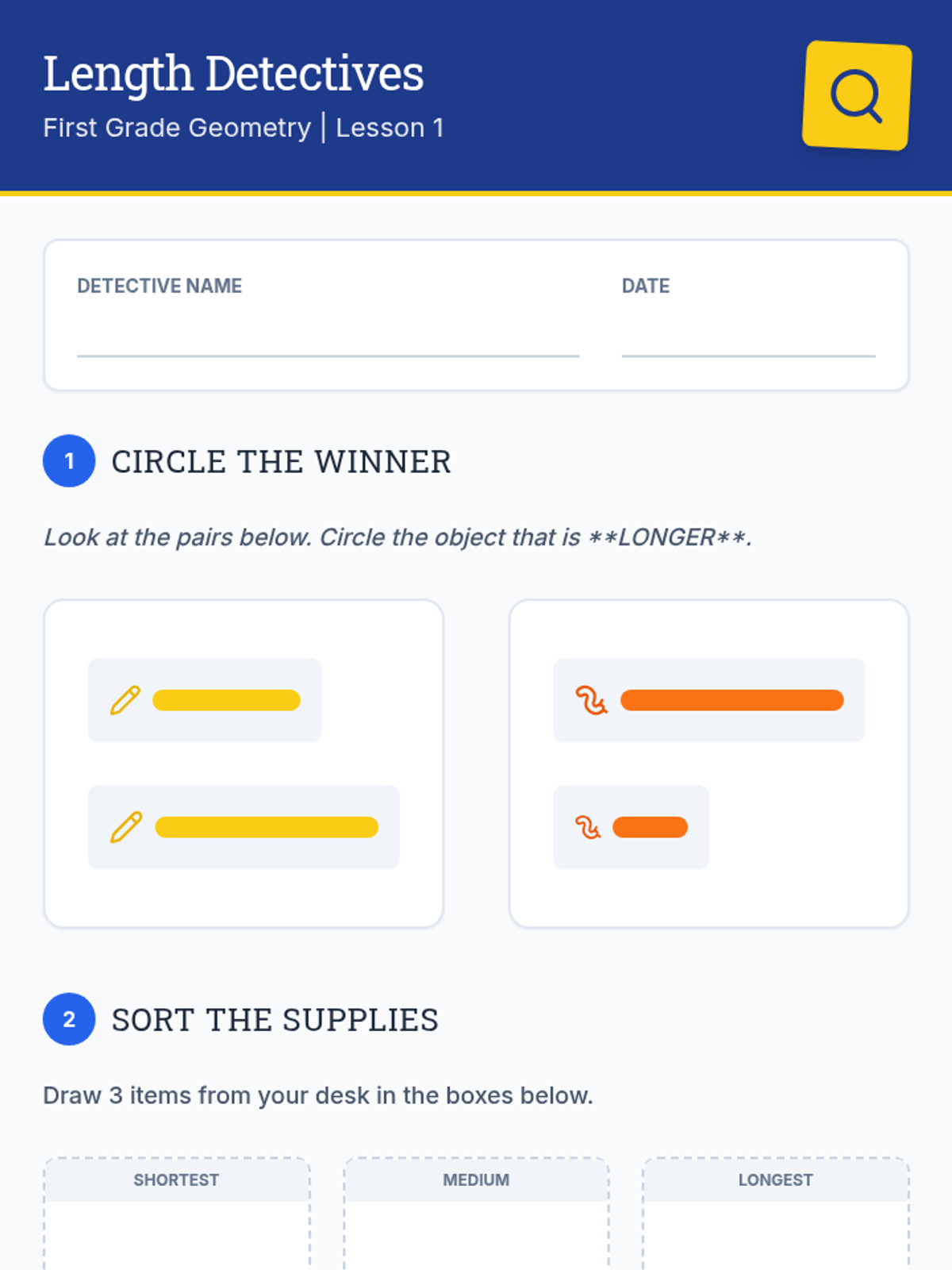
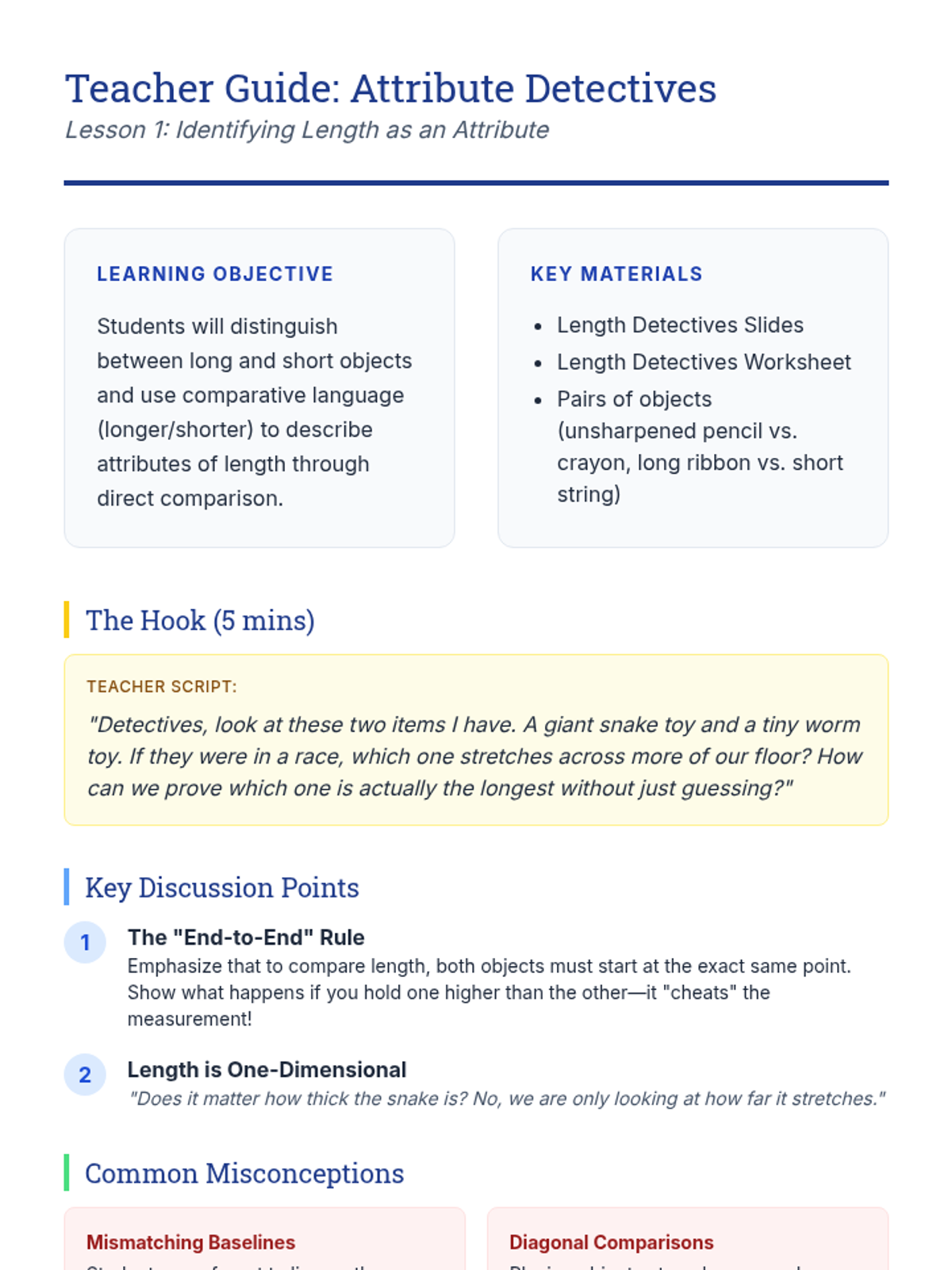
This 1st Grade geometry sequence introduces students to linear measurement and the concept of perimeter using non-standard units. Students progress from direct comparison of lengths to measuring straight edges with cubes, and finally calculating the total distance around shapes in a culminating project.
A 1st Grade geometry sequence focusing on distinguishing defining attributes (sides, corners, closed figures) from non-defining attributes (color, size, orientation). Students act as 'Shape Detectives' to investigate and justify how 2D figures are classified.
A 1st-grade geometry sequence focusing on positional language, shape conservation through rotation, and identifying geometric figures in the real world. Students transition from using vocabulary to describe location to creating their own spatial maps.
Students explore spatial reasoning through composing and decomposing 2D shapes using pattern blocks, tangrams, and paper cutting. They progress from simple puzzle filling to designing a geometric city, developing cognitive flexibility and geometric intuition.
A 1st-grade geometry sequence focusing on engineering and spatial visualization. Students progress from using positional language to building stable towers, creating composite 3D figures, and eventually collaborating on a large-scale 'Shape City' project.
A 1st-grade geometry sequence exploring three-dimensional solids. Students learn to identify, describe, and differentiate 3D shapes through hands-on exploration of faces, edges, vertices, and physical properties like rolling and stacking.
Students transition from flat geometry to solid geometry, exploring three-dimensional shapes and their components through tactile exploration, construction, and real-world application.
A comprehensive first-grade geometry unit focused on identifying and describing two-dimensional shapes based on their defining attributes like sides and vertices. Students progress from basic recognition to synthesizing attribute knowledge through drawing.
This sequence introduces 1st Grade students to 3D geometric solids (sphere, cube, cylinder, cone, and rectangular prism). Through tactile exploration, physical experiments, and artistic stamping, students learn to identify shapes, analyze their attributes (roll, slide, stack), and connect 3D solids to their 2D faces.
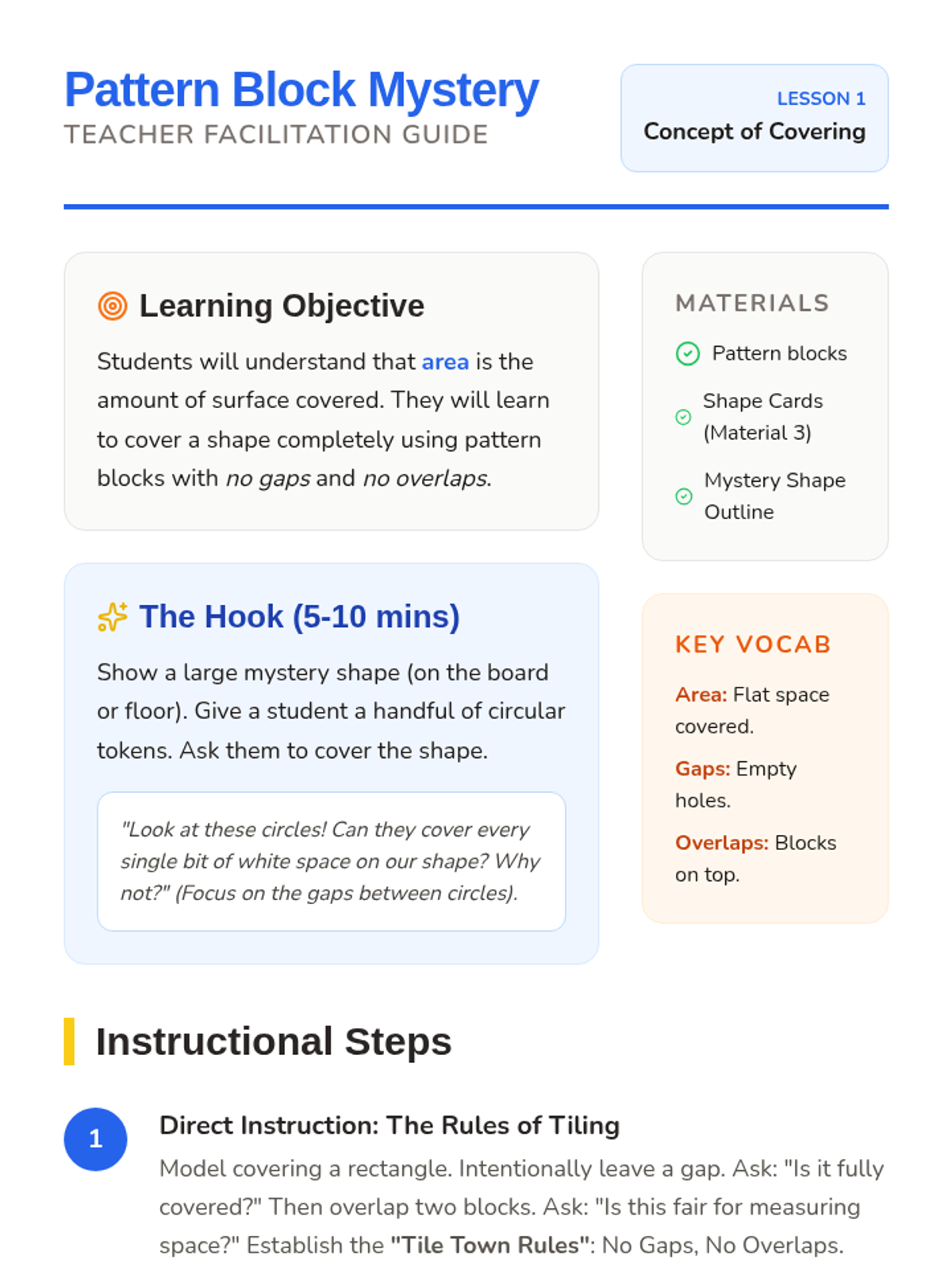
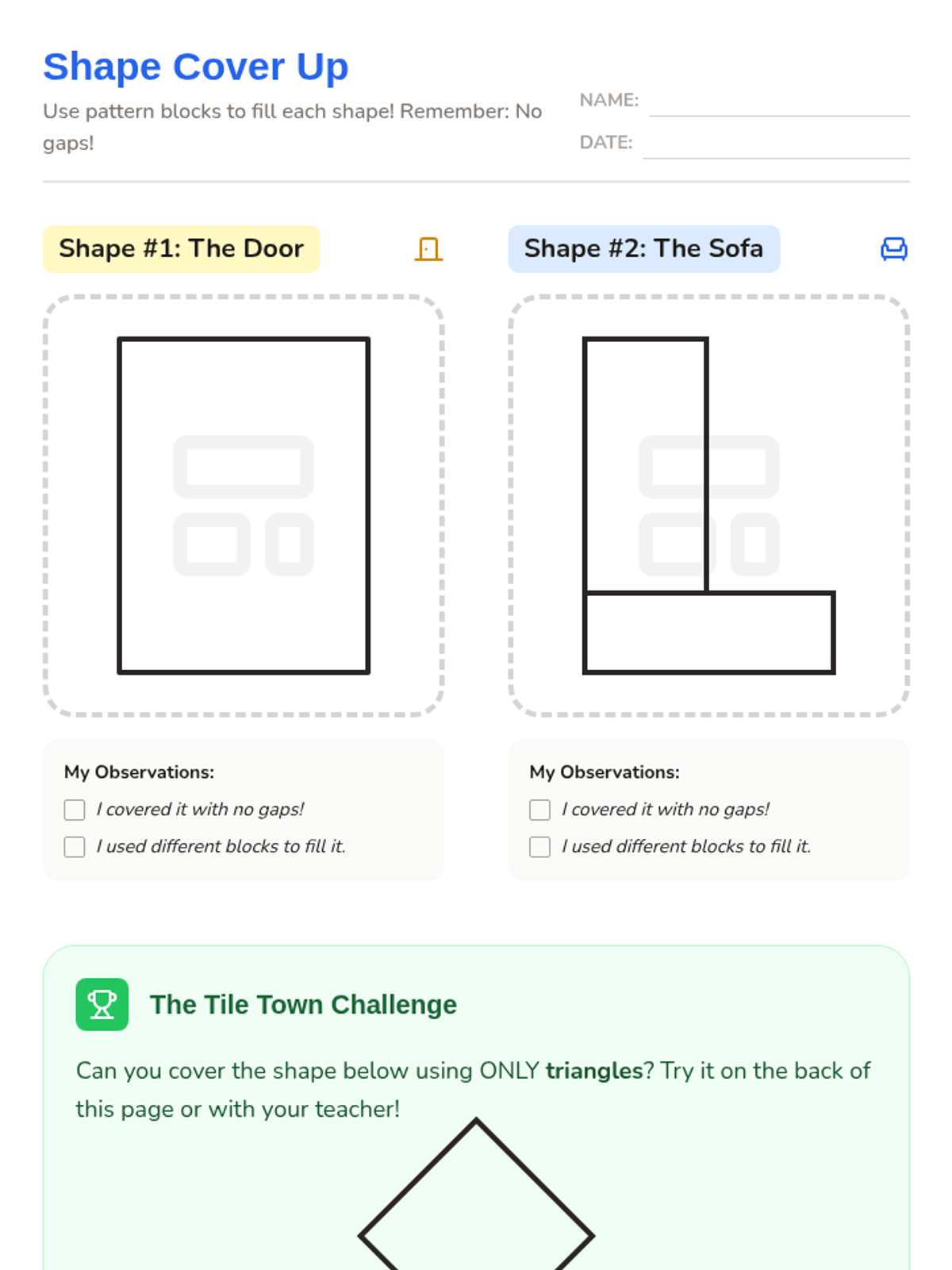
A foundational unit on geometric measurement where 1st Grade students learn to measure area by tiling with square units, focusing on precision (no gaps or overlaps) and comparison.
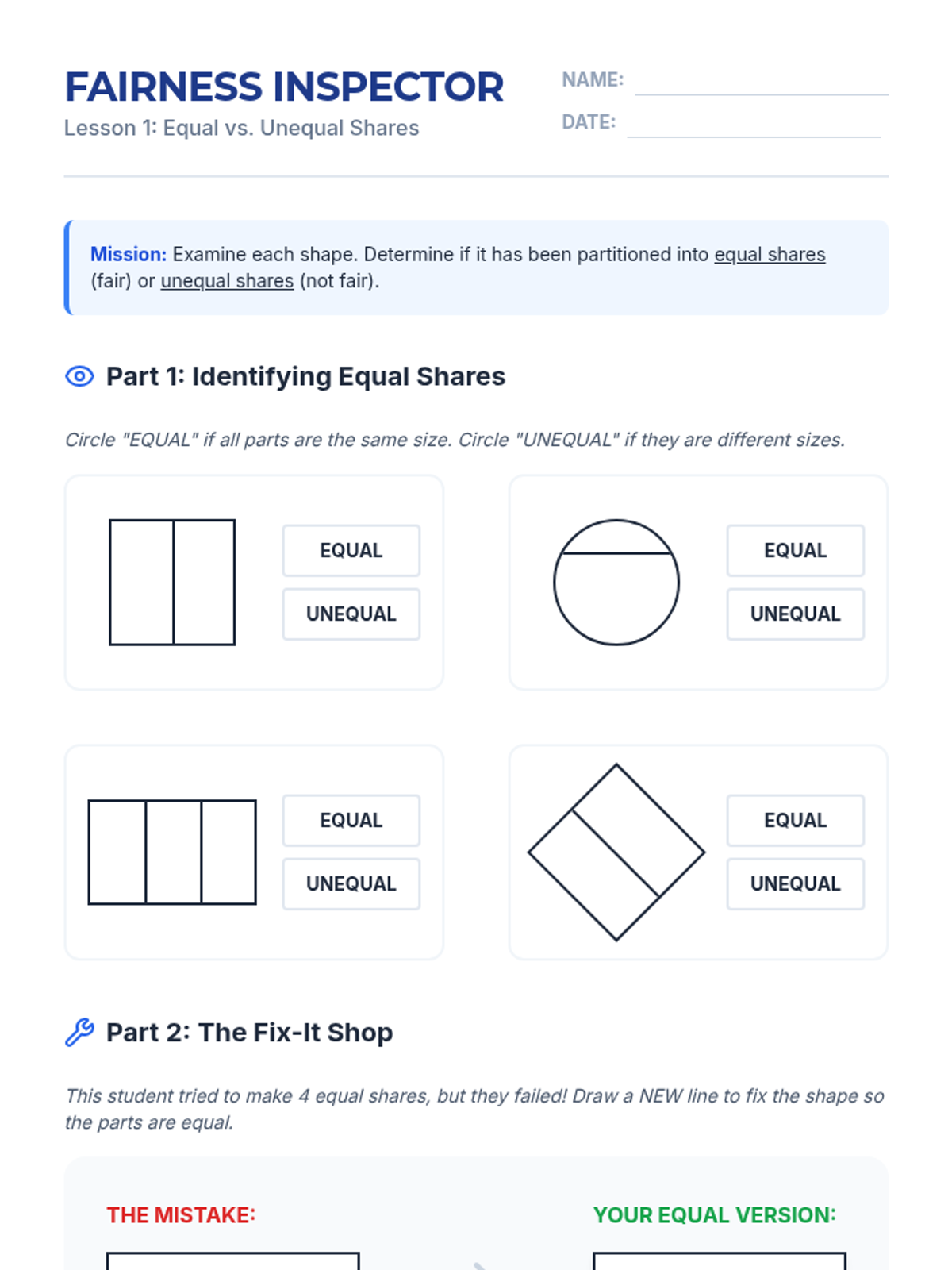
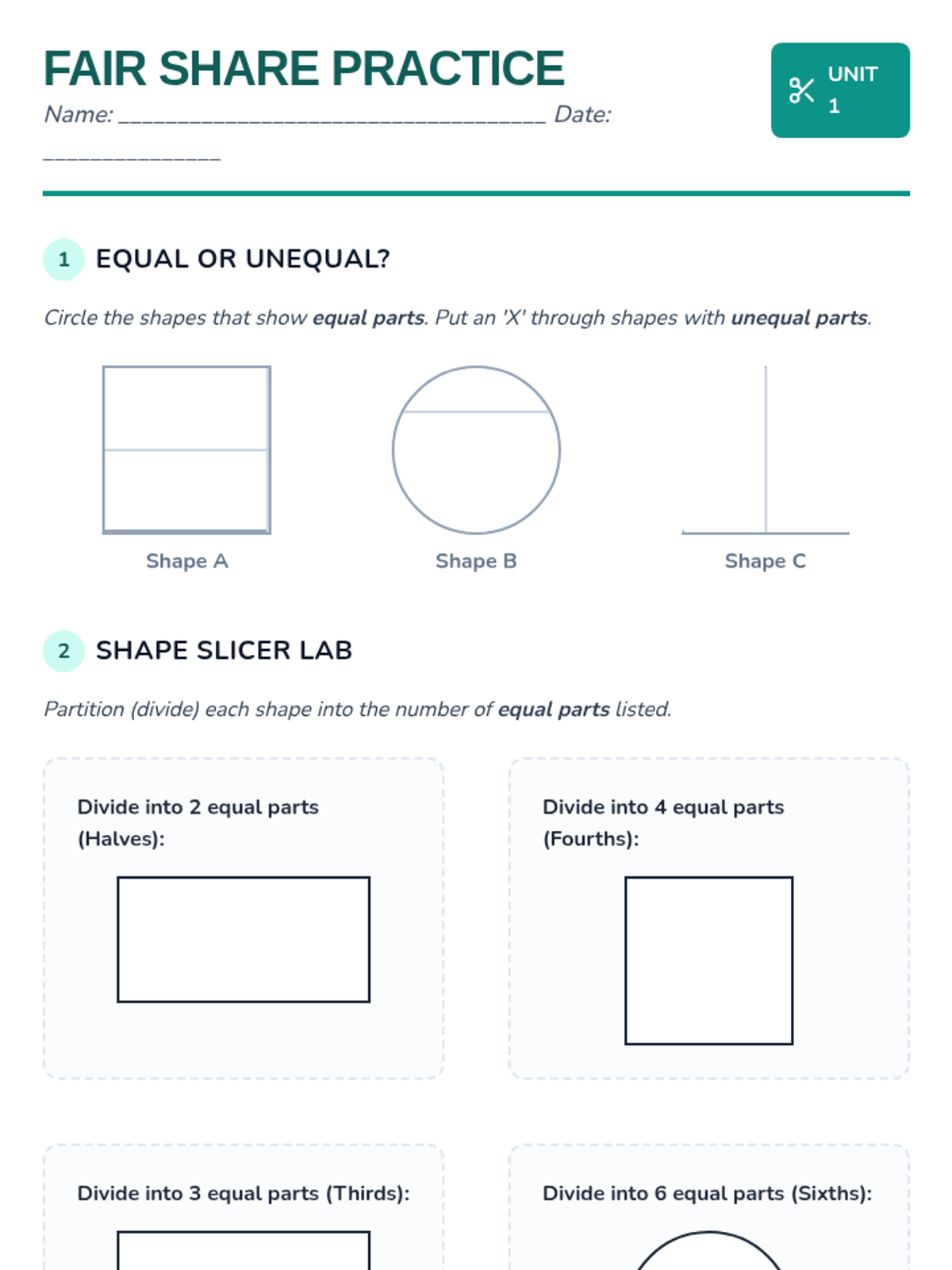
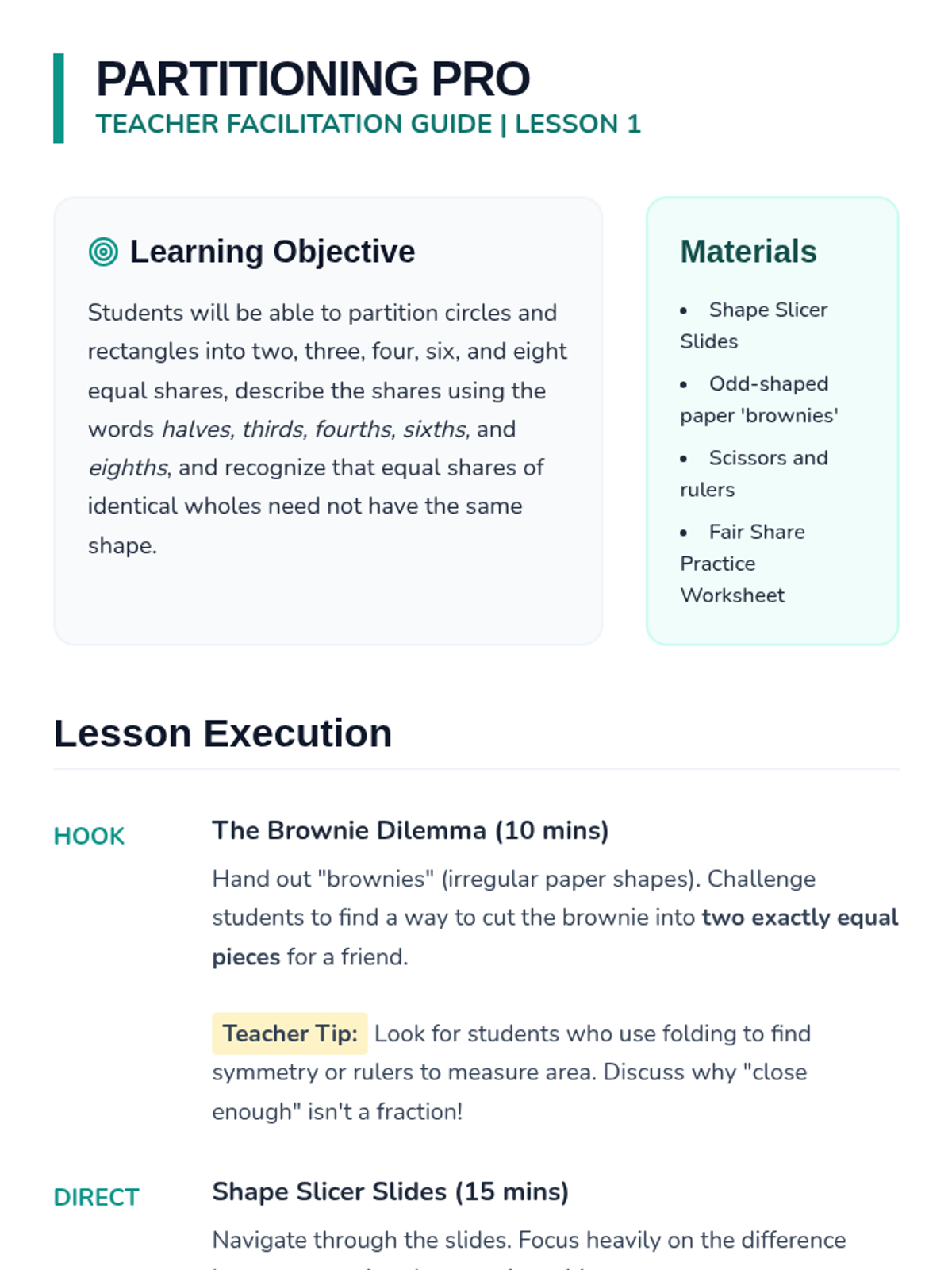
This sequence connects geometry to fractions by teaching students to partition shapes into parts with equal areas. Students move from intuitive sharing to precise geometric partitioning, learning that equal shares of identical wholes need not have the same shape.
A 1st-grade geometry sequence introducing partitioning circles and rectangles into halves and fourths. Students explore equal shares, learn foundational fraction vocabulary, and understand the relationship between the number of parts and their size.
This sequence establishes a foundational understanding of fractions as equal parts of a whole area or region. Students progress from partitioning shapes to naming unit fractions, building non-unit fractions, and applying their knowledge to real-world contexts.