Sentence structure fundamentals, subject-verb agreement, and precise usage of parts of speech including pronouns, conjunctions, and adjectives. Targets technical accuracy through mastery of capitalization, punctuation, spelling, and verb mood.
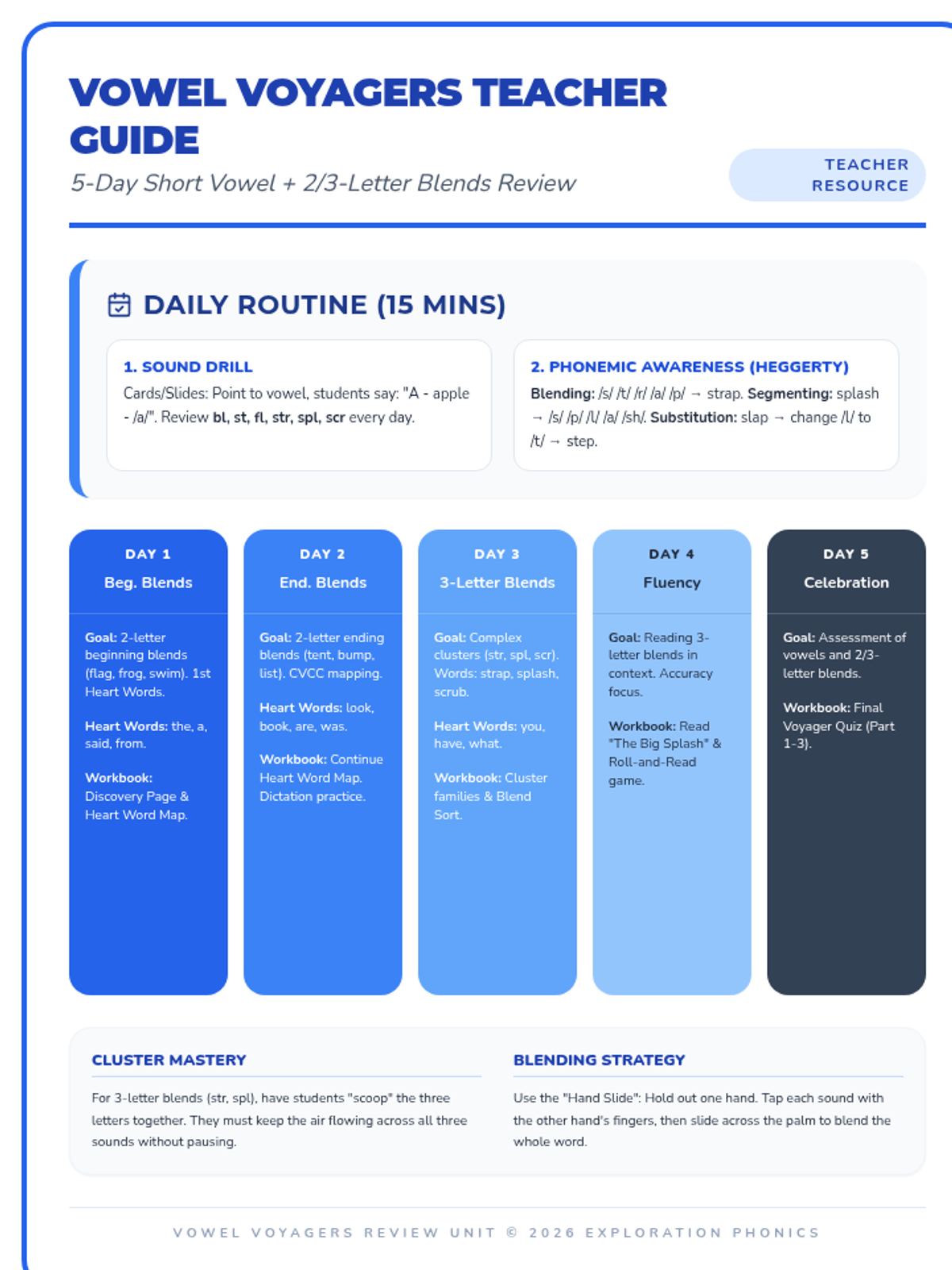
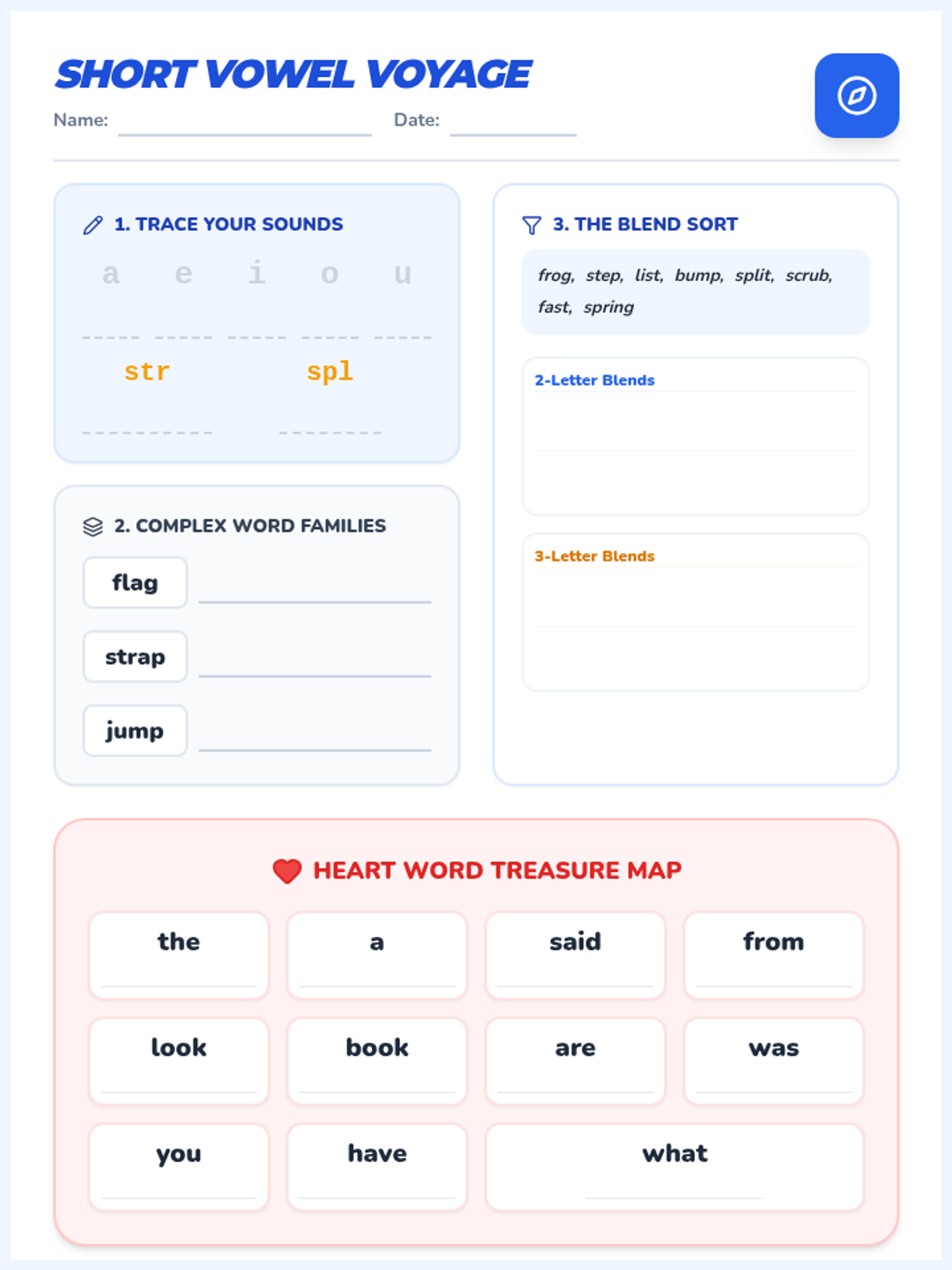
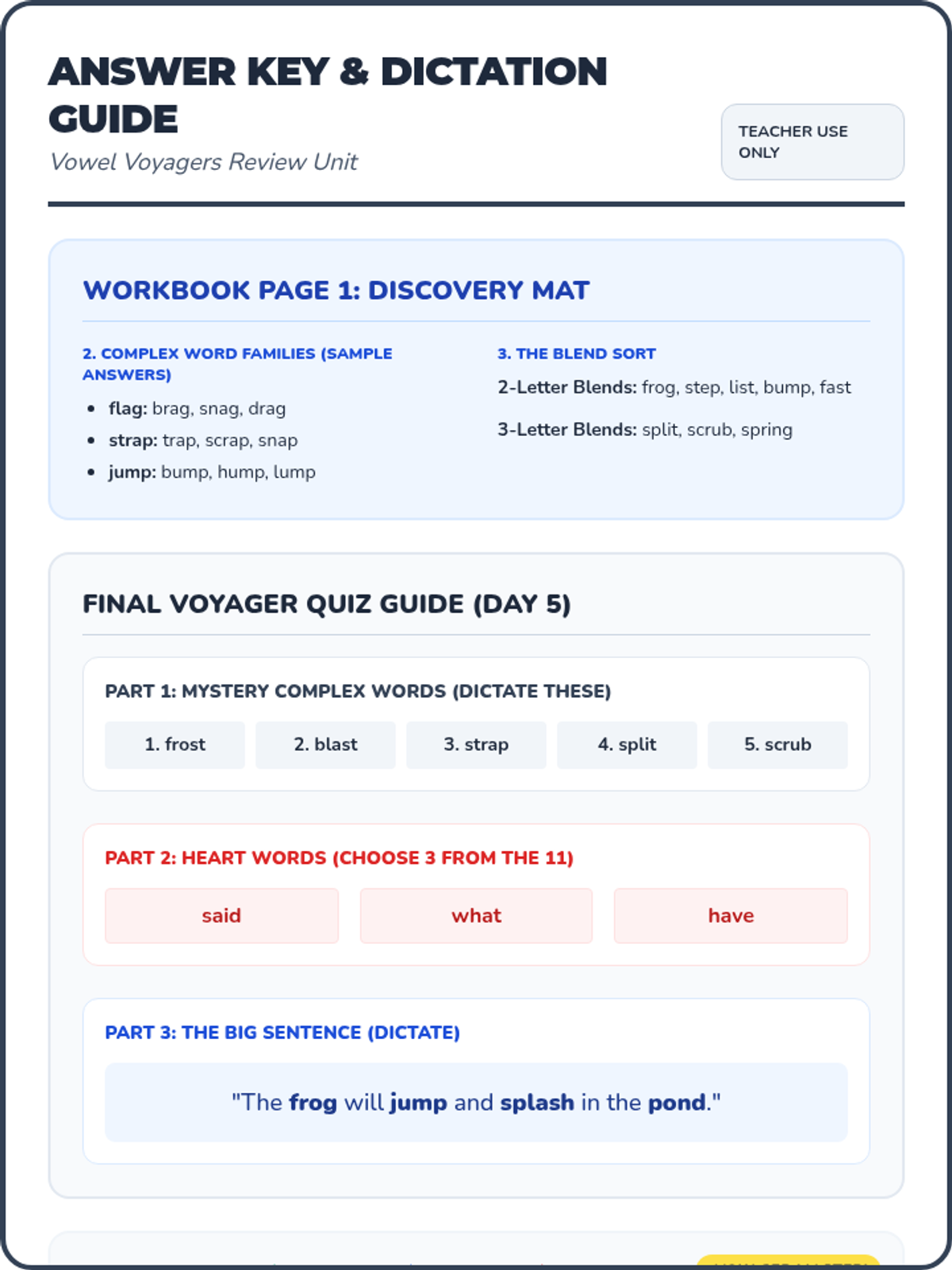
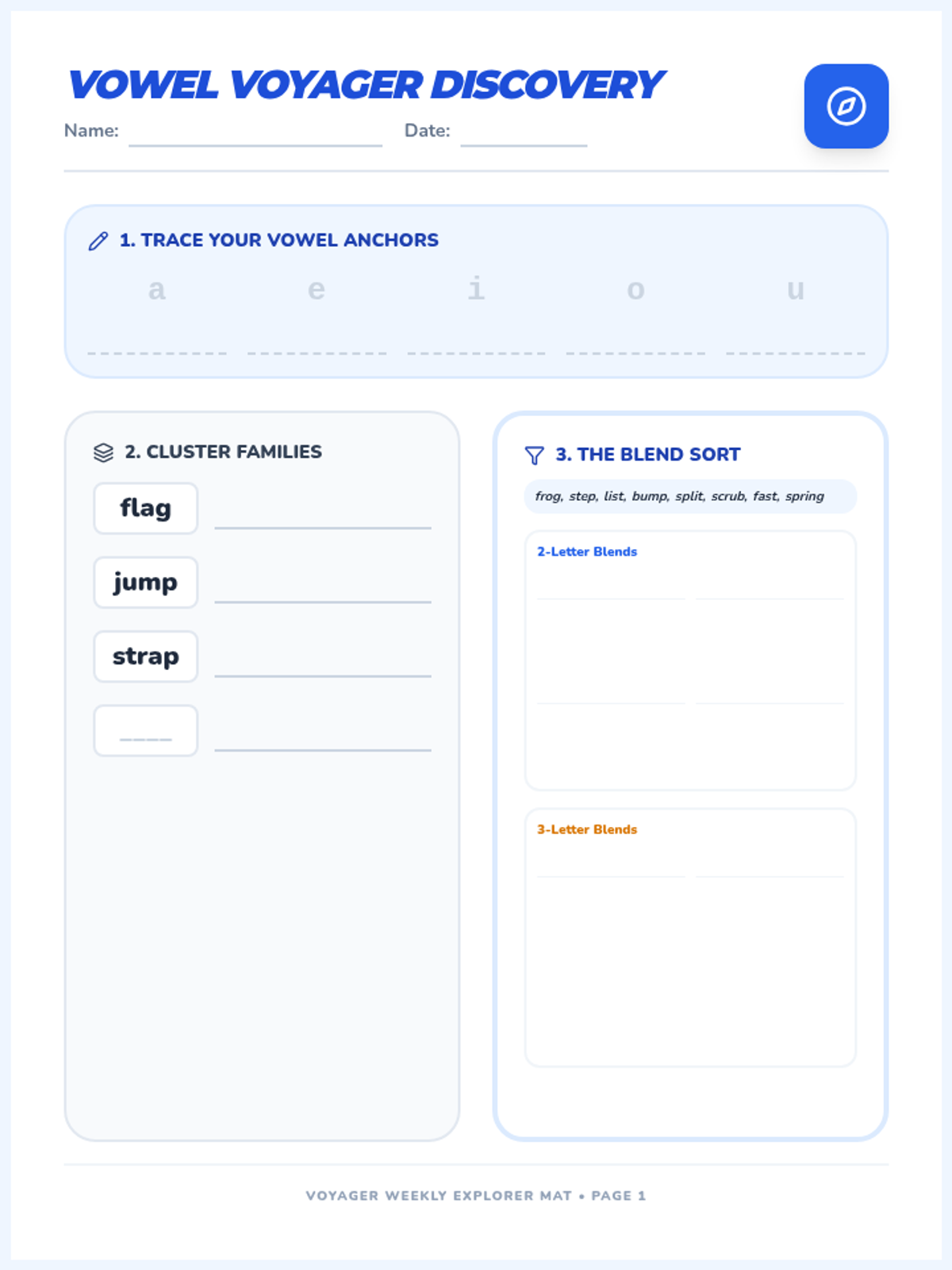
A 5-day intensive review of all short vowel sounds (a, e, i, o, u) using the 'Vowel Voyagers' theme. Includes daily phonemic awareness, word building, decodable reading, and heart word mastery.
An inquiry-based science and literacy curriculum for grades 1-3 that combines foundational scientific concepts with high-frequency sight word mastery and precision handwriting practice.
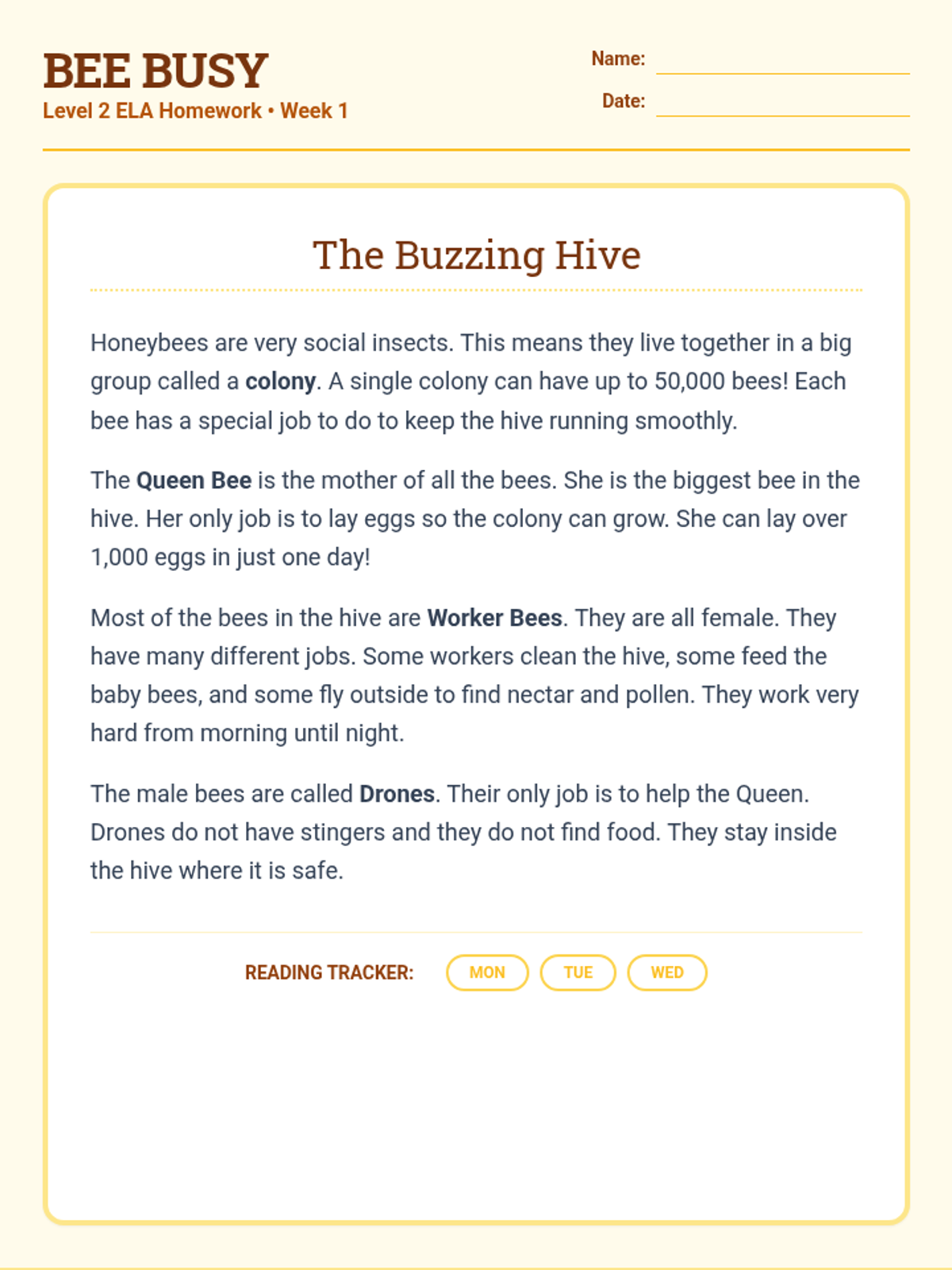
Differentiated ELA homework packets centered on the lives and importance of honeybees, organized by complexity levels.
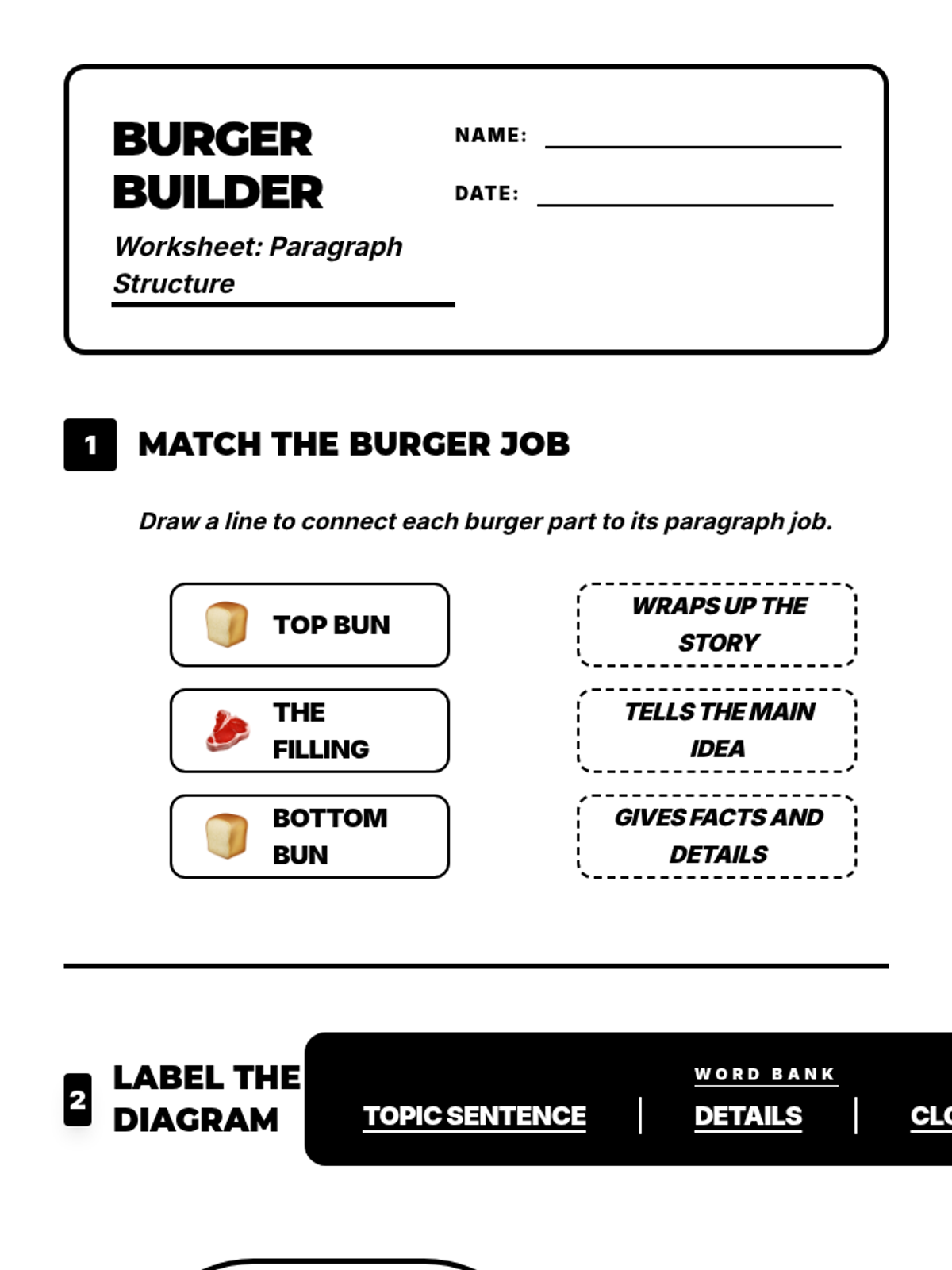
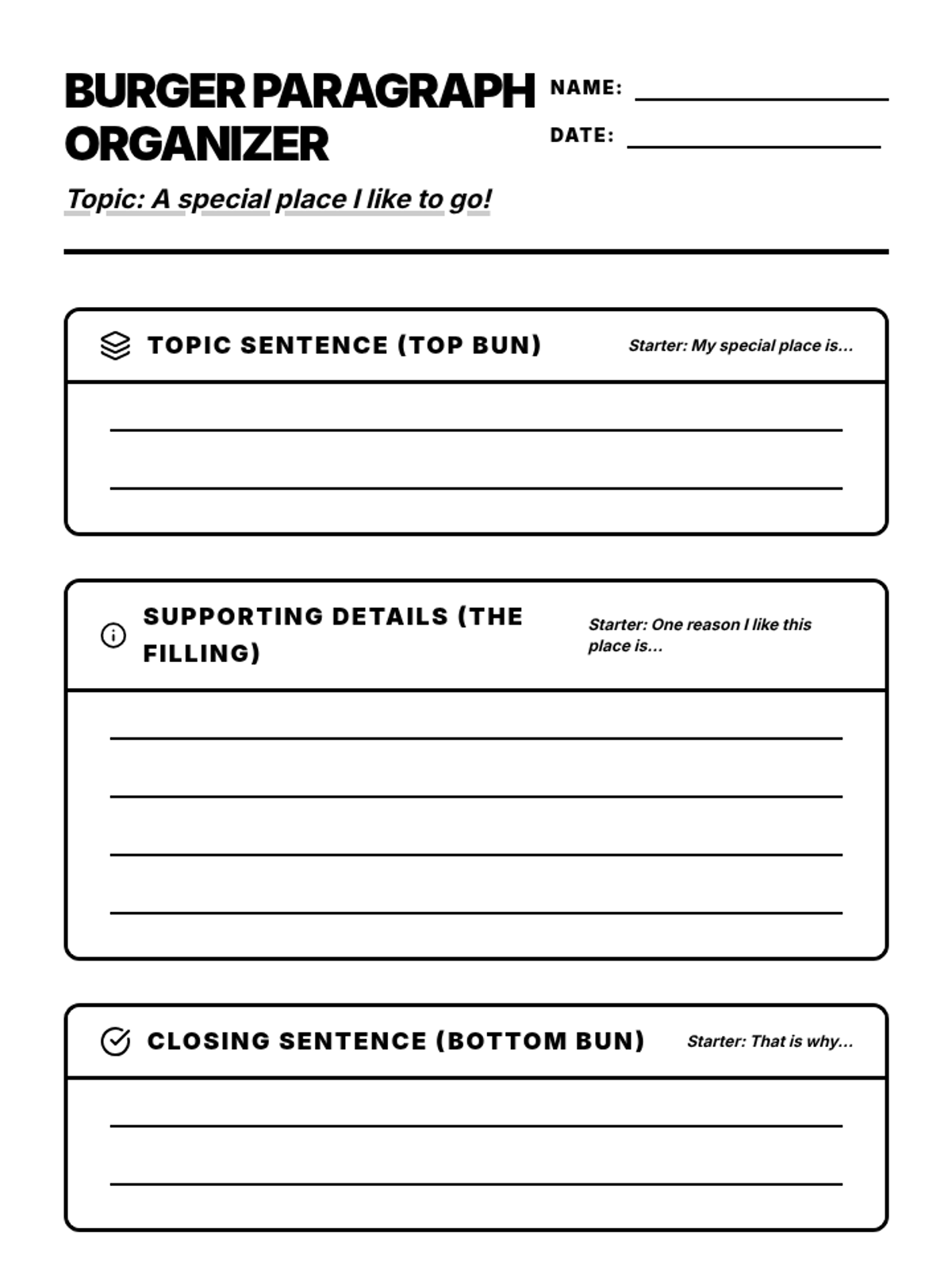
A comprehensive writing sequence designed for early writers and SpEd students to master paragraph structure through narrative, opinion, and journal writing with heavy visual scaffolding.
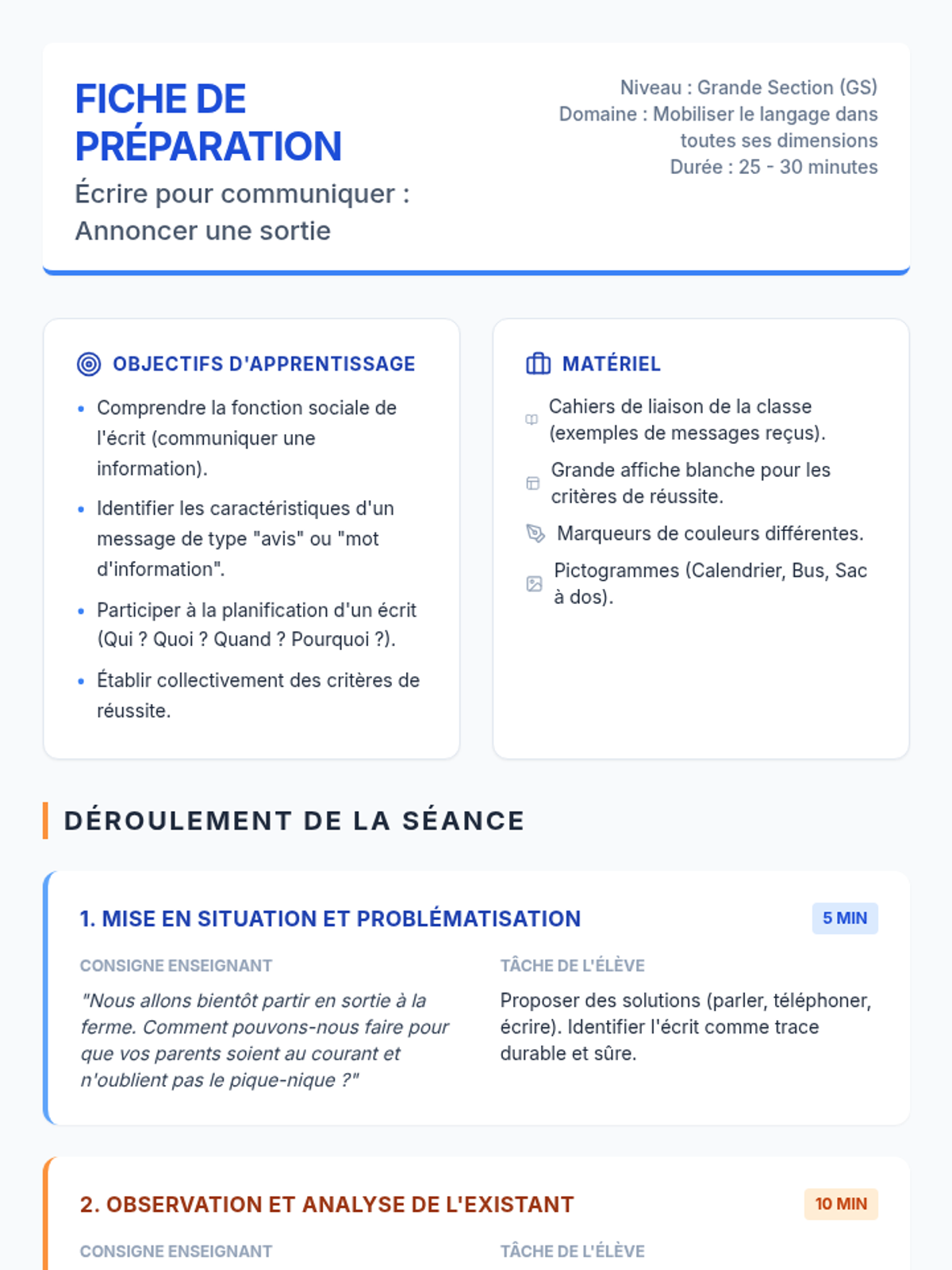
Une série de modules de formation destinés aux conseillers pédagogiques pour renforcer leur expertise en ingénierie de formation continue, spécifiquement appliquée à l'enseignement du français à l'école primaire.
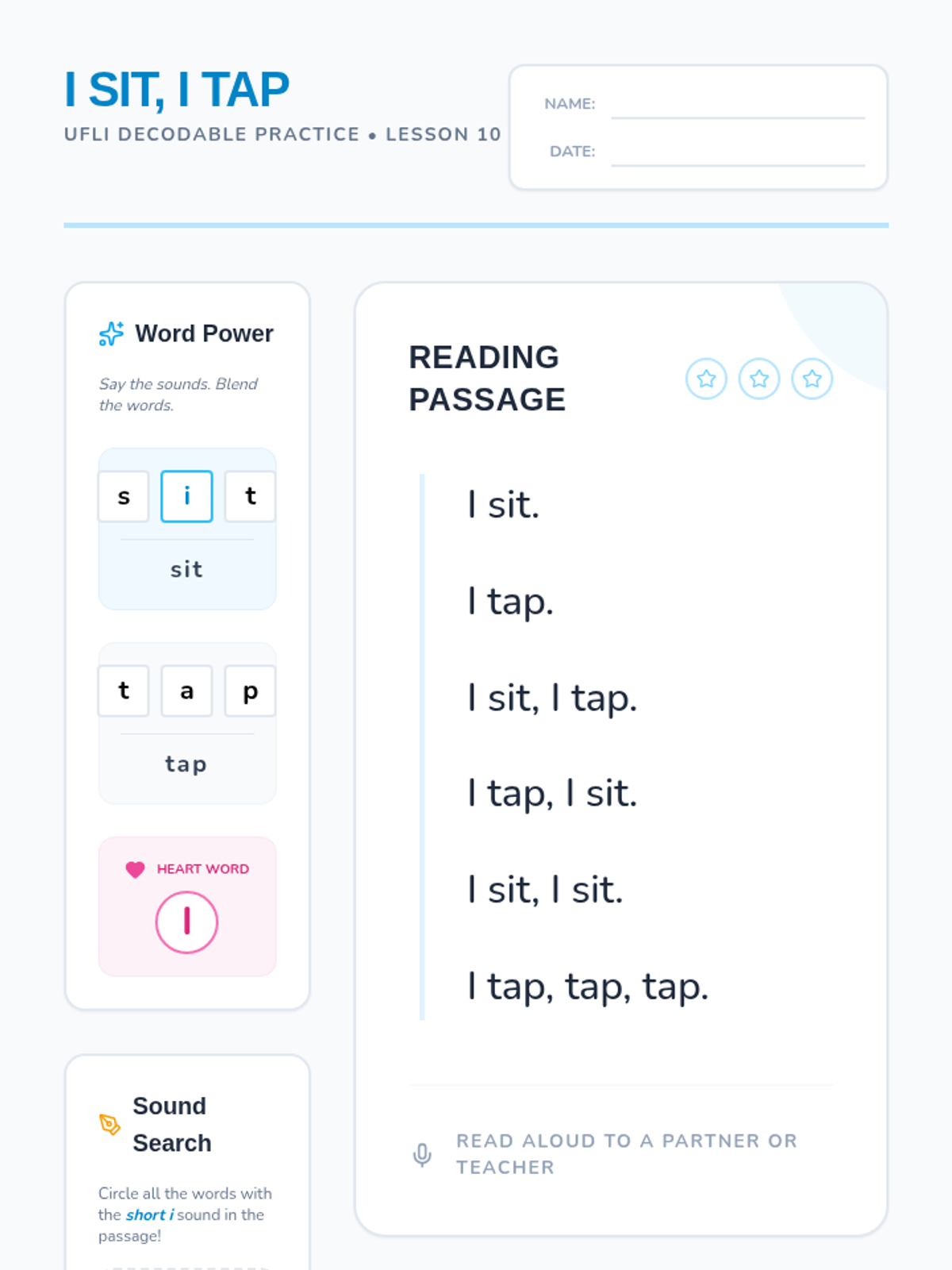
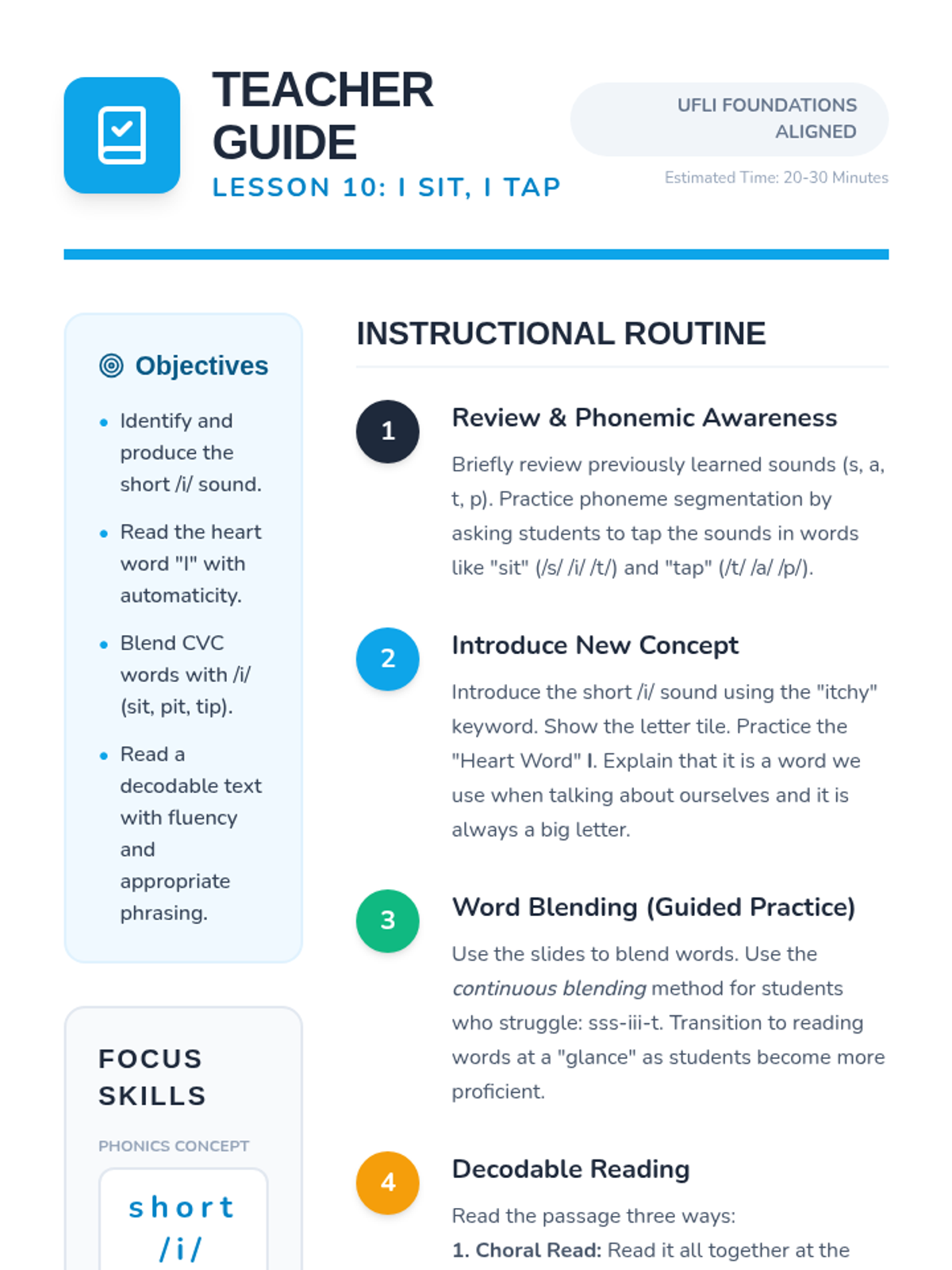
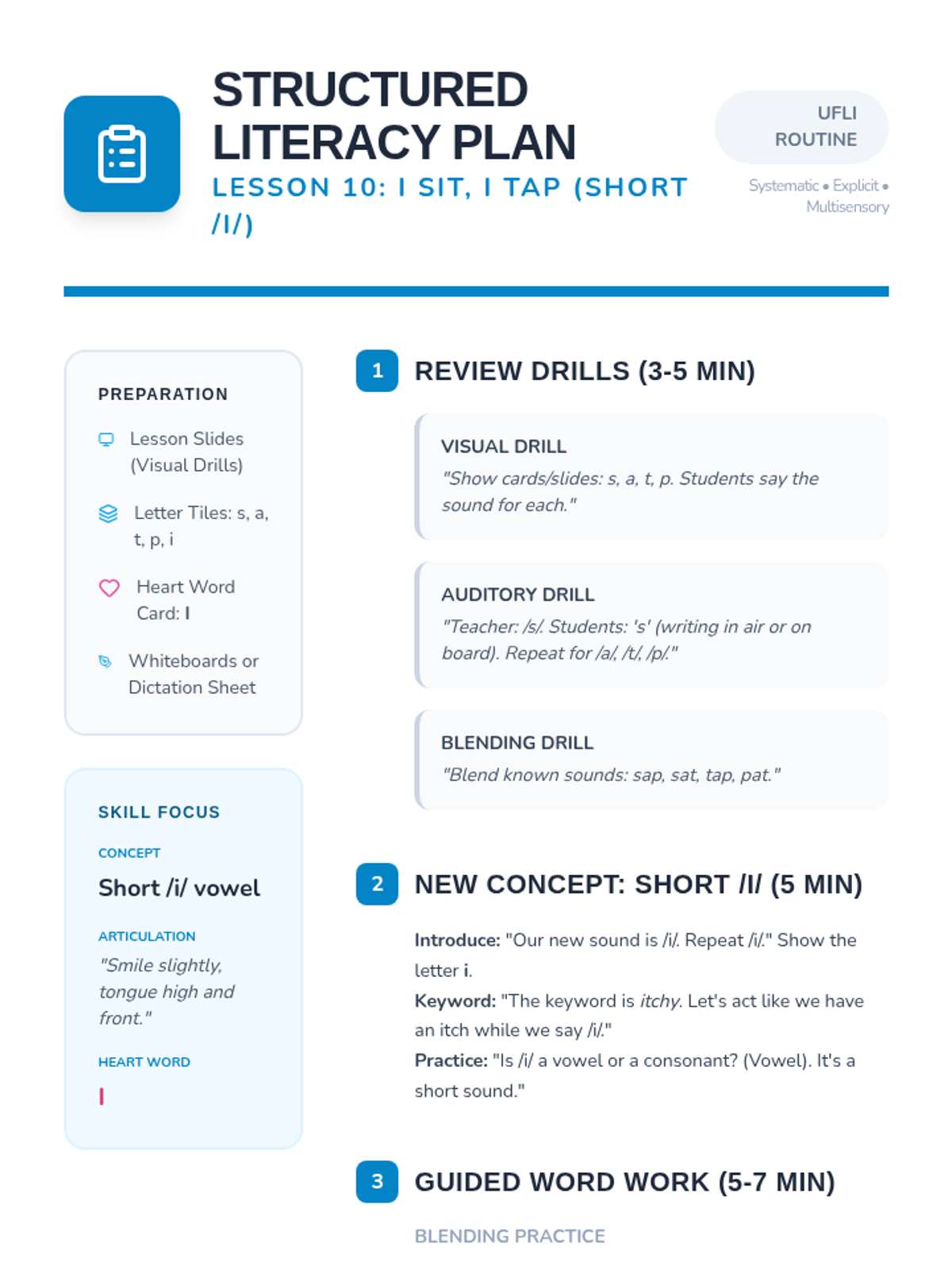
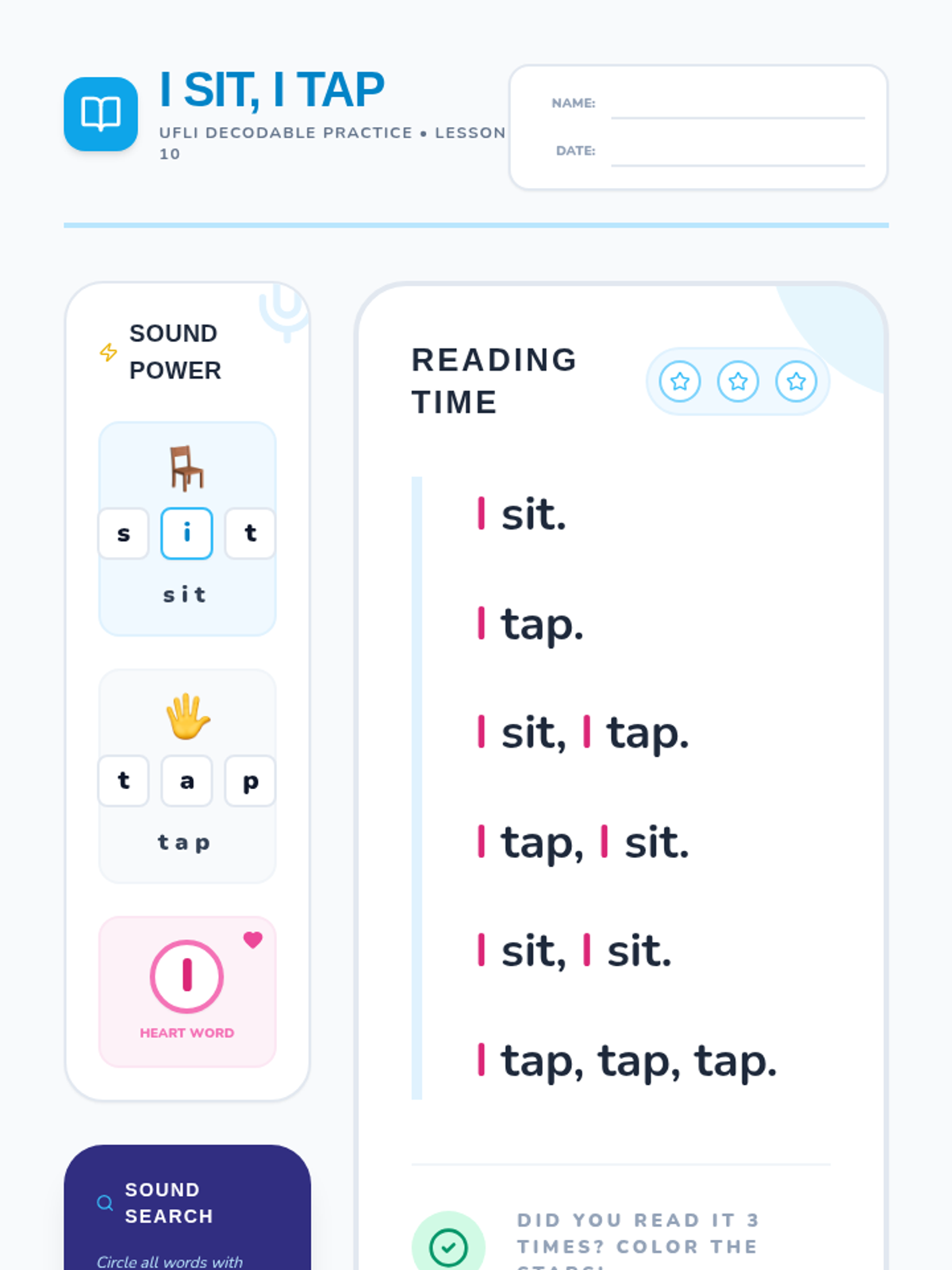
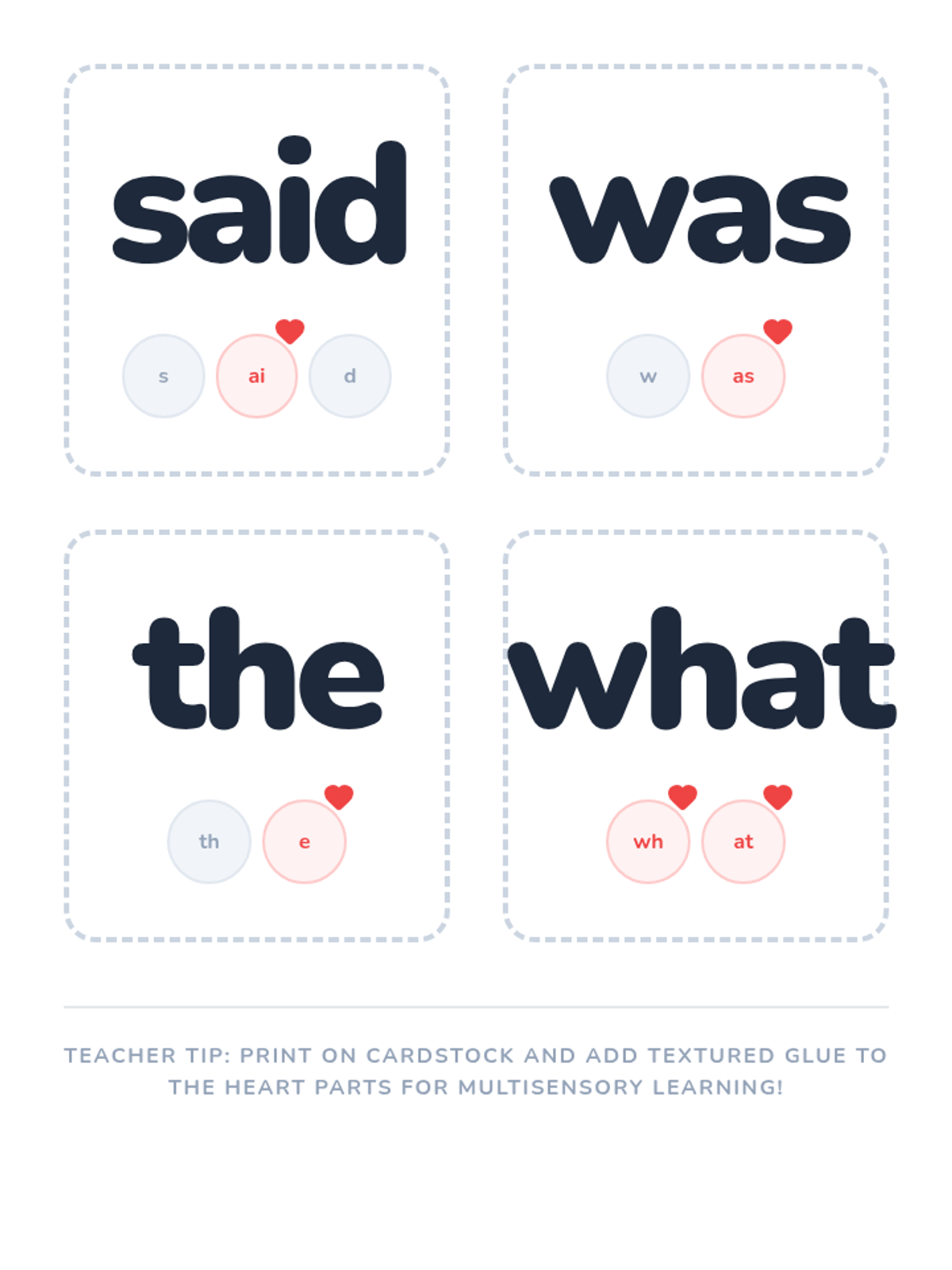
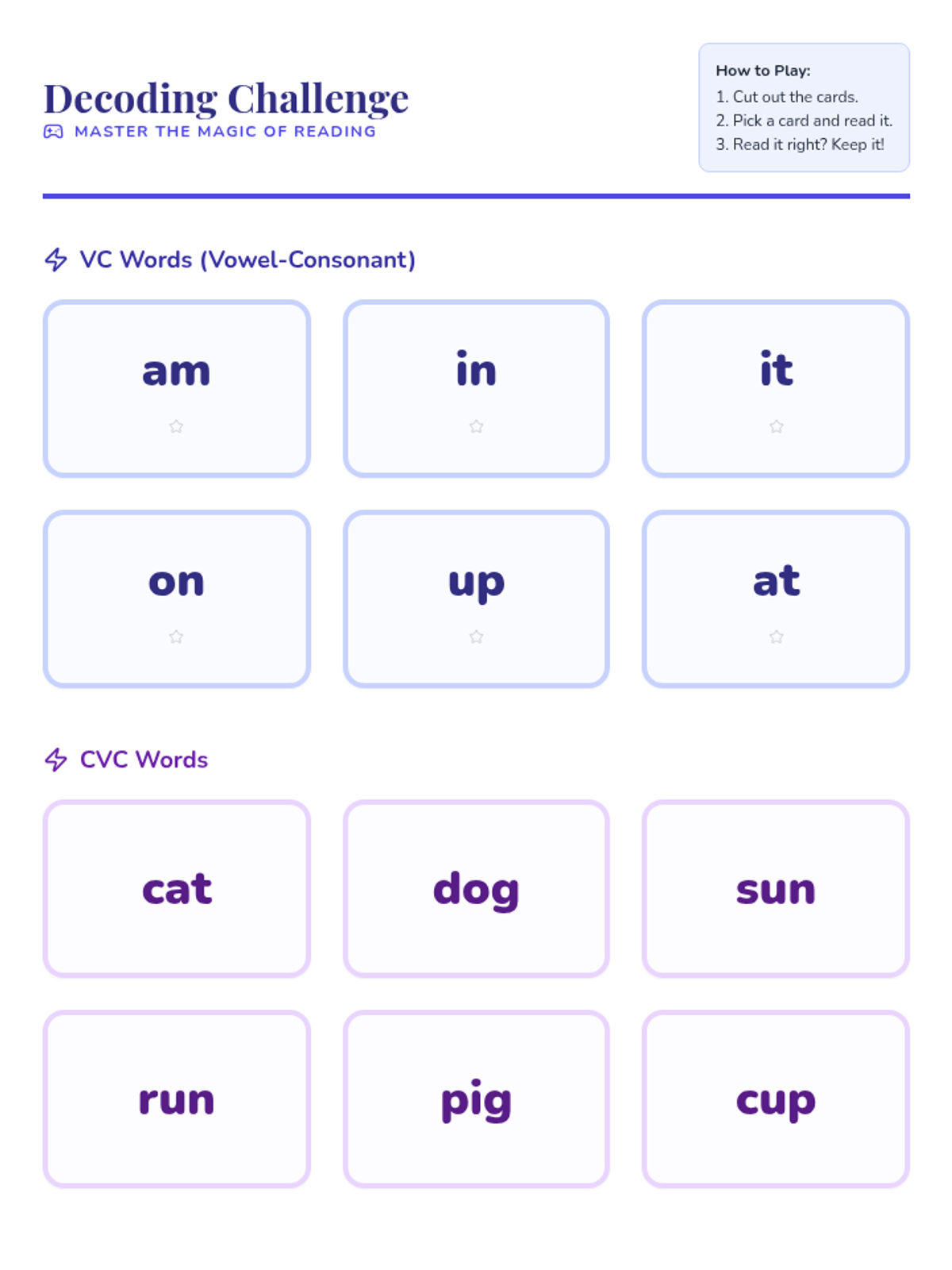
A collection of decodable passages and activities aligned with UFLI Foundations, focusing on systematic phonics and heart word acquisition. Each lesson centers on a specific phonics skill and accompanying "heart words" to build reading fluency.
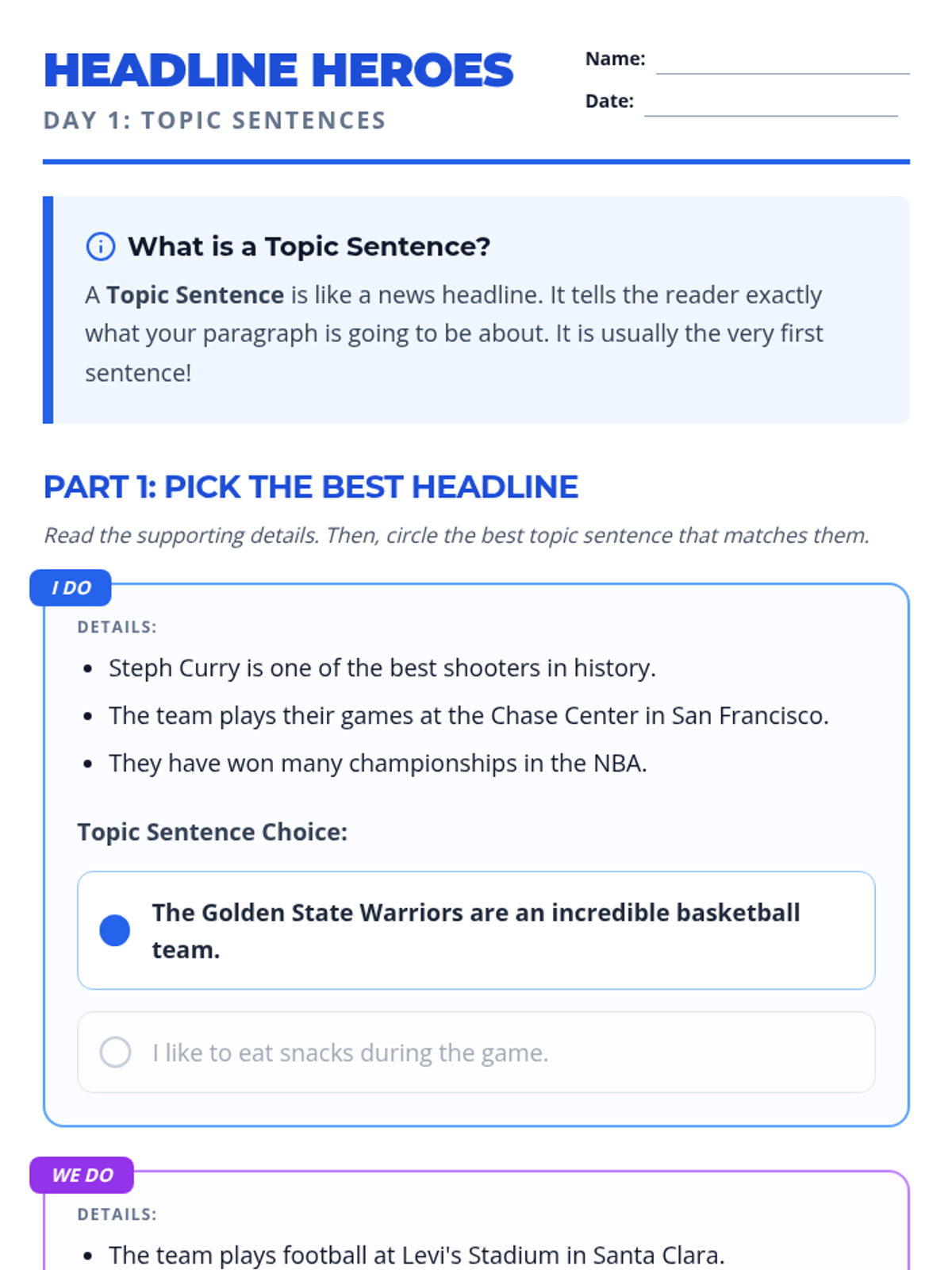
A 4-day instructional sequence focused on paragraph structure, specifically mastering topic sentences and supporting details using student-interest topics like sports, dragons, and favorite foods.
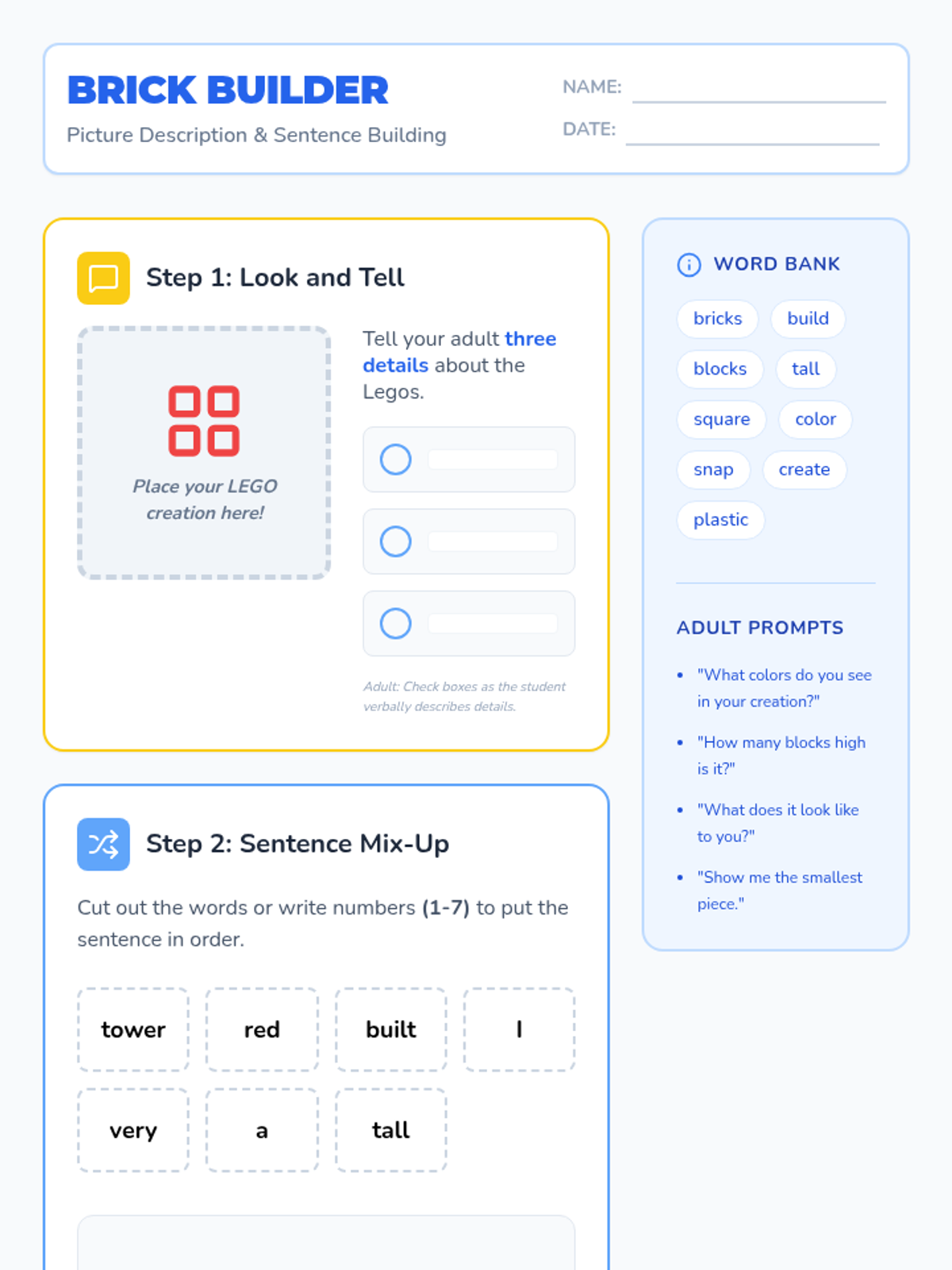
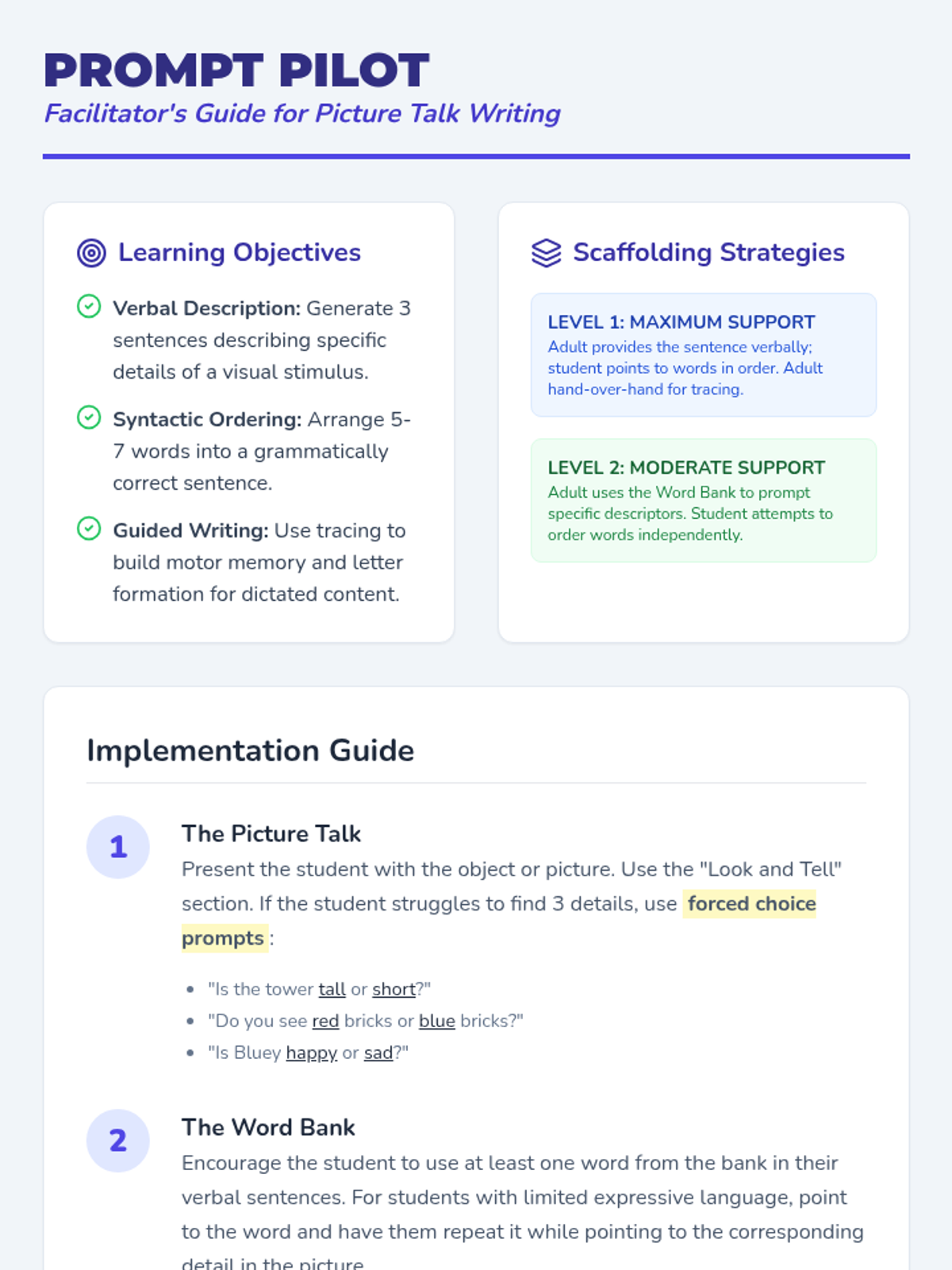
A 5-day writing workshop for young learners to build verbal description skills and sentence structure using high-interest themes and adult scaffolding.
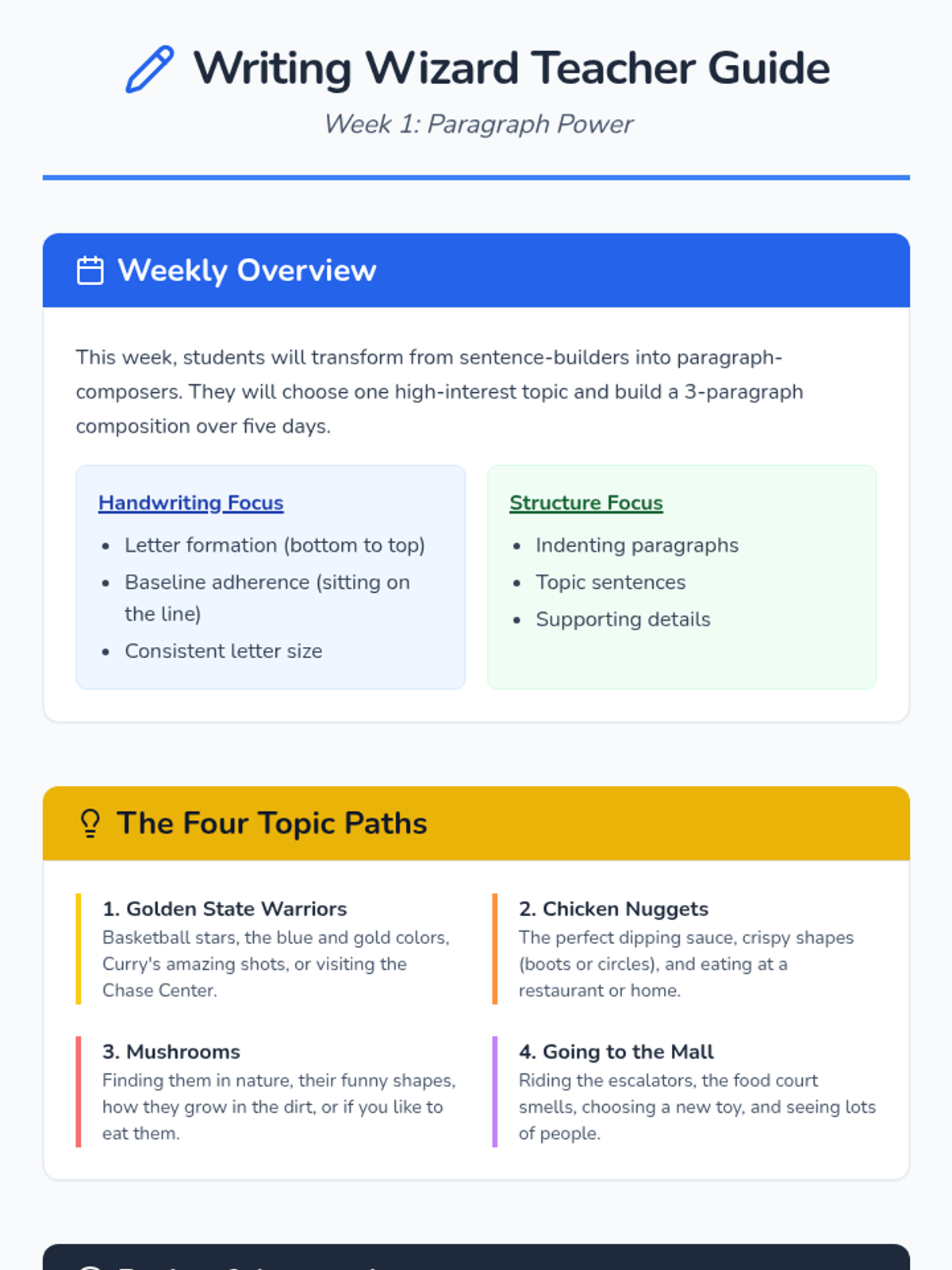
A week-long writing unit for 1st-2nd grade students focused on sentence structure, handwriting, and multi-paragraph composition through high-interest topics.
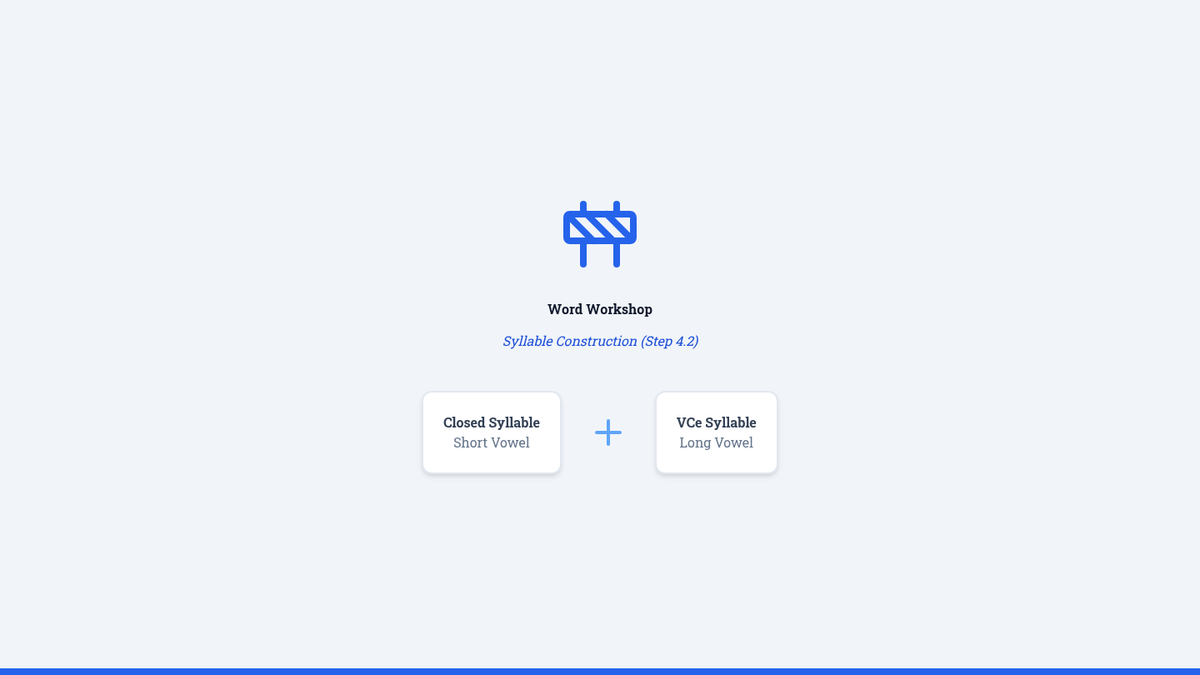
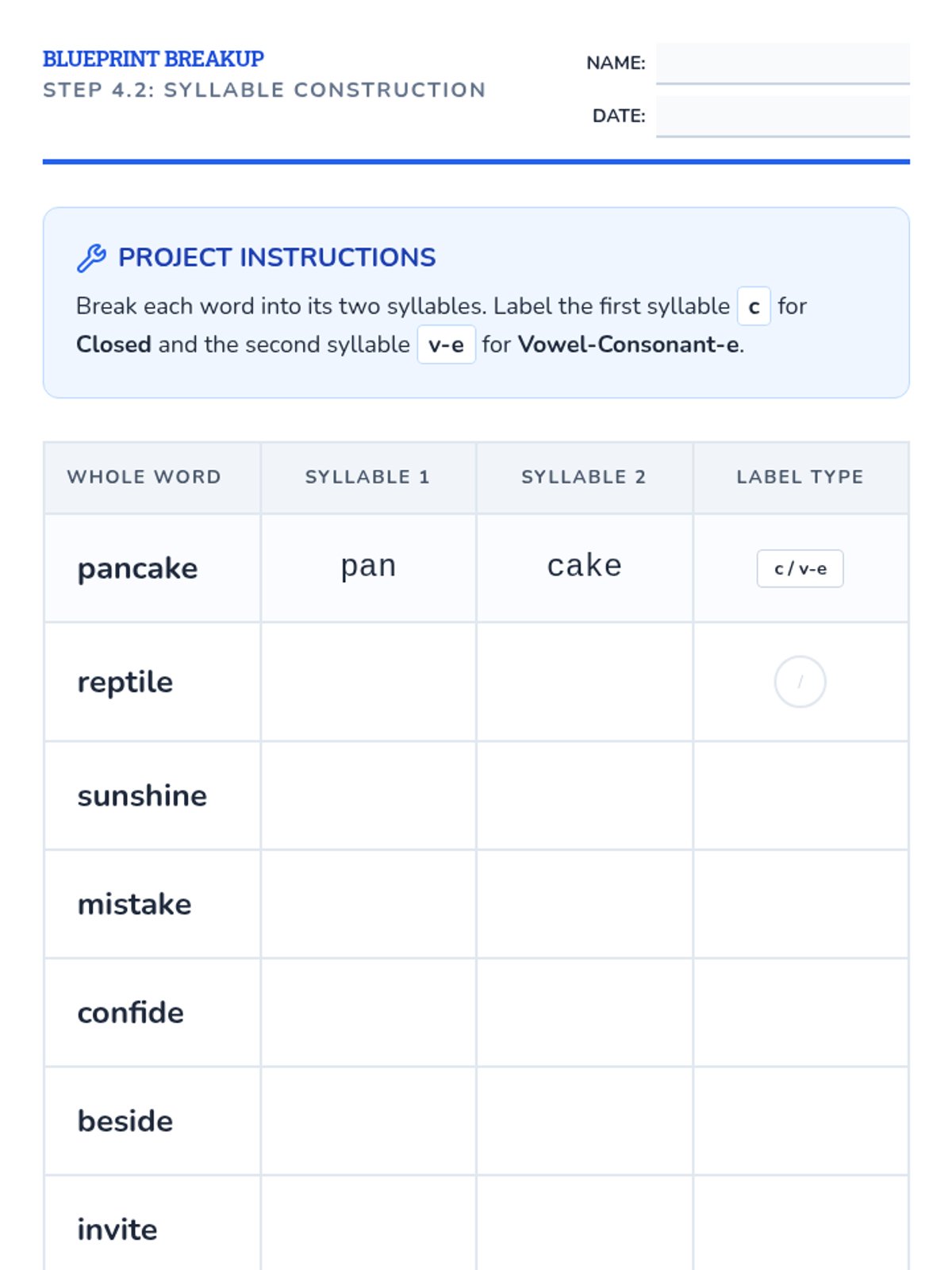
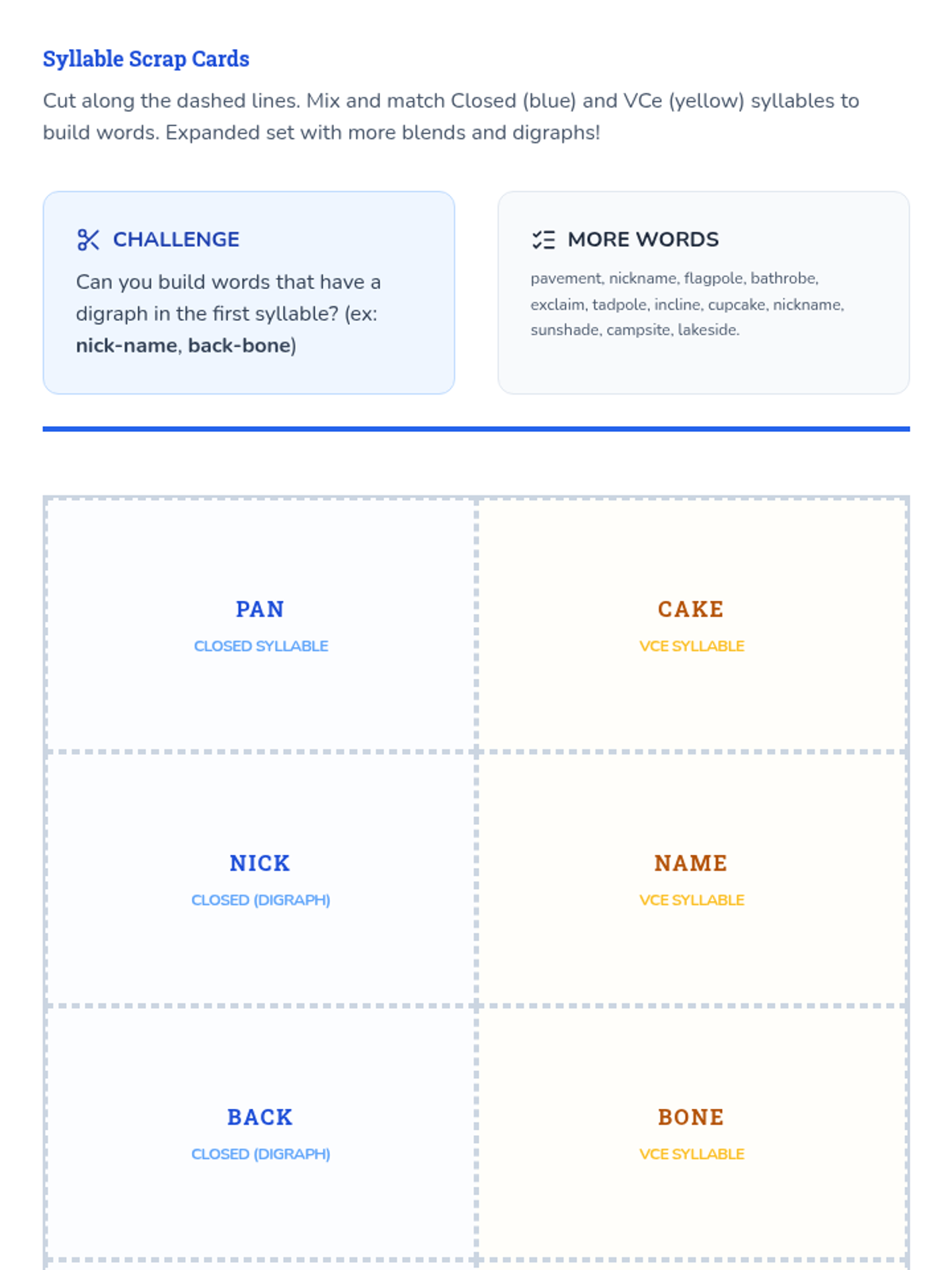
A comprehensive unit for Wilson Reading System Step 4.2, focusing on two-syllable words combining closed and vowel-consonant-e (VCe) syllables. Includes syllable division practice, word cards, games, and fluency activities.
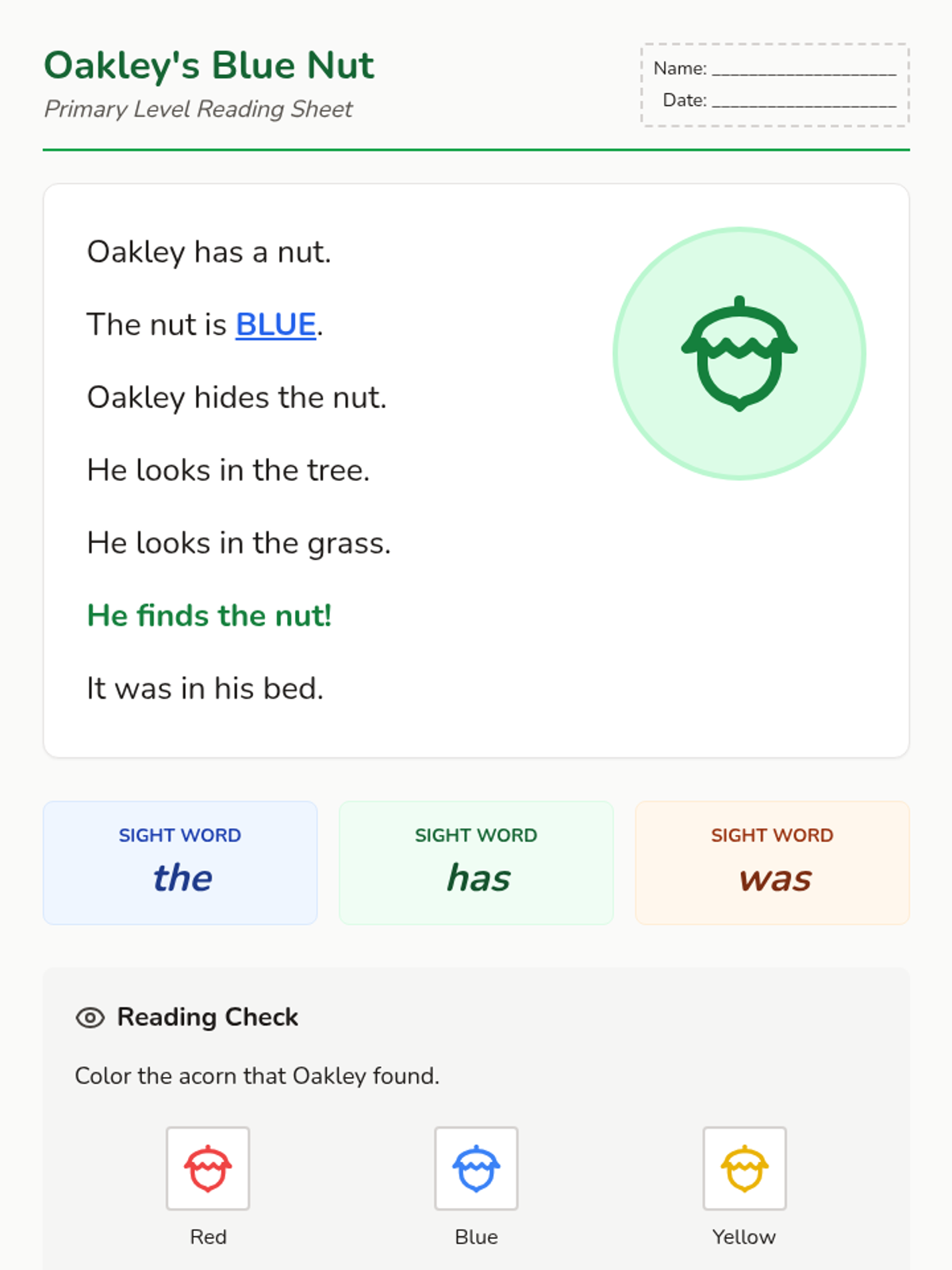
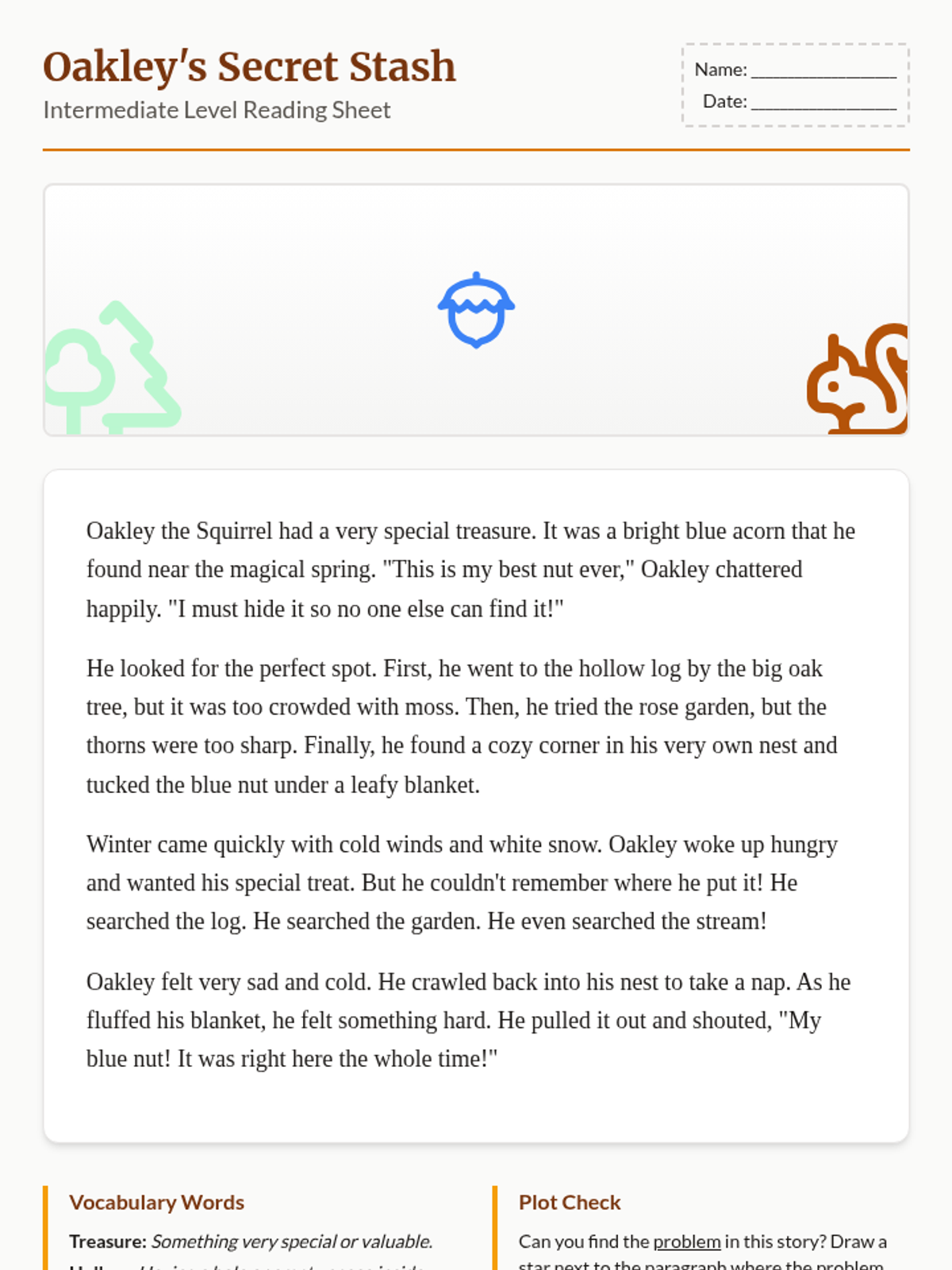
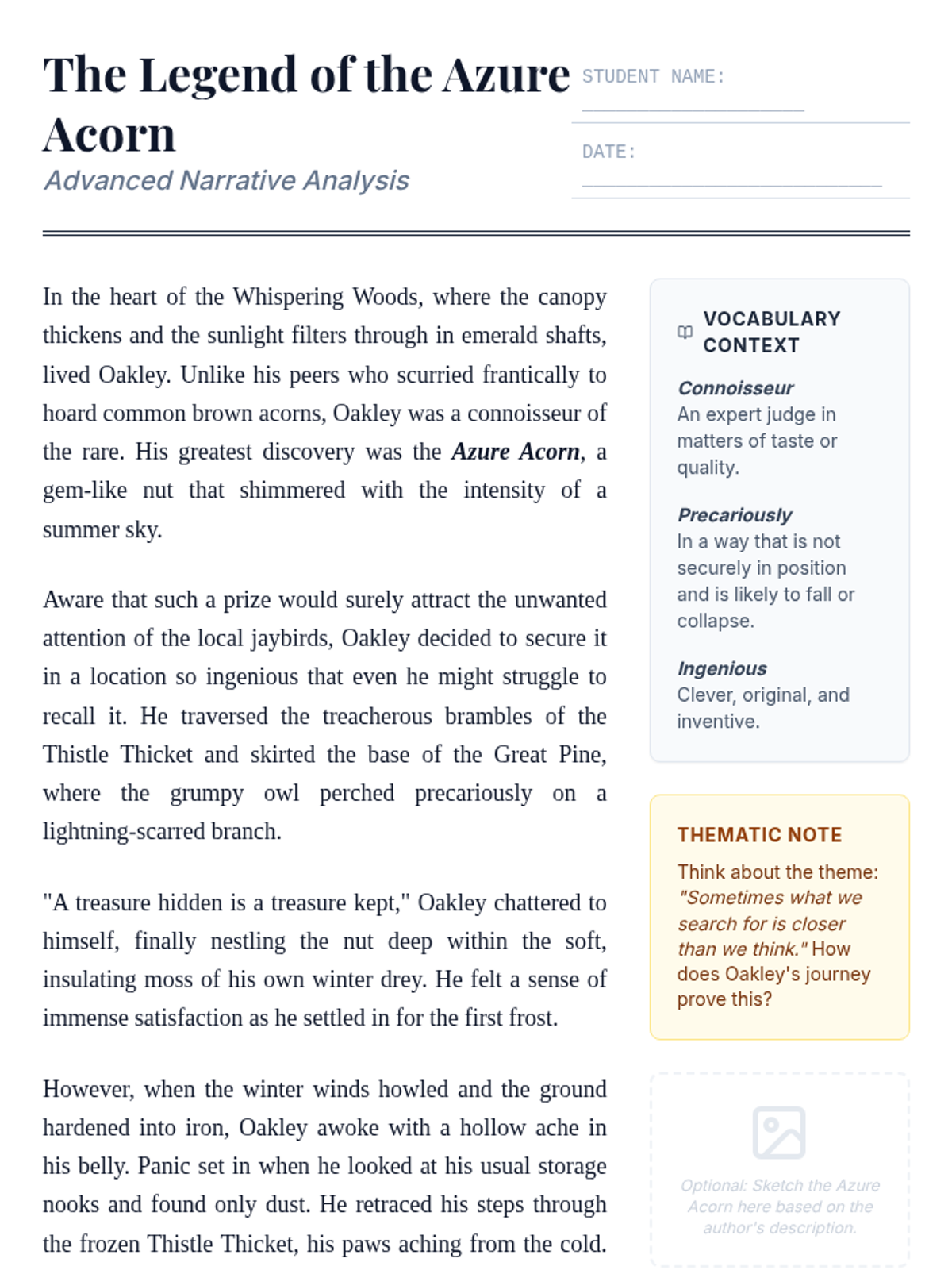
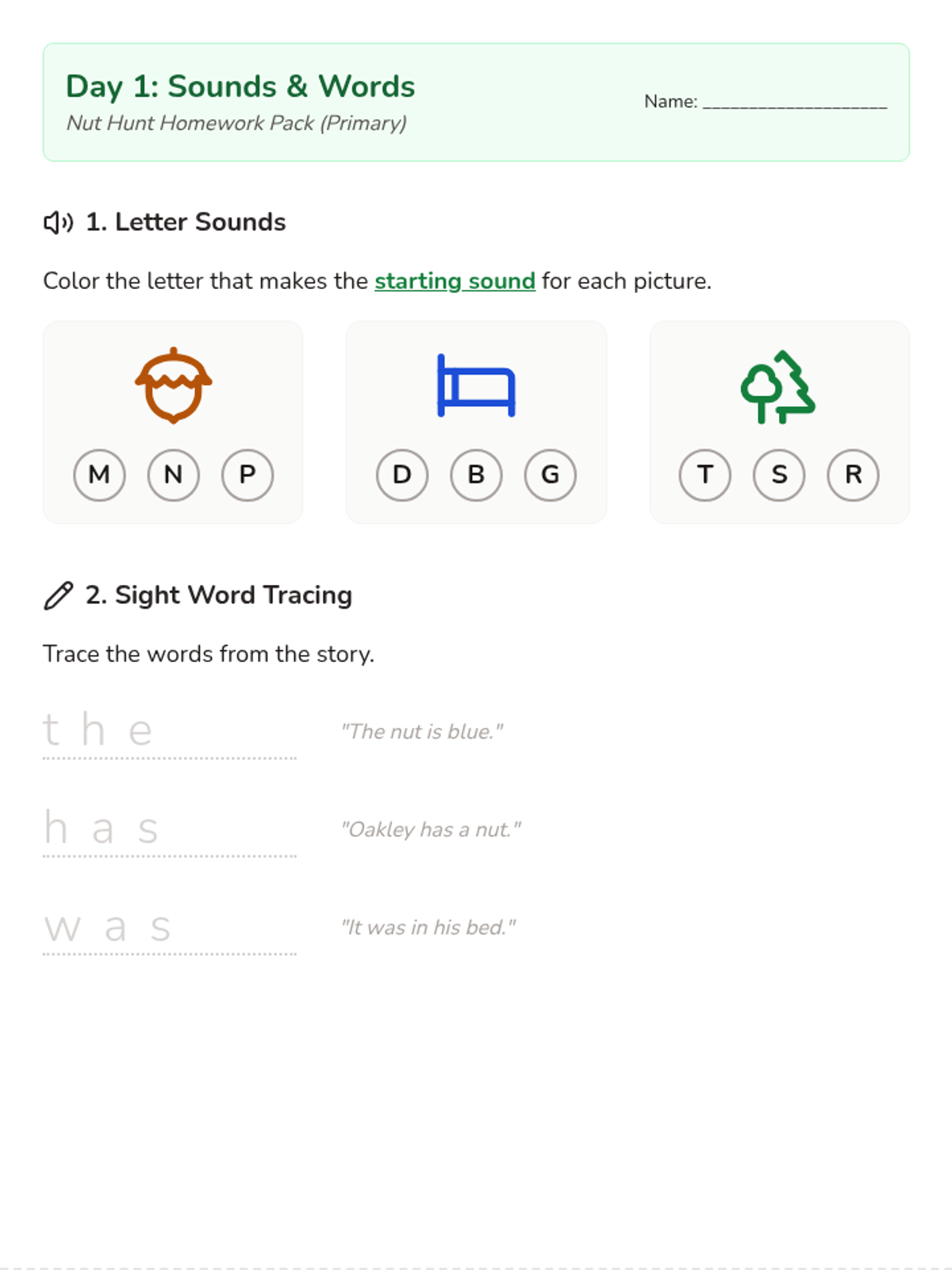
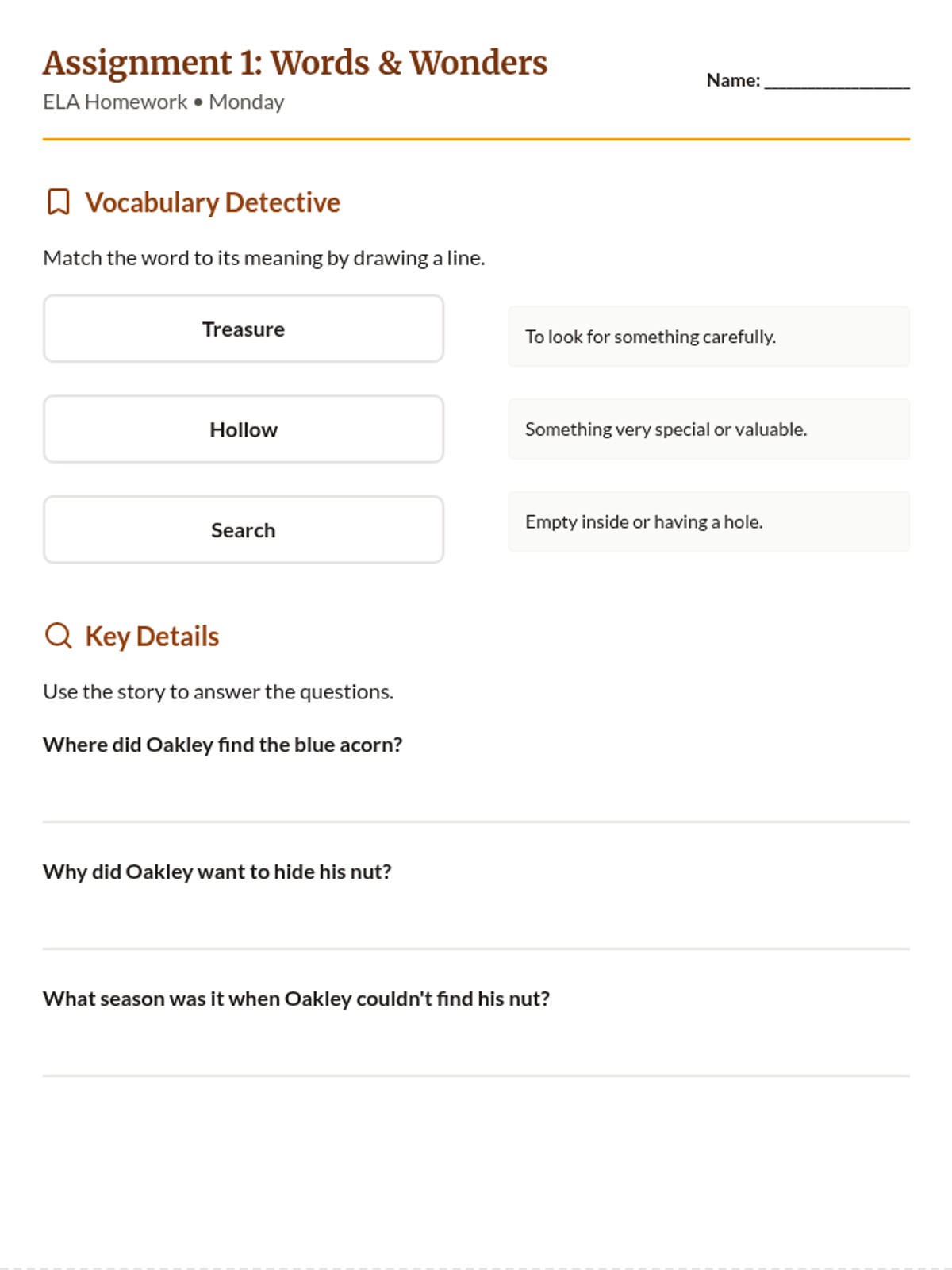
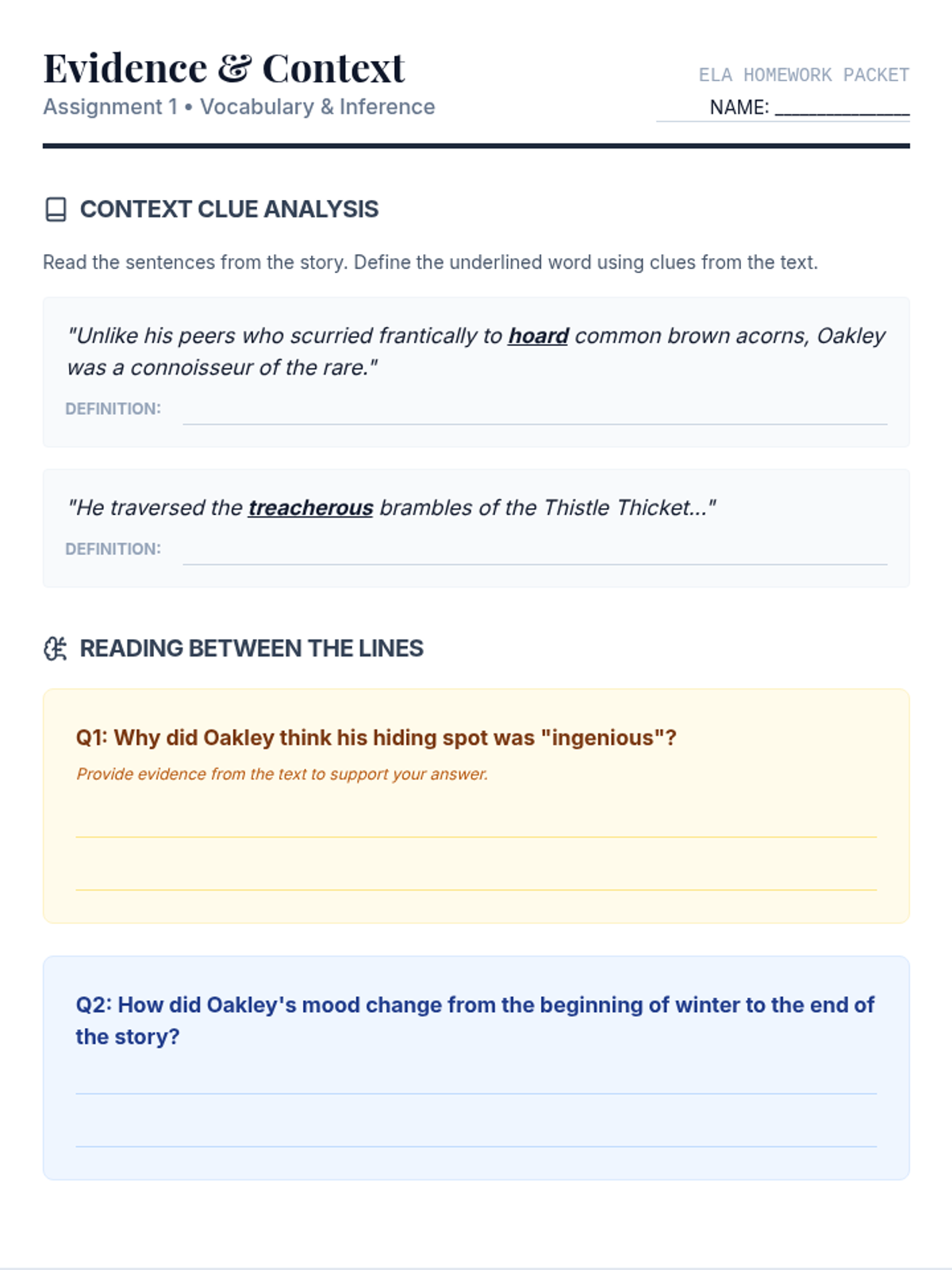
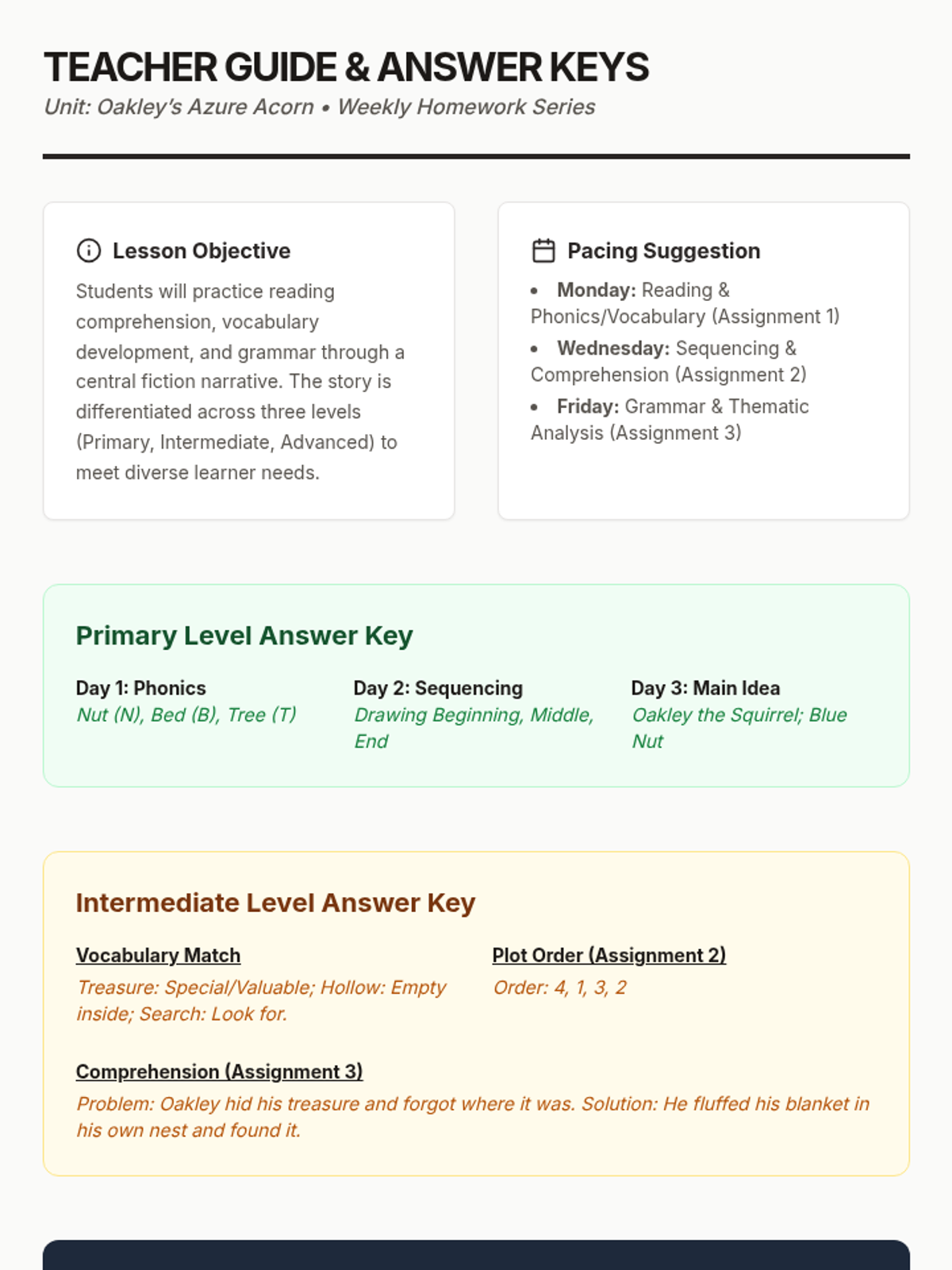
A week-long ELA homework series centered around a narrative about a squirrel's search for a rare acorn. The materials are differentiated for Kindergarten, 2nd Grade, and 4th Grade learners.
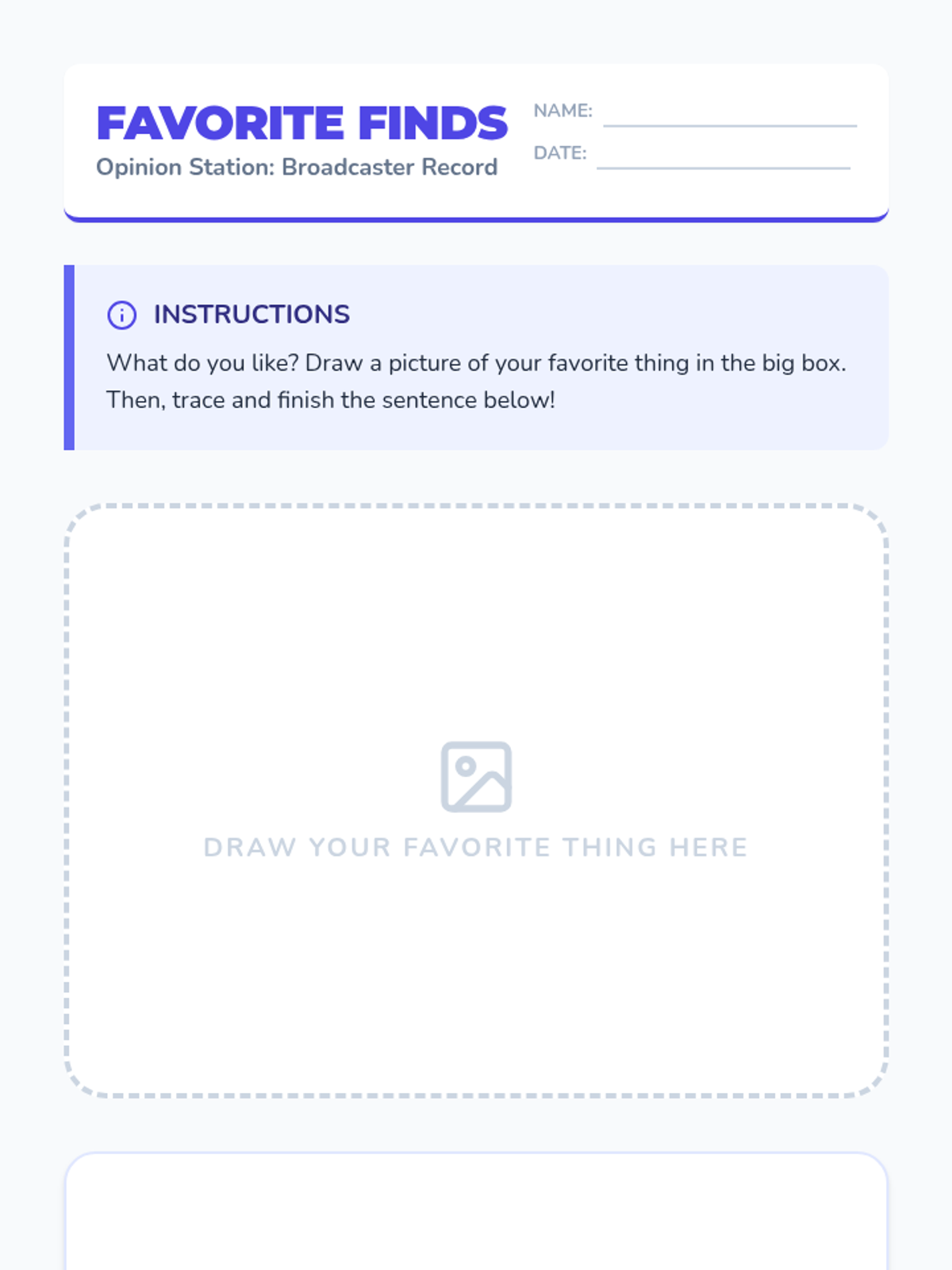
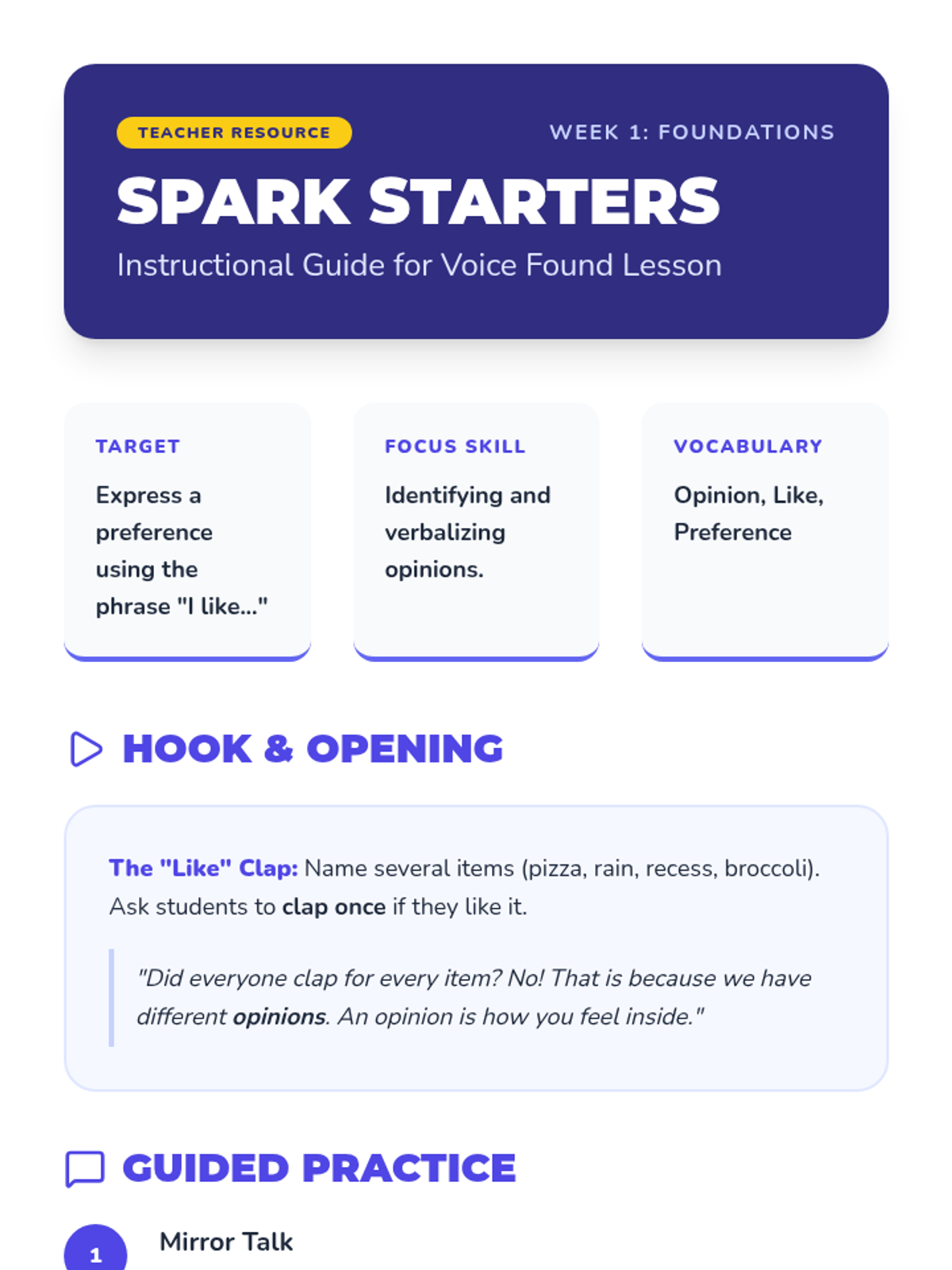
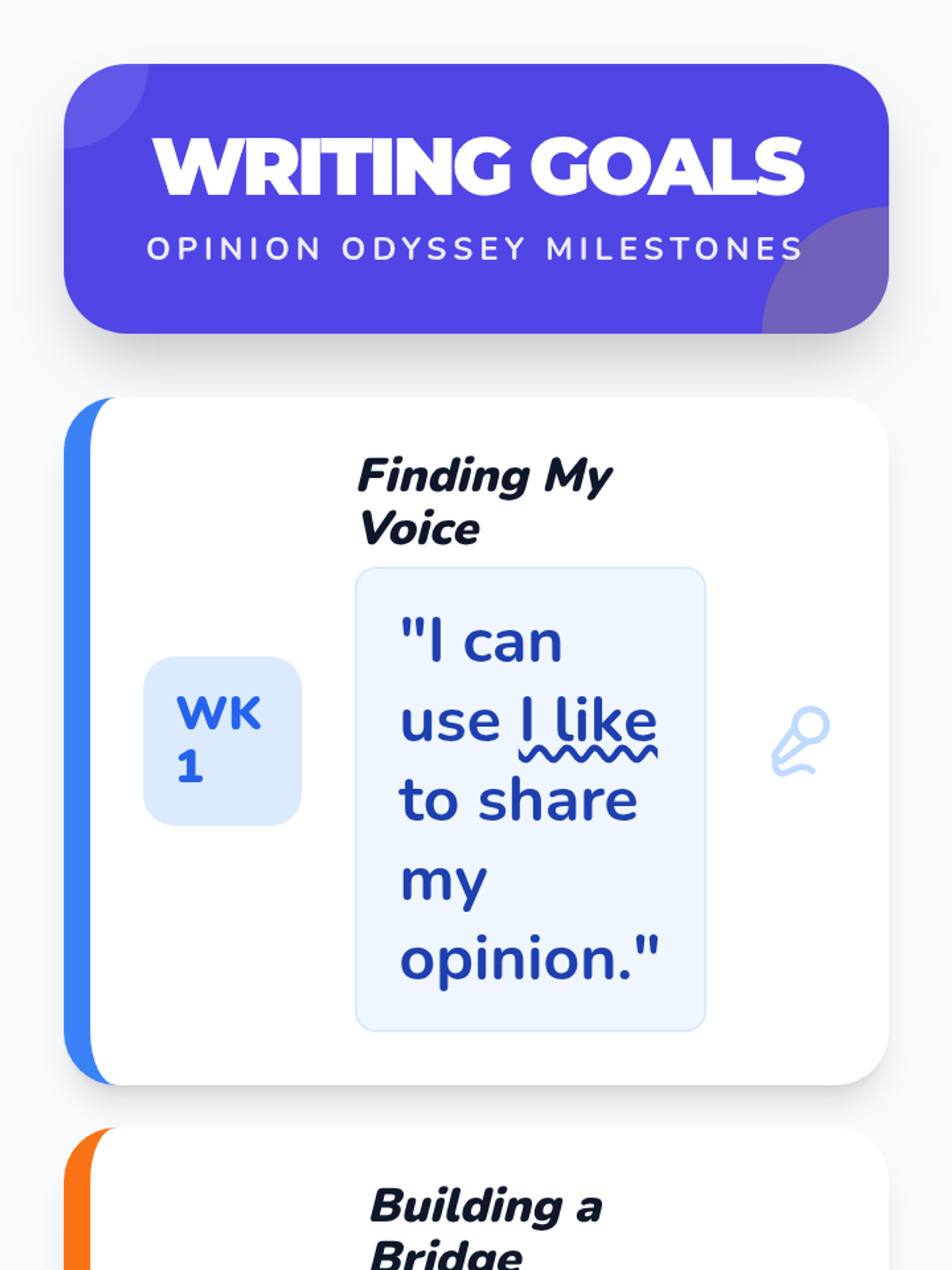
A foundational writing sequence for early learners focused on developing opinion writing skills. Students progress from stating simple preferences to supporting their opinions with reasons and descriptive details using 'I like' and 'because'.
This sequence introduces 1st Grade students to procedural writing using flowcharts. It focuses on breaking down tasks into three distinct steps (First, Next, Last) through physical movement, visual organizers, action verbs, and scaffolded sentence writing.
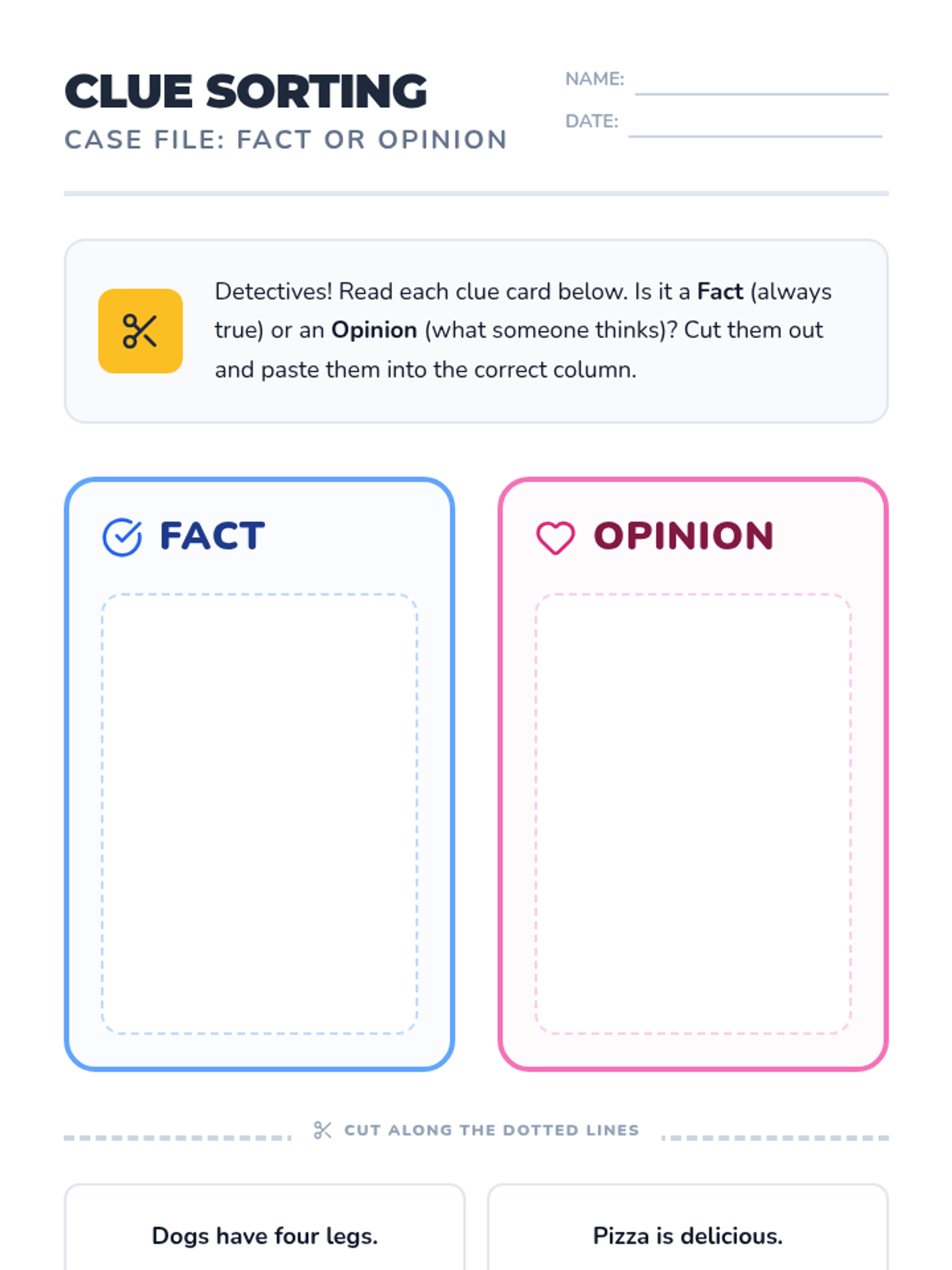
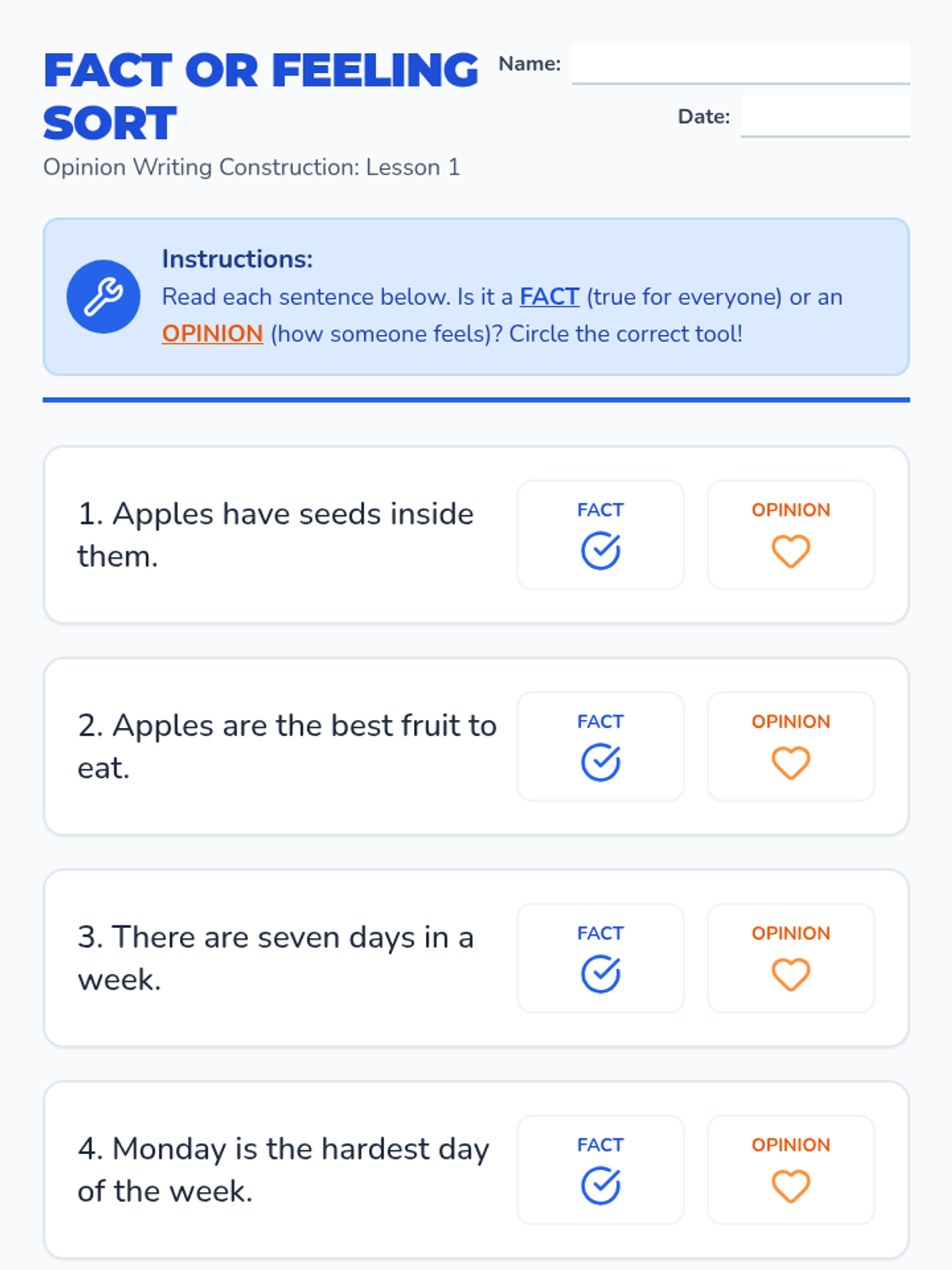
A 1st-grade writing sequence focused on opinion writing through structured graphic organizers. Students learn to distinguish facts from opinions, use a 'because' bridge to link ideas, and use sentence frames to draft complete opinion statements.
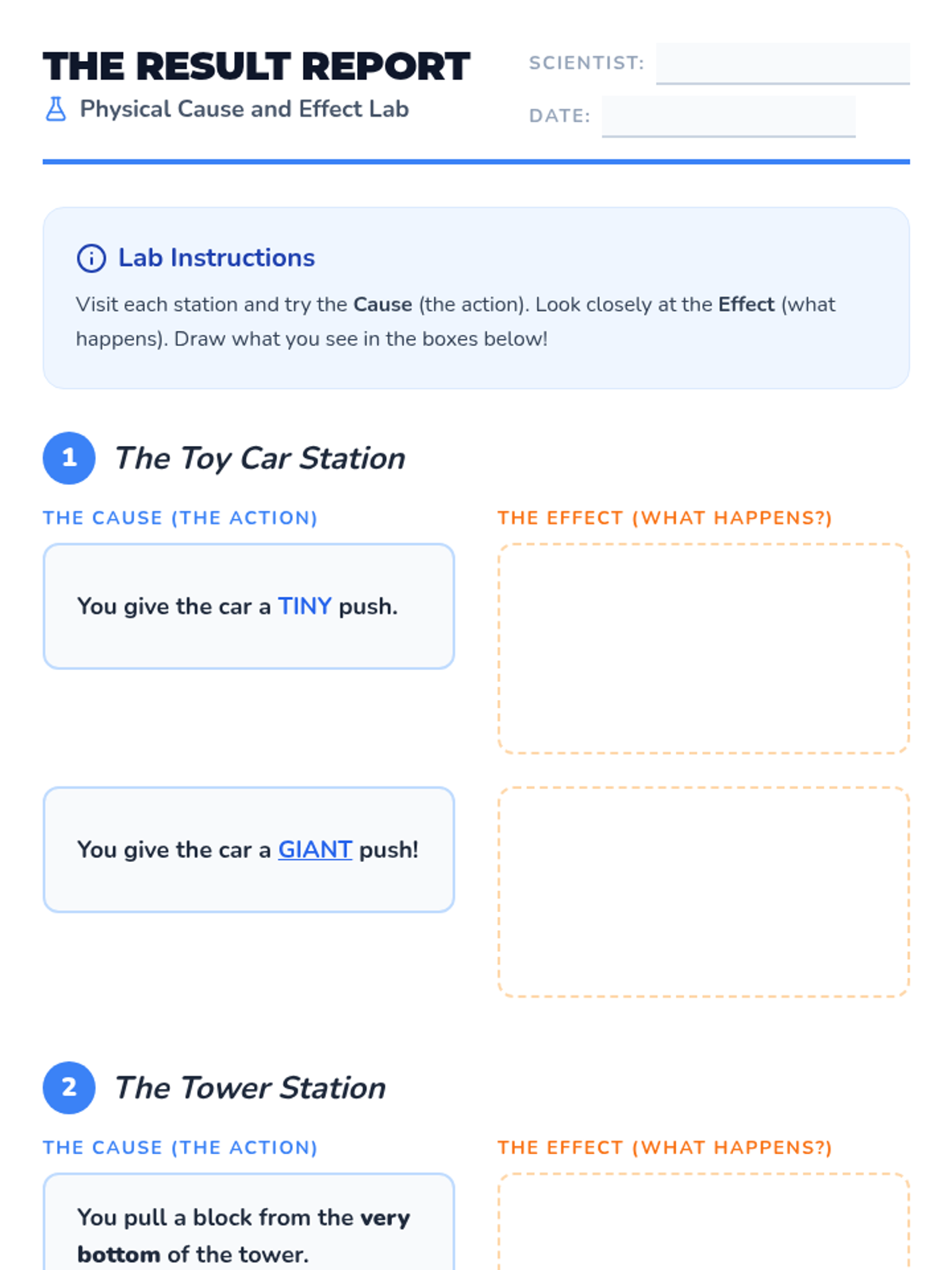
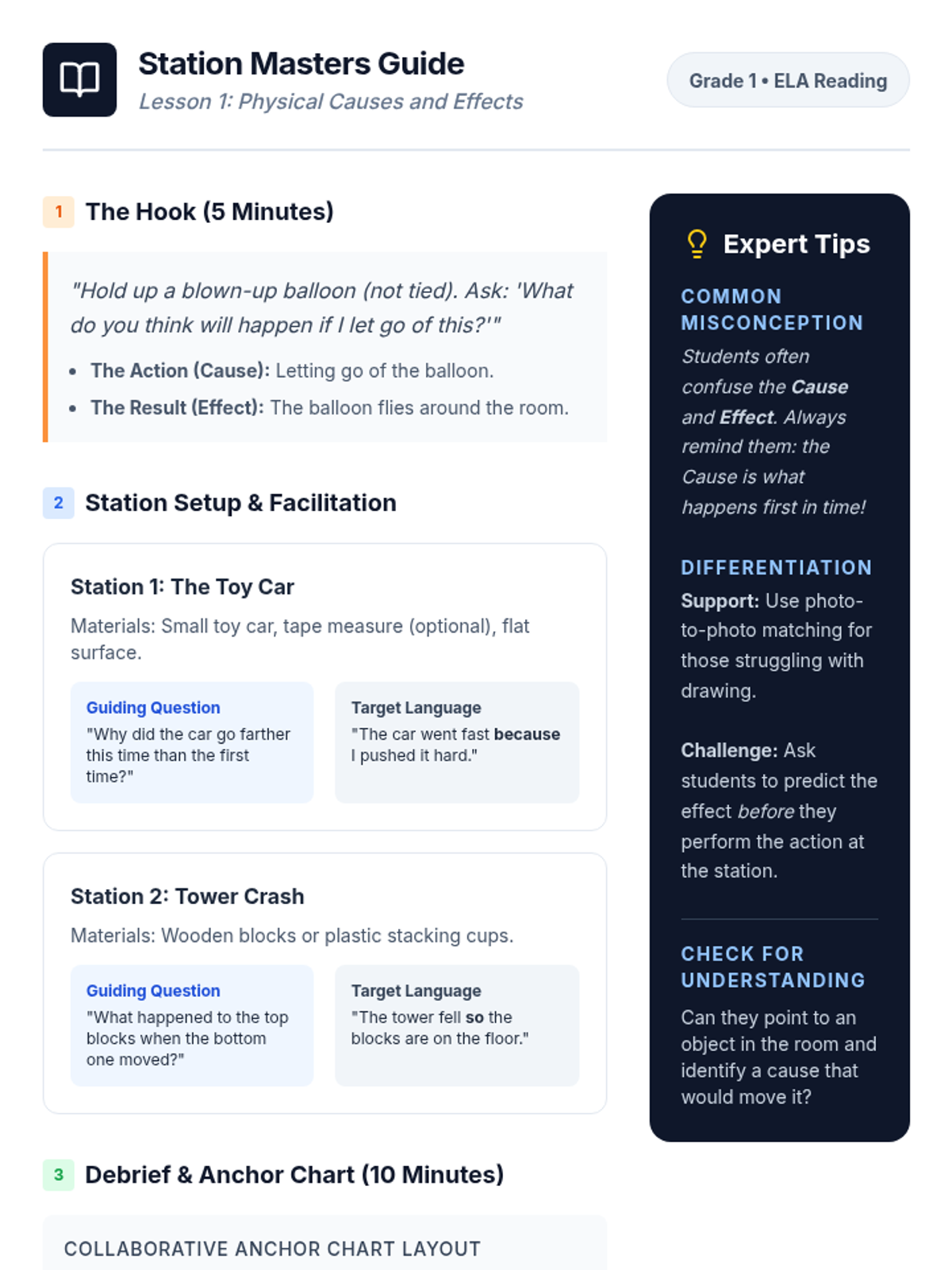
A first-grade sequence that introduces cause and effect through physical exploration, narrative analysis, and informational texts, concluding with a creative comic project. Students learn to use signal words like 'because' and 'so' to connect events and outcomes.
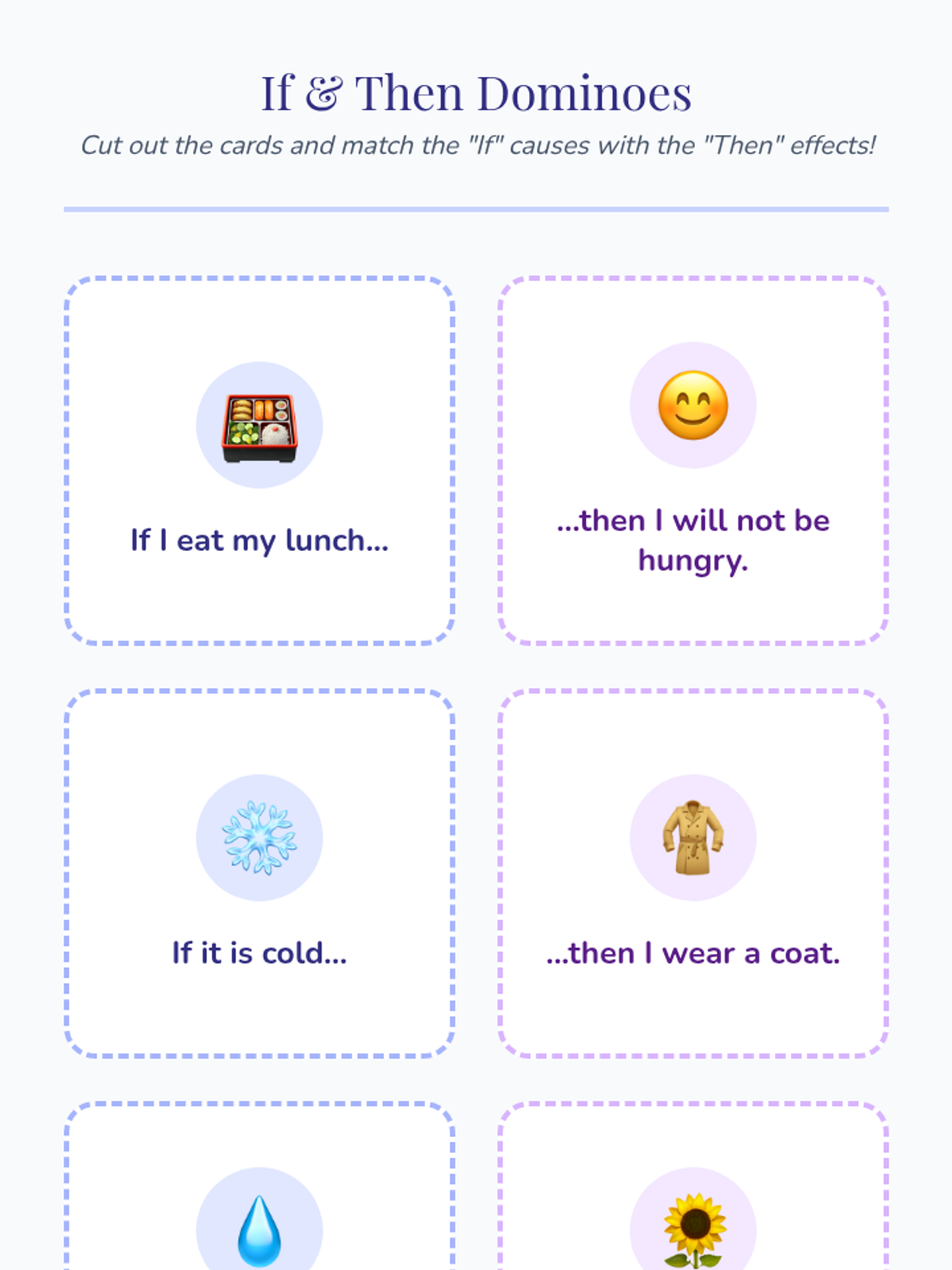
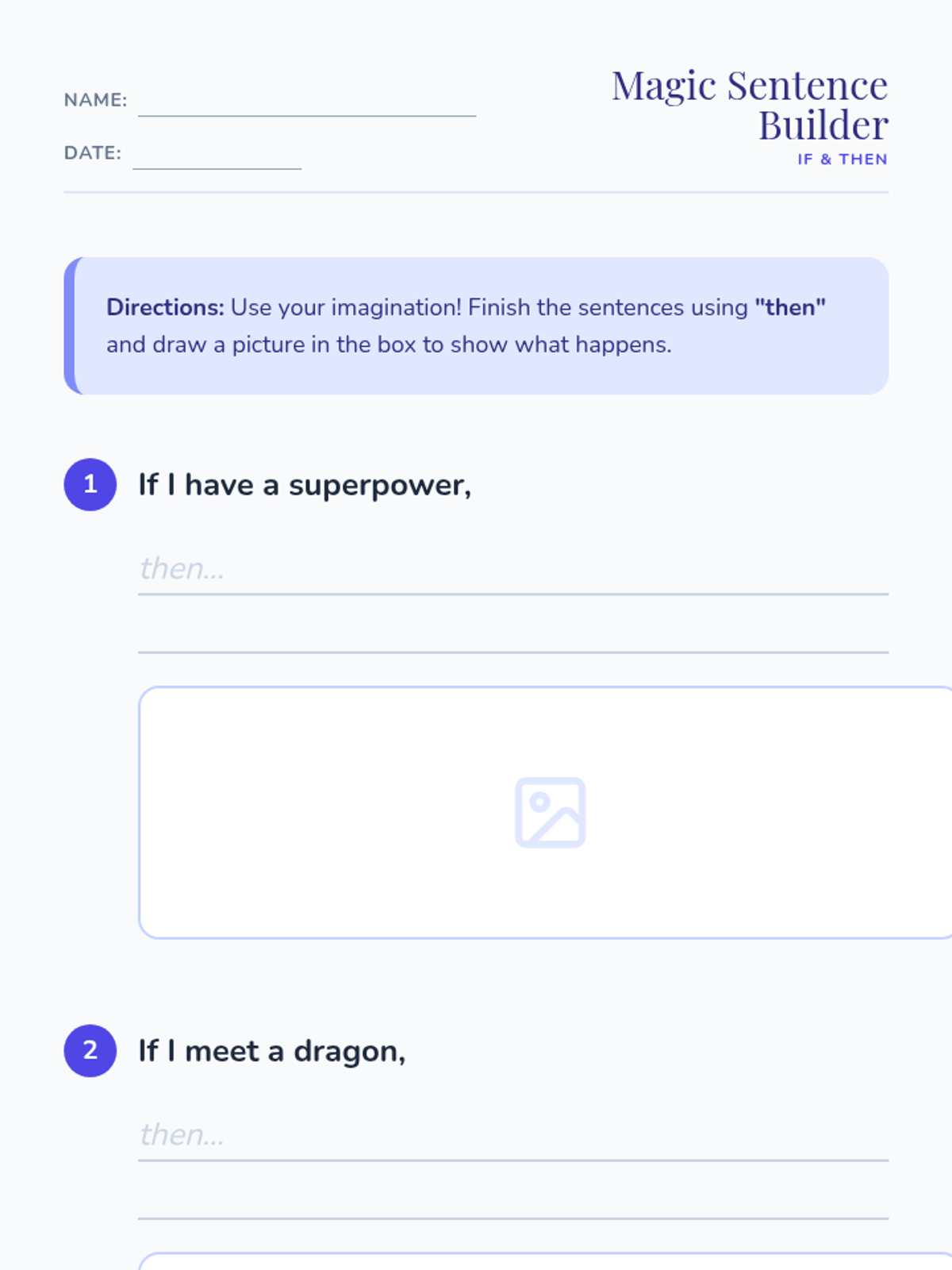
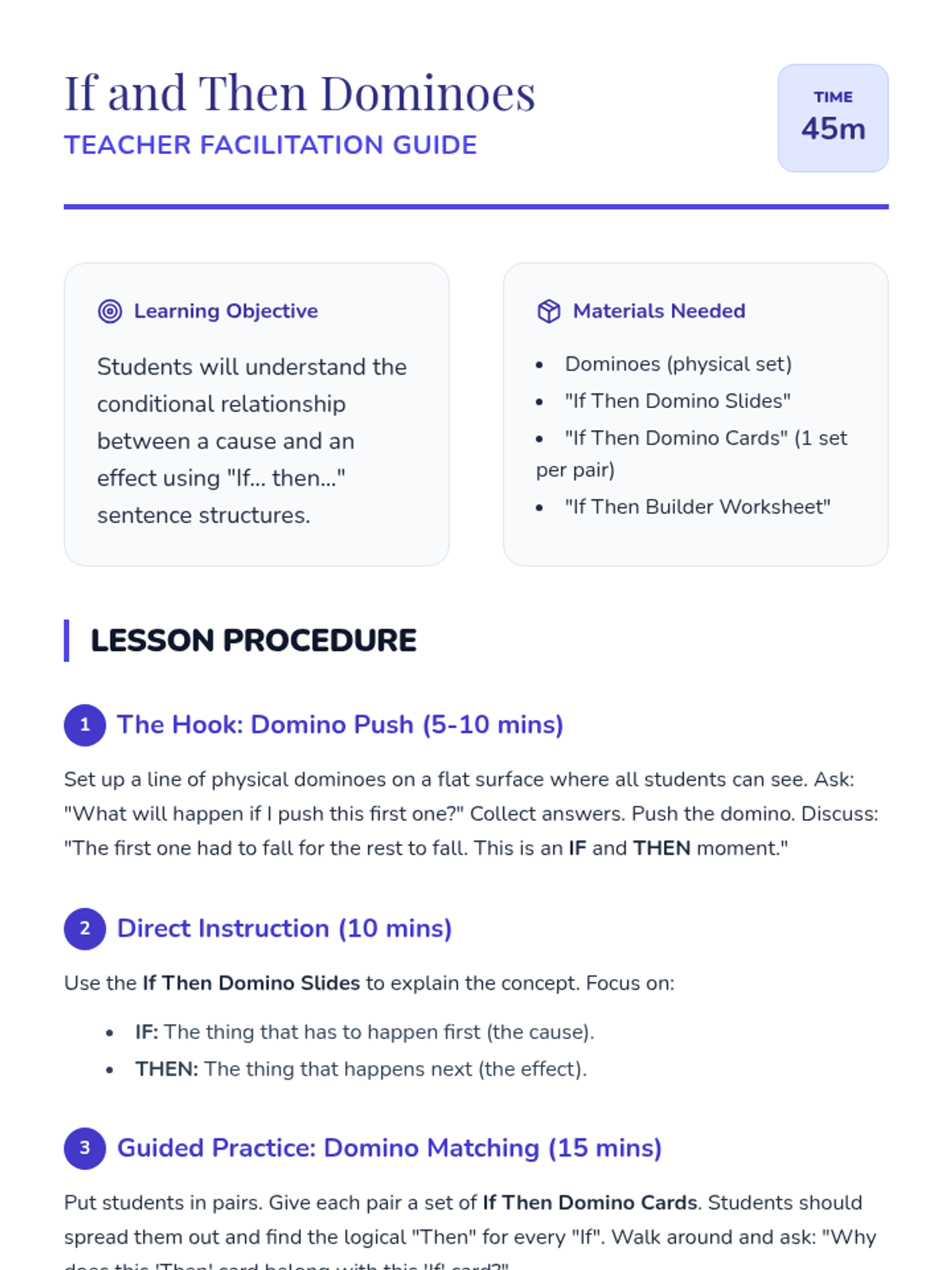
A 1st-grade grammar sequence exploring conditional and subjunctive moods through the lens of imagination. Students learn to use 'If/Then' structures, express wishes with 'I wish I were', and use helper verbs to describe possibilities and hypothetical worlds.
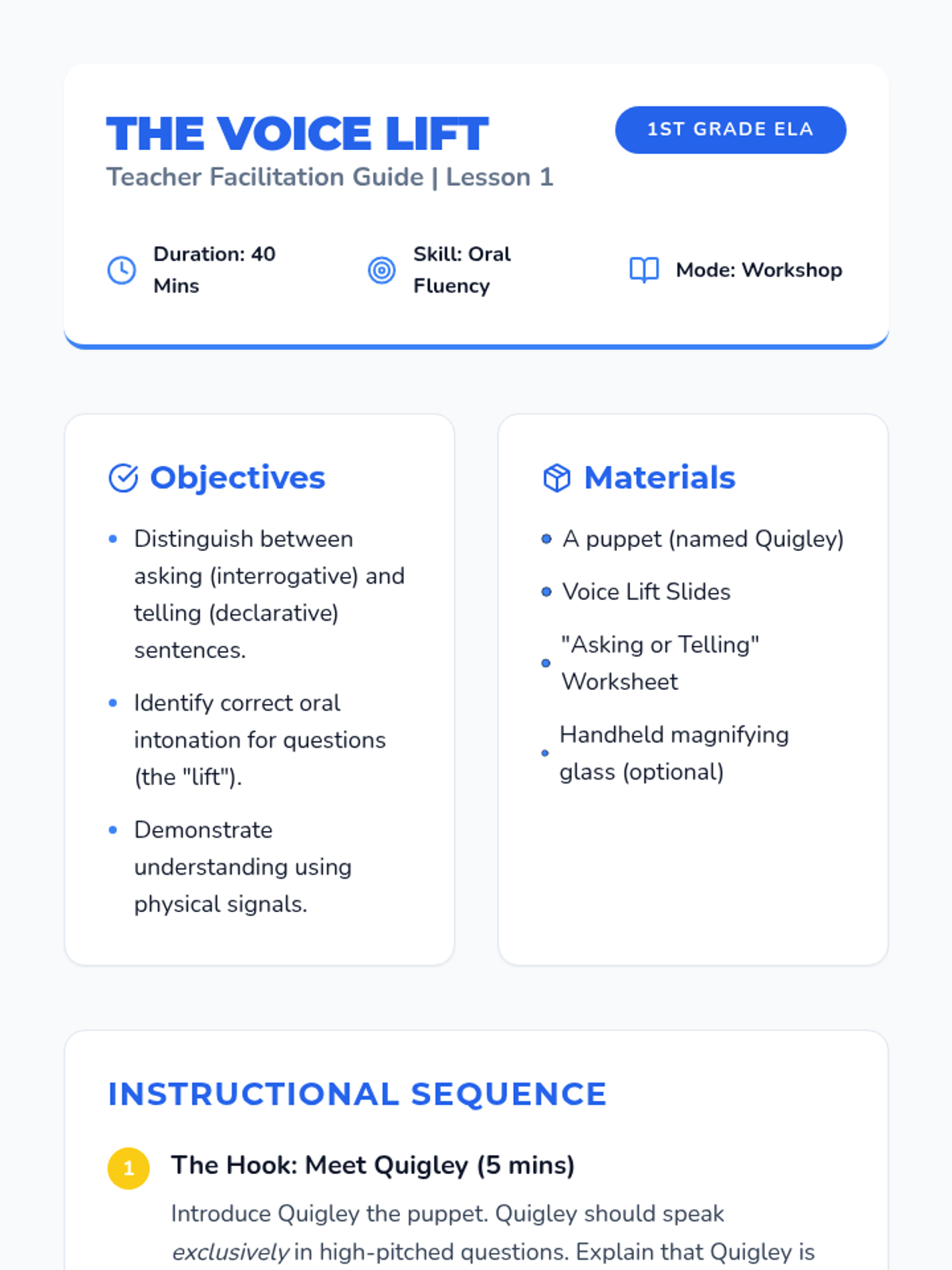
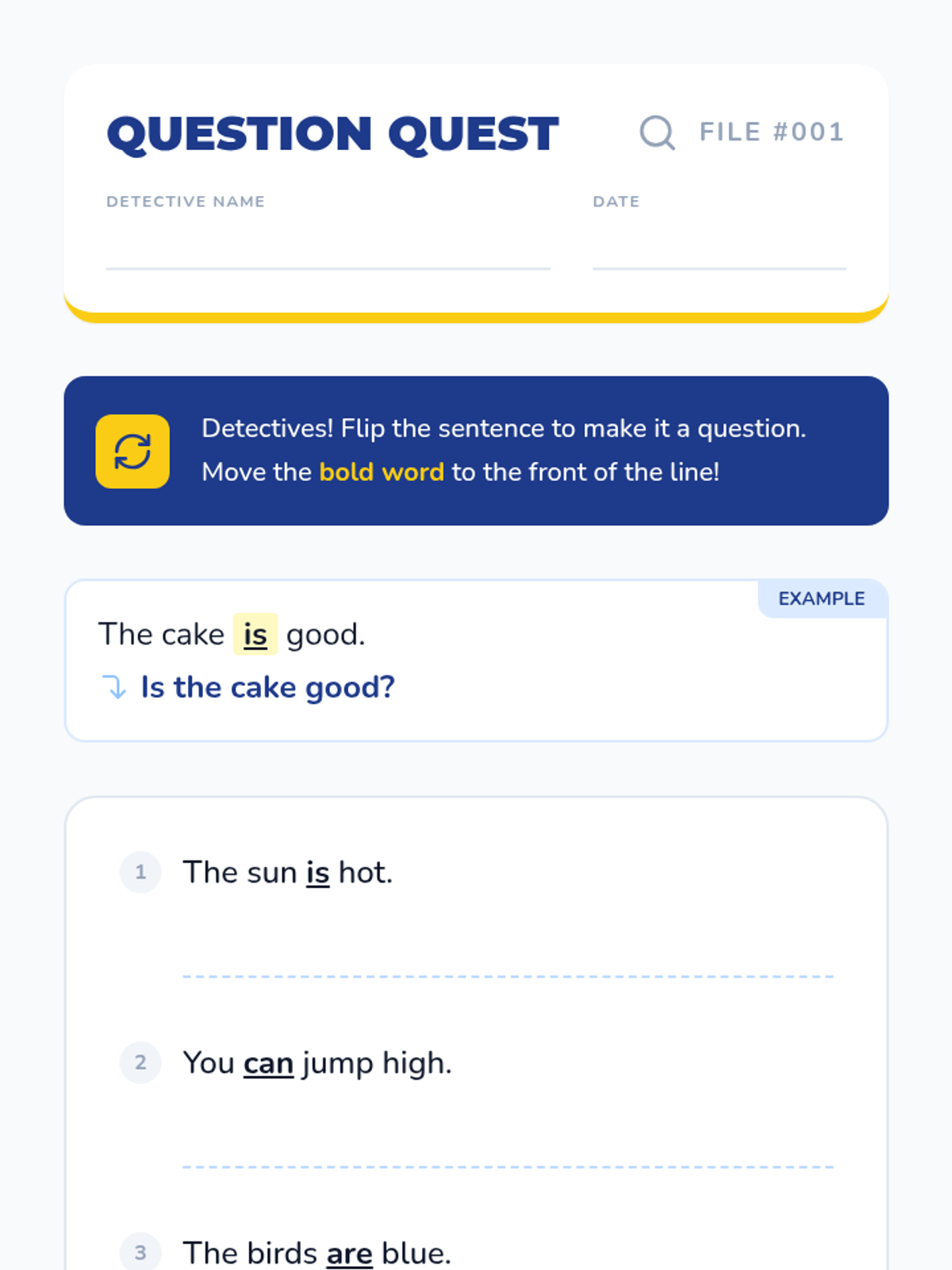
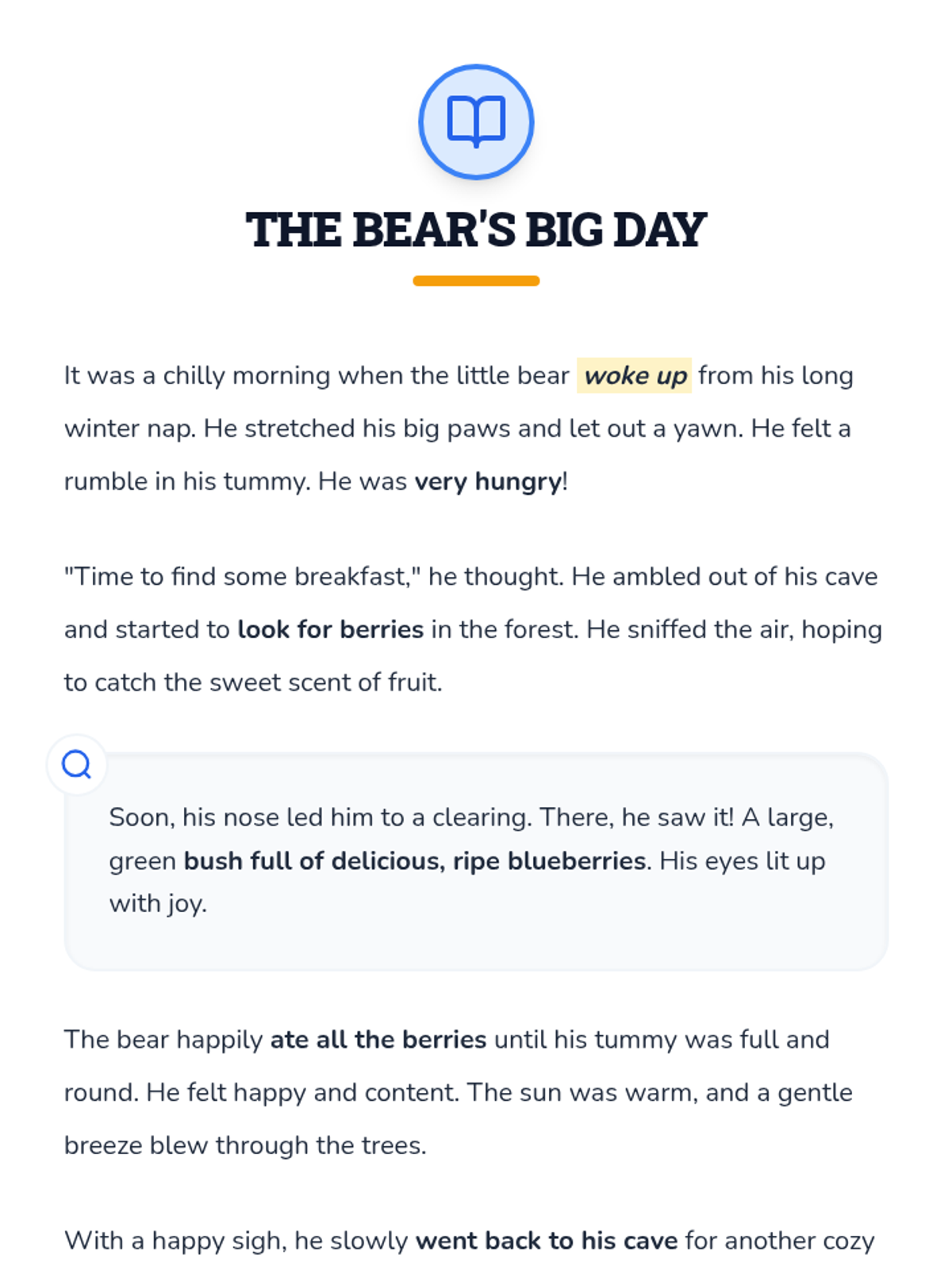
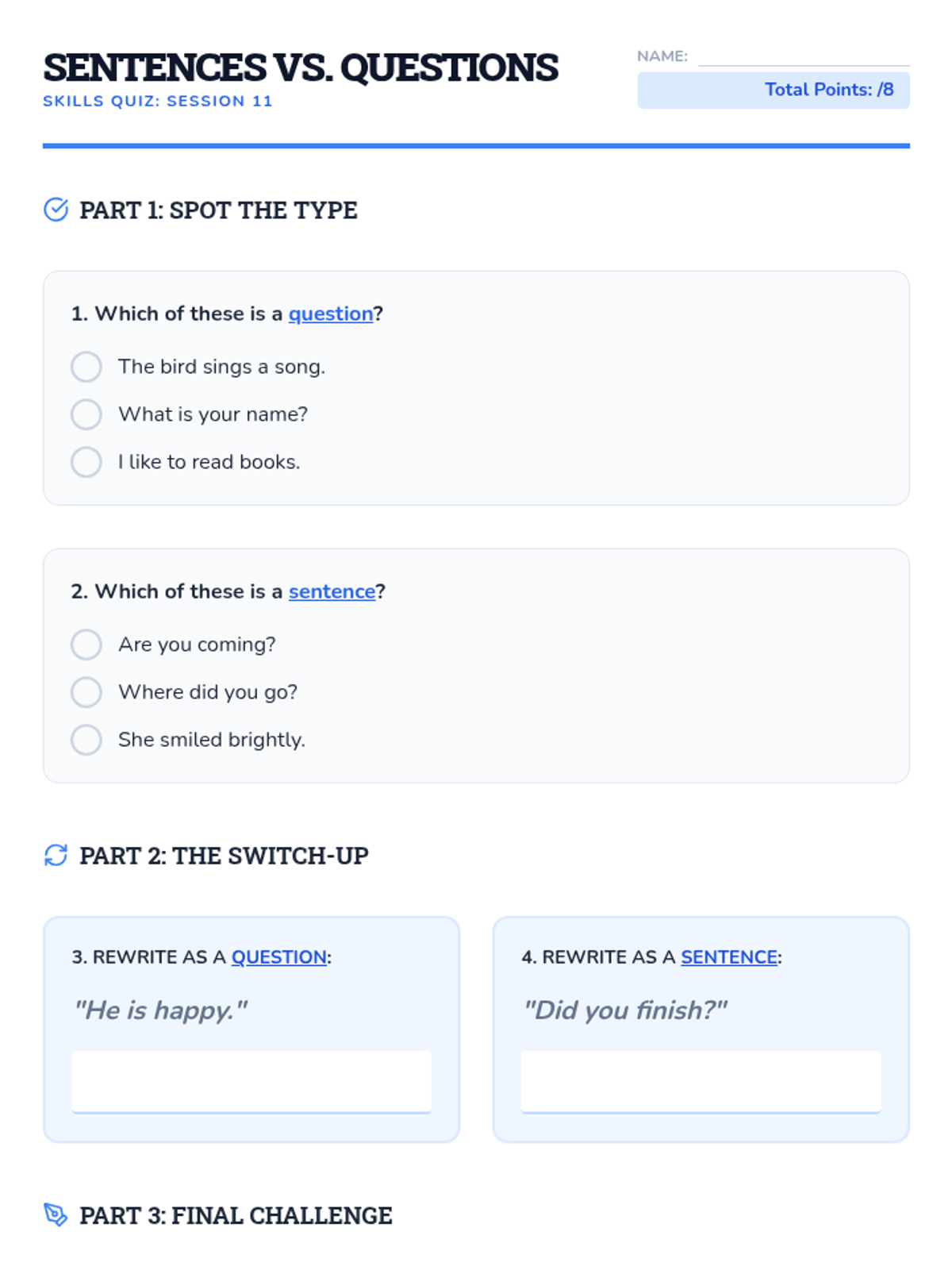
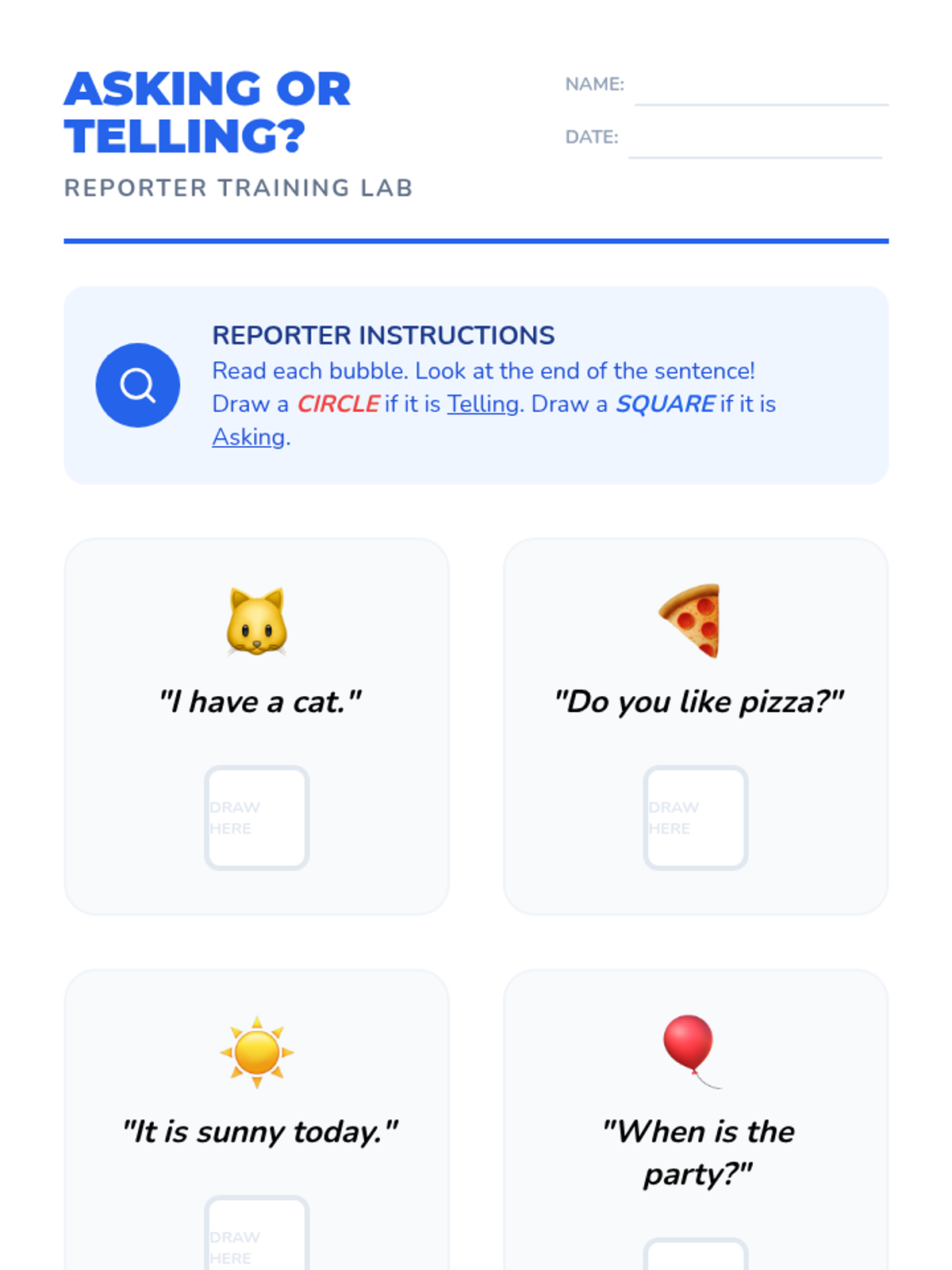
A 1st Grade ELA sequence focused on the interrogative mood. Students learn to distinguish between statements and questions, use the 5 Ws, manipulate sentence structure to form questions, and conduct peer interviews.
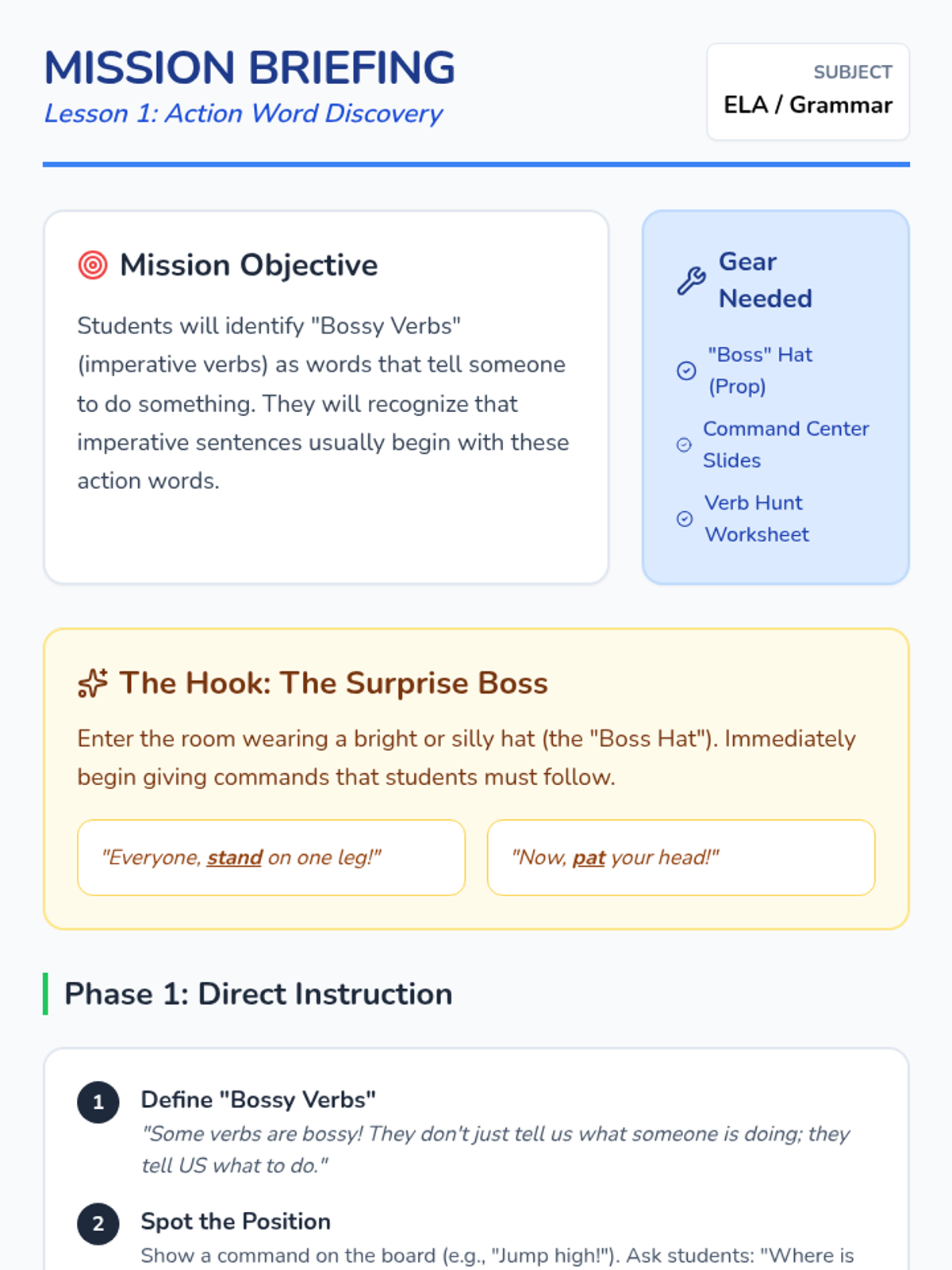
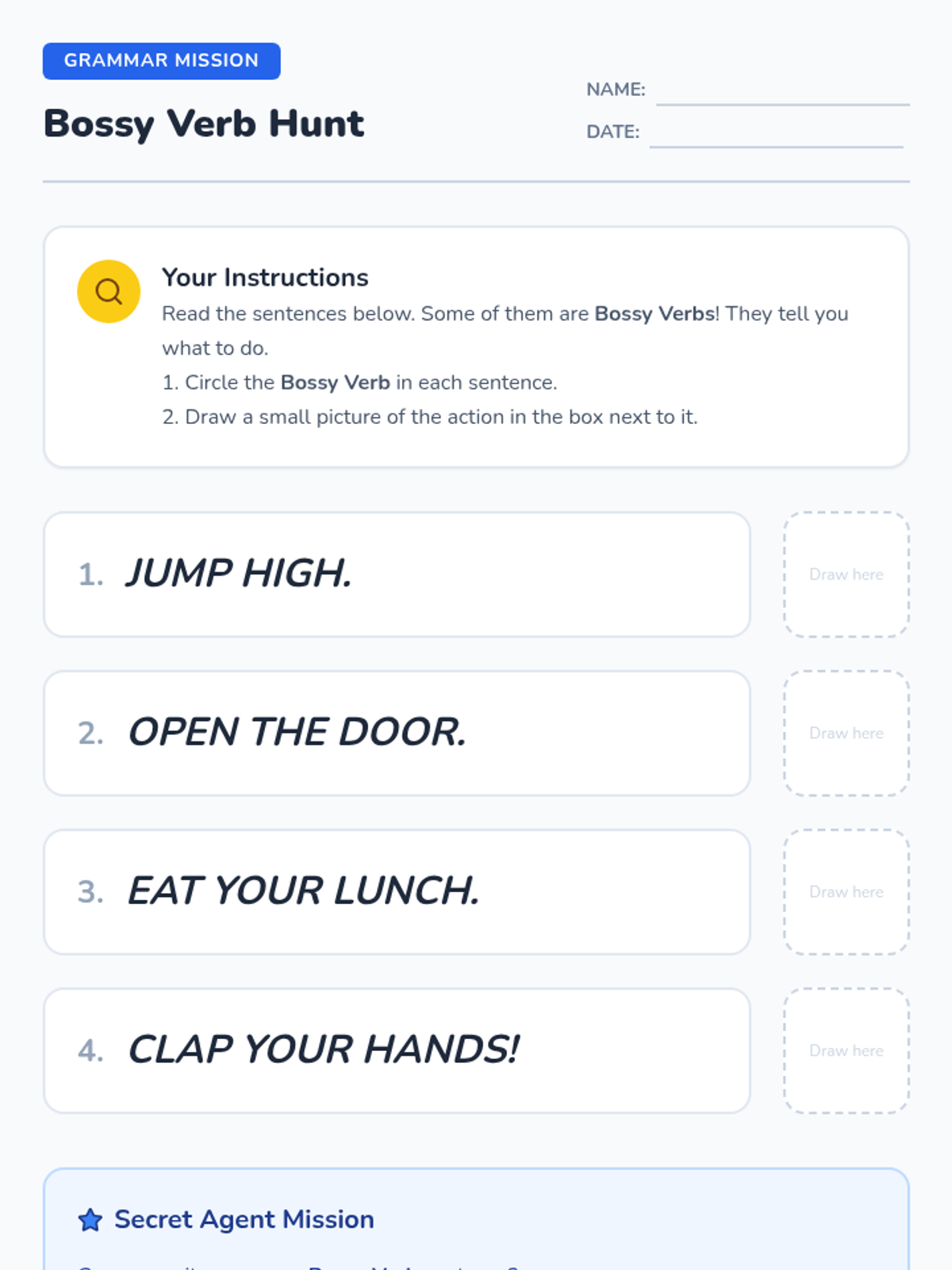
This sequence introduces 1st Grade students to the imperative mood through the concept of 'Bossy Verbs.' Students will move from identifying commands in speech to writing their own multi-step 'How-To' guides, focusing on clarity, punctuation, and sequencing.
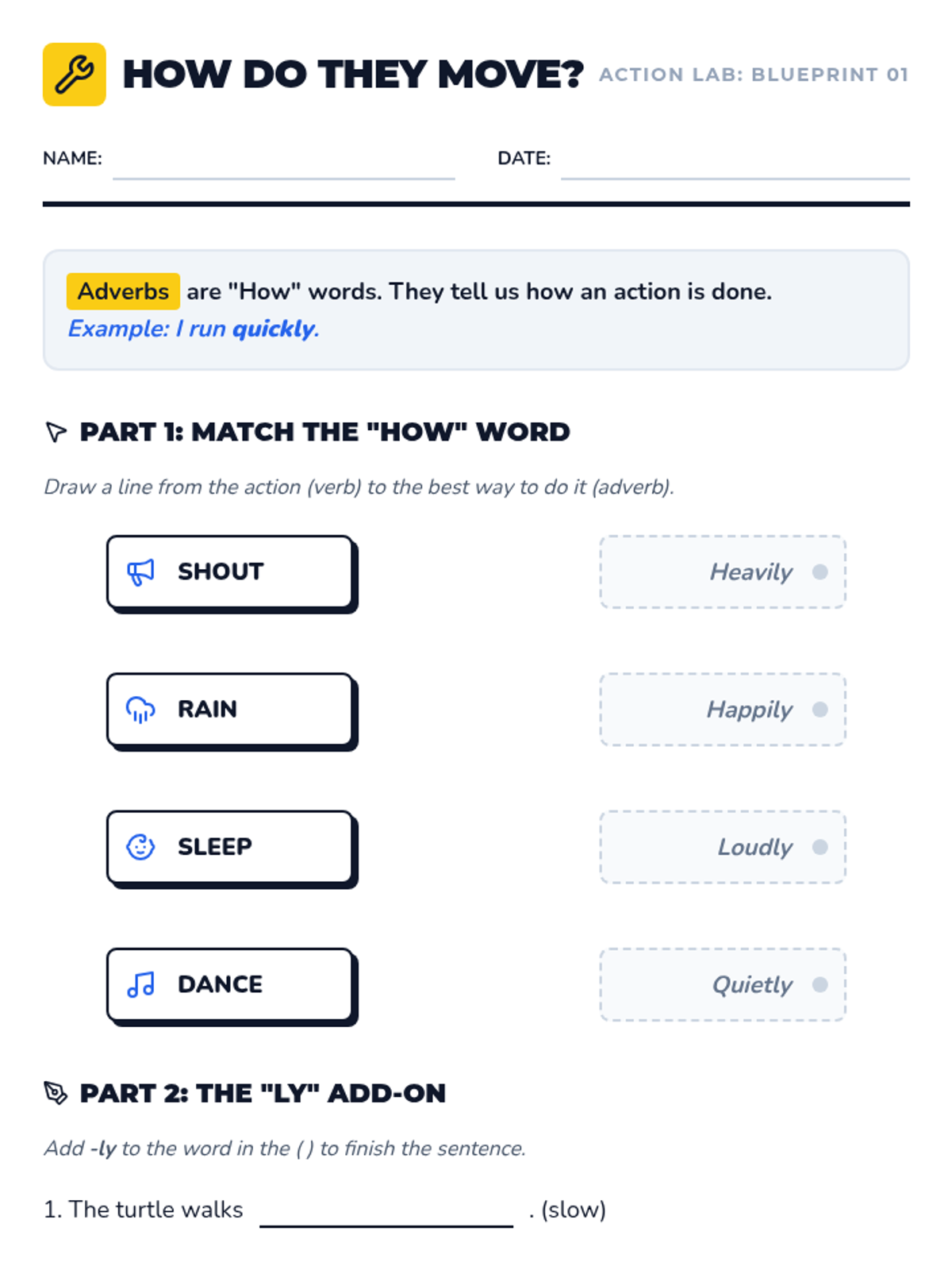
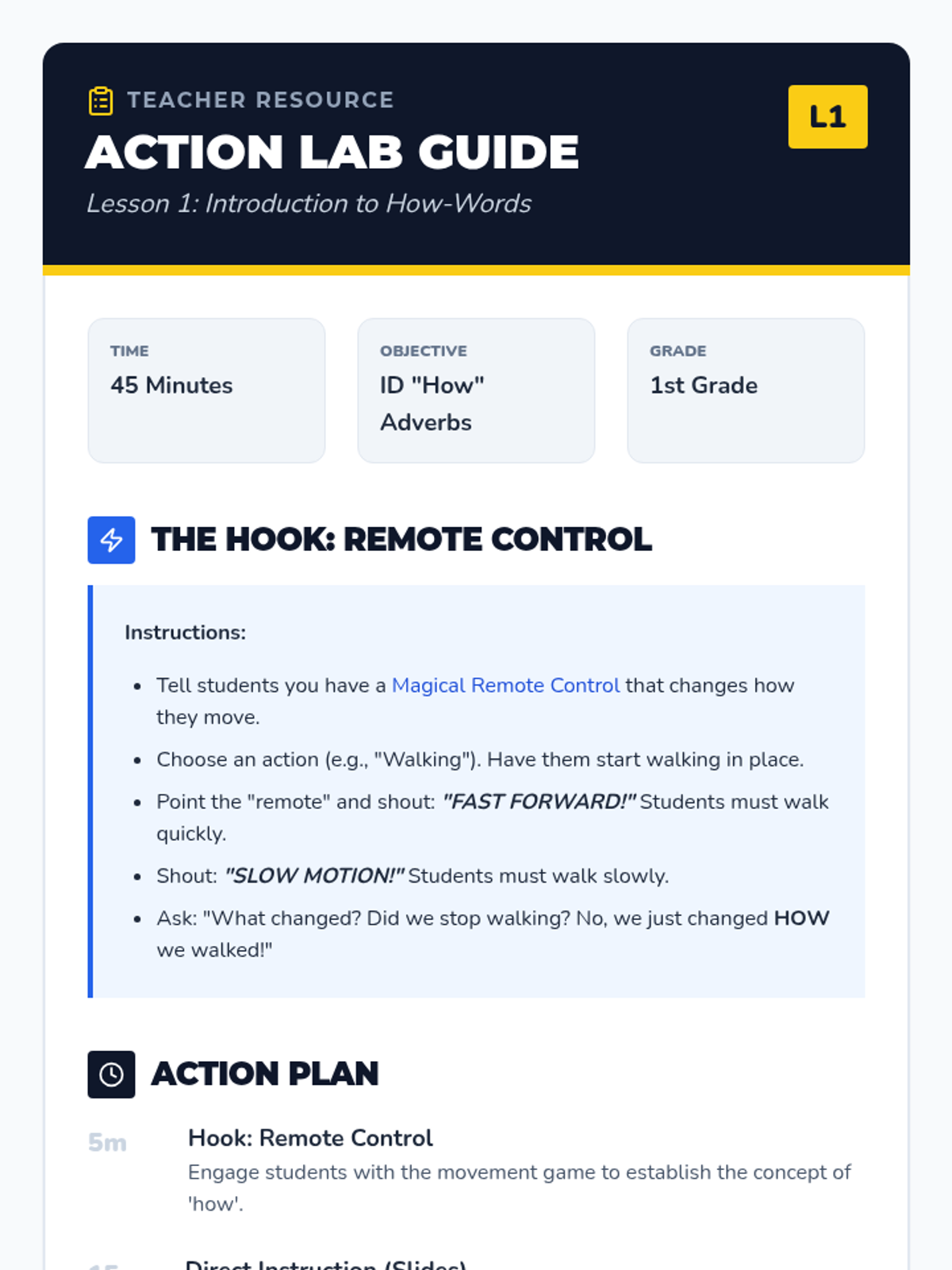
A 1st-grade grammar workshop focusing on adverbs that tell 'how' and distinguishing them from adjectives to build descriptive sentences through movement and creative writing.
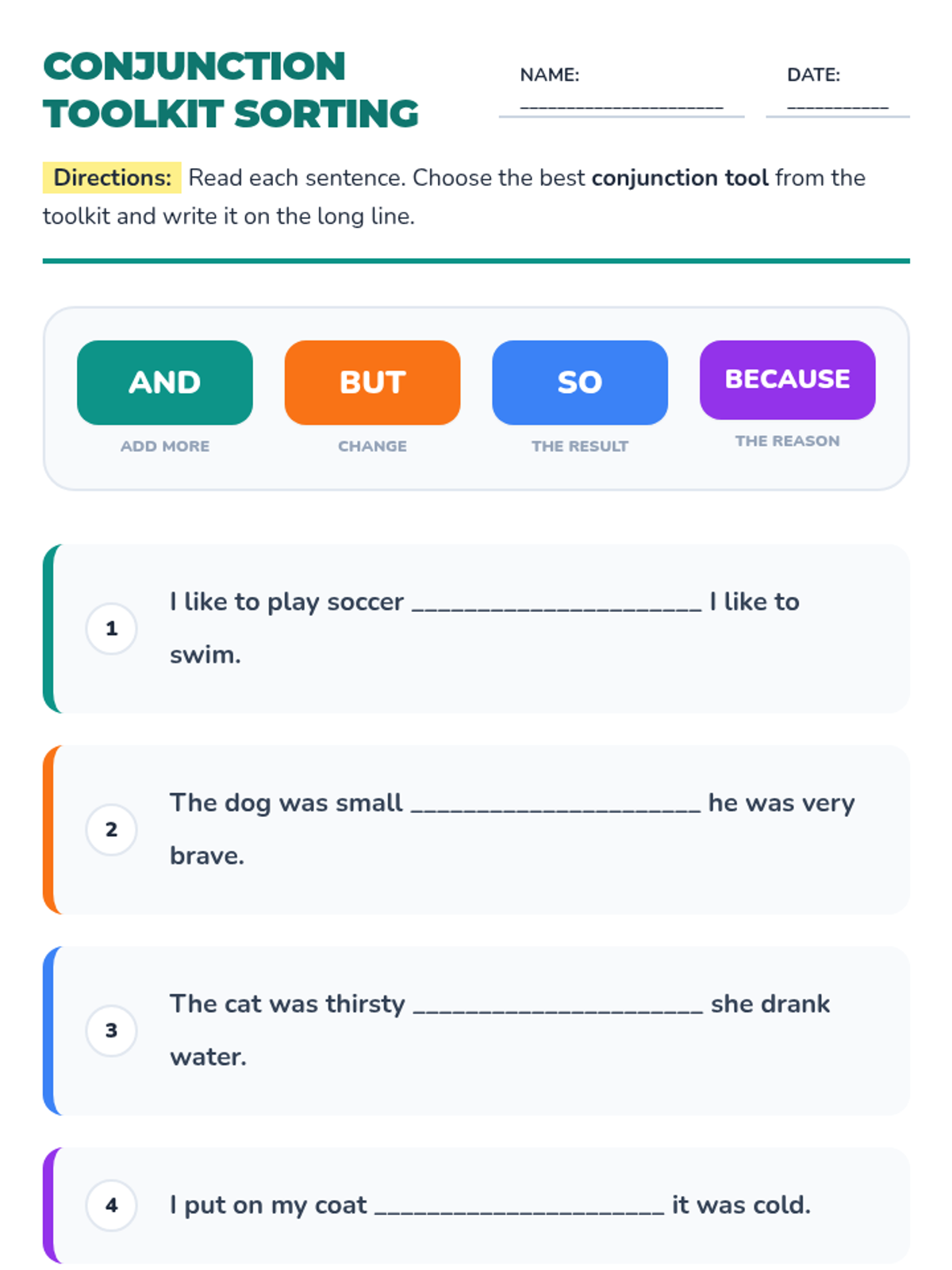
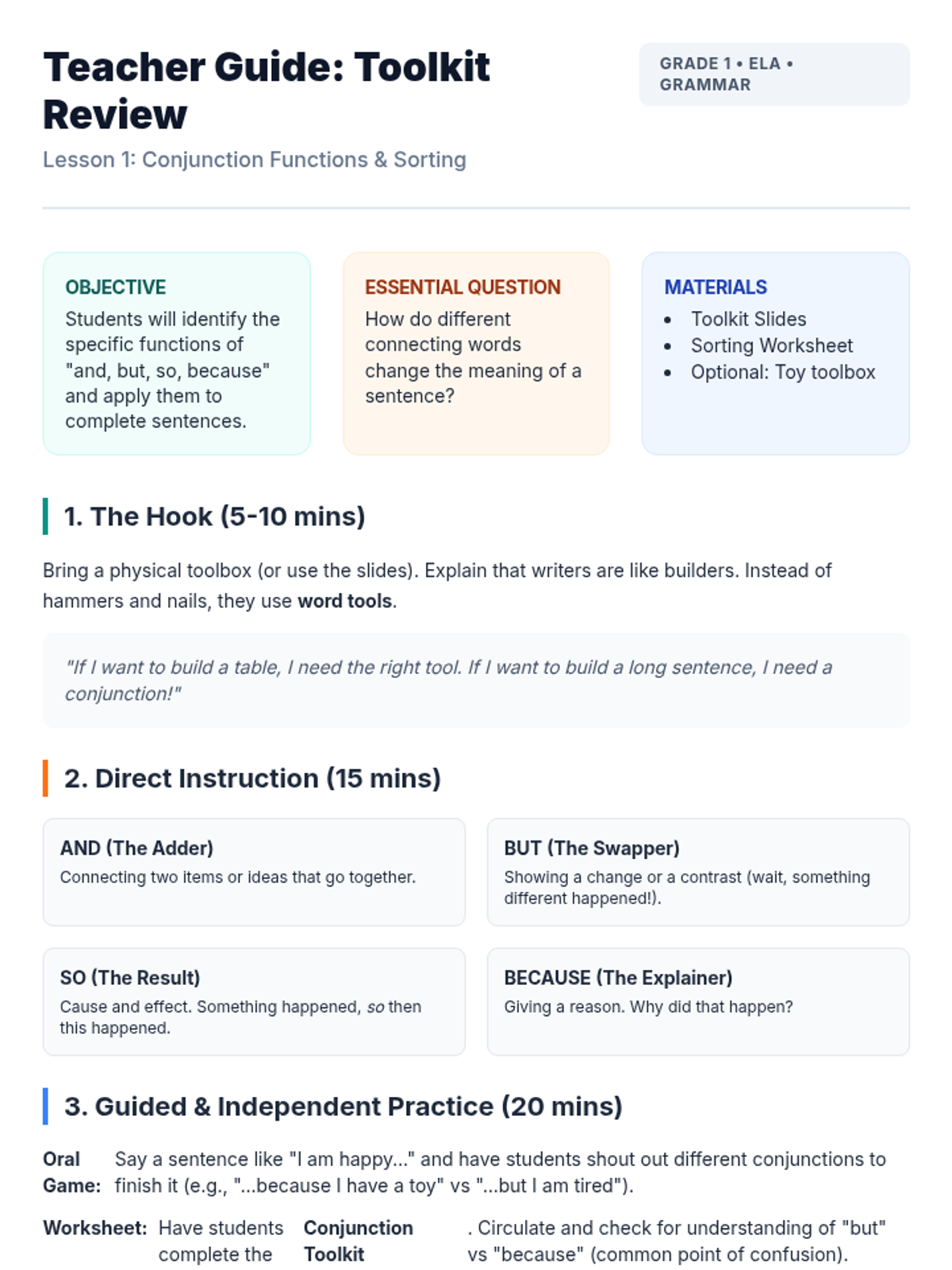
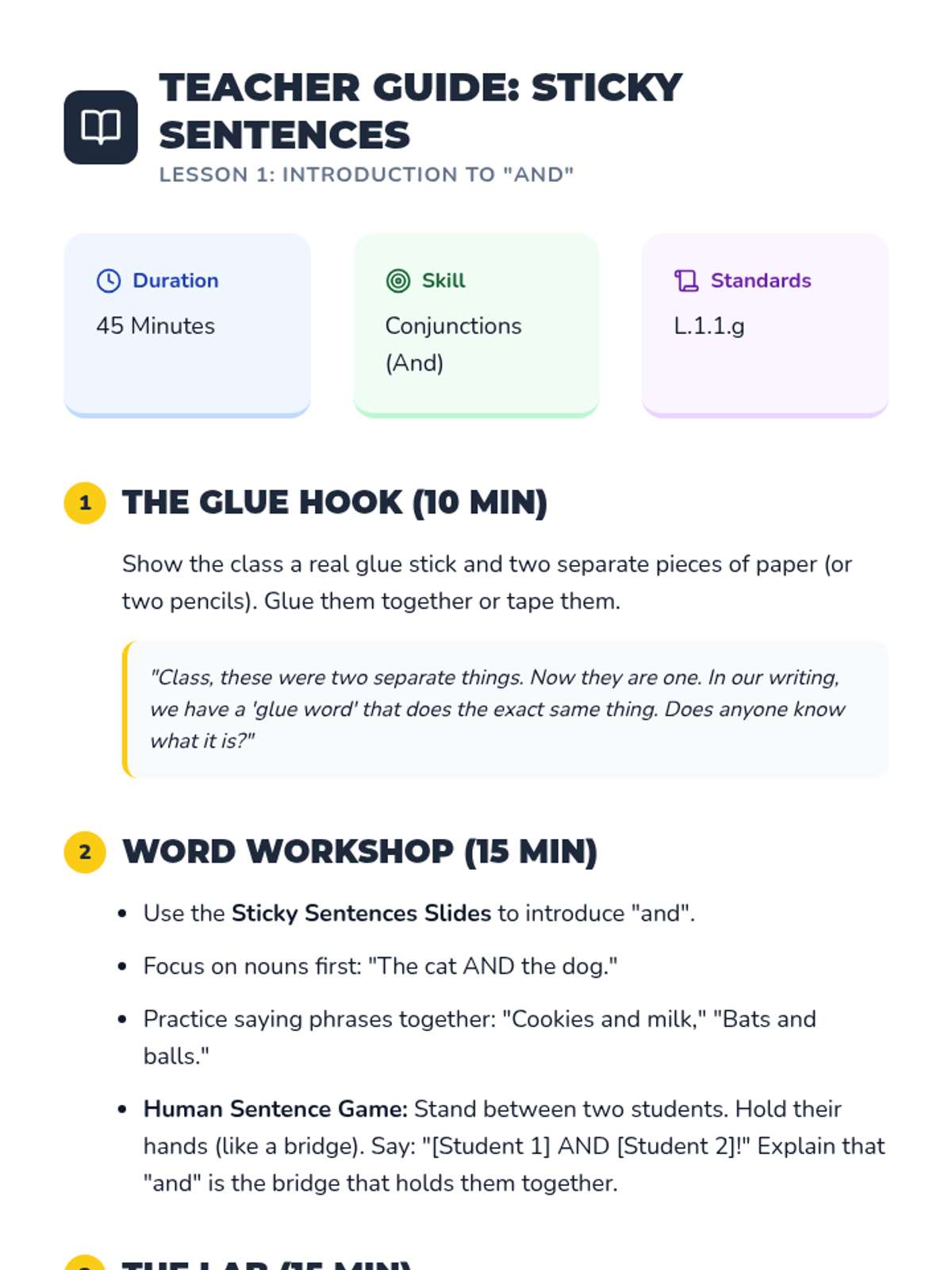
This sequence introduces 1st-grade students to conjunctions (and, but, so, because) using a 'Sentence Surgery' and 'Sentence Stretcher' theme. Students learn to combine short, choppy sentences into longer, more fluent ones through hands-on simulations, collaborative storytelling, and a final creative project.
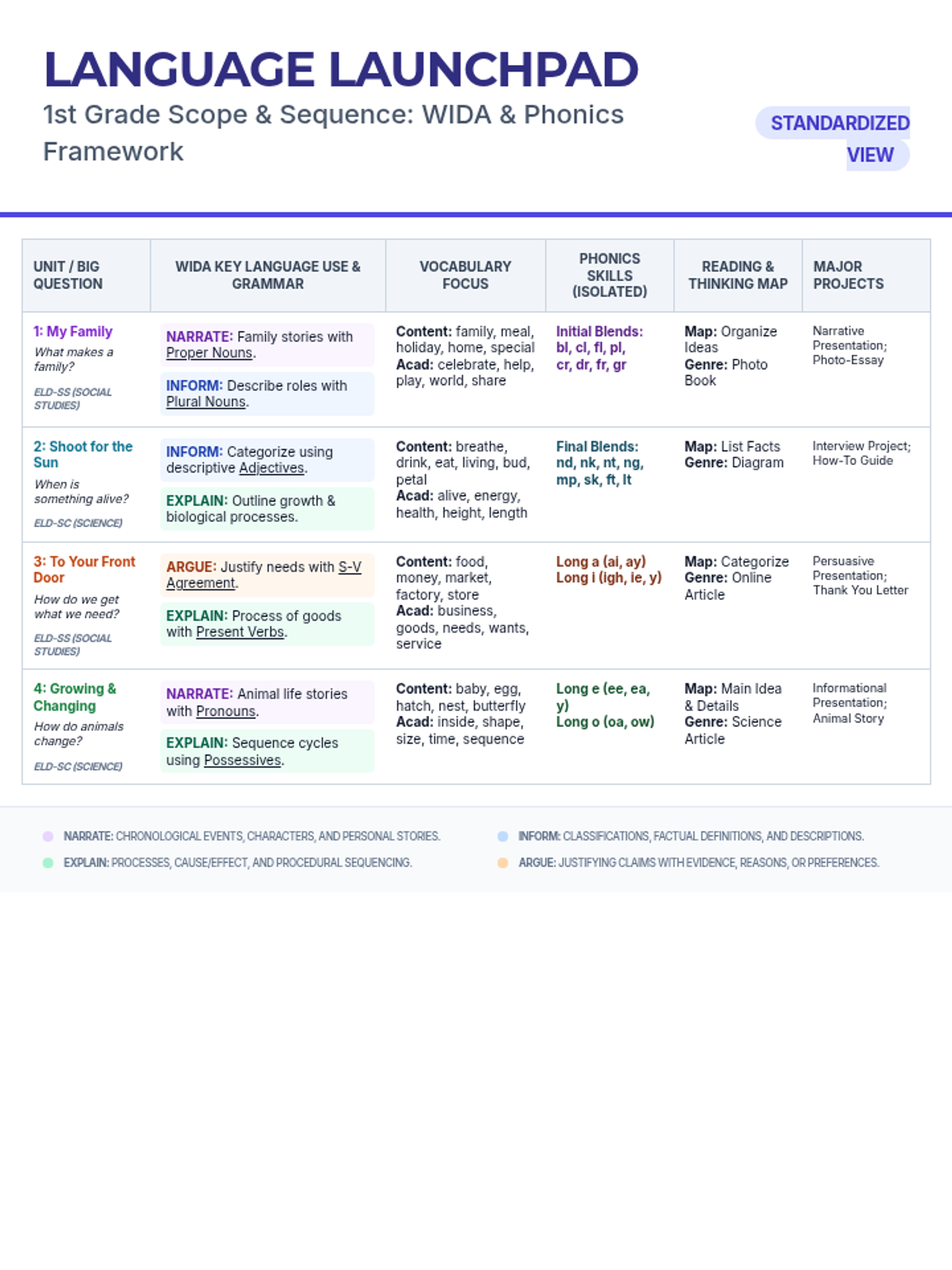
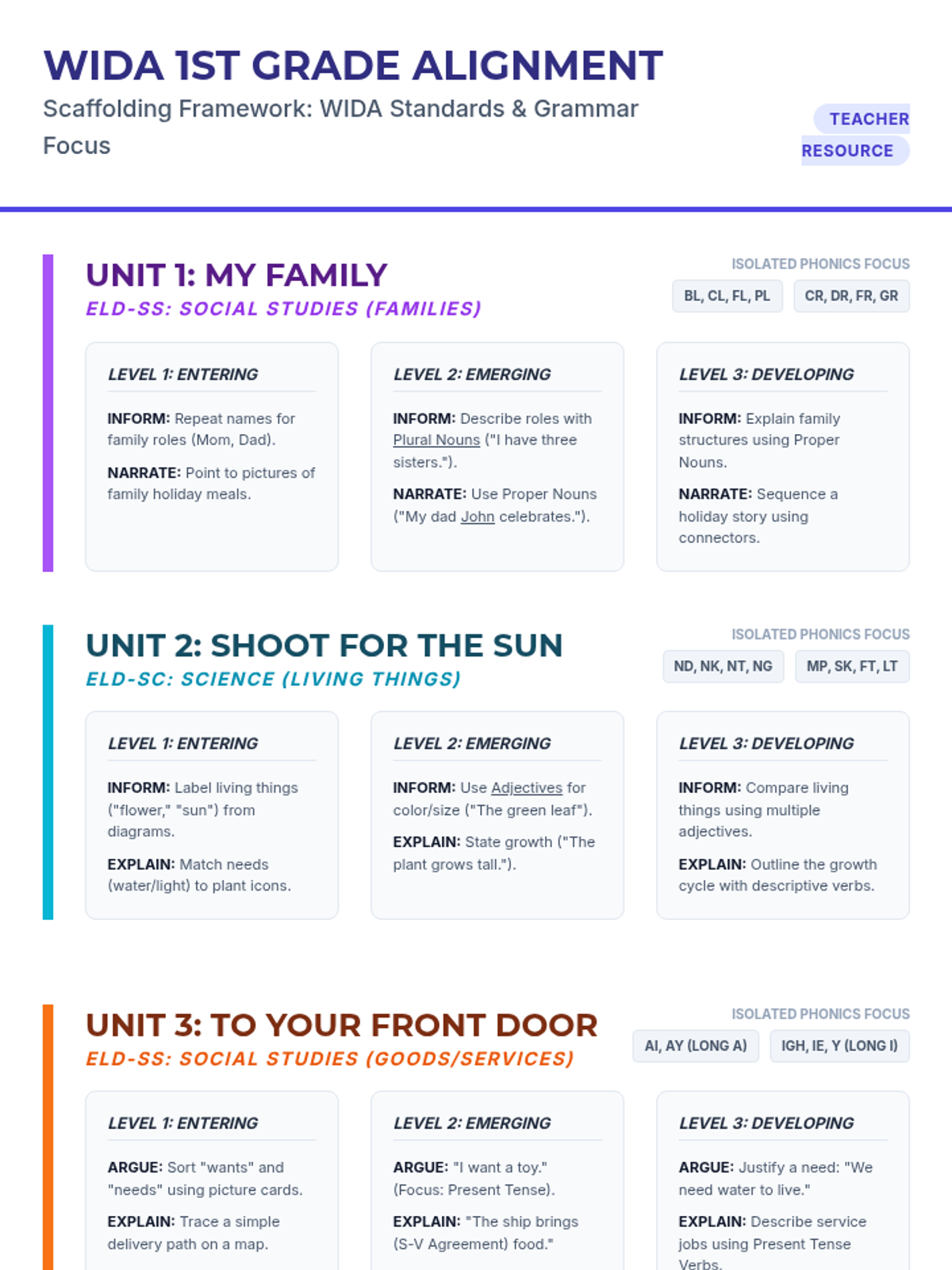
A comprehensive curriculum framework for primary English Language Learners, aligning theme-based social studies and science units with WIDA's four Key Language Uses: Narrate, Inform, Explain, and Argue. This sequence provides instructional scaffolding for students at proficiency levels 1-3.
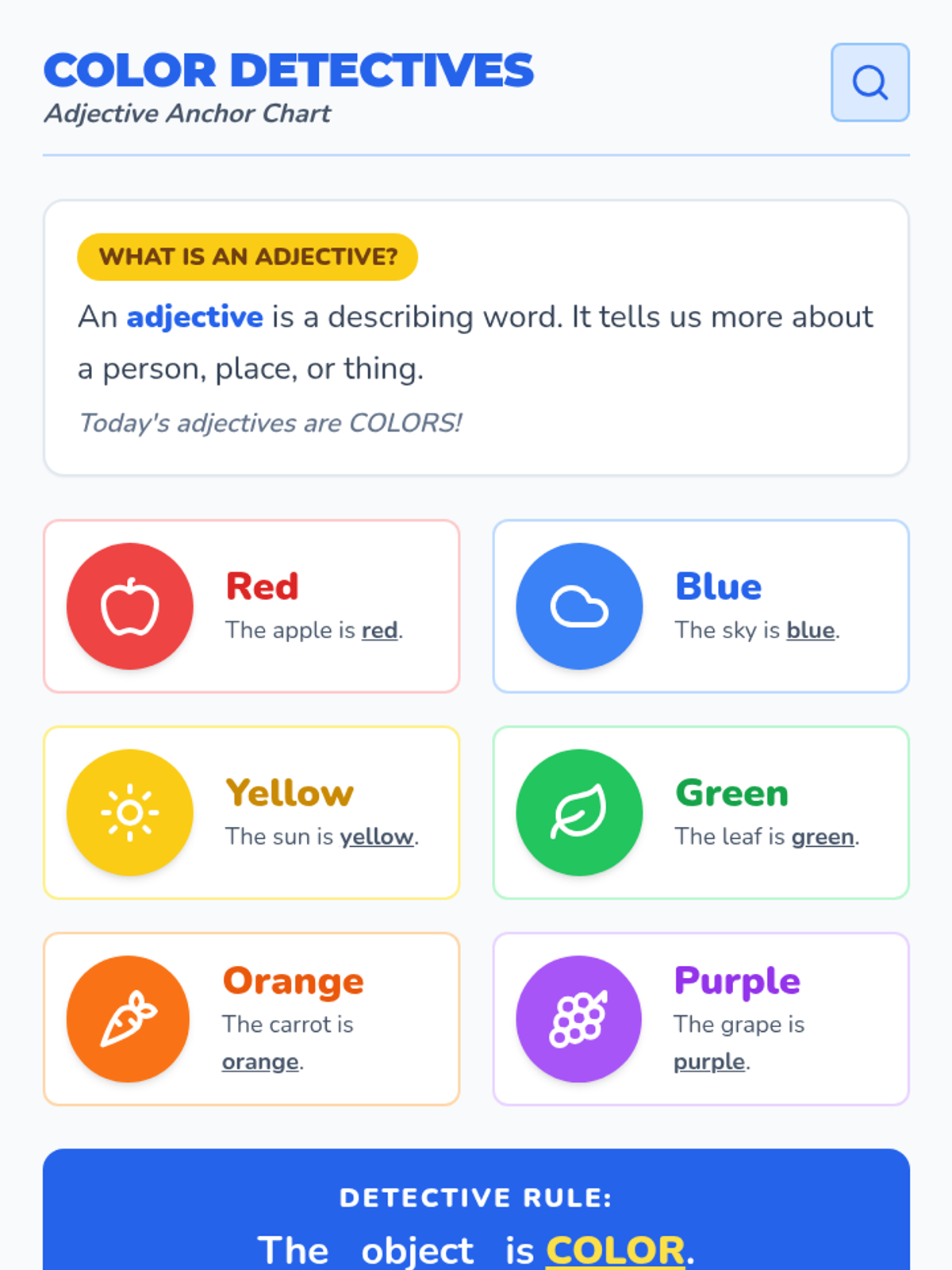
A two-lesson sequence exploring adjectives through colors and shapes, aligned with Reach Higher Grade 1 standards. Students learn to describe their world using specific visual attributes.
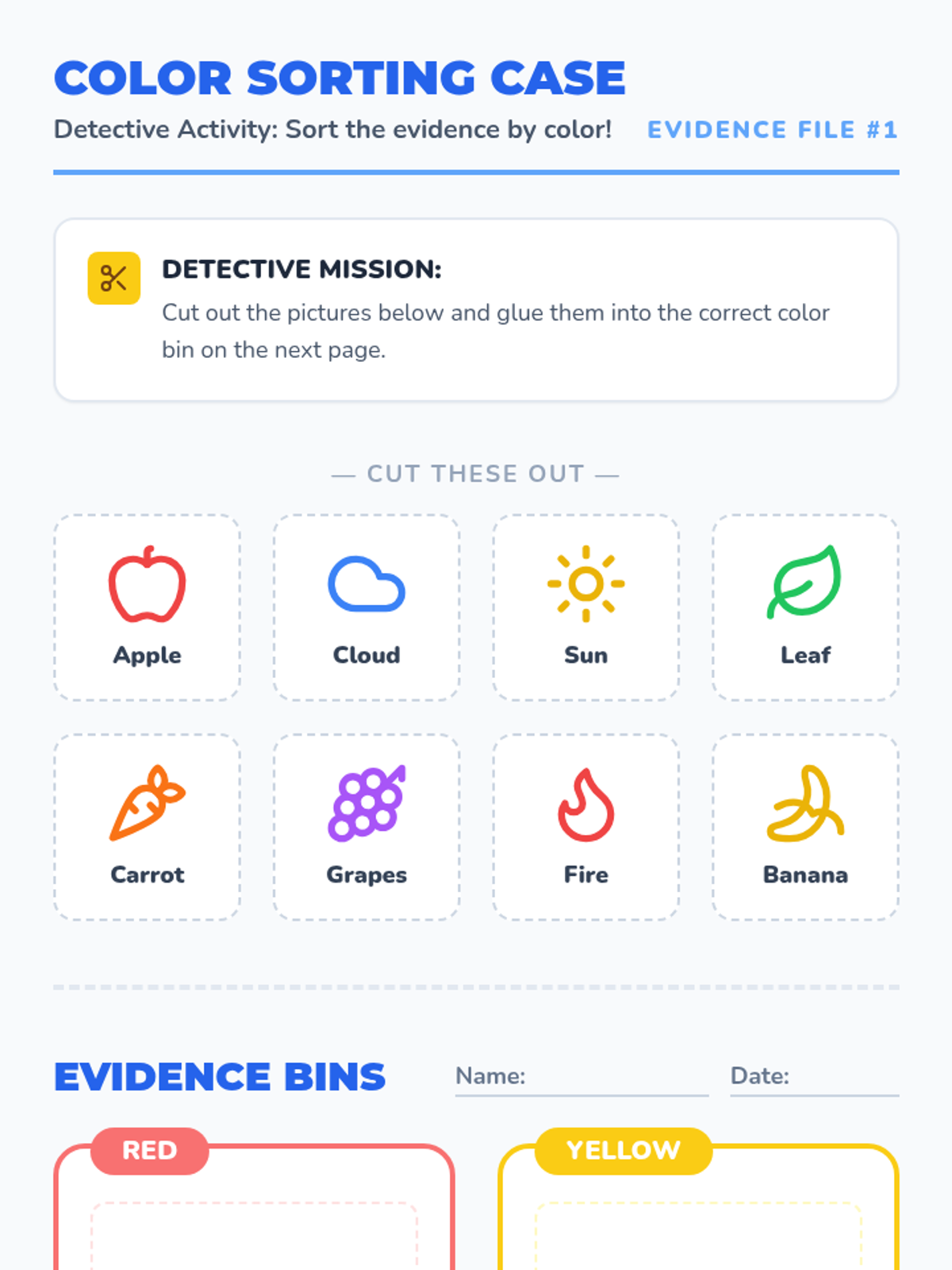
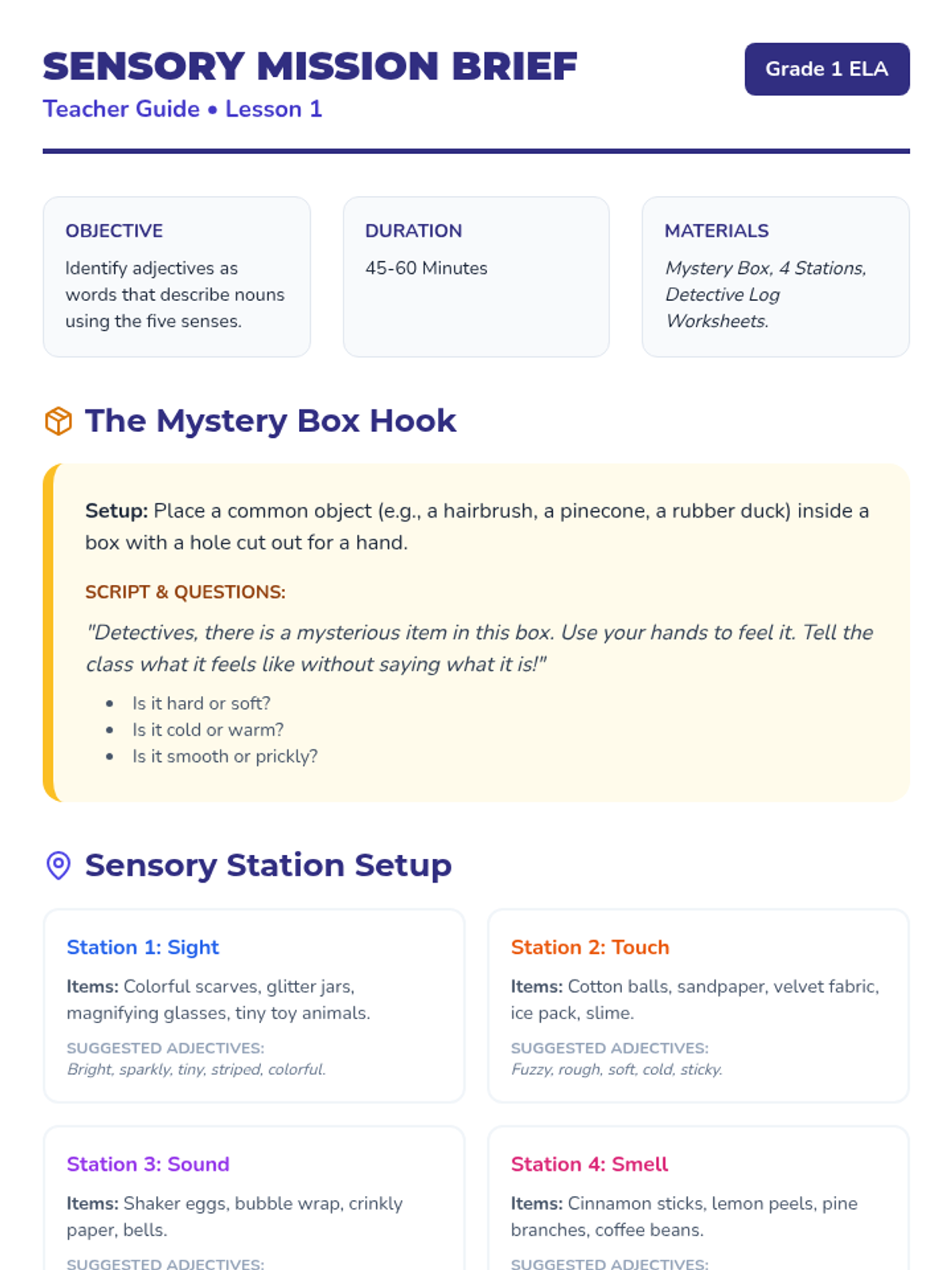
A foundational grammar sequence for first graders that uses a 'Word Detective' theme to explore adjectives through sensory exploration, sorting, and descriptive writing. Students learn to use their five senses to identify and apply adjectives to describe the world around them.
This sequence introduces first-grade students to opinion writing by teaching them to distinguish facts from opinions, use the conjunction 'because' to provide reasons, and draft simple reviews of their favorite things. Students will progress from oral practice to written expression, culminating in a polished 'Review Card' to share with peers.
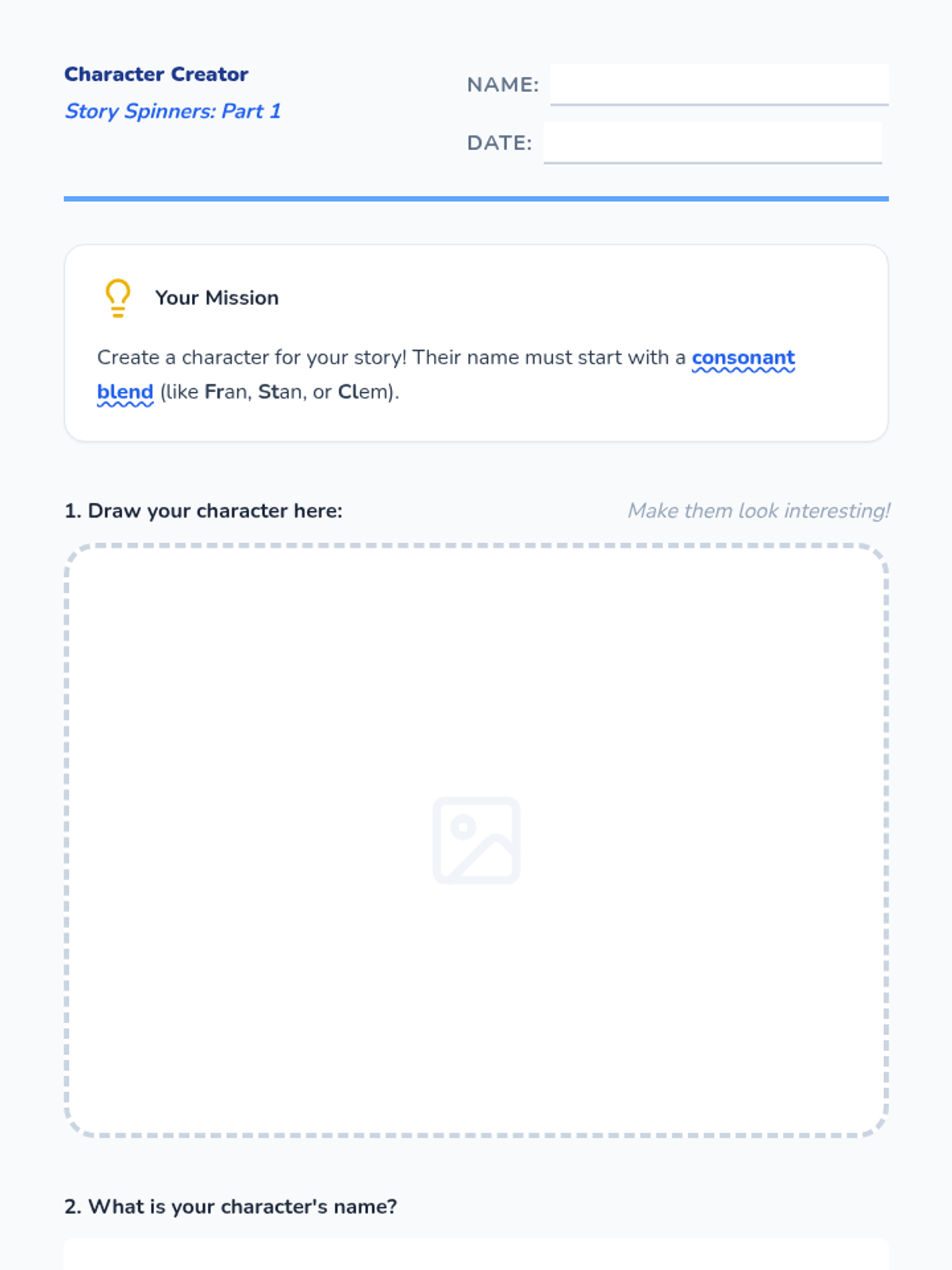
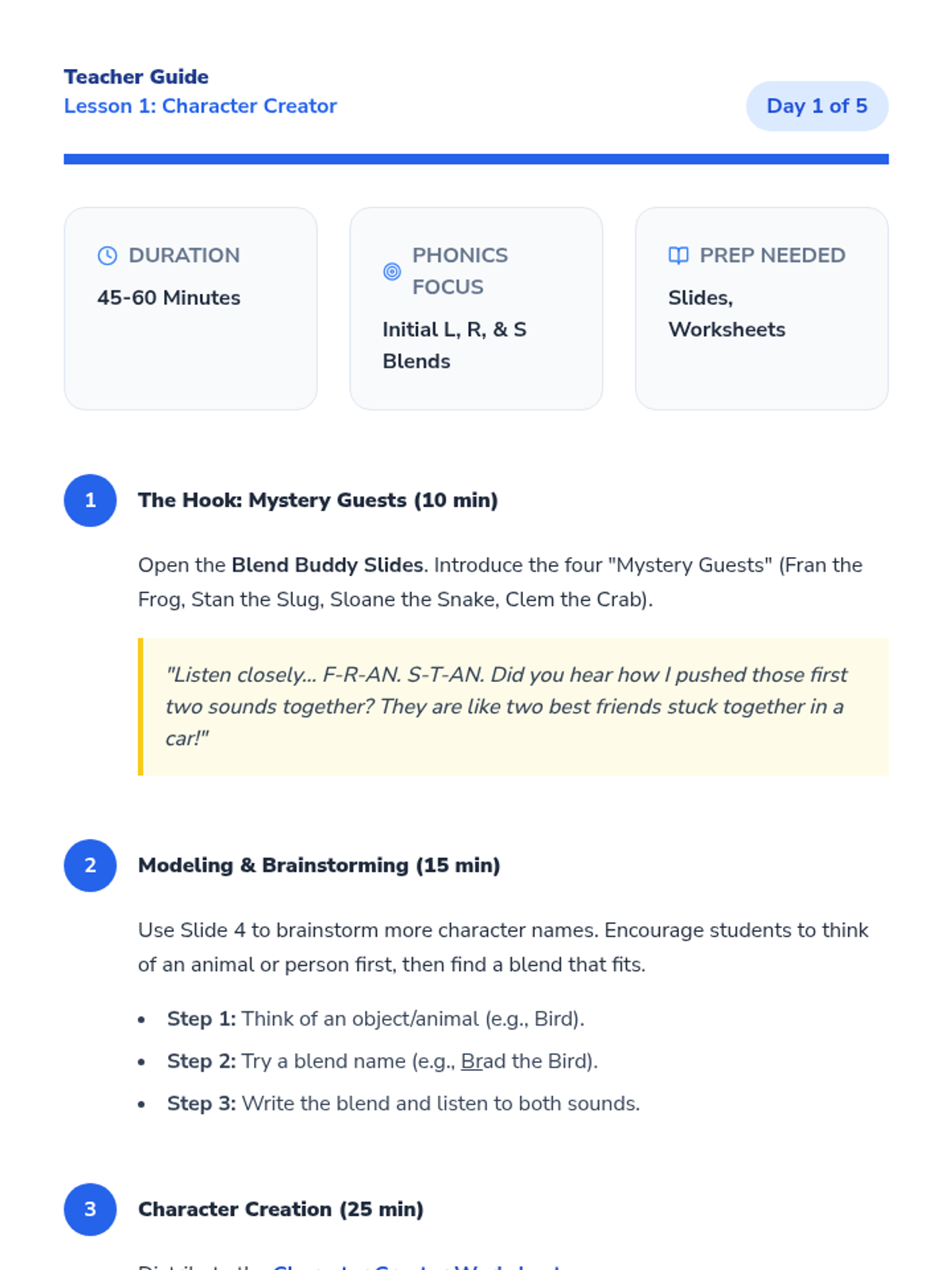
A project-based sequence for 1st graders to master consonant blends by creating their own illustrated narratives. Students progress from character creation to setting design and action writing, culminating in a published mini-book and sharing session.
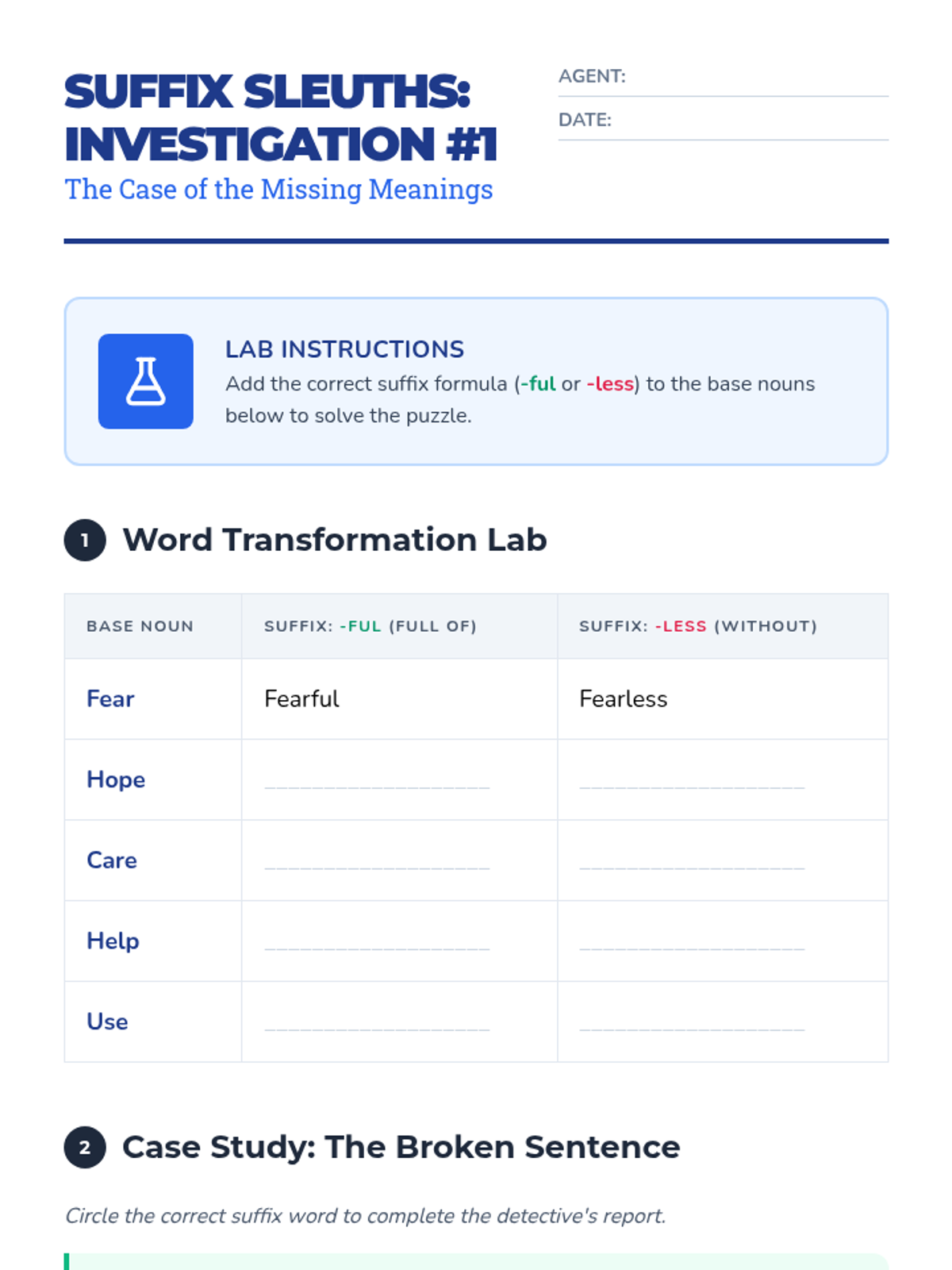
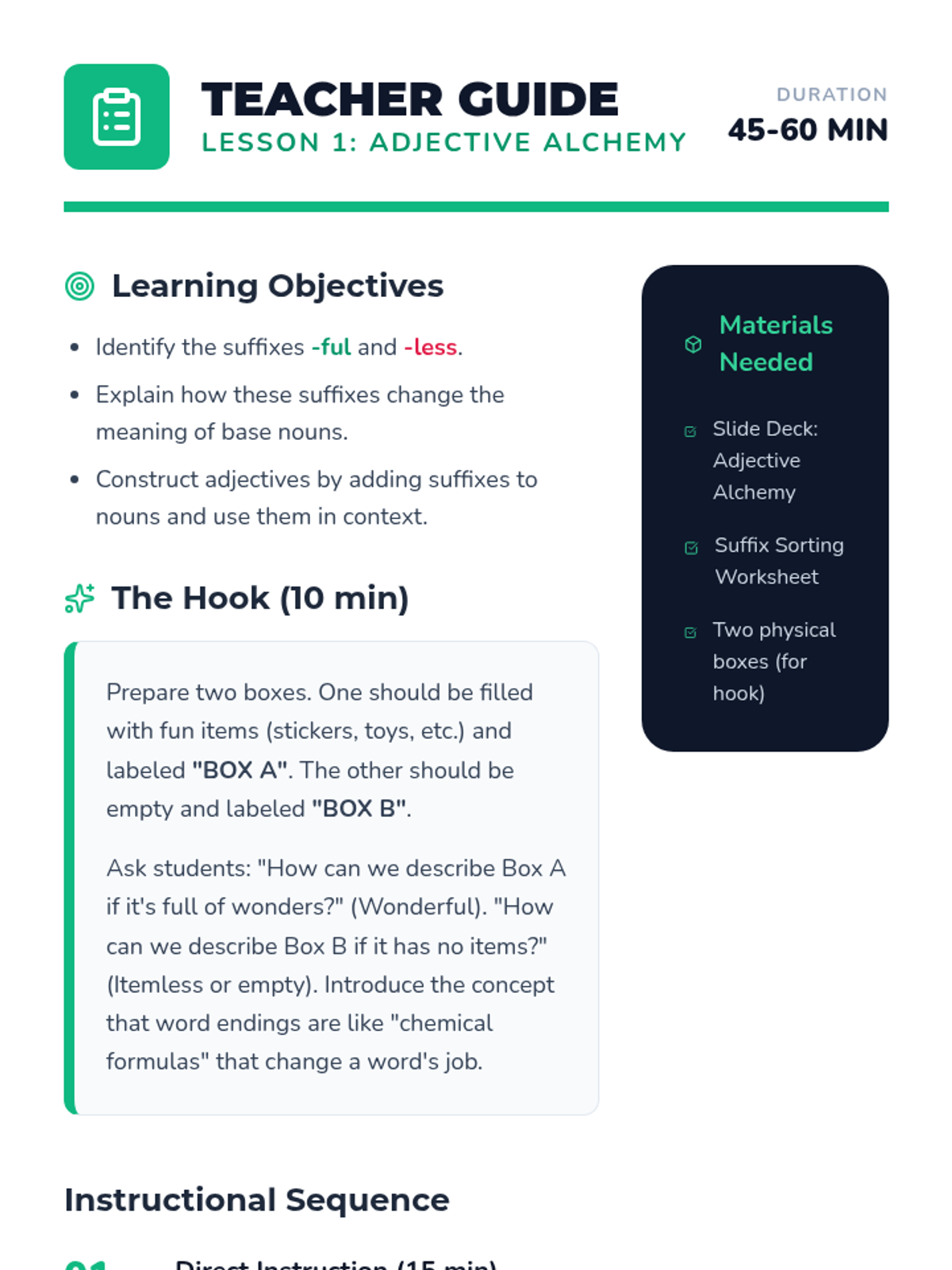
Students investigate how suffixes (-ful, -less, -ly, -er, -est) change word meanings and parts of speech. Using a 'Word Lab' detective theme, students analyze patterns, play games, and master spelling rules for word modification.
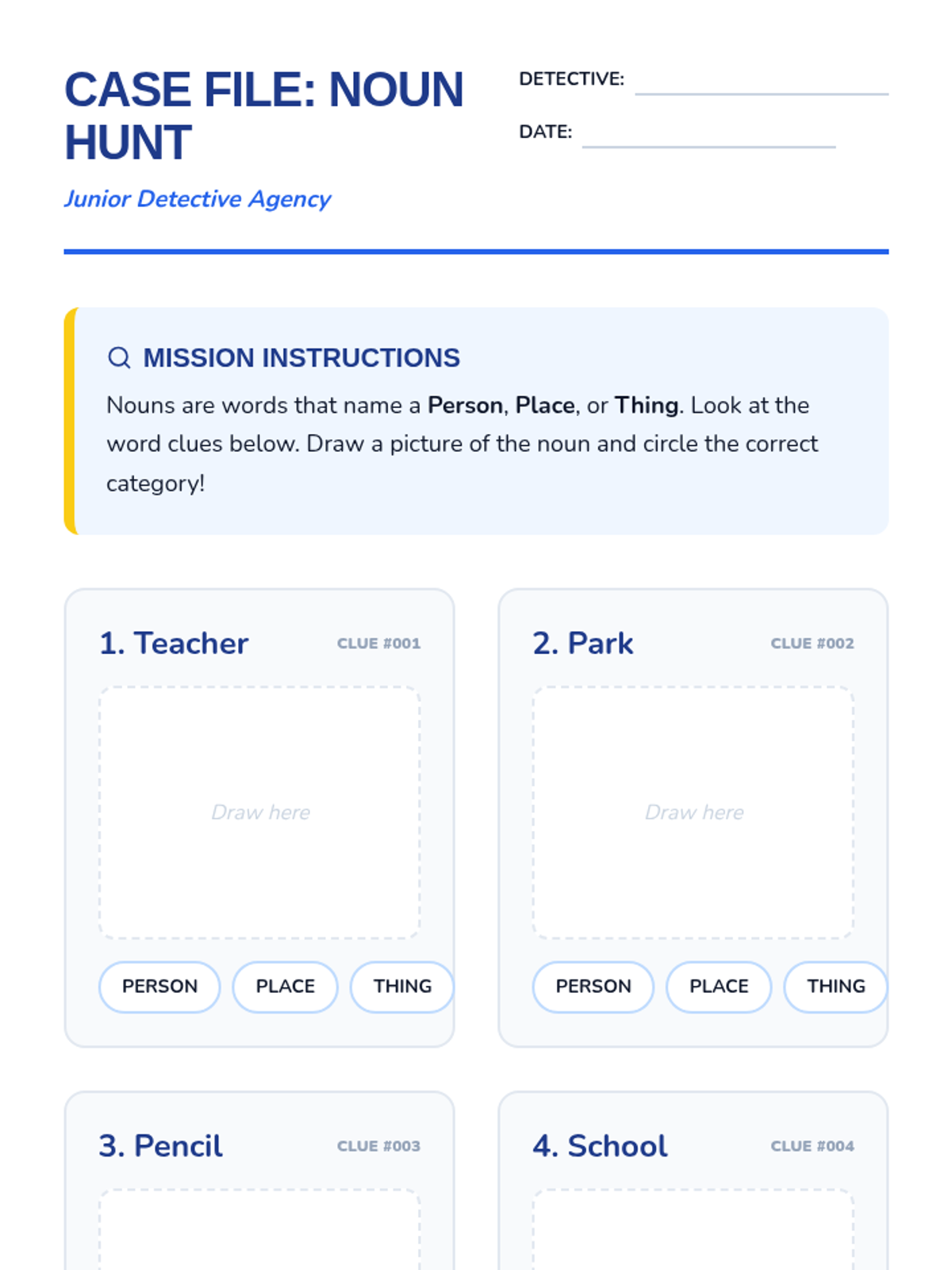
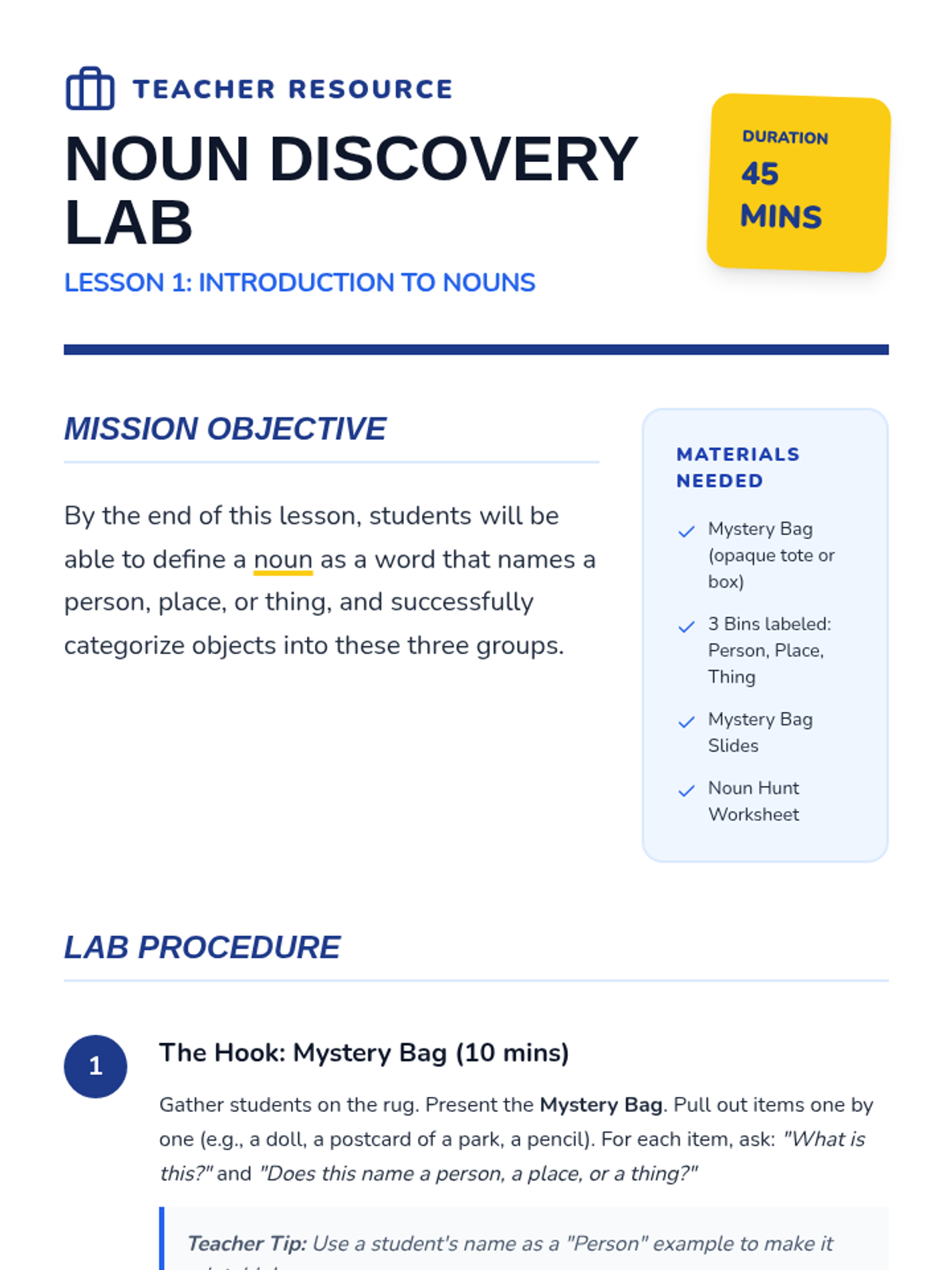
A foundational grammar sequence for first graders exploring nouns and adjectives through a 'Junior Detective' lens. Students progress from identifying naming words to using sensory details to write descriptive sentences.
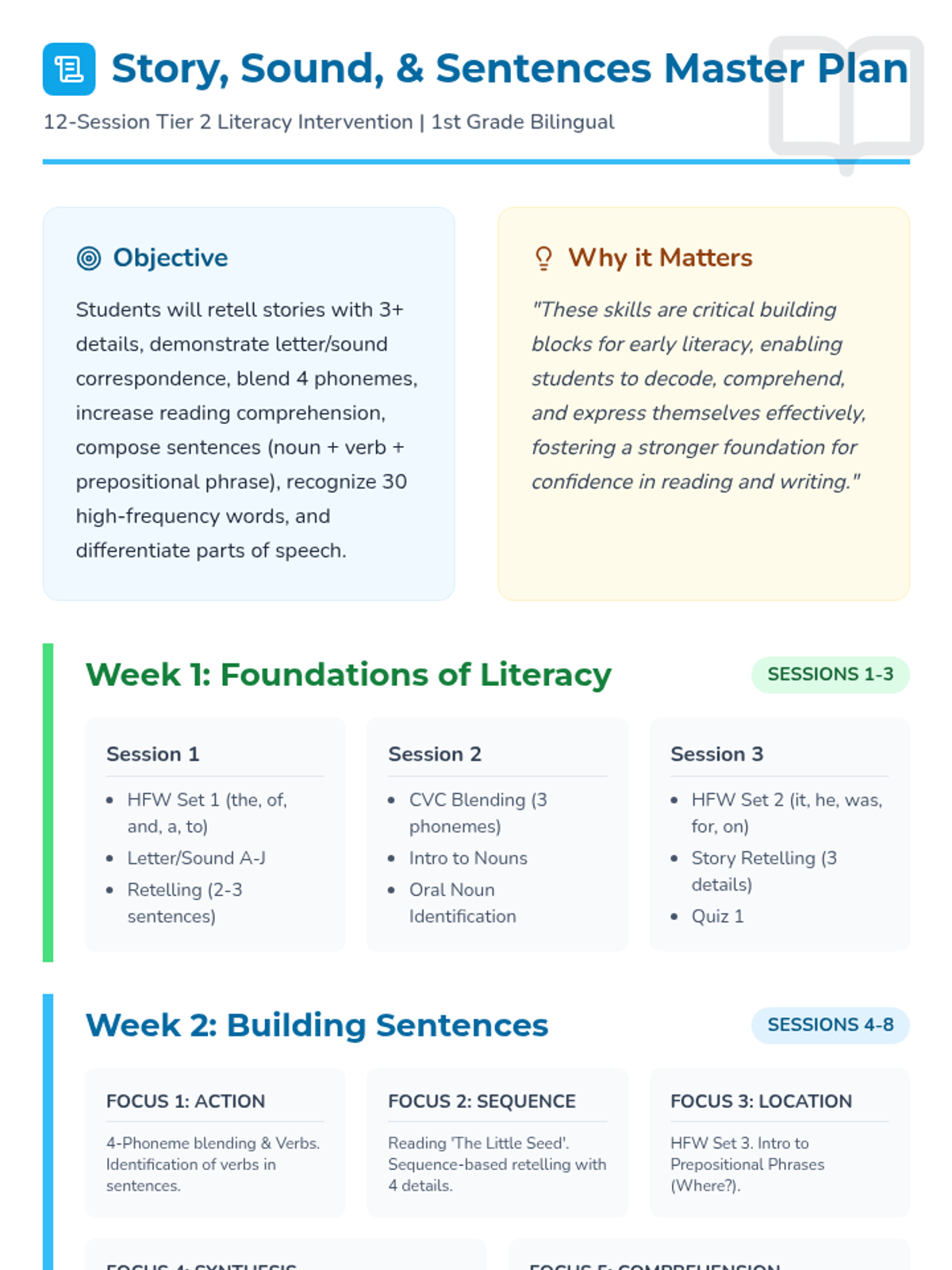
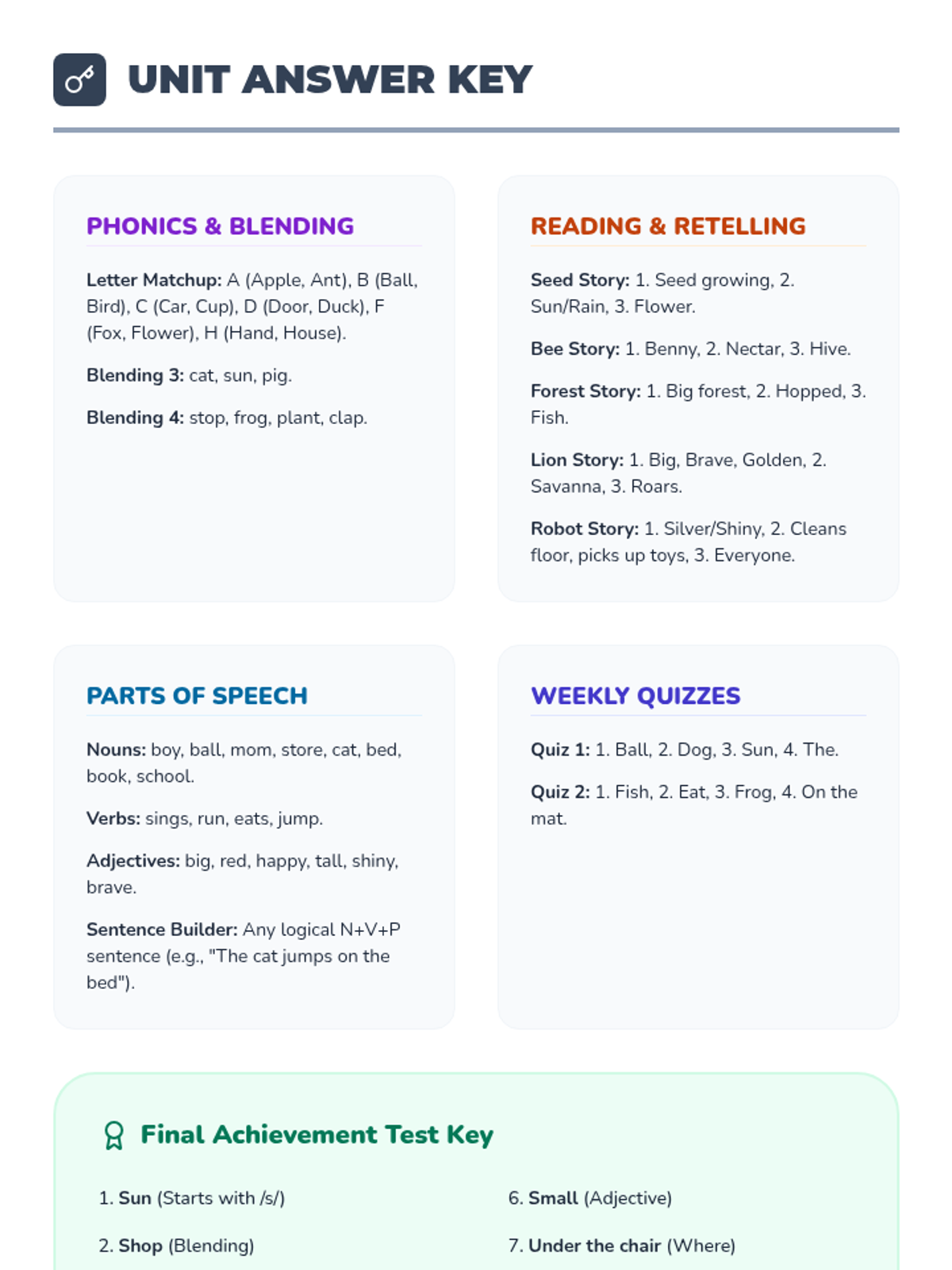
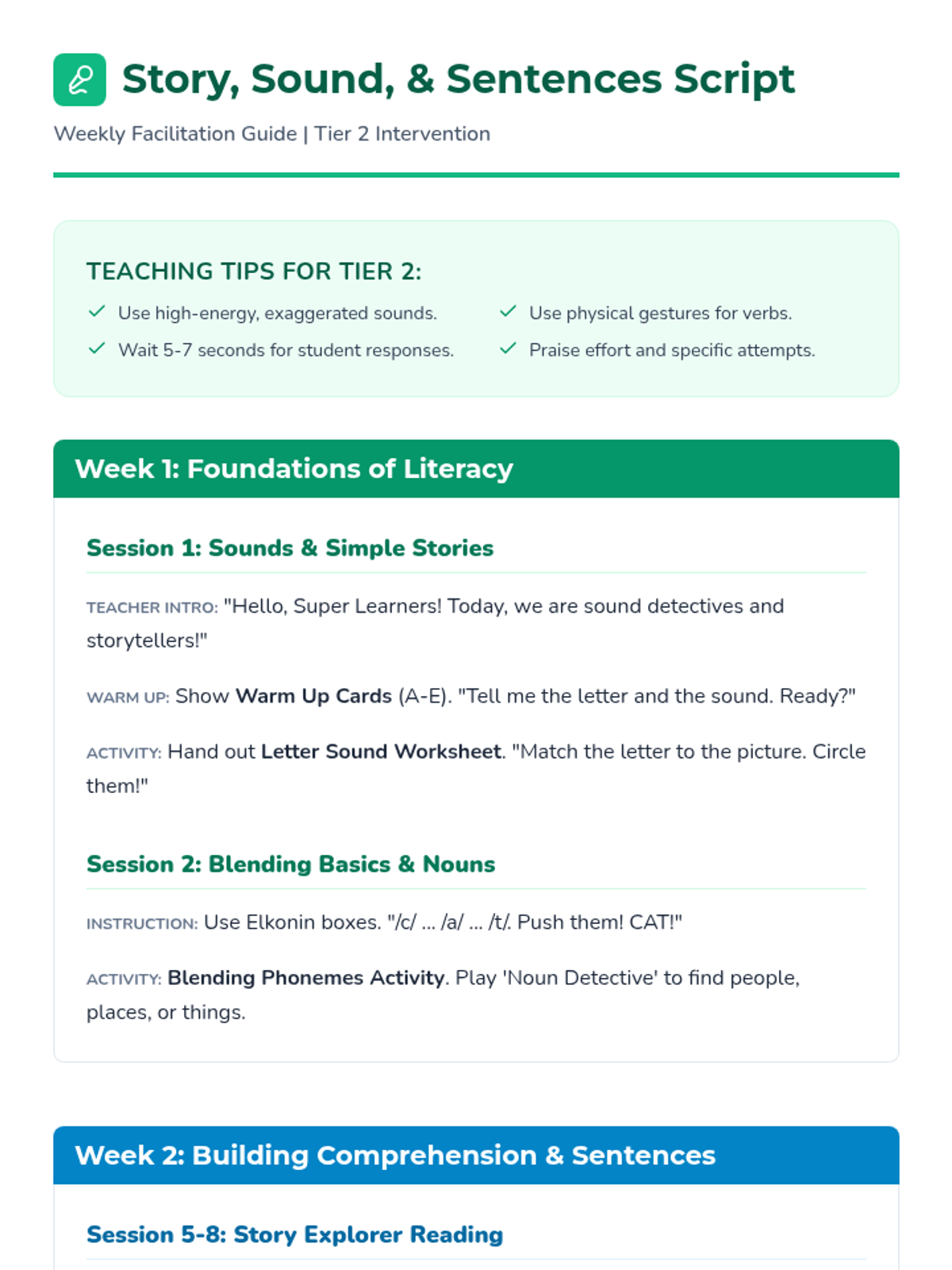
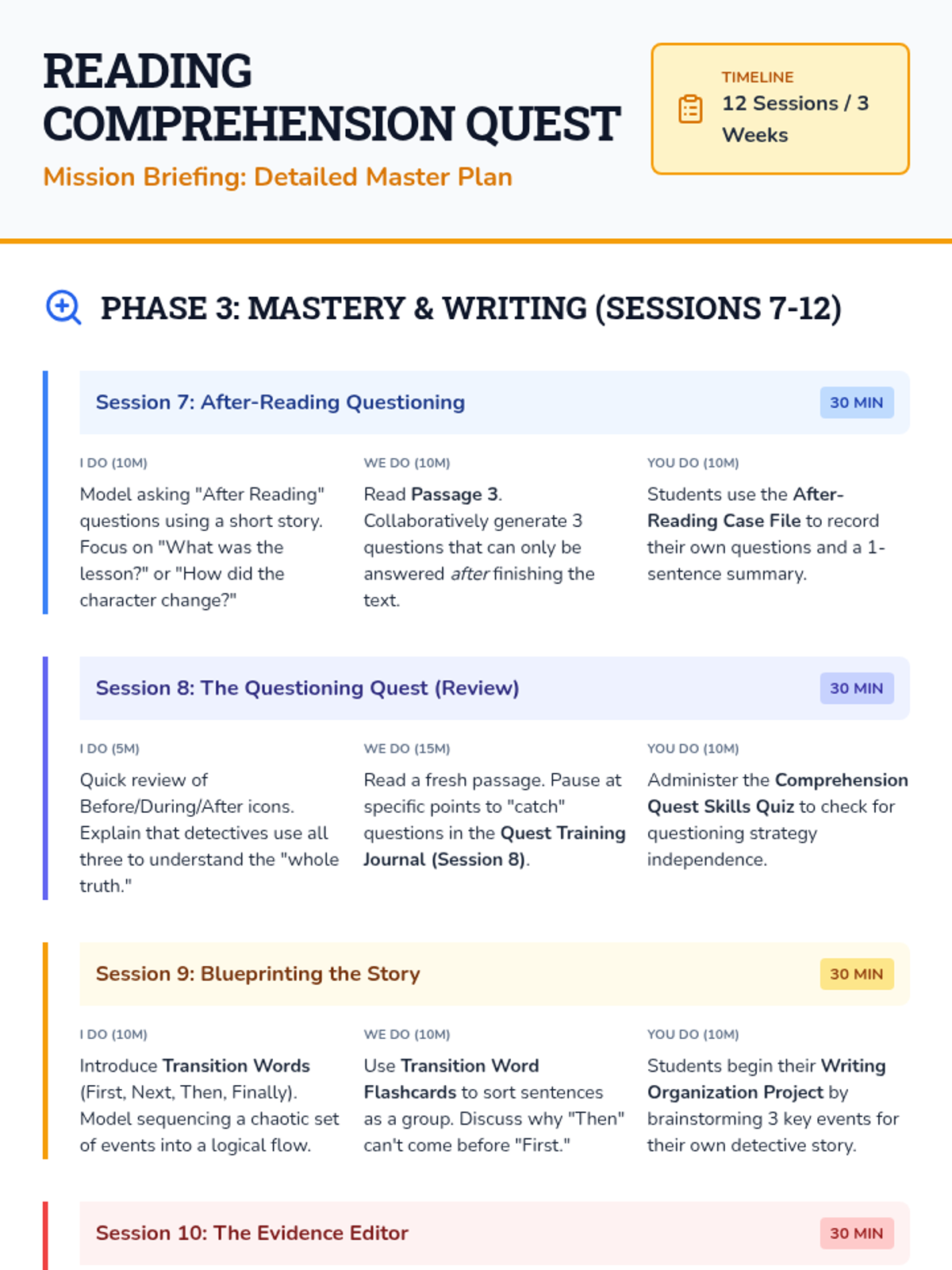
A 12-session, 3-week literacy program for 1st-grade bilingual students with intellectual disabilities, focusing on phonics, retelling, comprehension, and sentence structure.
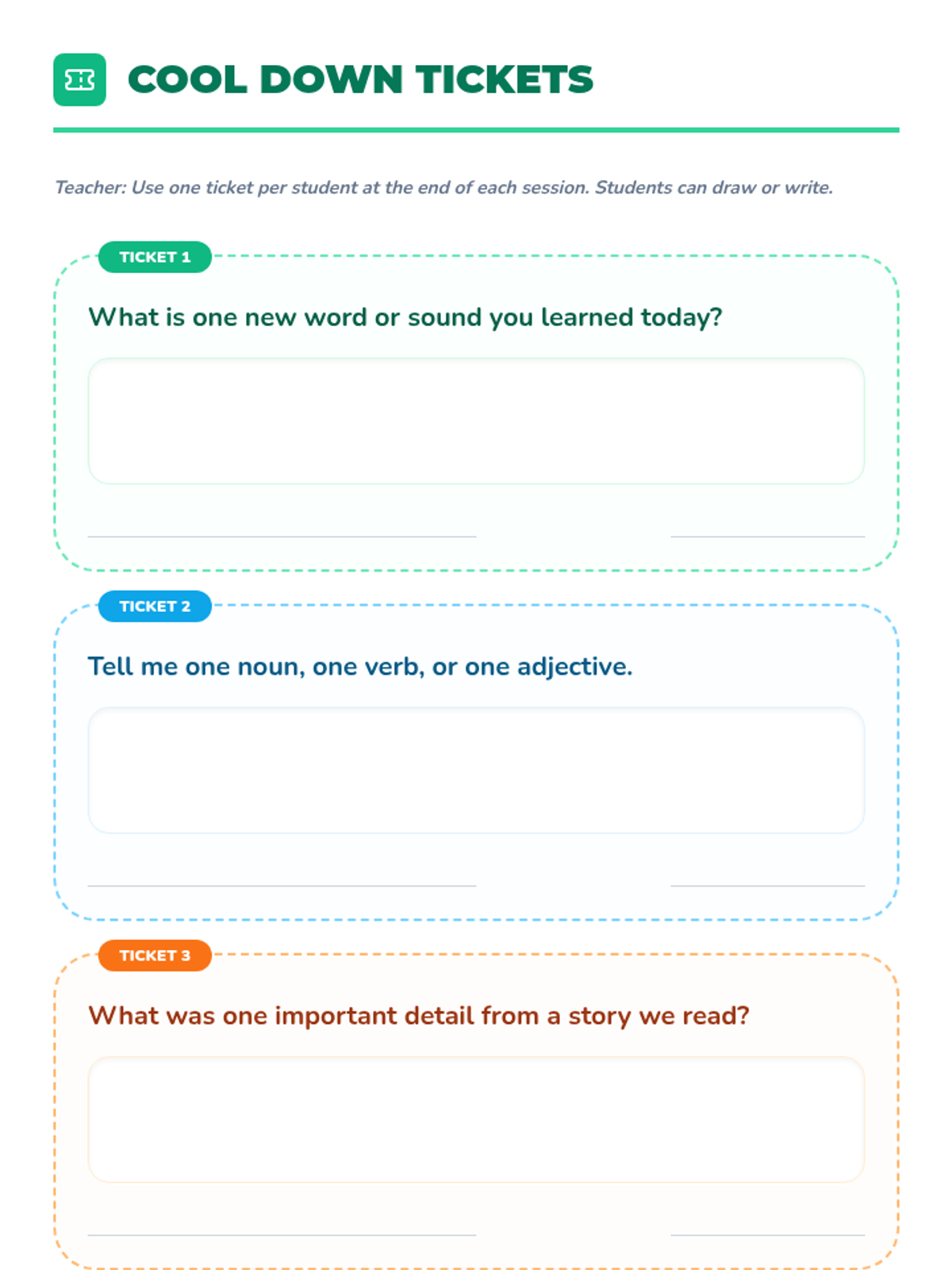
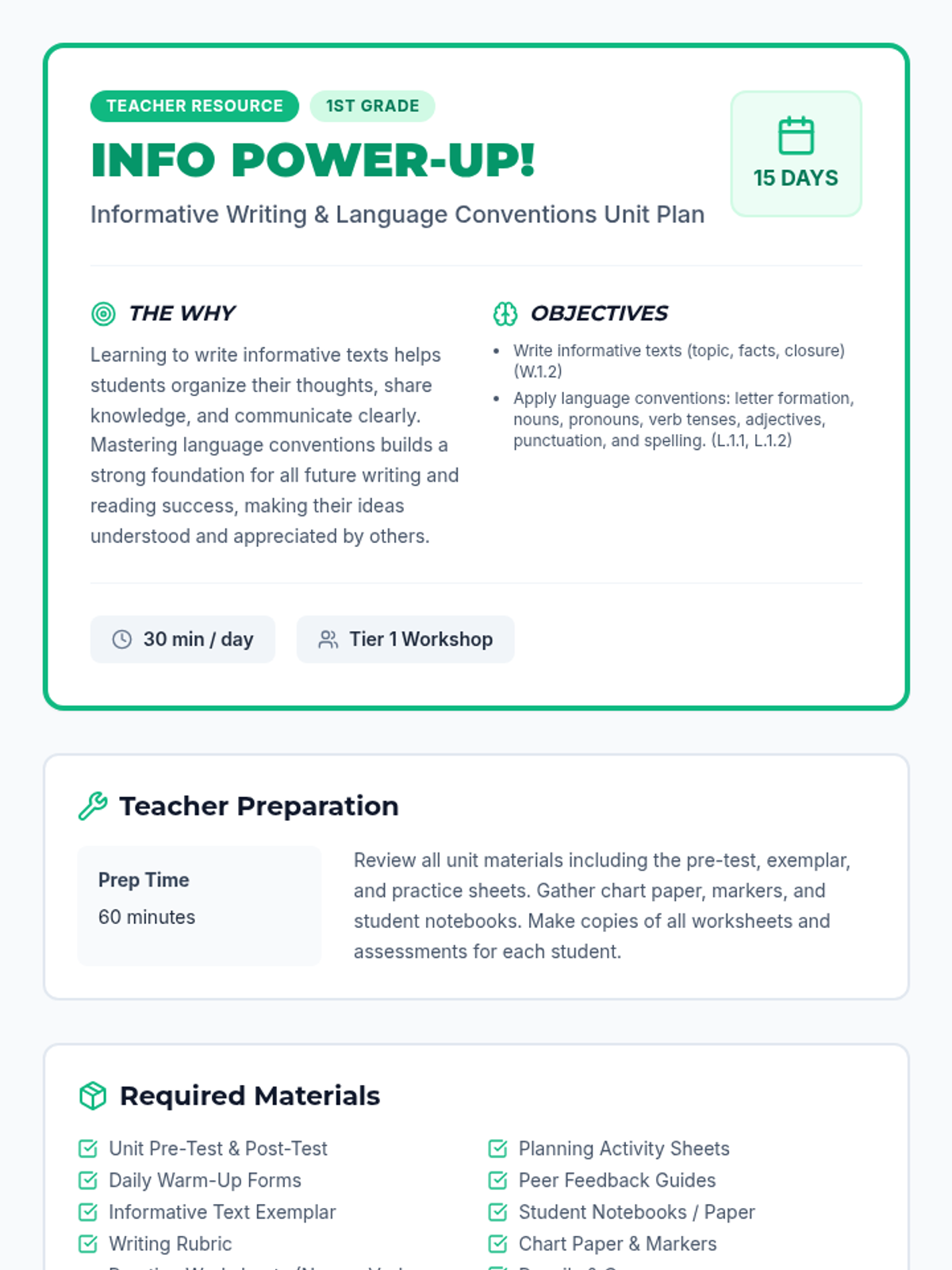
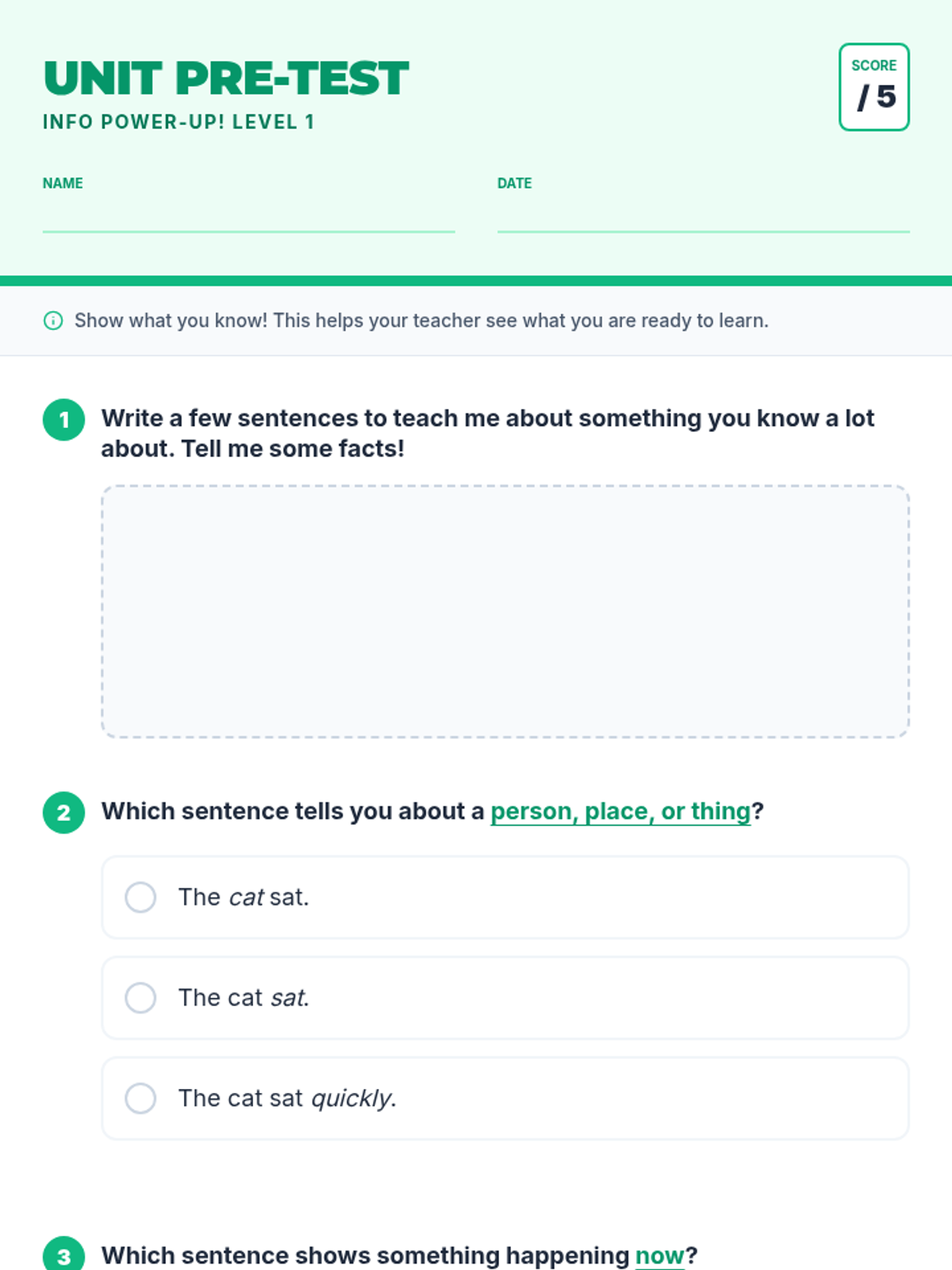
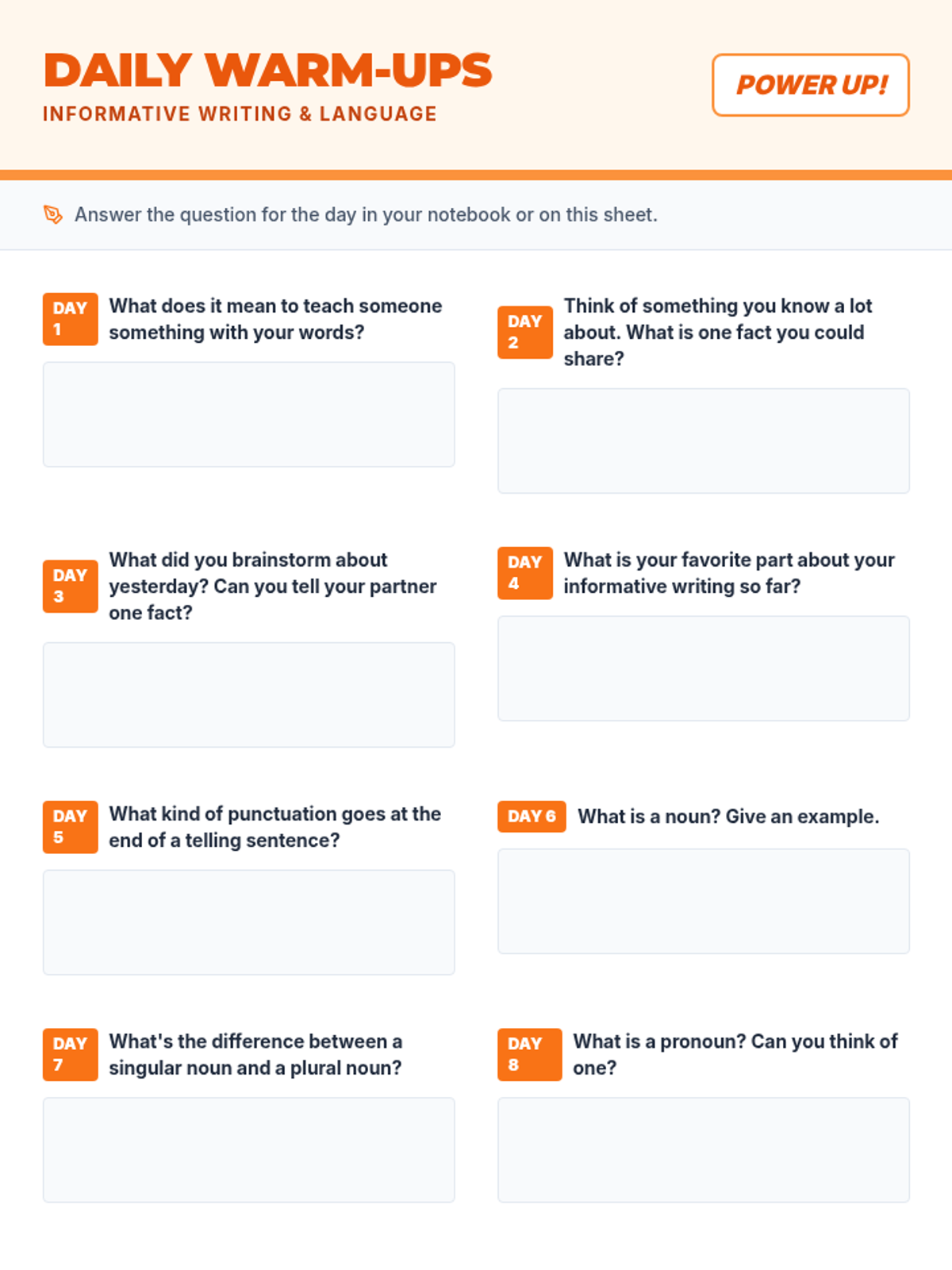
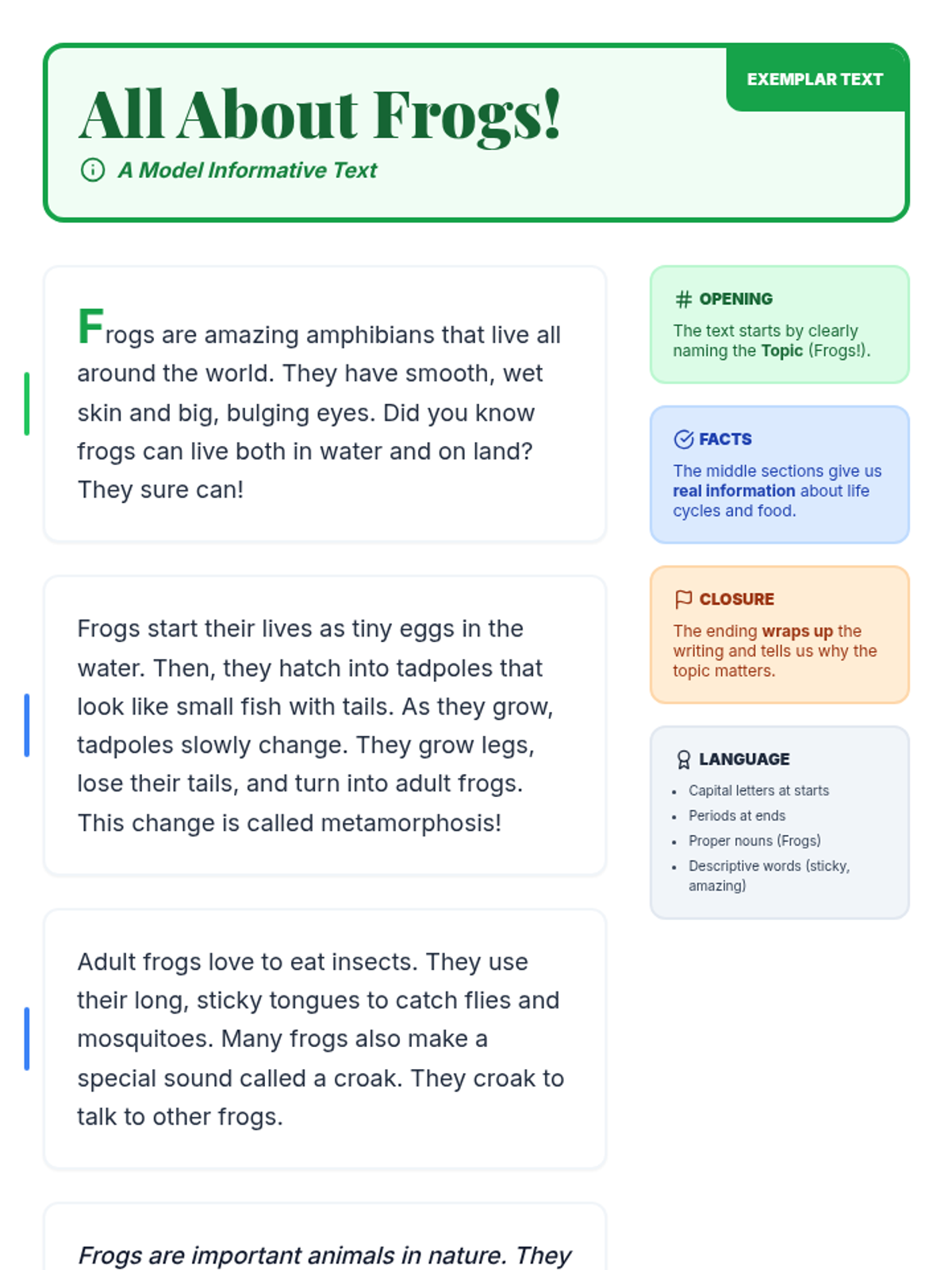
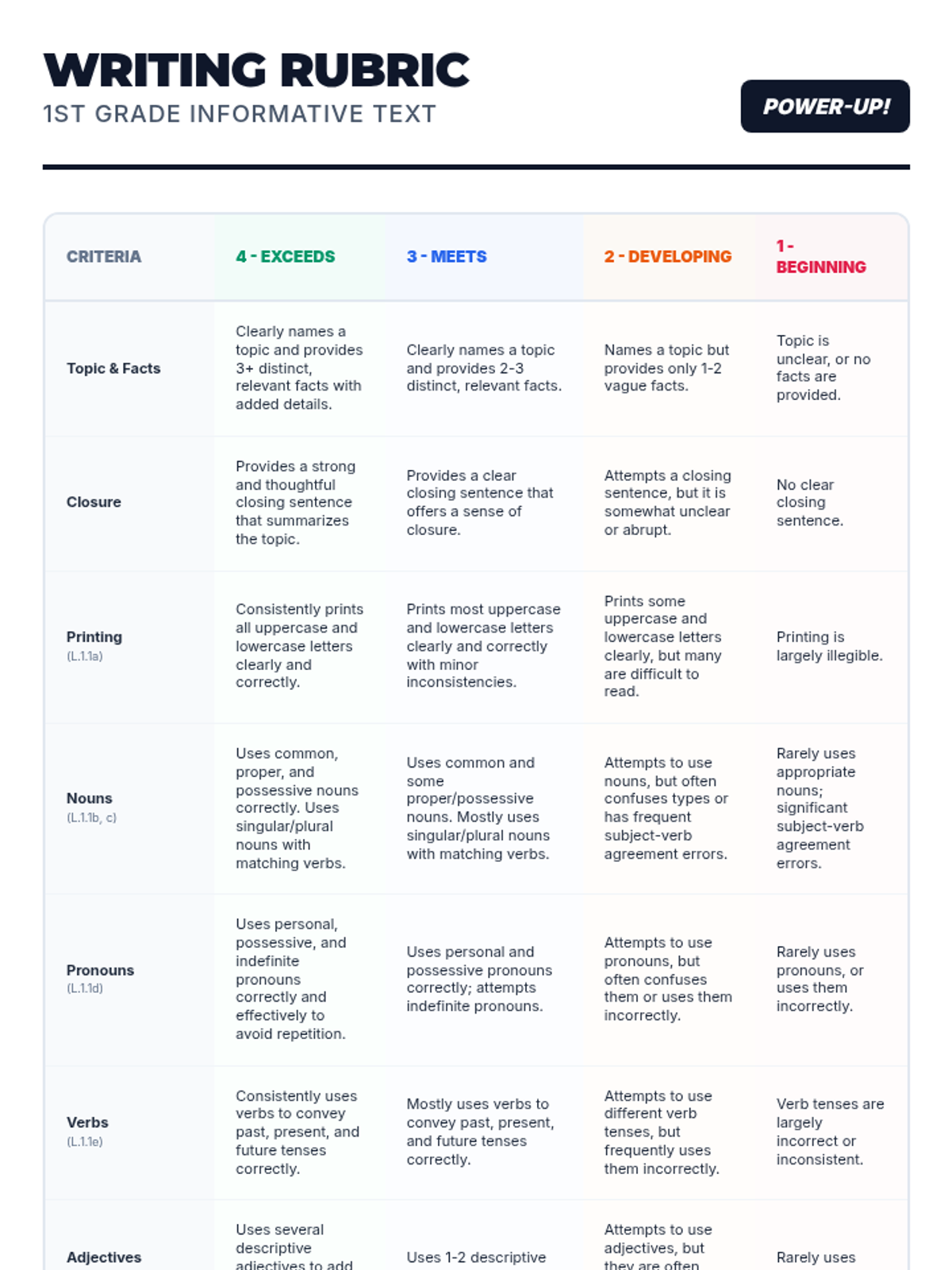
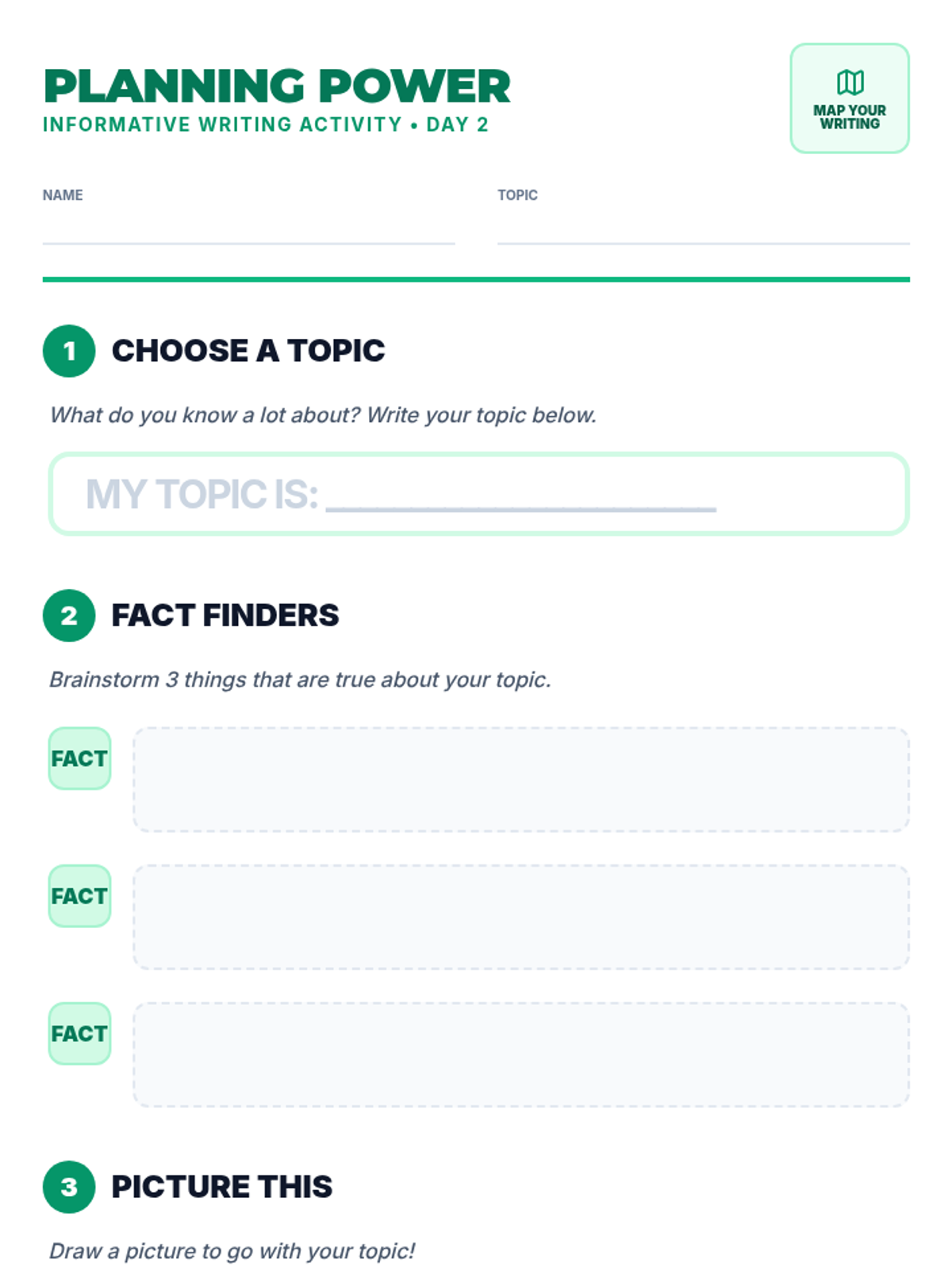
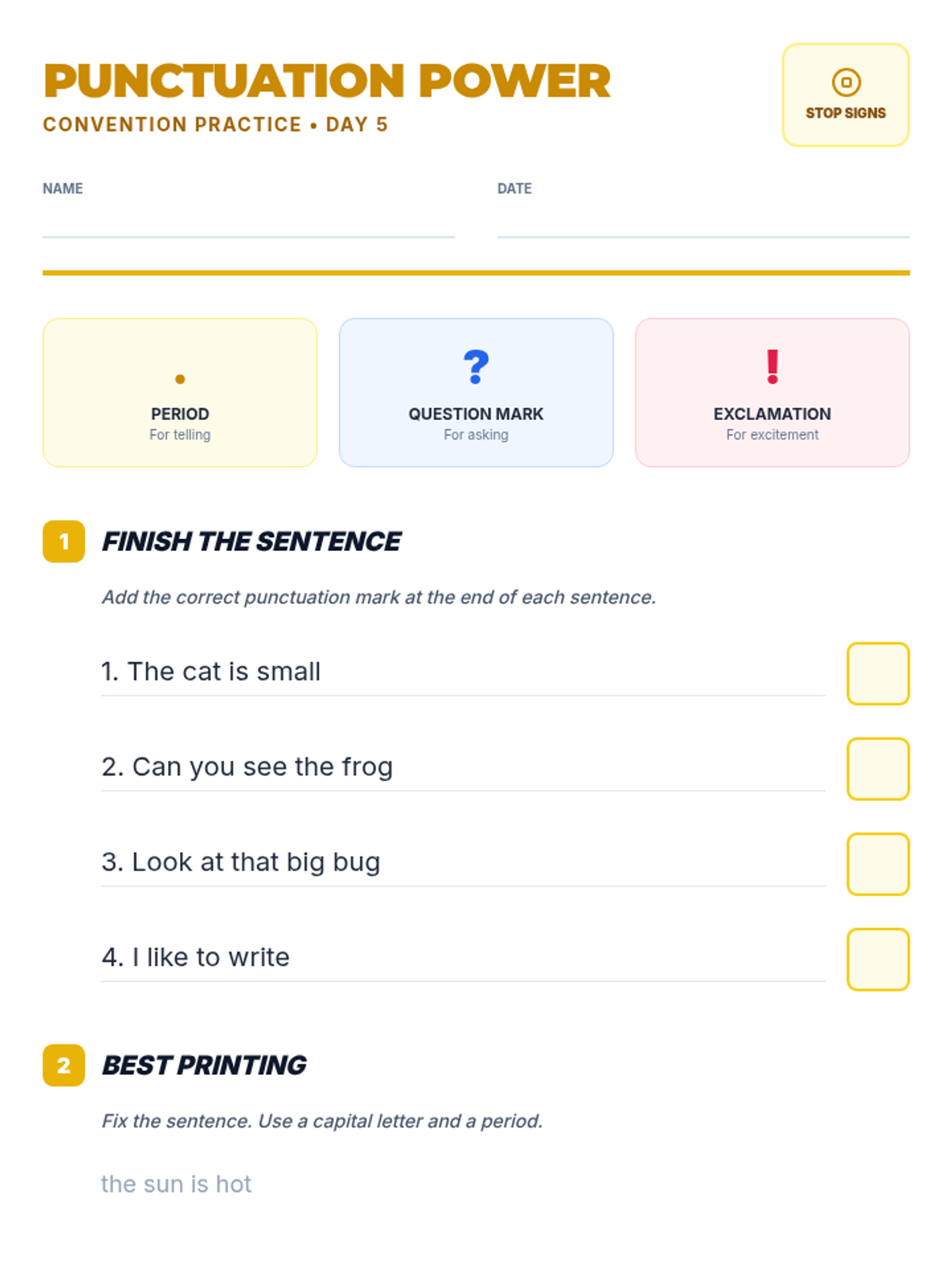
A 15-day, 1st-grade unit equipping students to write clear and factual informative texts while mastering essential language conventions. Students learn to choose topics, provide facts, and craft closure while developing grammar, punctuation, and spelling skills.
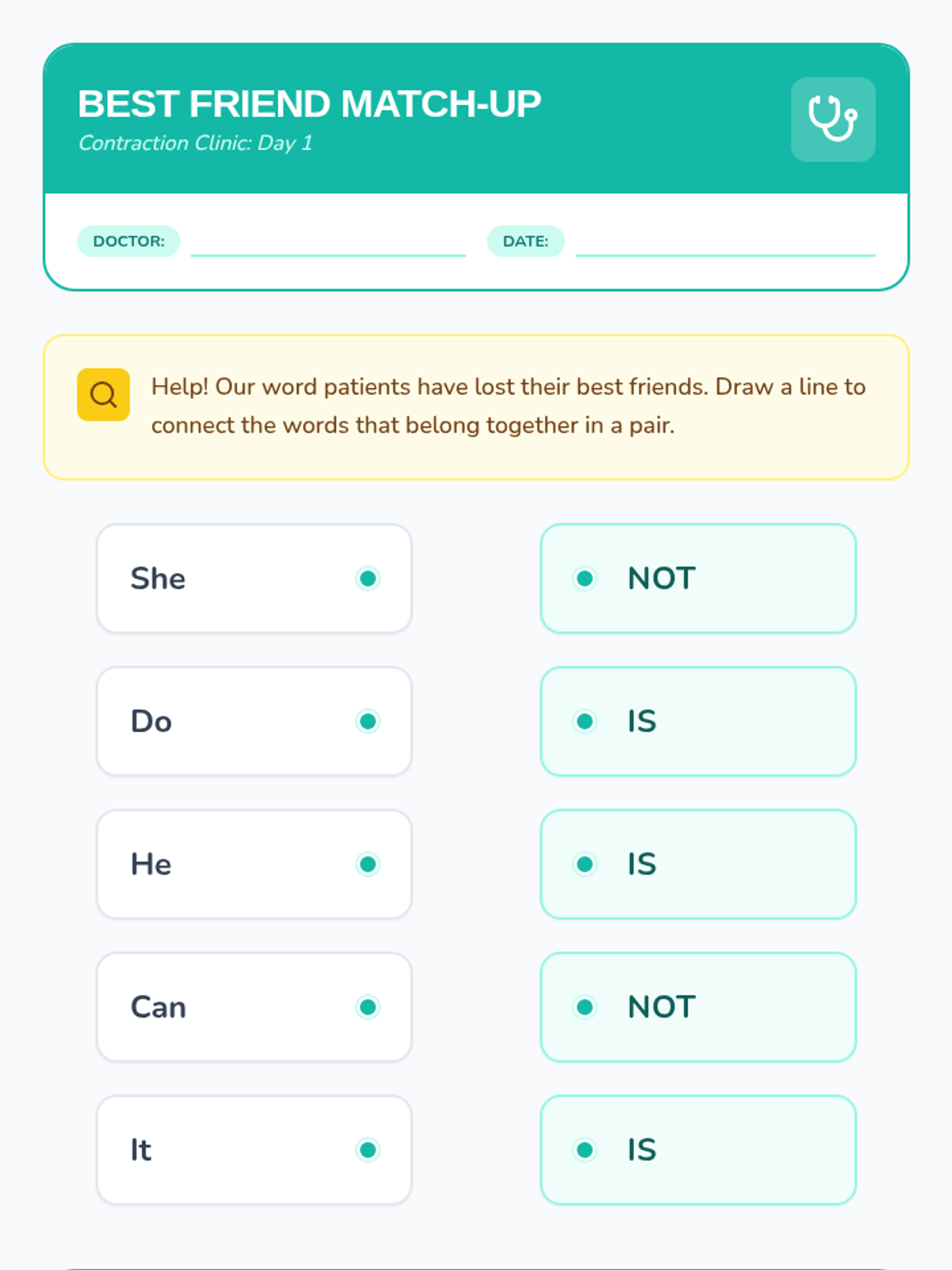
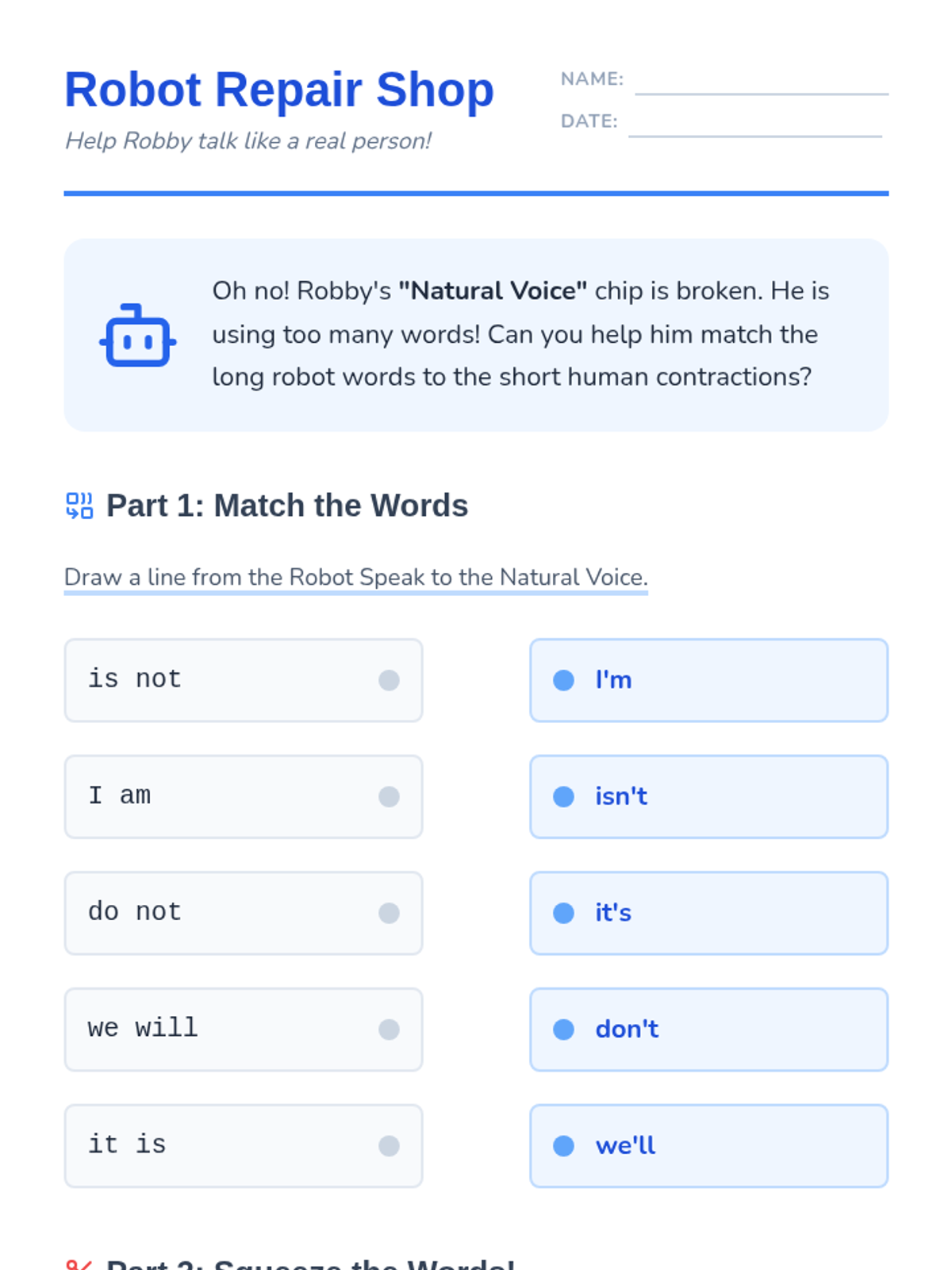
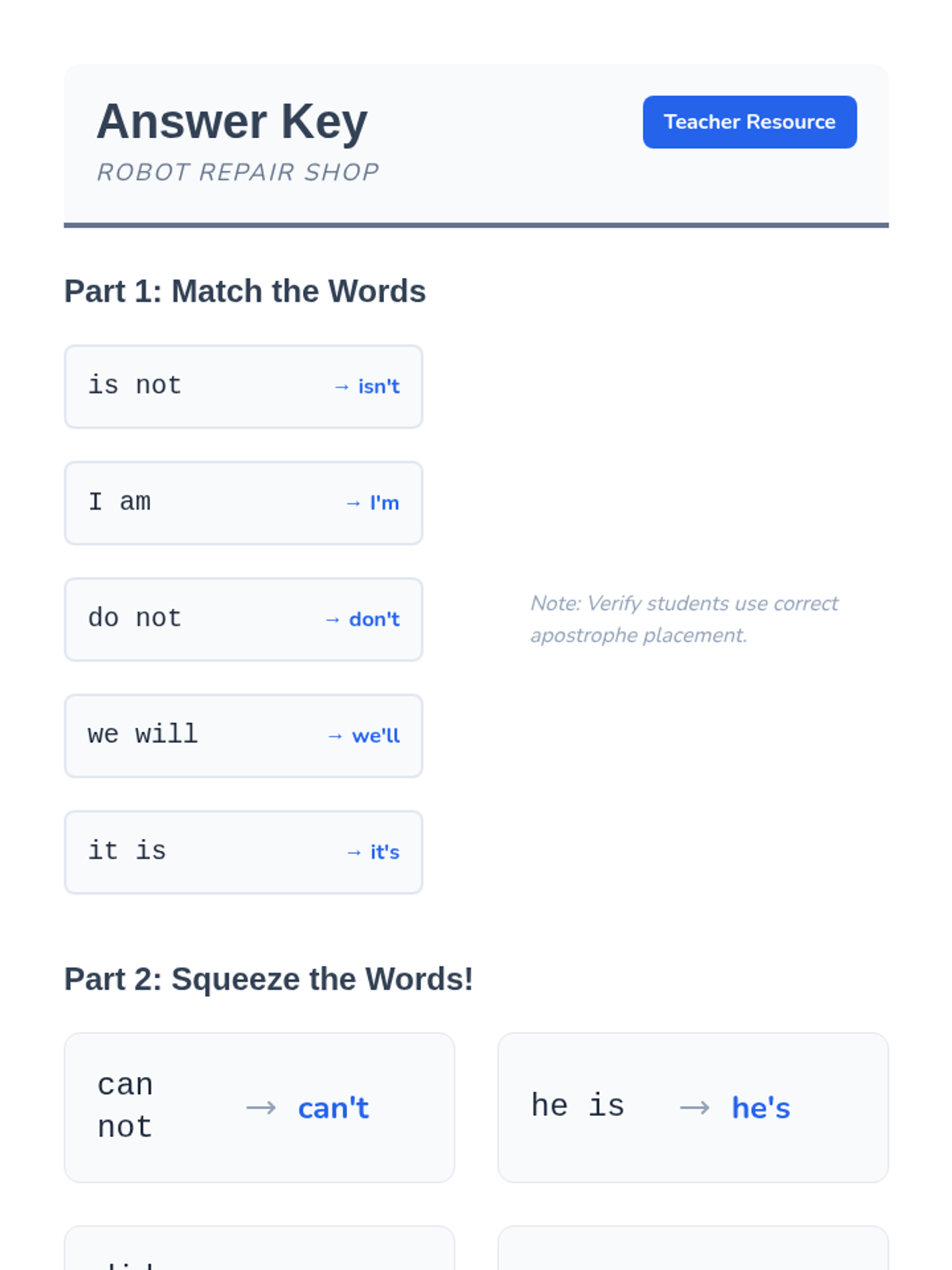
A first-grade grammar sequence focusing on the formation of contractions through a creative 'Word Surgery' theme. Students progress from identifying word pairs to physically 'operating' on words to insert apostrophes.
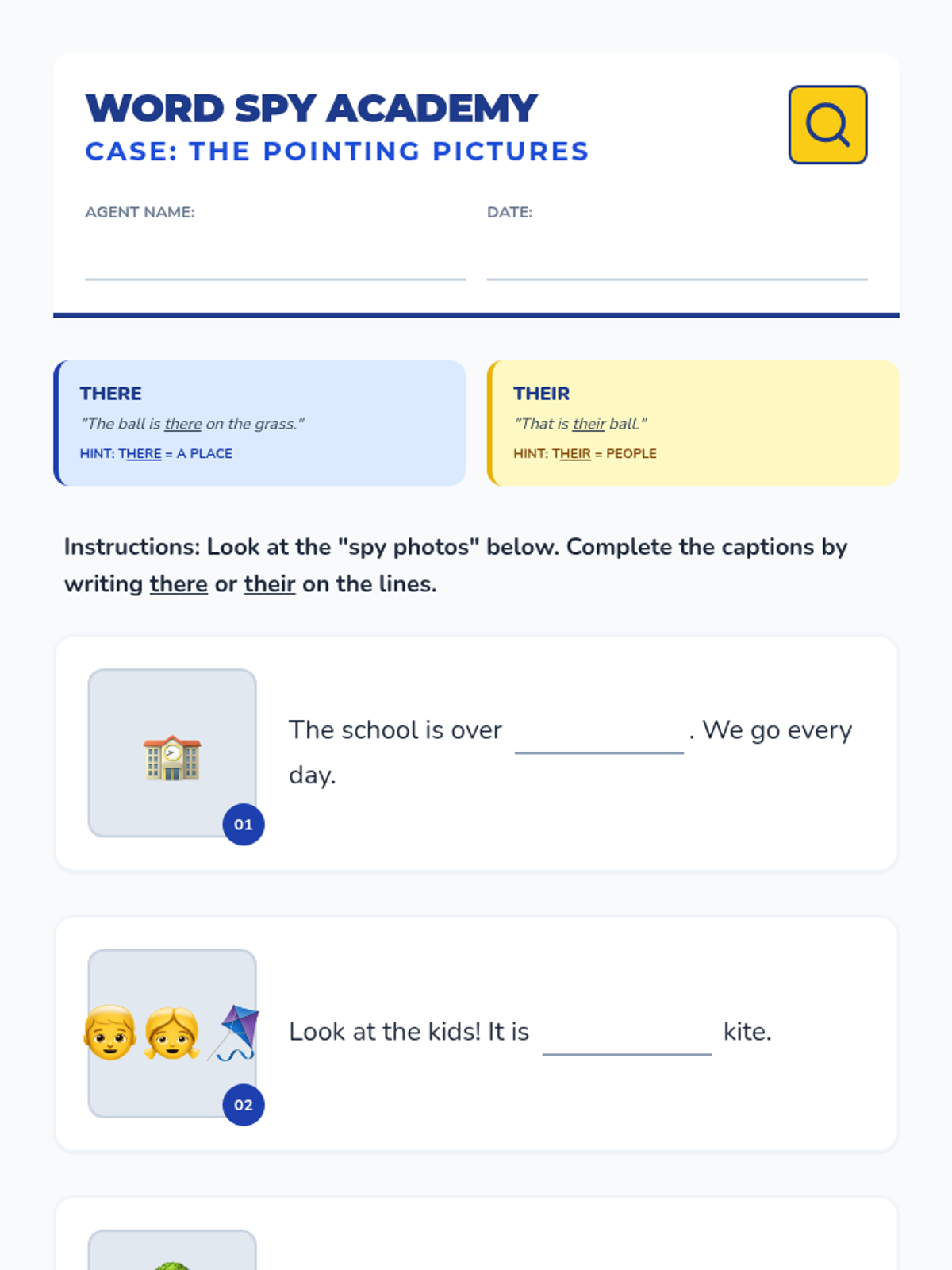
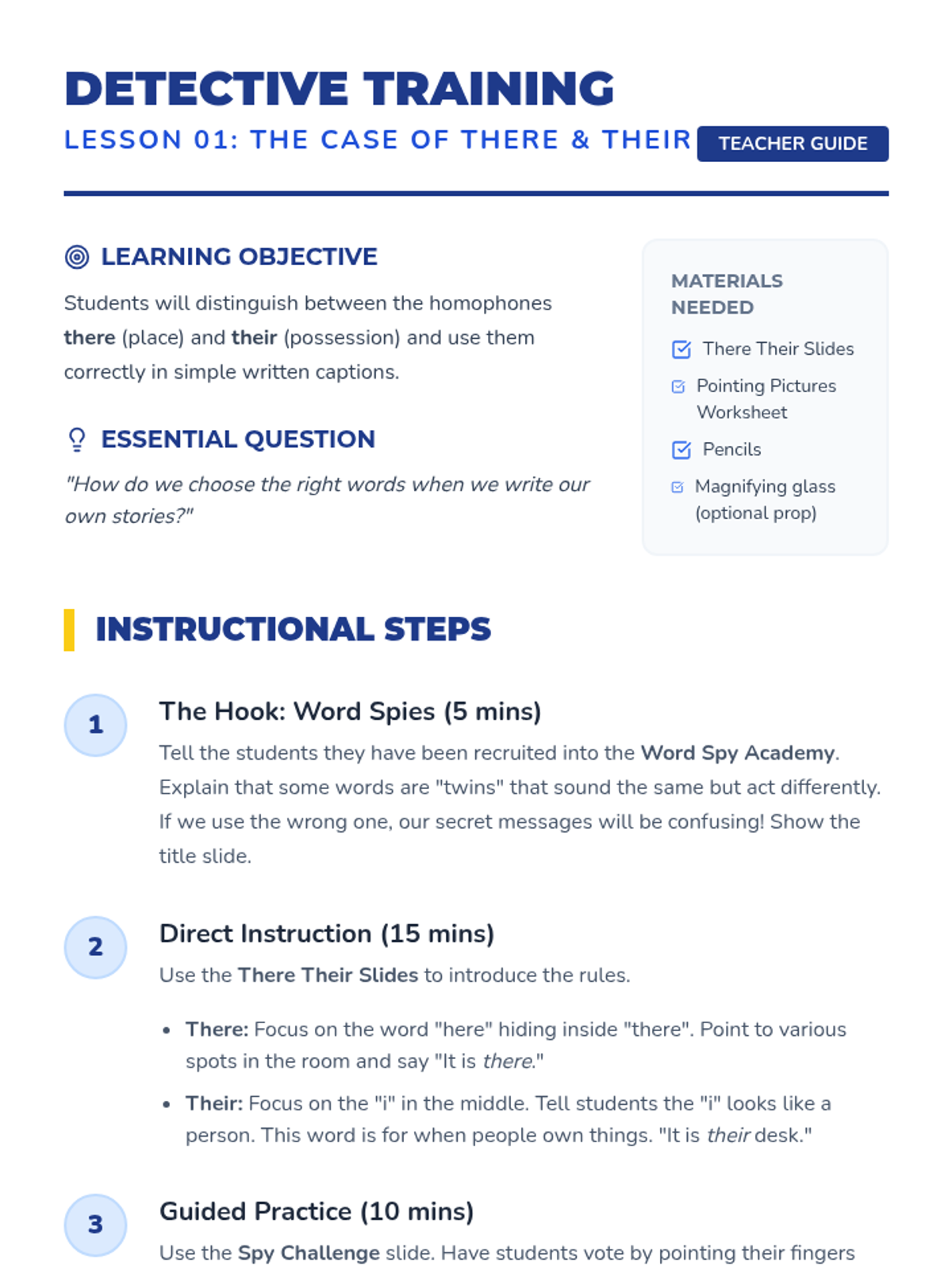
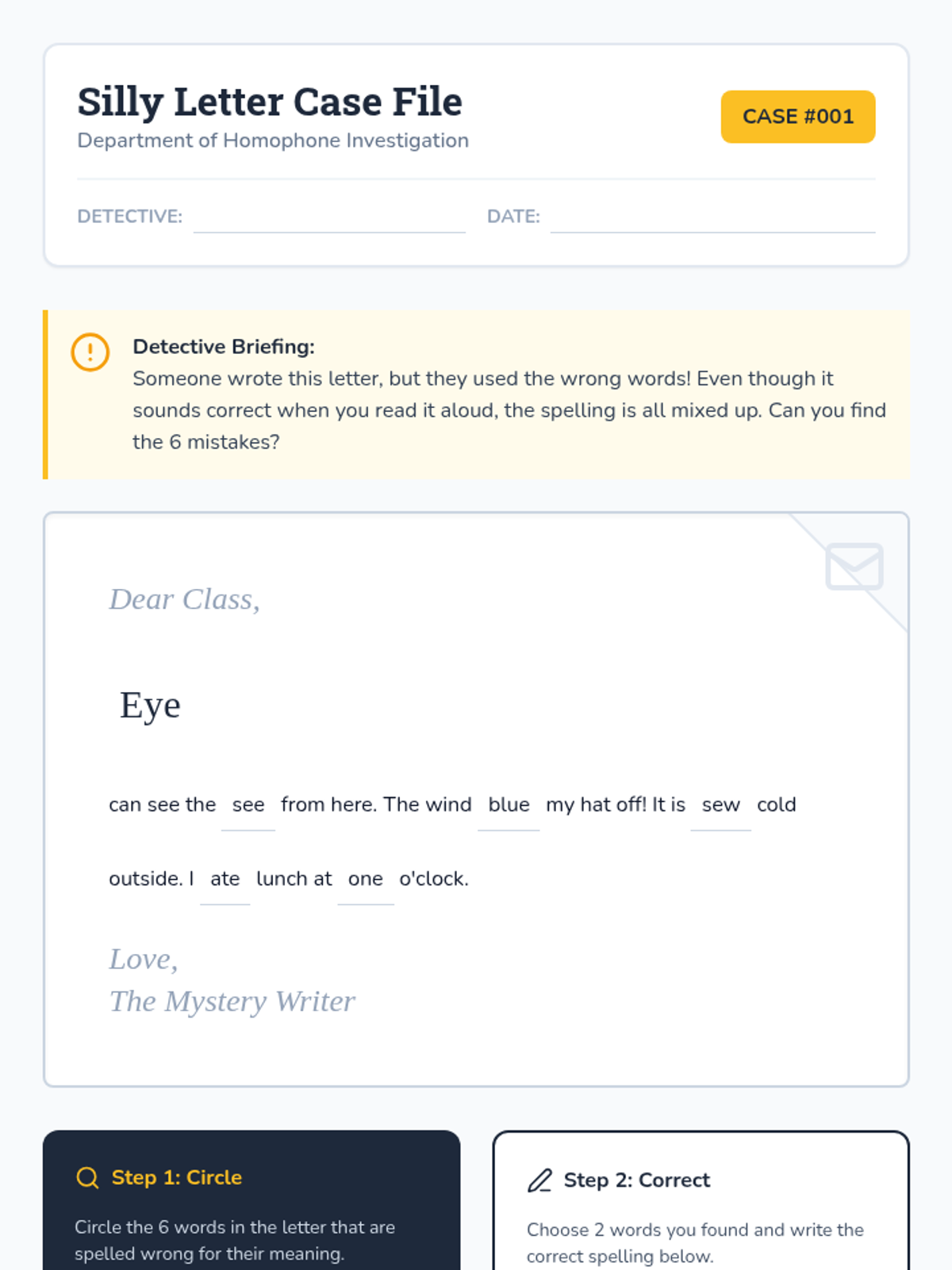
A 1st-grade writing sequence that teaches homophones through functional writing tasks and the 'Think-Write-Check' strategy. Students move from simple sentence starters to writing short narrative reports and creative stories.
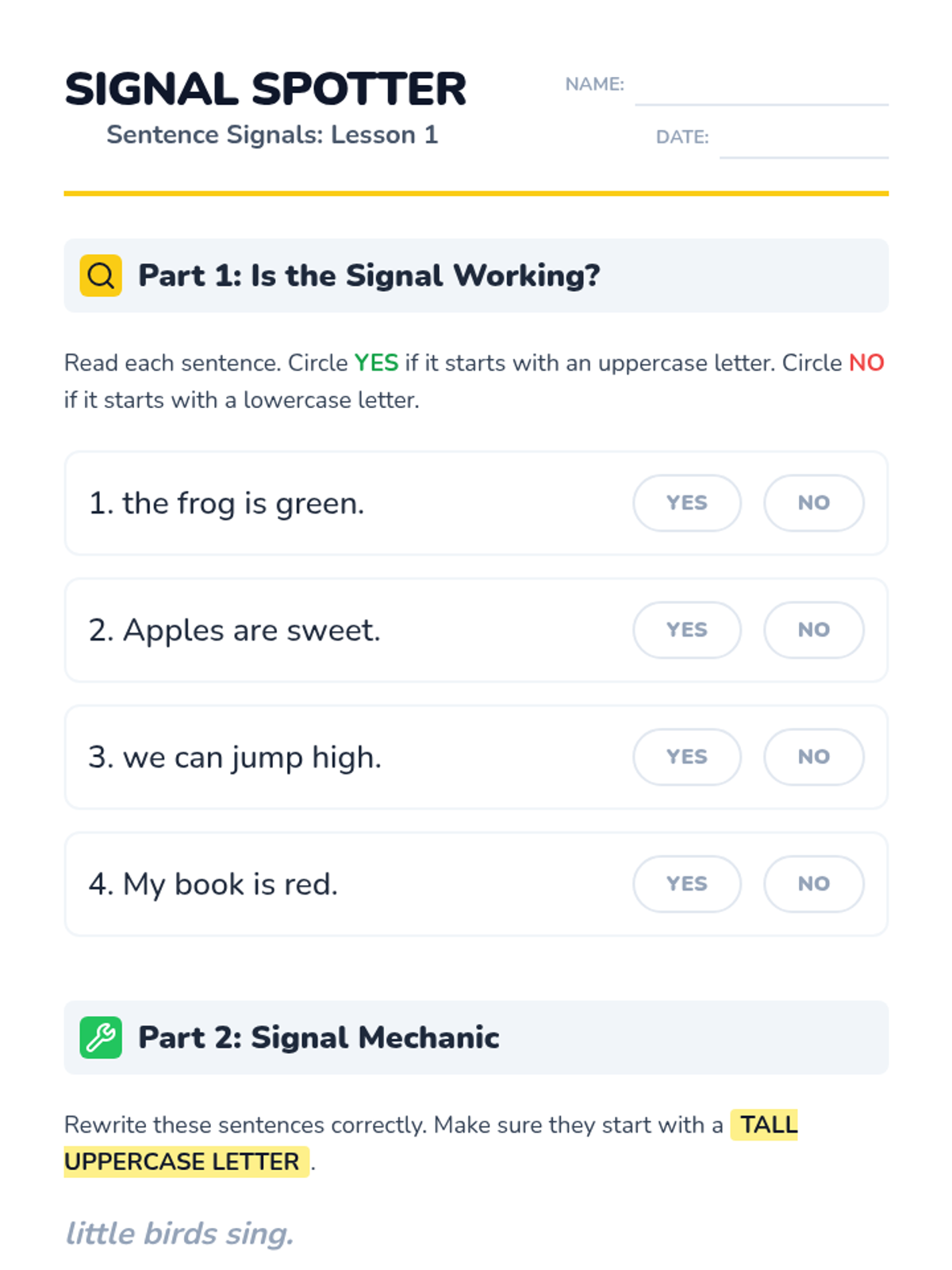
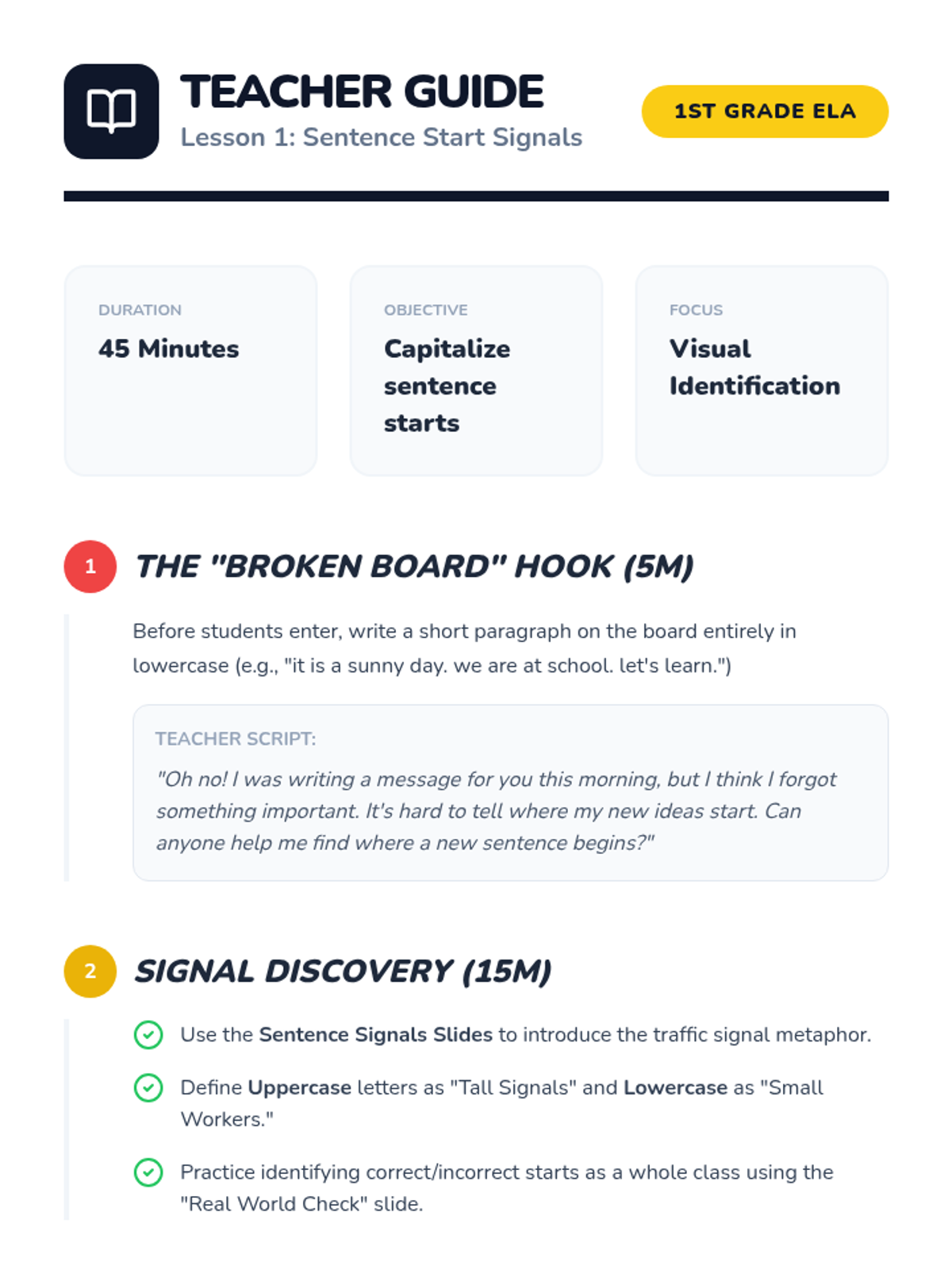
This sequence connects letter recognition to early writing conventions through a project-based approach. Students explore the specific roles of uppercase letters as signals in text, moving beyond simple identification to application in context. The lessons guide students through the rules of capitalization—sentences, names, and the pronoun 'I'—culminating in an editing project where they correct text. This bridges the gap between phonics foundations and writing skills.
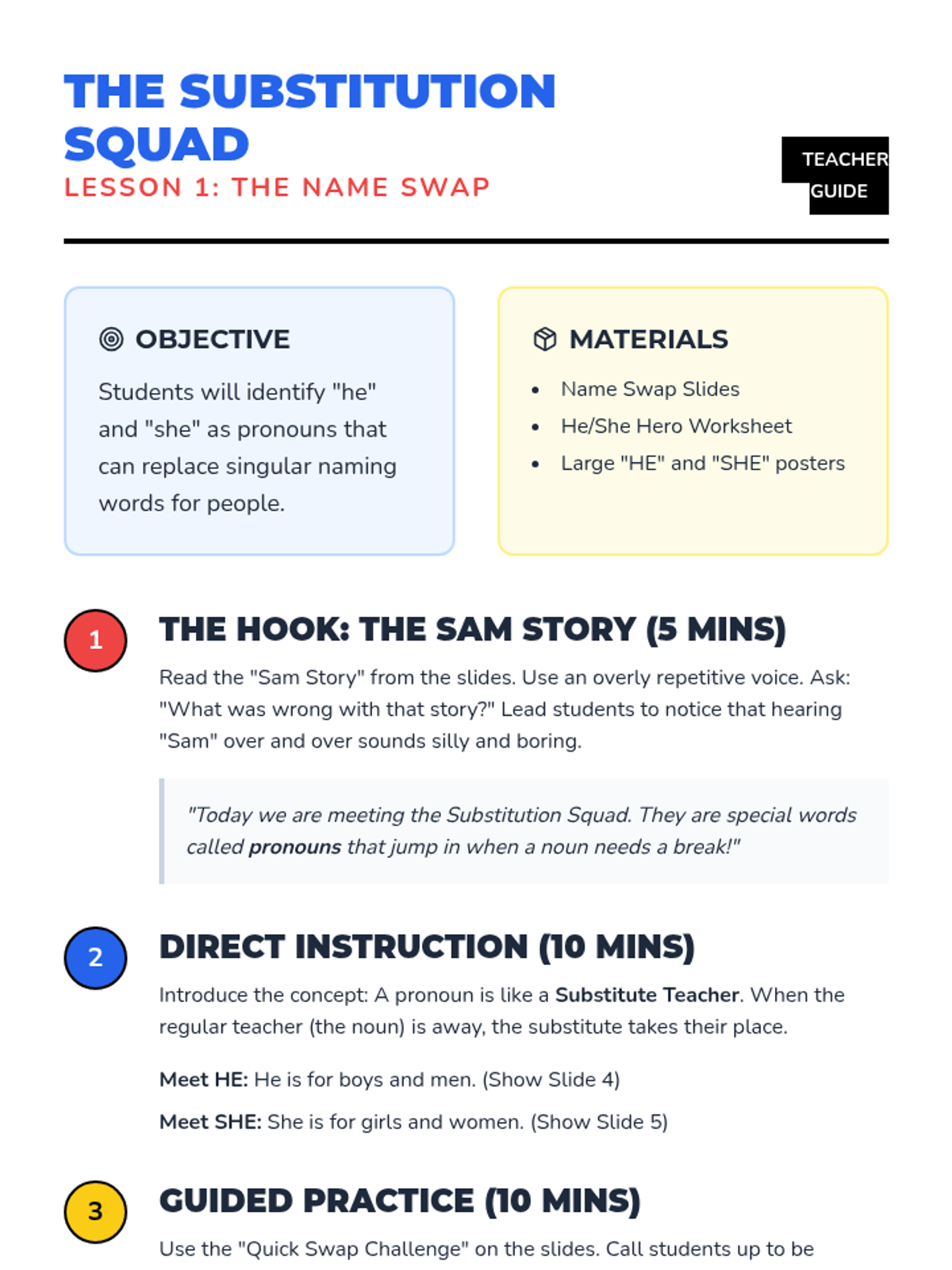
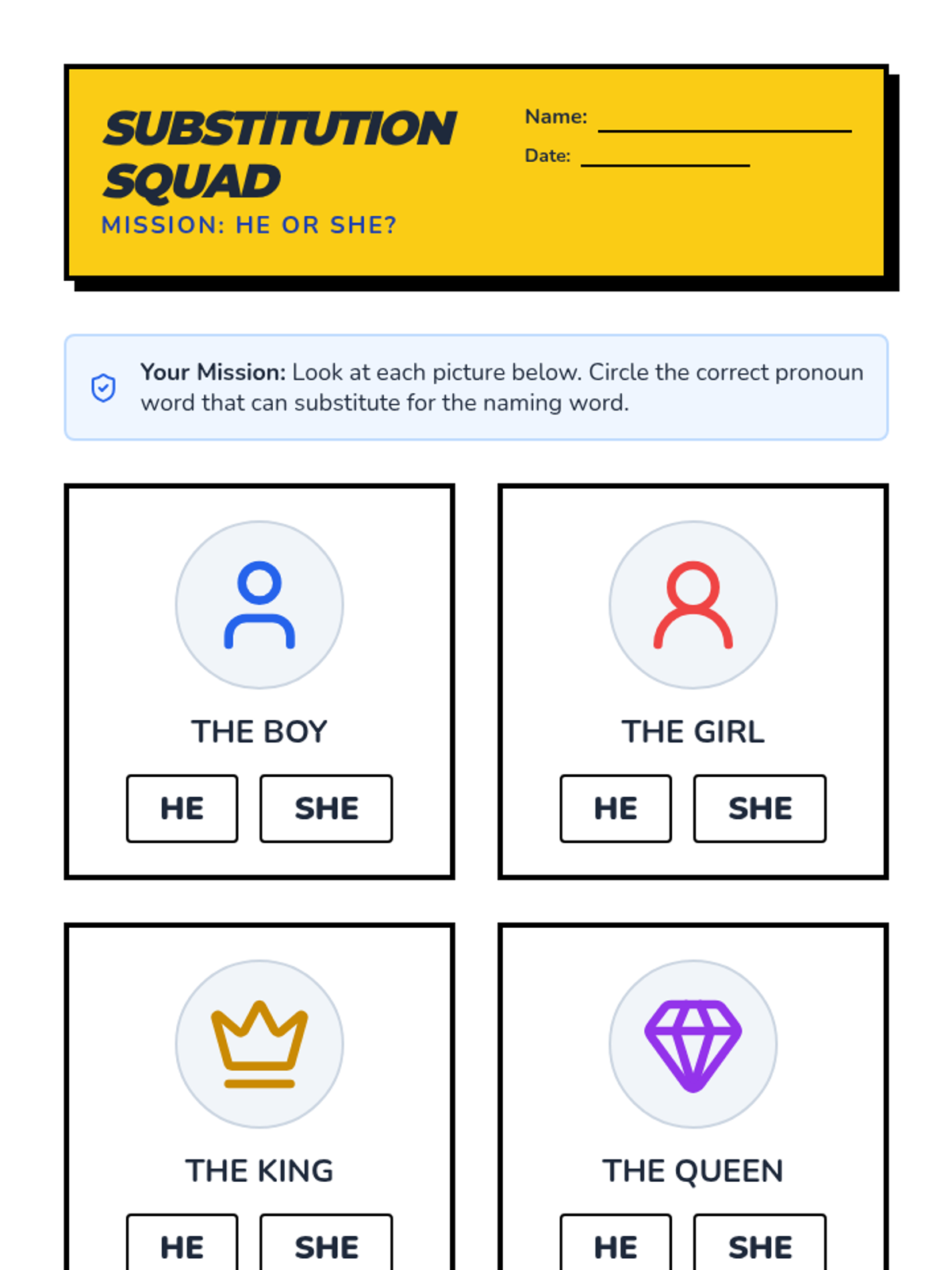
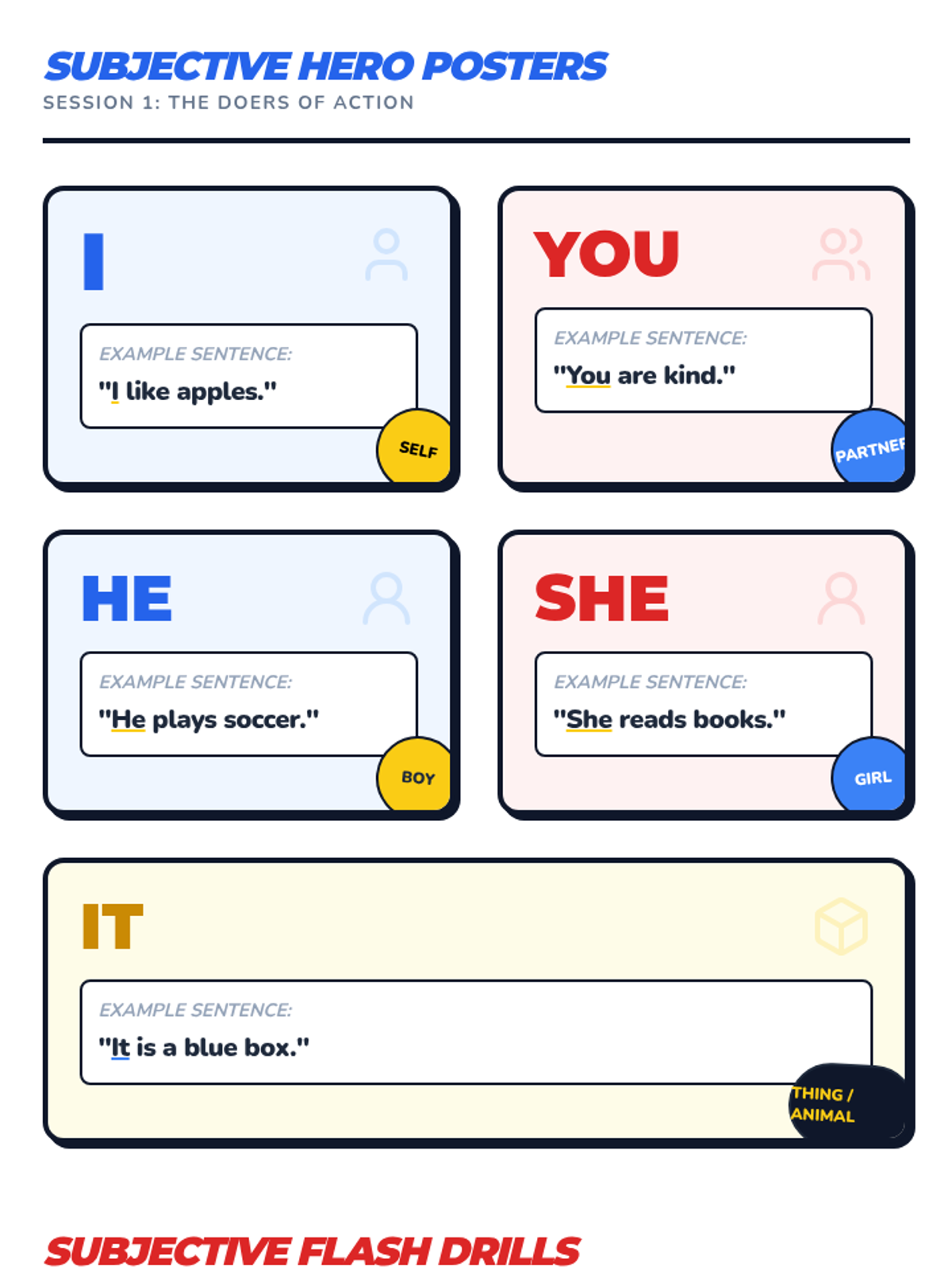
A 1st Grade ELA sequence focused on identifying and using subject pronouns (he, she, it, we, they) to replace nouns. Through a superhero-themed 'Substitution Squad' approach, students move from oral recognition to written application.
A 1st Grade sequence exploring Point of View in nonfiction, helping students distinguish between autobiographies, biographies, informational texts, and instructional manuals.
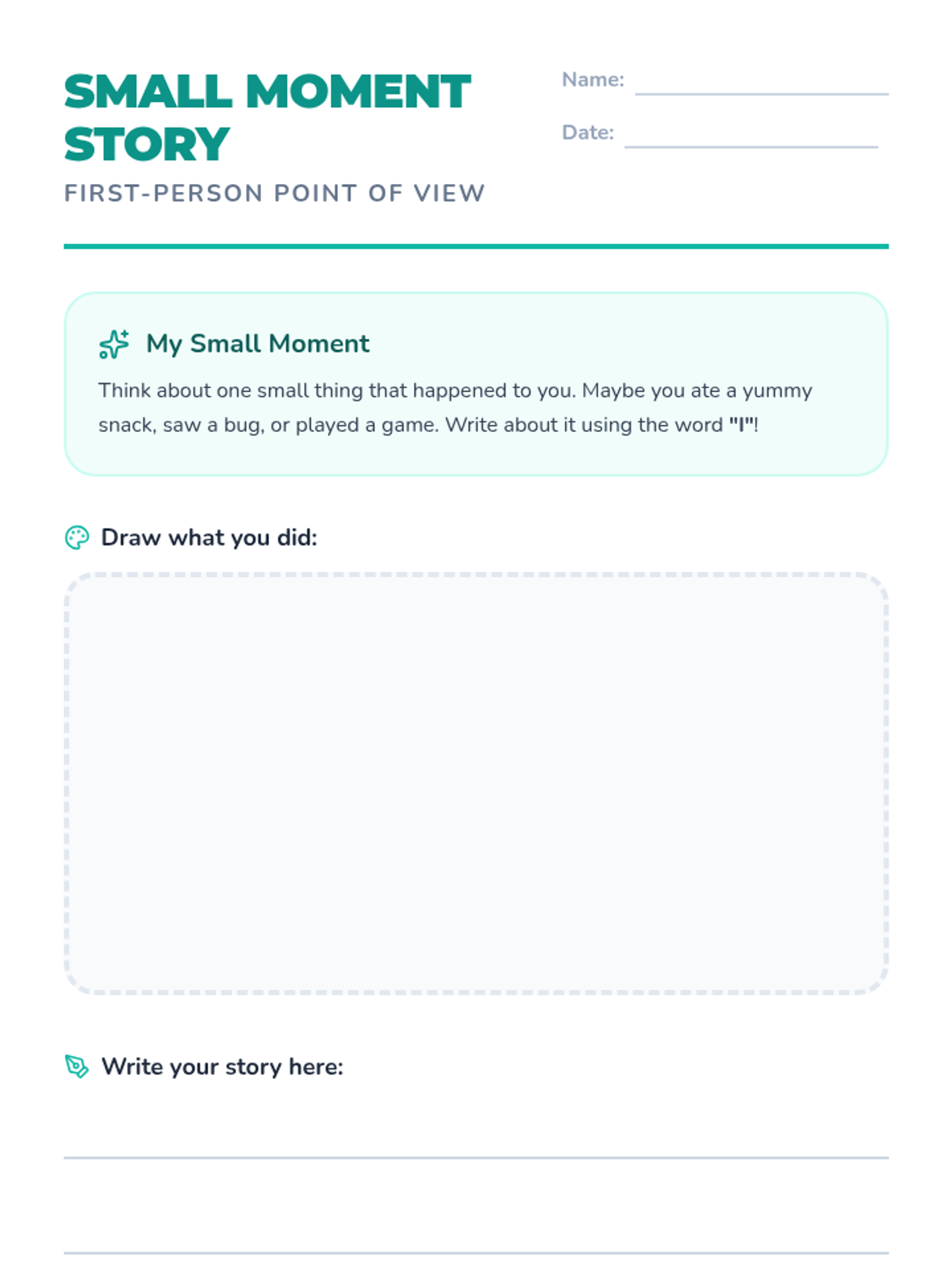
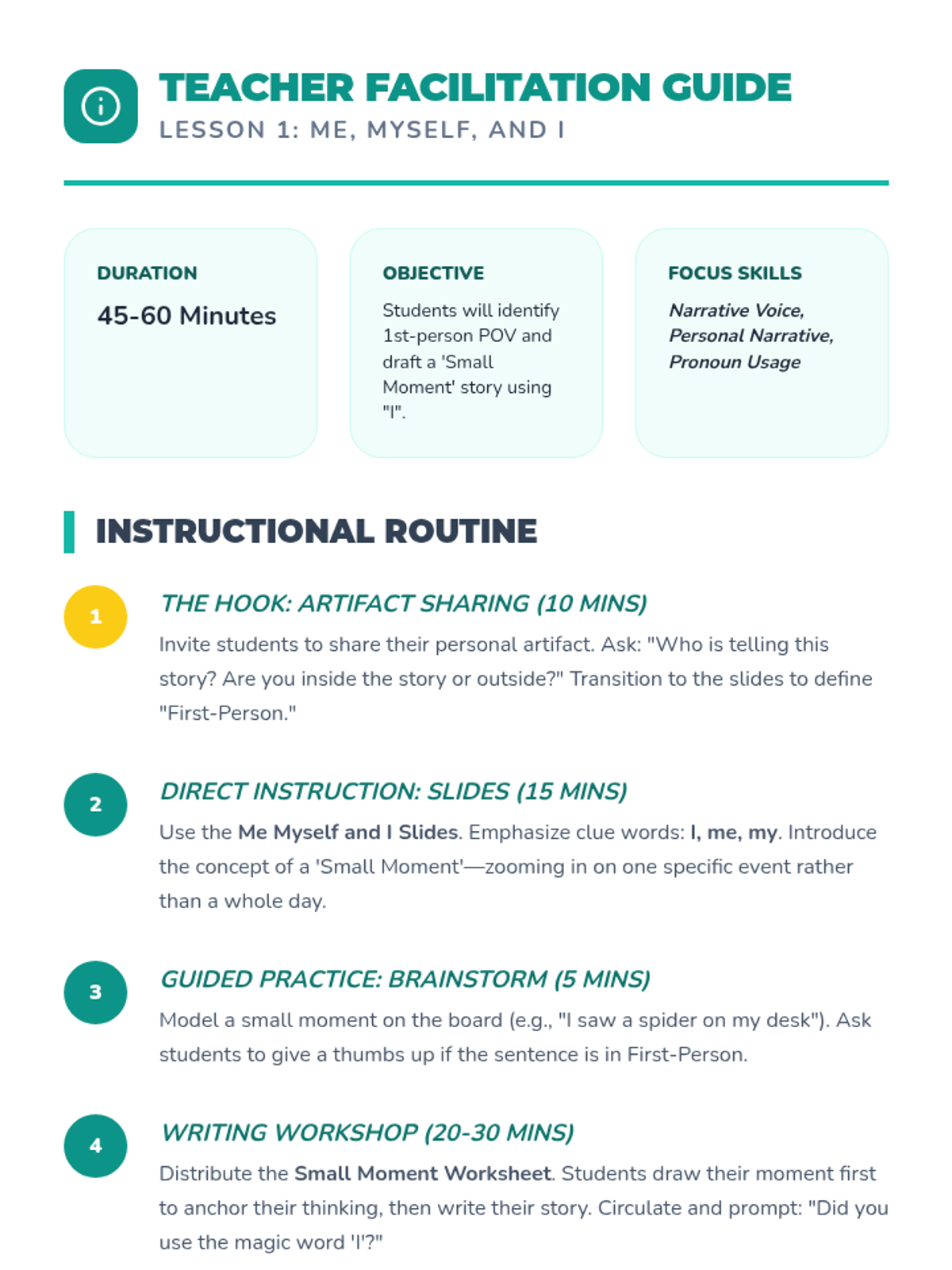
A project-based 1st-grade sequence connecting point of view with narrative writing. Students master first and third-person perspectives by drafting personal stories and observational reports, culminating in a class anthology and showcase.
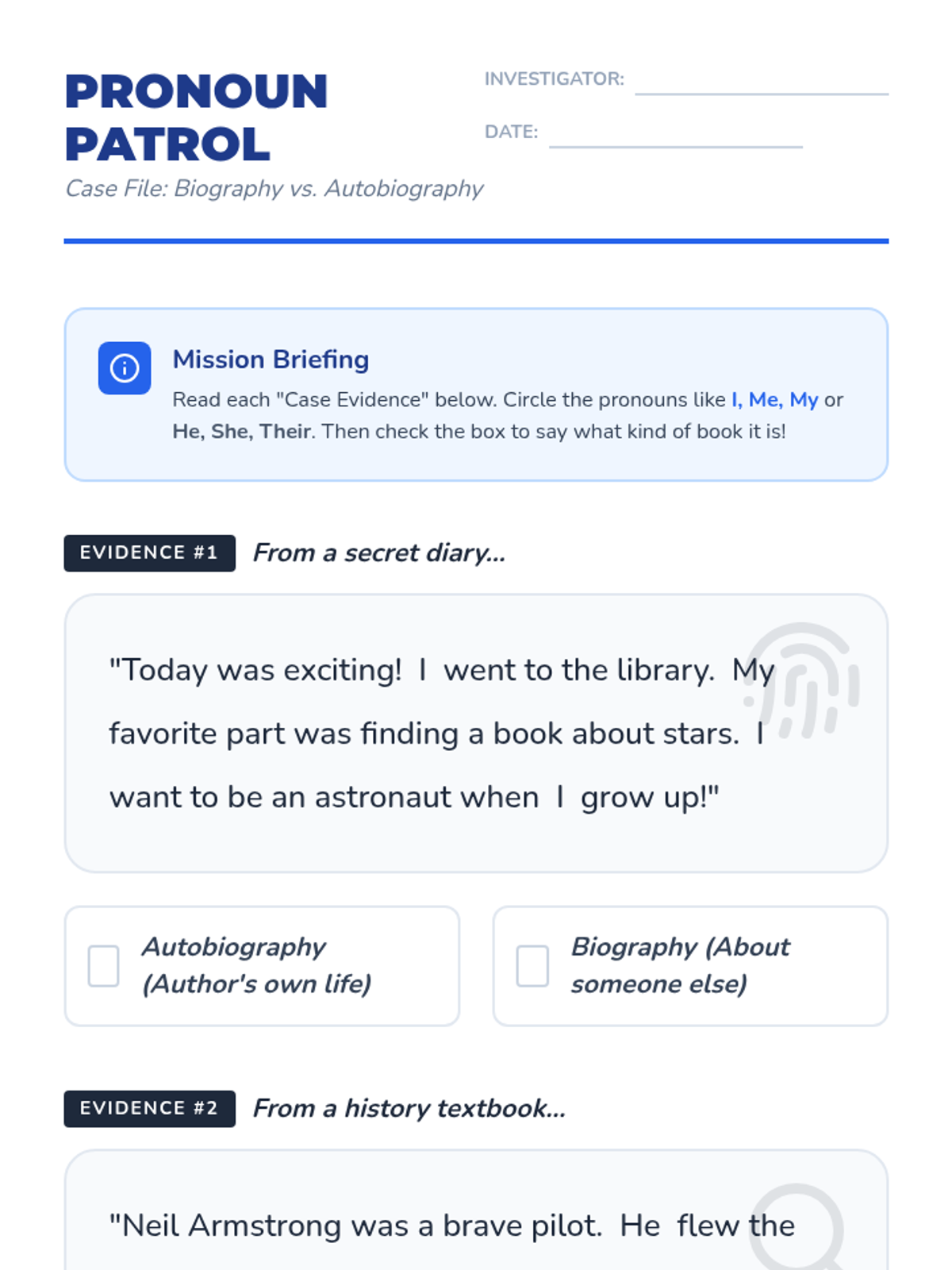
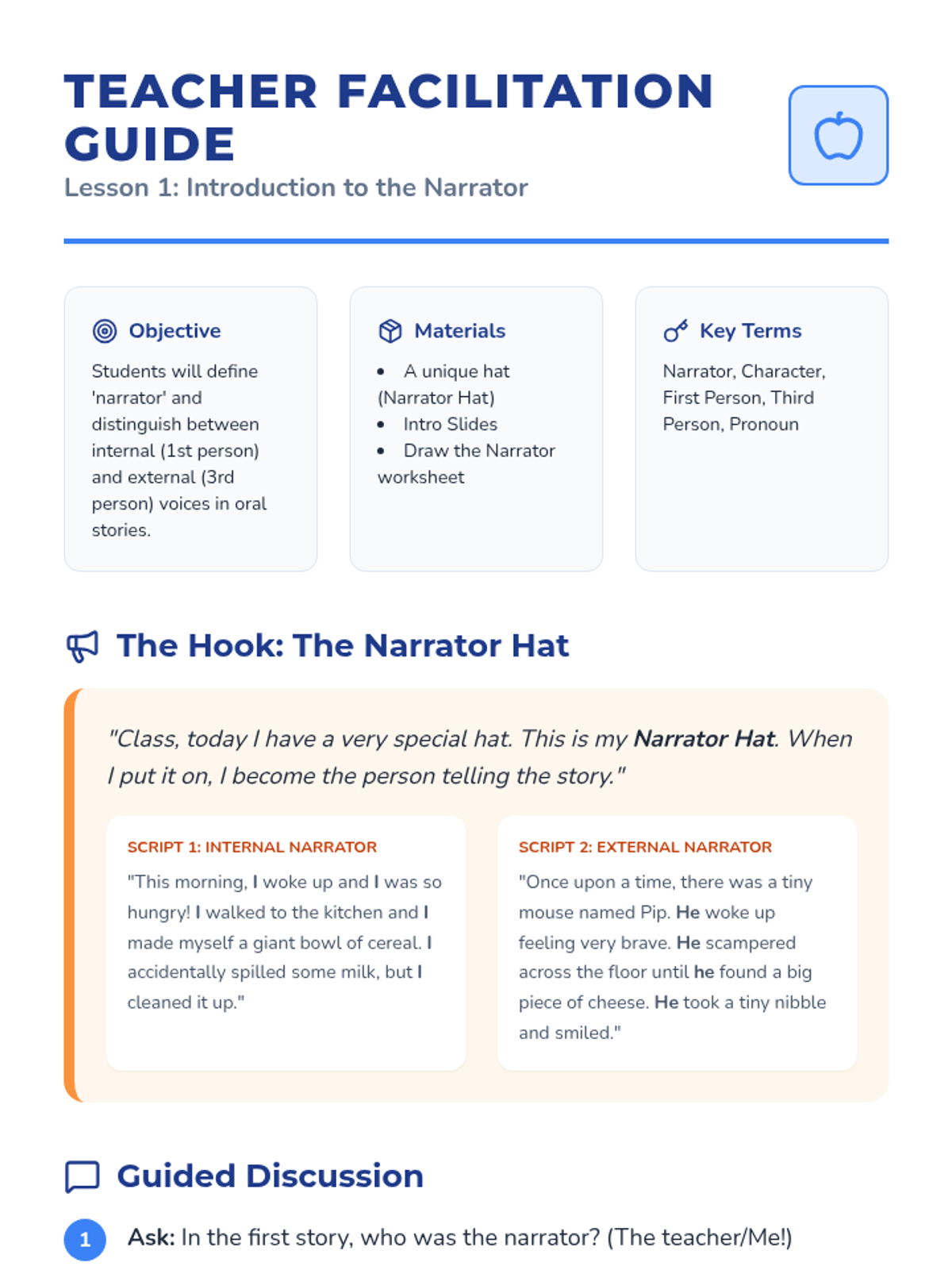
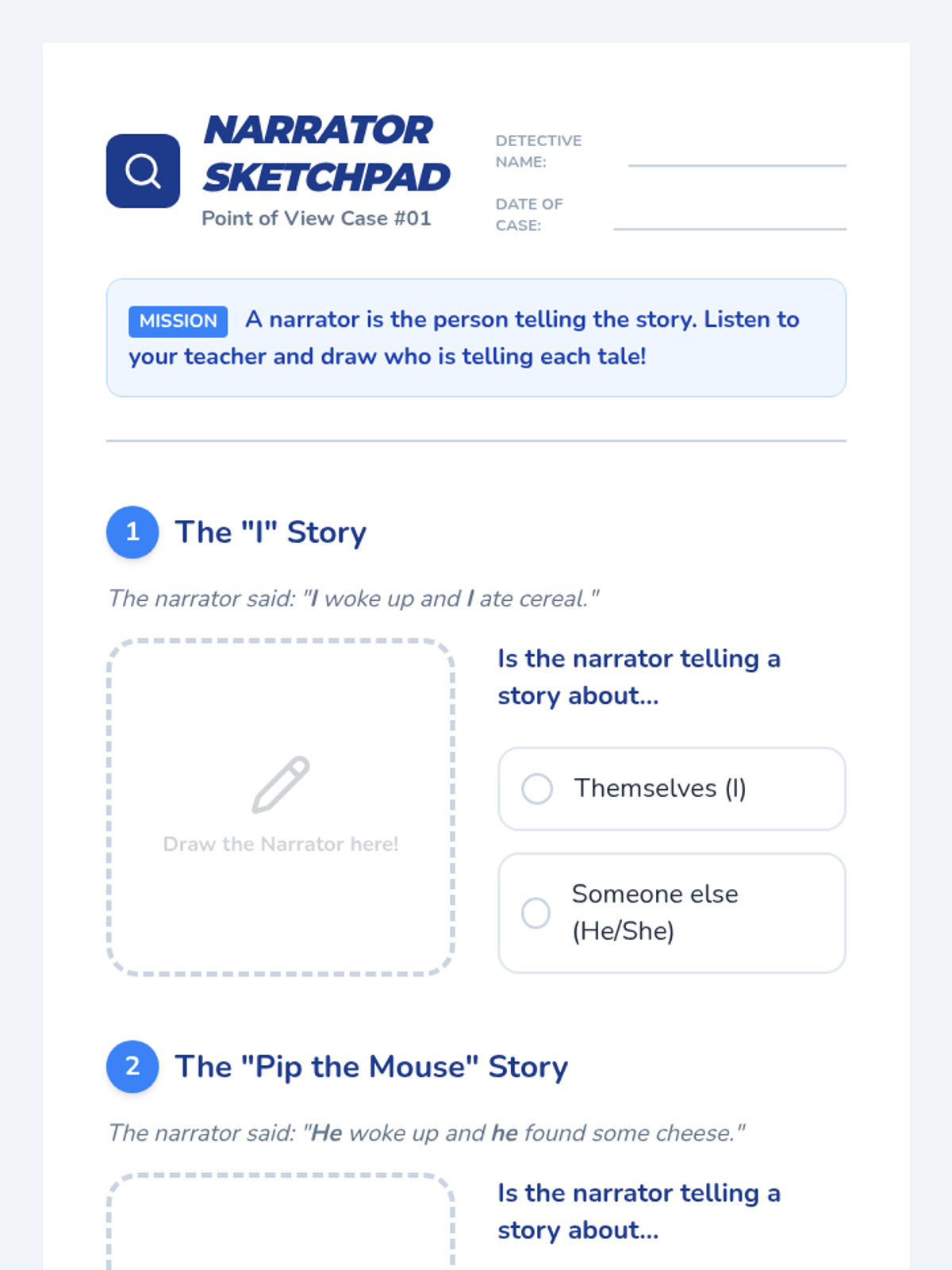
A first-grade sequence introducing the concept of narrators. Students learn to use pronoun clues (I, me, my vs. he, she, they) to determine who is telling a story through detective-themed activities and workshop-style lessons.
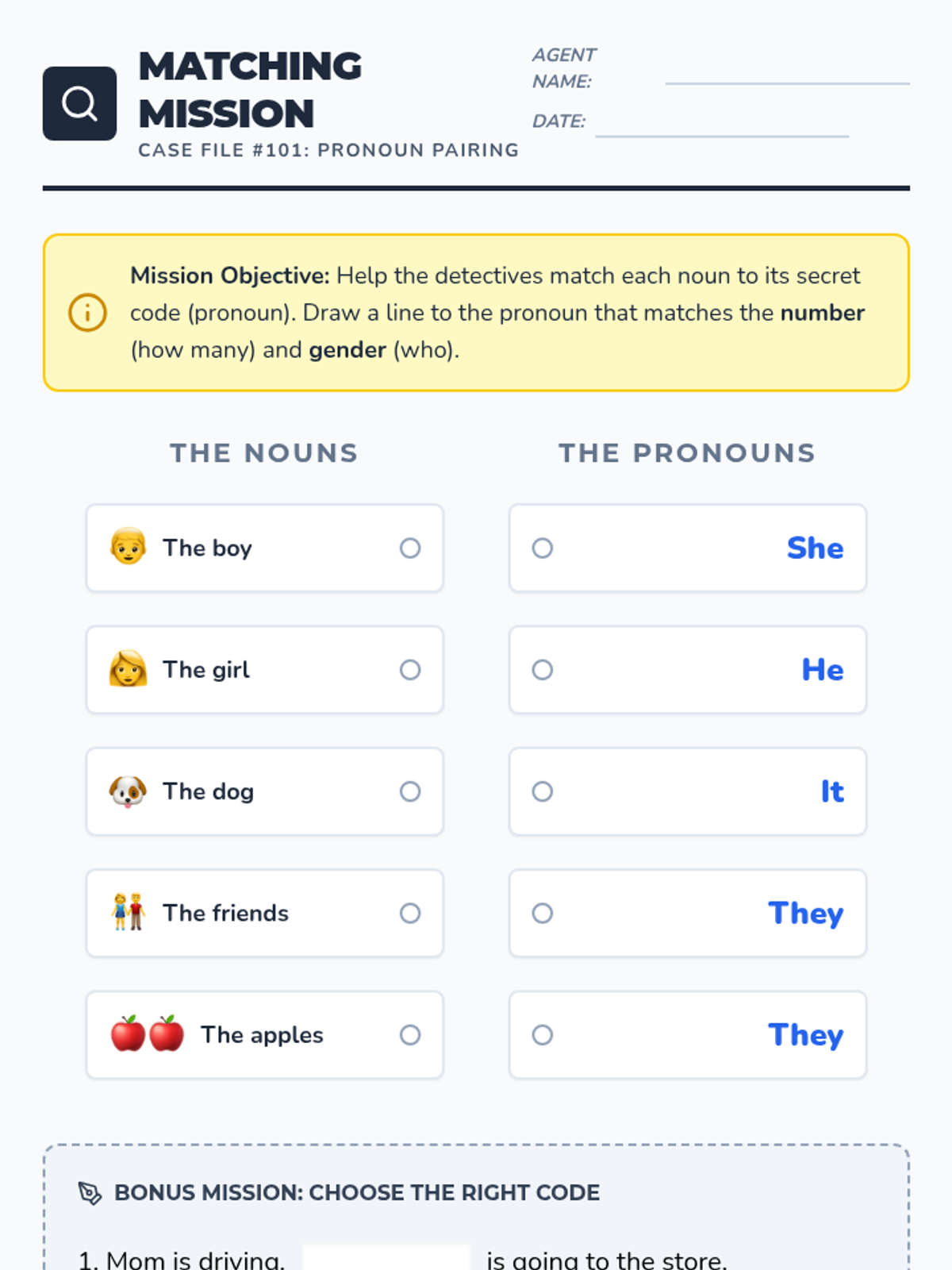
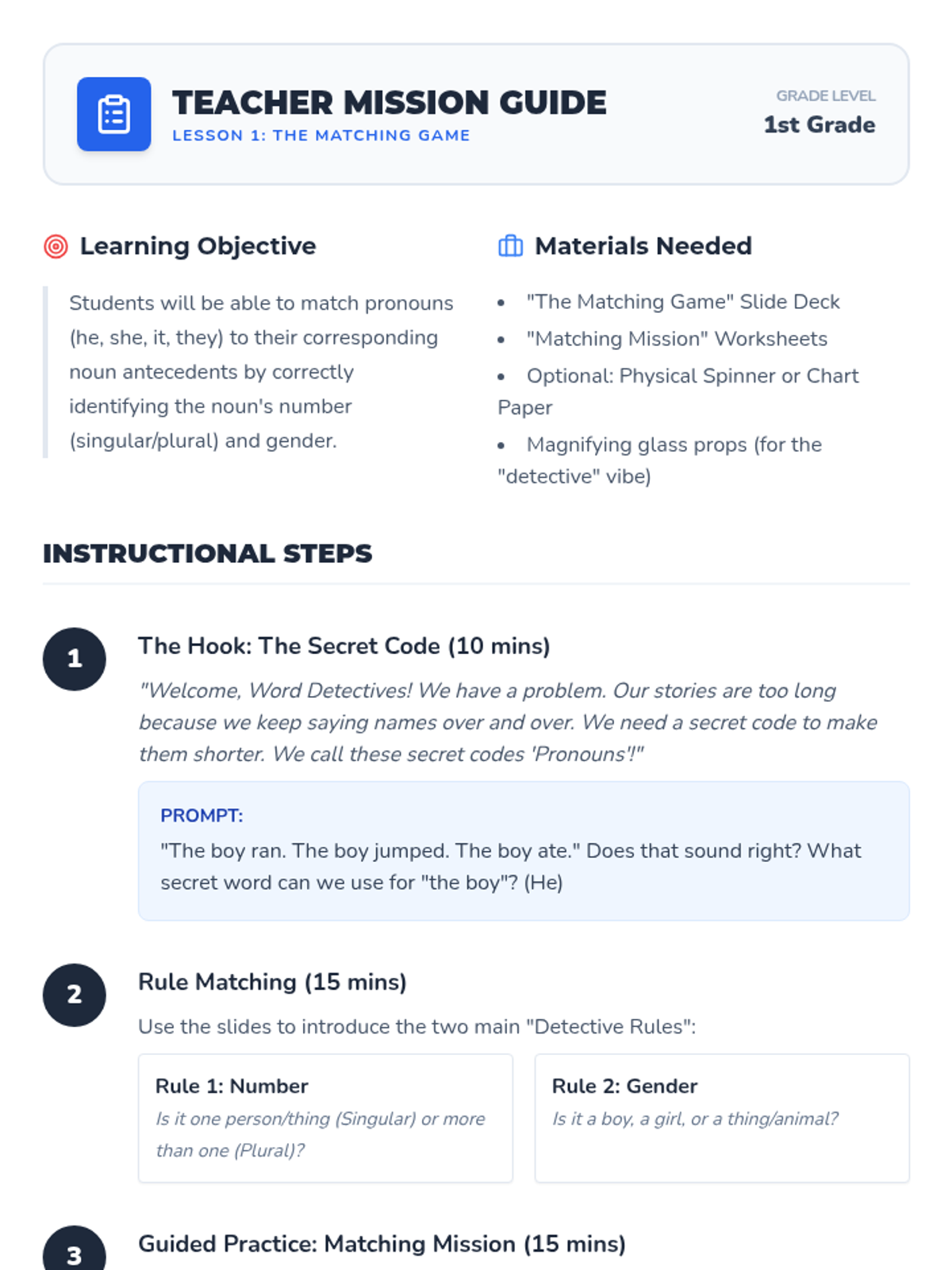
A 1st Grade ELA sequence where students become 'Word Detectives' to master pronoun-antecedent agreement. Students move from matching nouns to pronouns based on number and gender to identifying and fixing confusing pronoun errors in text.
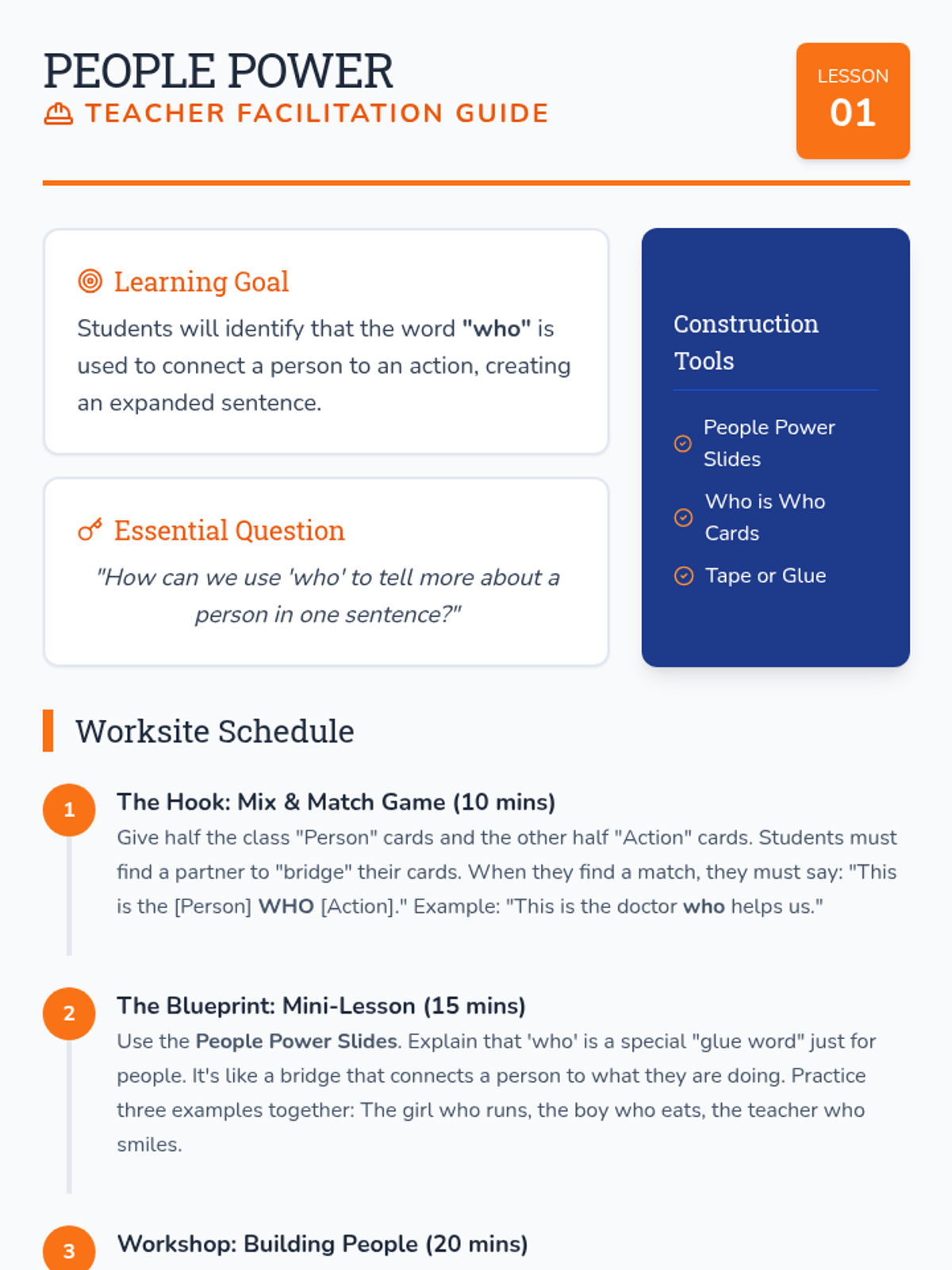
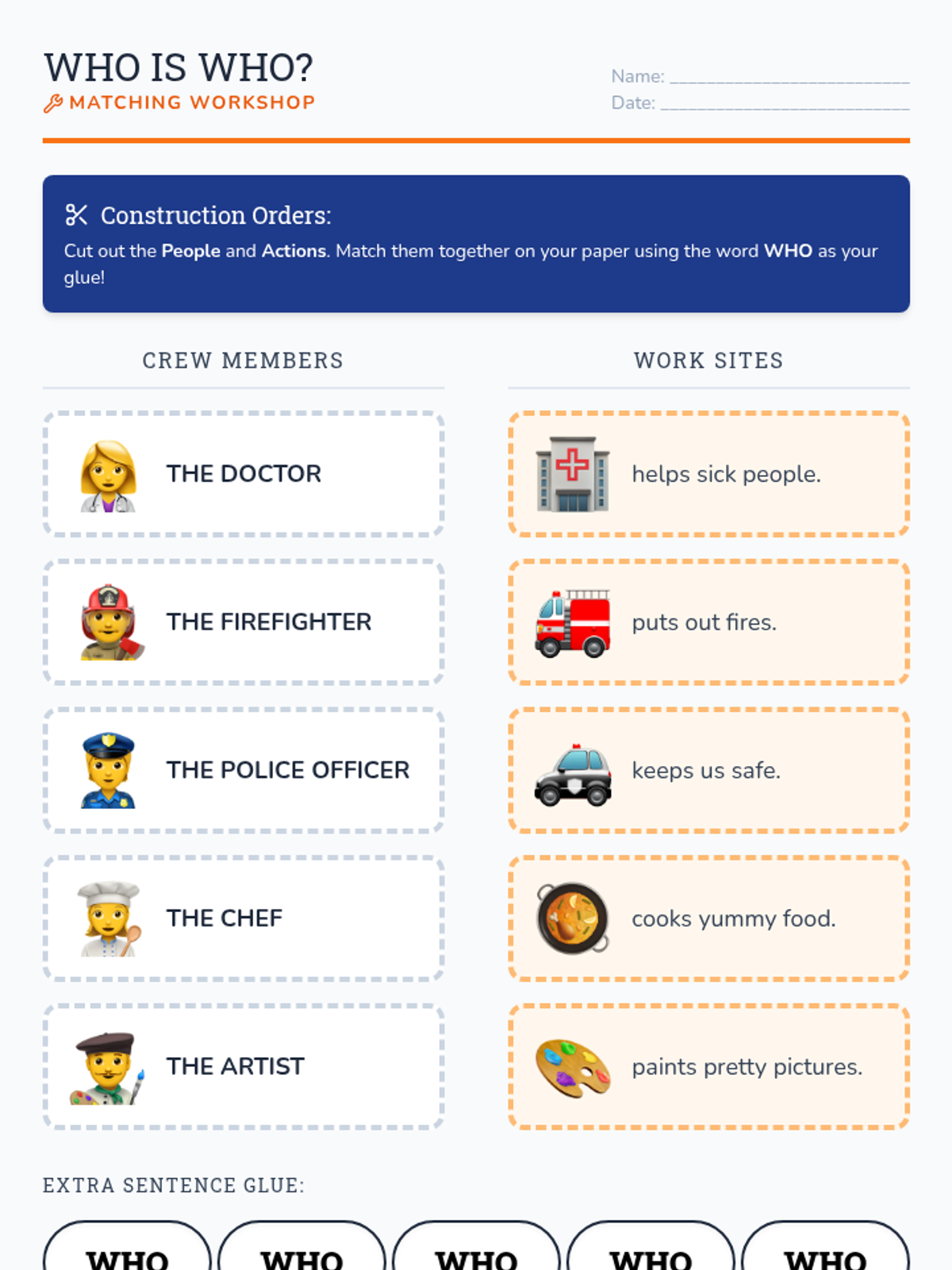
A 1st Grade ELA sequence focused on relative pronouns 'who' and 'that' as 'sentence glue'. Students progress from identifying which connector to use to building complex, descriptive sentences through hands-on construction-themed activities.
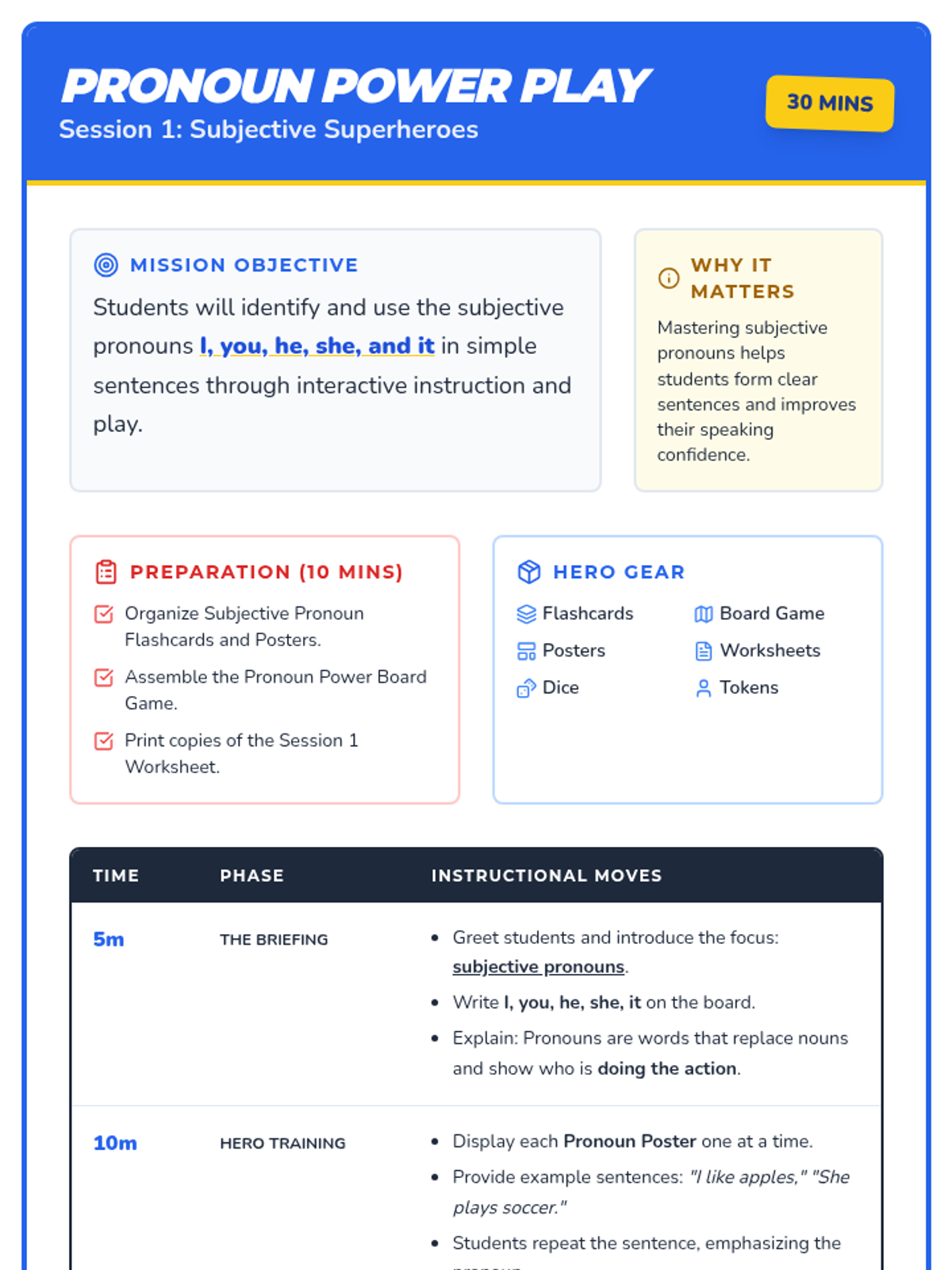
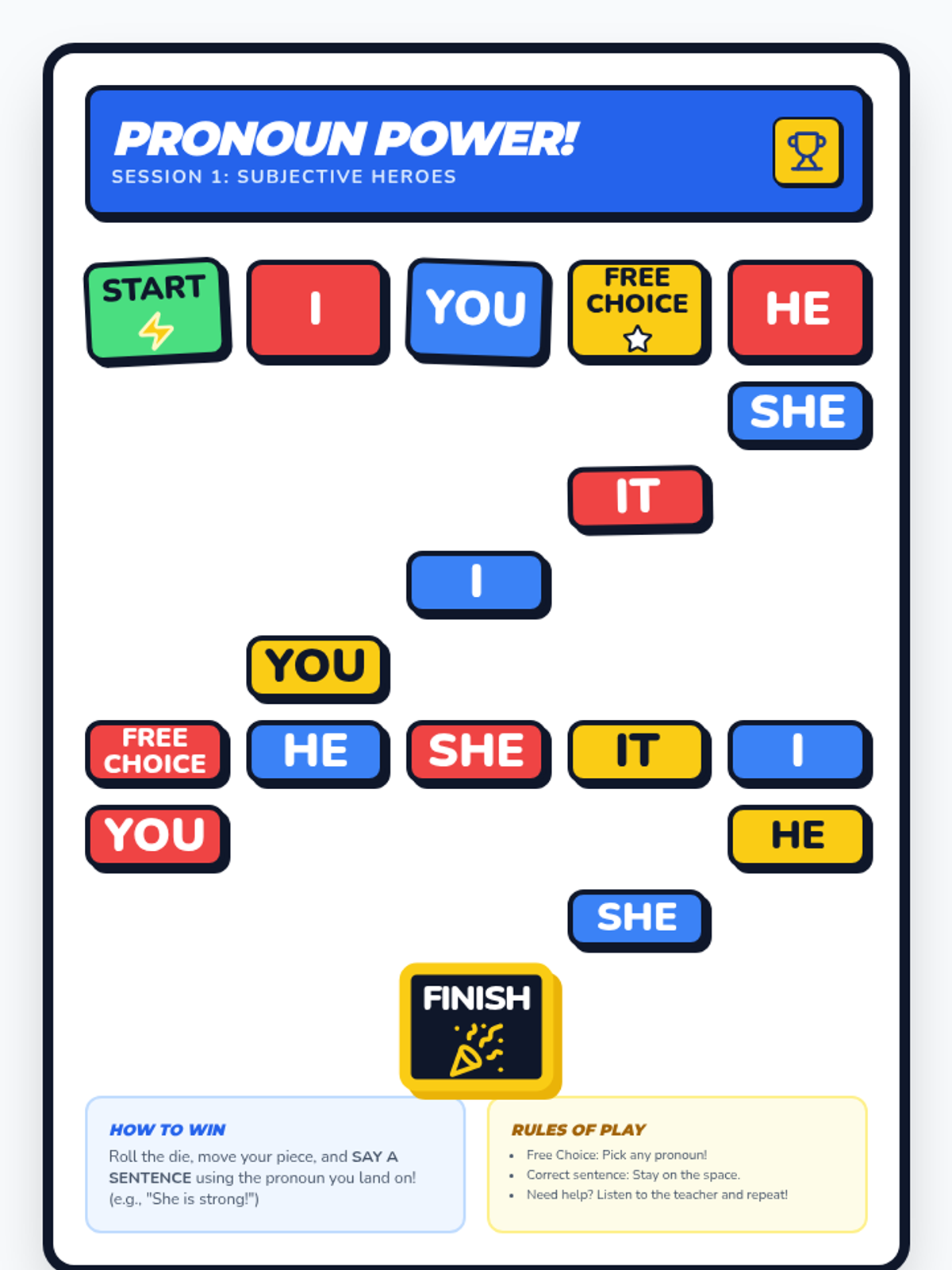
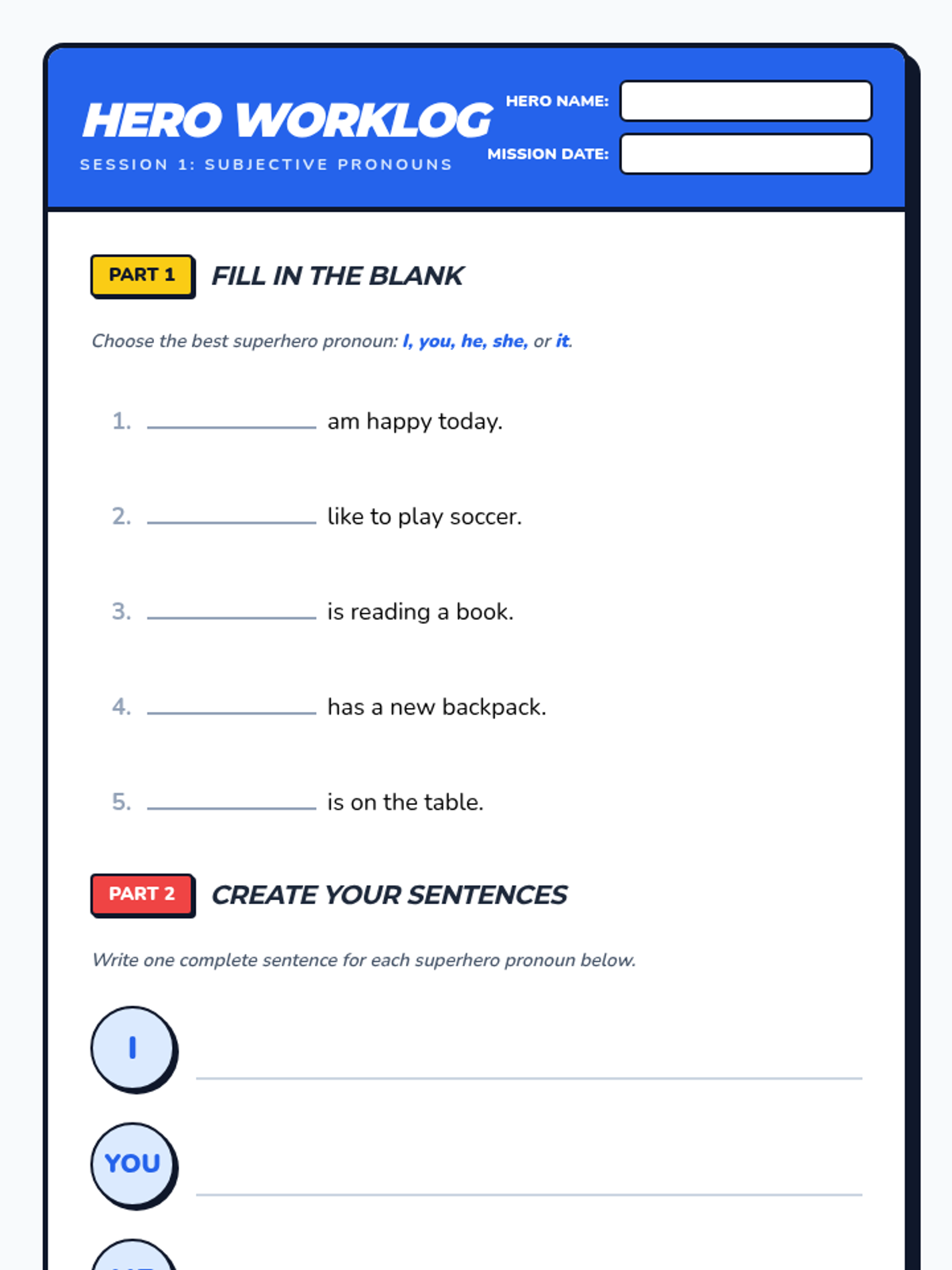
A 3-session unit designed for elementary speech-language students to master subjective, objective, and possessive pronouns through superhero-themed interactive games and activities.
Students explore how contractions affect the 'voice' of a sentence, making it sound more natural and conversational. This 5-lesson sequence guides 1st graders from identifying stiff 'robot' speech to editing and publishing their own stories with smooth sentence flow.
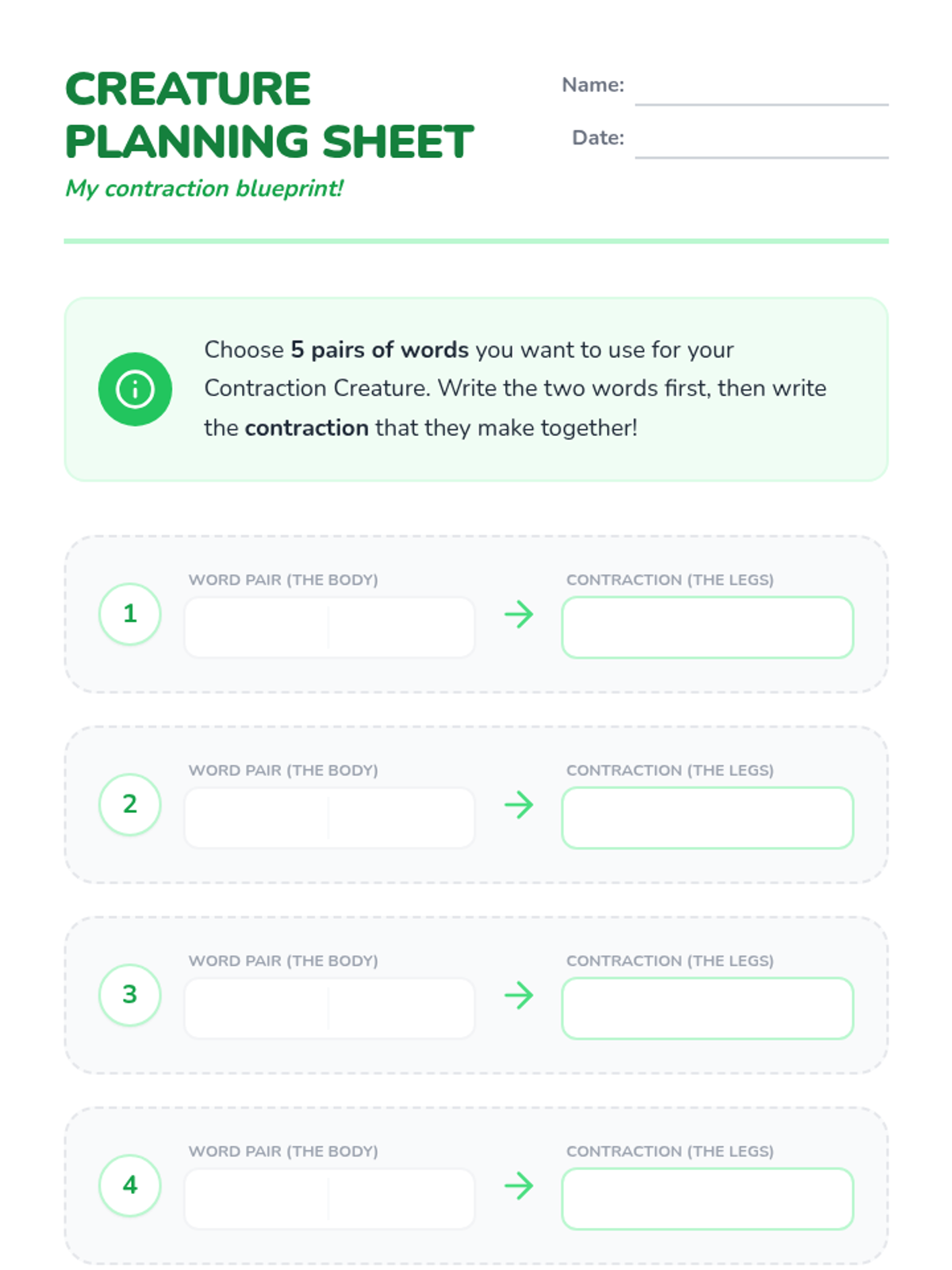
A project-based sequence where 1st-grade students build 'Contraction Creatures' to master how two words combine into one. Students plan, differentiate from possessives, construct, and present their physical word models.
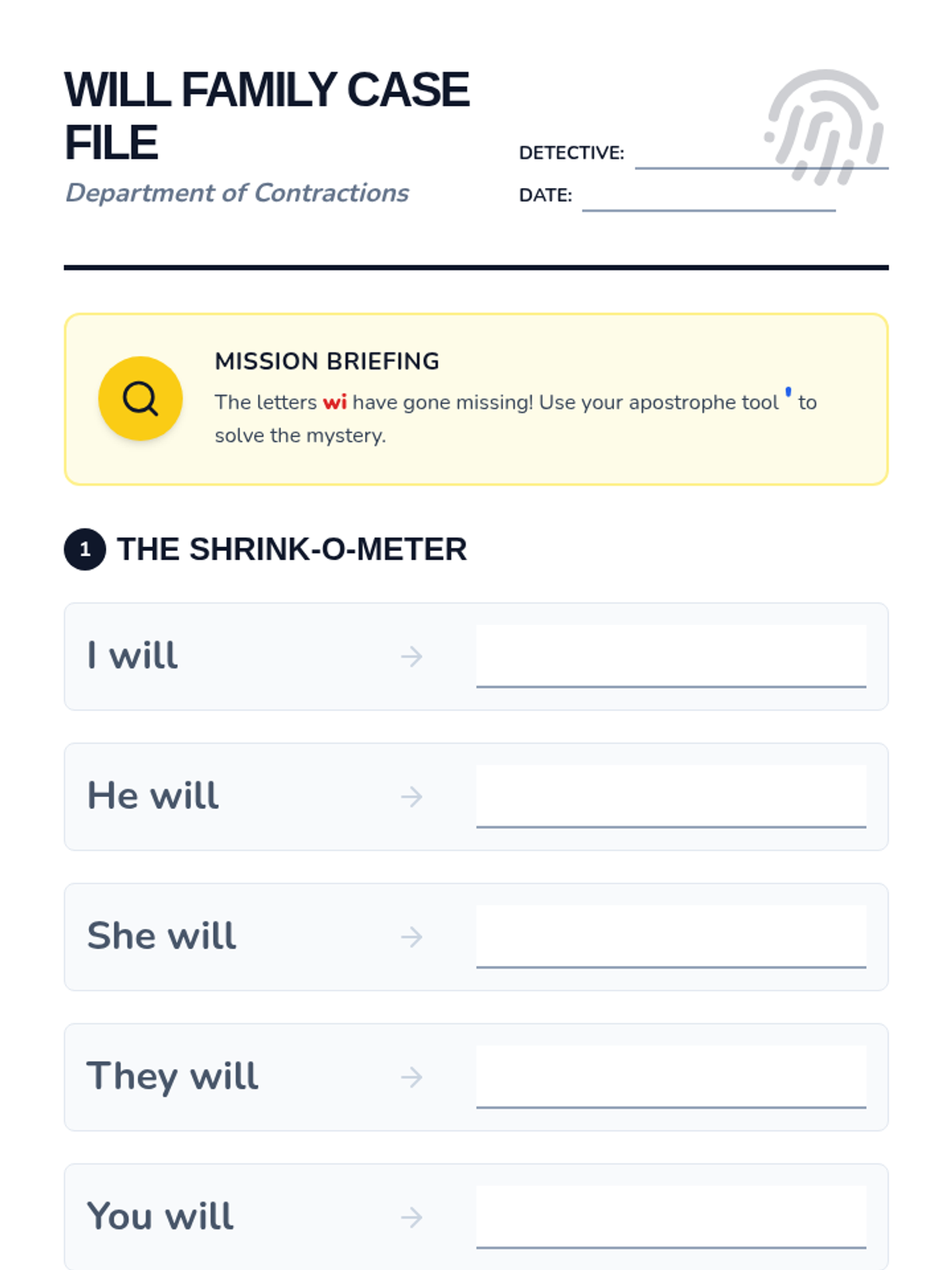
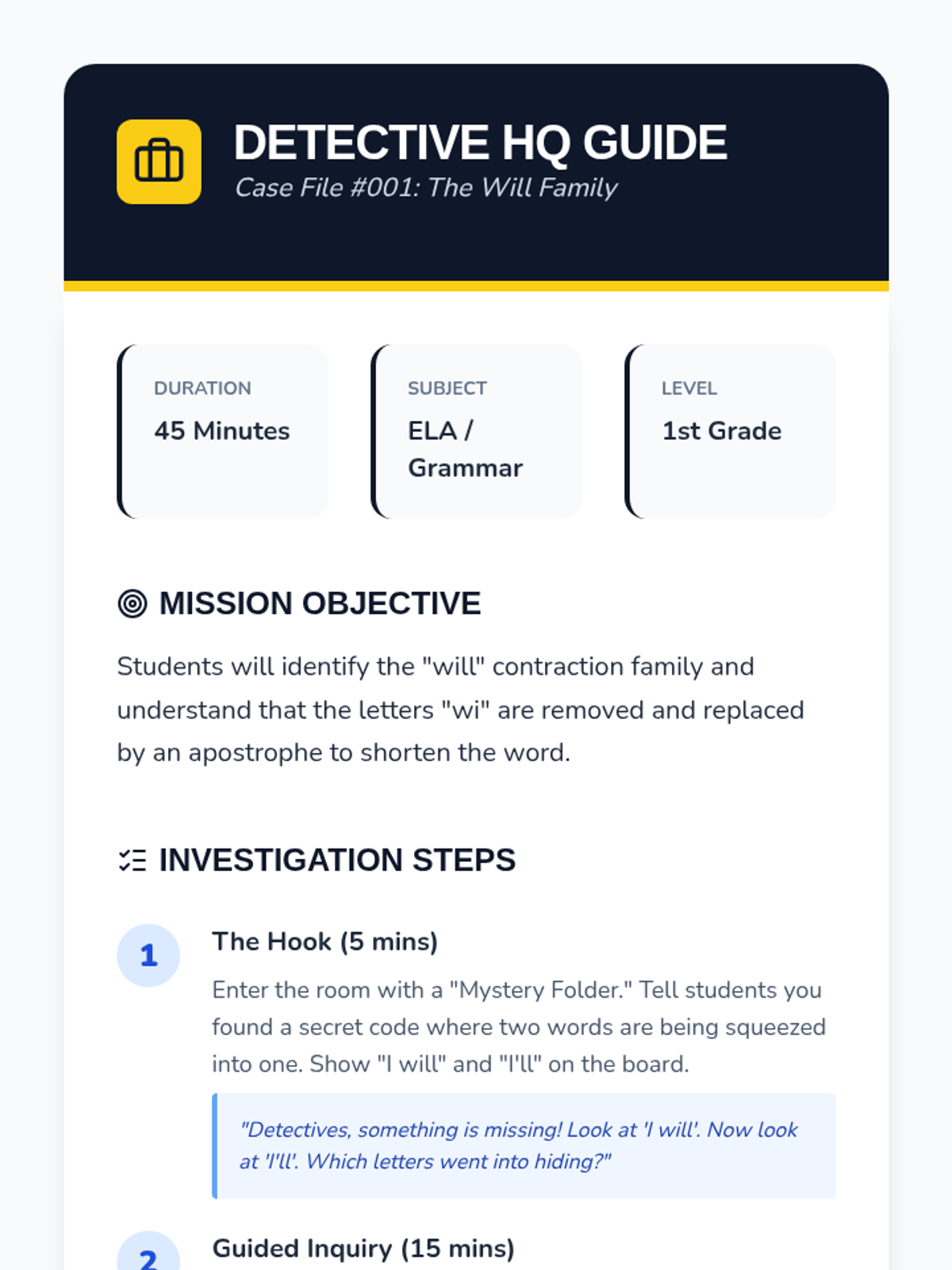
A 1st Grade sequence focused on identifying and categorizing contractions into word families like 'will', 'are', and 'not'. Students act as detectives to discover patterns and rules for shrinking words using apostrophes.
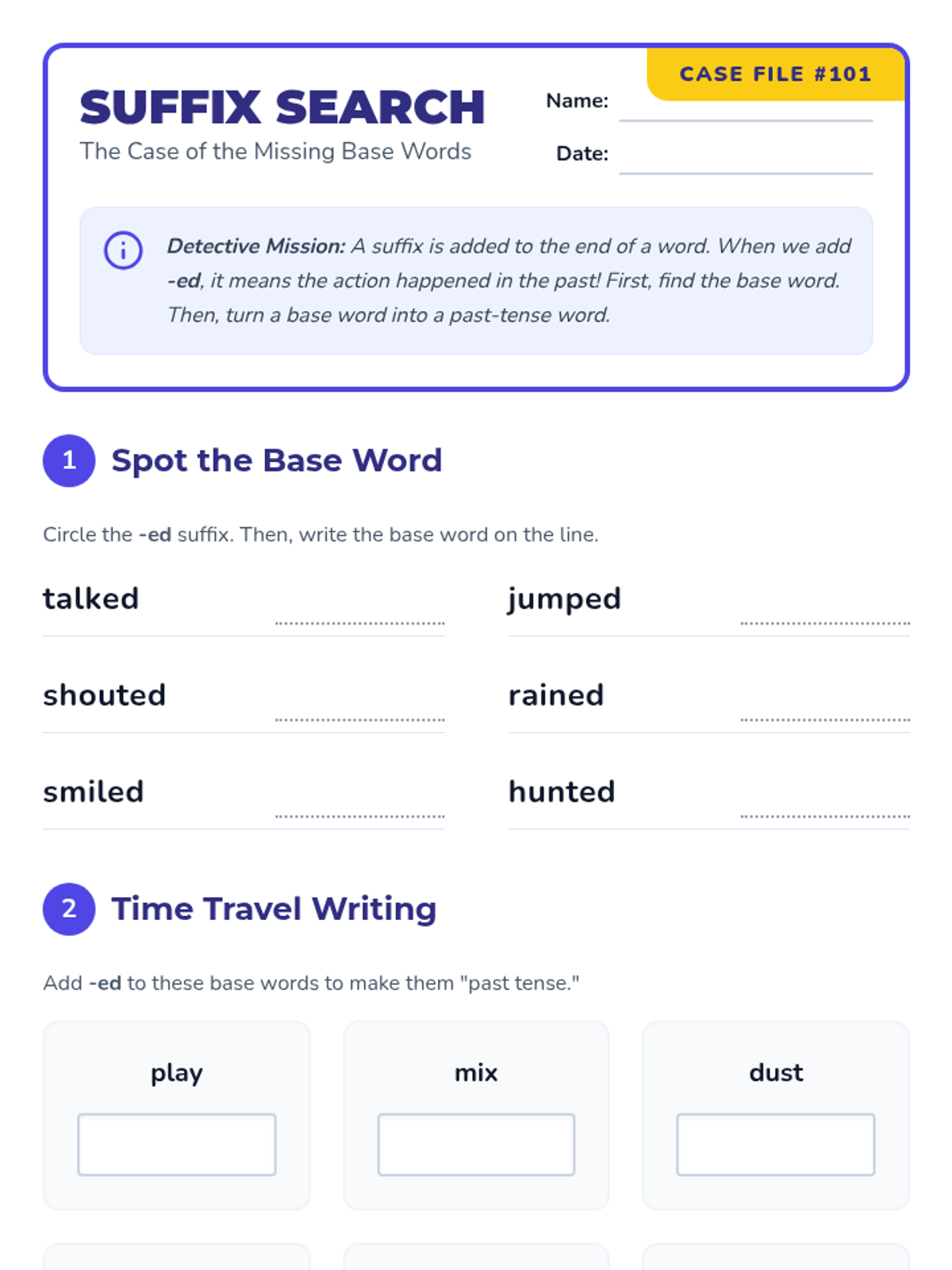
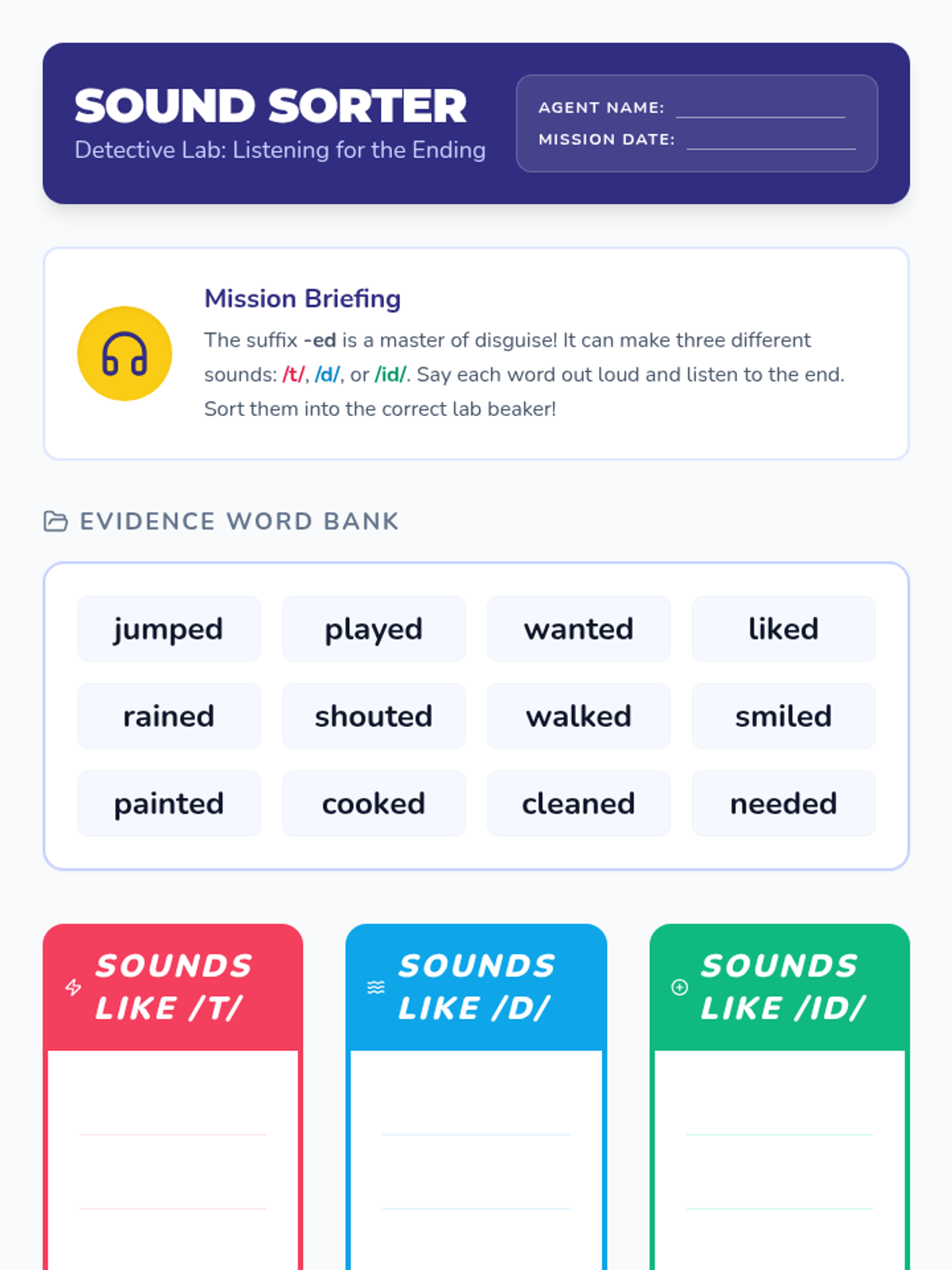
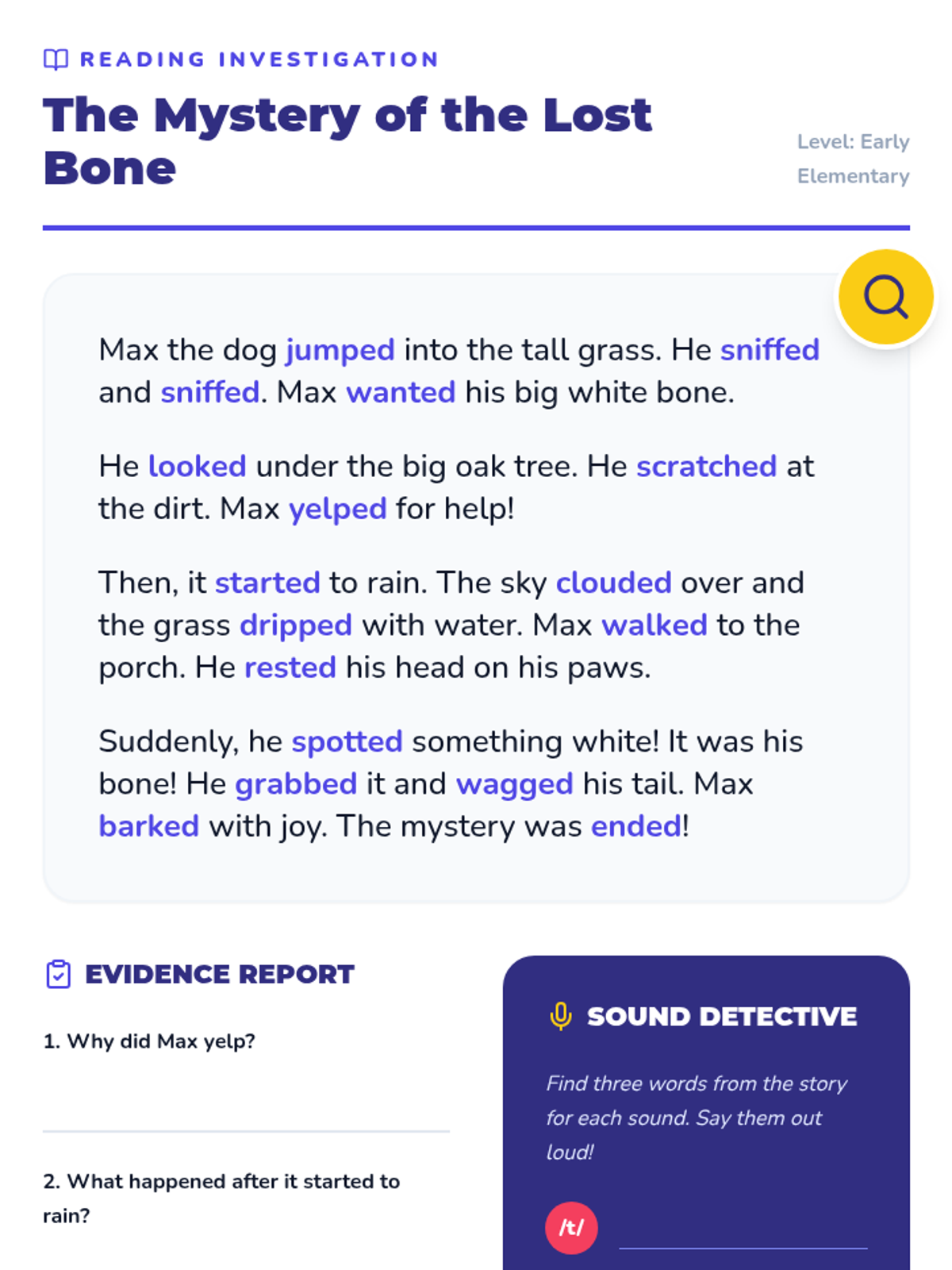
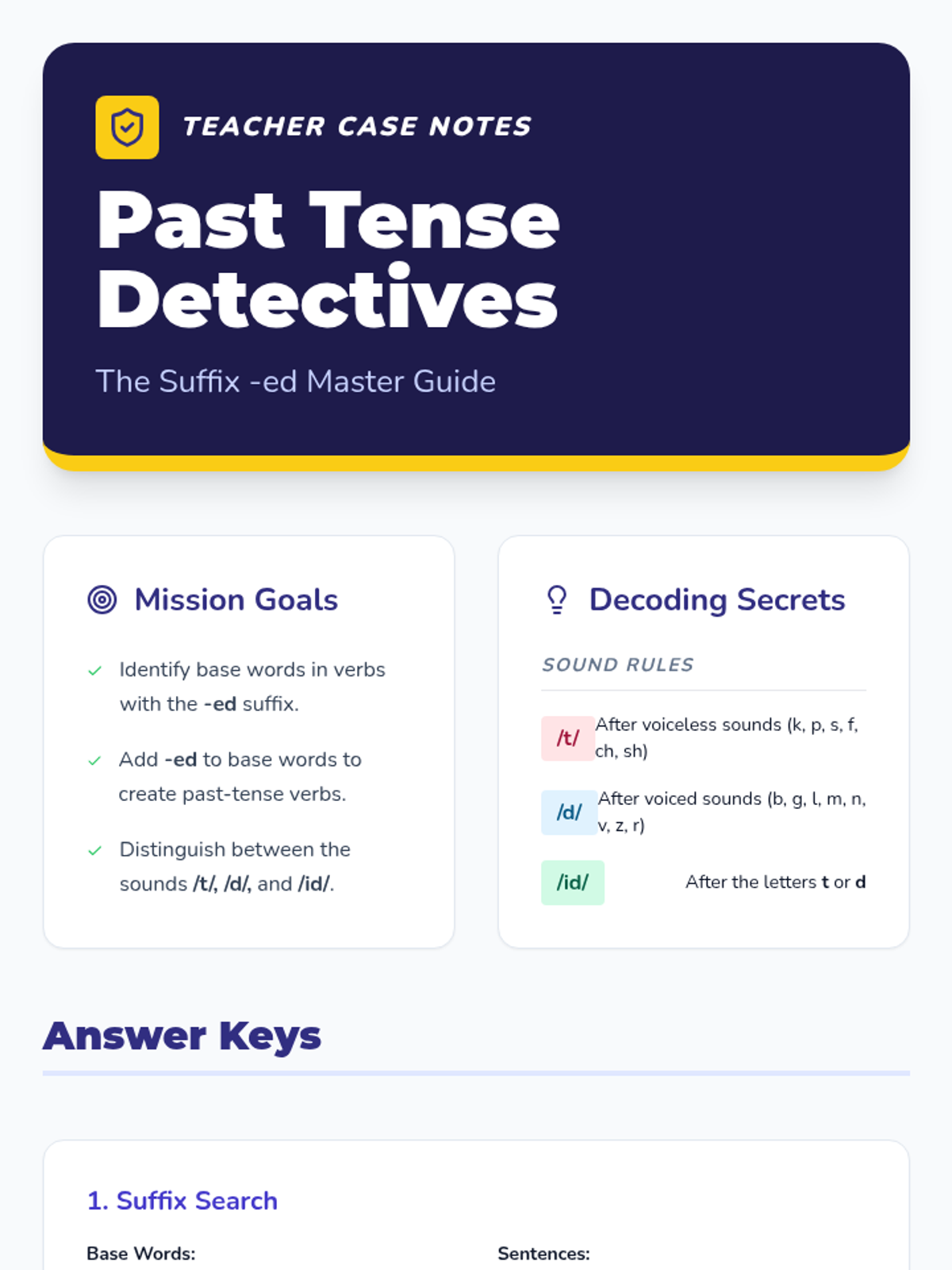
A foundational phonics sequence for 1st and 2nd graders to master the '-ed' suffix, focusing on identifying base words, decoding the three distinct sounds of '-ed', and encoding past tense verbs in sentences.
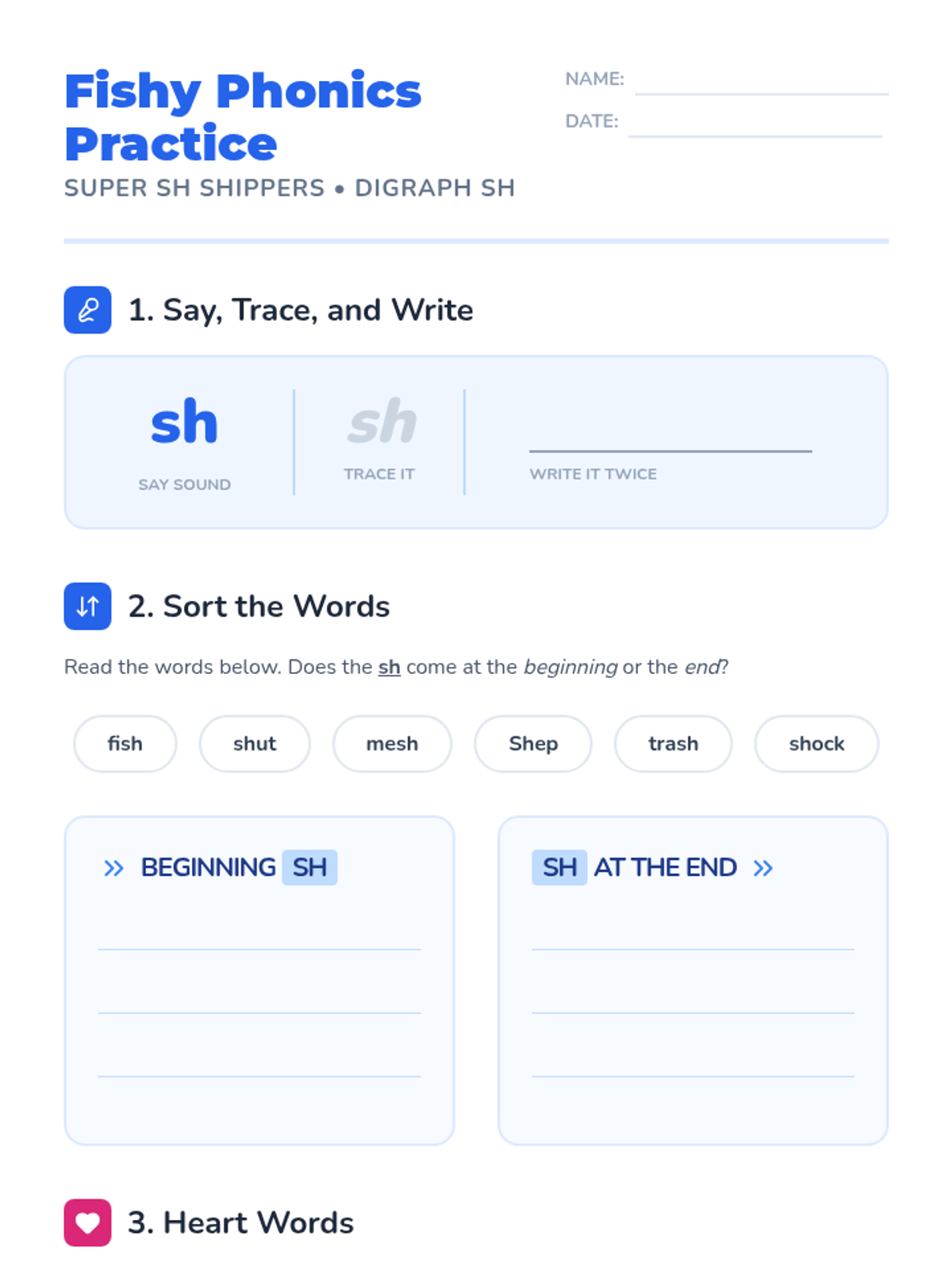
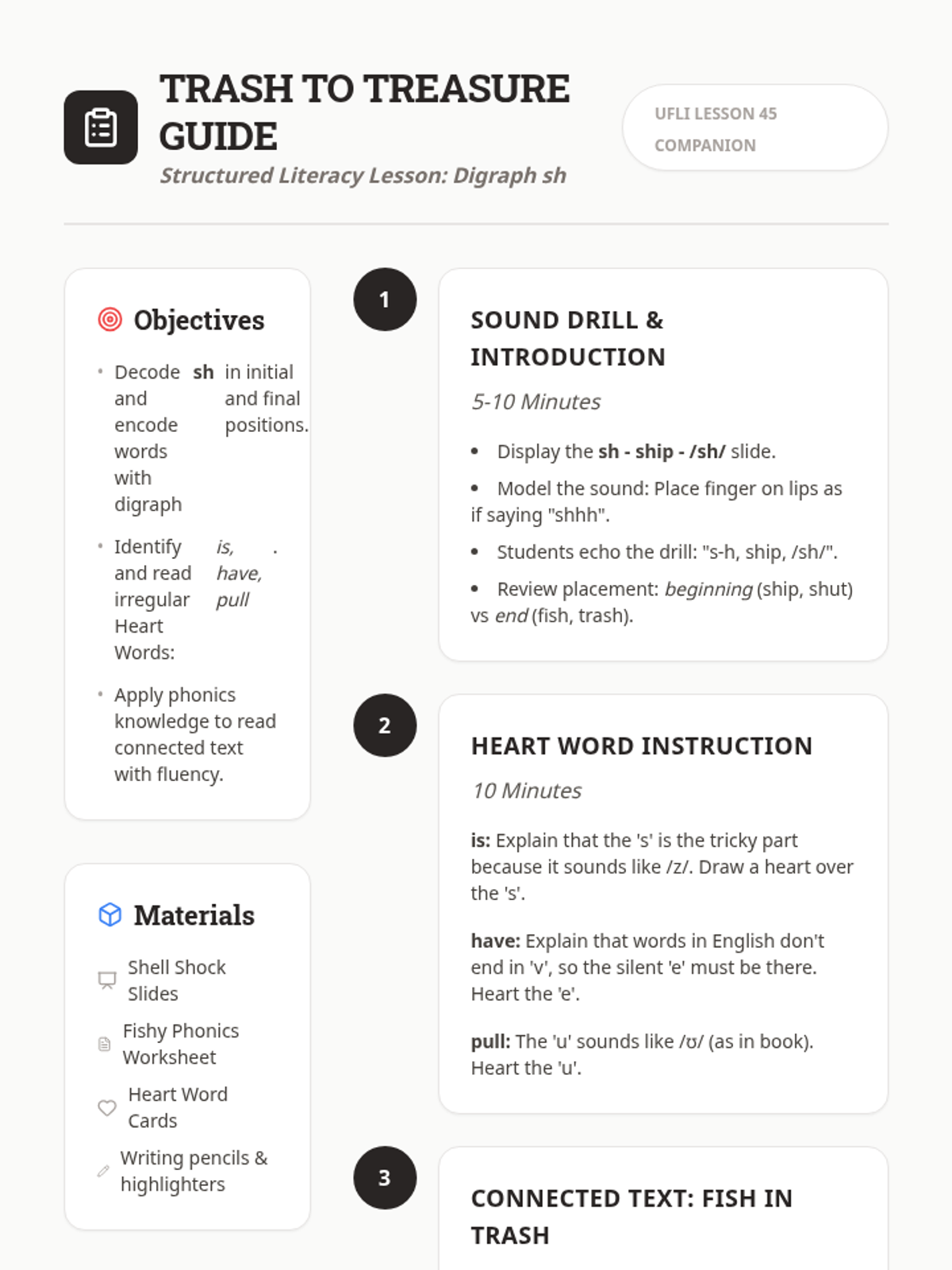
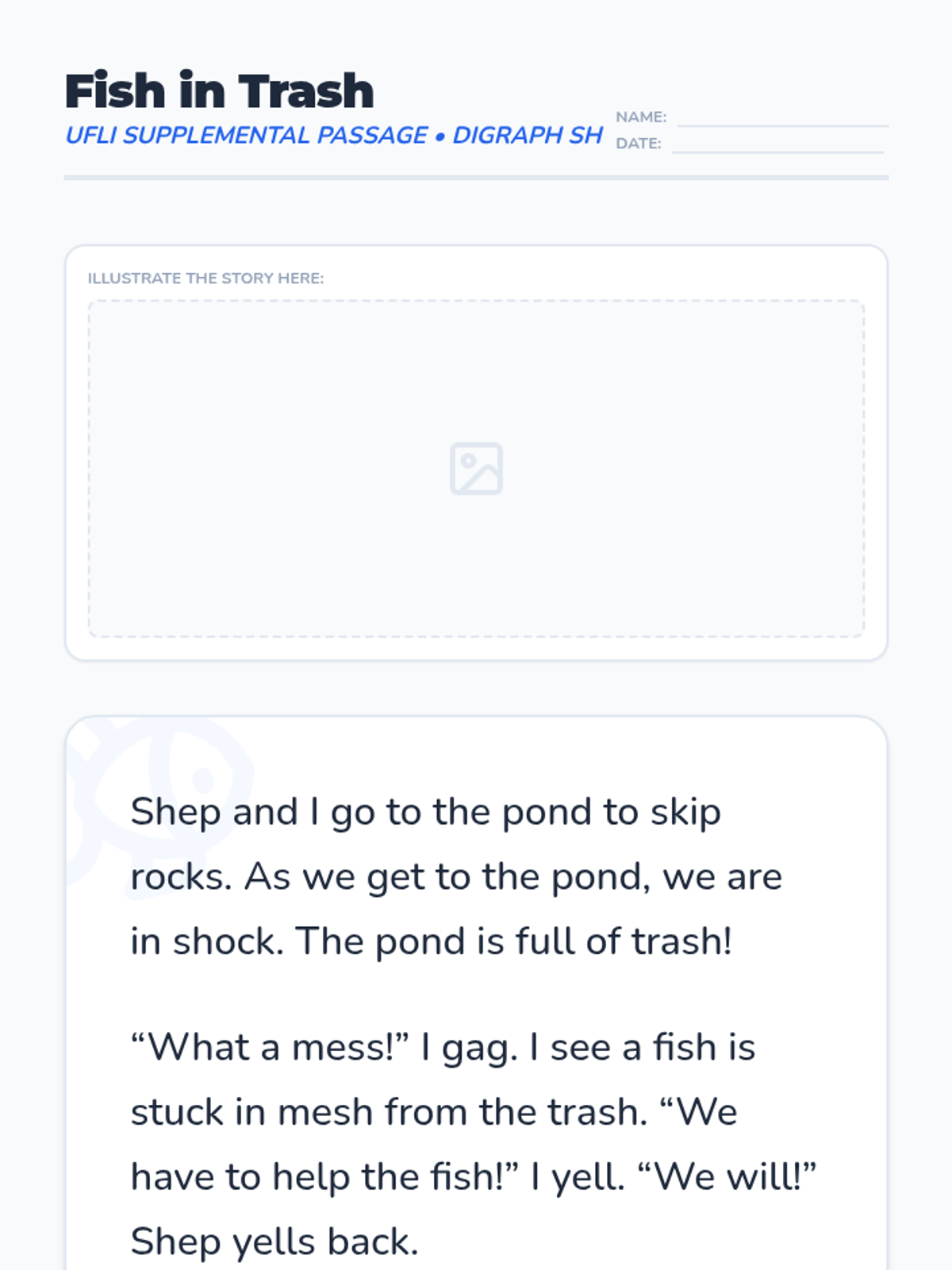
A series of structured literacy lessons focusing on mastering common digraphs (sh, th, ch) through explicit instruction, heart word methods, and decodable text practice.
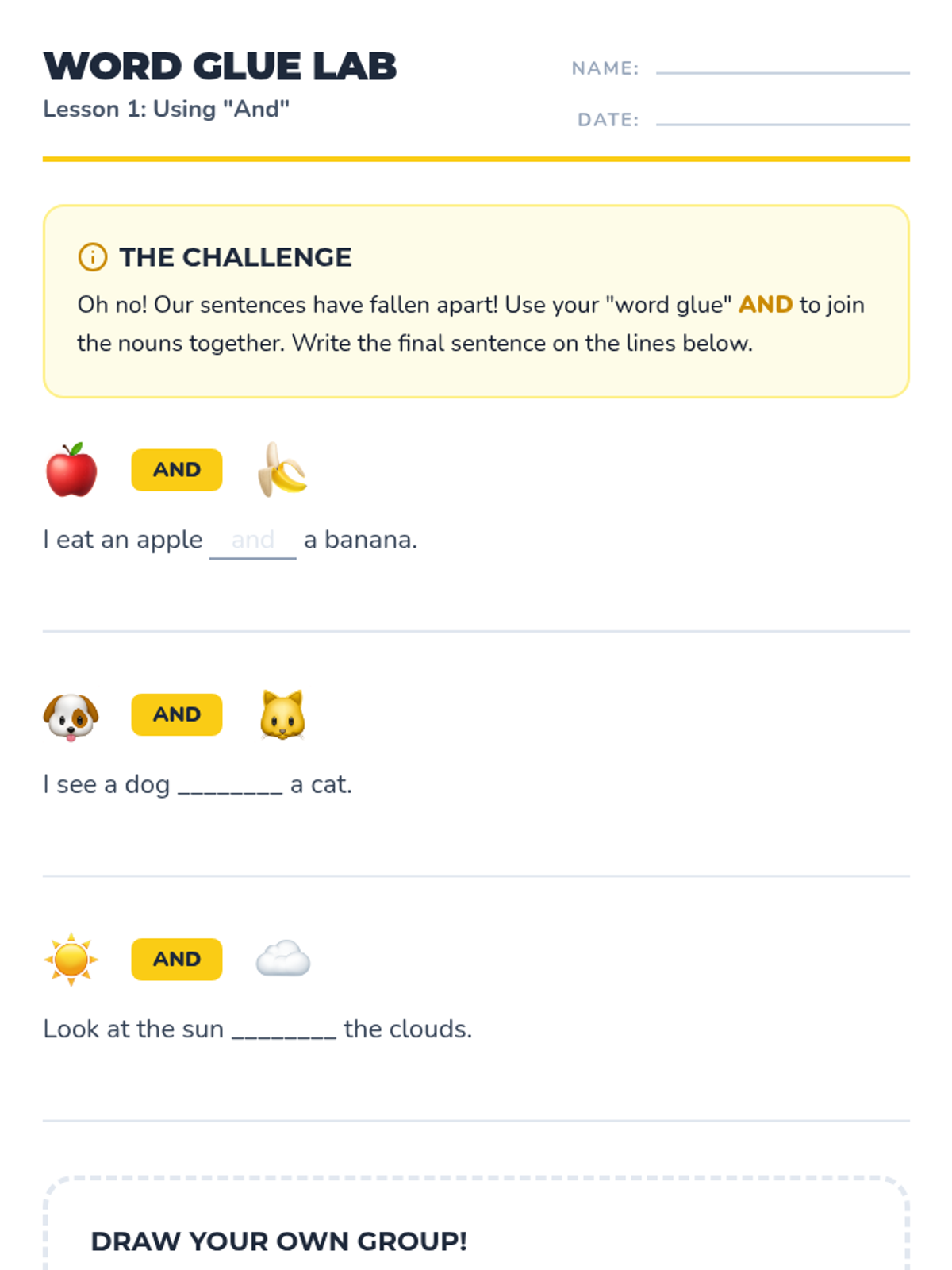
A 1st-grade ELA sequence exploring coordinating conjunctions 'and' and 'or' through the metaphor of 'word glue'. Students learn to join nouns, verbs, and ideas to build longer, more interesting sentences.
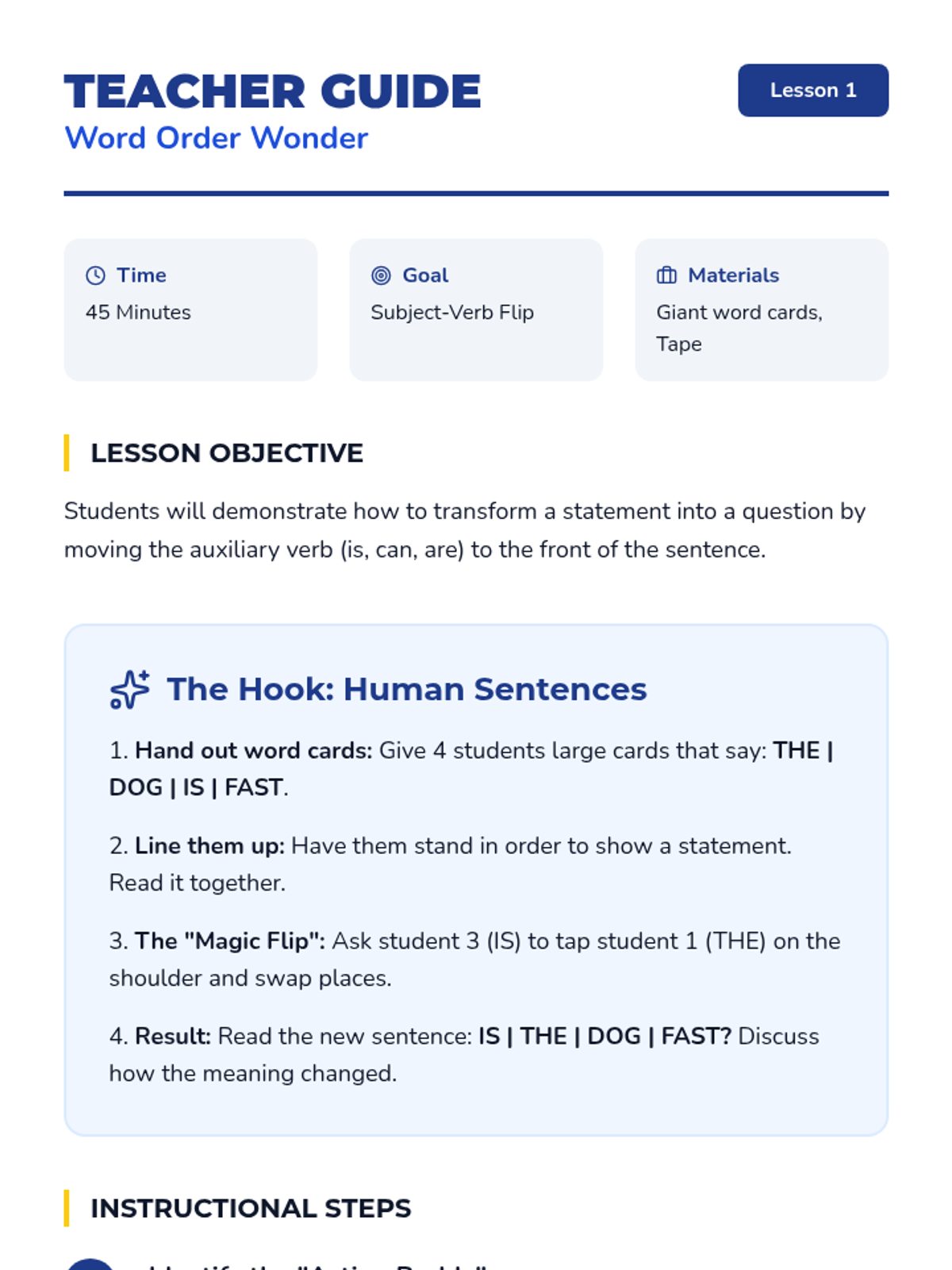
This sequence guides 1st-grade students through the transition from oral questioning to written expression. It covers syntax (the 'subject-verb flip'), punctuation (the question mark), sentence structure (unscrambling), and creative writing using picture prompts, culminating in editing skills.
A comprehensive 1st-grade ELA sequence exploring how suffixes -ed and -ing change action words to show when they happen. Students use games, timelines, and narrative writing to master past and present continuous tenses.
This sequence systematically addresses how base words change when suffixes are added, a critical morphological skill for second graders. Students will explore rules for pluralization and past tense, specifically focusing on the 'doubling rule' and 'dropping the silent e'. By the end, students will demonstrate the ability to modify base words correctly before adding endings like -ed, -ing, -s, and -es.
A comprehensive first-grade spelling sequence focusing on high-frequency irregular 'sight words' and essential inflectional endings (-s, -es, -ing, -ed). Students use a 'Word Detective' theme to investigate spelling patterns and apply them in creative writing tasks.
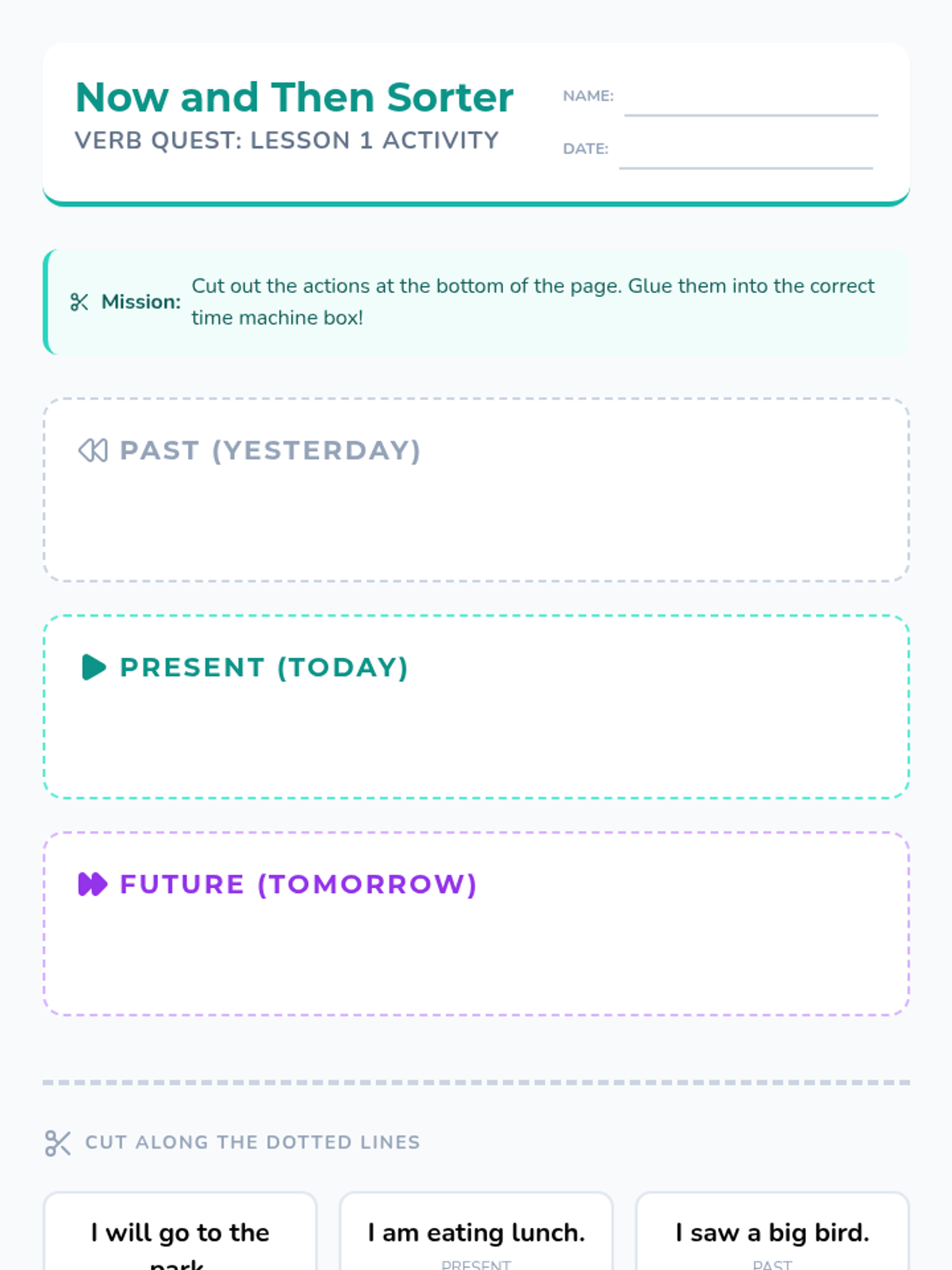
A comprehensive 1st-grade unit on verb tenses (past, present, and future). Students explore the concept of time through language, mastering the '-ed' suffix, the helping verb 'will', and common irregular past-tense verbs through interactive games and storytelling.
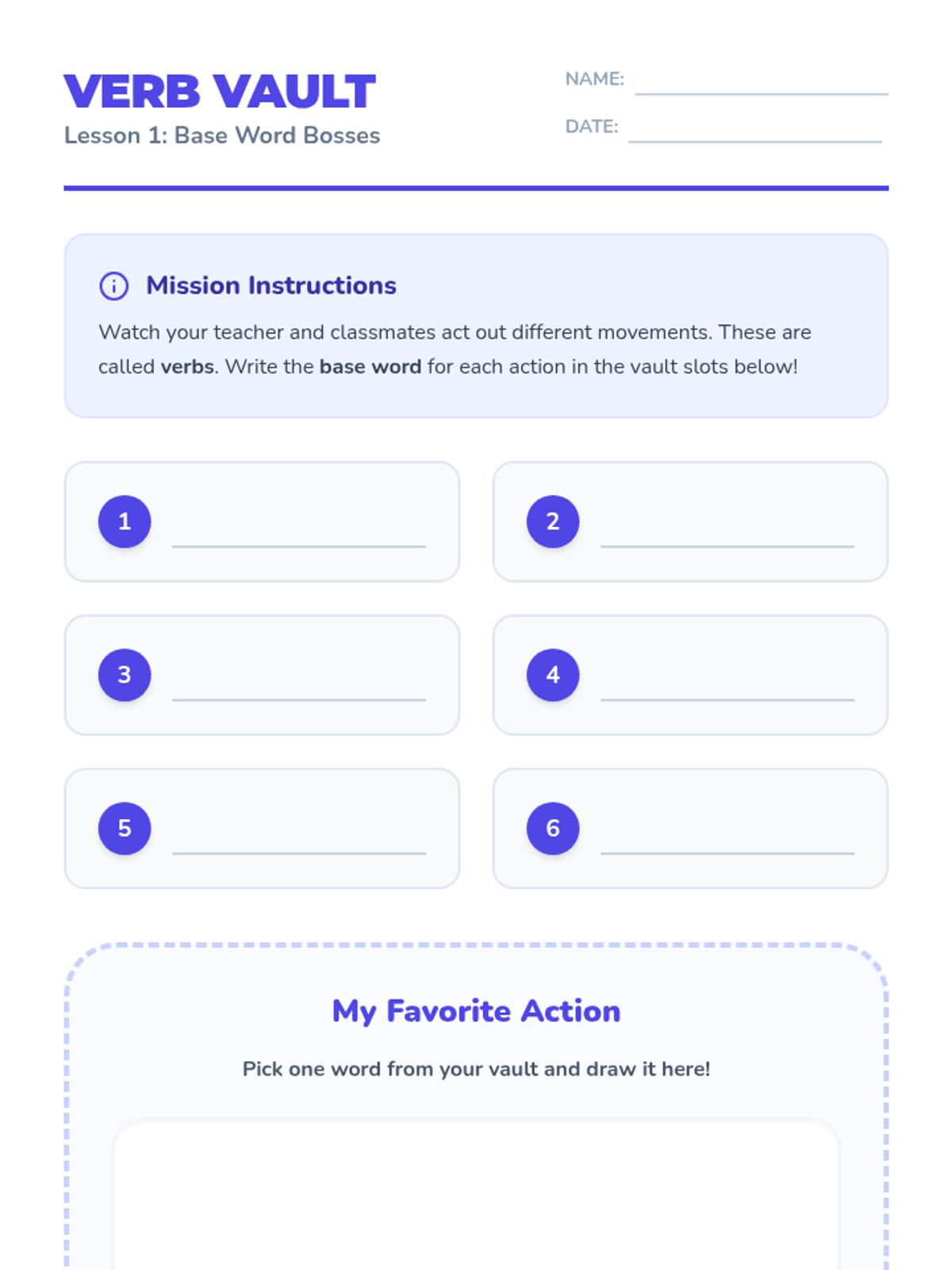
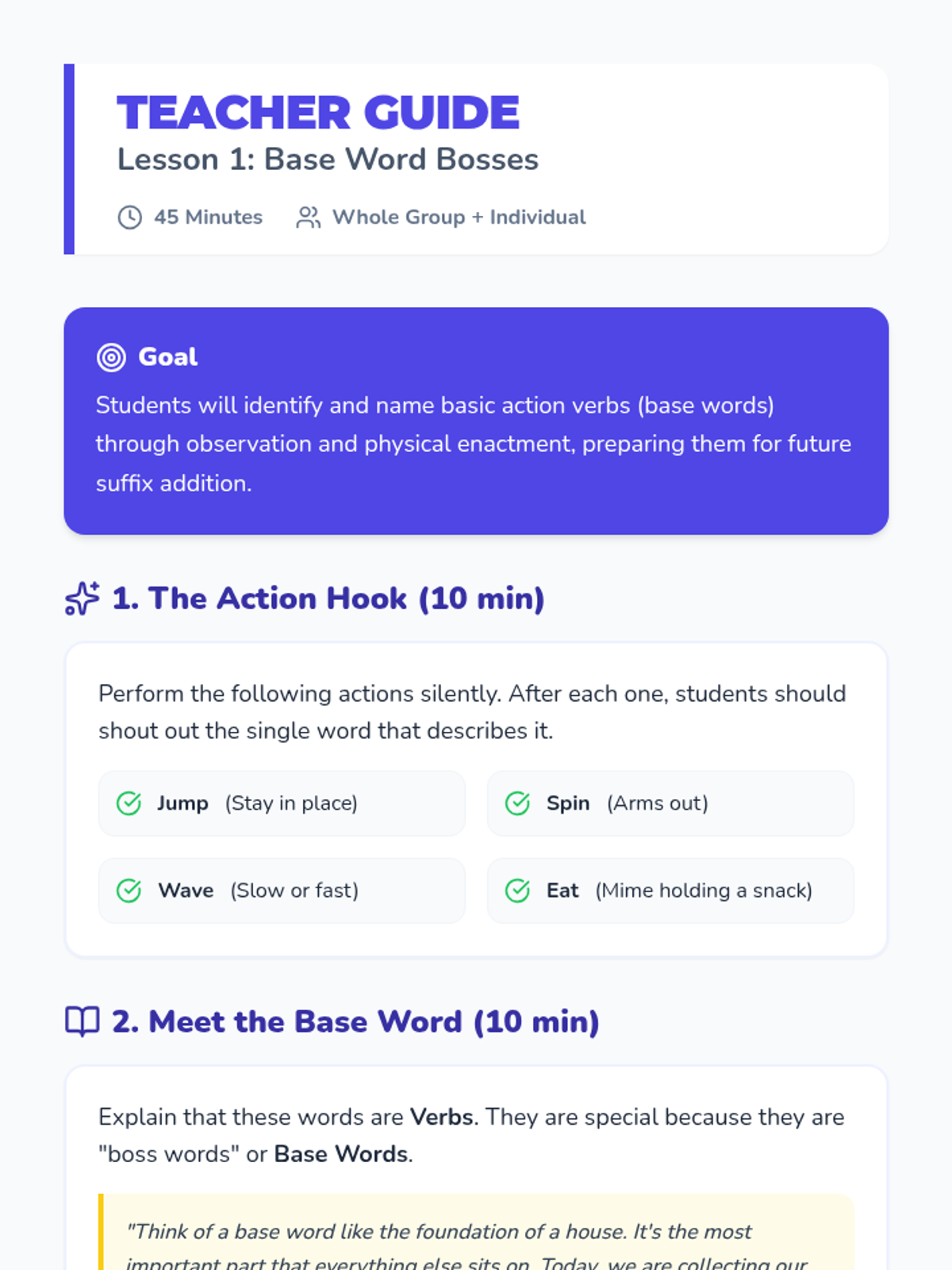
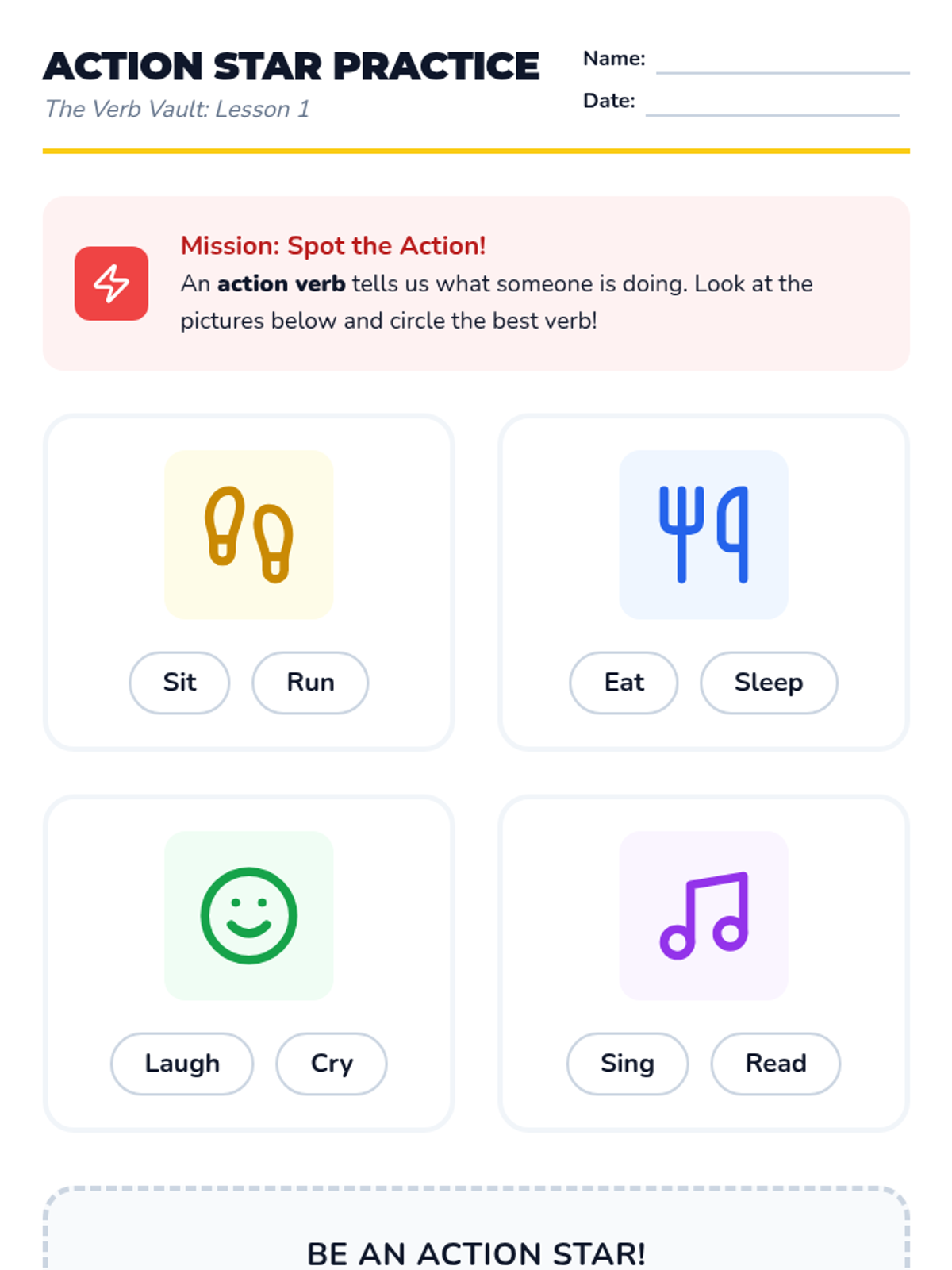
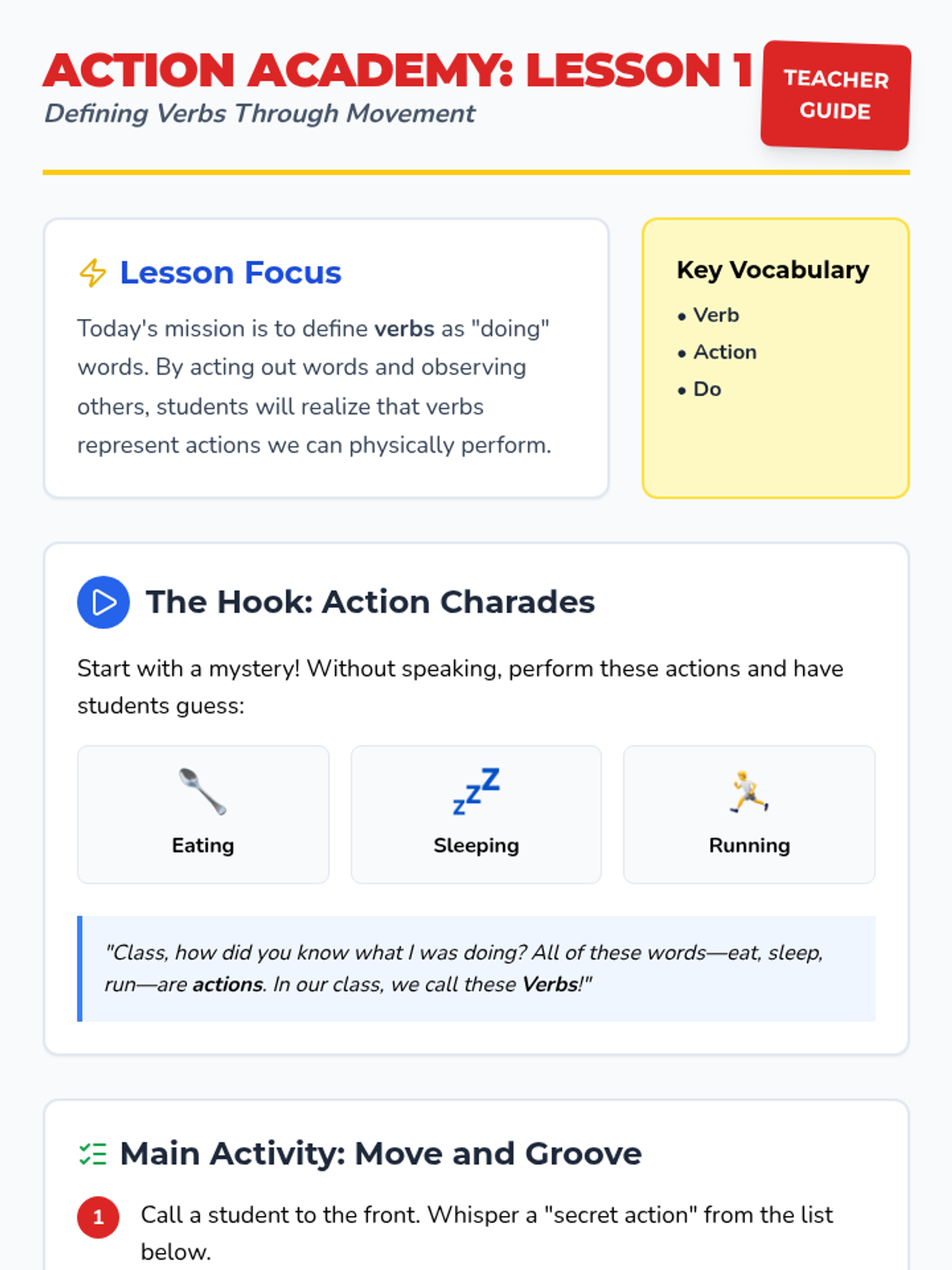
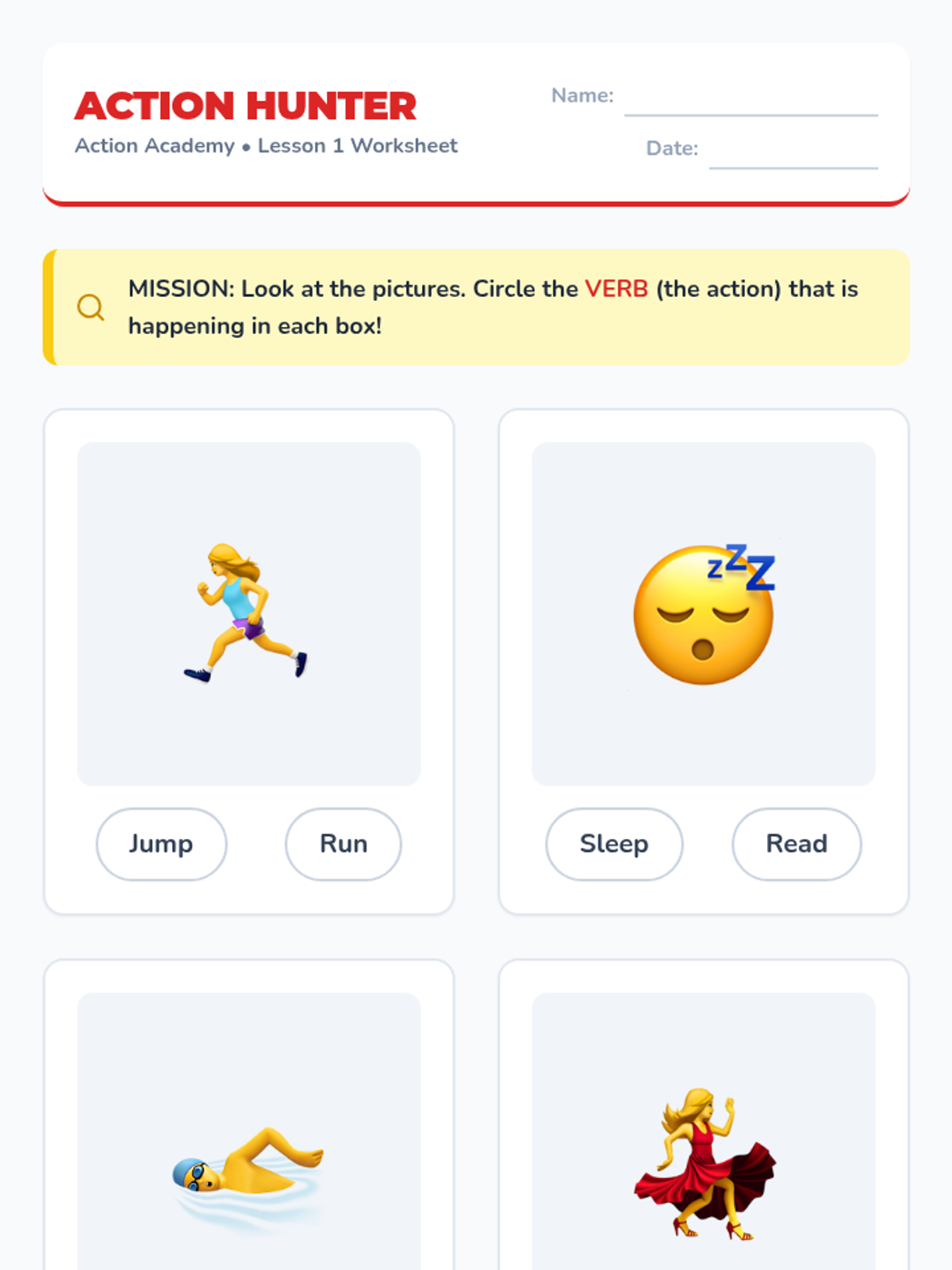
A 1st Grade sequence focused on identifying and using action verbs through physical movement, sorting activities, and creative writing. Students progress from acting out verbs to selecting precise words to energize their own stories.
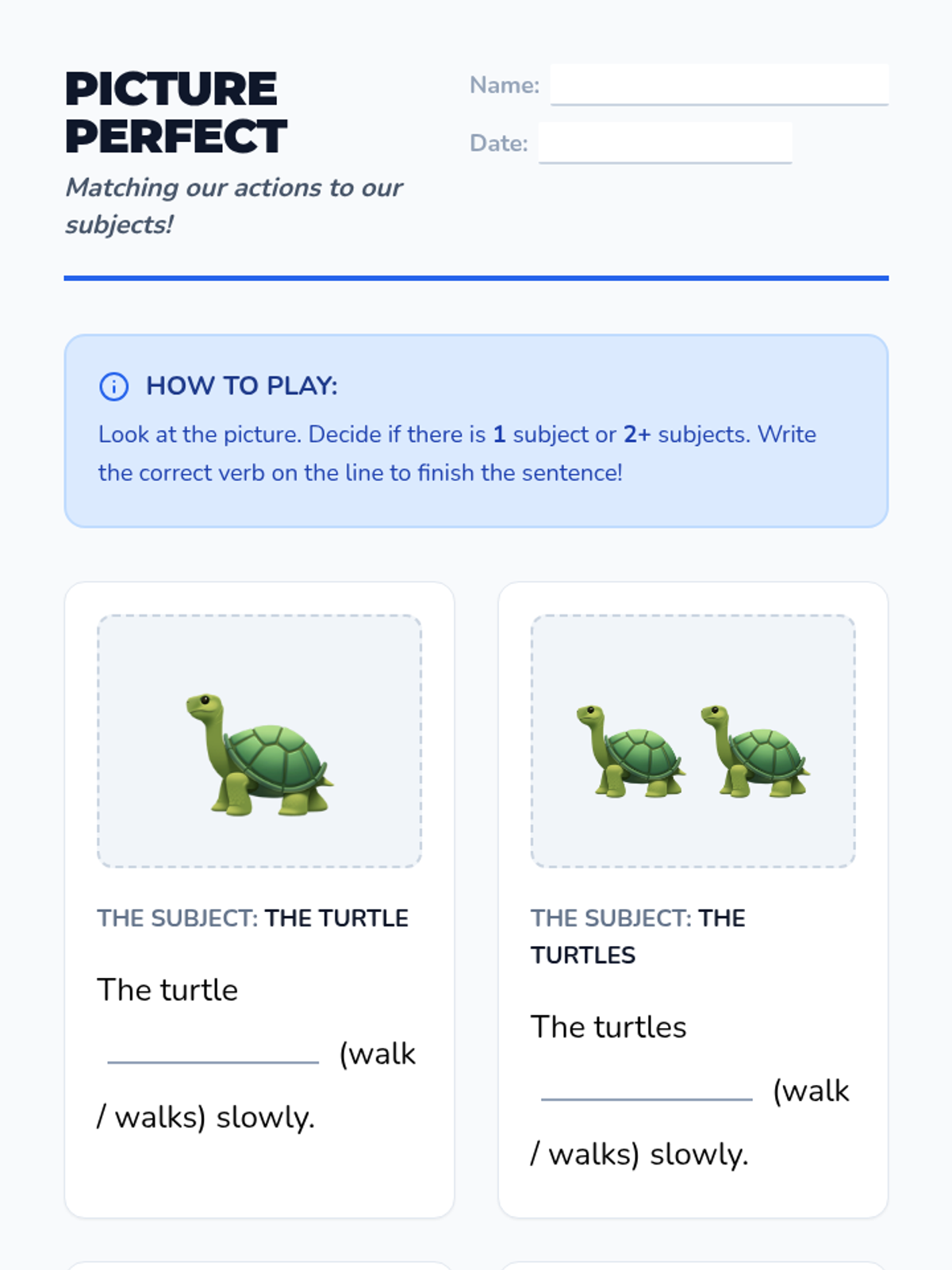
A creative, project-based unit where 1st graders build a physical flip-book to visualize and master subject-verb agreement. Students design subjects and predicates separately to see how they must match to make sense.
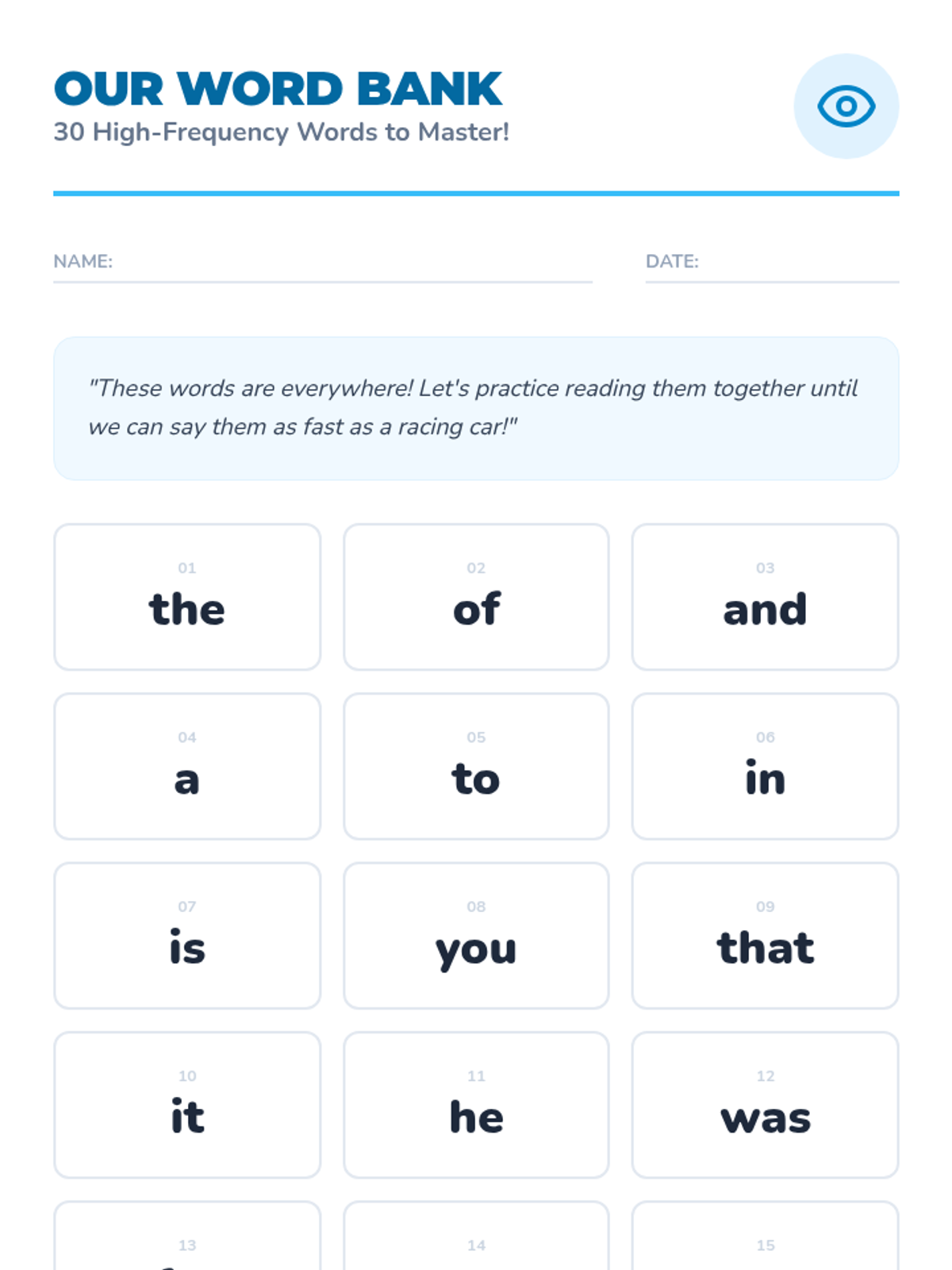
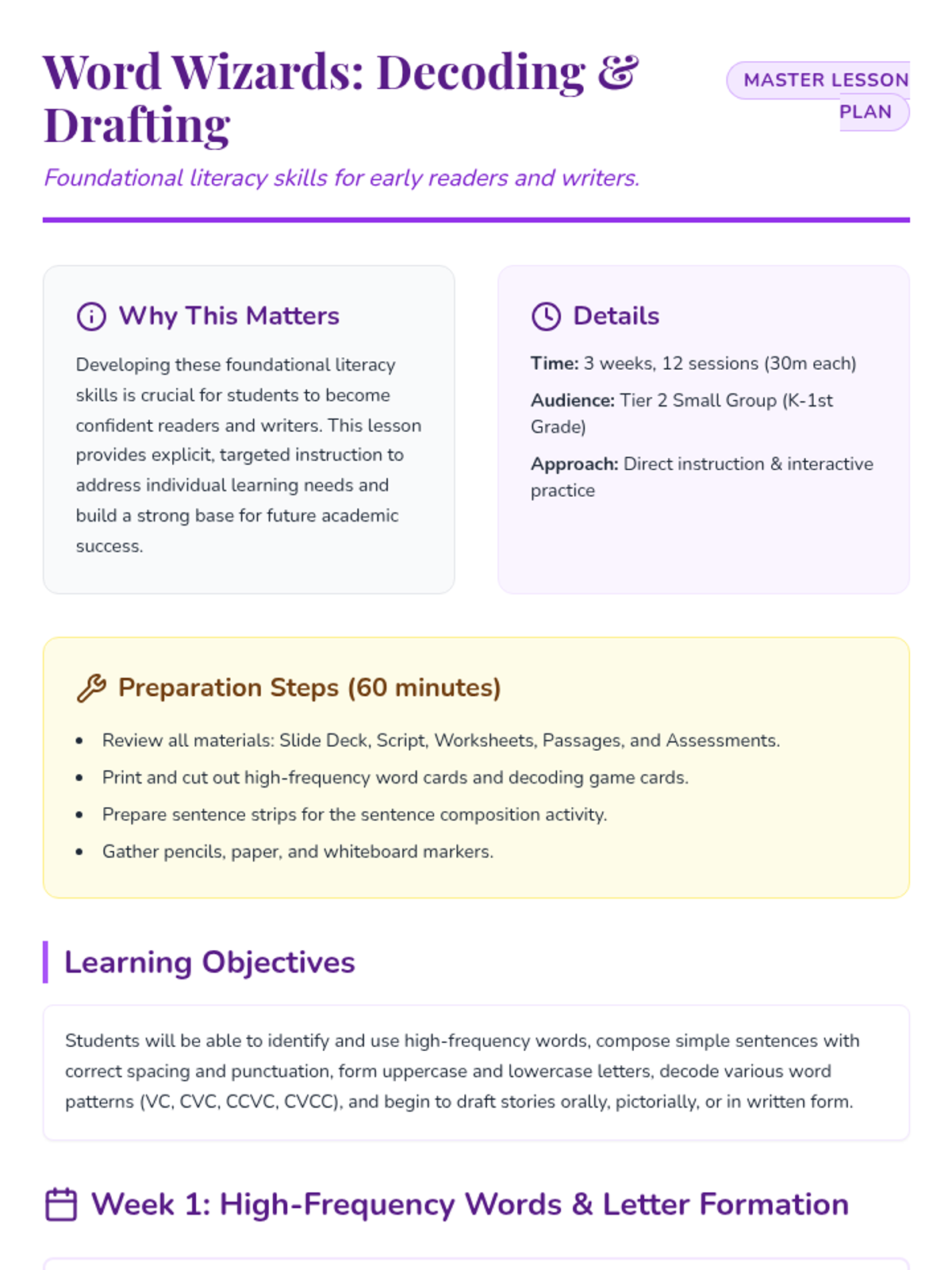
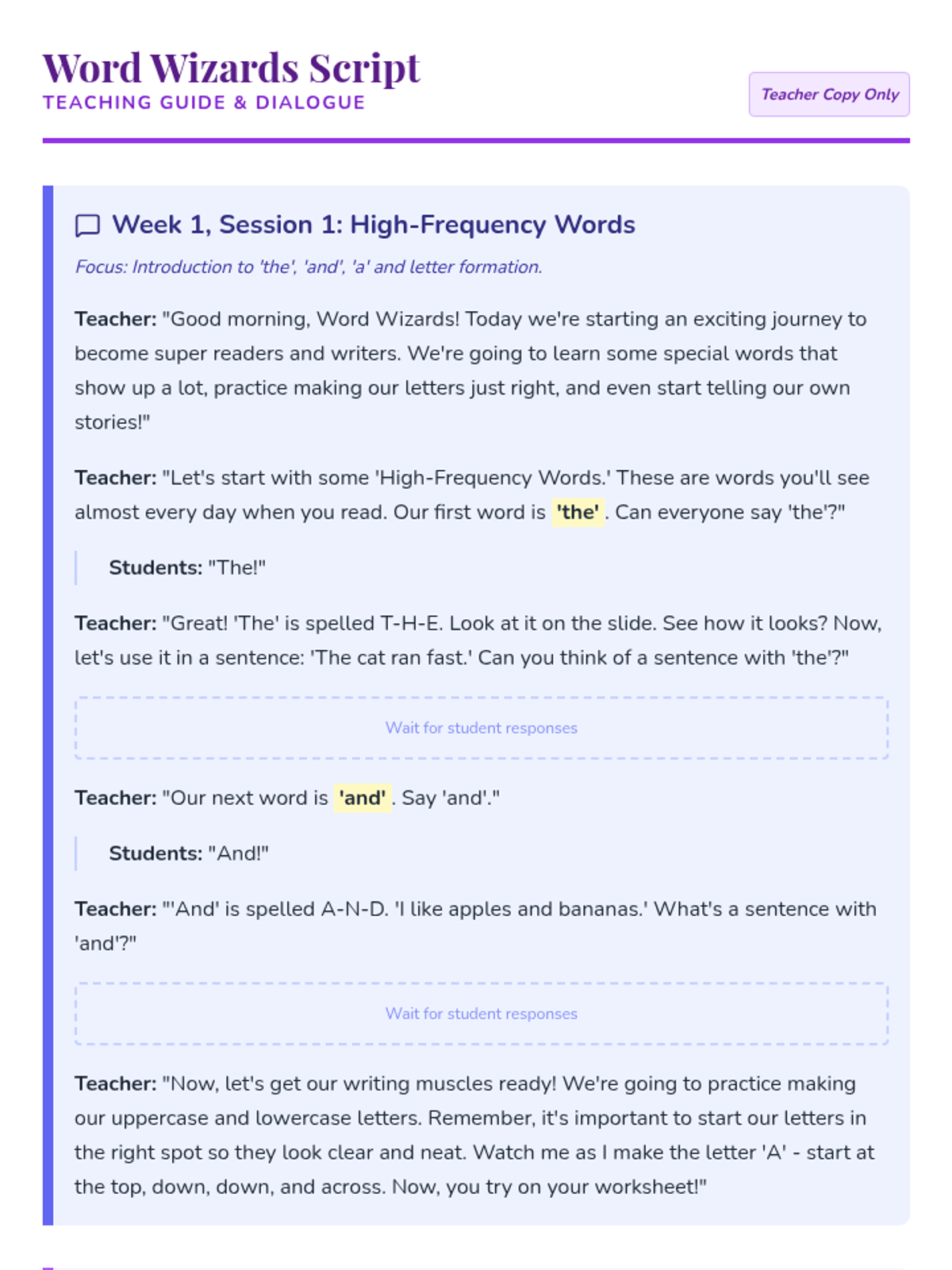
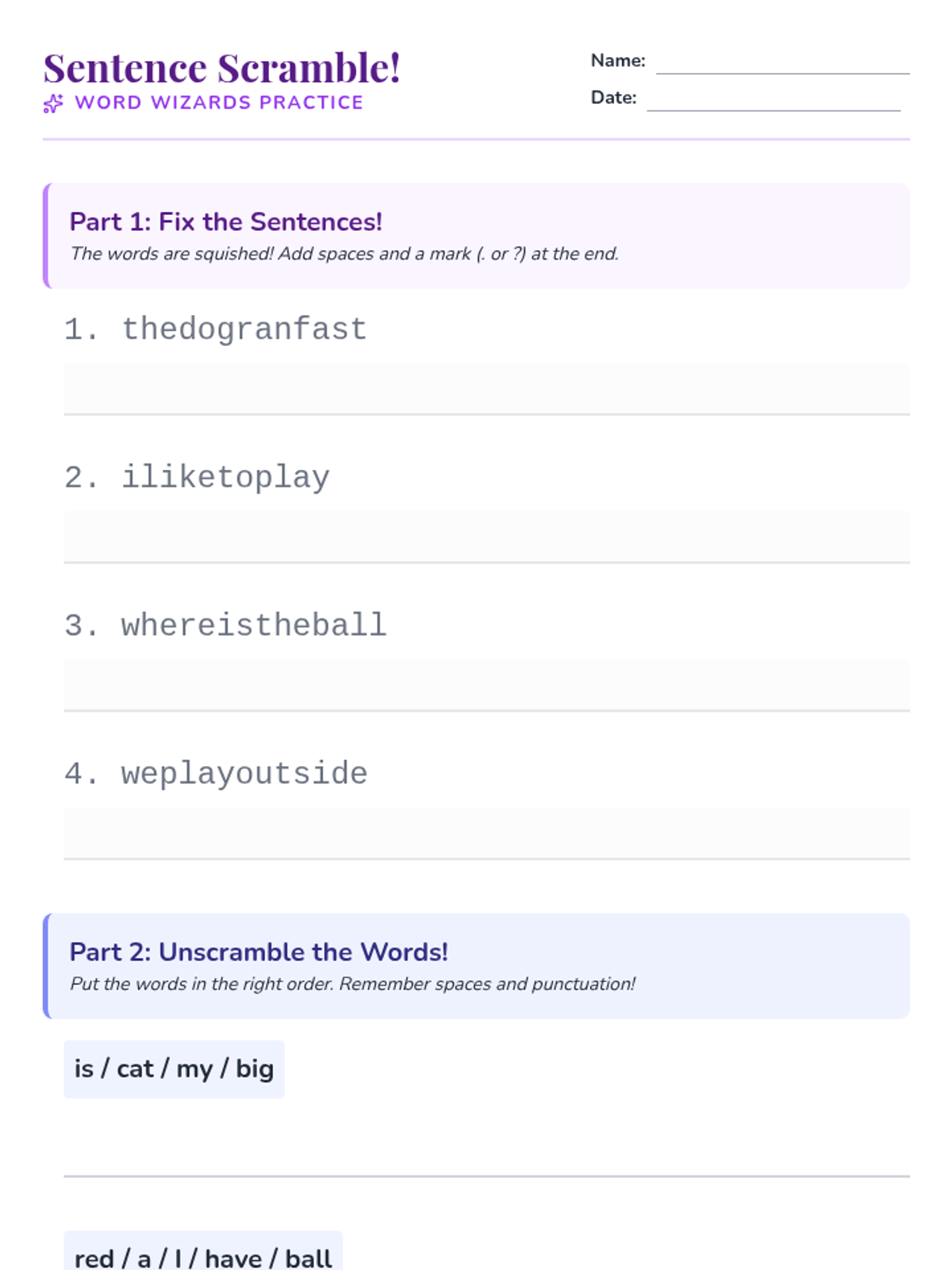
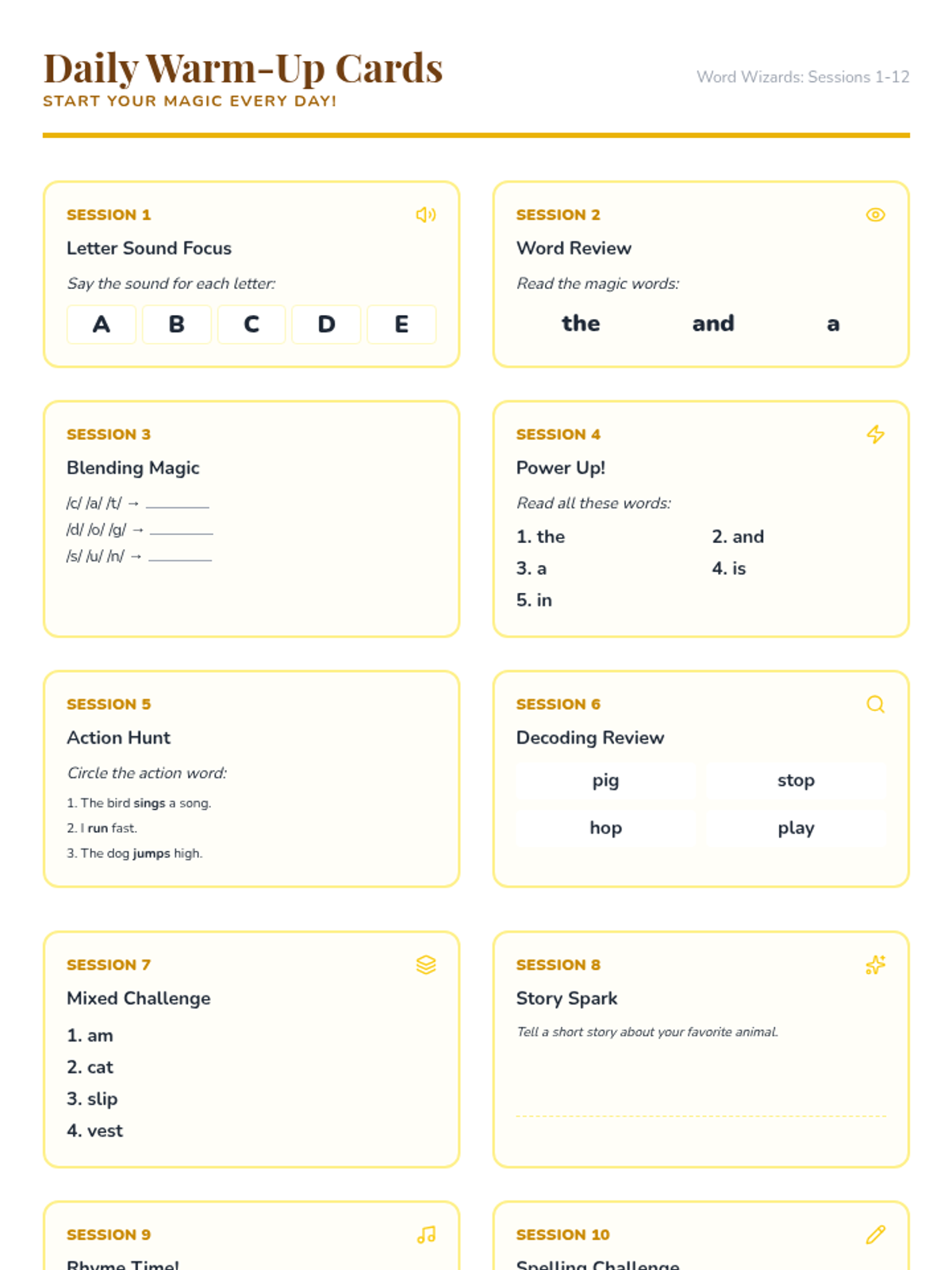
A 3-week foundational literacy sequence for Tier 2 Kindergarten and 1st-grade students, focusing on high-frequency words, decoding, and early drafting skills.
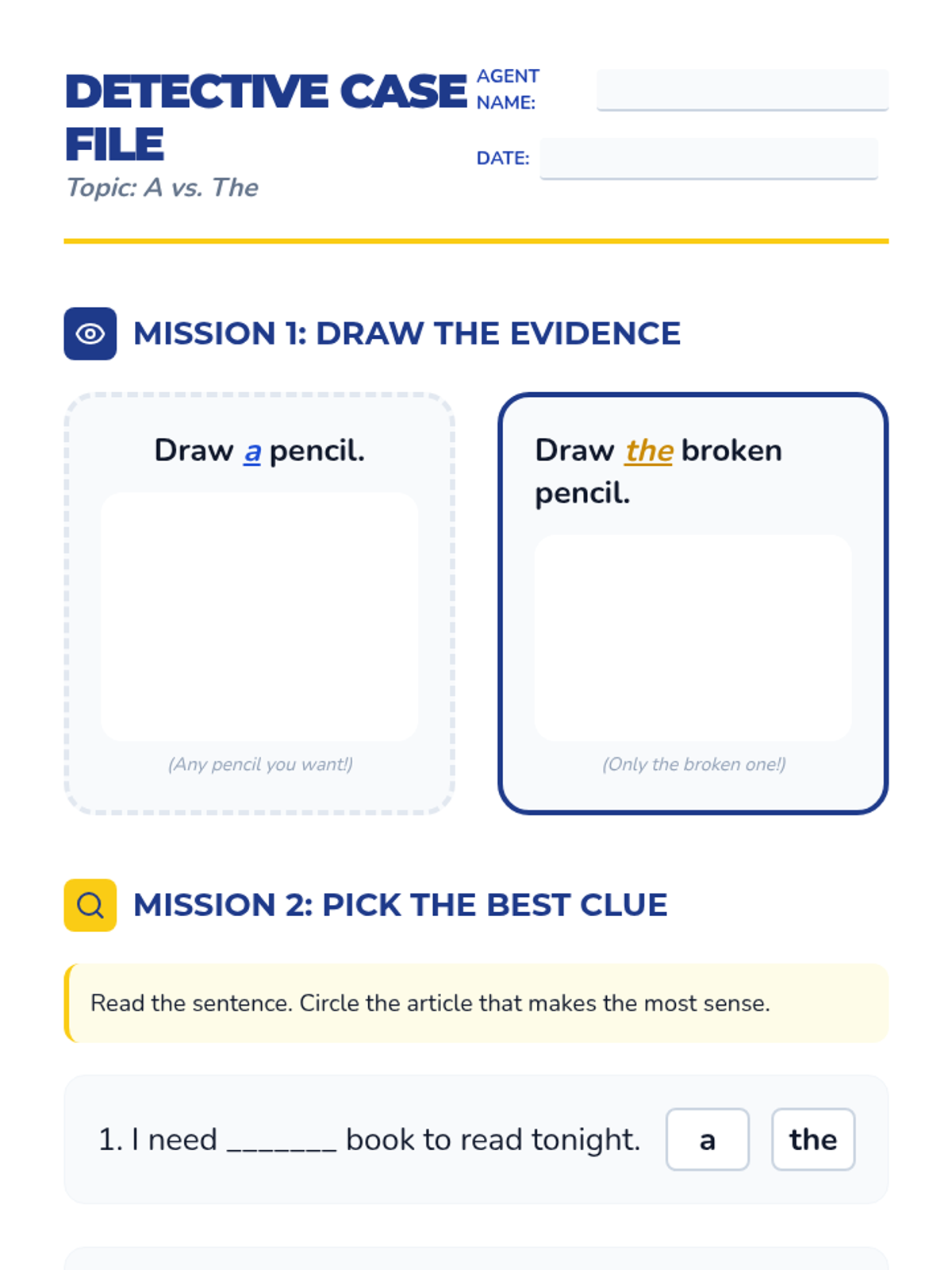
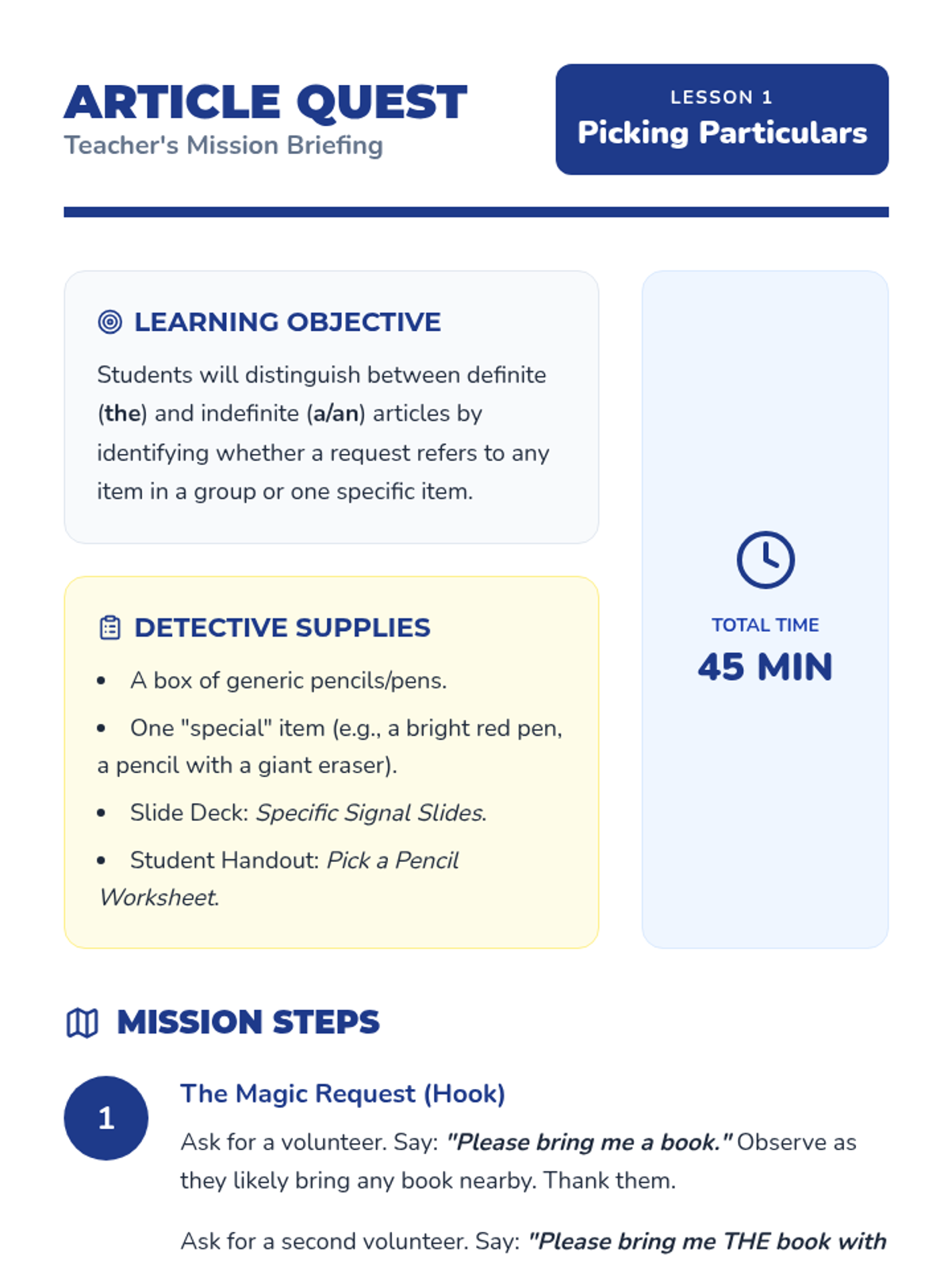
A 1st Grade sequence exploring the function of definite and indefinite articles through inquiry, simulation, and narrative sequencing. Students learn to distinguish between general items and specific references.
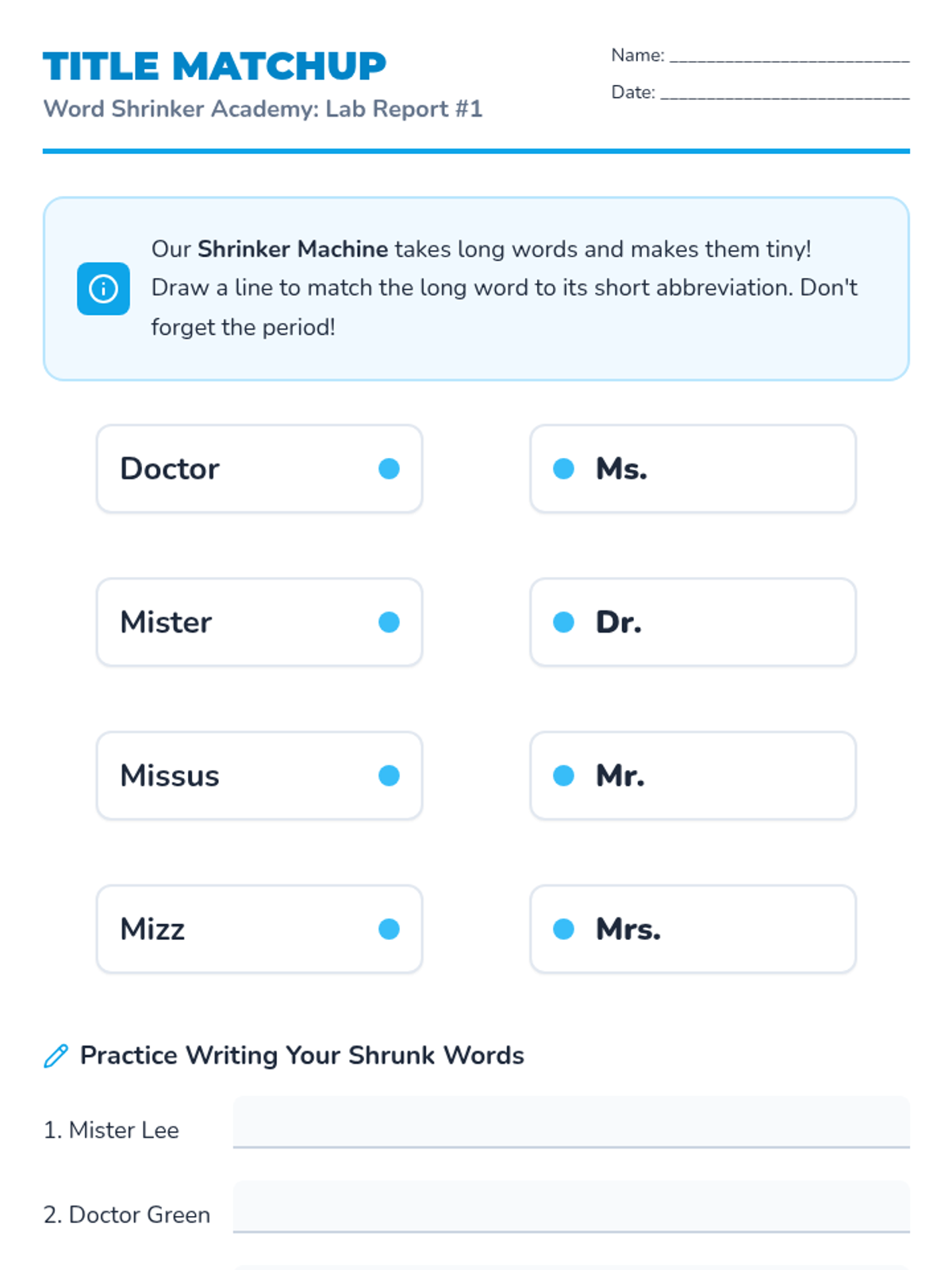
A 1st-grade grammar sequence focusing on identifying and writing common abbreviations for titles, days, months, and street names. Students use the 'Word Shrinking Machine' concept to understand how to shorten words while maintaining their meaning.
A comprehensive 1st-grade sequence exploring common abbreviations for titles, days, months, and street names through a "Shortcut Squad" spy theme. Students learn the mechanics of capitalization and punctuation (the period) to decode and encode shorter forms of words.
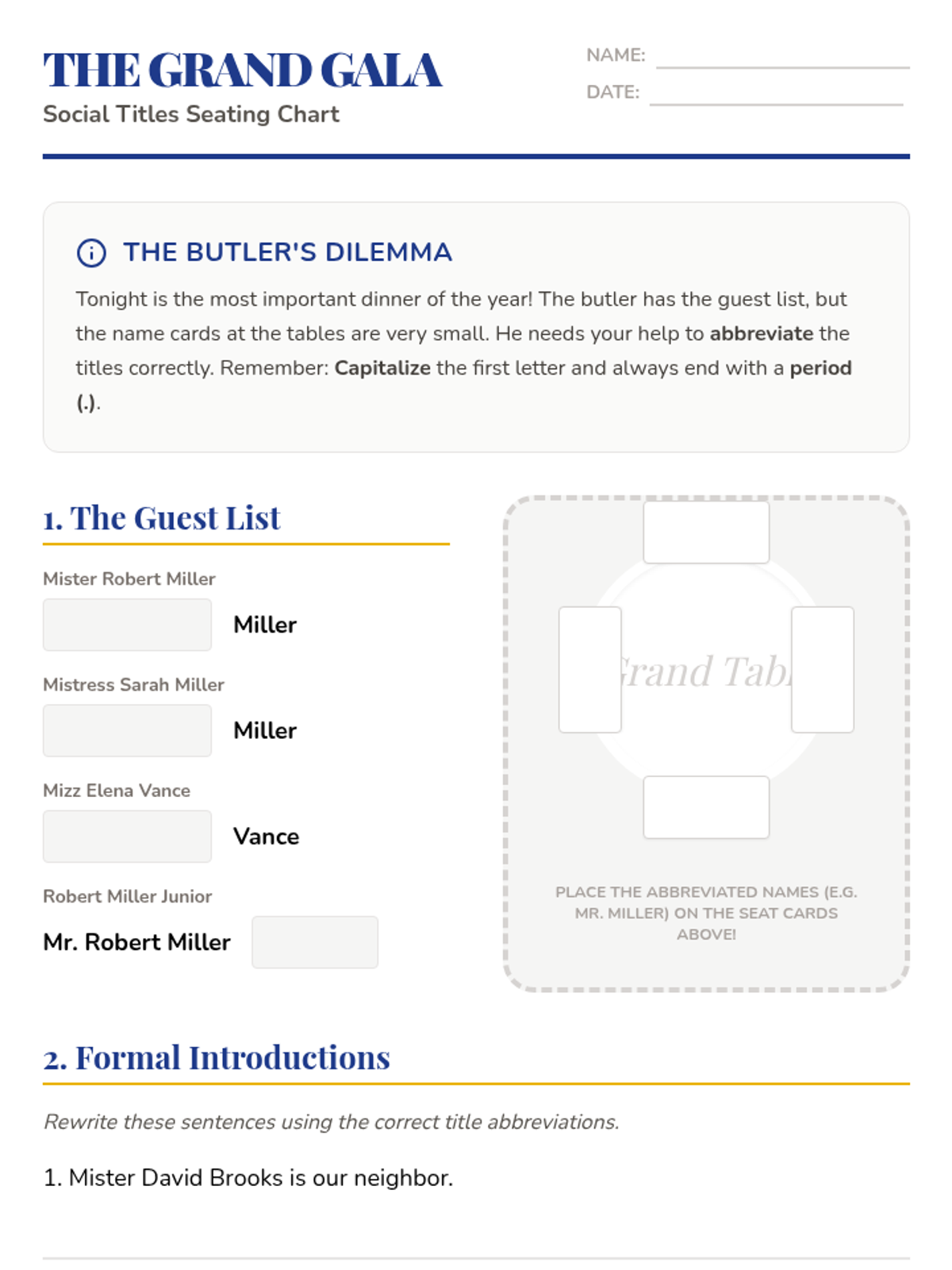
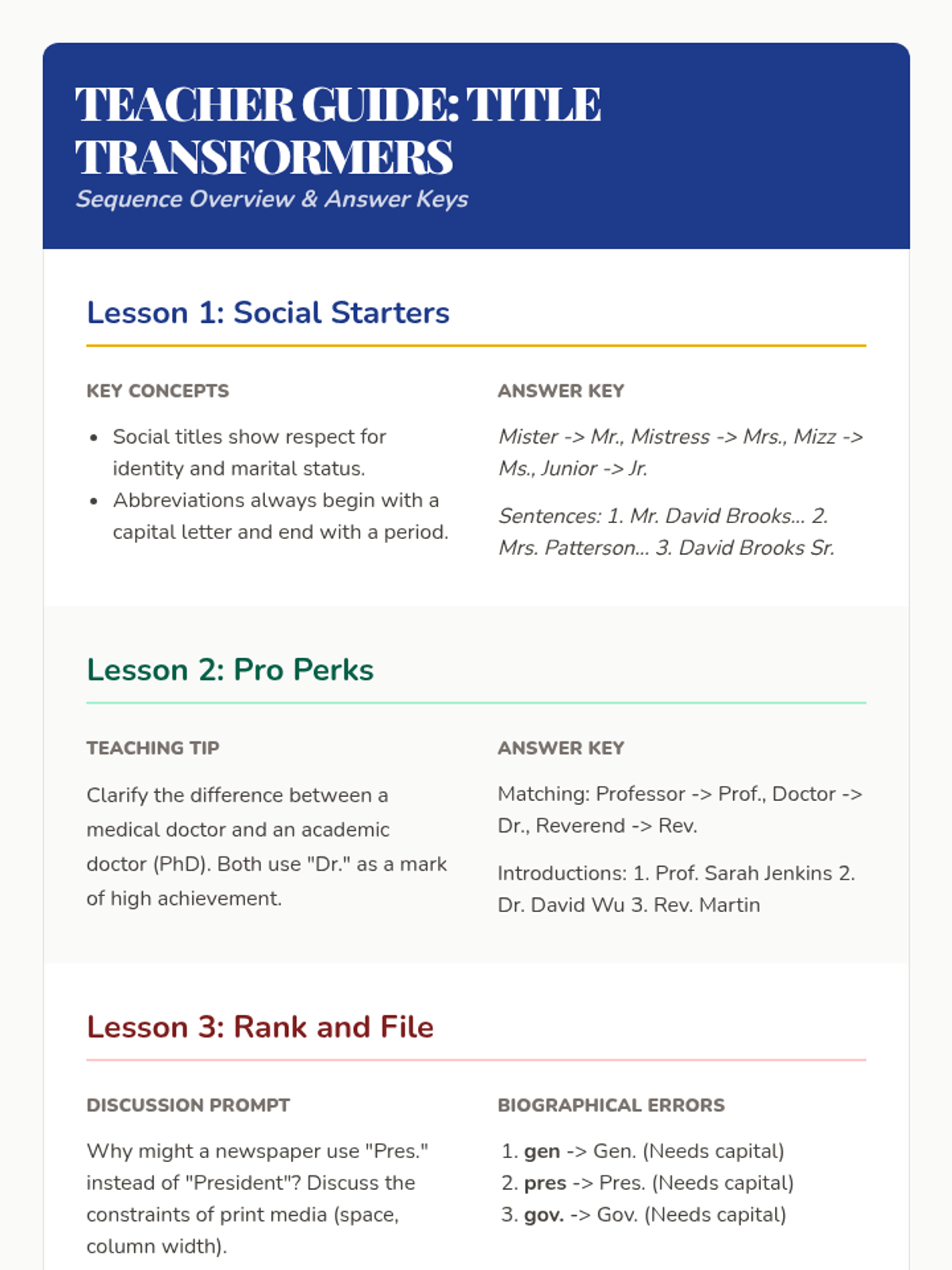
This sequence explores the social and formal rules of abbreviating titles for people. Using a case-study approach, students analyze formal letters, biographies, and business cards to understand how titles like Mr., Dr., and Gov. establish identity and respect. Students practice identifying these titles and writing them with proper capitalization and punctuation. The sequence concludes with students writing a formal letter to a community leader.
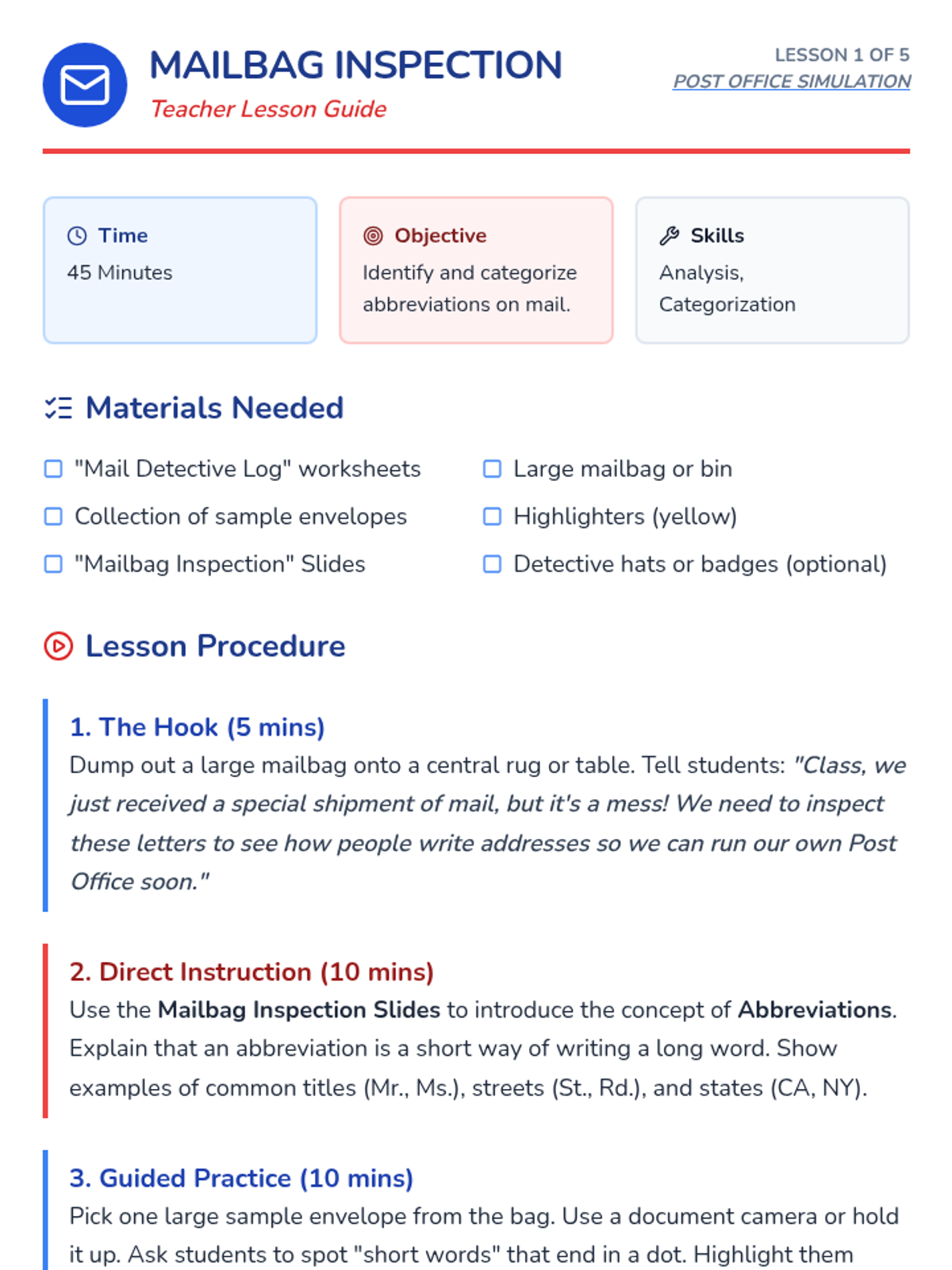
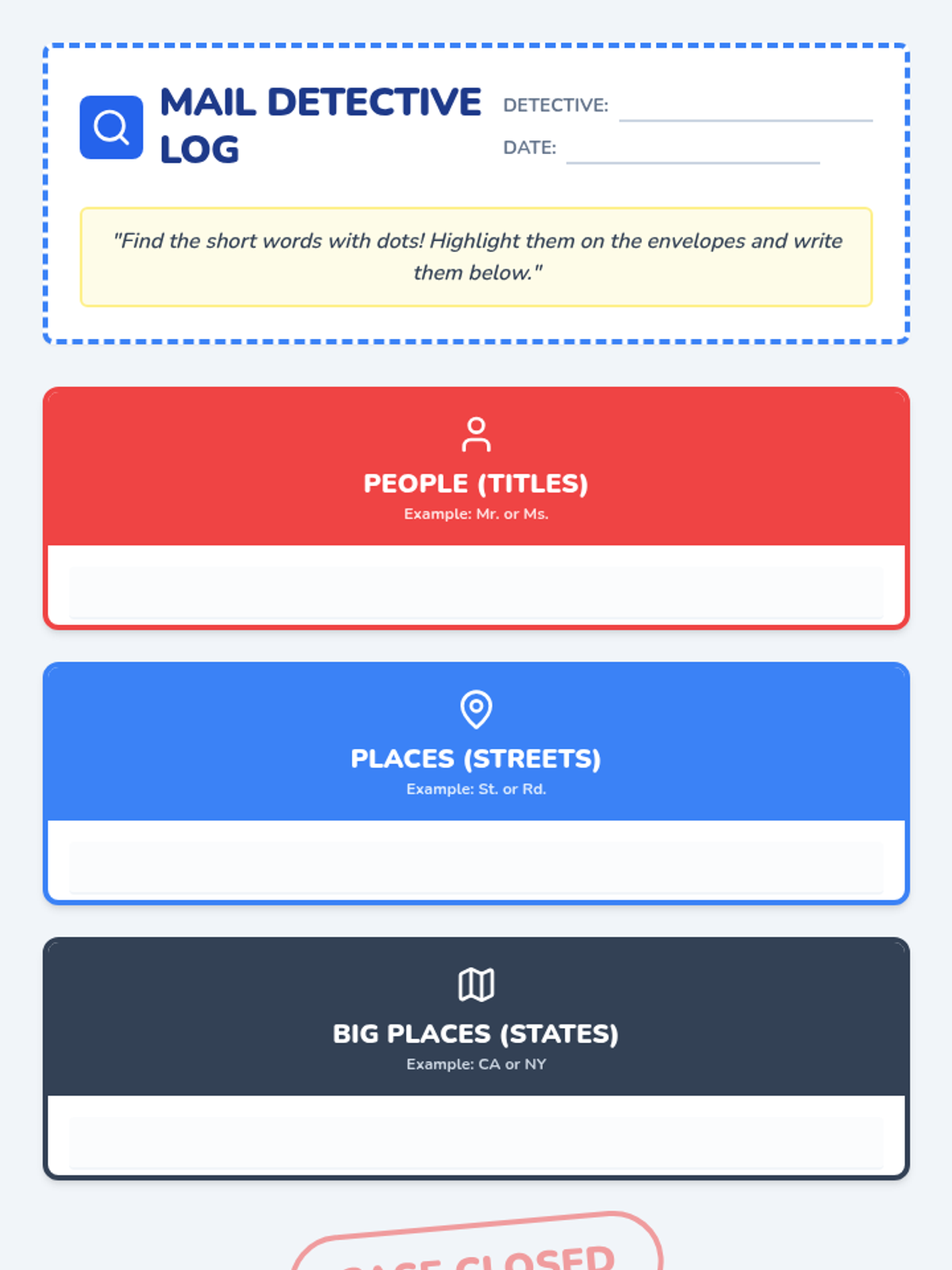
A 1st-grade ELA sequence where students run a classroom post office to master abbreviations for titles, dates, and addresses. Through hands-on simulation, students learn the practical necessity of standard abbreviations for clear communication.
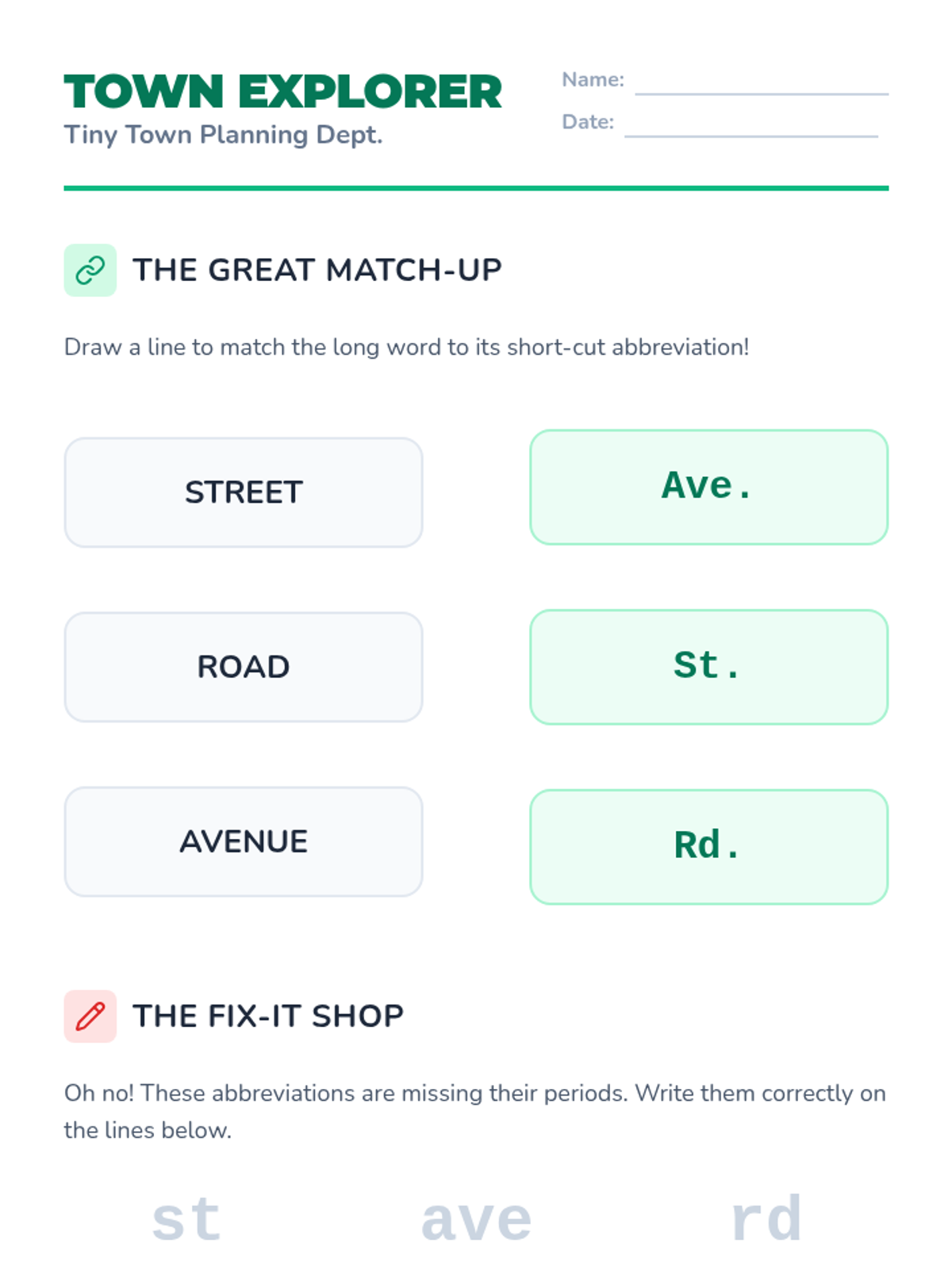
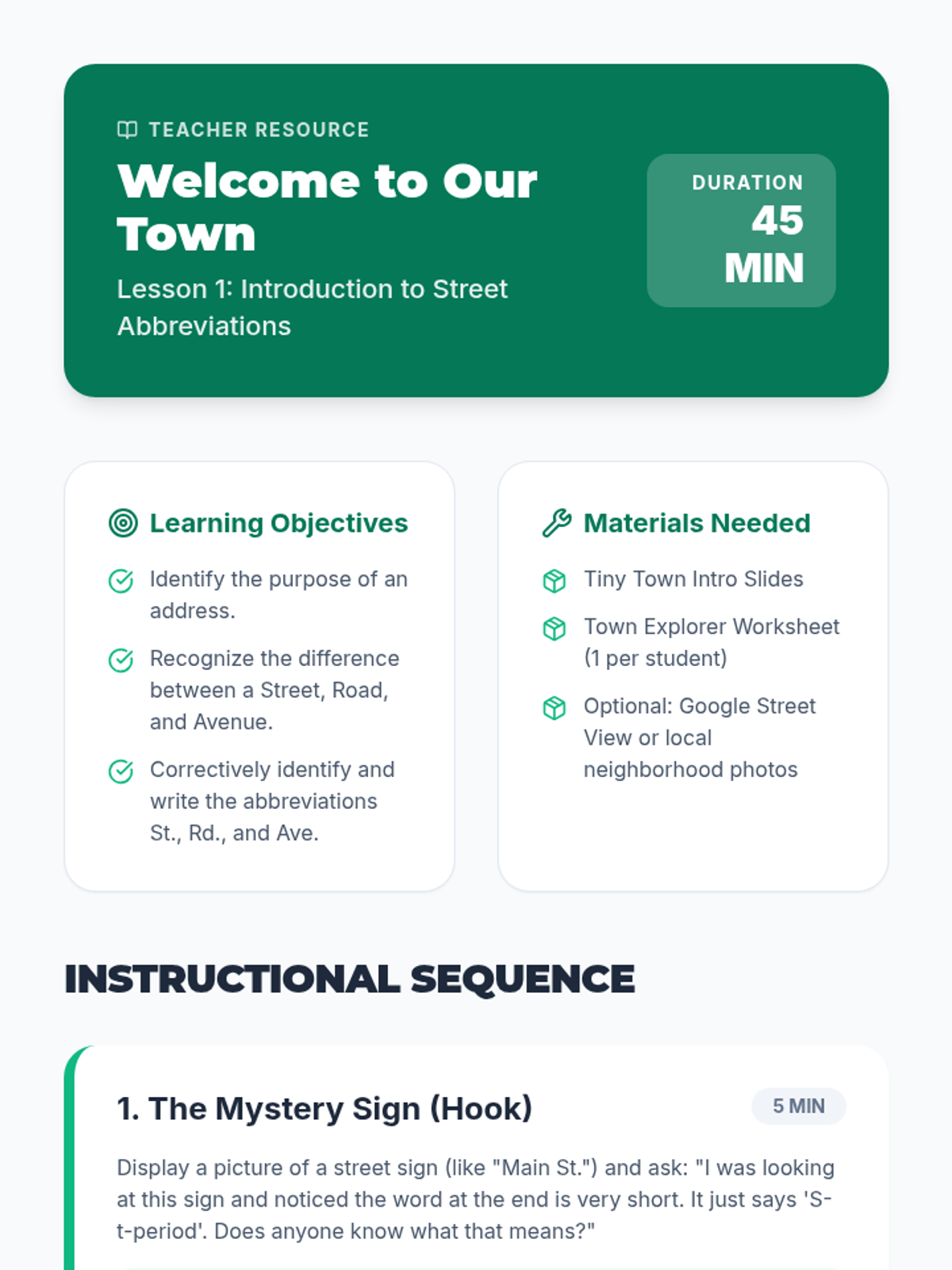
A project-based unit where 1st-grade students become town planners to learn street abbreviations (St., Rd., Ave., Blvd.). Through designing maps, signs, and envelopes, students apply grammar rules to real-world navigation and communication.
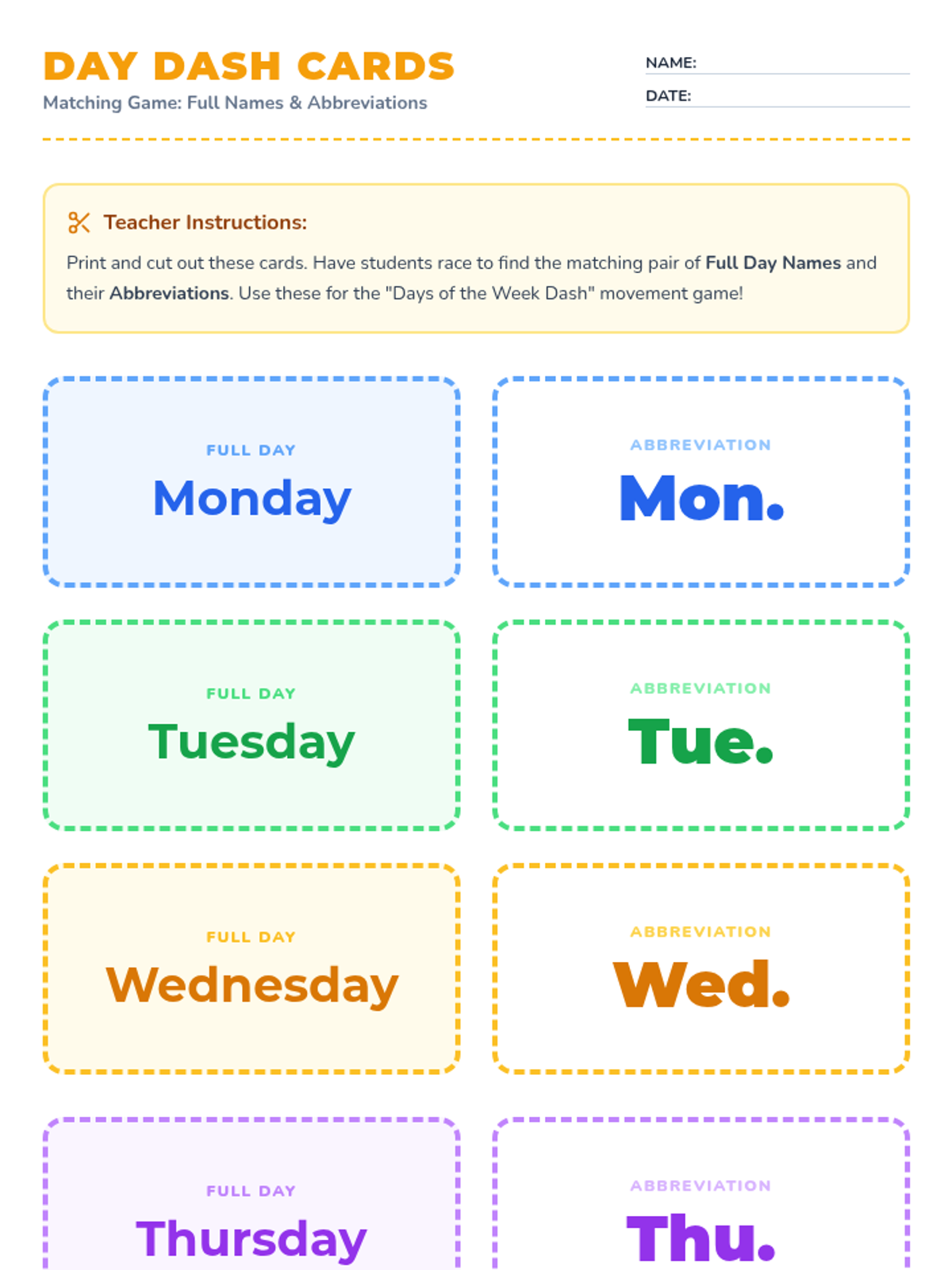
A 1st-grade grammar sequence focused on mastering abbreviations for days of the week and months of the year through games, movement, and real-world application.
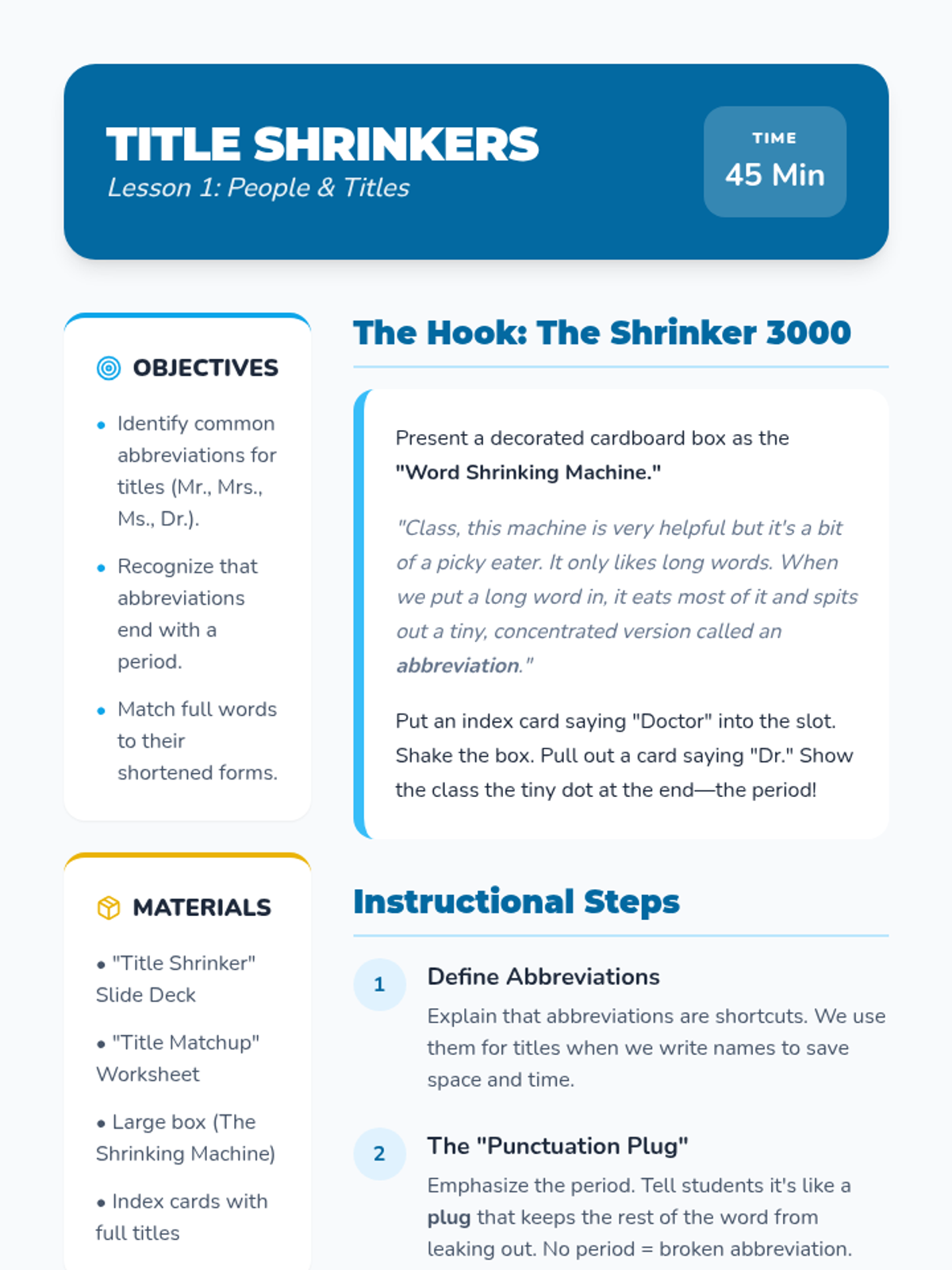
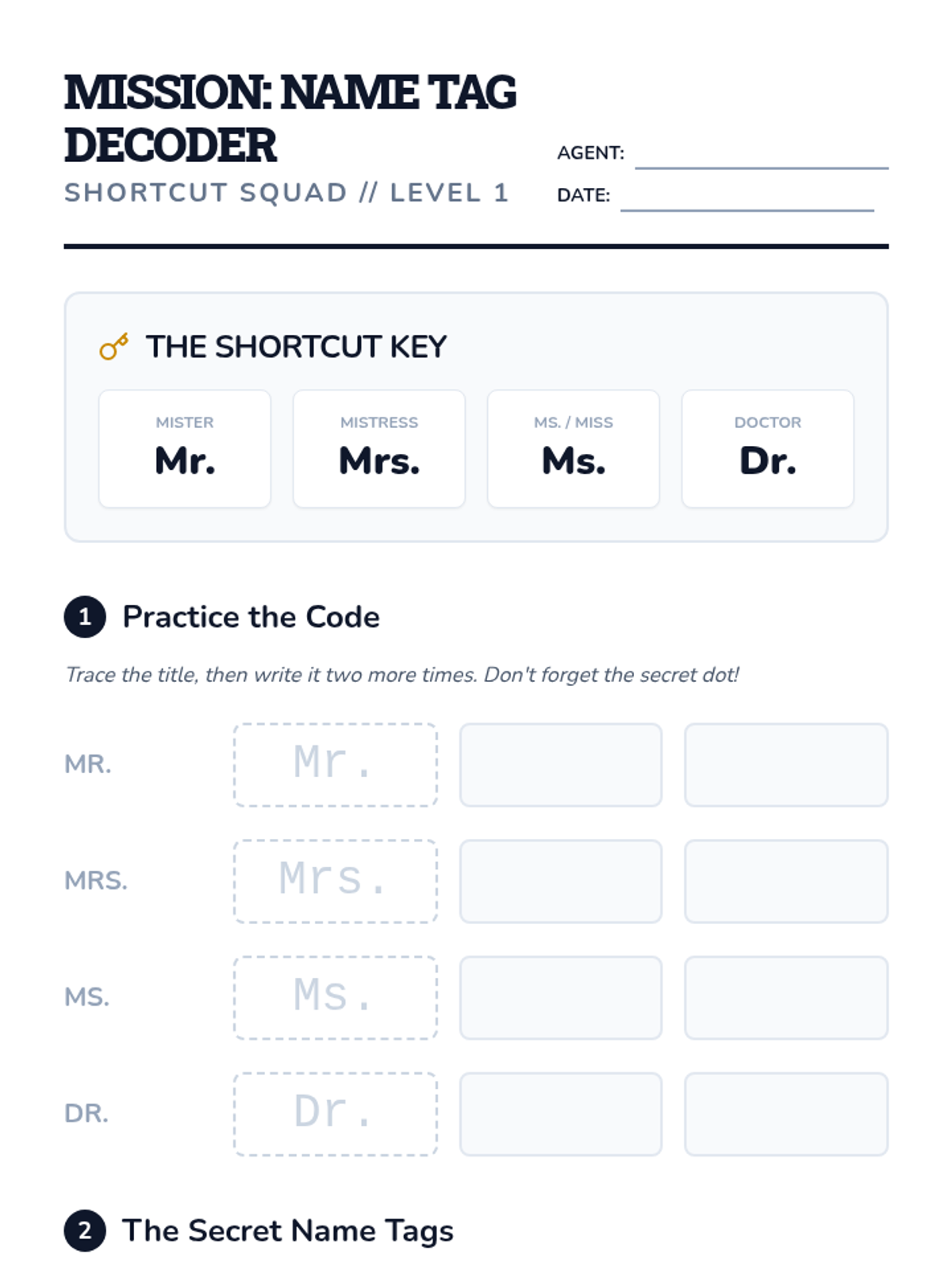
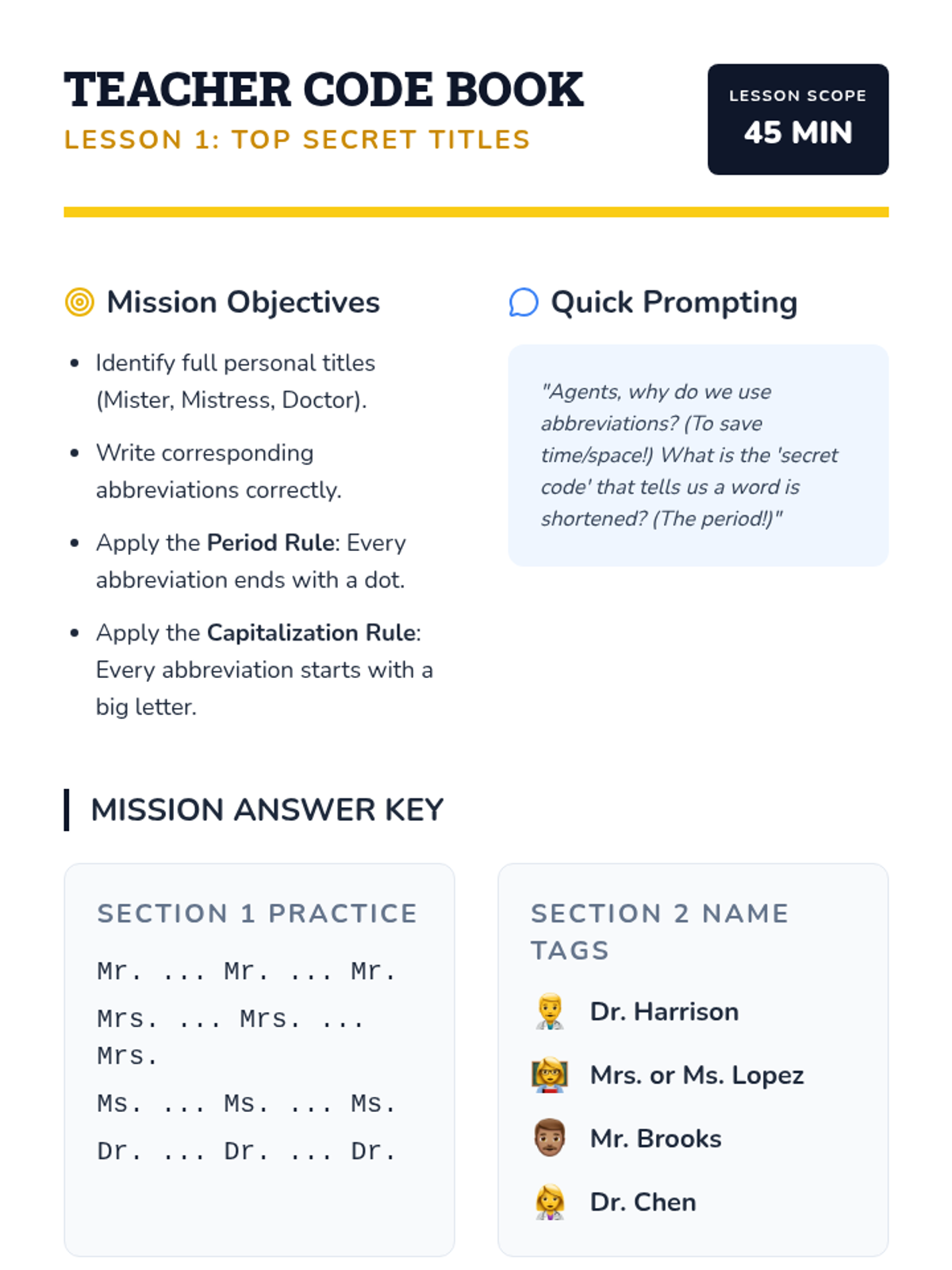
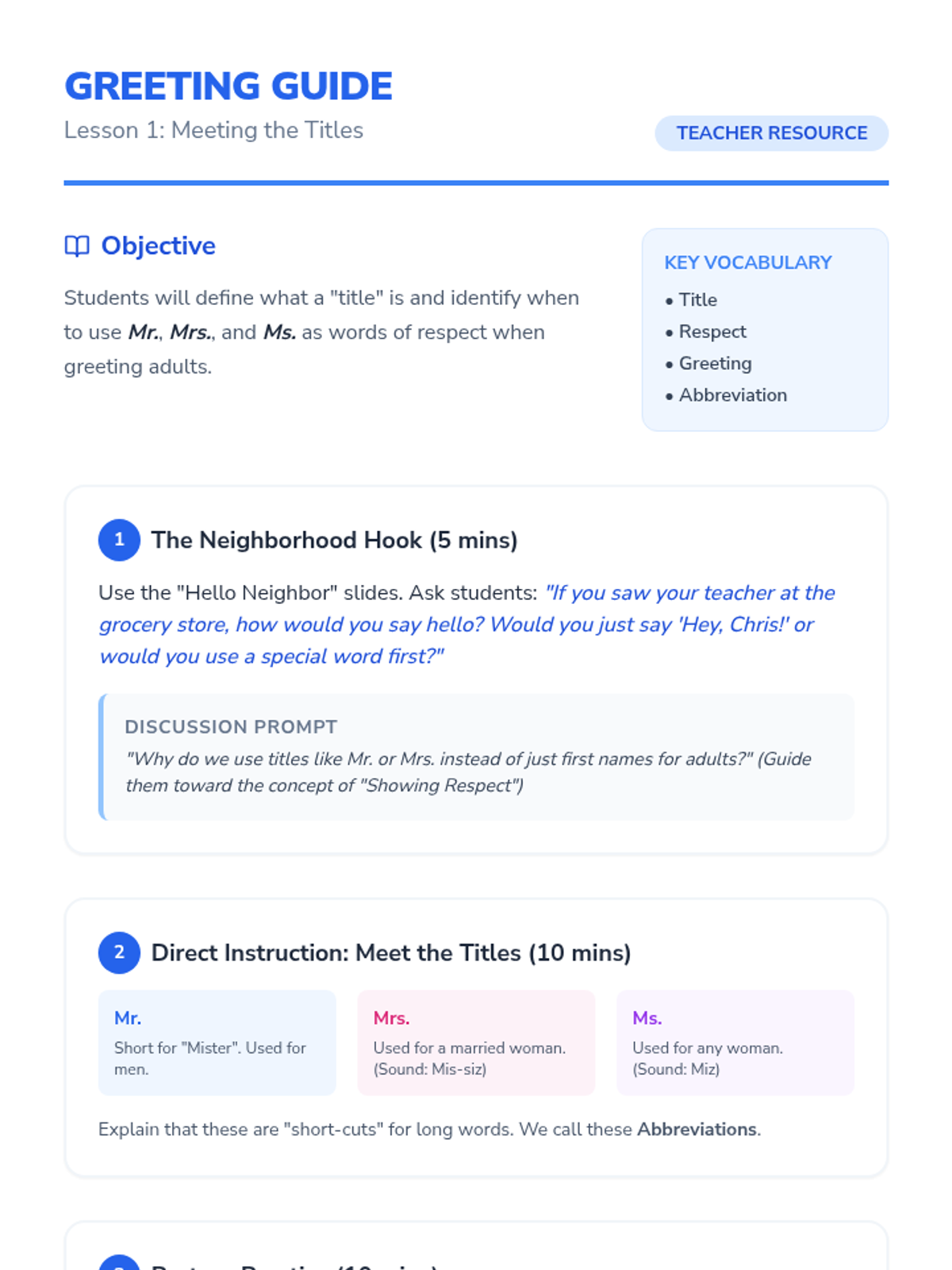
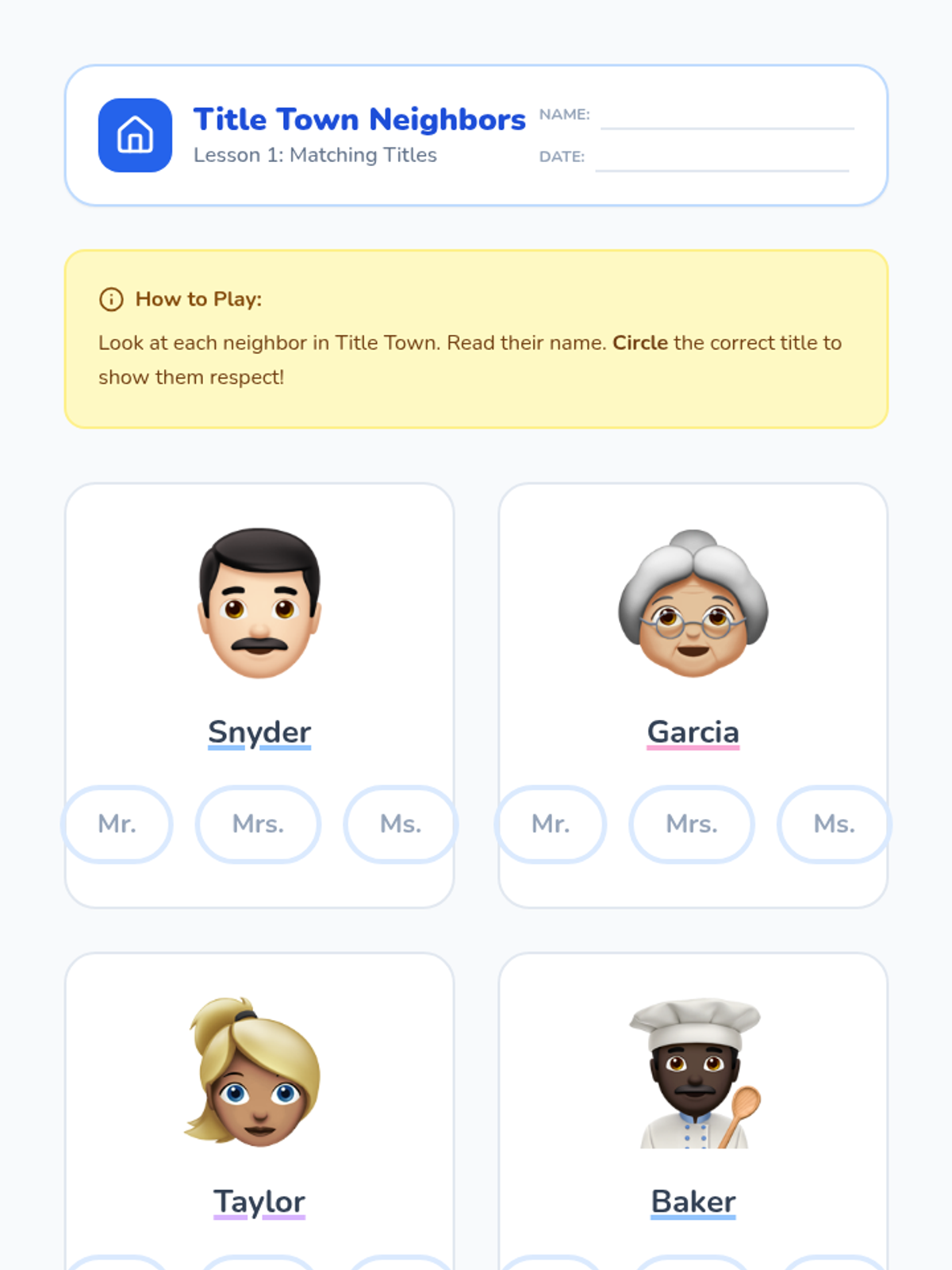
A 1st Grade ELA sequence introducing personal titles (Mr., Mrs., Ms., Dr.) and the mechanics of abbreviations through a friendly neighborhood theme. Students learn to recognize, punctuate, and apply titles of respect in their writing.
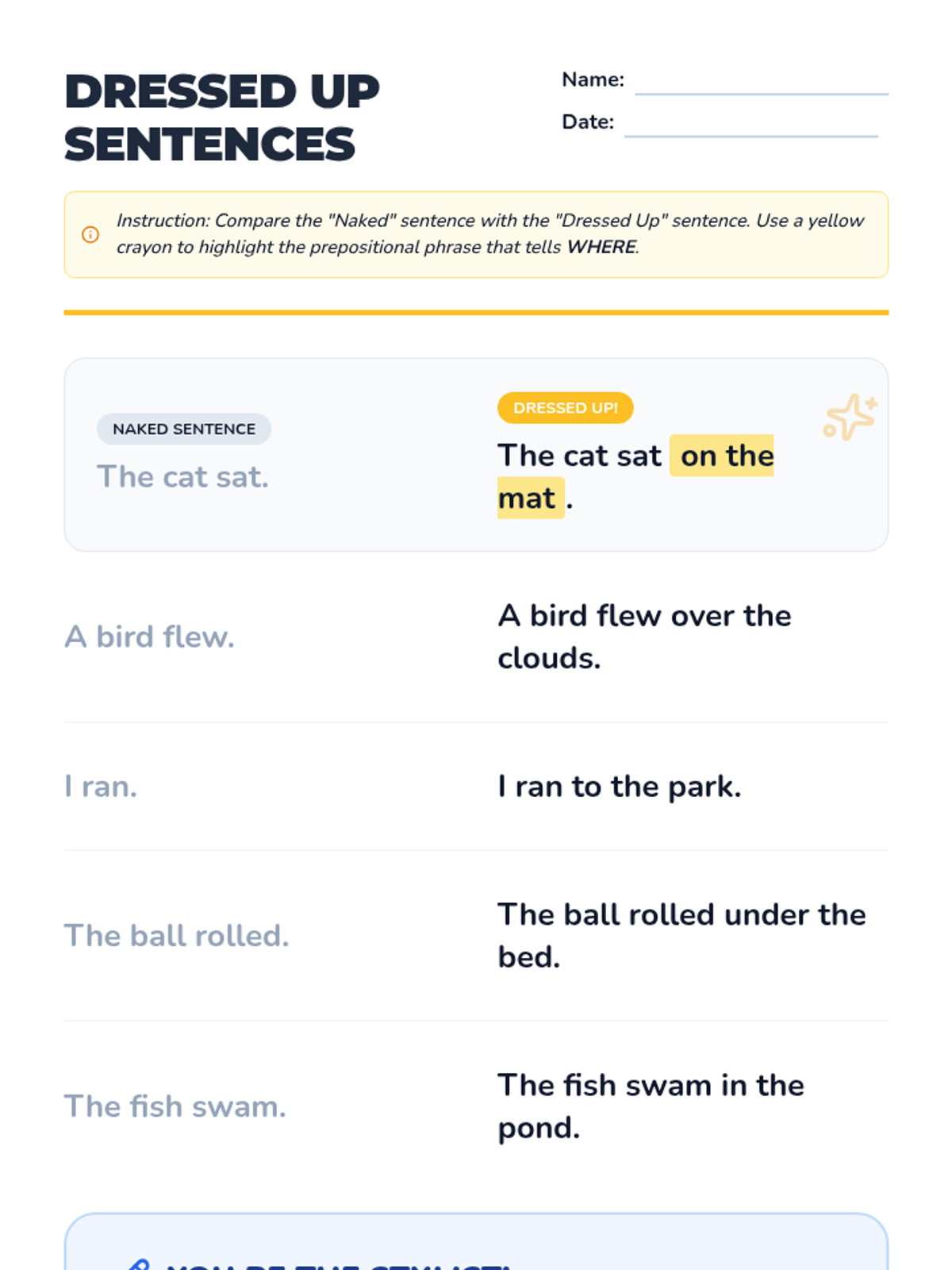
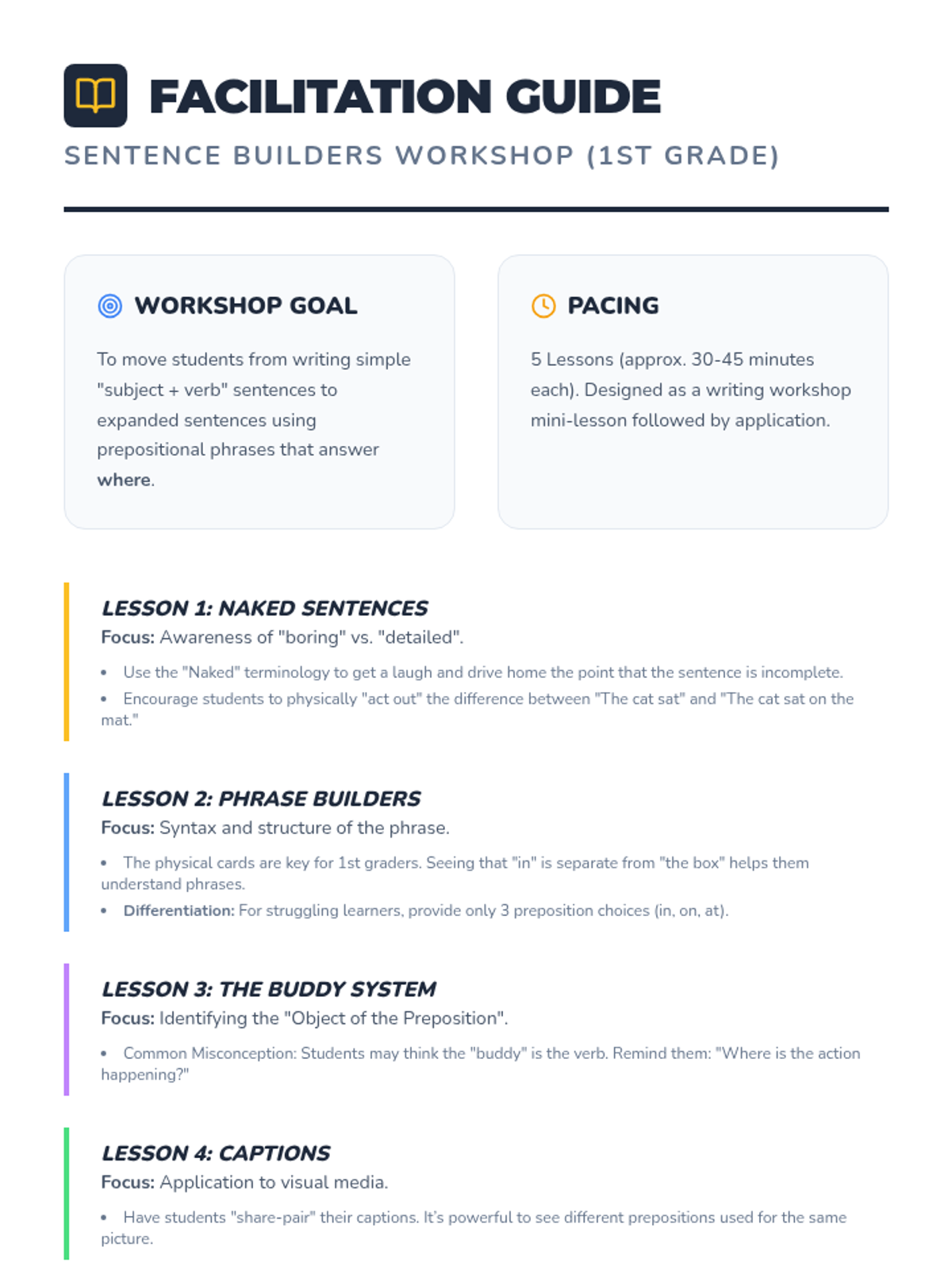
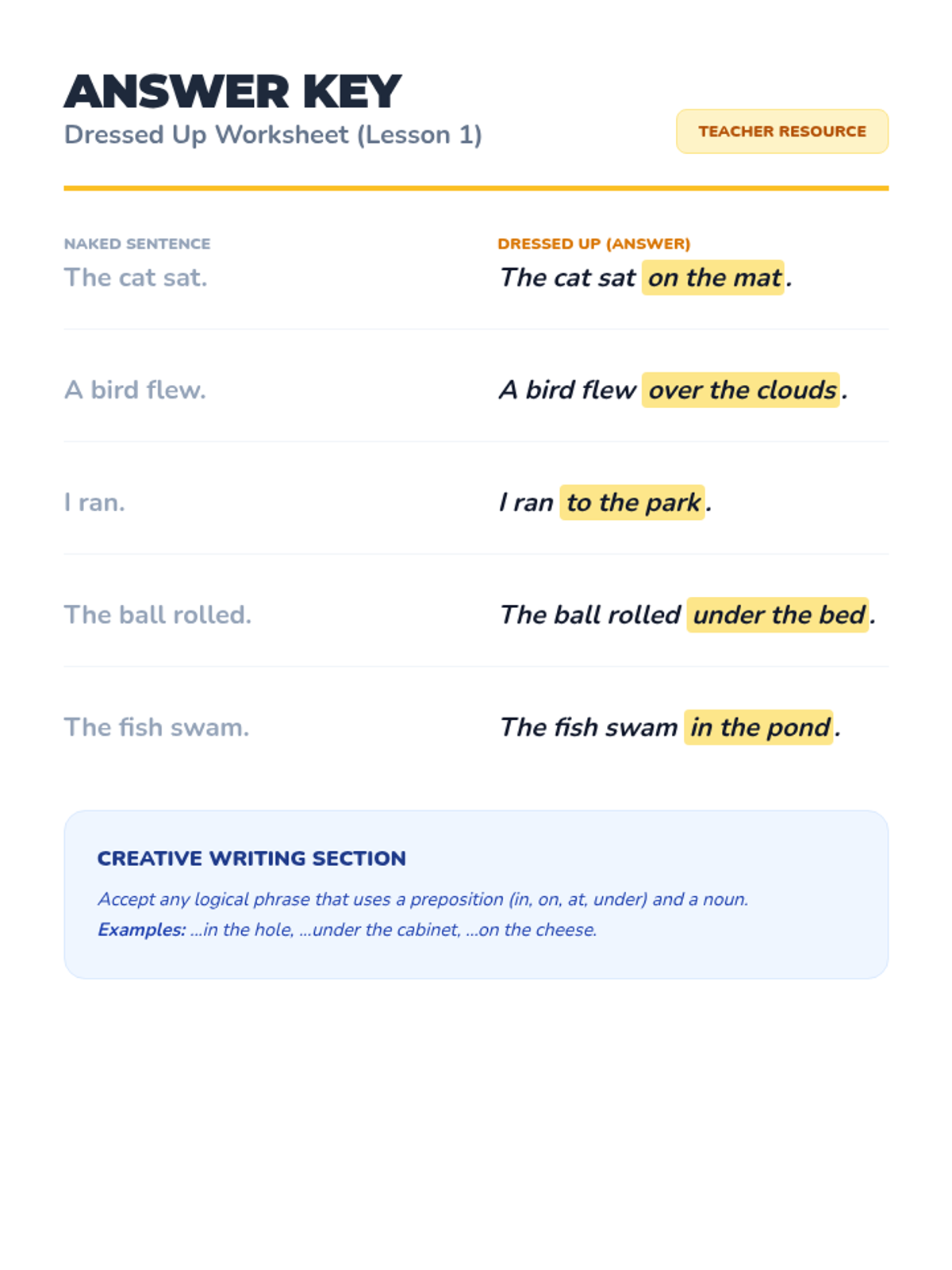
A 1st-grade writing sequence that teaches students how to use prepositional phrases to expand simple sentences, focusing on 'where' and 'when' details.
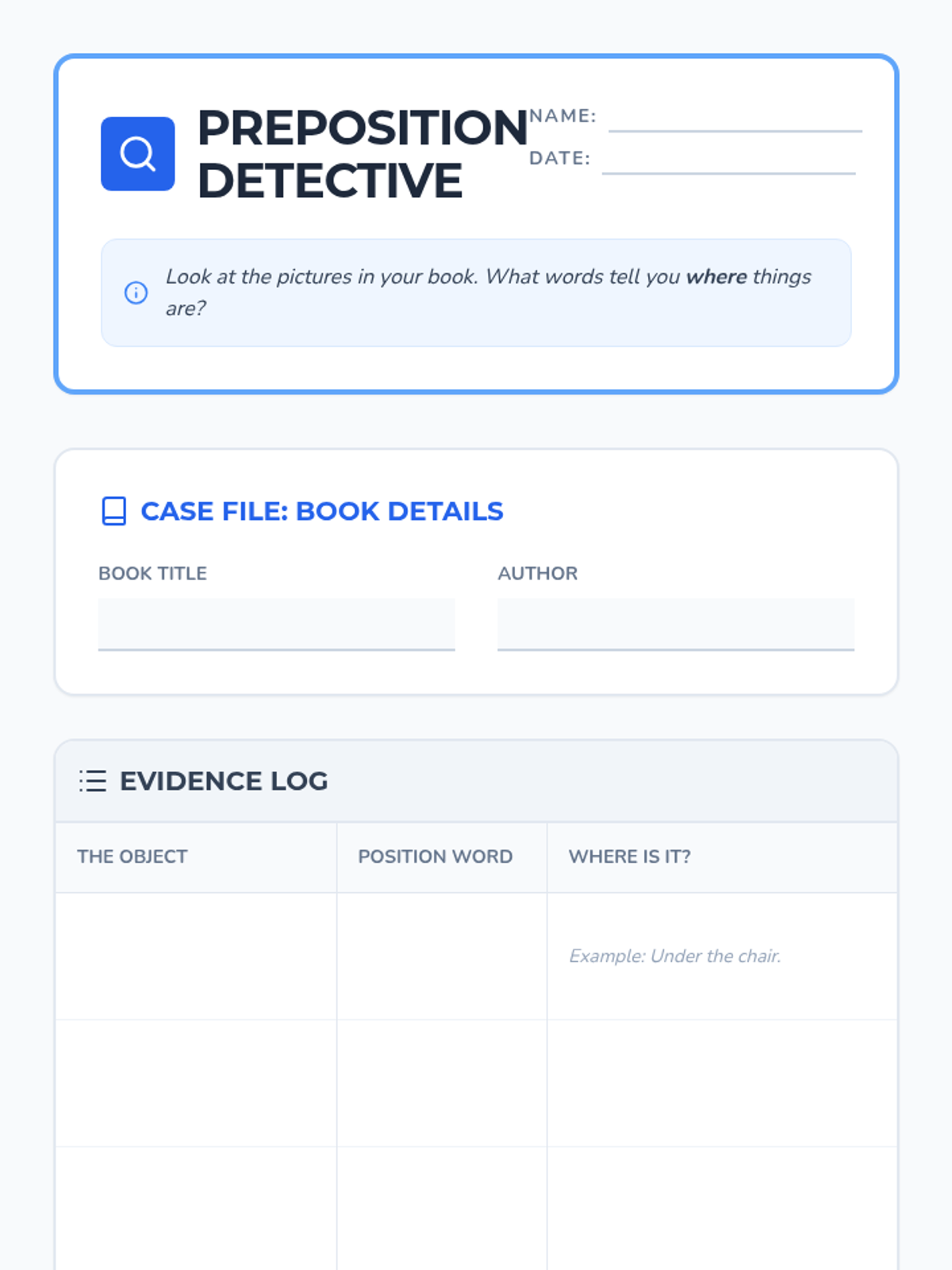
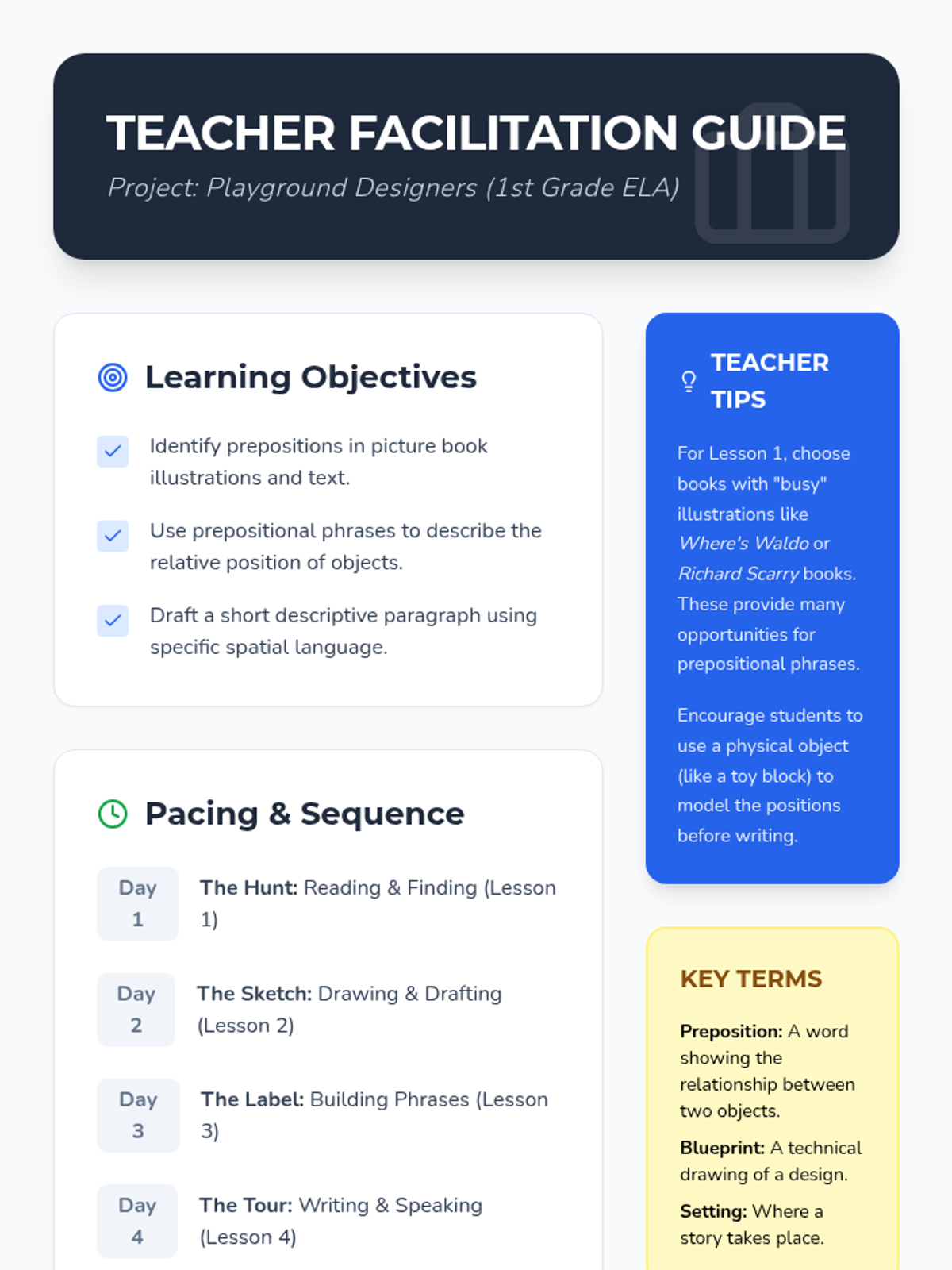
A project-based ELA sequence for 1st Grade students focusing on prepositions. Students analyze picture books, design a 'dream playground', and use spatial language to describe relative positions in their designs.
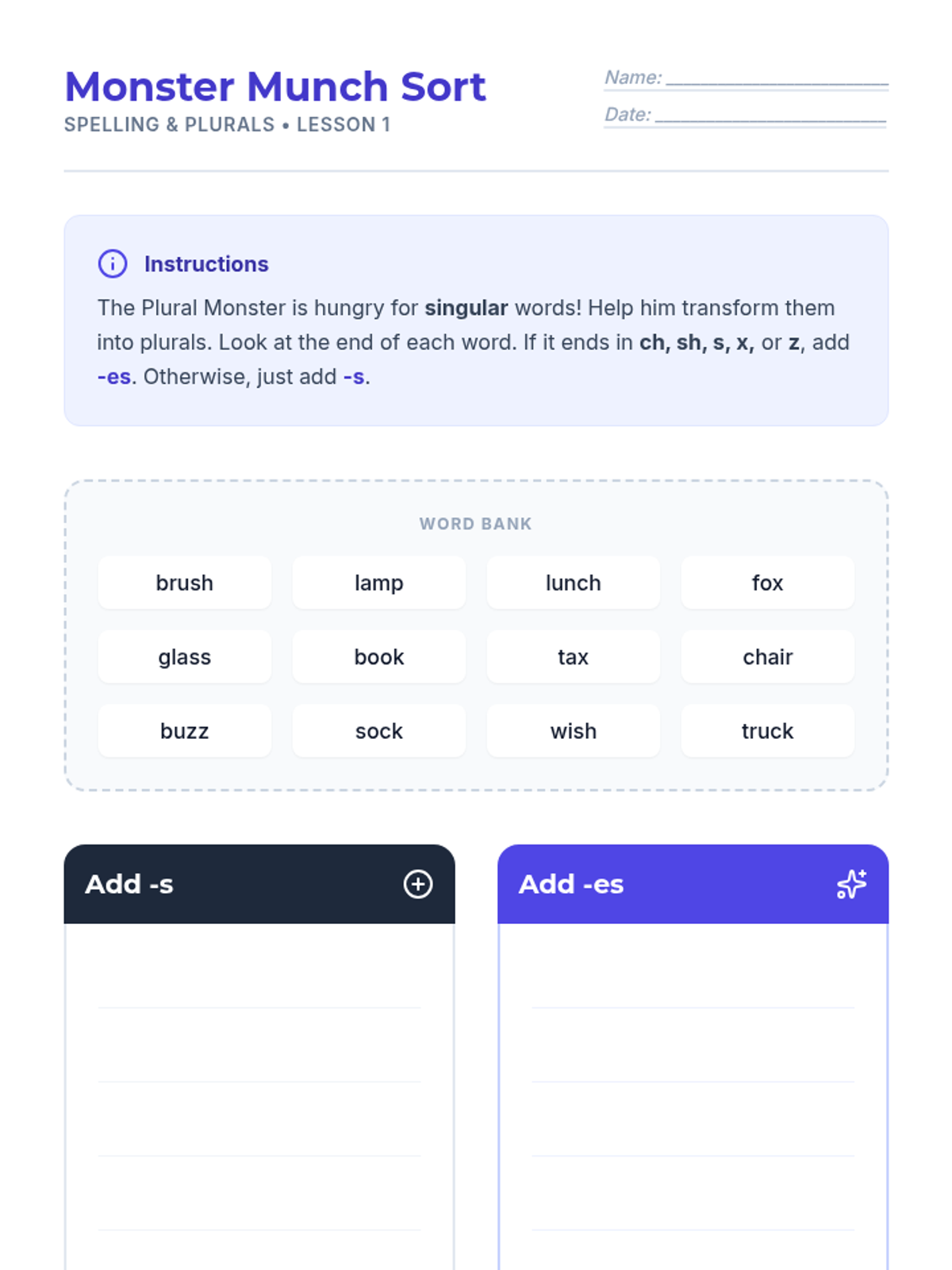
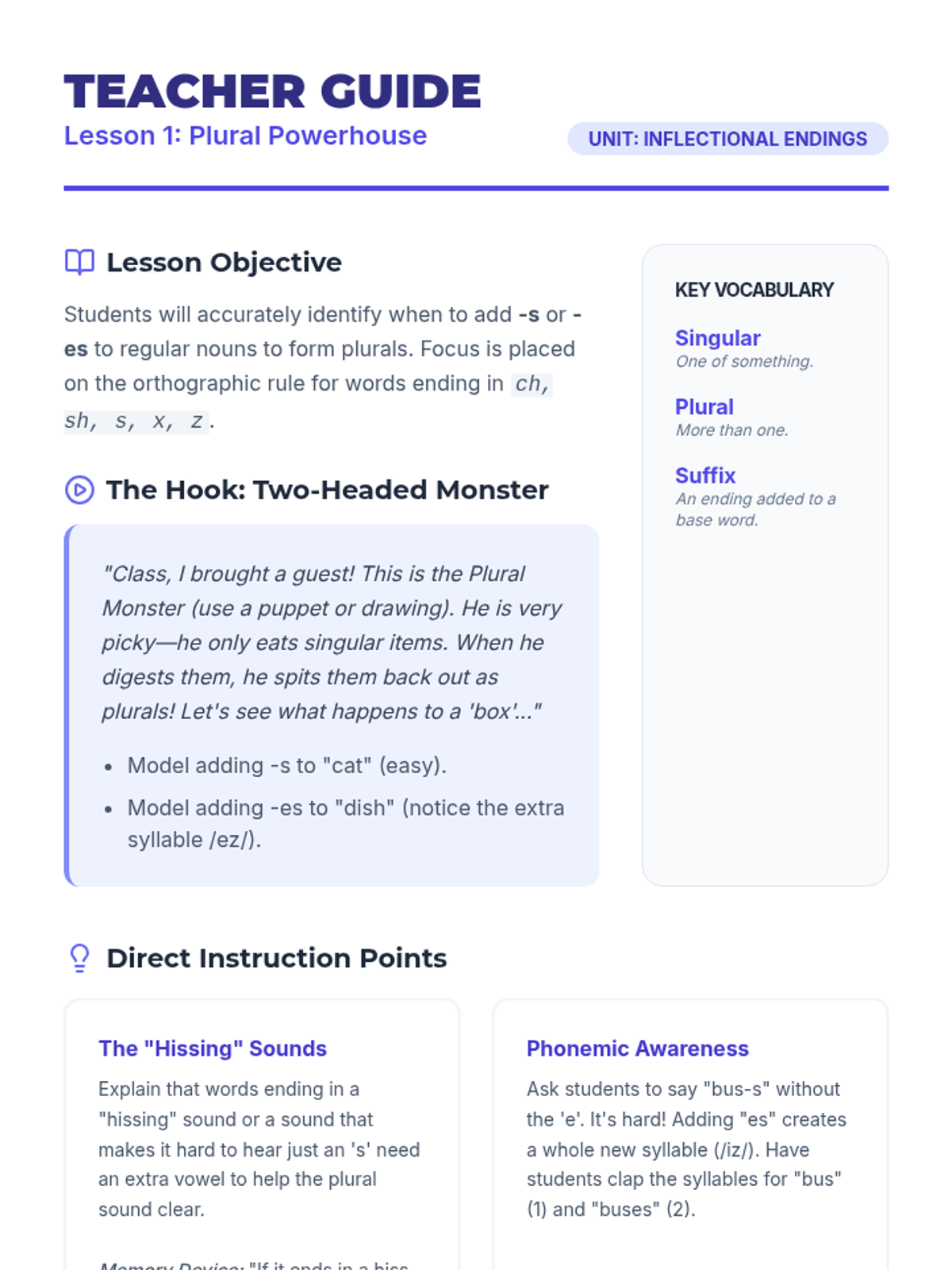
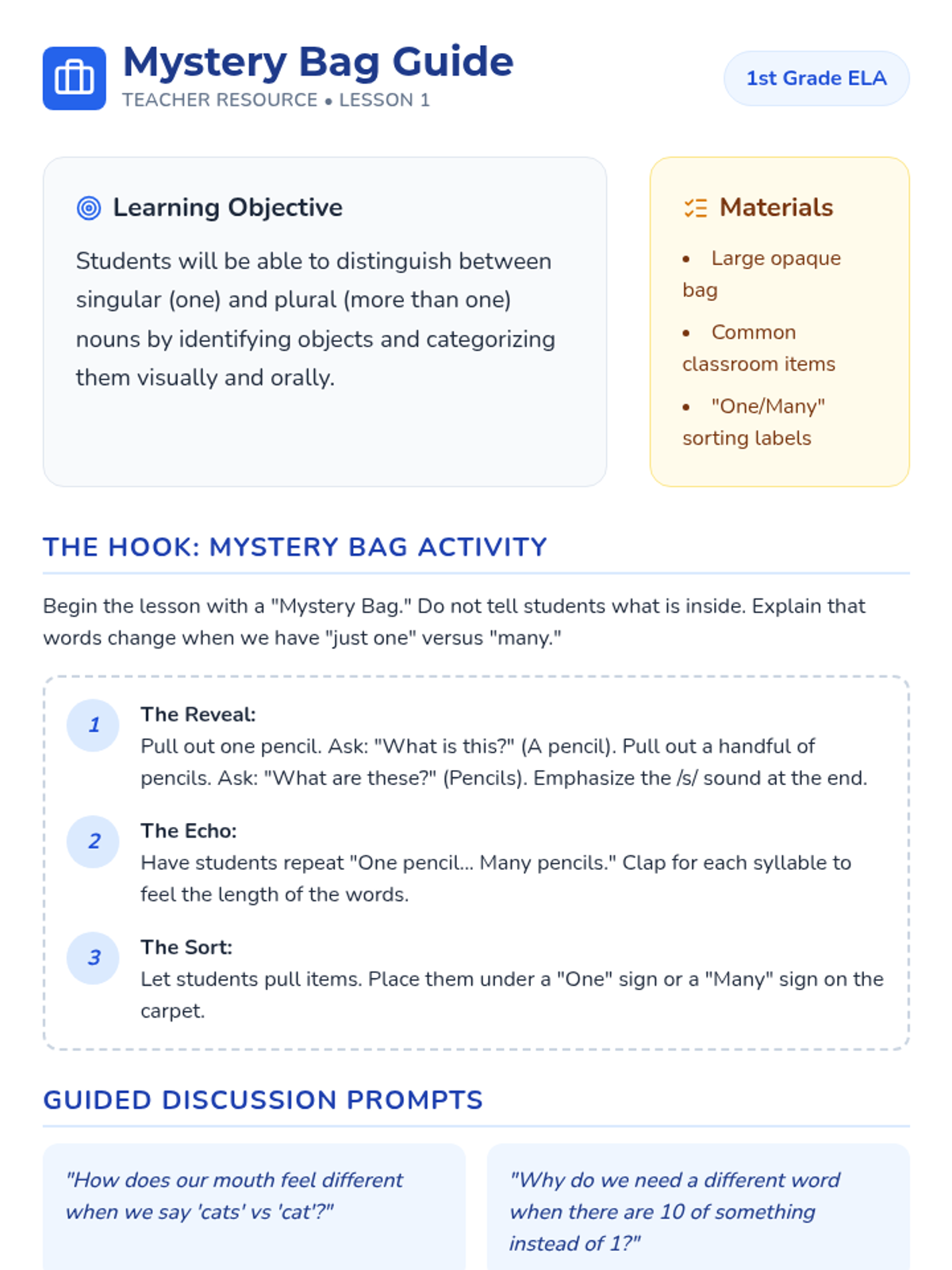
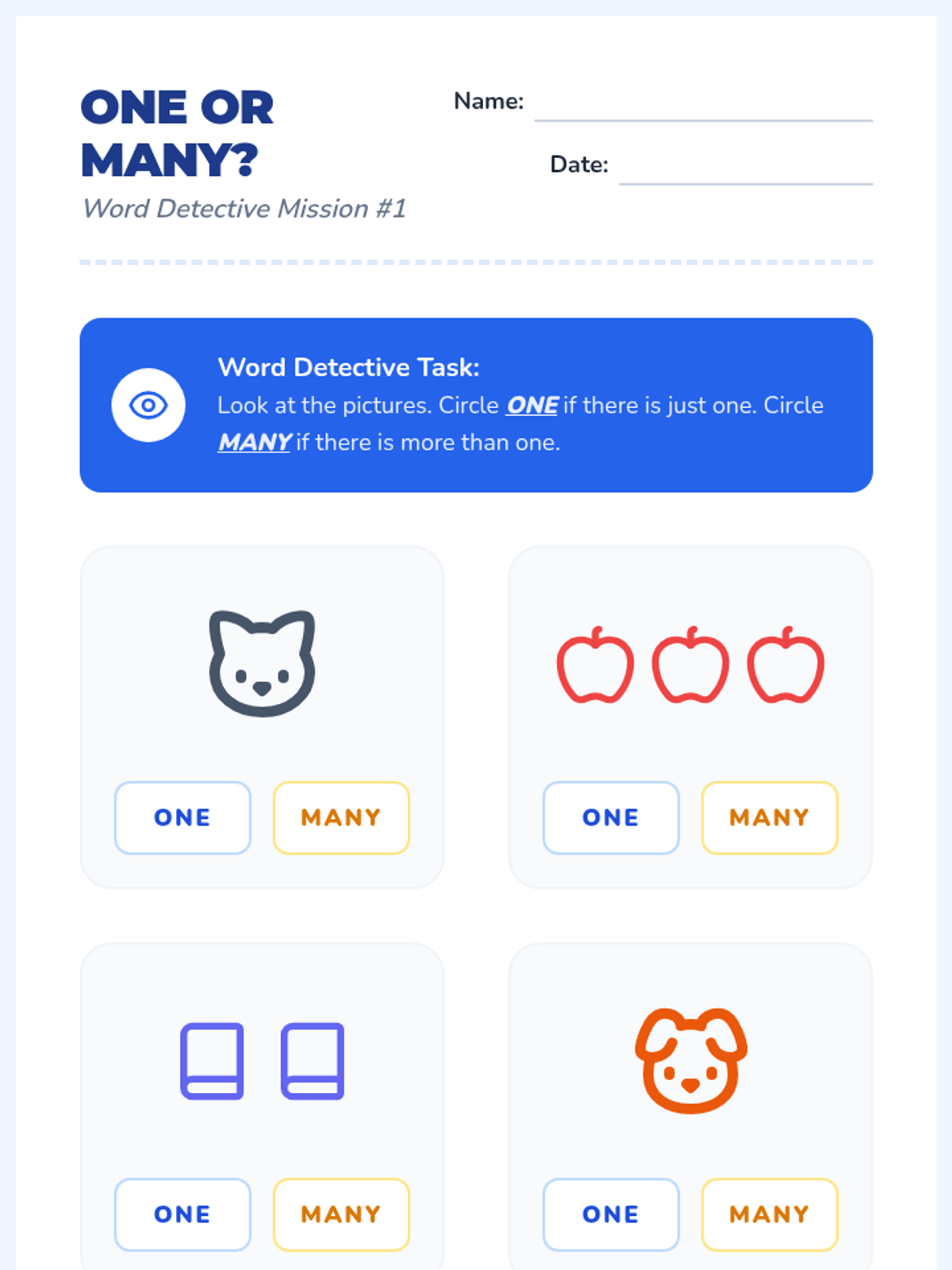
A comprehensive first-grade sequence exploring singular and plural nouns. Students learn to distinguish between 'one' and 'more than one' and master the application of -s and -es suffixes through interactive activities, scavenger hunts, and sentence building.
A workshop-style sequence for 1st graders focusing on subject-verb agreement through drafting, expansion, and editing. Students learn to match verbs with singular, plural, compound, and collective subjects.
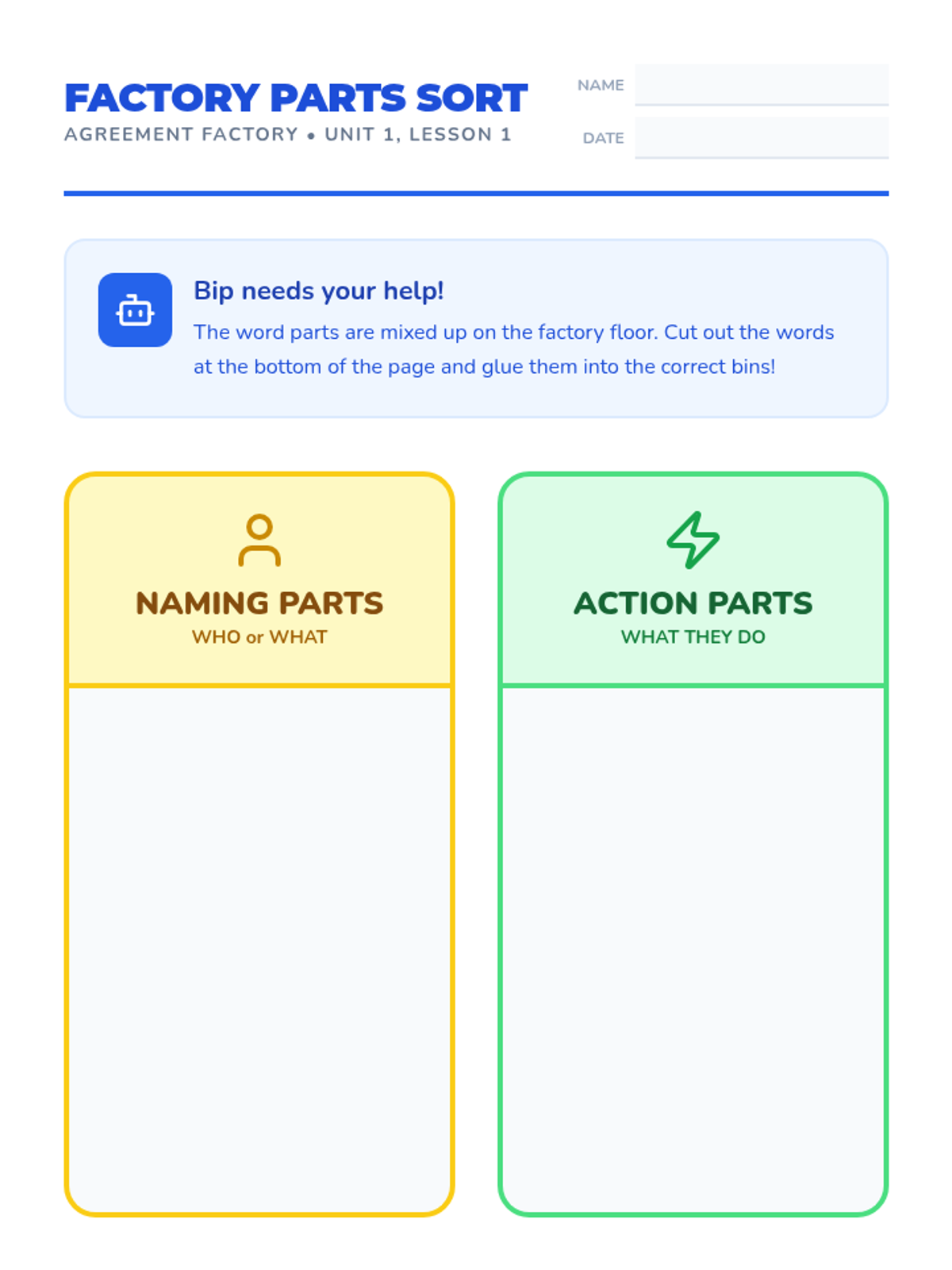
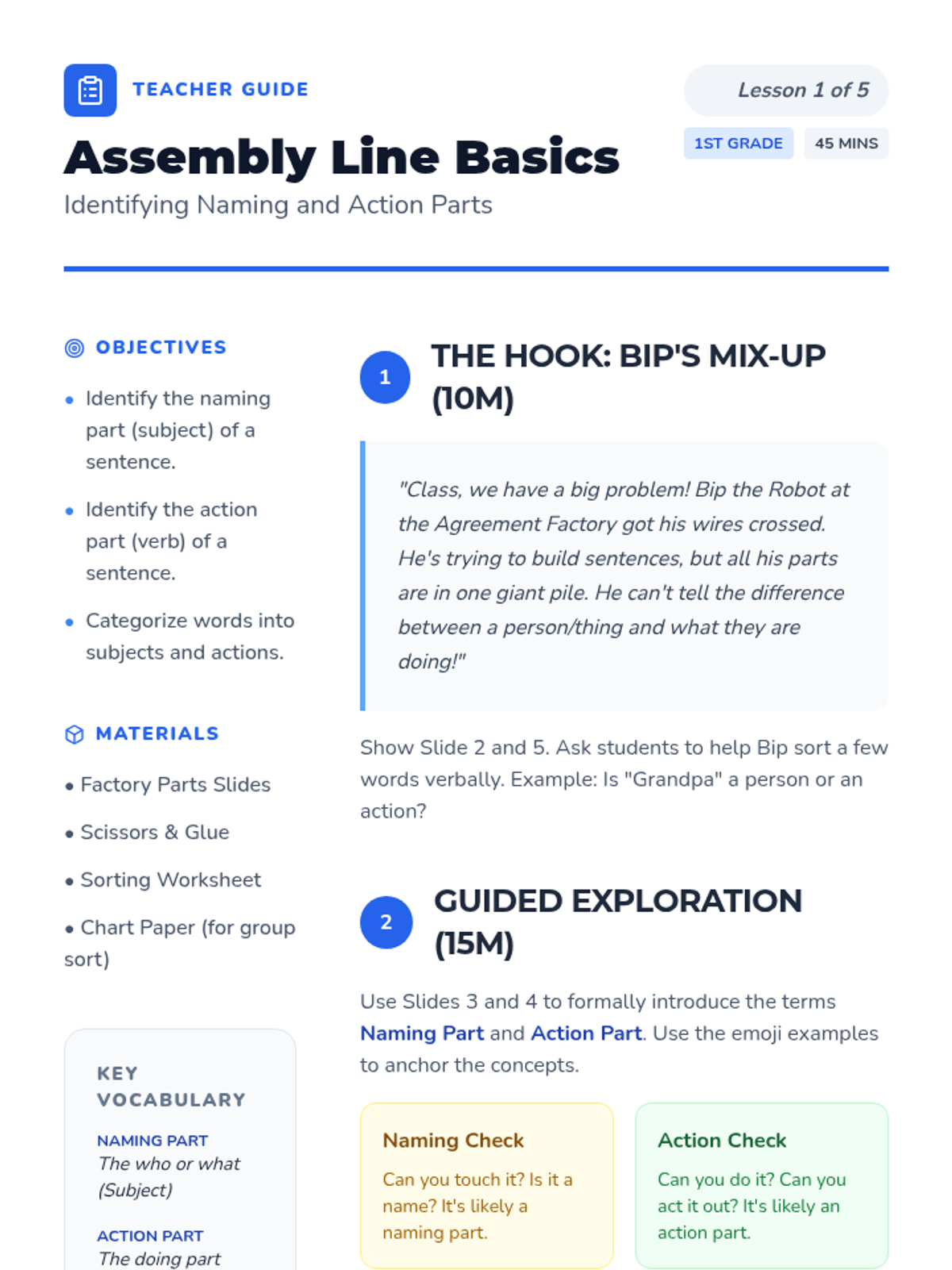
A foundational grammar sequence for first graders focused on subject-verb agreement. Students learn to identify naming and action parts and apply the 's' rules for singular, plural, and compound subjects through the 'Agreement Factory' theme.
A comprehensive 1st-grade sequence introducing action verbs through movement, categorization, subject-verb agreement, and creative writing. Students move from basic identification to using specific, descriptive verbs in their own sentences.
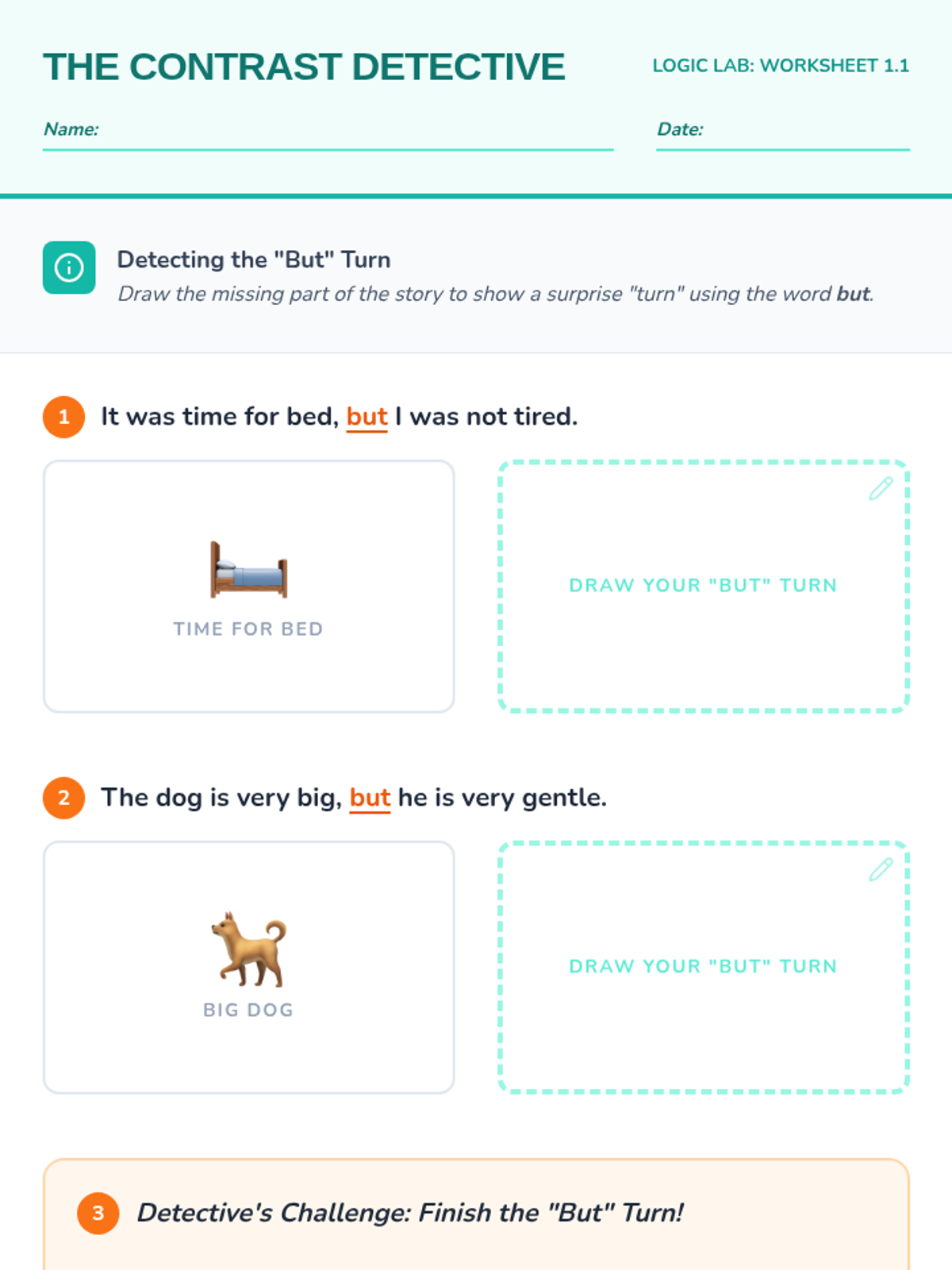
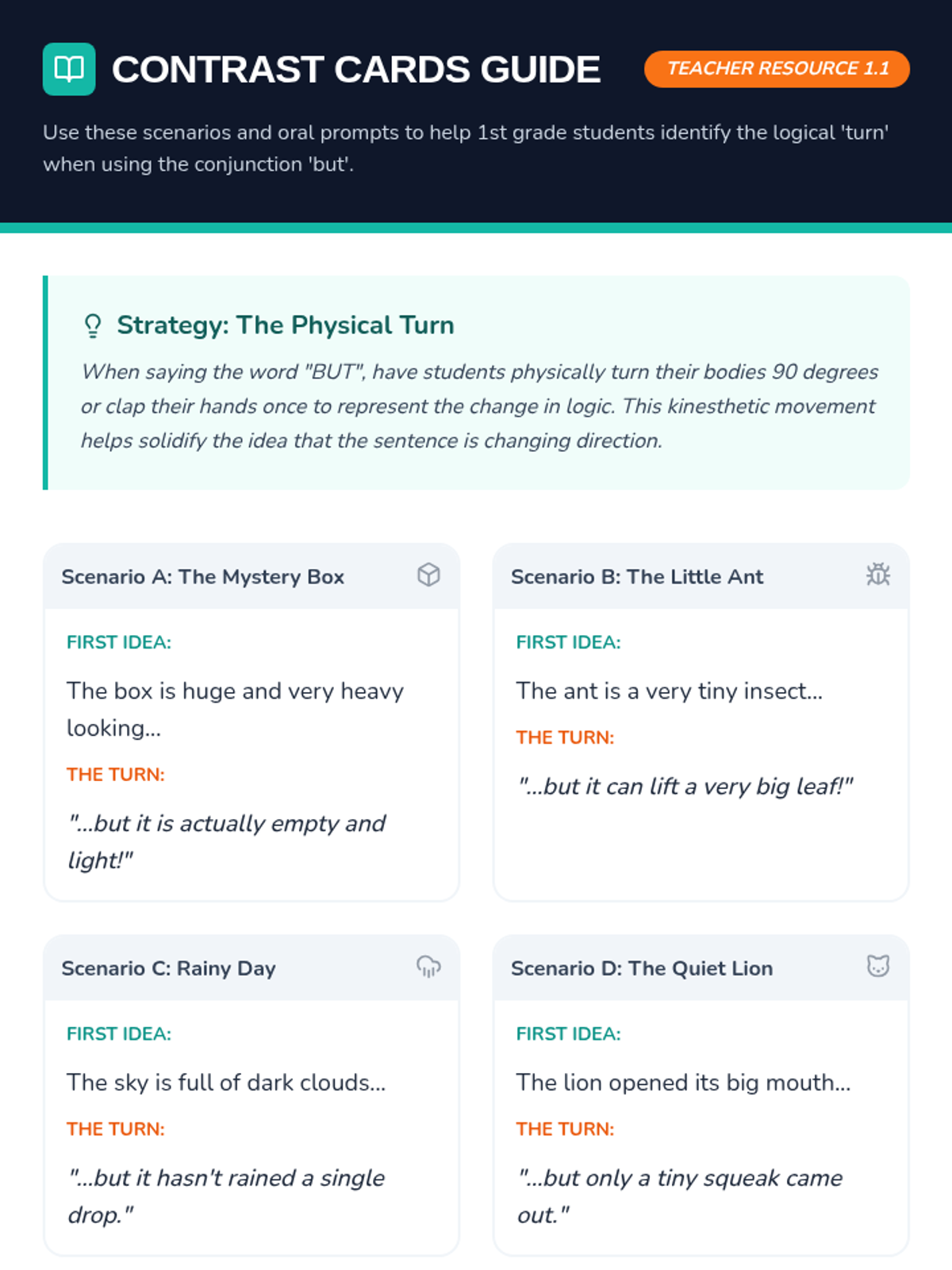
A first-grade ELA sequence focused on using the conjunctions 'but' and 'because' to express contrast and cause-and-effect relationships. Students move from oral identification to writing complex sentences through inquiry, games, and storytelling.
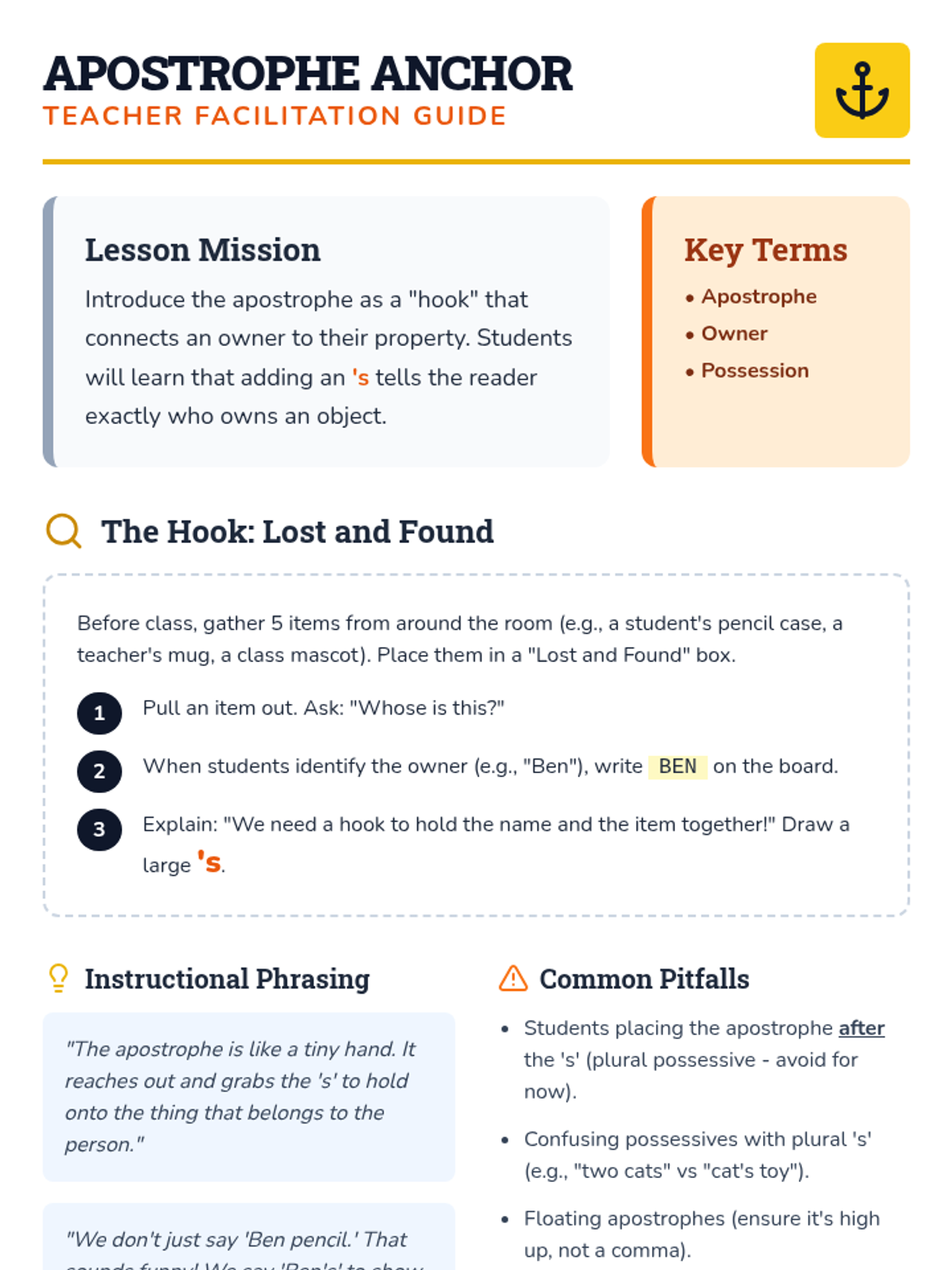
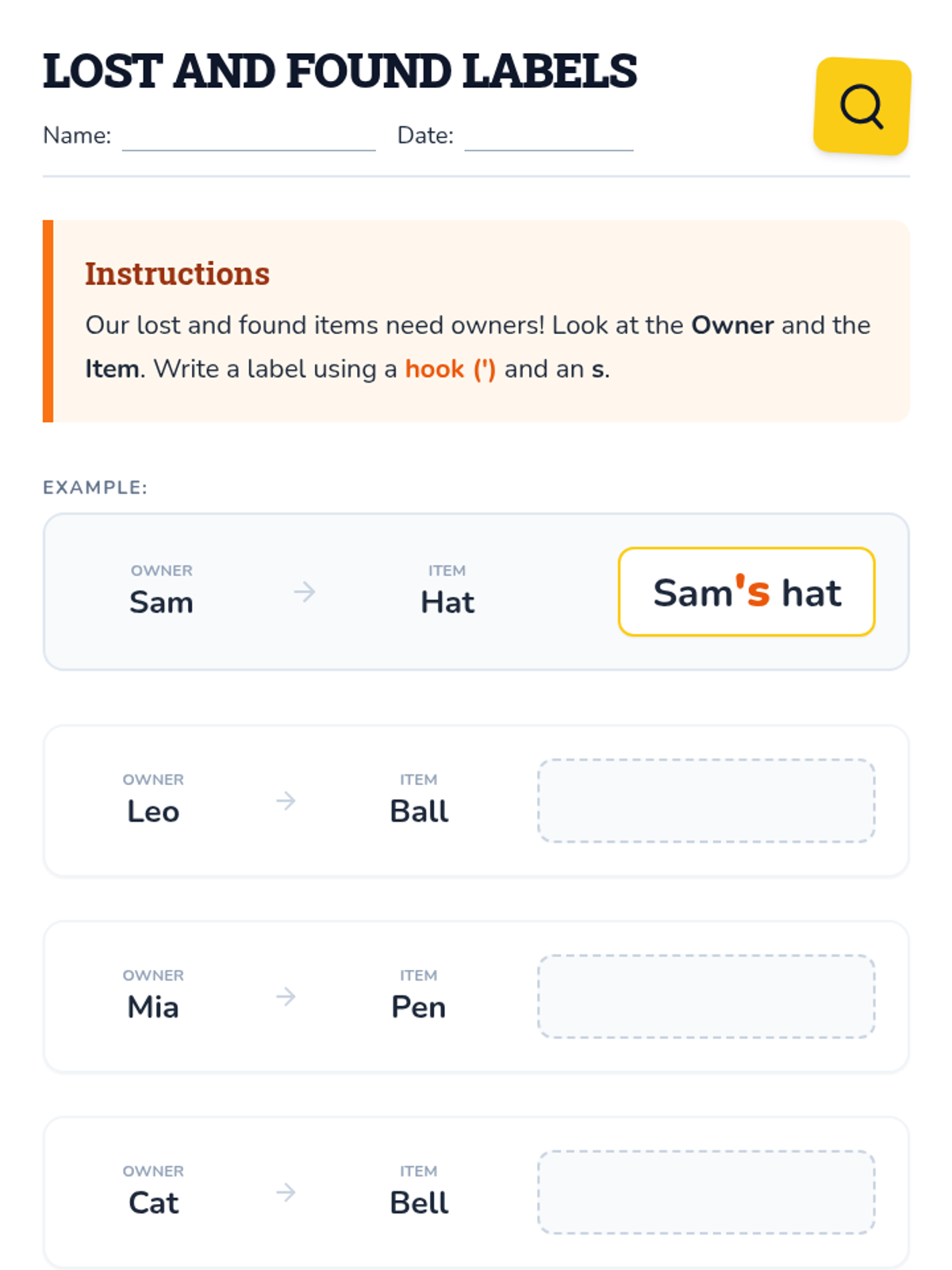
A comprehensive 1st Grade sequence introducing possessive apostrophes and quotation marks through concrete visuals and hands-on construction themes. Students learn to show 'who owns it' and 'who said it' using 'Punctuation Builder' motifs.
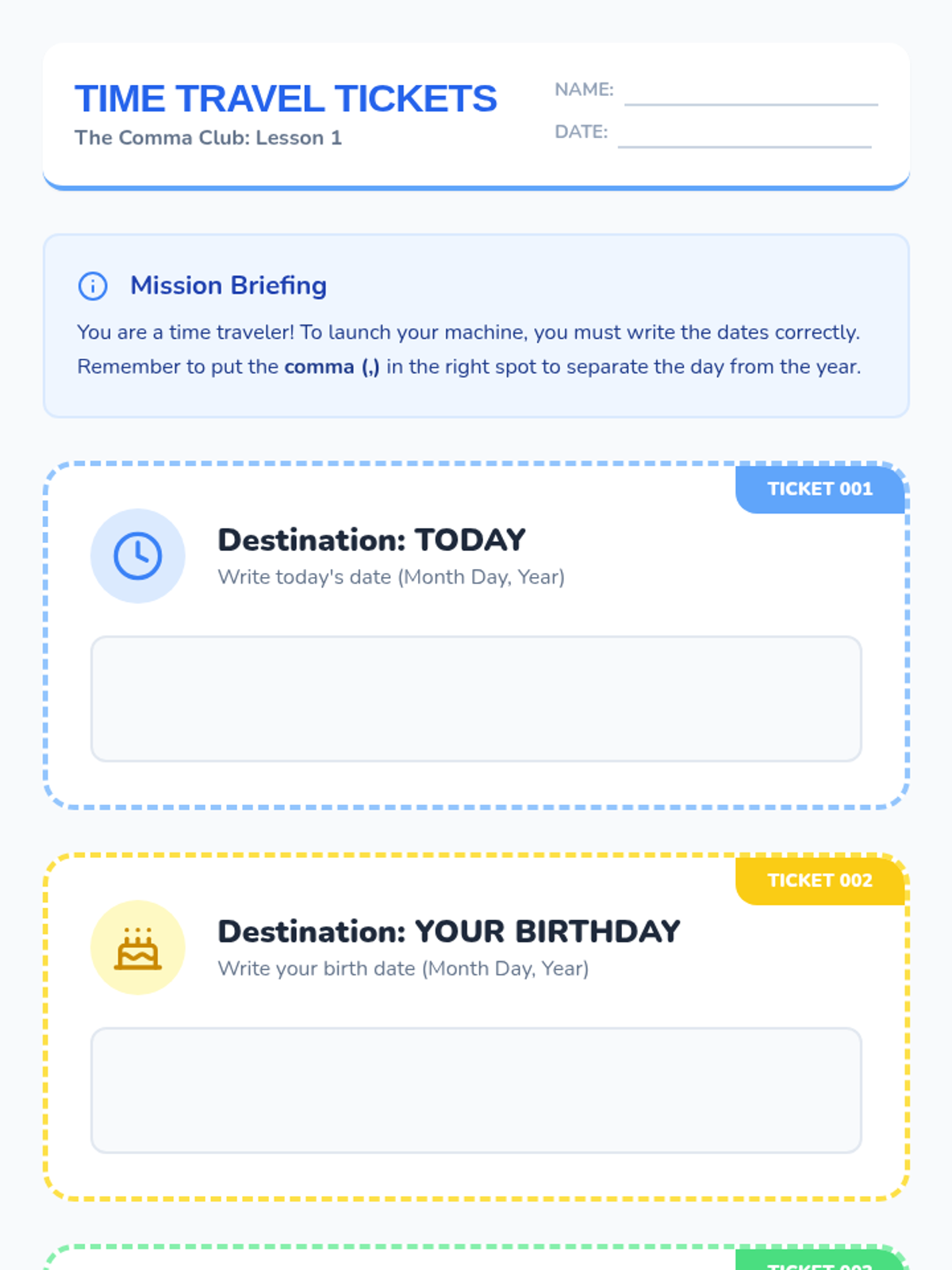
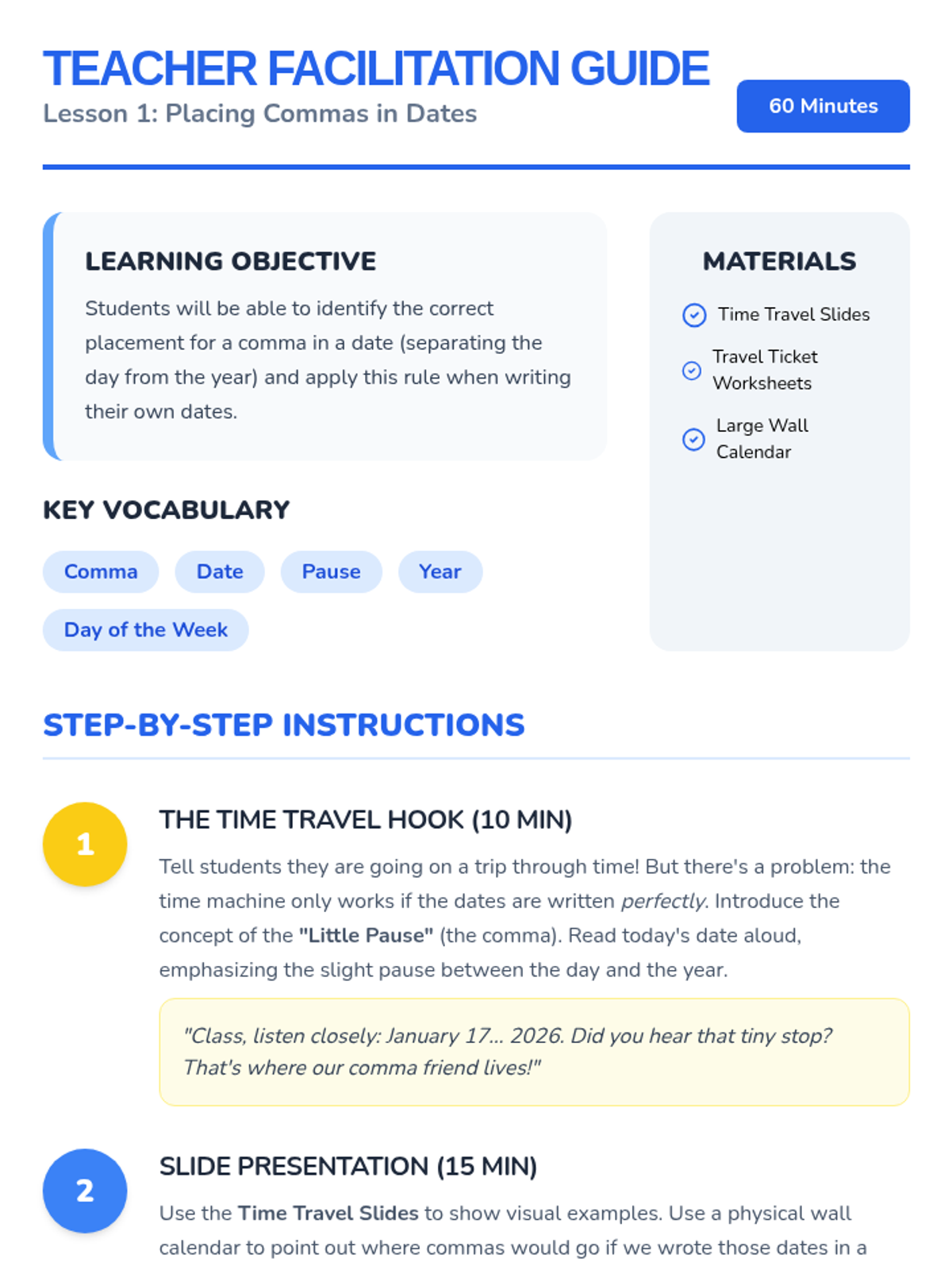
A 1st Grade sequence focused on using commas to separate days from years in dates and items in a series of three or more. Students use a writer's workshop model to observe, practice, and apply comma rules in functional and creative writing tasks.
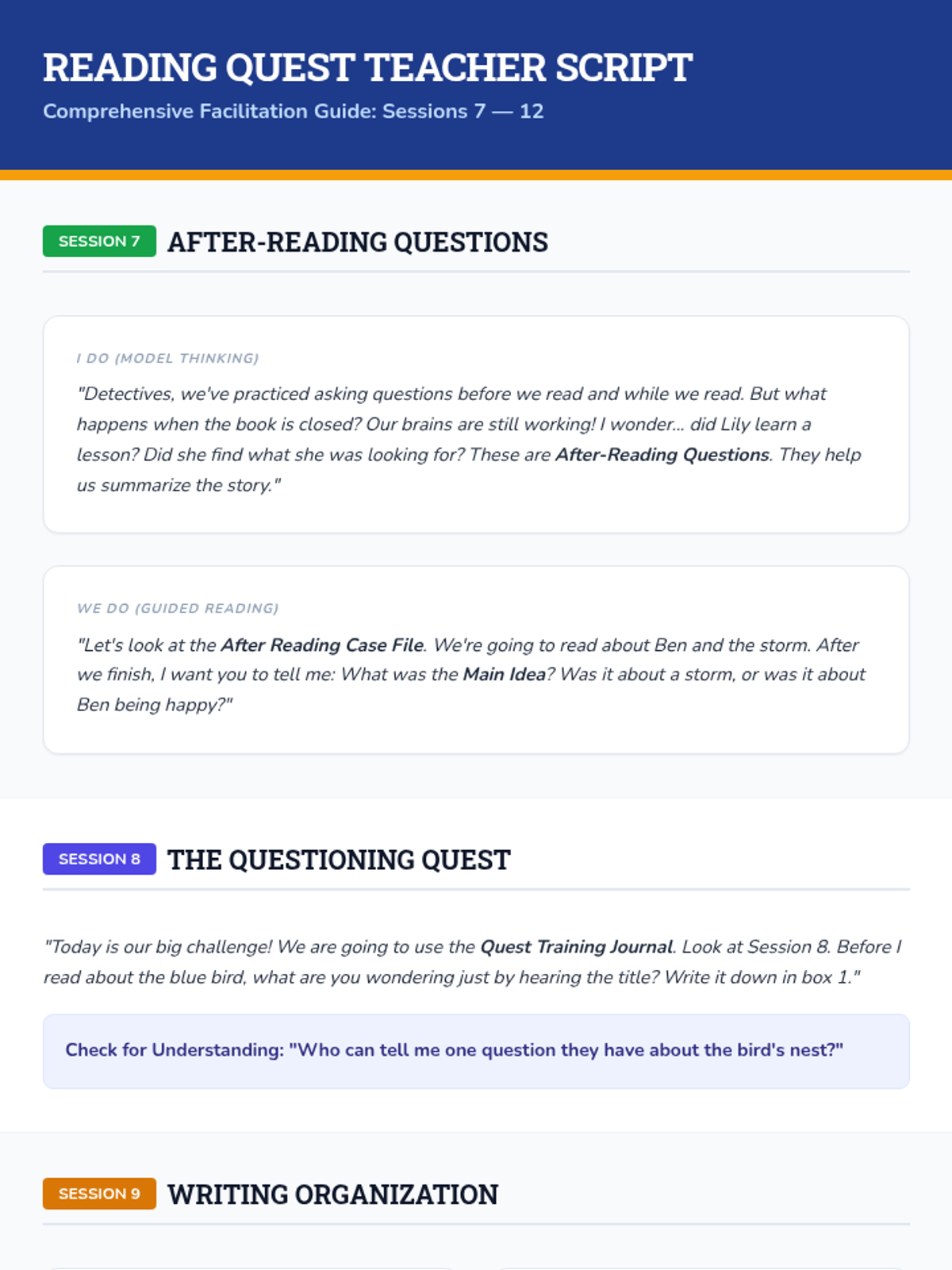
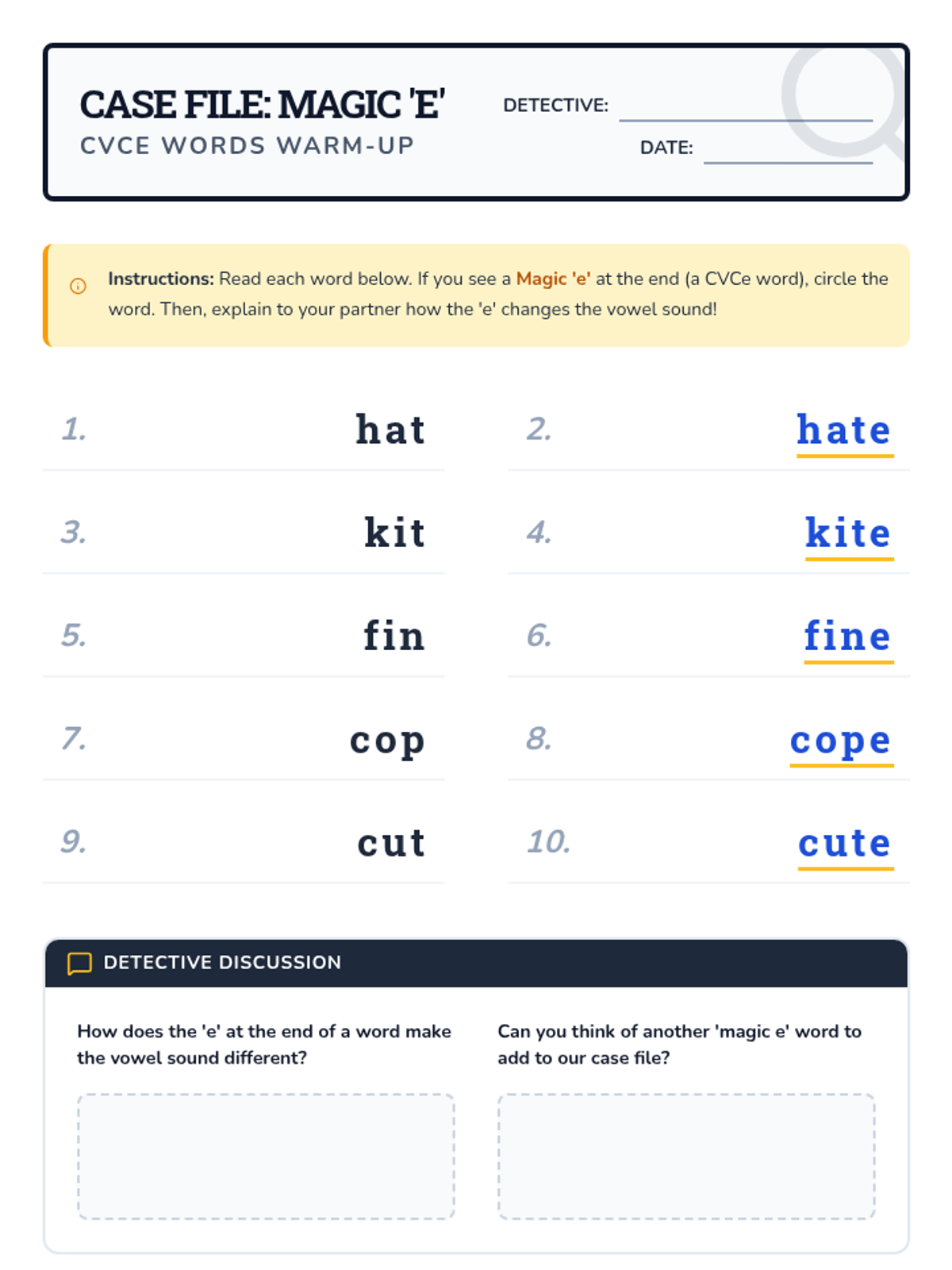
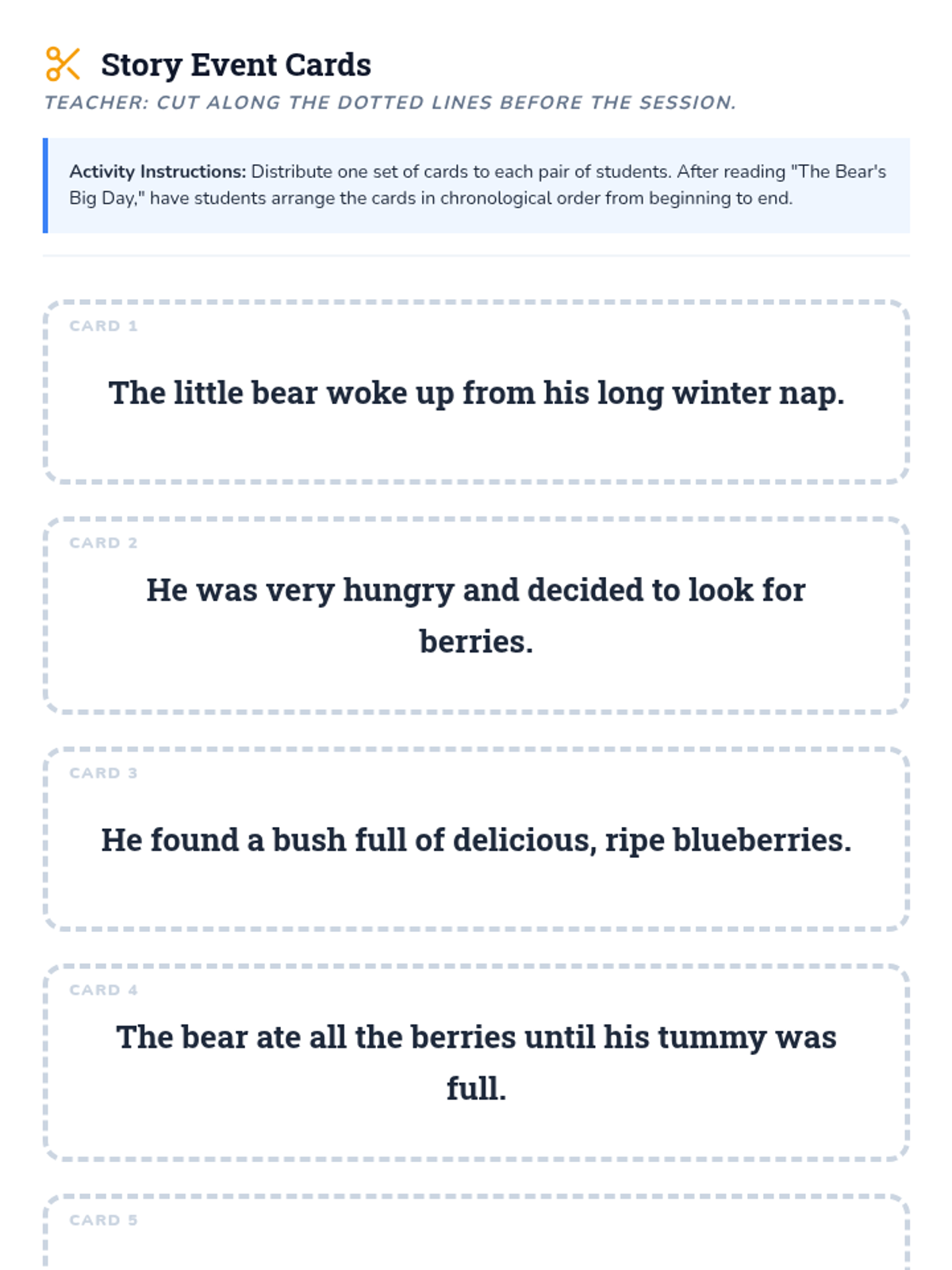
A 3-week, 12-session reading and writing curriculum designed for Tier 2 small groups, focusing on CVCe words, sequencing, questioning, and writing organization with a detective-themed 'Quest' aesthetic.
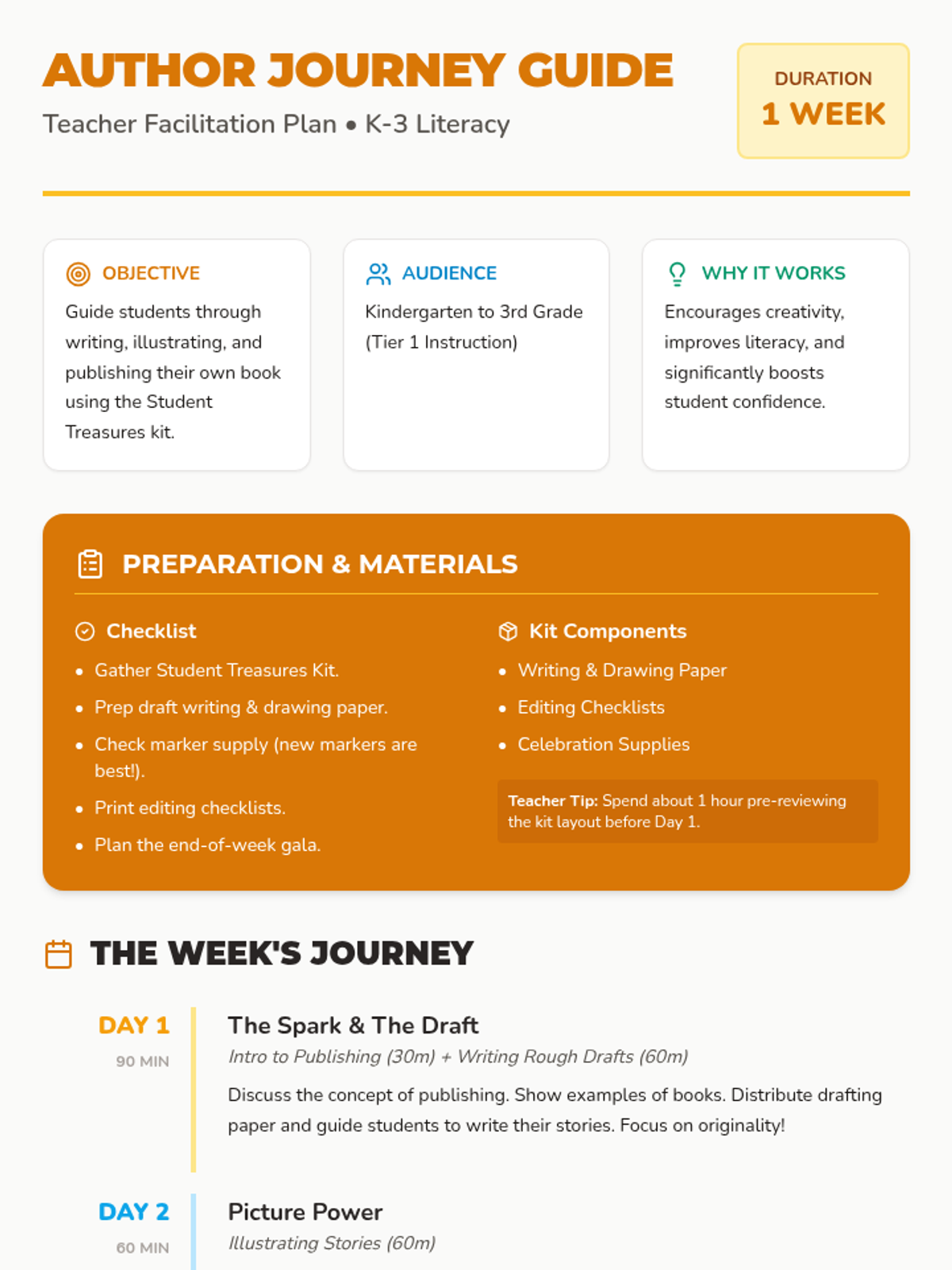
A comprehensive week-long project where K-3 students write, illustrate, and publish their own books using the Student Treasures kit.
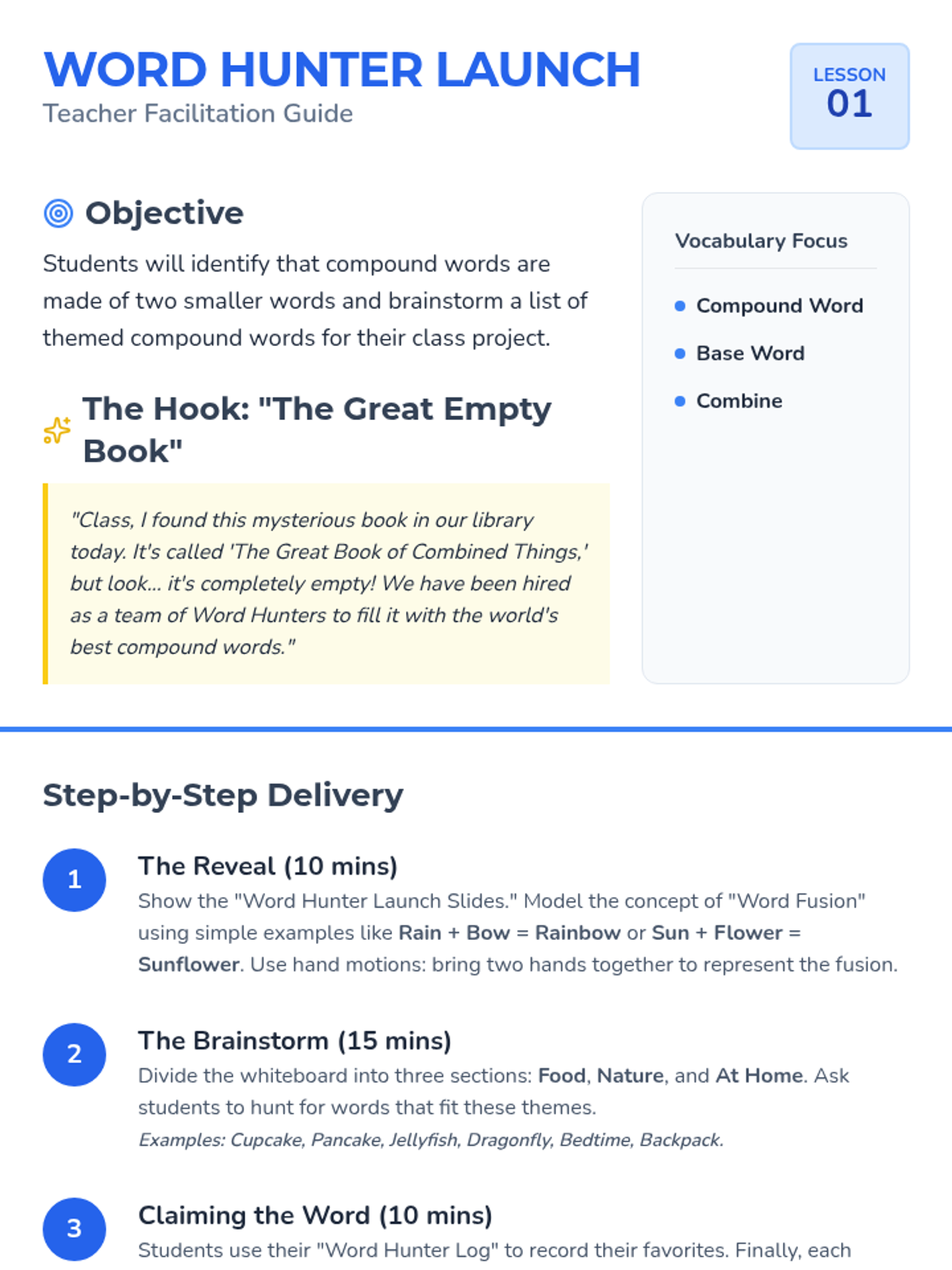
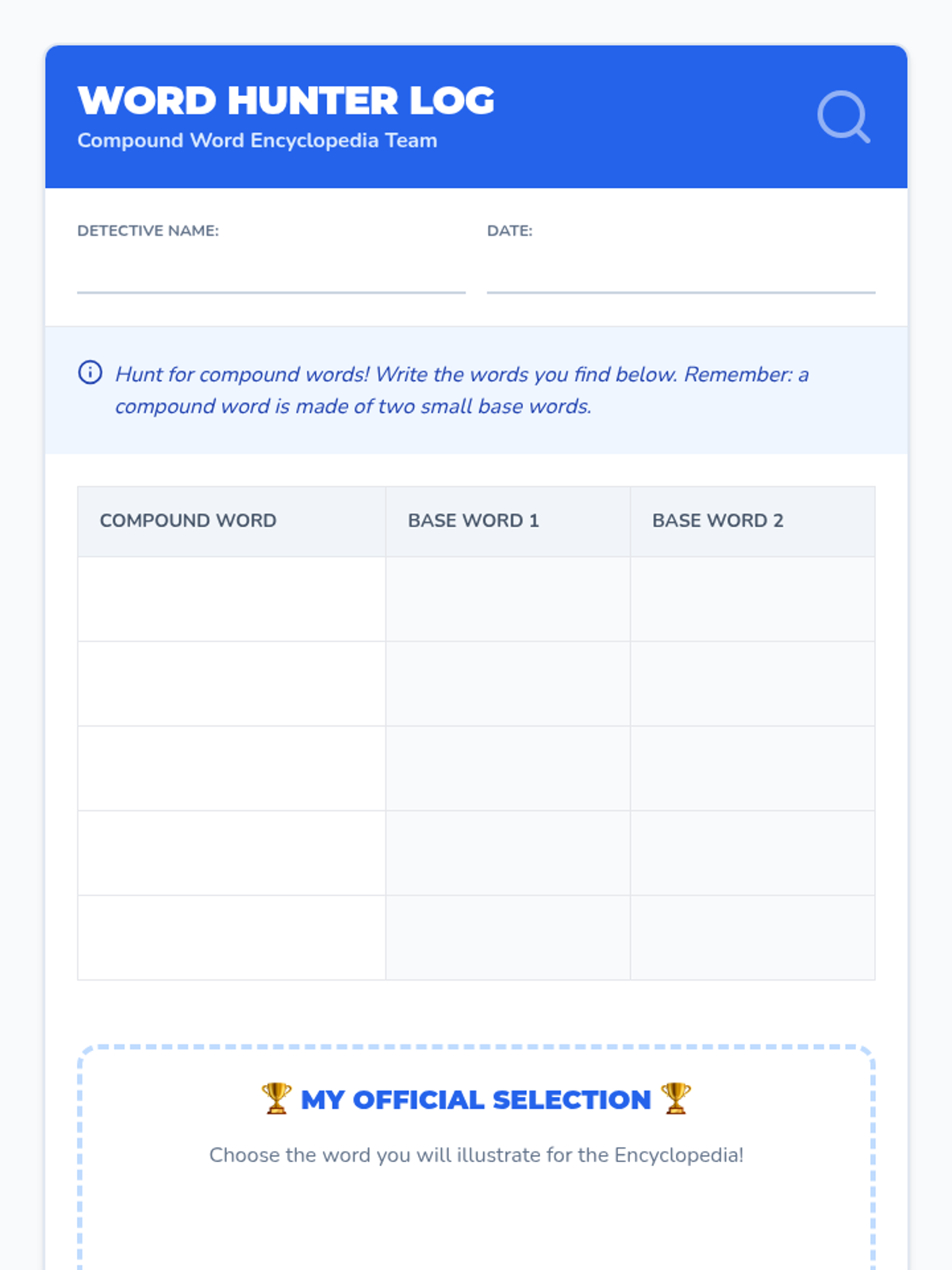
A project-based ELA sequence where 1st Grade students explore compound words by creating a 'Class Encyclopedia.' Students master the concept by breaking words into their base components visually and linguistically, culminating in a gallery showcase of their illustrated work.
A series of thematic handwriting programs designed to improve fine motor skills and penmanship through daily practice sessions centered around fascinating educational topics like biology and history.
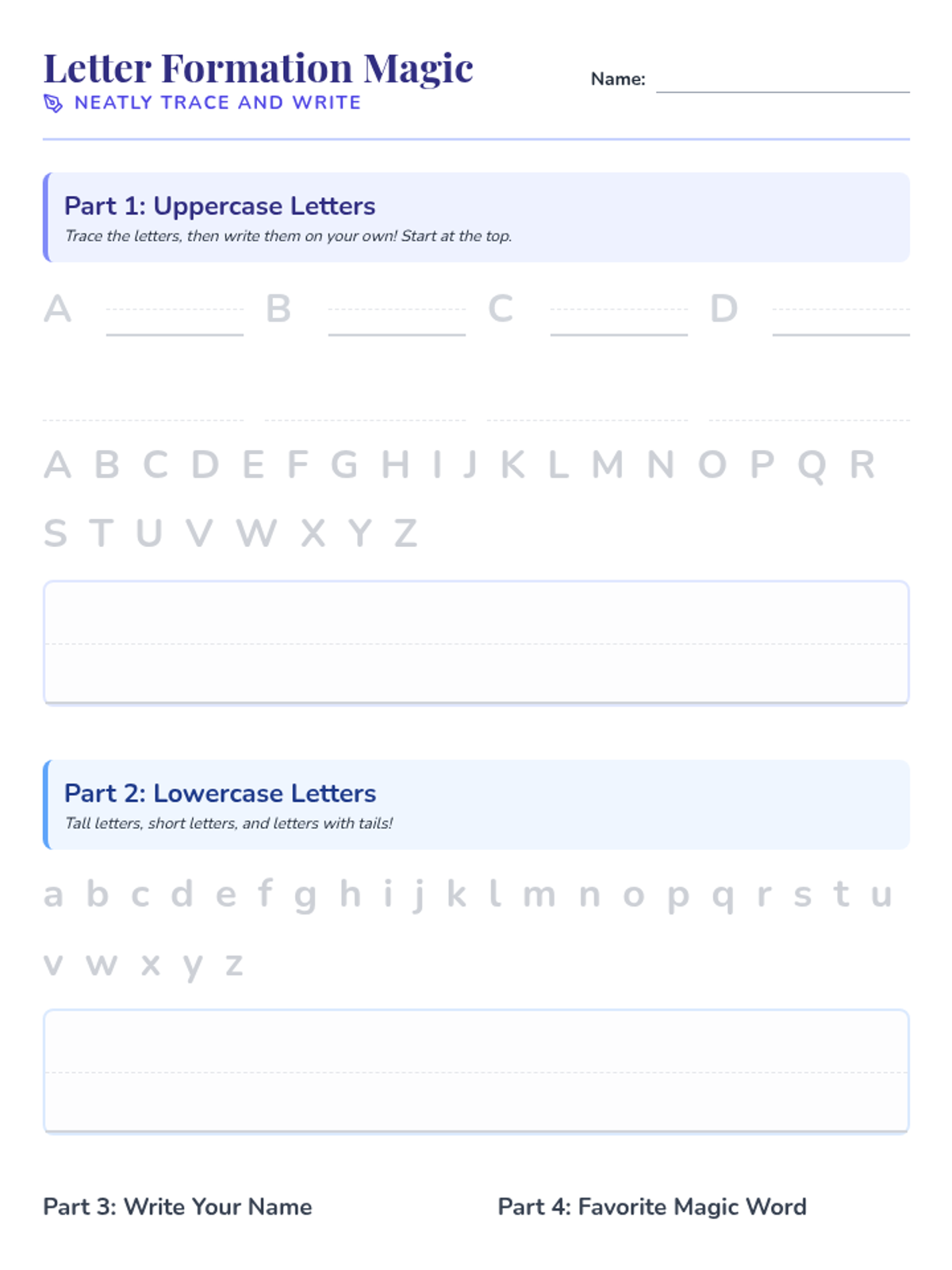
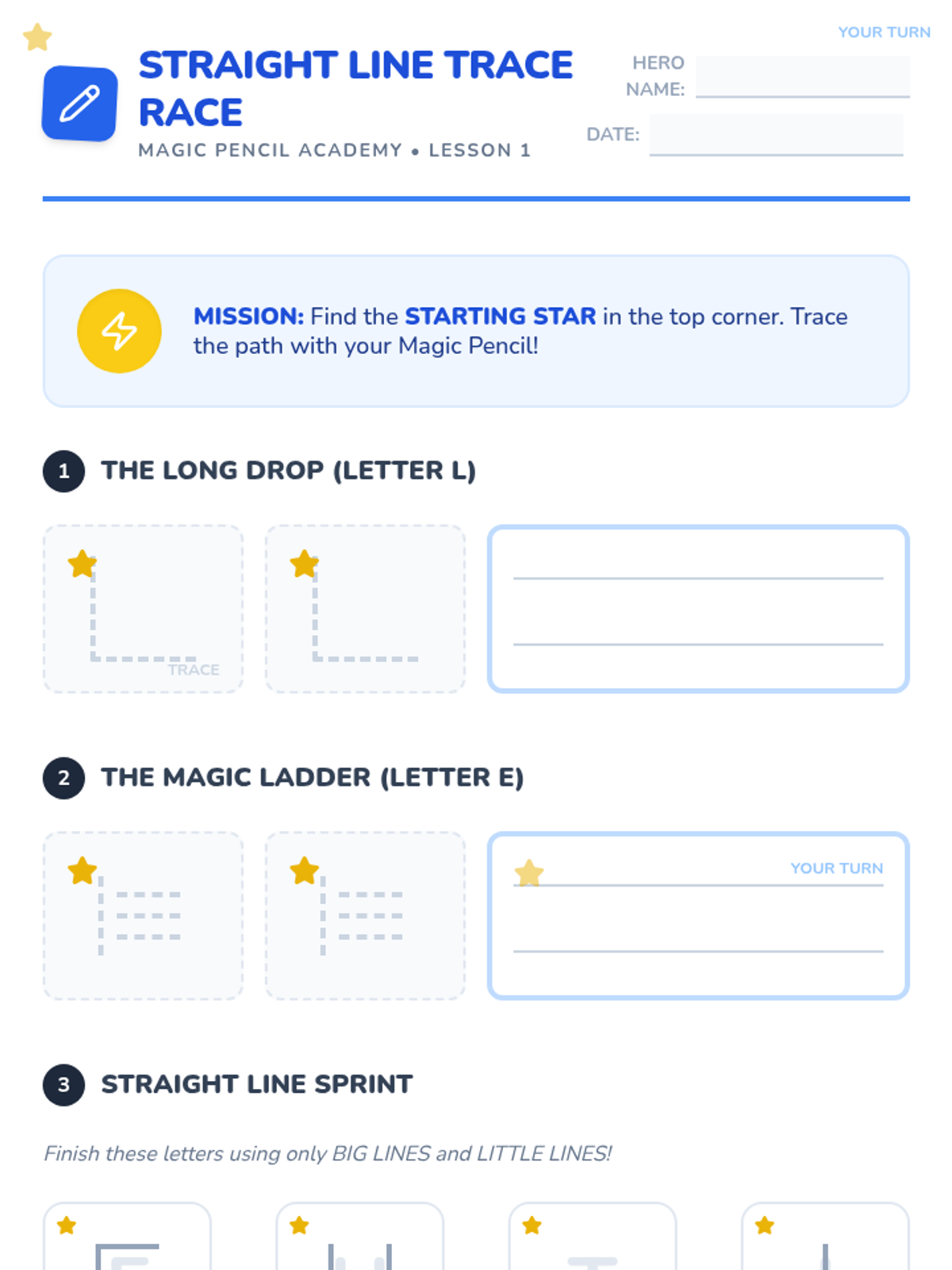
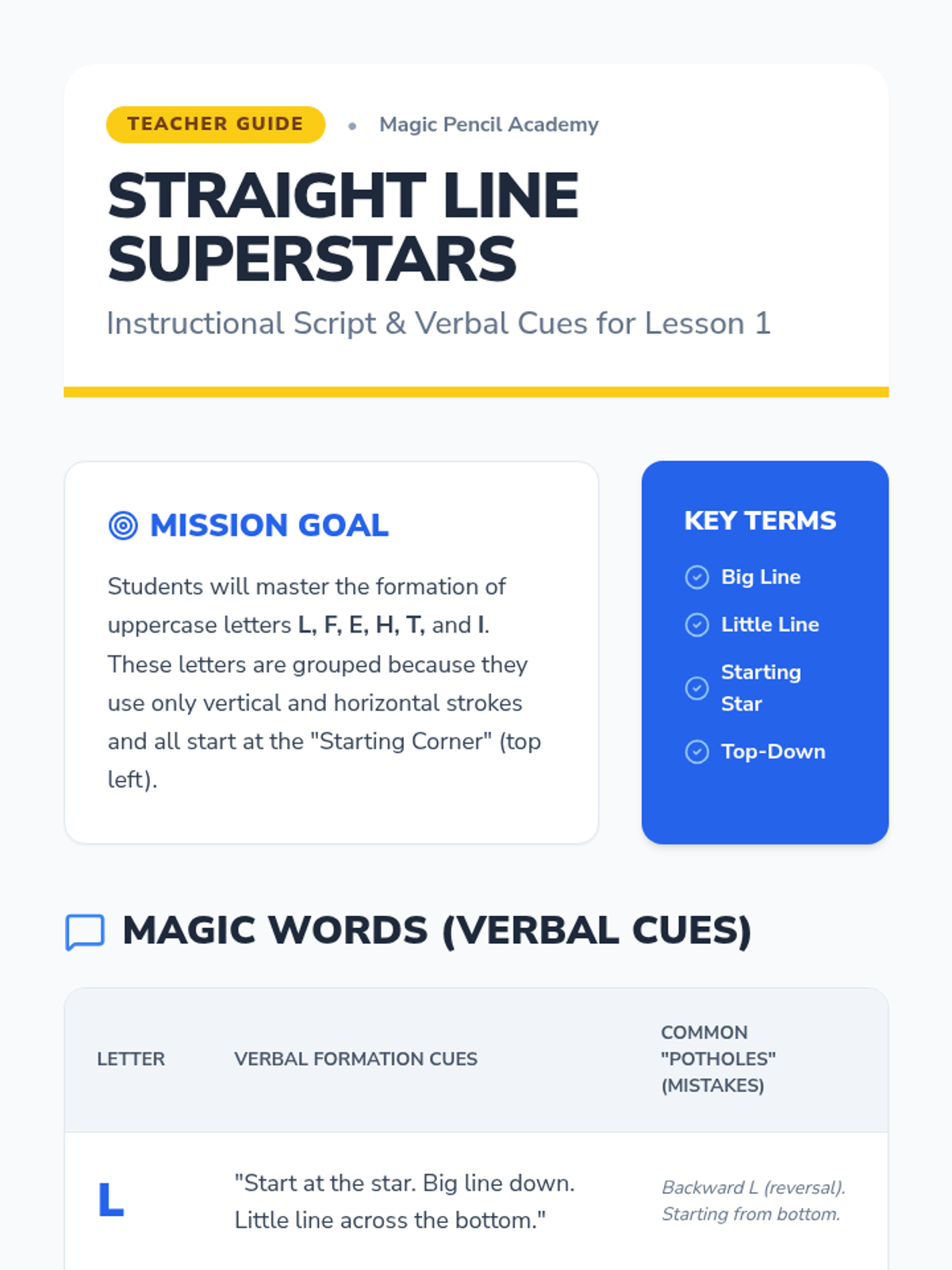
A whimsical handwriting program for first graders inspired by the Handwriting Without Tears method, focusing on proper letter formation through 'Magic Pencil' quests and interactive challenges.
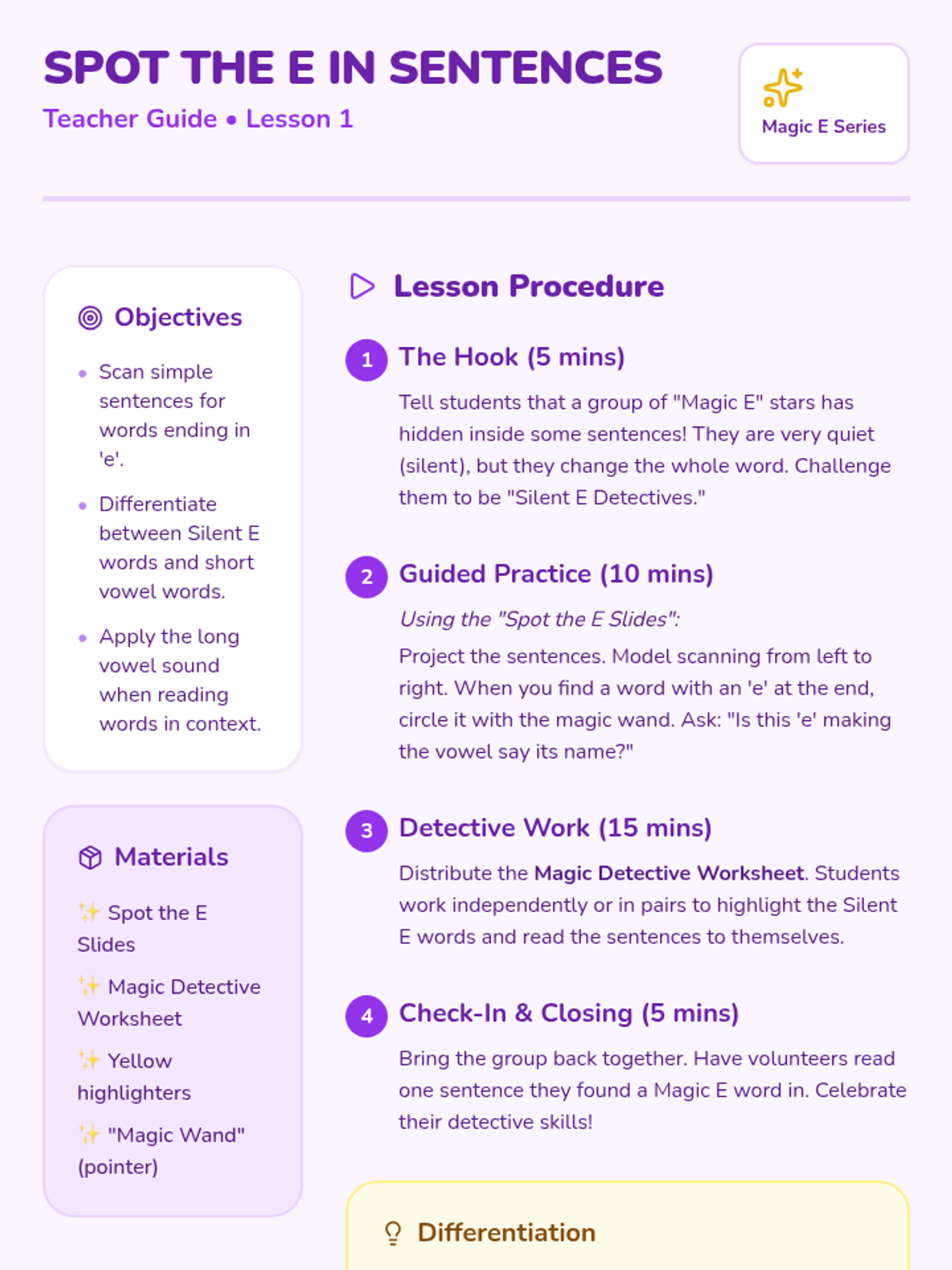
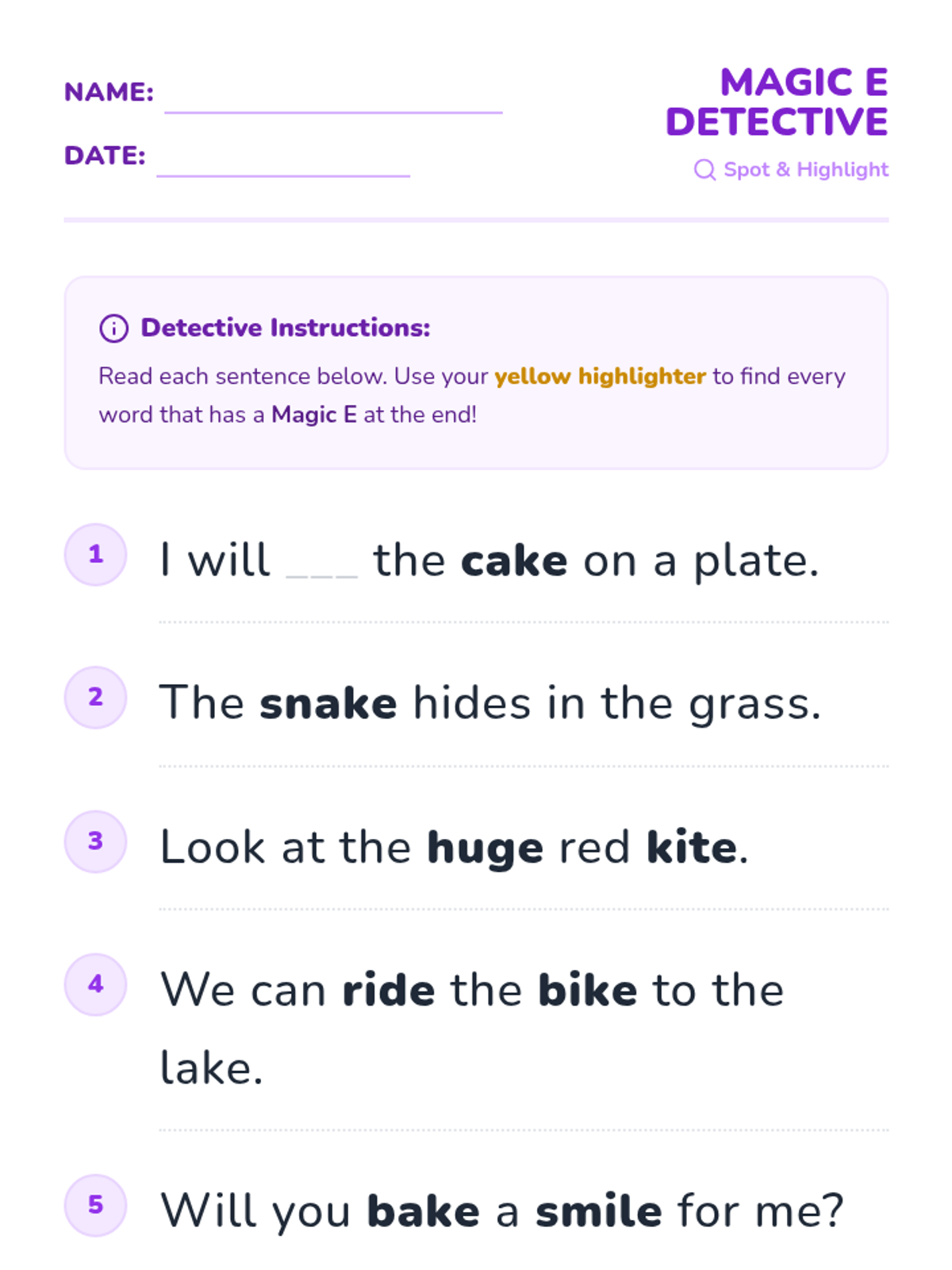
A comprehensive Kindergarten sequence focusing on applying Silent E phonics rules to connected text, from scanning sentences to writing original stories. Students transition from decoding isolated words to comprehension and creative application.
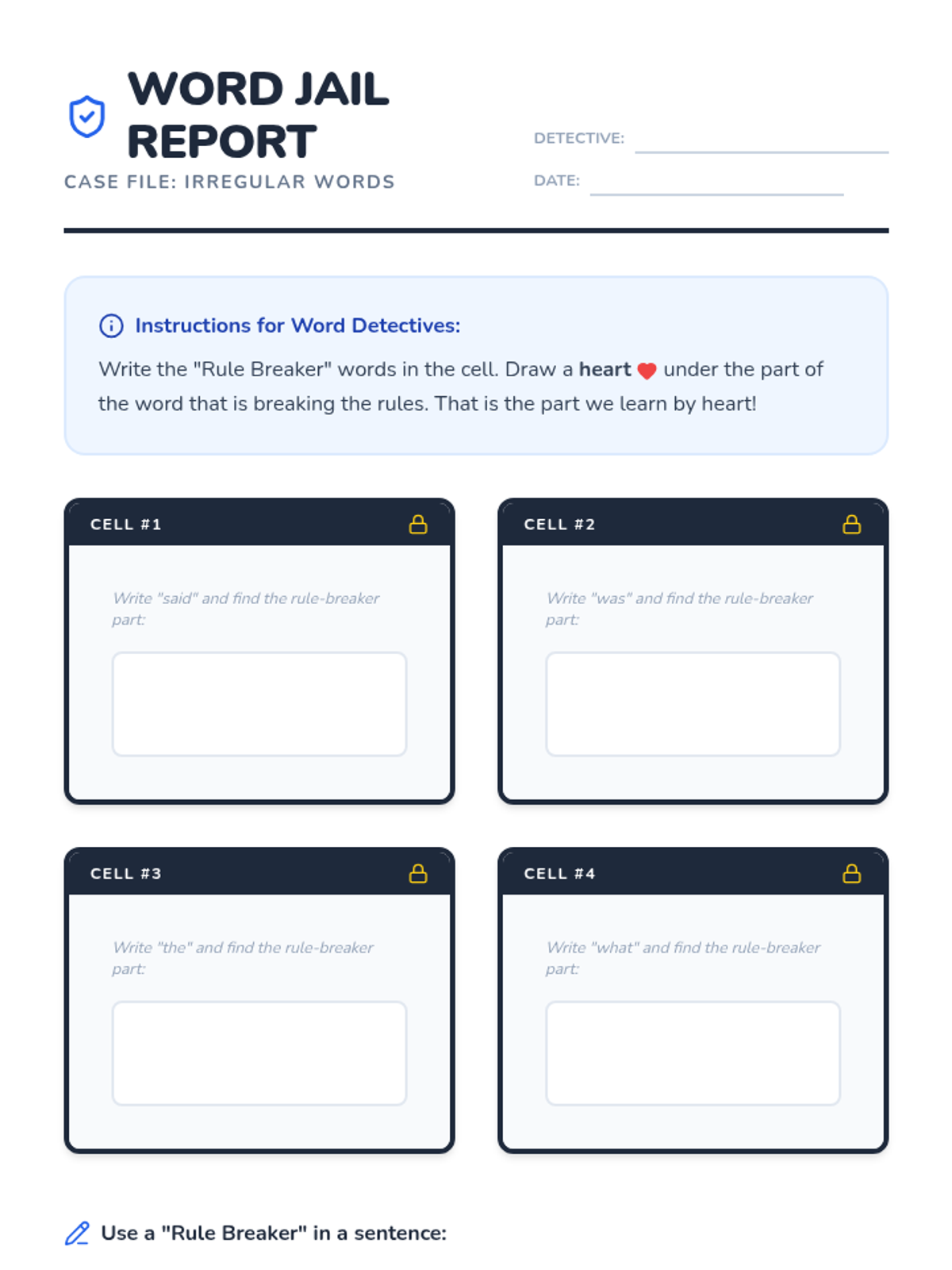
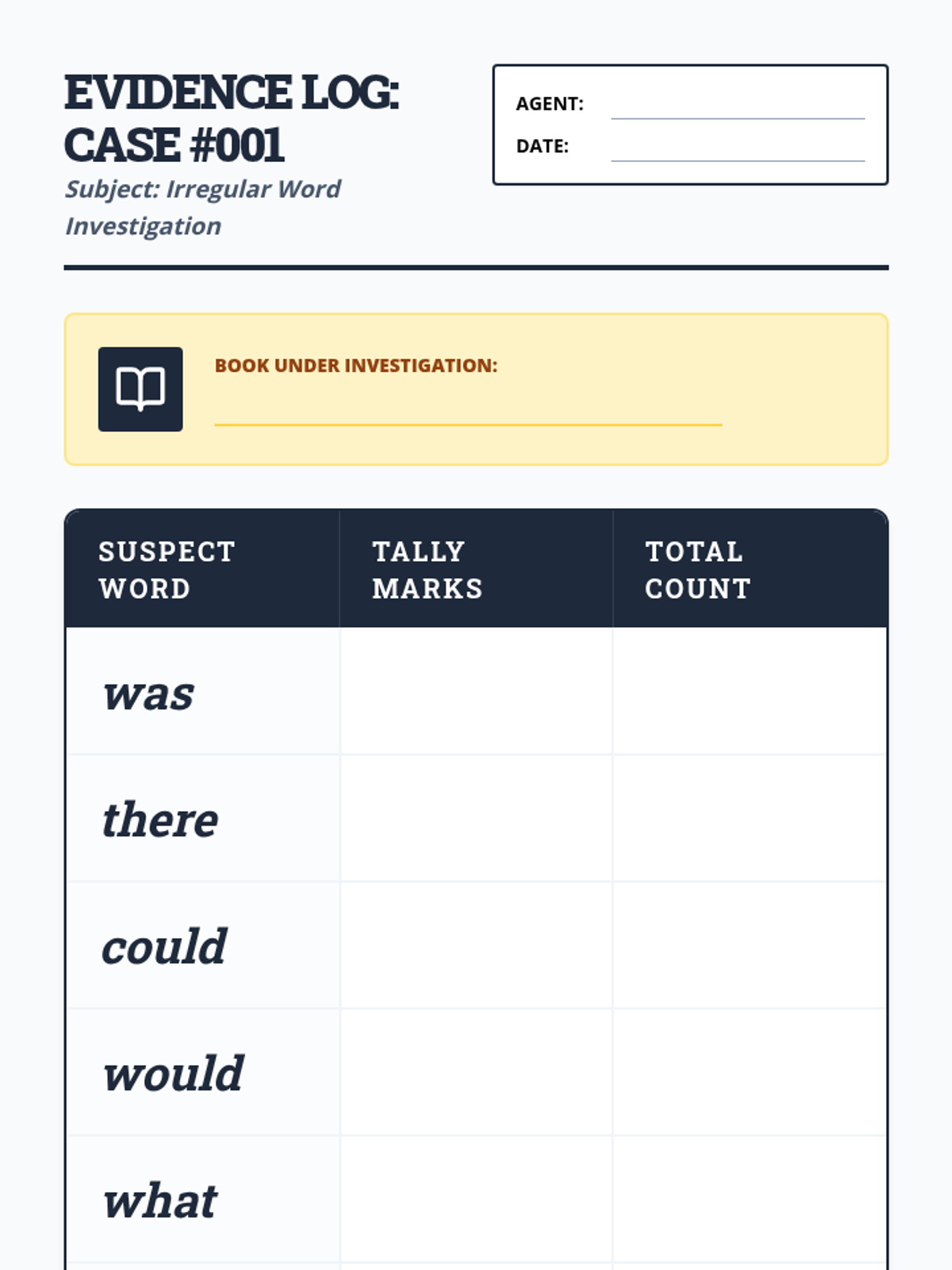
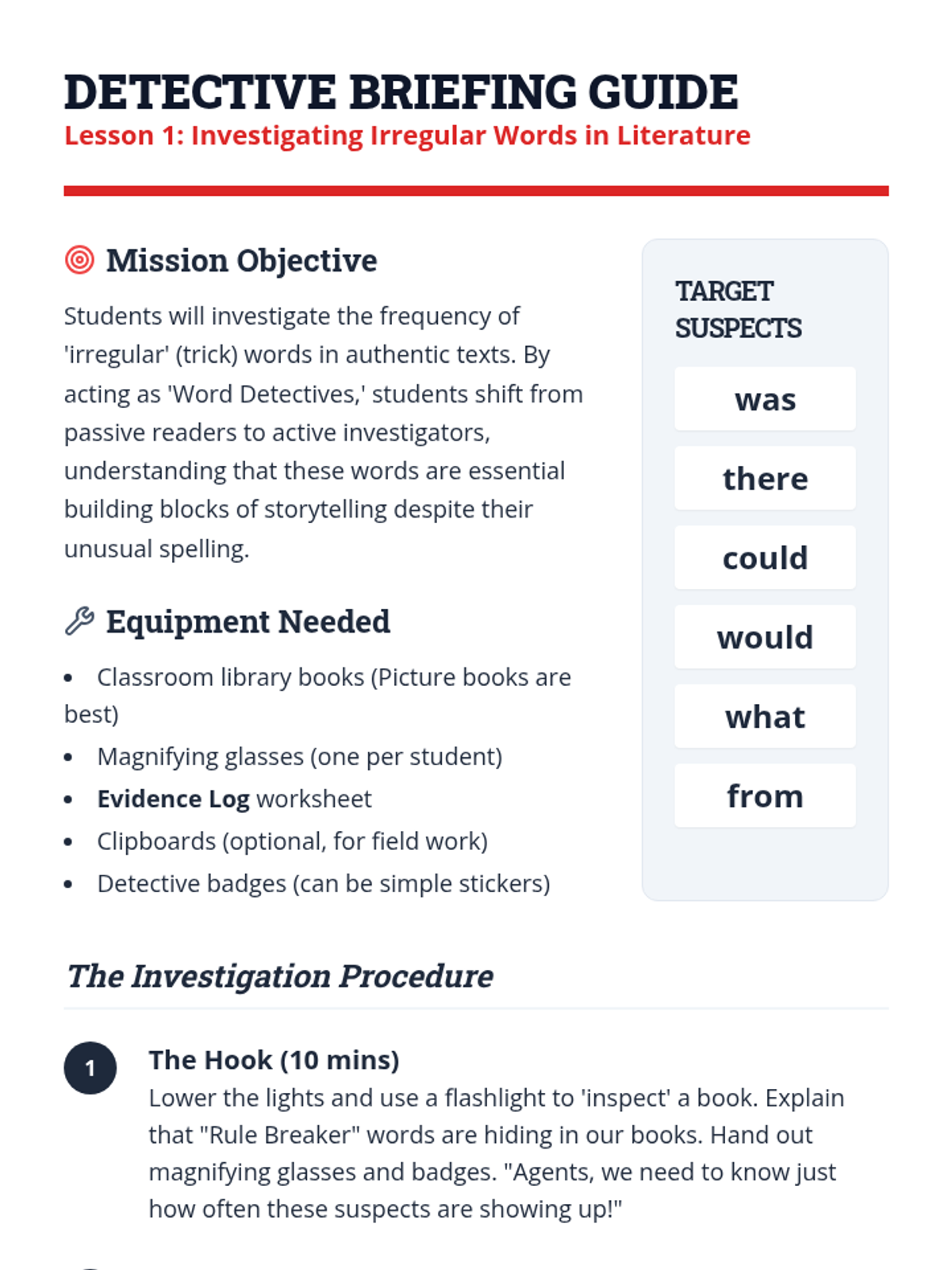
A 1st Grade phonics sequence where students act as 'Word Detectives' to investigate, analyze, and apply irregular words in their writing. Students progress from identifying words in literature to publishing a collaborative class book.
A multi-sensory workshop sequence for 1st-grade students to master the mechanics of letter formation. Students move from gross motor movements to fine motor precision, grouping letters by shape and line placement to build legibility and fluency.
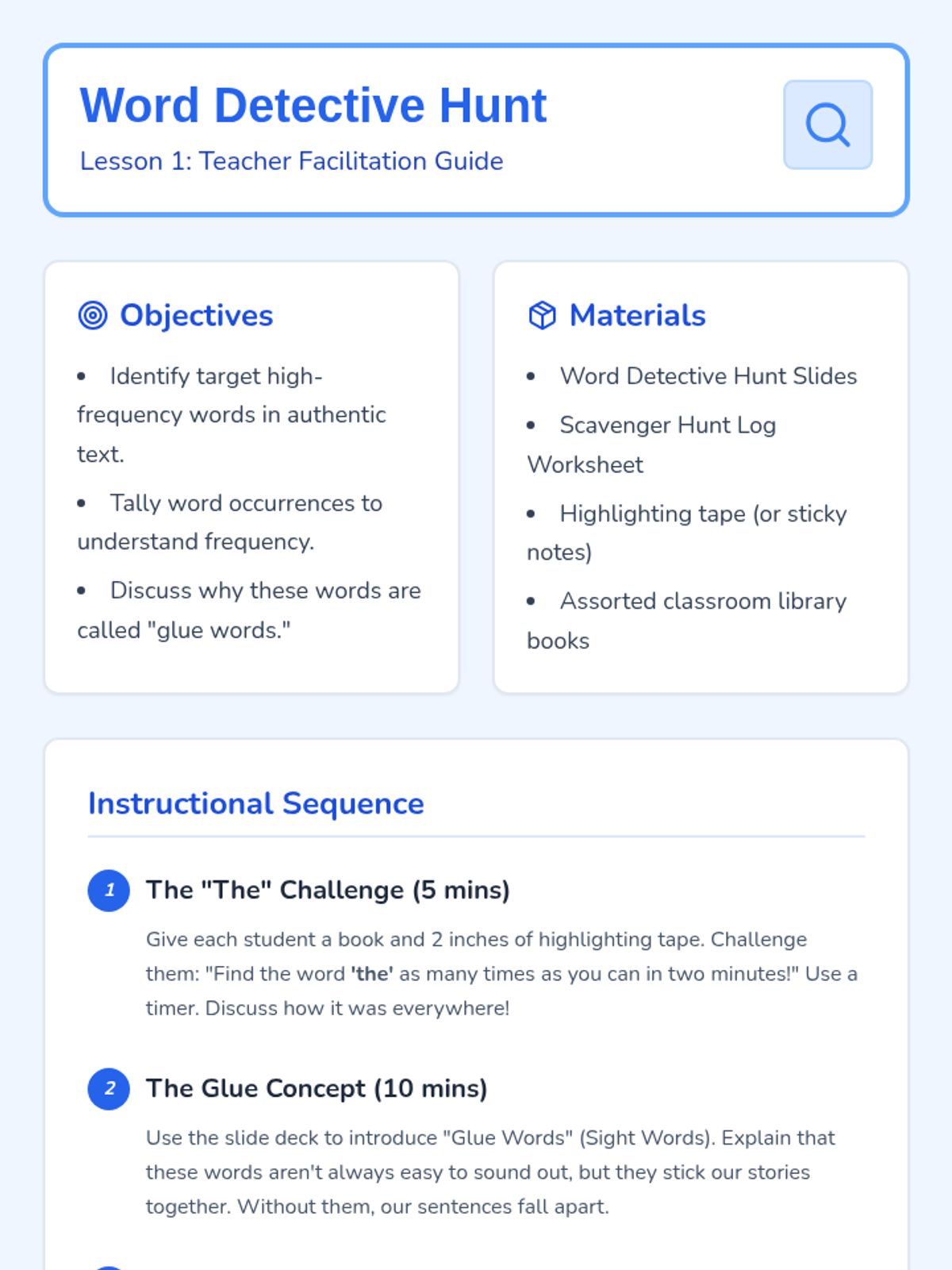
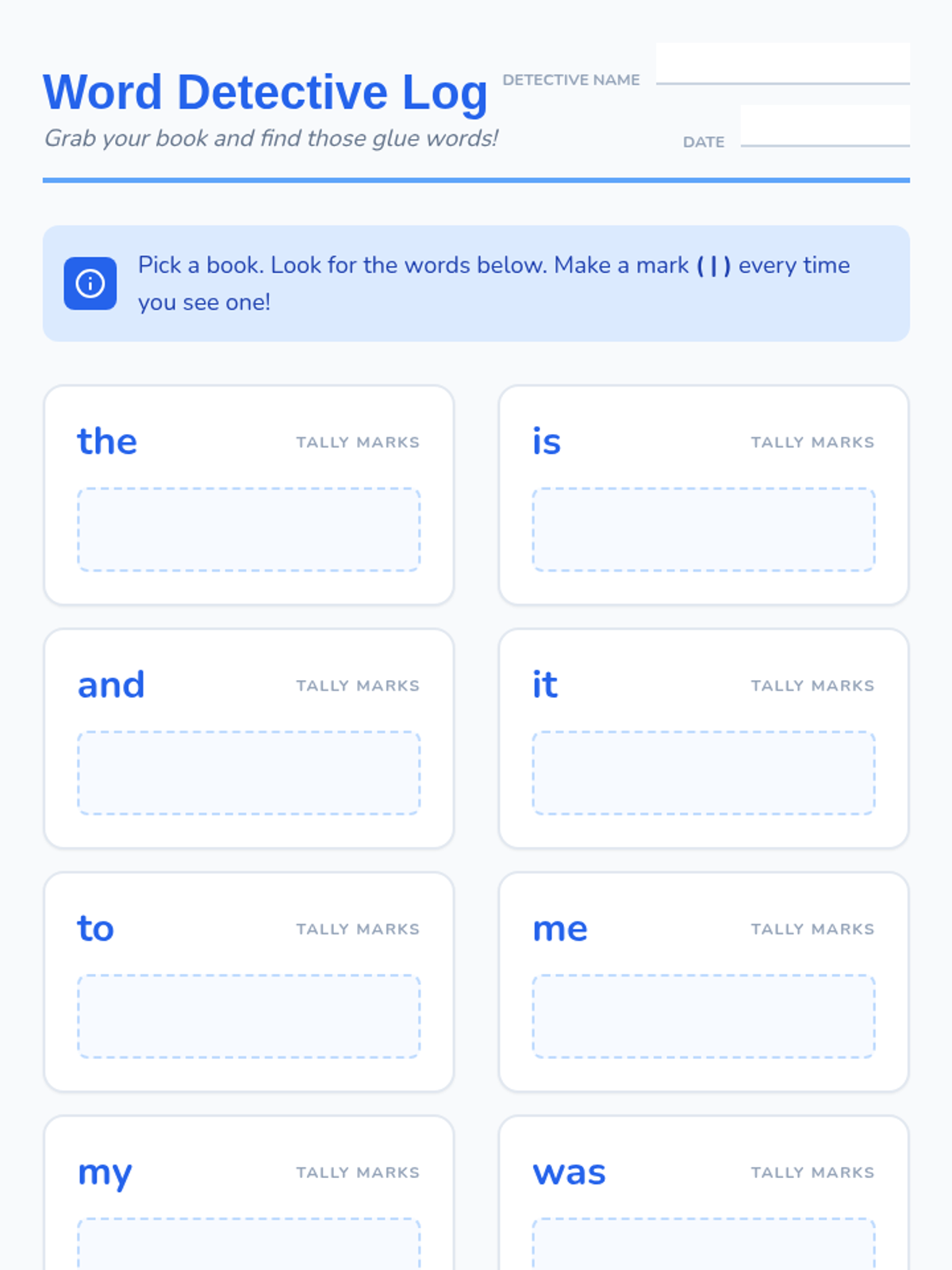
A project-based unit where 1st graders learn to use high-frequency words as the 'glue' in their own narrative stories, moving from recognition to application and publishing.
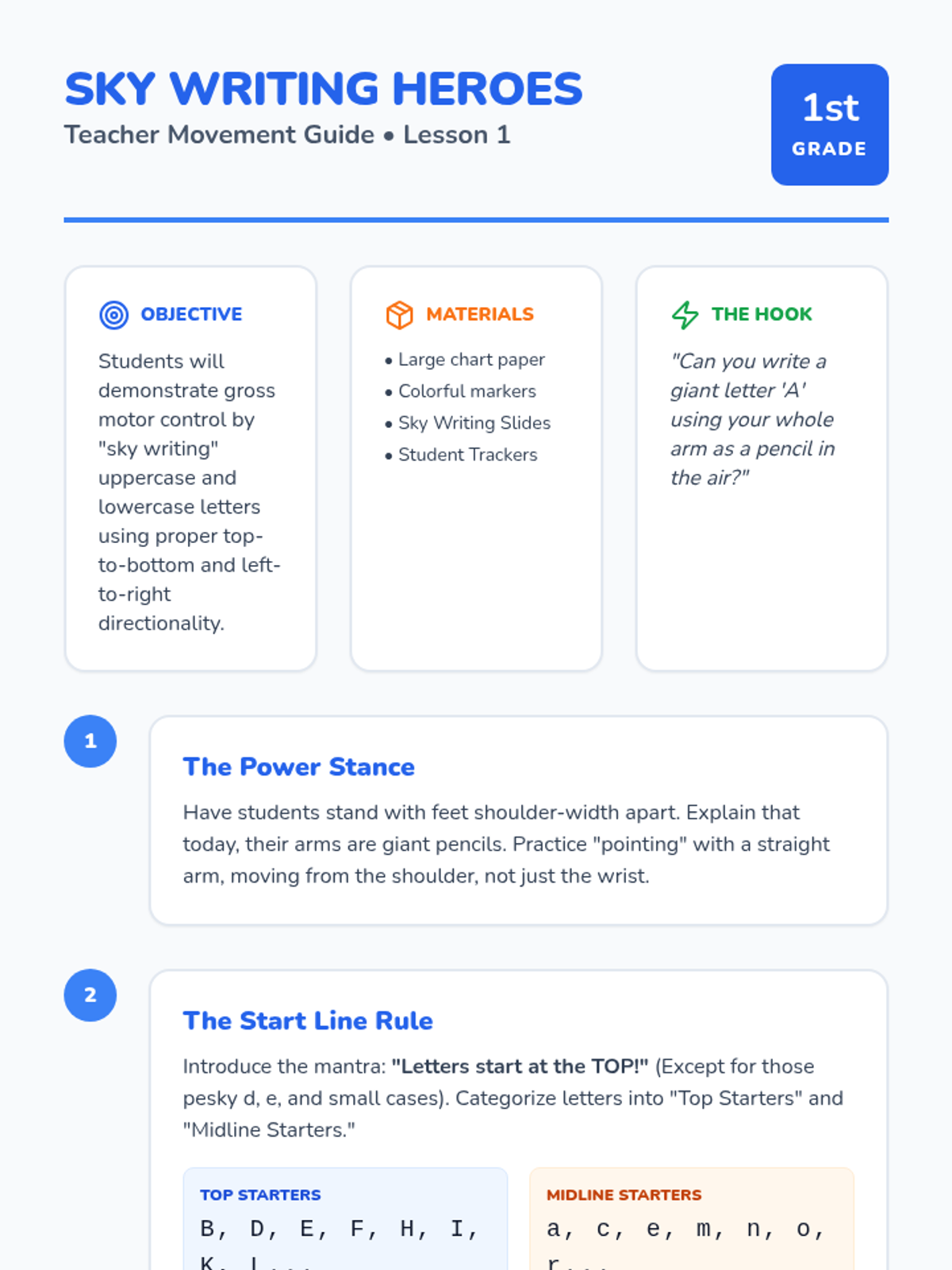
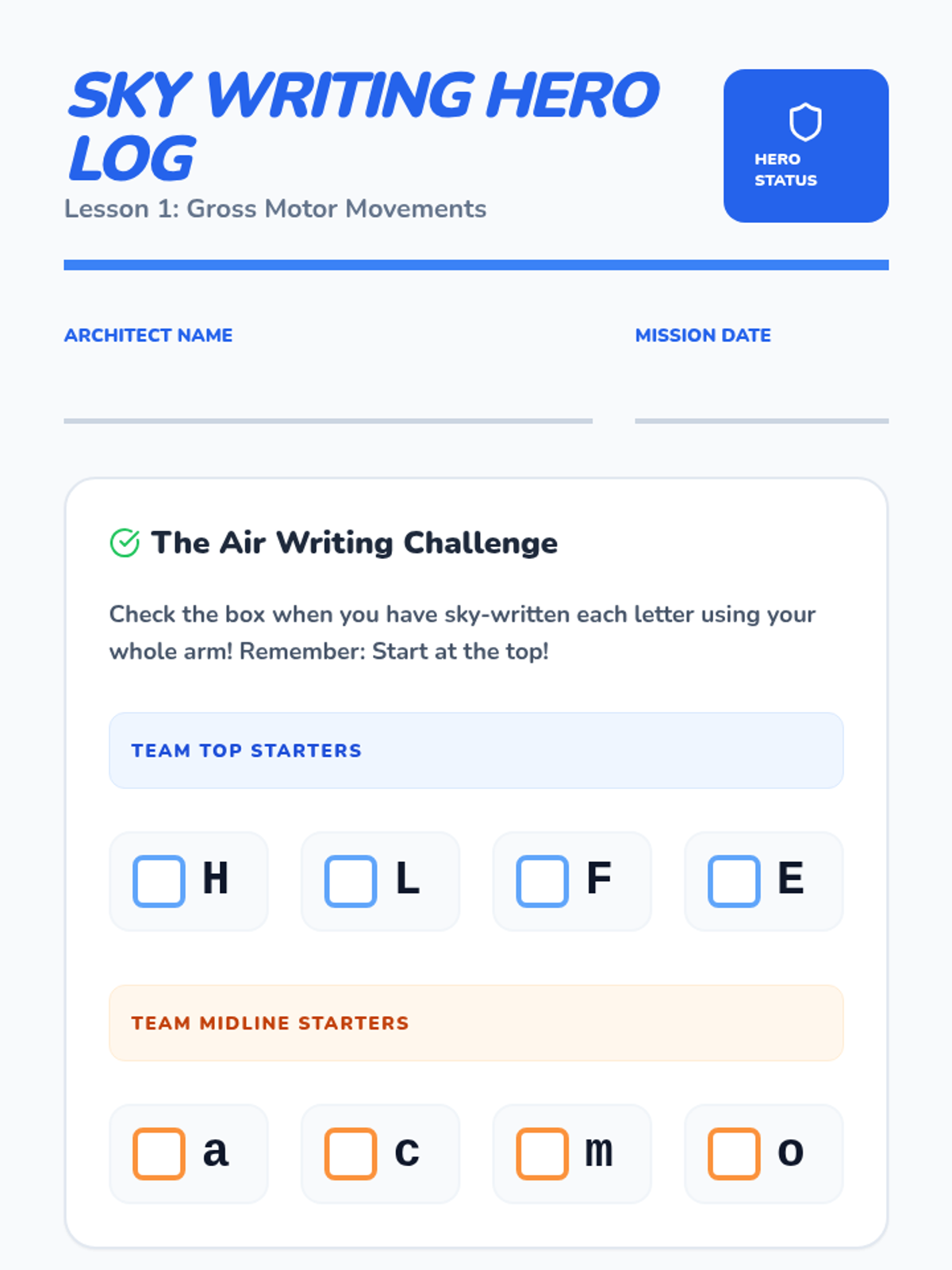
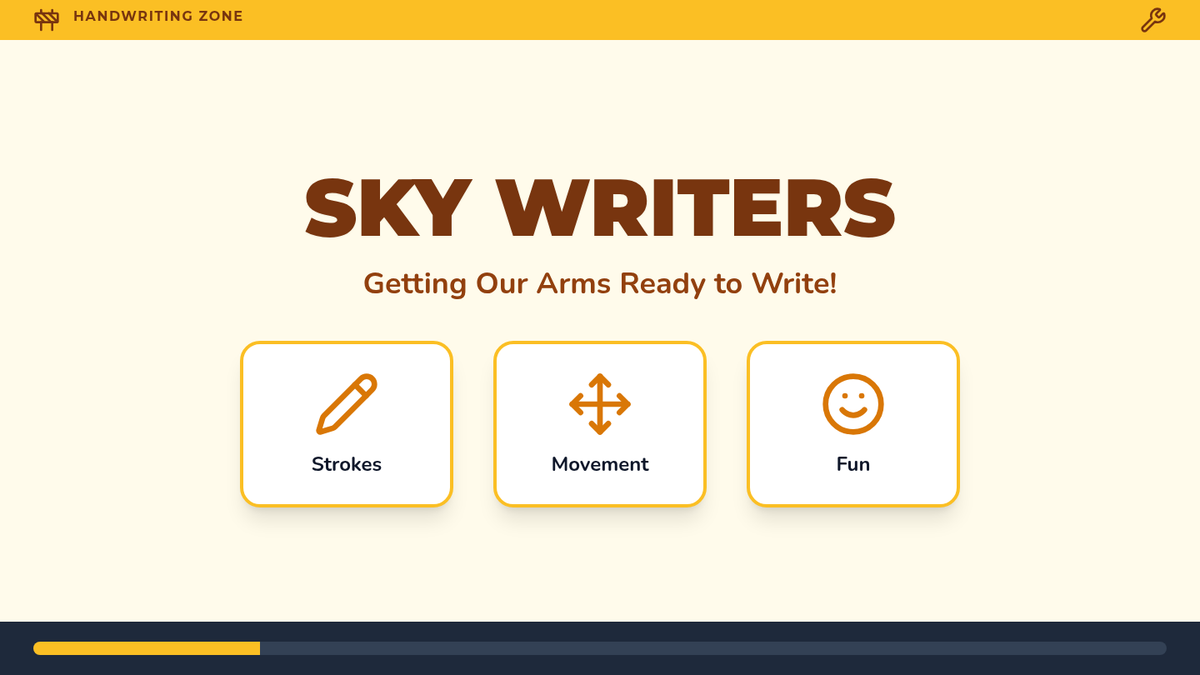
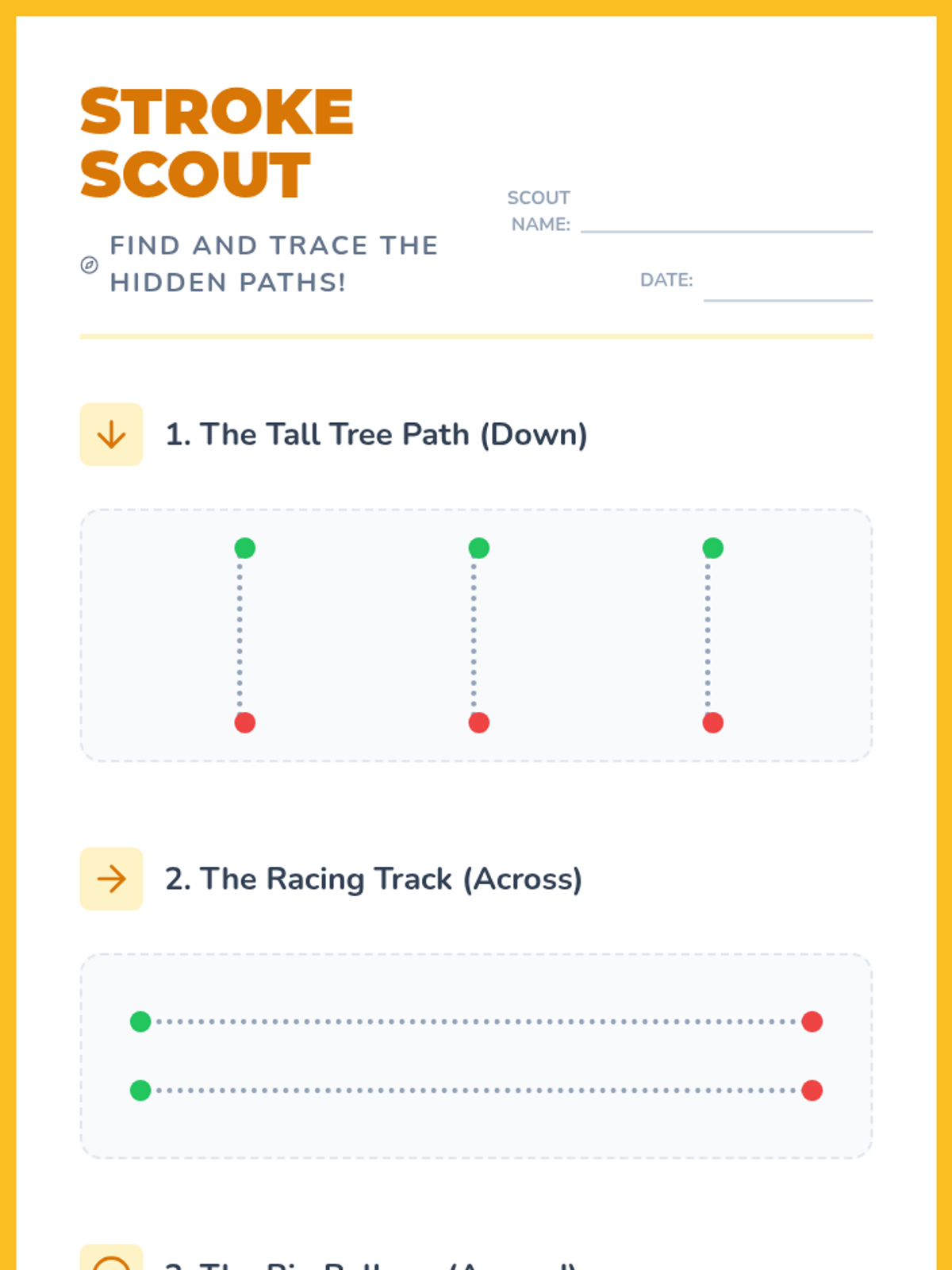
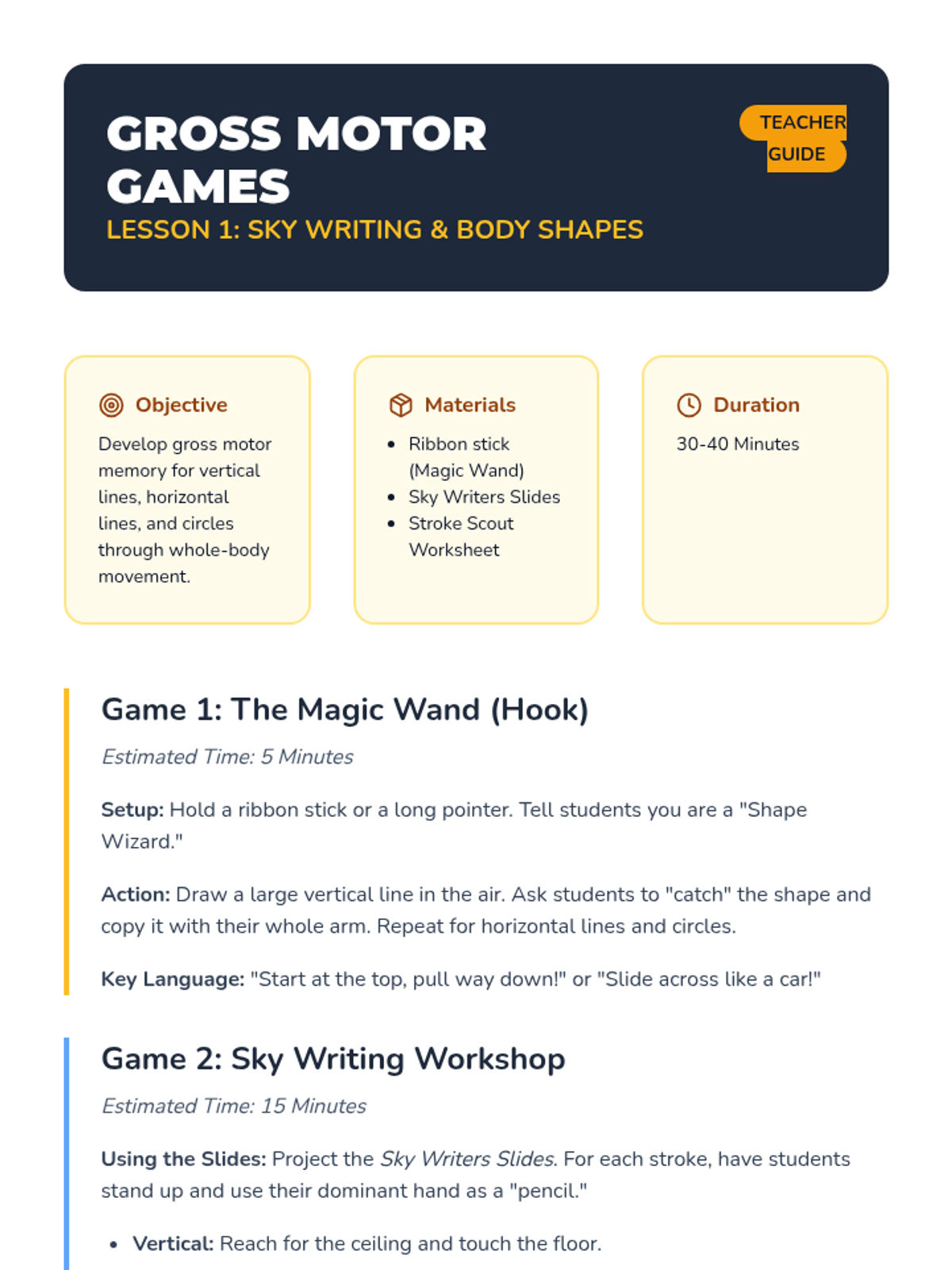
A workshop-style sequence for Kindergarteners focusing on the mechanics of handwriting. Students move from gross motor sky writing to fine motor control, learning to build and categorize uppercase and lowercase letters using lines, curves, and spatial alignment.
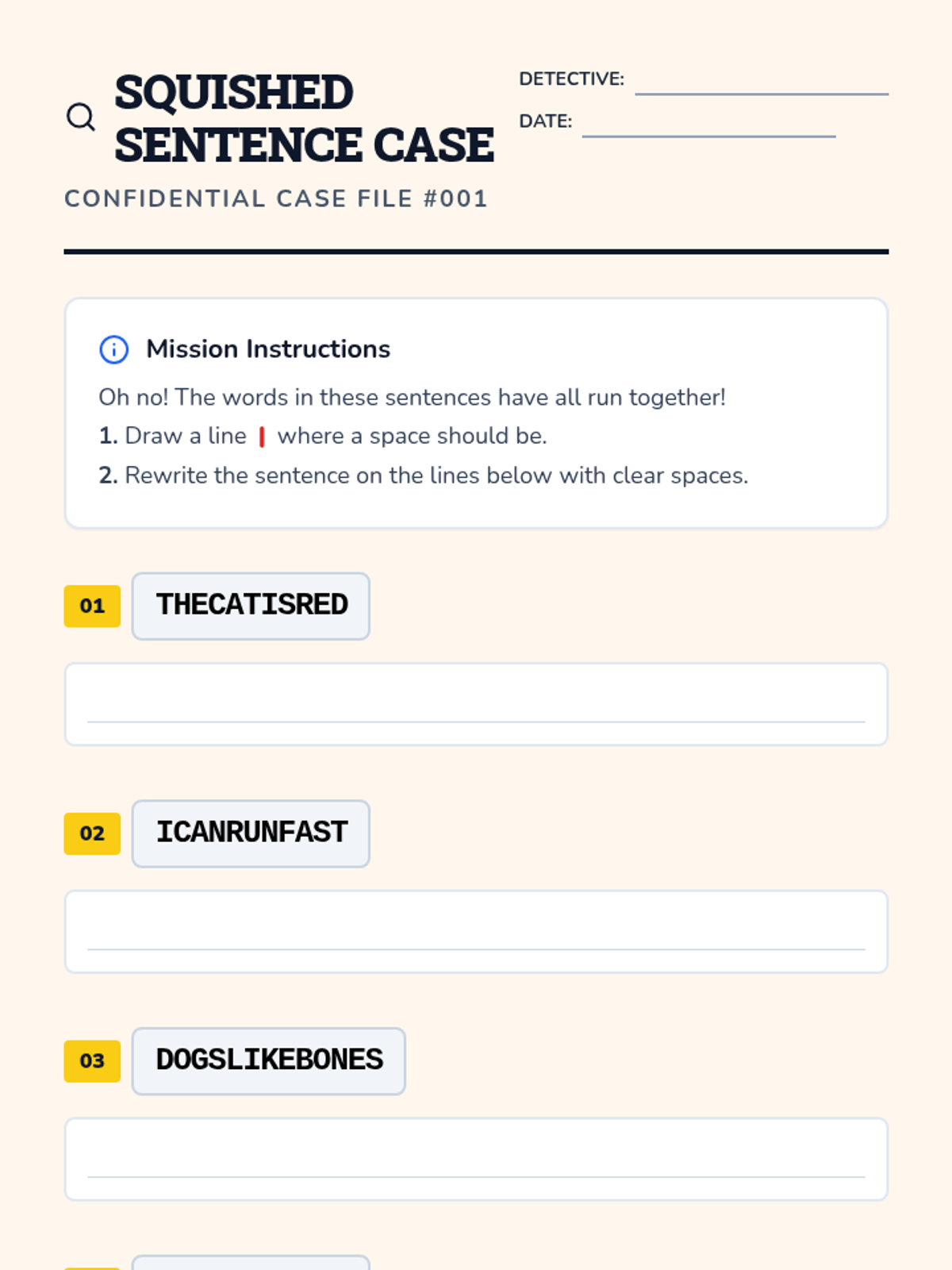
A game-based detective sequence for 1st graders focusing on word spacing, margin awareness, and overall text legibility. Students use 'Spaceman' tools and detective skills to decode squished text and produce clear, readable writing.
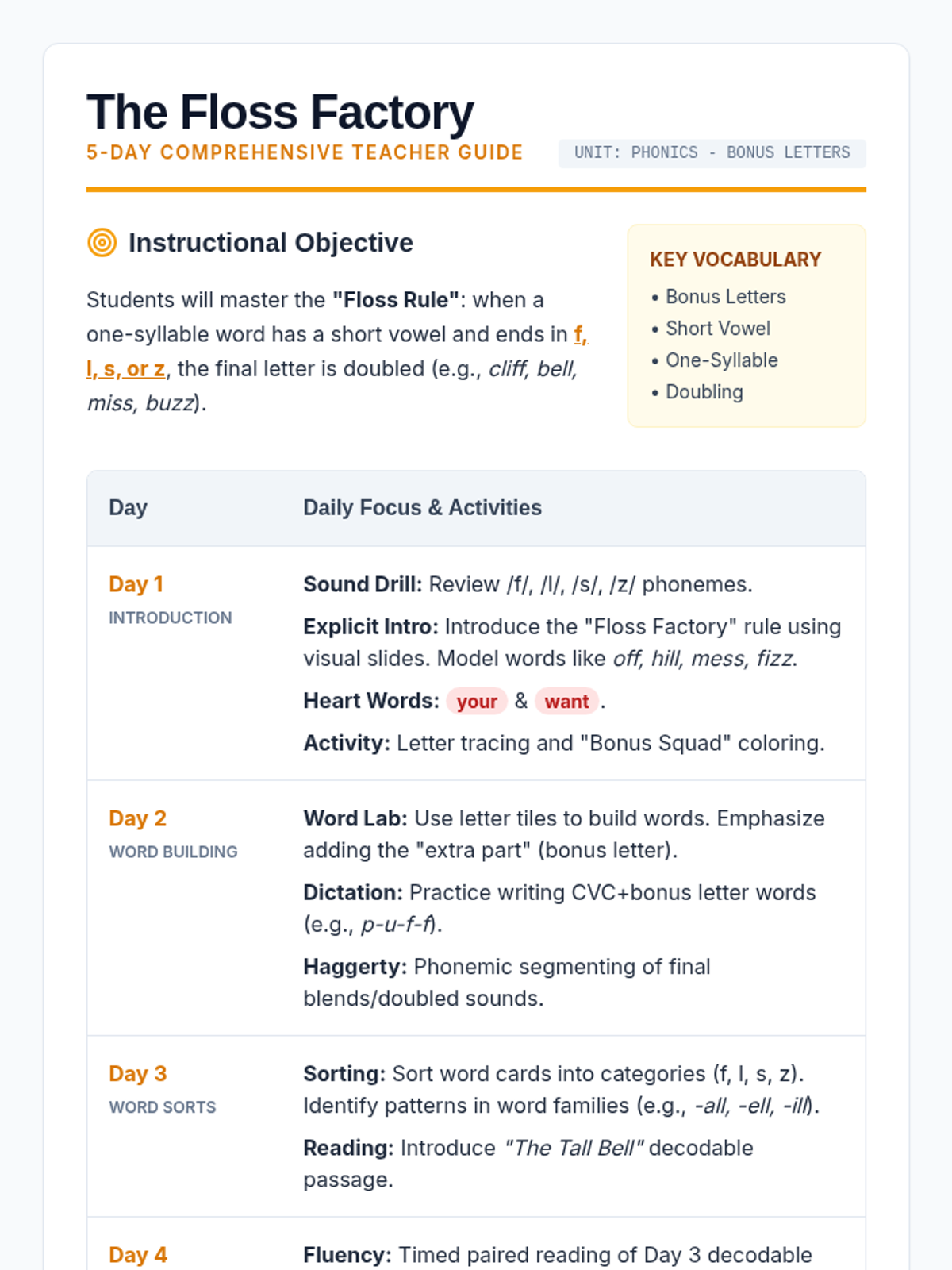
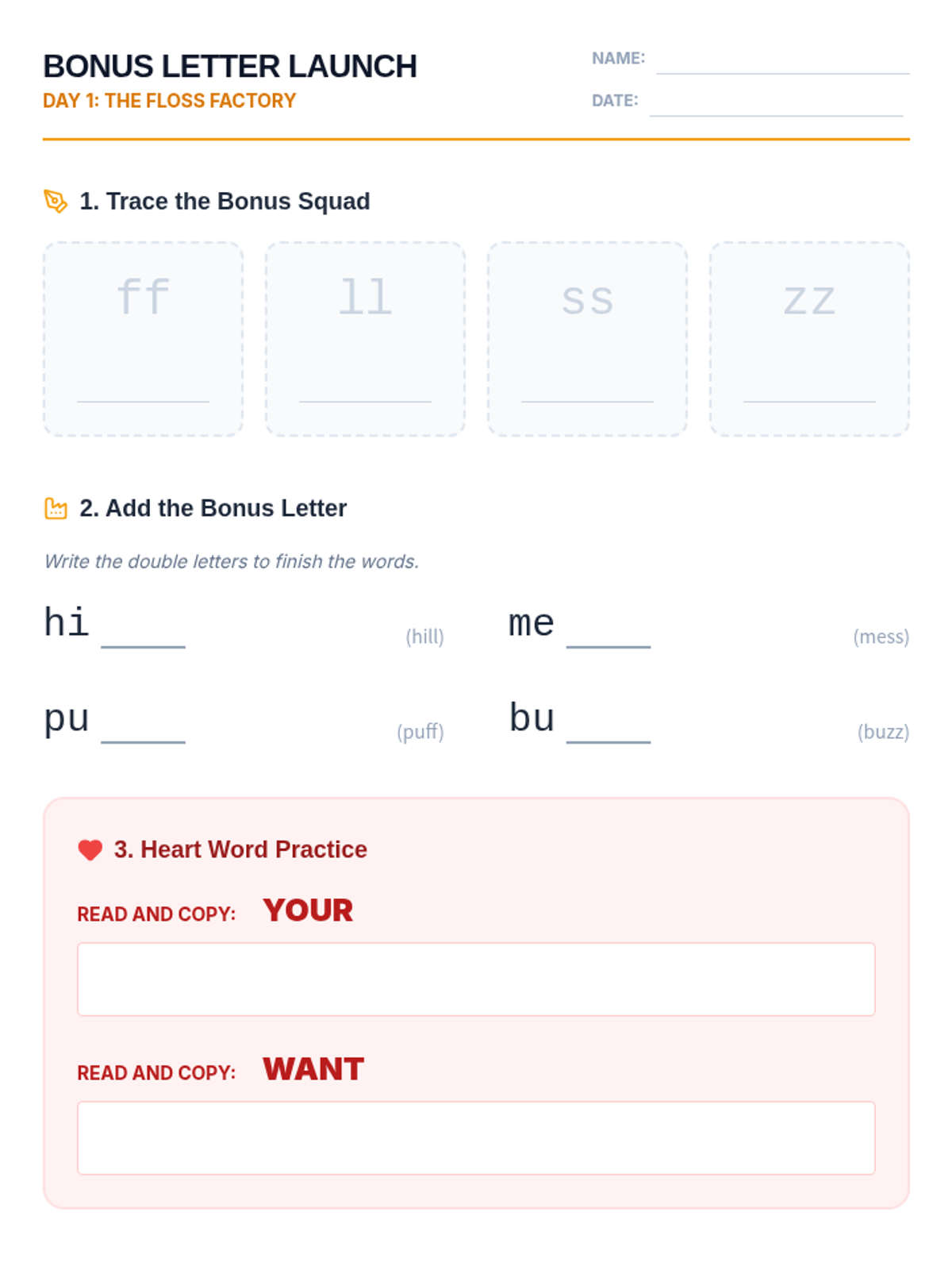
A comprehensive 5-day phonics unit focused on the "bonus letters" (Floss Rule: f, l, s, z) including heart words 'your' and 'want'. Students explore the concept of doubling final consonants in one-syllable short vowel words through a factory-themed learning experience.
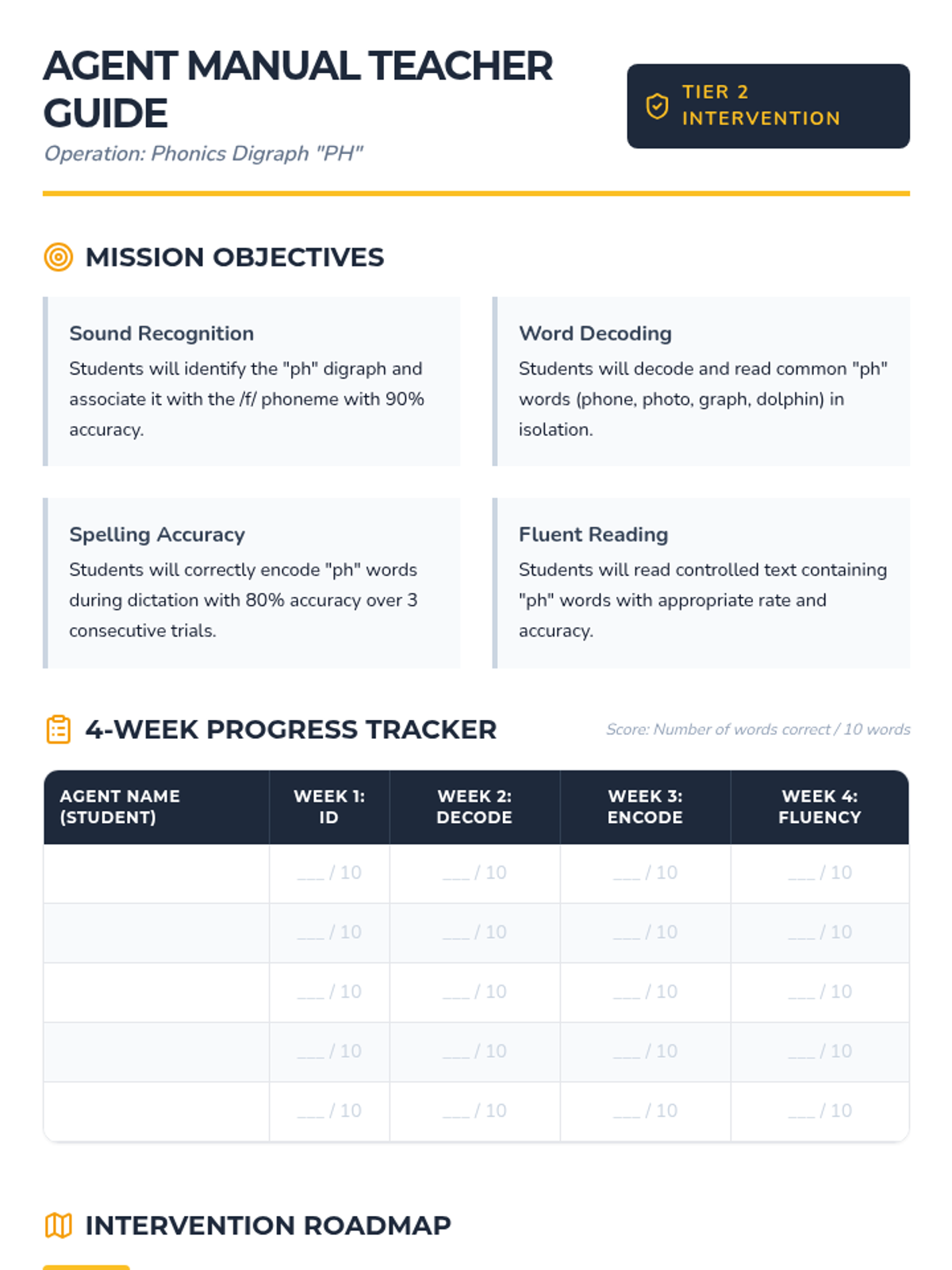
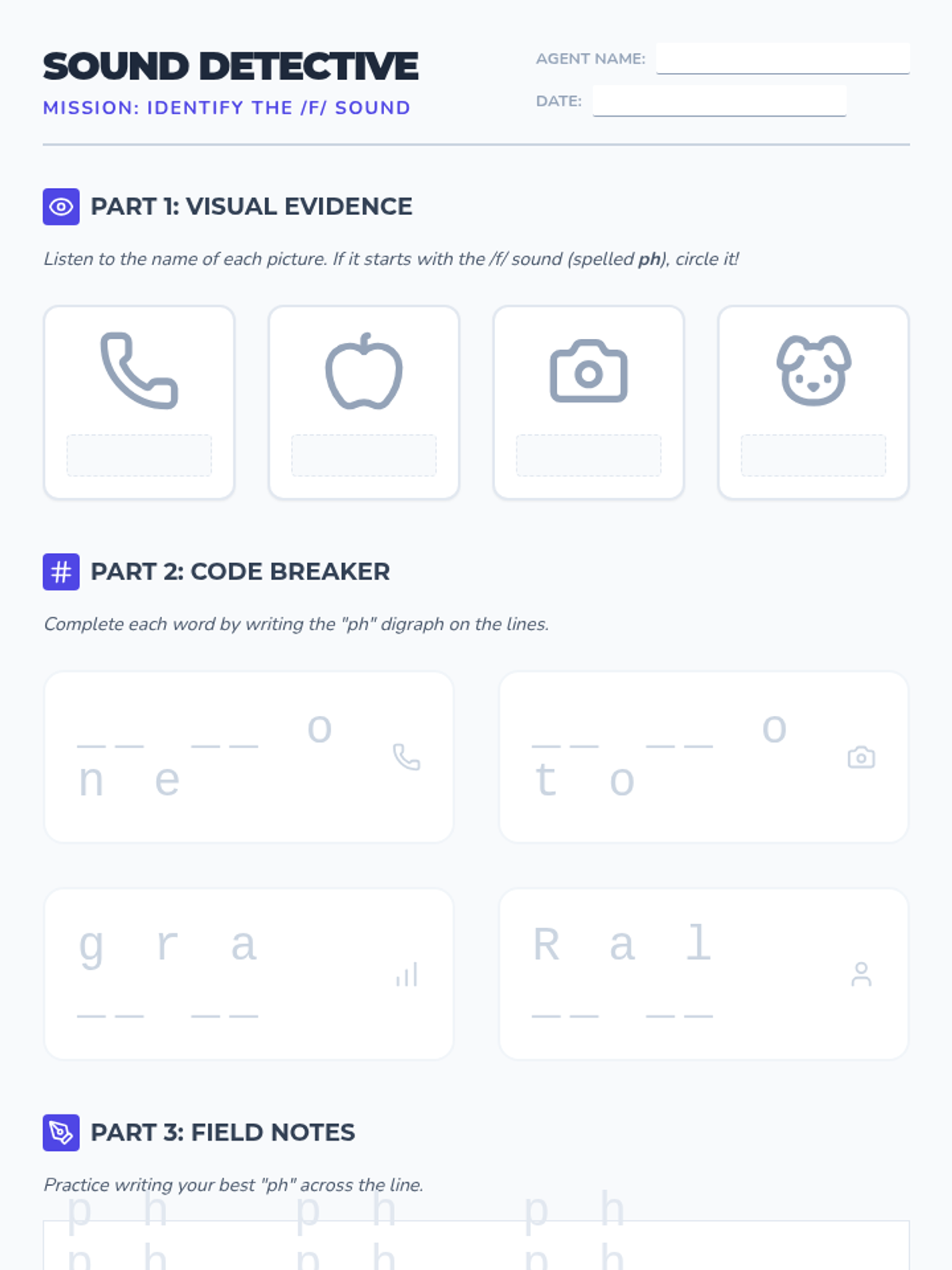
A 4-week intensive phonics intervention for 1st-grade Tier 2 students focusing on the 'PH' digraph. This sequence includes targeted goals, progress monitoring tools, and instructional materials to move students from sound recognition to fluent reading.
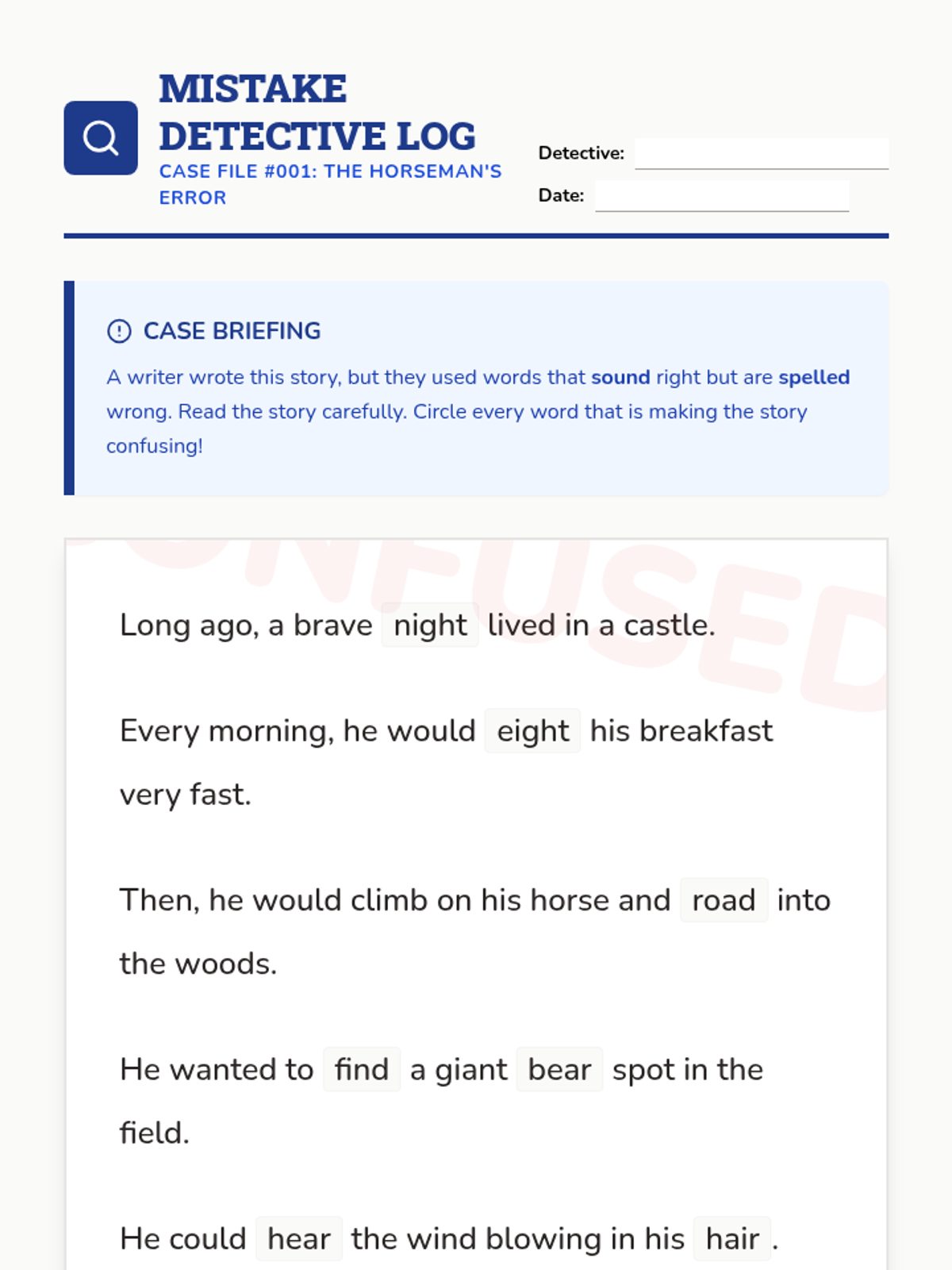
A 1st-grade ELA sequence where students become 'Word Detectives' to identify and correct homophones like no/know and right/write in context. Through inquiry and hands-on investigation, students learn why spelling matters for meaning.
This first-grade sequence introduces homophones through visual art and project-based learning. Students explore common word pairs like 'sun/son', 'flower/flour', and 'bear/bare', creating a 'Homophone Gallery' to solidify their understanding of how spelling and meaning differ despite identical sounds.
A 1st-grade ELA workshop sequence focused on the application of homophones in writing. Students move from collective modeling to independent creation and peer editing, culminating in a published class book.
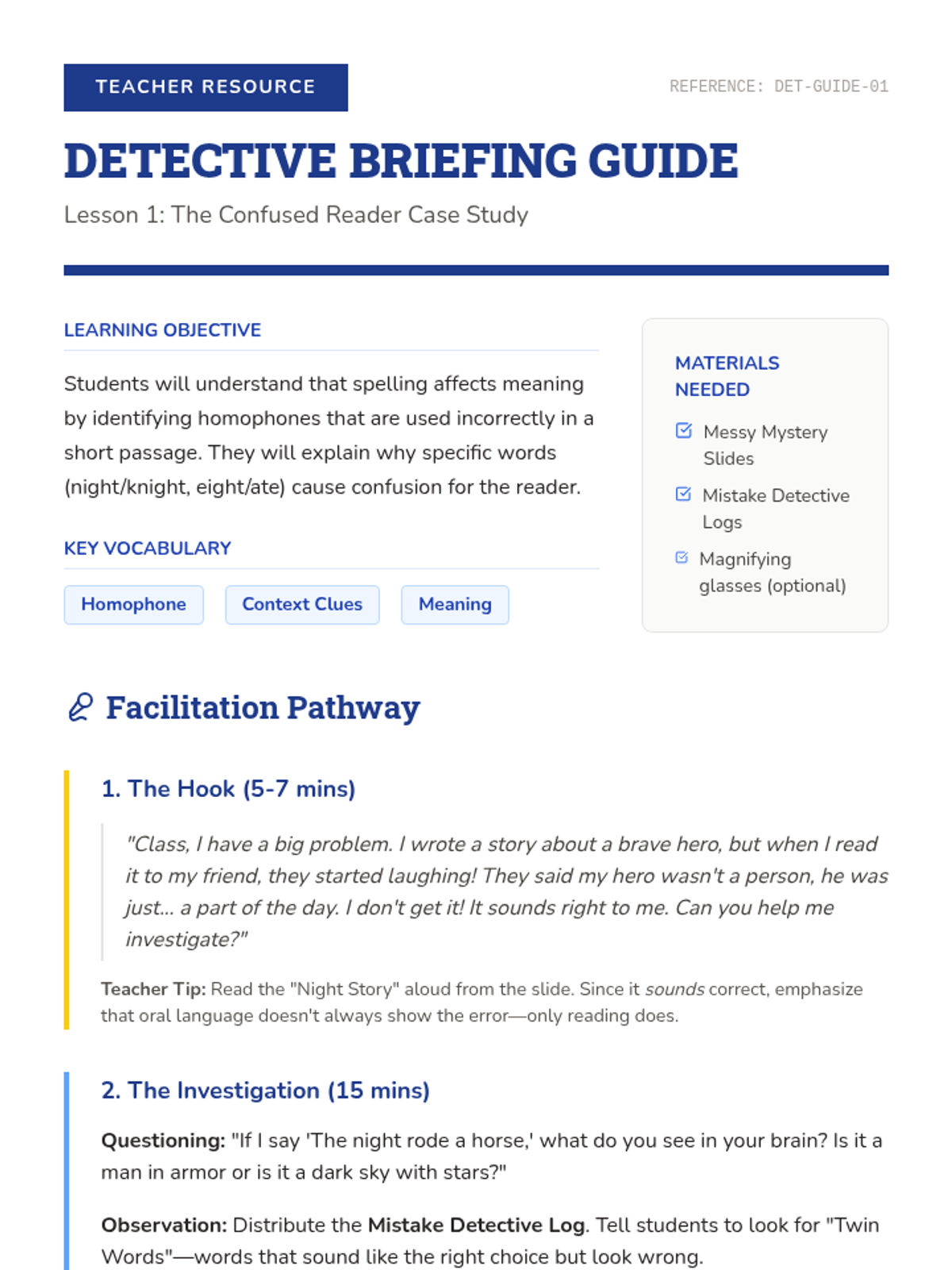
An inquiry-based English Language Arts sequence for 1st Grade students where they act as 'text detectives' to decode homophones and homonyms. Students explore how spelling affects meaning through literature, case studies, and context clue puzzles.
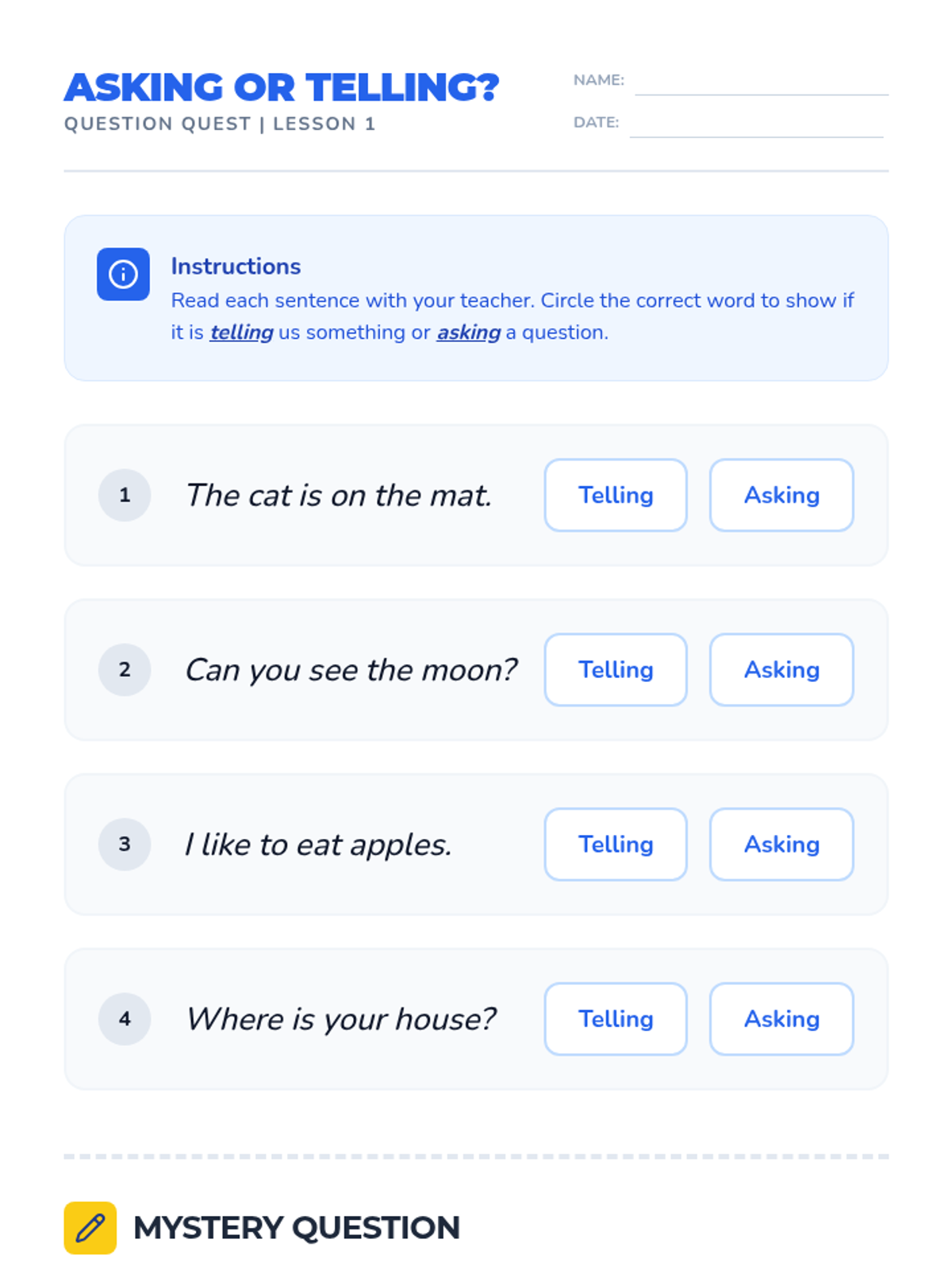
A 1st-grade ELA sequence focused on developing oral language through interviewing. Students learn to distinguish between asking and telling, formulate open-ended questions, and present findings about their peers.