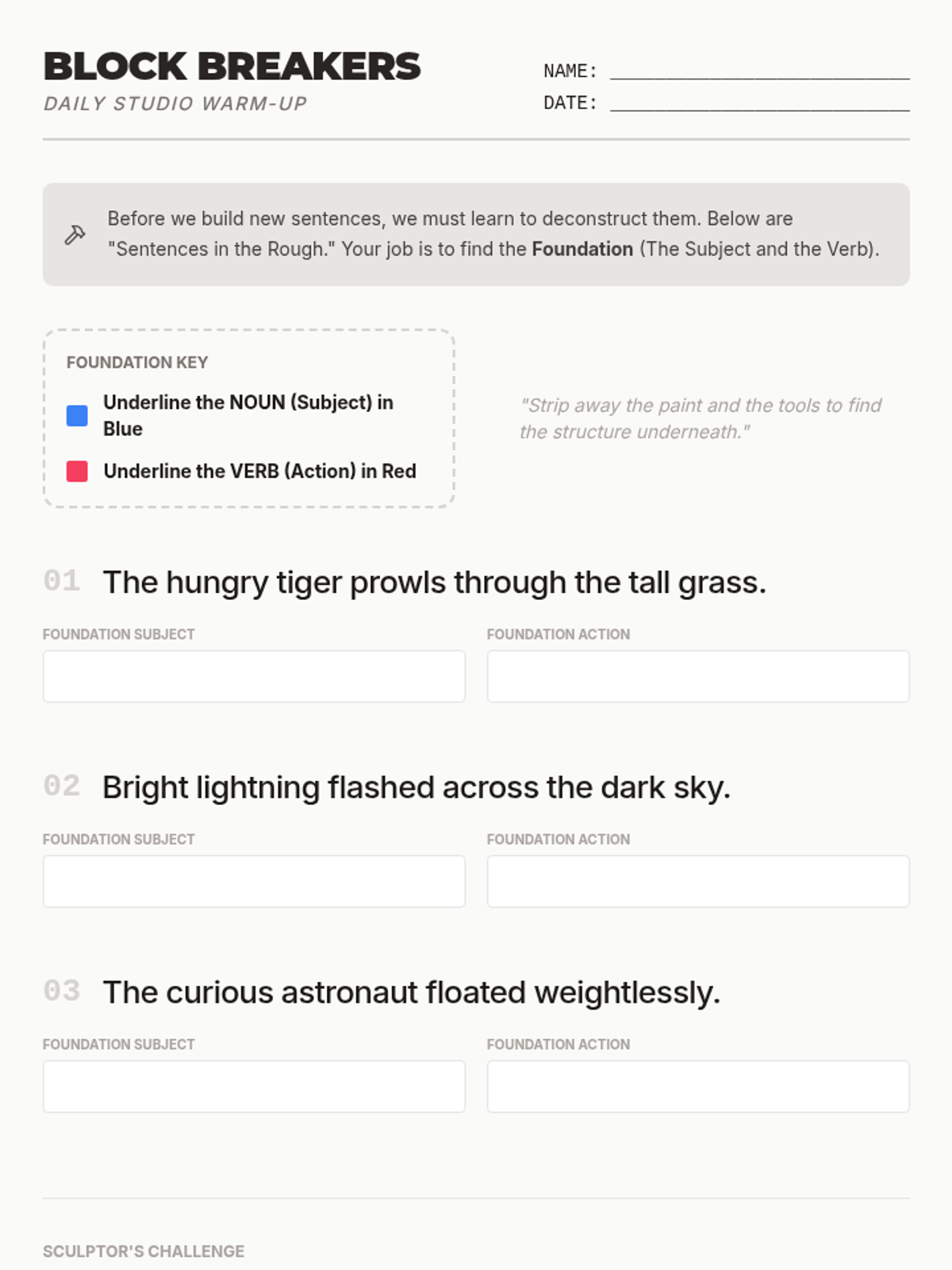
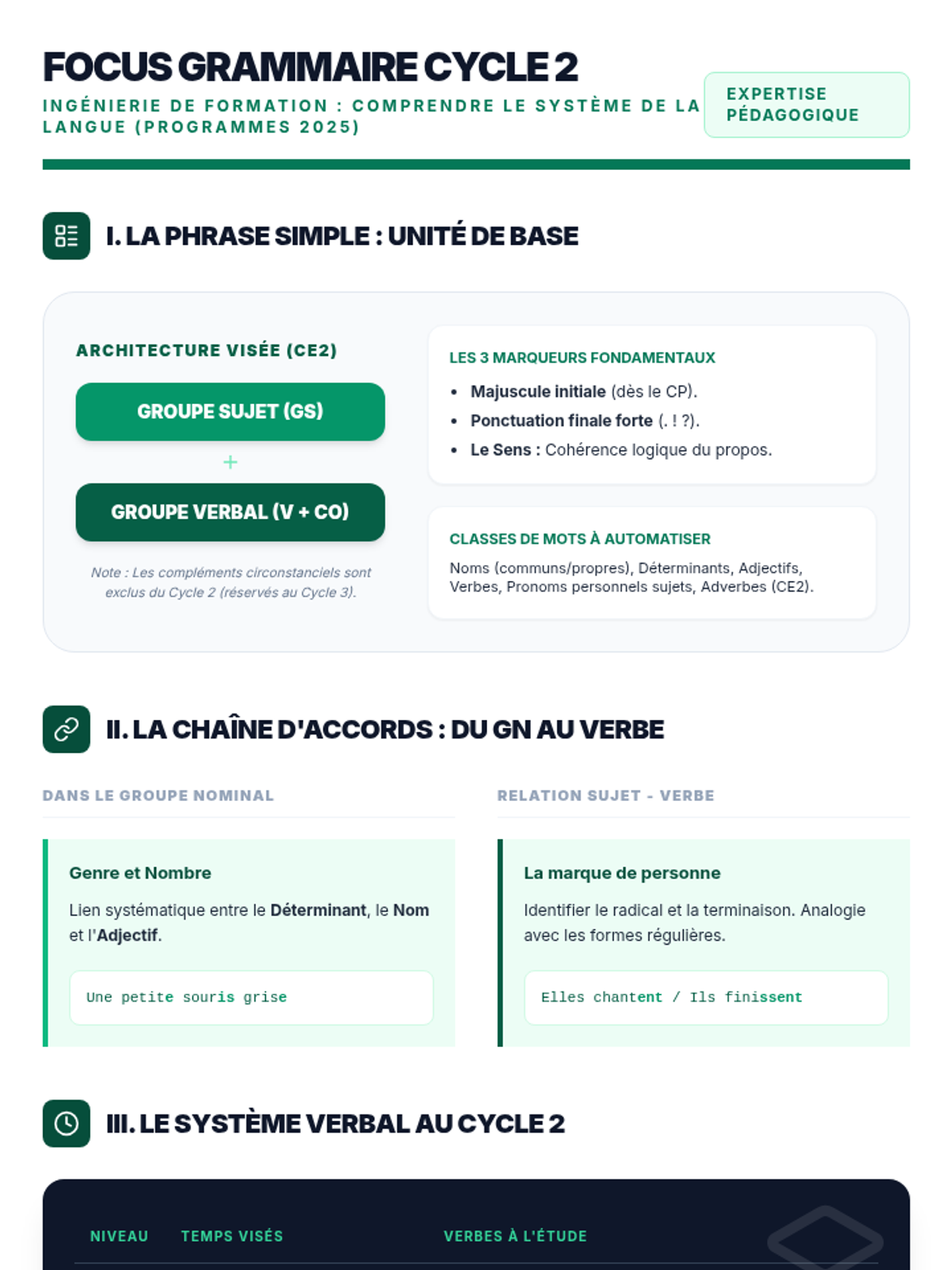
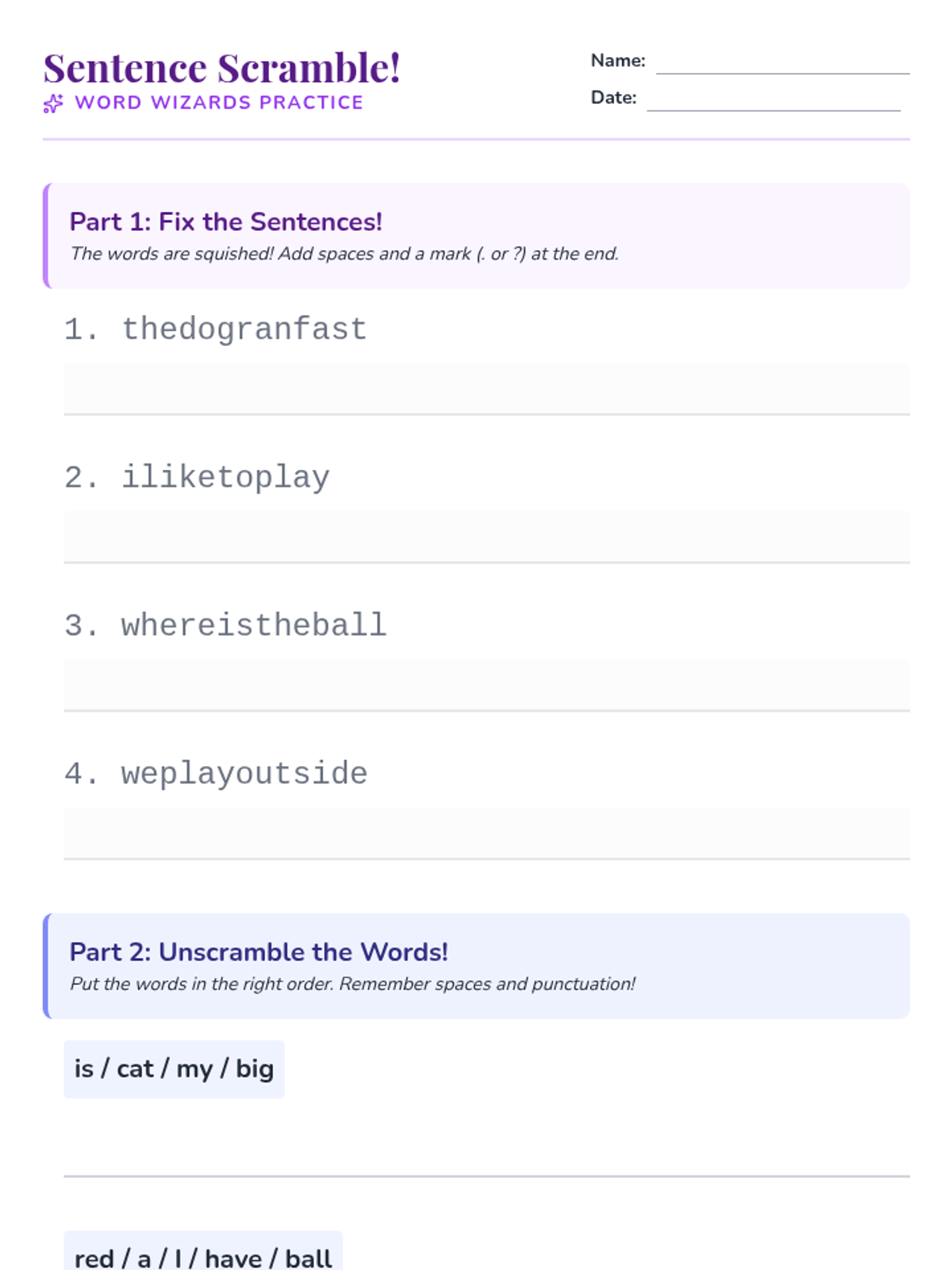
Sentence structure fundamentals, subject-verb agreement, and precise usage of parts of speech including pronouns, conjunctions, and adjectives. Targets technical accuracy through mastery of capitalization, punctuation, spelling, and verb mood.
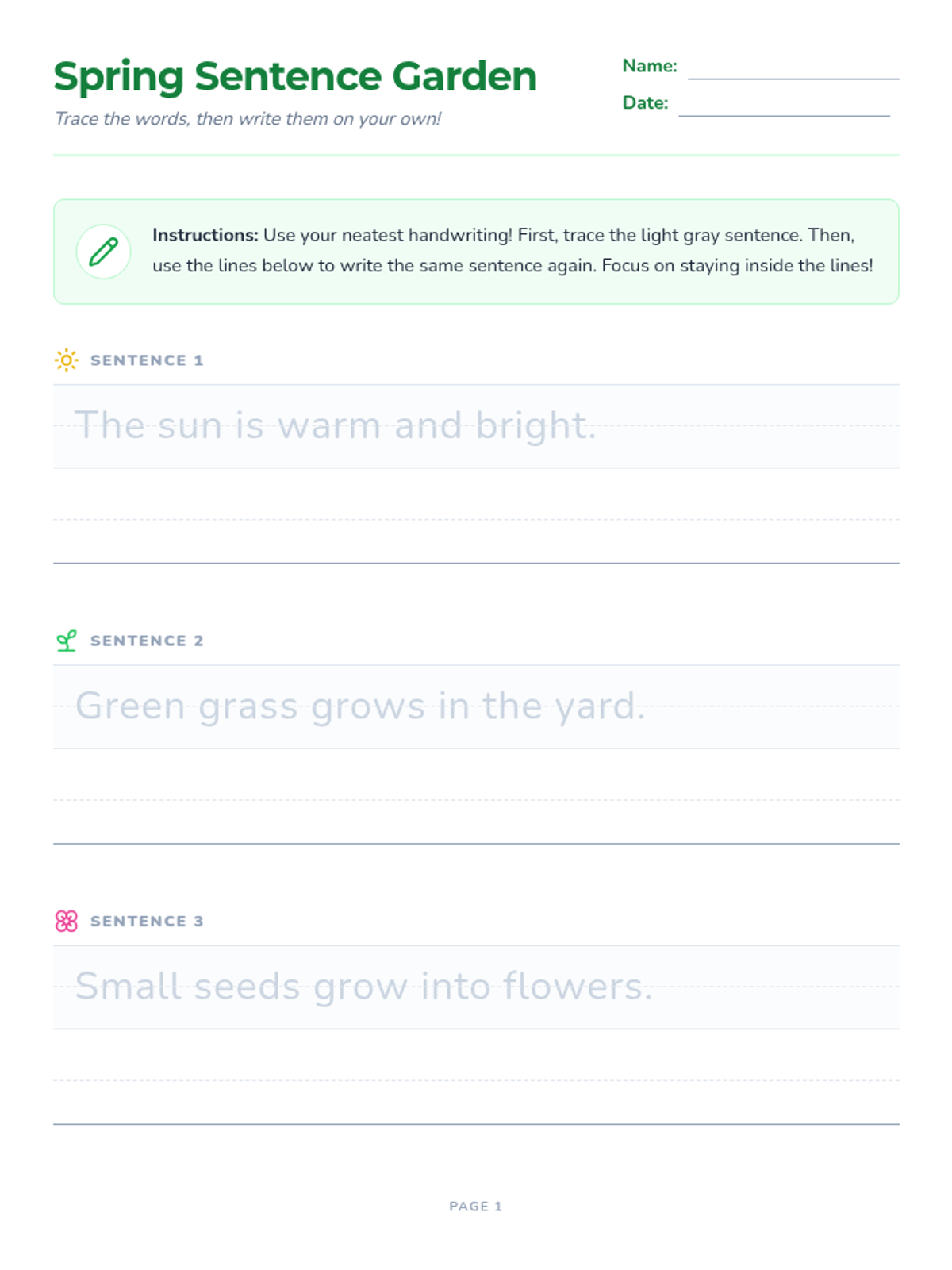
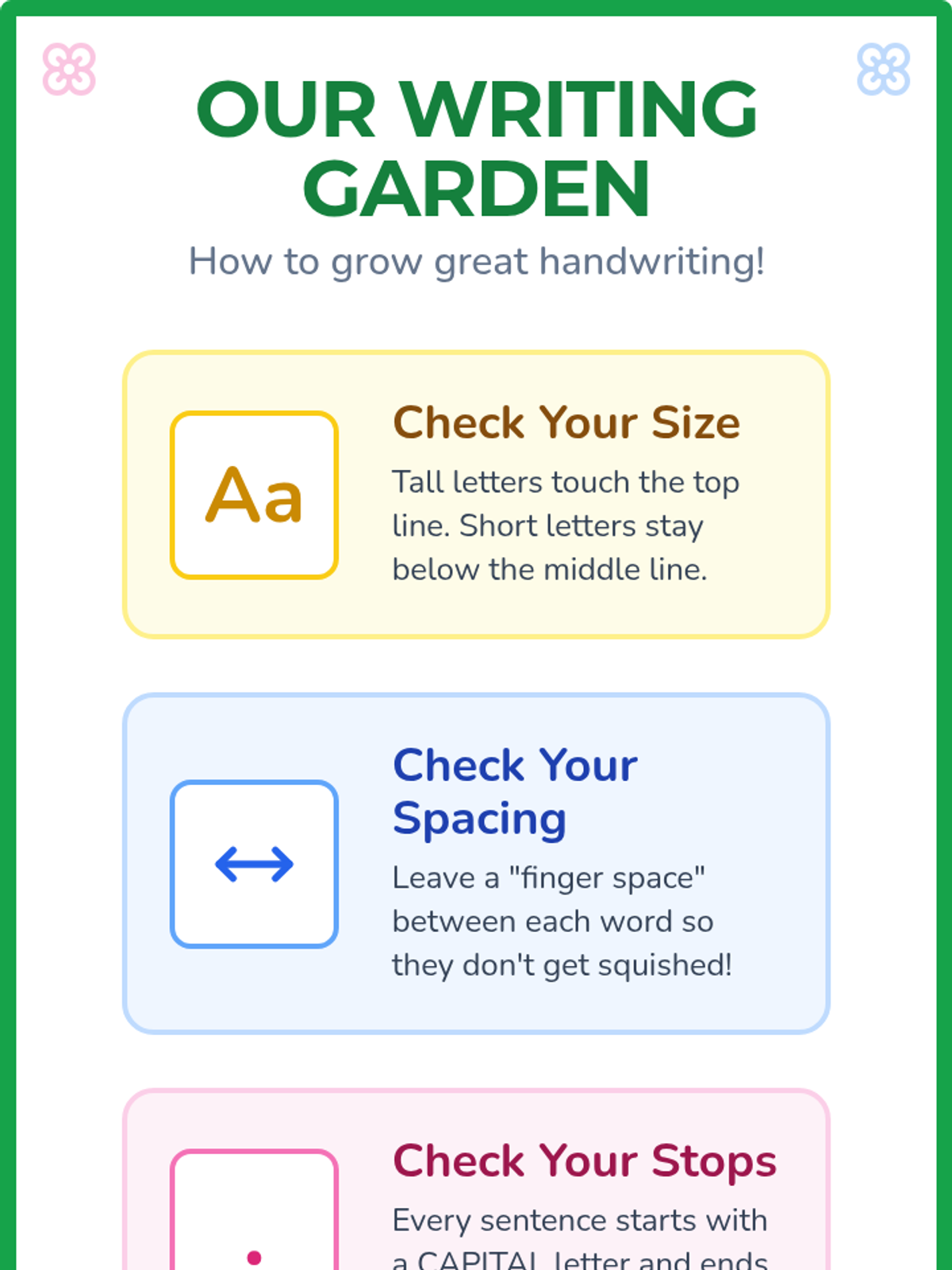
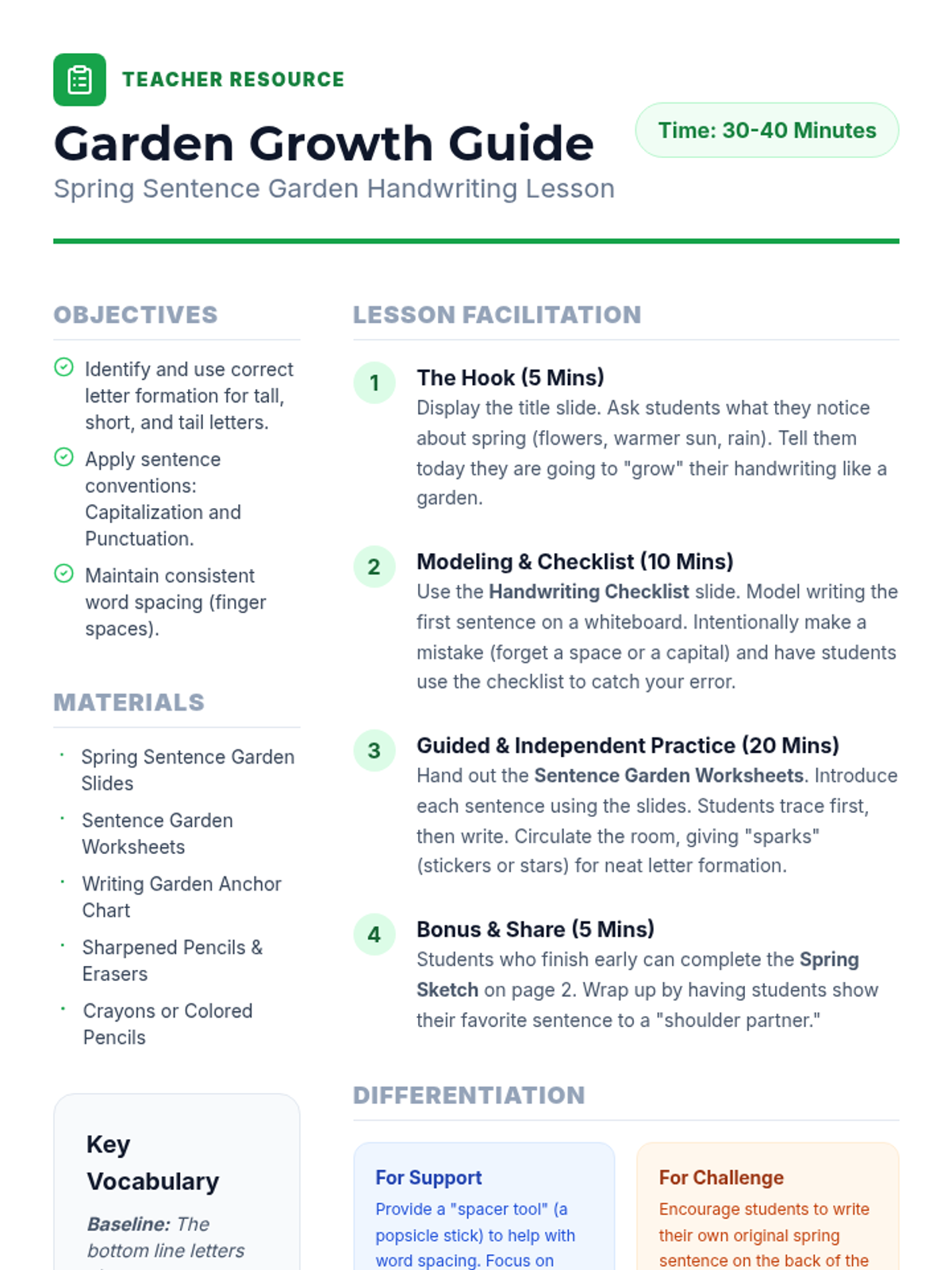
A handwriting practice lesson focused on spring-themed sentences, designed to help 1st and 2nd grade students improve their letter formation and sentence structure while celebrating the season.
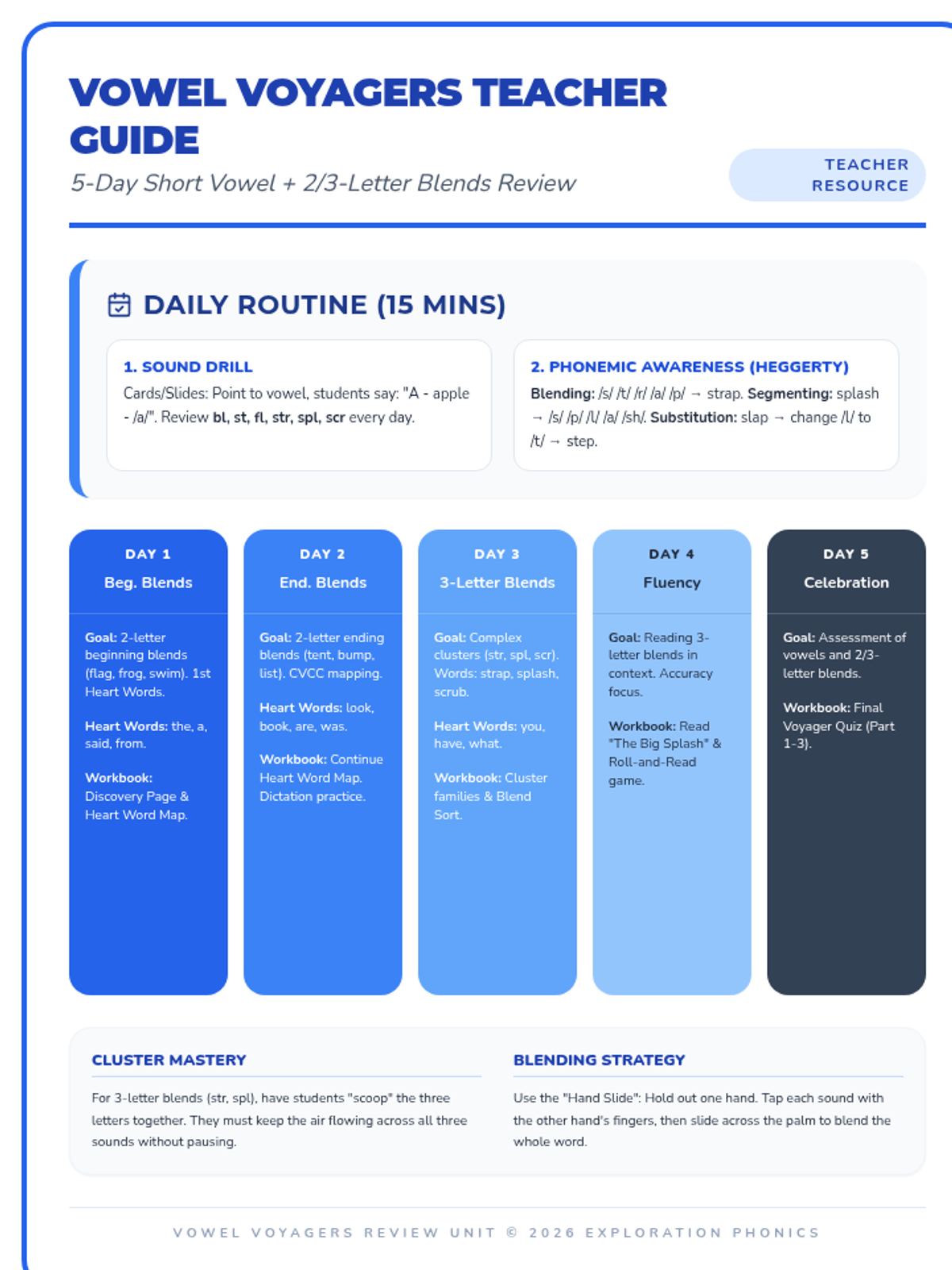
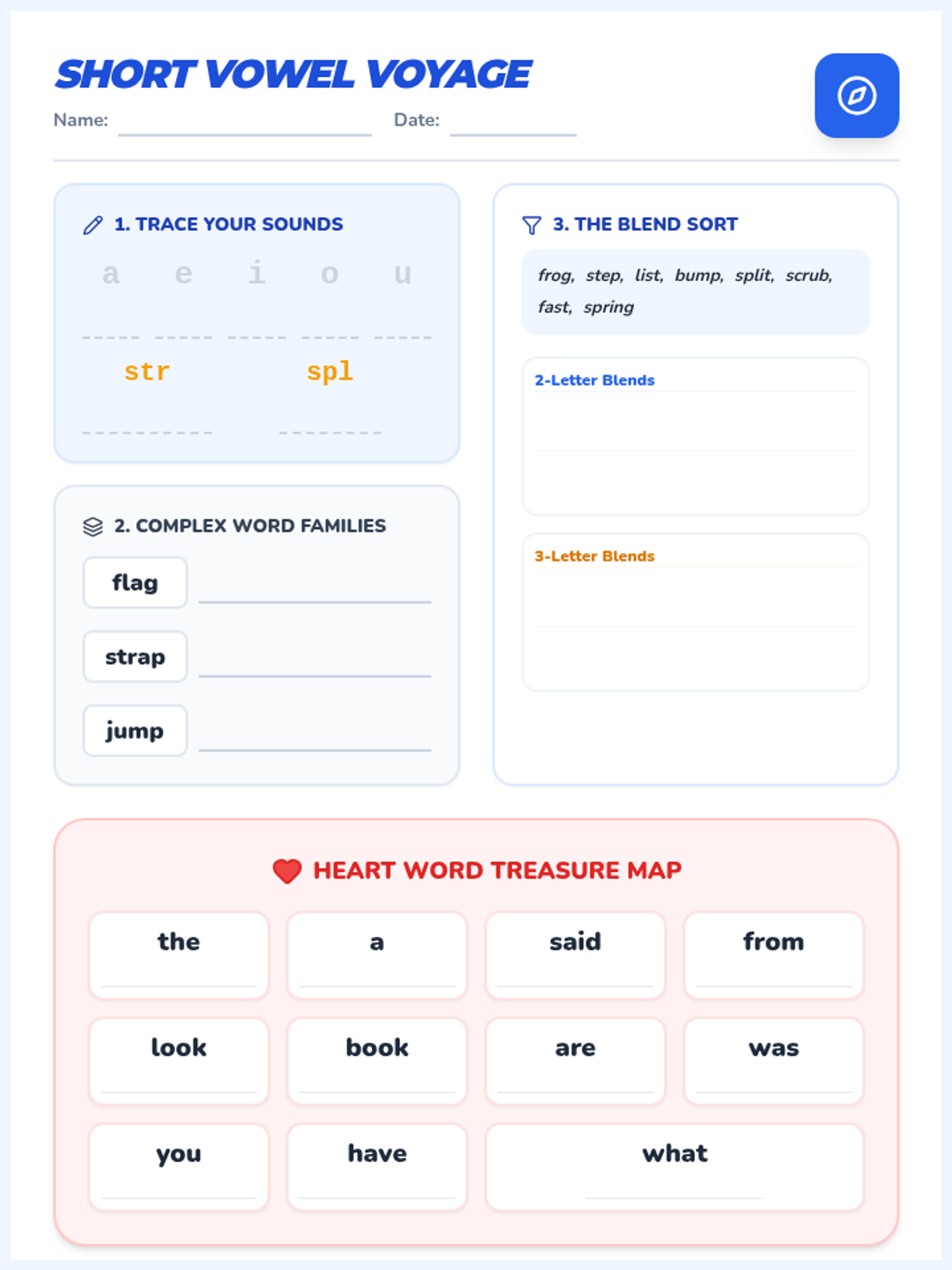
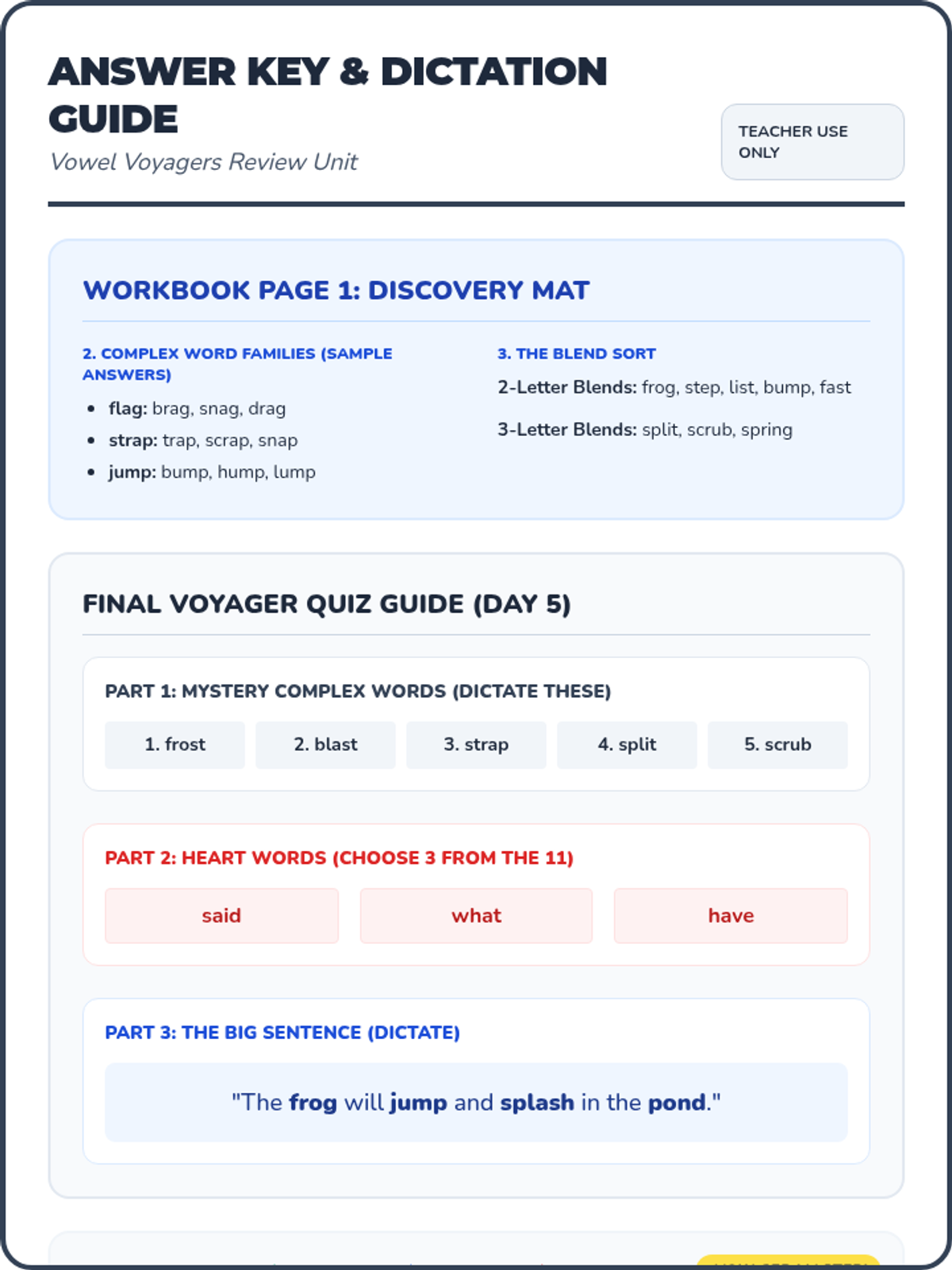
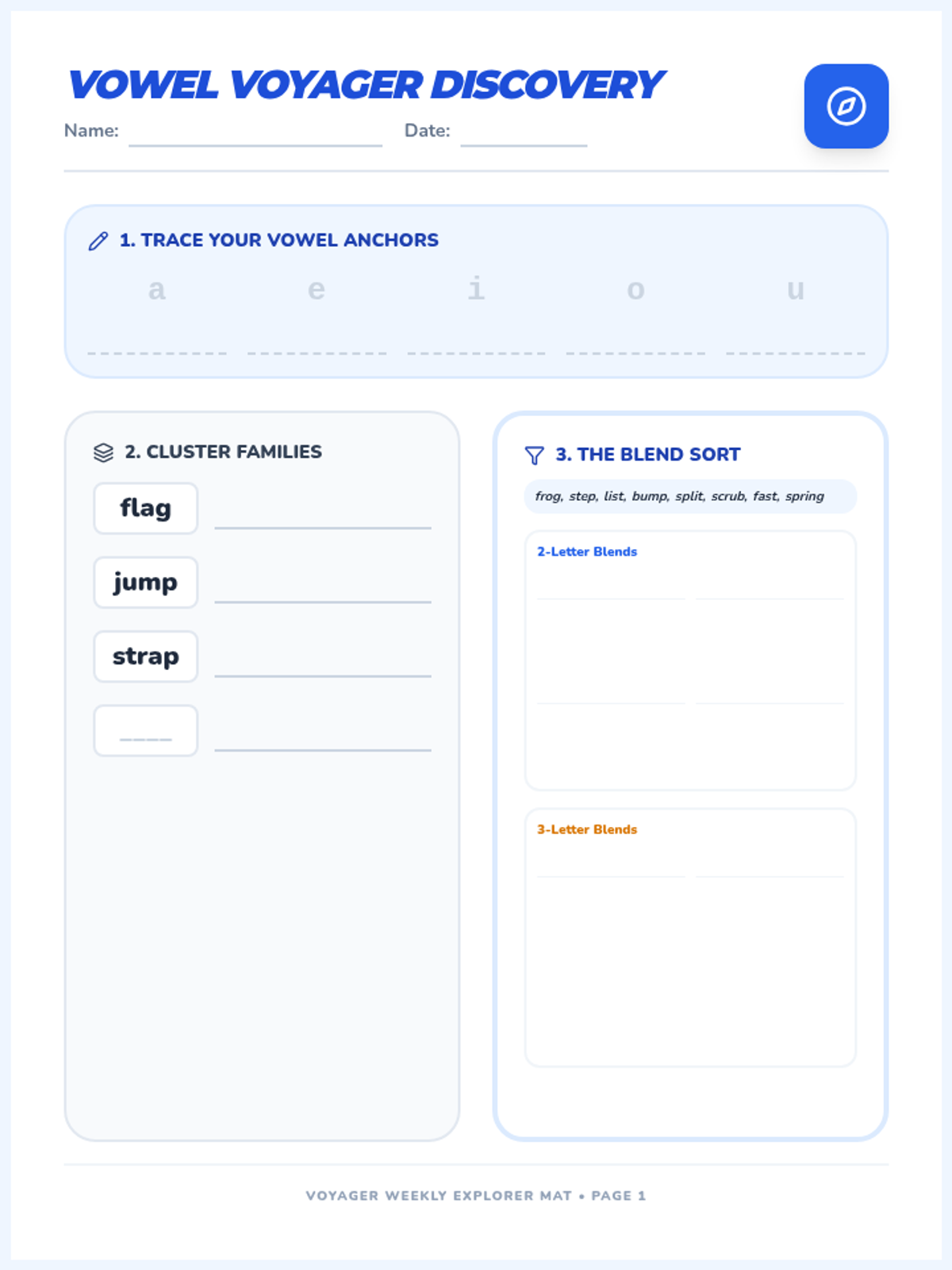
A comprehensive week-long unit reviewing short vowels through explicit instruction, multisensory practice, and decodable text application.
A collection of visual prompt cards and resources to help kindergarten students practice oral language skills and describe their work using sentence frames.
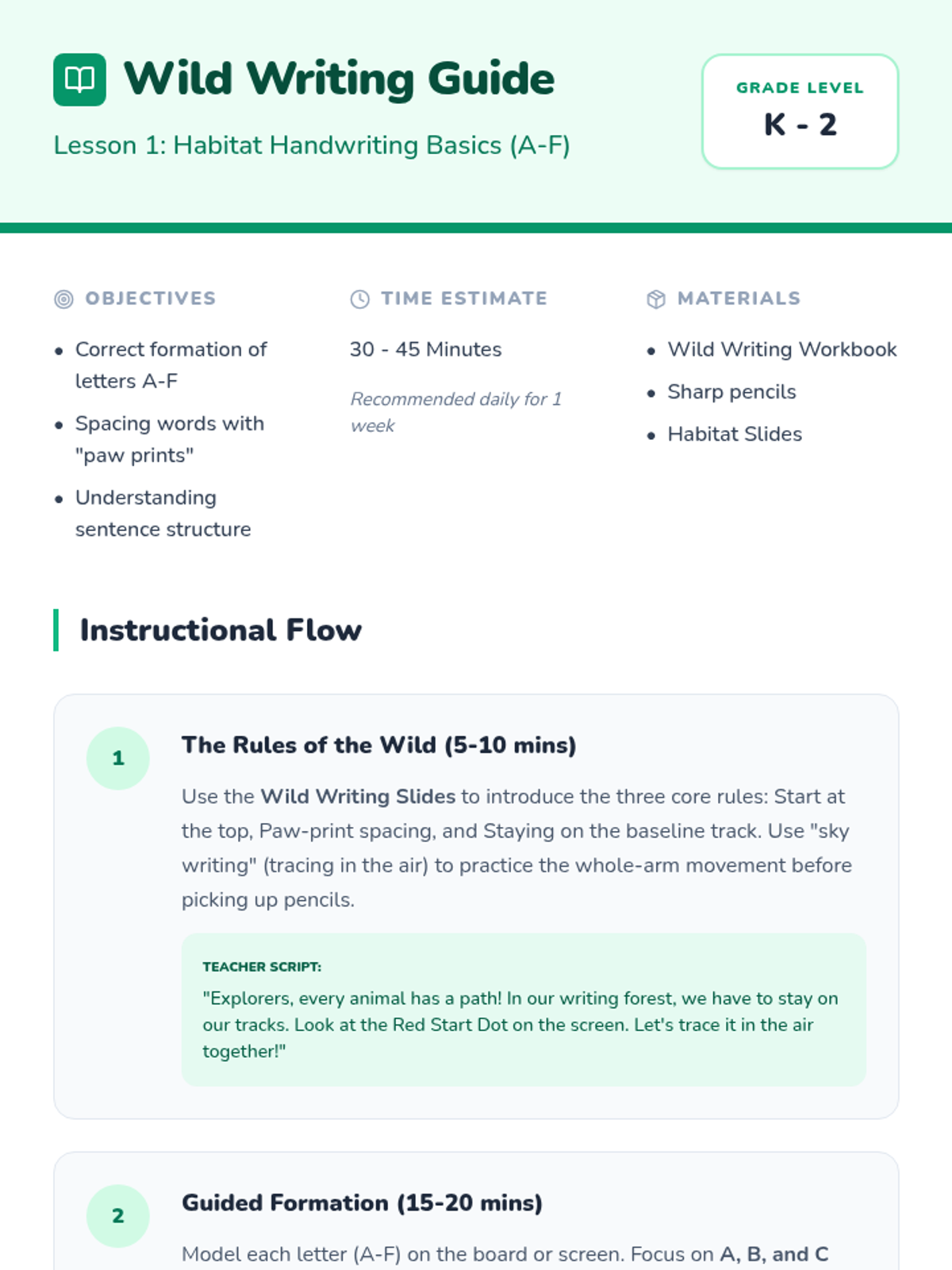
A high-level overview of the Wild Writing Adventure curriculum, including teacher guides, scope and sequence, and implementation strategies.
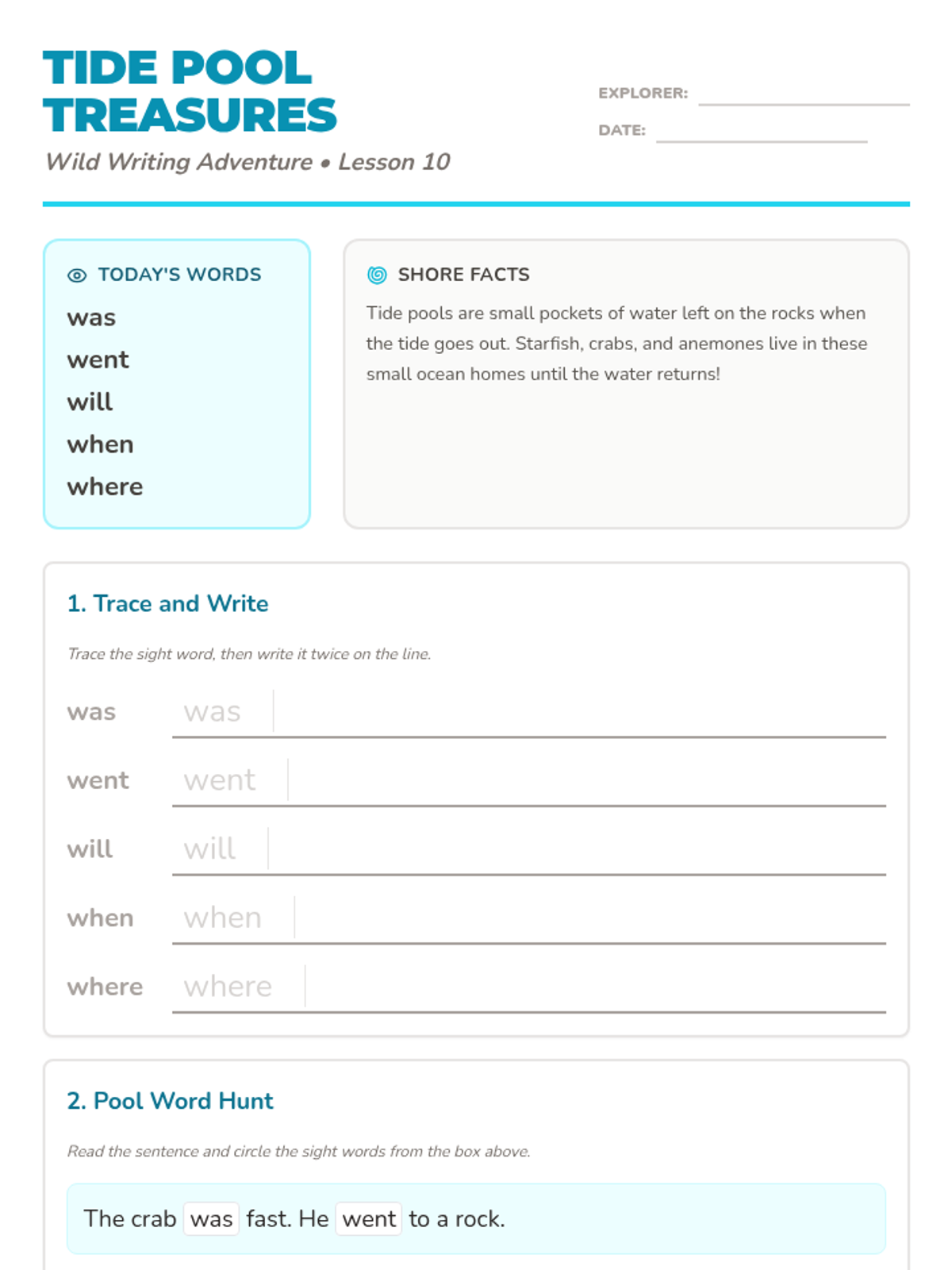
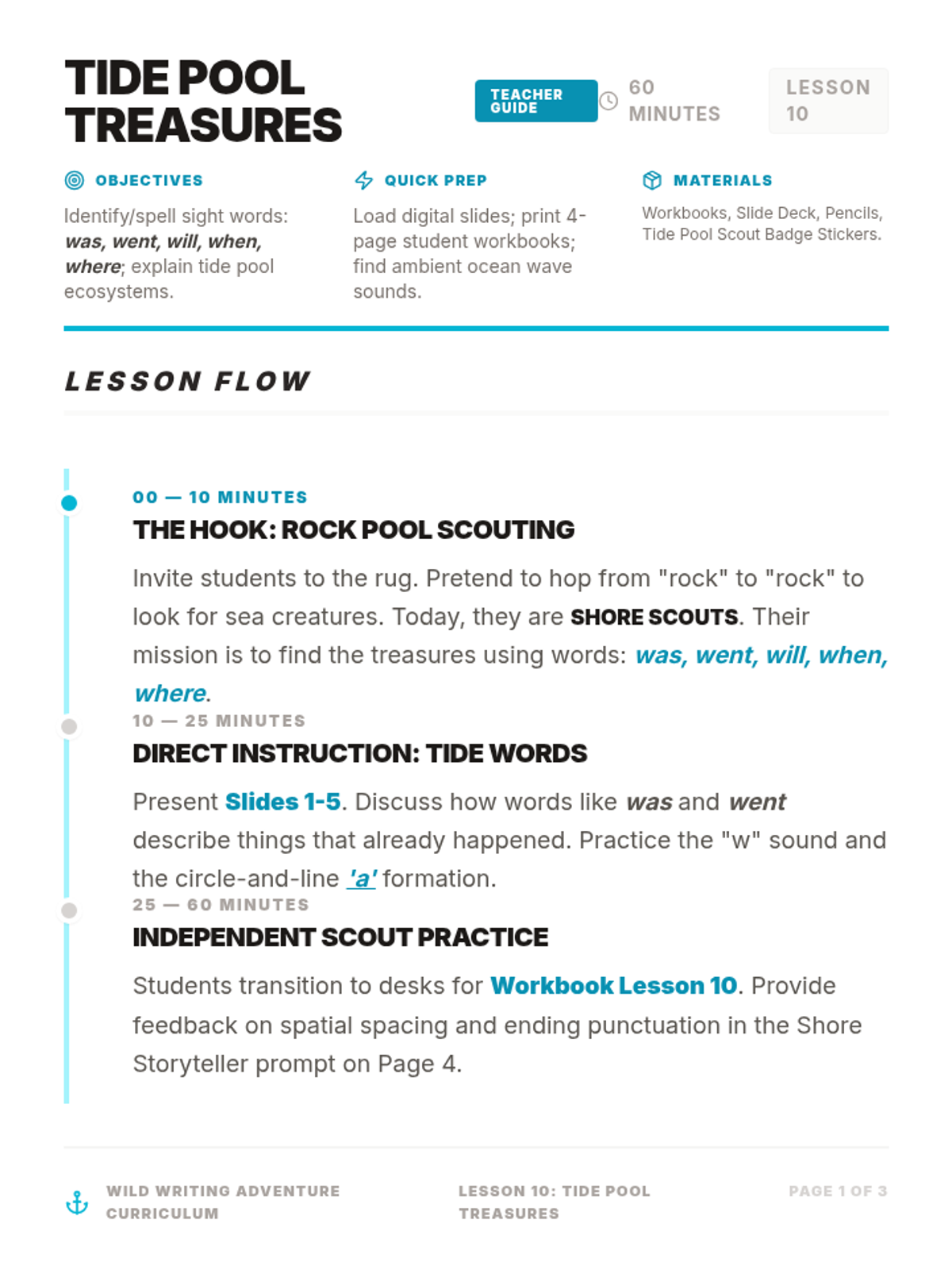
Explore the rocky shore to discover sight words while meeting starfish, crabs, and sea anemones in colorful tide pools.
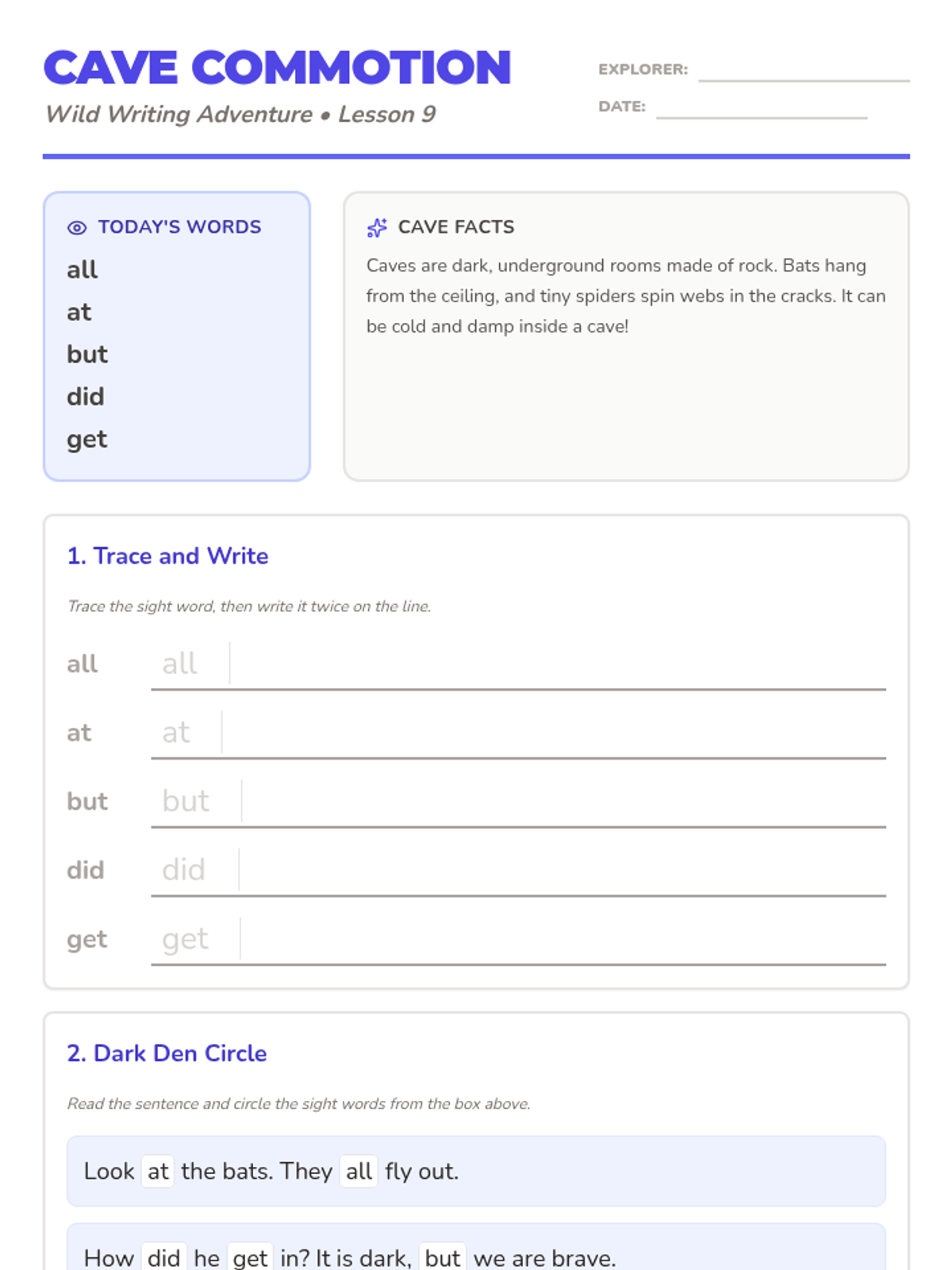
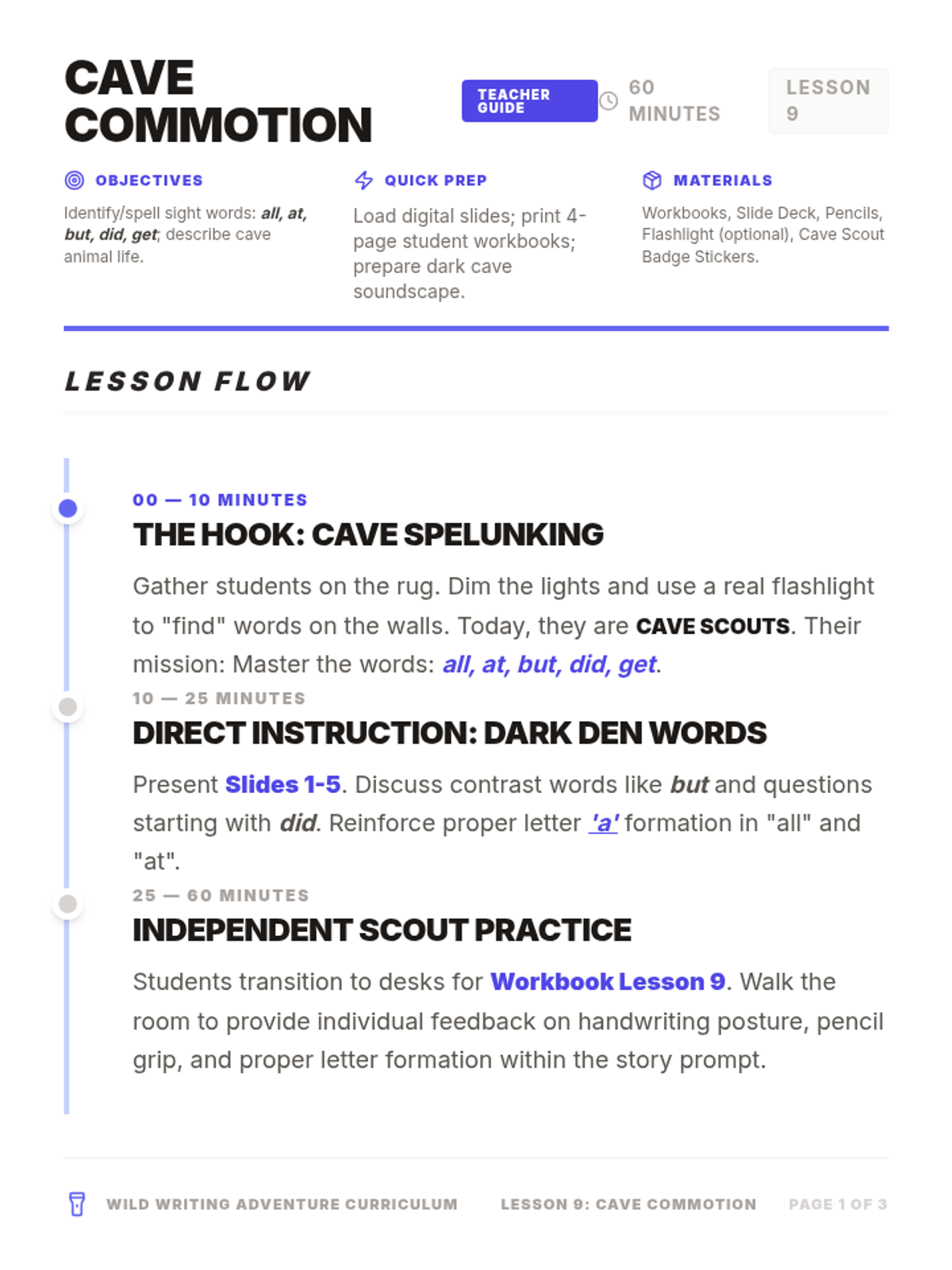
Venture into the mysterious world of caves to master essential sight words while meeting bats, spiders, and salamanders.
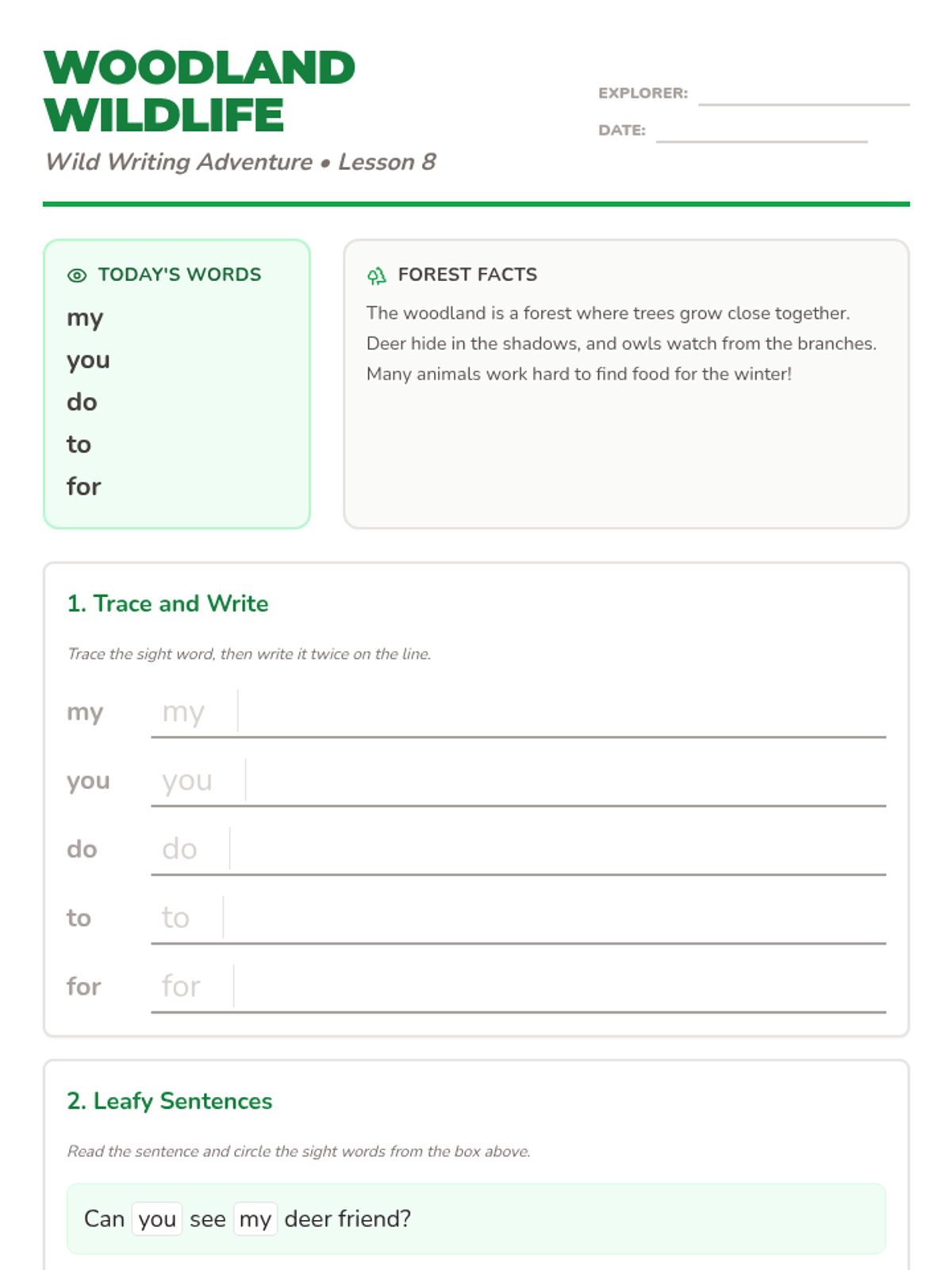
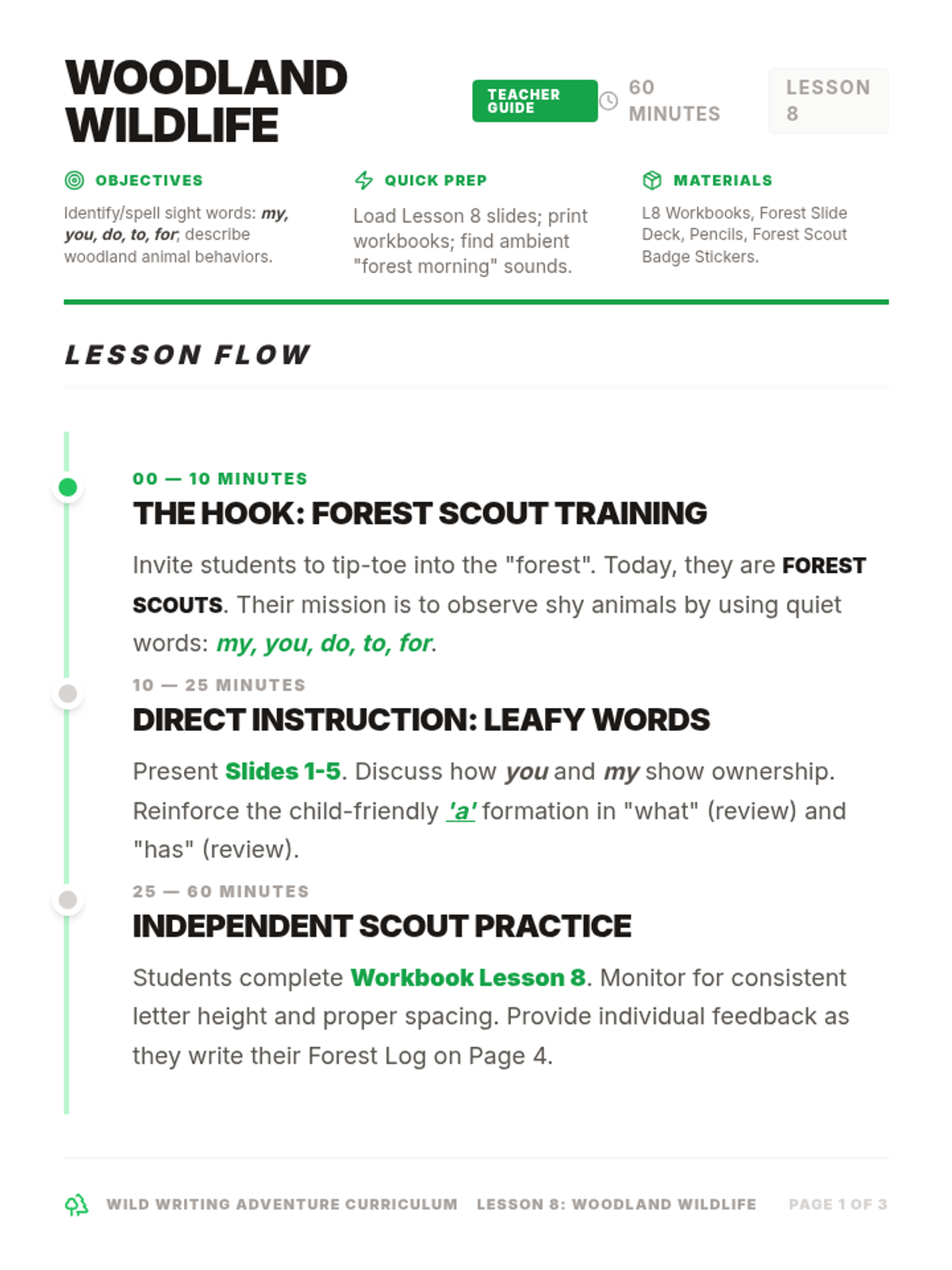
Explore the leafy woodland forest to master essential sight words while meeting graceful deer, wise owls, and busy woodpeckers.
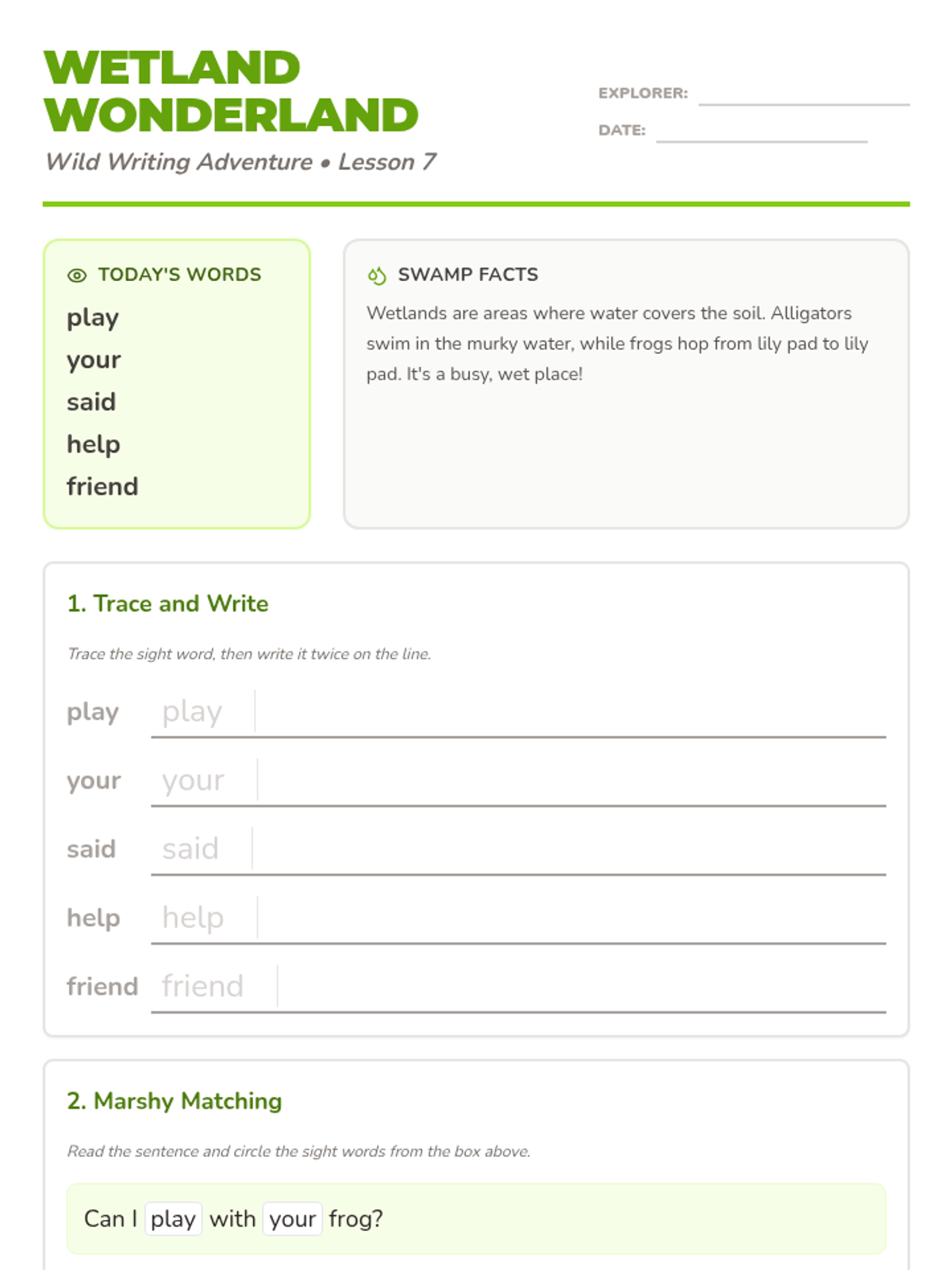
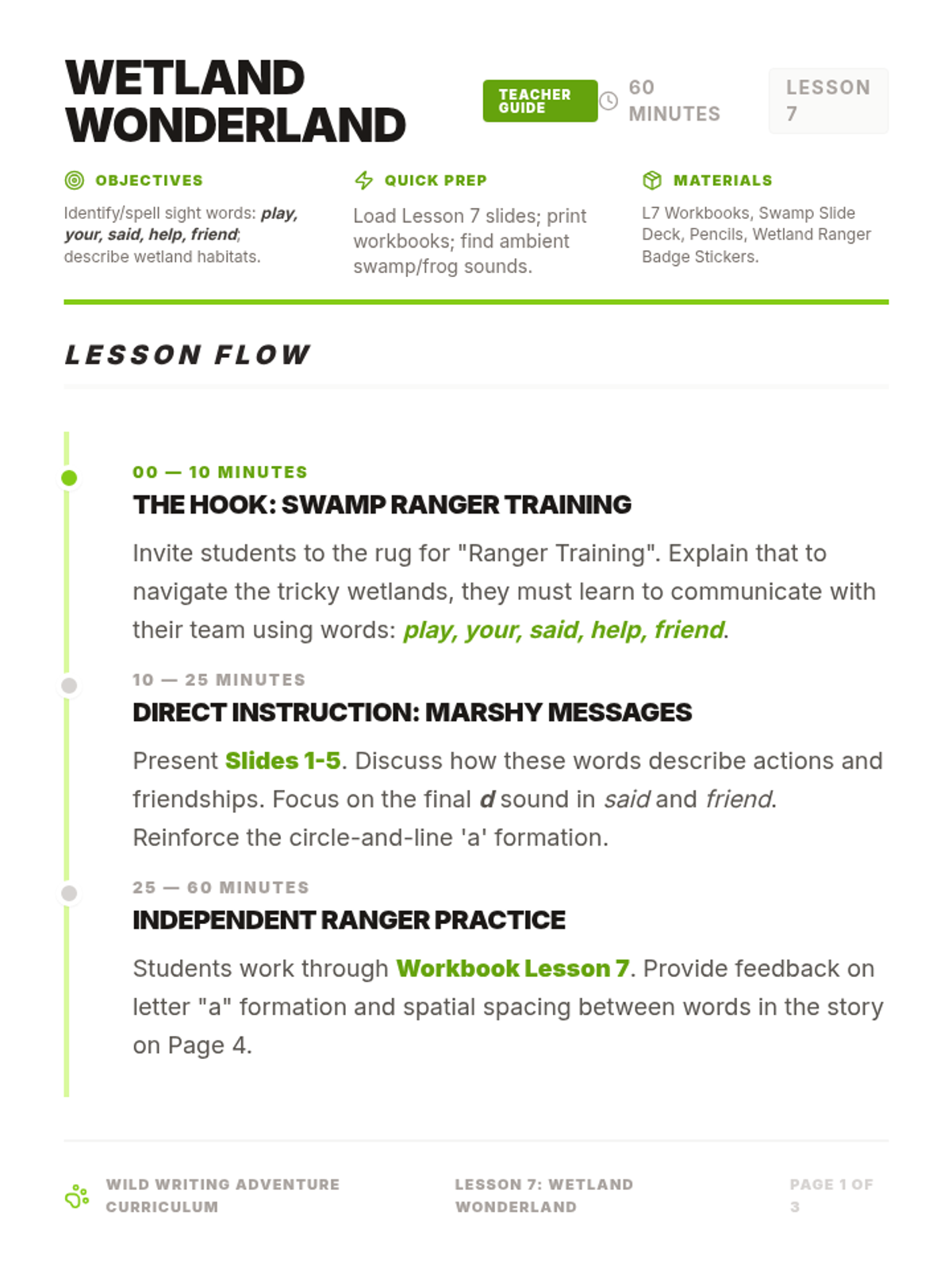
Squelch through the marshy wetlands to master descriptive sight words while spotting alligators, frogs, and dragonflies.
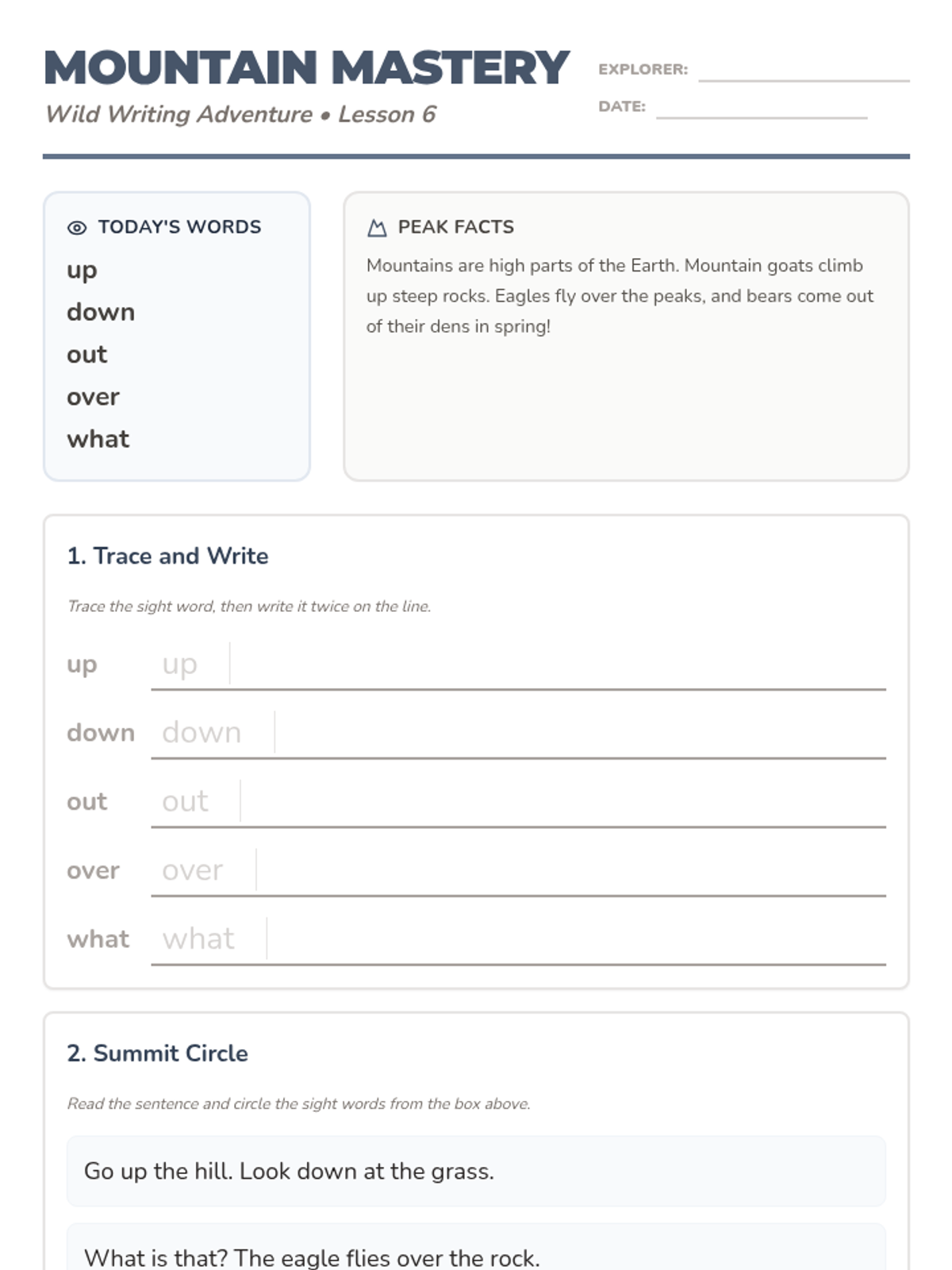
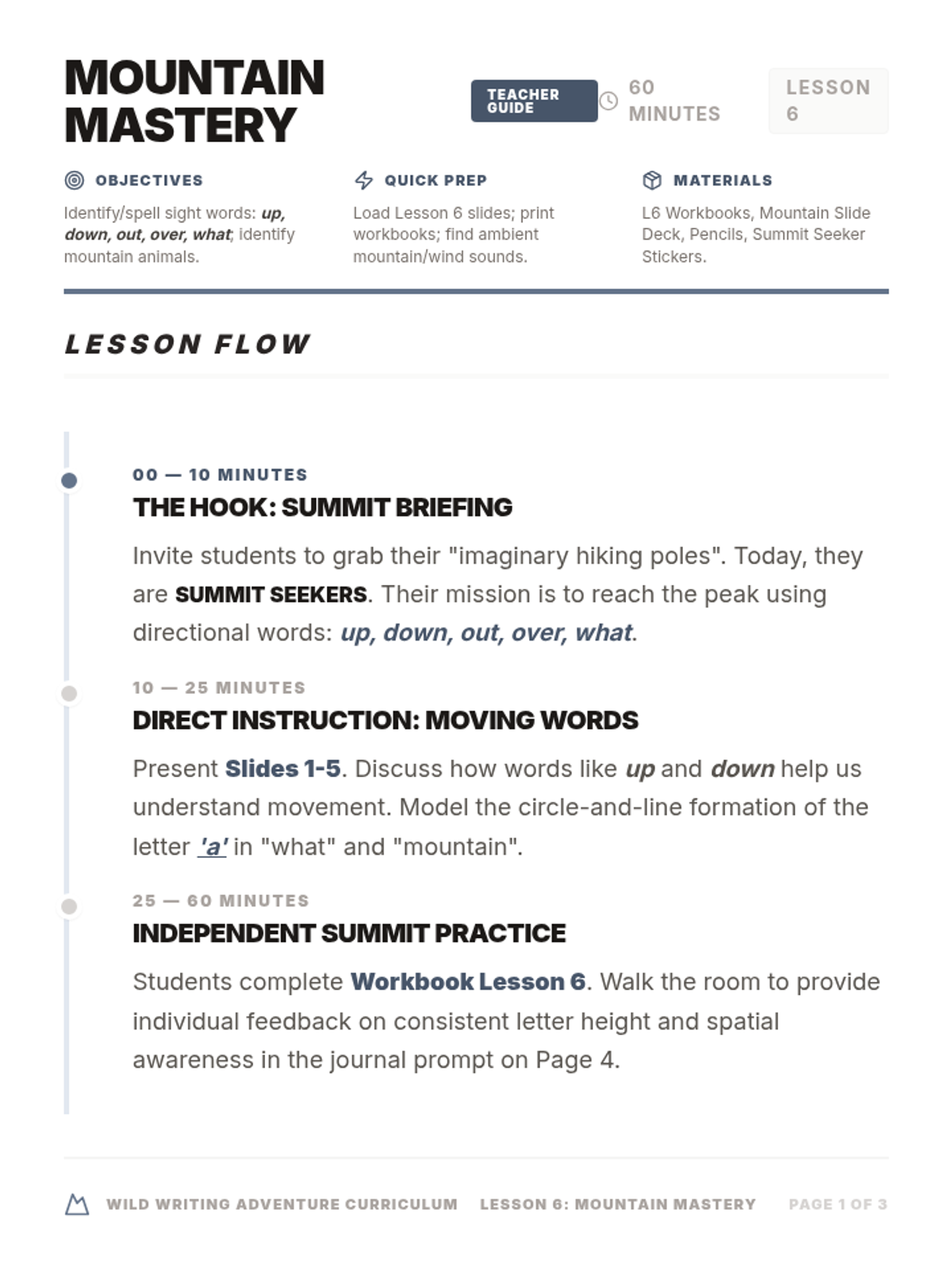
Climb to the highest peaks to master directional sight words while meeting mountain goats, eagles, and black bears.
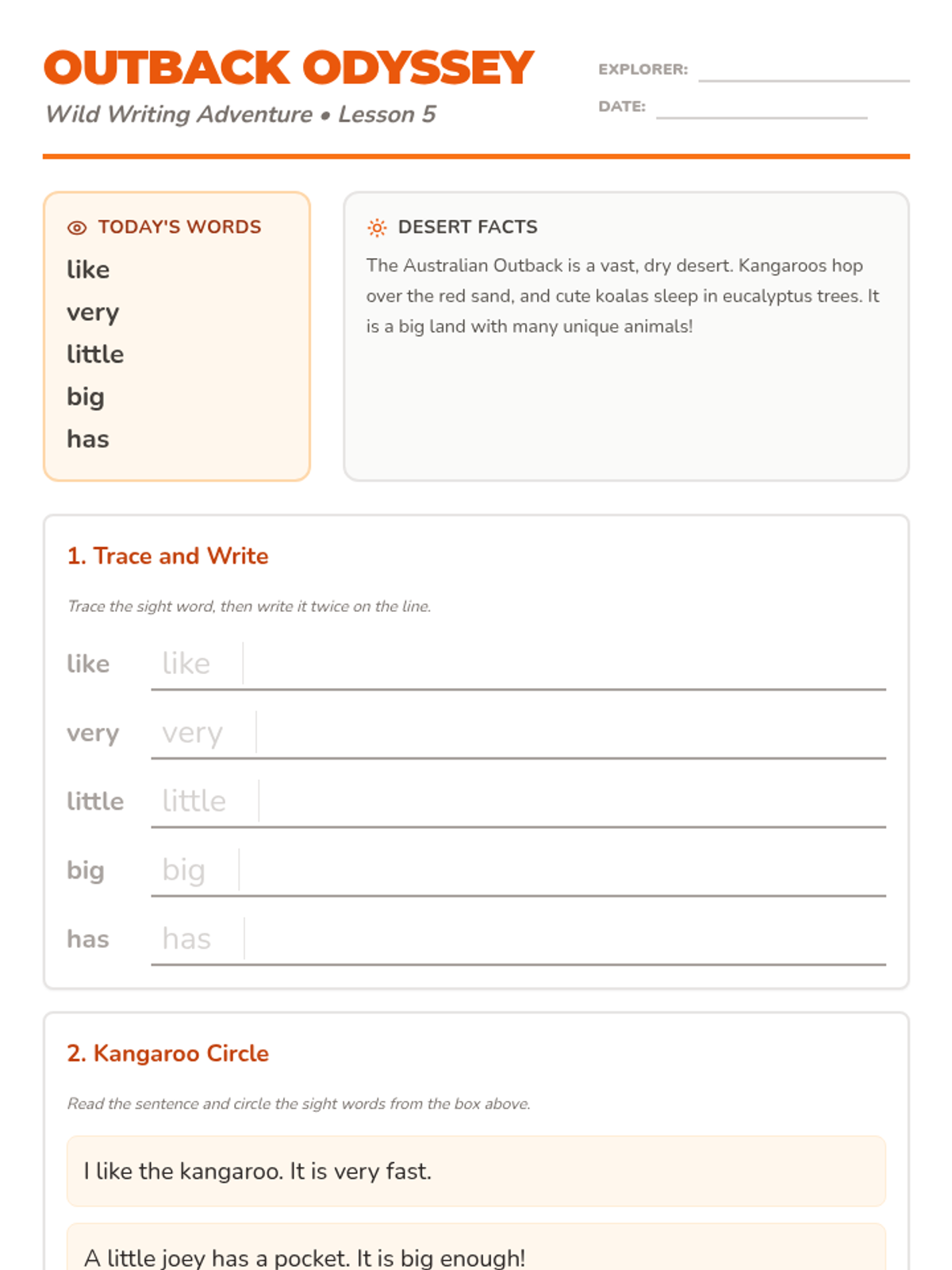
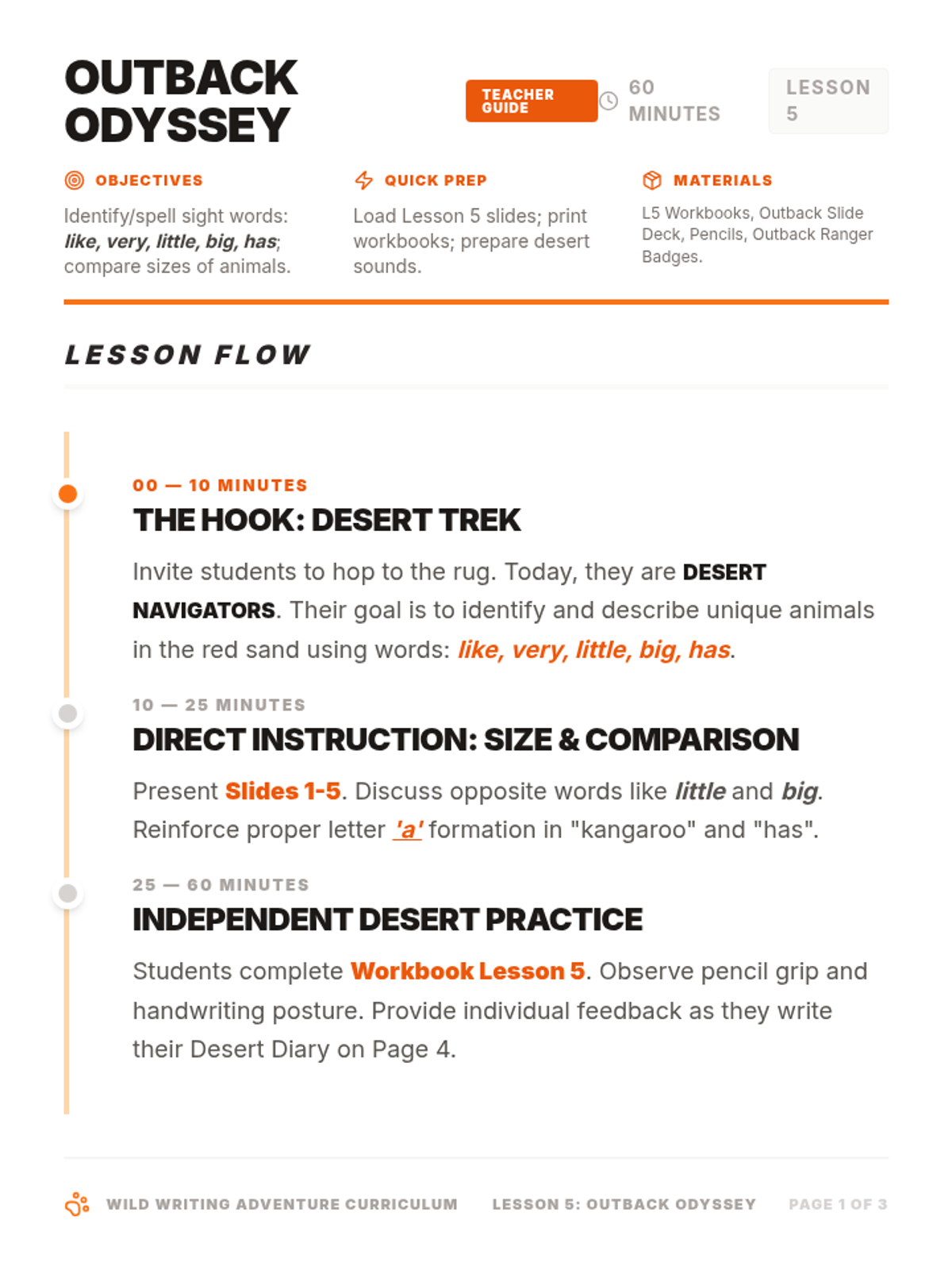
Hop through the sun-drenched Australian Outback to master new sight words while meeting kangaroos, koalas, and wombats.
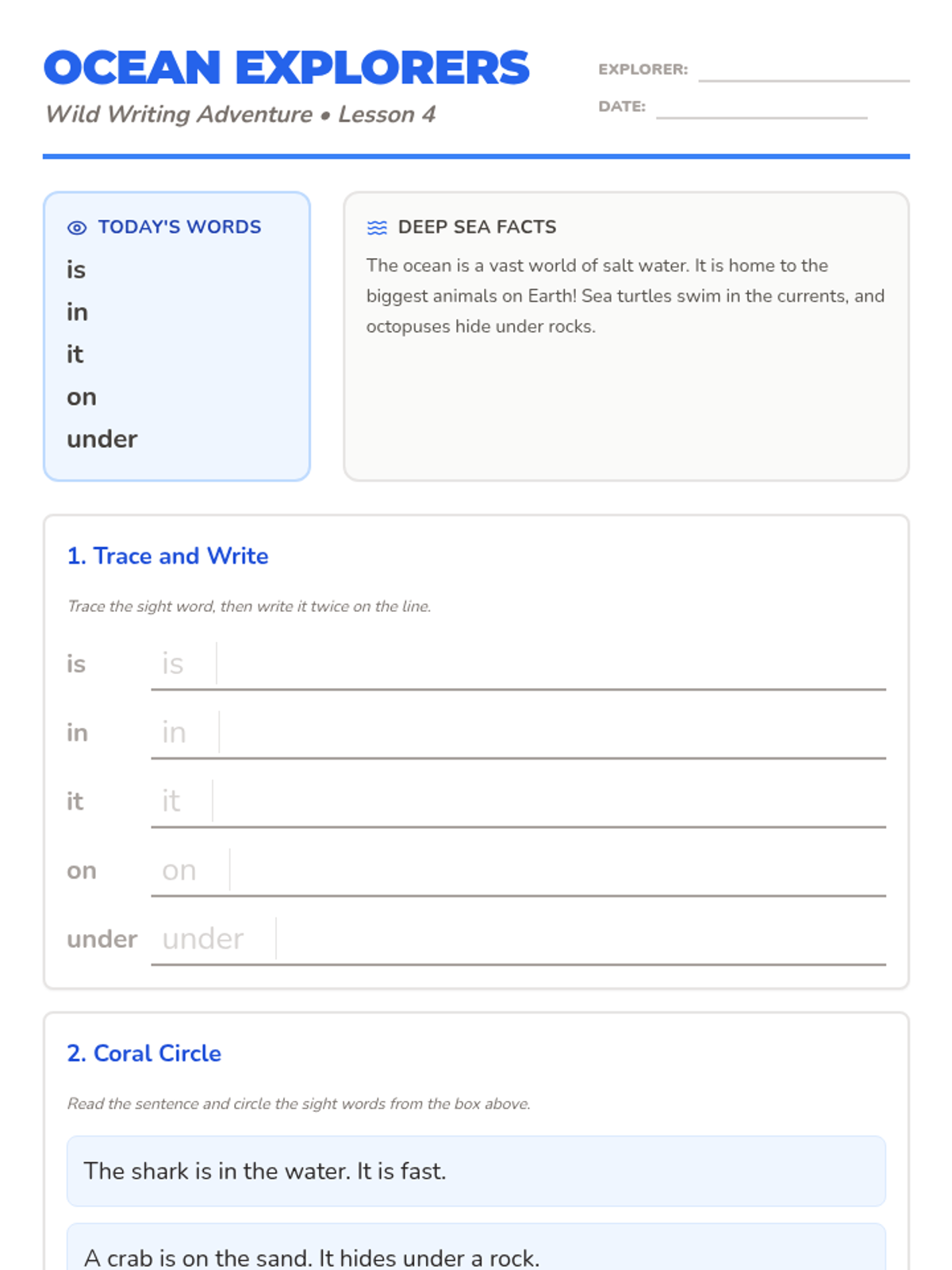
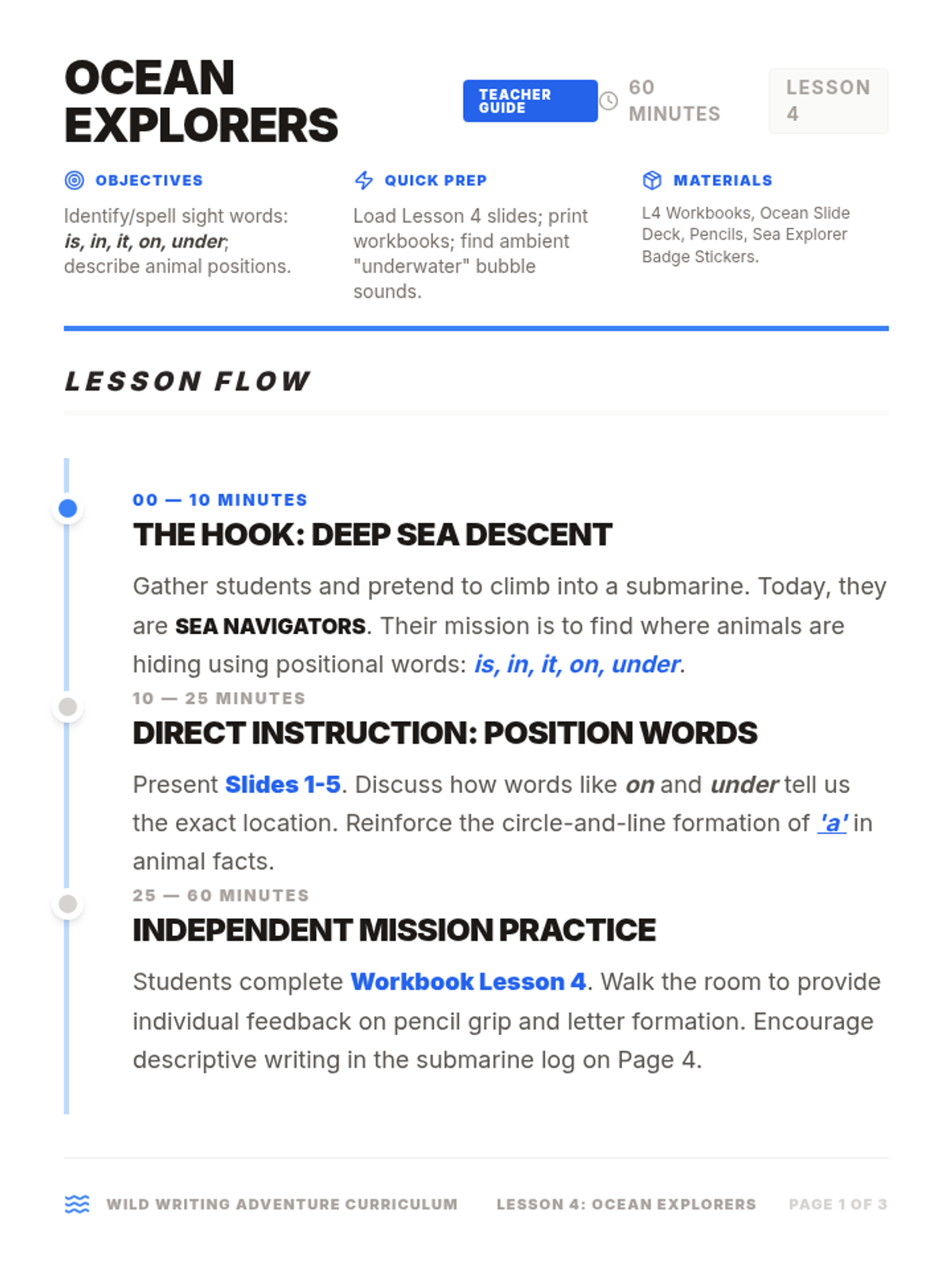
Dive into the deep blue ocean to master positional sight words while discovering sea turtles, sharks, and octopuses.
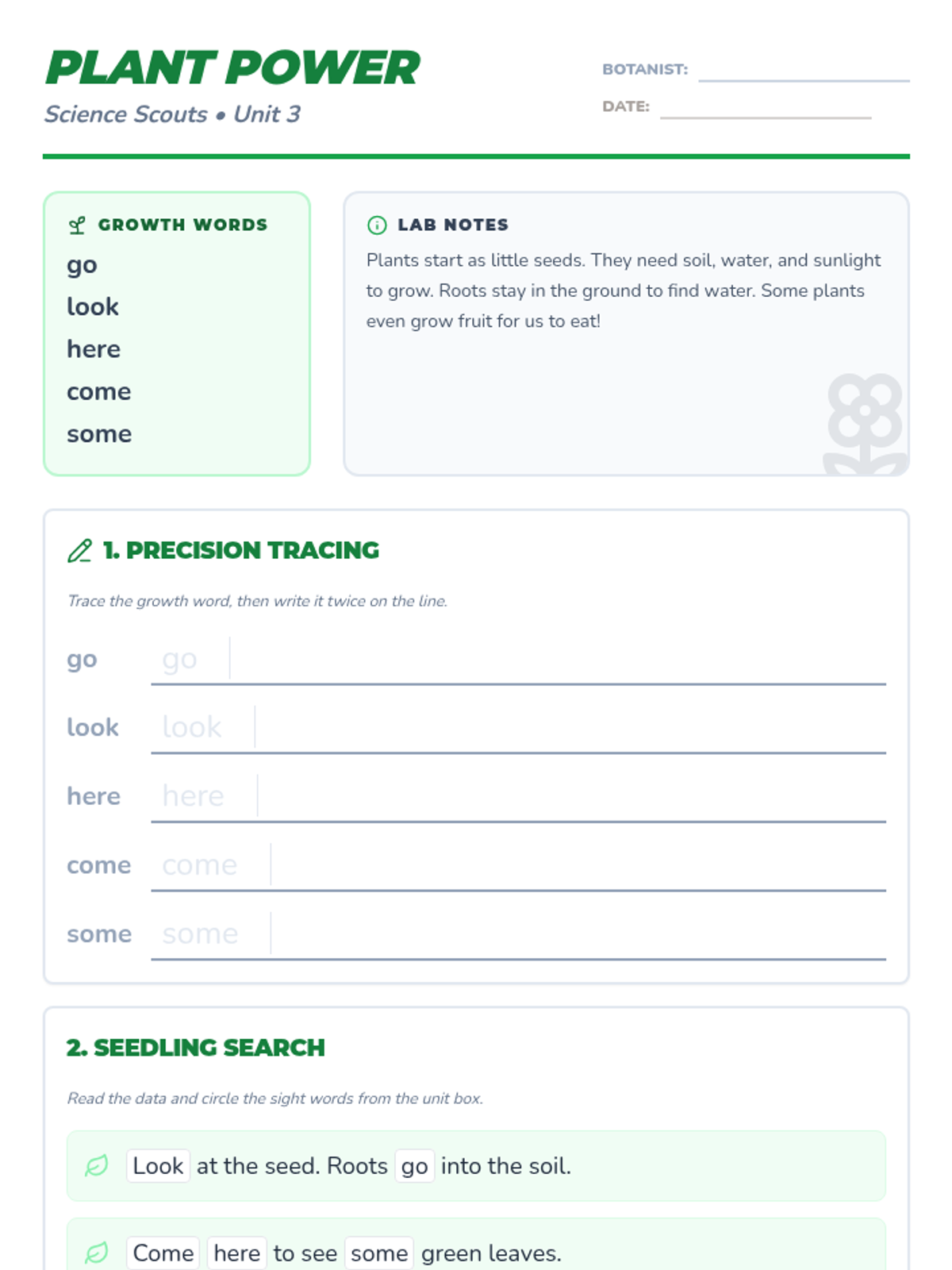
Investigate the life cycle of plants and the essentials for growth while mastering sight words and scientific observation.
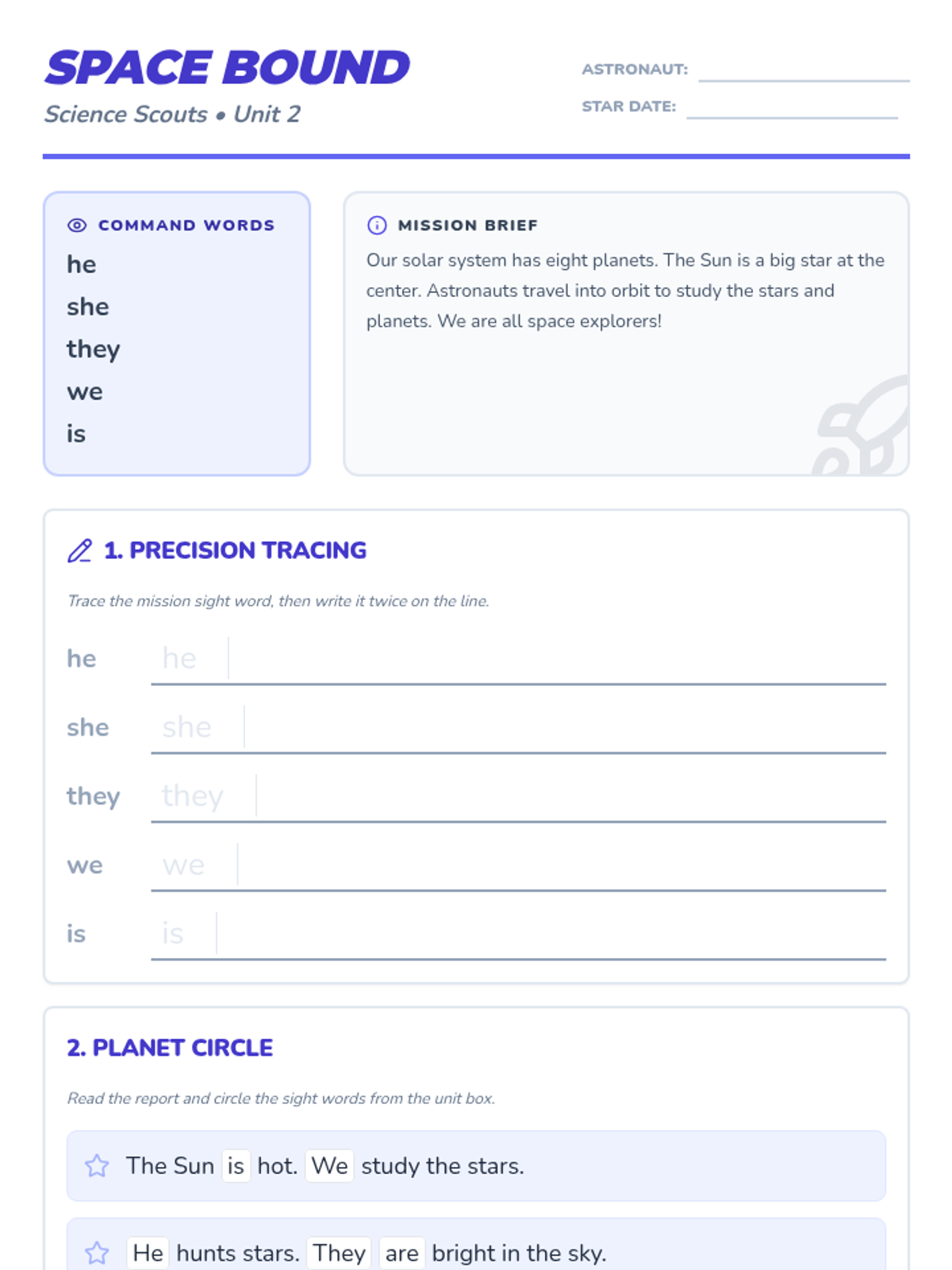
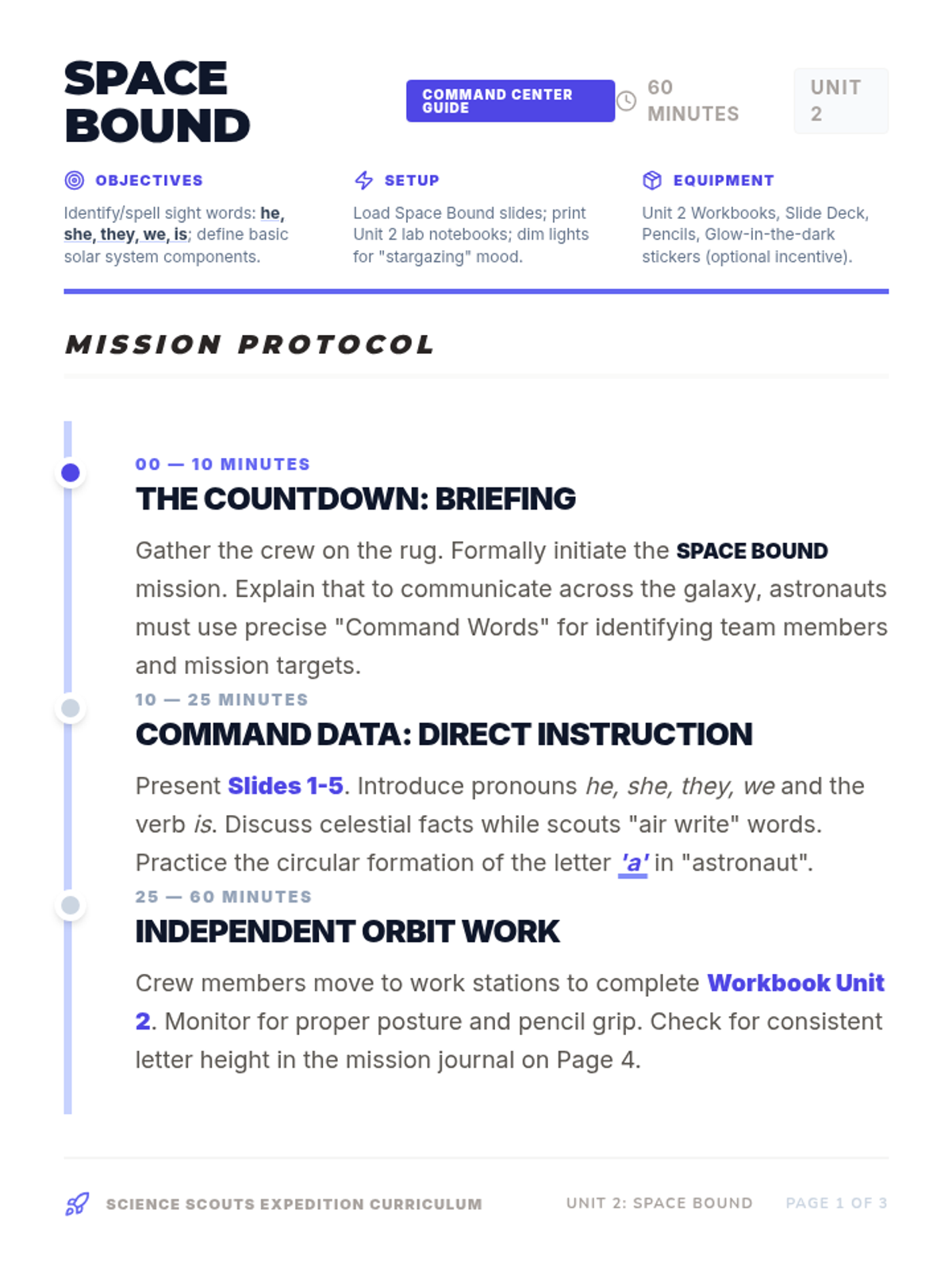
Launch into orbit to explore planets and stars while mastering high-frequency sight words and scientific terminology.
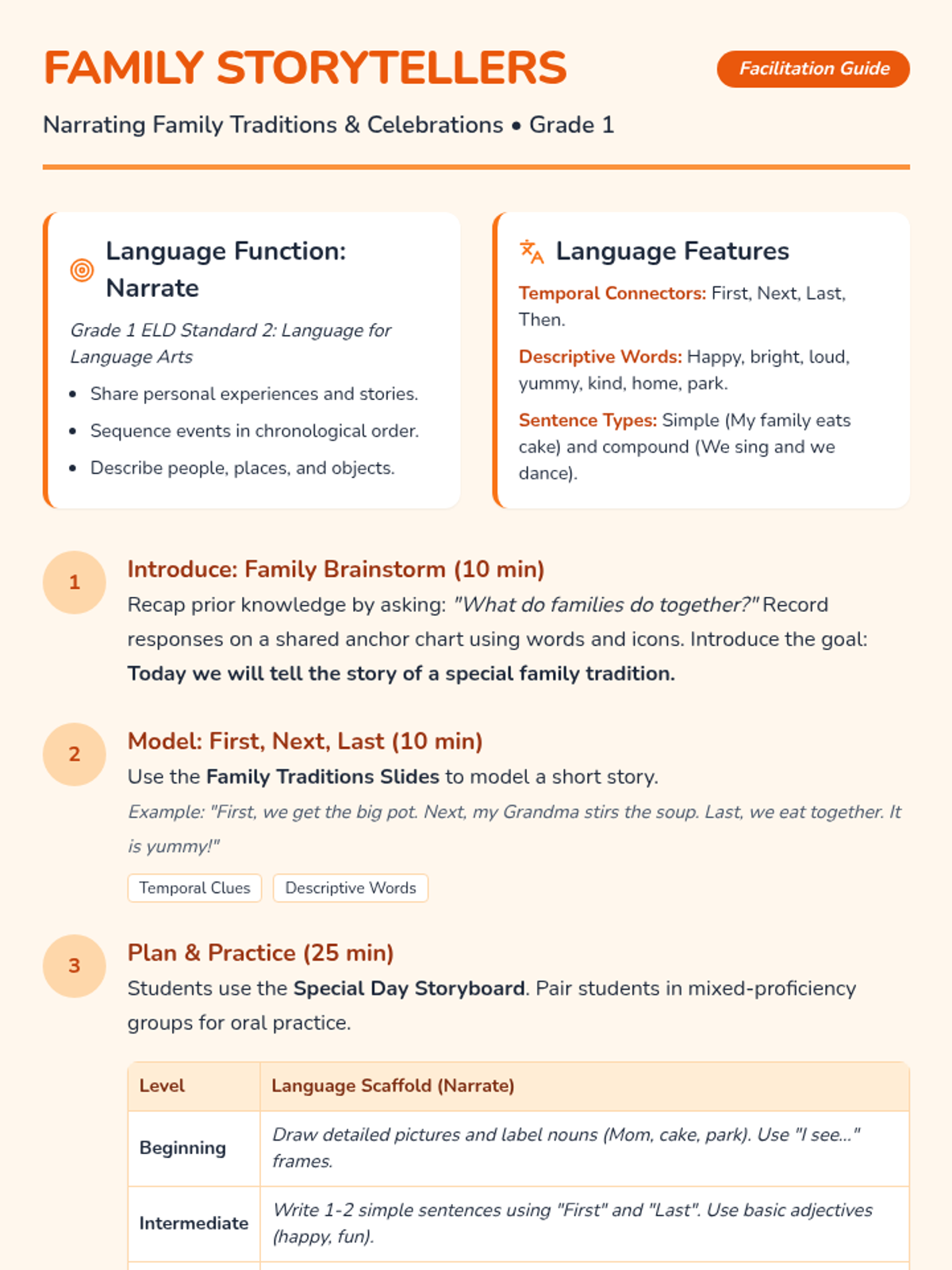
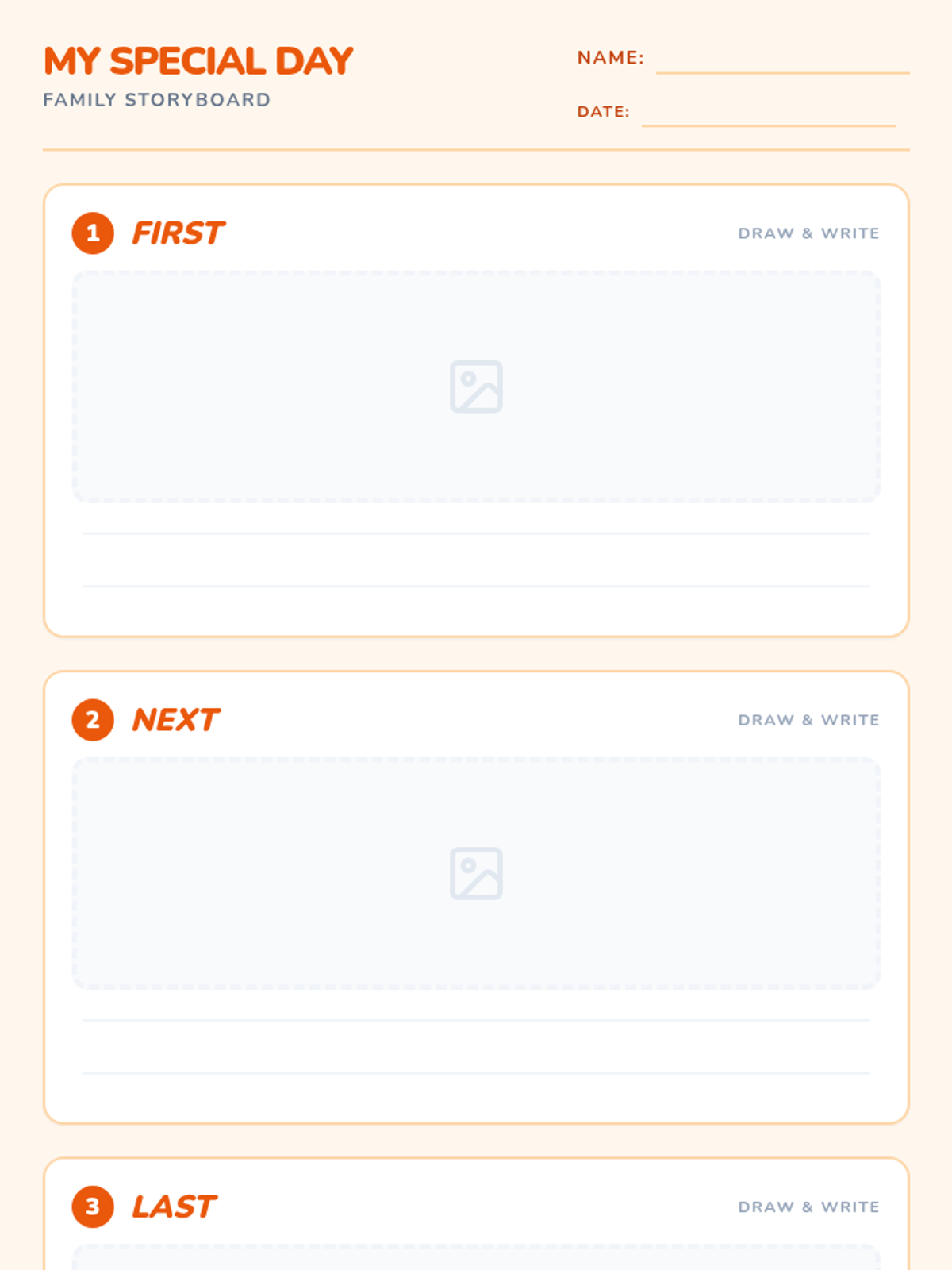
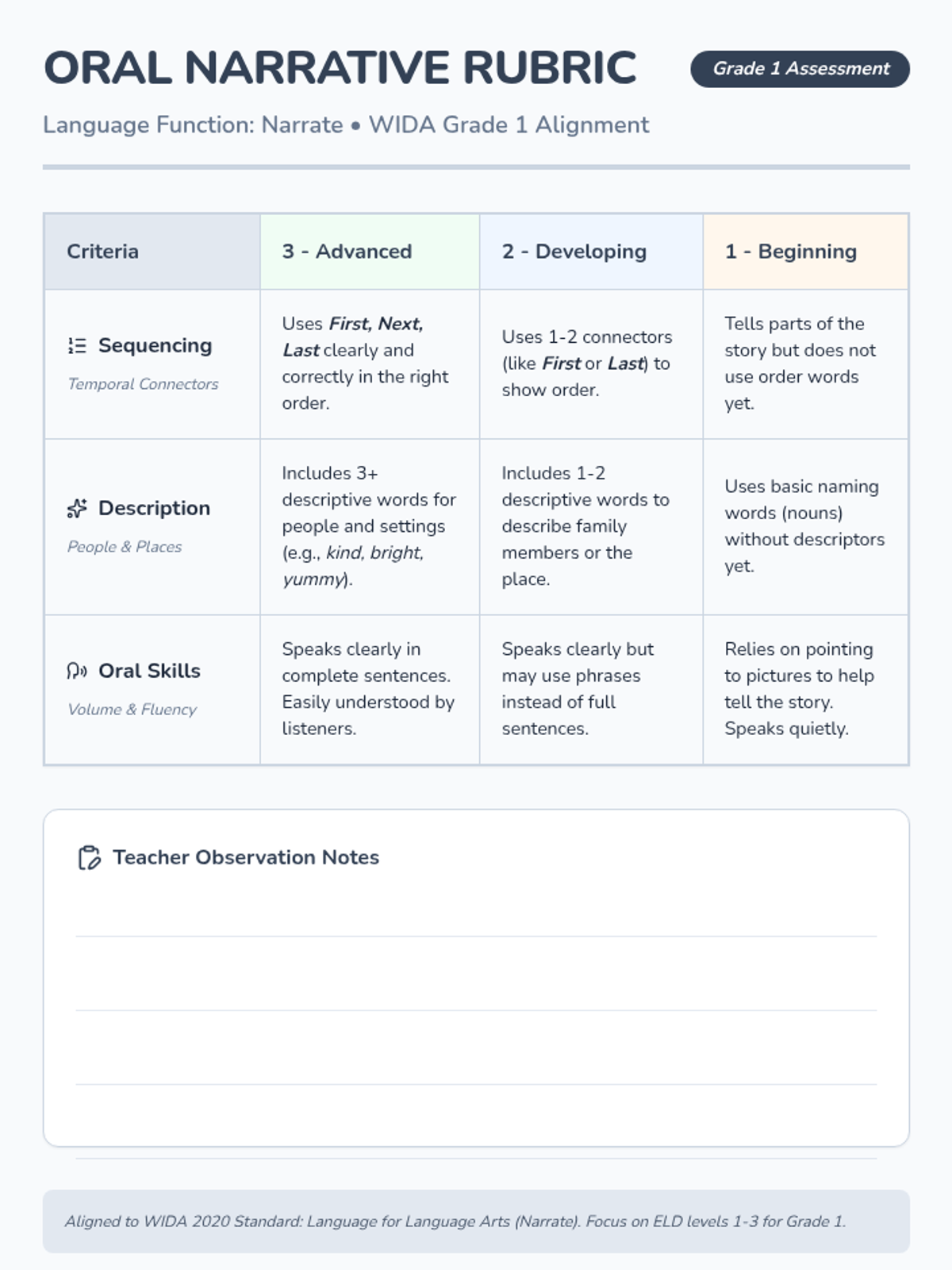
A Grade 1 oral language lesson focused on narrating family traditions and celebrations. Students use temporal connectors and descriptive language to share a special story from their family life, aligned with WIDA Narrate standards.
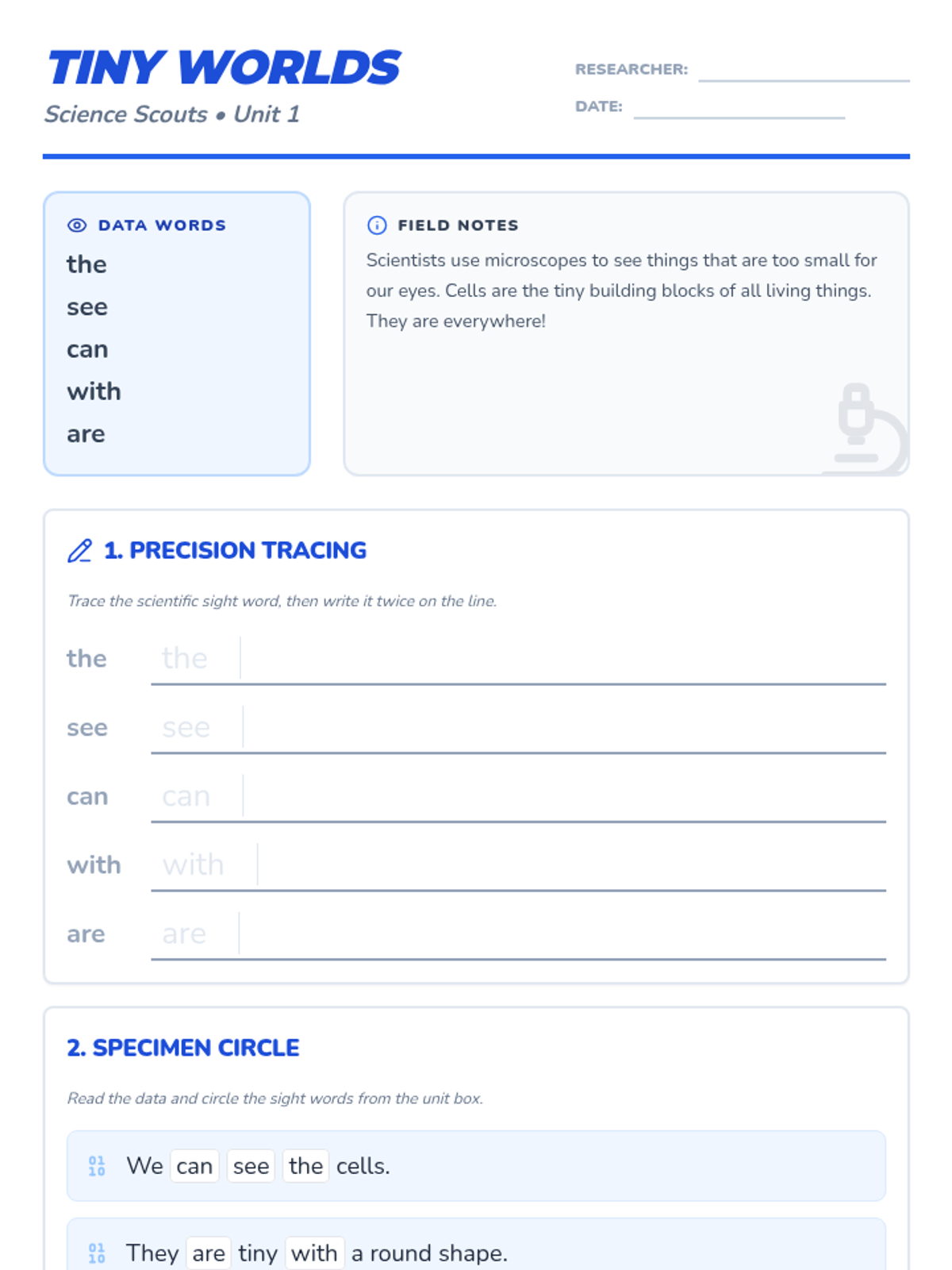
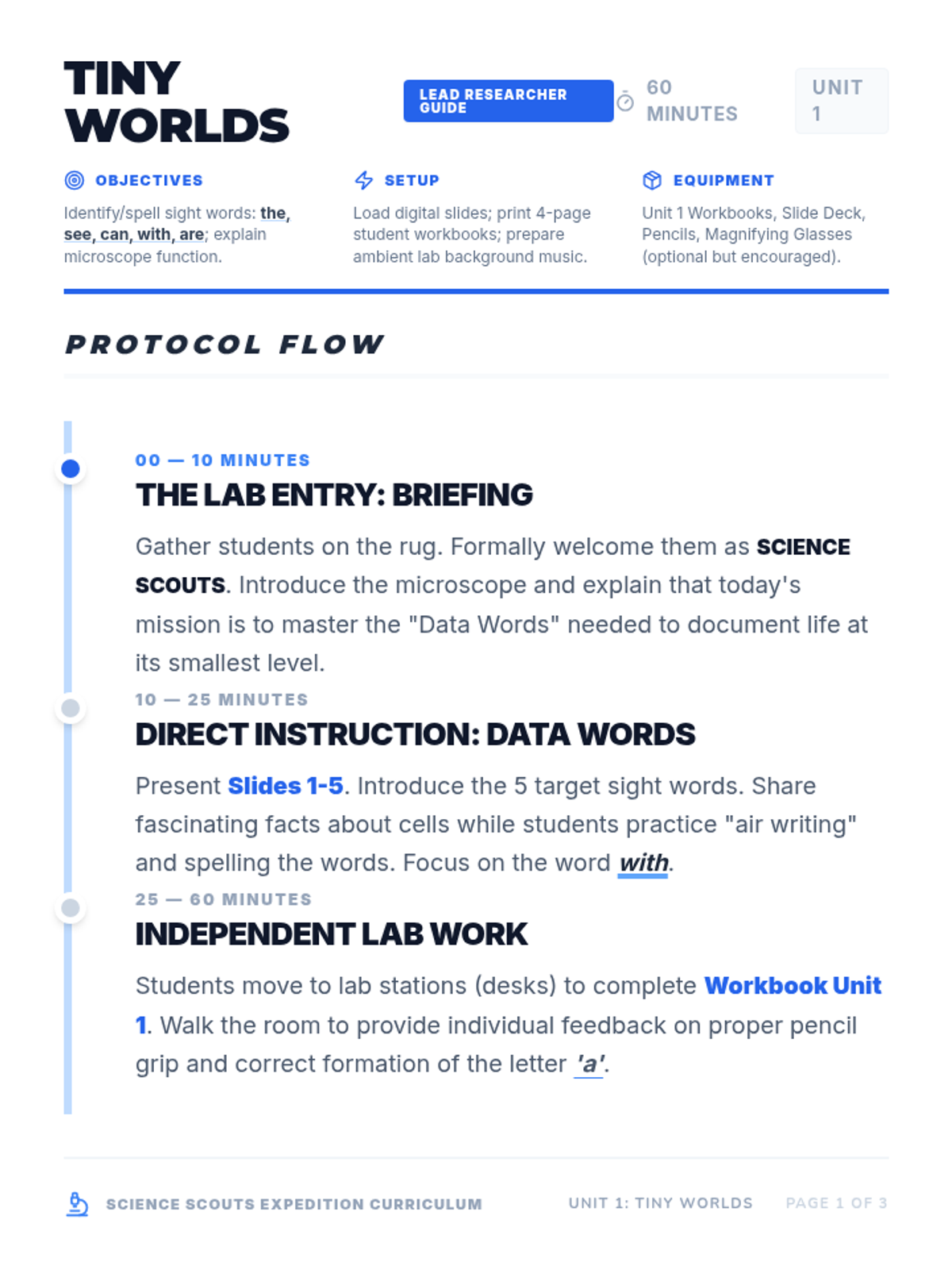
Dive into the invisible world of cells and microscopes to master essential sight words while discovering how scientists see tiny things.
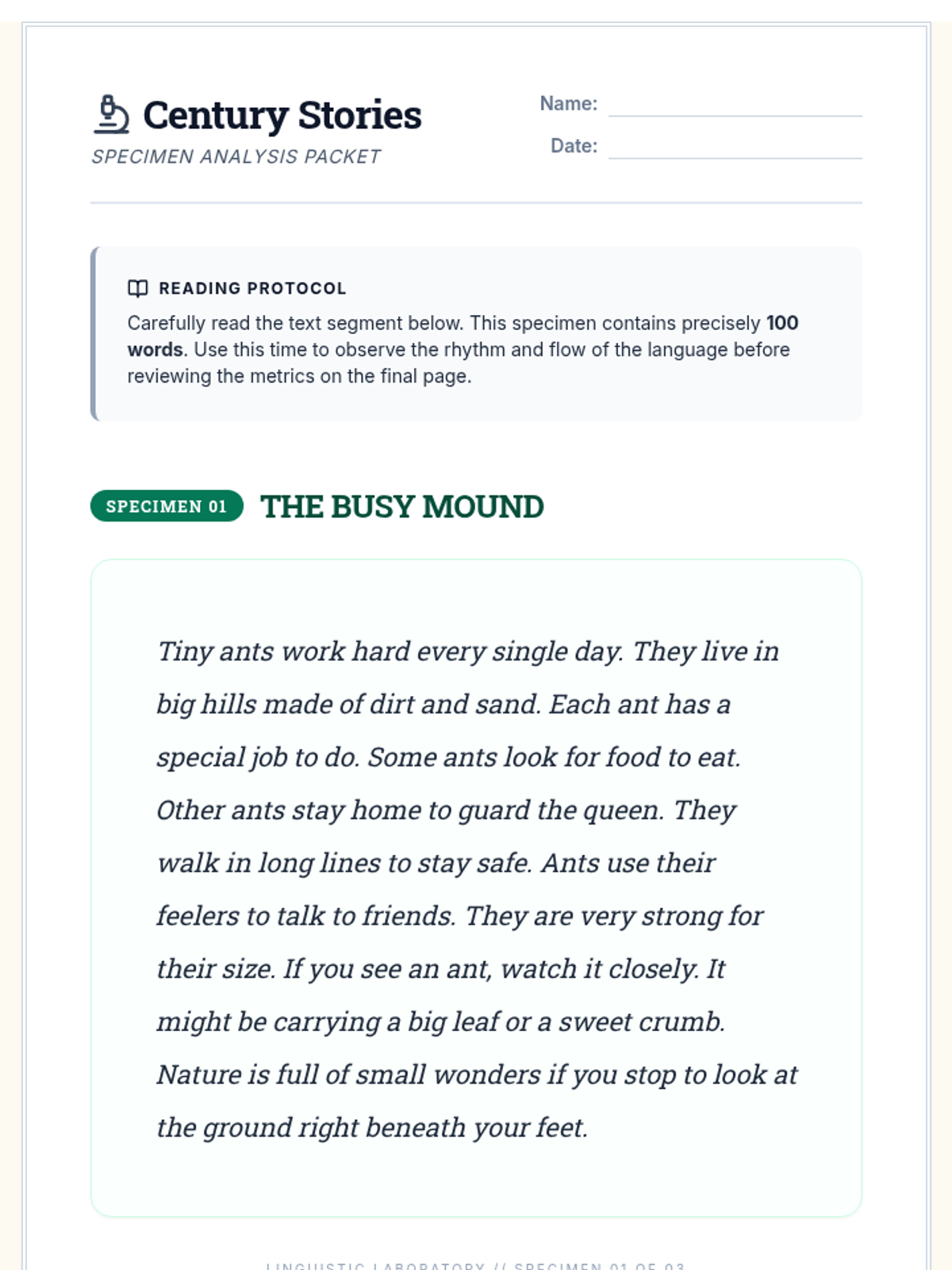
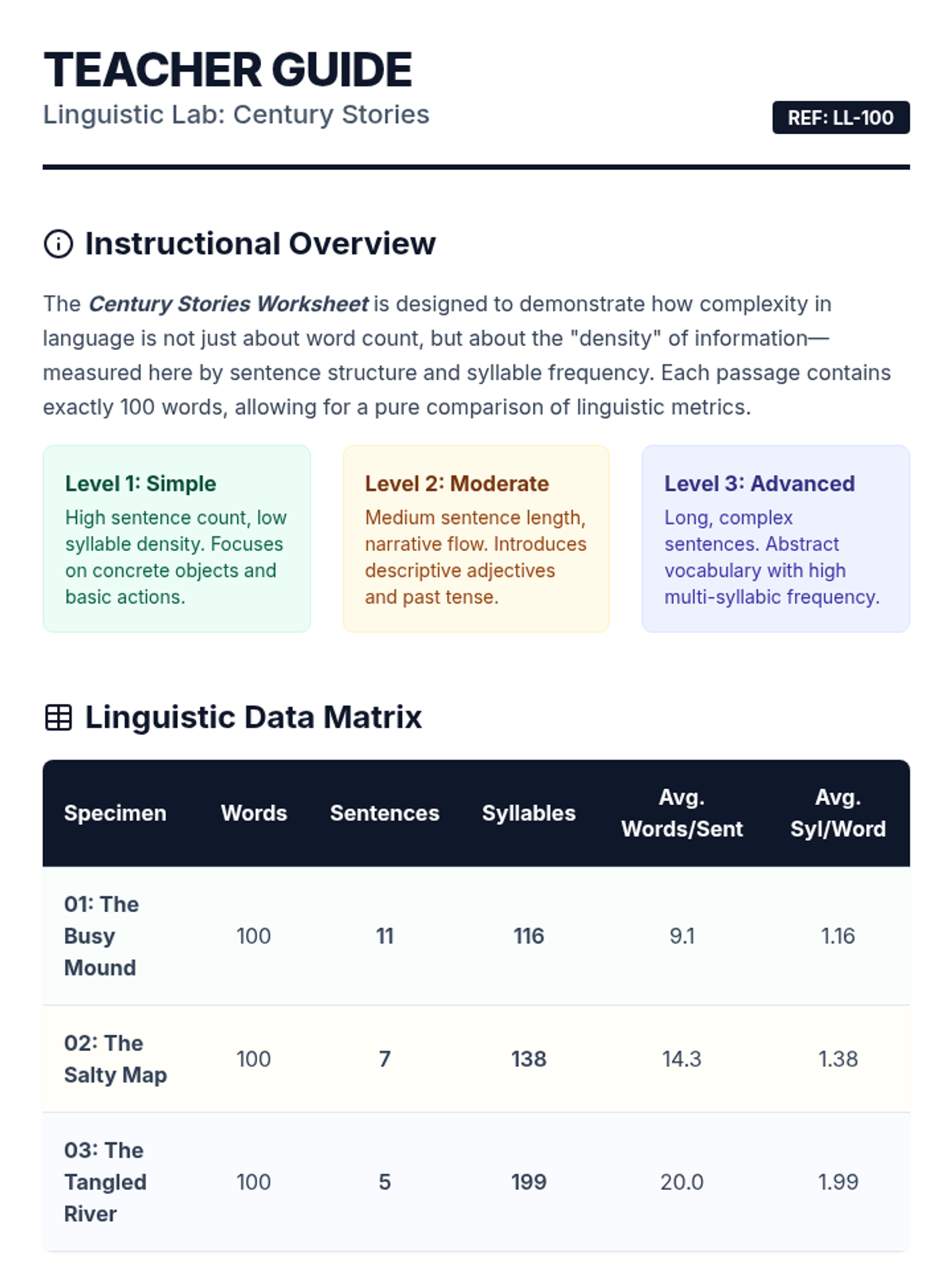
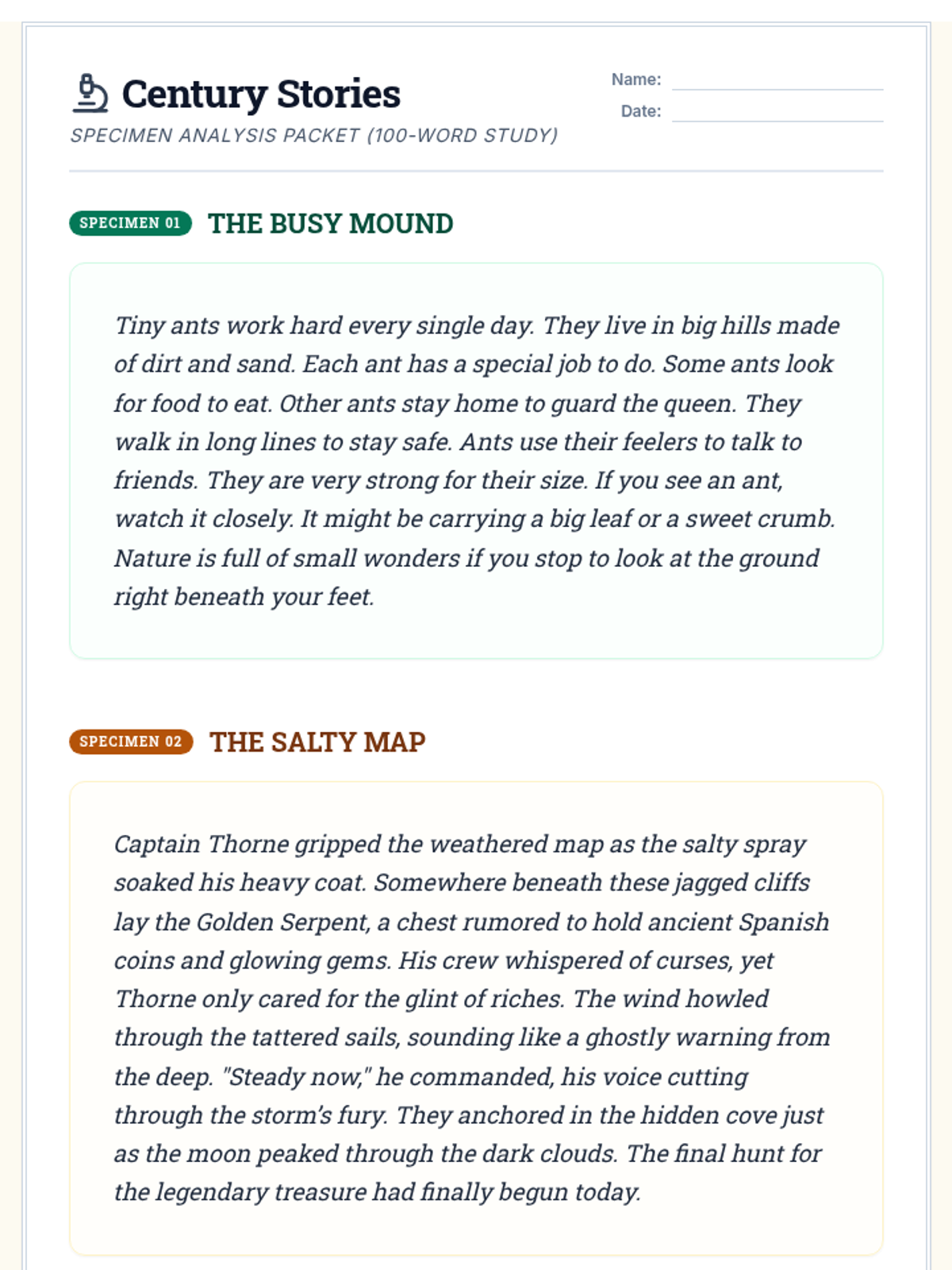
A collection of reading passages designed to challenge students' comprehension and linguistic awareness by analyzing word counts, sentence structures, and syllable patterns.
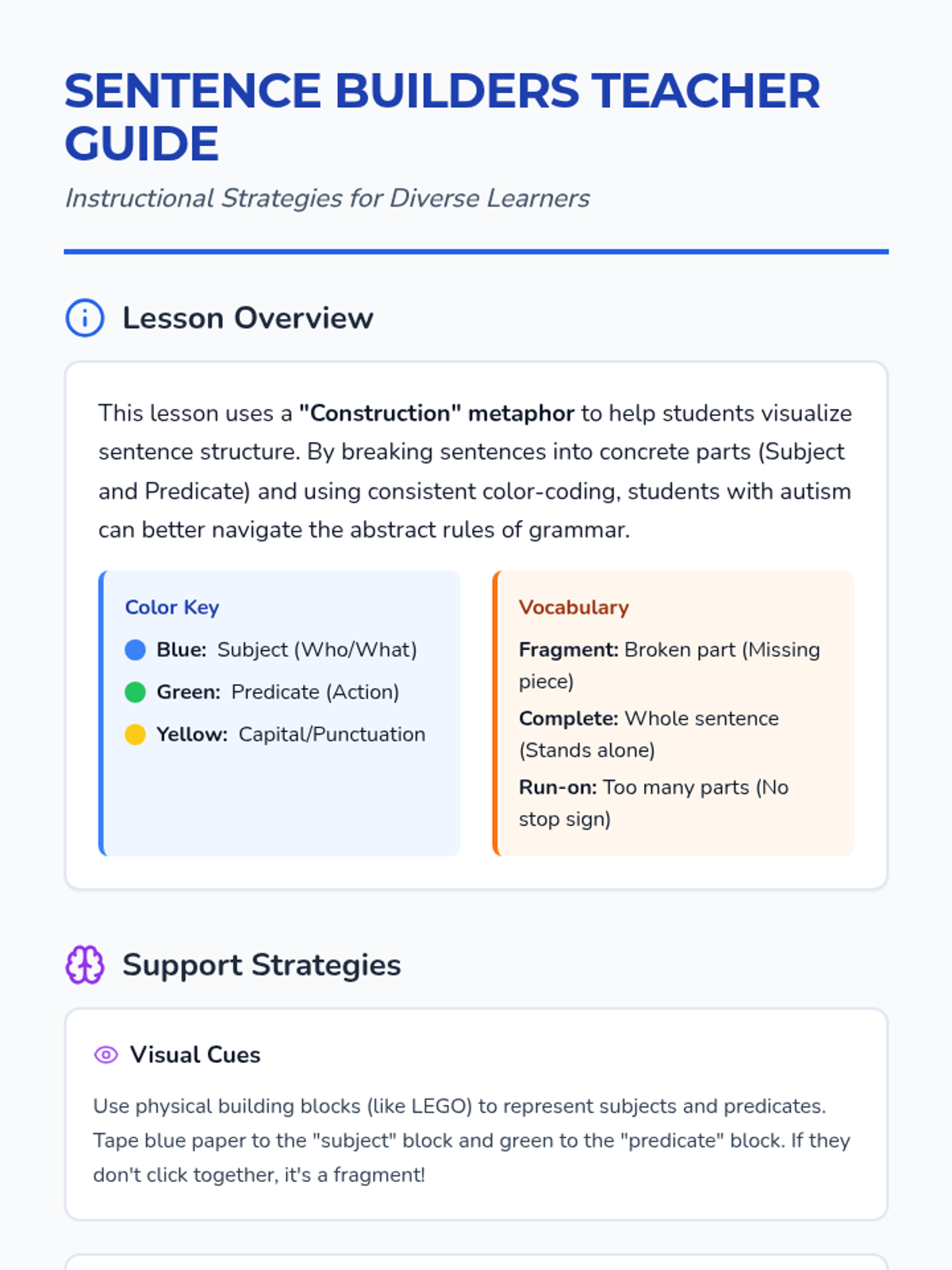
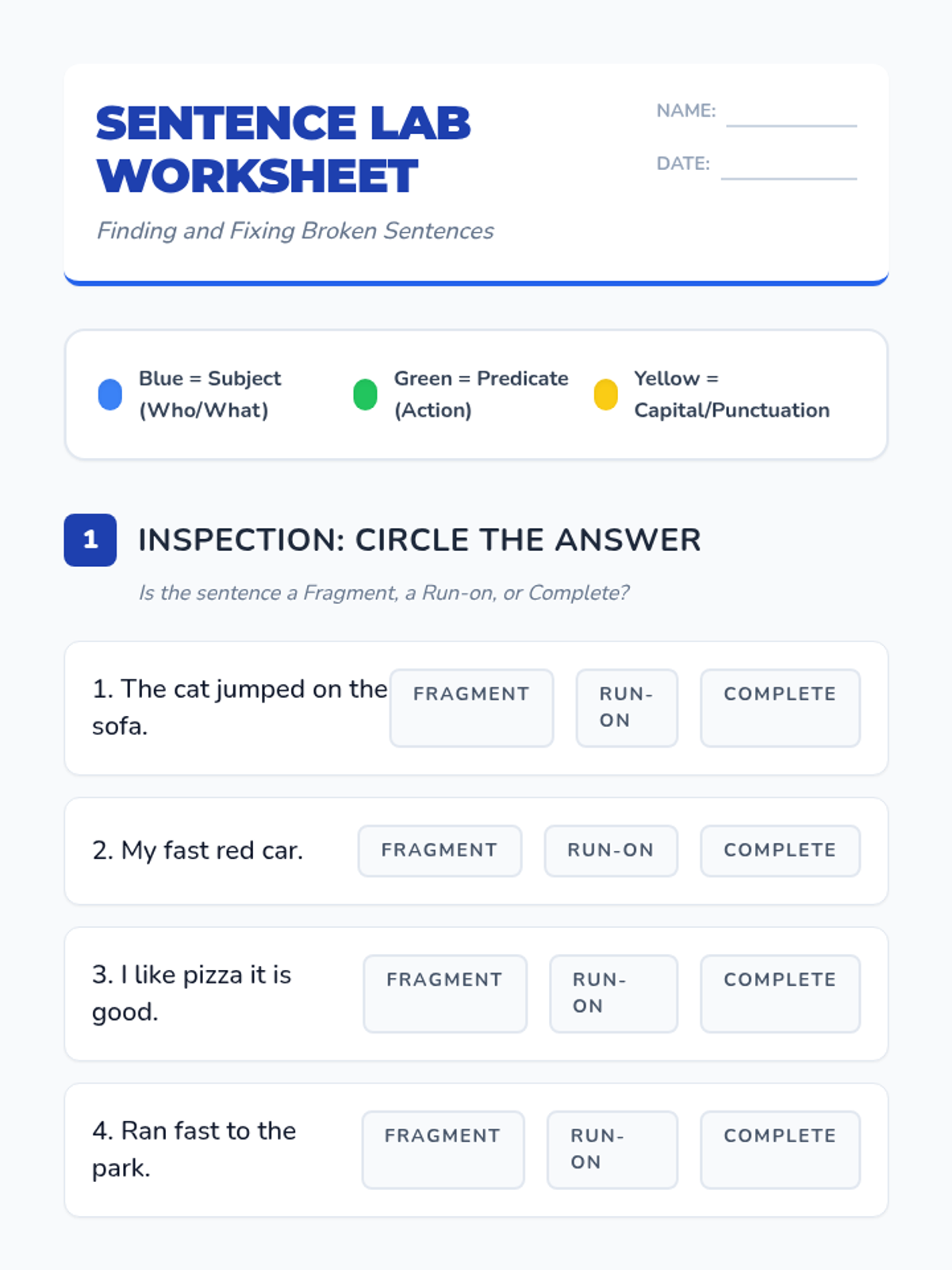
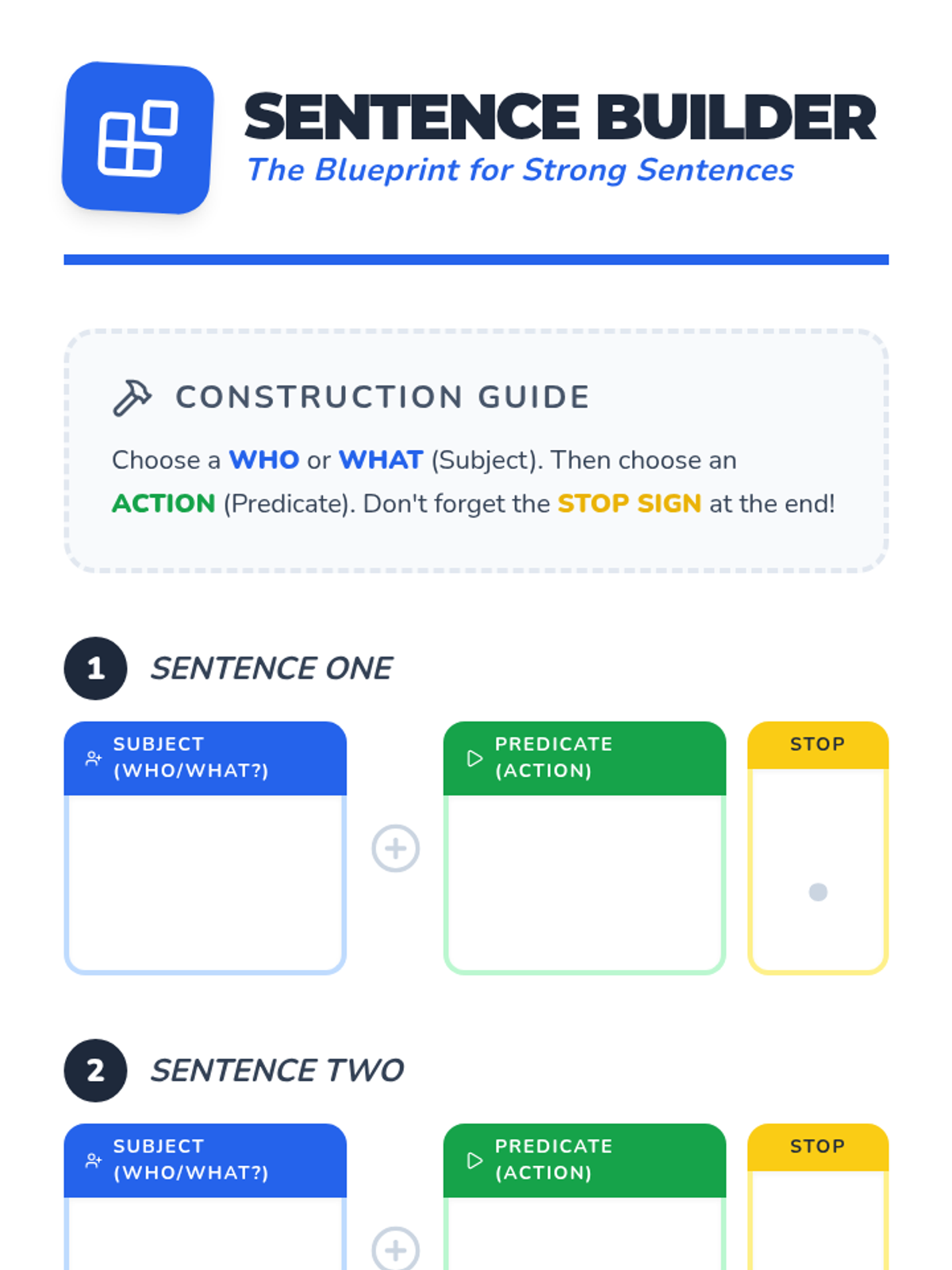
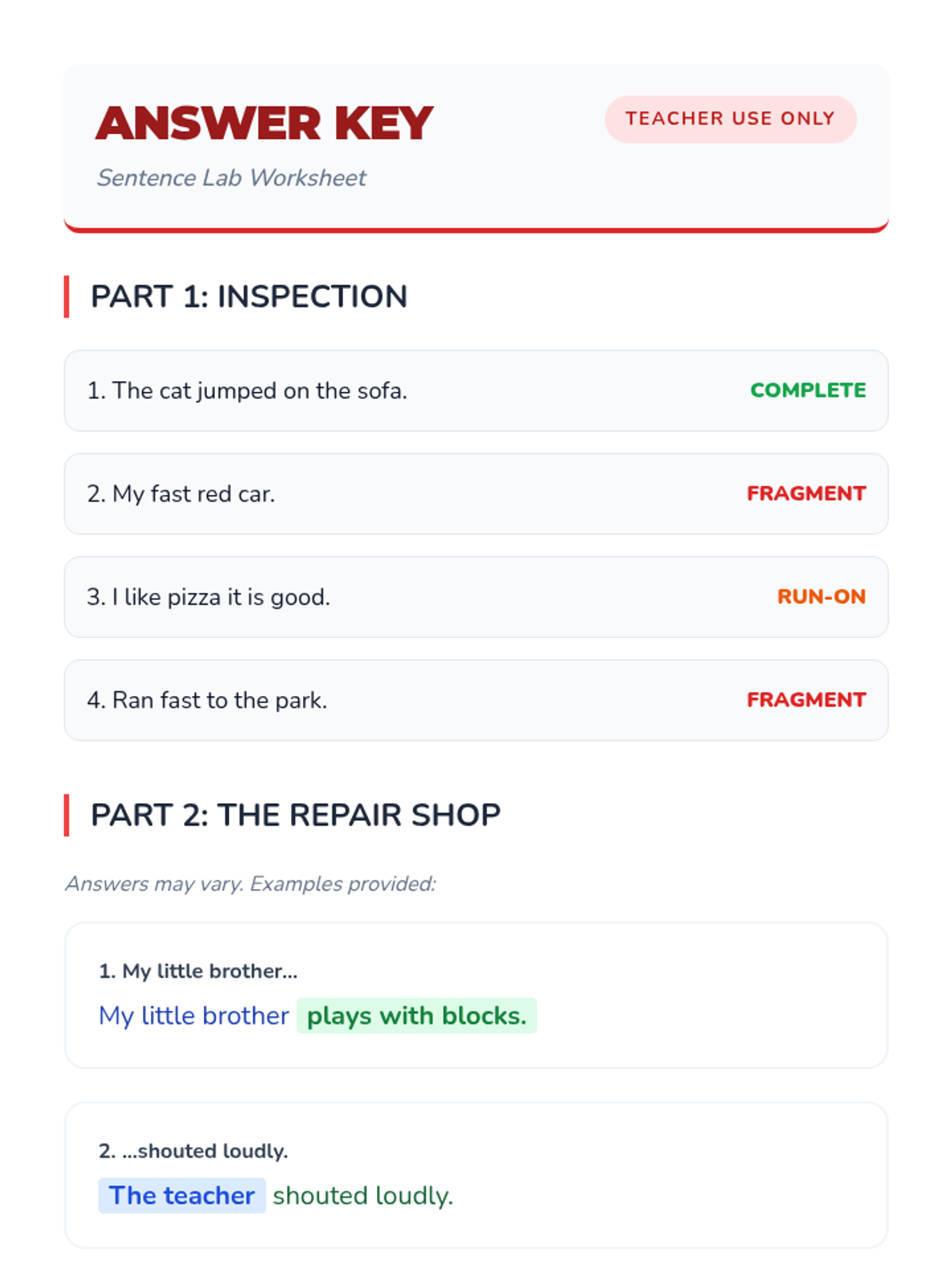
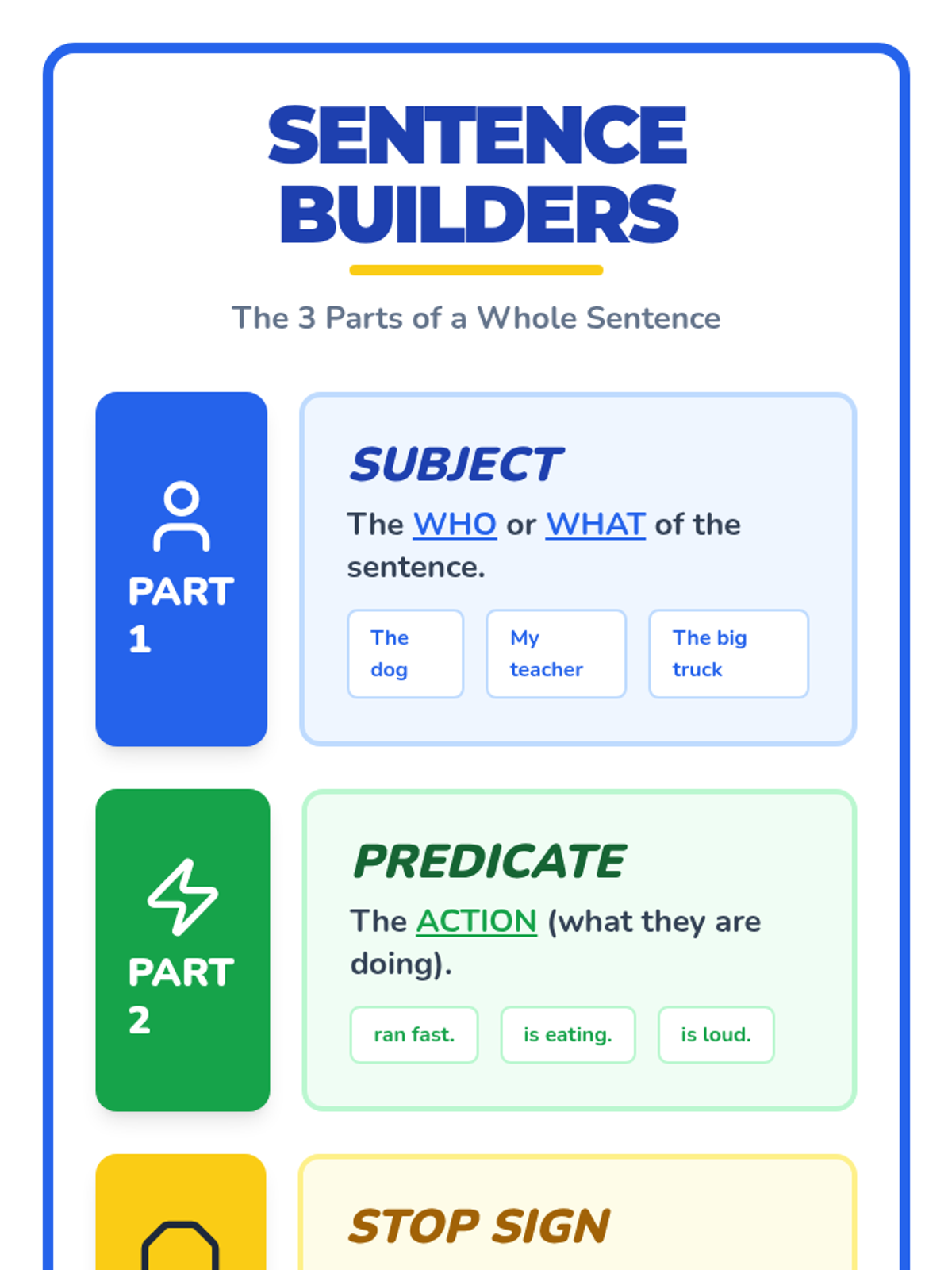
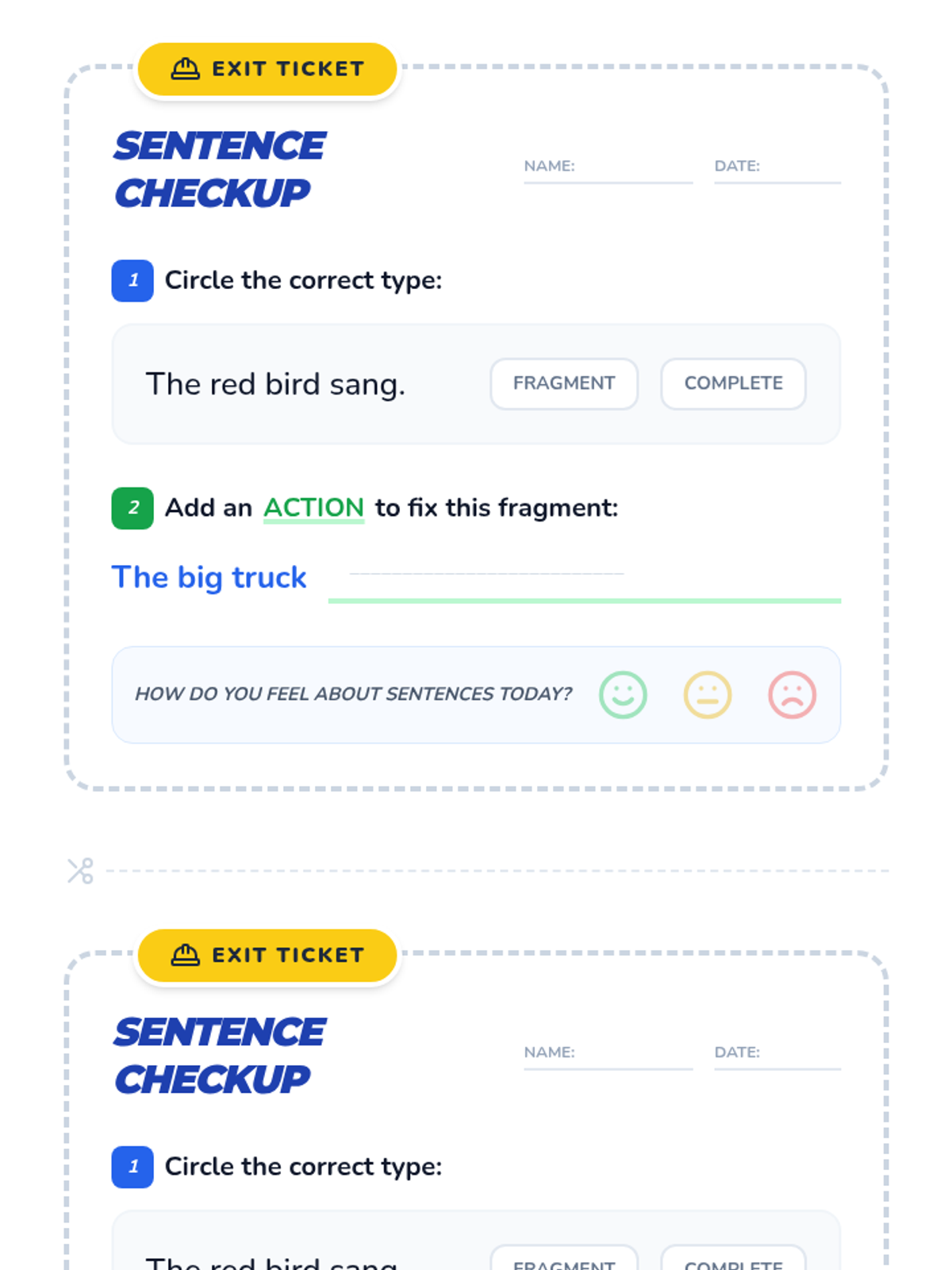
A foundational grammar lesson focusing on sentence structure through visual scaffolds and color-coding. Students learn to identify fragments, complete sentences, and run-ons using a 'Construction' metaphor.
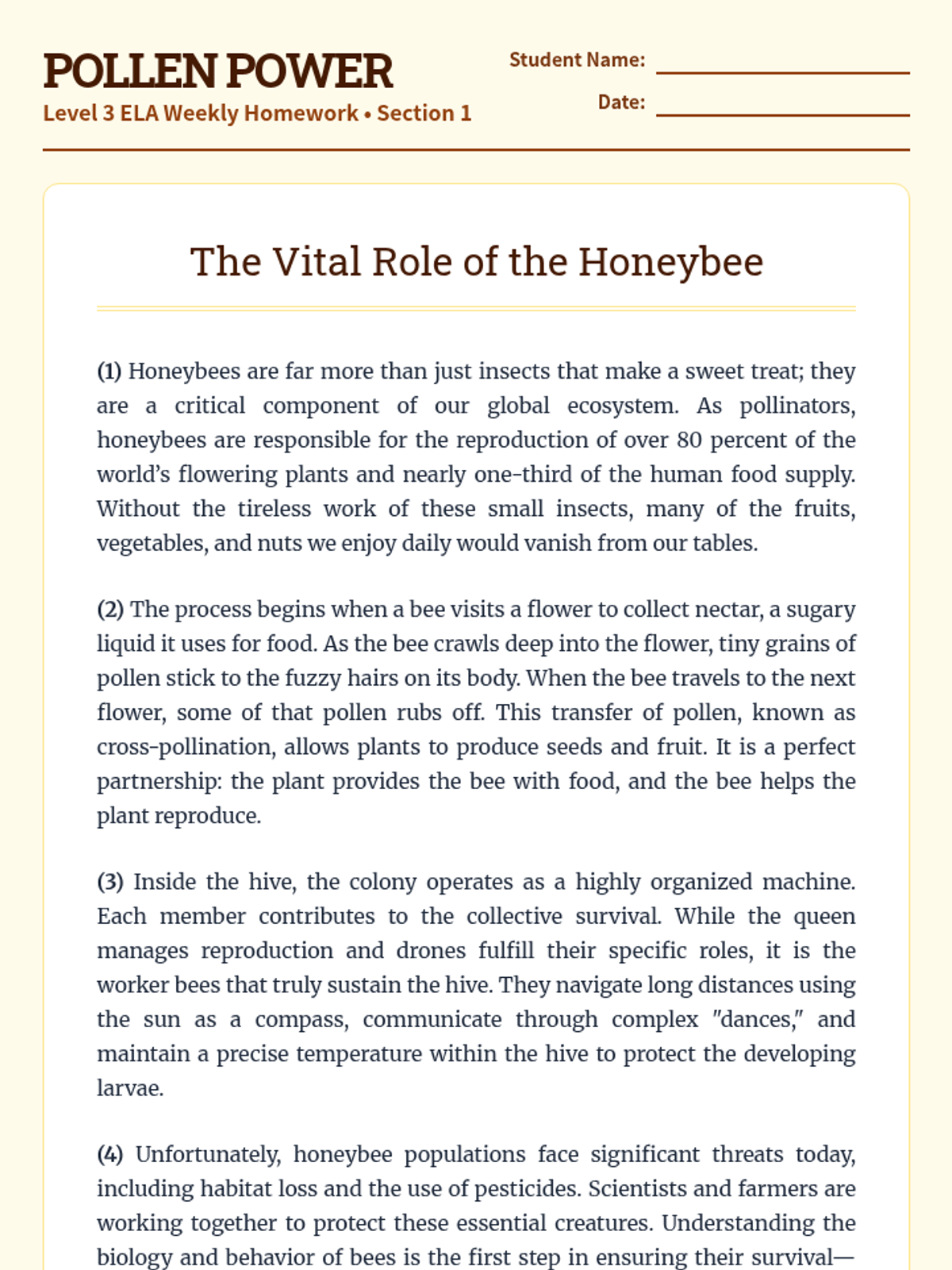
An advanced informational text packet exploring bee biology, pollination, and hive hierarchy.
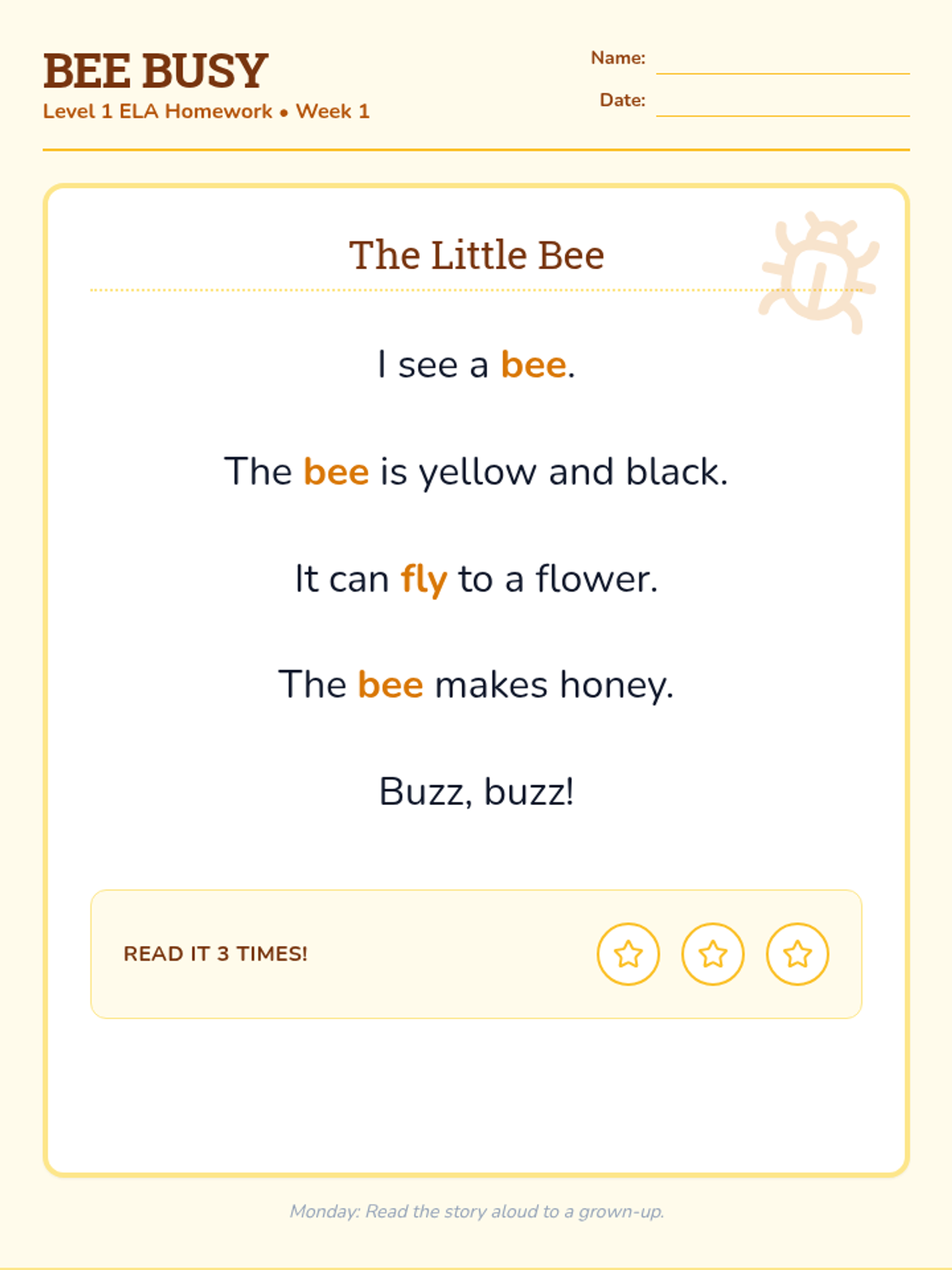
A foundational literacy packet focused on simple sentences and key details about honeybees.
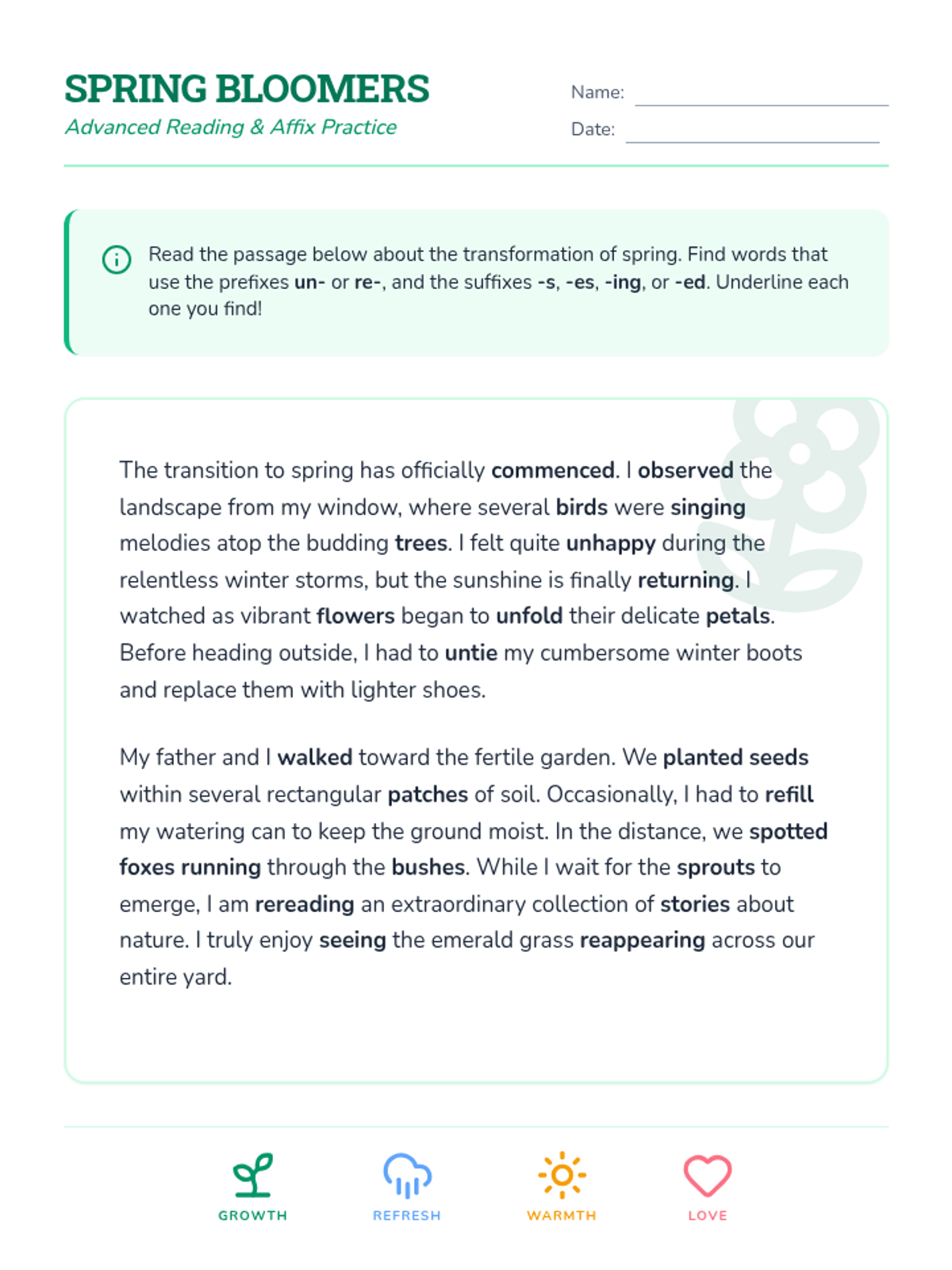
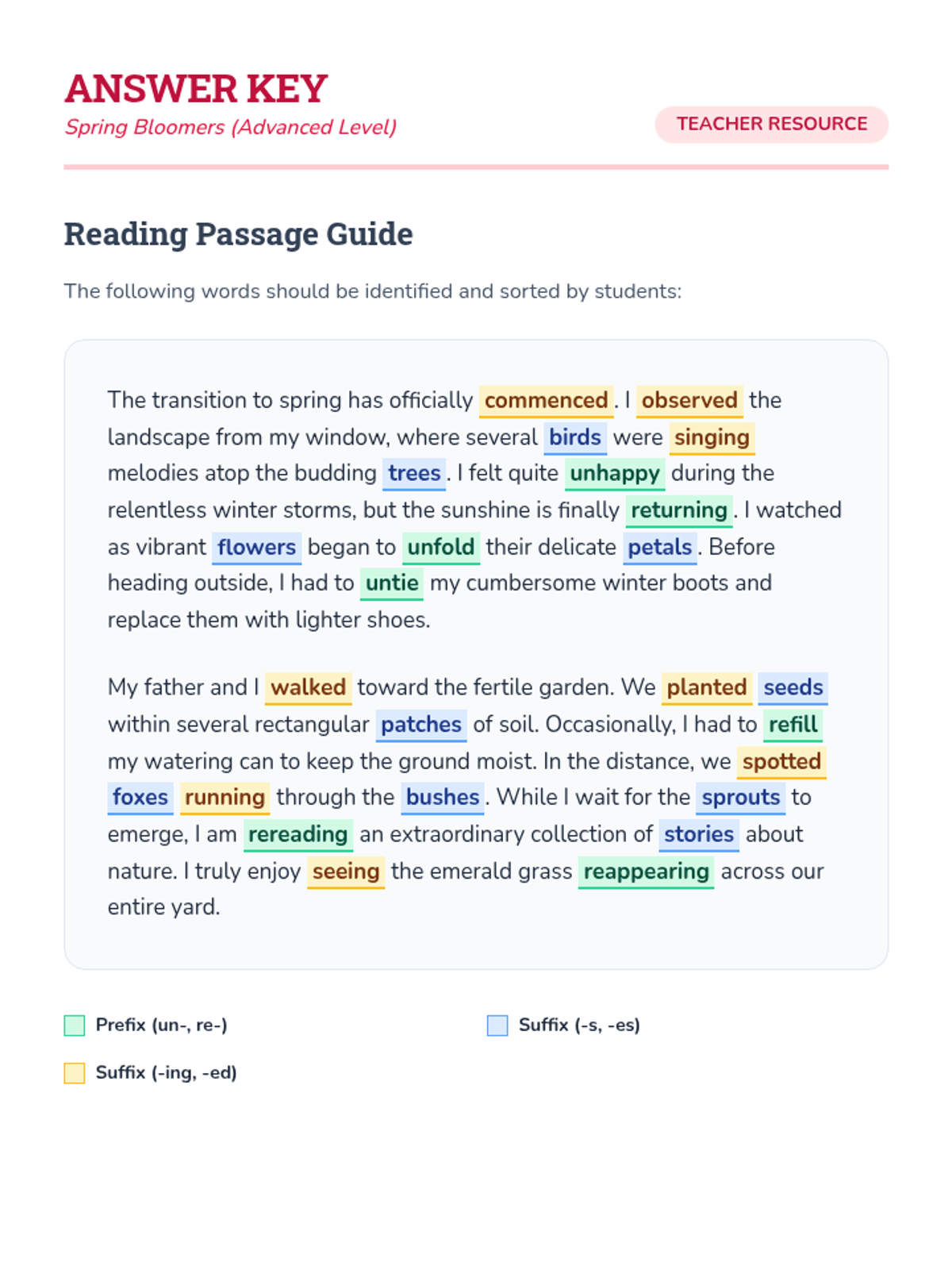
A lesson focused on identifying and using common affixes (un-, re-, -es, -s, -ing, -ed) within a spring-themed reading passage and companion activities.
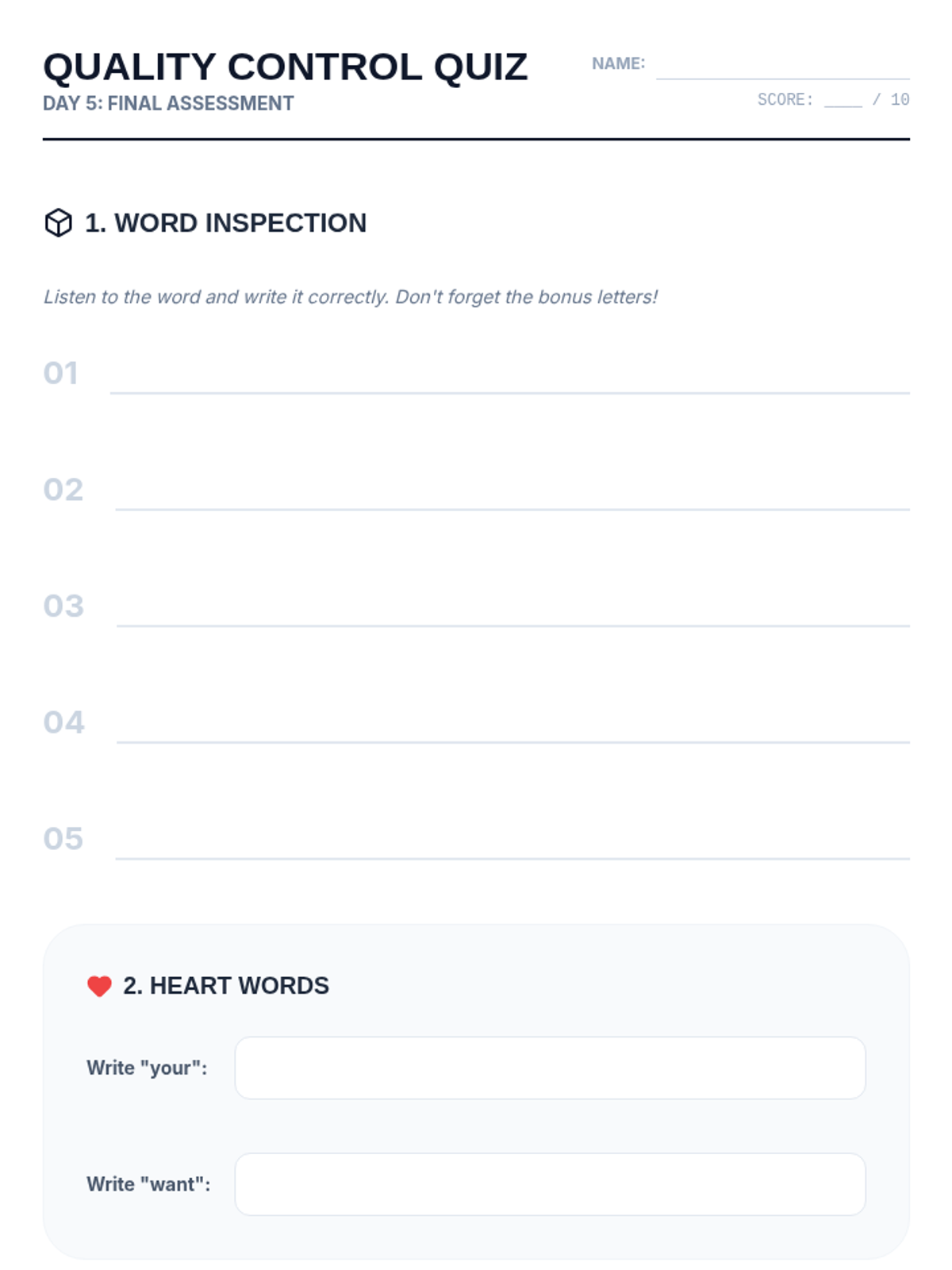
Final assessment of the Floss rule and heart words. Includes dictation and a creative word family exercise.
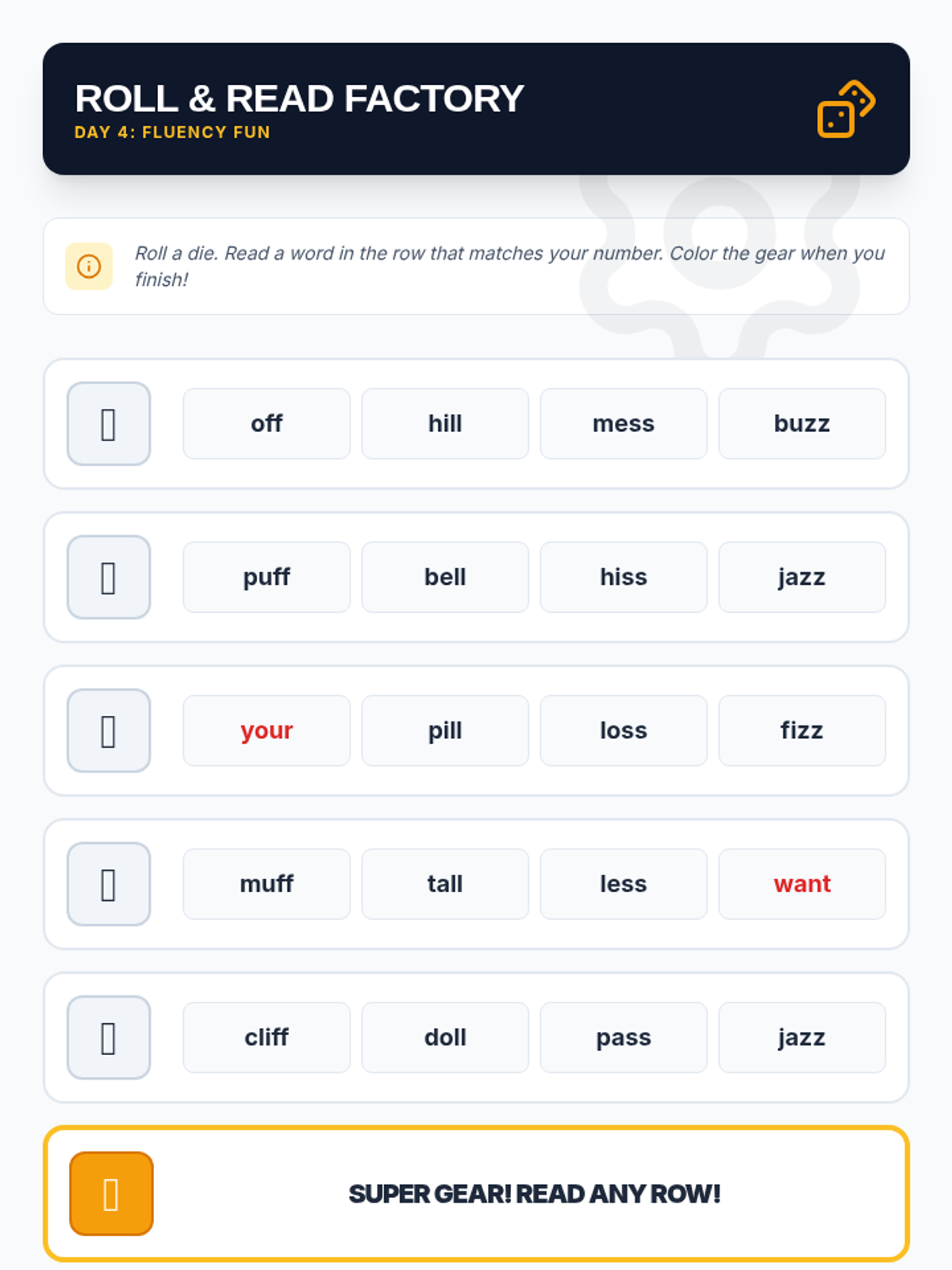
Fluency building and phonics games. Students practice rapid reading of bonus letter words and construct sentences.
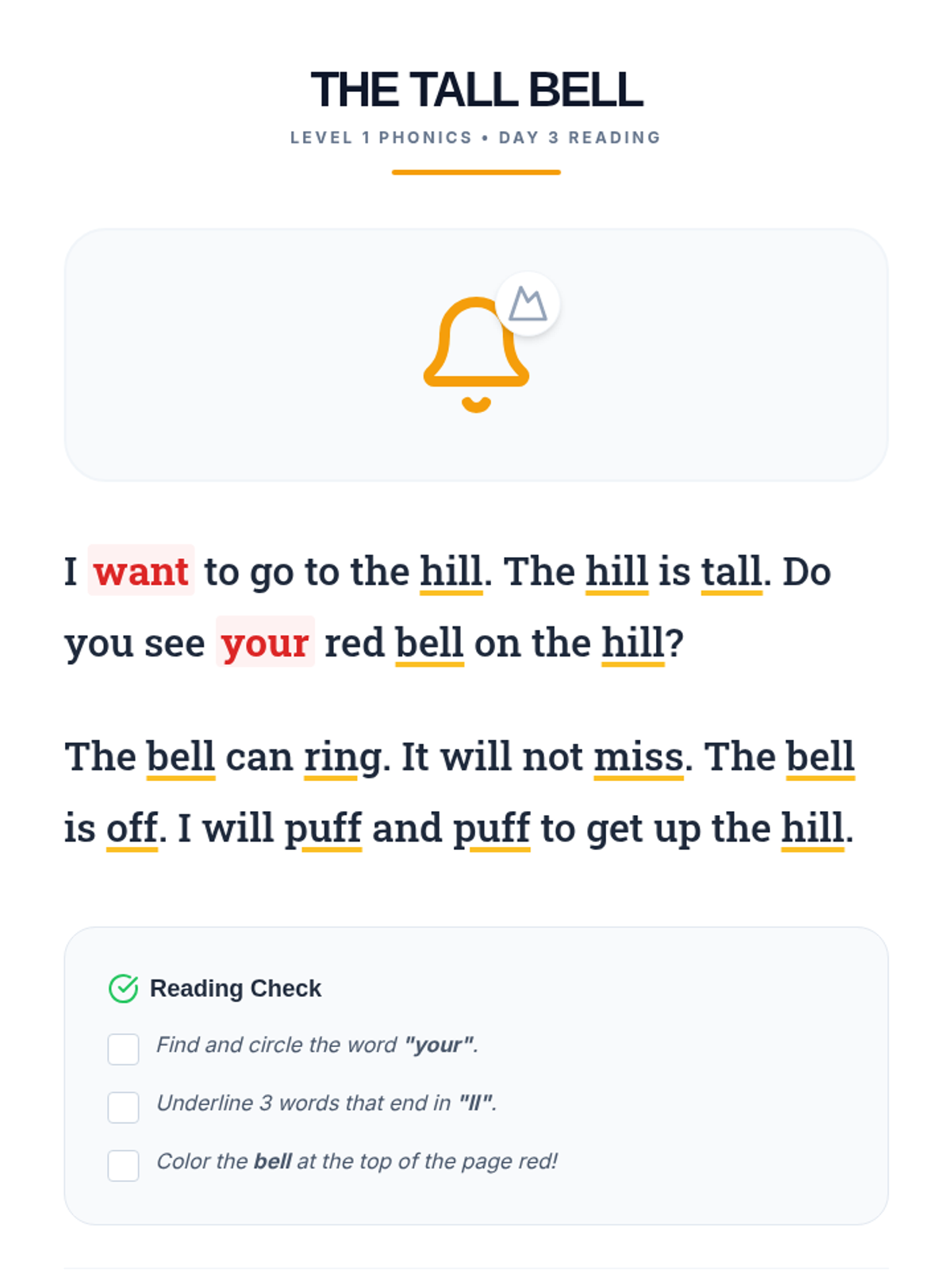
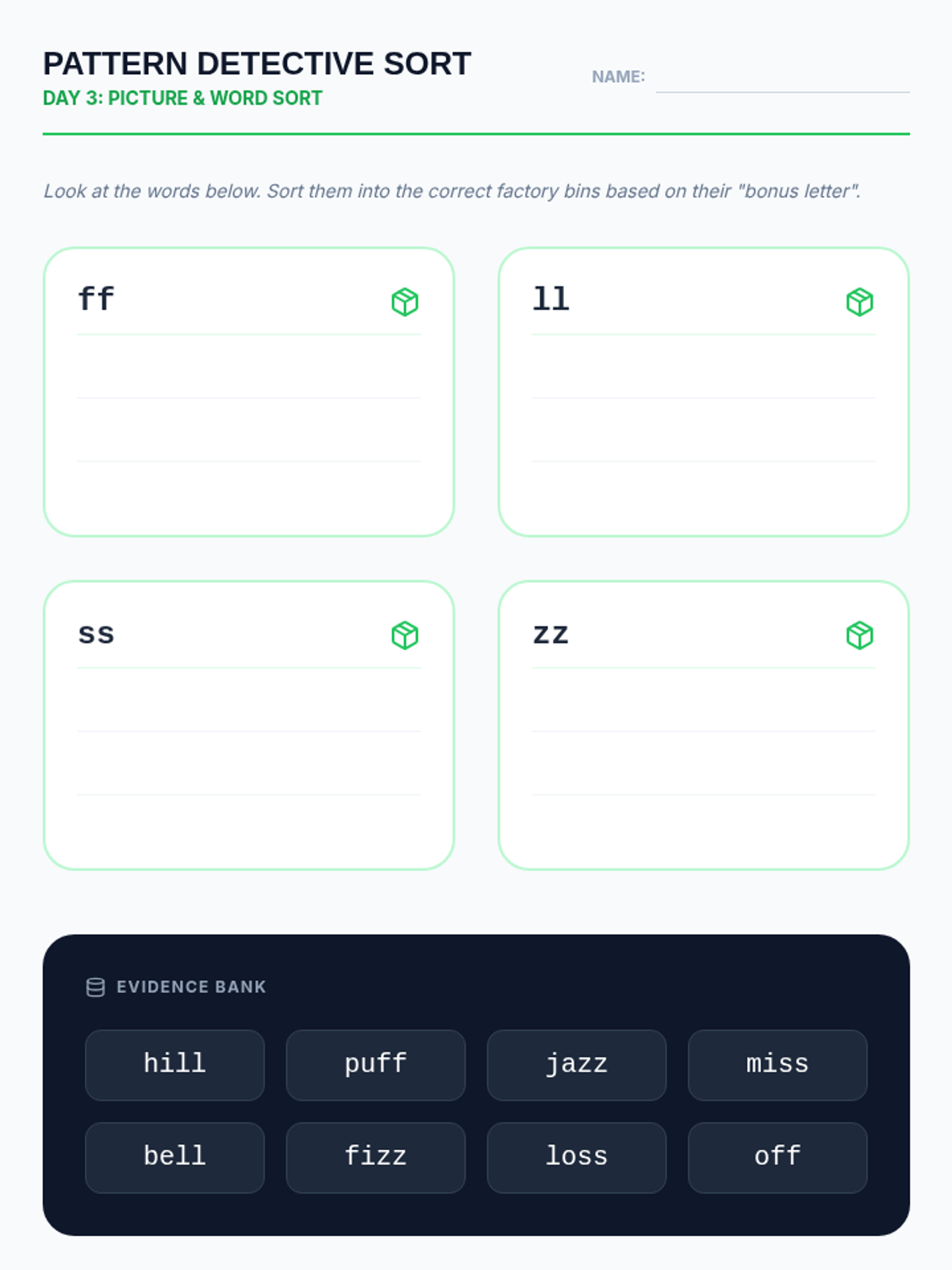
Application through word sorting and decodable reading. Students identify word families and read words in context.
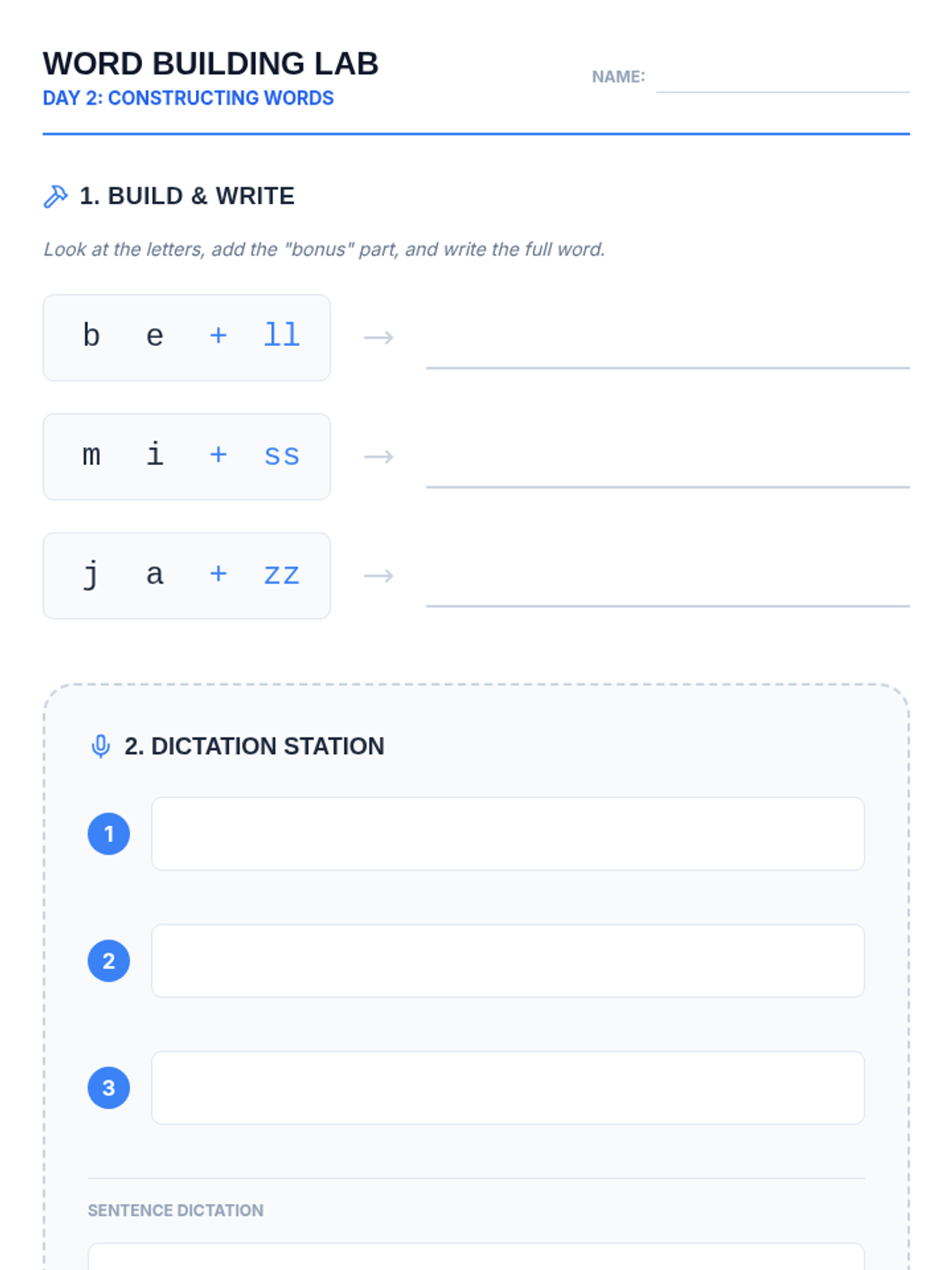
Focus on word building and dictation. Students use letter tiles to practice doubling final consonants and apply heart word knowledge in writing.
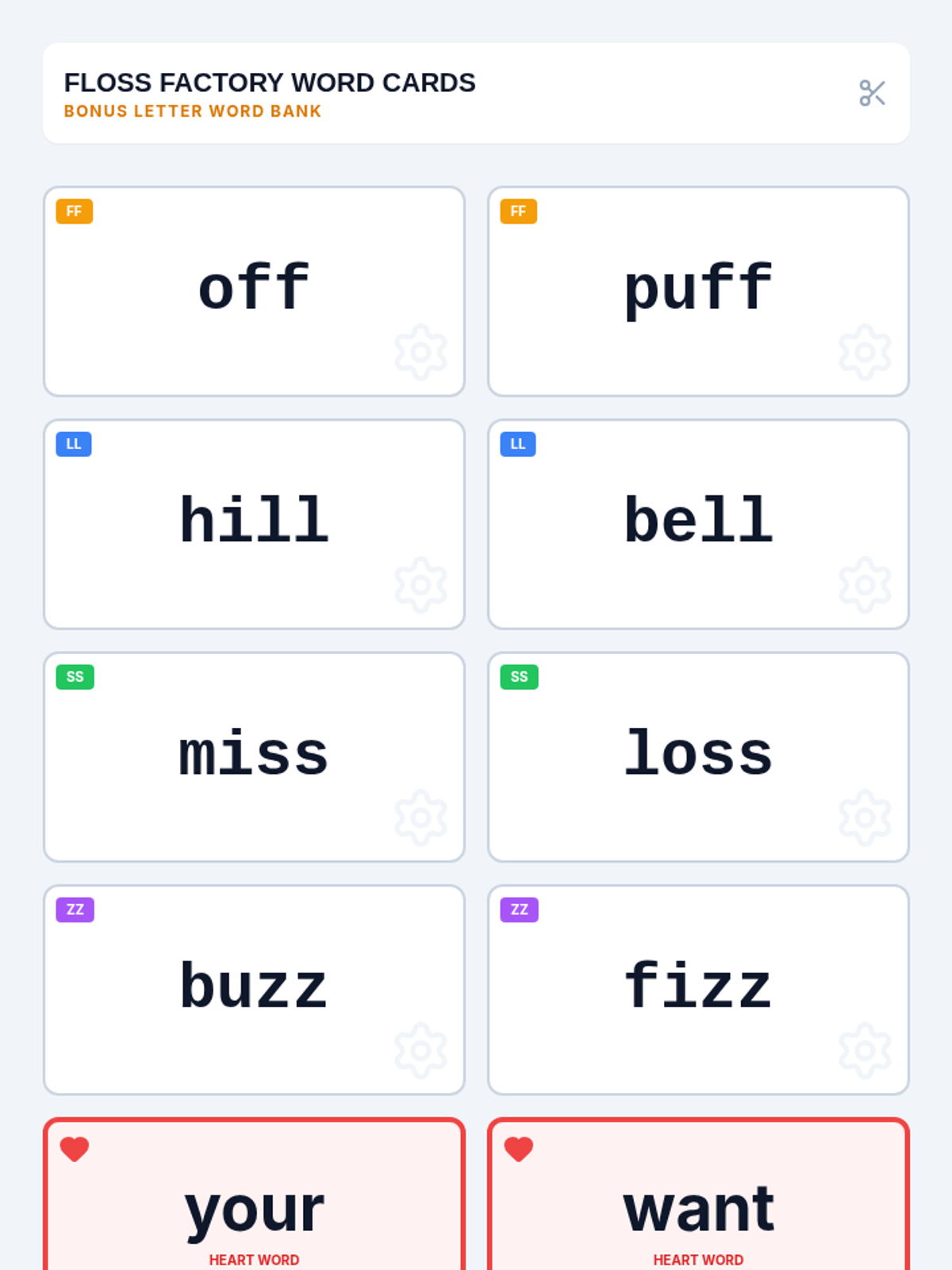
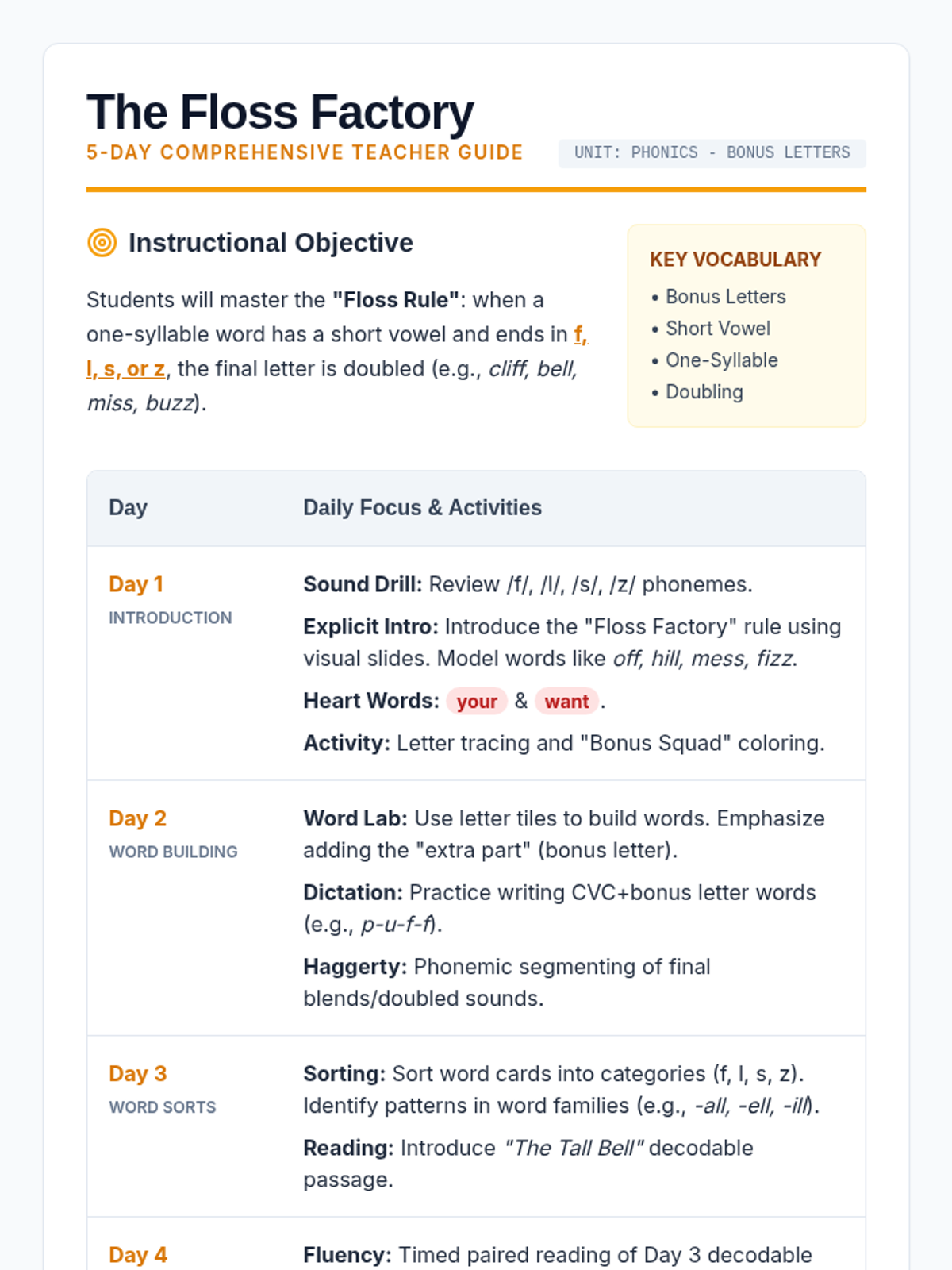
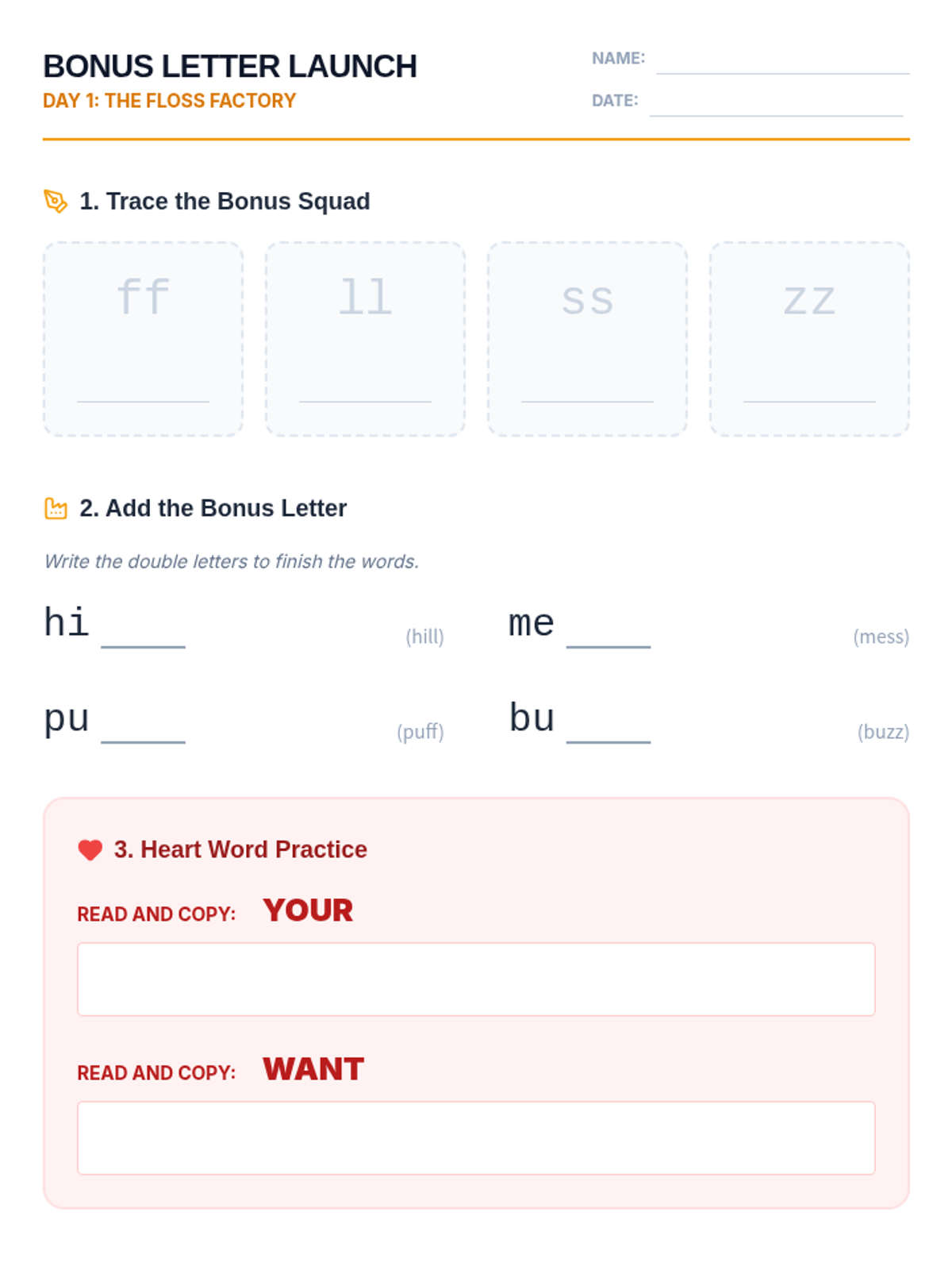
Introduction to the bonus letters f, l, s, and z. Students learn the rule that when a one-syllable word ends in f, l, s, or z after a short vowel, the letter is doubled. Includes the teacher guide for the full week.
A 30-day handwriting practice program focused on animal kingdom facts and vocabulary, designed to improve fine motor skills through short, daily exercises.
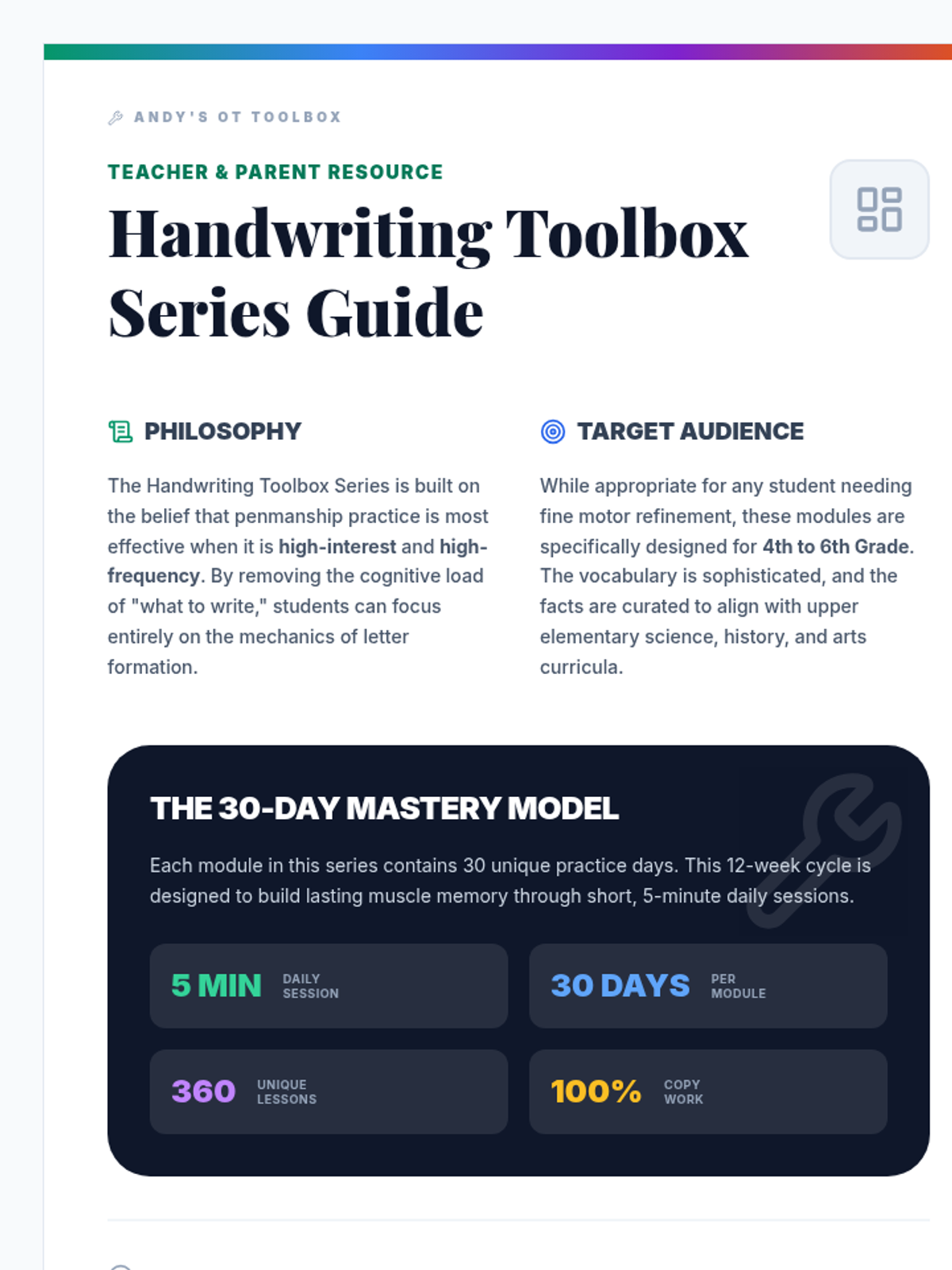
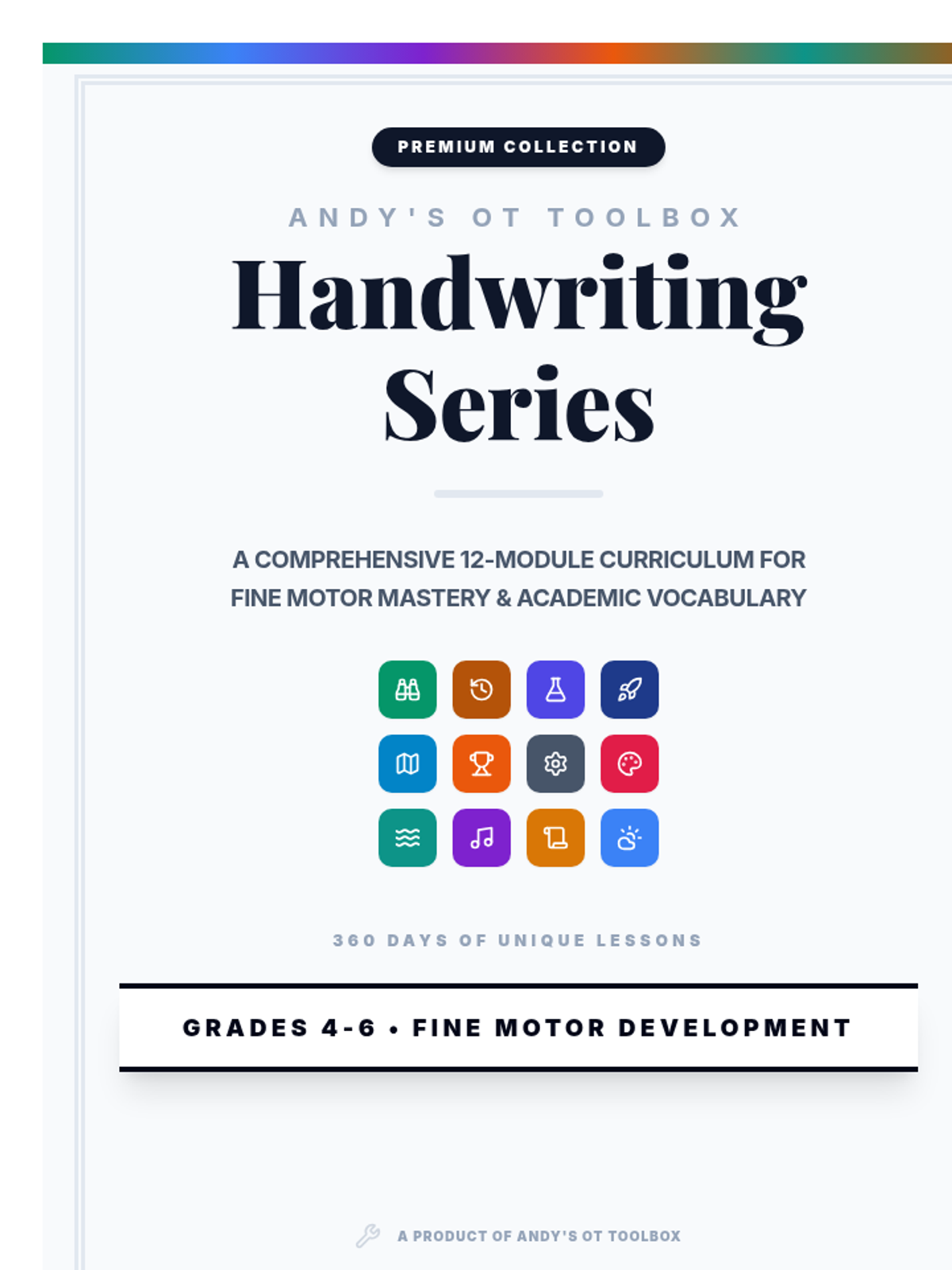
Administrative and general resources for the entire Handwriting Toolbox Series, including curriculum maps, tracking sheets, and implementation guides.
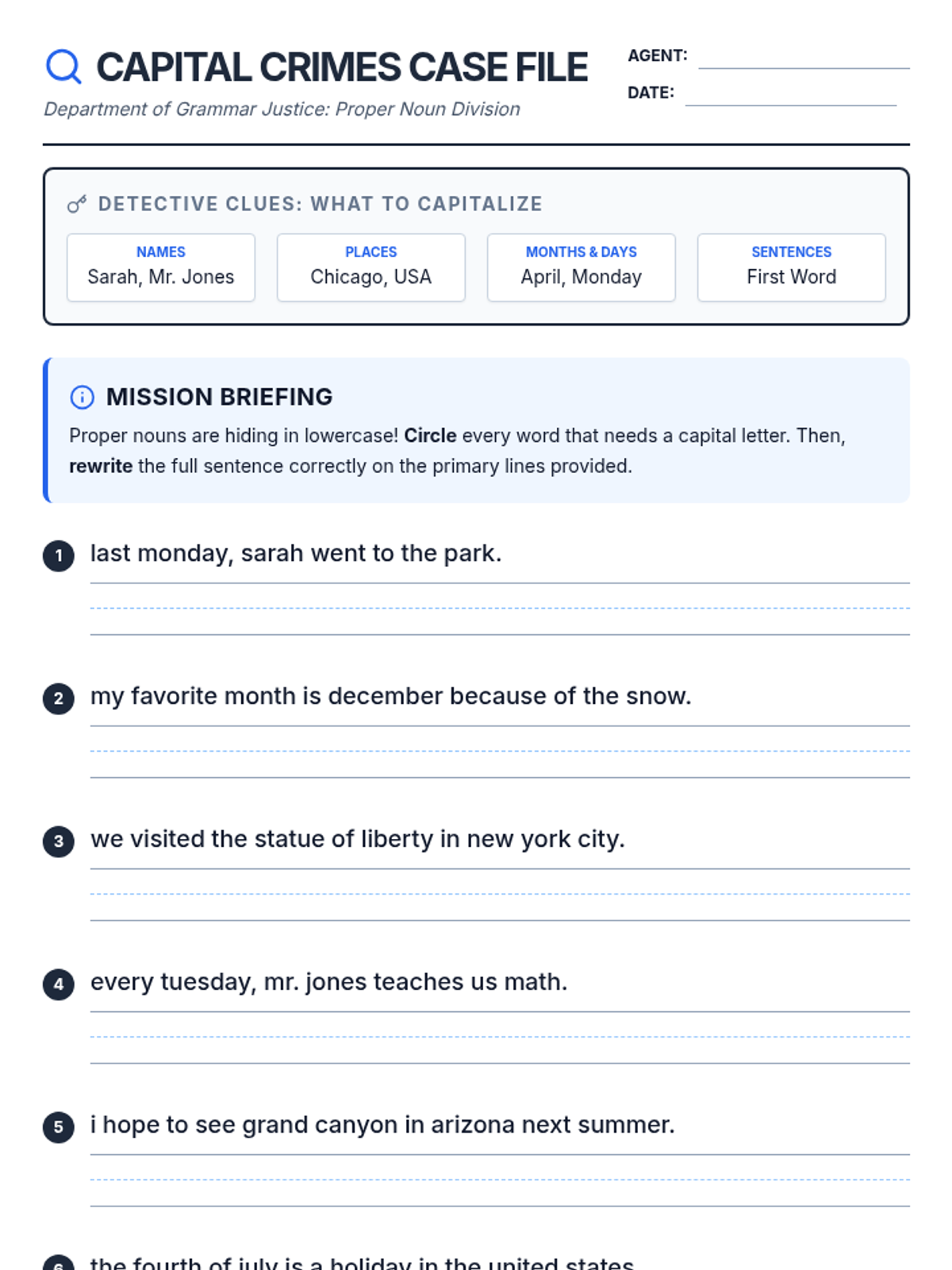
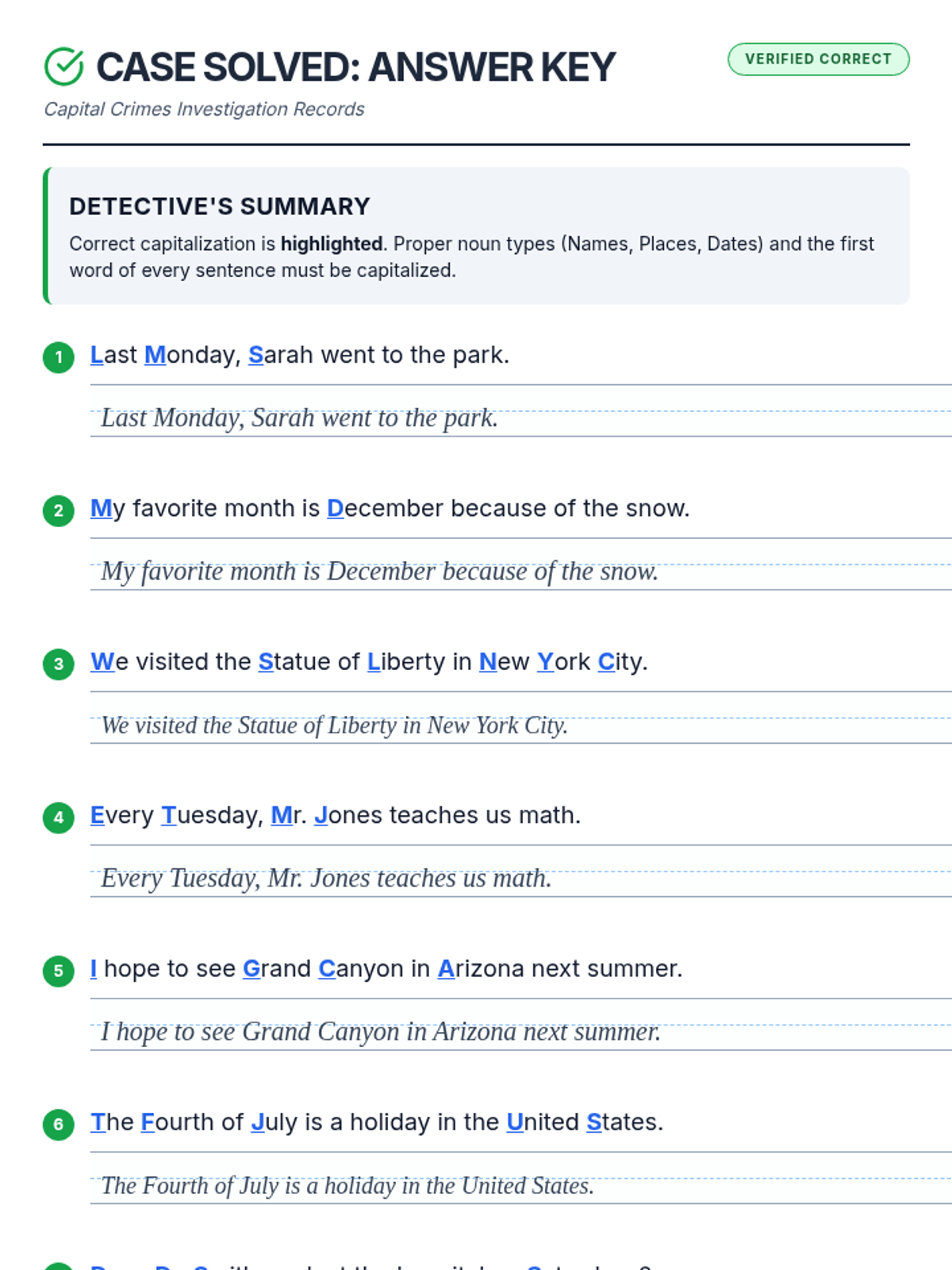
A grammar lesson focused on the capitalization of proper nouns, including names, places, months, and days of the week, presented as a detective investigation.
A 30-day handwriting practice program focused on world mythology, legendary heroes, and ancient deities, designed for 4th to 6th graders.
A 30-day handwriting practice program focused on music theory, history, and instruments, designed for 4th to 6th graders to improve penmanship through engaging musical facts.
A 30-day handwriting practice program focused on marine biology, oceanography, and deep-sea exploration, designed for 4th to 6th graders.
A 30-day handwriting practice program focused on art history, creative techniques, and famous masterpieces, designed for 4th to 6th graders.
A 30-day handwriting practice program focused on famous inventions, engineering principles, and innovators, designed for 4th to 6th graders.
A 30-day handwriting practice program focused on sports science, athletic disciplines, and teamwork vocabulary, designed for 4th to 6th graders to improve penmanship through engaging sports facts.
A 30-day handwriting practice program focused on physical and human geography, world features, and mapping vocabulary, designed for 4th to 6th graders.
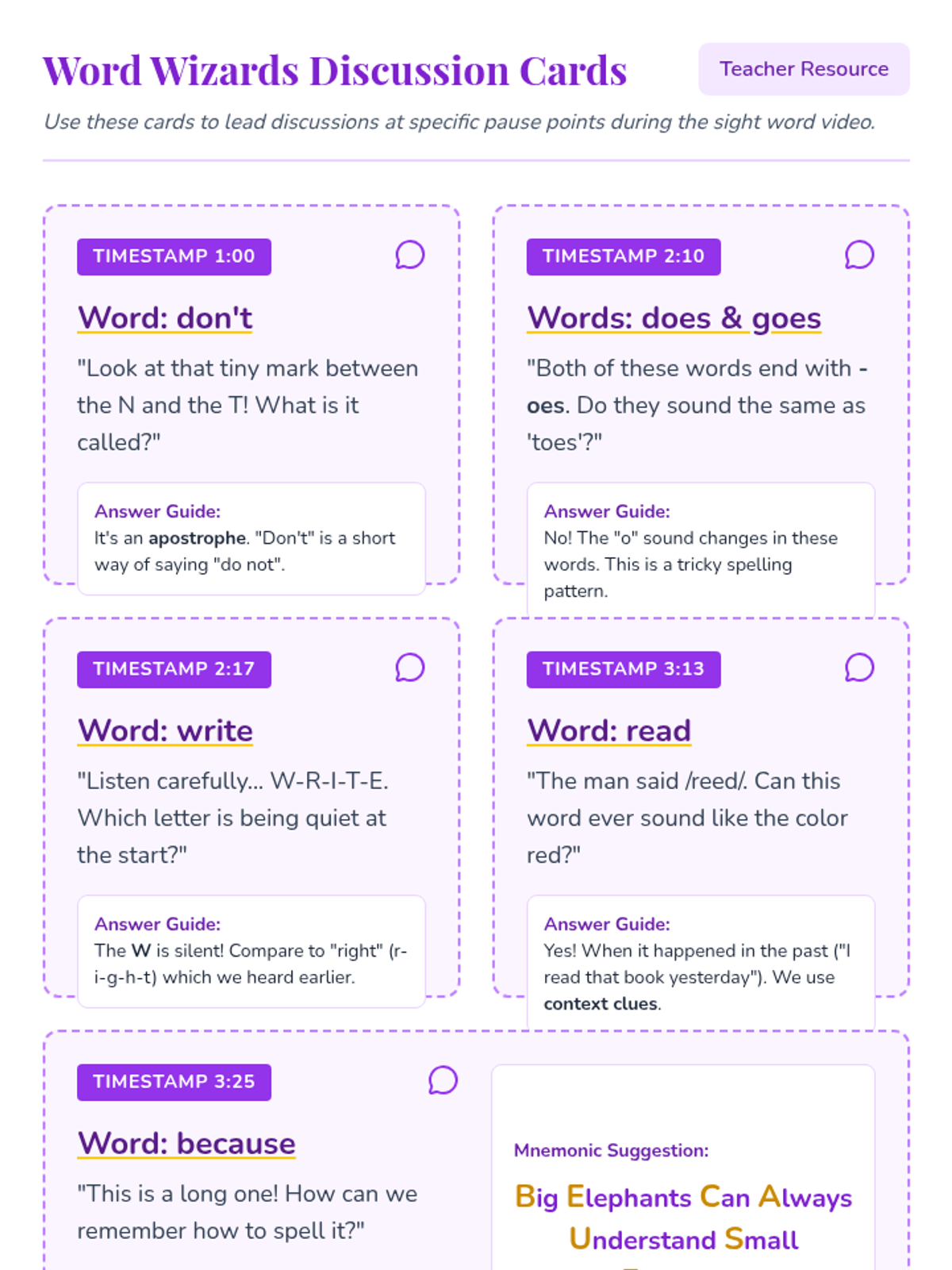
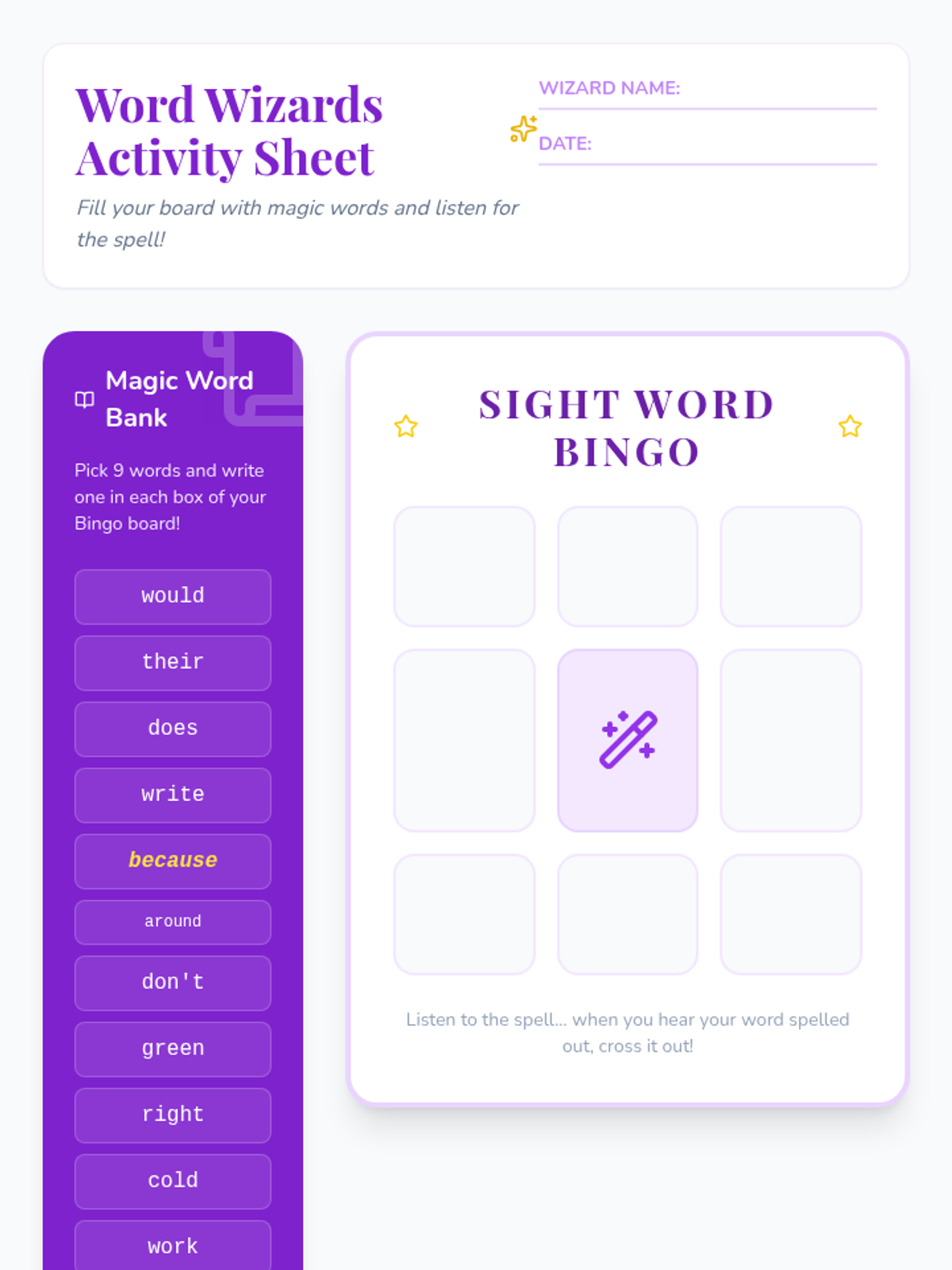
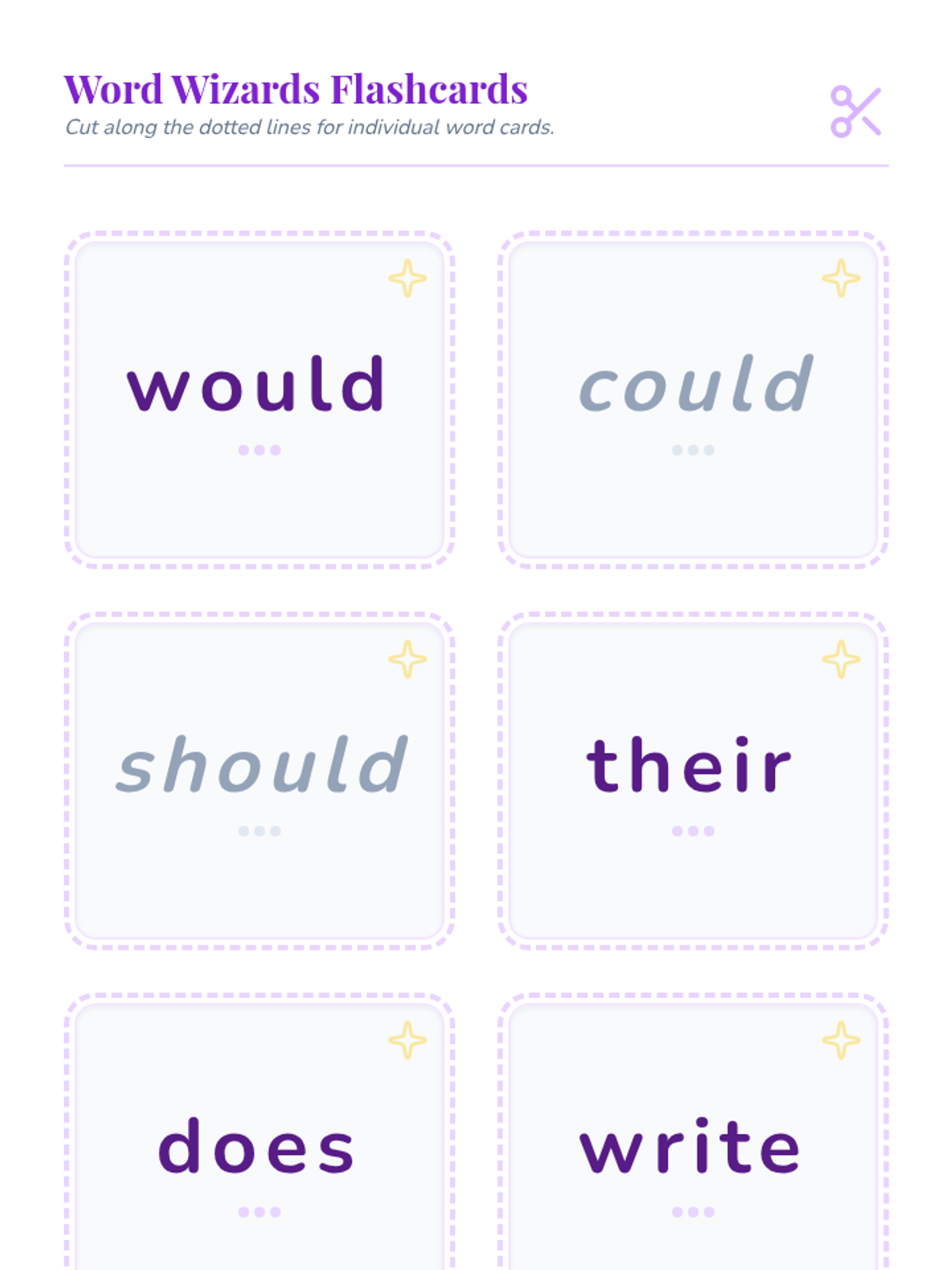
A 1st/2nd grade intervention lesson focused on mastering 5 high-frequency sight words through rhythmic spelling, interactive video viewing, and bingo. Students practice recognizing, spelling, and writing 'would', 'their', 'does', 'write', and 'because'.
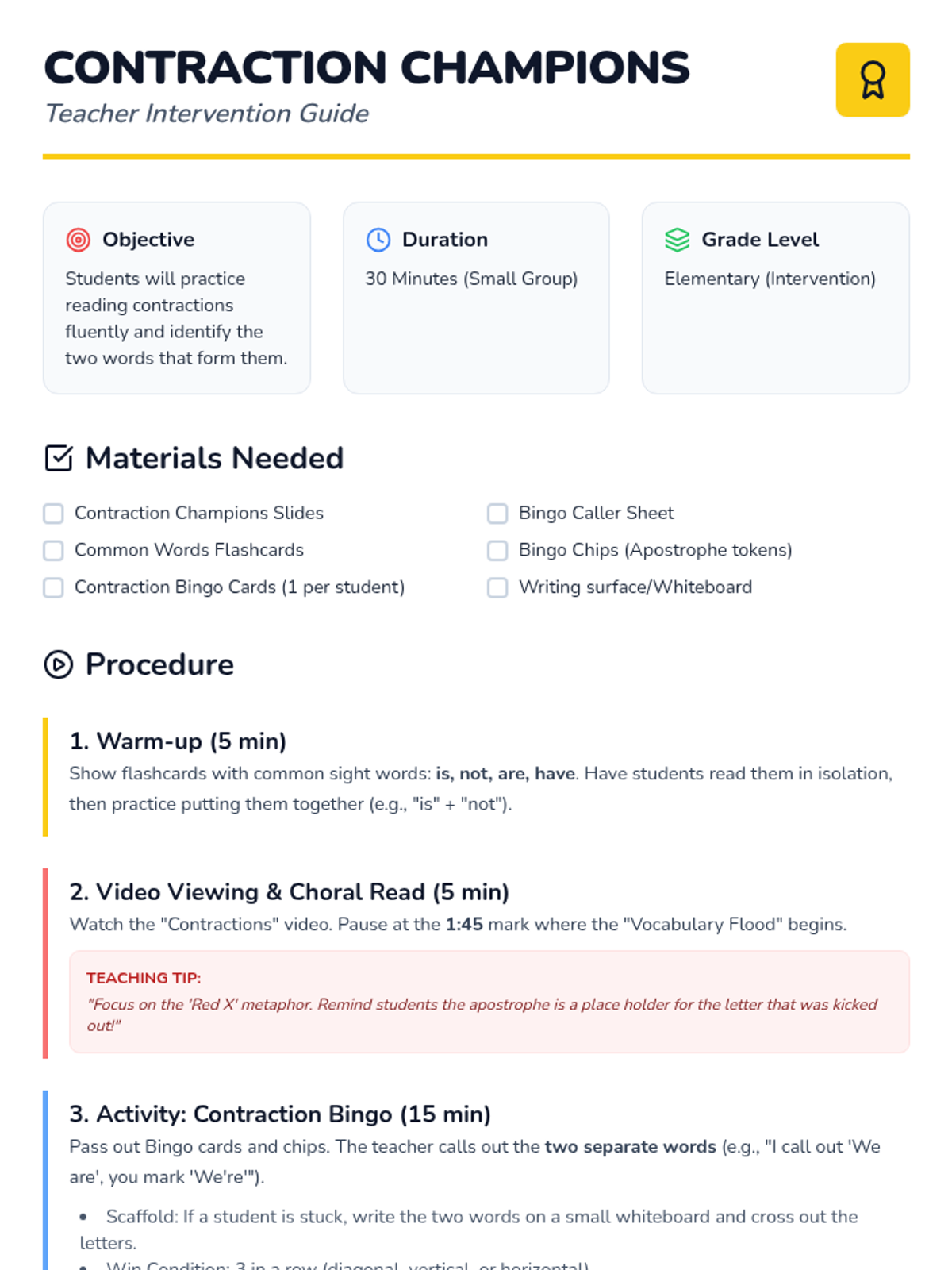
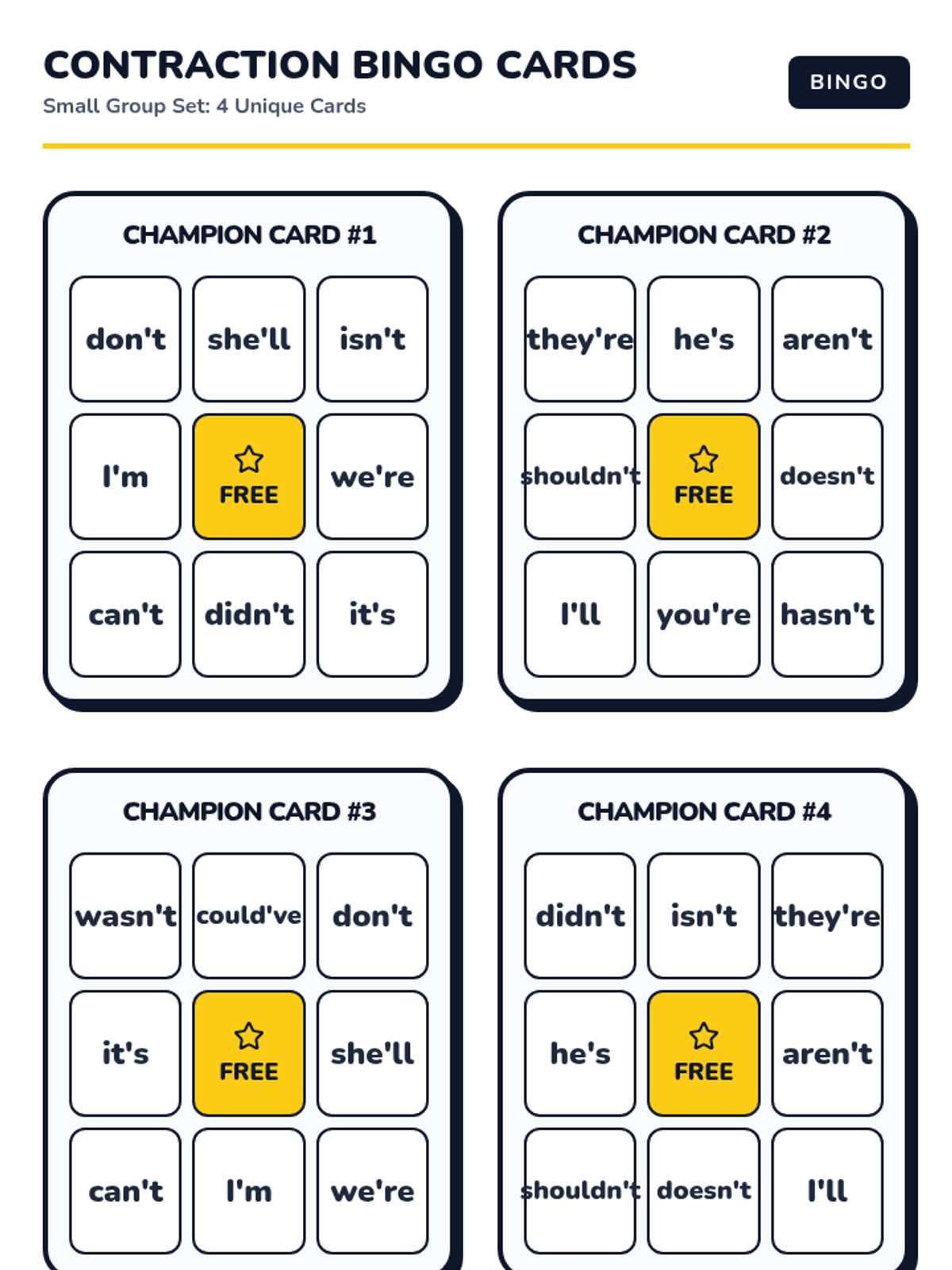
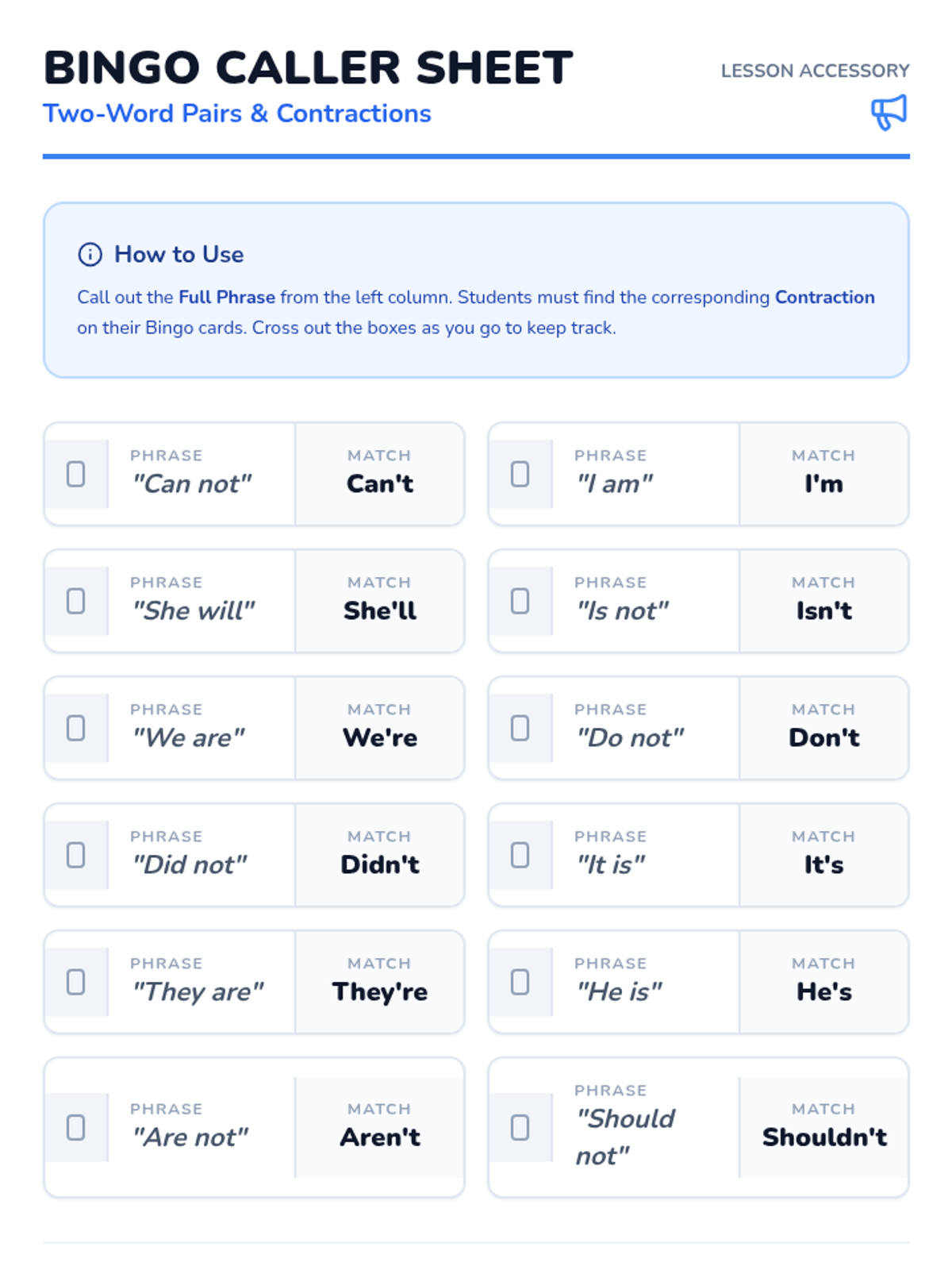
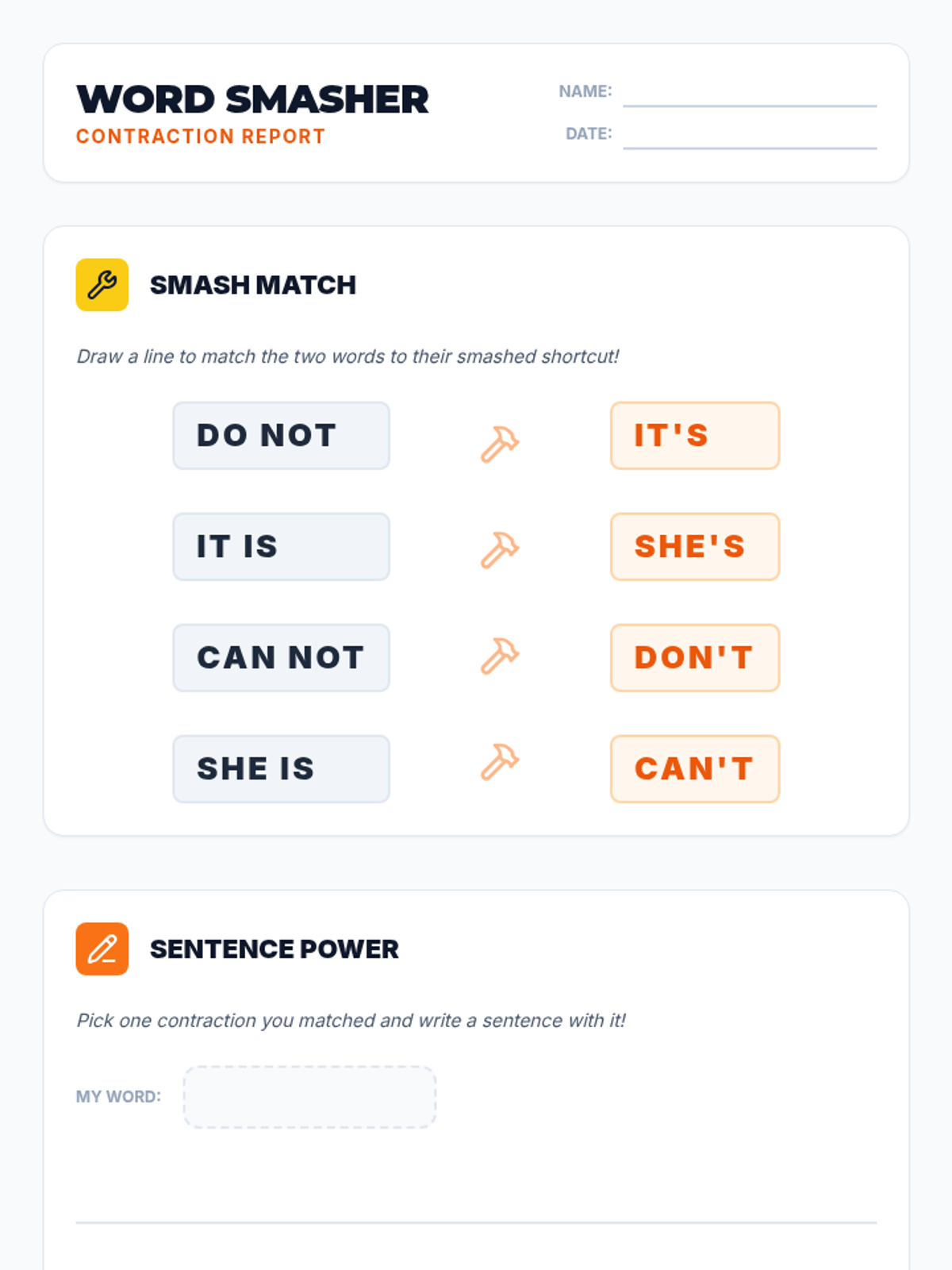
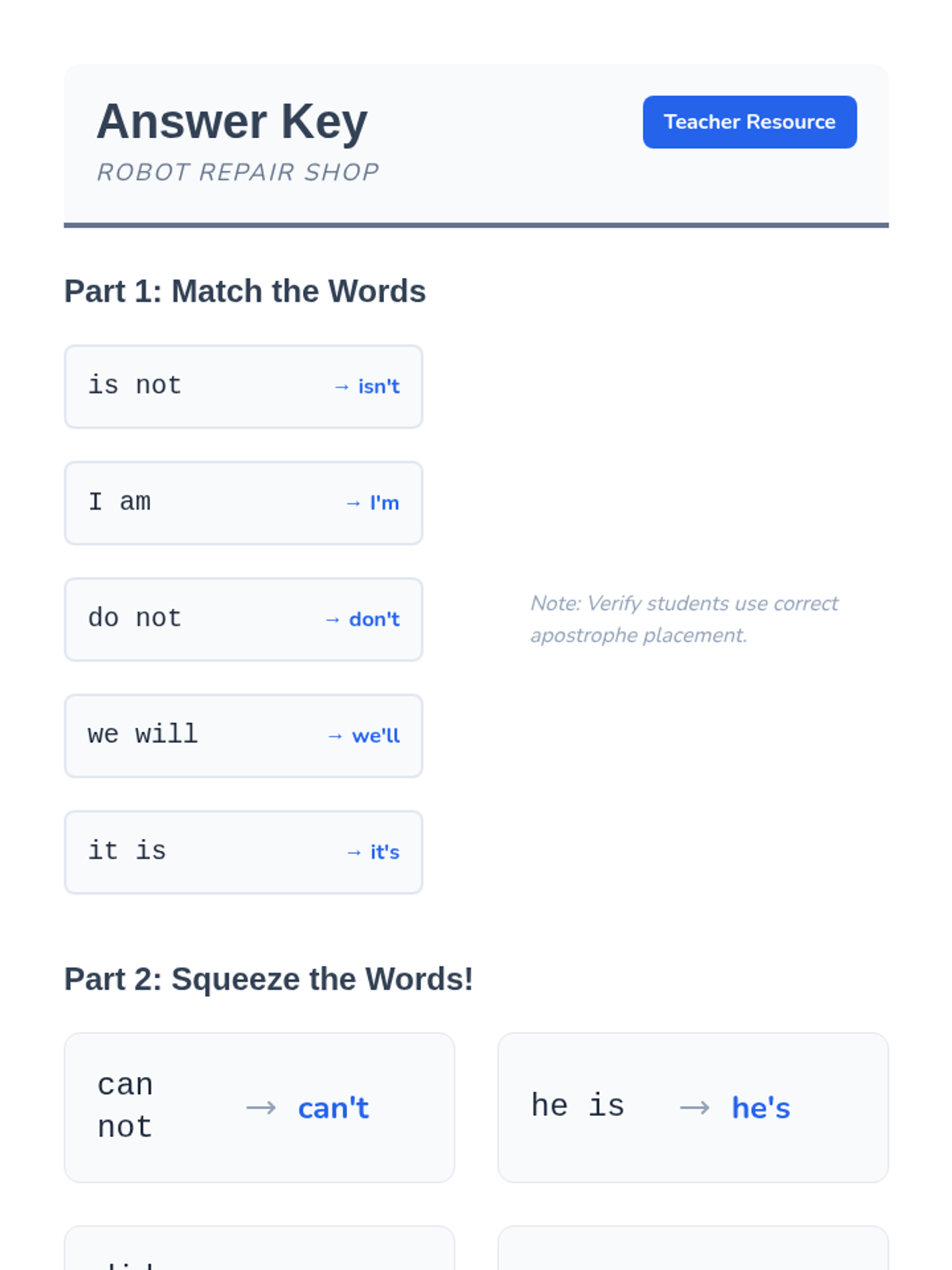
A small-group intervention lesson focused on reading and identifying contractions fluently using visual aids, video analysis, and a Bingo game.
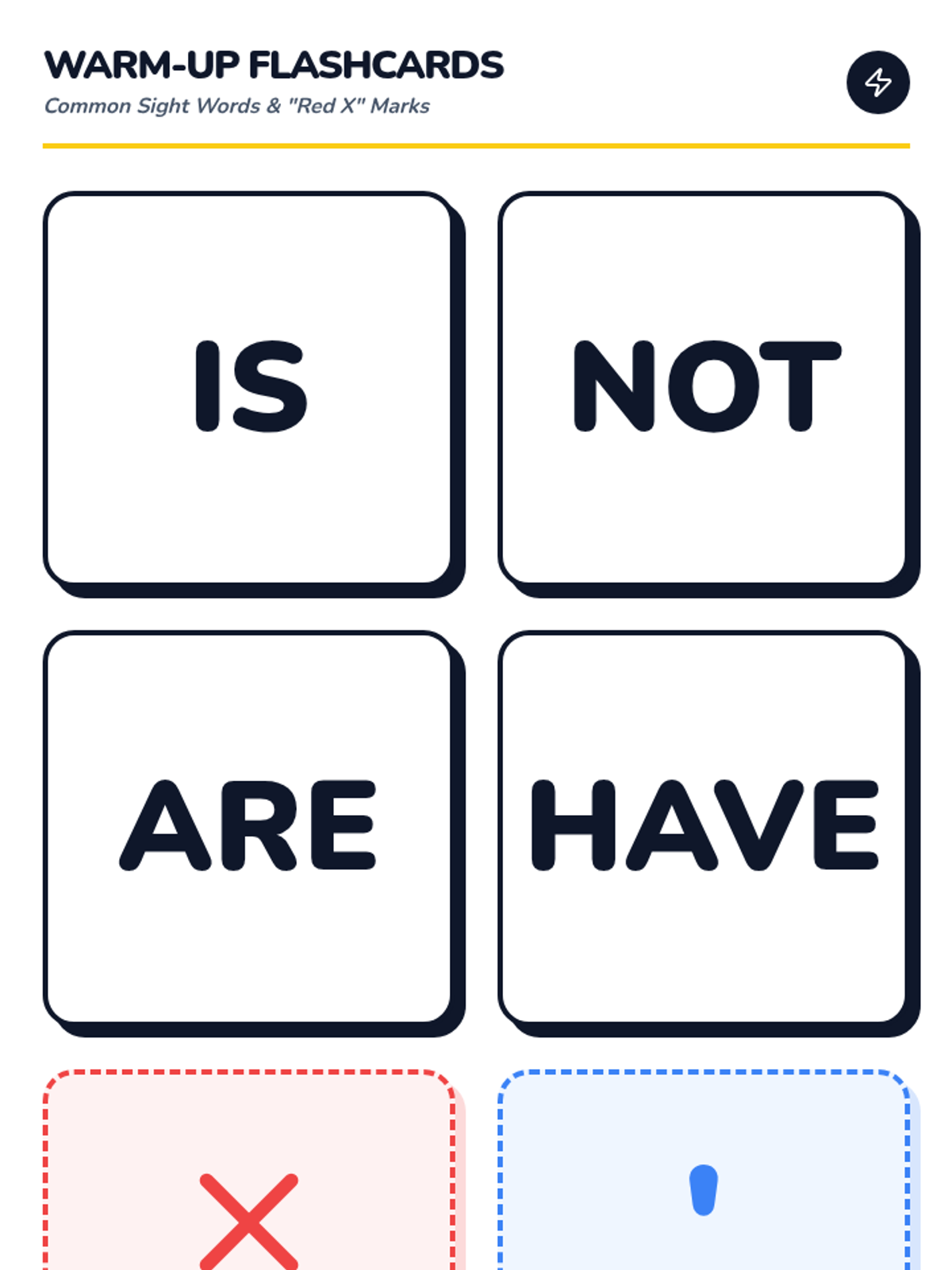
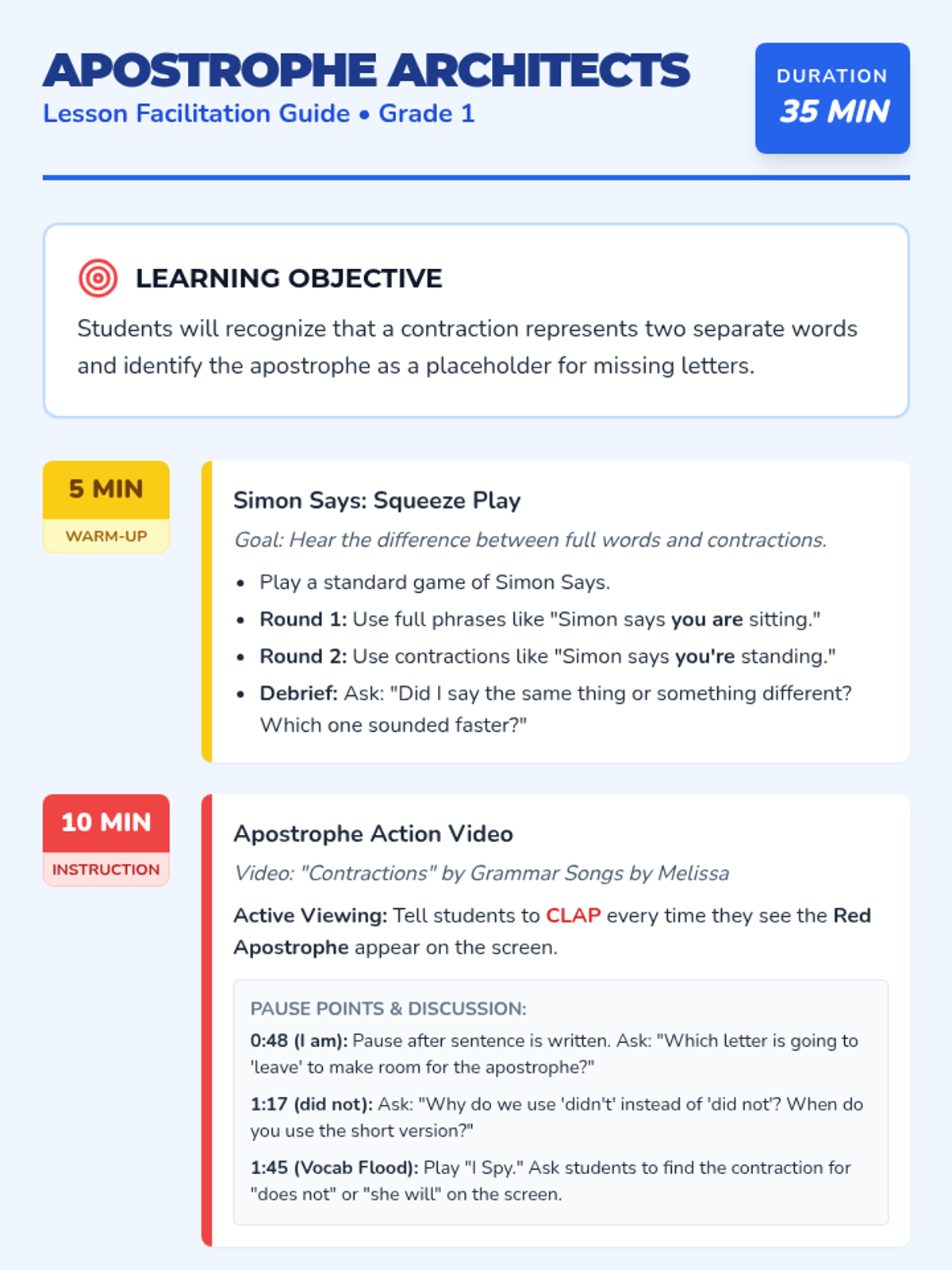
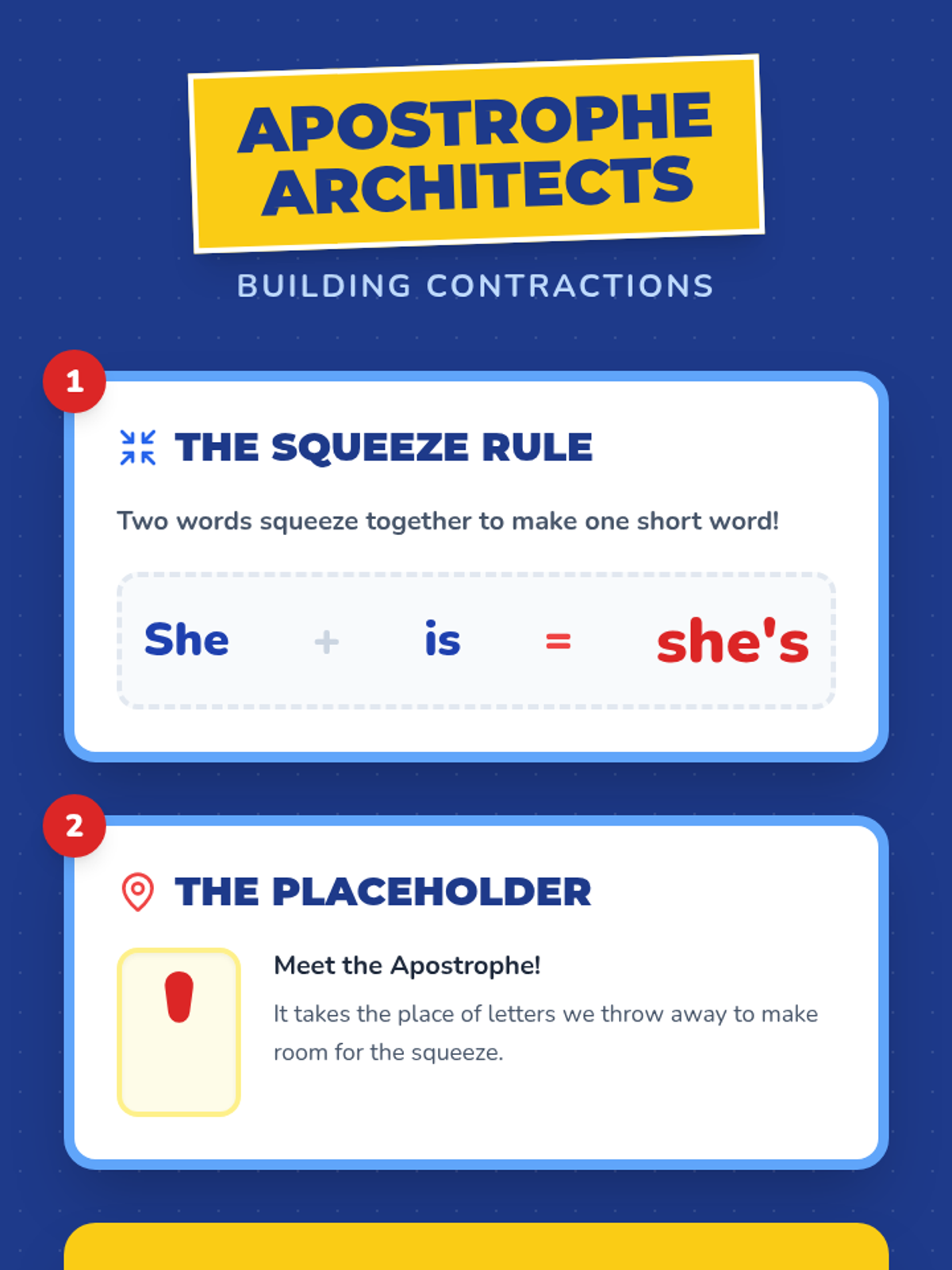
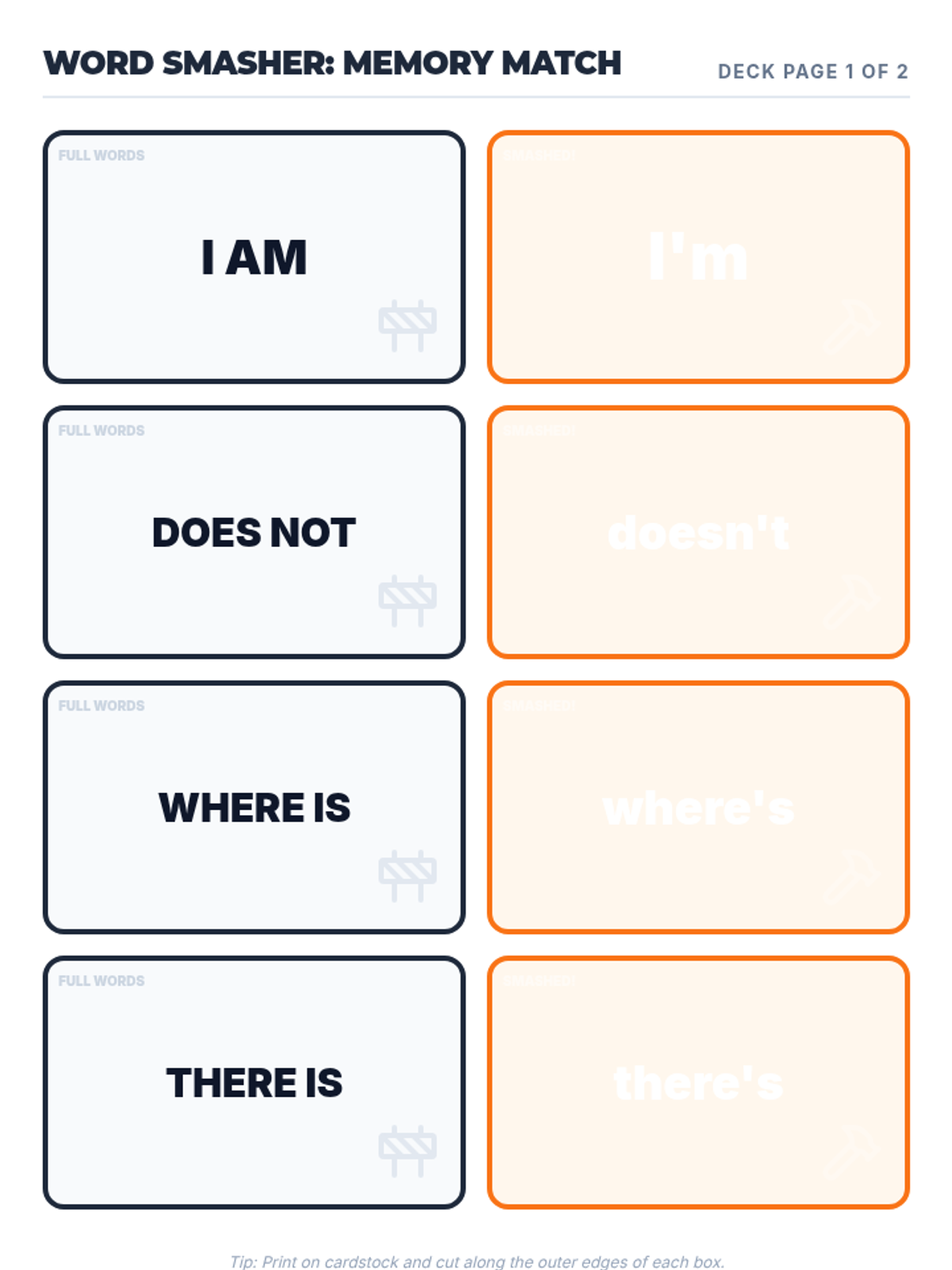
A 1st-grade introduction to contractions where students learn how two words 'squeeze' together and use an apostrophe as a placeholder for missing letters. The lesson includes a warm-up game, an interactive video viewing, and a hands-on memory matching activity.
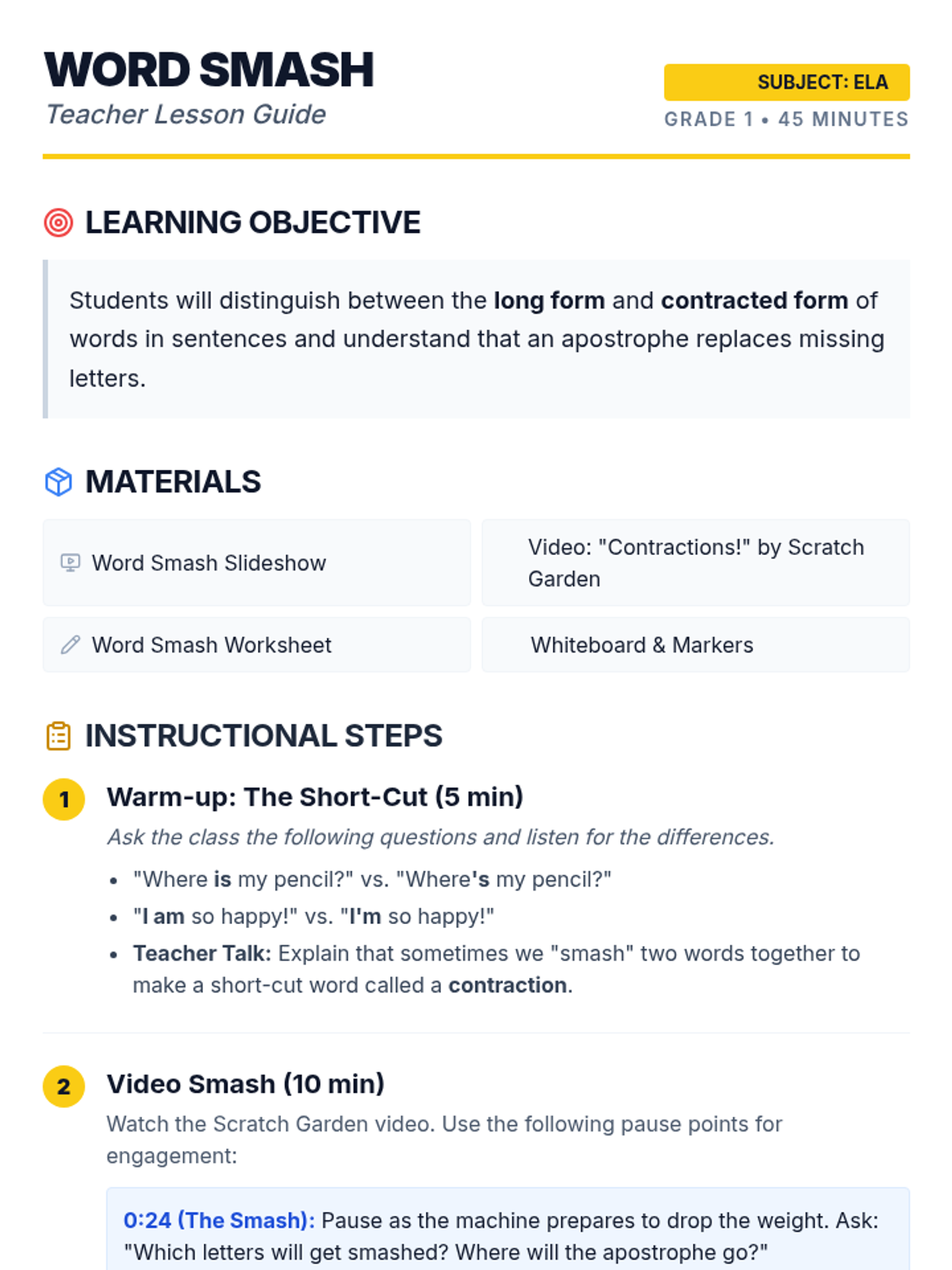
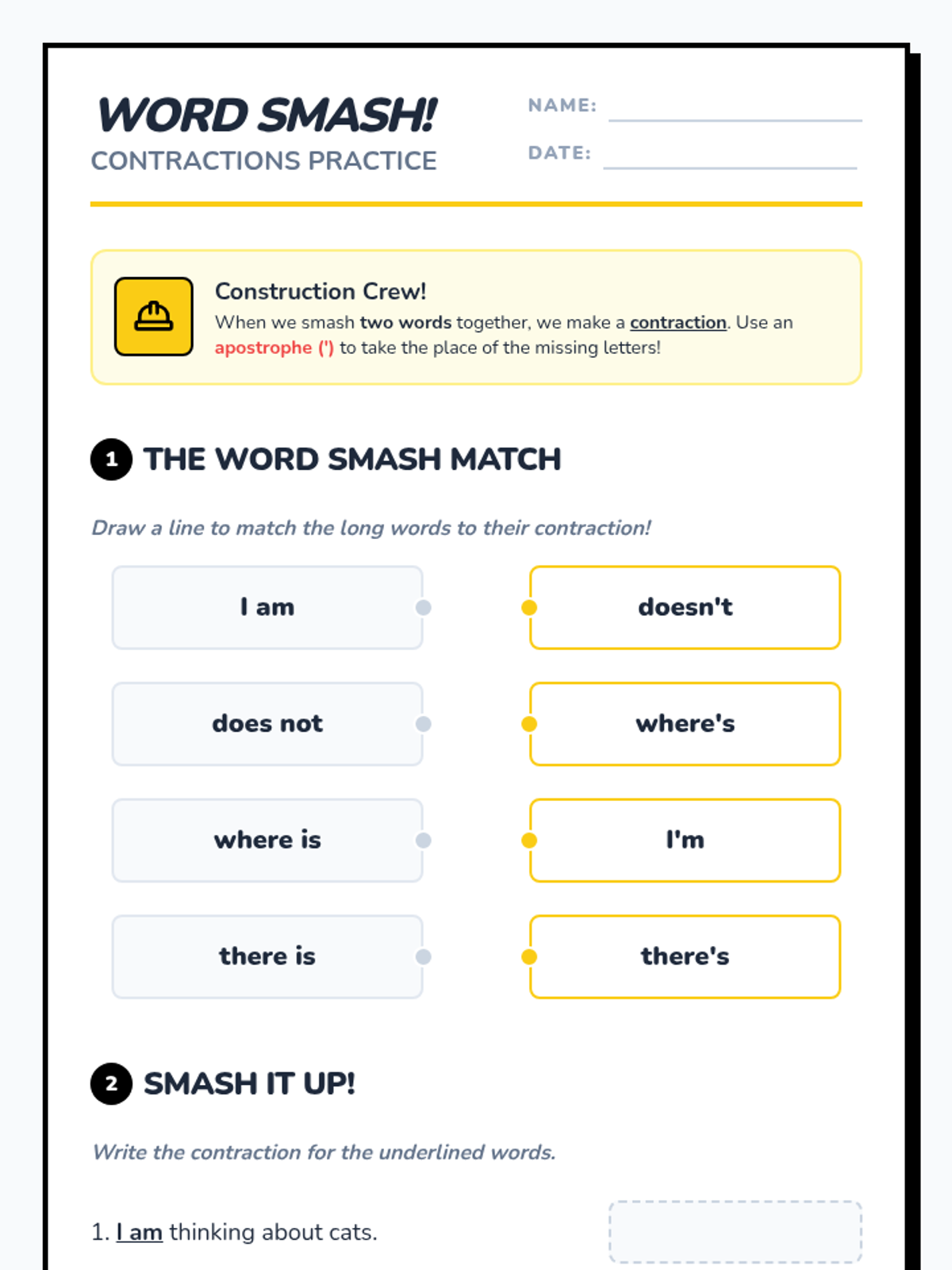
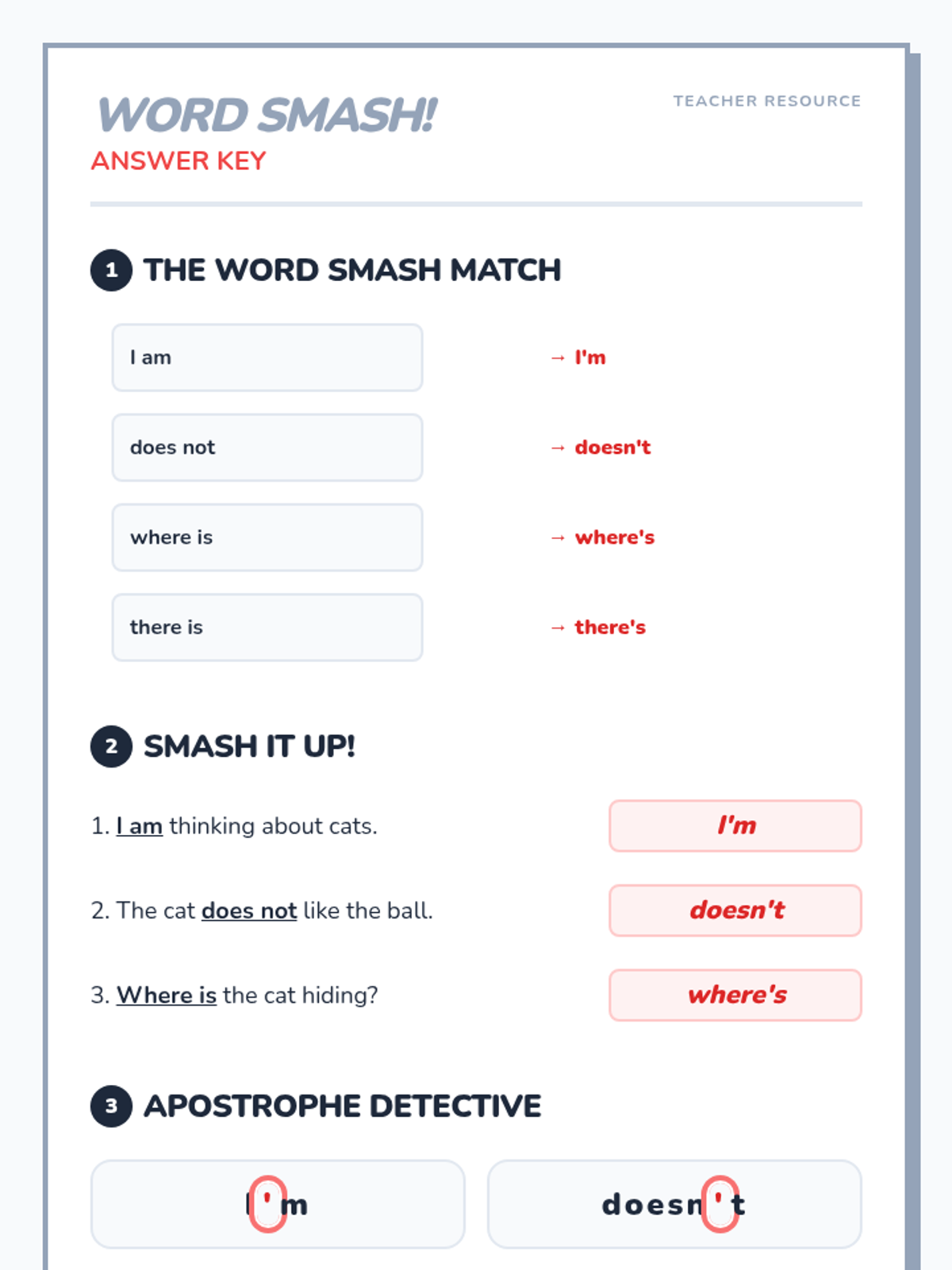
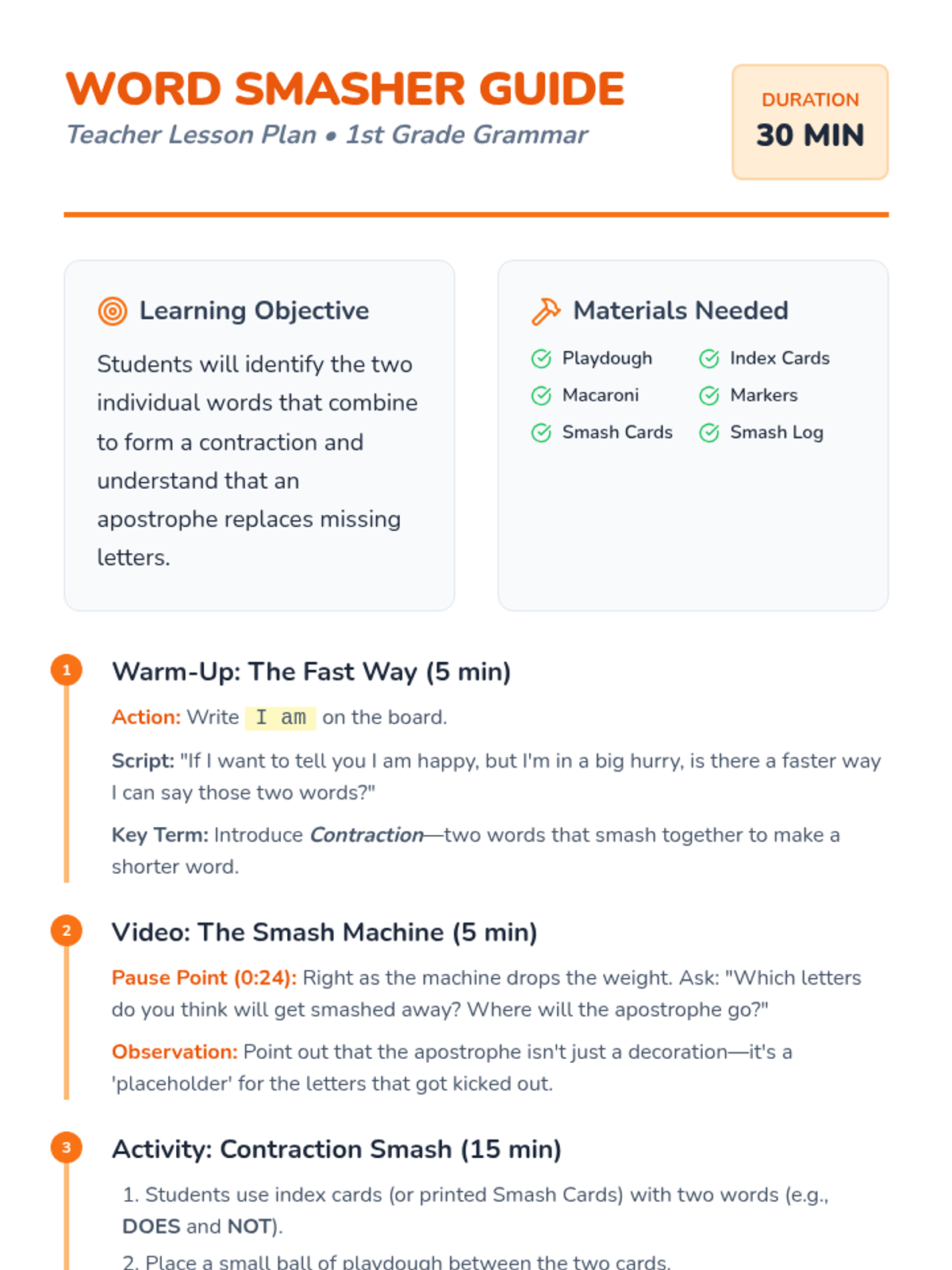
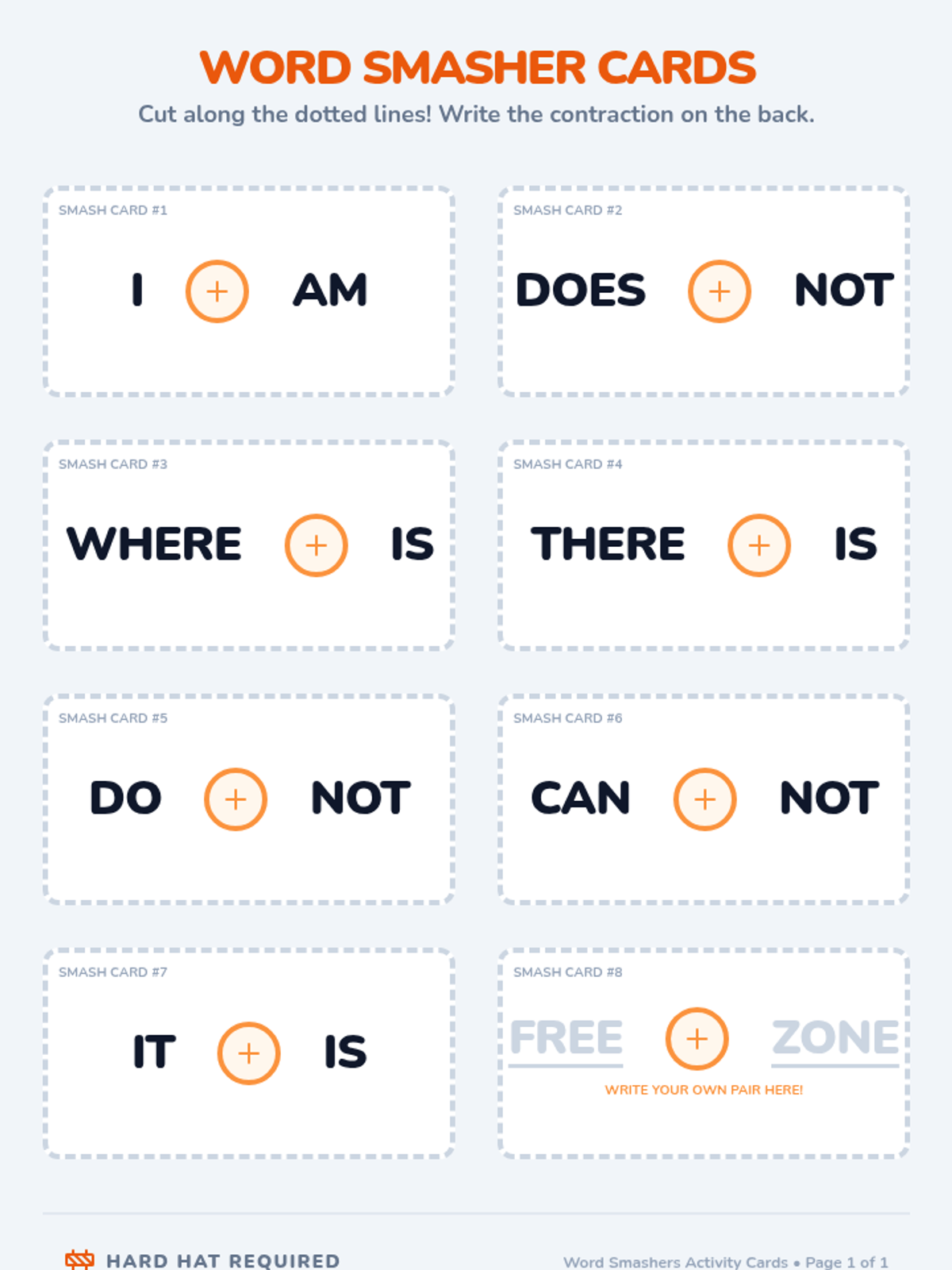
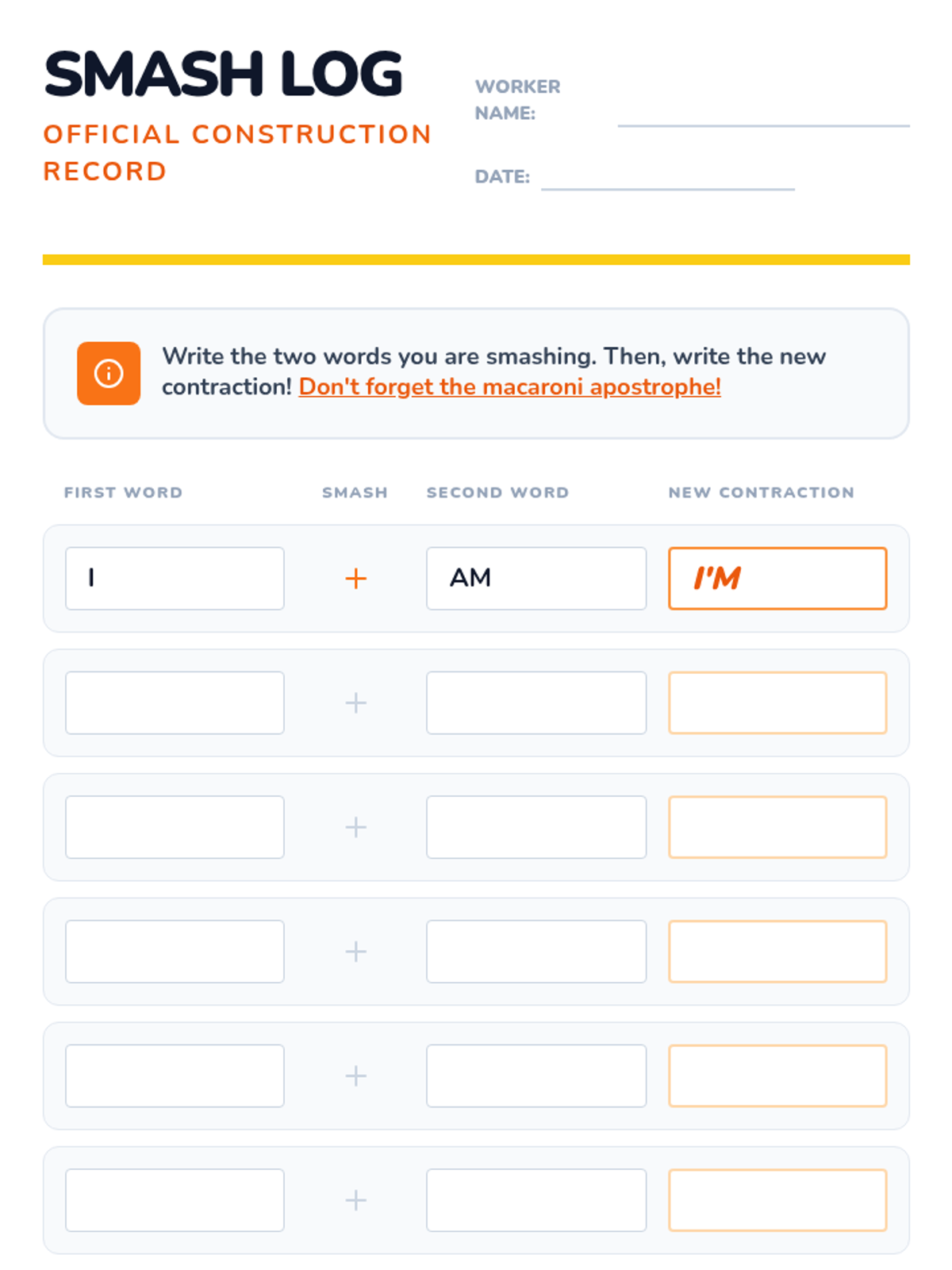
A fun, construction-themed lesson for 1st graders to learn about contractions using the 'Word Smash' metaphor. Students will identify, repeat, and physically react to long form words and their contracted versions.
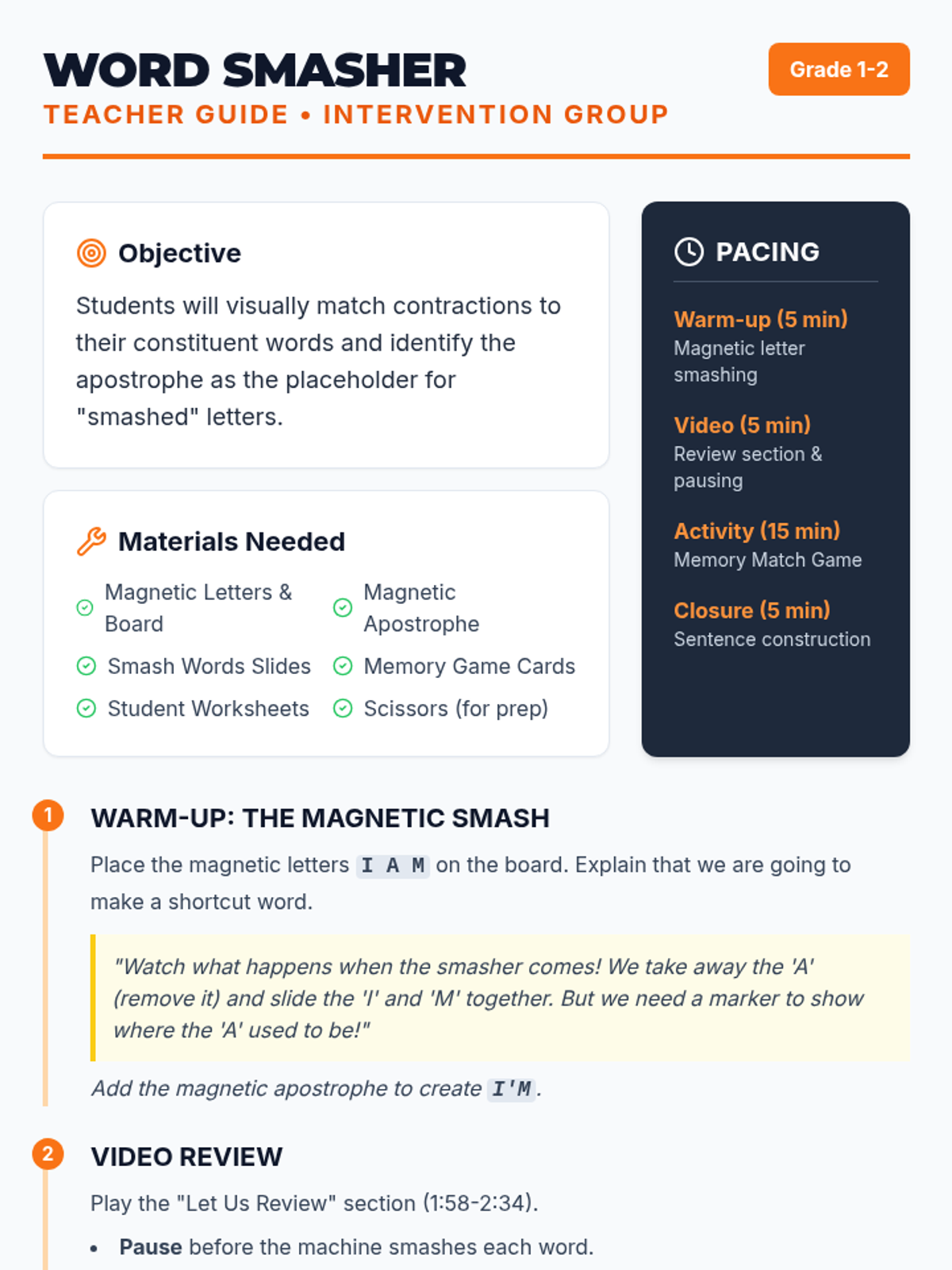
A targeted intervention lesson for 1st/2nd graders to master contractions through a 'smashing' construction theme. Includes a hands-on magnetic letter warm-up, a focused video review, and a memory matching game.
A high-energy, hands-on lesson for 1st graders to learn how contractions are formed by 'smashing' two words together, featuring a construction-themed playdough activity and the Scratch Garden video.
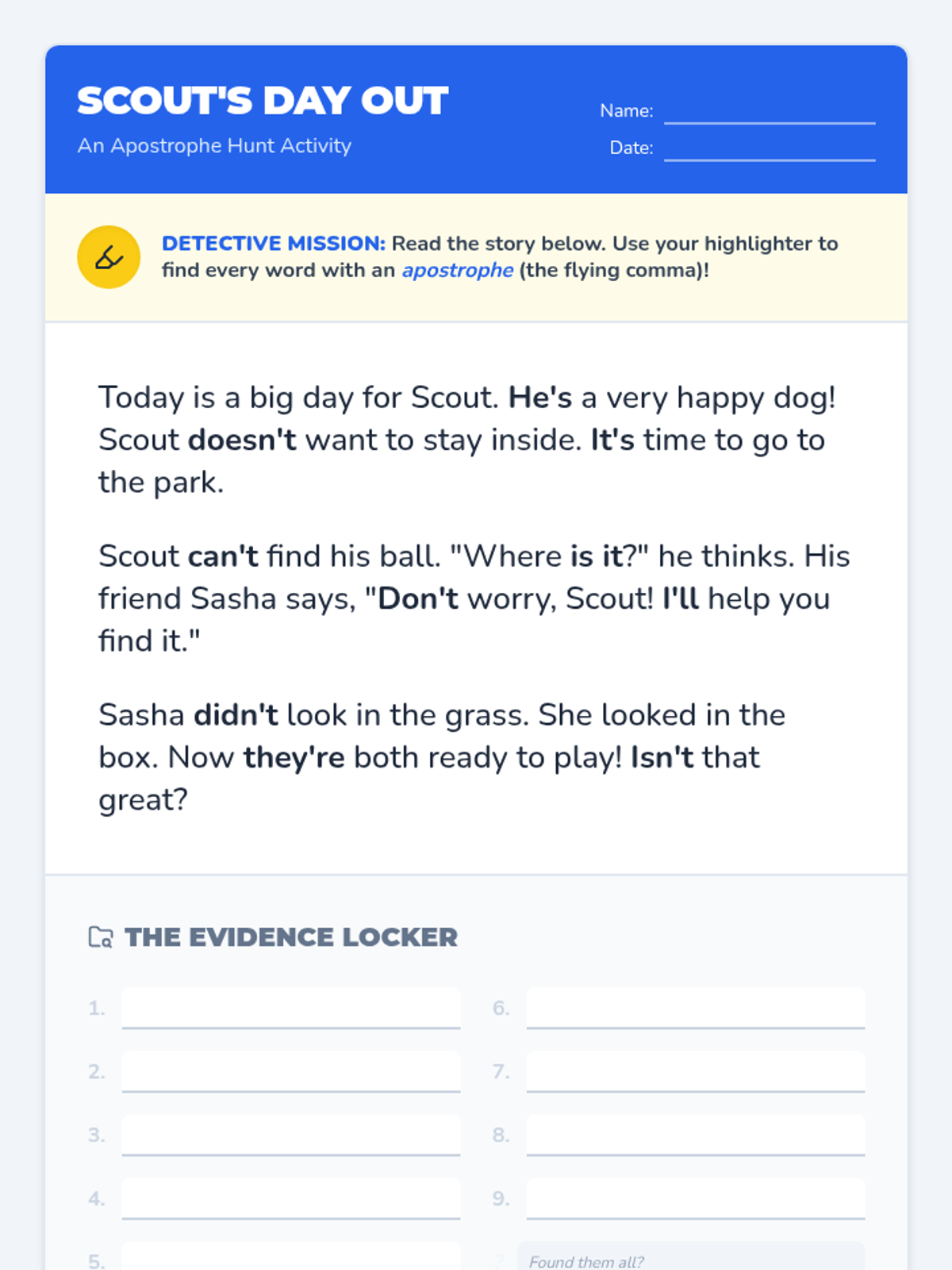
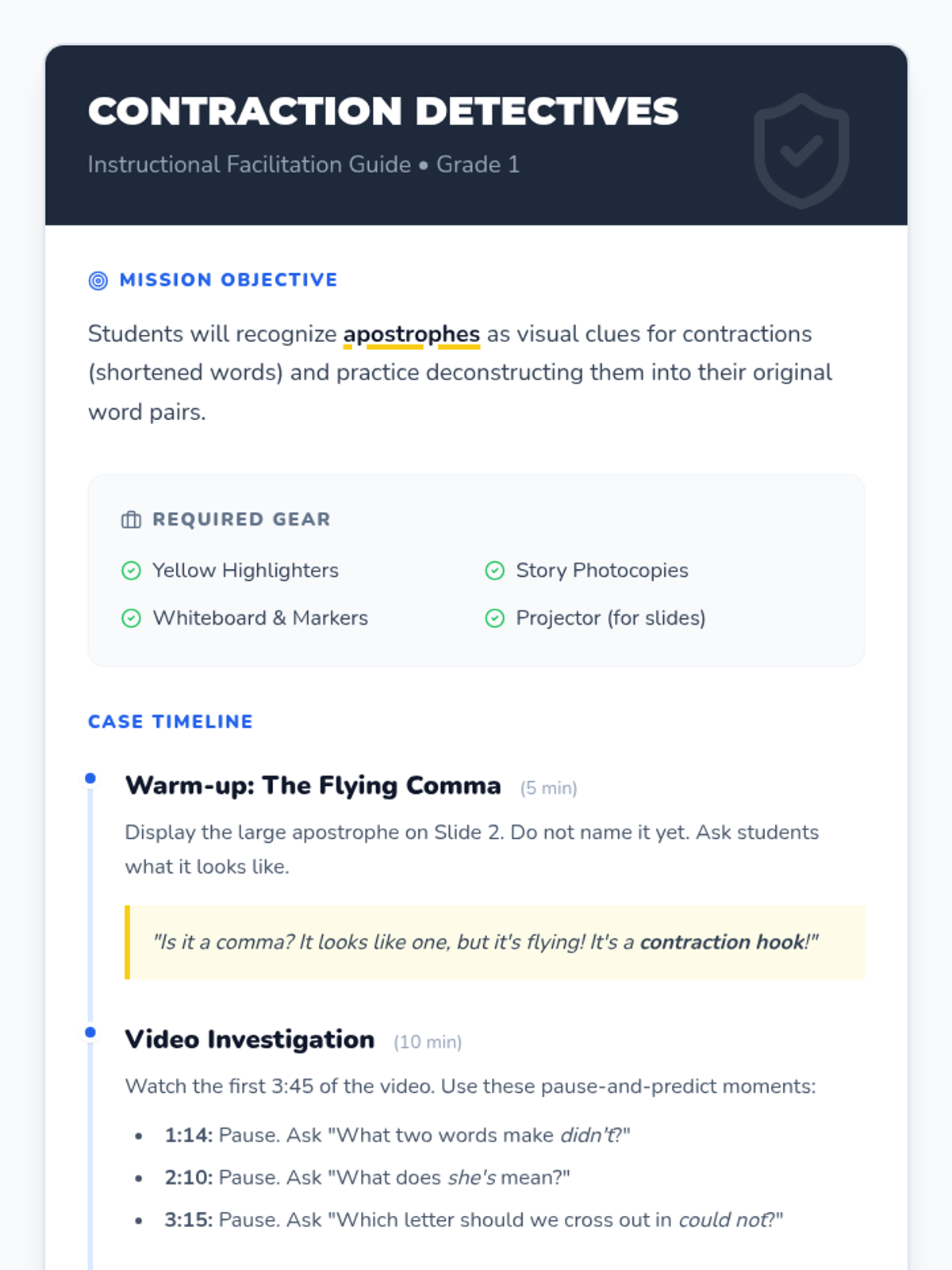
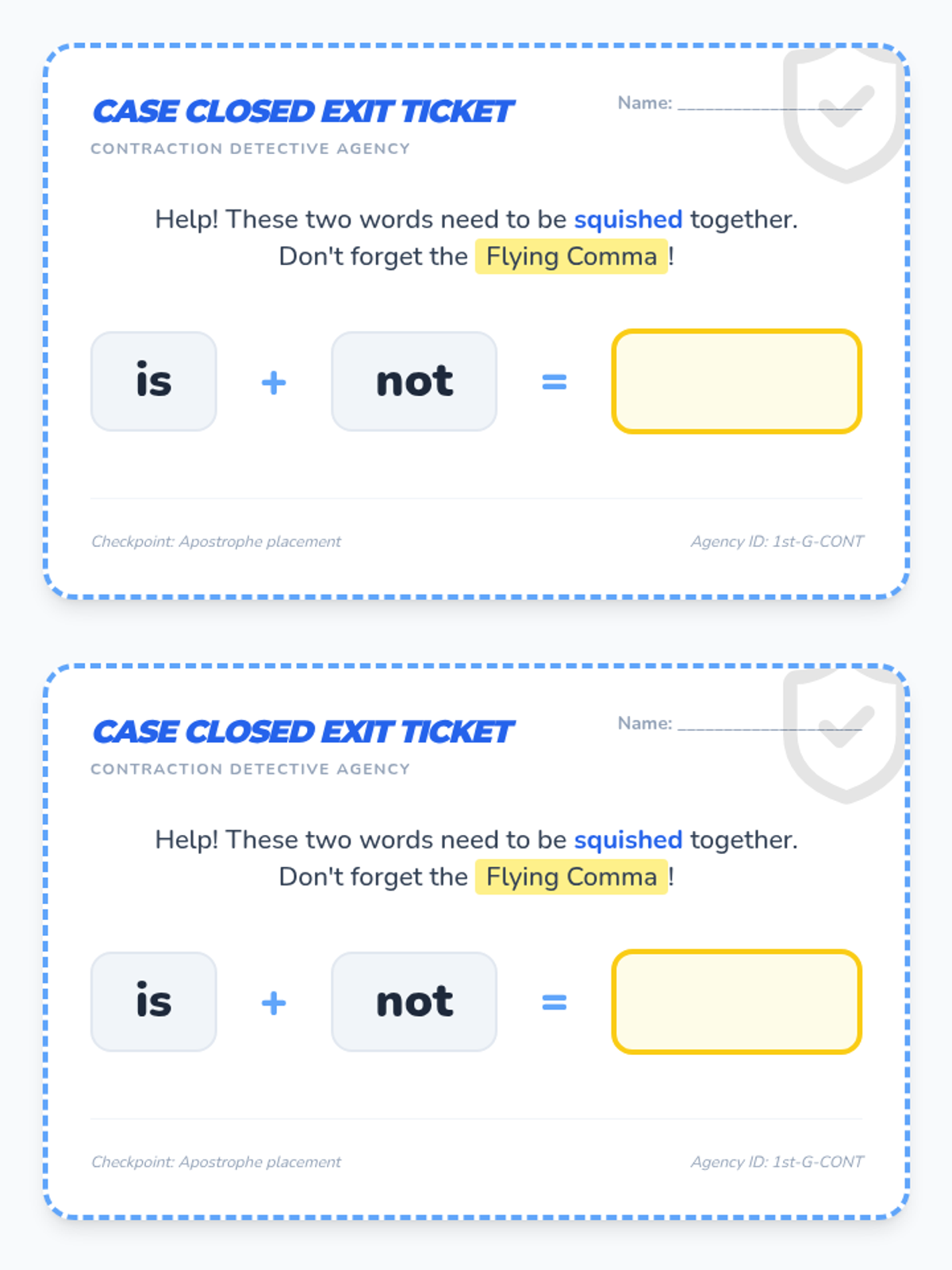
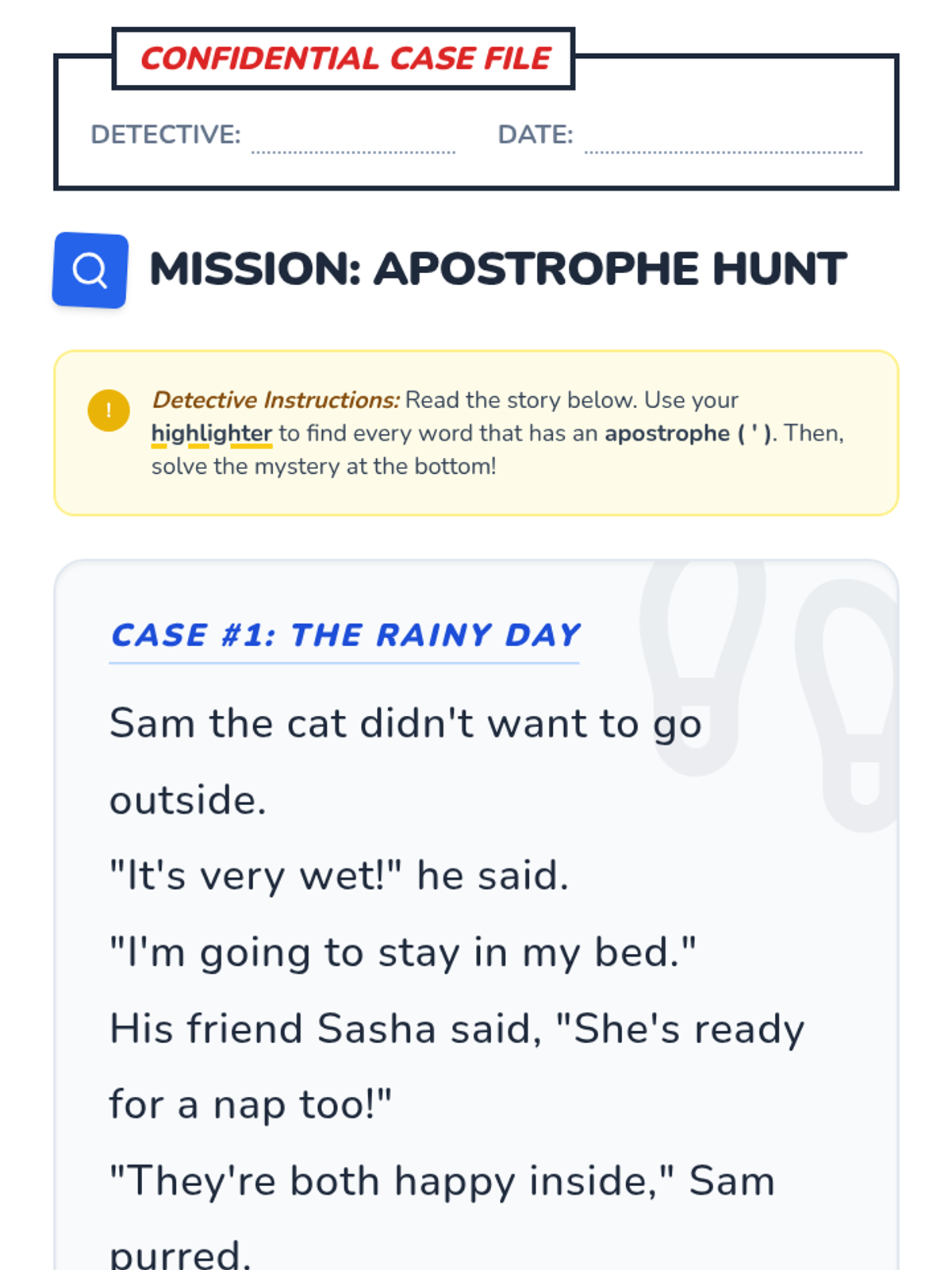
A 1st-grade introduction to contractions using the concept of 'clues' and the 'flying comma' (apostrophe) to decode shortened words. Students will watch a guided video, hunt for apostrophes in a story, and practice forming their own contractions.
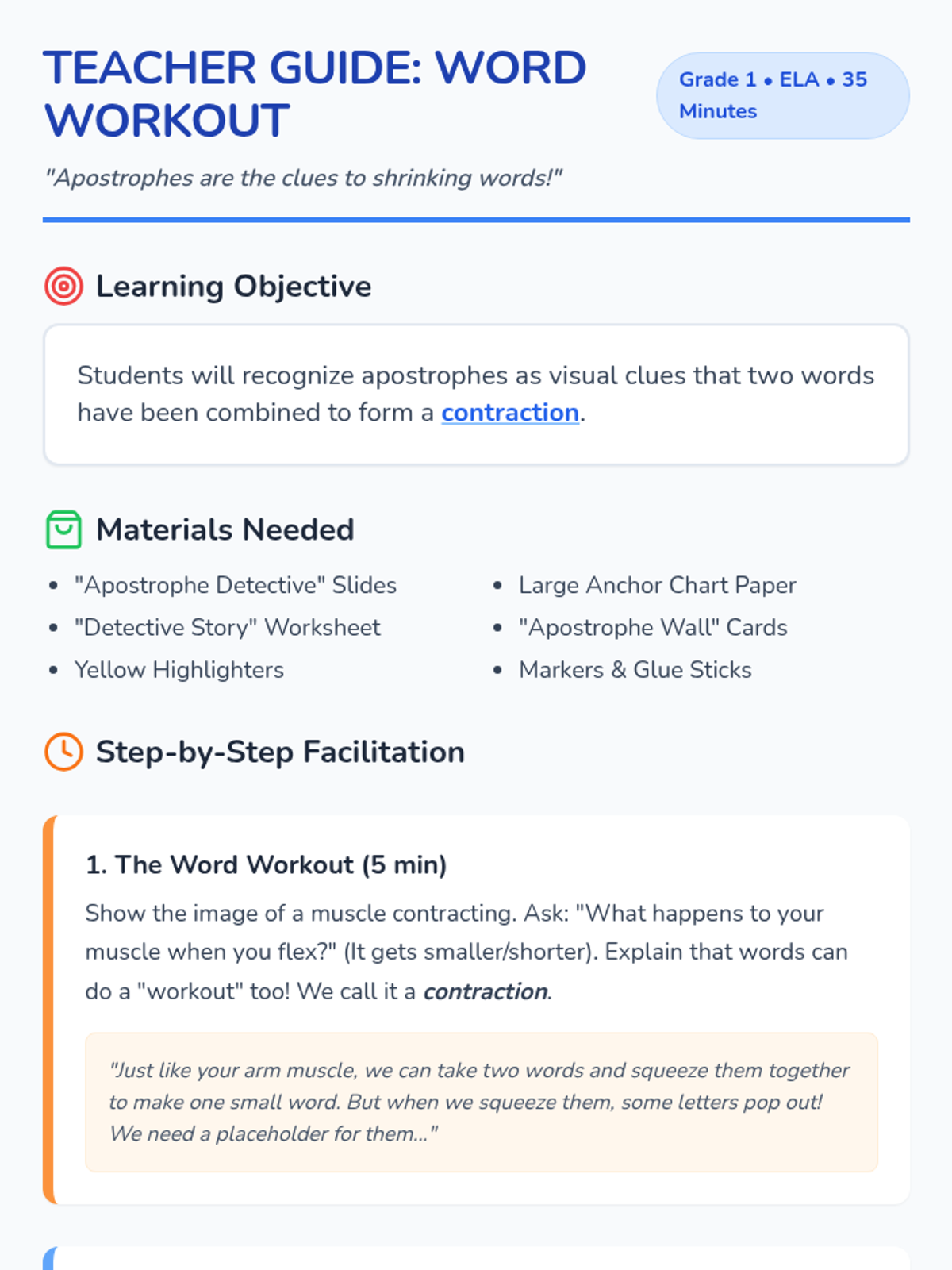
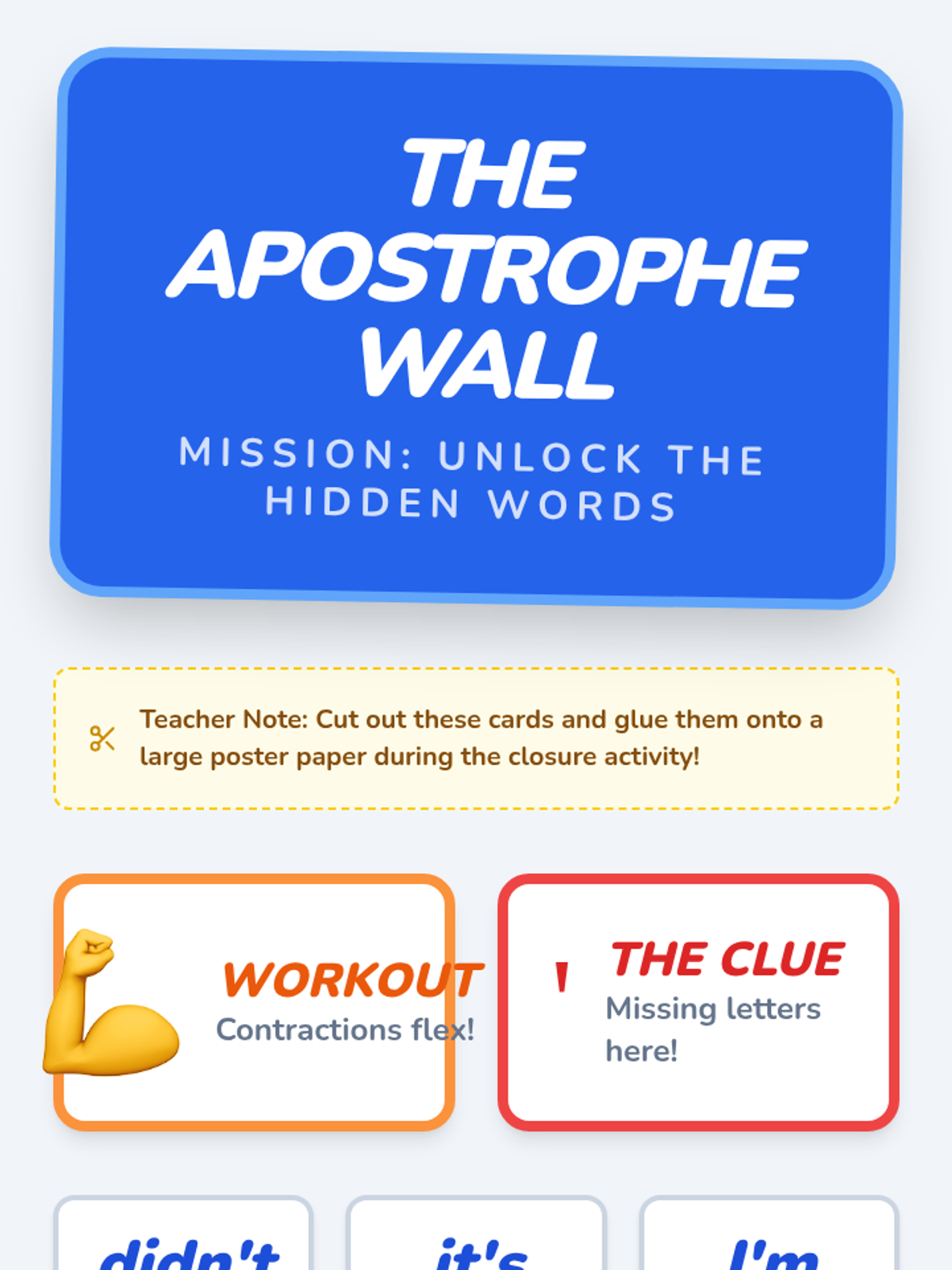
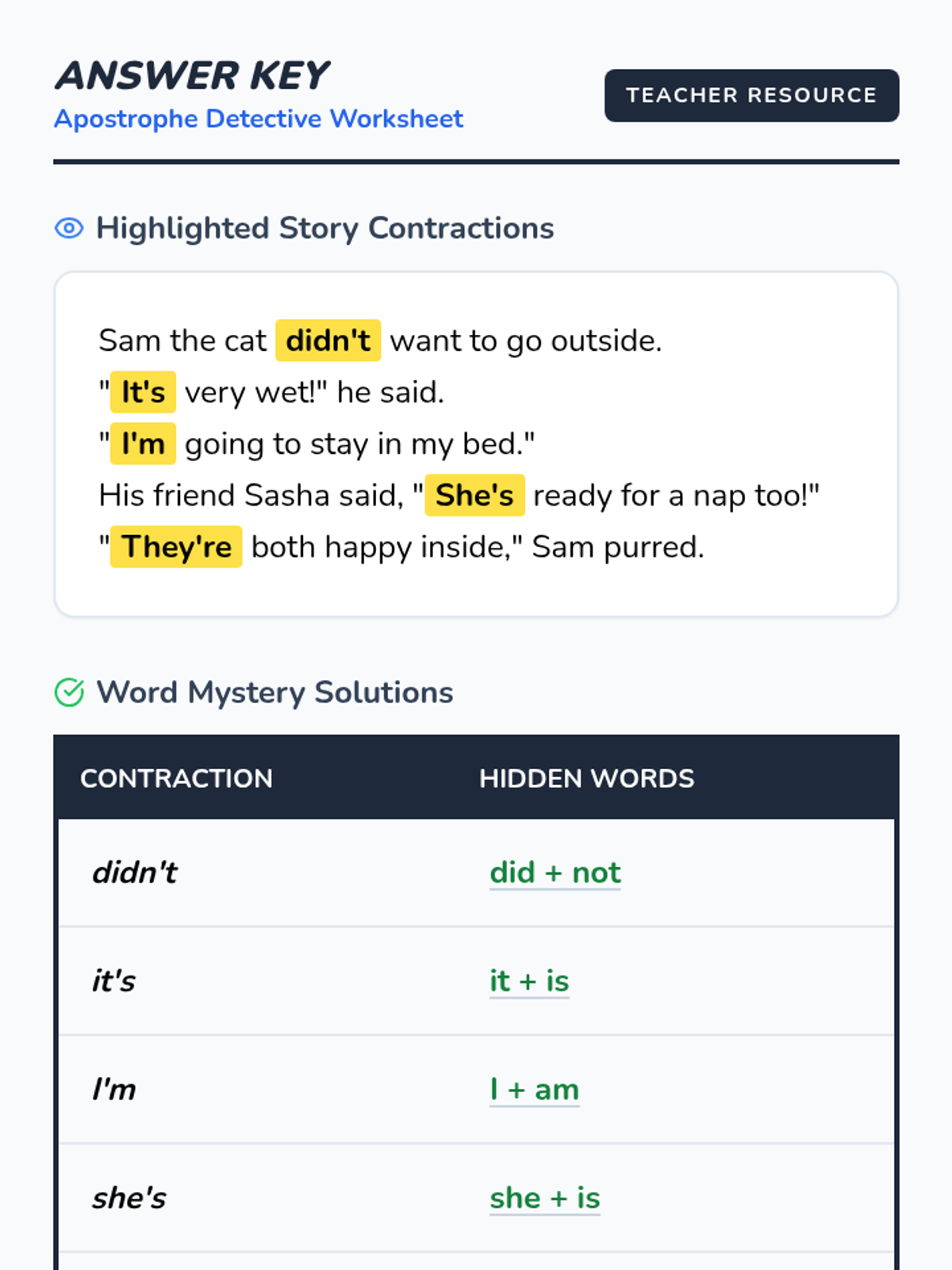
A 1st-grade lesson where students use their 'detective skills' to find apostrophes and uncover the hidden words that form contractions. The lesson features a 'Word Workout' theme, connecting the physical concept of muscles contracting to how words shrink in English.
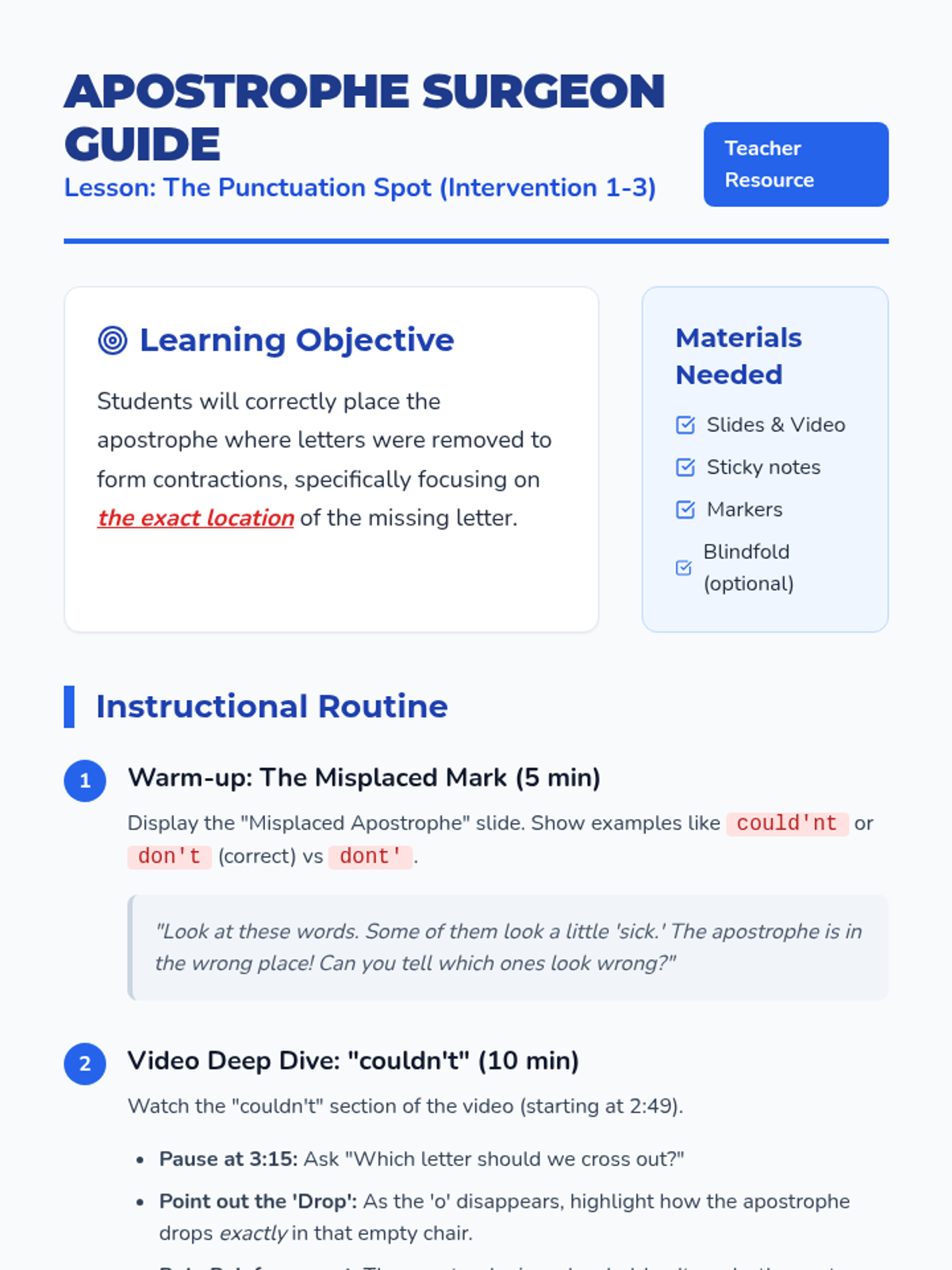
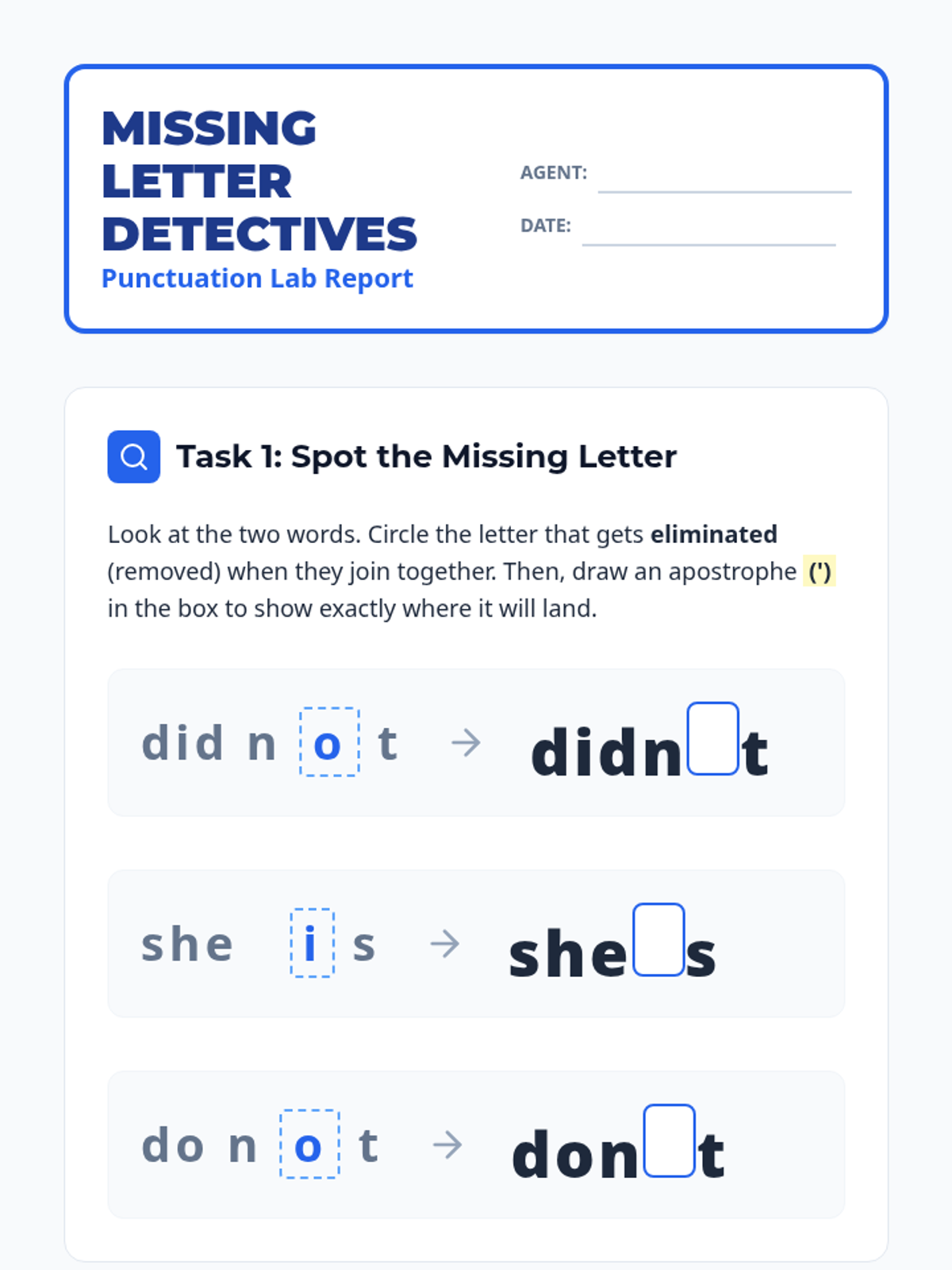
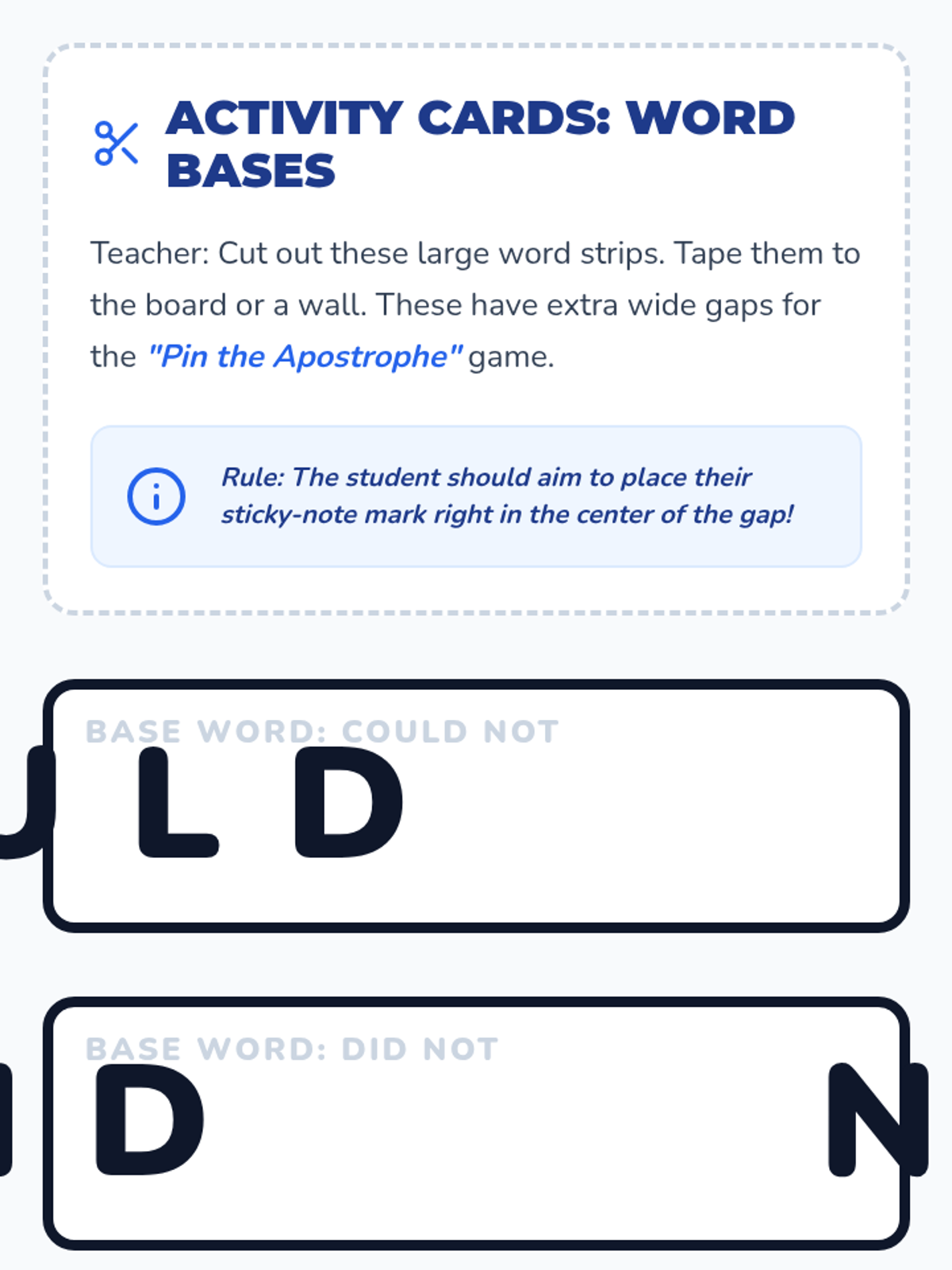
A focused intervention lesson for 1st-3rd graders on correctly placing apostrophes in contractions by identifying where letters were removed. Includes a hands-on 'Pin the Apostrophe' activity and video analysis.
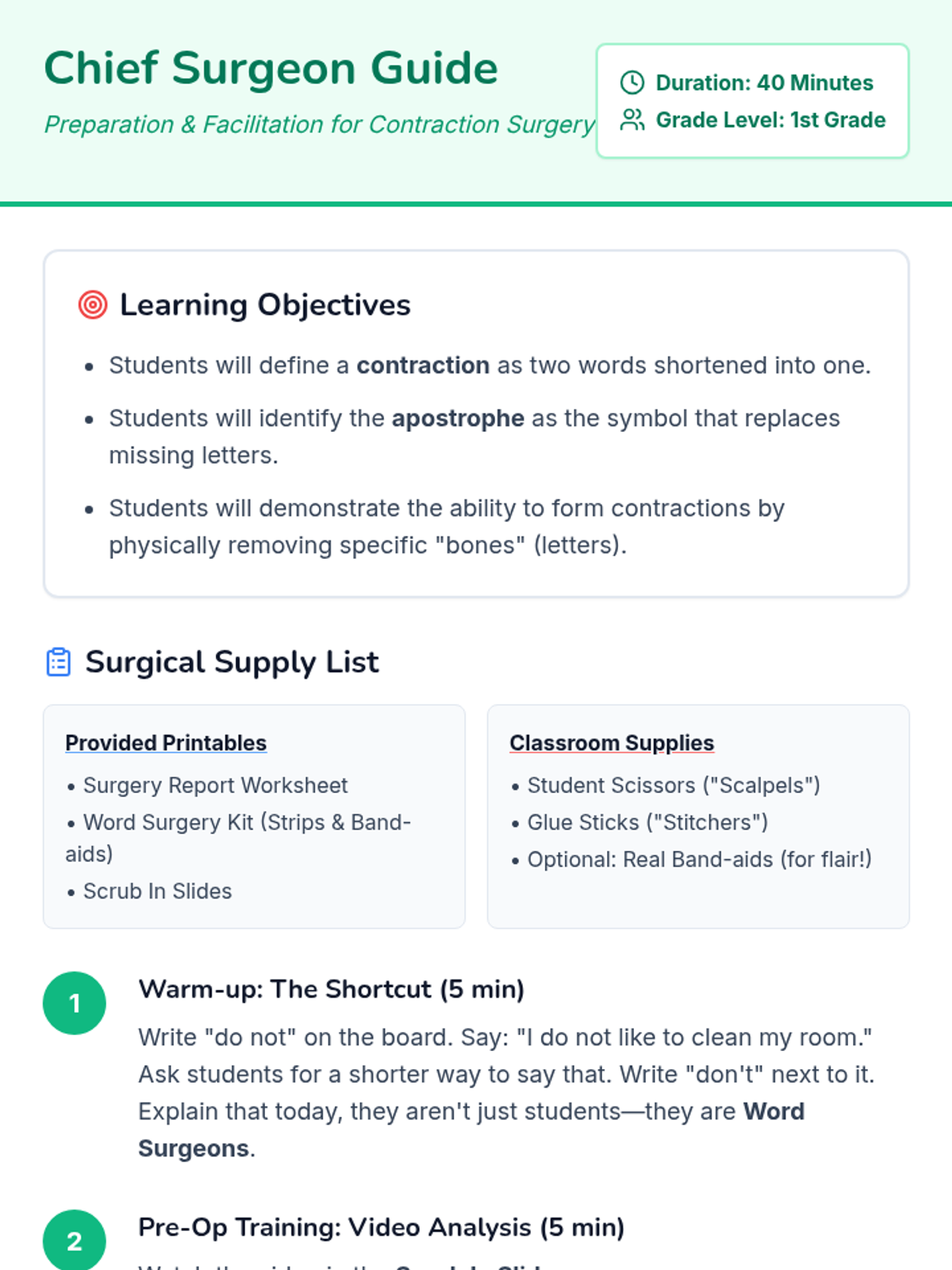
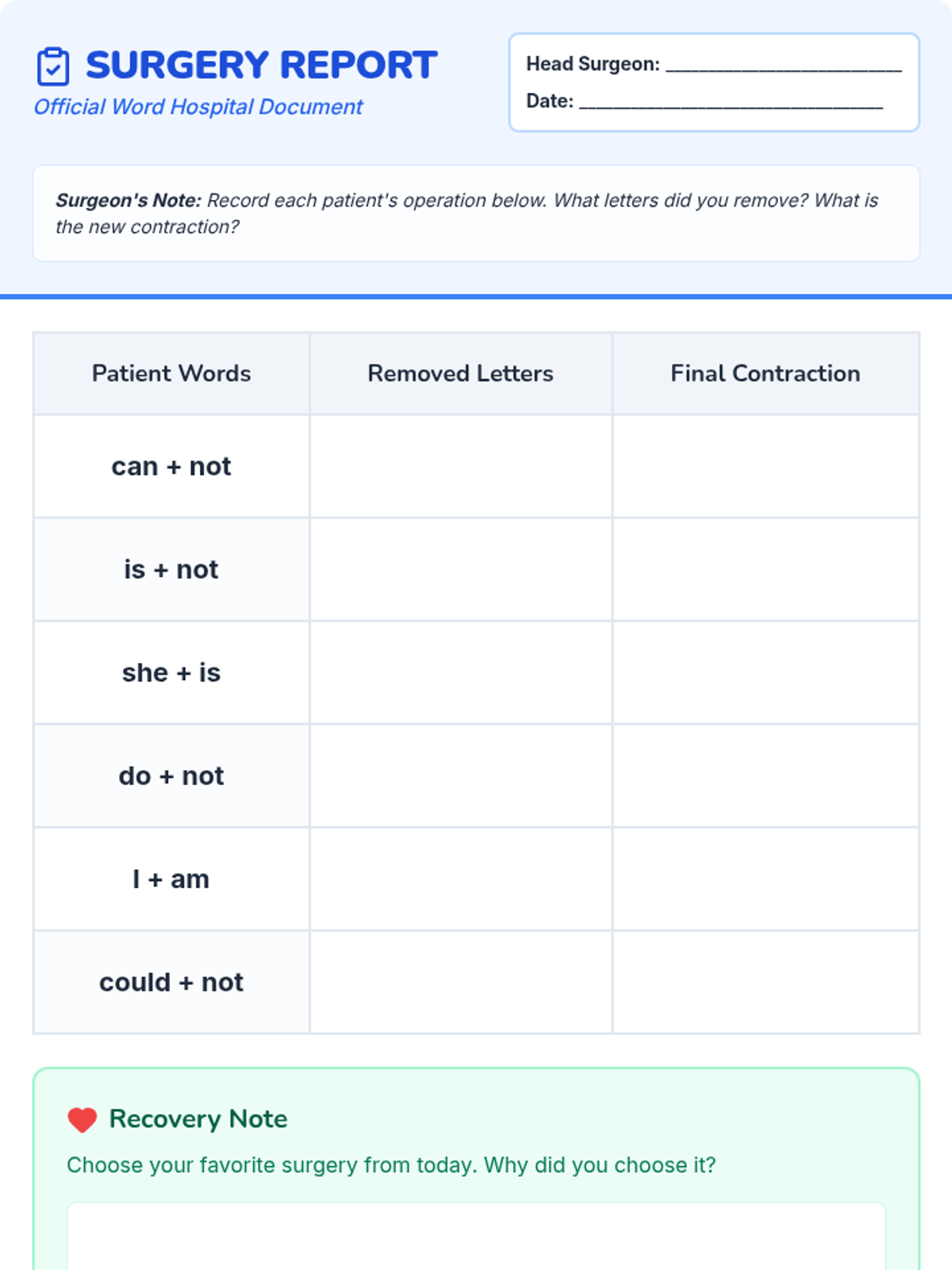
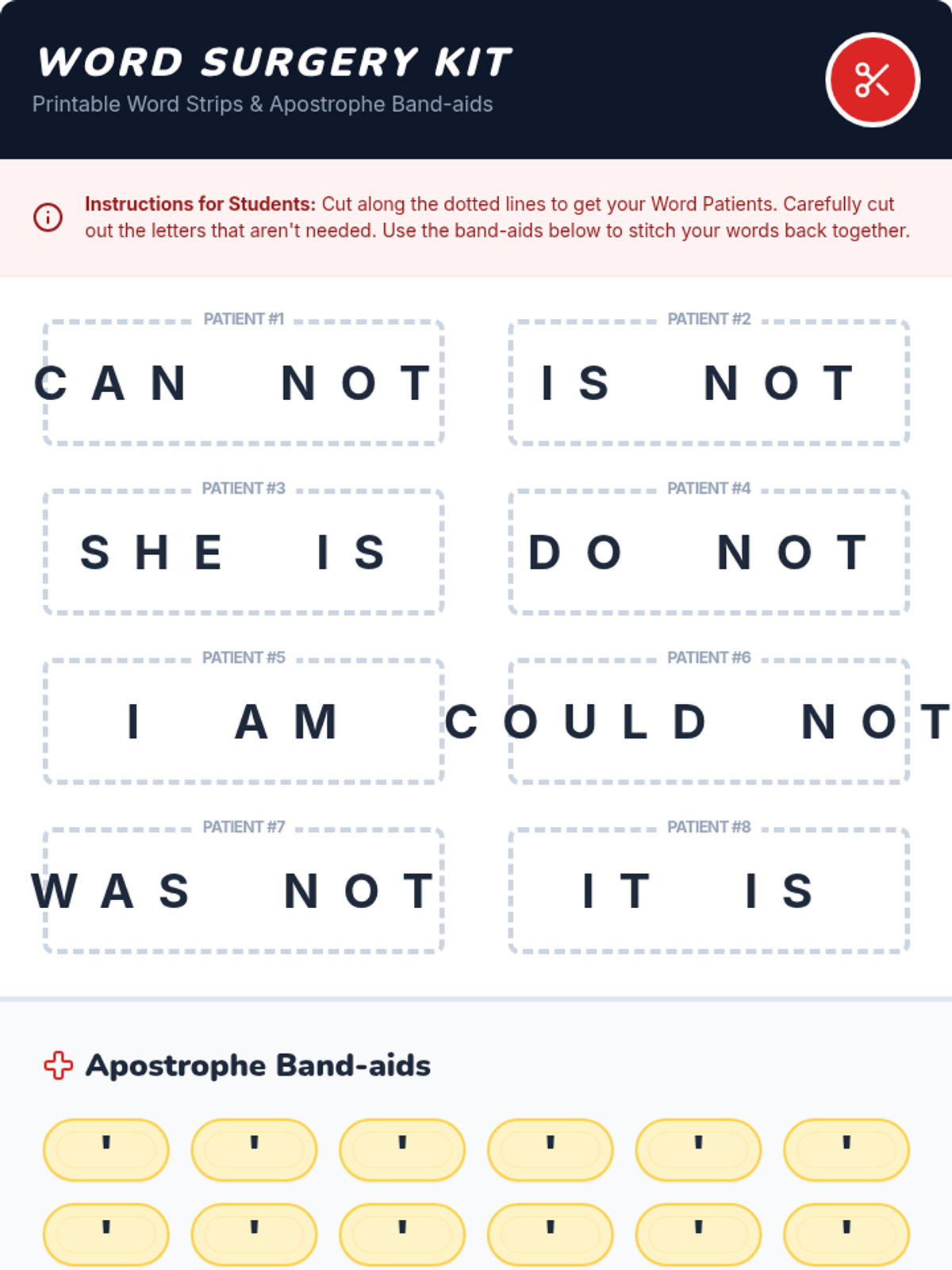
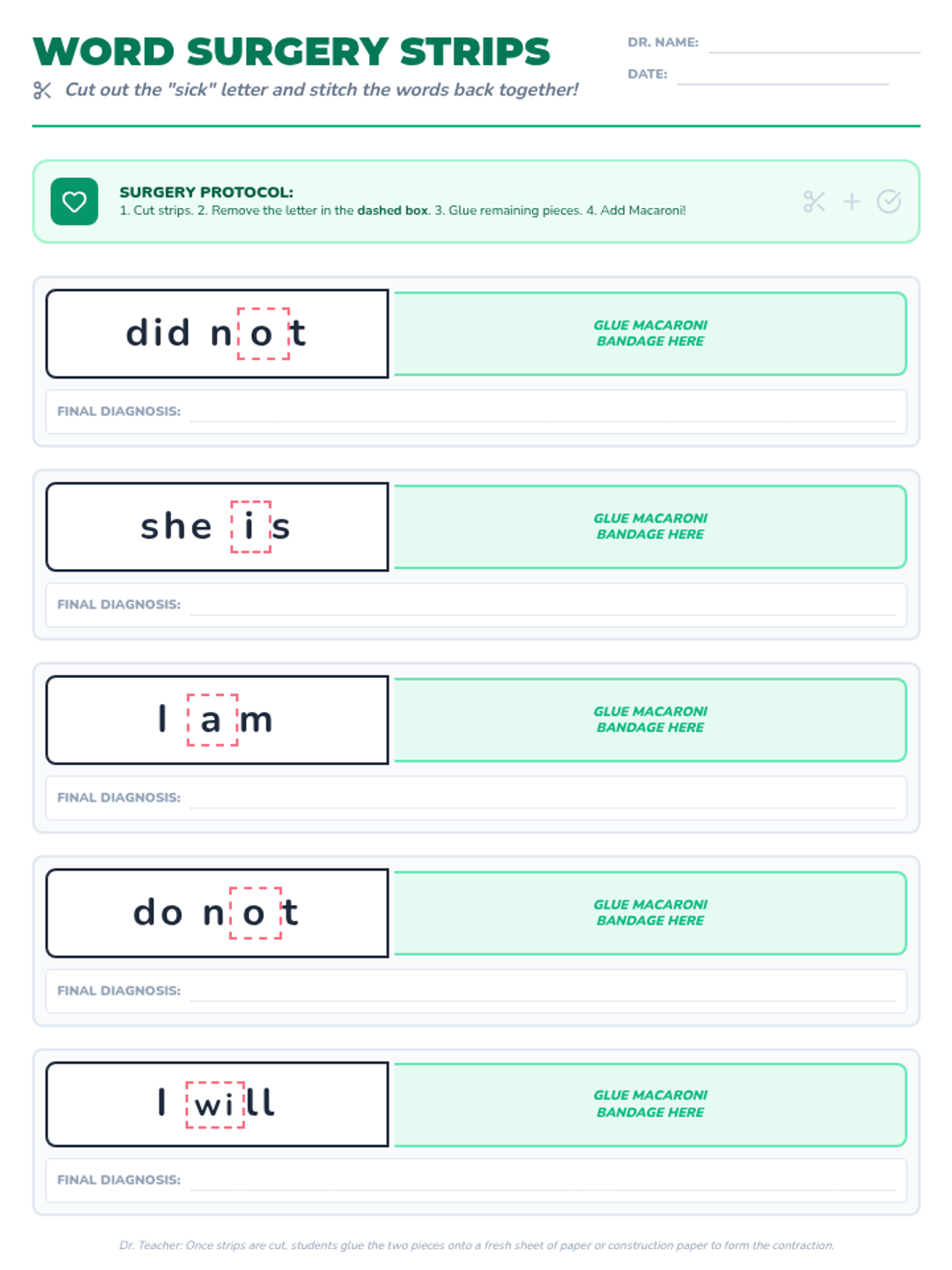
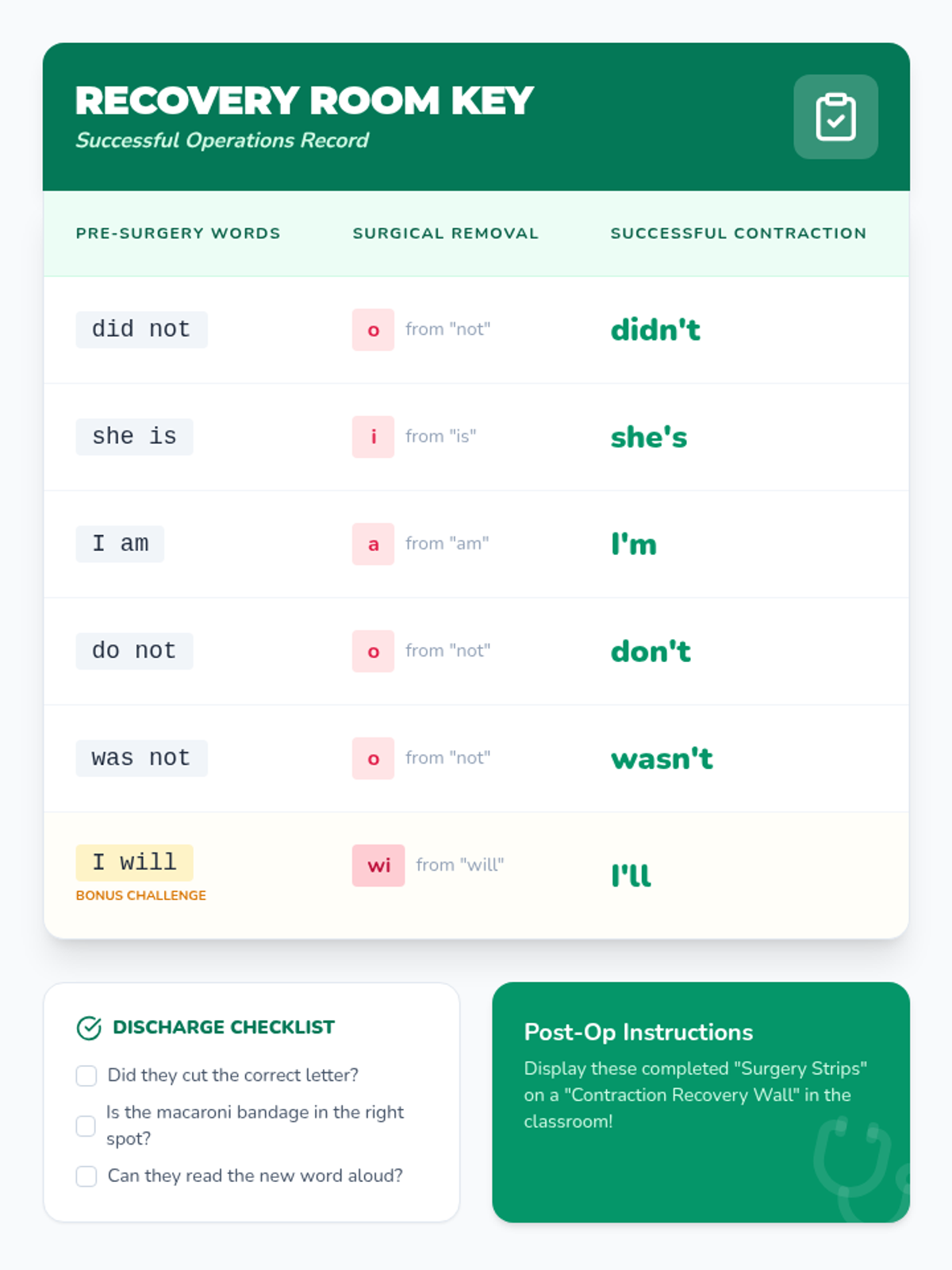
A hands-on ELA lesson where 1st grade students act as 'word surgeons' to create contractions by removing letters and applying 'band-aid' apostrophes. Includes a guided video analysis and a physical cutting and pasting activity.
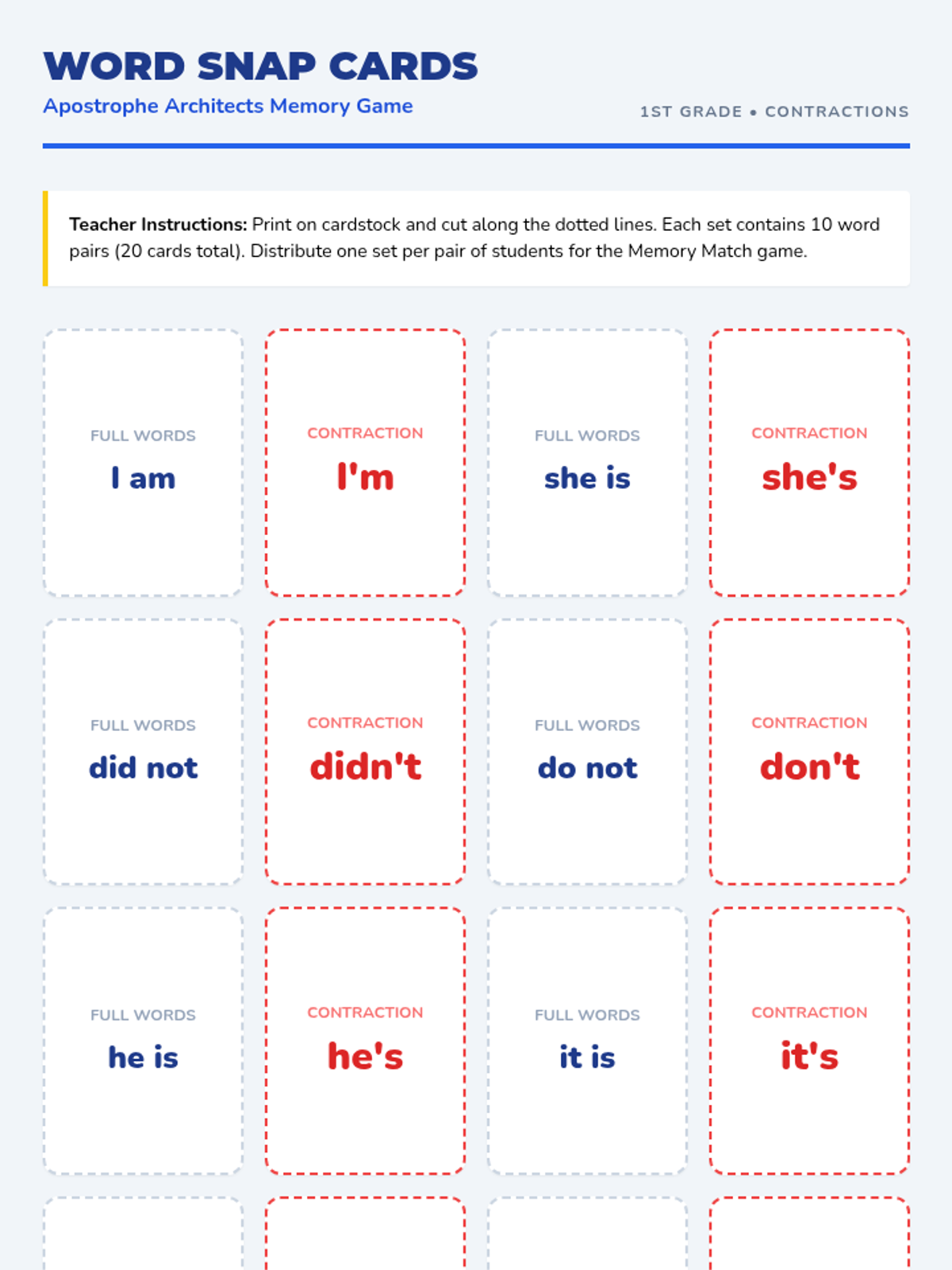
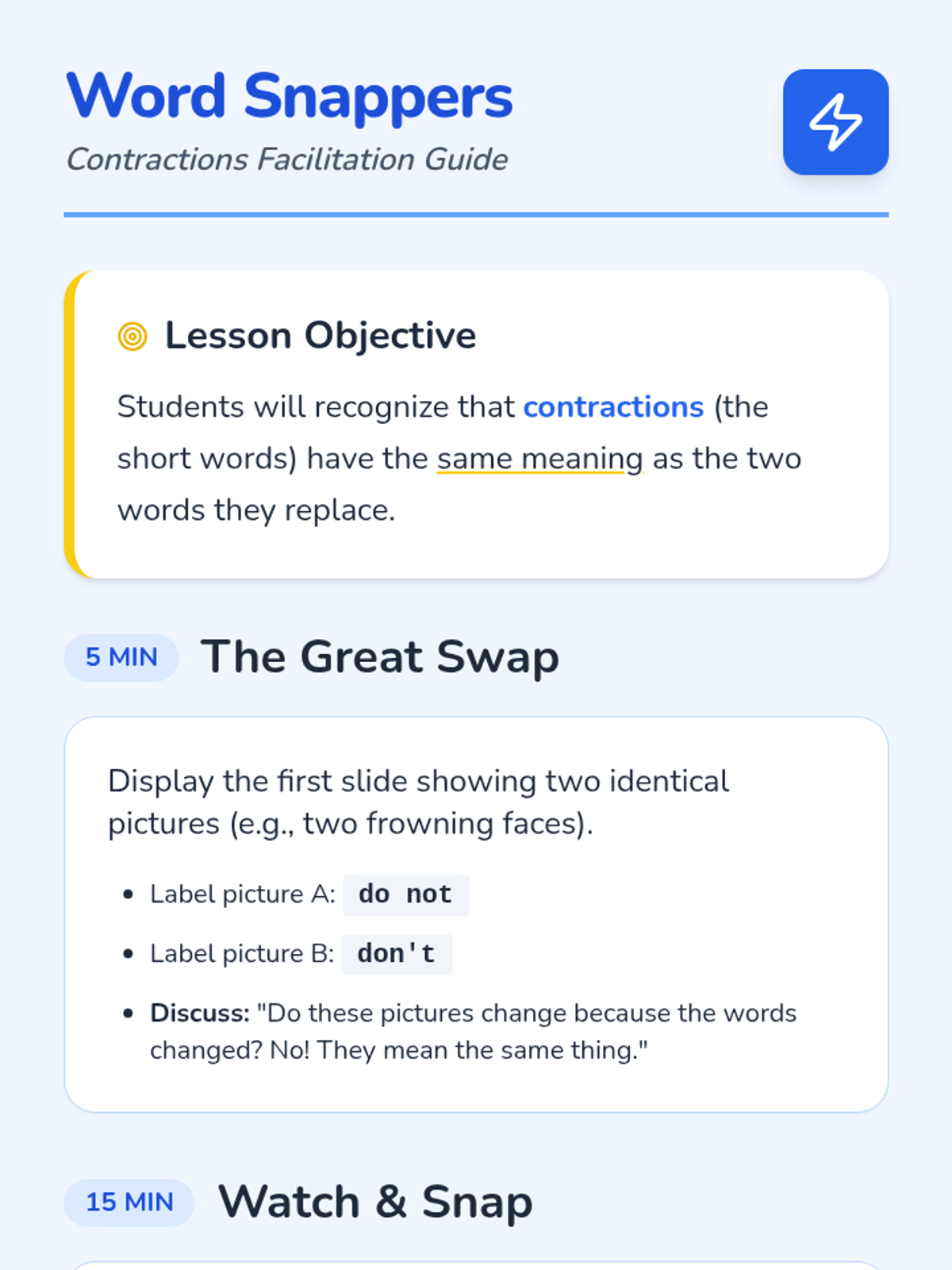
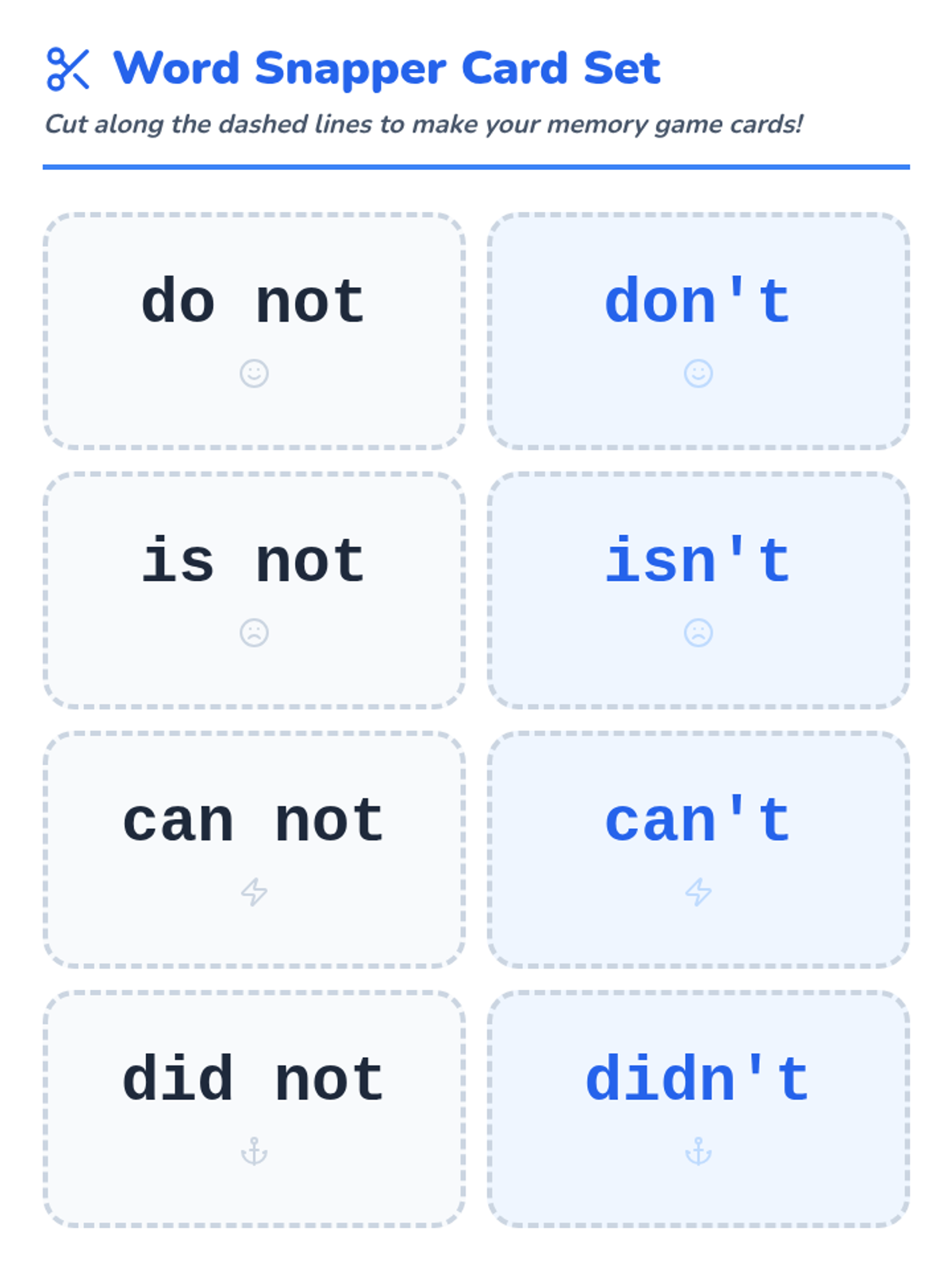
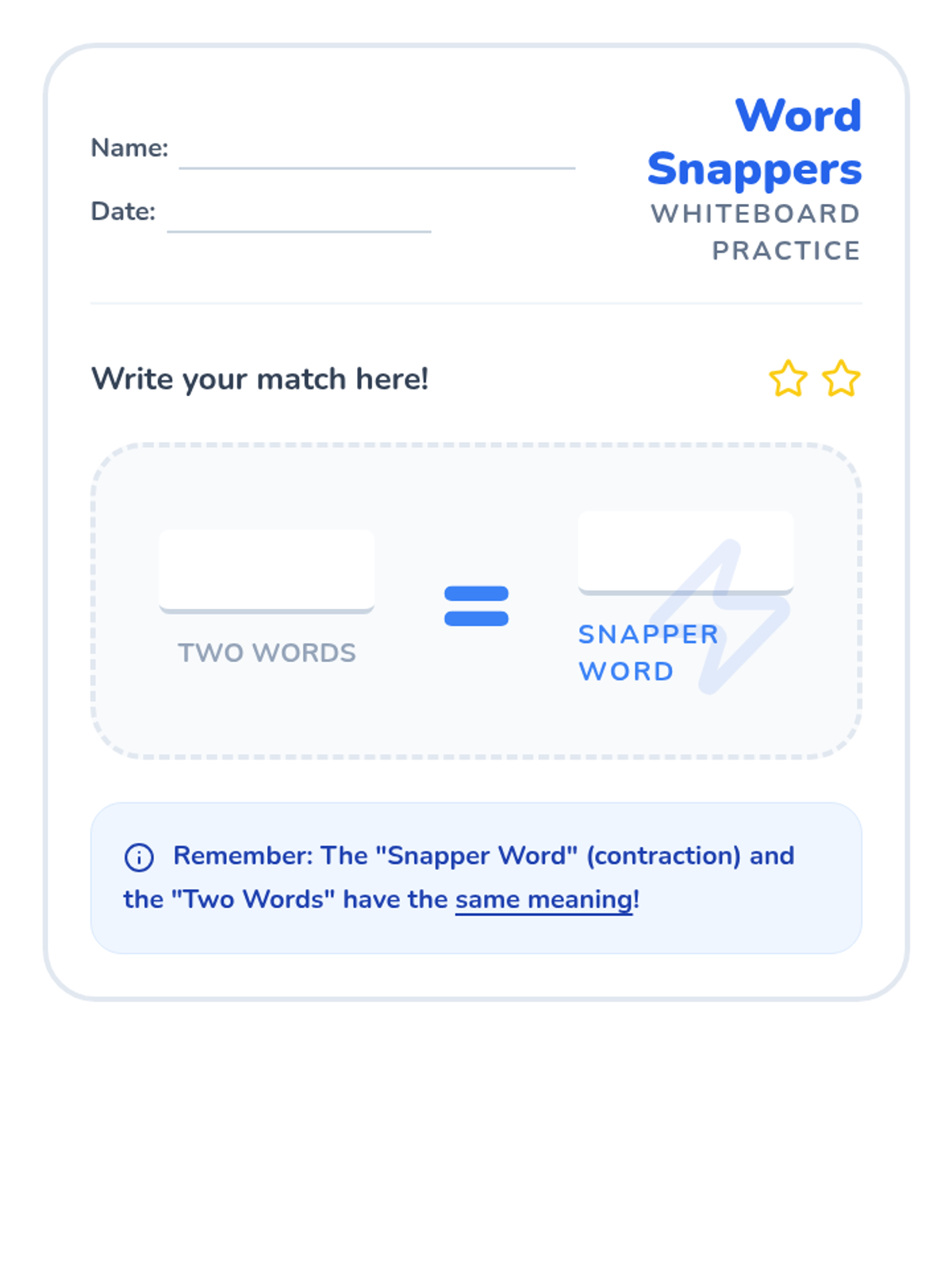
Students learn how two words can 'snap' together to form a contraction using an apostrophe, focusing on the fact that the meaning remains the same. The lesson includes a warm-up, a guided video analysis of reading examples, and a hands-on memory matching game.
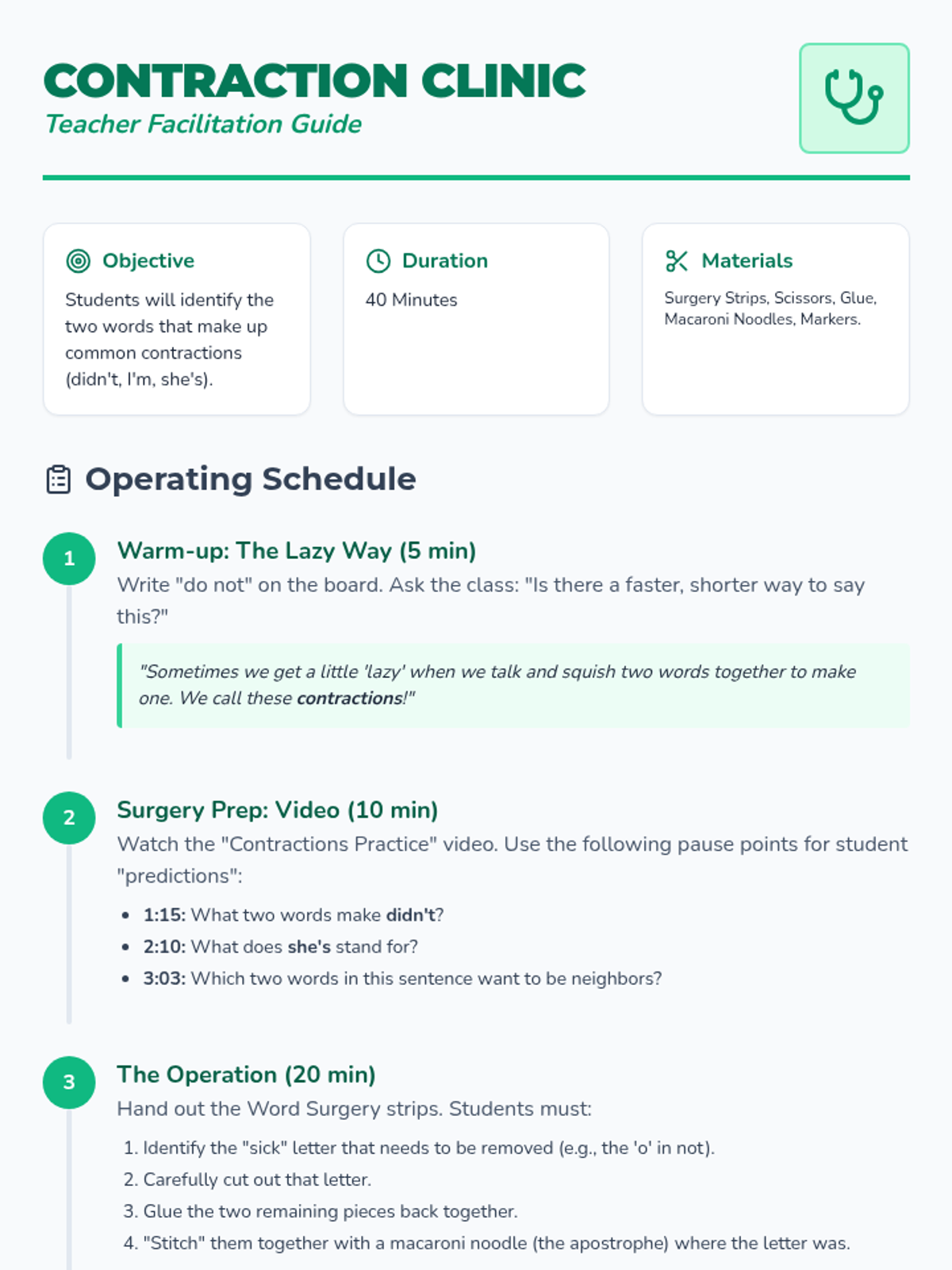
A medical-themed lesson for 1st graders to learn about contractions through 'Contraction Surgery' and an engaging instructional video.
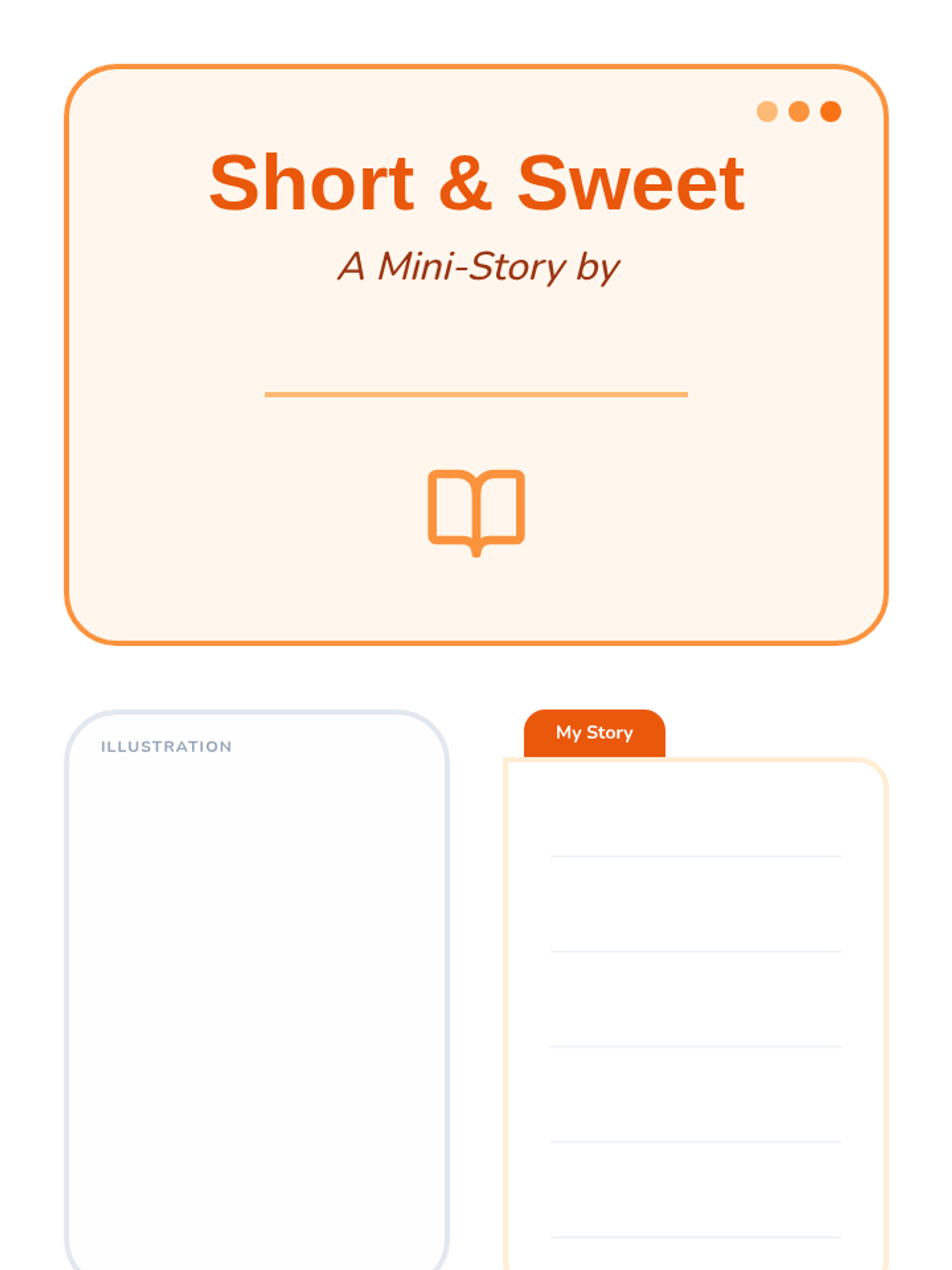
Students write, illustrate, and share a mini-story that demonstrates their mastery of contractions and natural sentence flow.
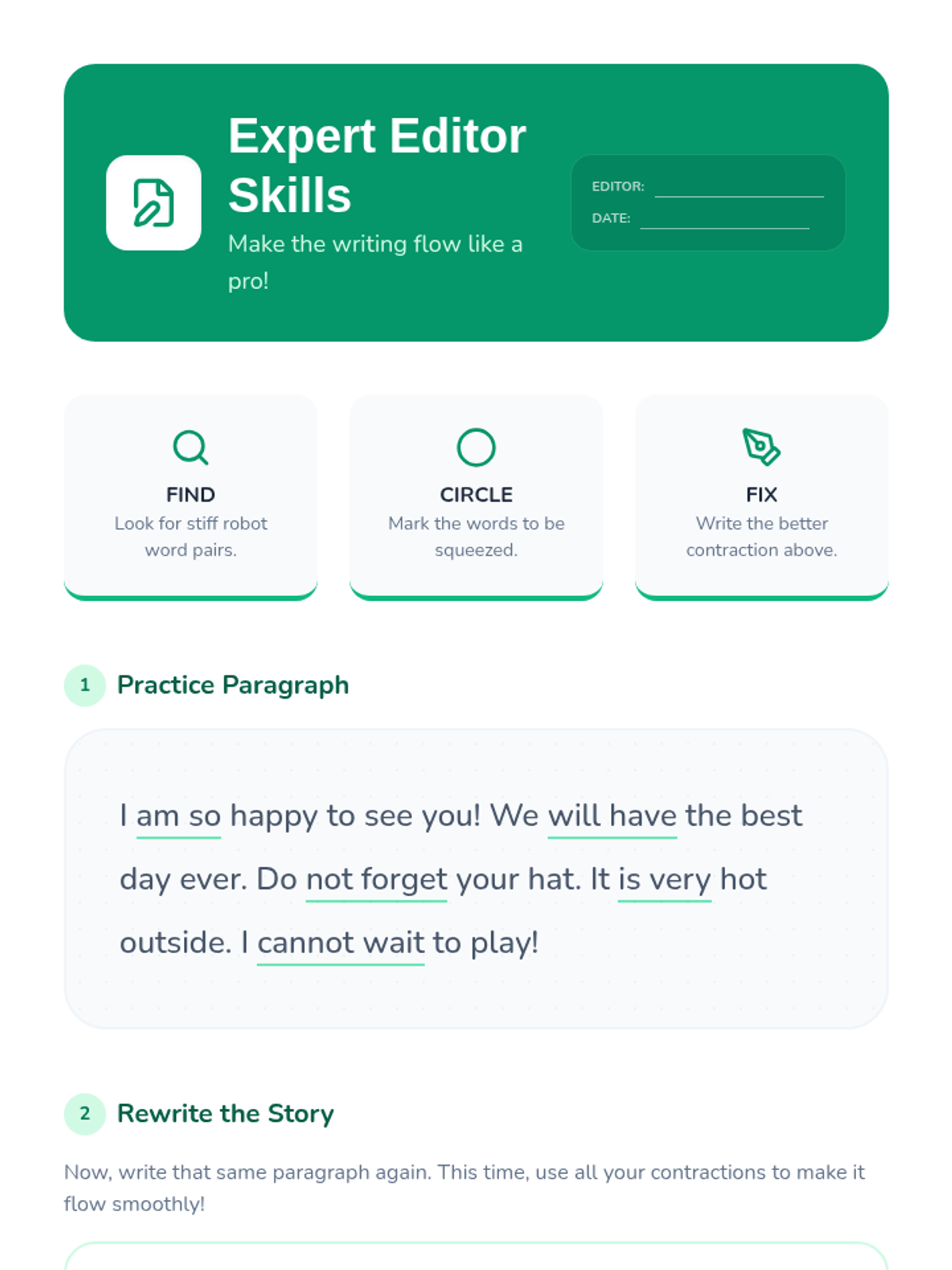
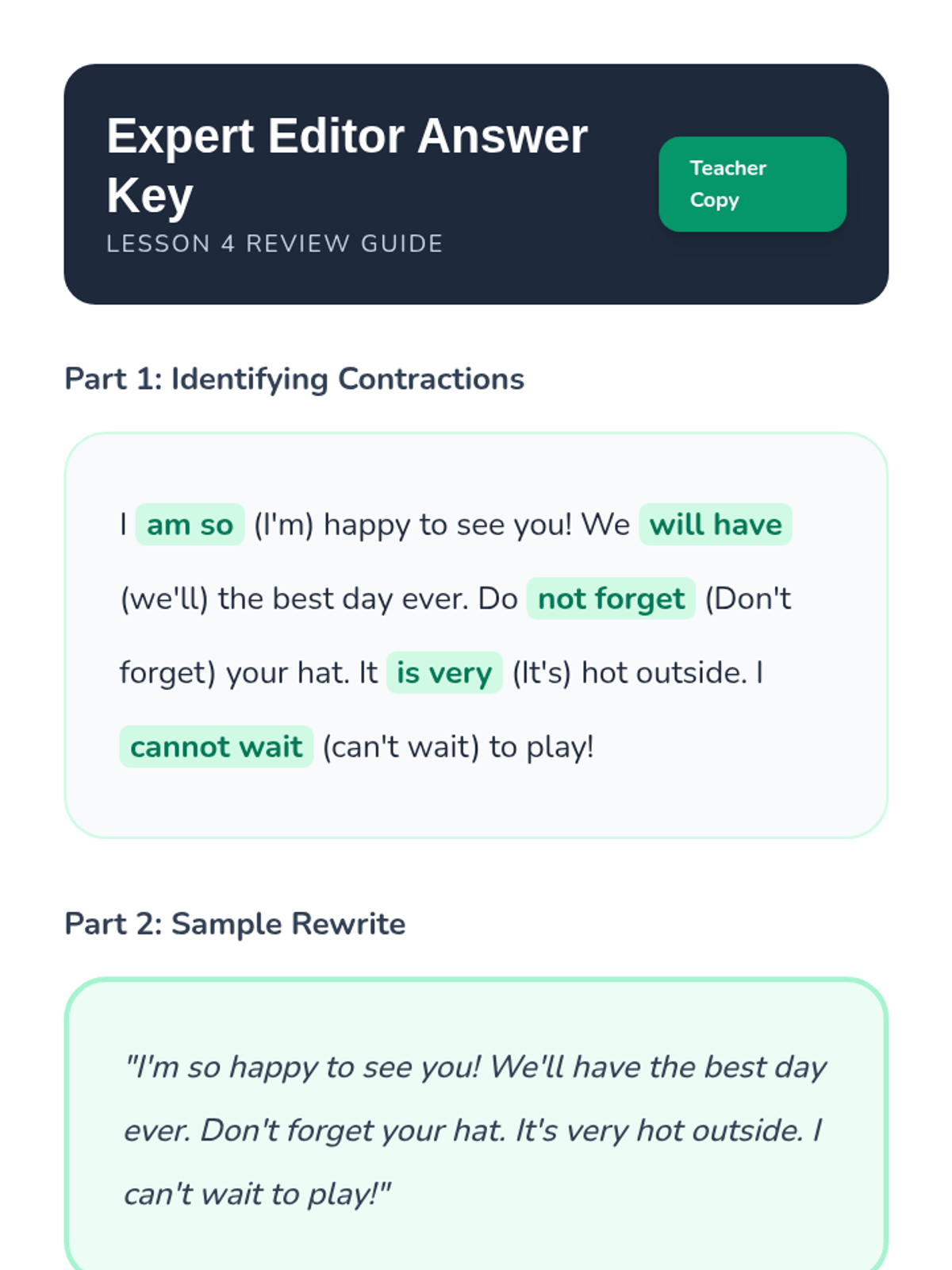
Students act as editors, identifying opportunities to use contractions in existing text. They will peer-edit simple paragraphs to improve sentence rhythm.
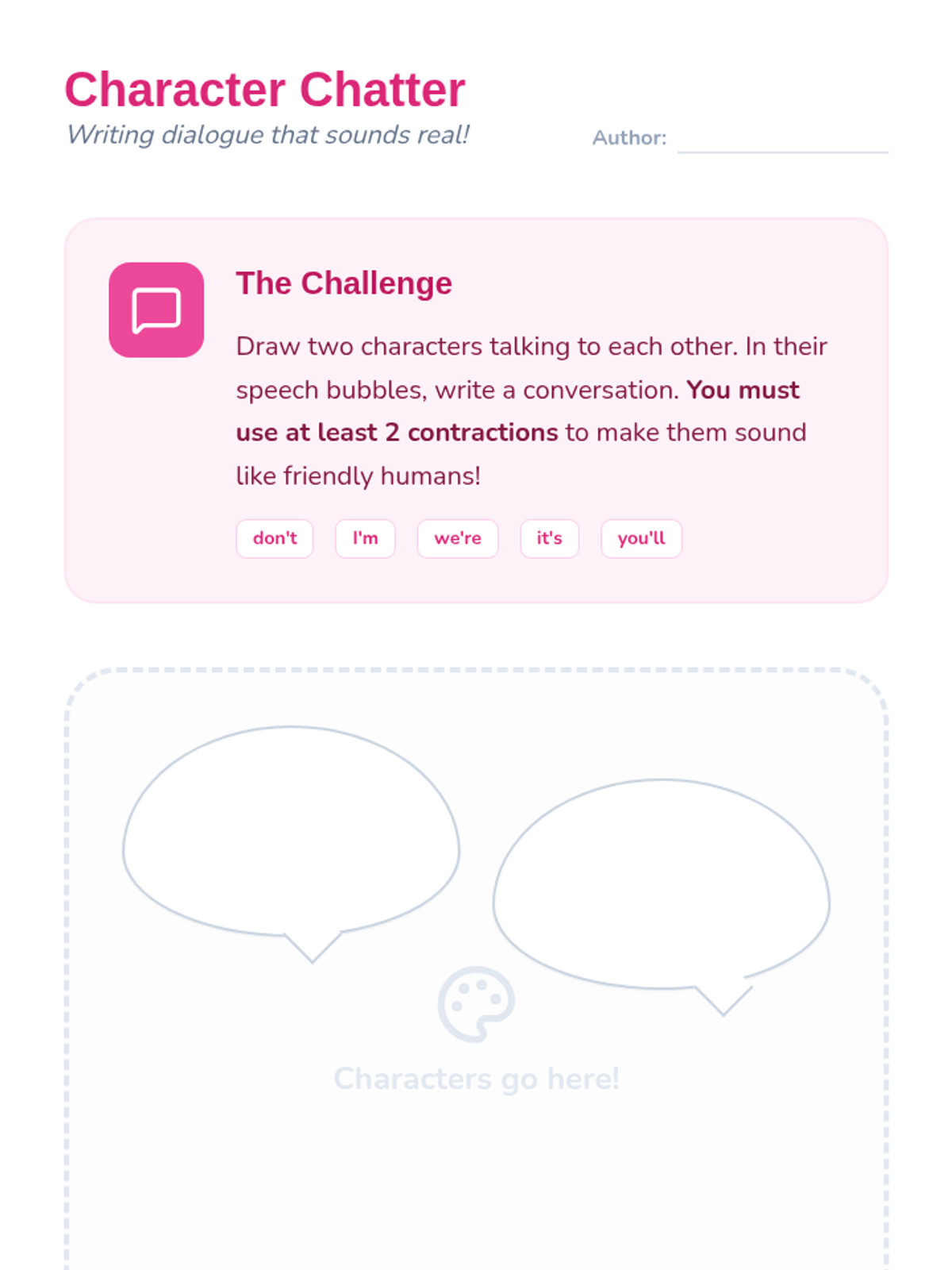
Students apply contractions to character dialogue. They will draw characters and write speech bubbles using contractions to make their conversations sound realistic.
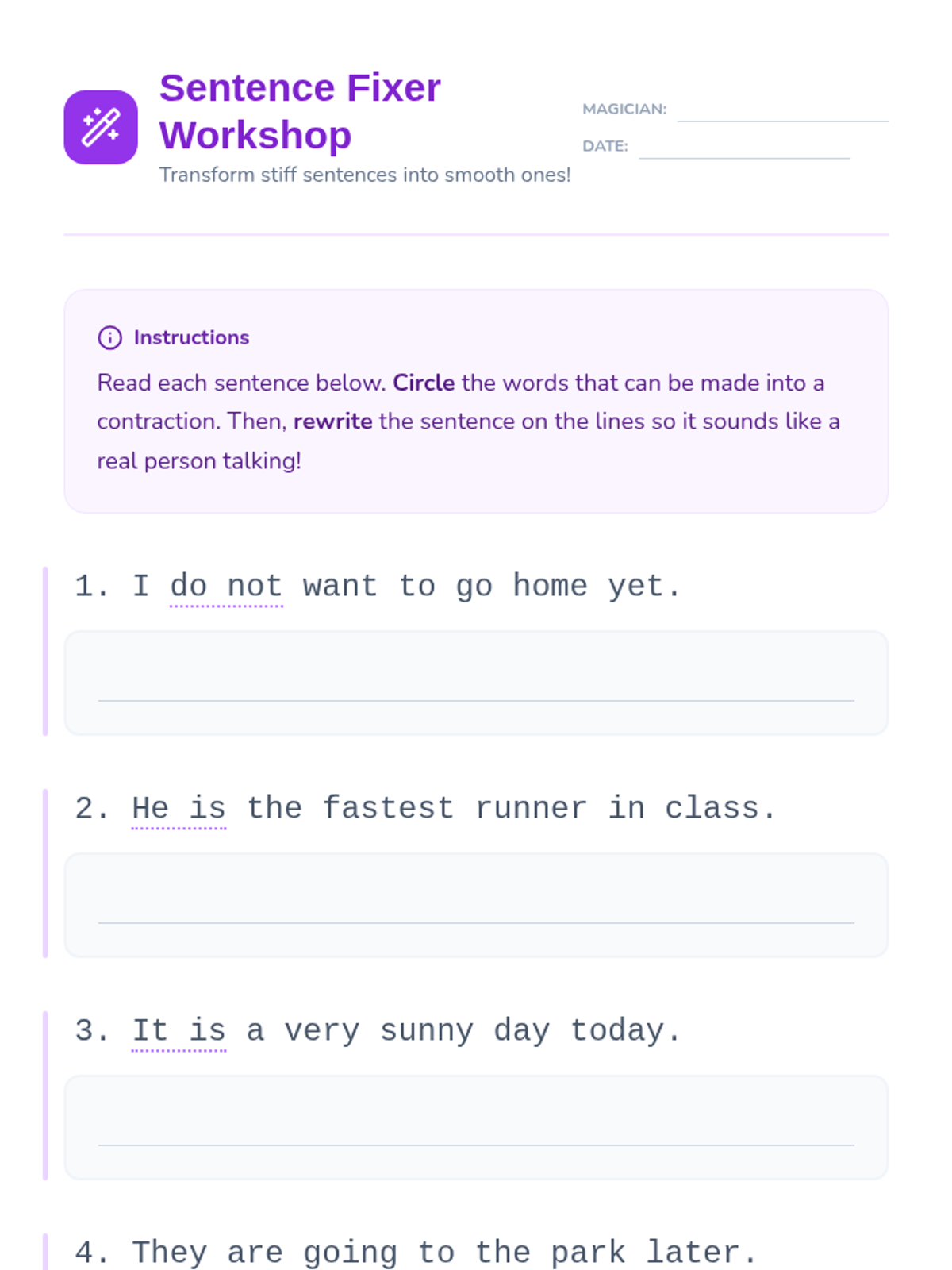
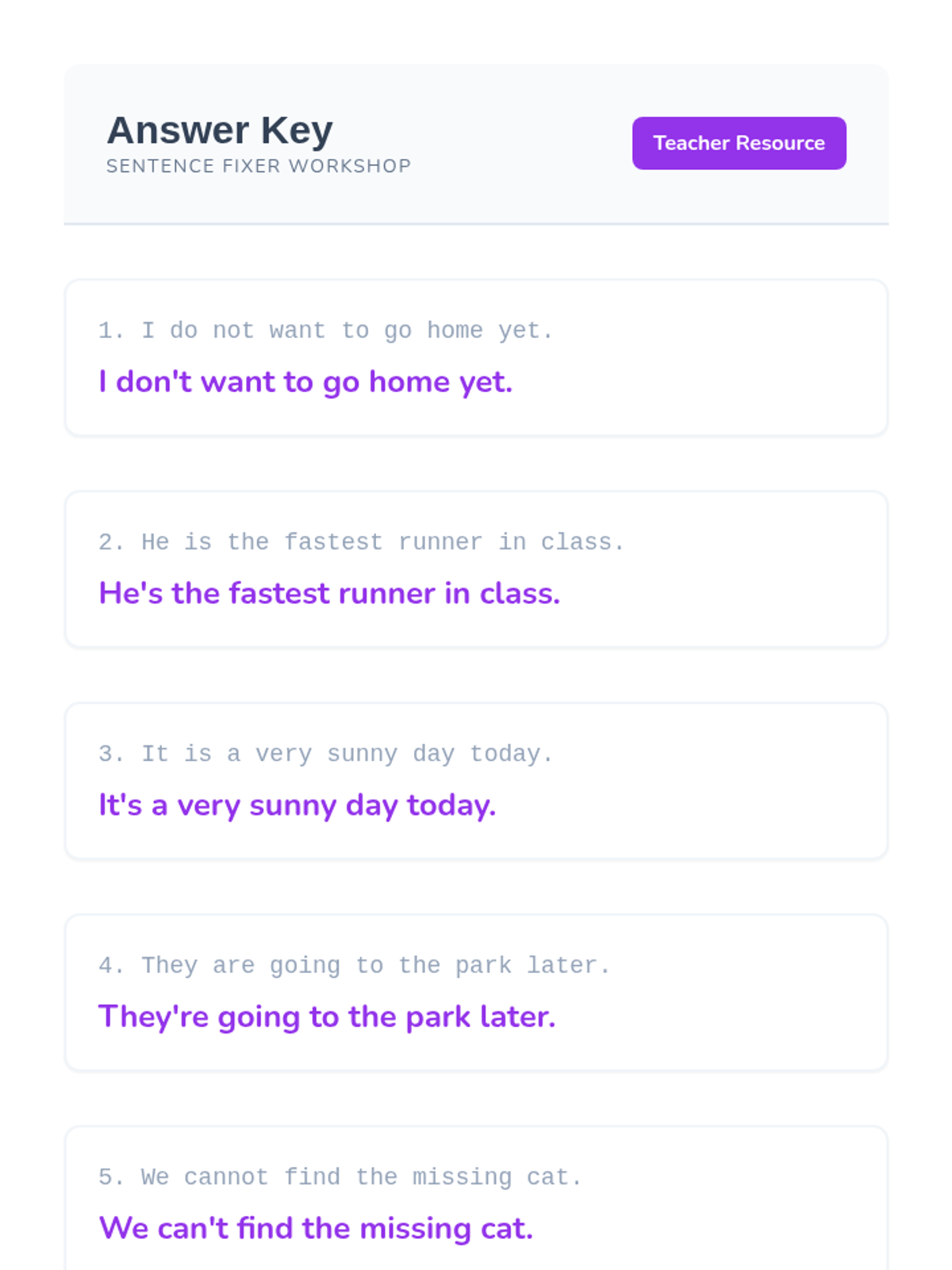
Students learn to use the apostrophe as a 'glue' tool to combine words. They will transform stiff sentences into smooth ones by replacing word pairs with contractions.
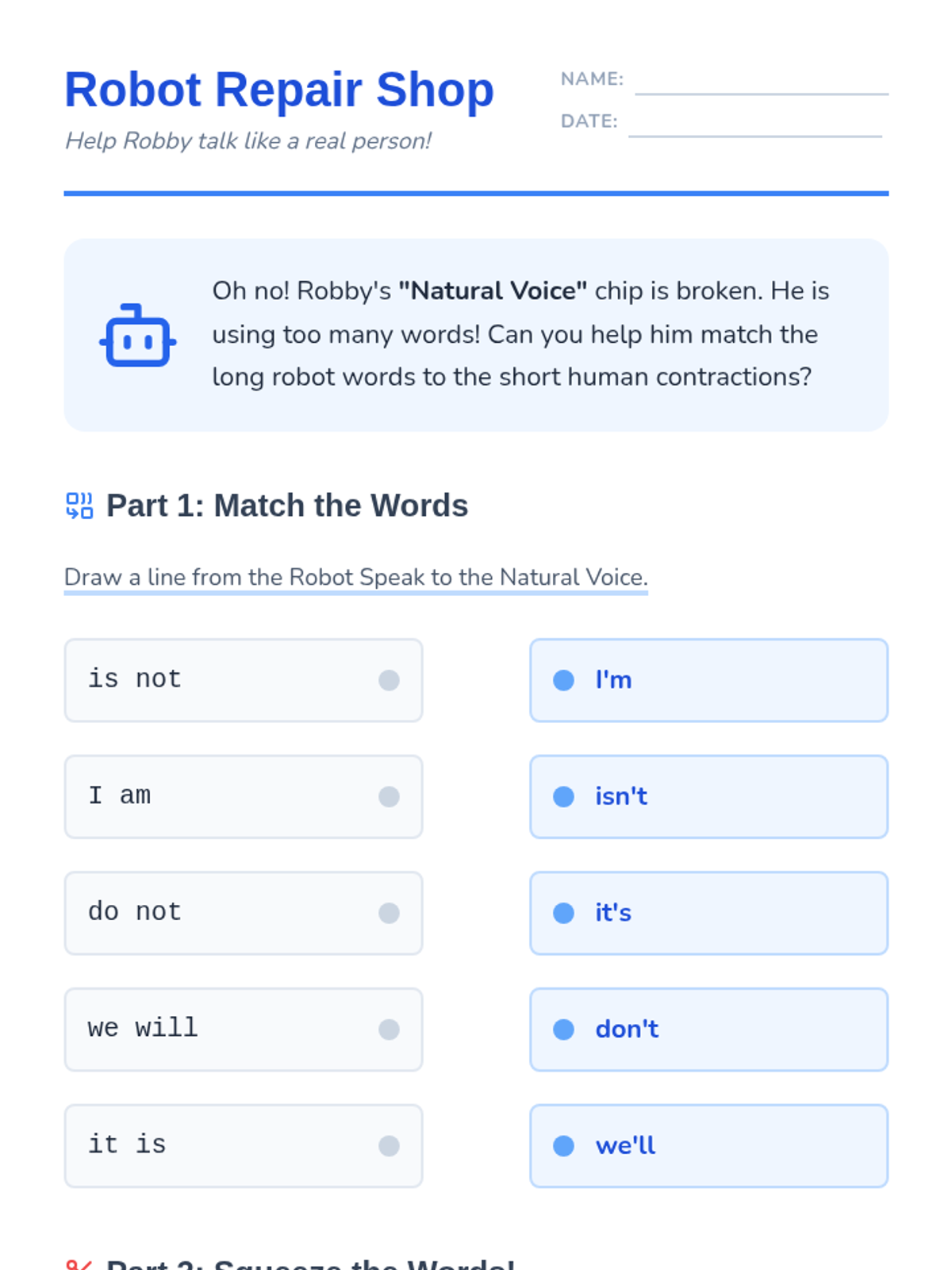
Students listen to sentences read in a robotic monotone versus a natural voice to understand why we use contractions. they will practice matching full word pairs to their contraction forms.
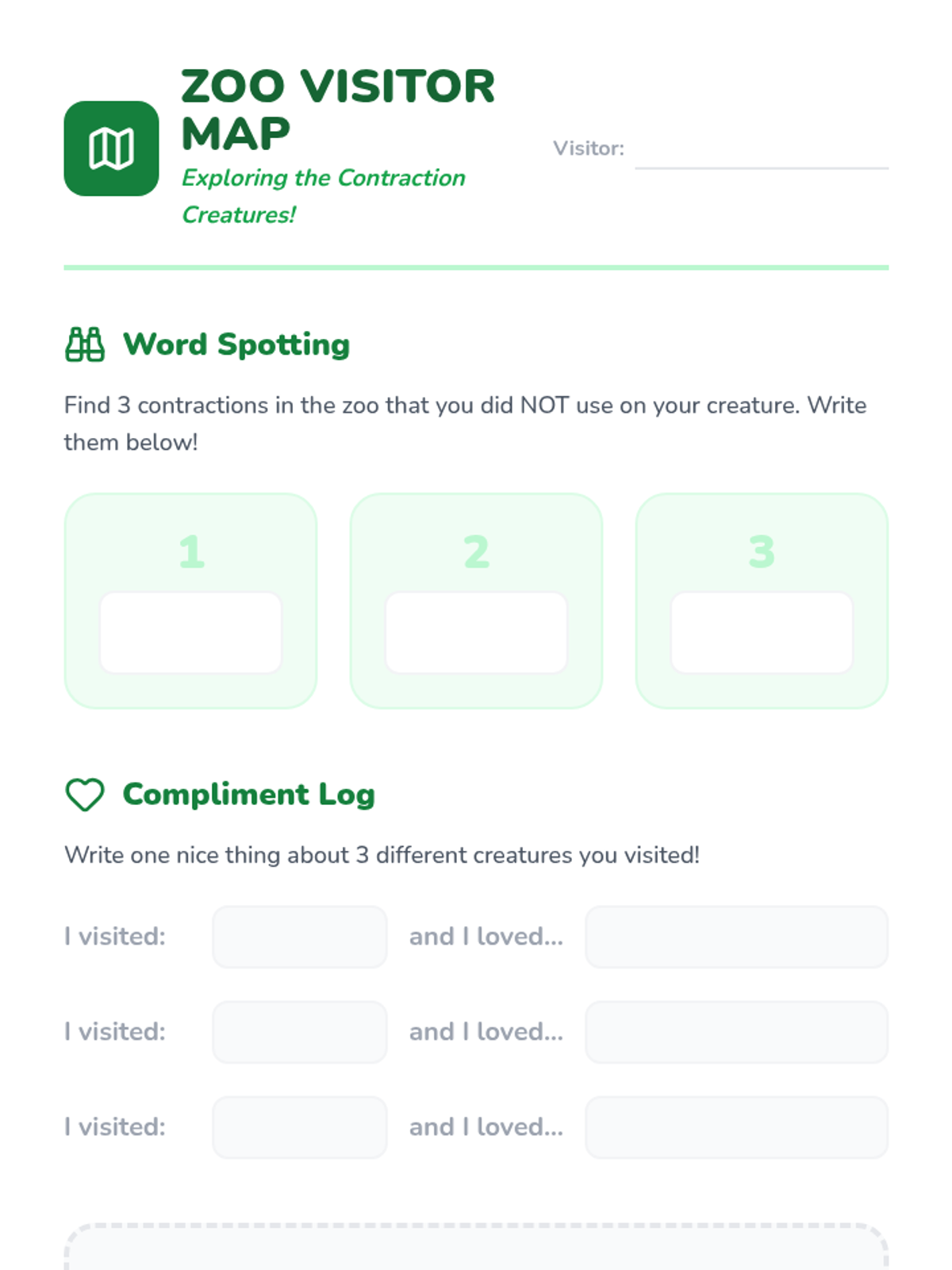
Students share their work in a gallery walk, practice reading contractions aloud, and provide peer feedback.
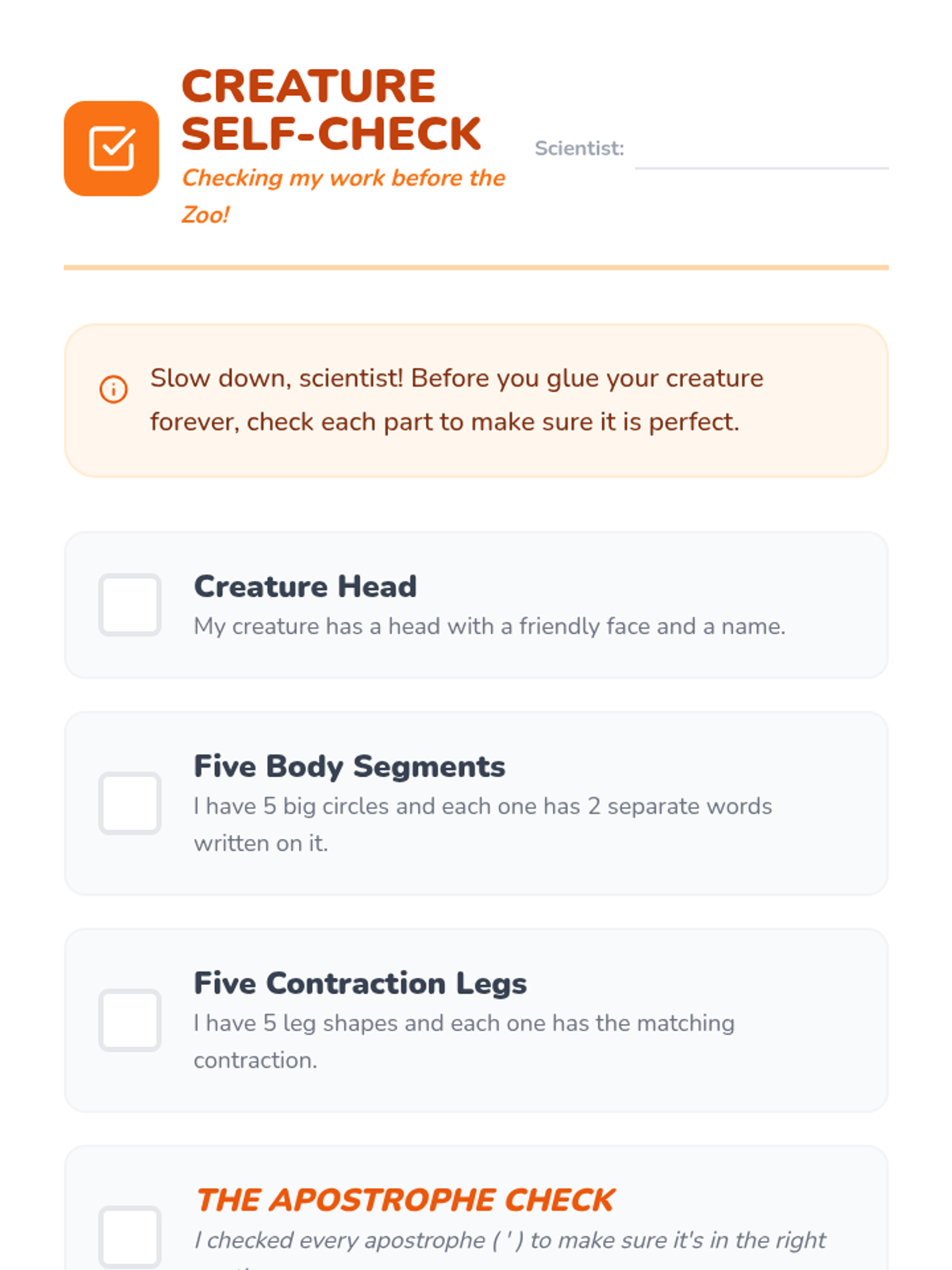
Students assemble their creatures, ensuring correct apostrophe placement and structural integrity.
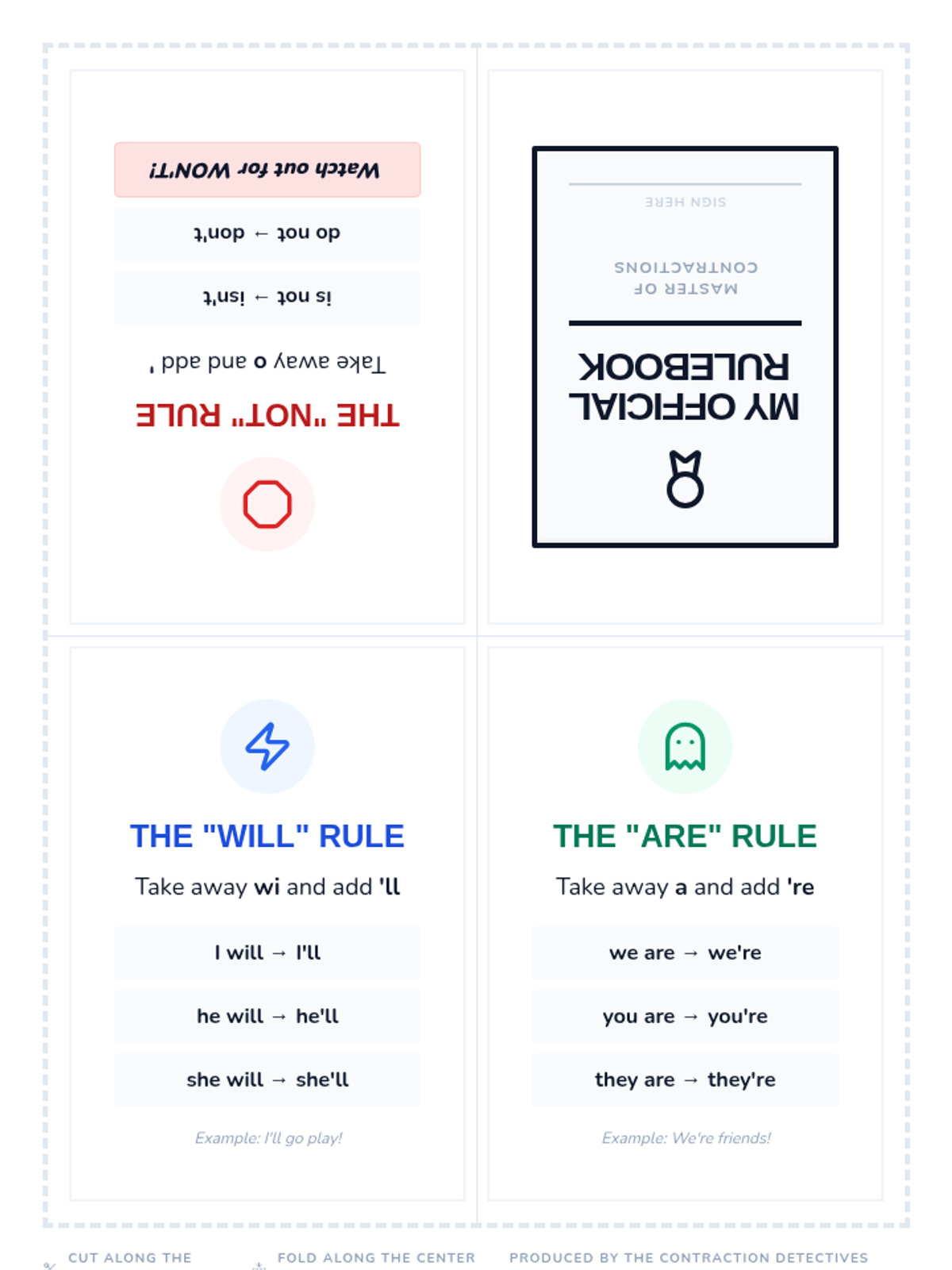
Students synthesize their learning by creating an official 'Contraction Rulebook', explaining the patterns they discovered throughout the unit.
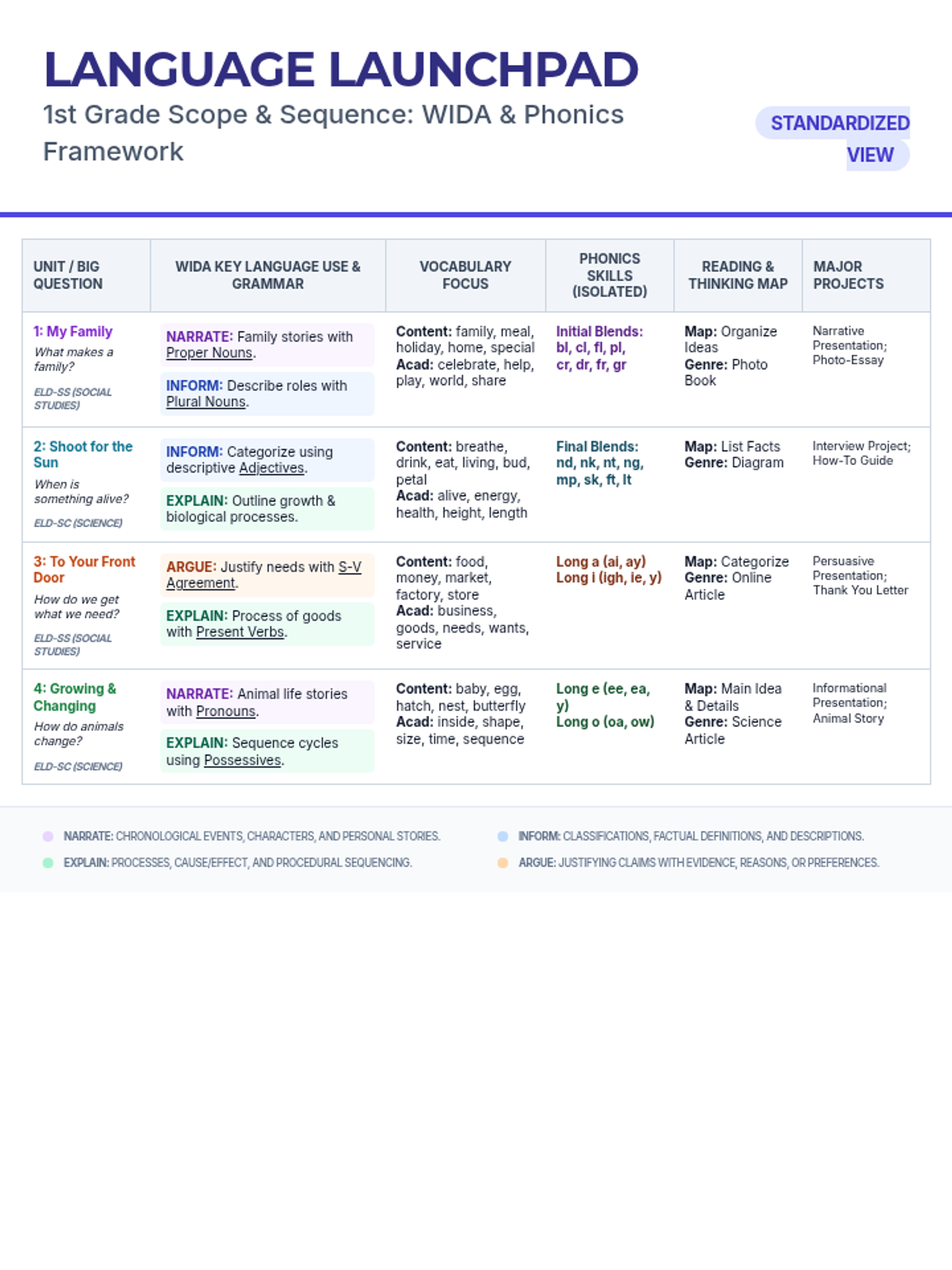
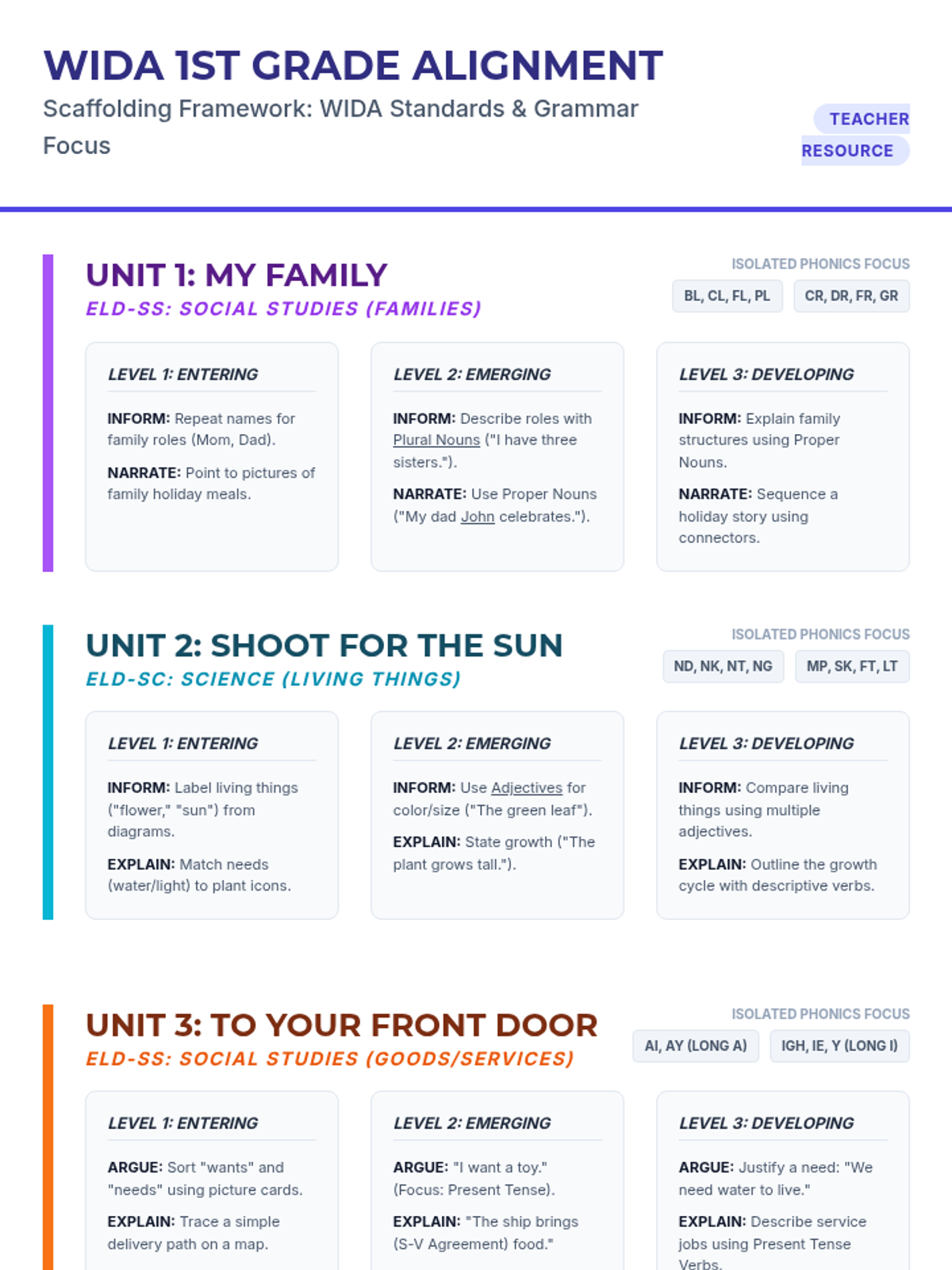
Explores family structures, roles, and traditions while focusing on the WIDA functions of Narrate (family stories) and Inform (identifying family members).
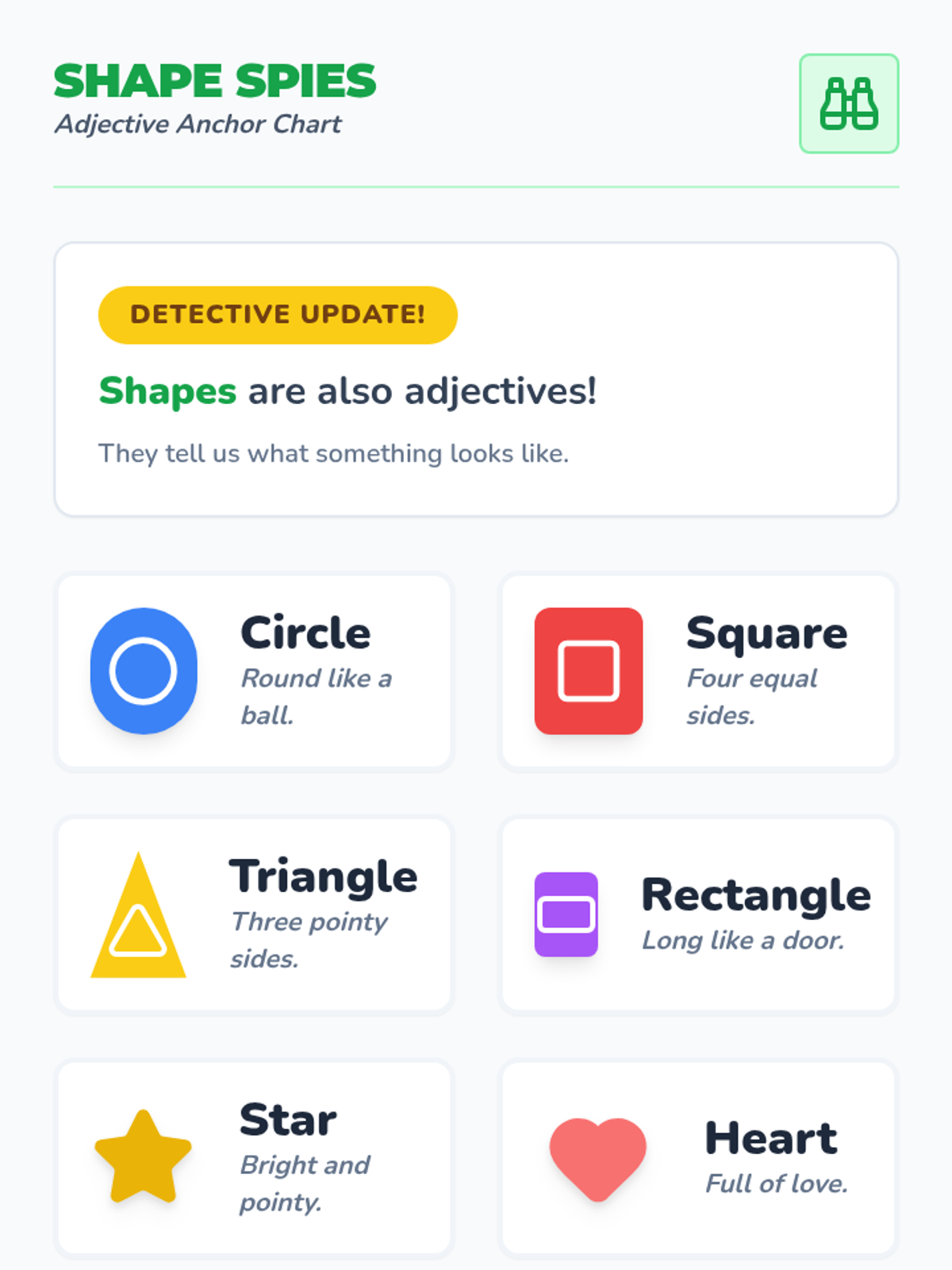
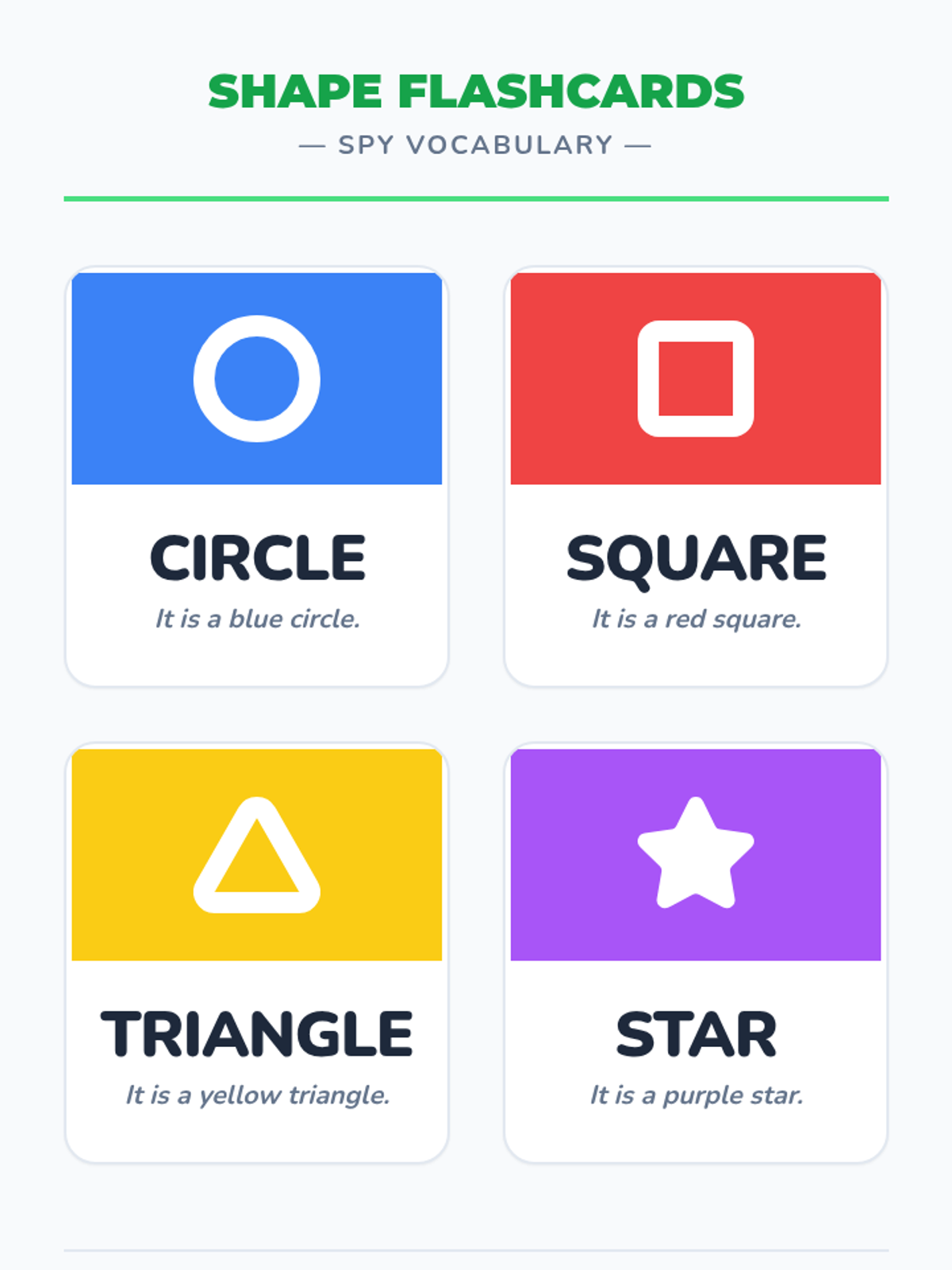
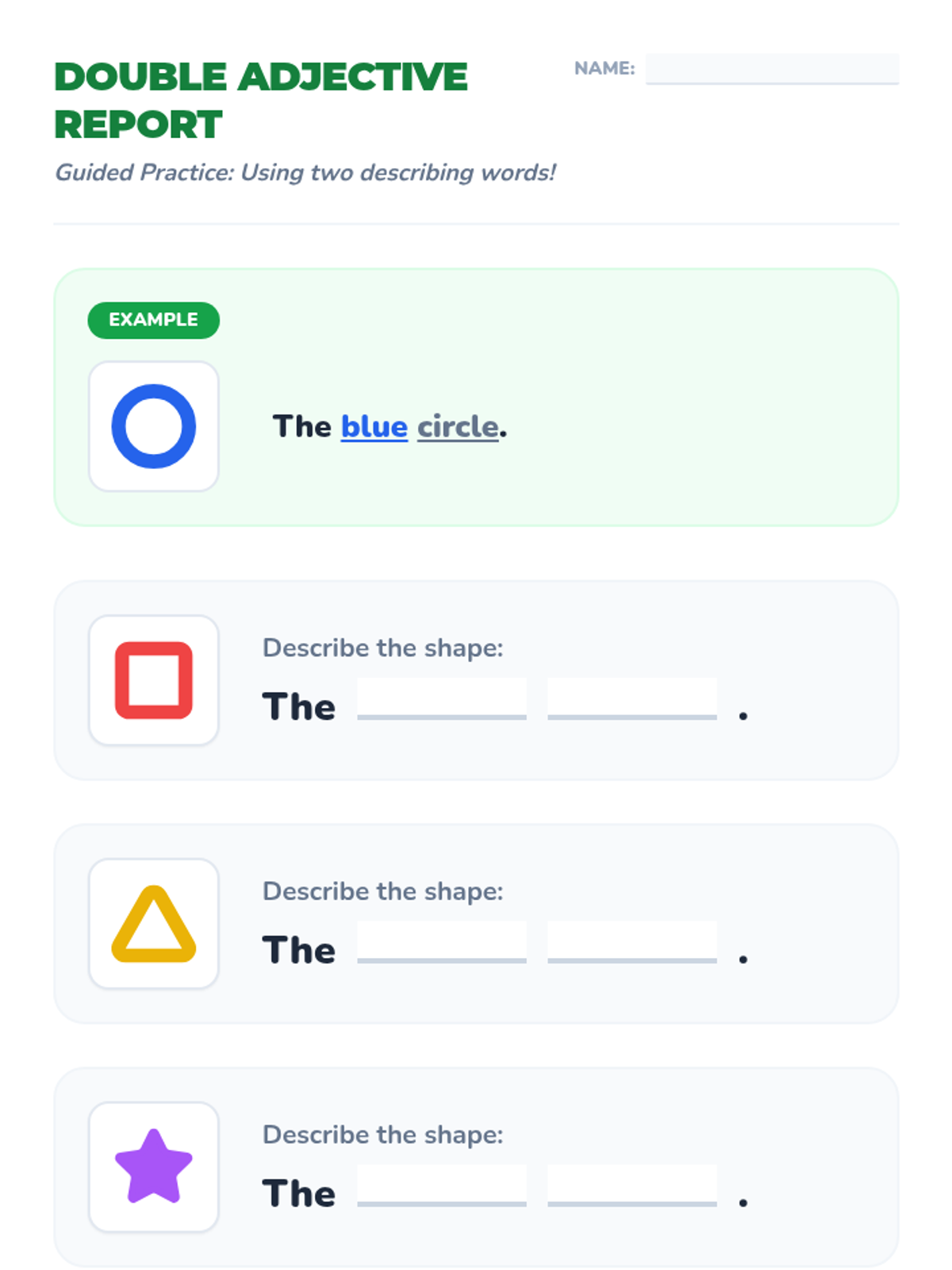
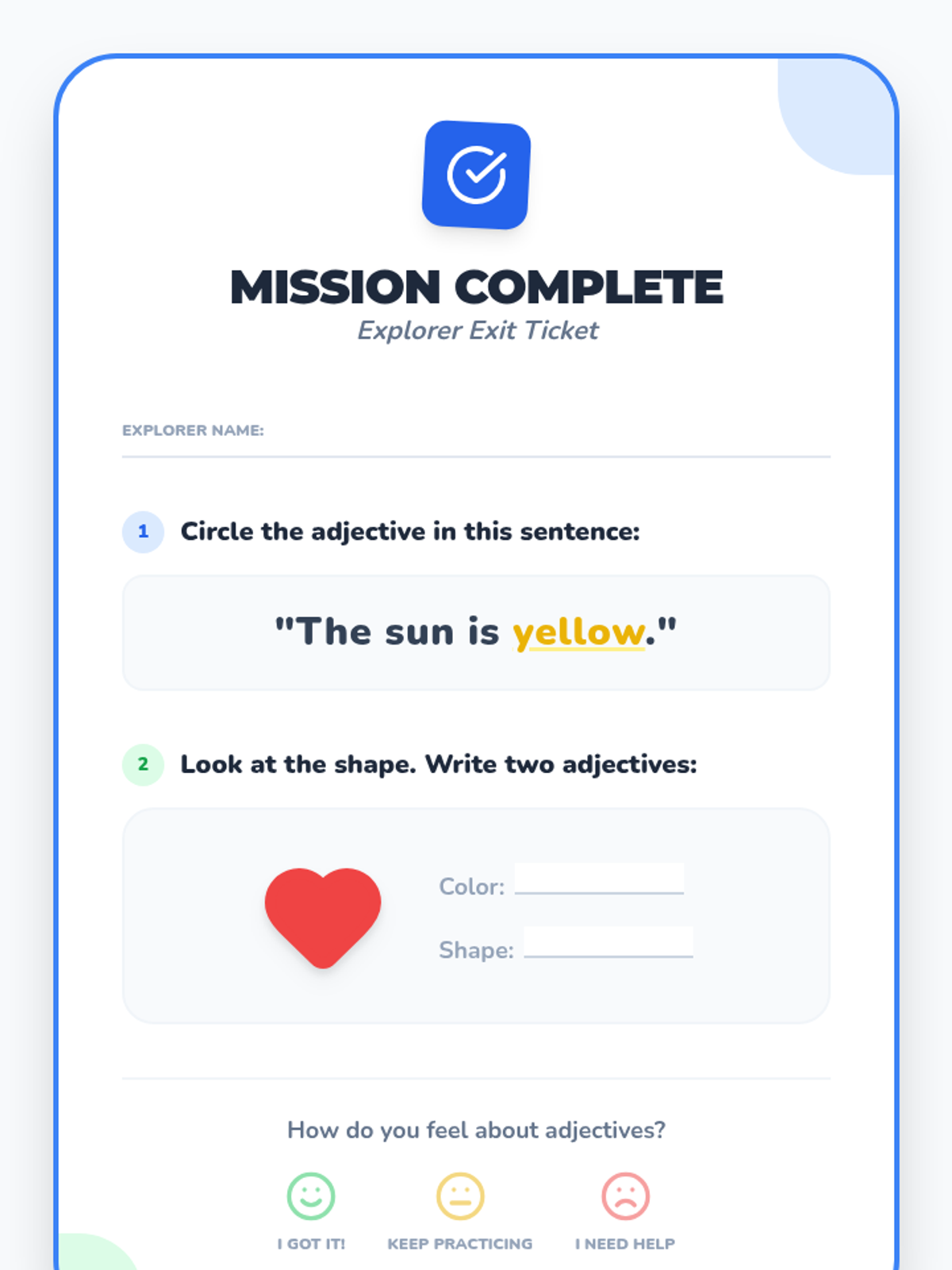
A follow-up lesson focused on using shape adjectives and combining them with colors for detailed descriptions.
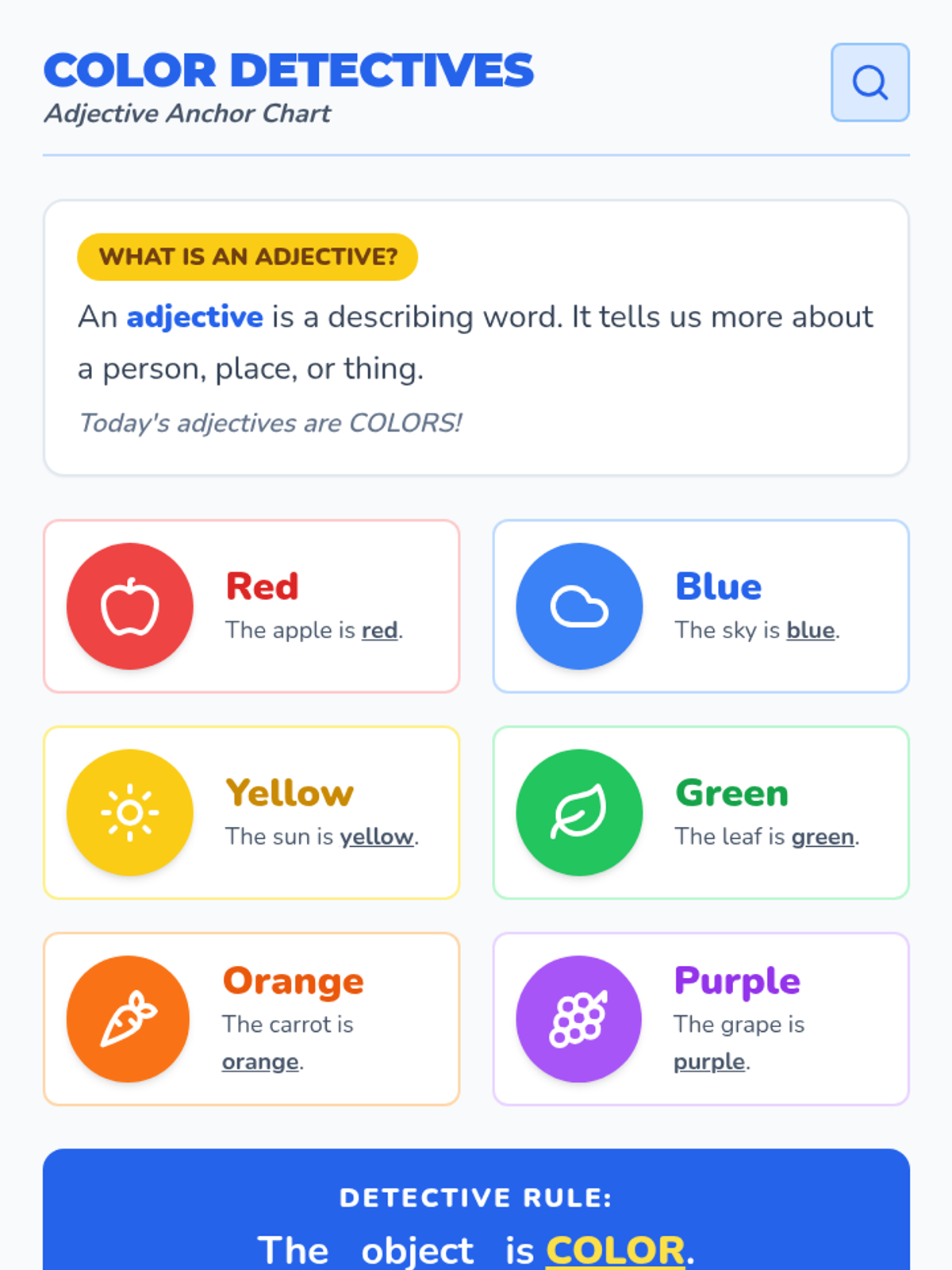
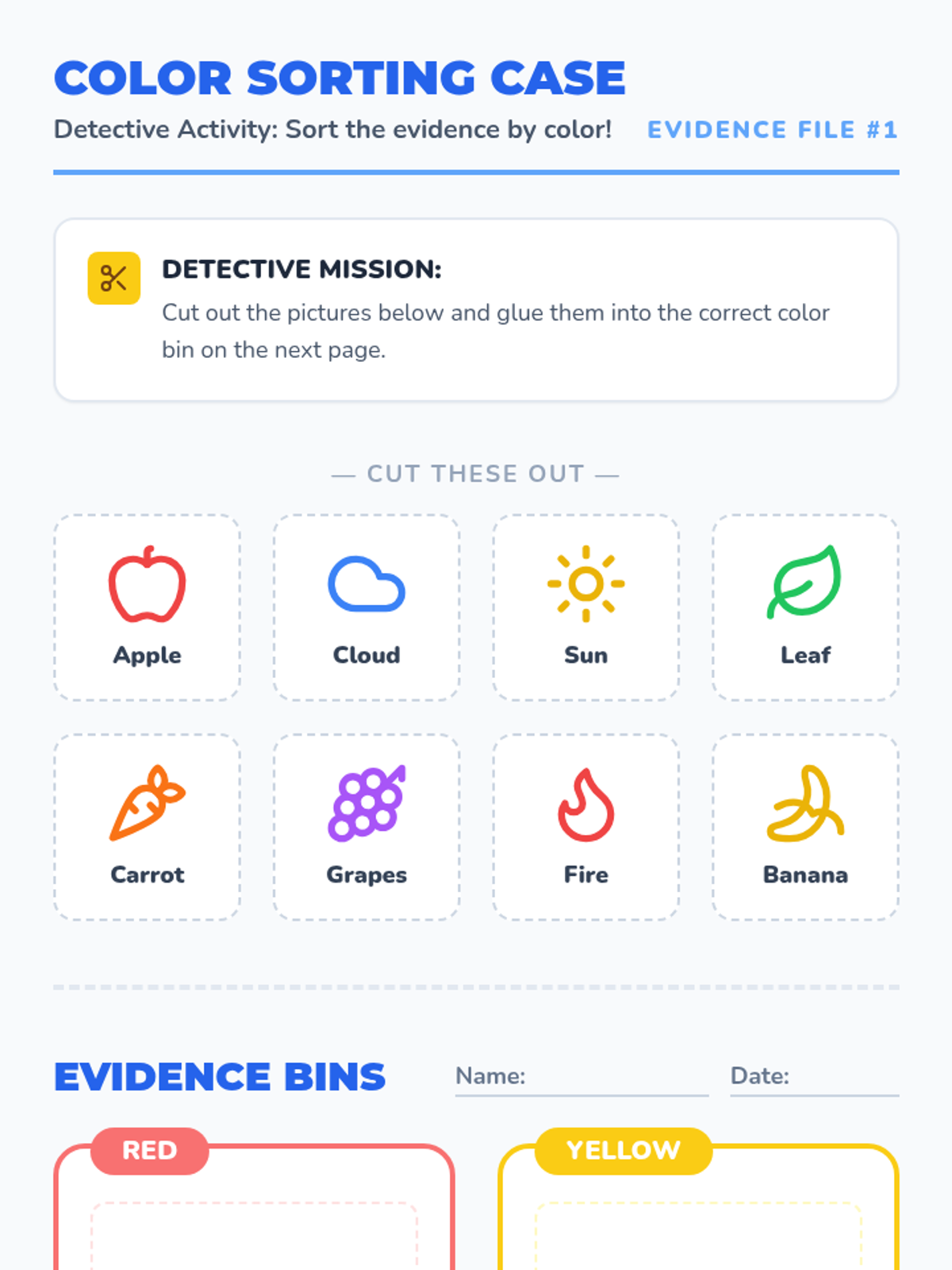
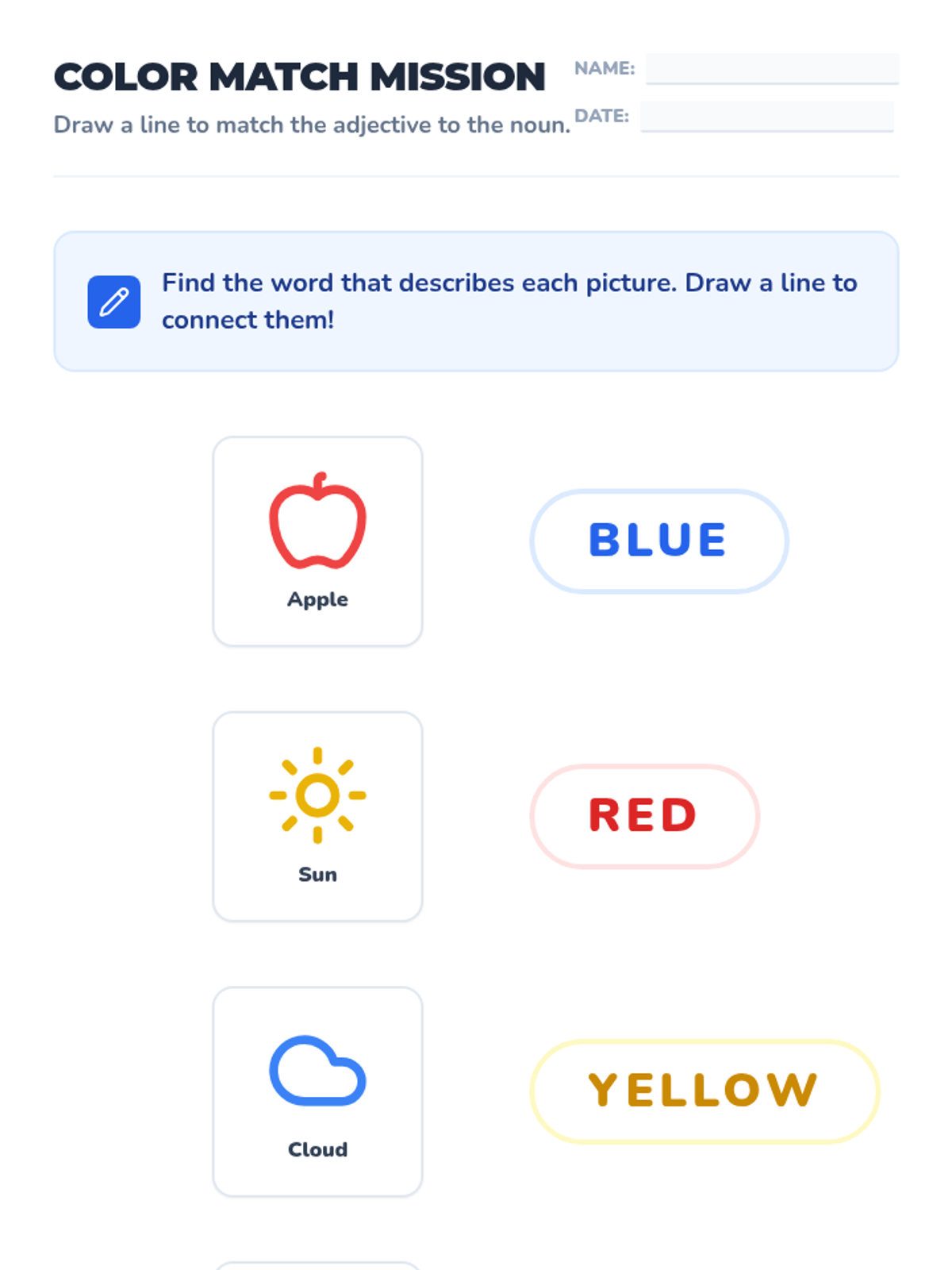
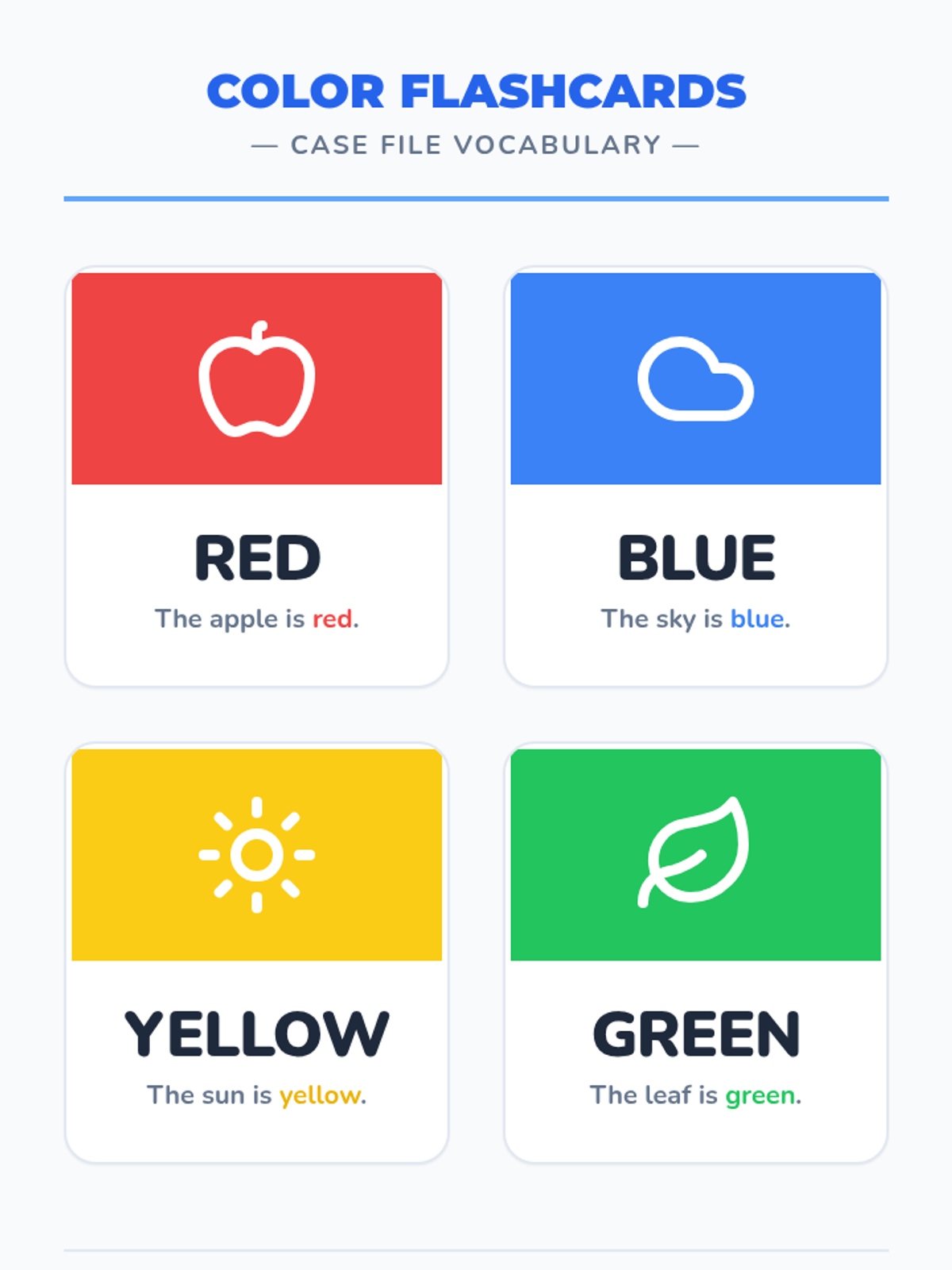
An introductory lesson focused on using color adjectives to describe objects in the environment.
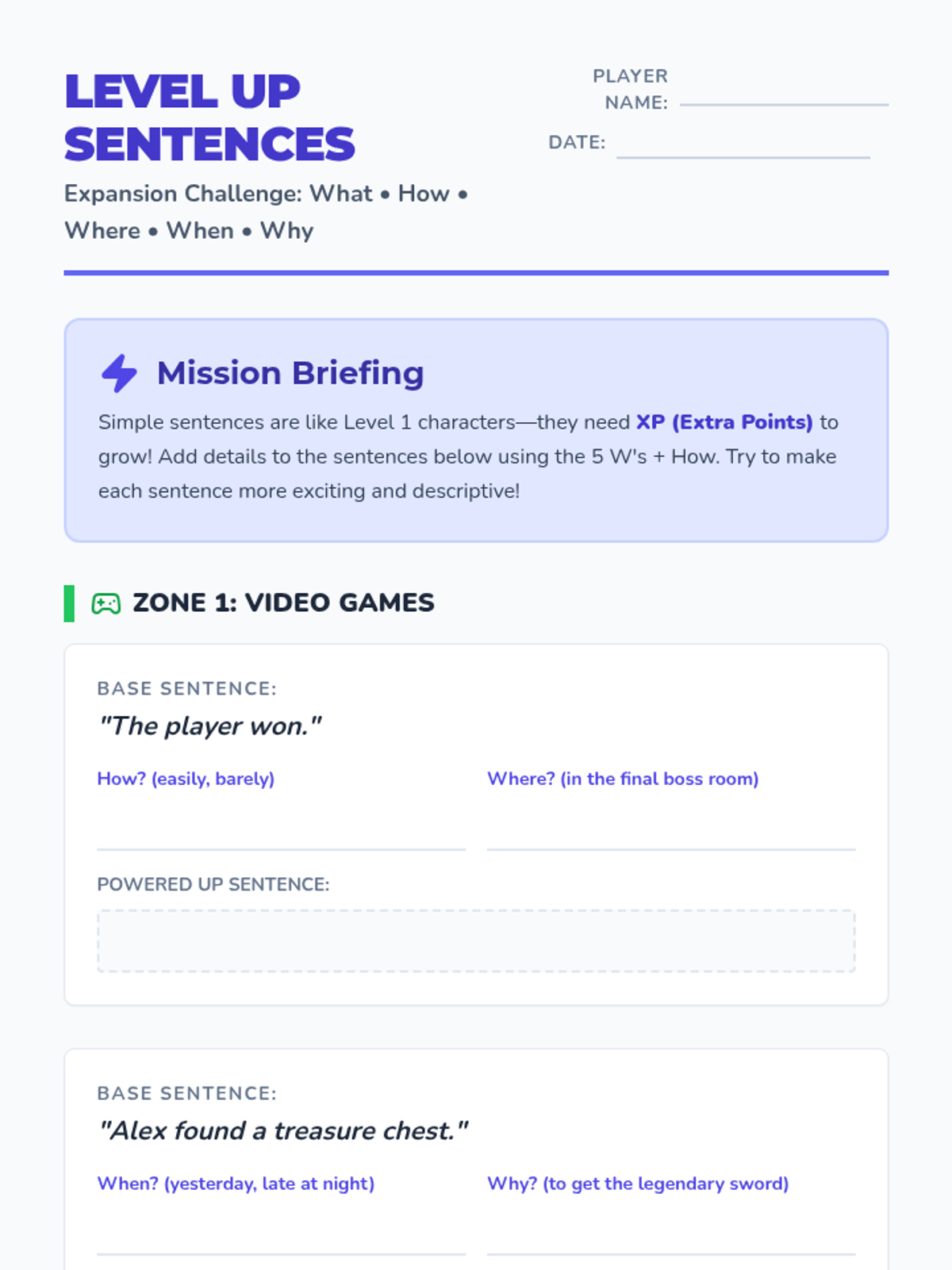
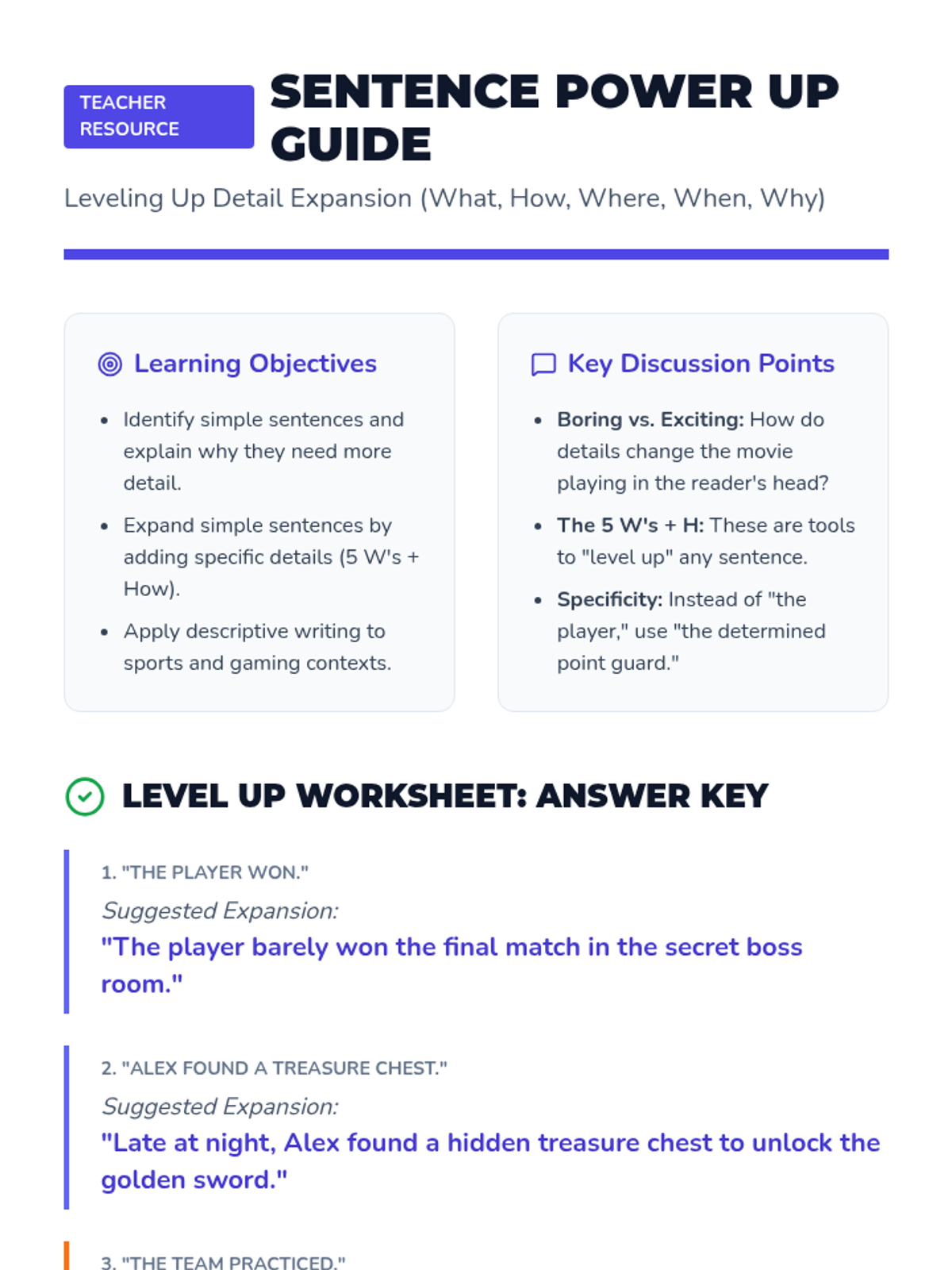
Students will learn to expand simple sentences into descriptive ones by adding details that answer what, how, where, when, and why, using video games and basketball as engaging themes.
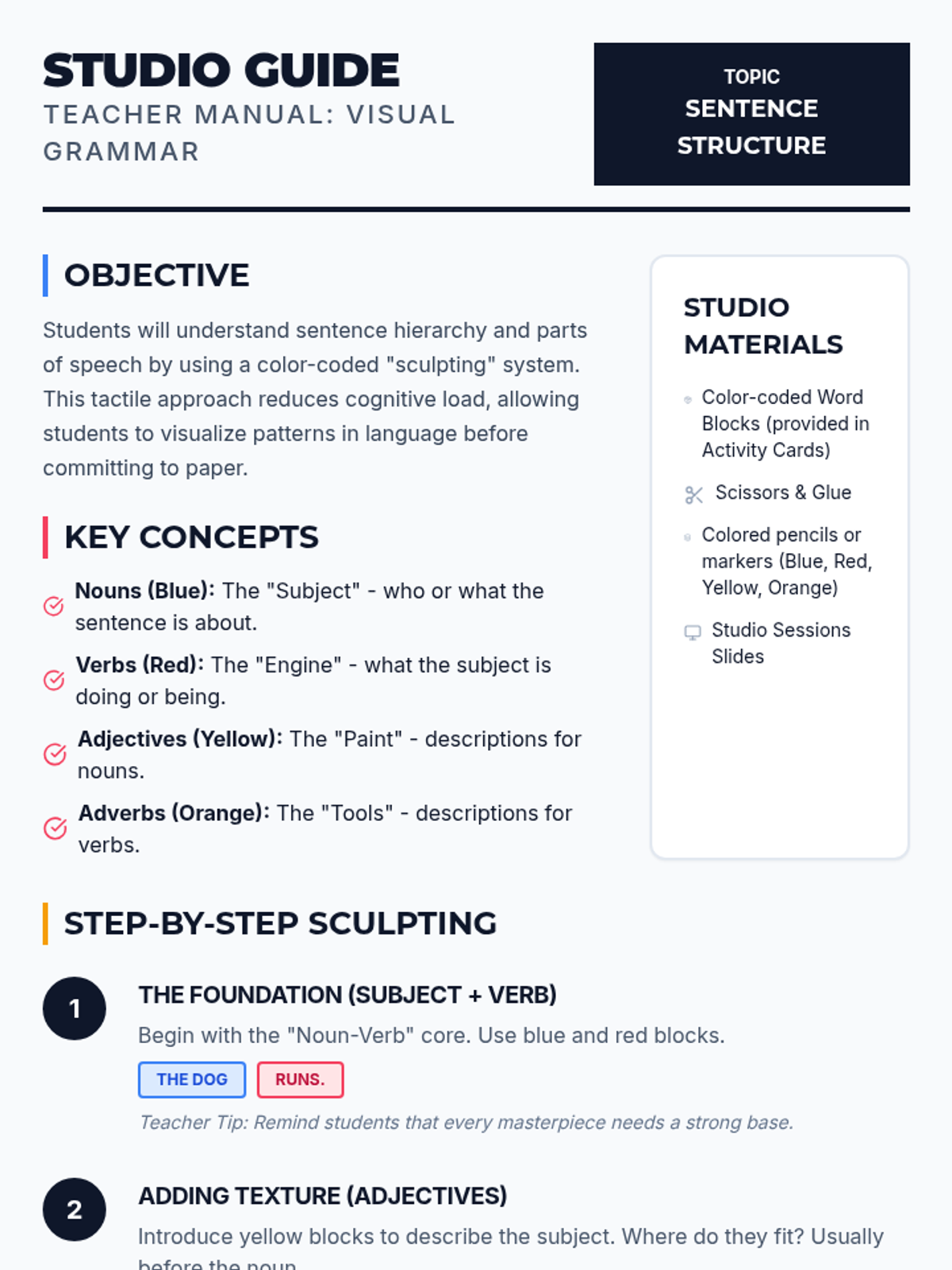
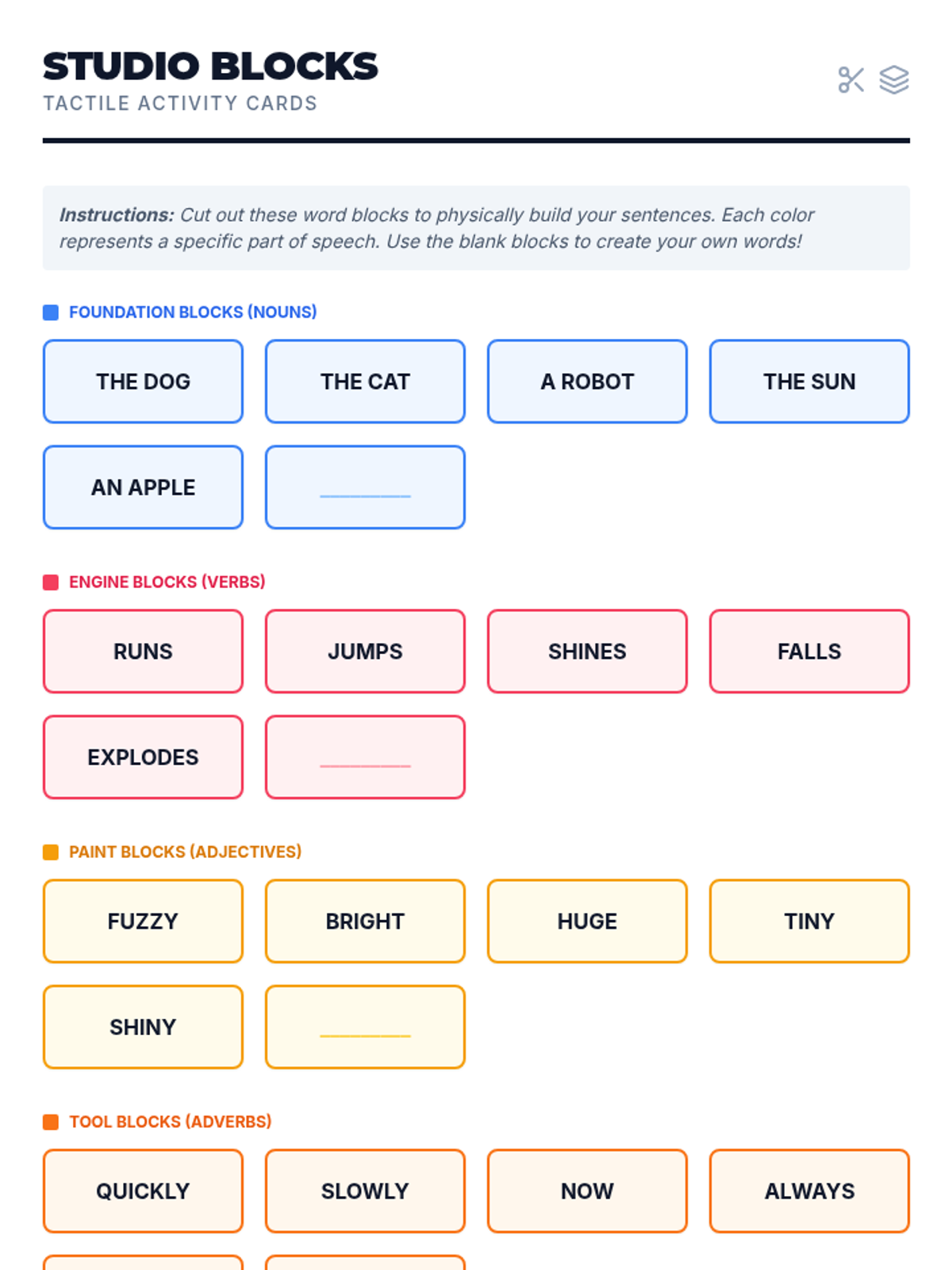
A visual, tactile approach to sentence structure using color-coded "blocks" to represent parts of speech. Students learn to sculpt sentences from basic patterns to complex masterpieces, reducing cognitive load through visual patterns.
A 30-day handwriting practice program focused on astronomy, space exploration, and cosmic phenomena, designed for 4th to 6th graders to improve penmanship through engaging STEM topics.
A 30-day handwriting practice program focused on scientific disciplines, vocabulary, and facts, designed for 4th to 6th graders to improve penmanship through engaging STEM topics.
A 30-day handwriting practice program focused on historical events, civilizations, and vocabulary, designed for upper elementary students to improve penmanship through engaging historical facts.
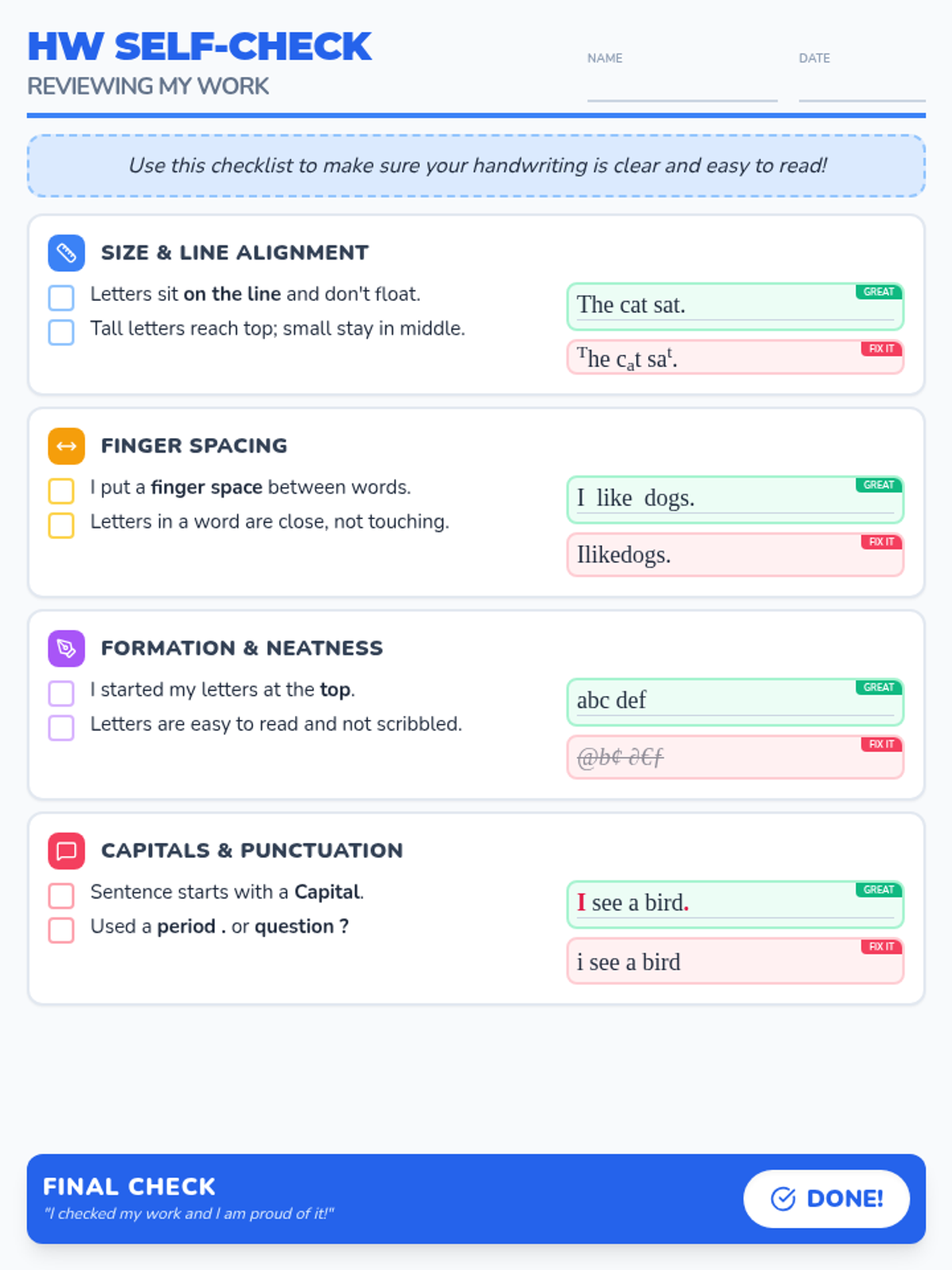
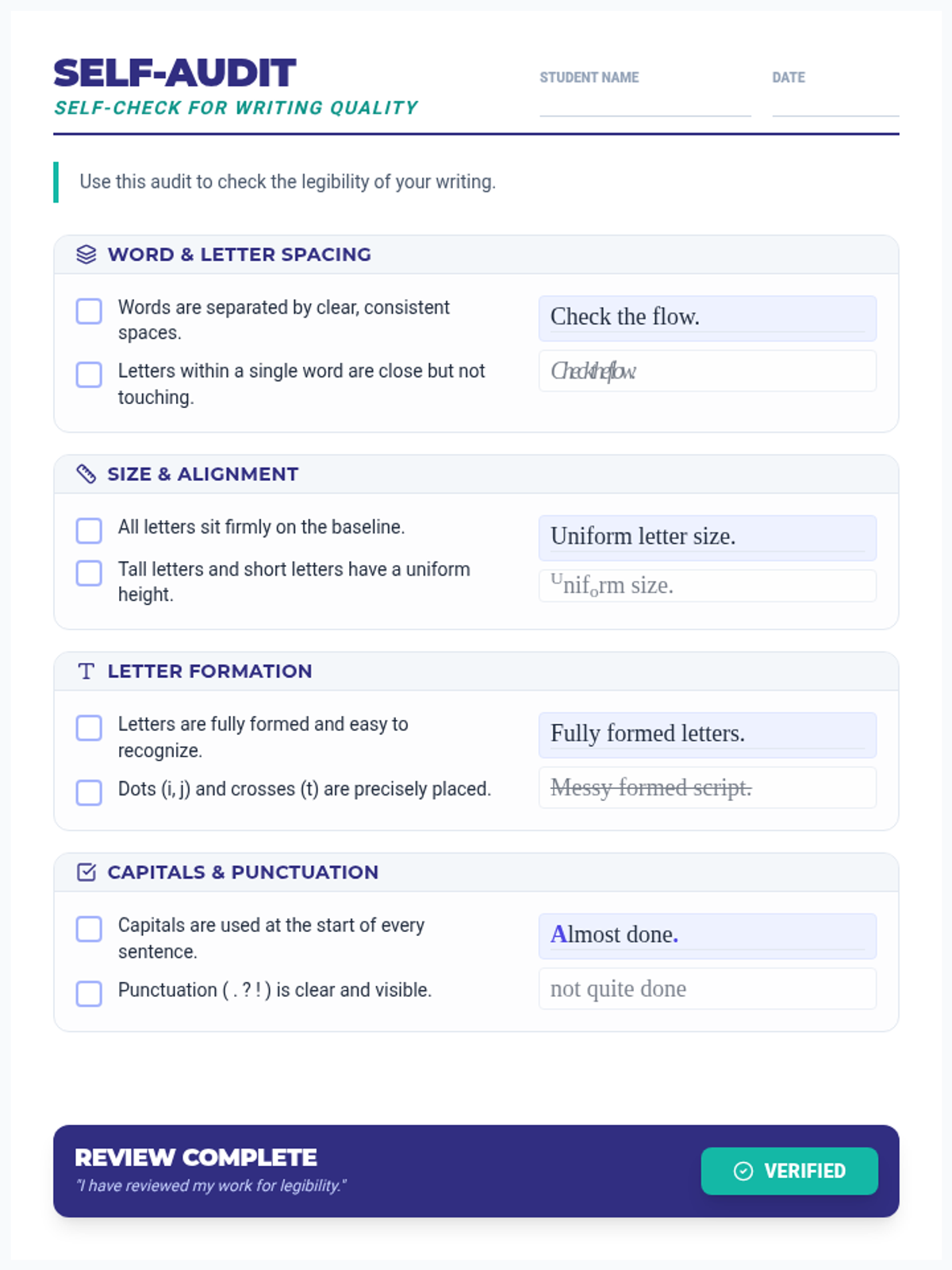
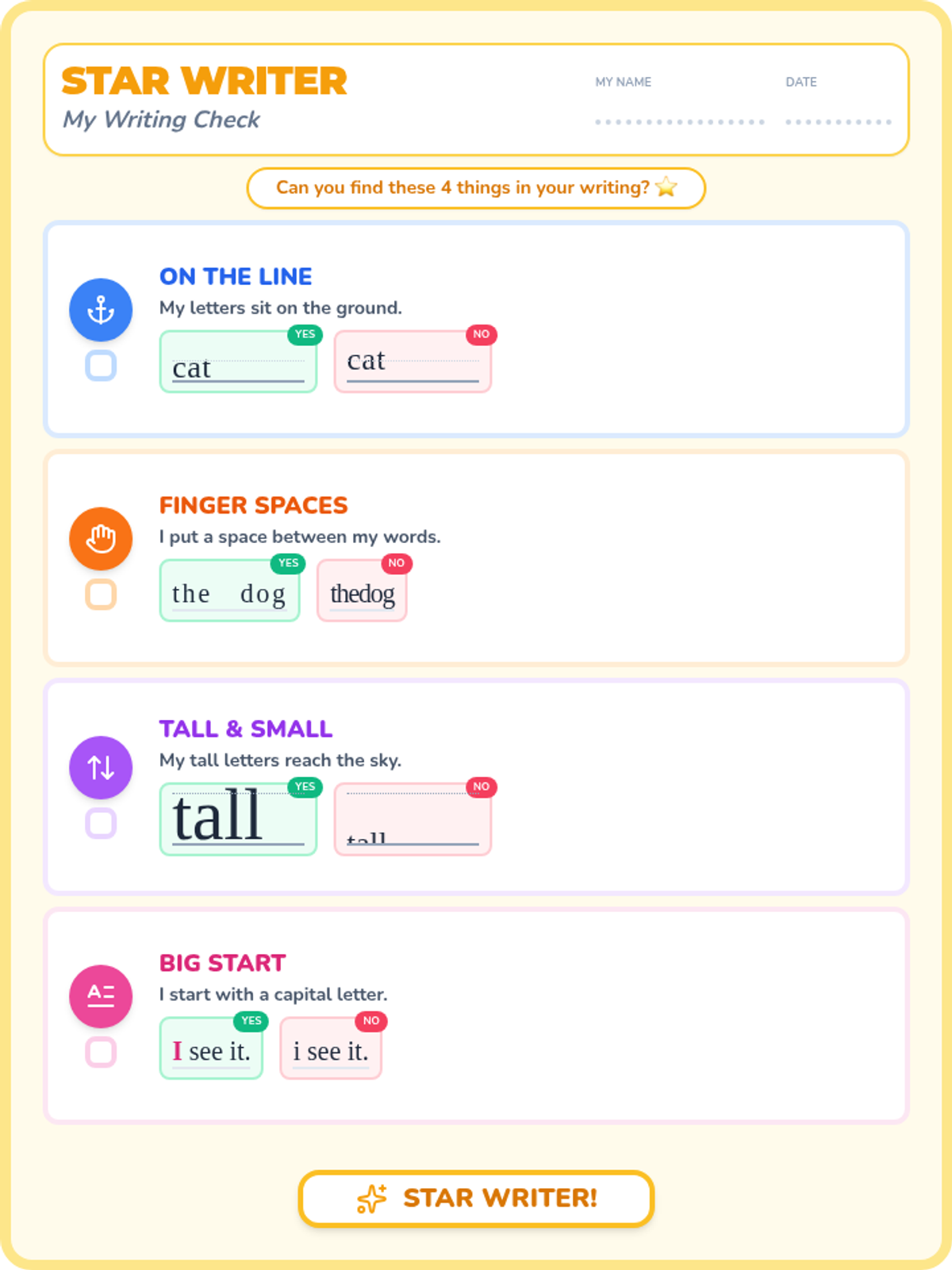
A set of handwriting self-check rubrics designed for different age groups to improve legibility and academic presentation.
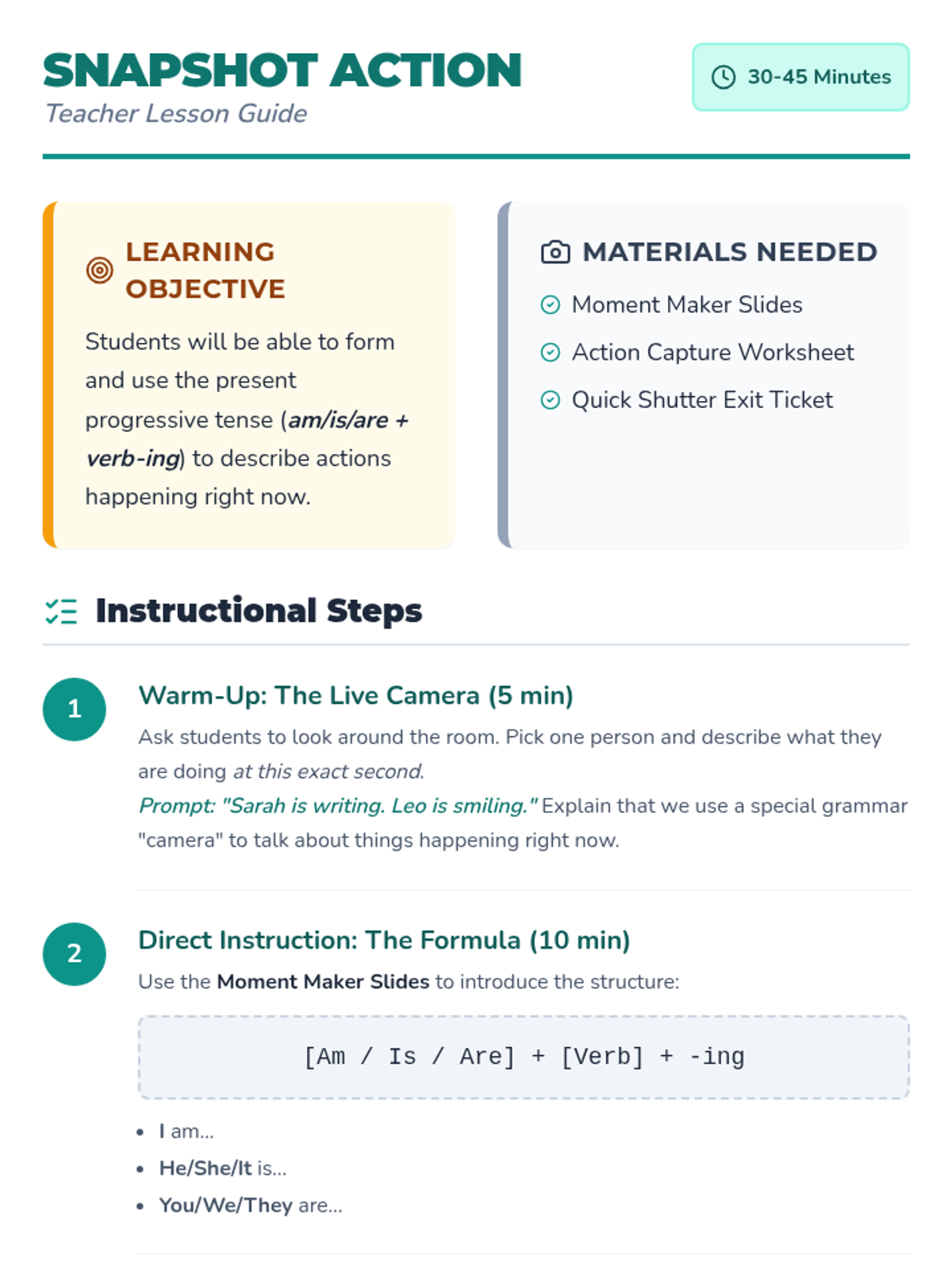
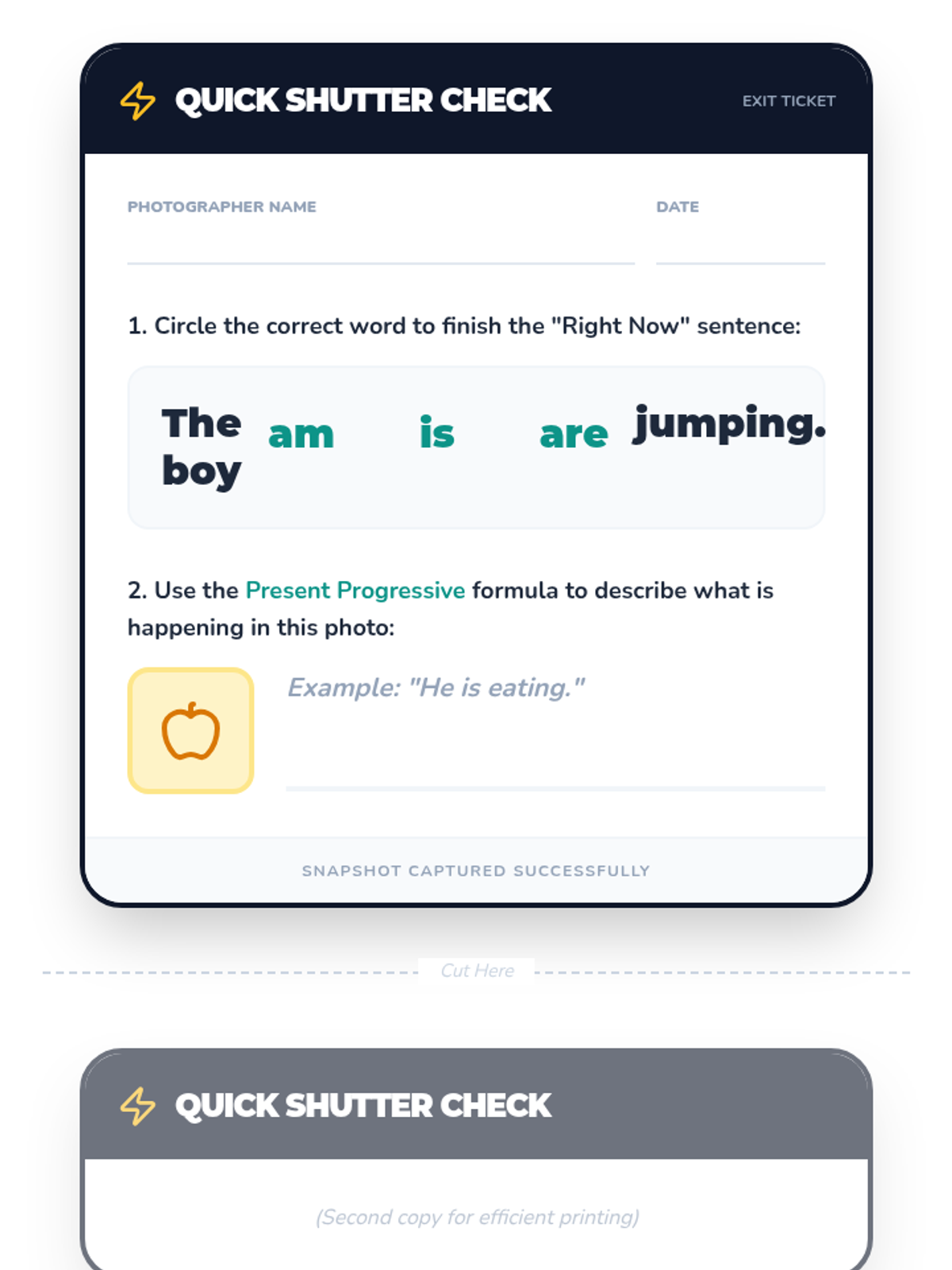
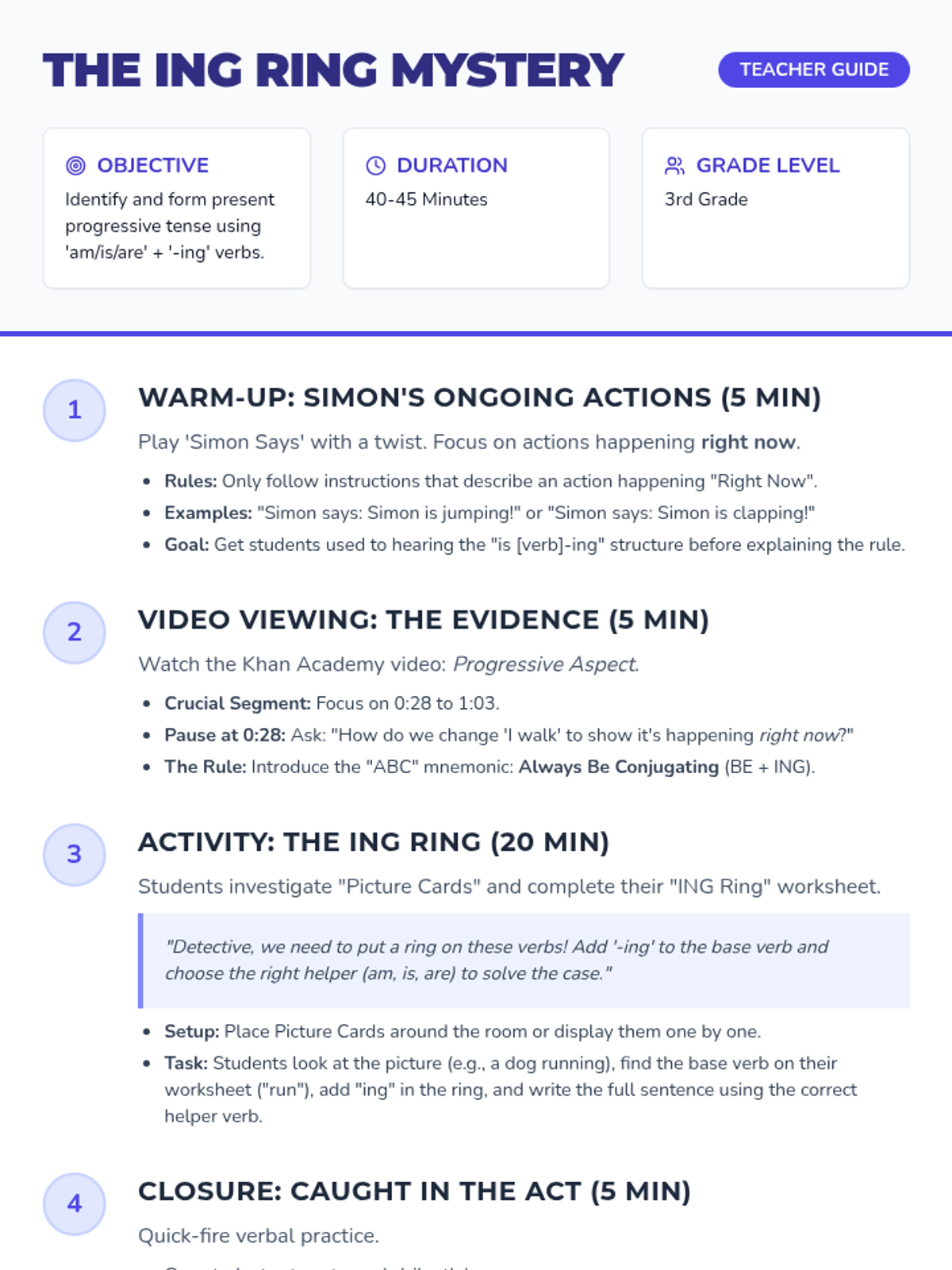
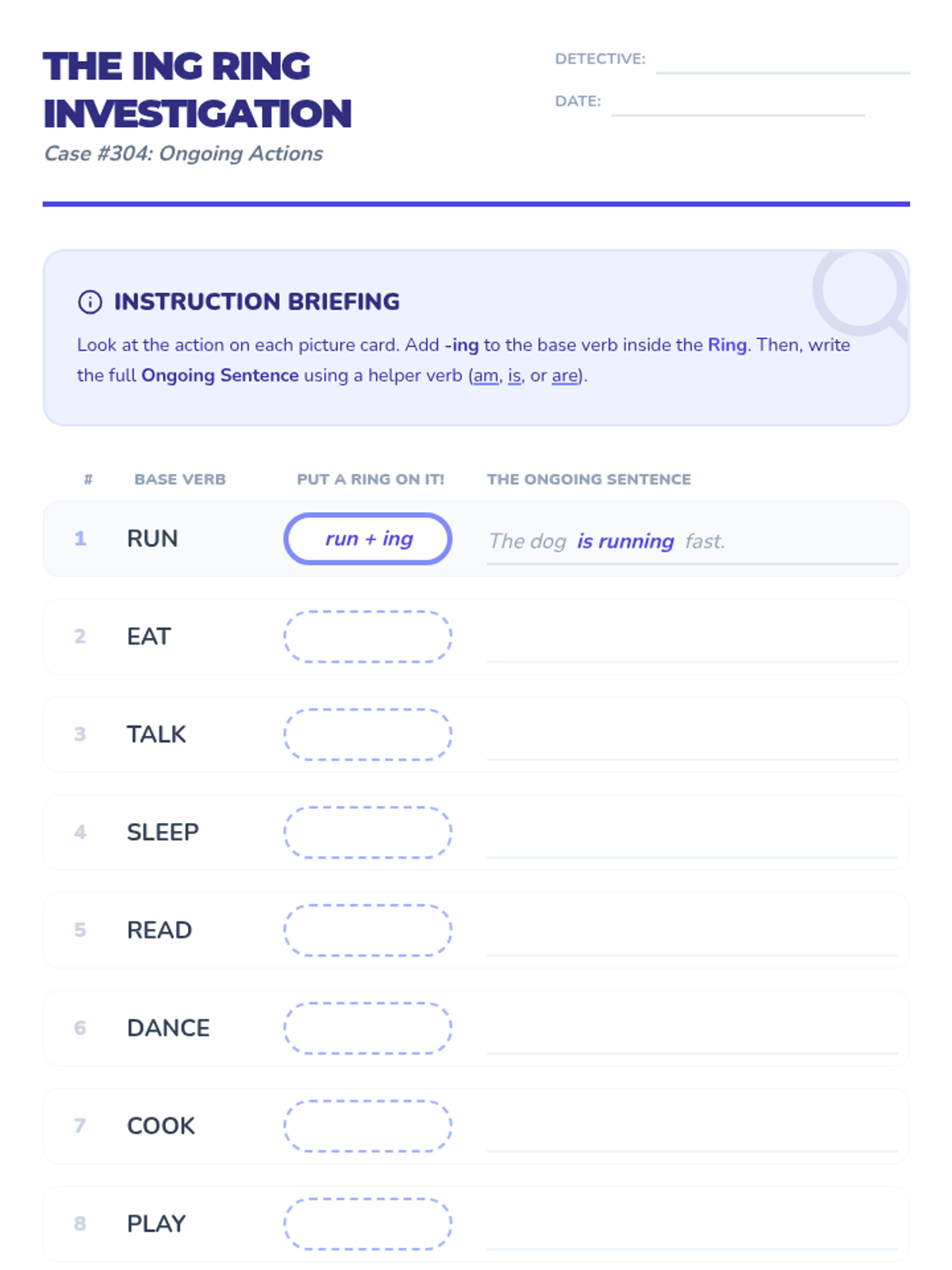
A comprehensive 30-45 minute lesson on the present progressive tense, focusing on forming 'am/is/are + verb-ing' to describe actions happening in the immediate moment.
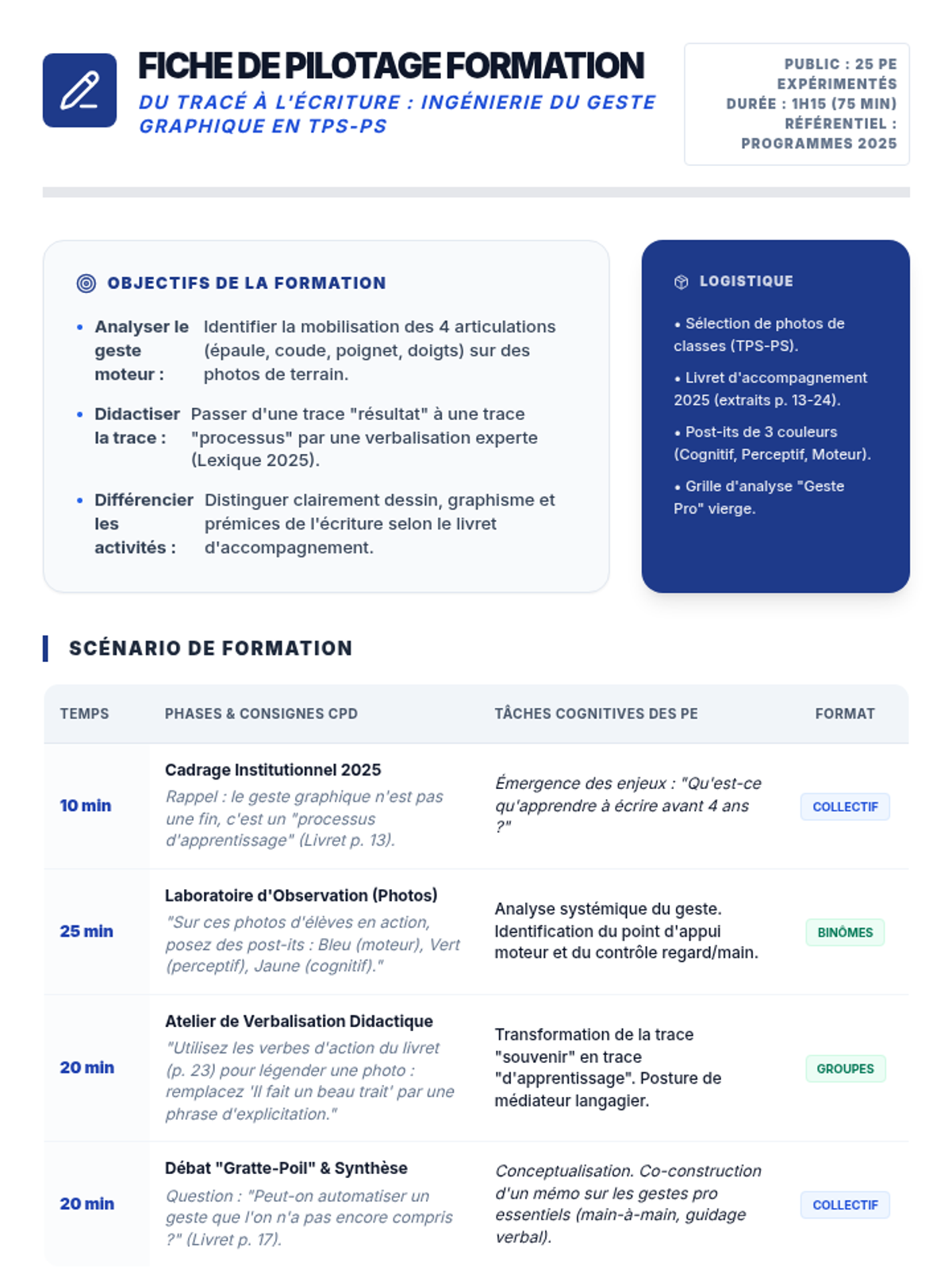
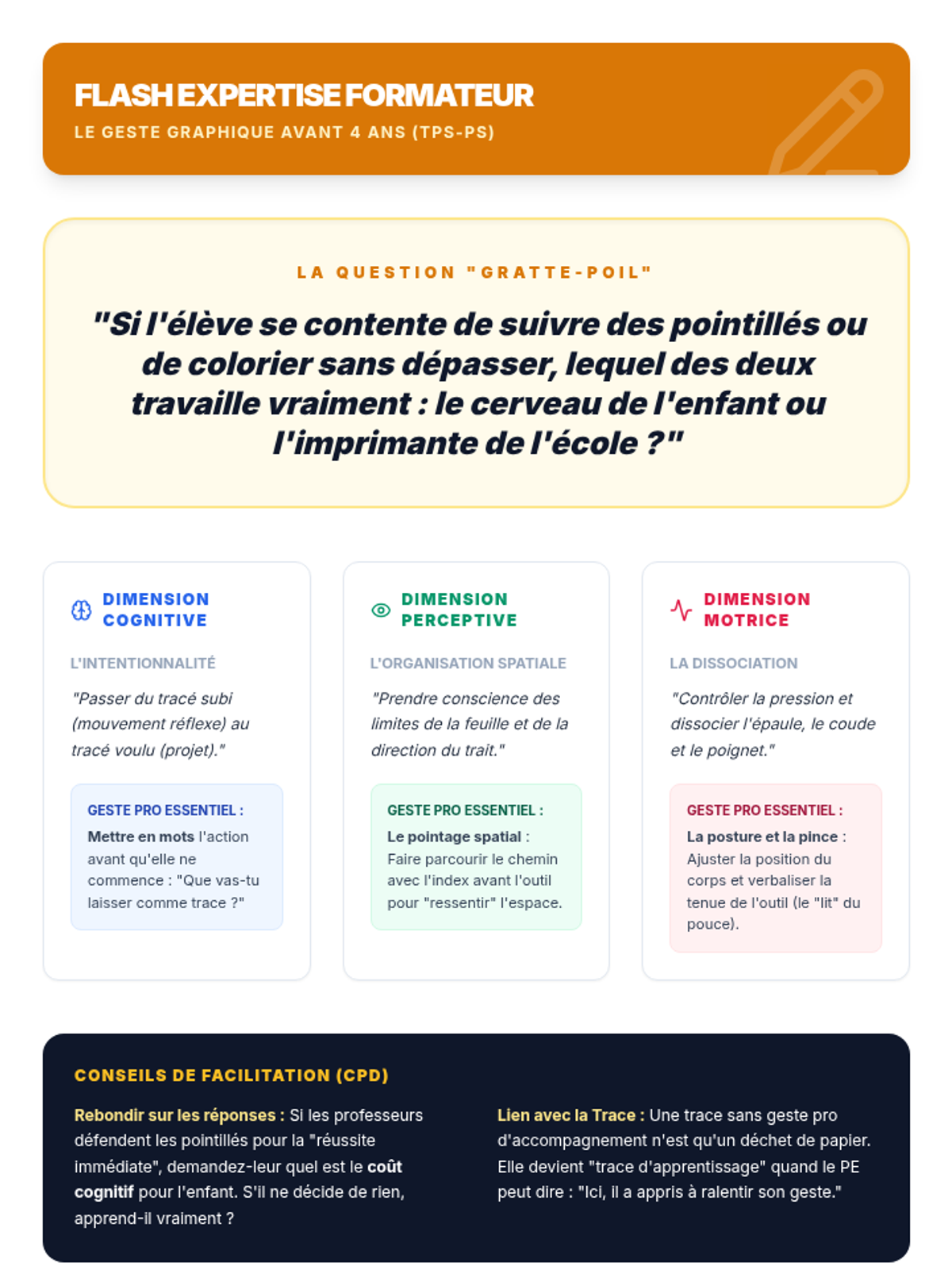
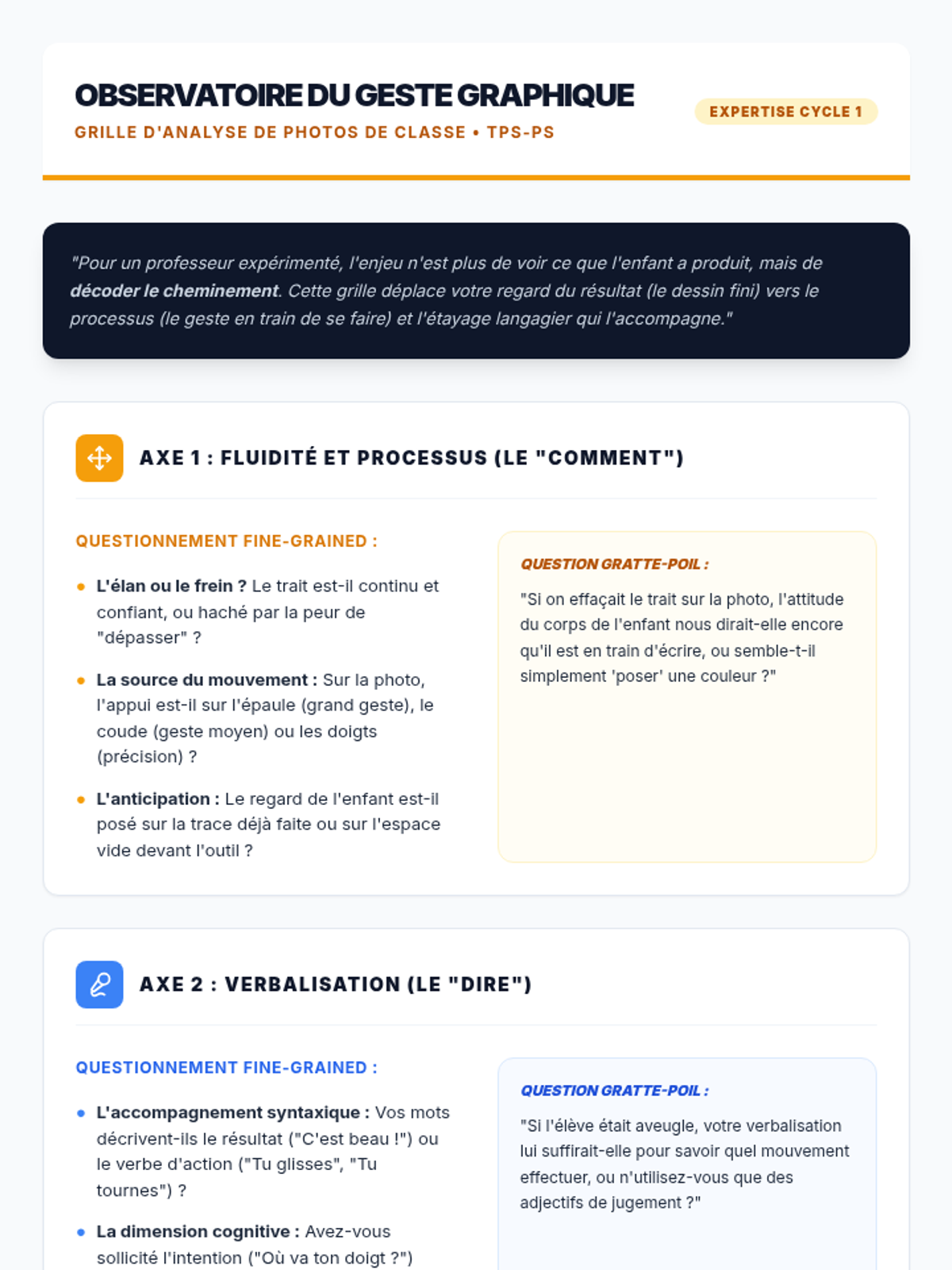
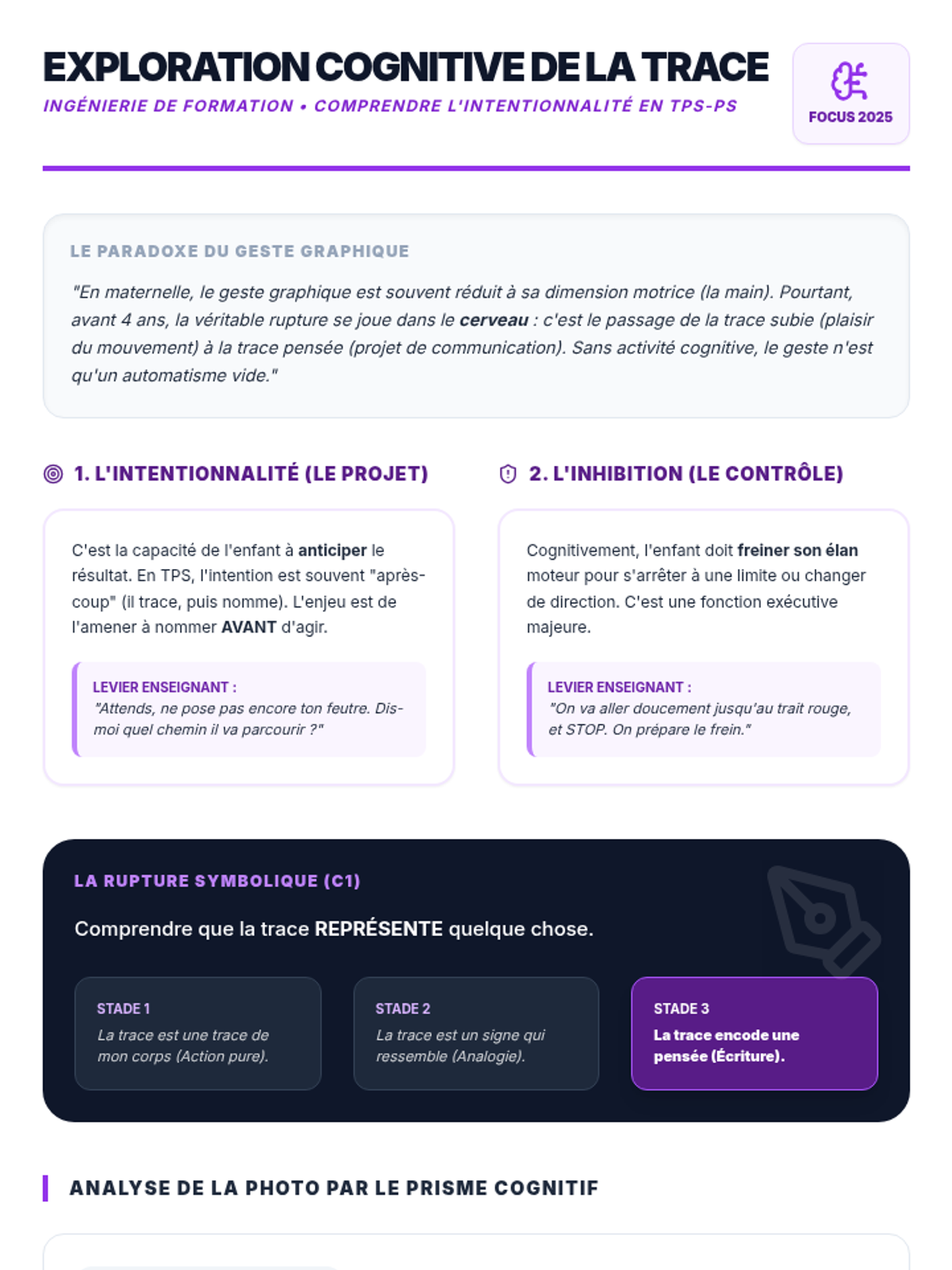
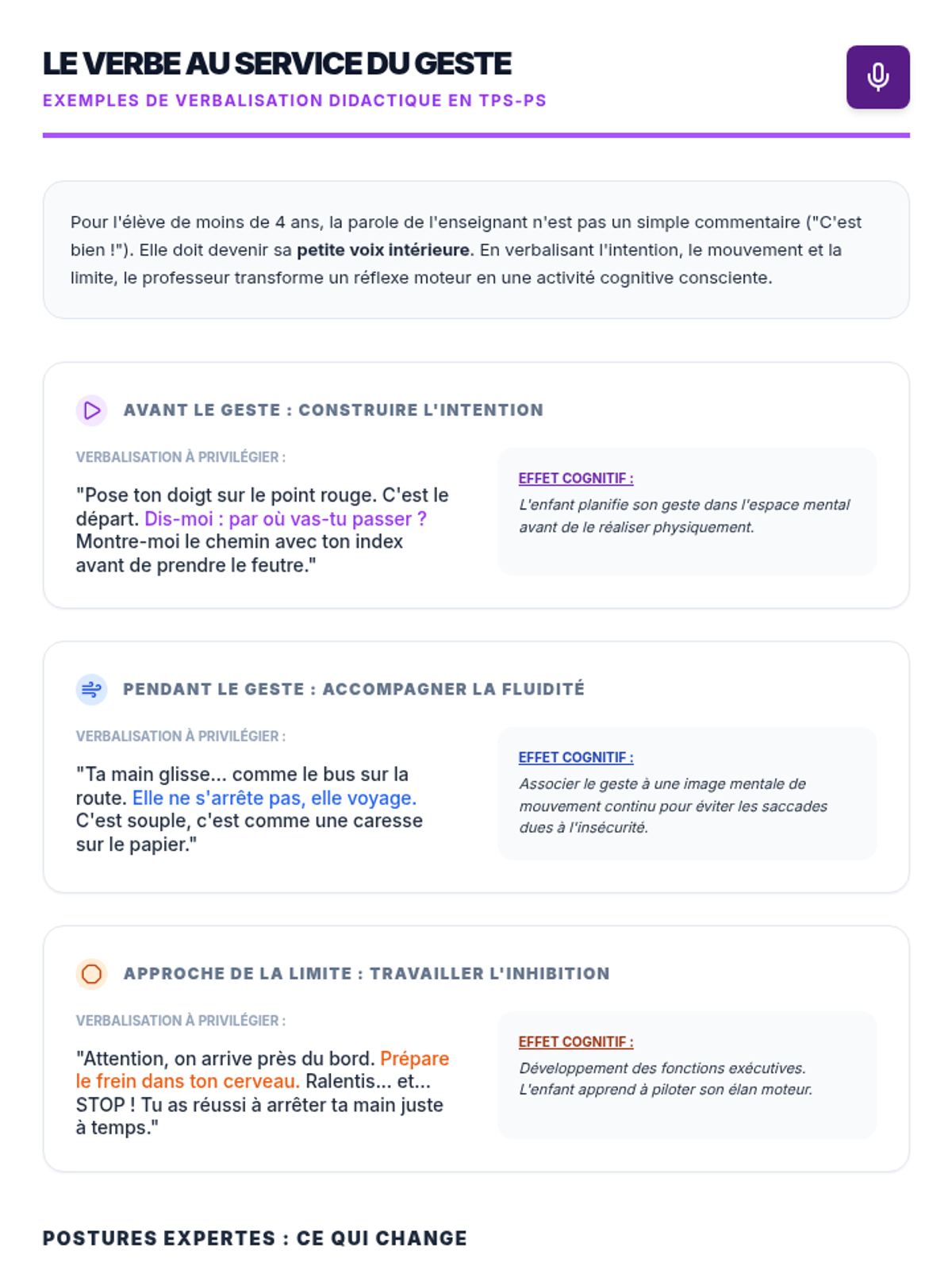
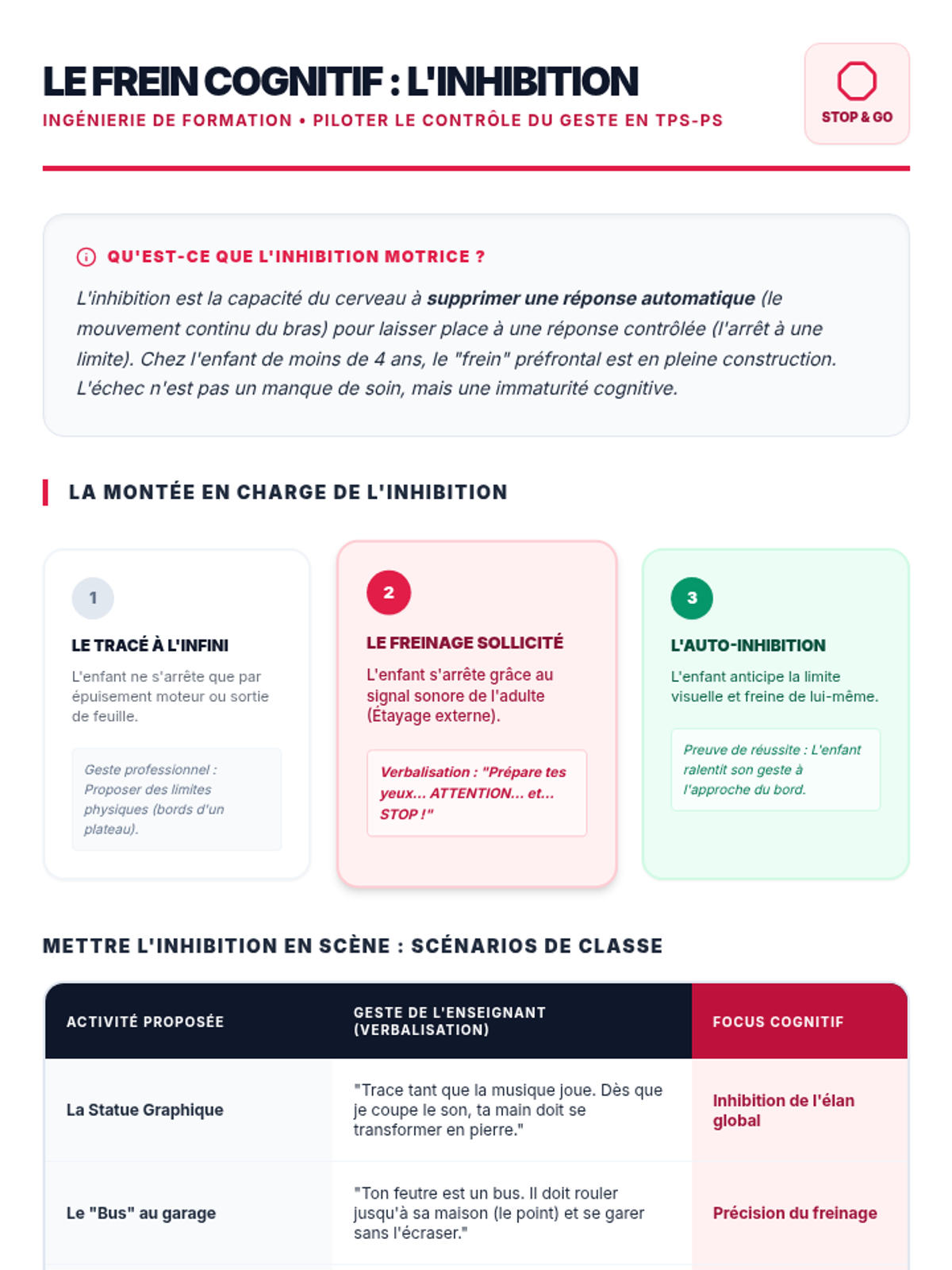
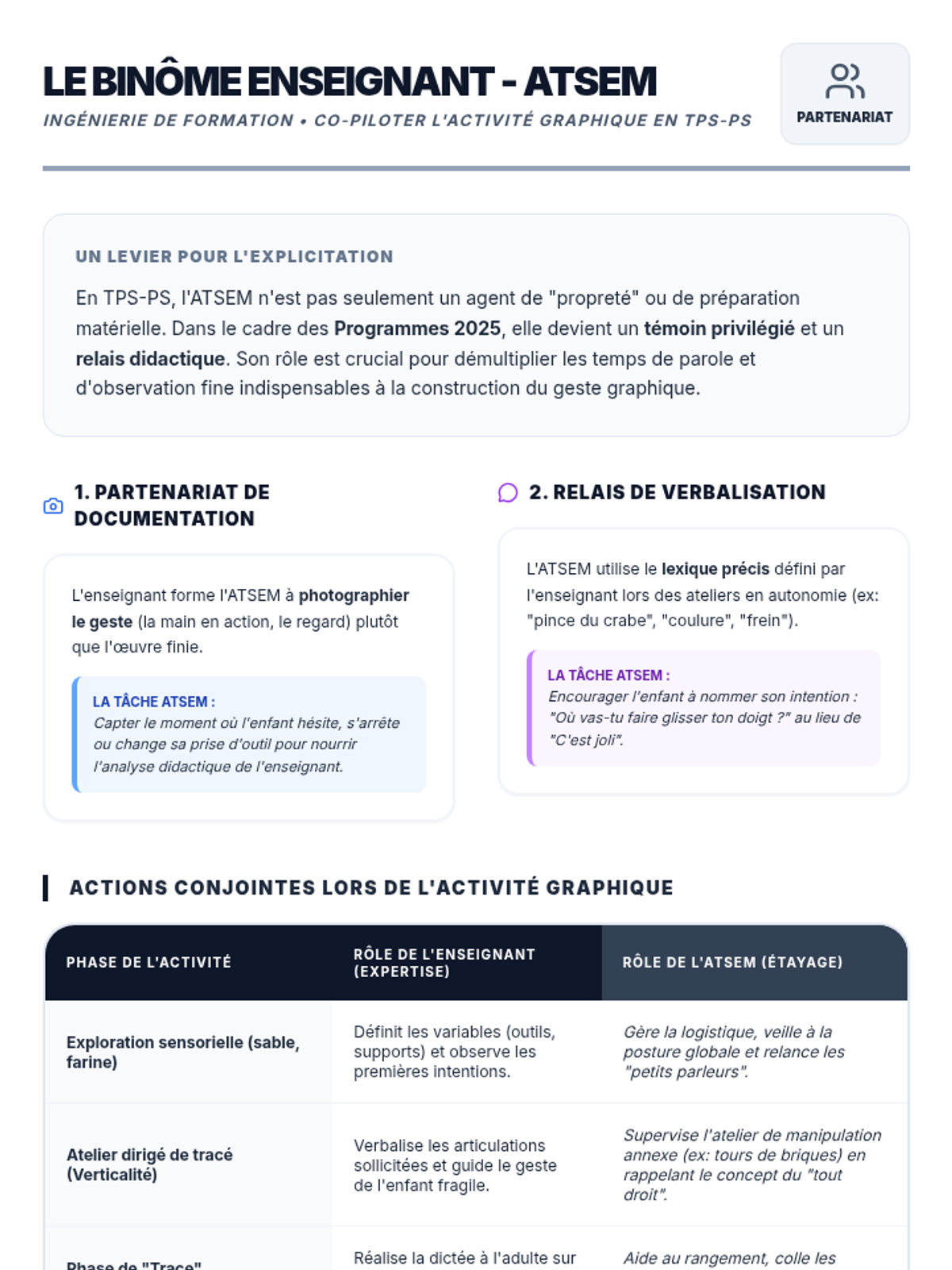
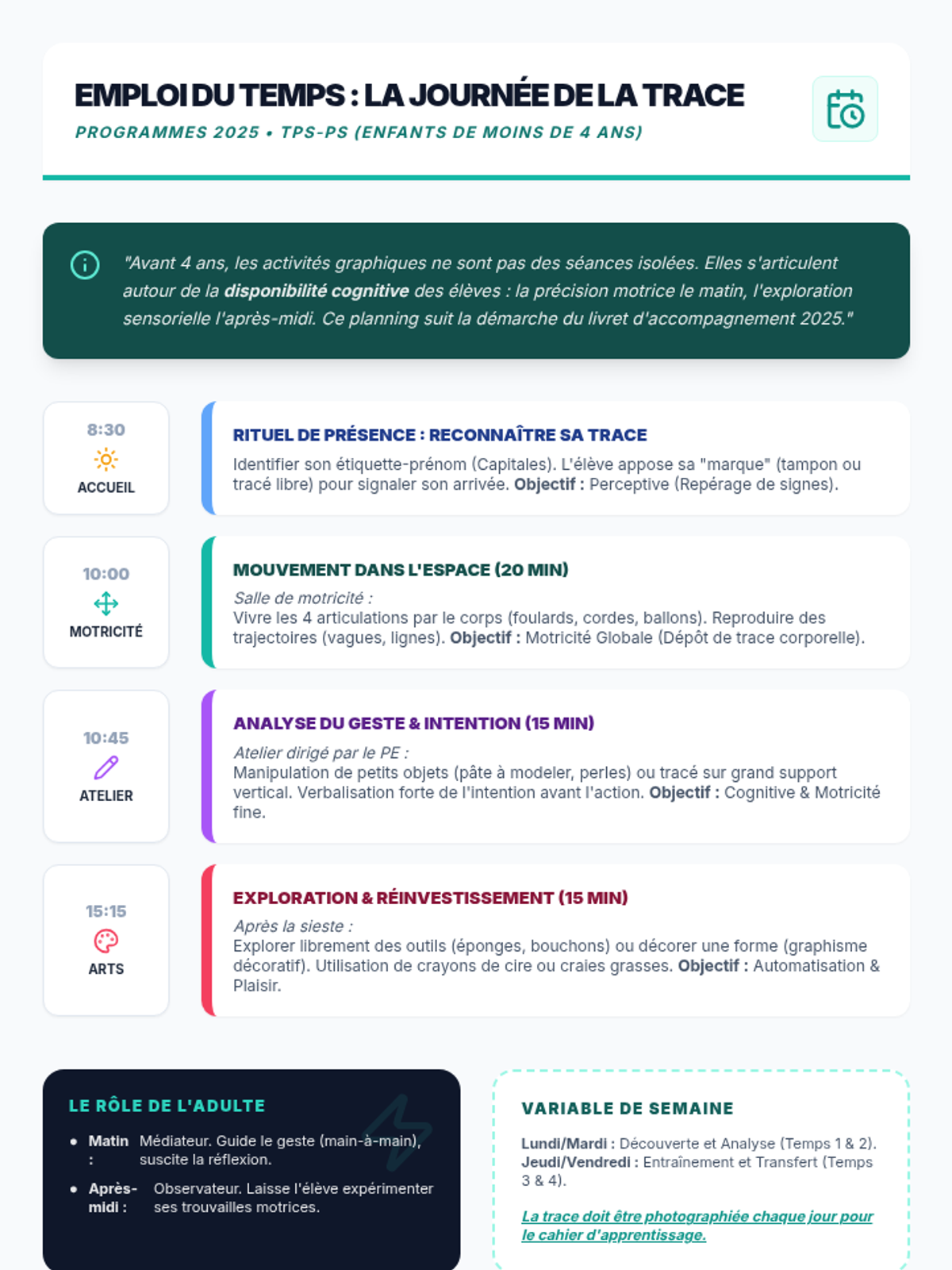
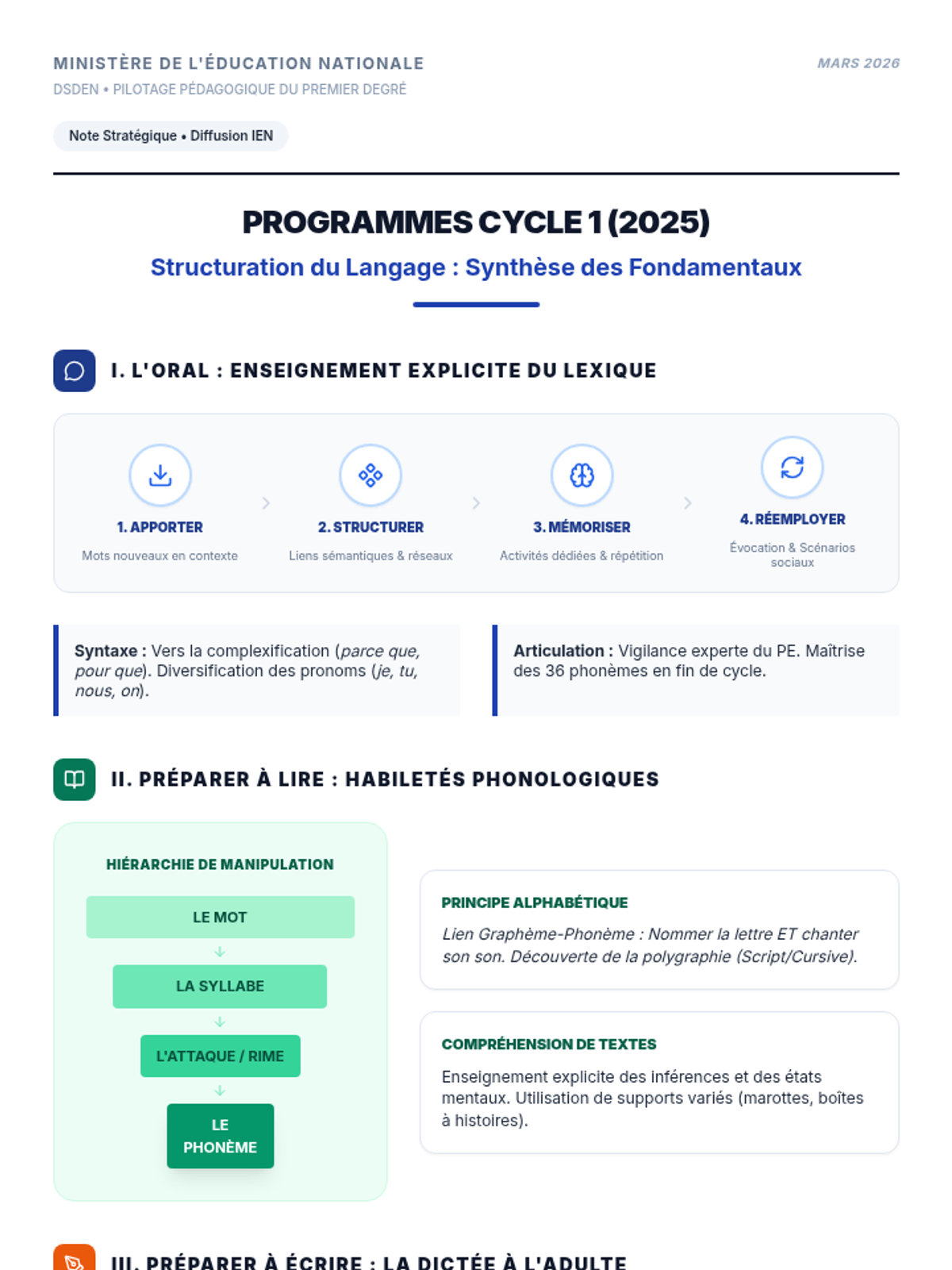
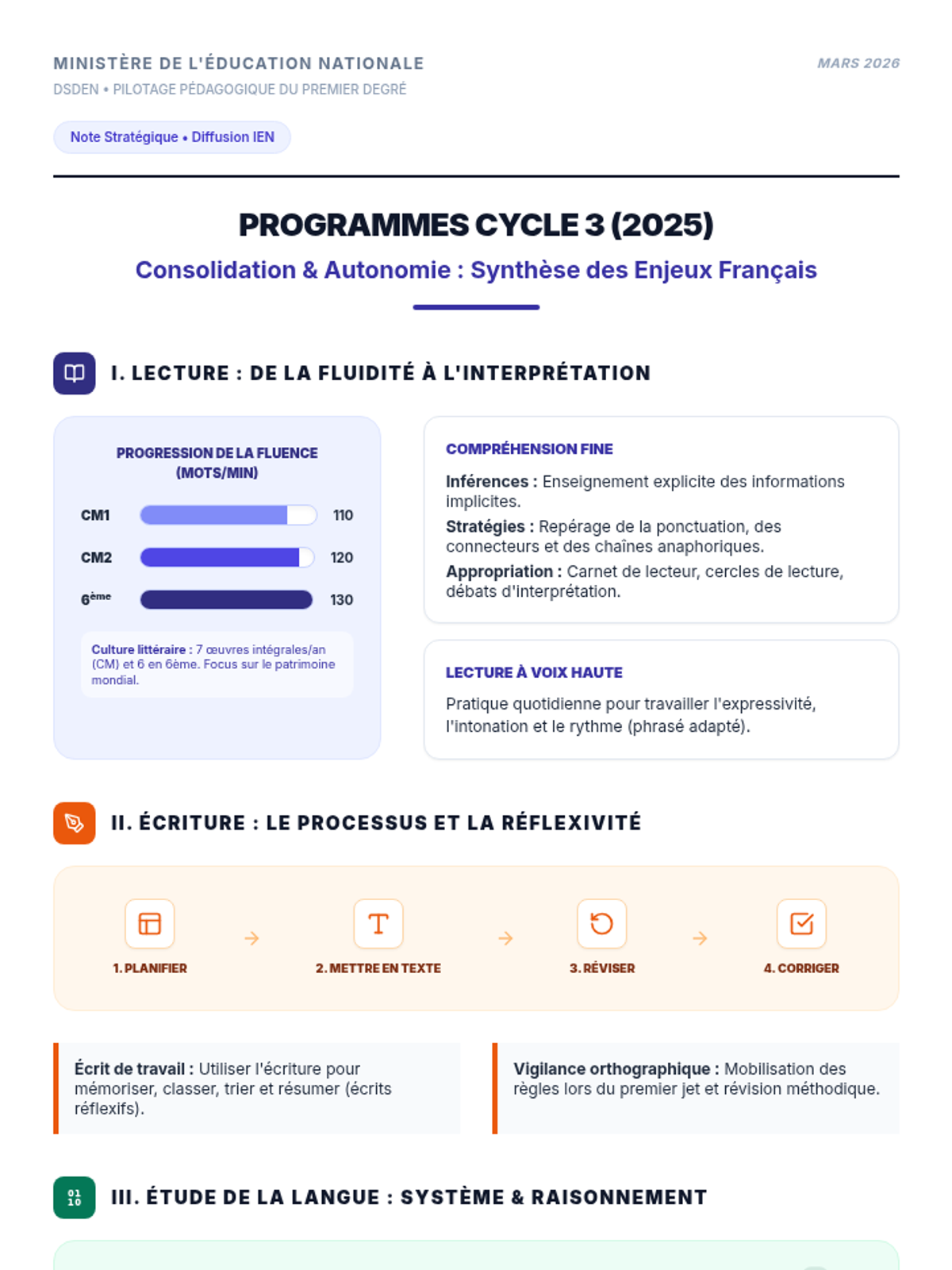
Cette formation pour les professeurs de TPS-PS vise à professionnaliser la conception des "traces" d'activités (cahiers de vie, affichages). En s'appuyant sur les photos de classe et les guides 2025, les enseignants apprennent à rendre les apprentissages explicites pour les élèves et les familles.
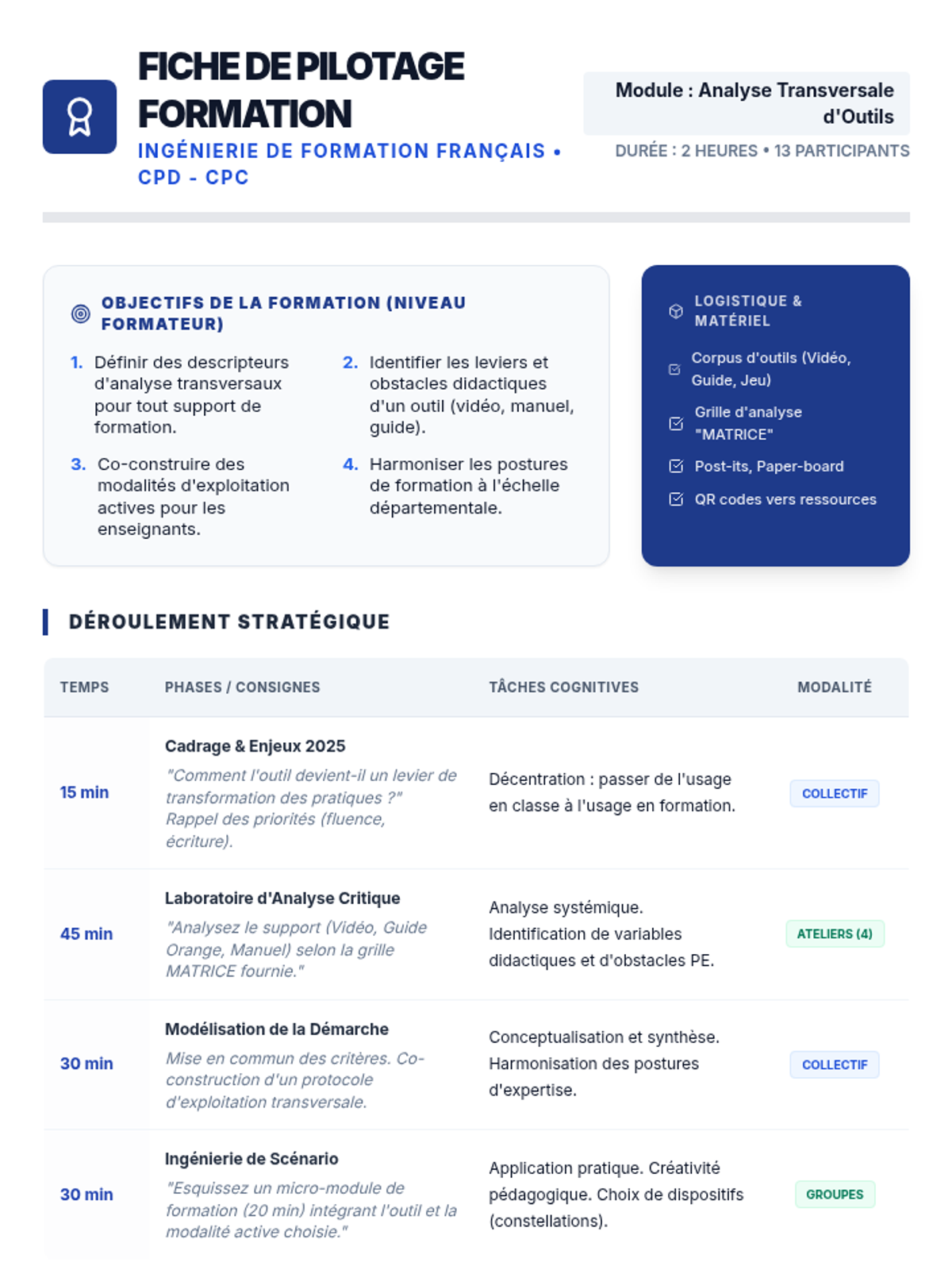
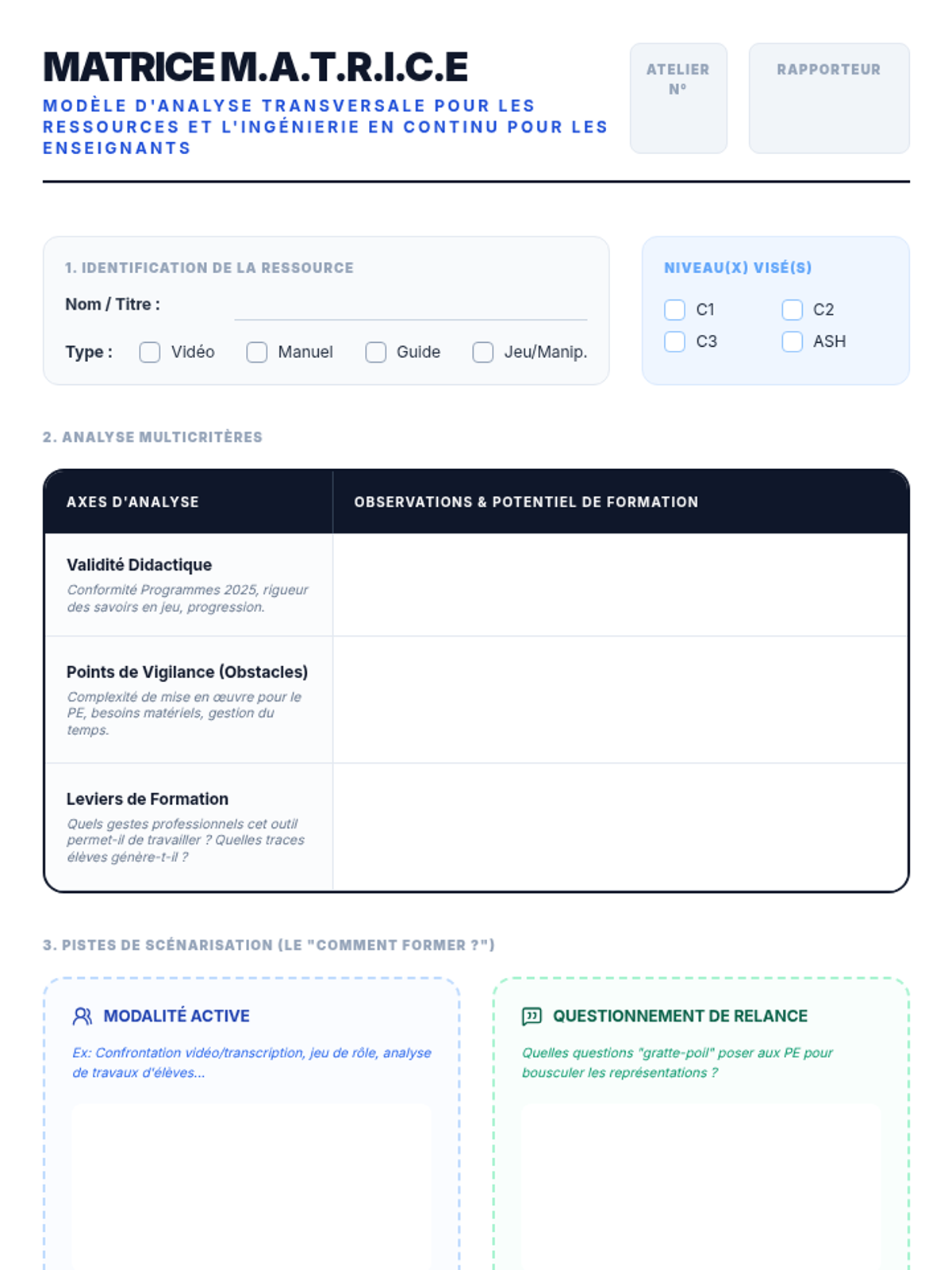
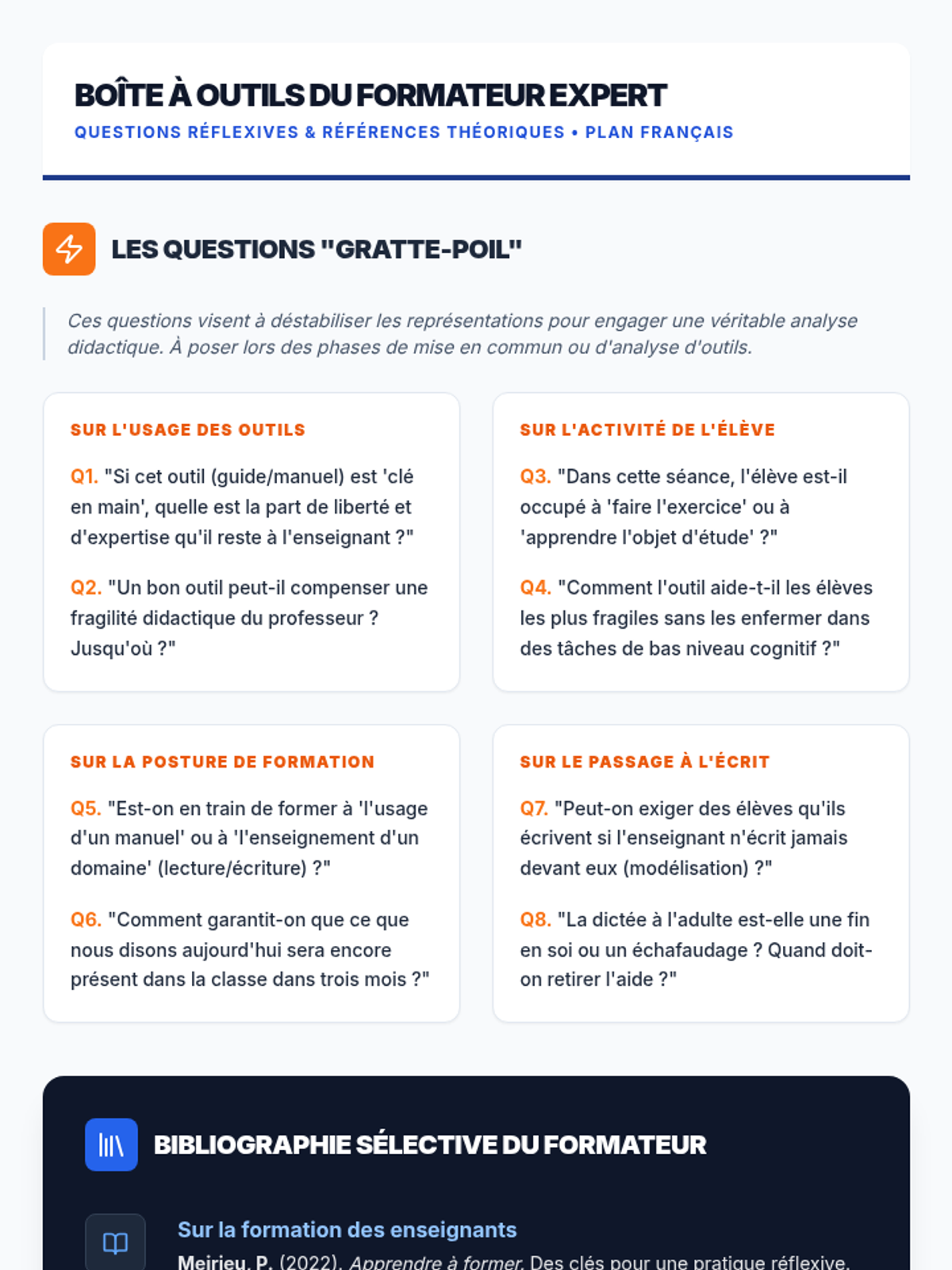
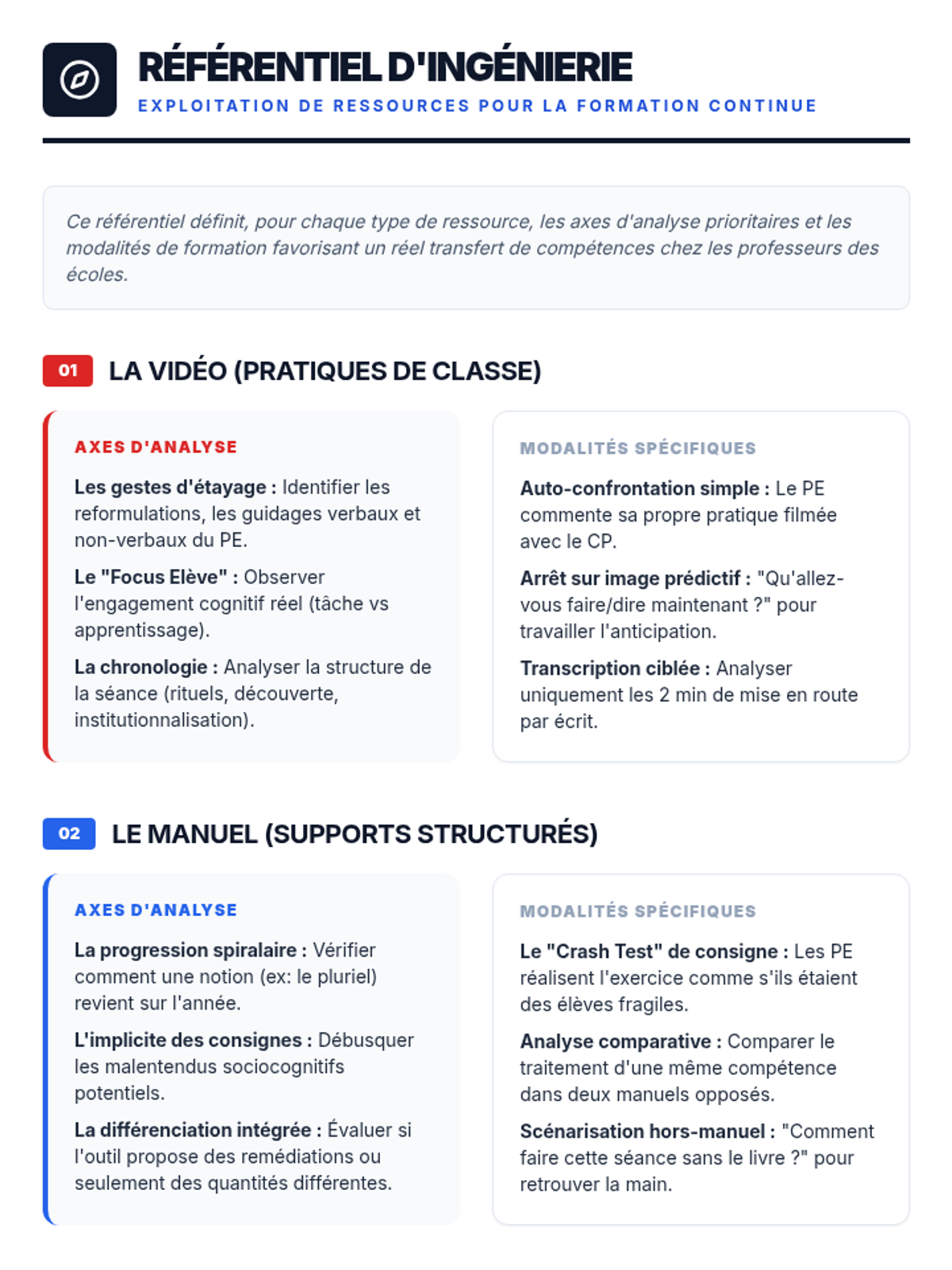
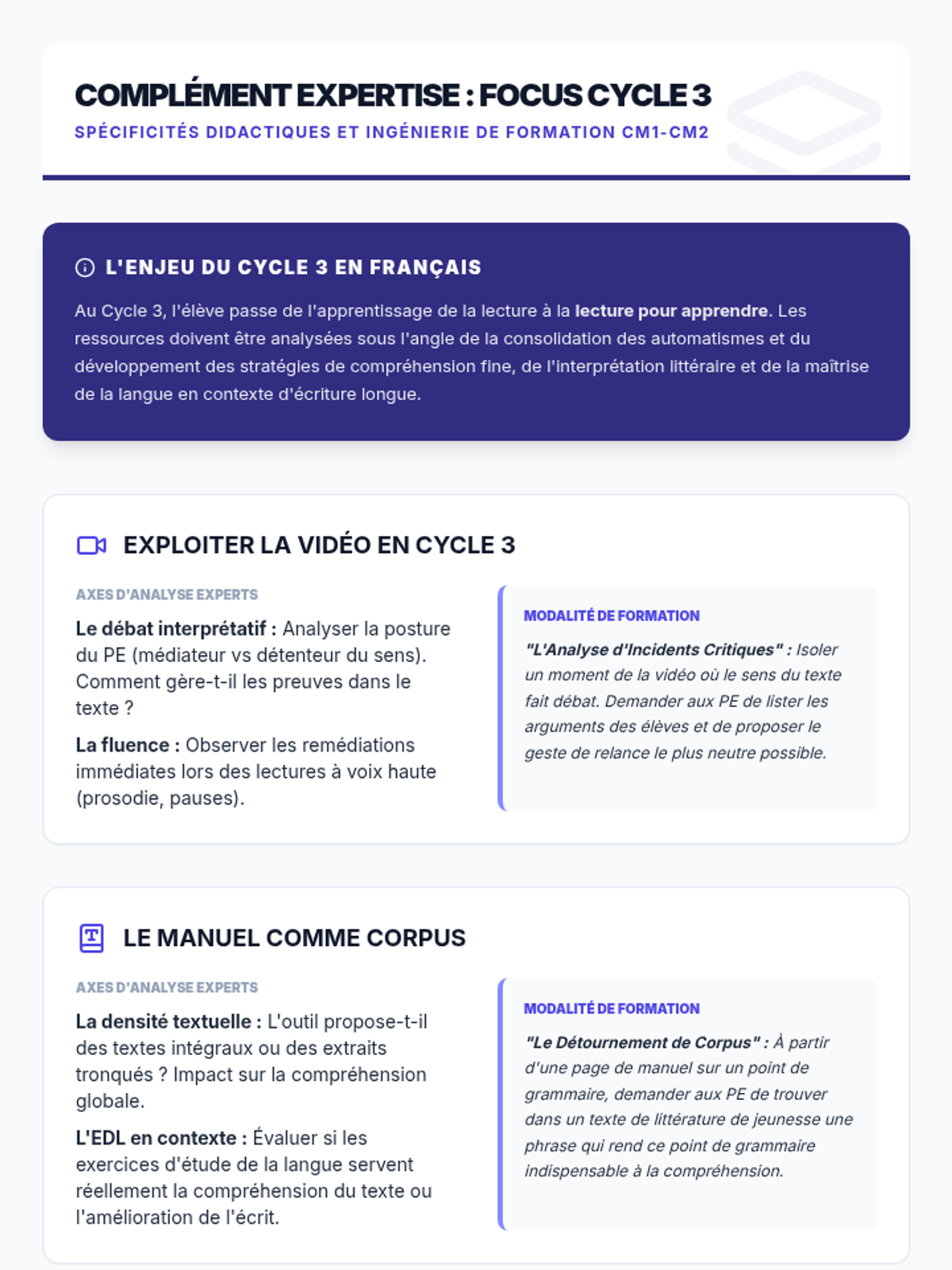
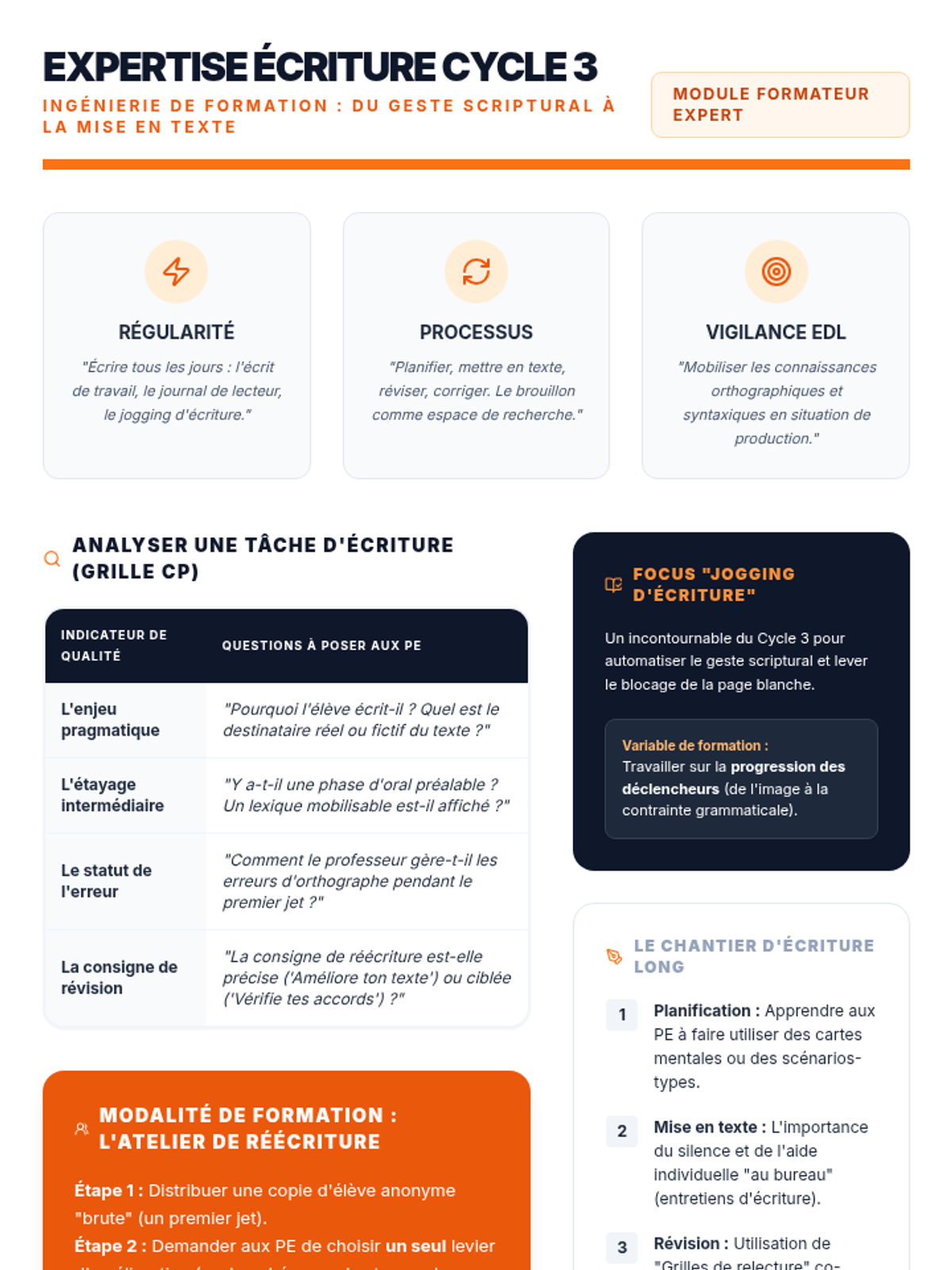
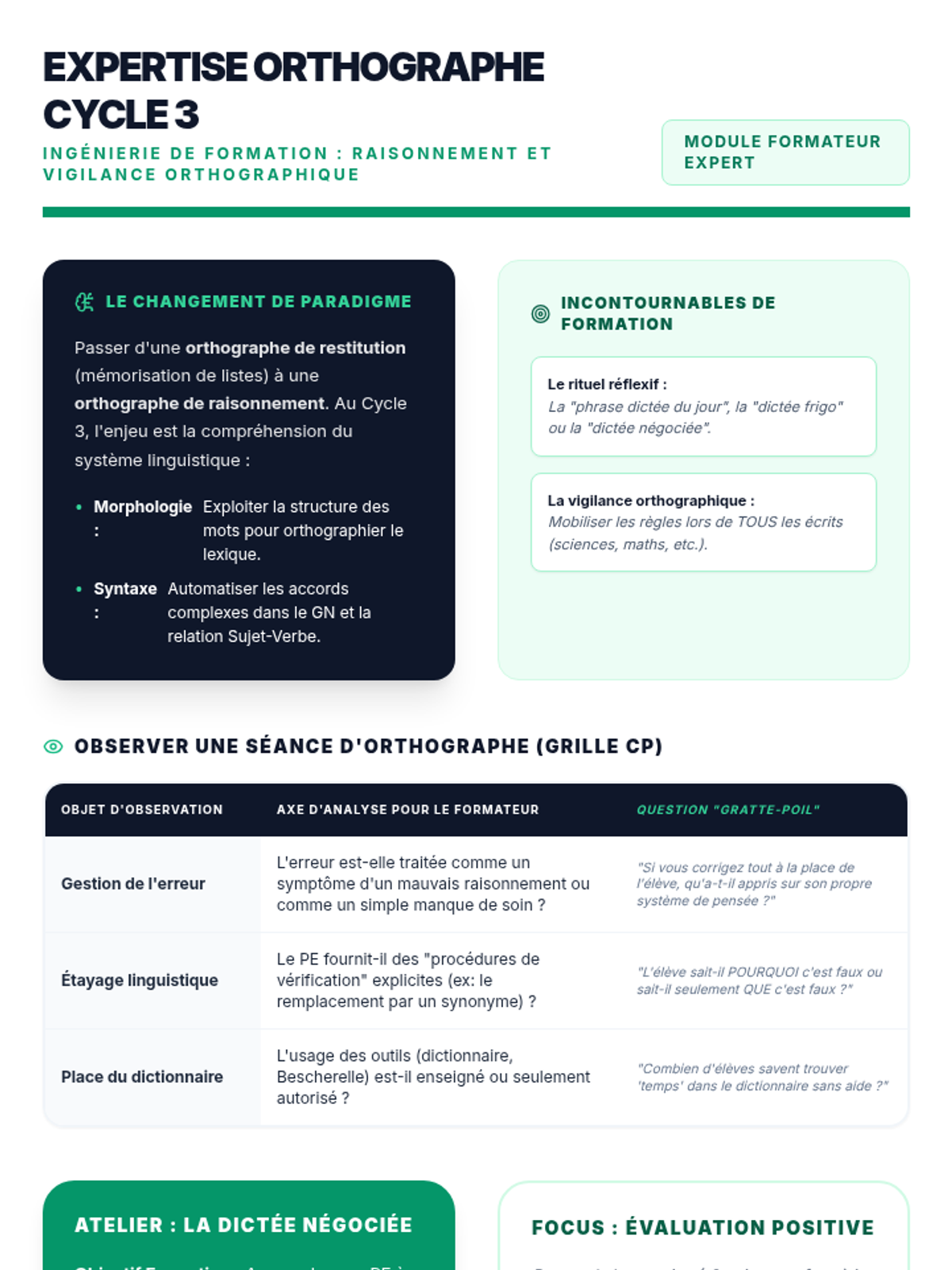
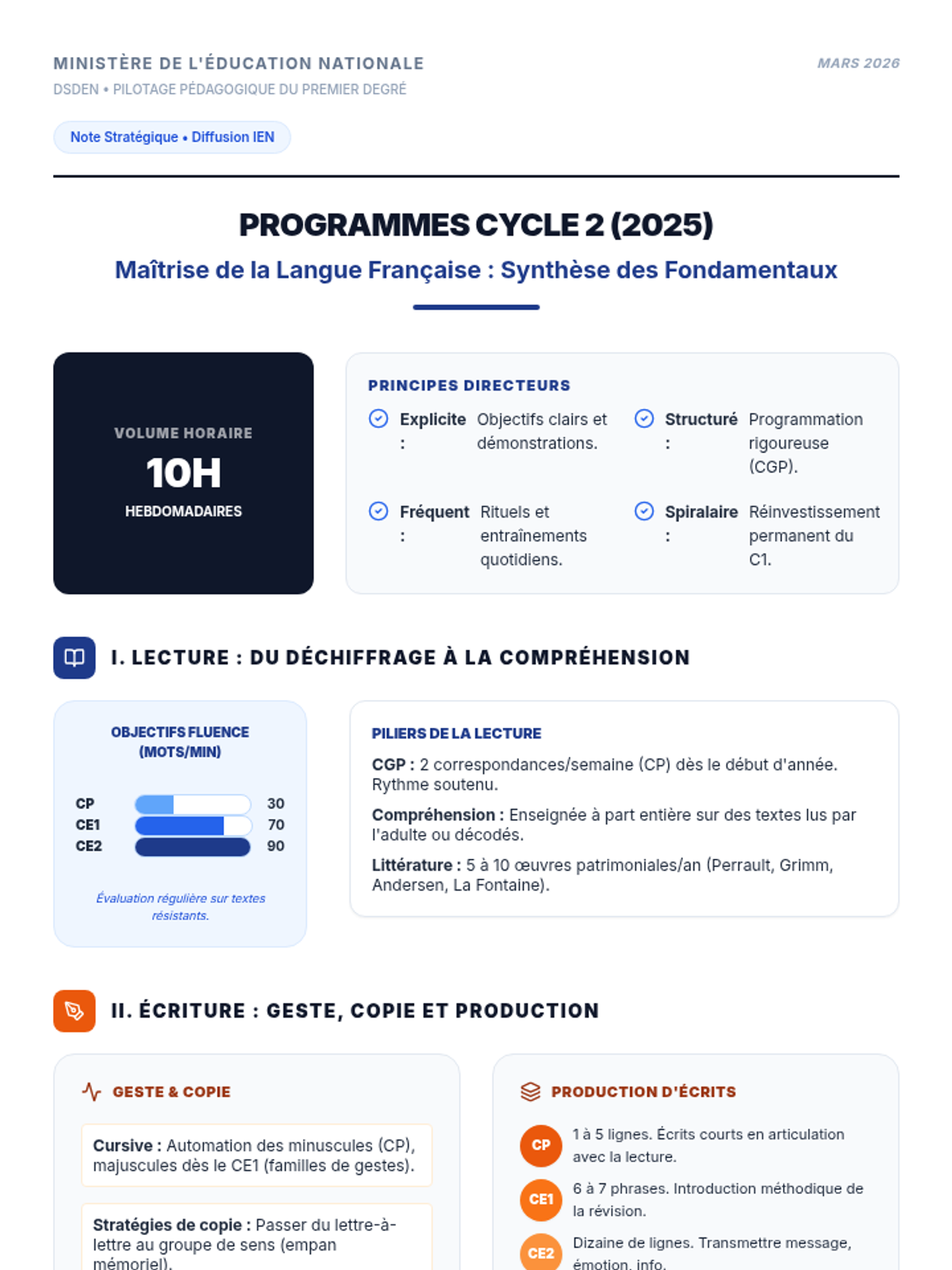
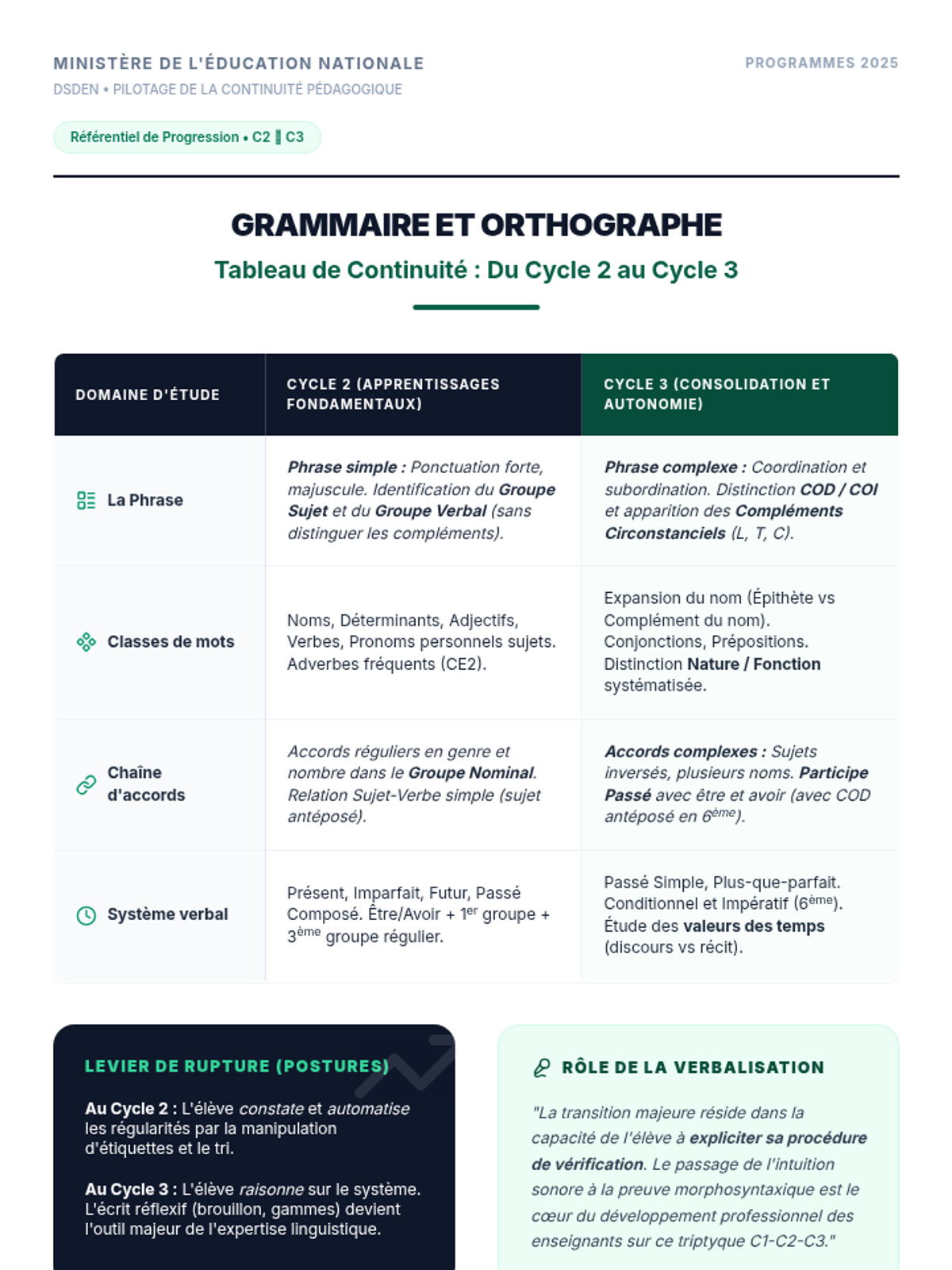
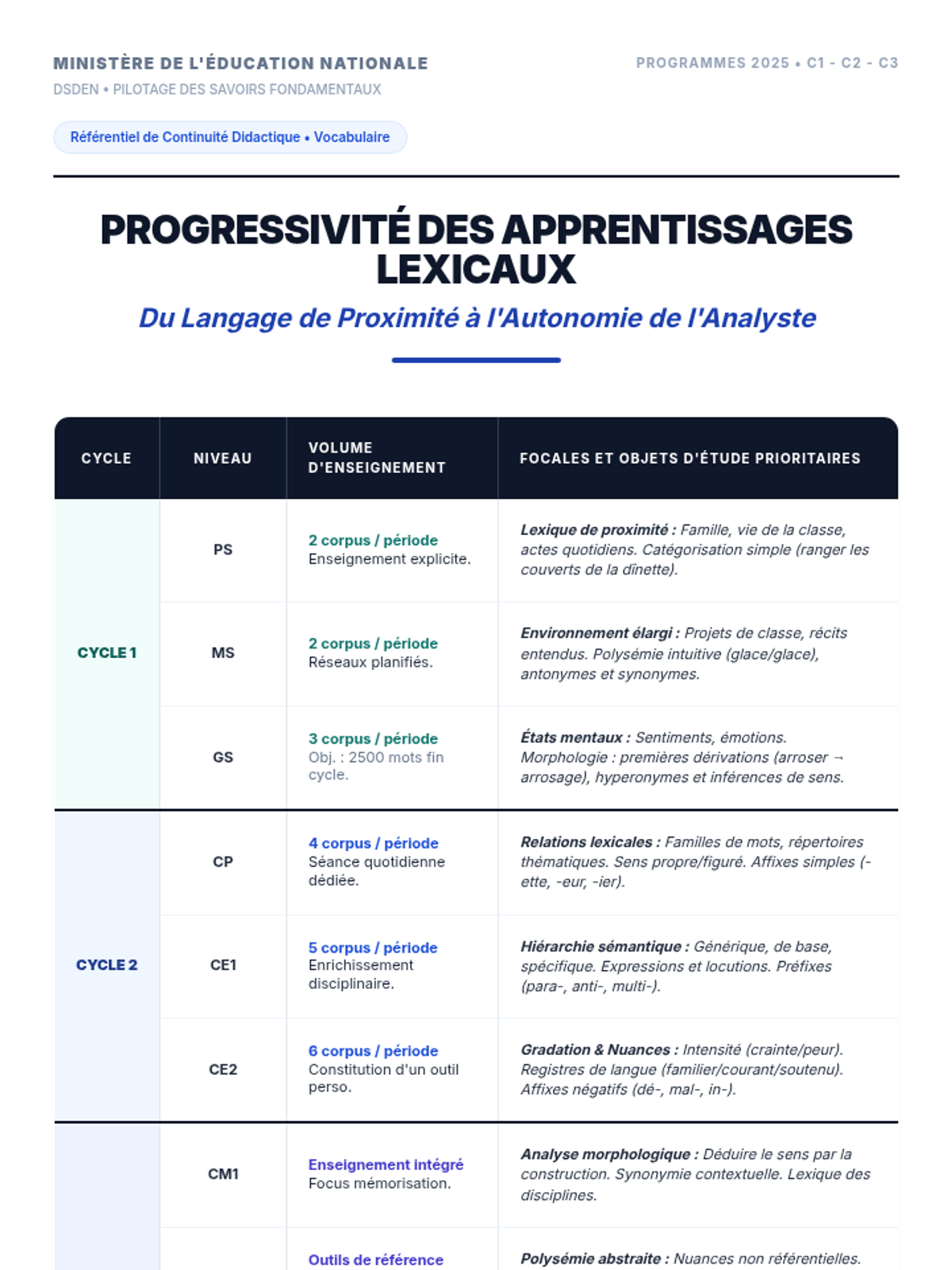
Cette formation vise à outiller les conseillers pédagogiques pour l'analyse et l'exploitation de ressources diverses (vidéos, manuels, guides) dans le cadre de la formation continue des professeurs des écoles en français, conformément aux orientations stratégiques nationales.
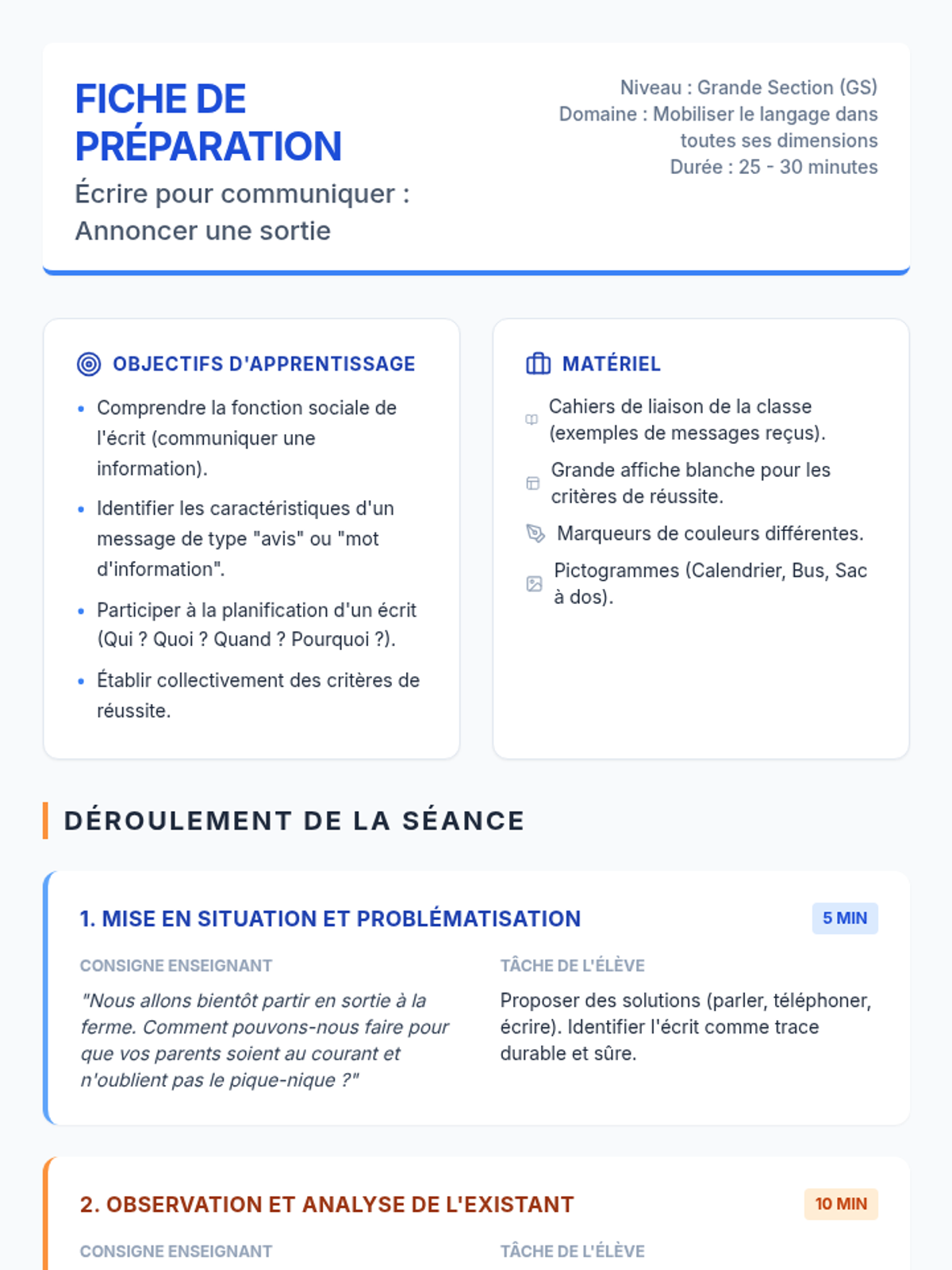
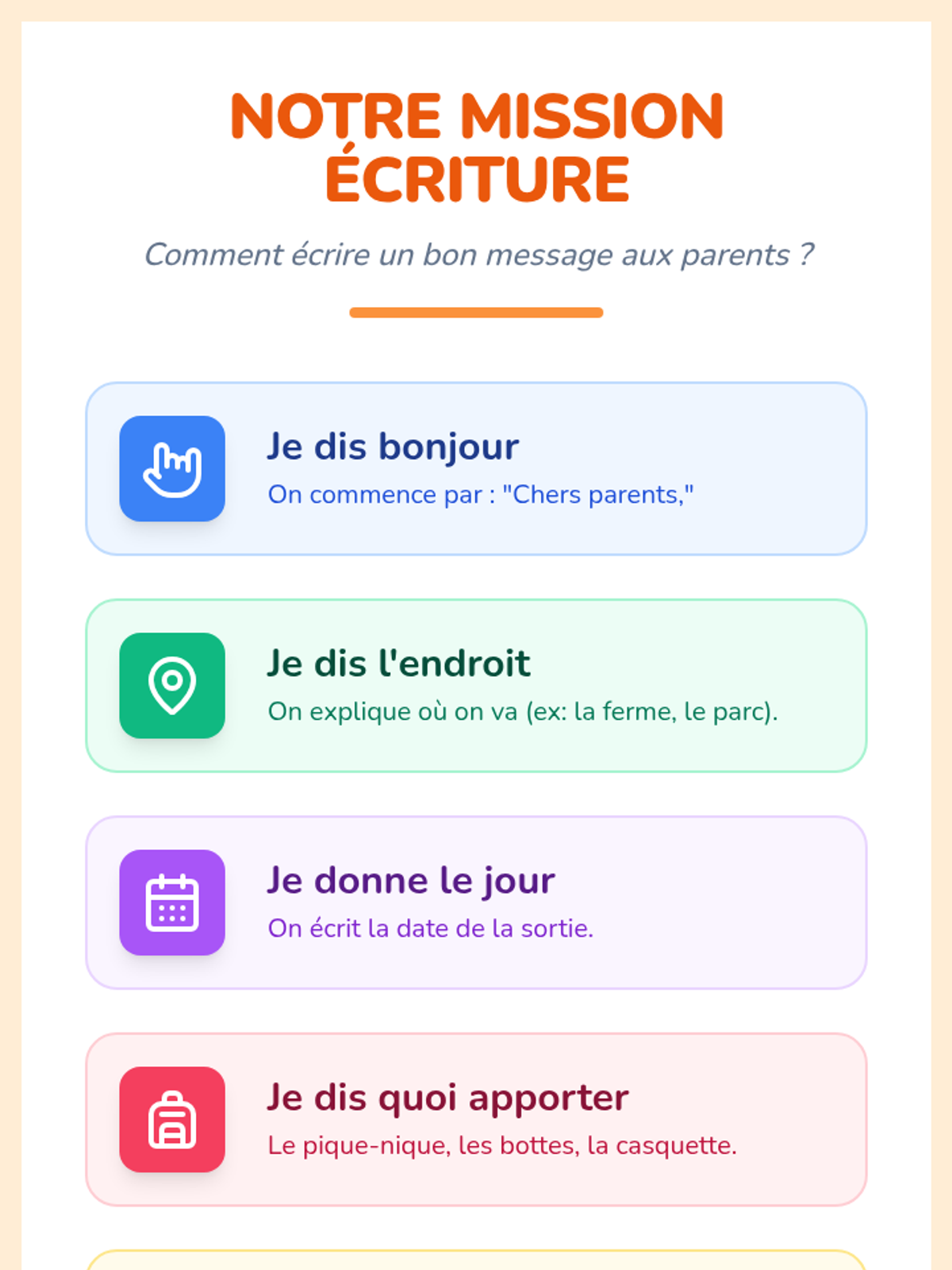
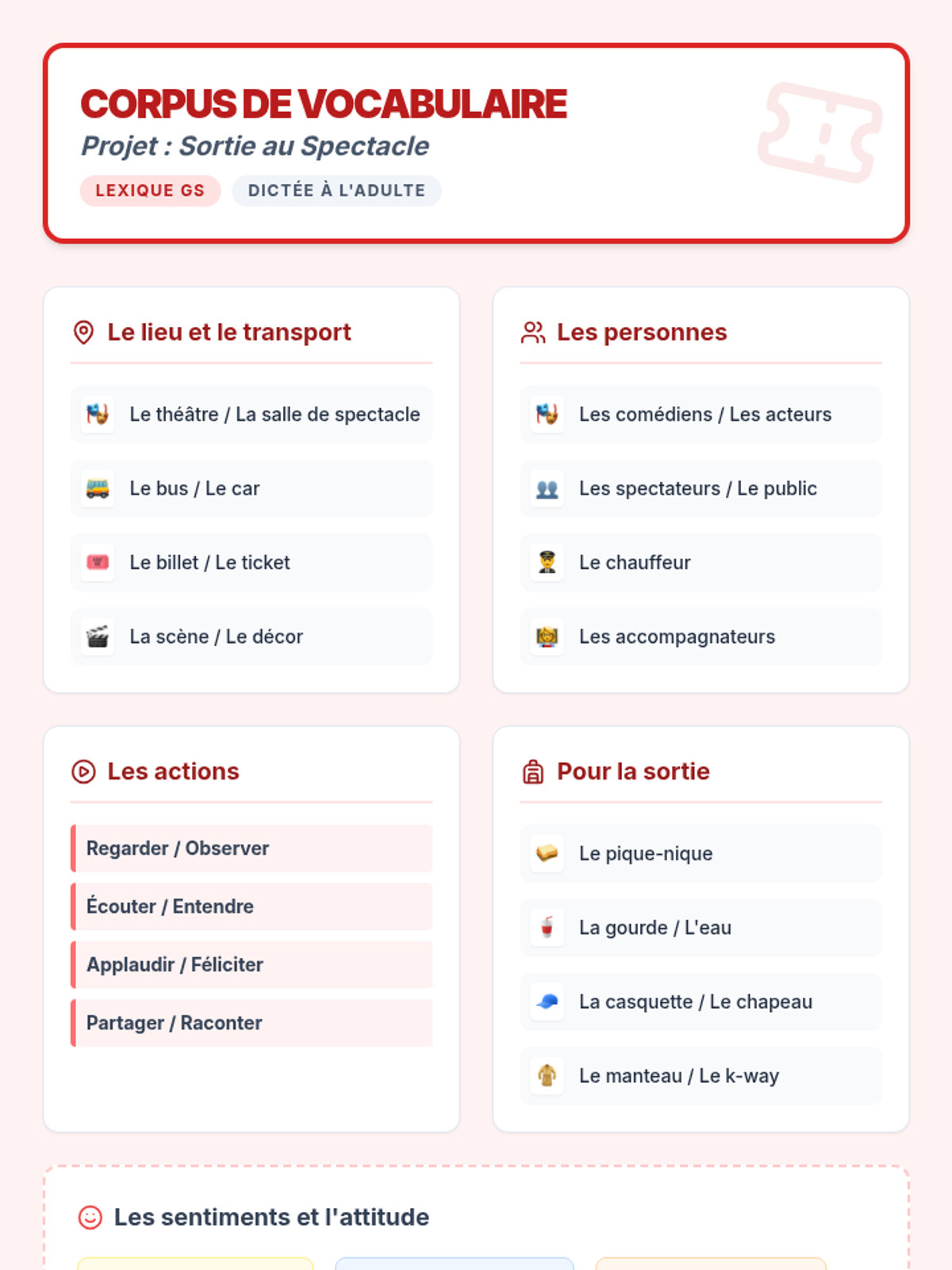
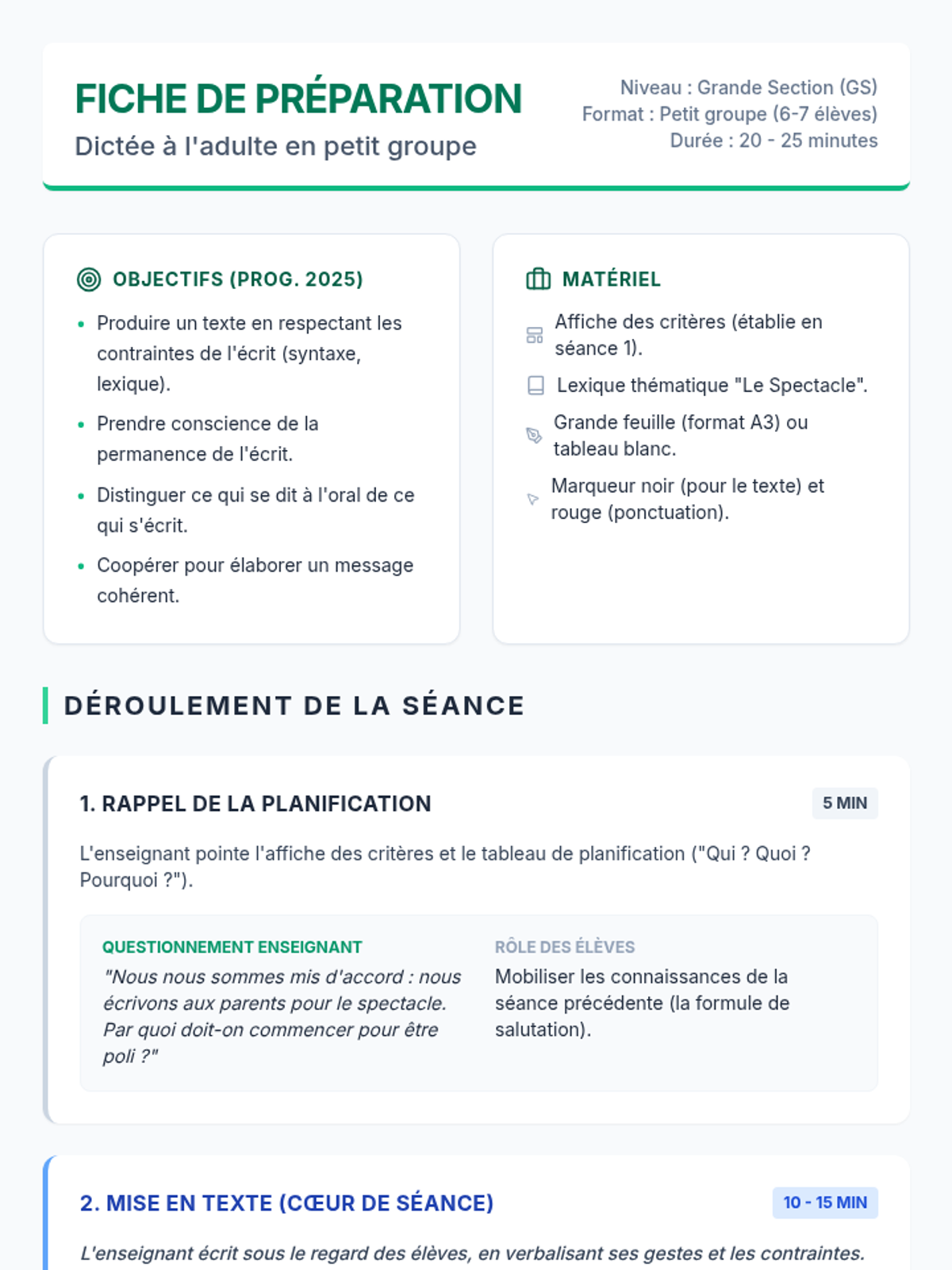
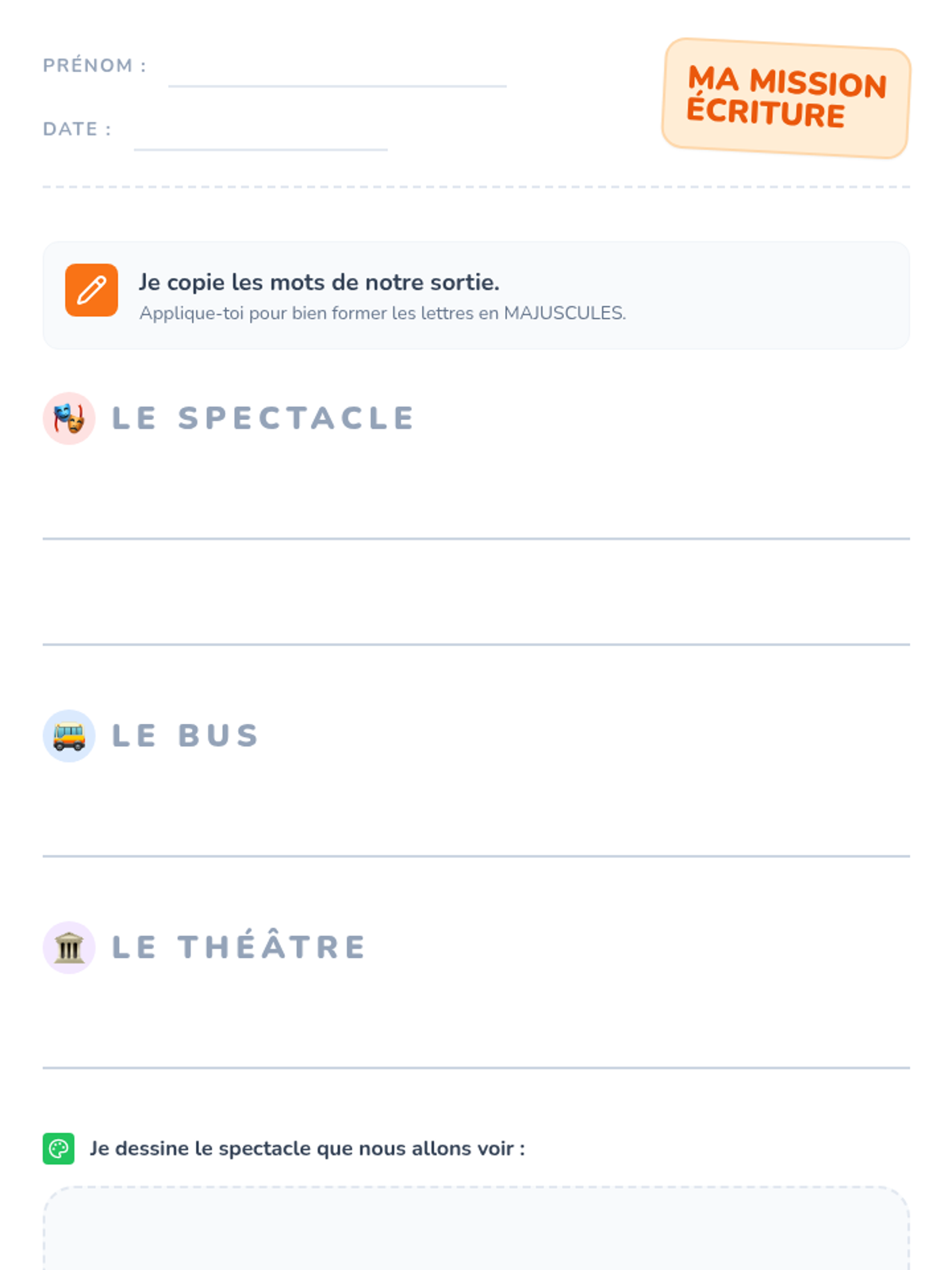
Cette leçon vise à introduire un projet d'écriture authentique en Grande Section : rédiger un message aux parents pour annoncer une sortie scolaire. Elle s'appuie sur l'observation de messages existants pour définir des critères de réussite et initier la planification selon les programmes 2025.
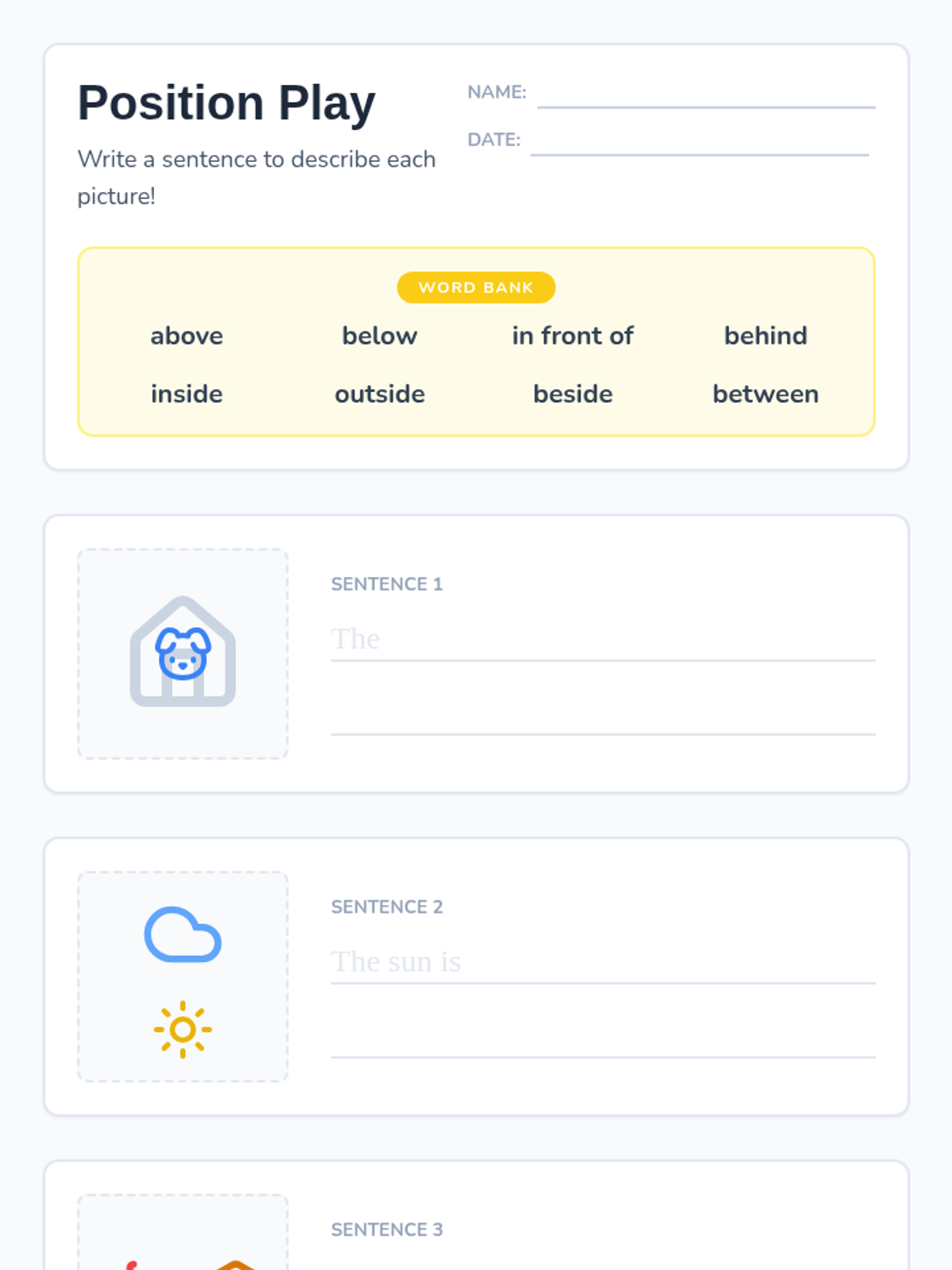
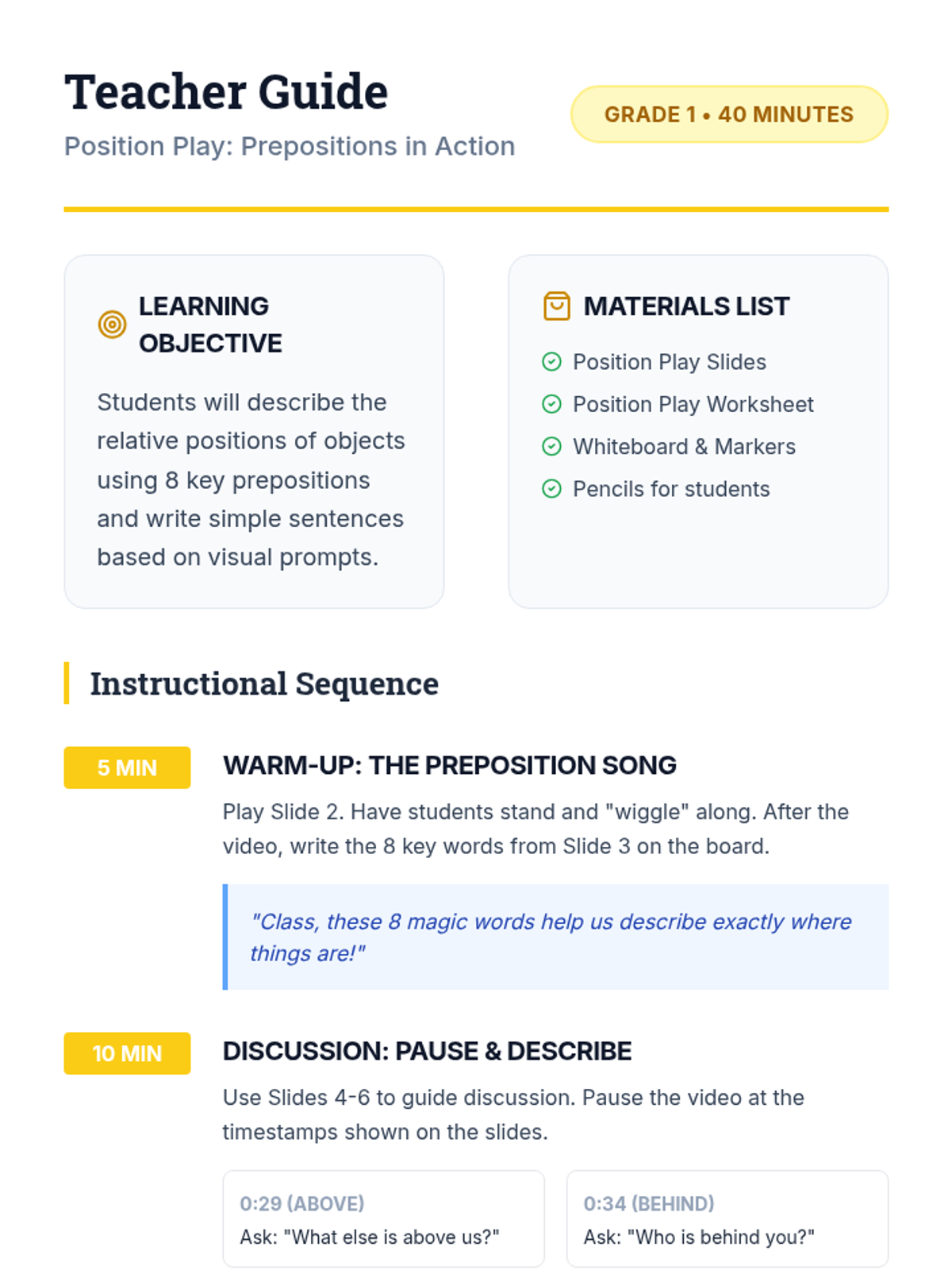
A 1st Grade lesson focused on using prepositional vocabulary to describe relative positions through song, discussion, and sentence building.
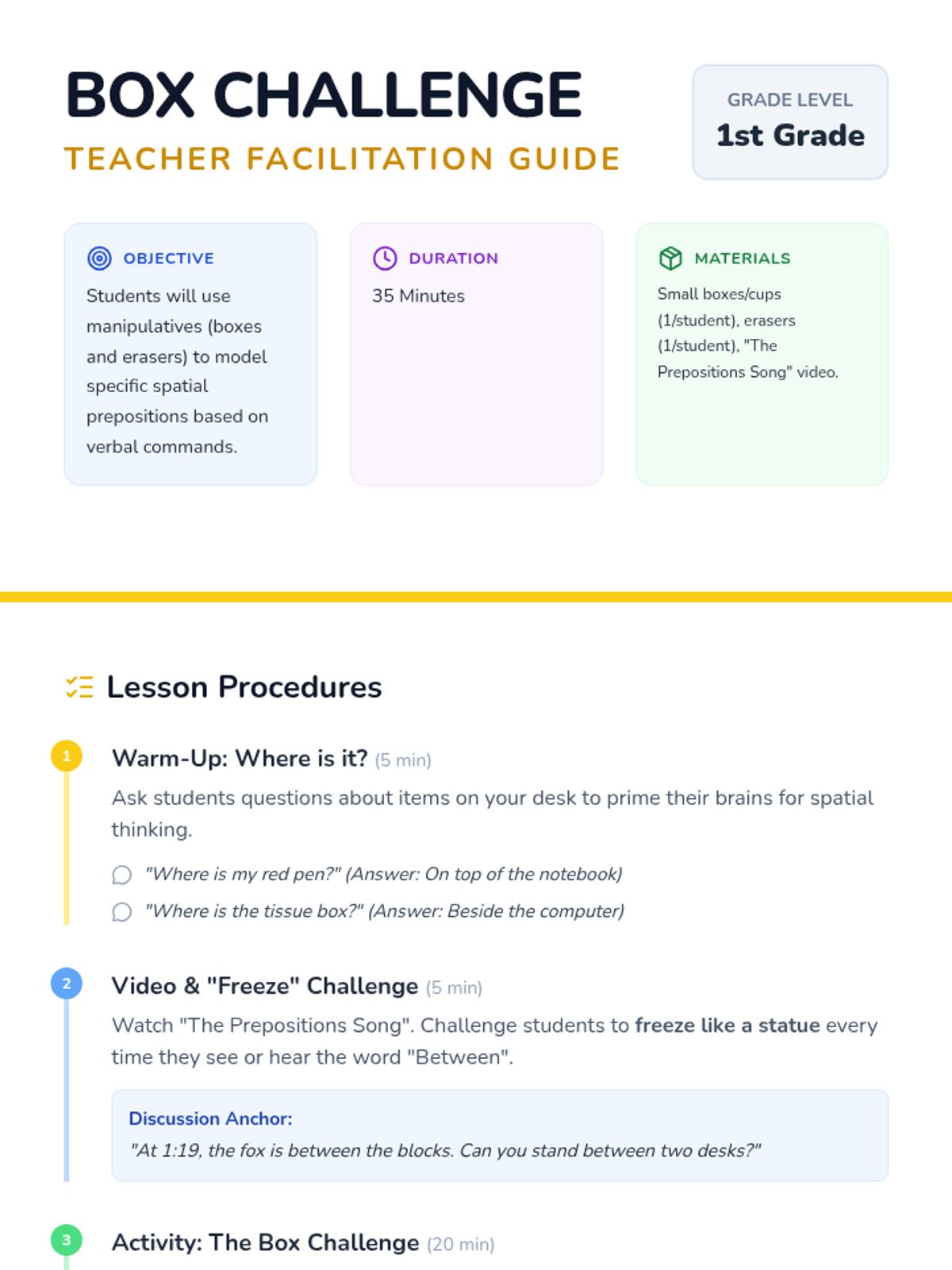
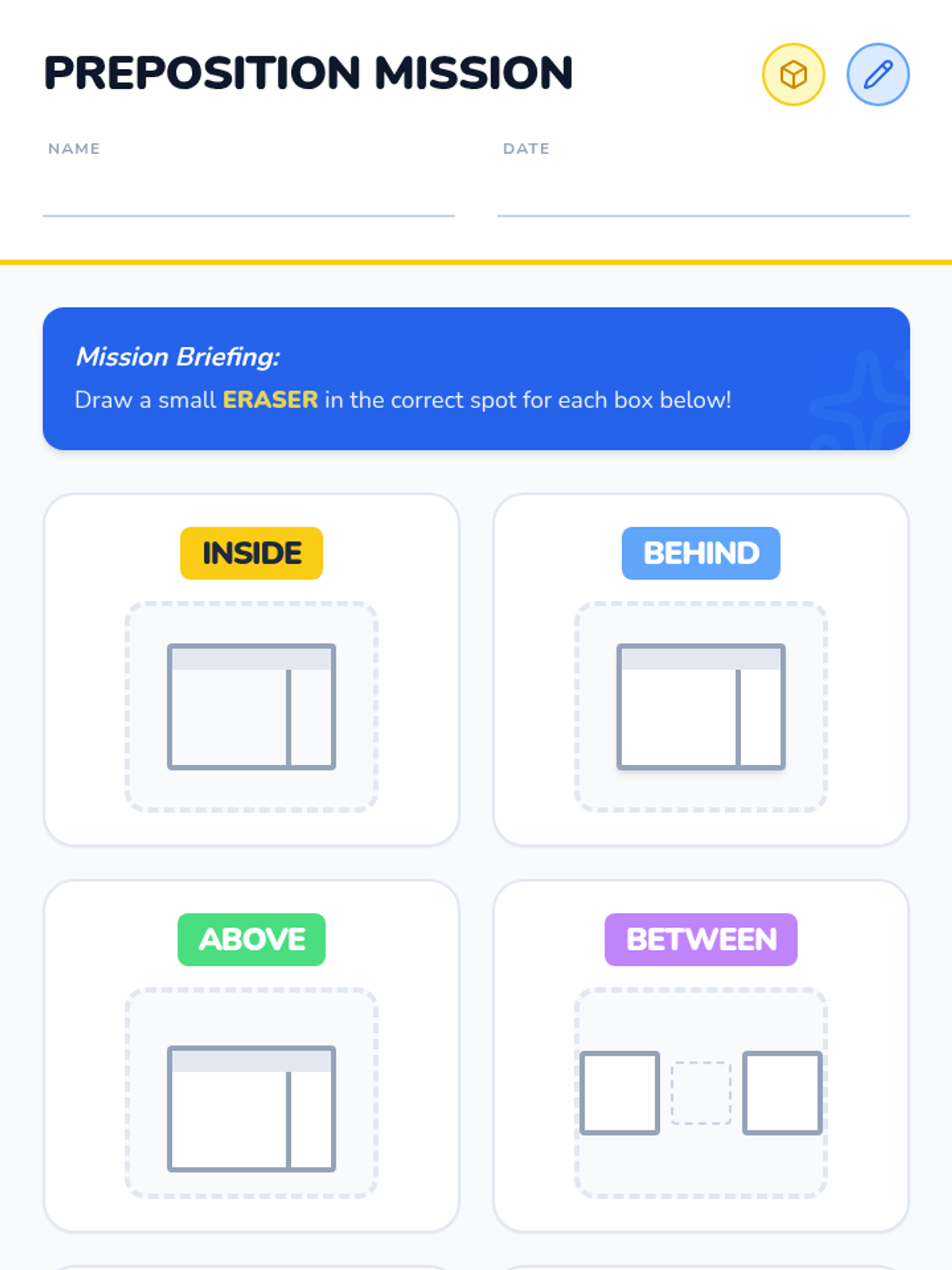
A hands-on 1st Grade lesson where students use manipulatives and a catchy song to master spatial prepositions like inside, behind, and between.
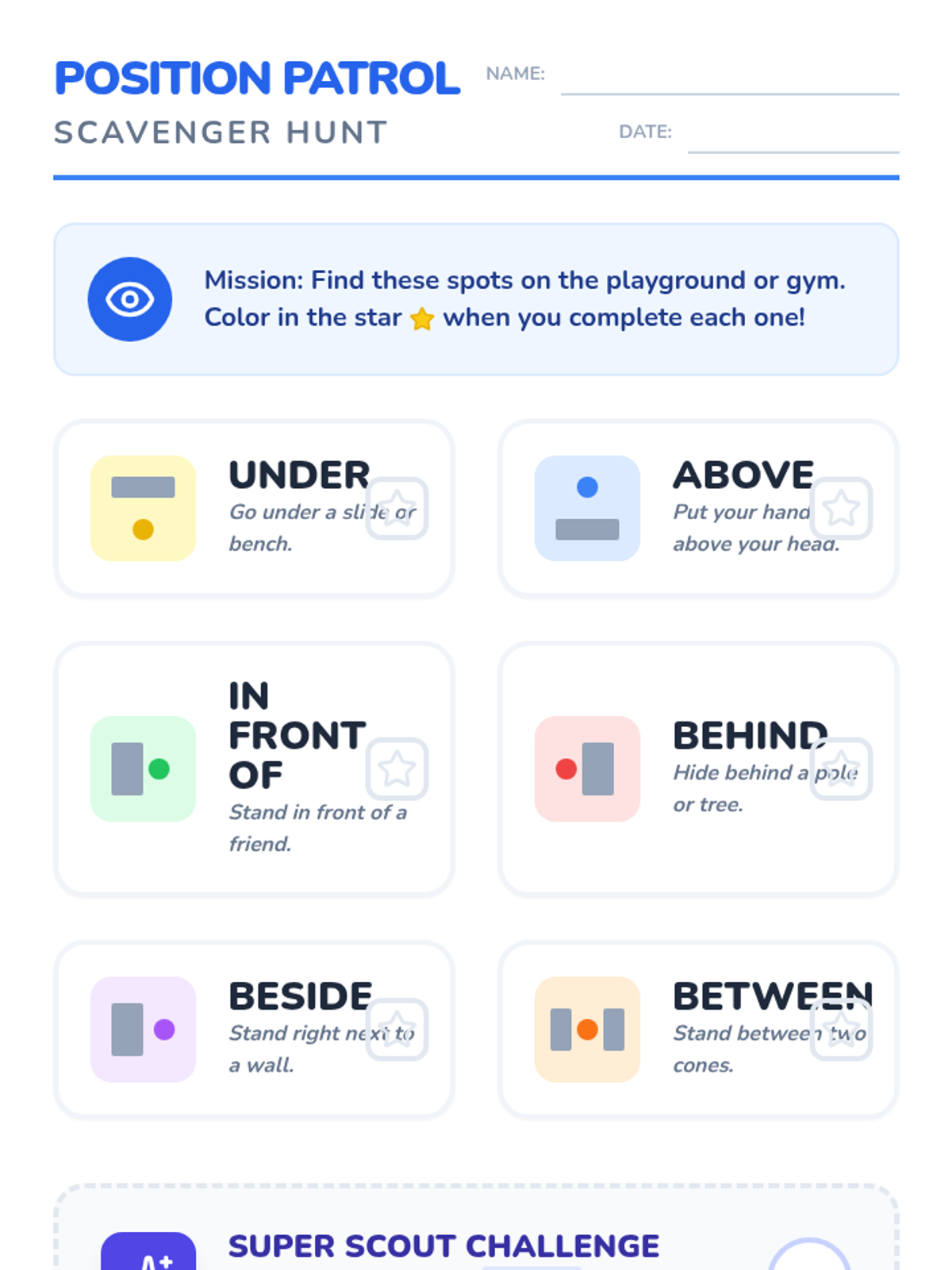
A fun, active lesson for Pre-K to 1st grade students to learn prepositions of place through music and a playground scavenger hunt.
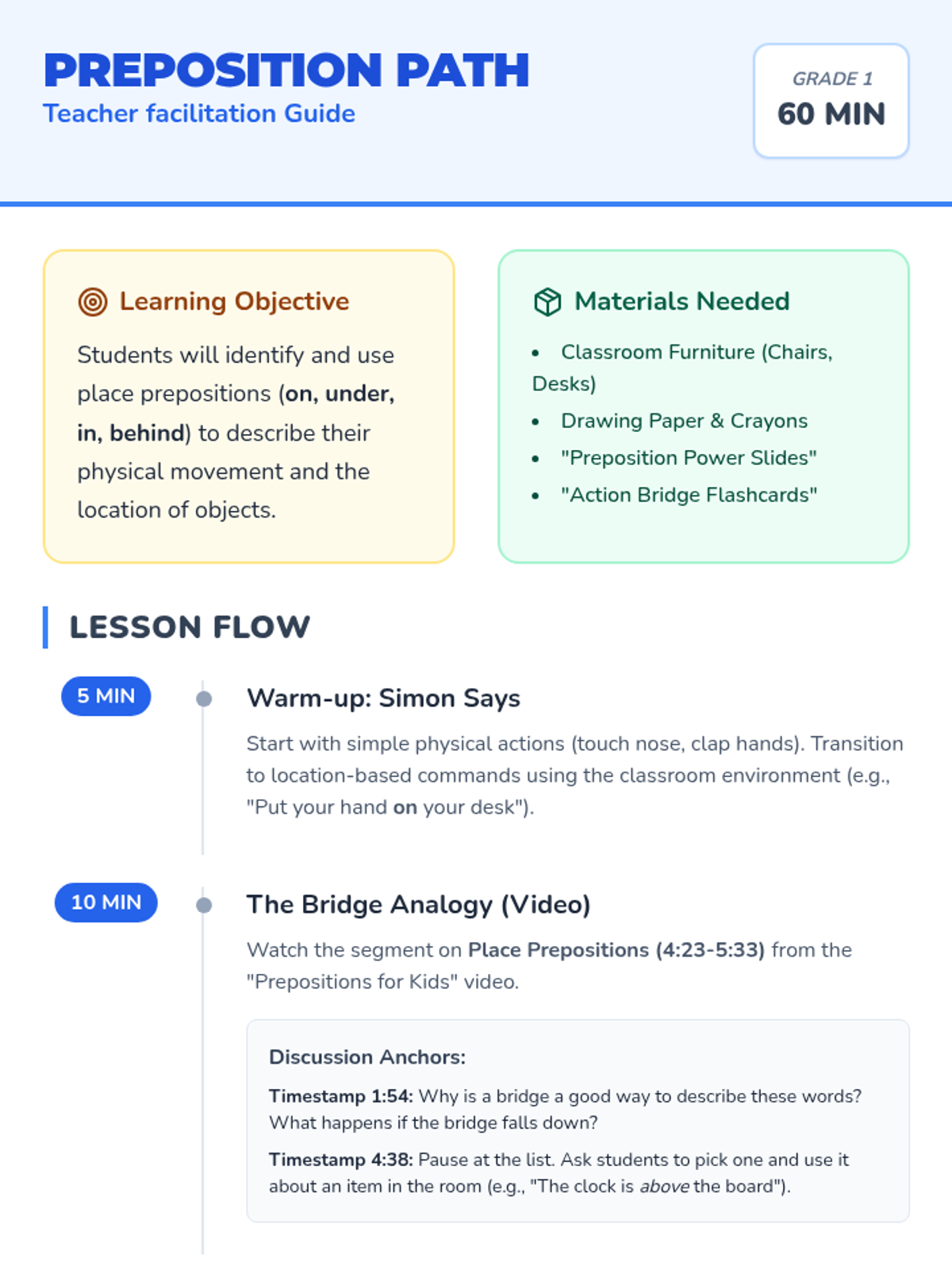
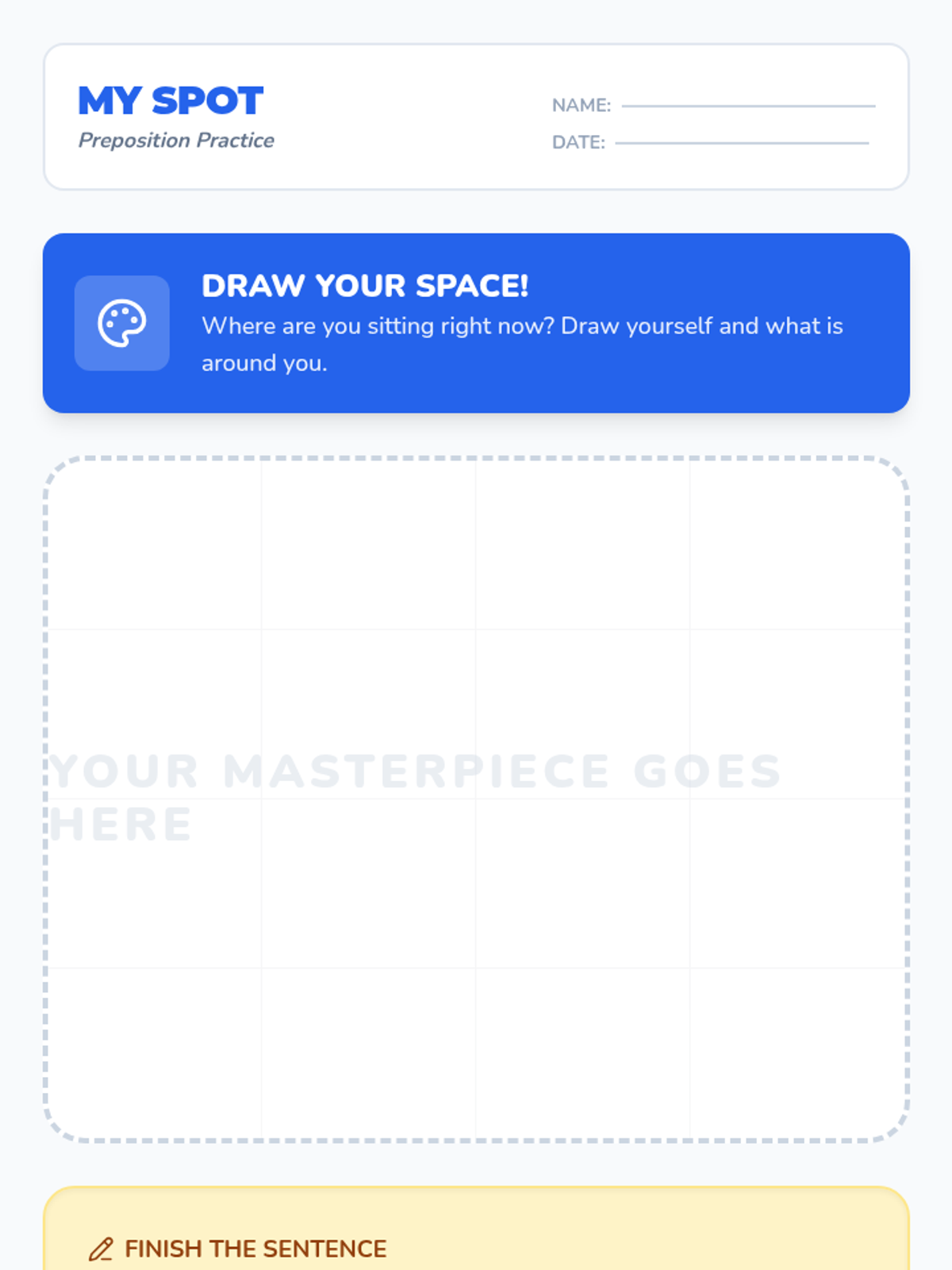
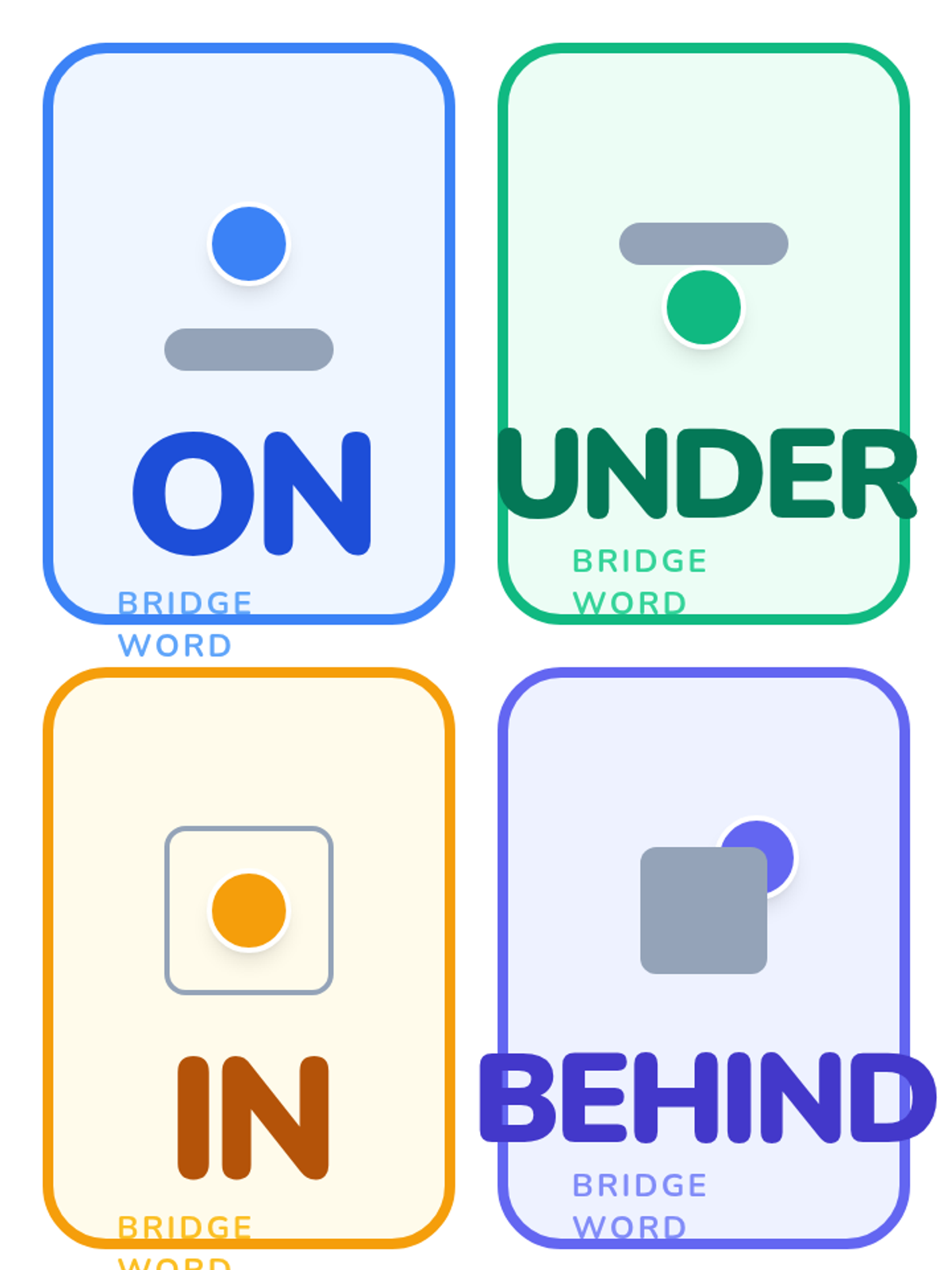
A 1st Grade lesson exploring place prepositions through the 'bridge' analogy, physical movement in an obstacle course, and creative drawing. Students will learn how prepositions connect words and describe where objects are located.
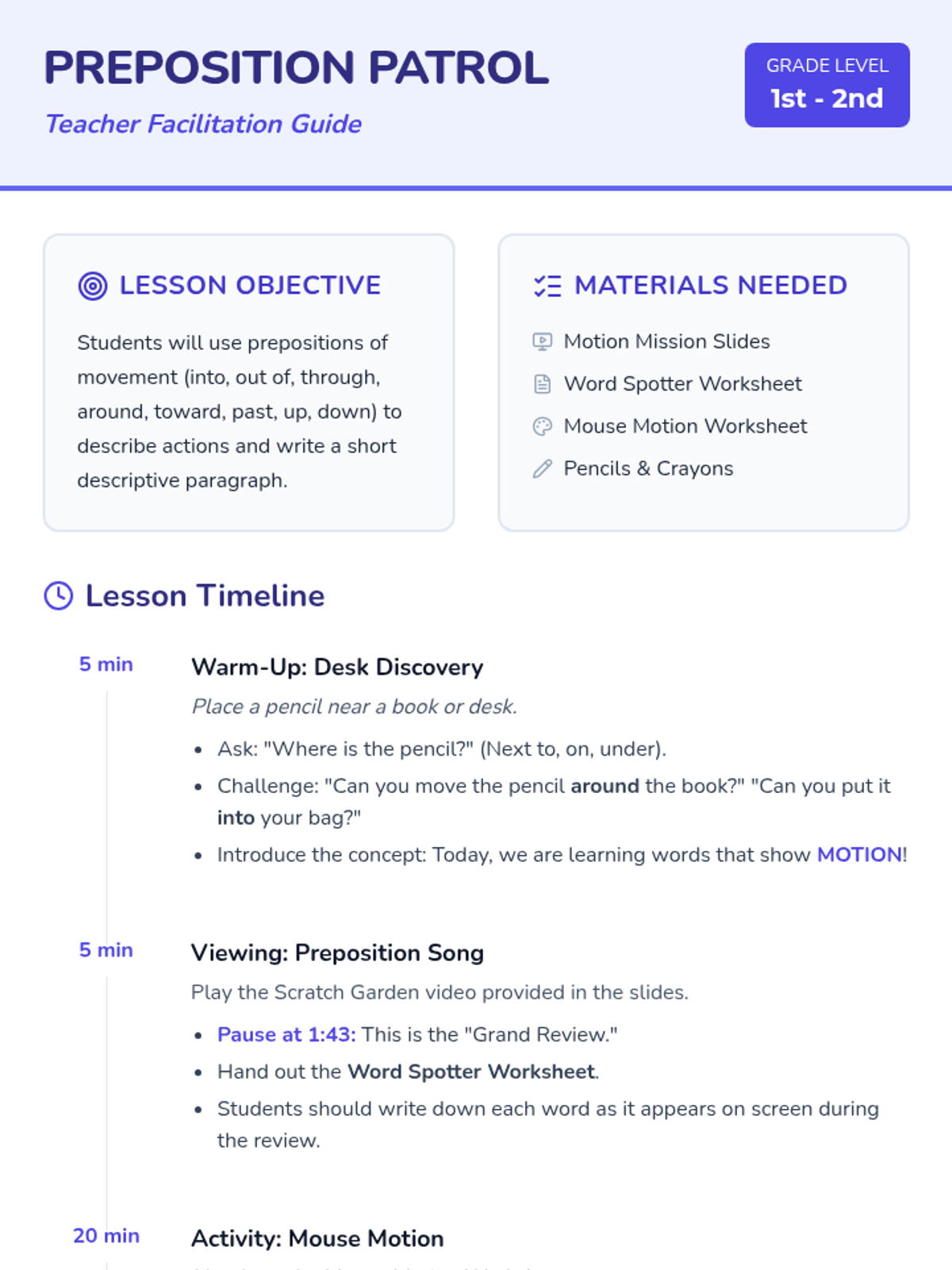
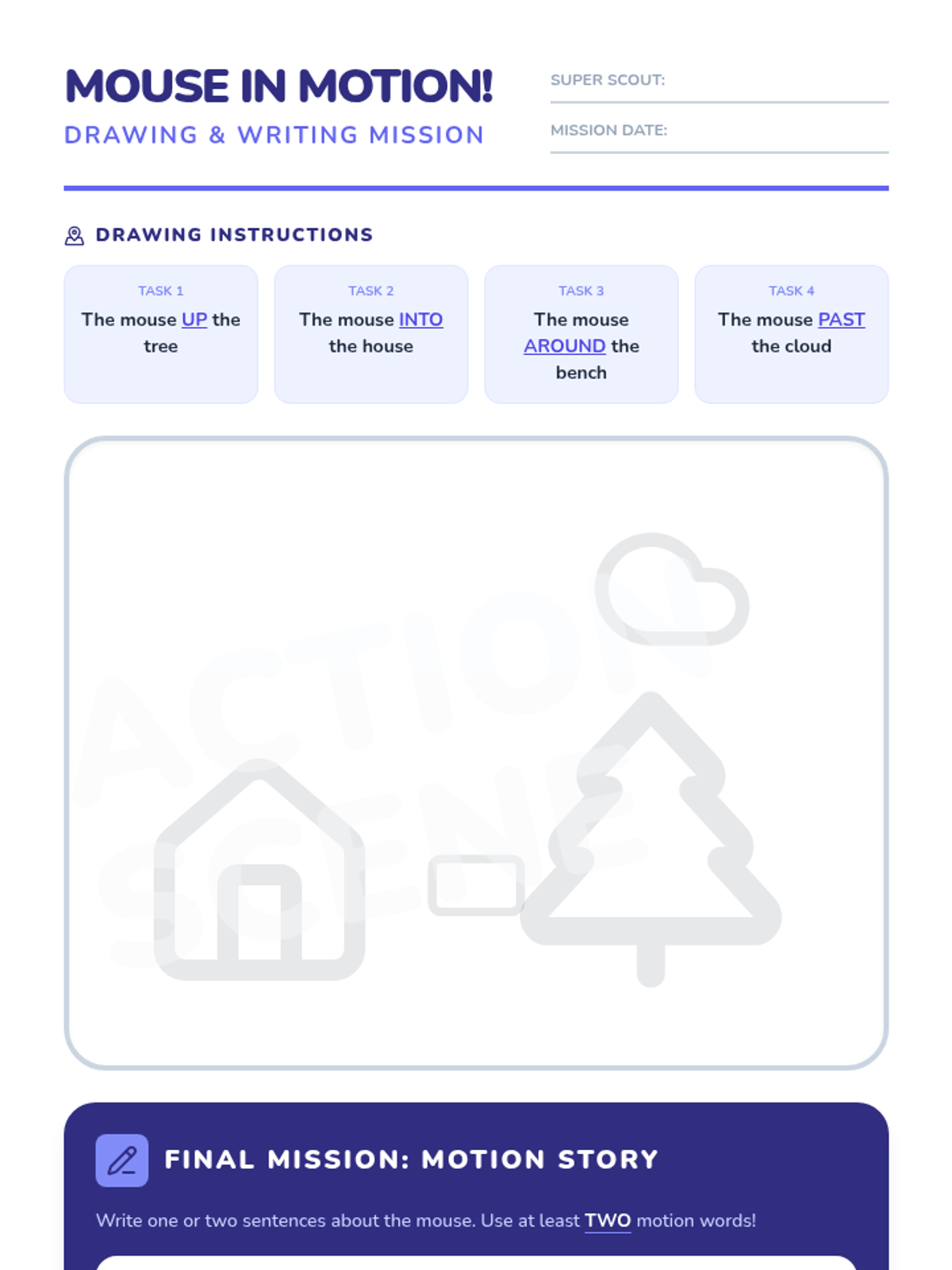
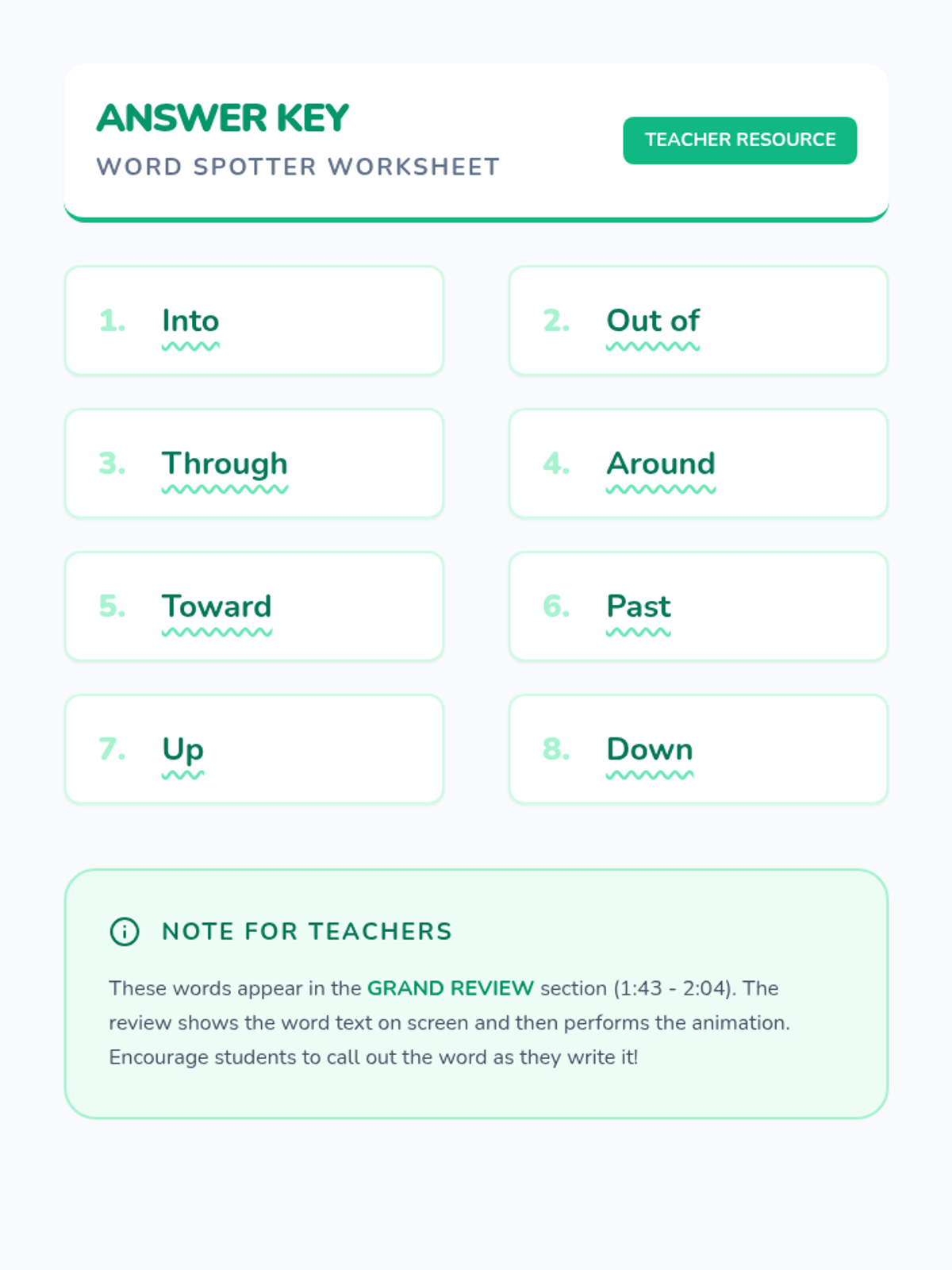
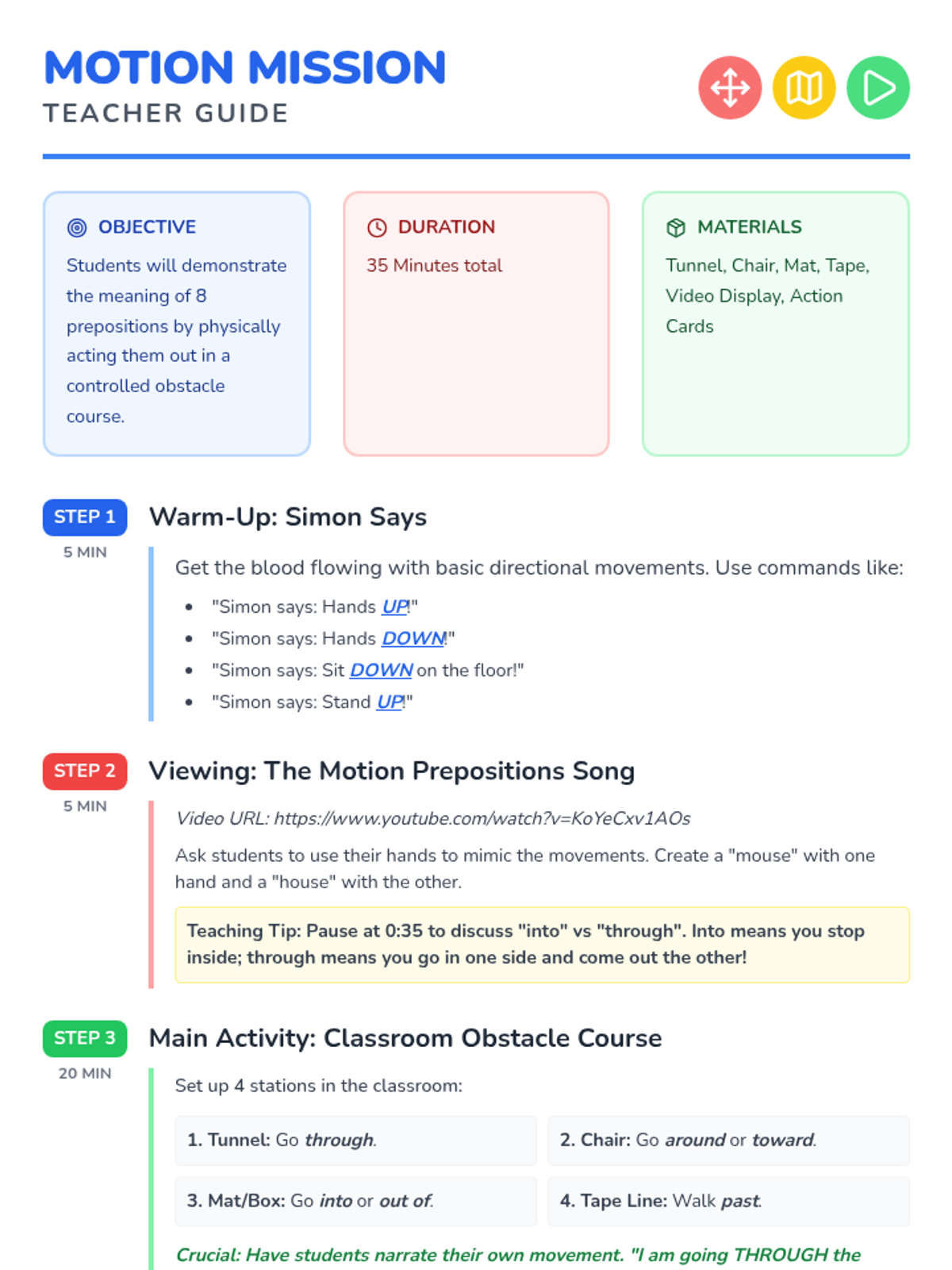
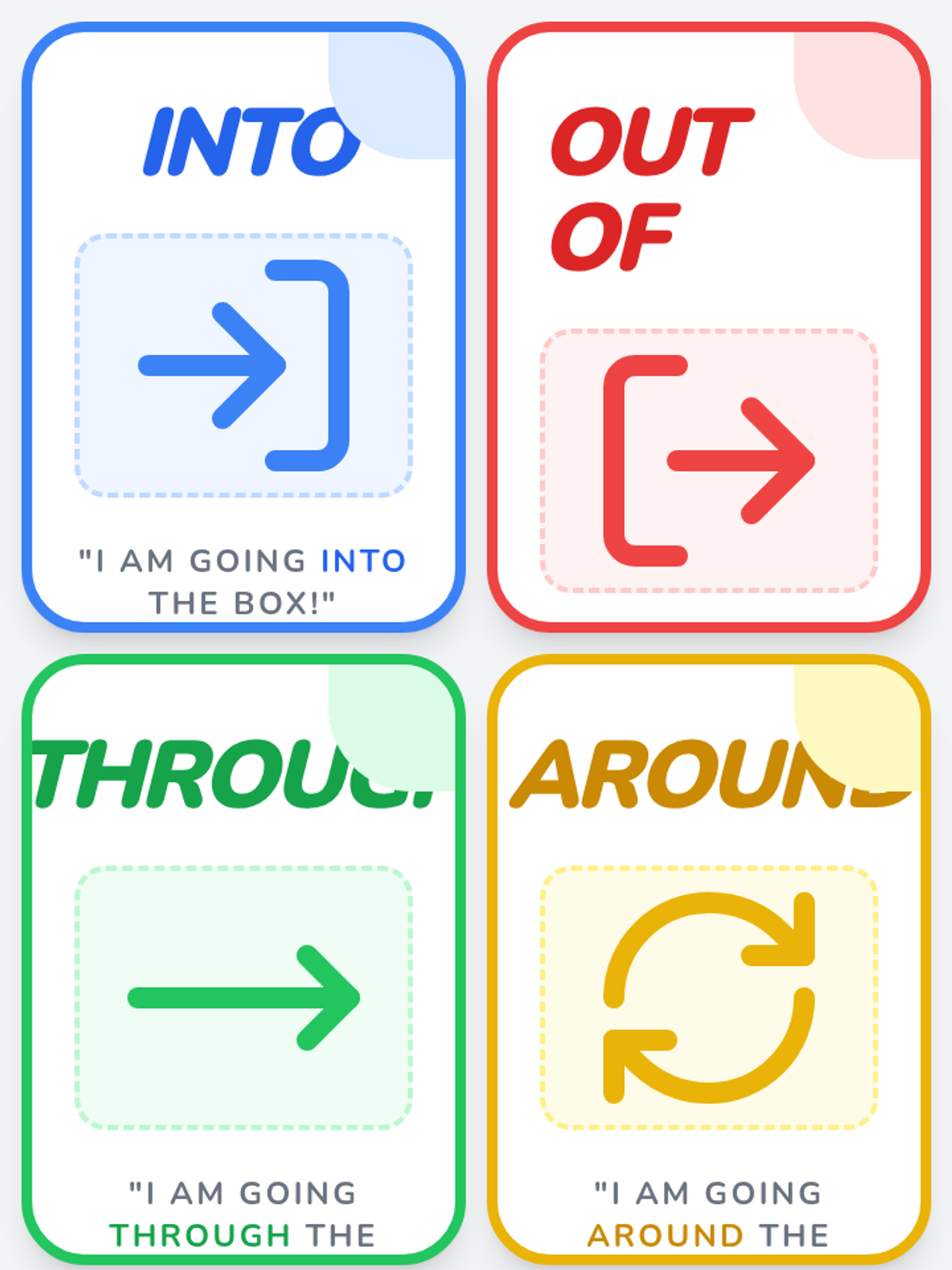
A high-energy lesson for 1st-2nd graders focusing on prepositions of movement through song, drawing, and descriptive writing. Students will identify 'into, out of, through, around, toward, past, up, and down' and apply them to create a park scene featuring a mouse's adventures.
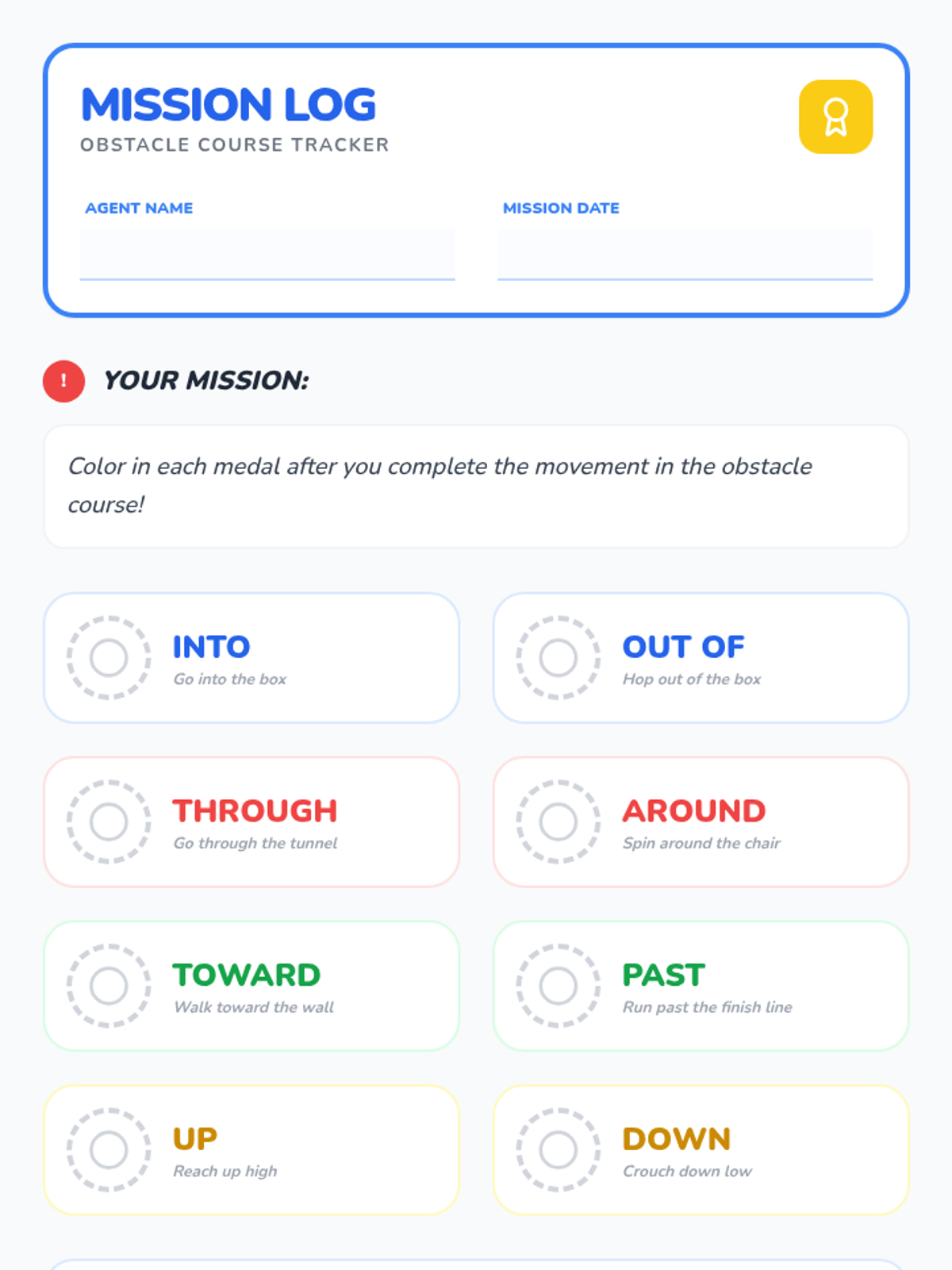
A high-energy, kinesthetic lesson for K-1 students to learn eight prepositions of movement through song, hand motions, and a classroom obstacle course. Students practice "into, out of, through, around, toward, past, up, and down" by physically navigating their environment.
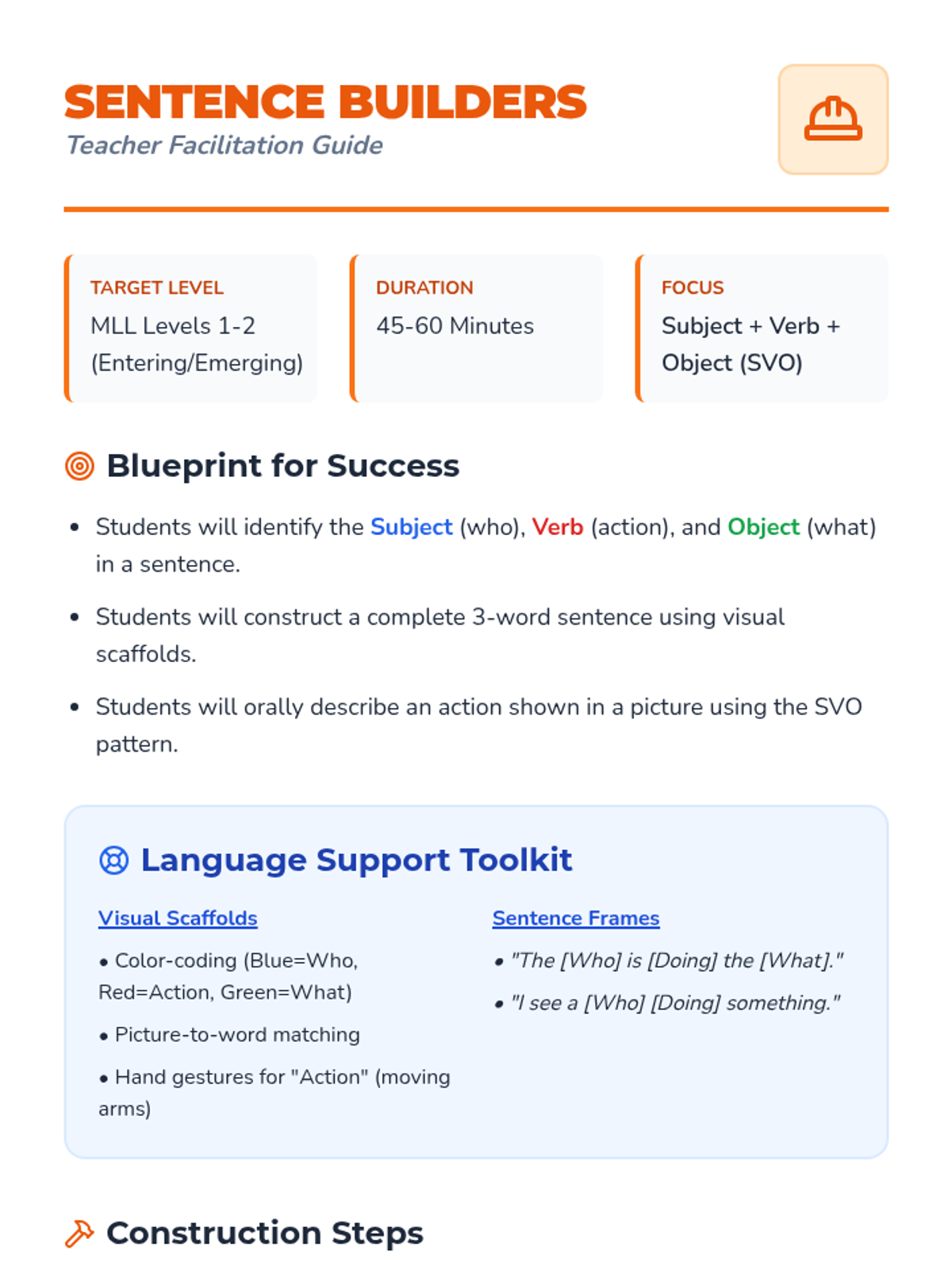
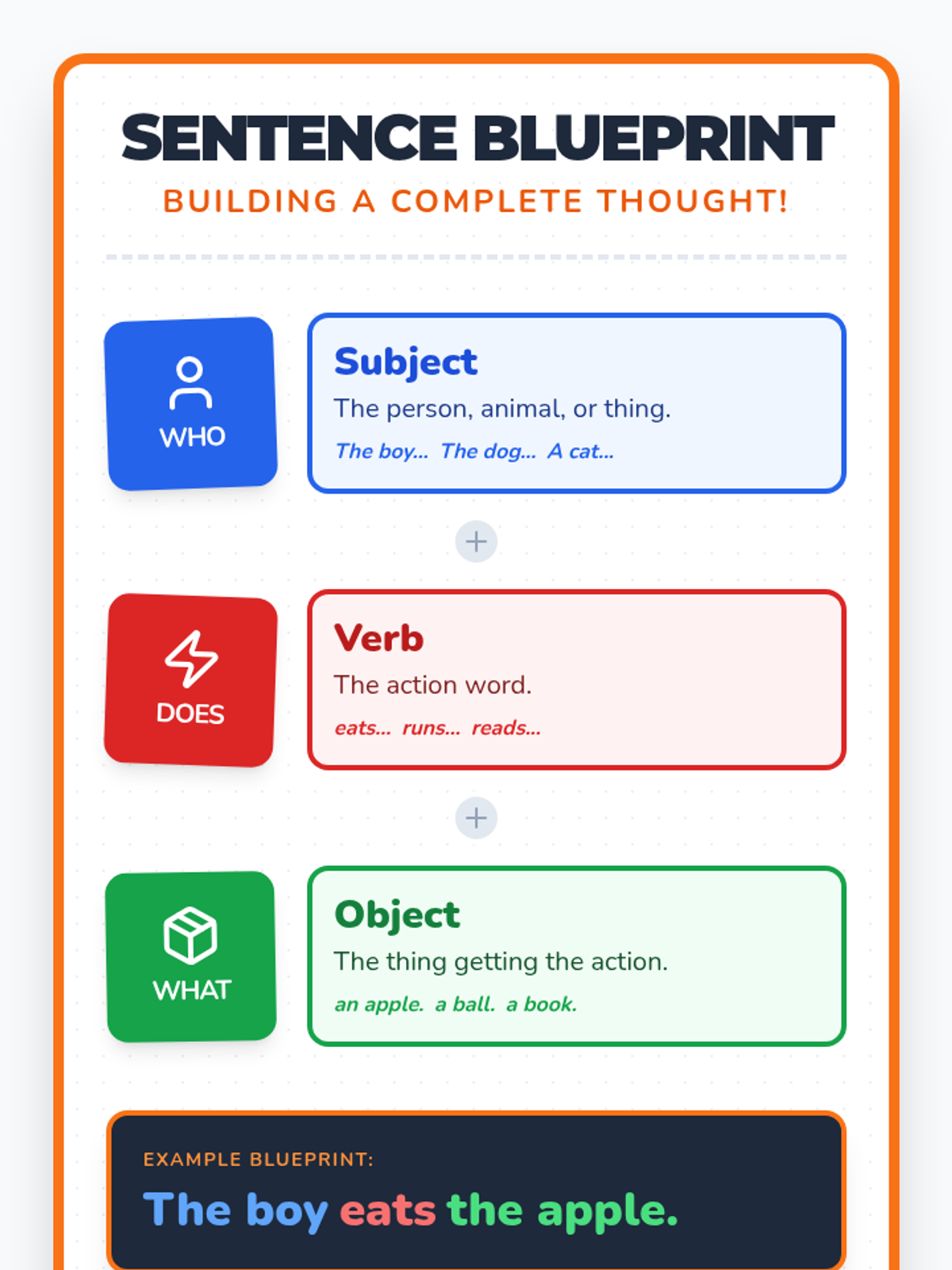
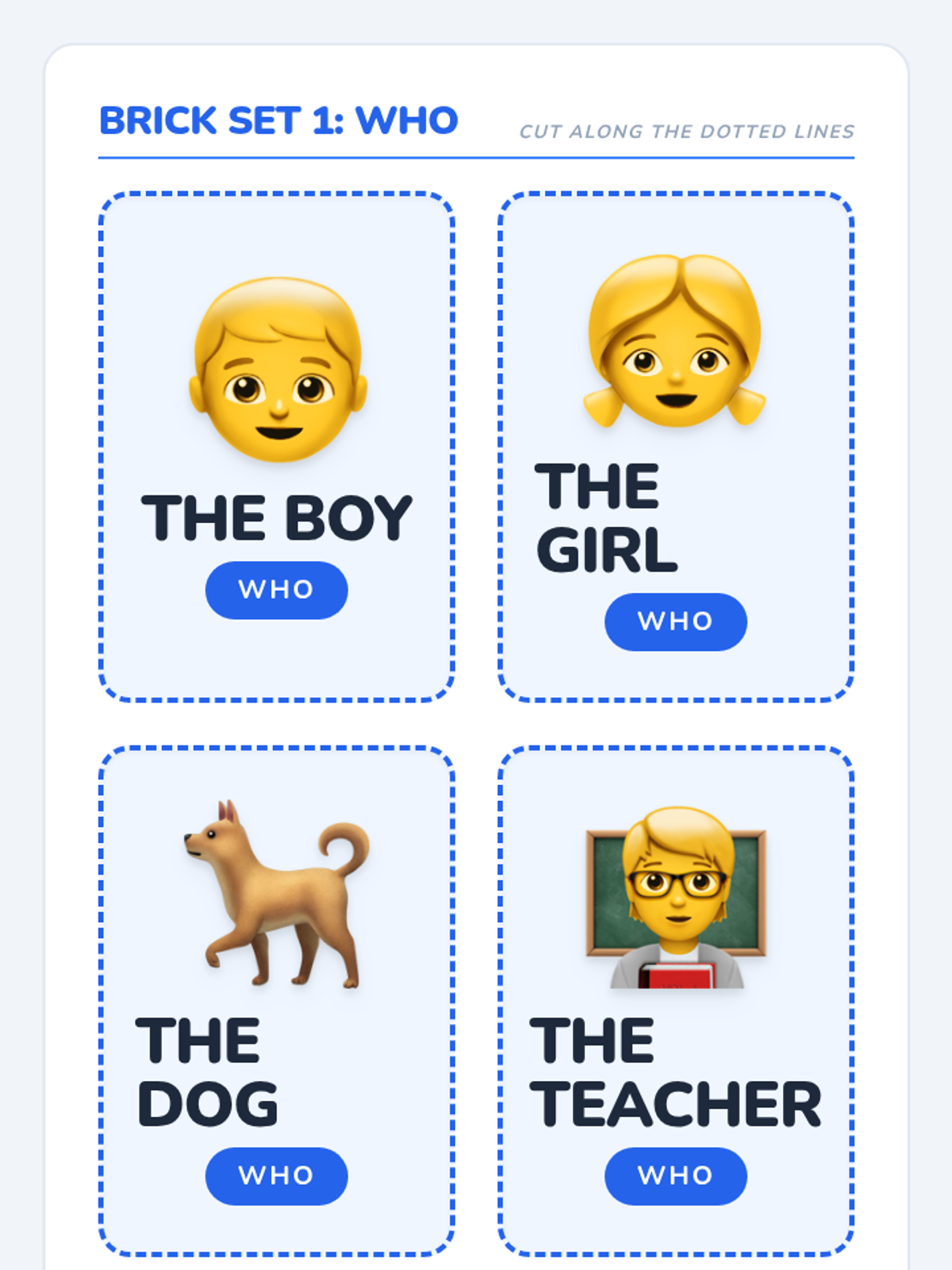
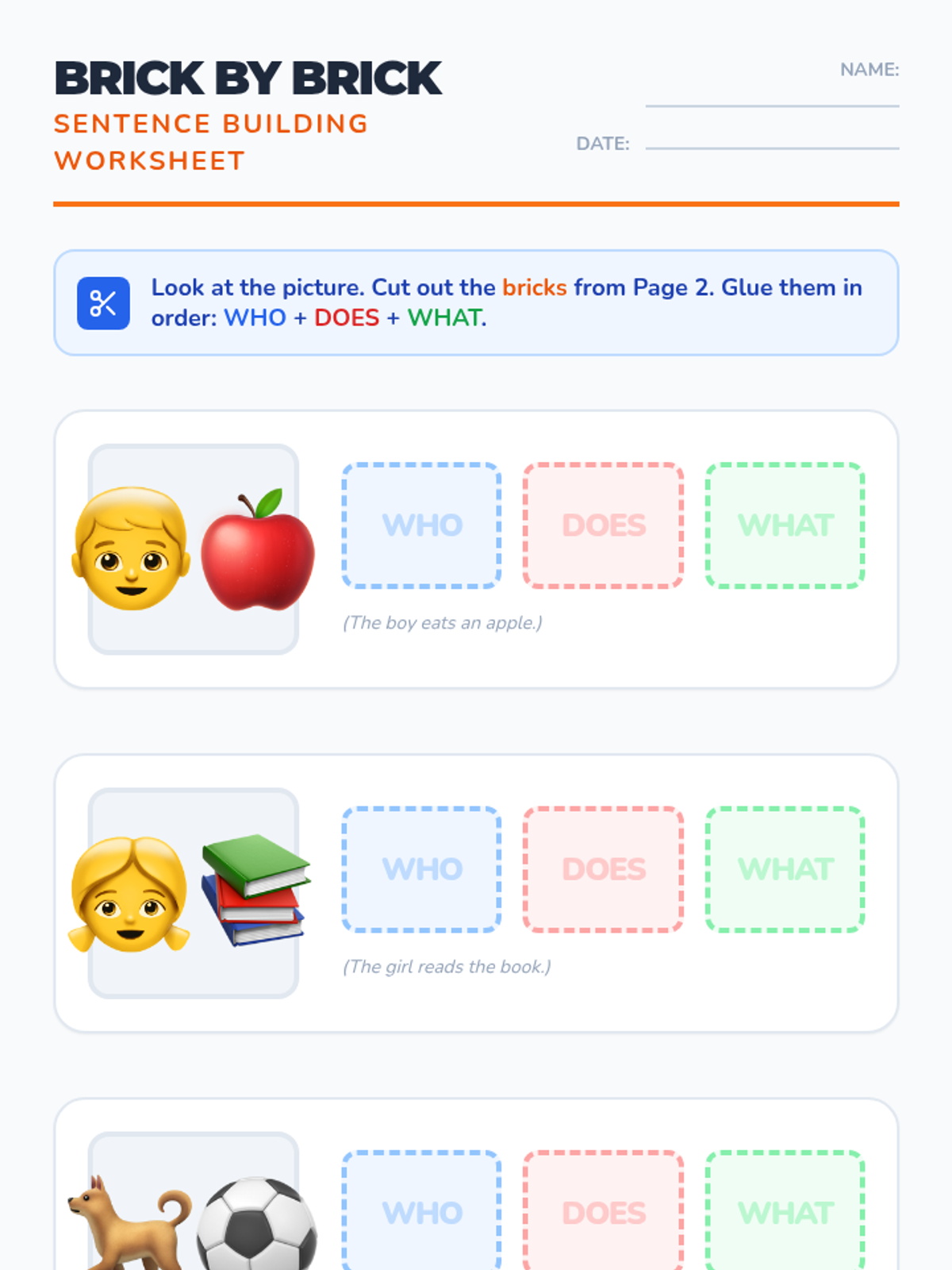
A foundational lesson for MLL students to master basic Subject-Verb-Object sentence structure using visual supports, scaffolding, and hands-on sequencing.
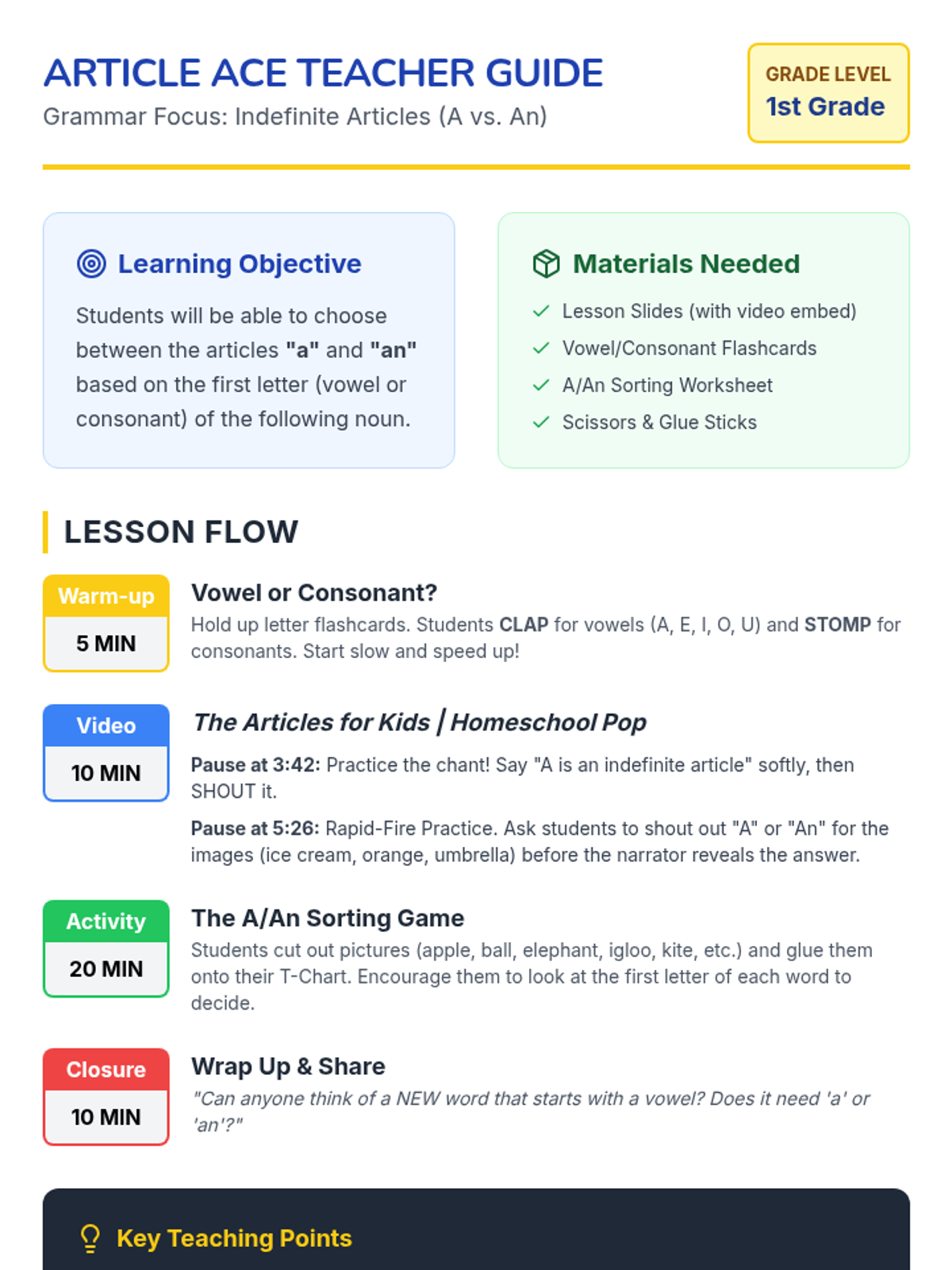
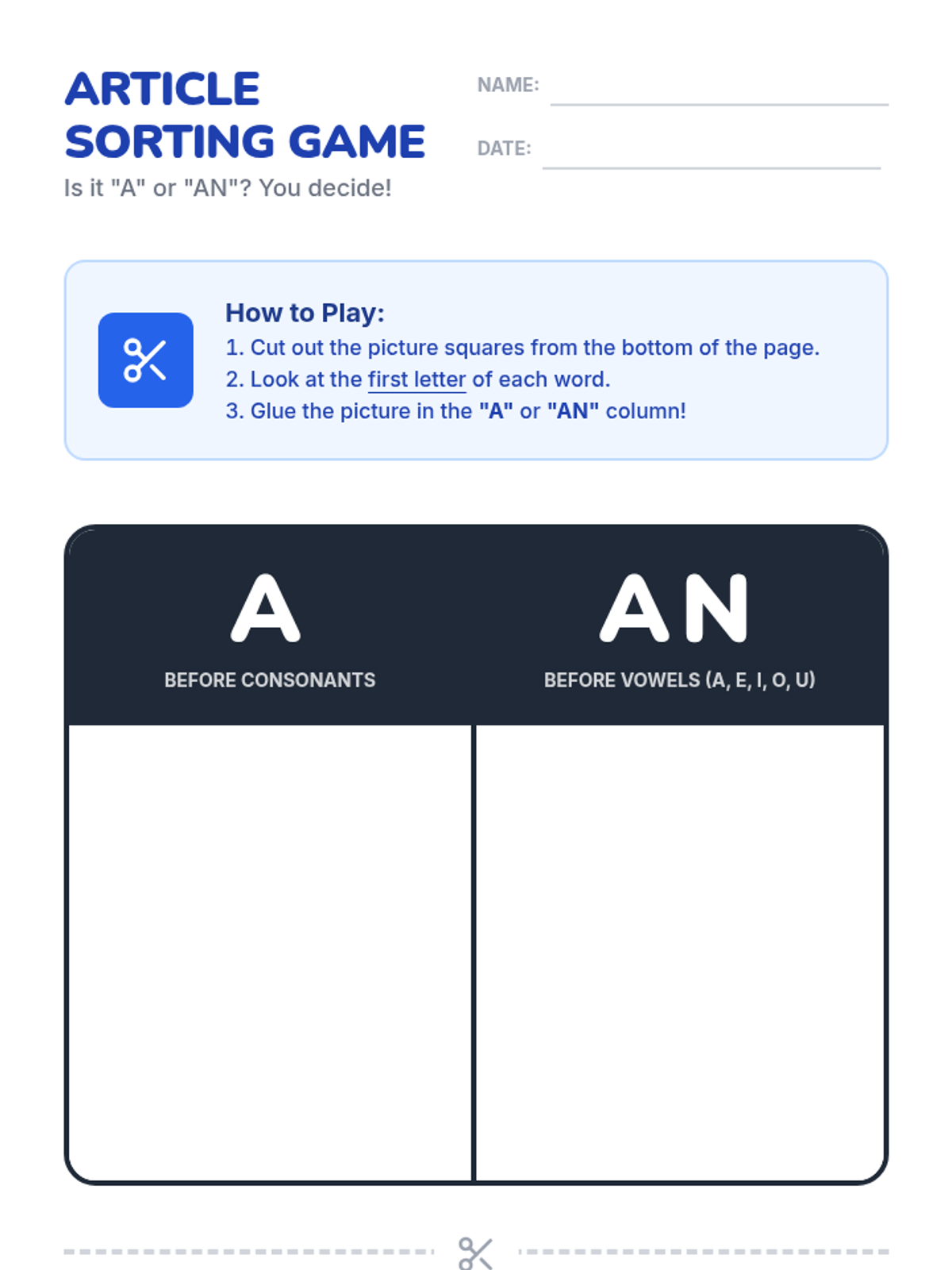
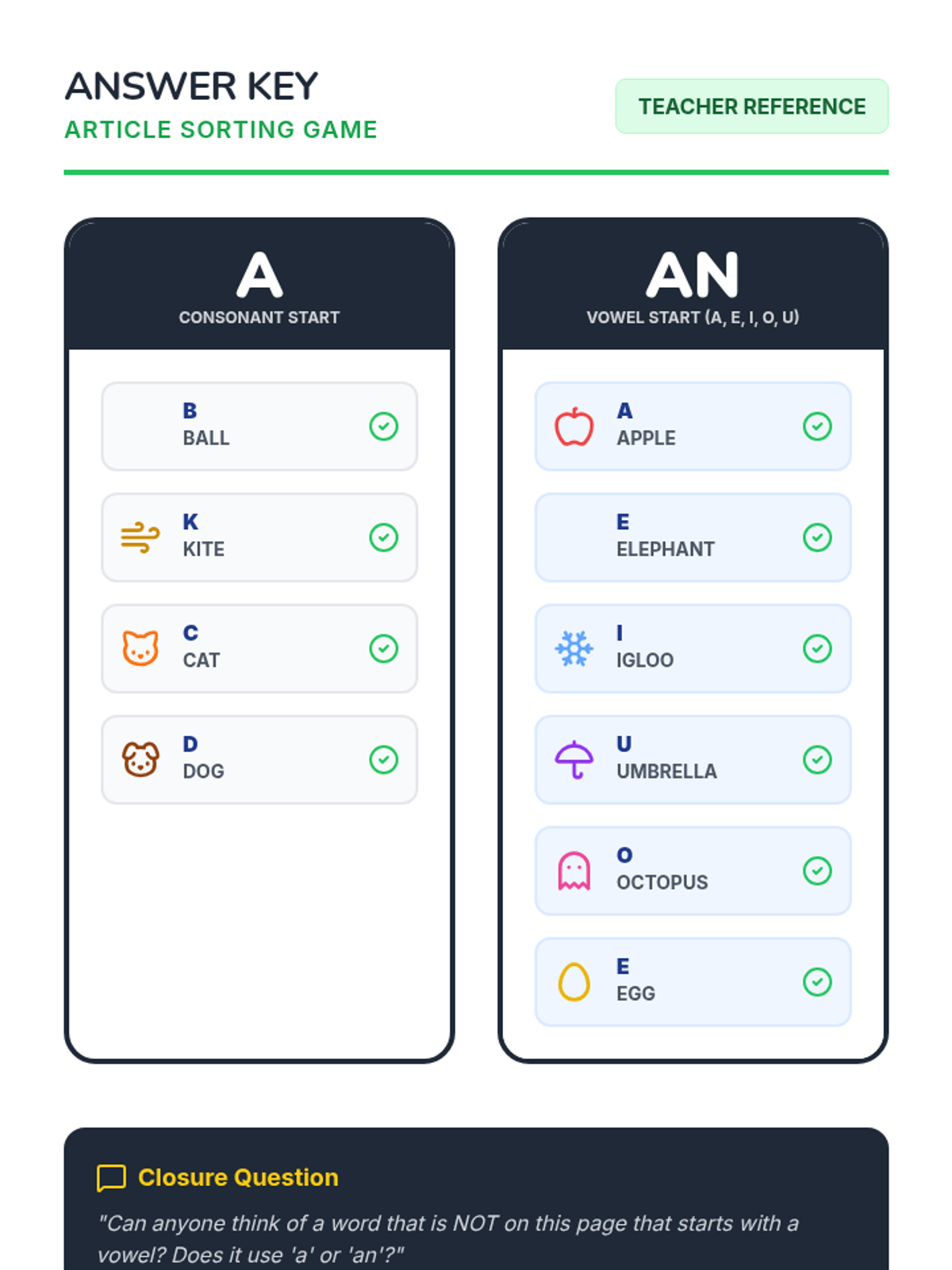
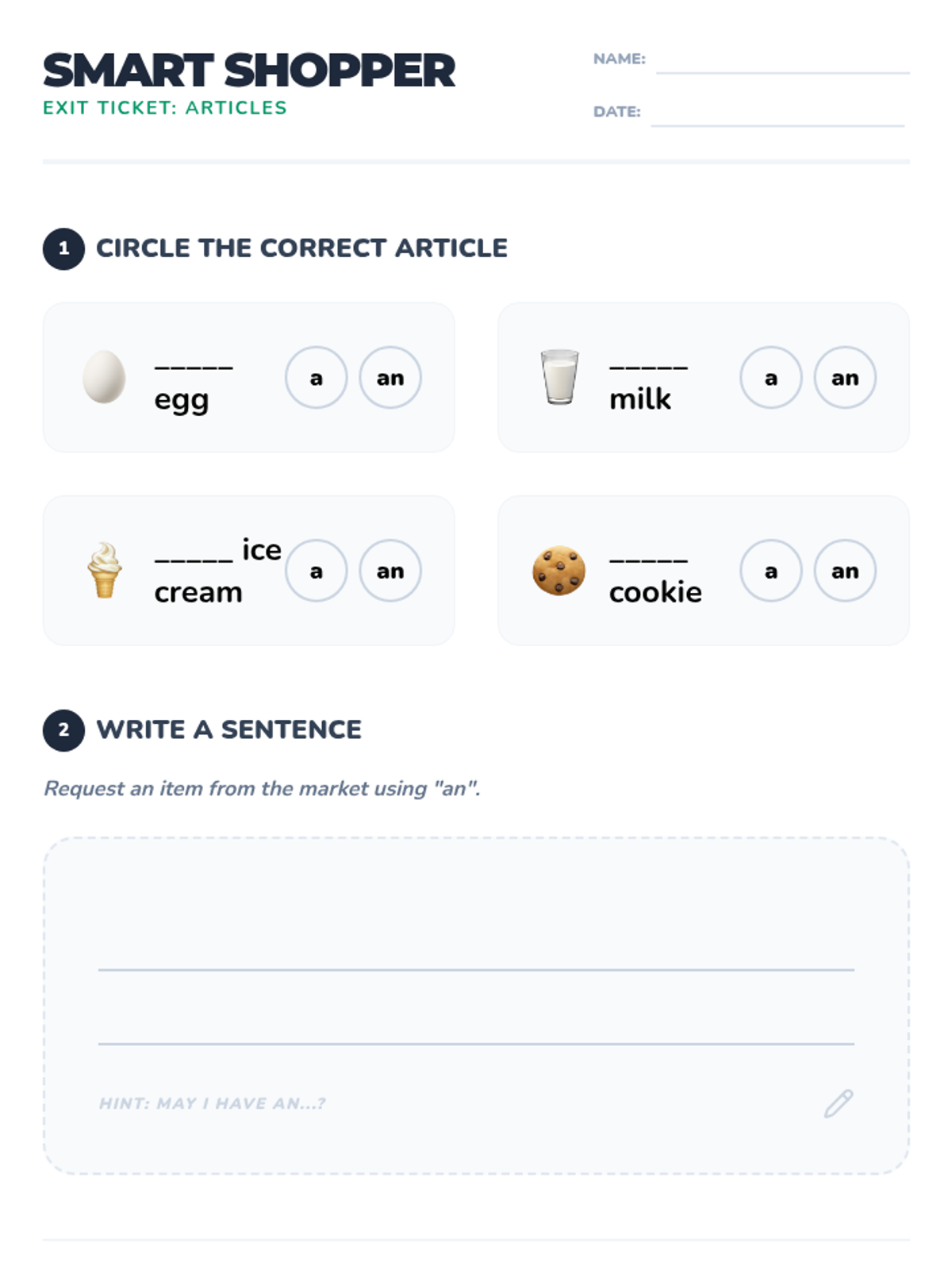
A high-energy 1st-grade lesson on using the indefinite articles 'a' and 'an' featuring a movement-based warm-up, an interactive video, and a tactile sorting activity.
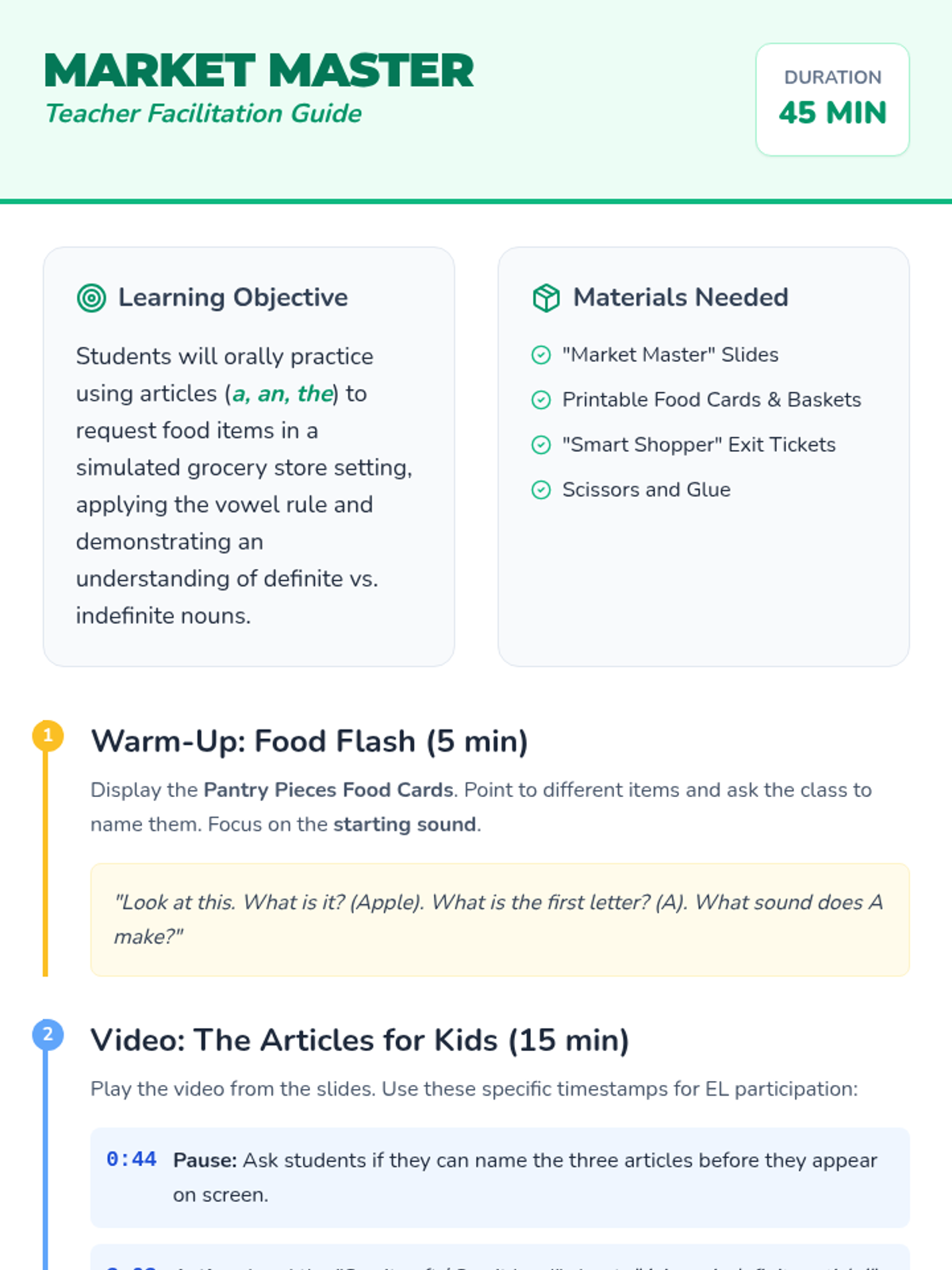
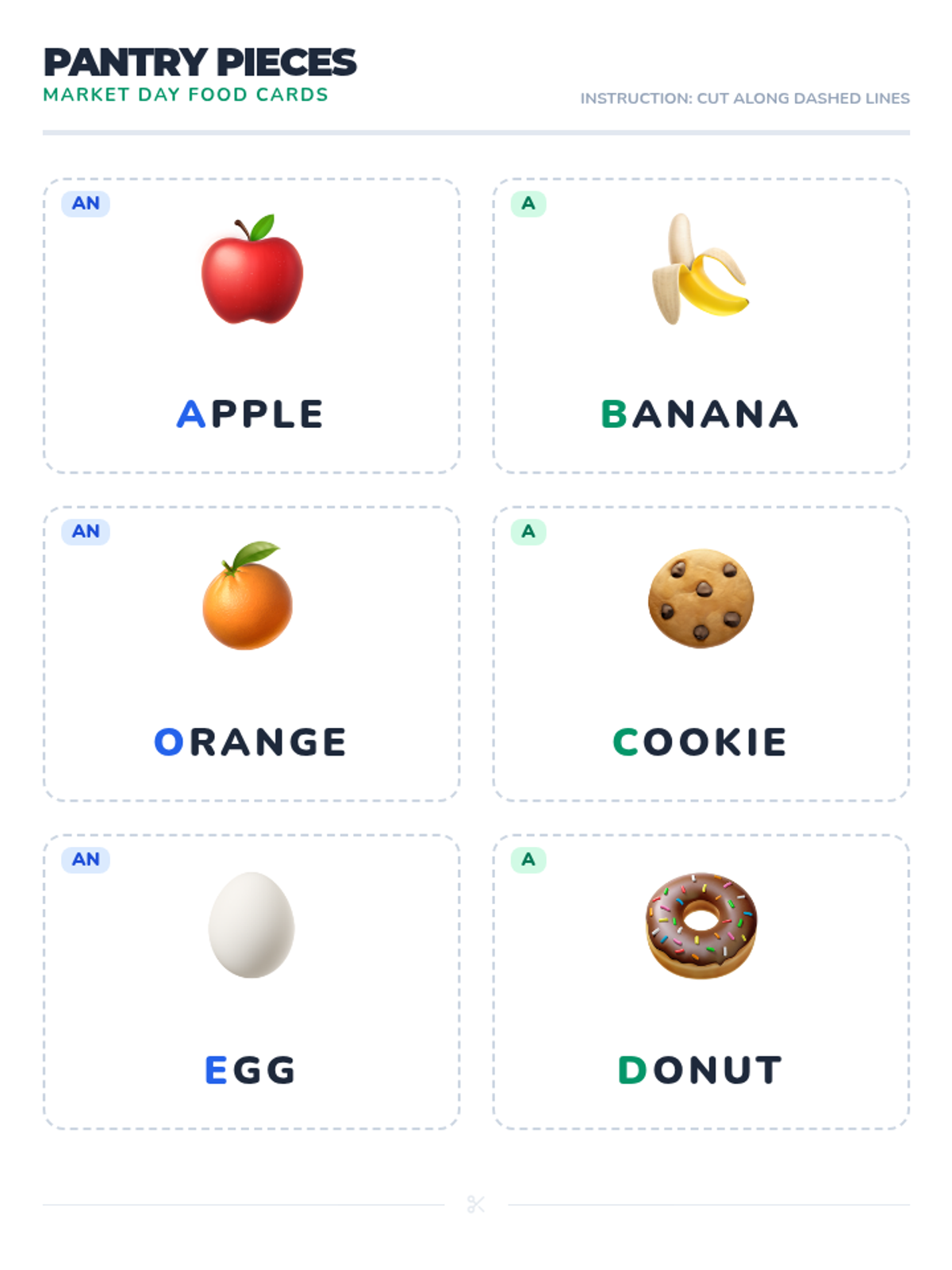
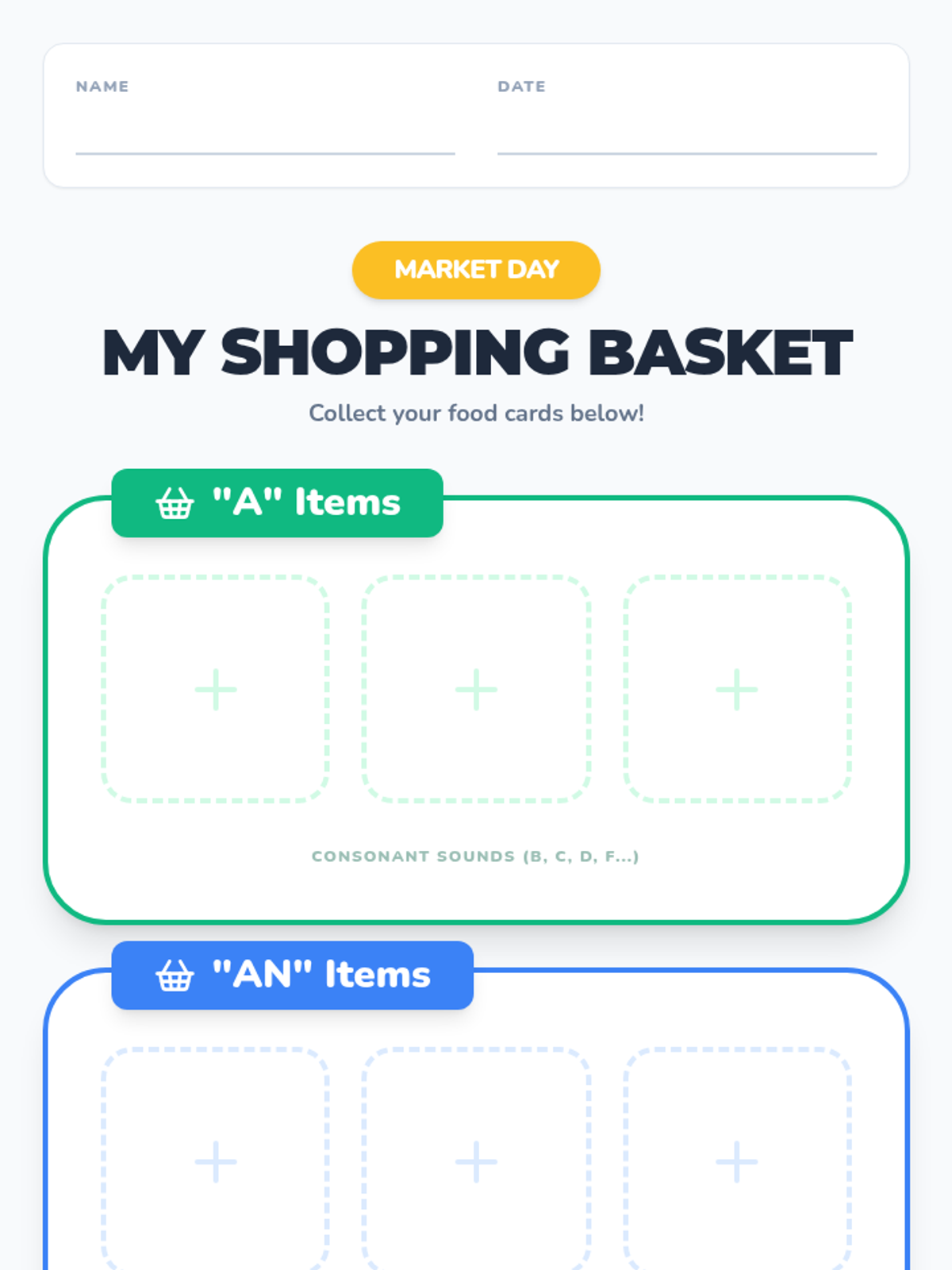
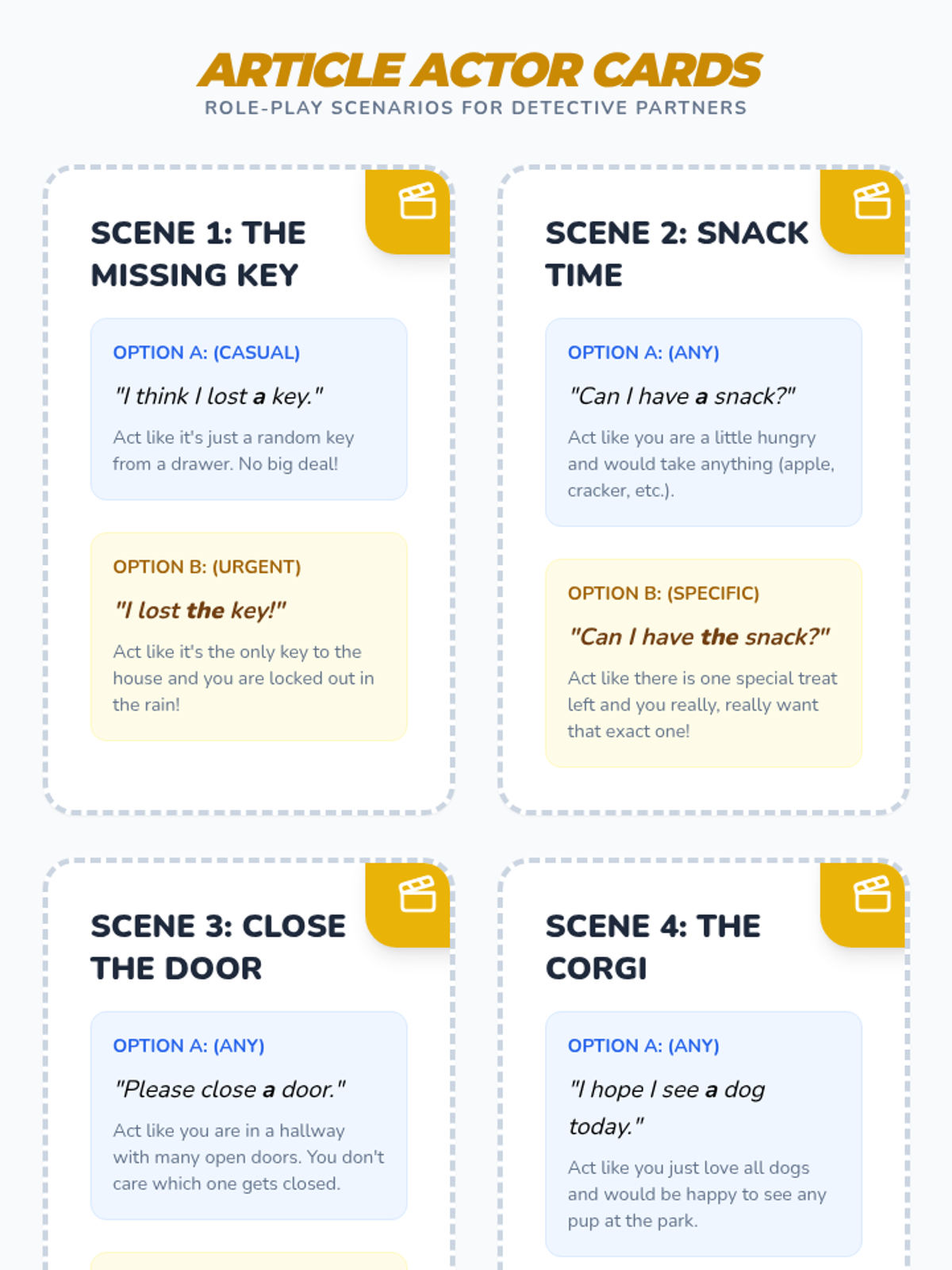
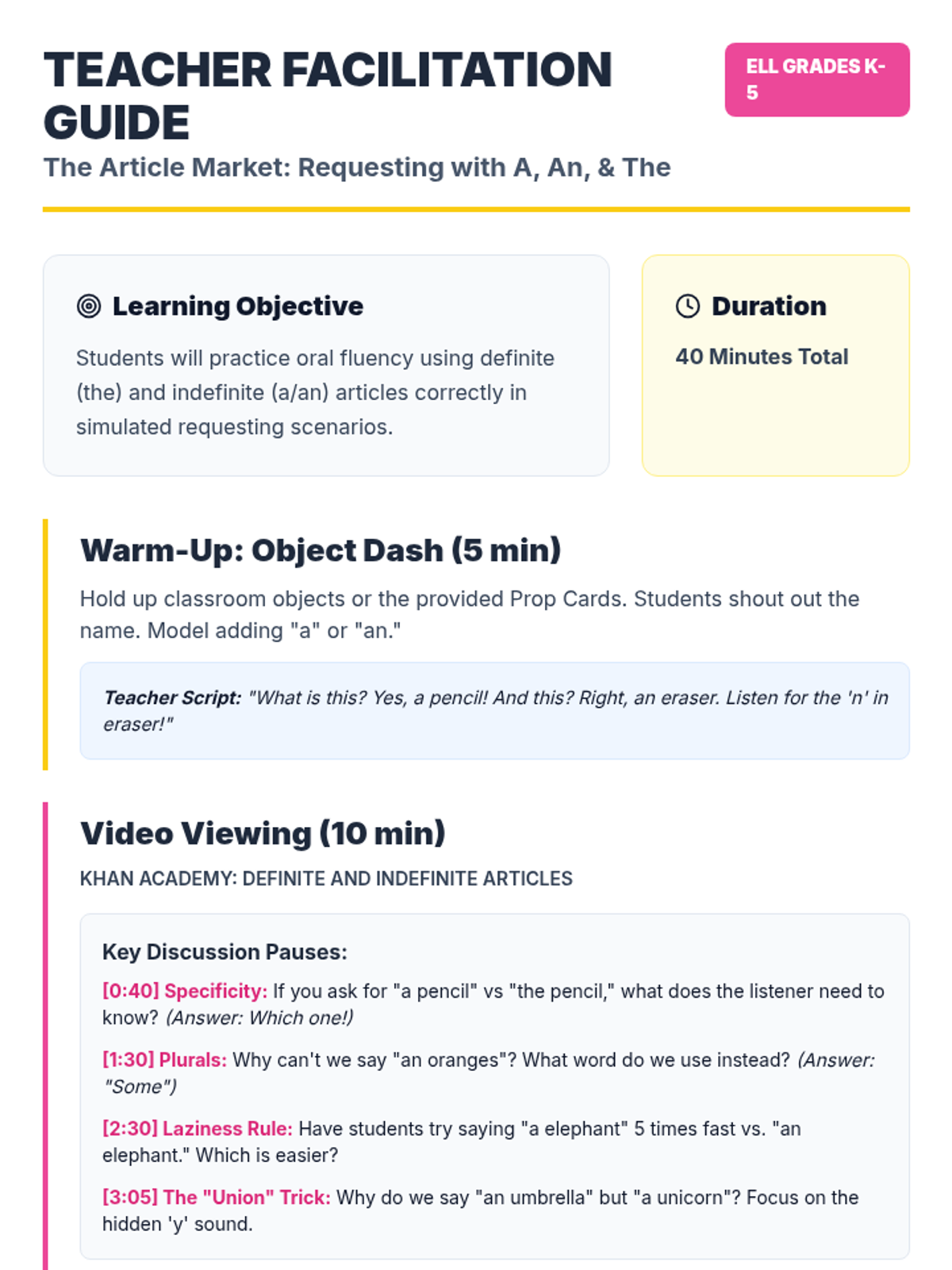
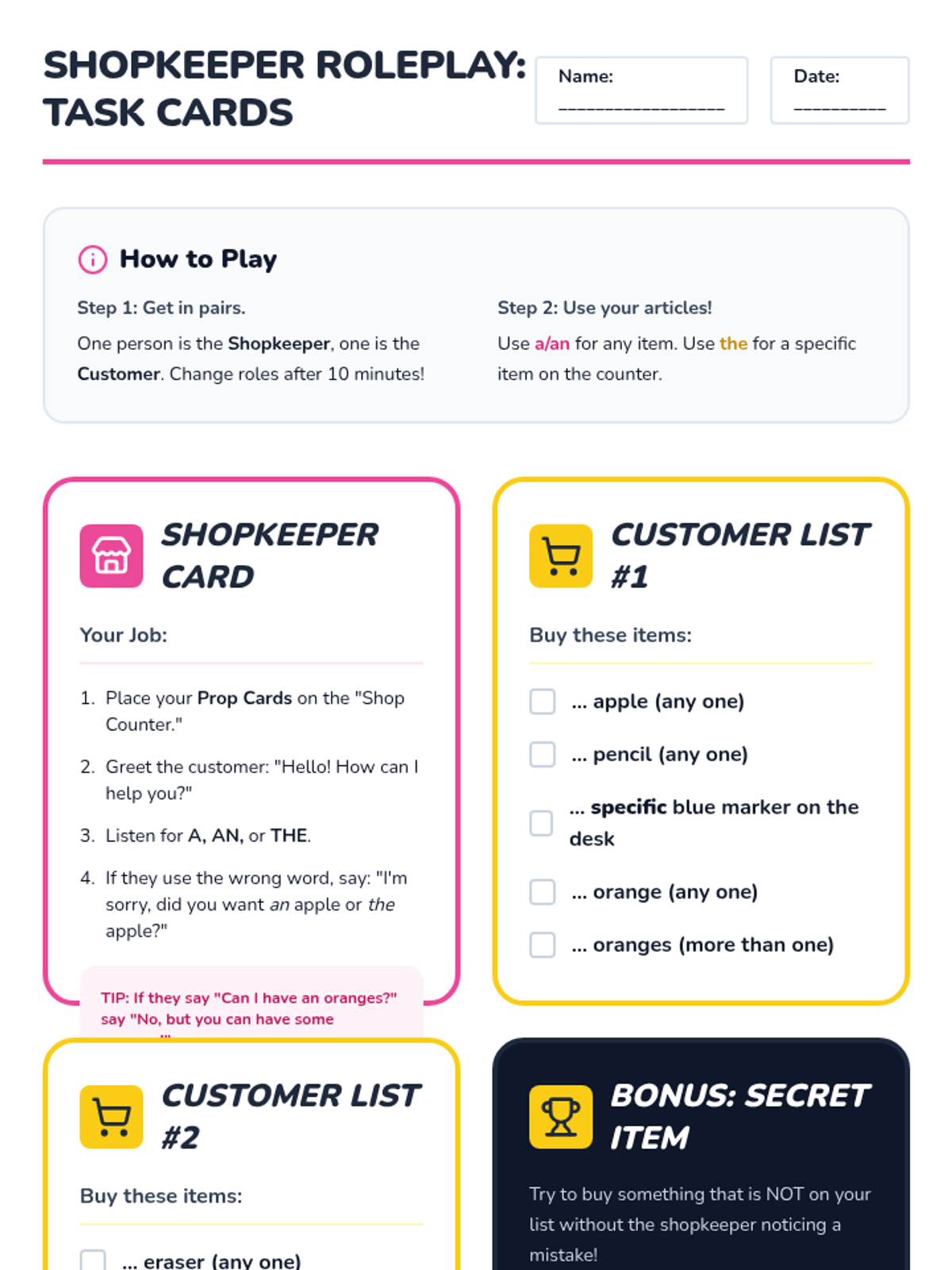
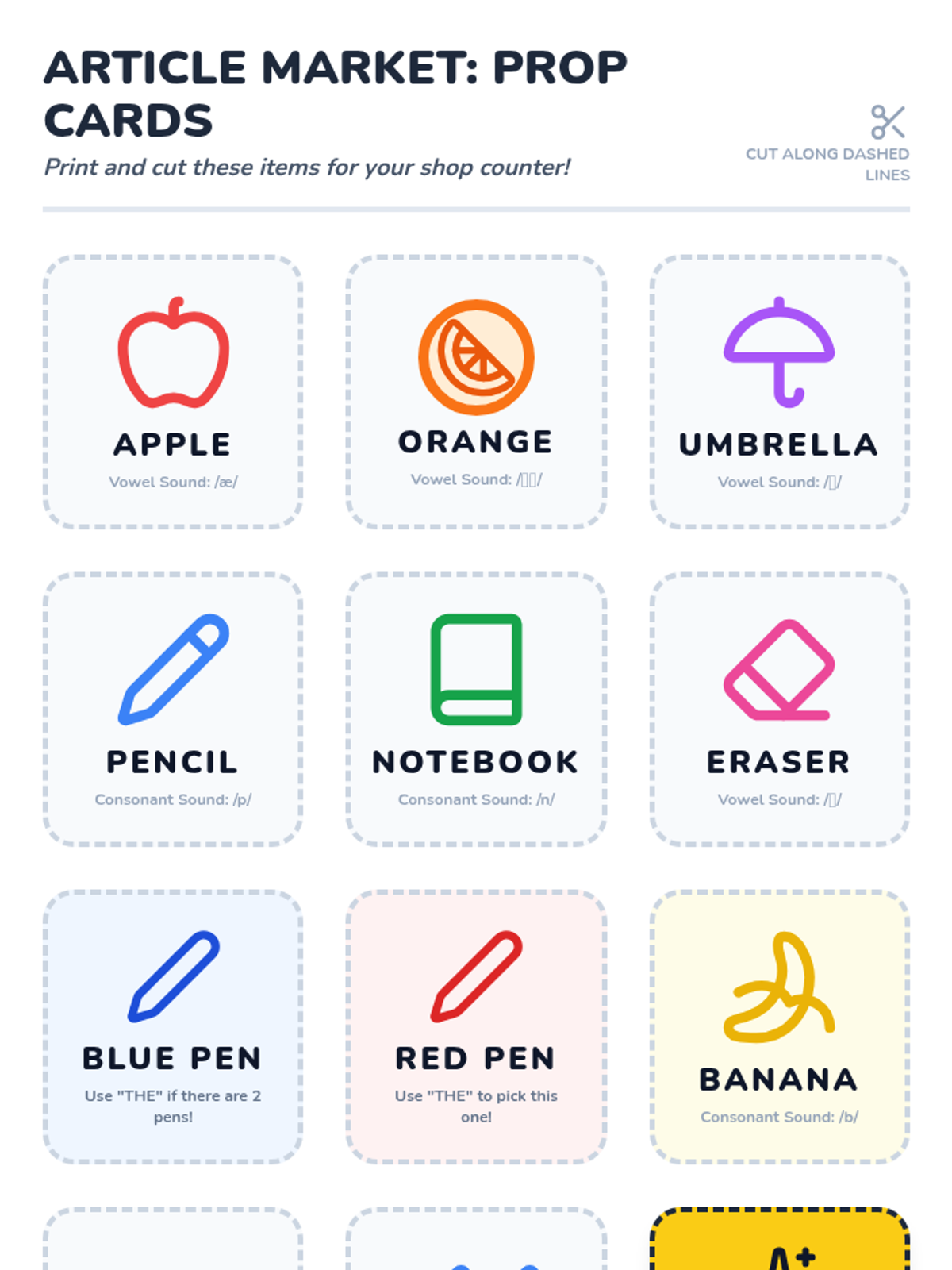
An interactive ESL/ELL lesson for elementary students focusing on the correct oral and written use of articles (a, an, the) within a grocery store roleplay context. Students learn the vowel rule for 'an' and the specificity of 'the' through a guided video and hands-on market activity.
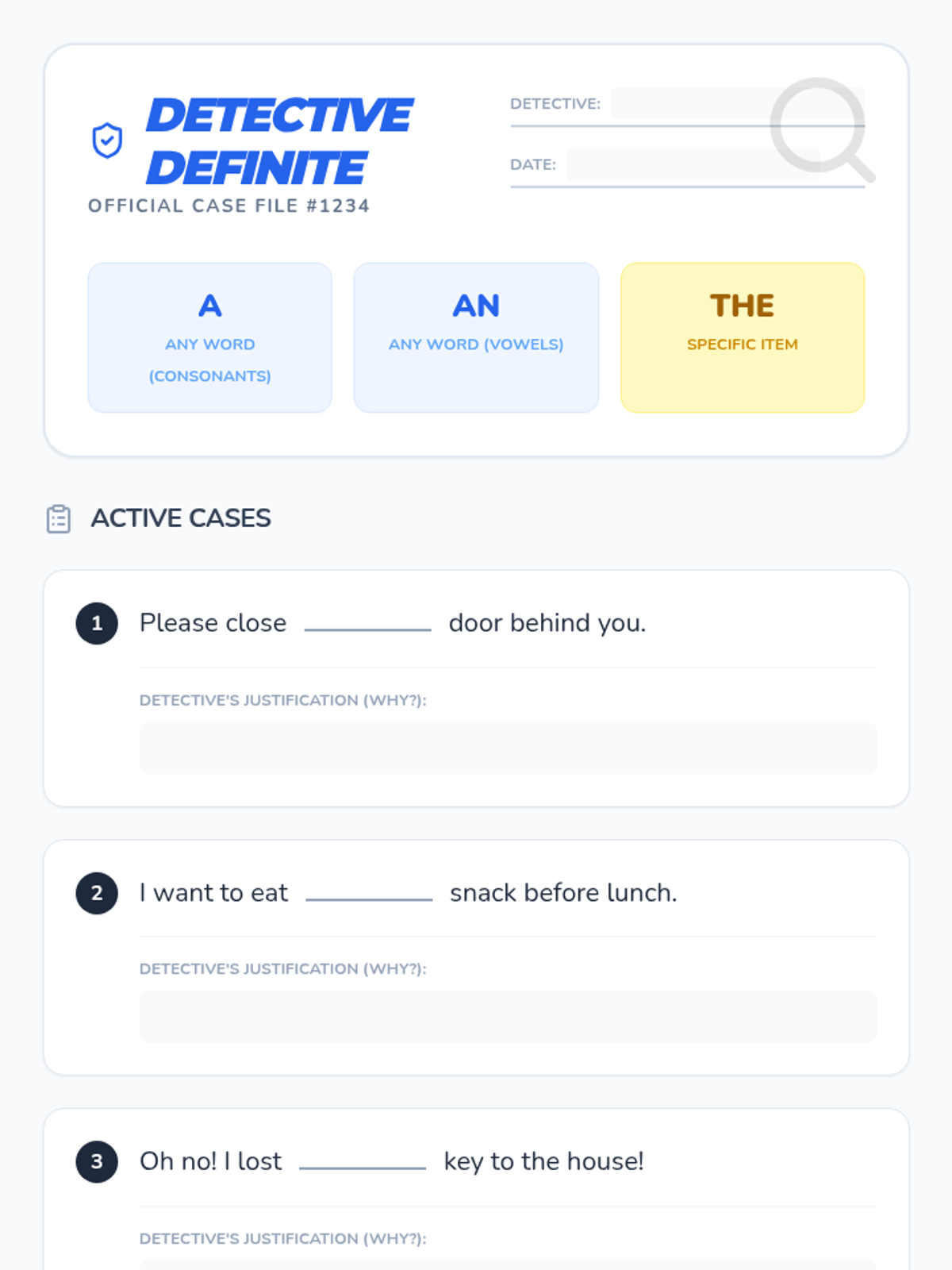
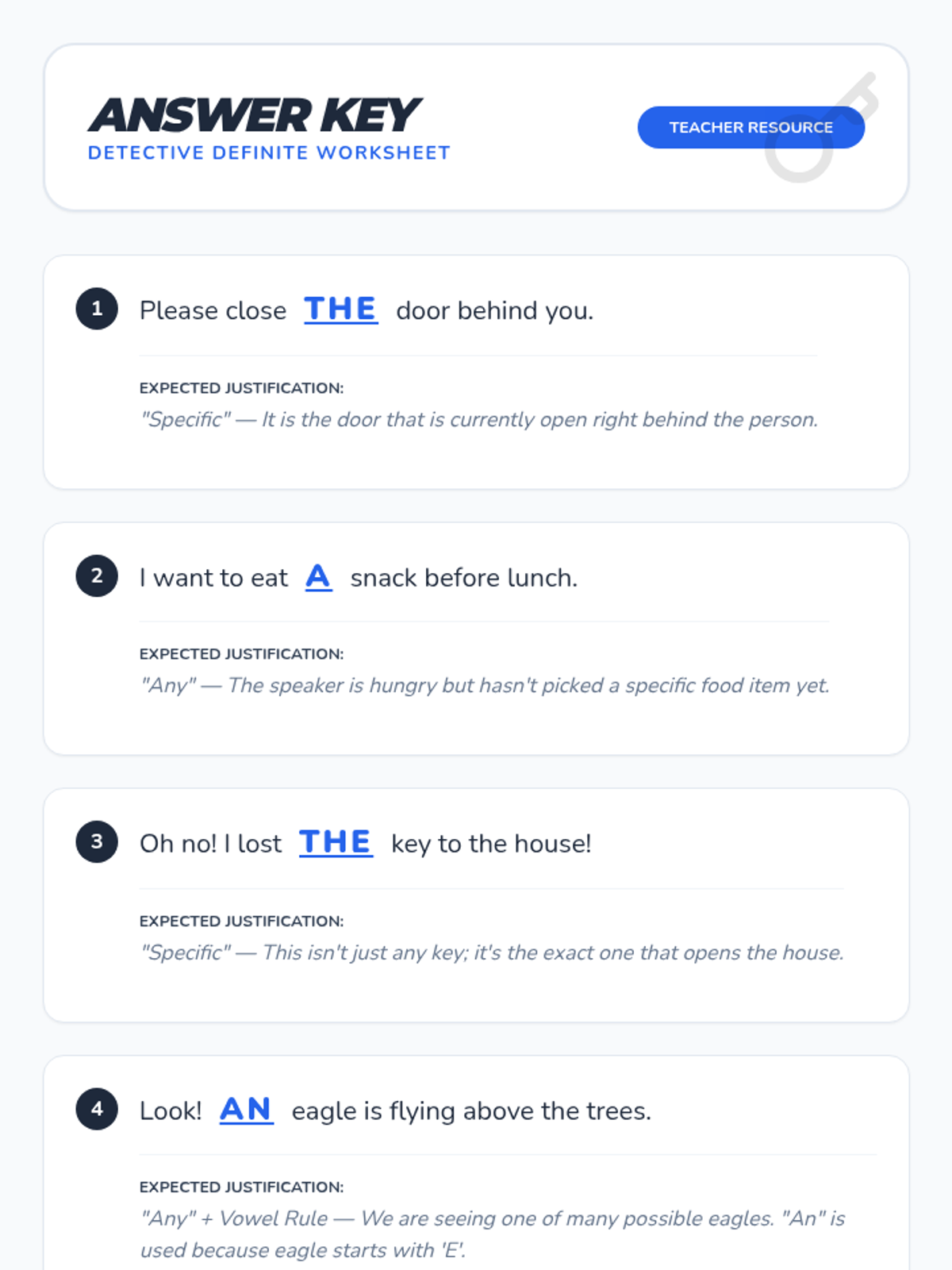
Students learn to distinguish between indefinite (a/an) and definite (the) articles through a hands-on detective activity and role-playing. The lesson uses a detective theme to help students hunt for specific vs. general nouns.
A lesson focused on English articles (a, an, the) through oral requests and a shopkeeper roleplay activity. Students learn to distinguish between specific and non-specific nouns and apply the vowel-sound rule for indefinite articles.
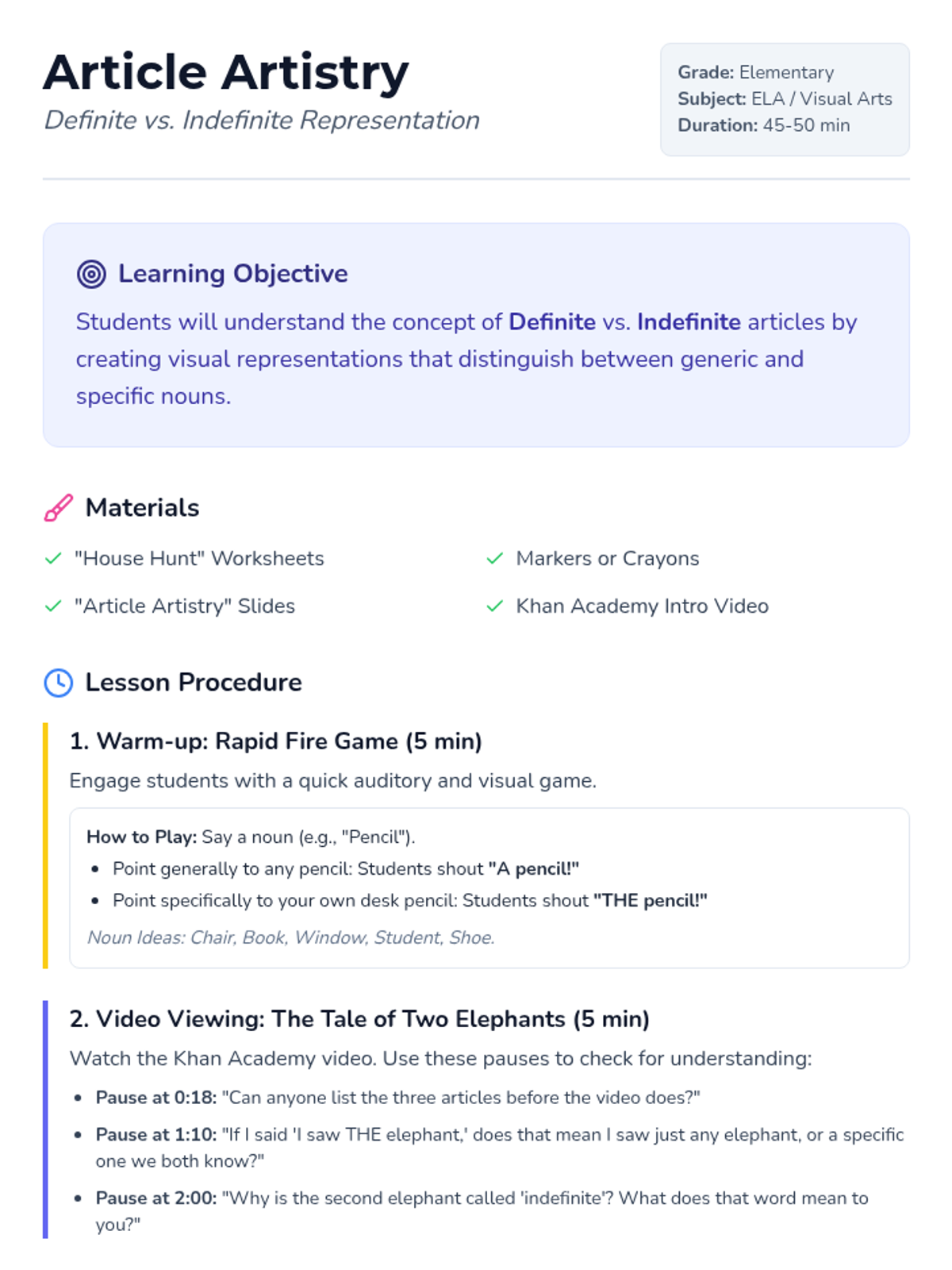
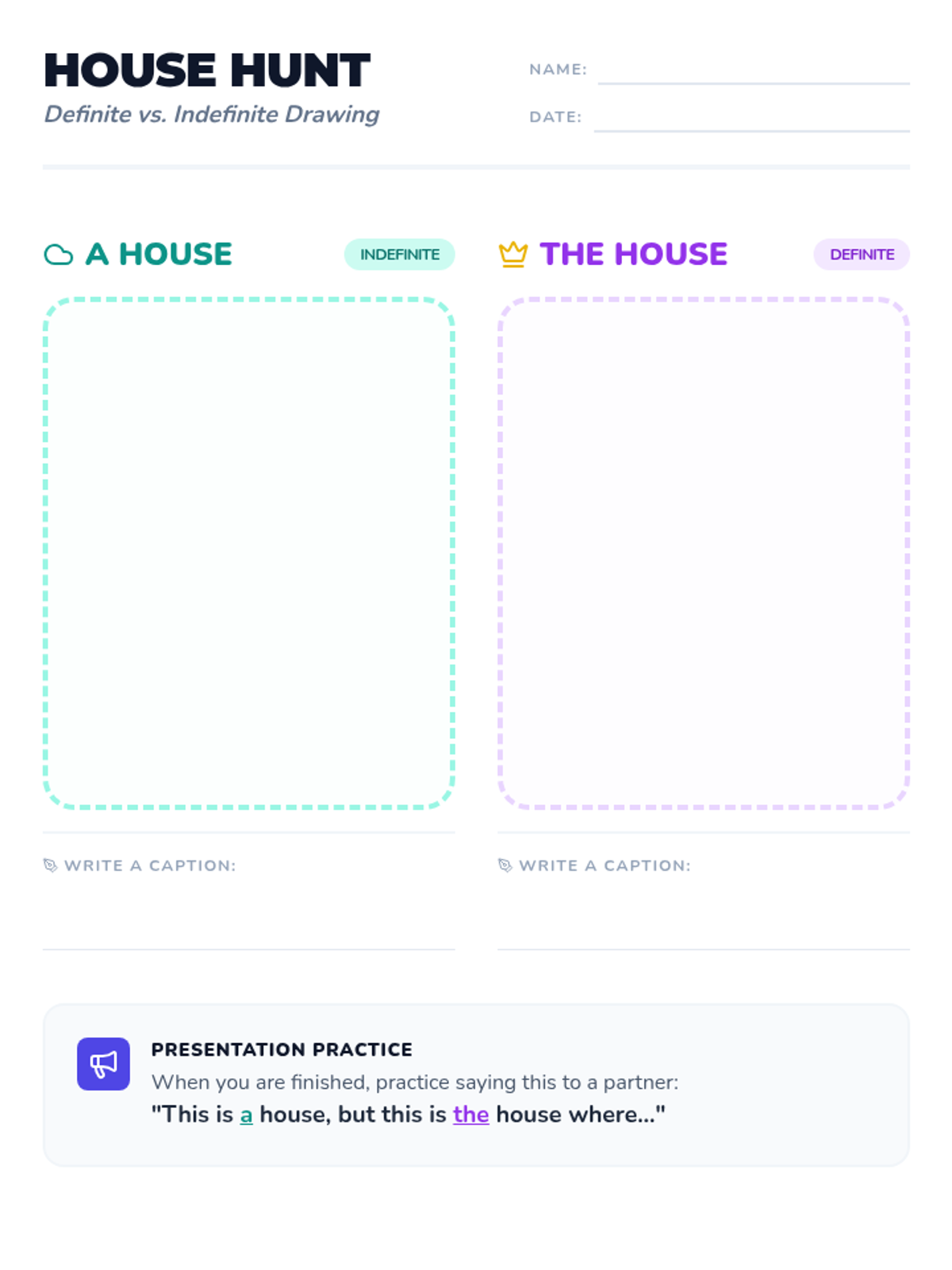
An art-integrated grammar lesson where students explore the difference between definite (the) and indefinite (a/an) articles by drawing generic and specific houses. Includes a video-based discussion and a rapid-fire game.
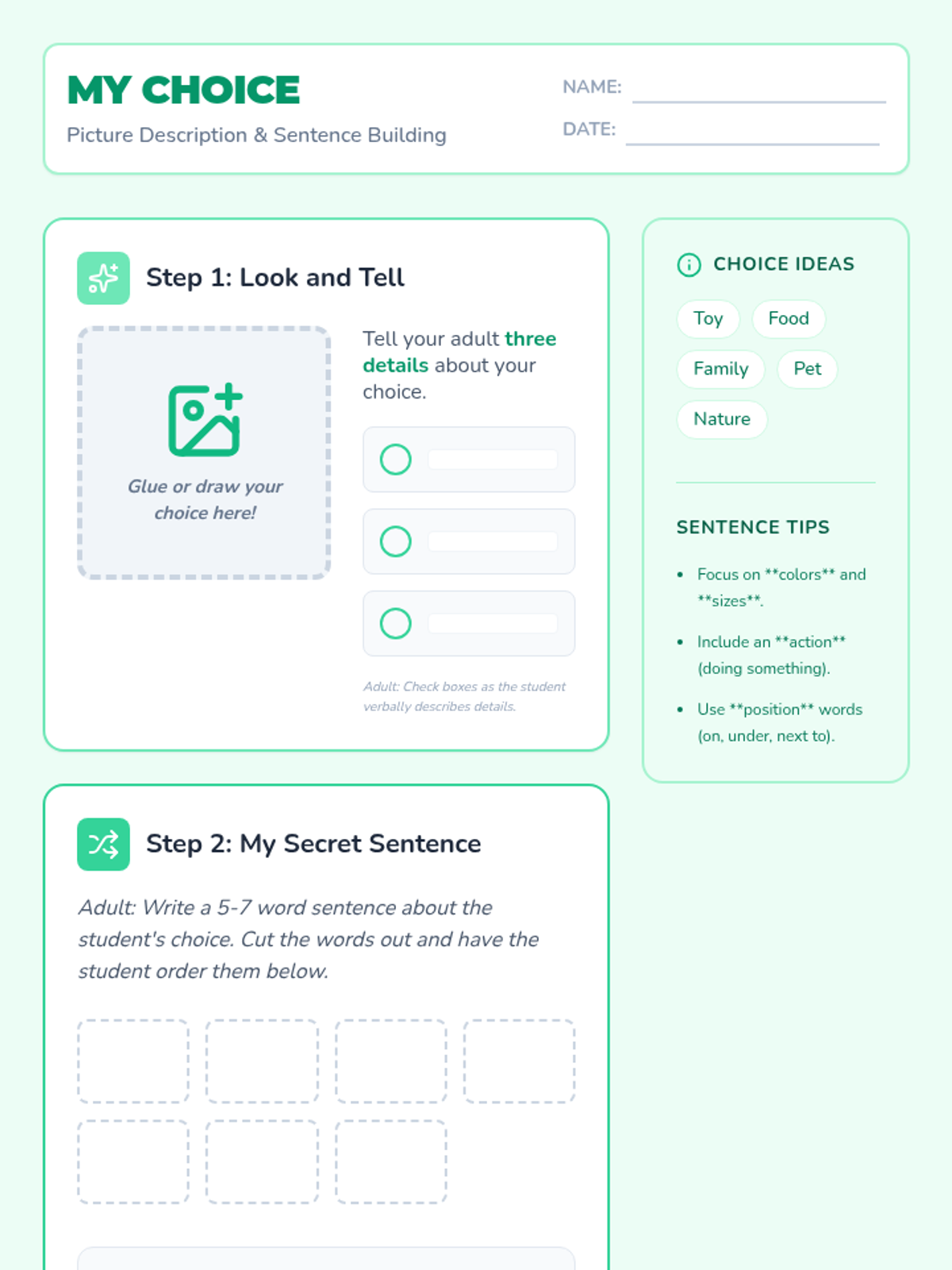
A final capstone lesson where students choose their own object or picture to describe and write about.
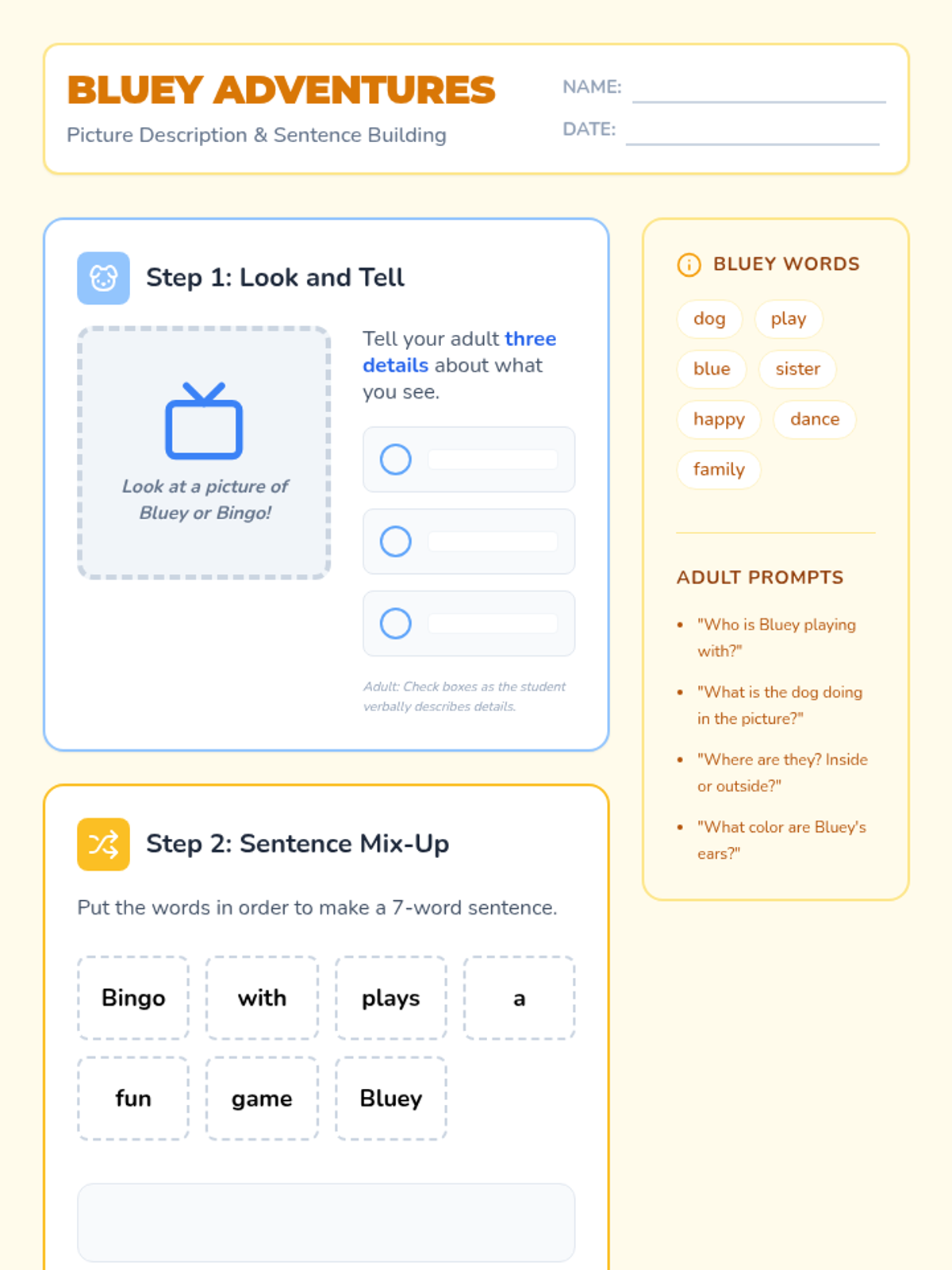
A Bluey-themed writing lesson using character-driven prompts to build descriptive sentences.
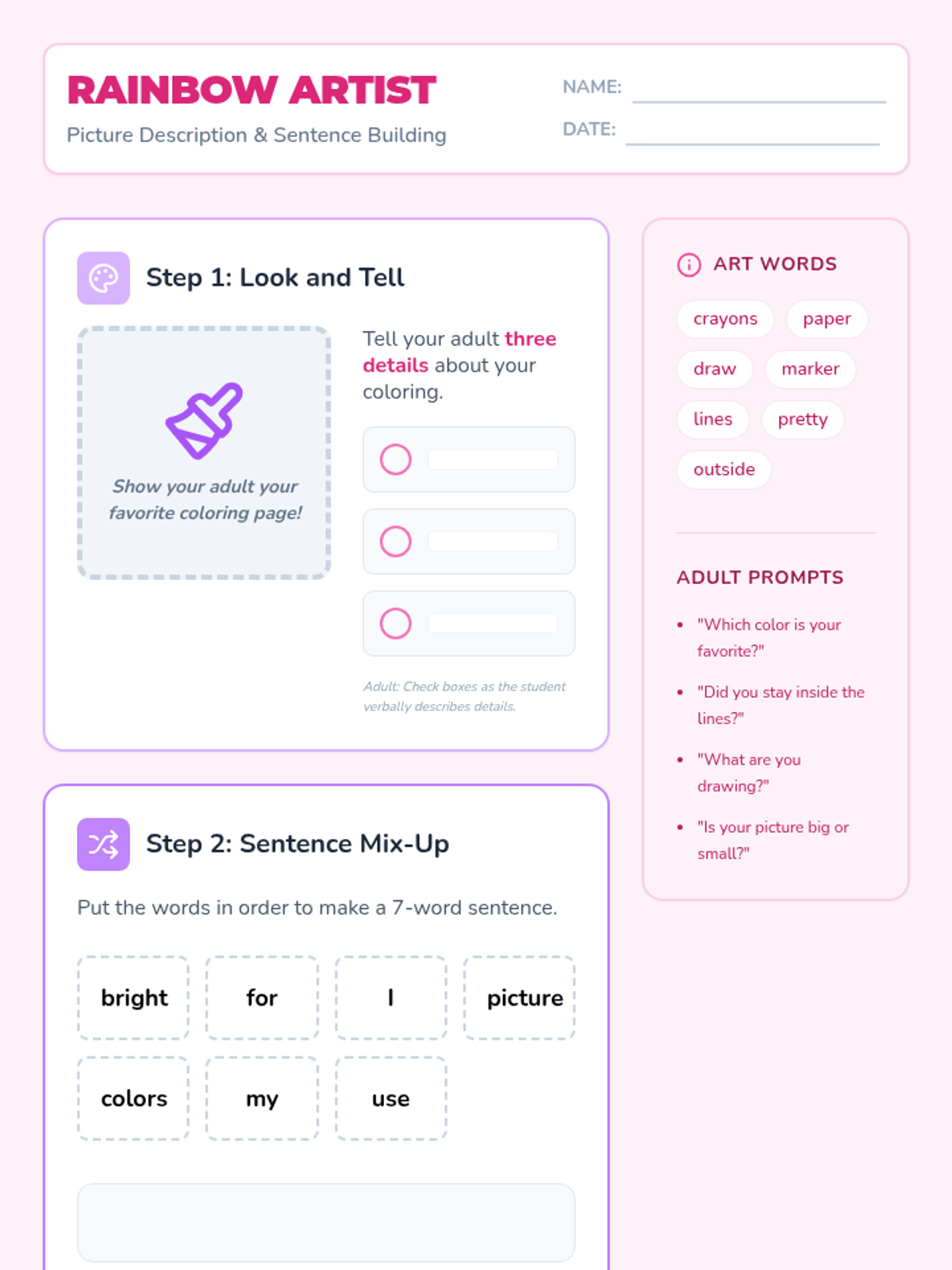
An art-themed writing lesson focusing on describing colors and creative actions.
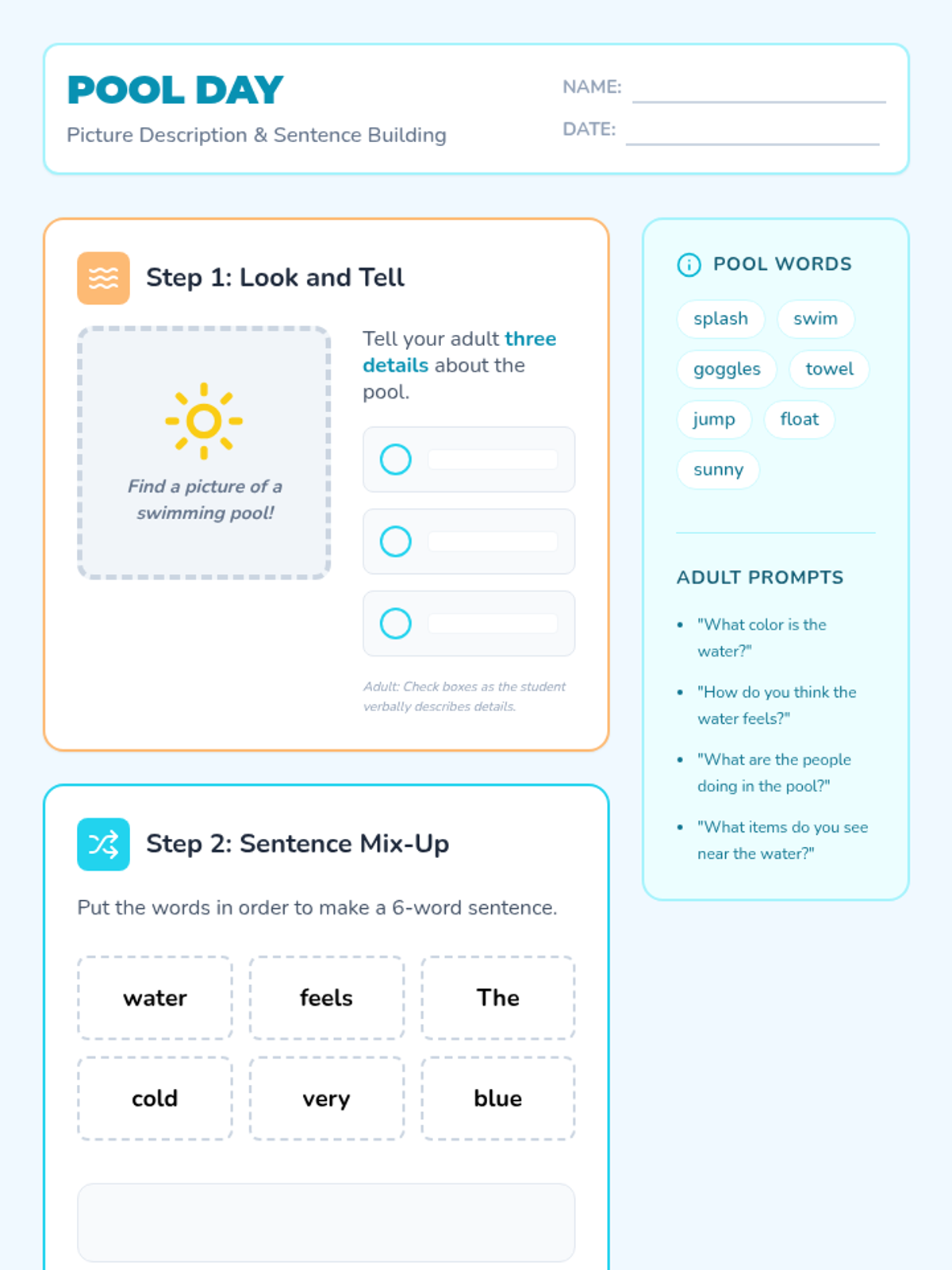
A swimming-themed writing lesson focusing on describing textures and colors while practicing sentence structure.
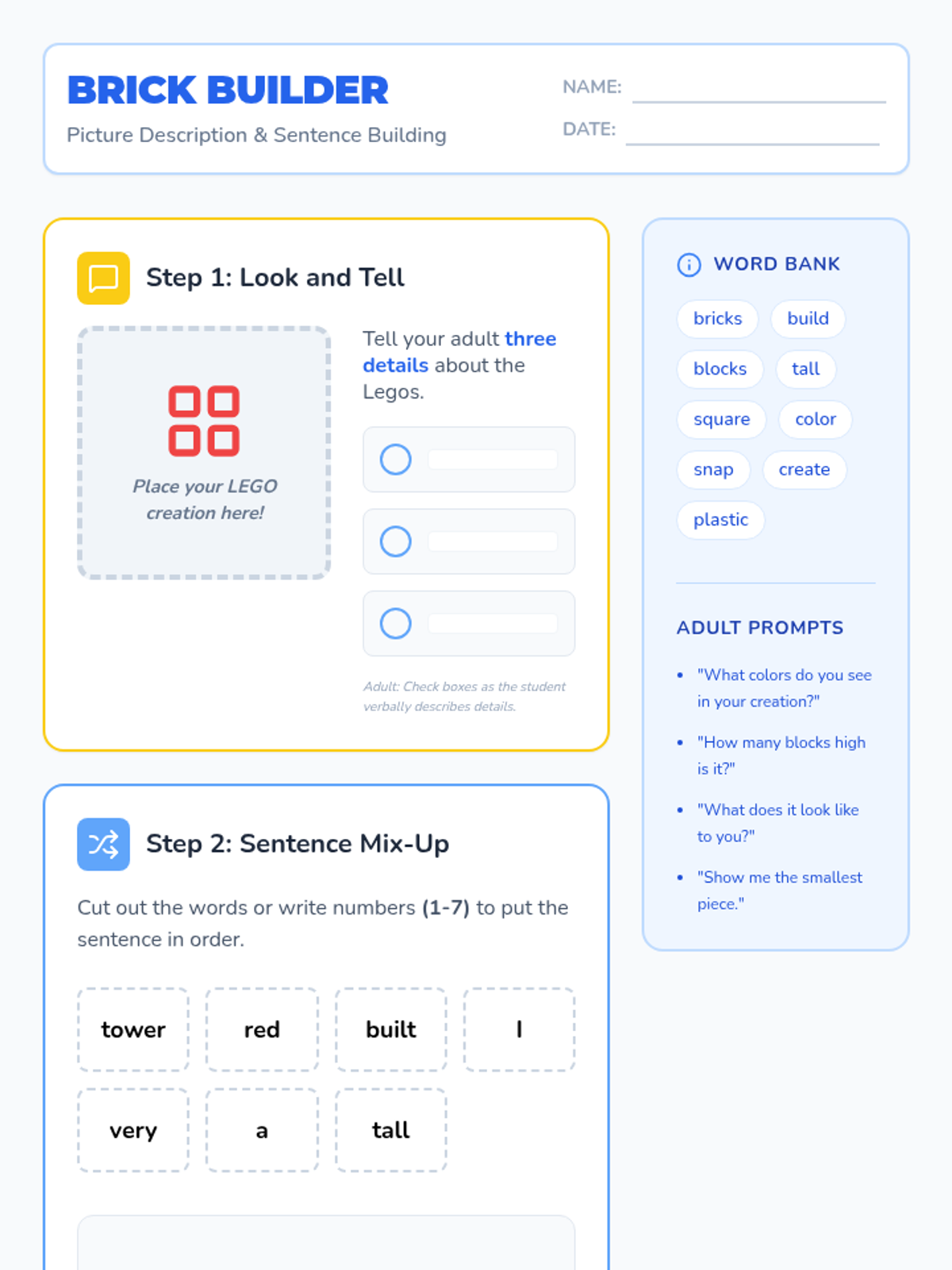
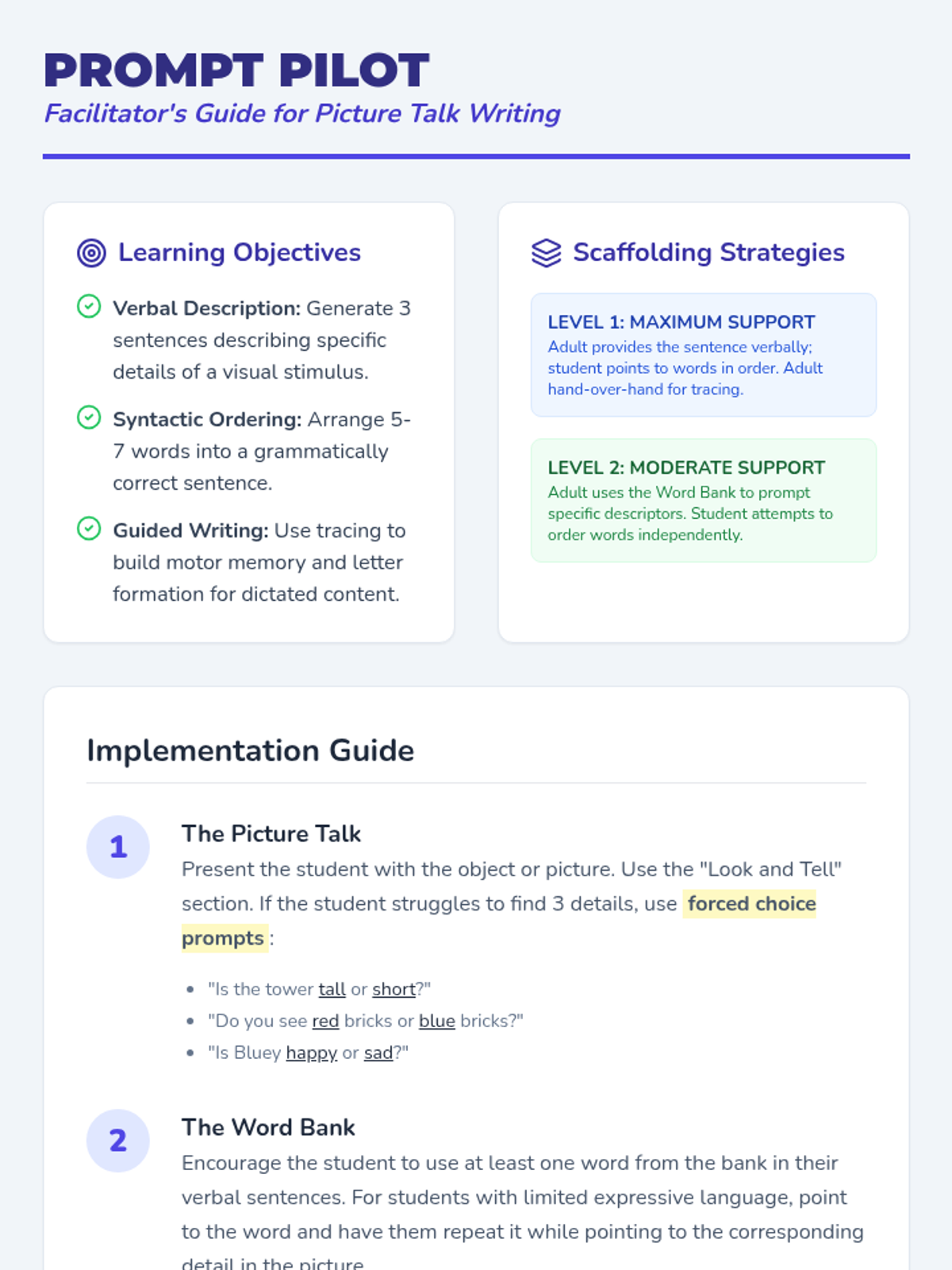
A LEGO-themed writing lesson focusing on verbal description and 7-word sentence ordering with adult support.
Teaches students to write instructional paragraphs using sequence words.
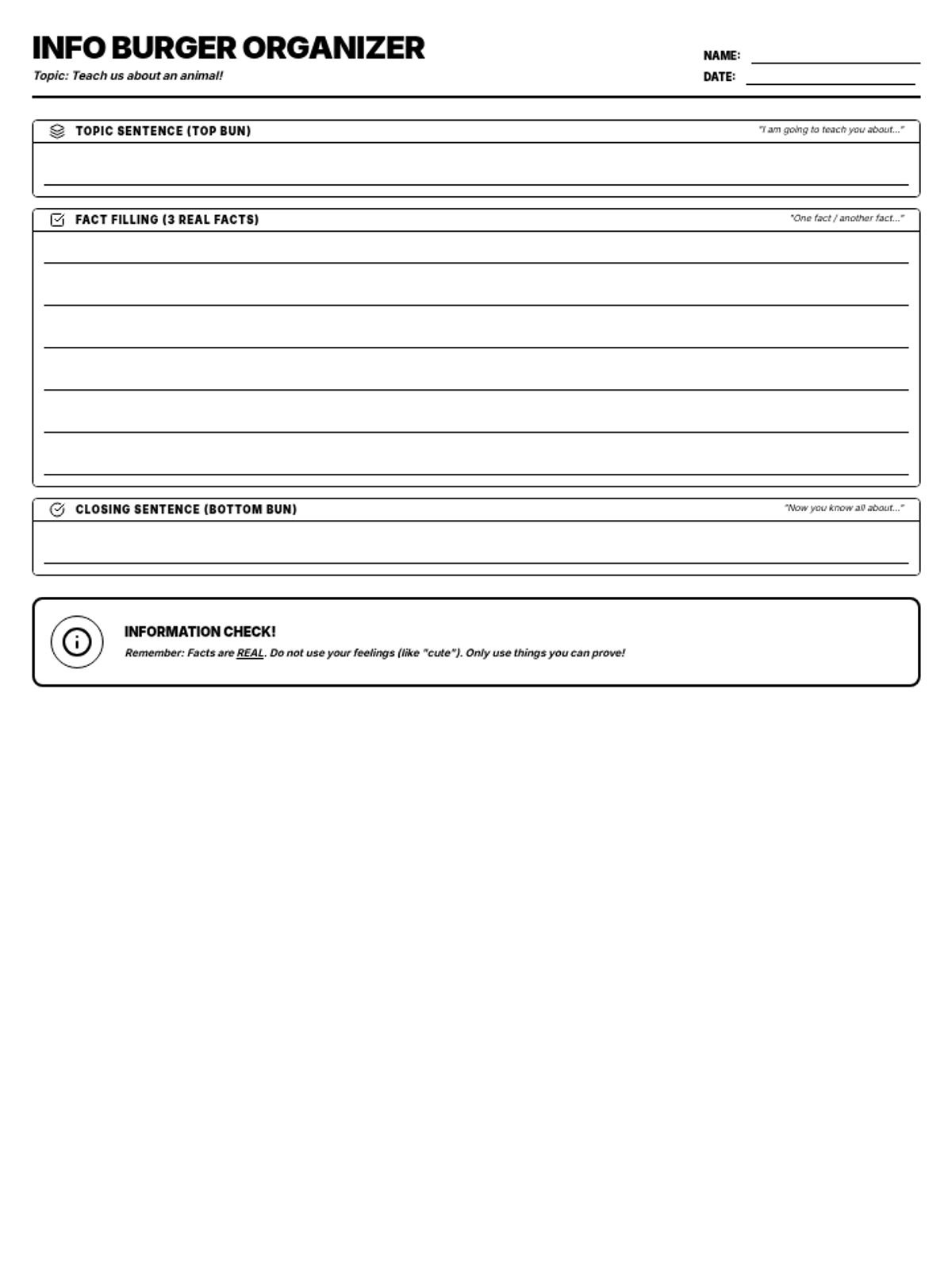
Applies the burger paragraph structure to informational writing using specific facts.
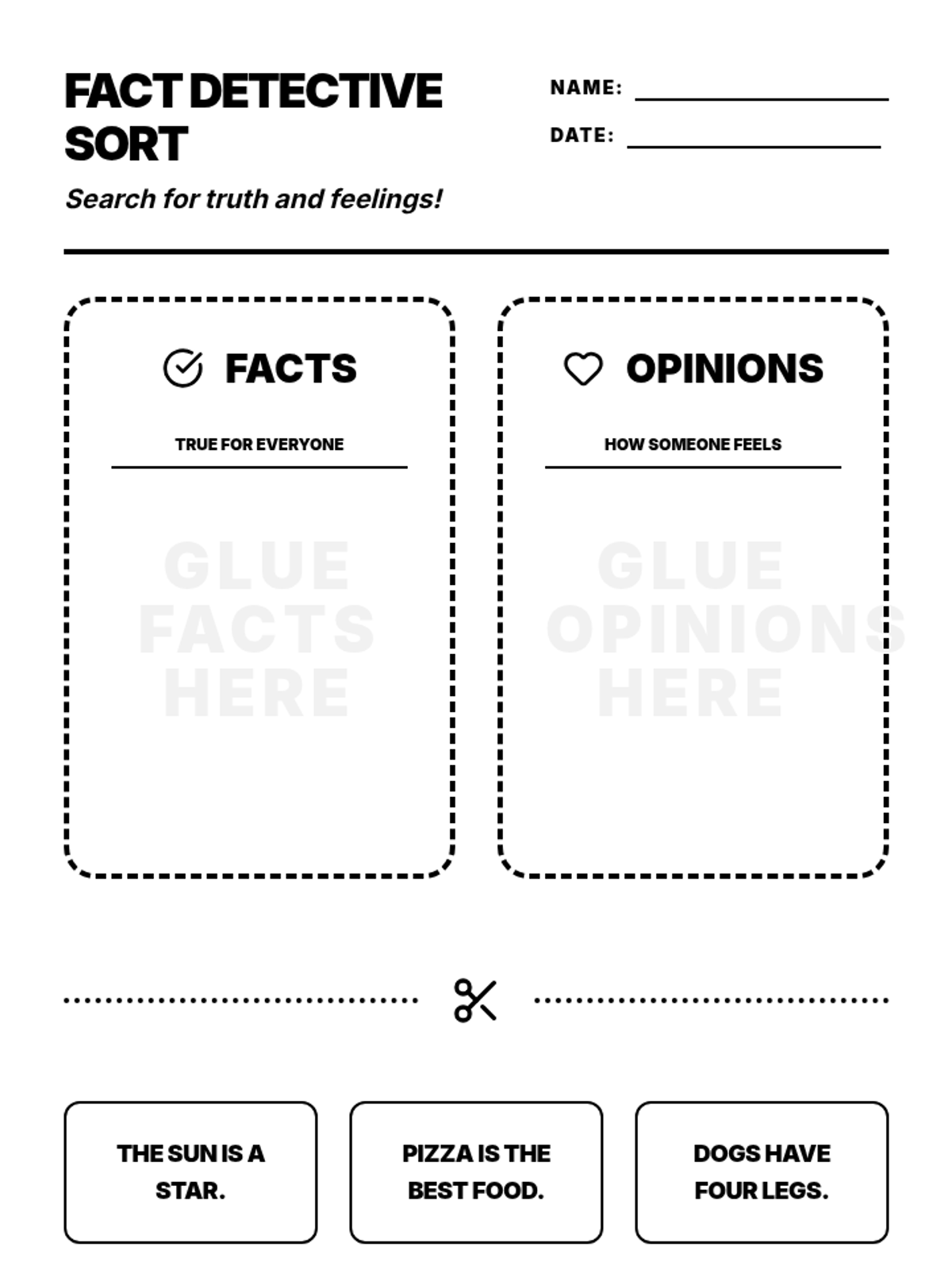
Introduces the difference between facts and opinions to prepare students for informational writing.
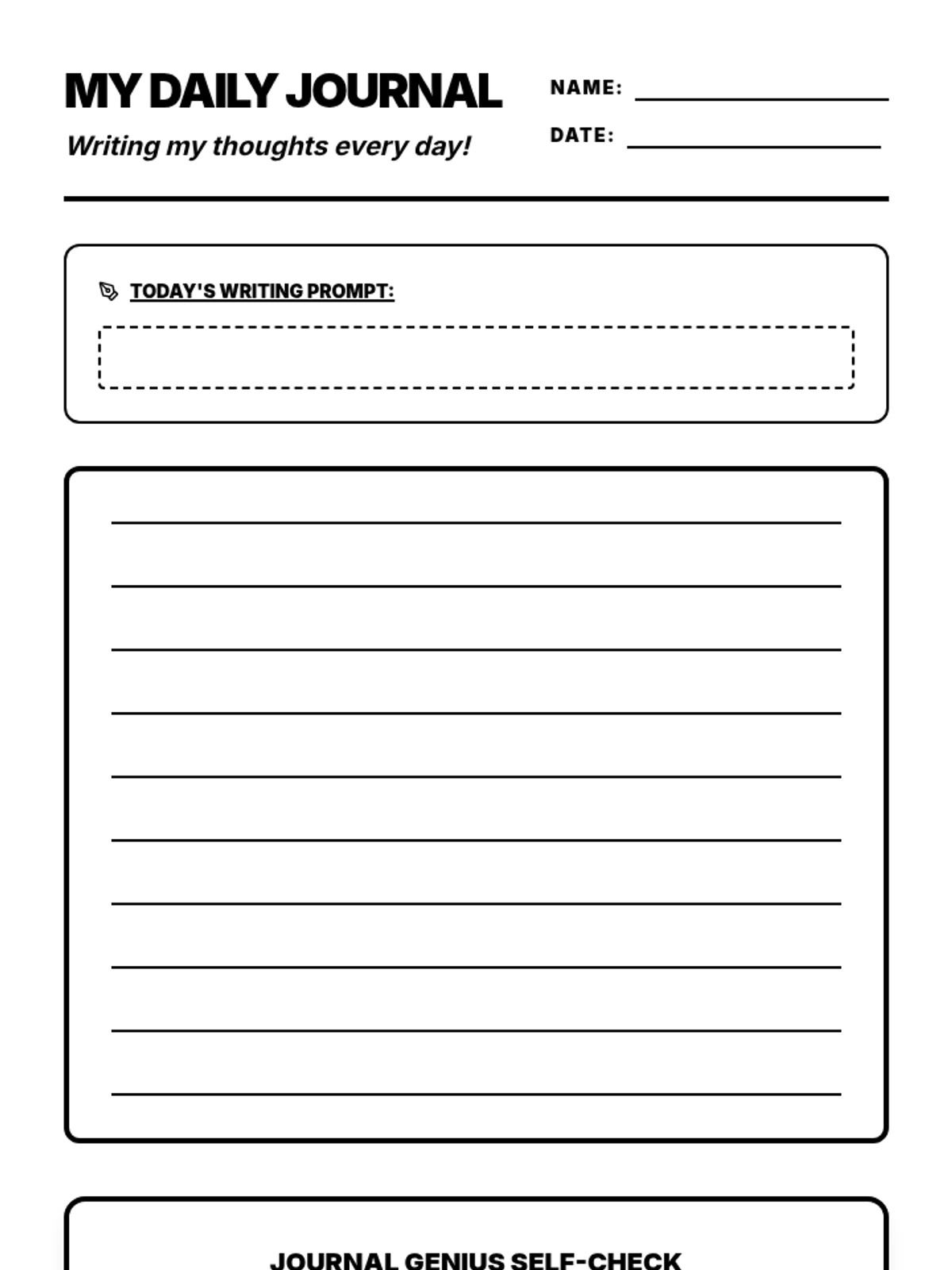
Synthesizes previous skills into independent journal writing with a focus on responding to prompts and self-checking work.
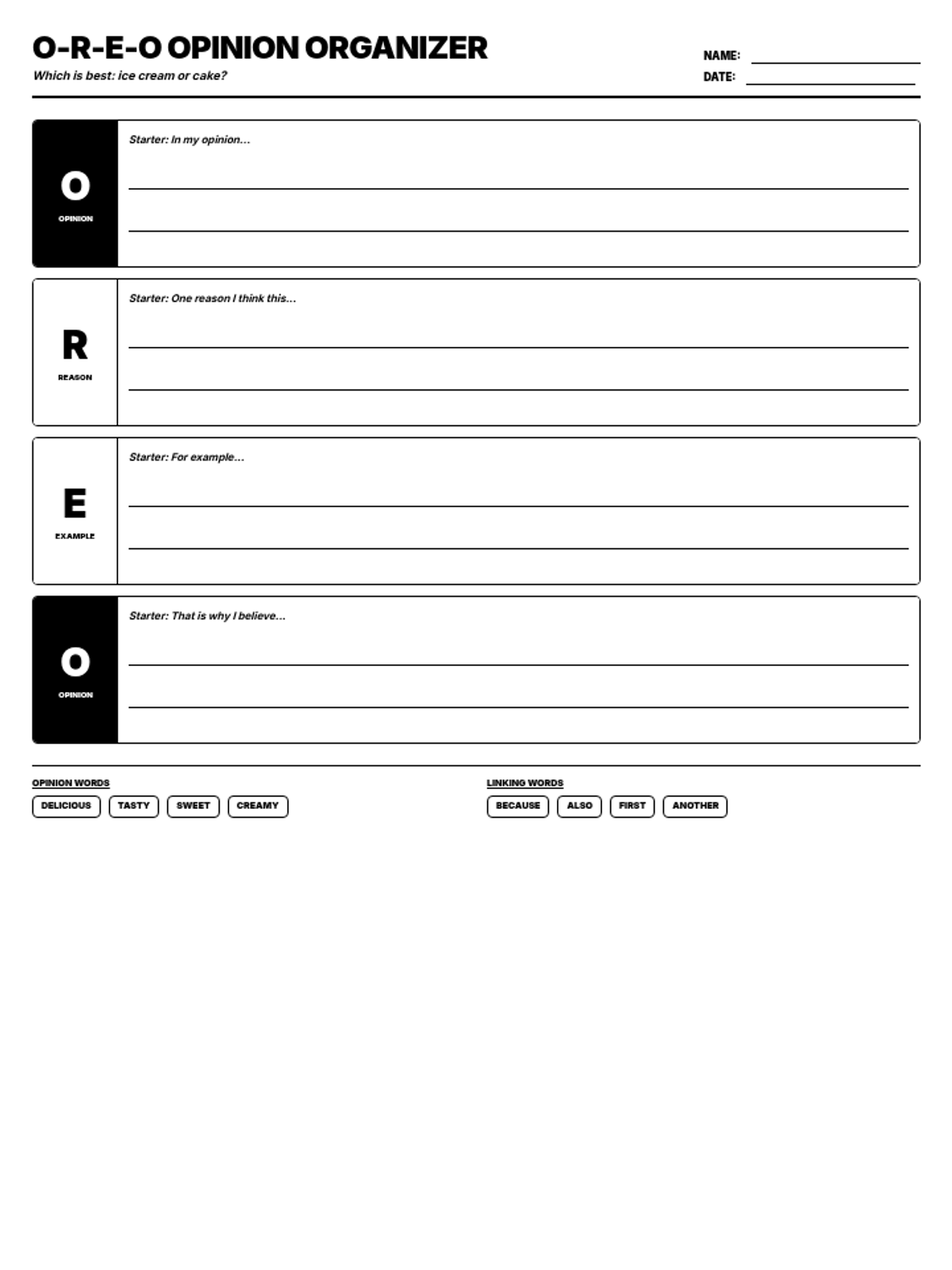
Teaches students how to state an opinion and provide supporting reasons using the OREO method with sentence starters.
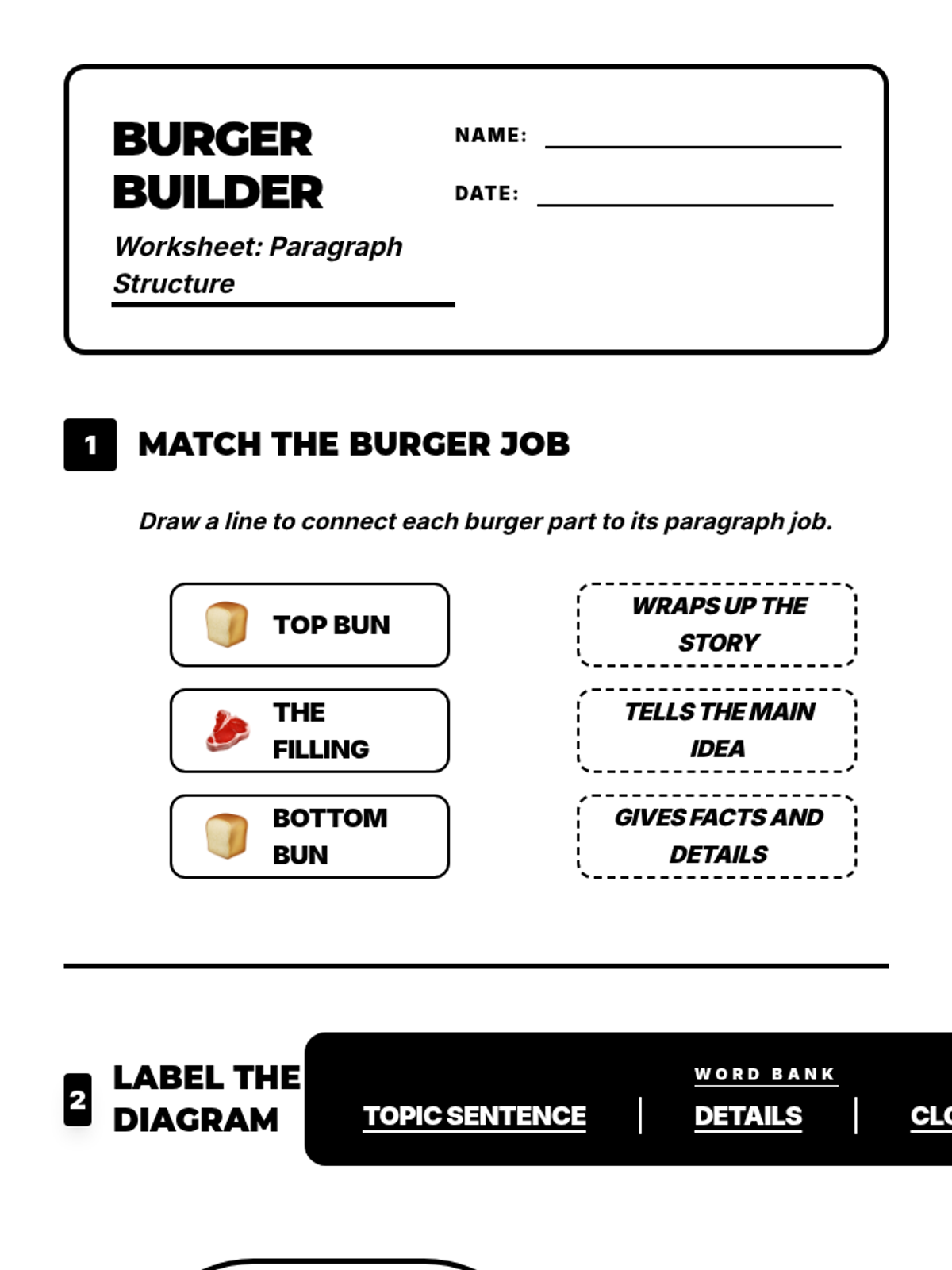
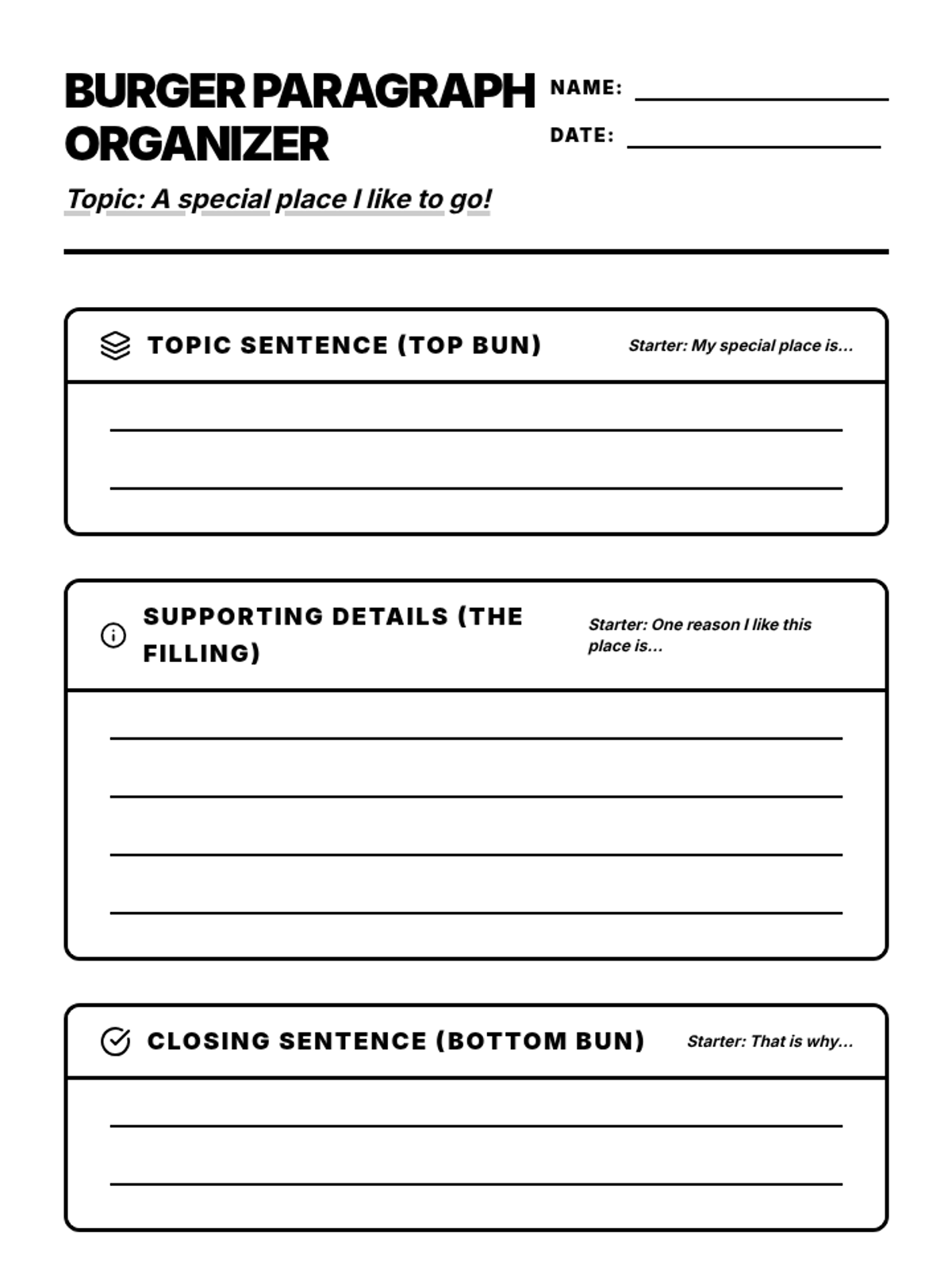
Introduces the concept of a paragraph using the 'Burger' analogy, focusing on the topic sentence, details, and closing sentence.
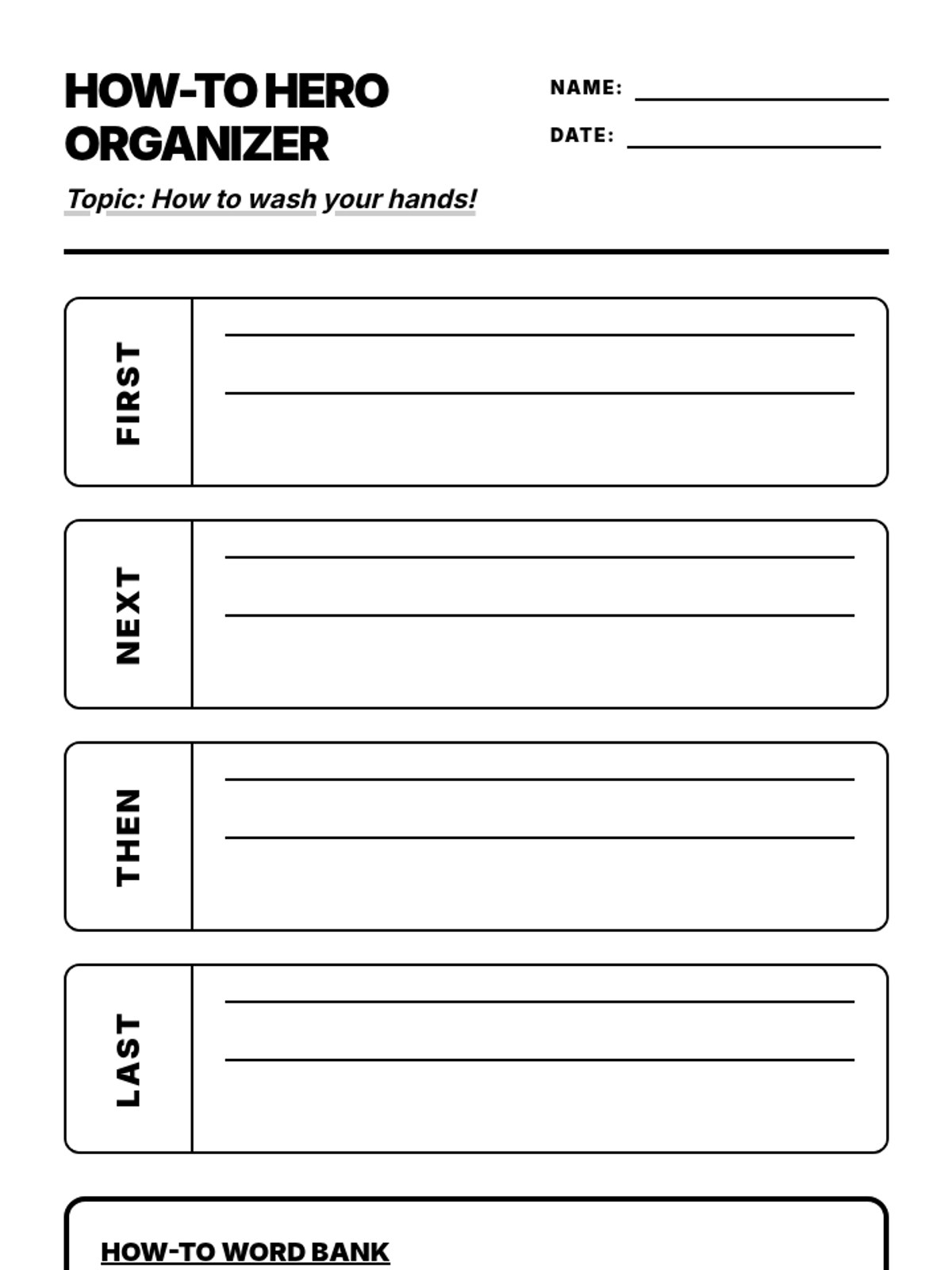
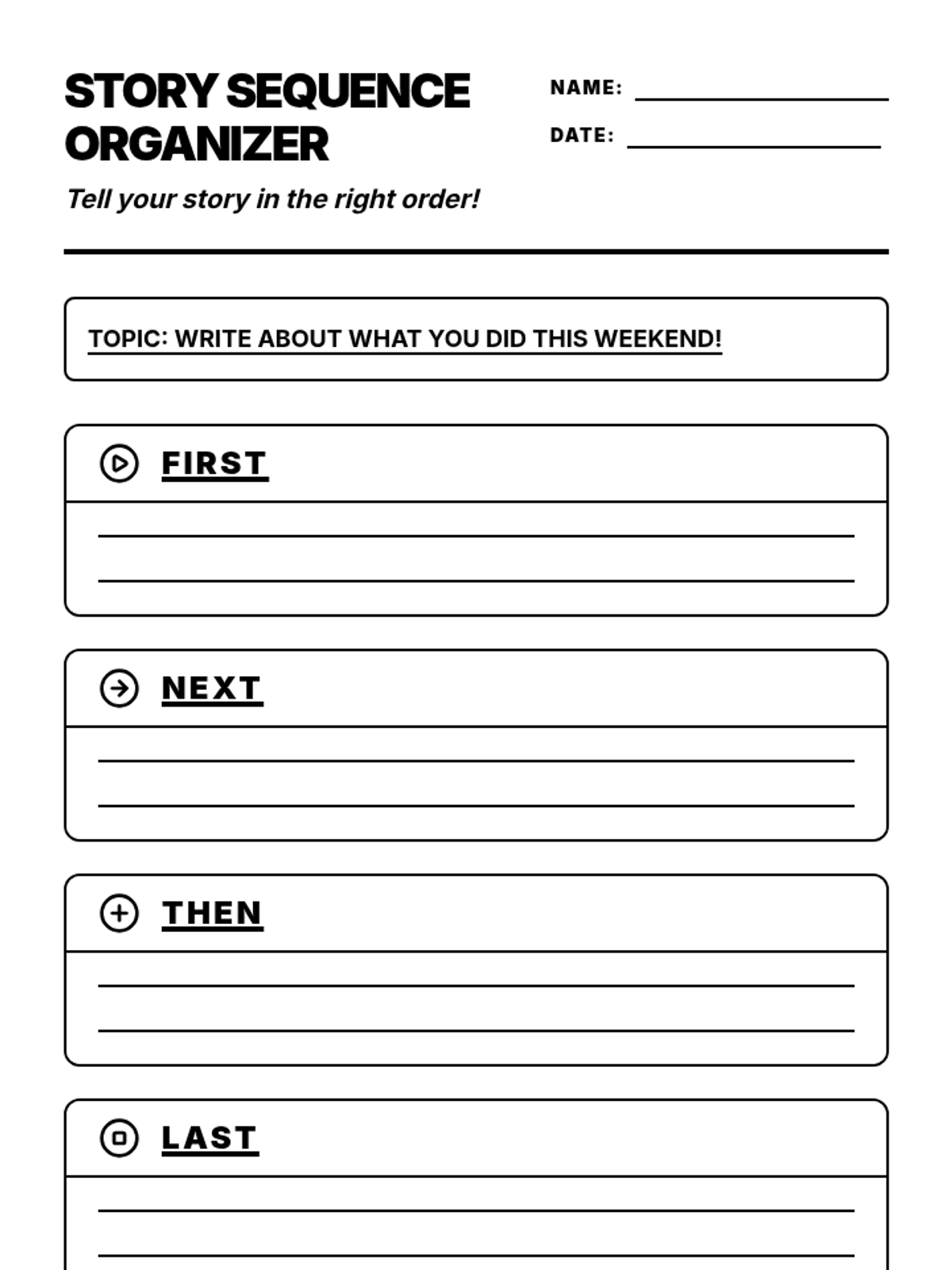
Focuses on chronological sequencing in narrative writing using 'First, Next, Then, and Last' with visual aids and word banks.
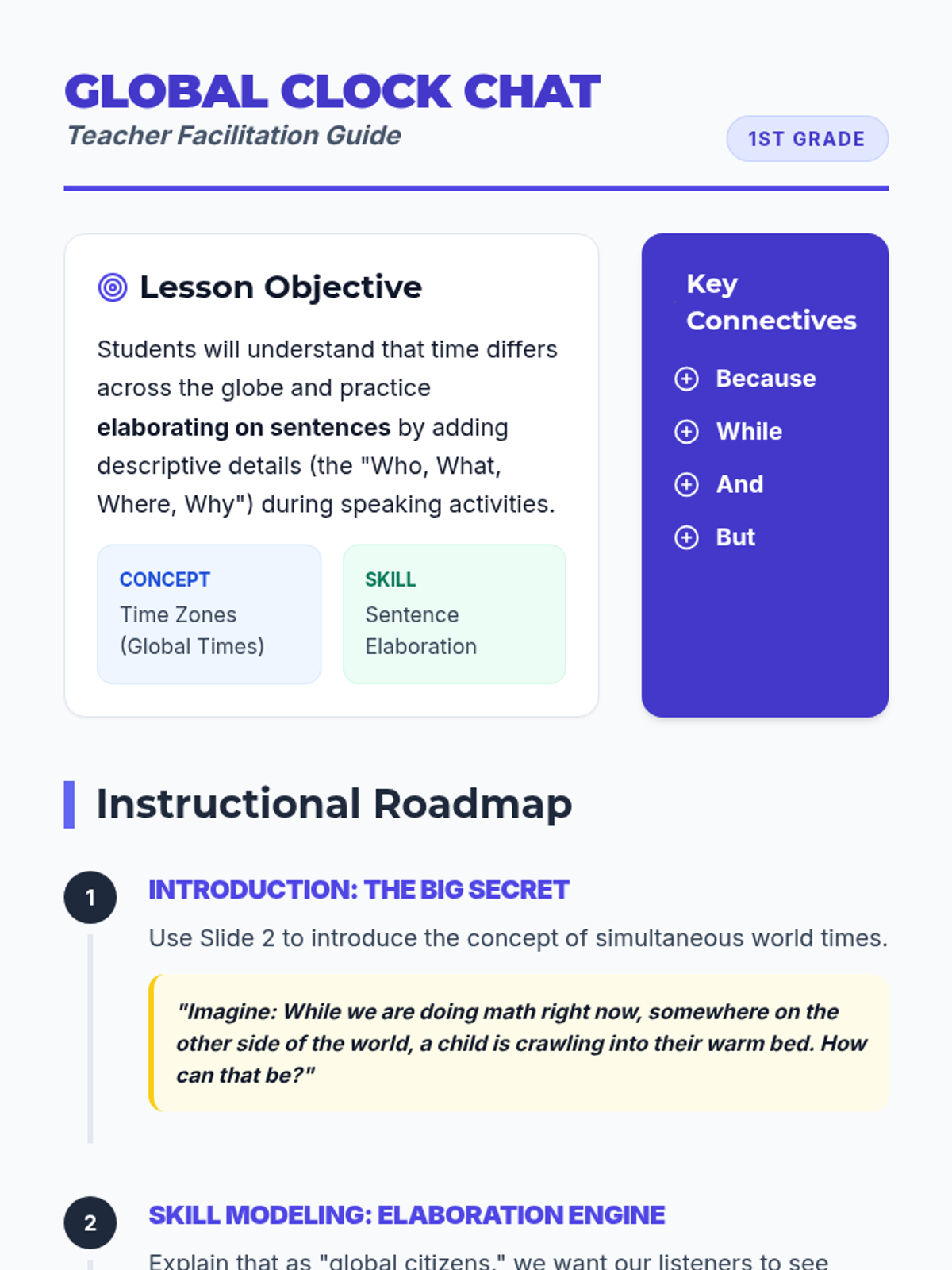
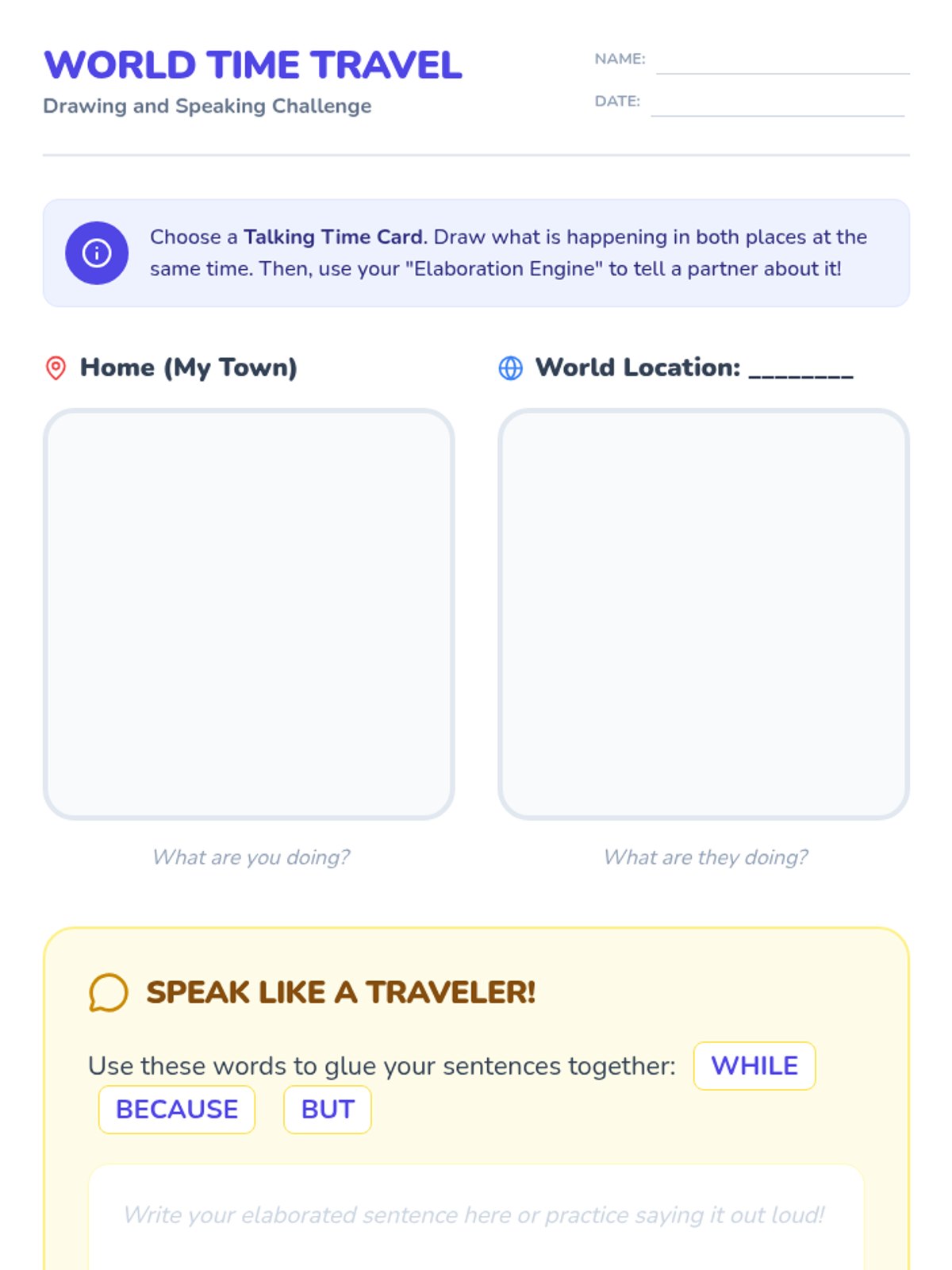
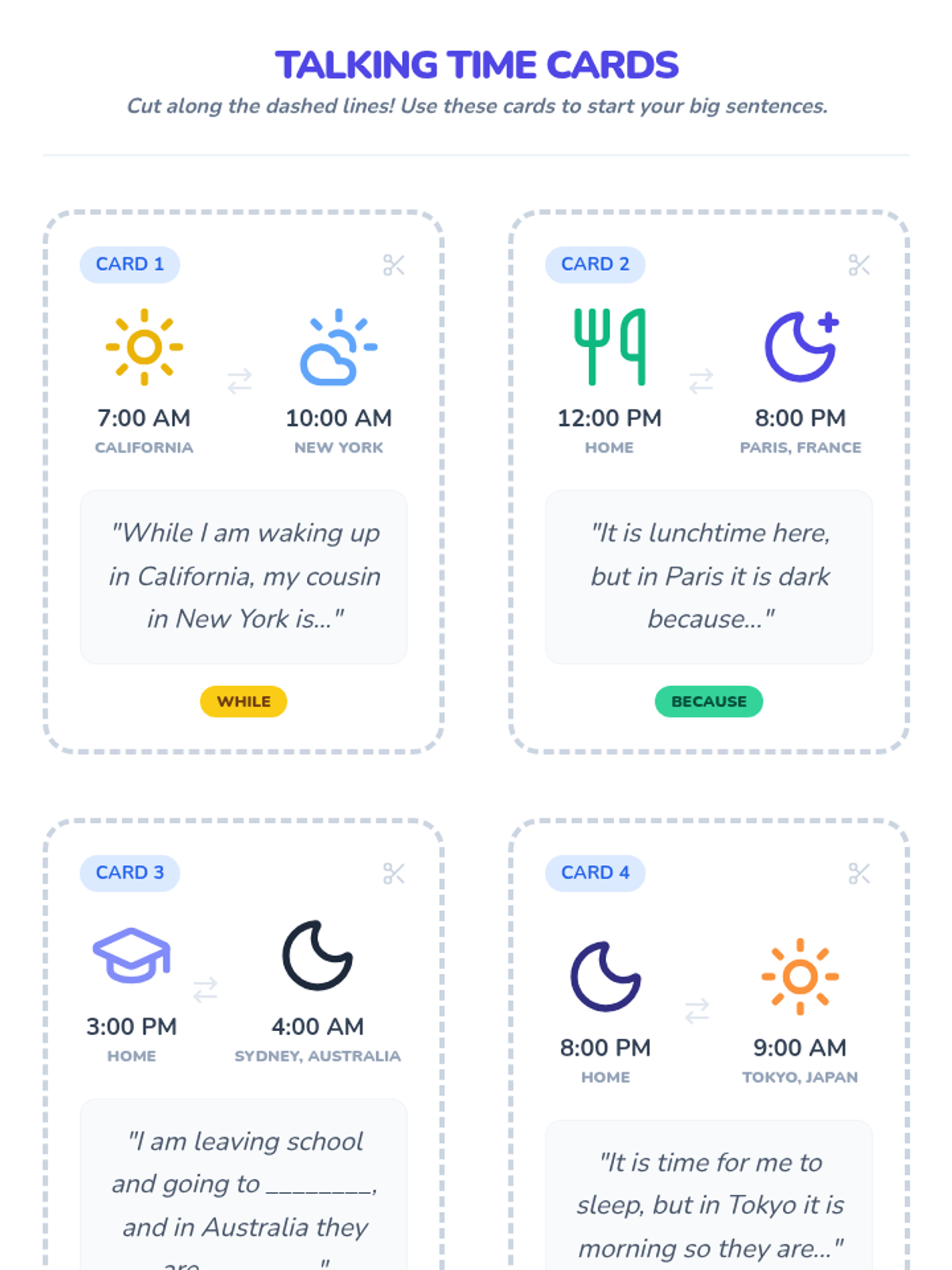
A 1st-grade lesson focused on time zones and sentence elaboration. Students learn that it's different times in different places while practicing adding descriptive details to their spoken sentences.
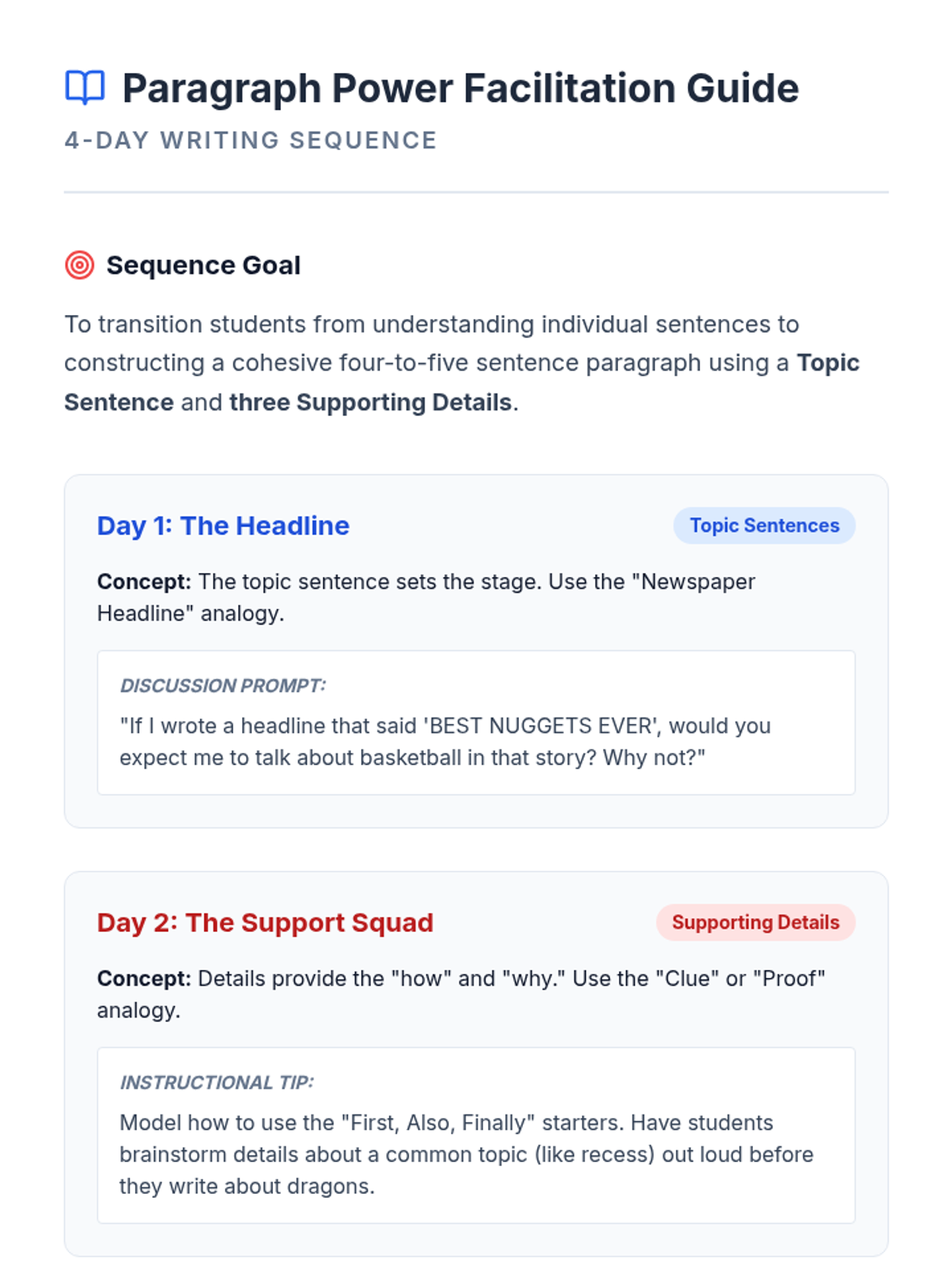
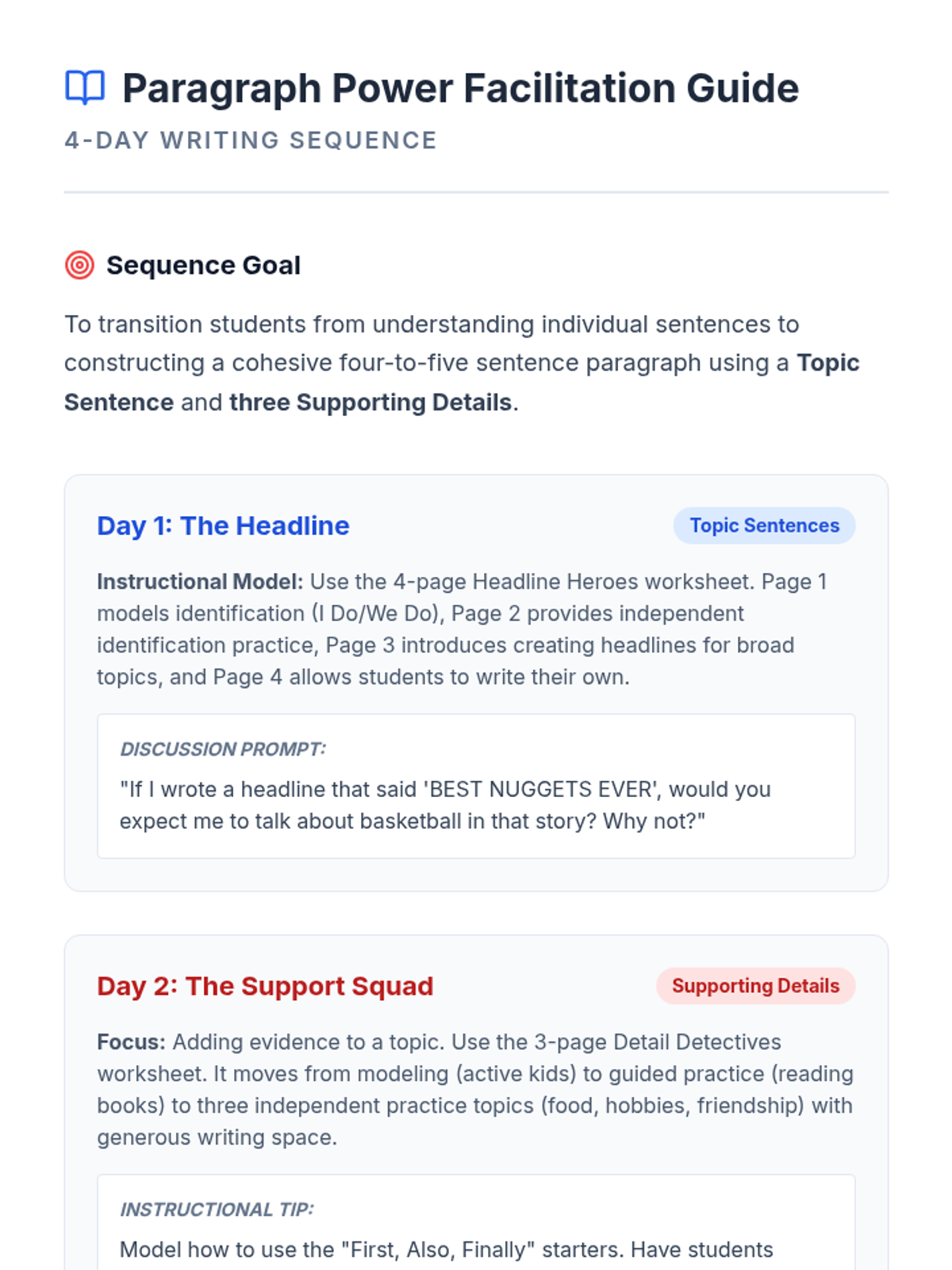
Teacher-facing resources to support the implementation of the Paragraph Power sequence.
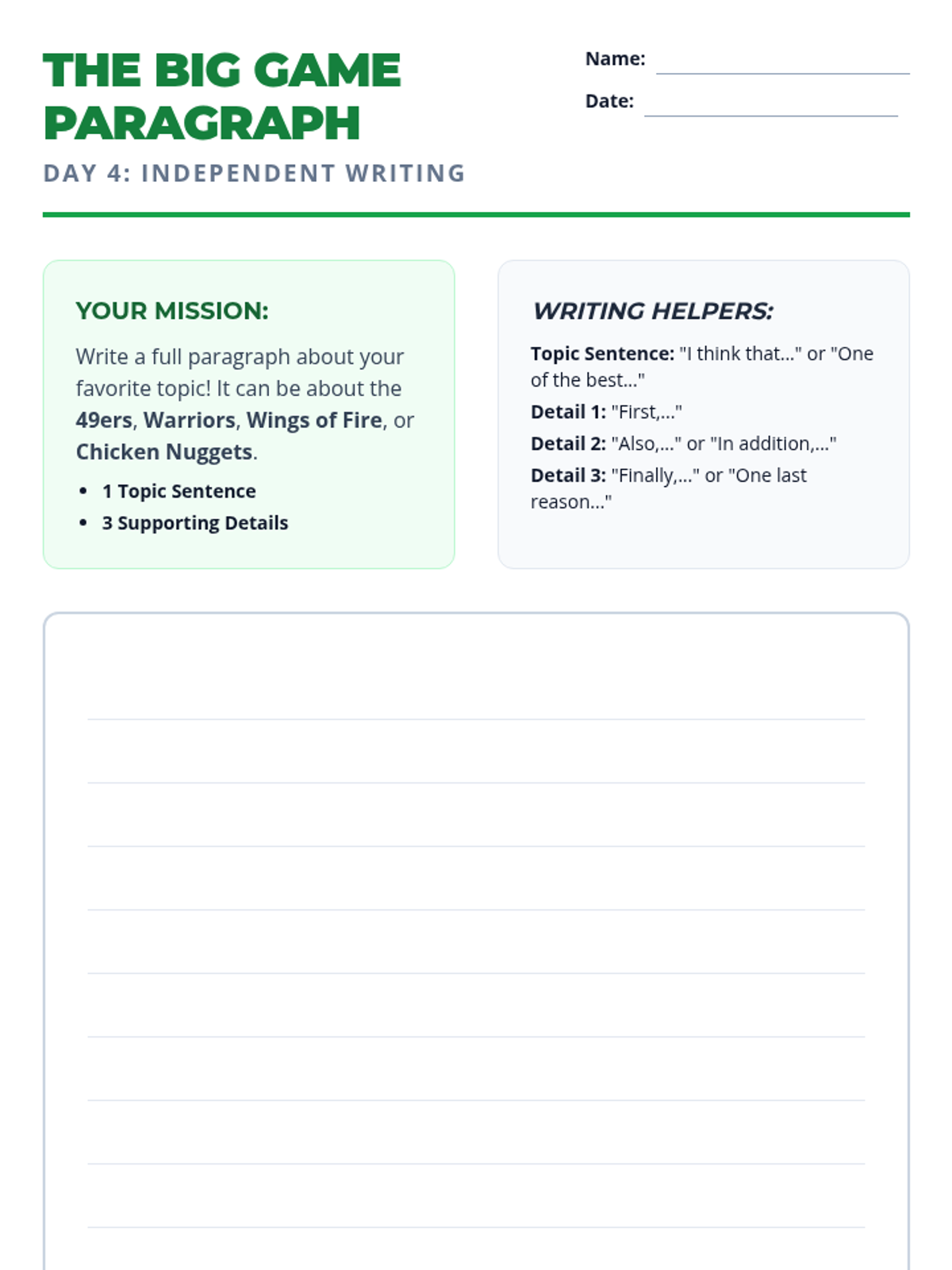
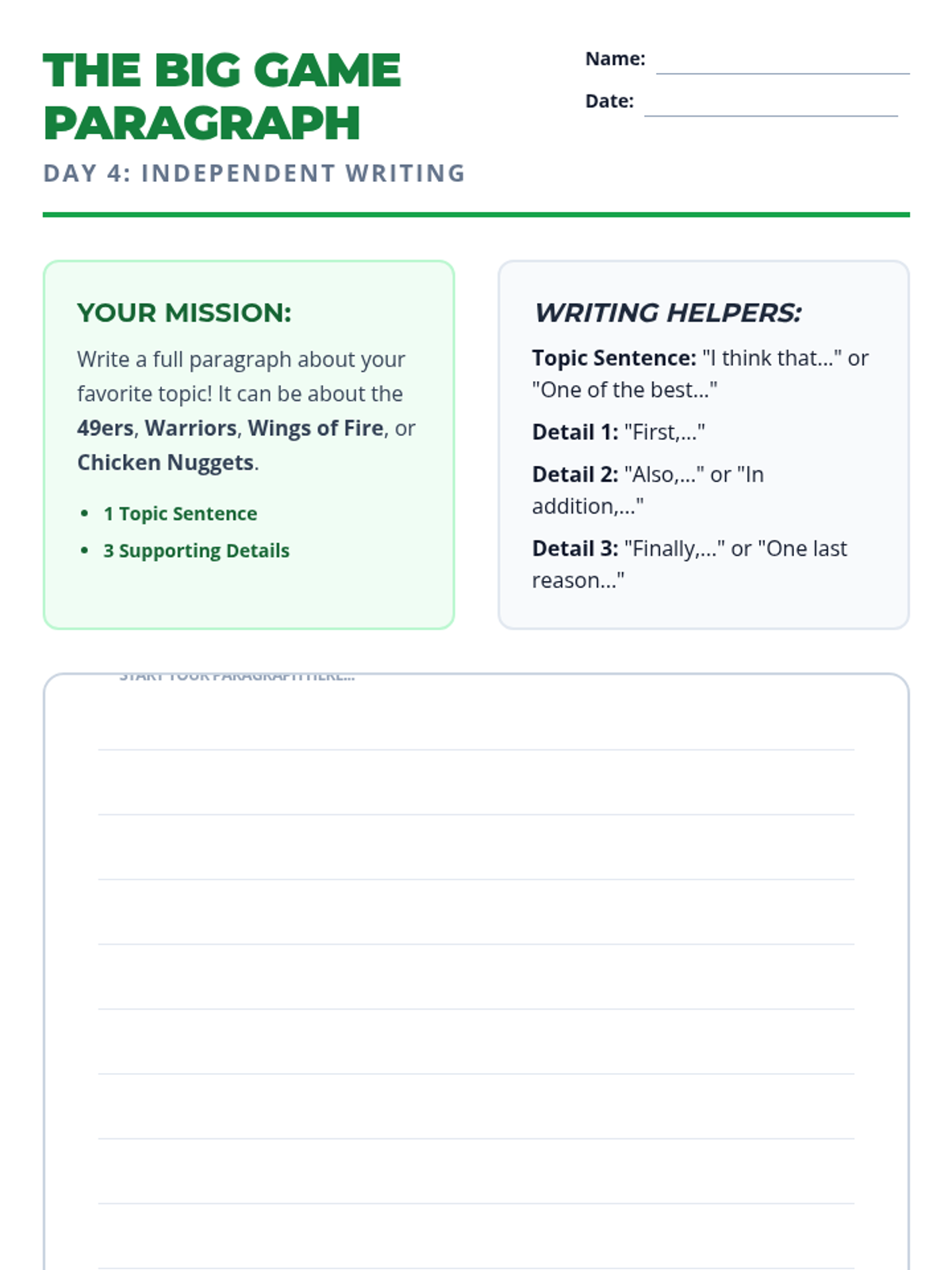
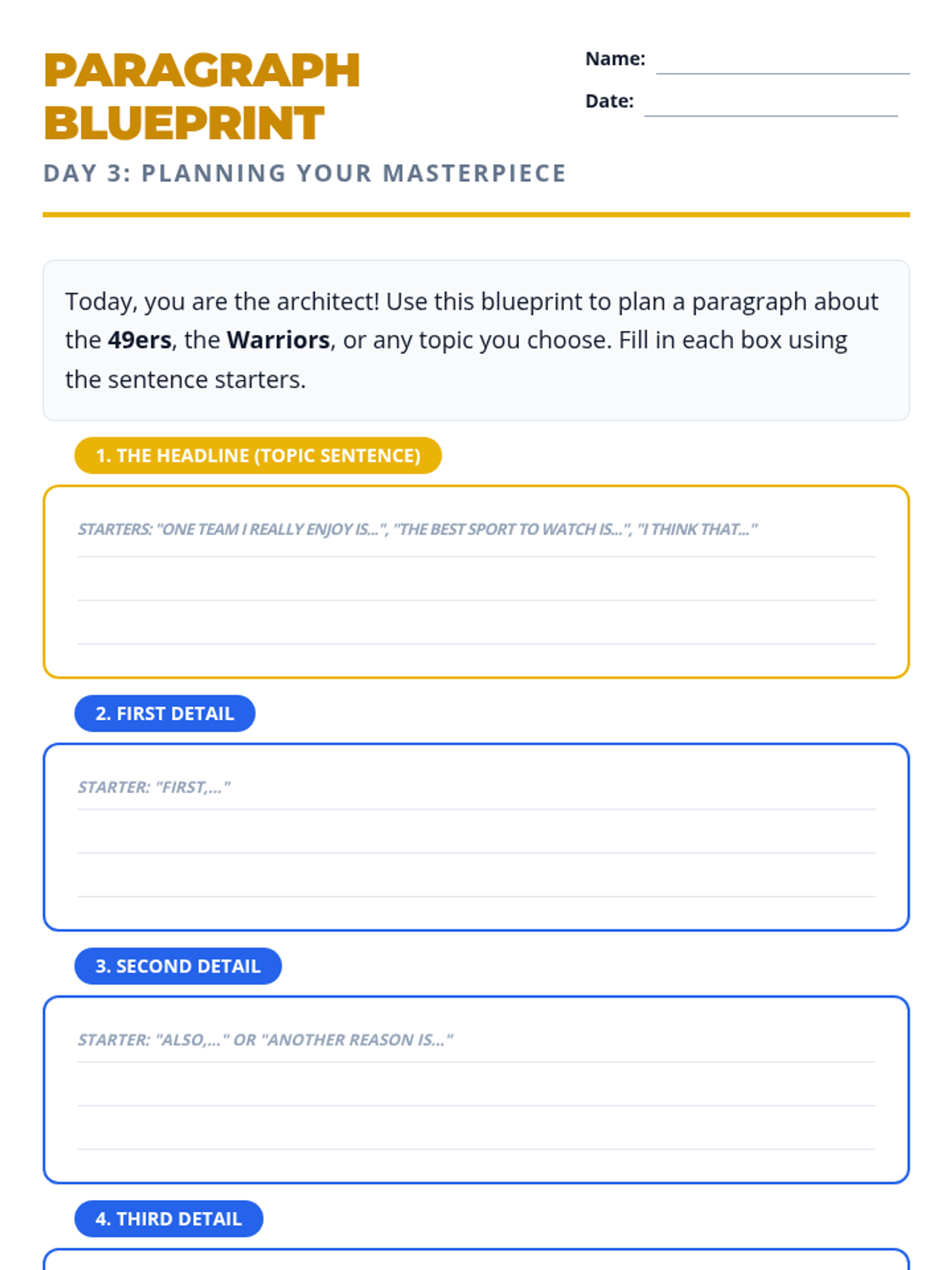
Independent writing day where students select a topic and write a full paragraph with a topic sentence and three supporting details.
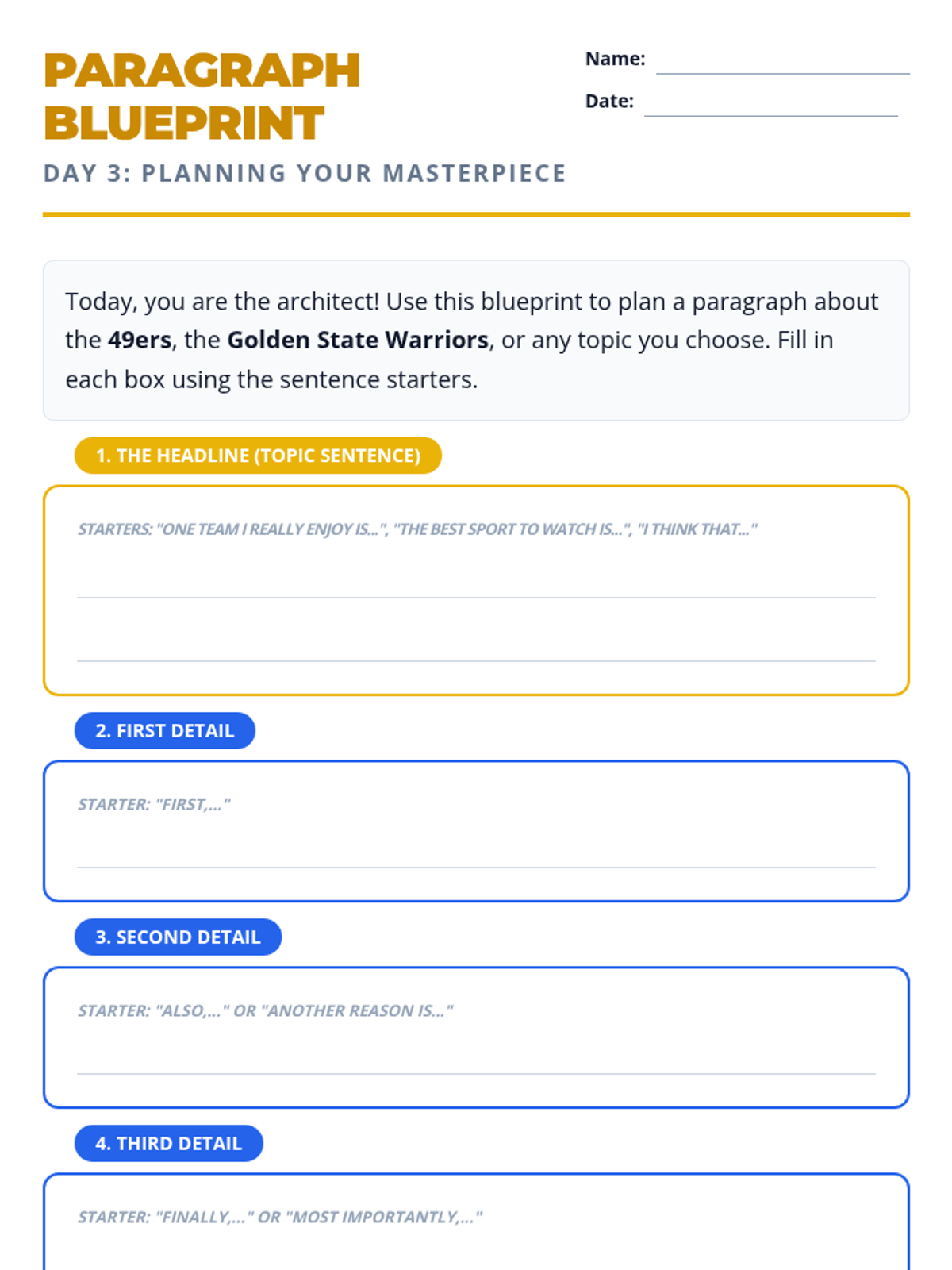
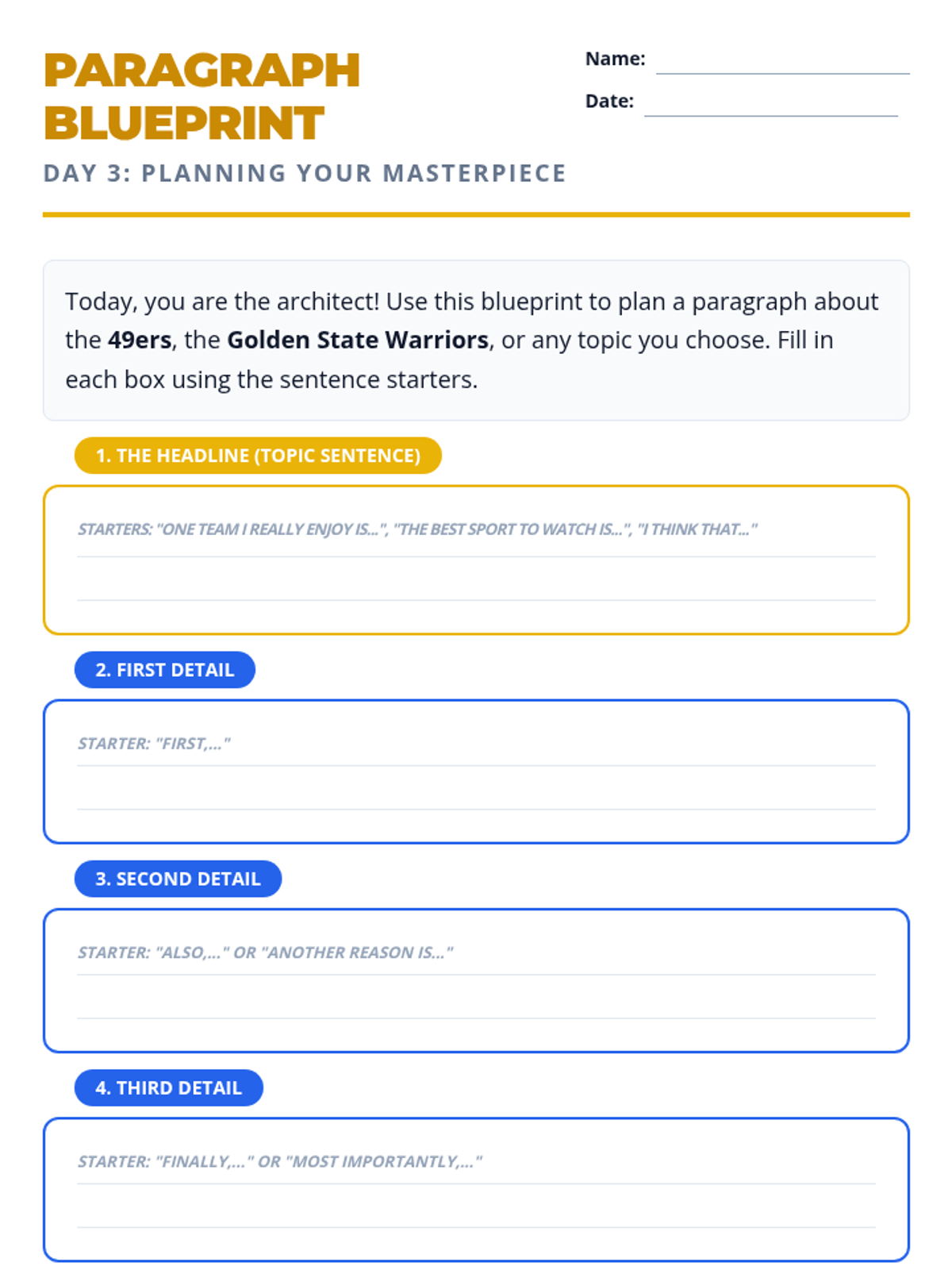
Using a graphic organizer to bridge the gap between individual sentences and a cohesive paragraph structure.
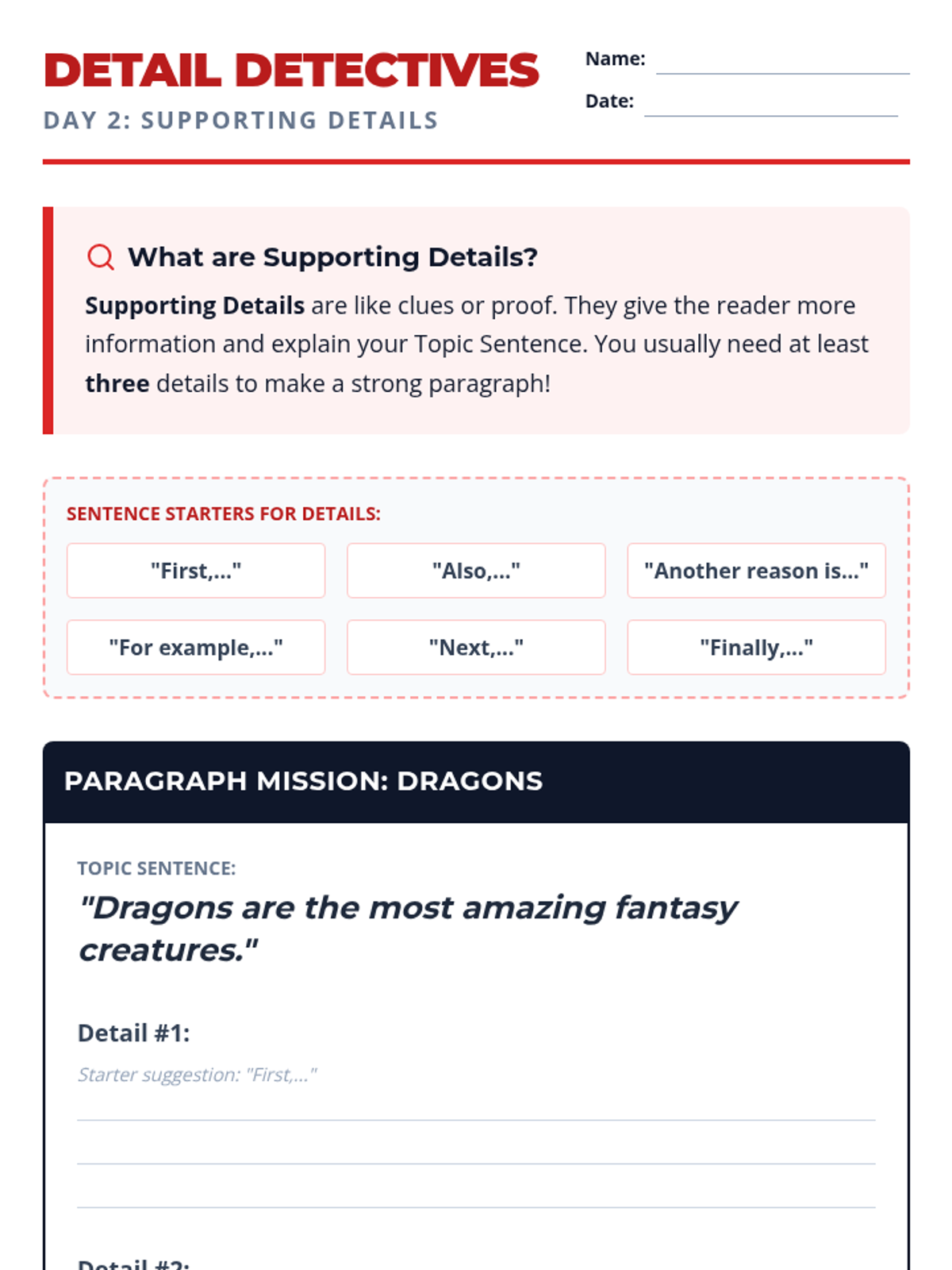
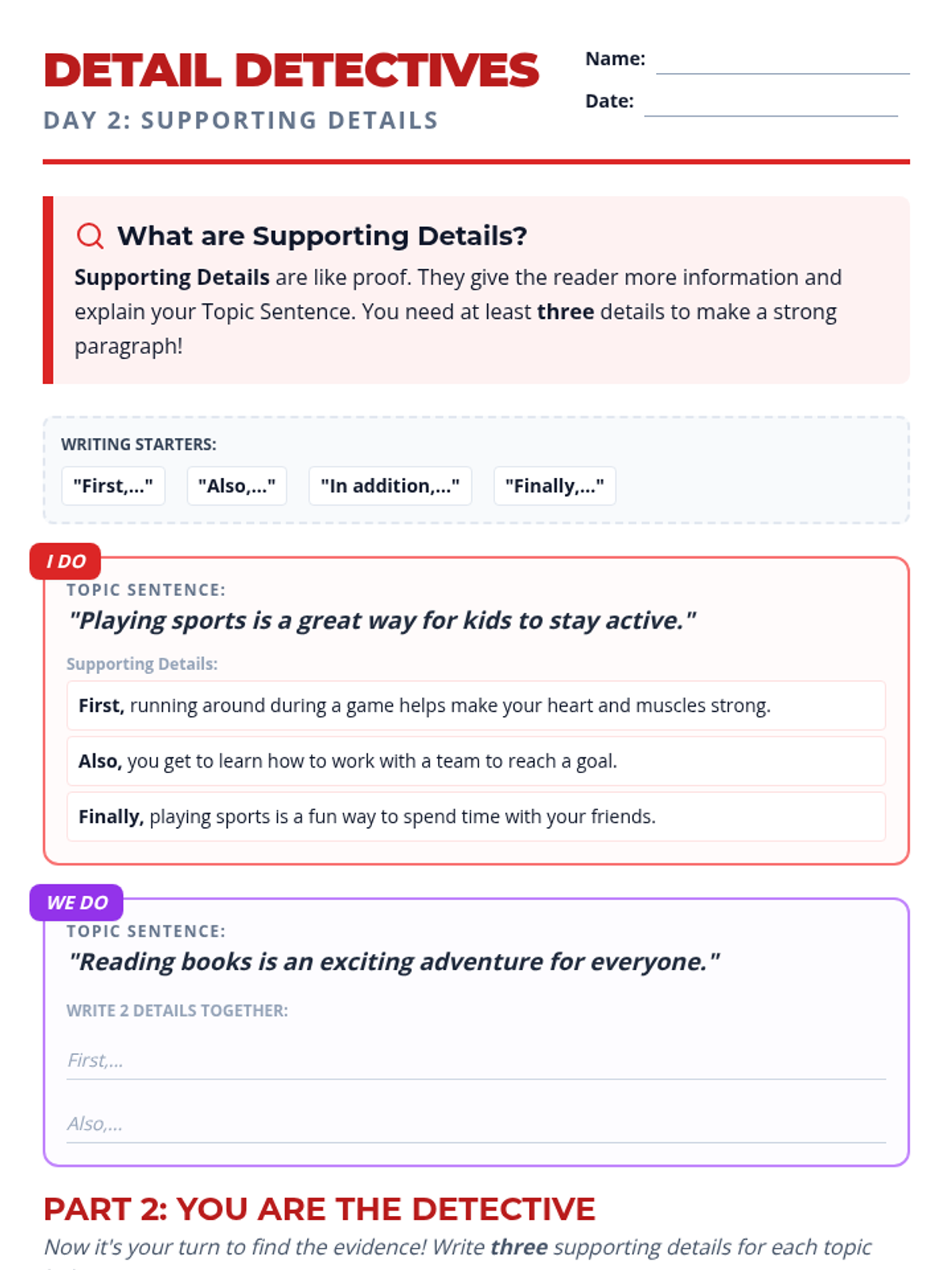
Defining supporting details and practicing how to add them to a given topic sentence using structured sentence starters.
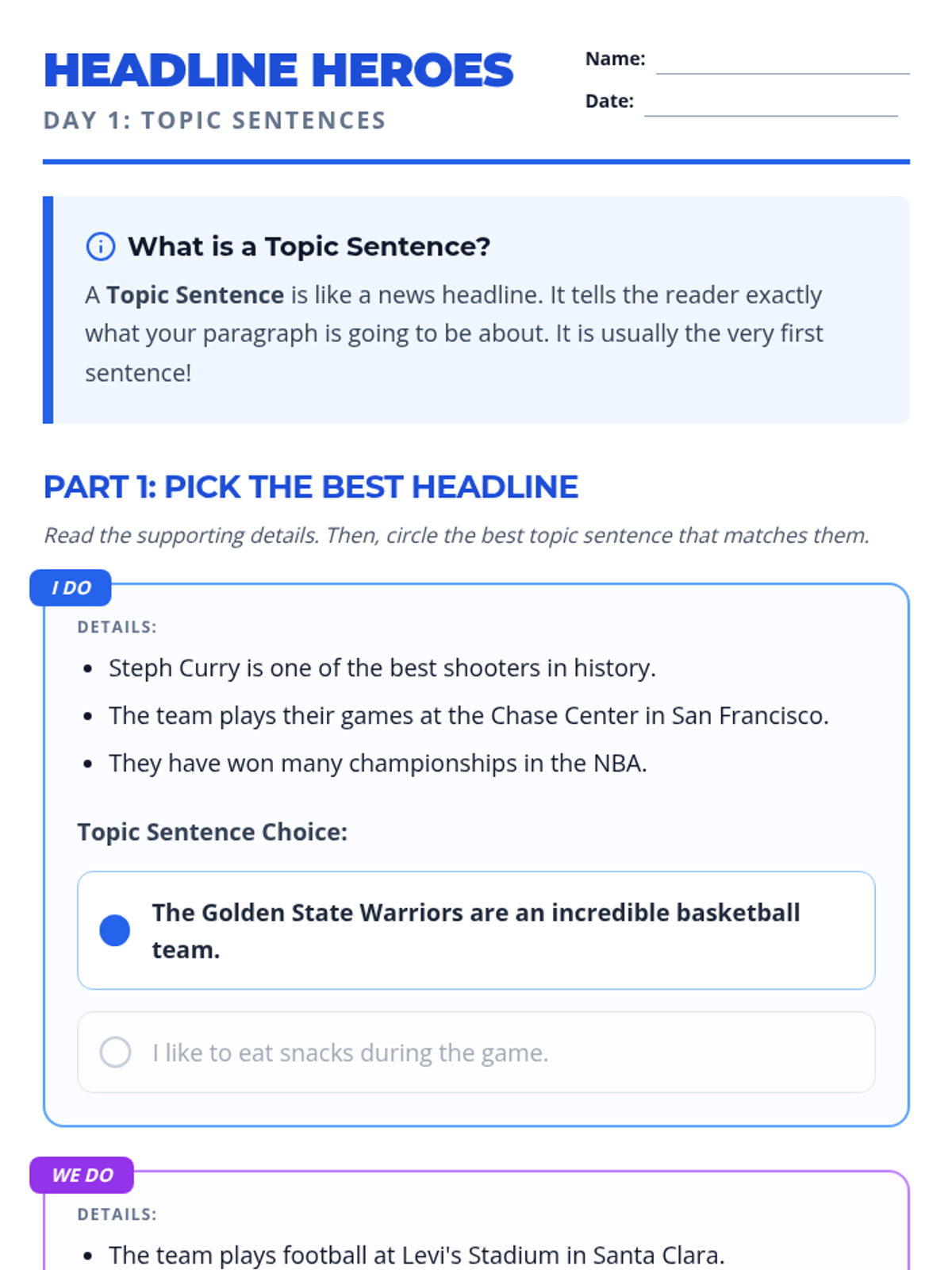
Introduction to topic sentences as the 'headline' of a paragraph, including identification and selection practice.
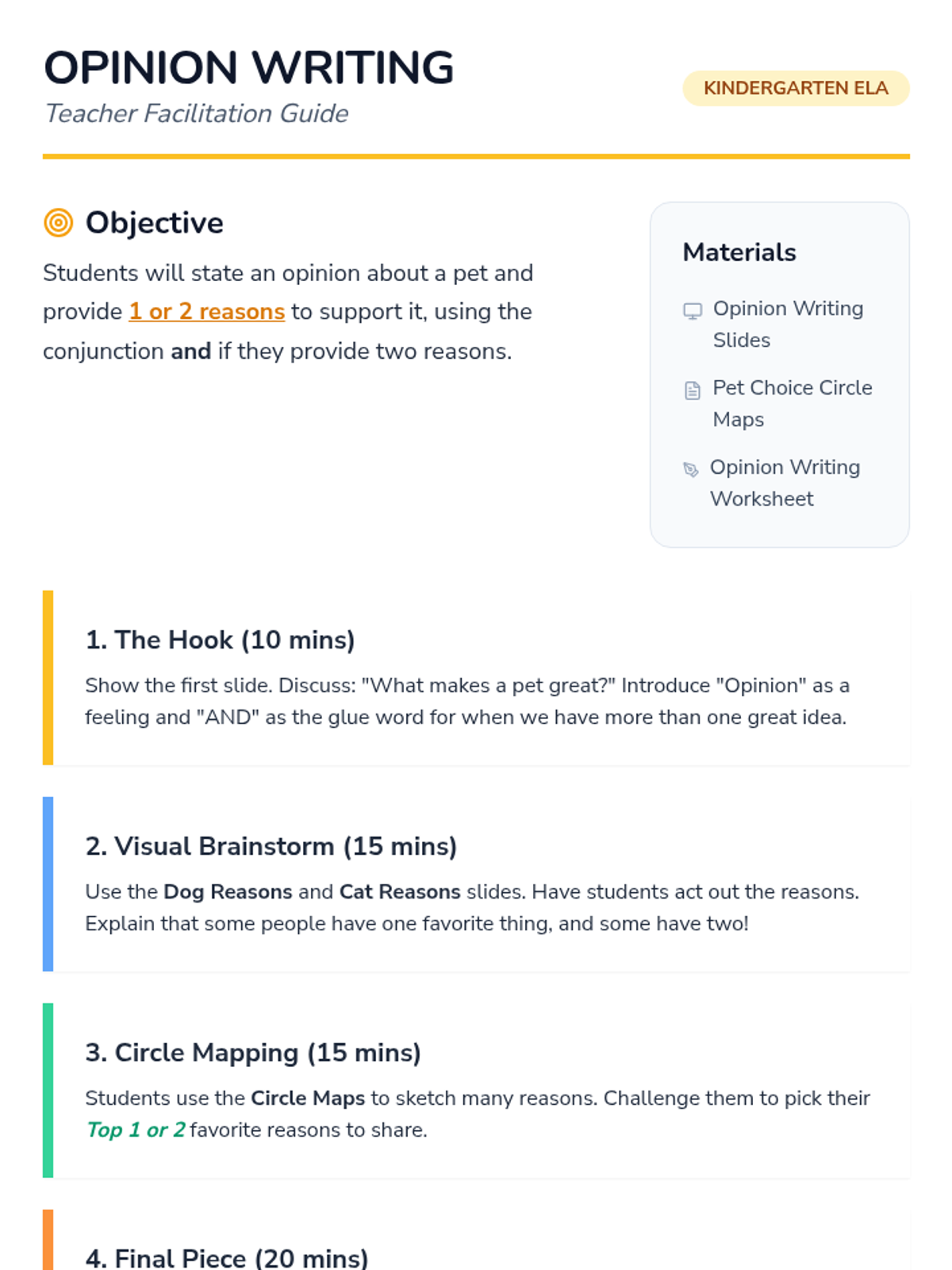
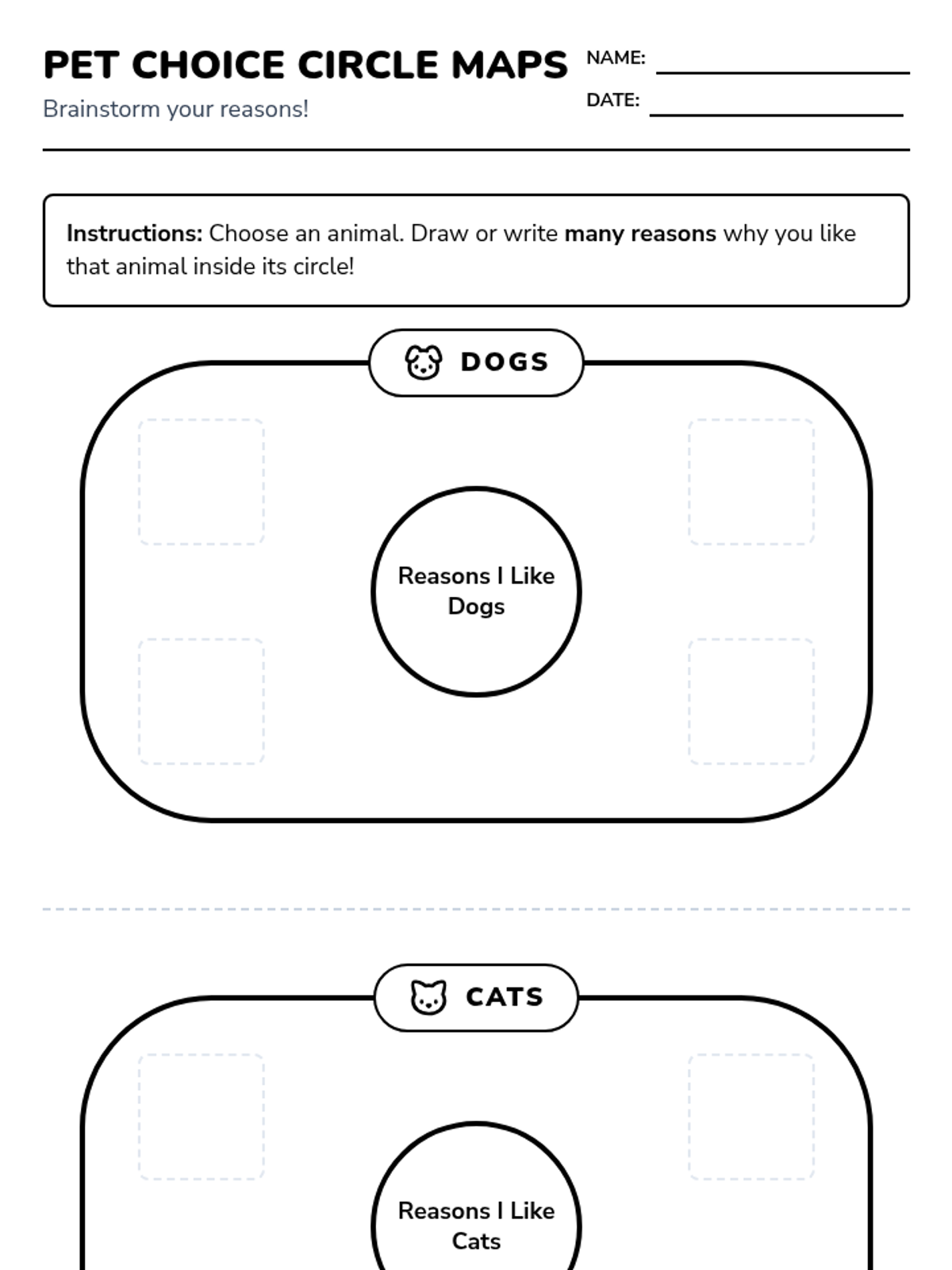
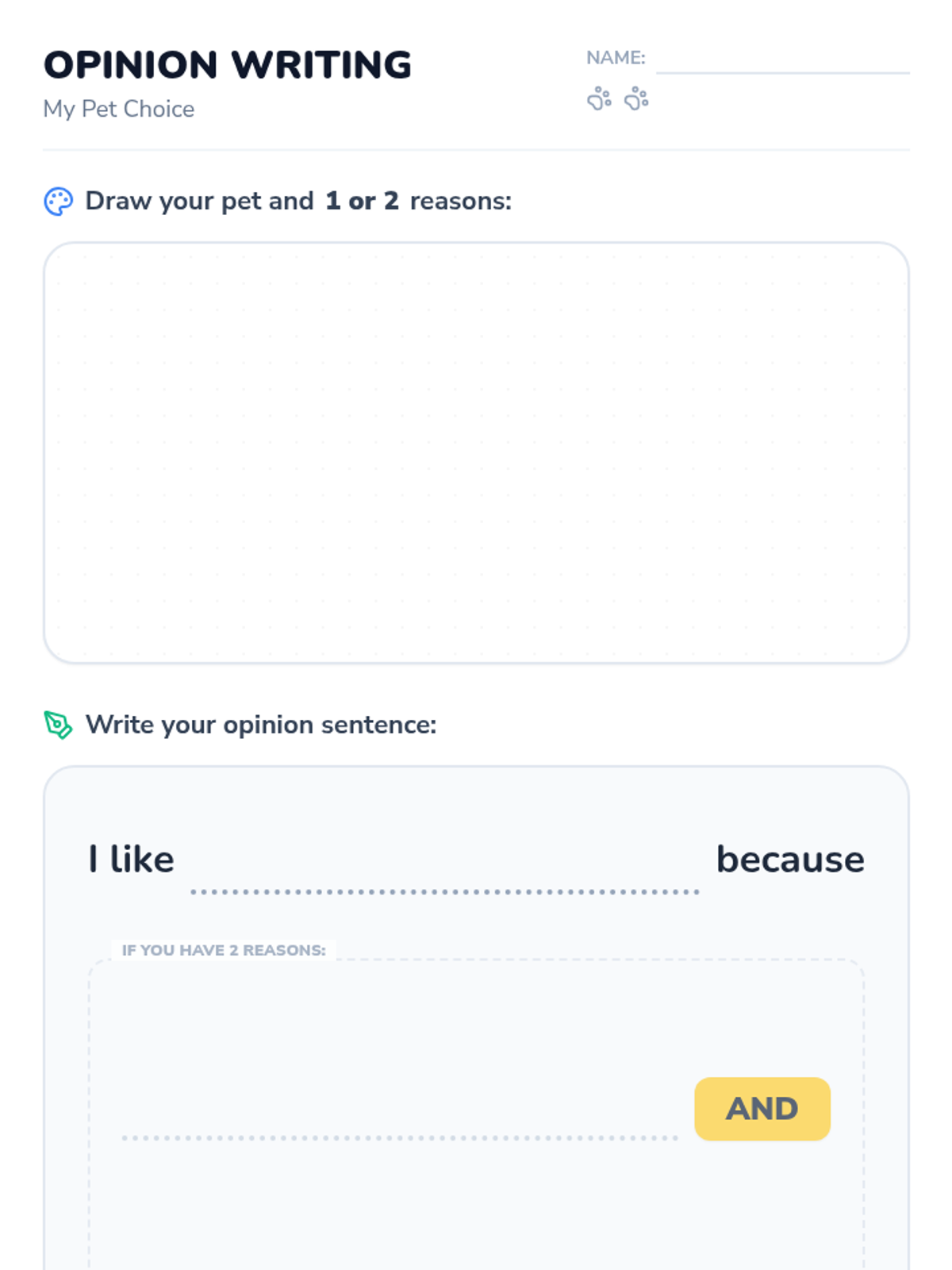
A kindergarten lesson that teaches students how to use the conjunction 'and' to connect two reasons in an opinion sentence, featuring dog and cat themes.
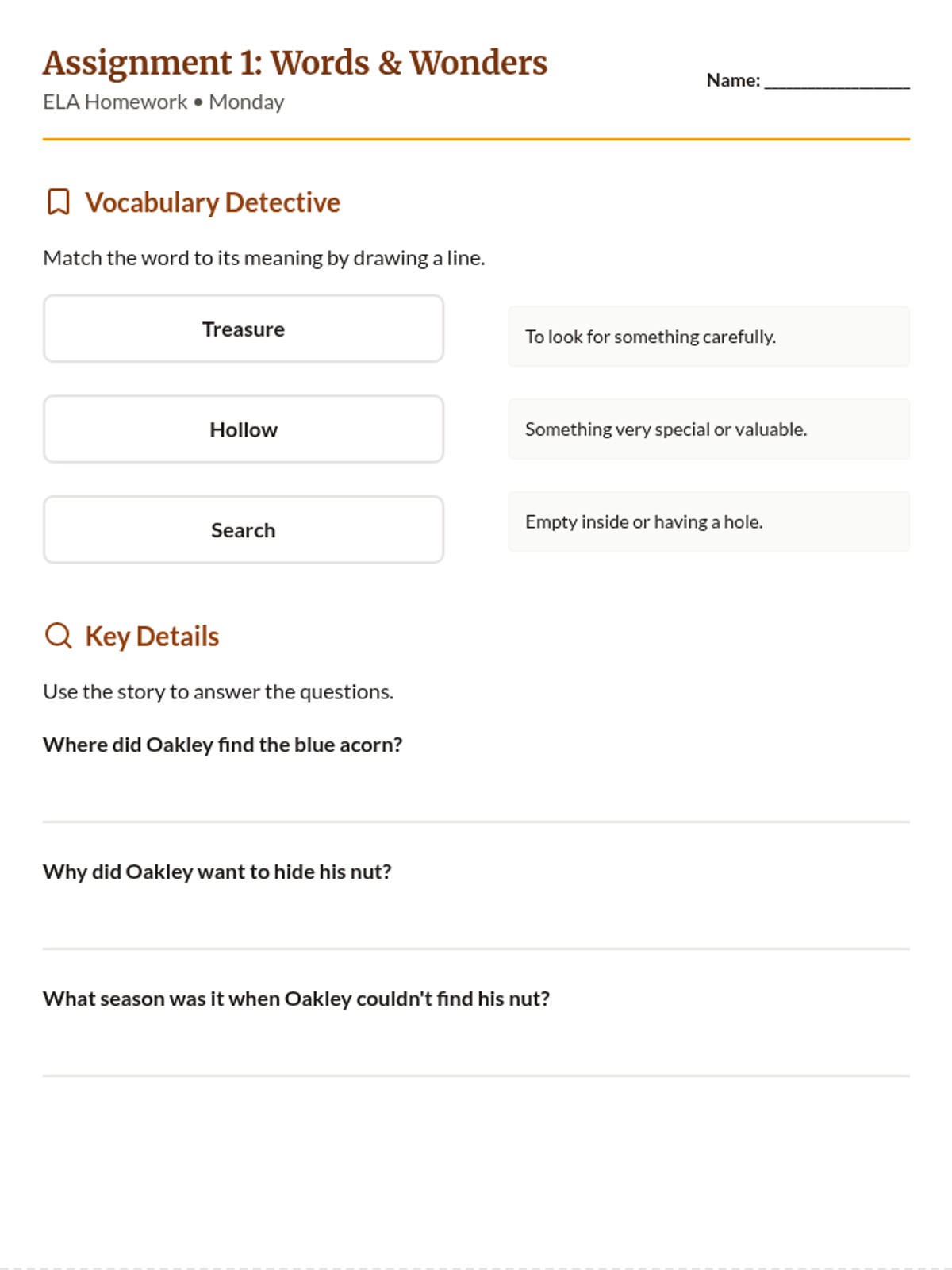
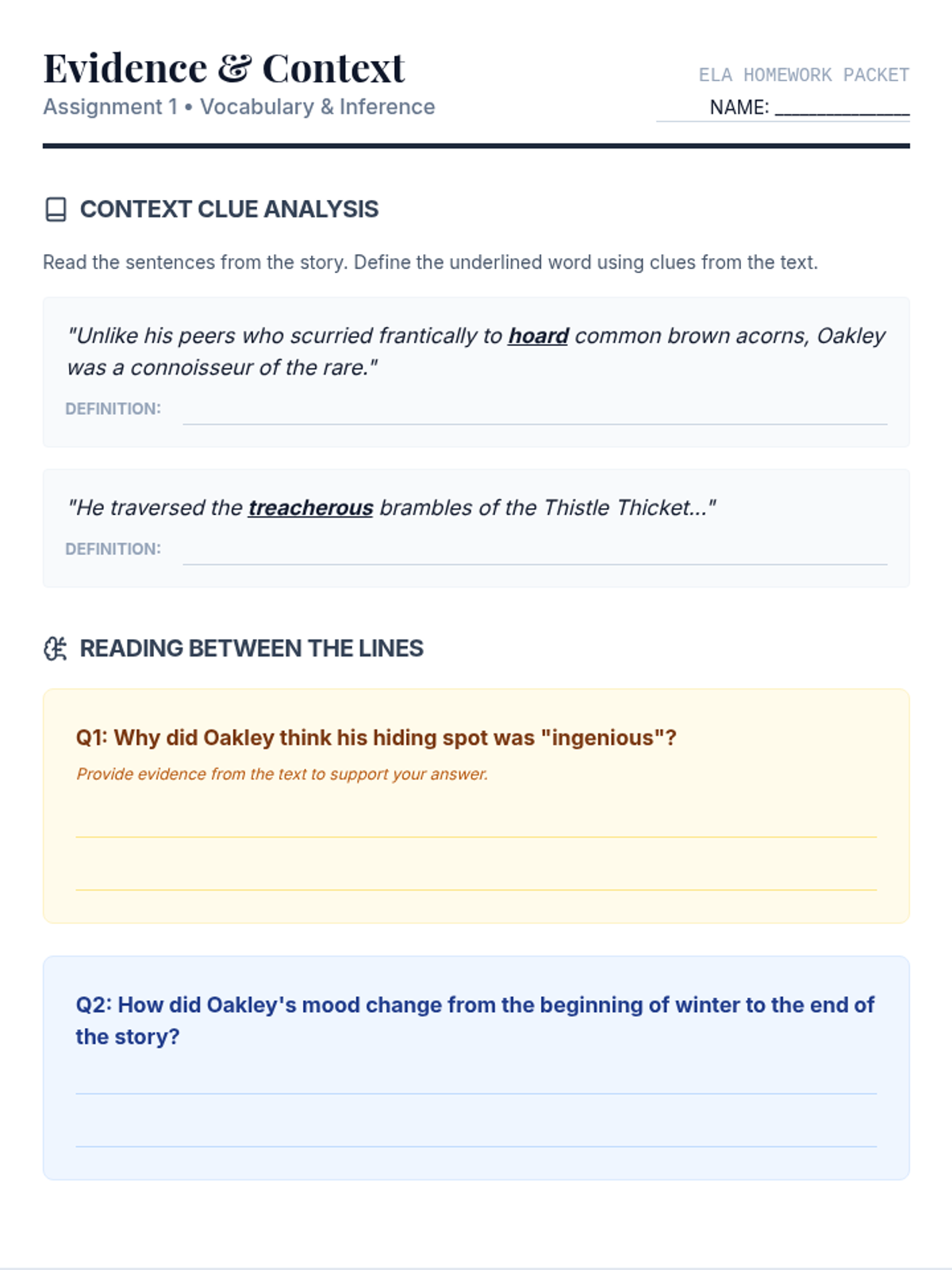
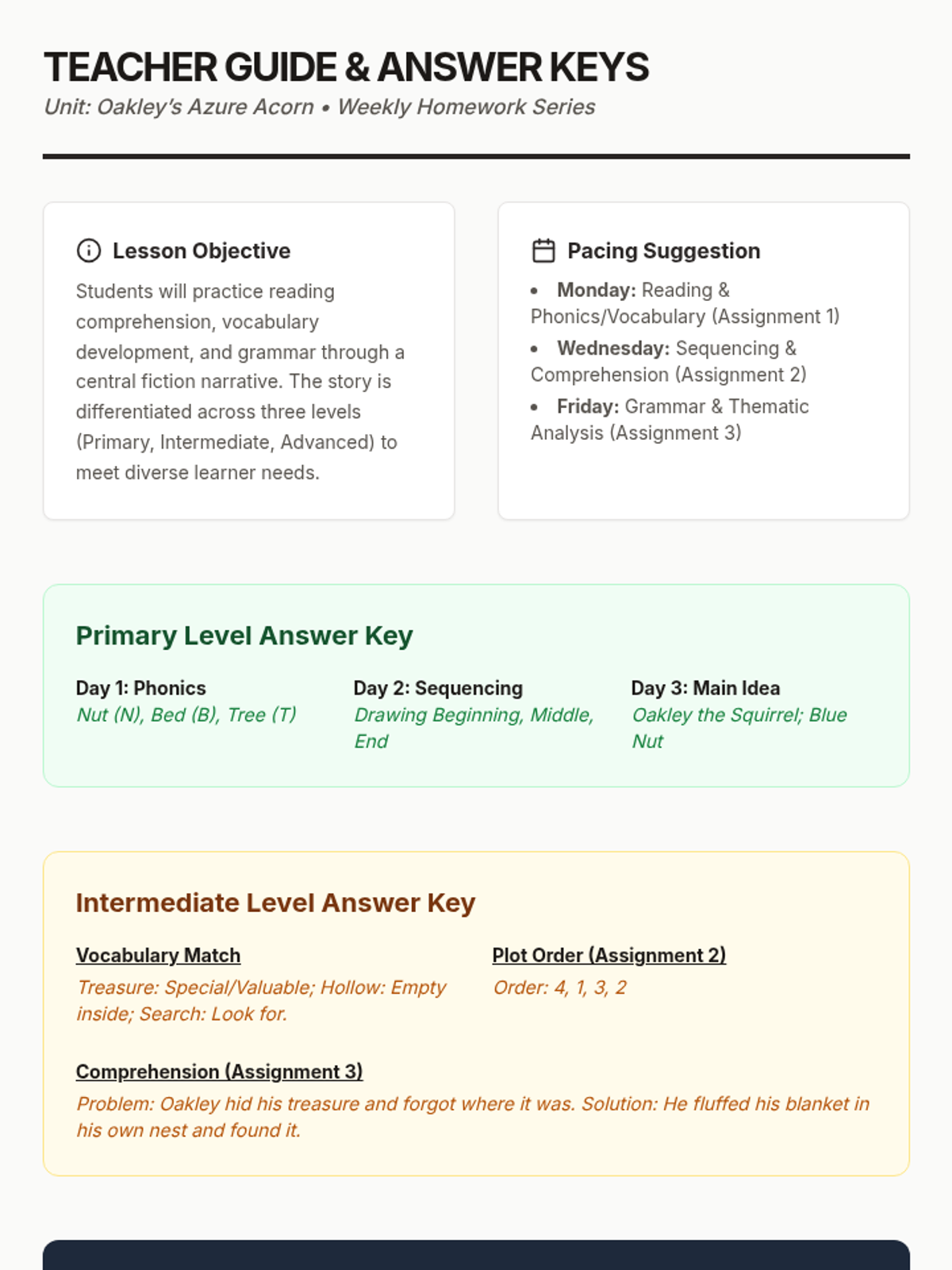
A series of three ELA homework assignments based on the story 'Oakley’s Azure Acorn,' focusing on phonics, vocabulary, comprehension, and grammar.
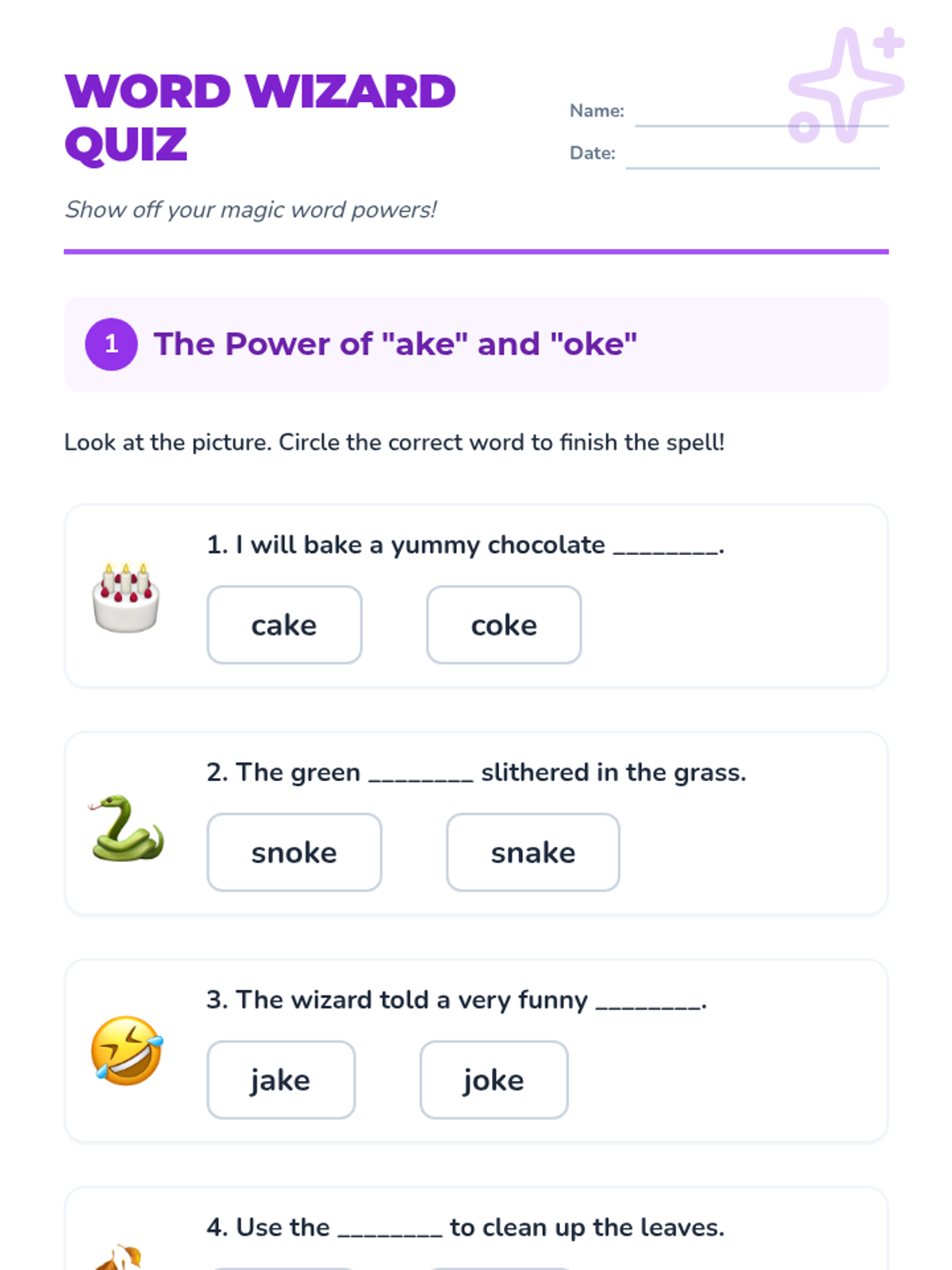
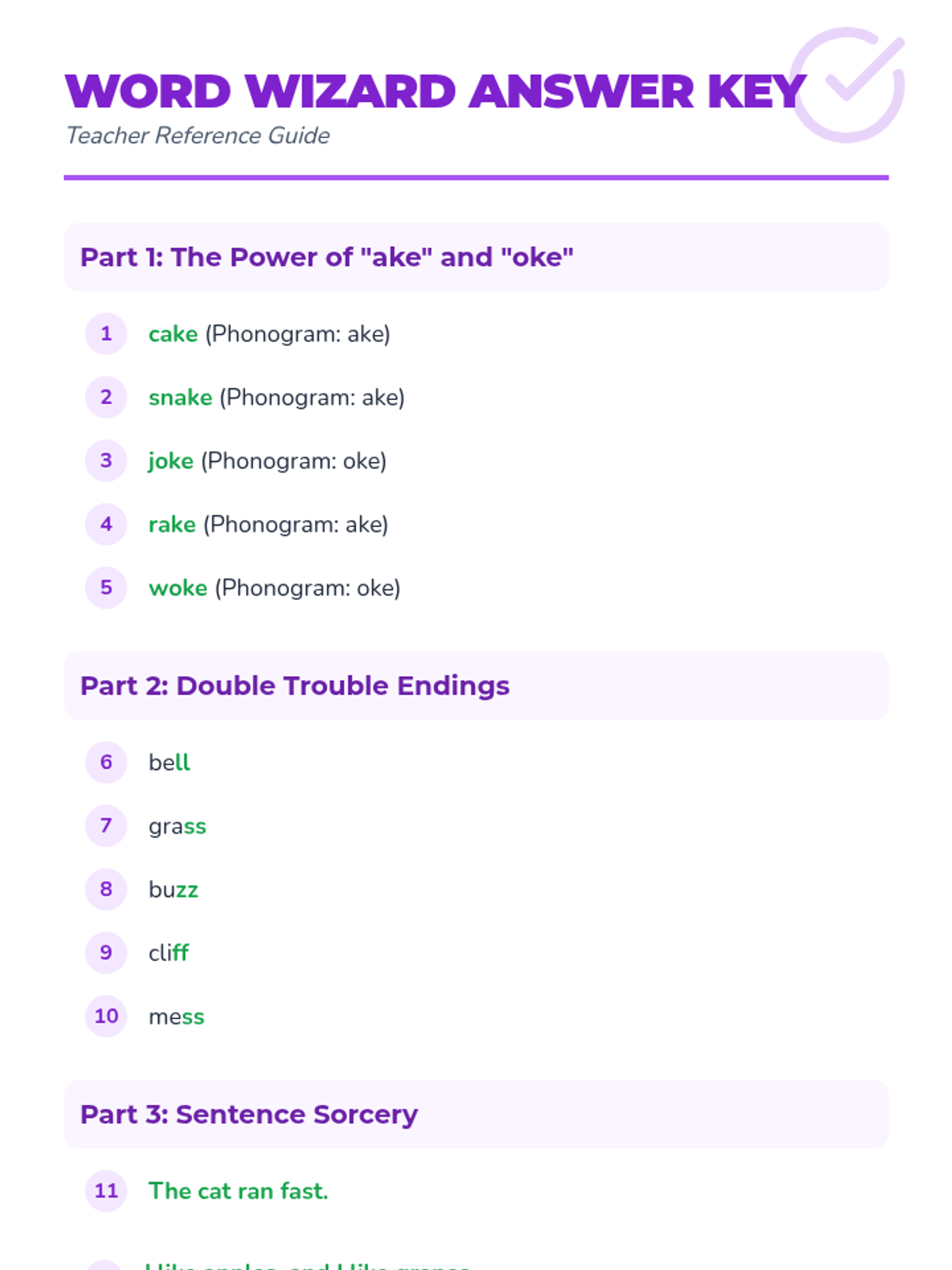
A quiz assessing phonogram patterns (oke/ake), double consonant endings, and simple/compound sentence construction for a diverse range of primary reading levels.
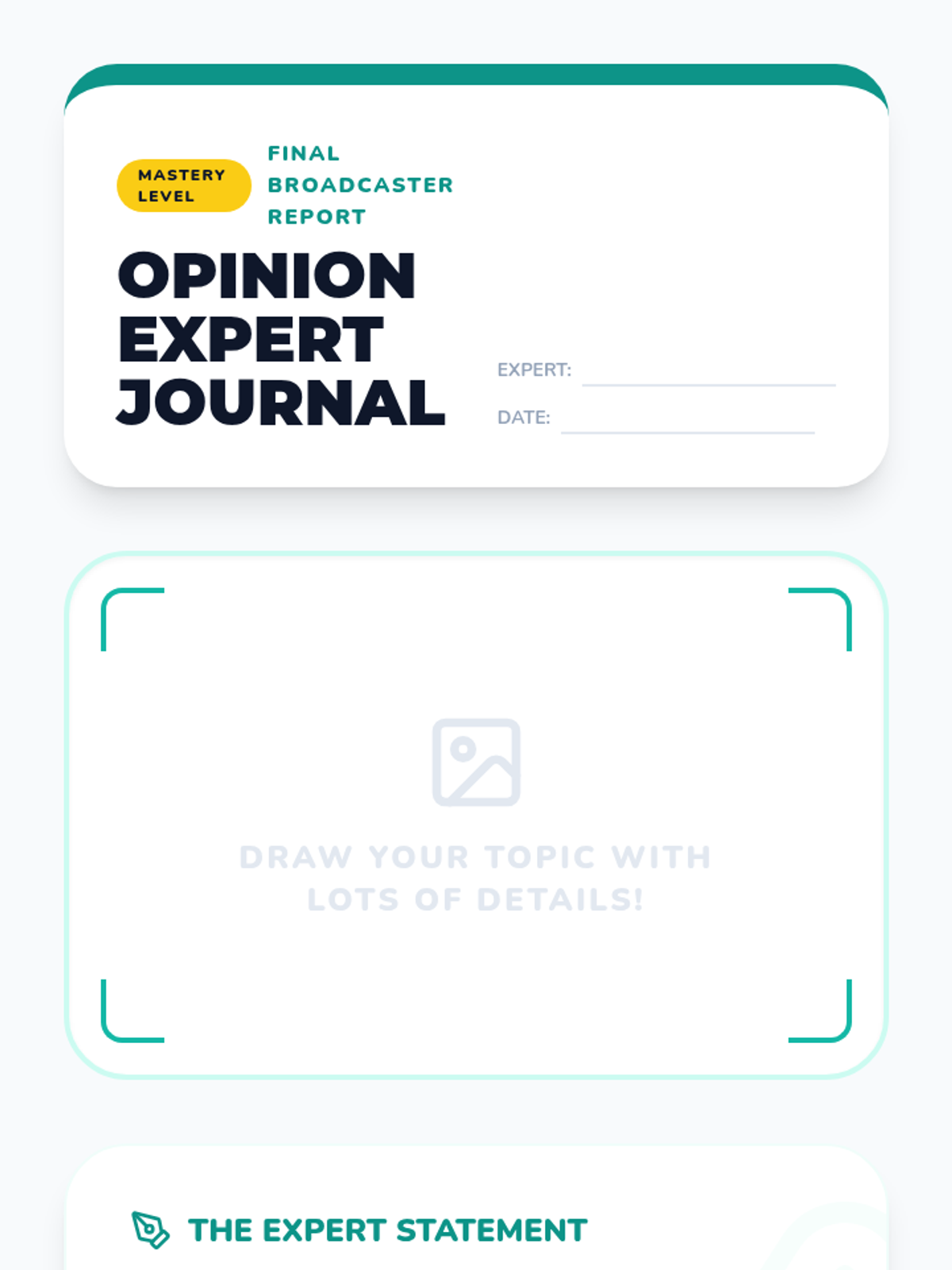
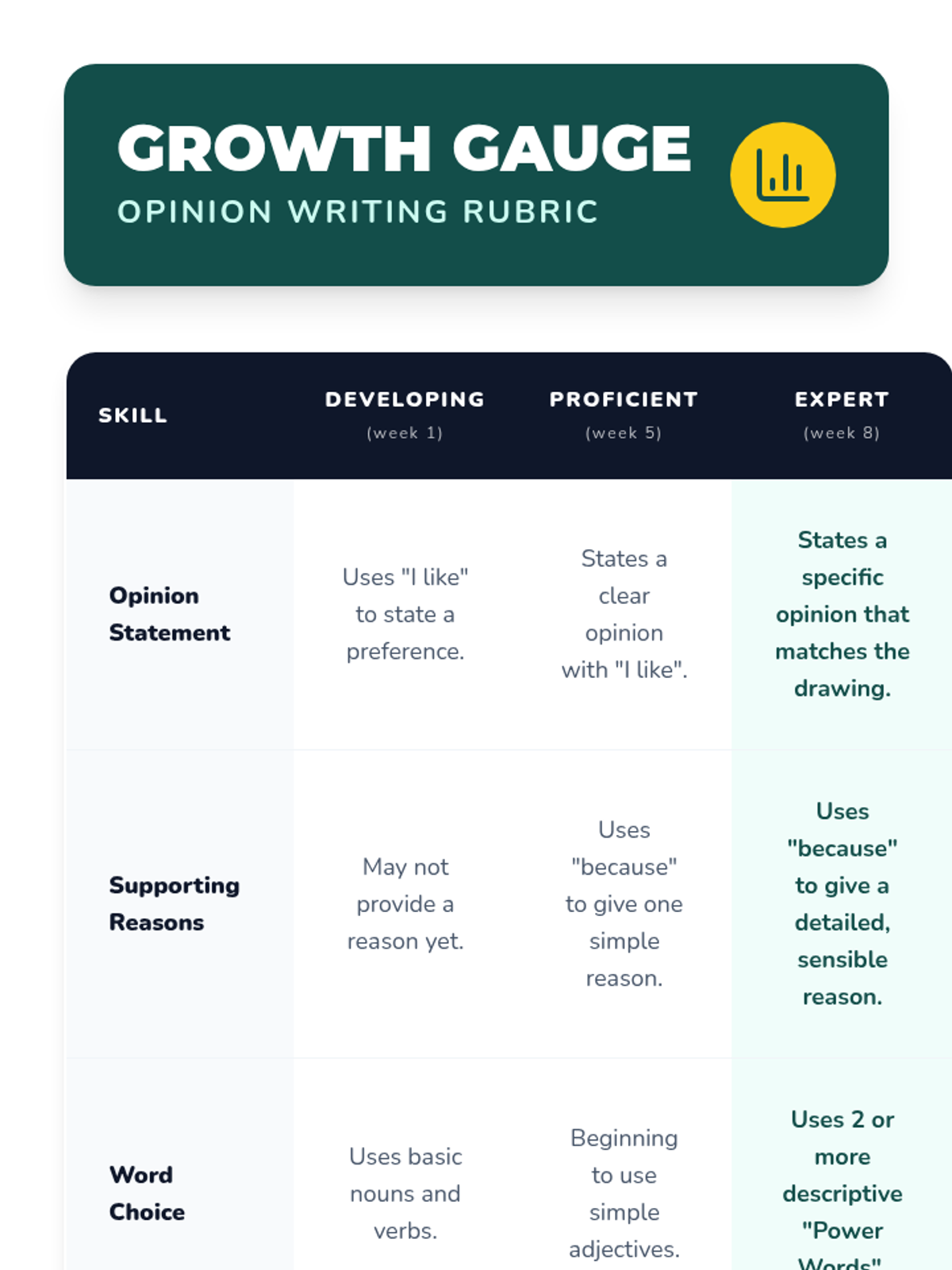
Students refine their opinion writing by adding descriptive details and multiple reasons to their 'because' statements to become 'Opinion Experts'.
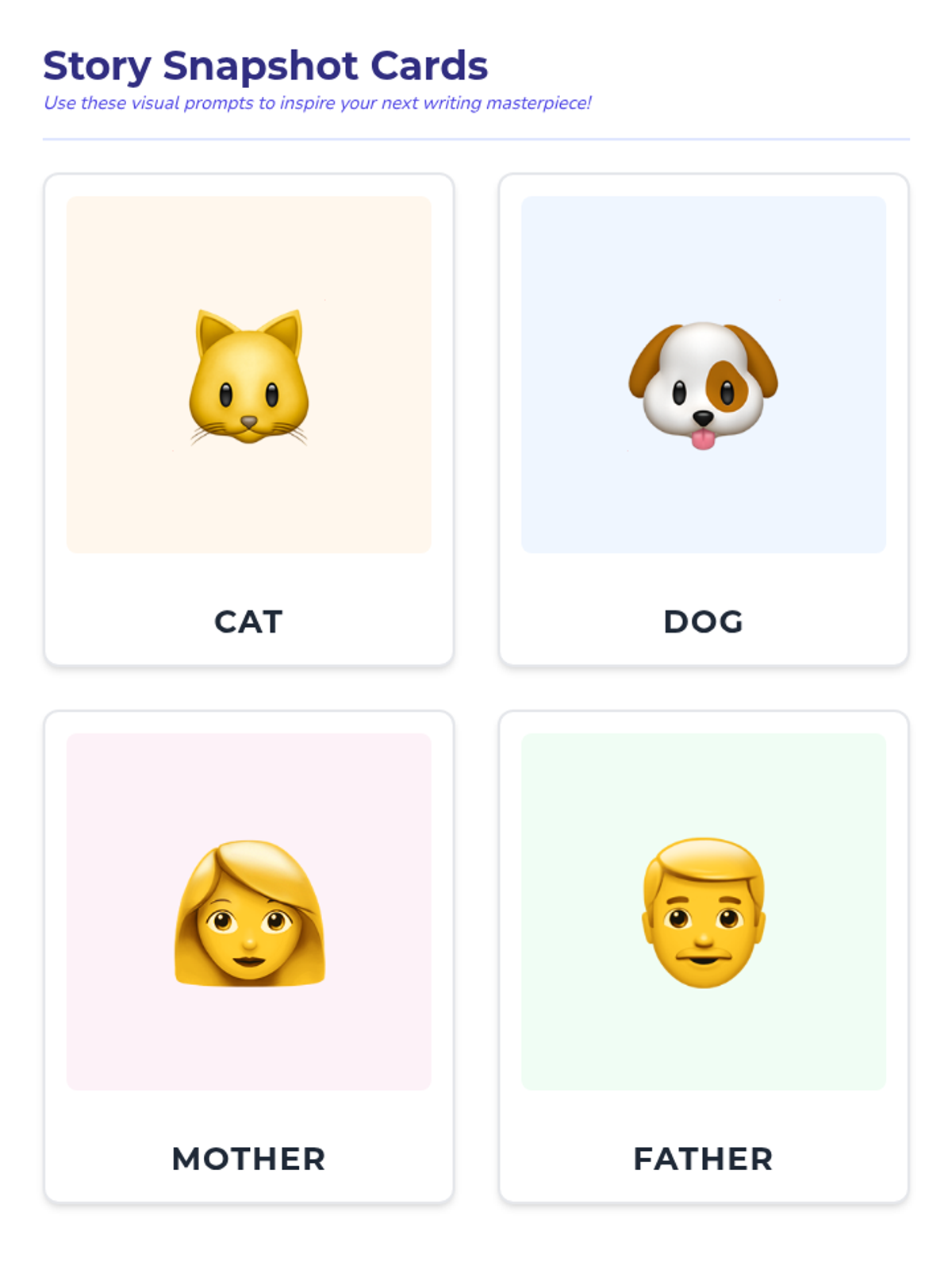
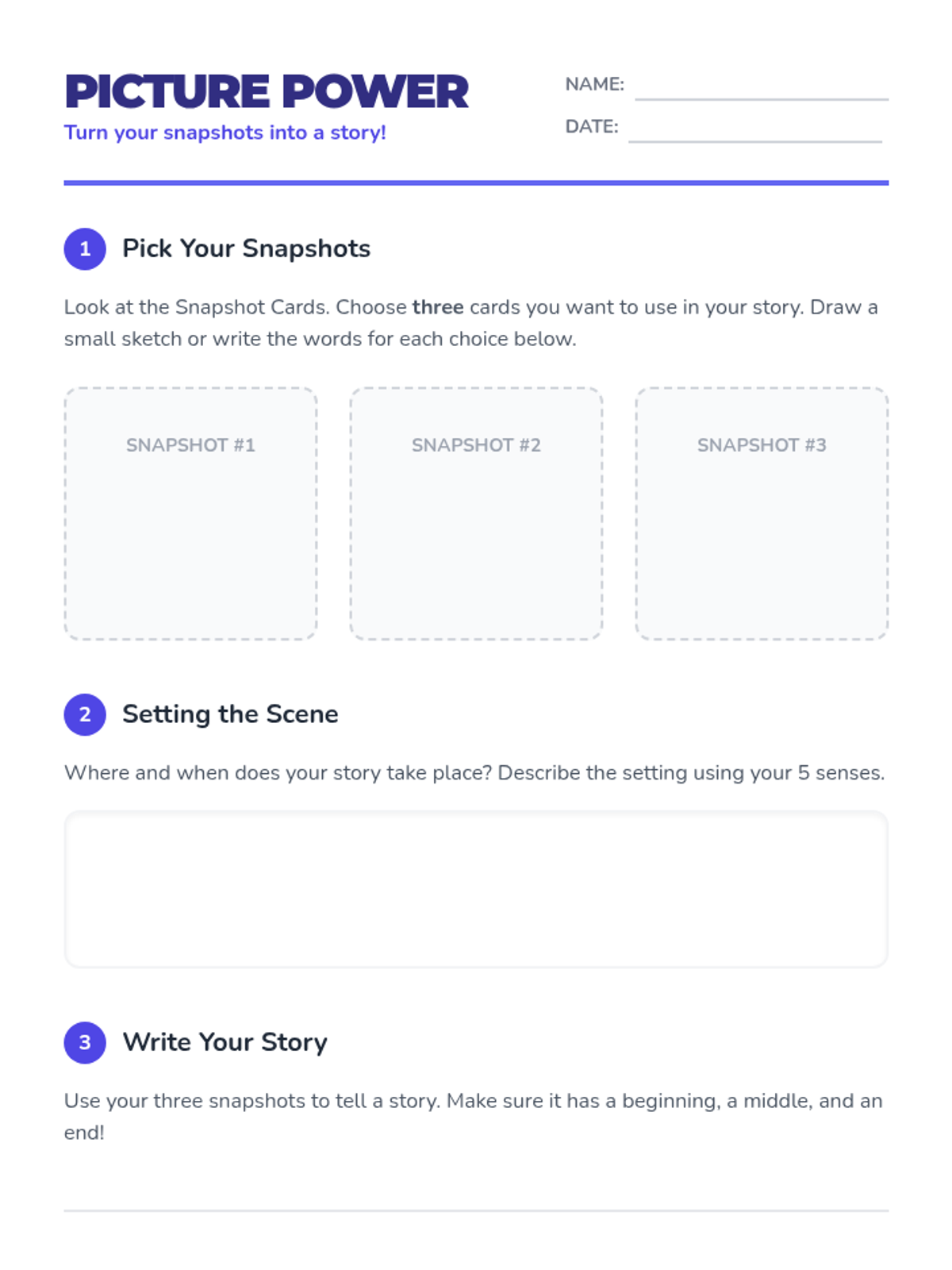
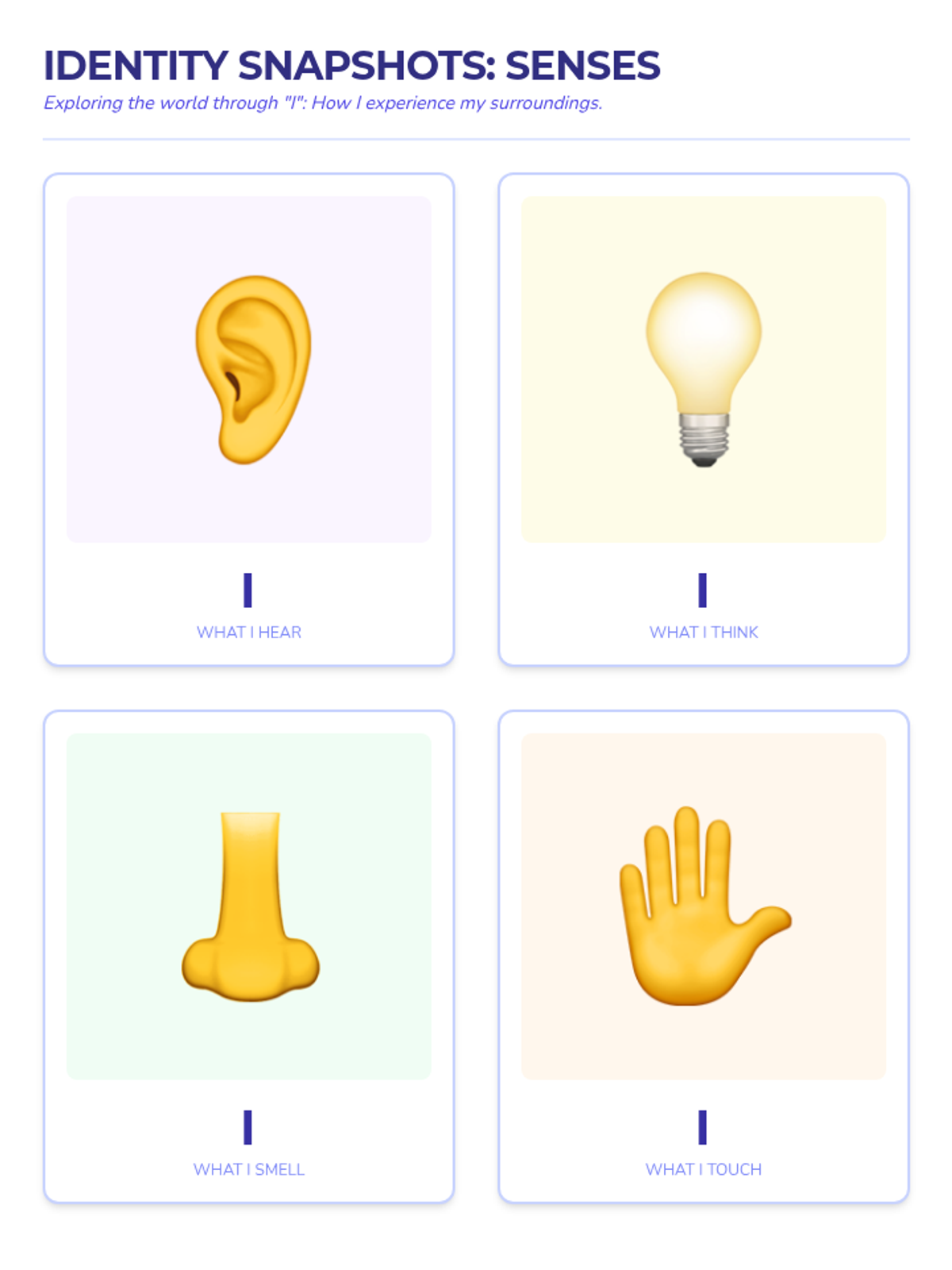
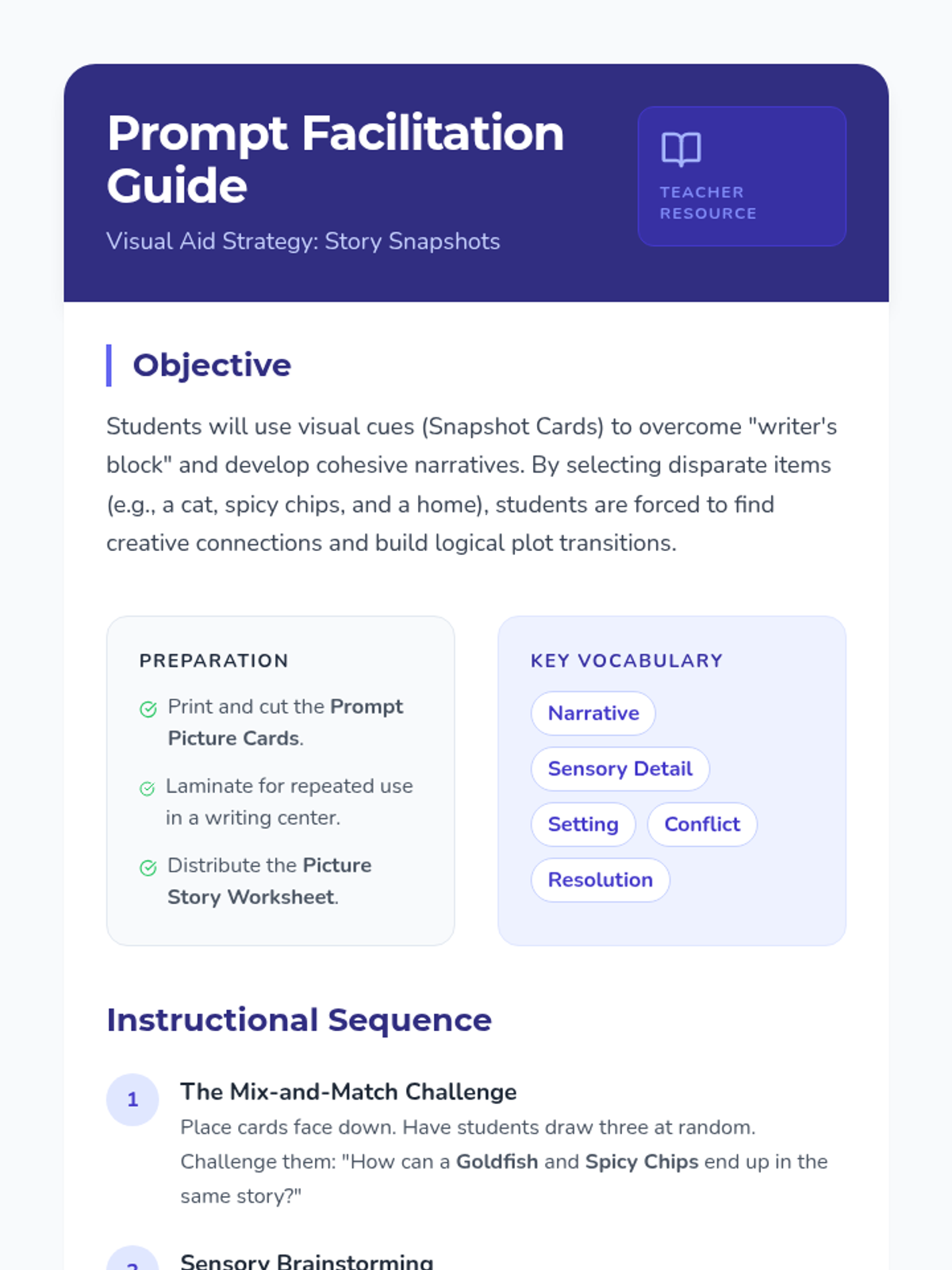
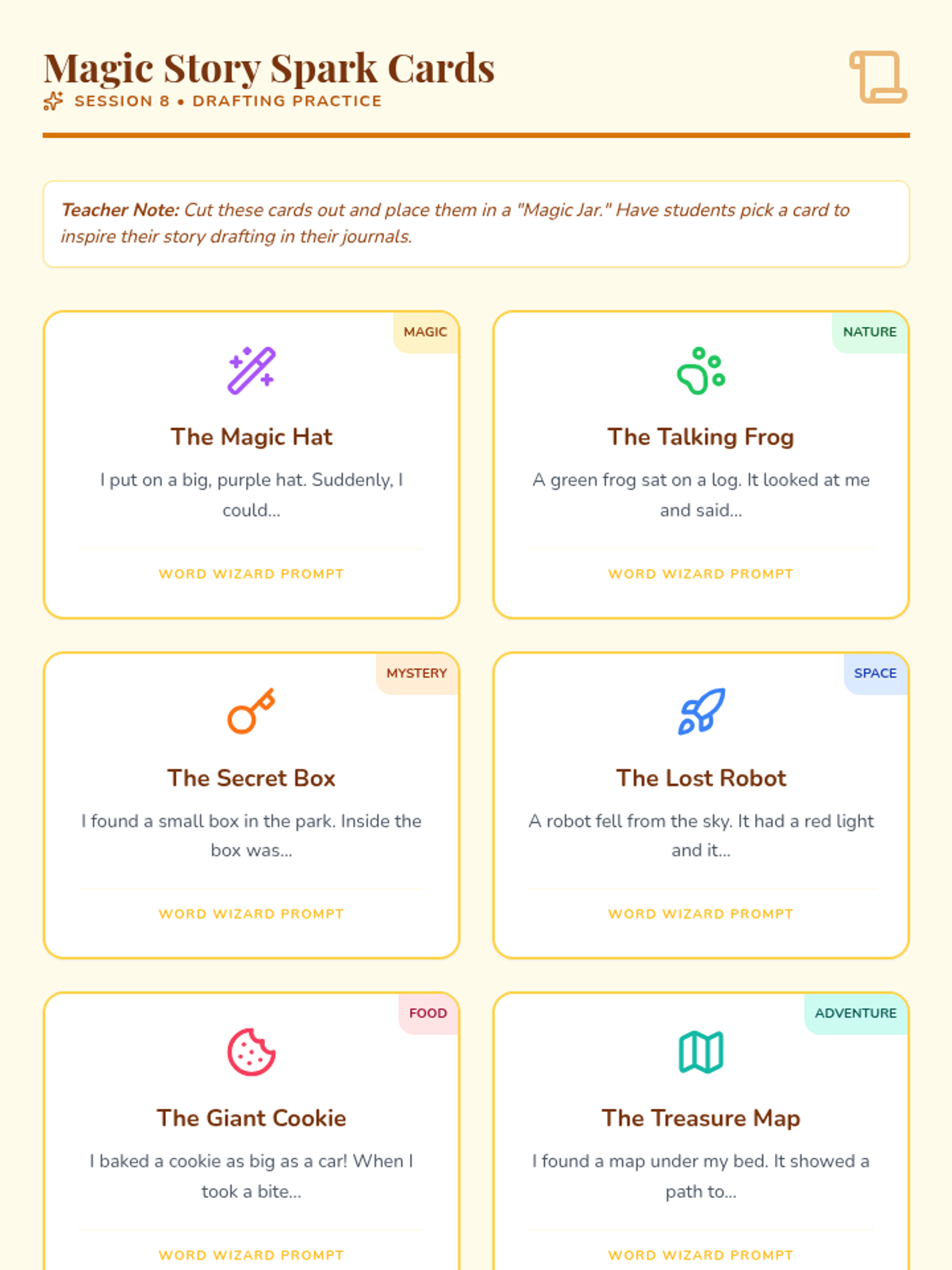
A lesson focused on using visual prompts to spark descriptive and narrative writing. Students use a set of visual cards to generate ideas, describe settings, and build characters for their stories.
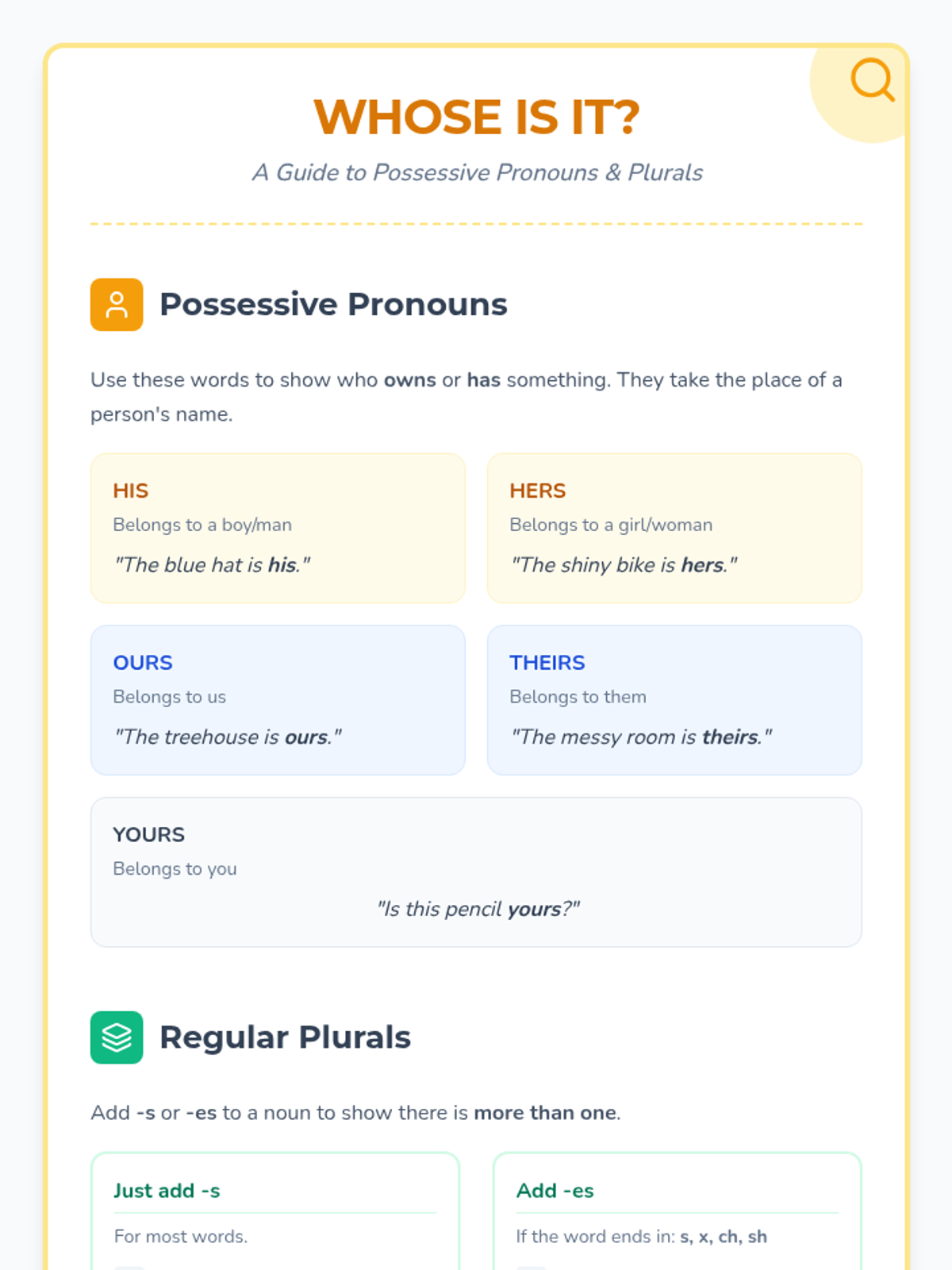
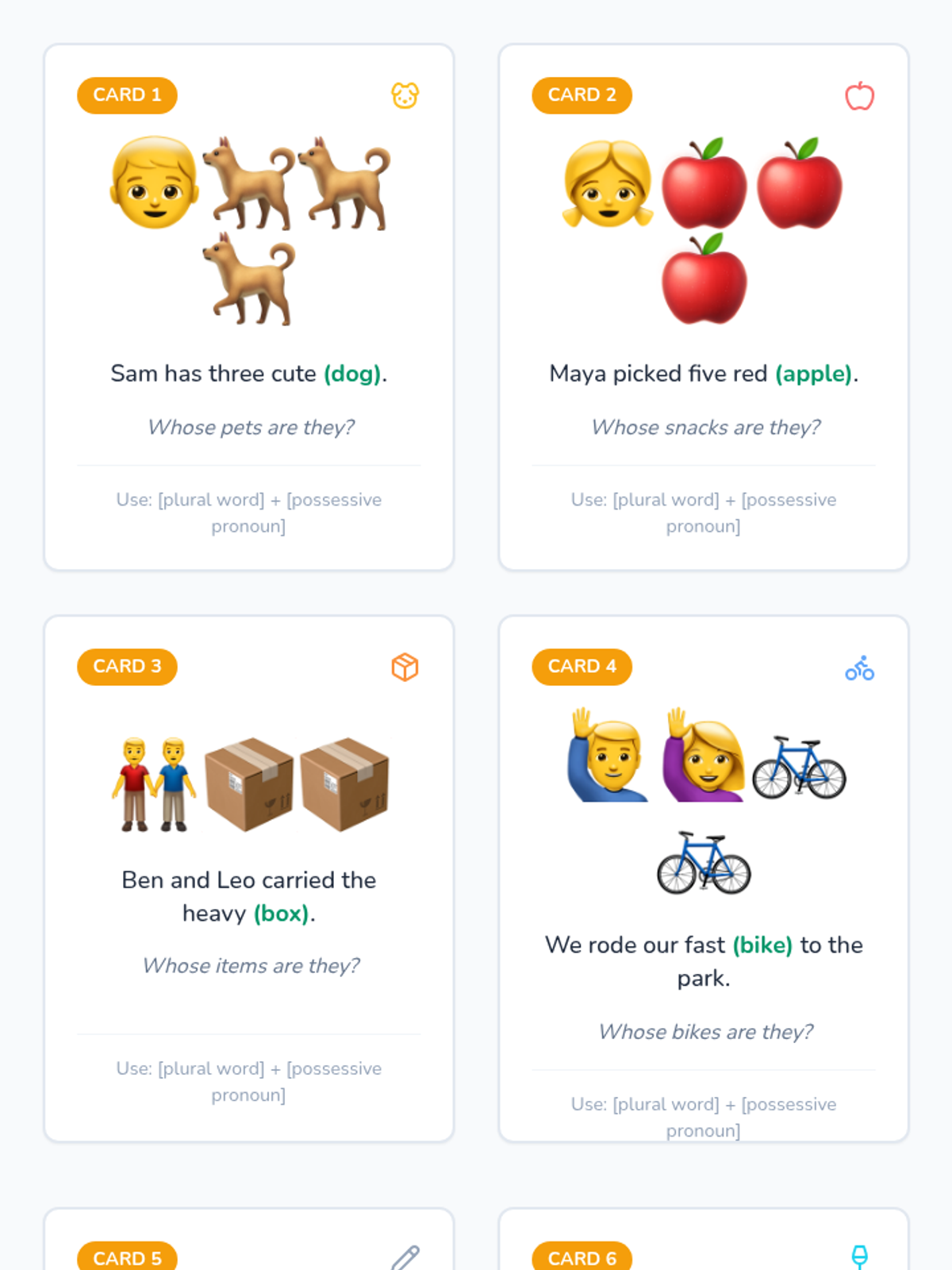
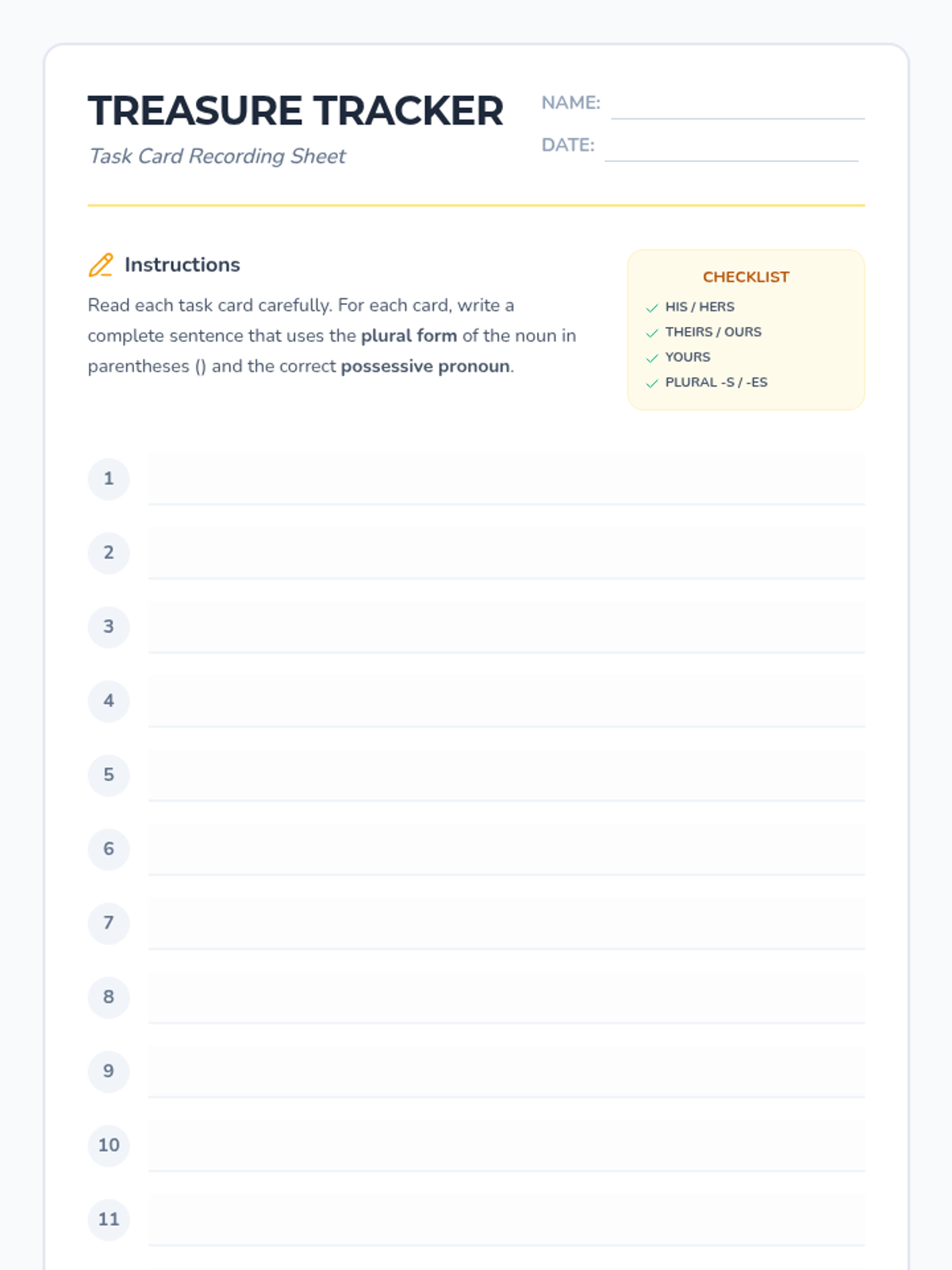
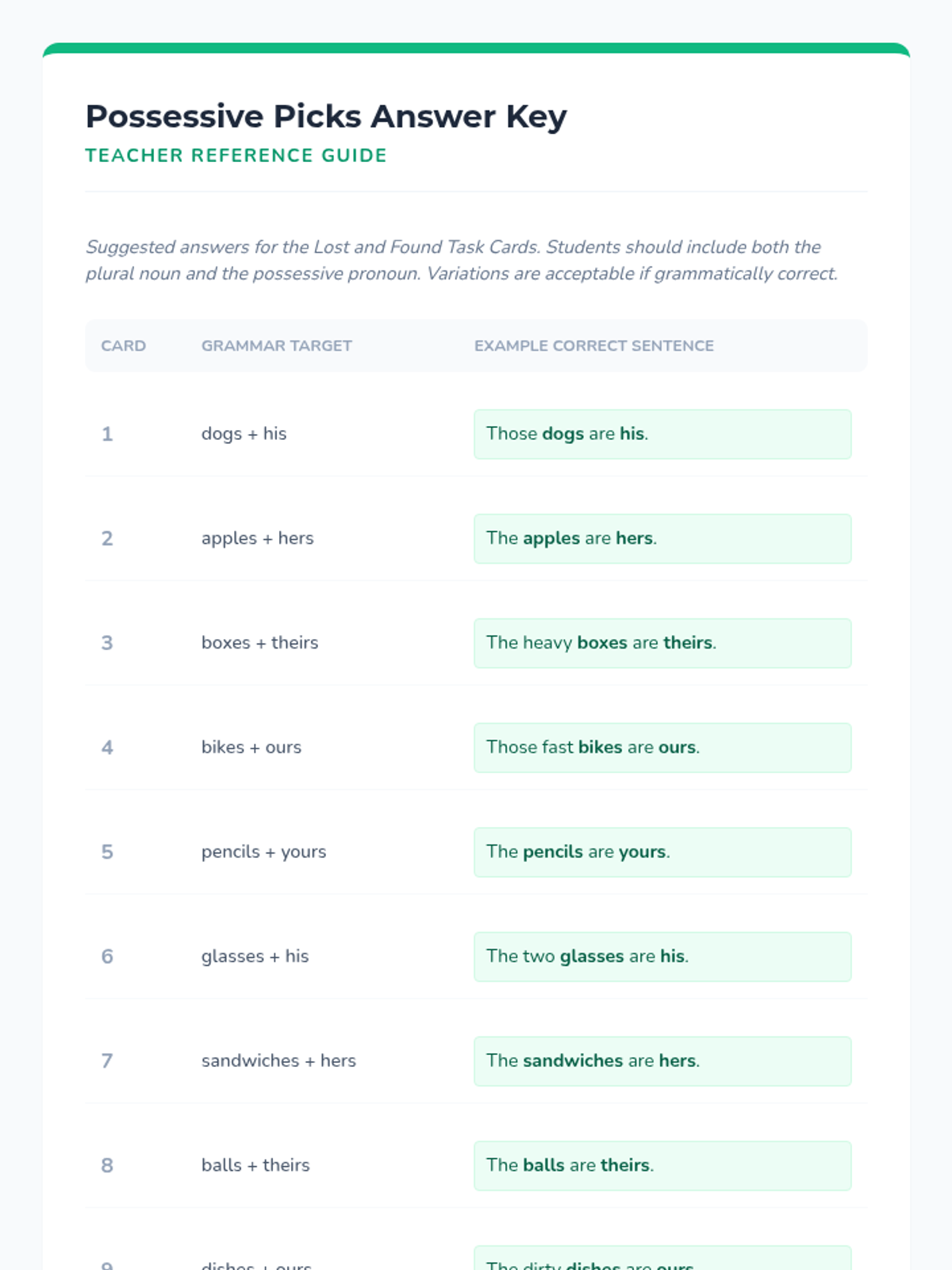
A comprehensive lesson focused on mastering possessive pronouns (his, hers, ours, theirs, yours) and regular plurals (-s, -es) through visual prompts and structured practice.
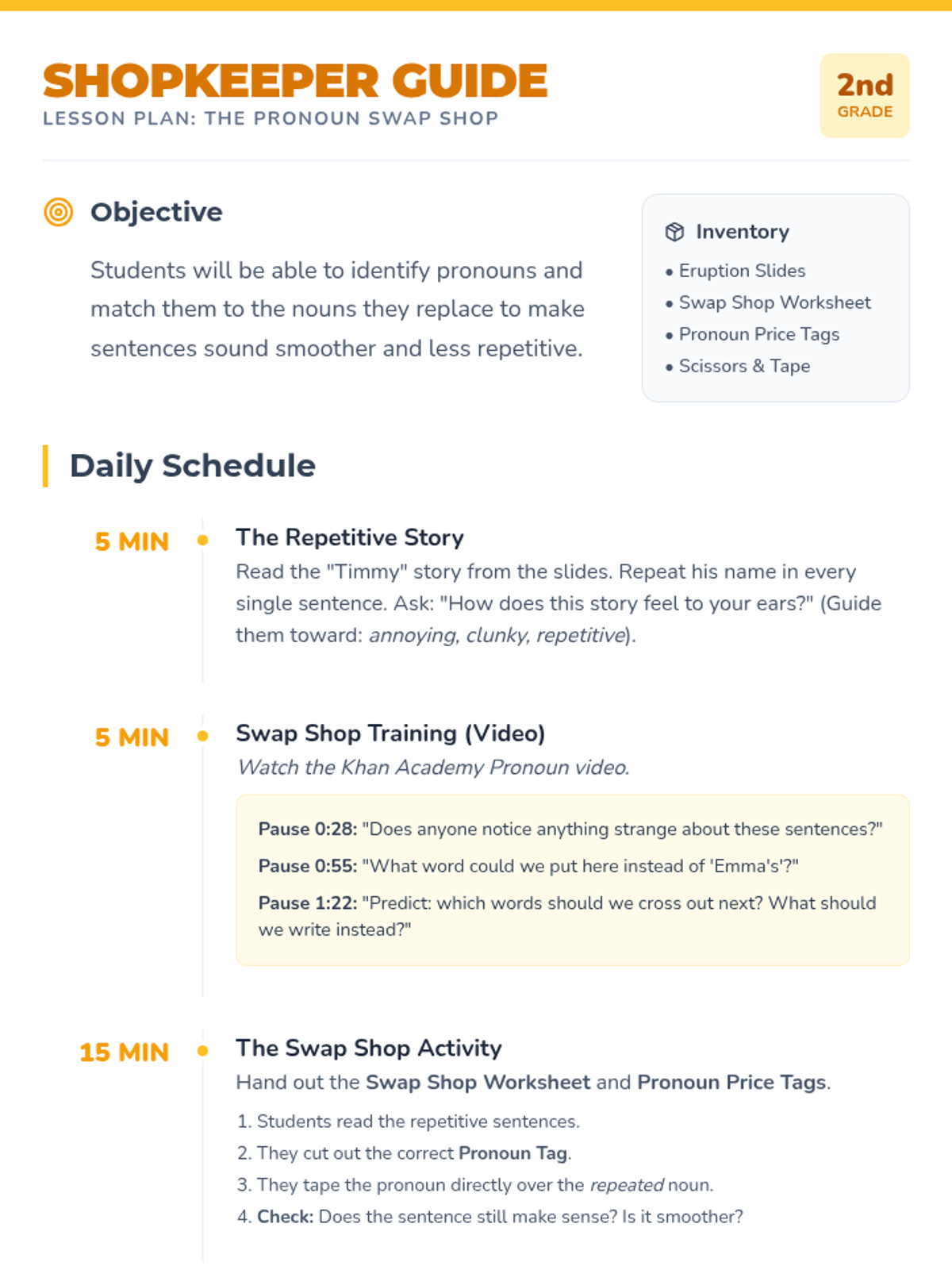
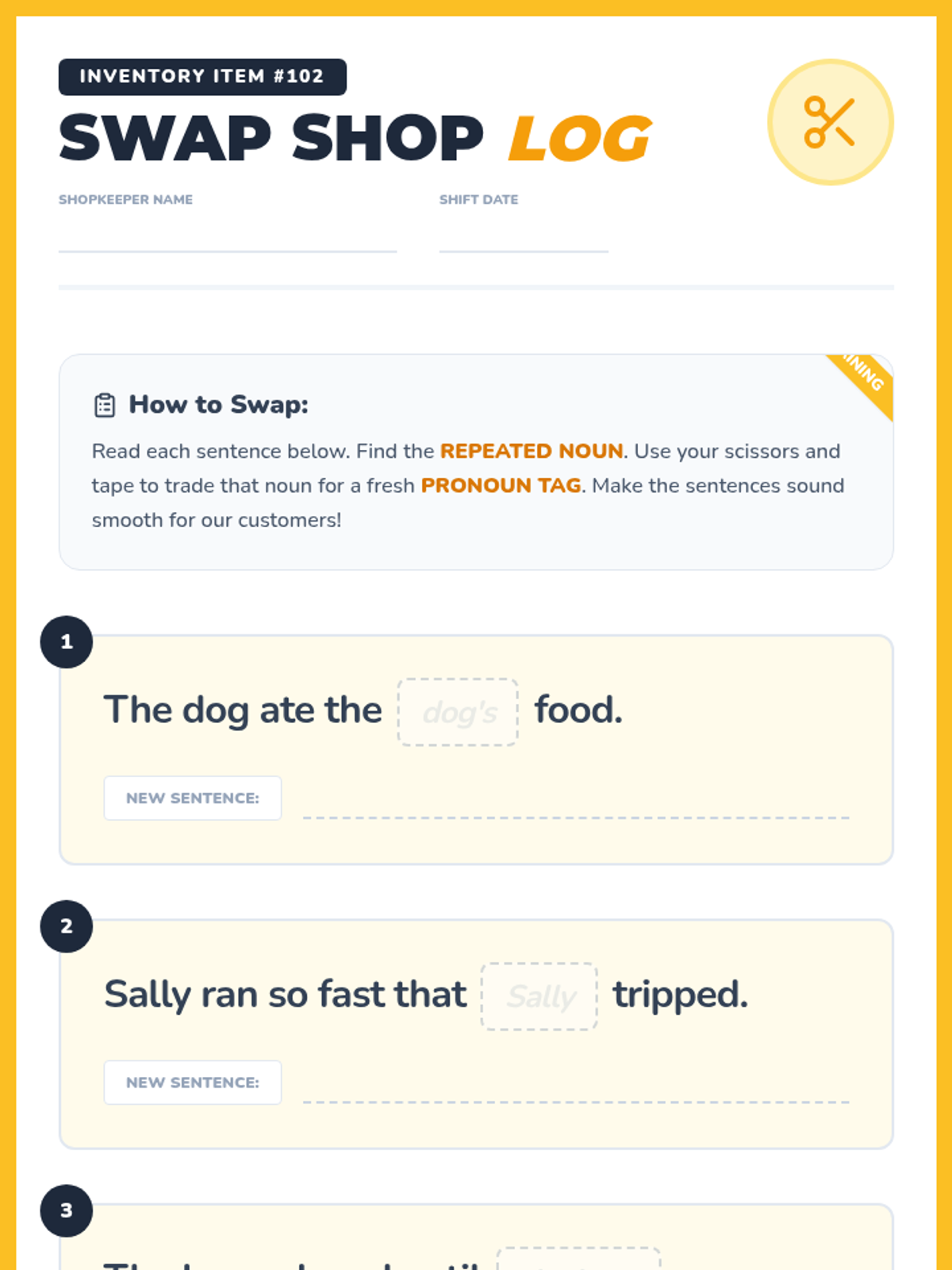
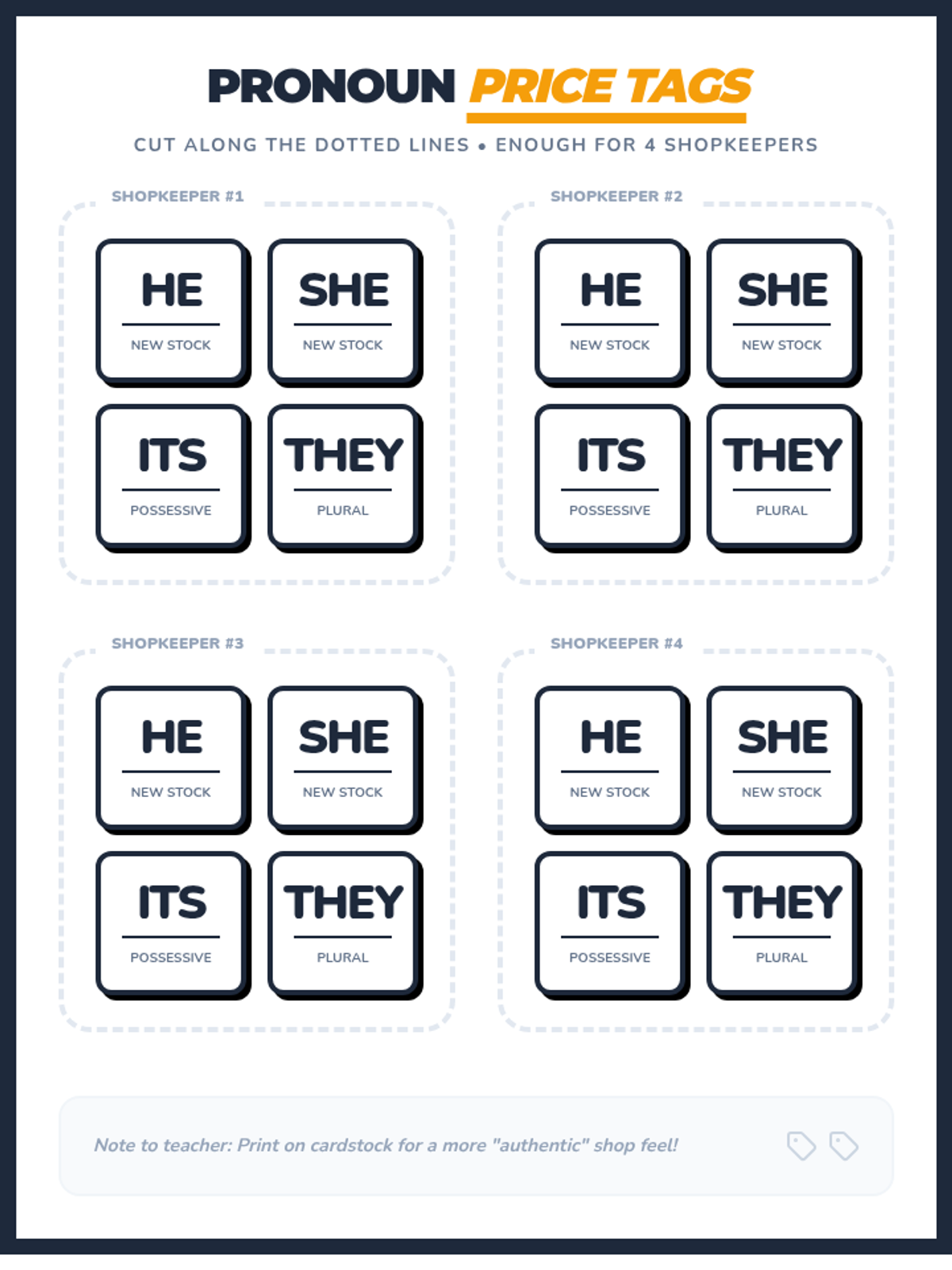
A fun, hands-on grammar lesson where students act as 'shopkeepers' to swap out repetitive nouns for helpful pronouns. Includes a video-guided discussion, a physical 'cut-and-tape' activity, and an interactive guessing game.
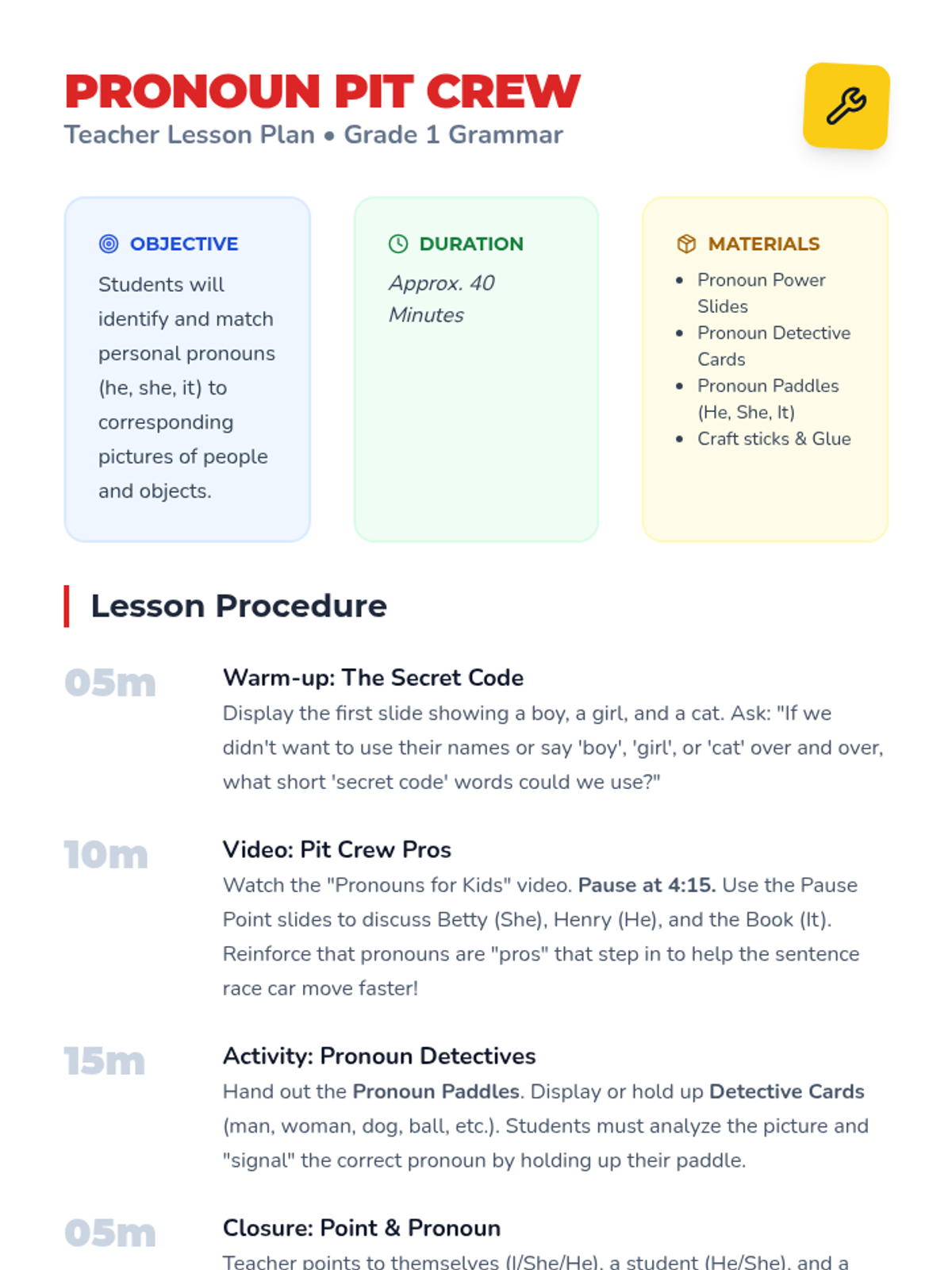
A foundational grammar lesson for 1st graders focusing on identifying and using the personal pronouns He, She, and It through a 'Pit Crew' metaphor.
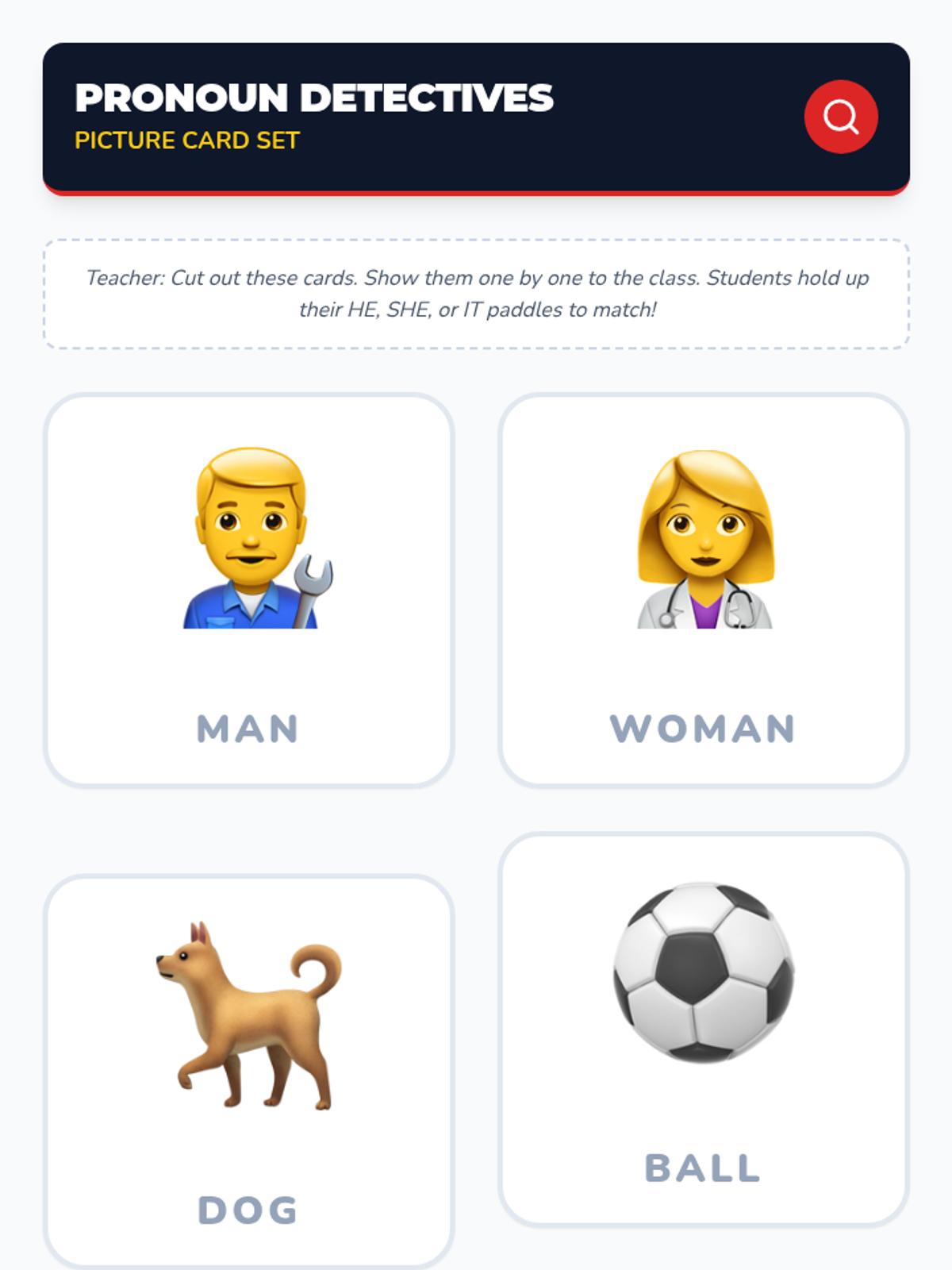
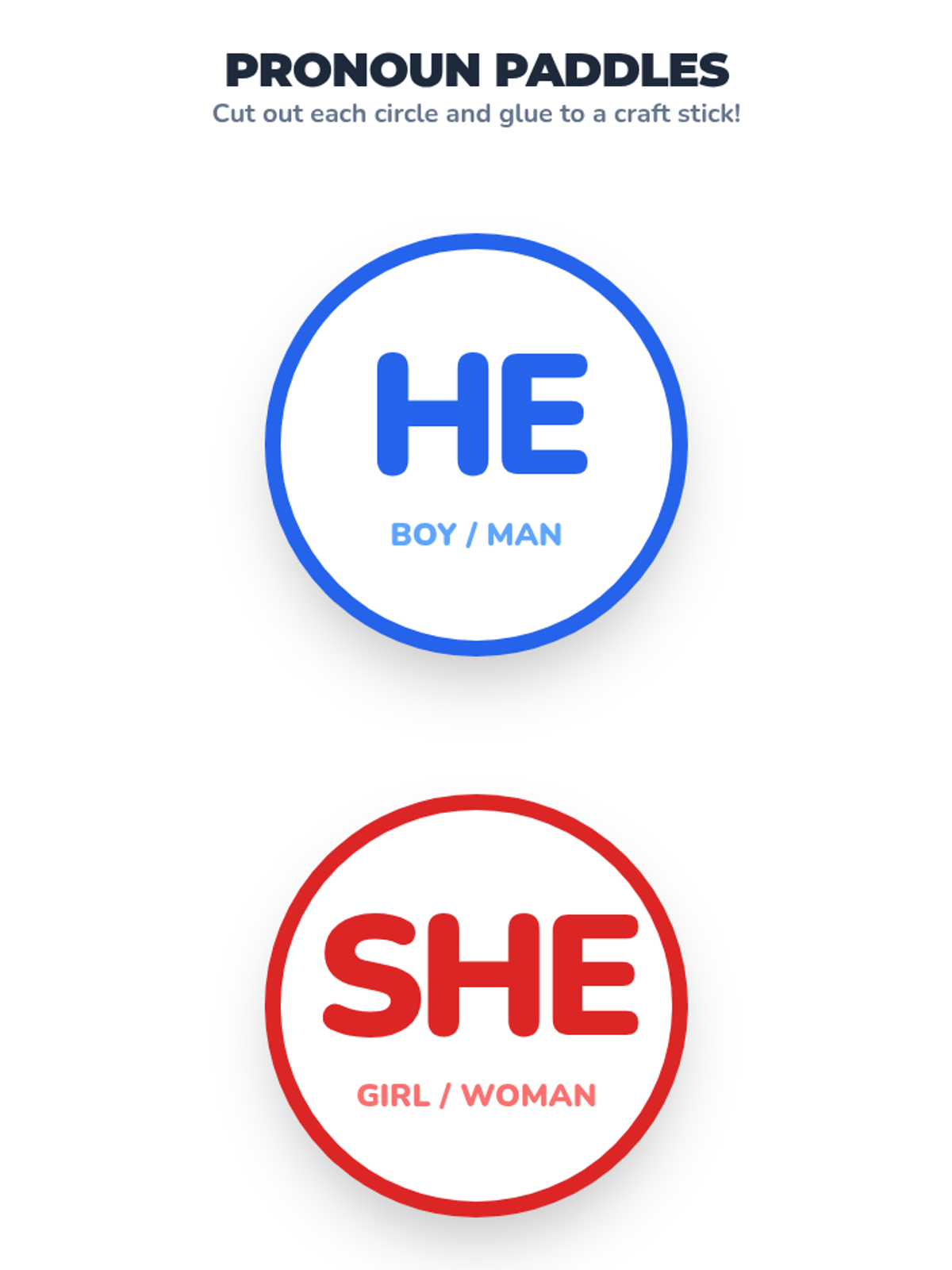
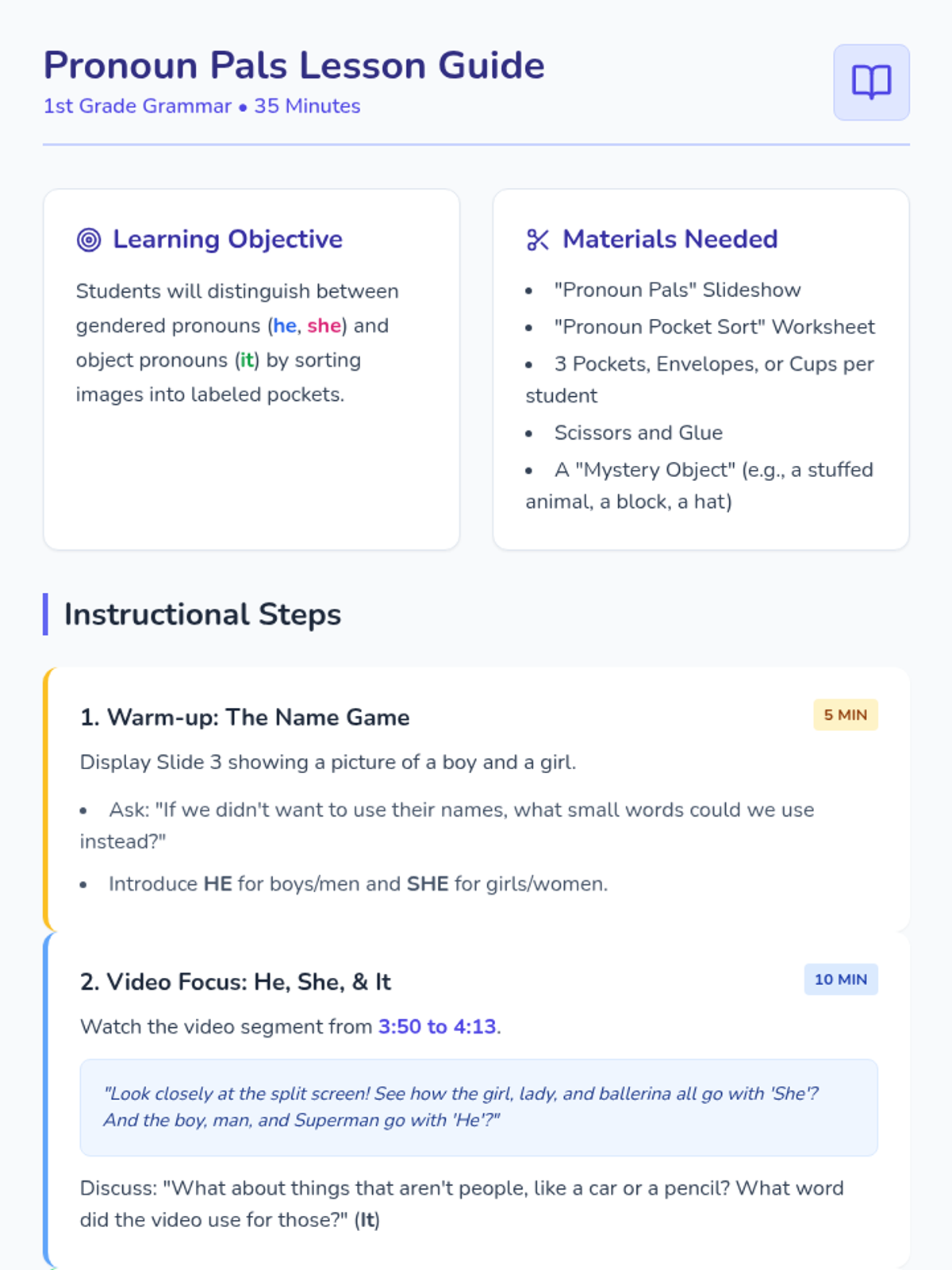
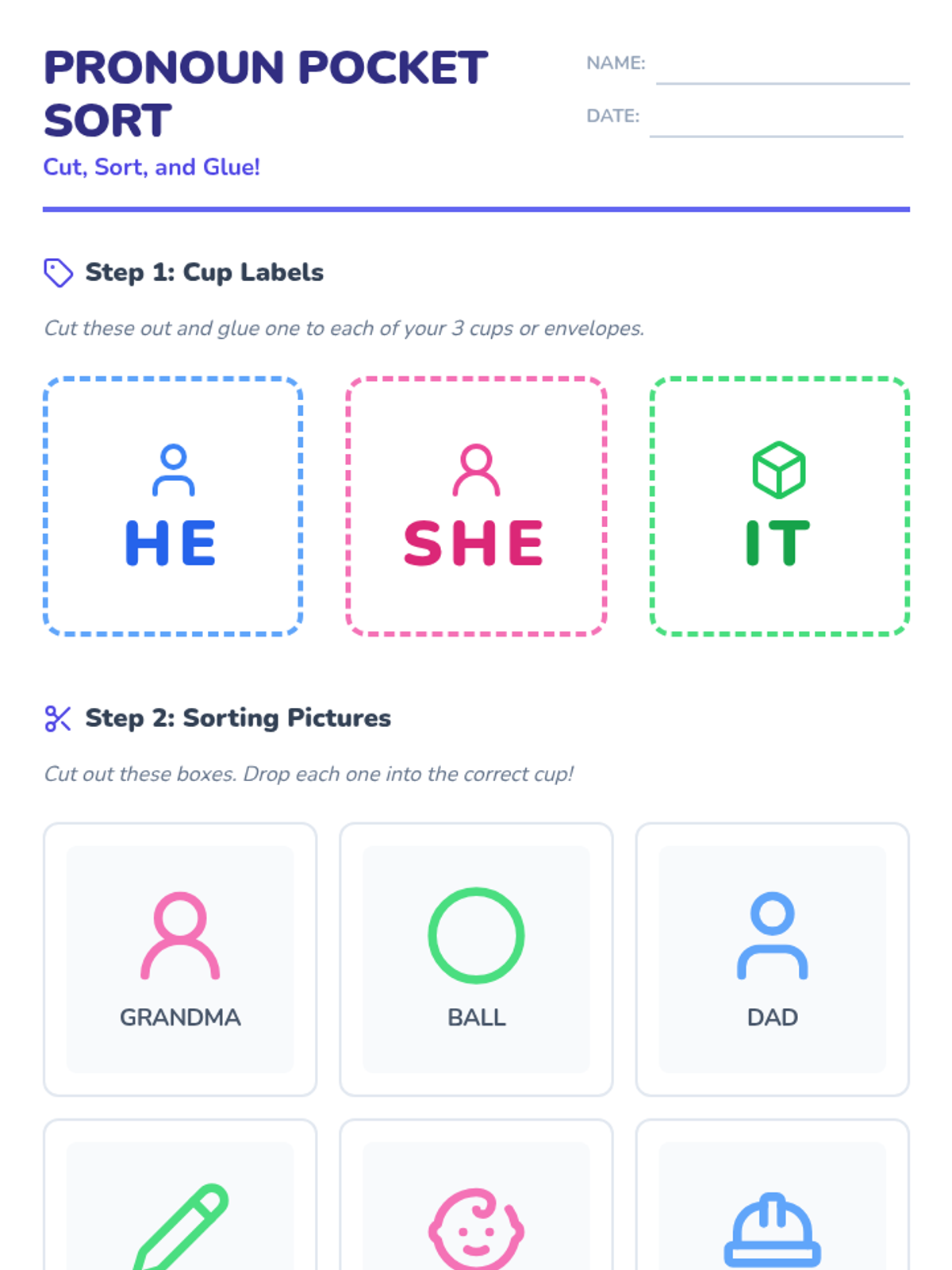
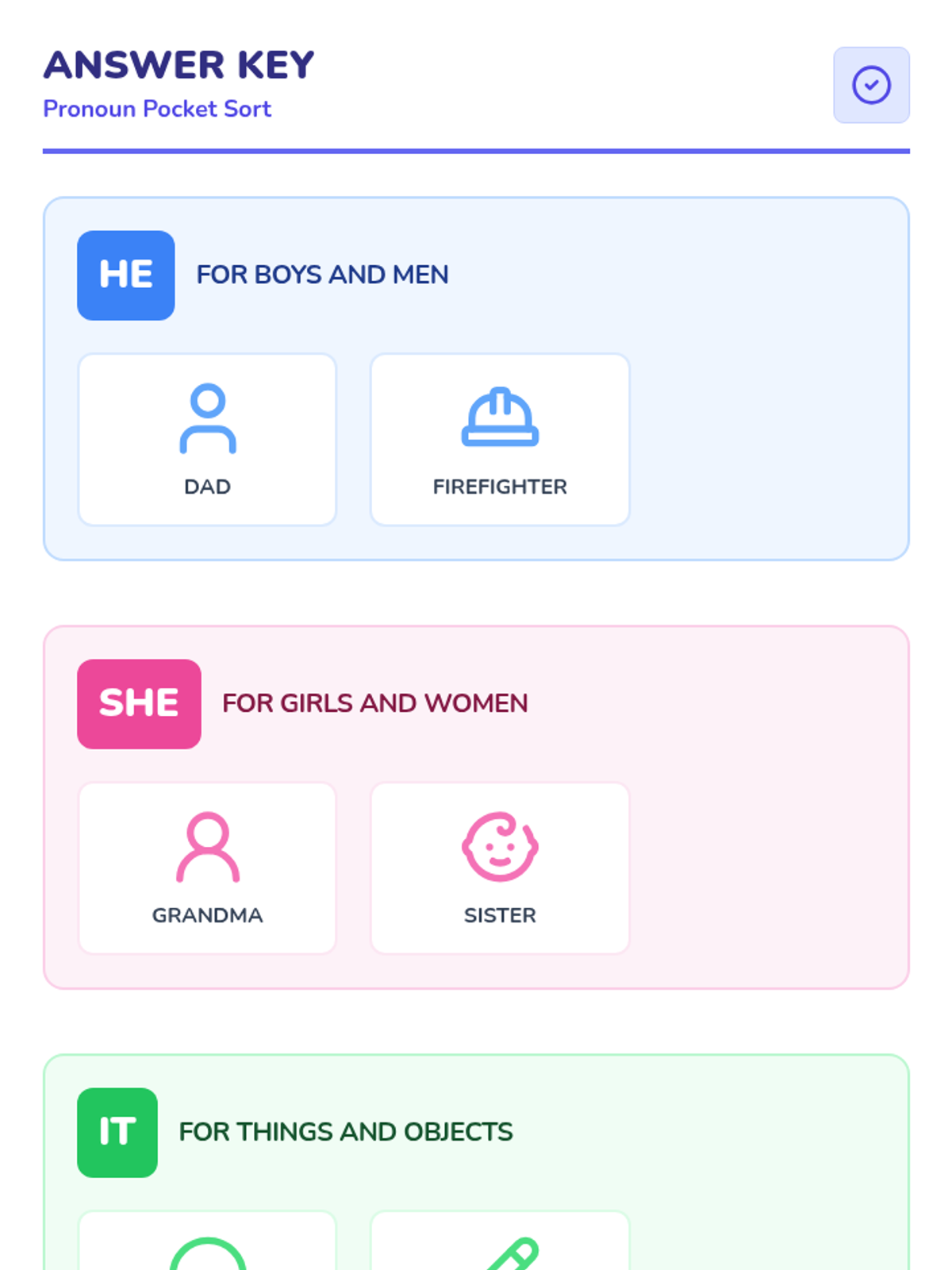
In this hands-on lesson, first-grade students learn to distinguish between gendered pronouns (he, she) and object pronouns (it). They will engage with a short instructional video followed by a 'Pronoun Pocket Sort' activity where they categorize images into designated 'He', 'She', and 'It' containers.
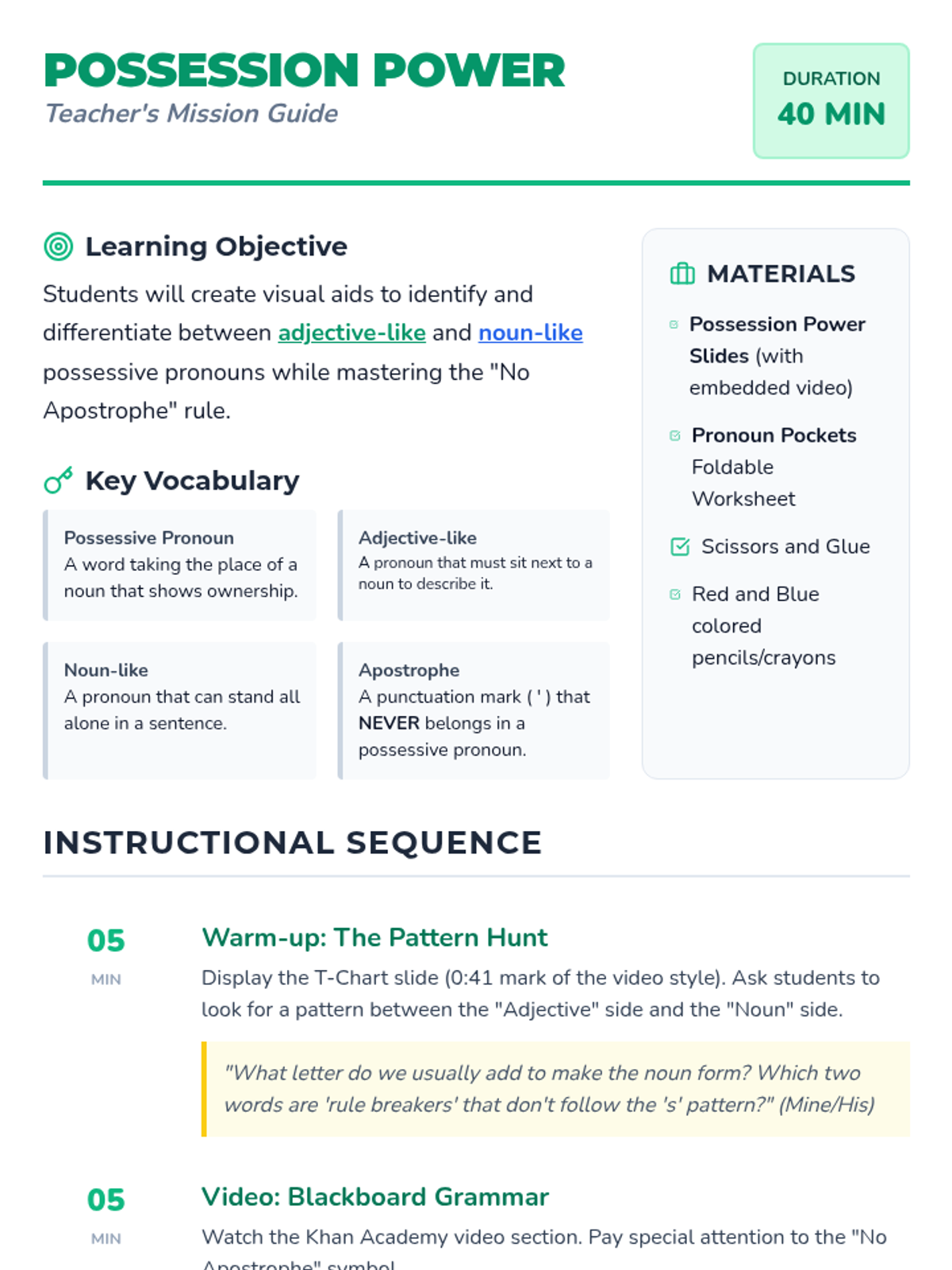
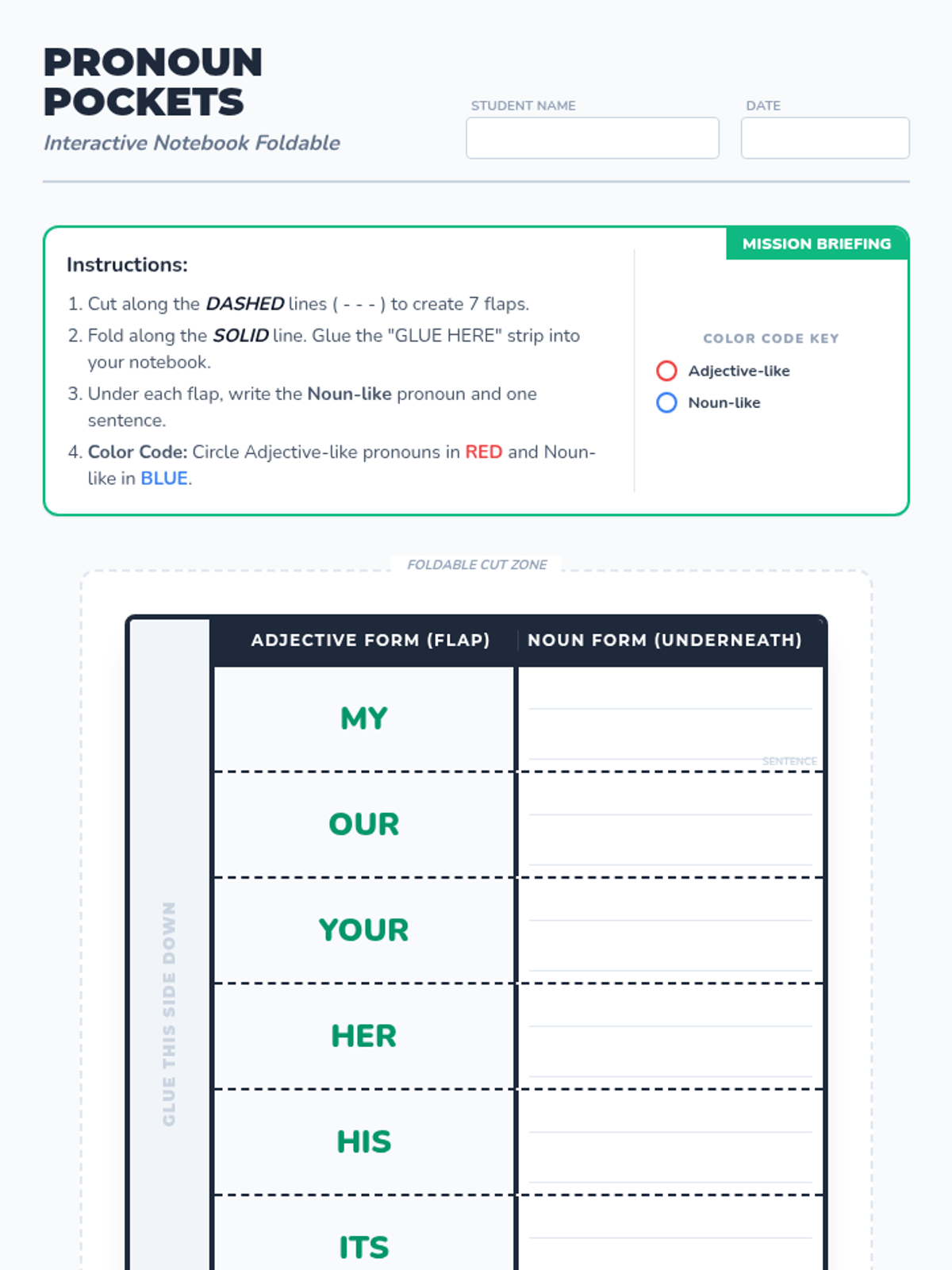
In this grammar-focused lesson, elementary students learn to distinguish between adjective-like and noun-like possessive pronouns through a visual T-chart, a Khan Academy video, and a hands-on interactive notebook foldable. The lesson emphasizes the critical 'no apostrophe' rule and includes color-coded practice for identifying pronoun functions.
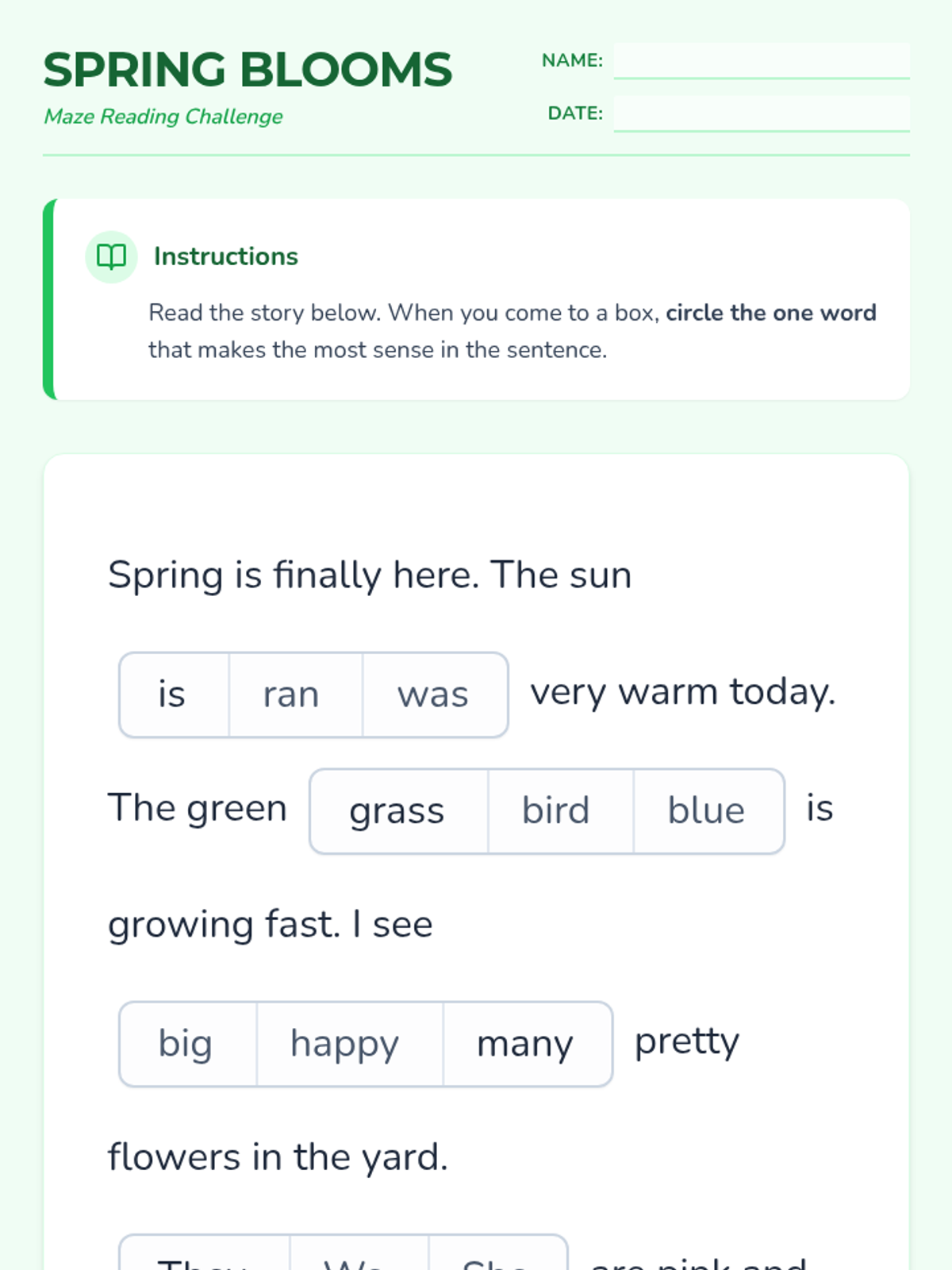
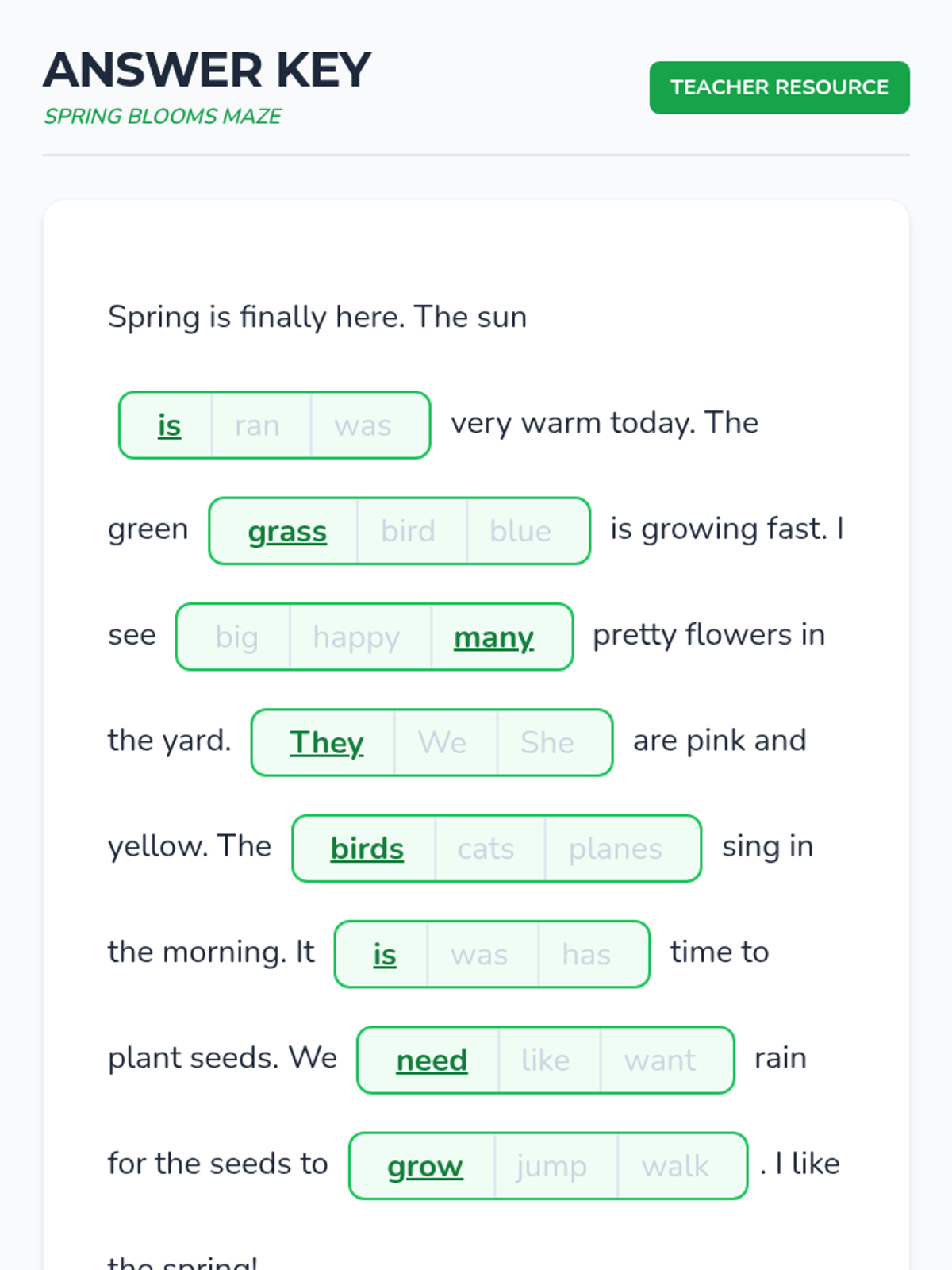
A beginning reading lesson focused on spring-themed vocabulary and reading comprehension using a maze-style assessment.
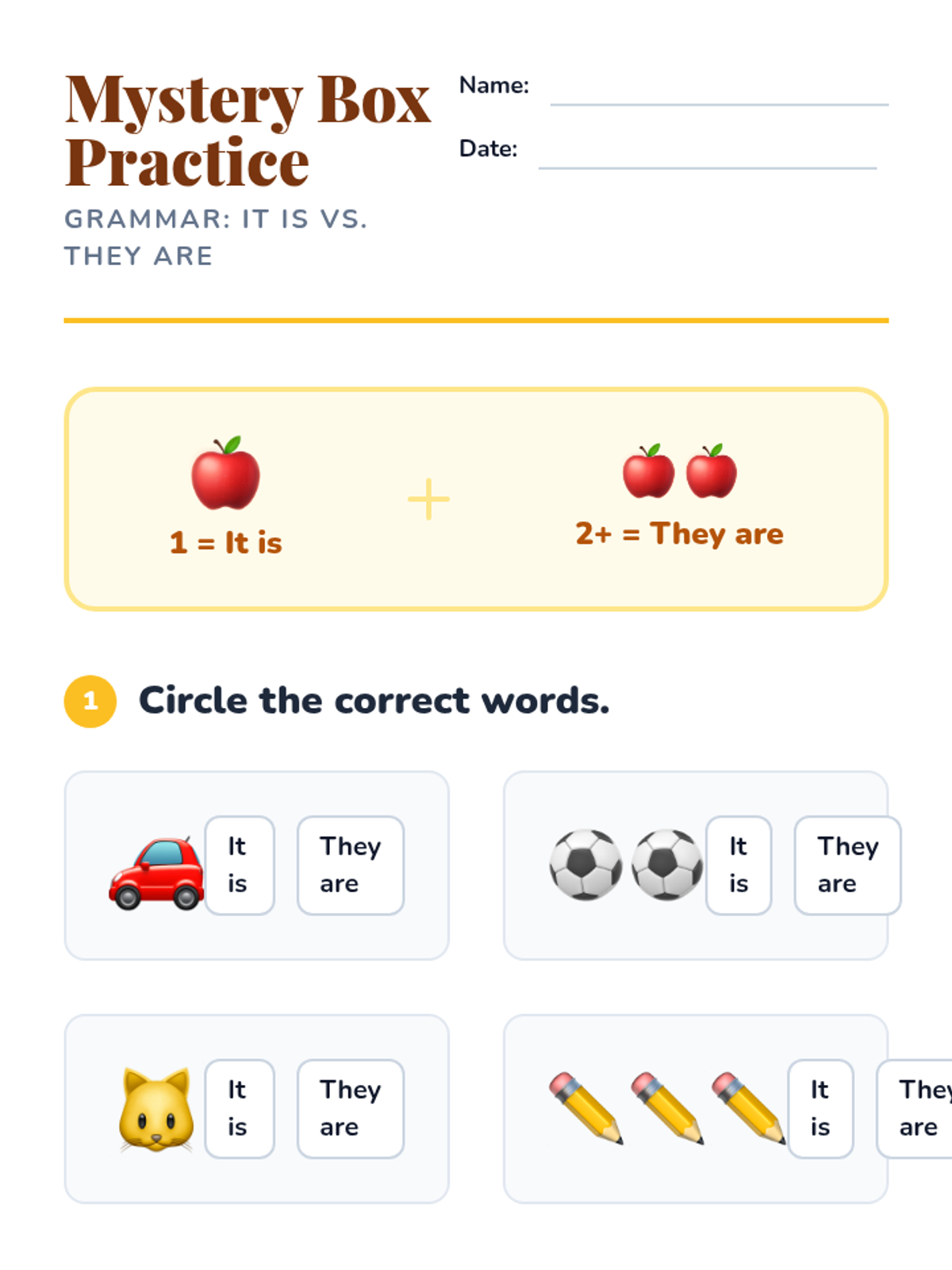
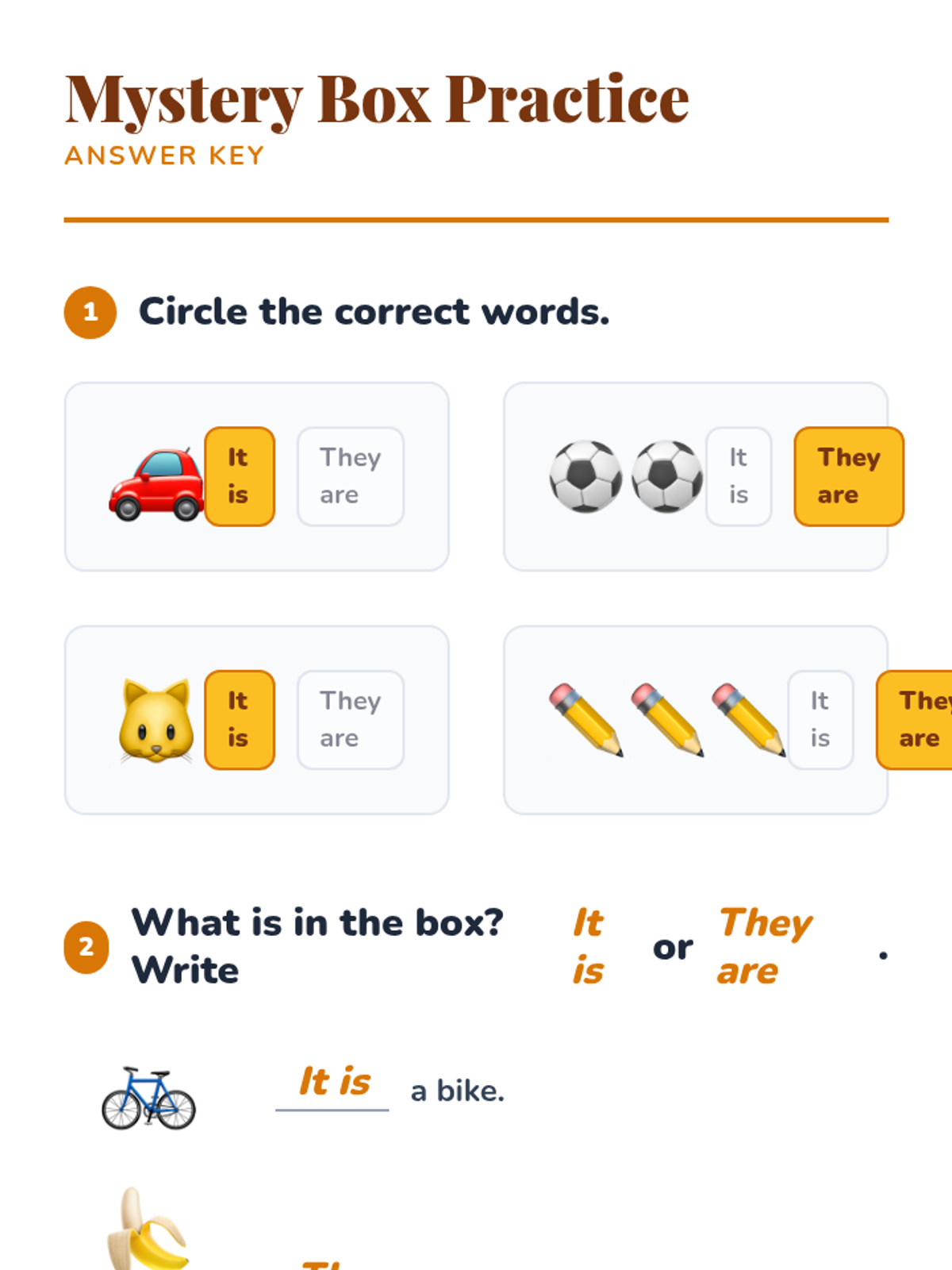
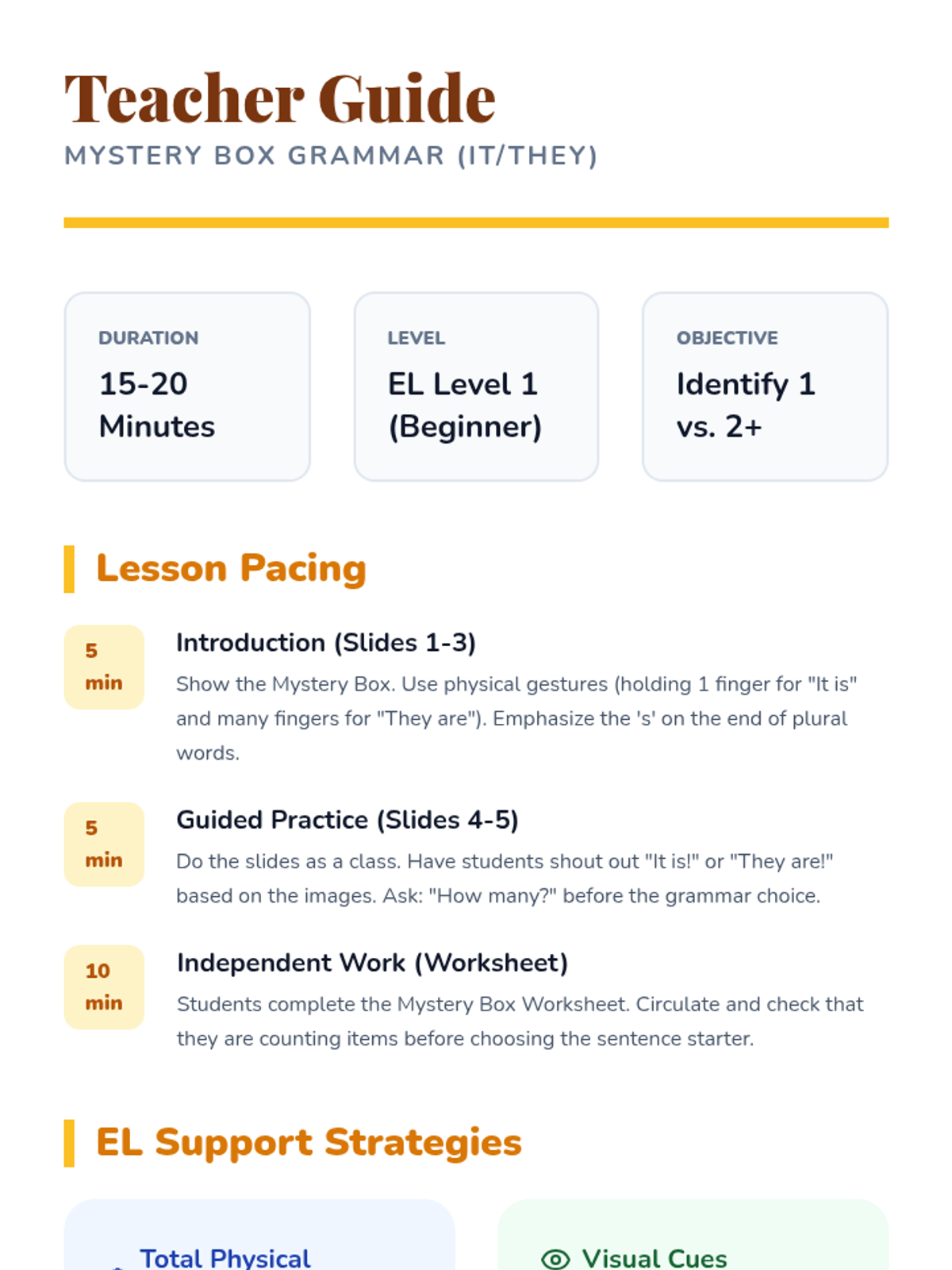
A beginner-friendly grammar lesson for English Learners focusing on the distinction between 'It is' for singular objects and 'They are' for plural objects using a mystery box theme.
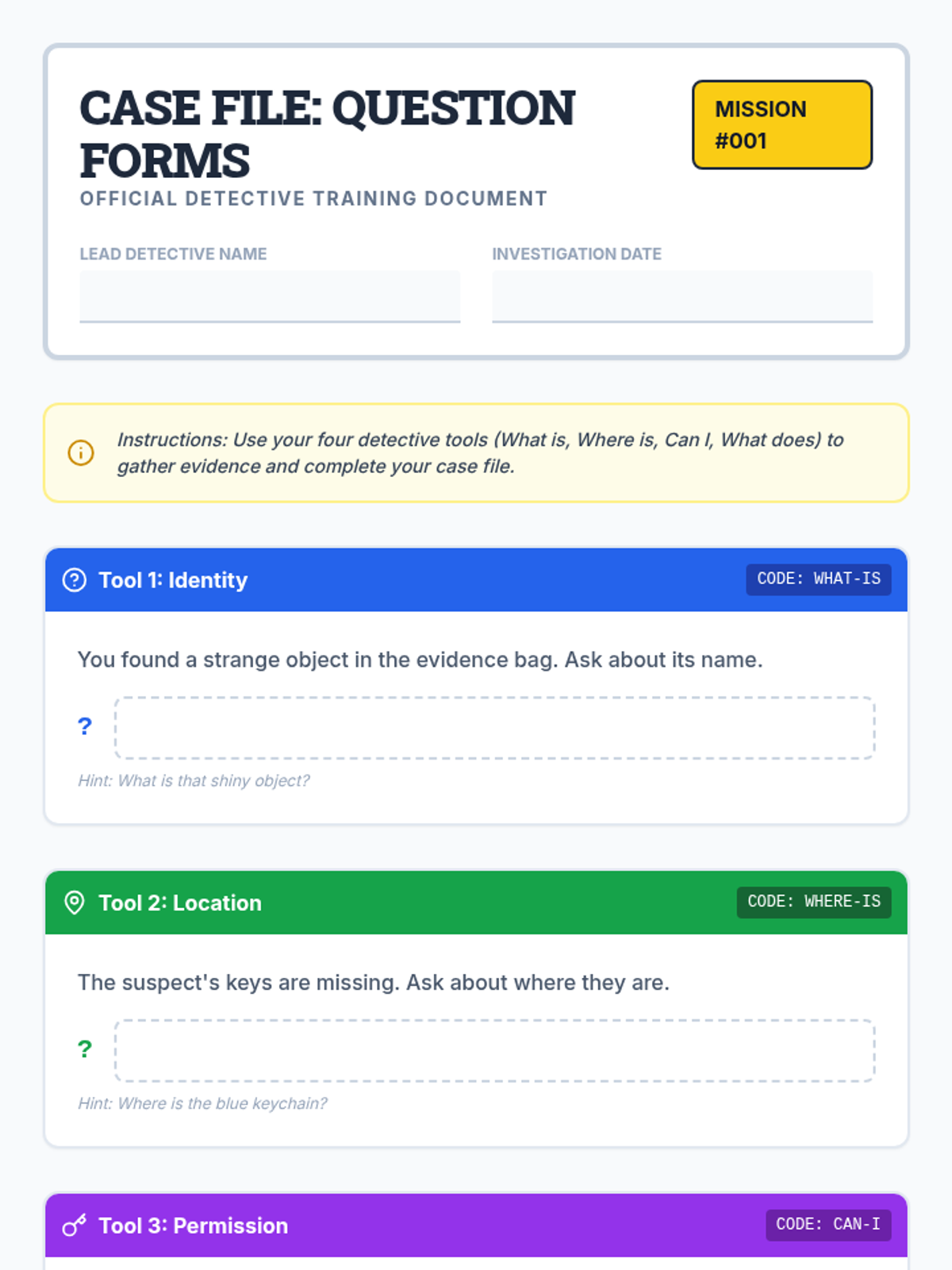
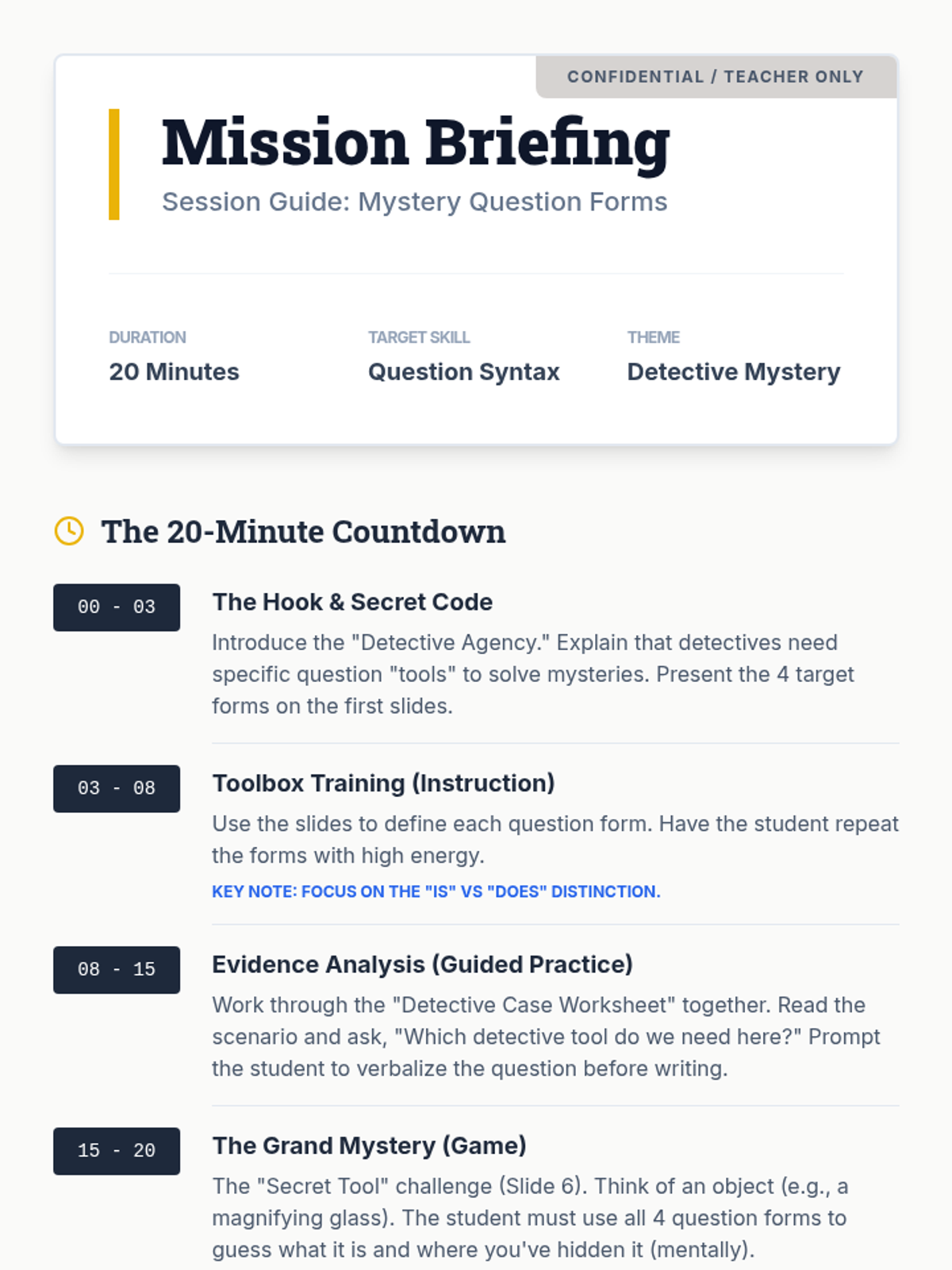
A 20-minute targeted session to help students master four fundamental question forms: 'Can I...?', 'What is...?', 'Where is...?', and 'What does...?' through a mystery detective theme.
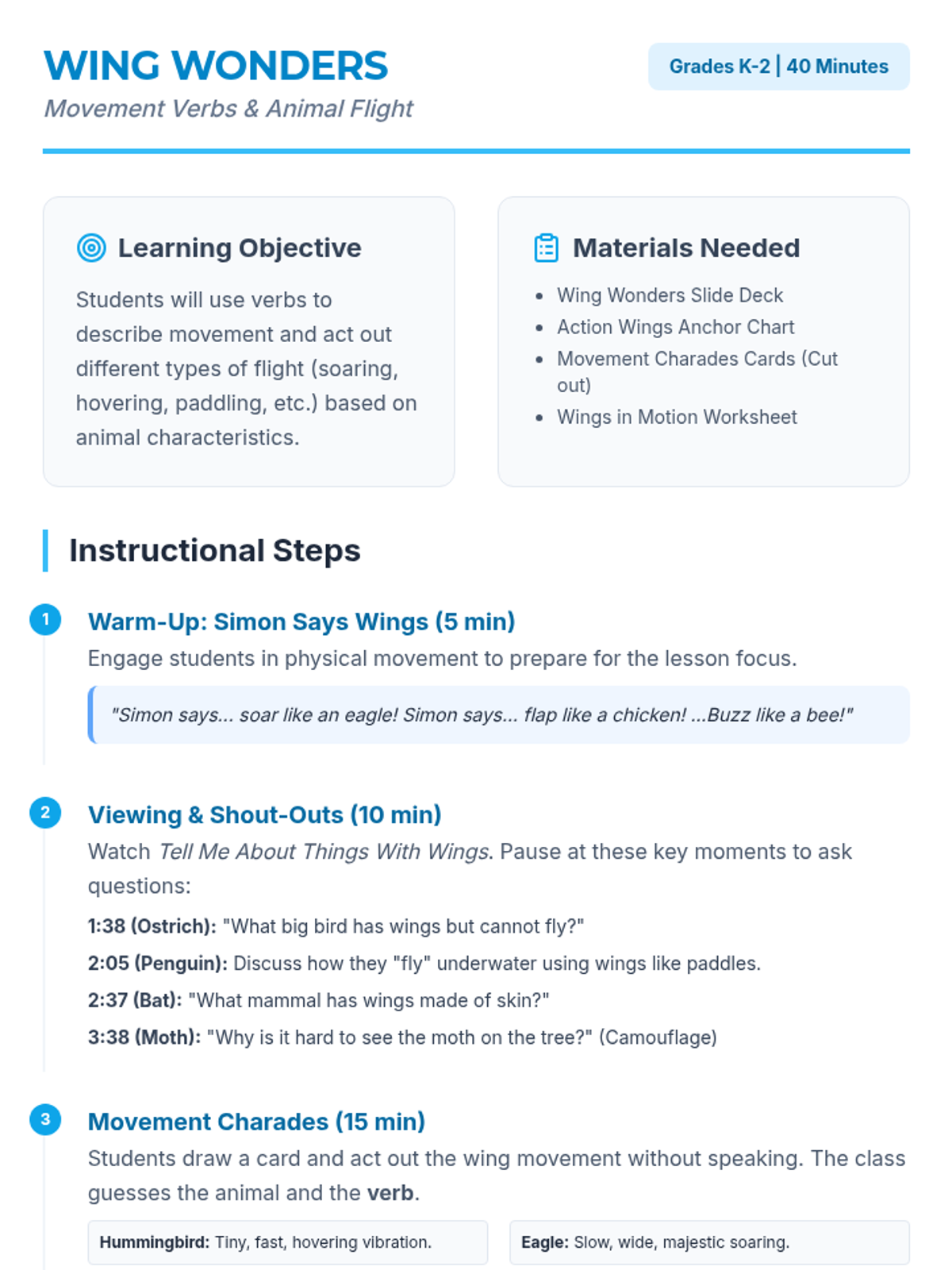
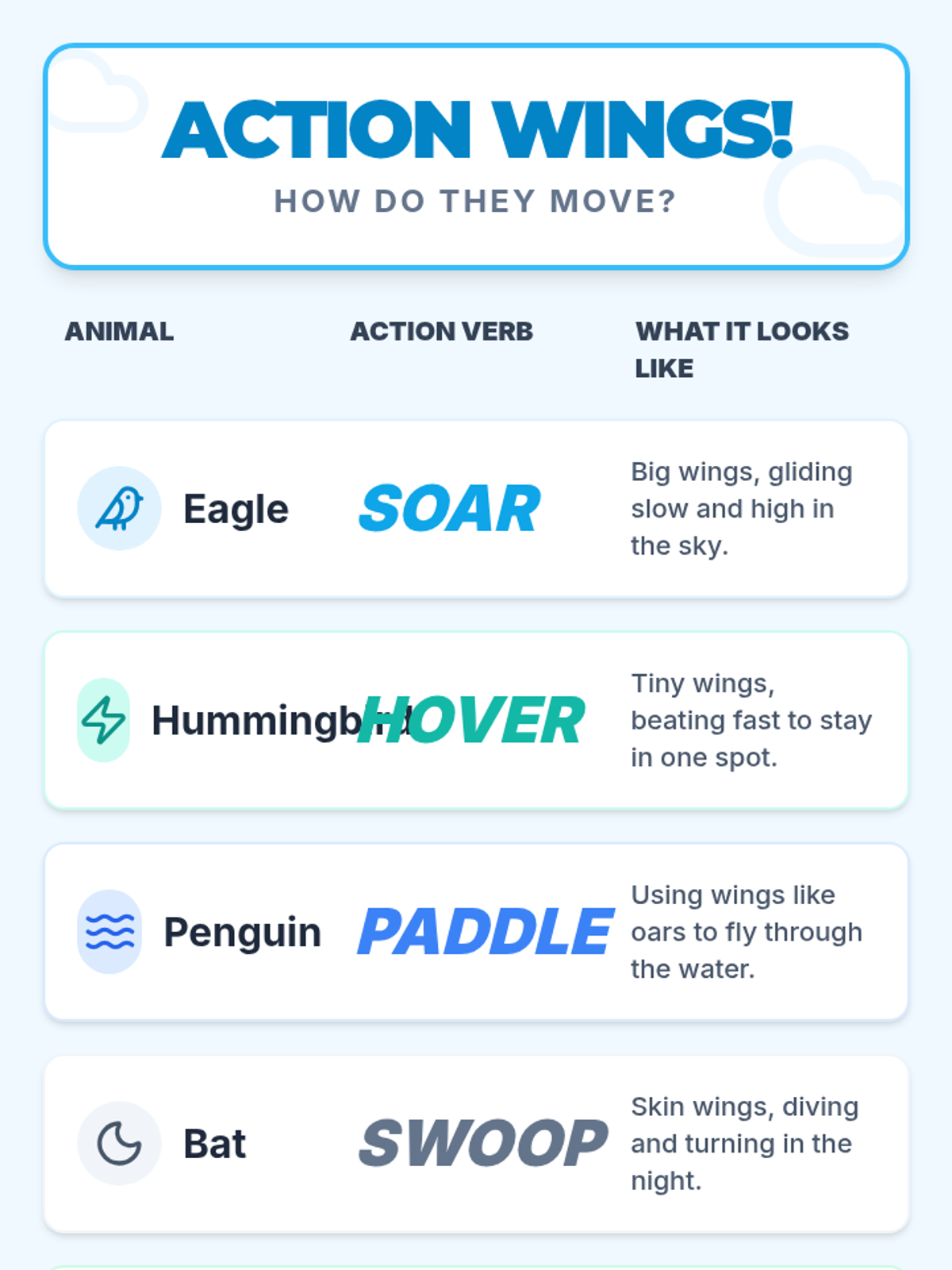
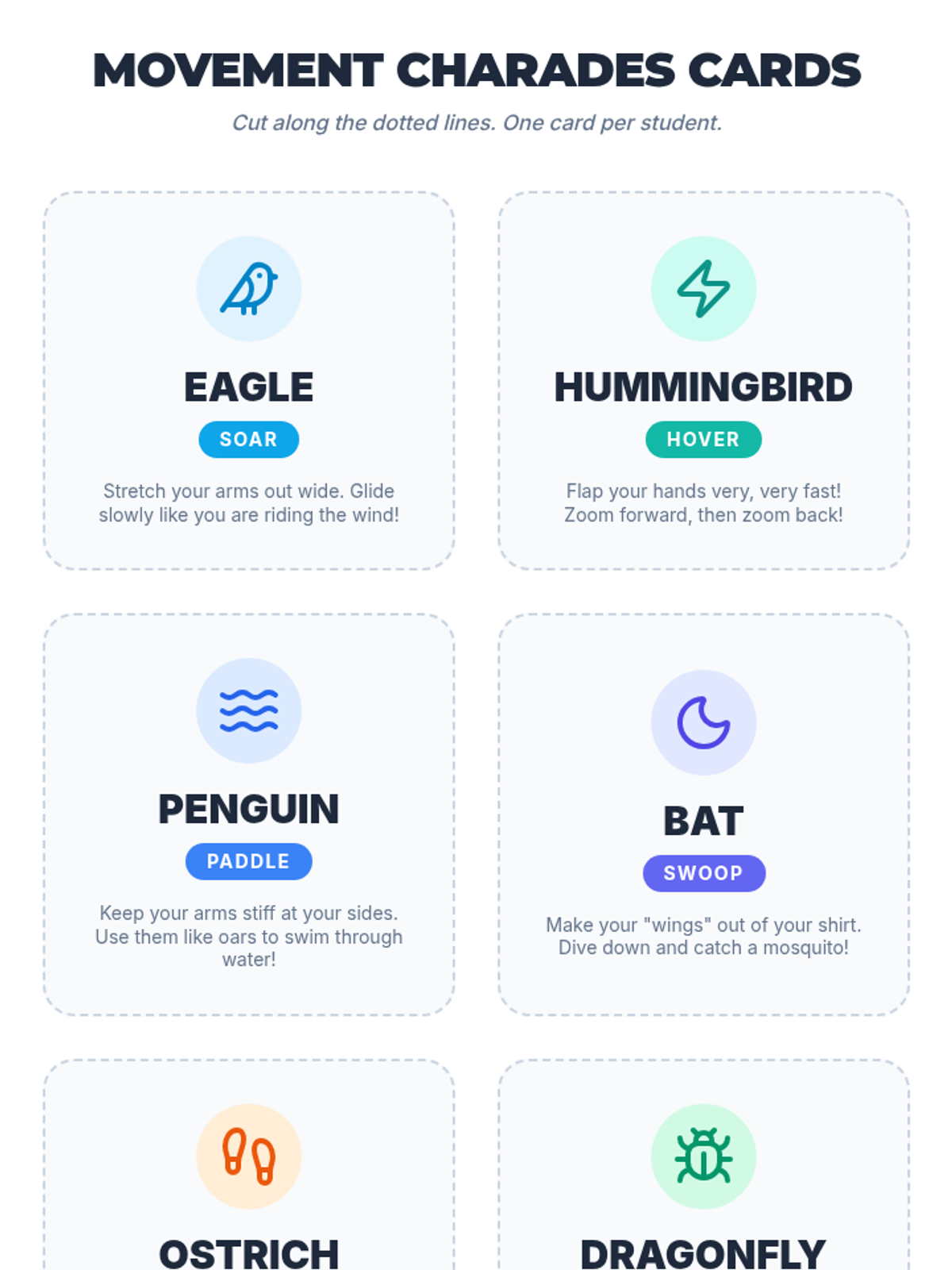
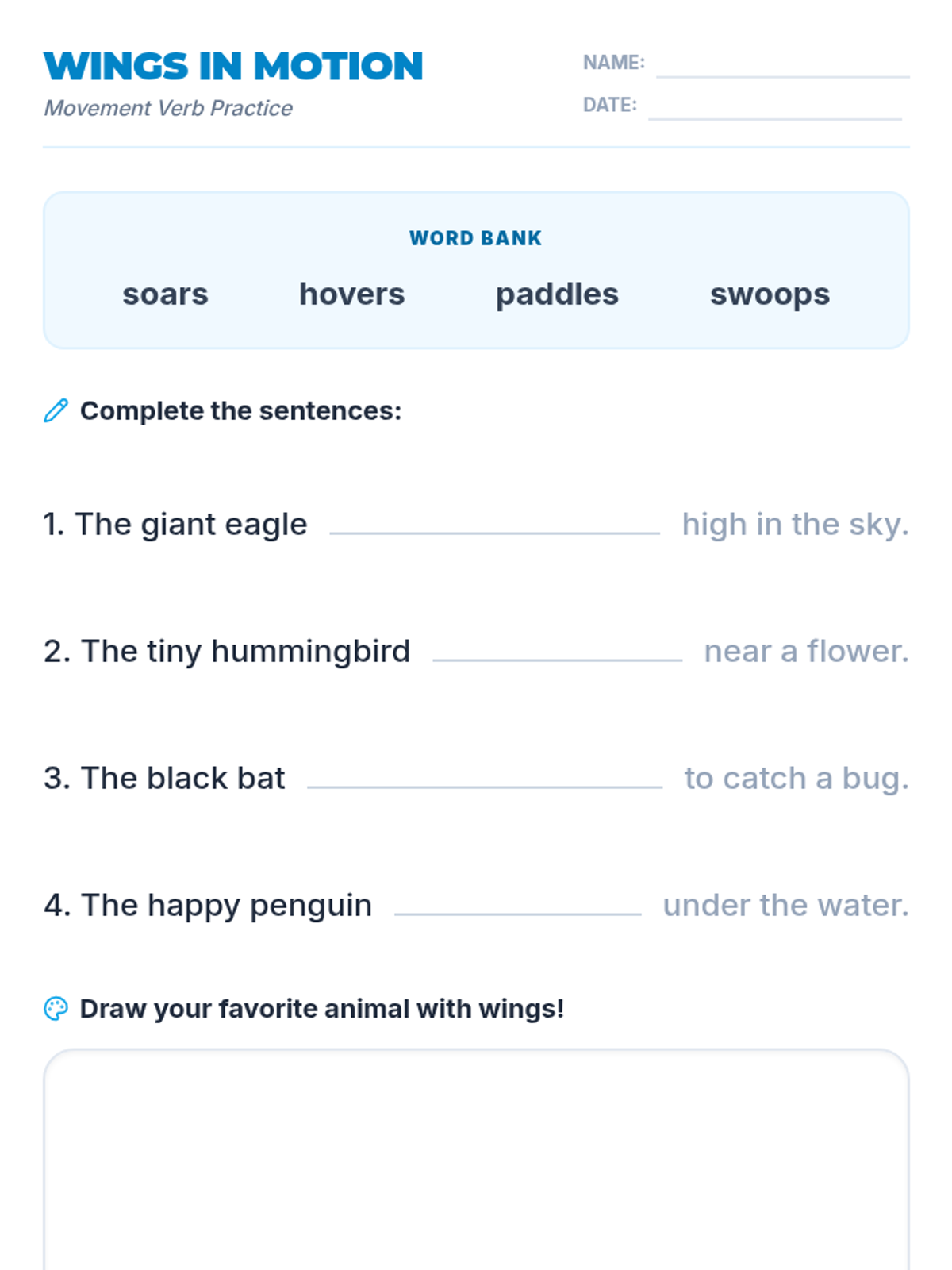
A Kindergarten to 2nd Grade lesson exploring movement verbs through the study of birds, insects, and mammals with wings. Students will act out specific flight patterns and complete descriptive sentences.
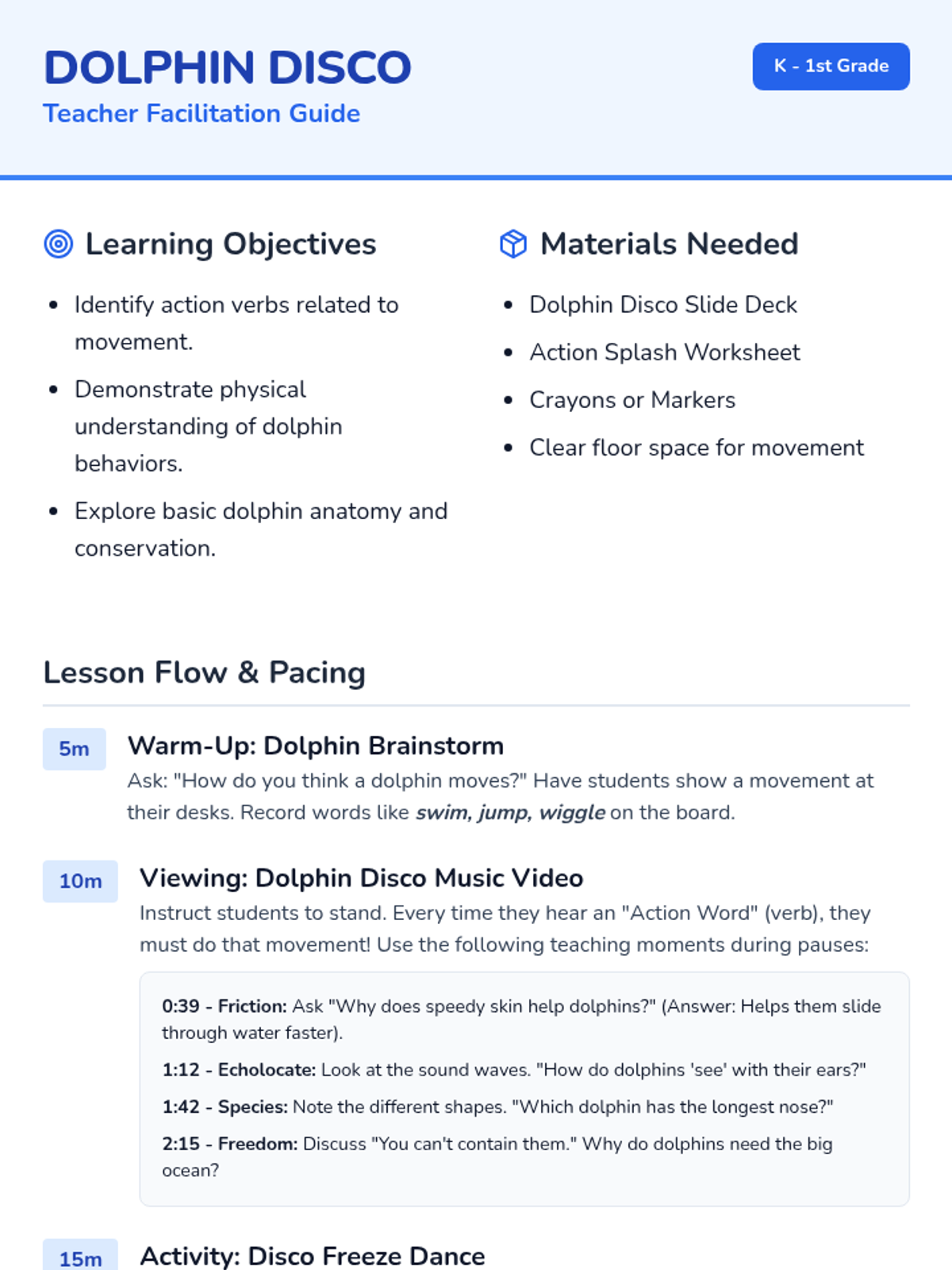
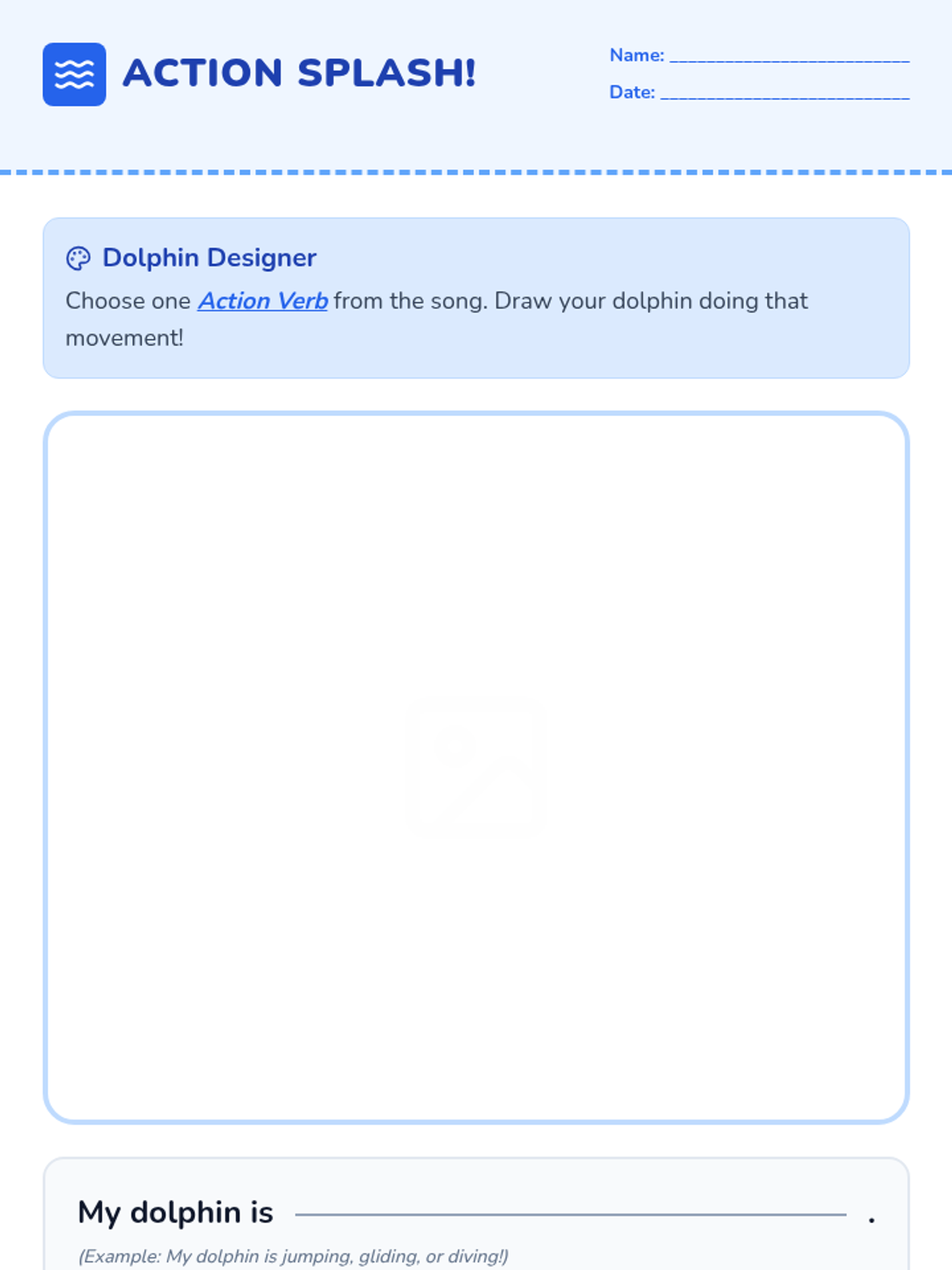
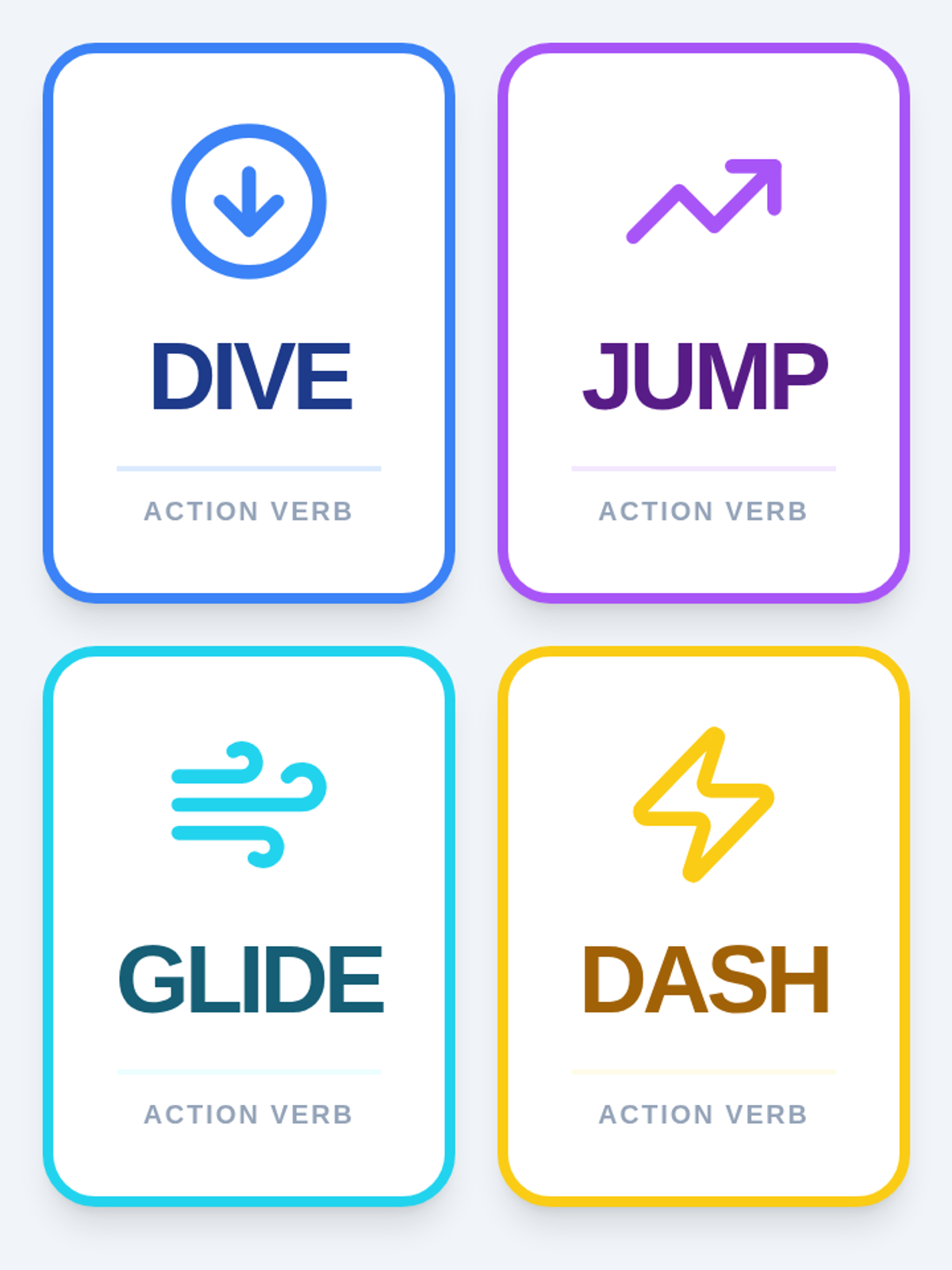
An energetic, movement-based lesson where students learn about dolphin biology and action verbs through music and dance.
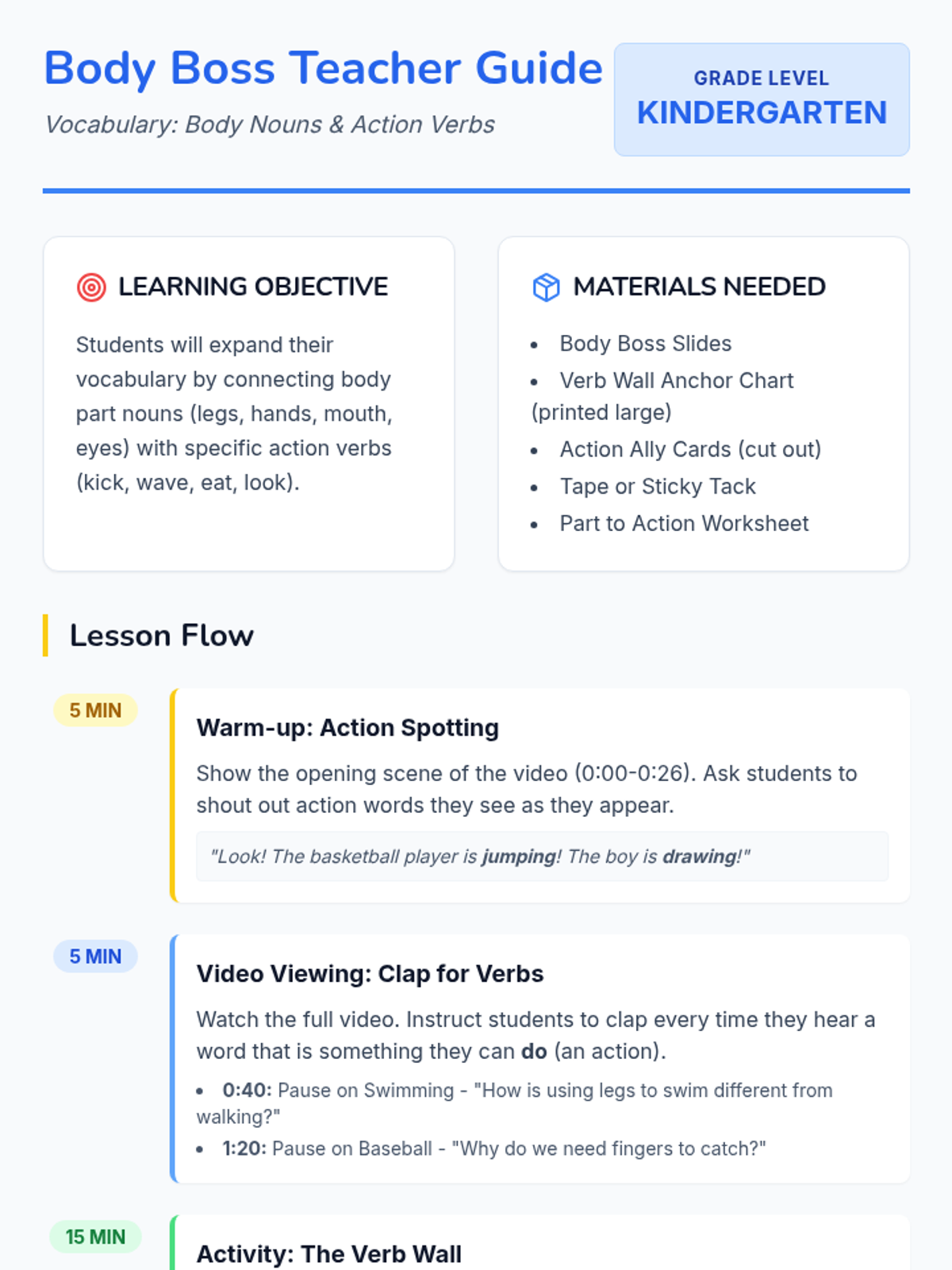
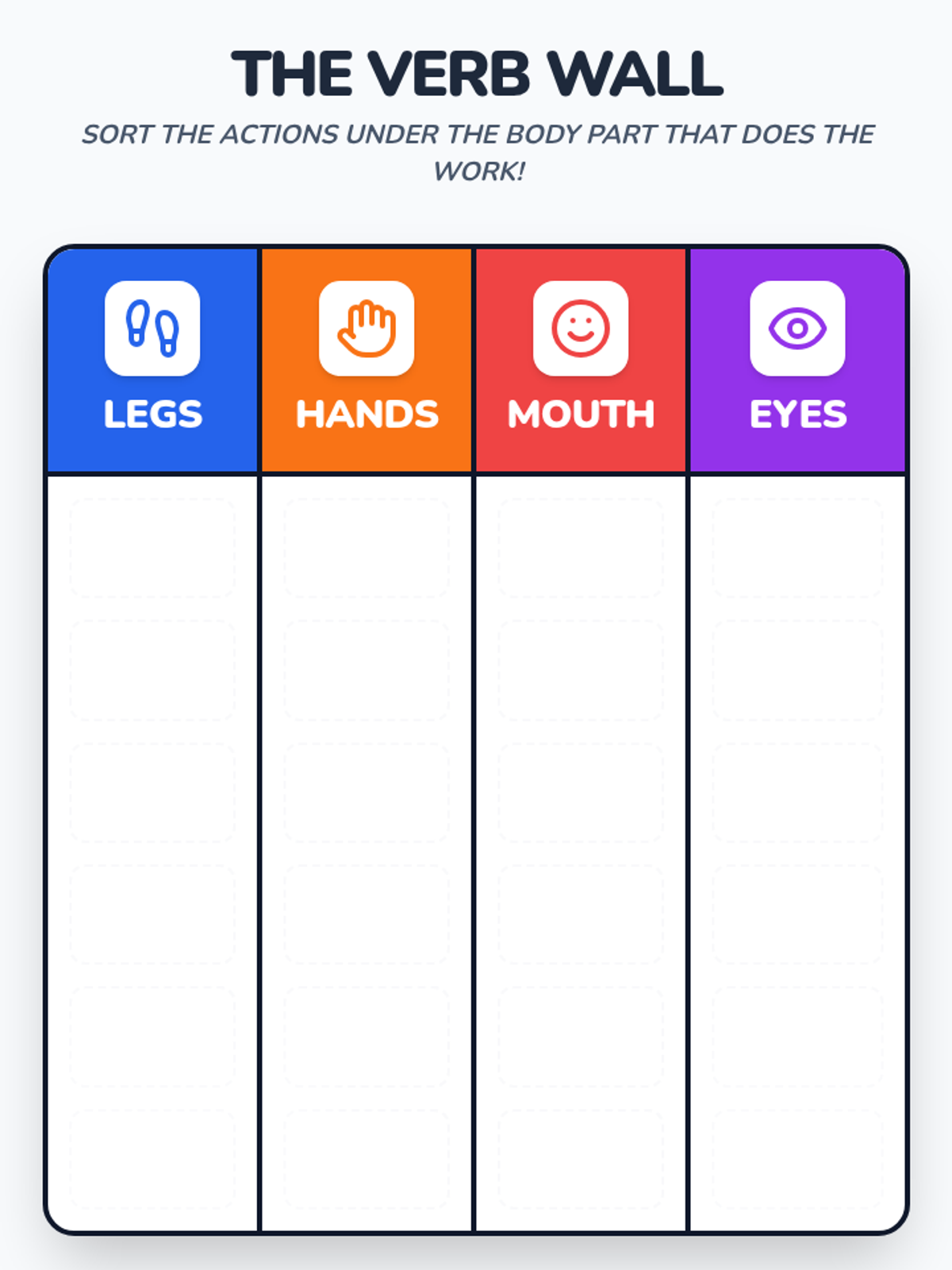
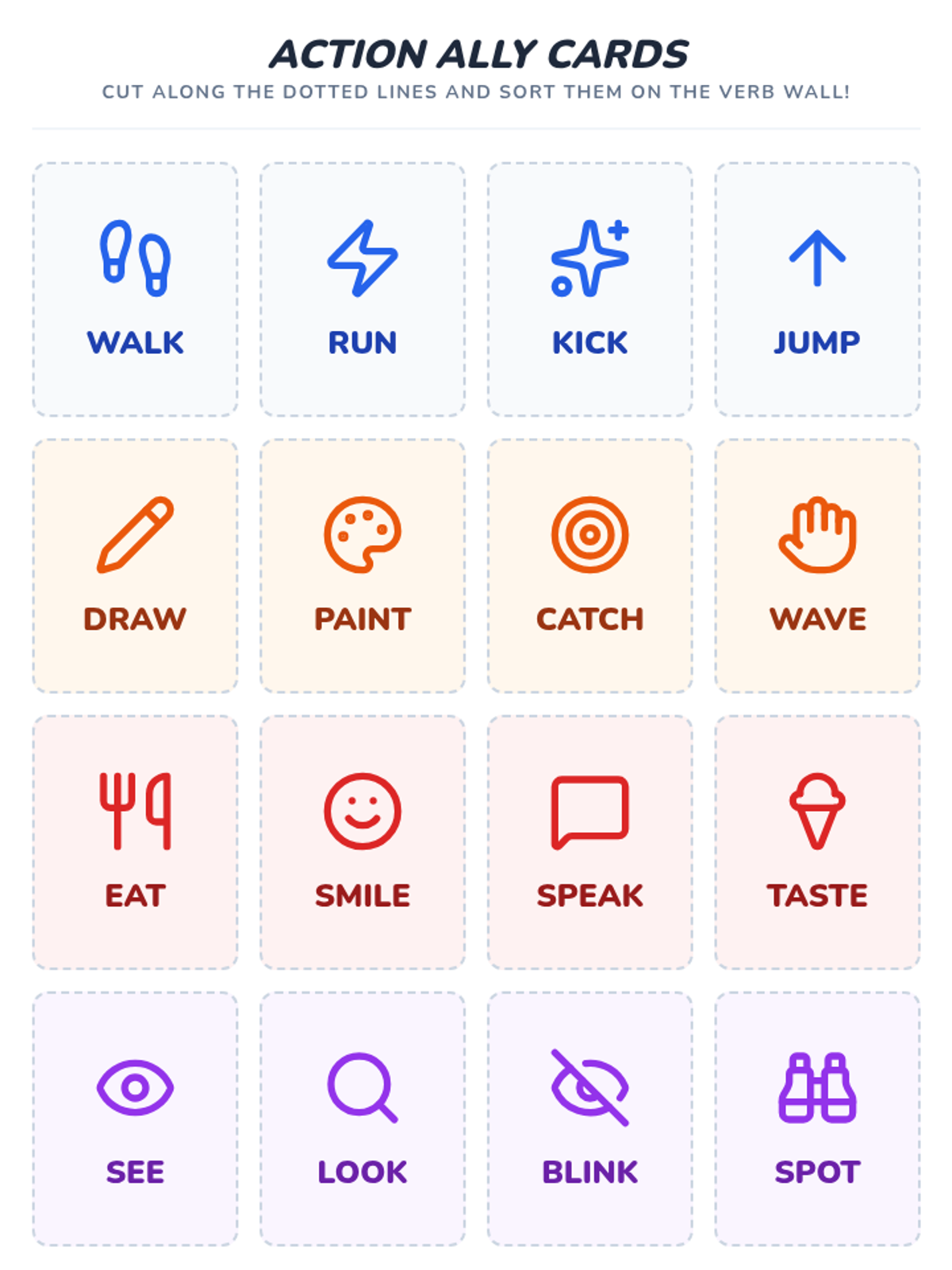
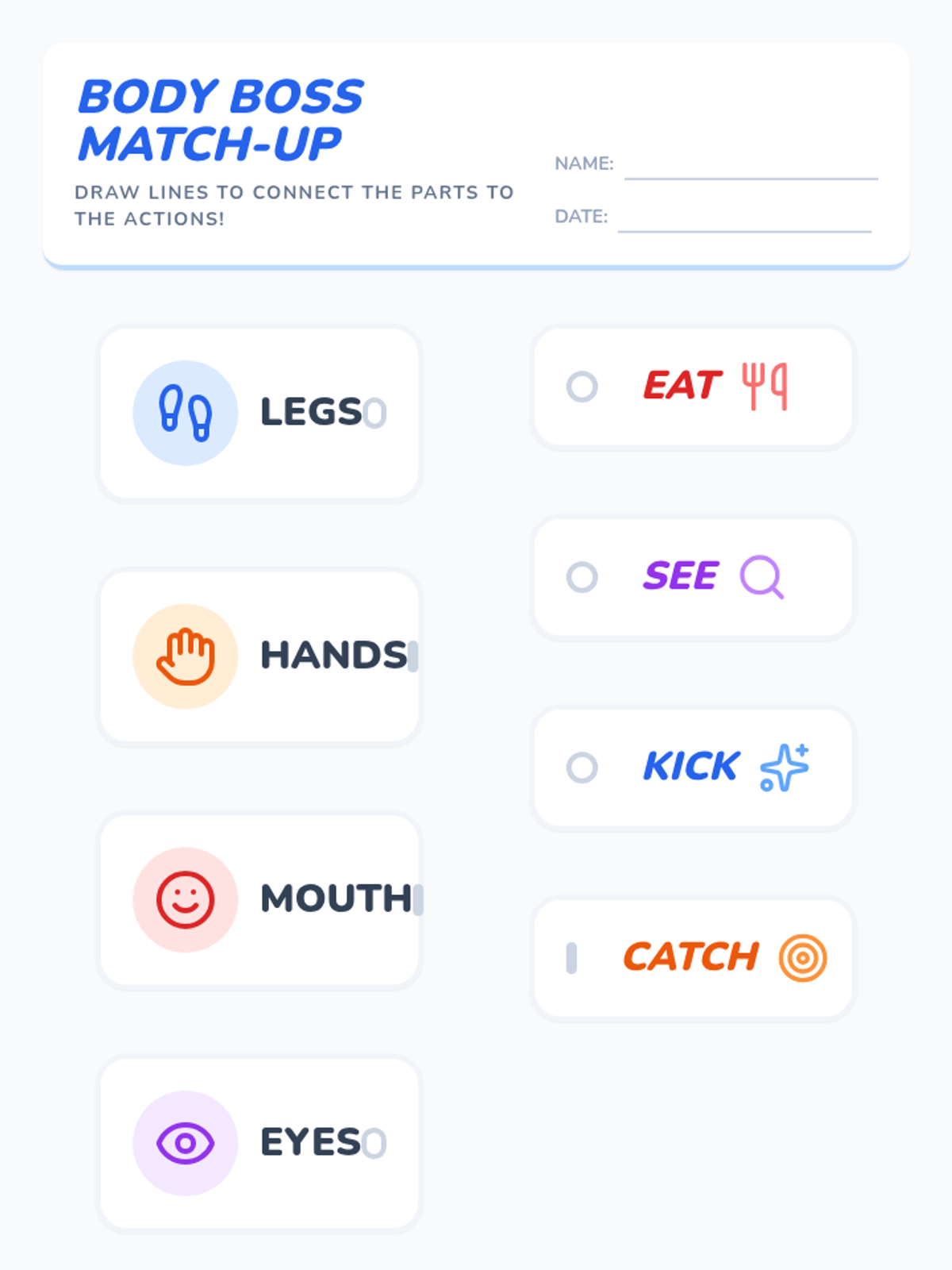
A Kindergarten lesson connecting body part nouns with action verbs through video viewing, physical movement, and a sorting activity. Students identify which body parts perform specific actions like running, catching, and tasting.
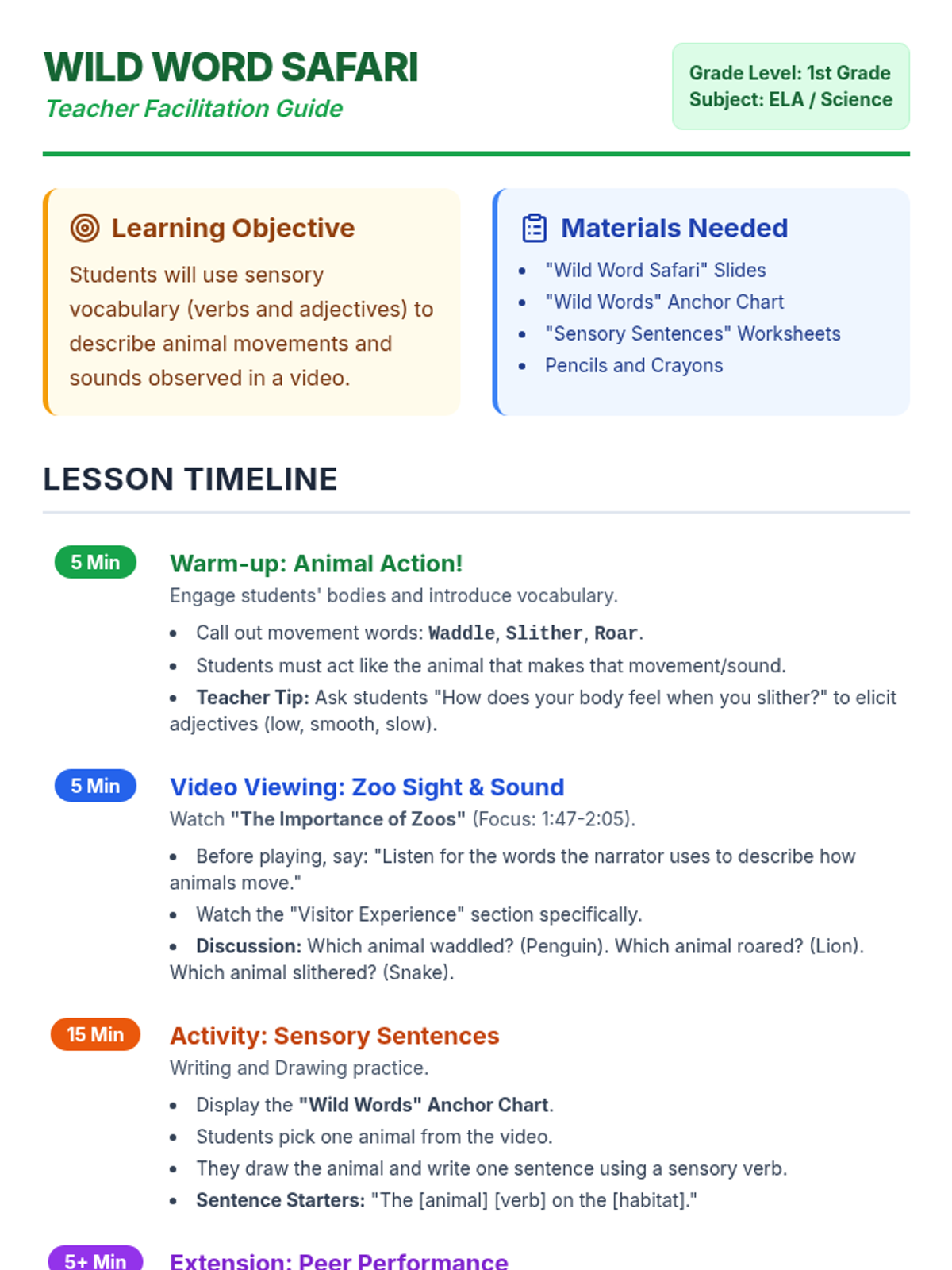
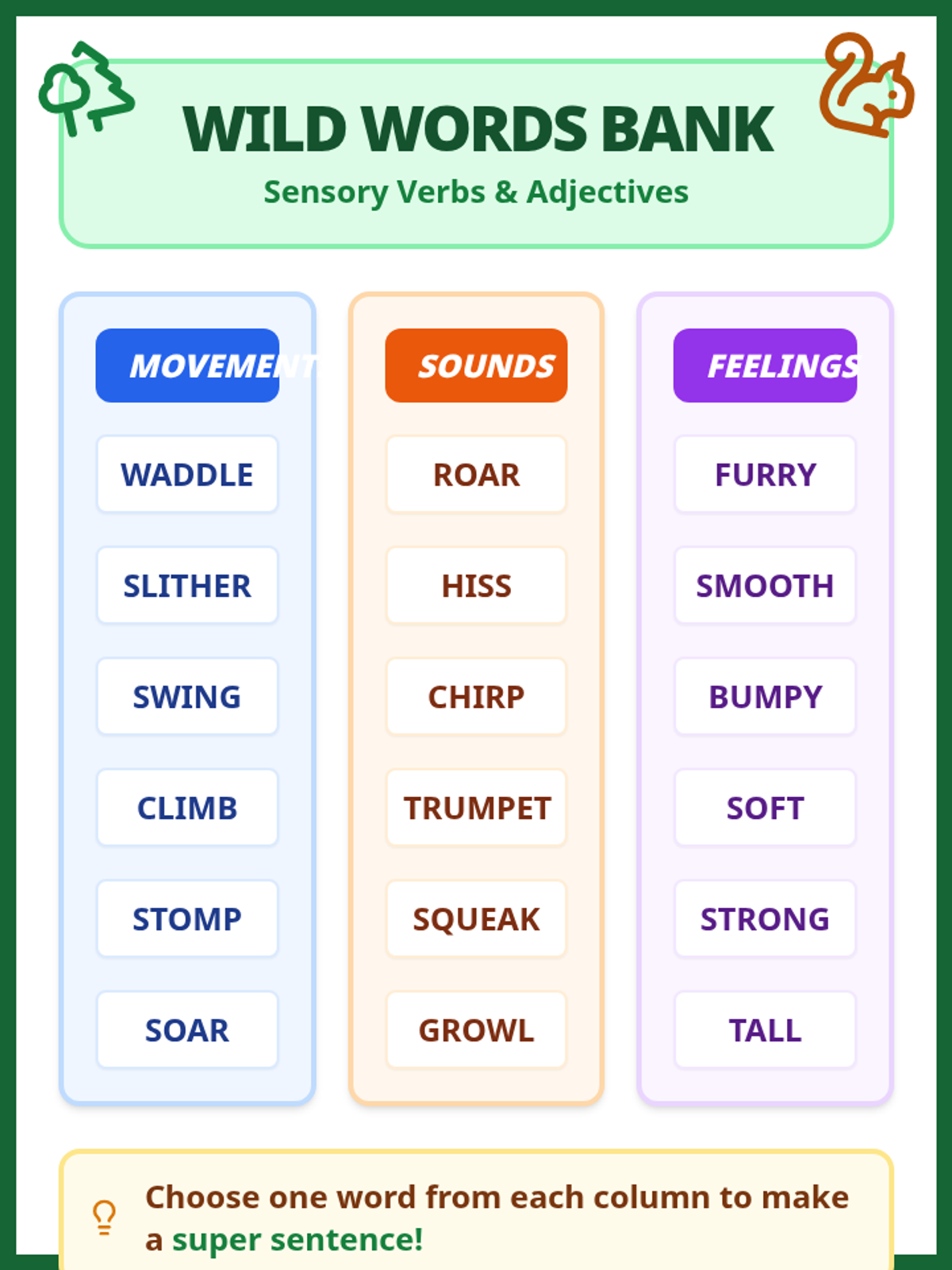
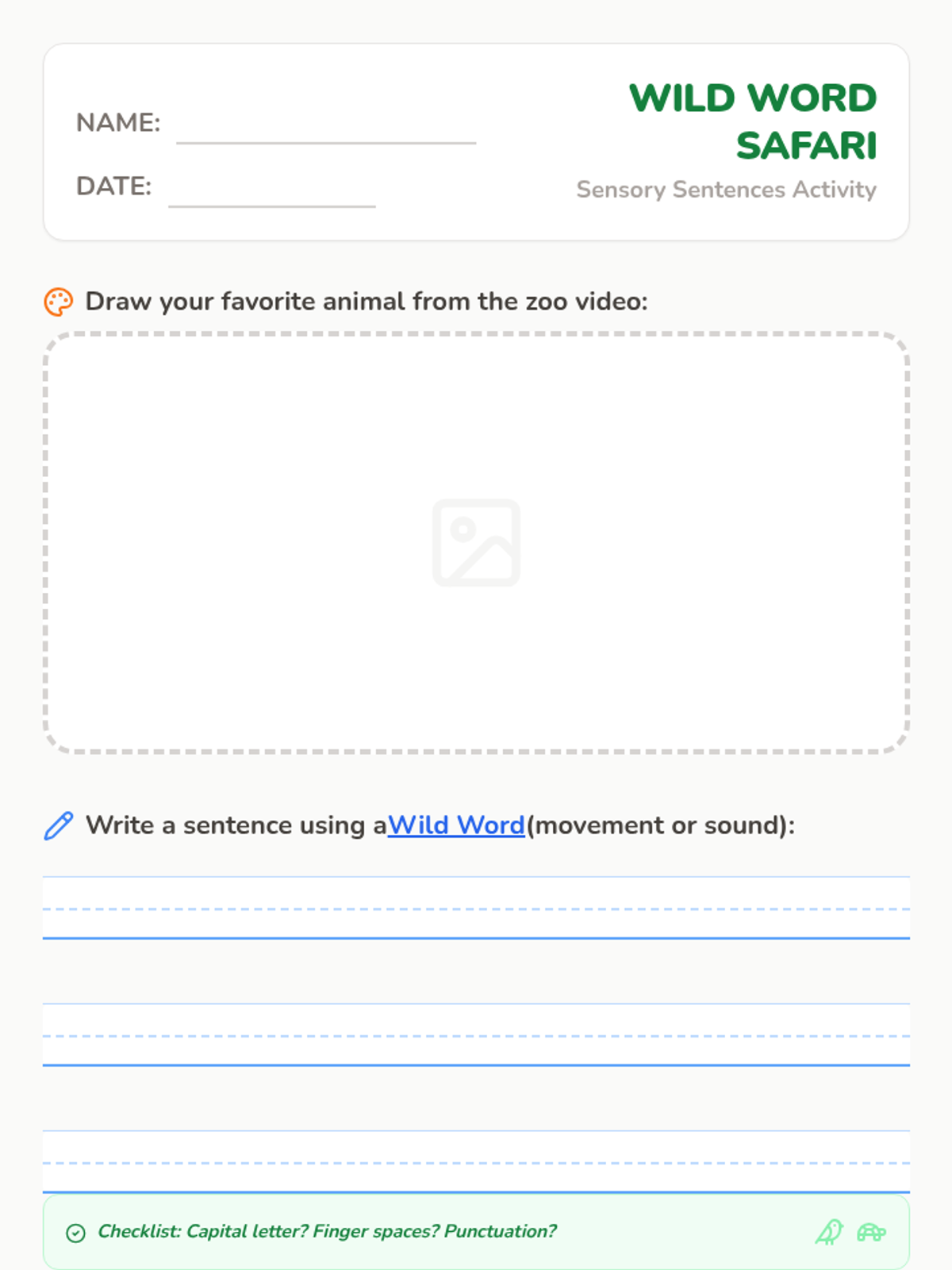
A 1st-grade lesson focused on using sensory vocabulary to describe animal movements and sounds, featuring a warm-up acting game, video observation, and a sentence-writing activity.
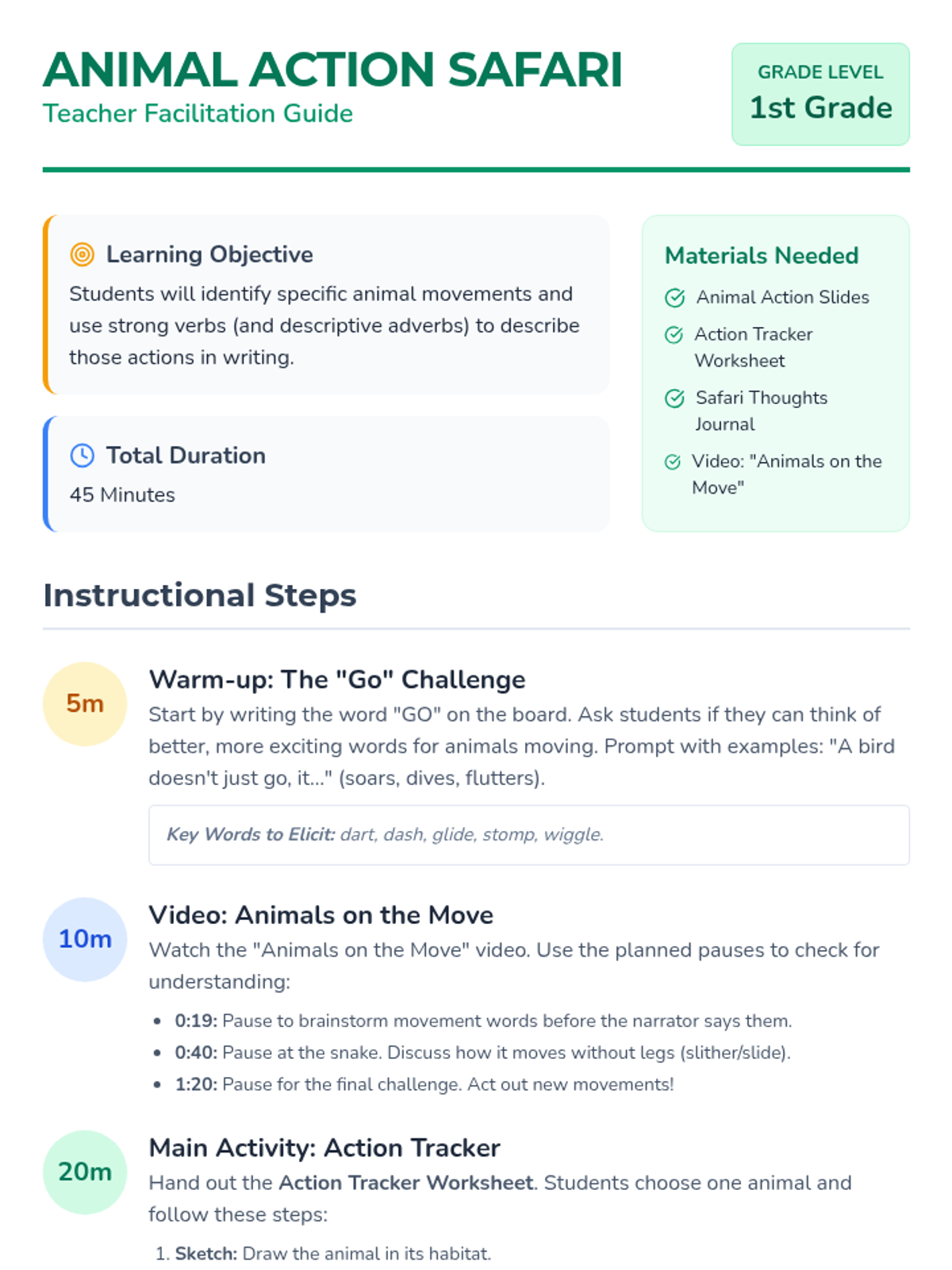
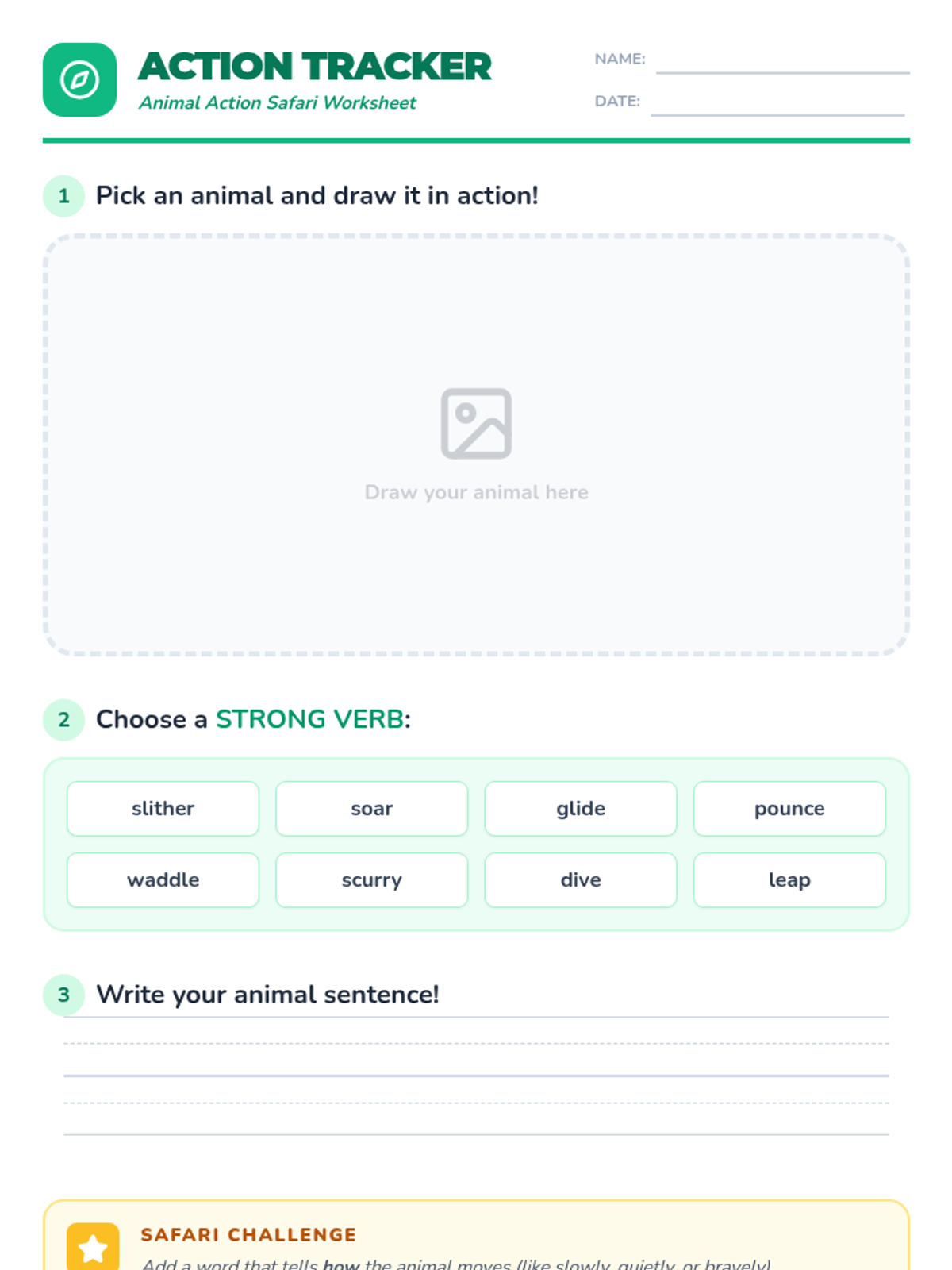
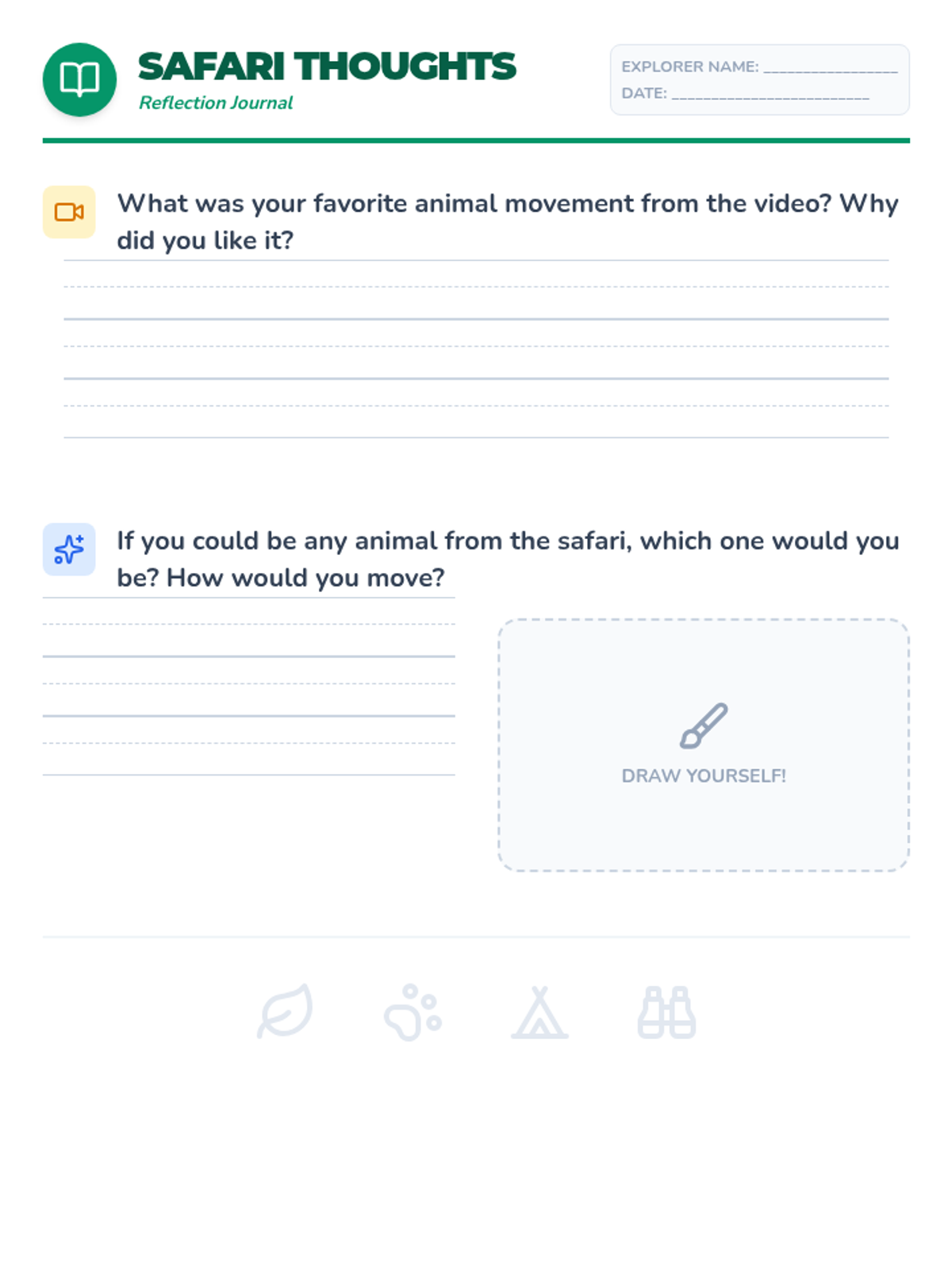
A 1st Grade lesson focused on using strong, specific verbs to describe how different animals move, featuring video observation and creative writing.
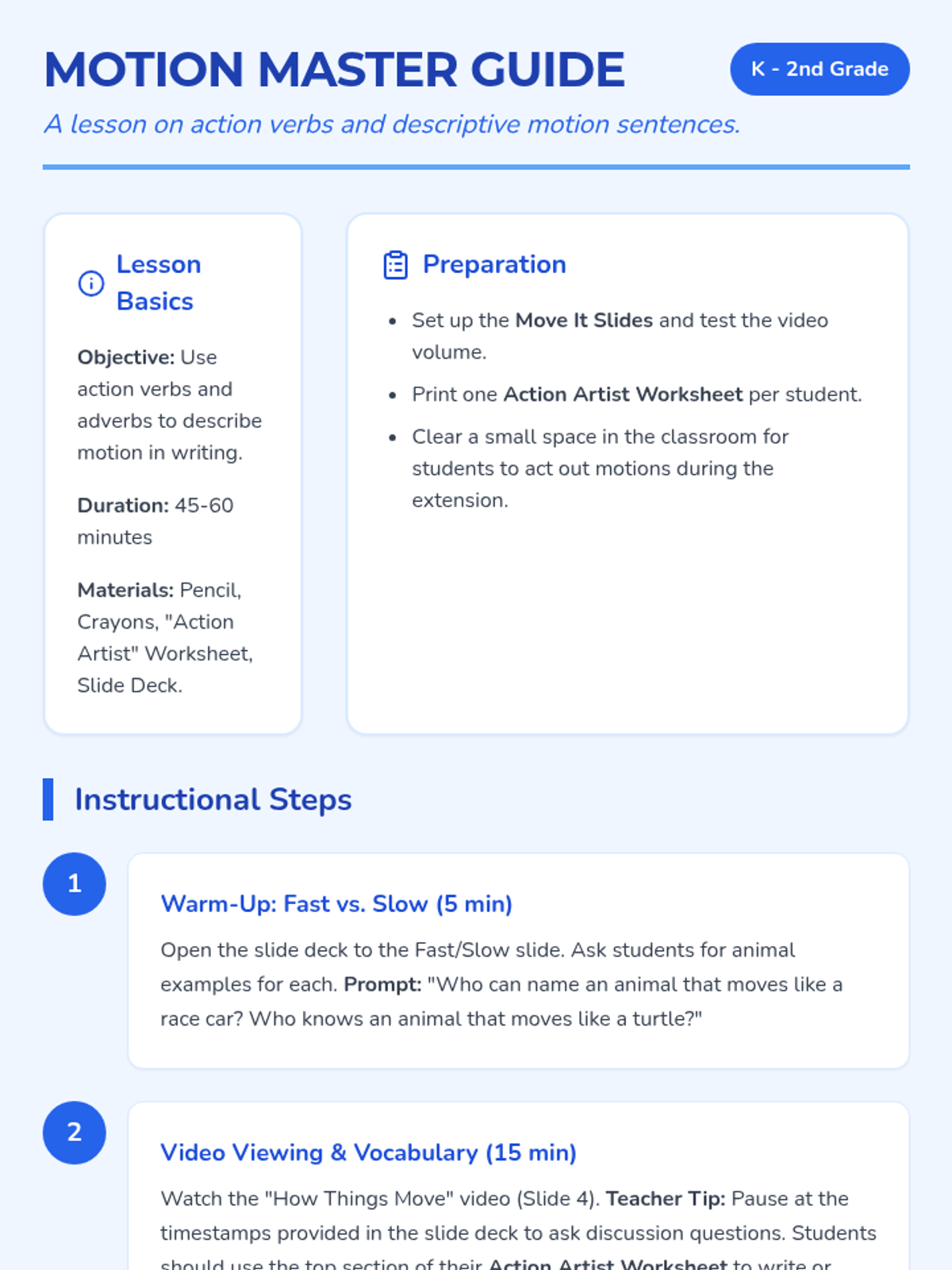
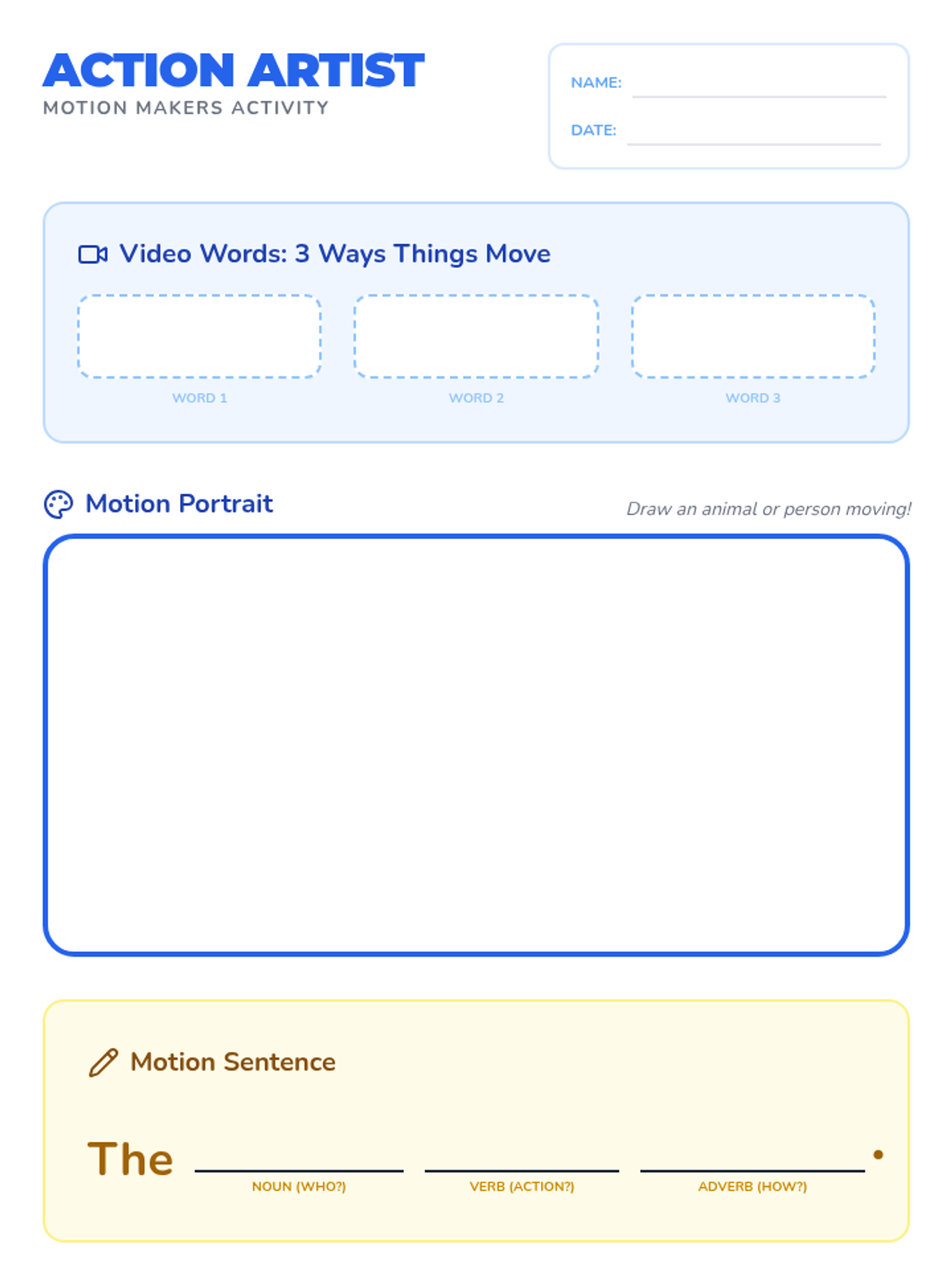
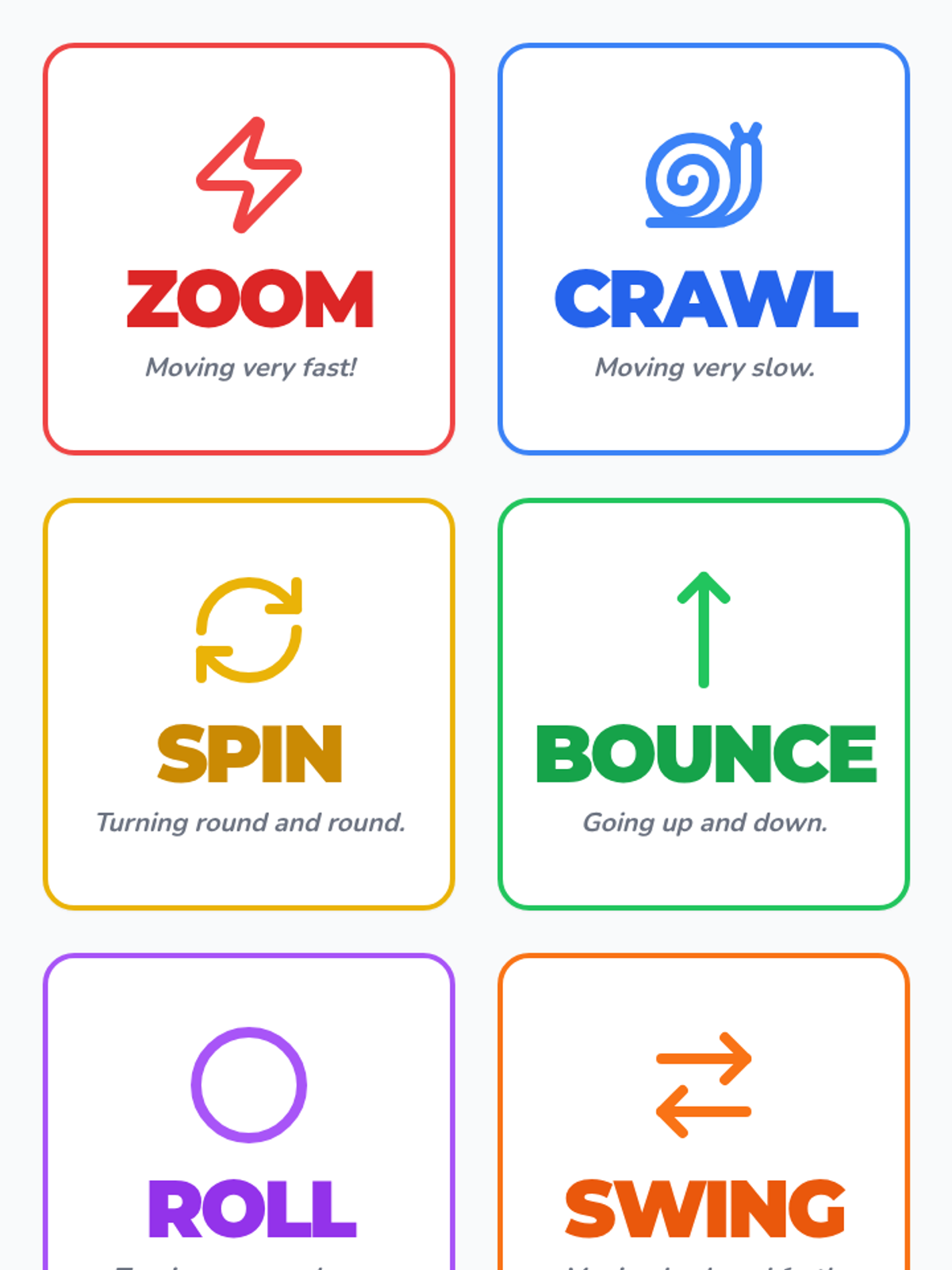
Students explore how things move through observation and descriptive writing. They will identify motion verbs and use them to construct simple sentences about animals and objects in action.
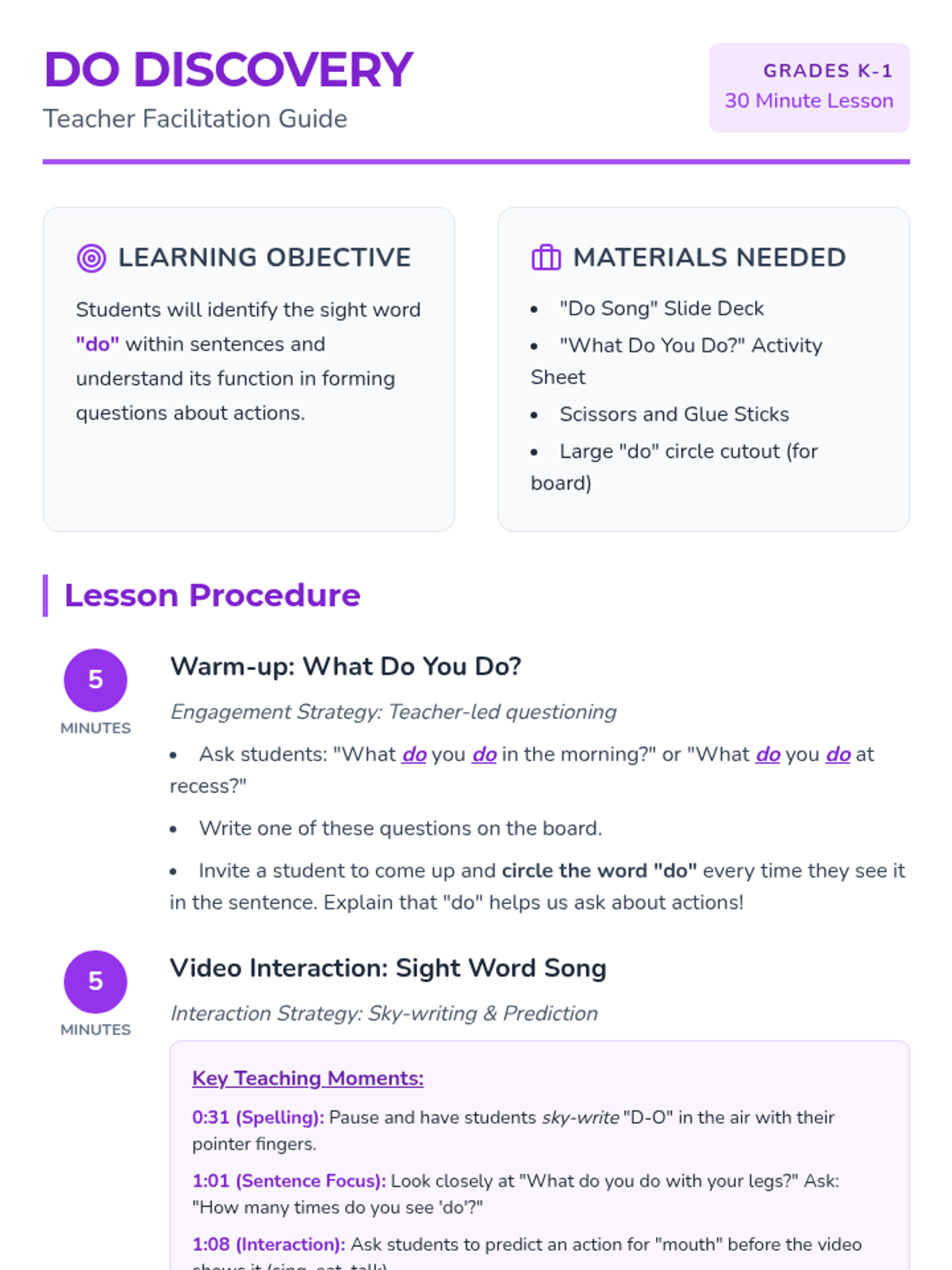
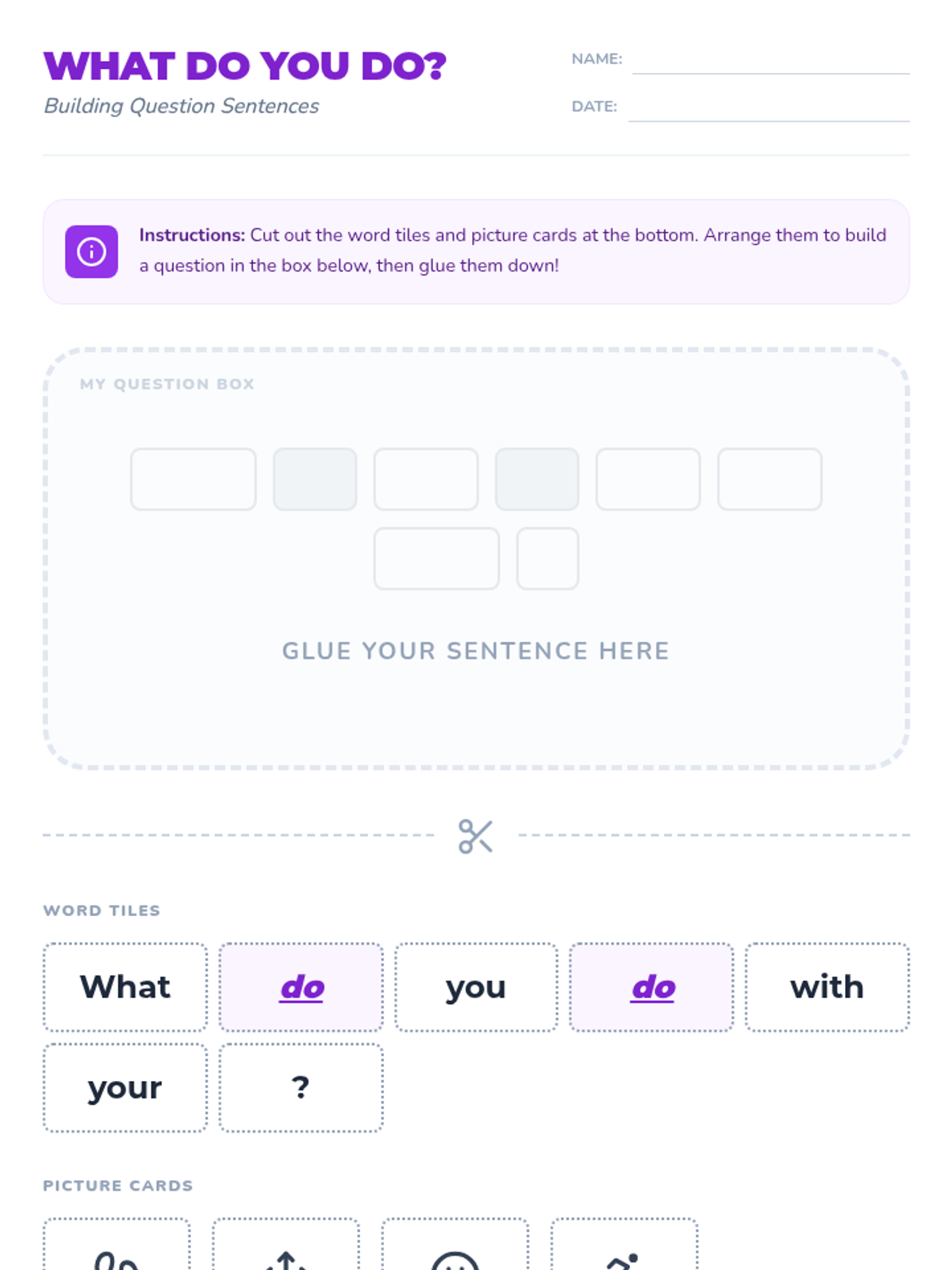
A Kindergarten and 1st Grade lesson focused on identifying the sight word 'do' and understanding its role in questions through music, movement, and hands-on sentence building.
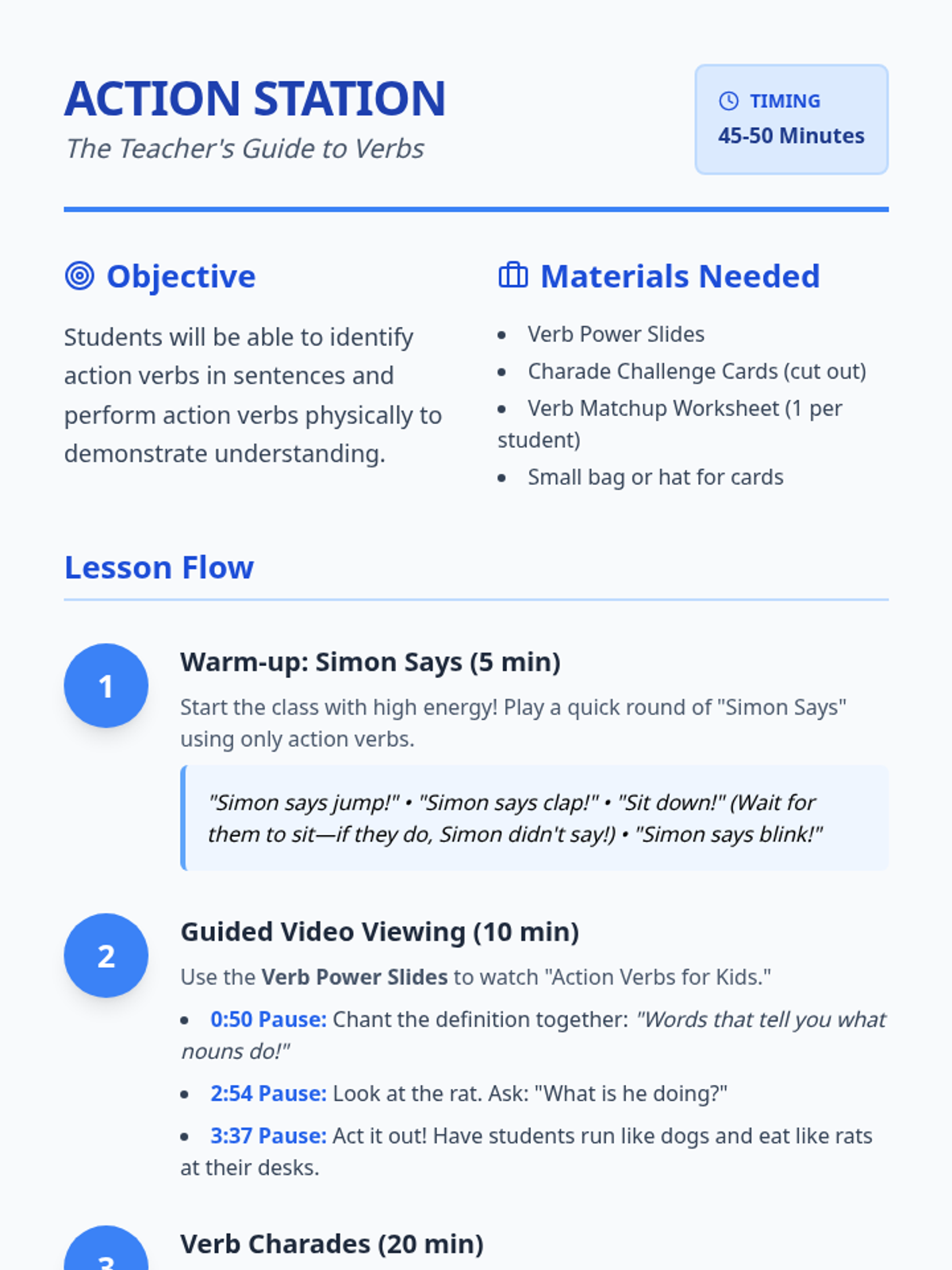
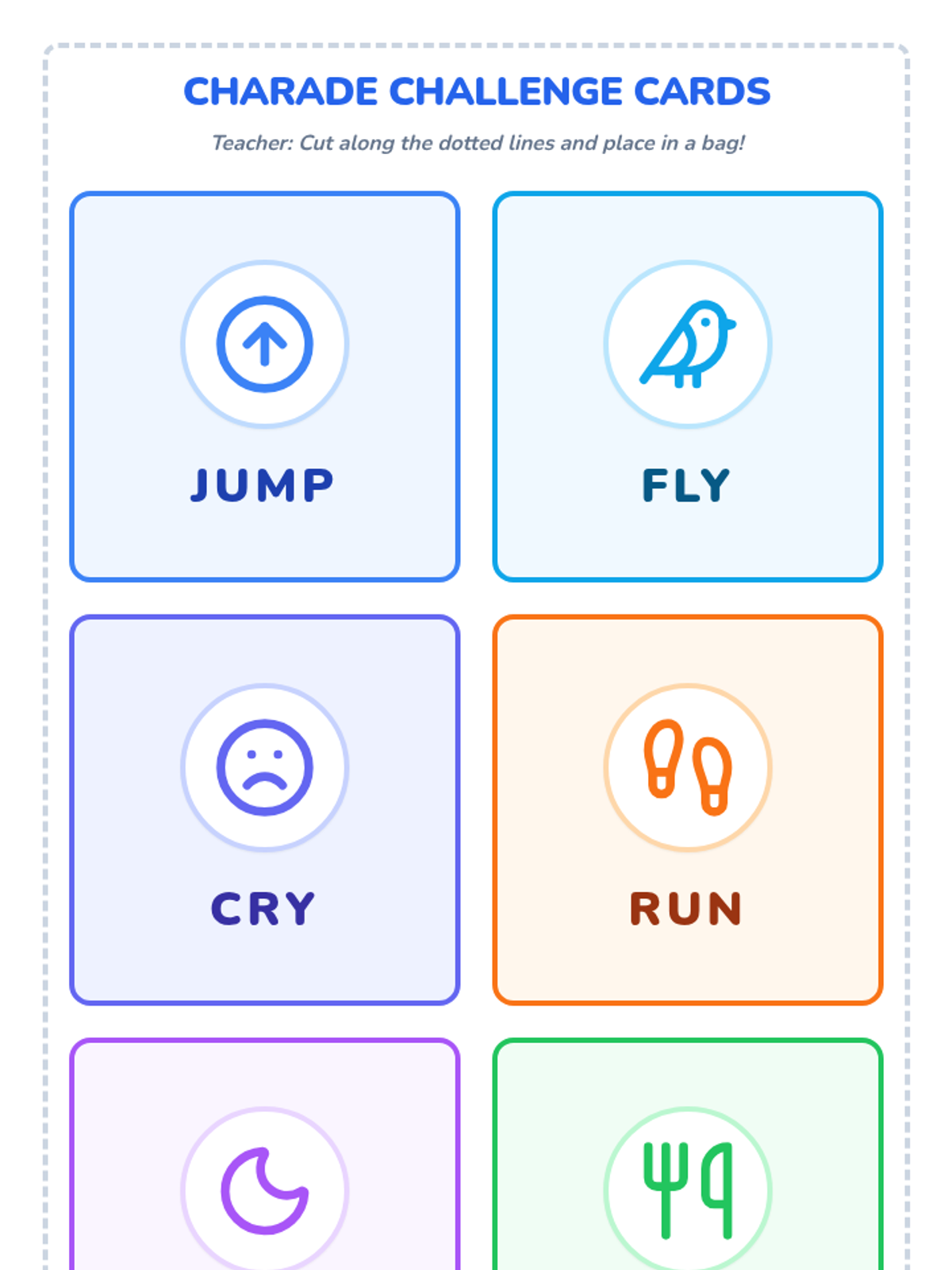
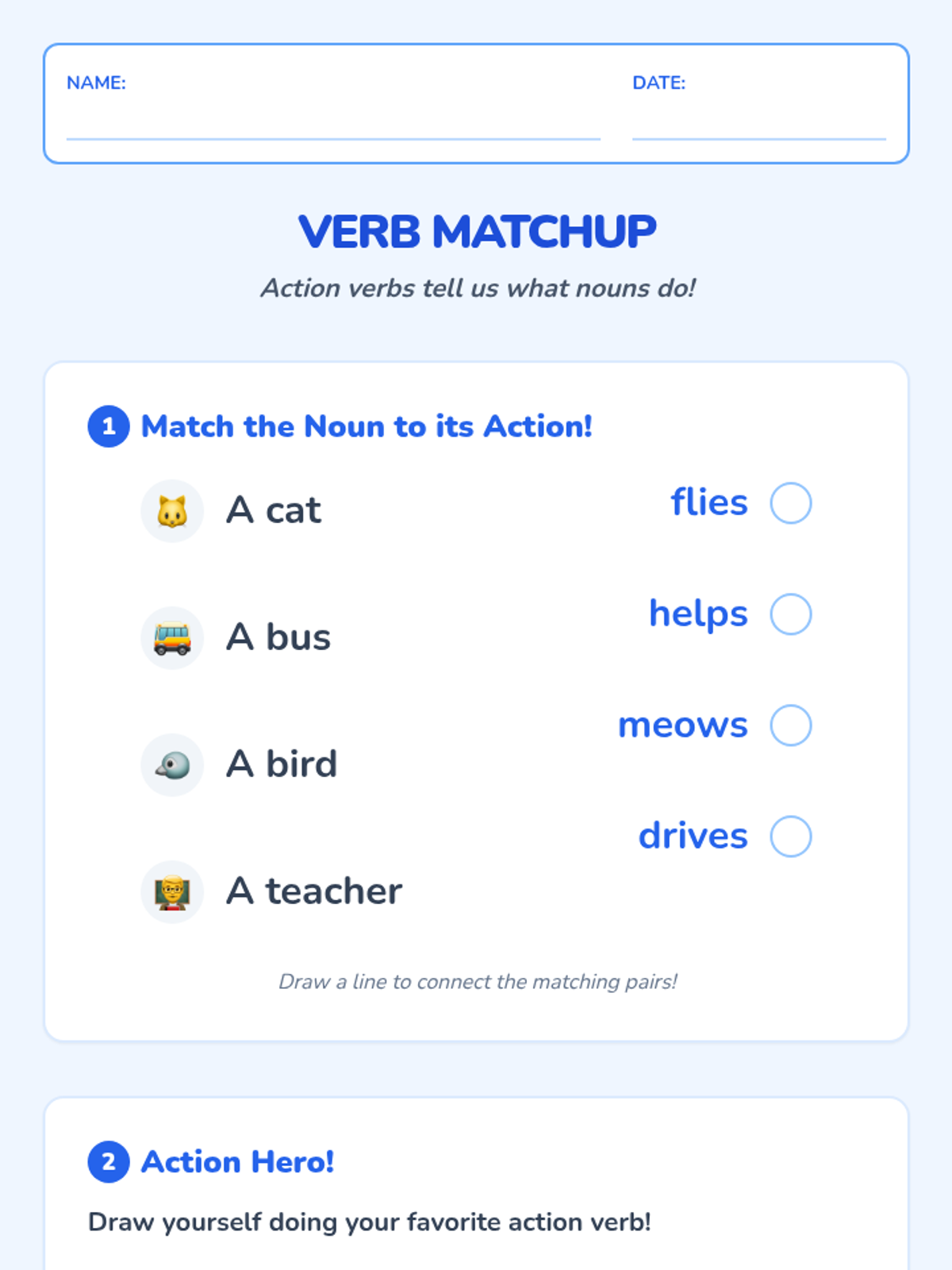
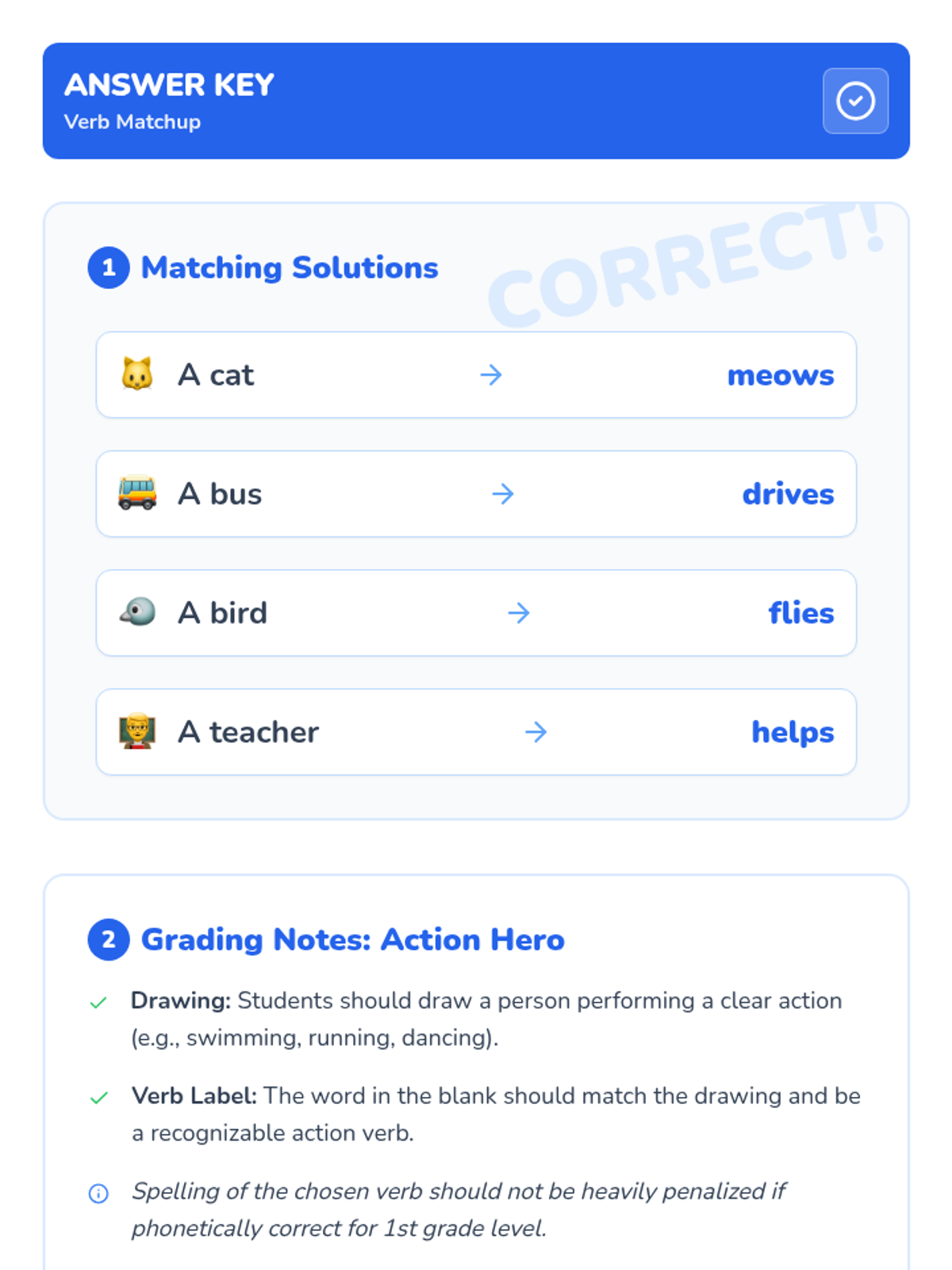
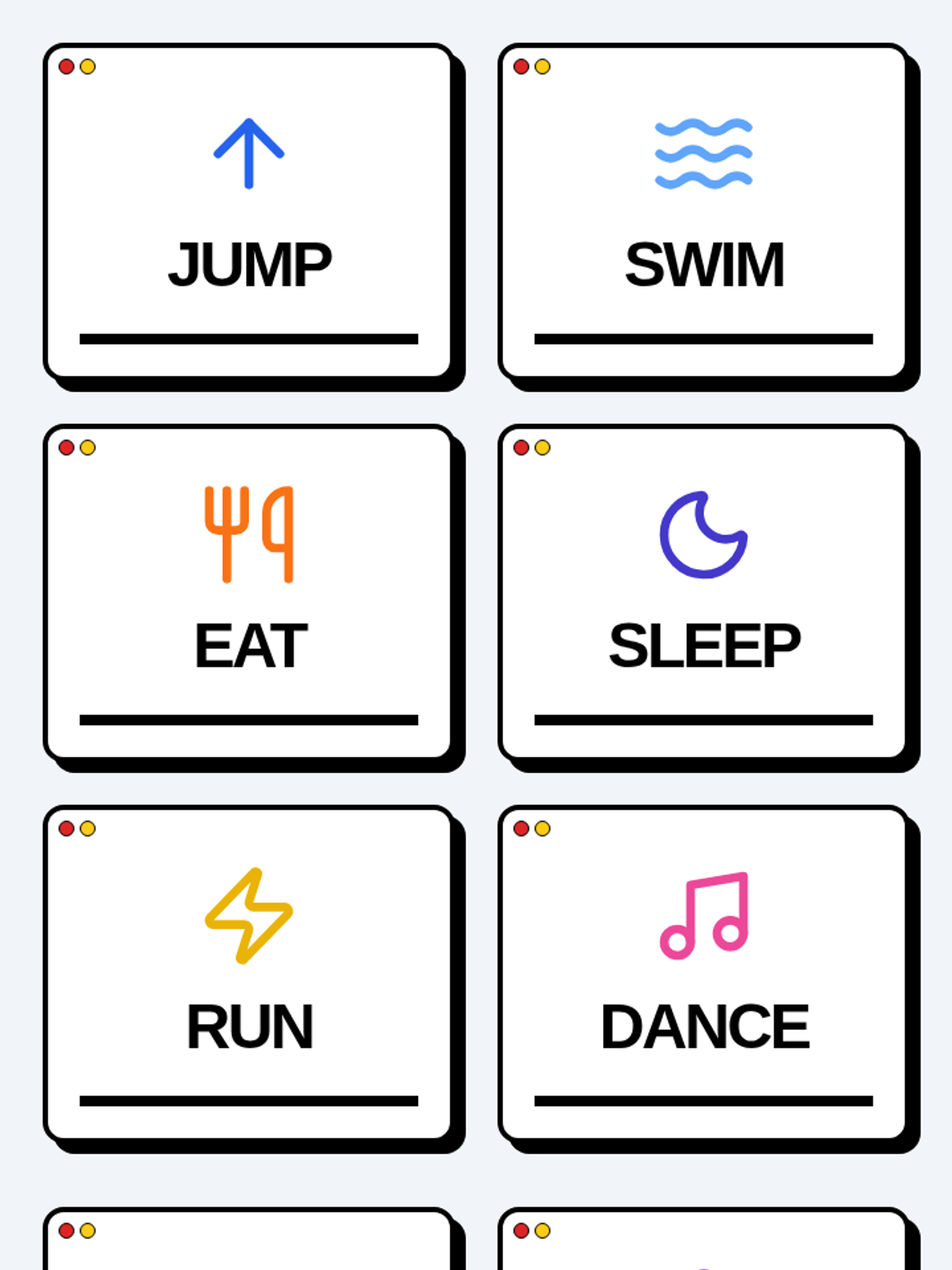
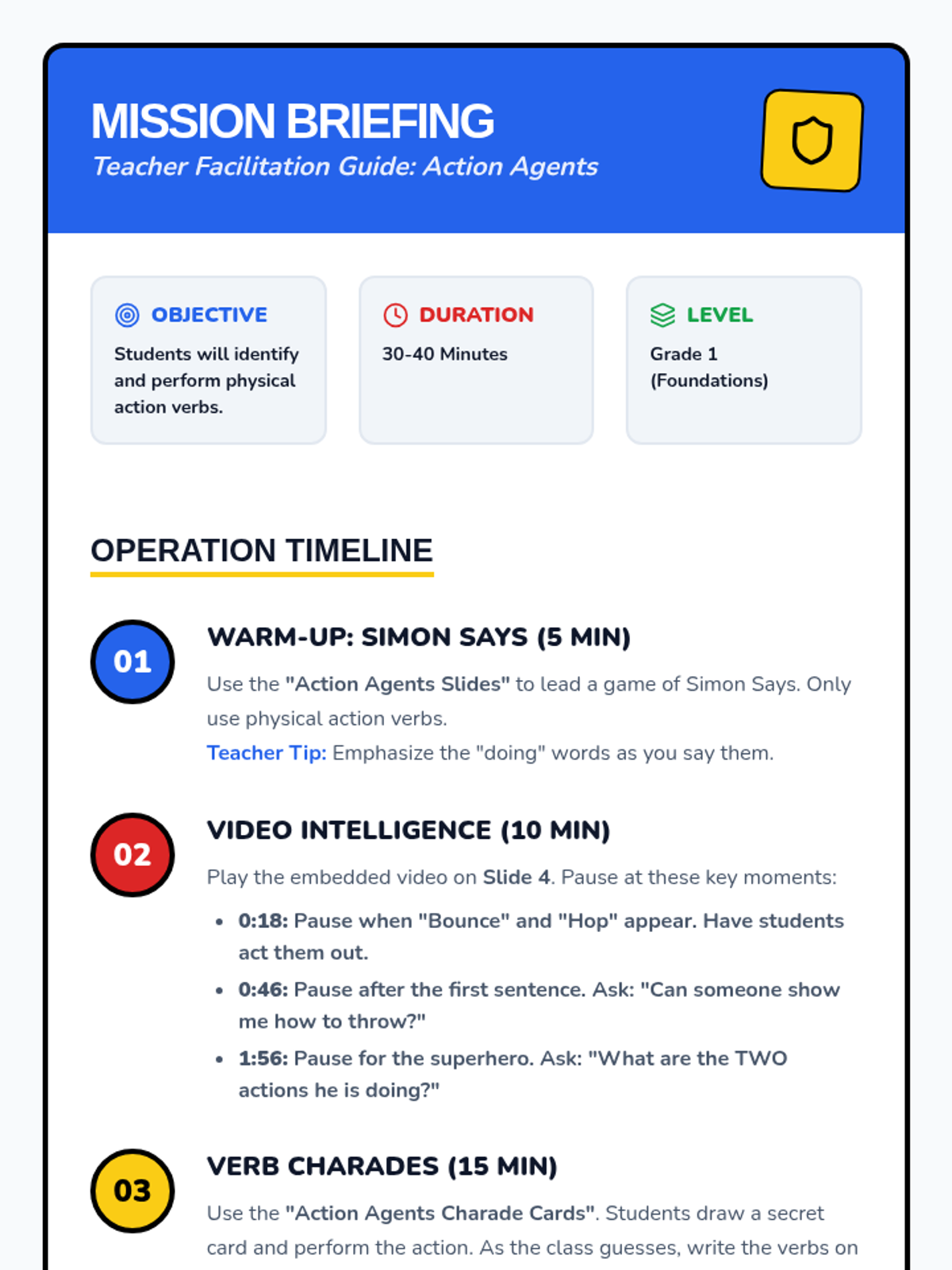
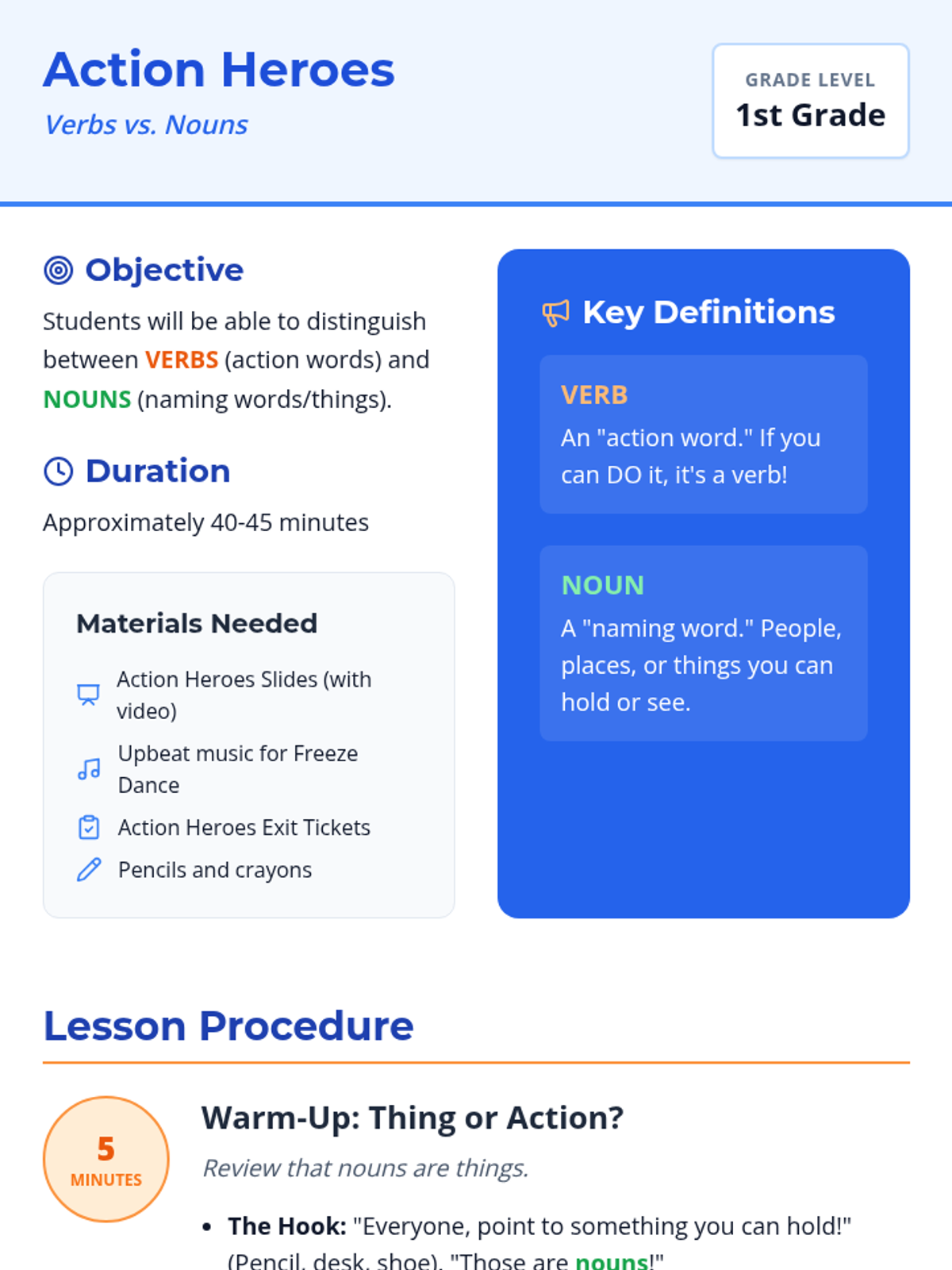
A high-energy lesson introducing 1st graders to action verbs through movement, a guided video viewing, and a hands-on charades game. Students will learn that verbs are words that tell us what nouns do.
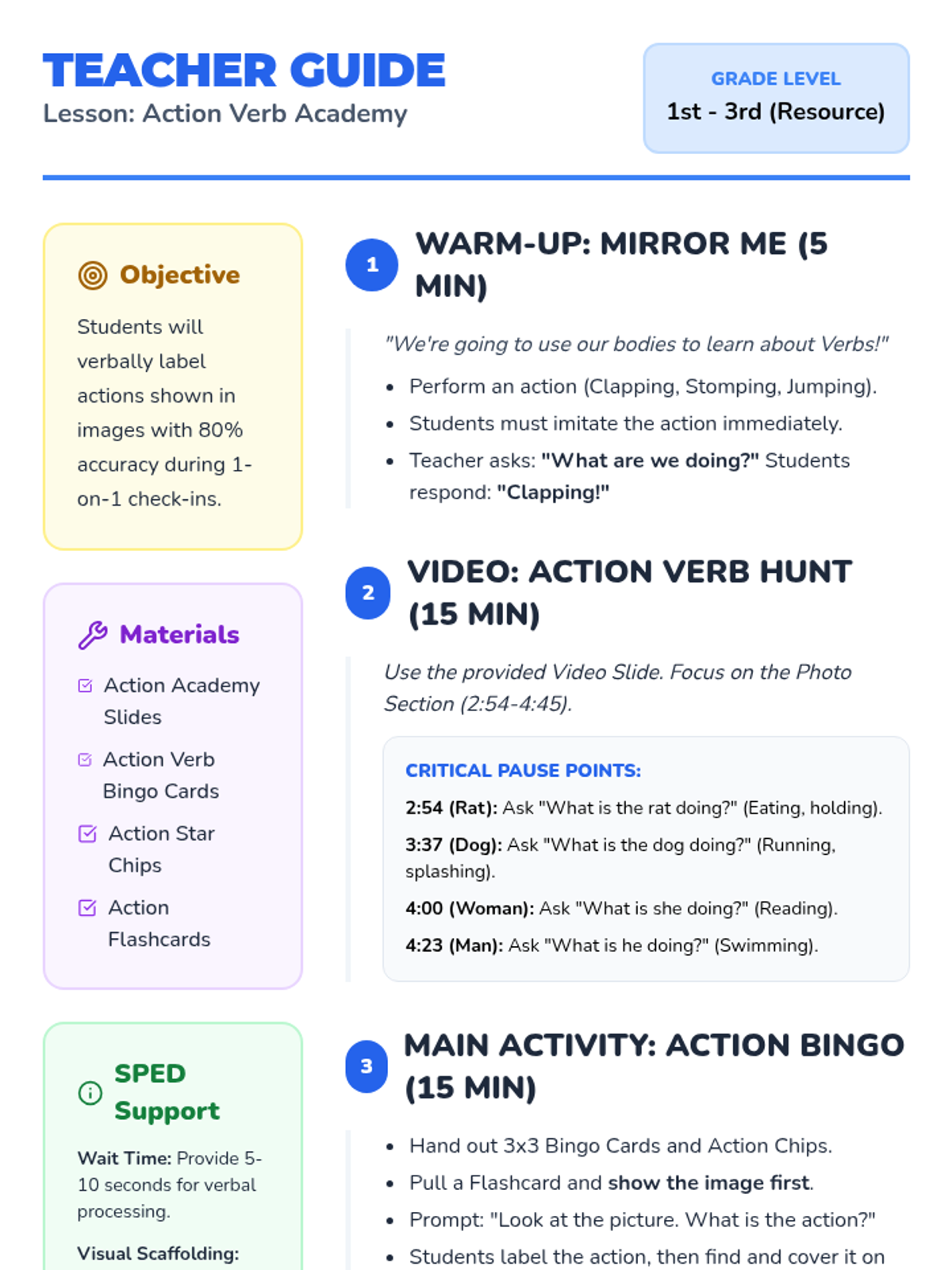
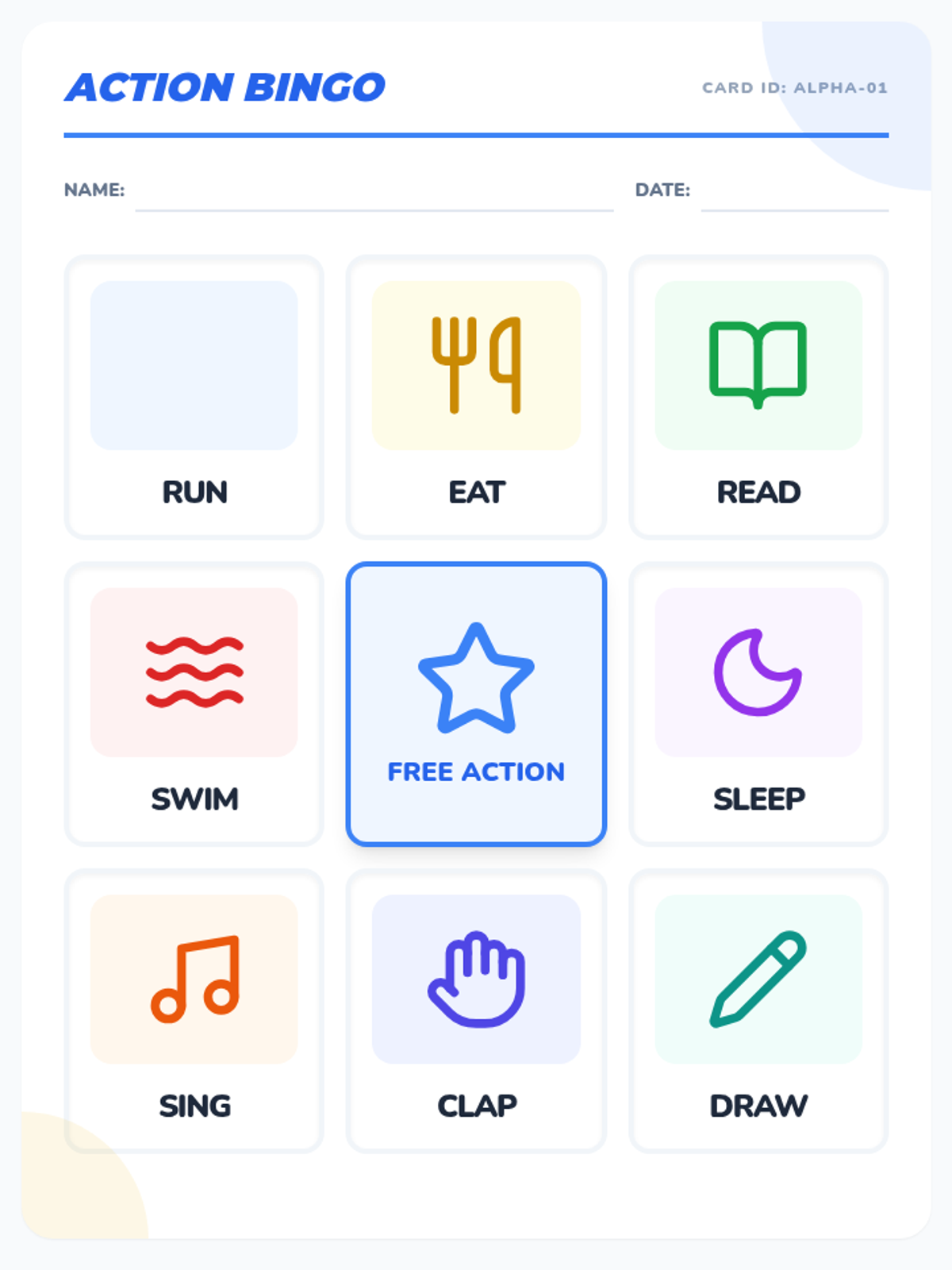
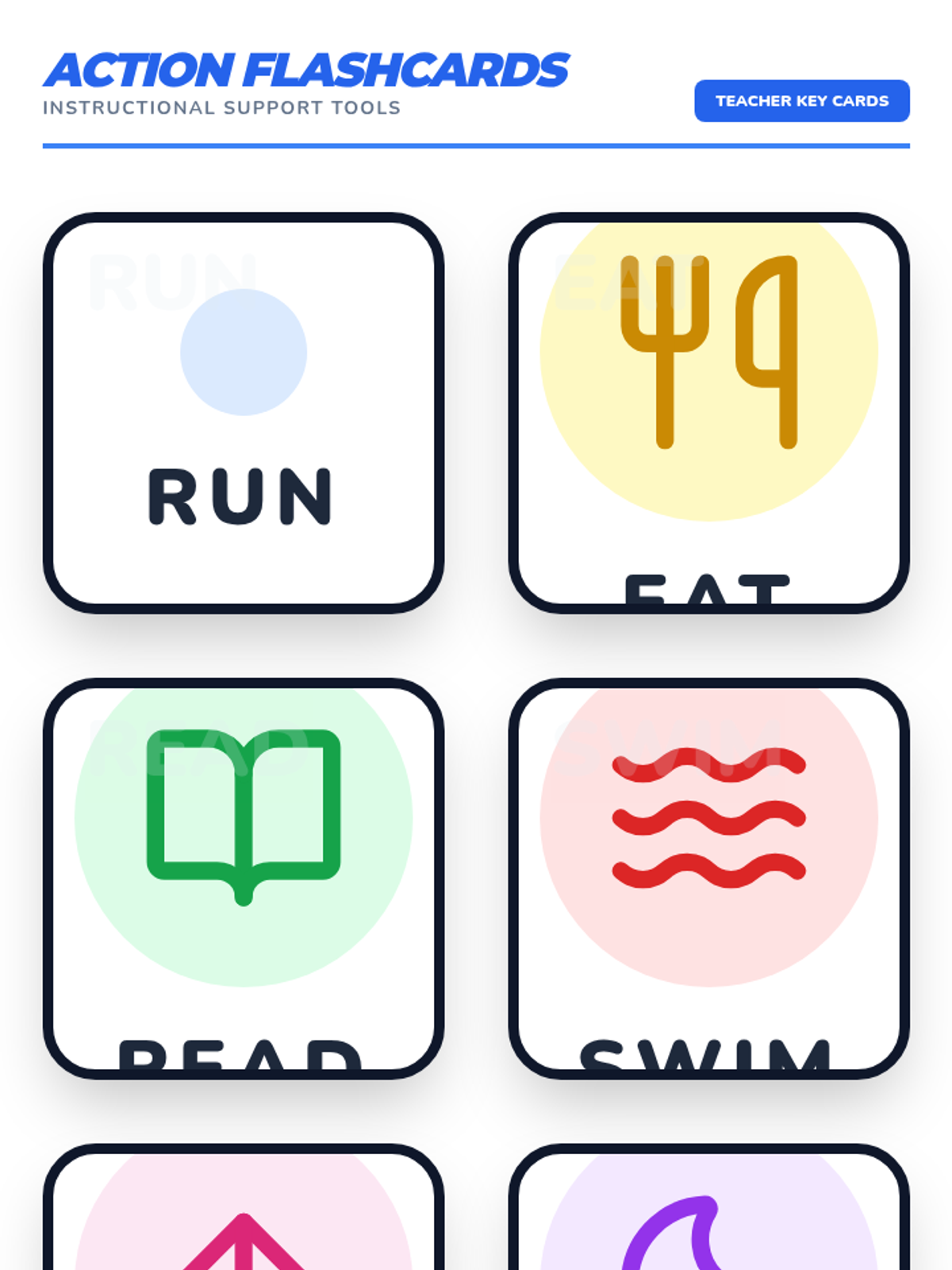
A high-energy lesson for 1st-3rd grade Resource Room students focused on identifying and labeling action verbs through physical imitation, video modeling, and a movement-themed bingo game.
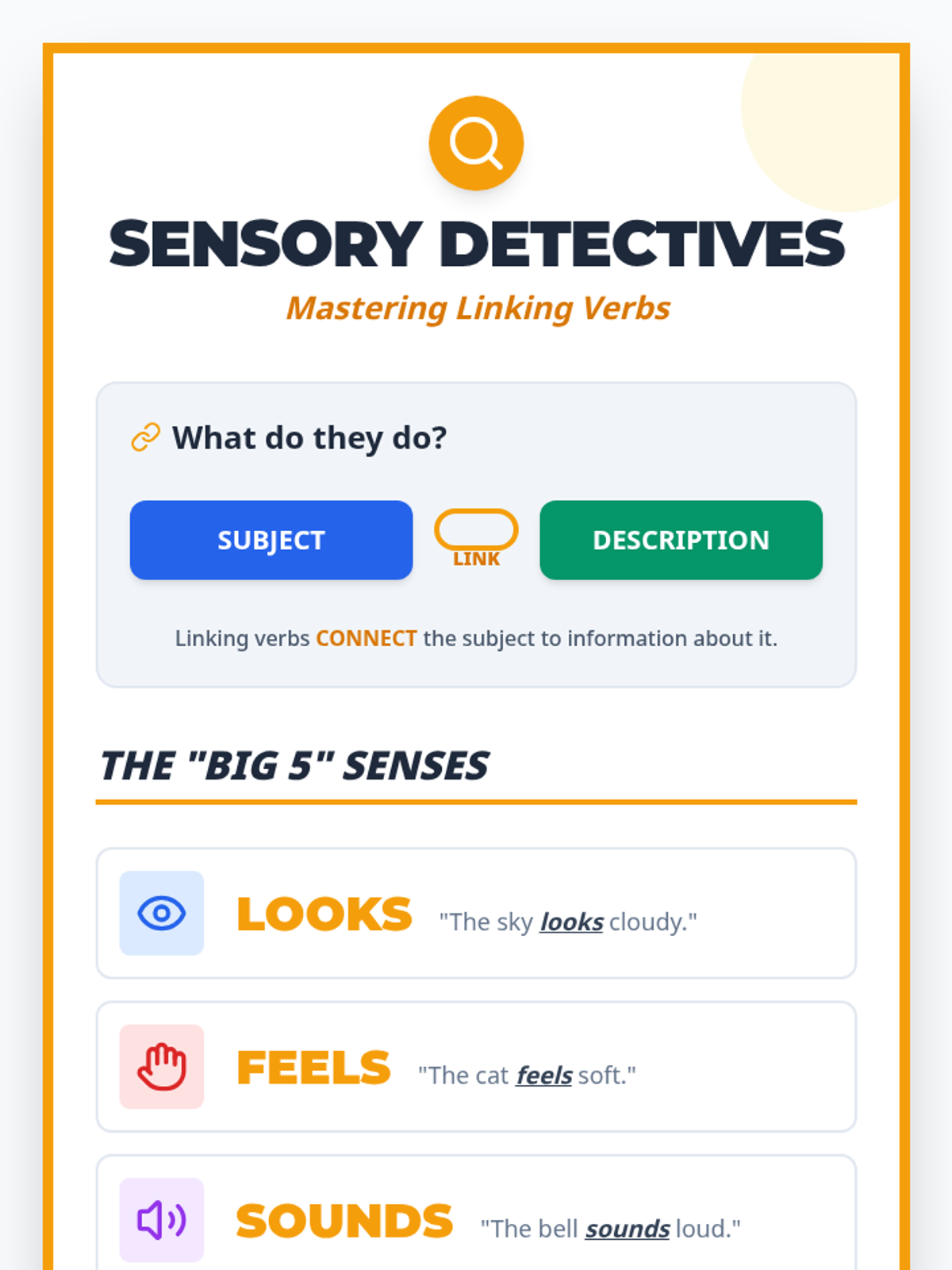
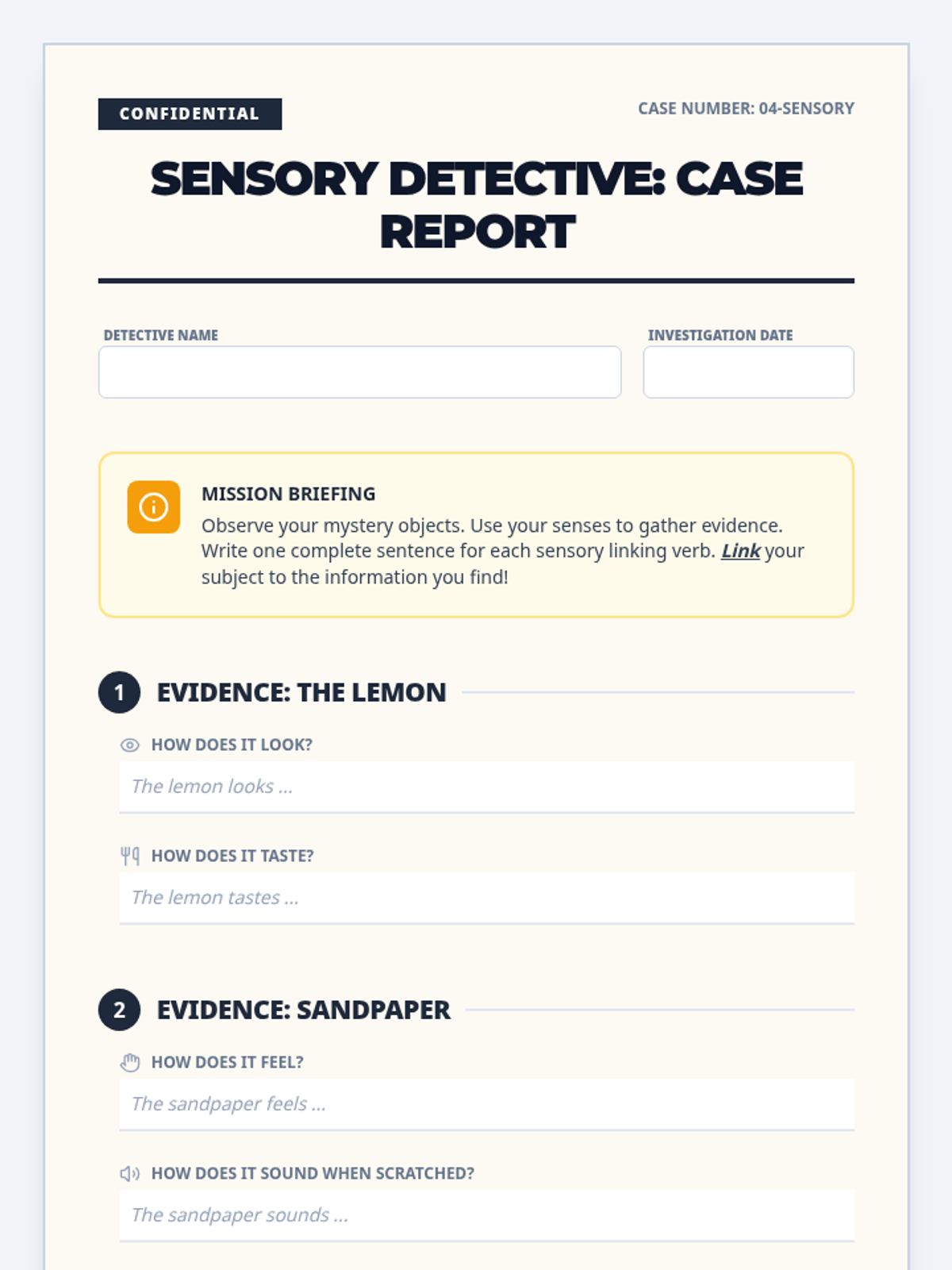
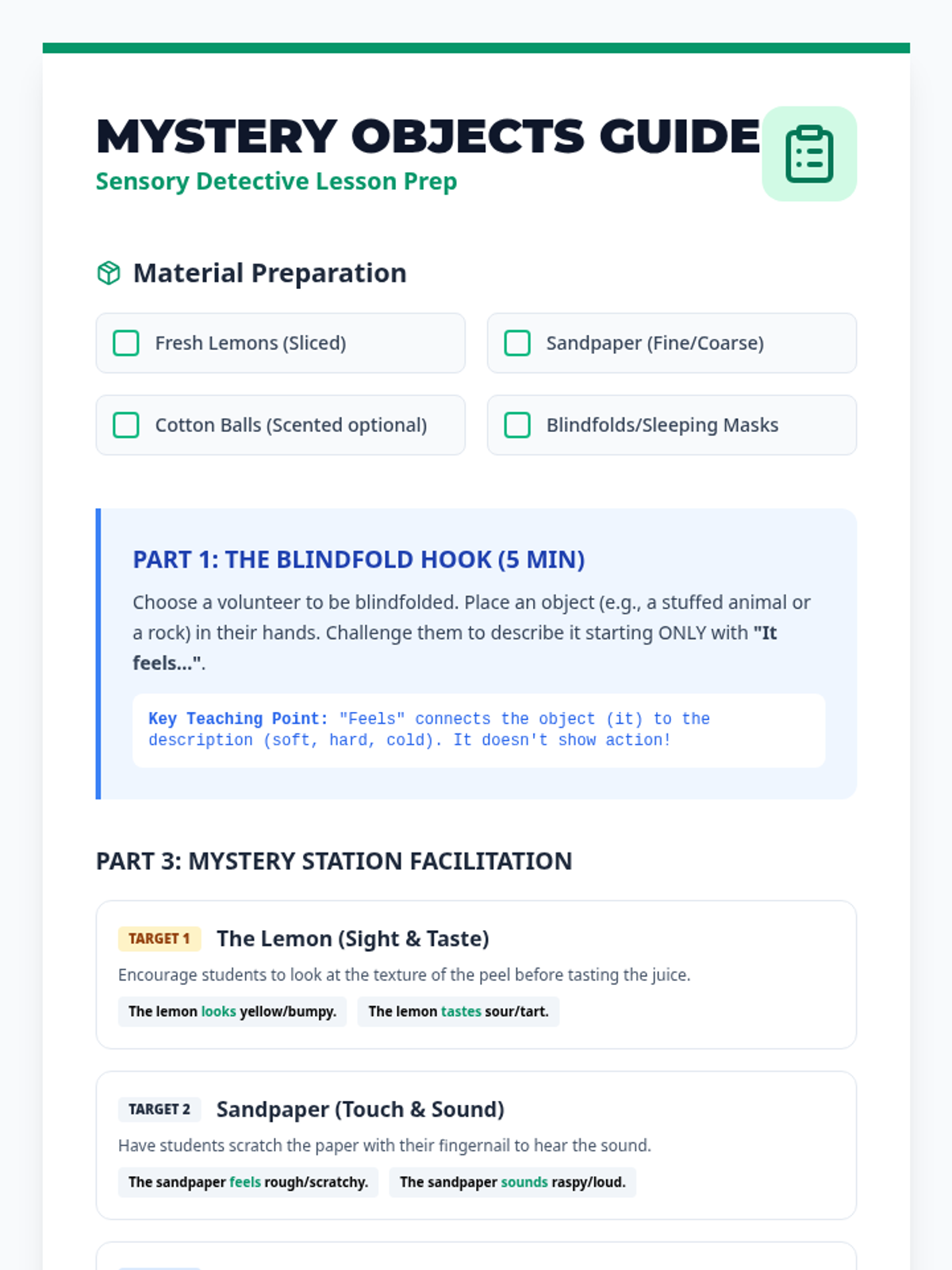
Students will transform into 'Sensory Detectives' to explore how linking verbs connect subjects to descriptive sensory details. This lesson uses a blindfold hook, a targeted video segment, and hands-on investigation of mystery objects to master the use of looks, sounds, feels, smells, and tastes.
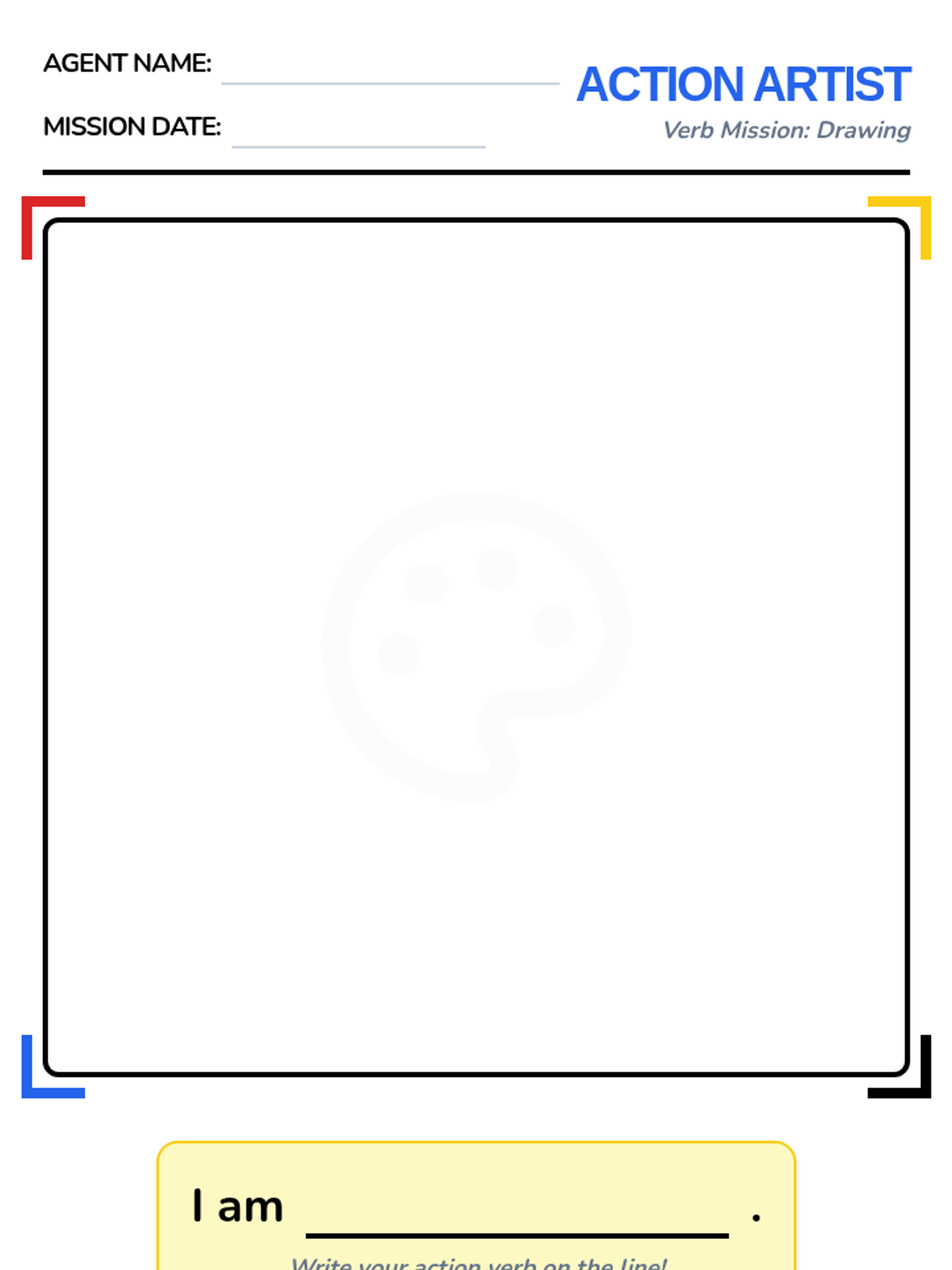
A high-energy 1st-grade lesson introducing physical action verbs through movement, video analysis, and interactive games. Students will learn to identify 'doing' words and express them through drawing and performance.
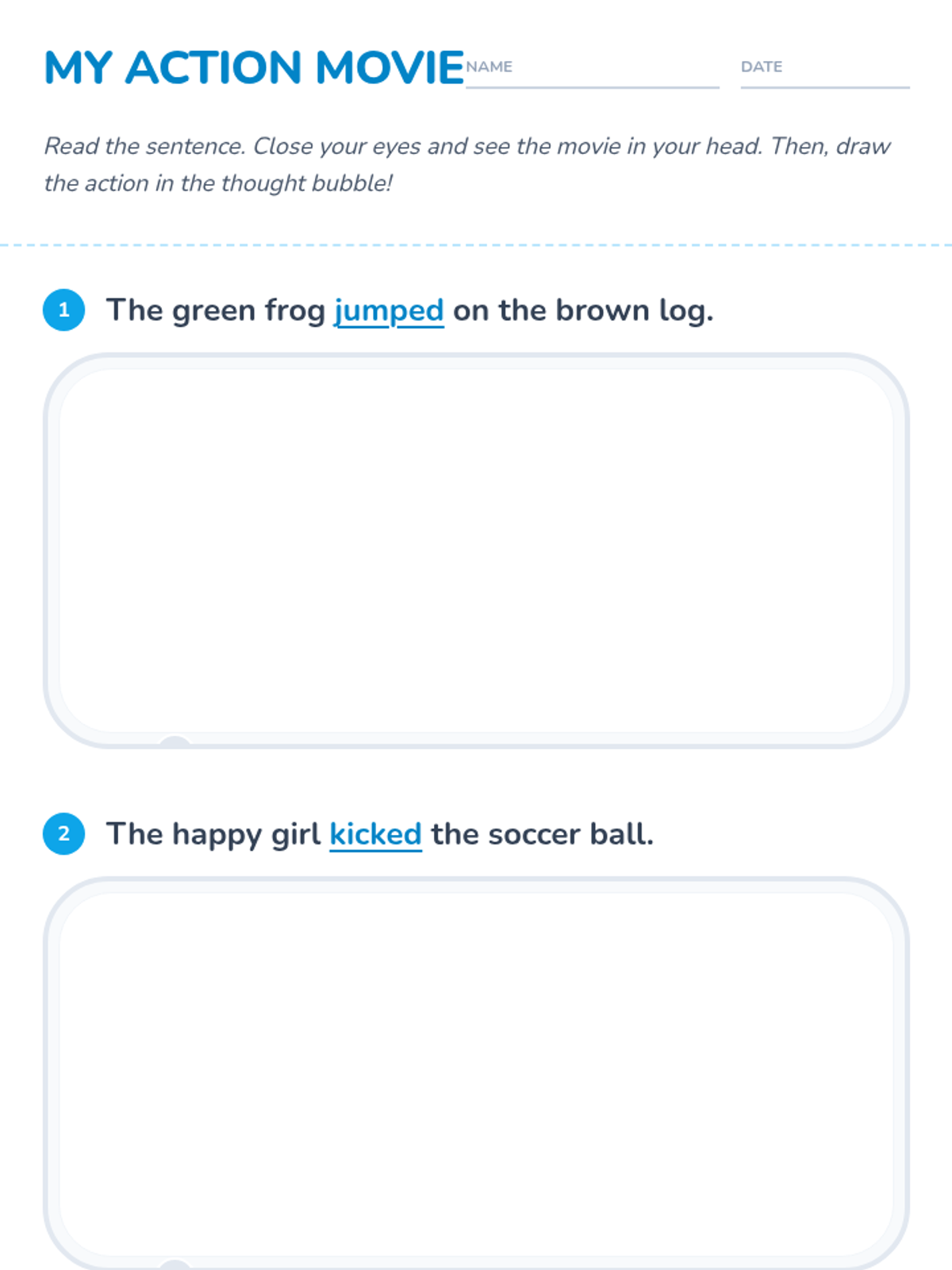
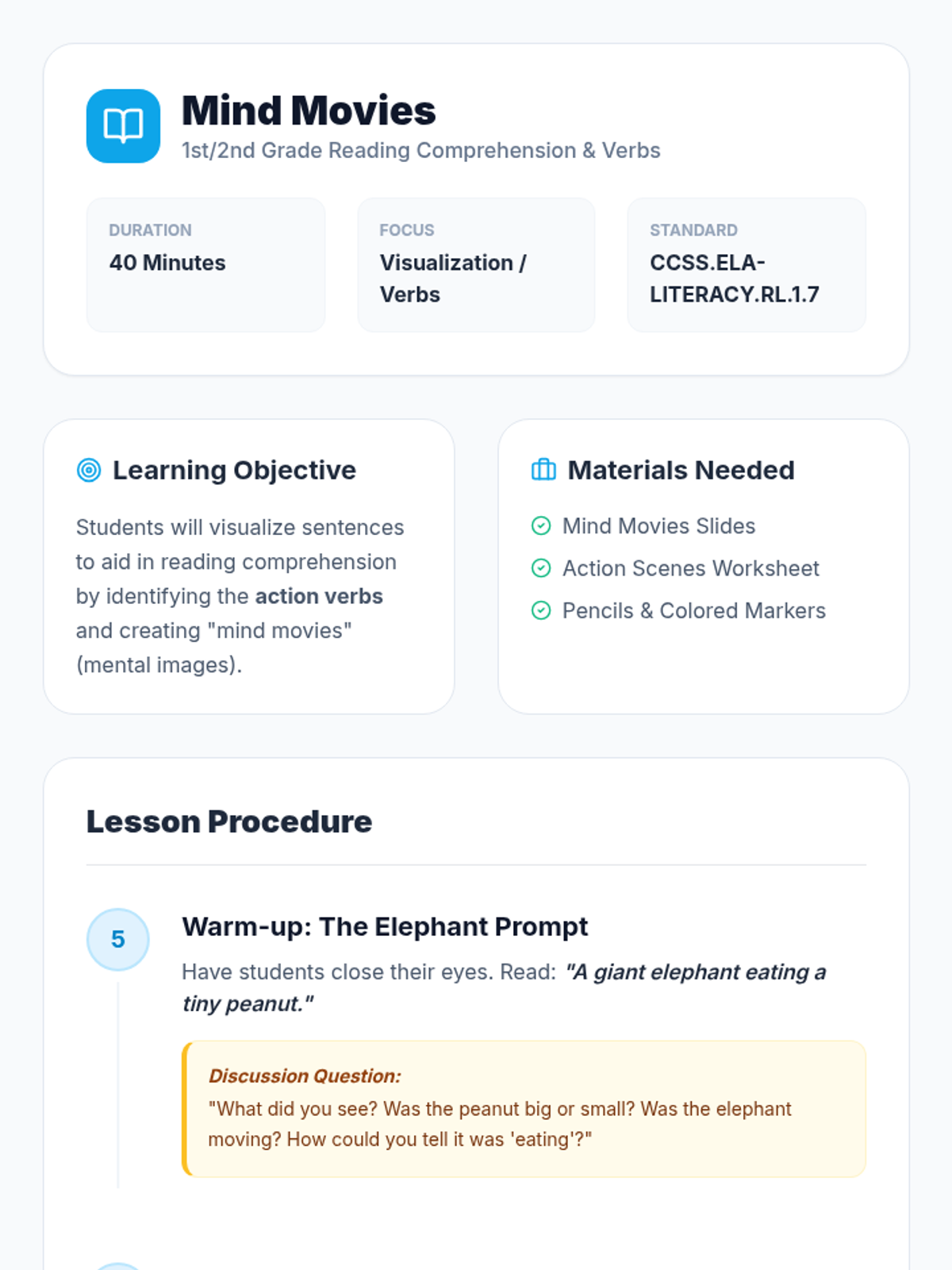
A 1st/2nd grade lesson focused on using visualization (making 'movies in the head') to understand action verbs and improve reading comprehension. Students watch a guided video and practice drawing scenes based on descriptive sentences.
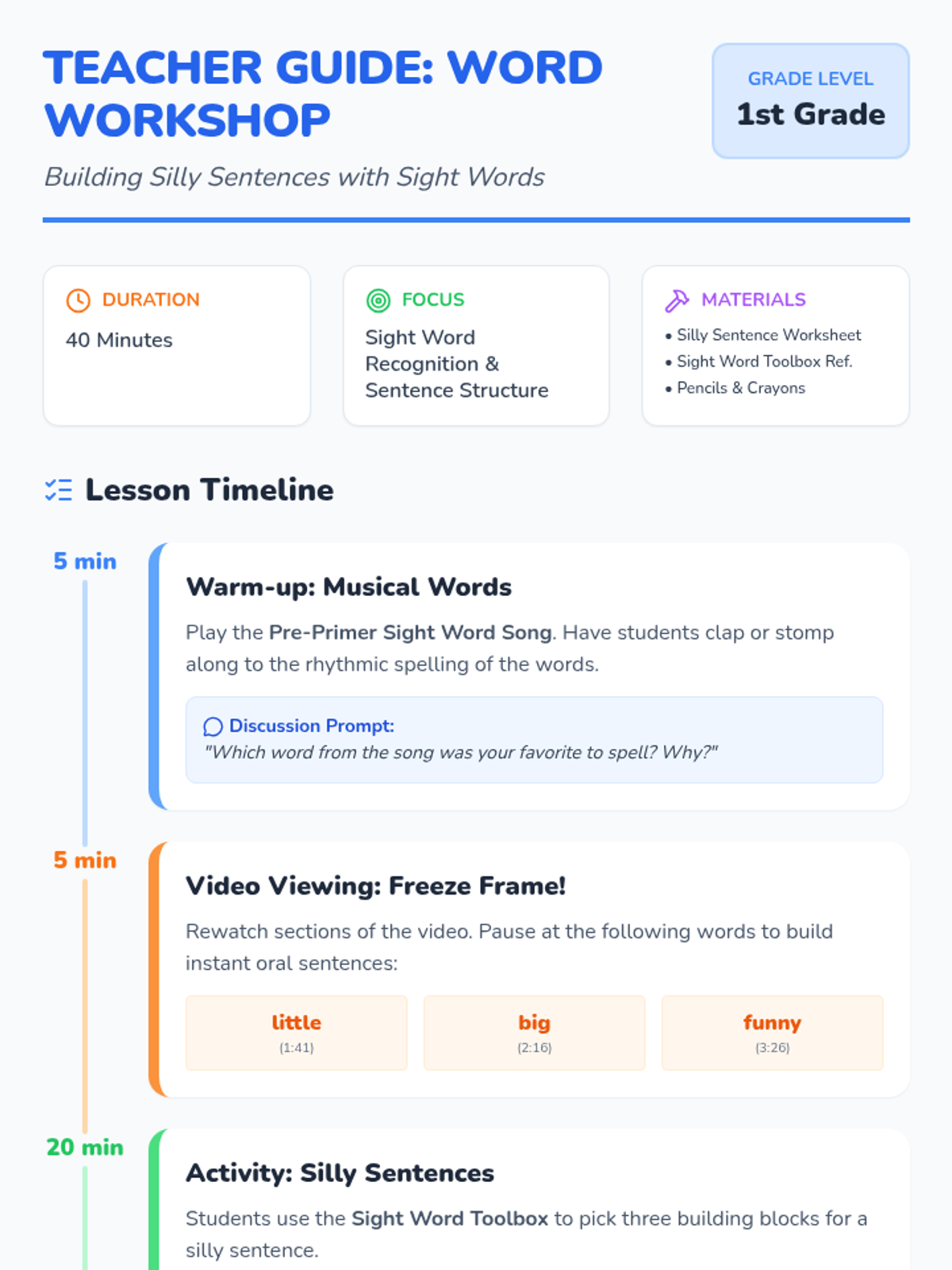
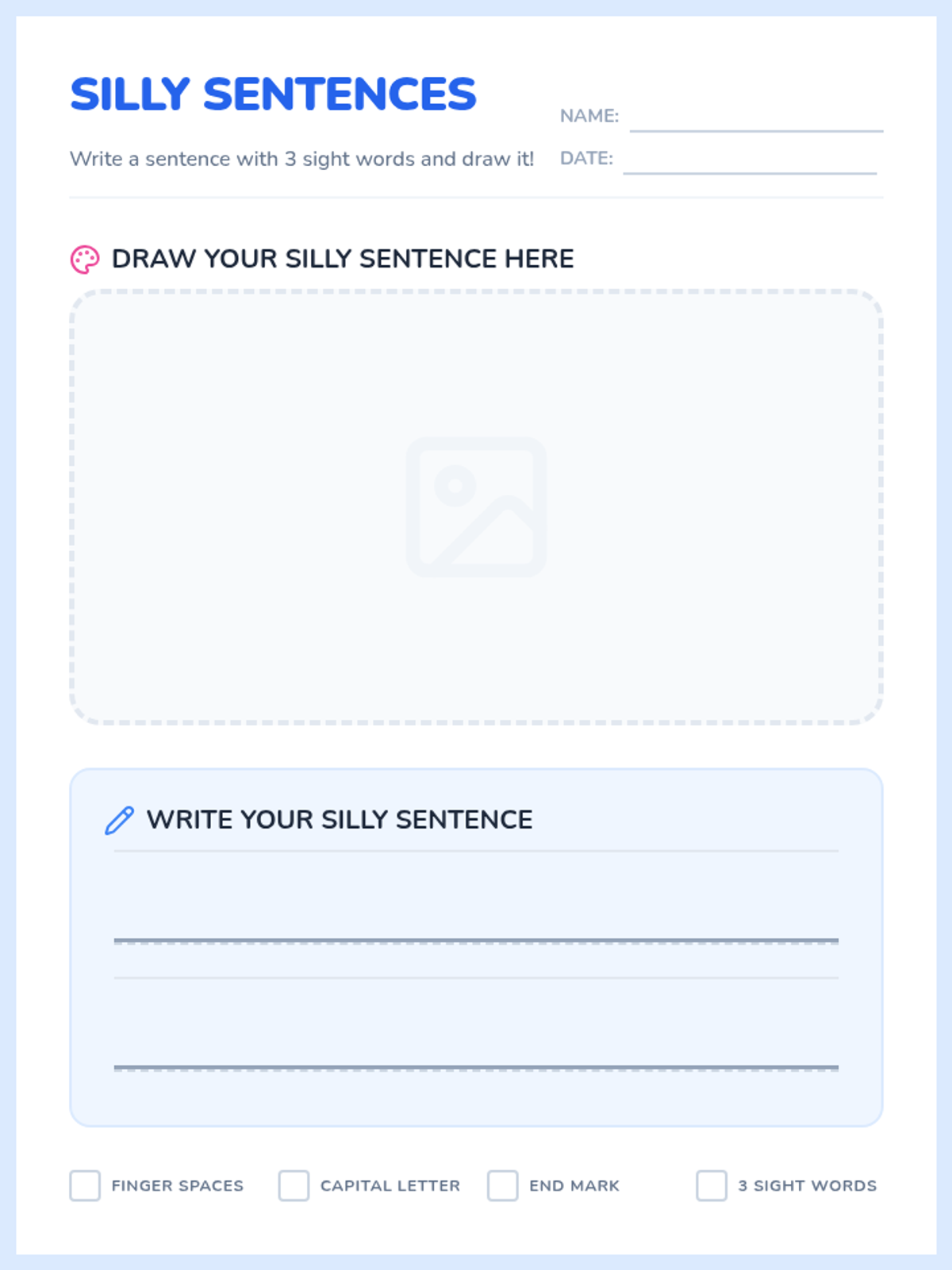
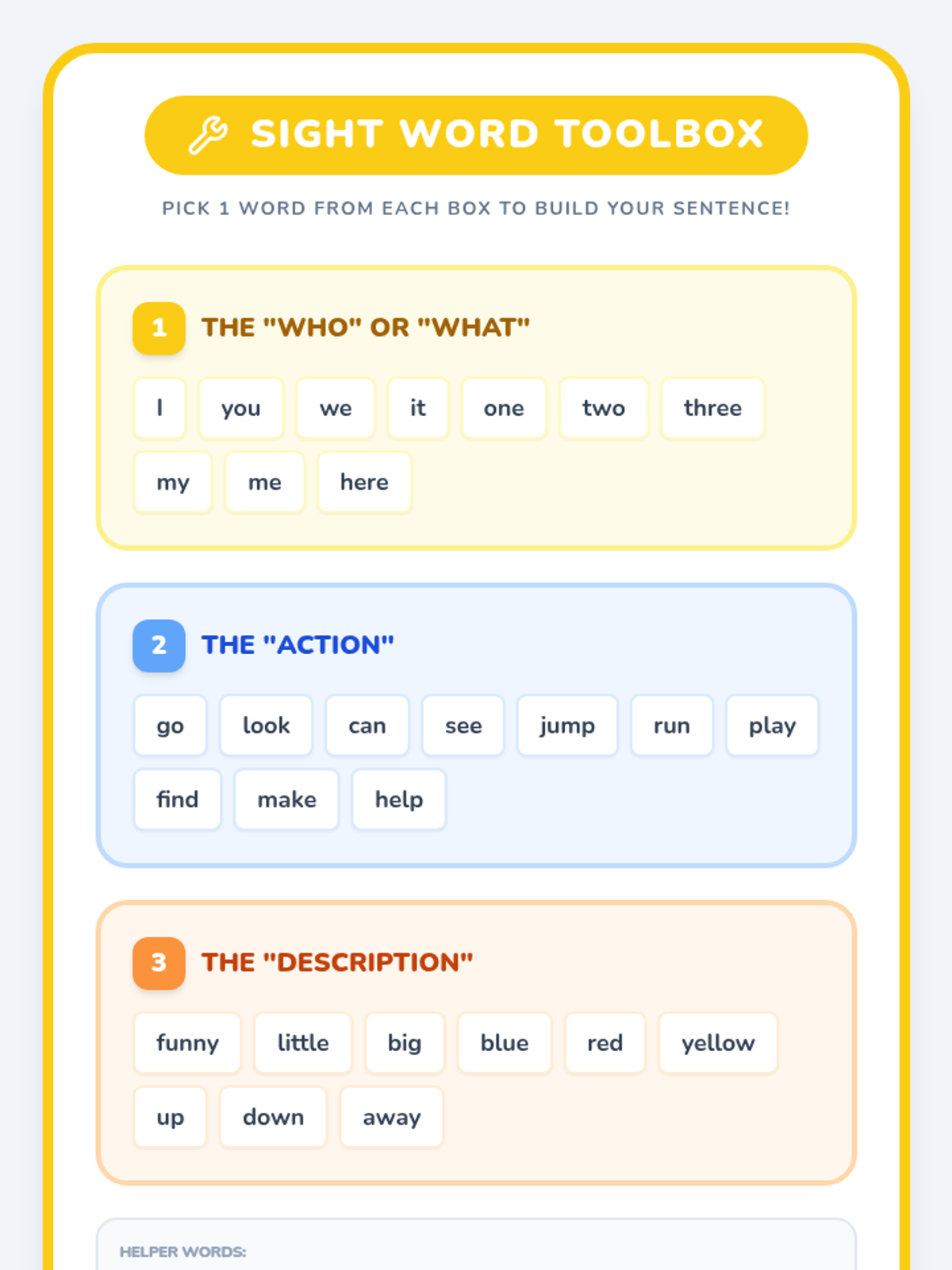
A 1st Grade creative writing lesson where students use pre-primer sight words as building blocks to create and illustrate "Silly Sentences." Students watch a rhythmic spelling video and learn to categorize words to form basic sentence structures.
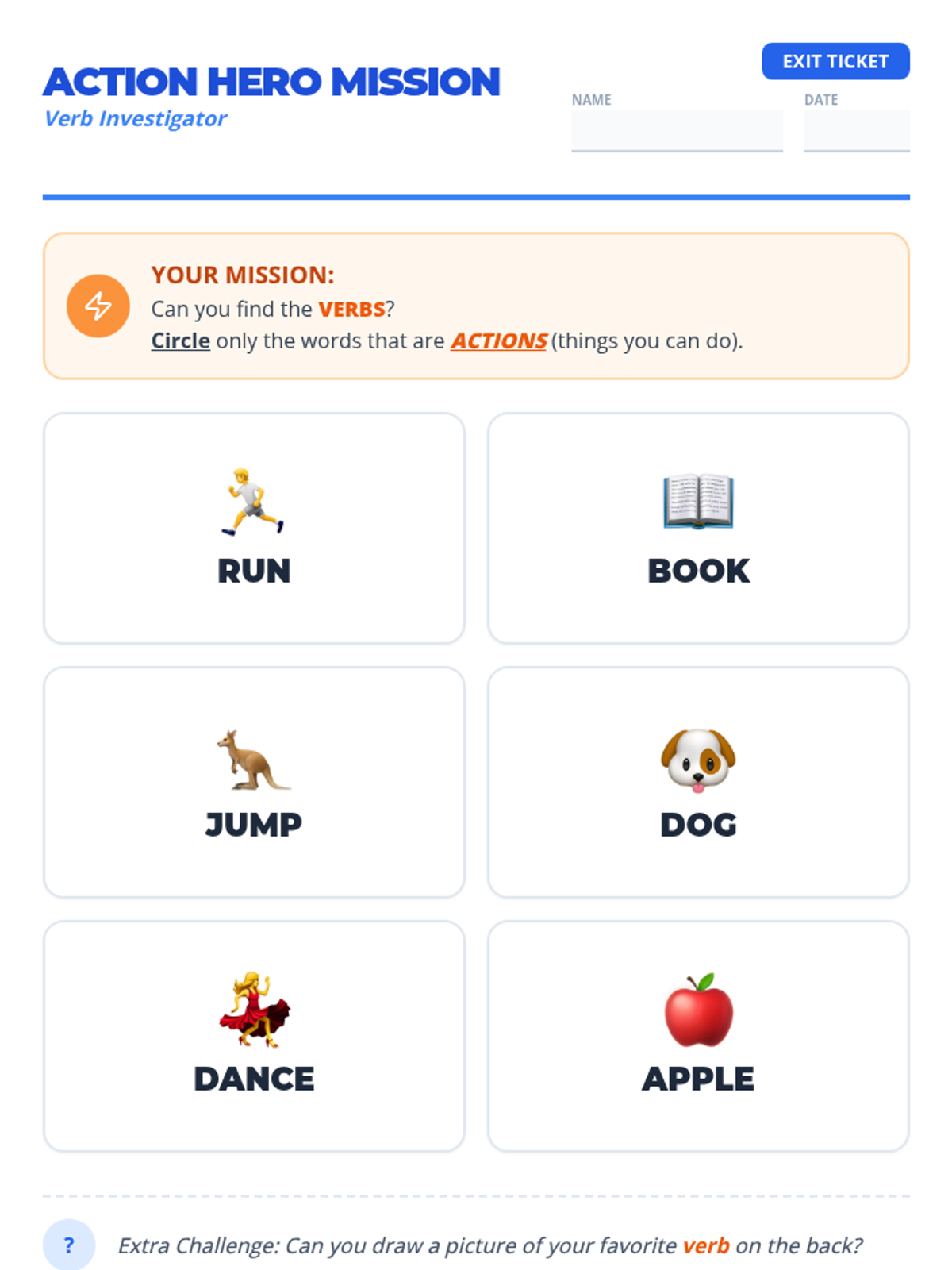
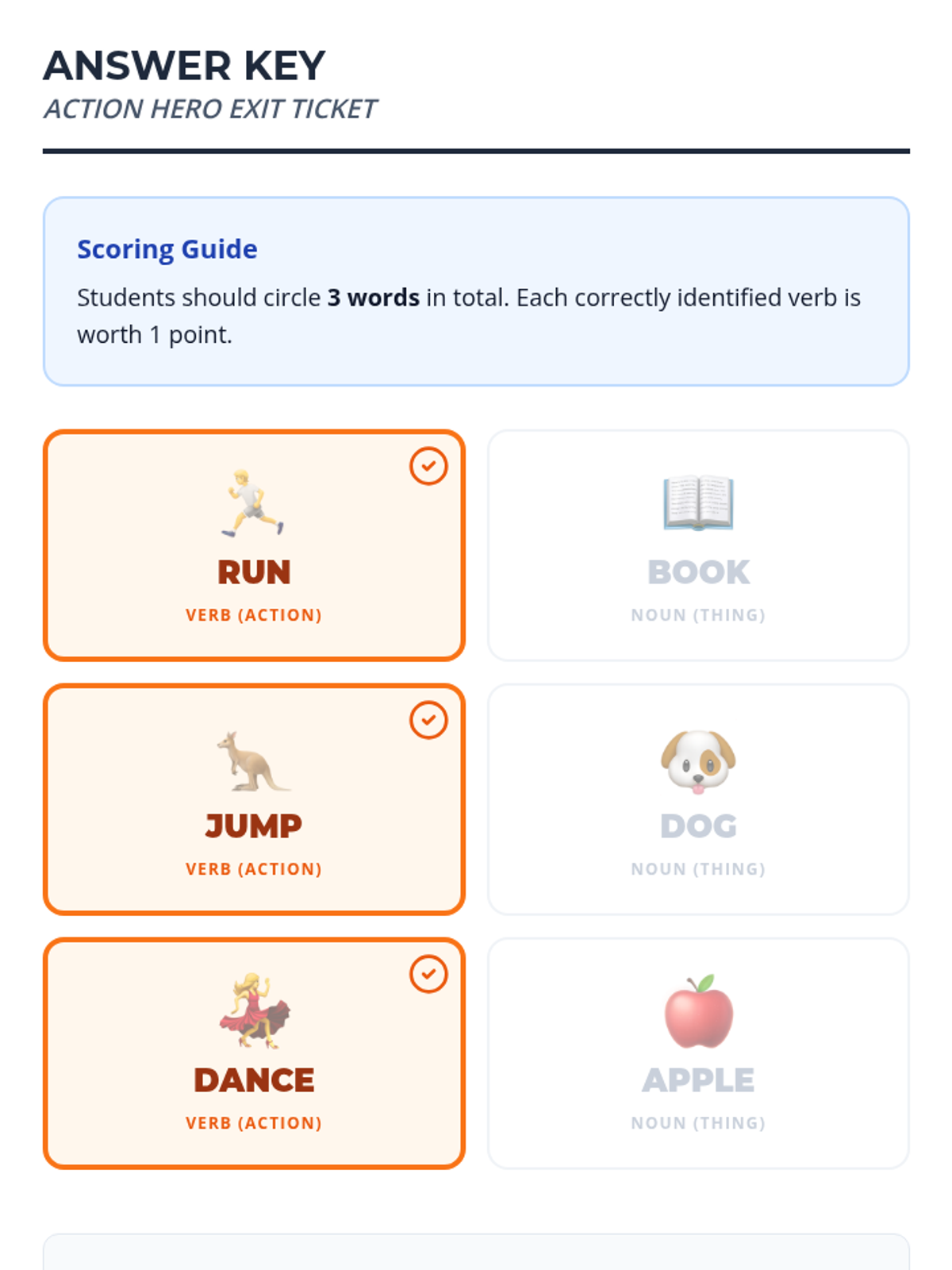
A high-energy 1st grade lesson that uses music and movement to help students distinguish between action verbs and naming nouns.
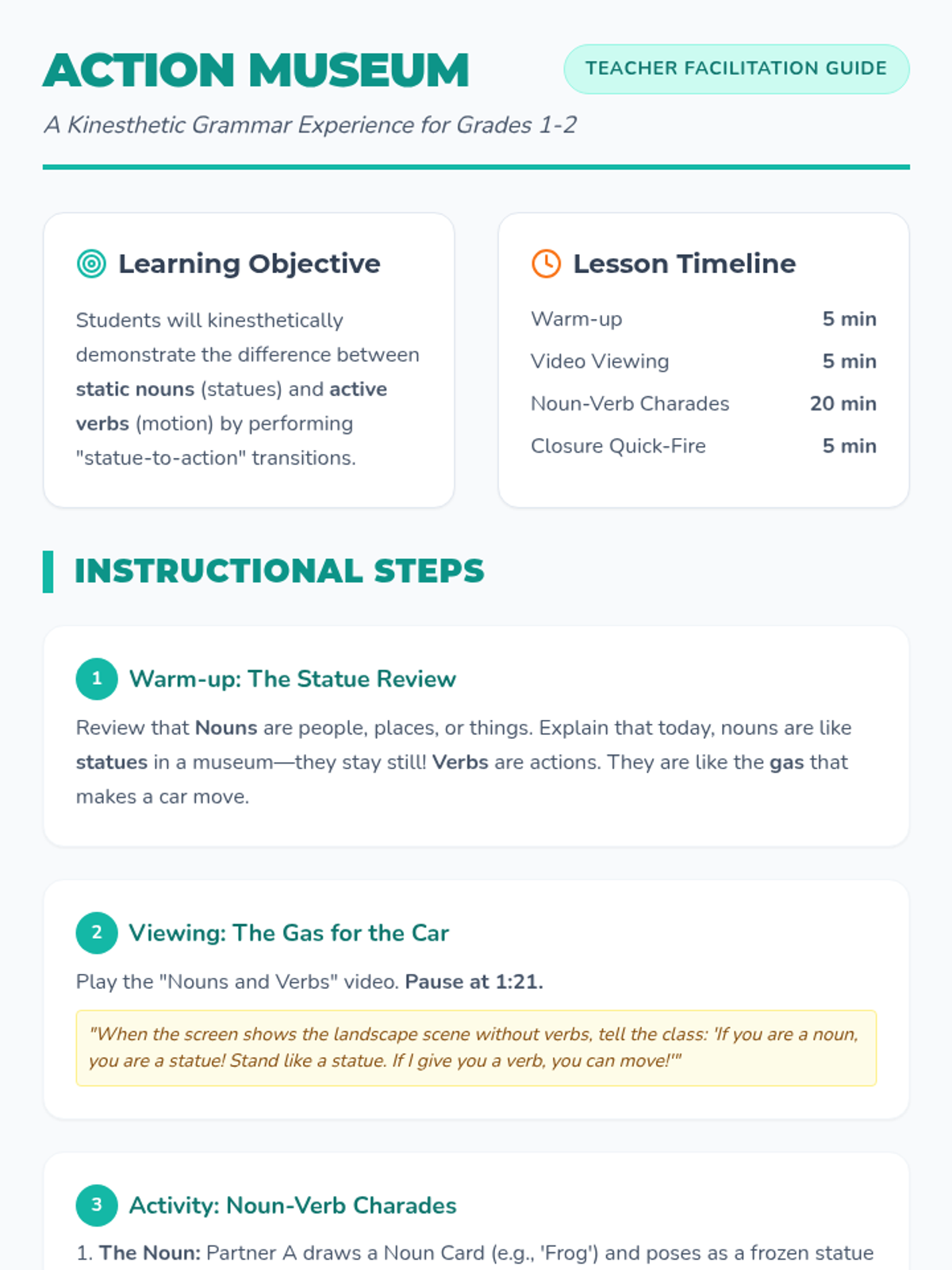
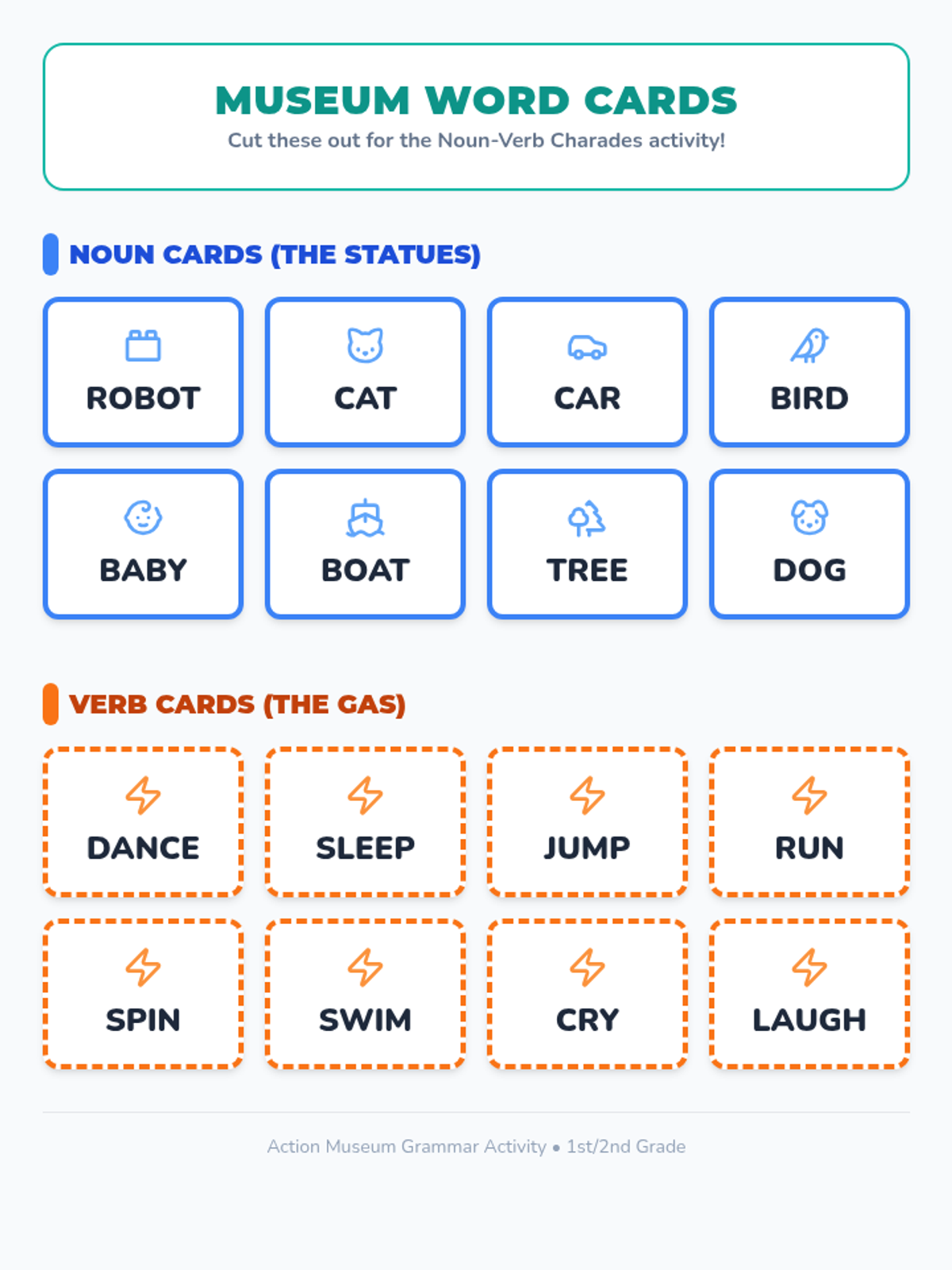
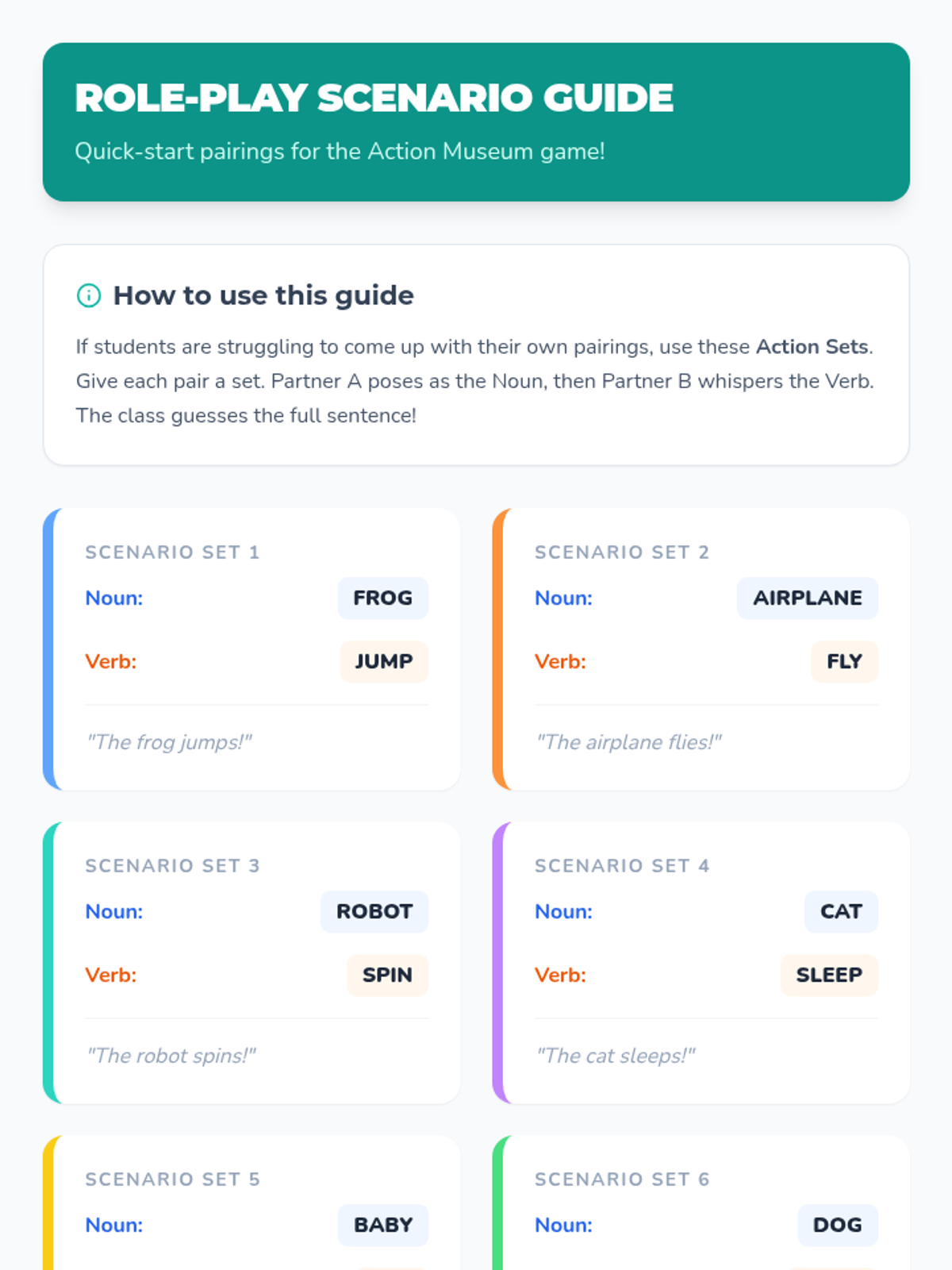
A kinesthetic grammar lesson where 1st and 2nd graders learn the relationship between nouns and verbs through movement, videos, and a 'statue' charades game.
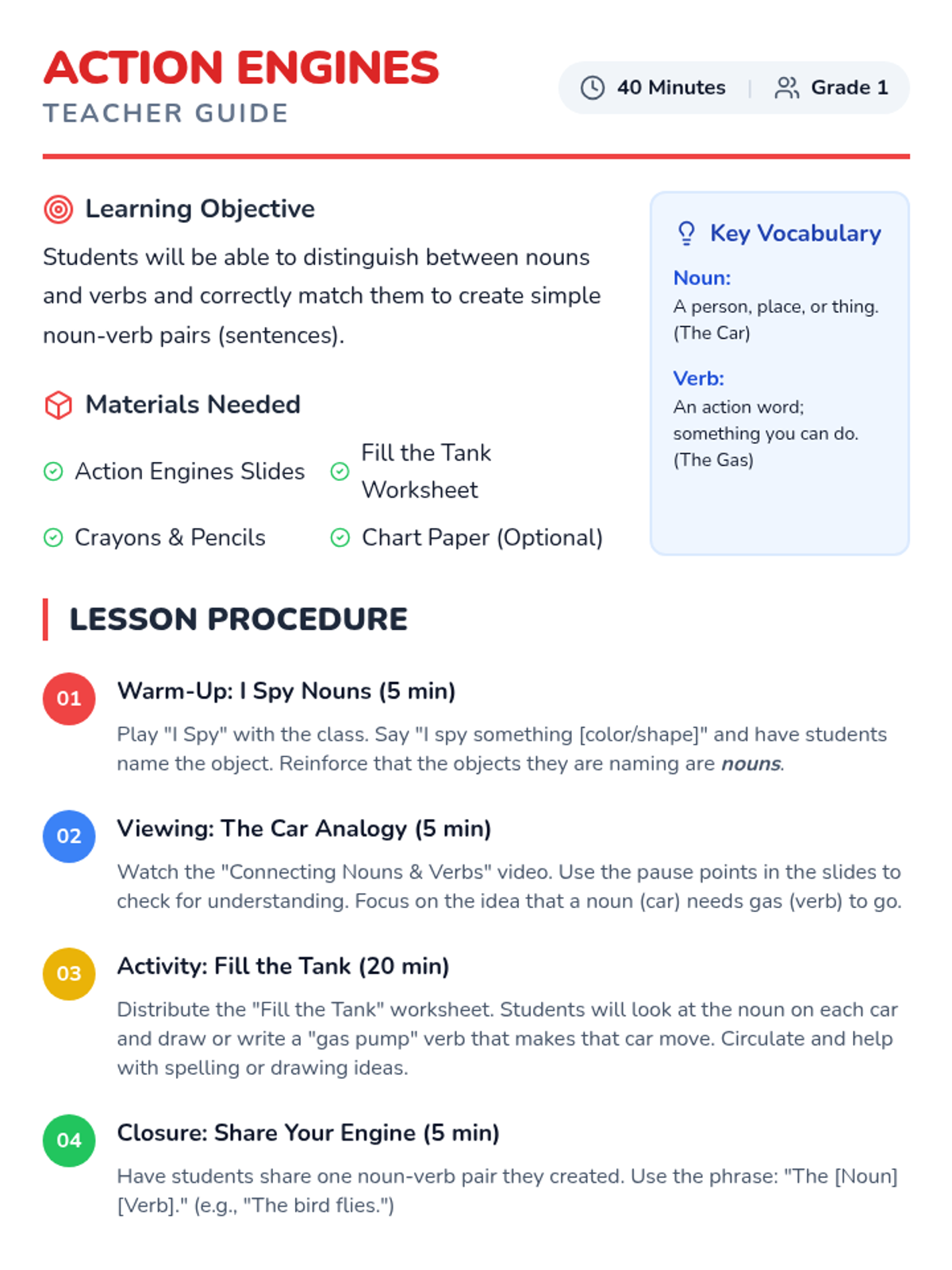
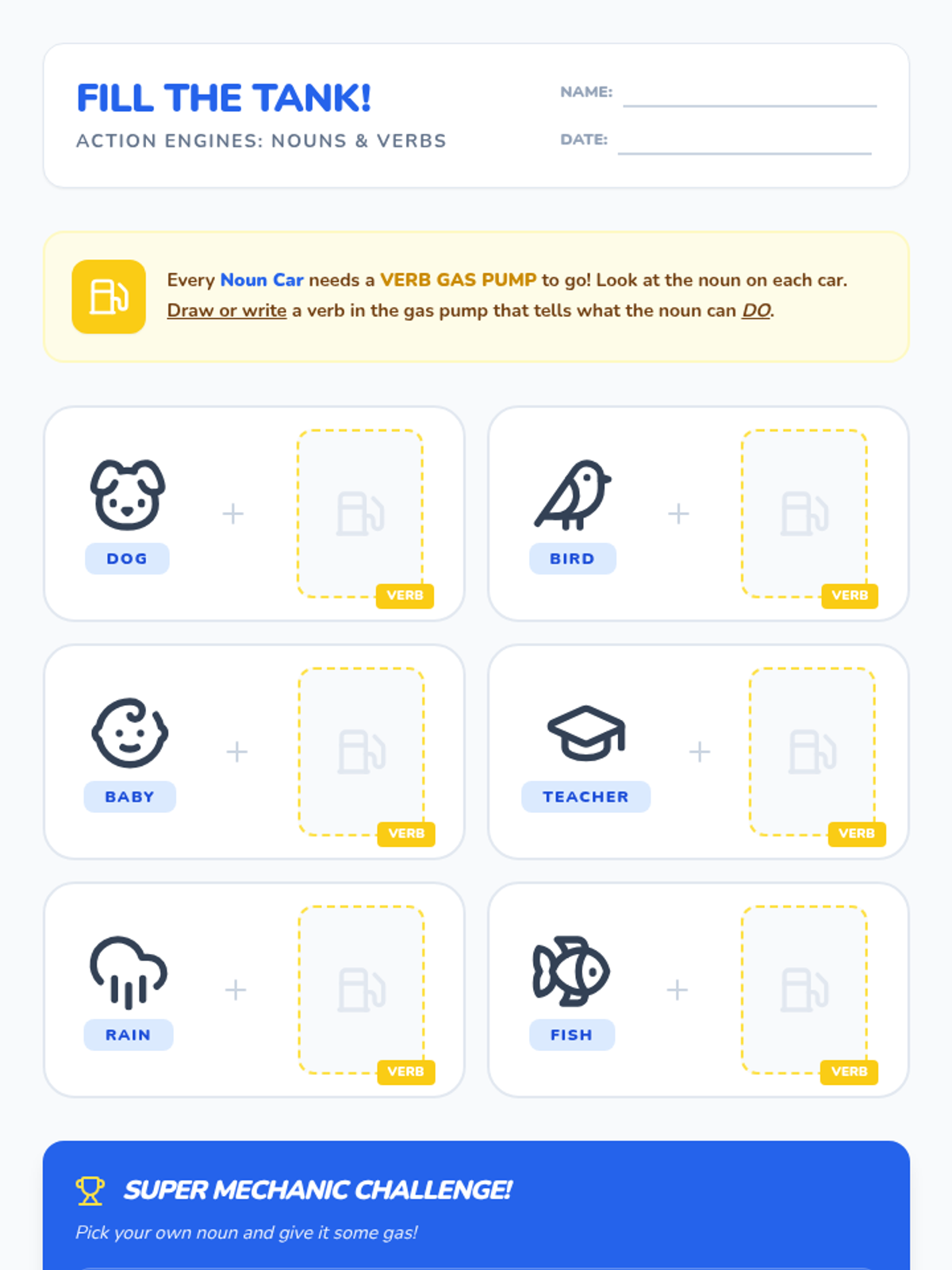
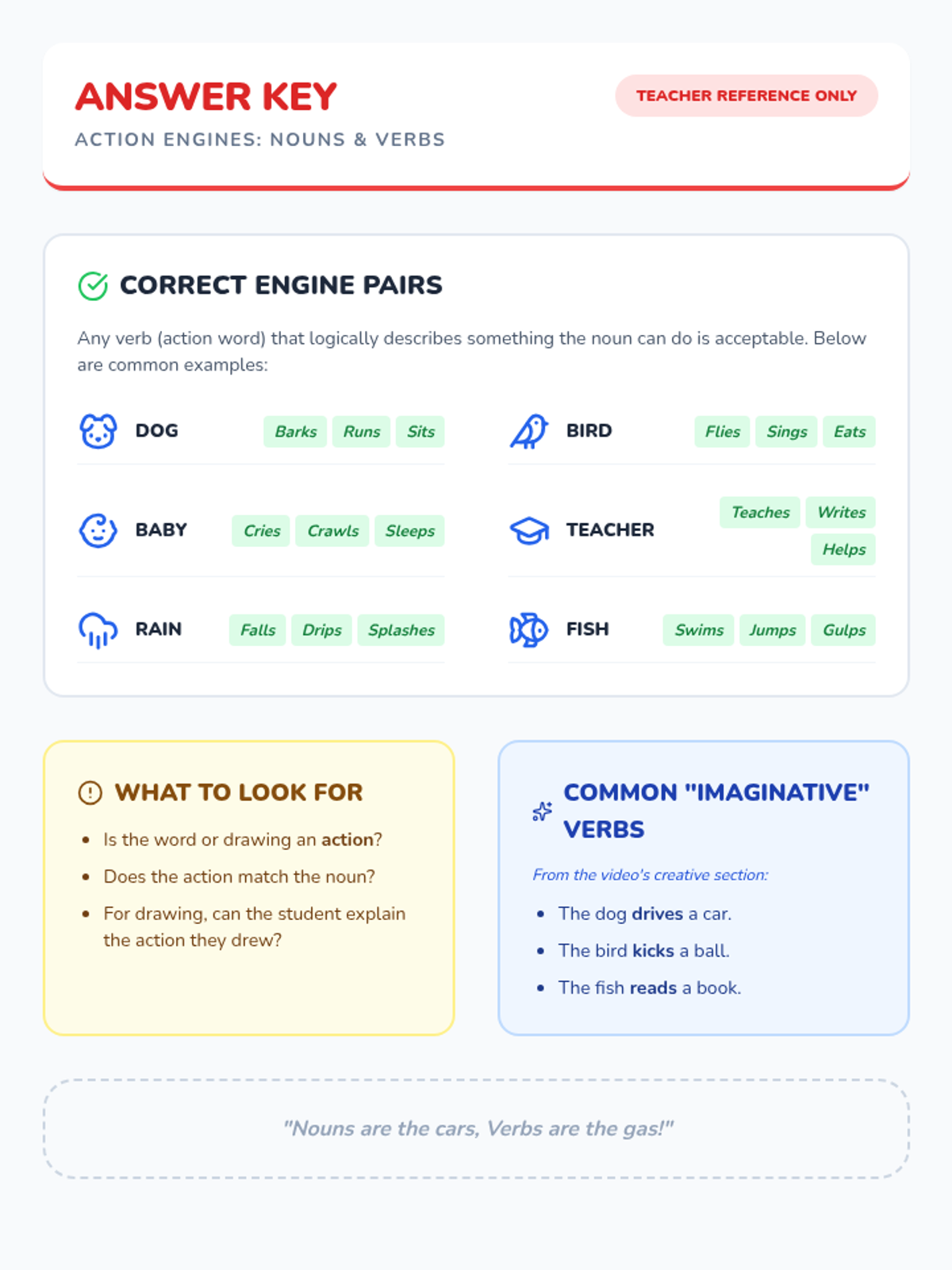
Students will explore the relationship between nouns (people, places, things) and verbs (actions) using the analogy of a car needing gas to move. Through a video, discussion, and a creative drawing activity, they will learn to pair nouns with appropriate action words.
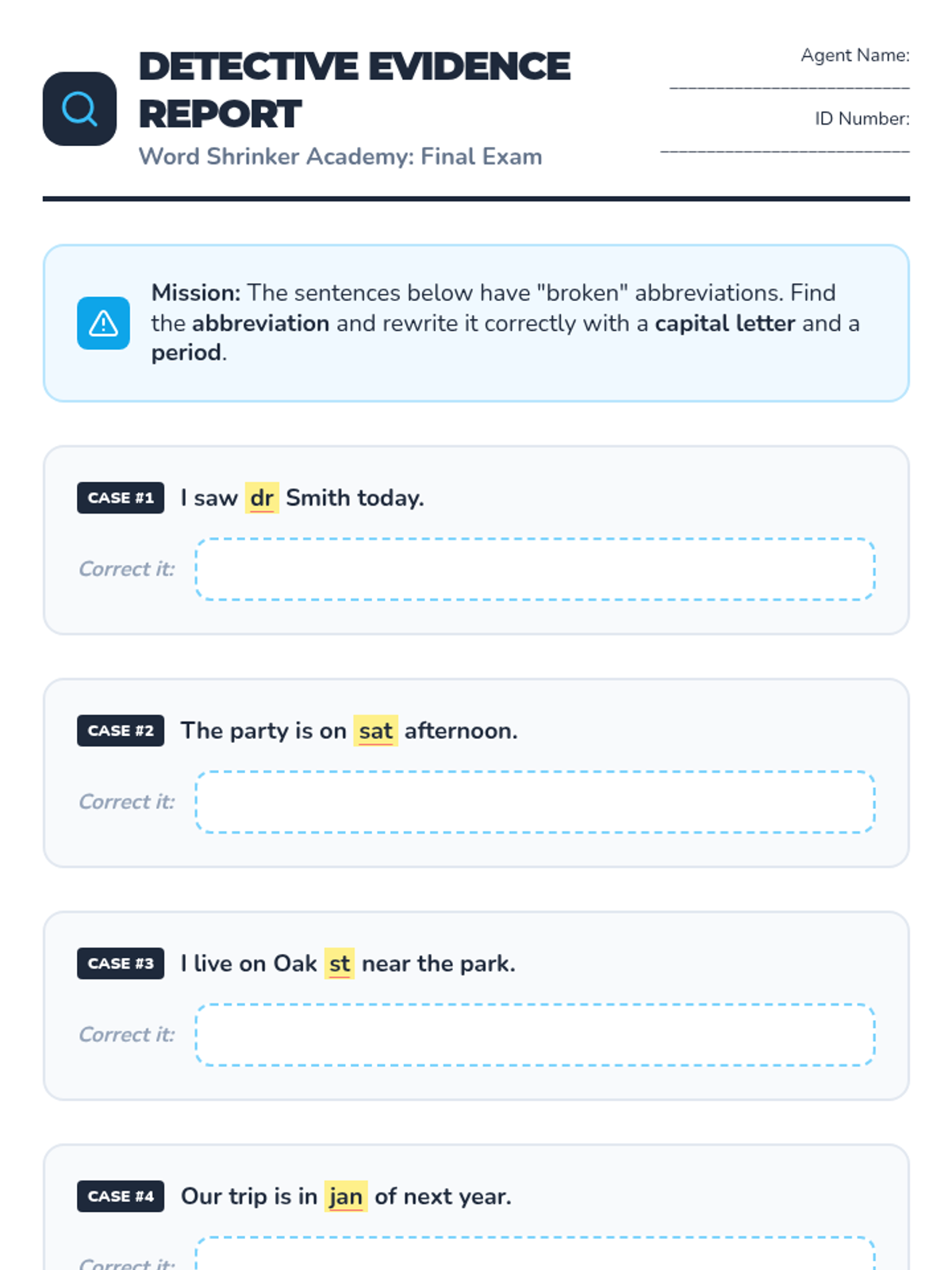
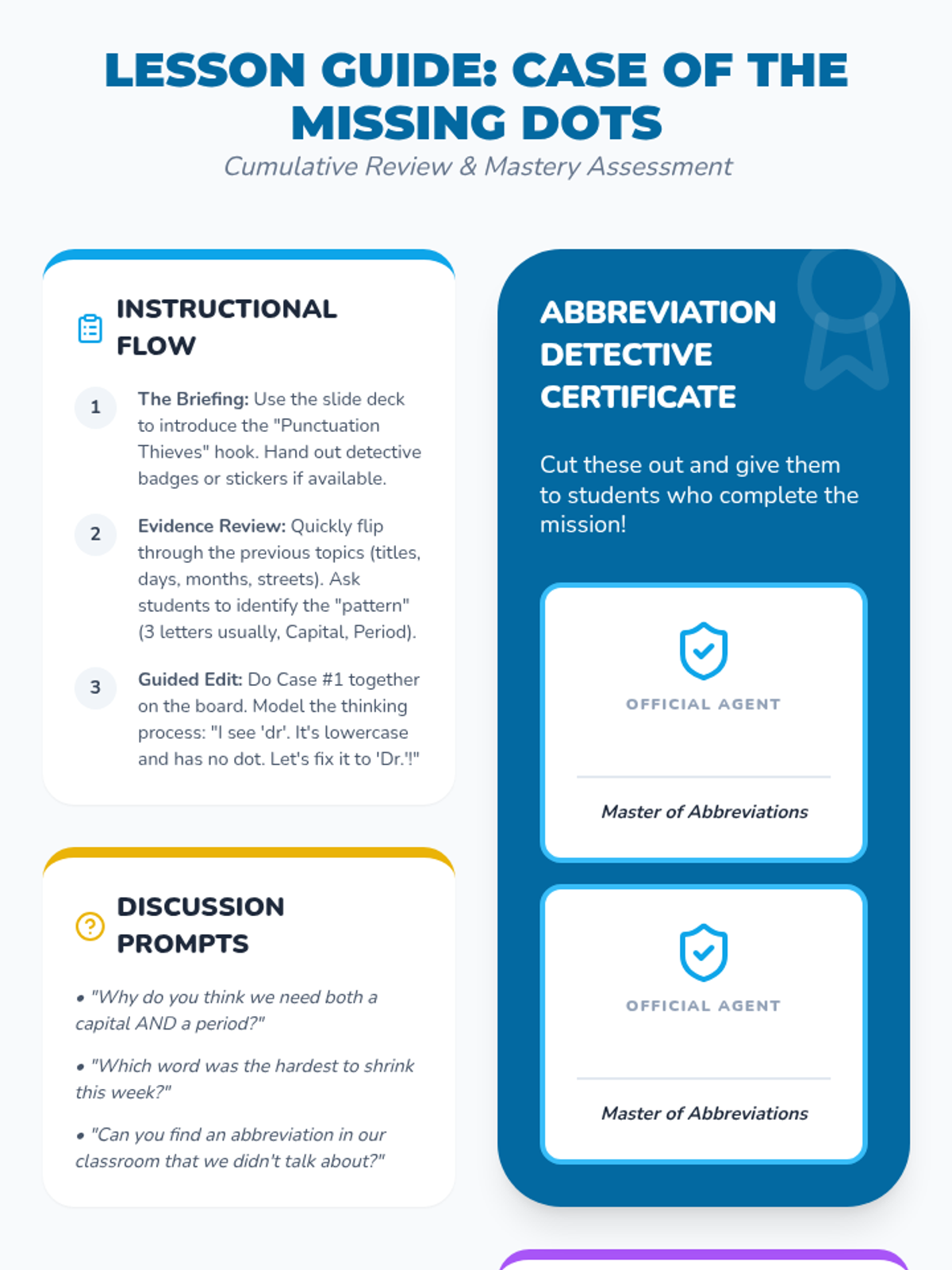
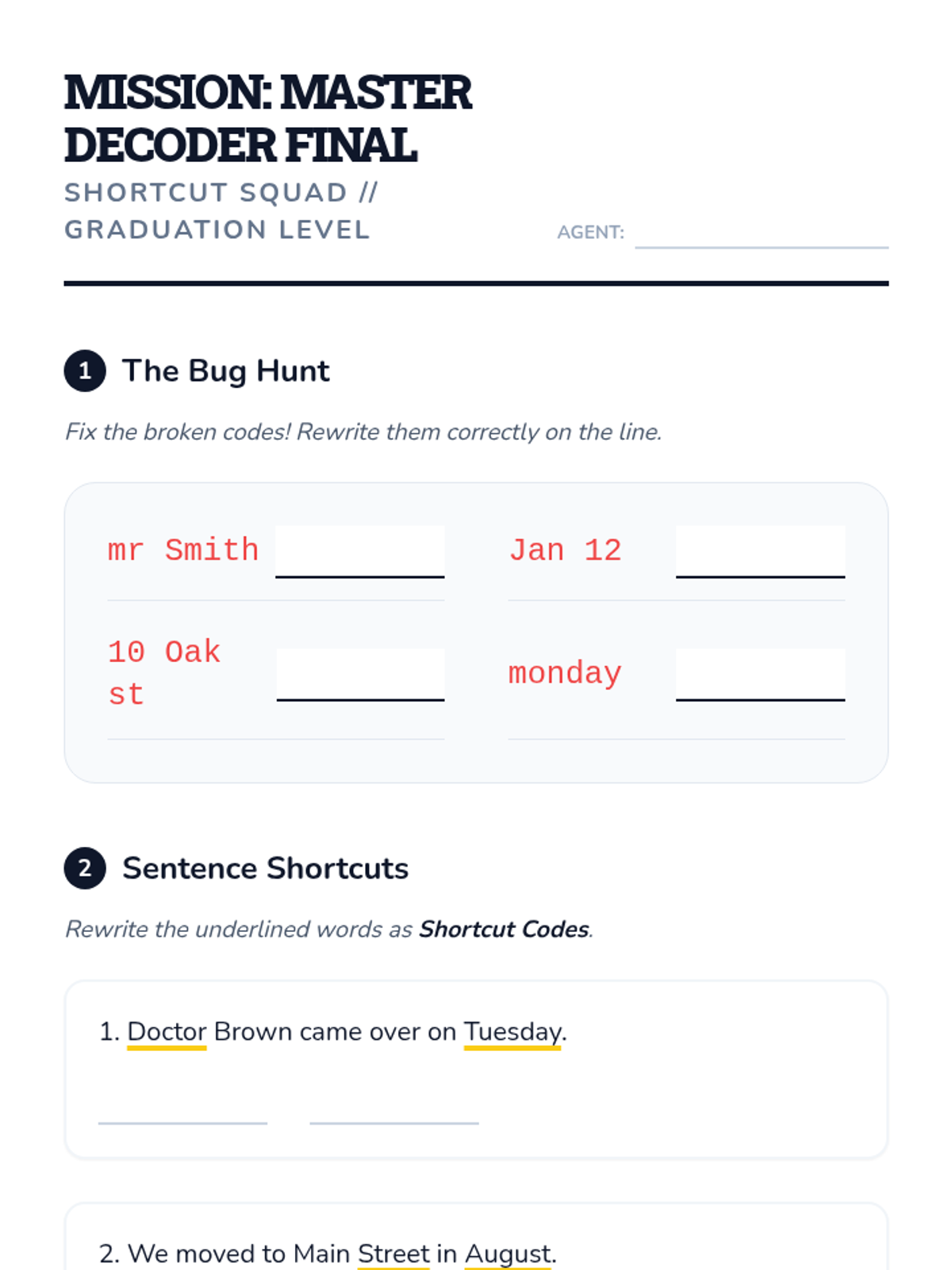
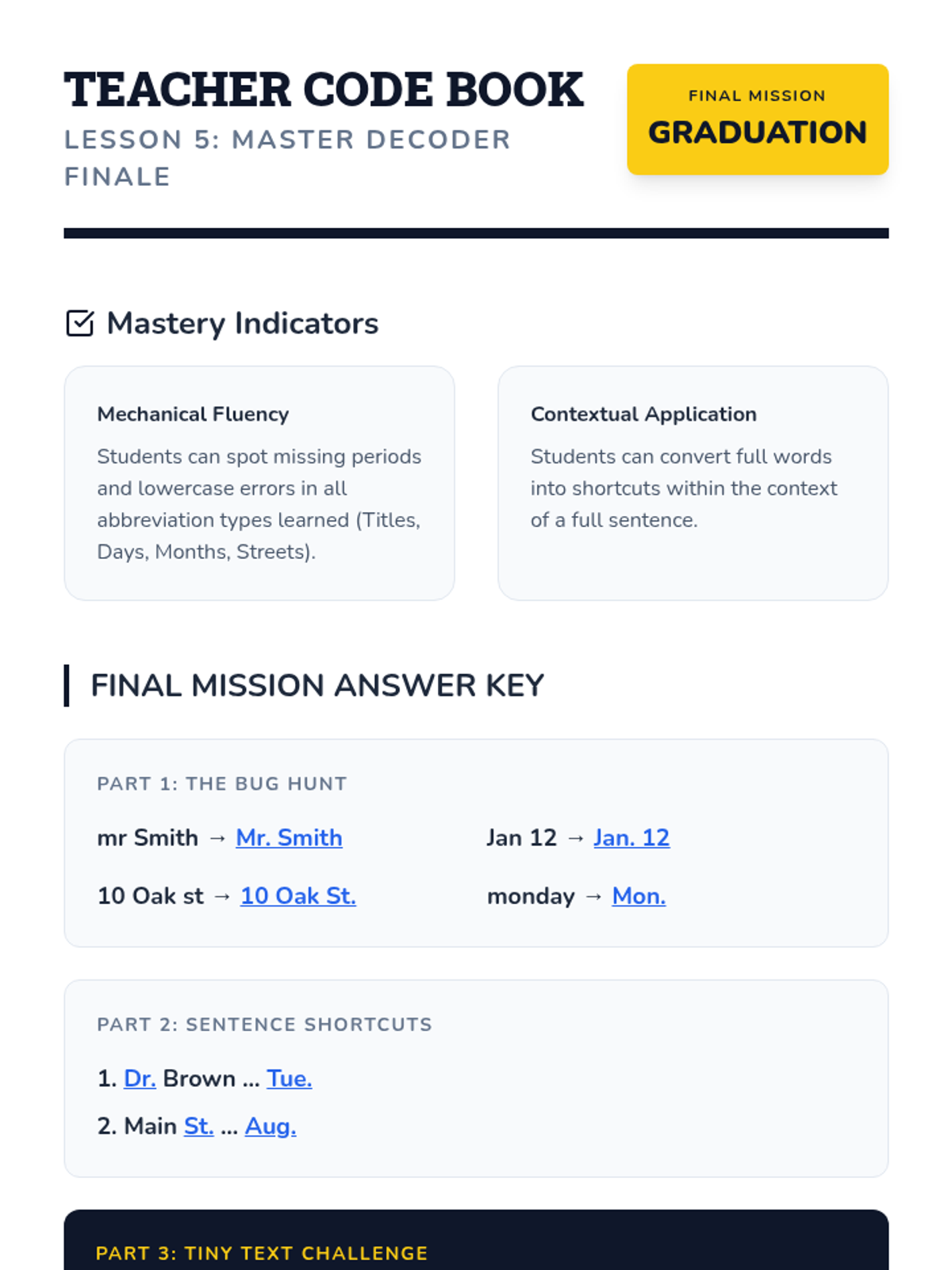
A cumulative review where students act as 'Abbreviation Detectives' to edit sentences and fix missing periods.
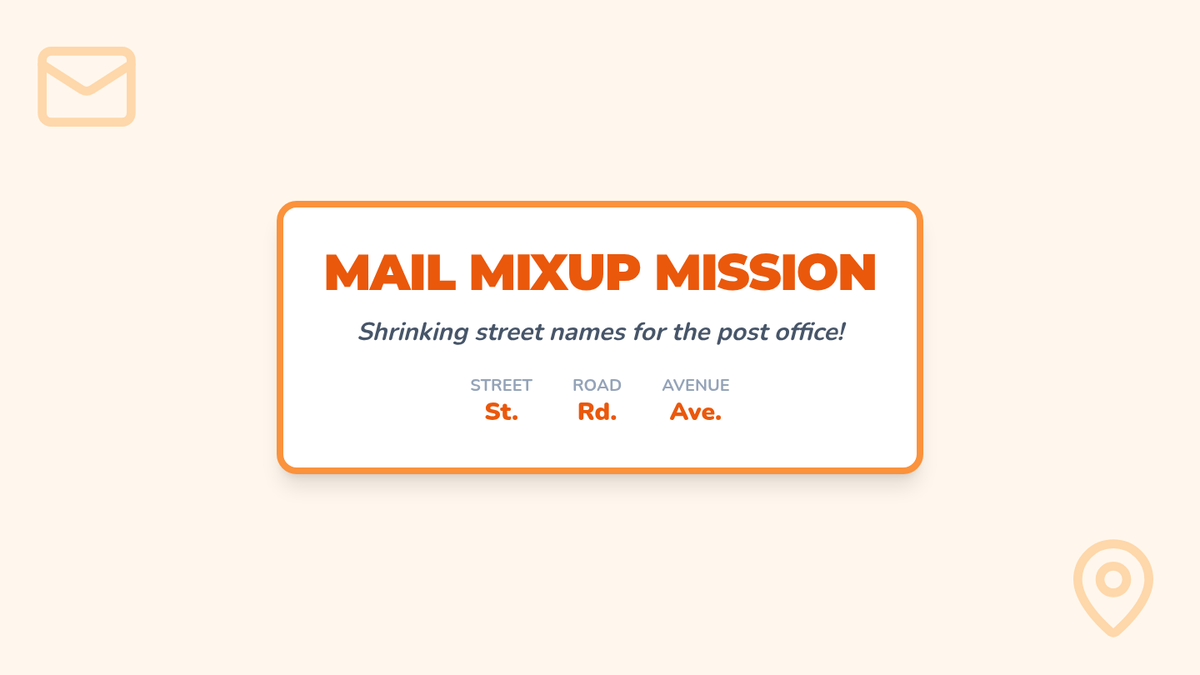
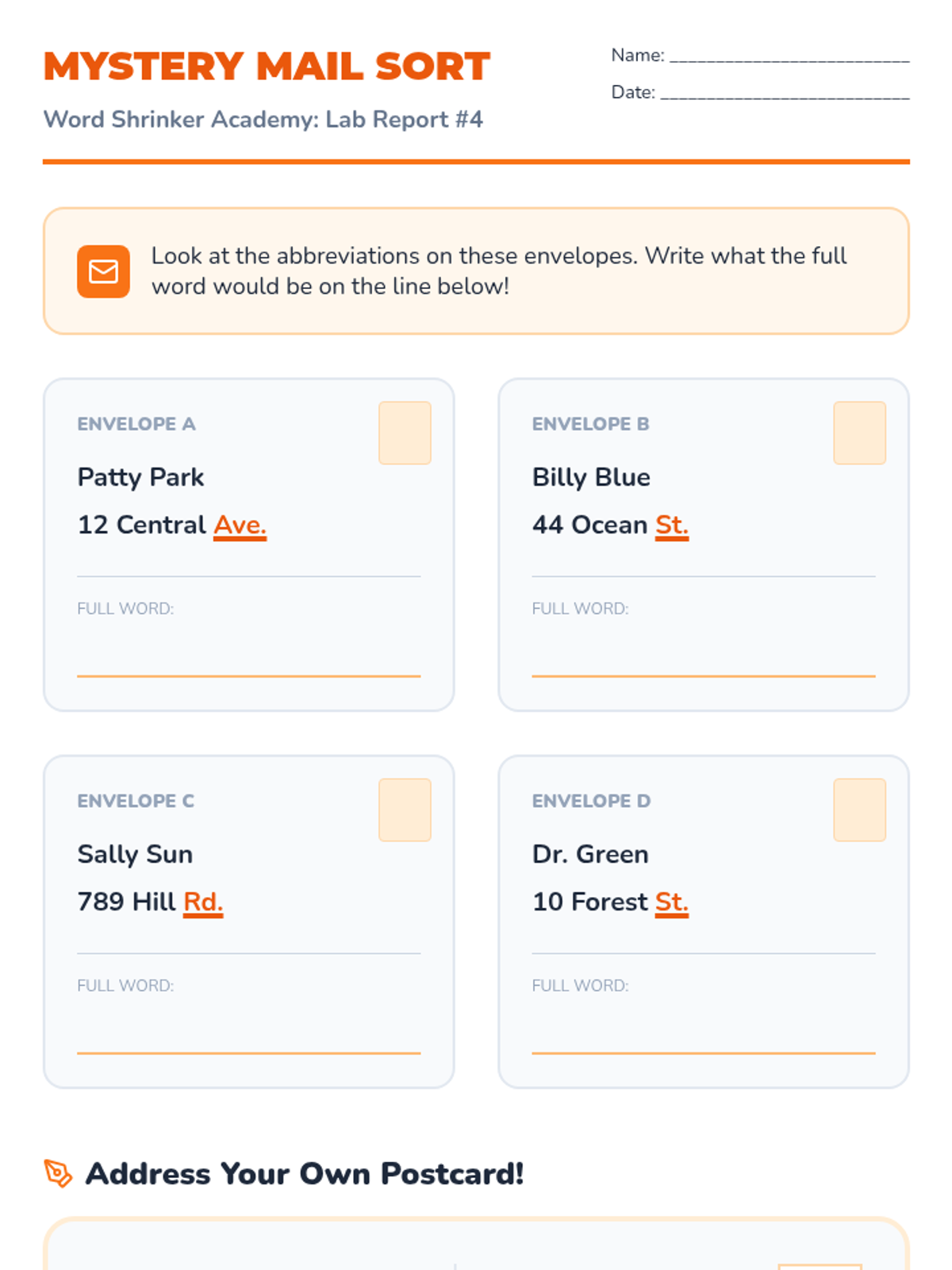
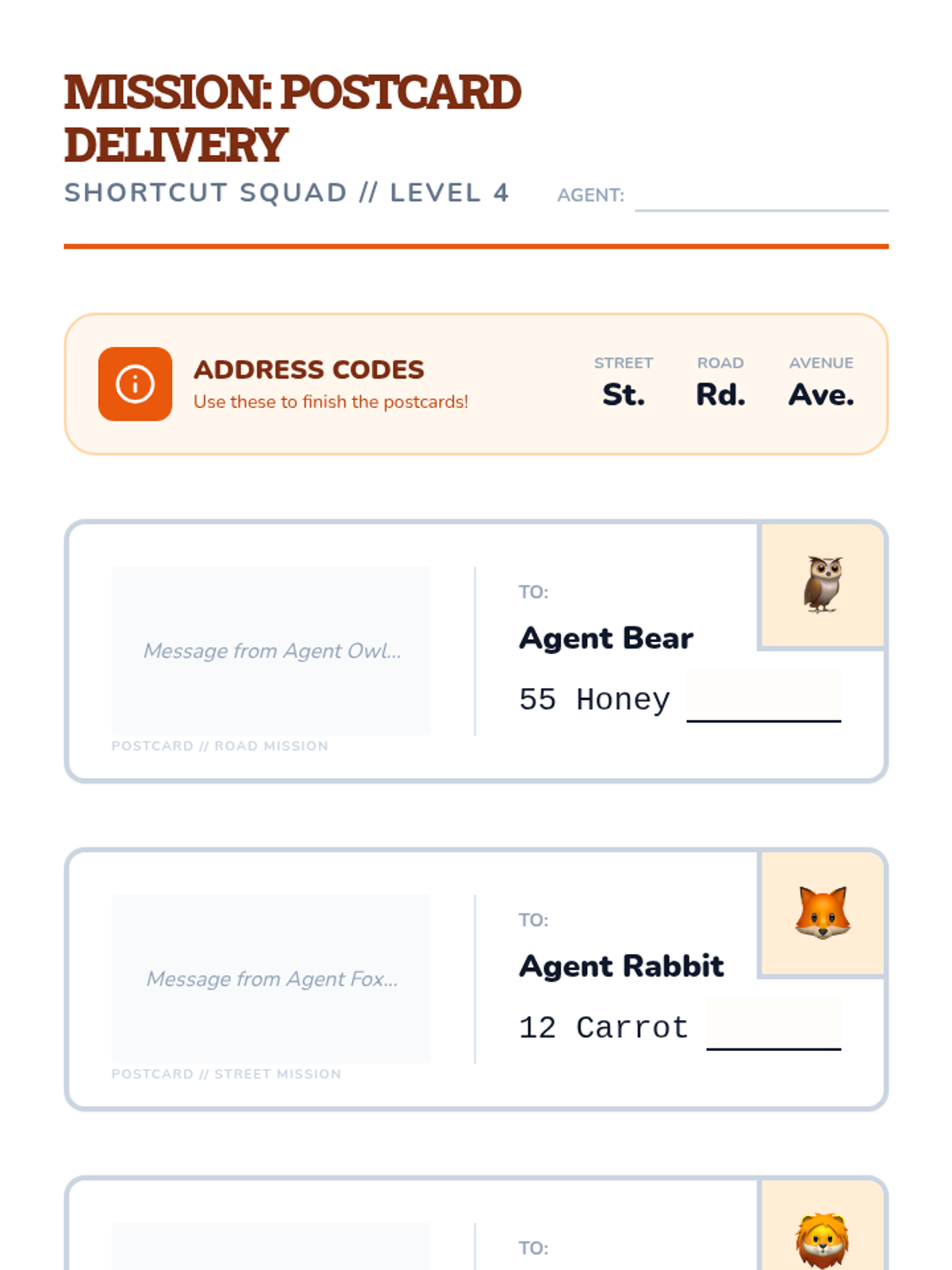
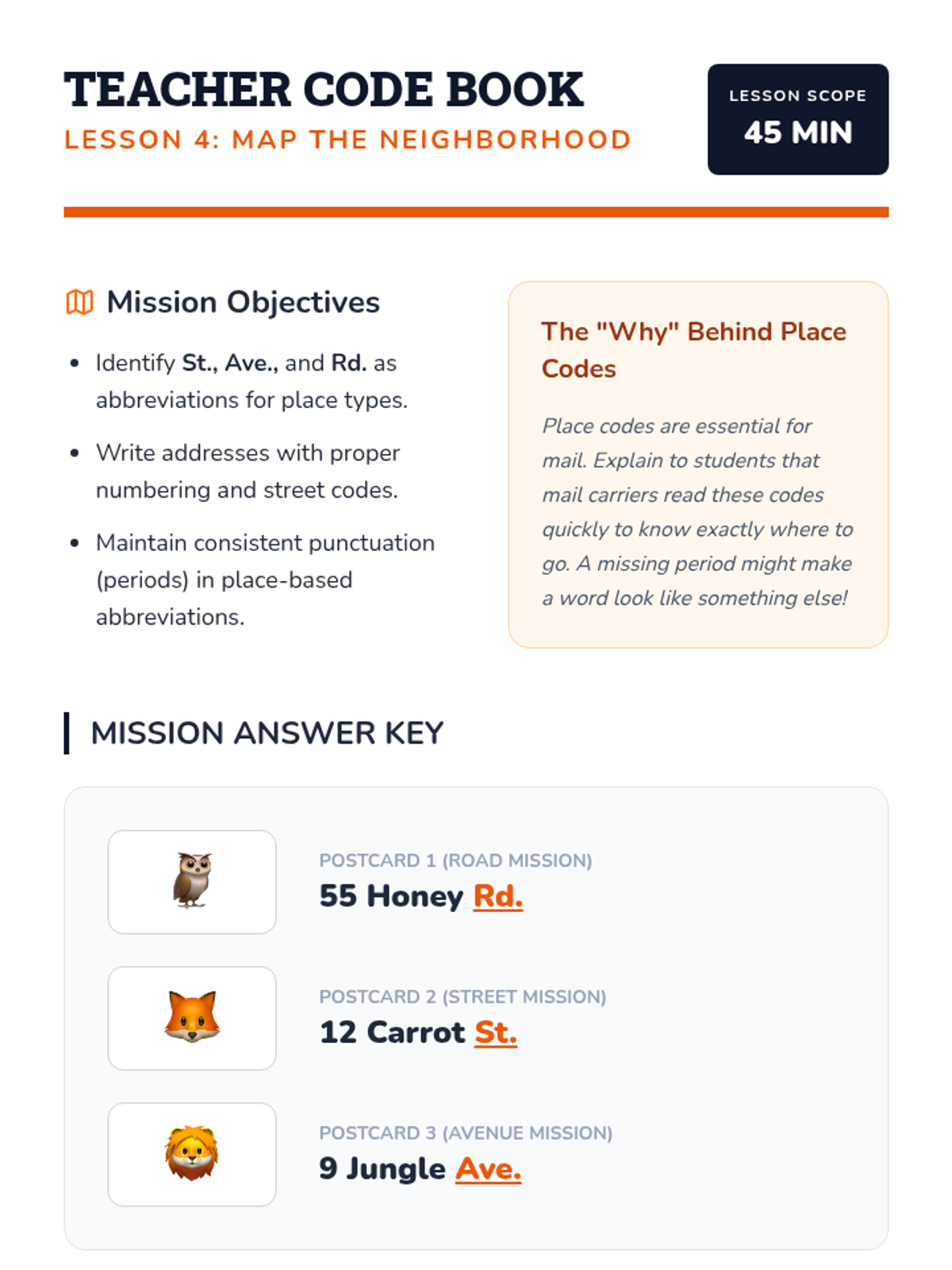
Applies abbreviation skills to real-world contexts like street names (St., Rd., Ave.) and addressing mail.
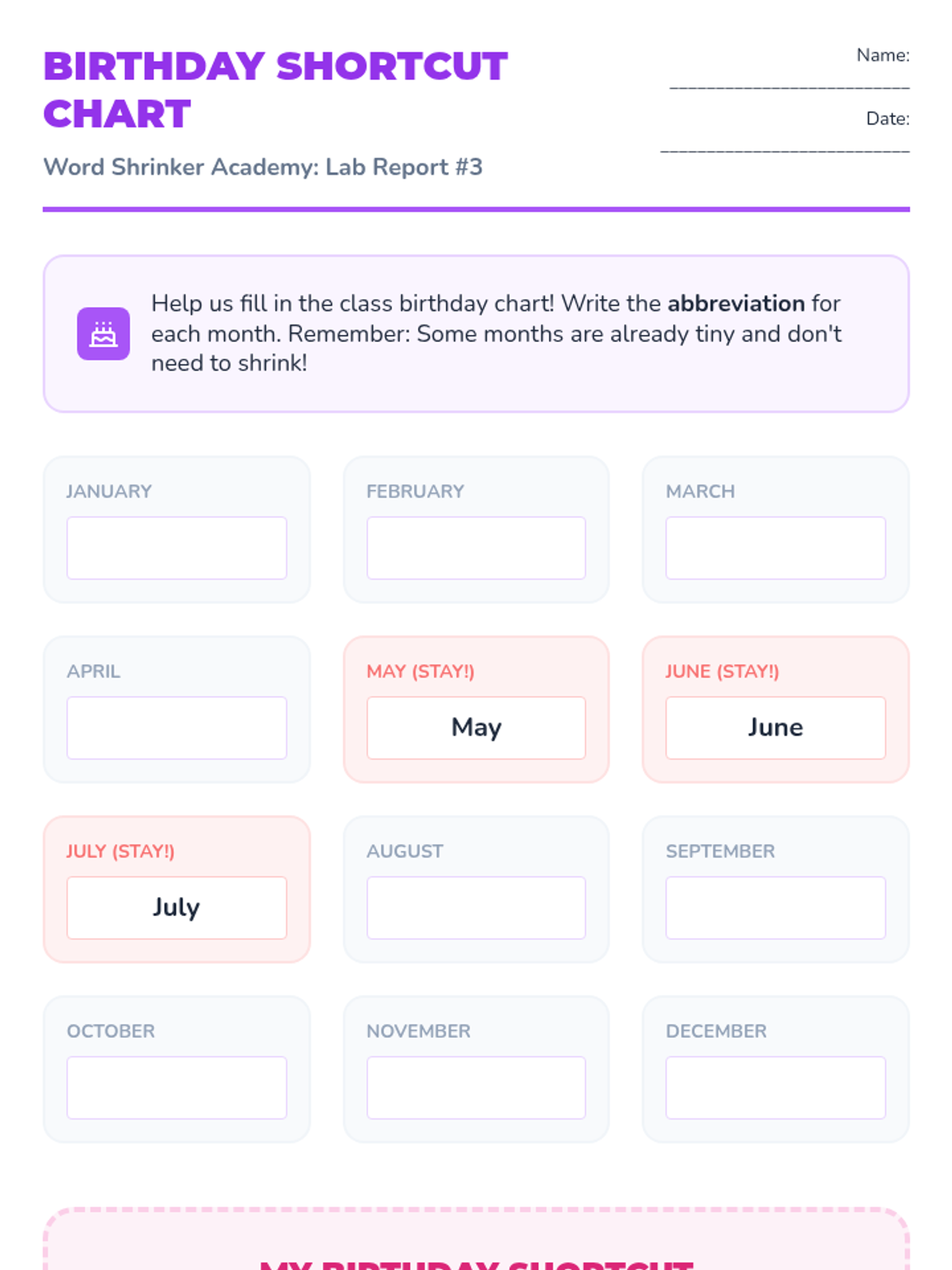
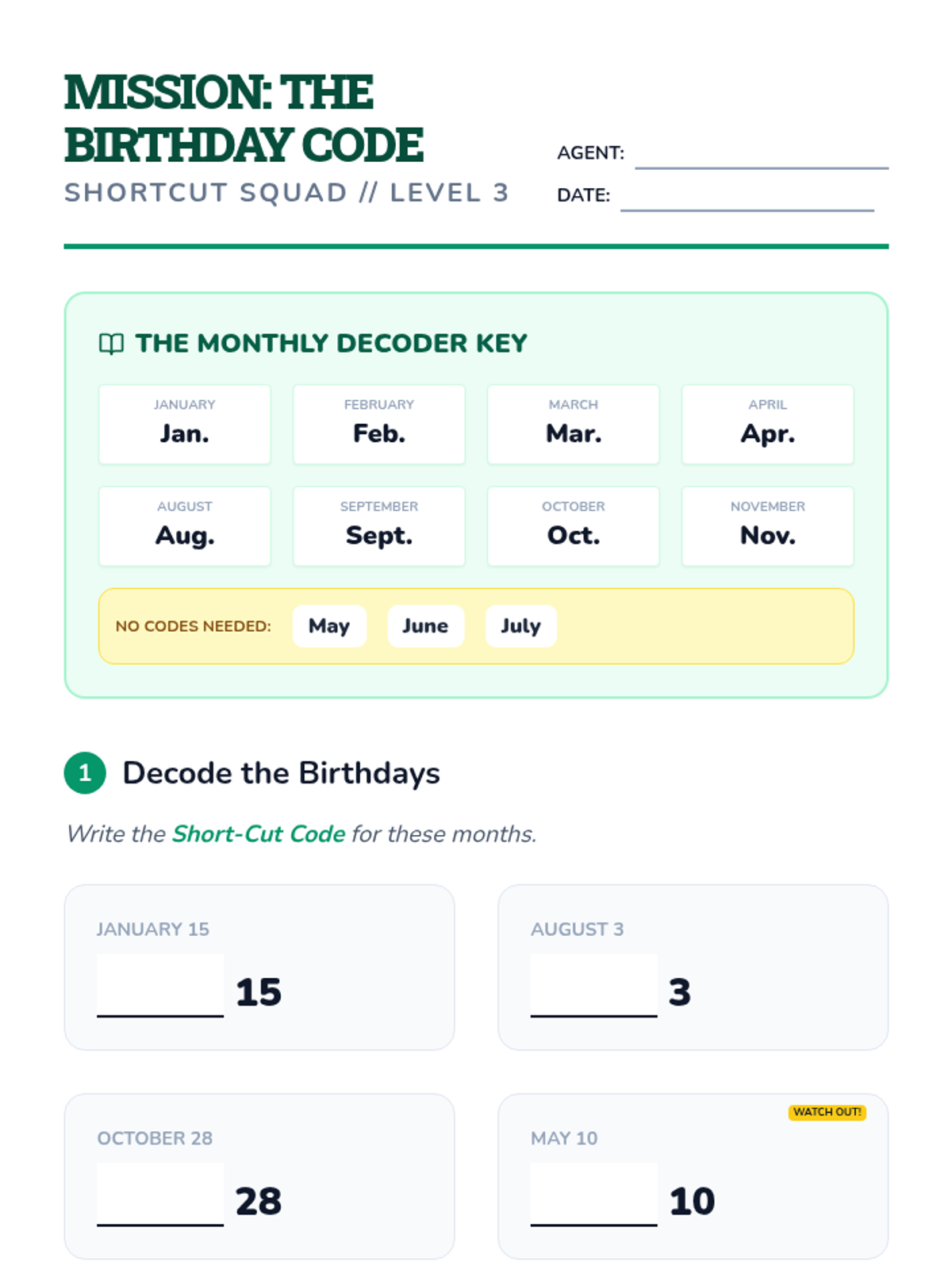
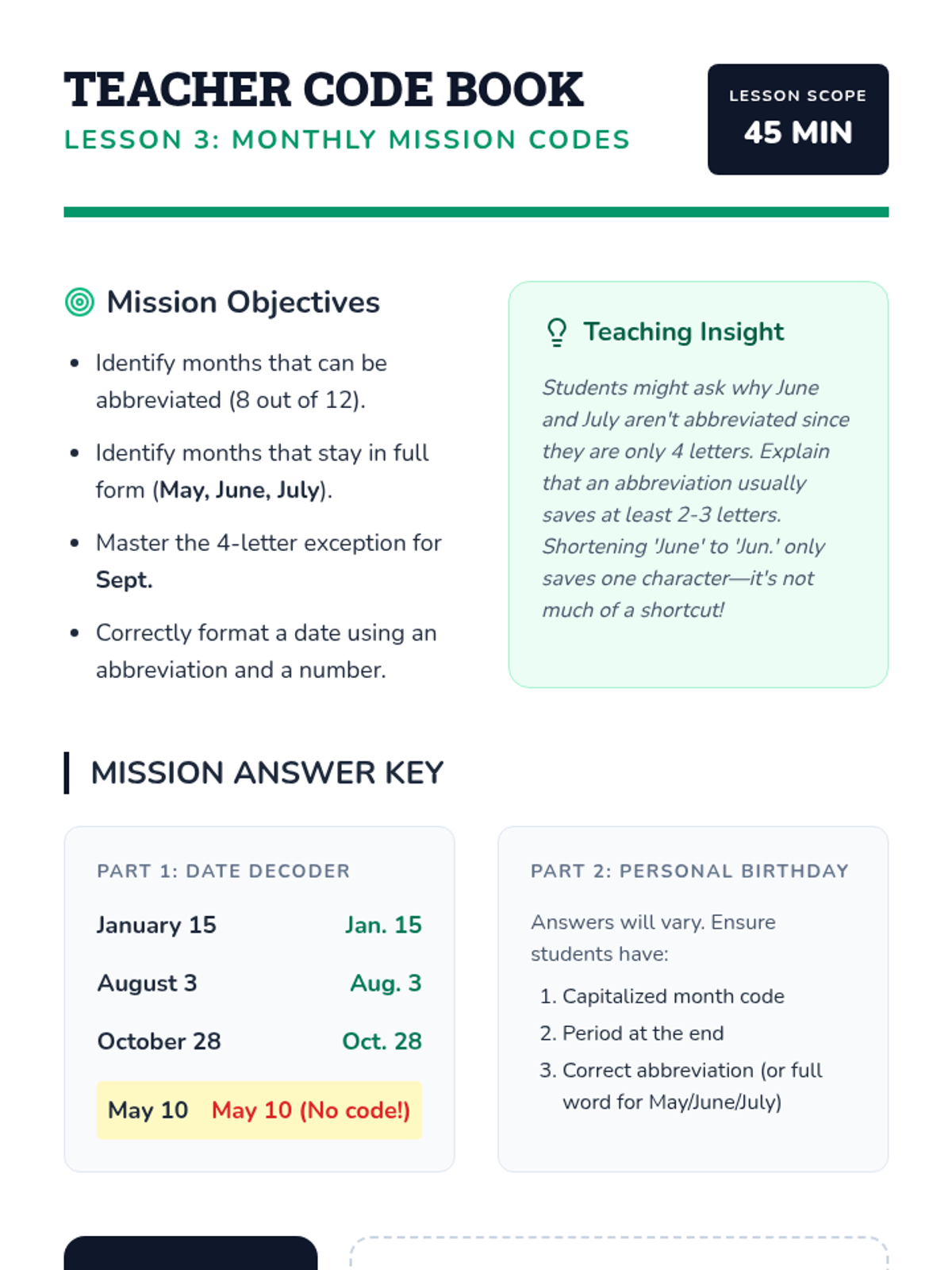
Explores which months of the year can be abbreviated and how to write them correctly on a birthday calendar.
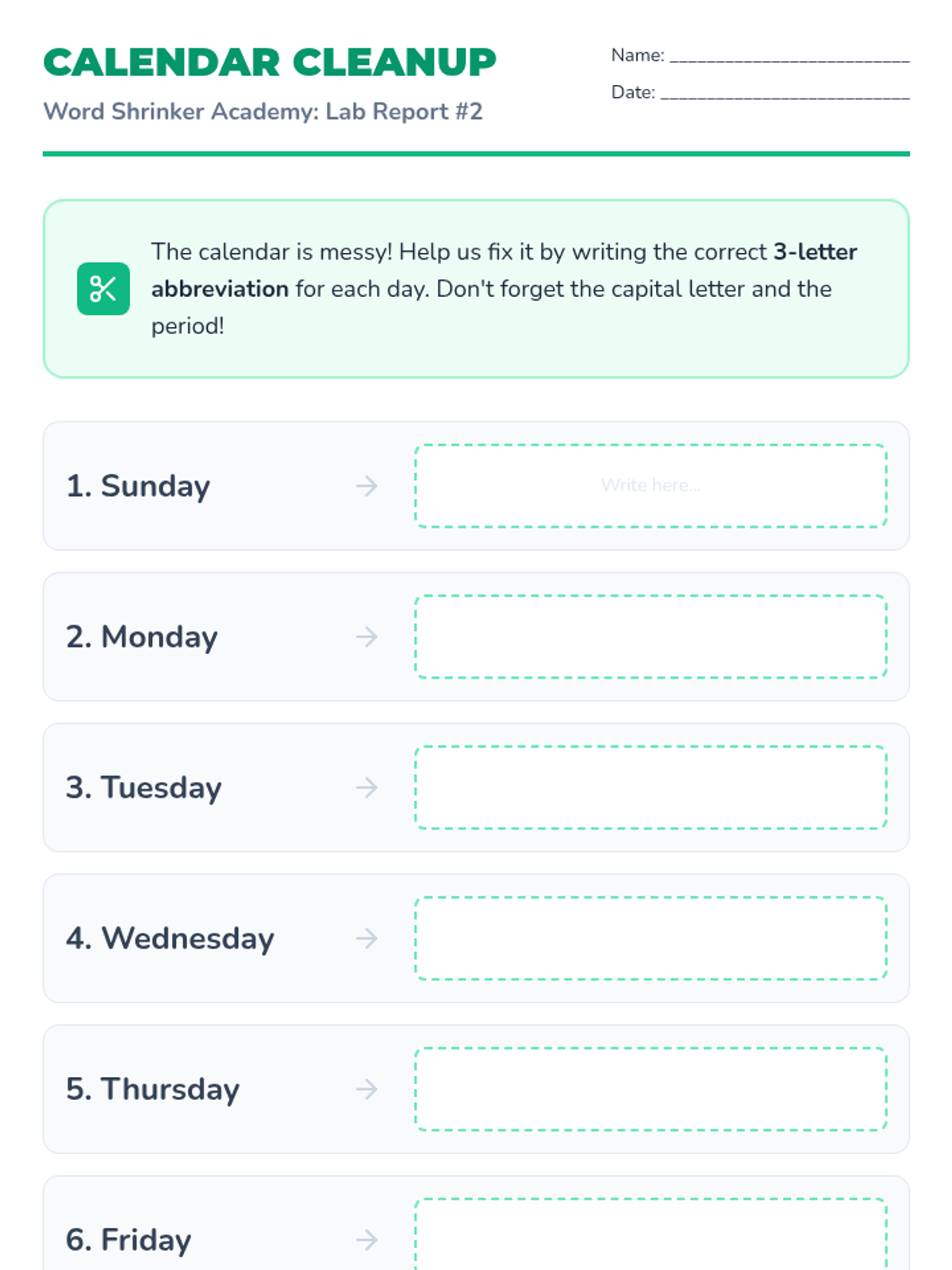
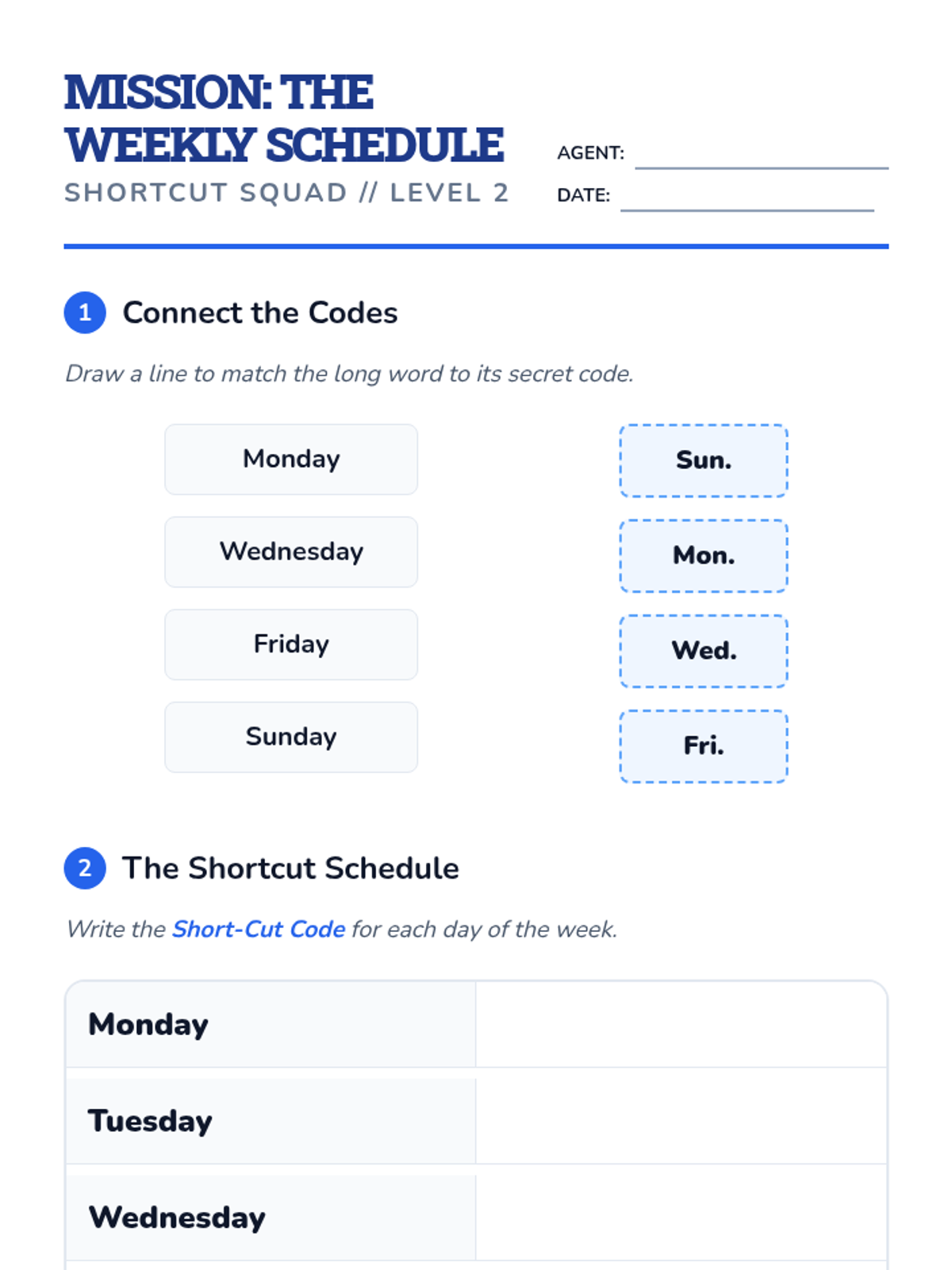
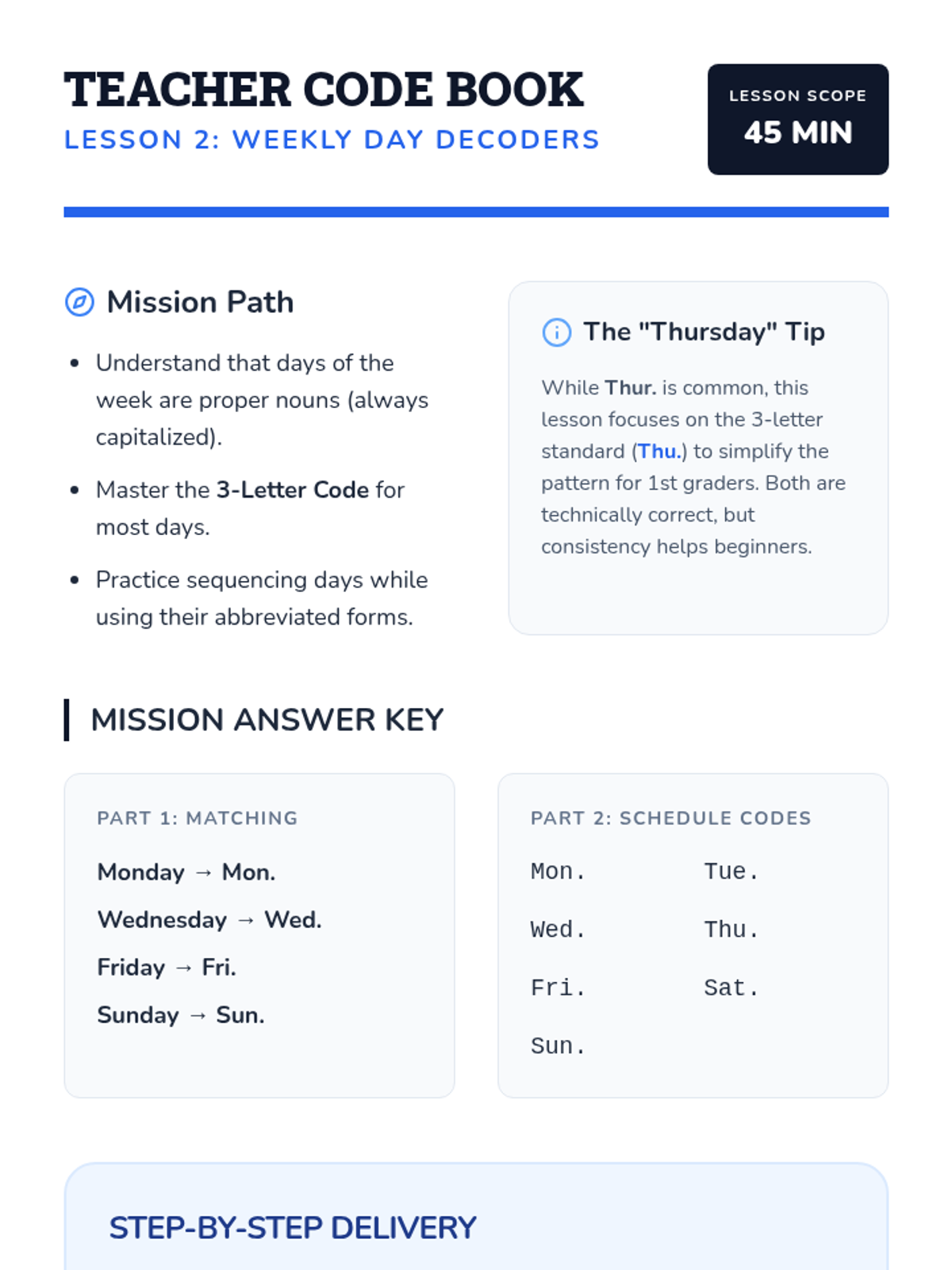
Teaches students the 3-letter abbreviations for the days of the week and emphasizes the use of the period.
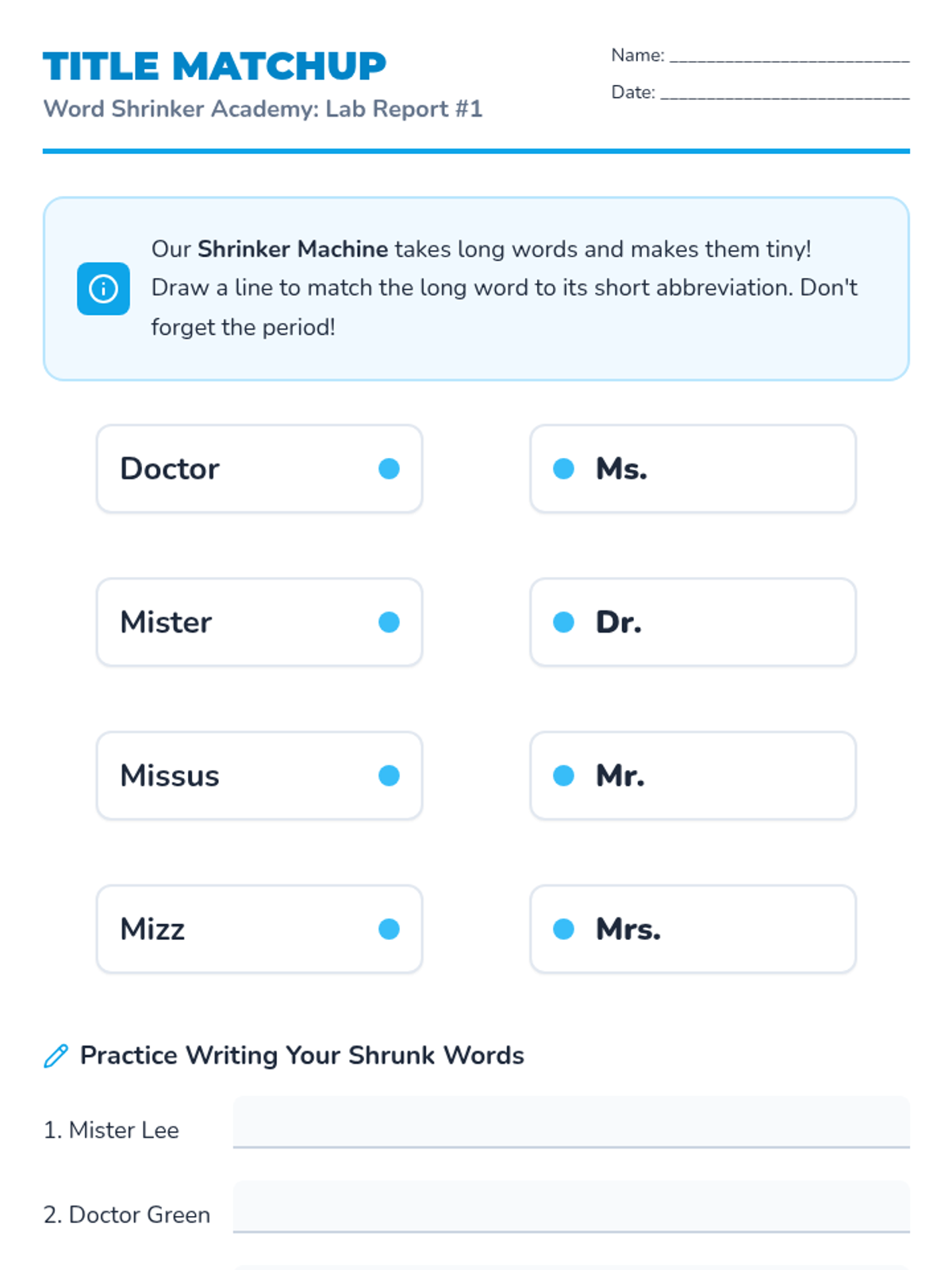
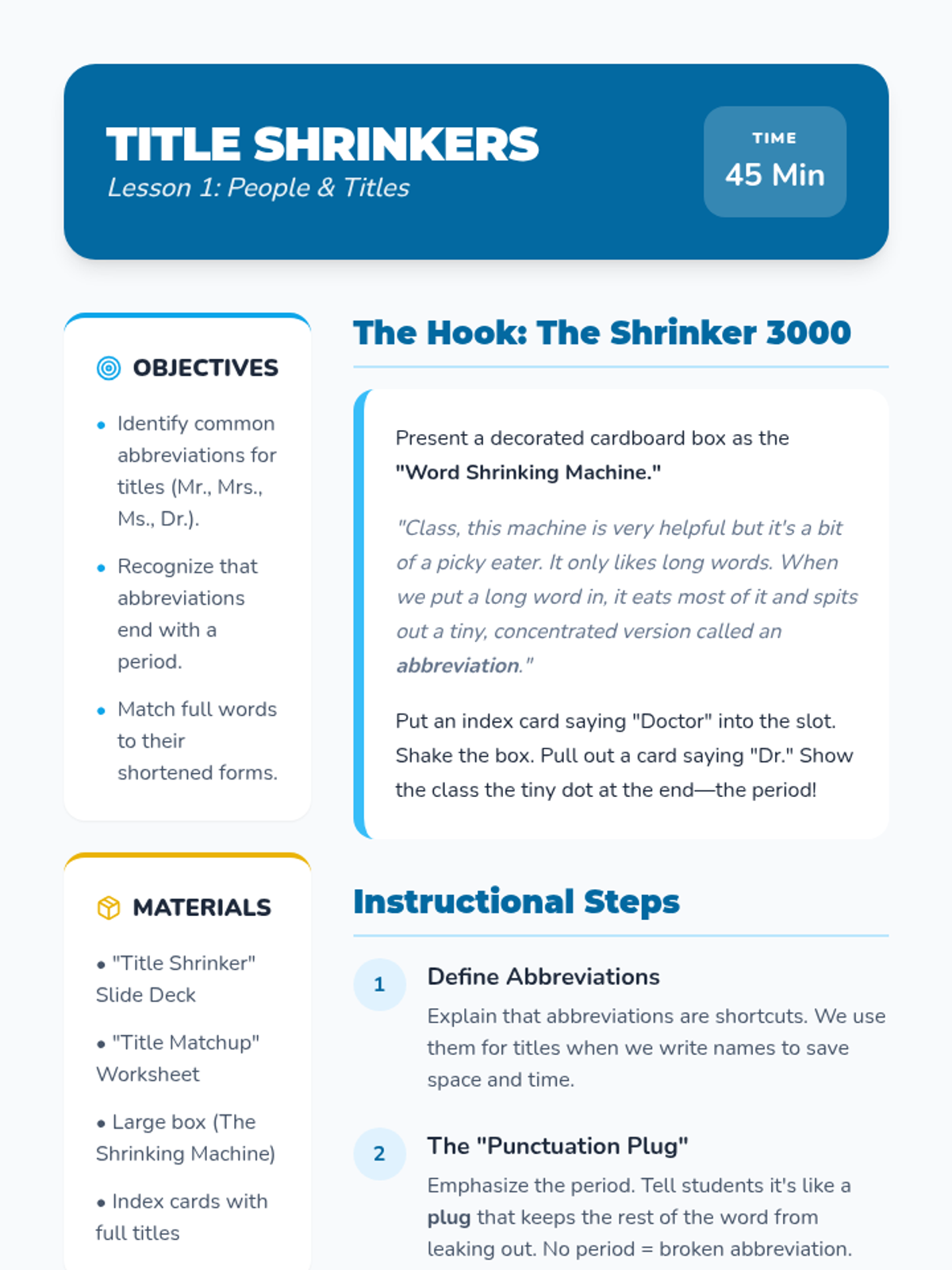
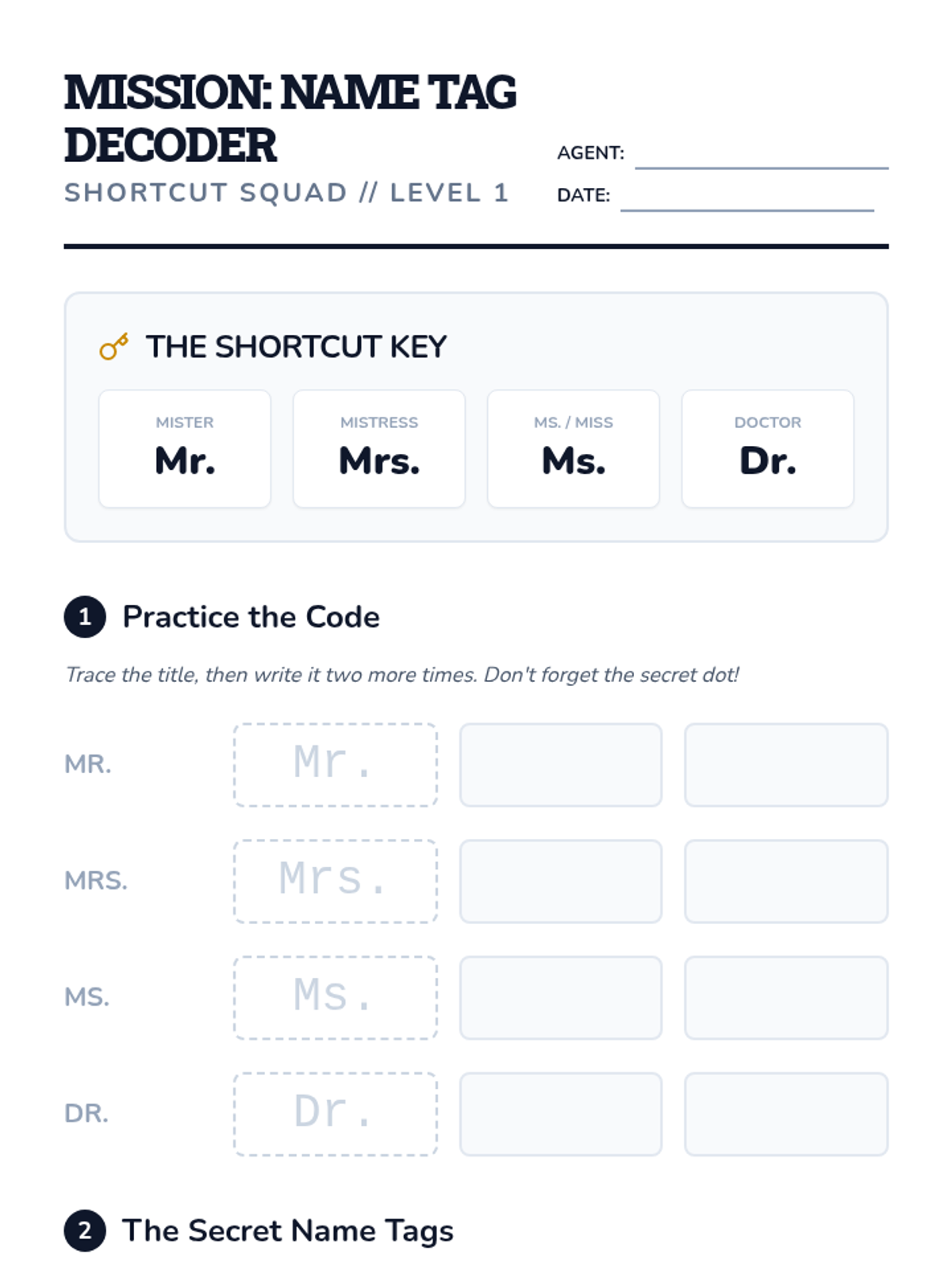
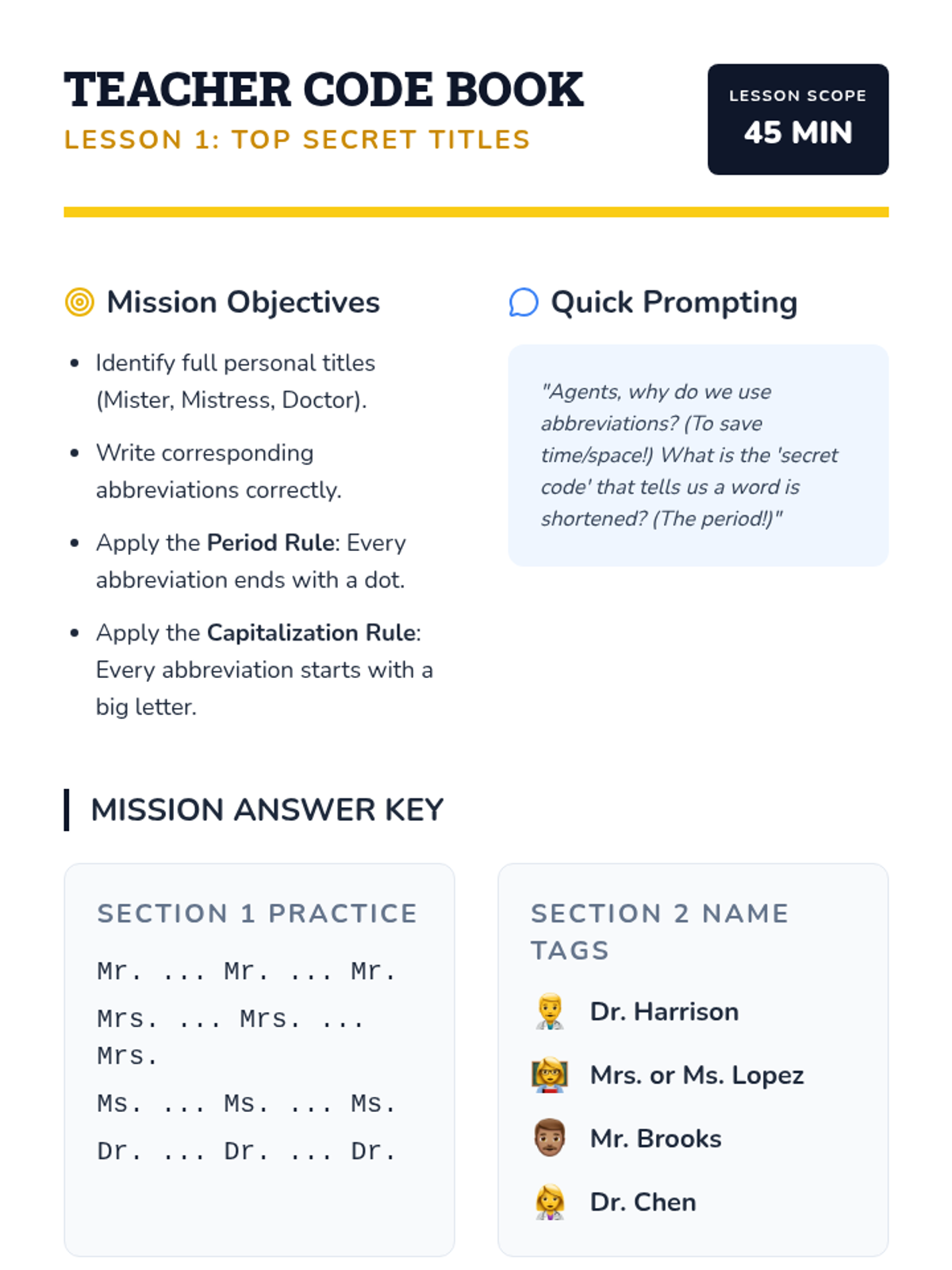
Introduces students to abbreviations for titles (Mr., Mrs., Ms., Dr.) using the 'Word Shrinking Machine' hook and matching activities.
A cumulative review where students edit sentences and demonstrate mastery of all abbreviation types.
Students learn street abbreviations (St., Ave., Rd.) and practice addressing postcards in a fictional neighborhood.
Students identify which months can be abbreviated and practice writing dates using the 'short-cut' code.
Students practice shortening the days of the week and applying them to a weekly schedule.
Students learn personal titles (Mr., Mrs., Ms., Dr.) and the mechanical rules of using capital letters and periods.
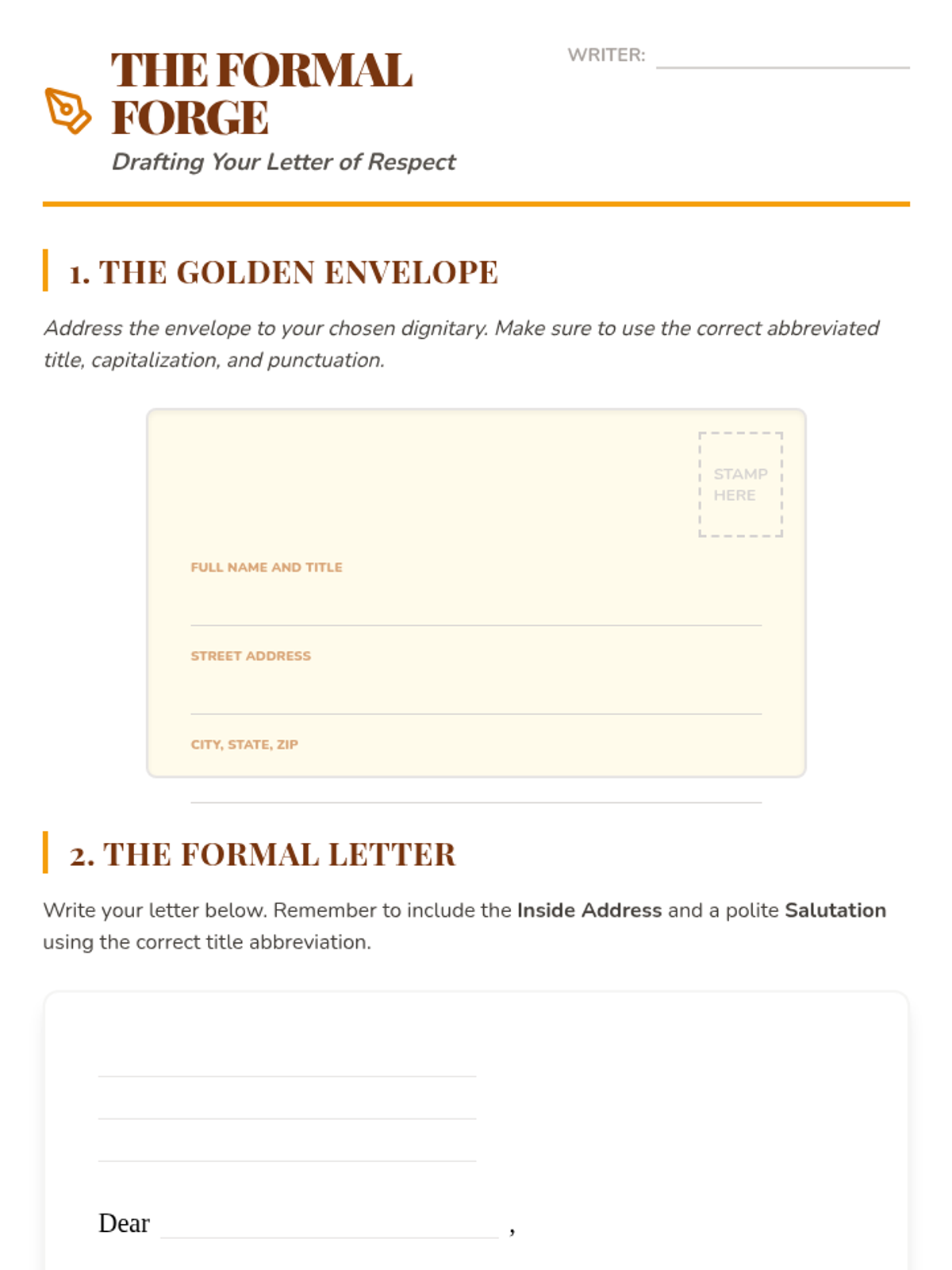
Students draft a formal letter to a real or fictional person of authority (e.g., the school Principal or a local Mayor). They must correctly use the recipient's title in the inside address and salutation.
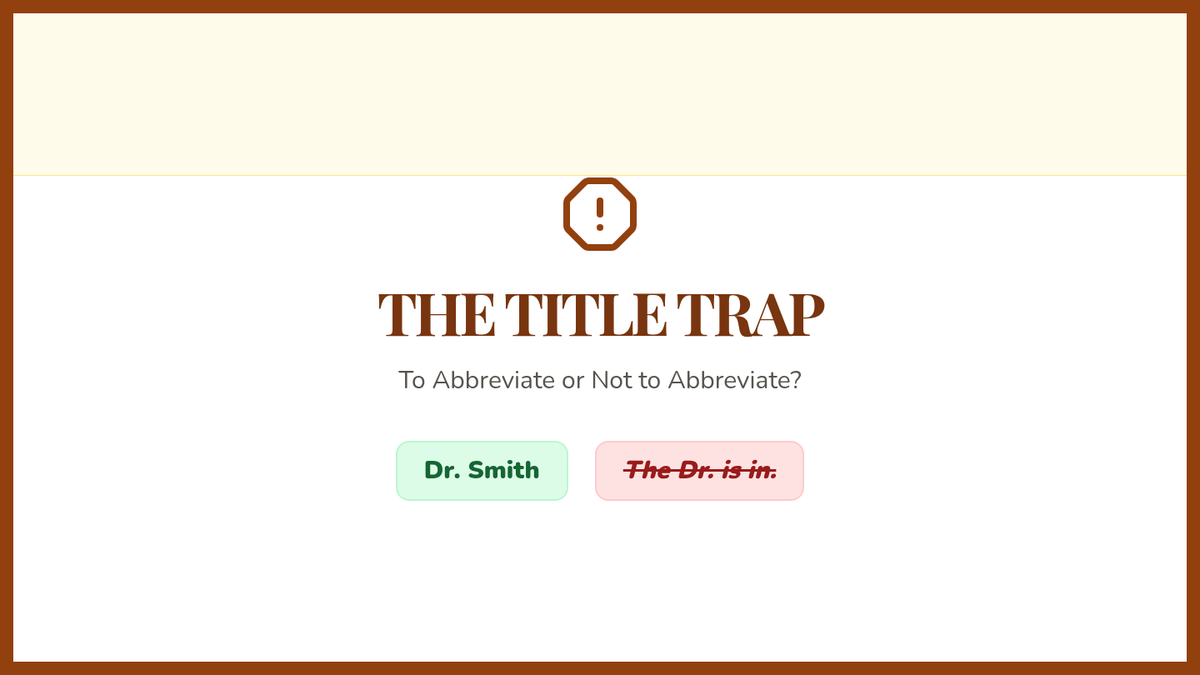
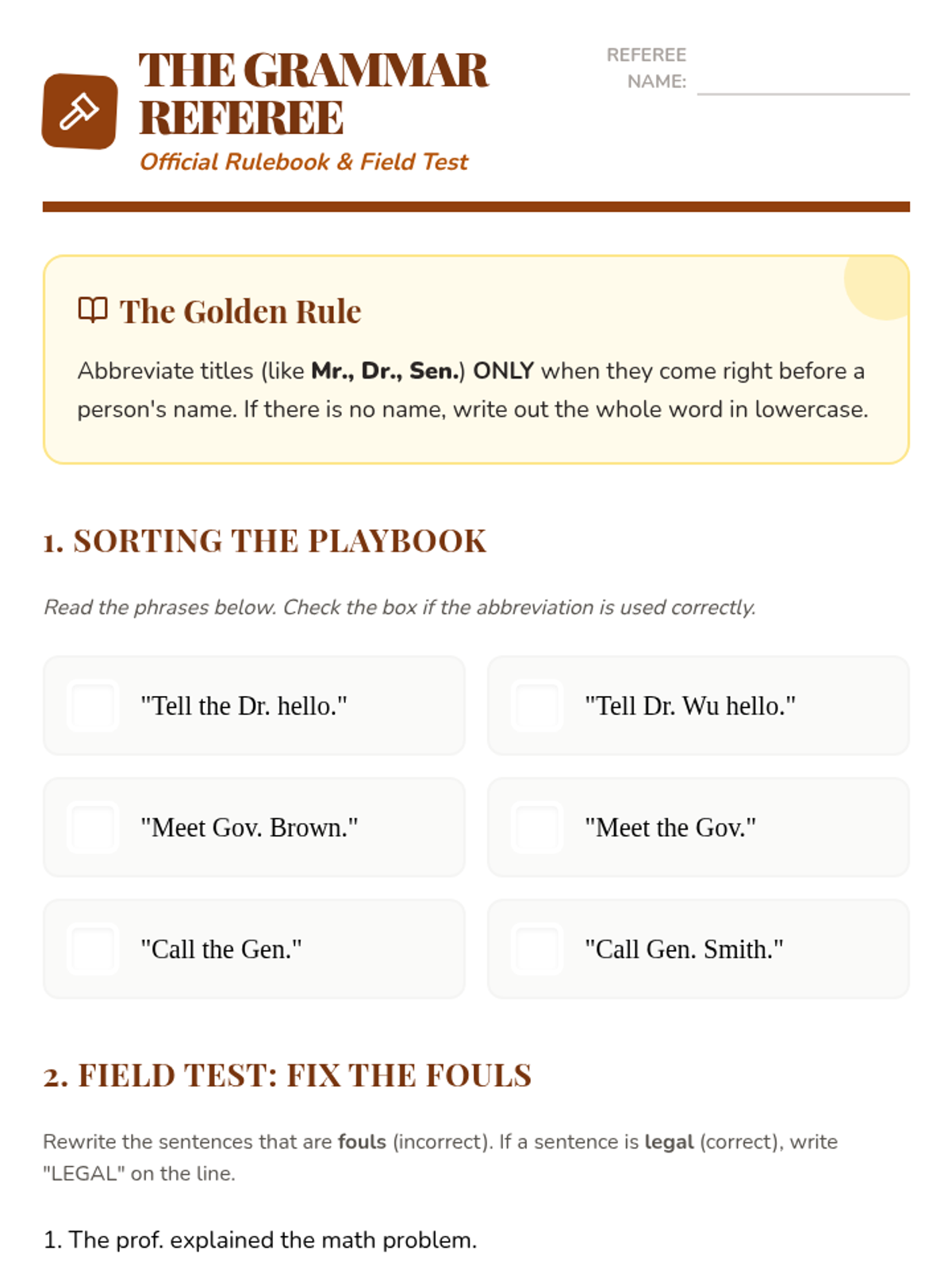
This lesson focuses on the rule that titles are usually only abbreviated when they appear before a name (e.g., 'Dr. Smith' vs. 'The doctor is here'). Students practice sorting sentences into correct and incorrect usage.
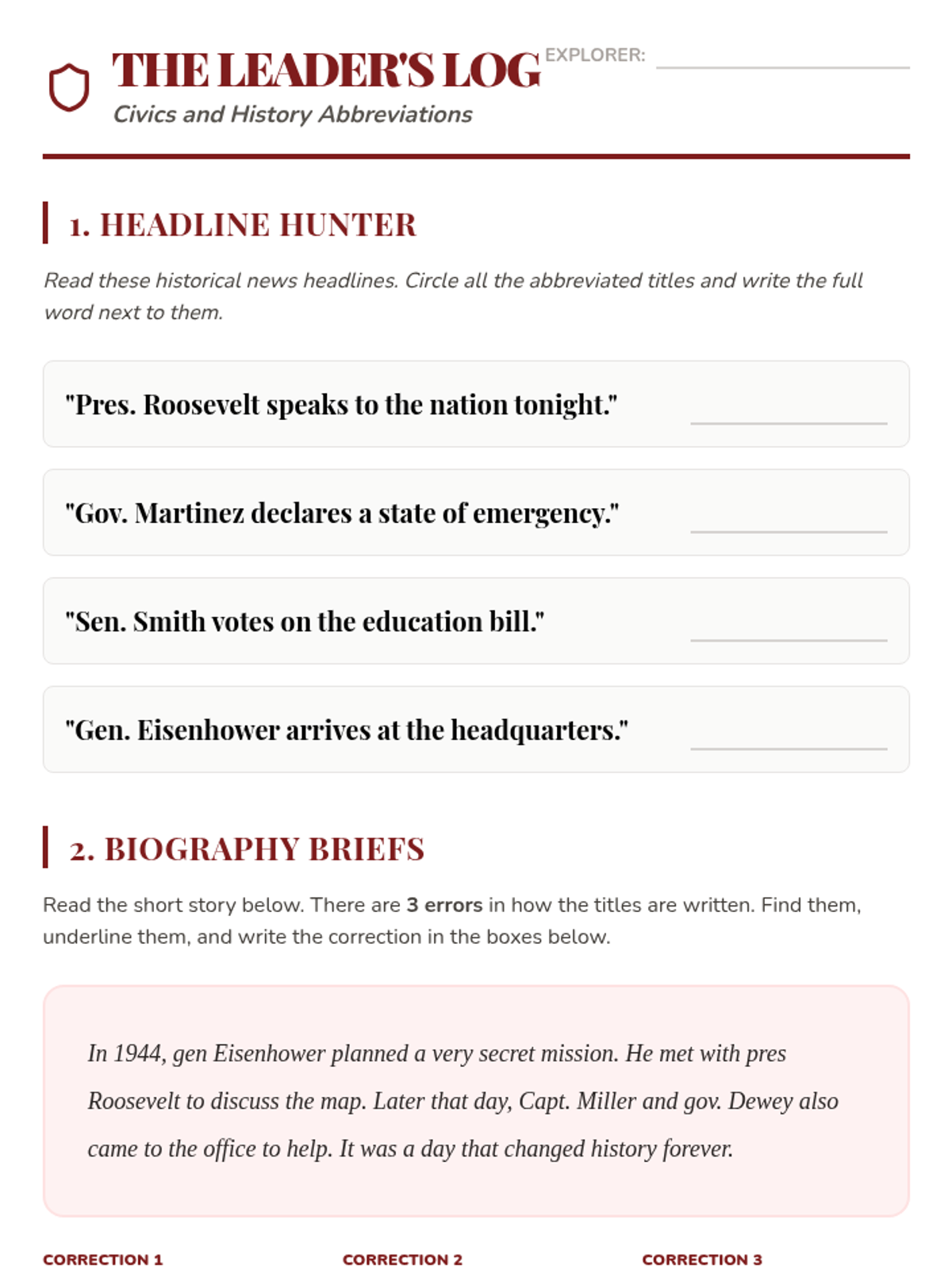
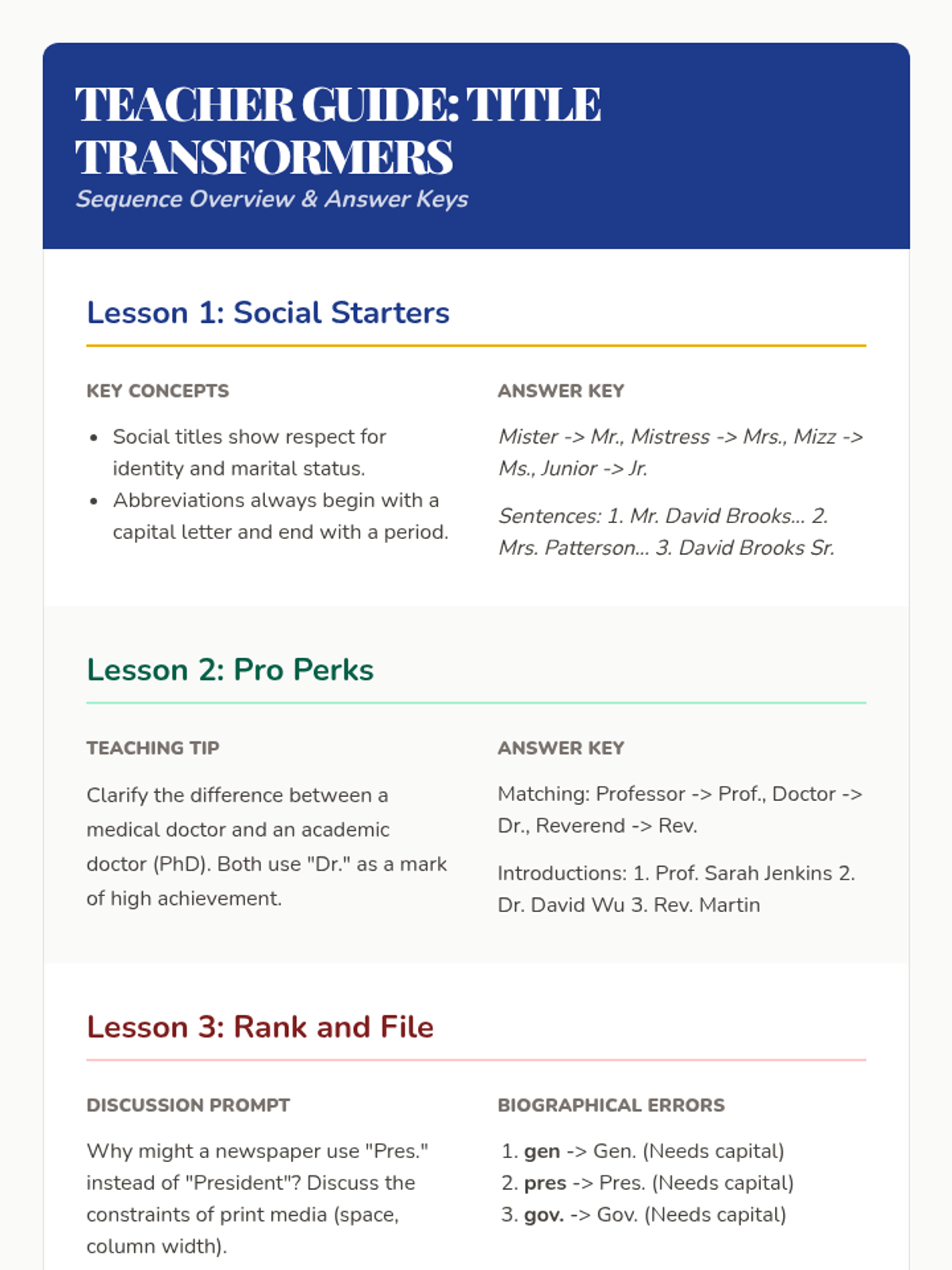
Students explore titles used in civics and history, such as Pres., Gov., Sen., Gen., and Capt. They read short biographical blurbs and identify these abbreviations, discussing why titles are often shortened in news and history books.
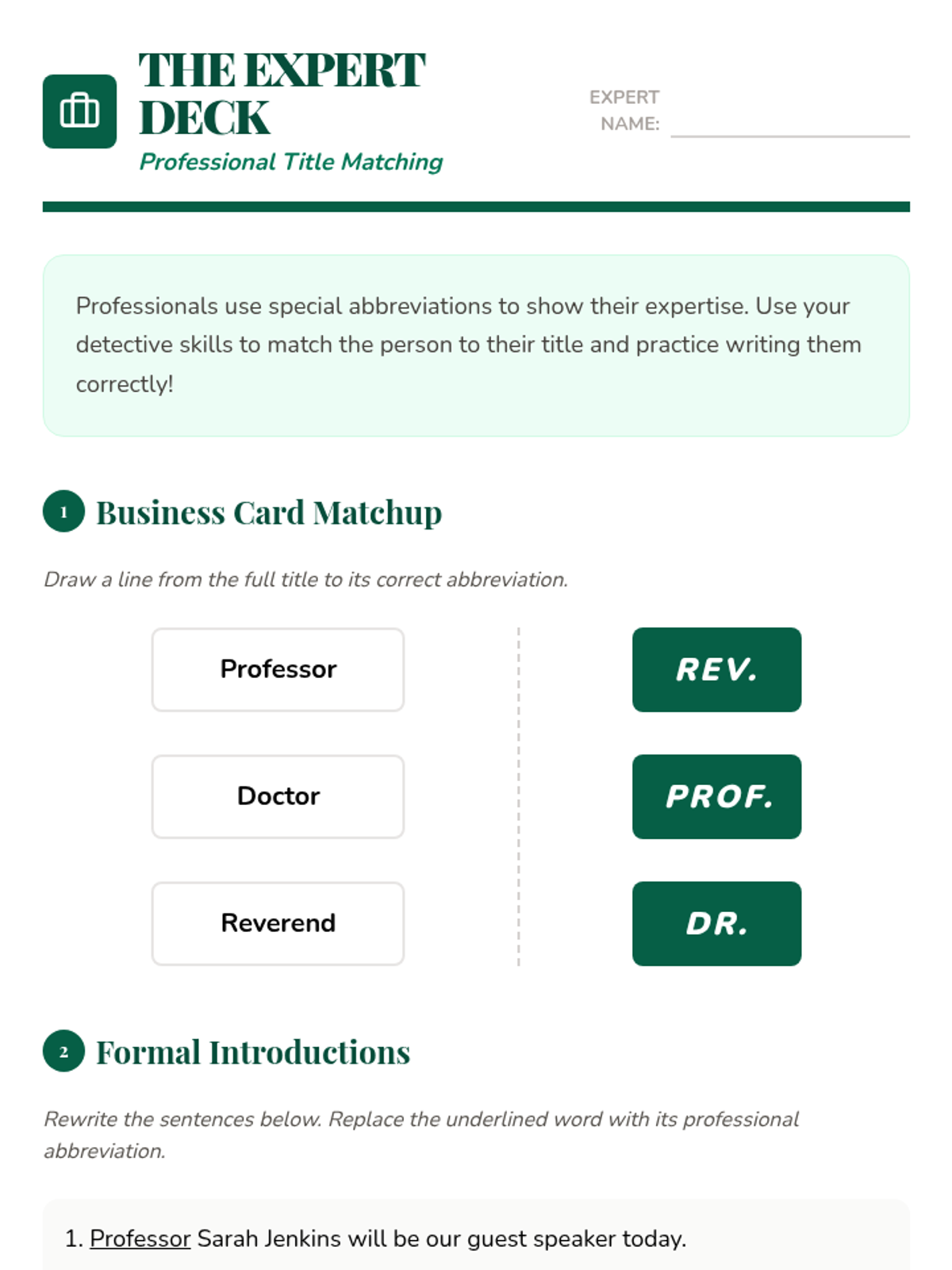
The lesson introduces professional titles such as Dr. (Doctor), Prof. (Professor), and Rev. (Reverend). Students match professionals to their titles and practice writing sentences introducing these figures.
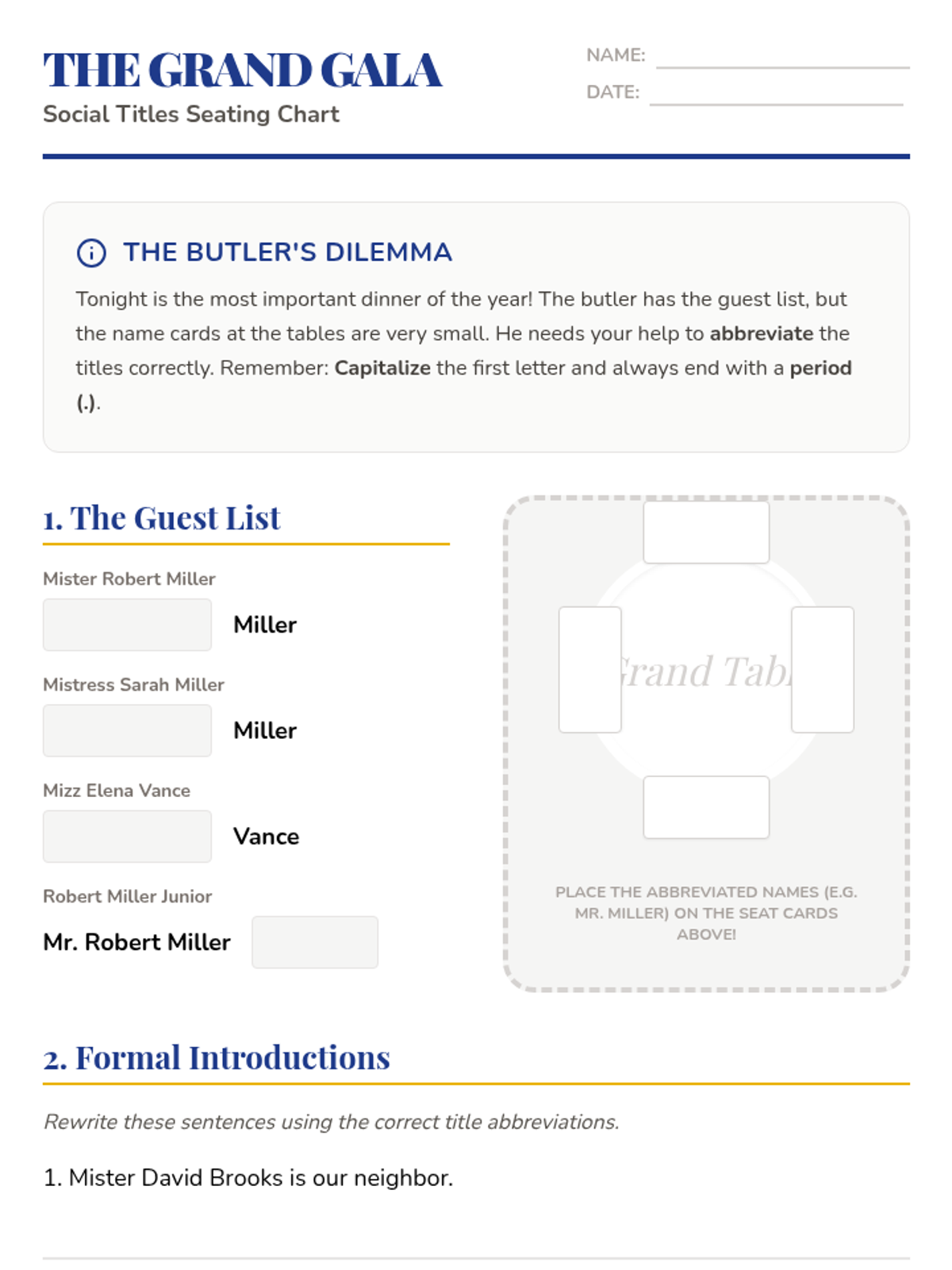
Students learn the standard social titles (Mr., Mrs., Ms., Jr., Sr.) and the rules for their use. Discussion focuses on the importance of the period and the capital letter to show respect.
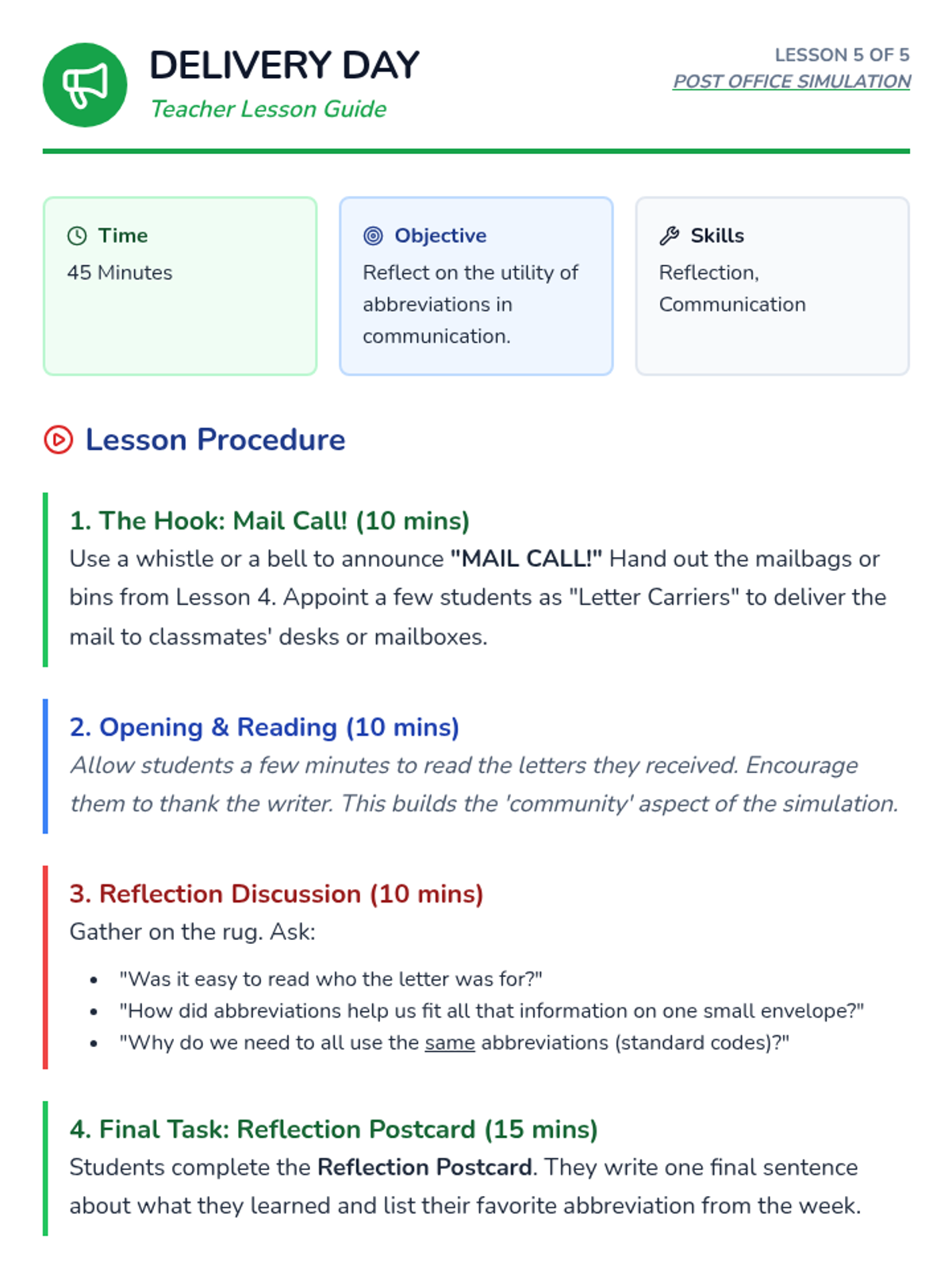
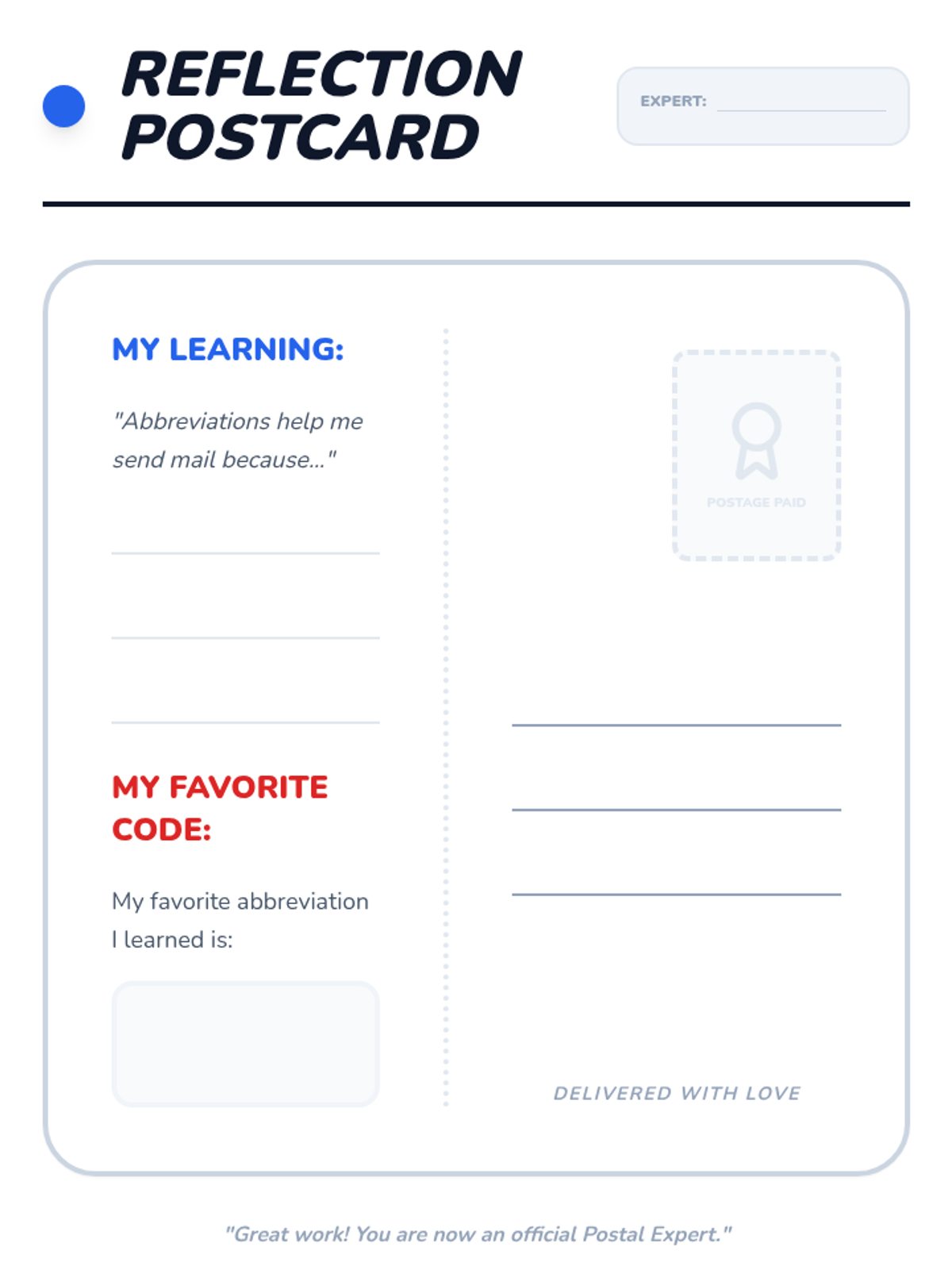
Students deliver their letters and reflect on how abbreviations simplify the process of sharing information.
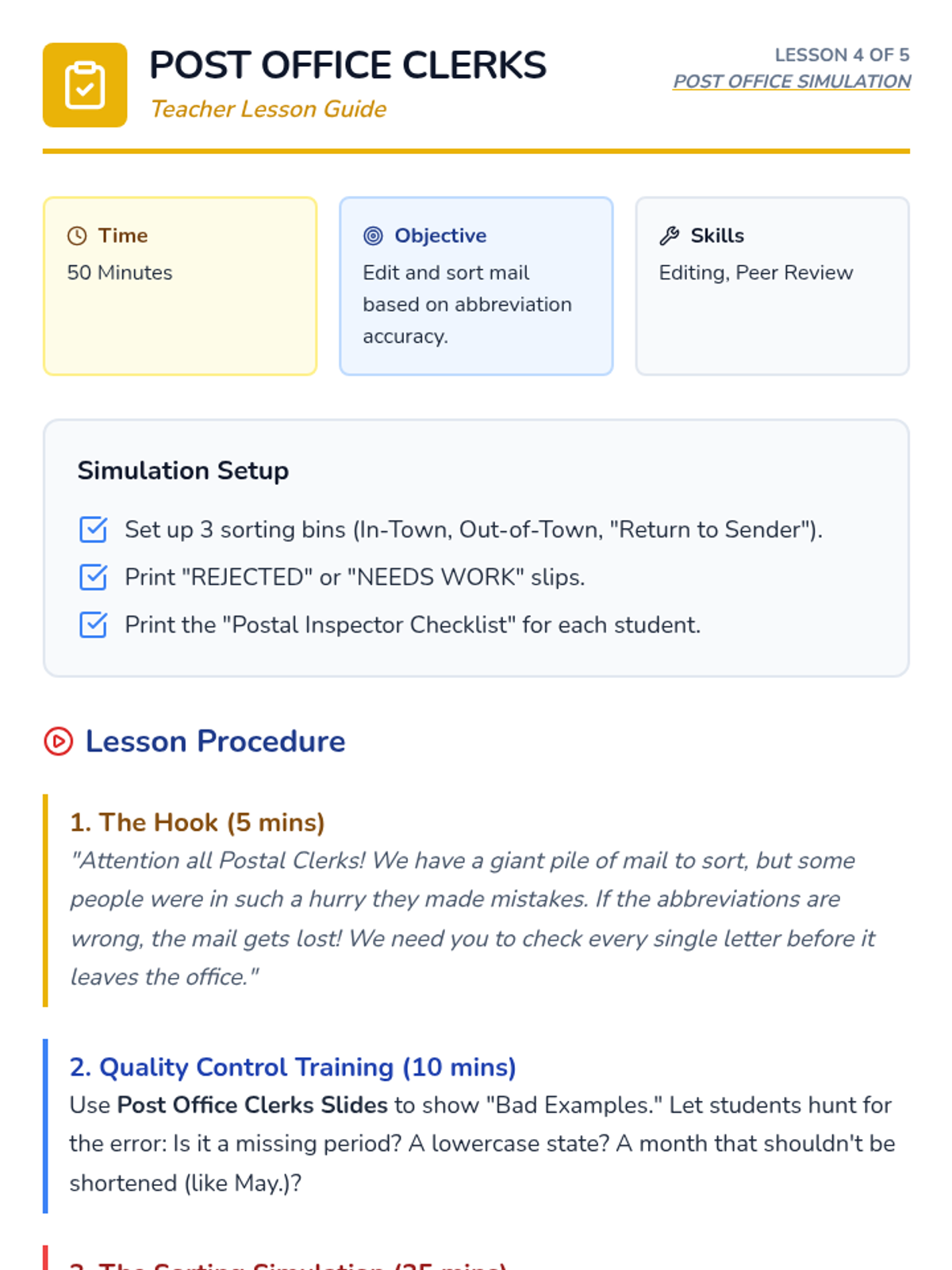
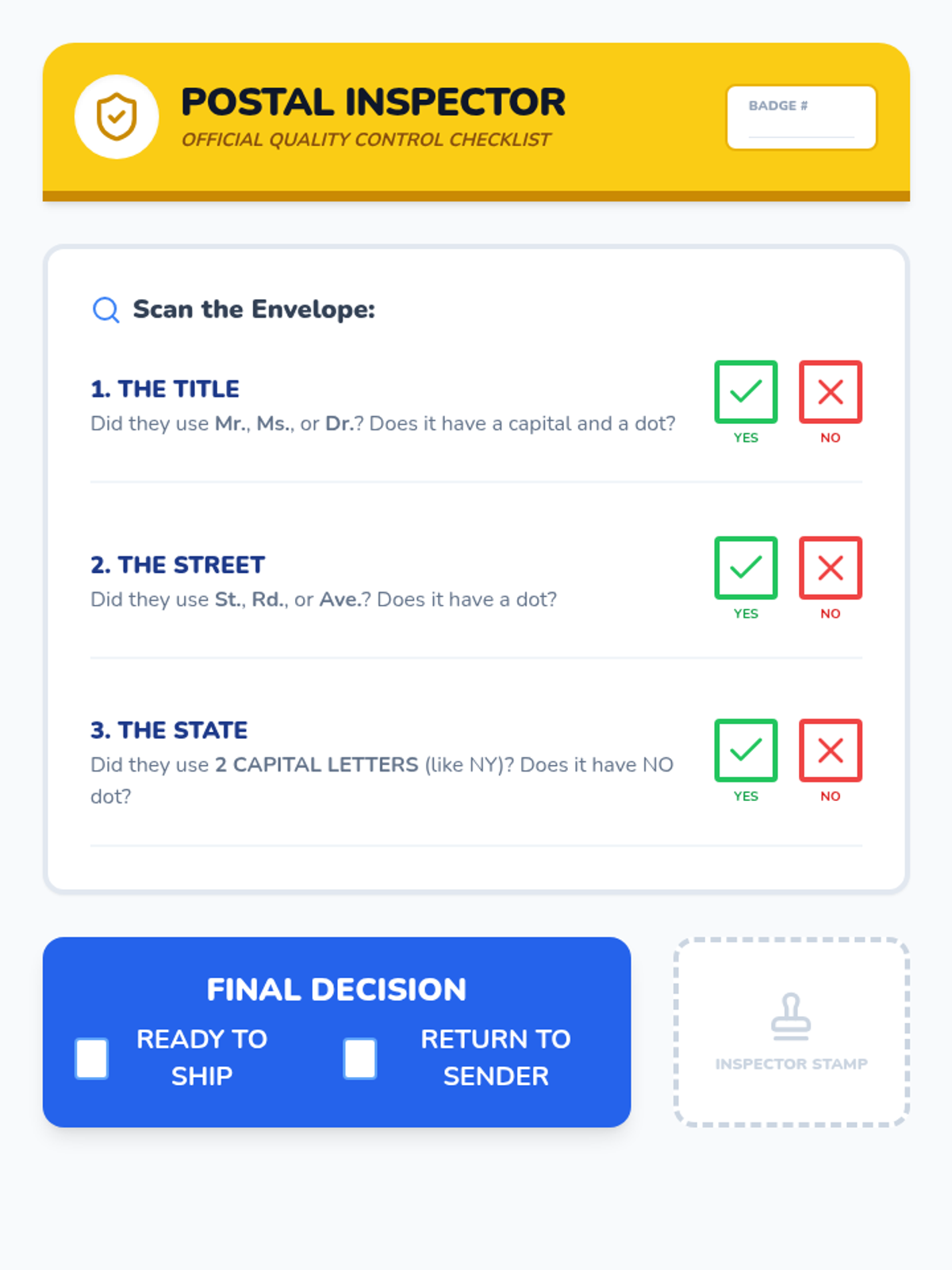
In a simulation, students sort mail and perform 'quality control' by checking for correct abbreviation usage and punctuation.
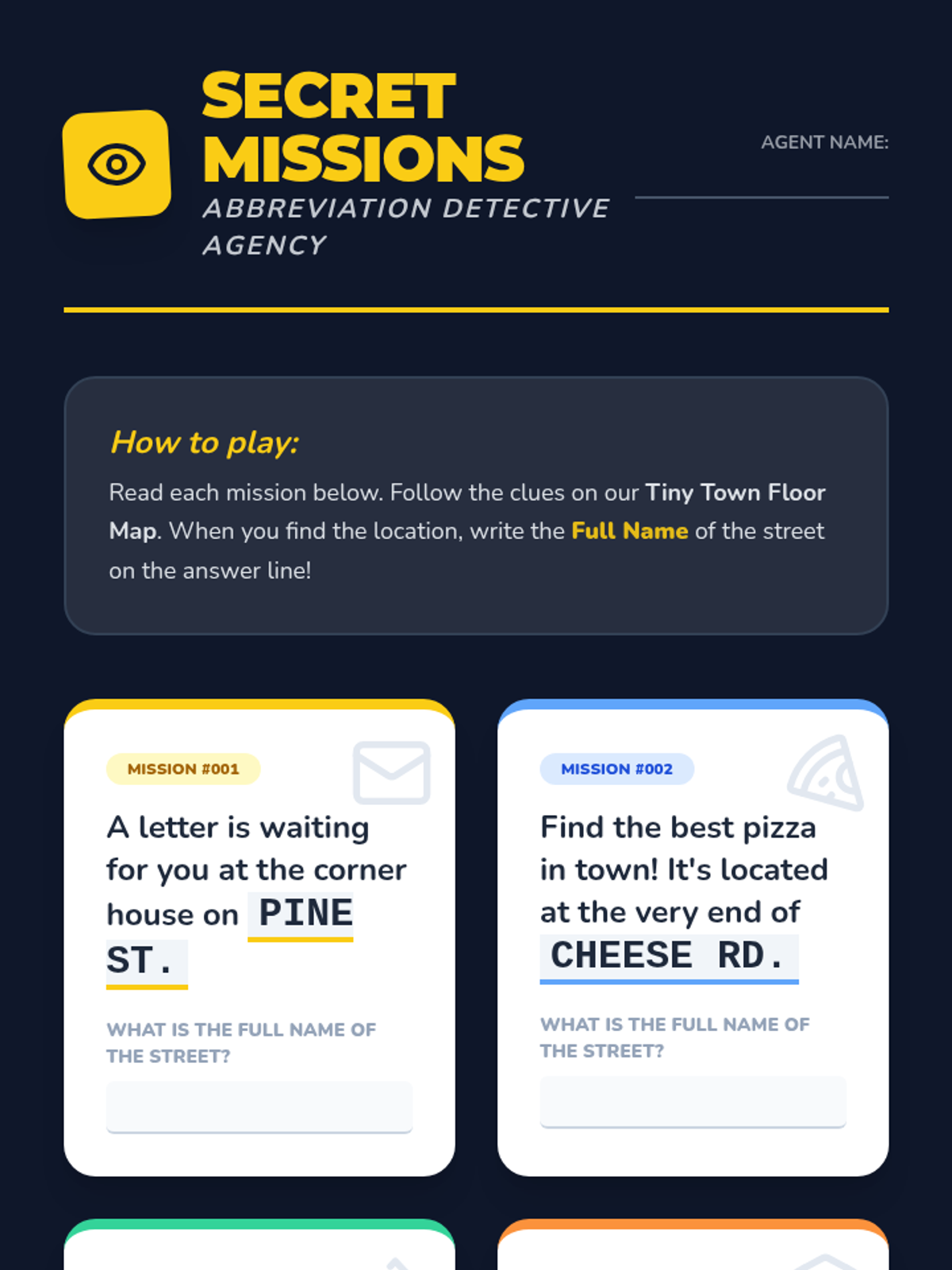
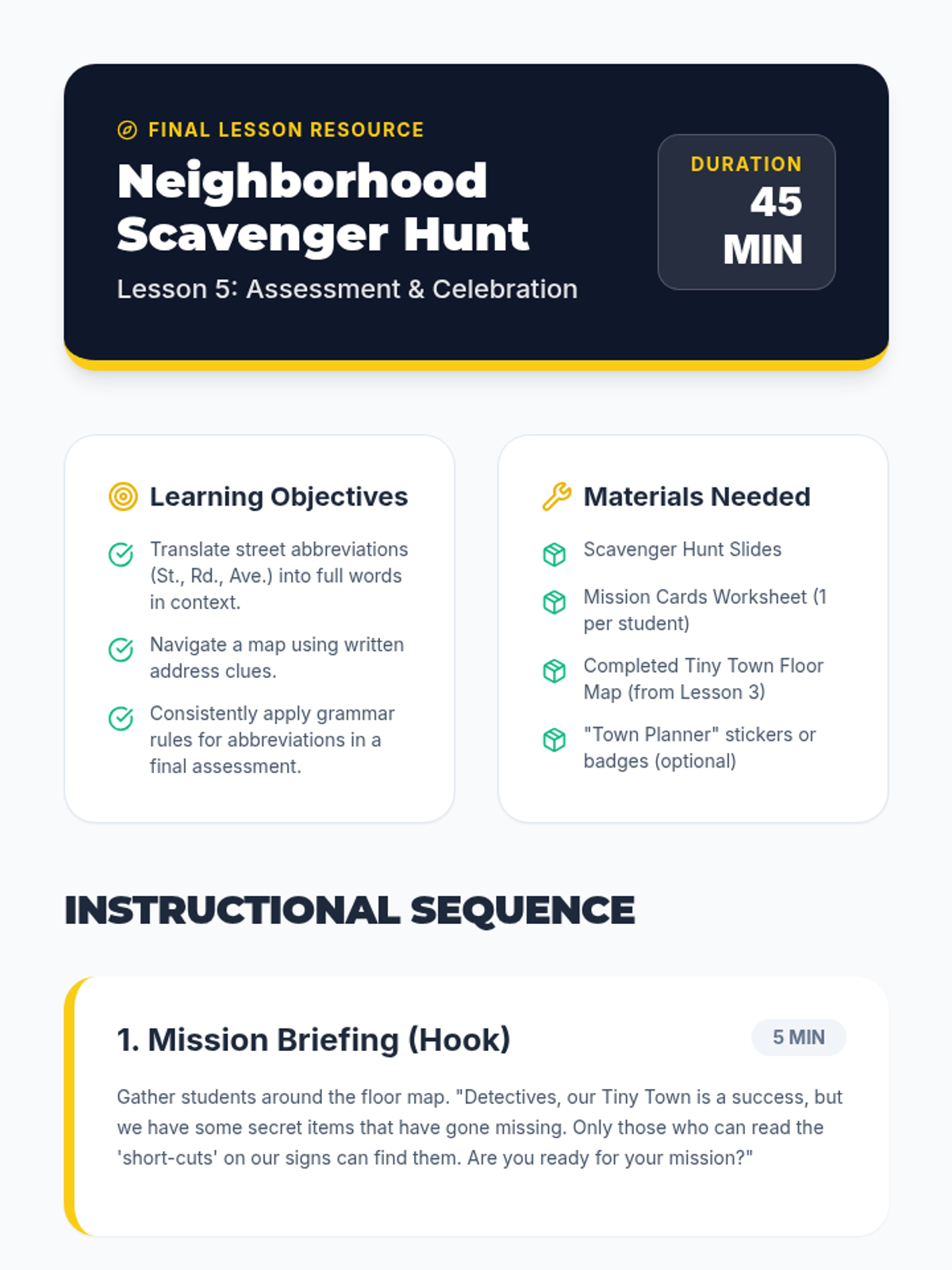
Students use their completed town map to locate specific addresses based on written clues containing abbreviations. This confirms their ability to read and interpret the shorthand in context.
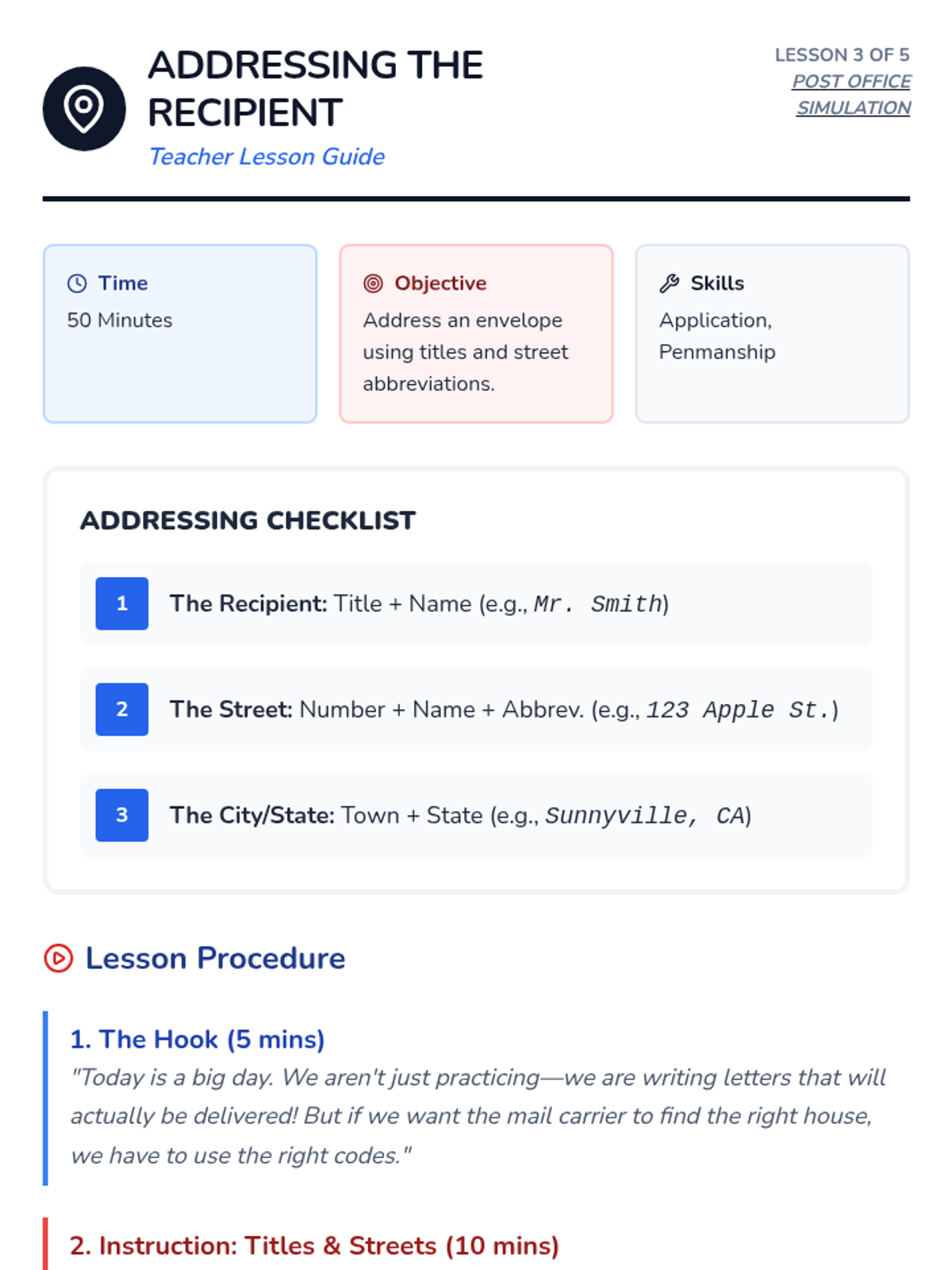
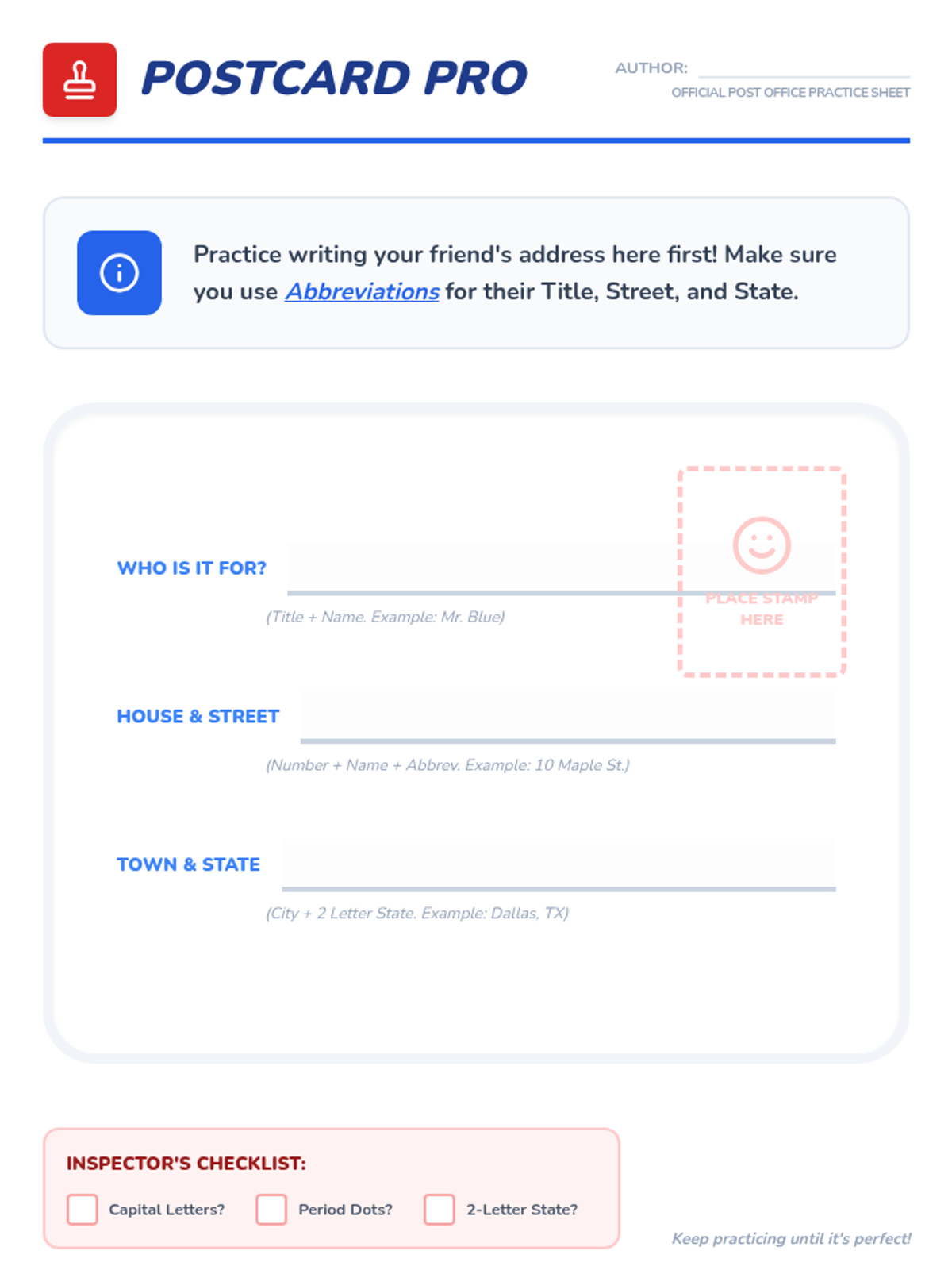
Students apply their knowledge to address envelopes, using formal titles and street abbreviations for real recipients.
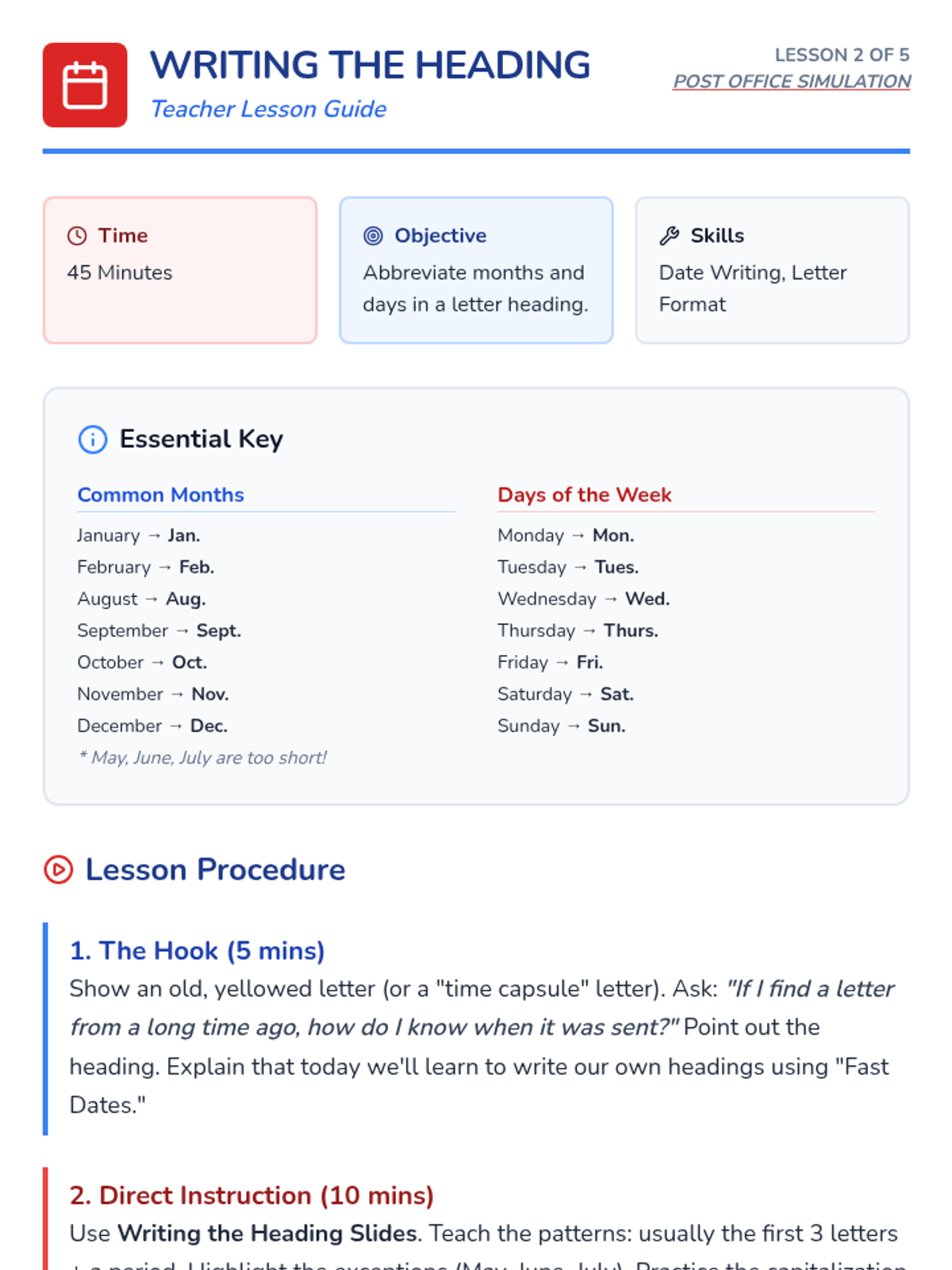
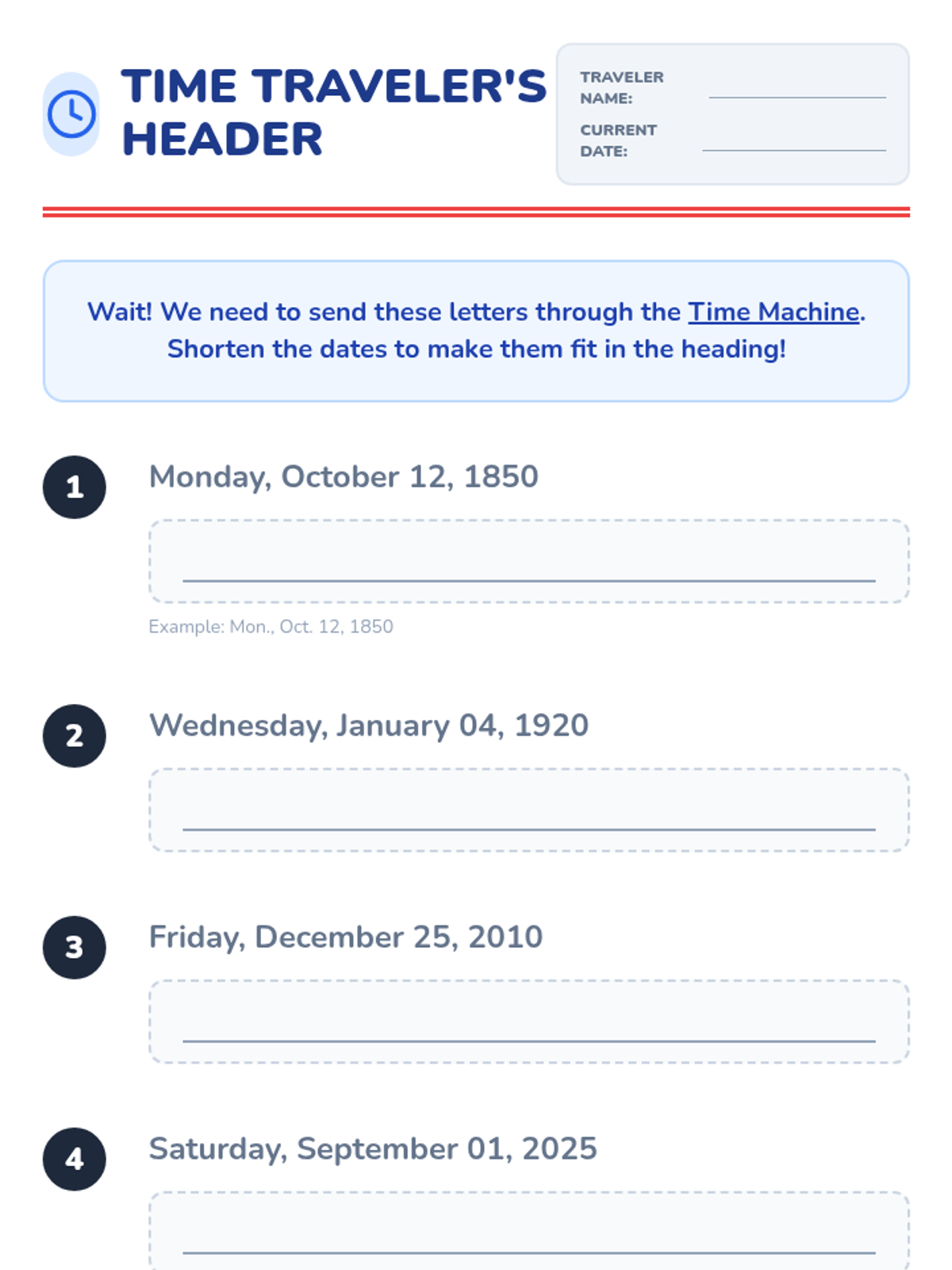
Students practice using abbreviations for months and days to write correct letter headings, exploring how dates help track time.
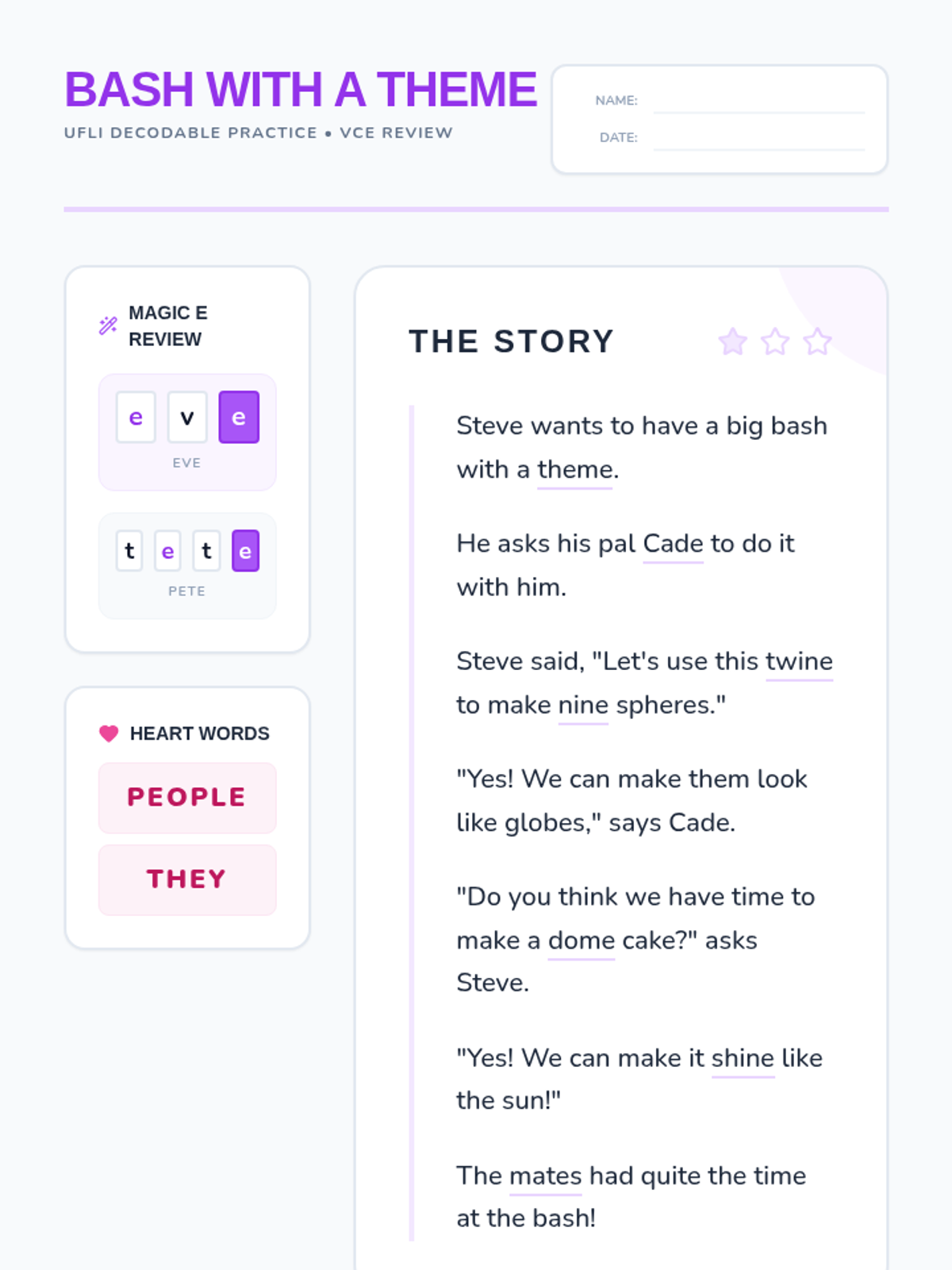
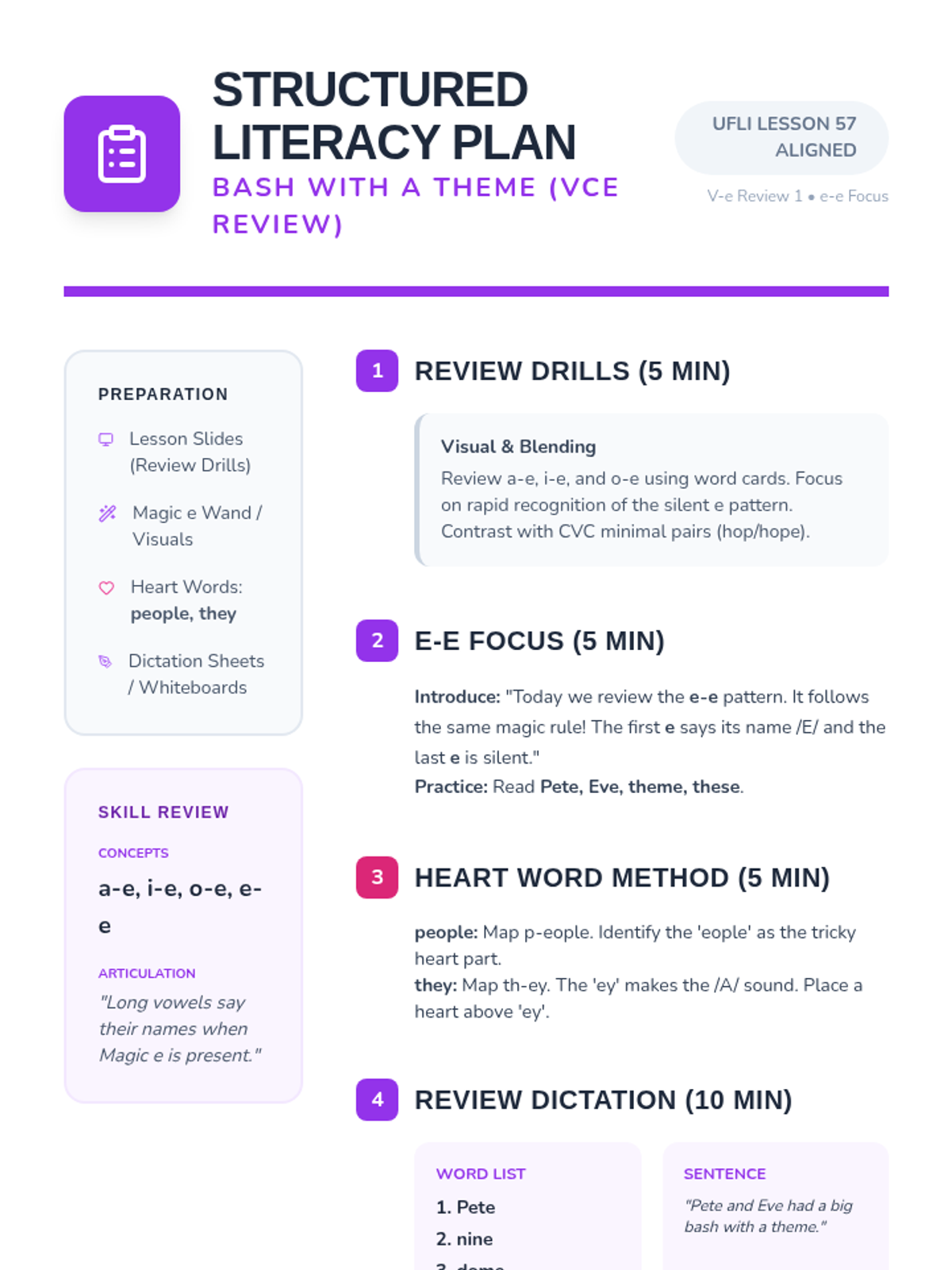
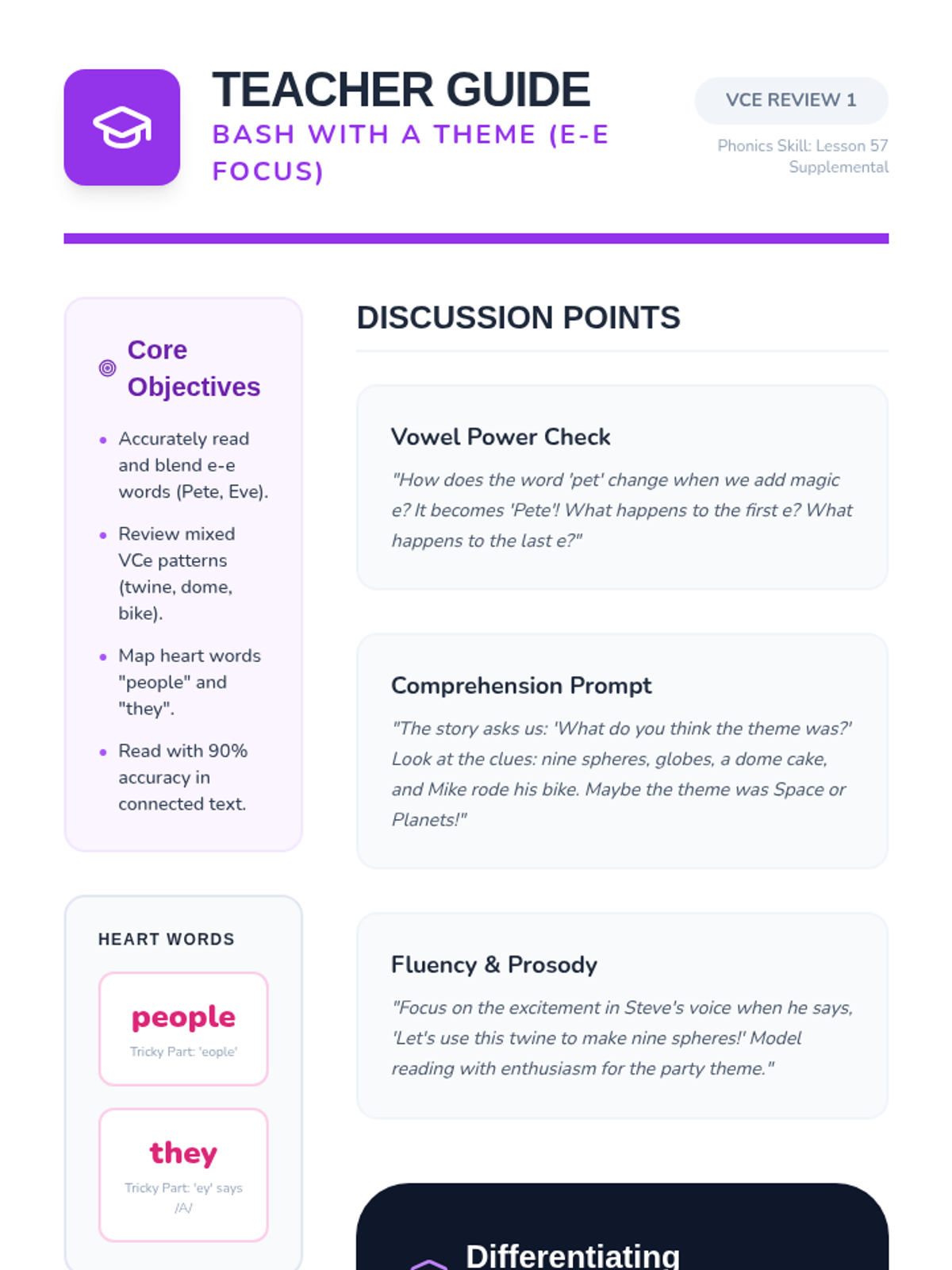
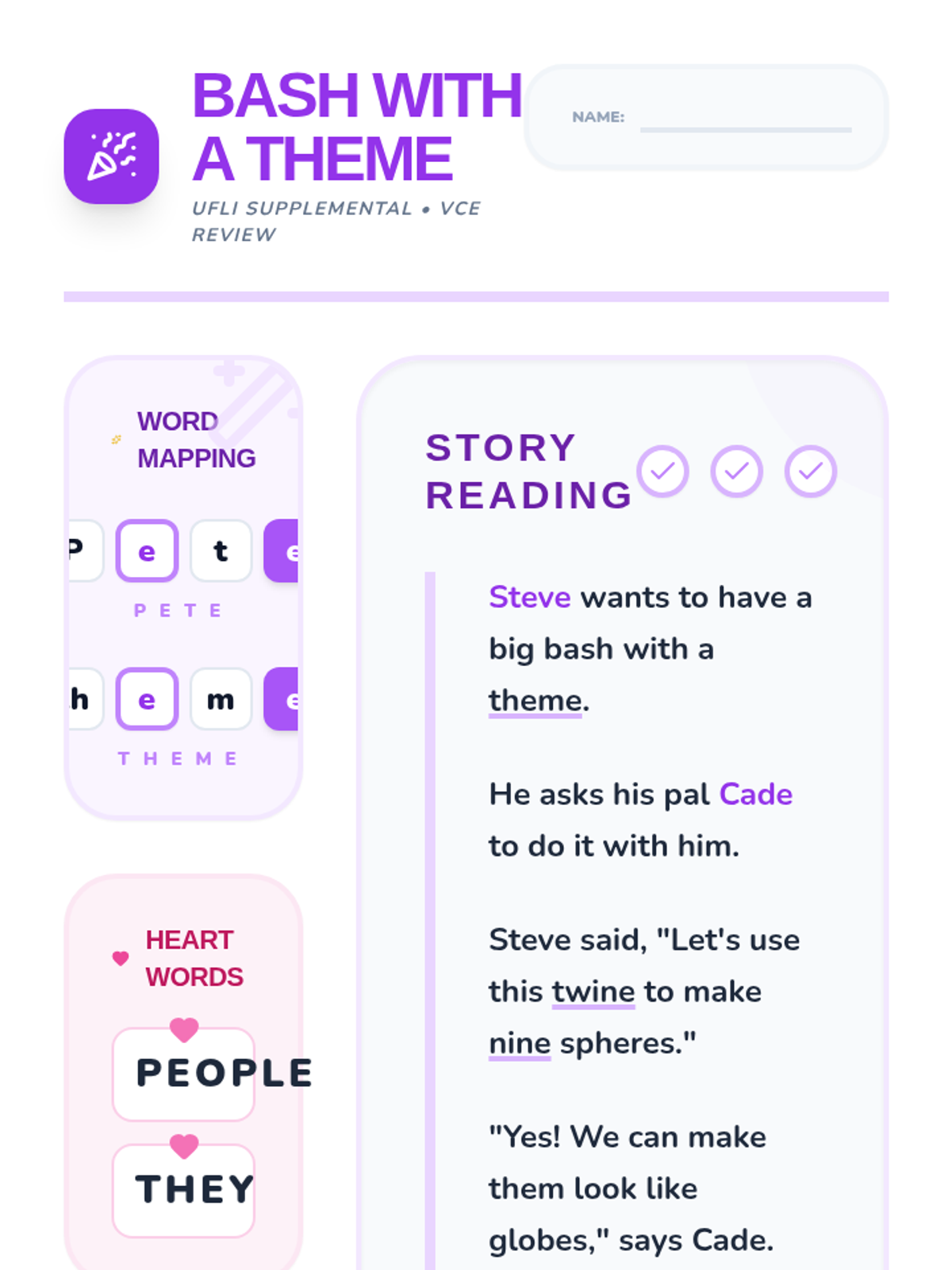
Focuses on the long 'e' vowel sound with the silent 'e' pattern (e-e). Students will read about Pete and Eve's themed party, practicing words like 'theme', 'Pete', 'Eve', and 'these'.
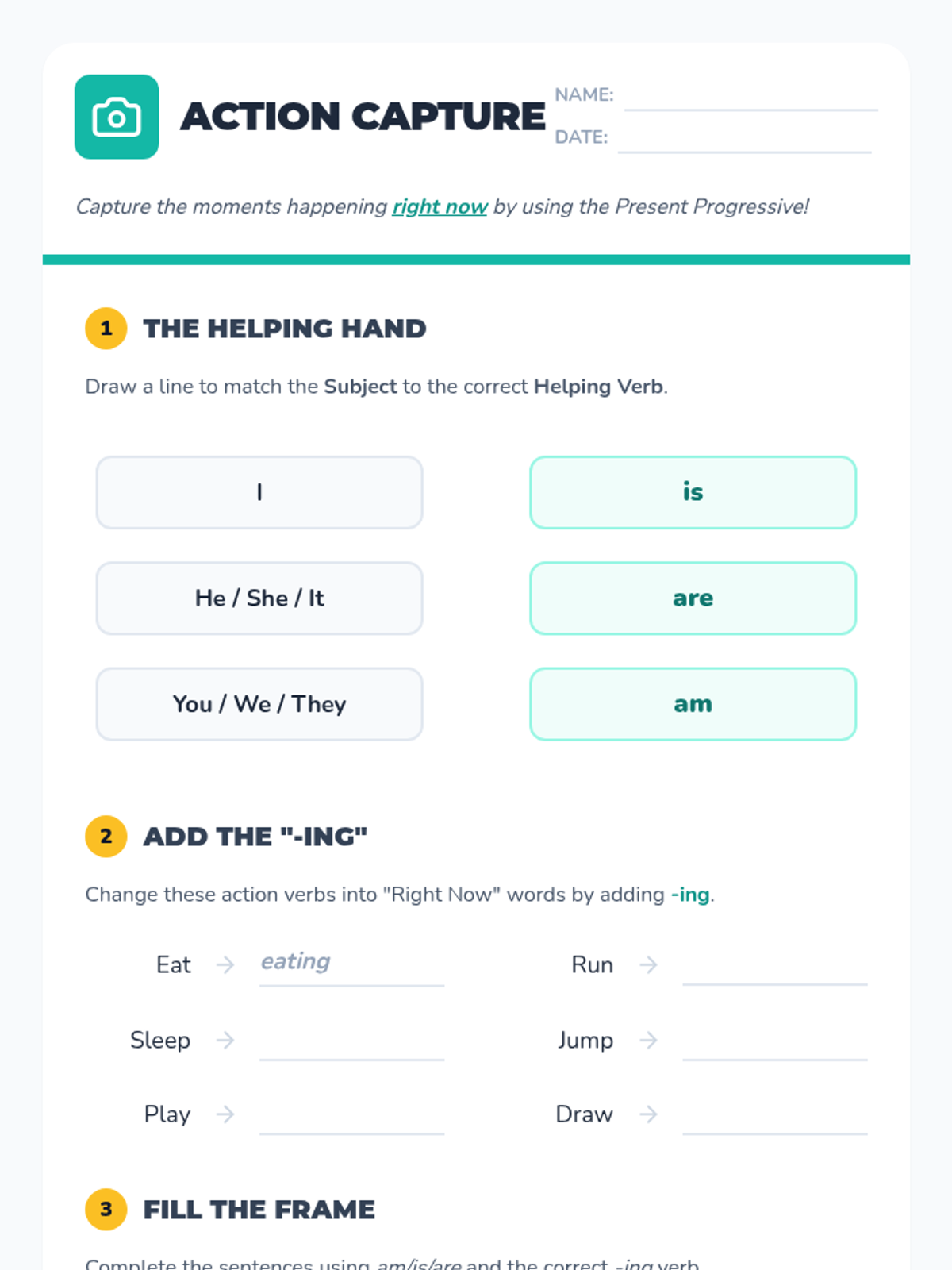
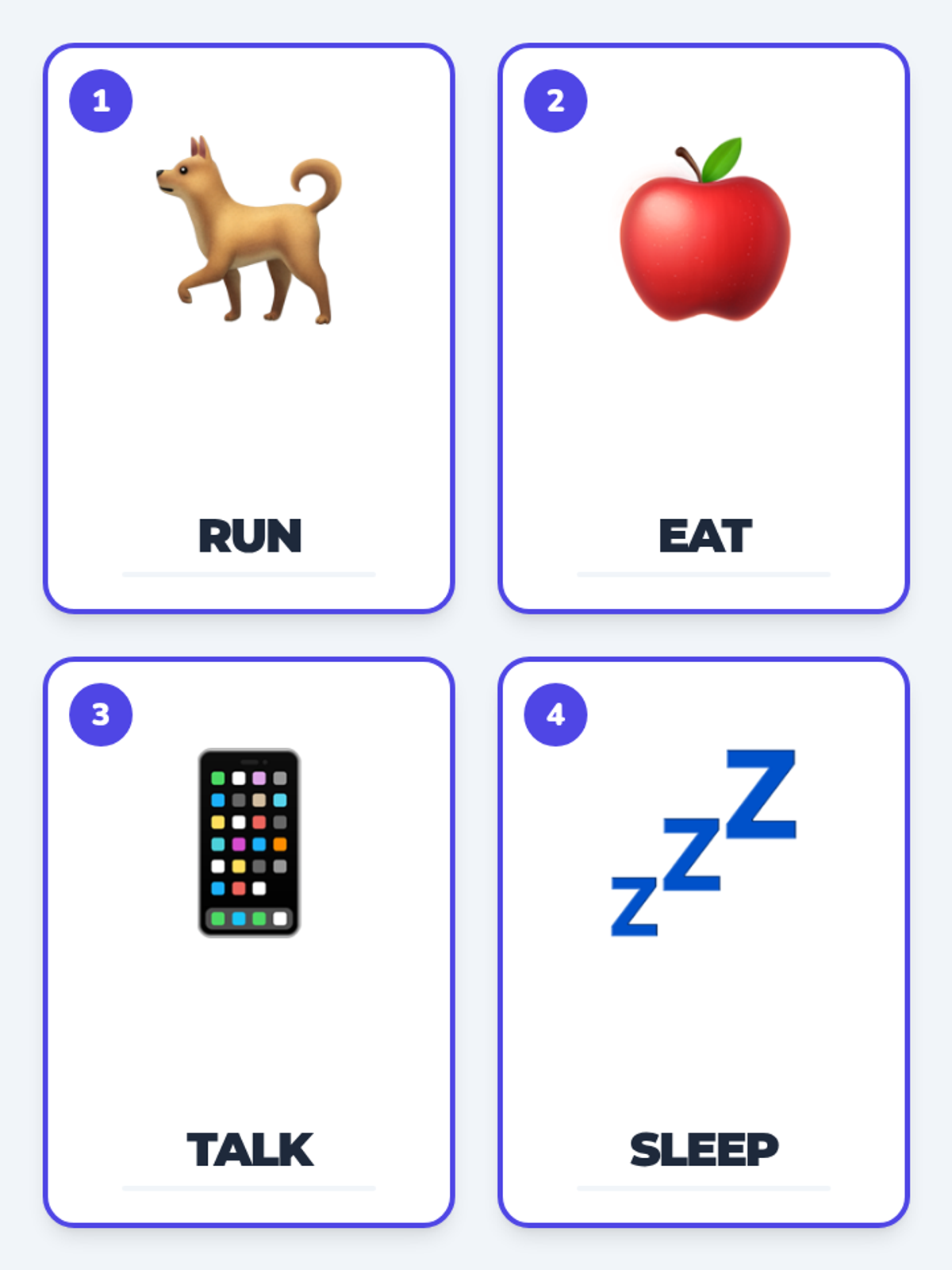
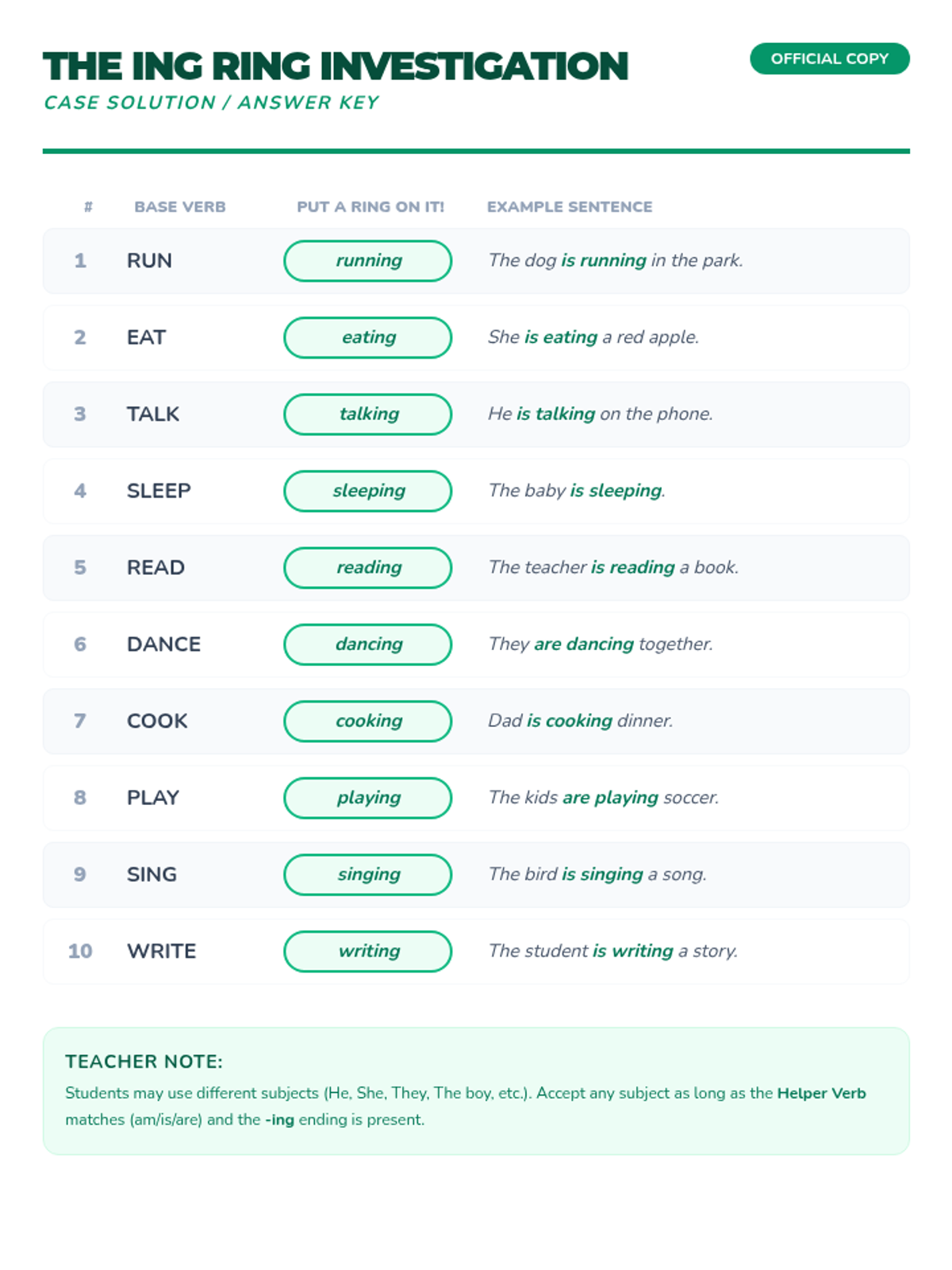
Students will investigate the 'ongoing' world of present progressive verbs. Through a 'Simon Says' warm-up, a video breakdown, and a 'put a ring on it' activity, students will master the use of 'am/is/are' plus '-ing' verbs to describe actions happening right now.
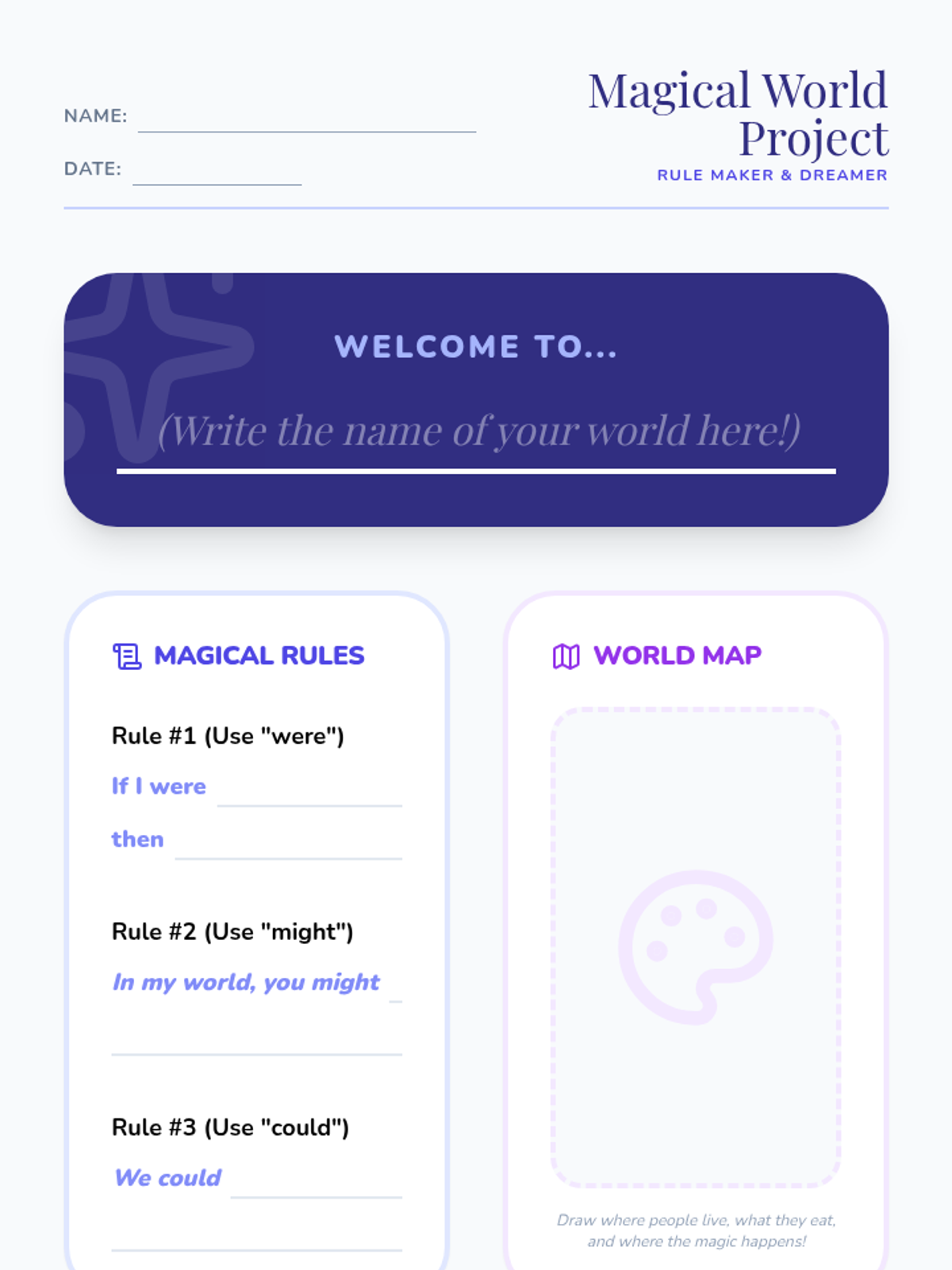
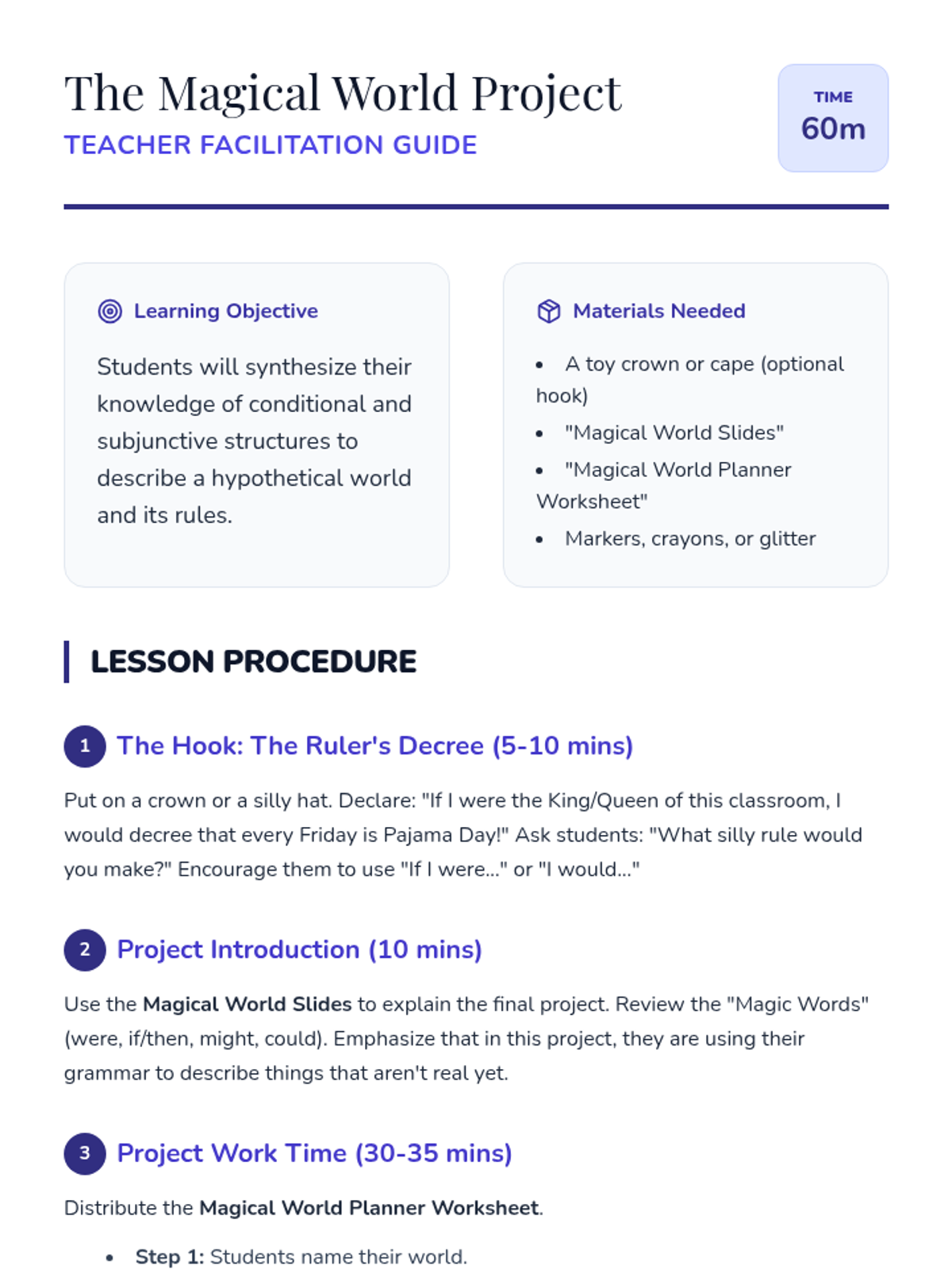
Students apply their knowledge to design a hypothetical magical world and write about its rules.
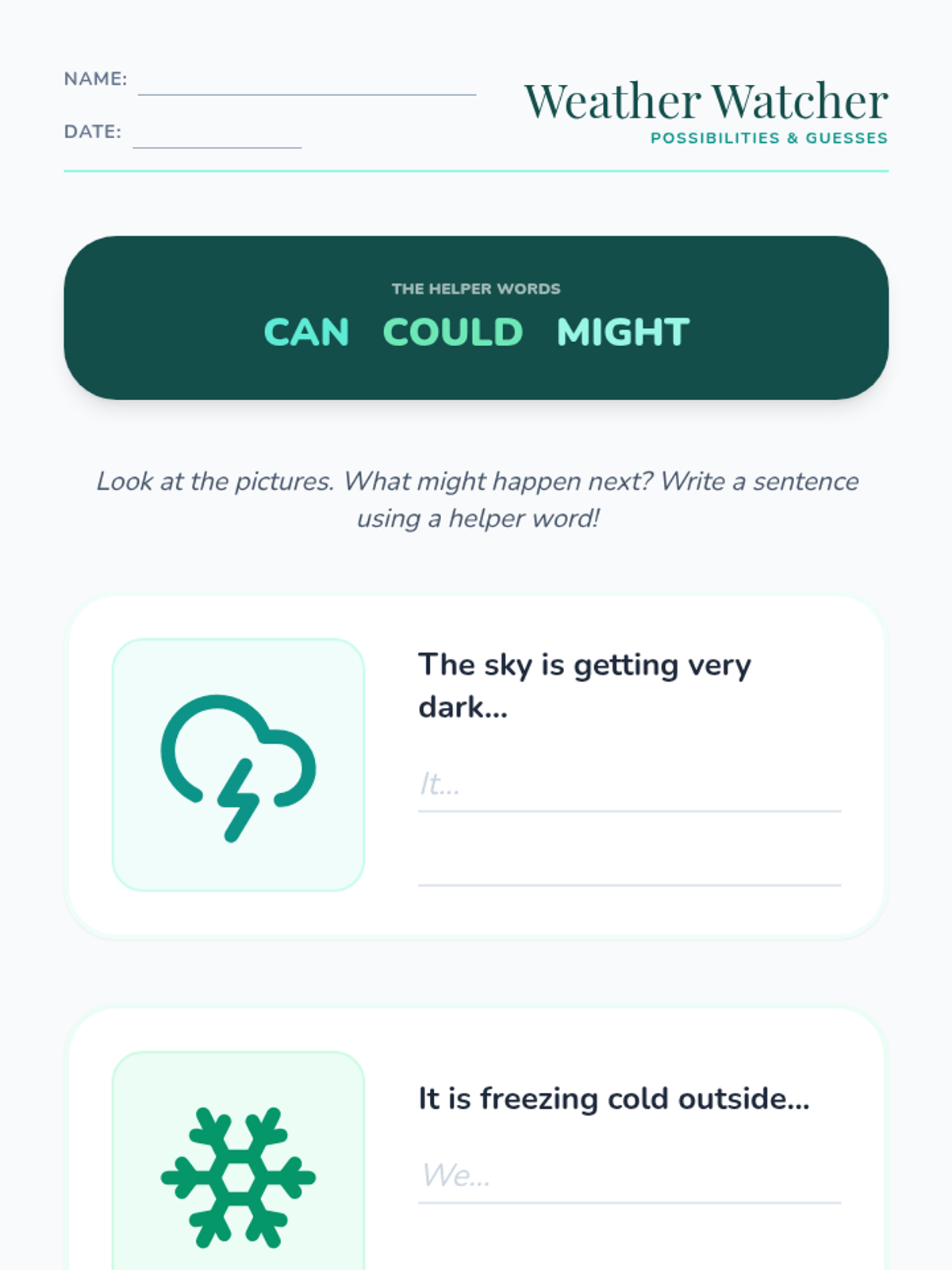
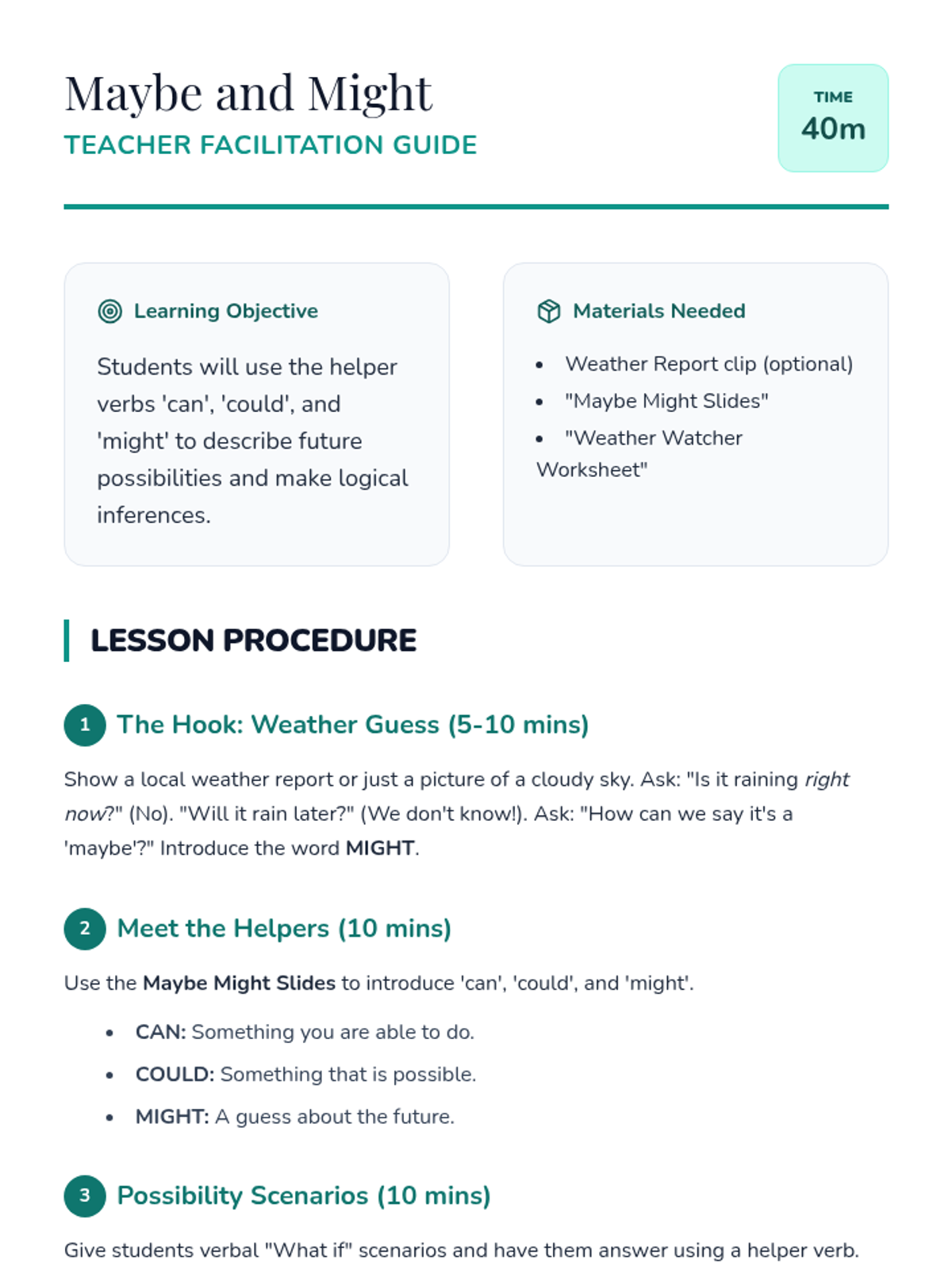
Students use 'can', 'could', and 'might' to describe possibilities and make inferences about the future.
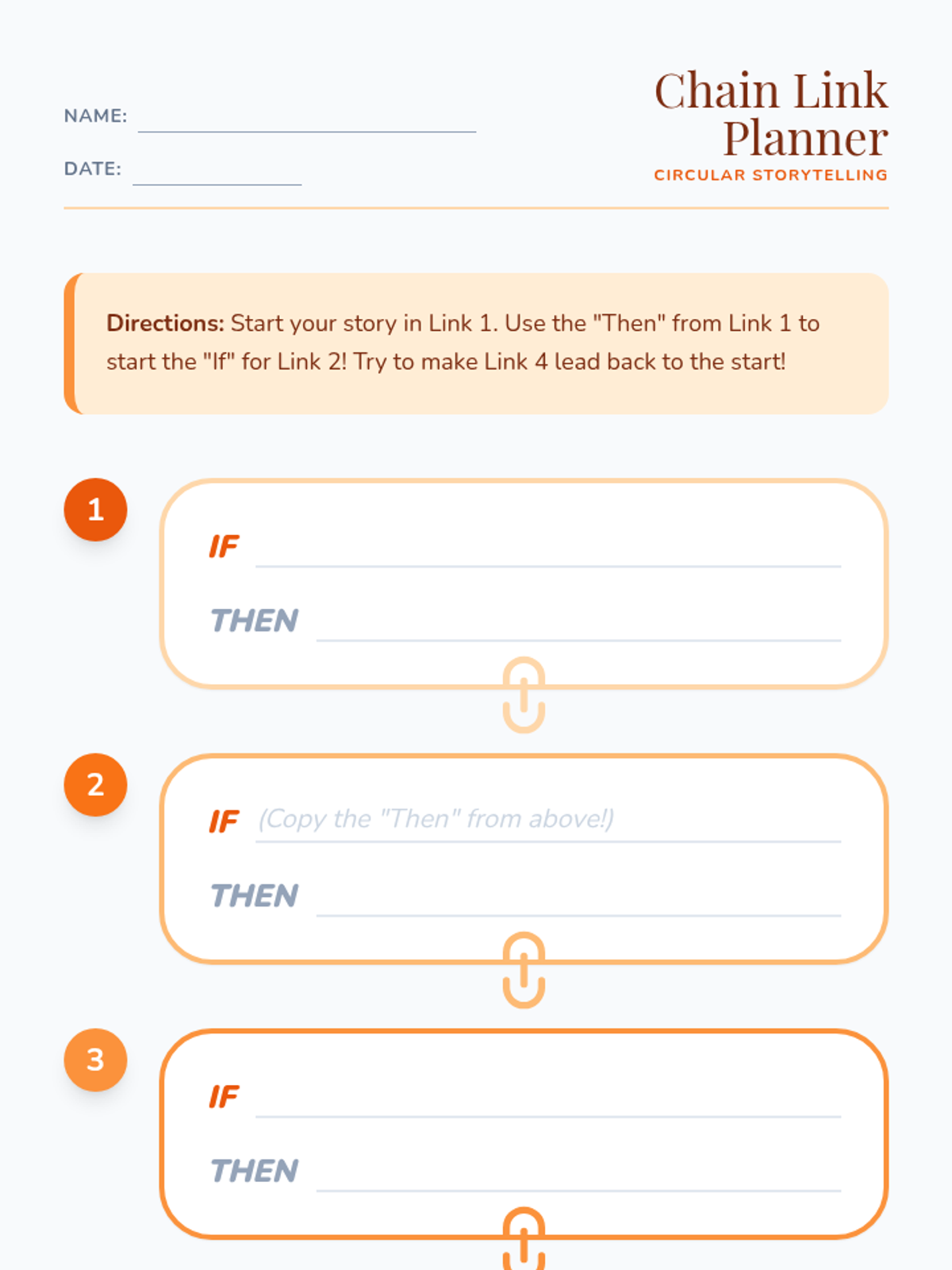
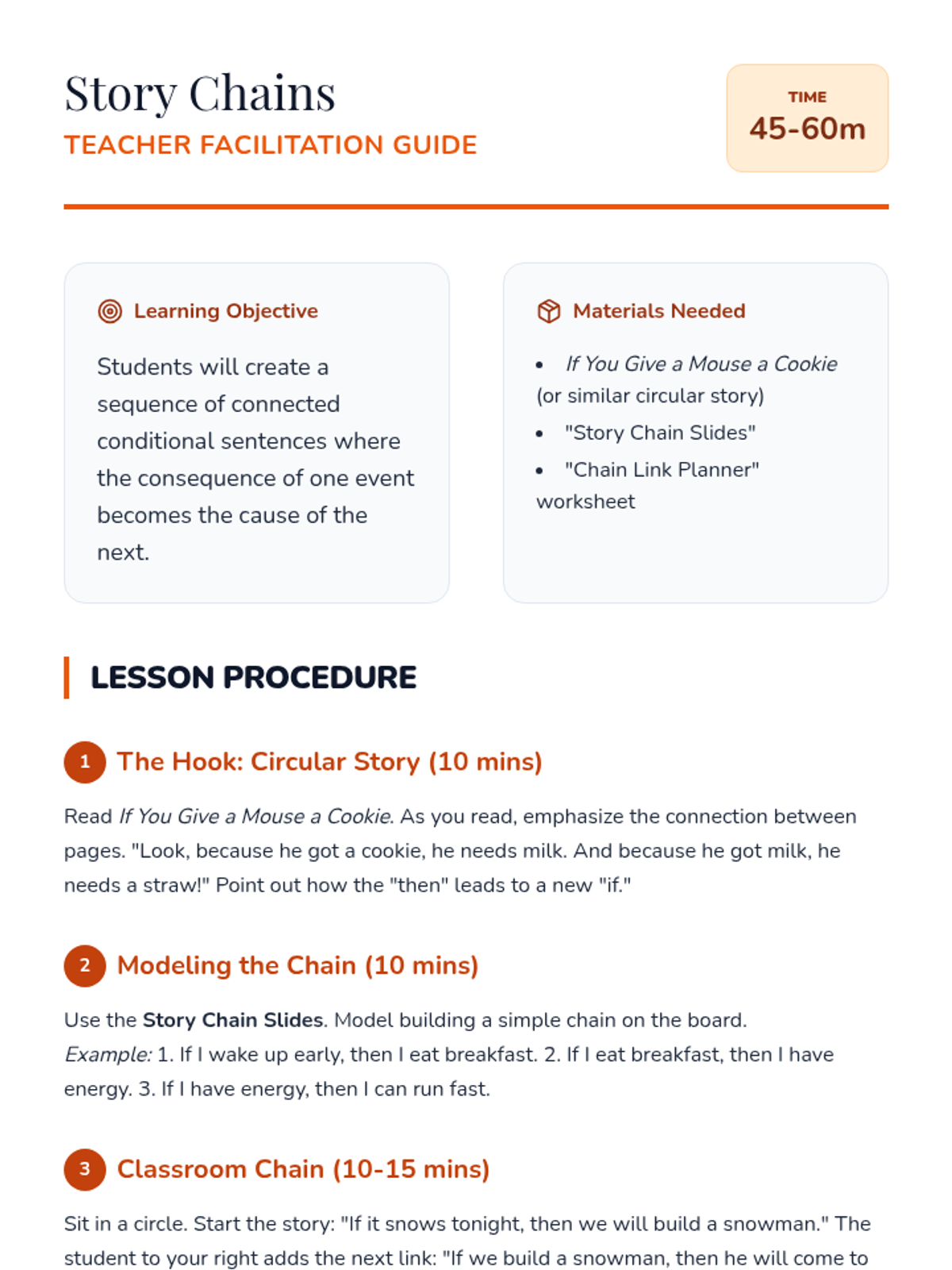
Students create circular stories where each event leads to the next using conditional linking.
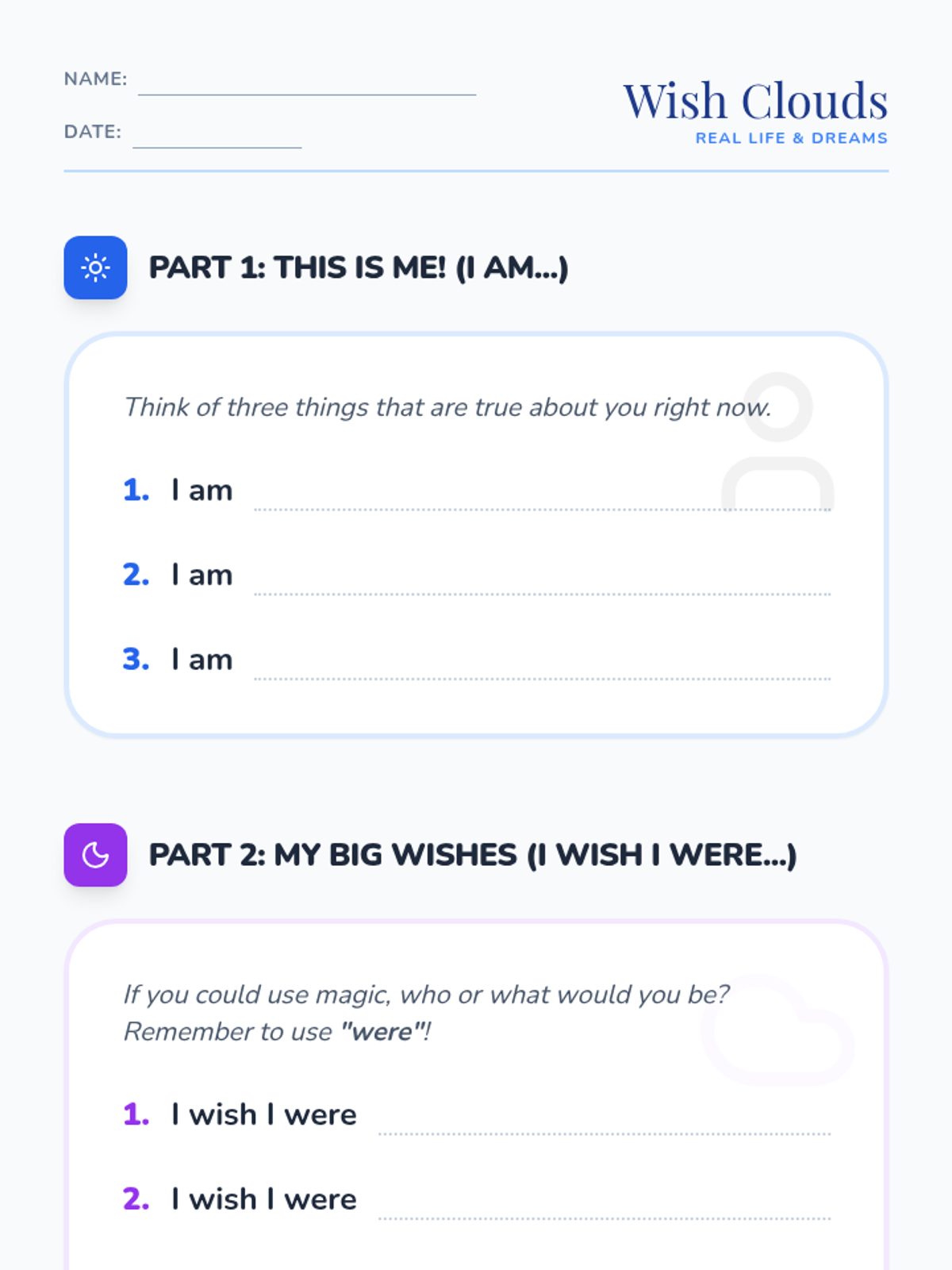
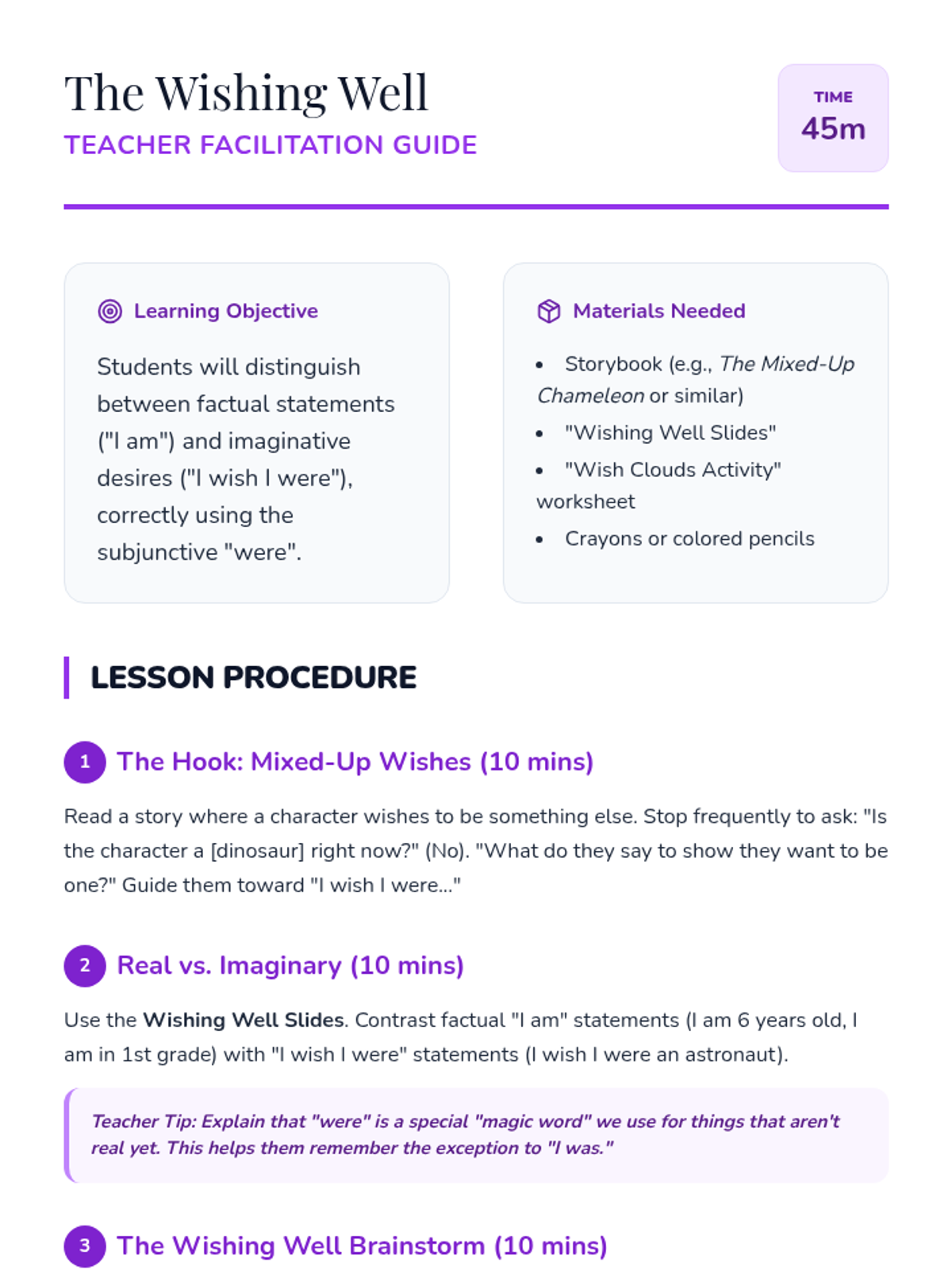
Students distinguish between facts and desires using 'I wish I were' and explore fantastical identities.
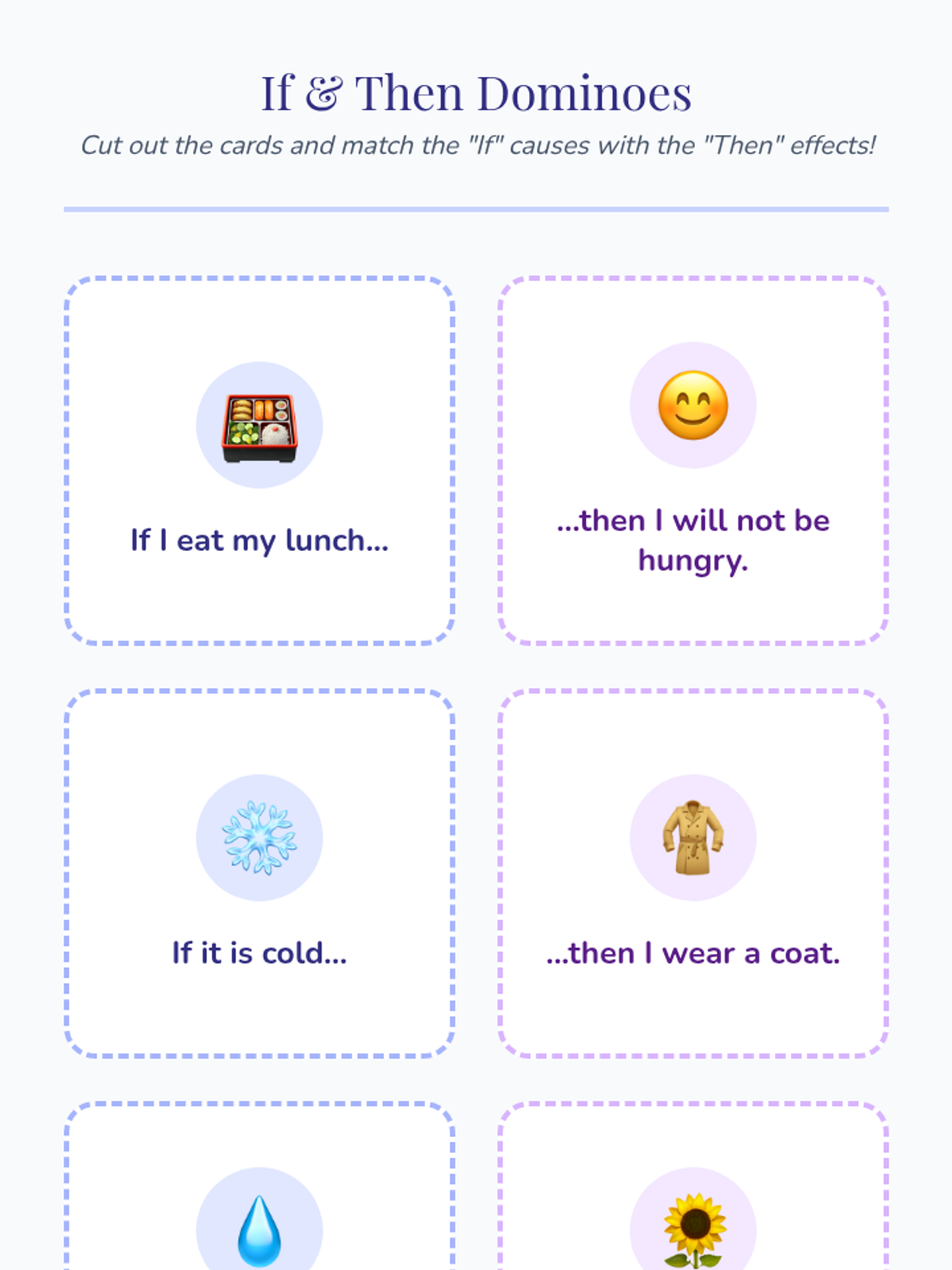
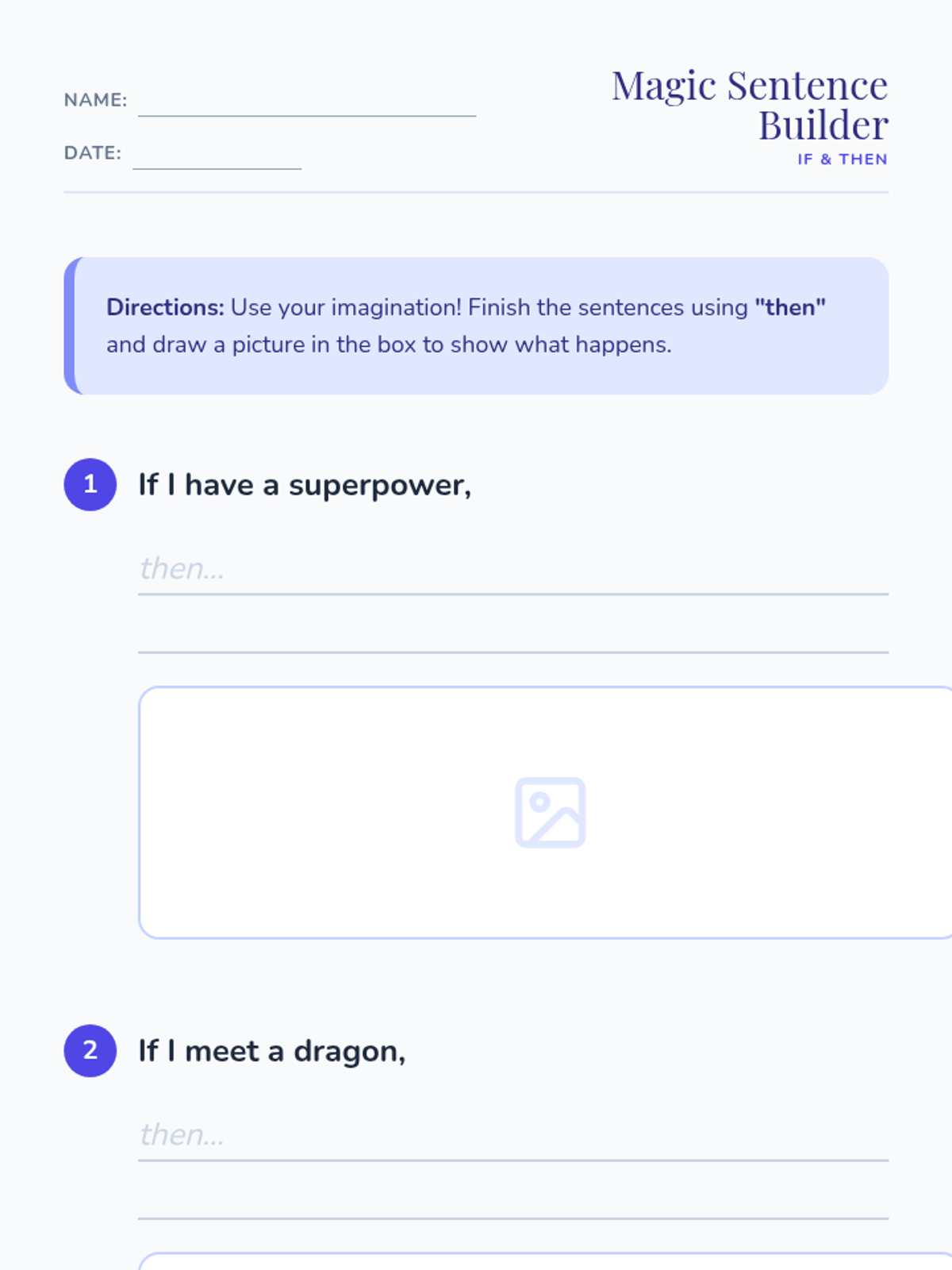
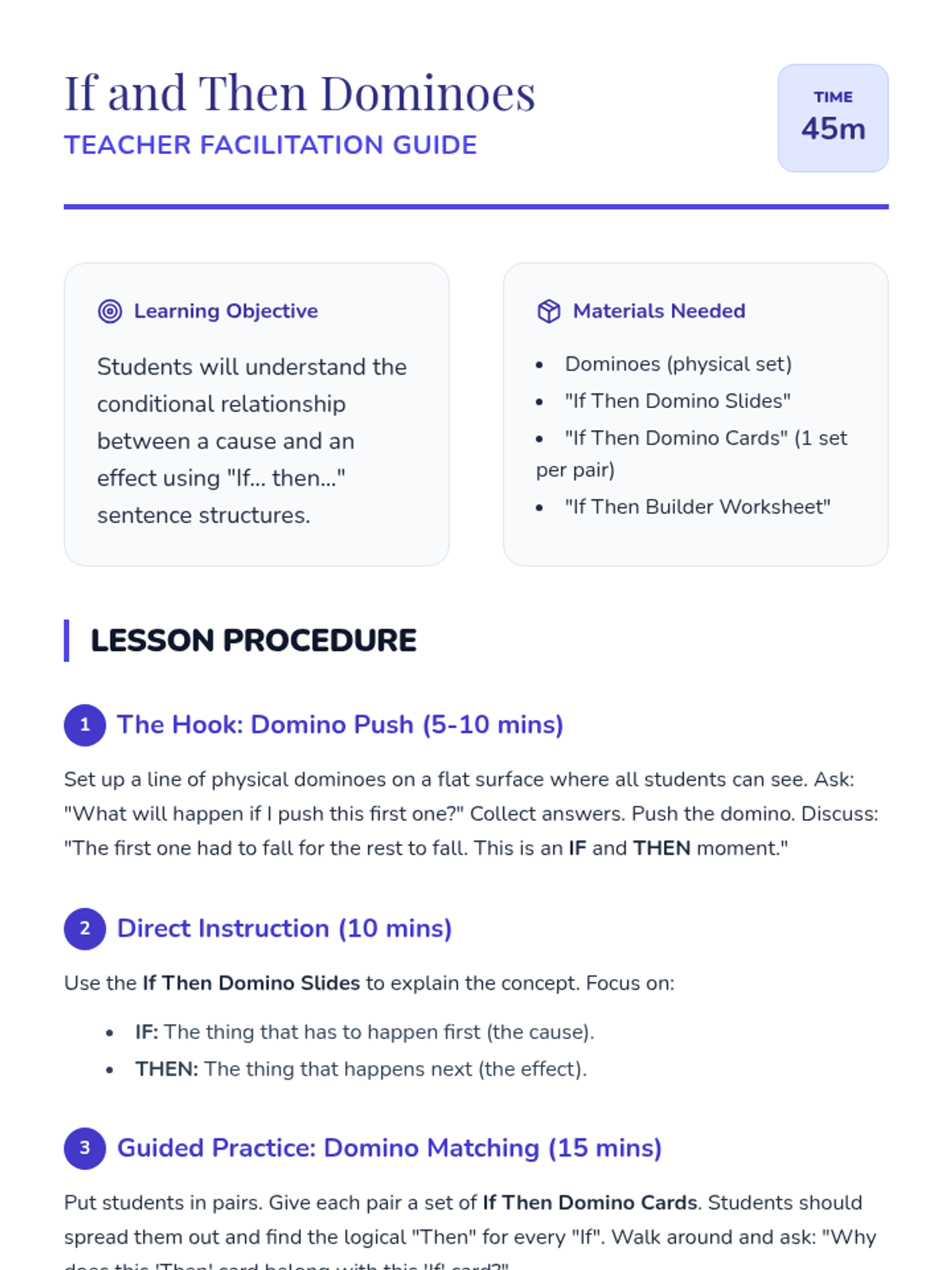
Students explore cause and effect using conditional 'If/Then' structures through a domino hook and a matching game.
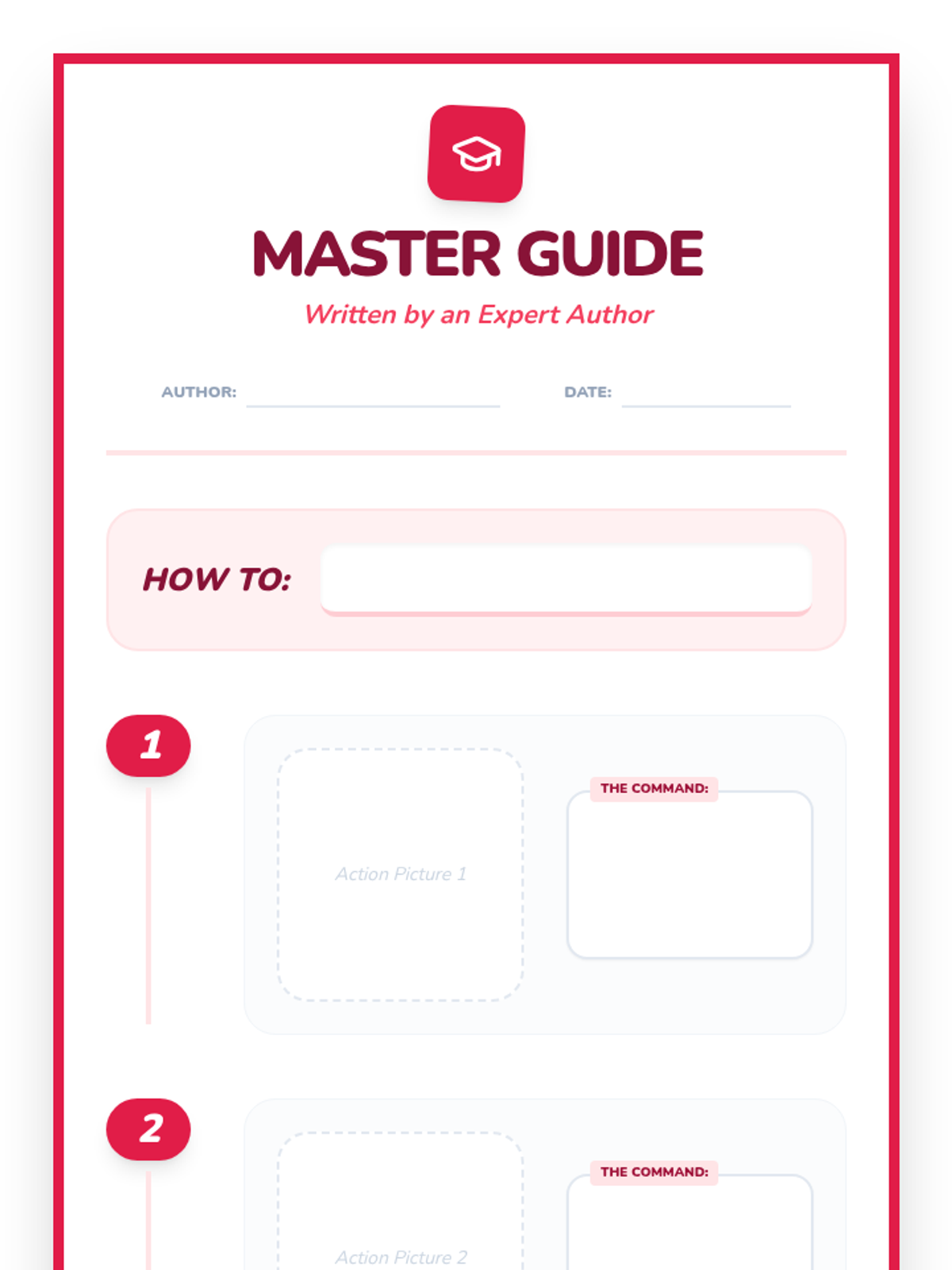
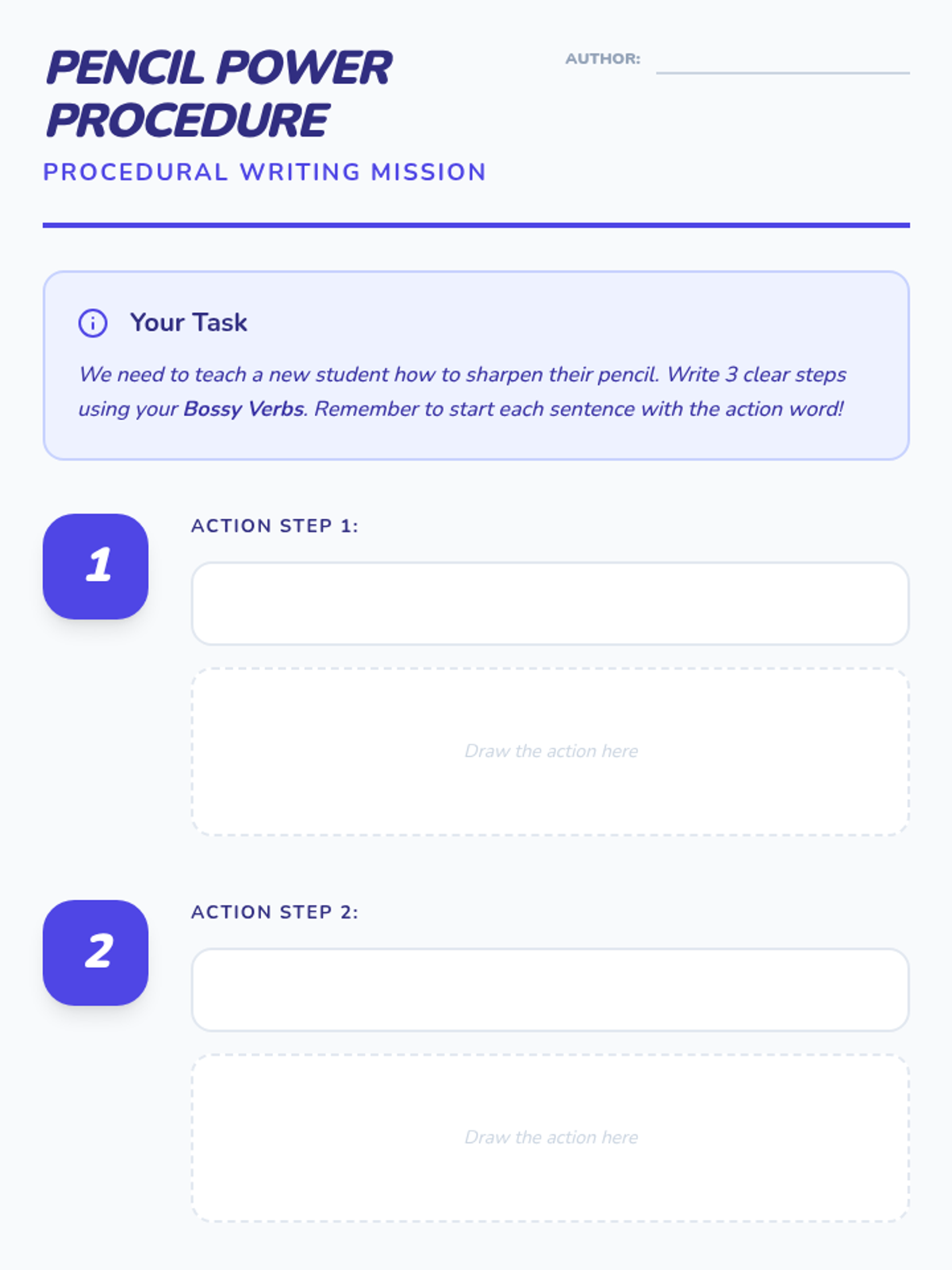
Students independently create a 3-step 'How-To' guide on a topic of their choice, applying their knowledge of imperative verbs and punctuation.
Students collaborate to write a simple procedure for a school routine, ensuring every step begins with a strong bossy verb.
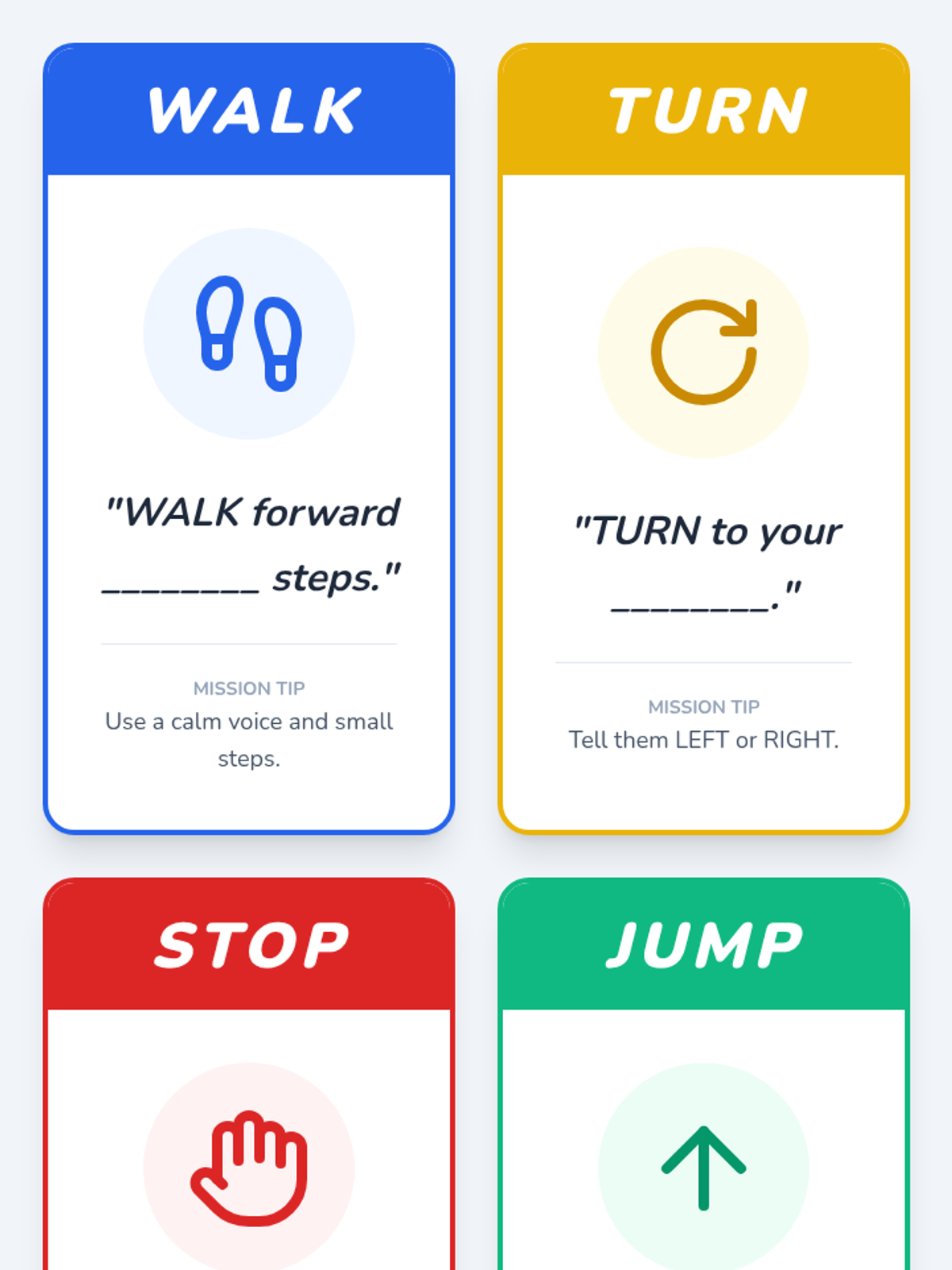
Students practice oral clarity and sequencing by guiding partners through tasks using only imperative verbs.
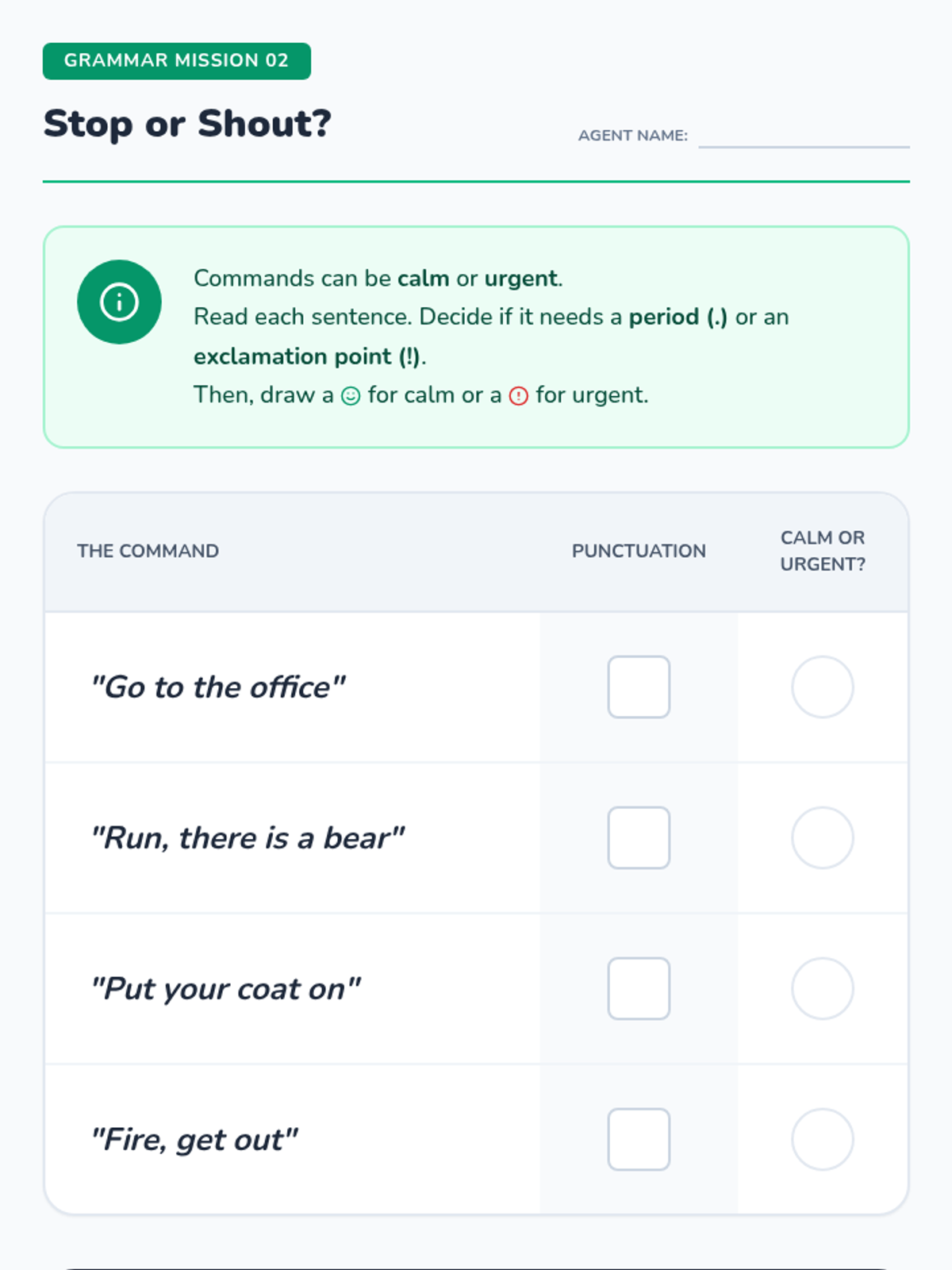
Students explore how tone affects punctuation in imperative sentences, learning when to use a period versus an exclamation point for commands.
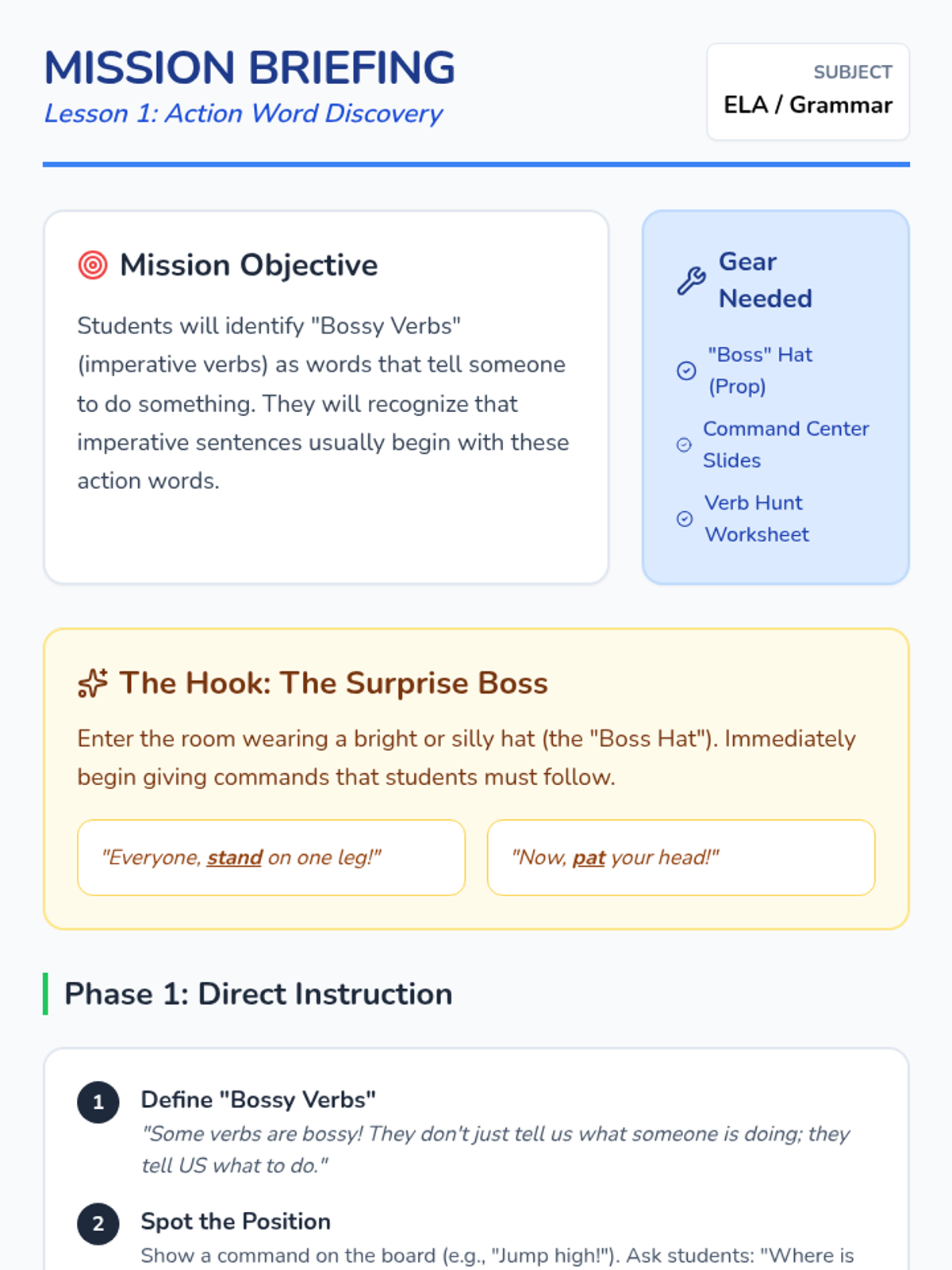
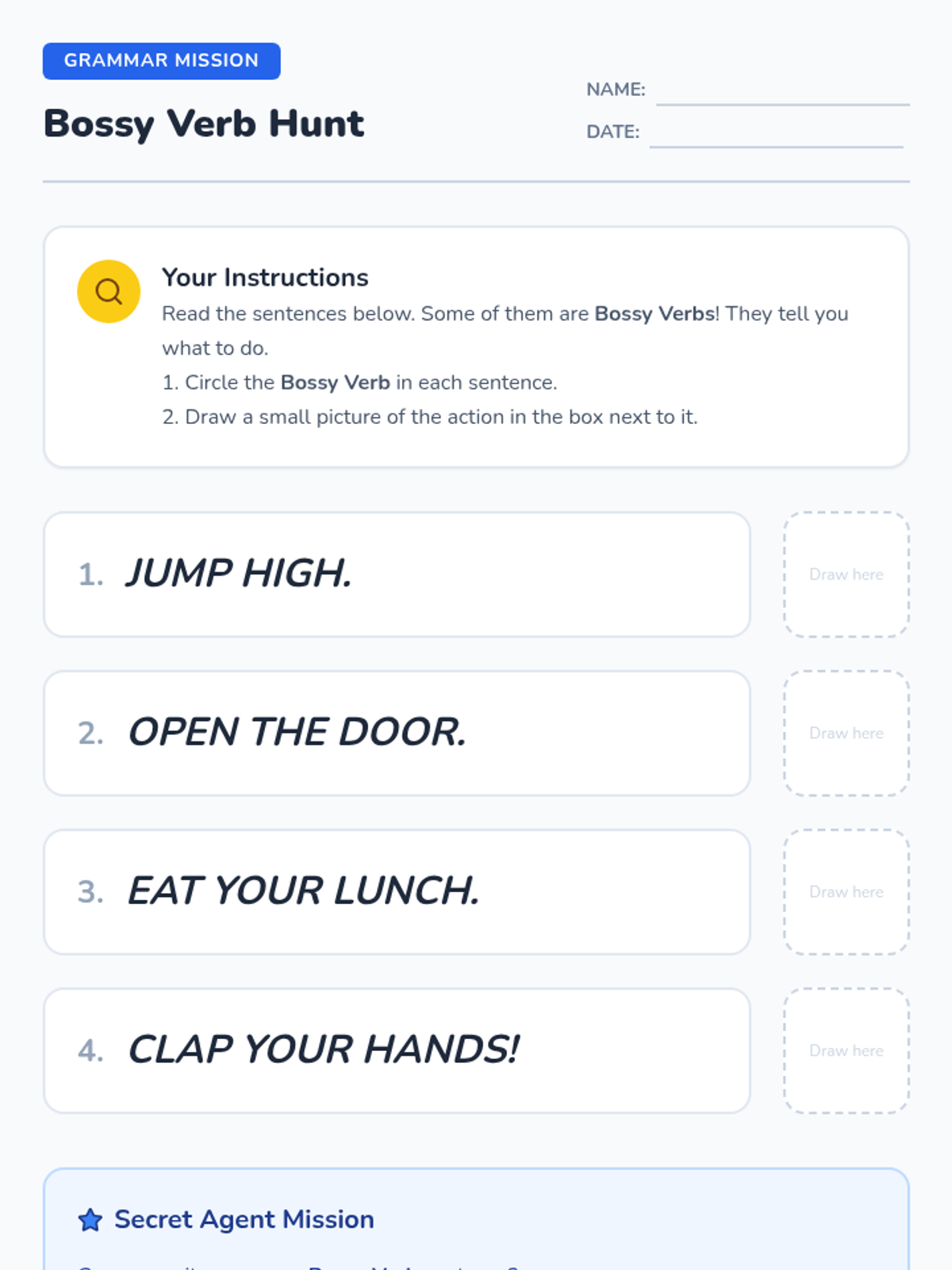
Students learn to identify imperative verbs (Bossy Verbs) through a game-based approach, recognizing that these sentences often start with the action word.
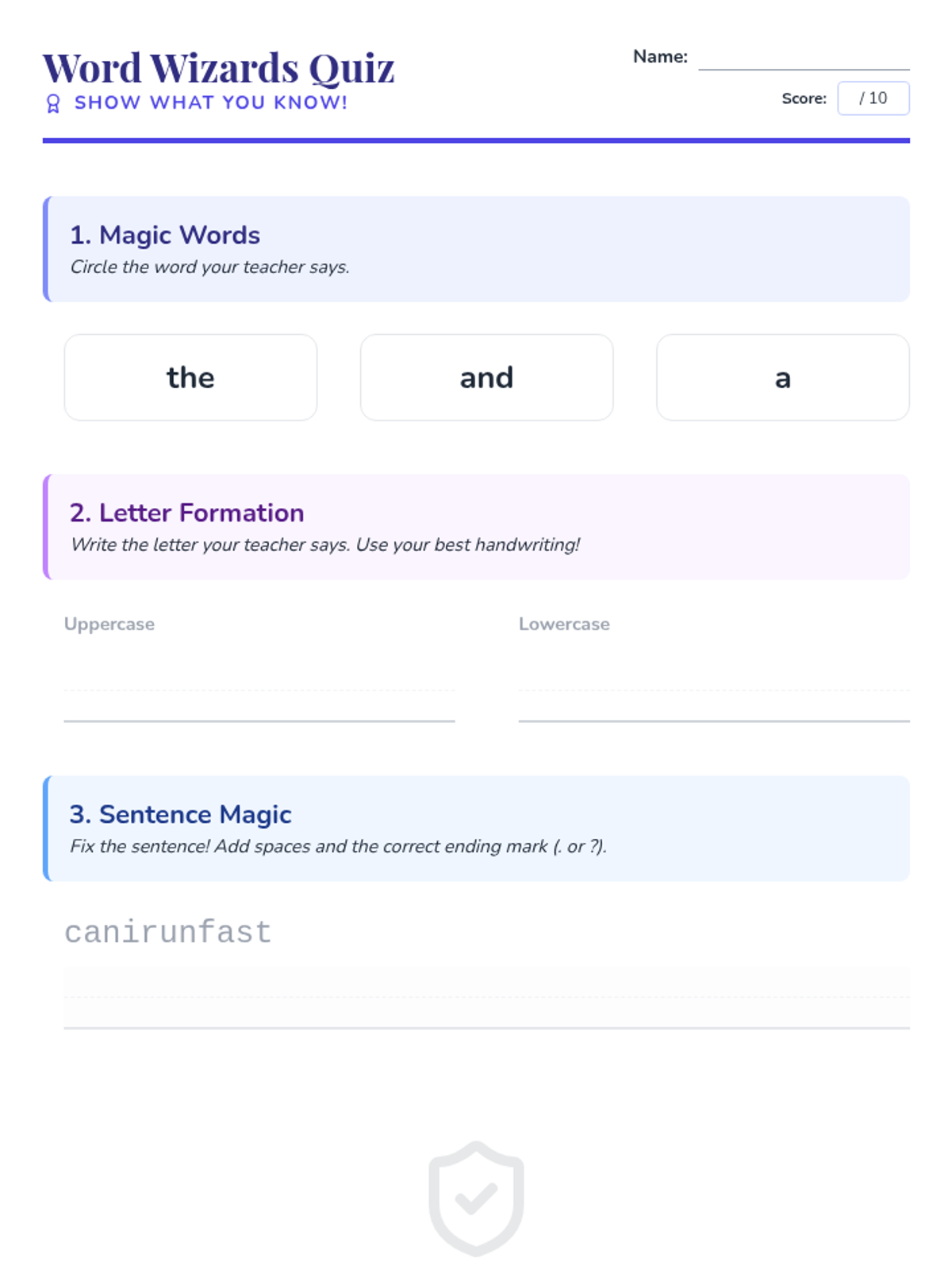
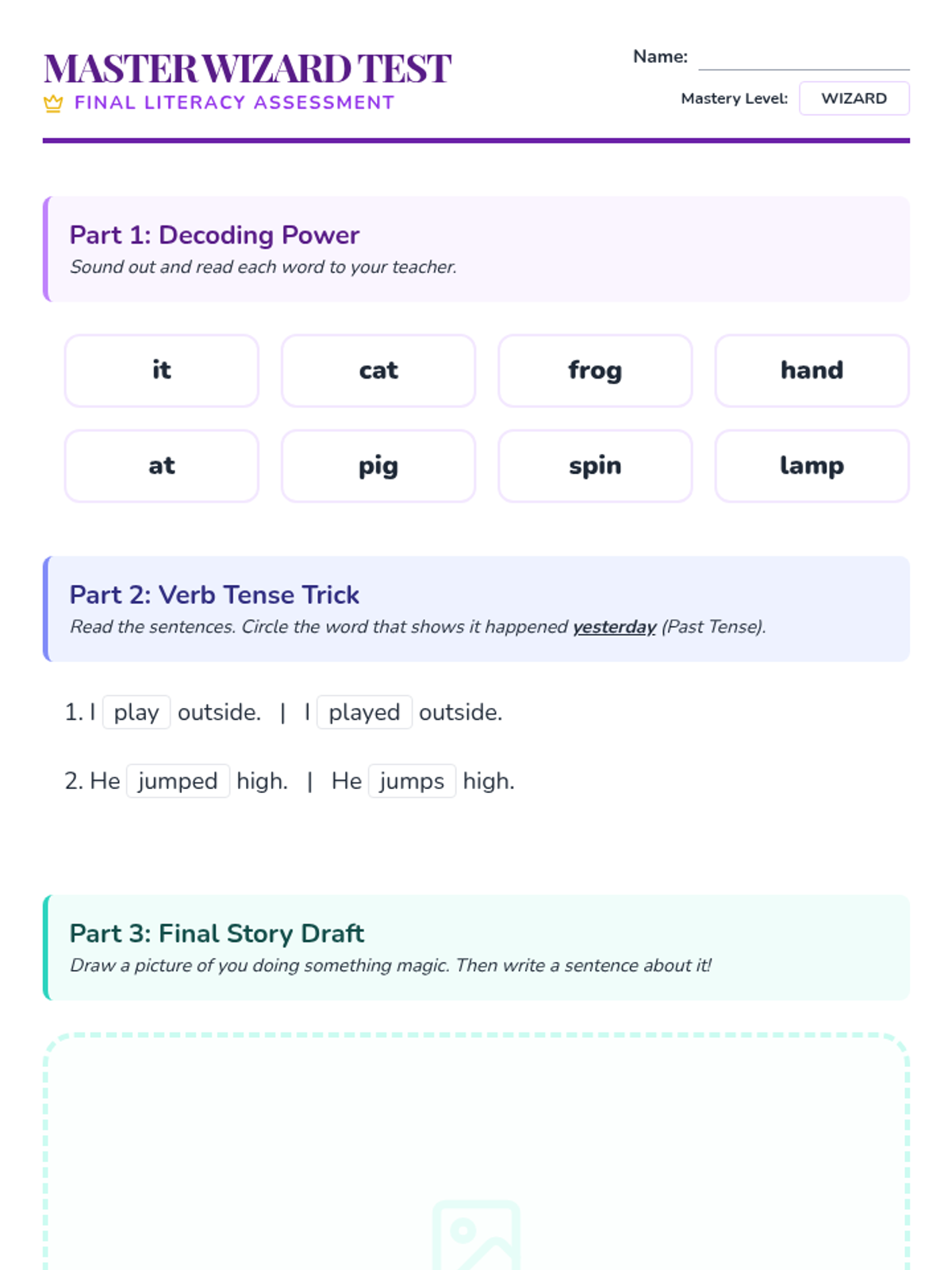
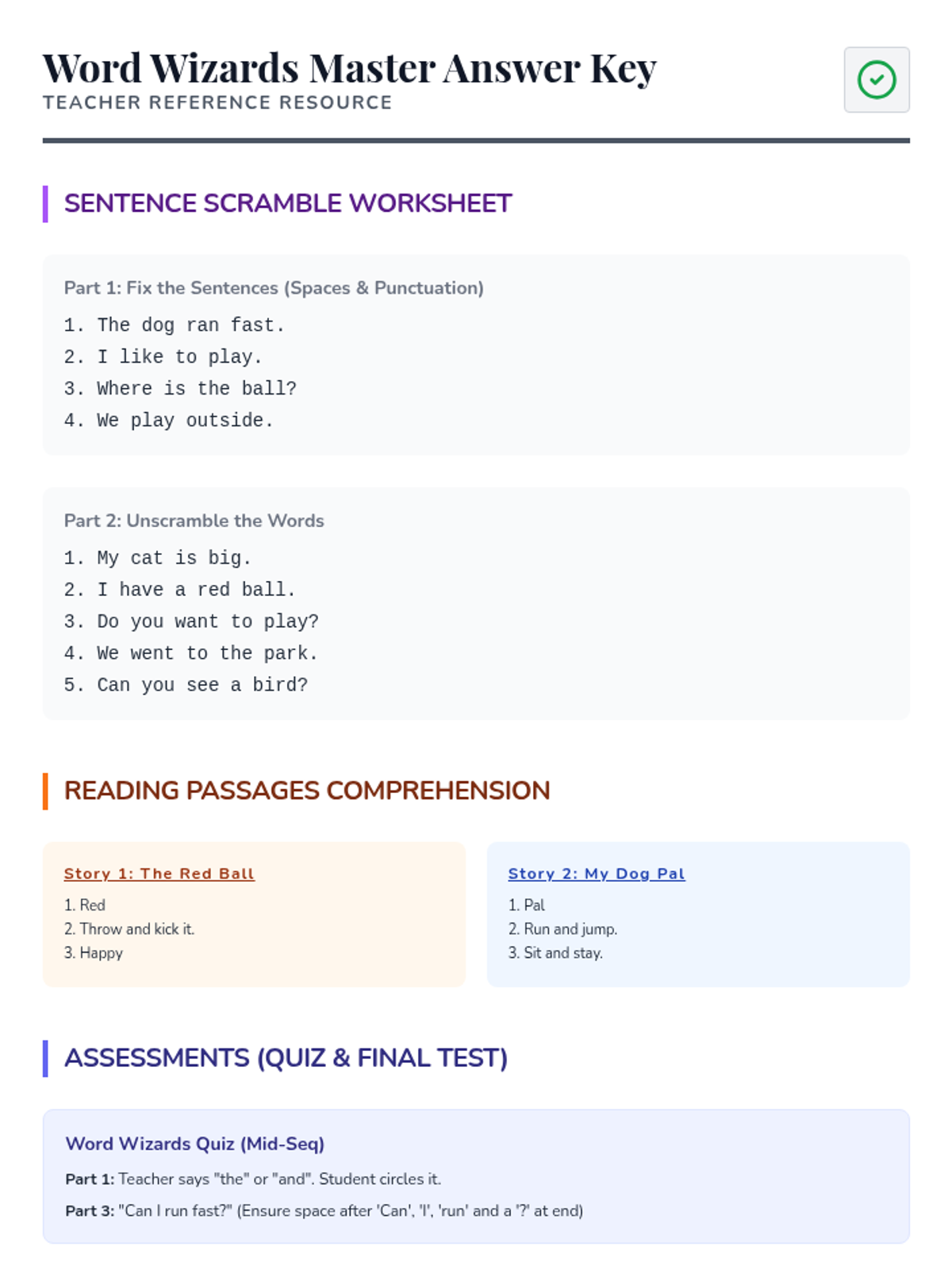
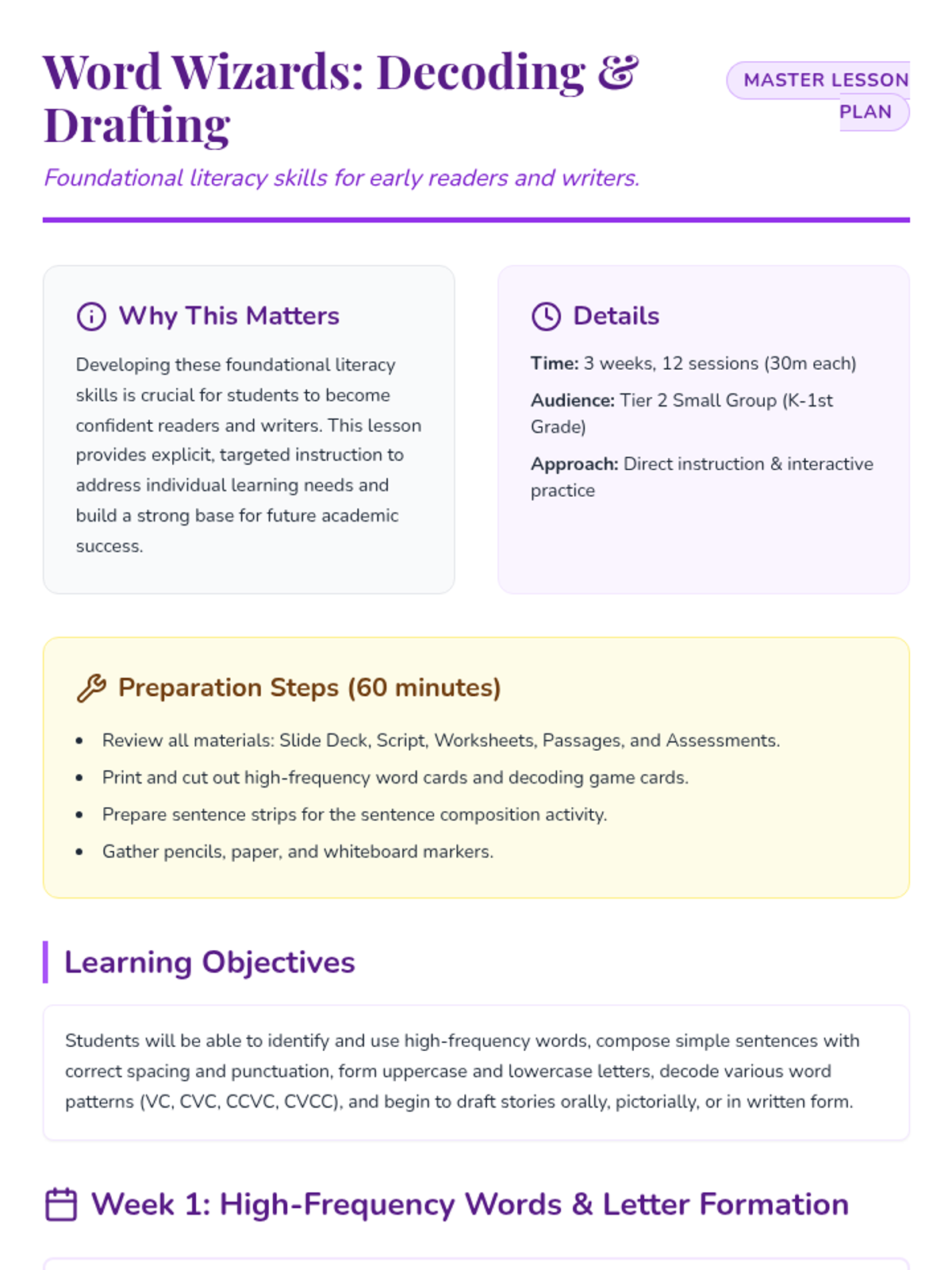
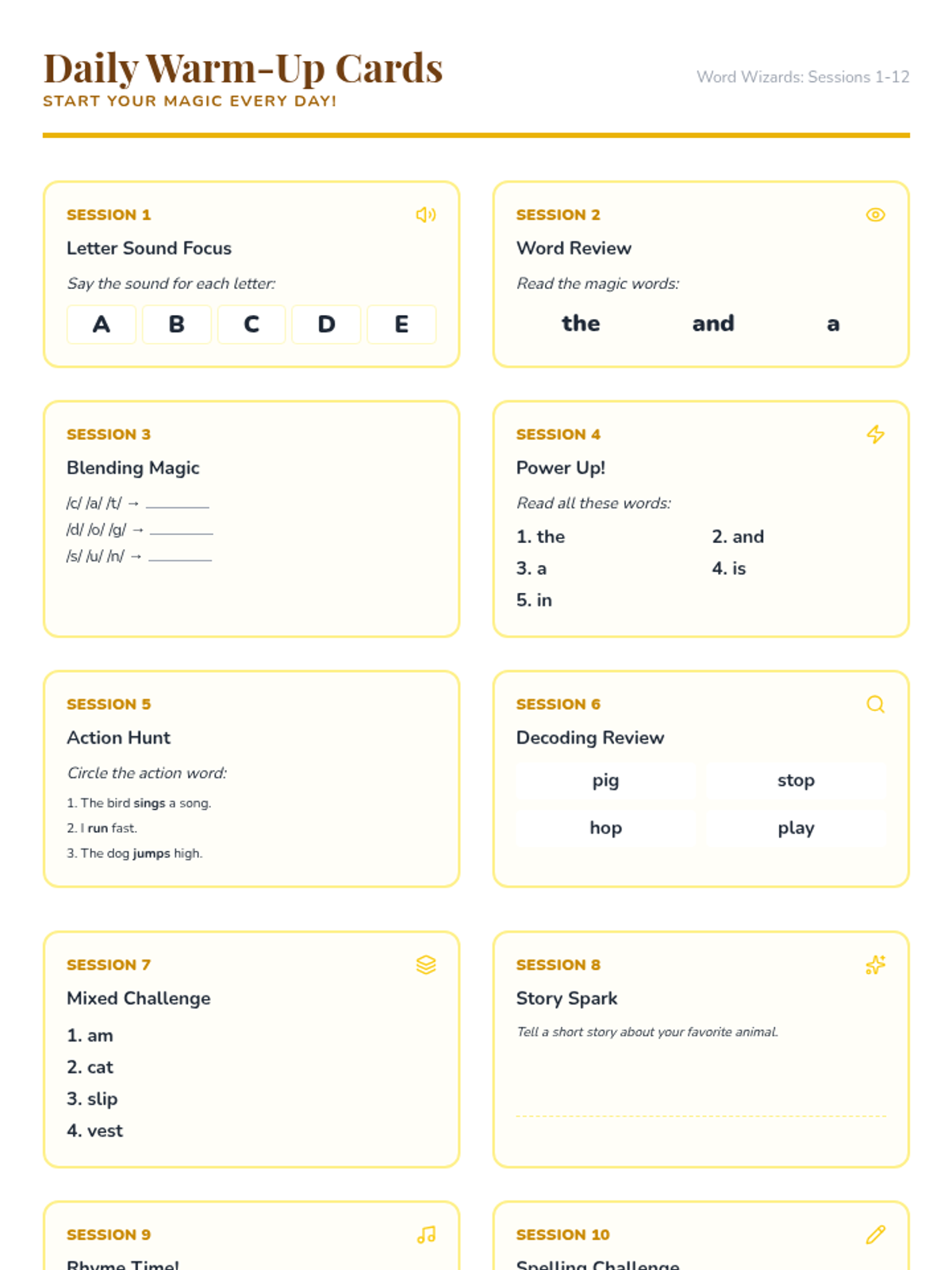
Applies all learned skills through interactive games and assessments, concluding with a comprehensive decoding and drafting test.
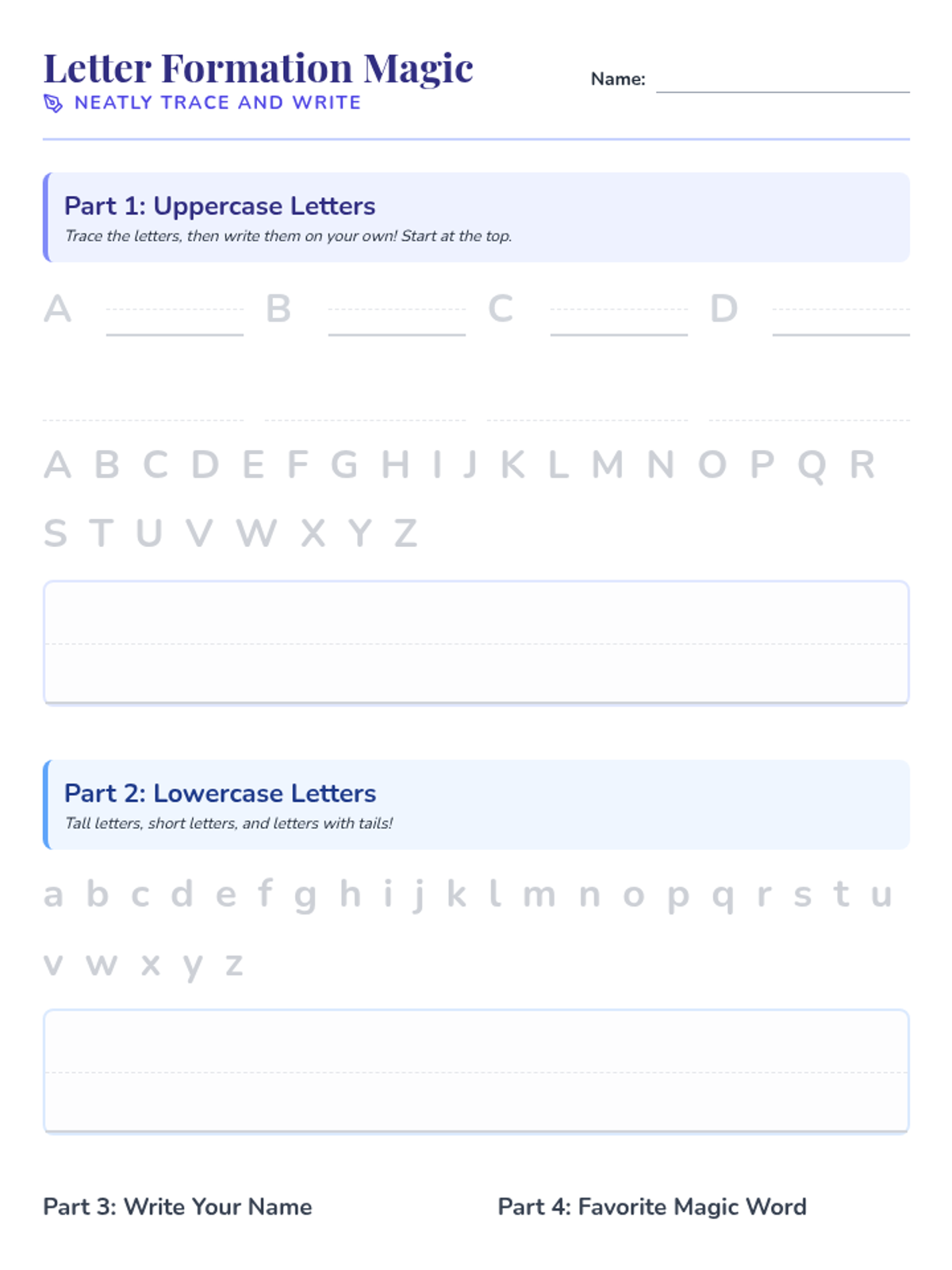
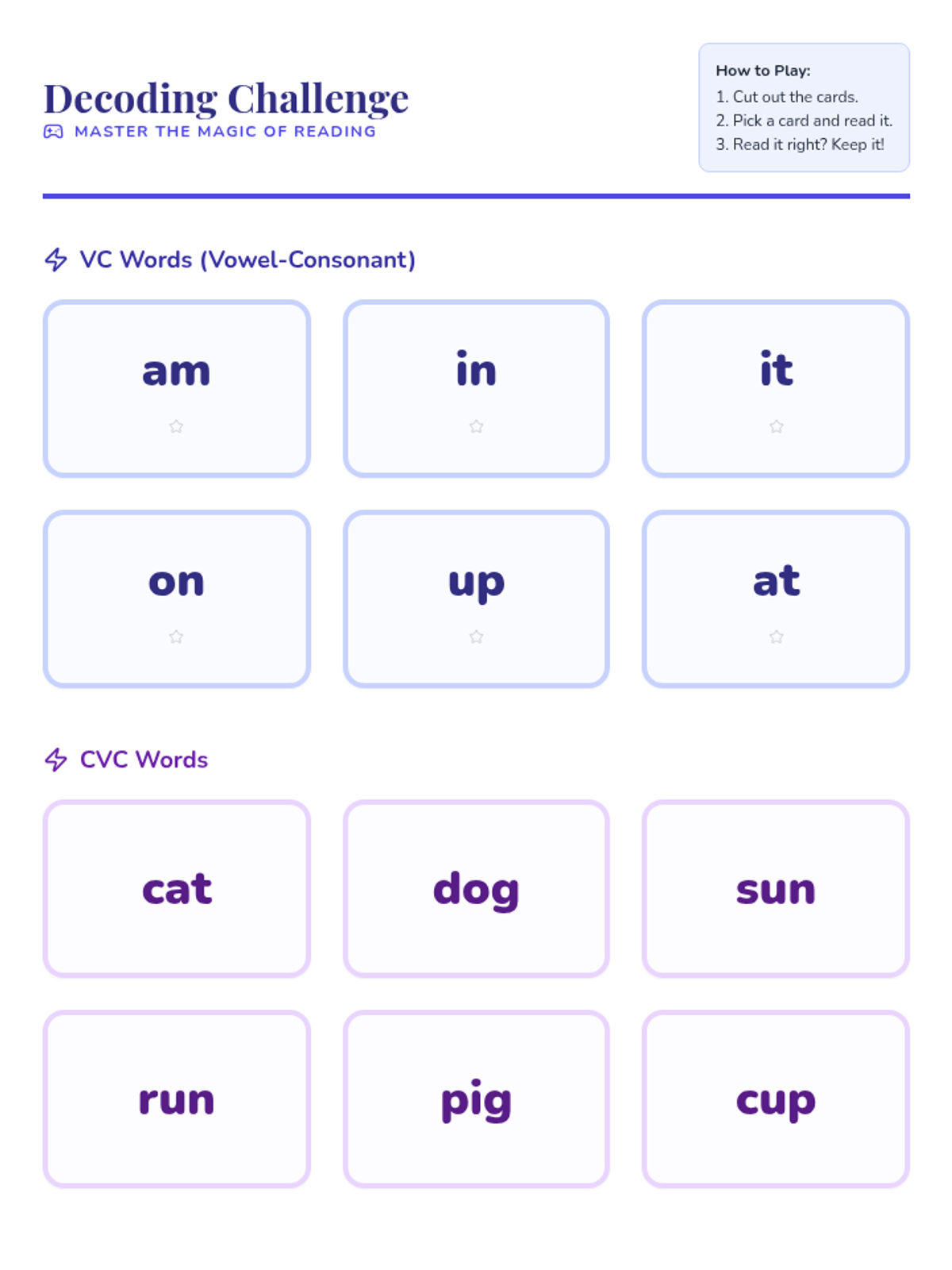
Focuses on high-frequency words, uppercase and lowercase letter formation, and an introduction to basic sentence structure and decoding VC/CVC words.
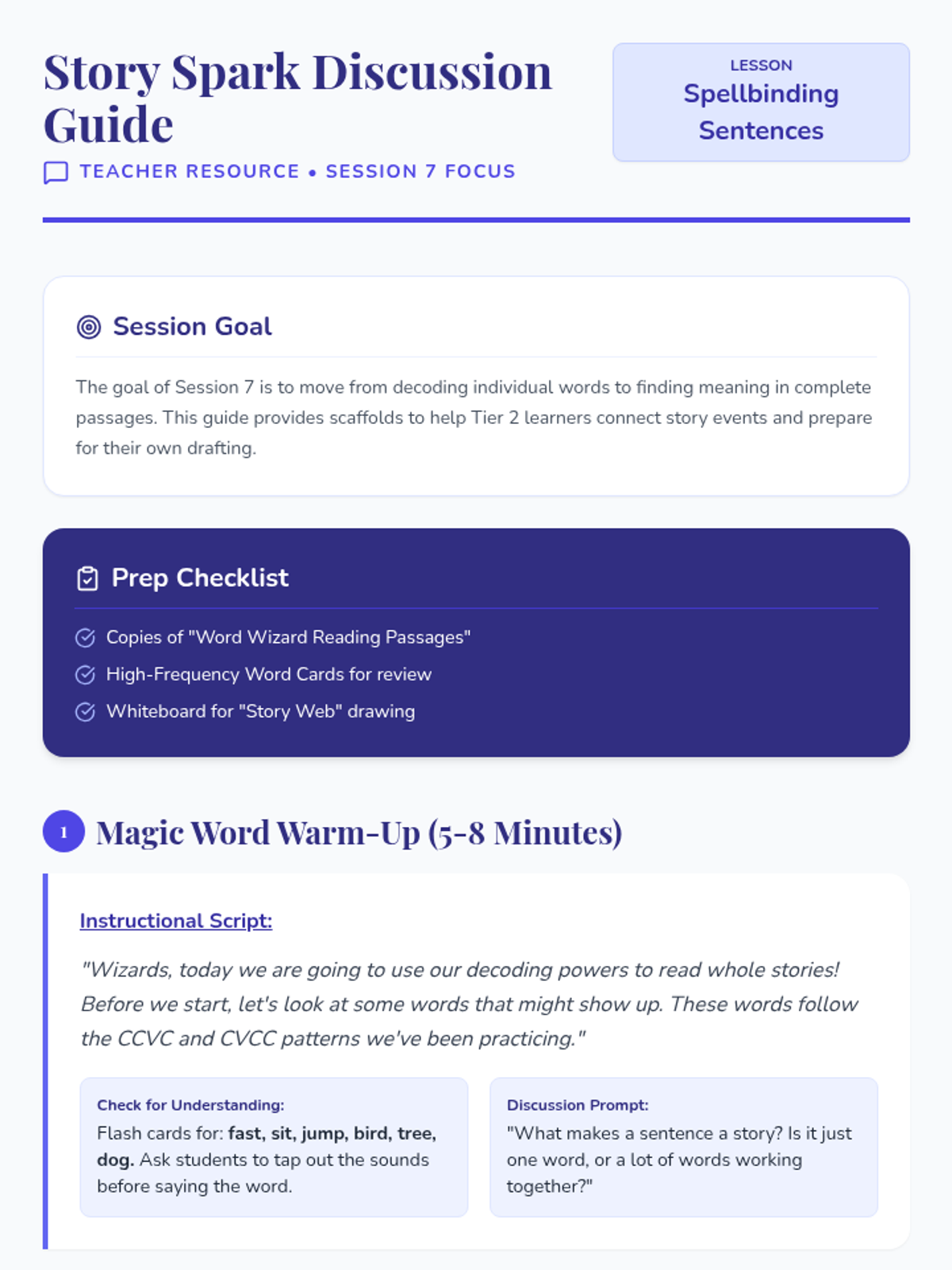
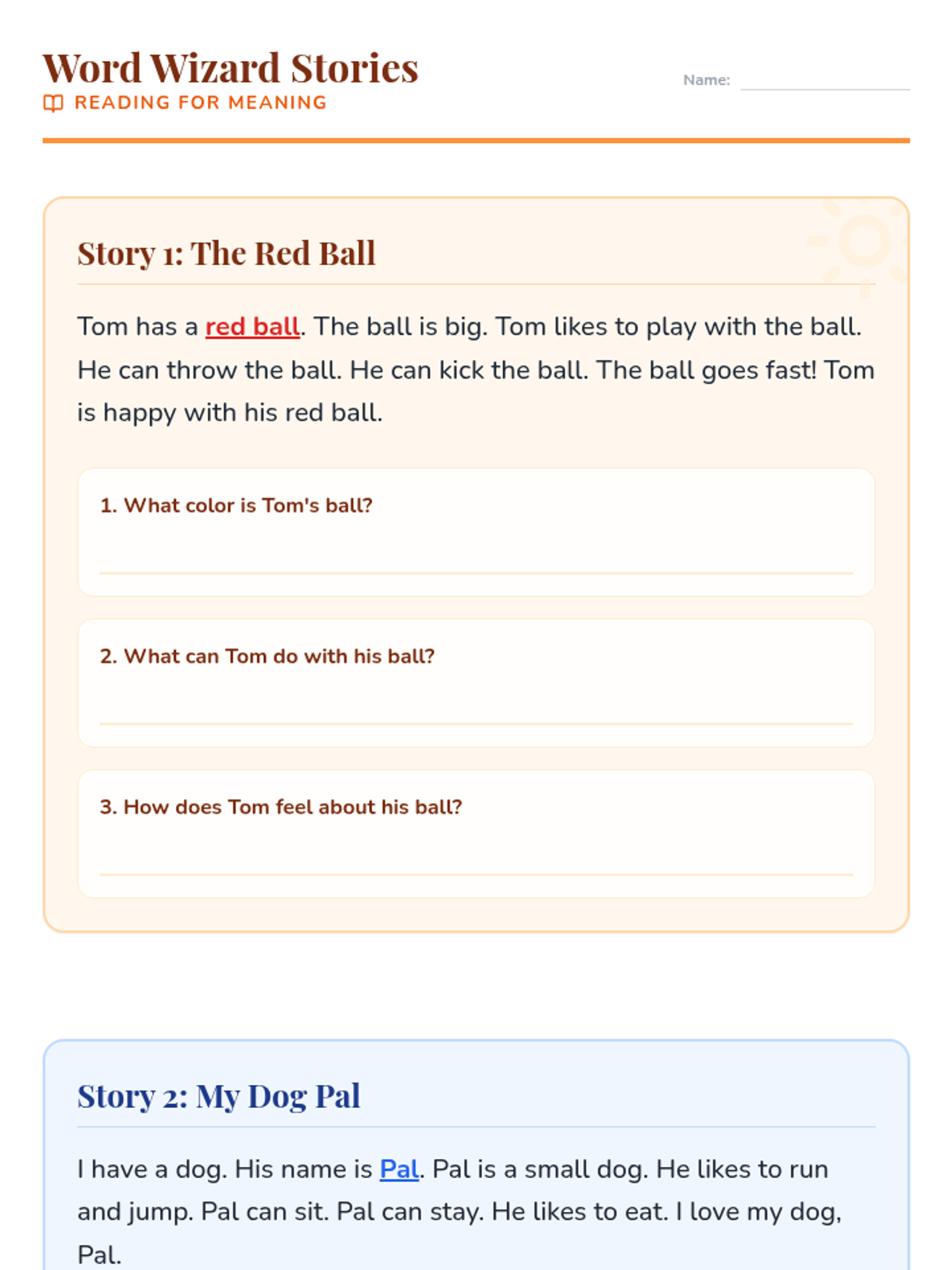
Expands on decoding skills to CCVC and CVCC patterns, introduces verb tenses (present/past), and initiates the story drafting process.