Builds word mastery through parts of speech, Greek and Latin roots, and morphological analysis of prefixes and suffixes. Develops nuanced comprehension using context clues, shades of meaning, and idiomatic expressions.
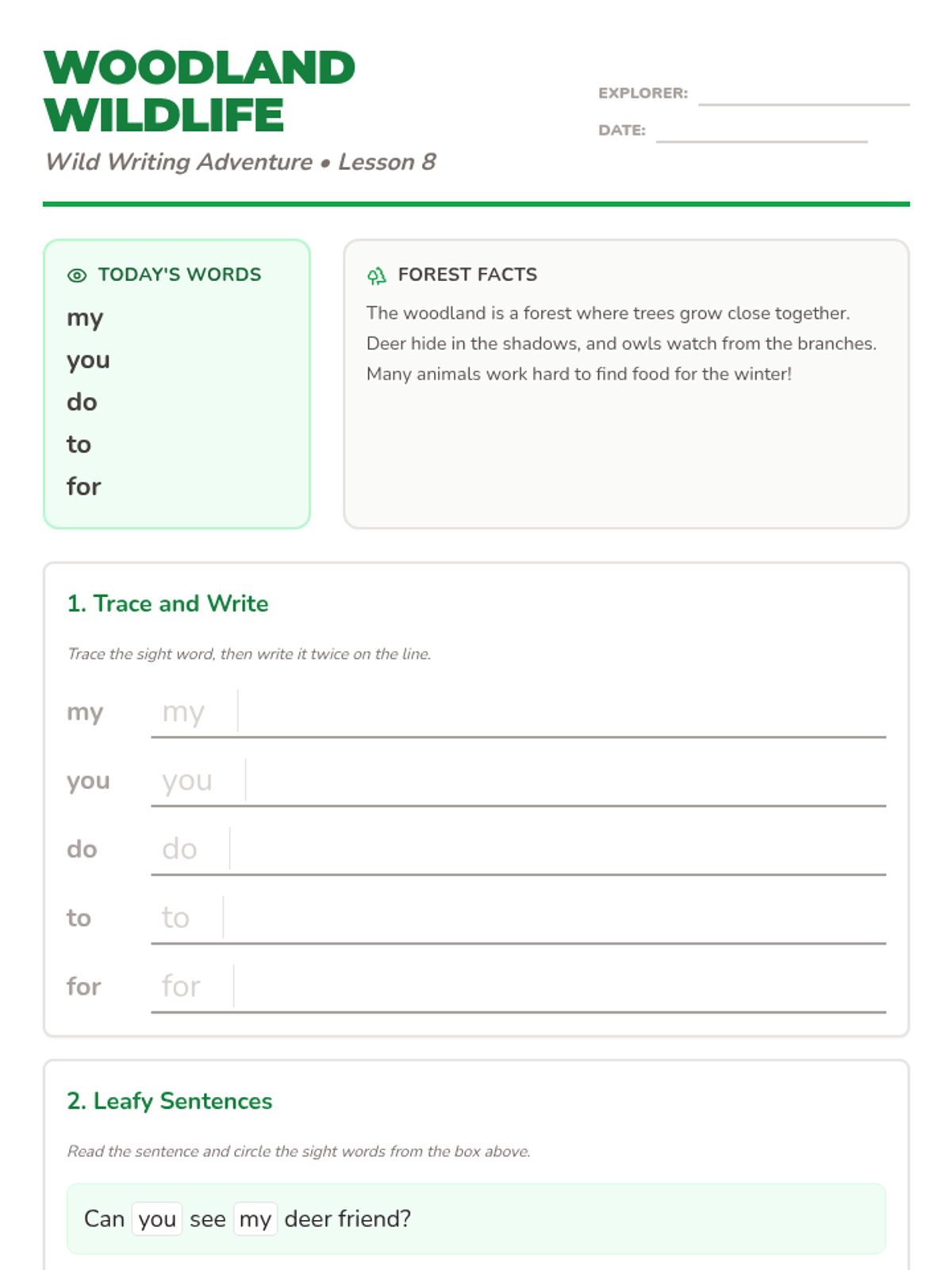
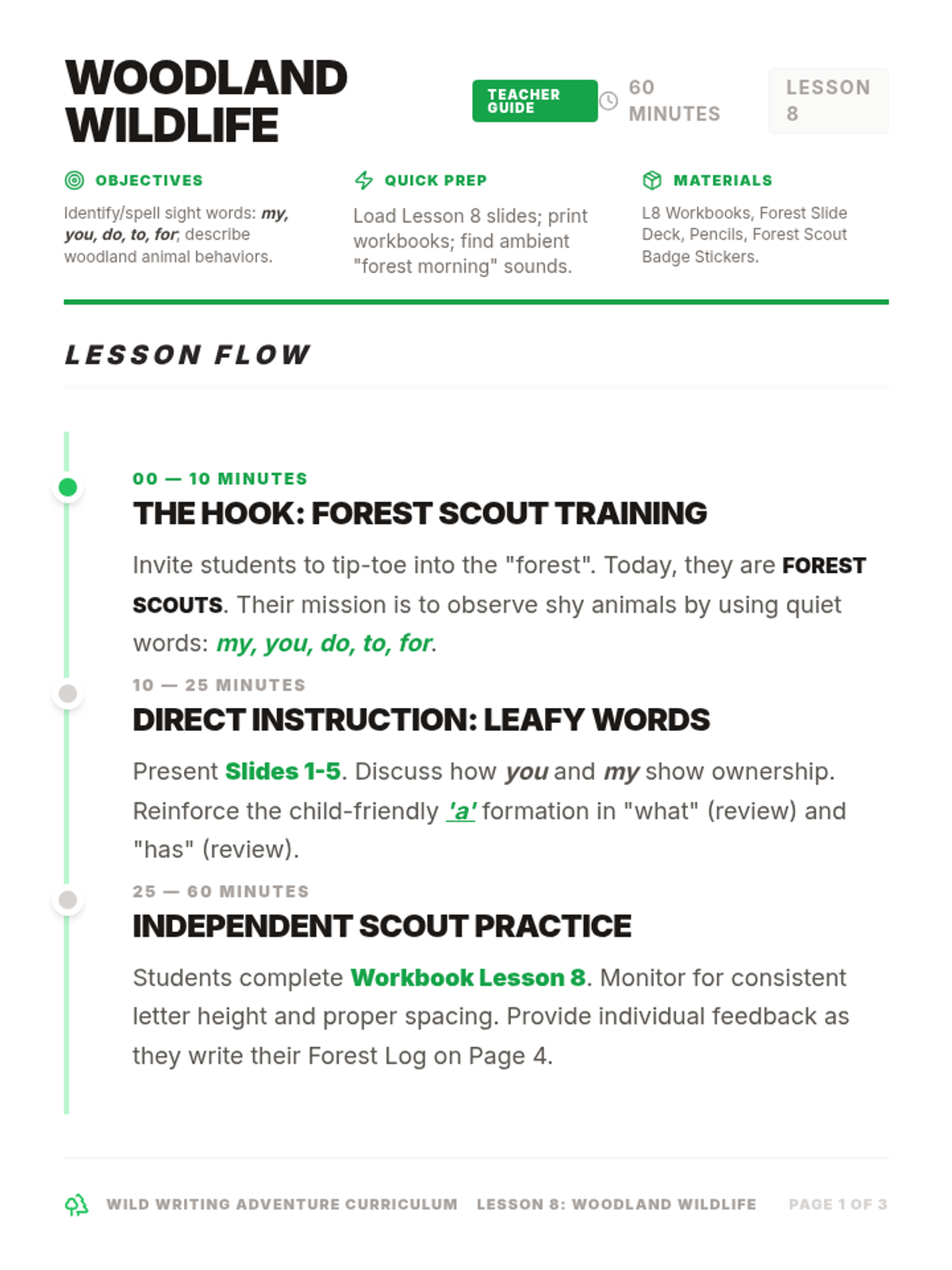
Explore the leafy woodland forest to master essential sight words while meeting graceful deer, wise owls, and busy woodpeckers.
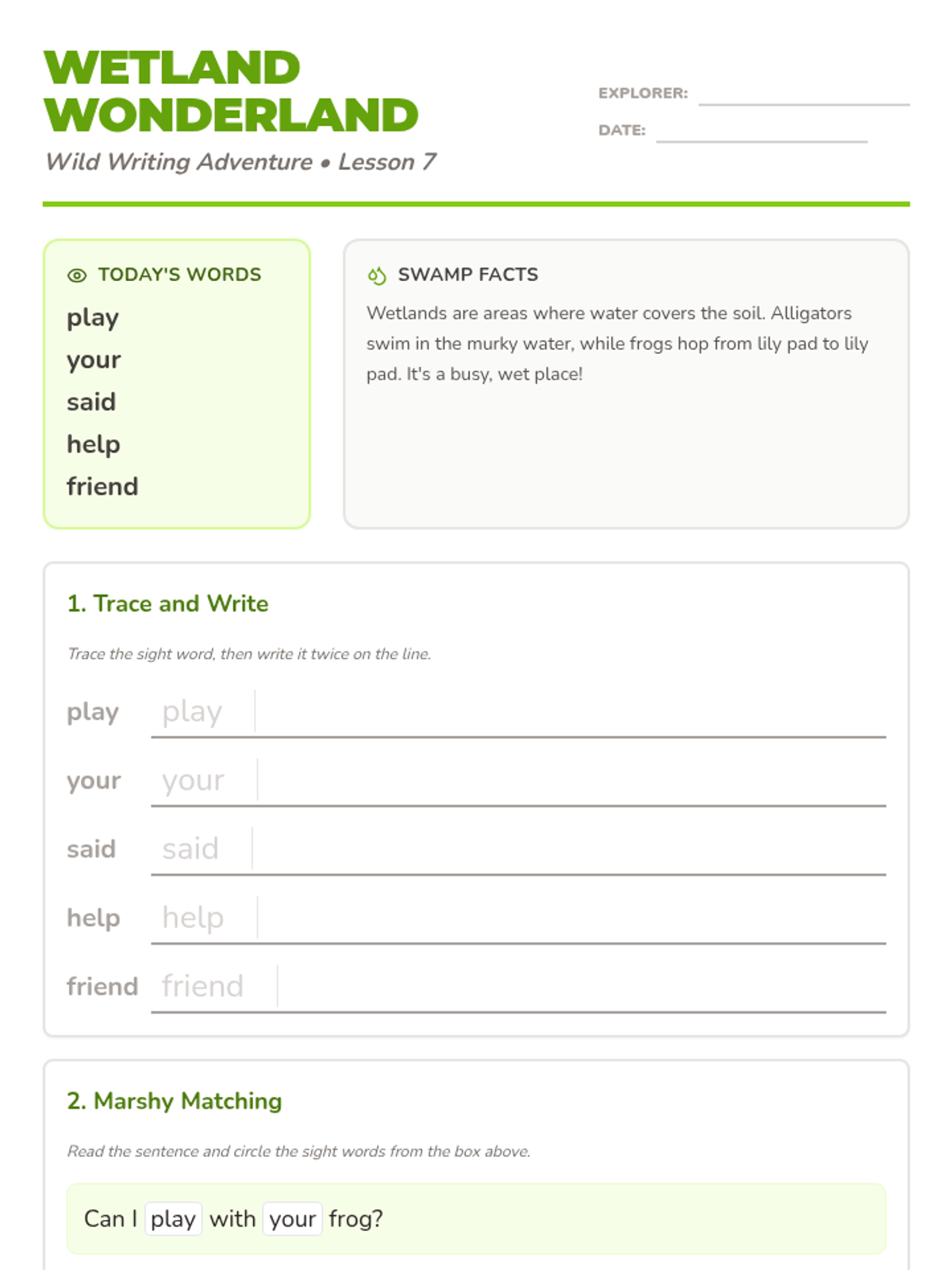
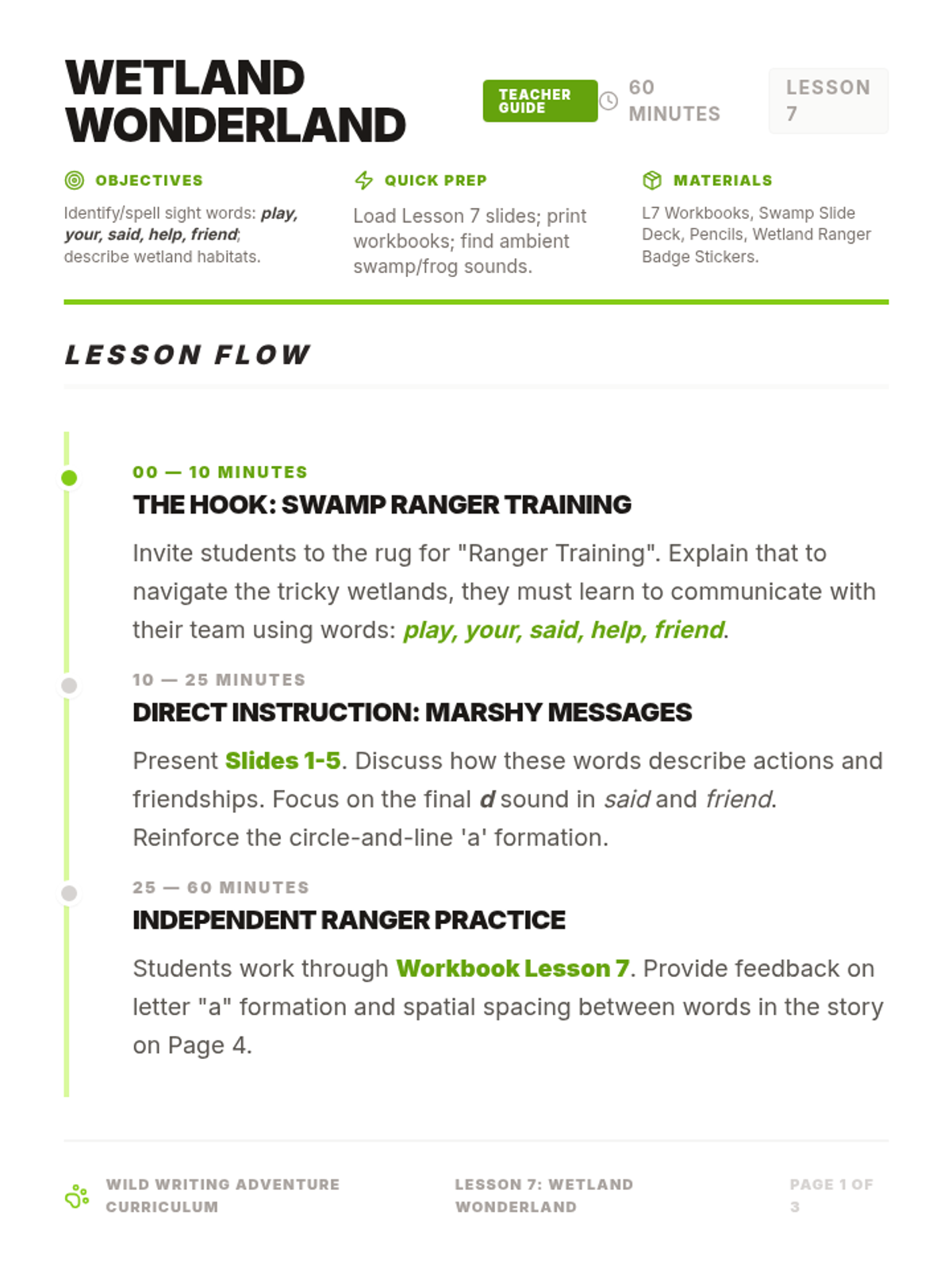
Squelch through the marshy wetlands to master descriptive sight words while spotting alligators, frogs, and dragonflies.
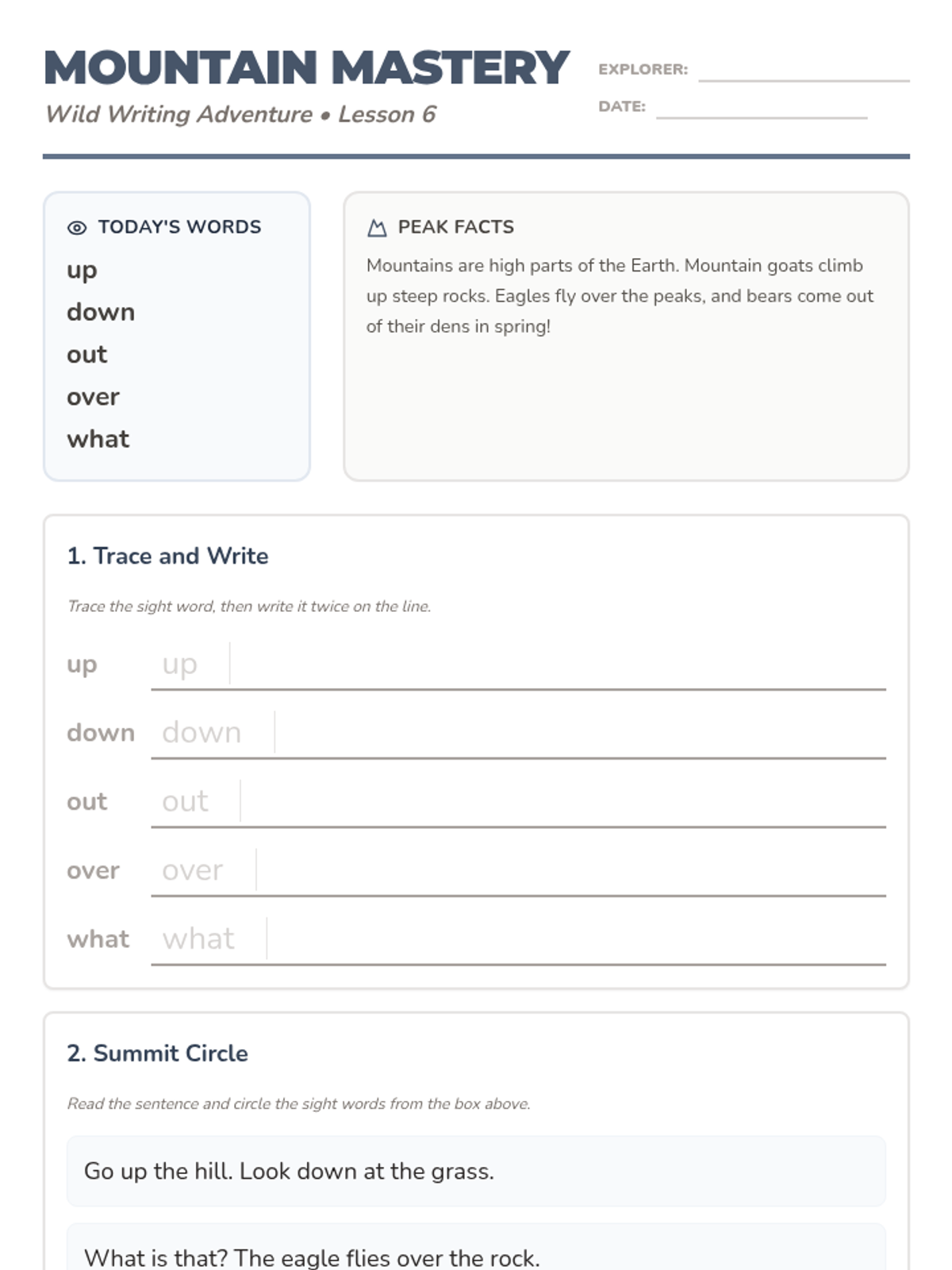
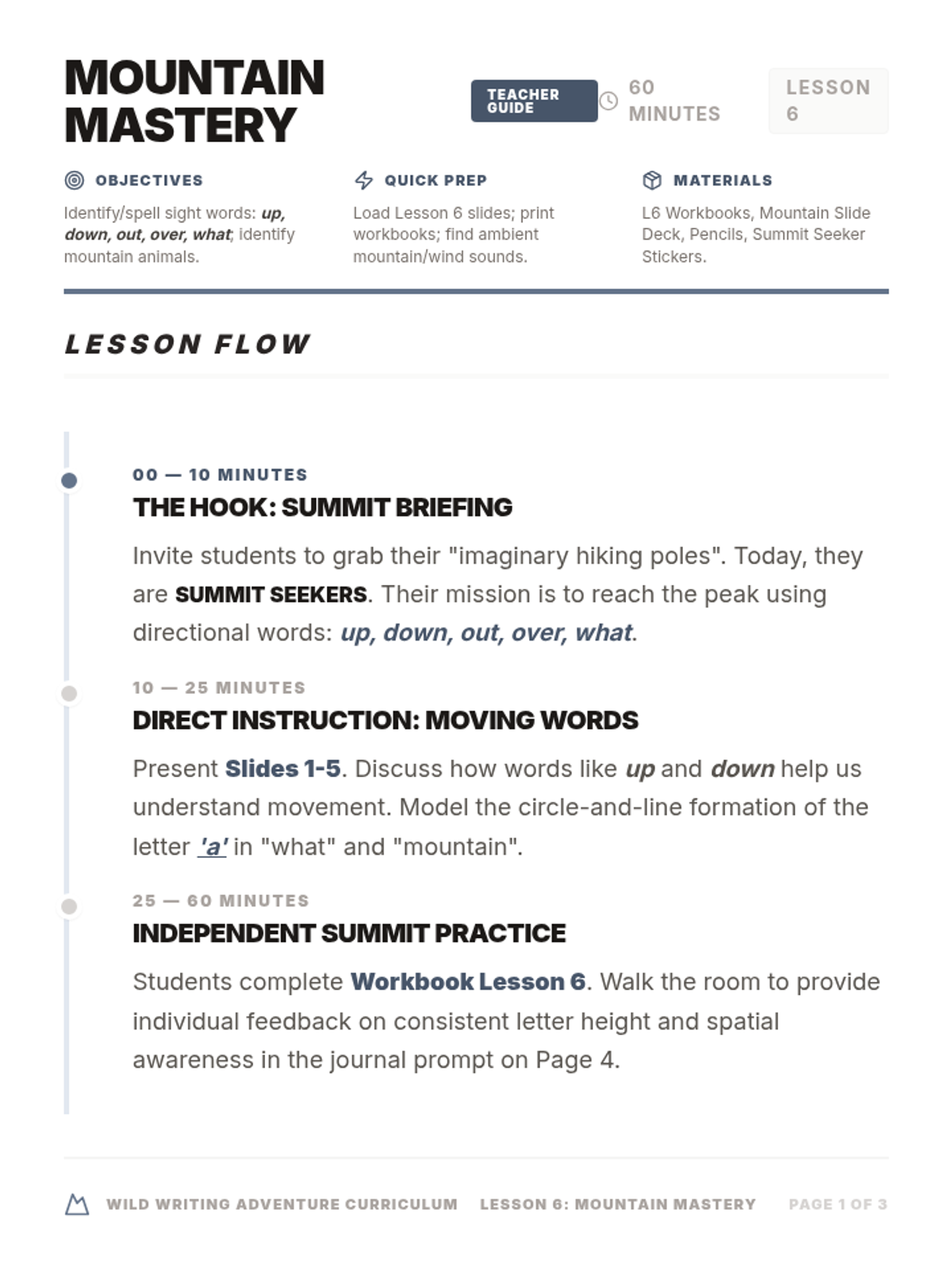
Climb to the highest peaks to master directional sight words while meeting mountain goats, eagles, and black bears.
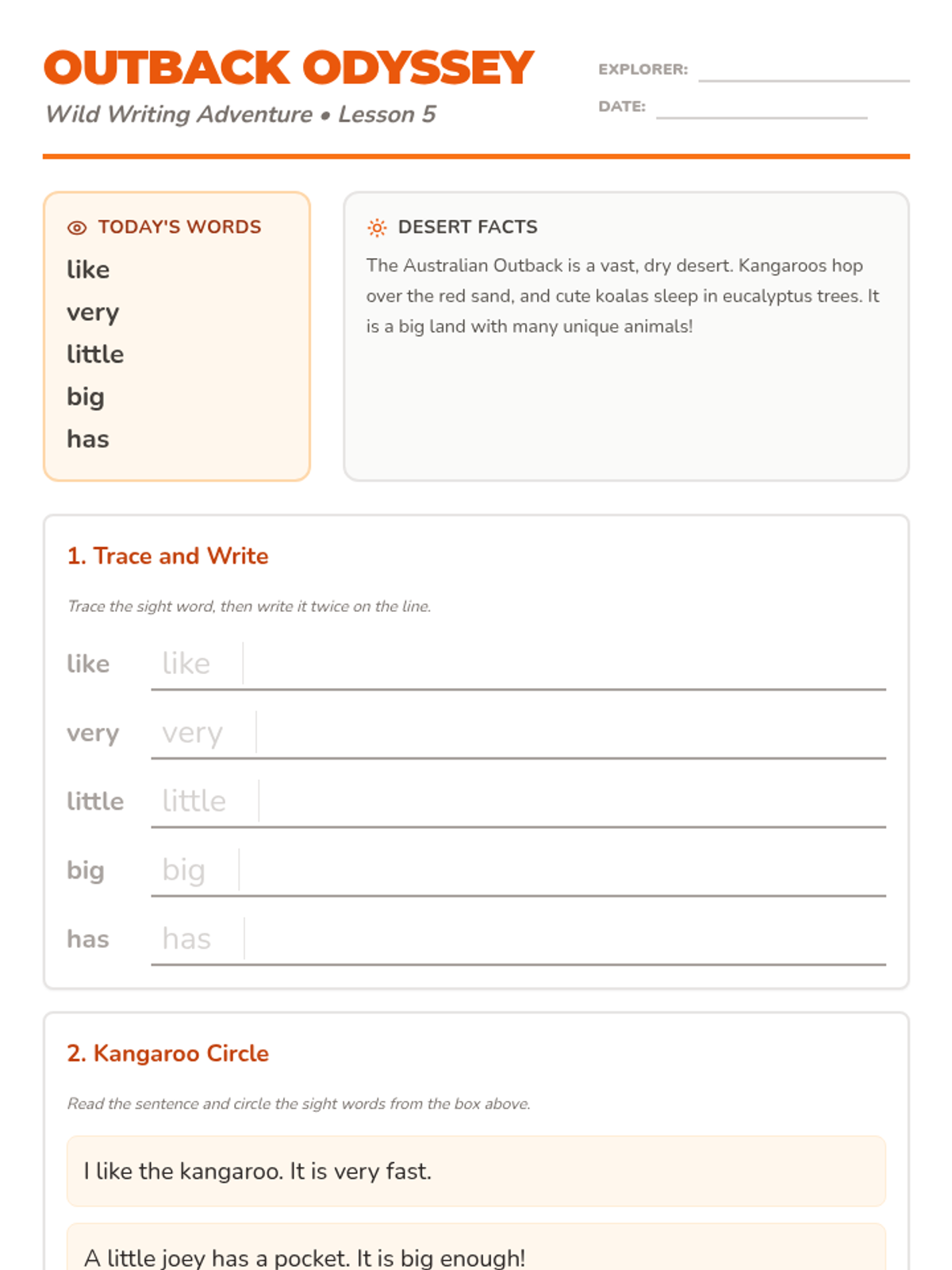
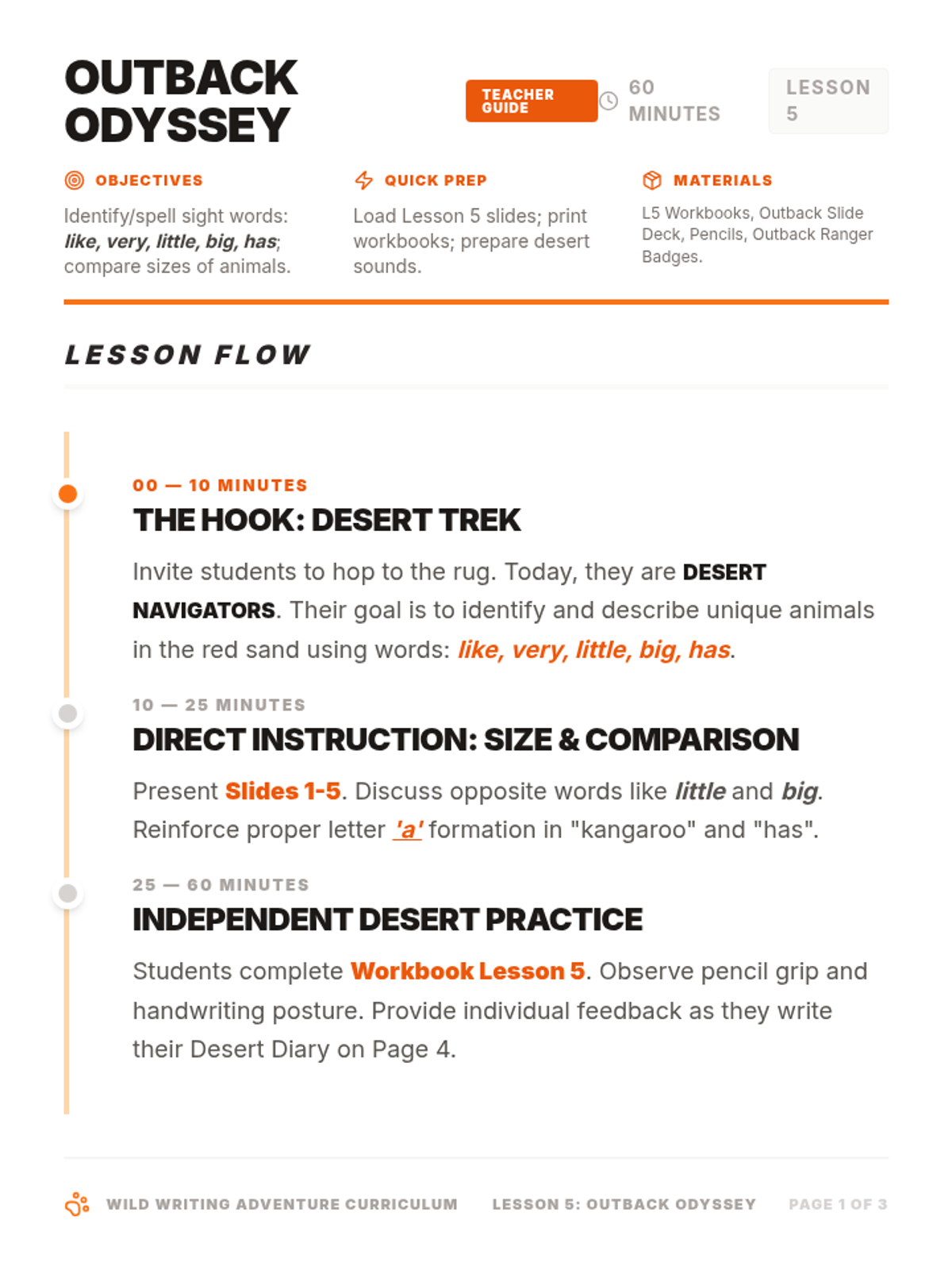
Hop through the sun-drenched Australian Outback to master new sight words while meeting kangaroos, koalas, and wombats.
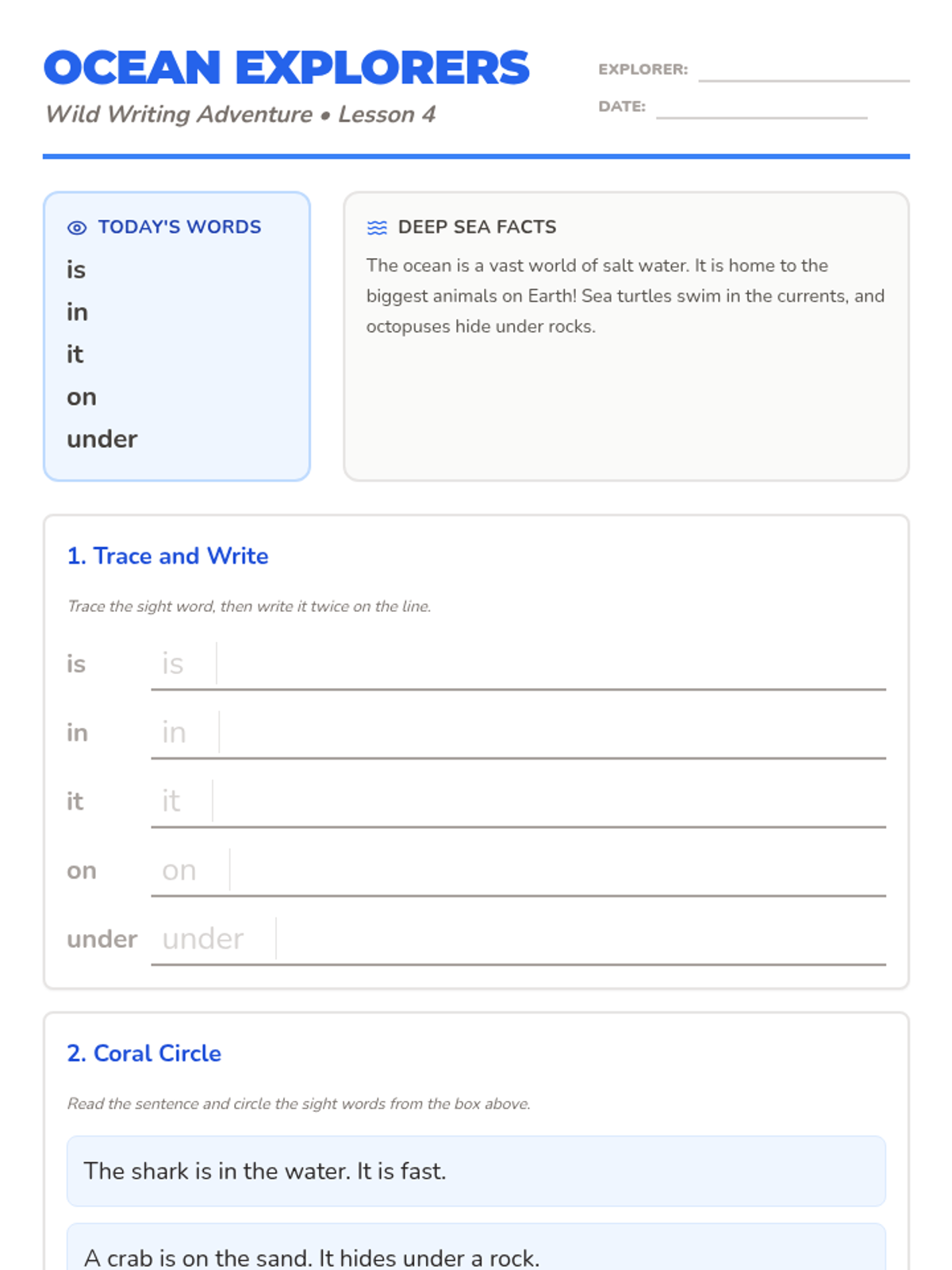
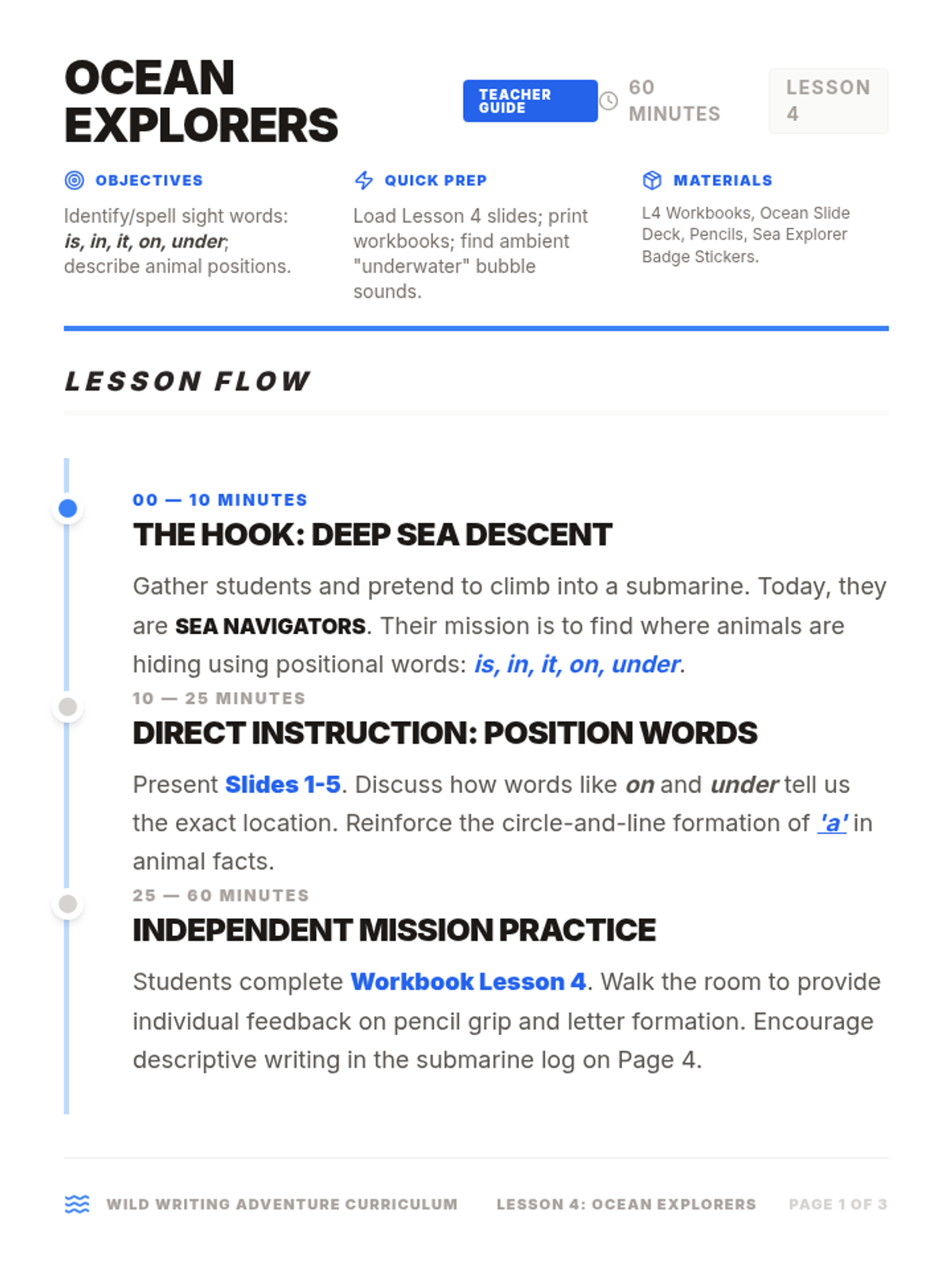
Dive into the deep blue ocean to master positional sight words while discovering sea turtles, sharks, and octopuses.
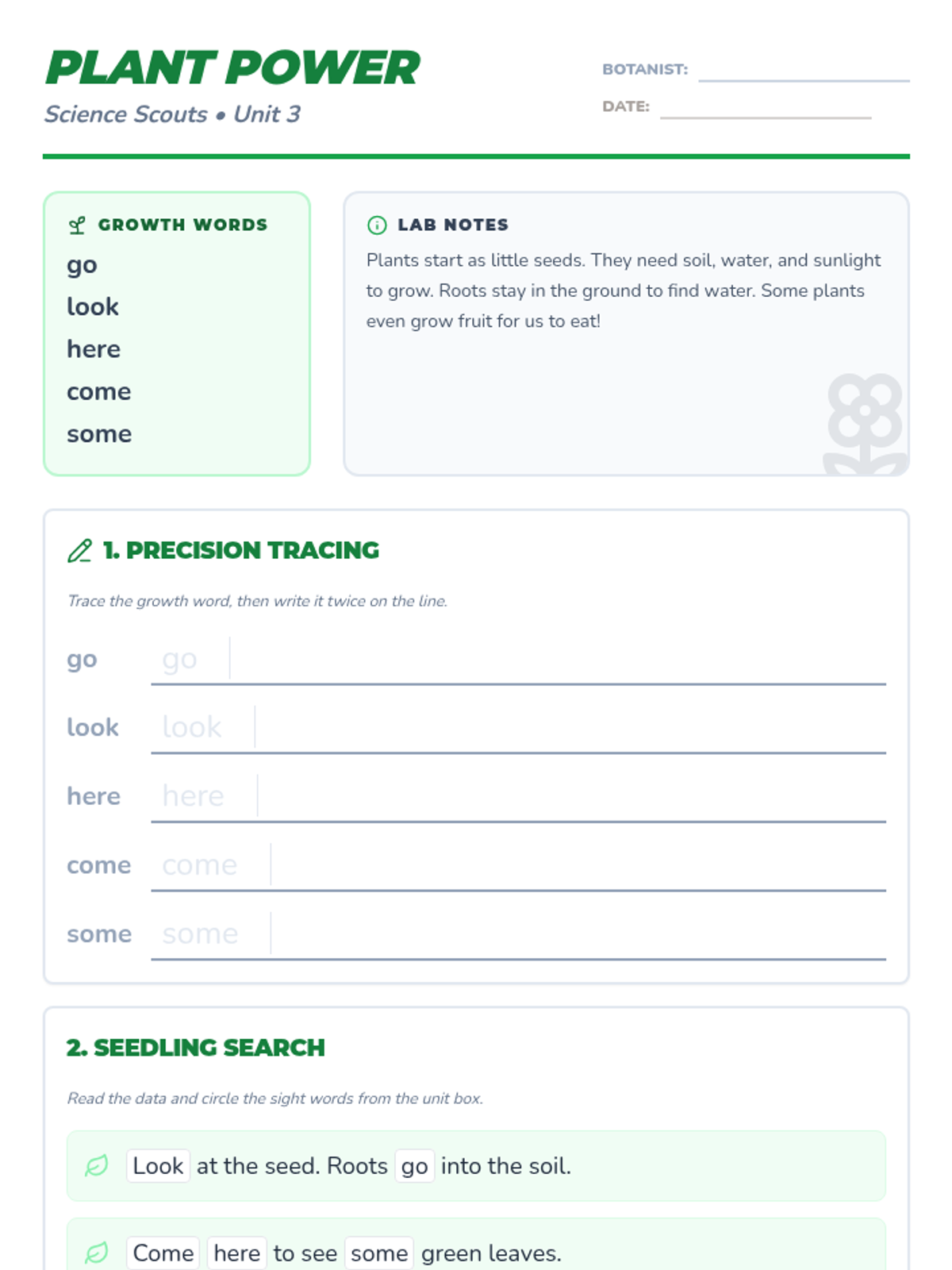
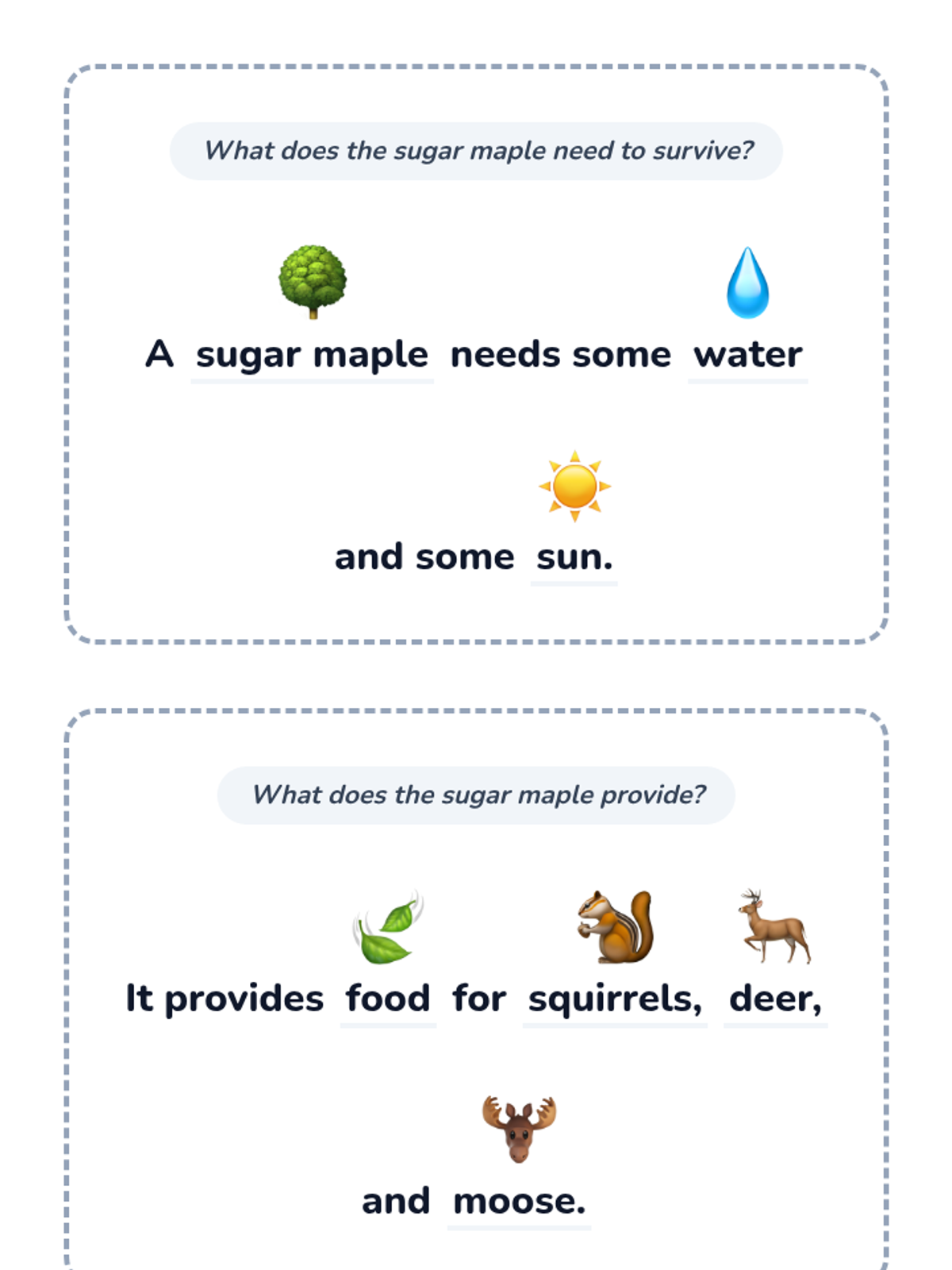
Investigate the life cycle of plants and the essentials for growth while mastering sight words and scientific observation.
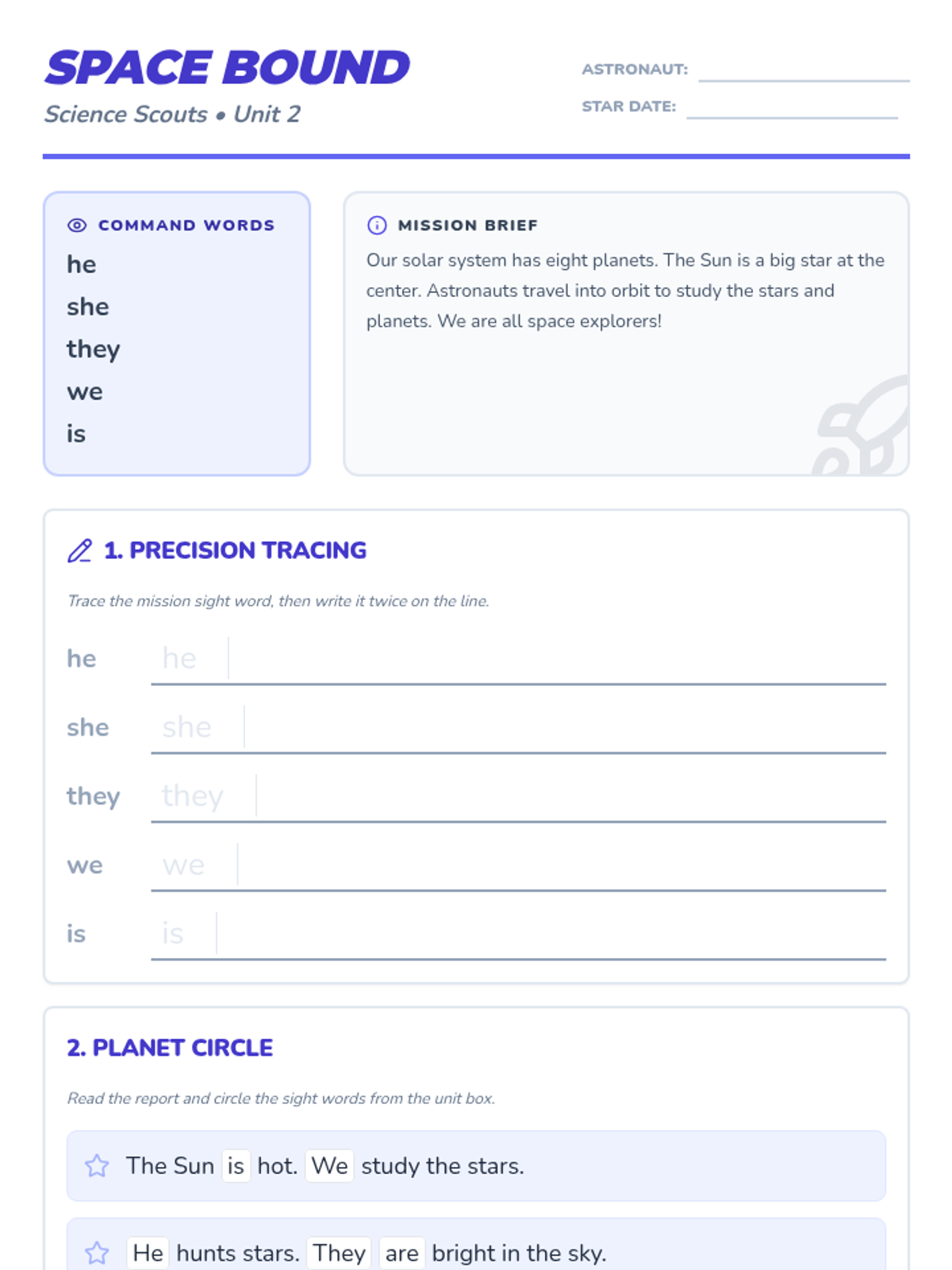
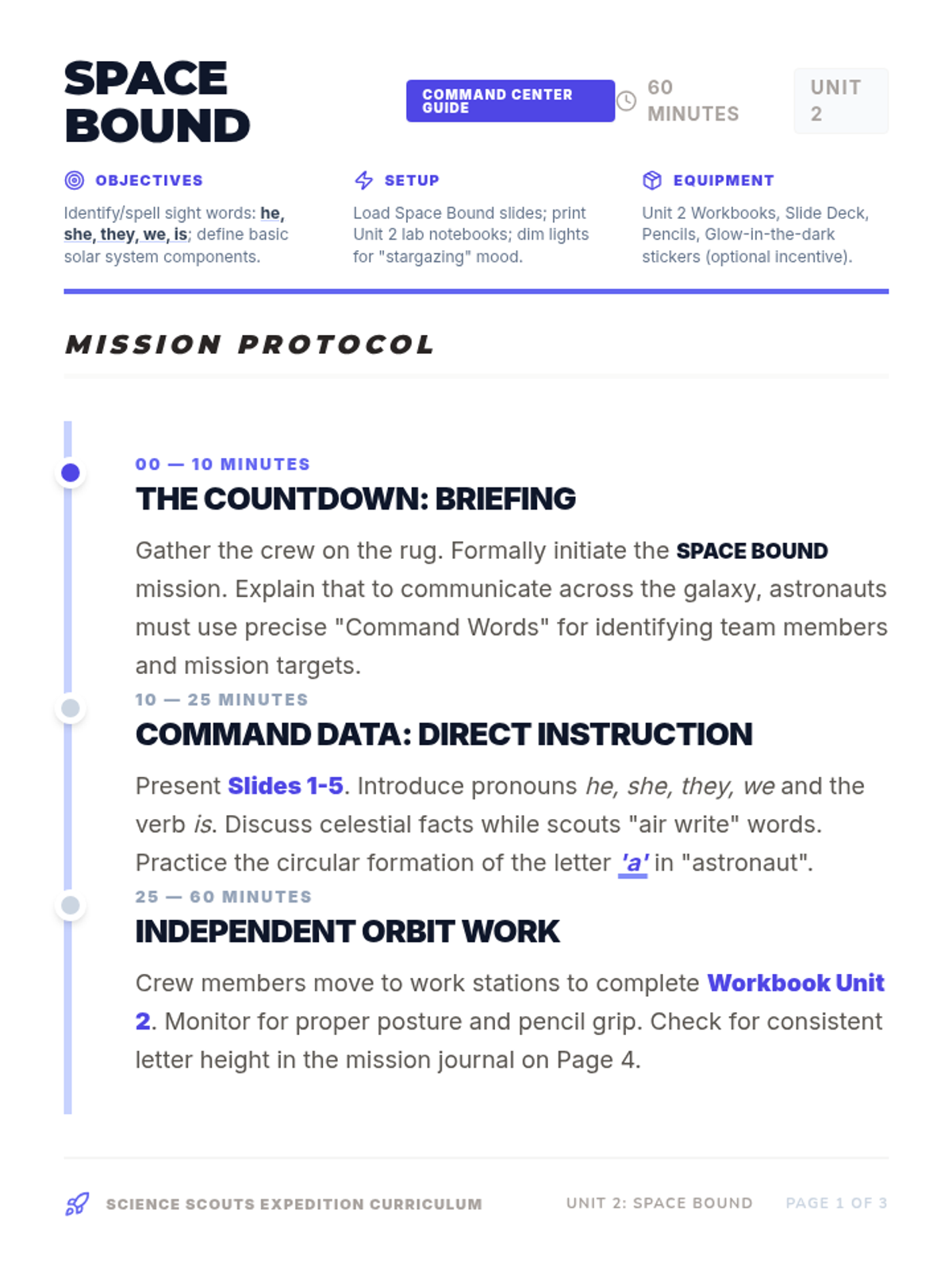
Launch into orbit to explore planets and stars while mastering high-frequency sight words and scientific terminology.
A 30-day handwriting practice program focused on animal kingdom facts and vocabulary, designed to improve fine motor skills through short, daily exercises.
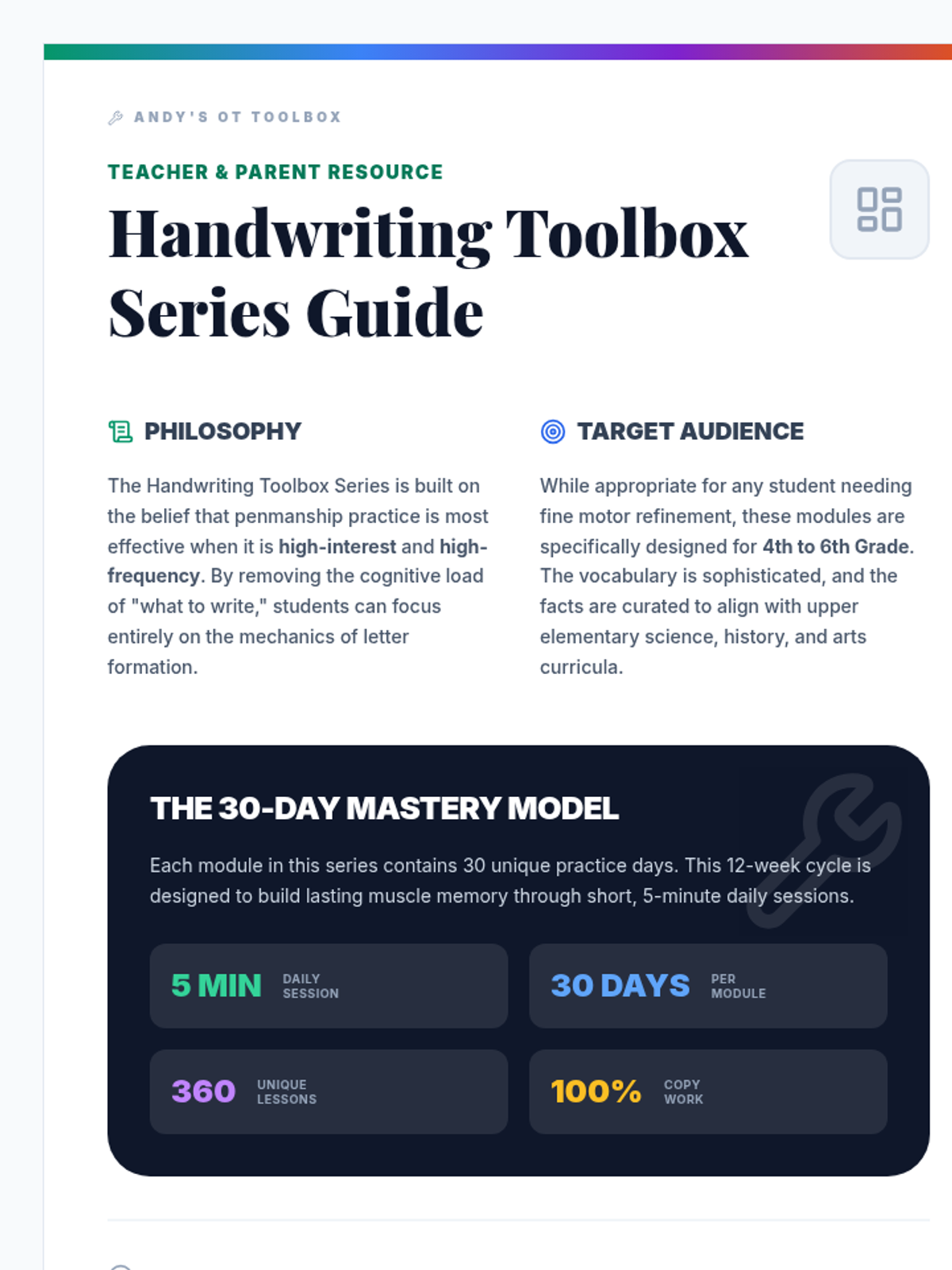
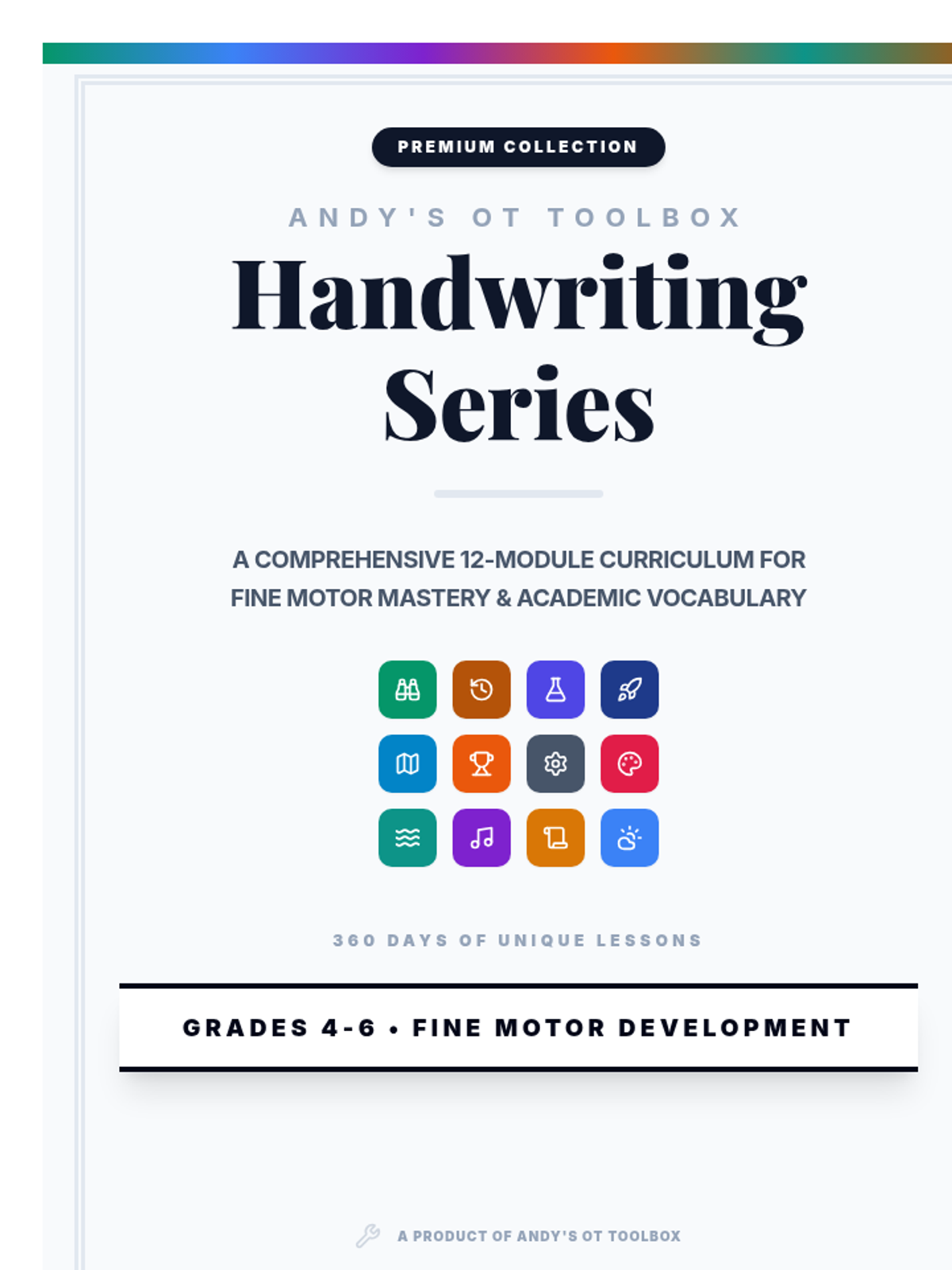
Administrative and general resources for the entire Handwriting Toolbox Series, including curriculum maps, tracking sheets, and implementation guides.
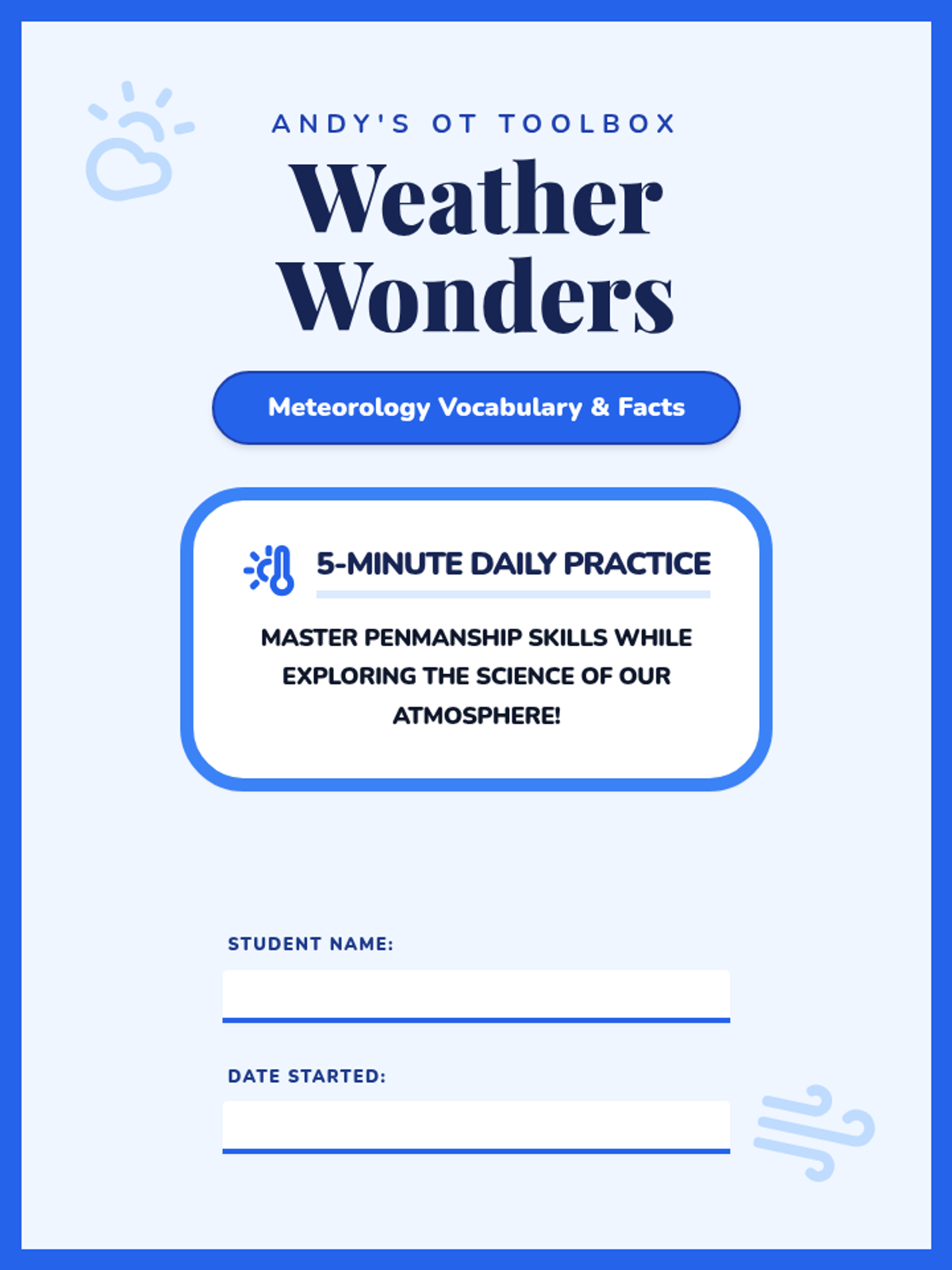
A 30-day handwriting practice program focused on meteorology, atmospheric science, and extreme weather phenomena, designed for 4th to 6th graders.
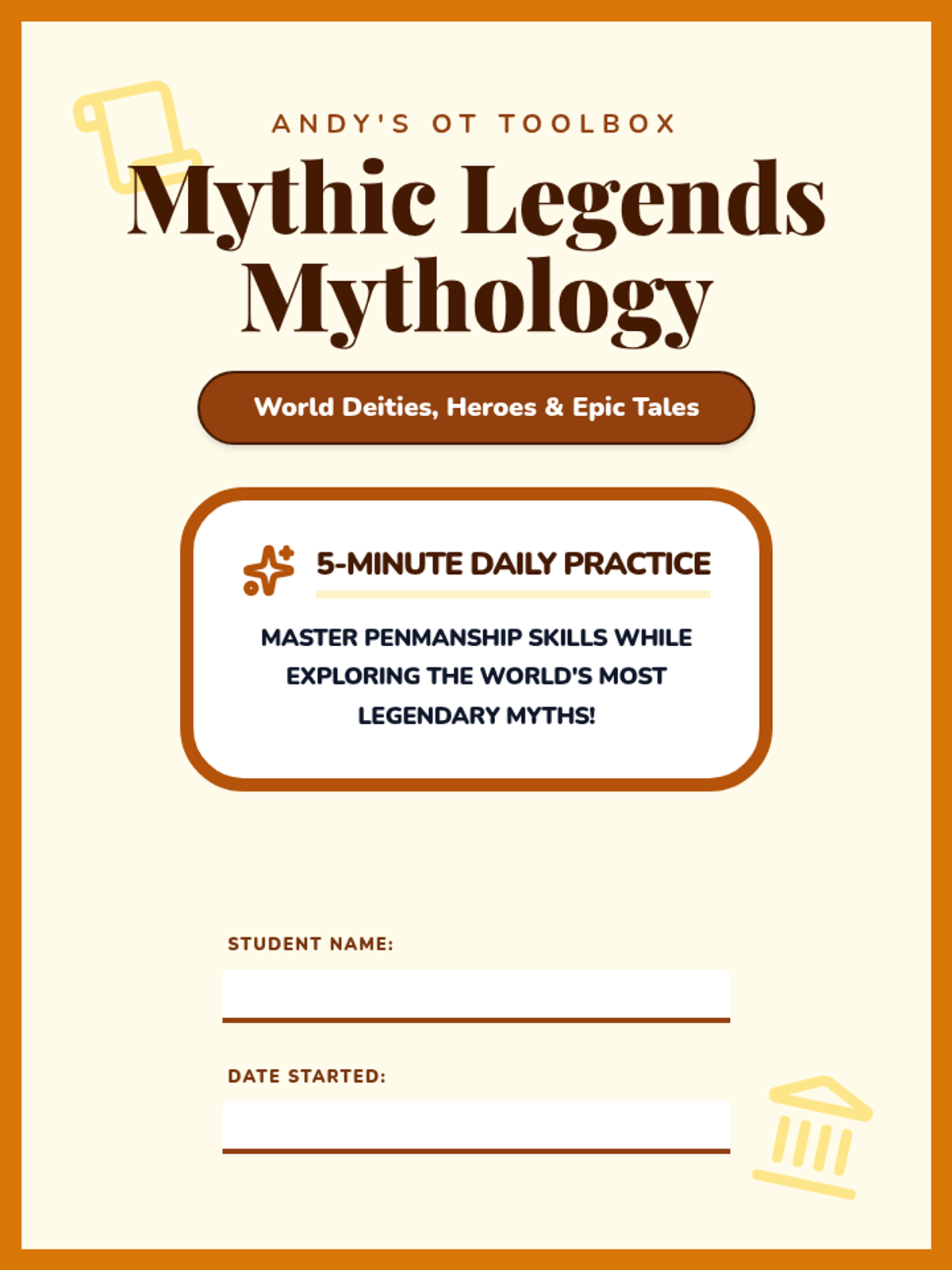
A 30-day handwriting practice program focused on world mythology, legendary heroes, and ancient deities, designed for 4th to 6th graders.
A 30-day handwriting practice program focused on music theory, history, and instruments, designed for 4th to 6th graders to improve penmanship through engaging musical facts.
A 30-day handwriting practice program focused on marine biology, oceanography, and deep-sea exploration, designed for 4th to 6th graders.
A 30-day handwriting practice program focused on art history, creative techniques, and famous masterpieces, designed for 4th to 6th graders.
A 30-day handwriting practice program focused on famous inventions, engineering principles, and innovators, designed for 4th to 6th graders.
A 30-day handwriting practice program focused on sports science, athletic disciplines, and teamwork vocabulary, designed for 4th to 6th graders to improve penmanship through engaging sports facts.
A 30-day handwriting practice program focused on physical and human geography, world features, and mapping vocabulary, designed for 4th to 6th graders.
A 30-day handwriting practice program focused on astronomy, space exploration, and cosmic phenomena, designed for 4th to 6th graders to improve penmanship through engaging STEM topics.
A 30-day handwriting practice program focused on scientific disciplines, vocabulary, and facts, designed for 4th to 6th graders to improve penmanship through engaging STEM topics.
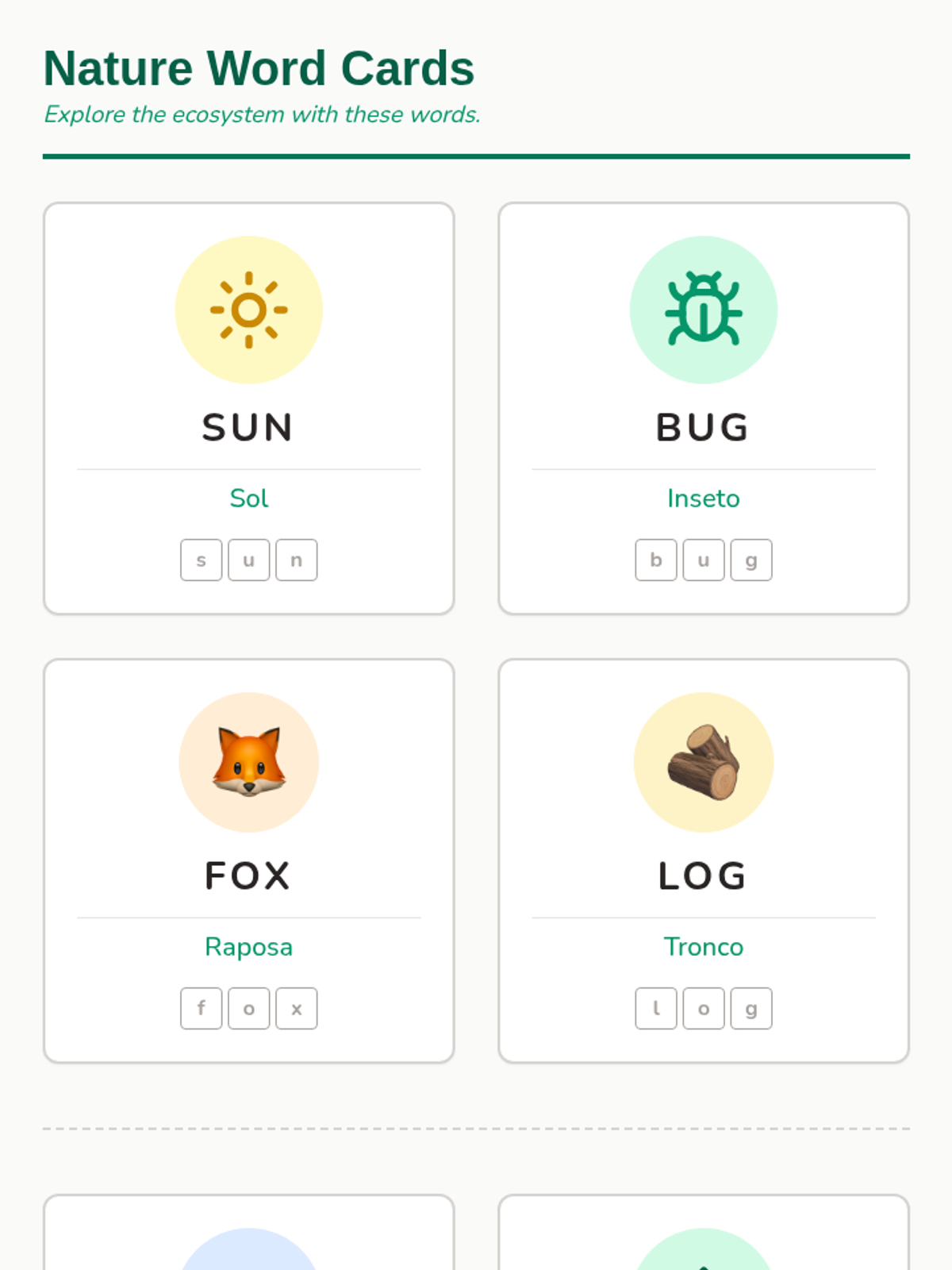
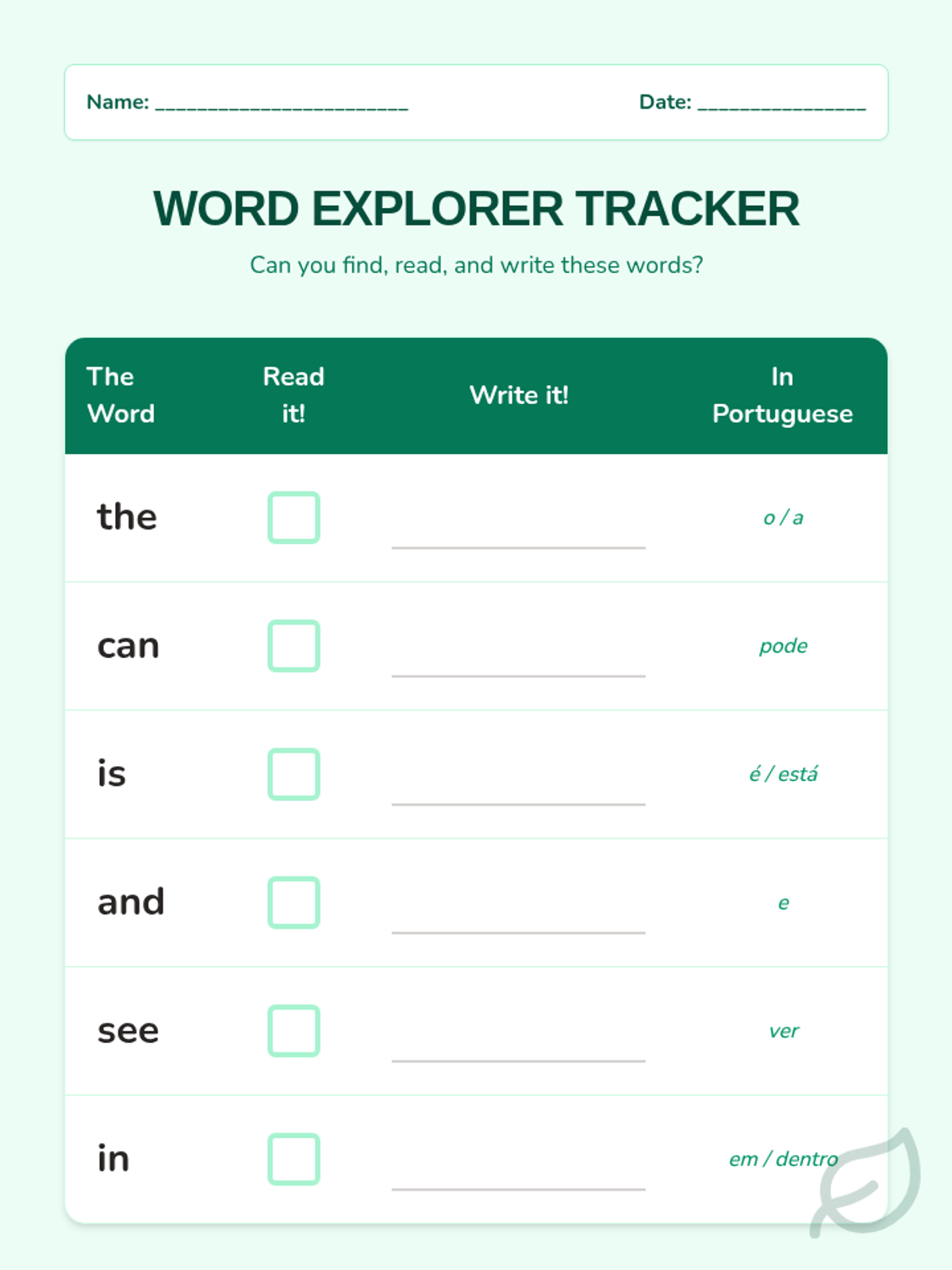
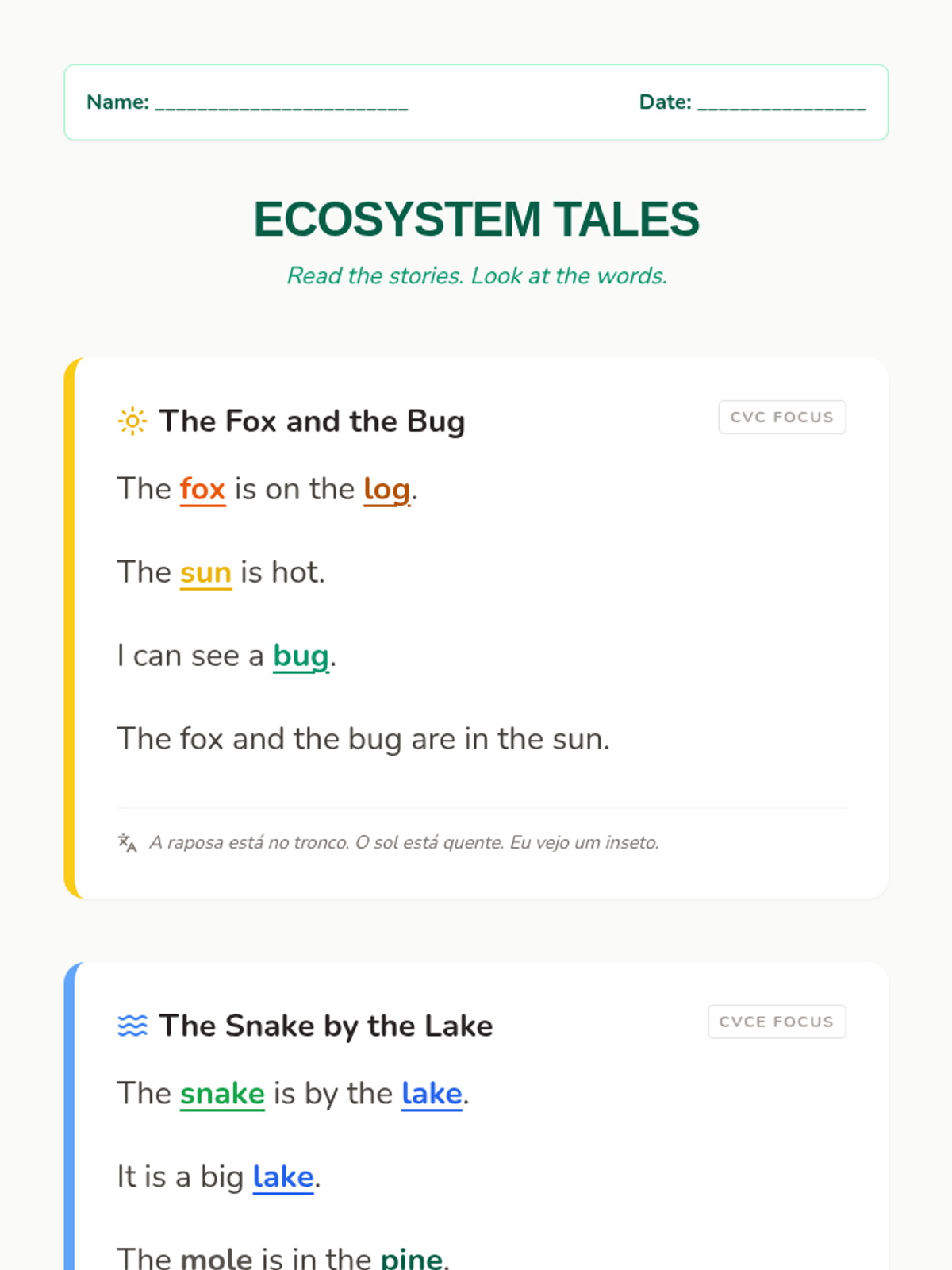
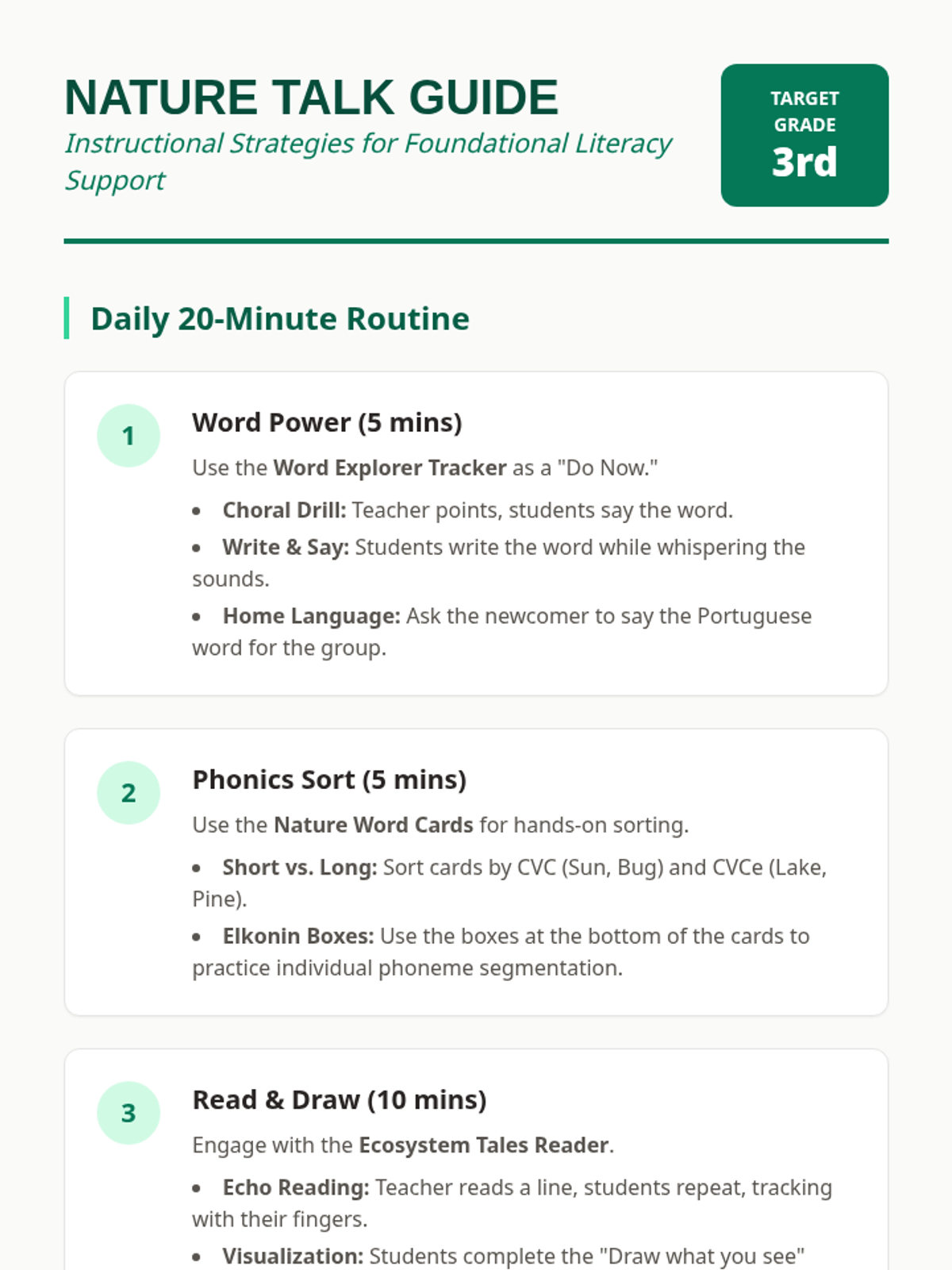
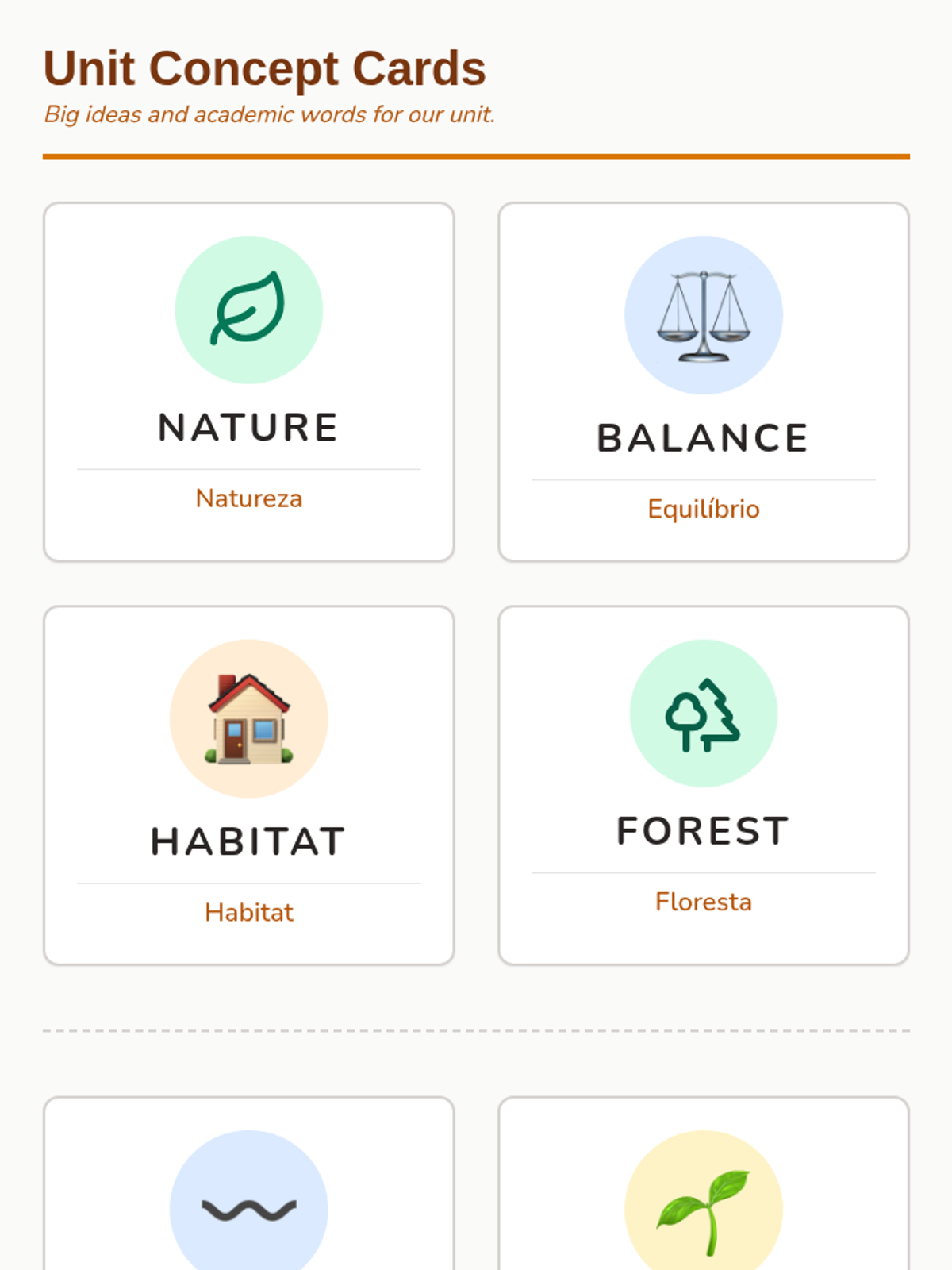
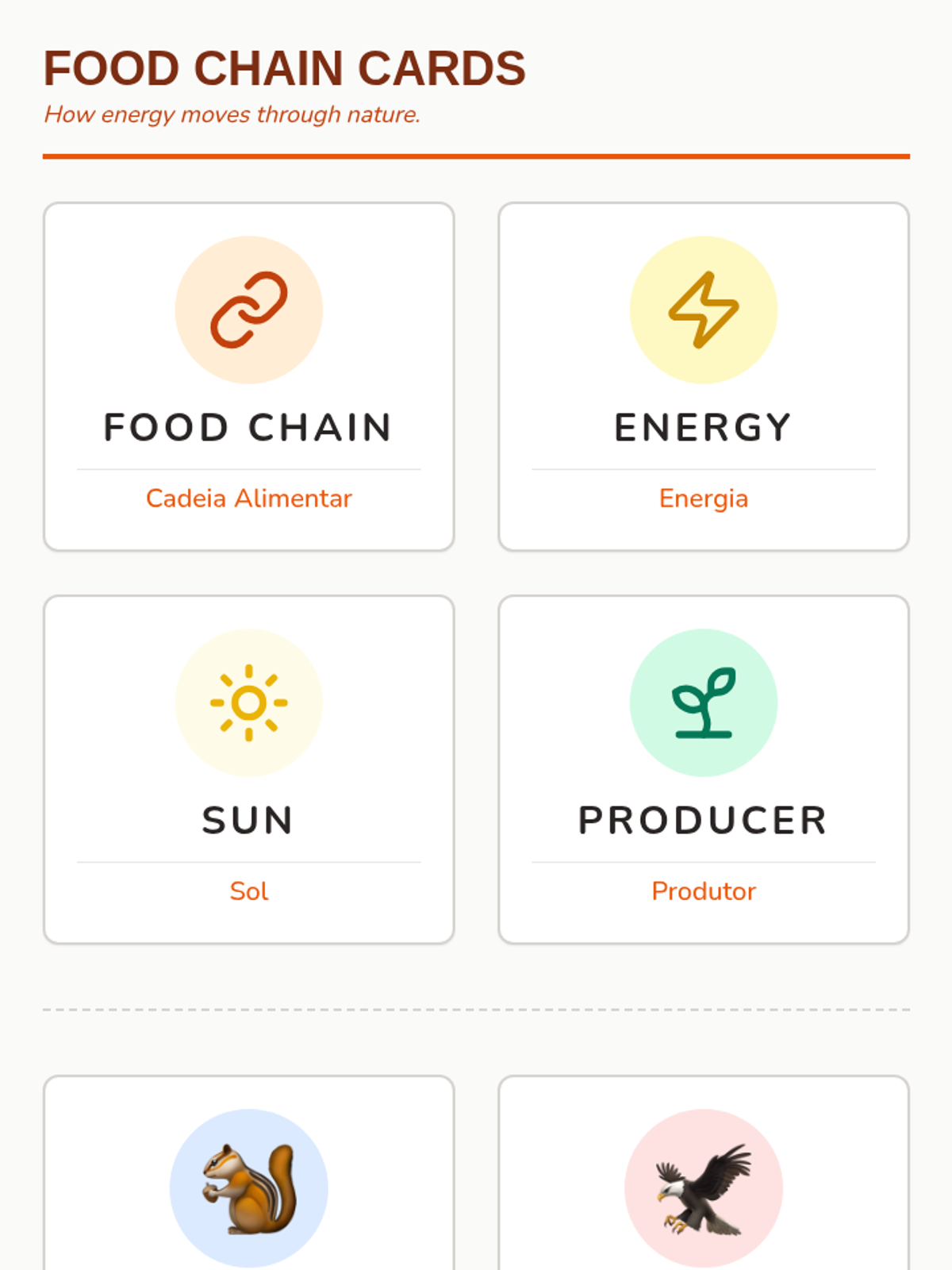
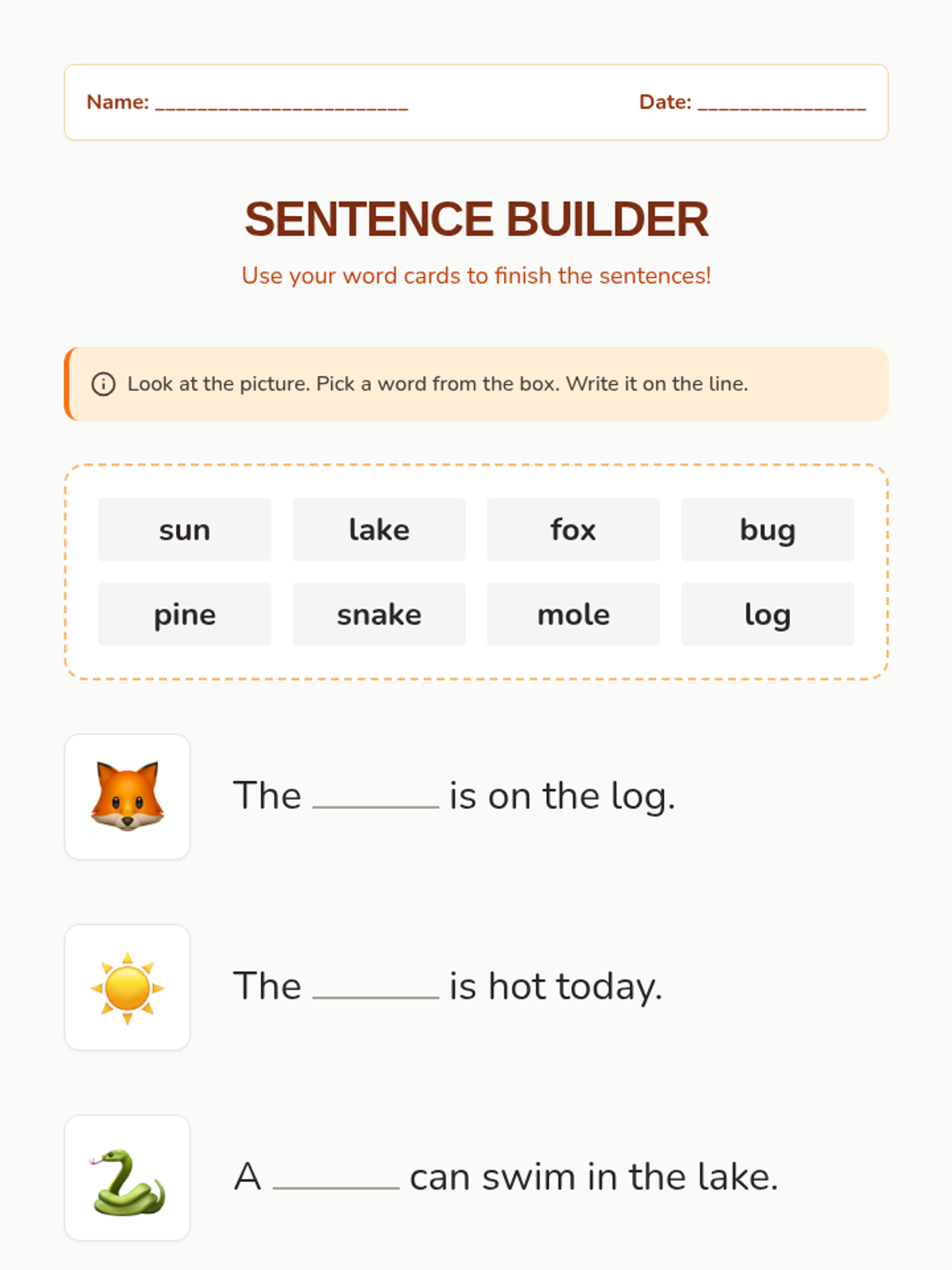
Foundational literacy support for the Nature's Balance unit, focusing on CVC/CVCe blending, unit vocabulary, and sentence frames.
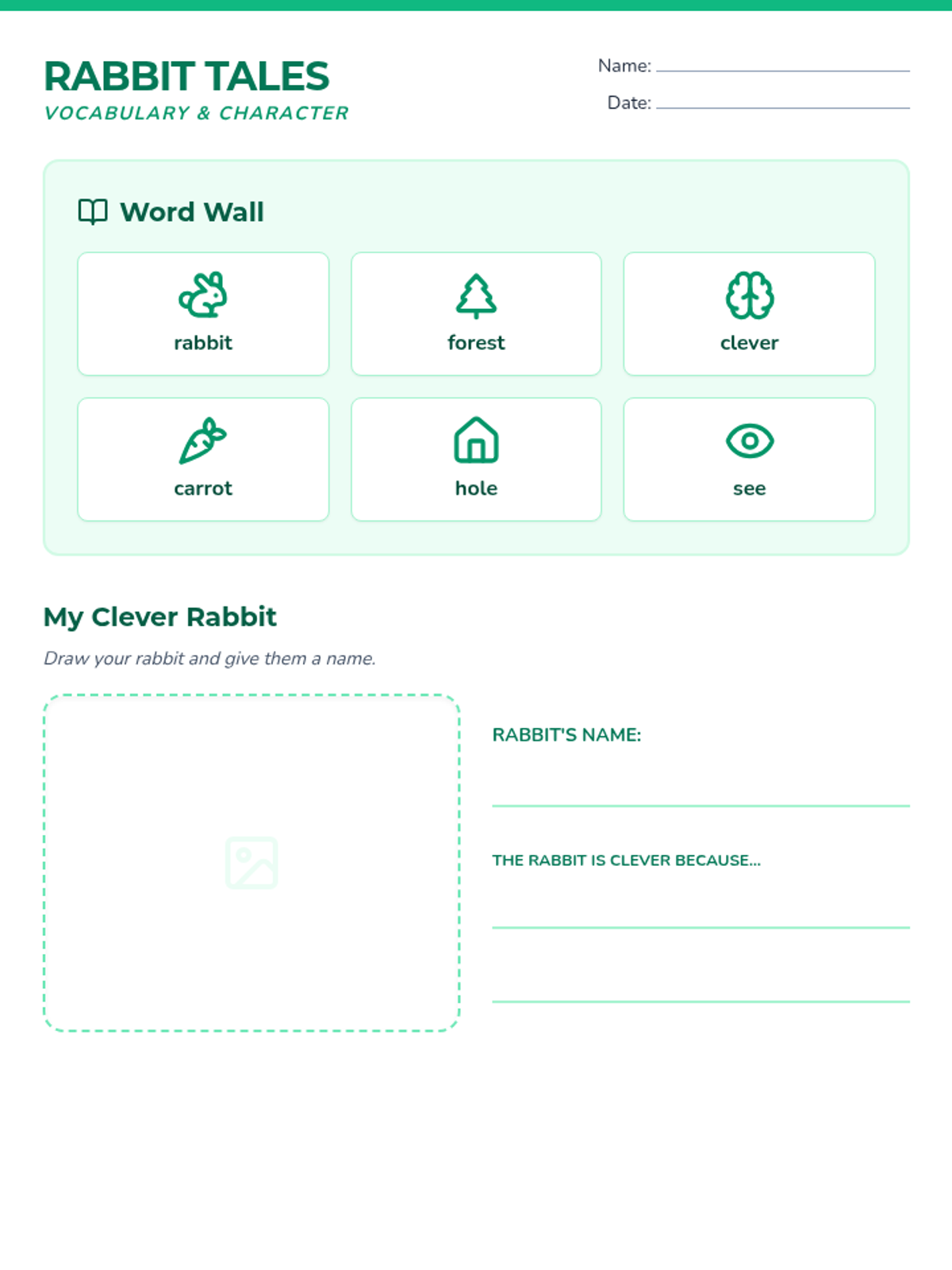
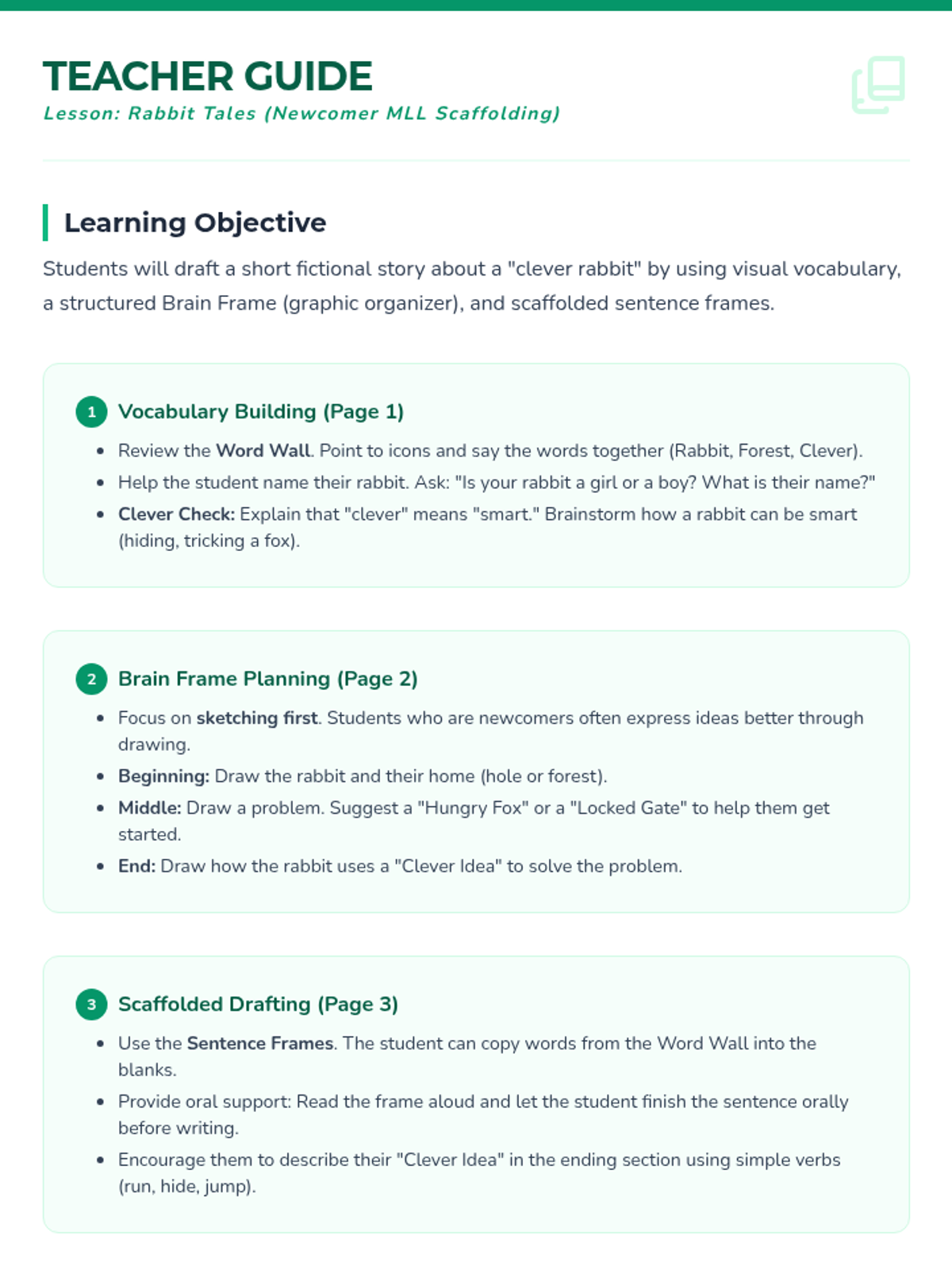
A comprehensive writing unit designed for newcomer multilingual learners to draft a fictional story about a clever rabbit. This lesson includes vocabulary building, structured planning with a brain frame, and scaffolded drafting.
A collection of visual prompt cards and resources to help kindergarten students practice oral language skills and describe their work using sentence frames.
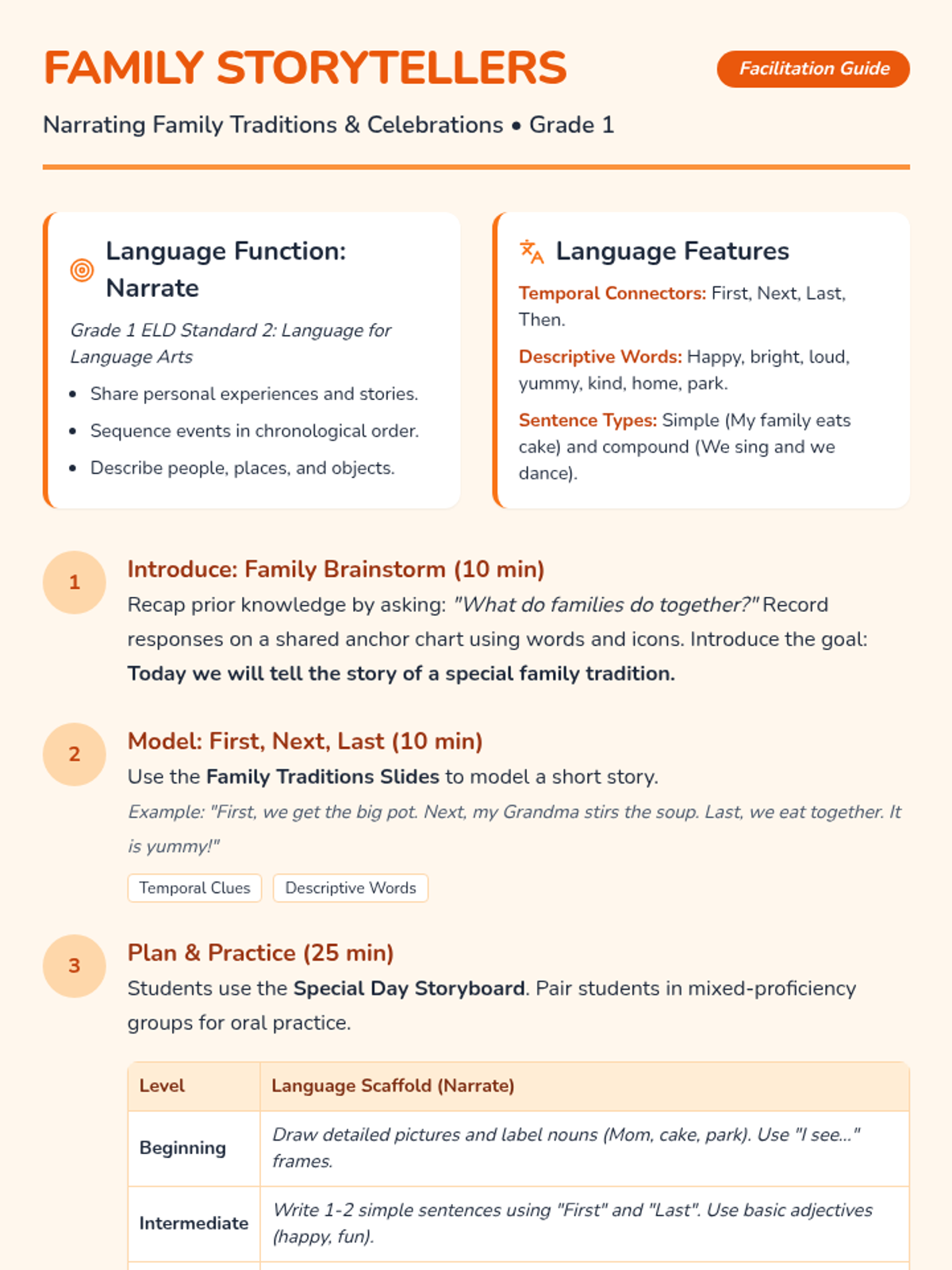
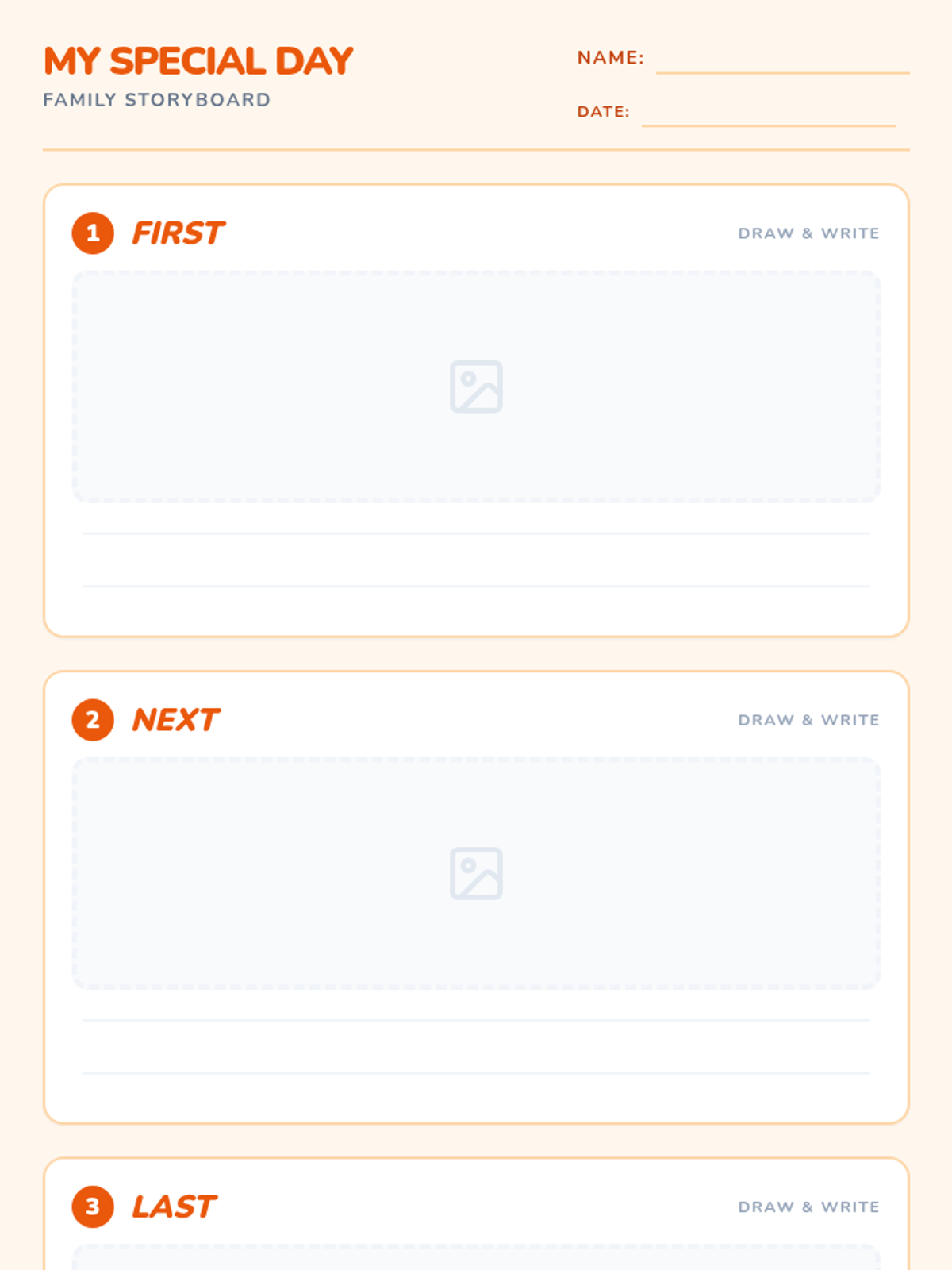
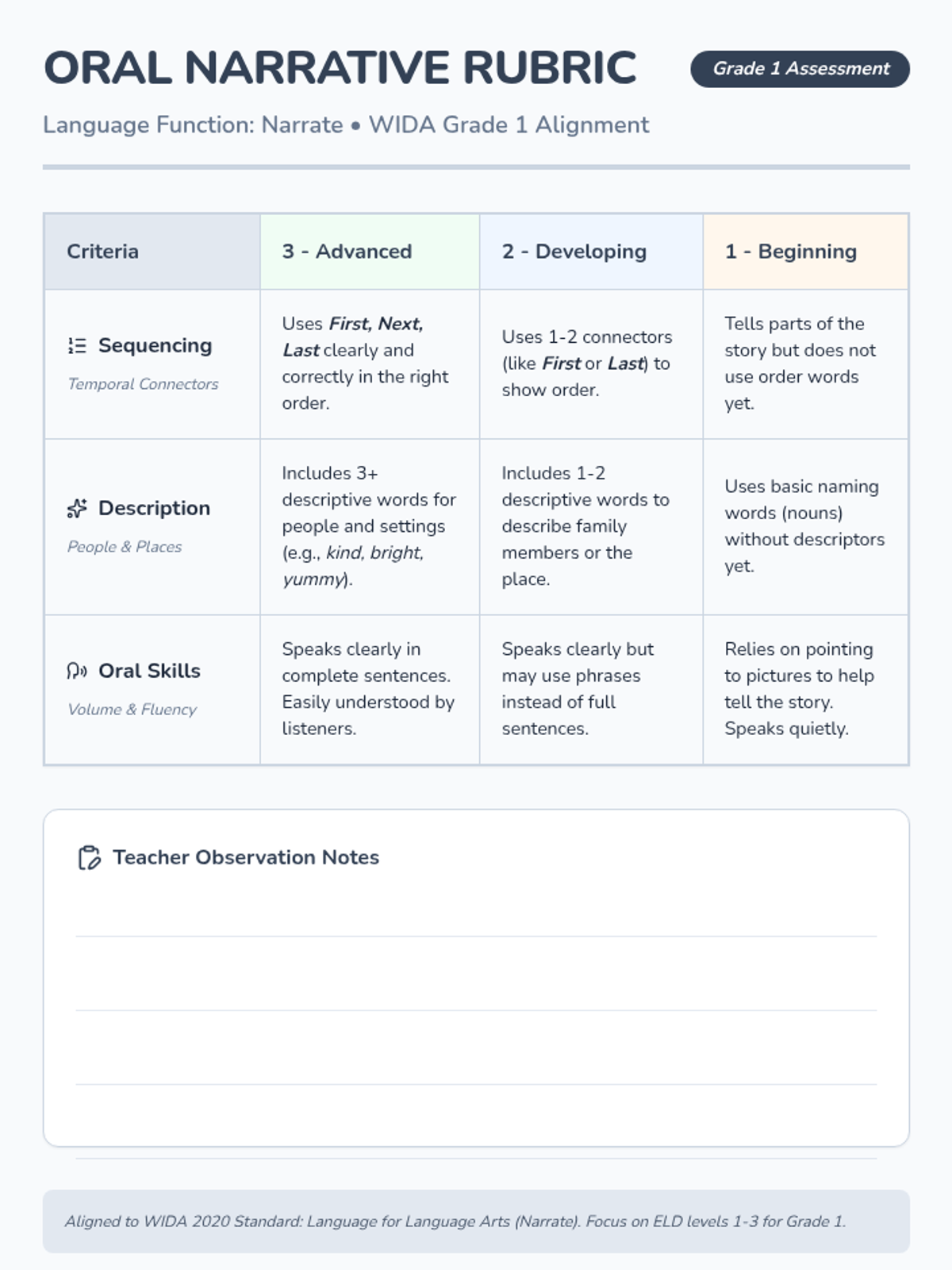
A Grade 1 oral language lesson focused on narrating family traditions and celebrations. Students use temporal connectors and descriptive language to share a special story from their family life, aligned with WIDA Narrate standards.
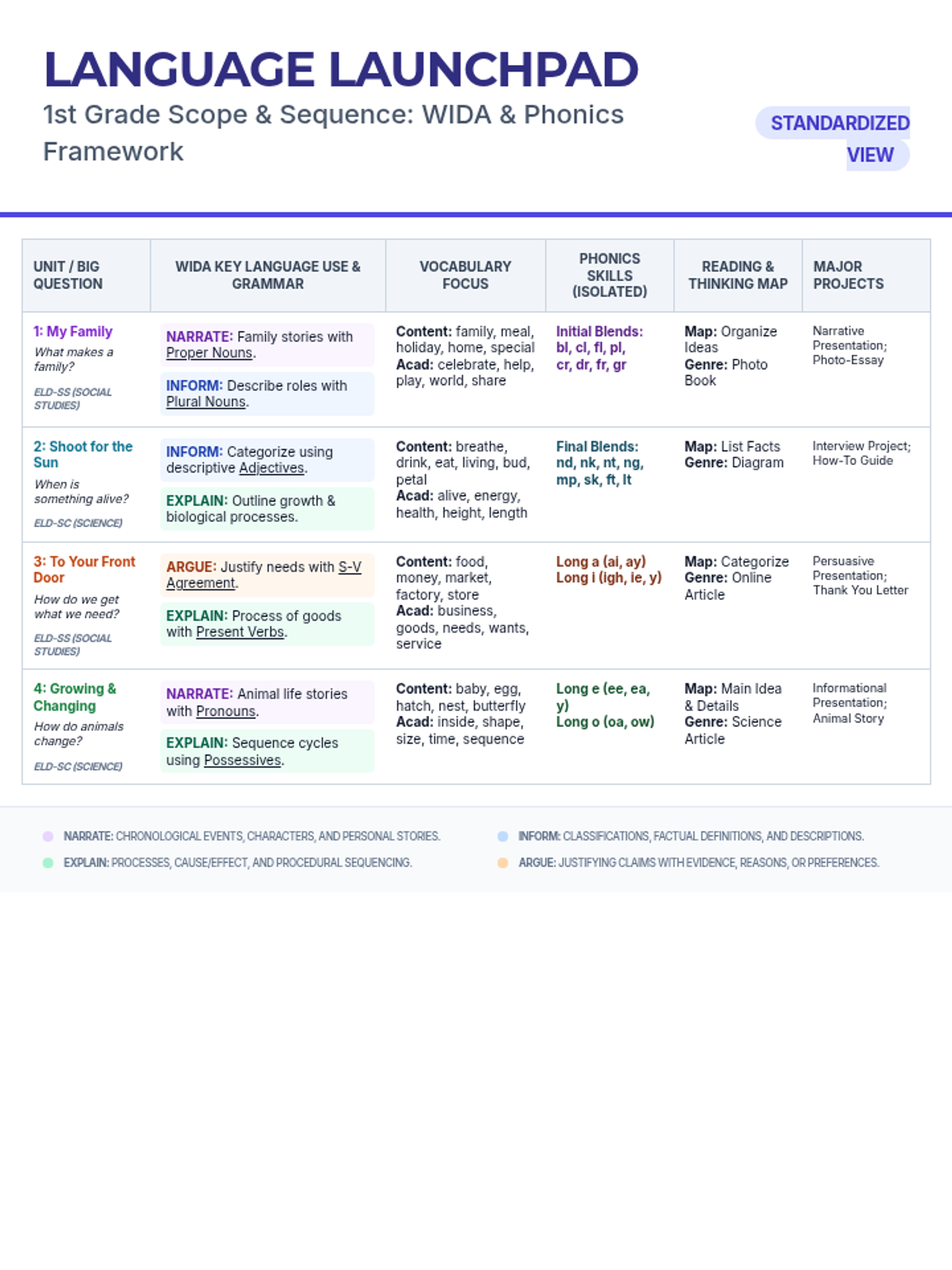
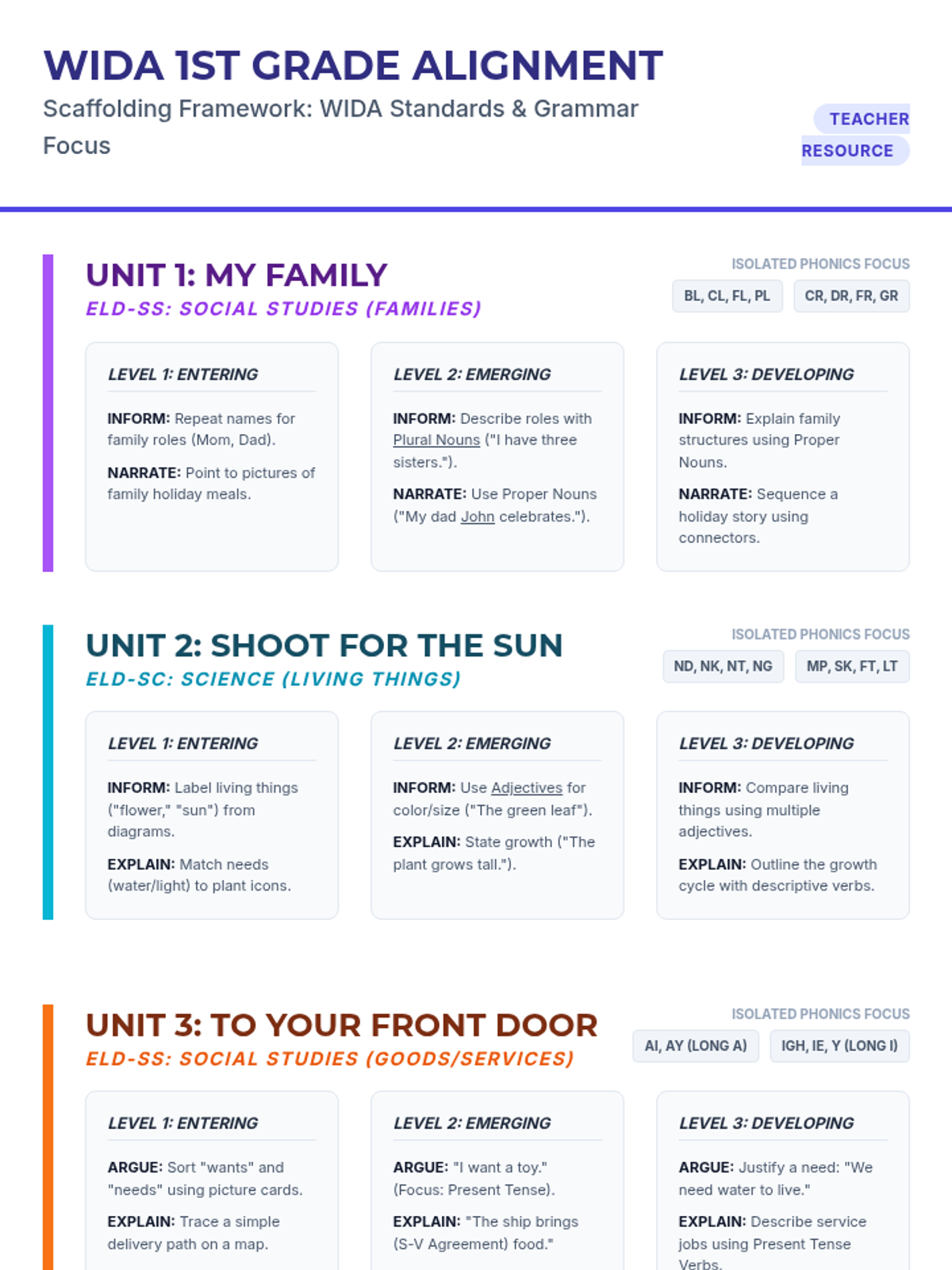
Explores family structures, roles, and traditions while focusing on the WIDA functions of Narrate (family stories) and Inform (identifying family members).
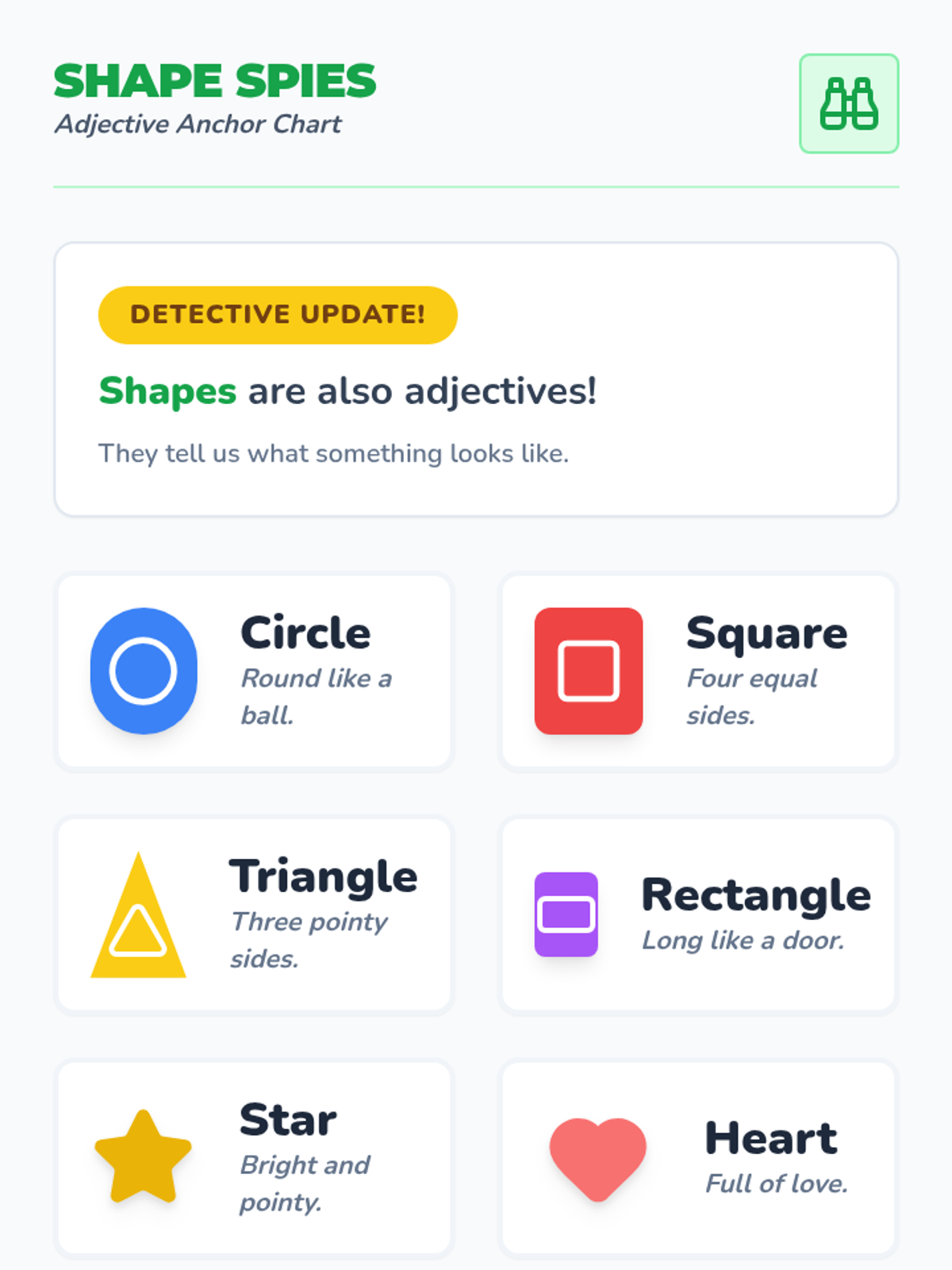
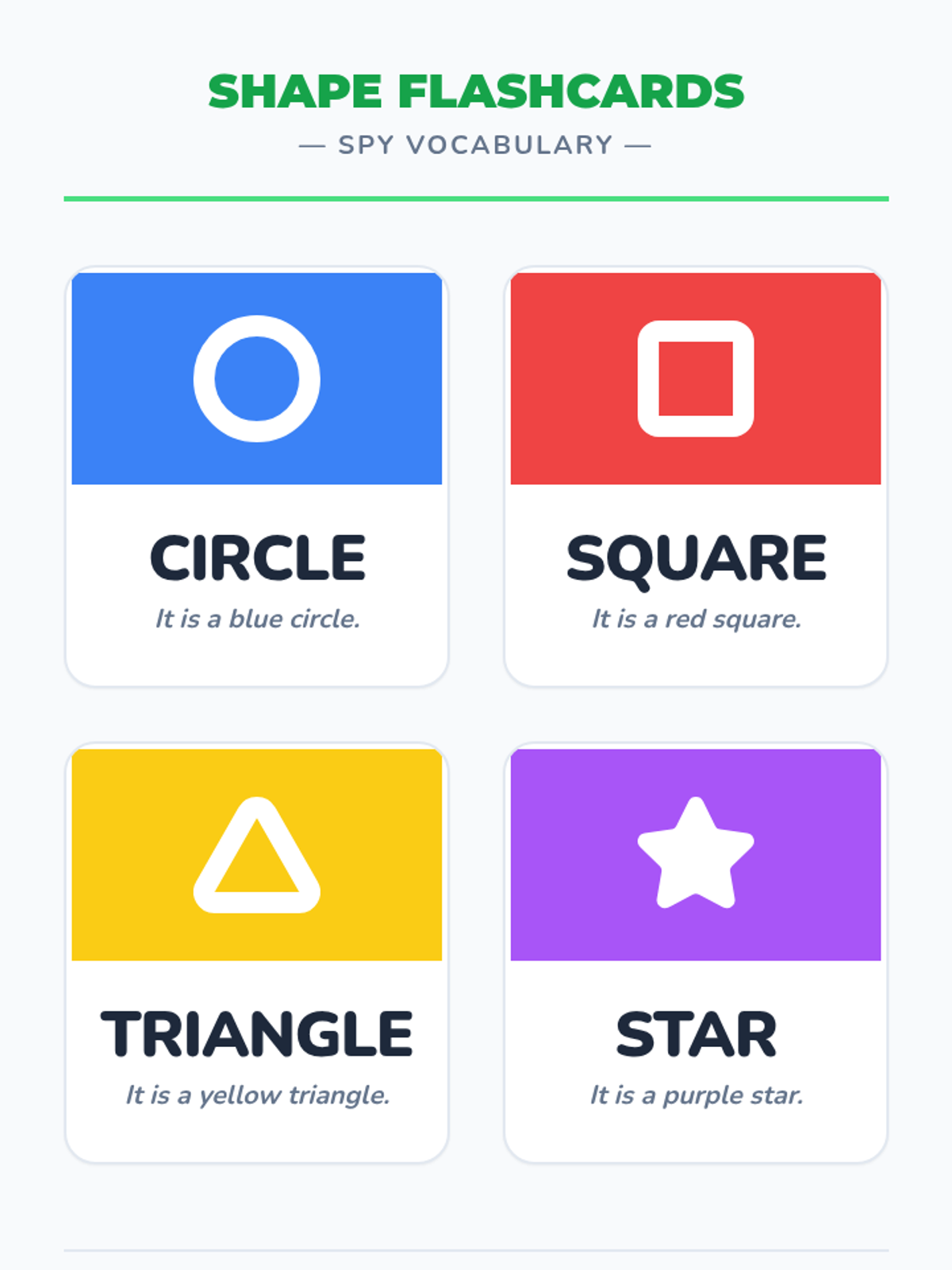
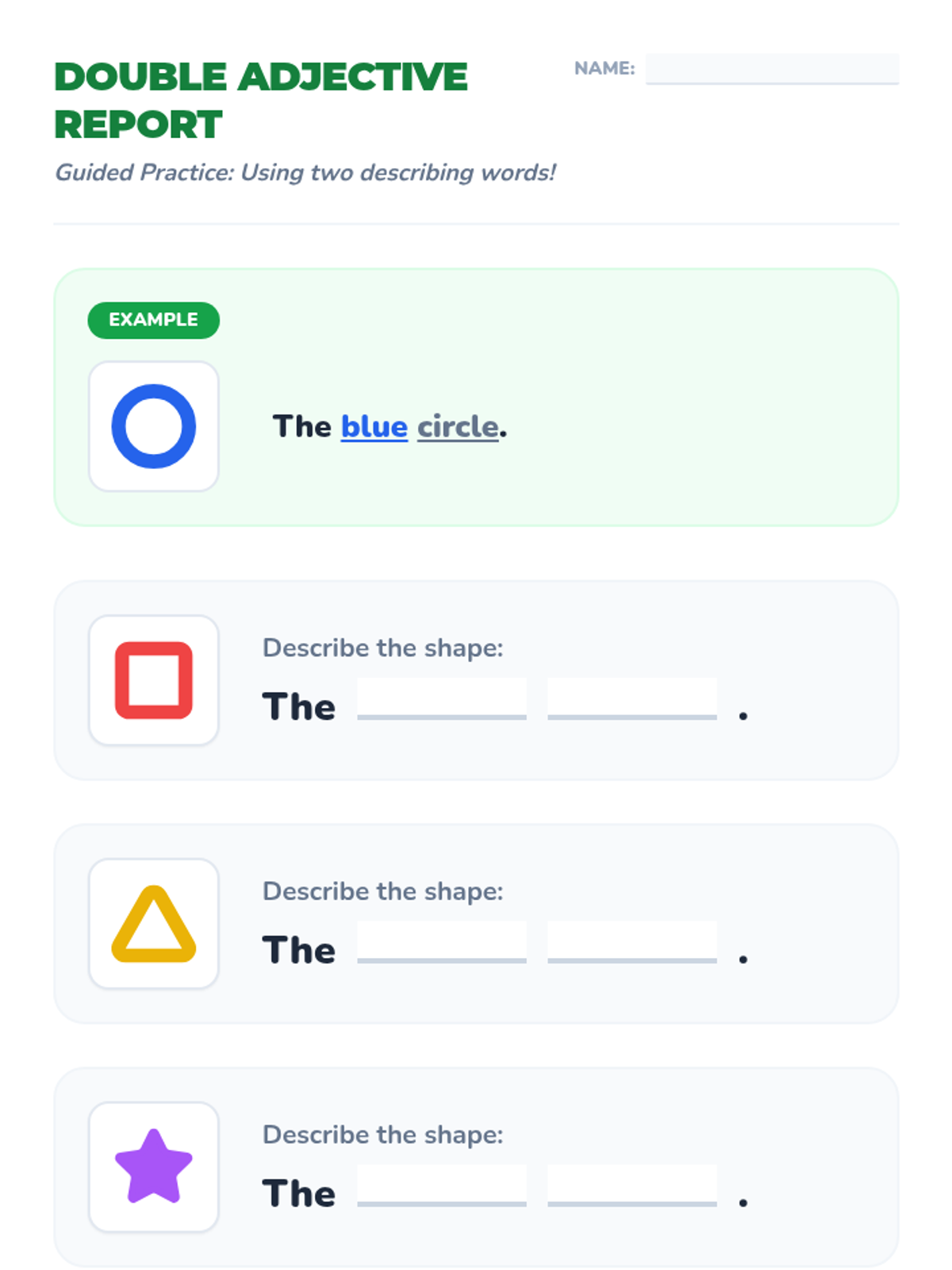
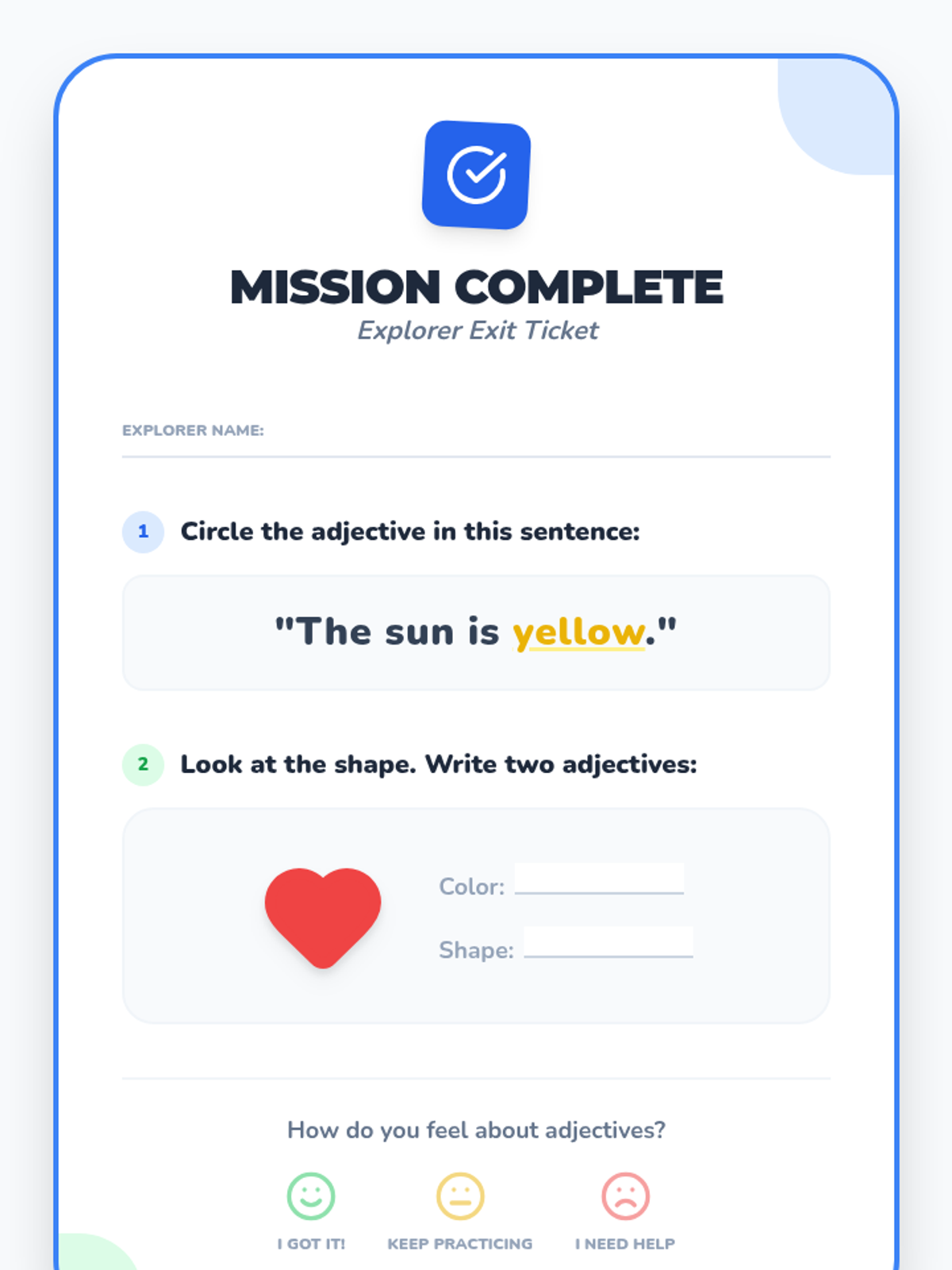
A follow-up lesson focused on using shape adjectives and combining them with colors for detailed descriptions.
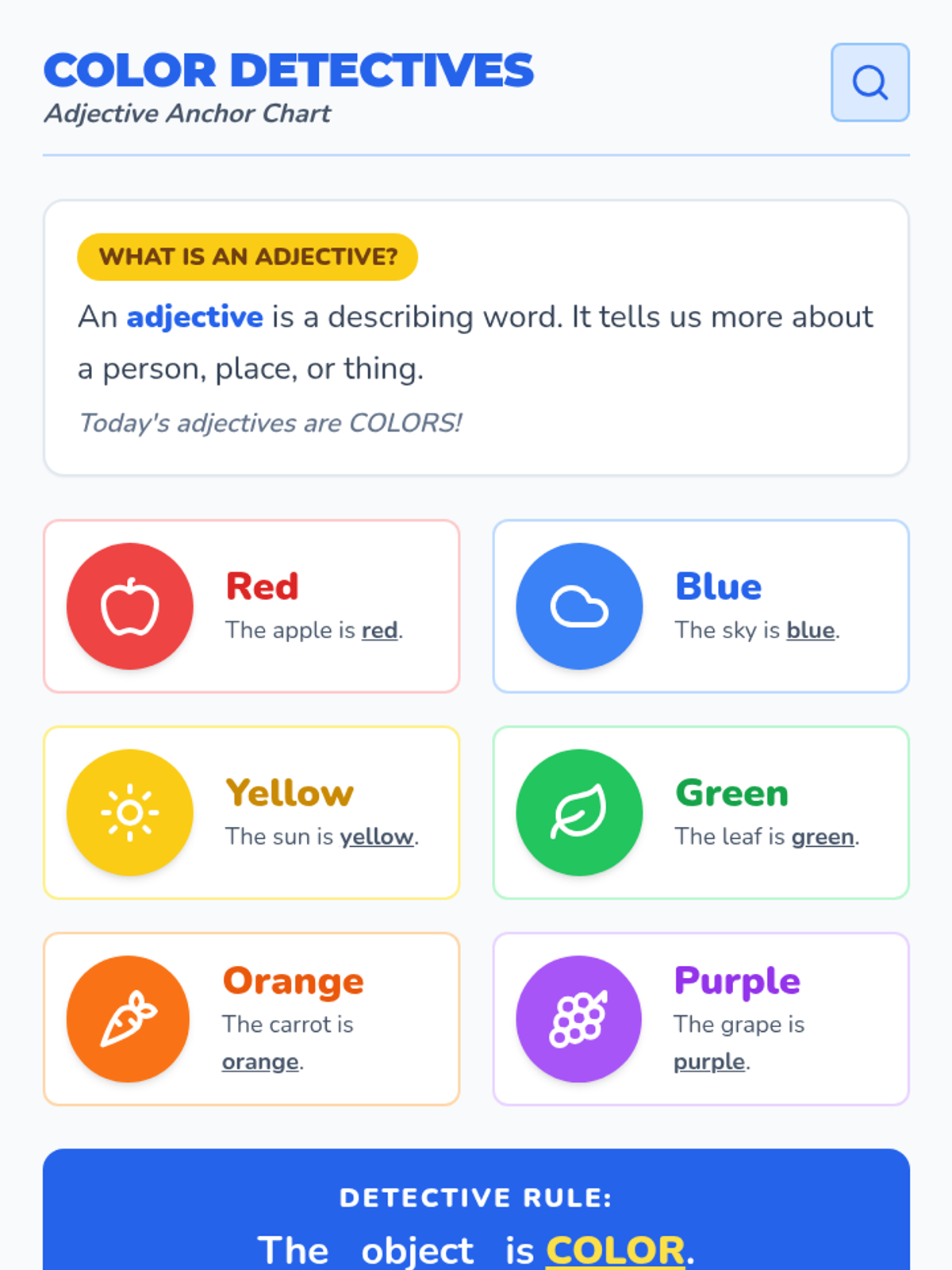
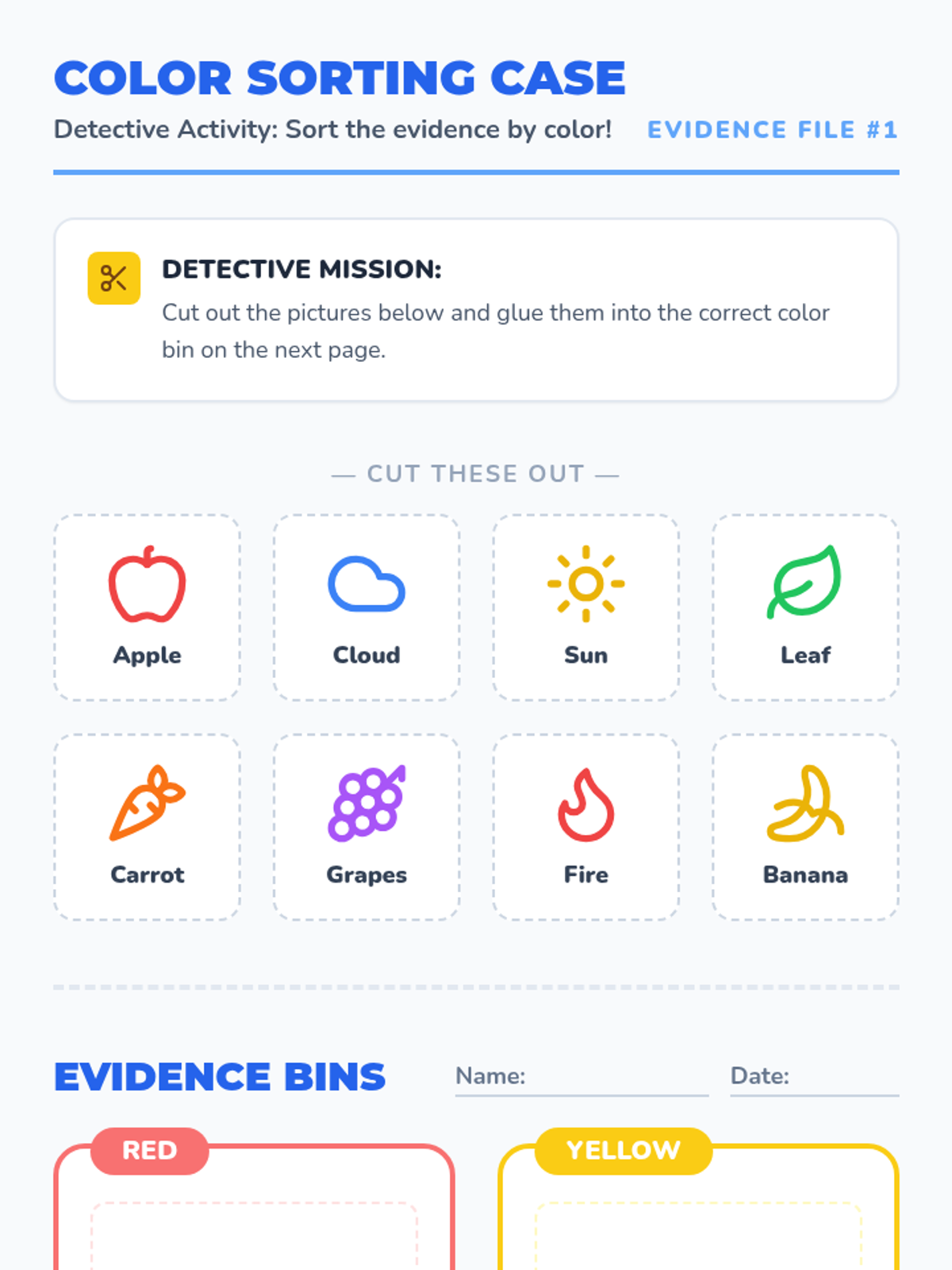
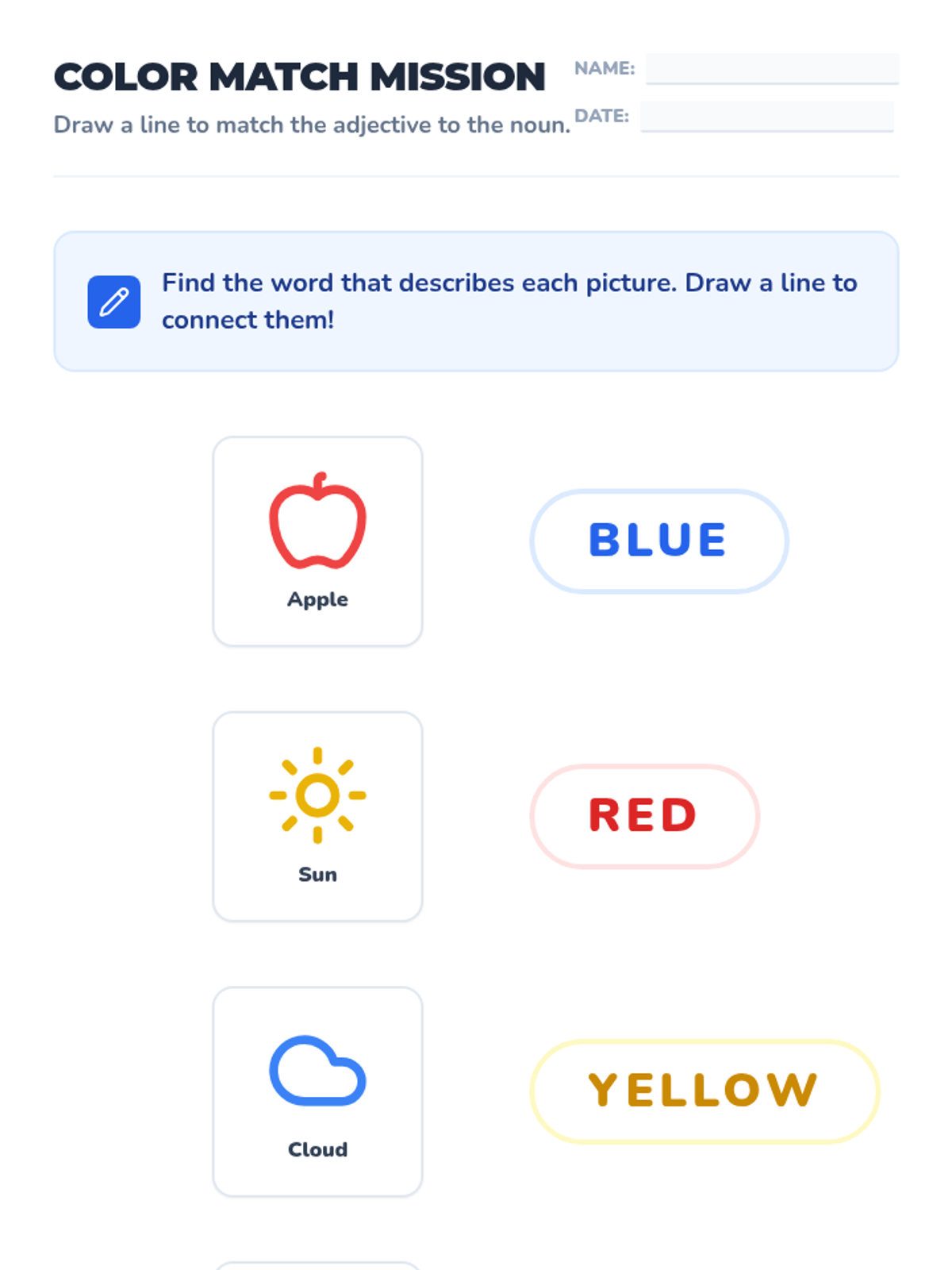
An introductory lesson focused on using color adjectives to describe objects in the environment.
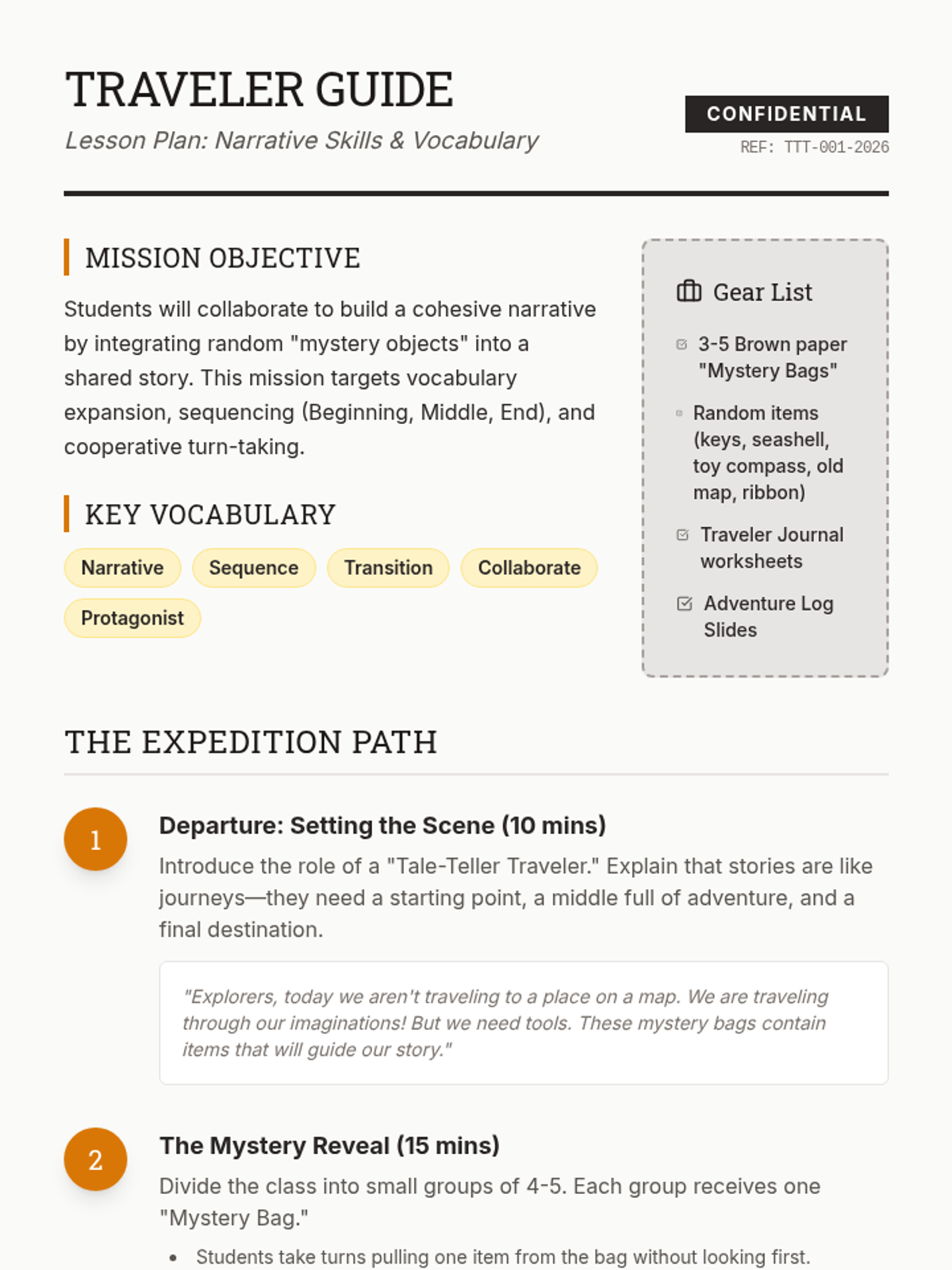
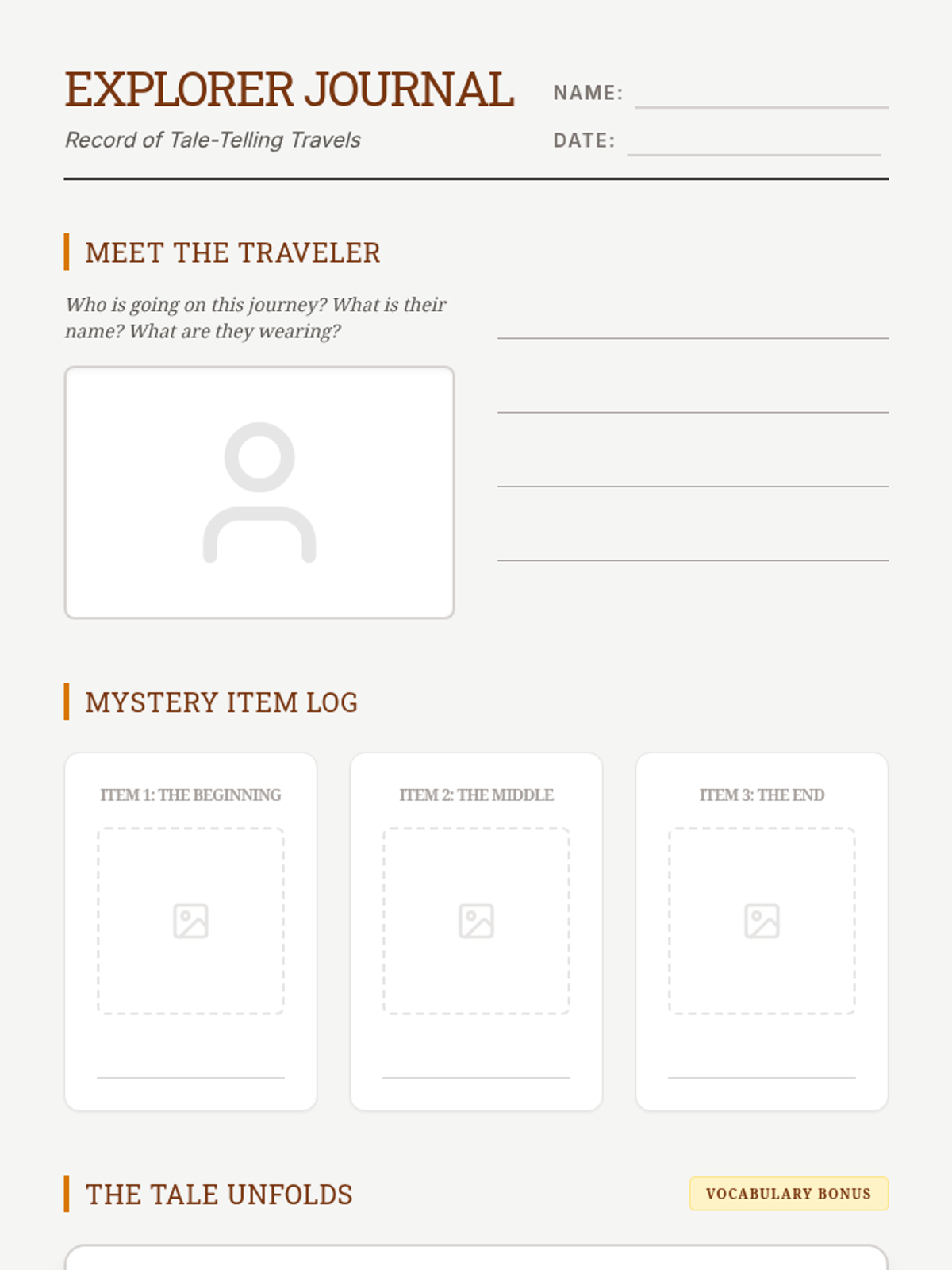
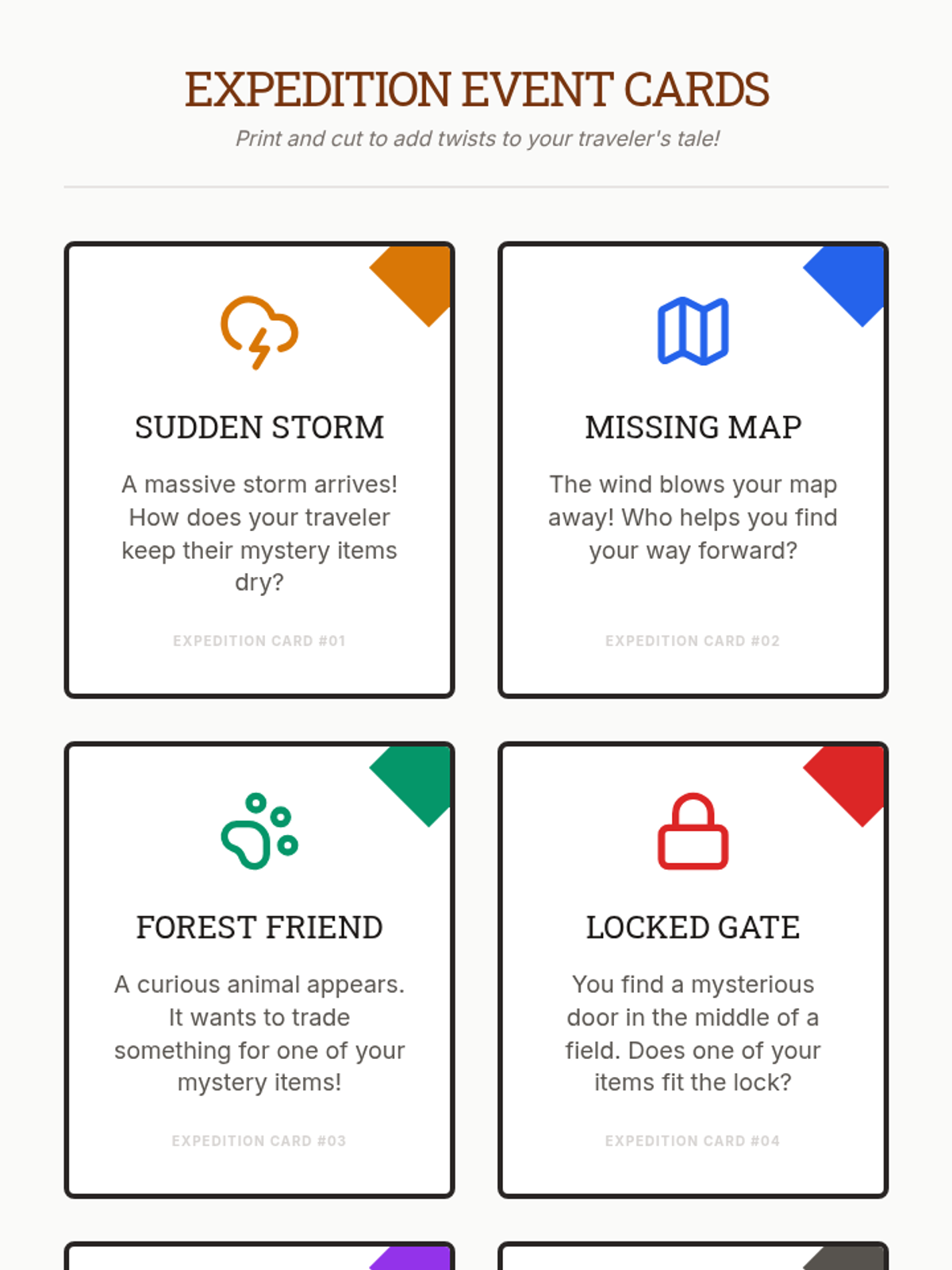
A cooperative storytelling lesson where students use mystery bags and 'traveler' prompts to build collective narratives, enhancing vocabulary and sequencing skills.
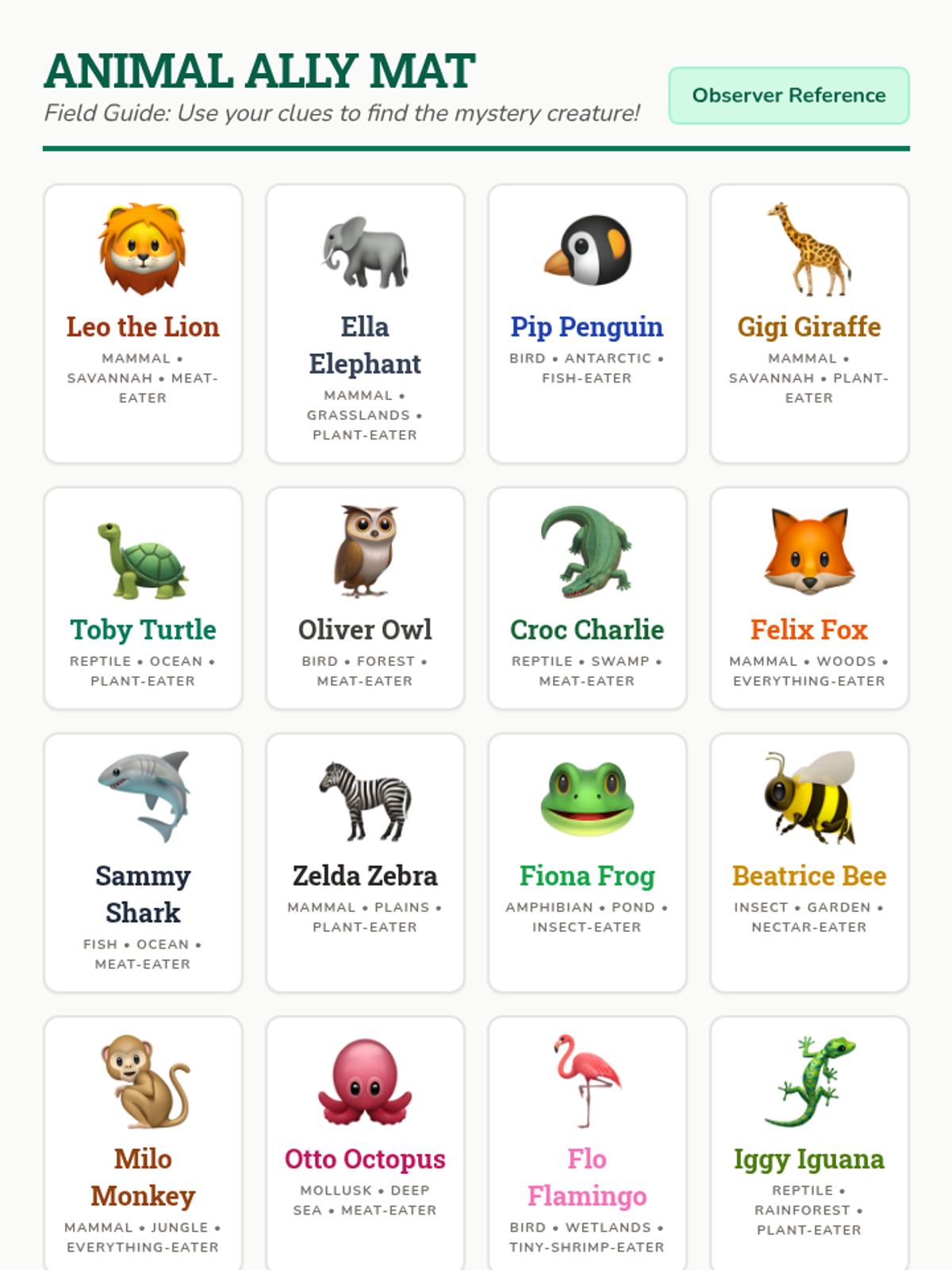
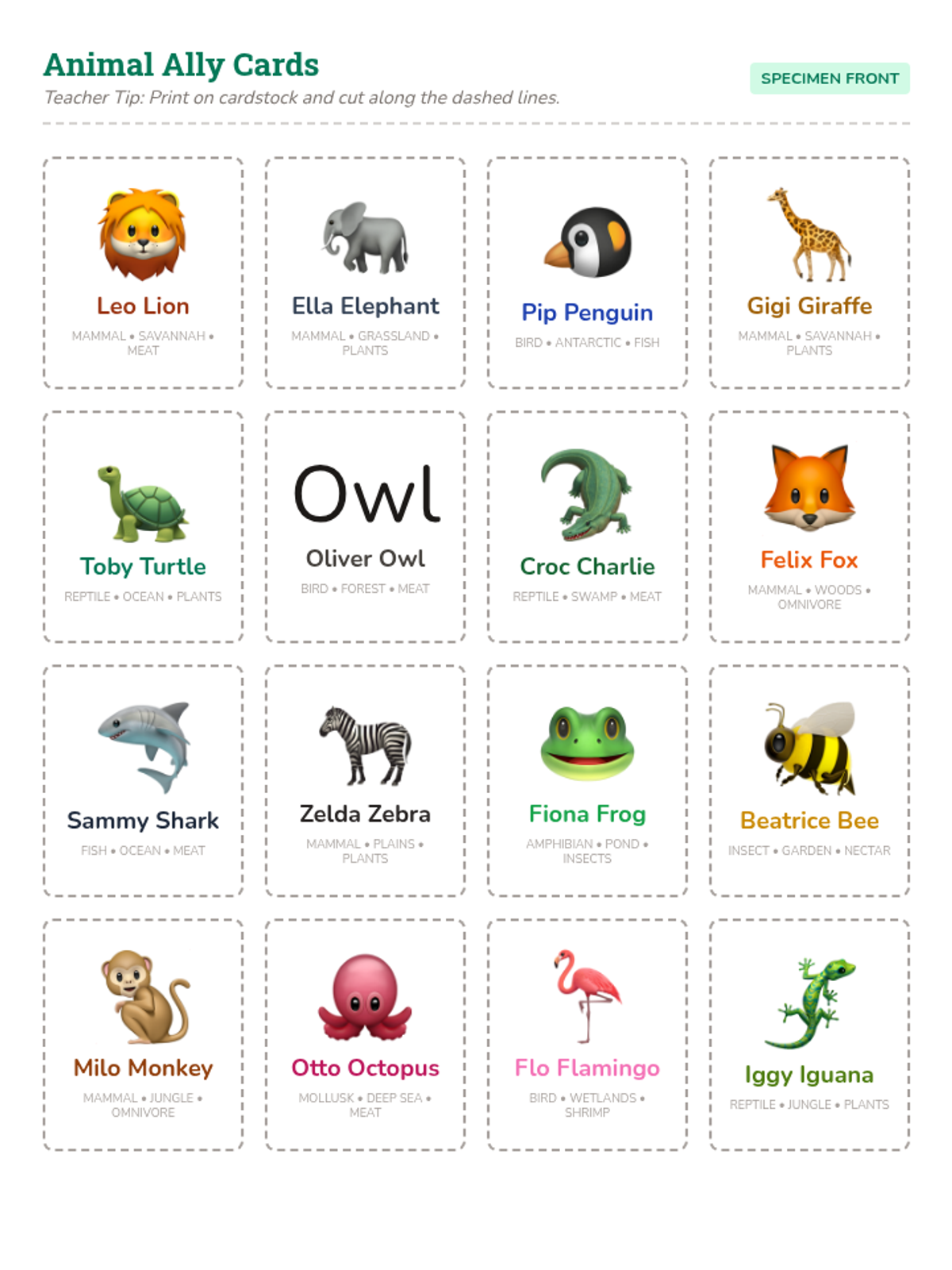
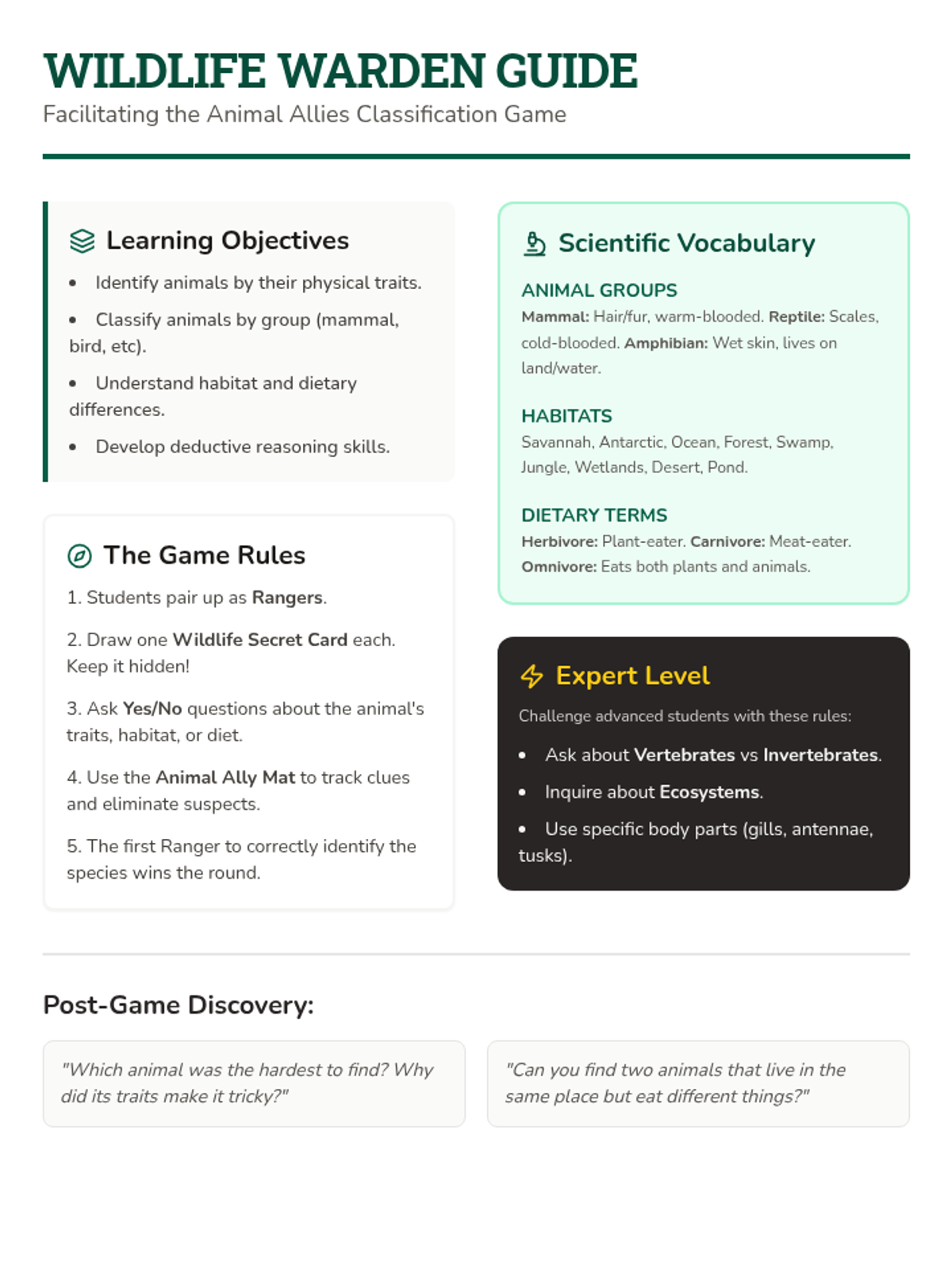
An engaging 'Guess Who' style game where students use descriptive language and biological traits to identify mystery animals. Focuses on classification, habitats, and physical characteristics.
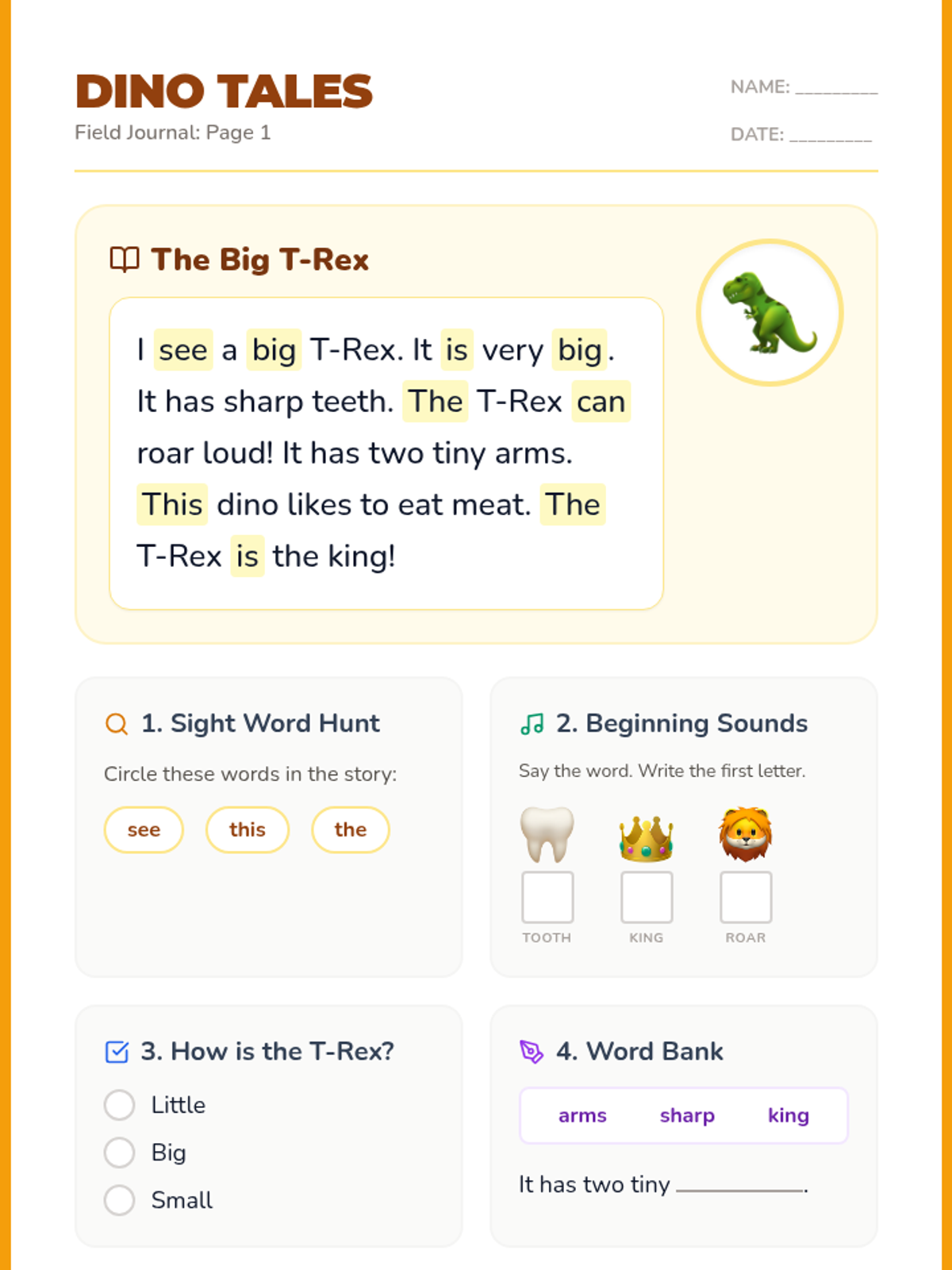
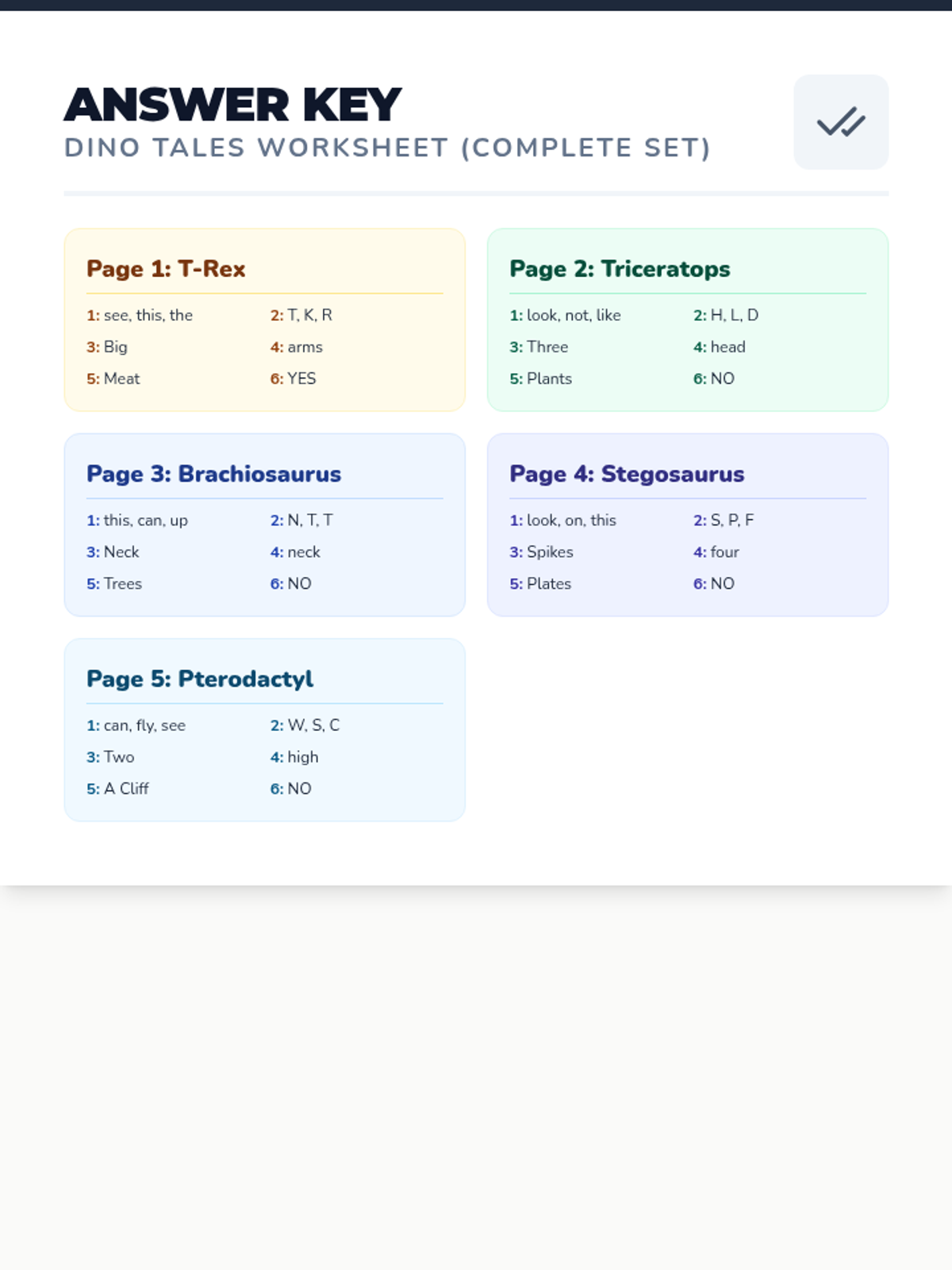
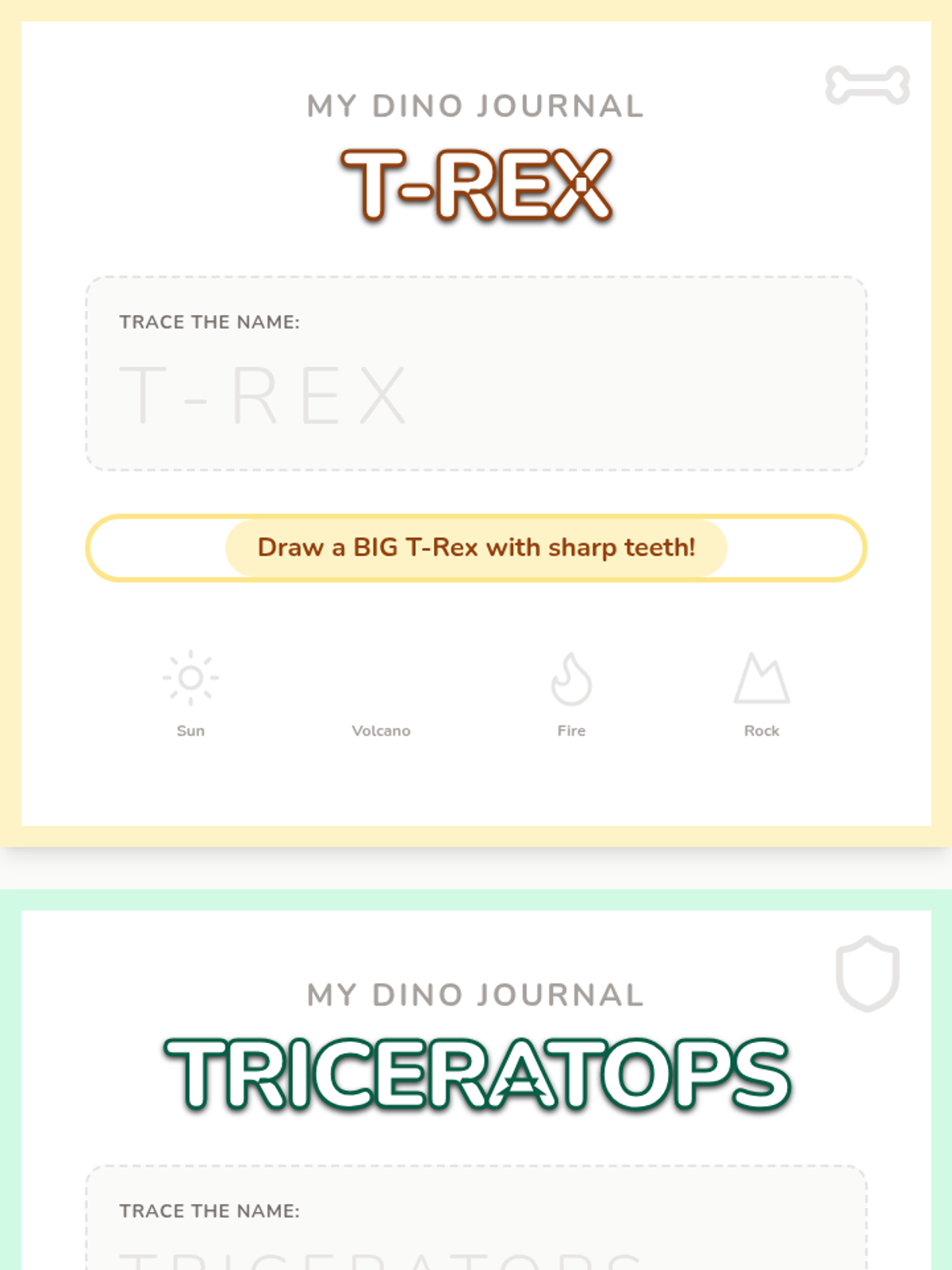
A fun, introductory lesson for kindergarten students to learn about dinosaurs while practicing foundational reading skills like sight word recognition and phonics. Students will explore three different dinosaurs through short, engaging passages and interactive activities.
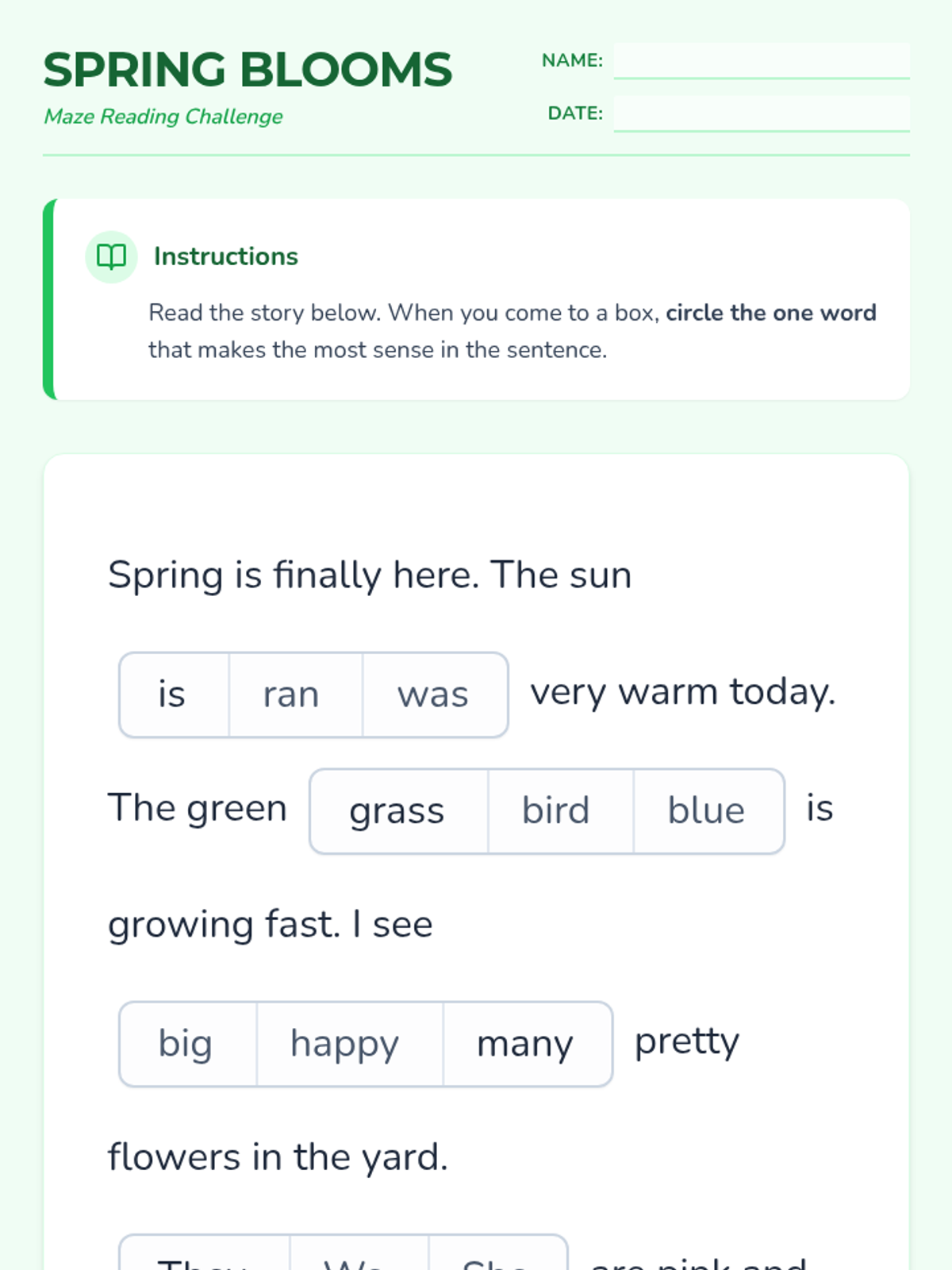
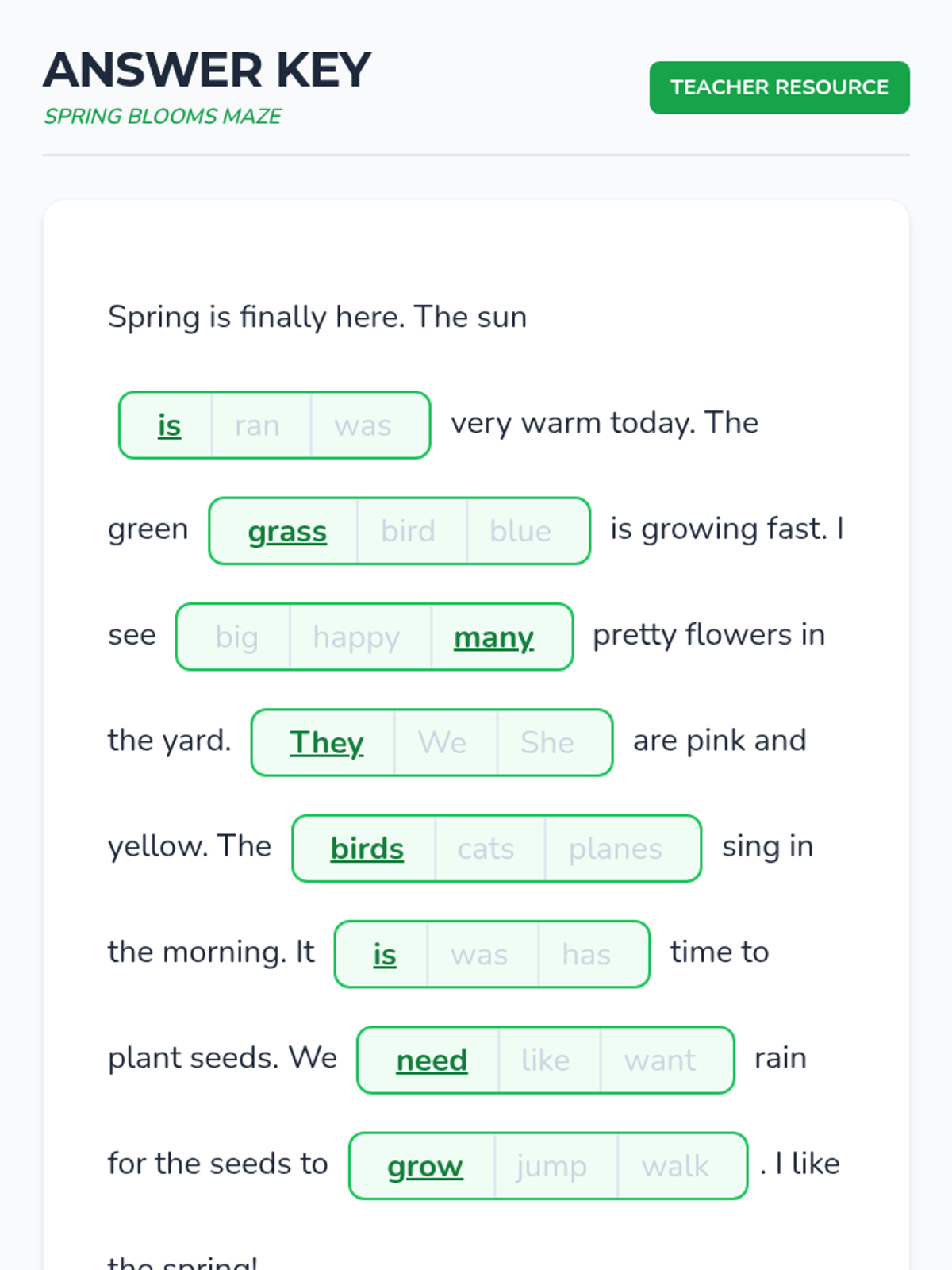
A beginning reading lesson focused on spring-themed vocabulary and reading comprehension using a maze-style assessment.
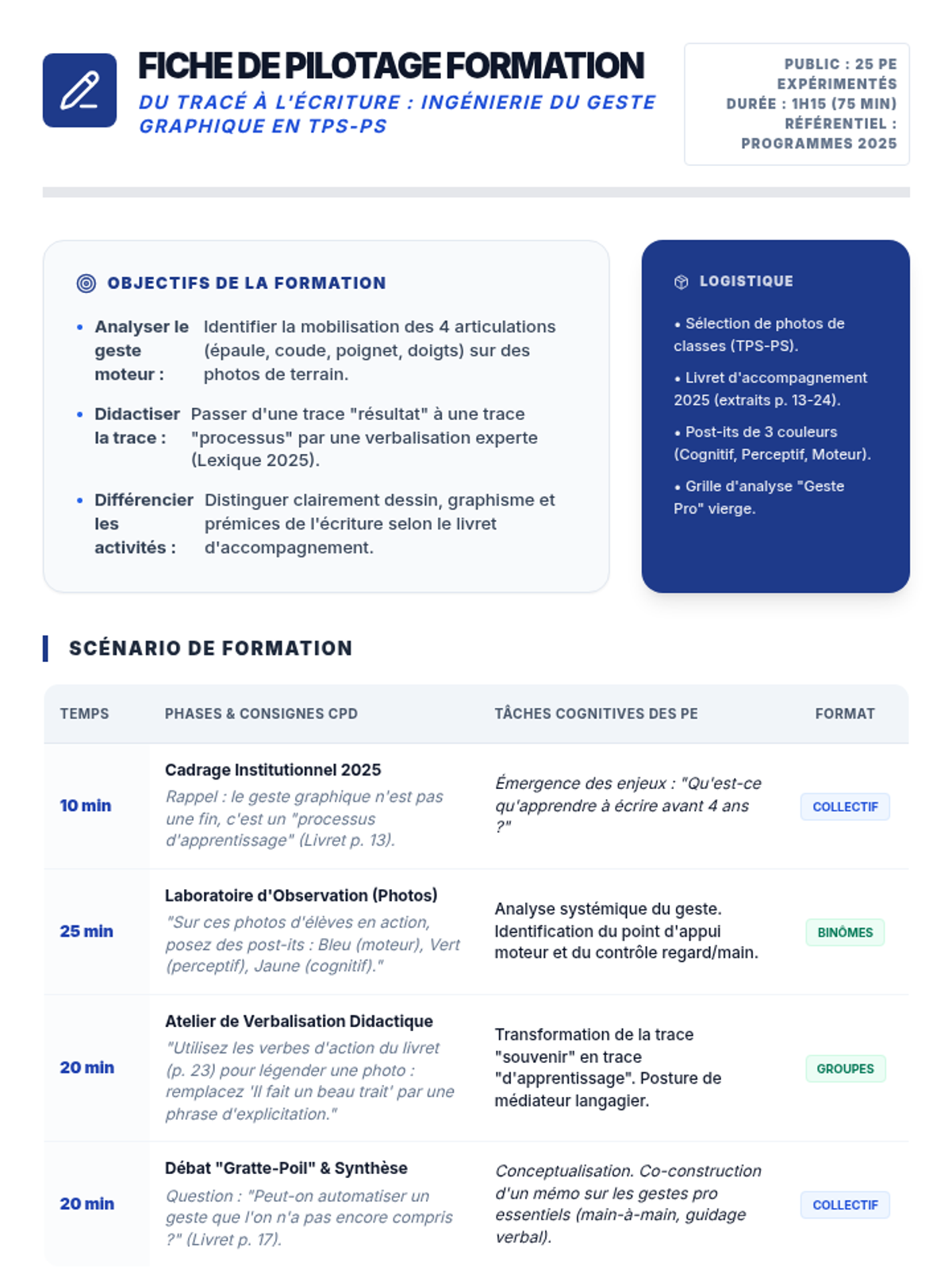
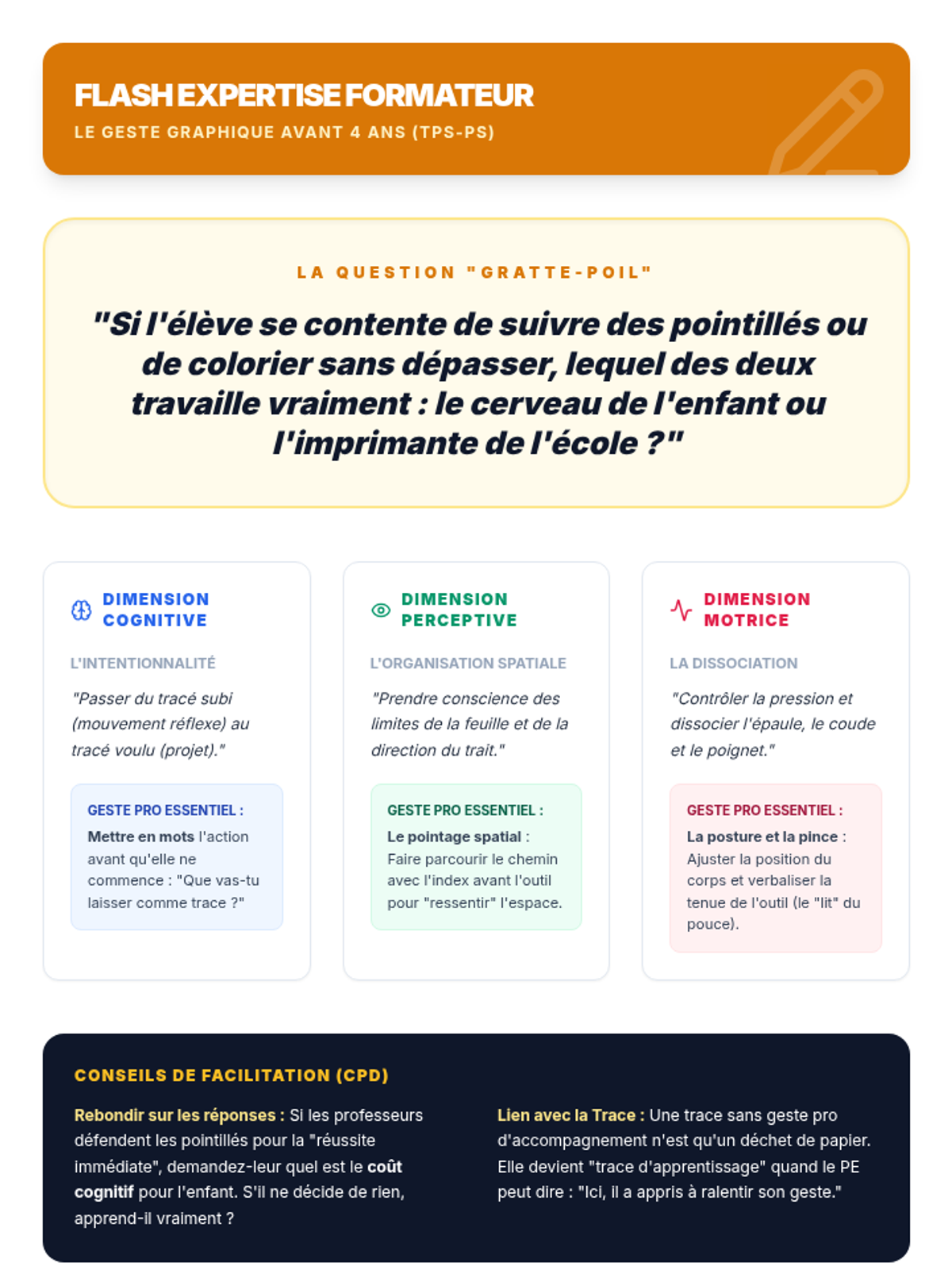
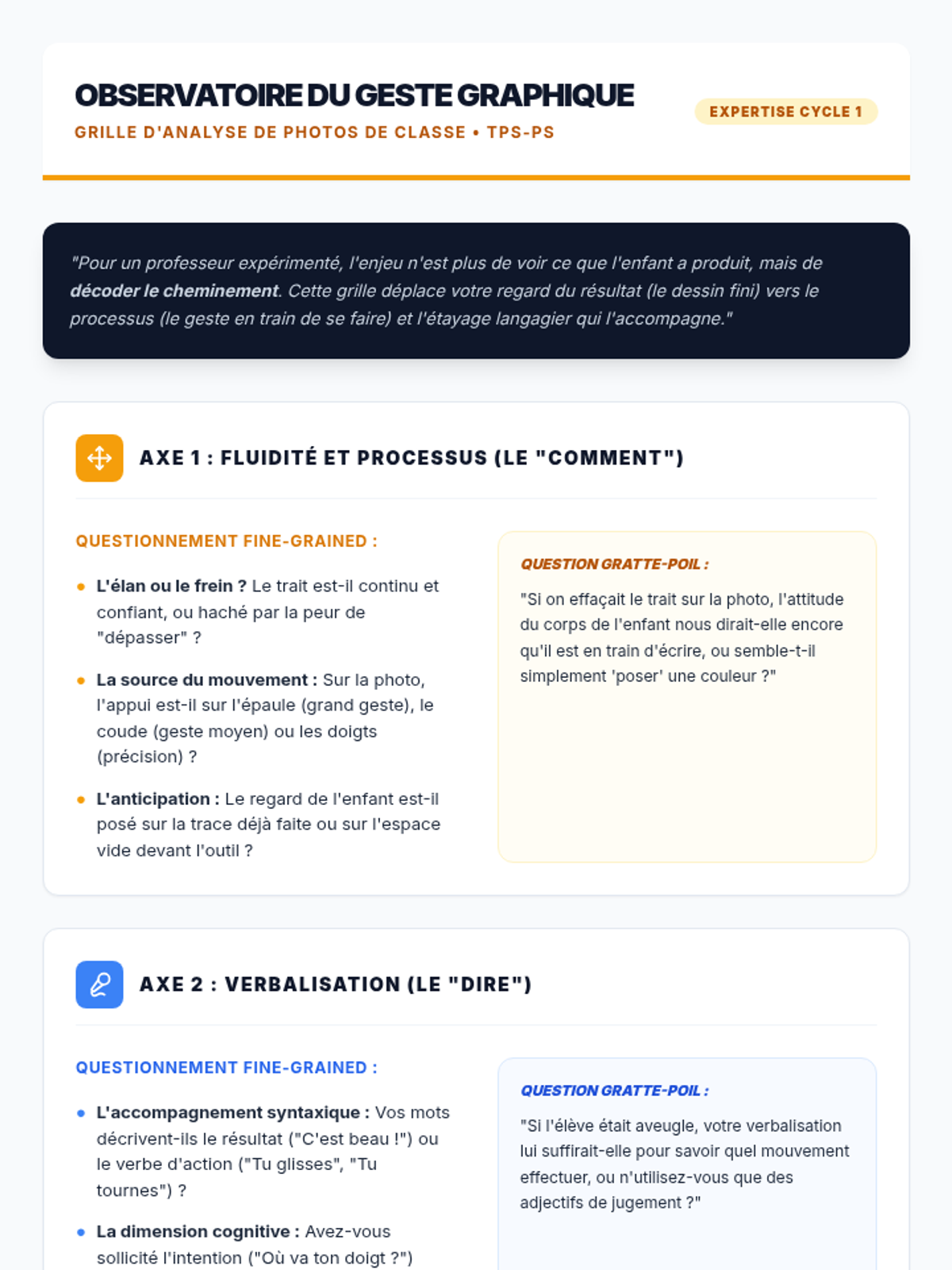
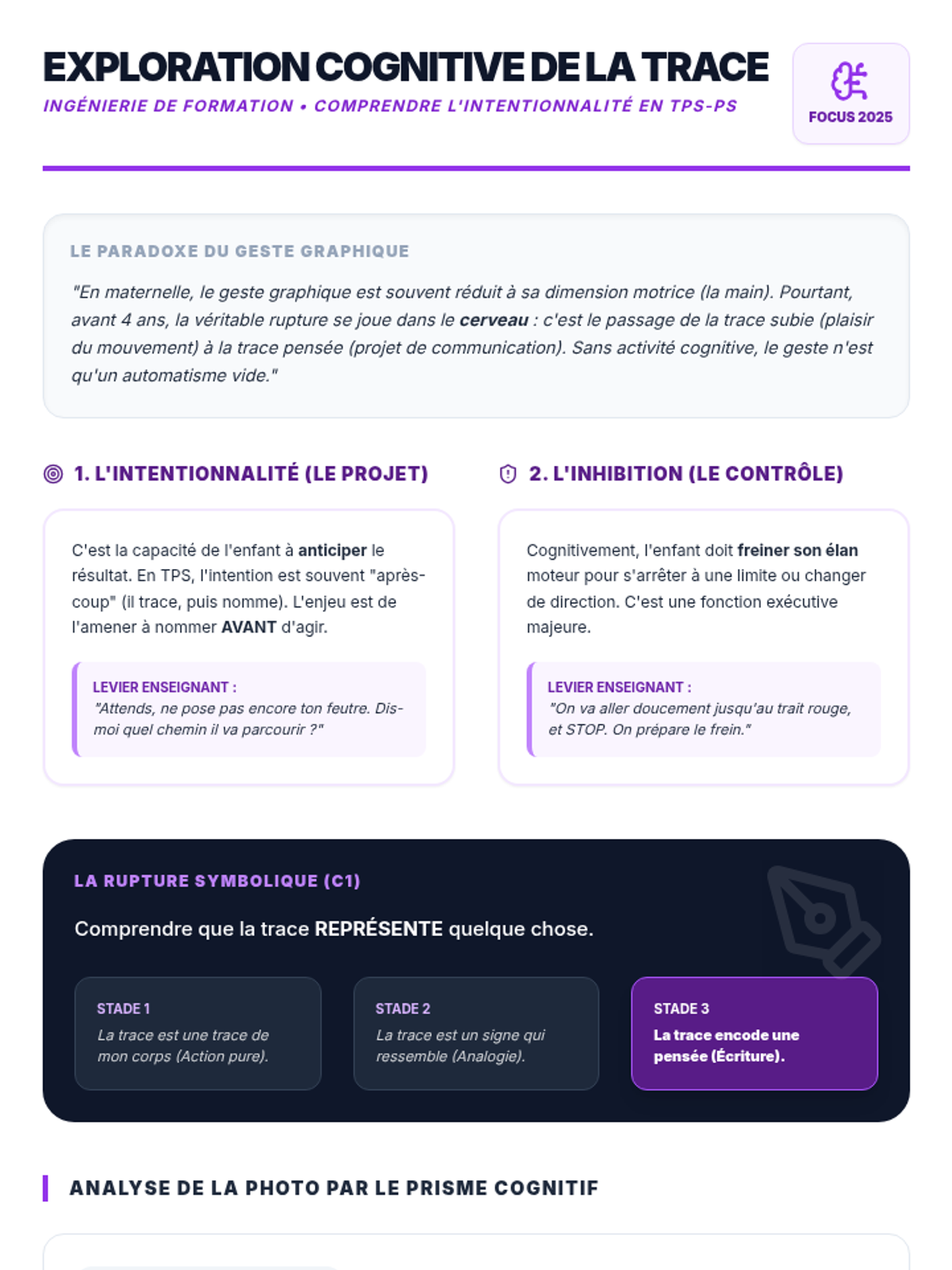
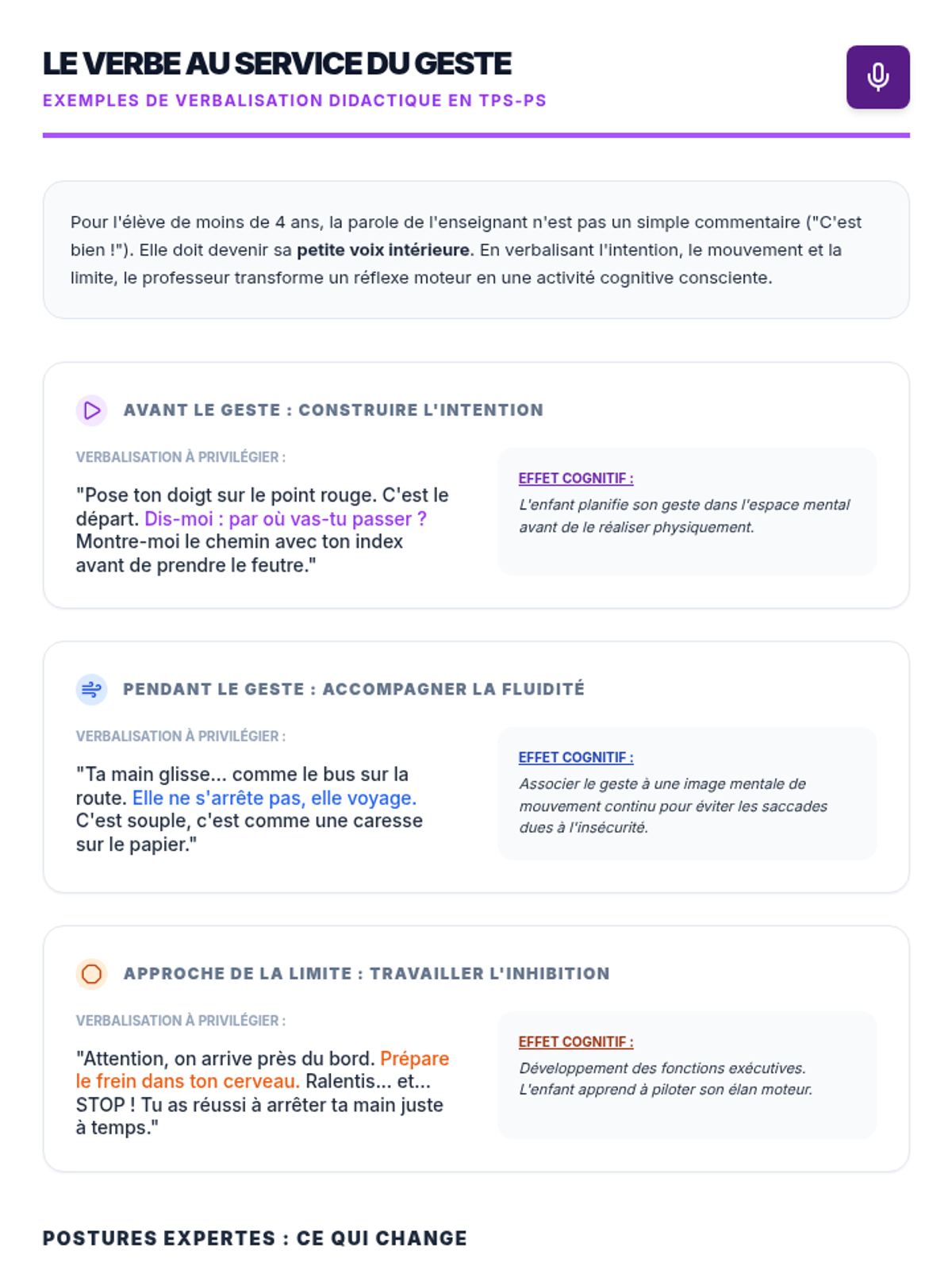
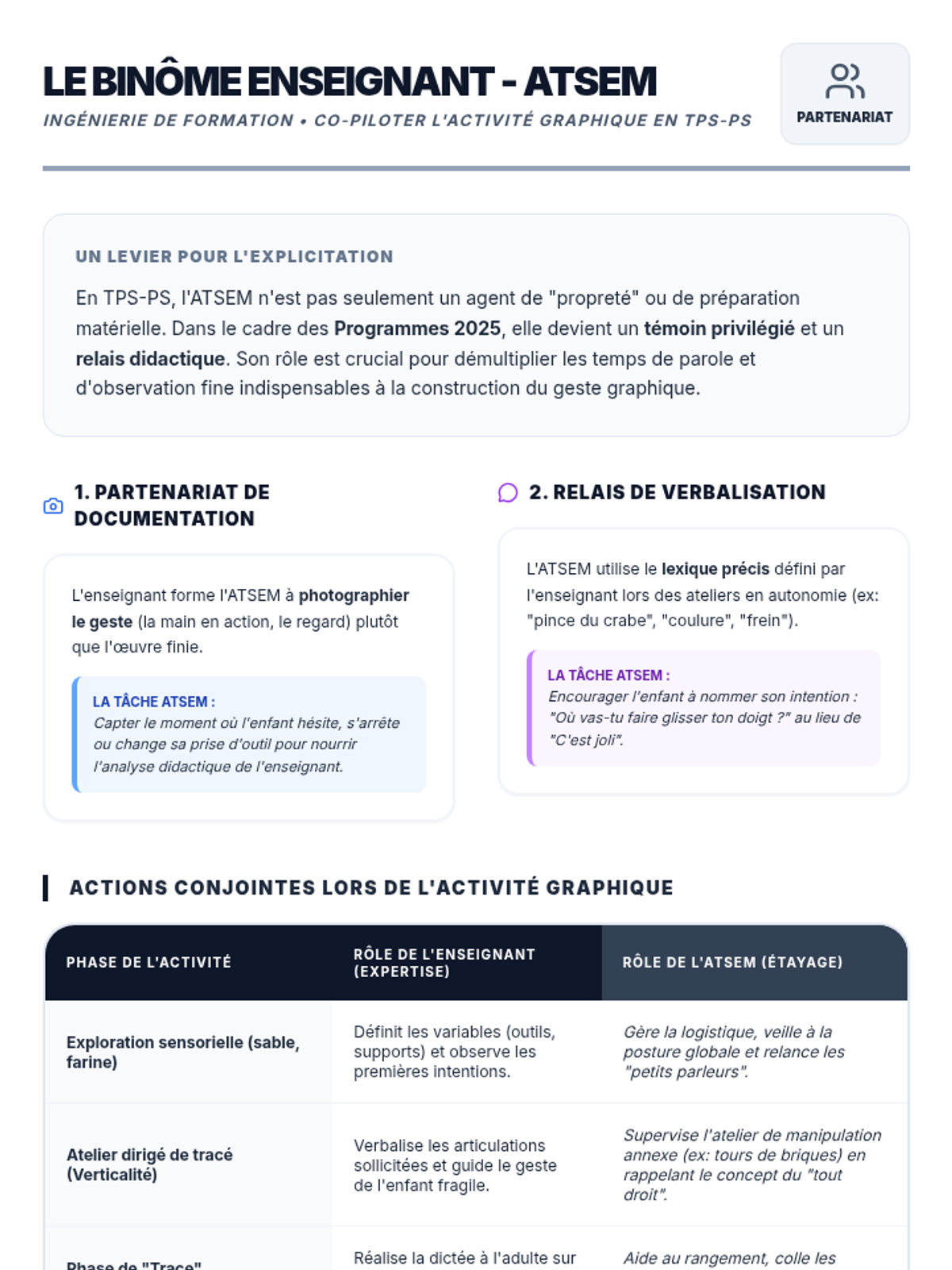
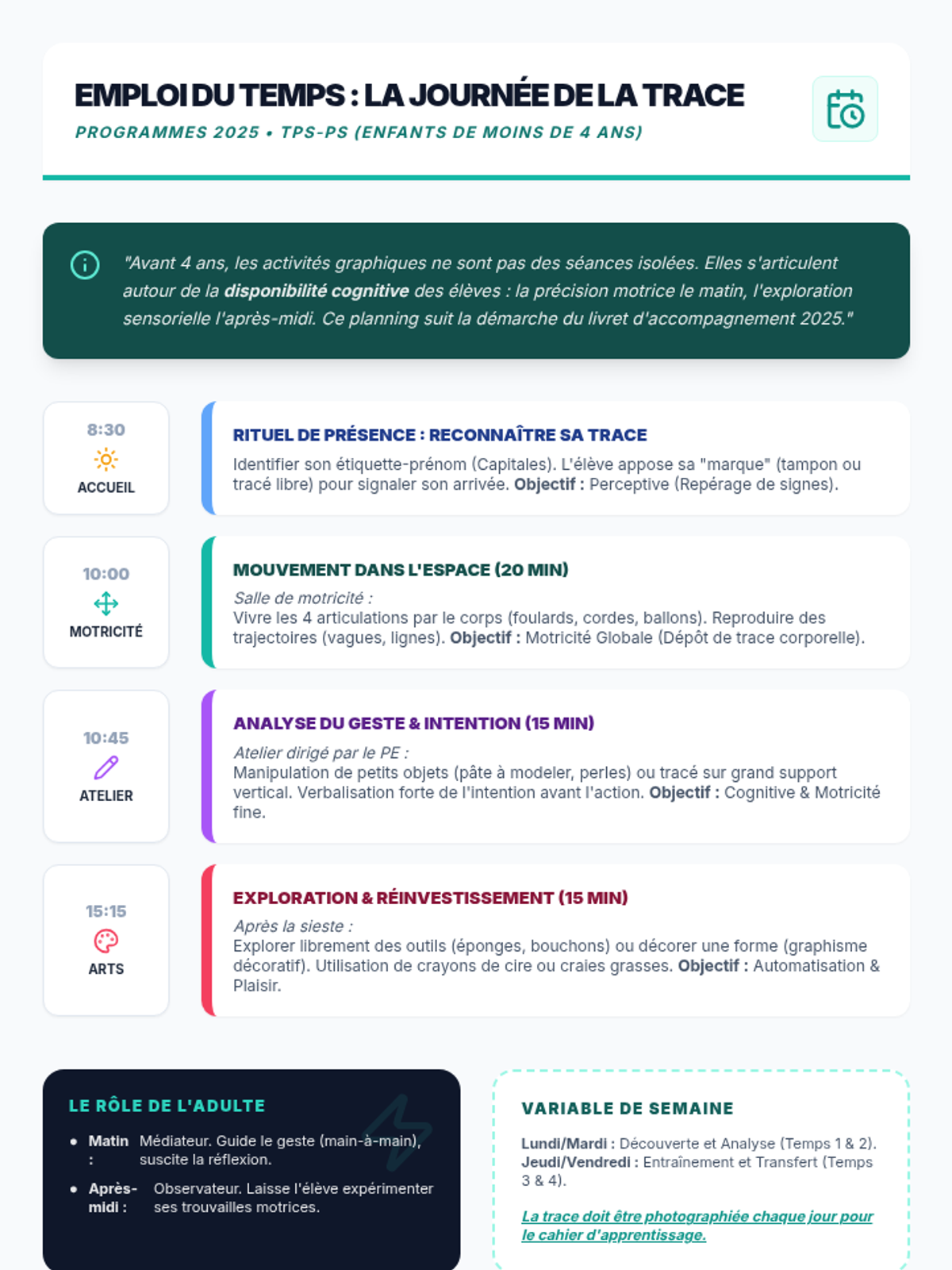
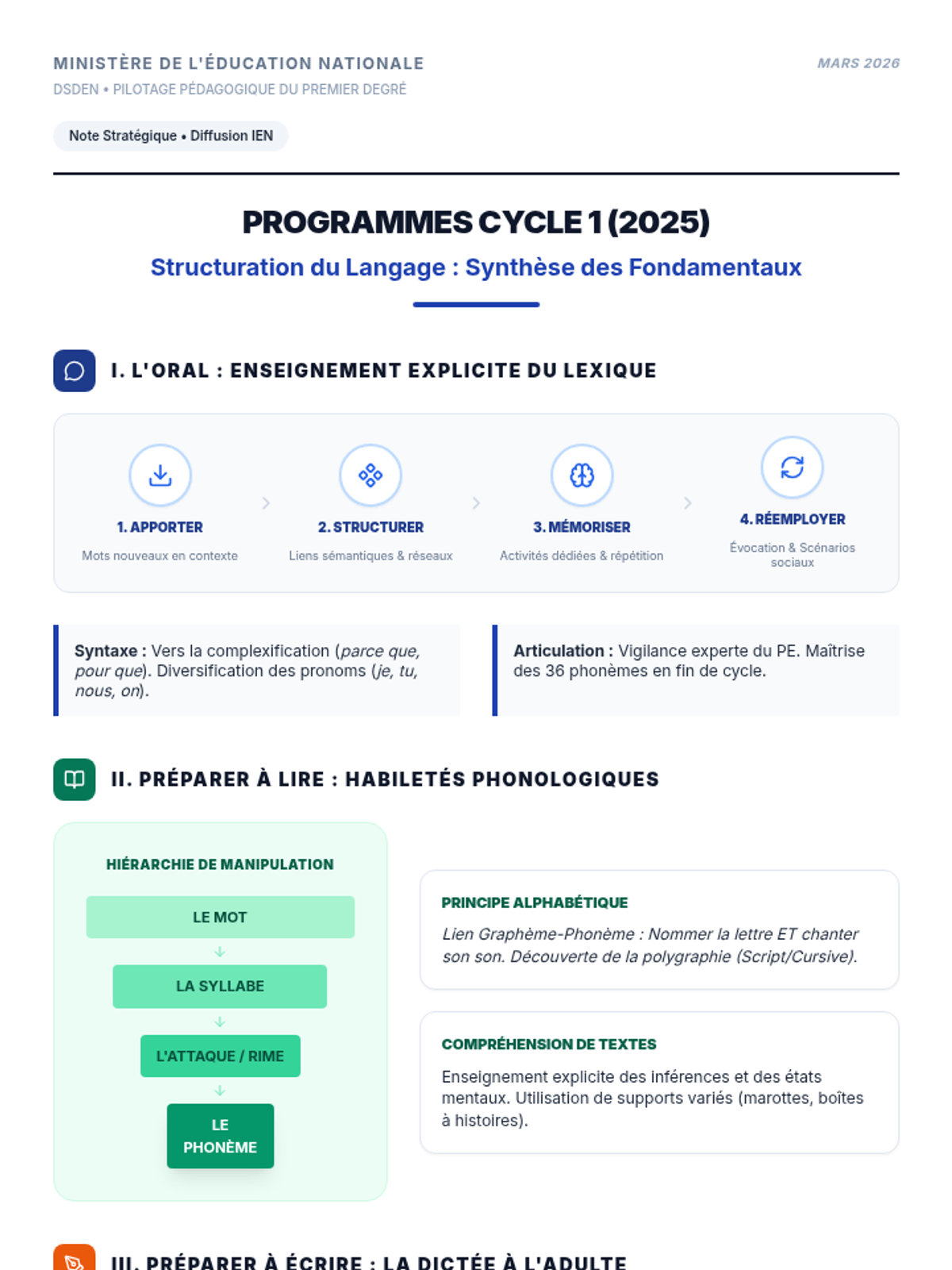
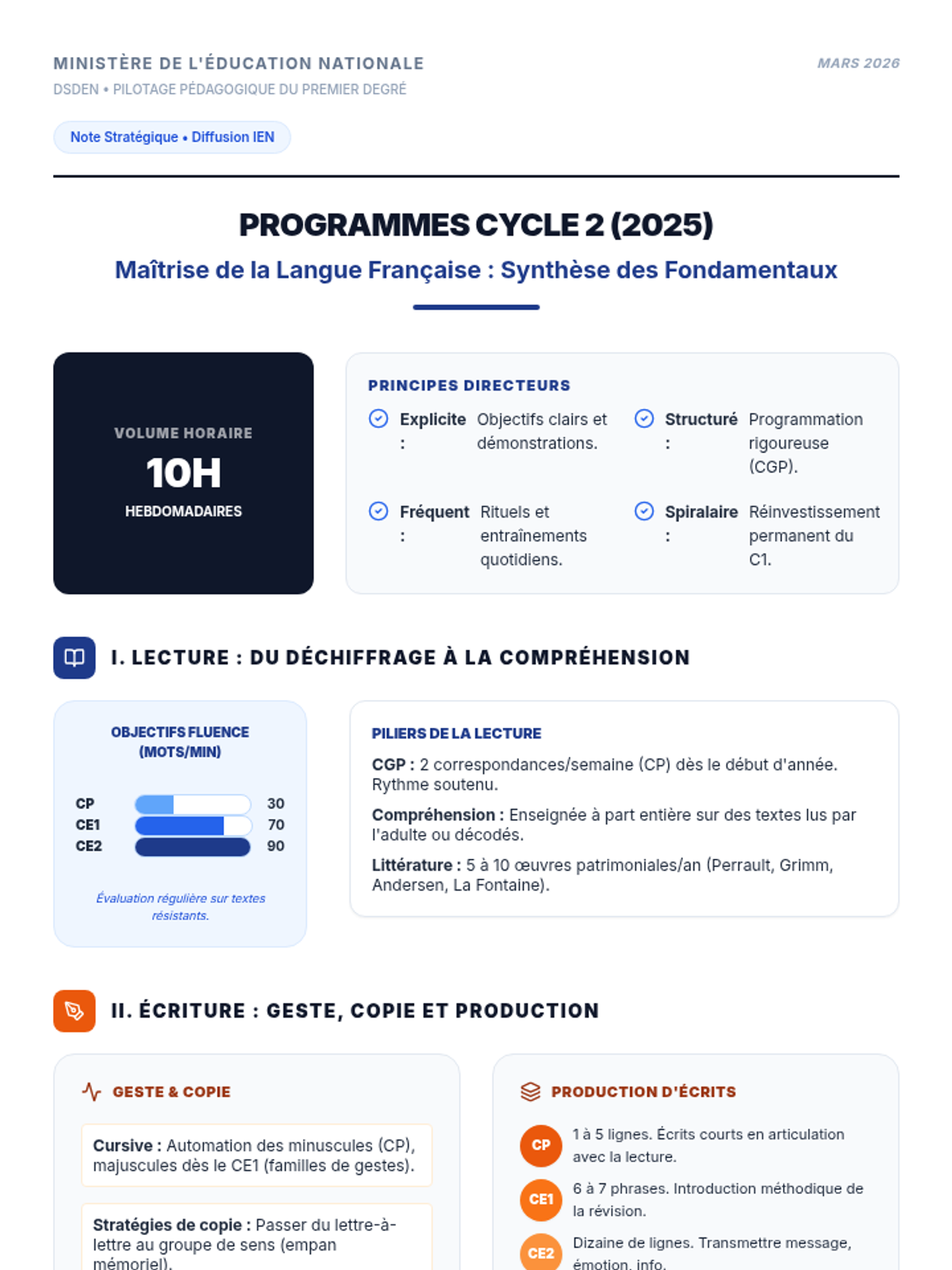
Cette formation pour les professeurs de TPS-PS vise à professionnaliser la conception des "traces" d'activités (cahiers de vie, affichages). En s'appuyant sur les photos de classe et les guides 2025, les enseignants apprennent à rendre les apprentissages explicites pour les élèves et les familles.
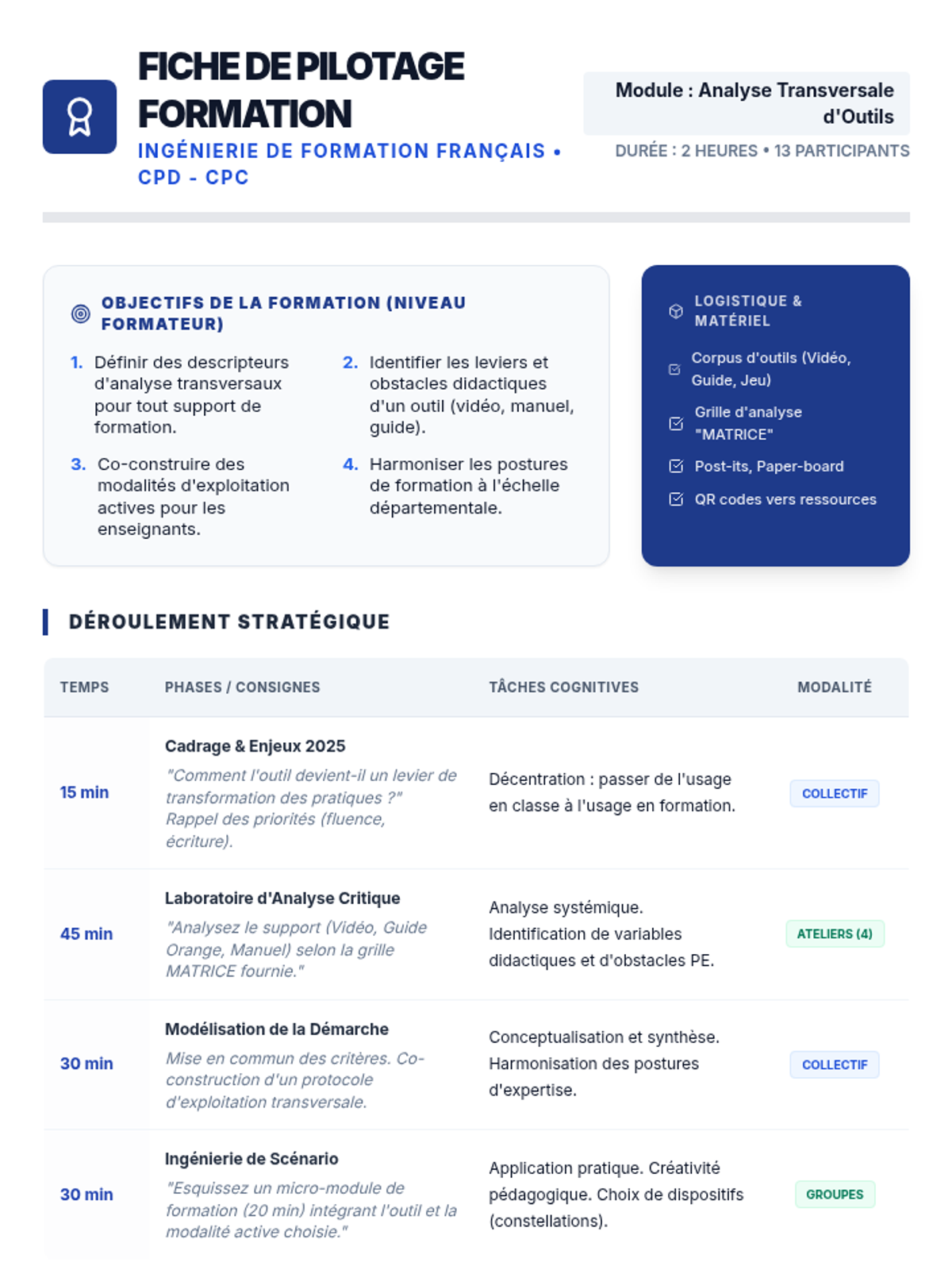
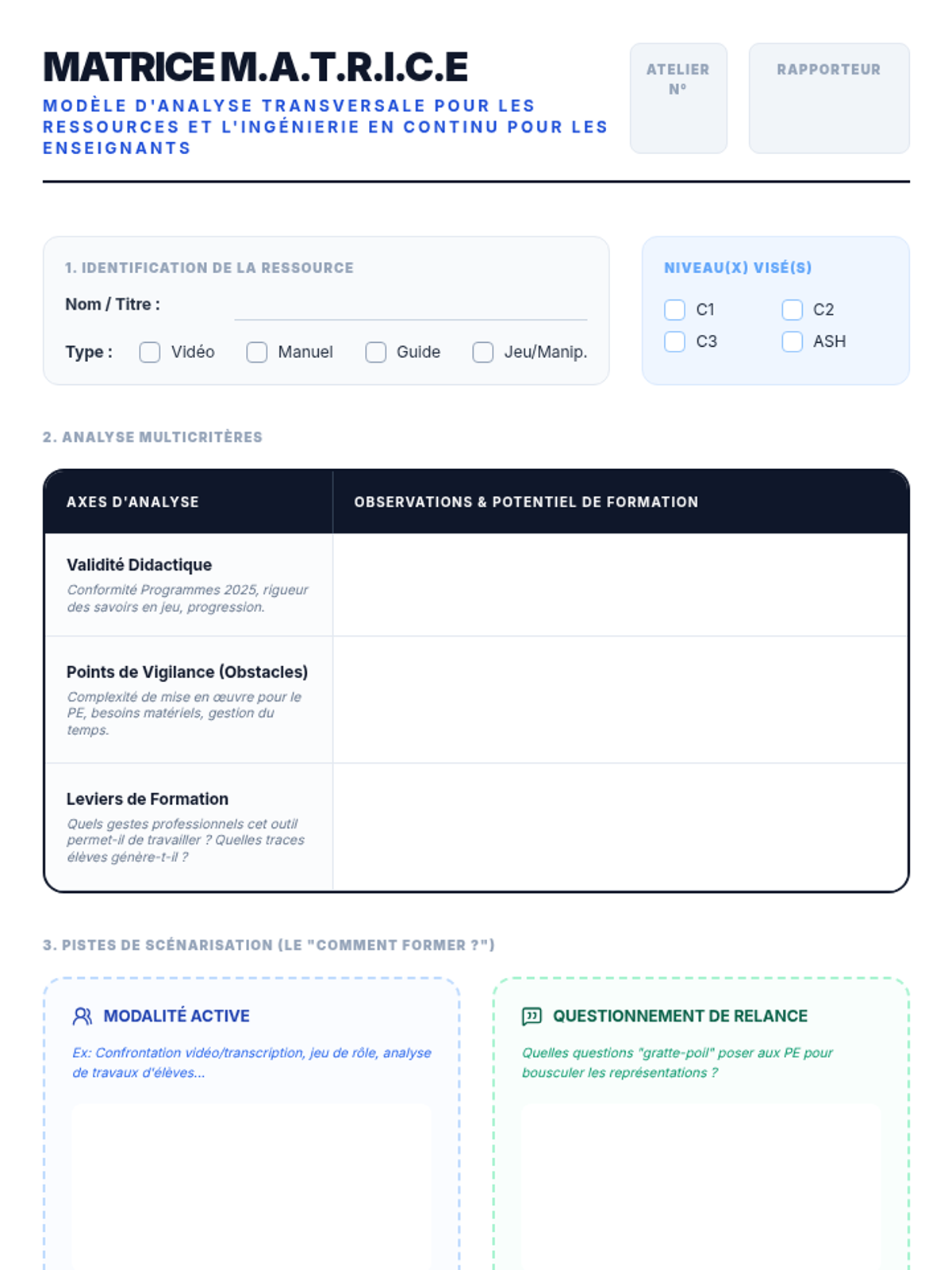
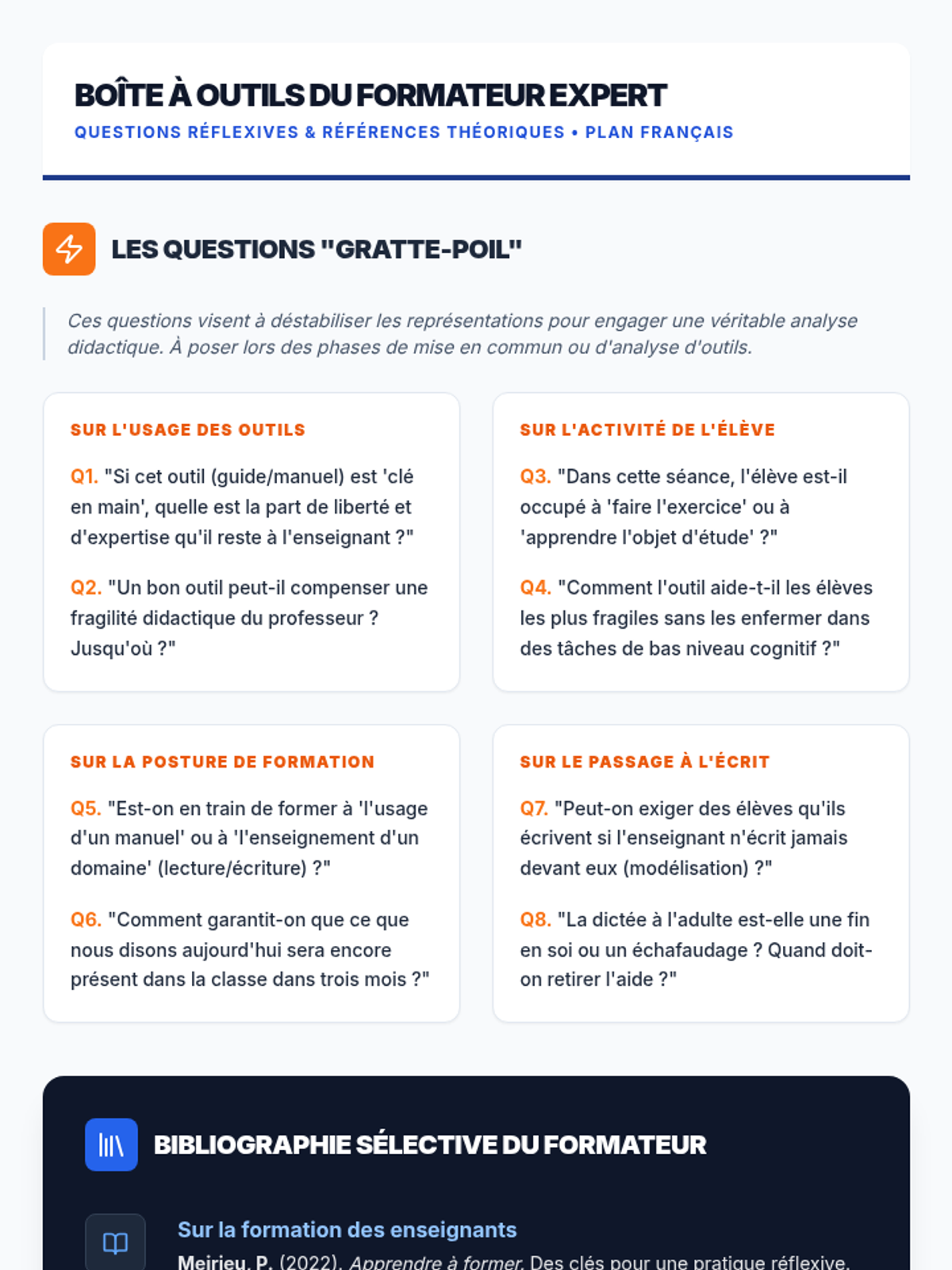
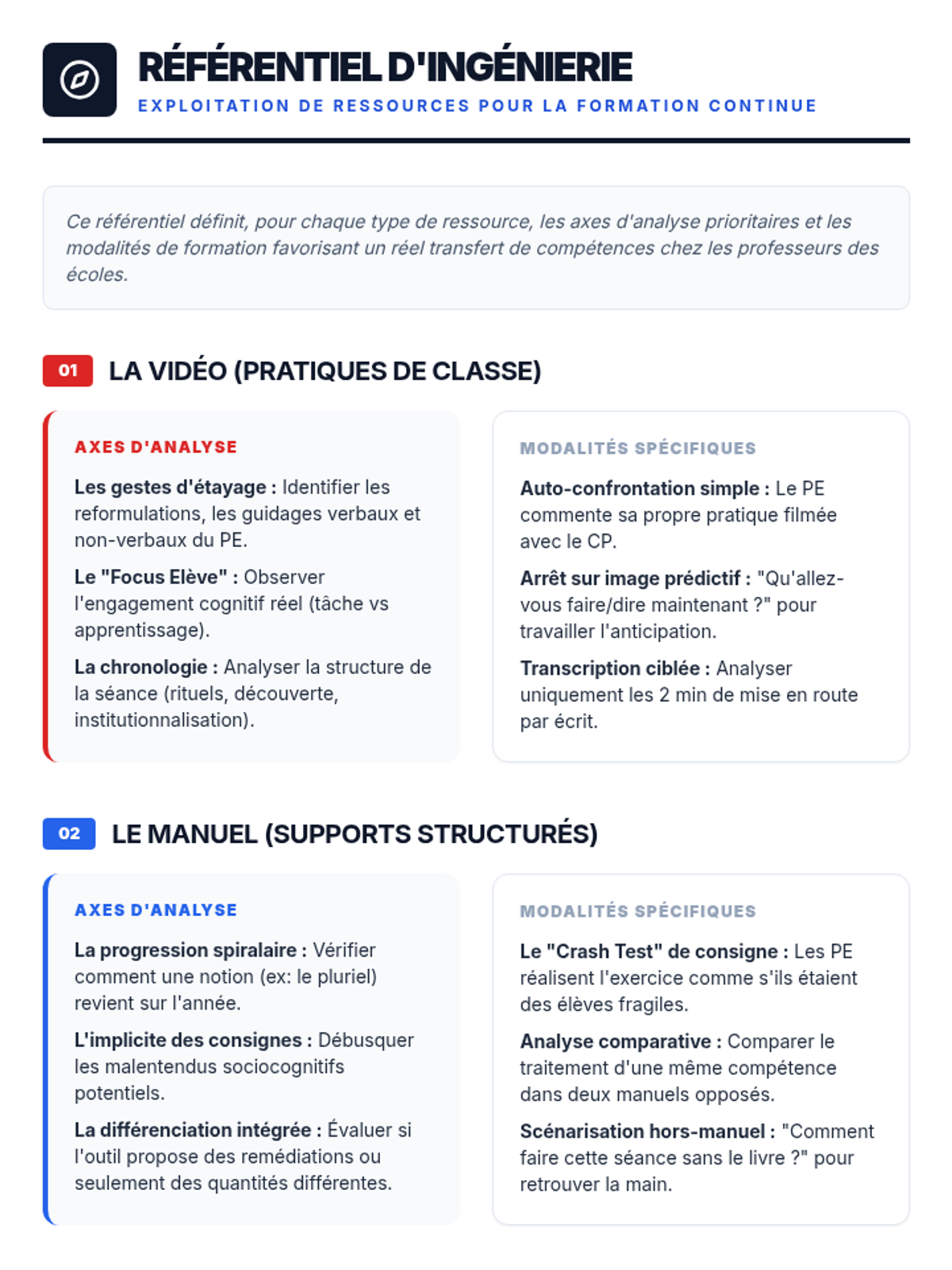
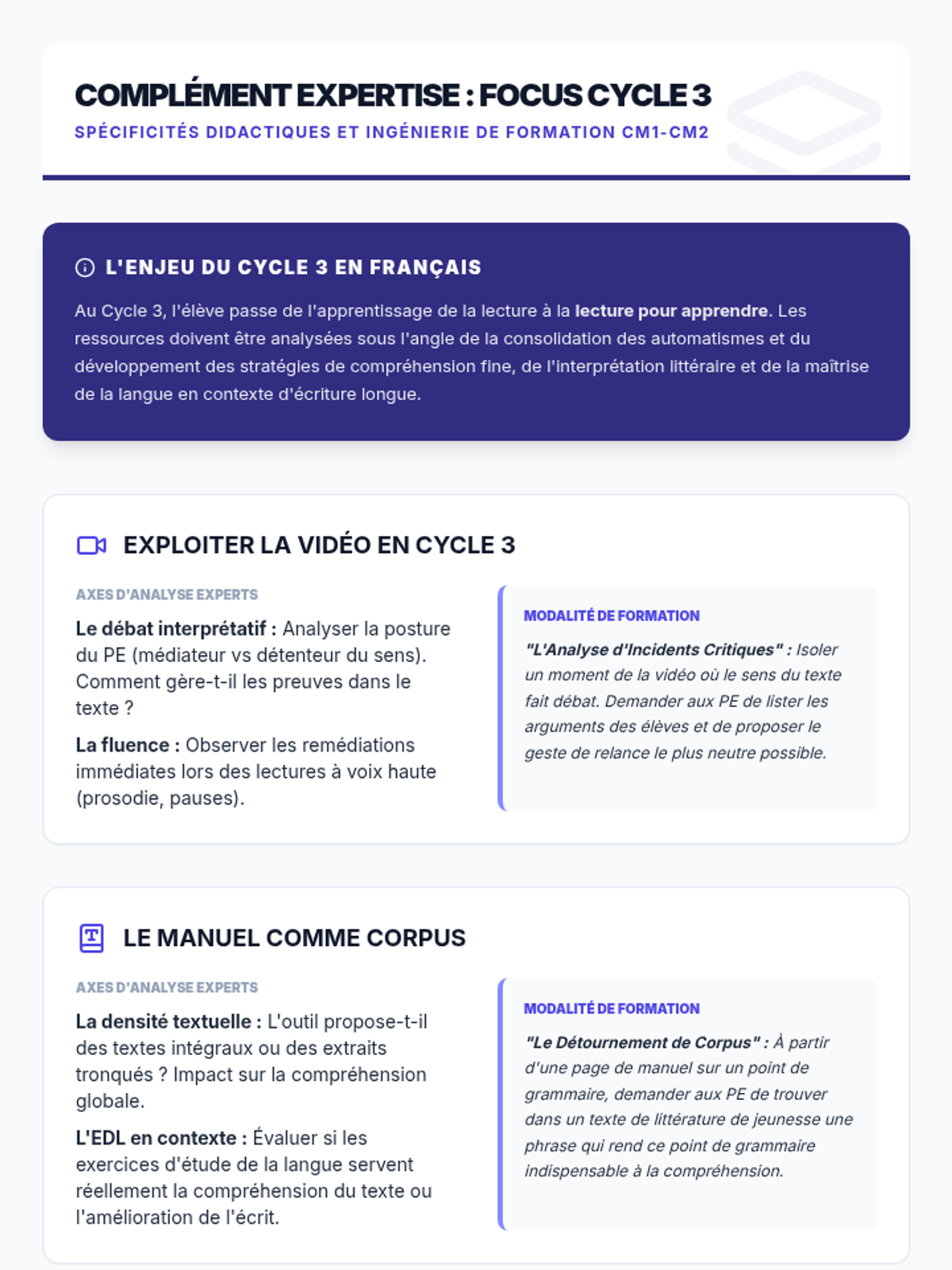
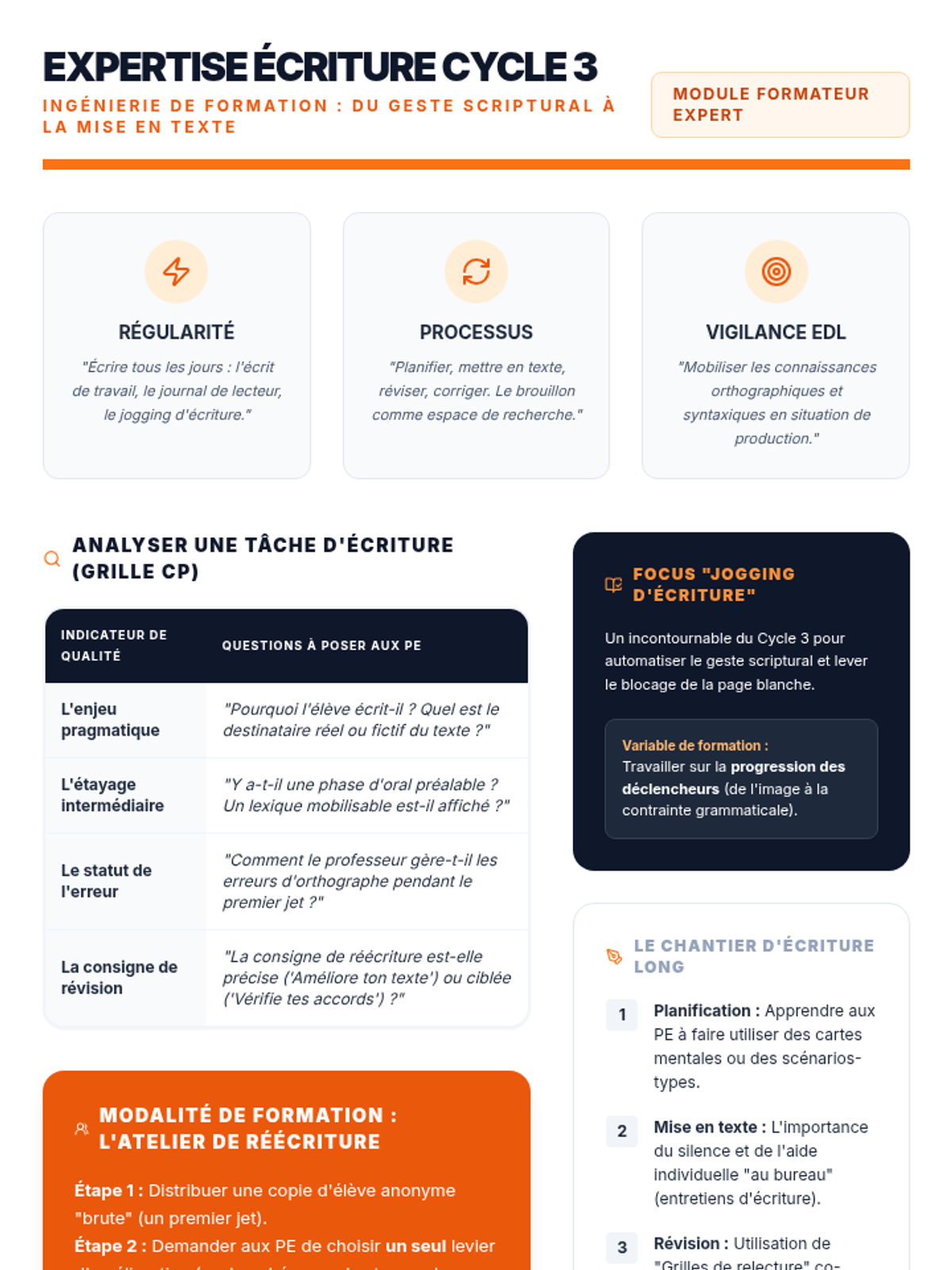
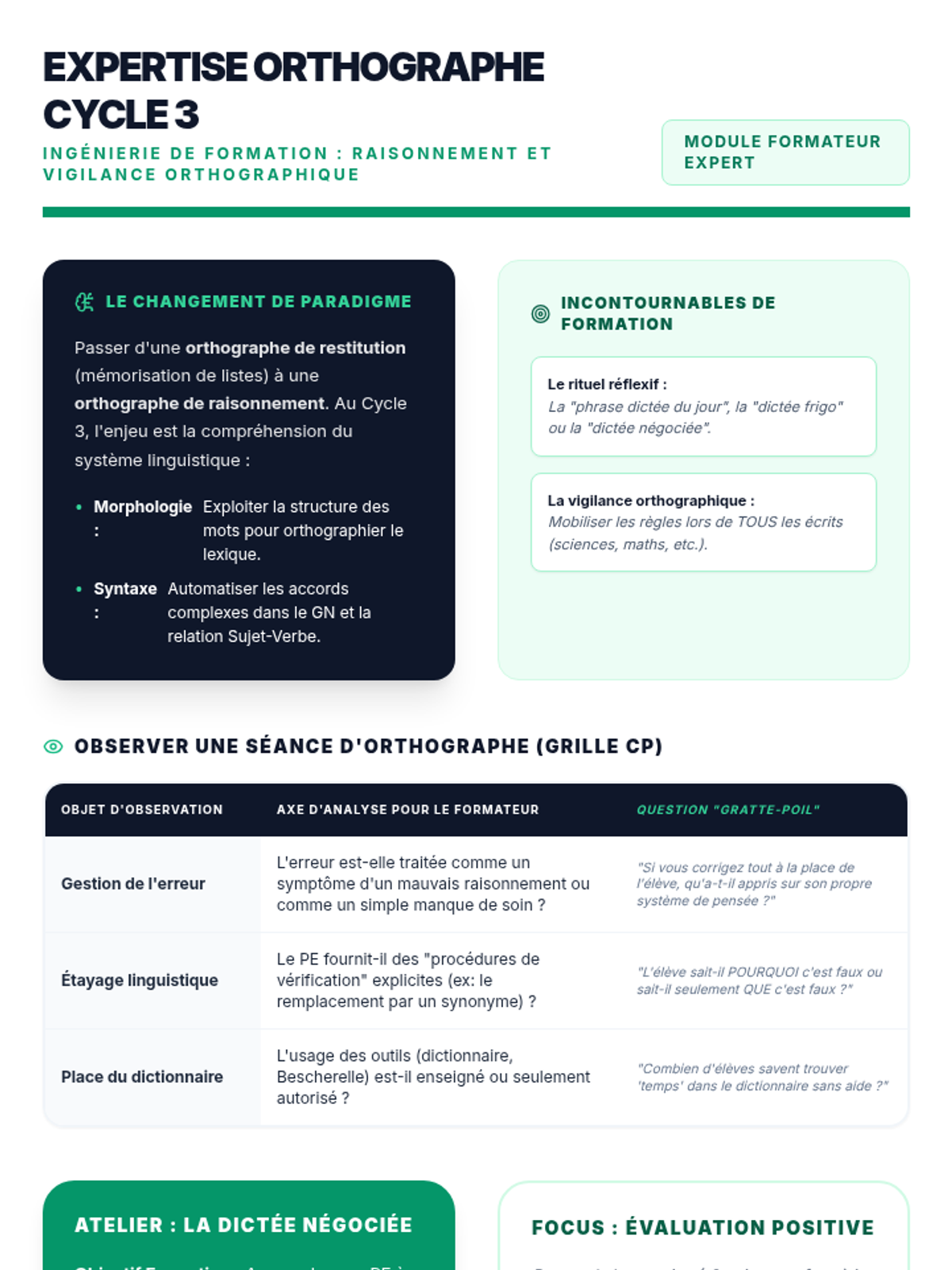
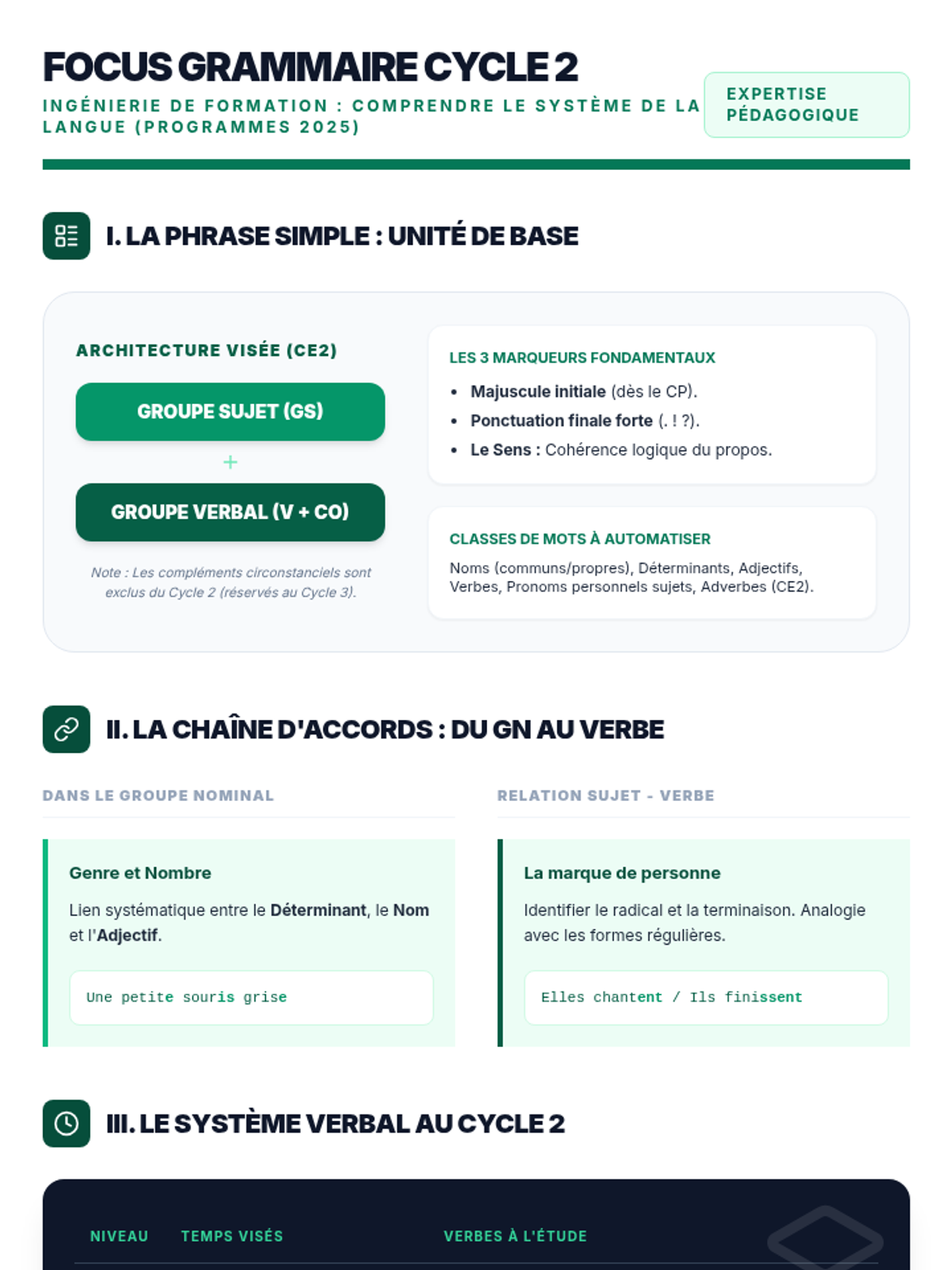
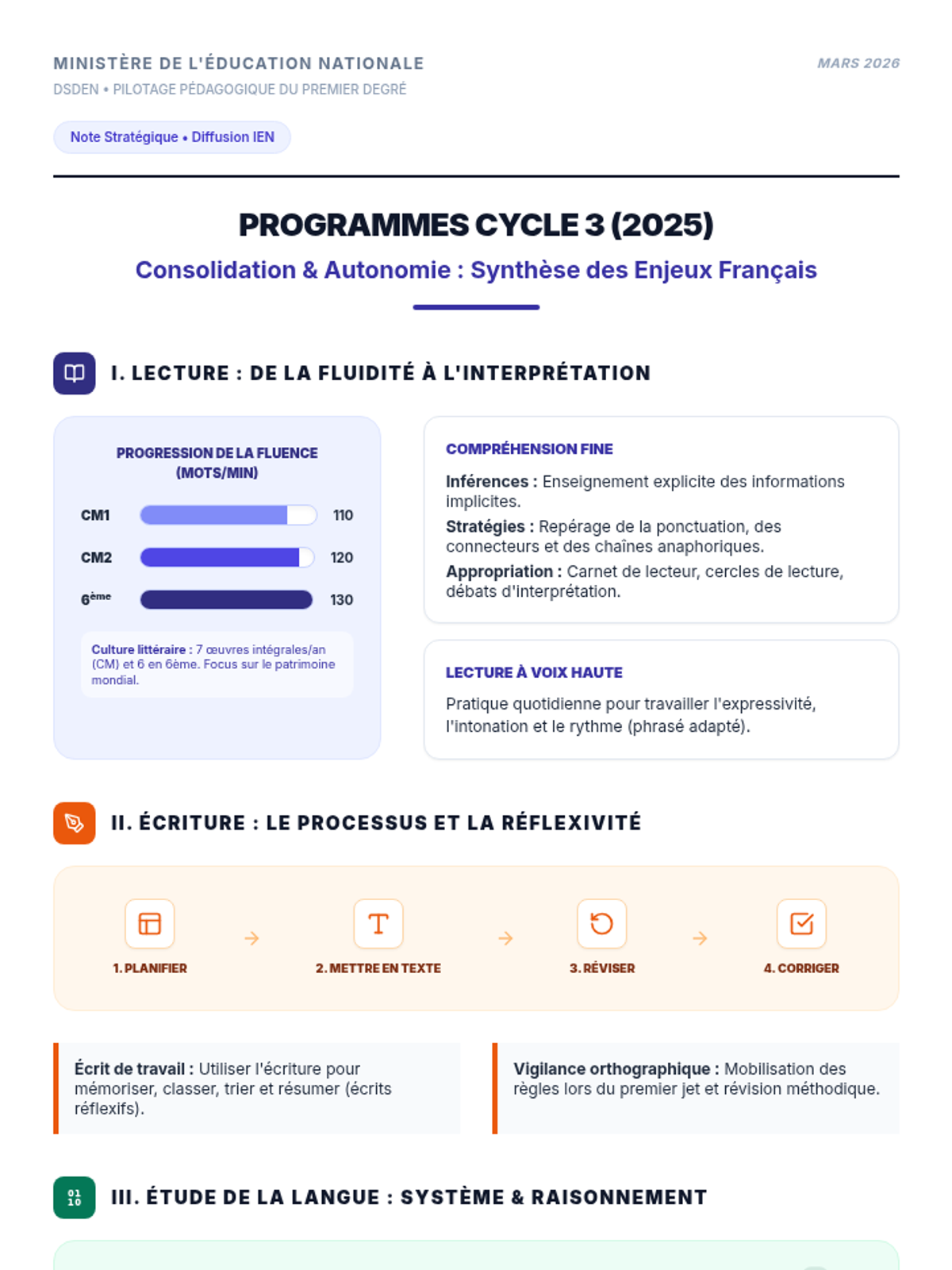
Cette formation vise à outiller les conseillers pédagogiques pour l'analyse et l'exploitation de ressources diverses (vidéos, manuels, guides) dans le cadre de la formation continue des professeurs des écoles en français, conformément aux orientations stratégiques nationales.
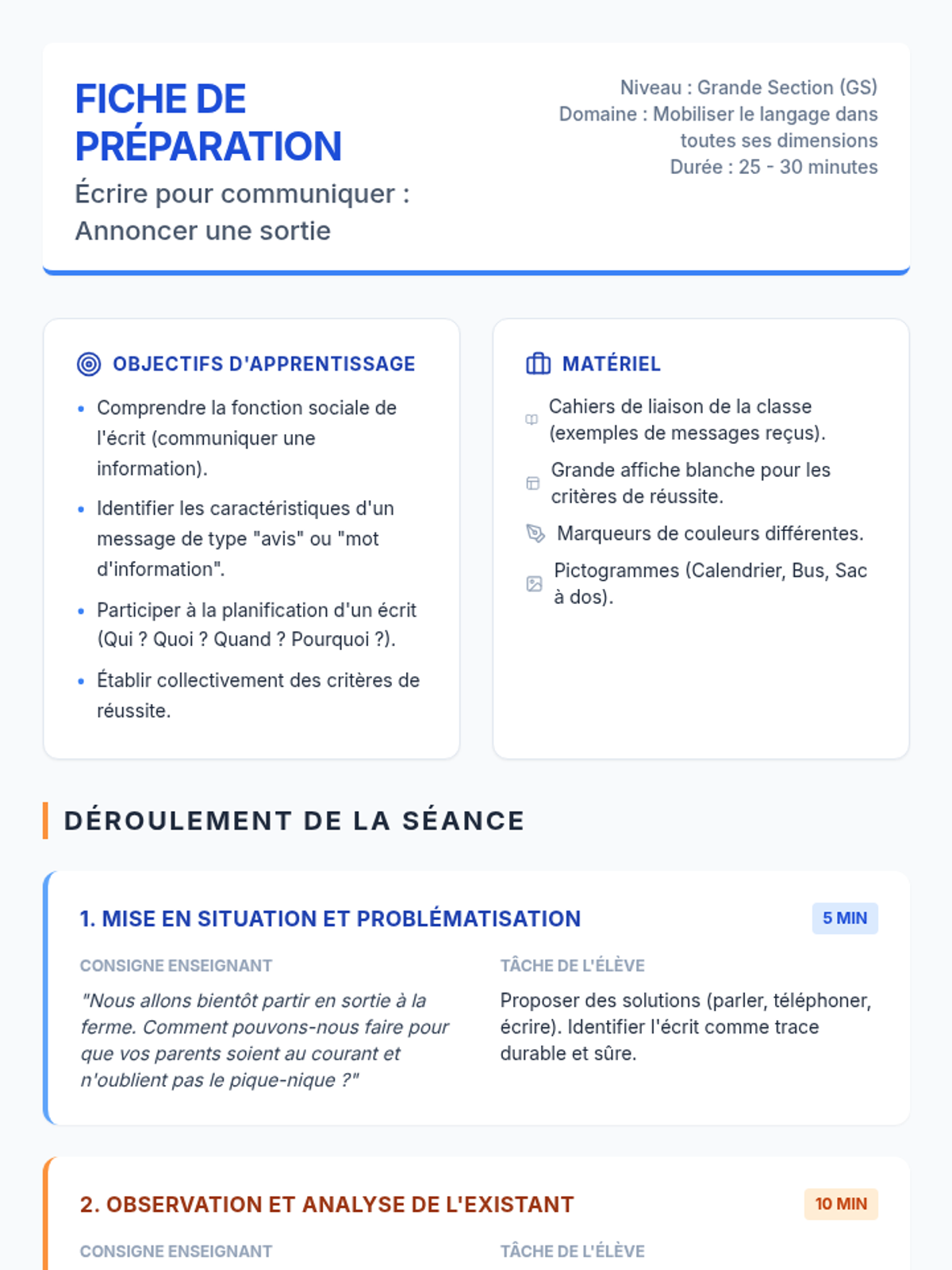
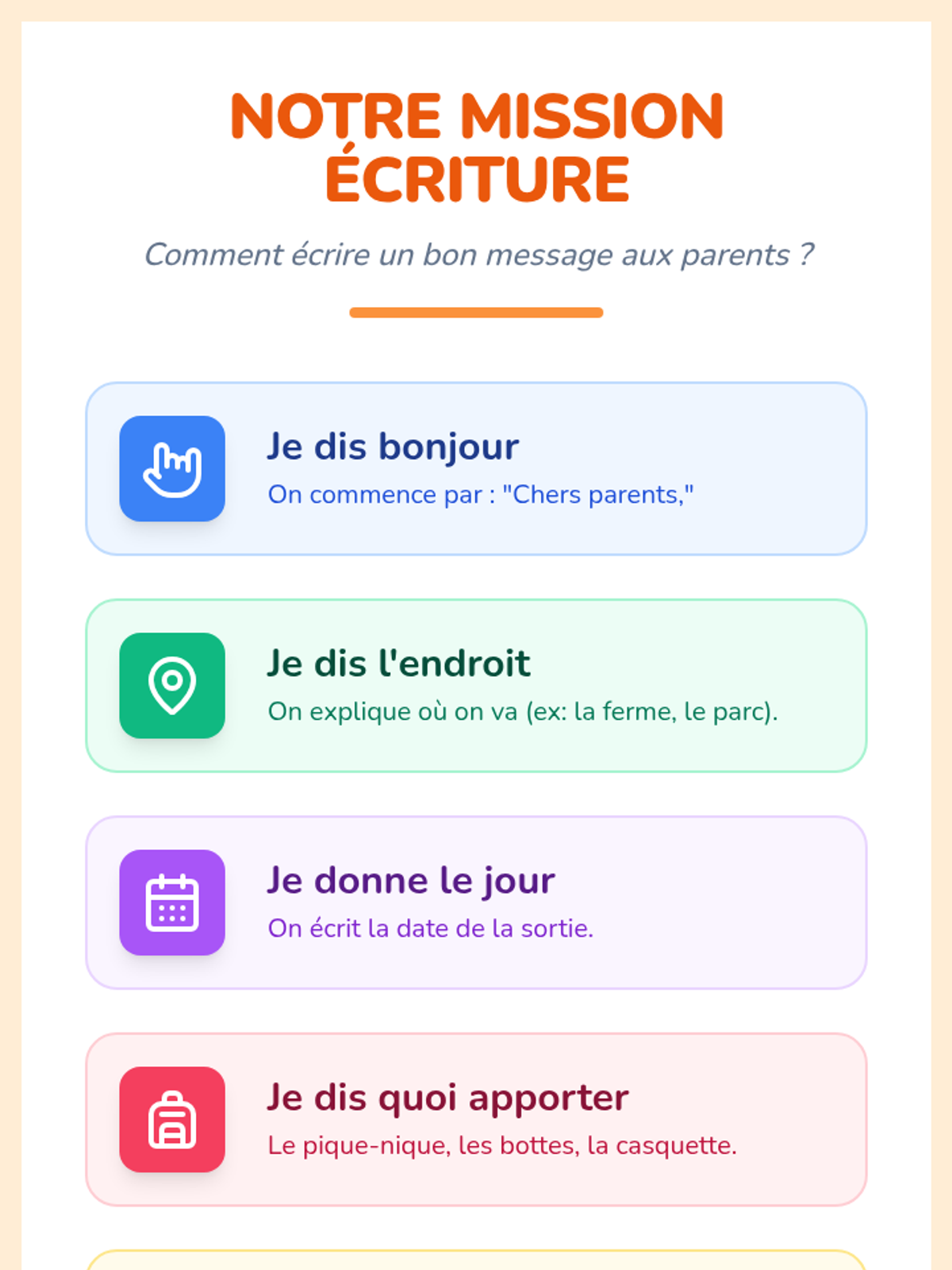
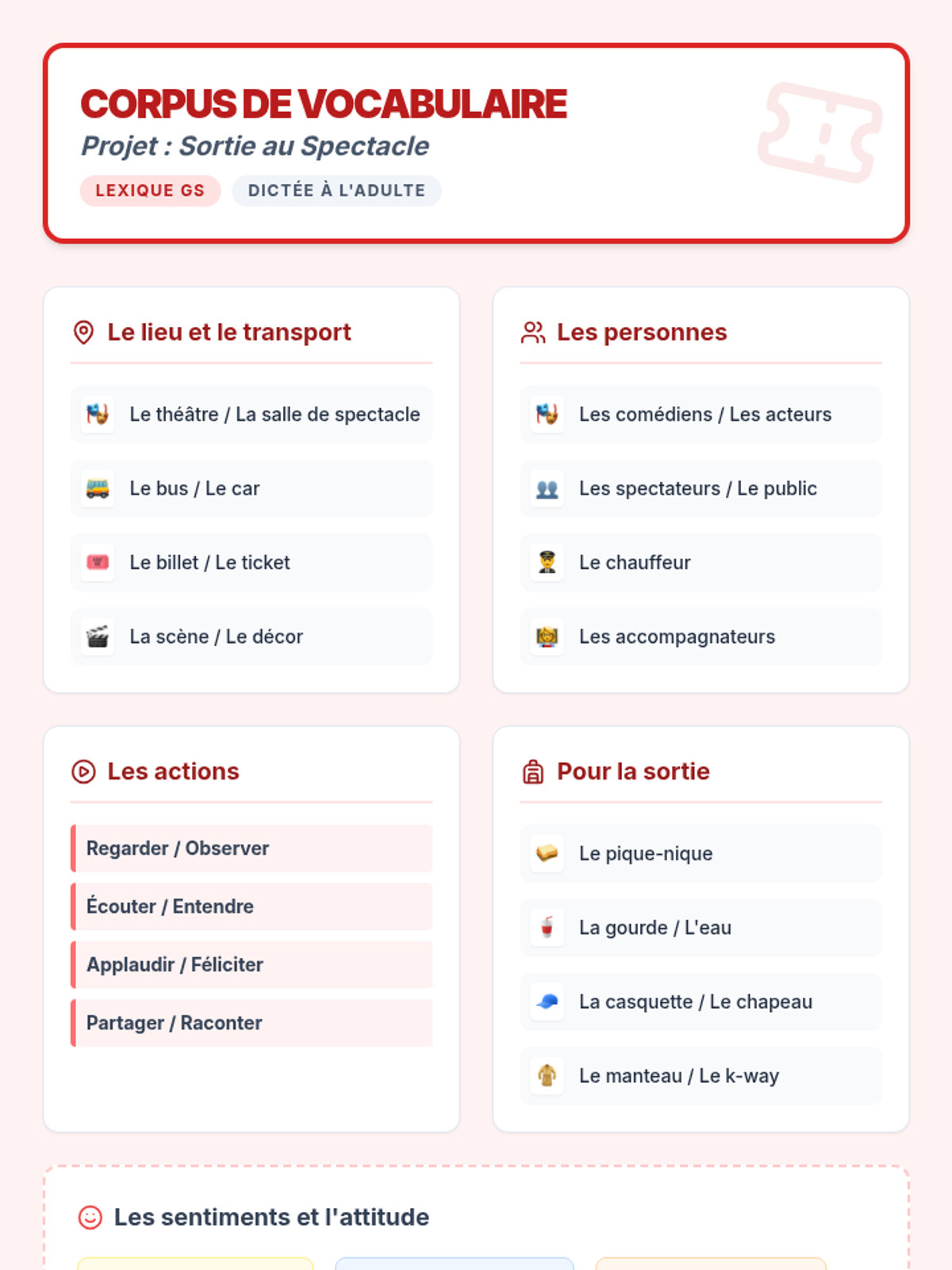
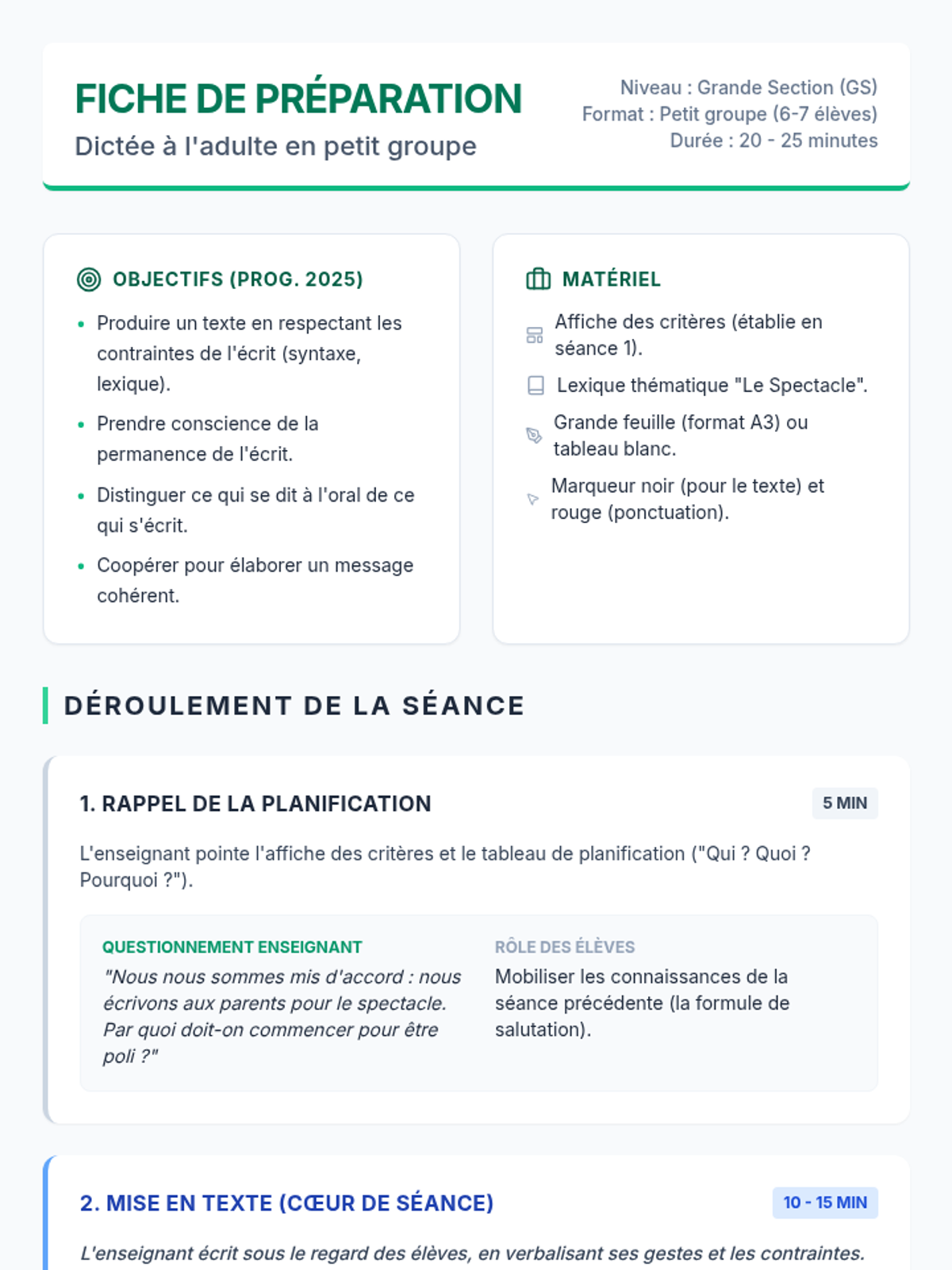
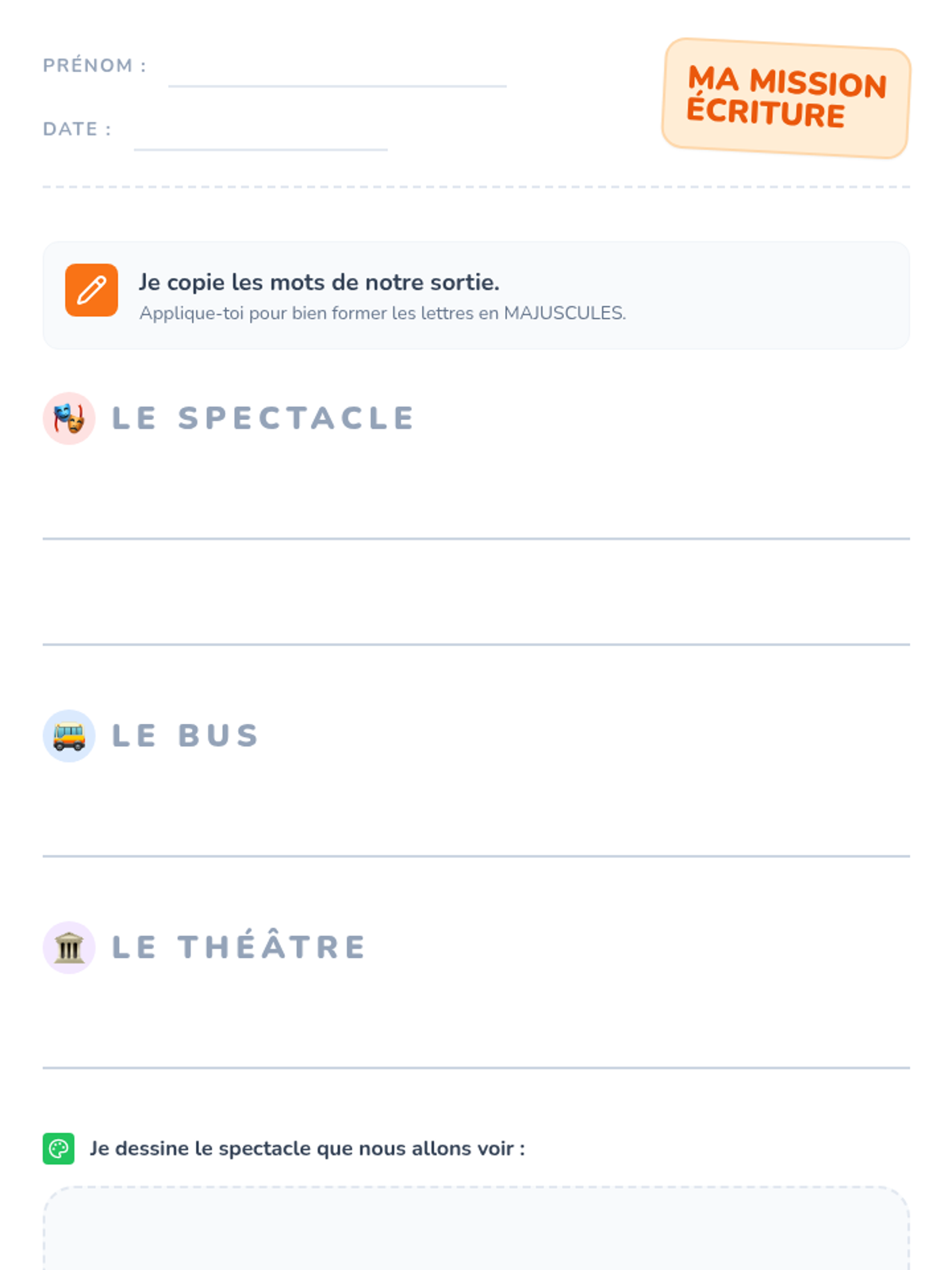
Cette leçon vise à introduire un projet d'écriture authentique en Grande Section : rédiger un message aux parents pour annoncer une sortie scolaire. Elle s'appuie sur l'observation de messages existants pour définir des critères de réussite et initier la planification selon les programmes 2025.
A foundational literacy lesson where students practice reading simple sentences and matching them with corresponding visual representations to build comprehension.
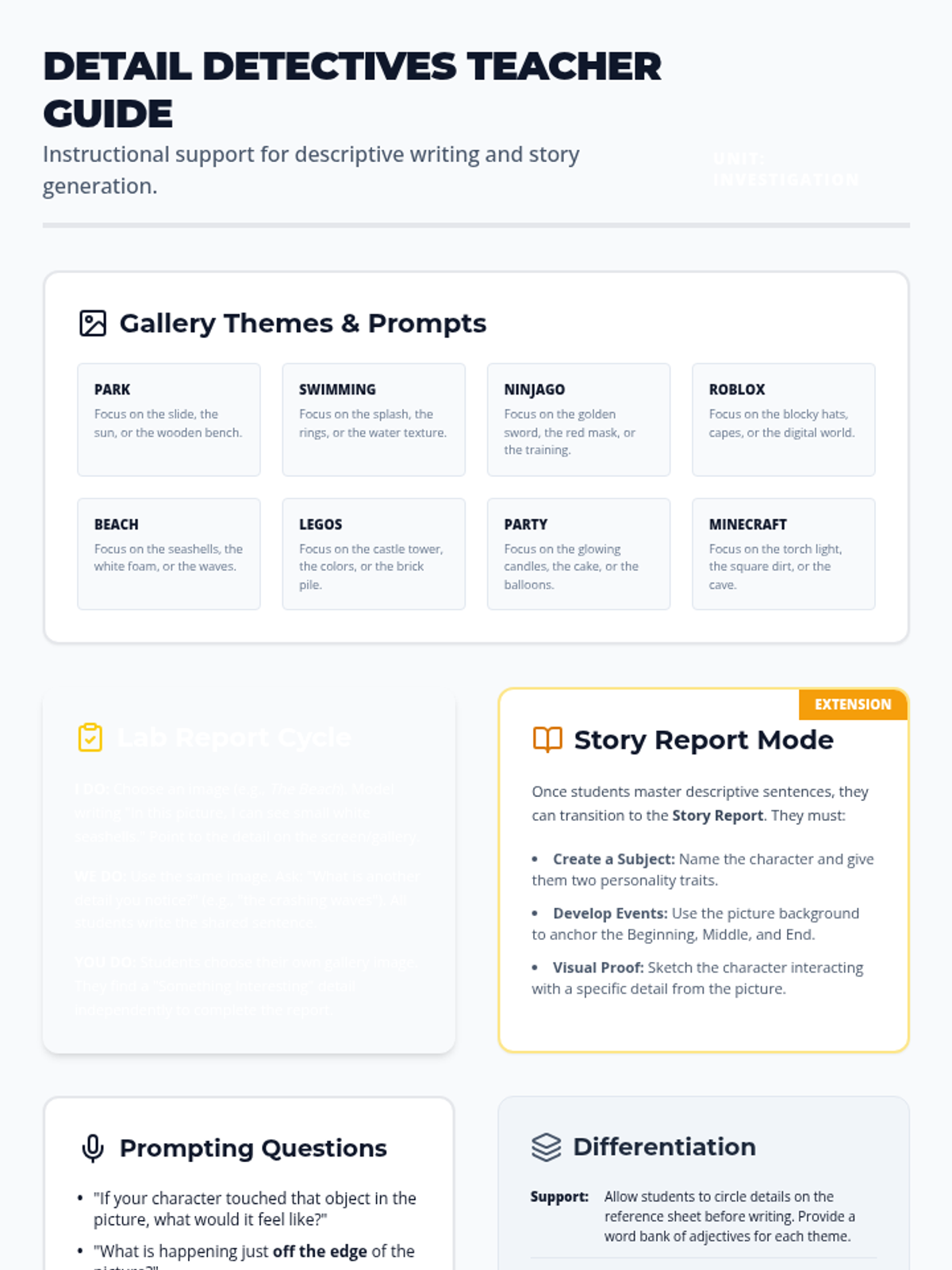
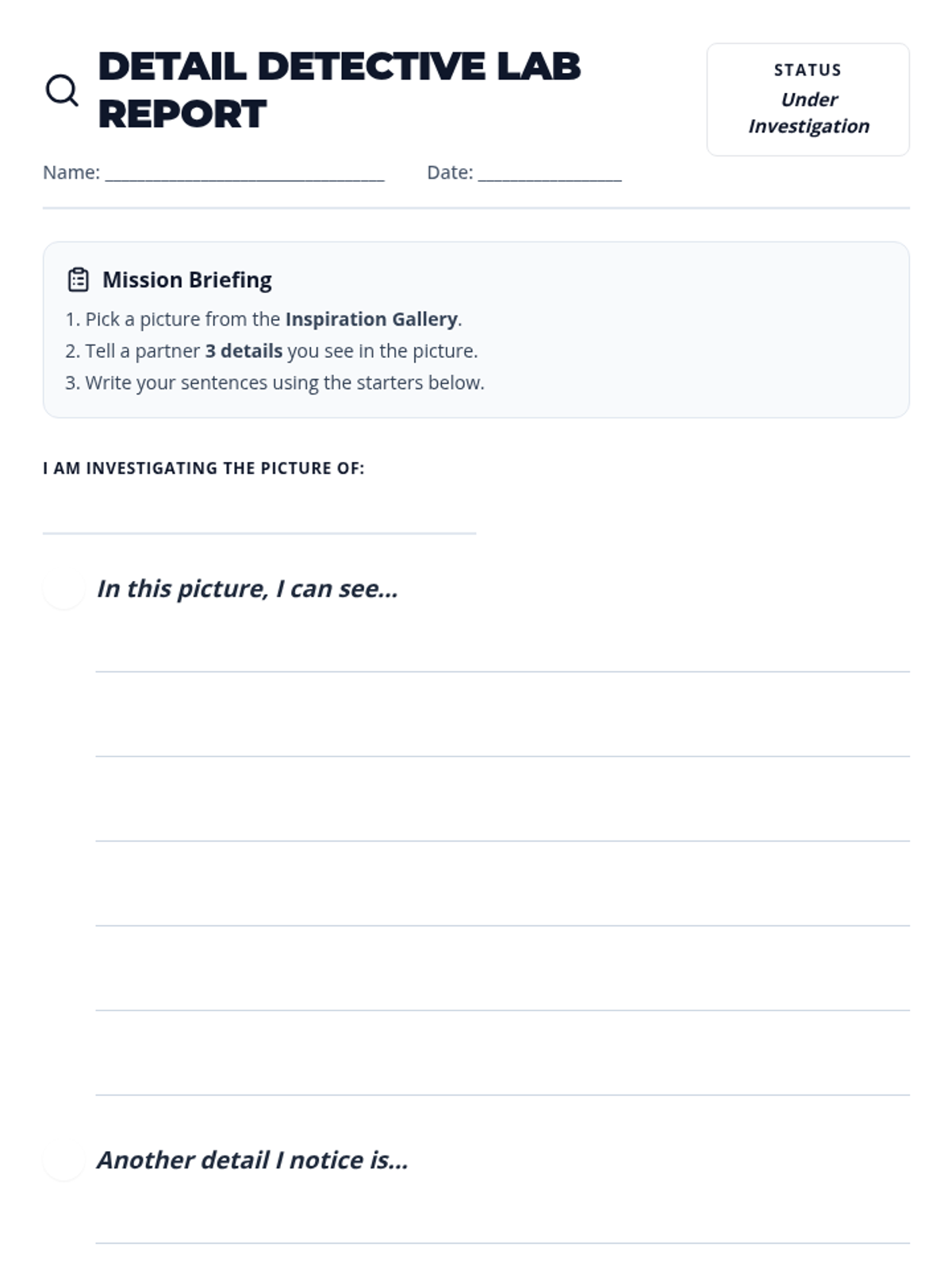
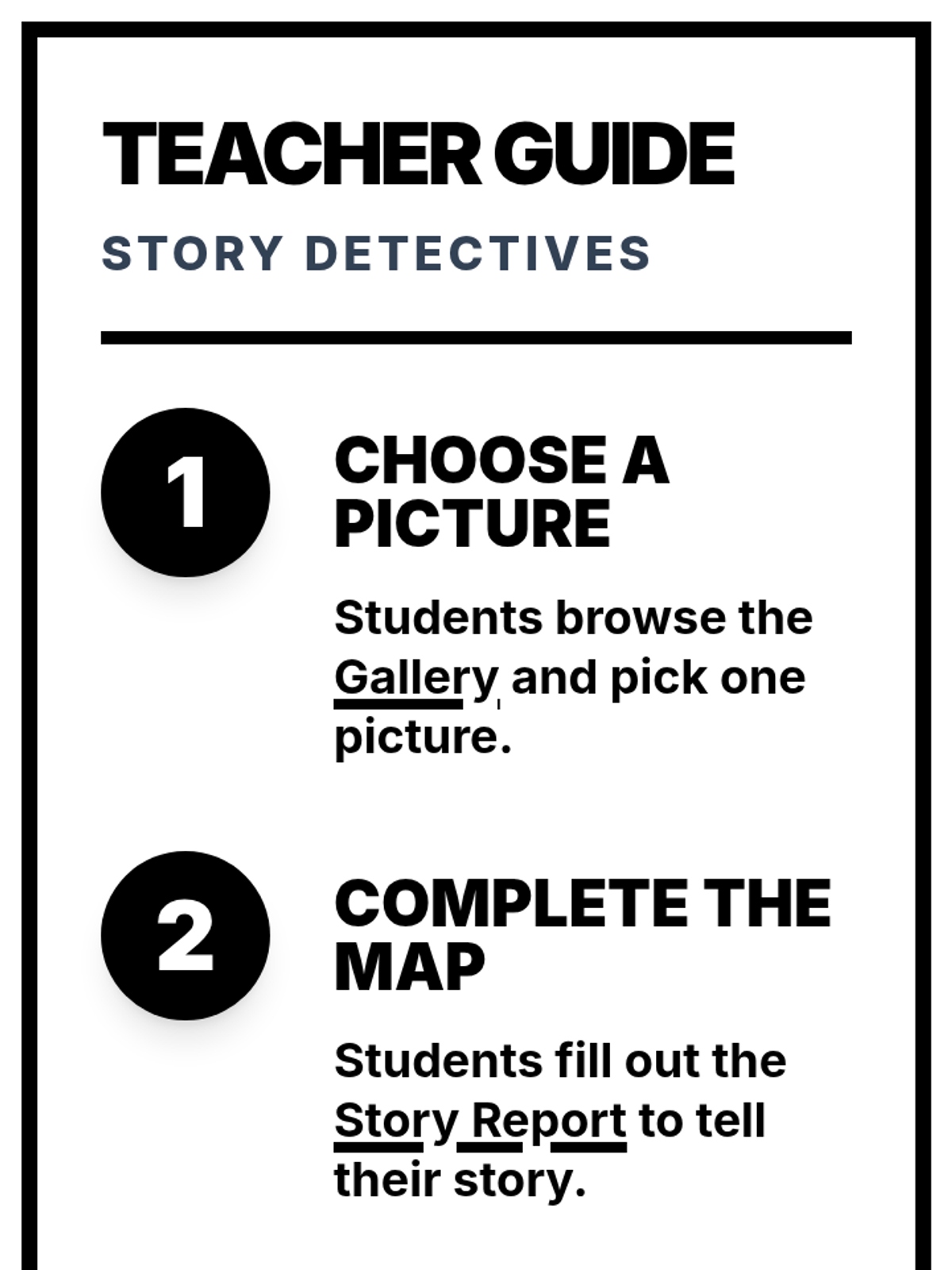
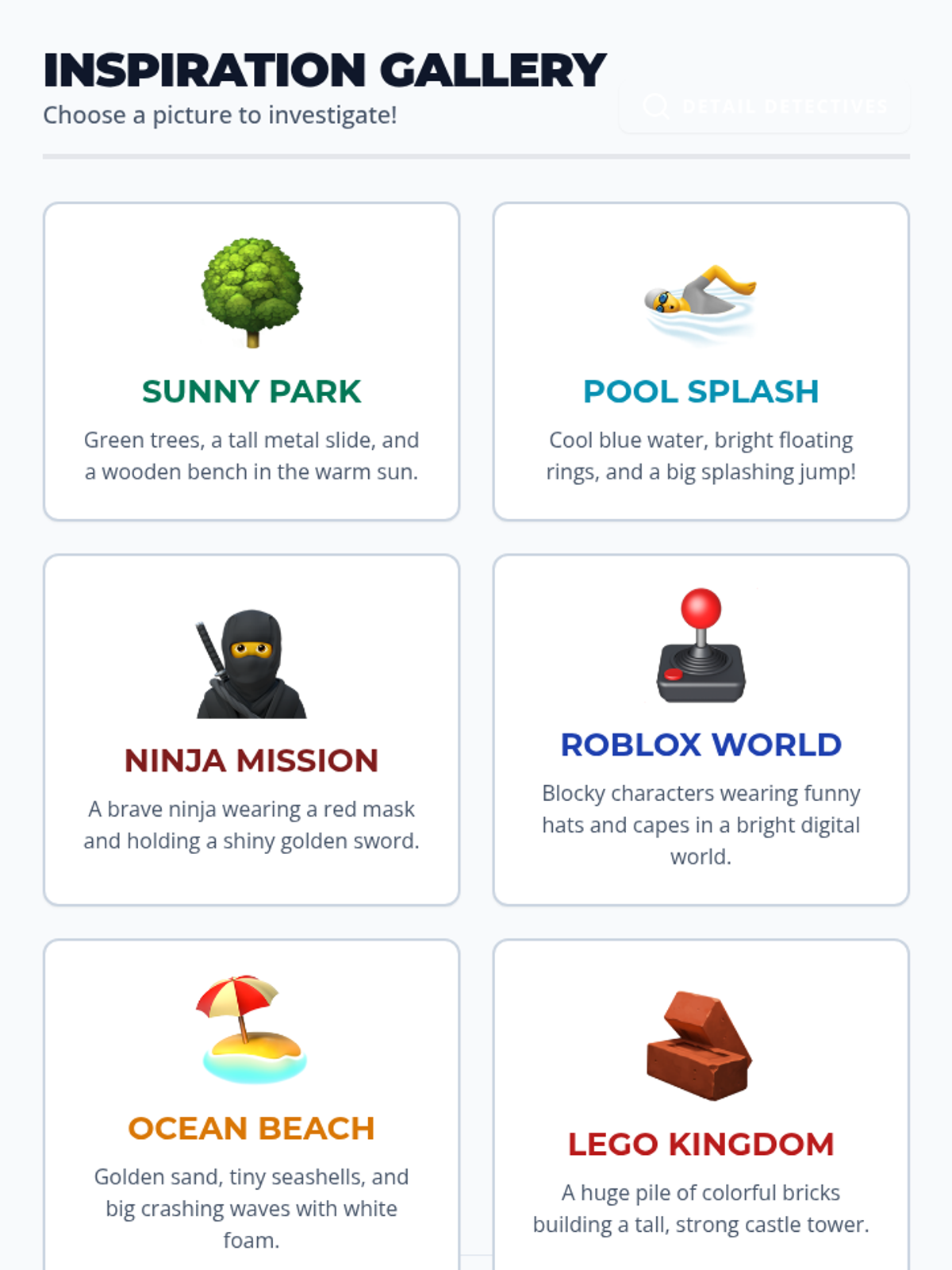
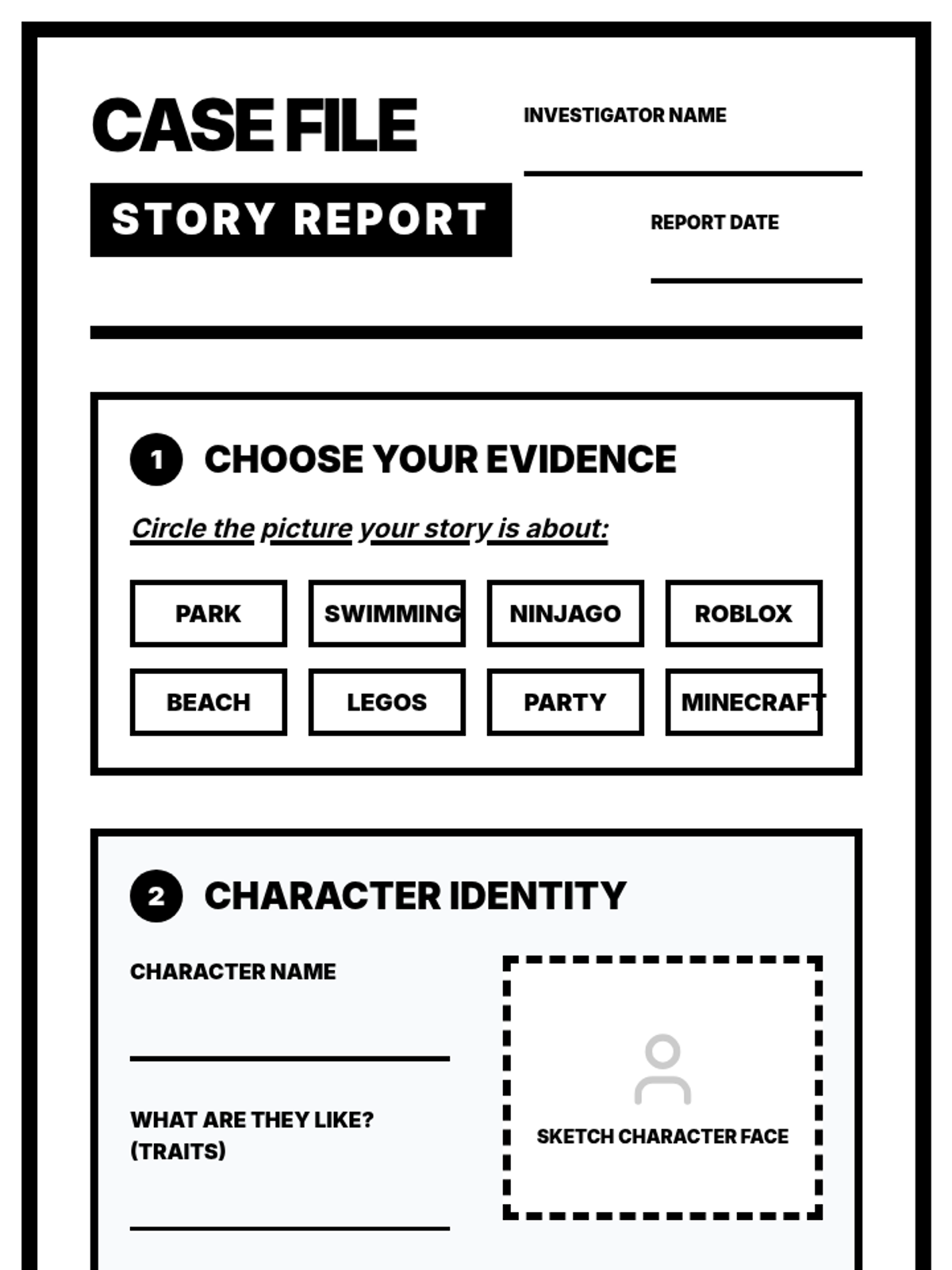
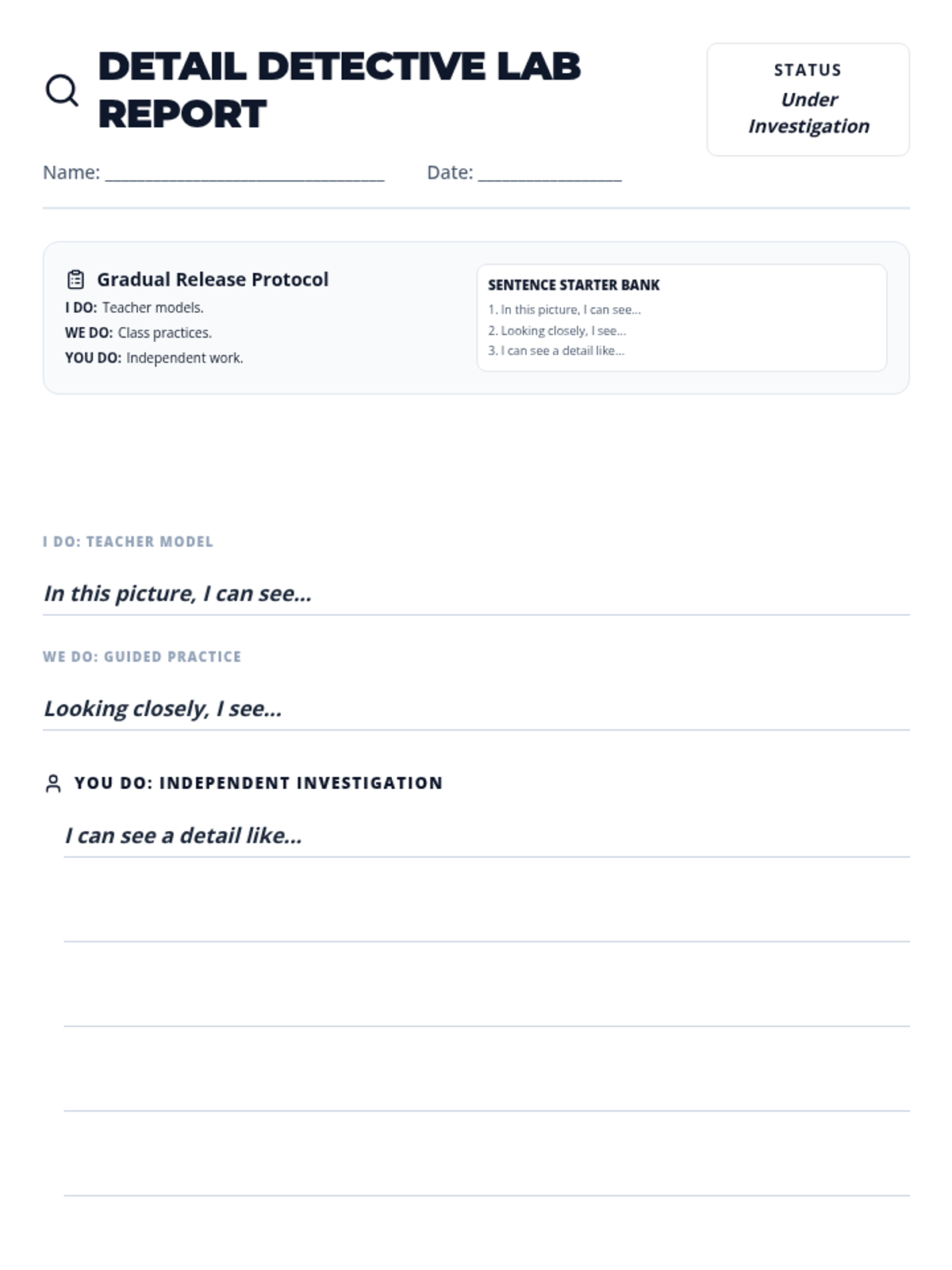
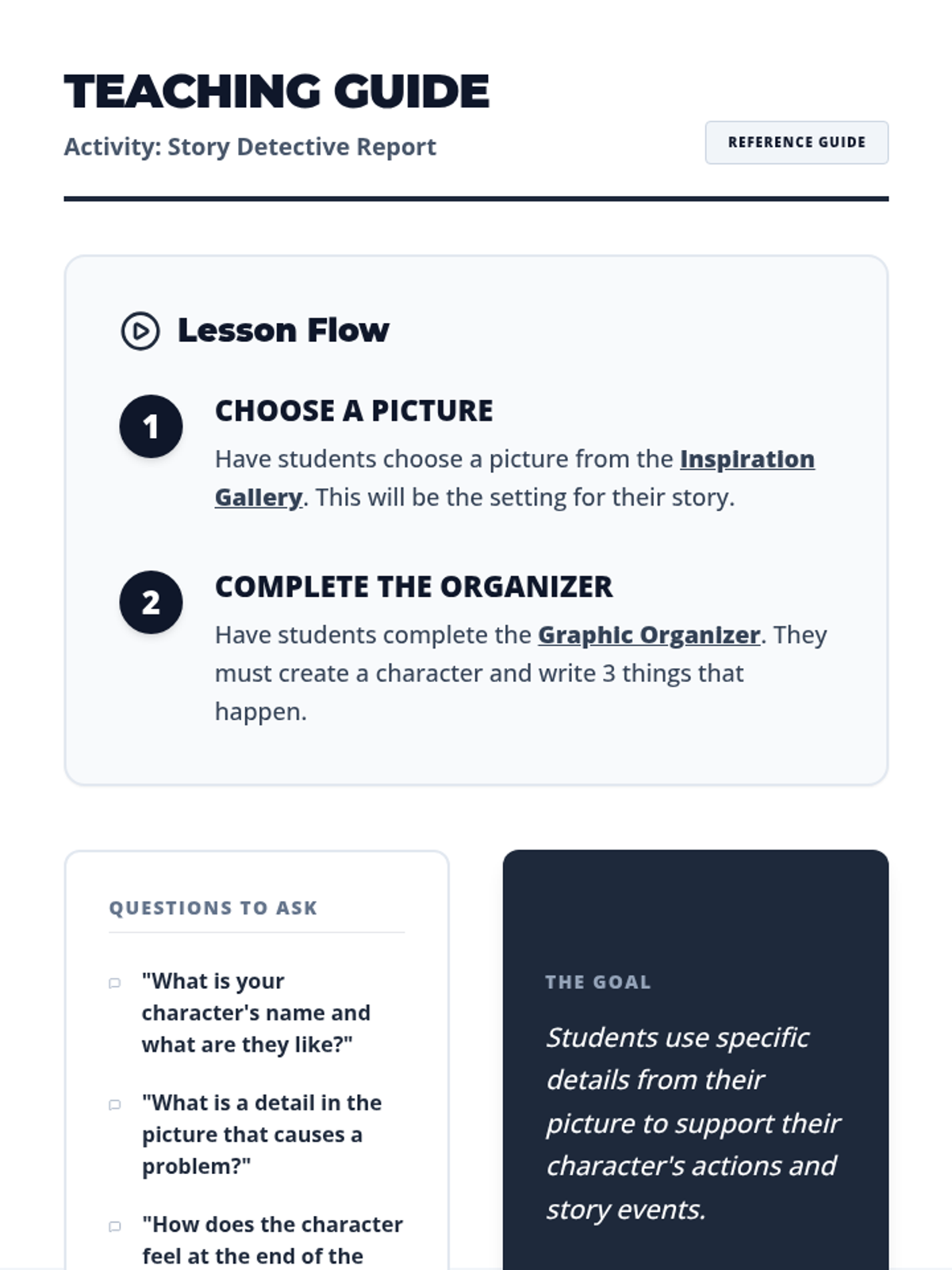
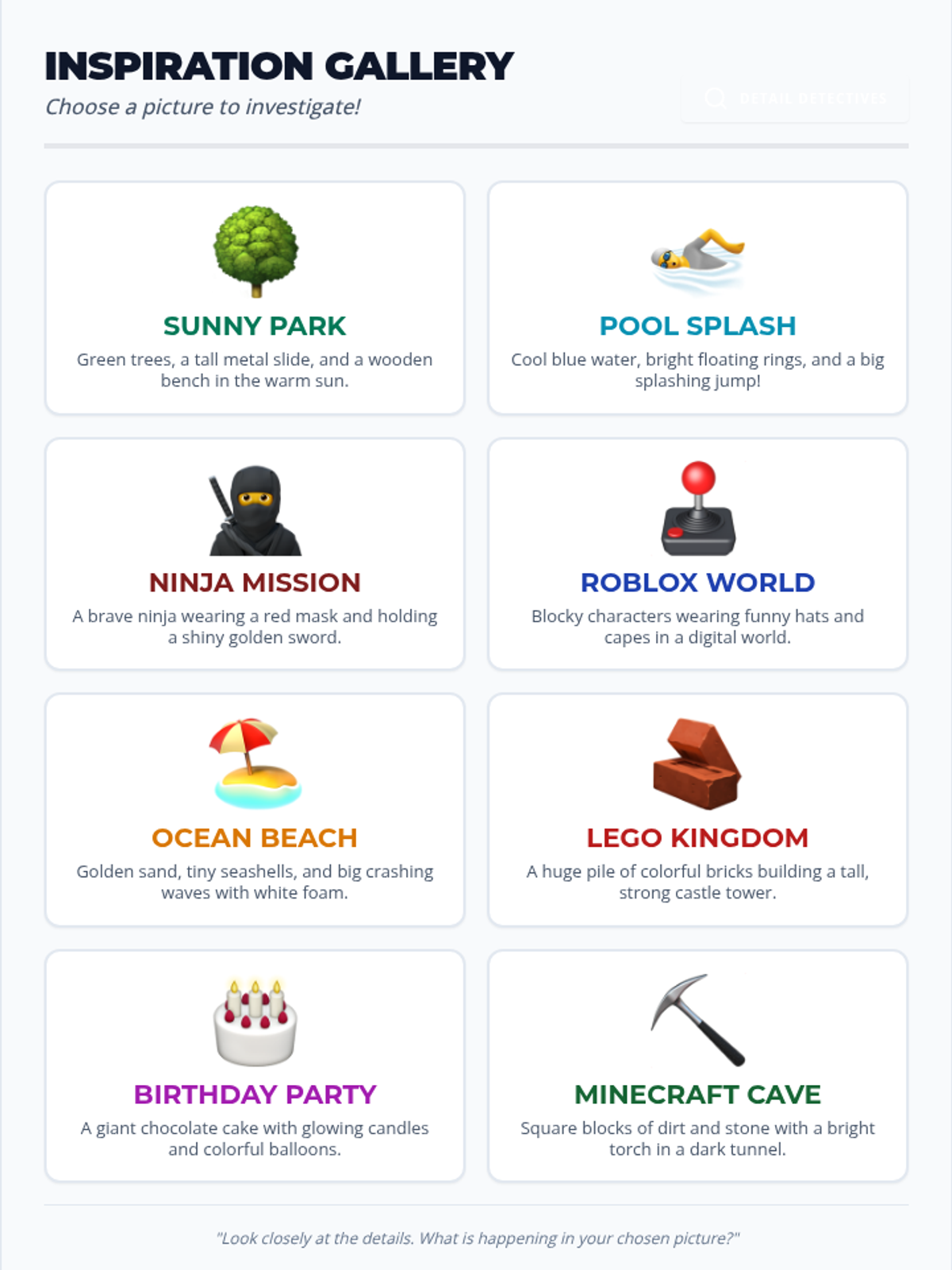
A lesson focused on developing descriptive language skills by observing images and generating detailed sentences using structured scaffolds.
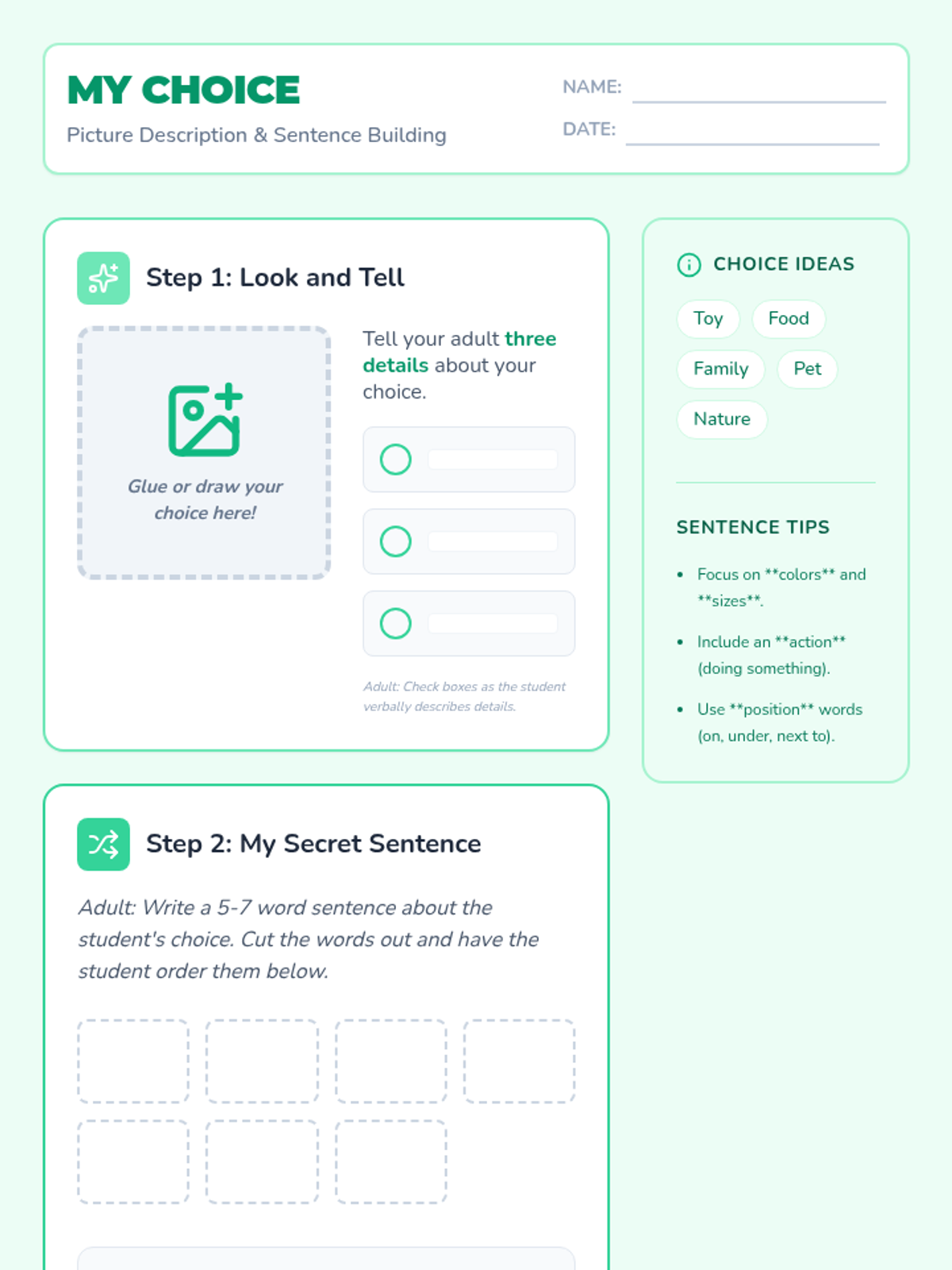
A final capstone lesson where students choose their own object or picture to describe and write about.
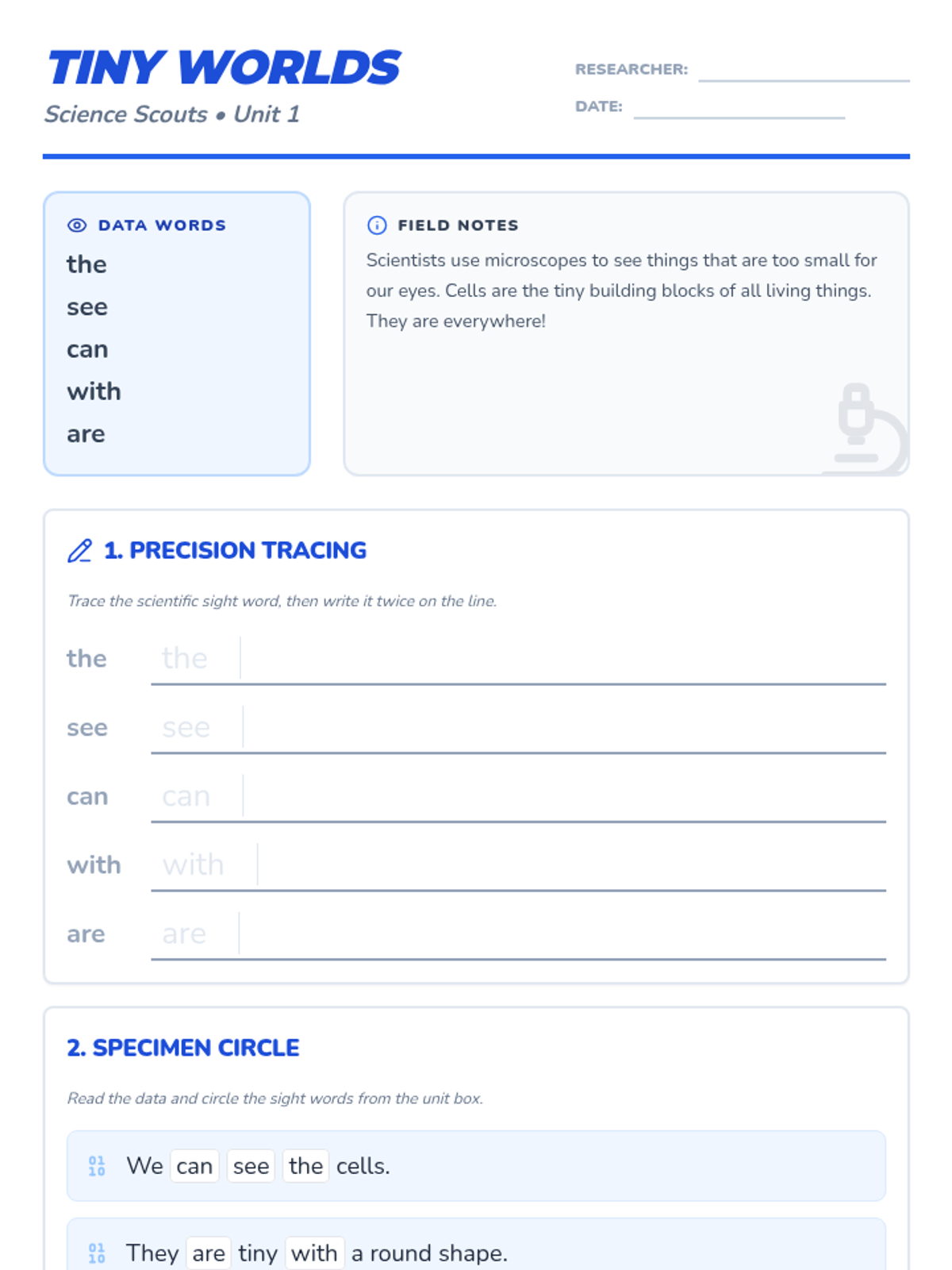
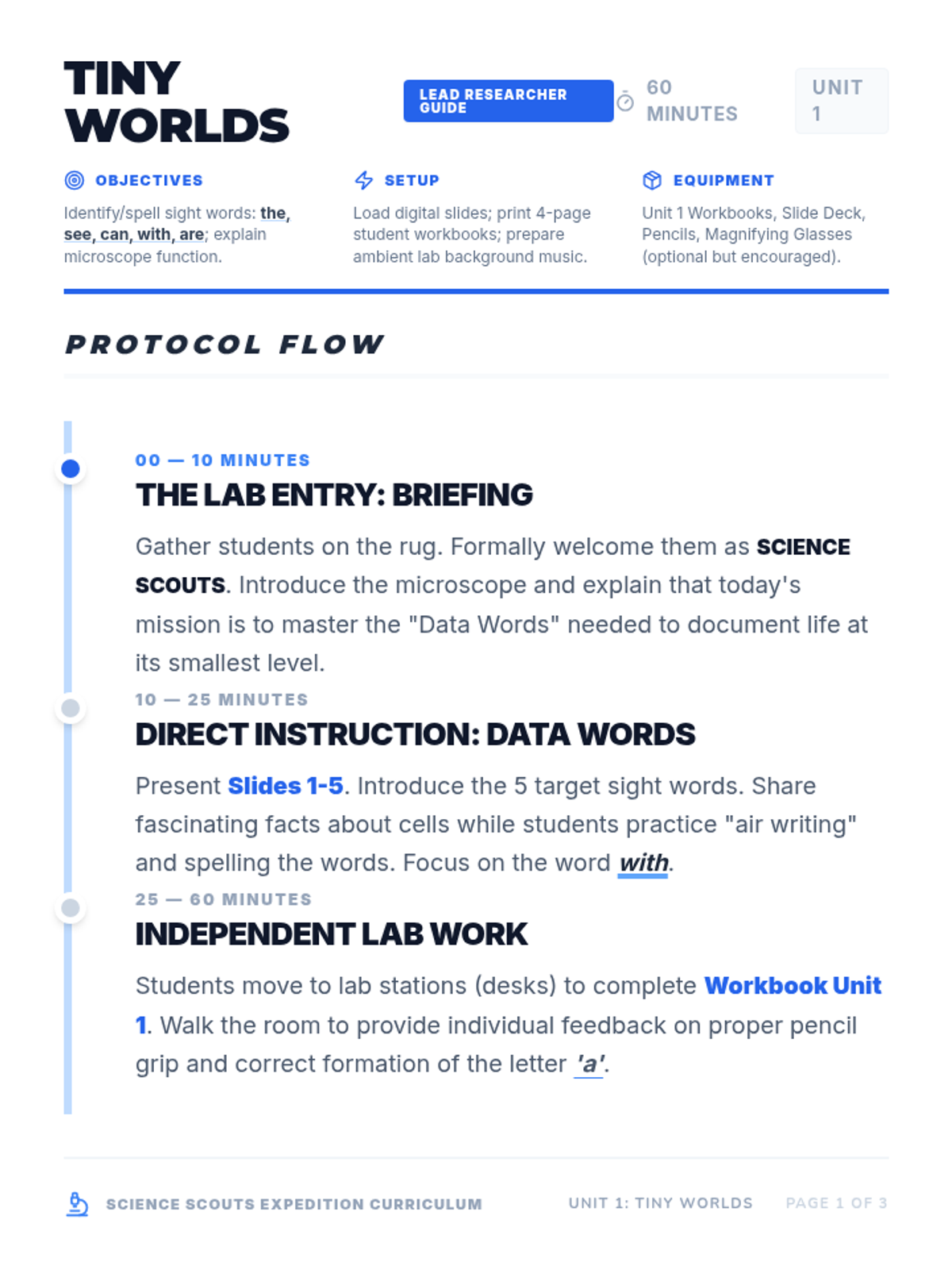
Dive into the invisible world of cells and microscopes to master essential sight words while discovering how scientists see tiny things.
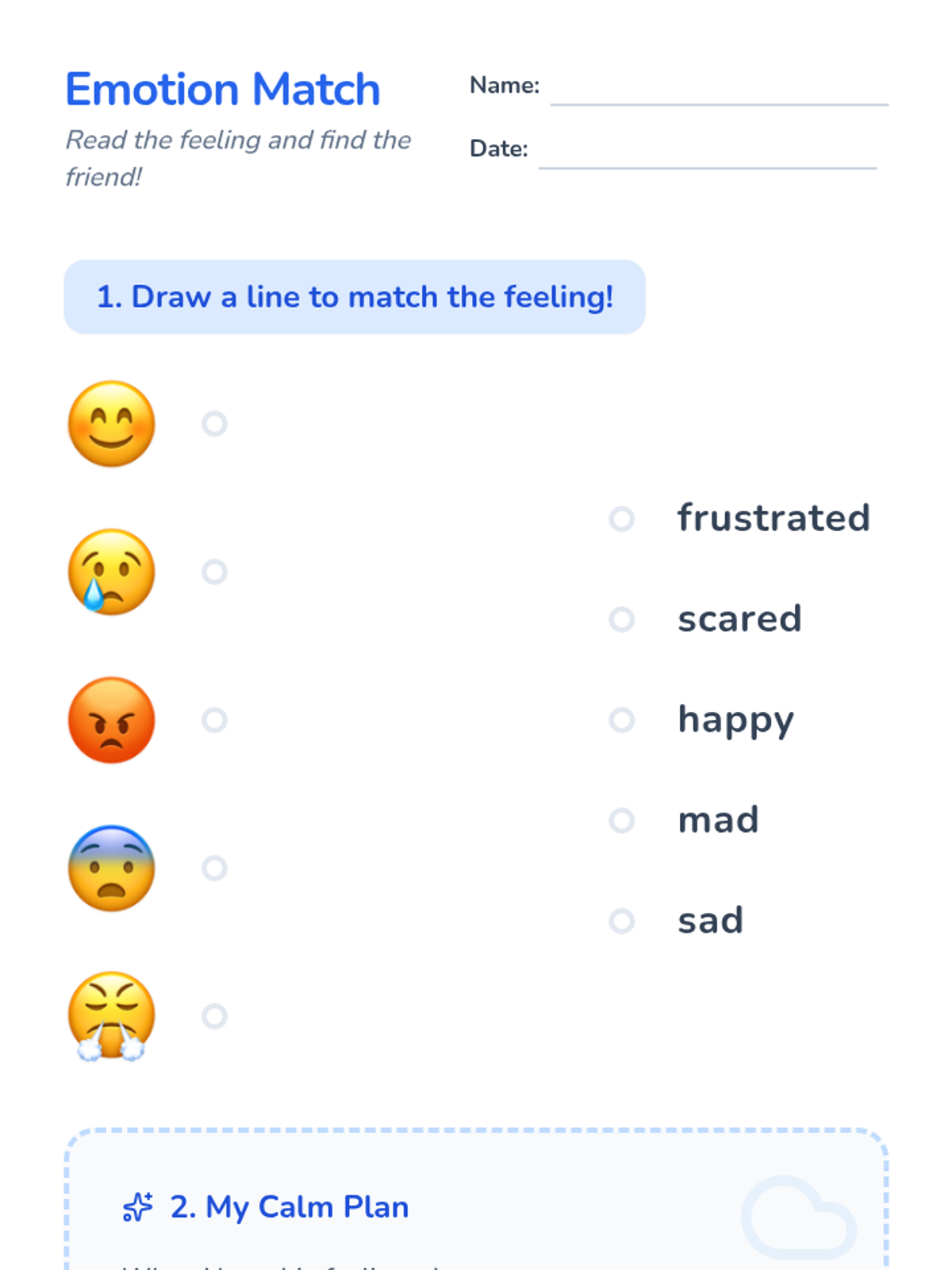
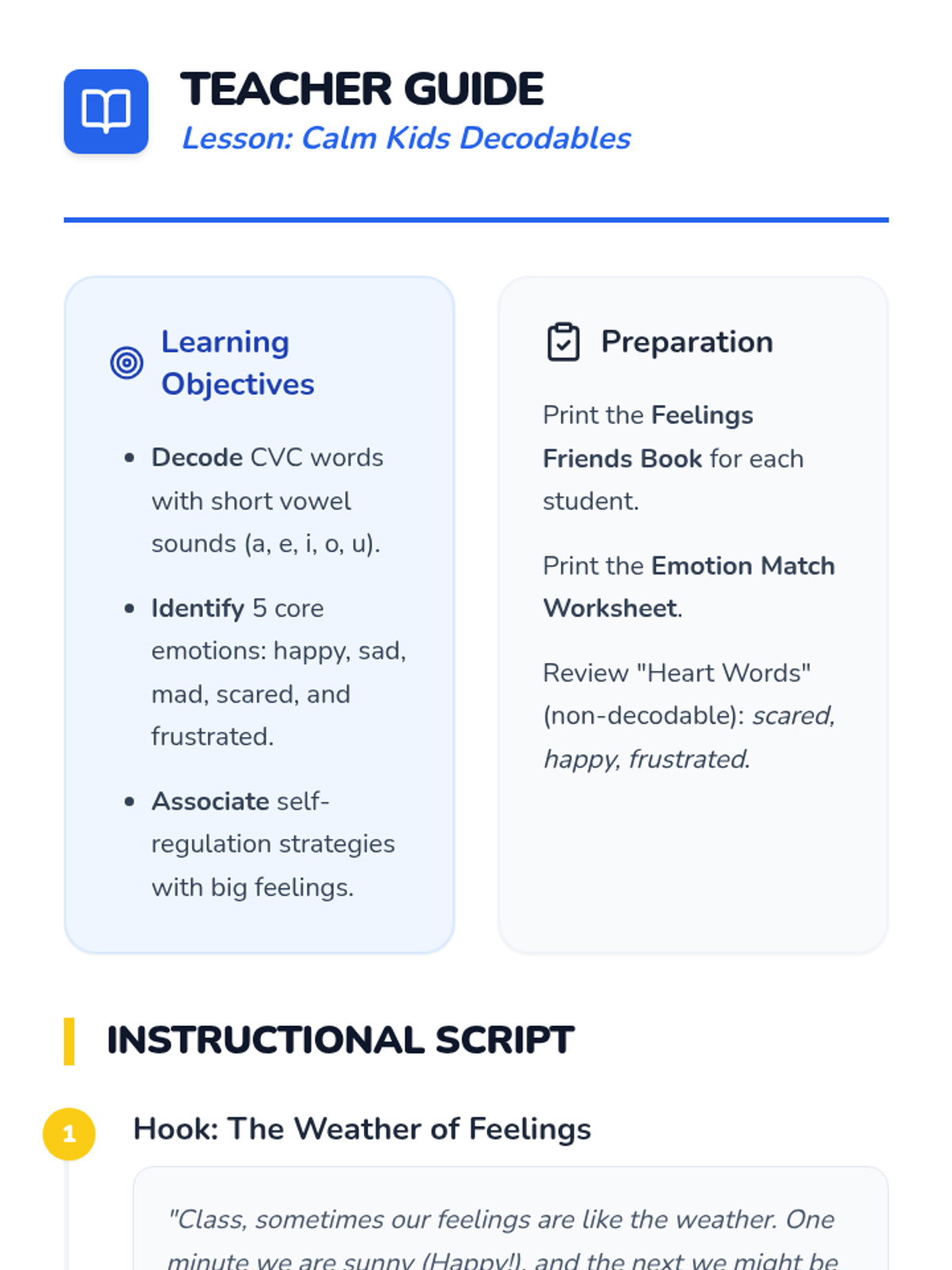
A lesson for Grade 1 students to practice decoding short vowel sounds while learning simple emotional regulation and coping strategies through a decodable story.
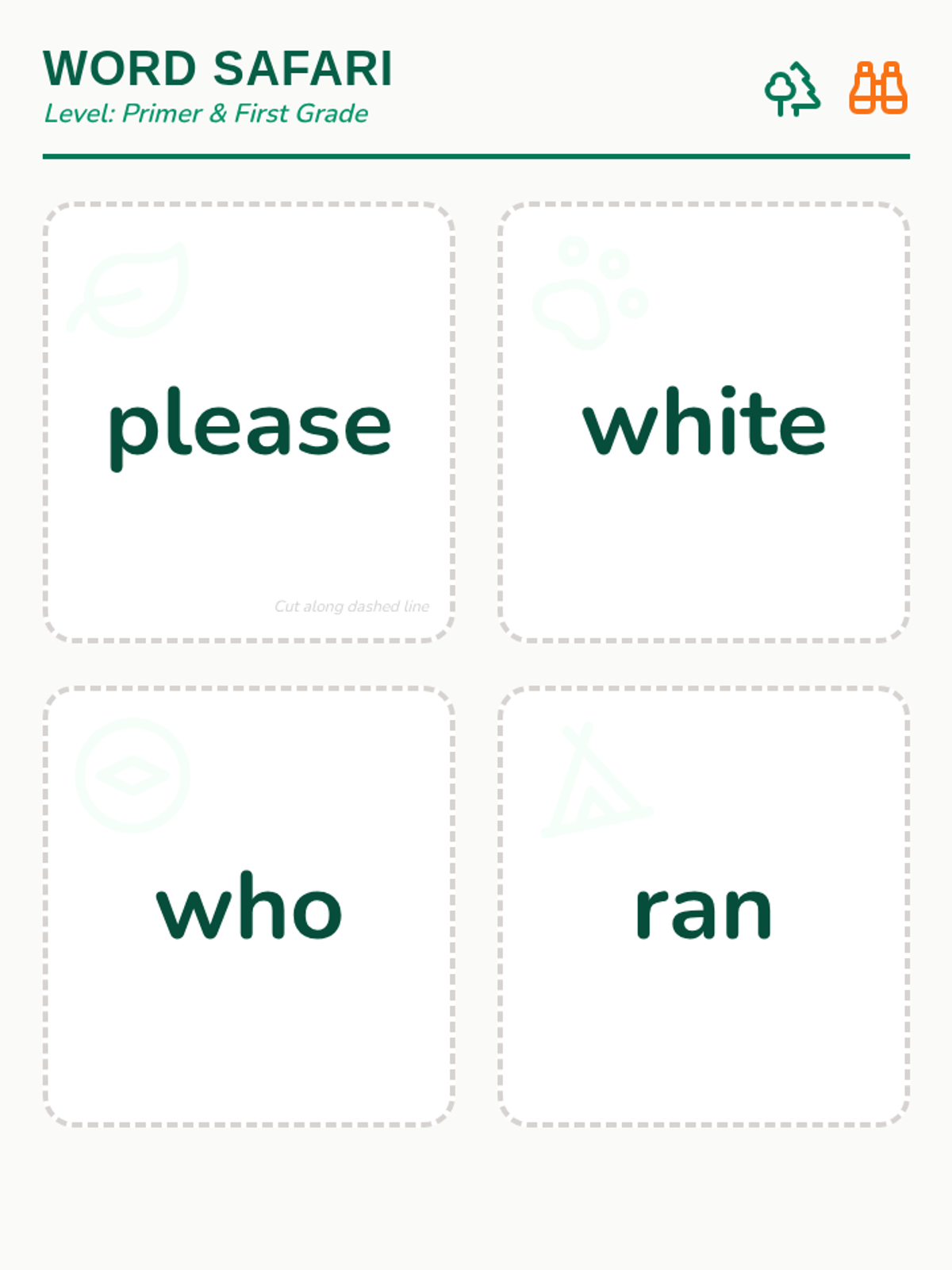
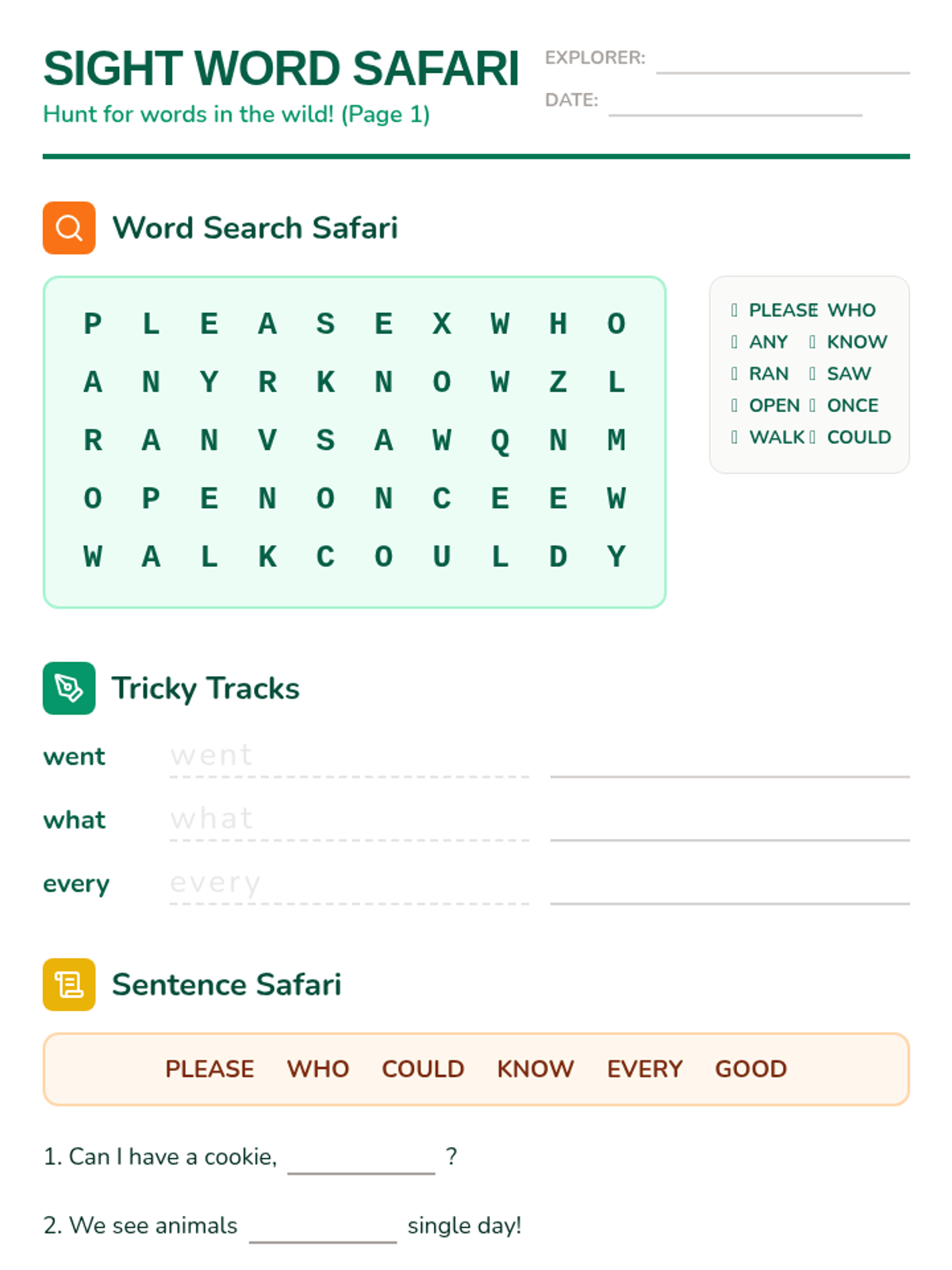
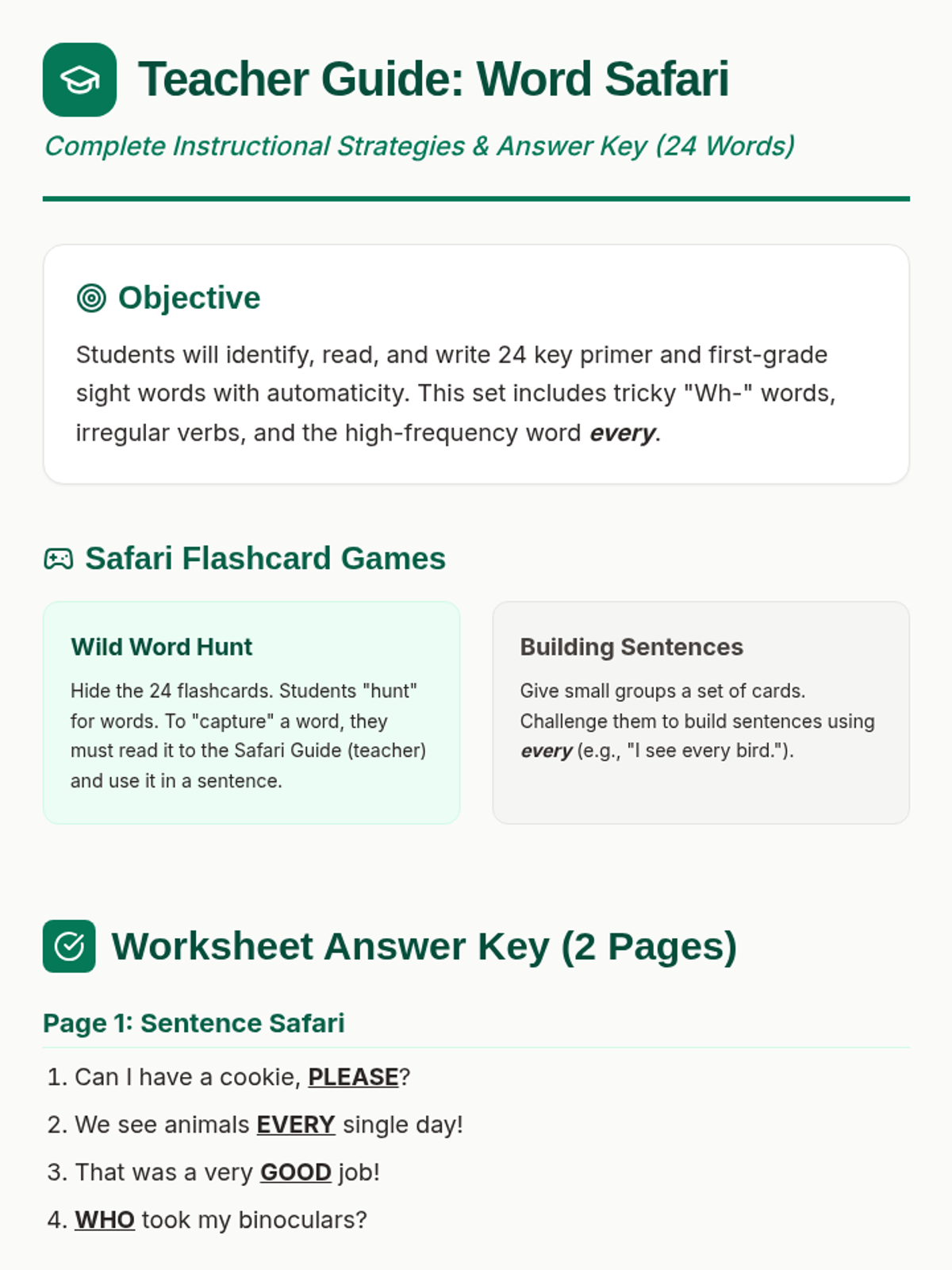
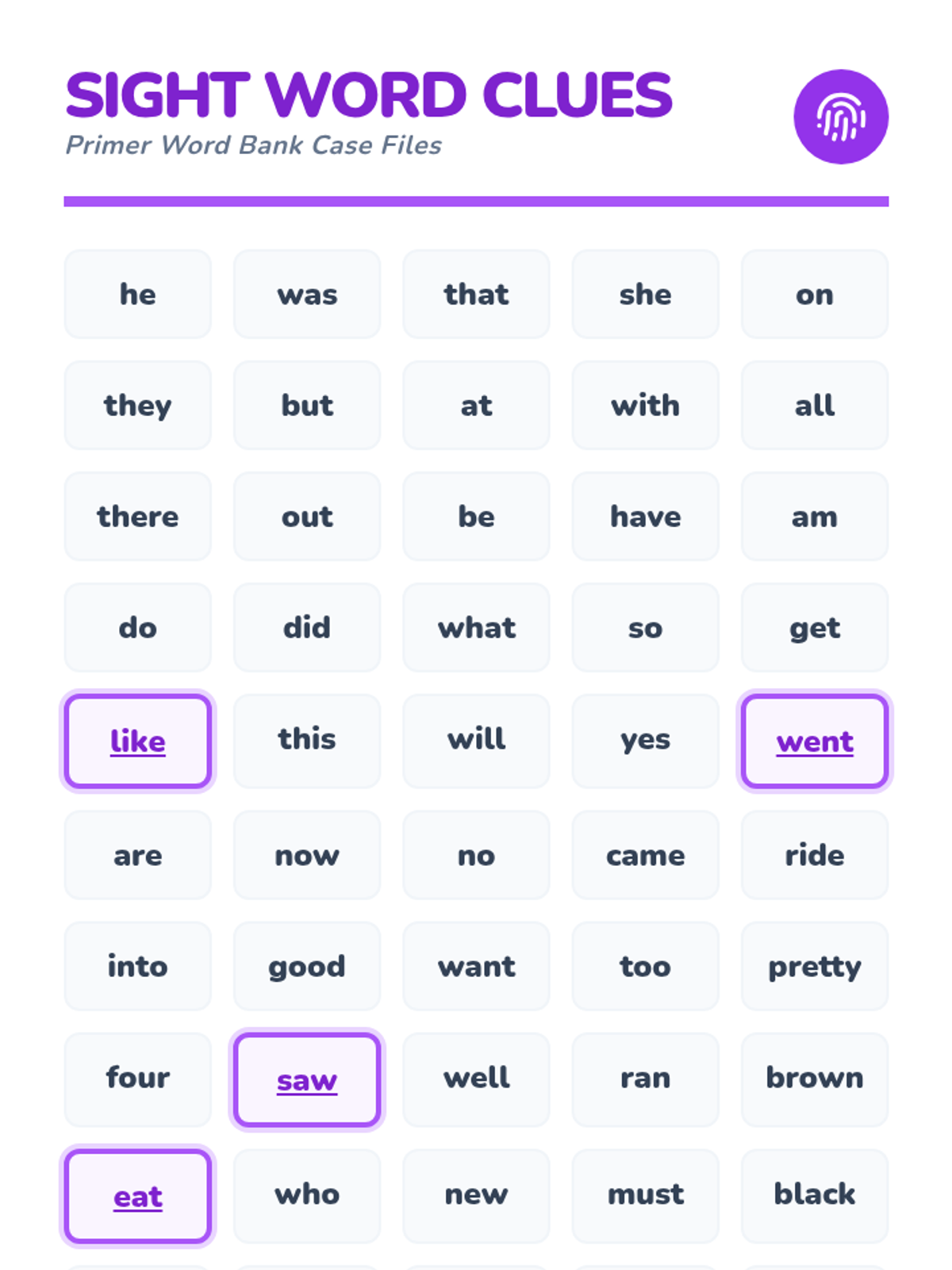
A collection of sight word resources focused on primer and first-grade vocabulary, featuring flashcards, practice activities, and teaching strategies with a 'Word Safari' theme.
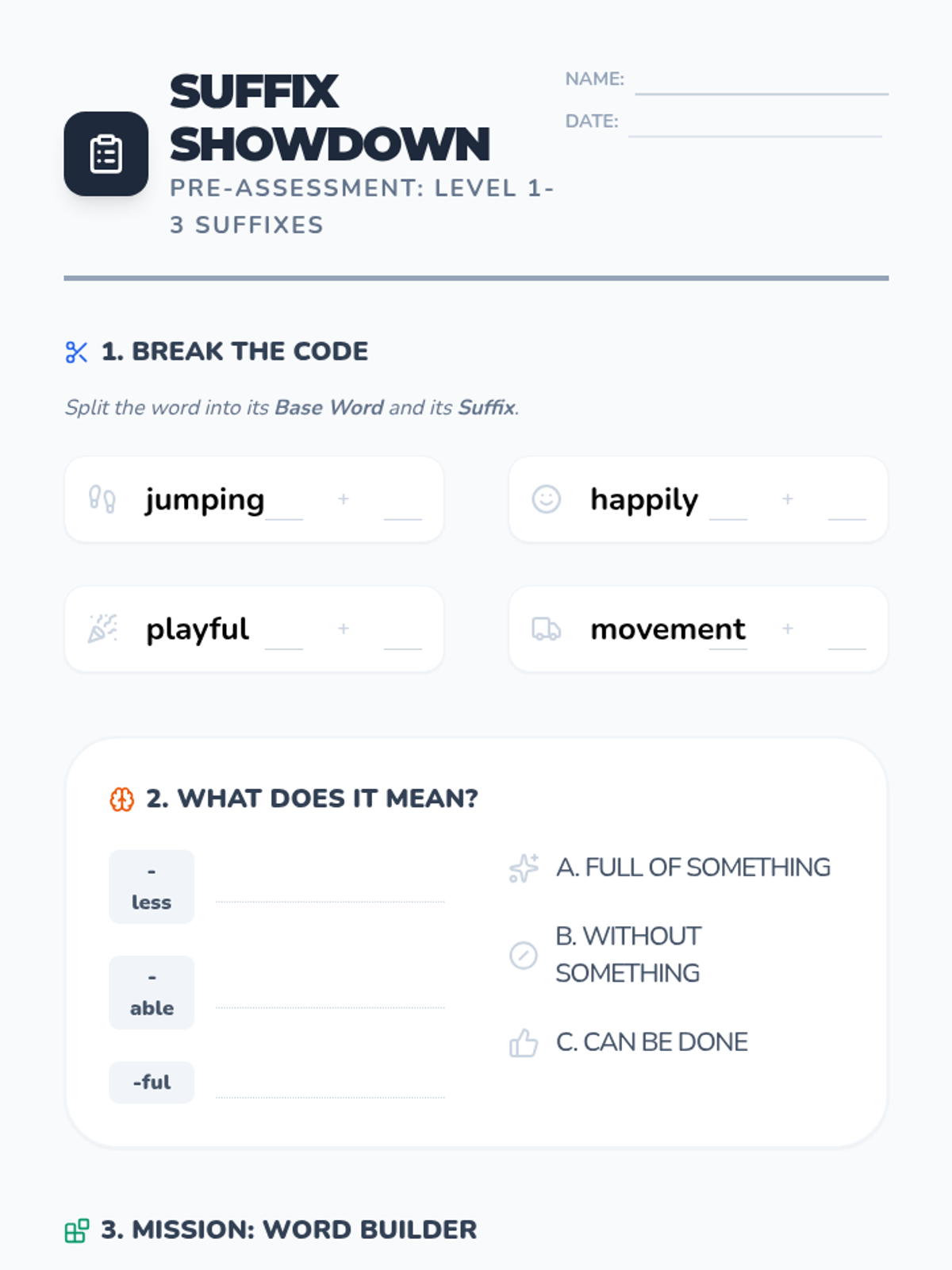
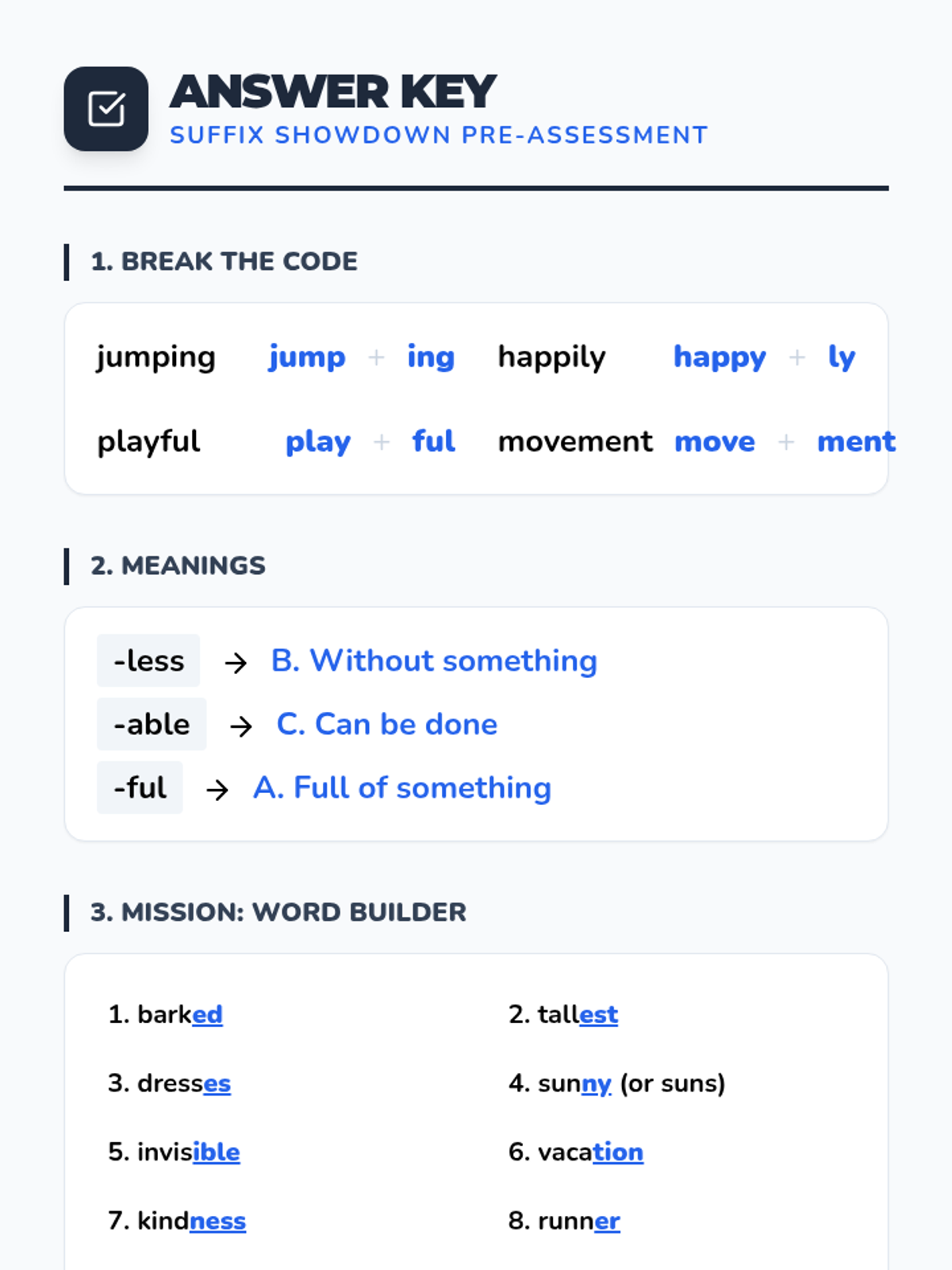
A comprehensive lesson designed to assess and introduce a wide variety of common inflectional and derivational suffixes.
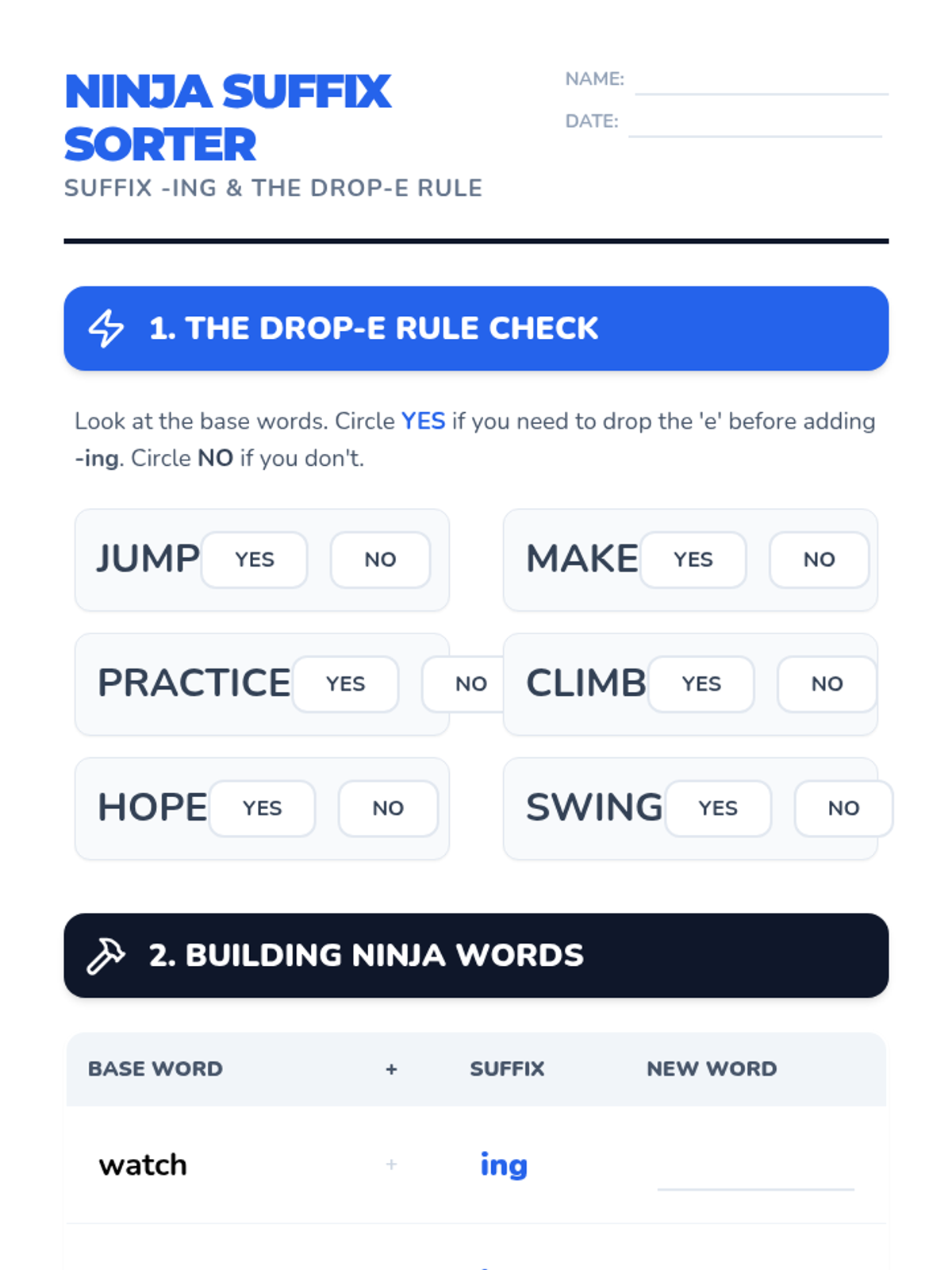
A structured literacy lesson focusing on the suffix '-ing' and the 'Drop-e Rule', using the story of Sven's journey to the American Ninja Warrior competition. Includes comprehension questions covering vocabulary, literal, and inferential skills.
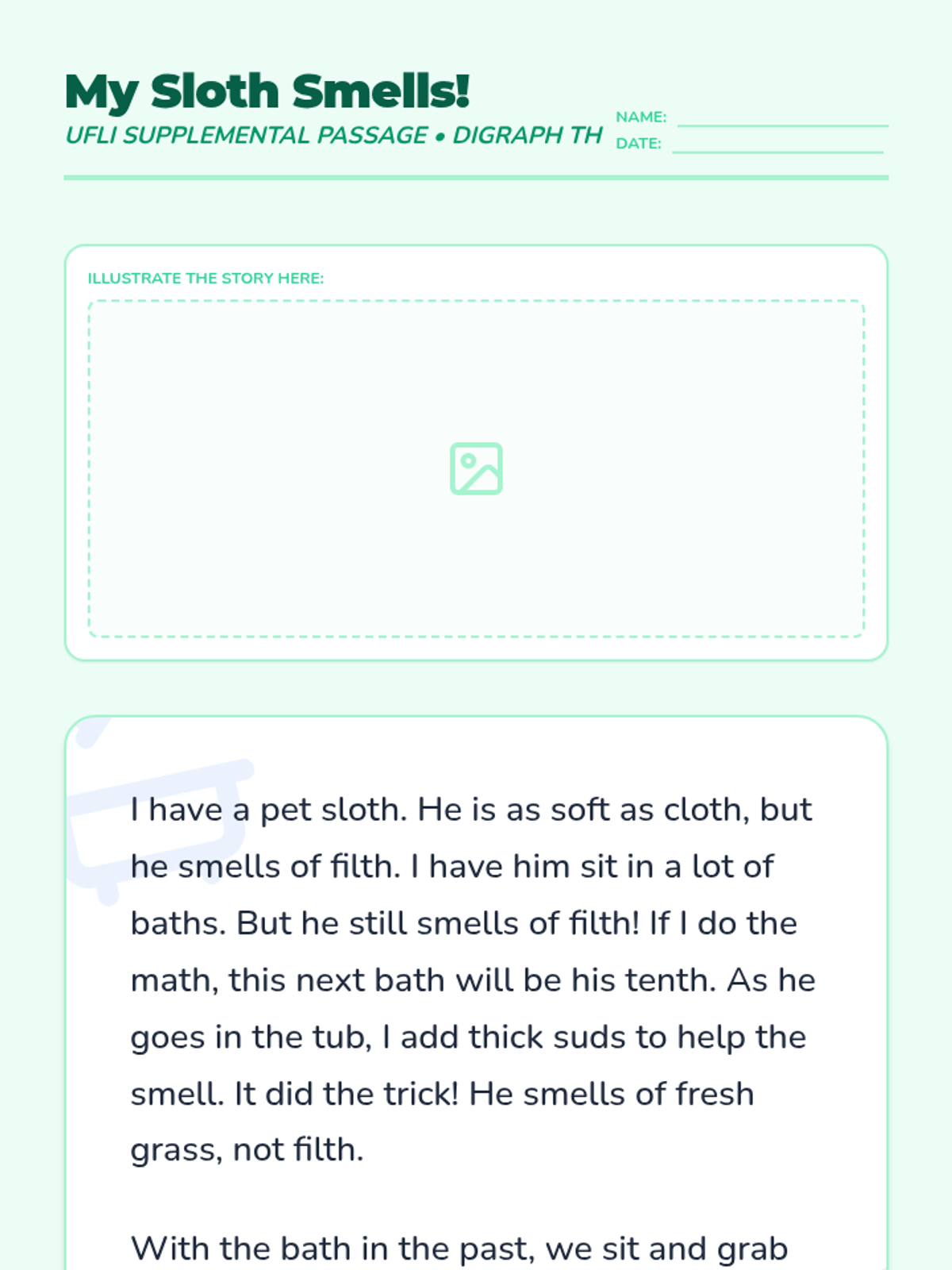
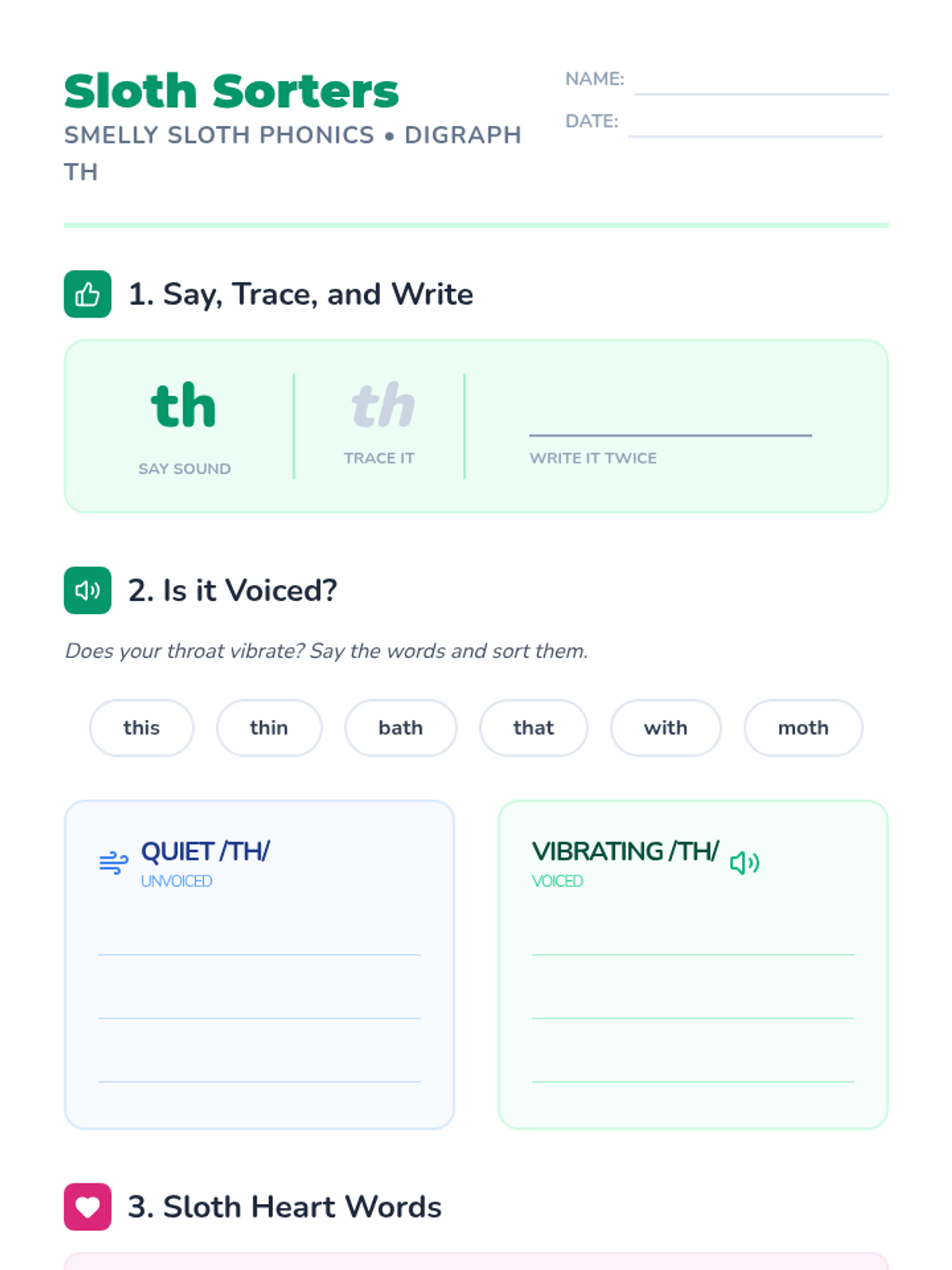
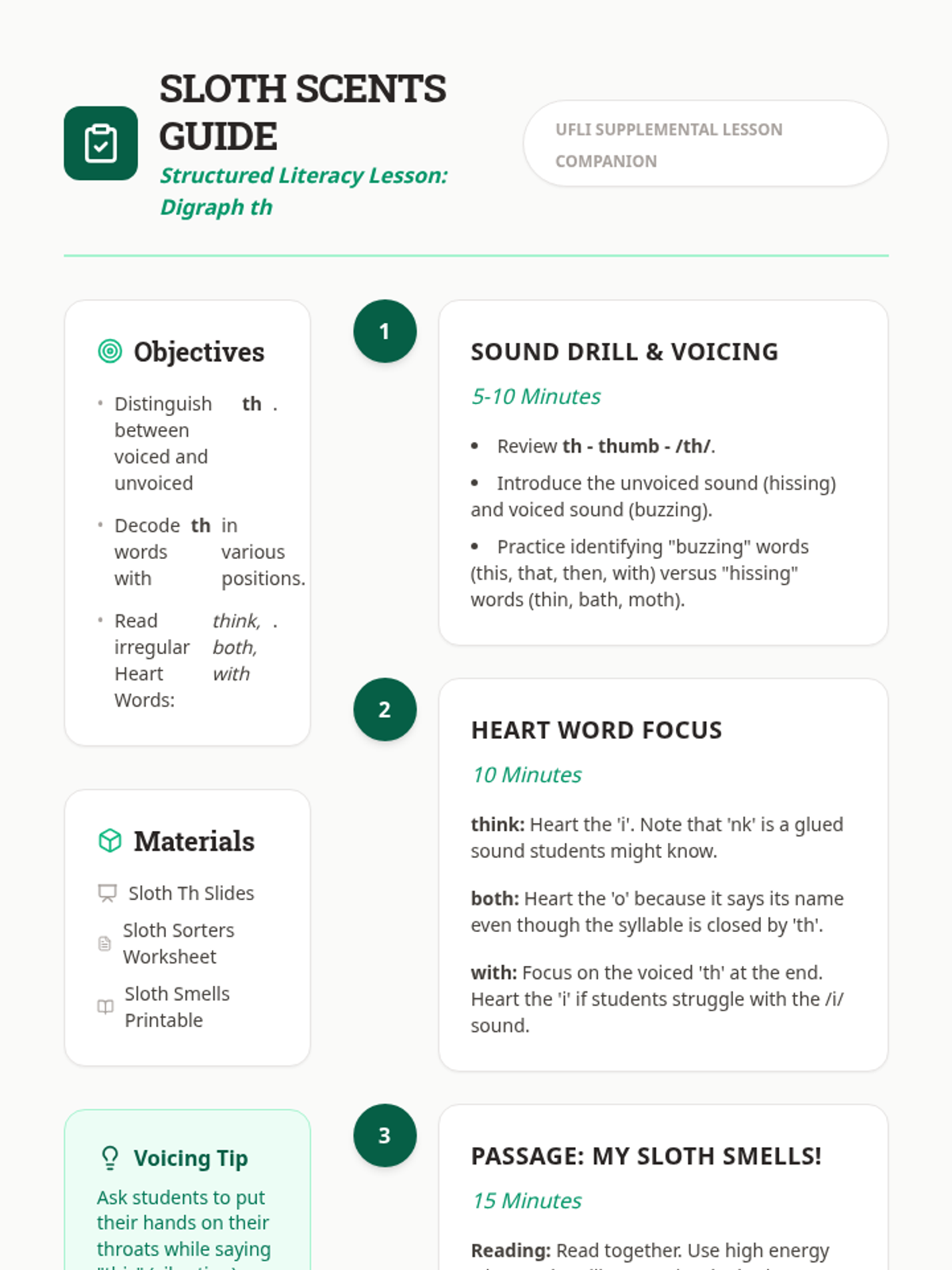
A structured literacy lesson focusing on the 'th' digraph (voiced and unvoiced), featuring the 'My Sloth Smells!' passage and instruction on the Heart Words 'think', 'with', and 'both'.
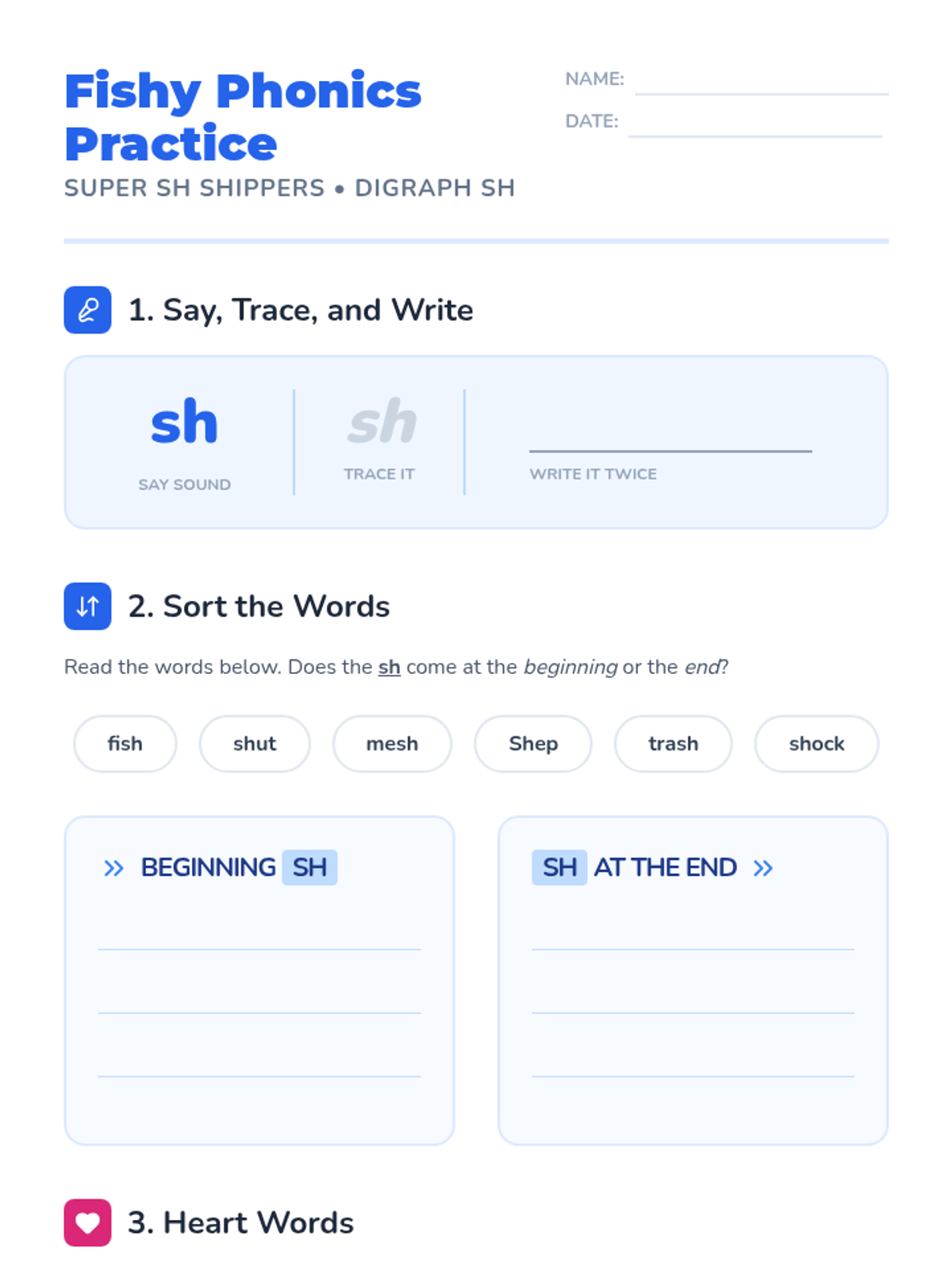
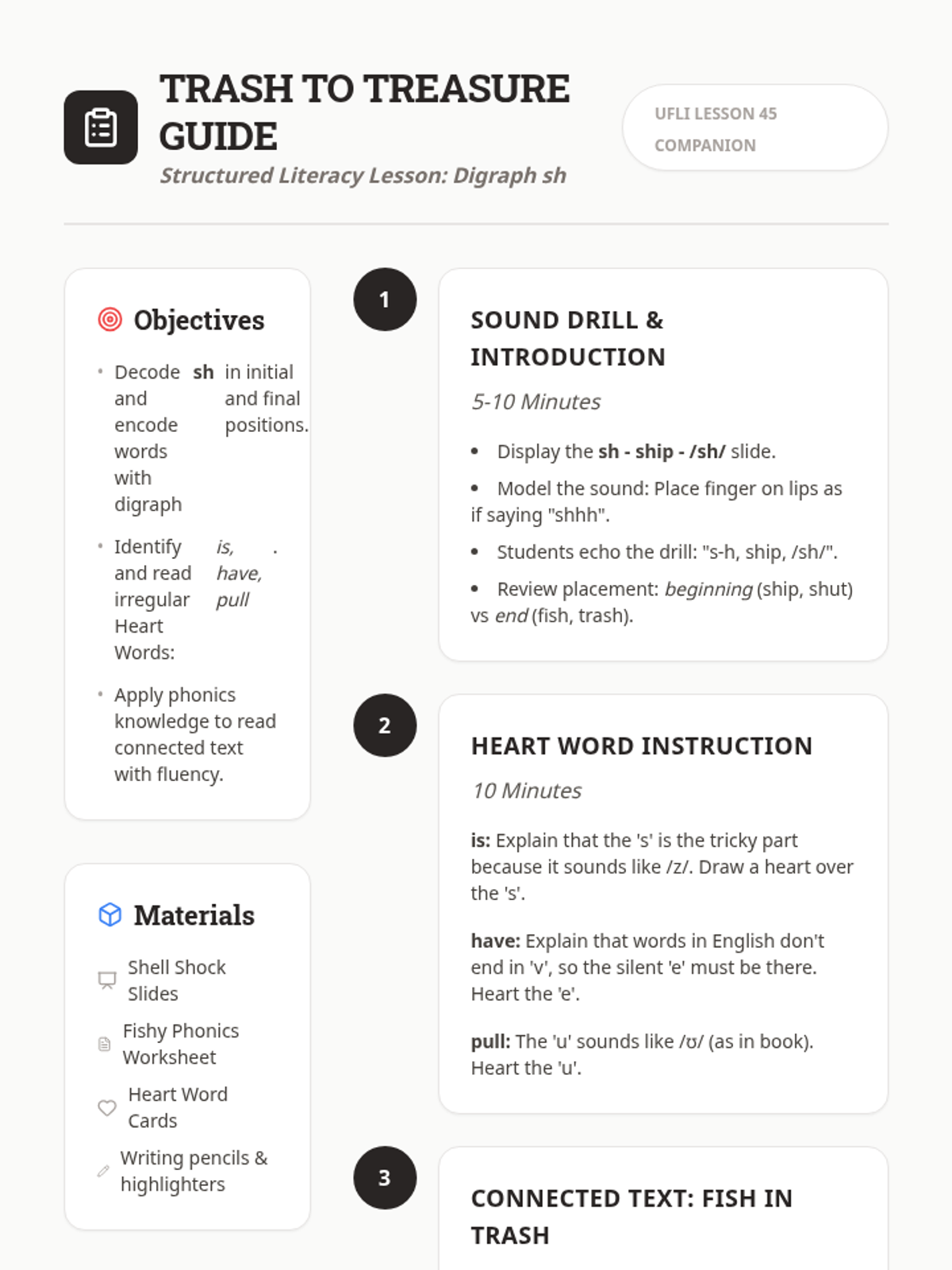
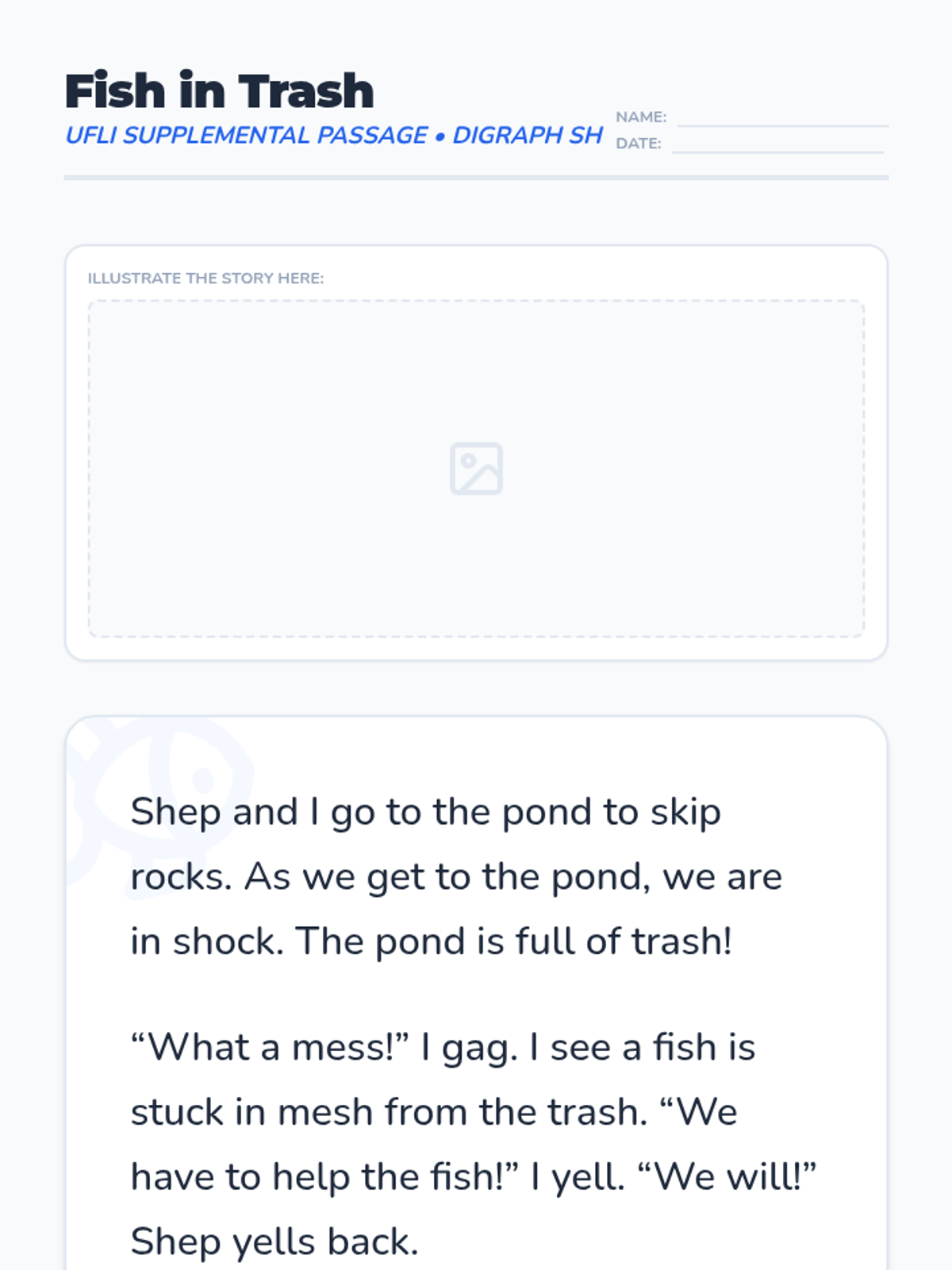
A structured literacy lesson focusing on the 'sh' digraph at the beginning and end of words, featuring the 'Fish in Trash' passage and Heart Word instruction for 'have', 'is', and 'pull'.
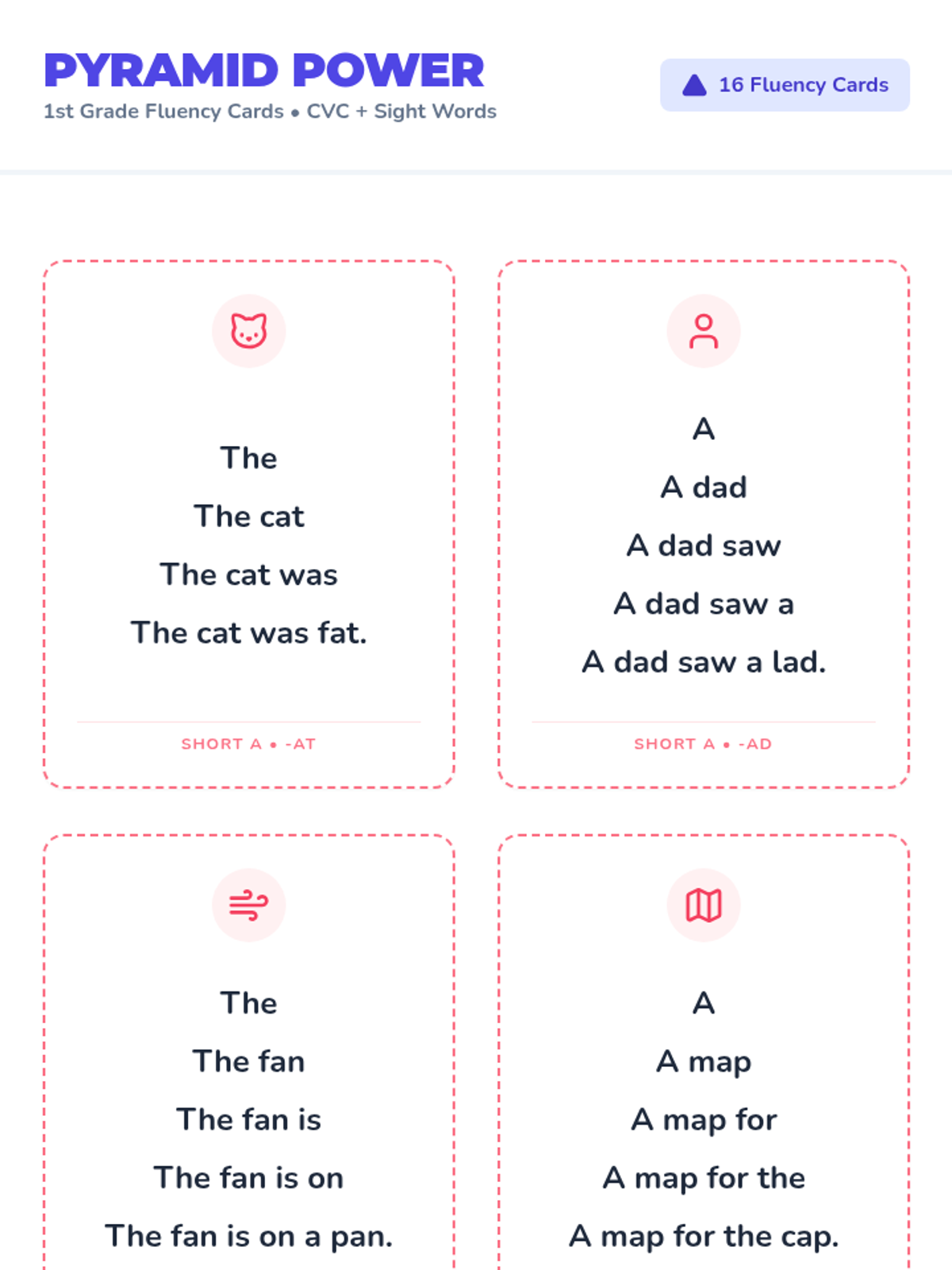
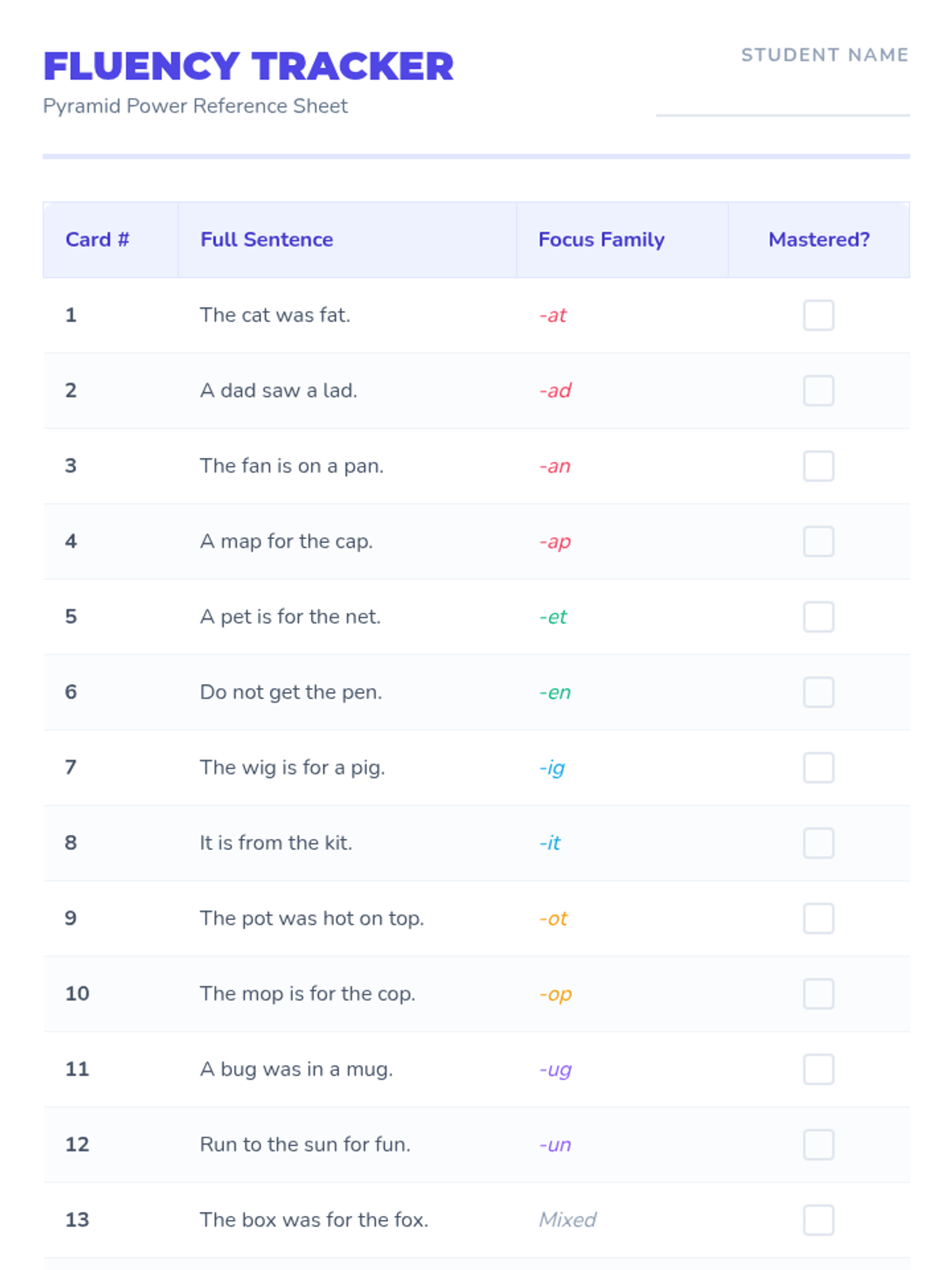
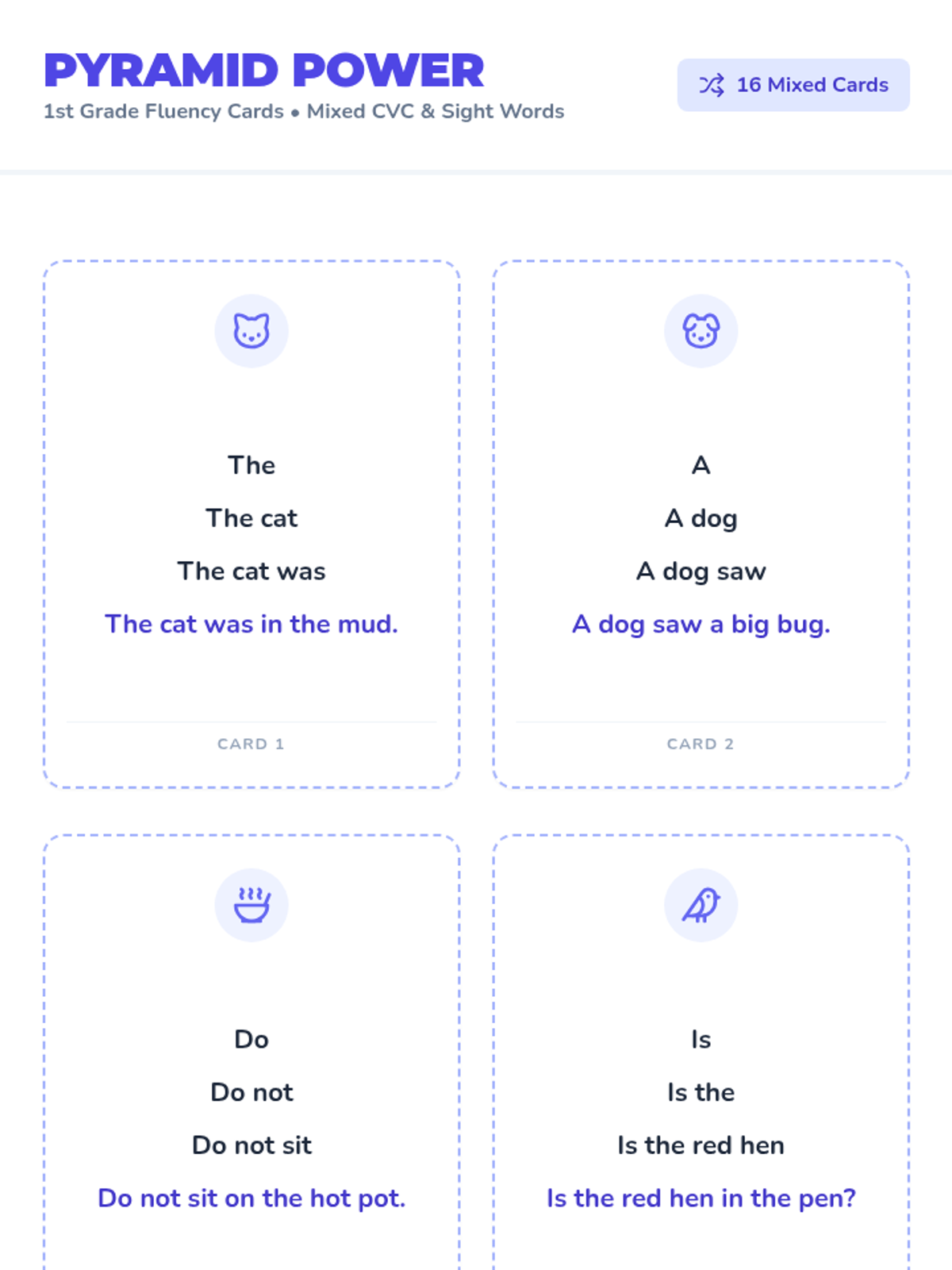
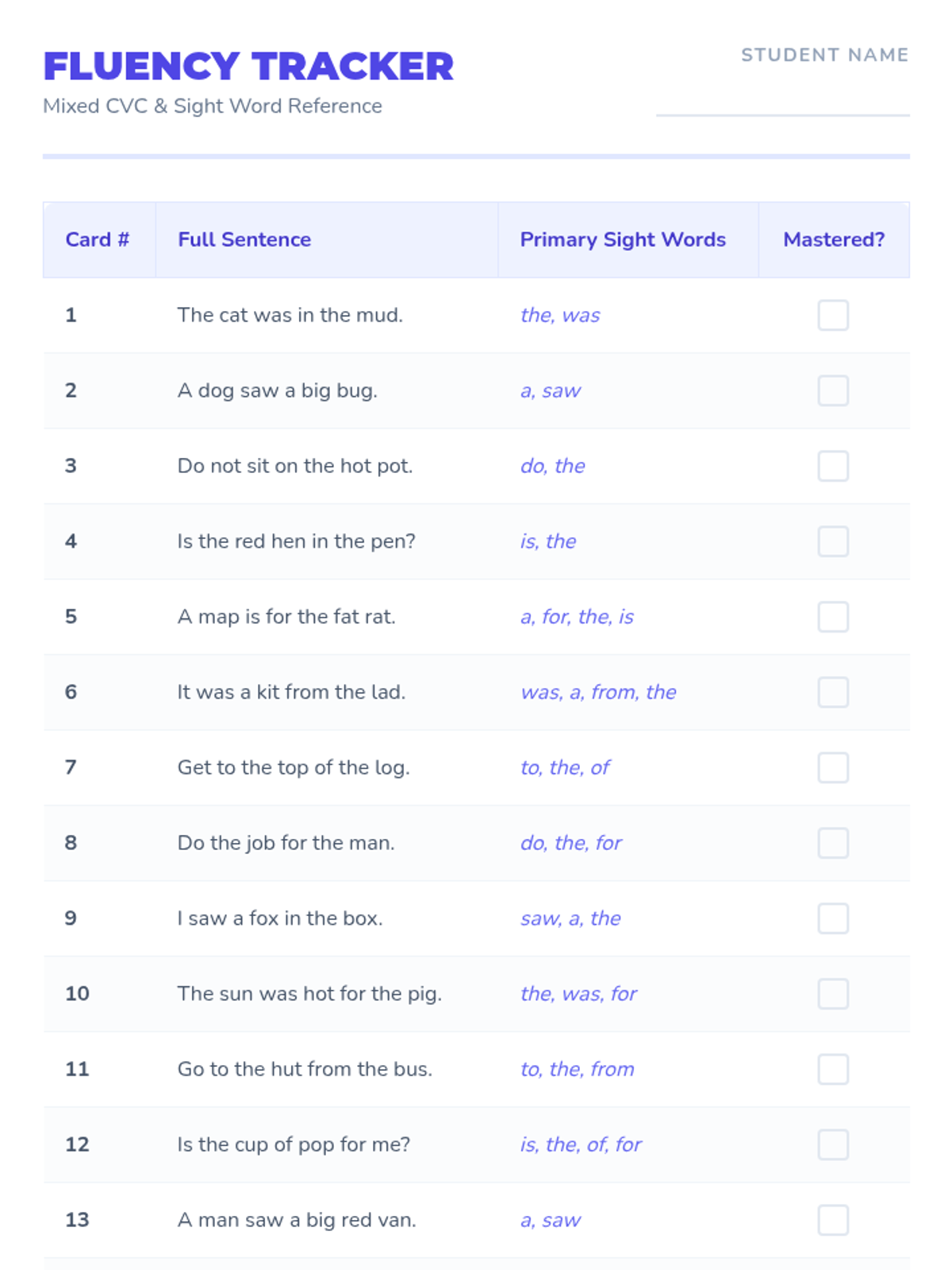
A collection of fluency triangle cards designed for 1st-grade students to build reading stamina and speed. These cards focus on CVC word families and high-frequency sight words through a progressive sentence-building approach.
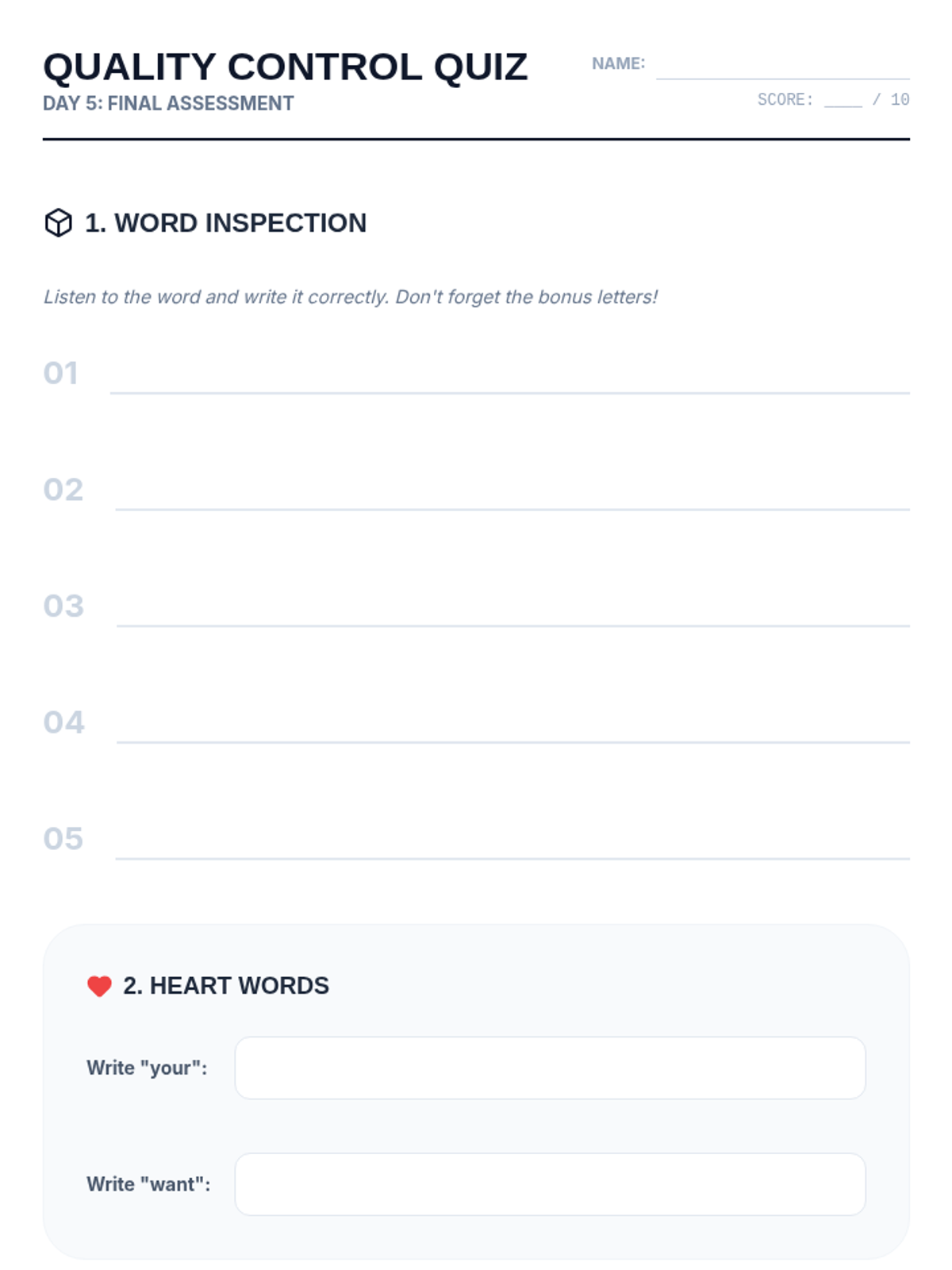
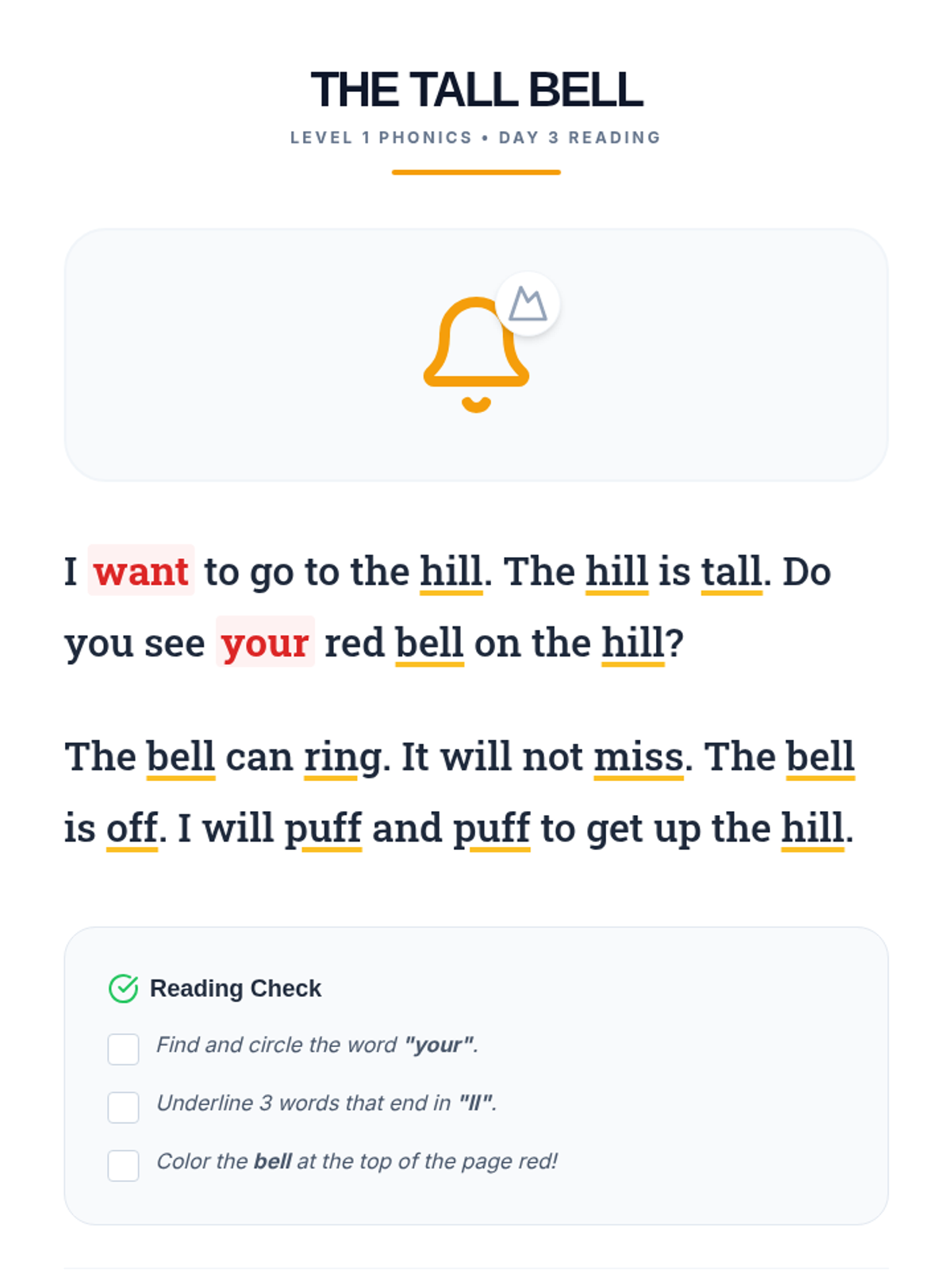
Final assessment of the Floss rule and heart words. Includes dictation and a creative word family exercise.
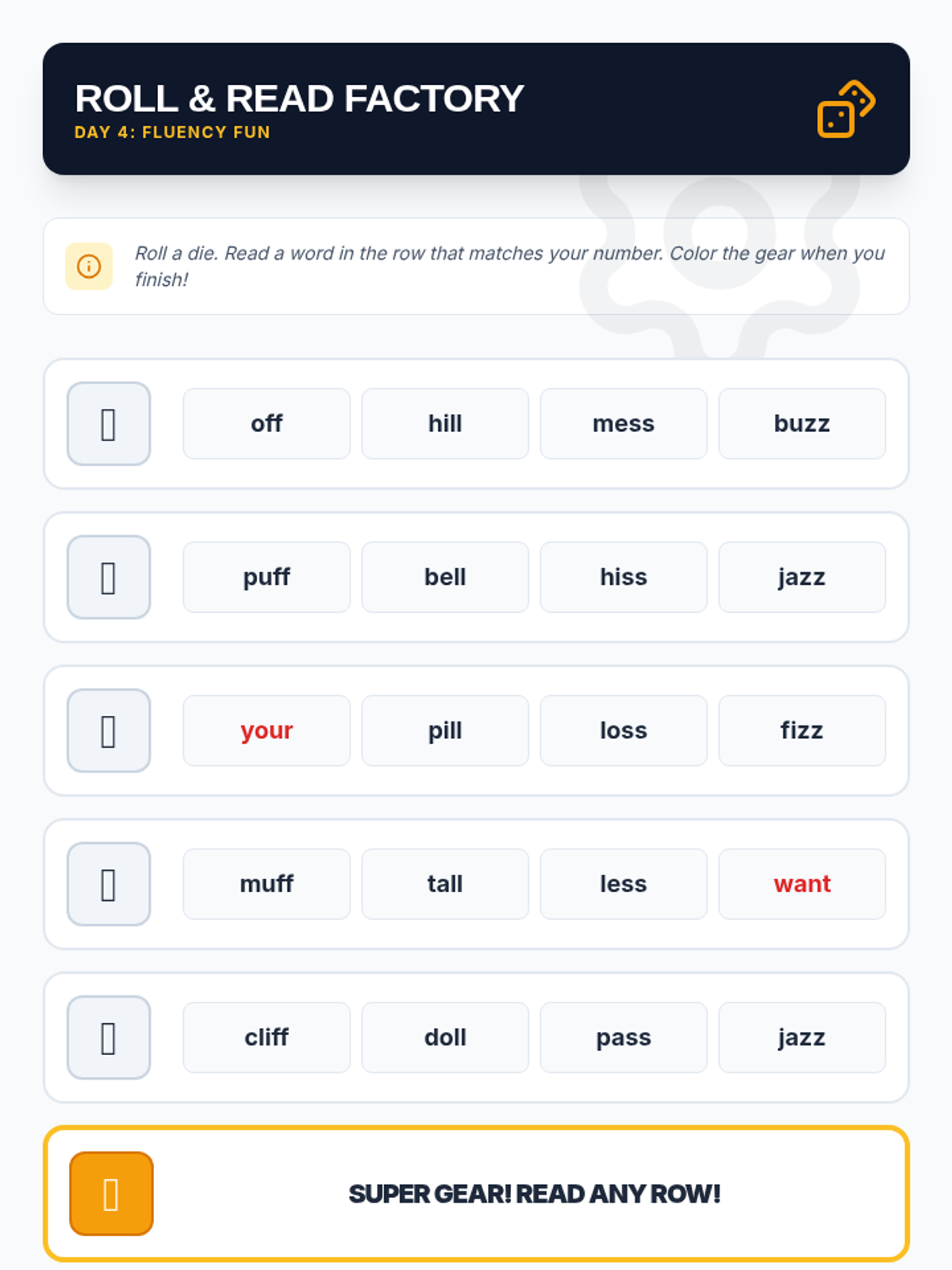
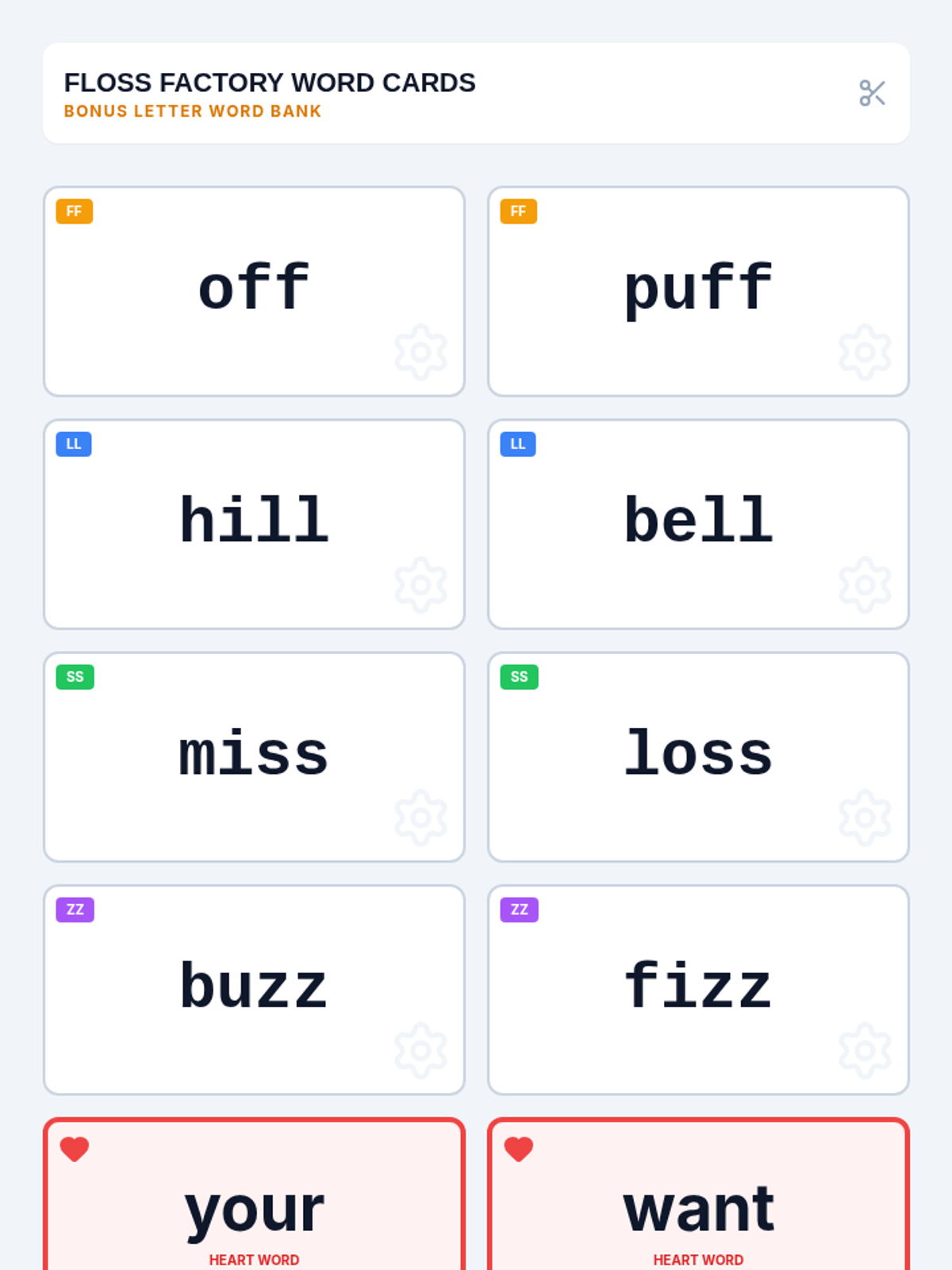
Fluency building and phonics games. Students practice rapid reading of bonus letter words and construct sentences.
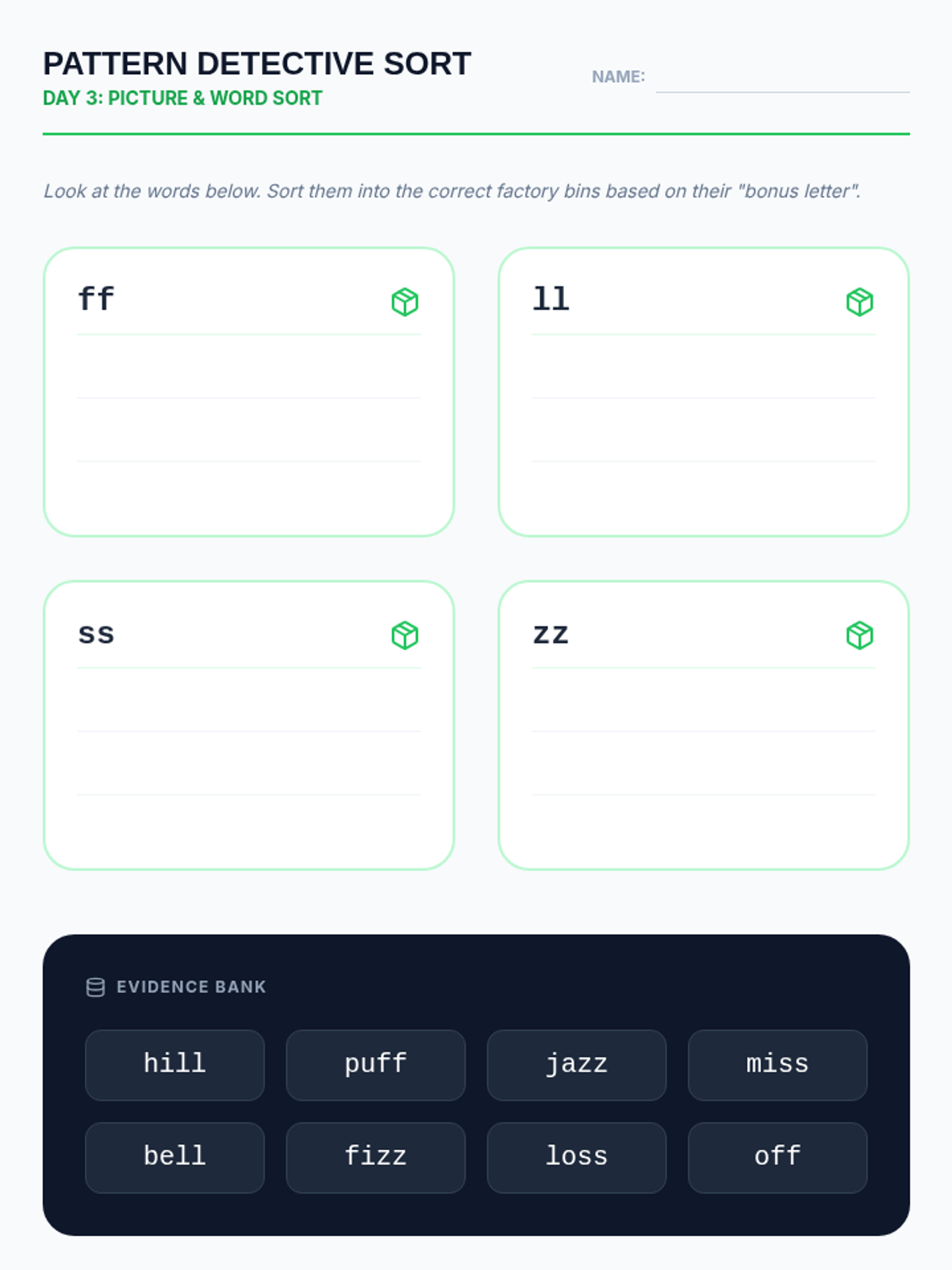
Application through word sorting and decodable reading. Students identify word families and read words in context.
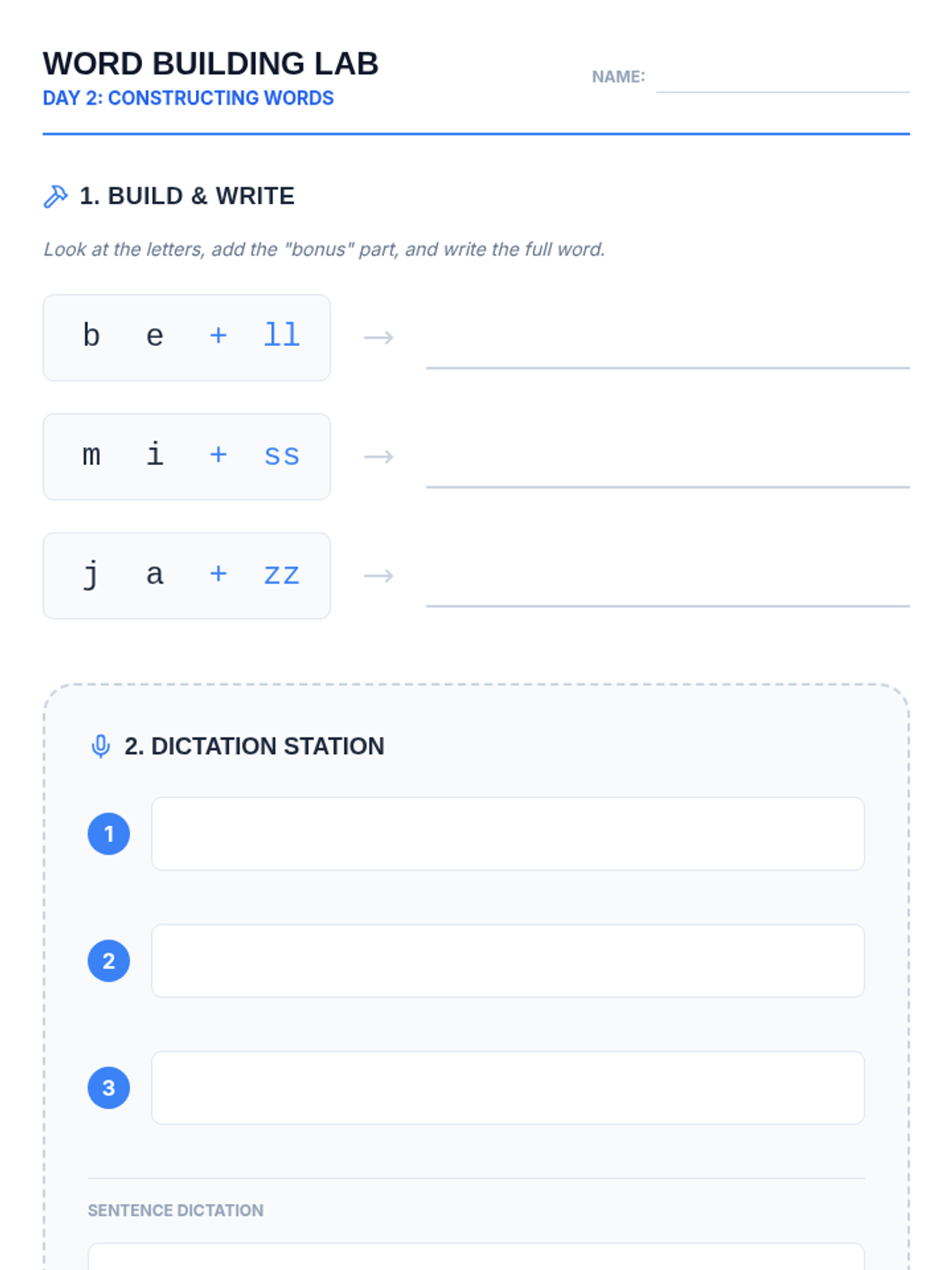
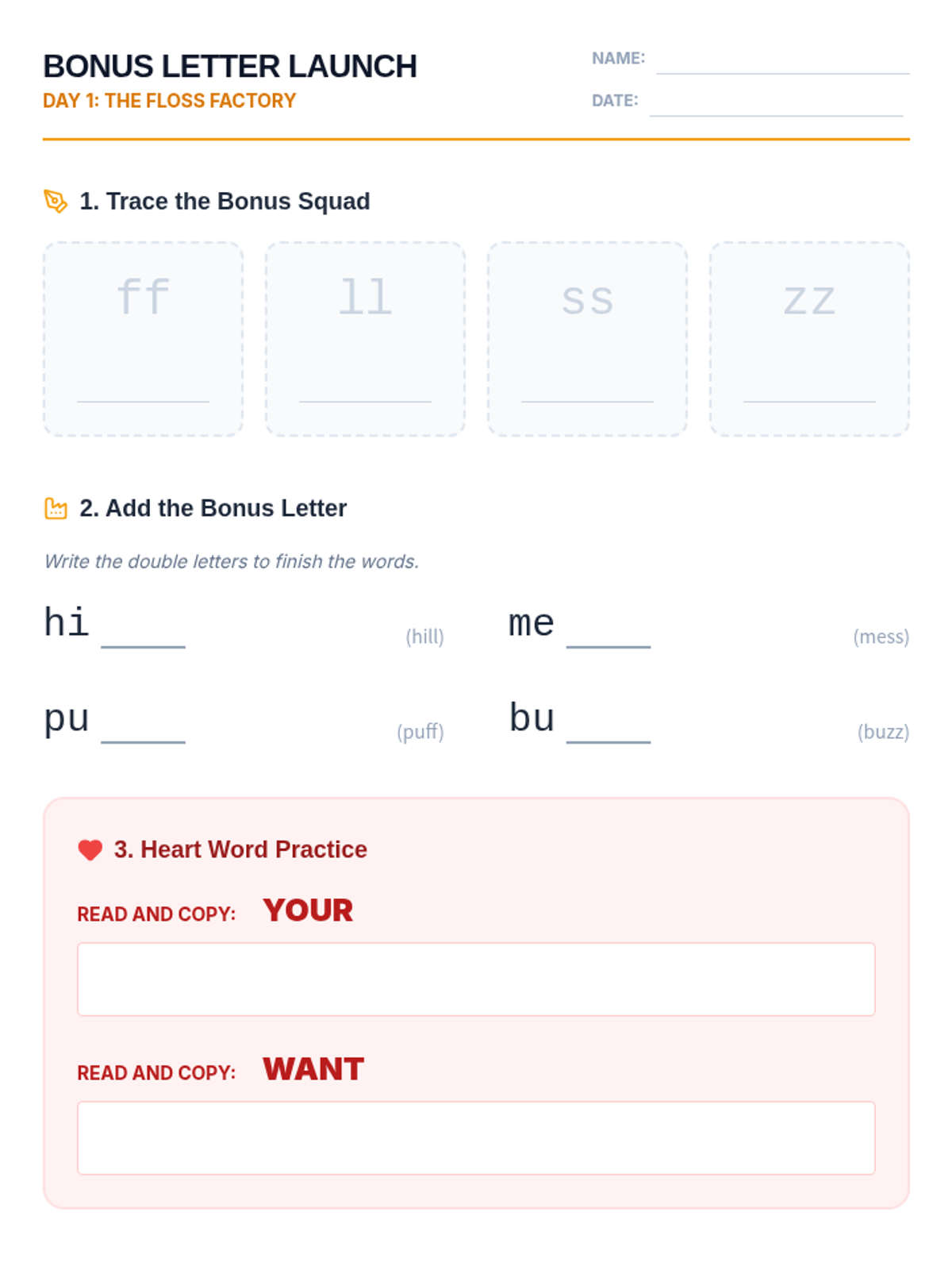
Focus on word building and dictation. Students use letter tiles to practice doubling final consonants and apply heart word knowledge in writing.
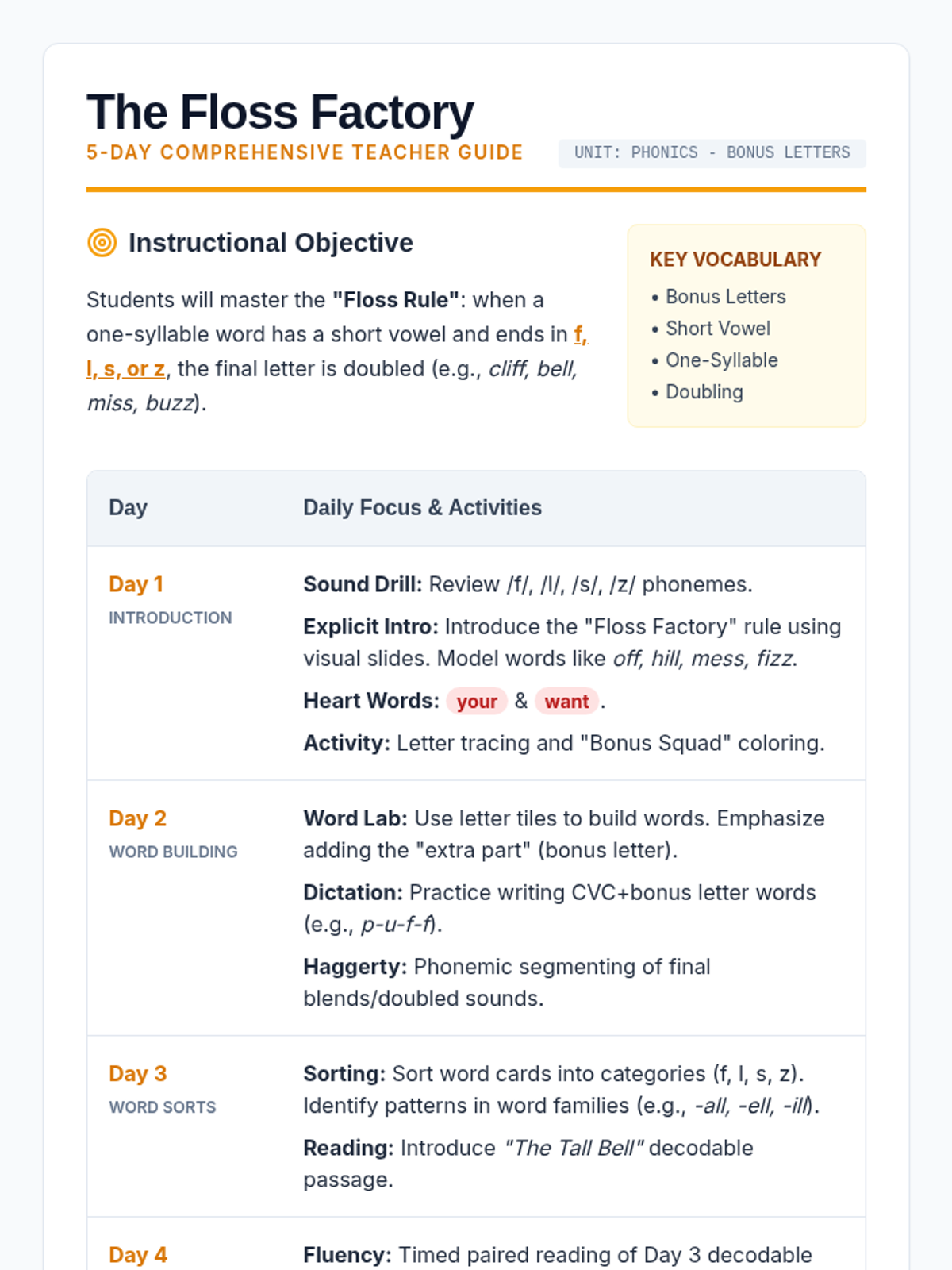
Introduction to the bonus letters f, l, s, and z. Students learn the rule that when a one-syllable word ends in f, l, s, or z after a short vowel, the letter is doubled. Includes the teacher guide for the full week.
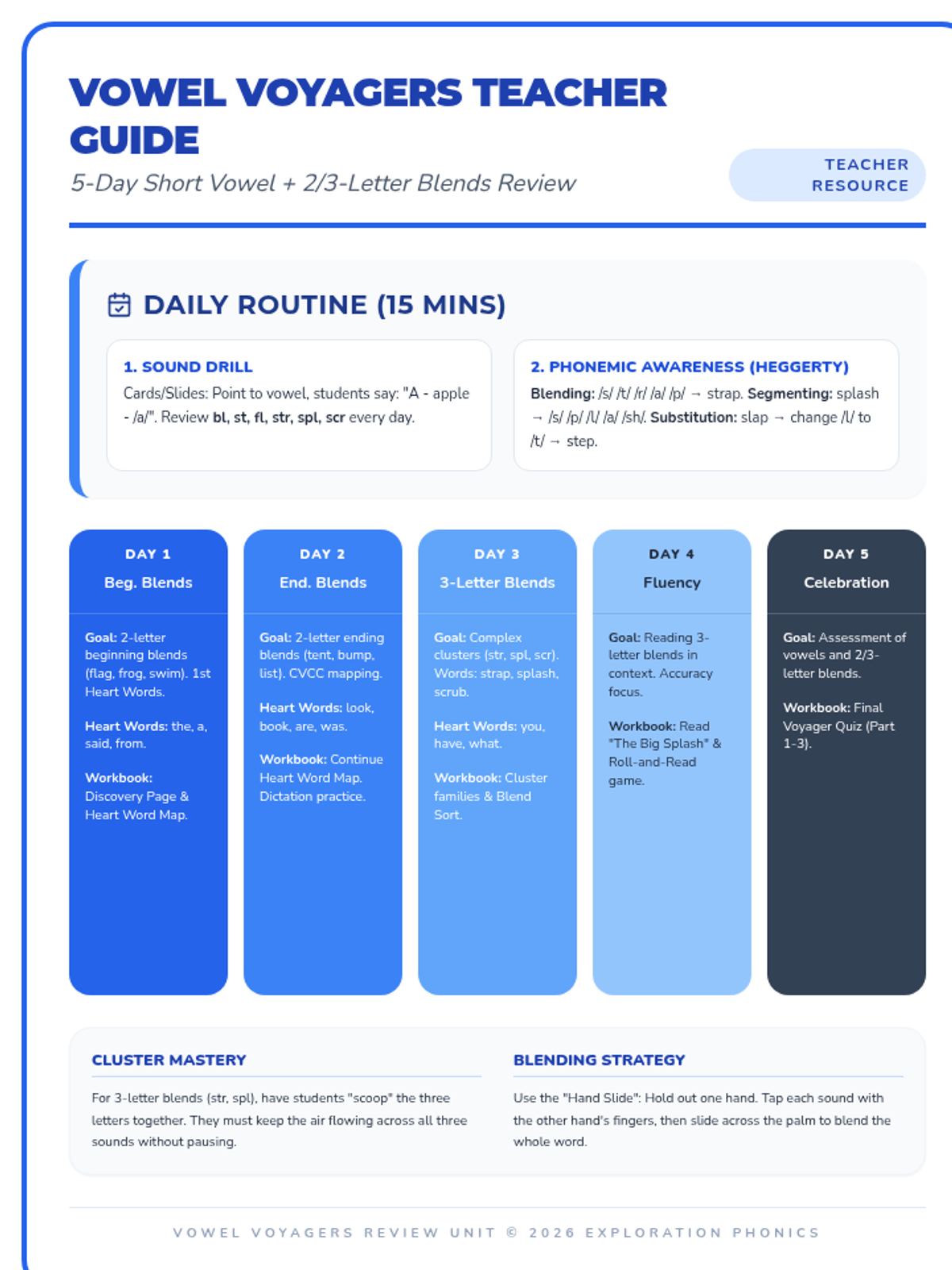
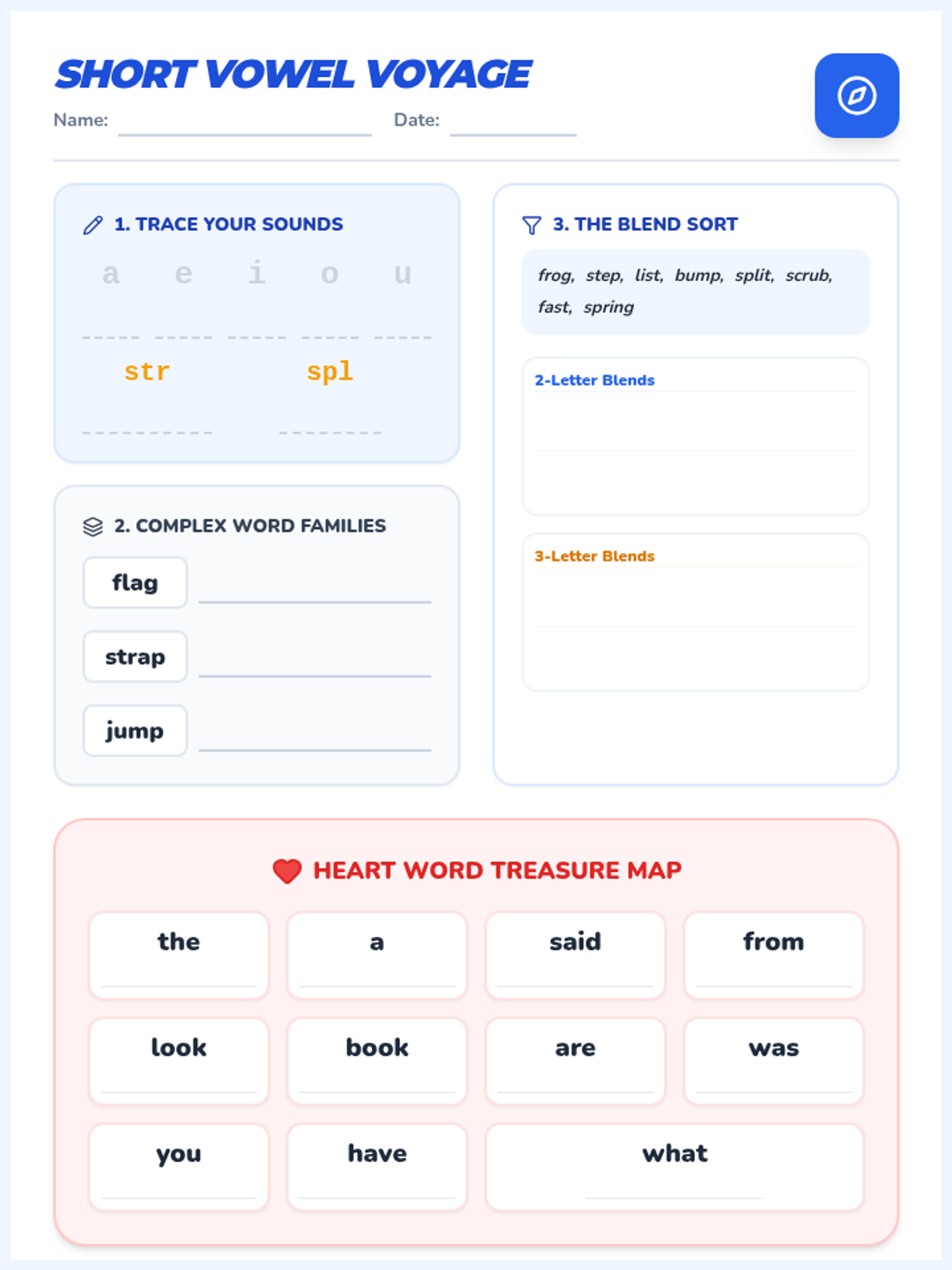
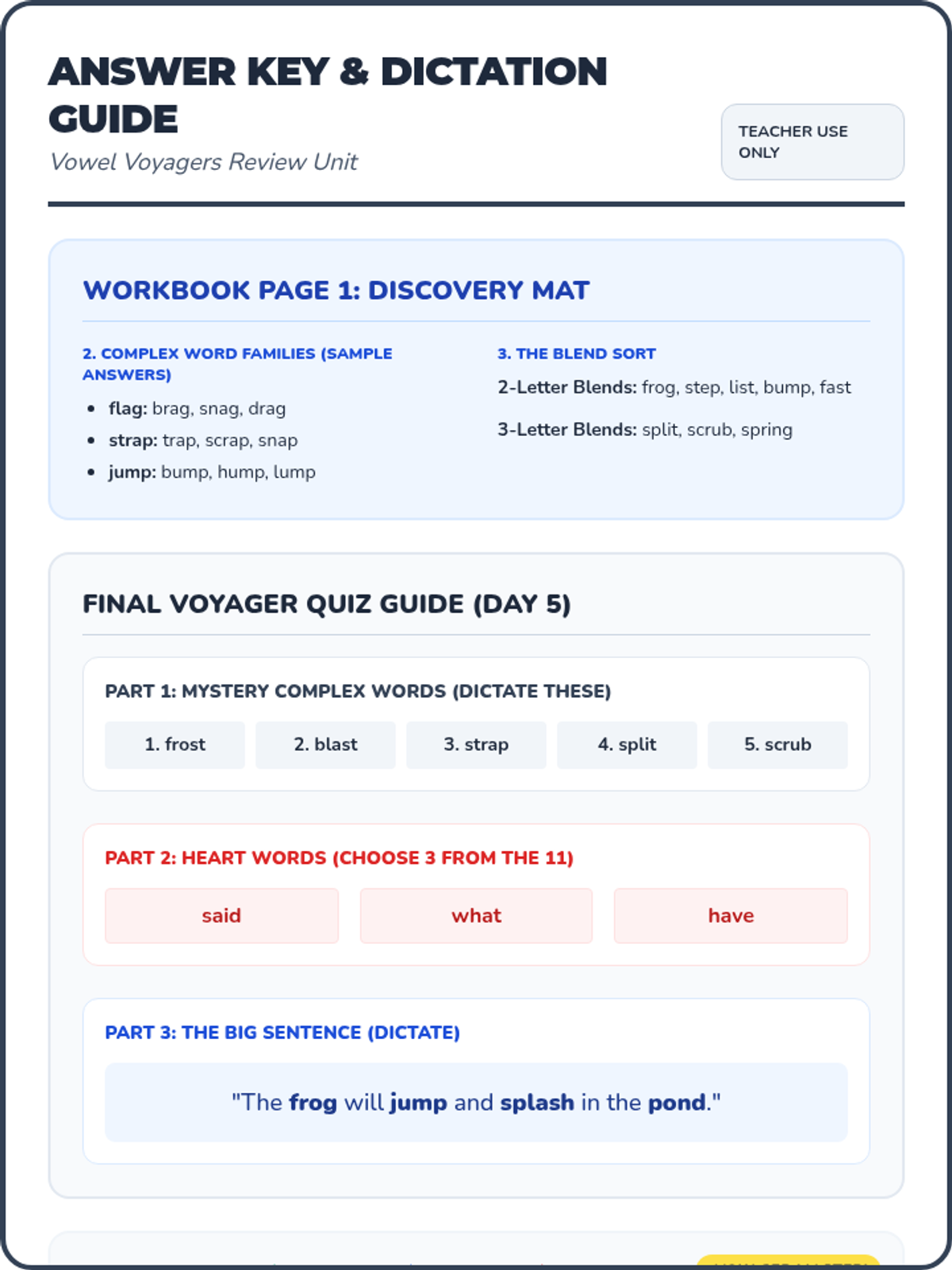
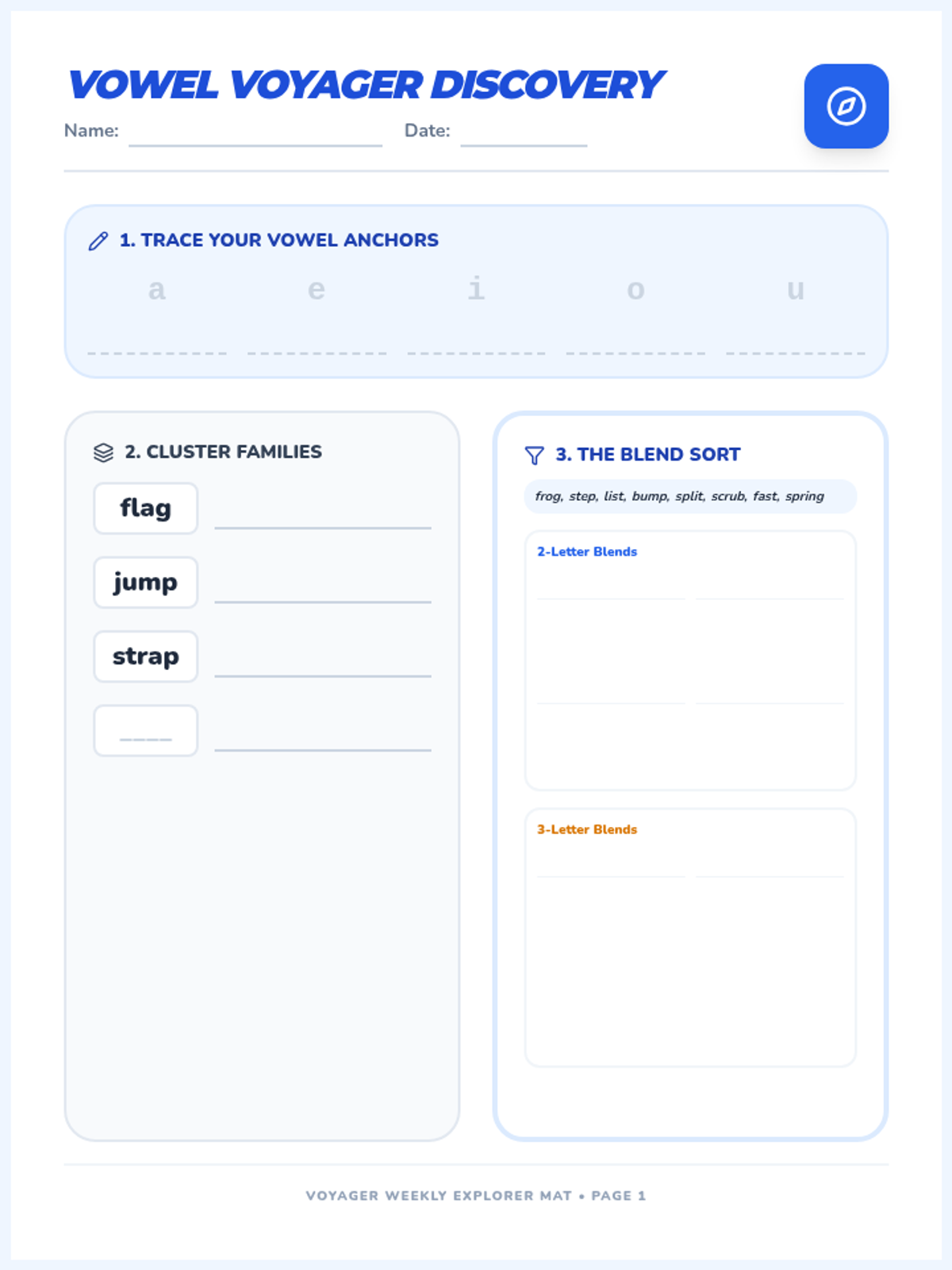
A comprehensive week-long unit reviewing short vowels through explicit instruction, multisensory practice, and decodable text application.
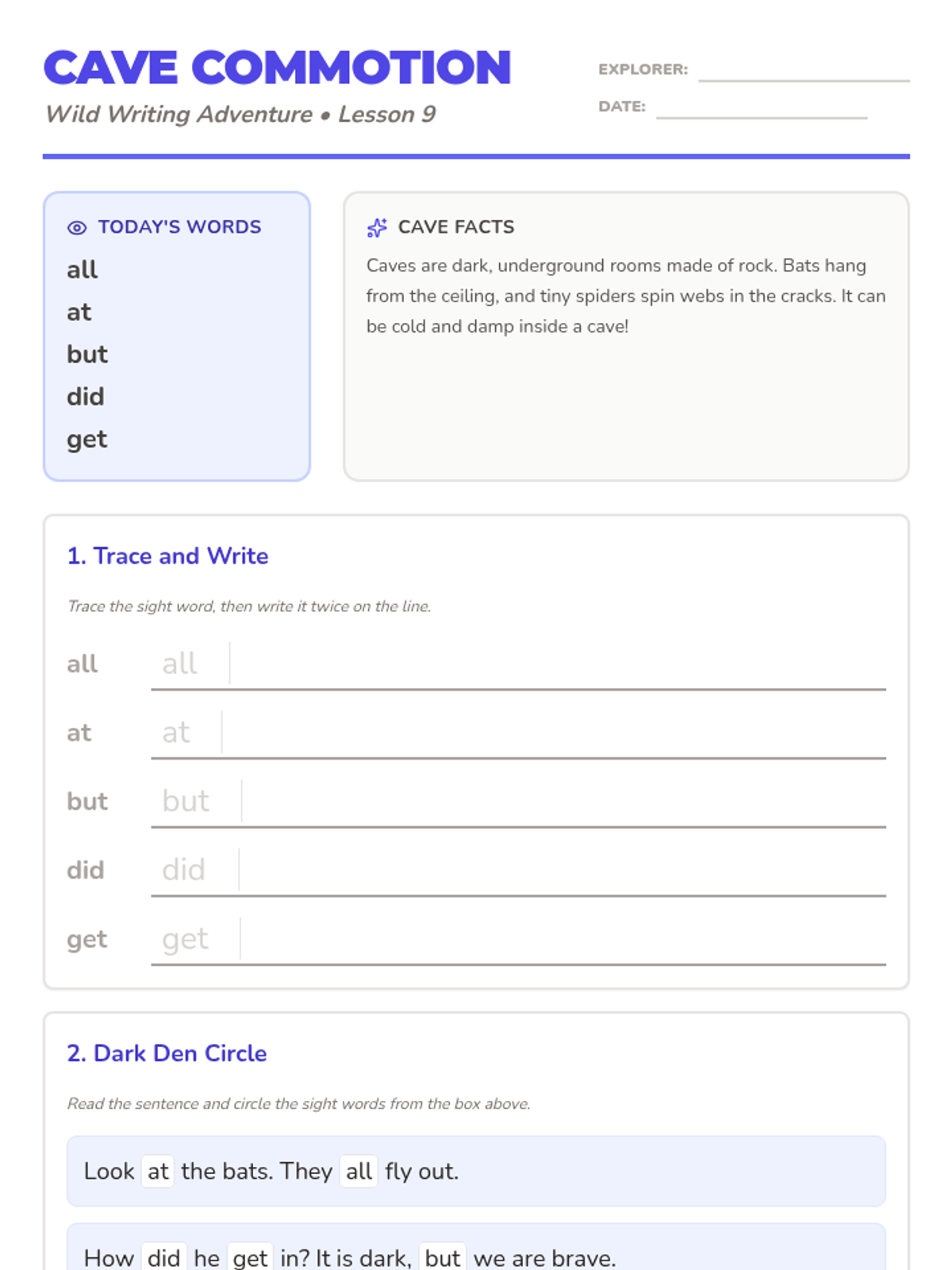
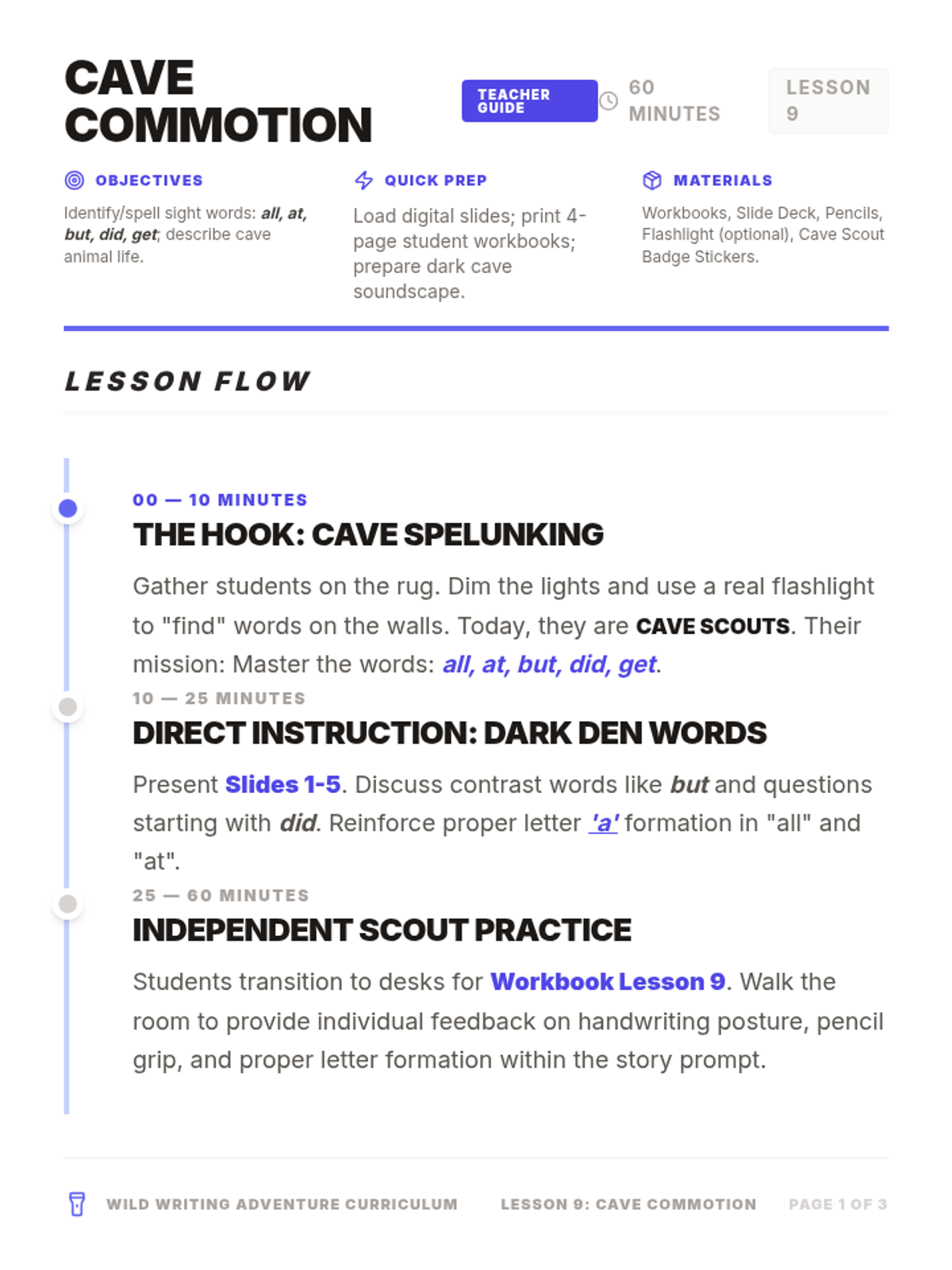
Venture into the mysterious world of caves to master essential sight words while meeting bats, spiders, and salamanders.
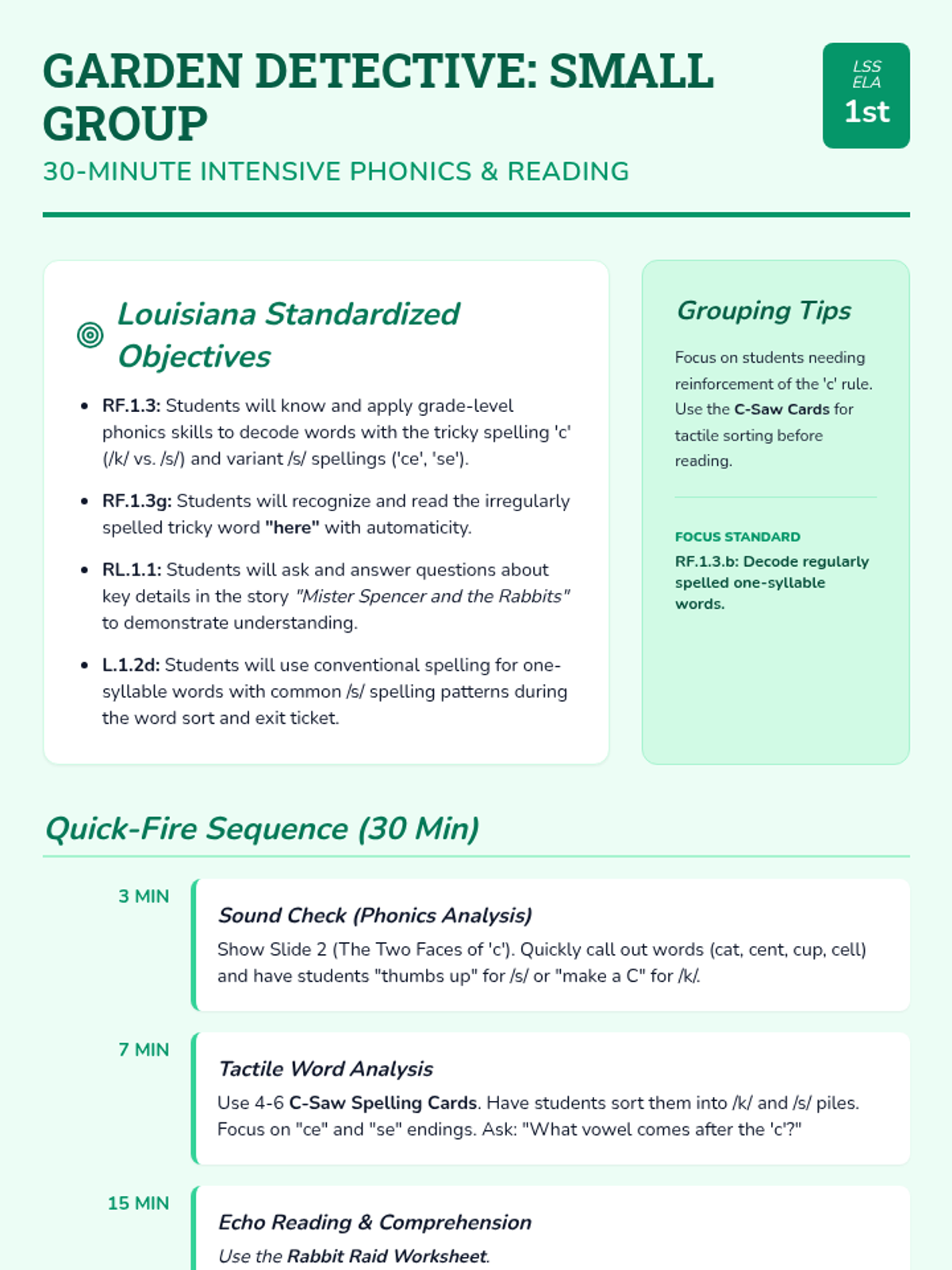
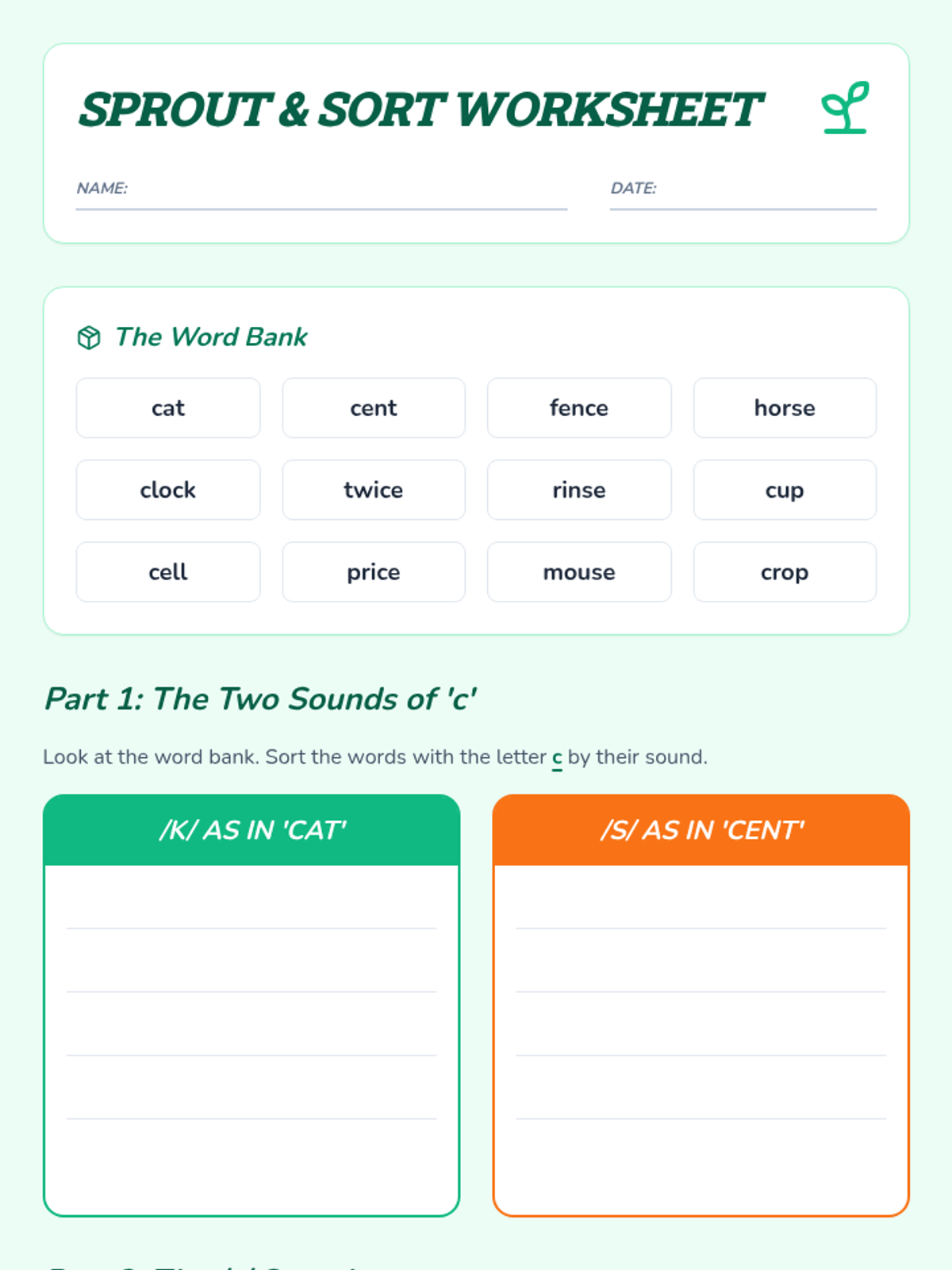
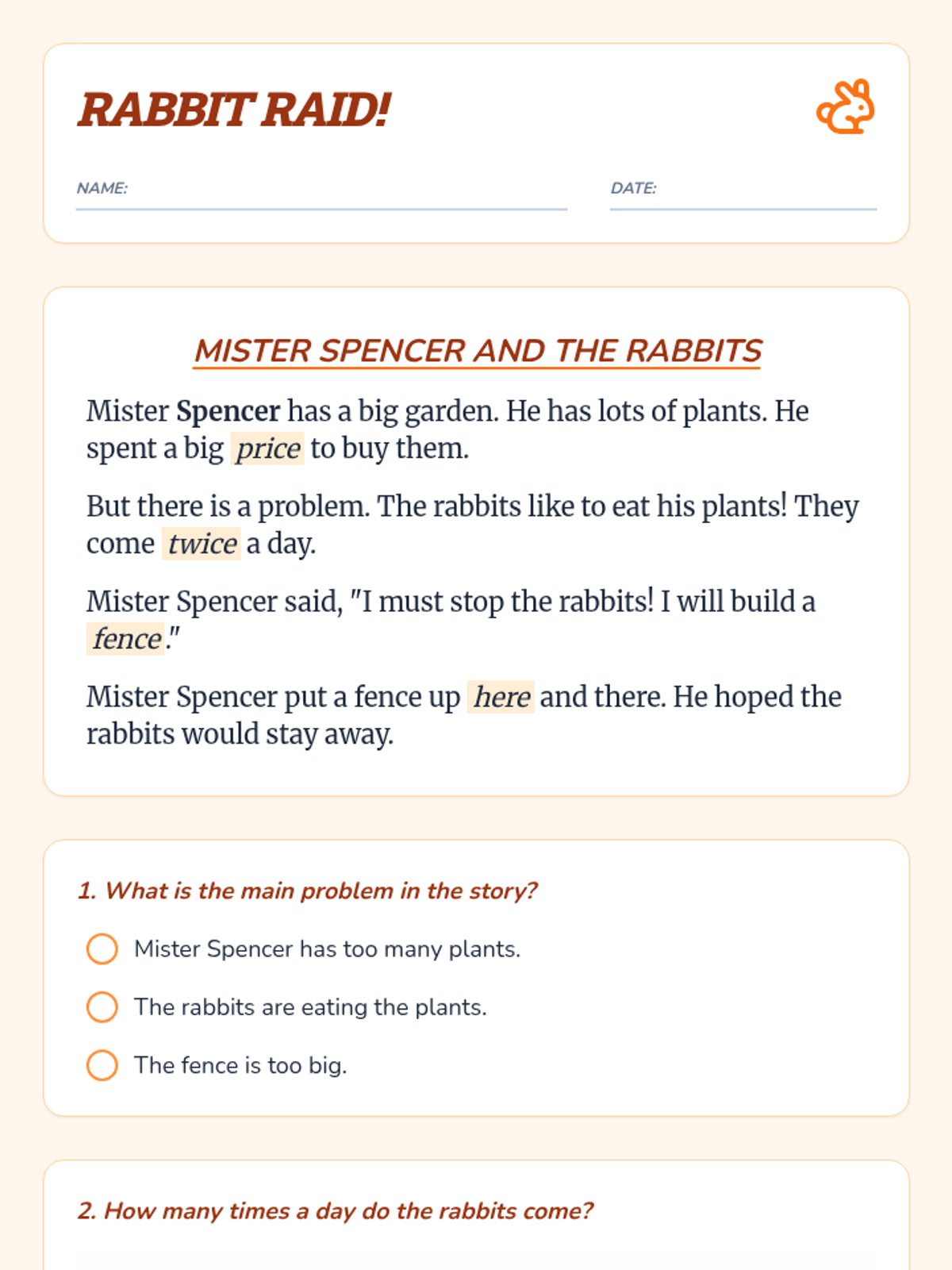
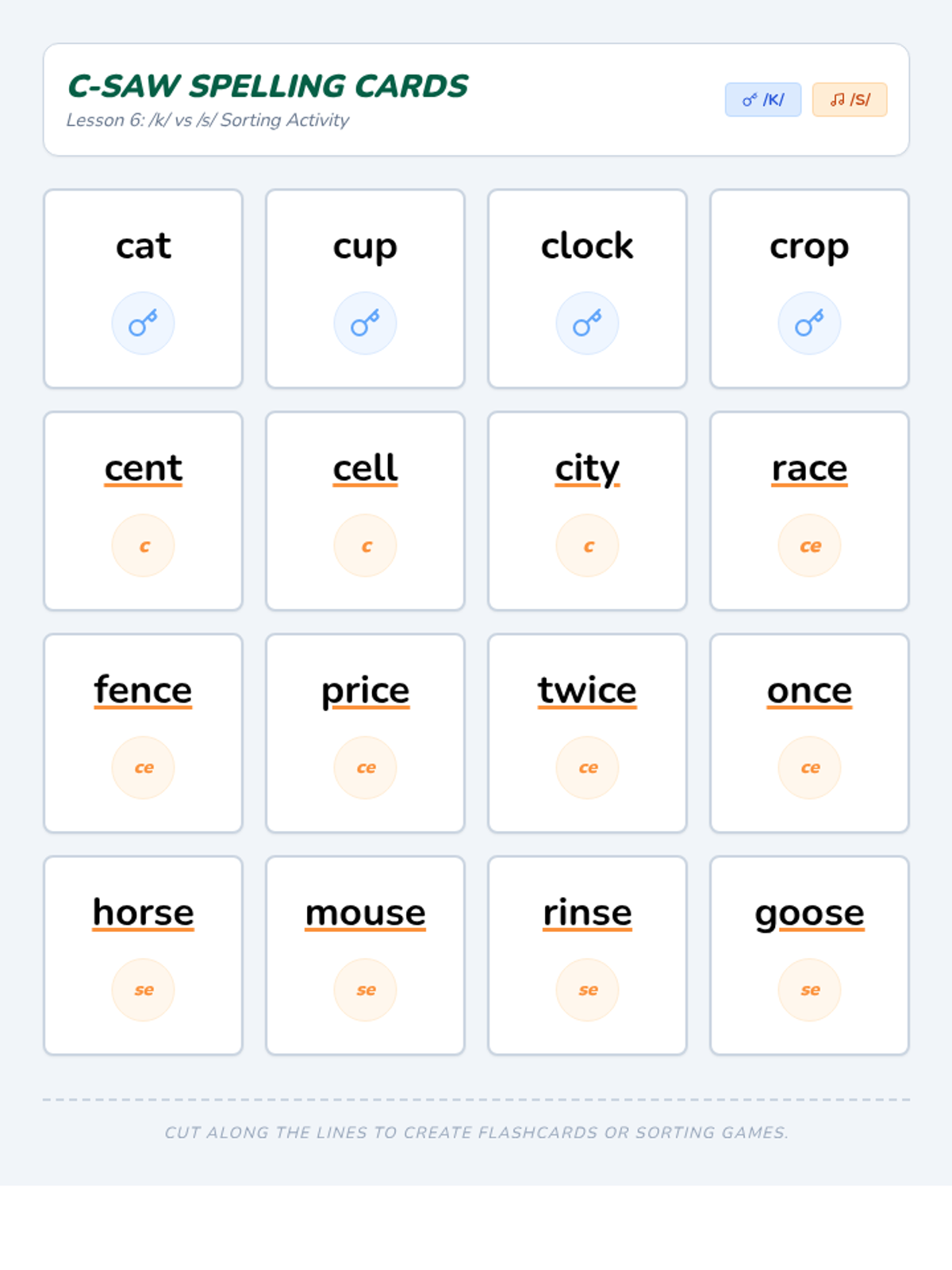
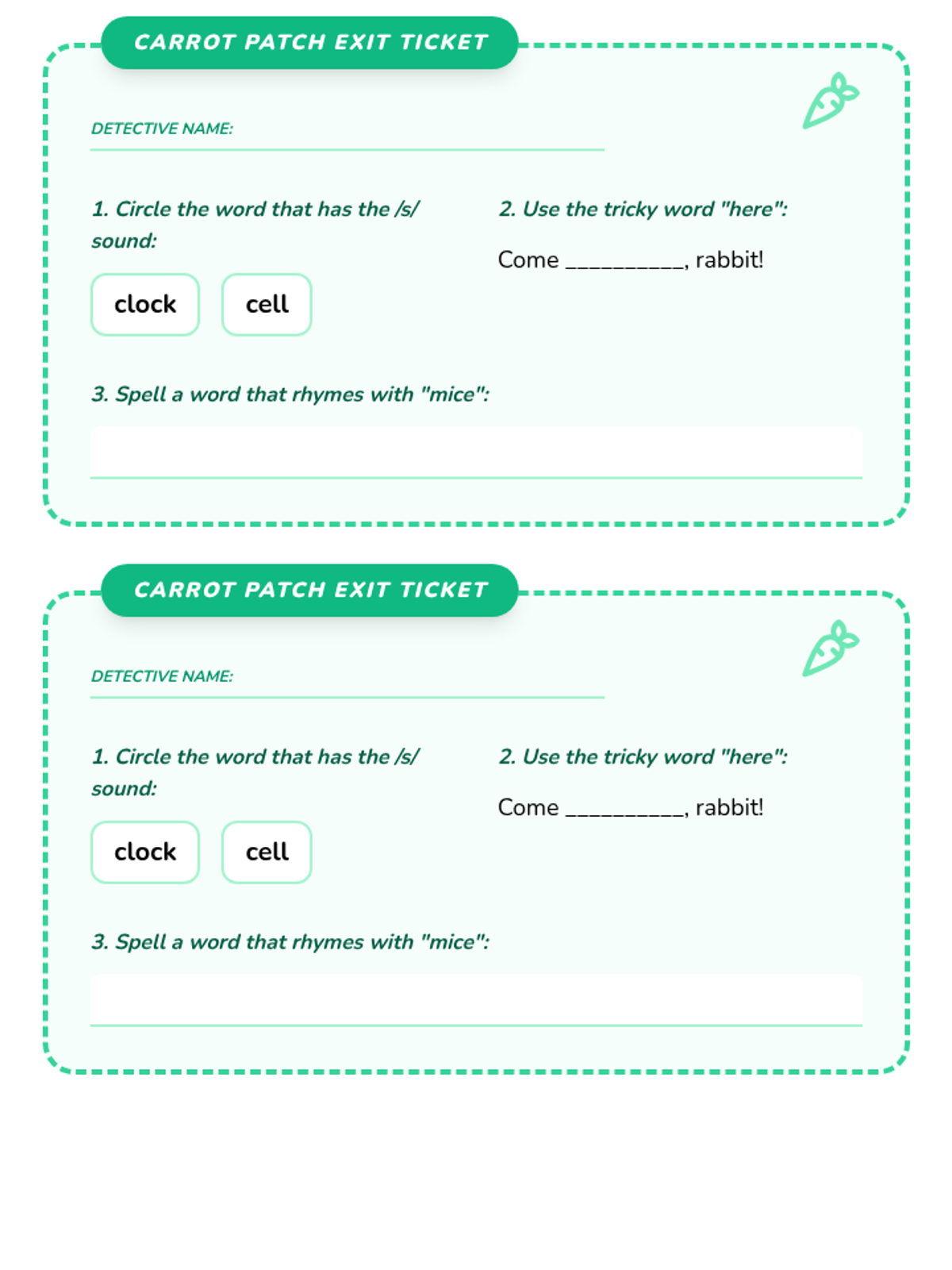
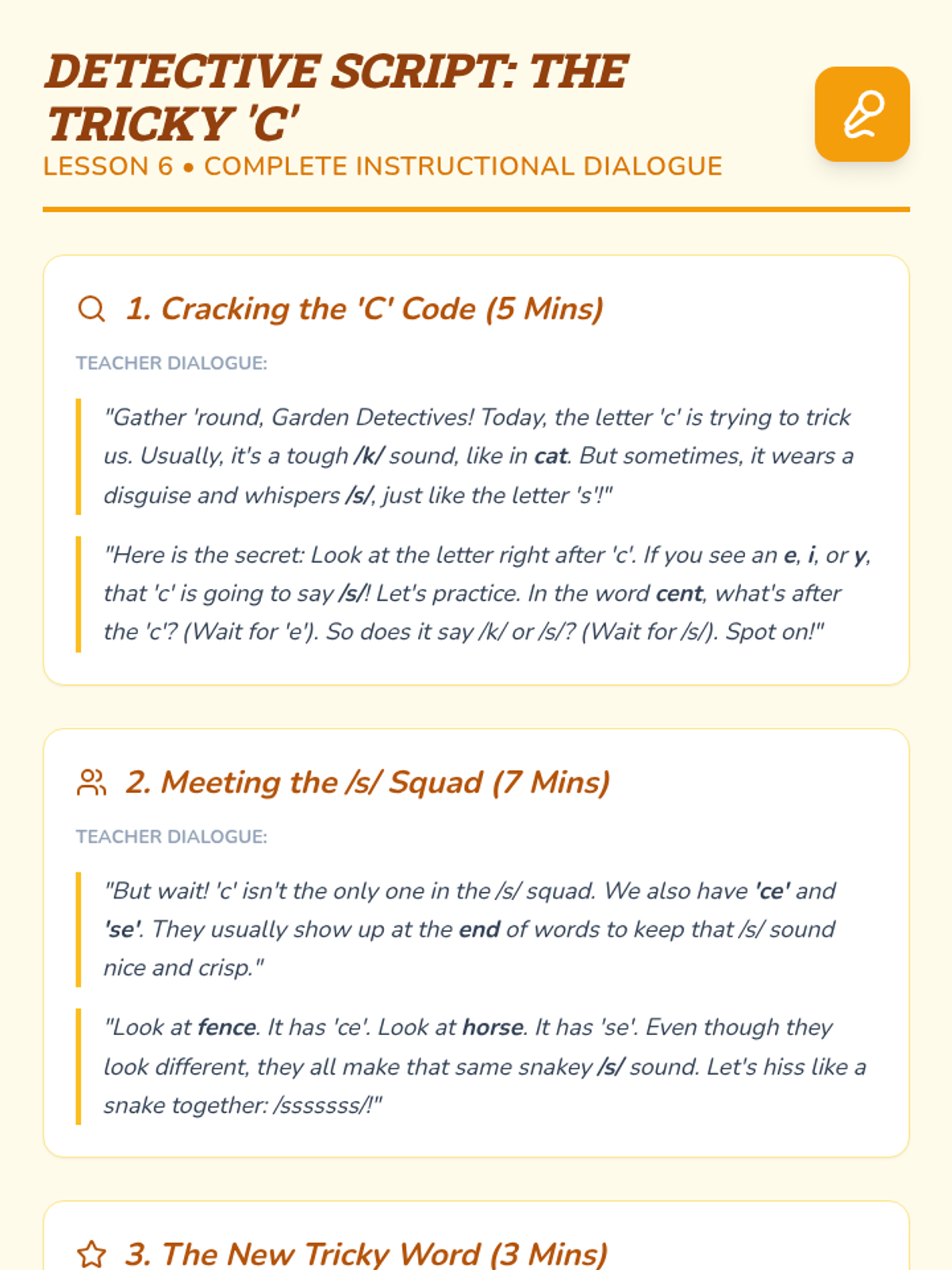
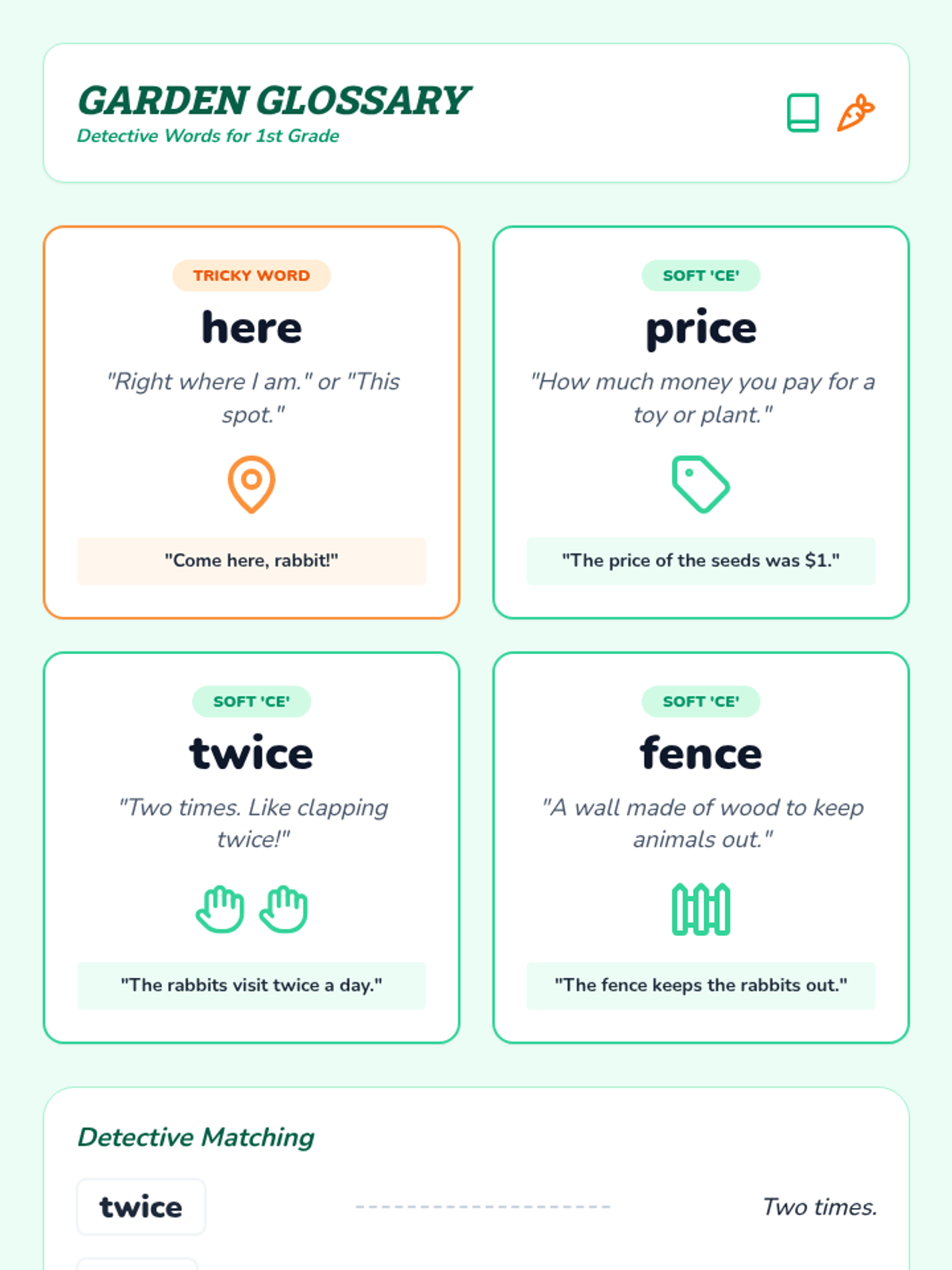
A comprehensive phonics and reading lesson focusing on the tricky spelling 'c' (/k/ vs /s/), various spellings for the /s/ sound, and reading comprehension for 'Mister Spencer and the Rabbits'.
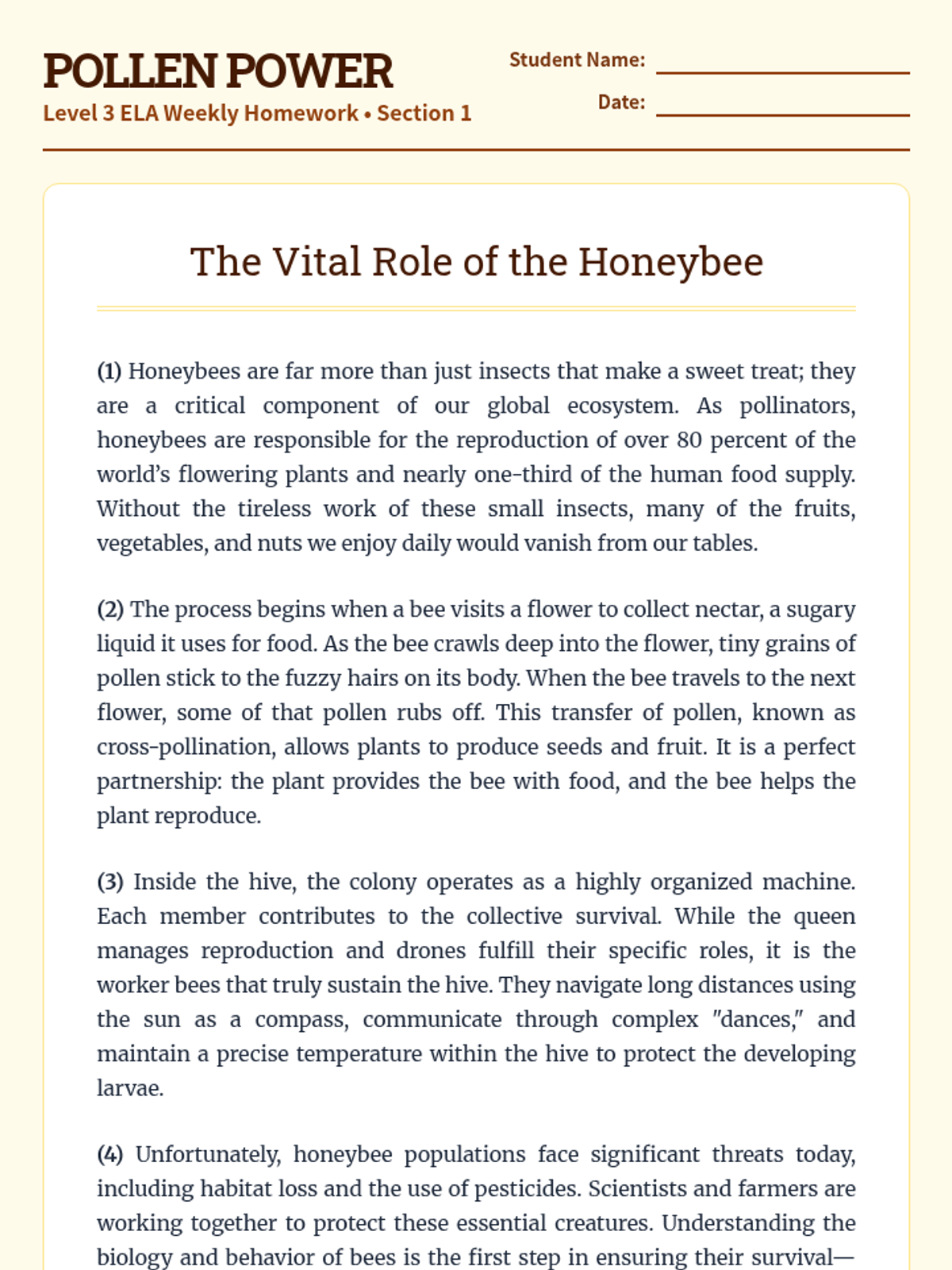
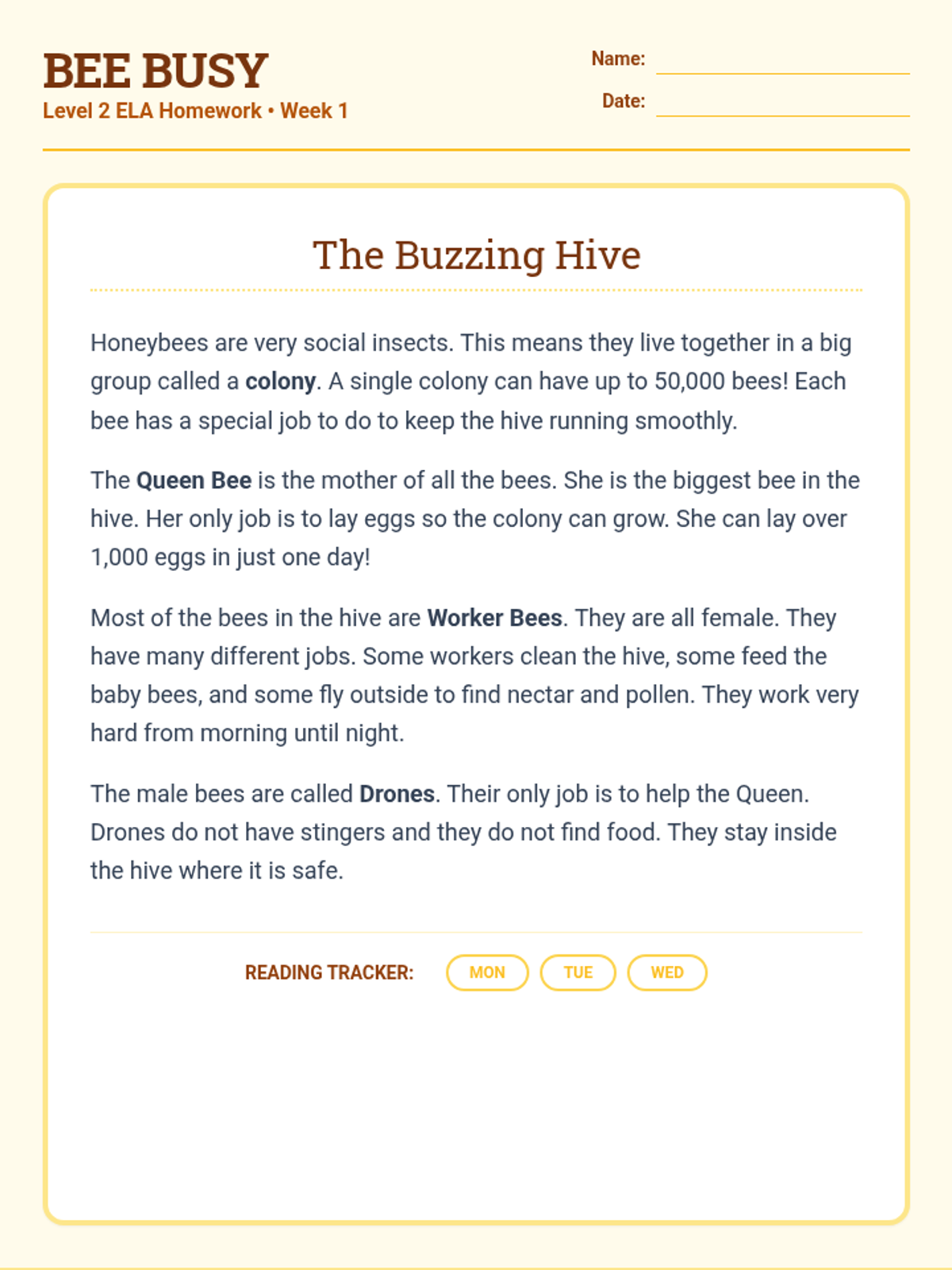
An advanced informational text packet exploring bee biology, pollination, and hive hierarchy.
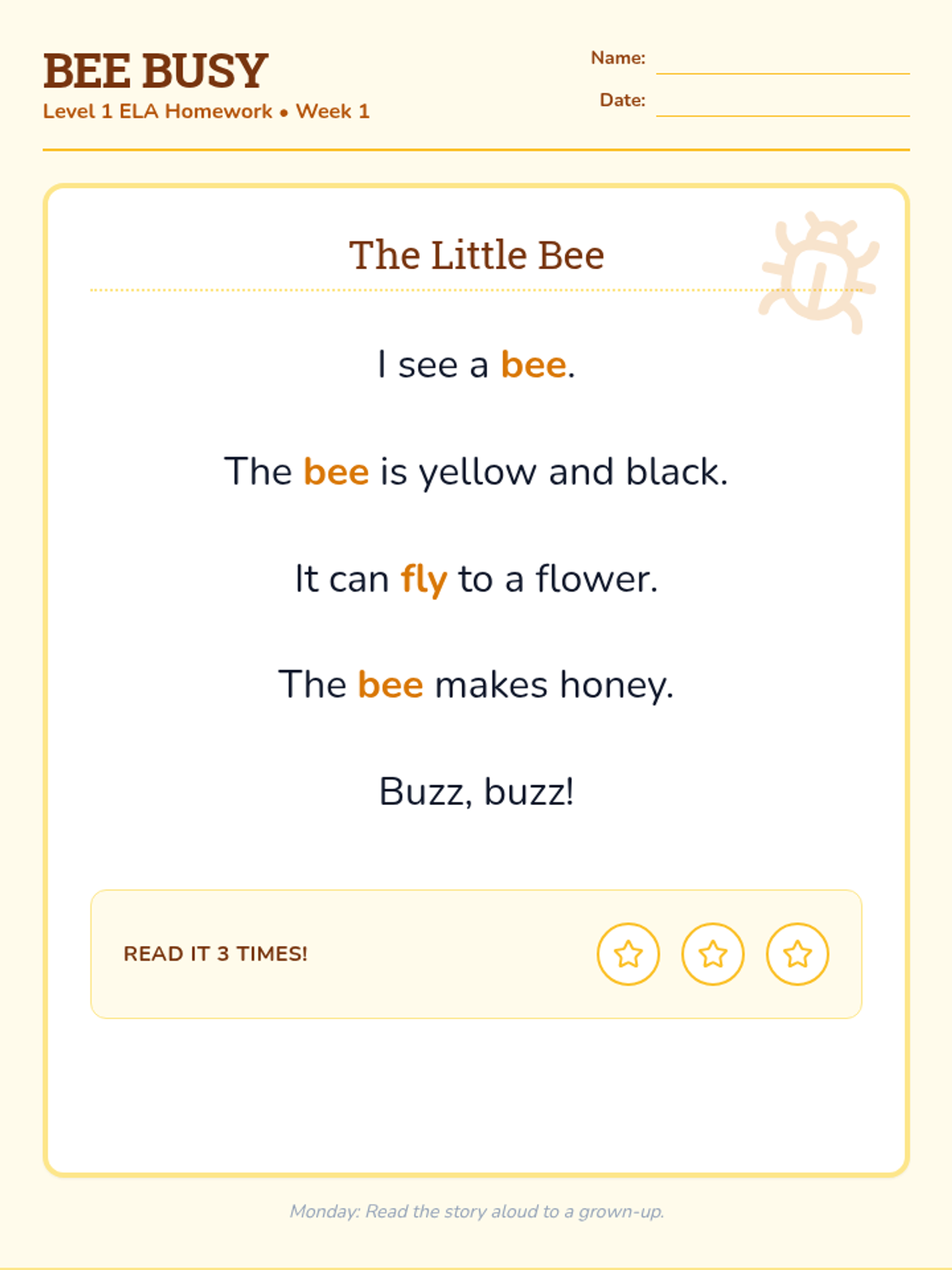
A foundational literacy packet focused on simple sentences and key details about honeybees.
A reading comprehension packet focused on the roles of bees in a hive and their life cycle.
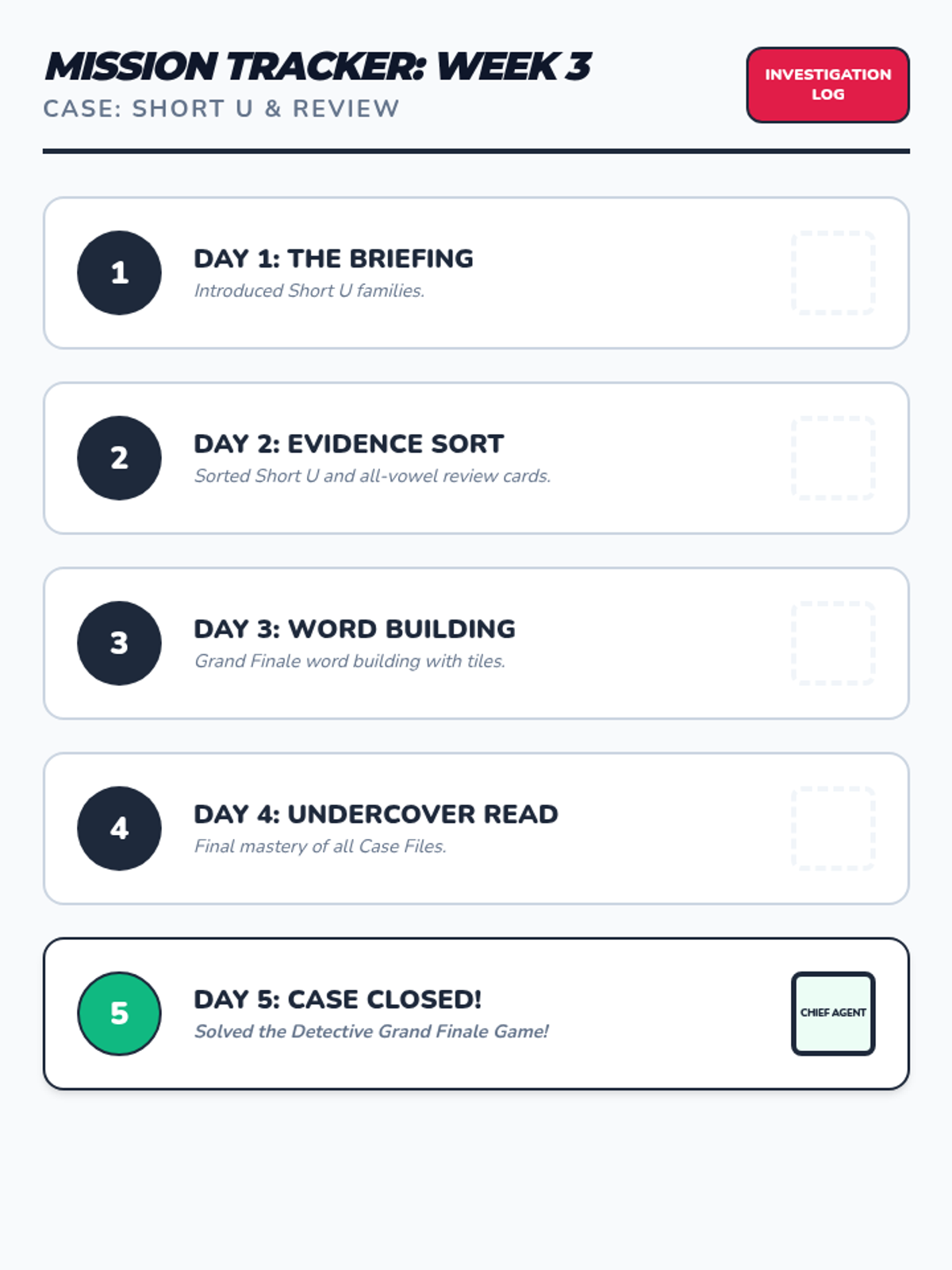
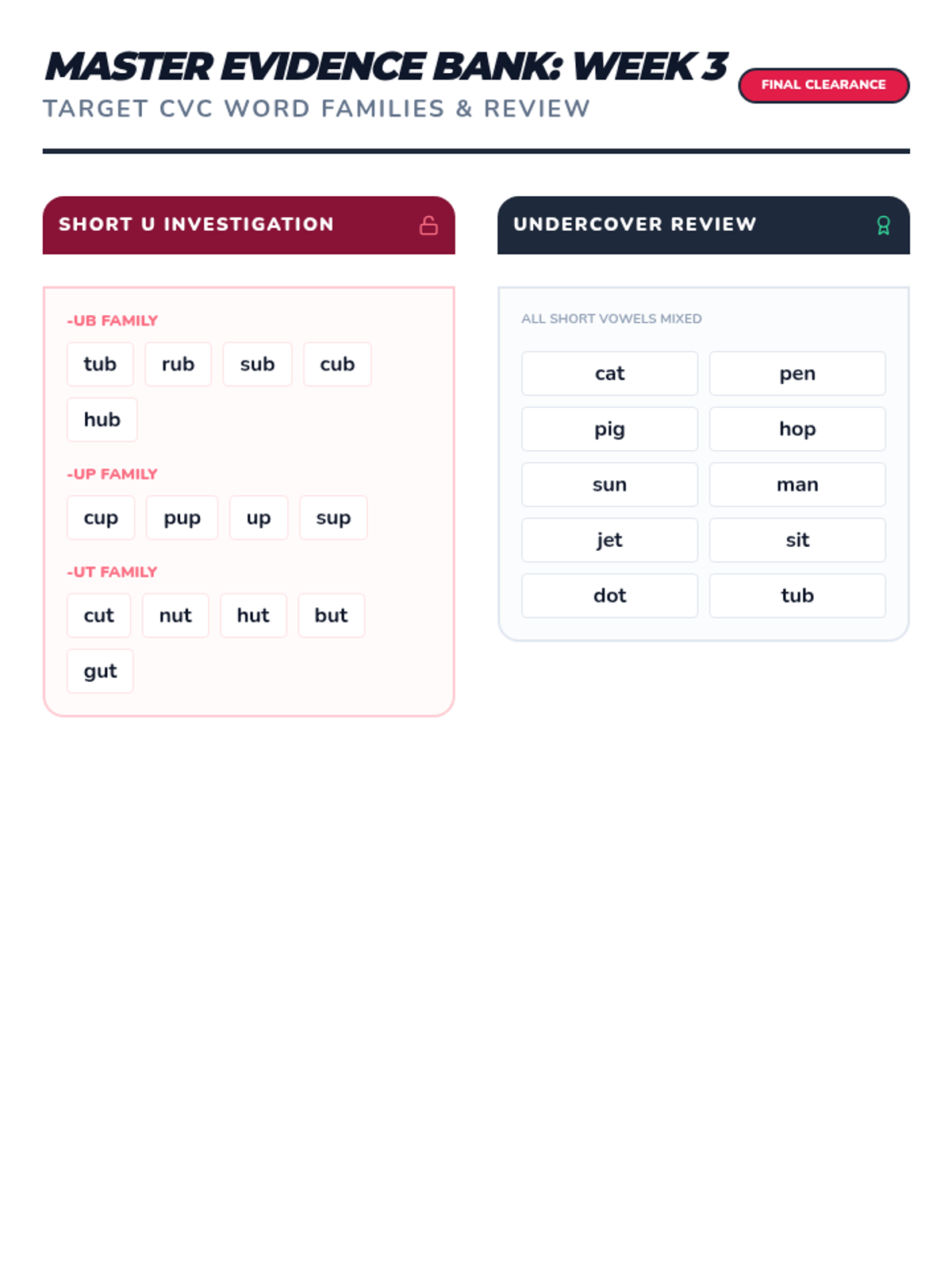
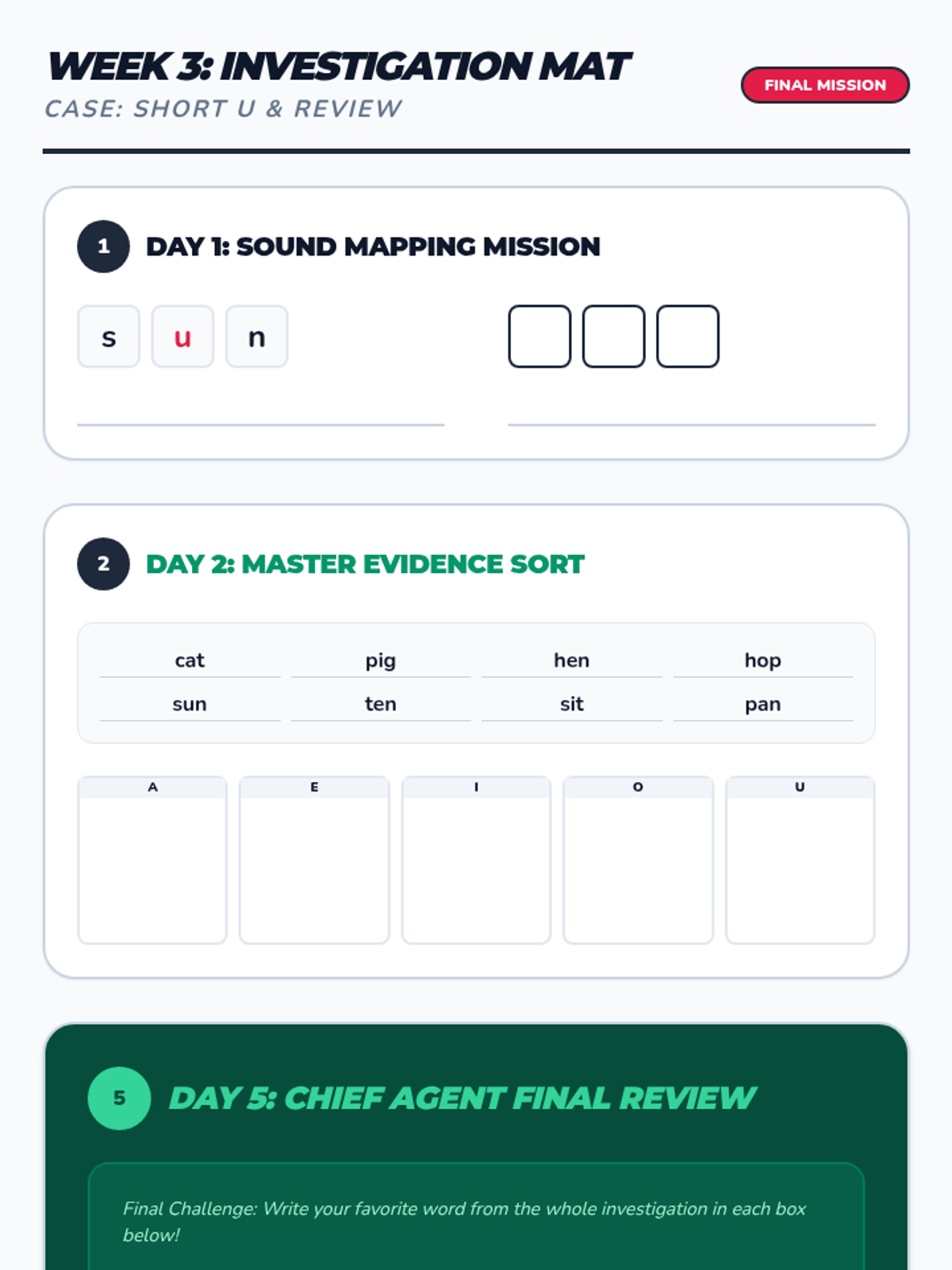
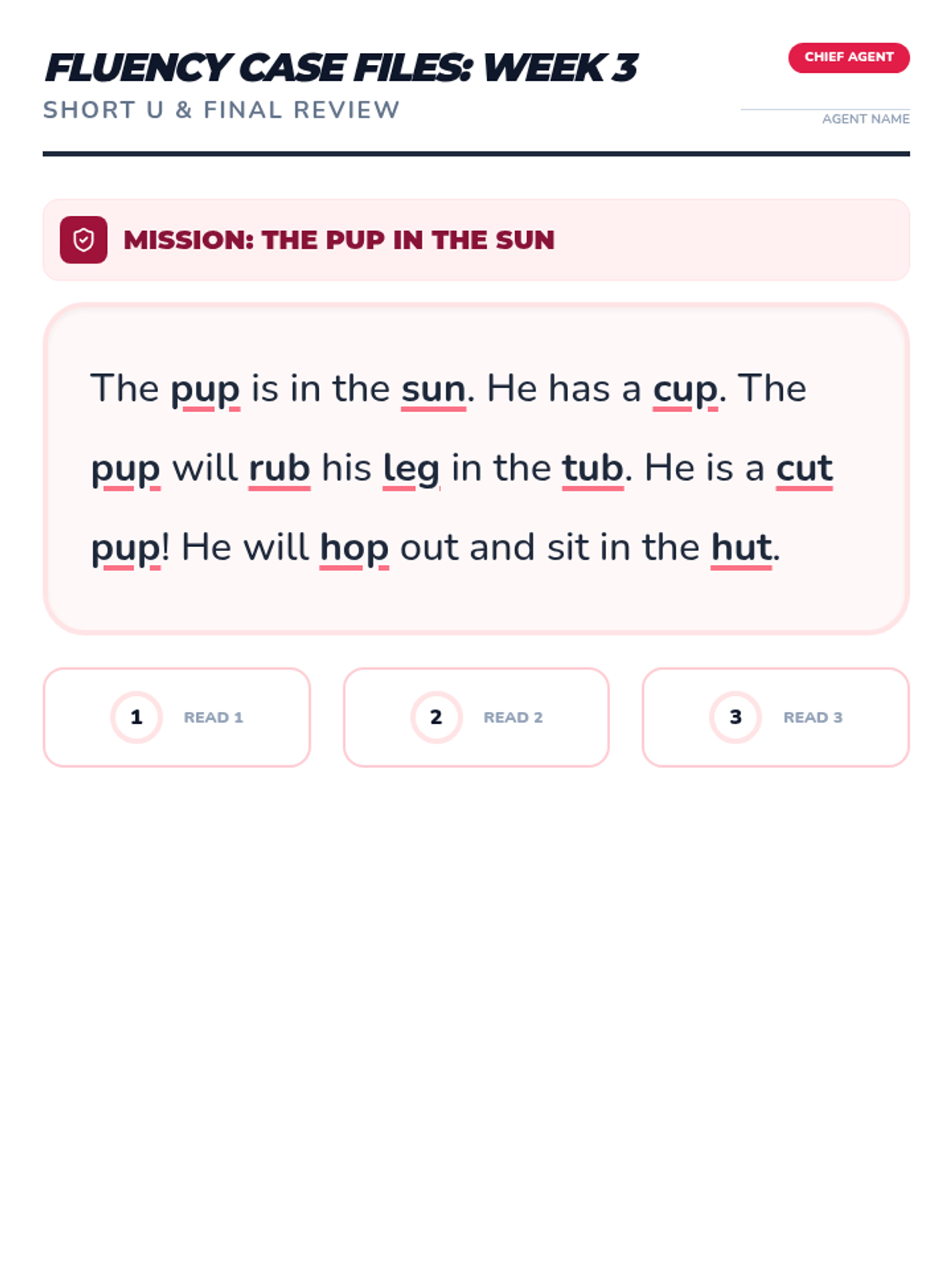
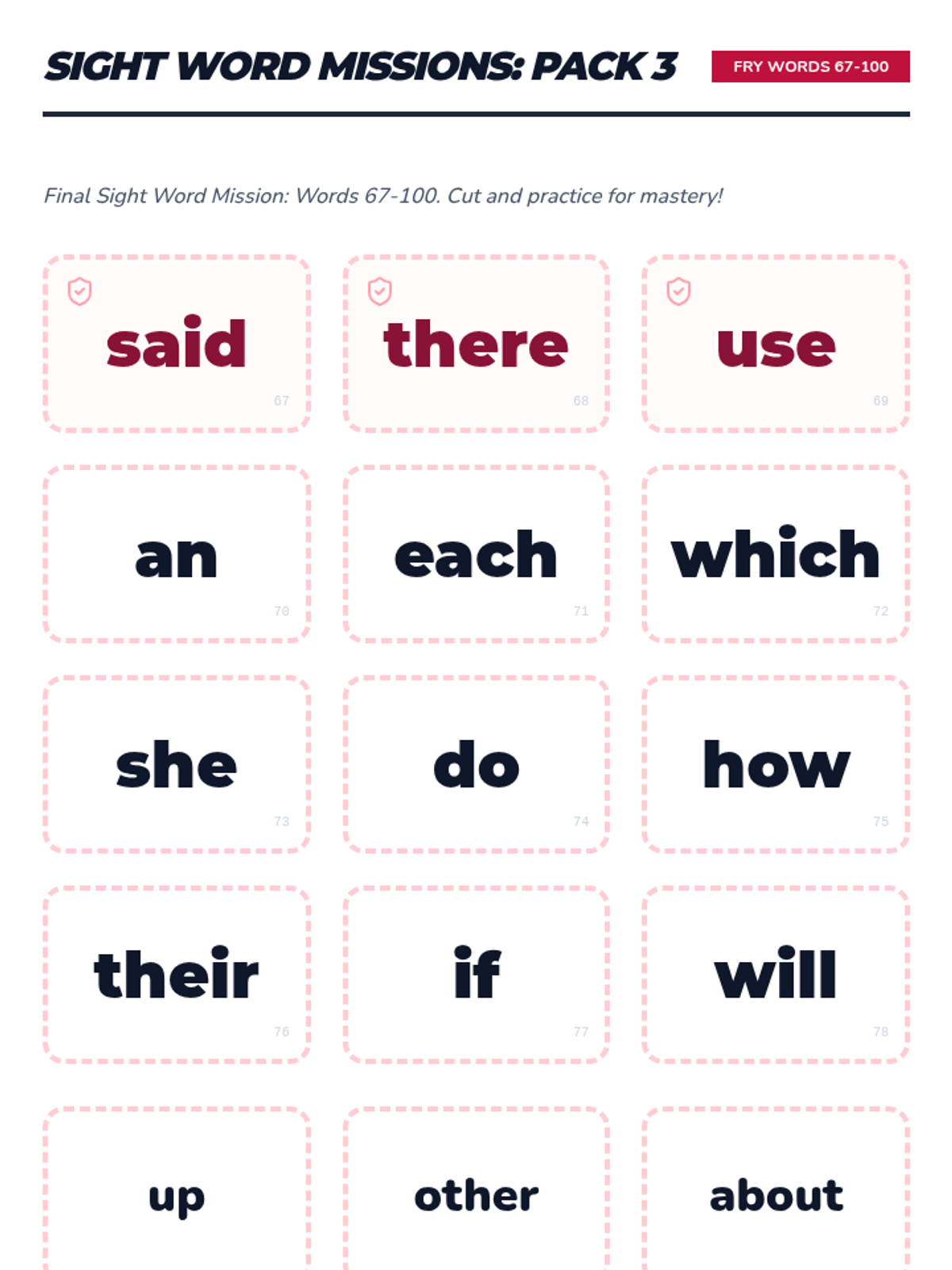
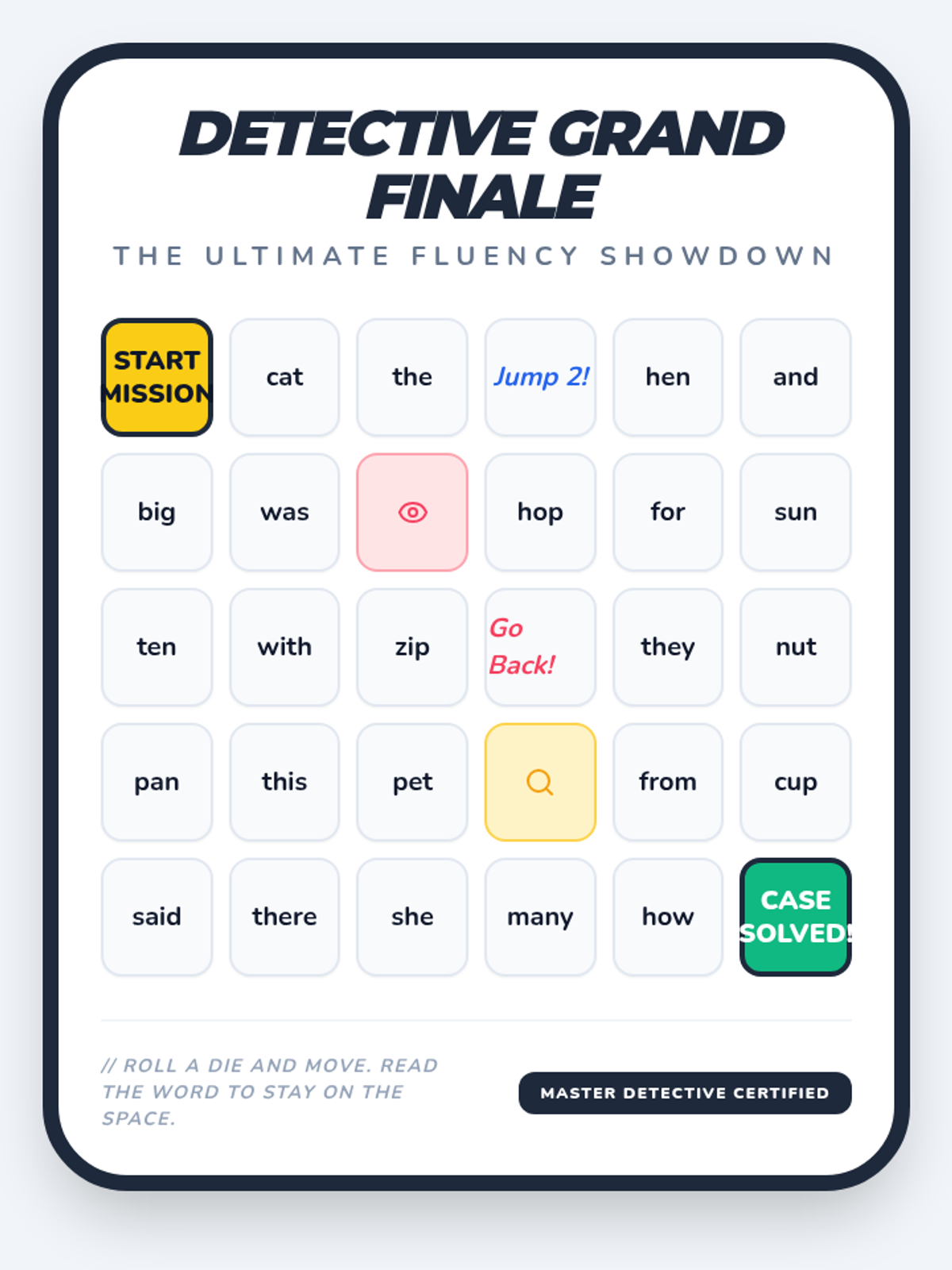
Covers short 'u' families (-ub, -up, -ut) and Fry words 67-100, concluding with a comprehensive review of all vowel sounds and the full first 100 sight word list.
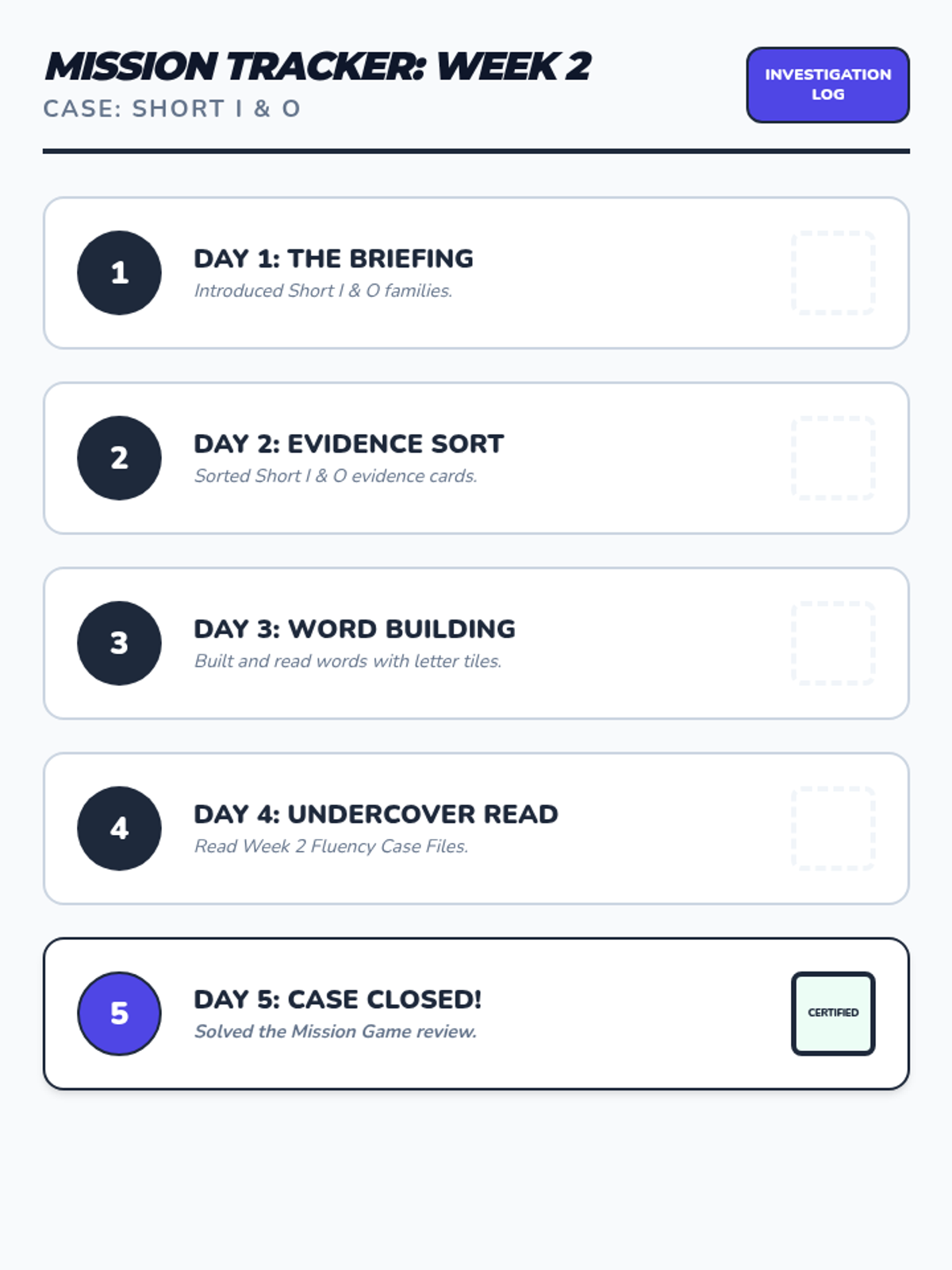
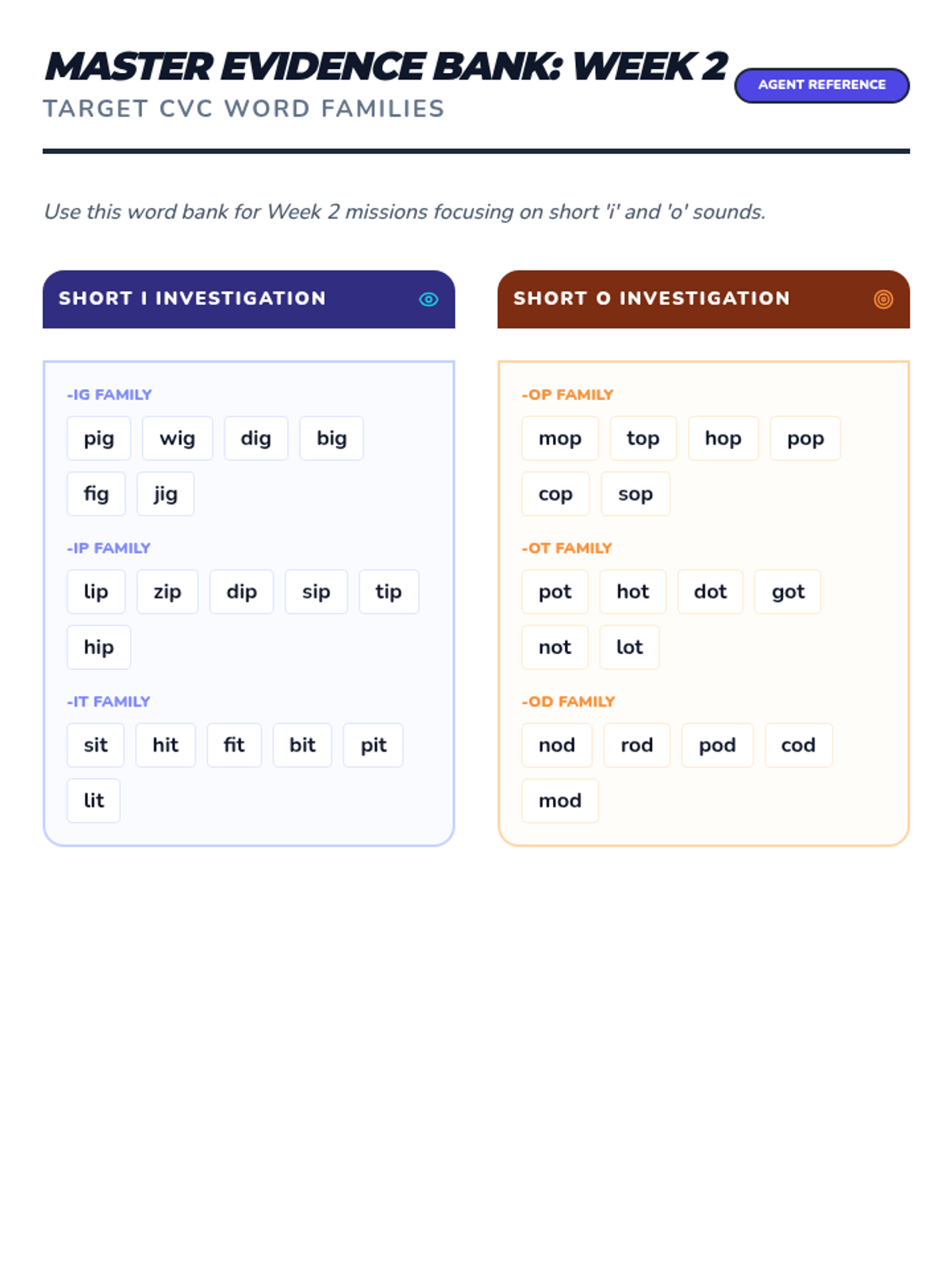
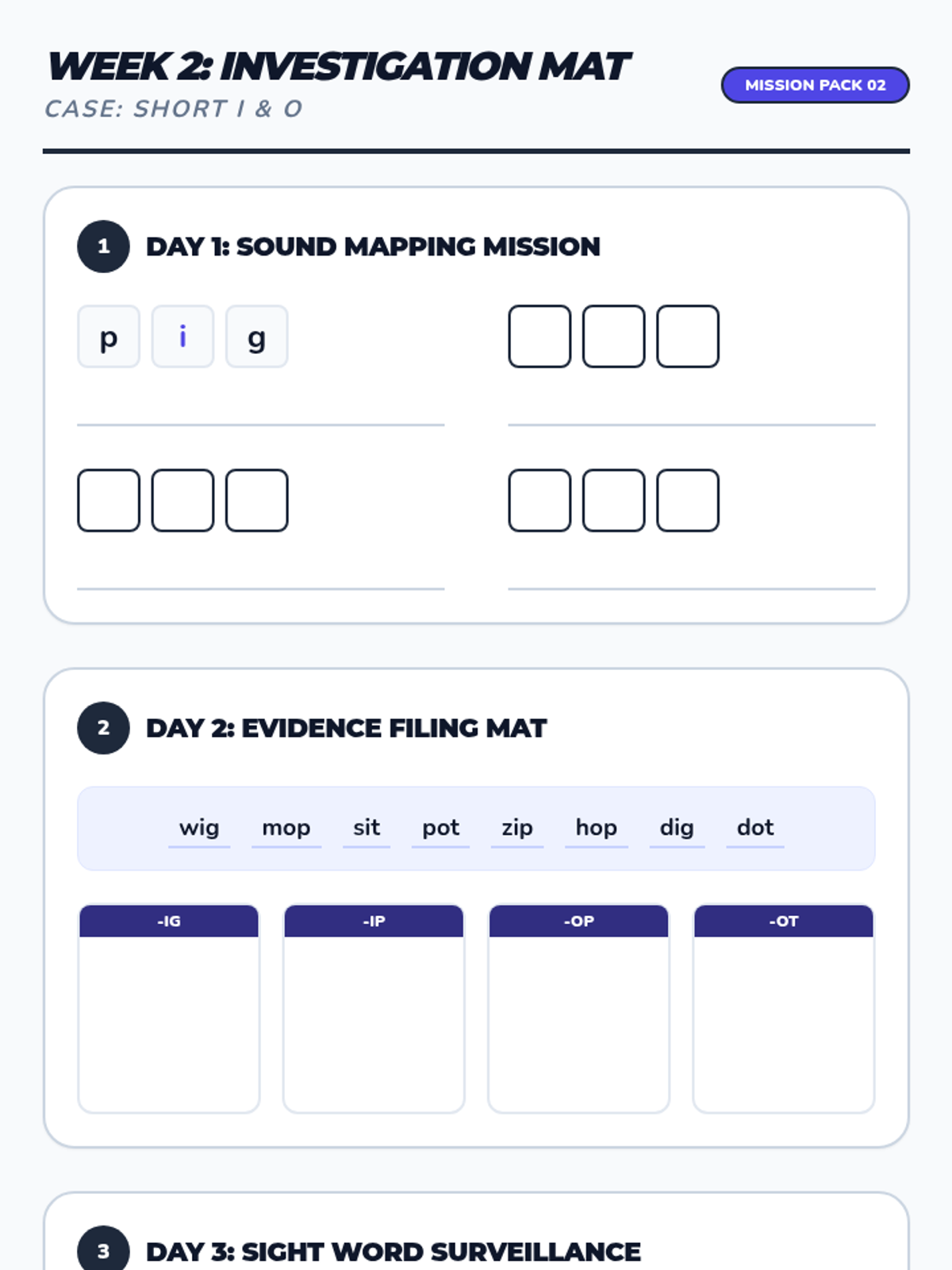
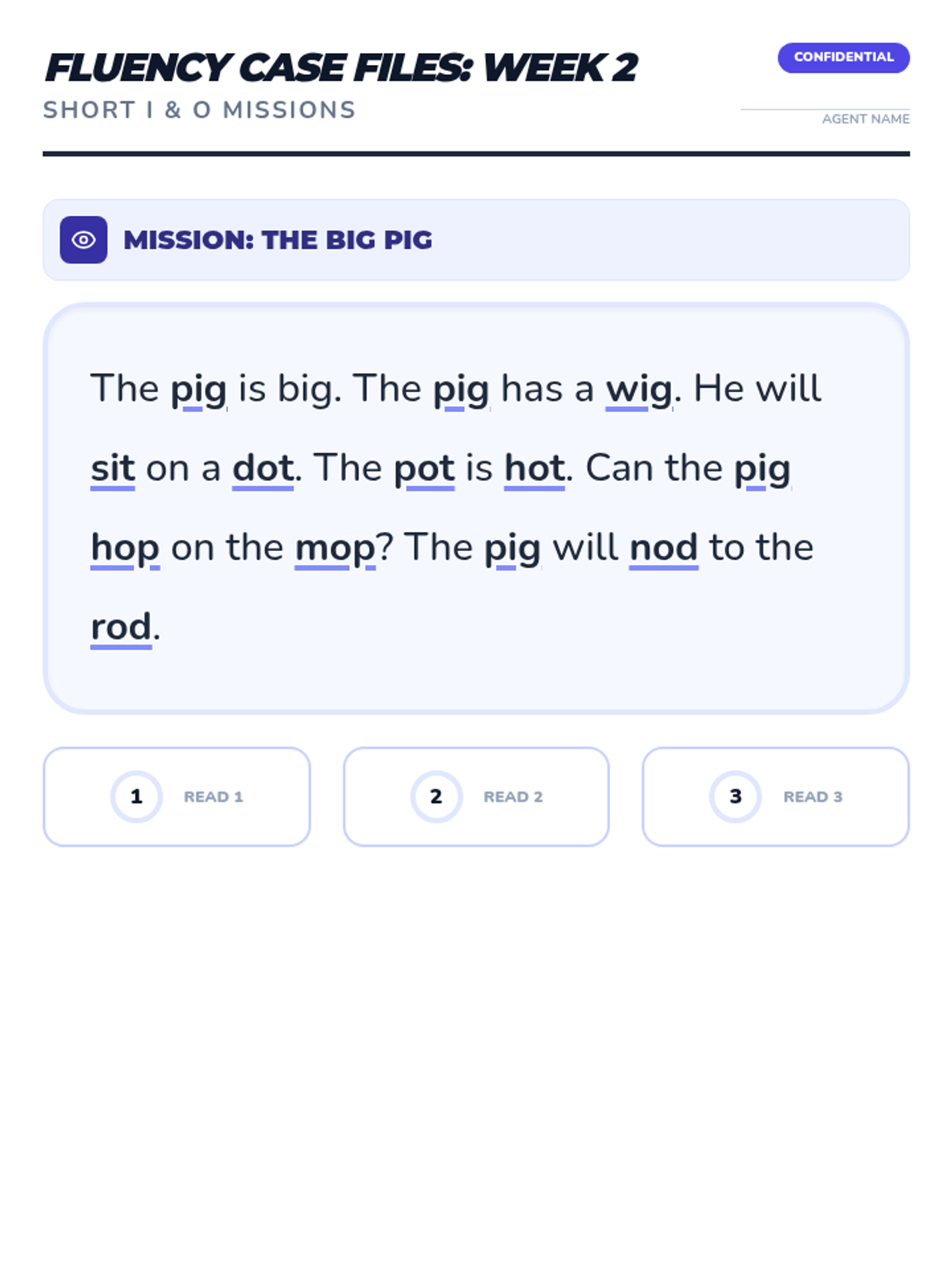
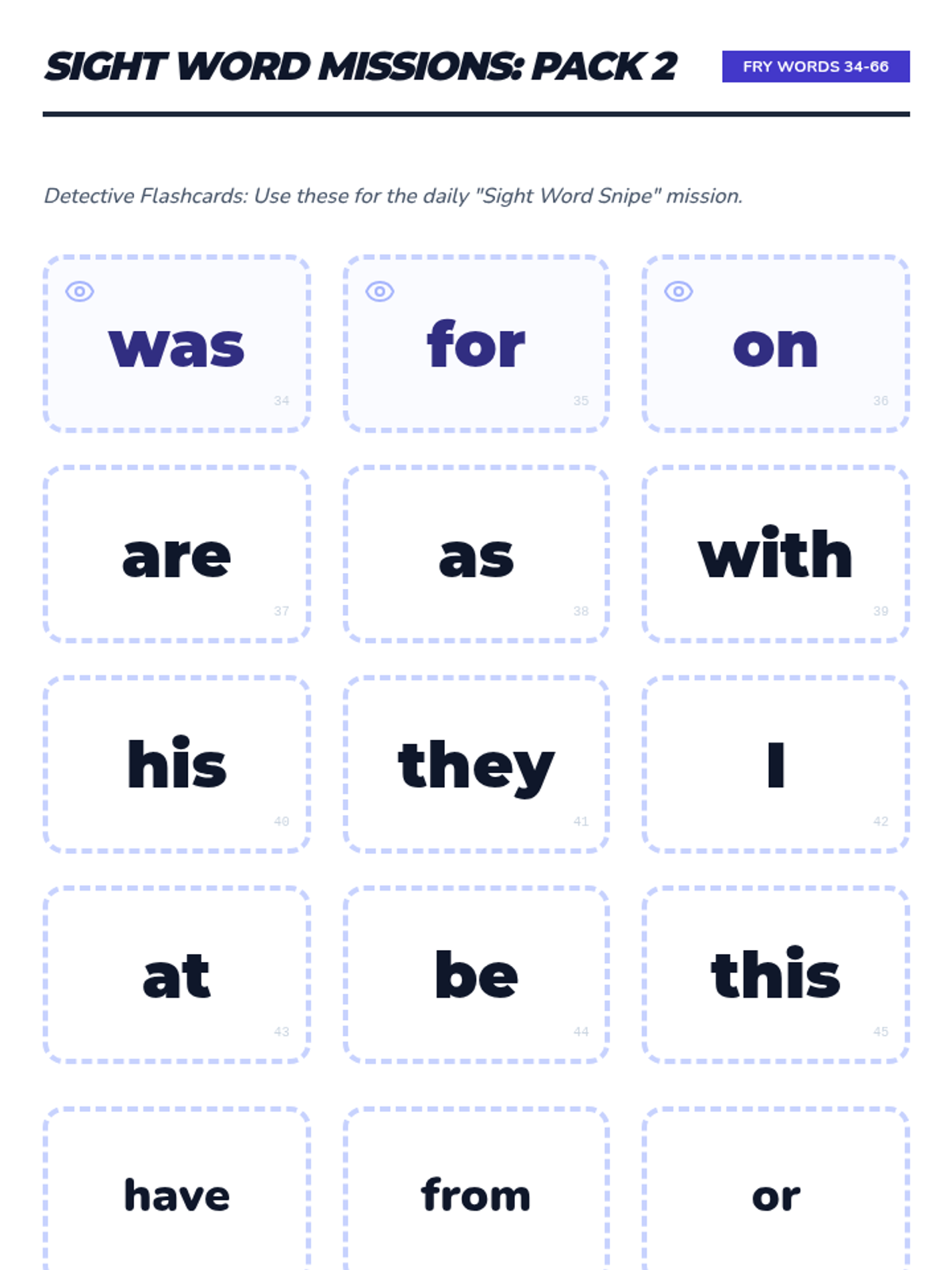
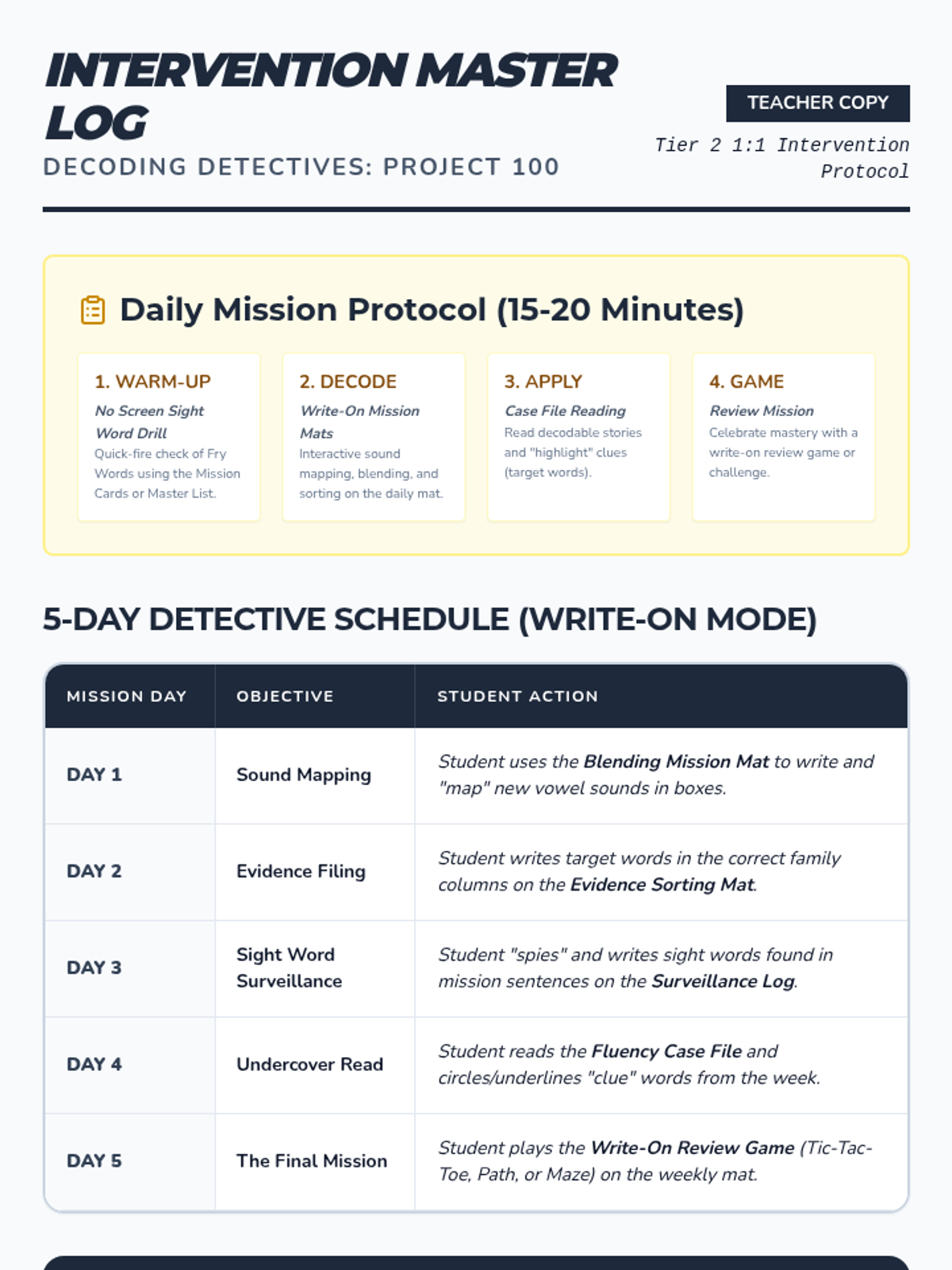
Focuses on short 'i' families (-ig, -ip, -it) and short 'o' families (-op, -ot, -od) with Fry words 34-66. Features 'I-Spy' word hunts and 'O-Note' fluency reading.
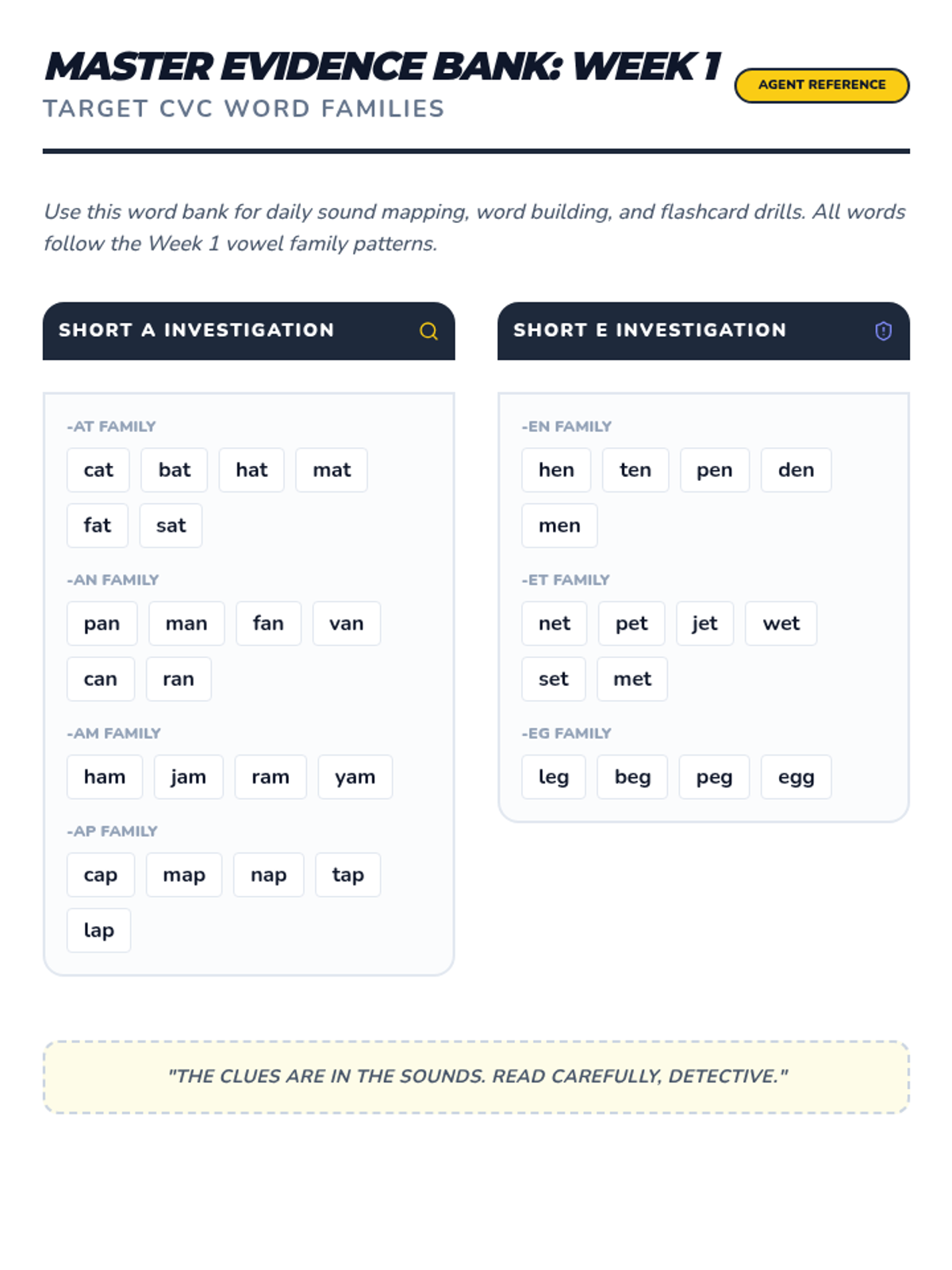
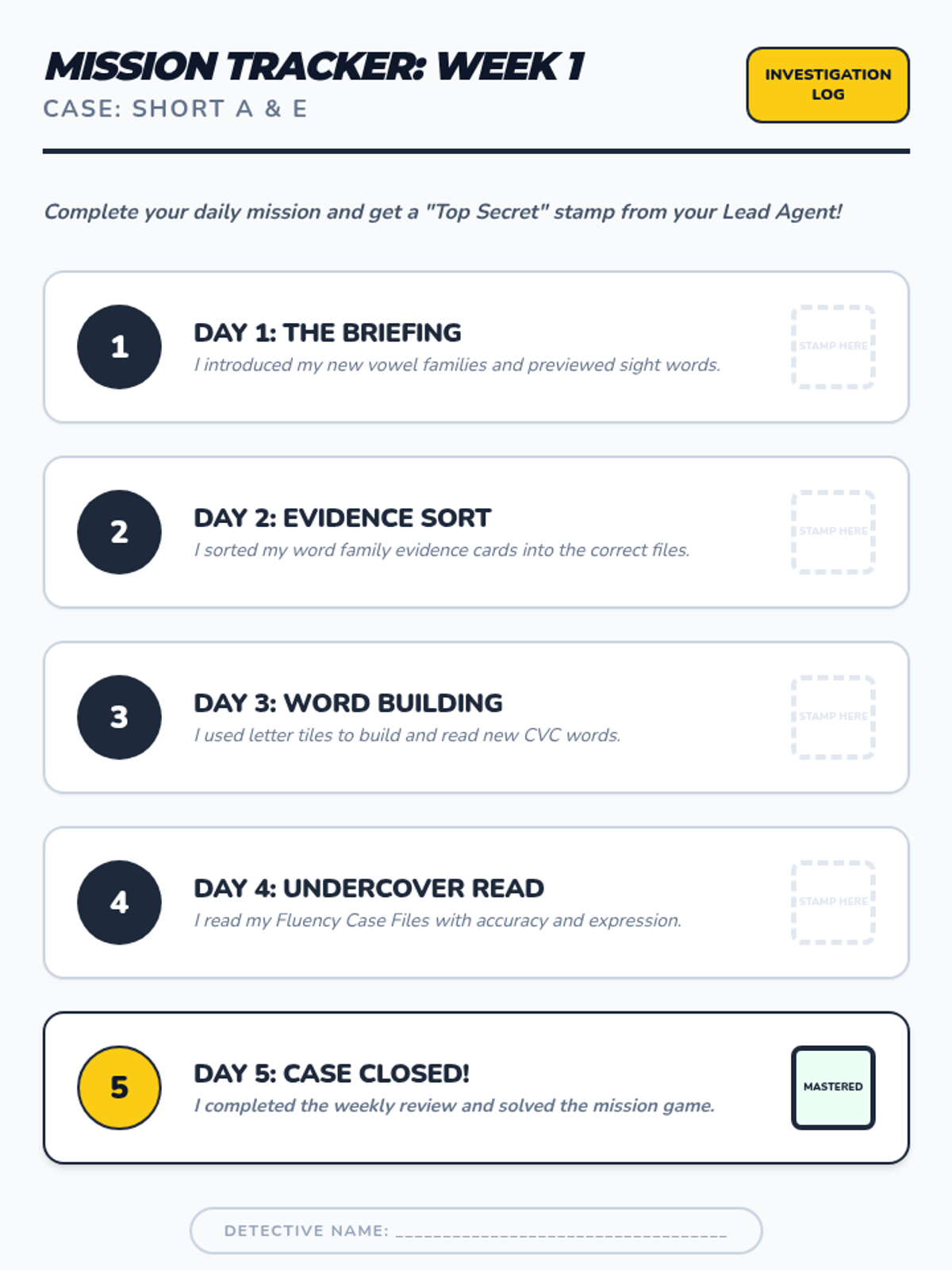
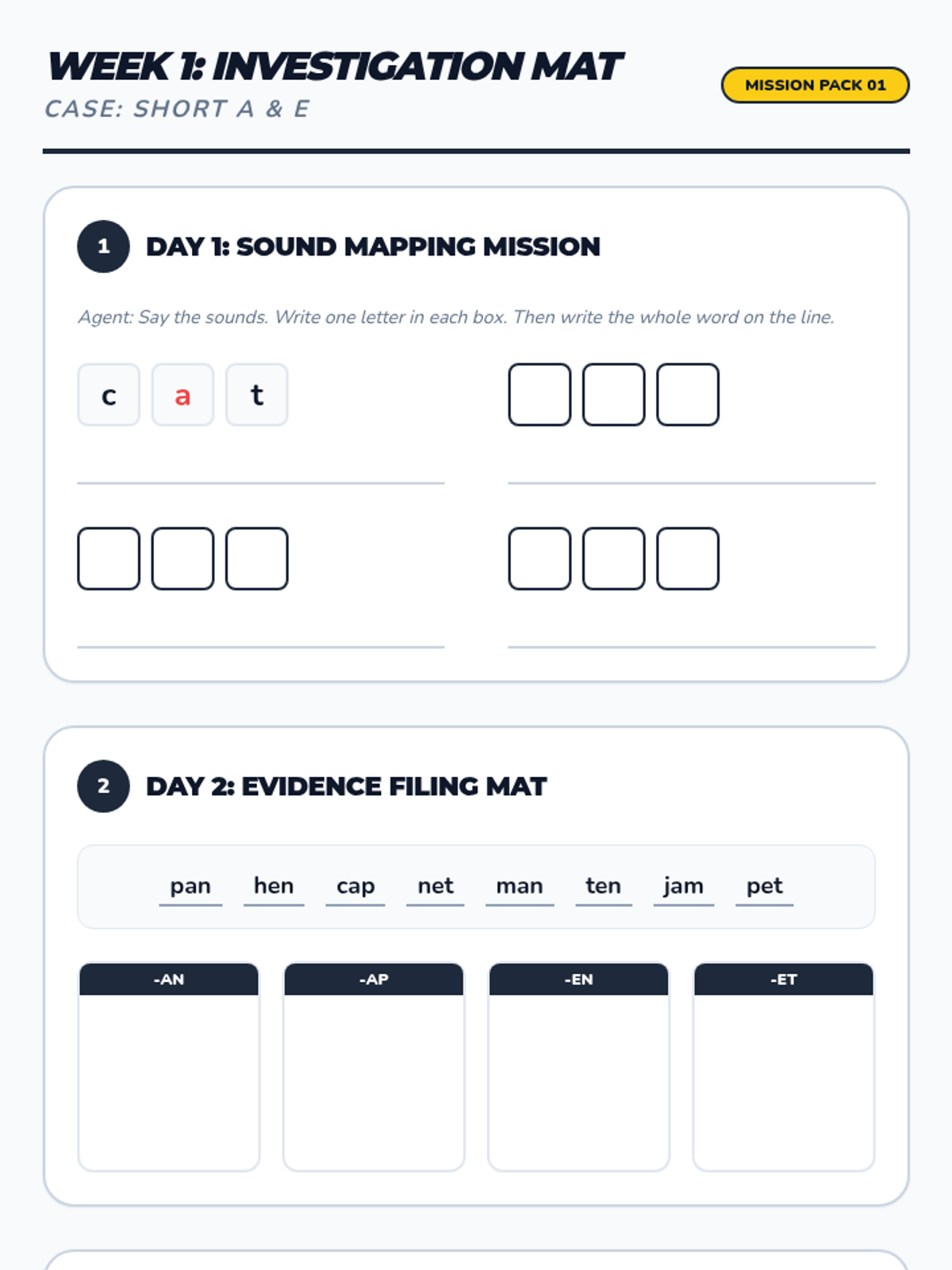
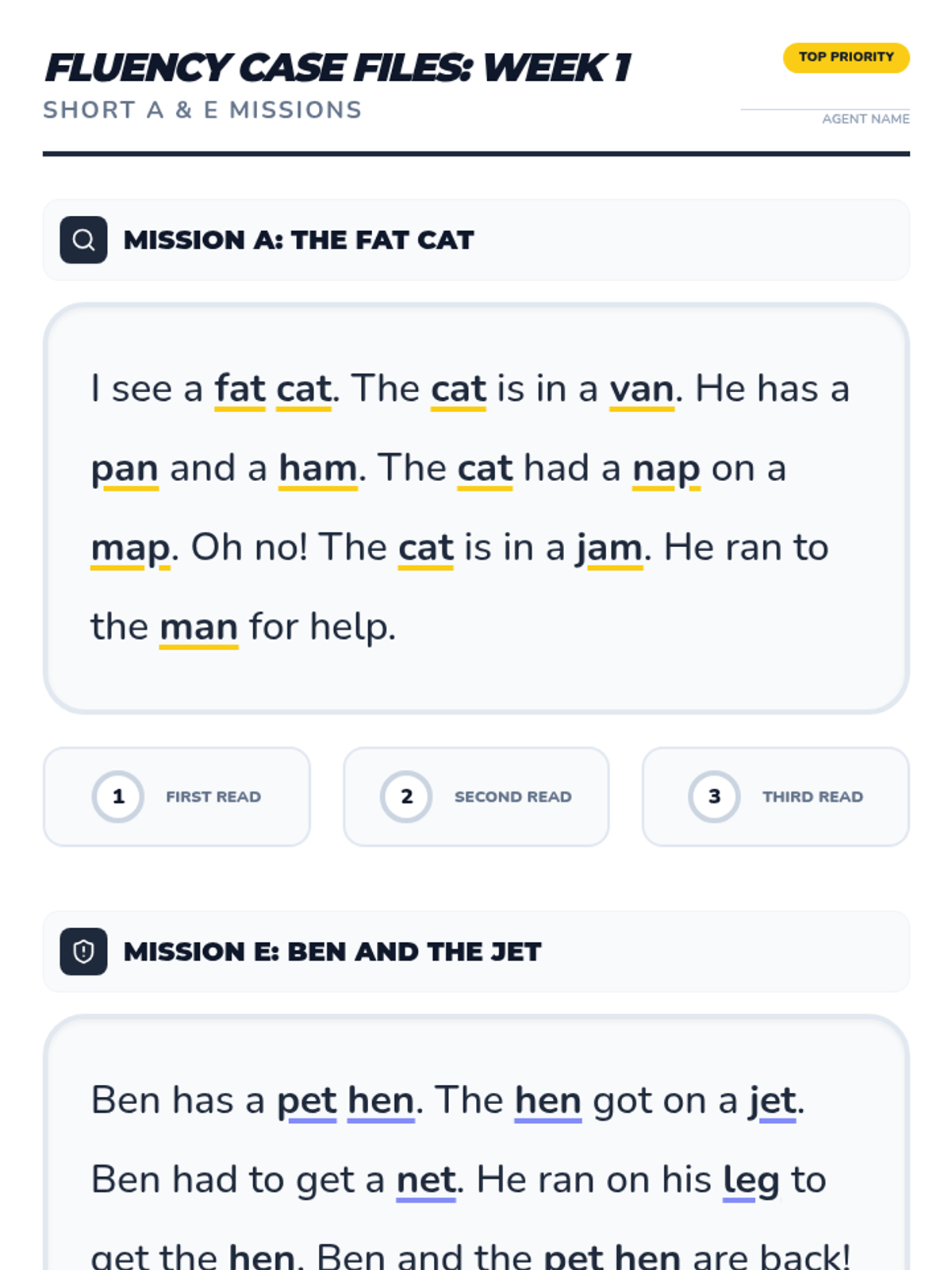
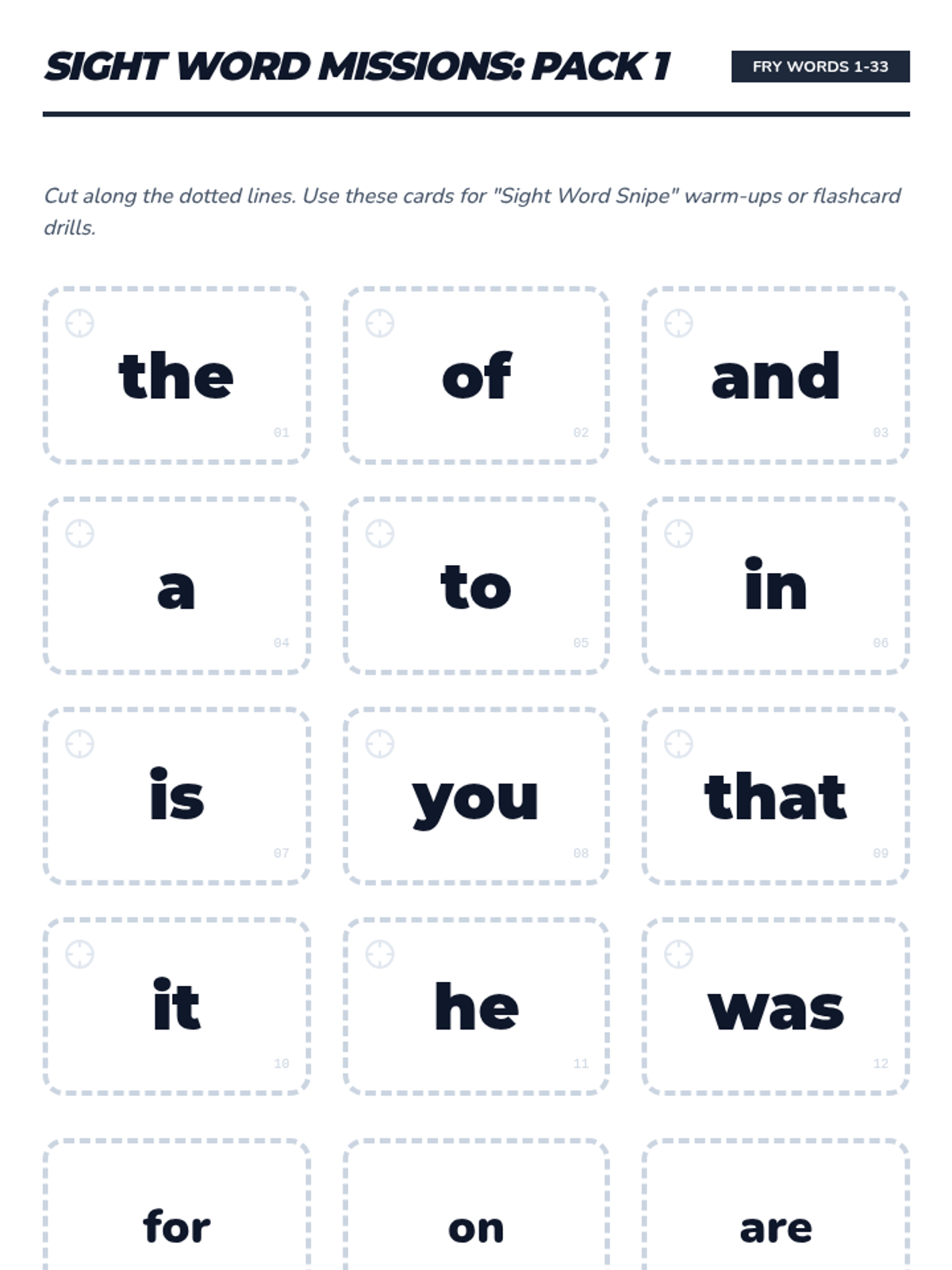
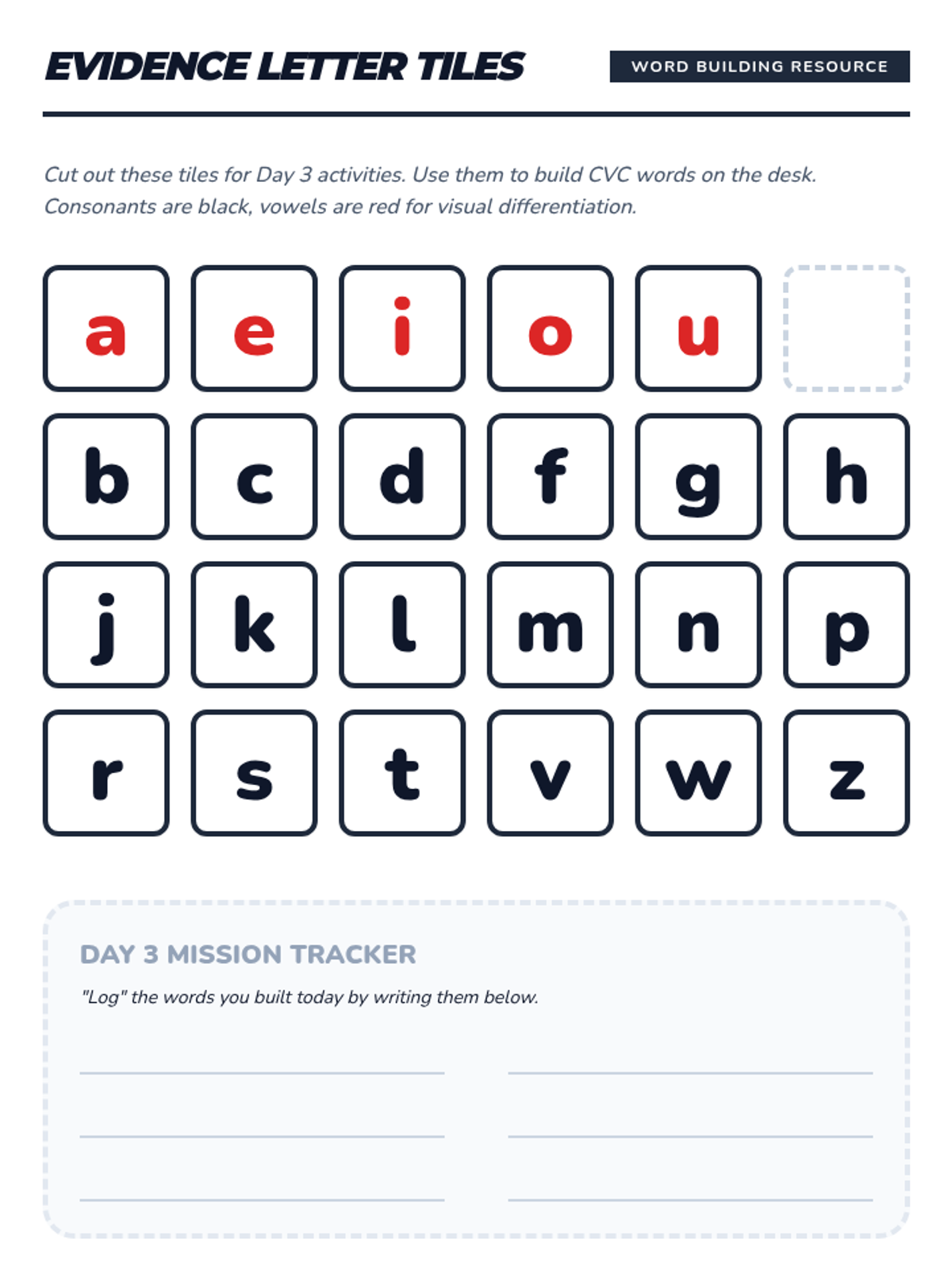
Focuses on short 'a' families (-at, -an, -am, -ap) and short 'e' families (-en, -et, -eg) alongside Fry words 1-33. Includes daily decoding drills and mystery-themed fluency passages.
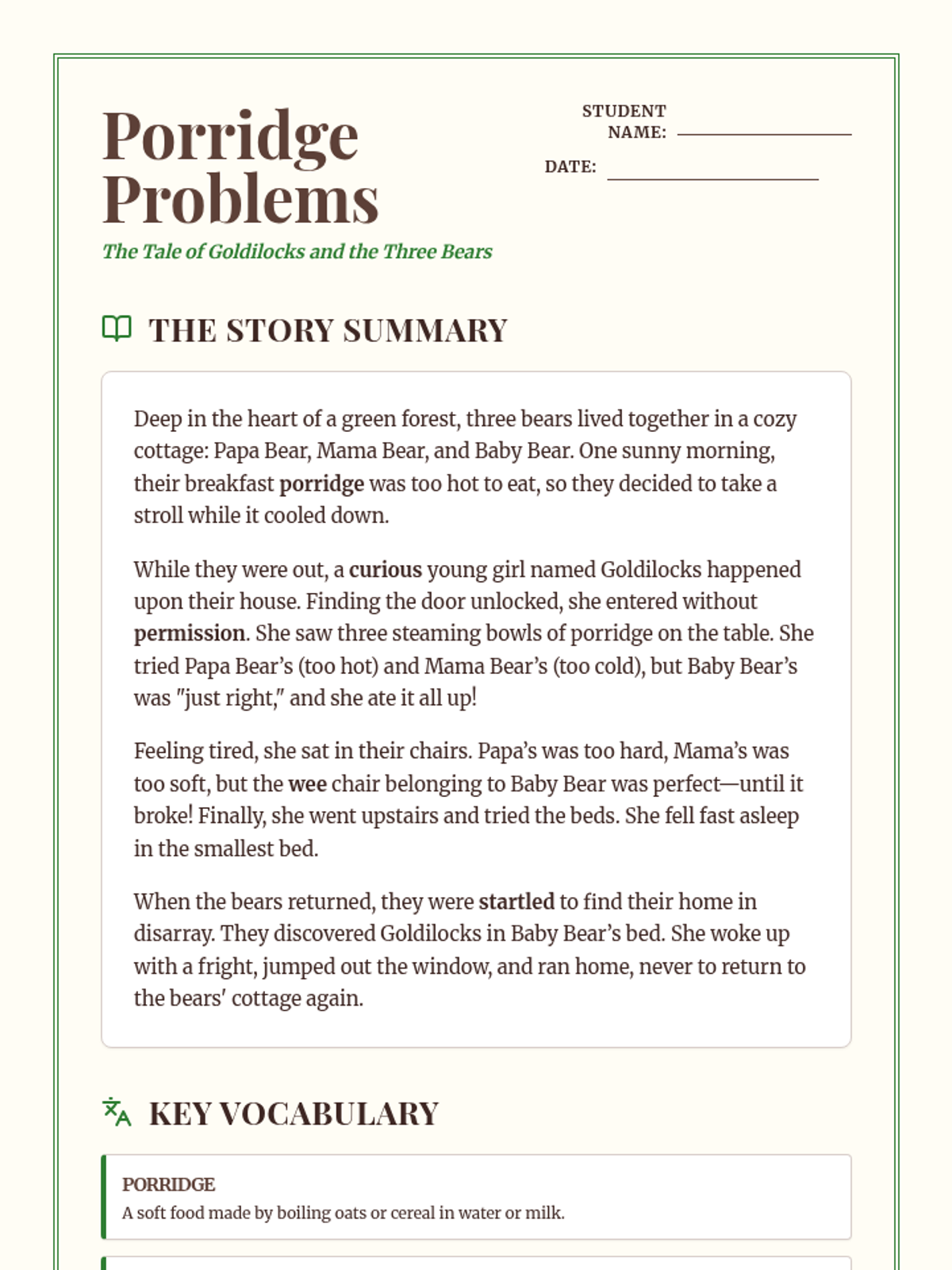
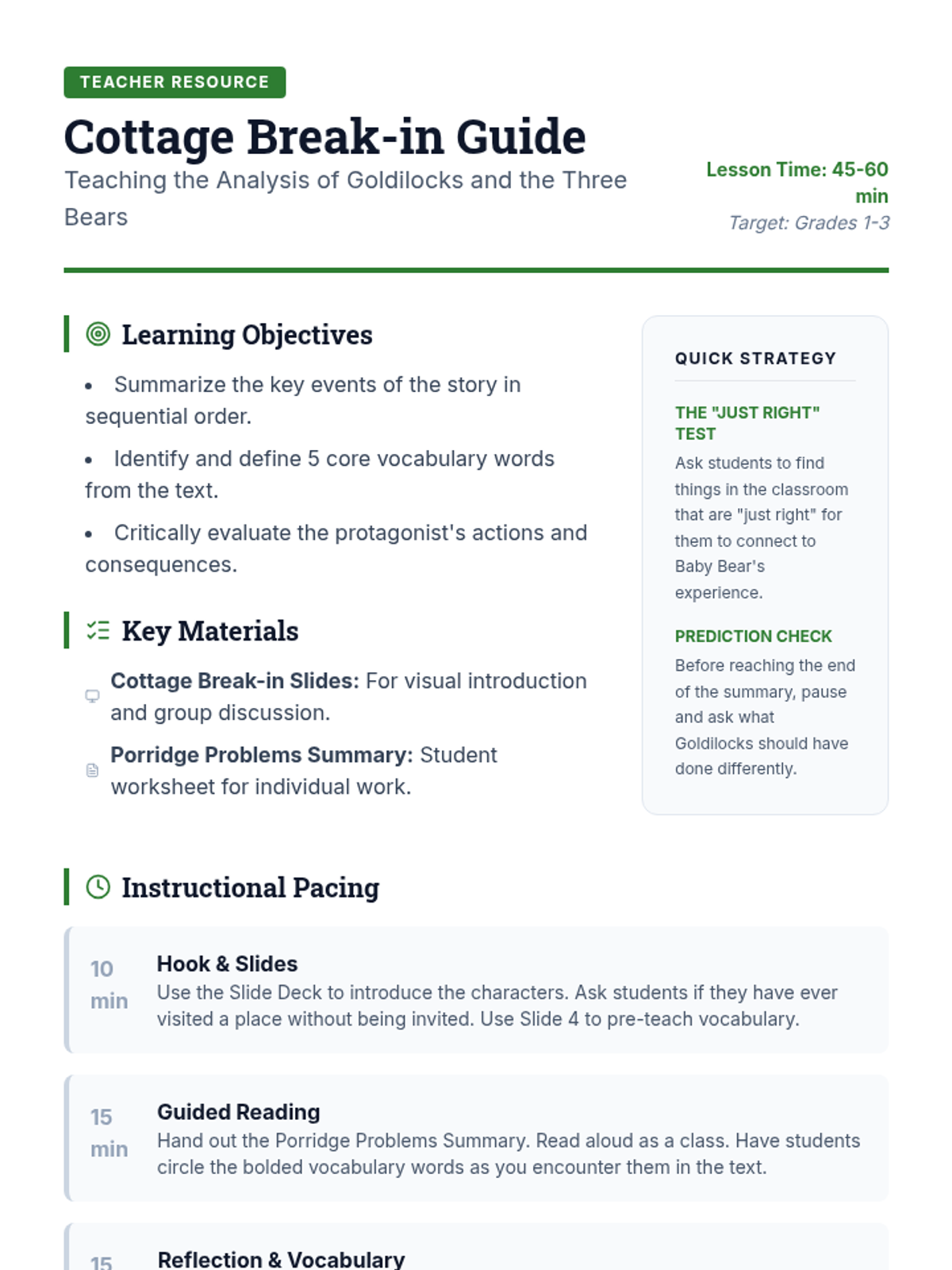
A focused look at the classic tale of Goldilocks and the Three Bears, featuring a structured summary and key vocabulary development.
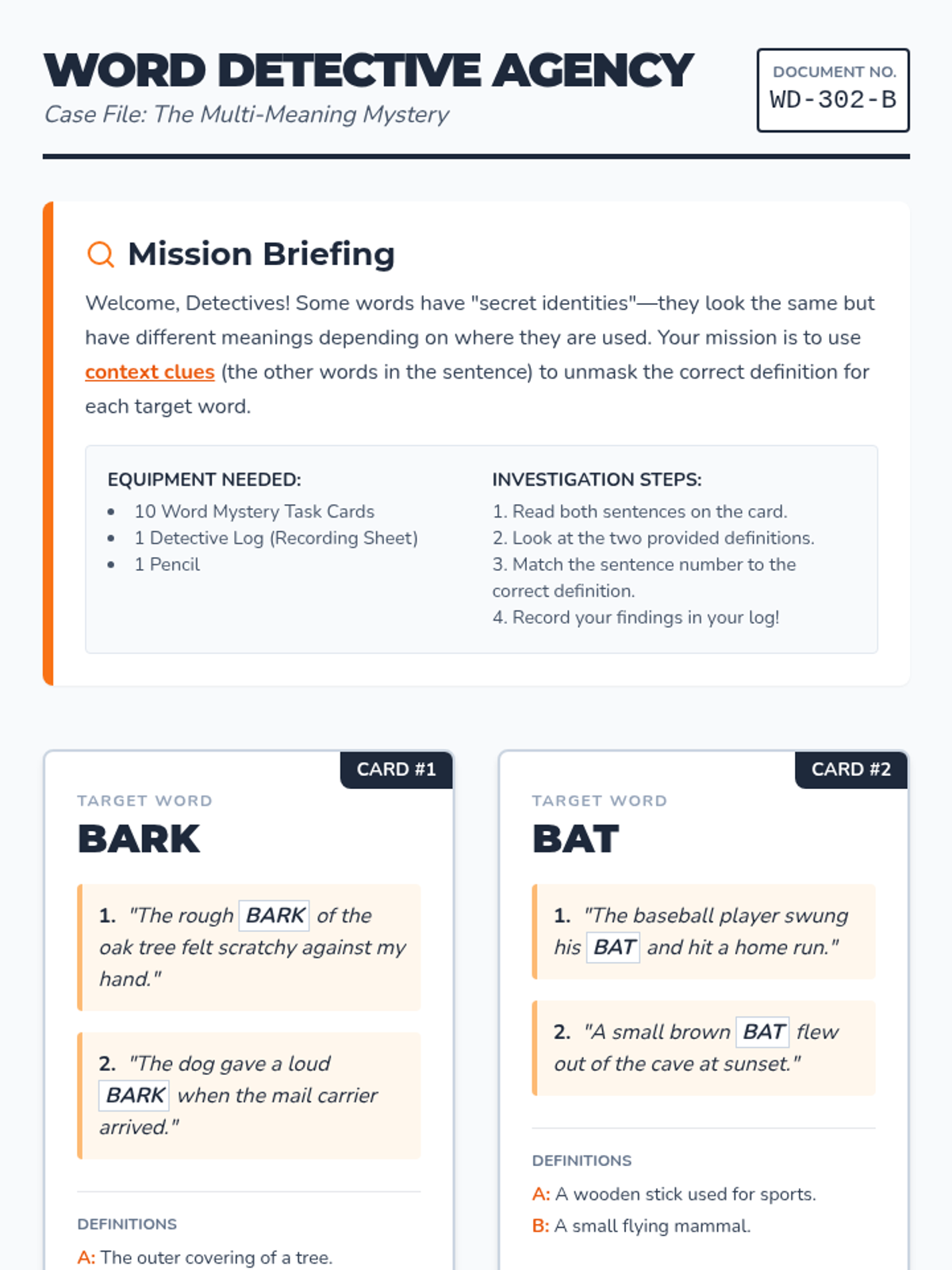
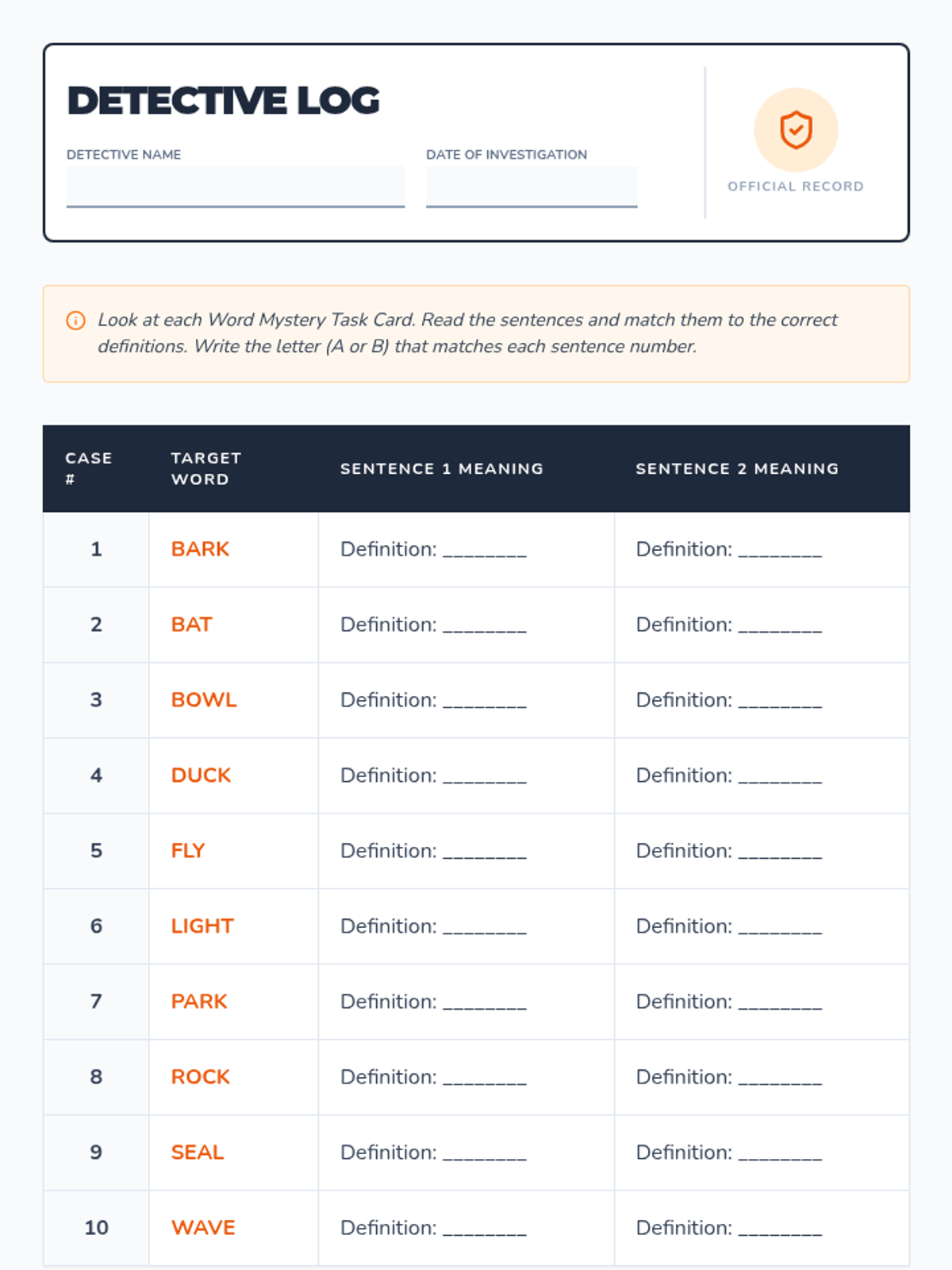
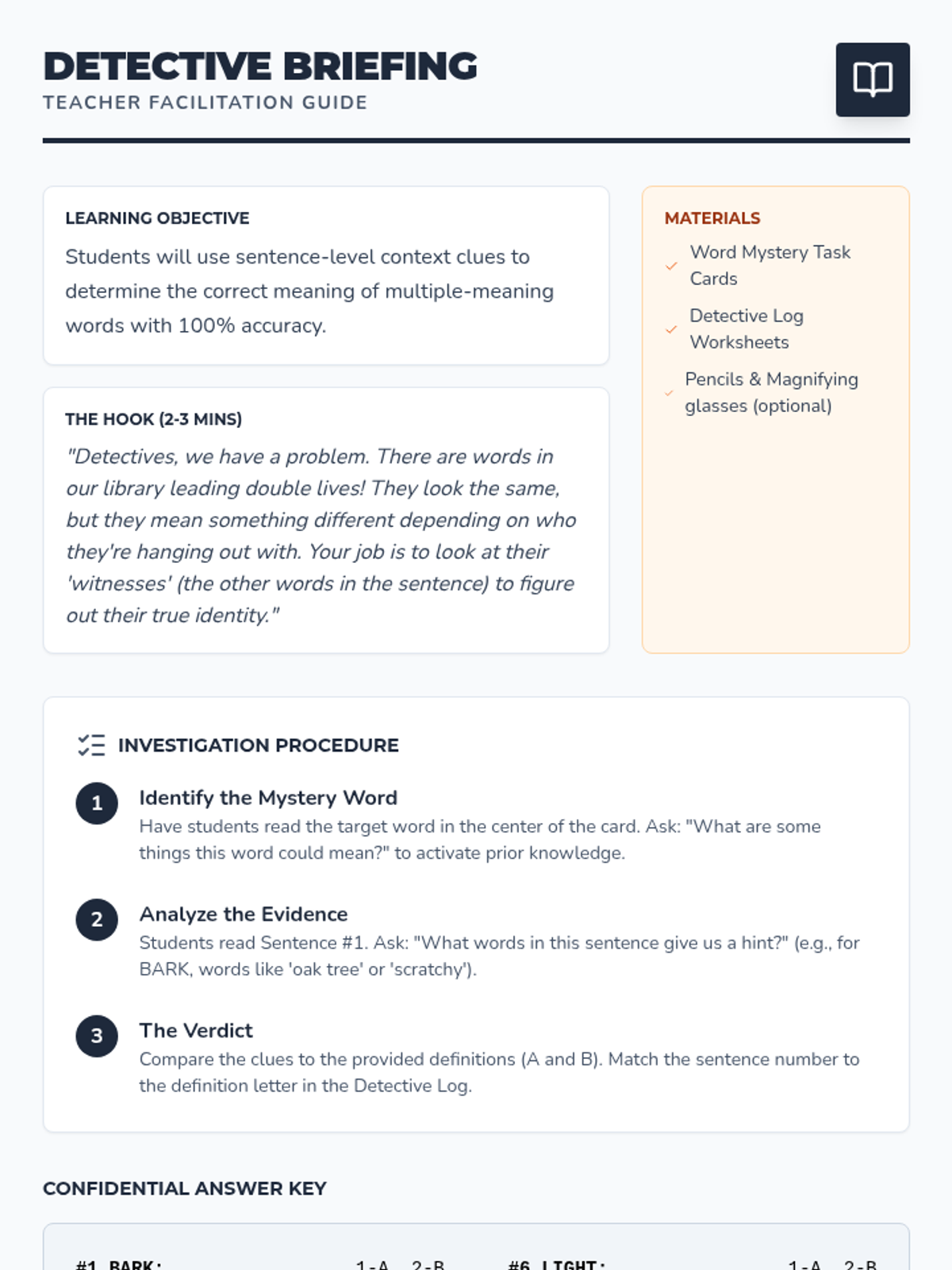
A small-group activity where students act as "Word Detectives" to determine the correct meaning of multiple-meaning words using sentence-level context clues. Students analyze task cards and record their findings in a detective log.
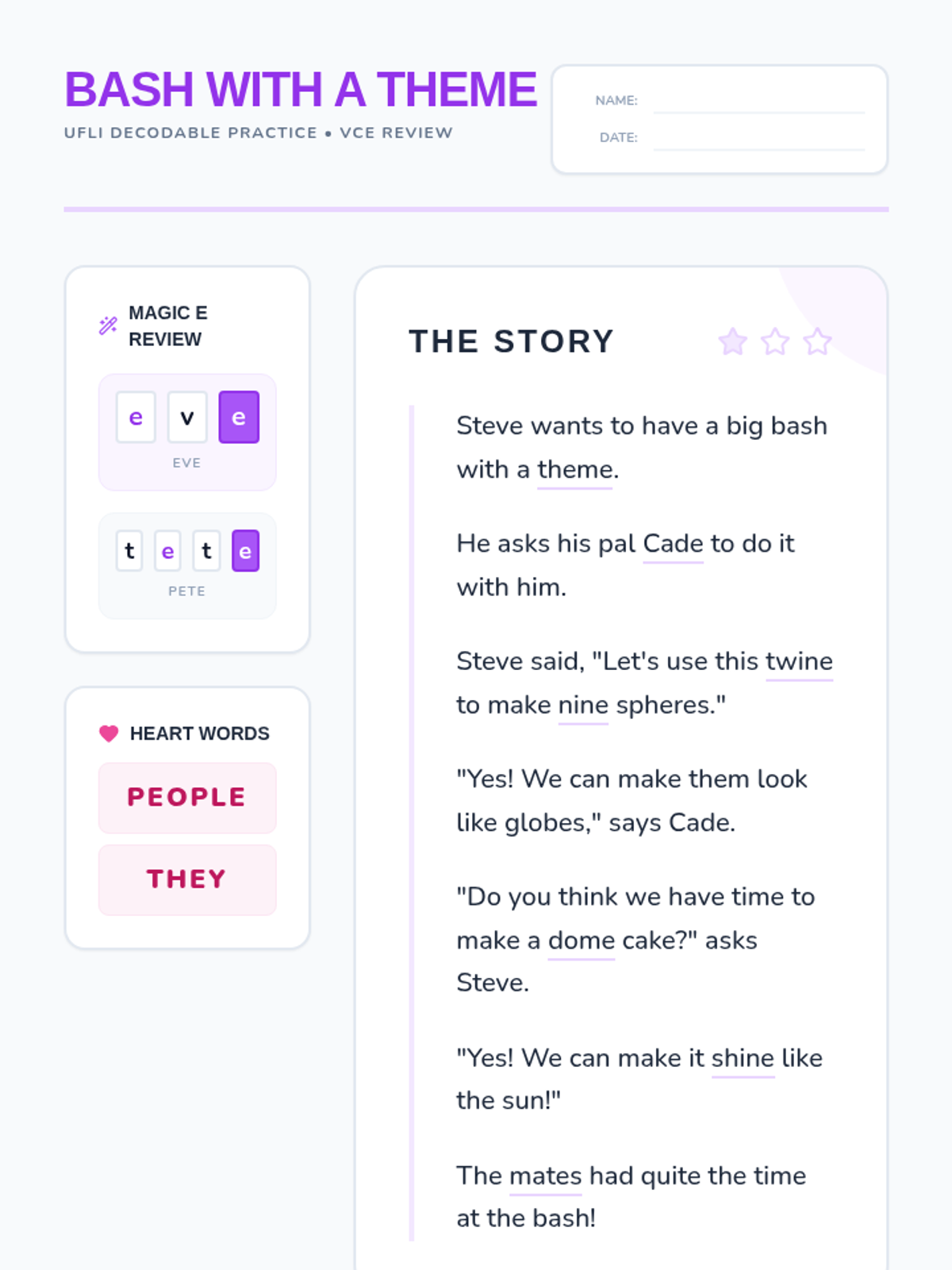
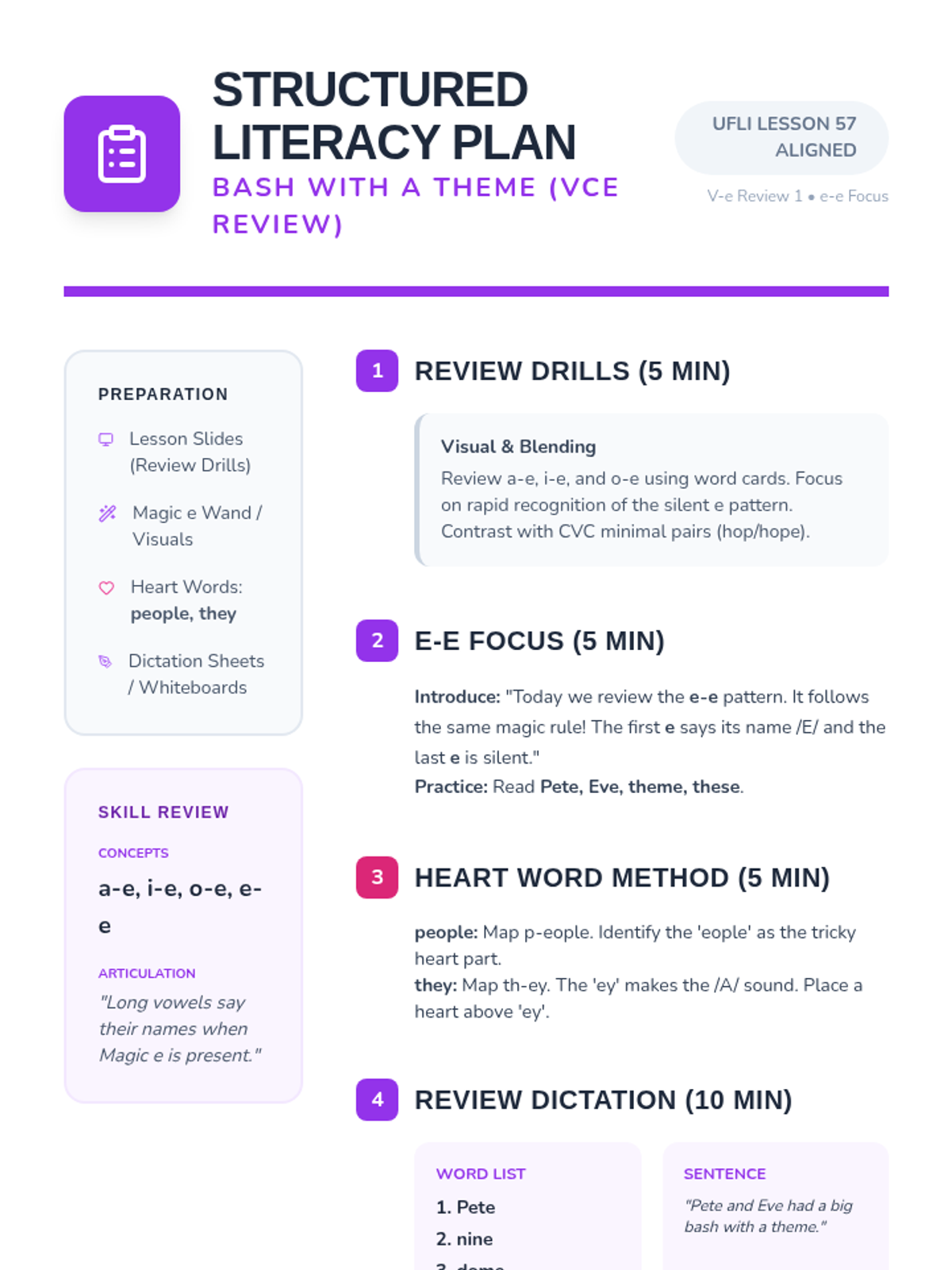
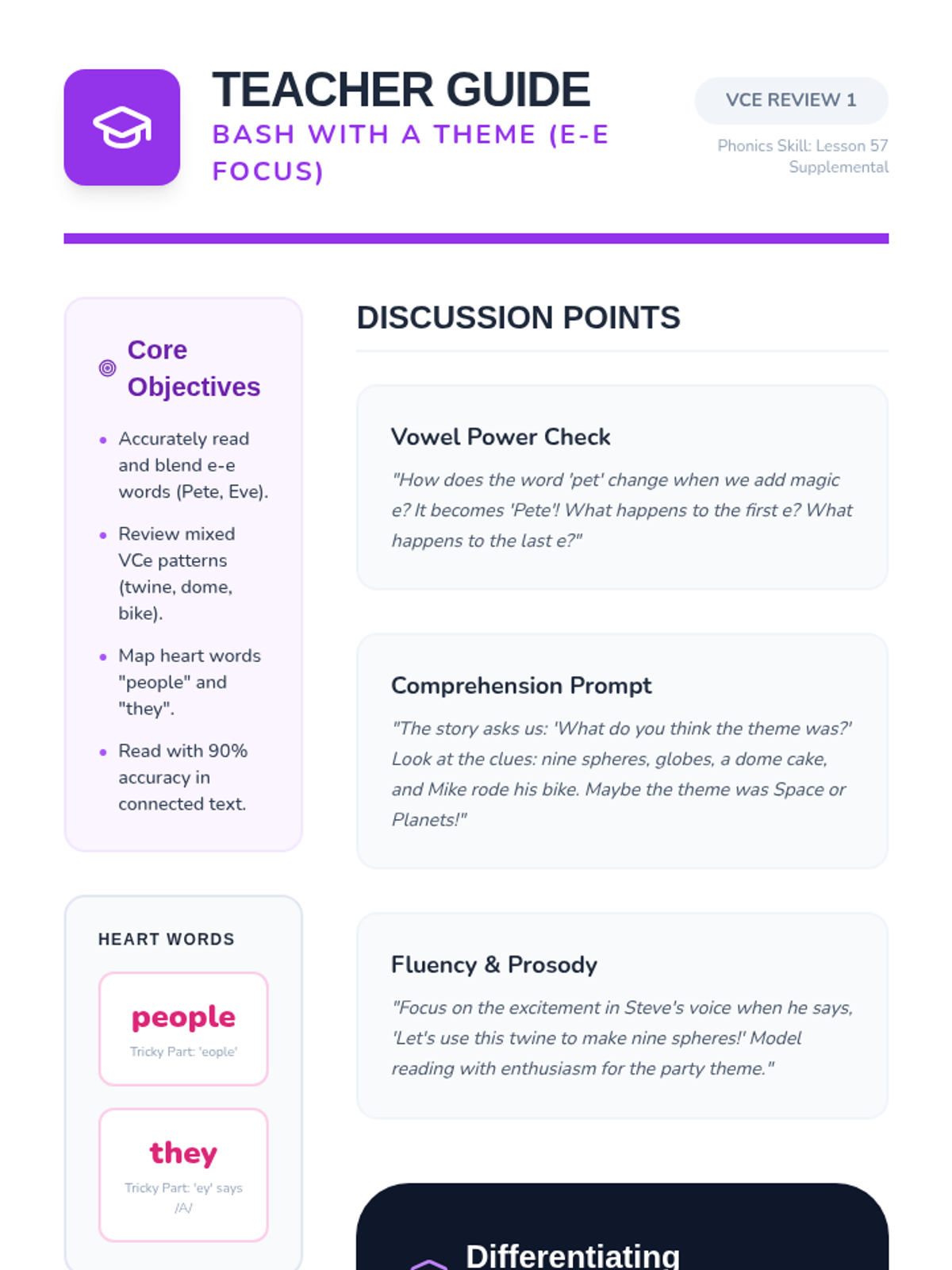
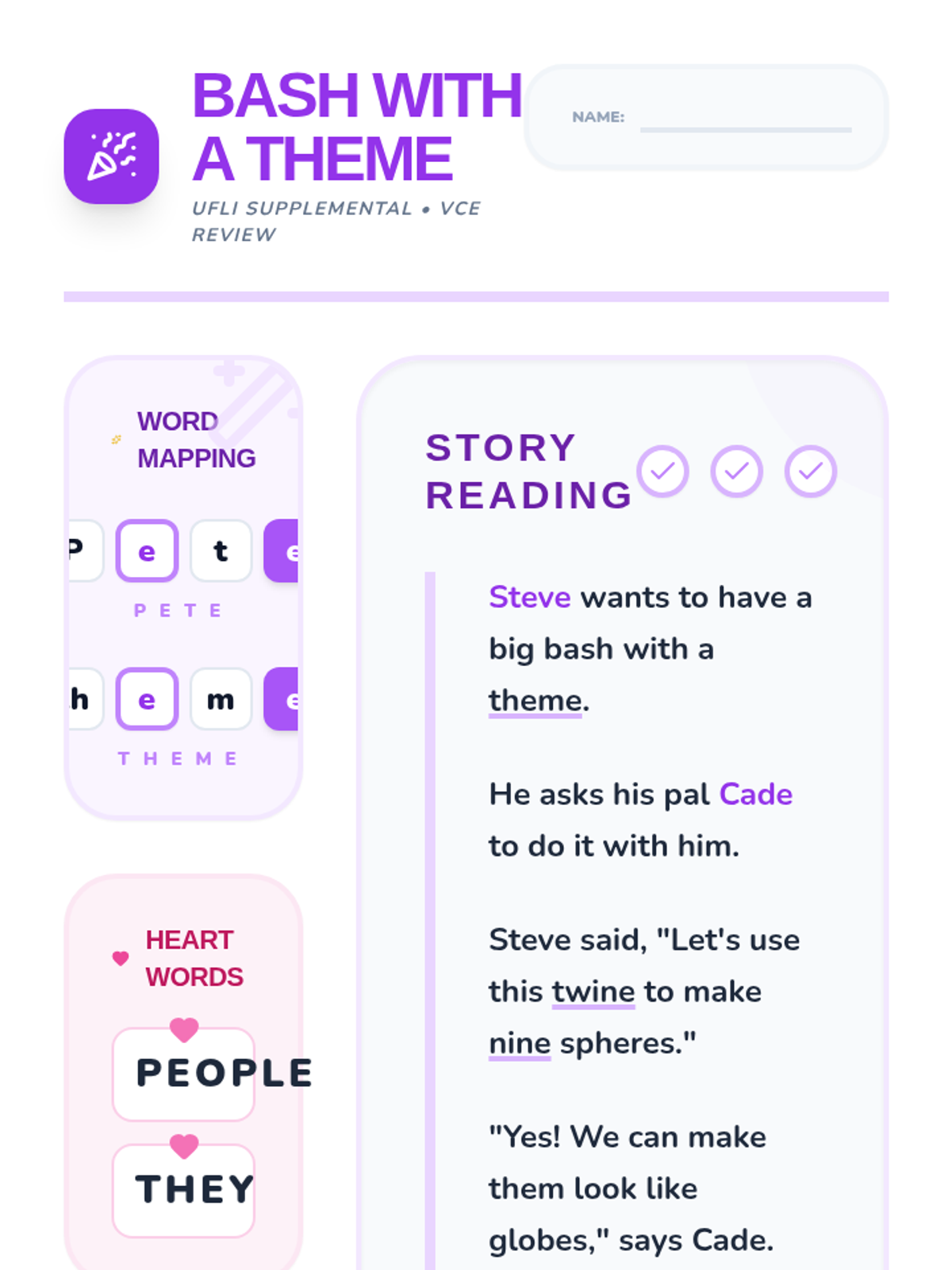
Focuses on the long 'e' vowel sound with the silent 'e' pattern (e-e). Students will read about Pete and Eve's themed party, practicing words like 'theme', 'Pete', 'Eve', and 'these'.
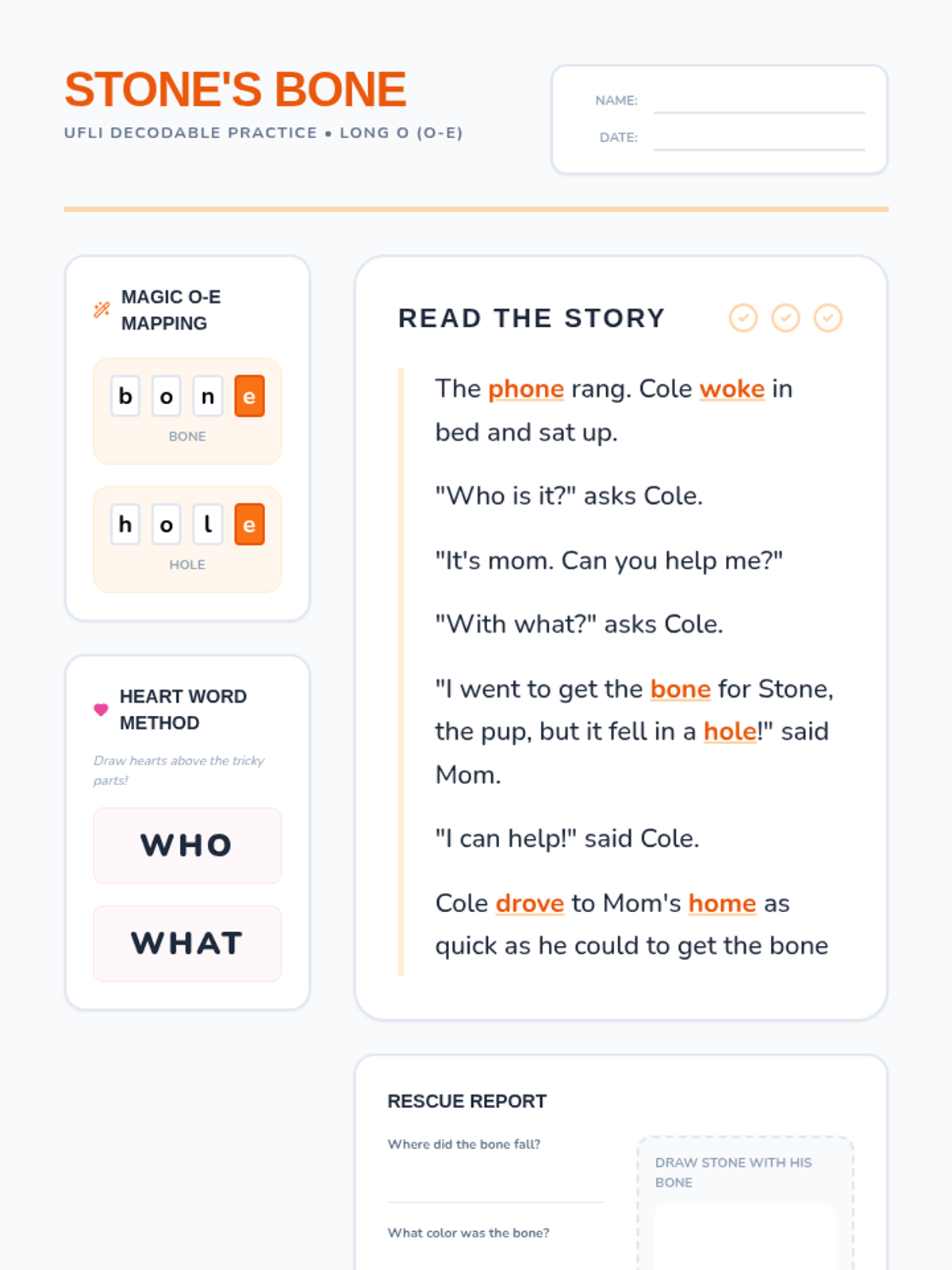
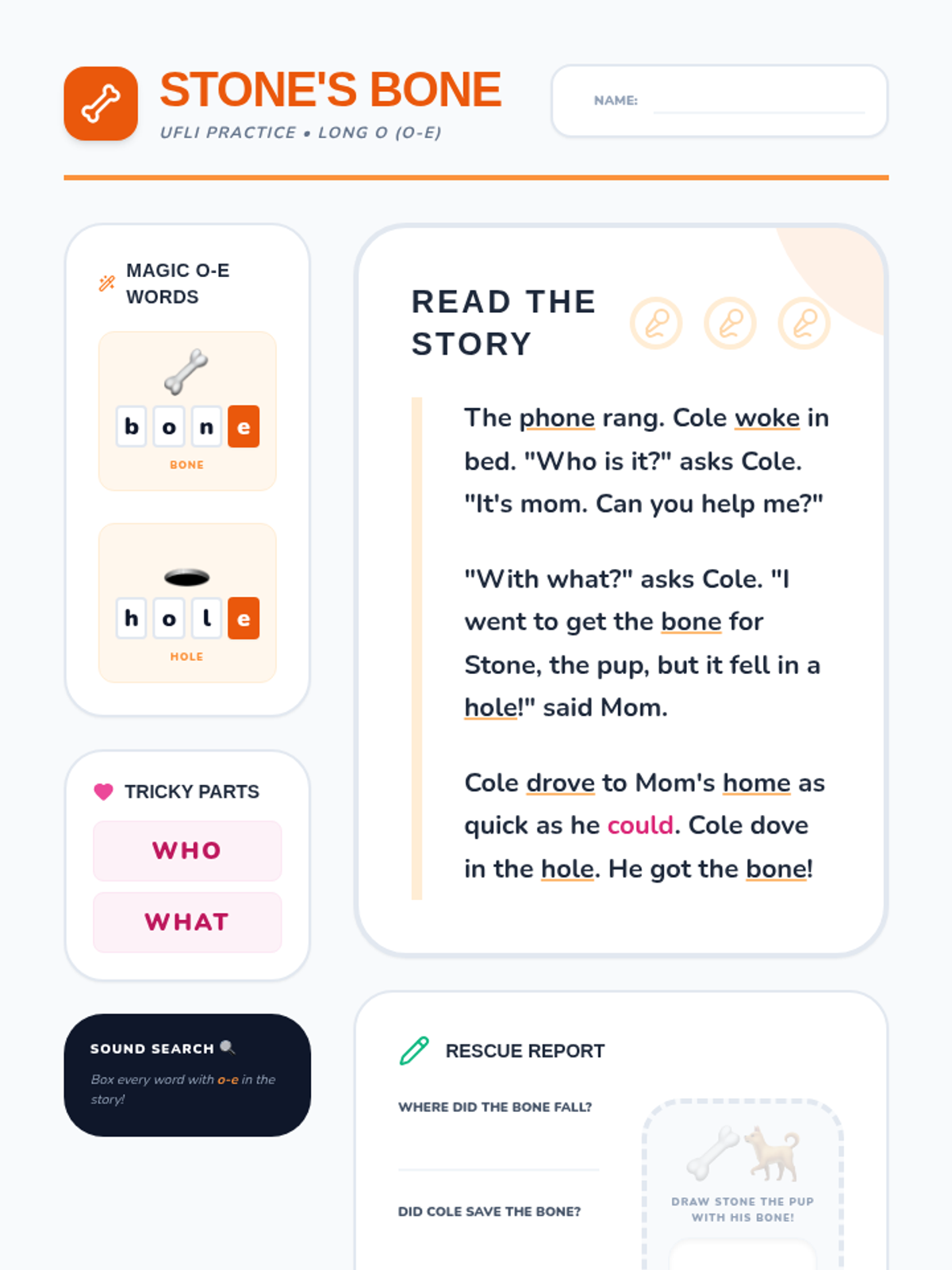
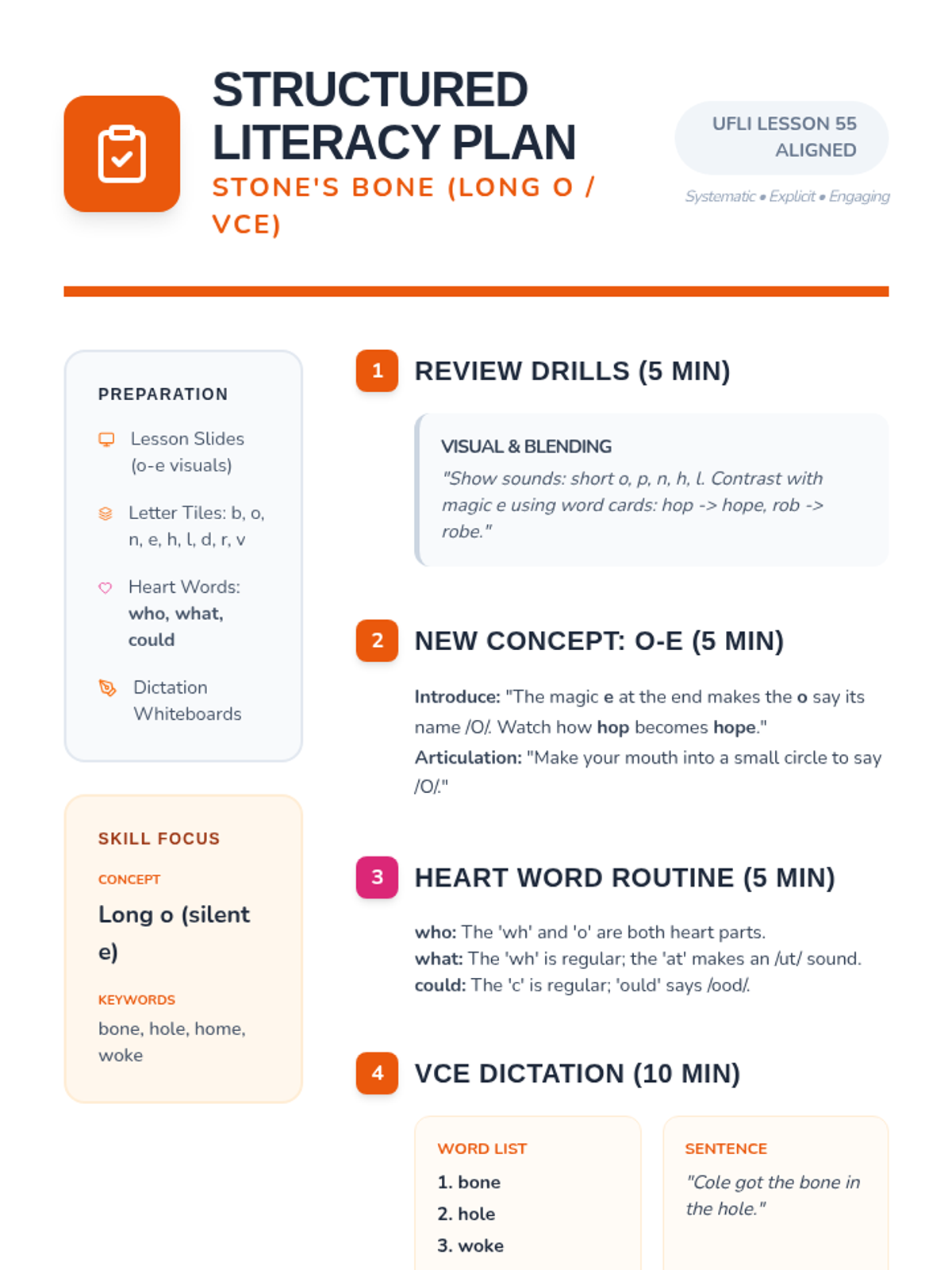
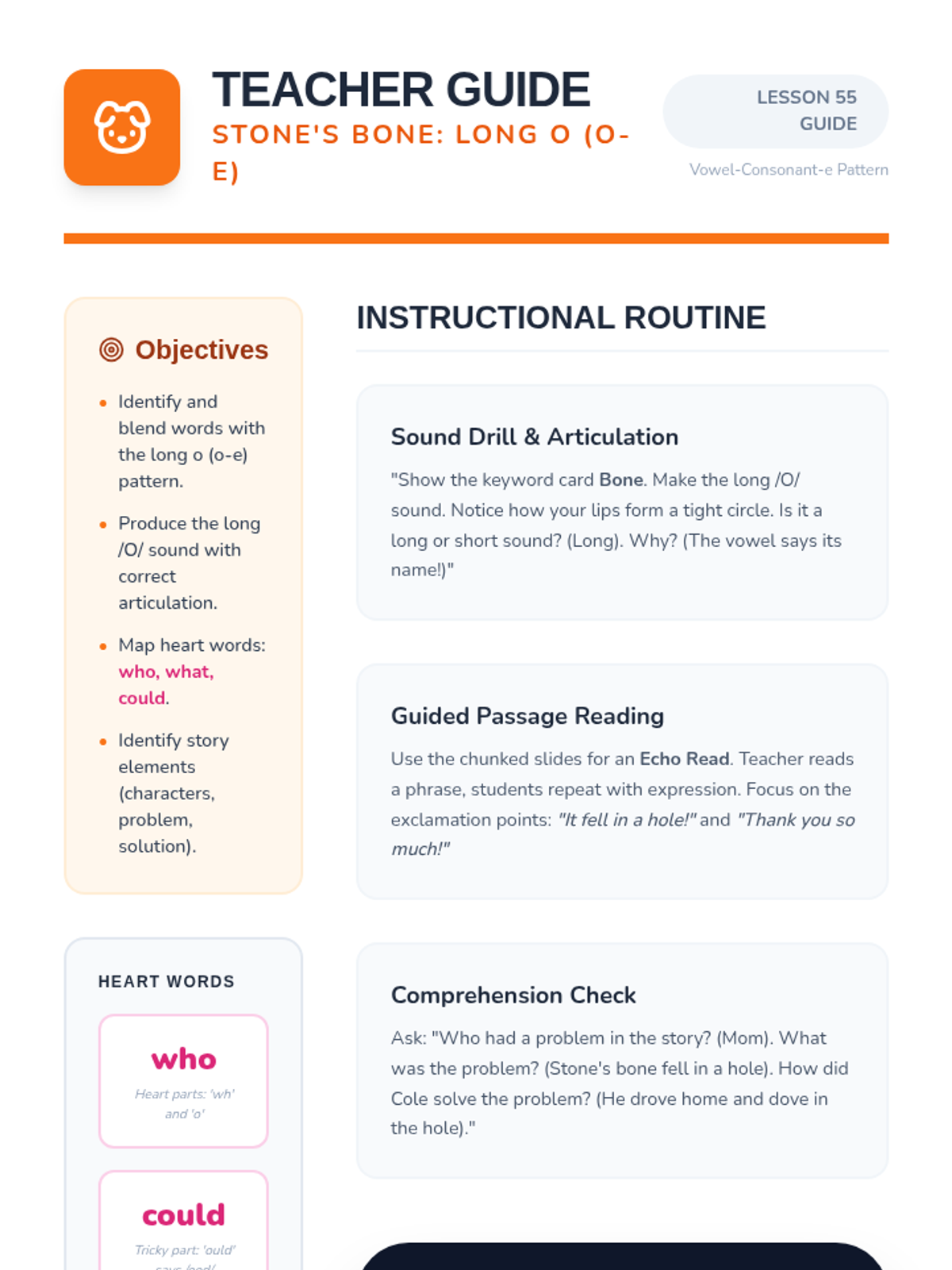
Focuses on the long 'o' vowel sound with the silent 'e' pattern (o-e). Students will read about Cole helping his mom rescue a bone for Stone the pup, practicing words like 'phone', 'woke', 'bone', 'hole', and 'froze'.
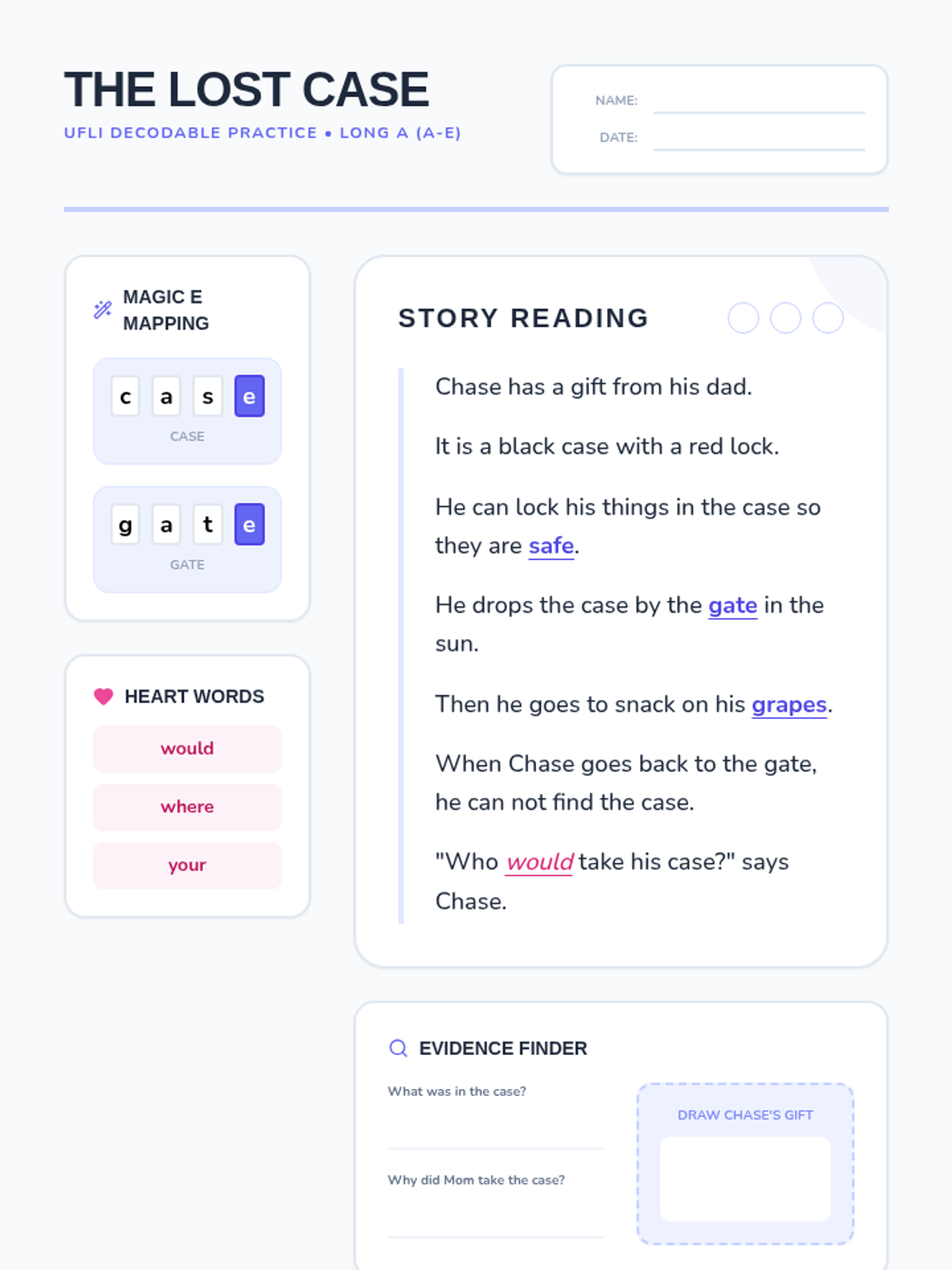
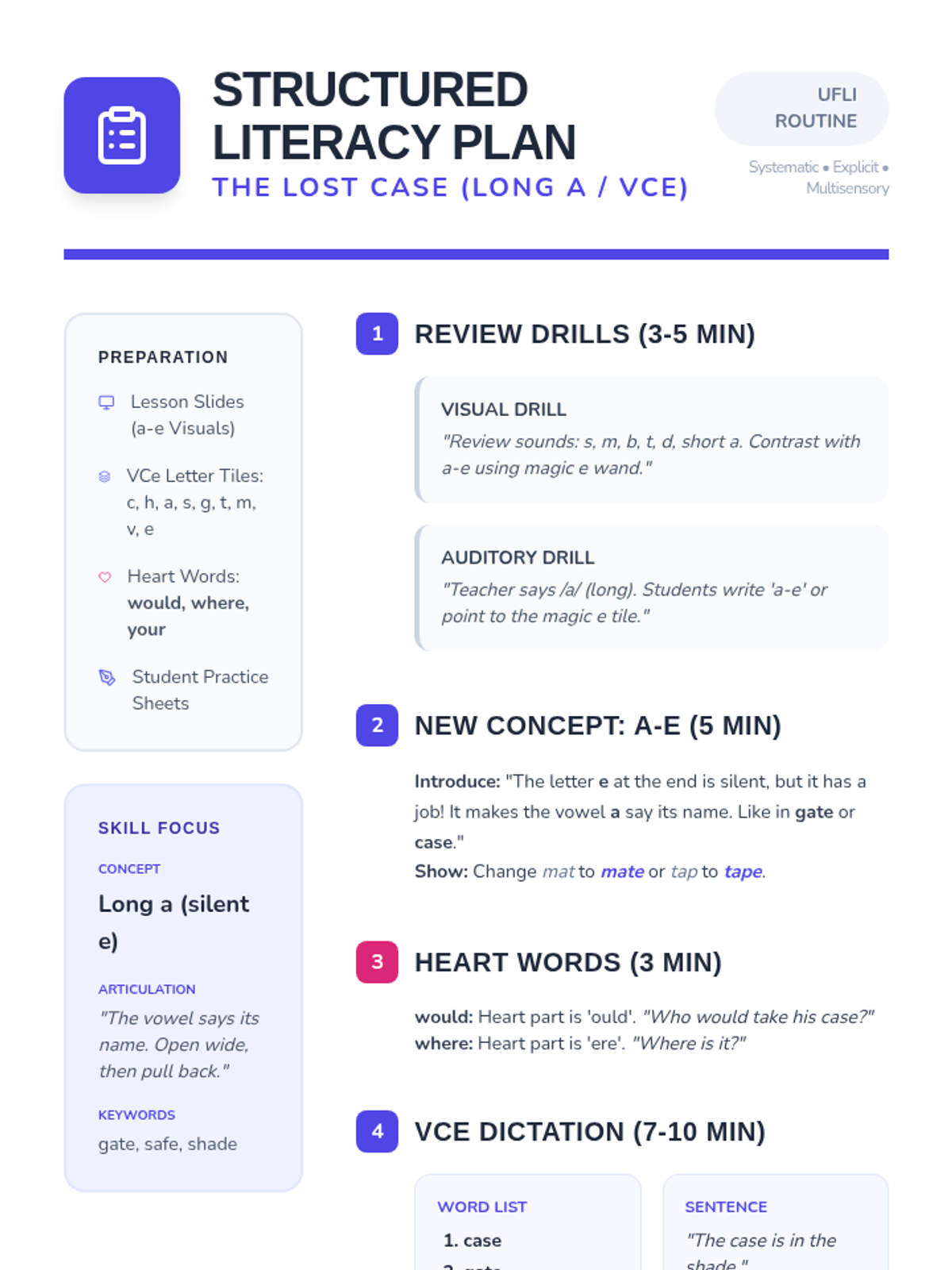
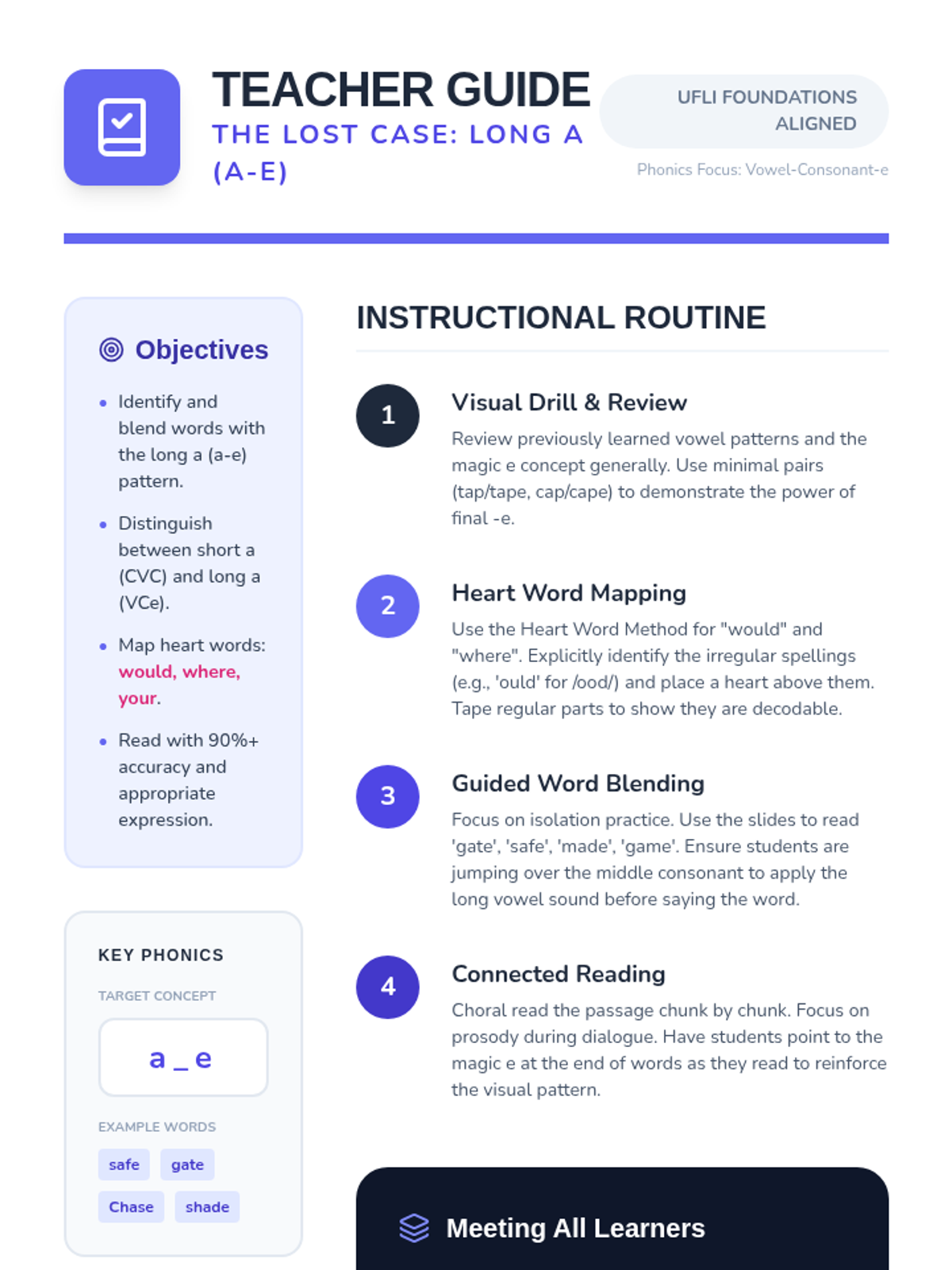
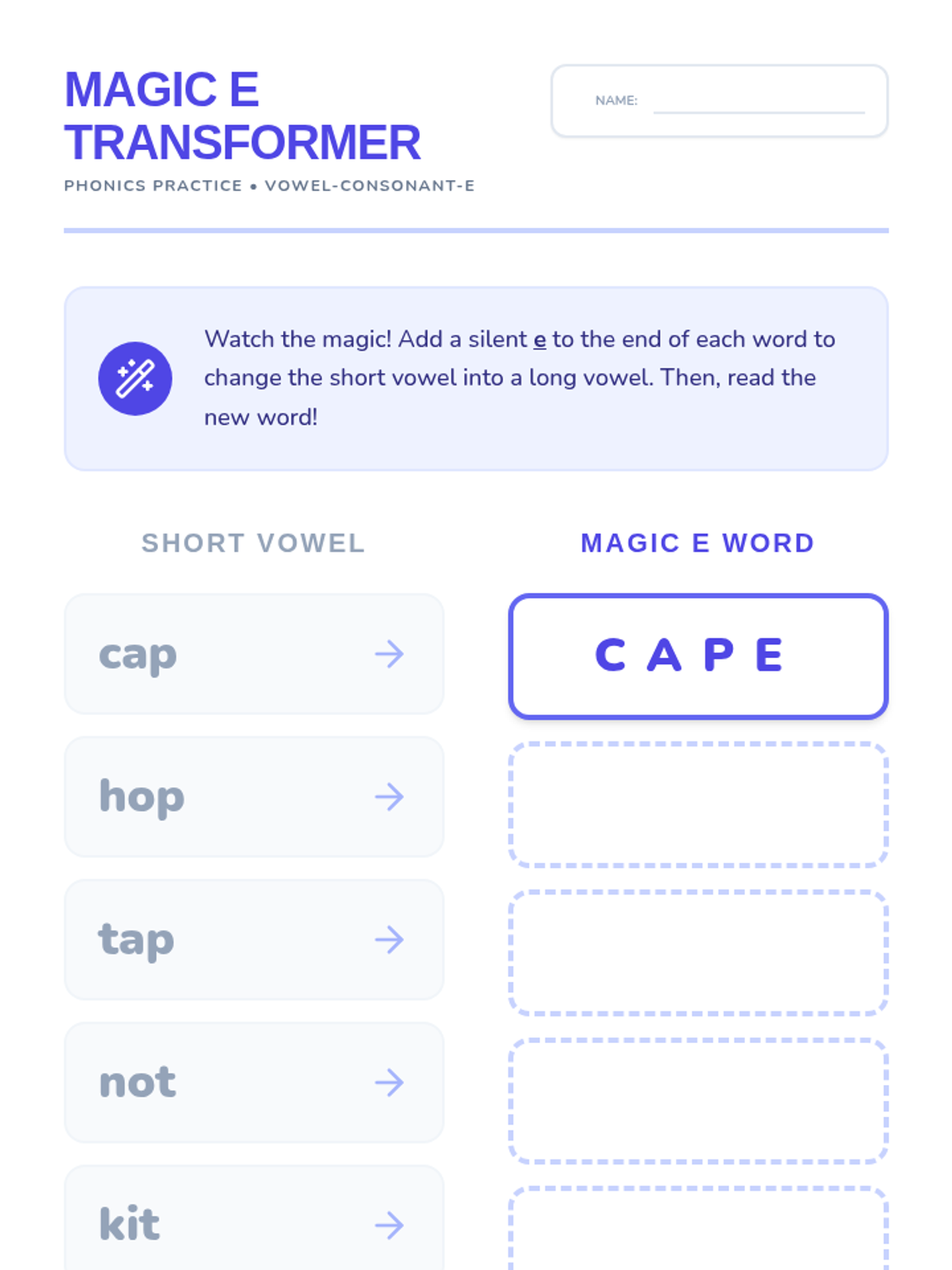
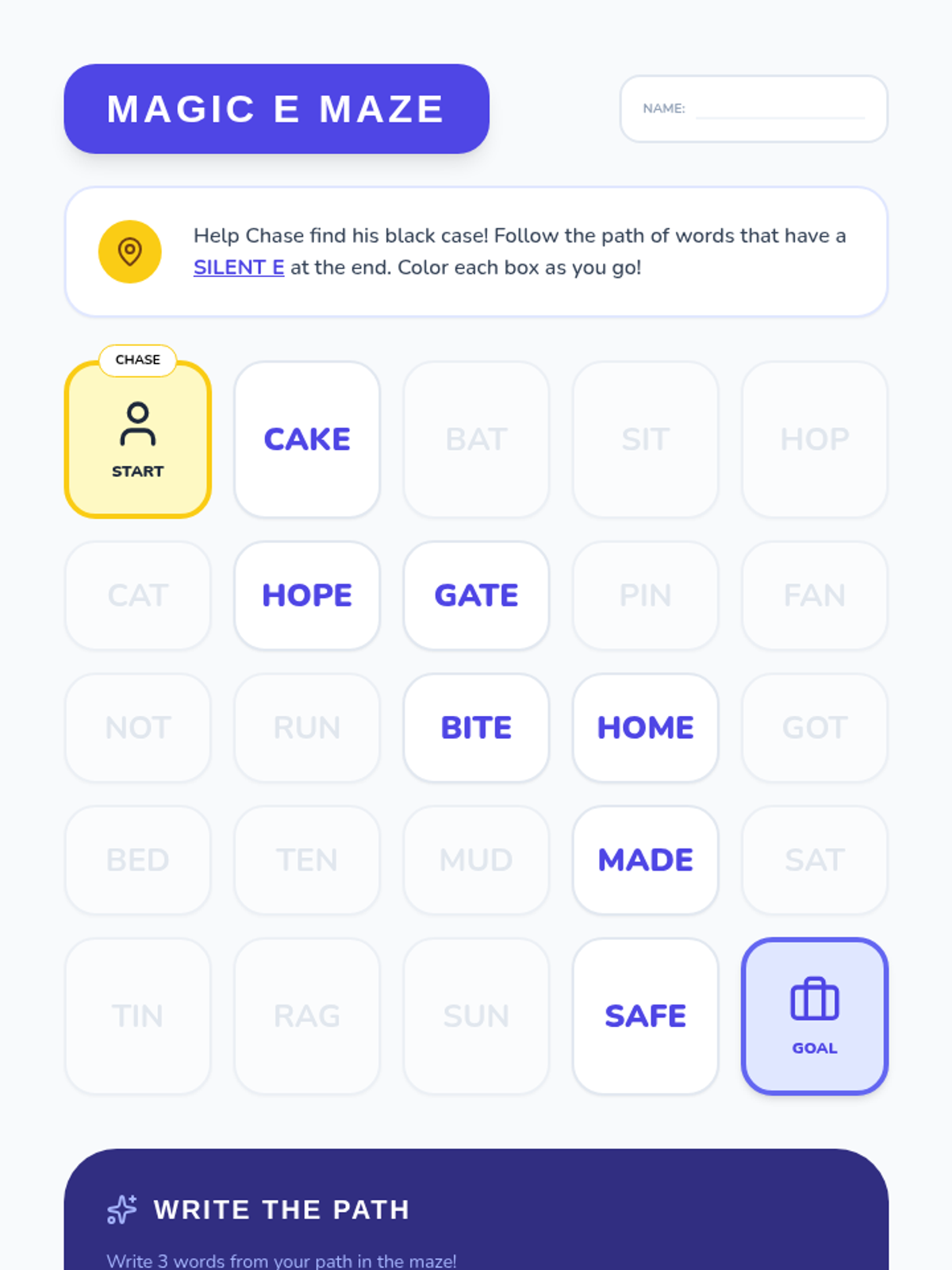
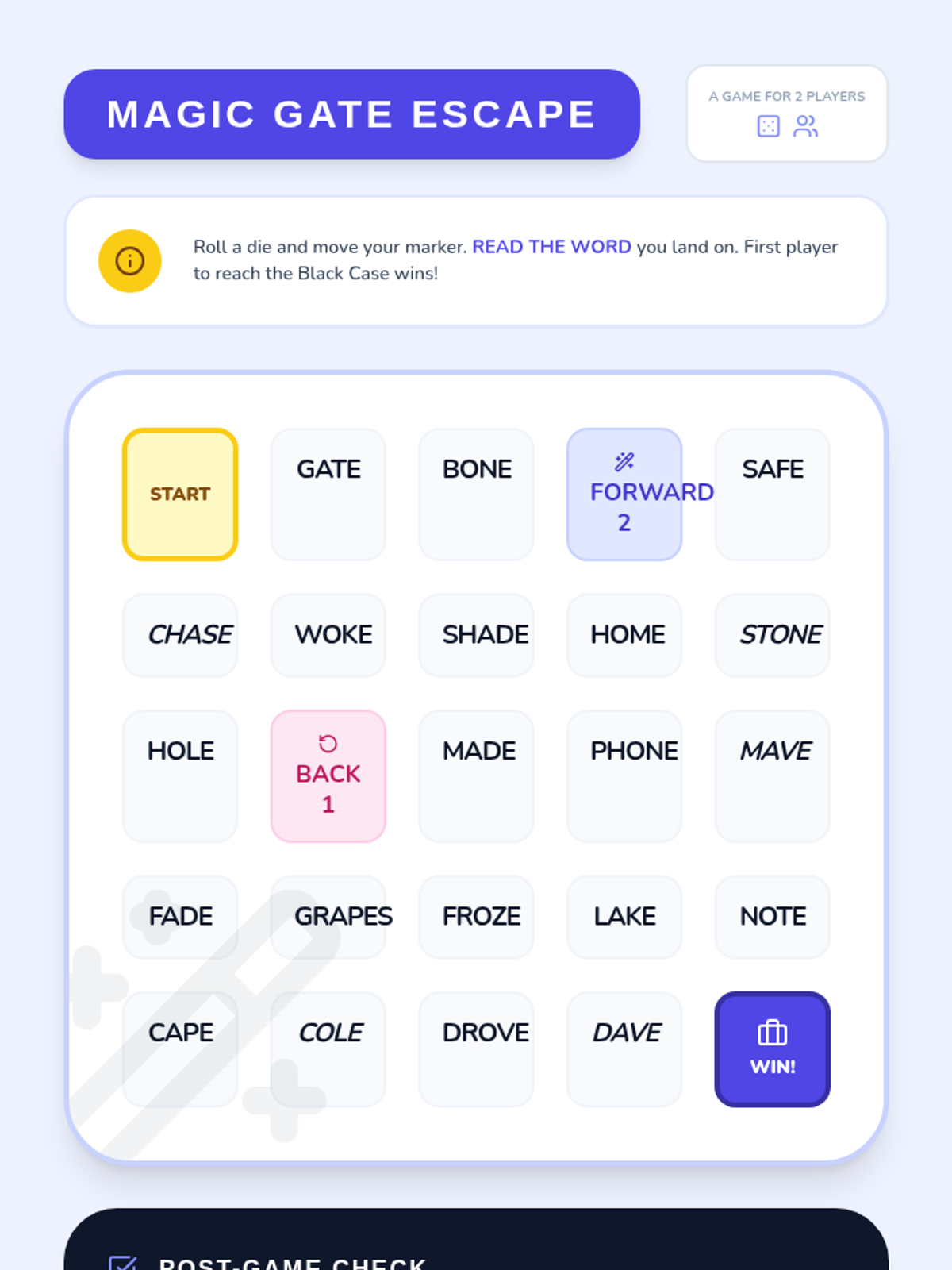
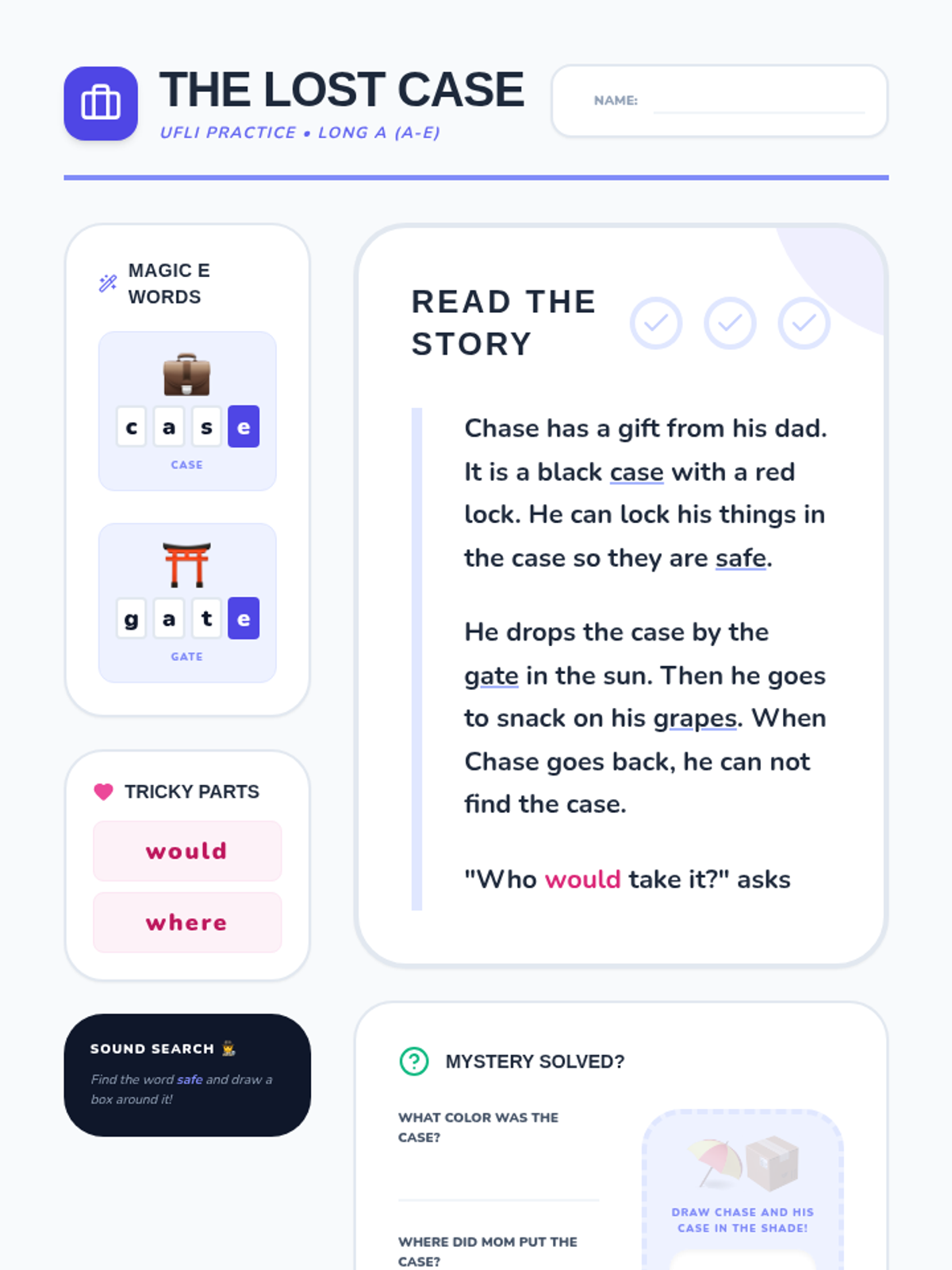
Focuses on the long 'a' vowel sound with the silent 'e' pattern (a-e). Students will read about Chase and his lost black case, practicing words like 'gate', 'safe', 'shade', and 'Mave'.
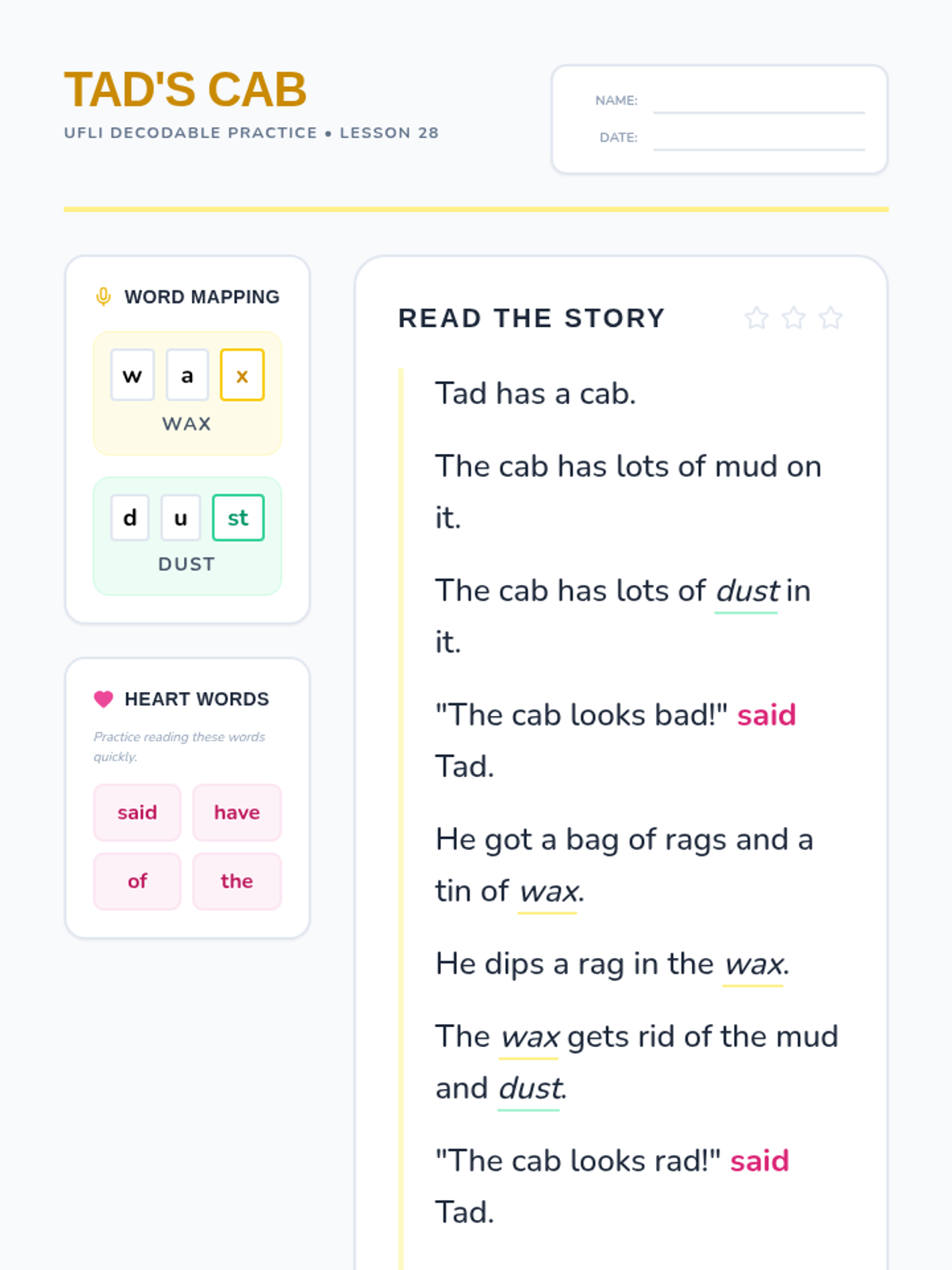
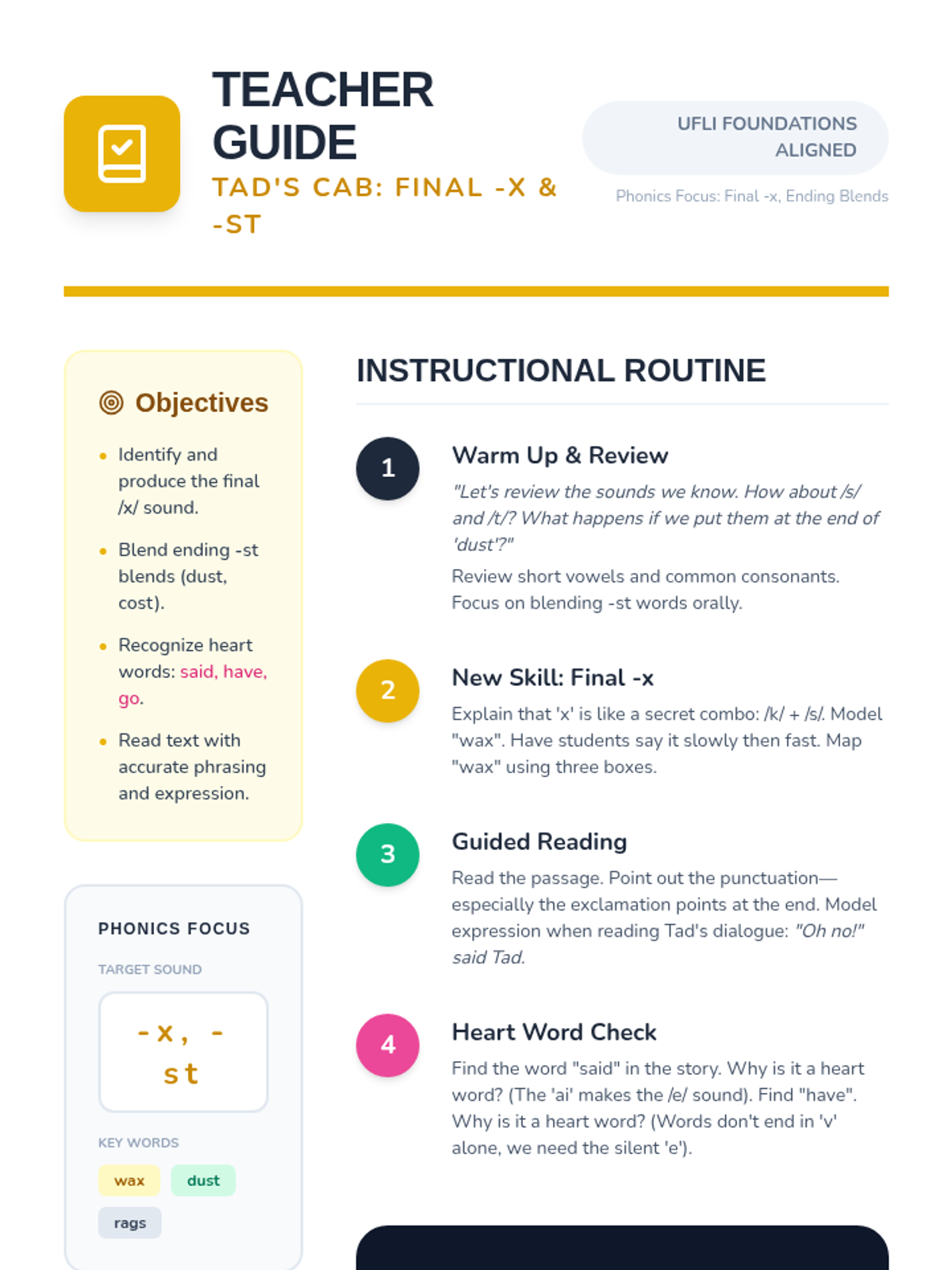
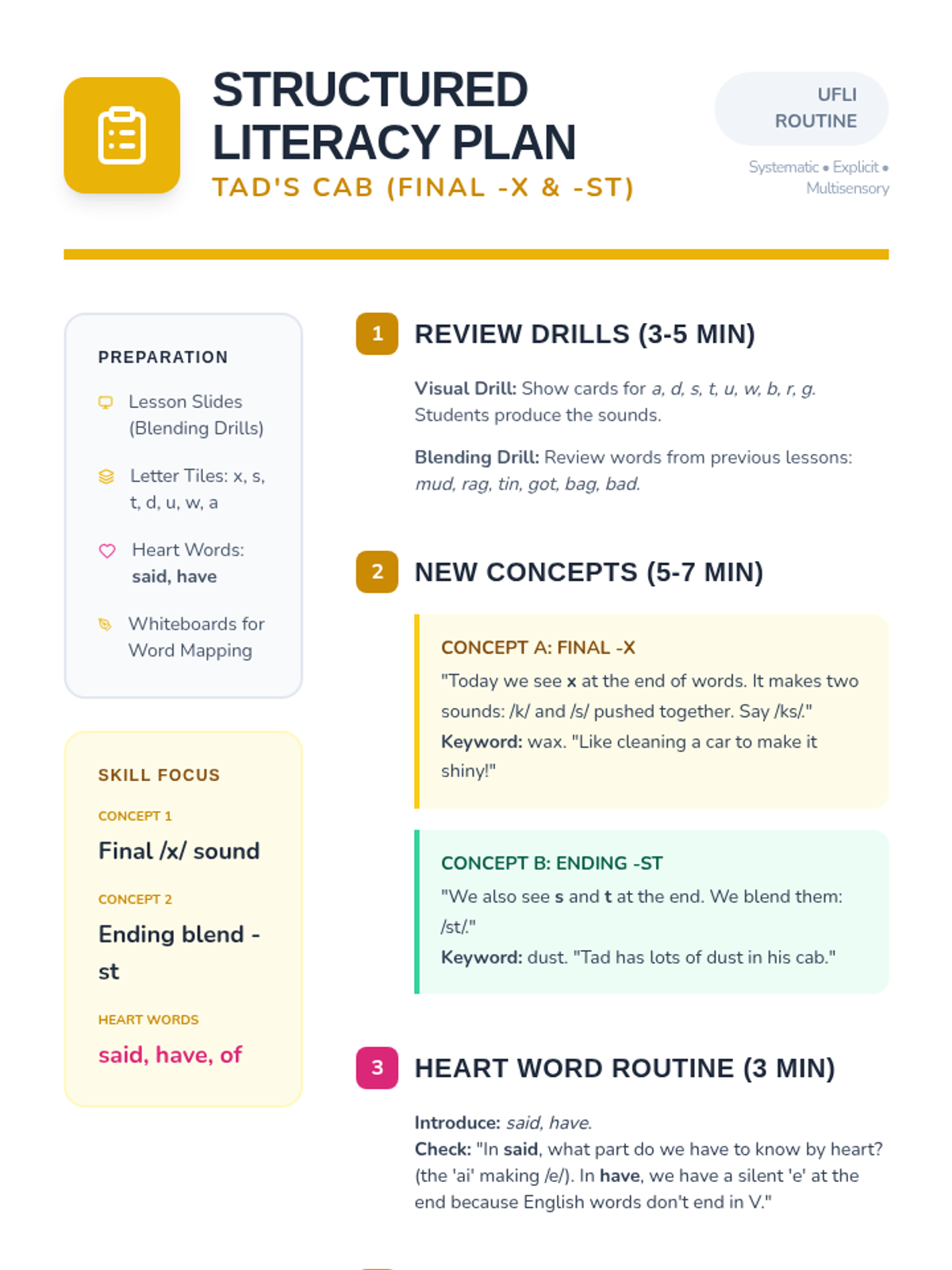
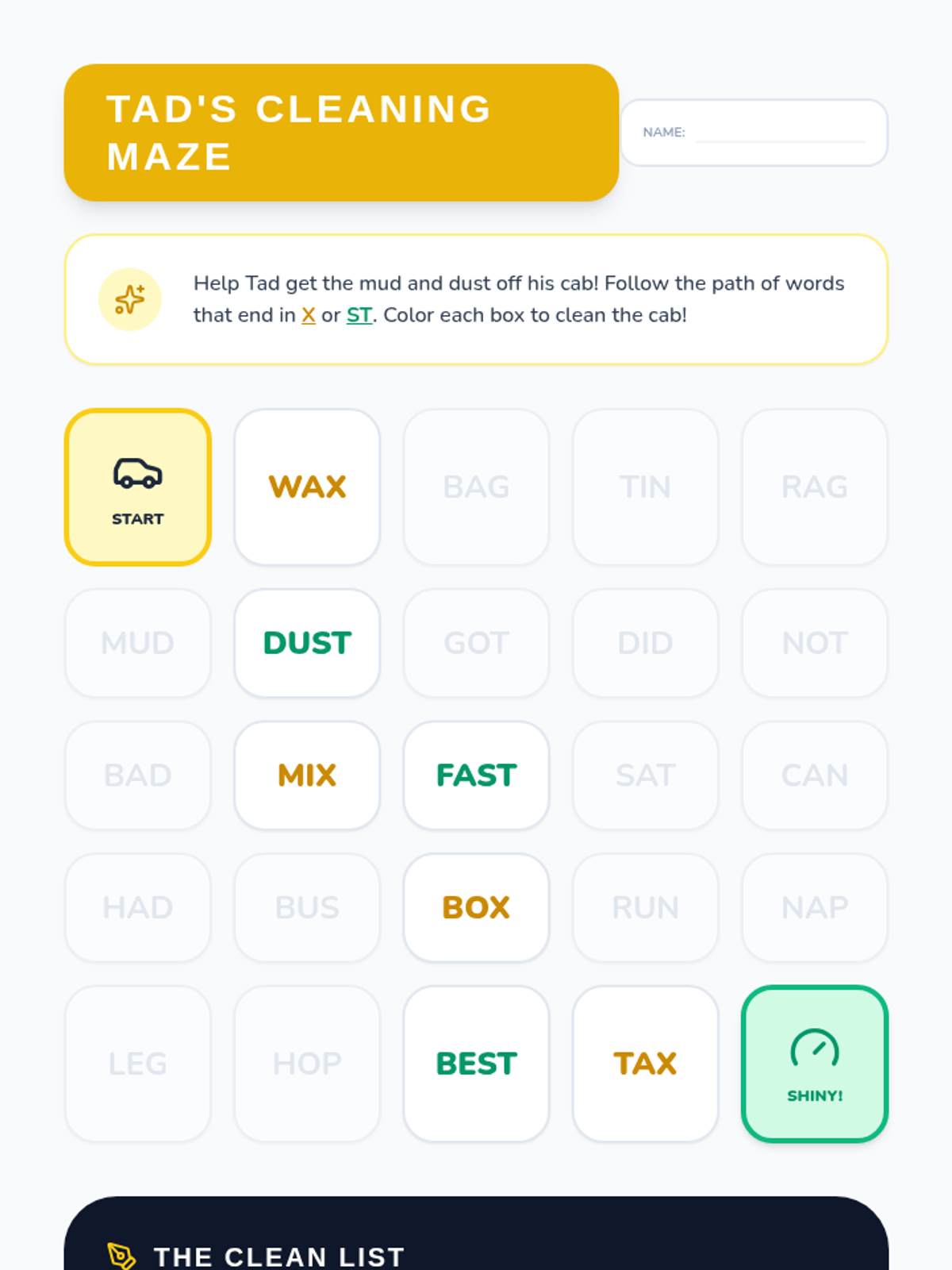
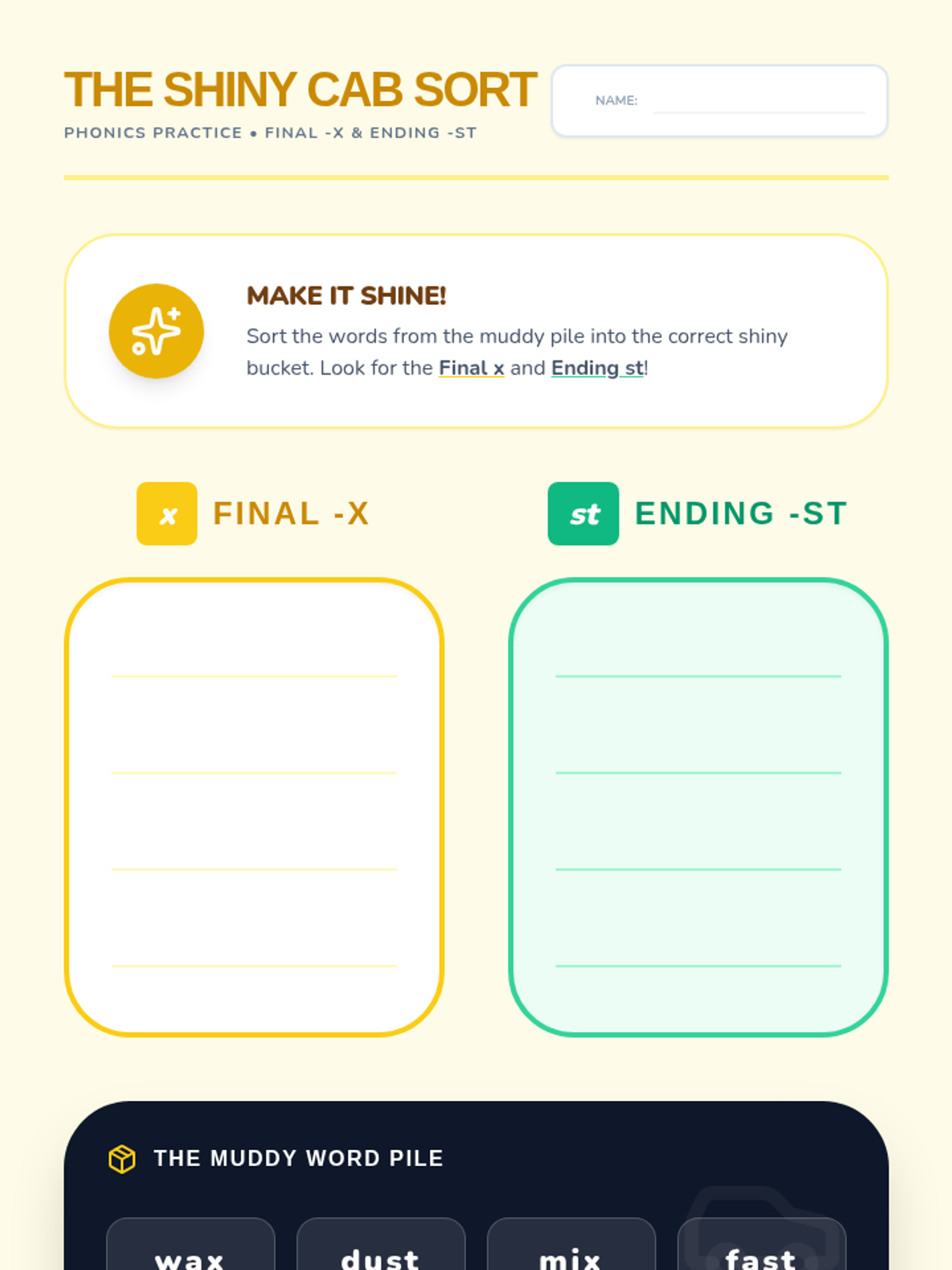
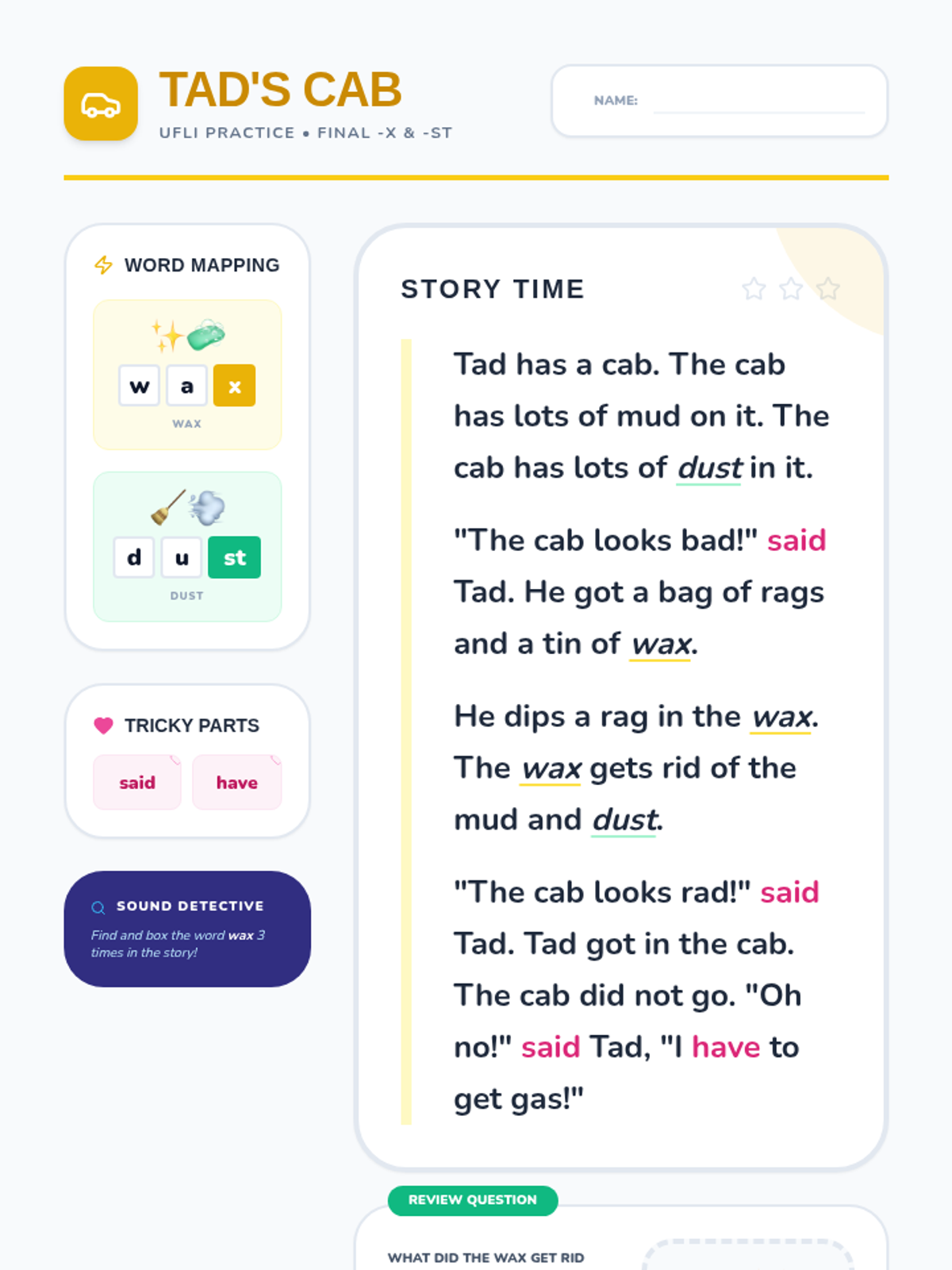
Focuses on short vowels, ending blends (-st), and the final -x sound. Students will read about Tad cleaning his muddy cab, incorporating words like 'dust', 'wax', and 'rags'.
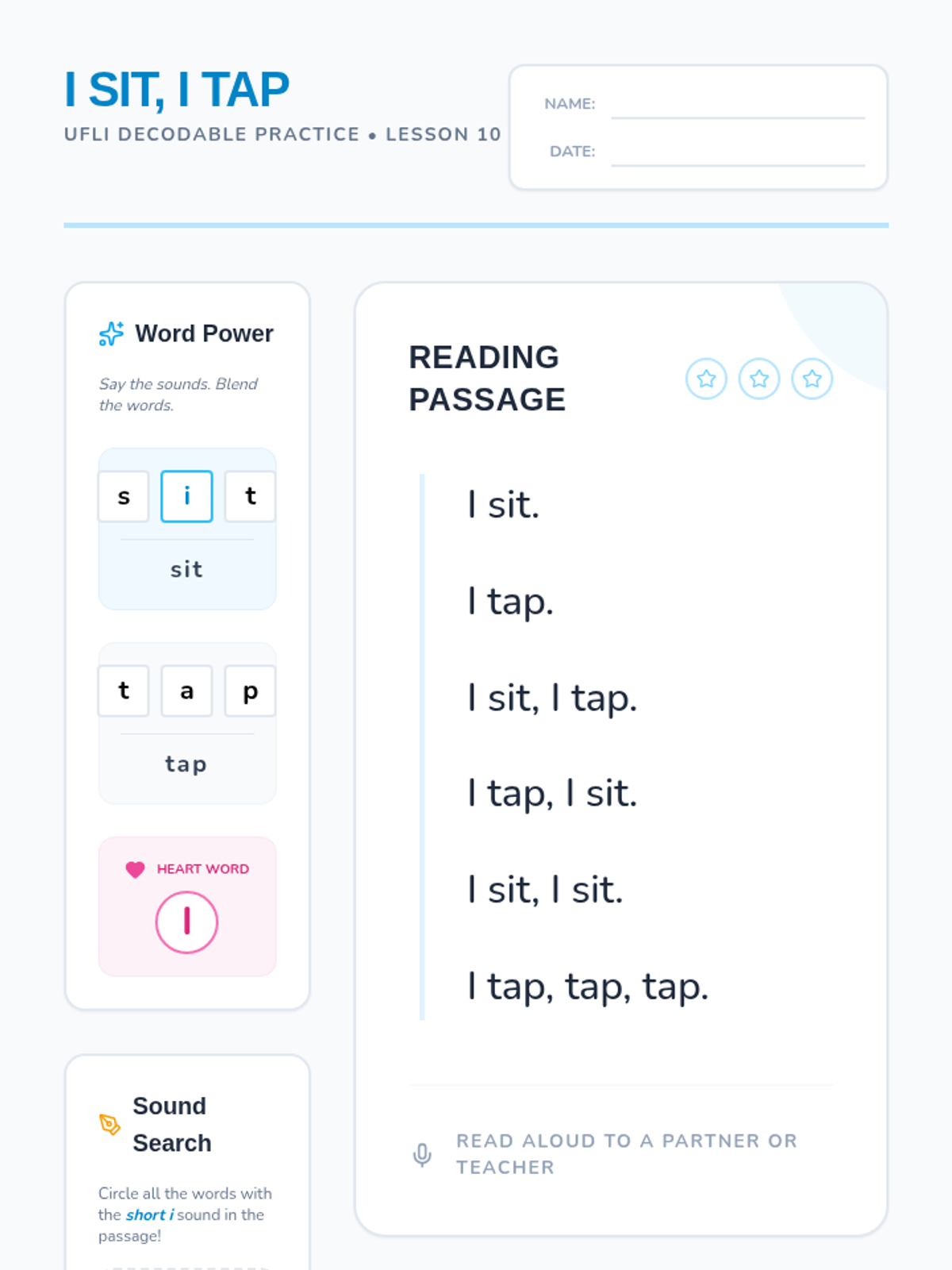
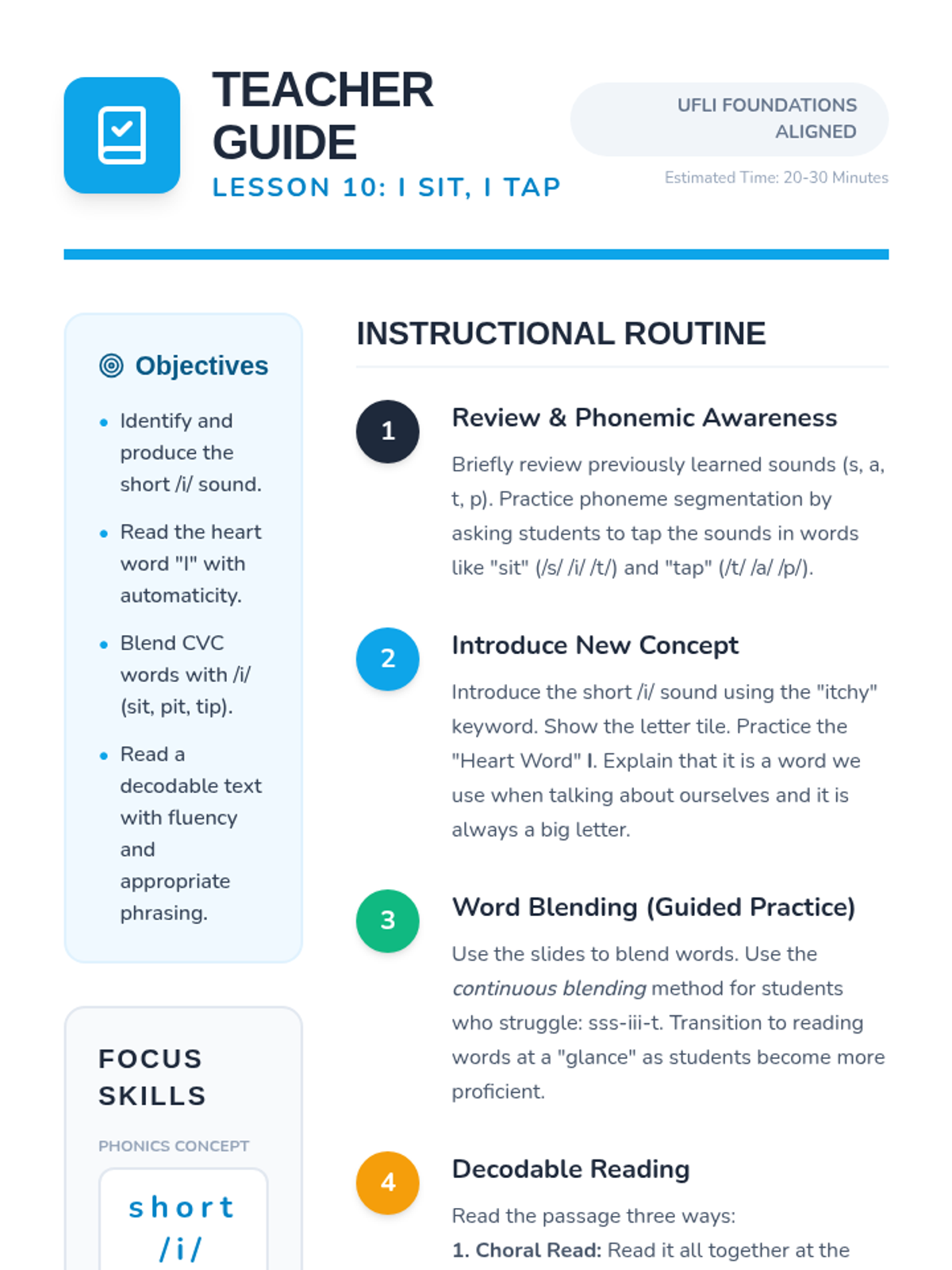
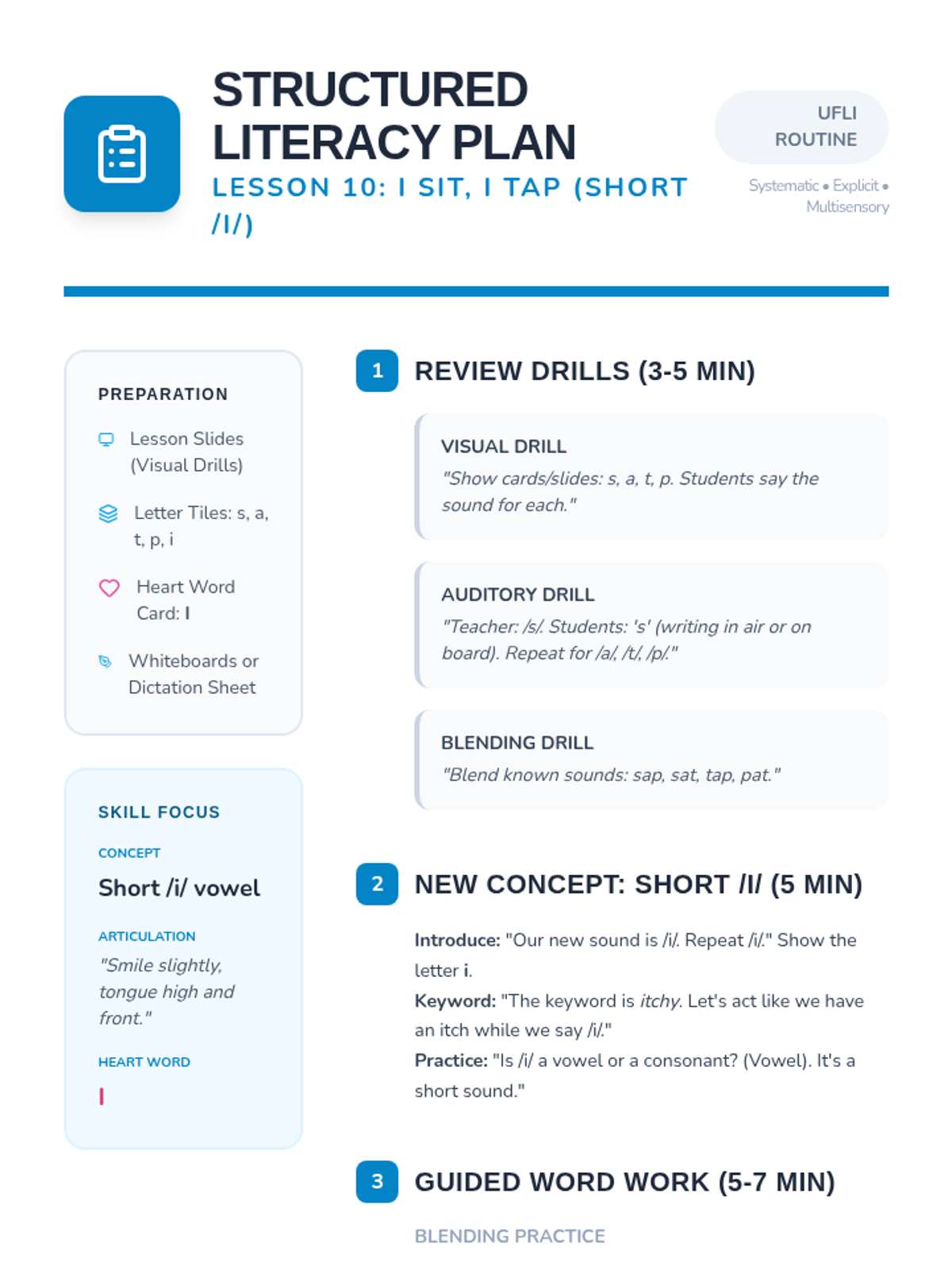
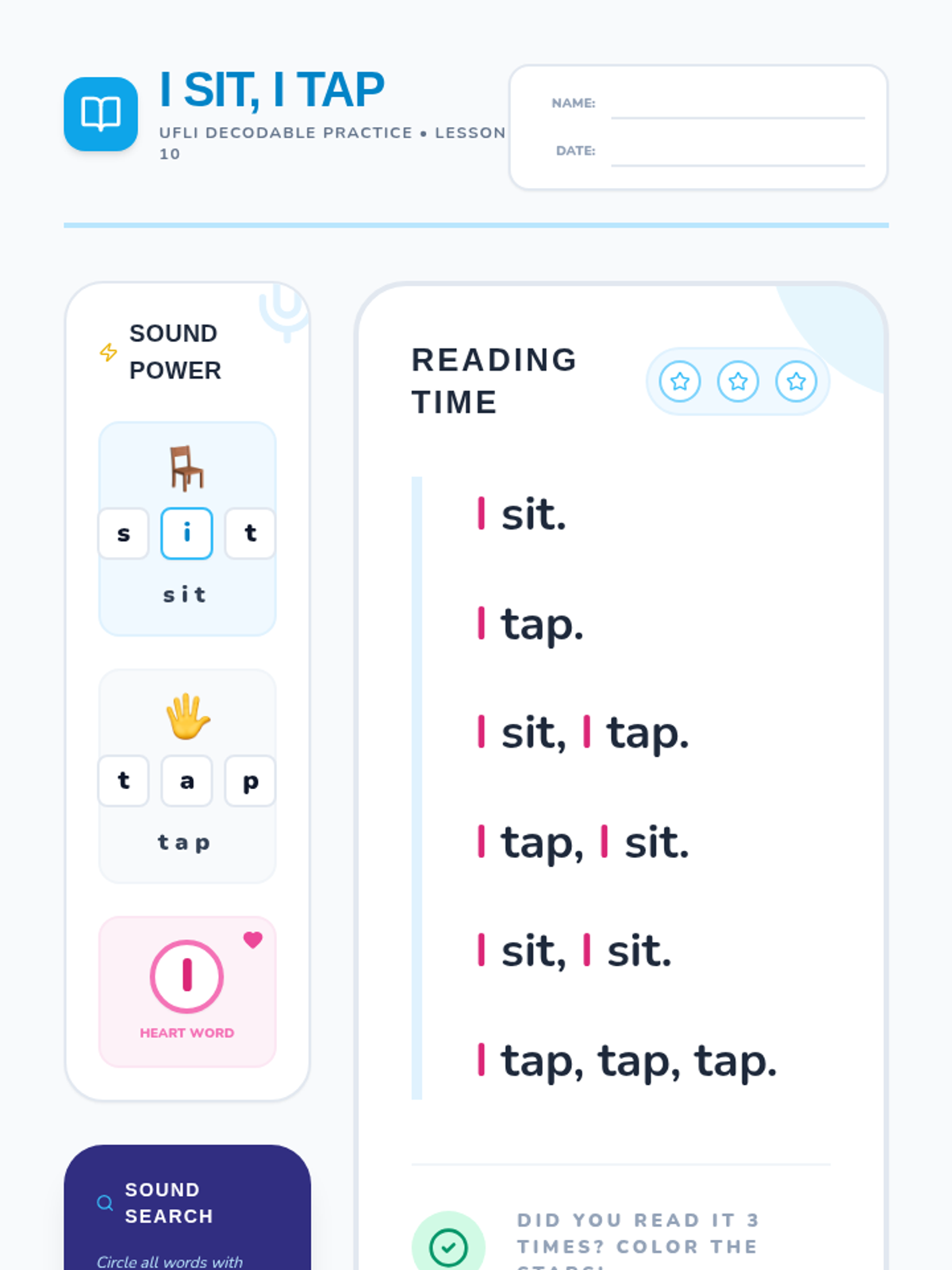
Focuses on the short /i/ vowel sound and the heart word 'I'. Students will practice blending letters s, a, t, p, and i to read a rhythmic decodable passage about sitting and tapping.
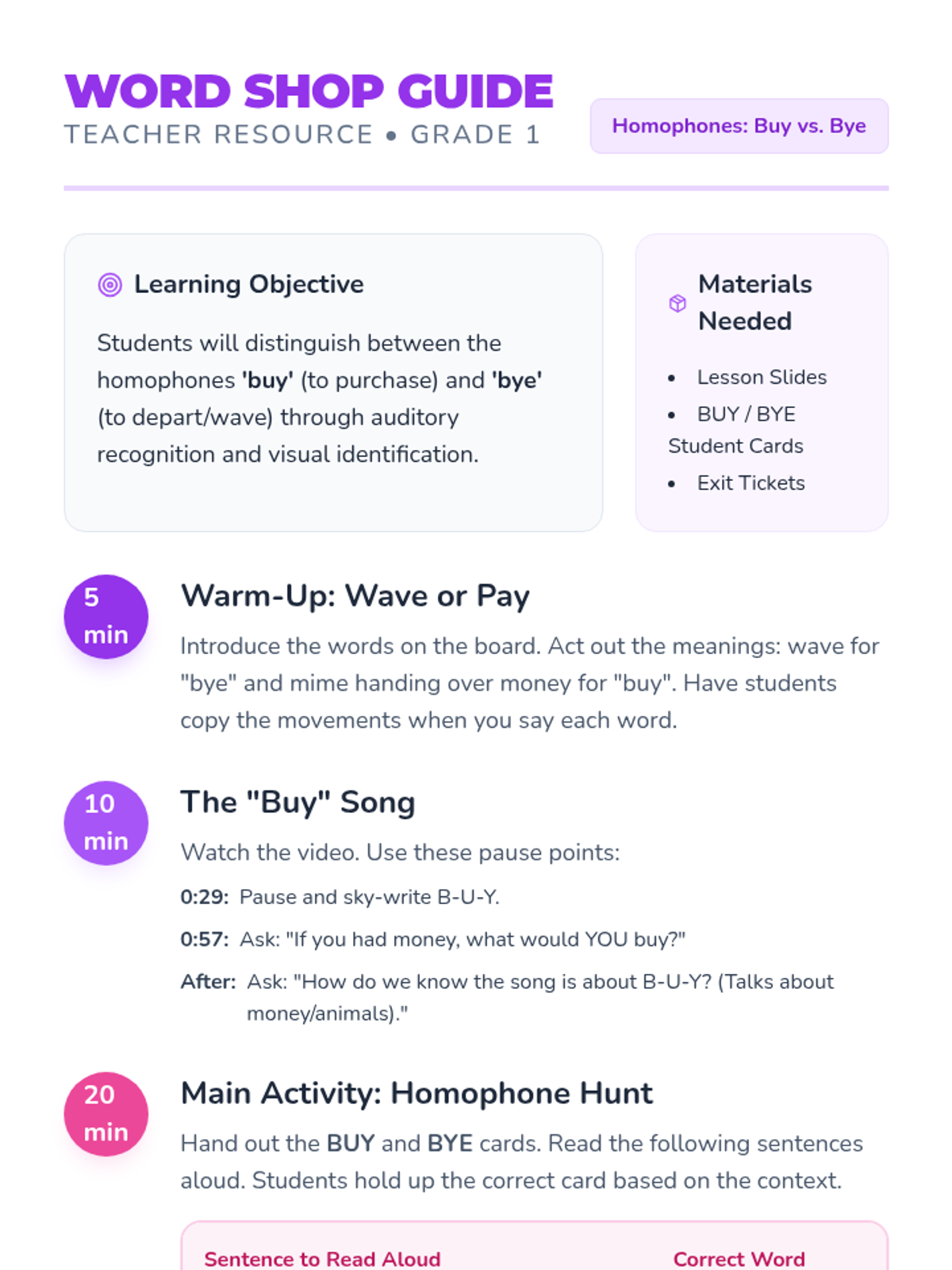
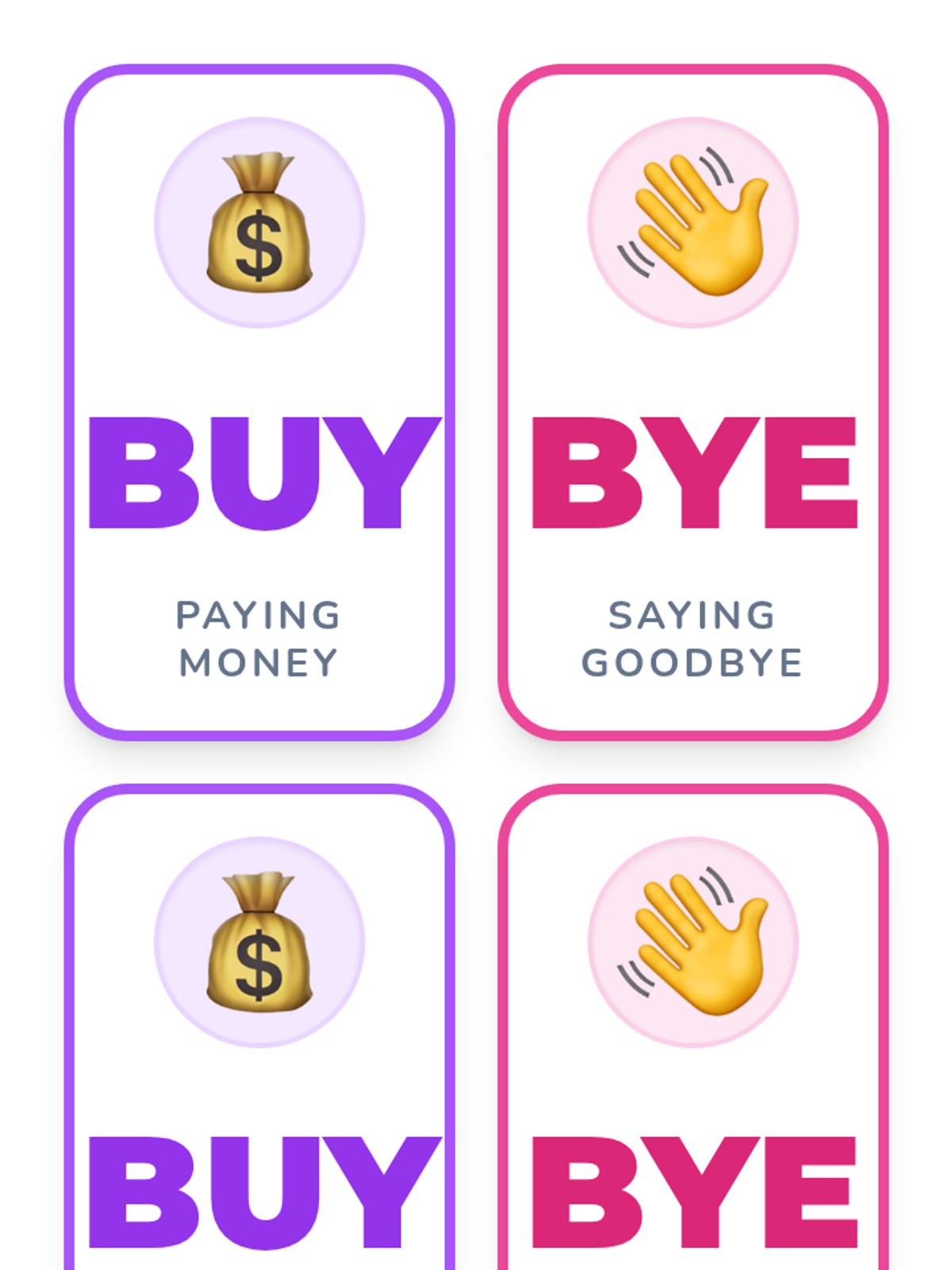
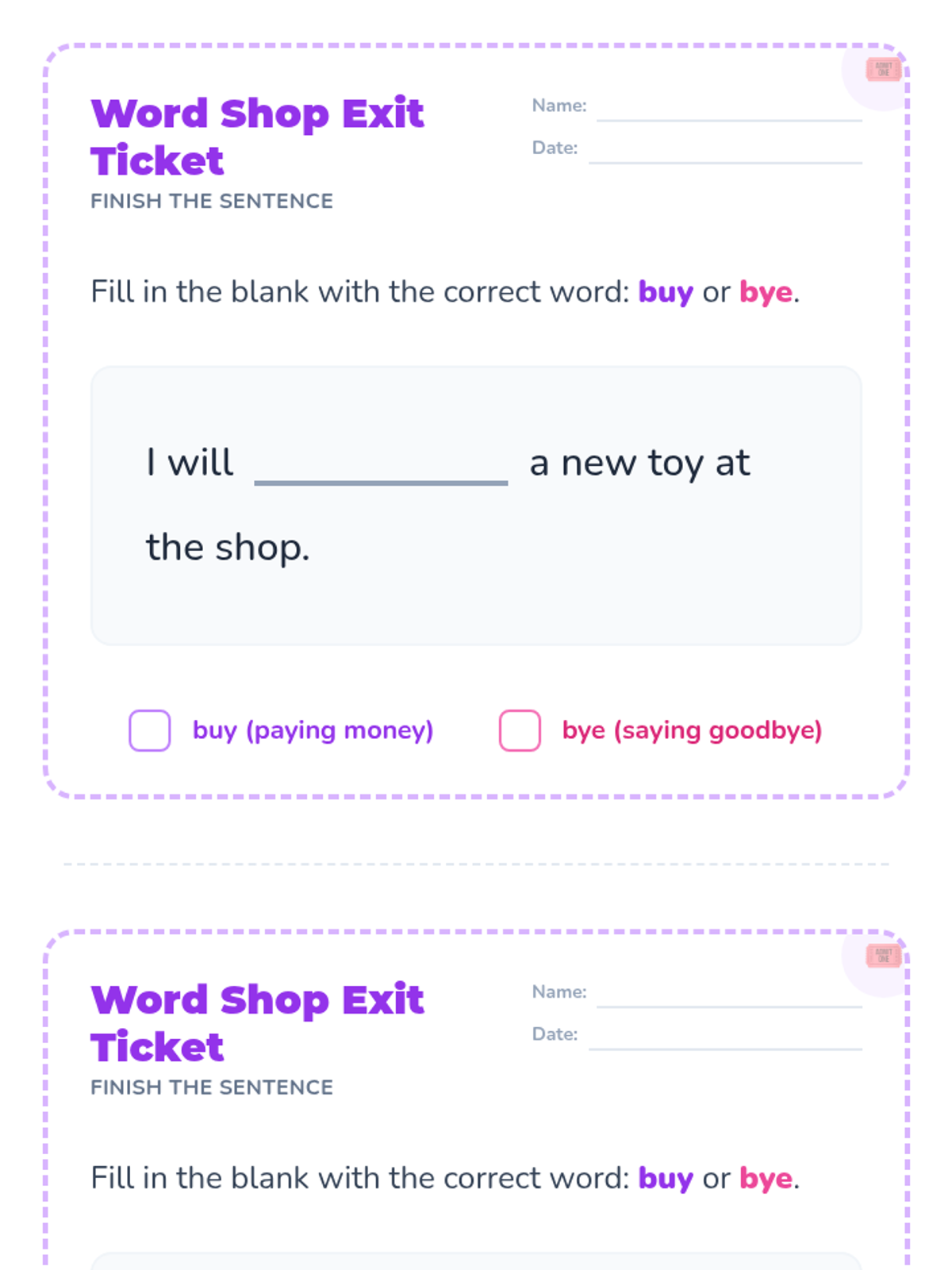
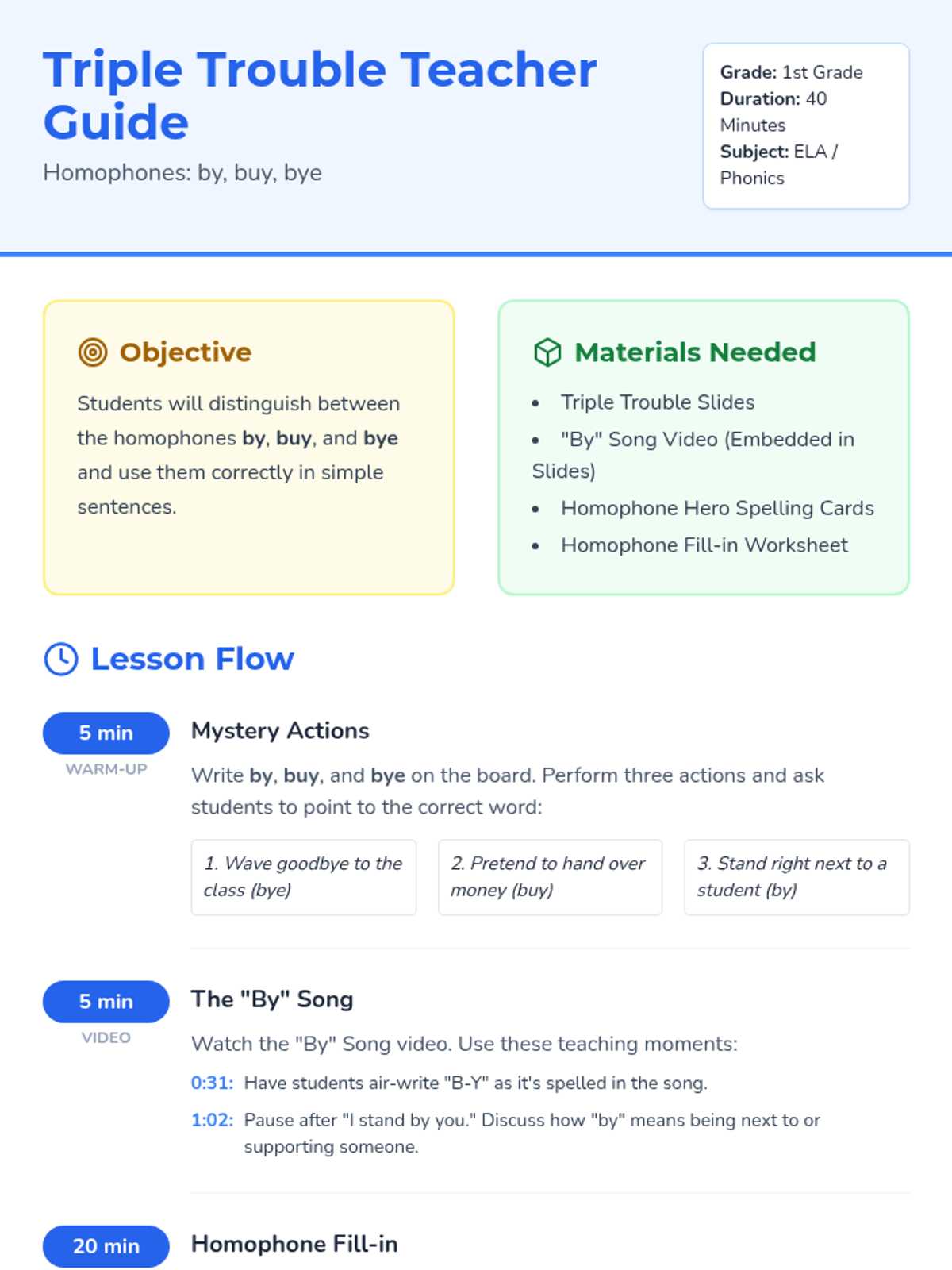
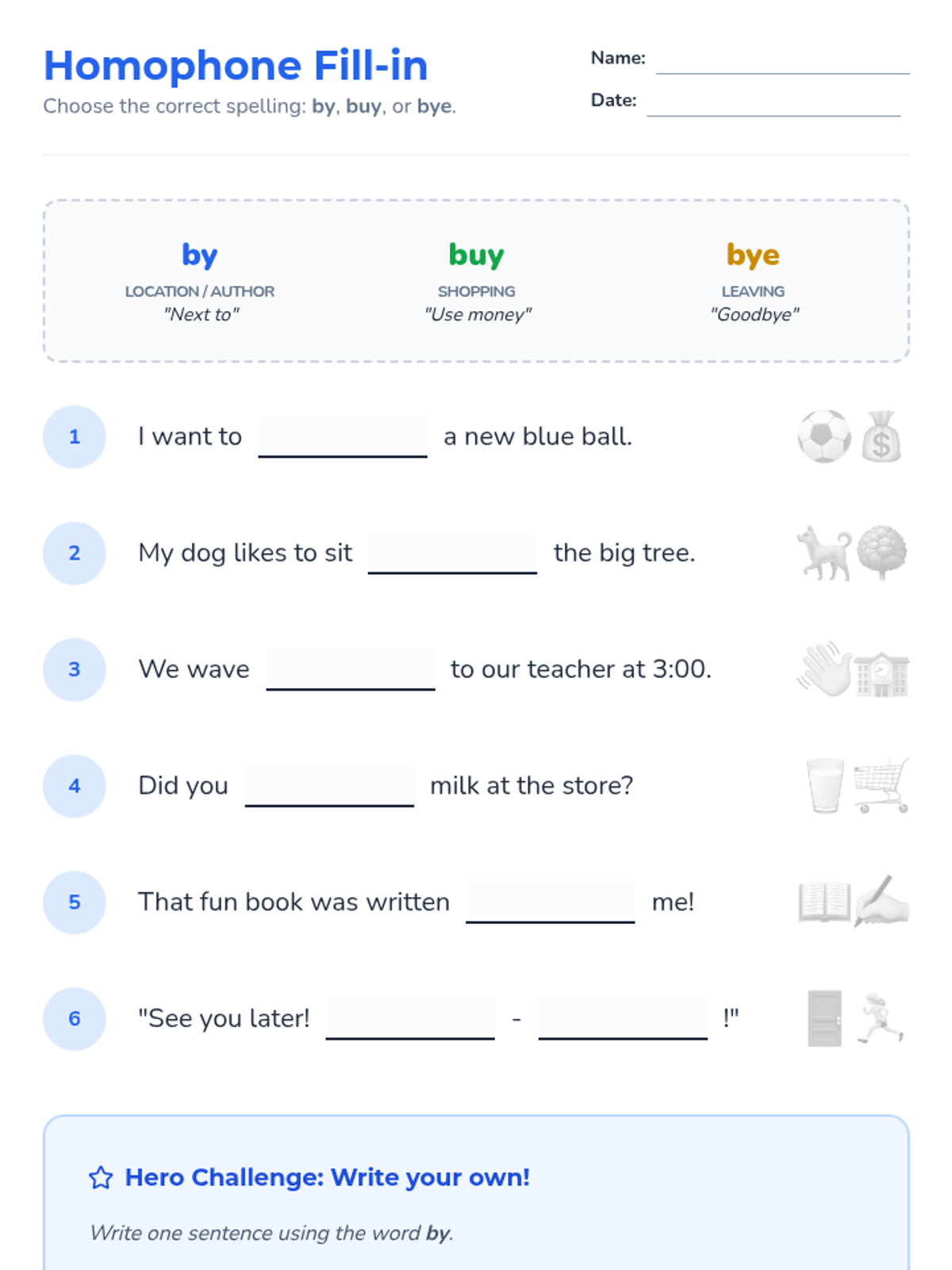
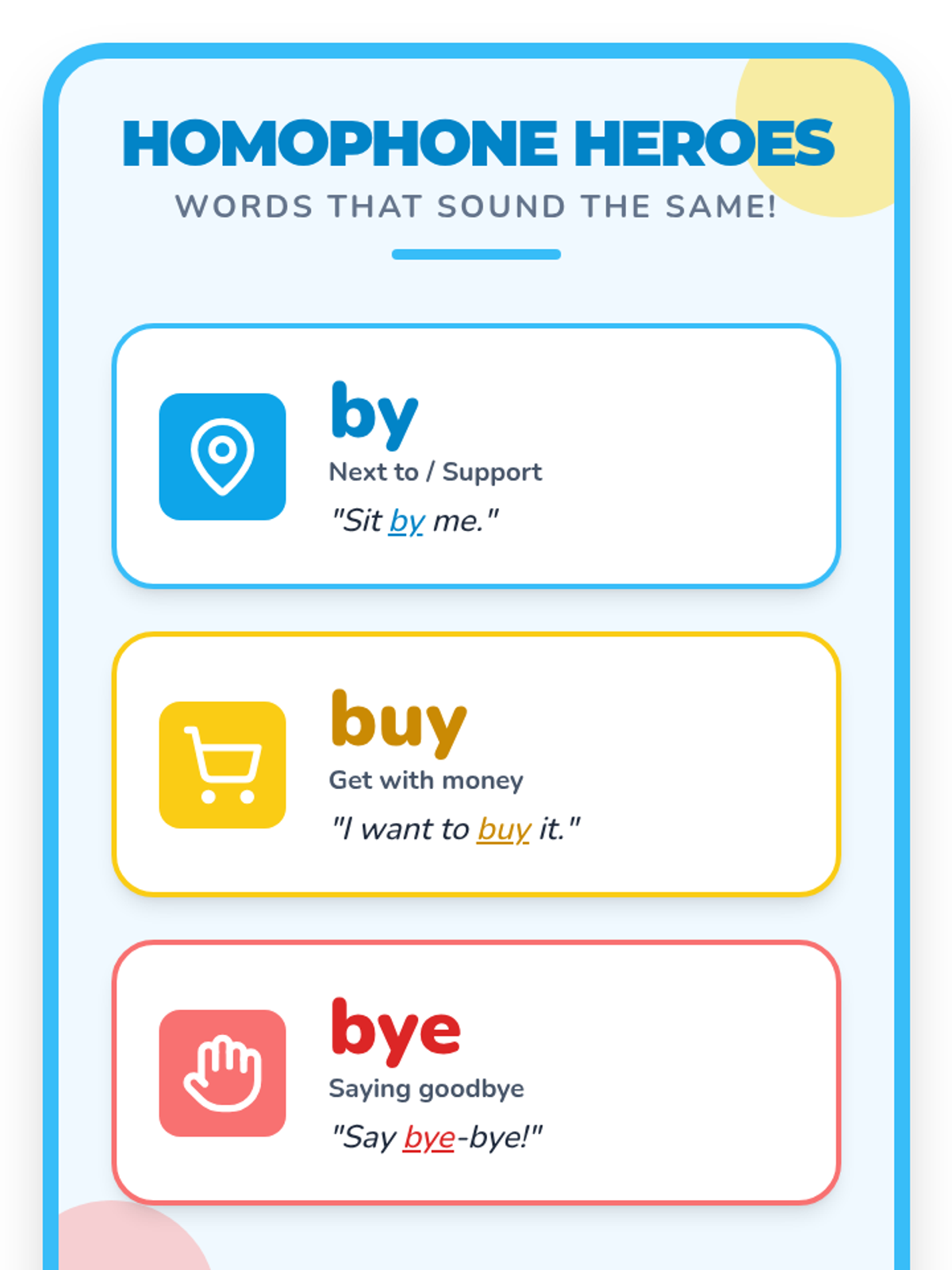
A fun, interactive lesson for 1st graders to distinguish between the homophones 'buy' and 'bye' using music, movement, and a hands-on game.
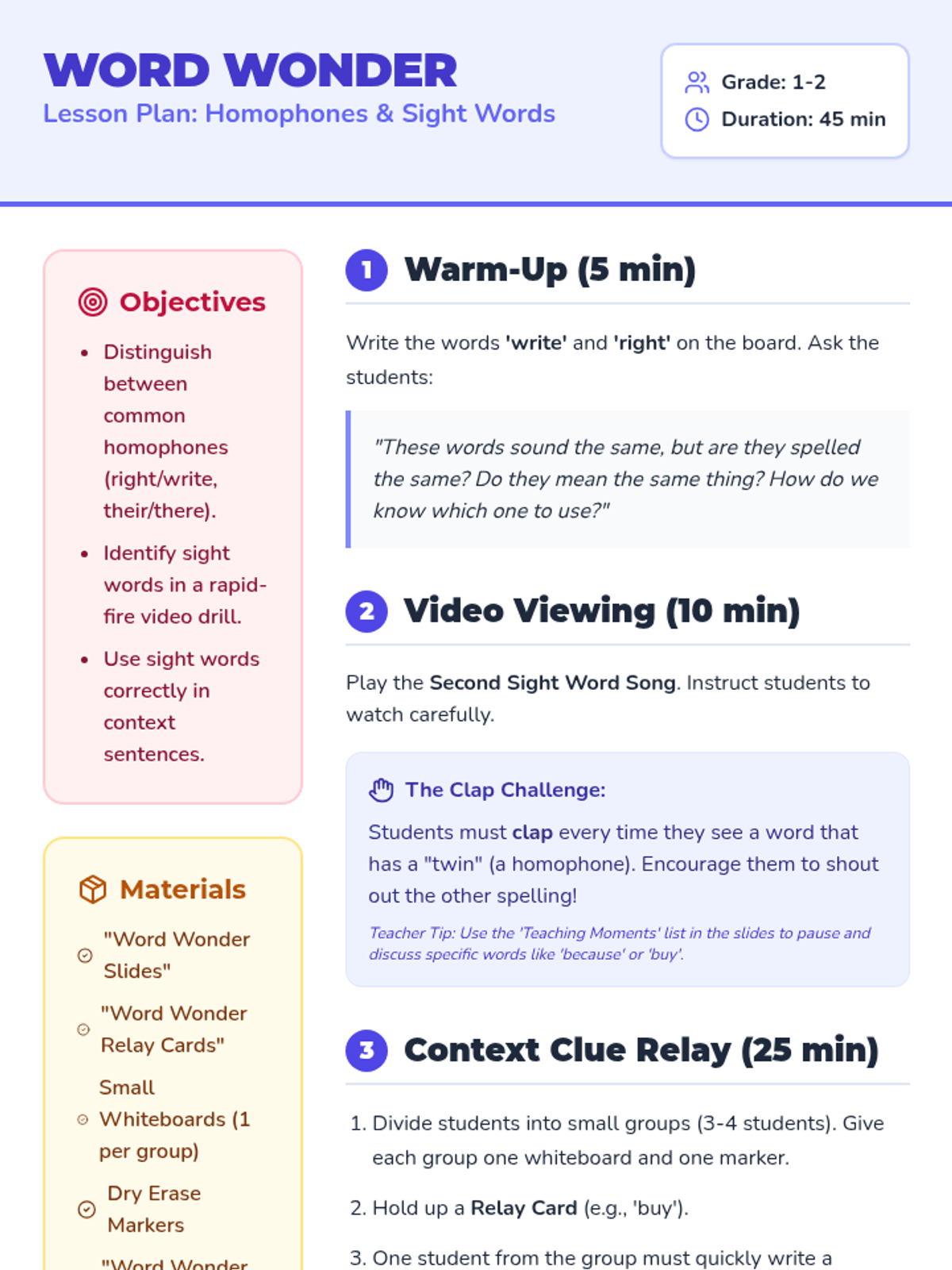
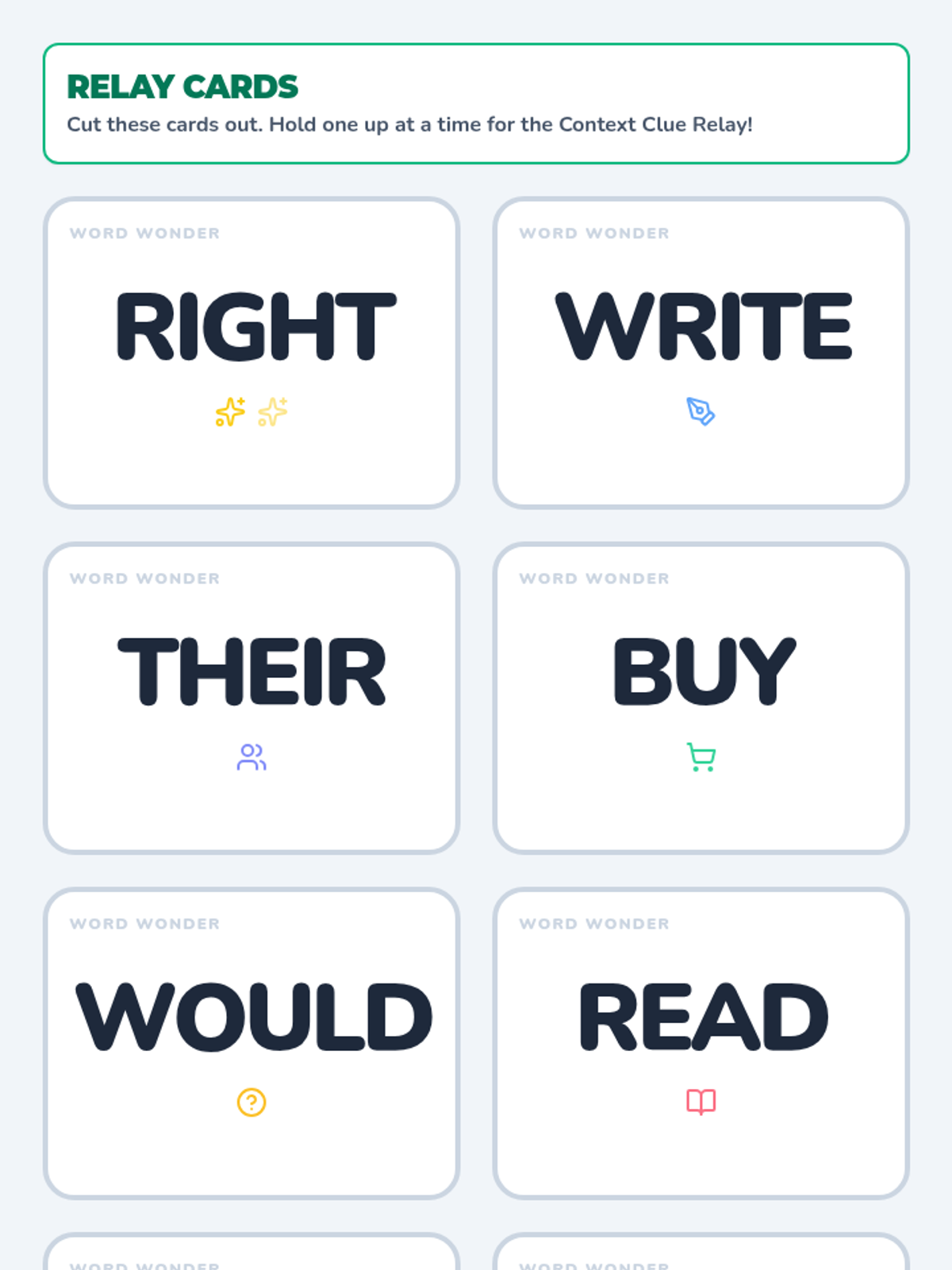
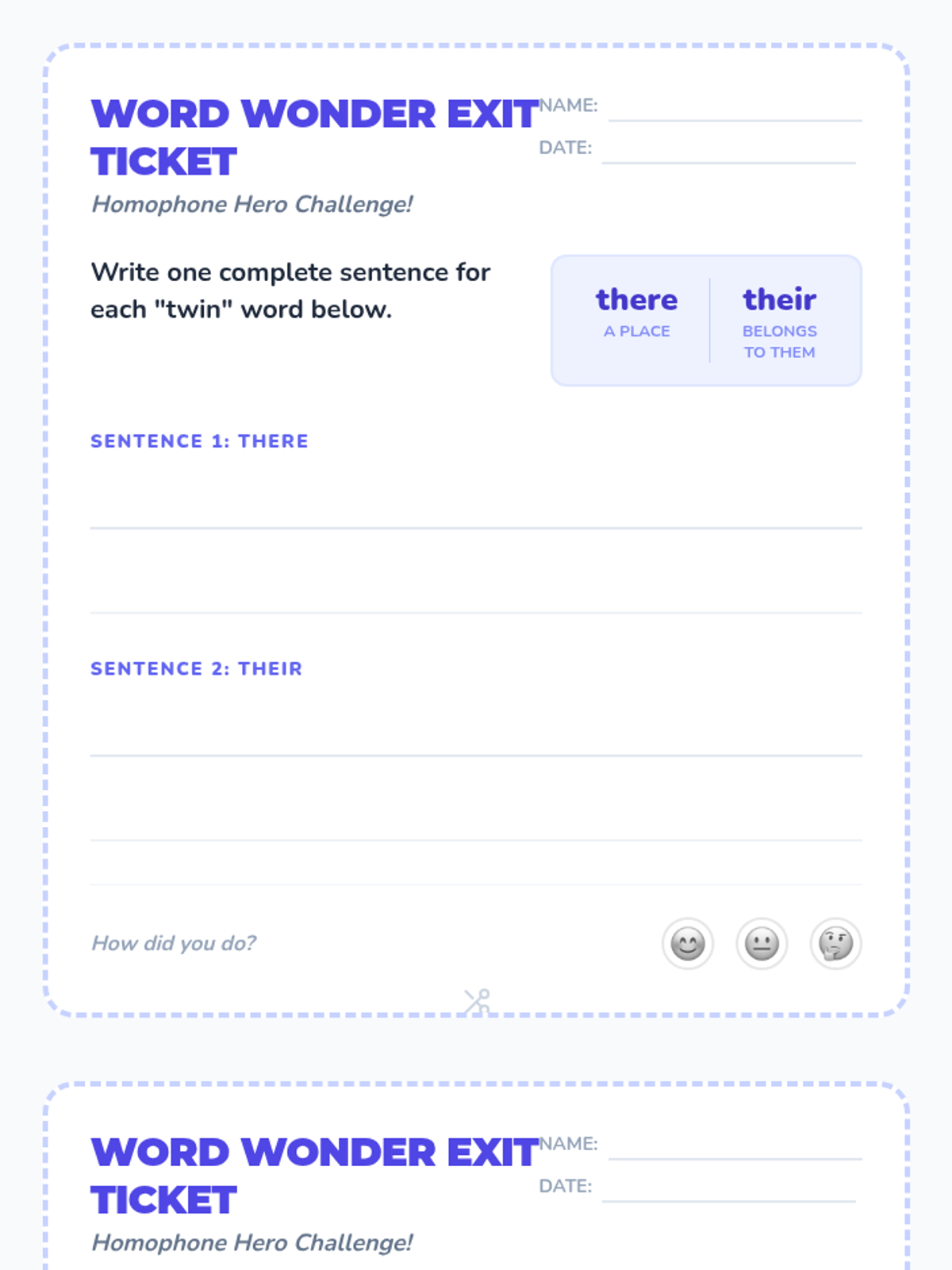
A high-energy lesson focused on identifying homophones and using sight words in context through a music video drill and a whiteboard relay race. Students will learn to distinguish between common homophones like 'write'/'right' and 'their'/'there'.
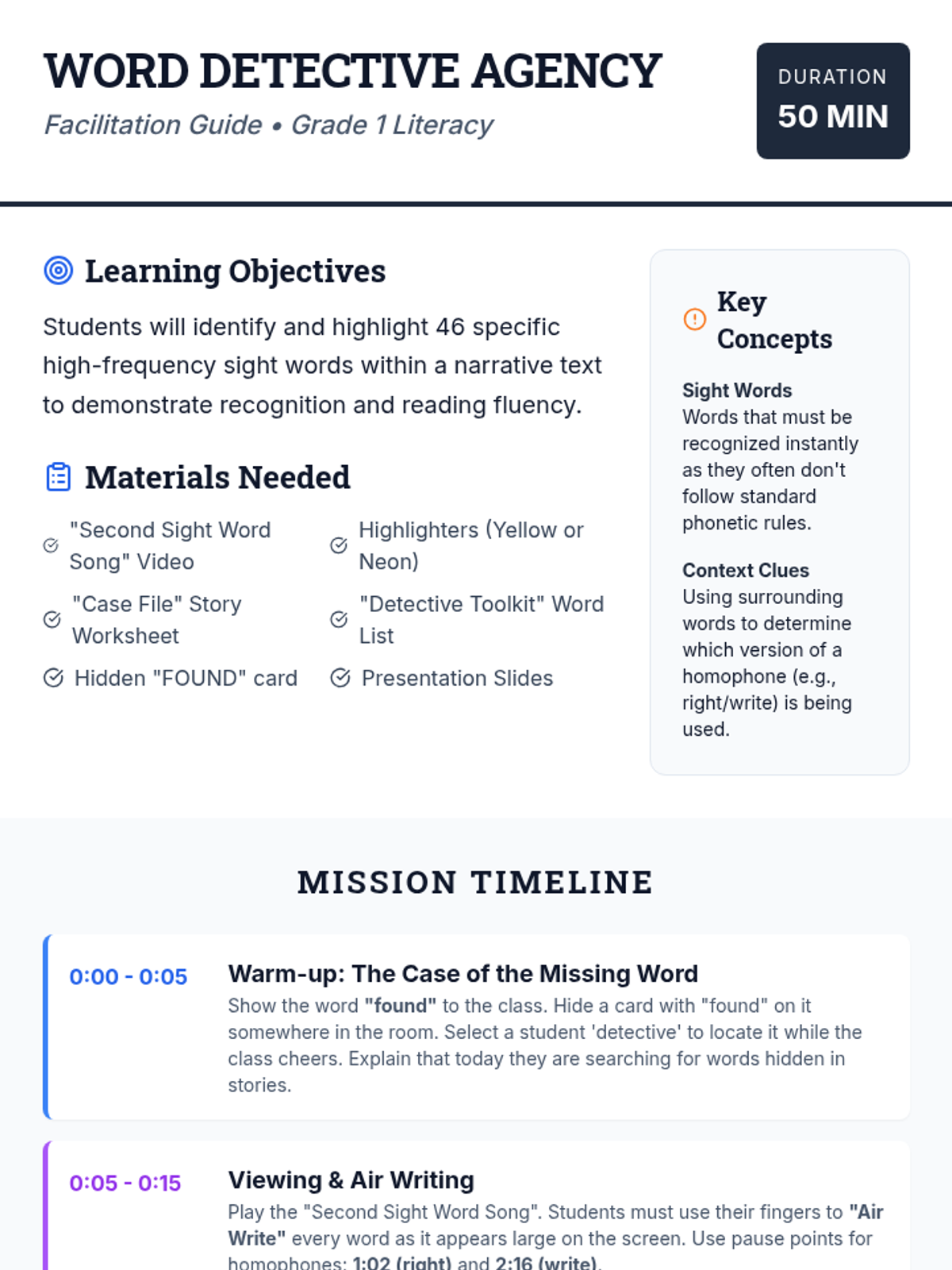
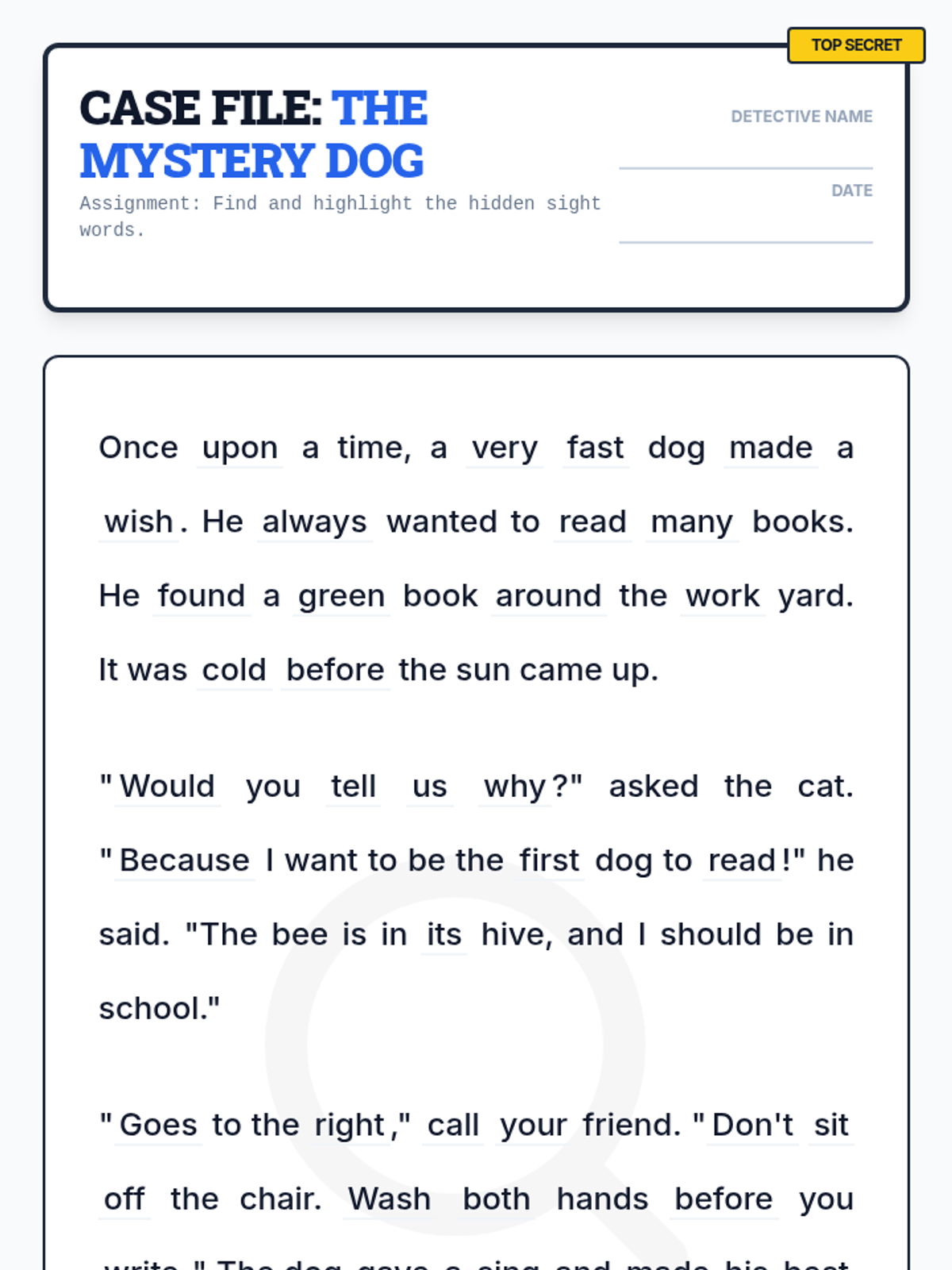
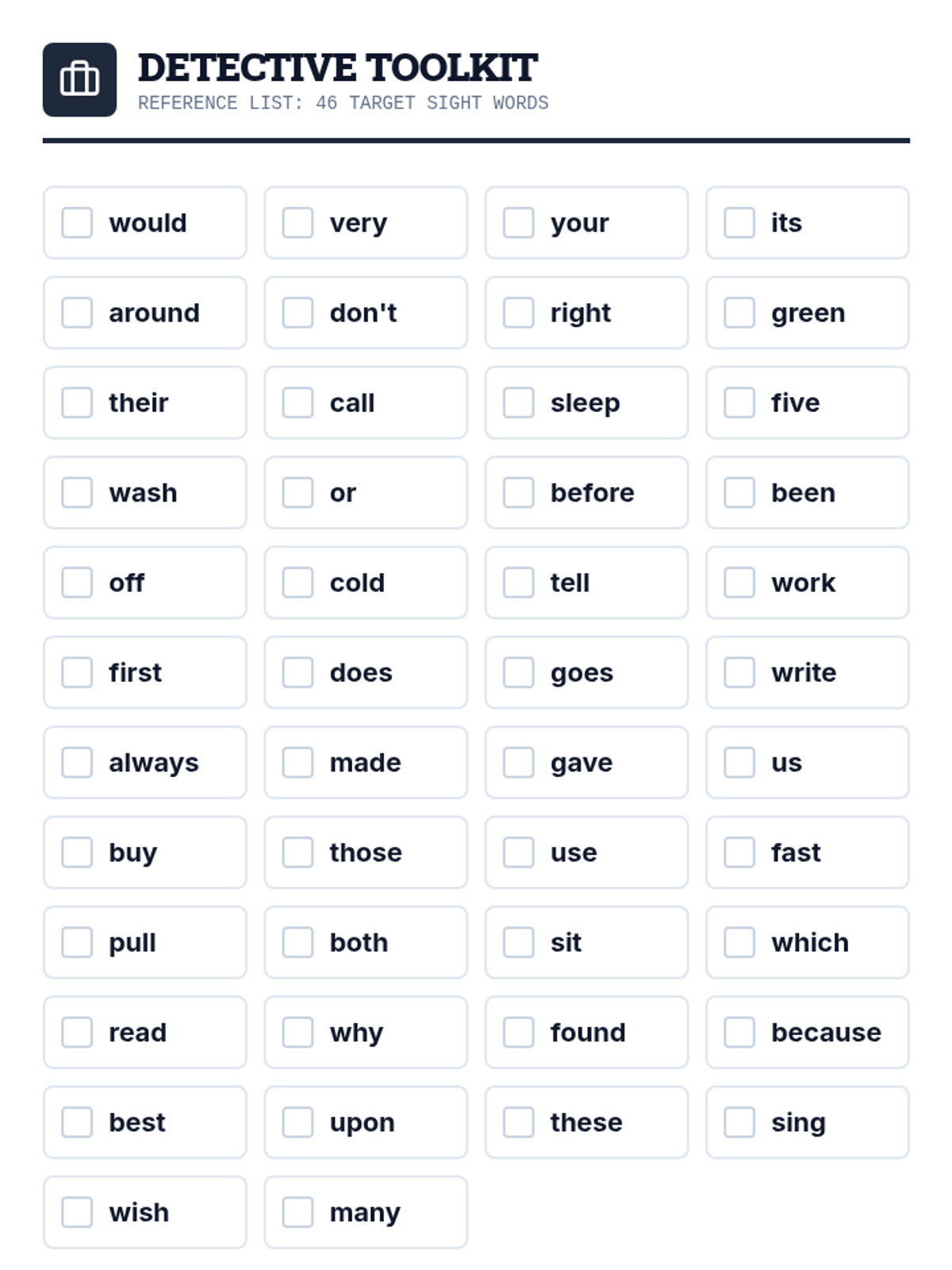
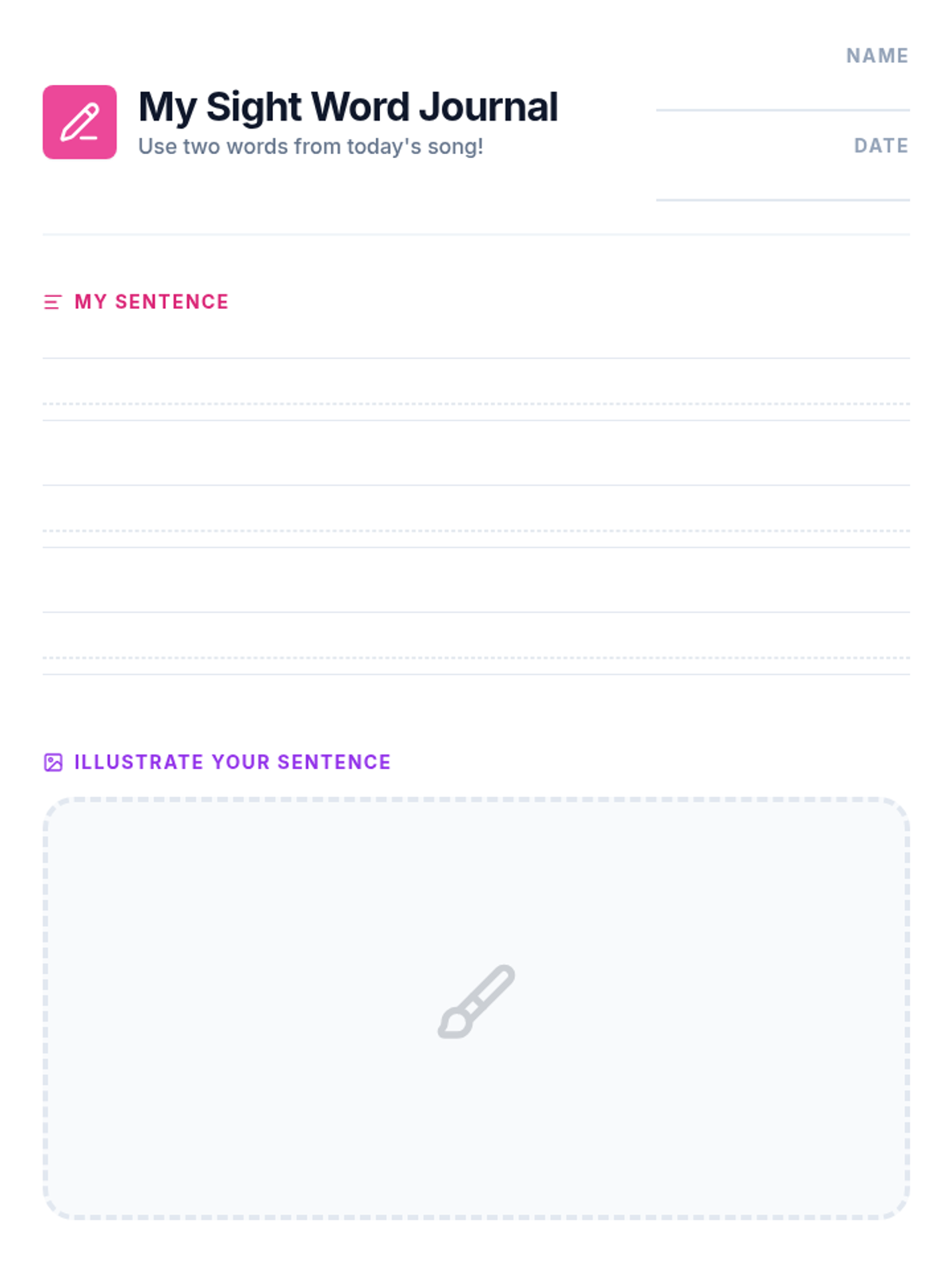
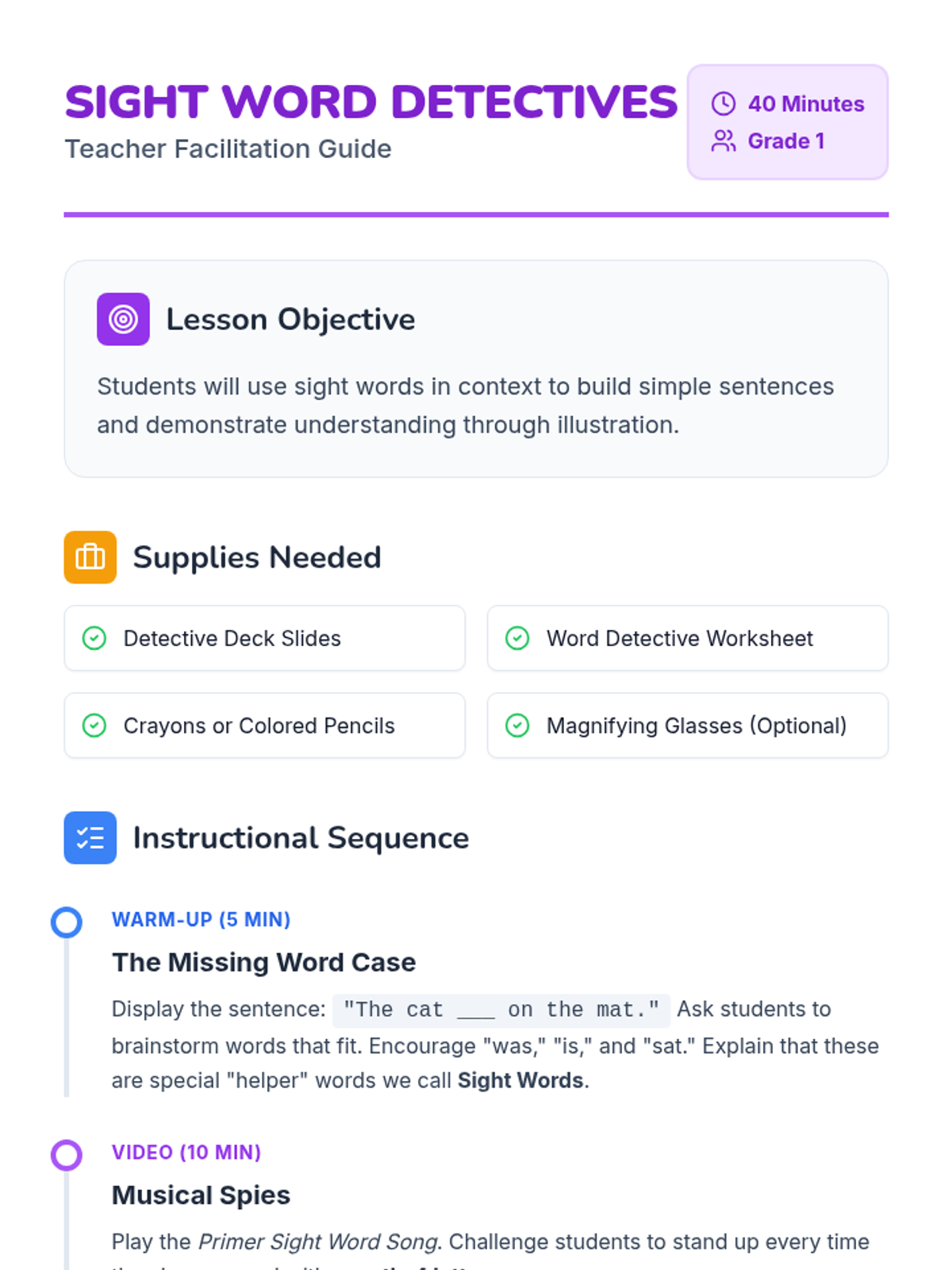
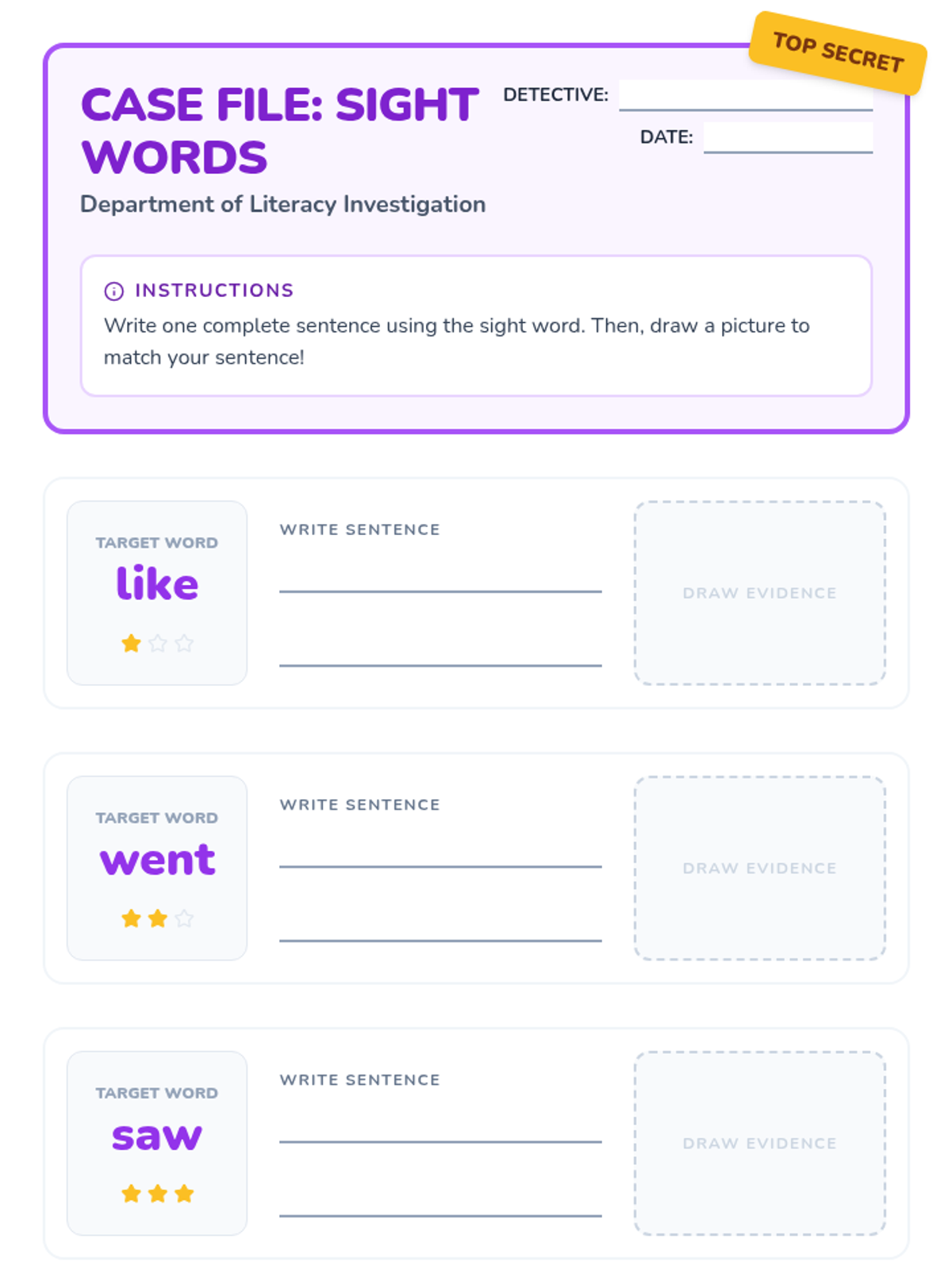
Students become 'Word Detectives' to identify 46 high-frequency sight words from the 'Second Sight Word Song'. The lesson involves a classroom search, air-writing during video viewing, and a text-based highlighting mission.
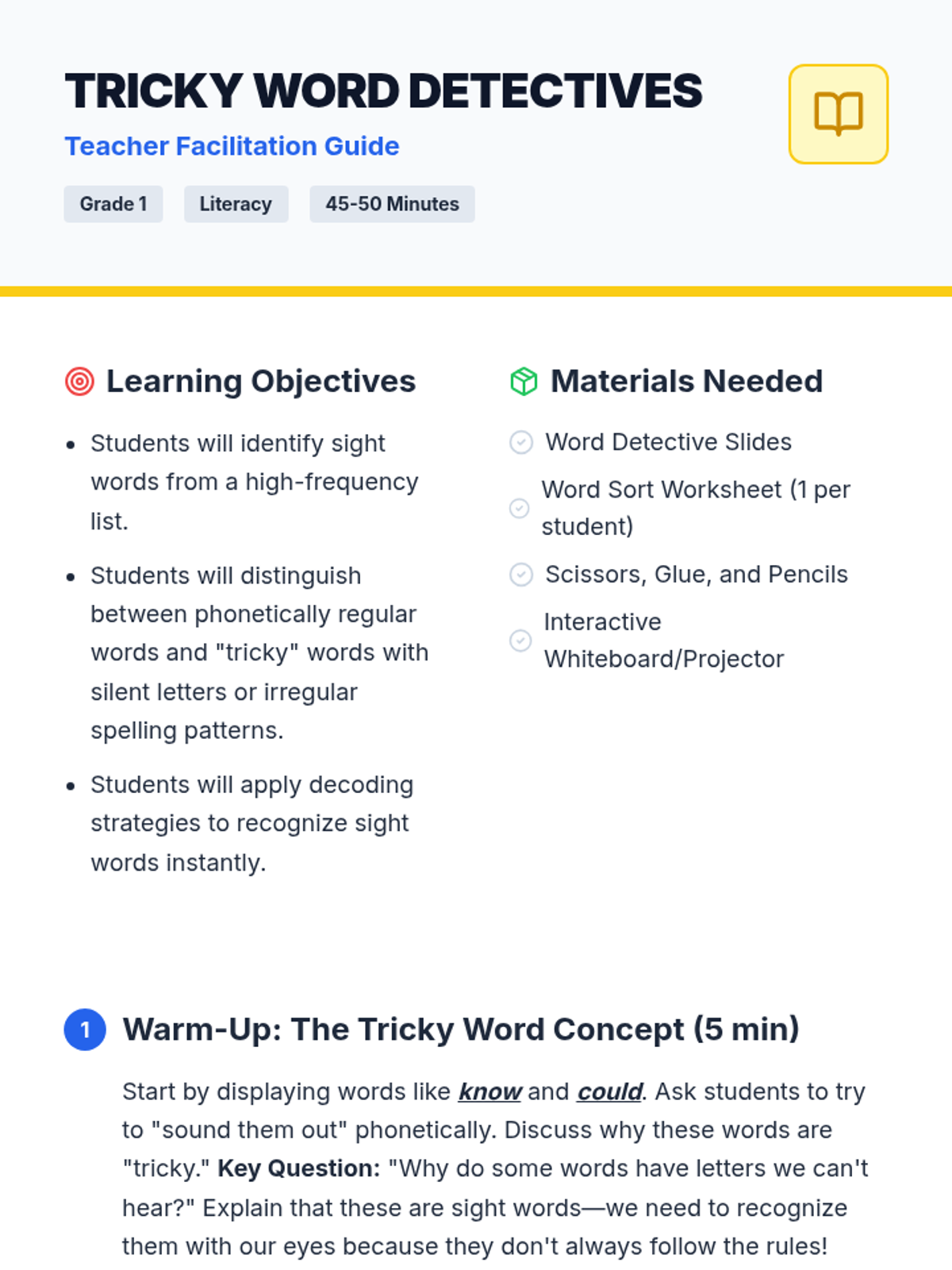
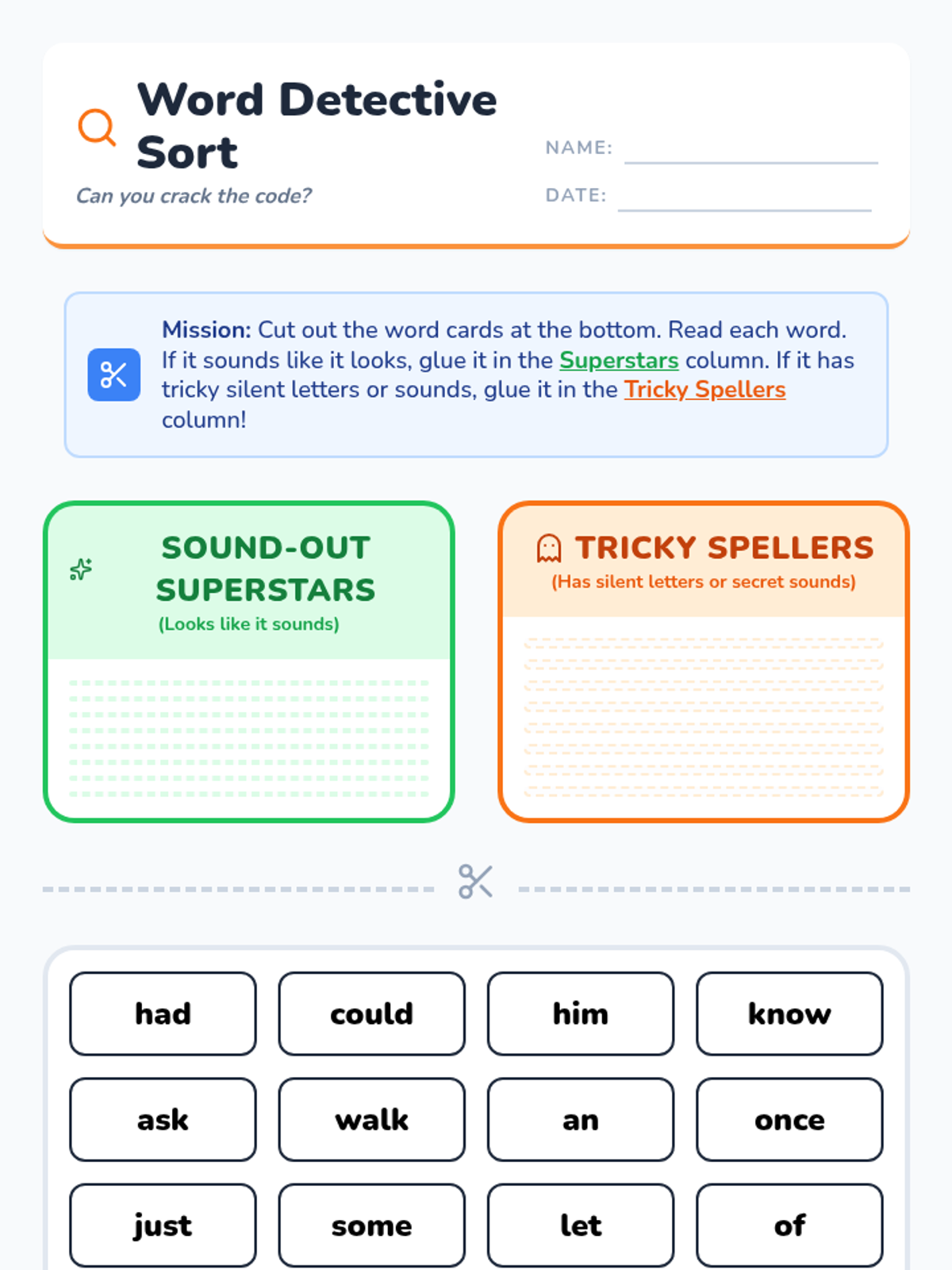
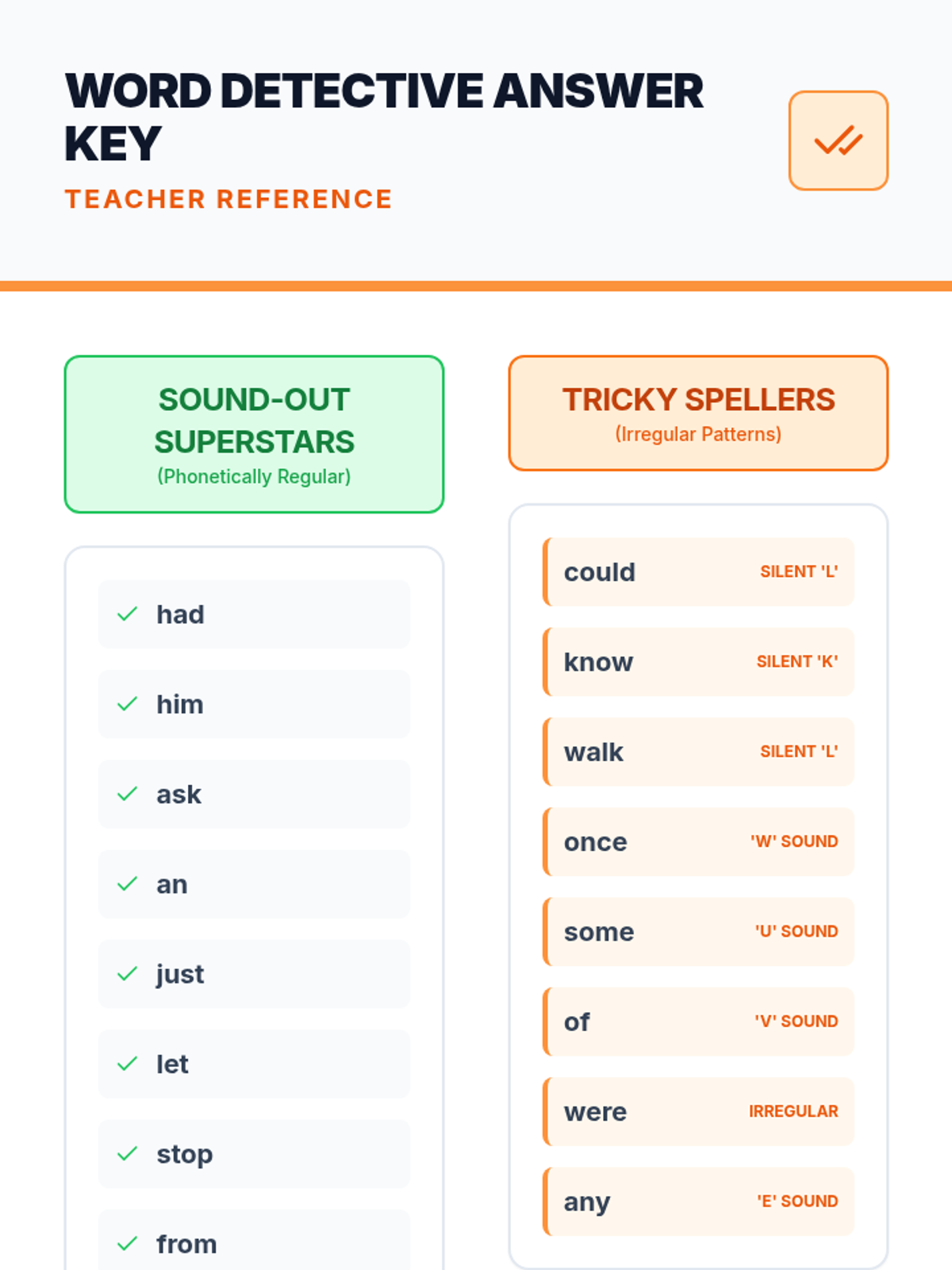
A 1st-grade literacy lesson focusing on identifying sight words and distinguishing between phonetically regular words and 'tricky' words with silent letters or unusual spelling patterns. Students will use hand signals during a musical video and complete a Word Detective sorting activity.
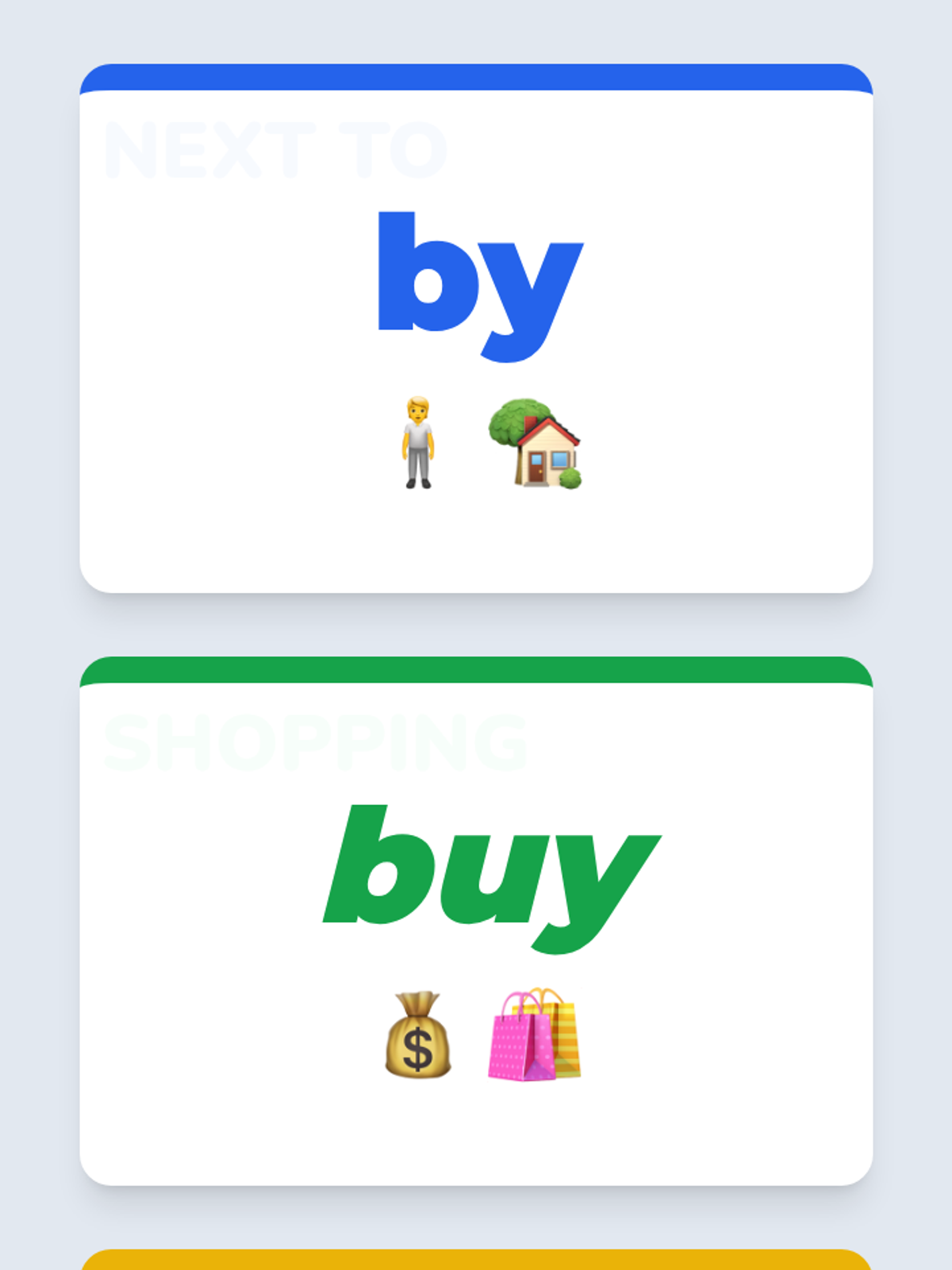
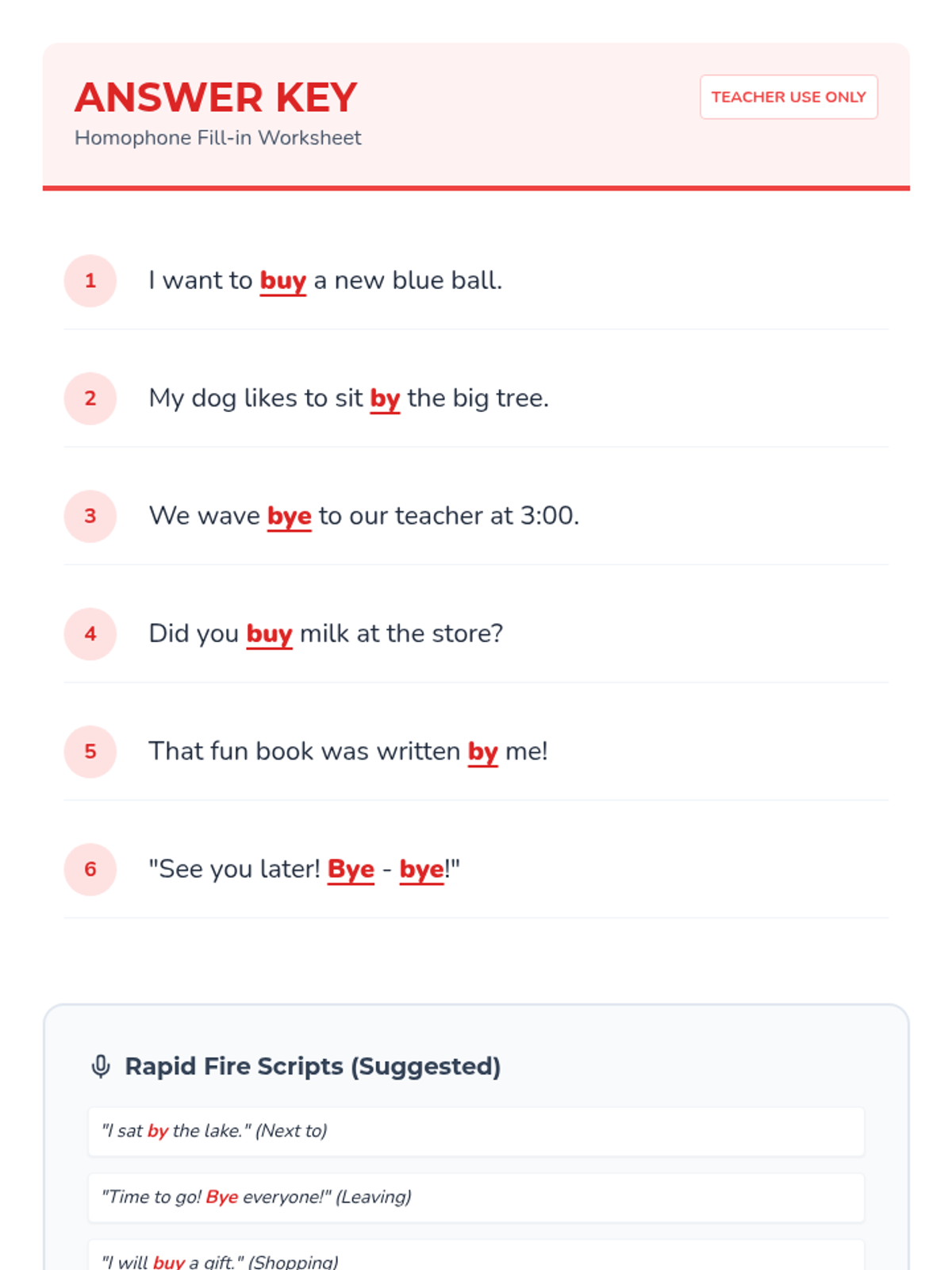
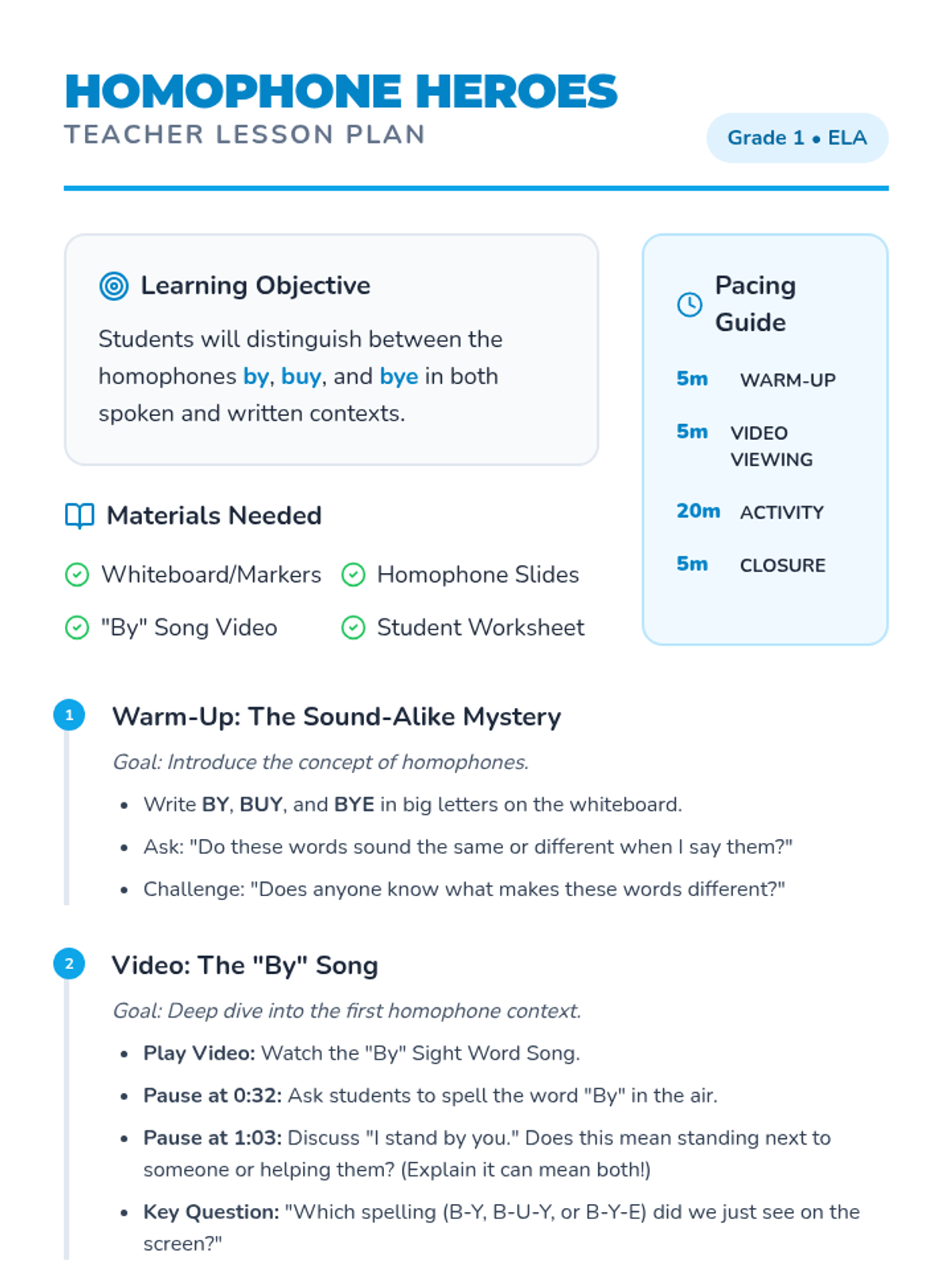
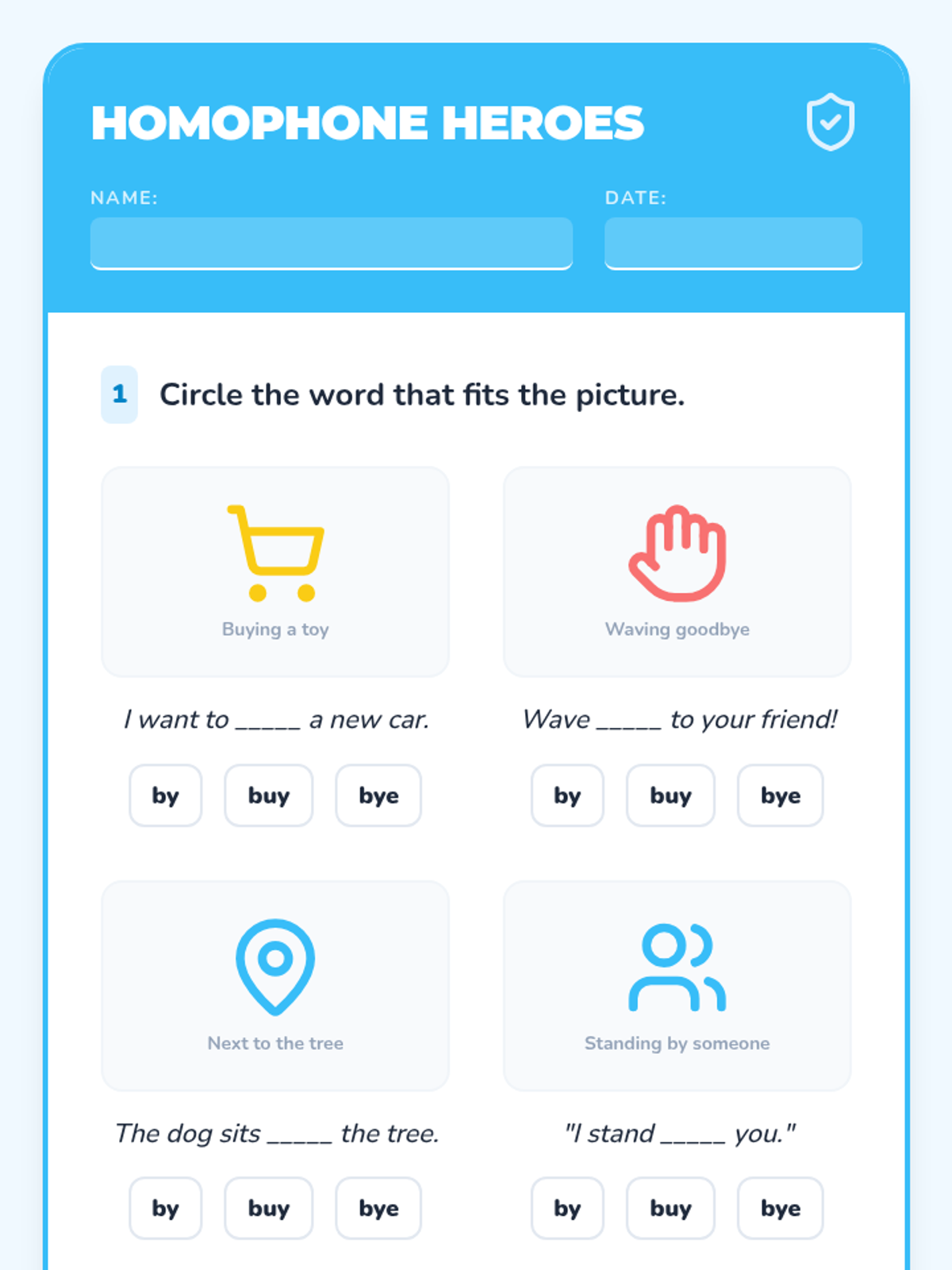
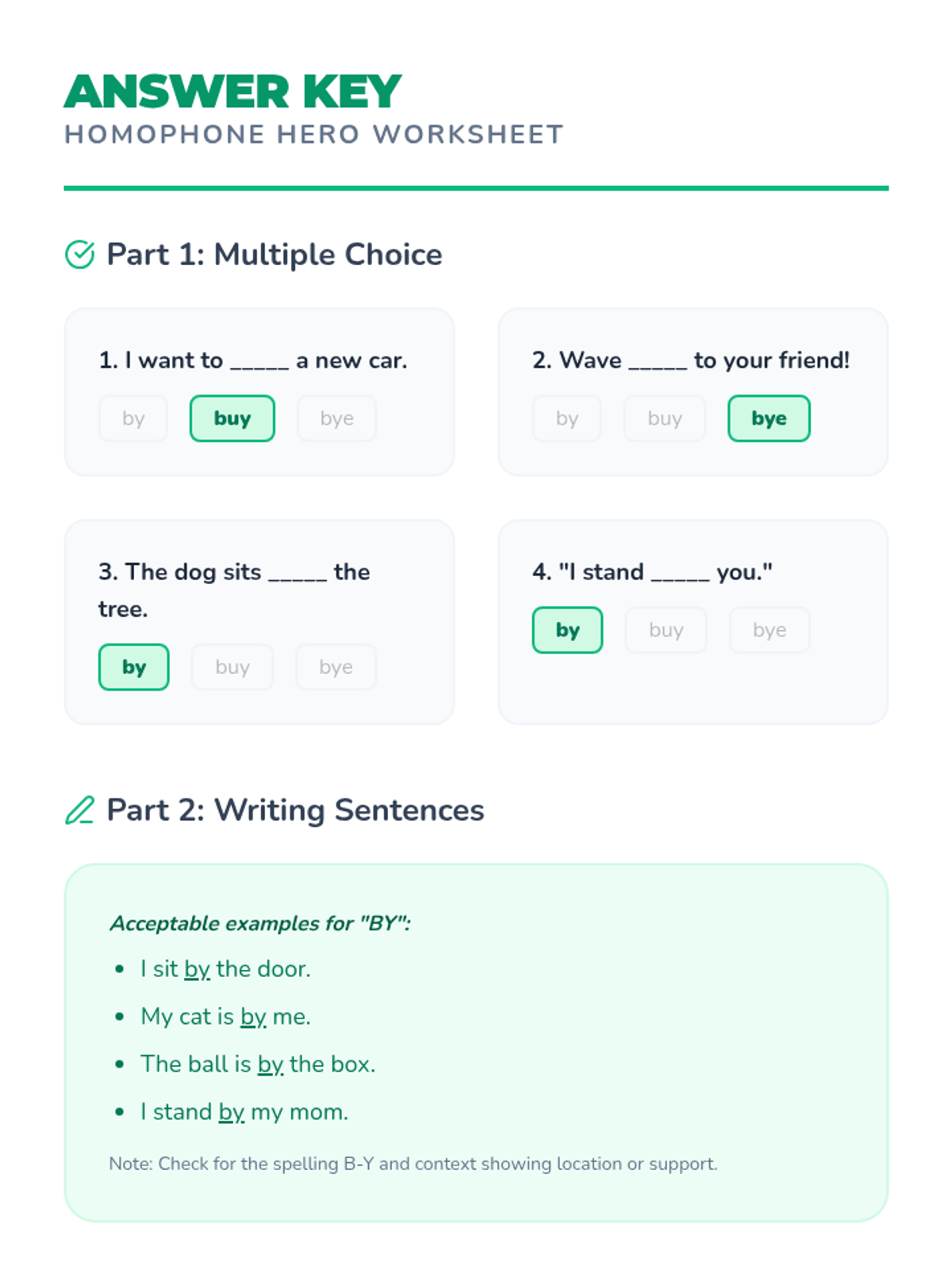
A fun, interactive lesson for 1st graders to master the homophones by, buy, and bye through song, movement, and sentence building.
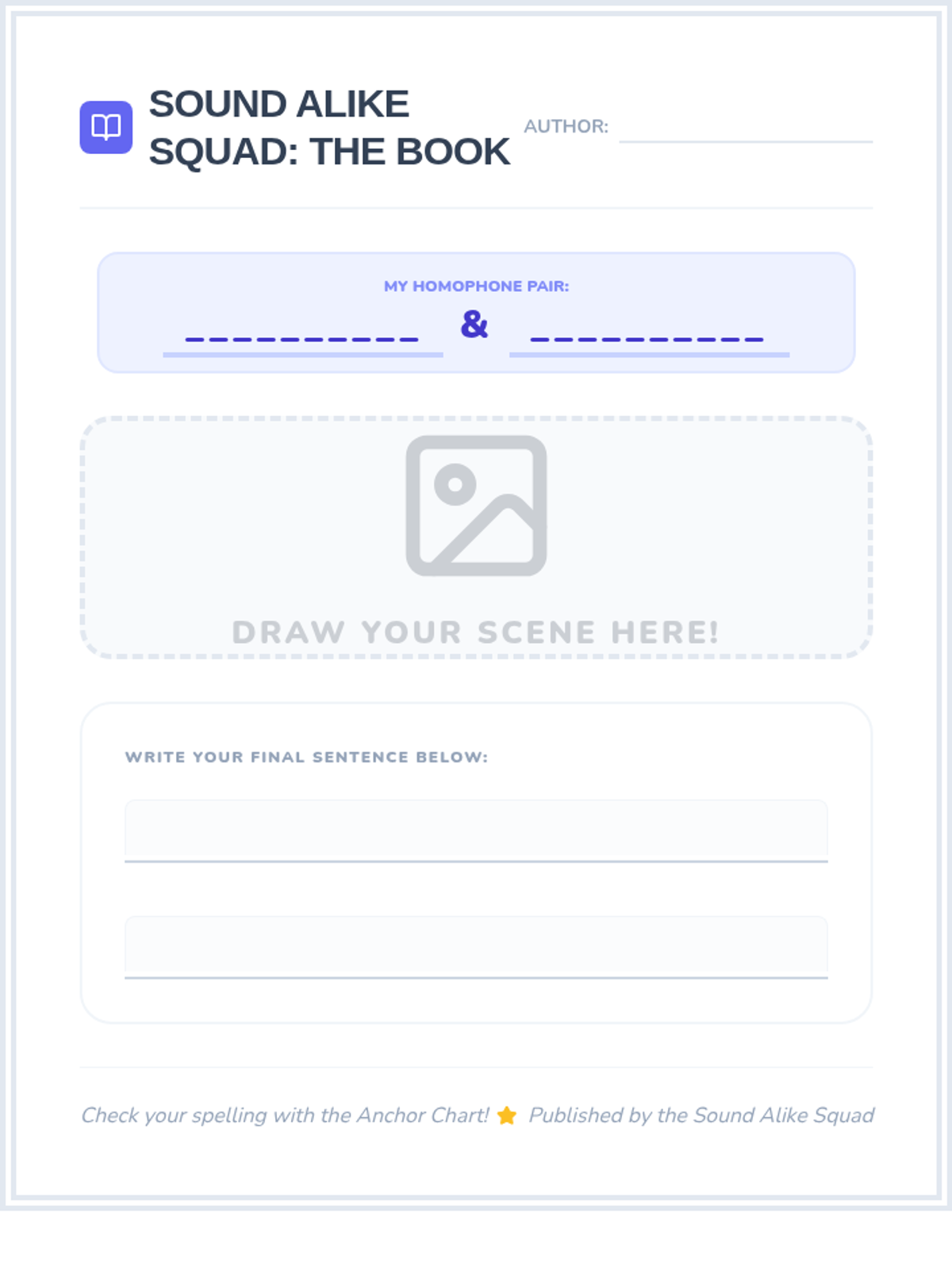
Students finalize an illustrated page for a specific homophone pair to be bound into a class book, celebrating their learning.
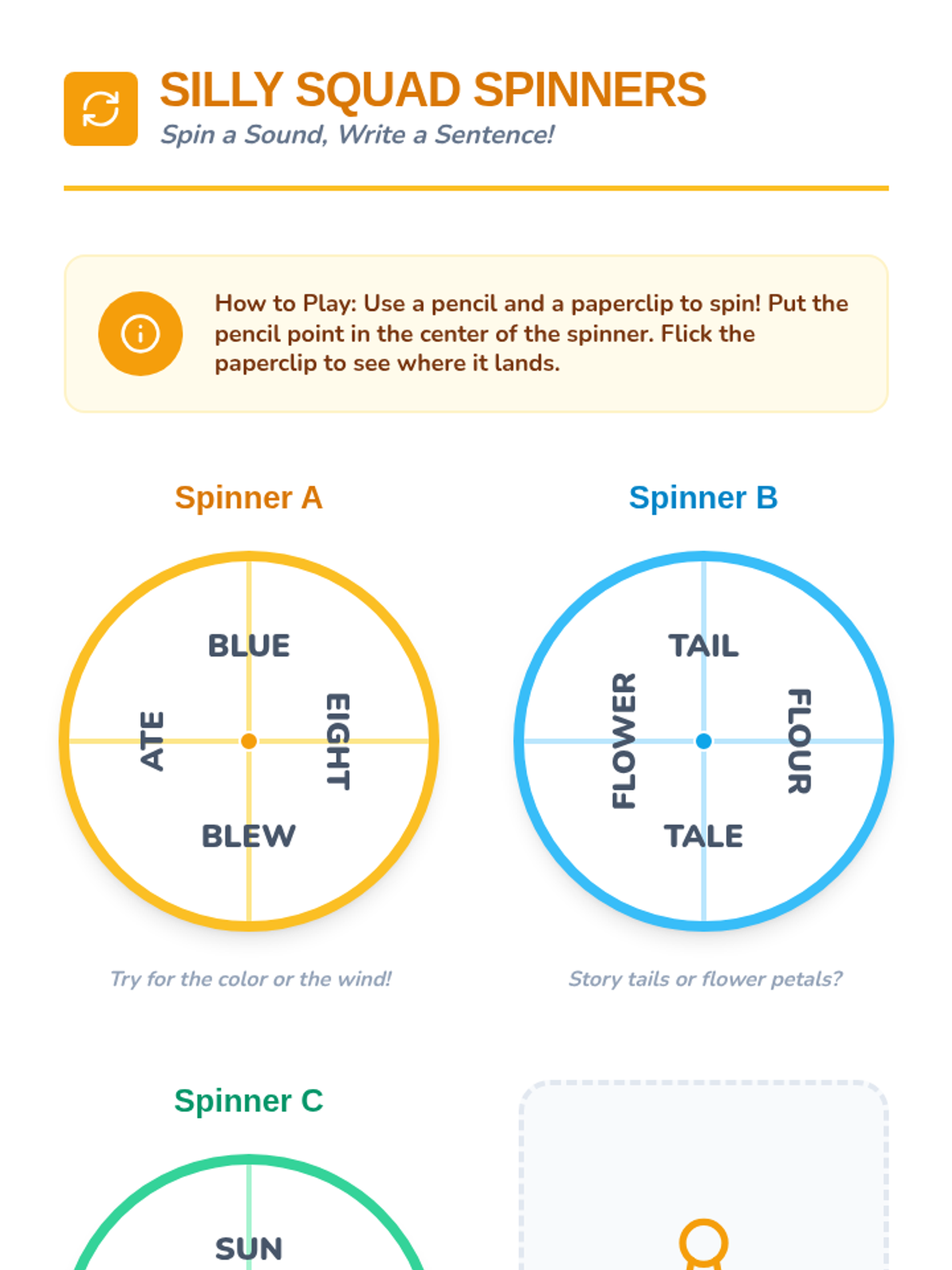
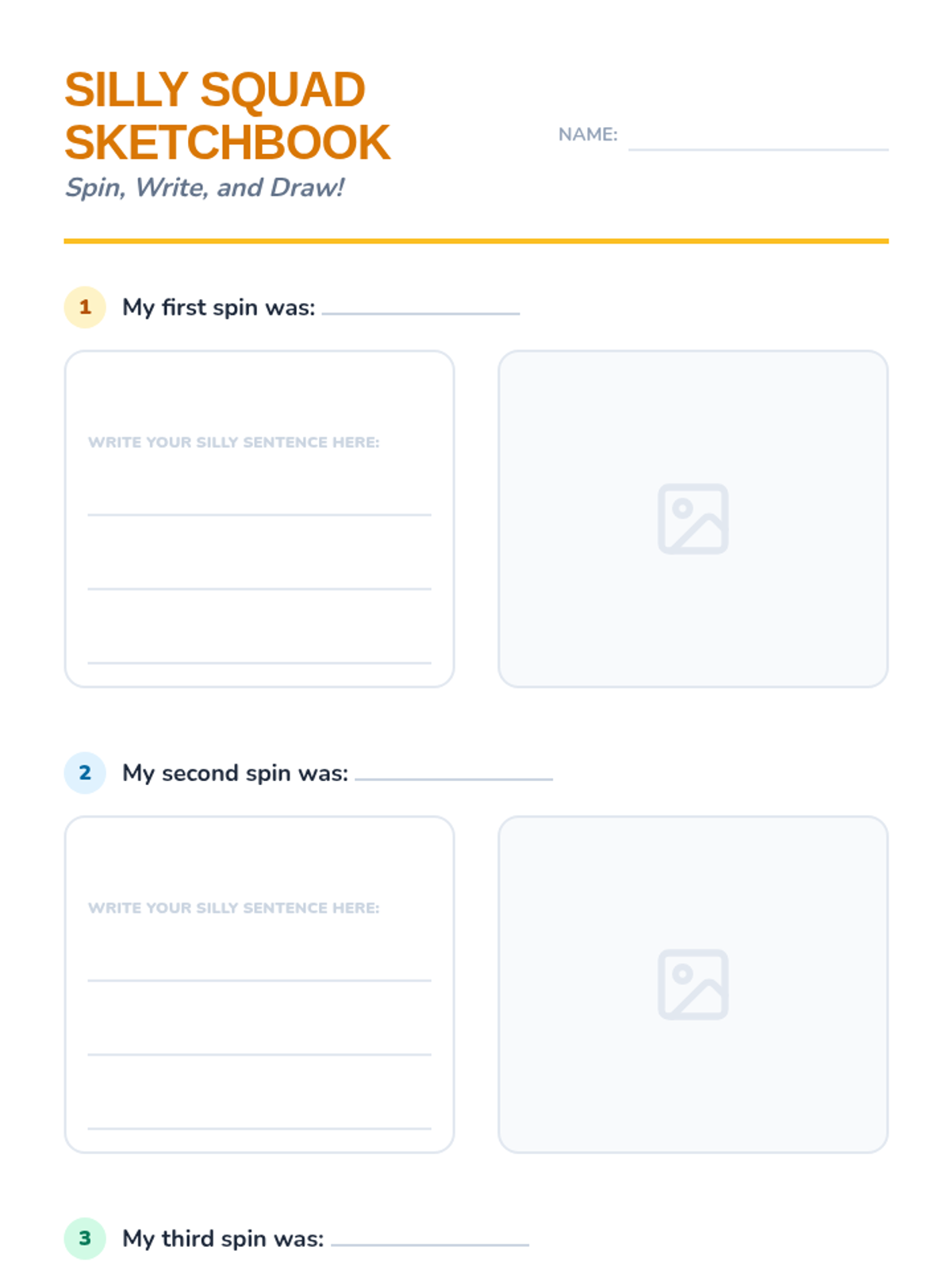
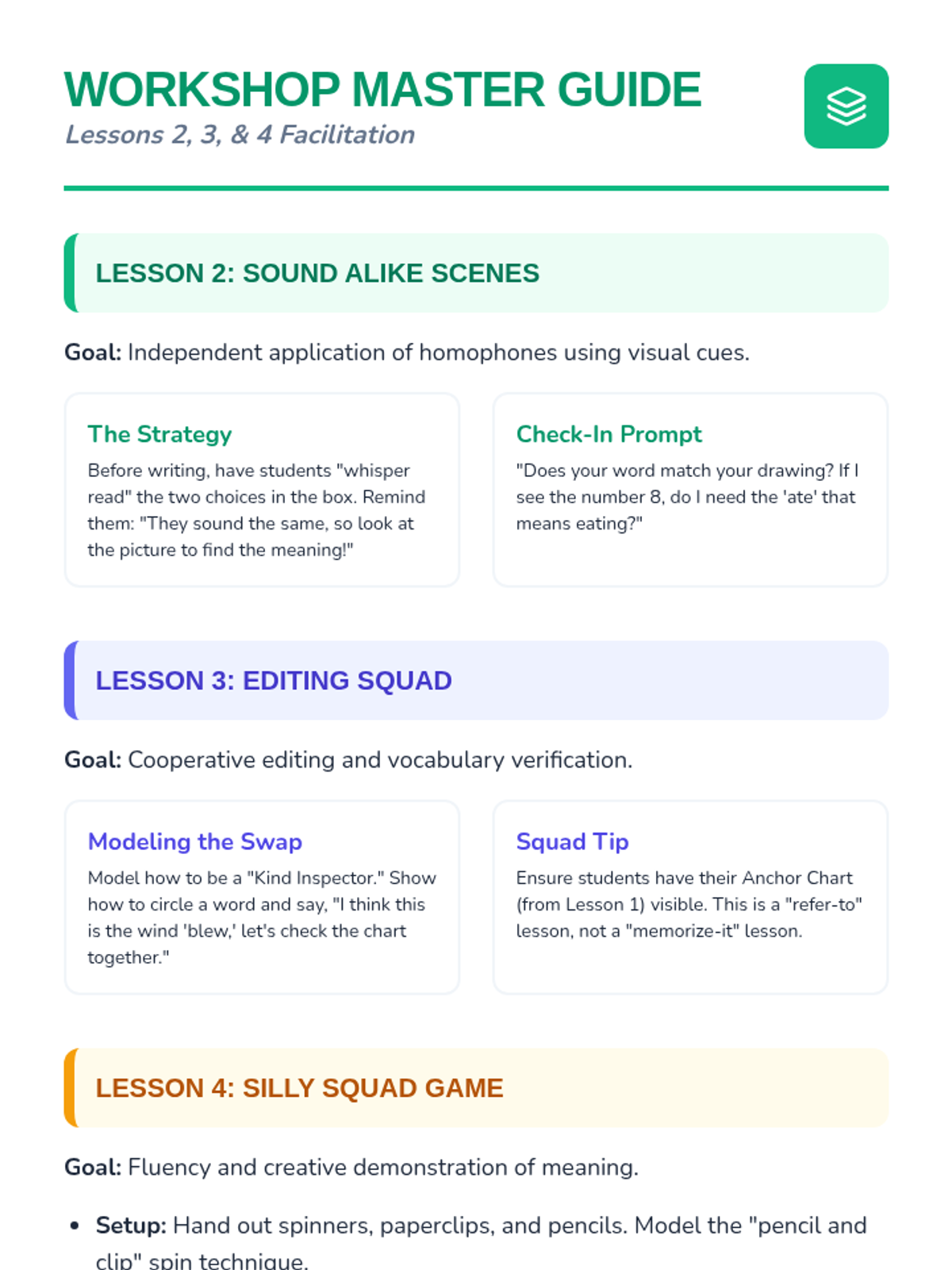
A game-based lesson where students generate homophones using spinners and write/illustrate silly sentences to demonstrate understanding.
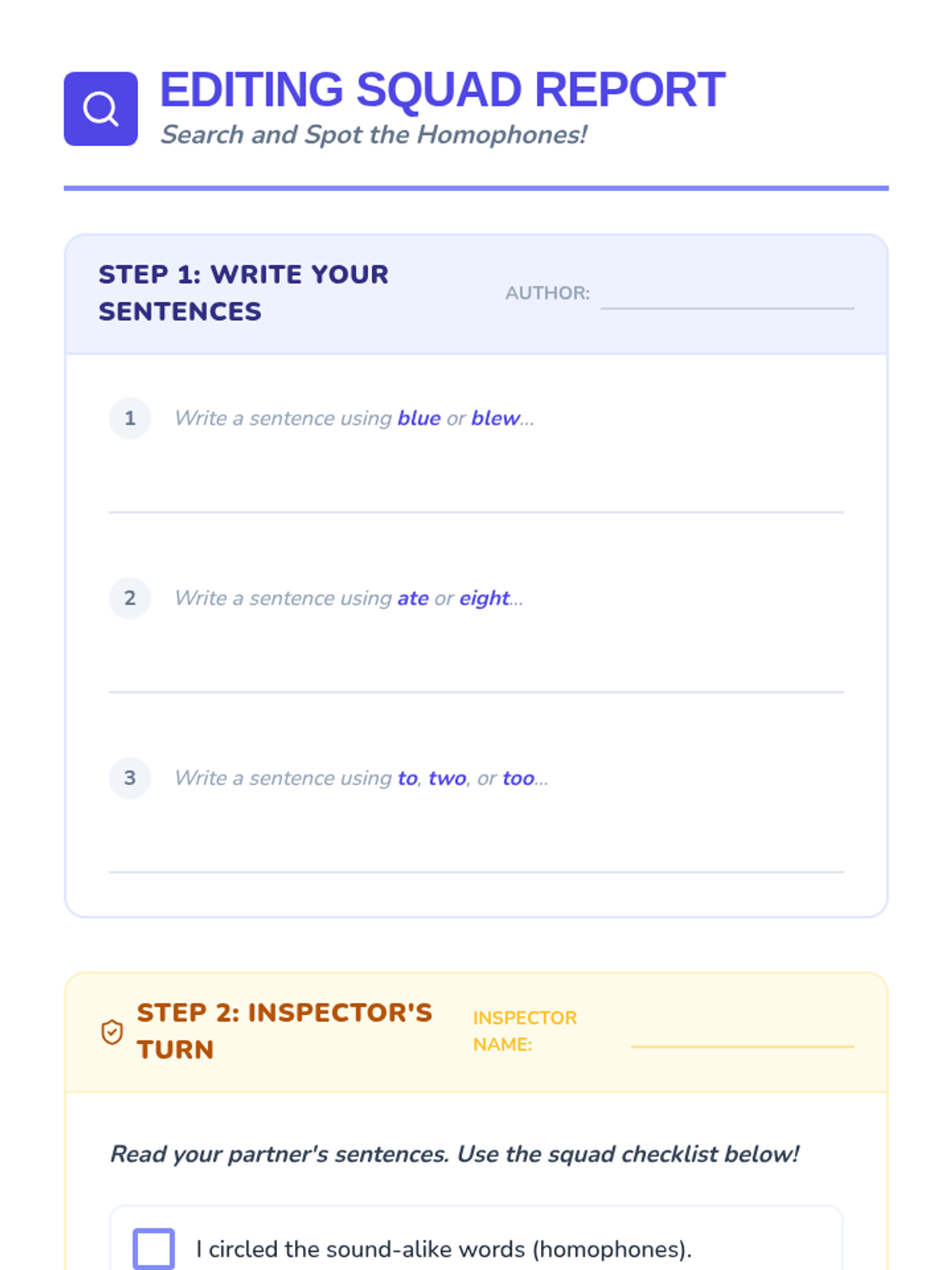
Students swap sentences and use an anchor chart to check if their partner used the correct homophone, practicing the editing process.
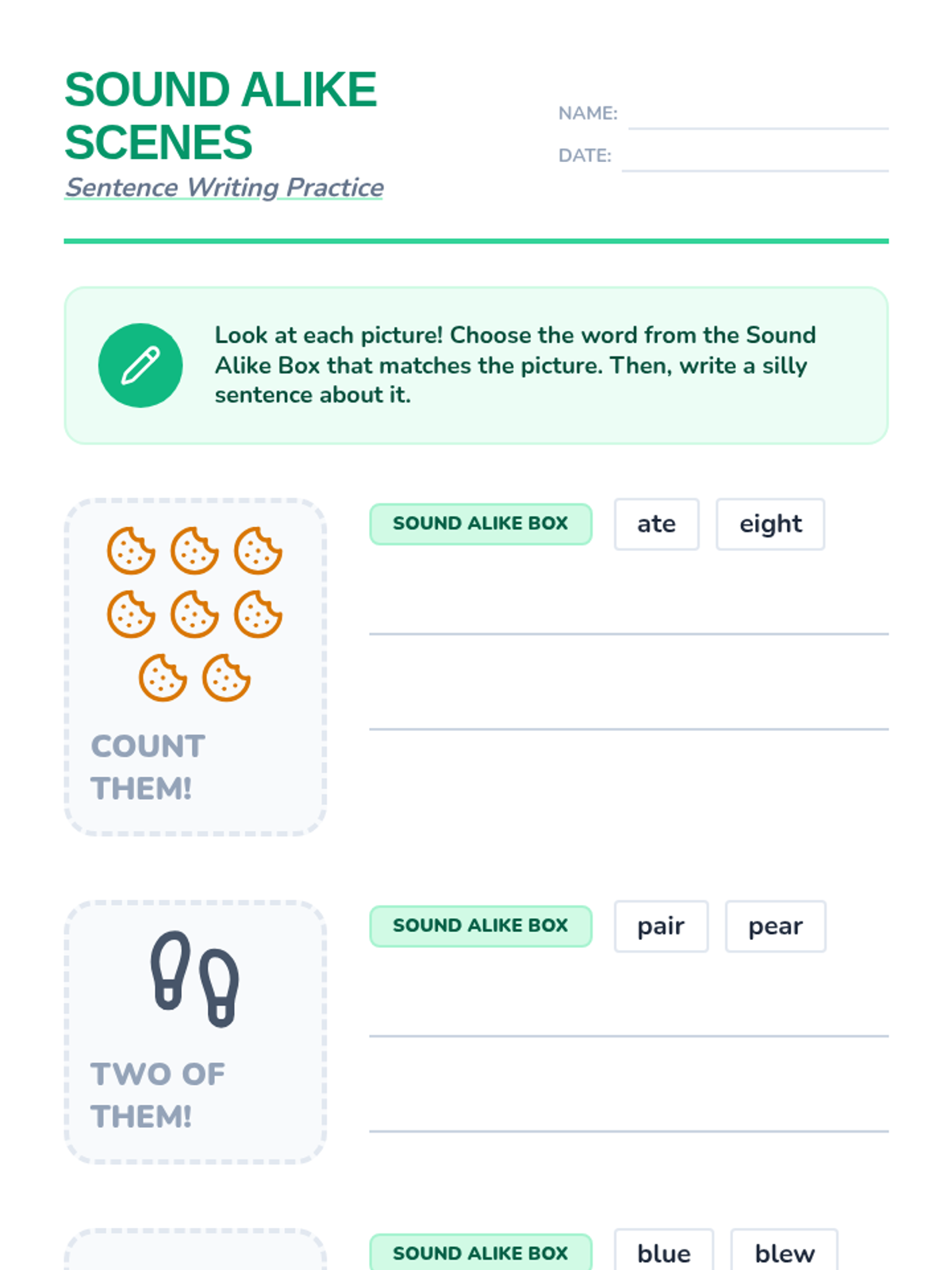
Students use picture prompts to write captions using specific homophone pairs, focusing on choosing the spelling that matches the meaning.
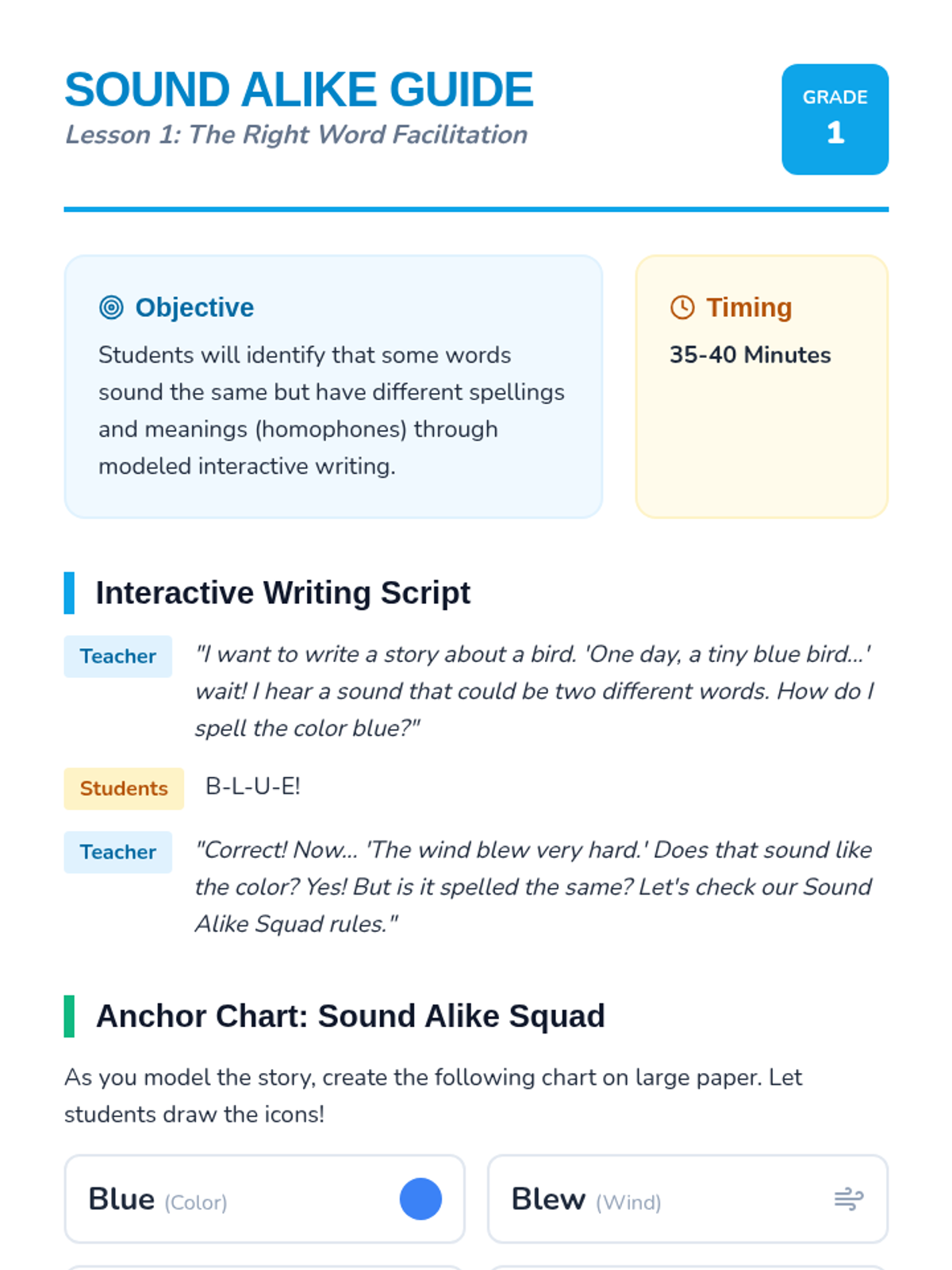
Teacher models writing a story, pausing at homophones to ask students for the correct spelling while creating a shared reference anchor chart.
Students create their own homophone 'mysteries' for partners to solve, demonstrating mastery through writing and peer review.
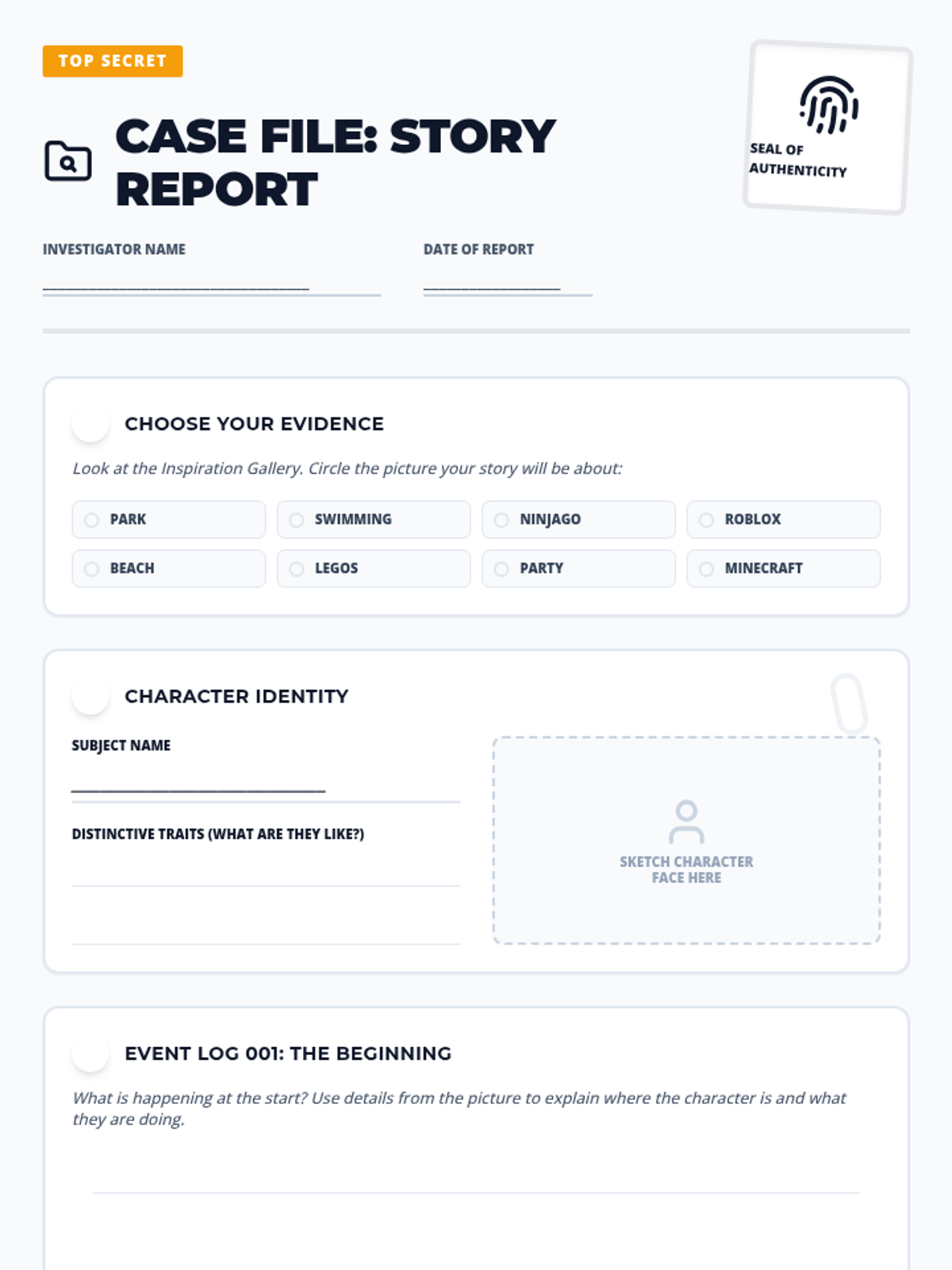
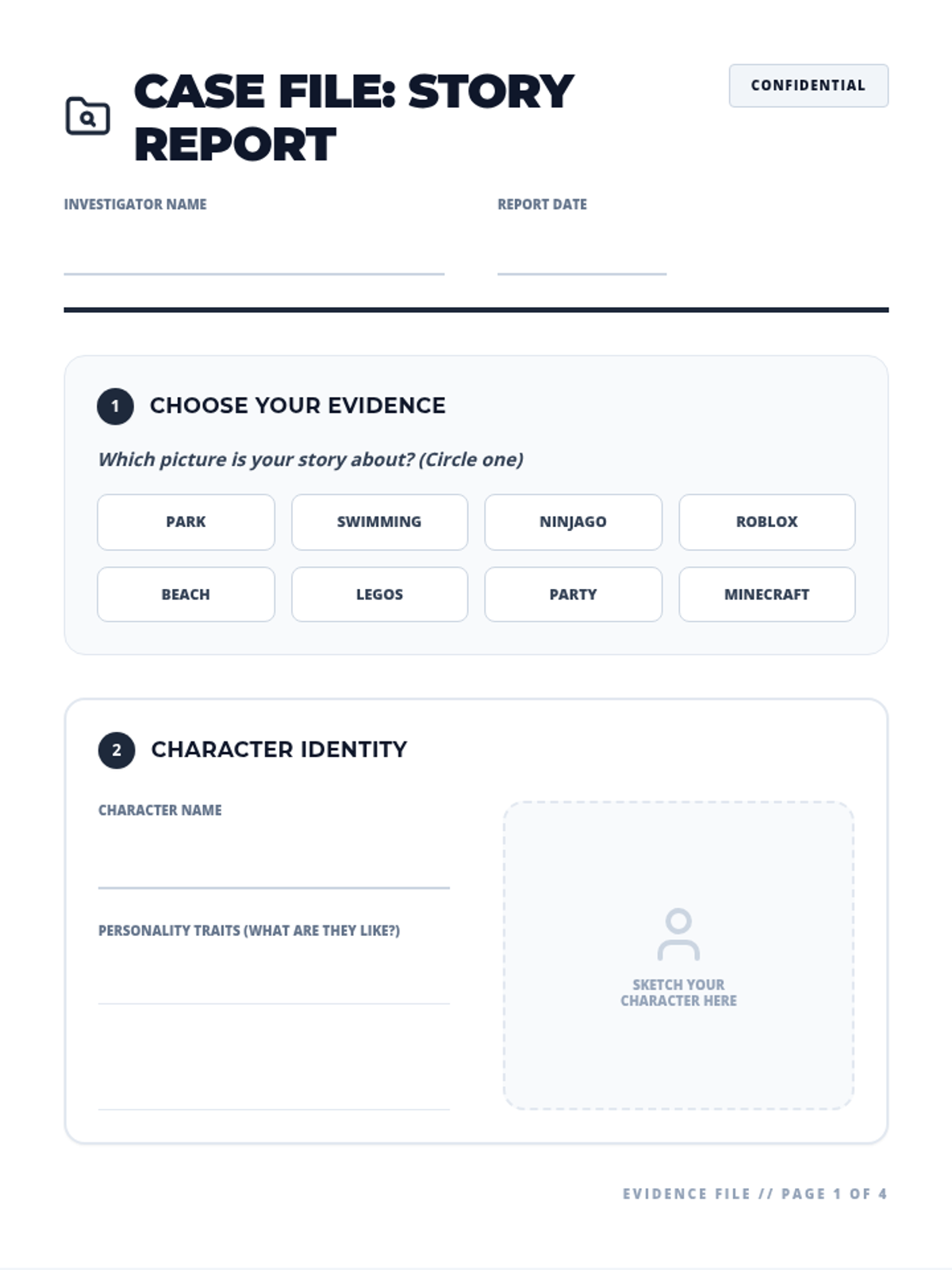
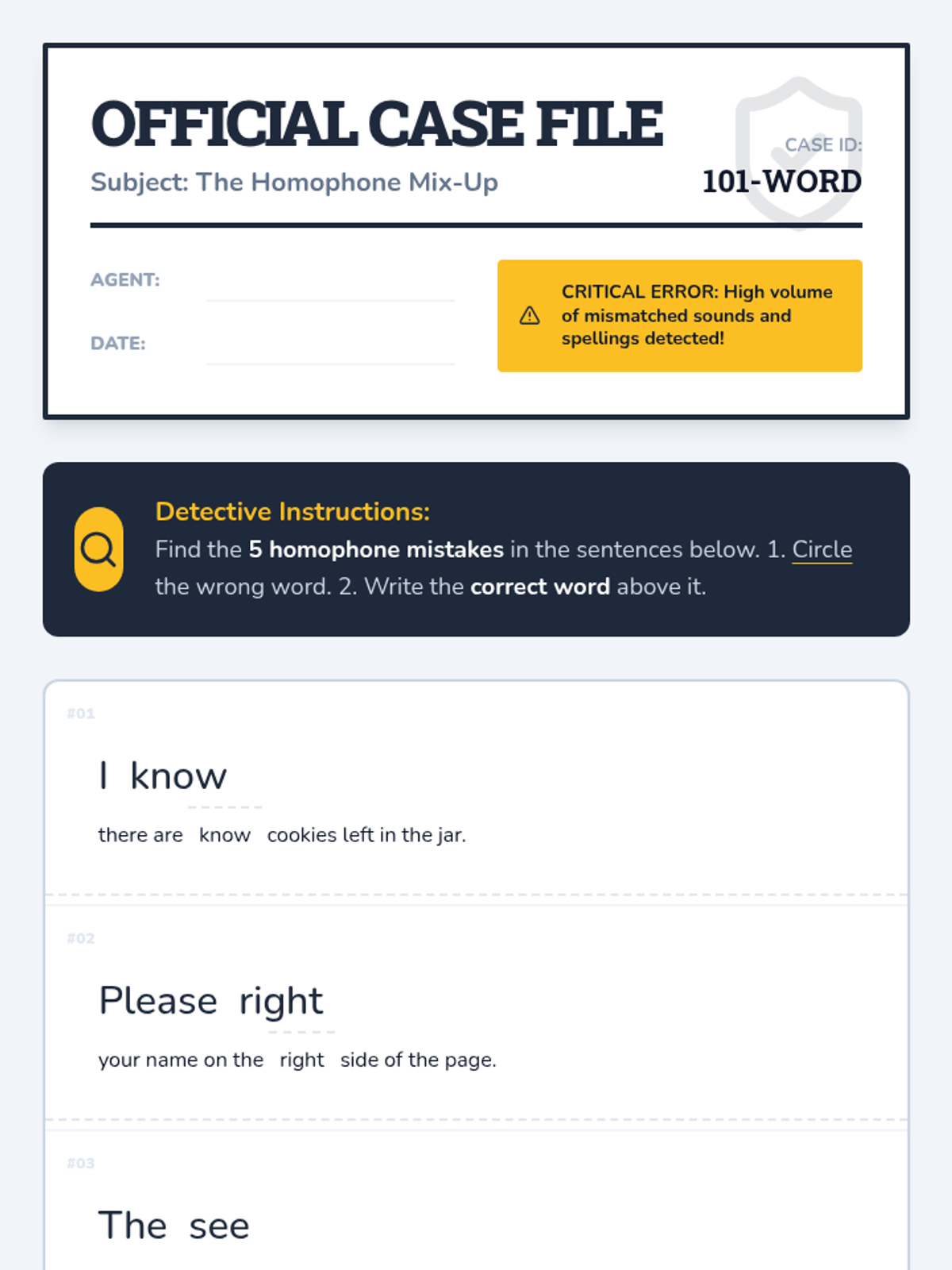
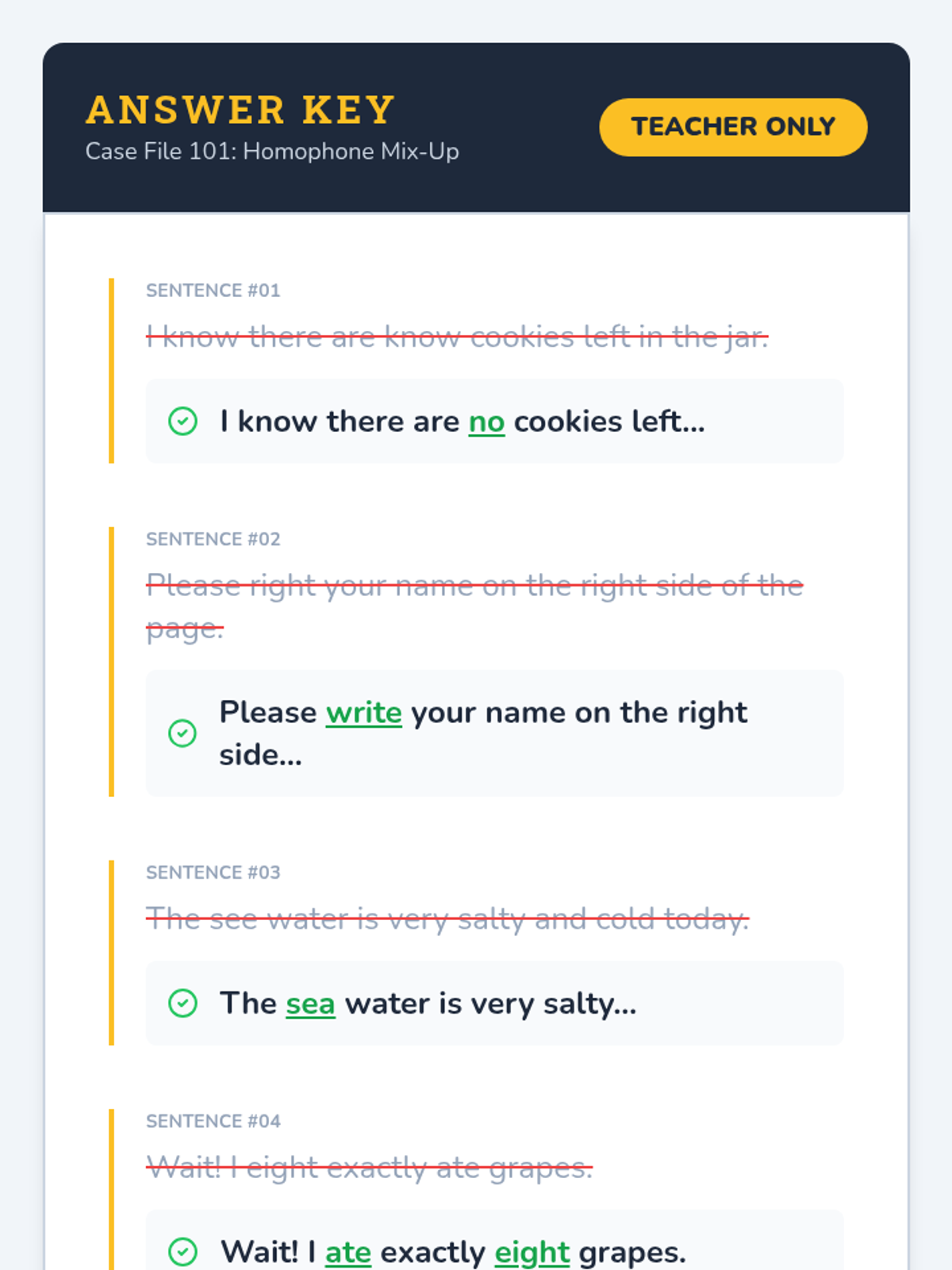
An editing workshop where students apply their skills to find and fix homophone errors in an official 'case file' document.
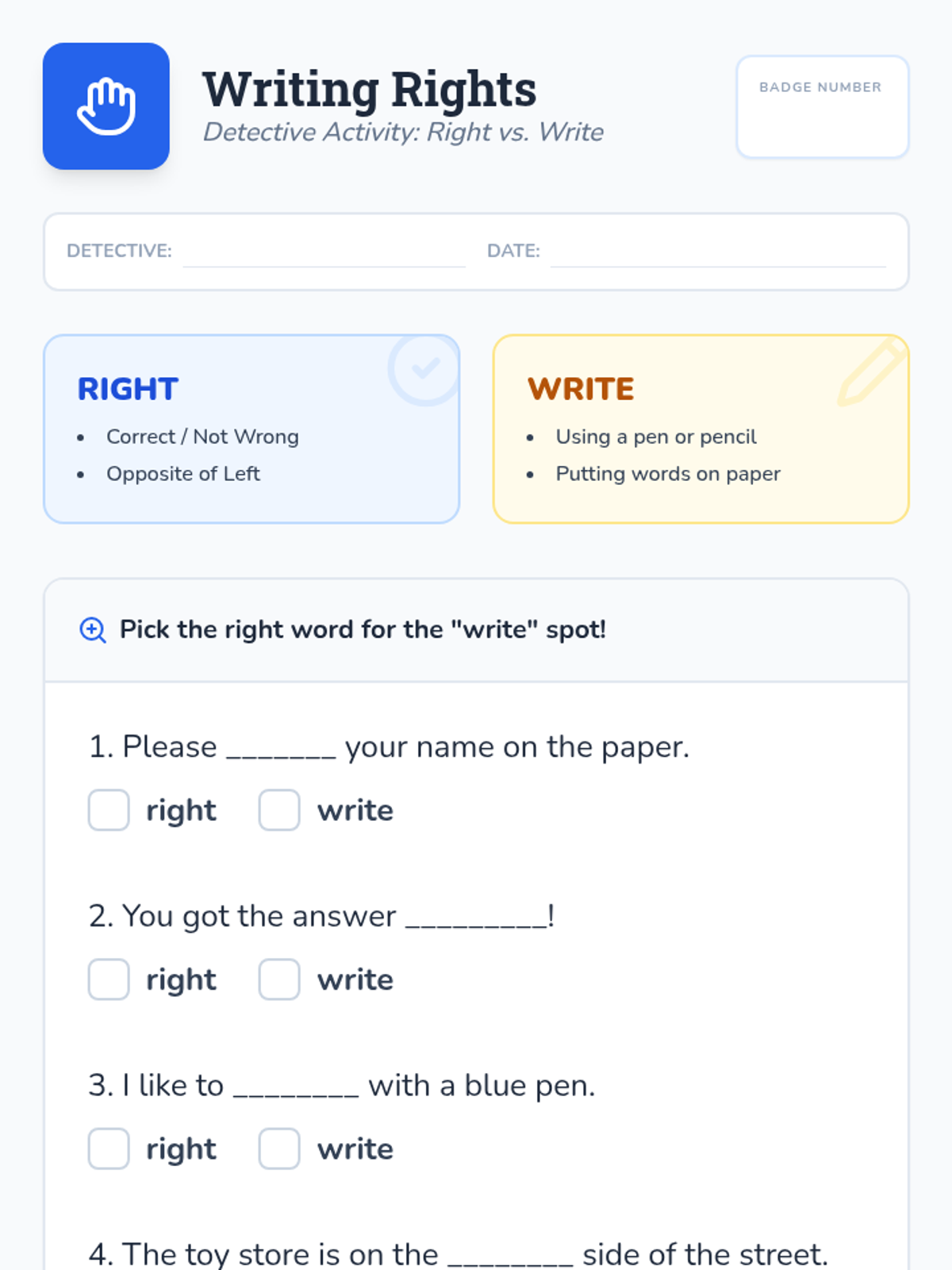
Students use kinesthetic movements to distinguish between 'right' (direction/correct) and 'write' (action), then practice correcting them in sentences.
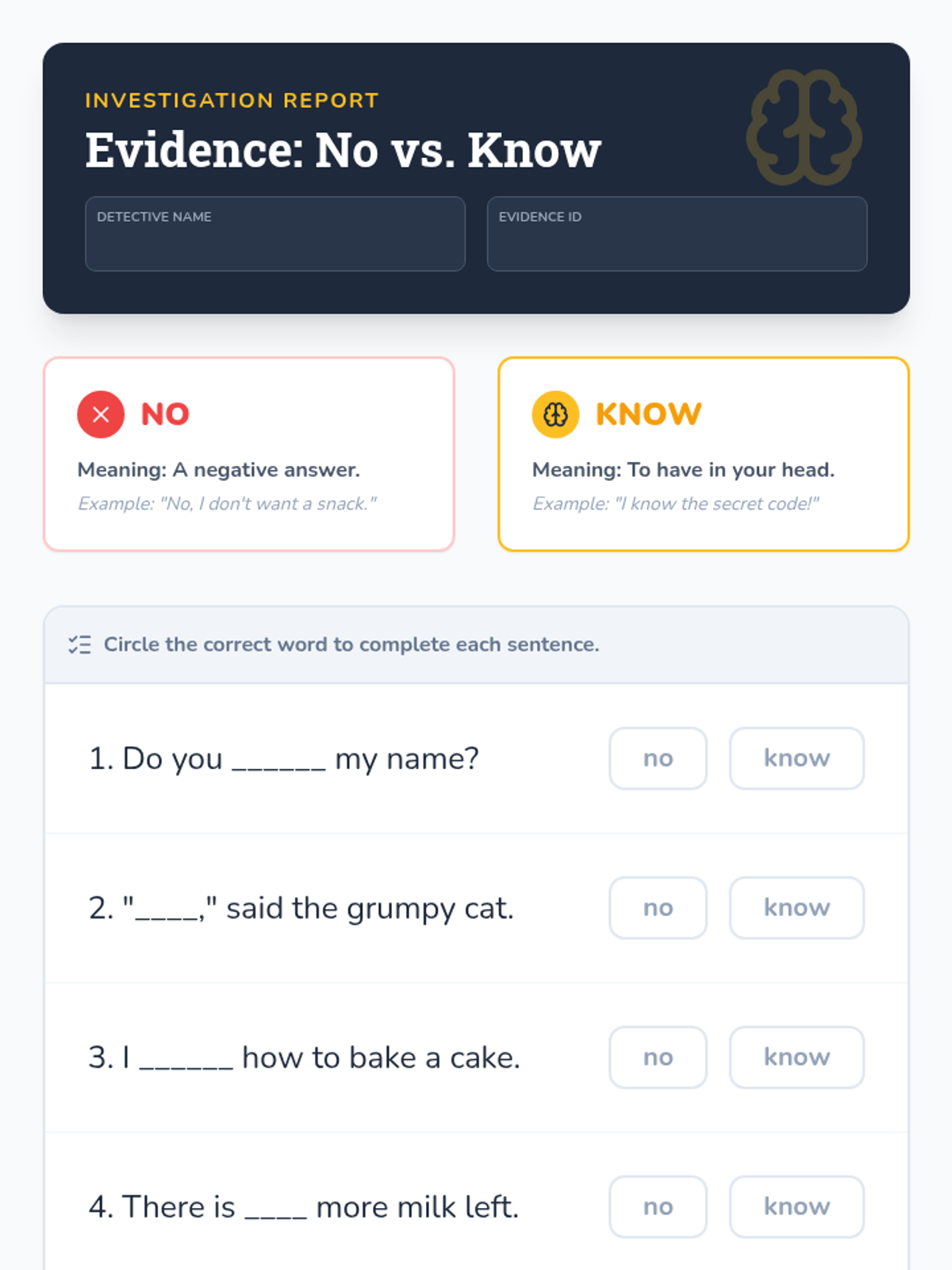
A deep dive into the homophone pair 'no' and 'know', focusing on the silent 'k' and using context clues to determine meaning.
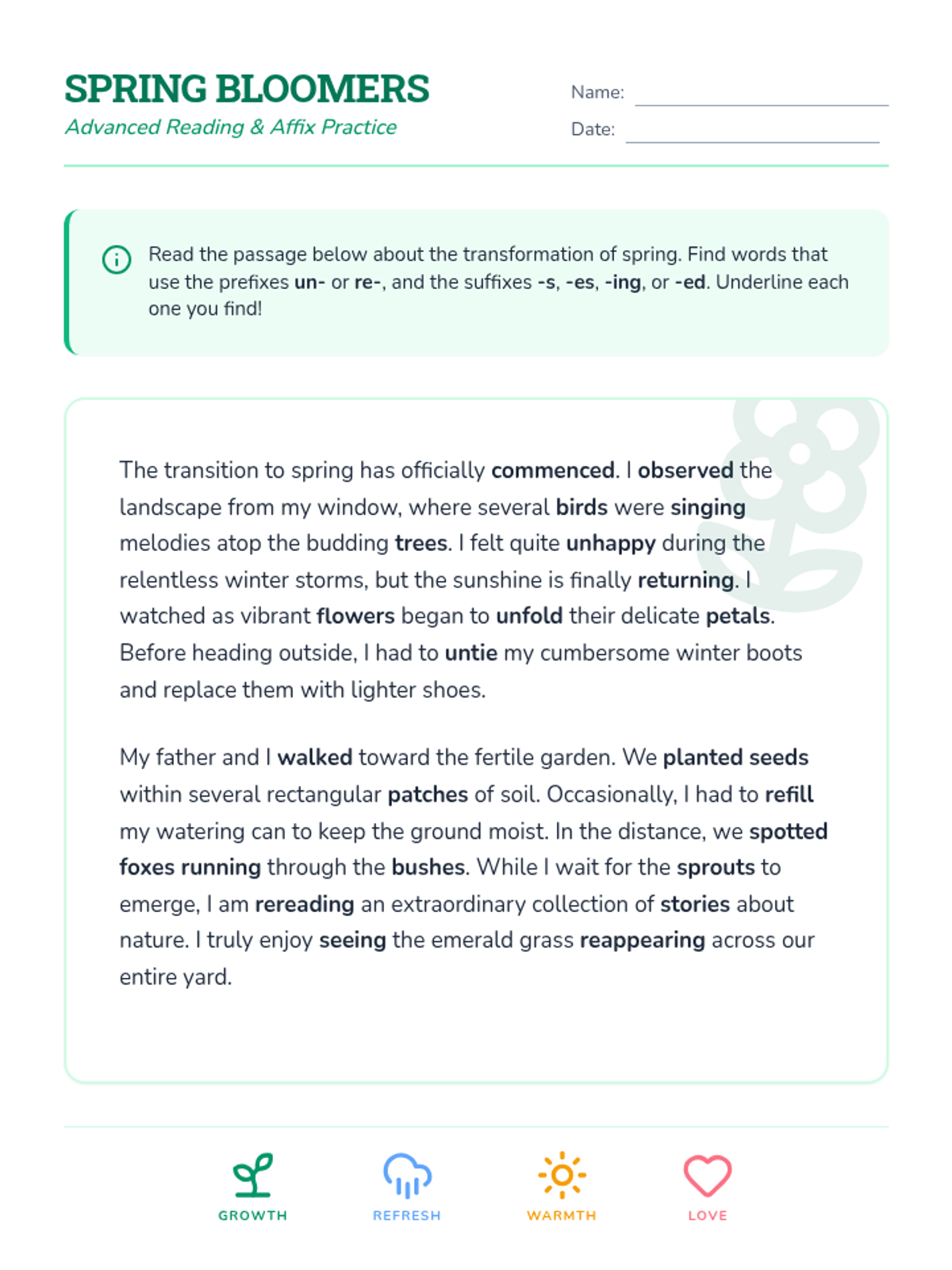
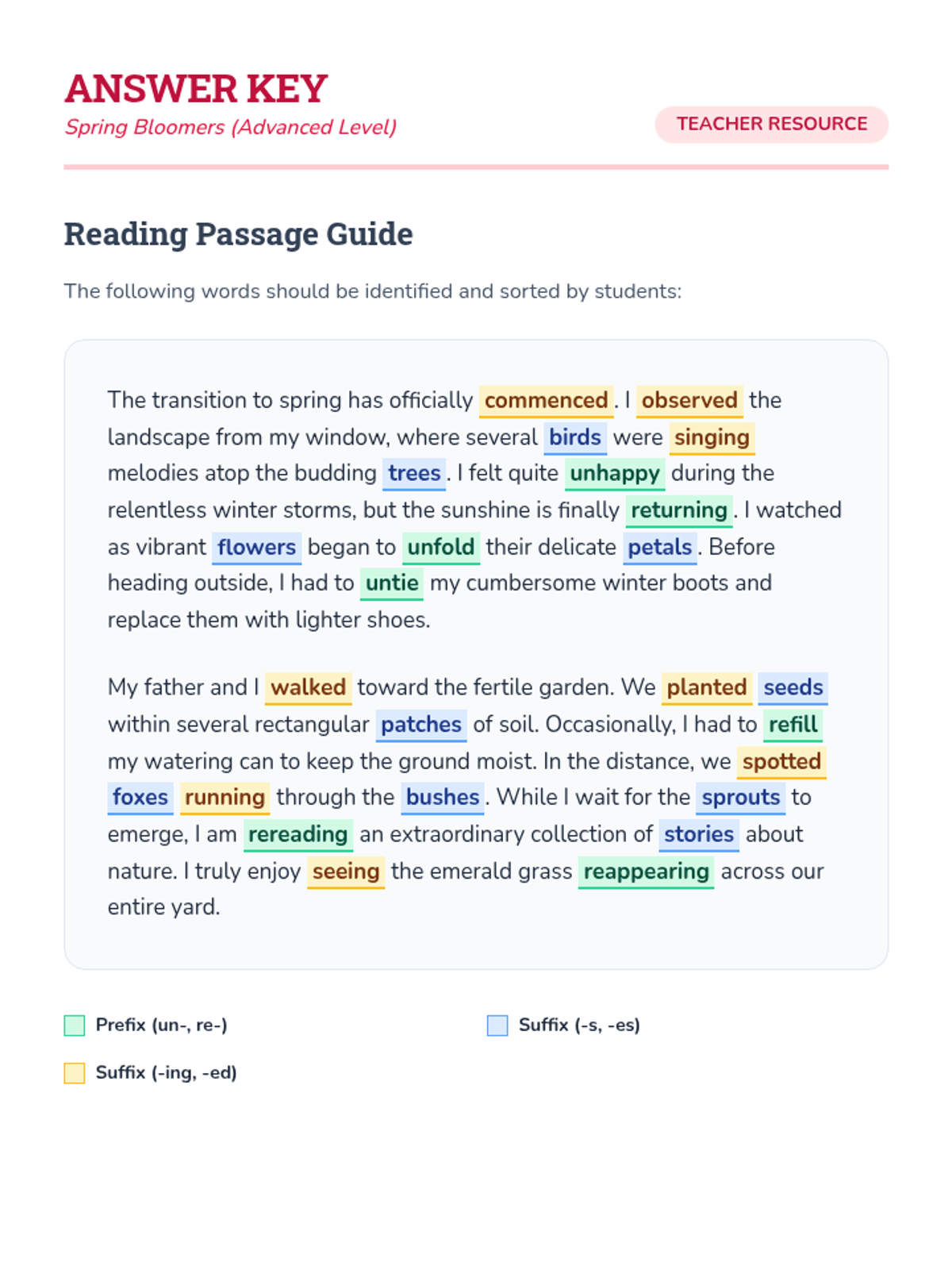
A lesson focused on identifying and using common affixes (un-, re-, -es, -s, -ing, -ed) within a spring-themed reading passage and companion activities.
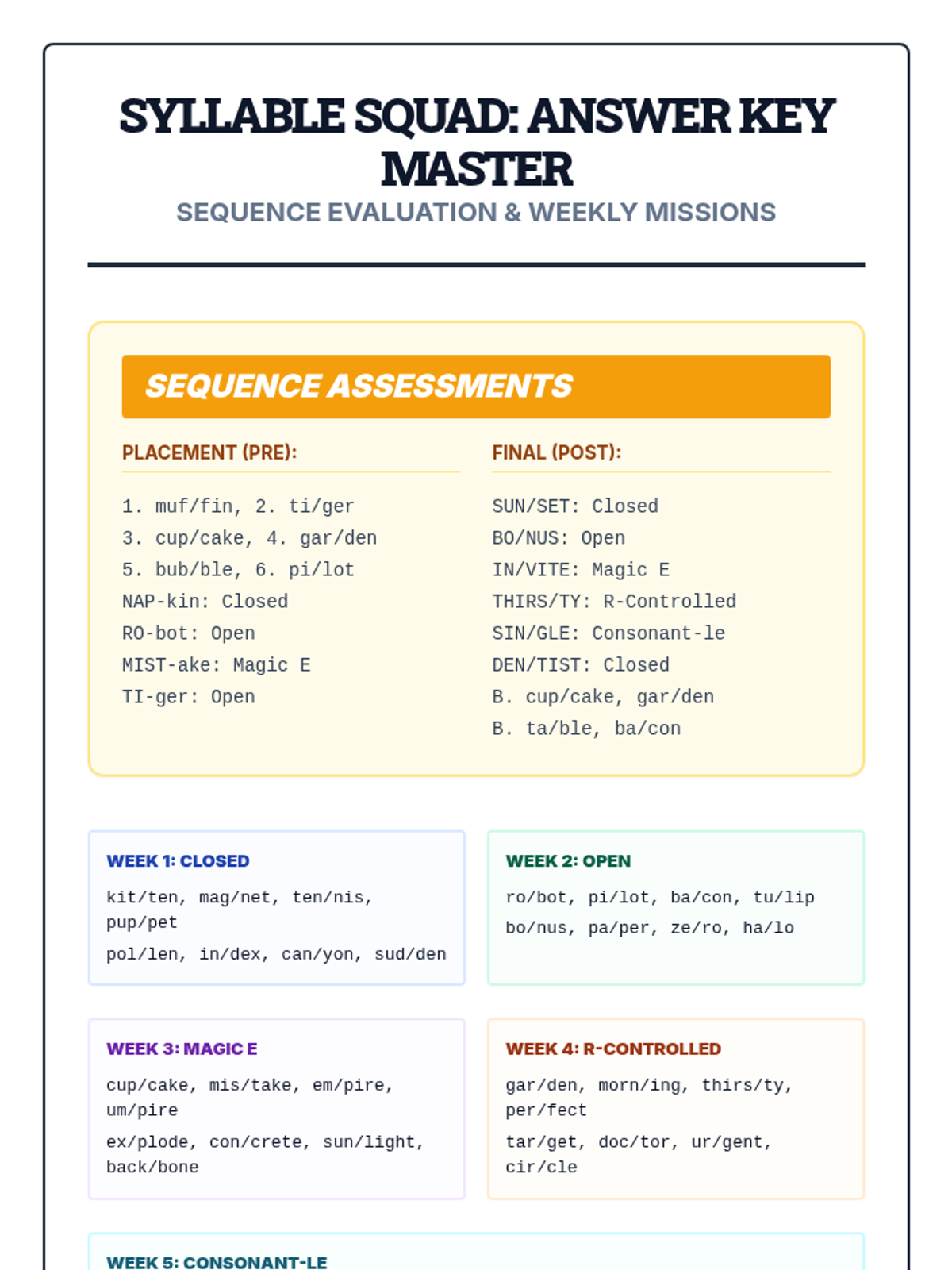
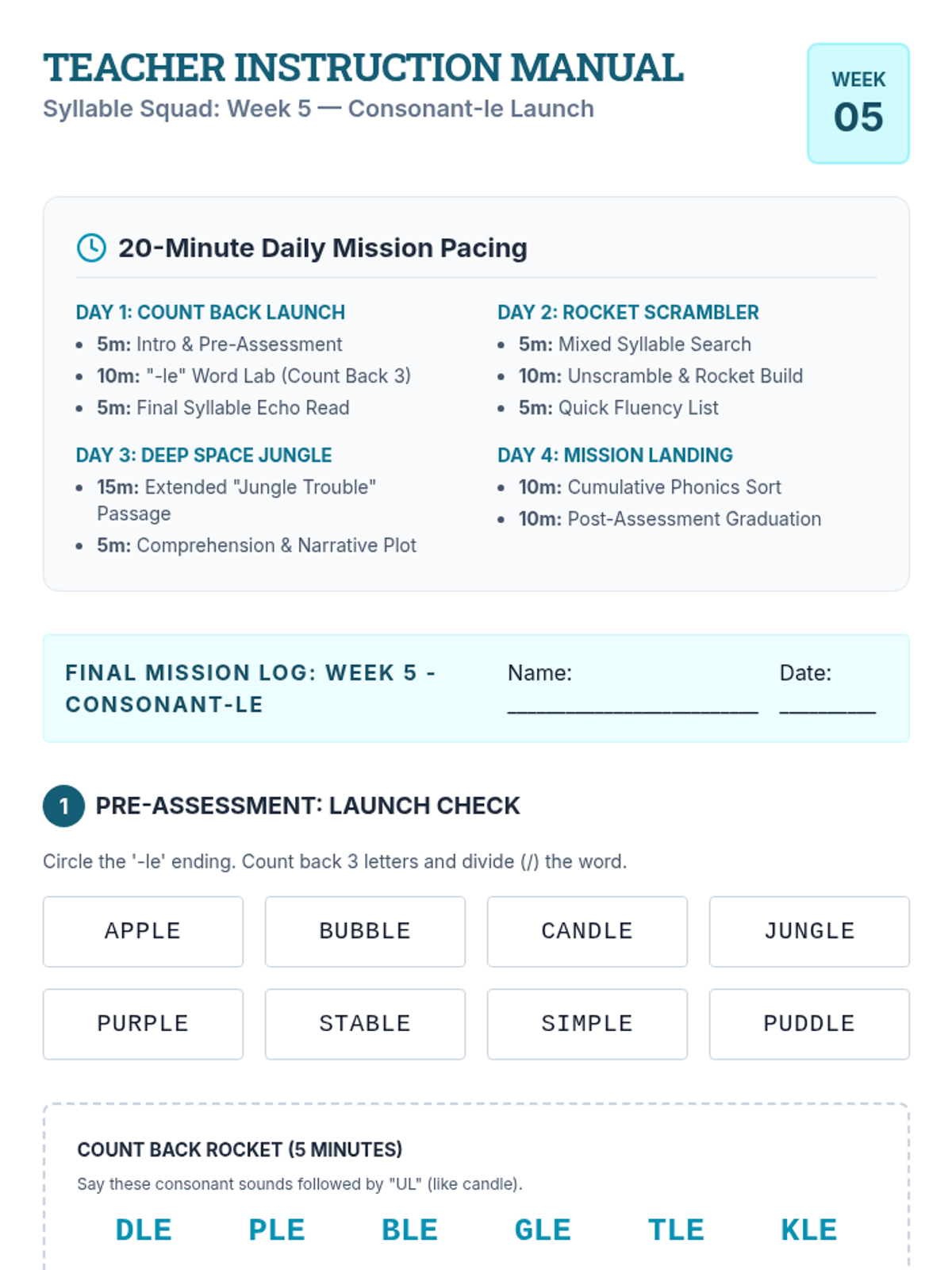
Week 5 concludes the series with the consonant-le syllable type. Students learn the rule of counting back three letters from the end of the word to find the syllable break.
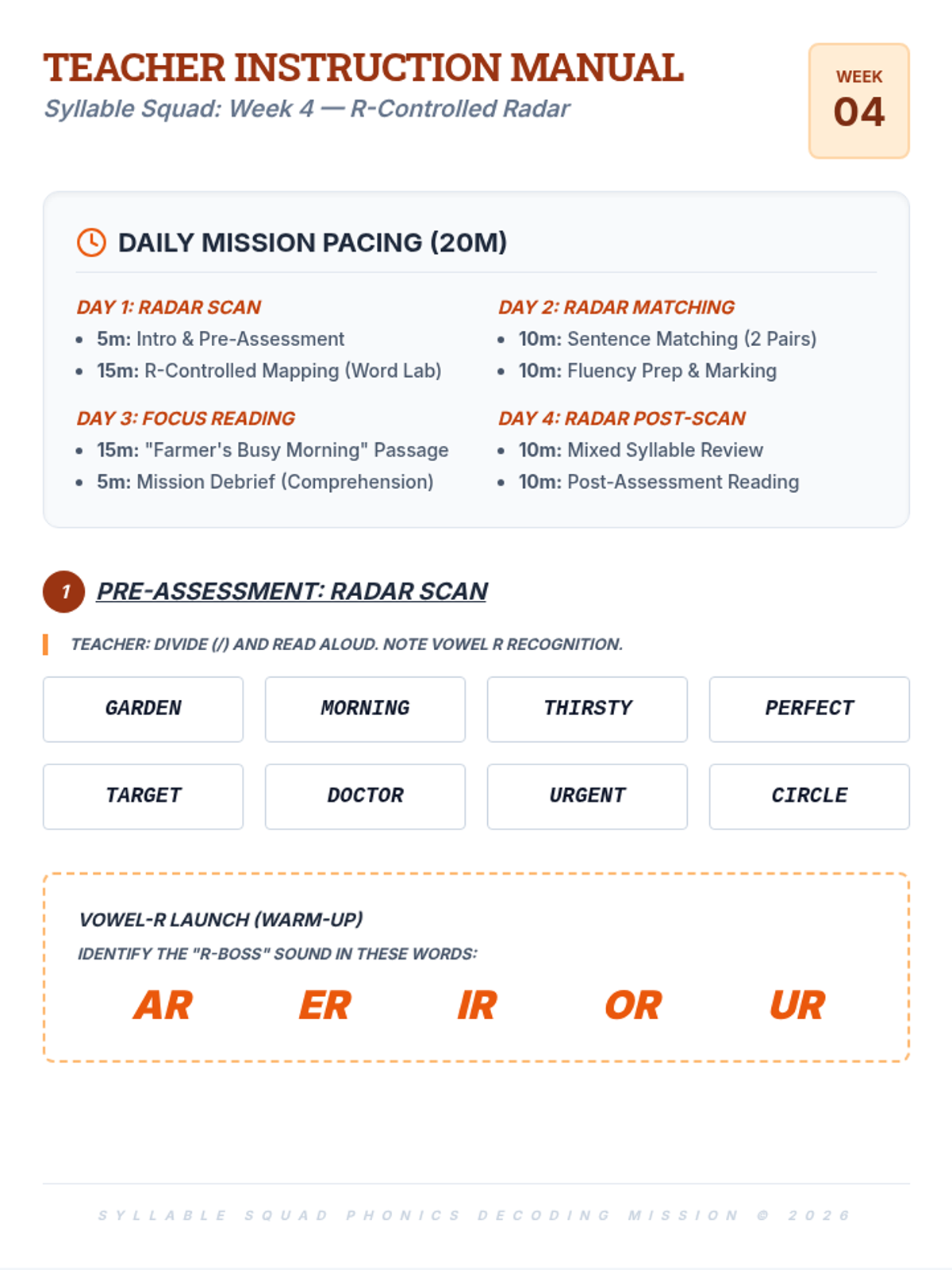
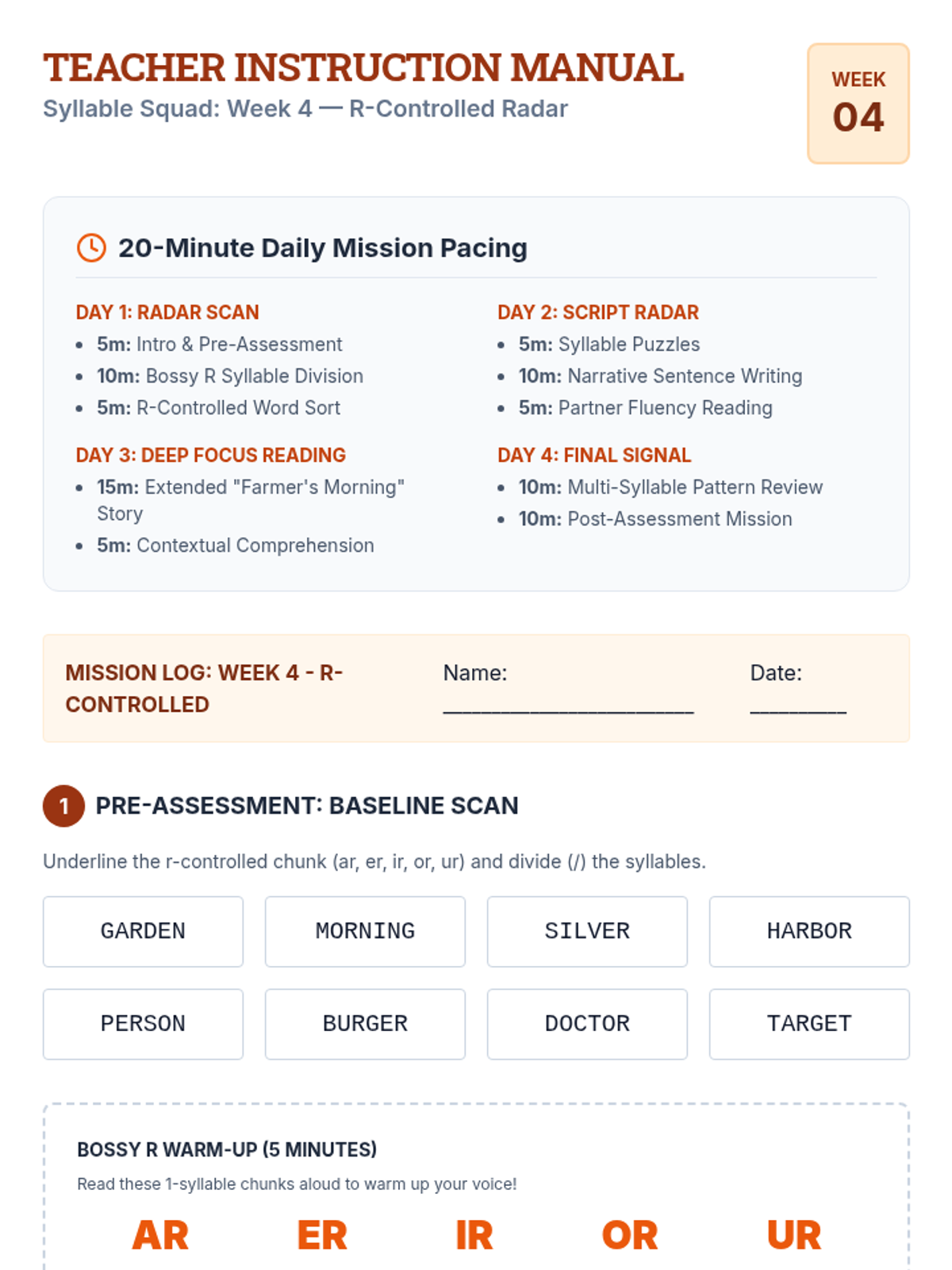
Week 4 explores r-controlled syllables (ar, er, ir, or, ur). Students identify how the 'r' changes the vowel sound and practice decoding multi-syllabic words with these patterns.
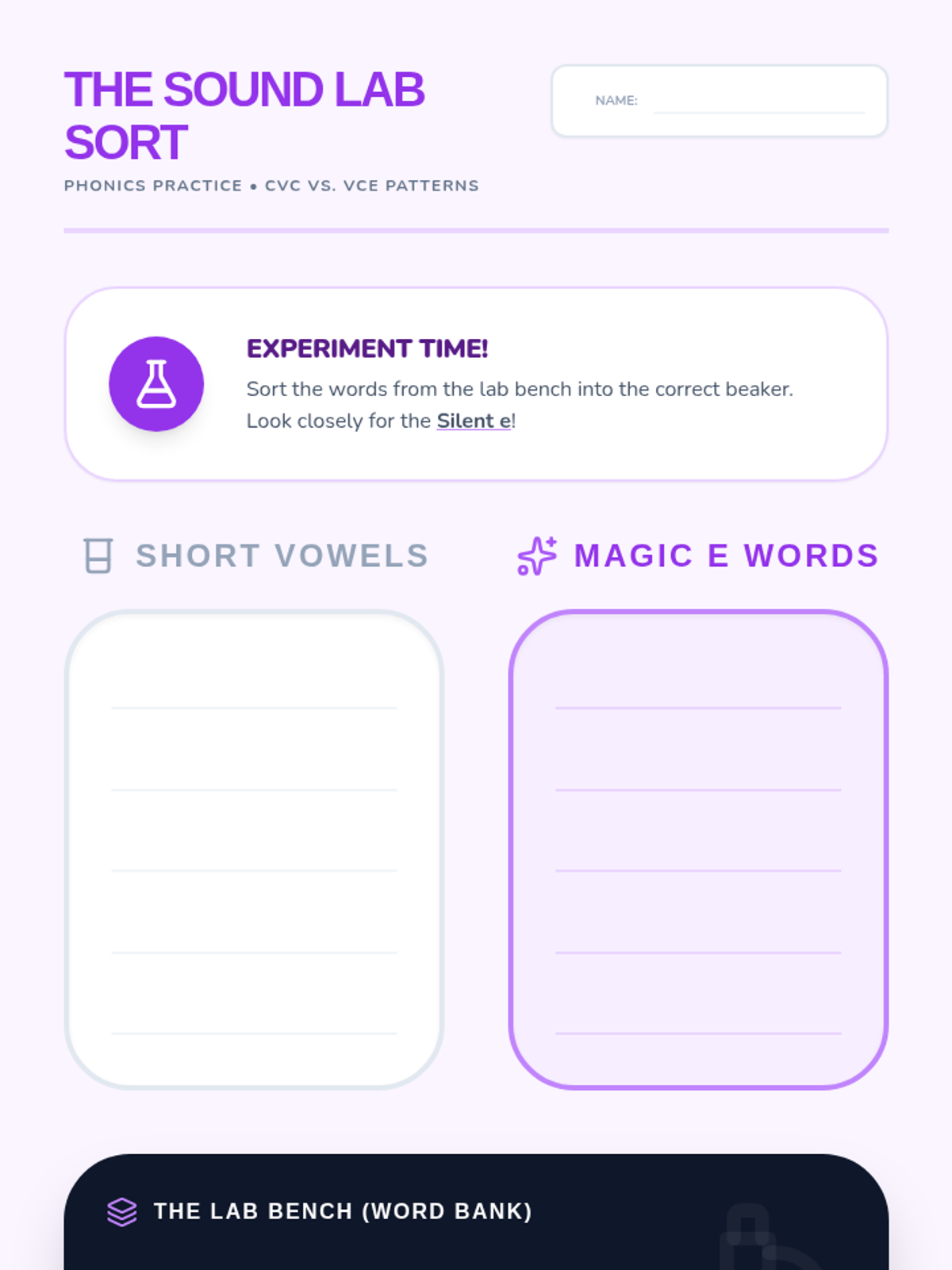
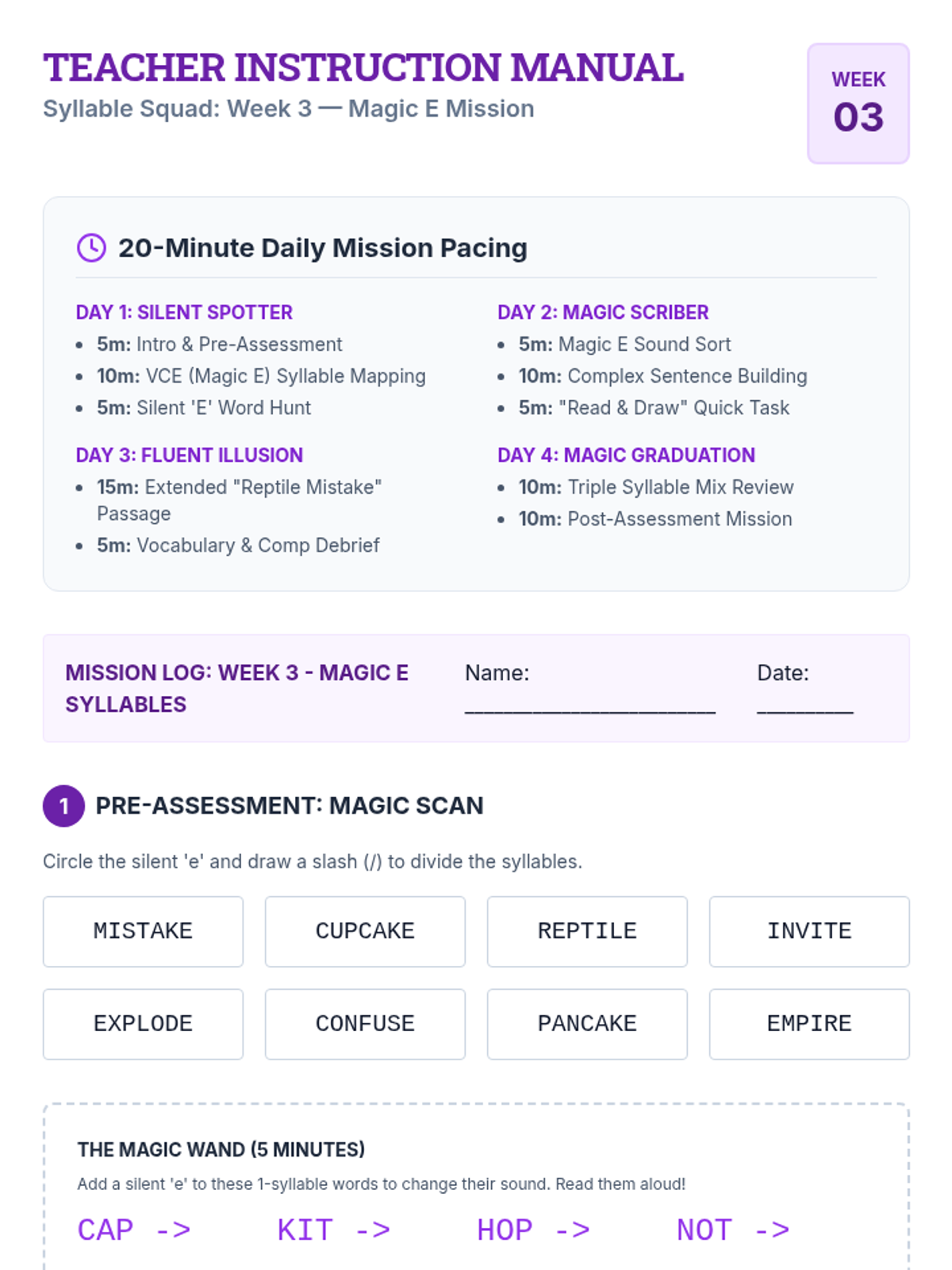
Week 3 focuses on the Magic E (VCE) syllable type in two-syllable words. Students learn to spot the silent 'e' and apply long vowel sounds across syllable boundaries.
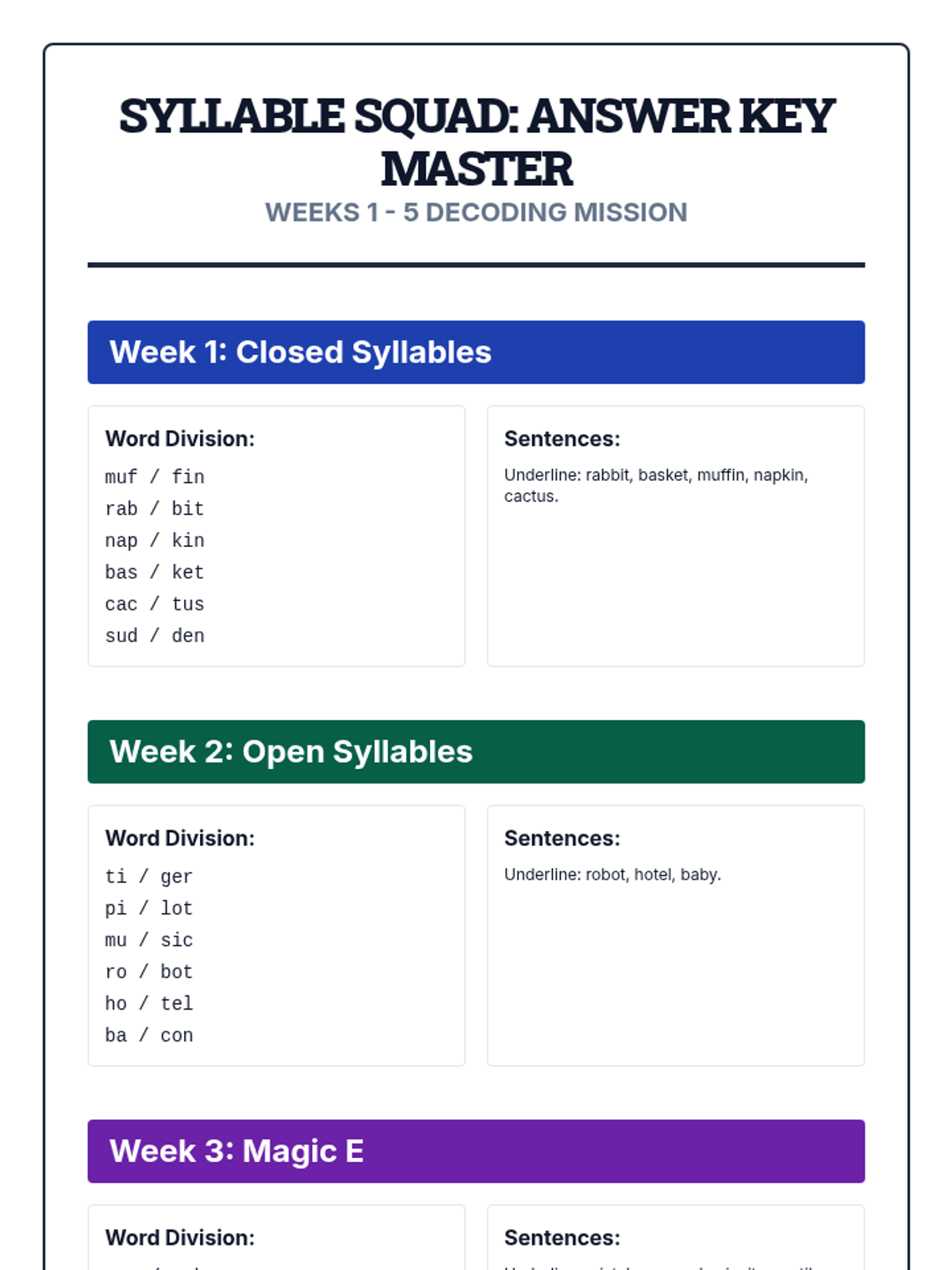
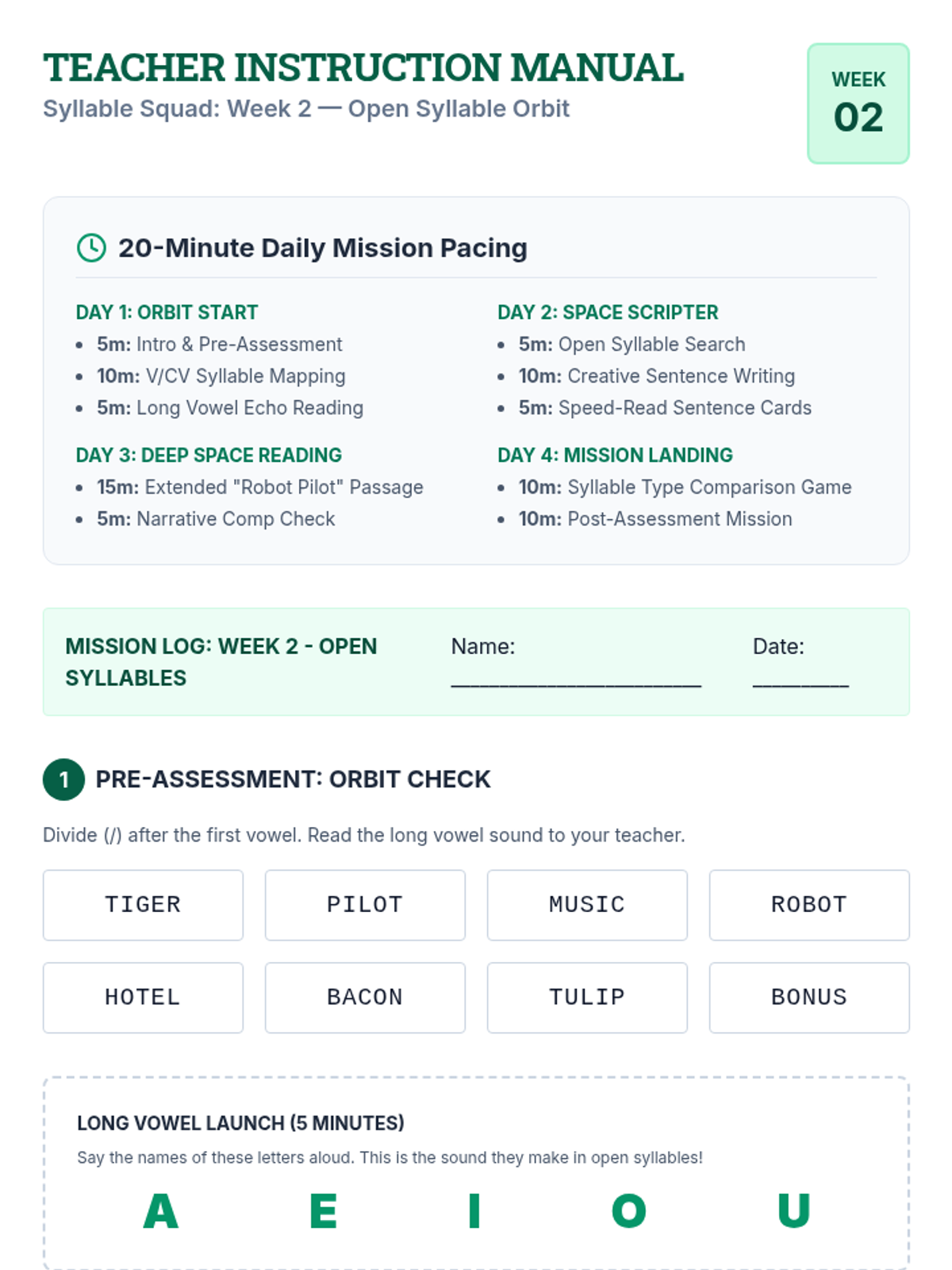
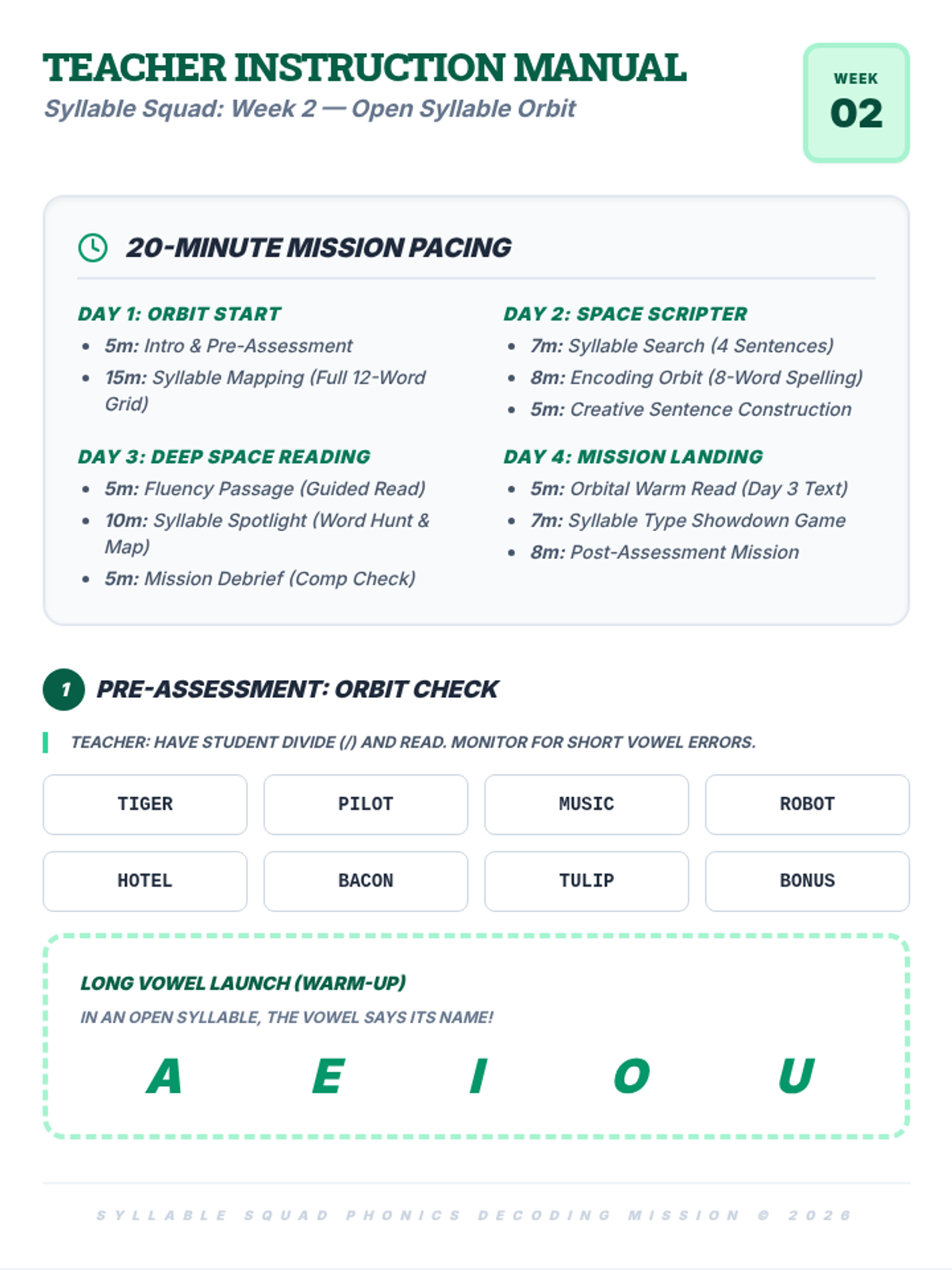
Week 2 introduces open syllables (V/CV pattern). Students practice dividing after the first vowel to create a long vowel sound in the first syllable.
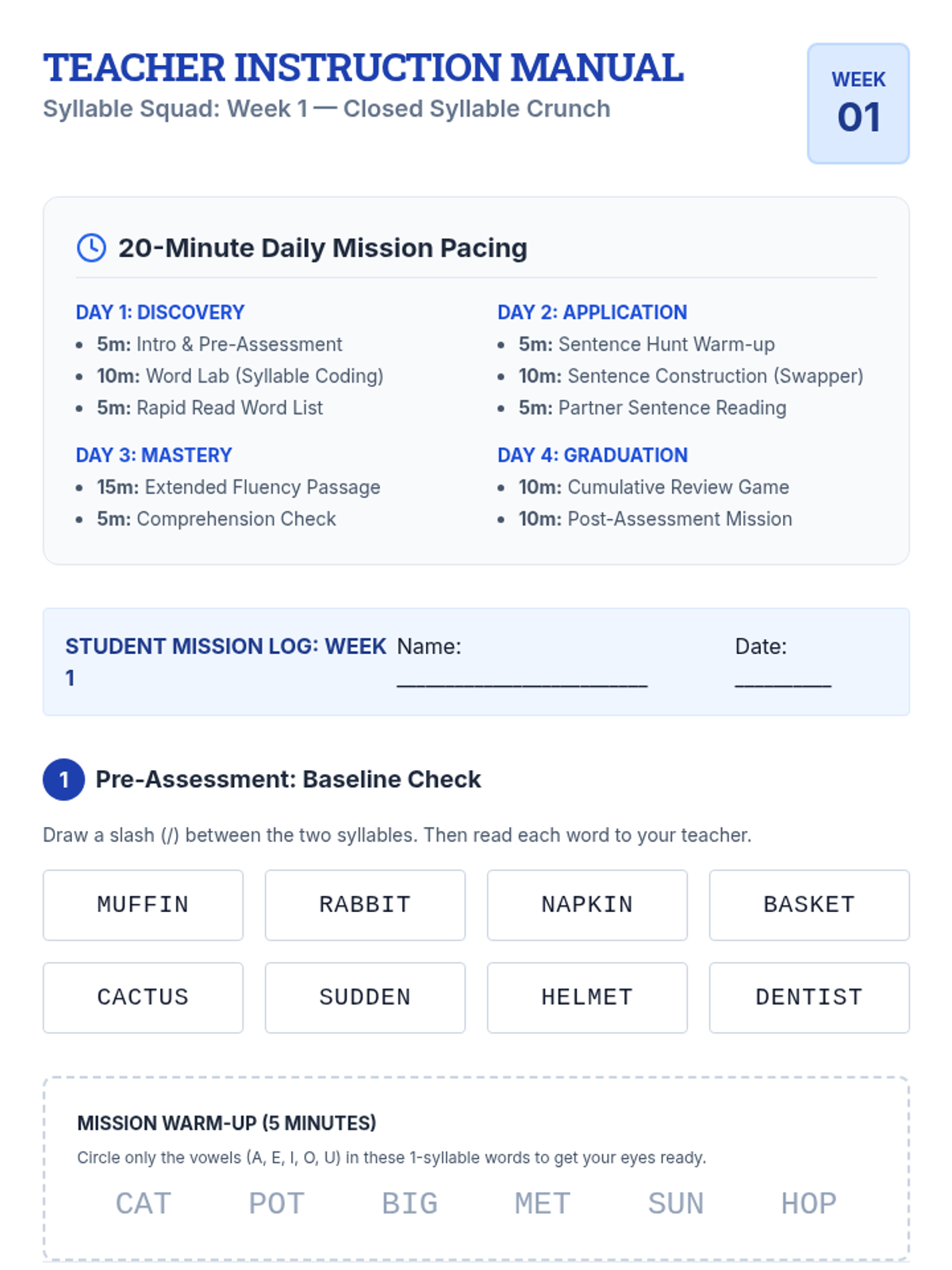
Week 1 focuses on closed syllables (VC/CV and VCC/V patterns). Students learn to identify two consonants between two vowels and divide the word accordingly to maintain short vowel sounds.
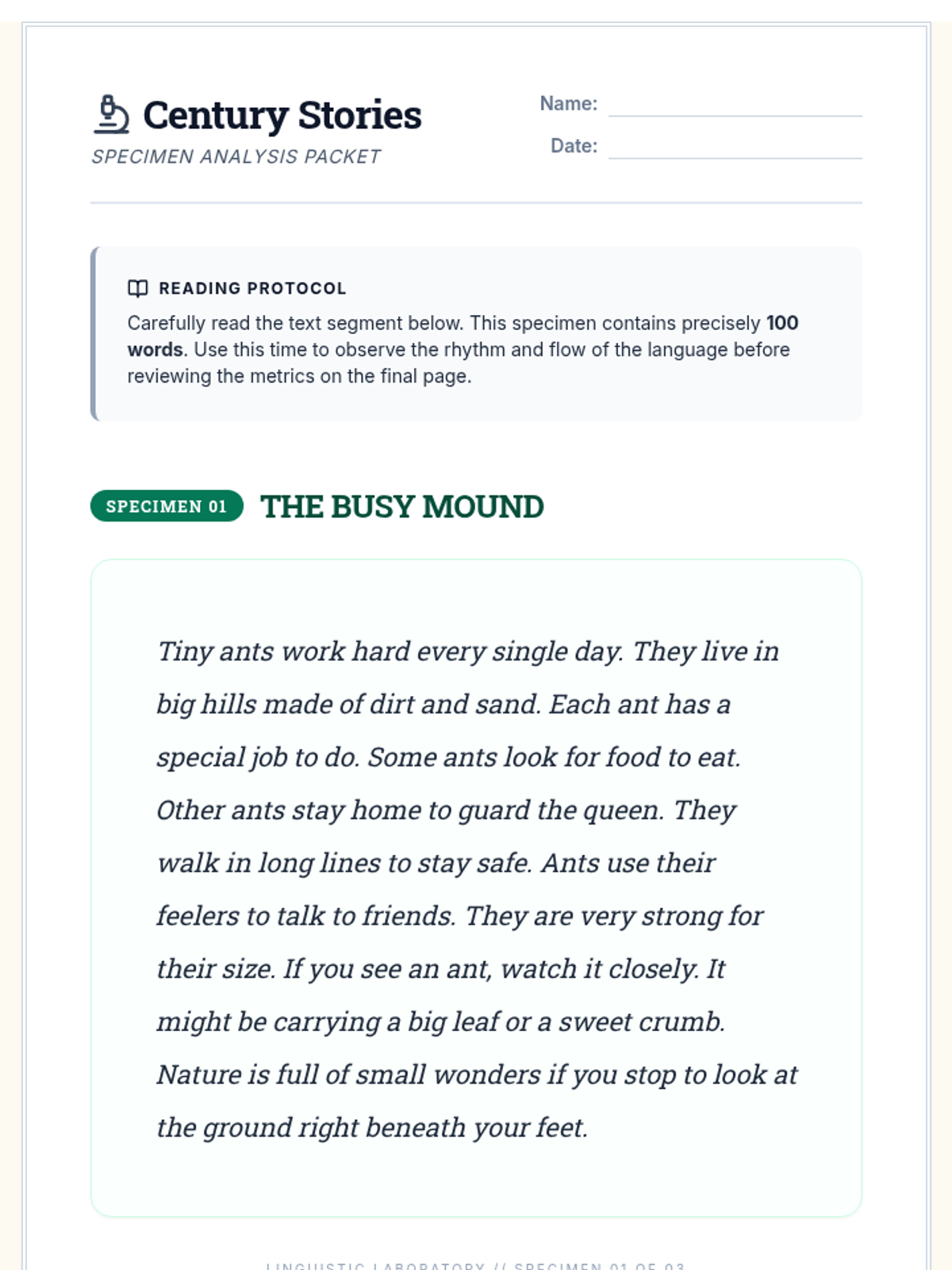
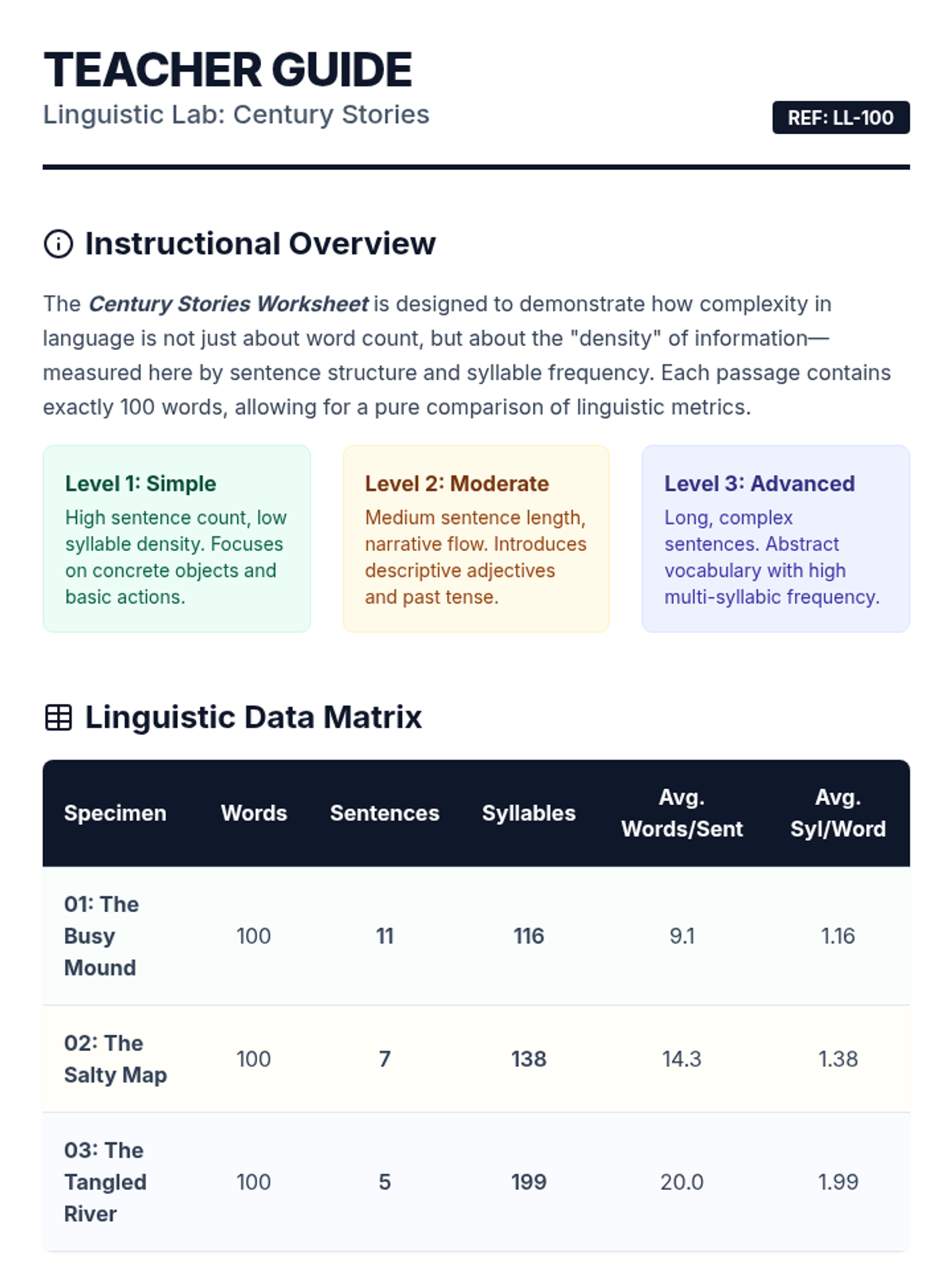
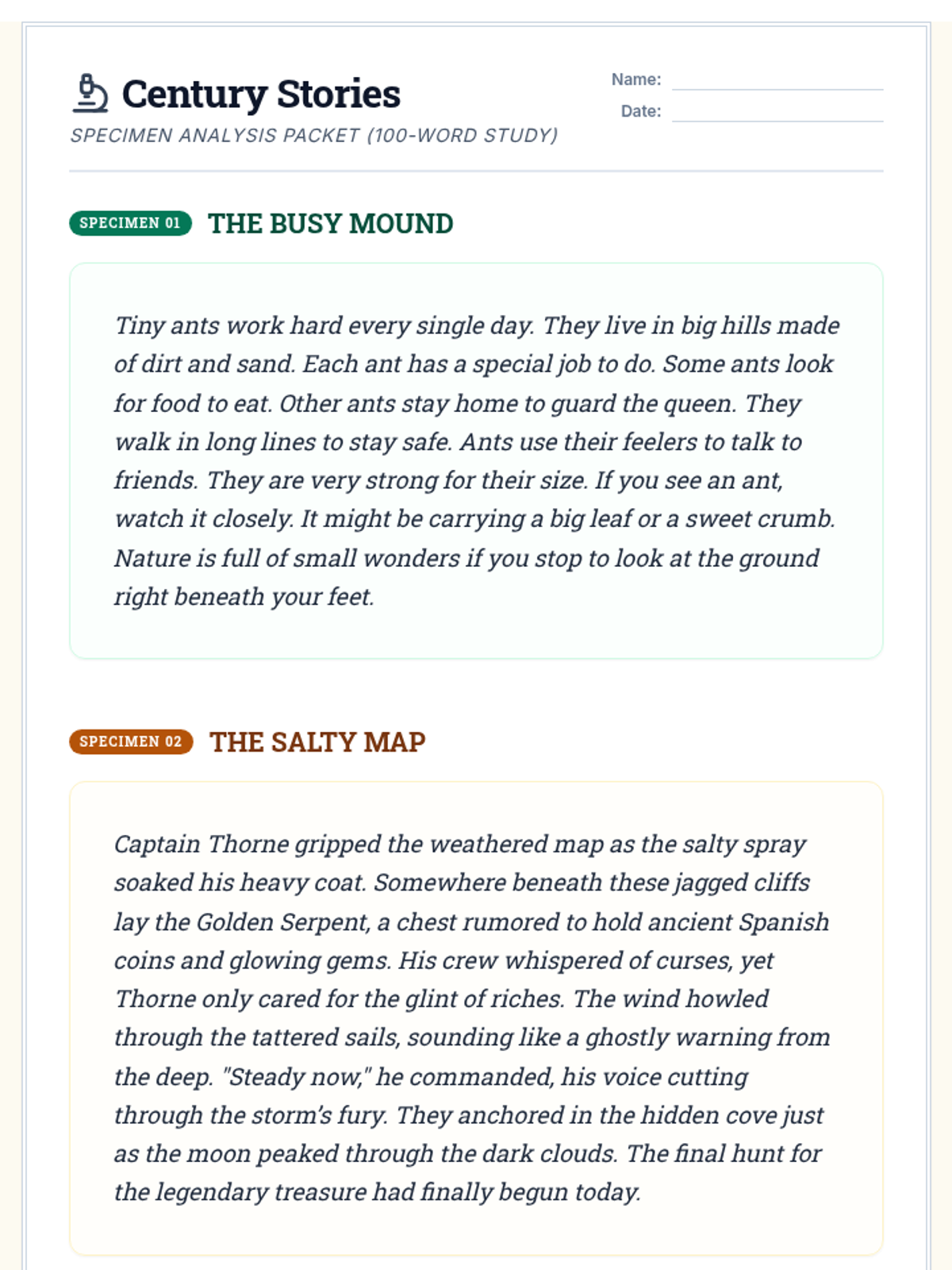
A collection of reading passages designed to challenge students' comprehension and linguistic awareness by analyzing word counts, sentence structures, and syllable patterns.
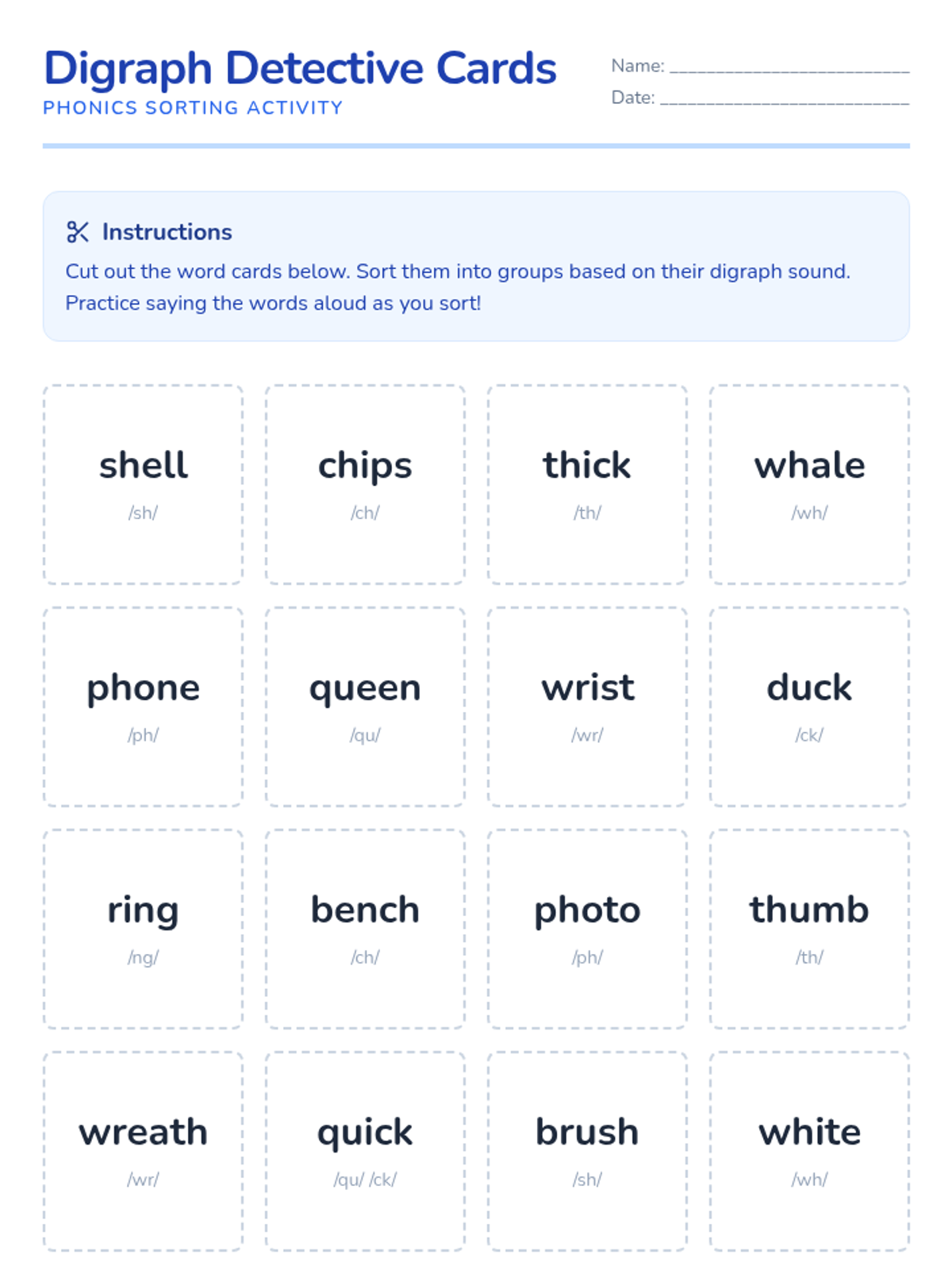
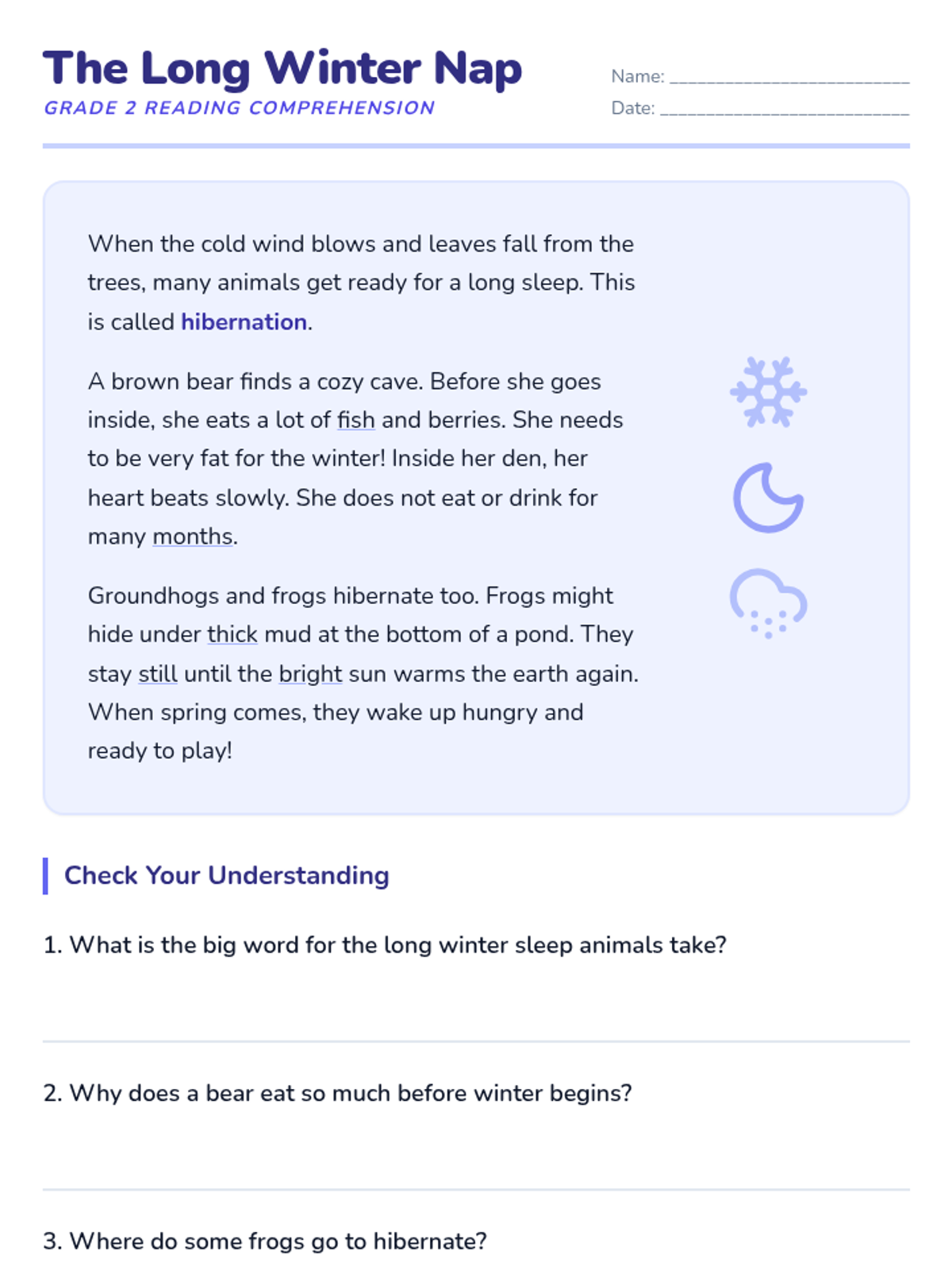
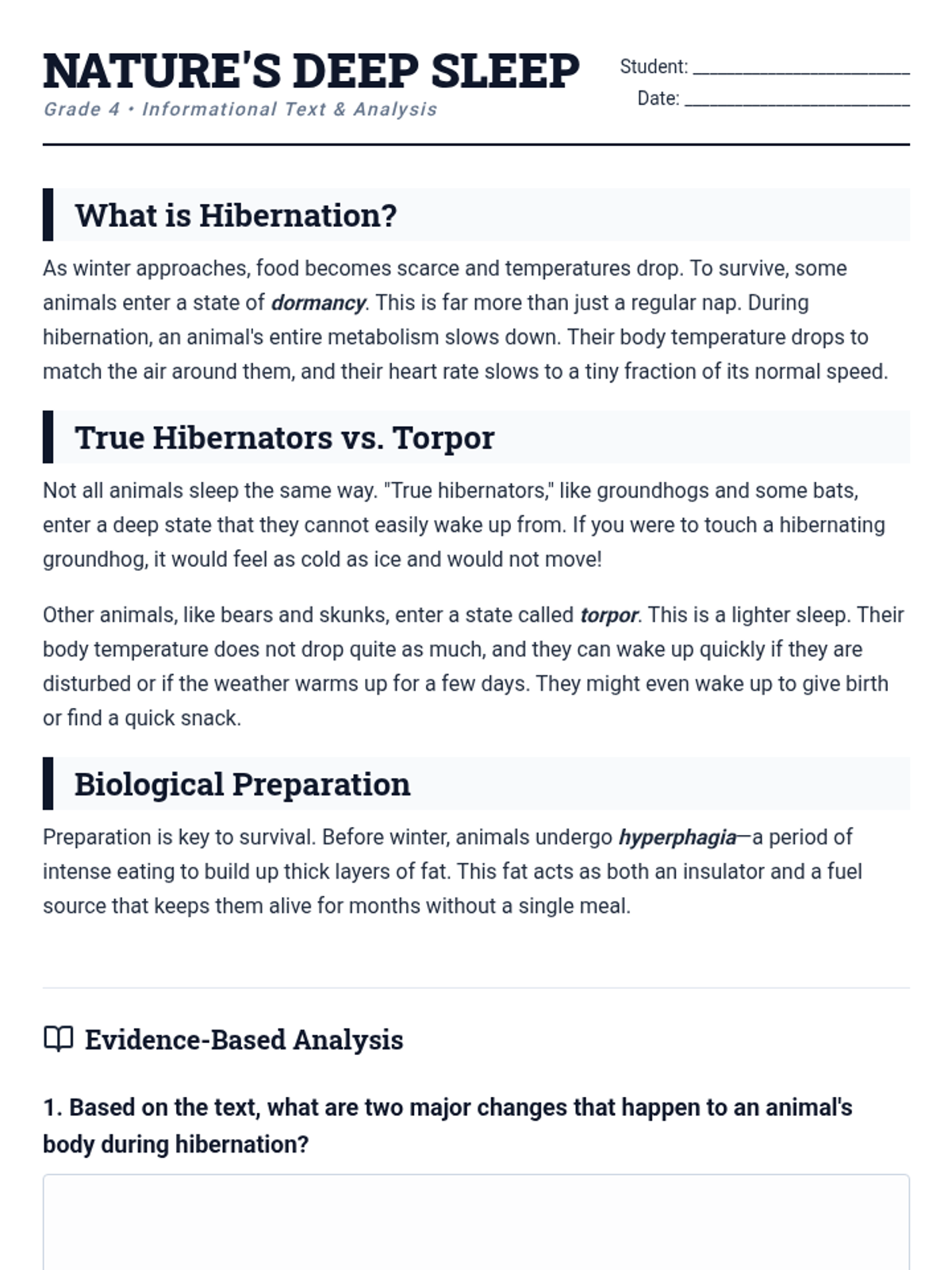
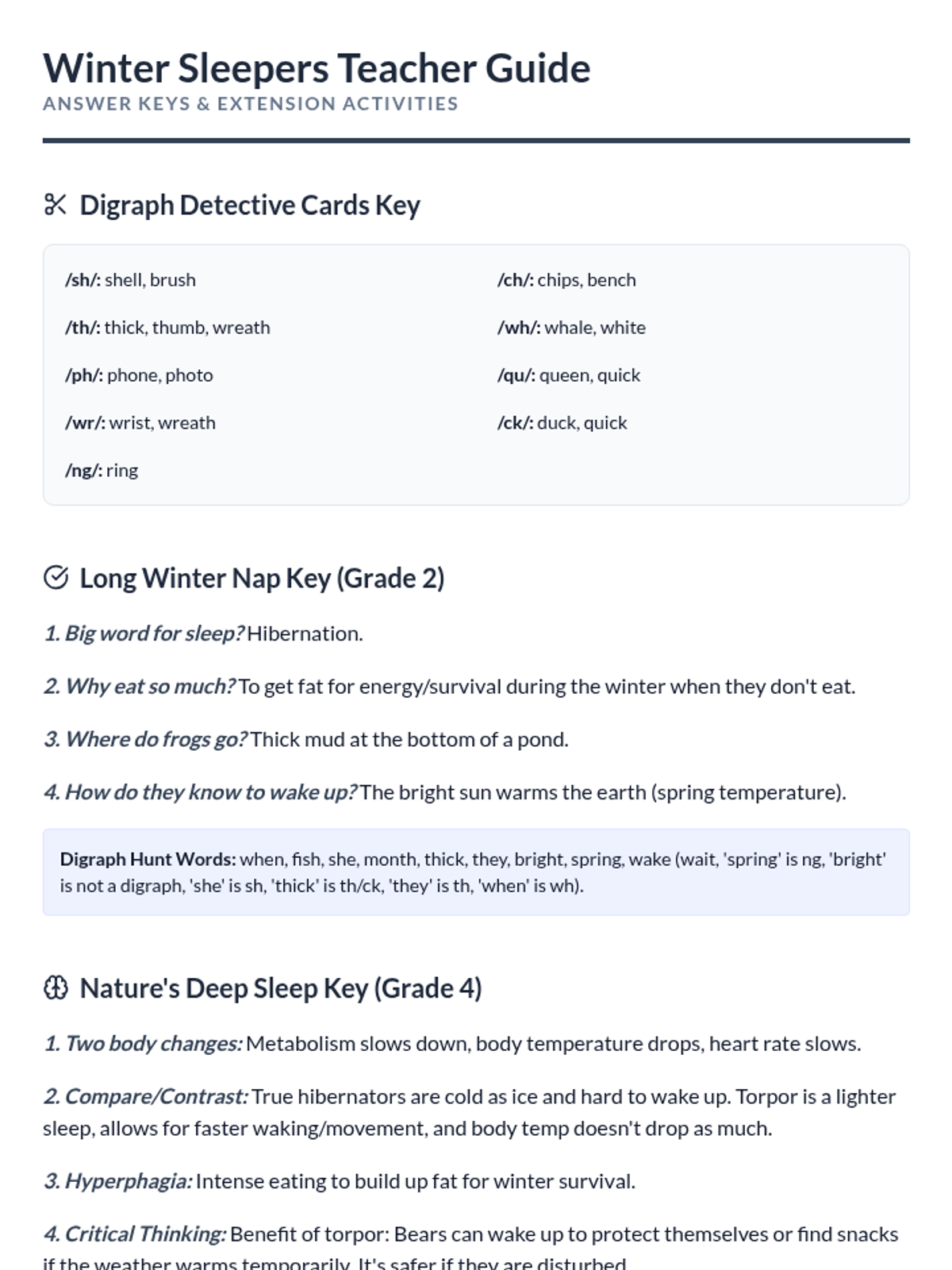
A lesson combining phonics practice with digraphs and reading comprehension focused on the science and stories of hibernation across different grade levels.
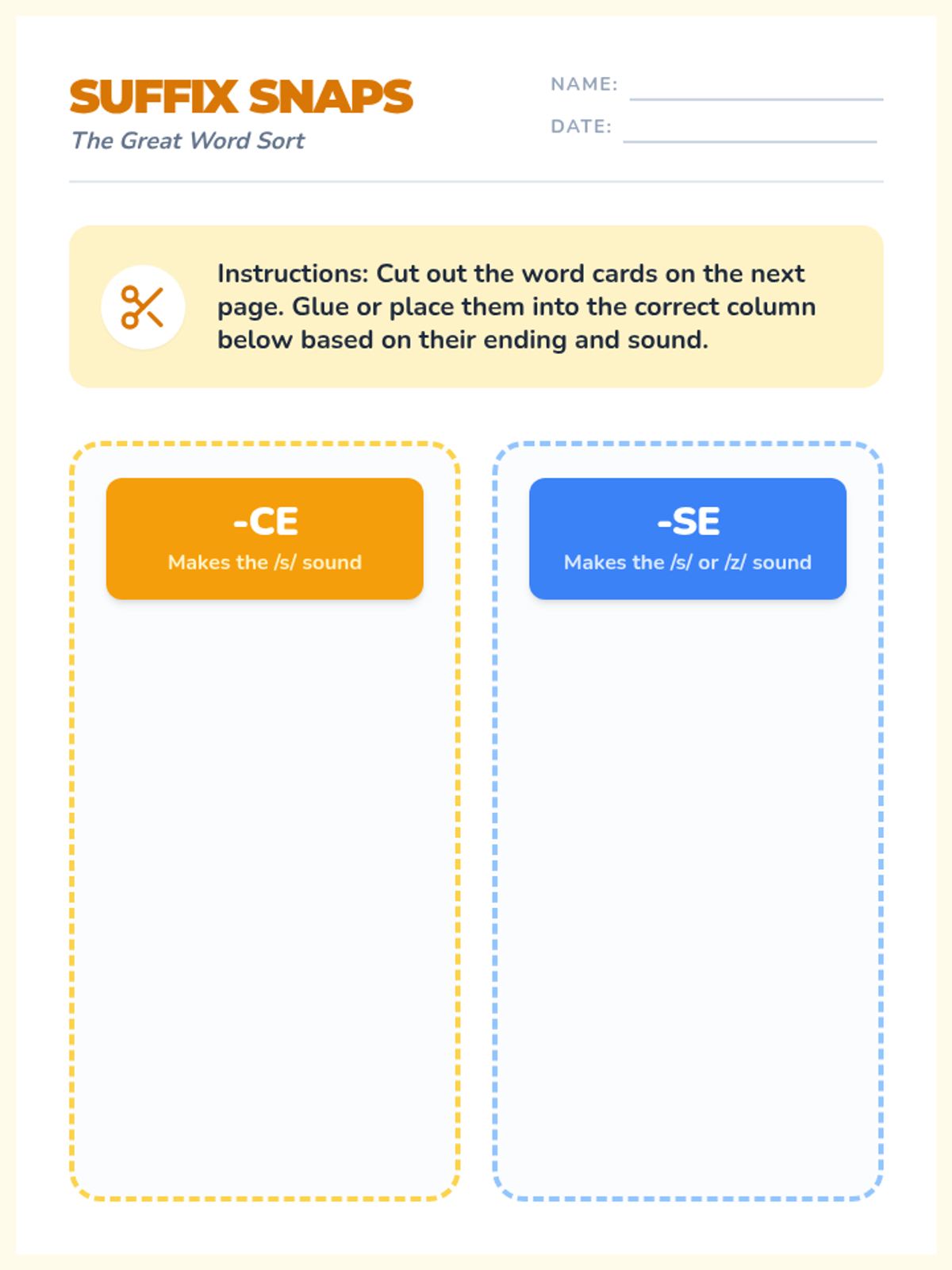
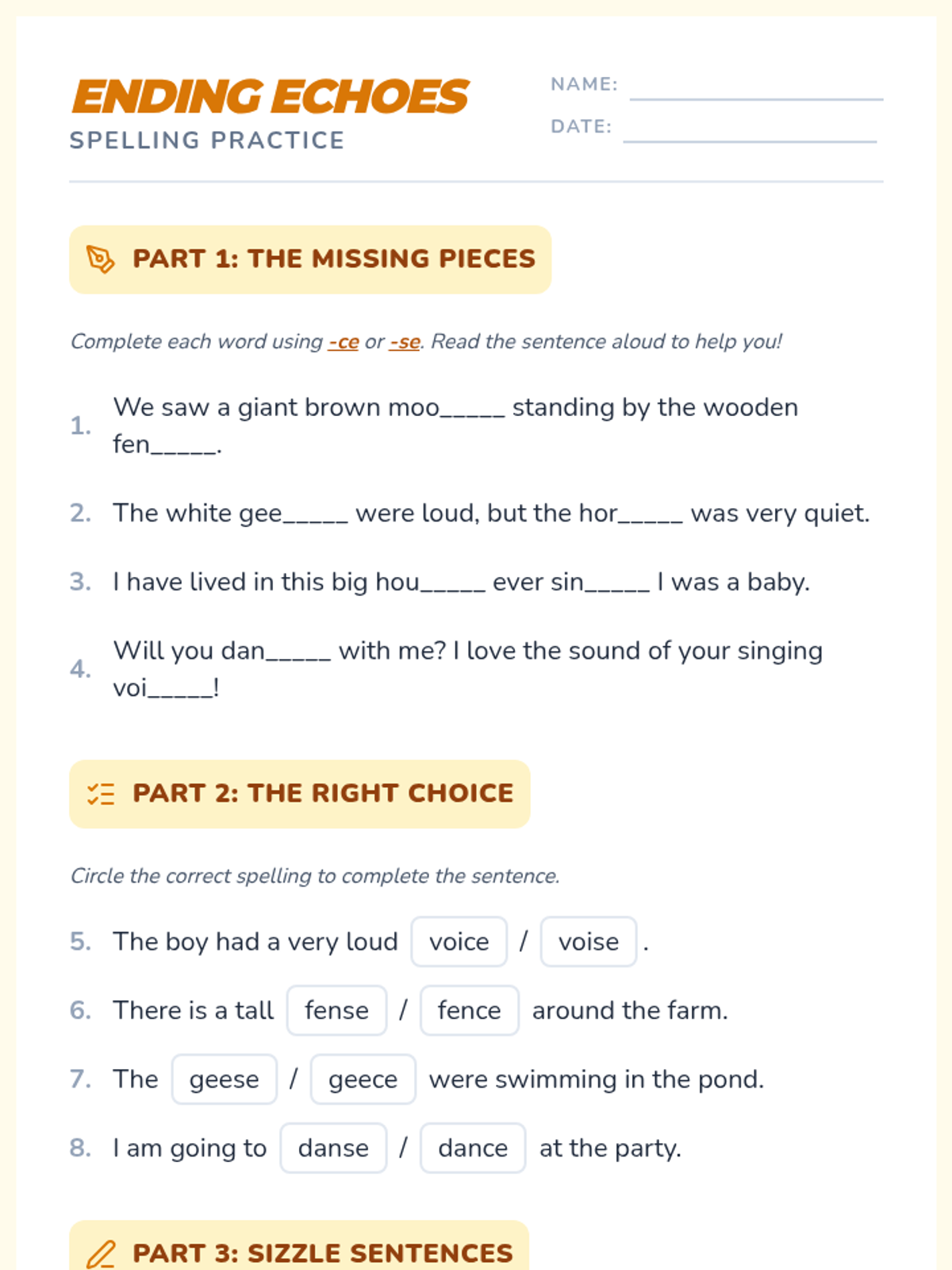
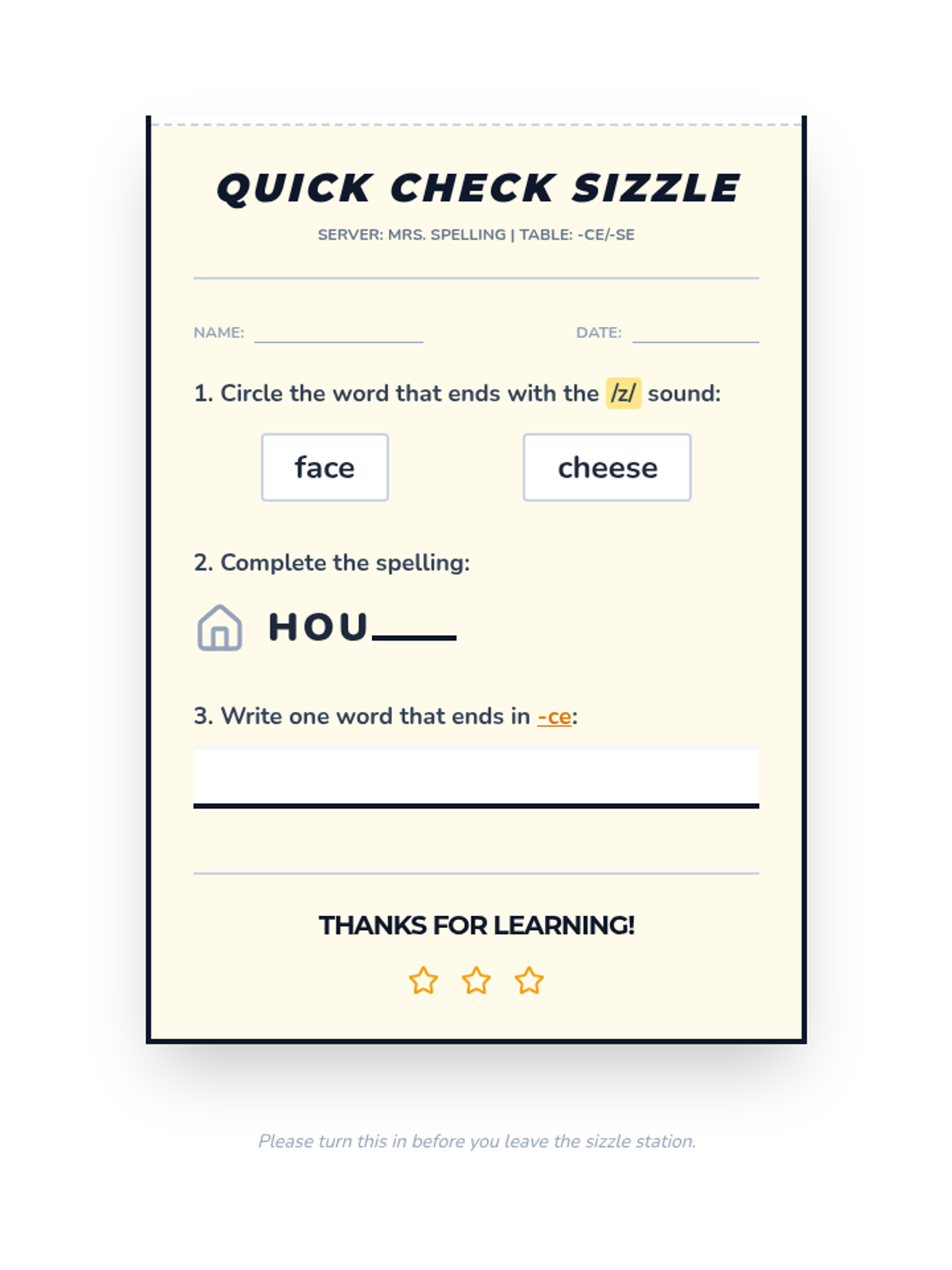
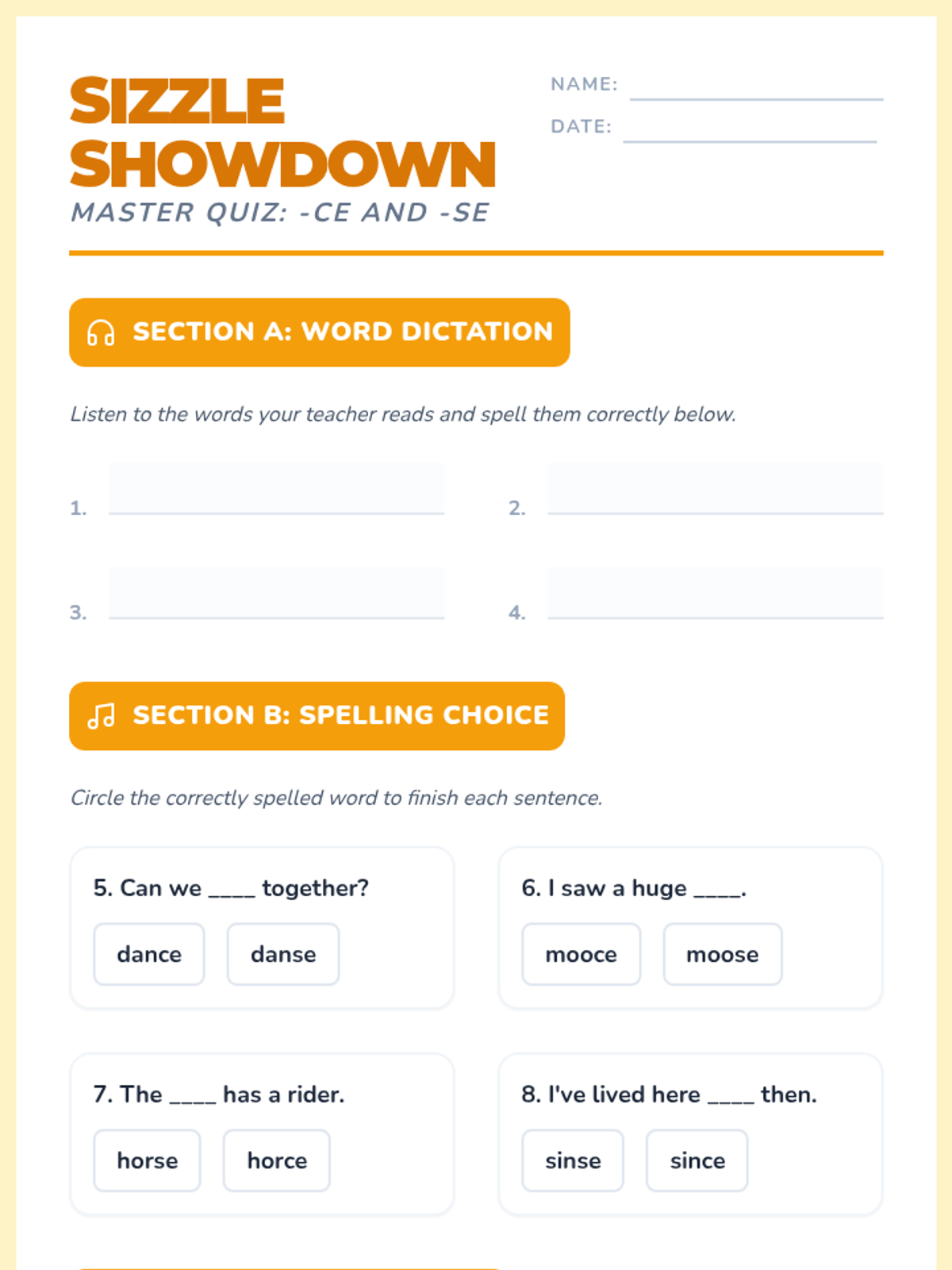
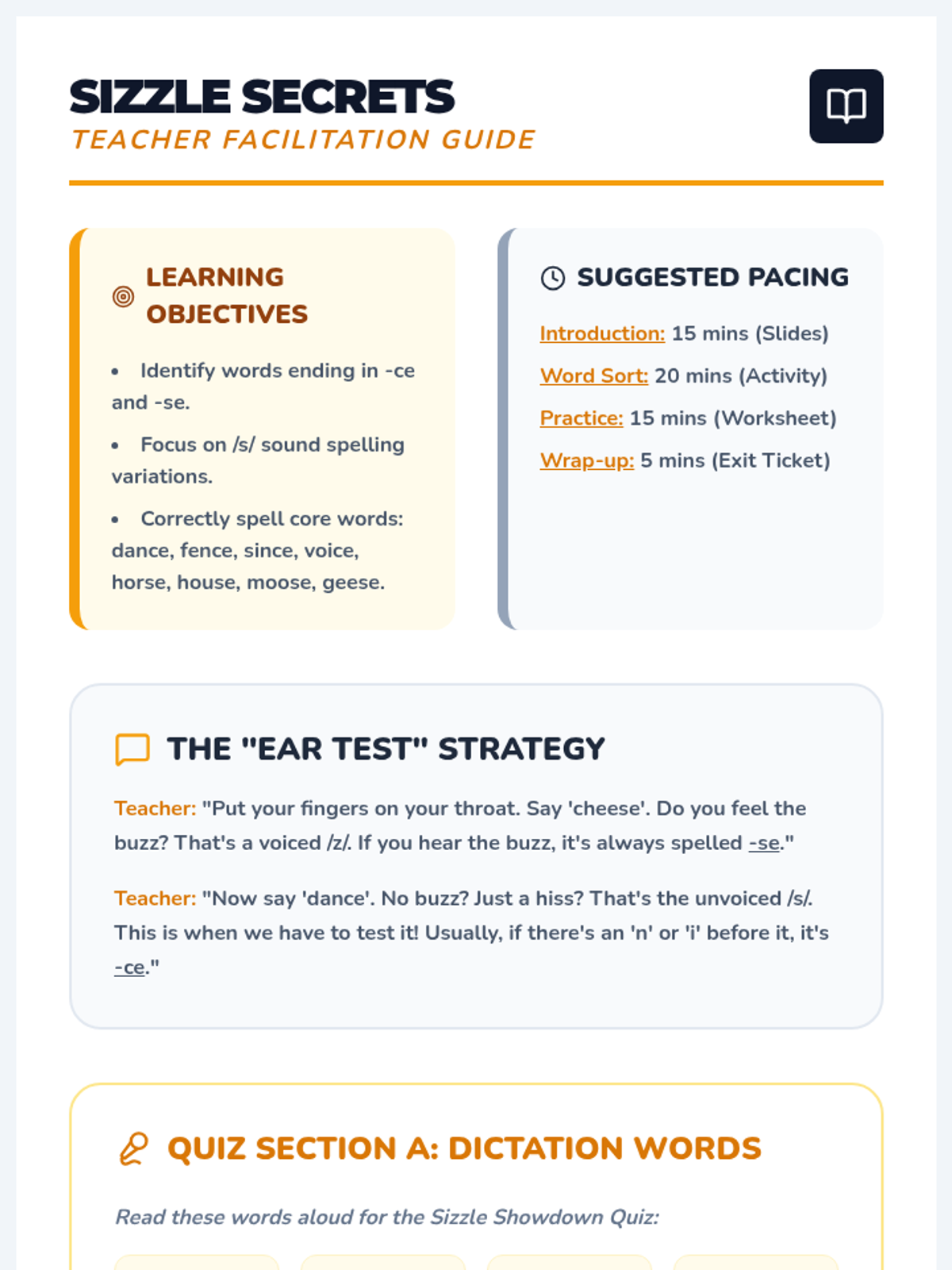
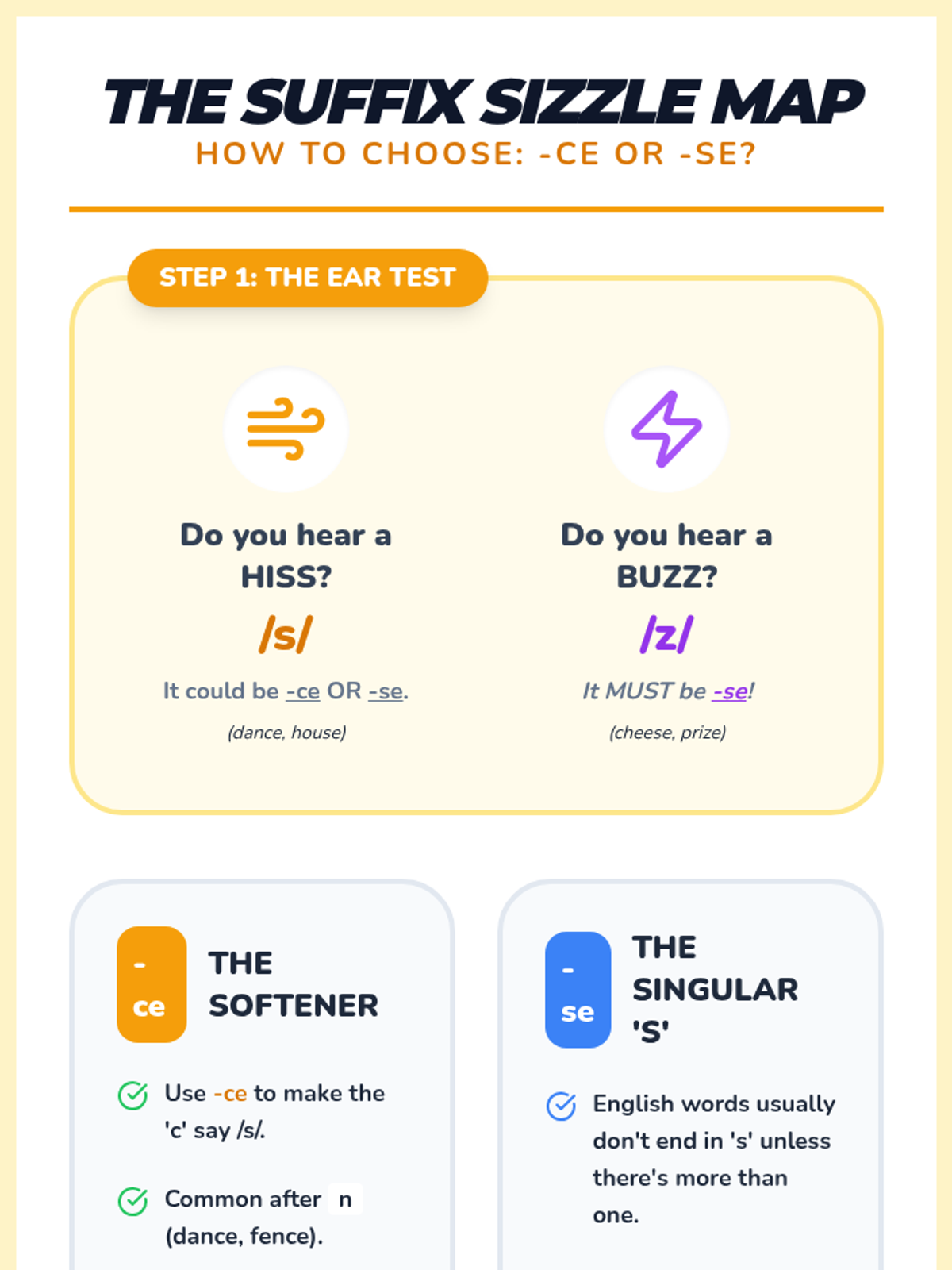
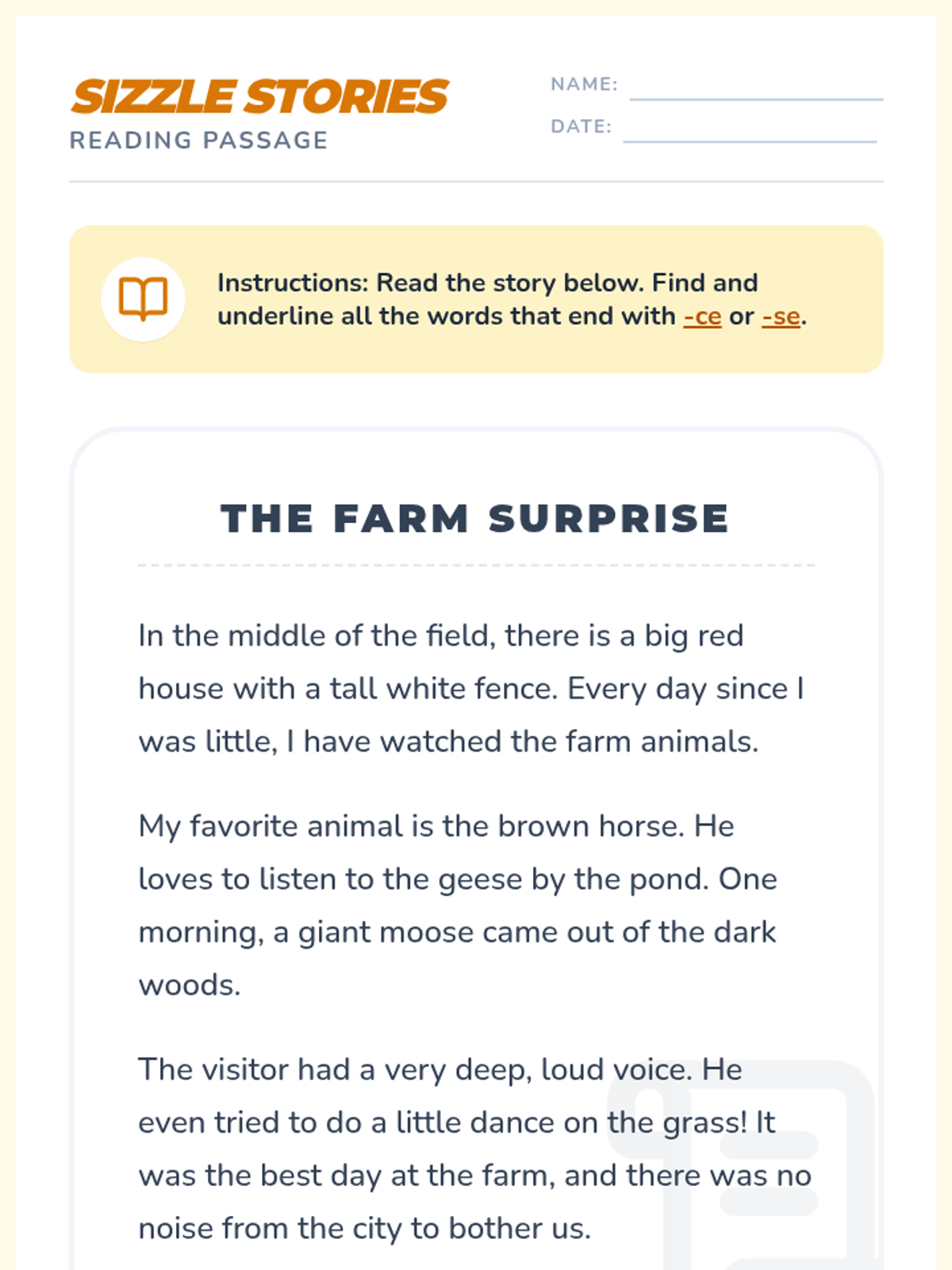
A lesson focused on identifying and using words ending in -ce and -se, distinguishing between the /s/ and /z/ sounds they produce.
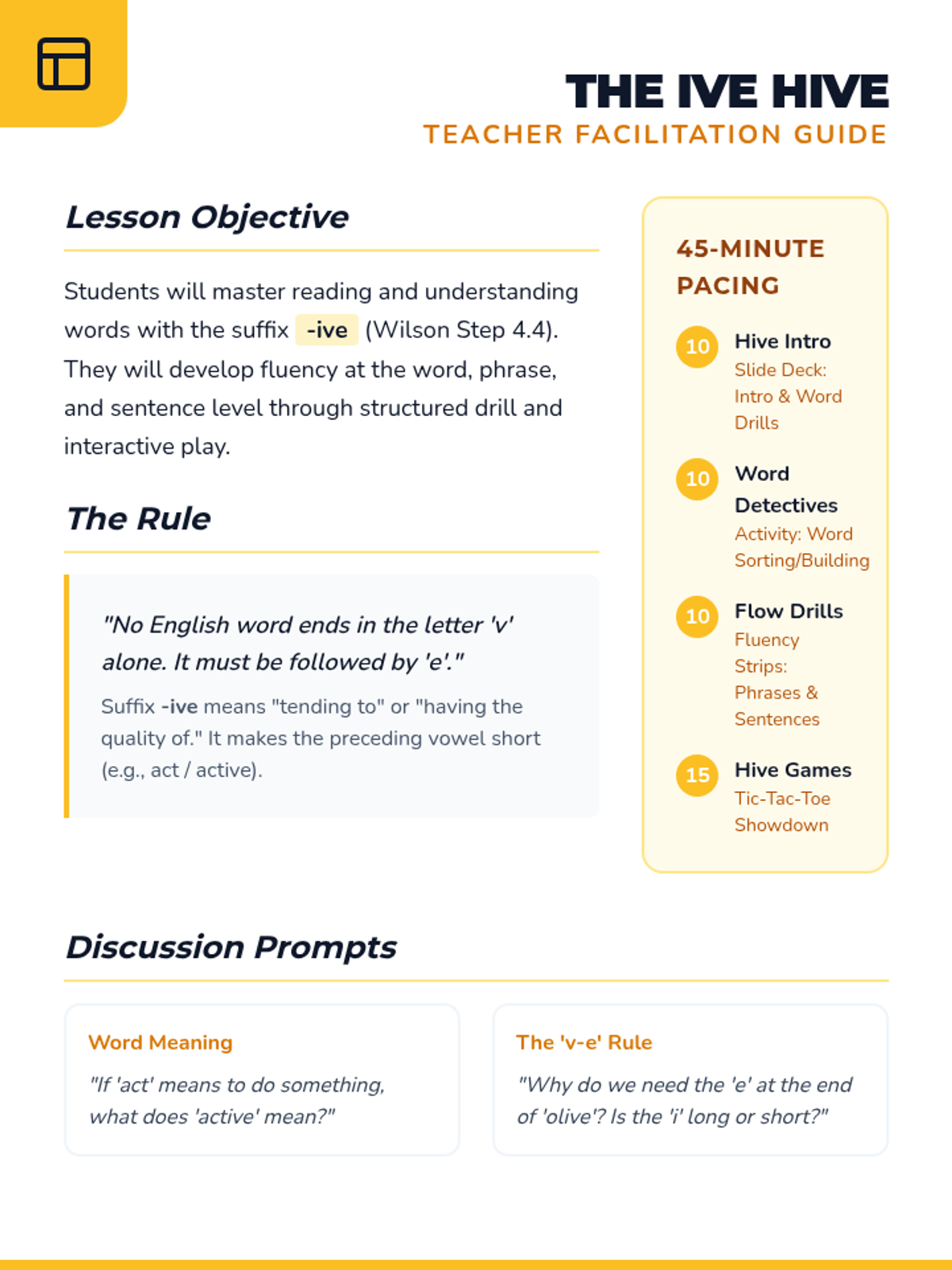
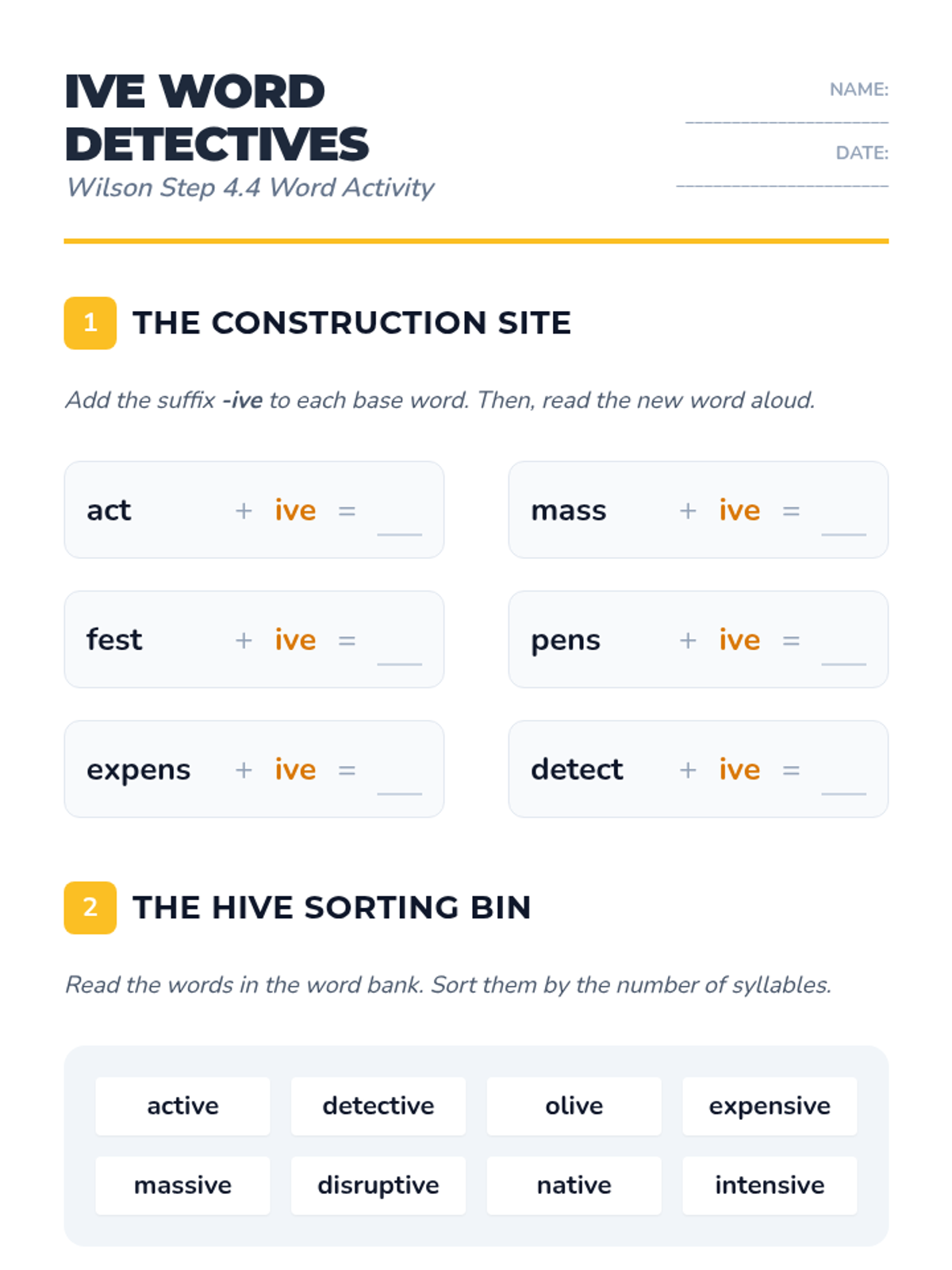
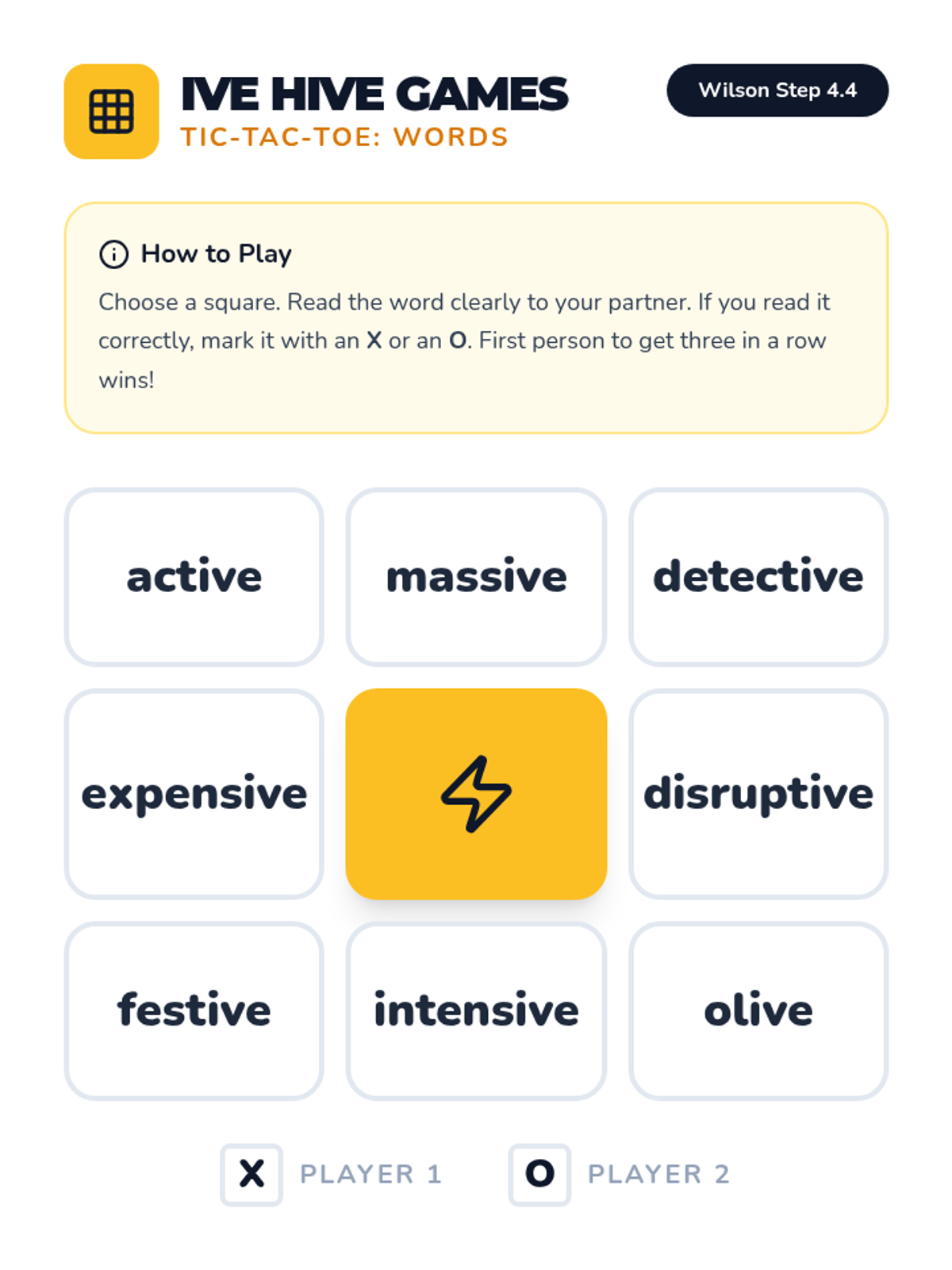
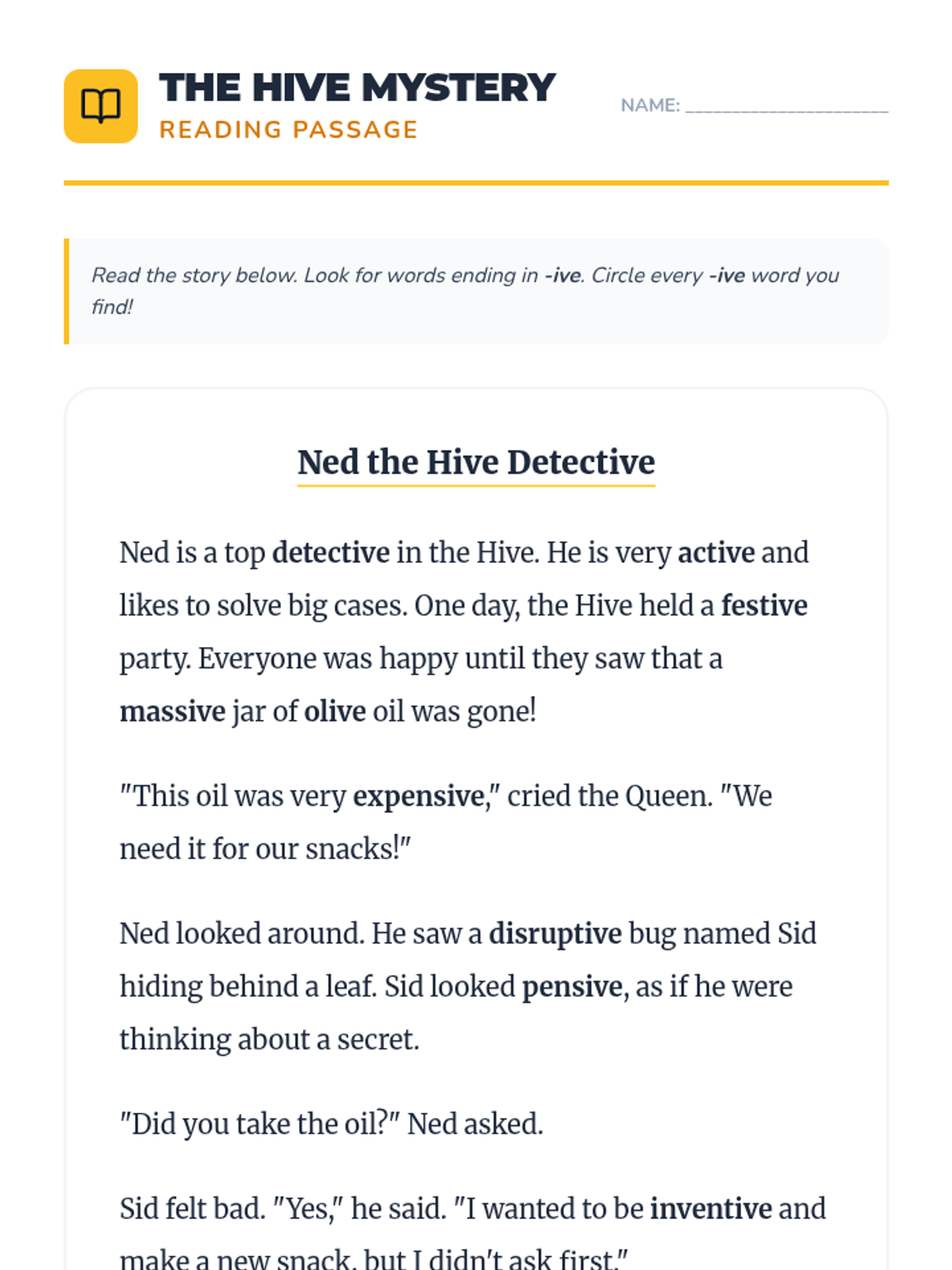
A focused lesson on Wilson Step 4.4 (suffix -ive), featuring fluency drills, games, and word-level activities centered around a 'bee hive' theme.
A 30-day handwriting practice program focused on historical events, civilizations, and vocabulary, designed for upper elementary students to improve penmanship through engaging historical facts.
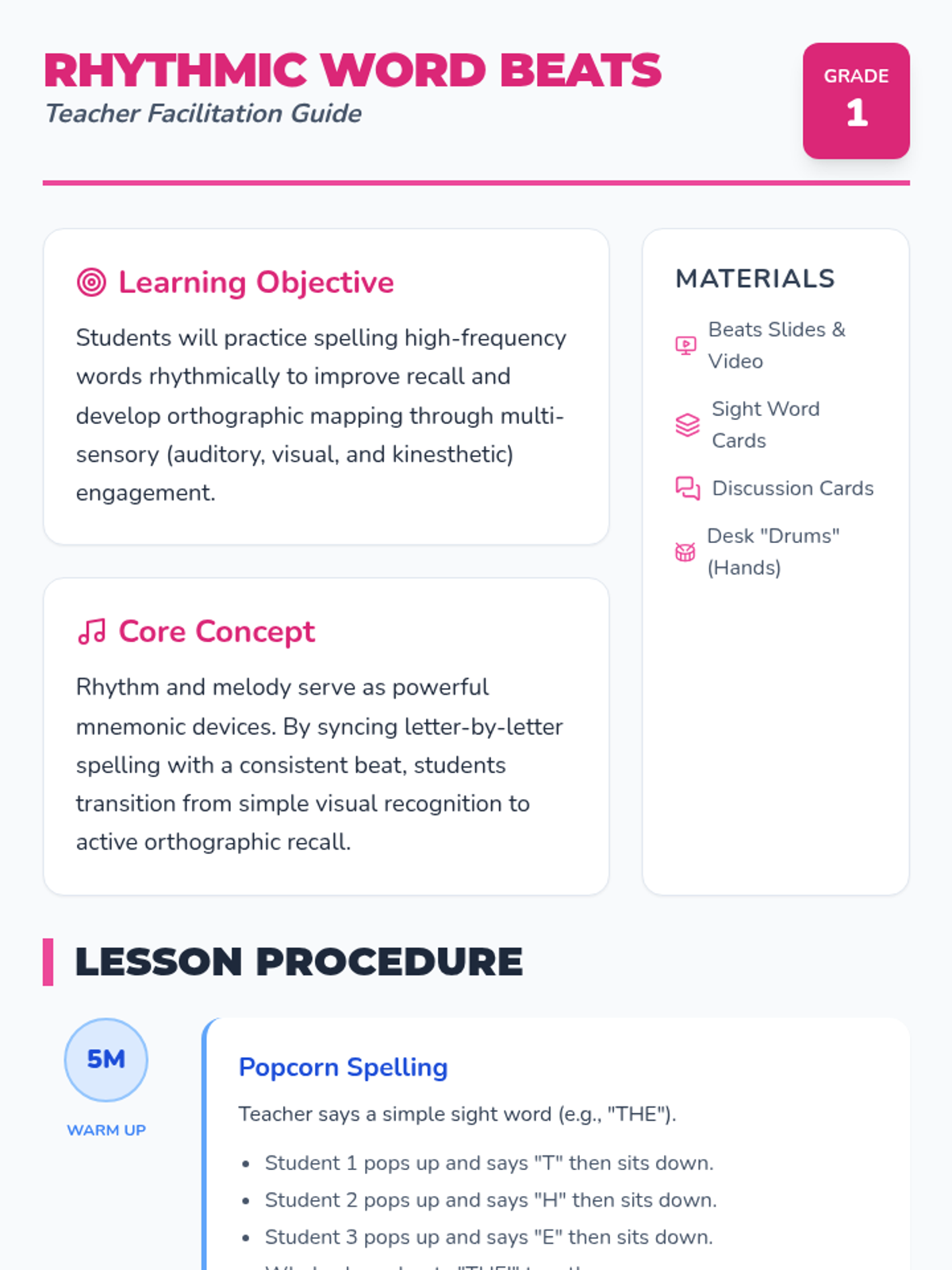
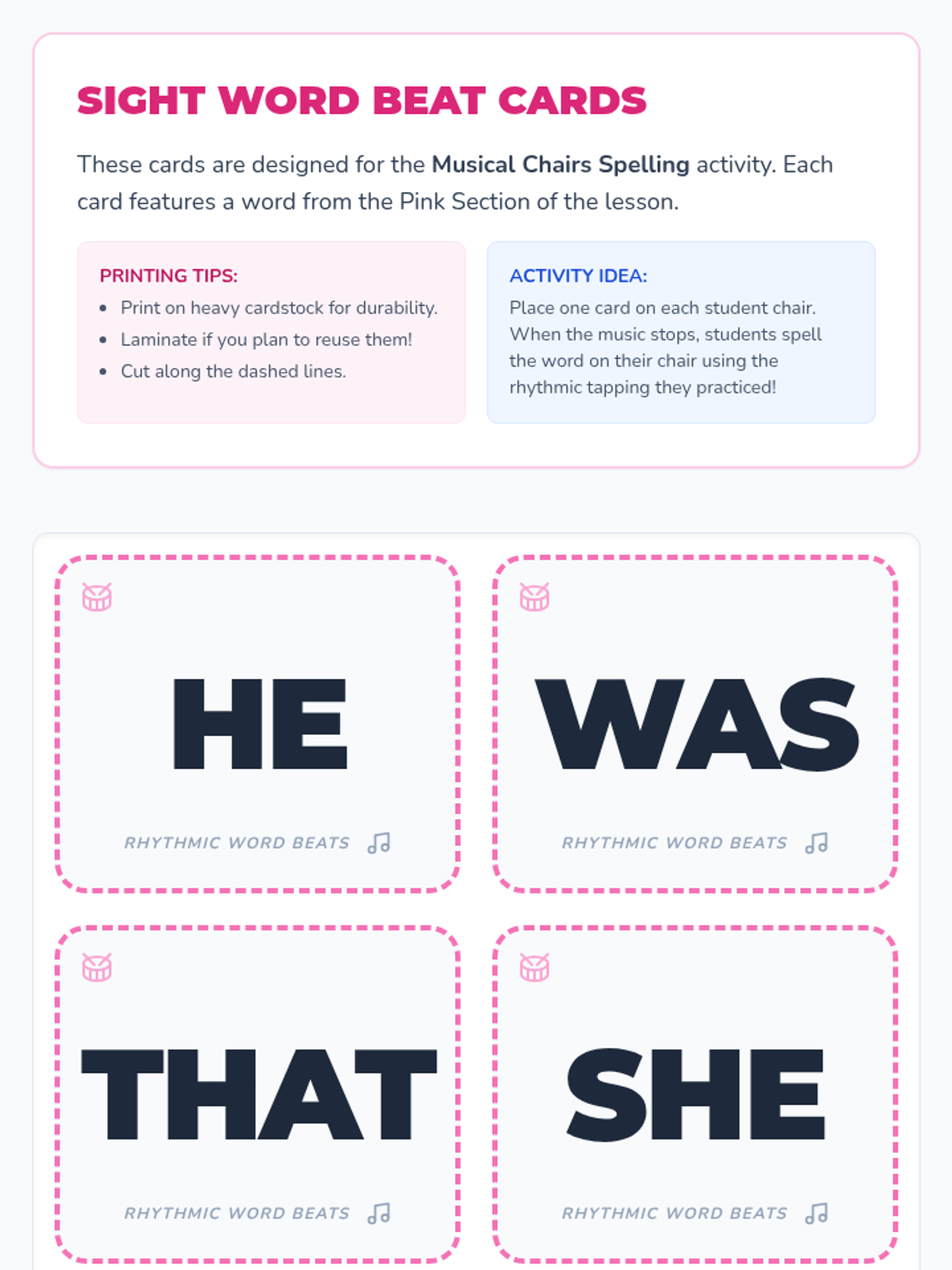
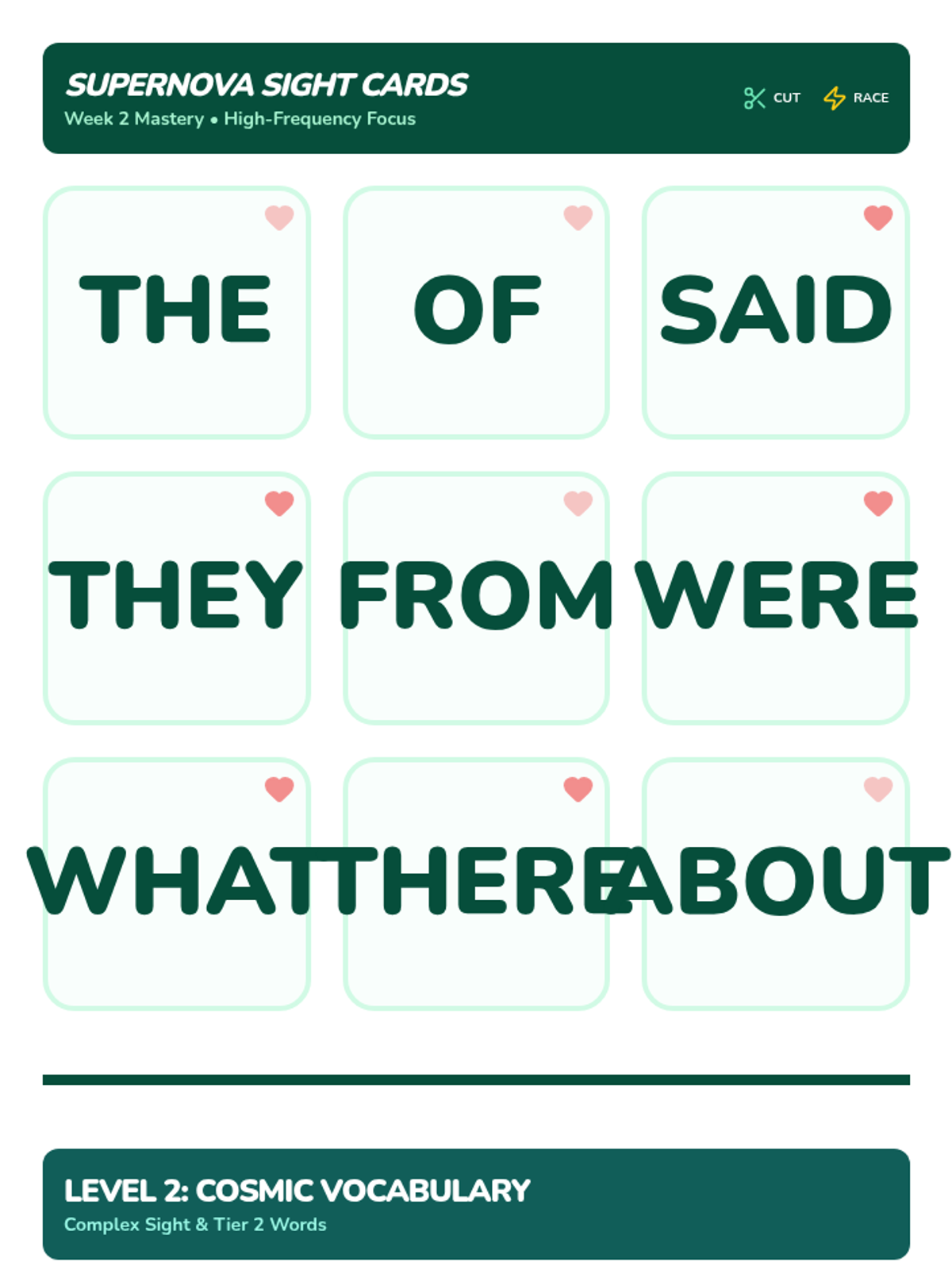
A rhythmic, movement-based lesson for 1st graders to master high-frequency sight words through drumming and musical games. Students use the 'Sight Word Song' to practice spelling with a beat, enhancing their orthographic mapping and recall.
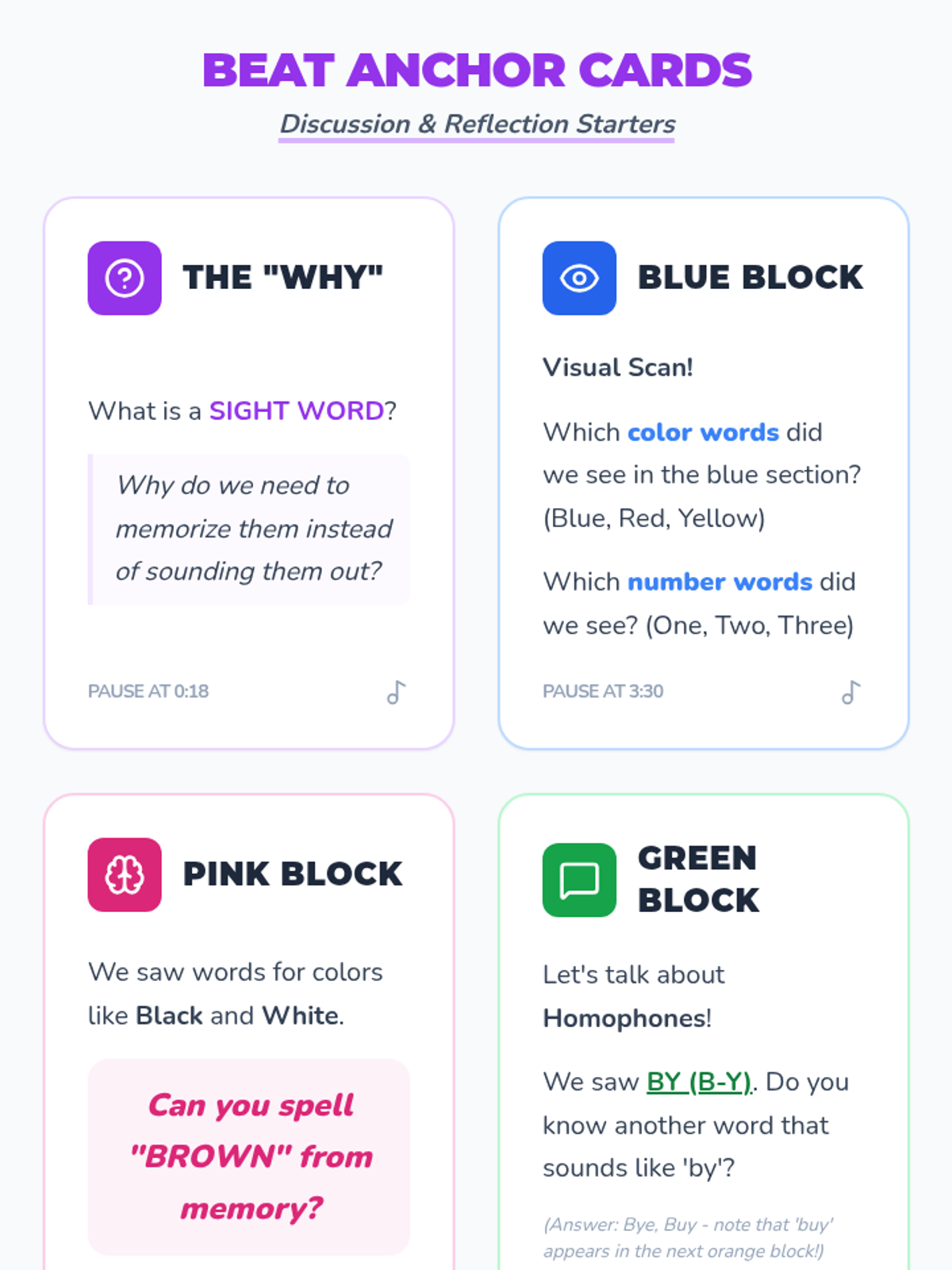
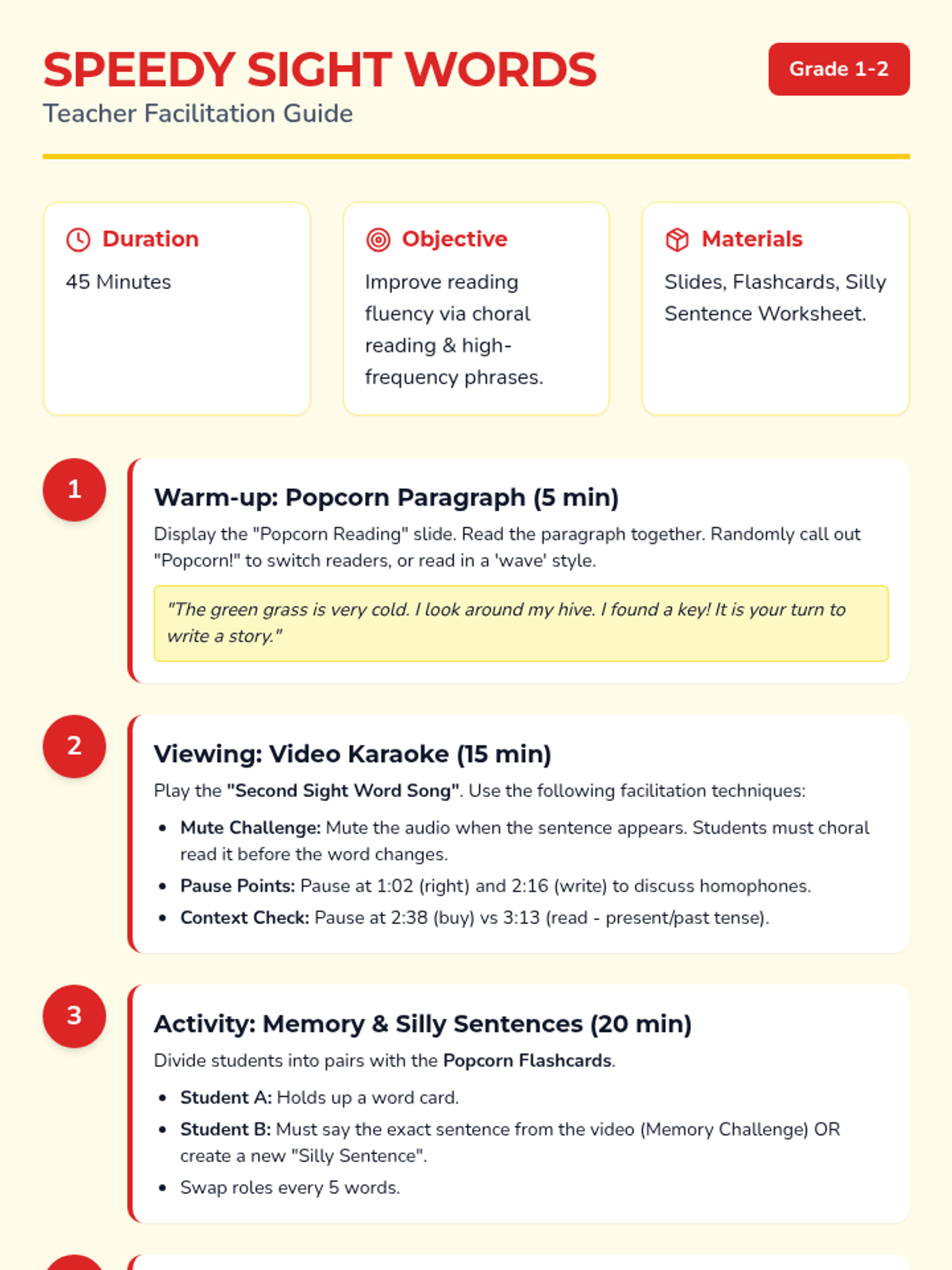
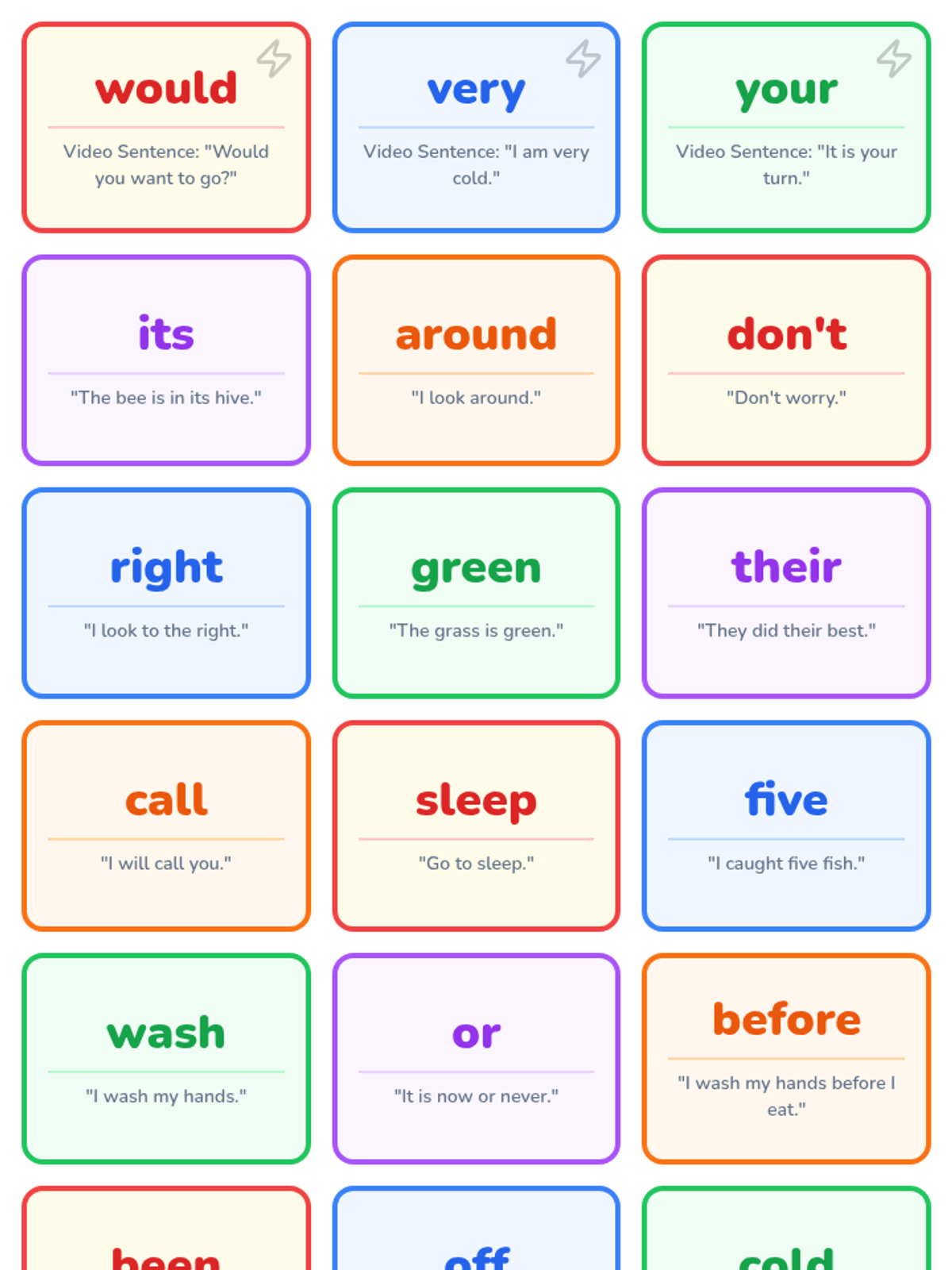
A high-energy lesson focused on building reading fluency through choral reading and rapid-fire sight word drills using a 'Video Karaoke' approach. Students practice 46 high-frequency words through rhythmic singing, memory challenges, and silly sentence creation.
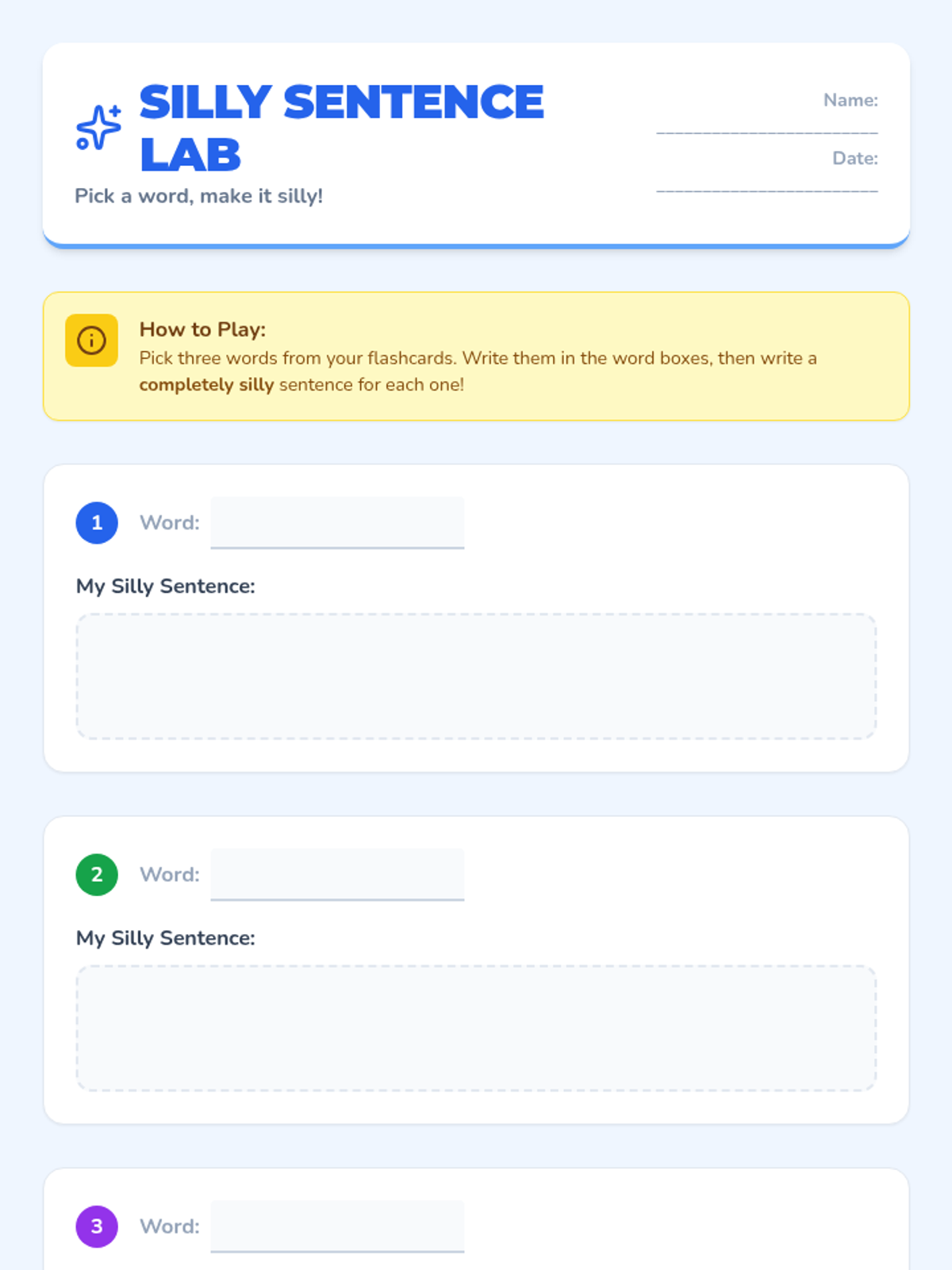
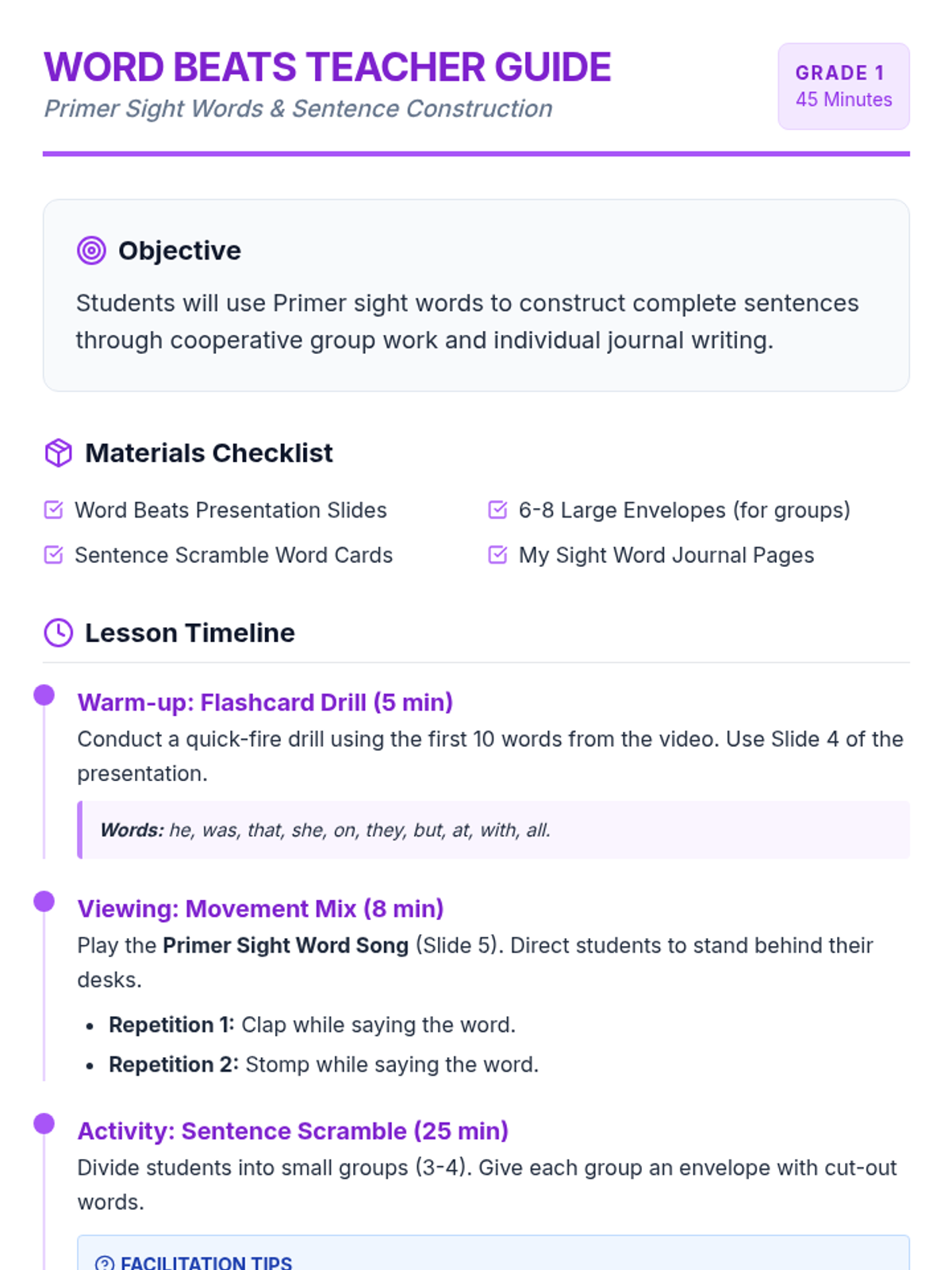
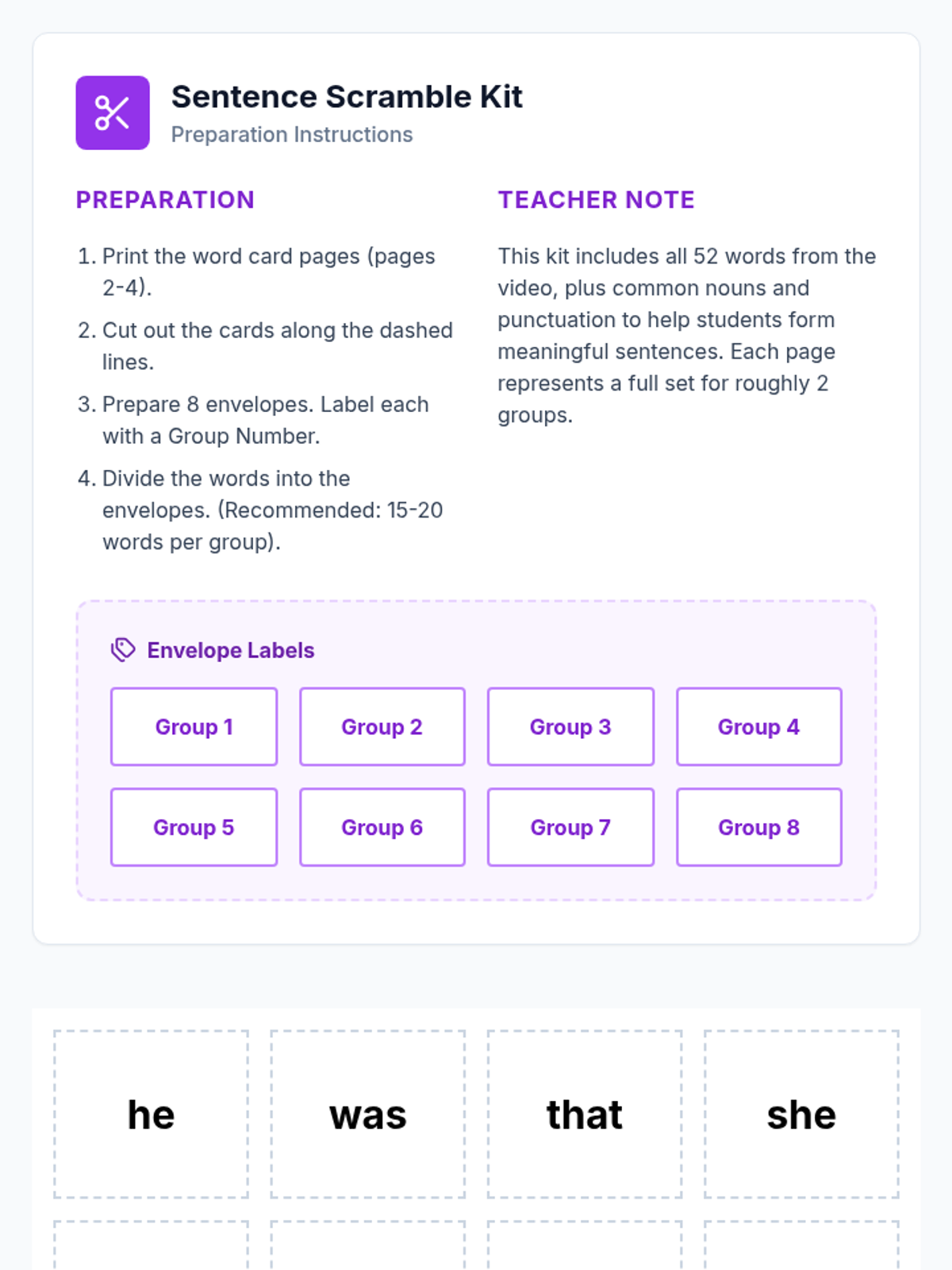
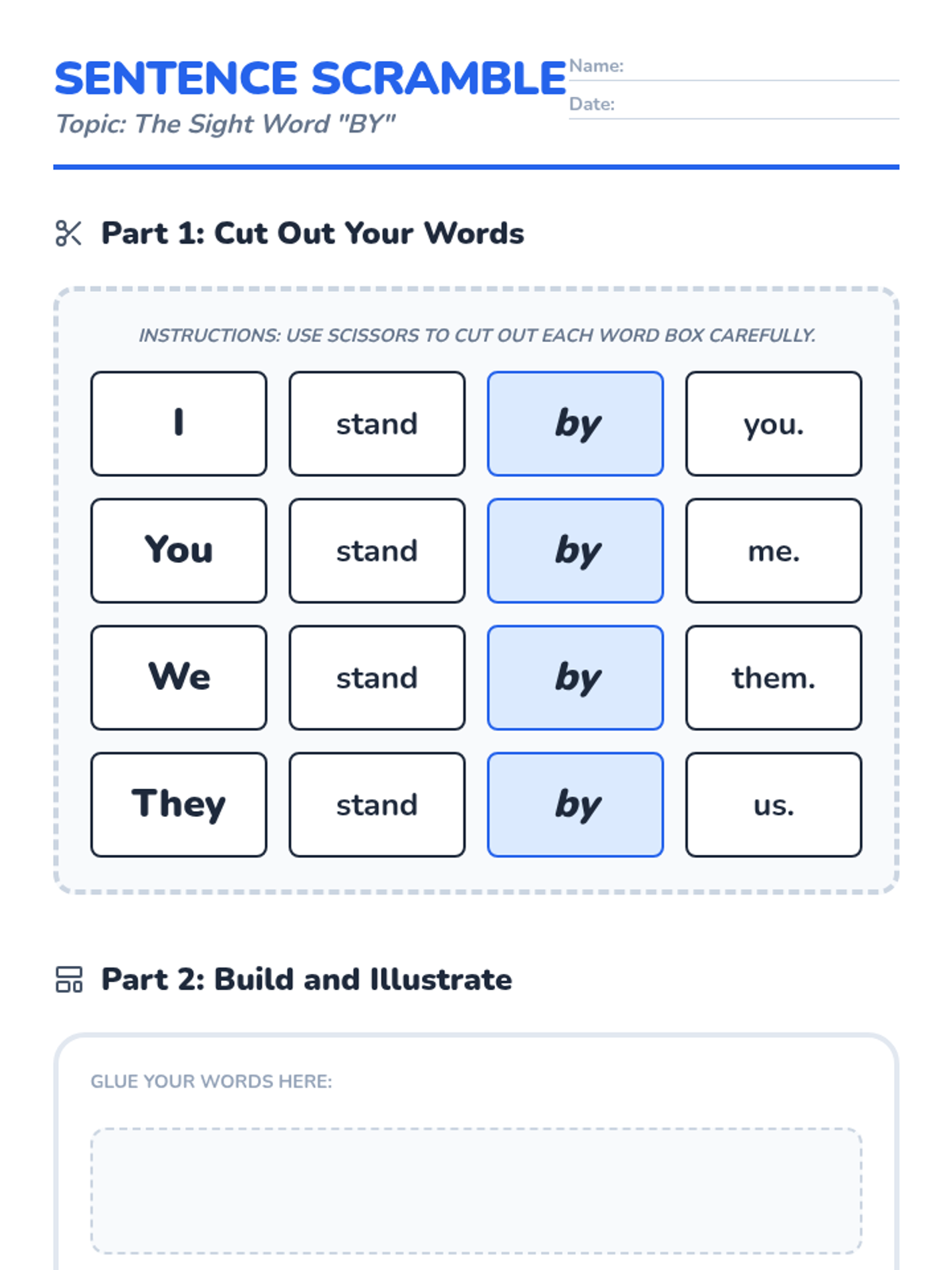
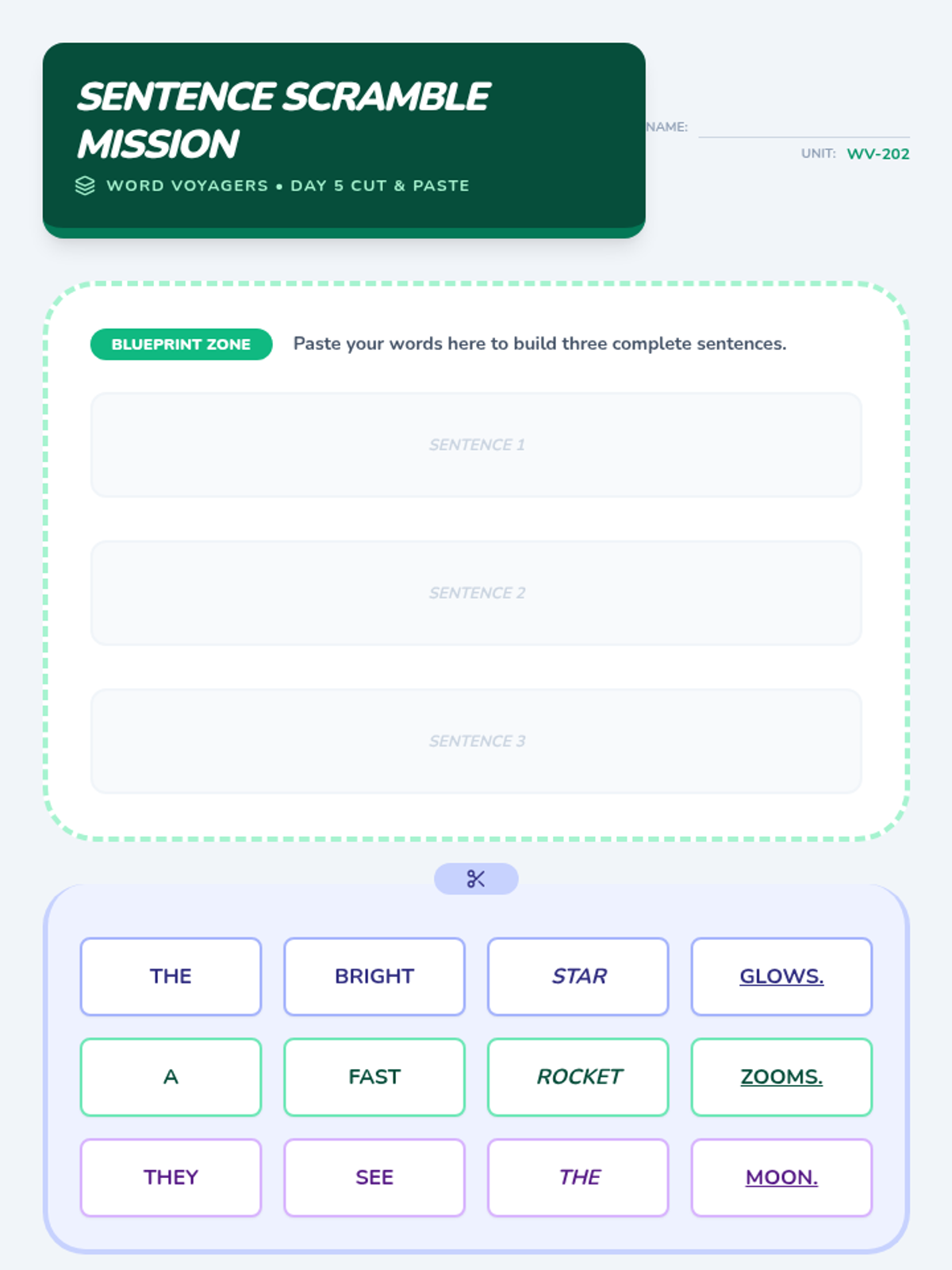
A high-energy, music-based lesson where 1st graders learn to identify Primer sight words and use them to build complete sentences through interactive movement and a sentence-scramble activity.
A 1st-grade lesson where students become 'Word Detectives' to identify, spell, and use sight words in sentences based on the Primer Sight Word Song.
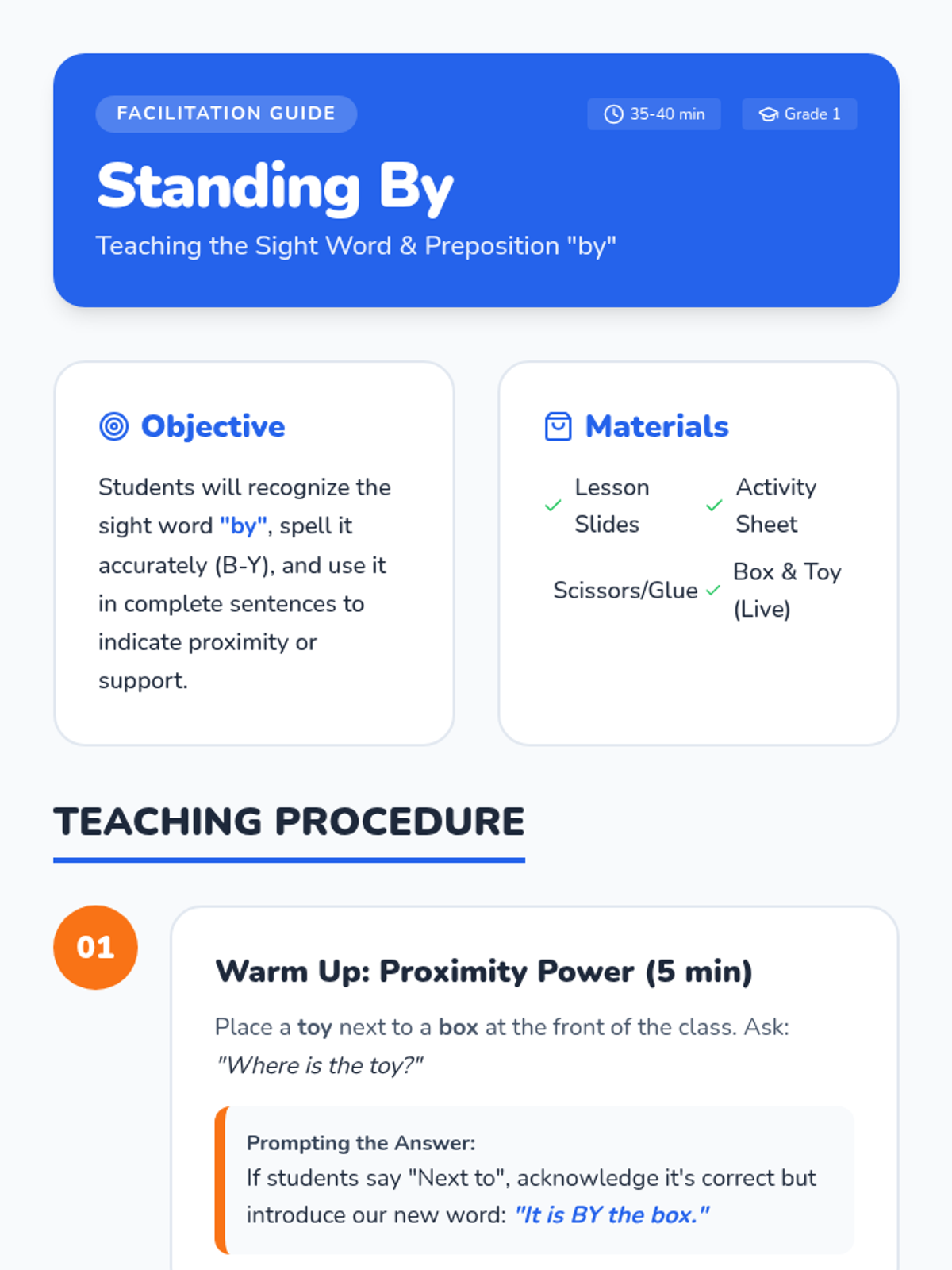
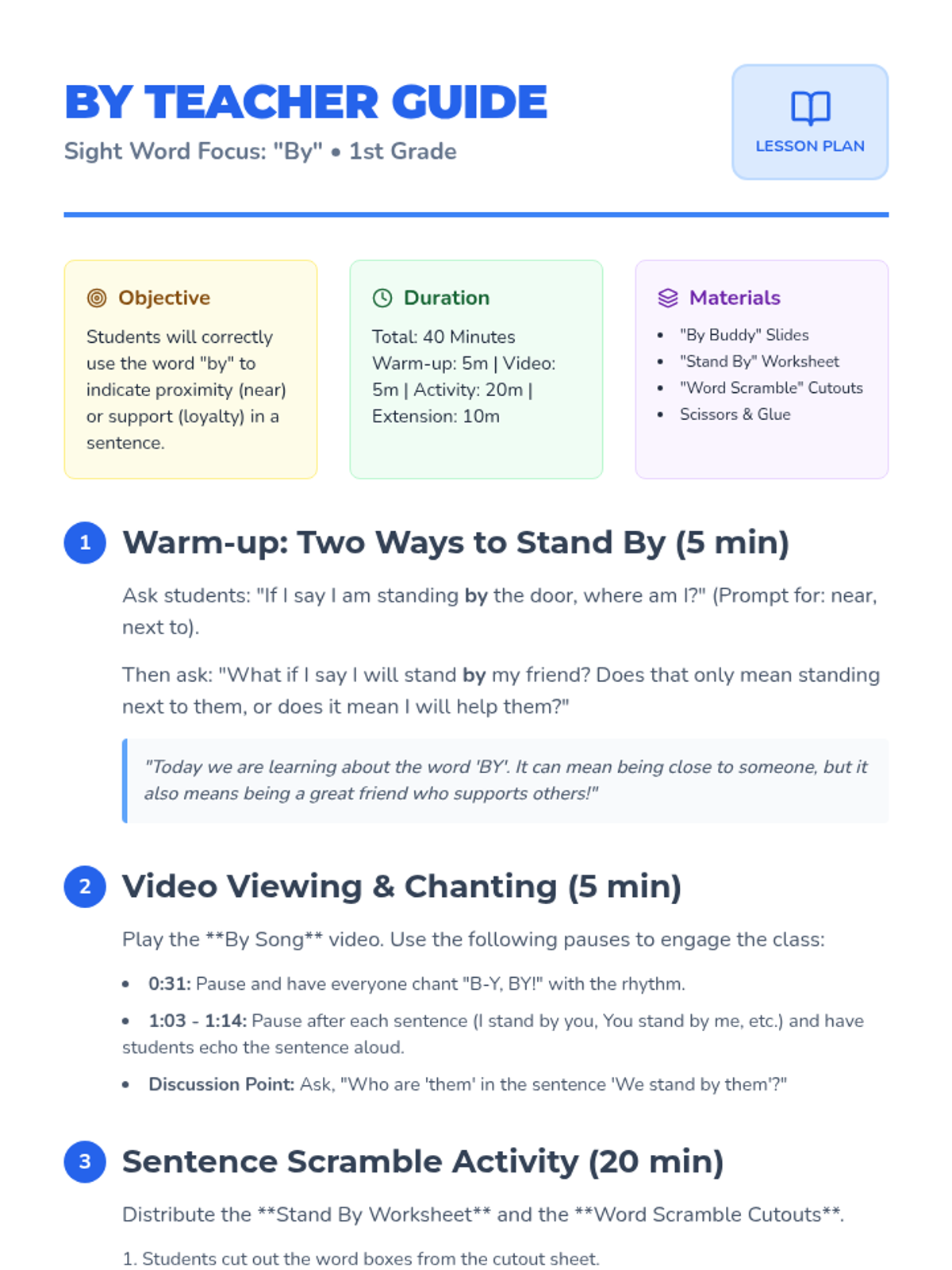
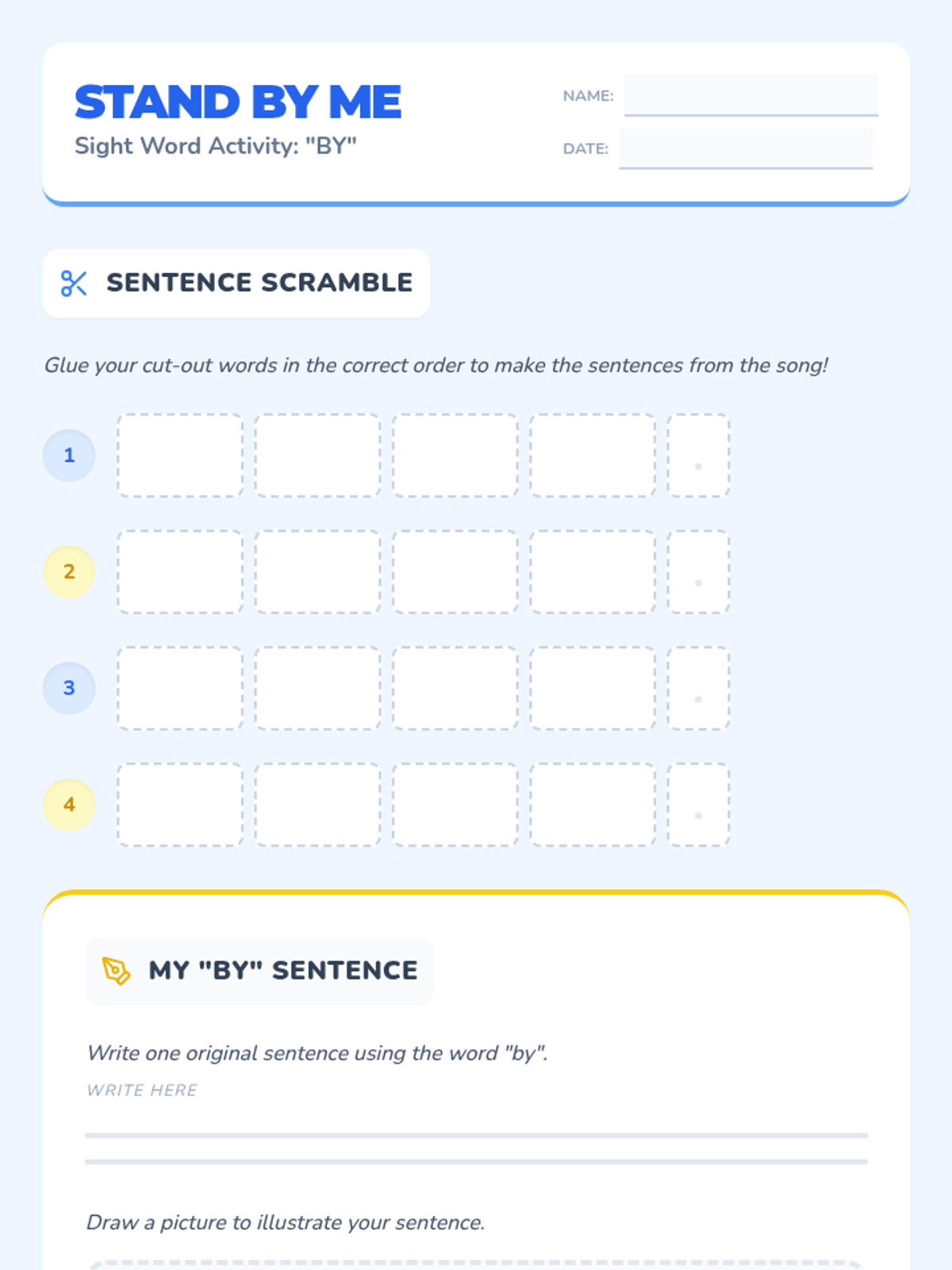
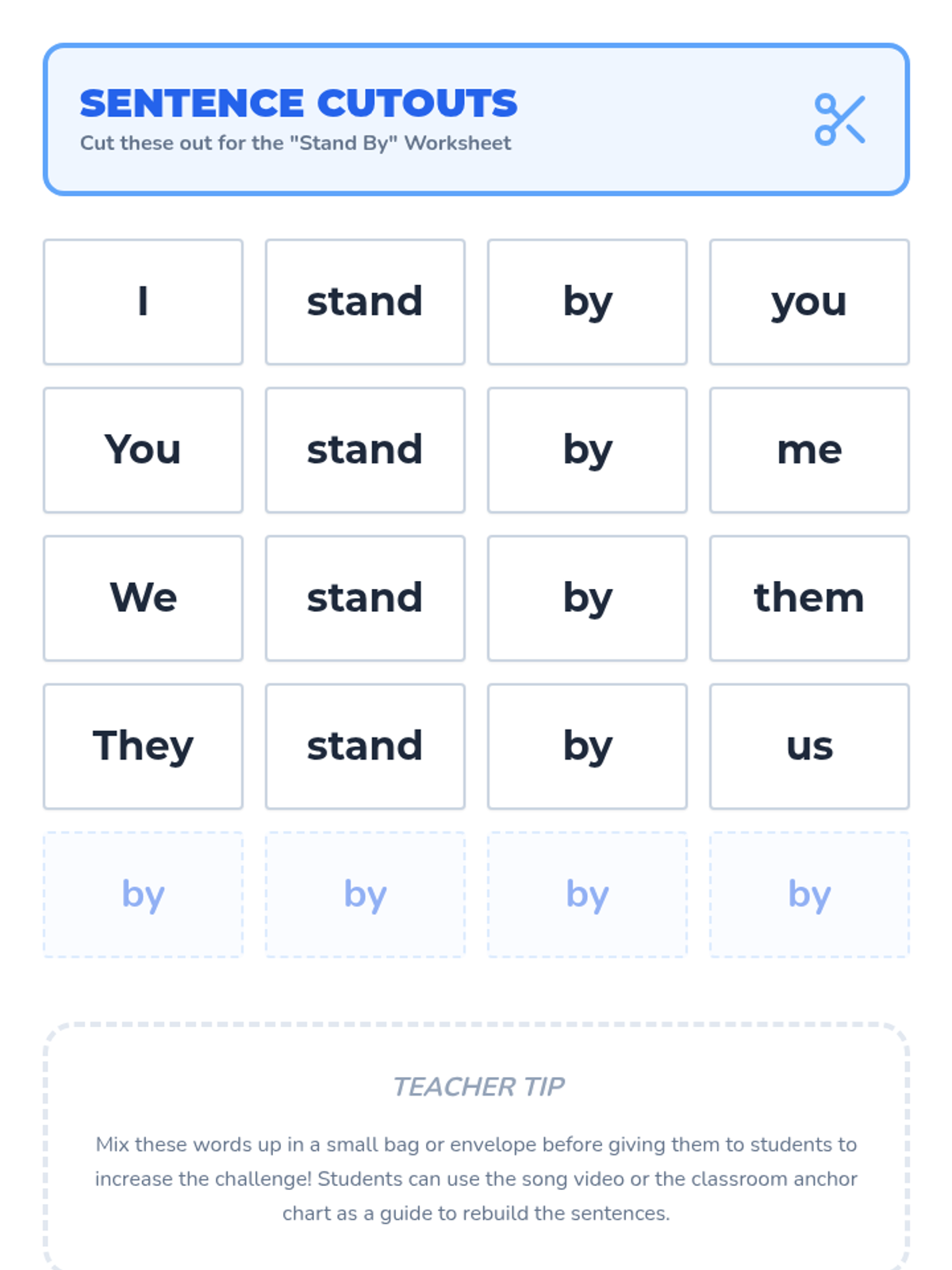
A 1st Grade English lesson focusing on the sight word and preposition 'by' to indicate proximity and support. Students will watch a catchy song, practice spelling, and build sentences from the lyrics.
A 1st-grade lesson focused on distinguishing between the homophones by, buy, and bye using music, visual aids, and interactive practice.
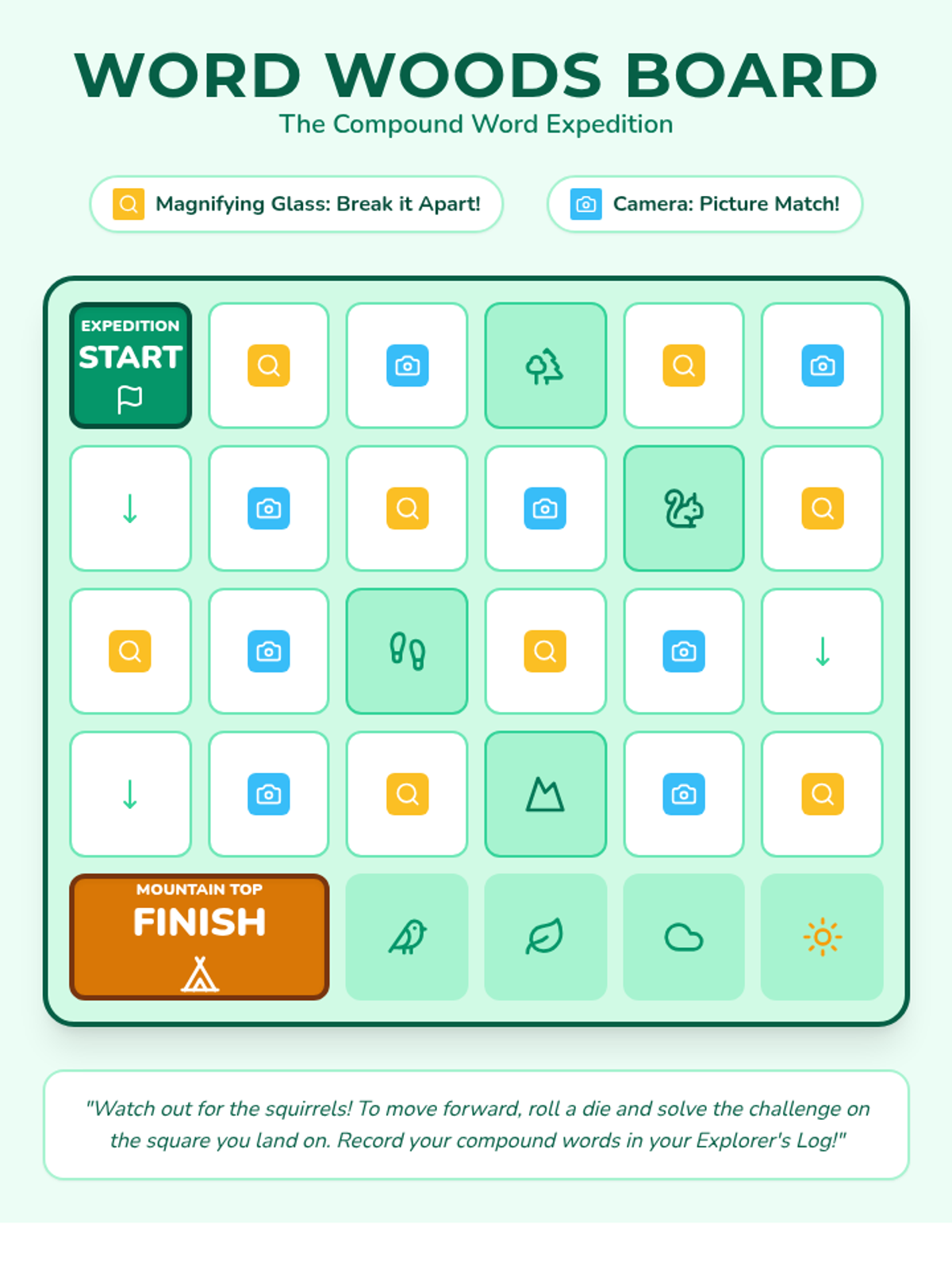
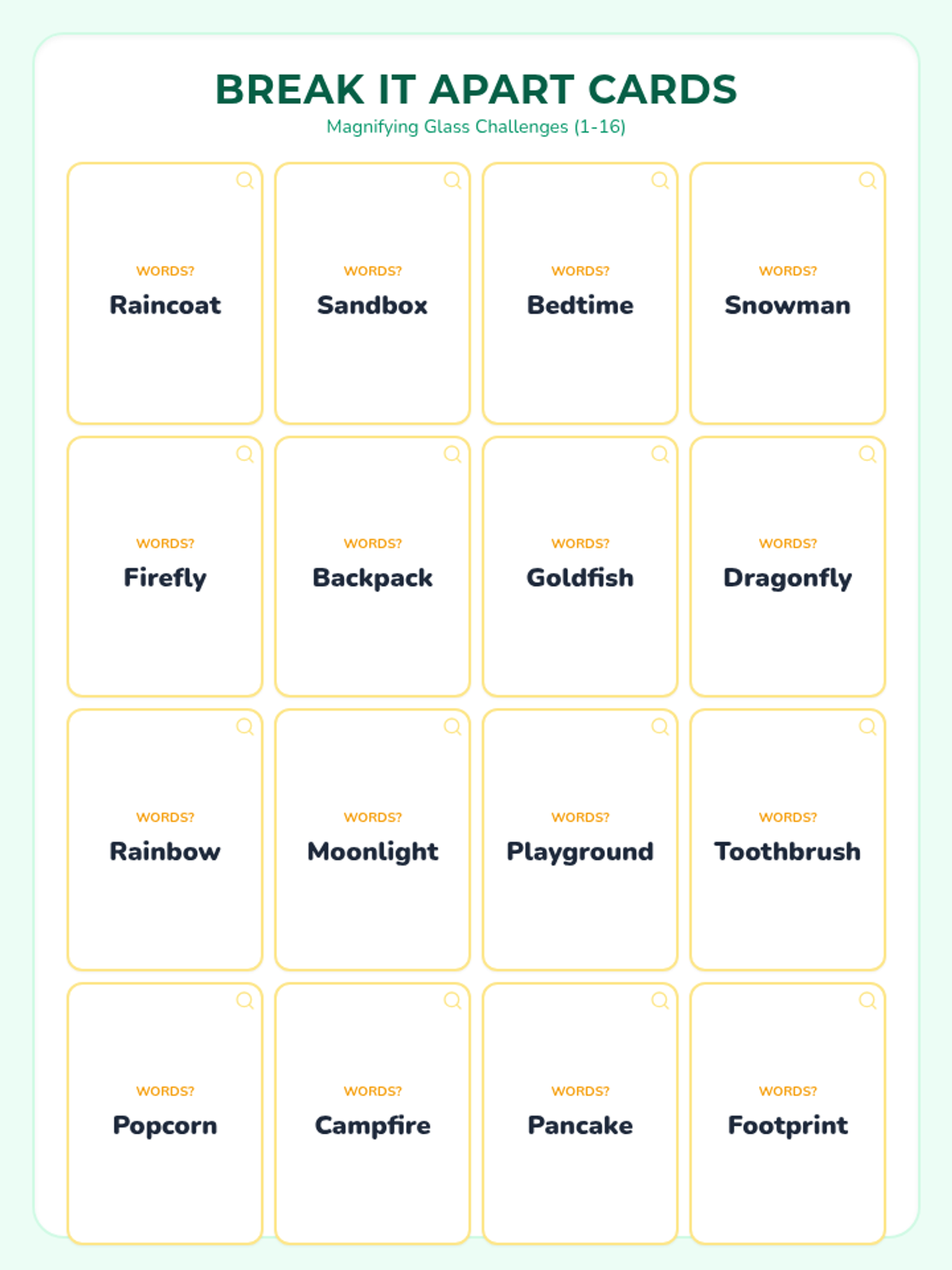
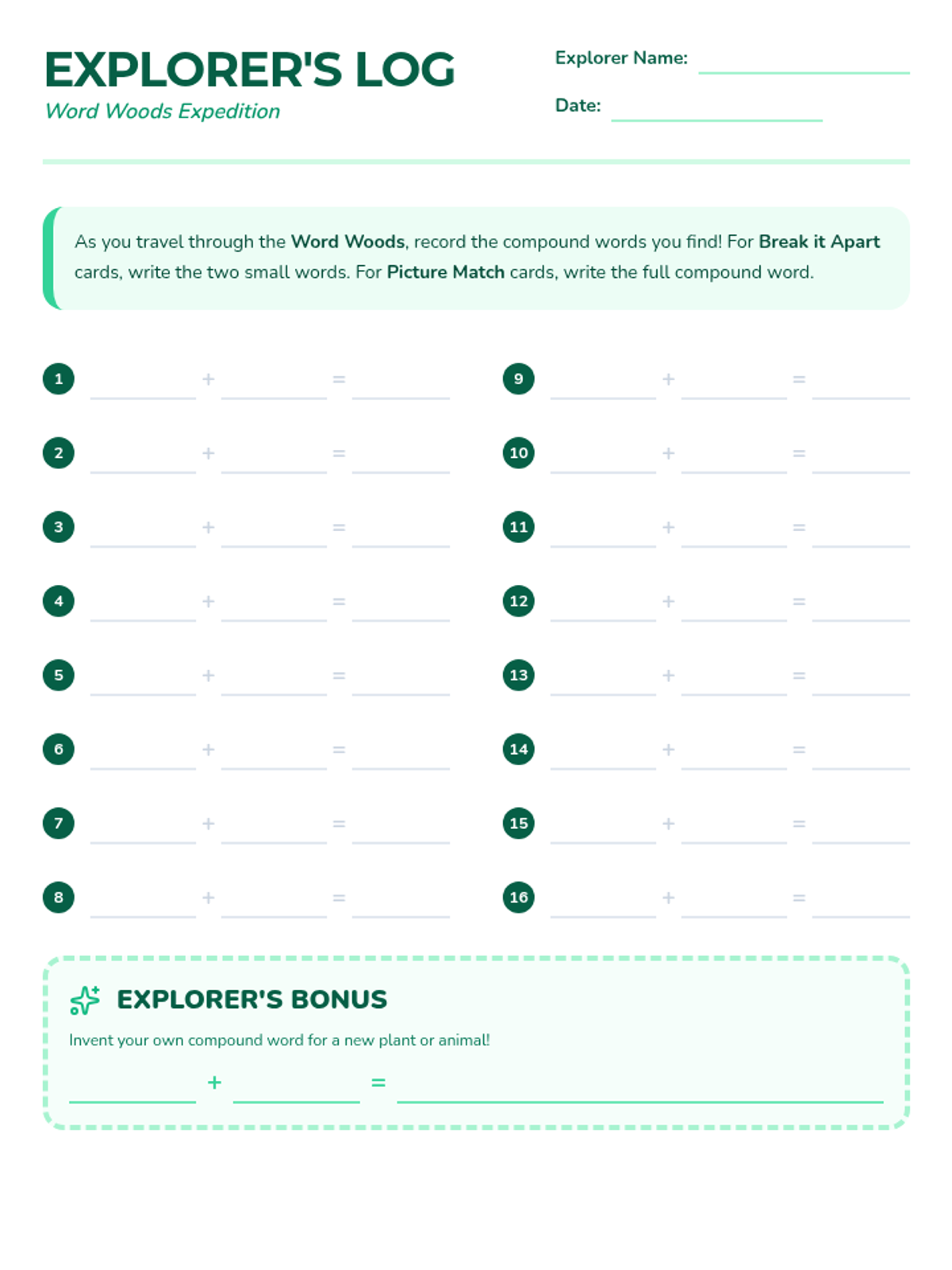
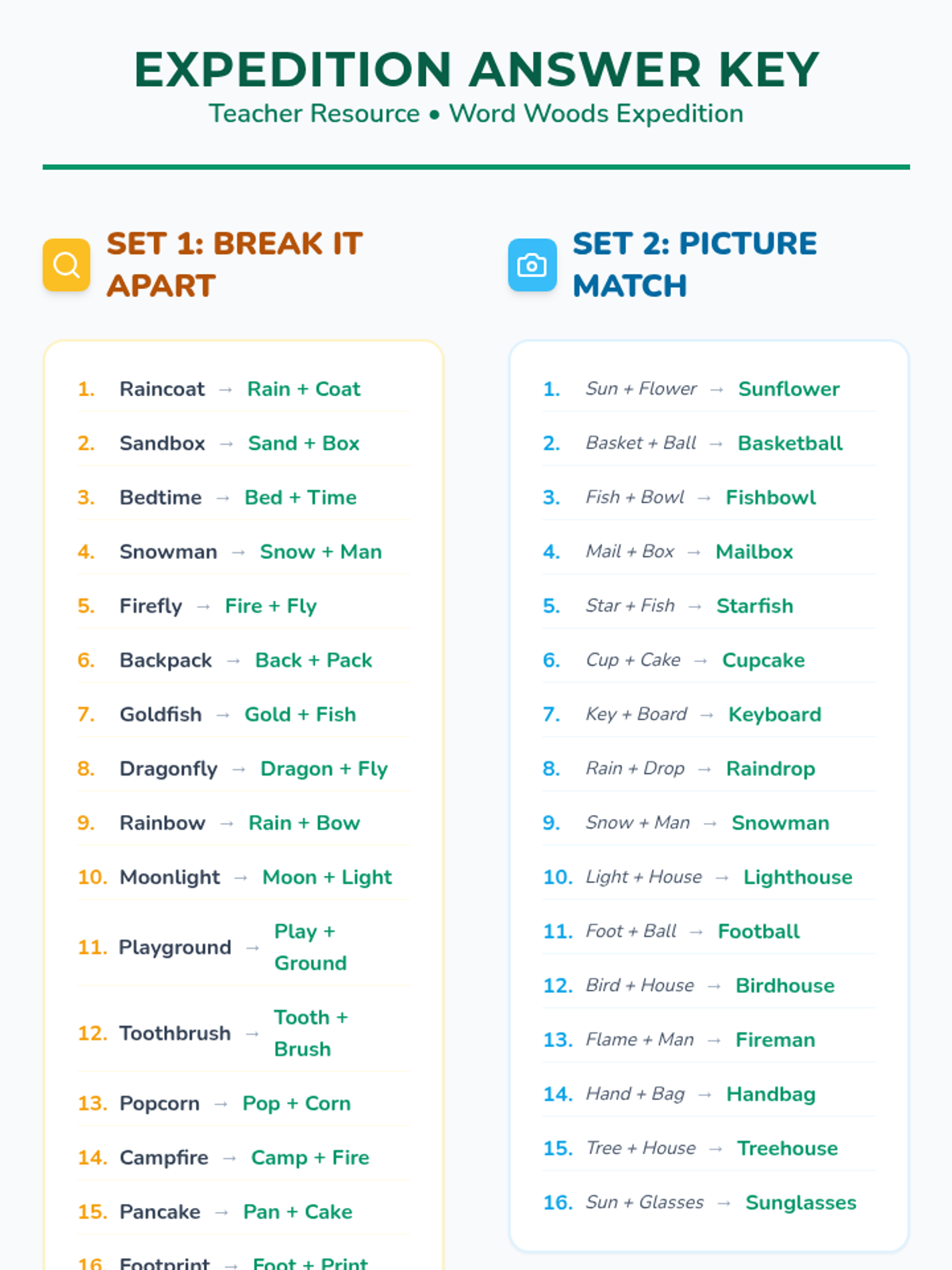
A hands-on board game experience where students explore the forest of compound words, practicing how to decompose words and match visual parts to create new ones.
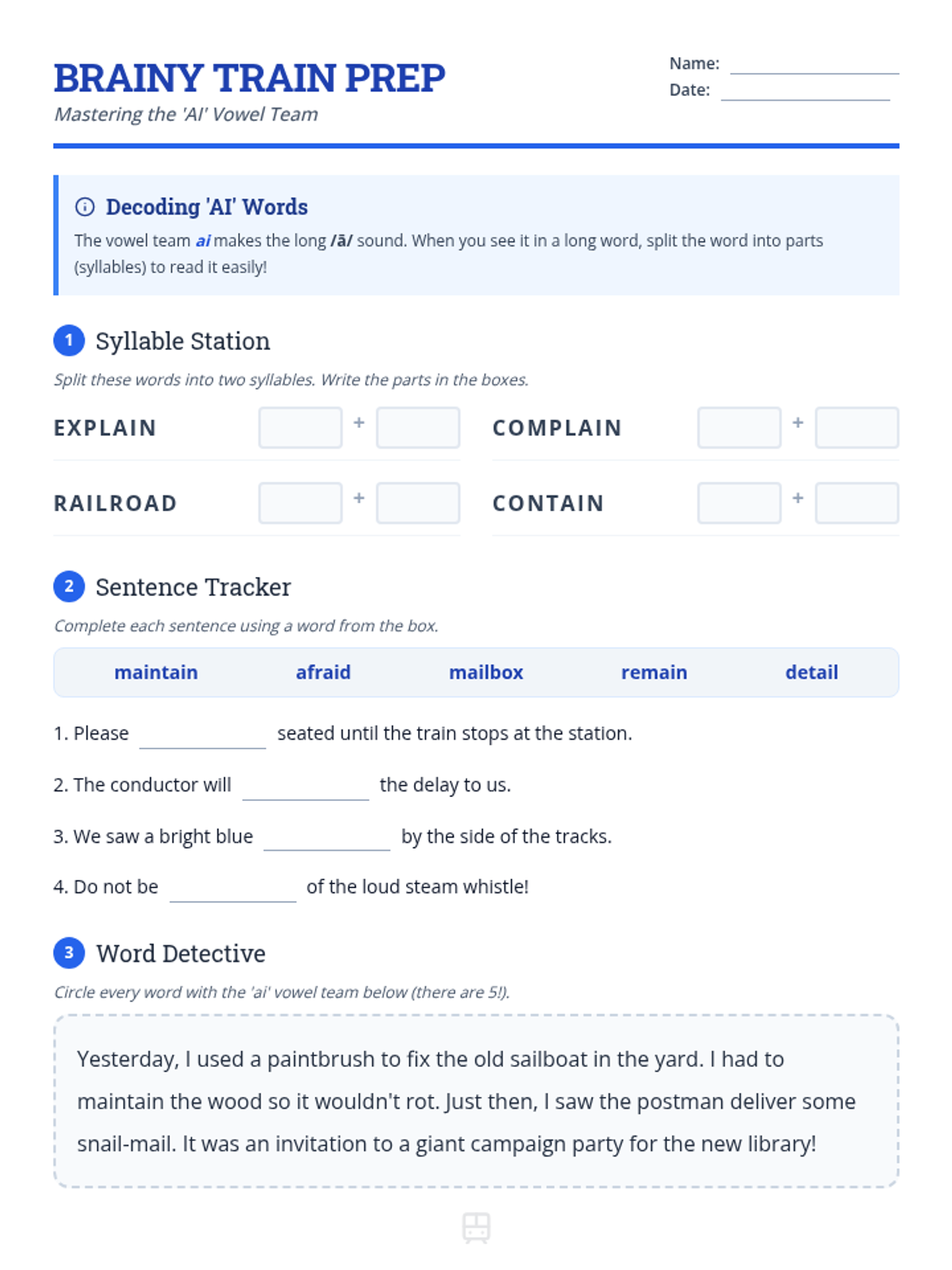
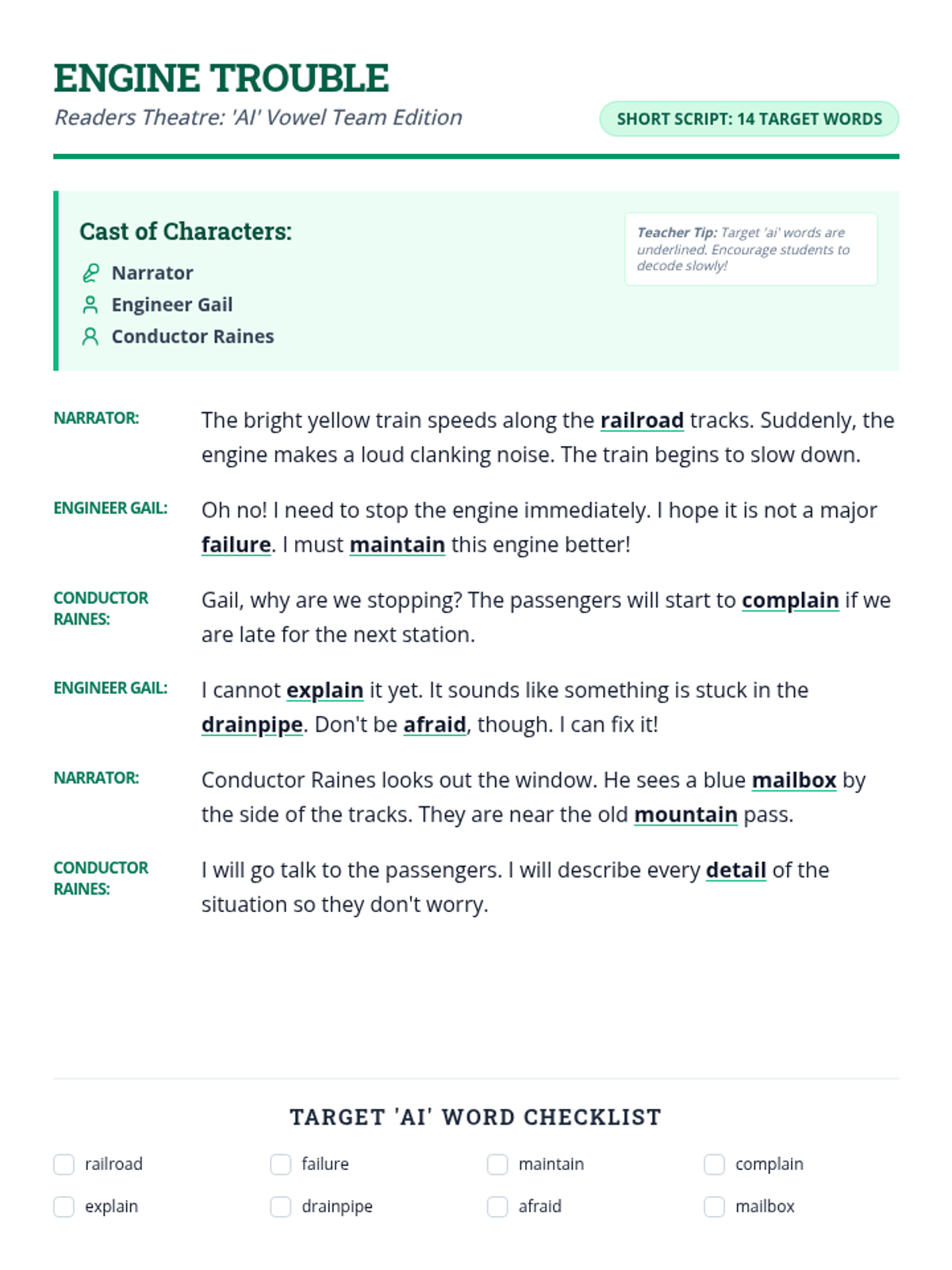
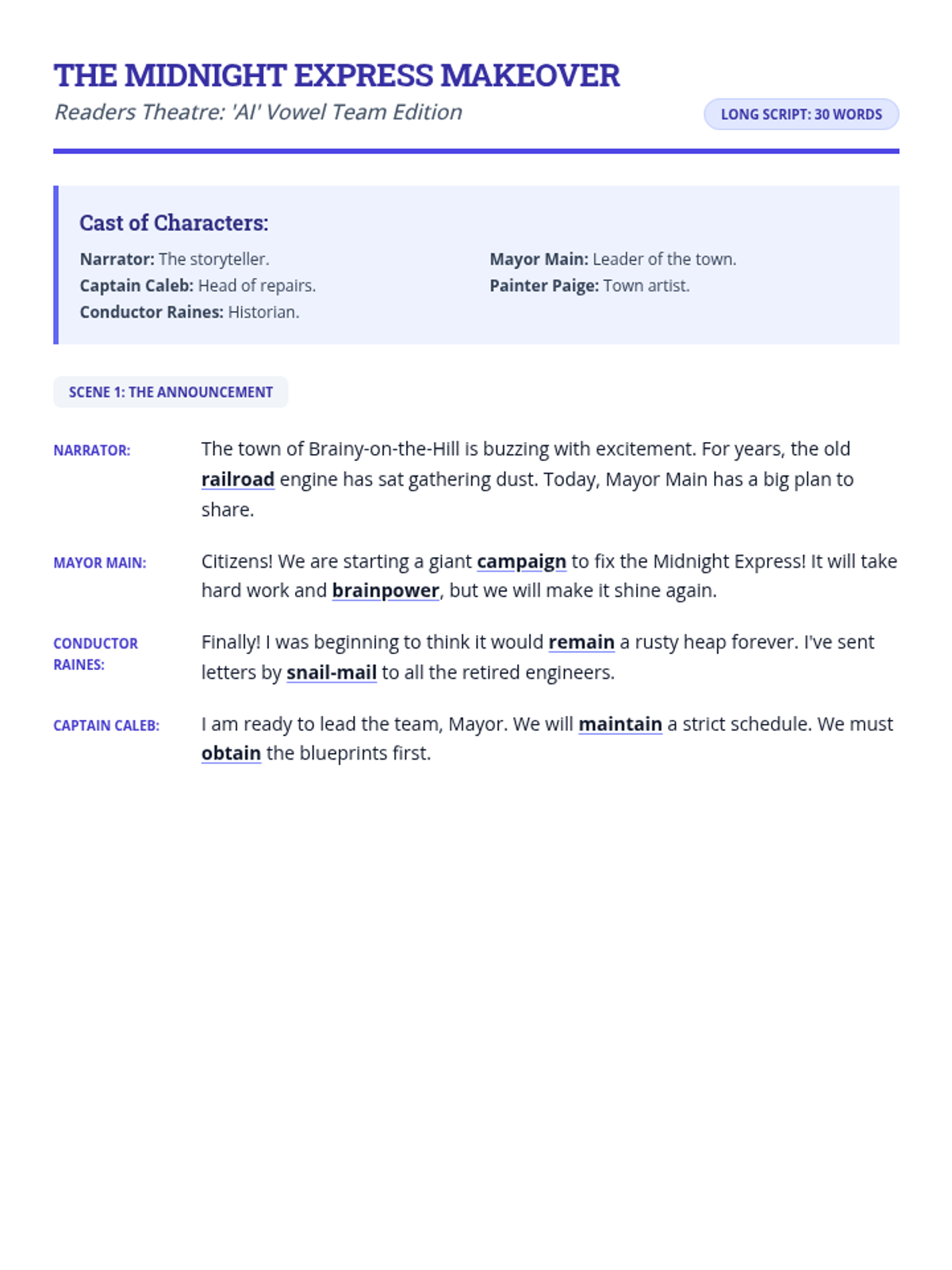
A lesson focused on decoding multisyllabic words featuring the 'ai' vowel team through engaging Readers Theatre scripts and preparatory activities. Students will practice syllable division and reading fluency.
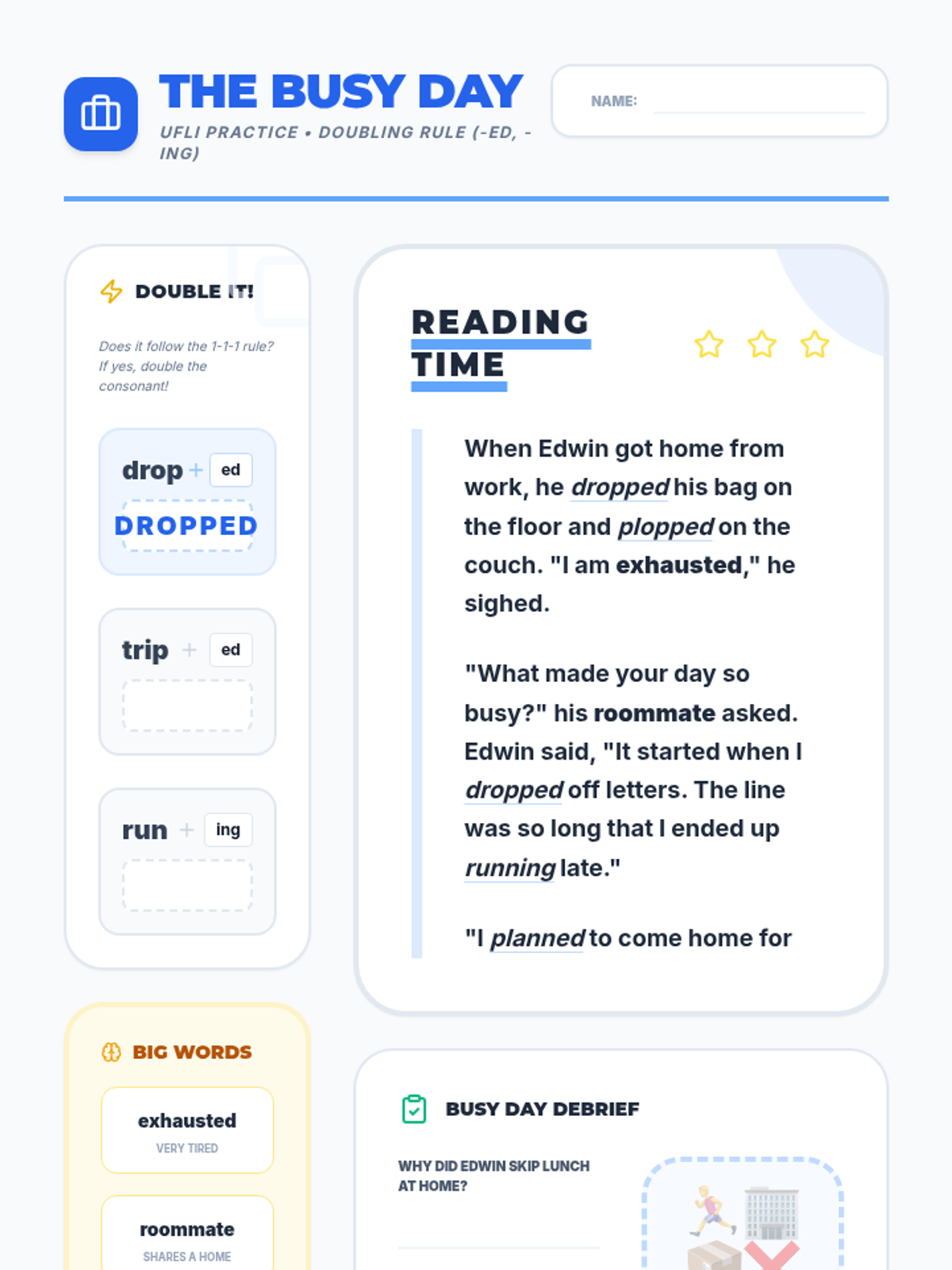
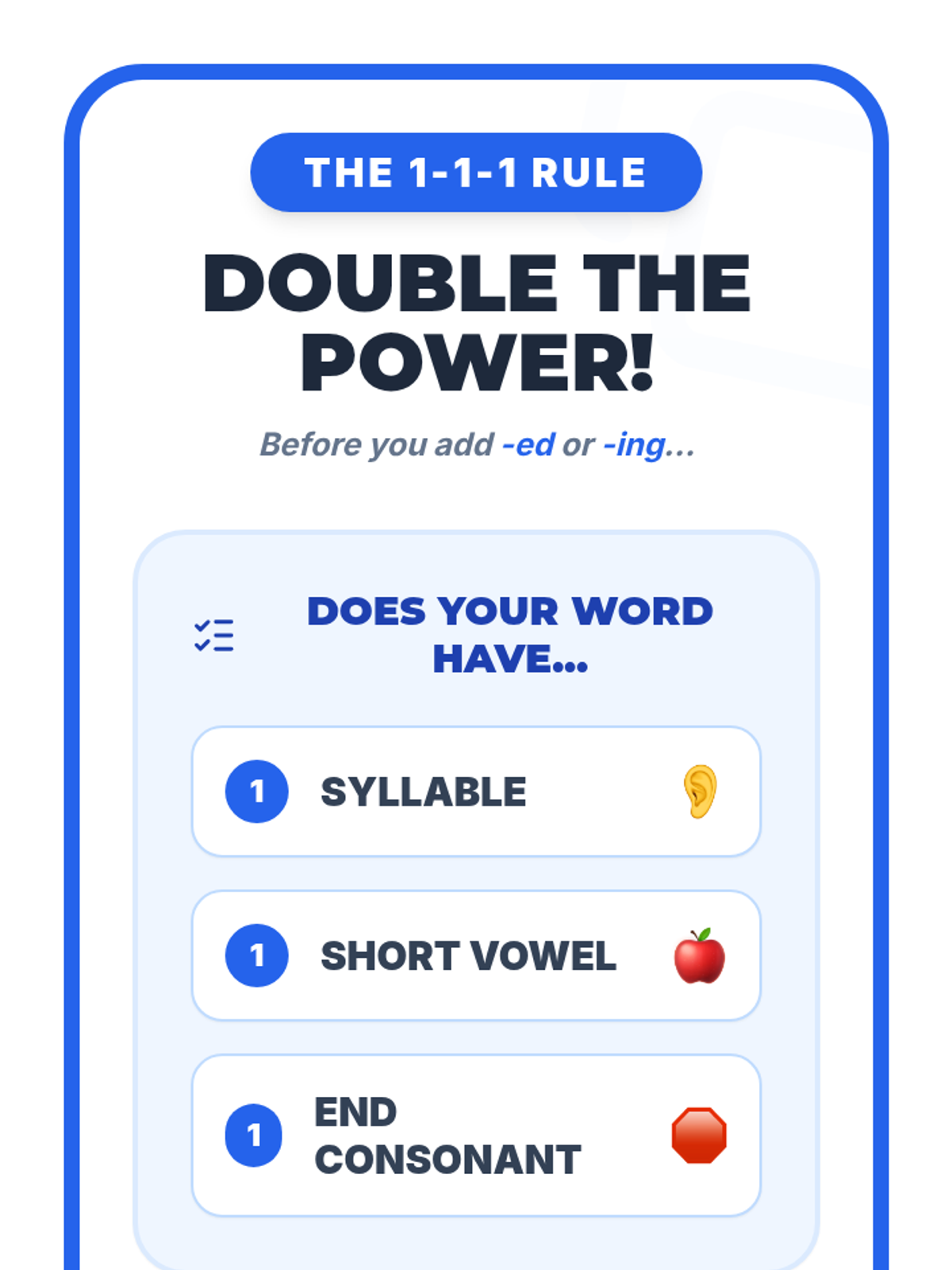
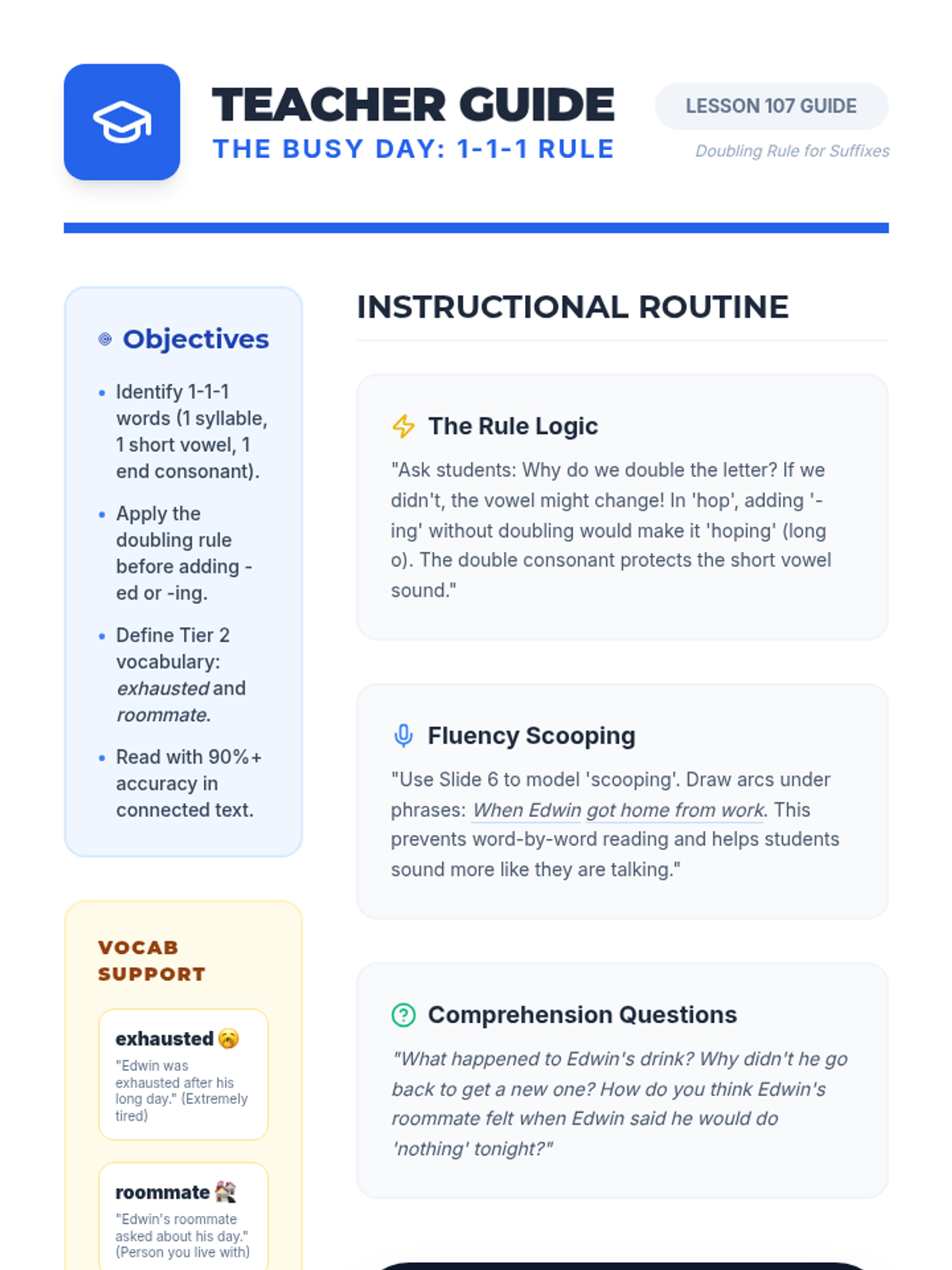
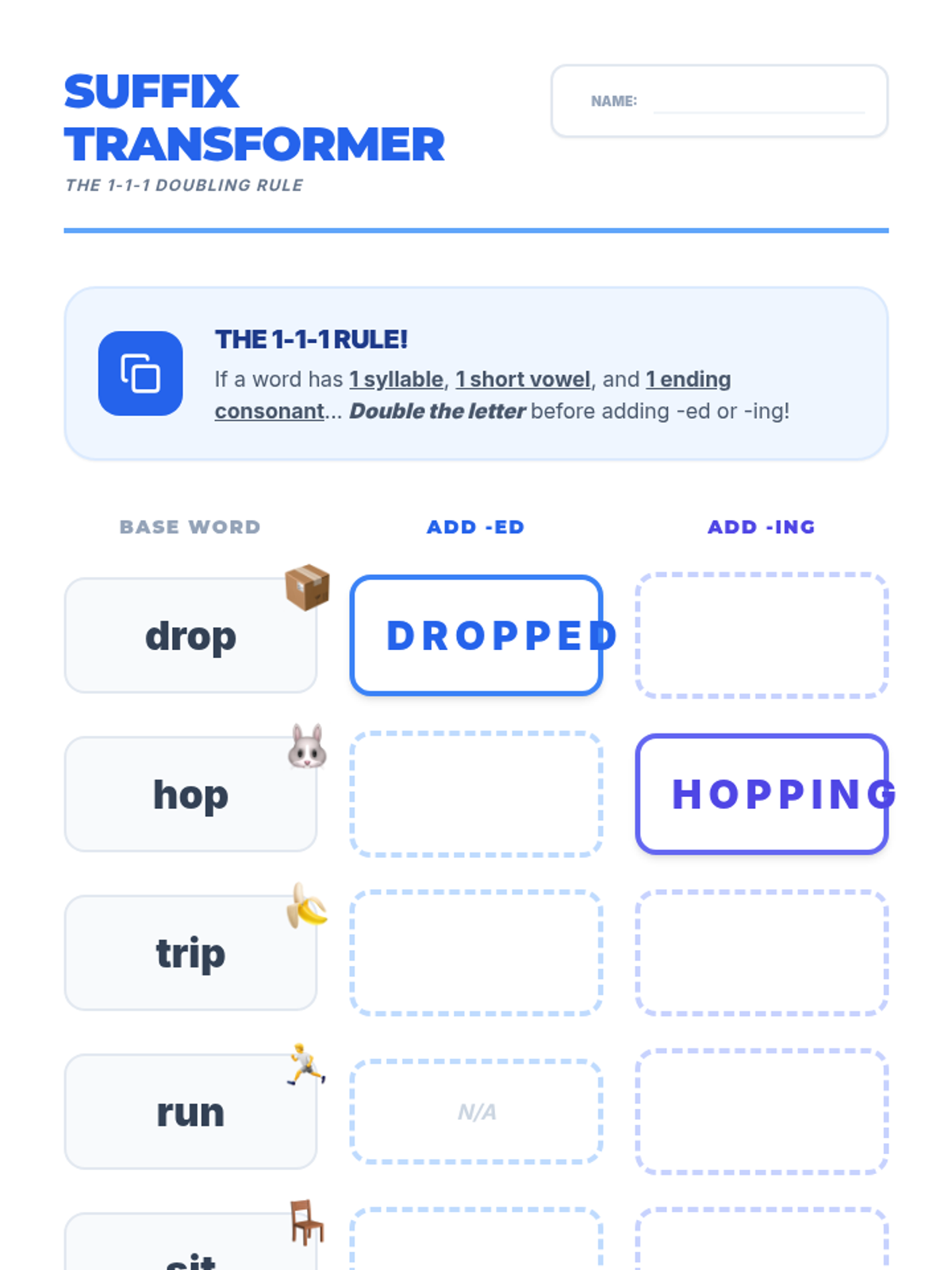
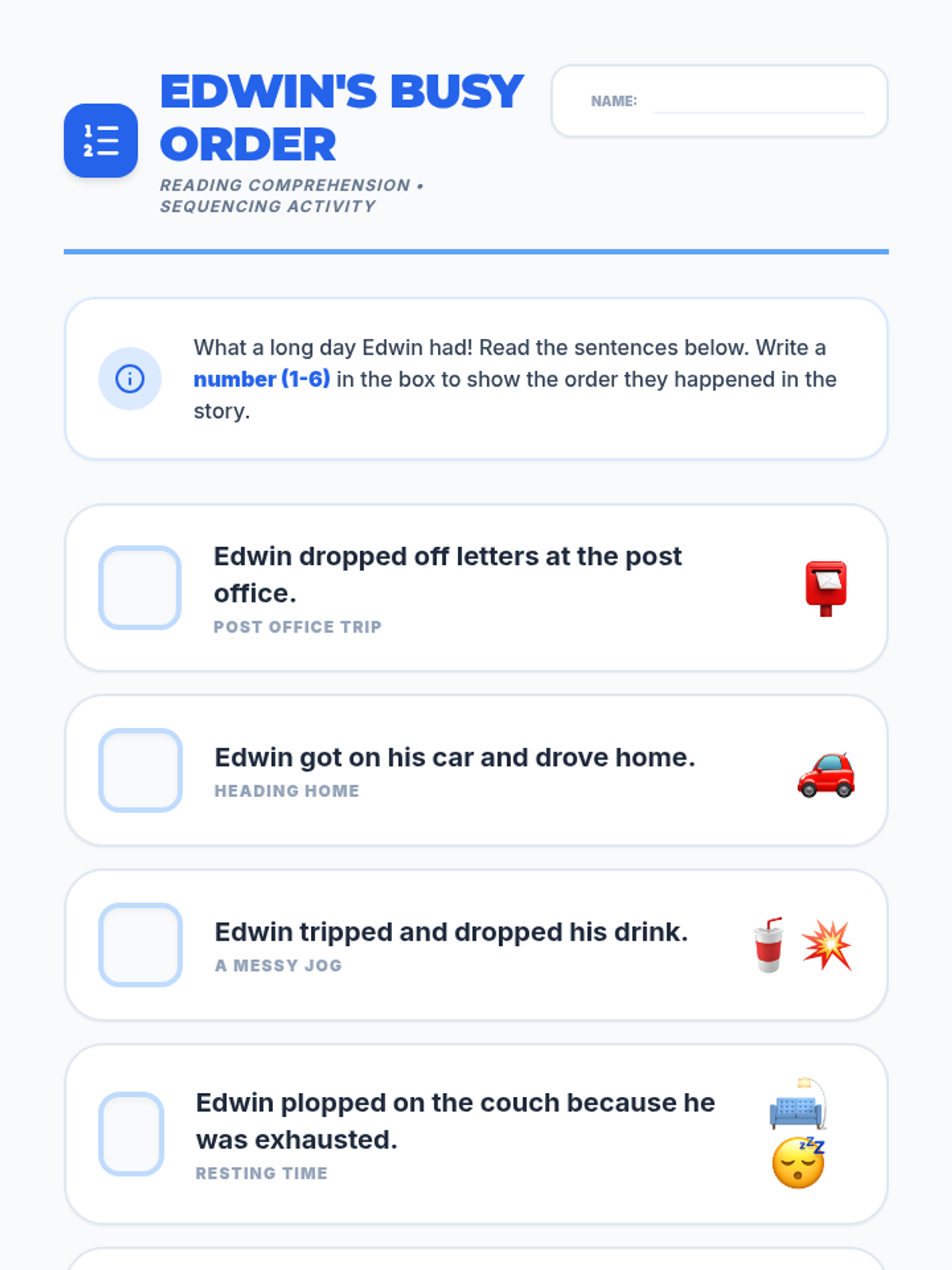
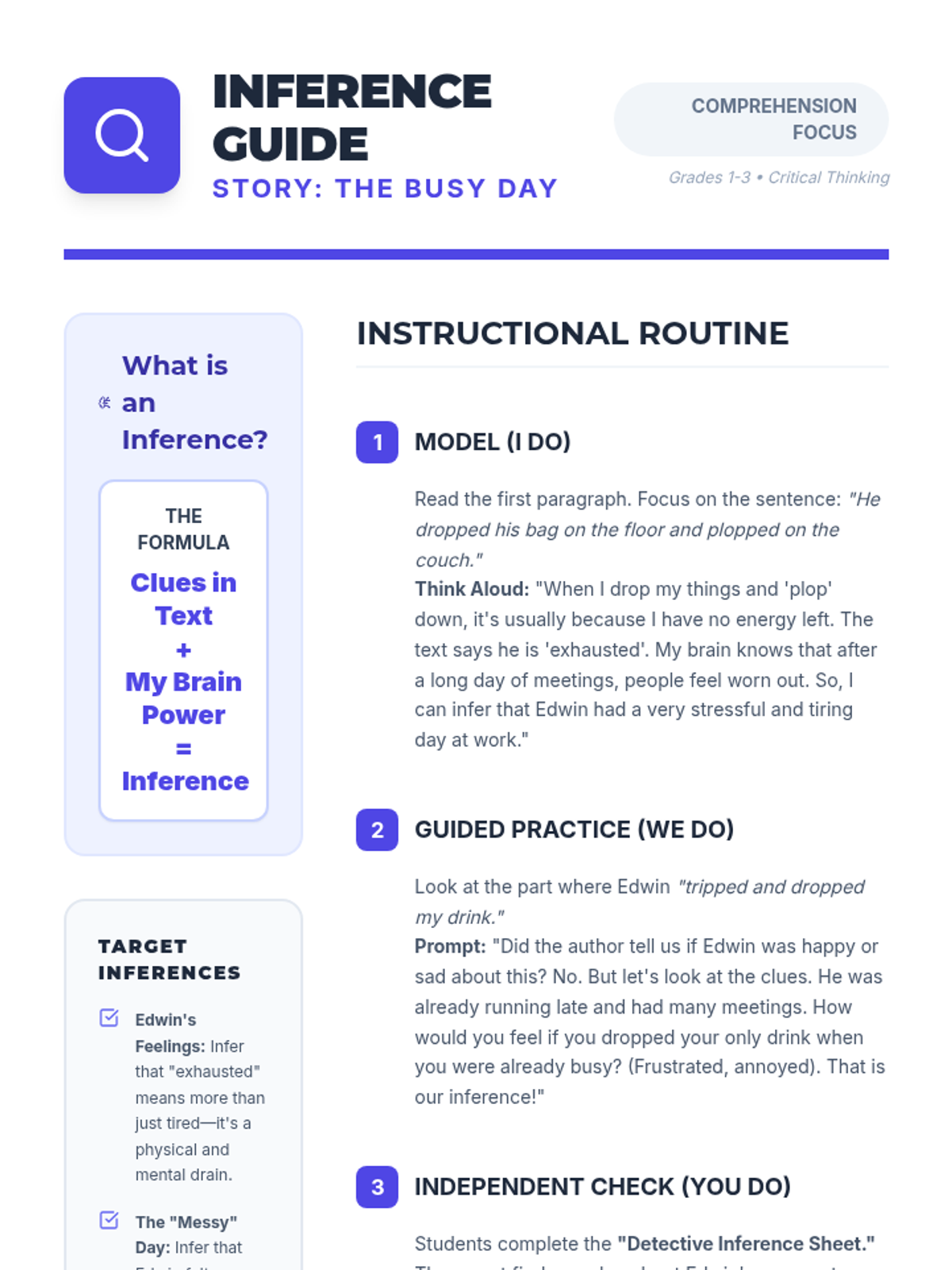
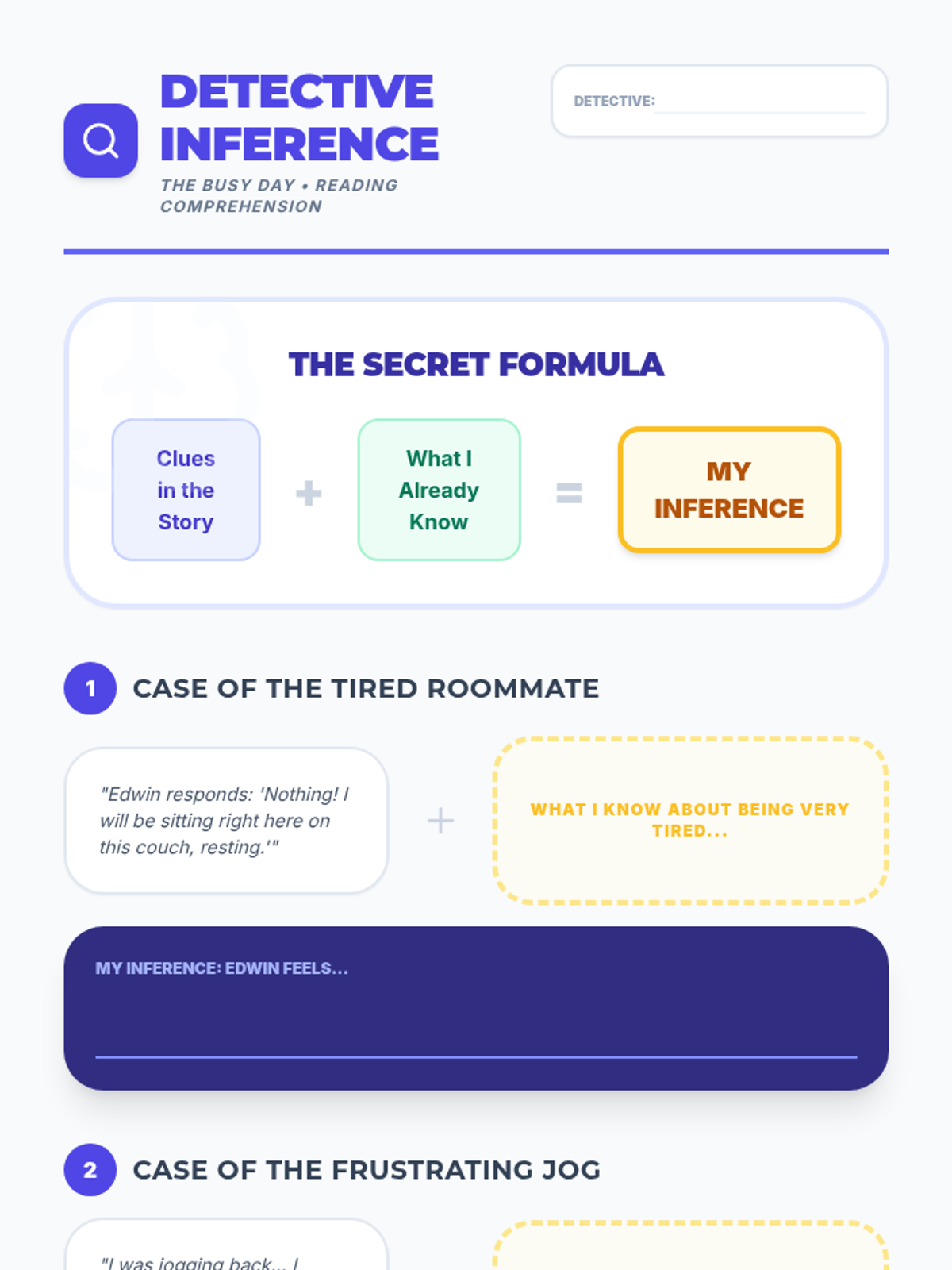
Focuses on the 1-1-1 doubling rule for adding suffixes -ed and -ing. Students will read about Edwin's busy day, practicing words like 'dropped', 'jogging', 'tripped', and 'sitting' while building vocabulary for words like 'exhausted'.
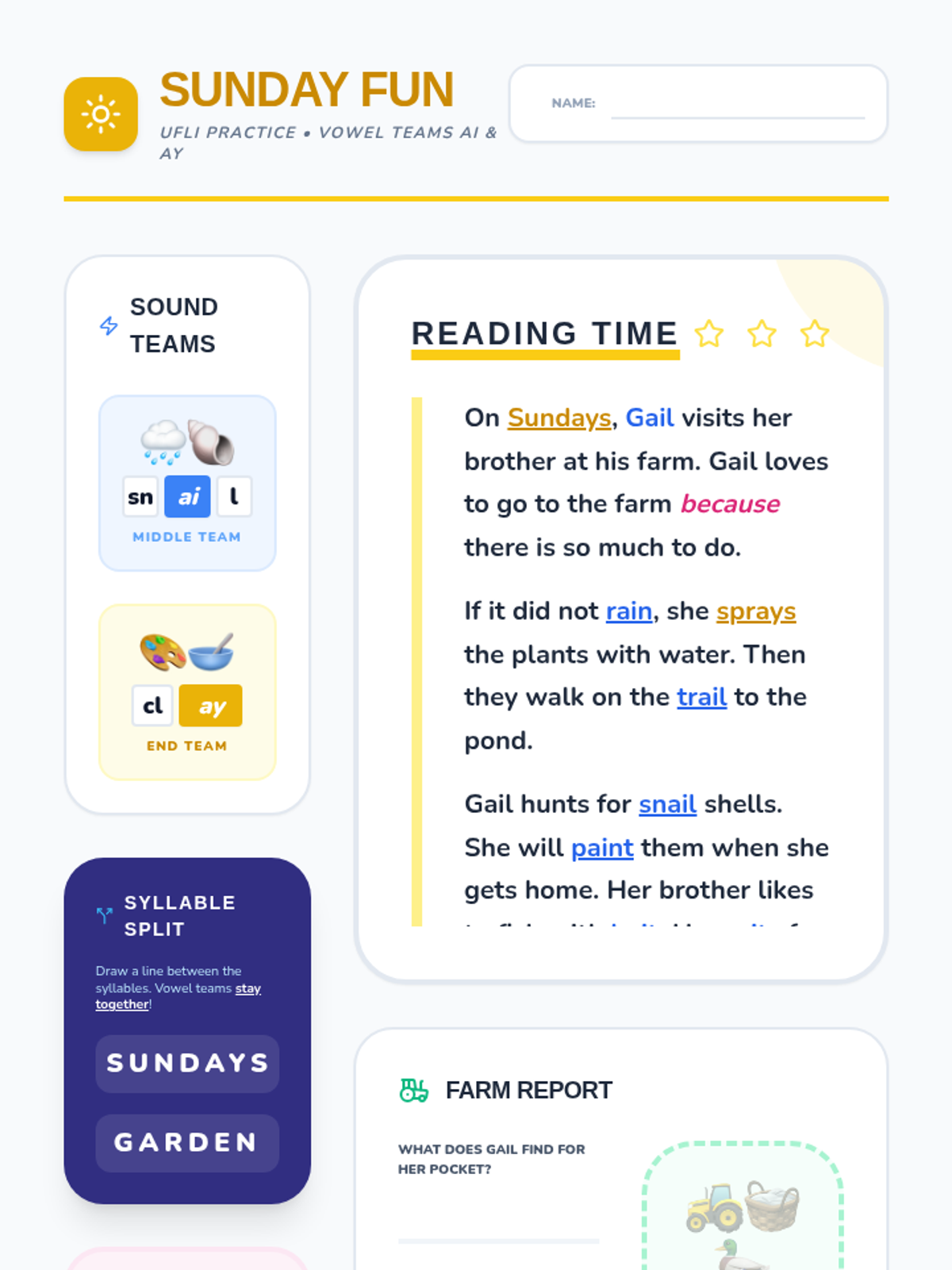
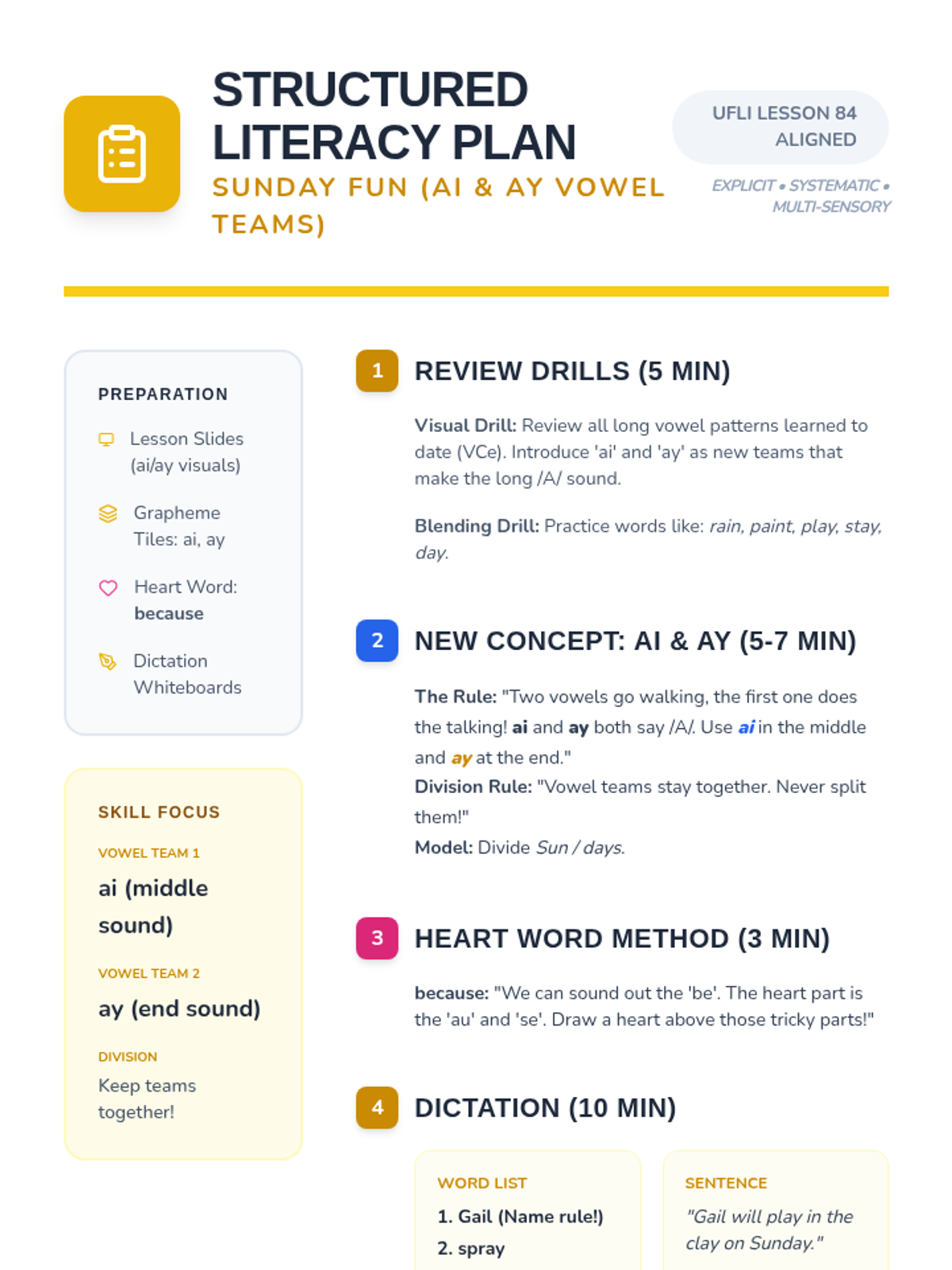
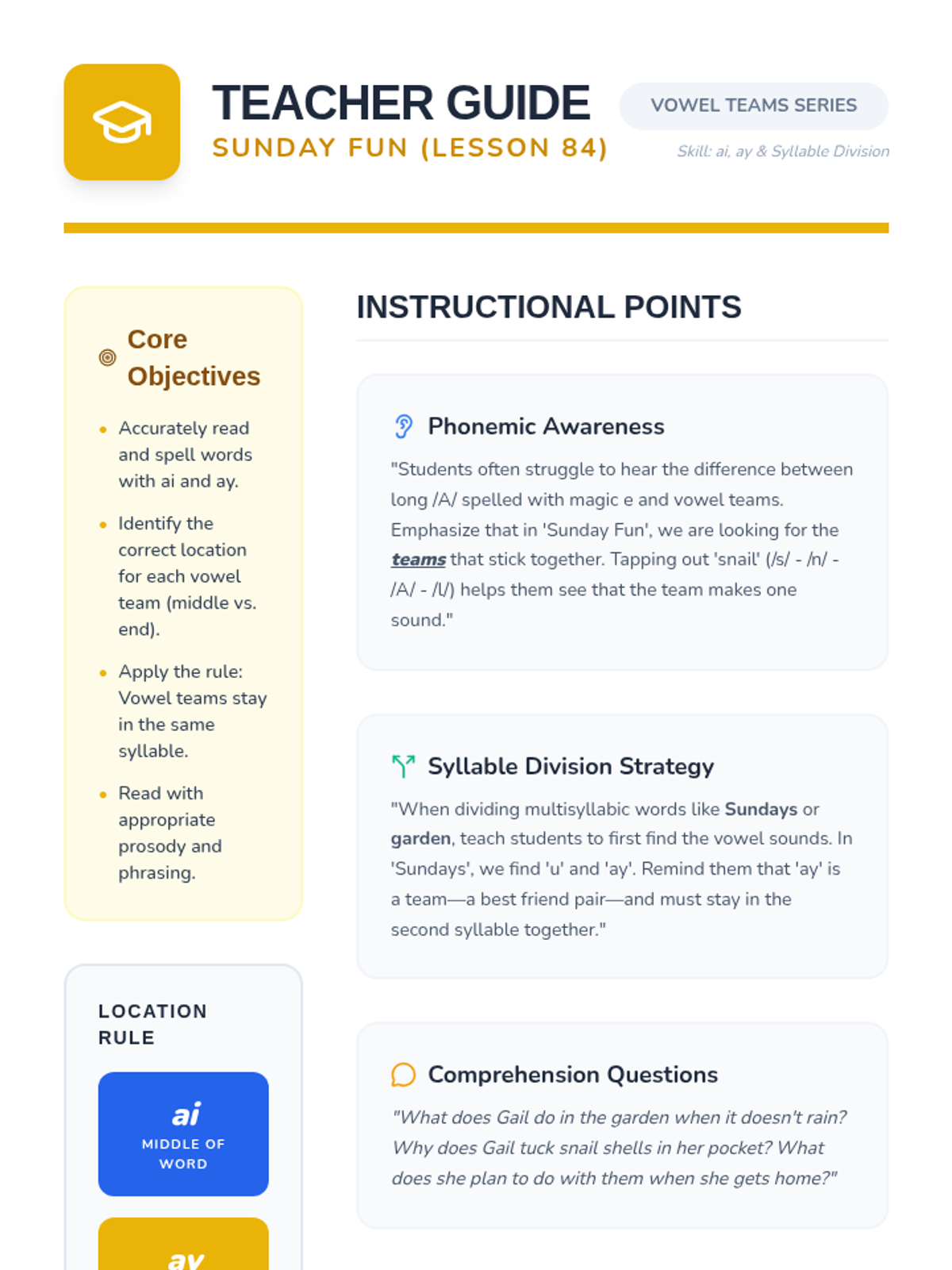
Focuses on the long 'a' vowel teams 'ai' and 'ay'. Students read about Gail's trip to her brother's farm on a Sunday, practicing words like 'trail', 'snail', 'spray', and 'clay' while learning syllable division rules for vowel teams.
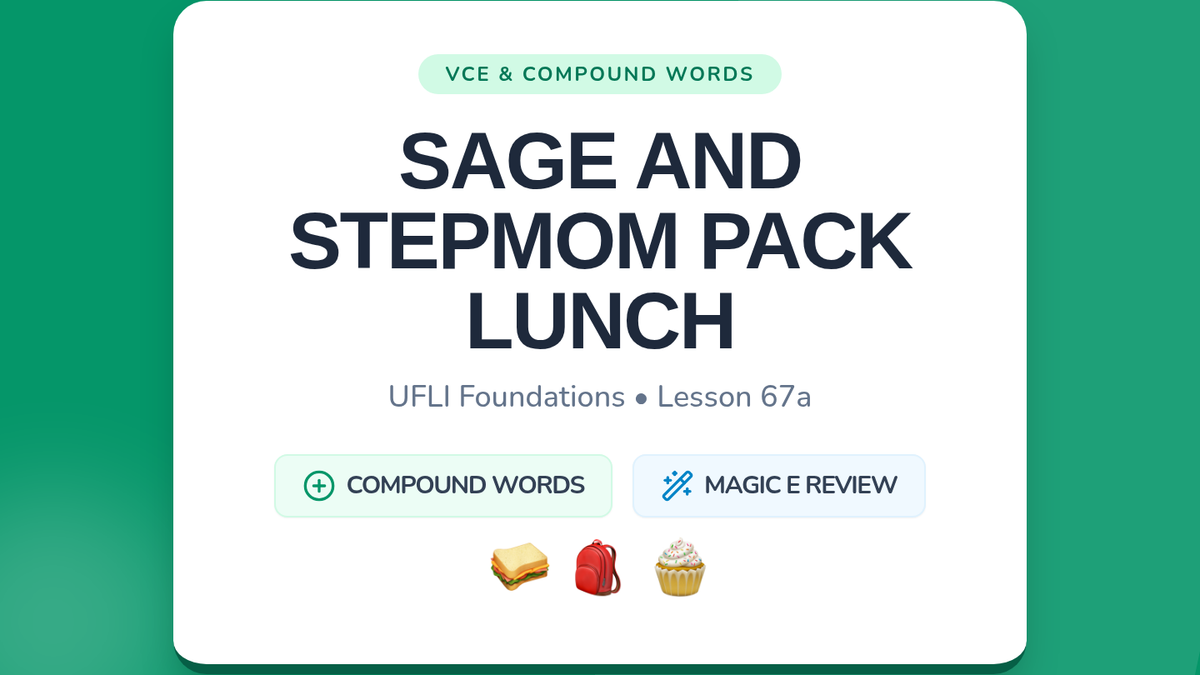
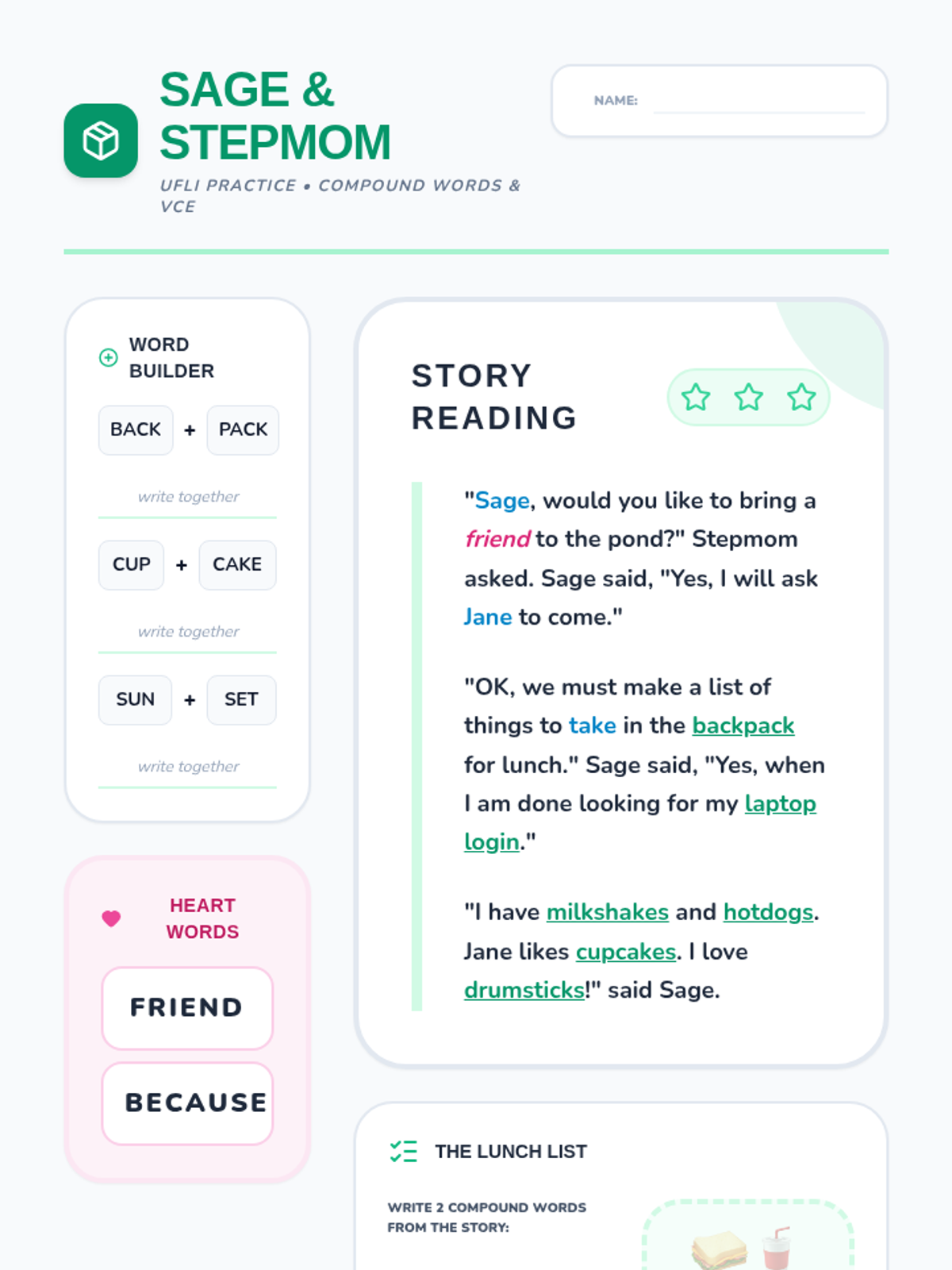
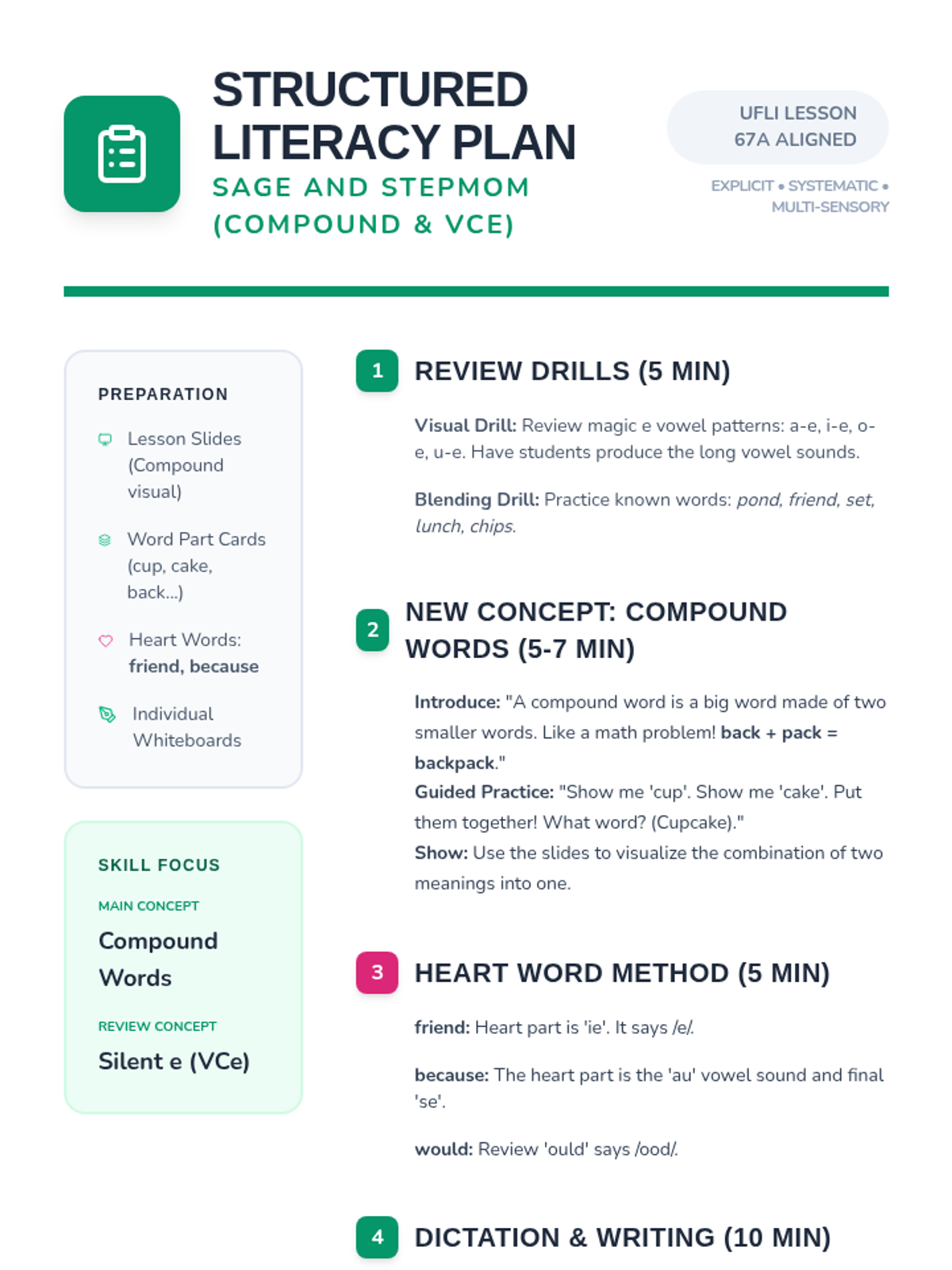
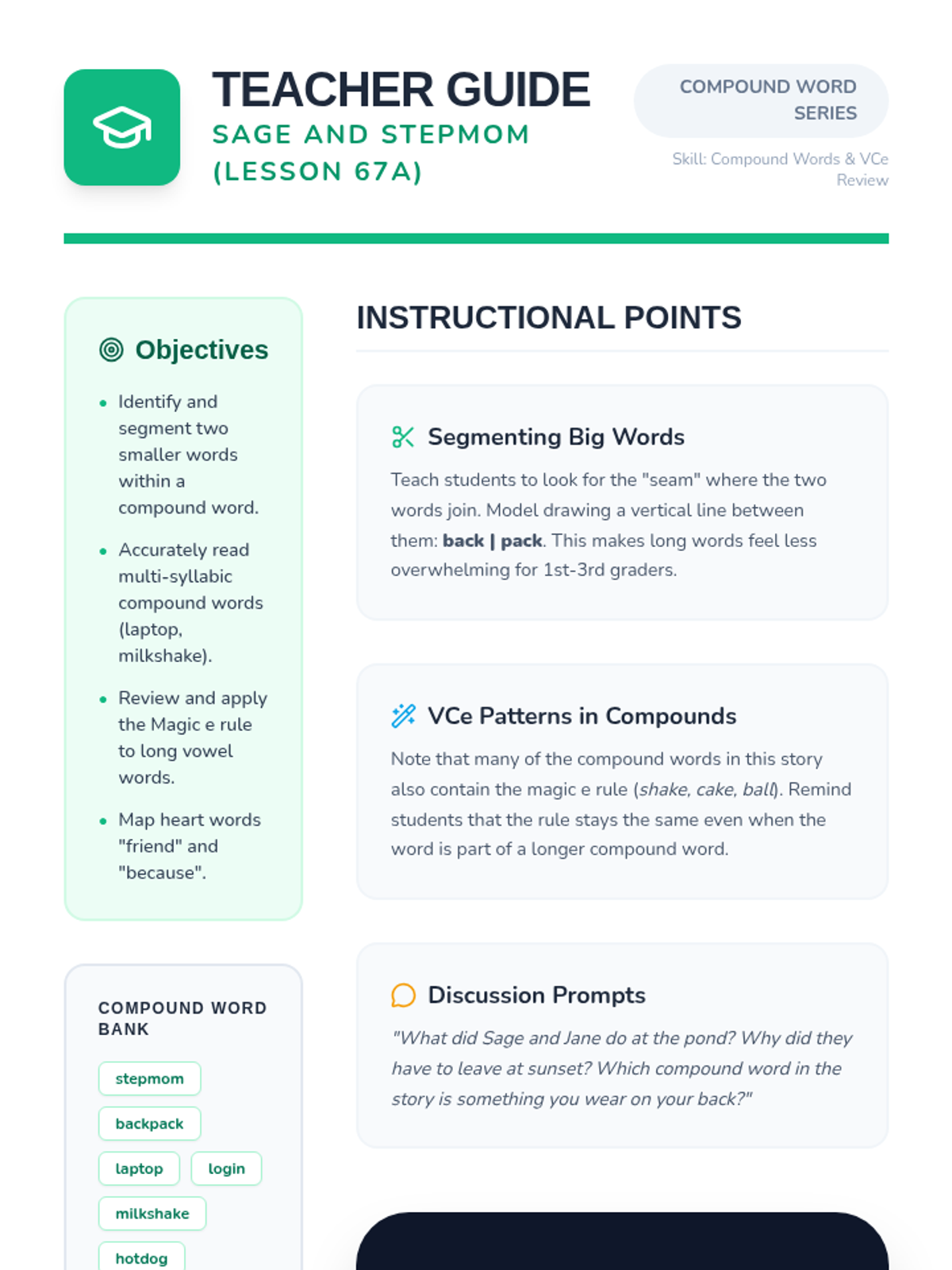
Focuses on compound words and a review of the silent 'e' (VCe) pattern. Students read about Sage and her stepmom packing a lunch for a trip to the pond, practicing words like 'backpack', 'laptop', 'milkshakes', and 'cupcakes'.
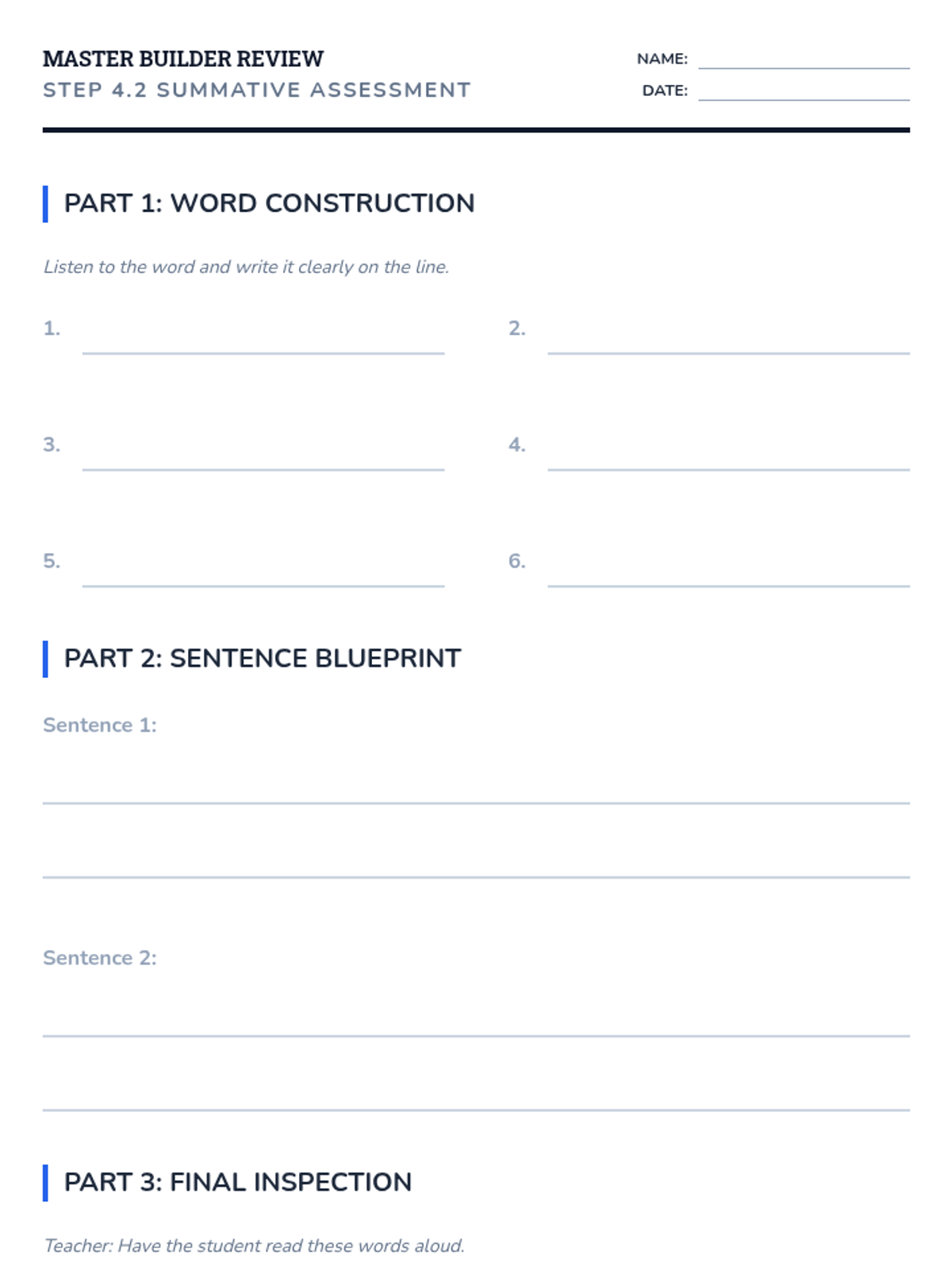
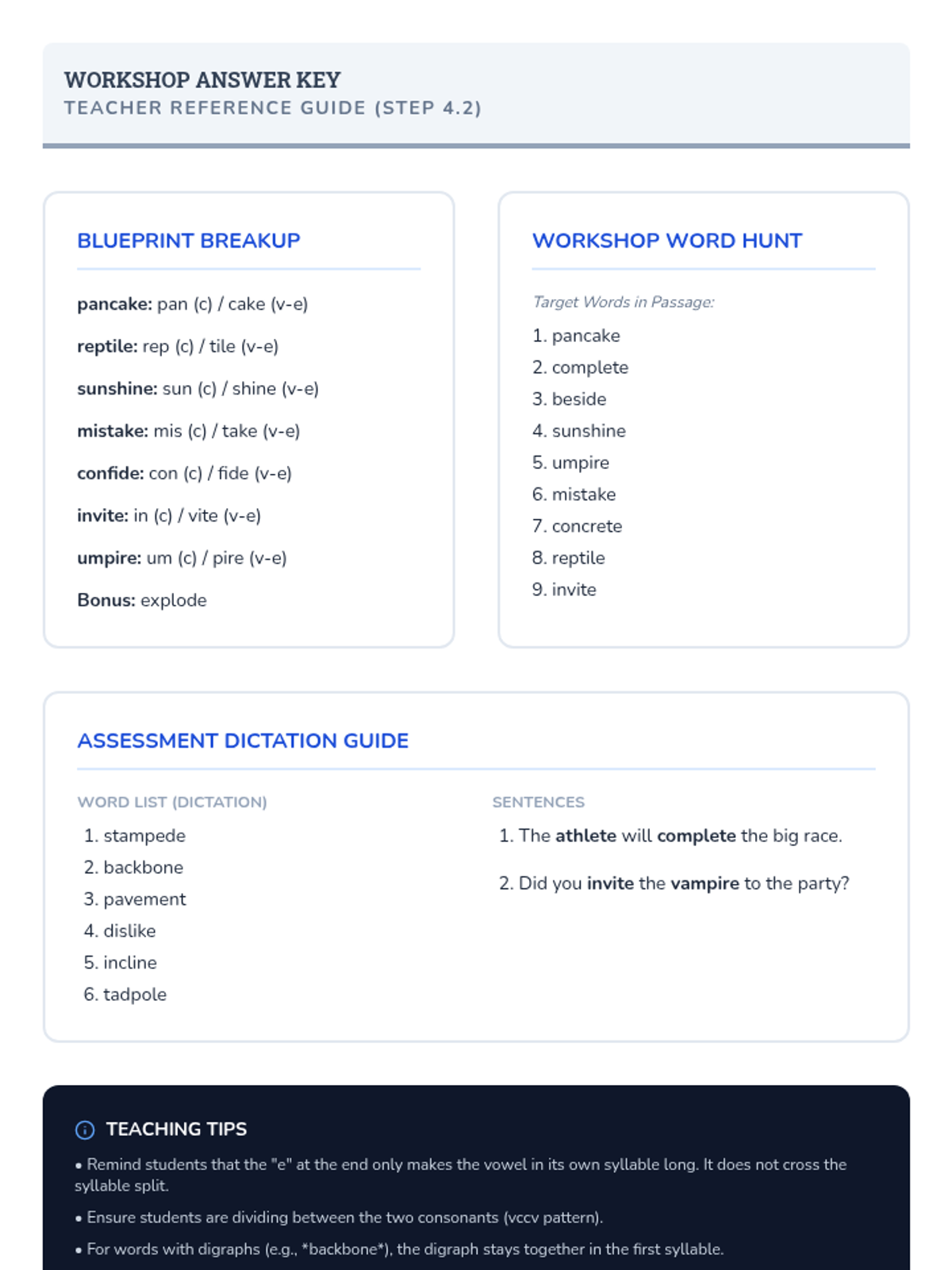
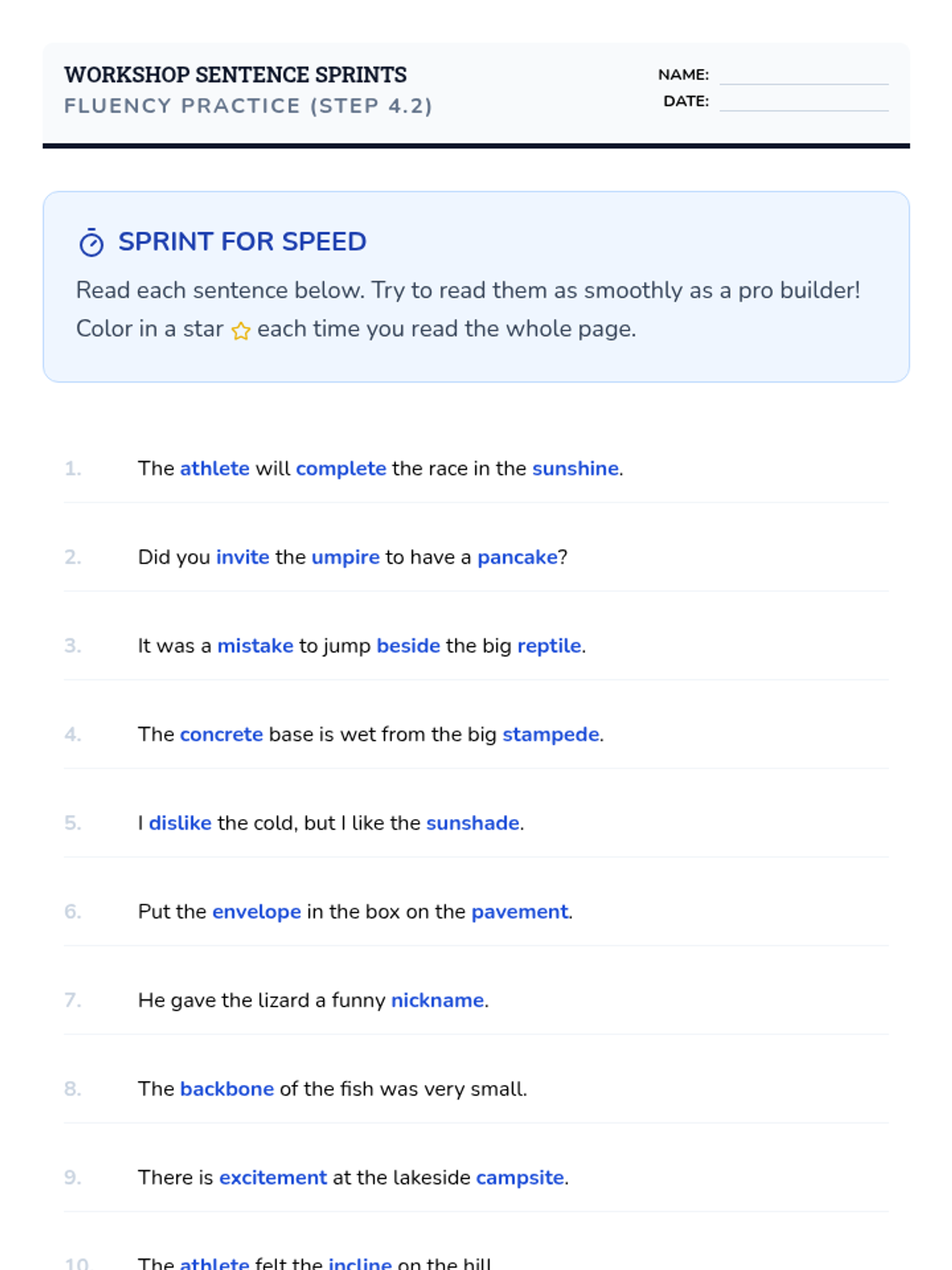
Final review and assessment of Step 4.2 skills, including spelling dictation and sentence reading.
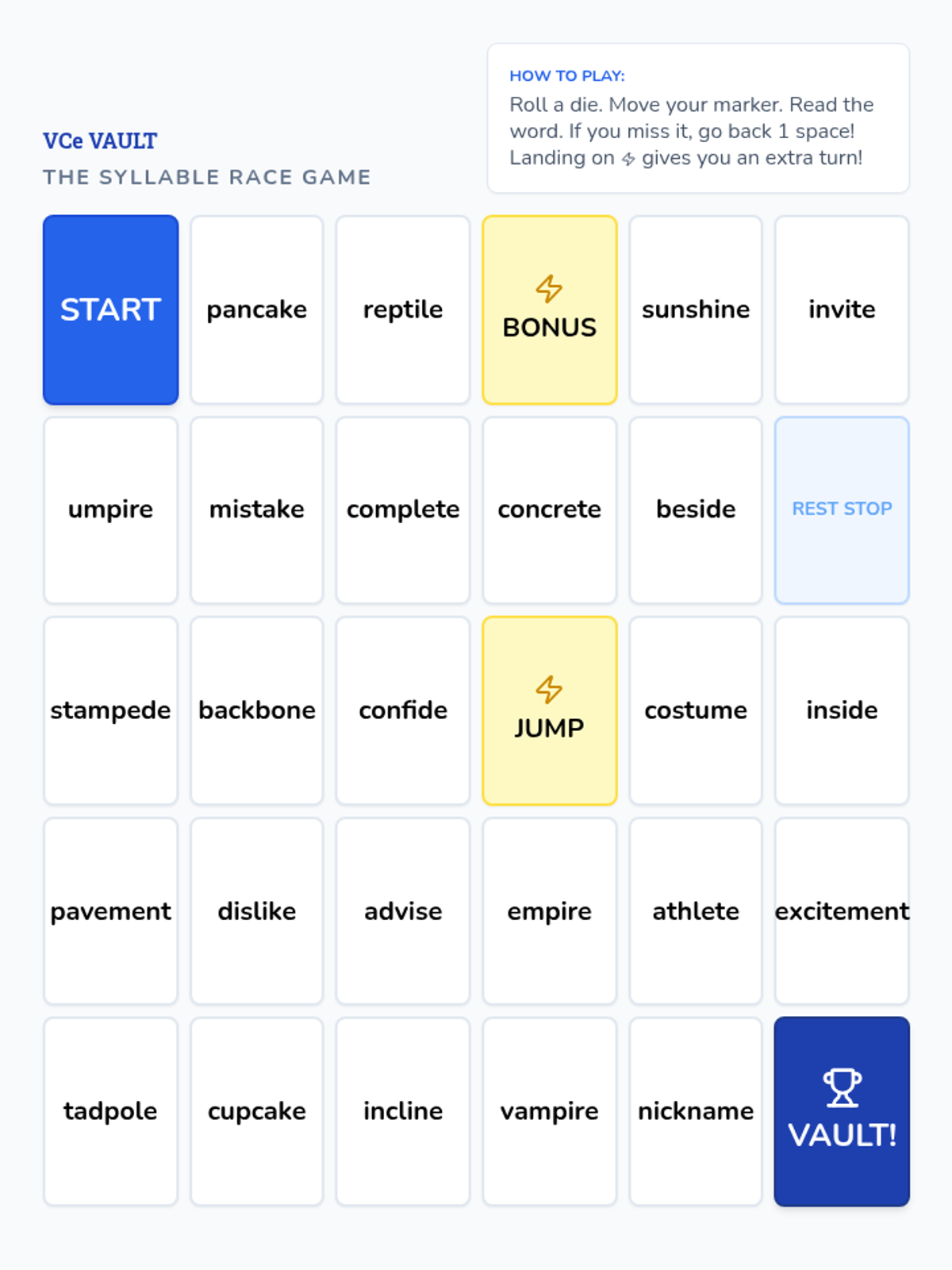
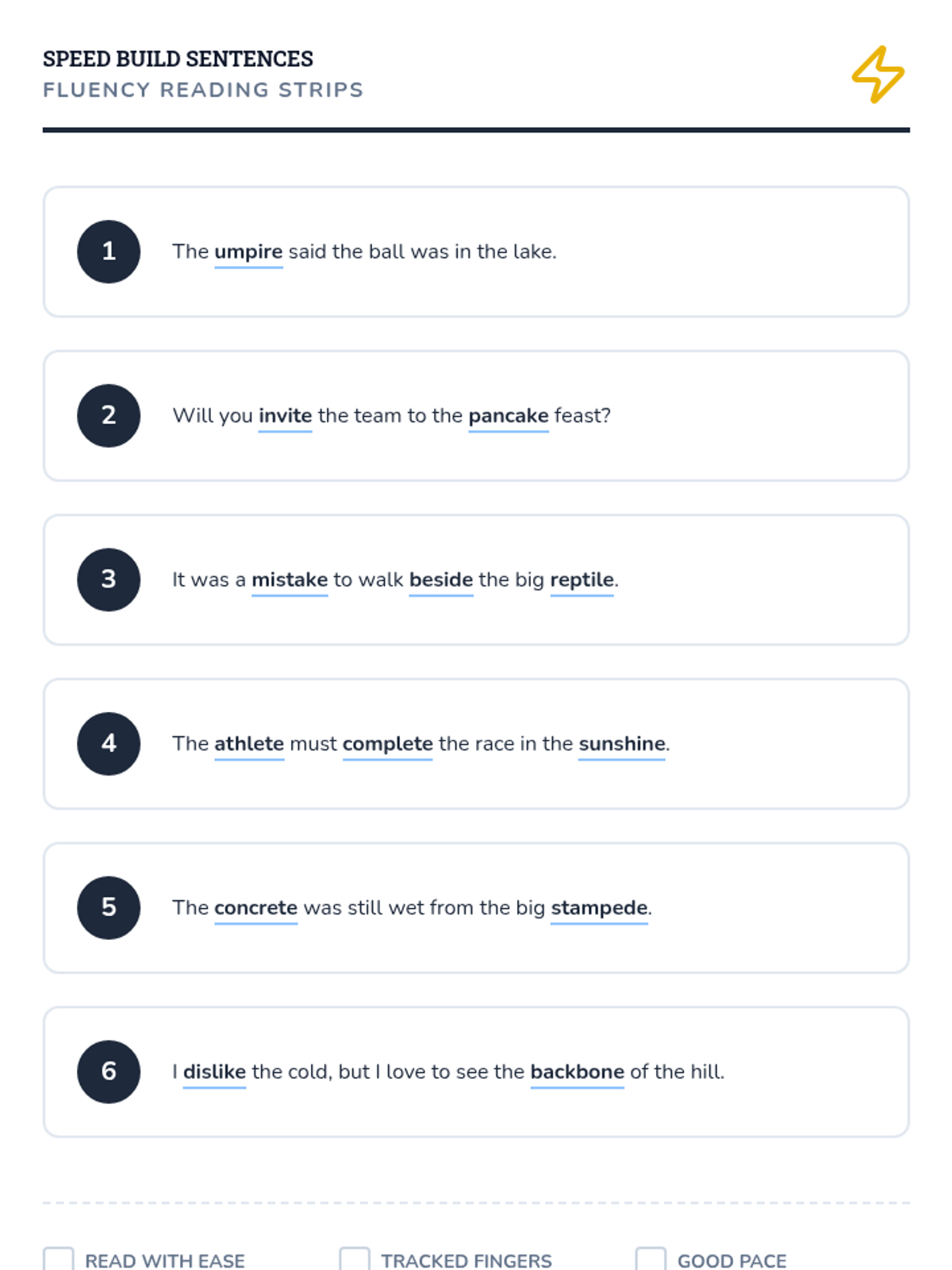
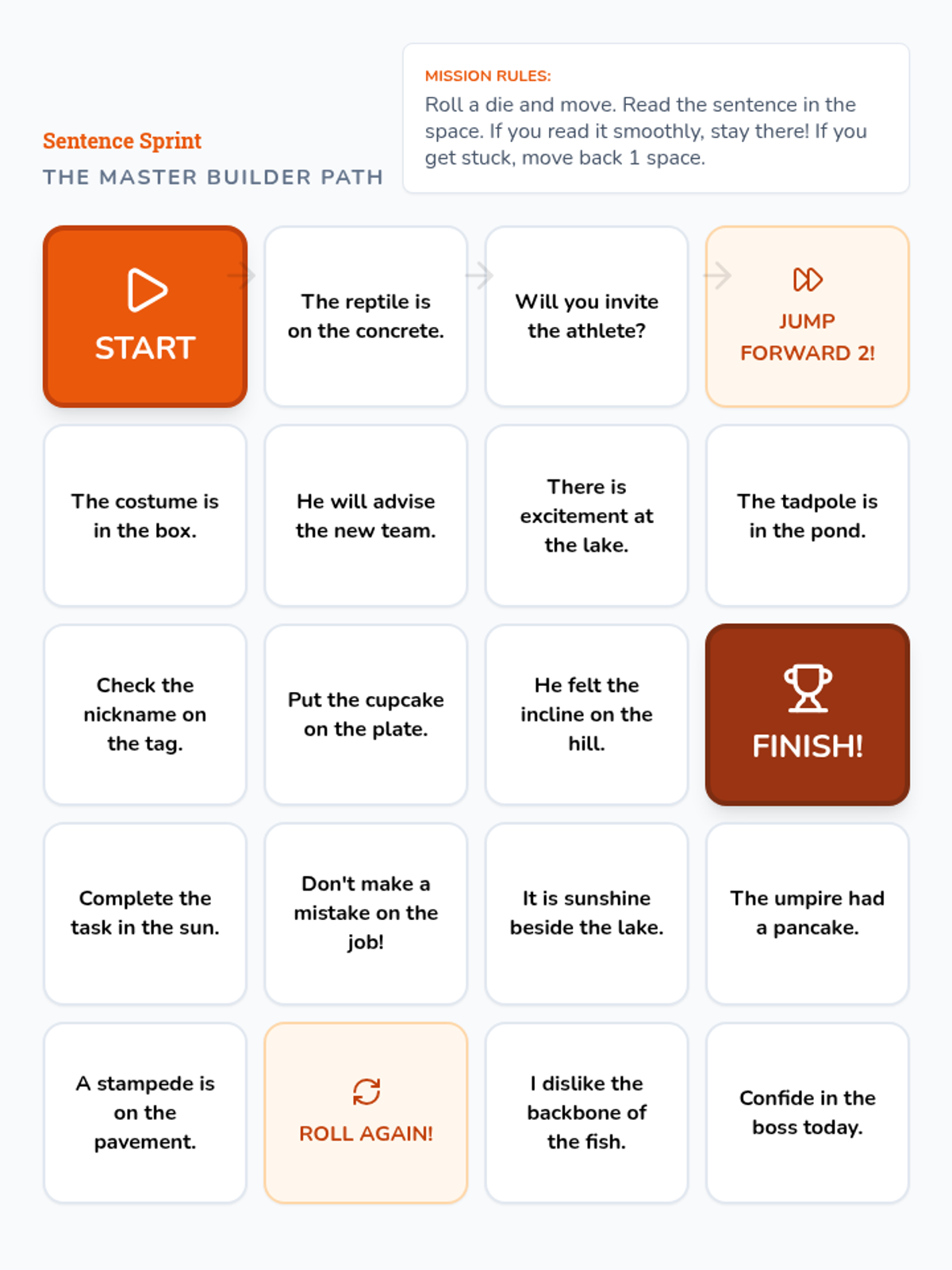
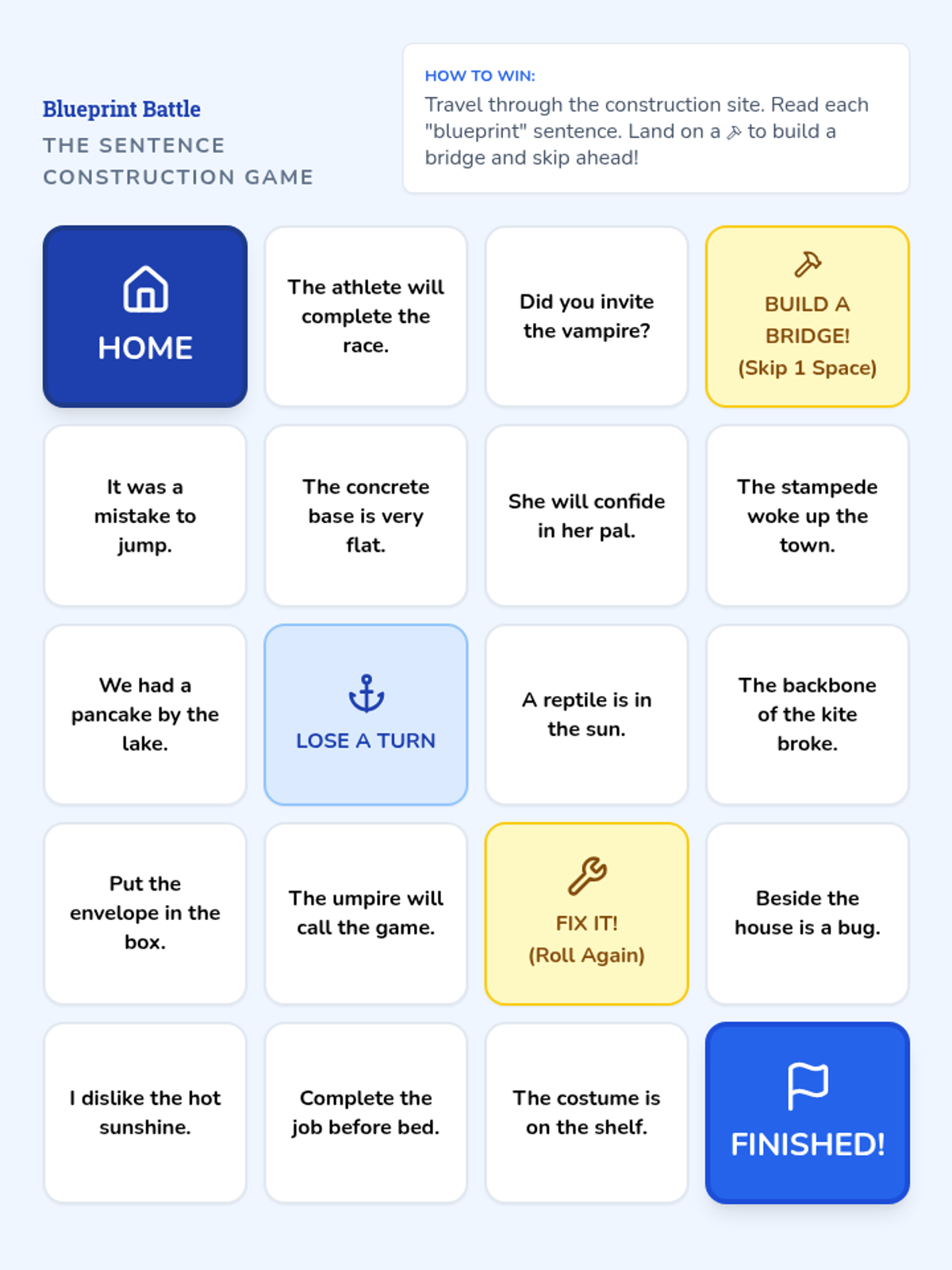
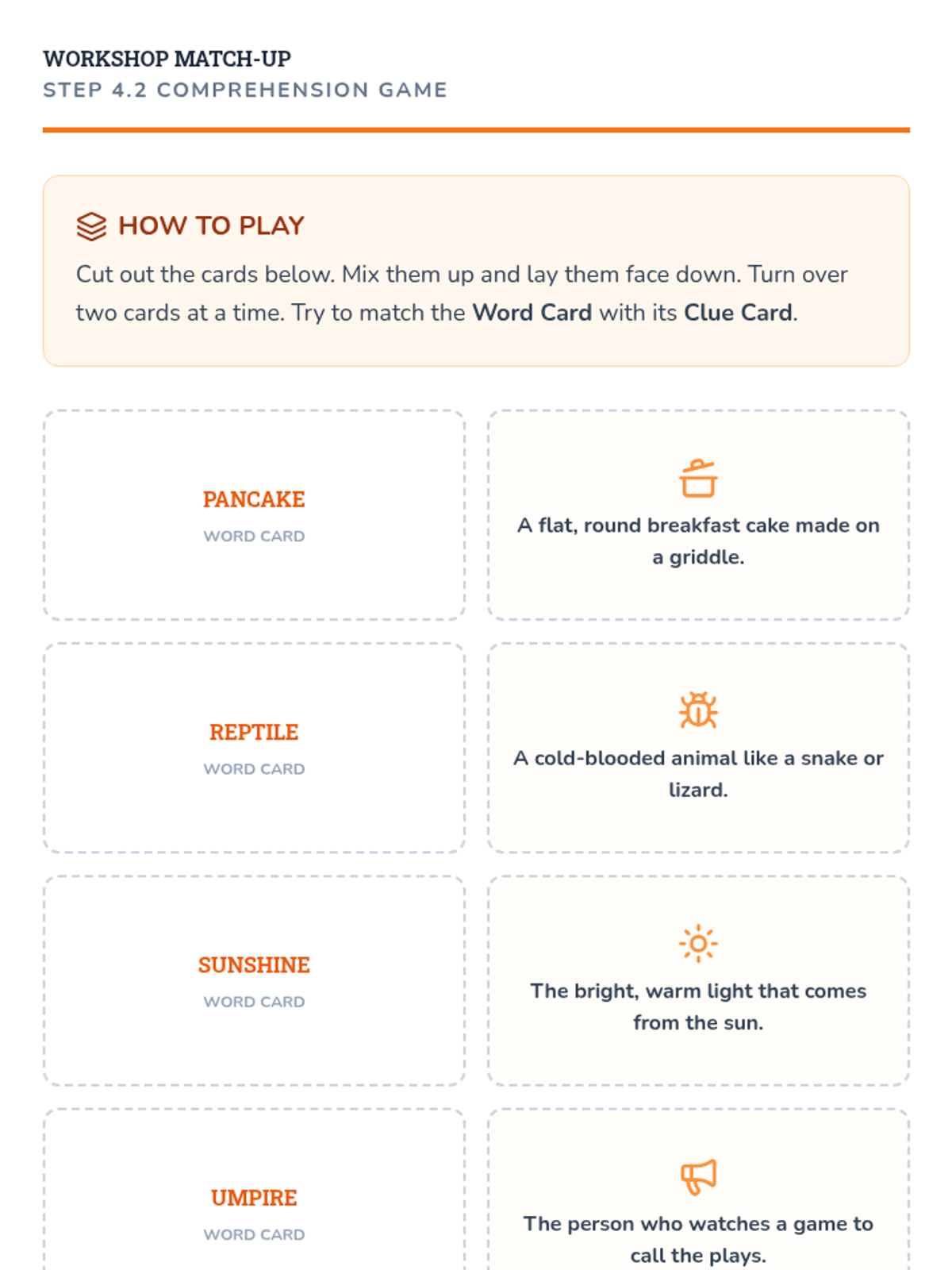
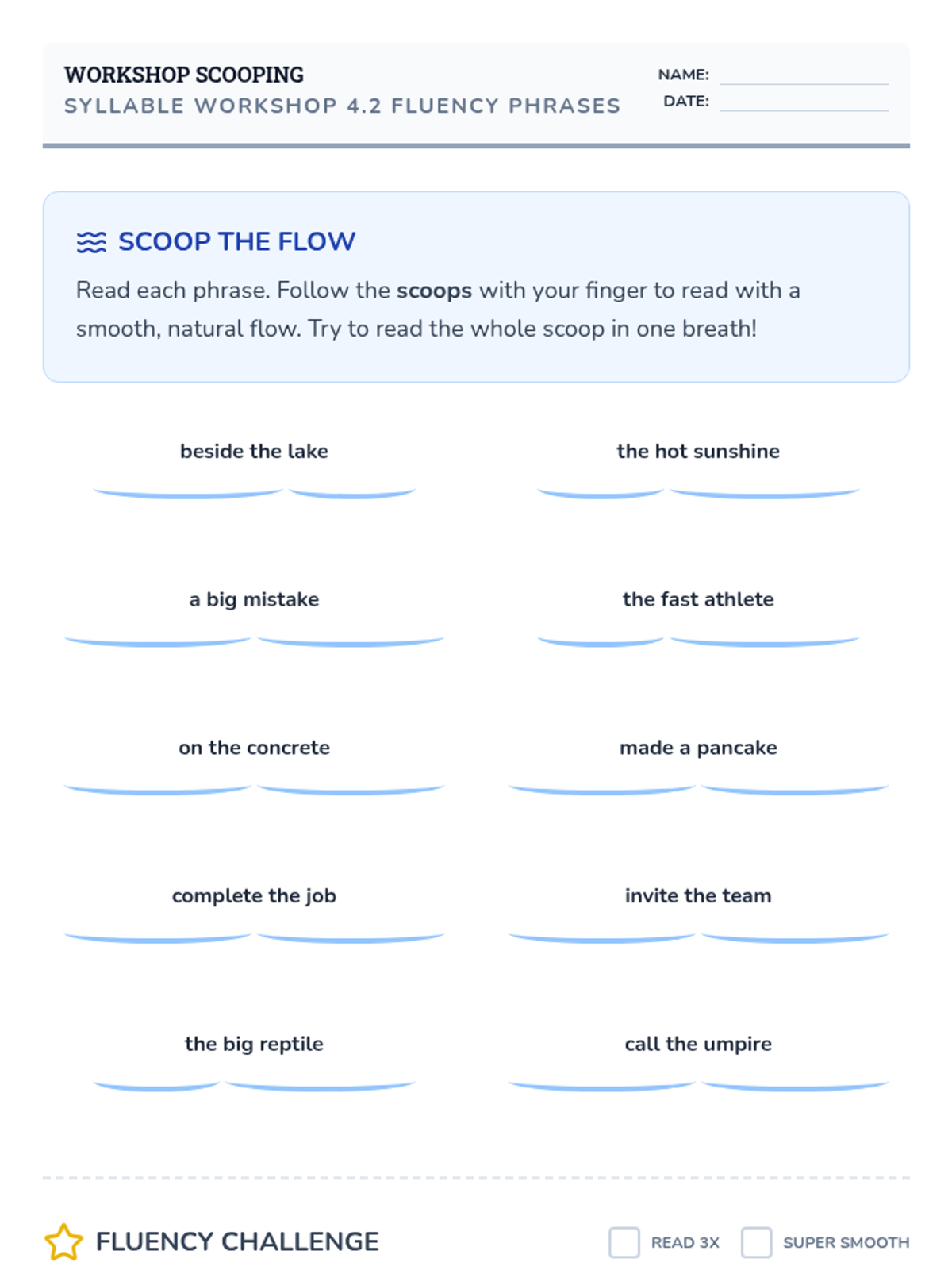
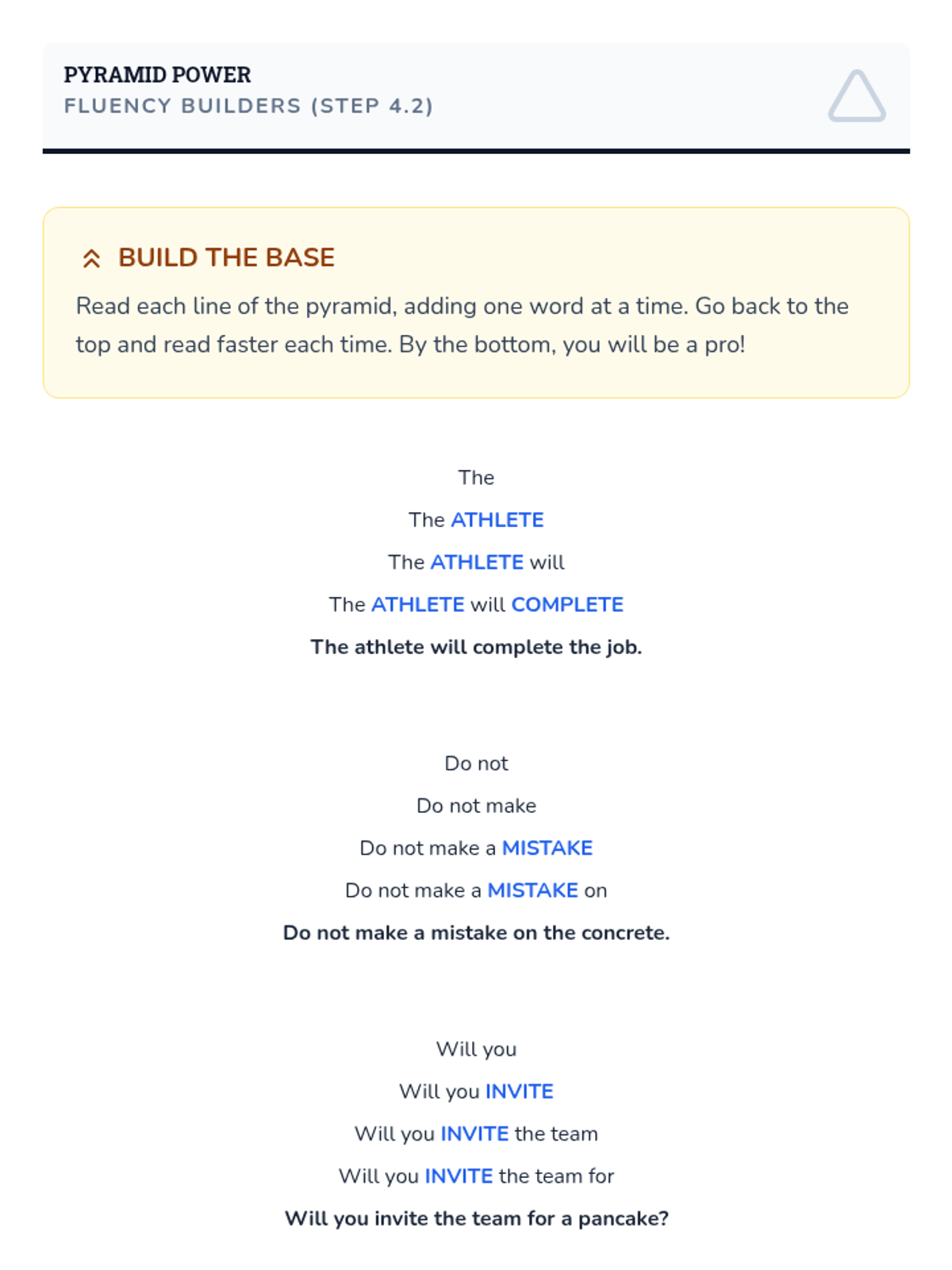
Fluency-focused activities and games to reinforce automaticity in reading VCe multisyllabic words.
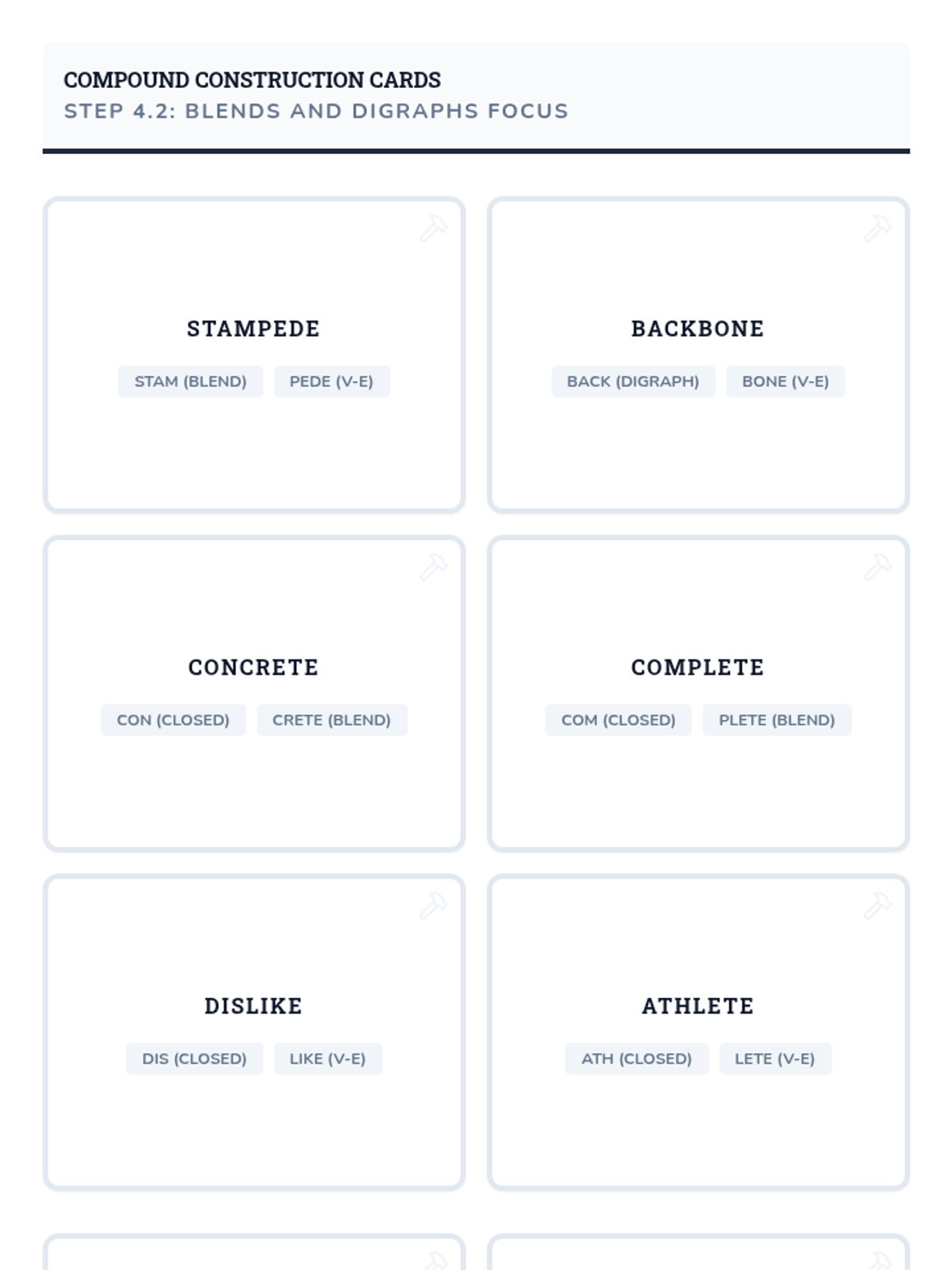
Focus on complex 4.2 words containing blends and digraphs. Students practice reading and spelling words like 'stampede' and 'shrine'.
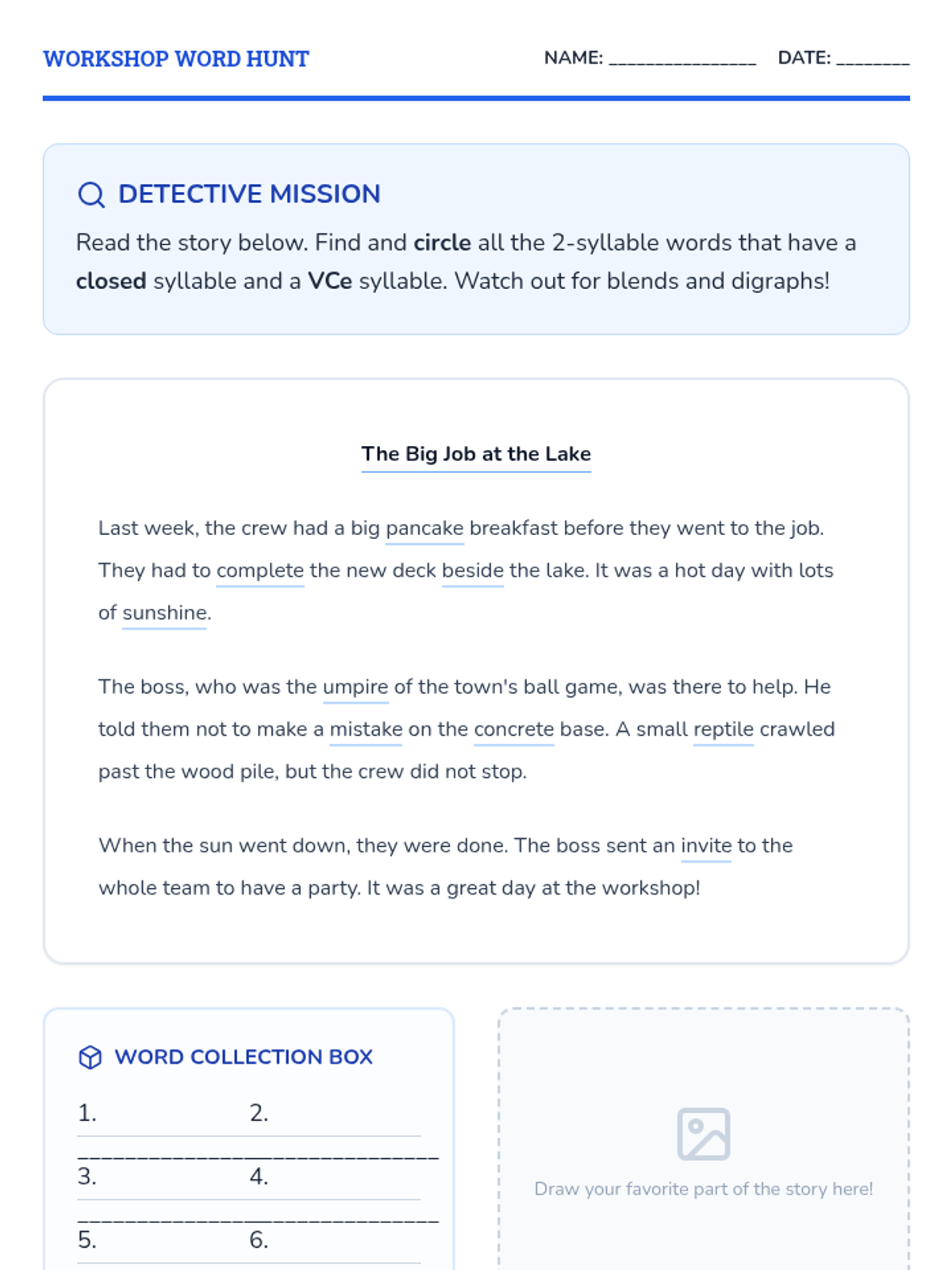
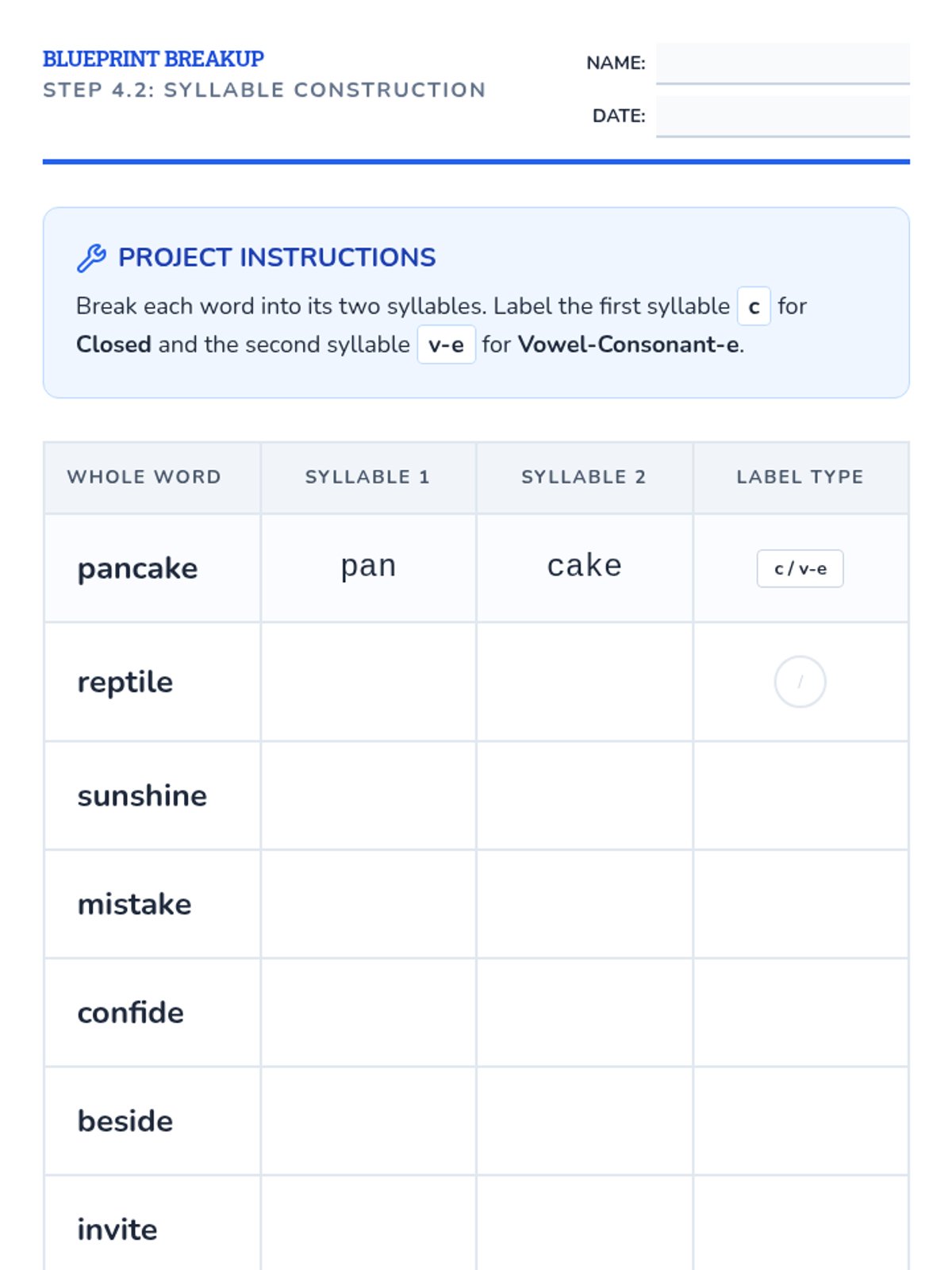
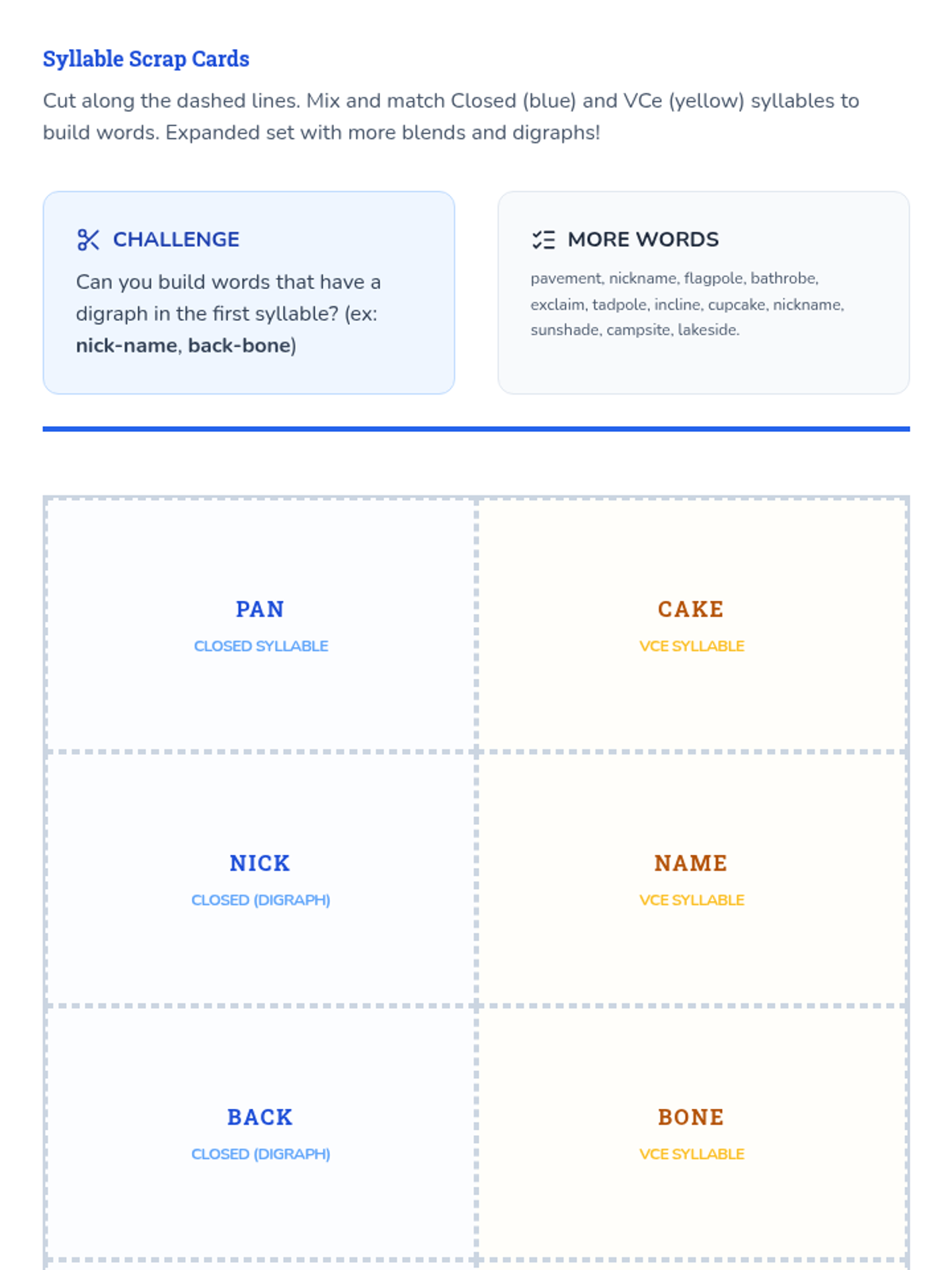
Introduction to two-syllable words containing one closed syllable and one VCe syllable. Students practice identifying syllable types and dividing words correctly.
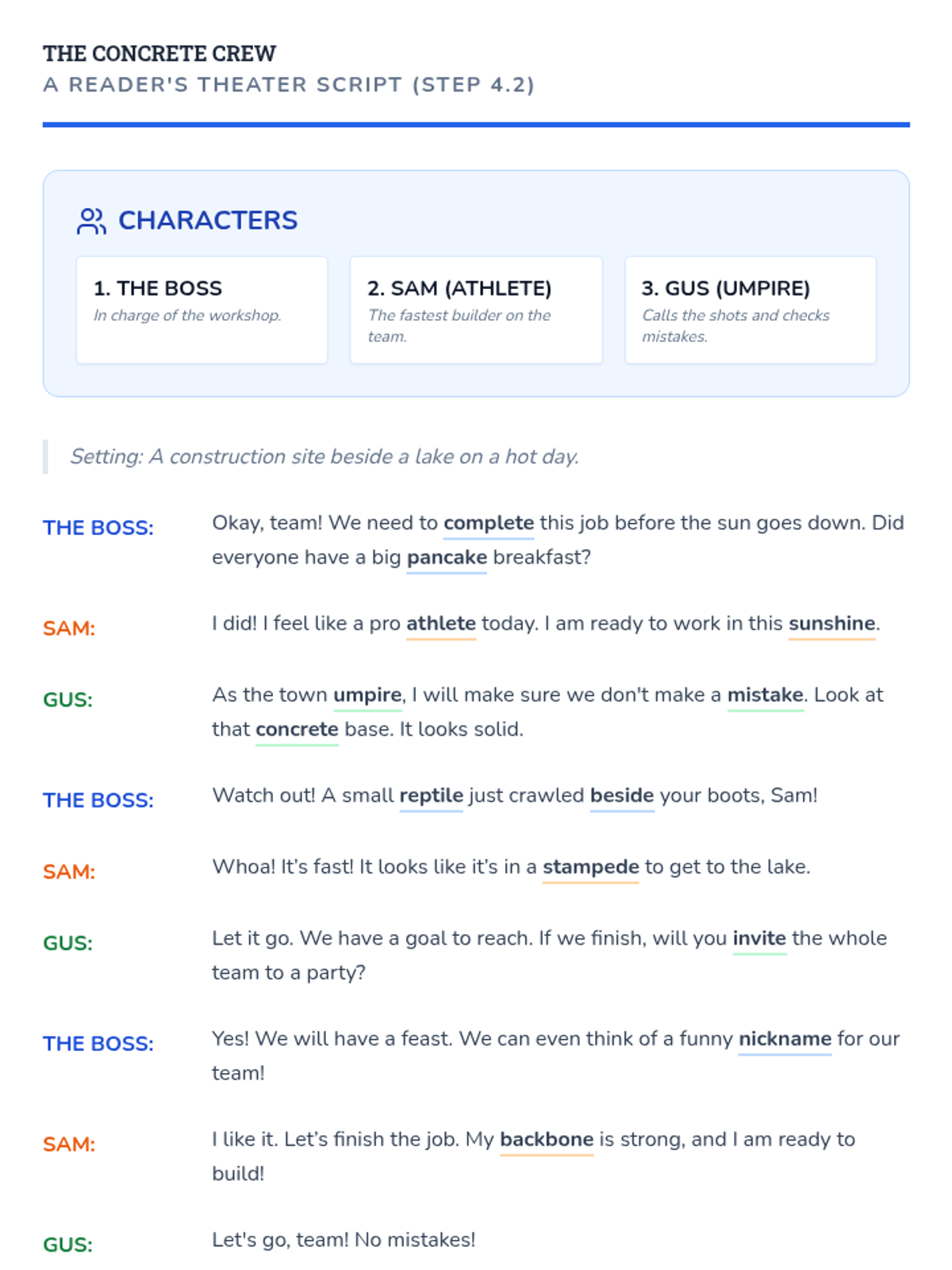
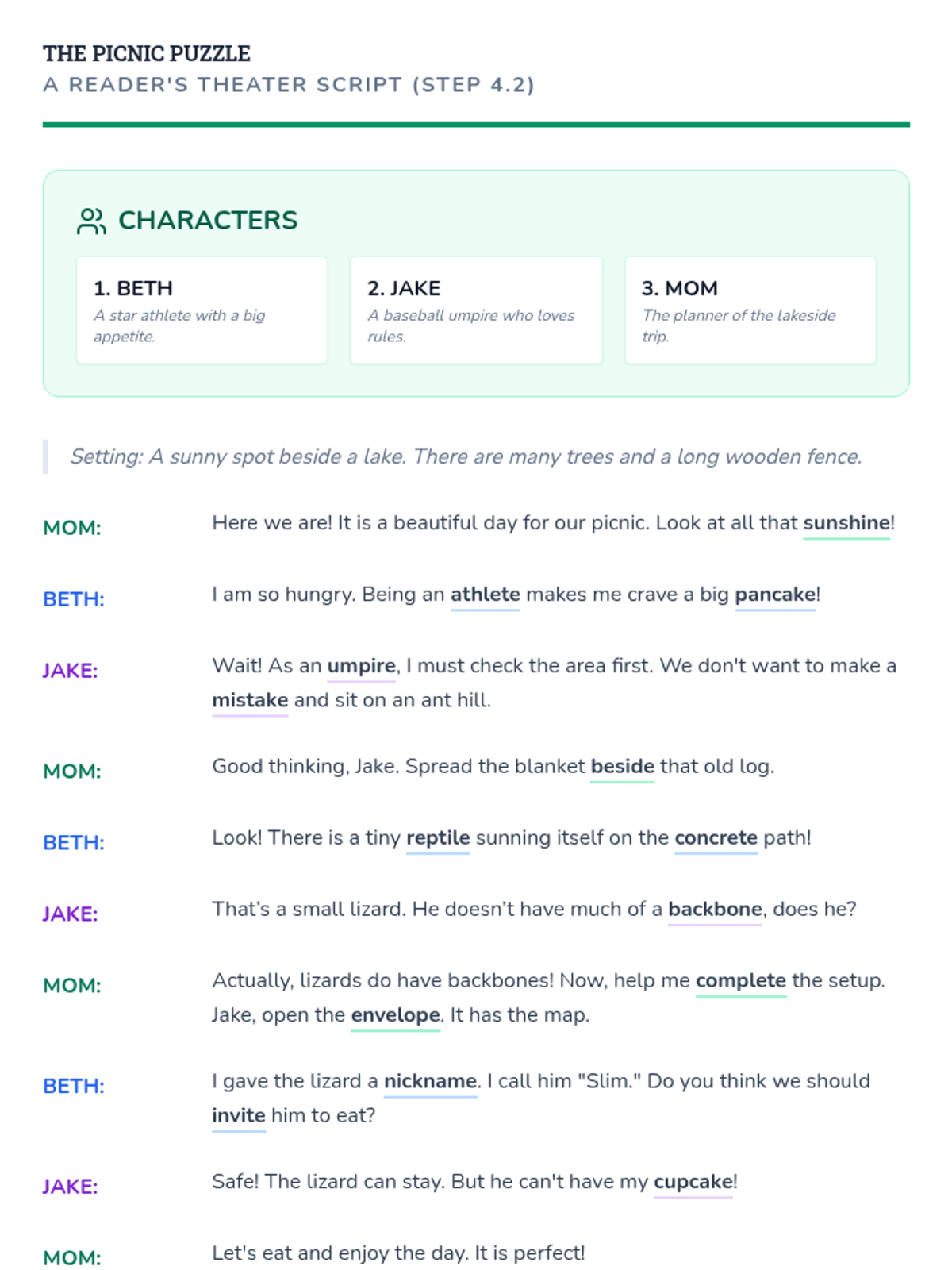
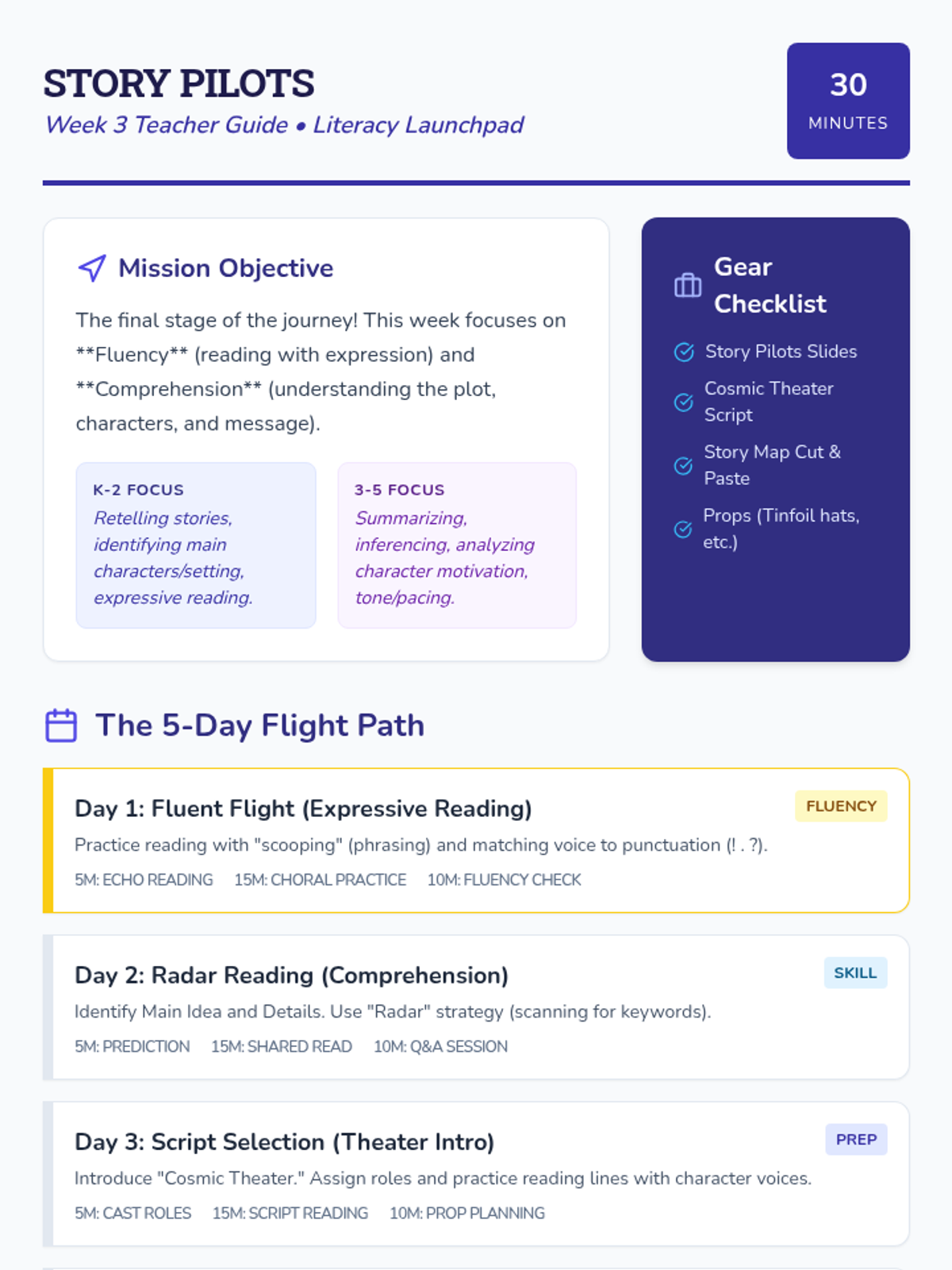
Week 3 emphasizes reading fluency and comprehension through reader's theater performances and story mapping.
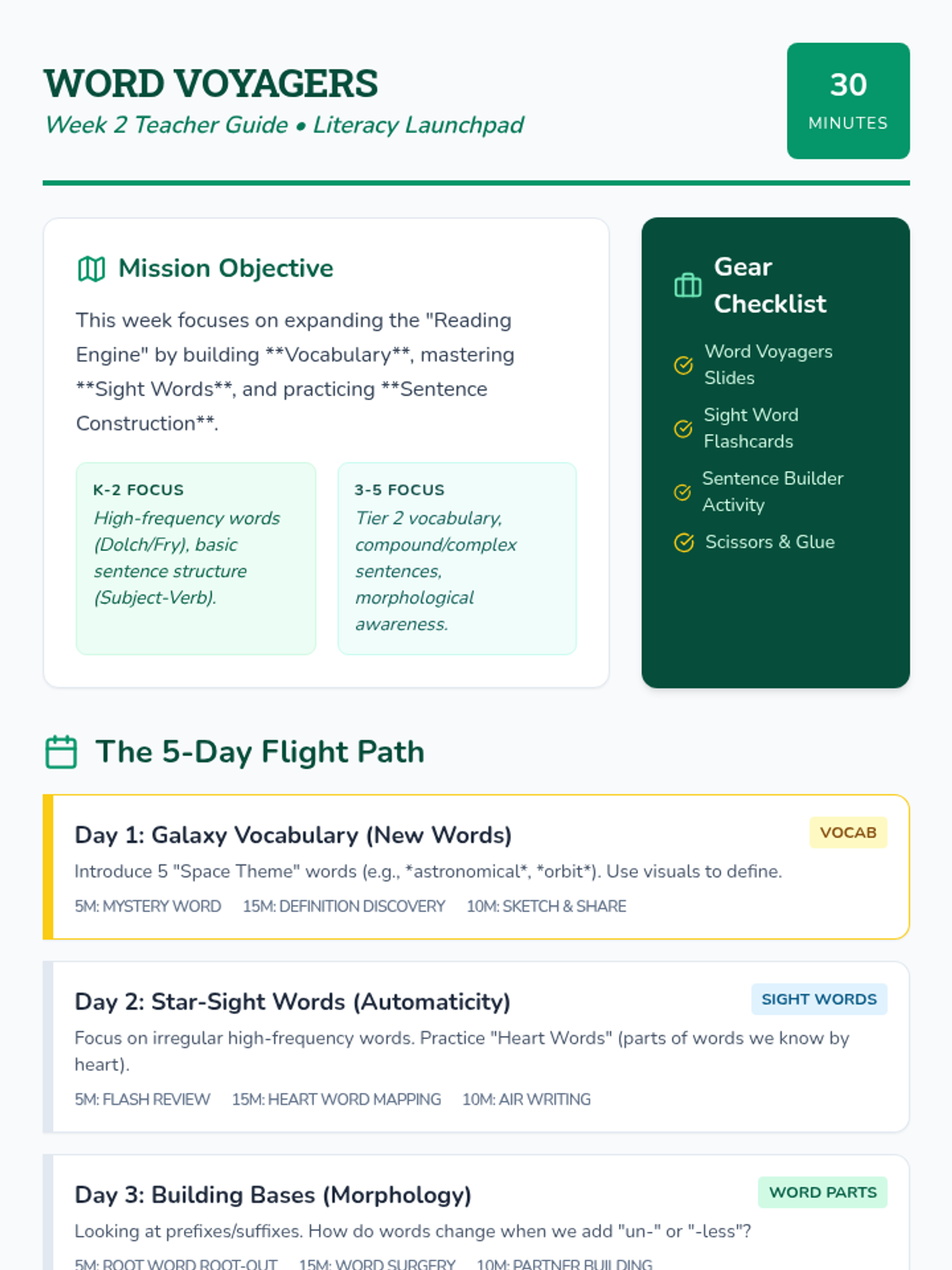
Week 2 targets vocabulary acquisition, sight word mastery, and sentence construction using competitive games and tactile building.
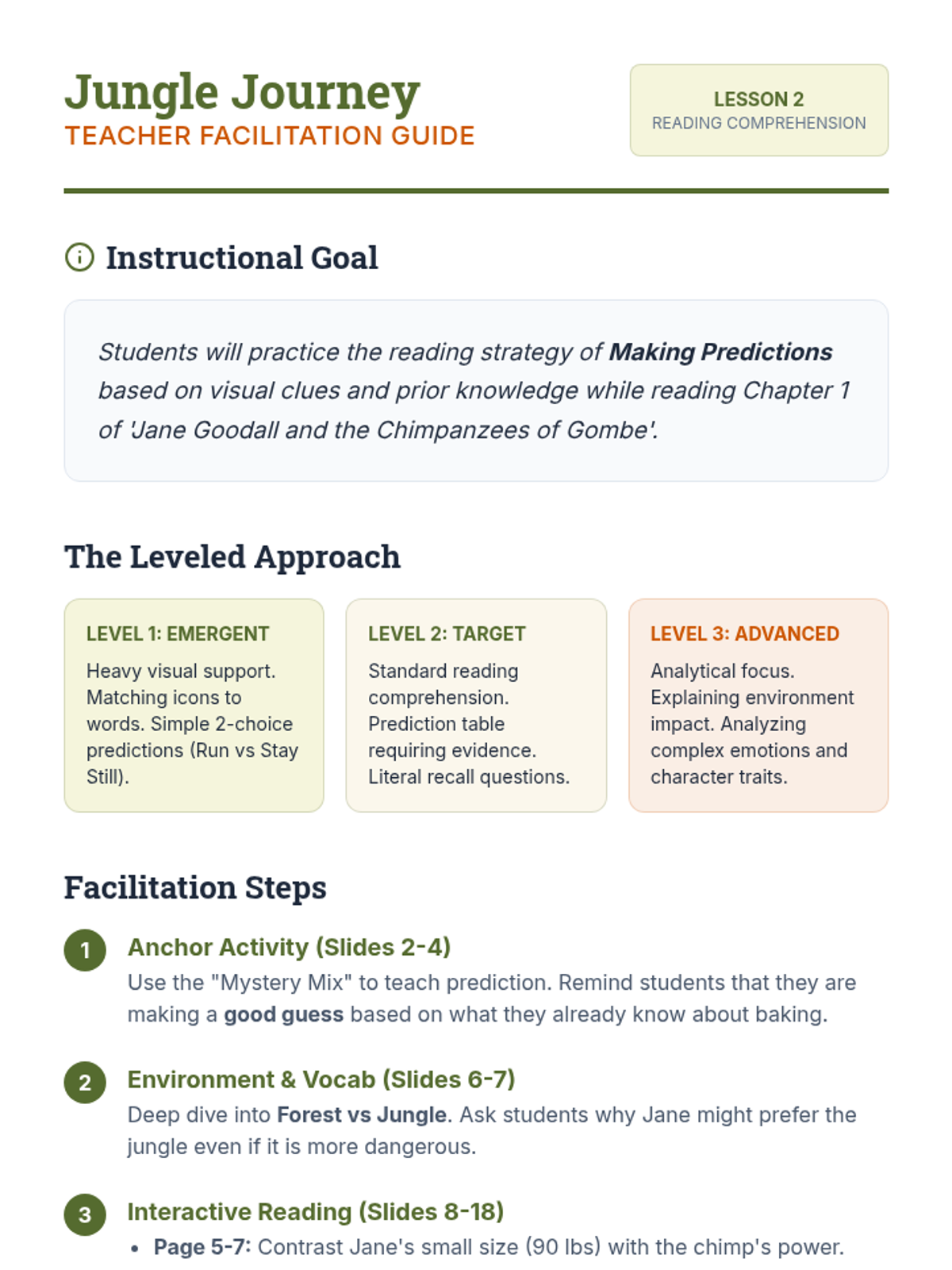
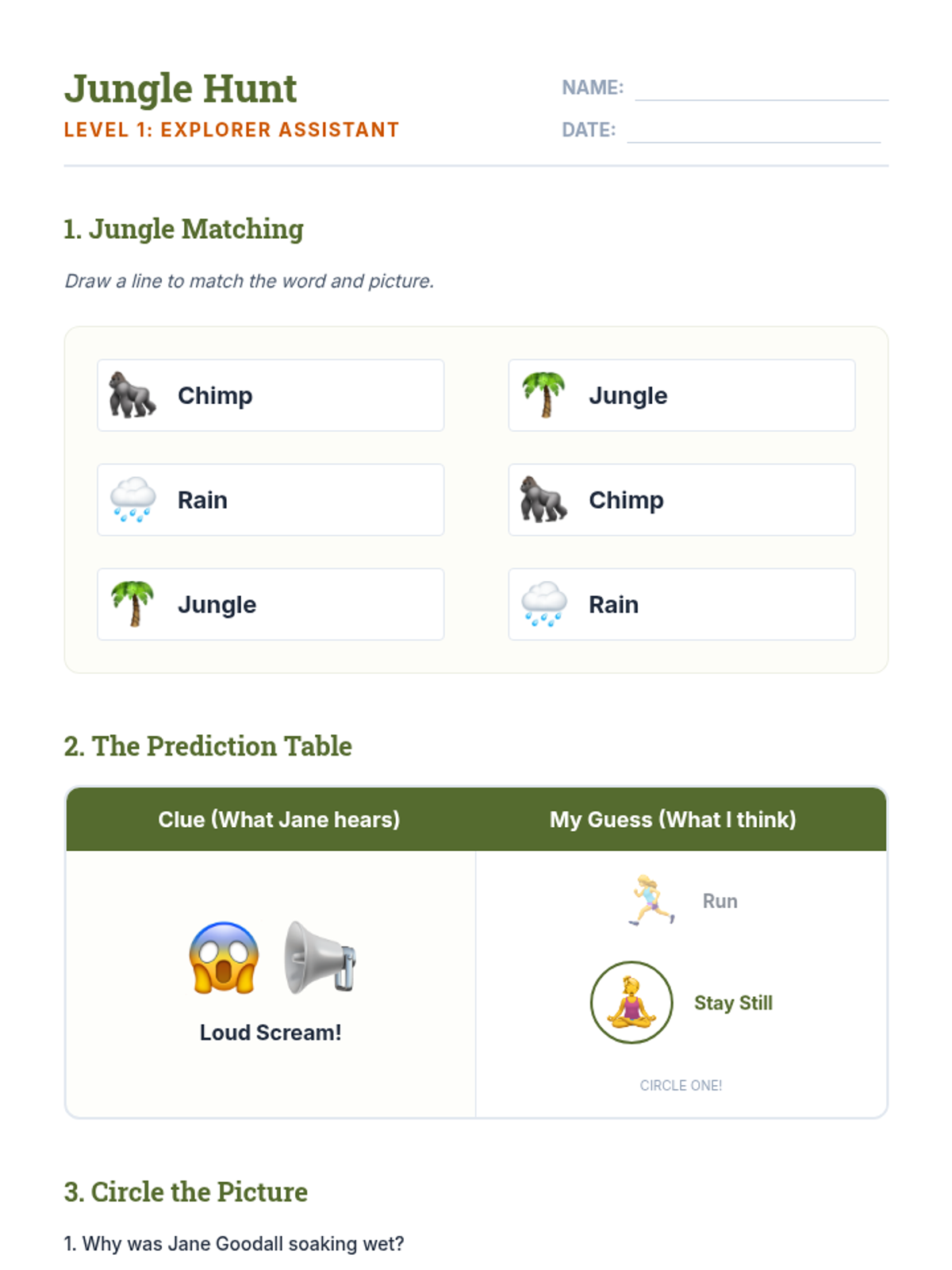
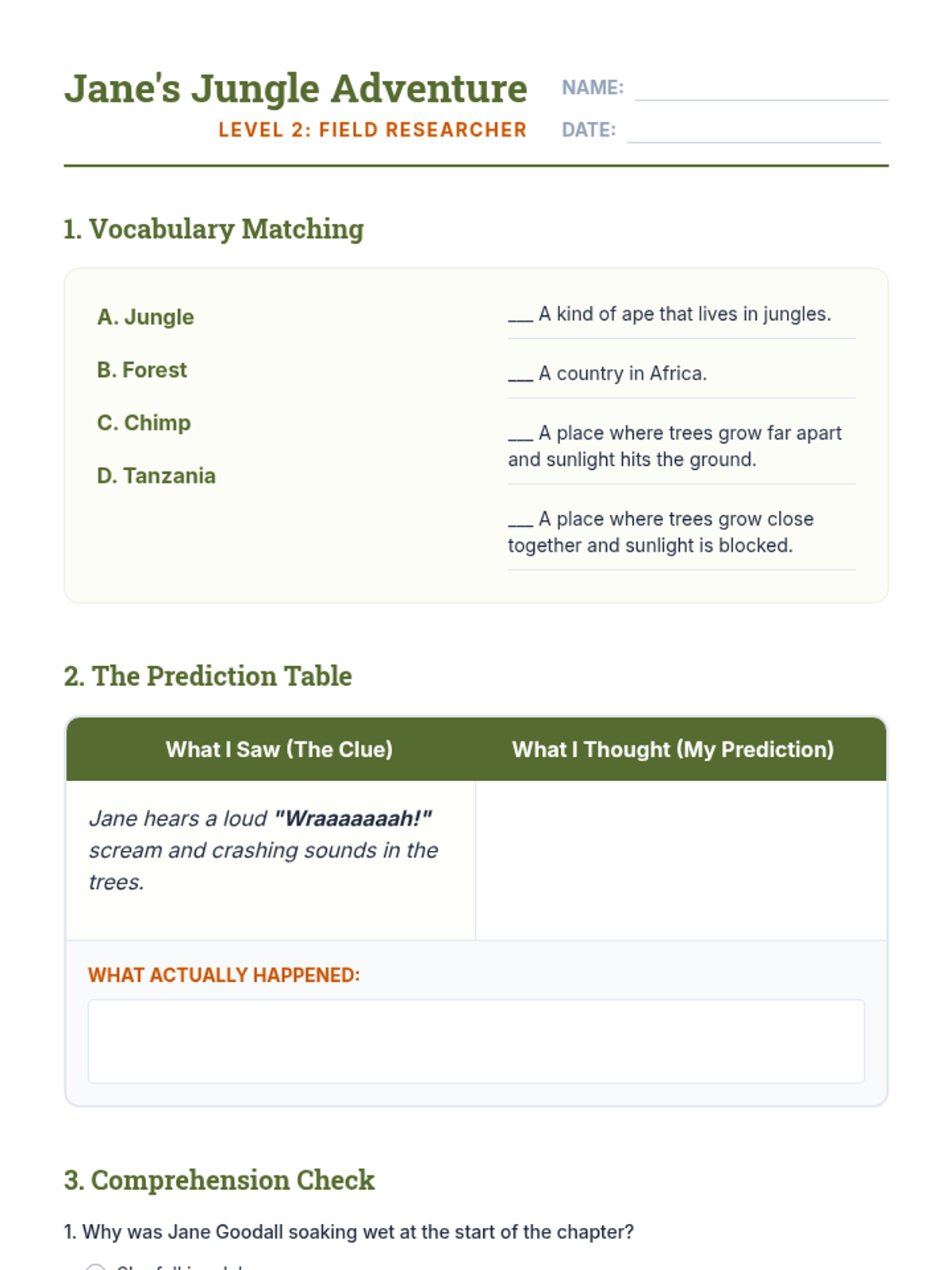
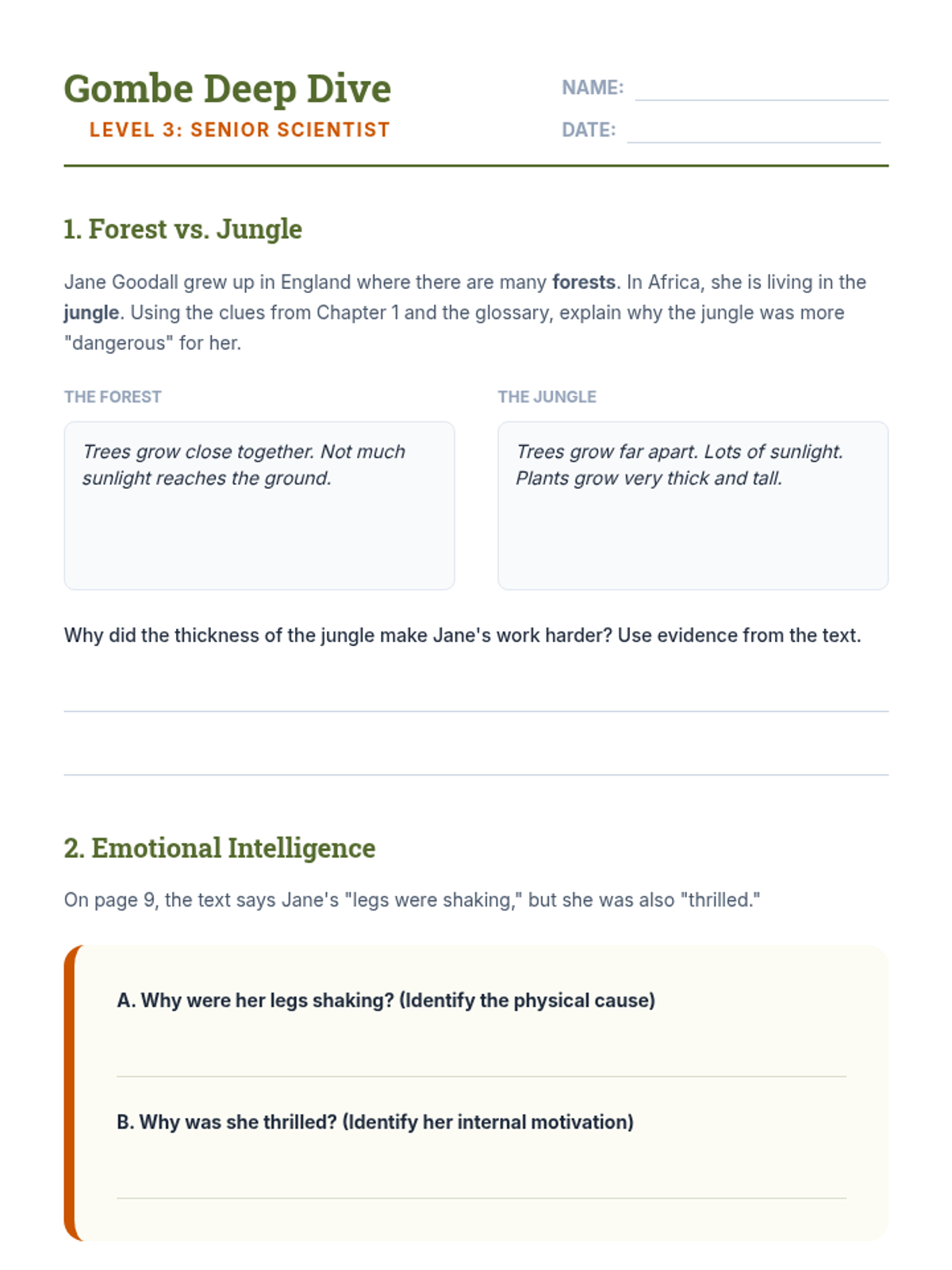
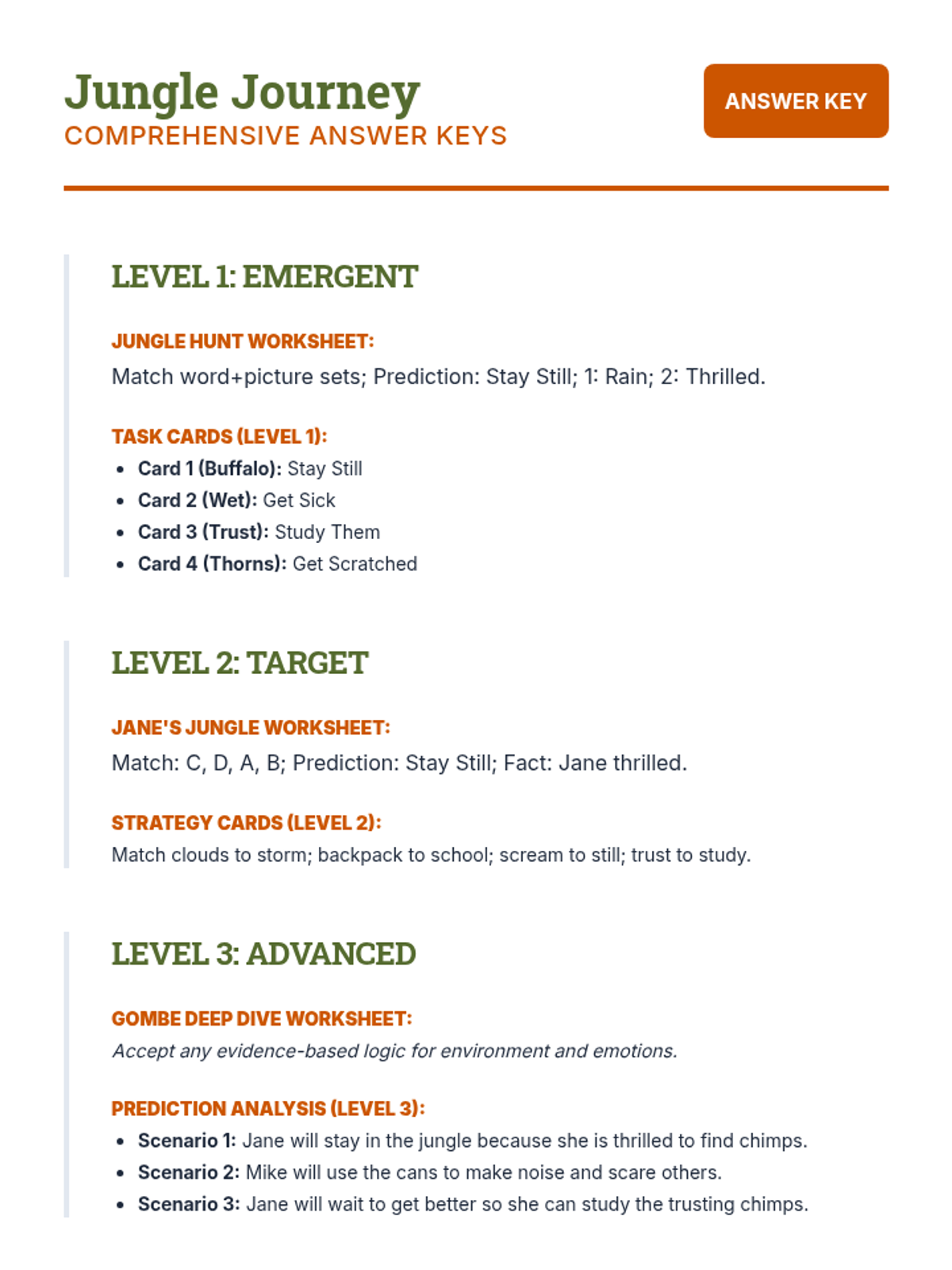
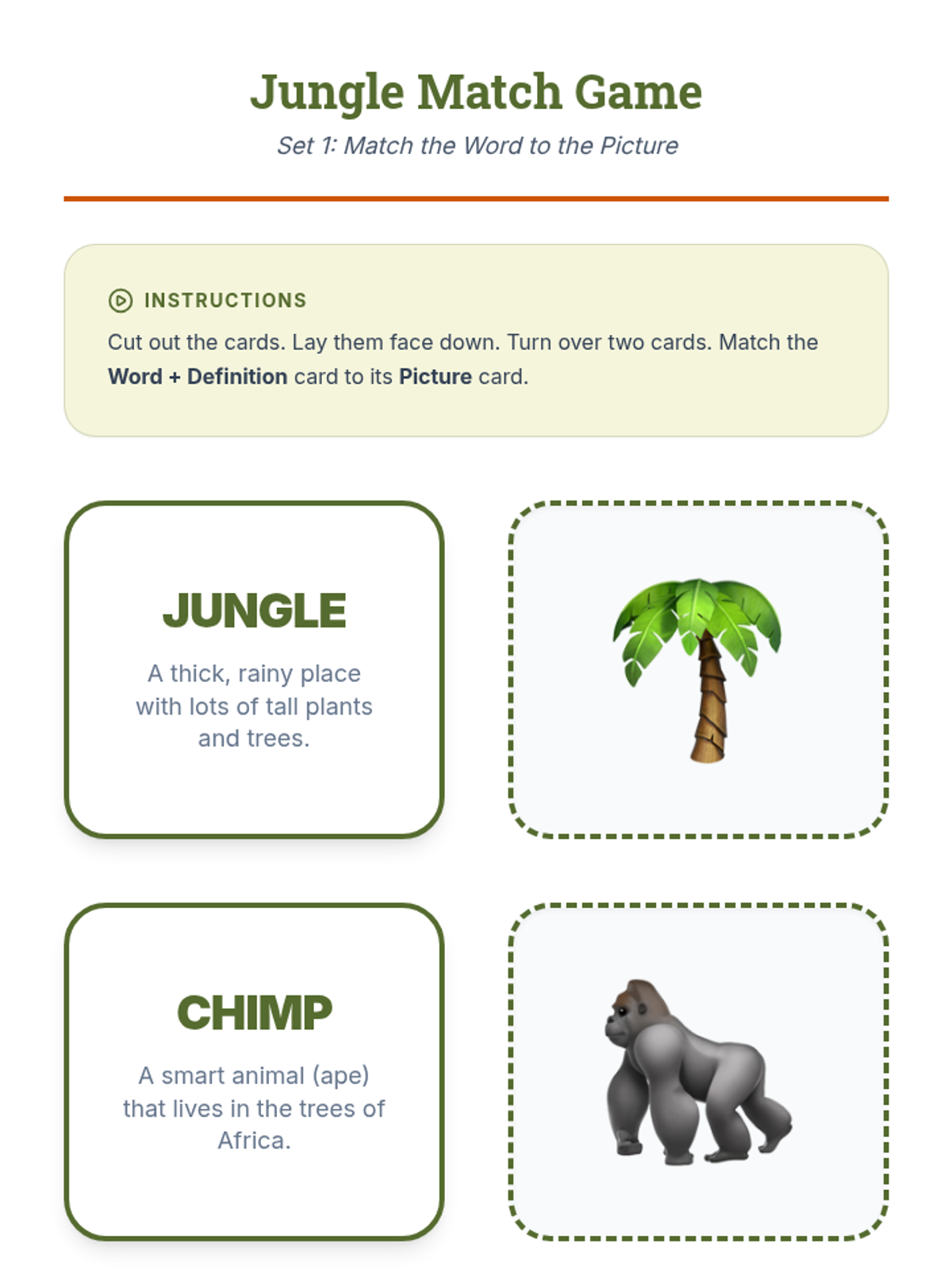
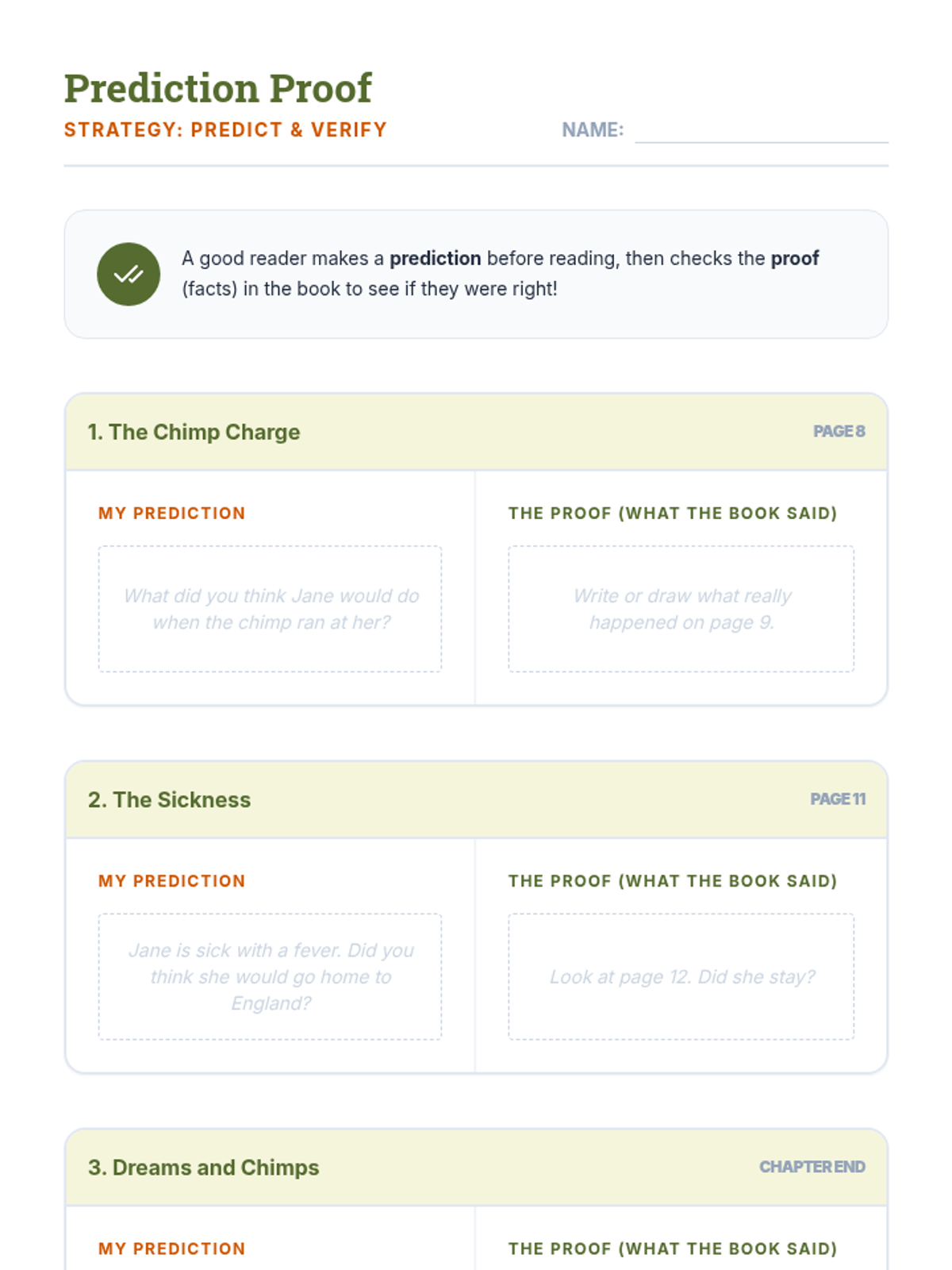
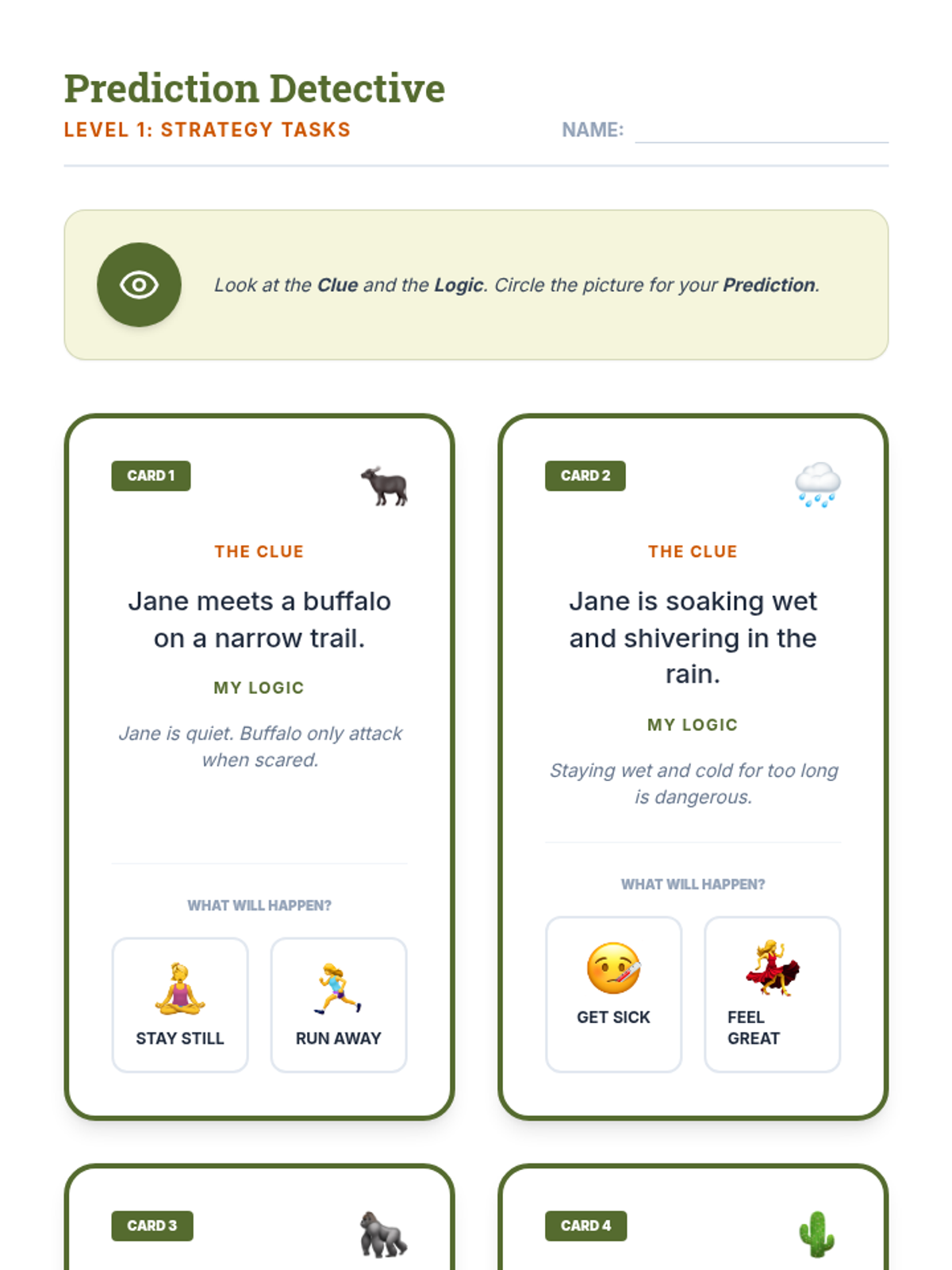
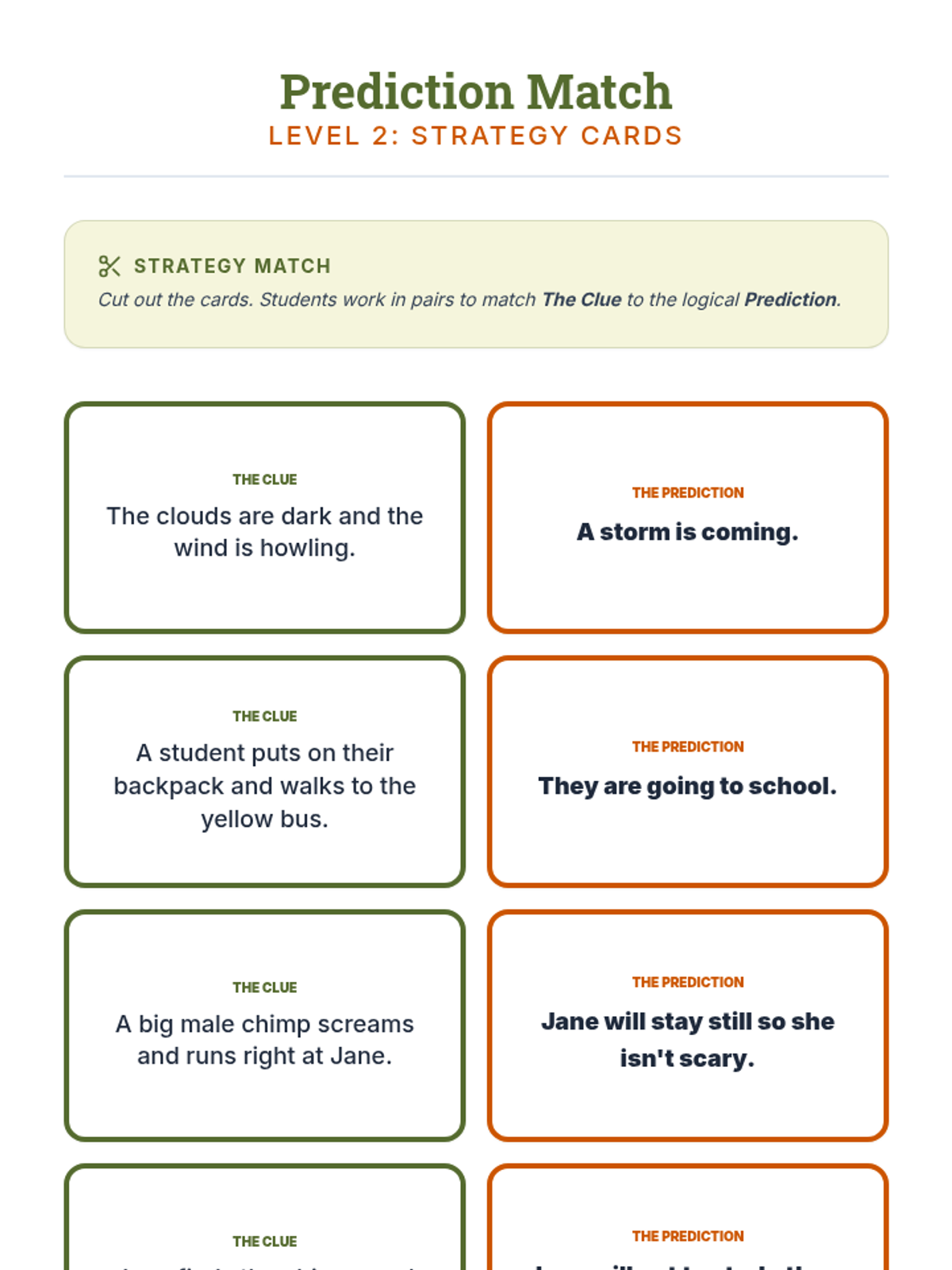
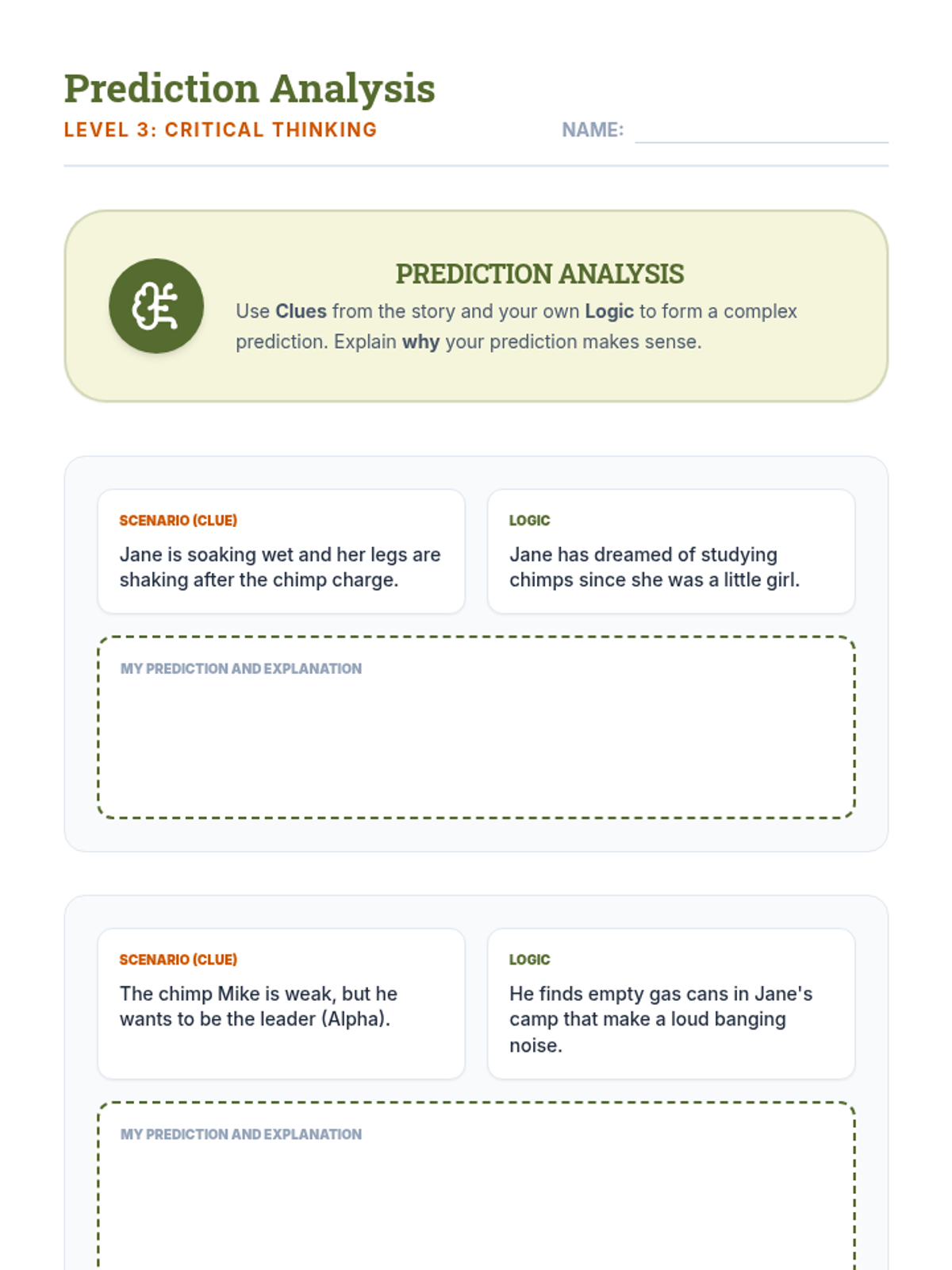
A leveled reading comprehension lesson based on Chapter 1 of 'Jane Goodall and the Chimpanzees of Gombe'. Students practice making predictions and identifying key details about Jane's arrival in the jungle across three different learning levels.
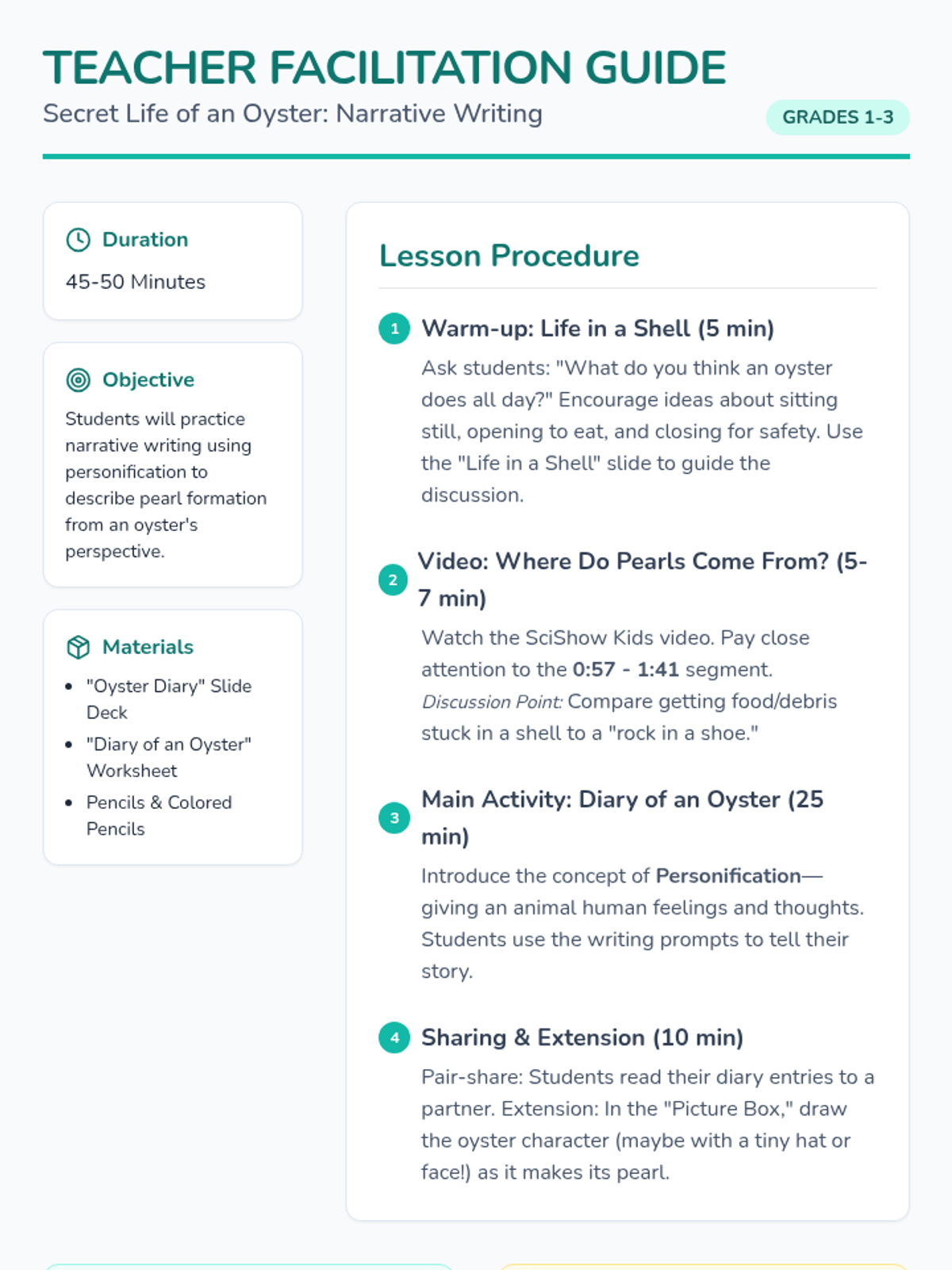
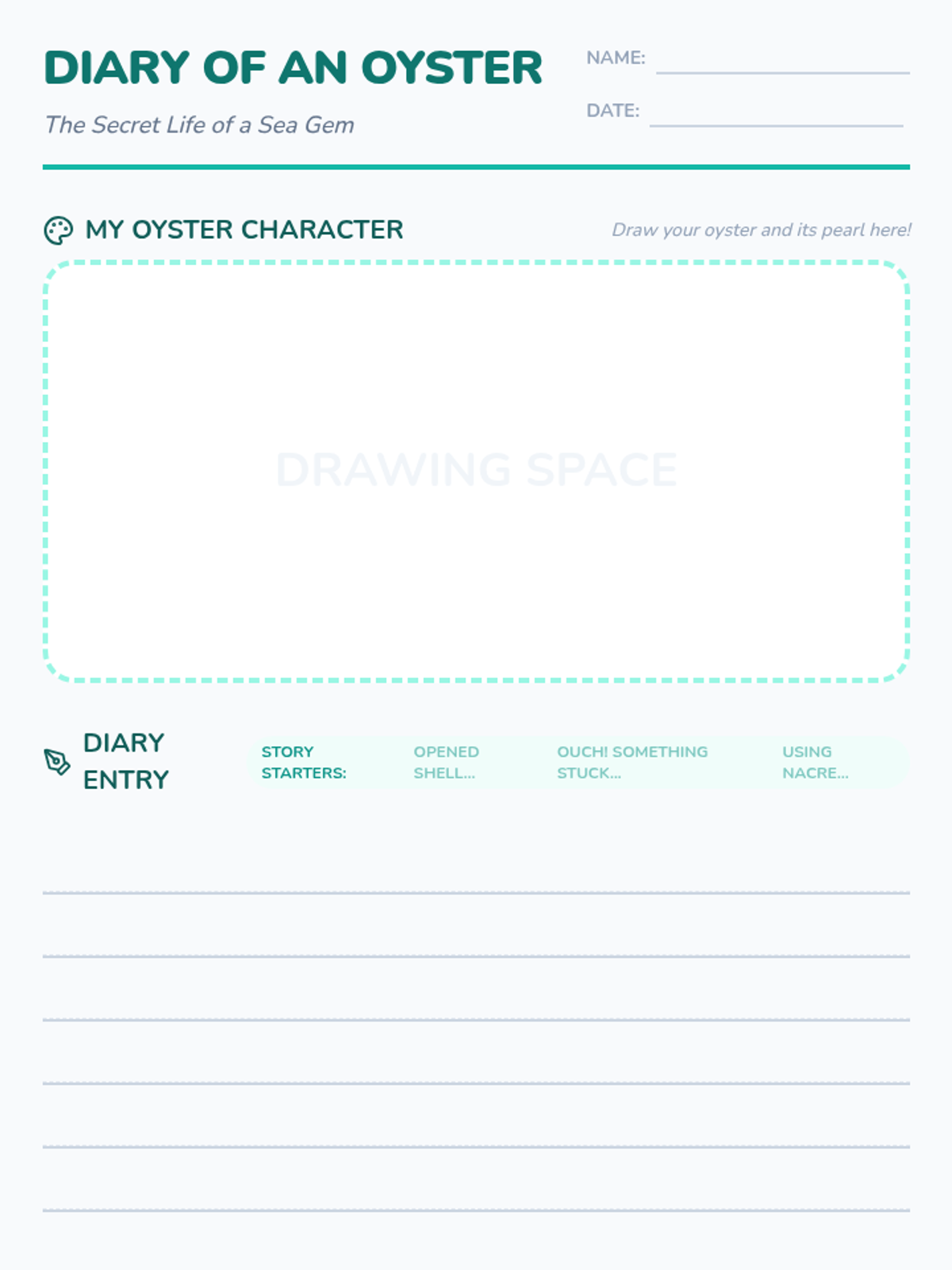
A narrative writing lesson where students step into the shell of an oyster. They learn how pearls are formed through a SciShow Kids video and practice personification by writing a diary entry about an uncomfortable bit of debris and the creation of a pearl.
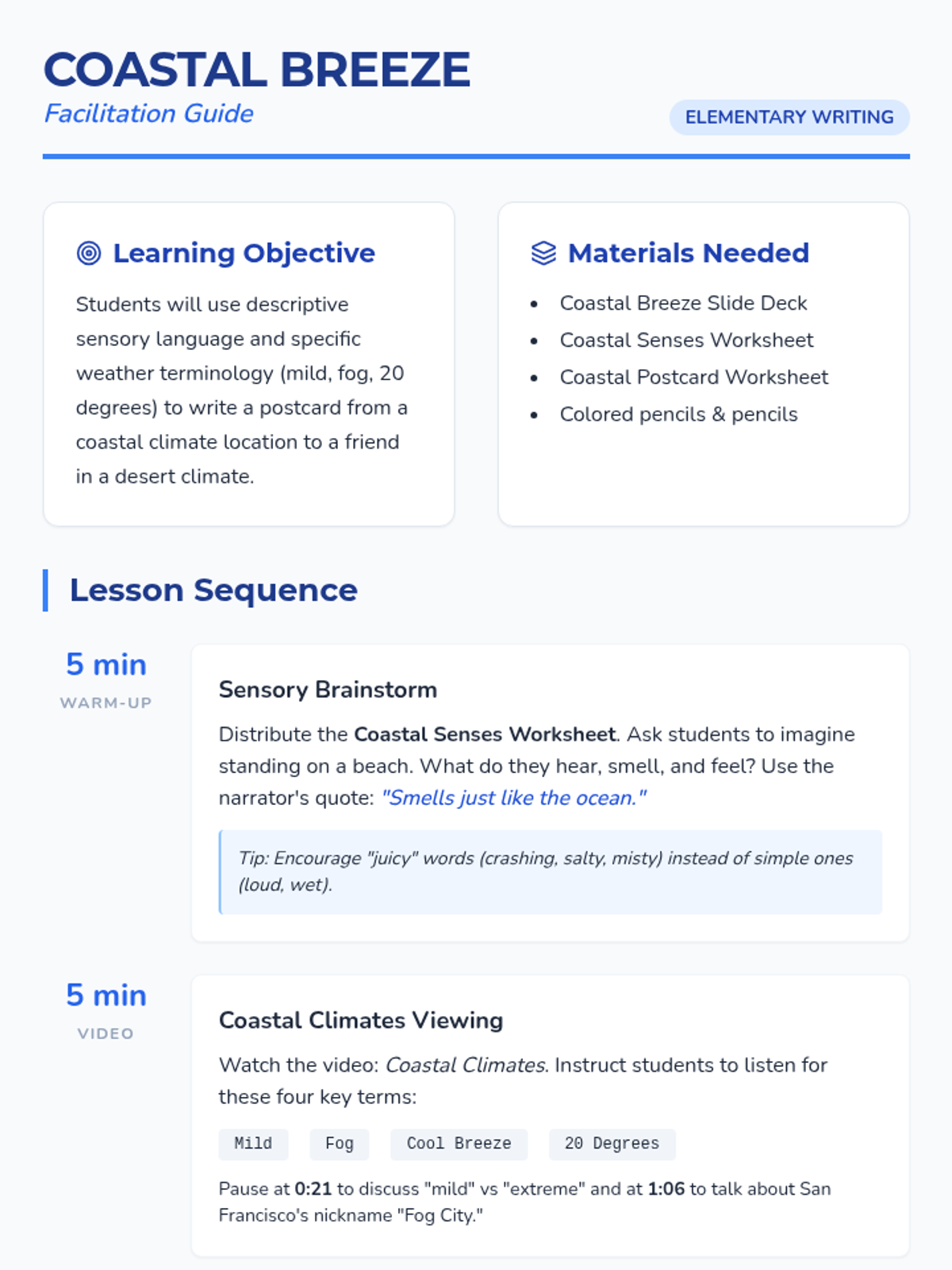
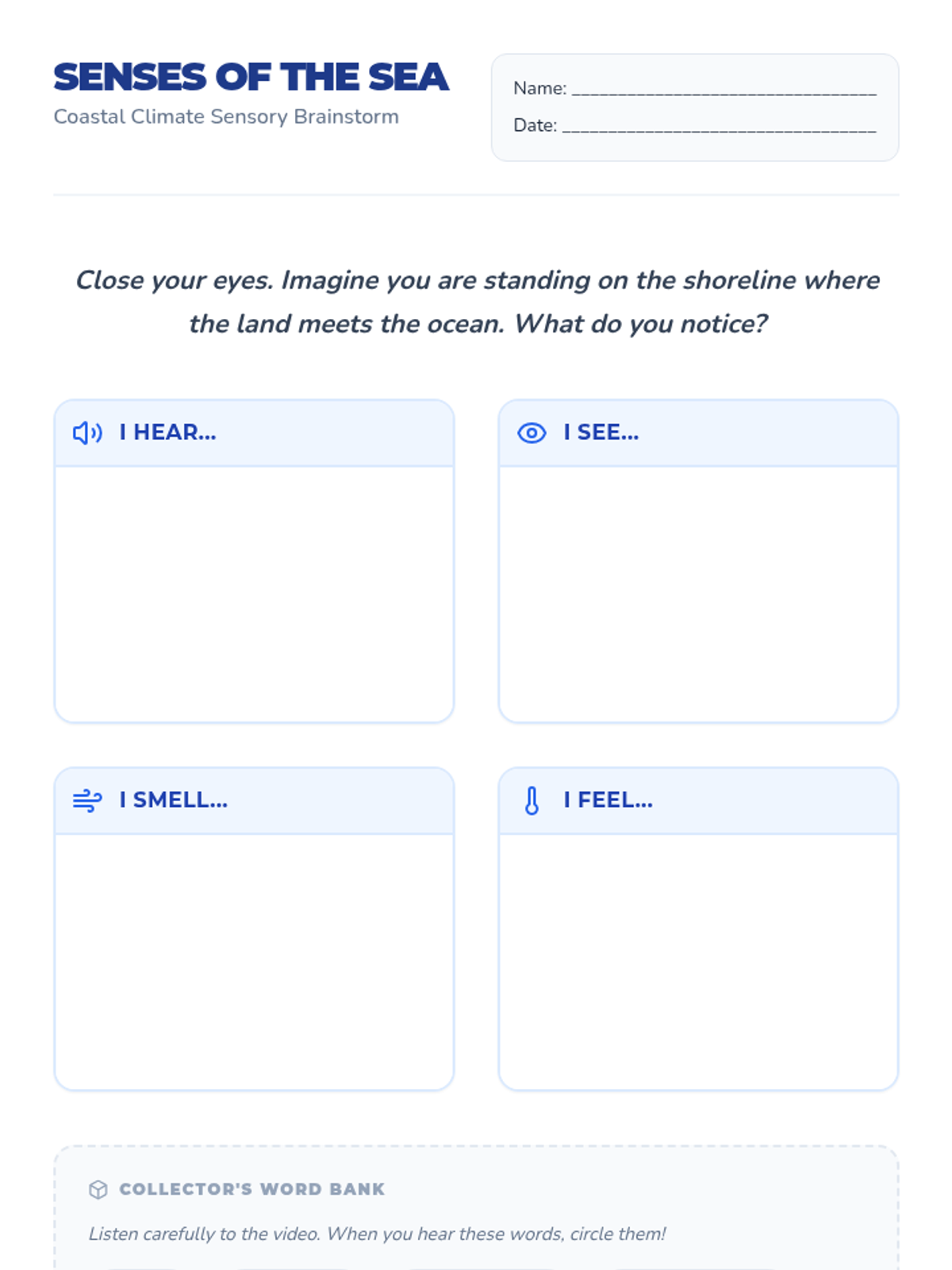
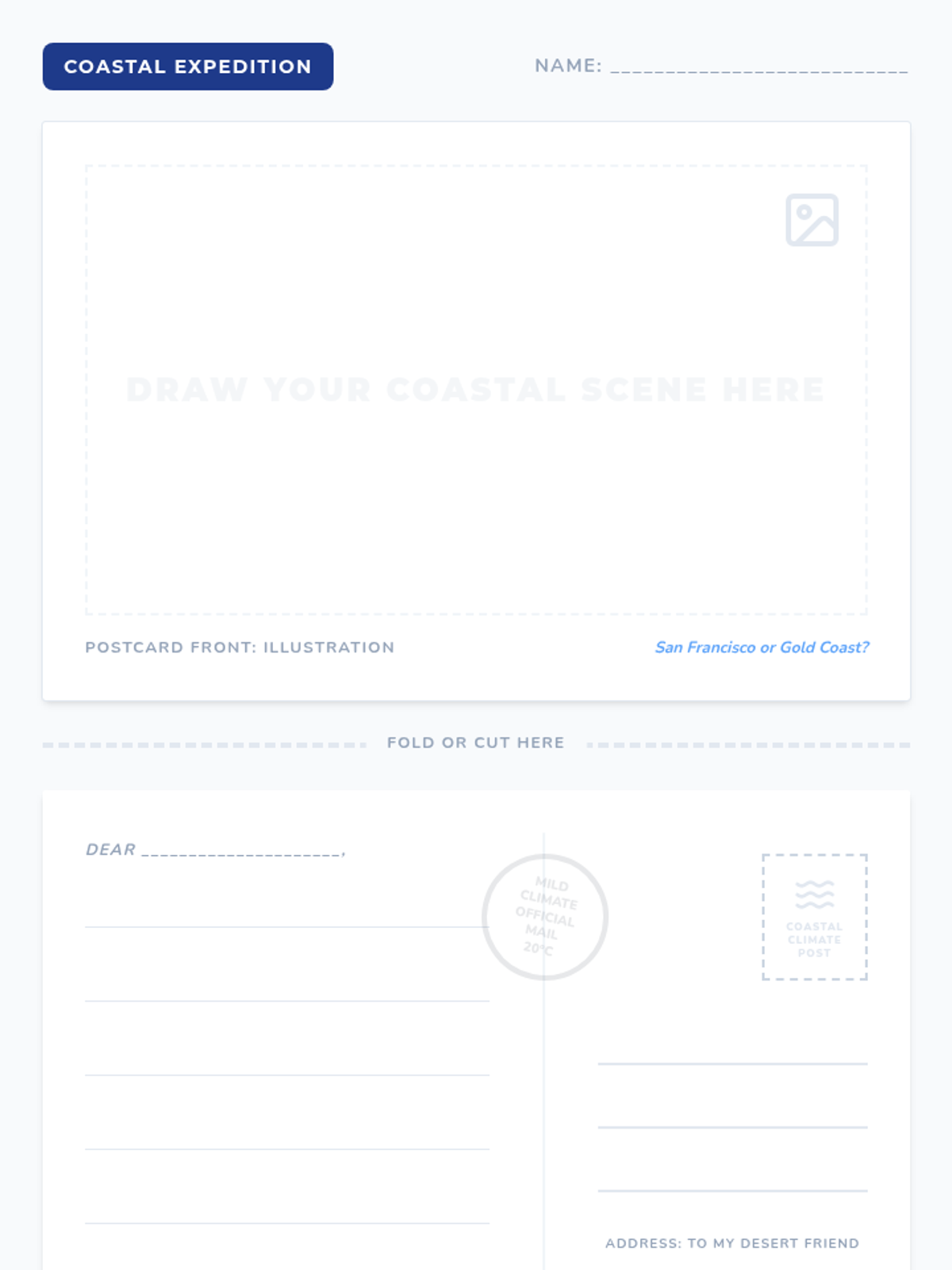
A writing-focused lesson where elementary students explore coastal climates through a sensory lens, culminating in a descriptive postcard written from San Francisco or the Gold Coast.
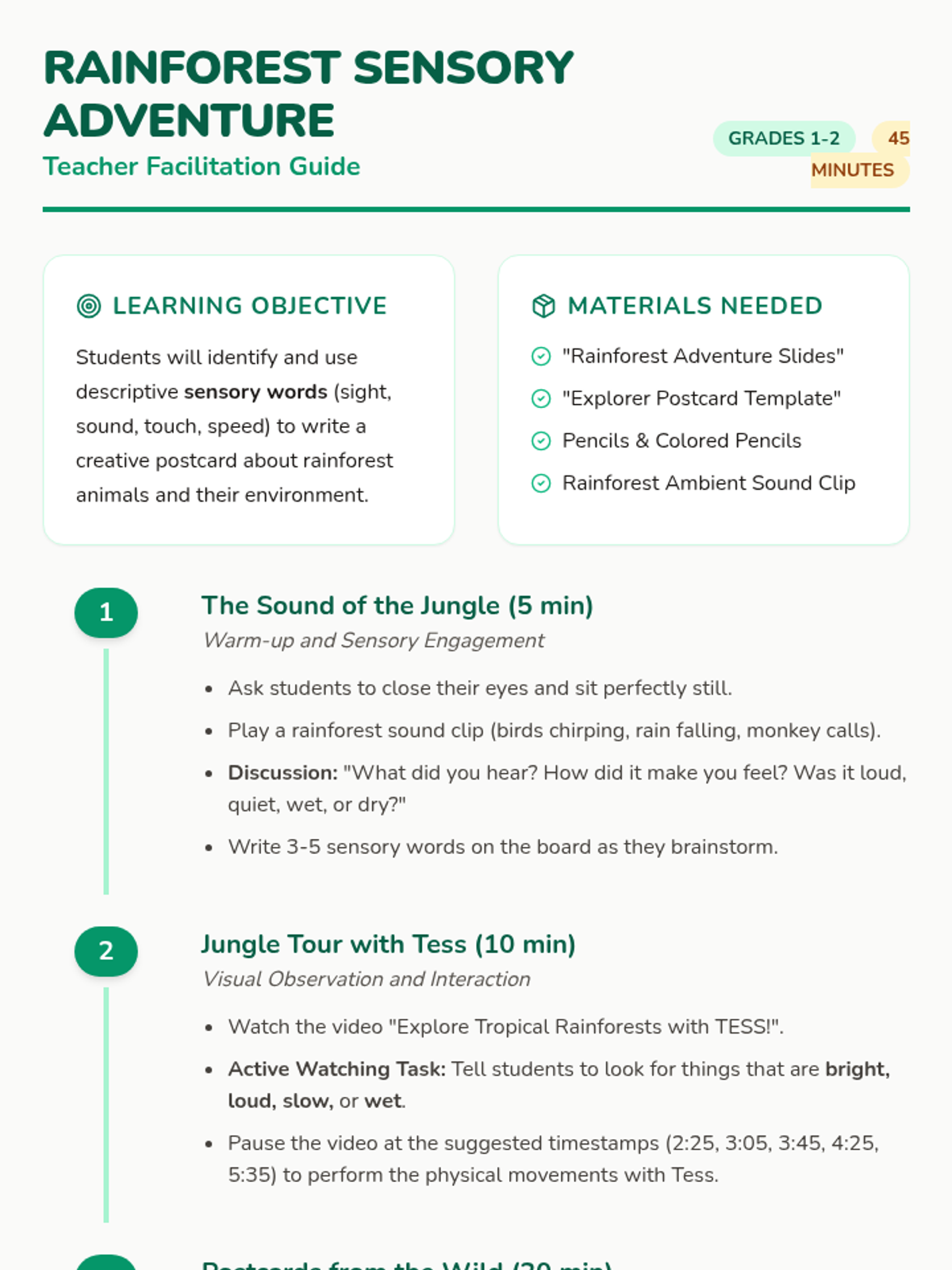
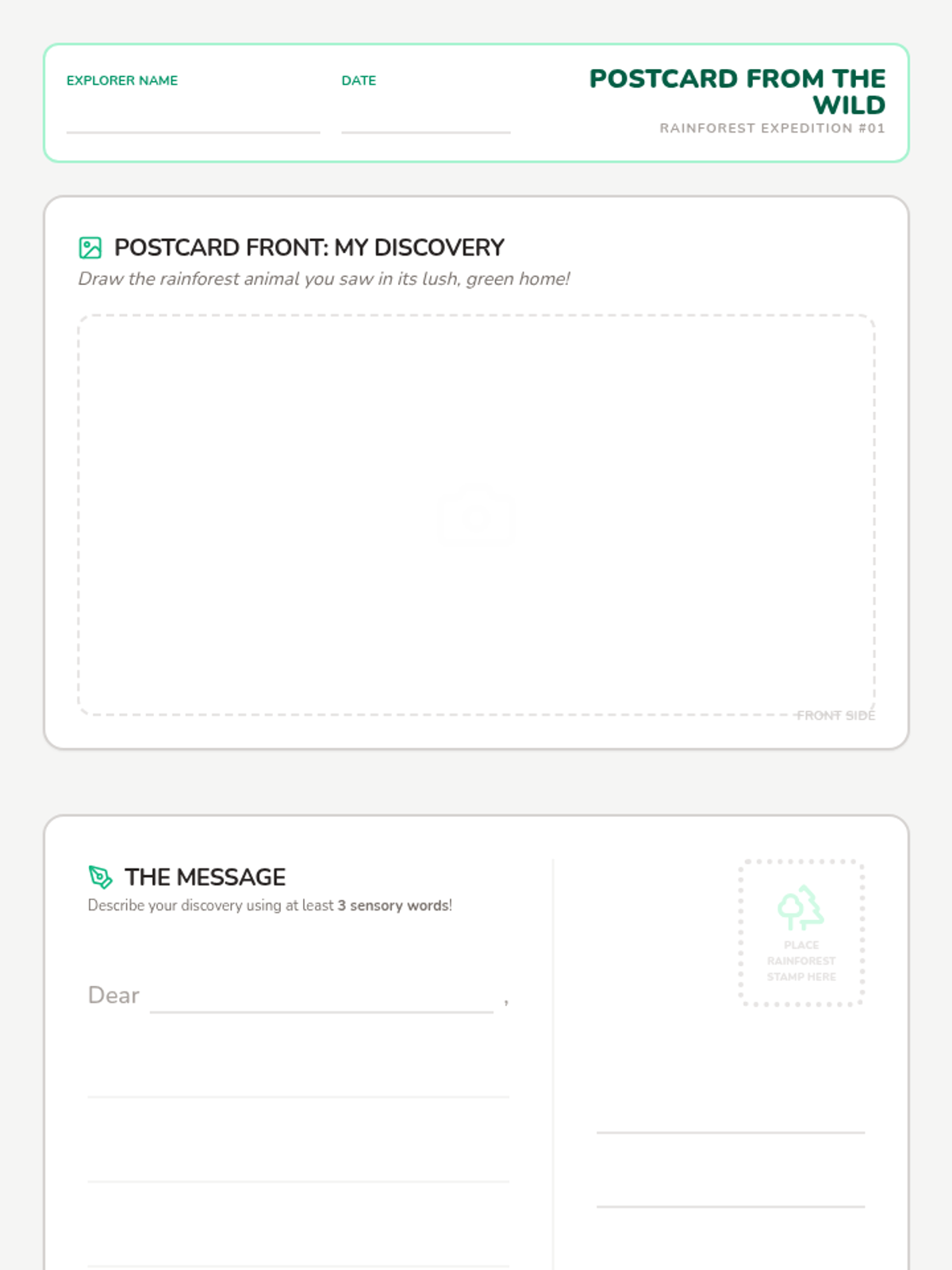
A 1st/2nd grade lesson focused on using sensory words to describe the rainforest, featuring a guided video tour with Tess the Robot and a creative postcard writing activity.
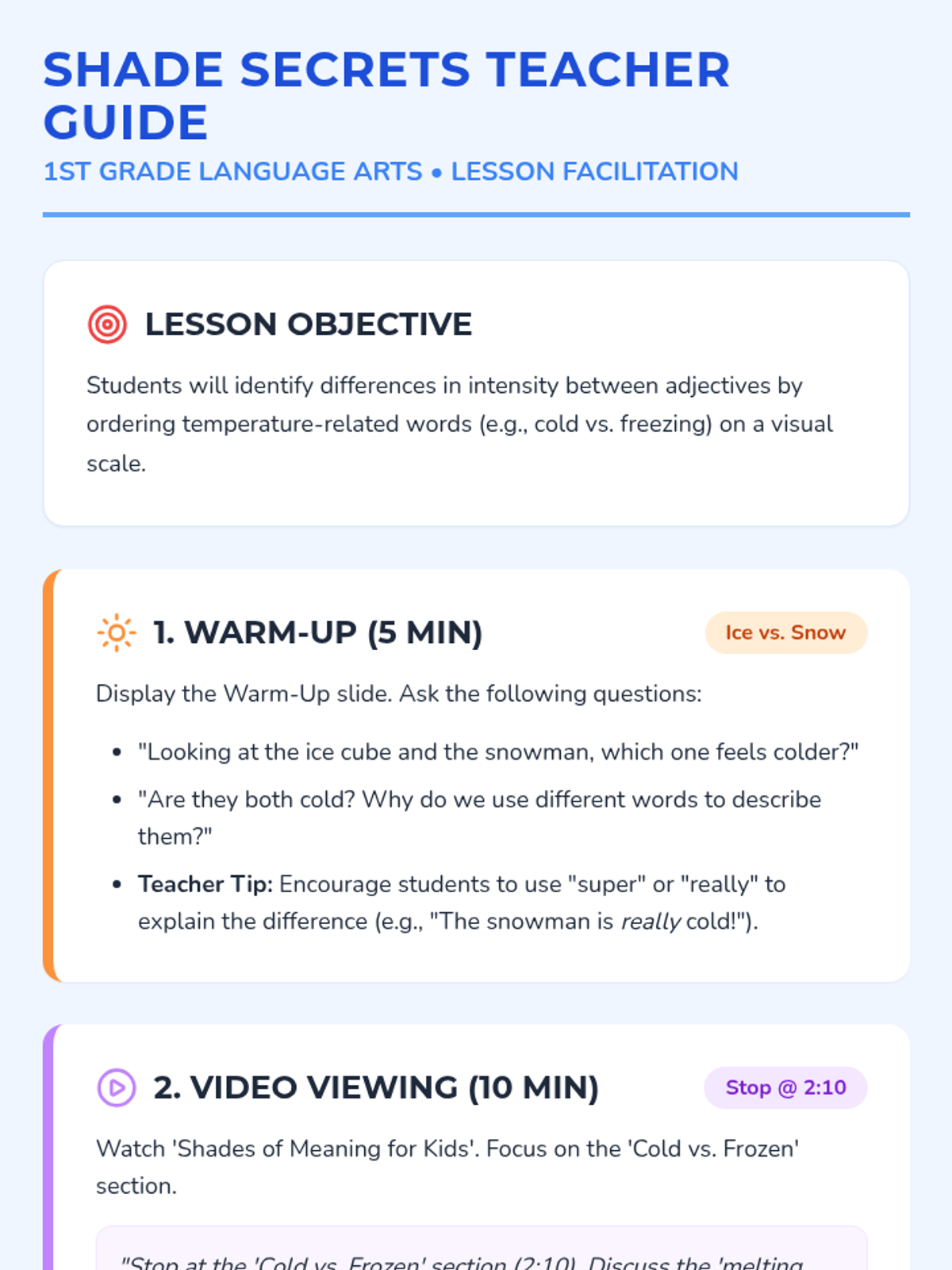
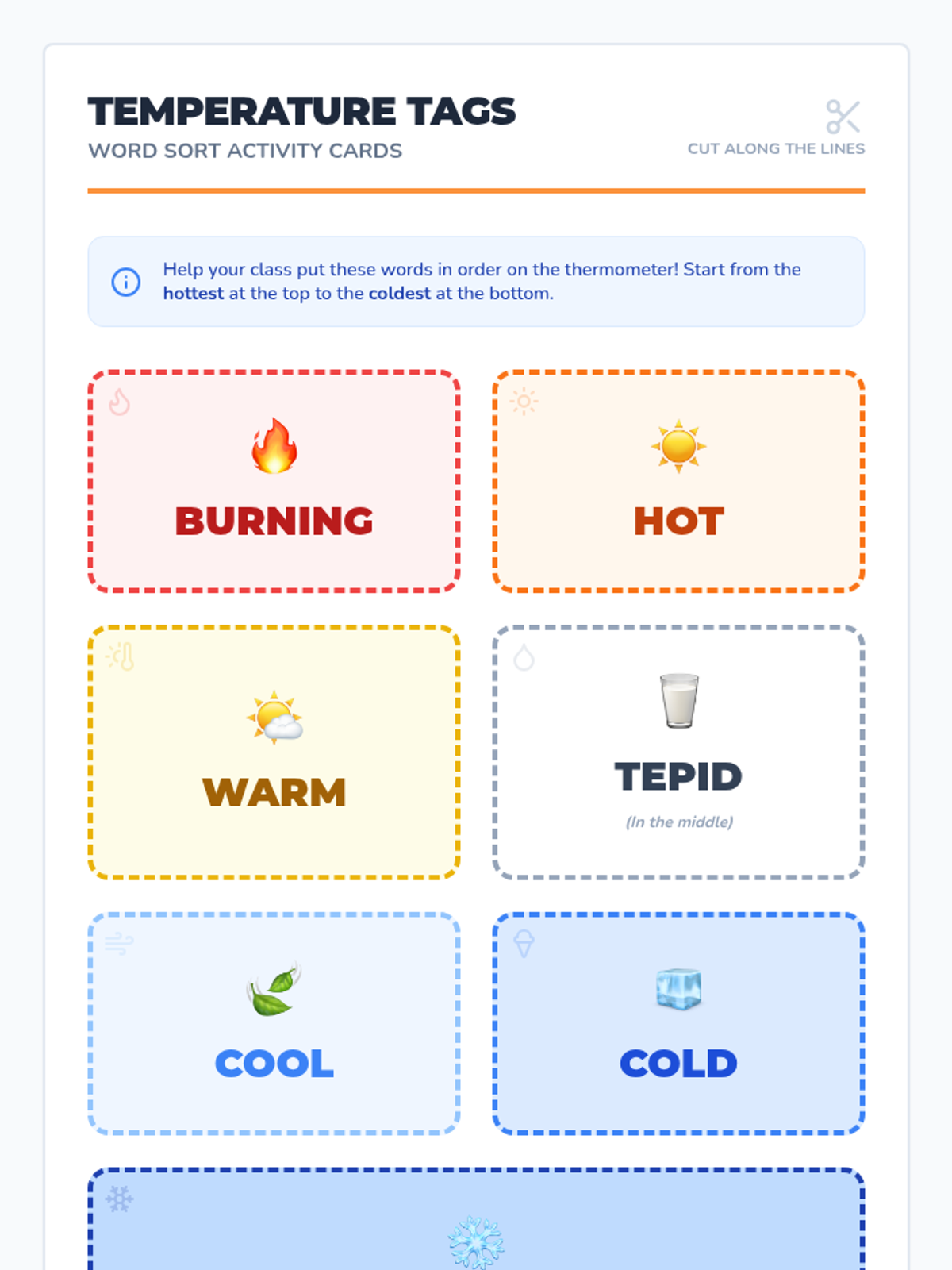
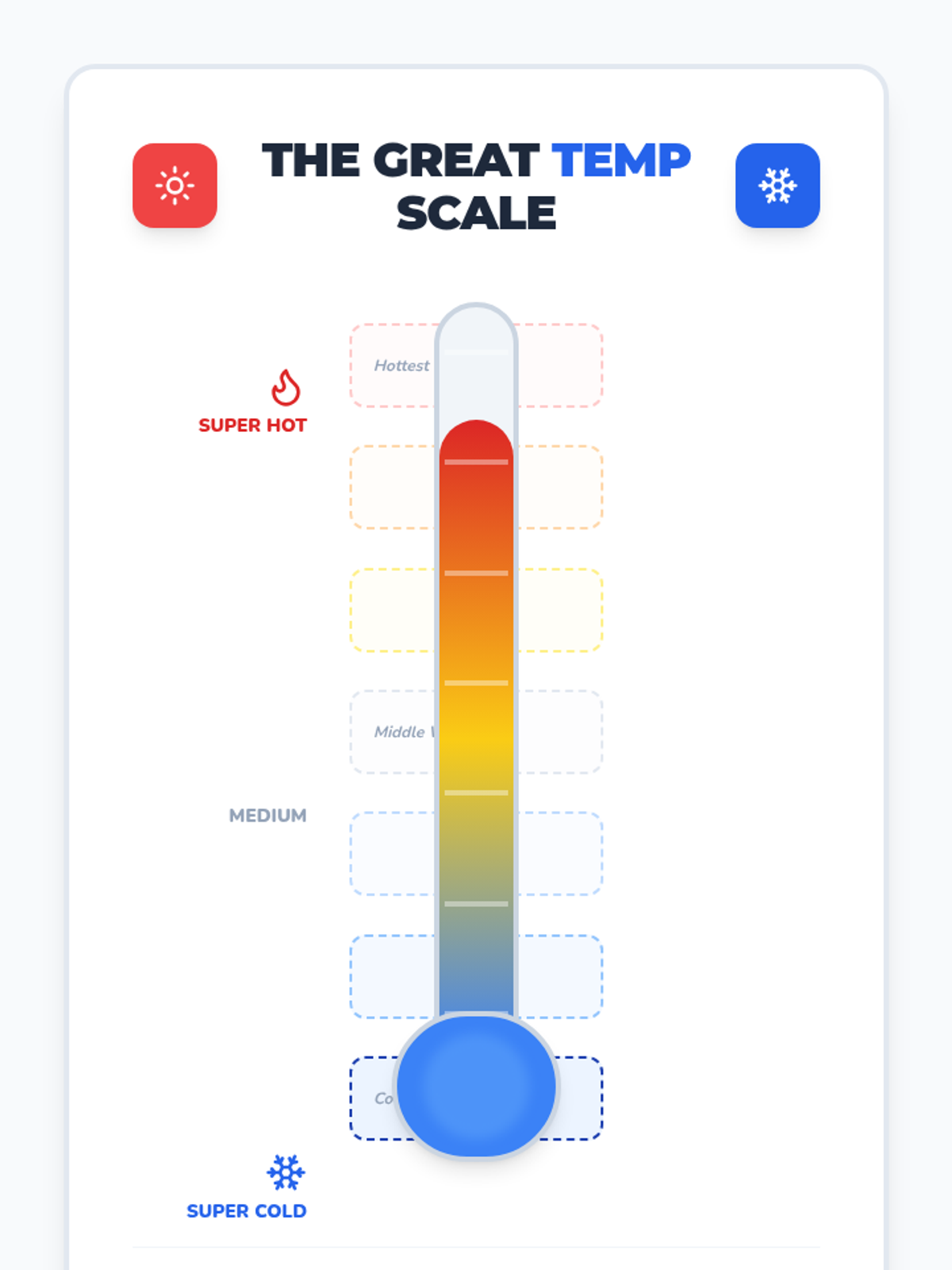
Students will explore shades of meaning by ordering temperature words from hottest to coldest. This lesson uses a video, a class discussion, and a hands-on 'Word Sort' activity to help 1st graders understand word intensity.
A 1st Grade literacy lesson focused on the sight word 'by', exploring its meanings of proximity and support through music, sentence building, and creative writing.
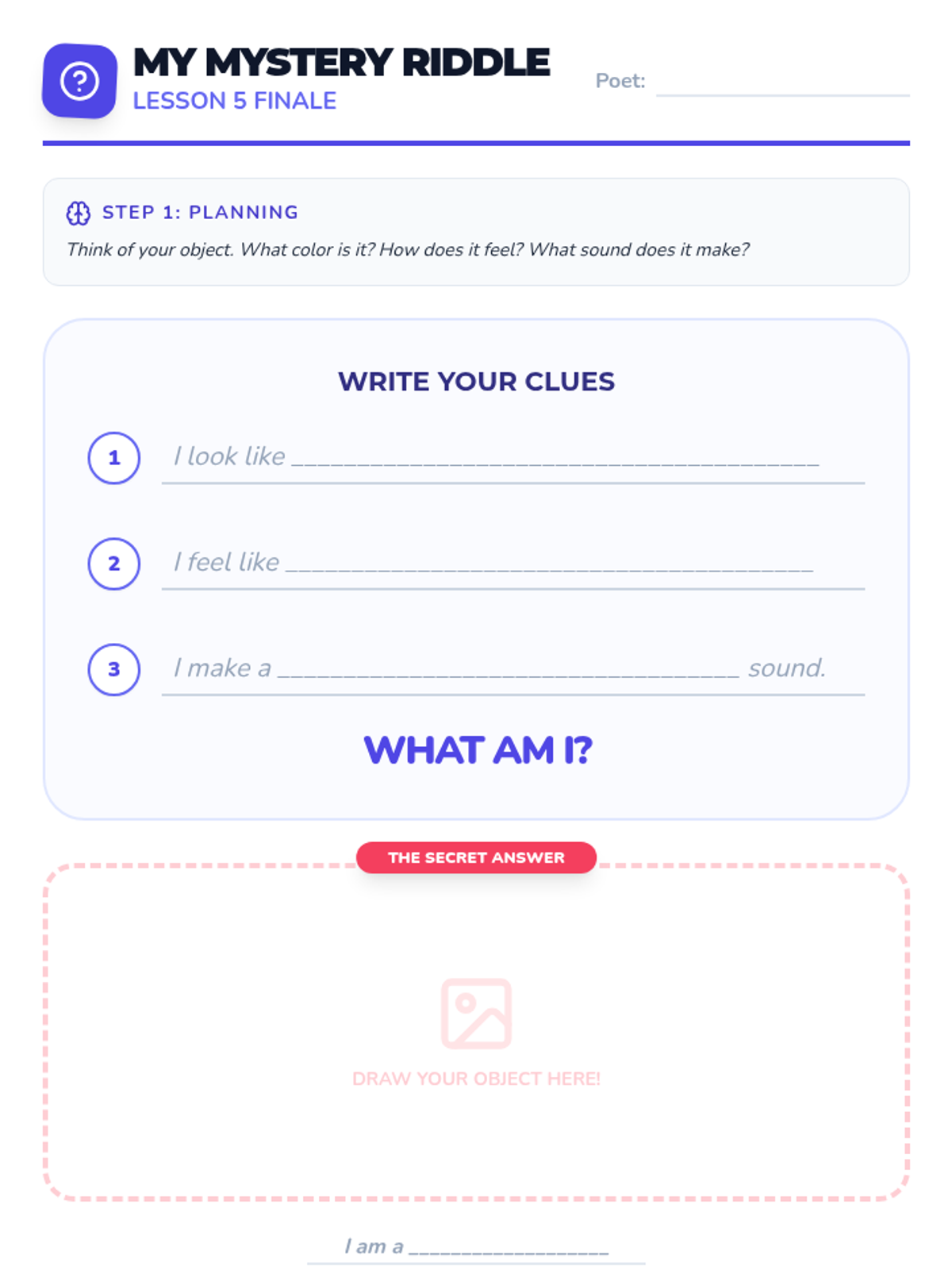
Students bring a favorite object from home (or choose one from class) and practice describing it using sensory details rather than just its name. They create a simple 'riddle poem' for the class to guess the object.
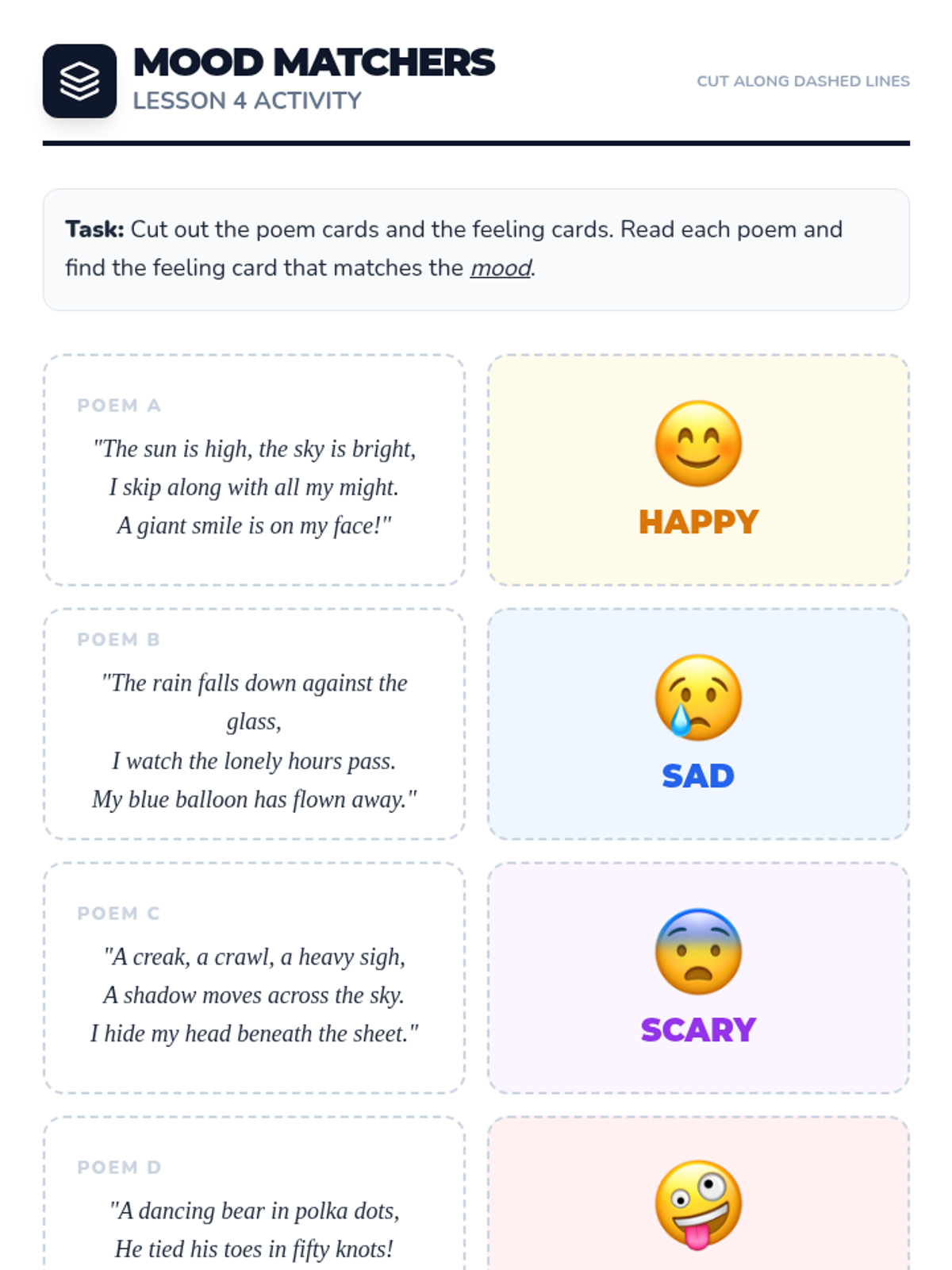
Students explore how poems express emotions using color words and weather metaphors (e.g., 'feeling blue' or 'sunny smiles'). They identify the mood of different short poems and match them to 'mood cards' with corresponding facial expressions.
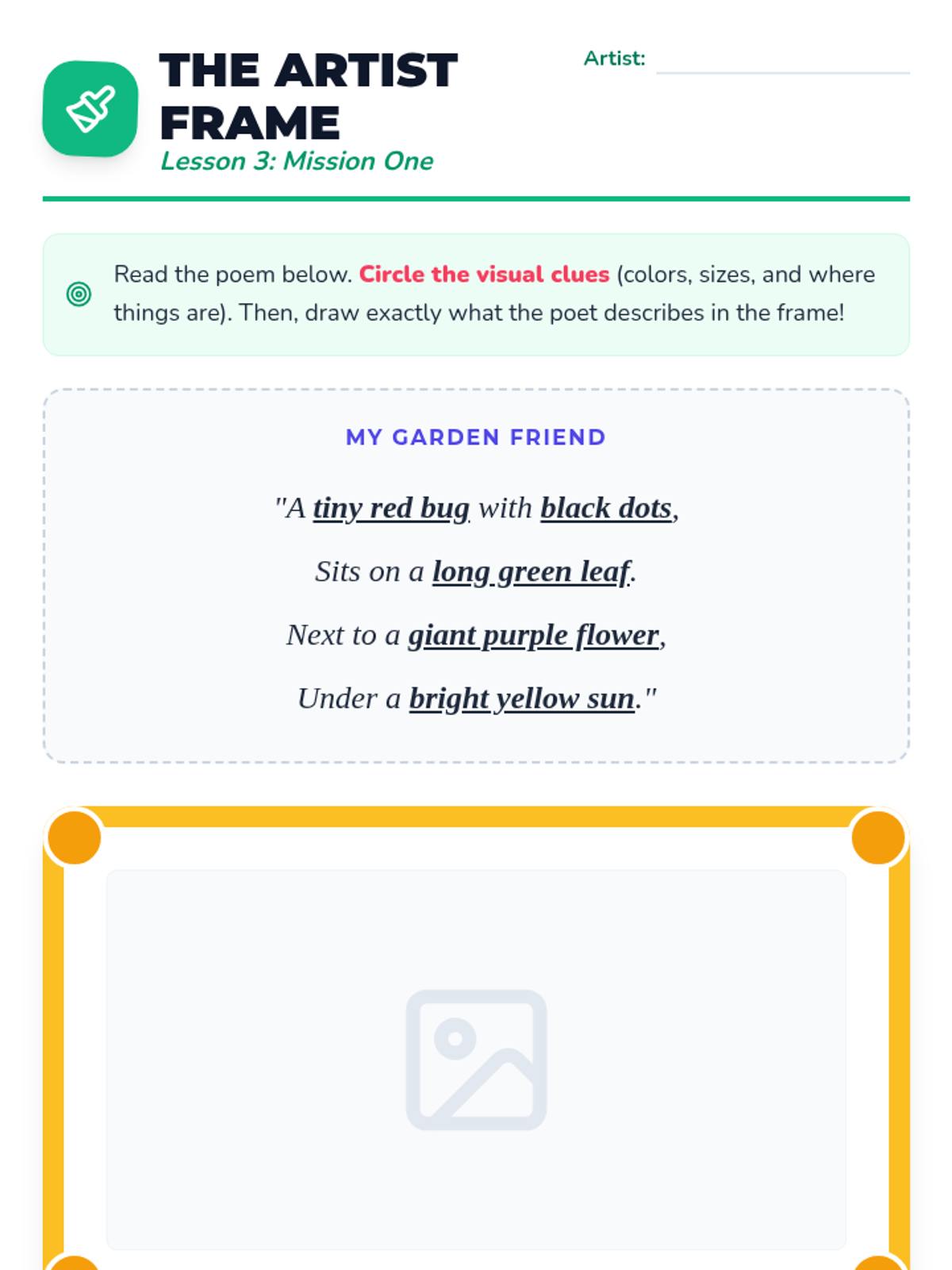
Students listen to a poem rich in visual details and draw exactly what is described. They then compare their drawings to the poet's words to check for comprehension of descriptive adjectives.
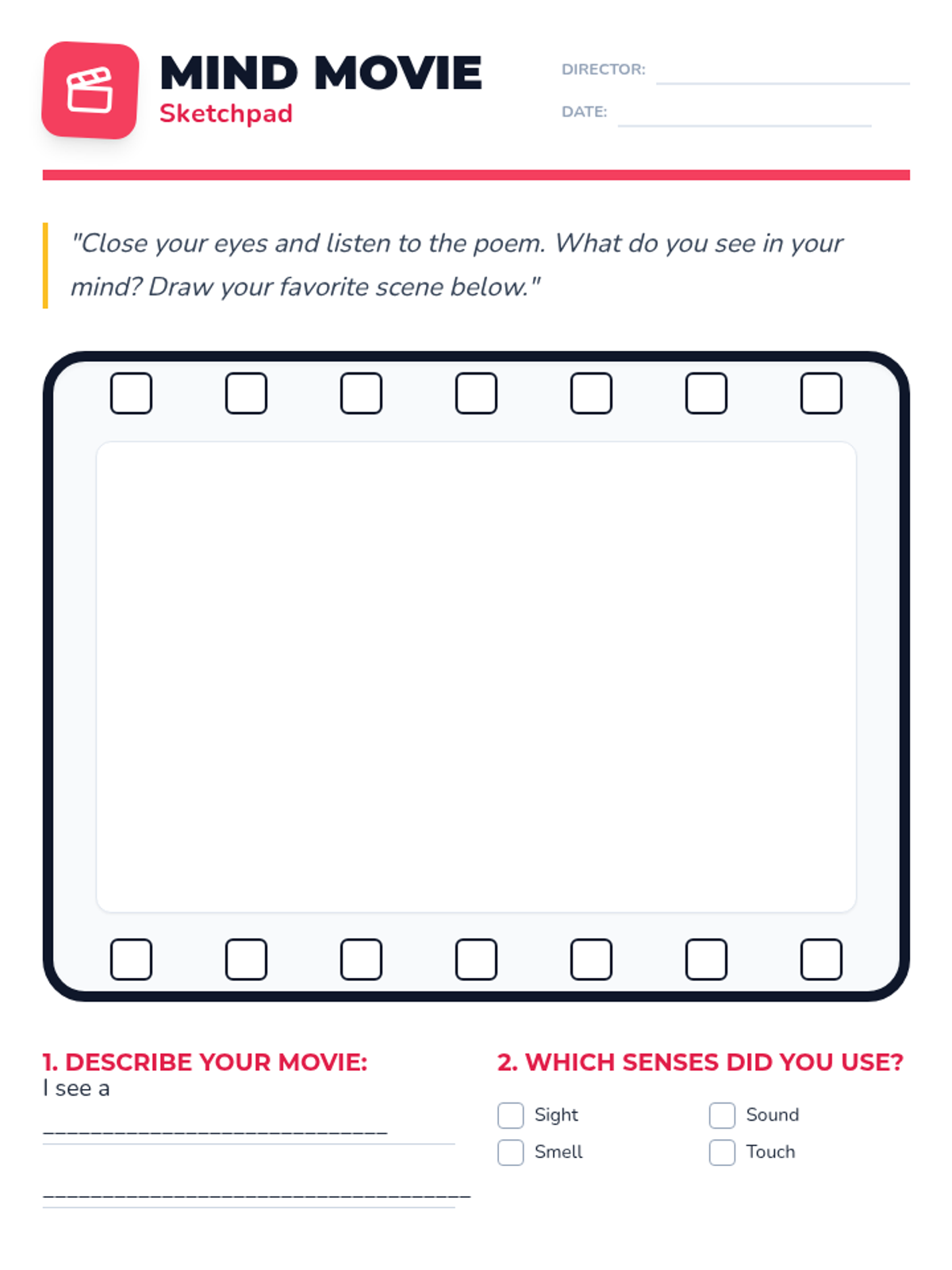
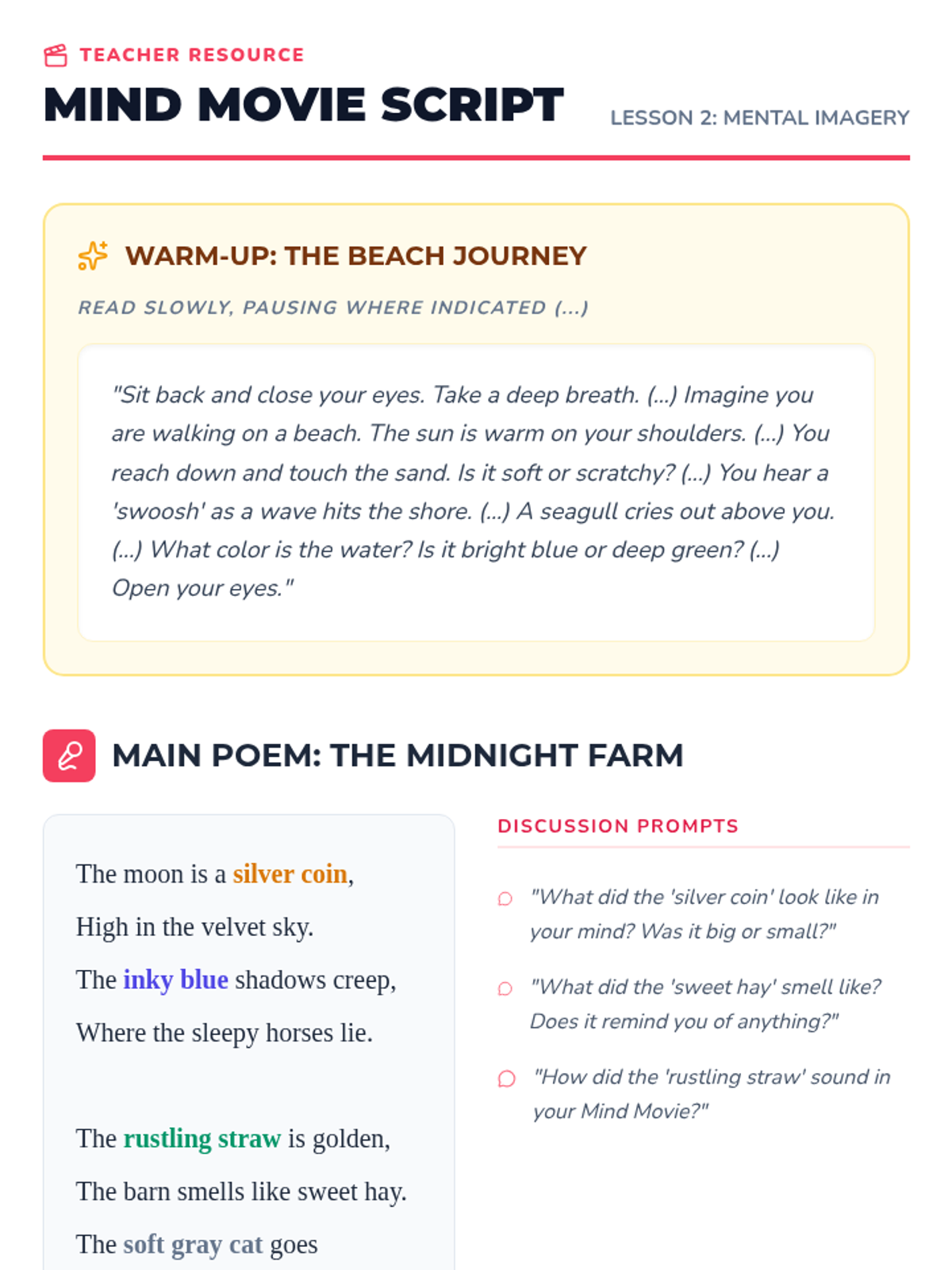
The teacher reads a descriptive poem without showing illustrations. Students are asked to close their eyes and make a 'movie in their mind,' then describe what they saw to a partner. This builds the skill of mental imagery.
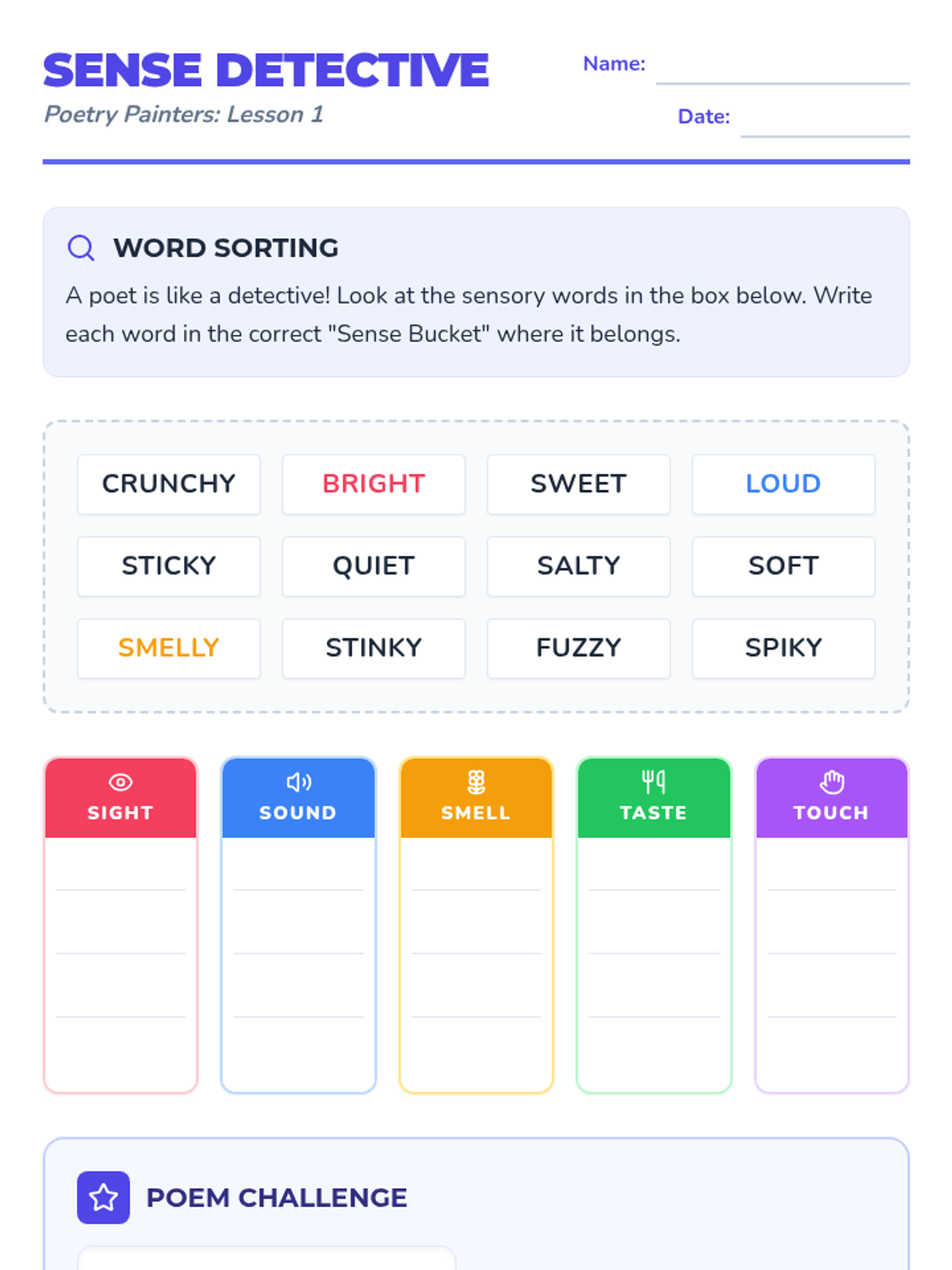
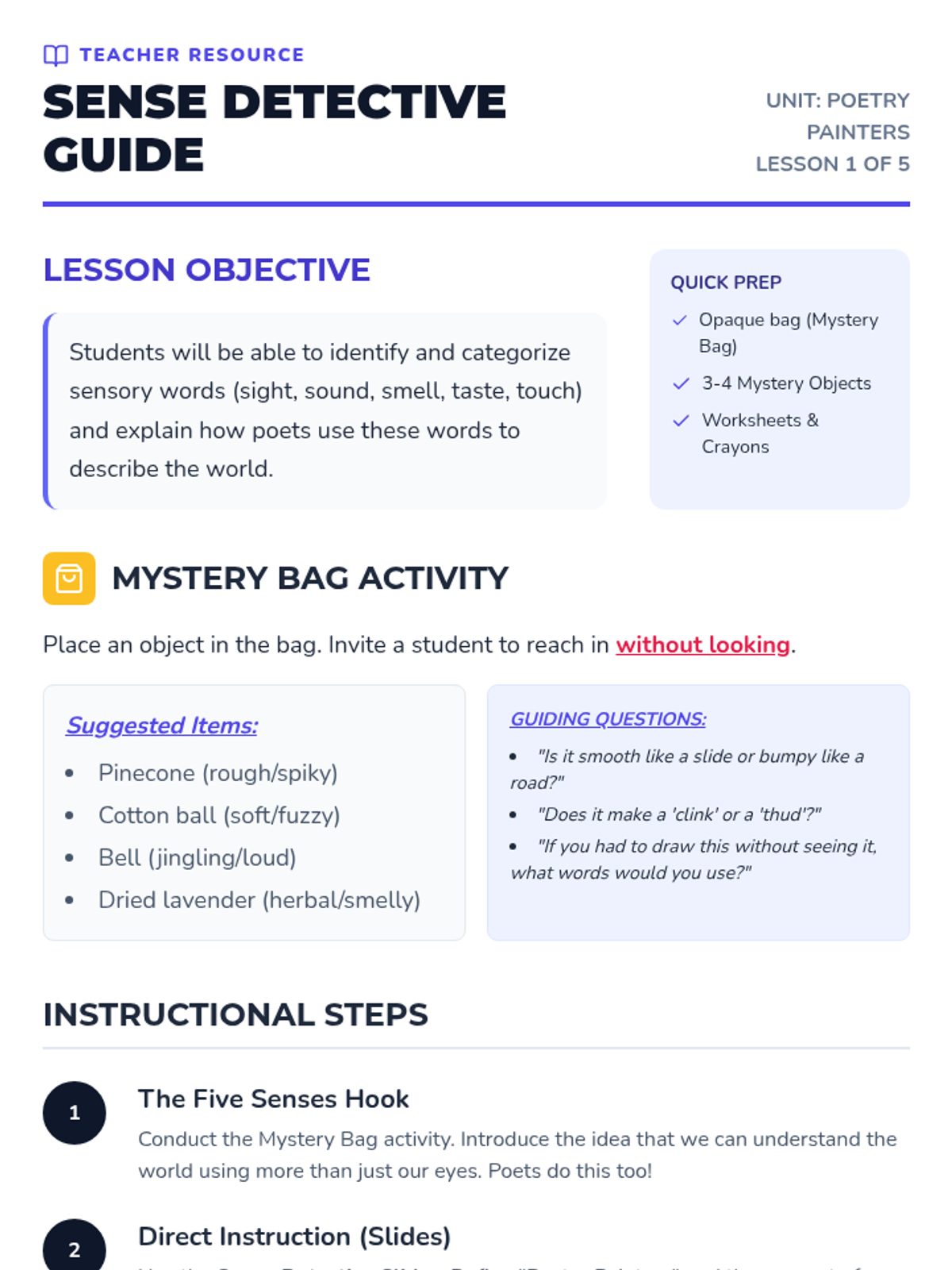
Students explore the five senses and learn how poets use sensory words to describe the world. They will sort descriptive words and identify sensory details in a simple poem.