Cultural identity, community development, and public policy through the lens of creative practice. Addresses arts advocacy strategies and integrates interdisciplinary connections across social and professional sectors.
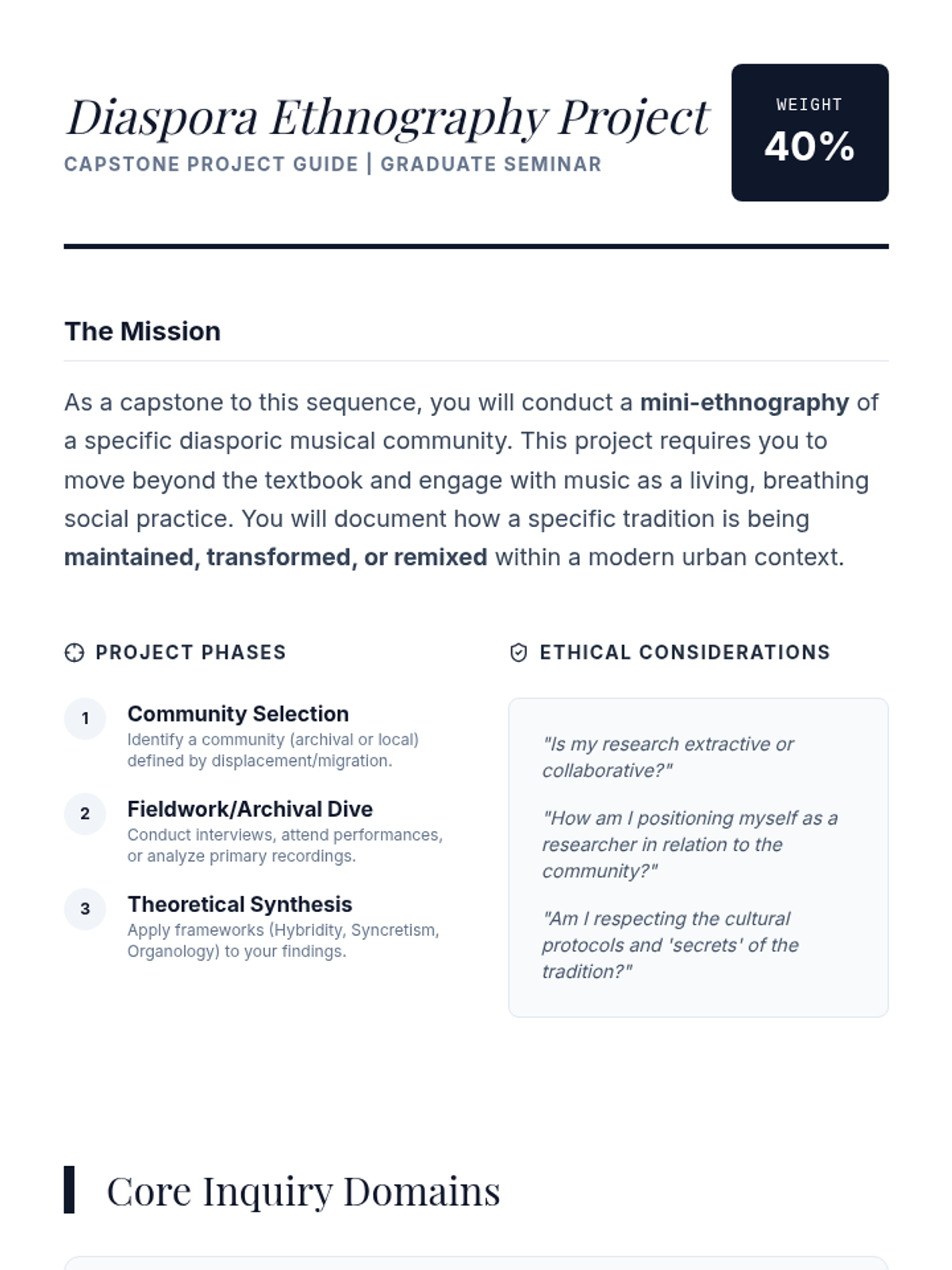
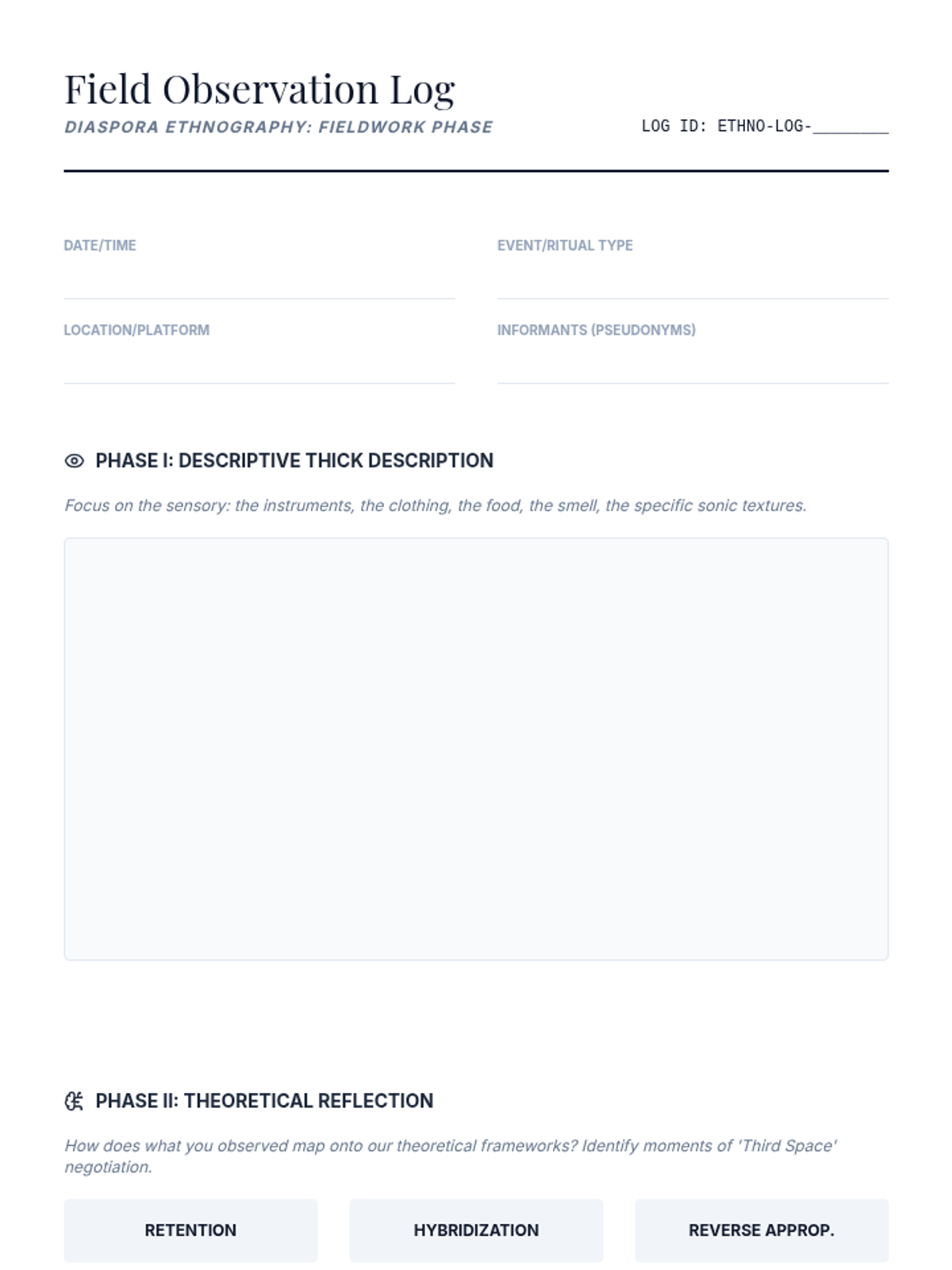
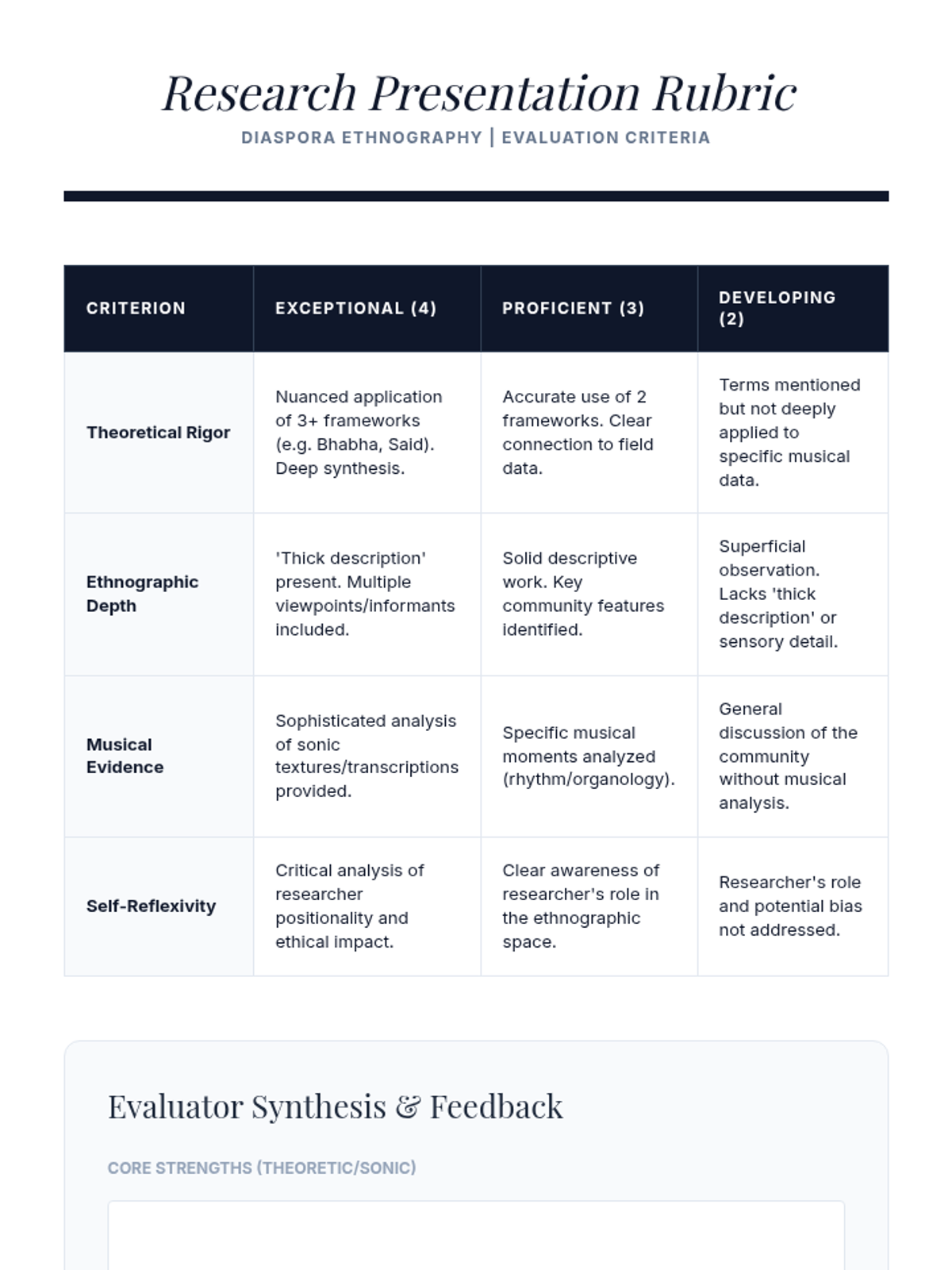
A project-based lesson where students design and conduct a mini-ethnography of a diasporic musical community, synthesizing theoretical frameworks into a research presentation.
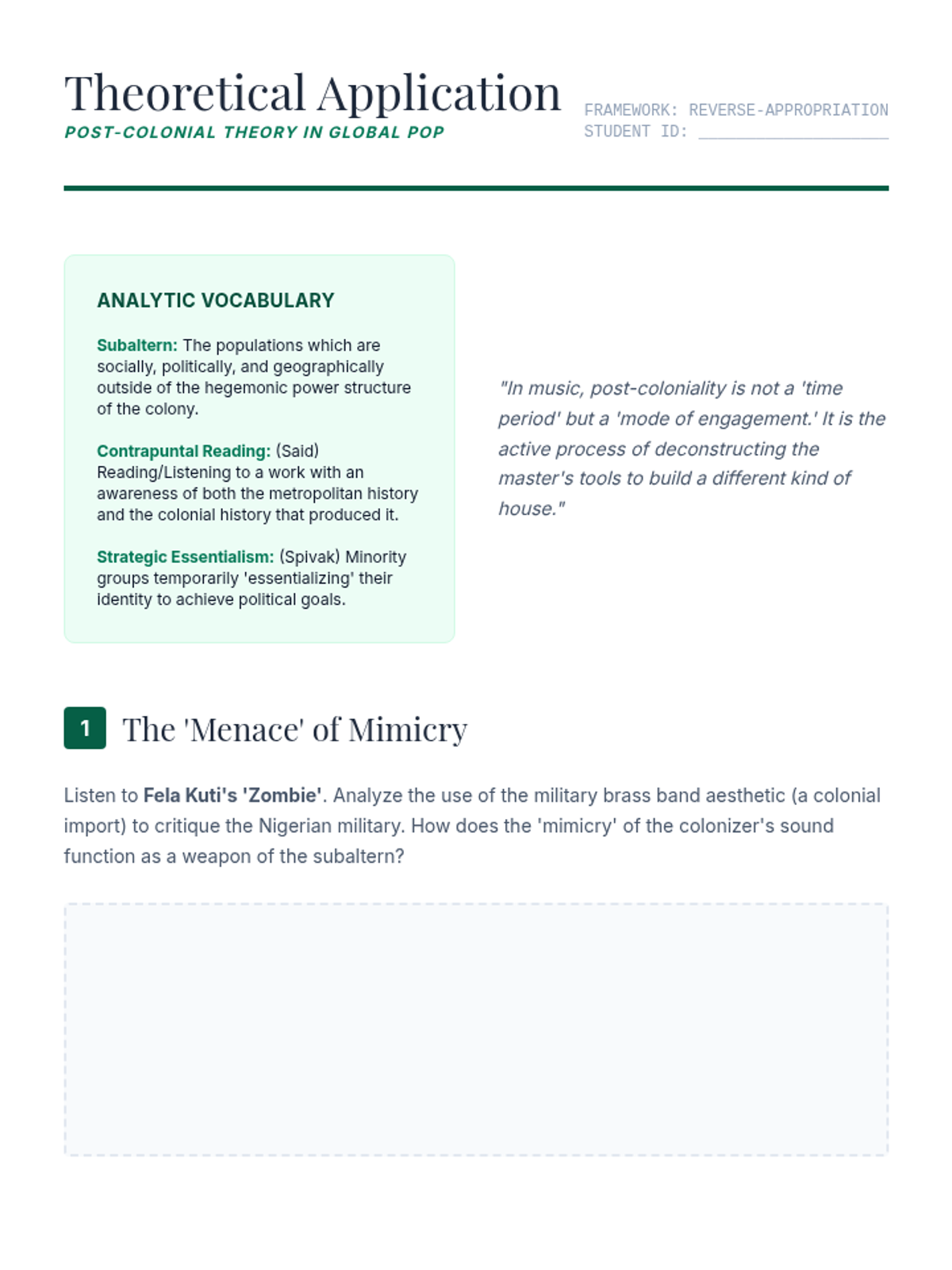
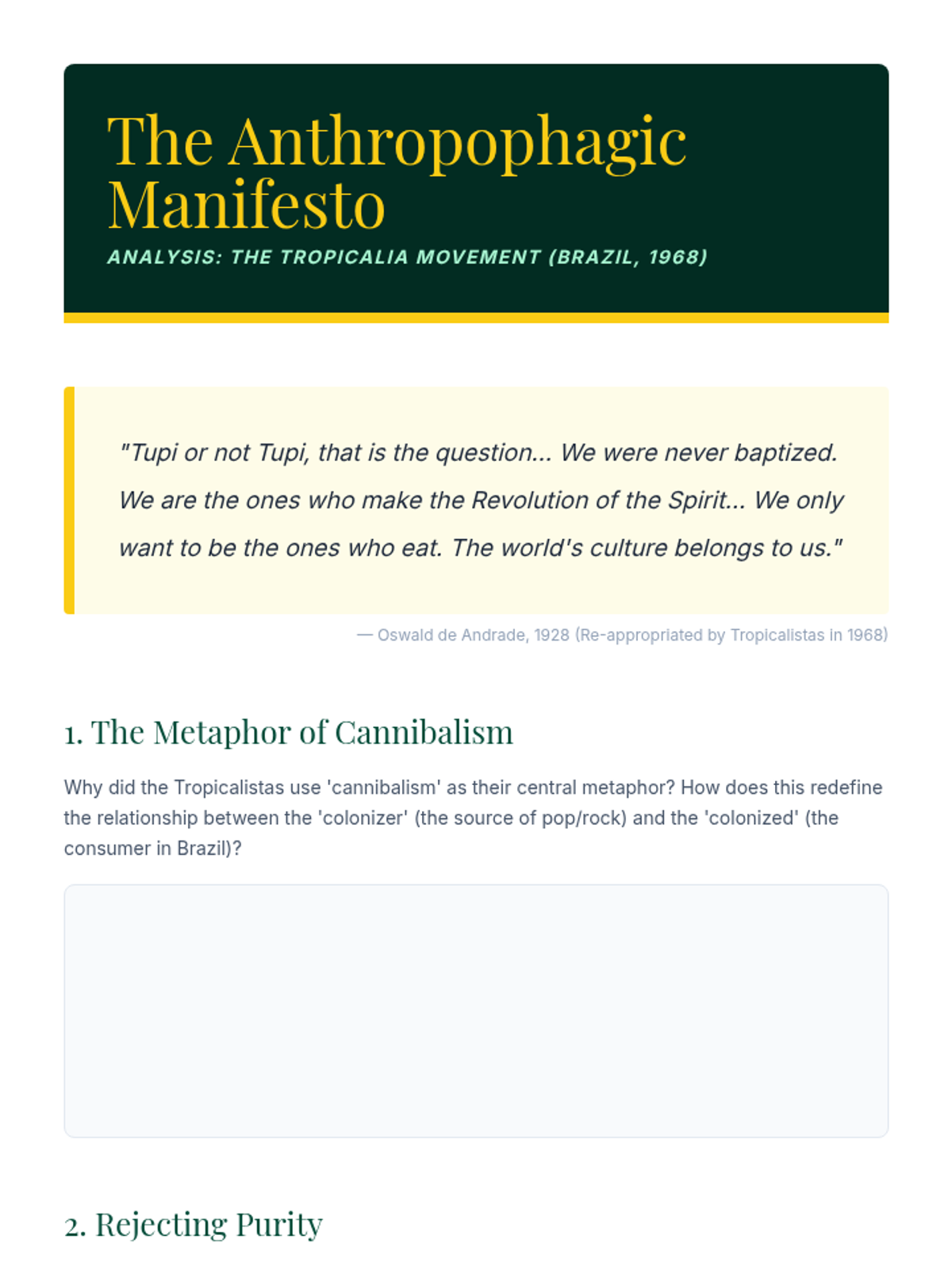
Applying post-colonial theory to late 20th-century global pop, exploring how formerly colonized nations reclaimed and remixed colonial instruments to assert cultural identity.
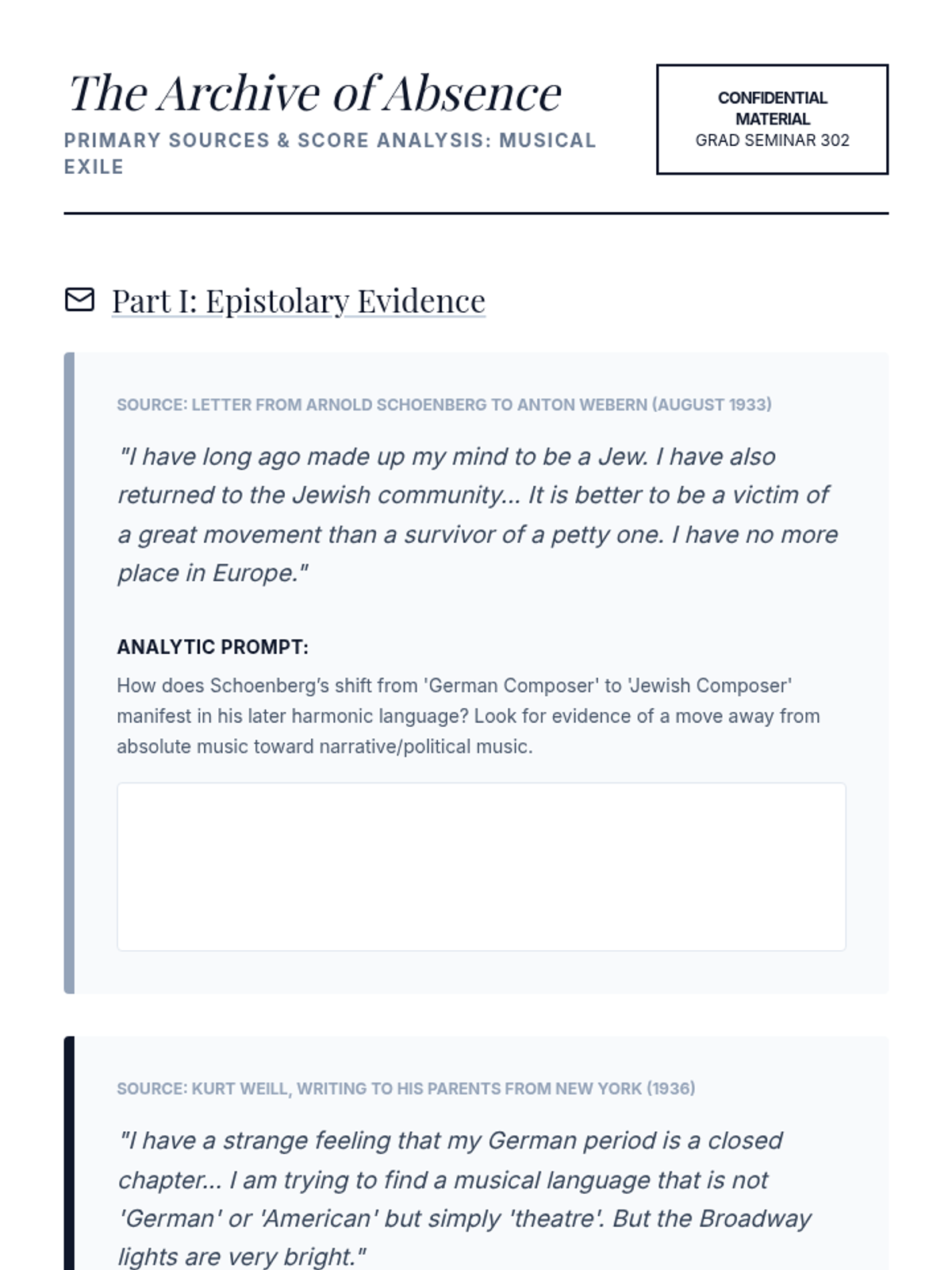
Investigating the impact of political displacement on 20th-century composers, examining how exile and the search for 'homeland' manifest in musical style and creative output.
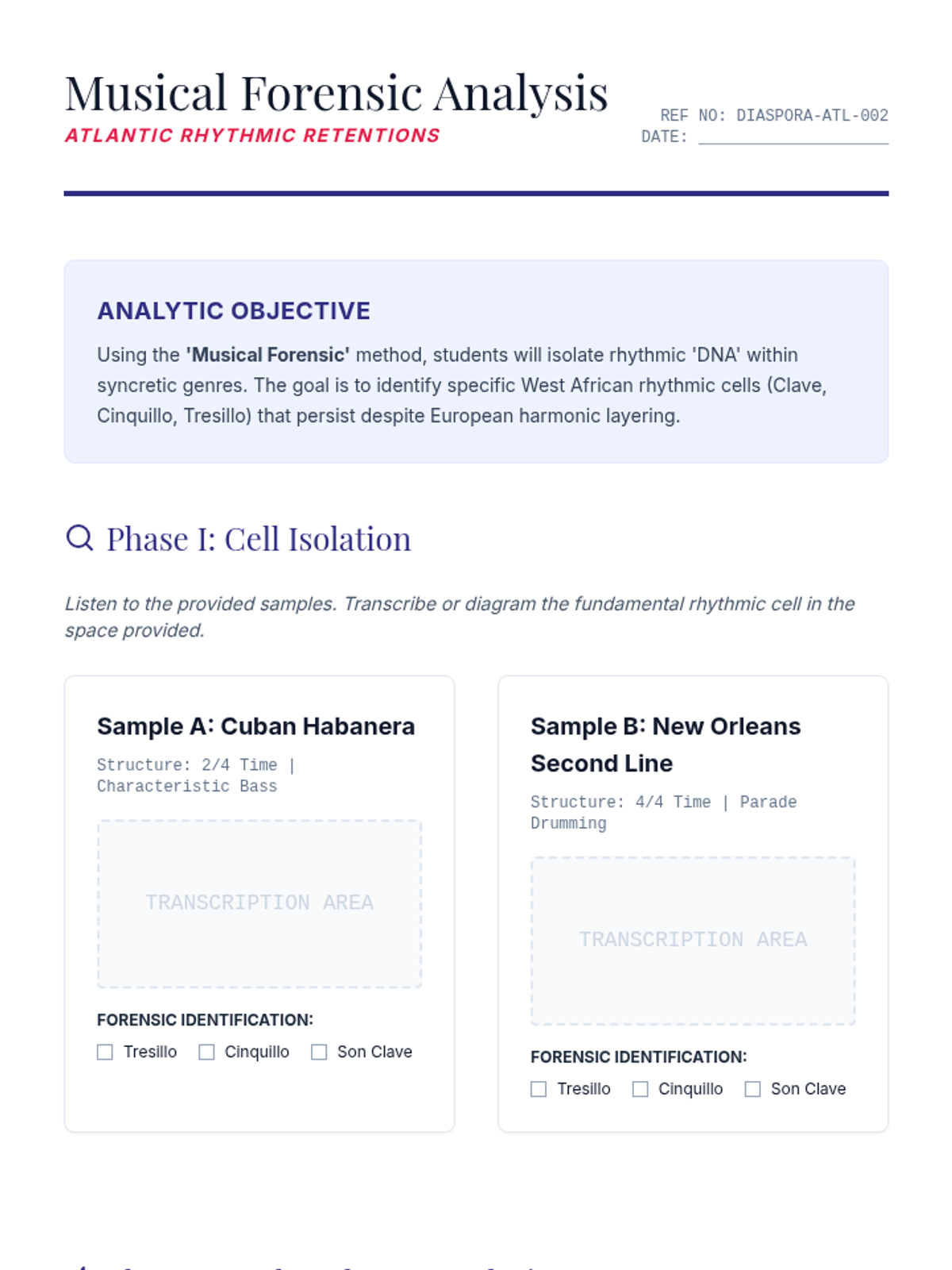
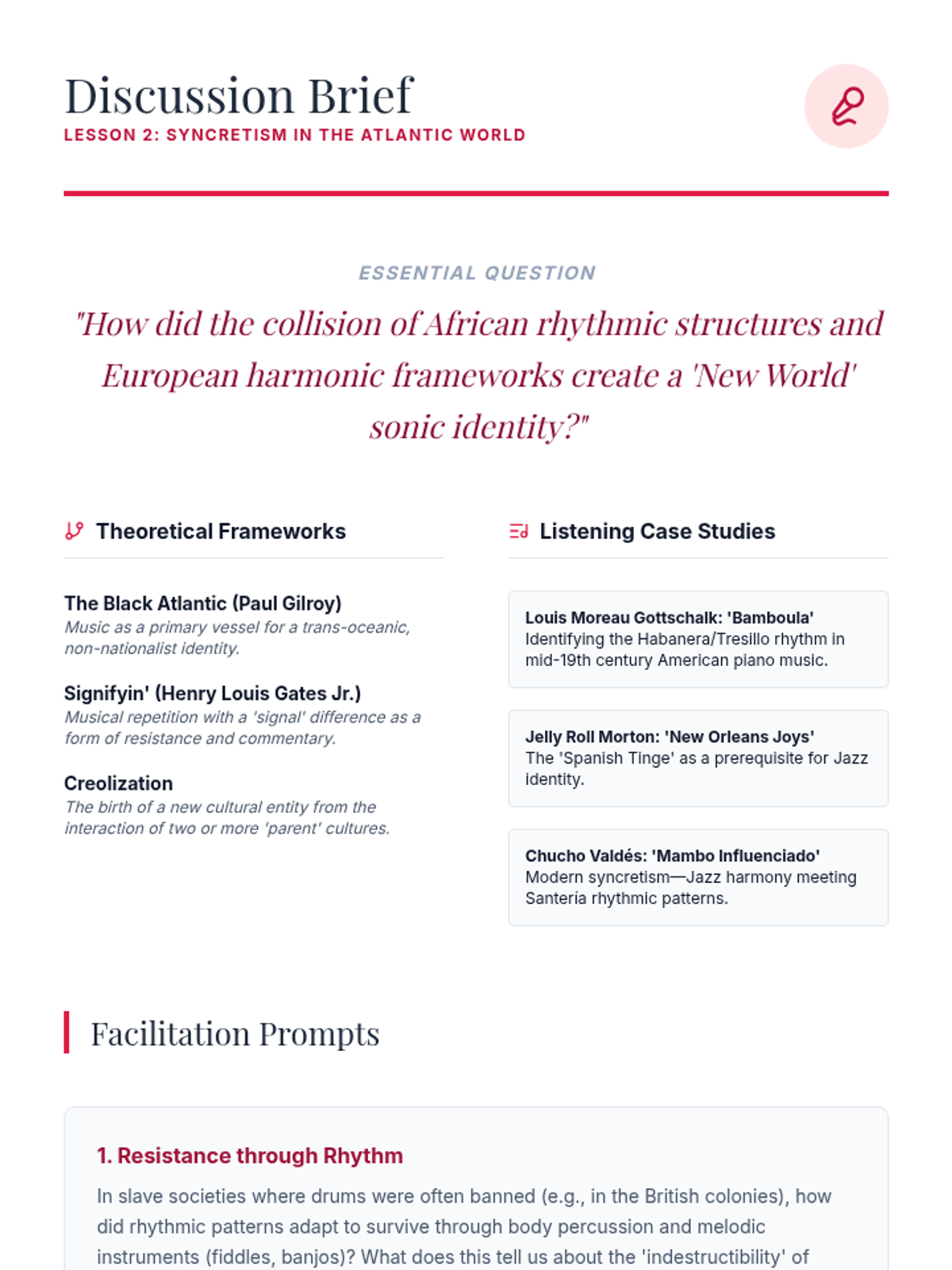
An analysis of the collision between African rhythmic structures and European harmonic traditions in the Americas, focusing on the genesis of syncretic genres like Jazz and Habanera.
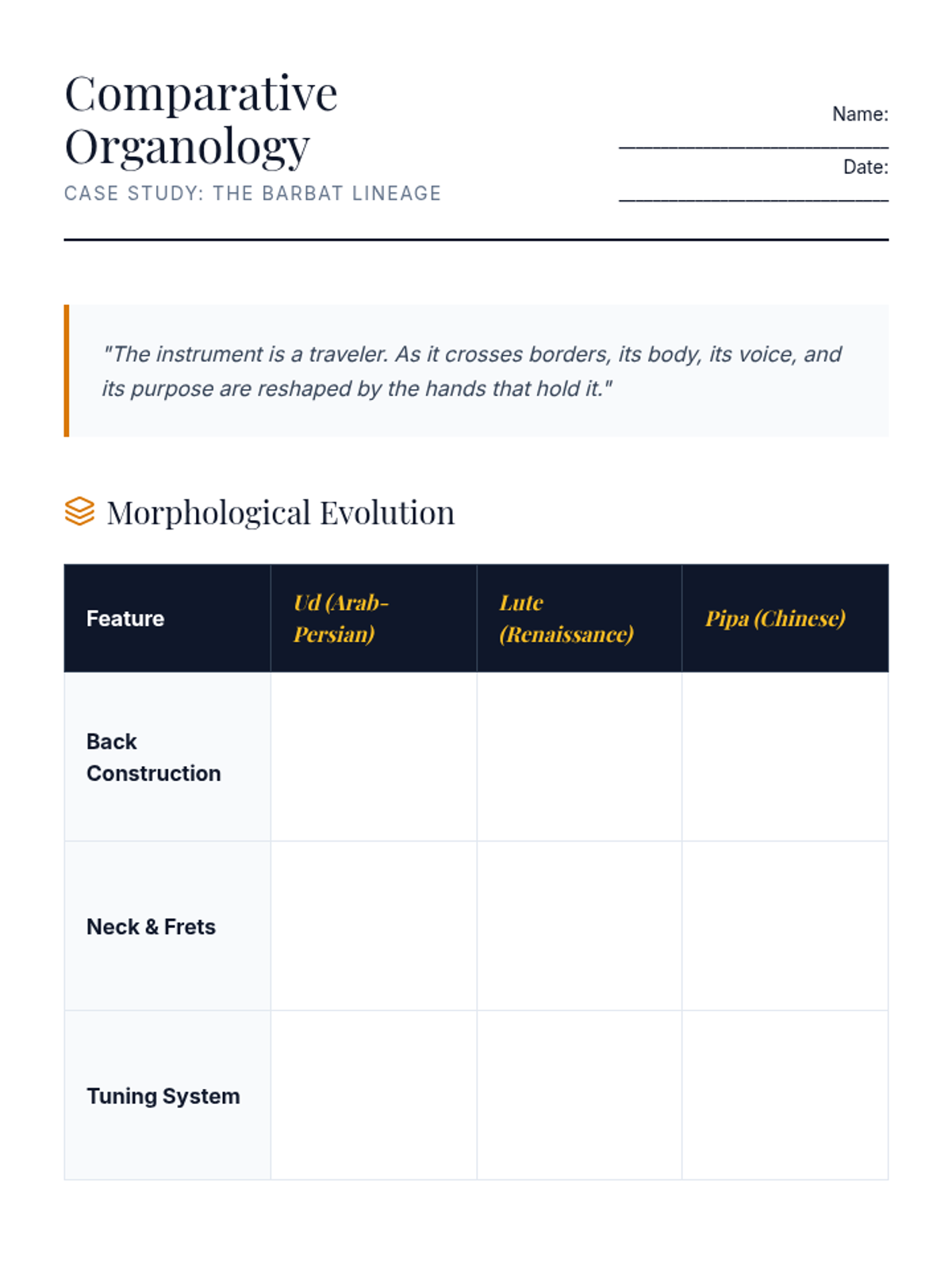
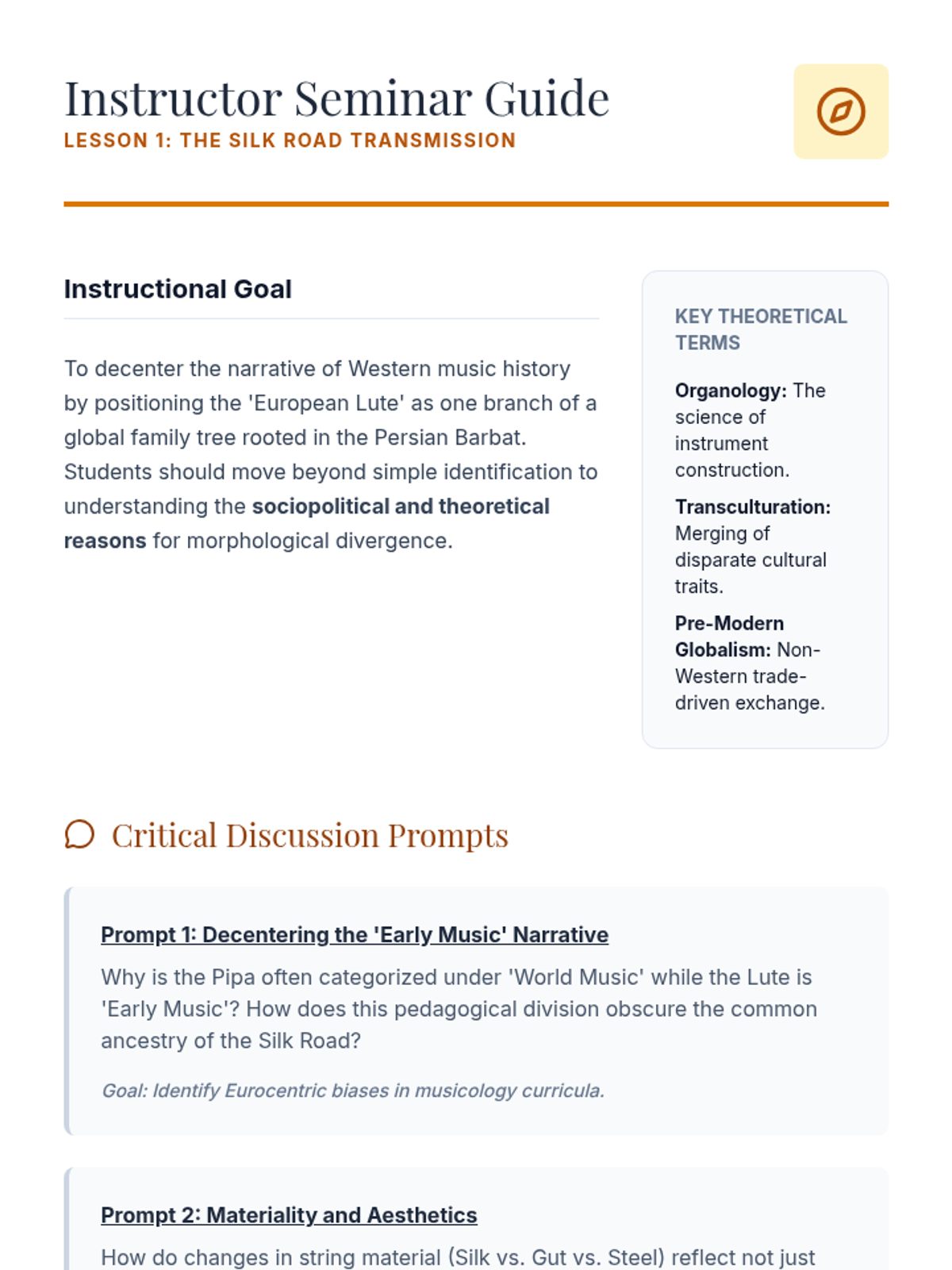
Students trace the organological evolution of string instruments along the Silk Road, exploring how pre-modern globalization facilitated trans-cultural musical flow between East and West.
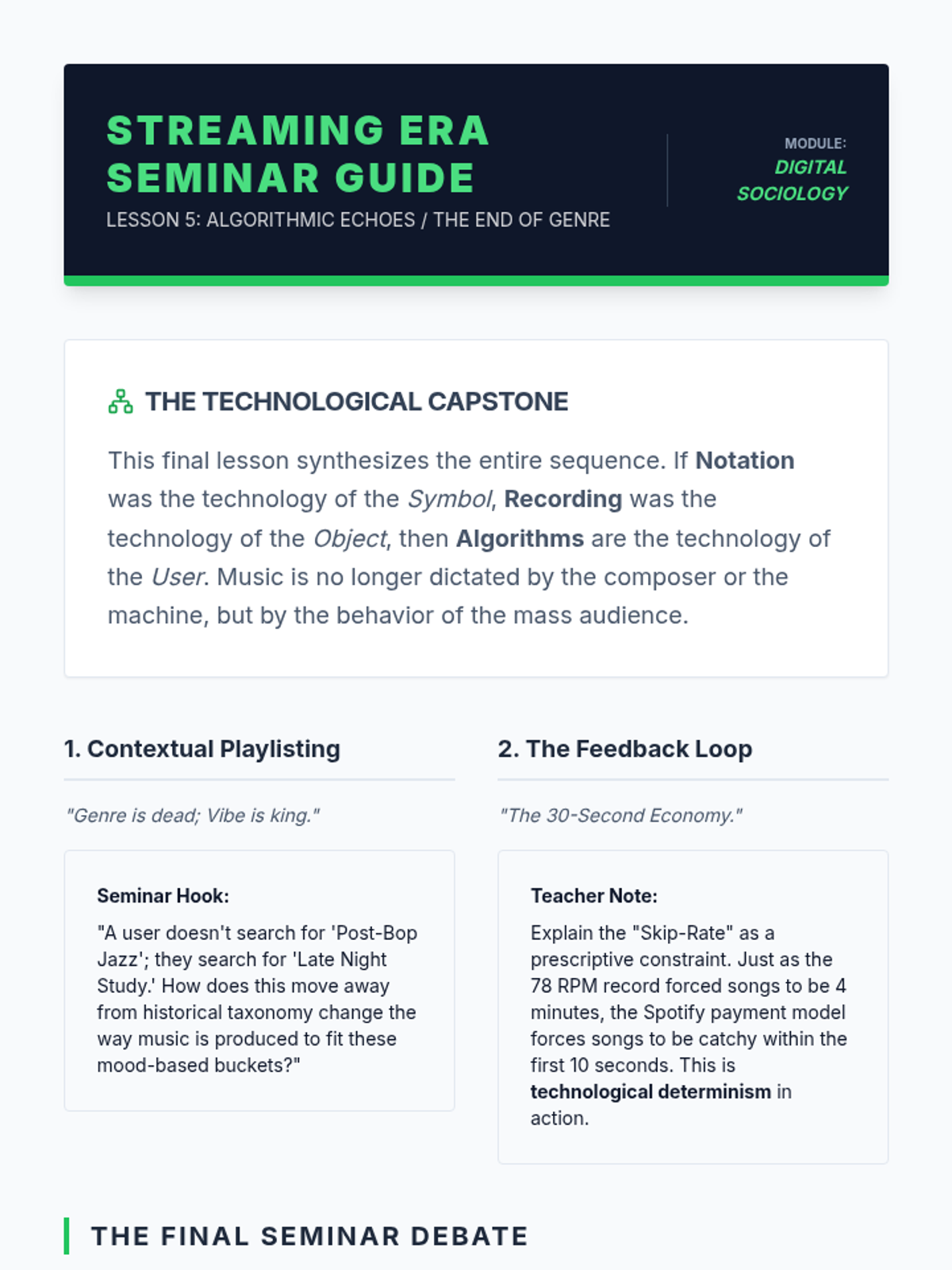
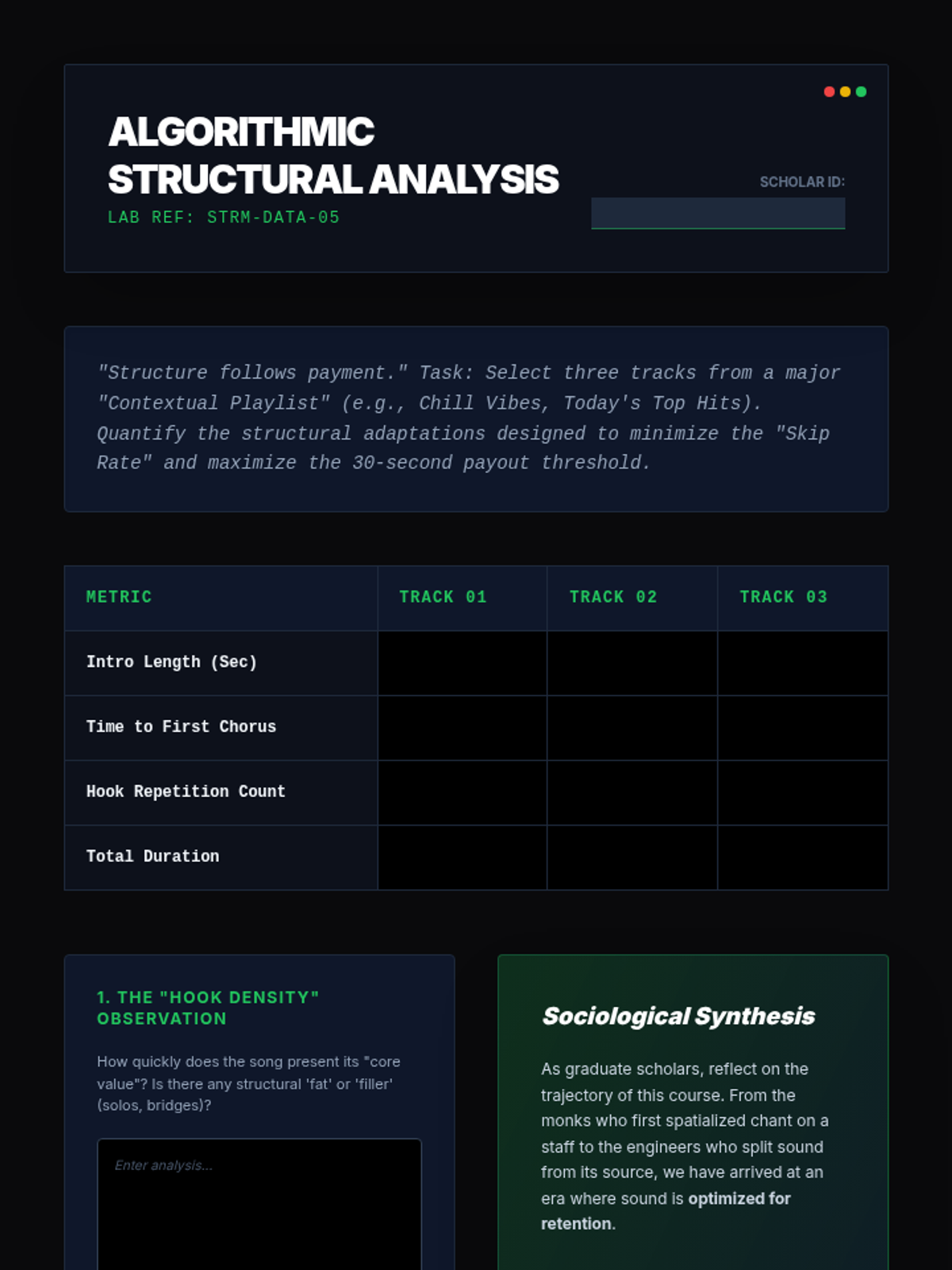
Concludes with an analysis of how streaming algorithms and metadata influence modern song structure and the sociological phenomenon of the 'end of genre.'
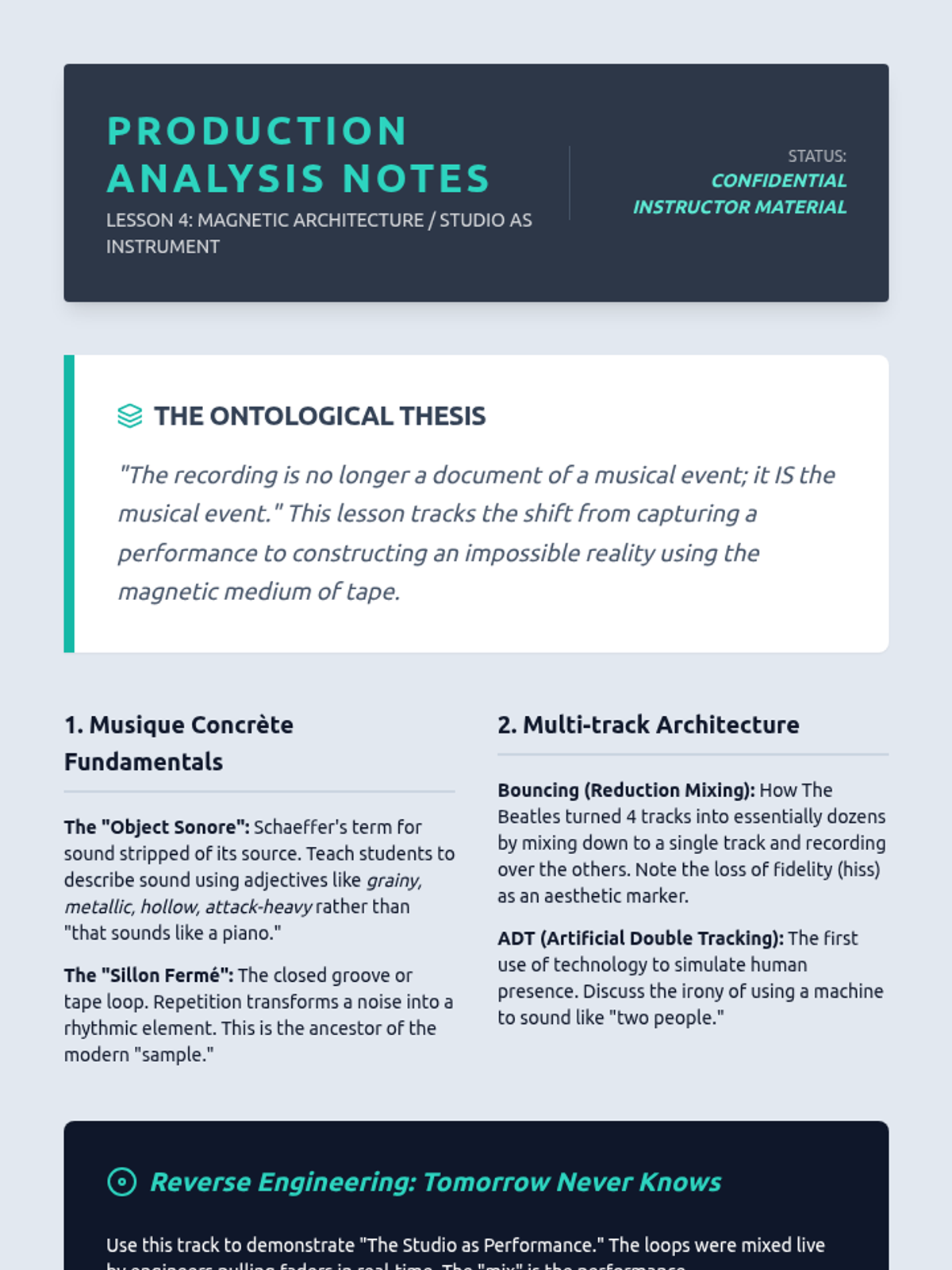
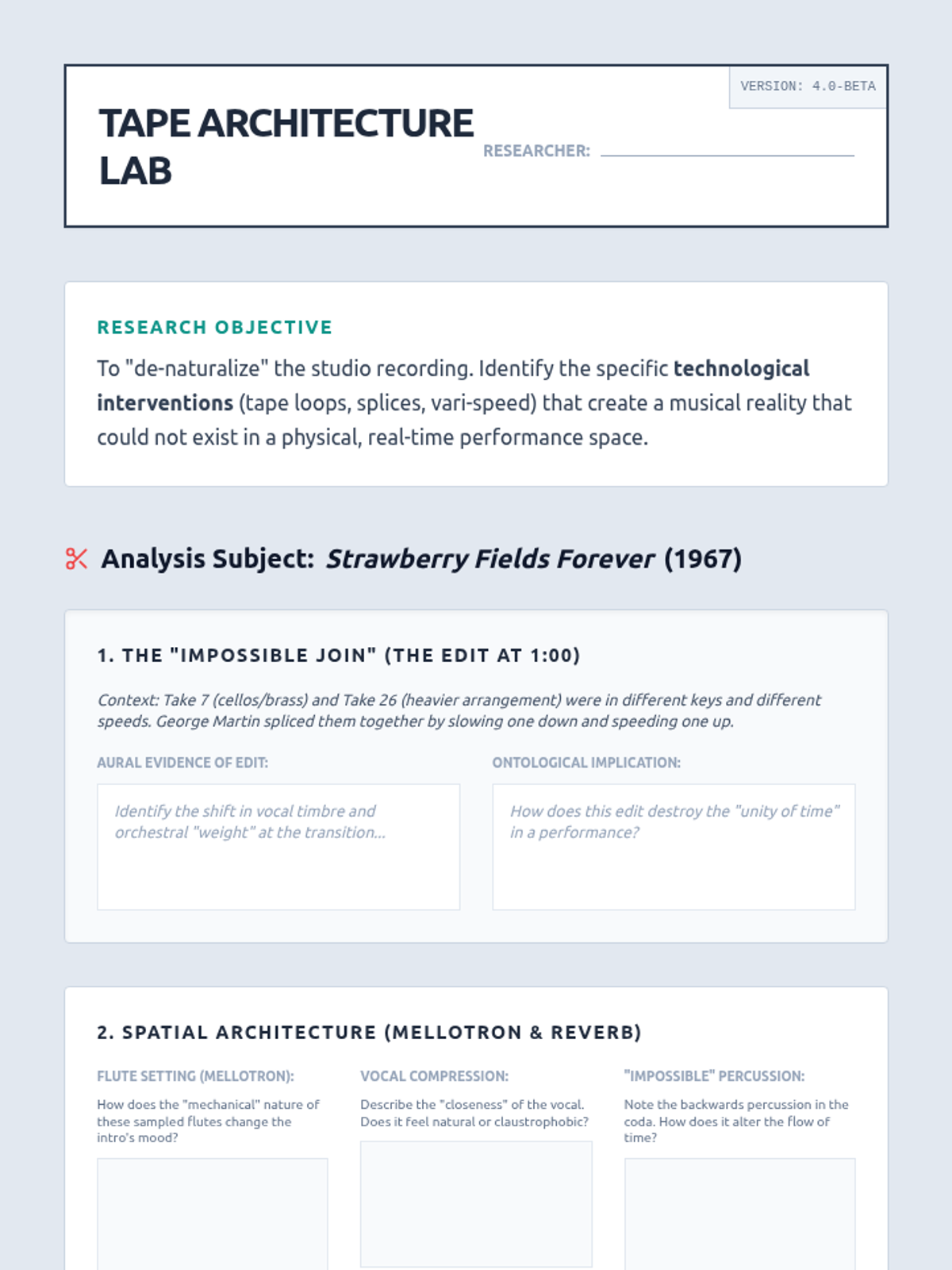
Explores the recording studio as a primary compositional tool, moving from Musique Concrète to multi-track recording and the ontological shift from score to recording.
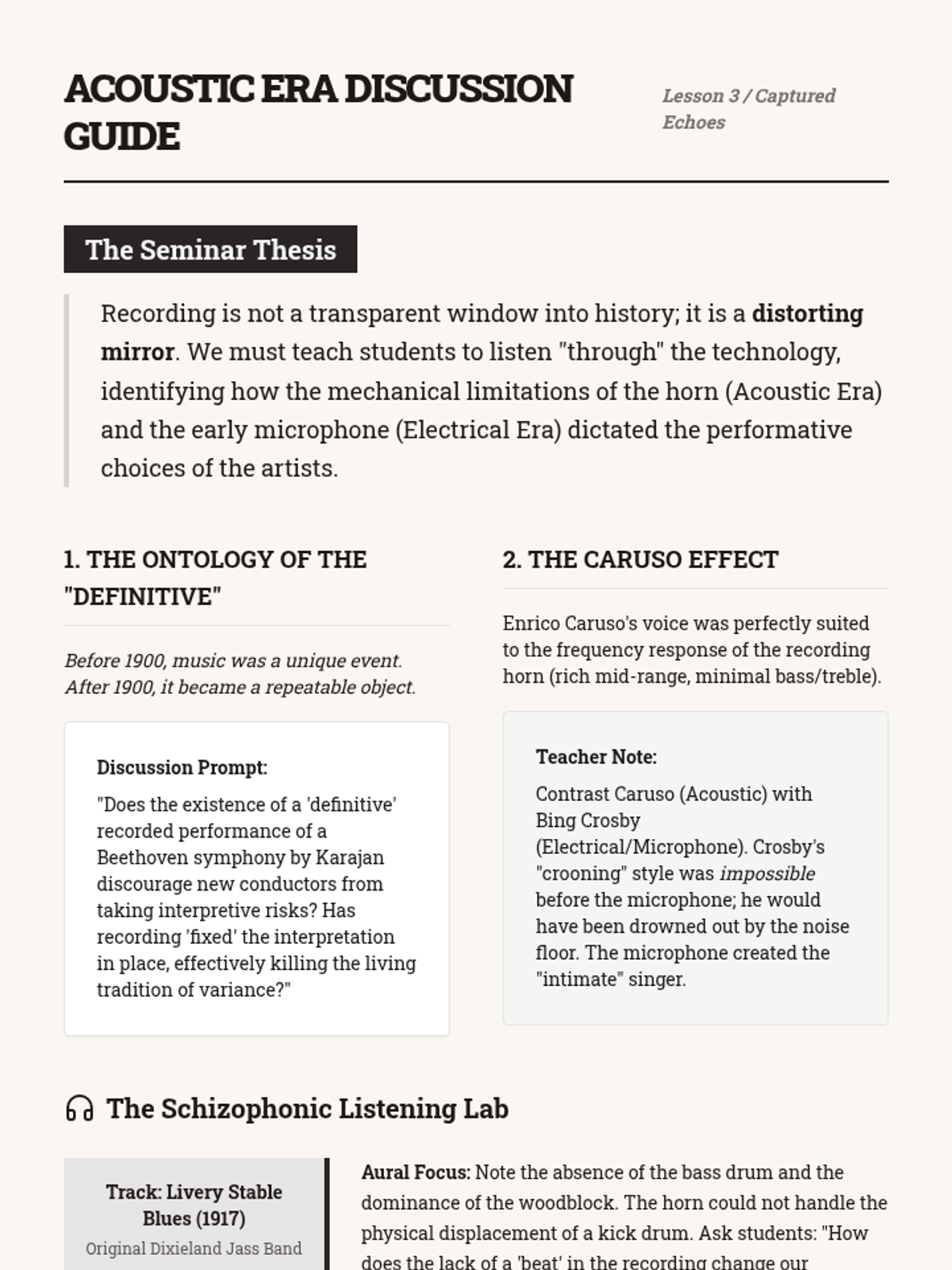
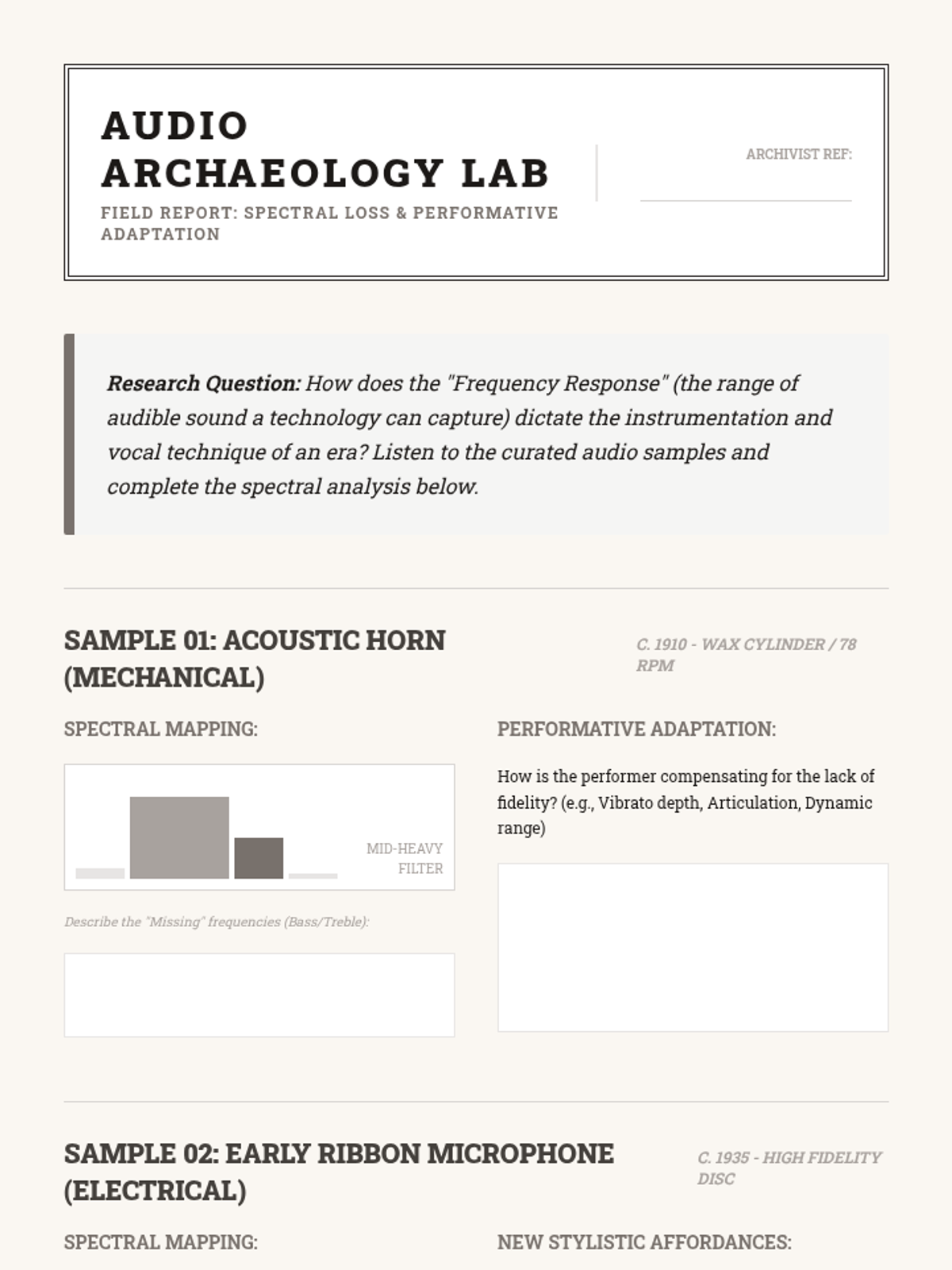
Investigates the separation of sound from its source (schizophonia) and how early recording limitations influenced performance practice and the concept of the 'definitive performance.'
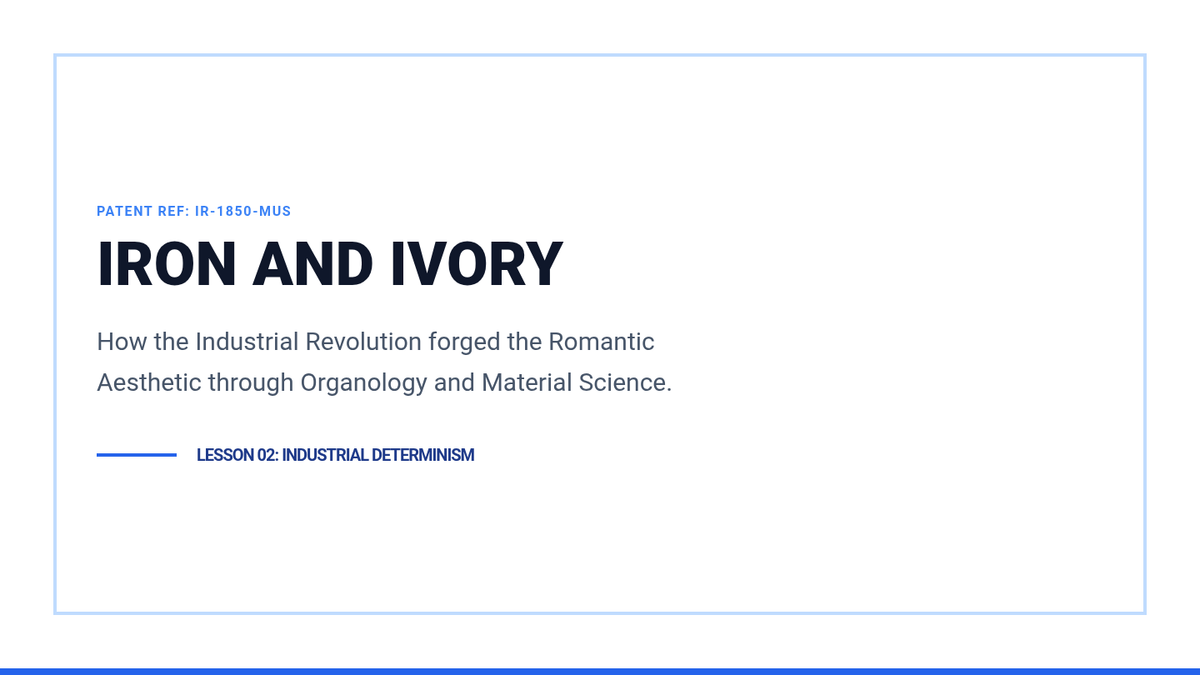
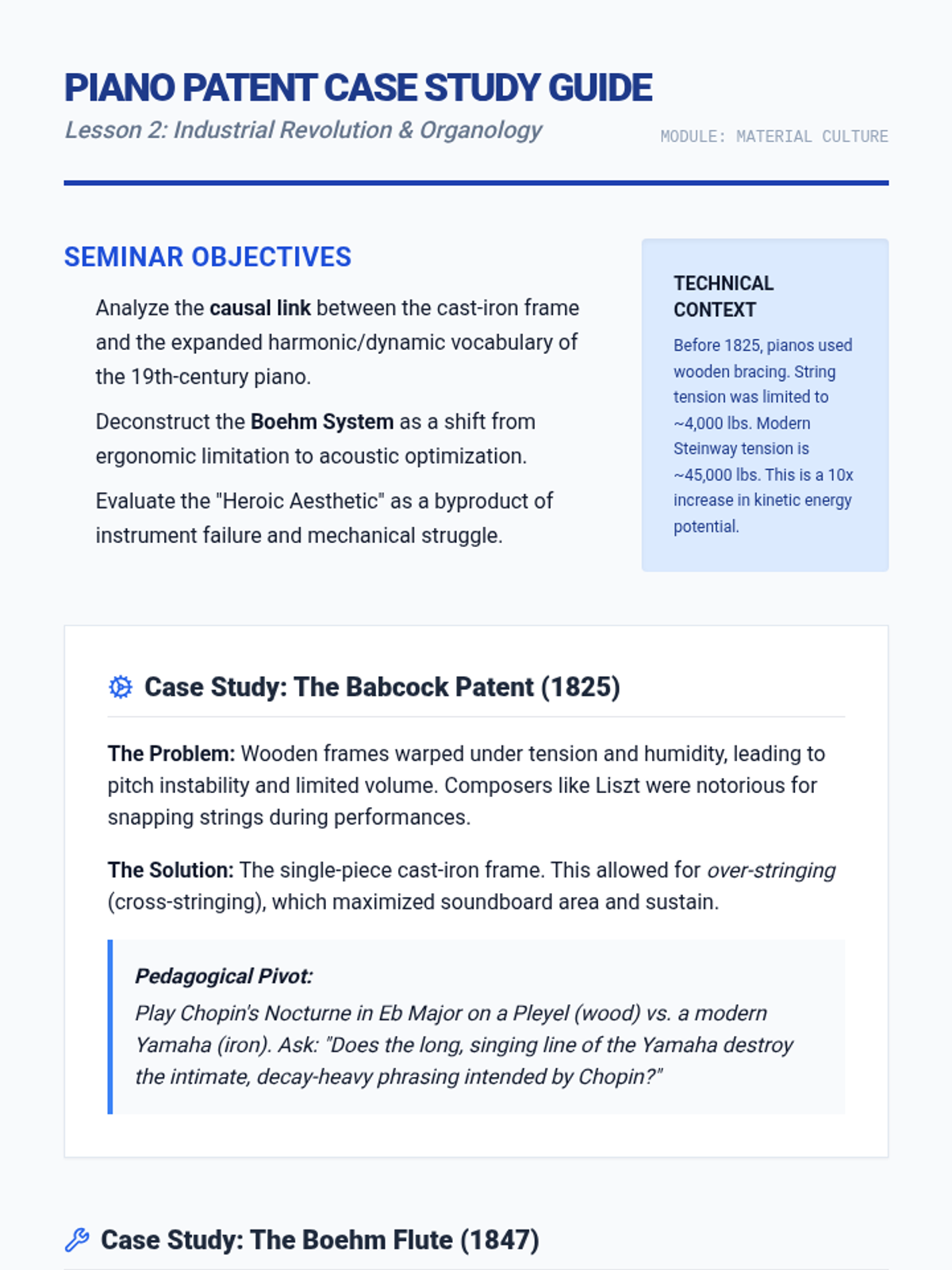
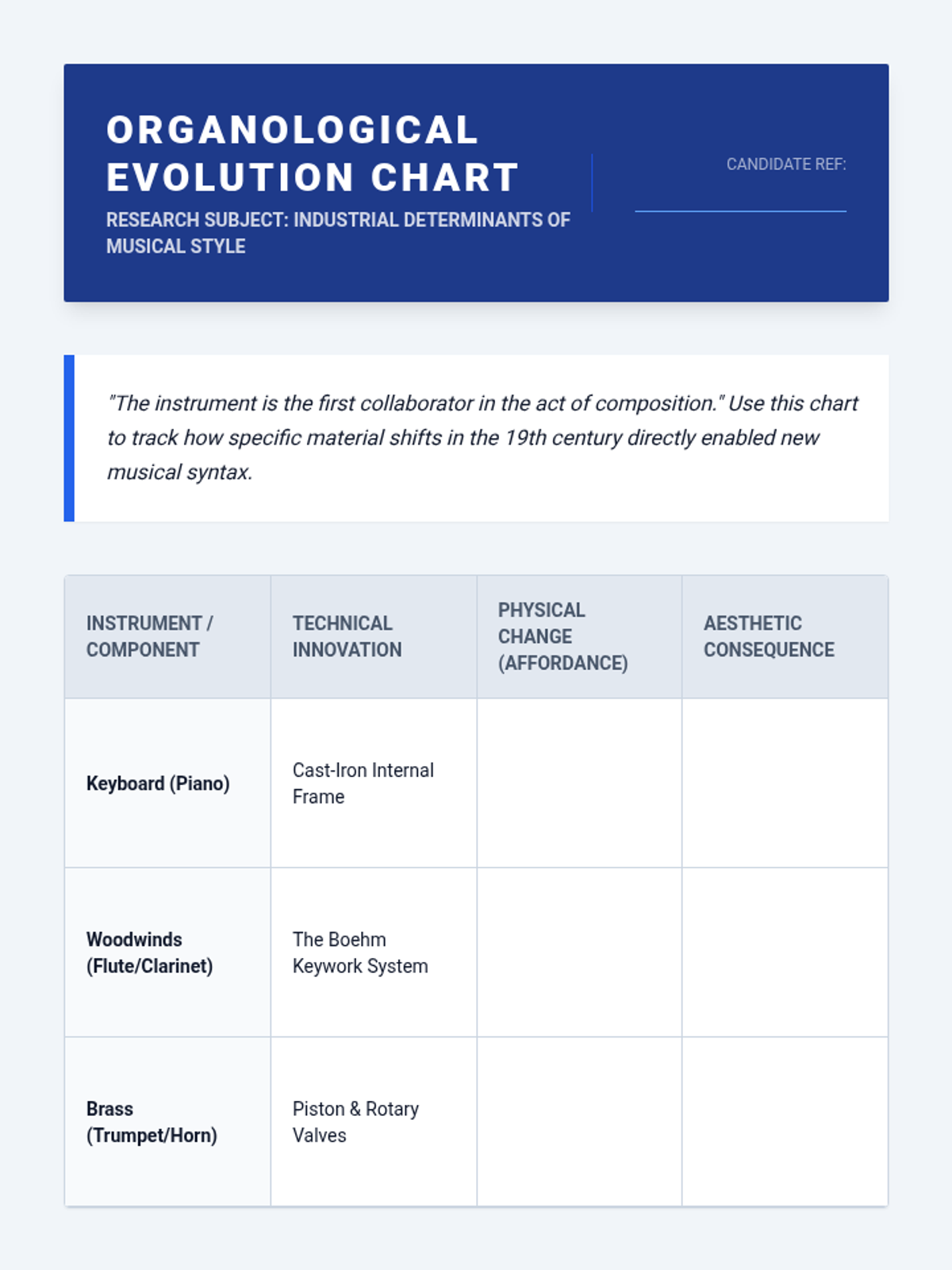
Examines how the physical evolution of instruments during the Industrial Revolution, such as the cast-iron piano frame, dictated Romantic era orchestration and the rise of the virtuoso.
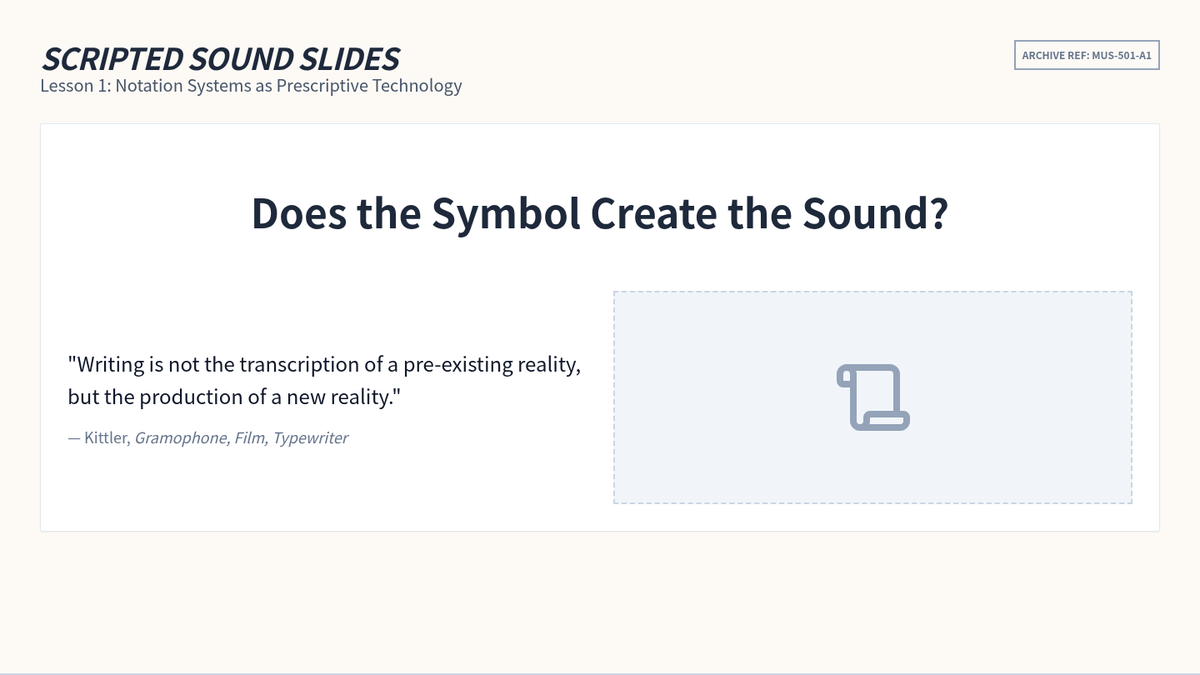
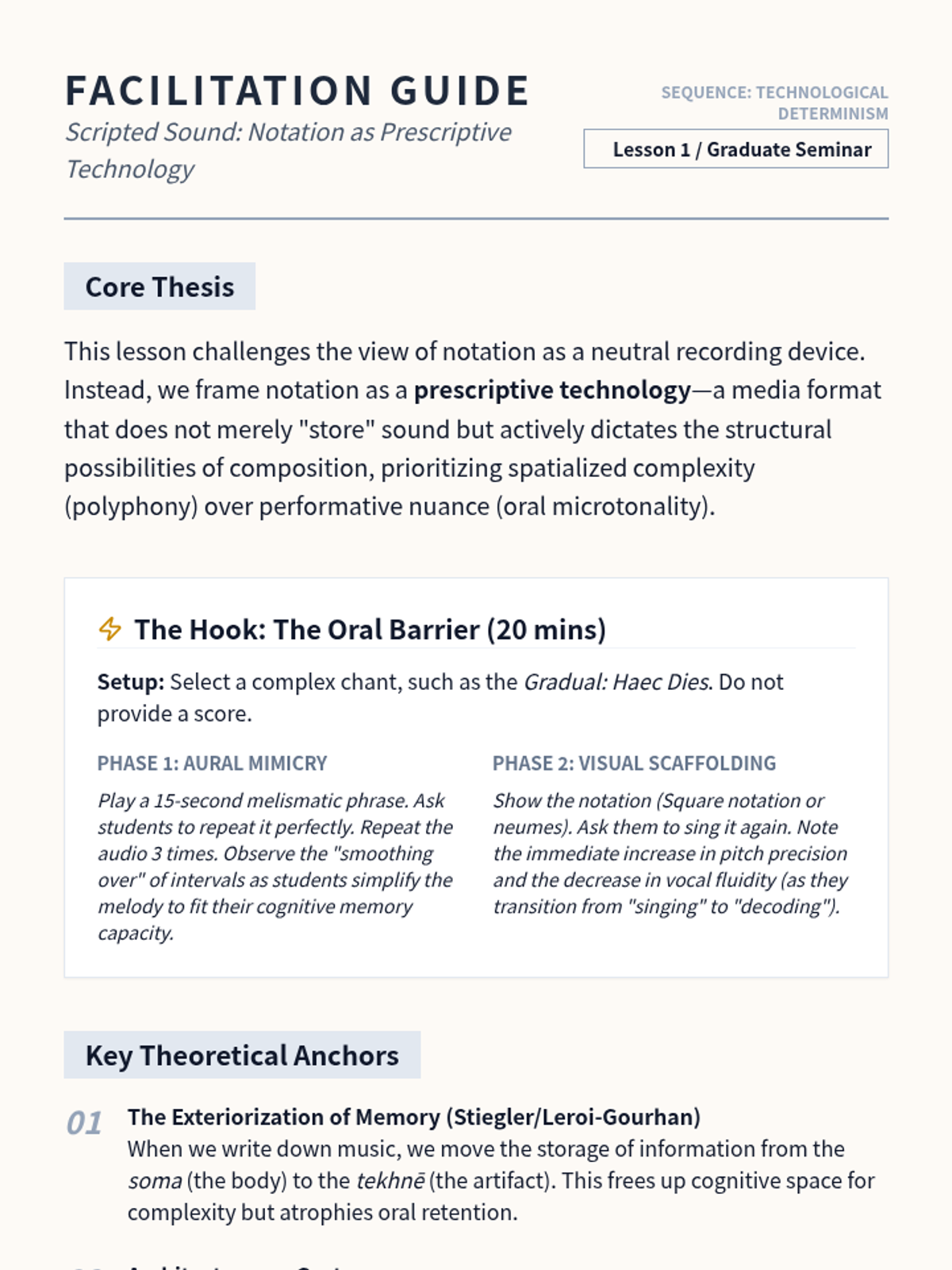
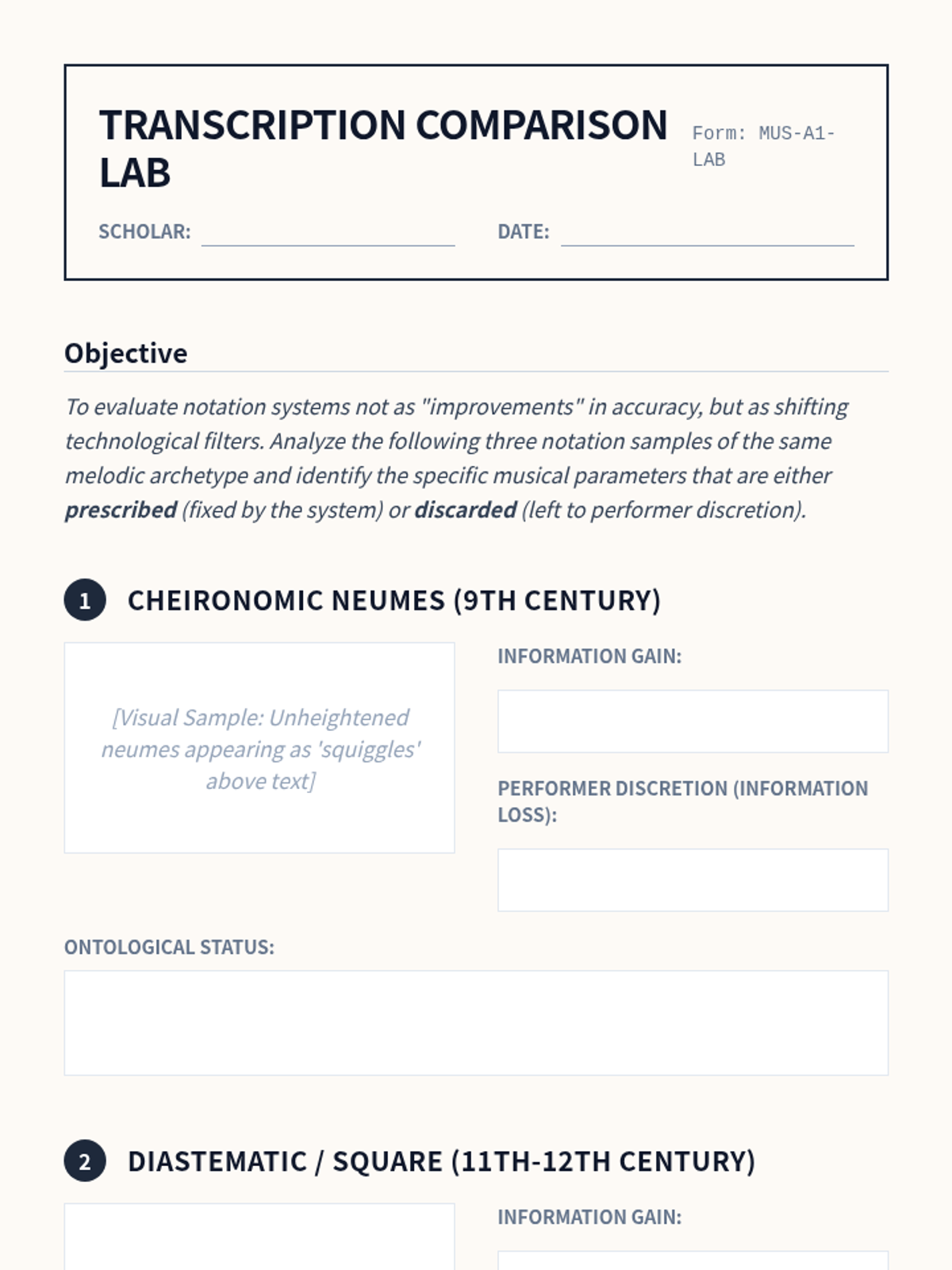
Analyzes the shift from oral tradition to fixed notation and how the technology of 'writing' music enabled new levels of polyphonic complexity while altering musical memory.
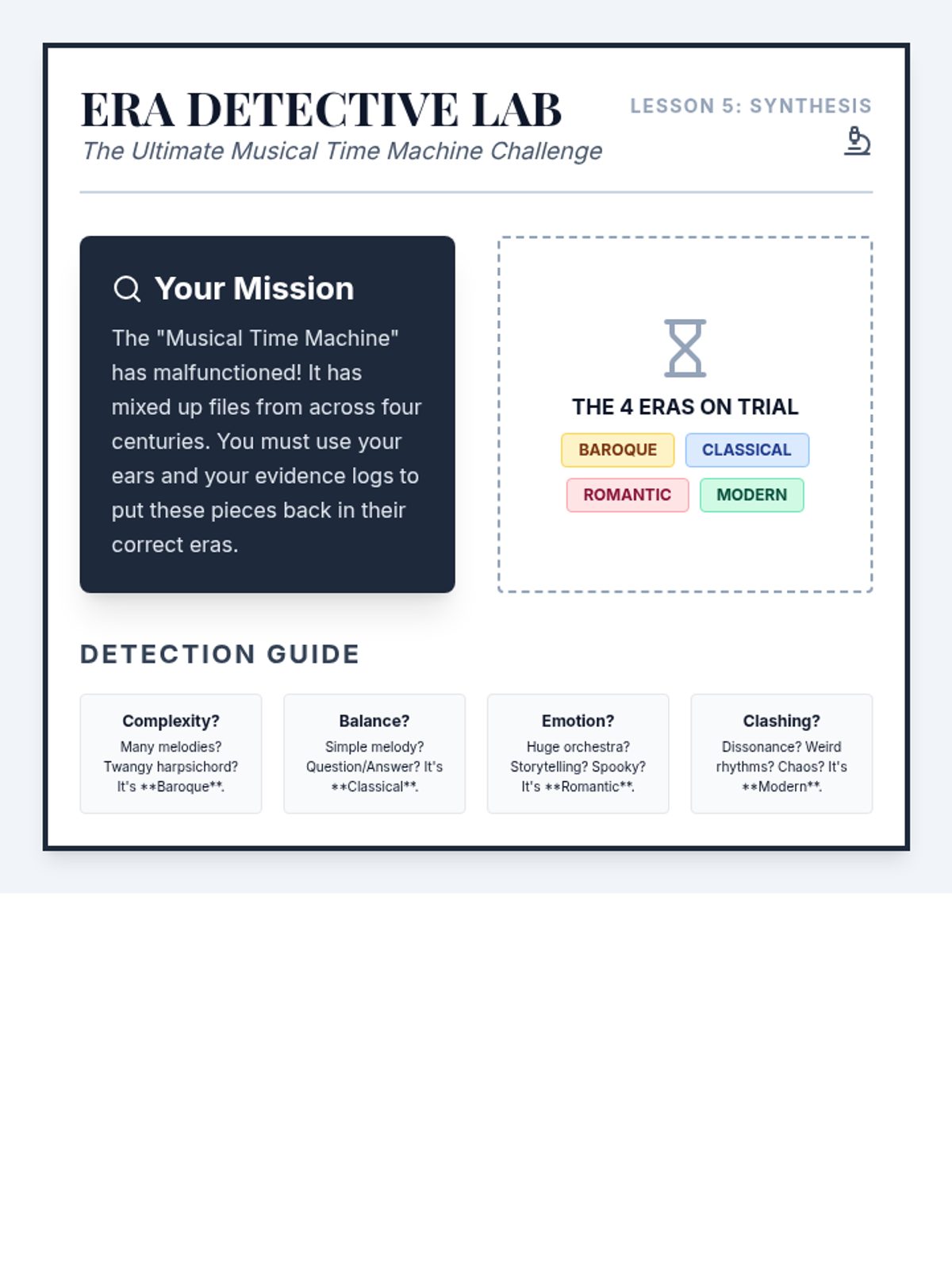
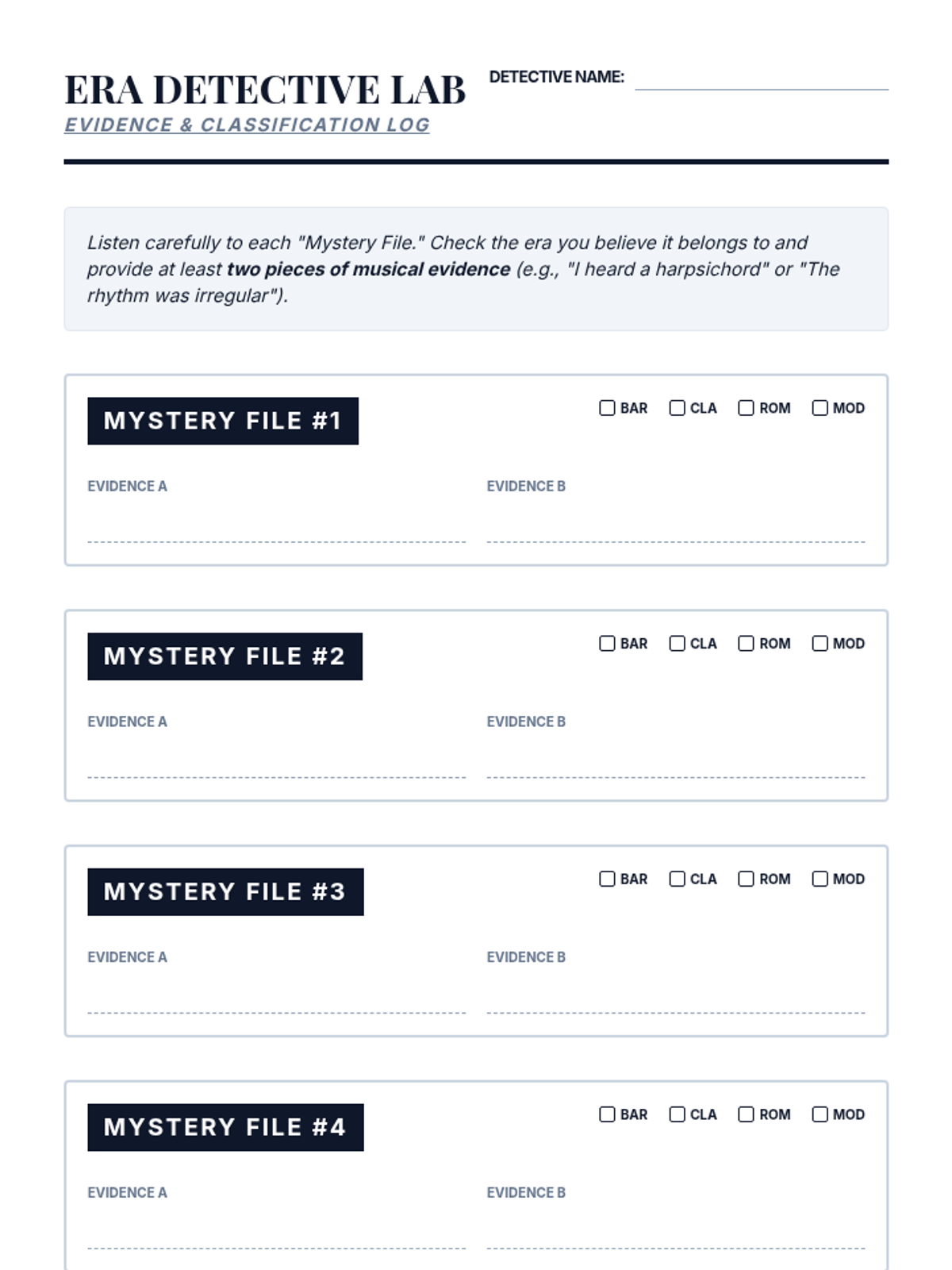
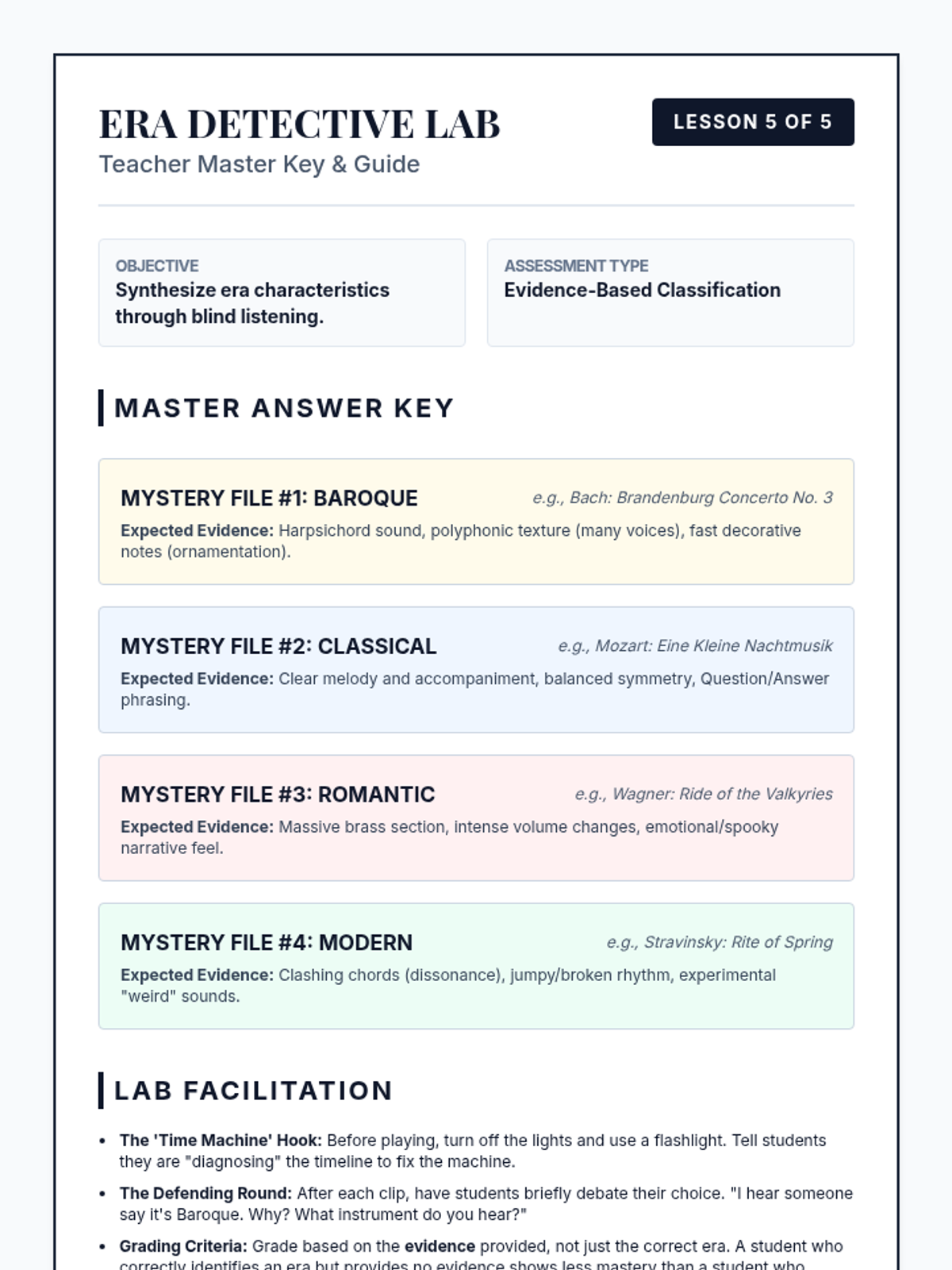
A synthesis lesson where students participate in a blind listening challenge to categorize excerpts into correct eras.
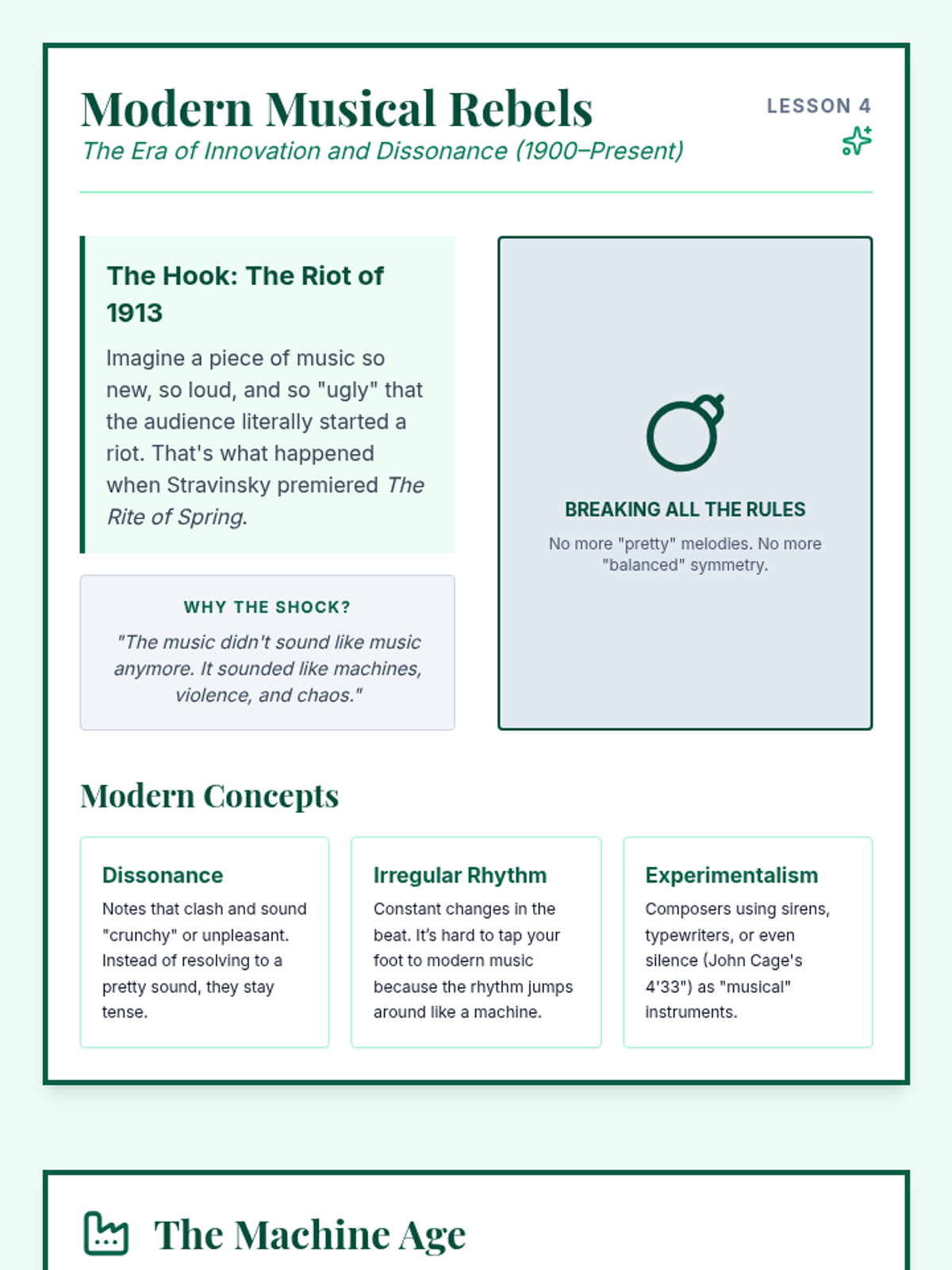
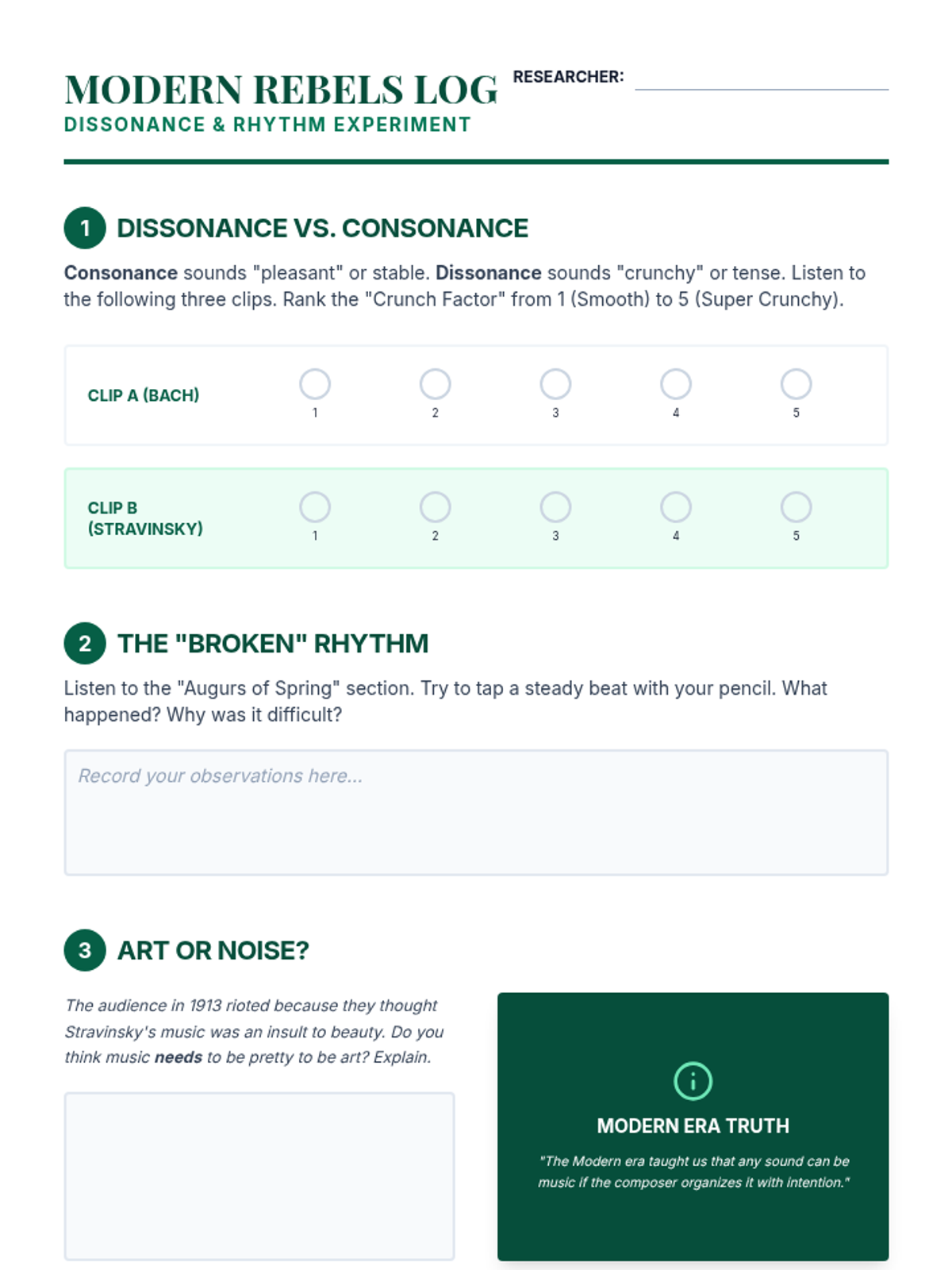
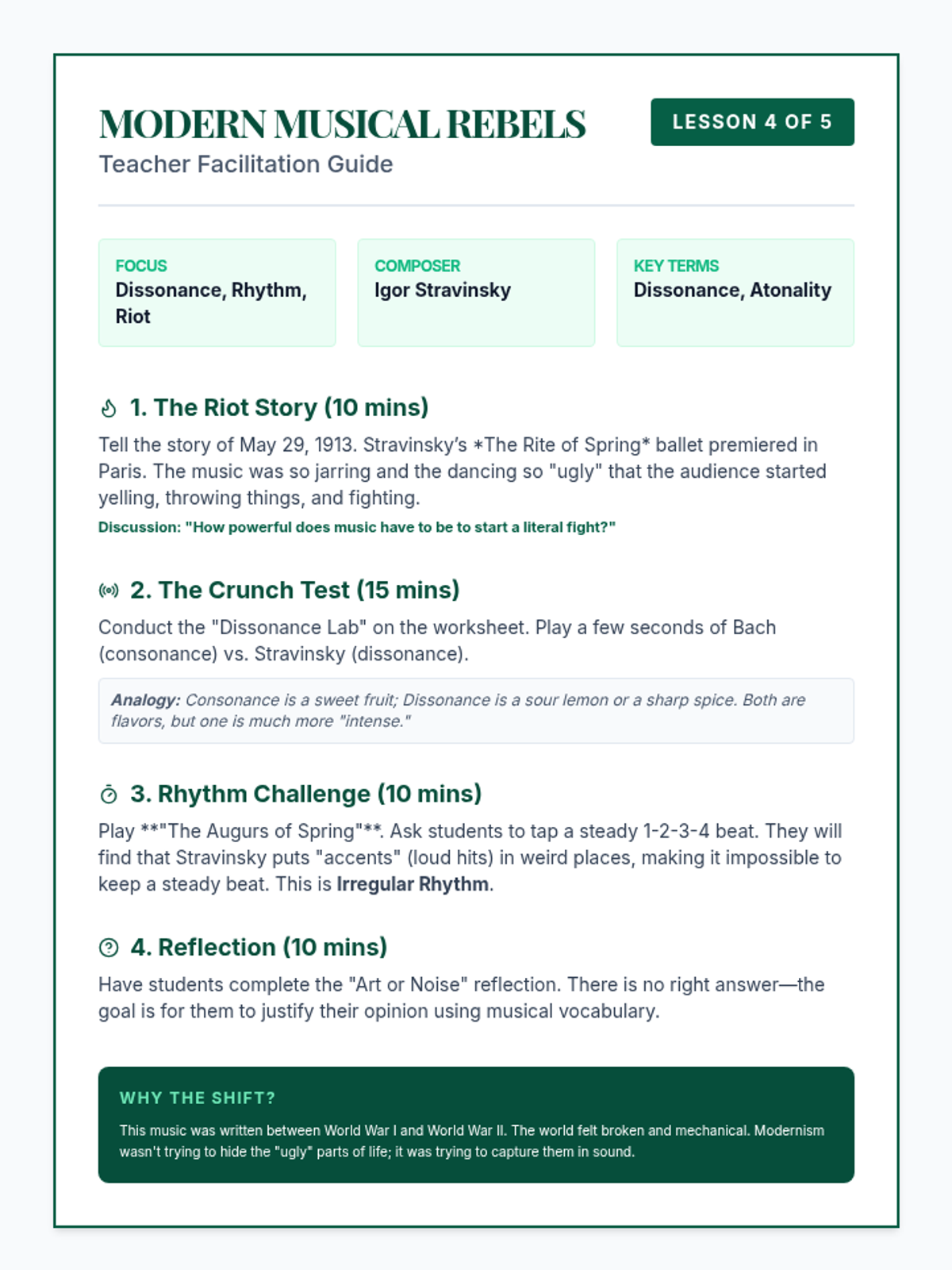
Cover the radical shift in the 1900s where composers broke traditional rules of harmony and rhythm.
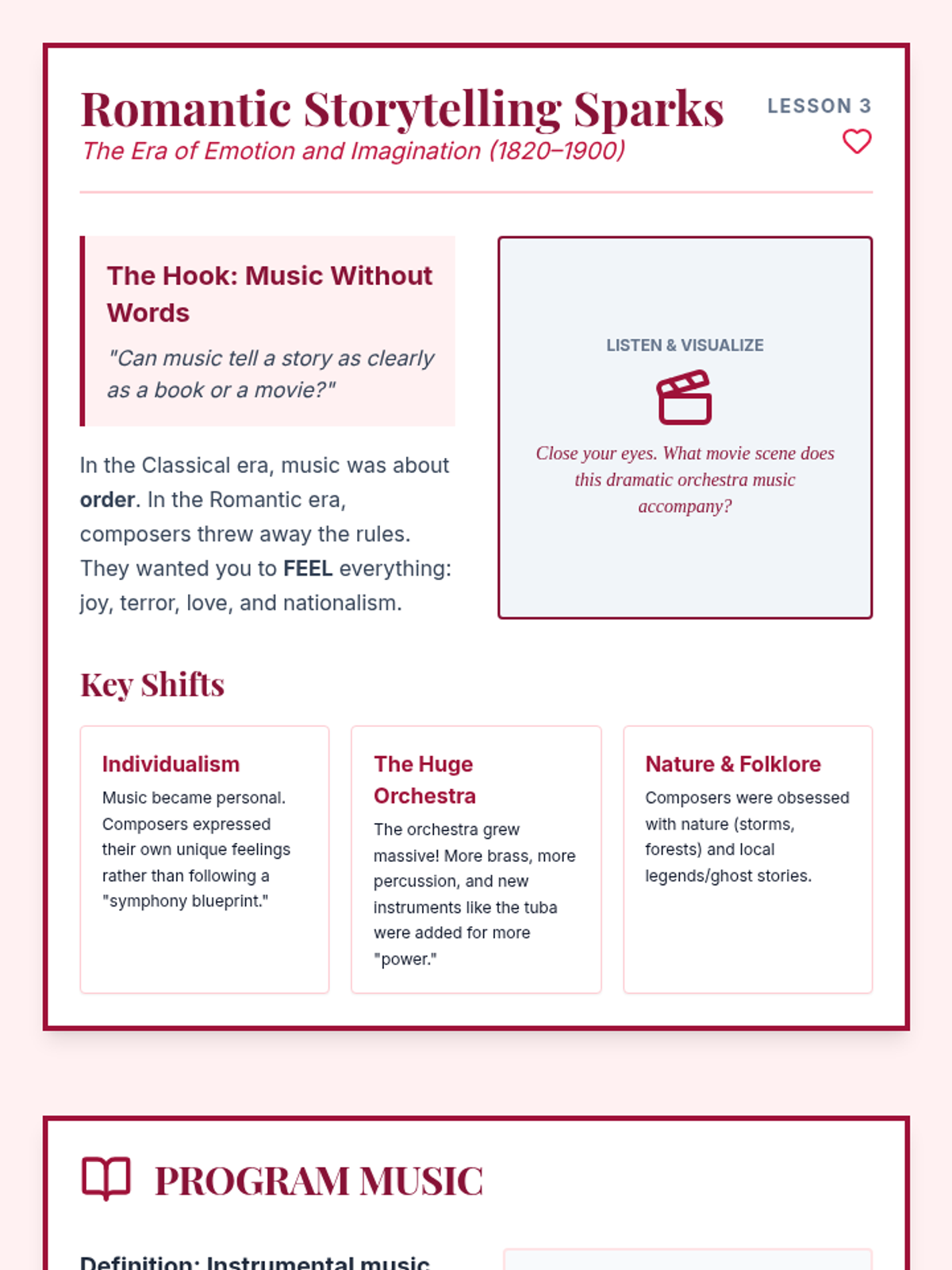
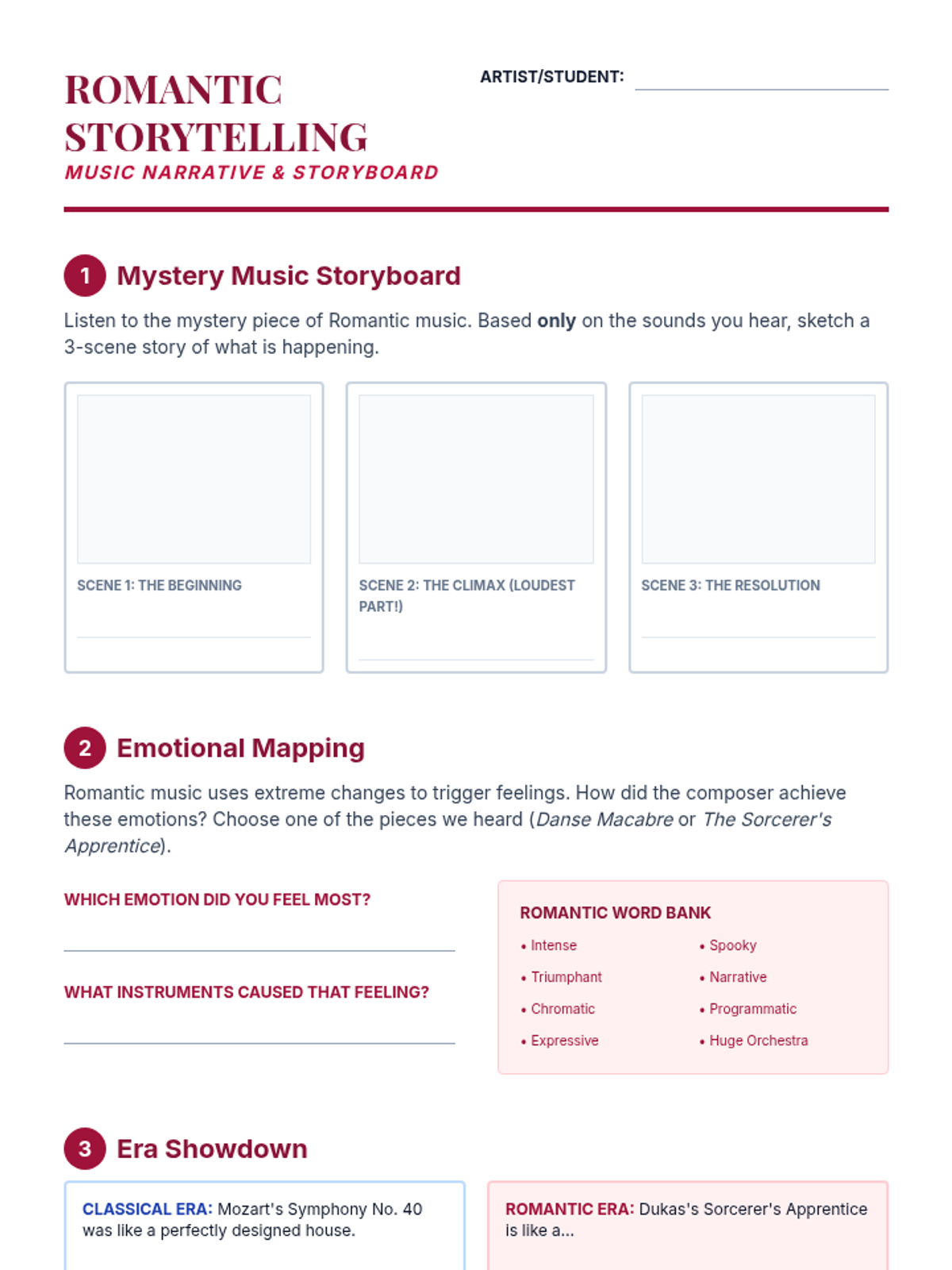
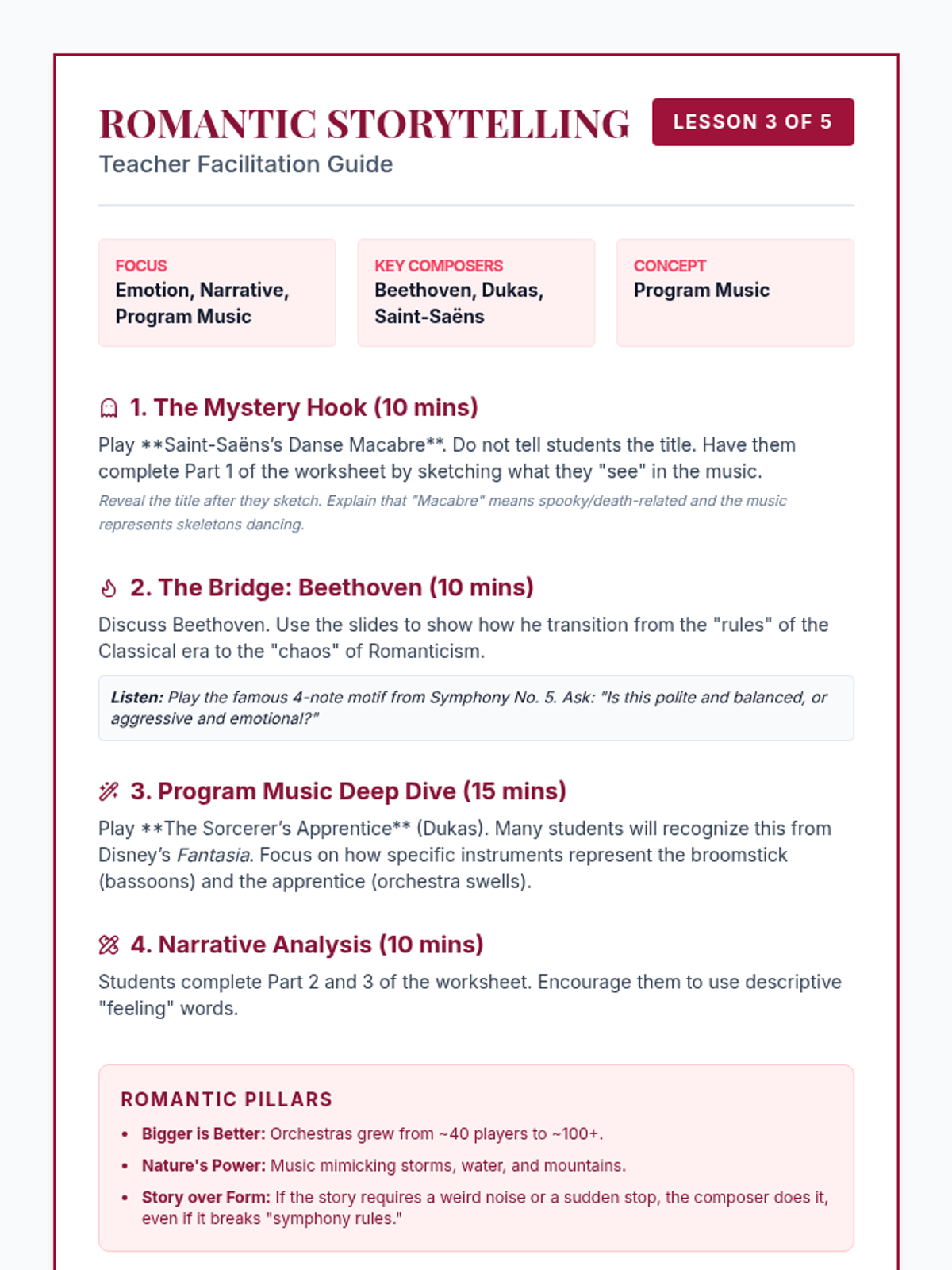
Investigate how music shifted towards intense emotion and storytelling (Program Music) during the Romantic era.
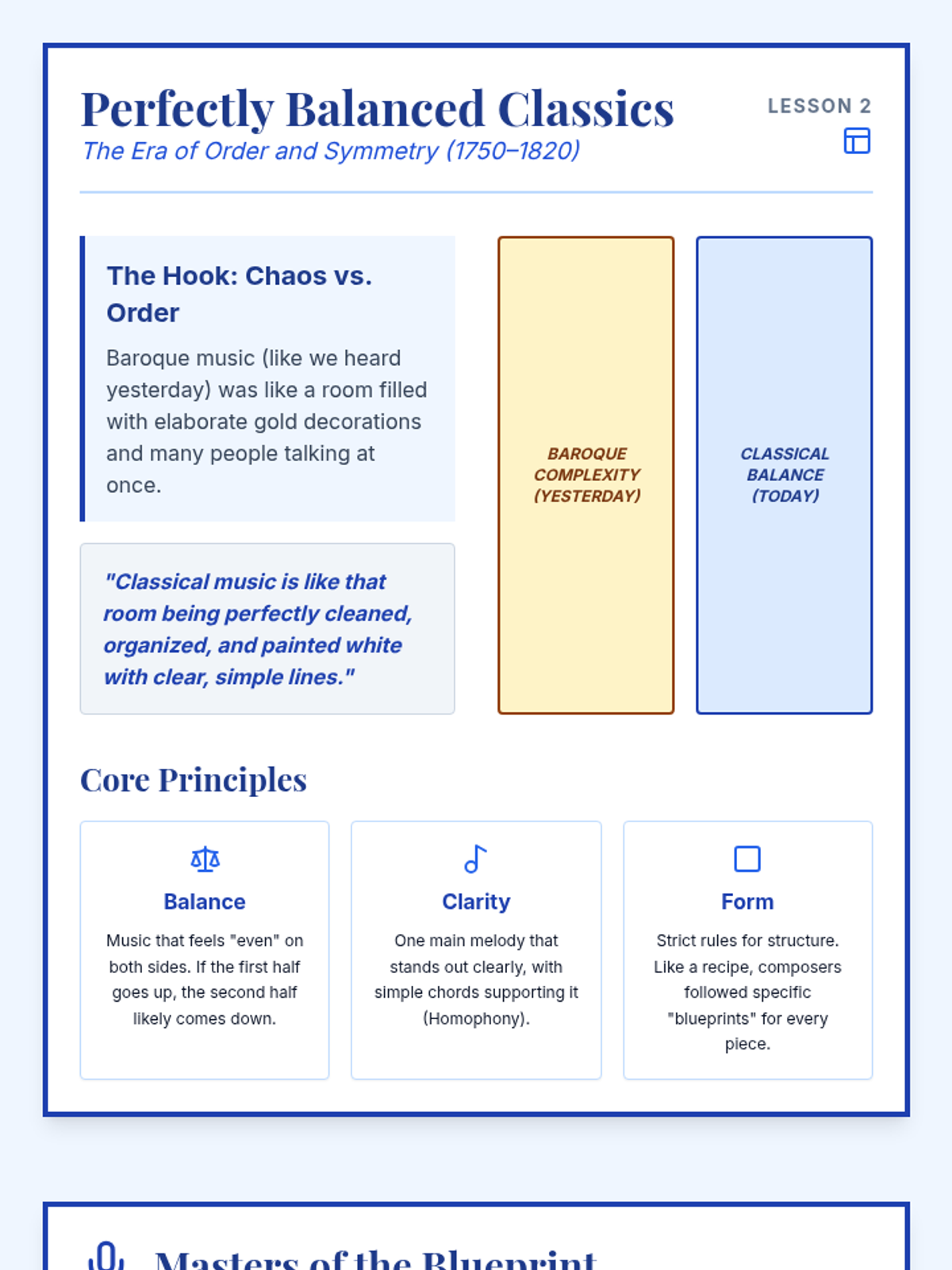
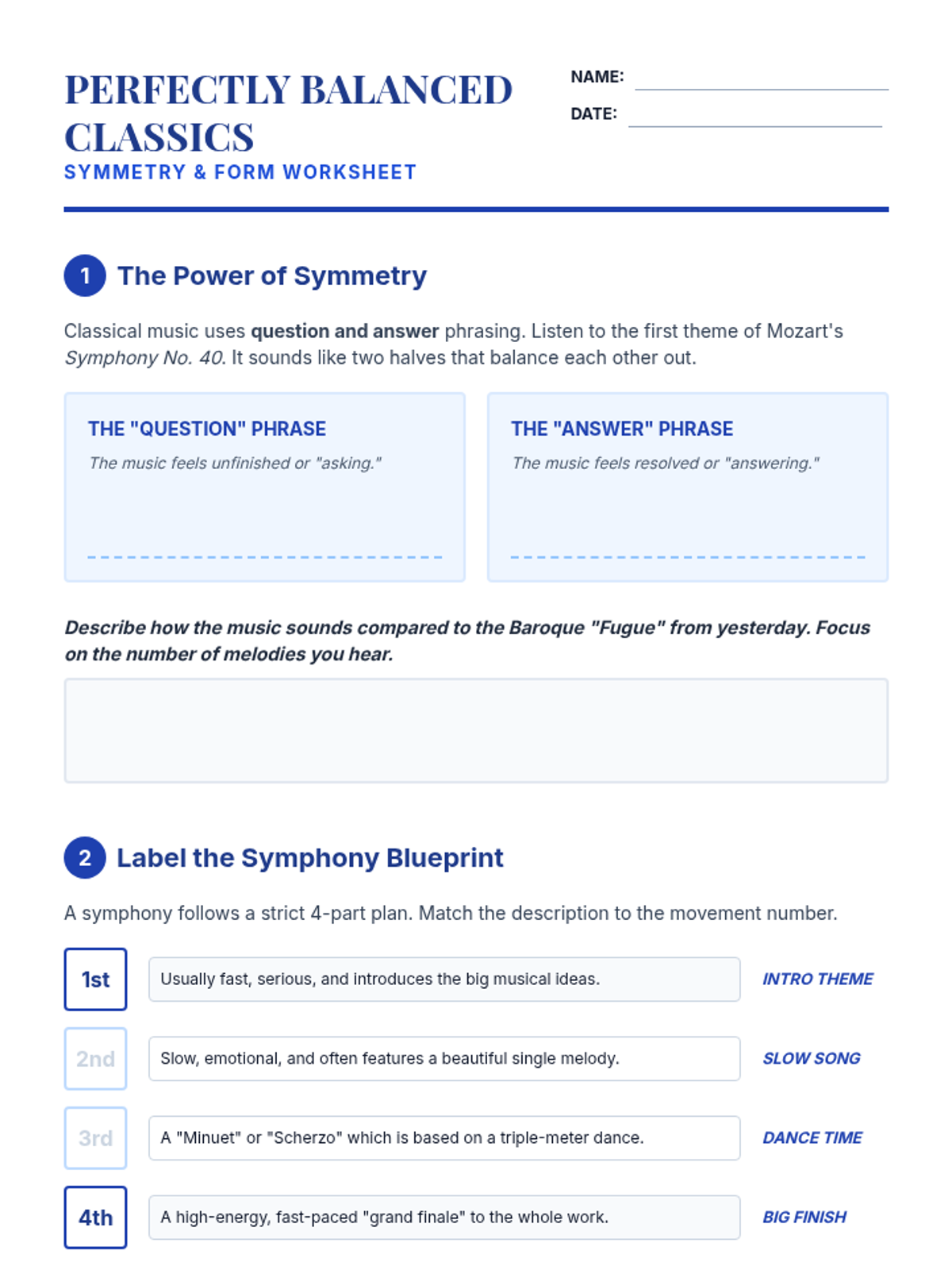
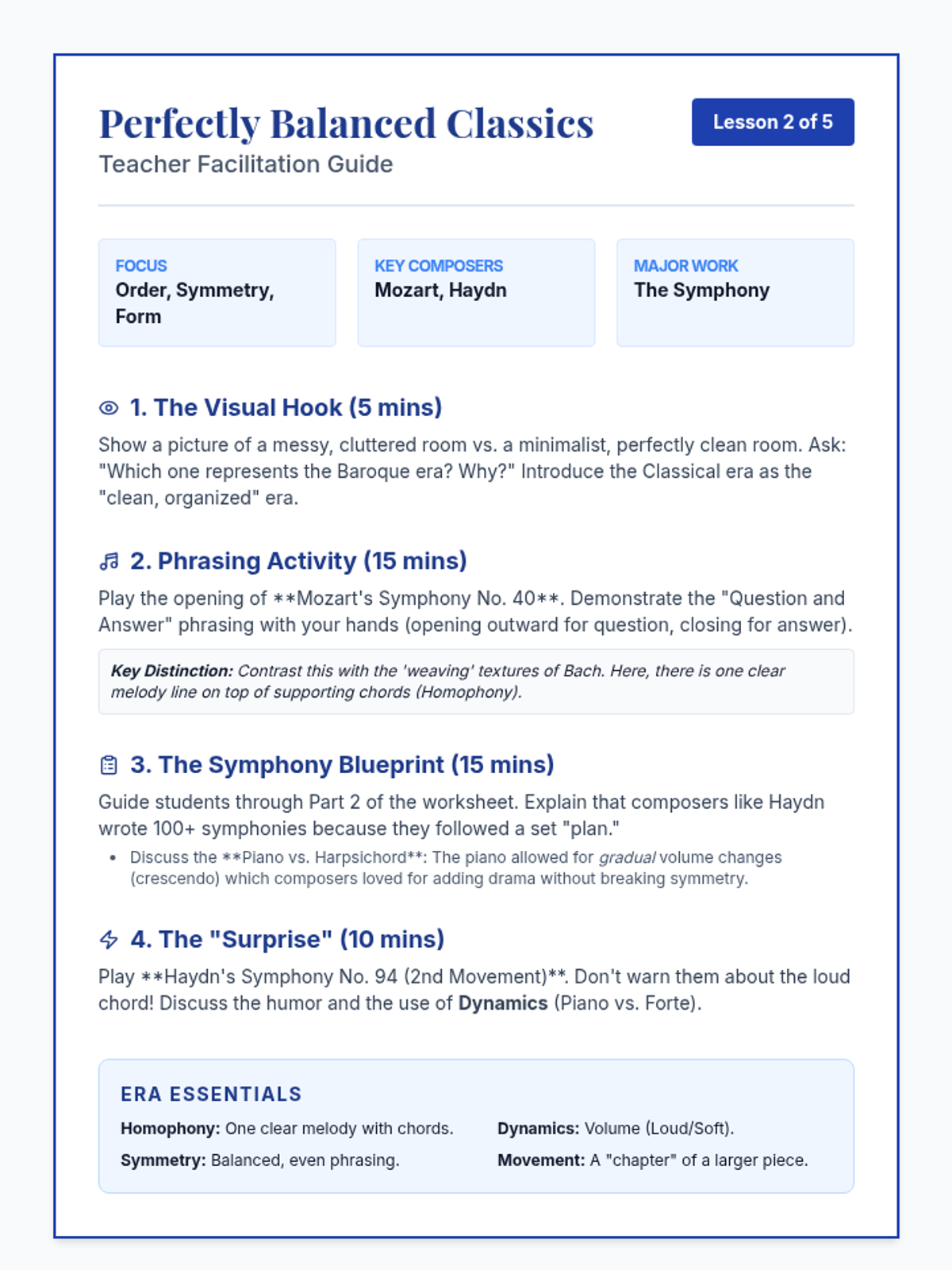
Introduce the Classical era's obsession with order, symmetry, and clear melody through Mozart and Haydn.
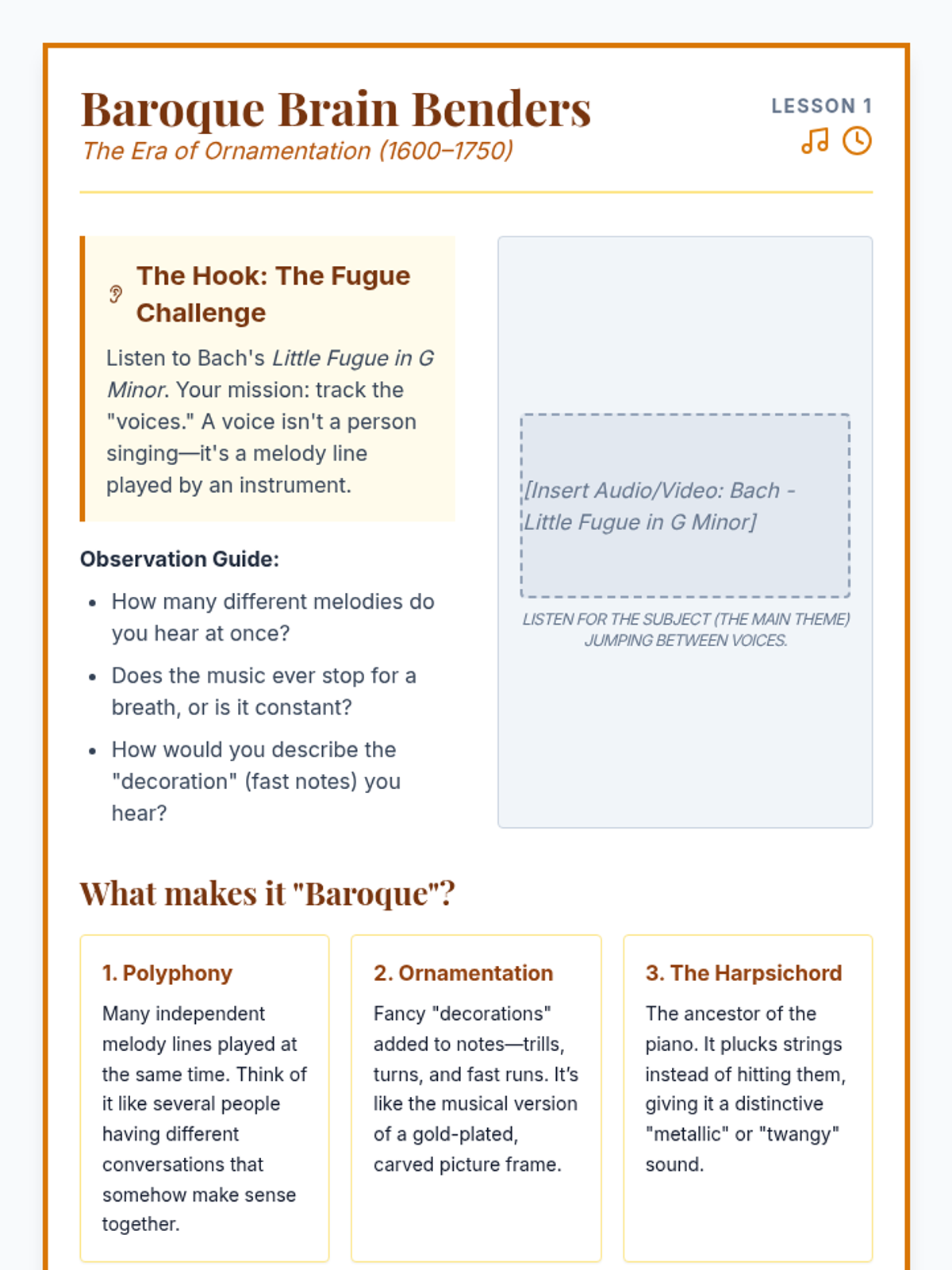
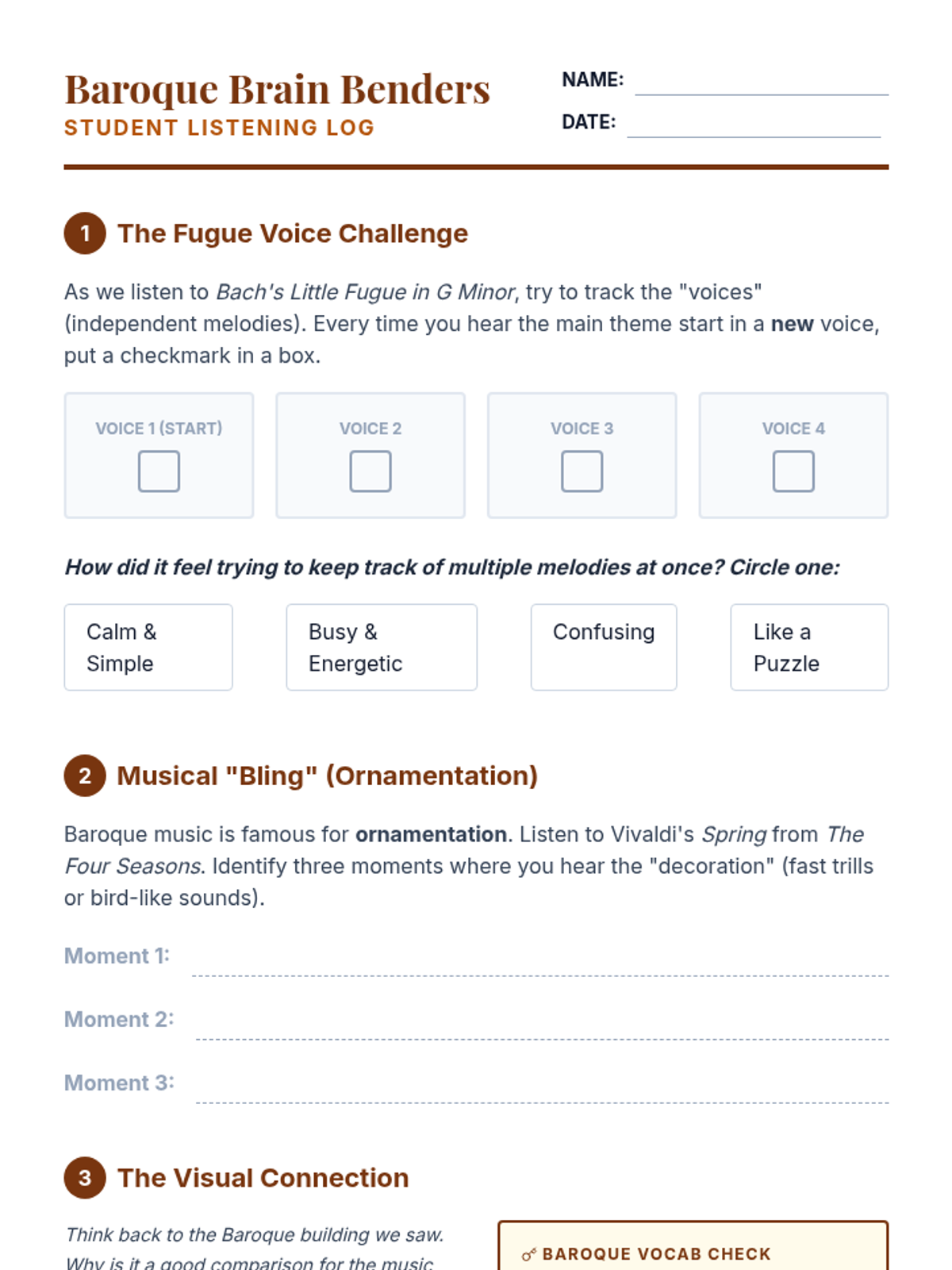
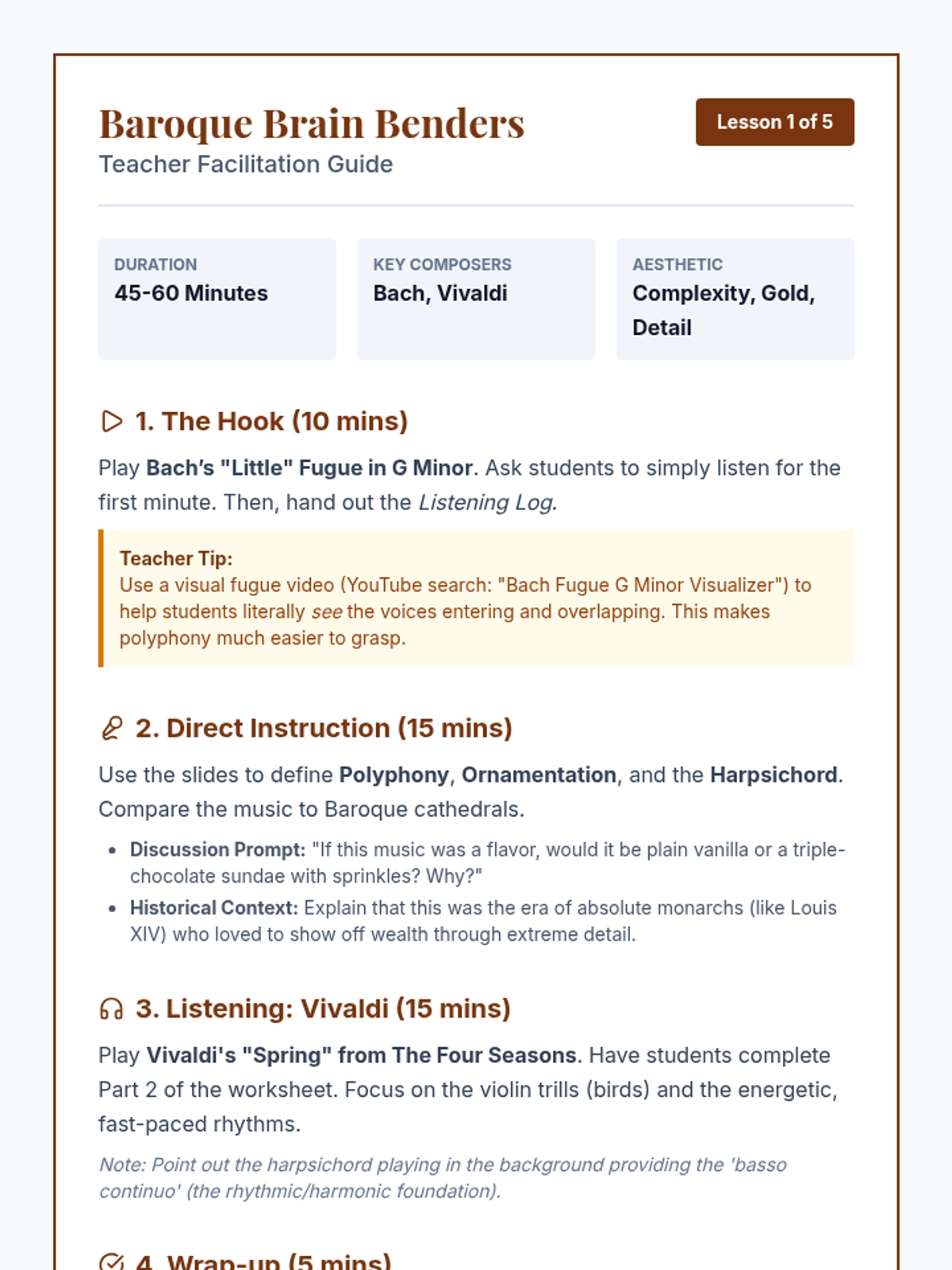
Explore the ornate style of the Baroque period through the works of Bach and Vivaldi, focusing on polyphony and harpsichord.
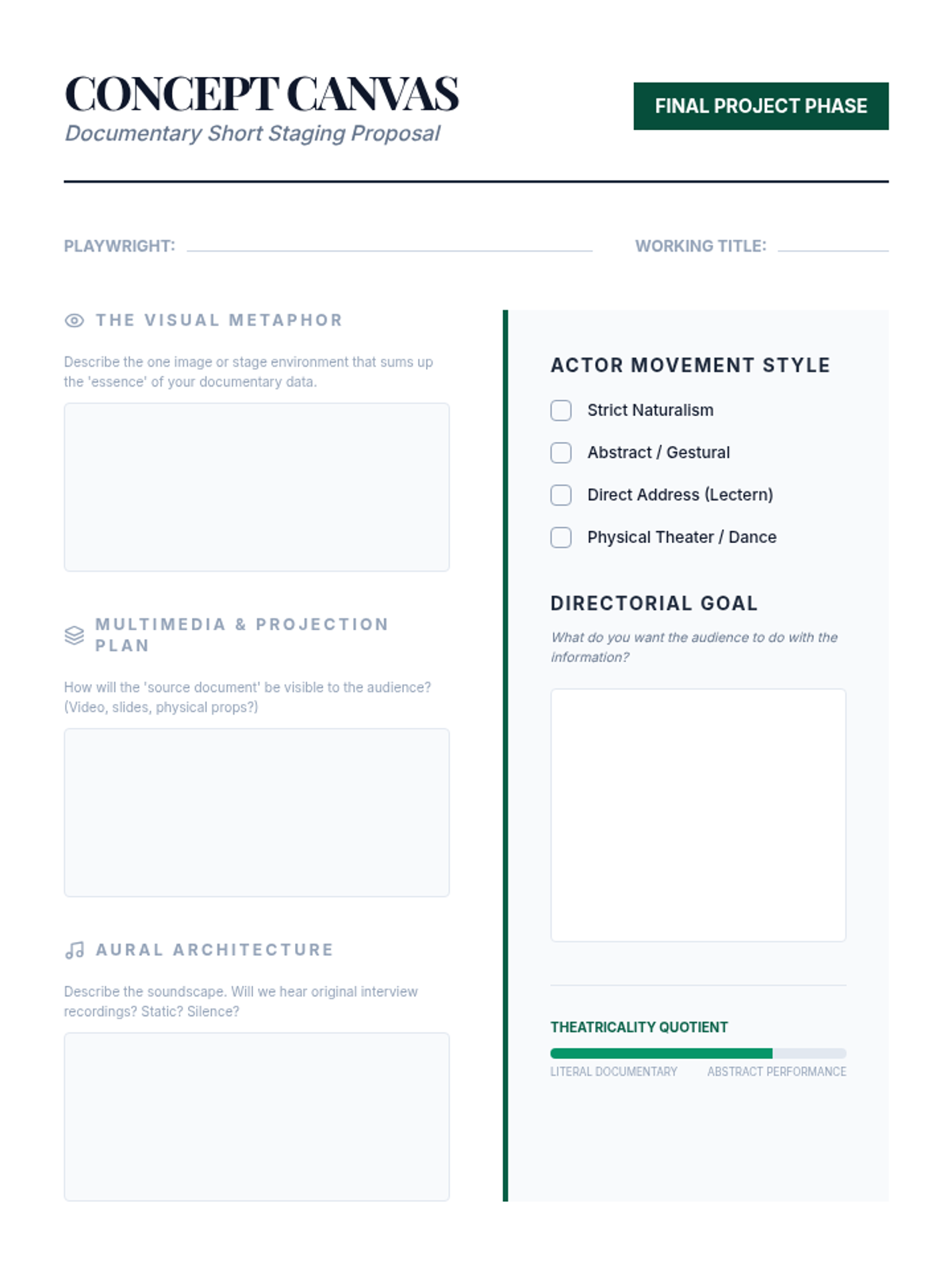
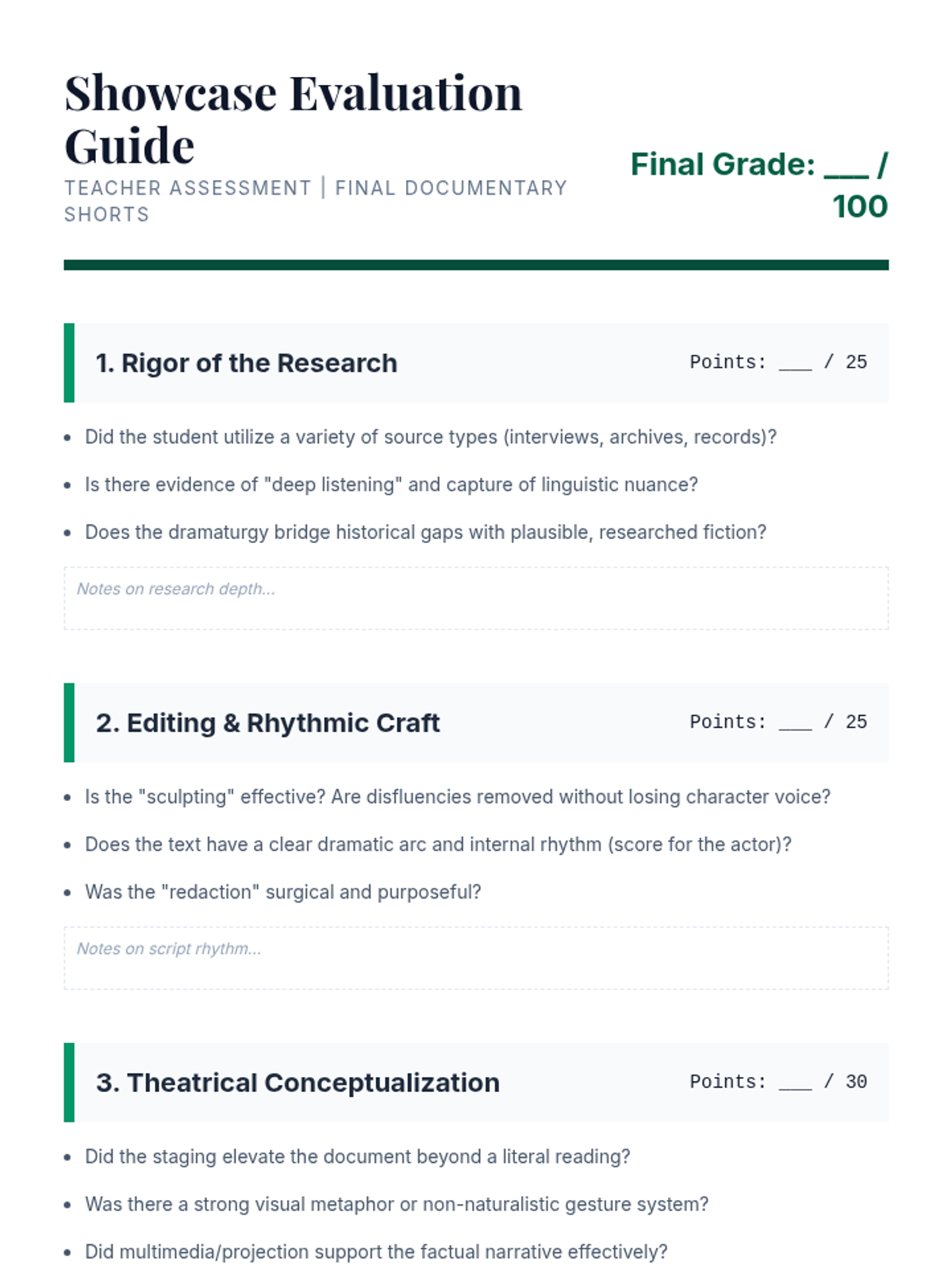
Concludes with a focus on non-naturalistic staging techniques for documentary theatre, culminating in a presentation of student documentary shorts.
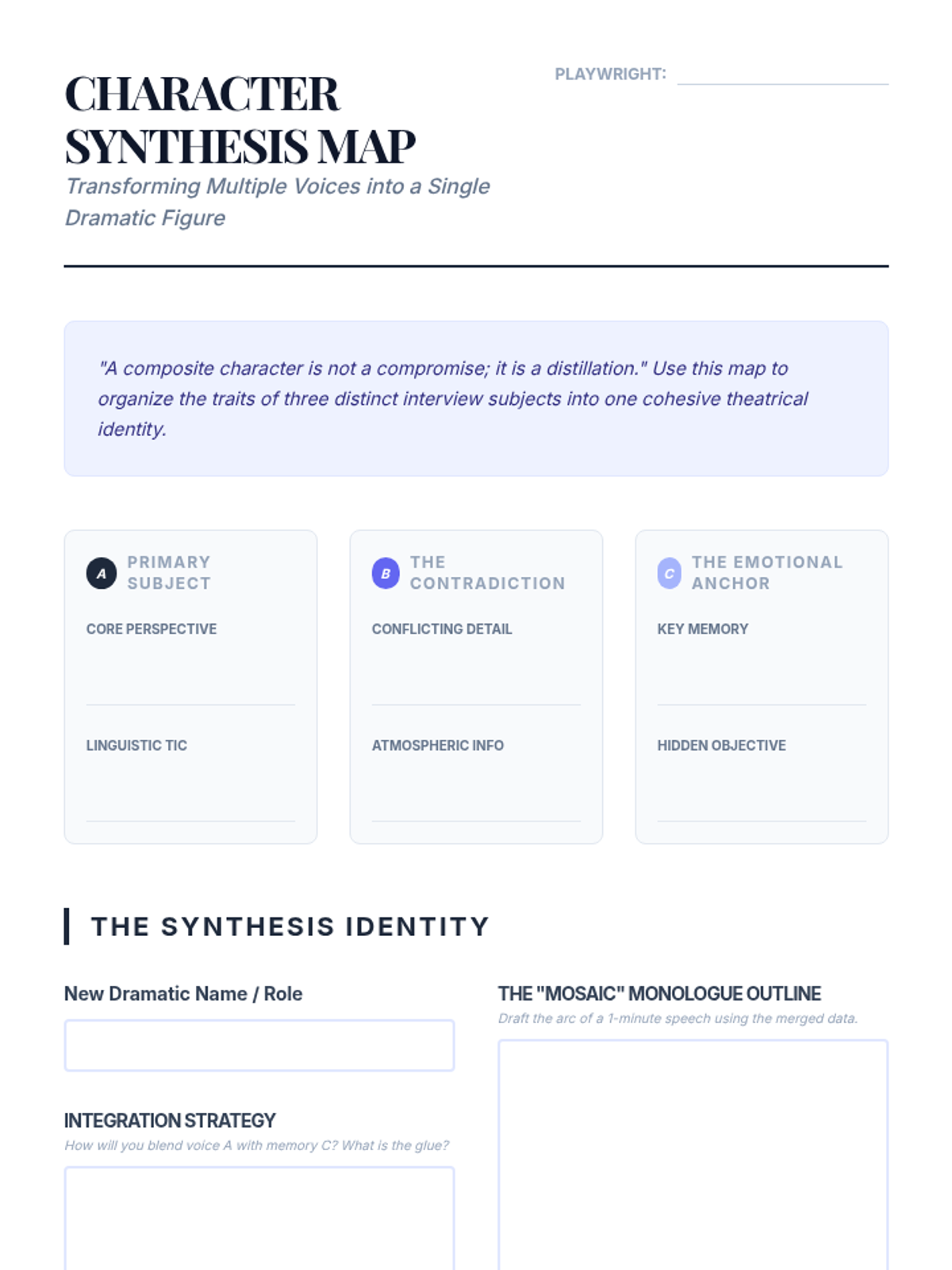
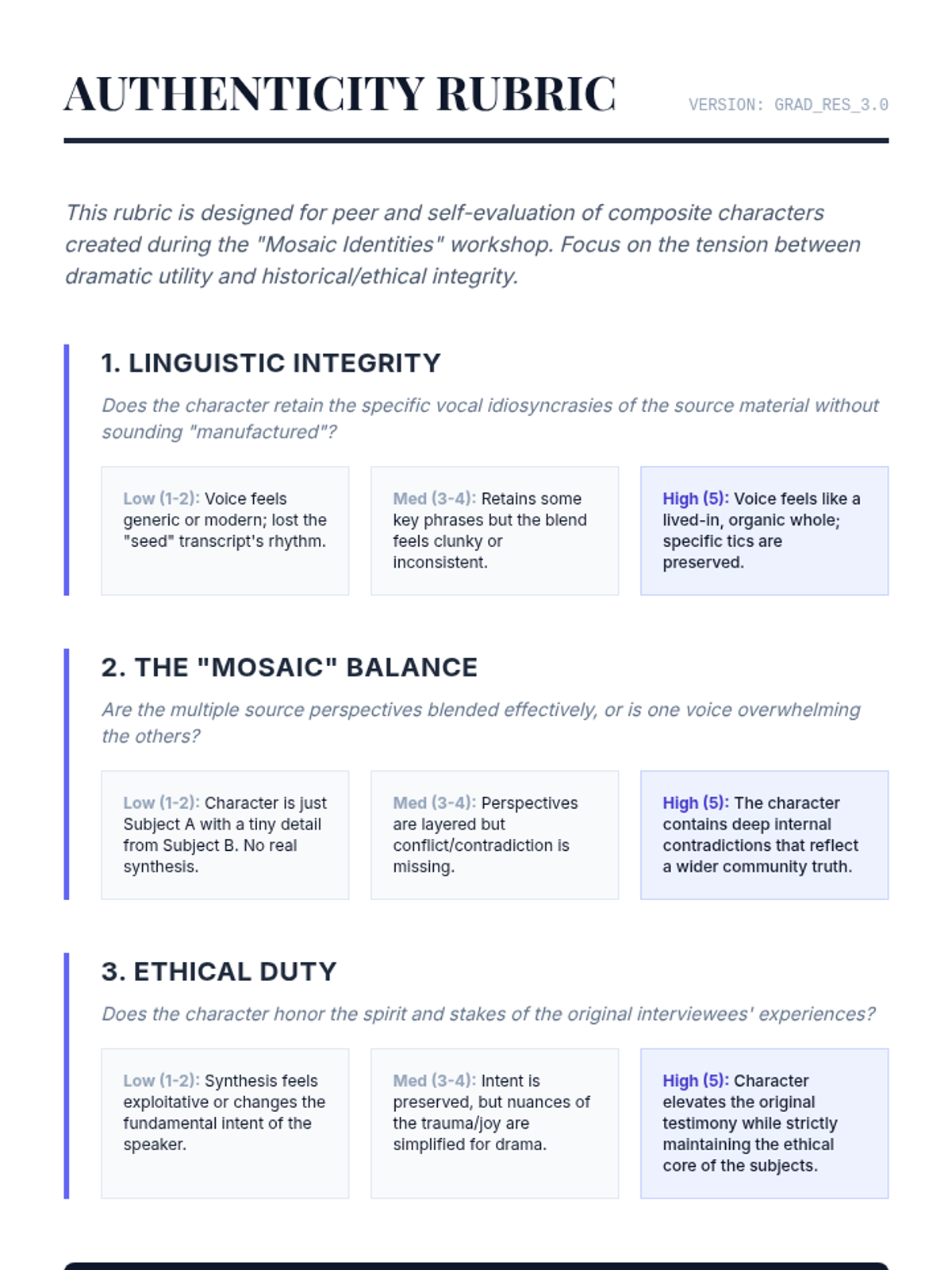
Explores the controversial technique of composite characters, balancing the need for dramatic economy with the ethics of authentic representation.
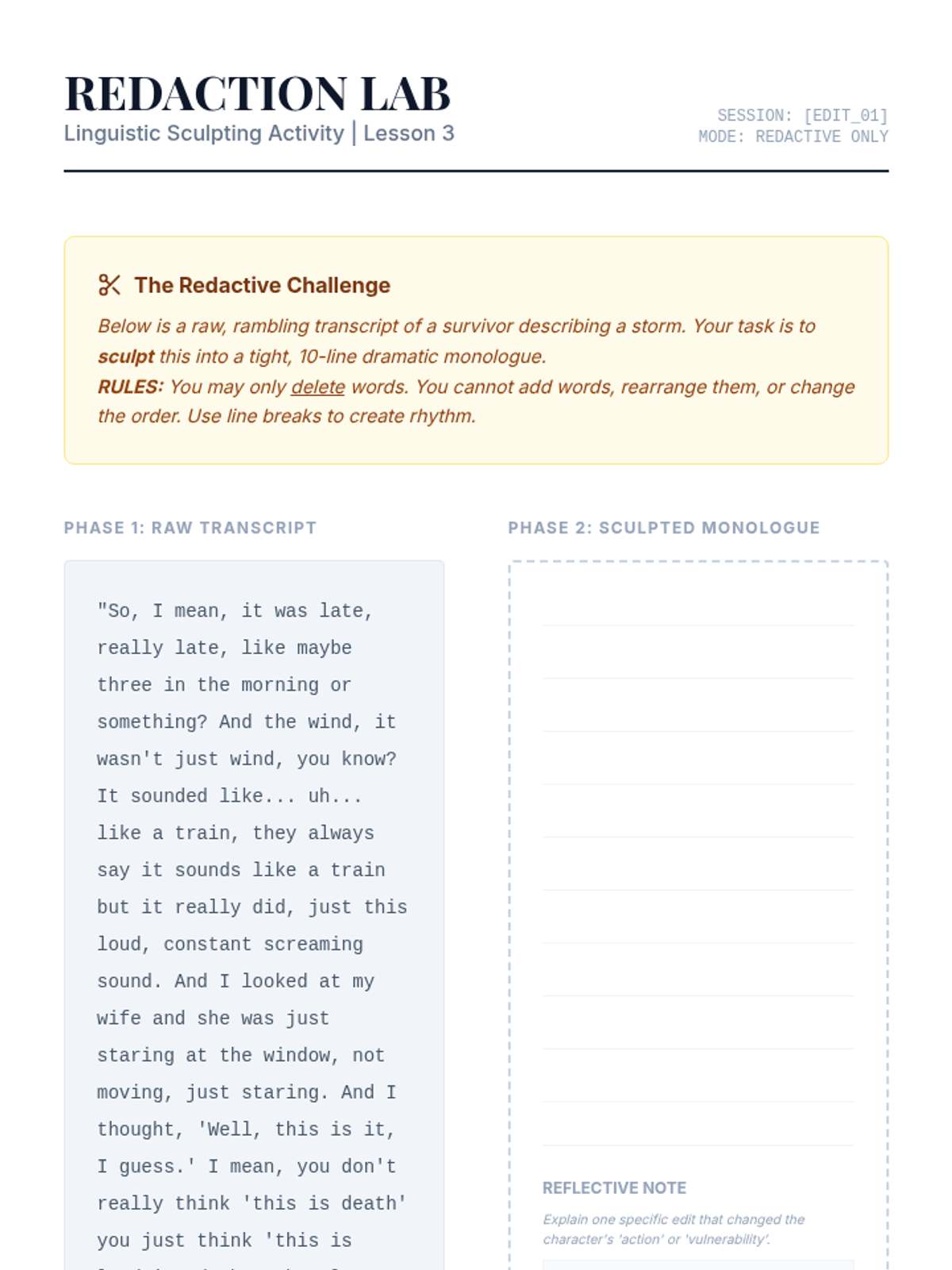
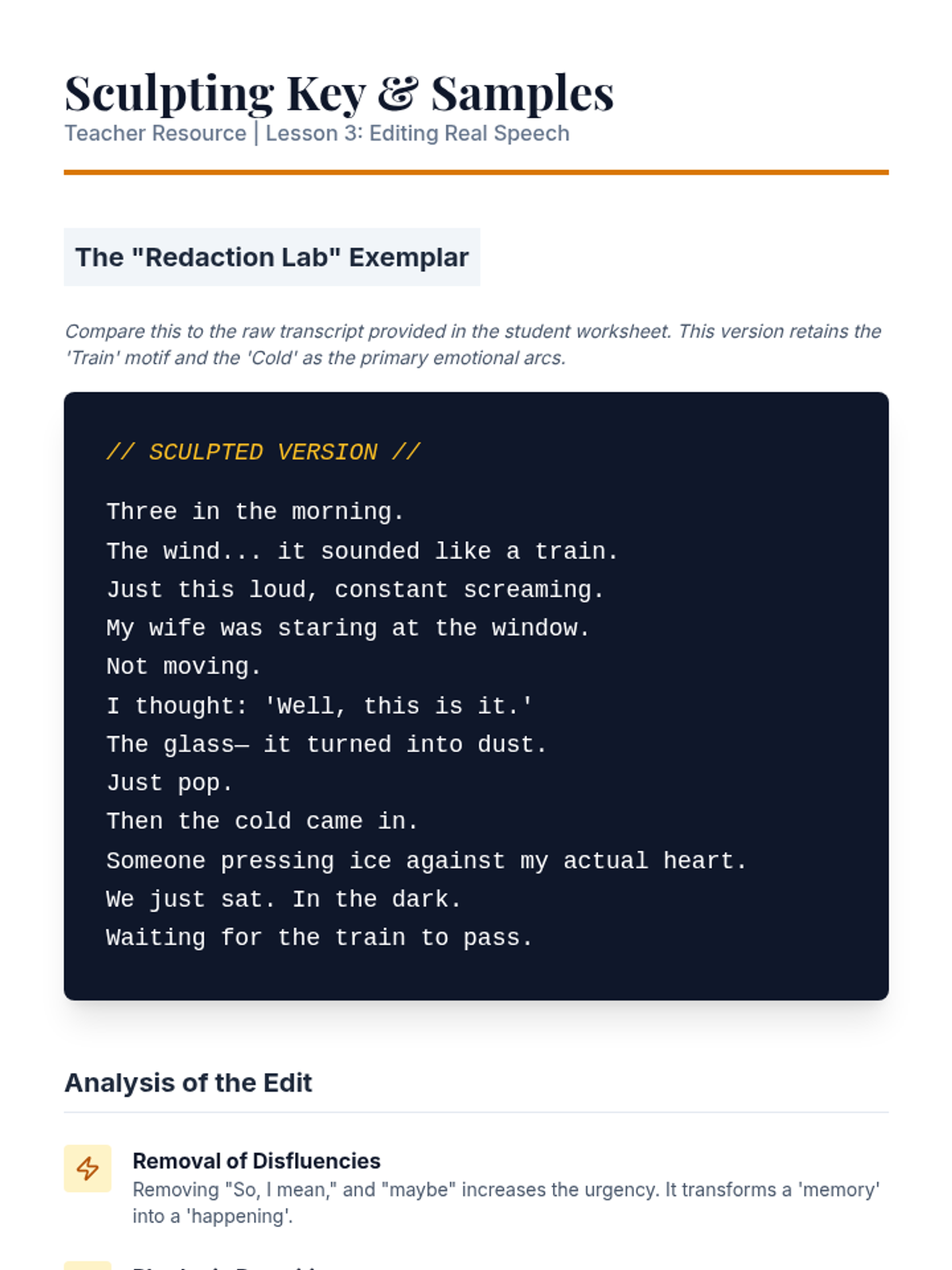
A workshop-based lesson on the technical art of editing raw transcript data into rhythmic, dramatically impactful stage speech.
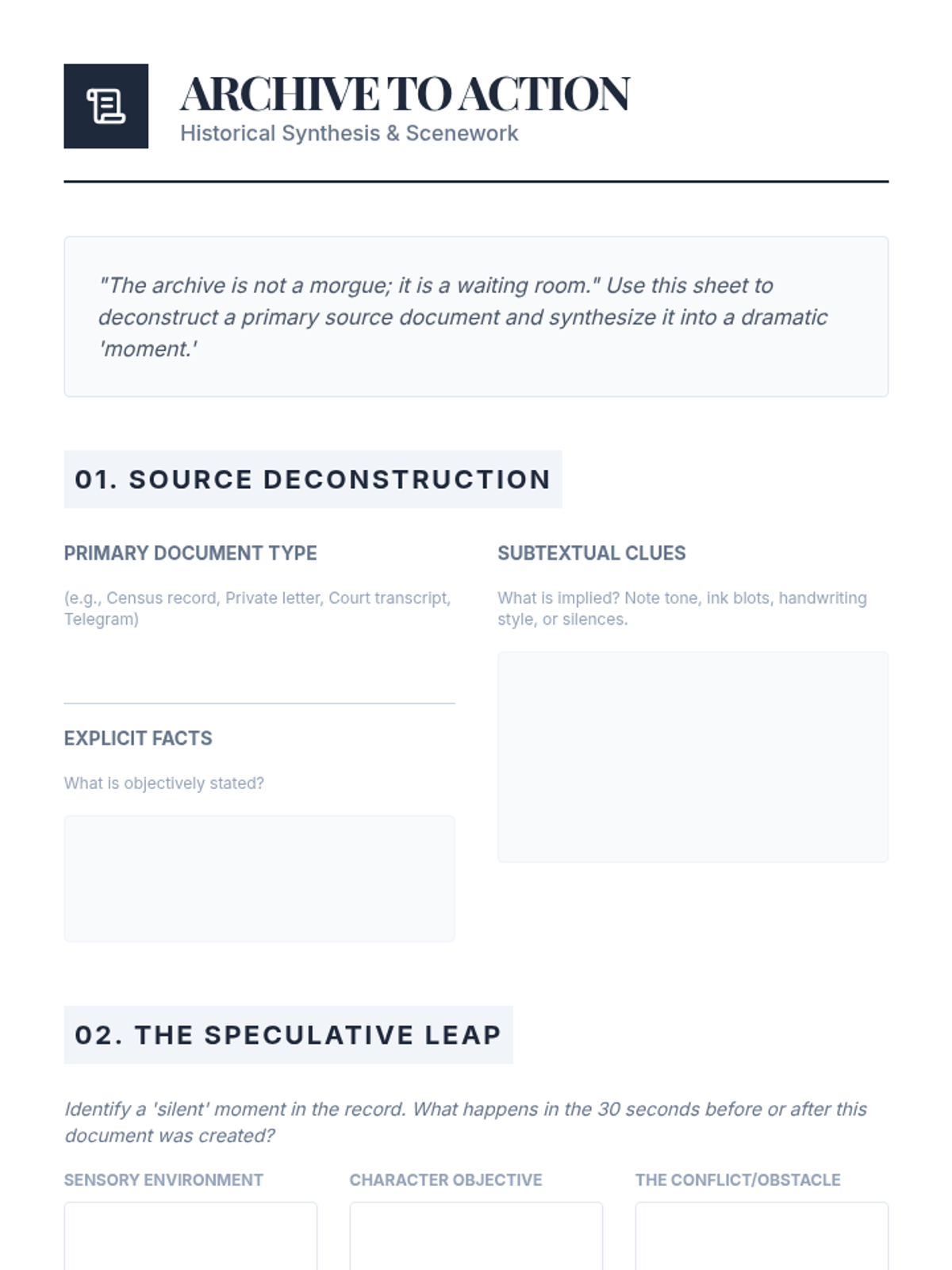
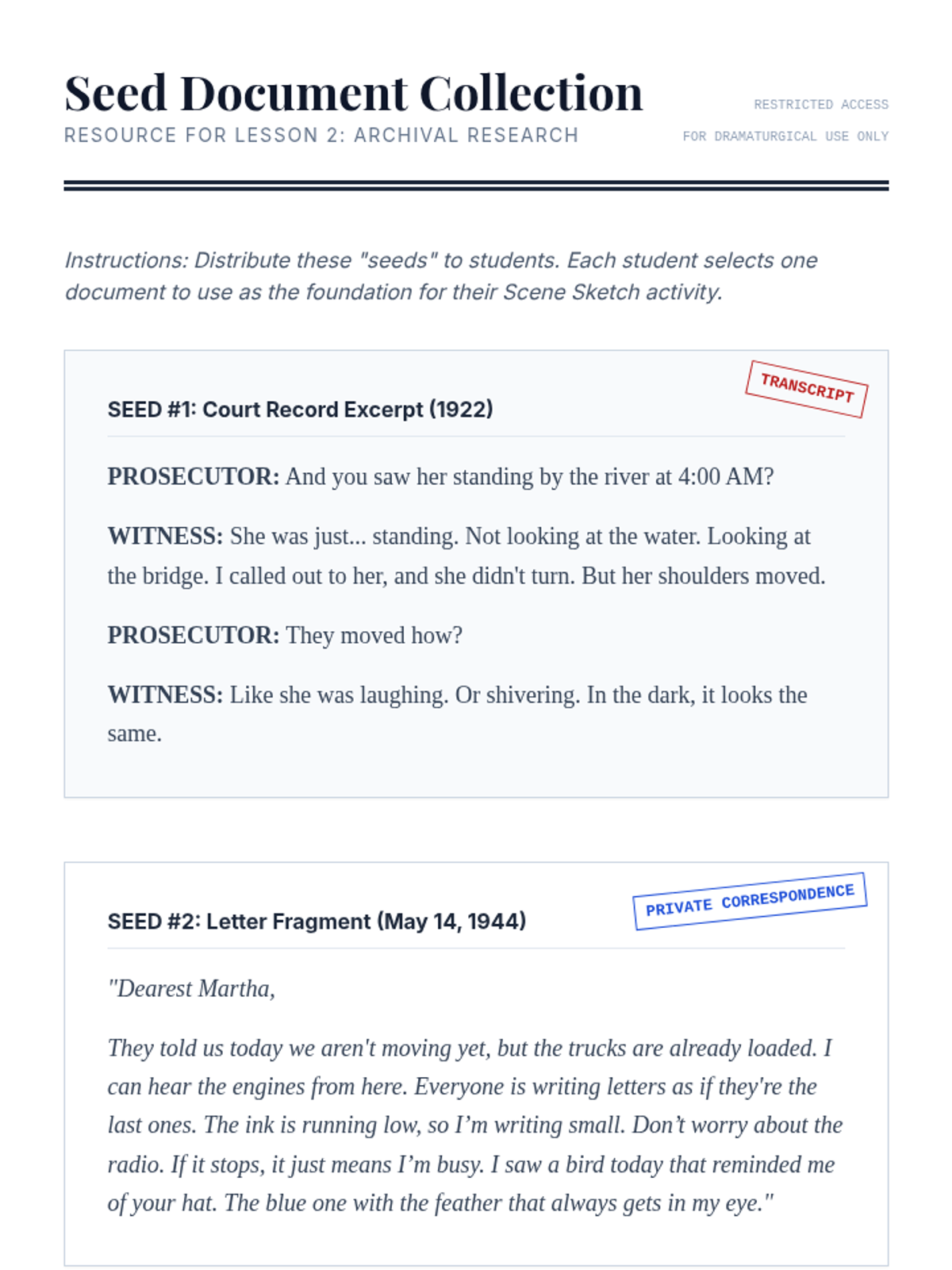
Focuses on archival research as a source for drama, teaching students how to bridge historical gaps and transform dry documents into compelling scenes.
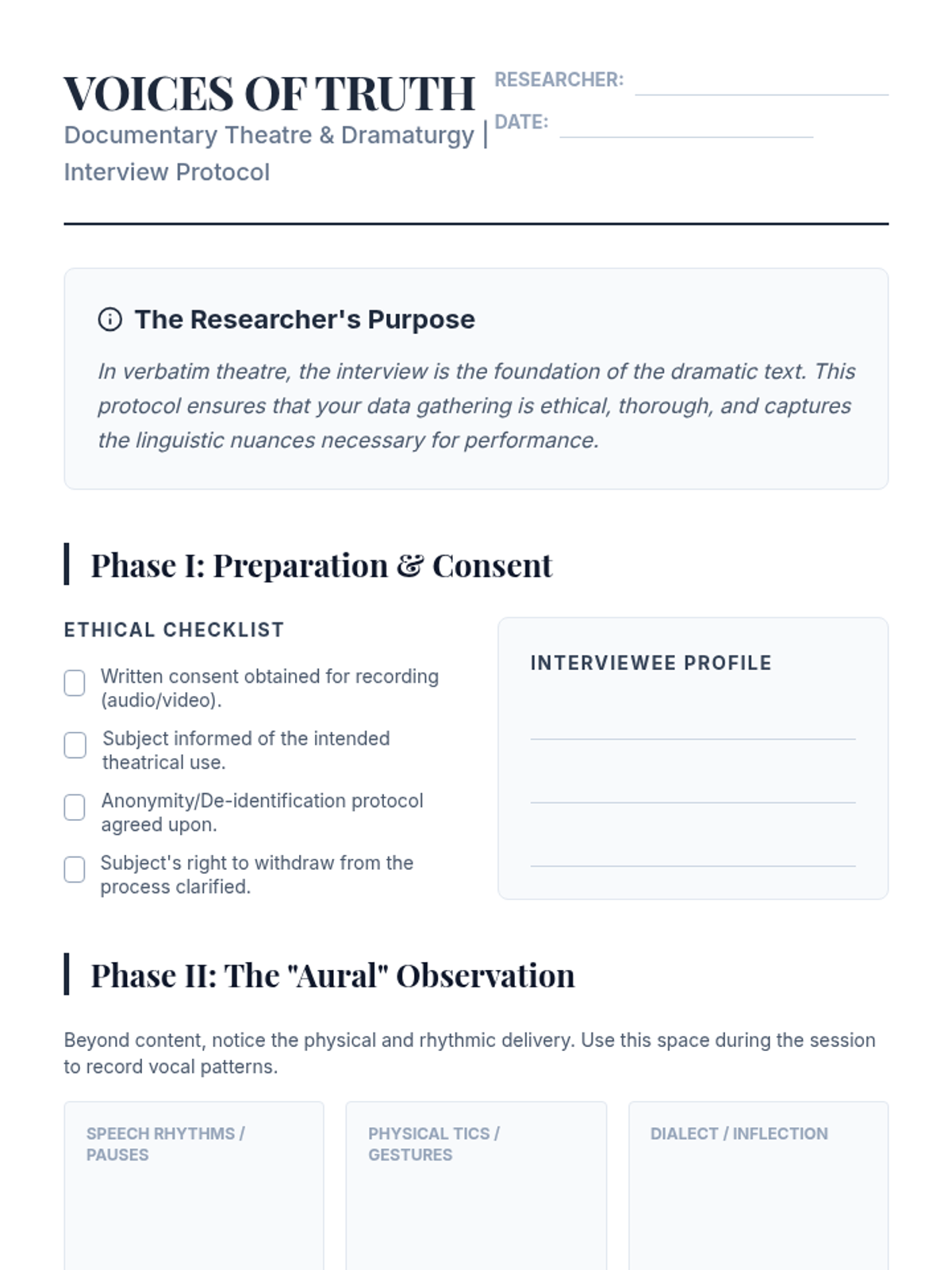
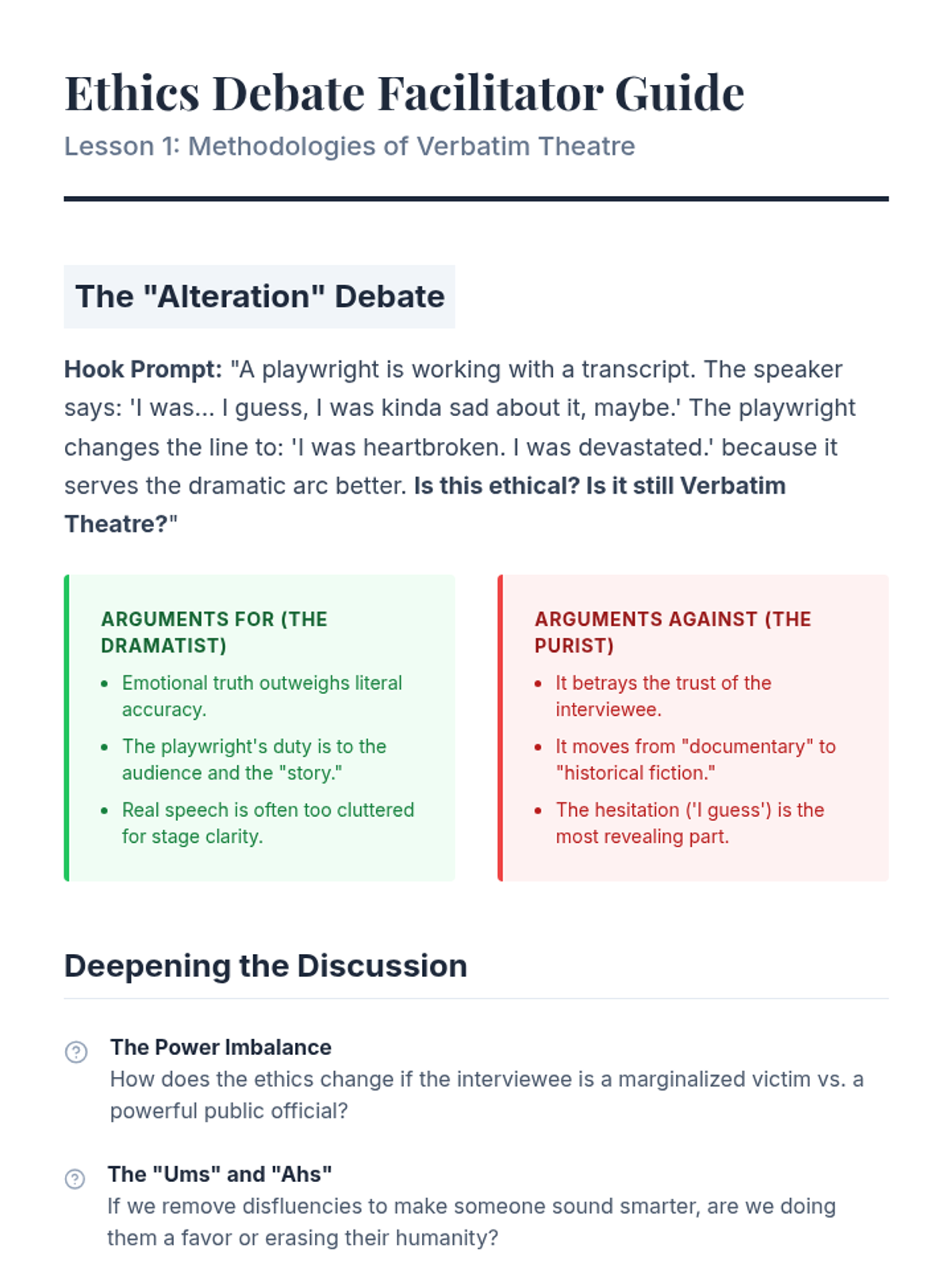
Investigates the history and ethics of verbatim theatre, focusing on interviewing methodologies and the legal/ethical frameworks of representing real subjects.
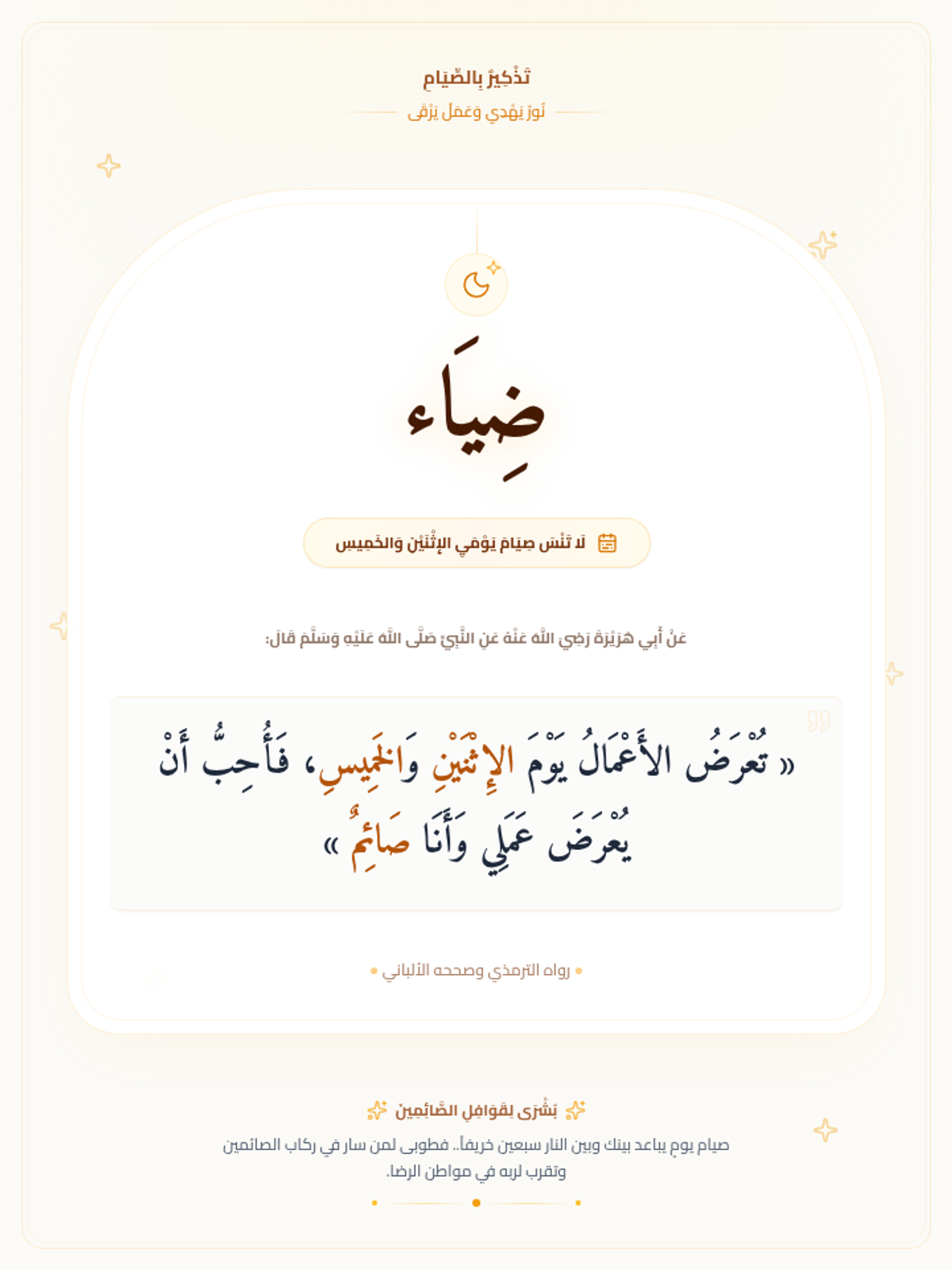
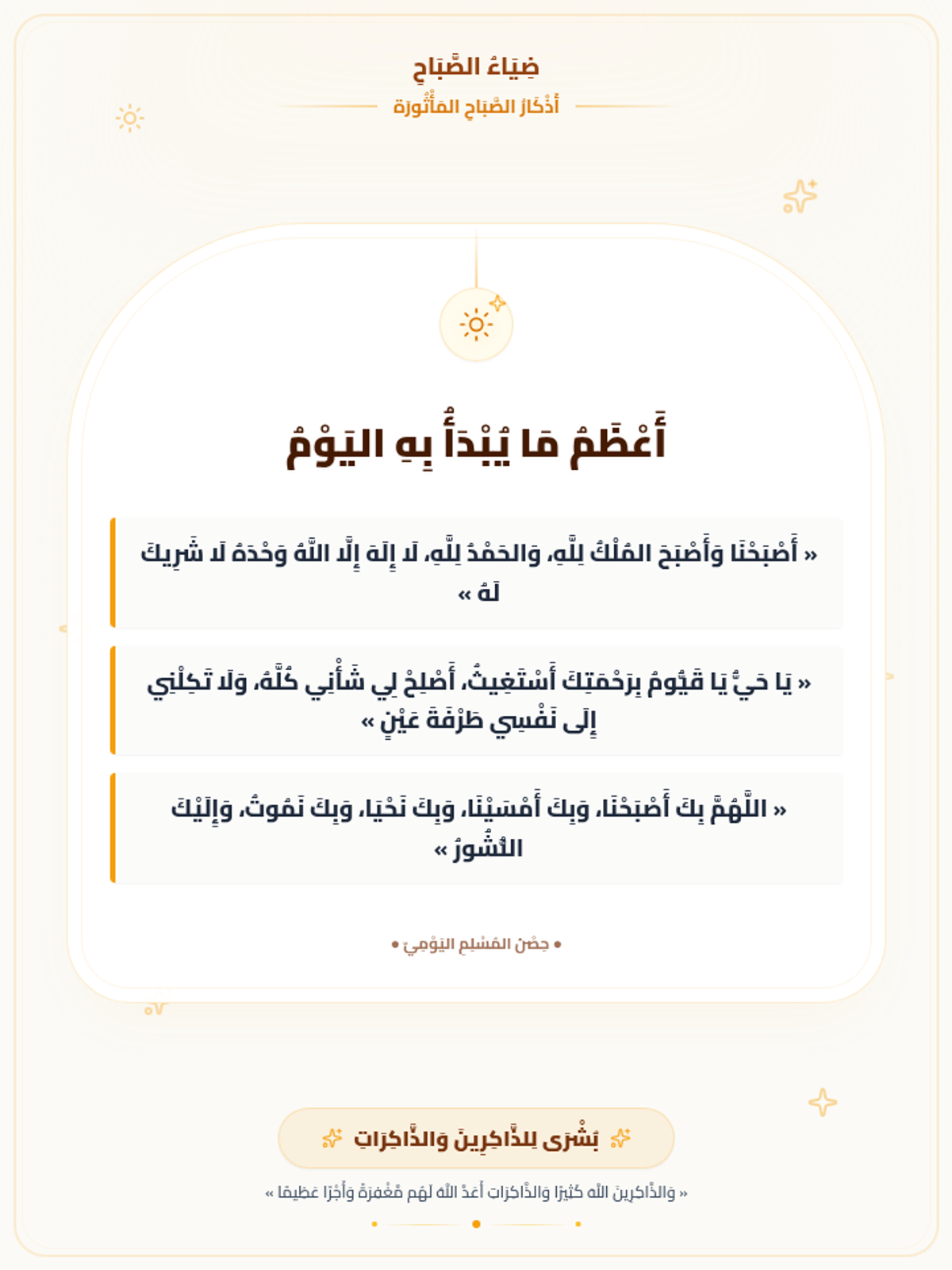
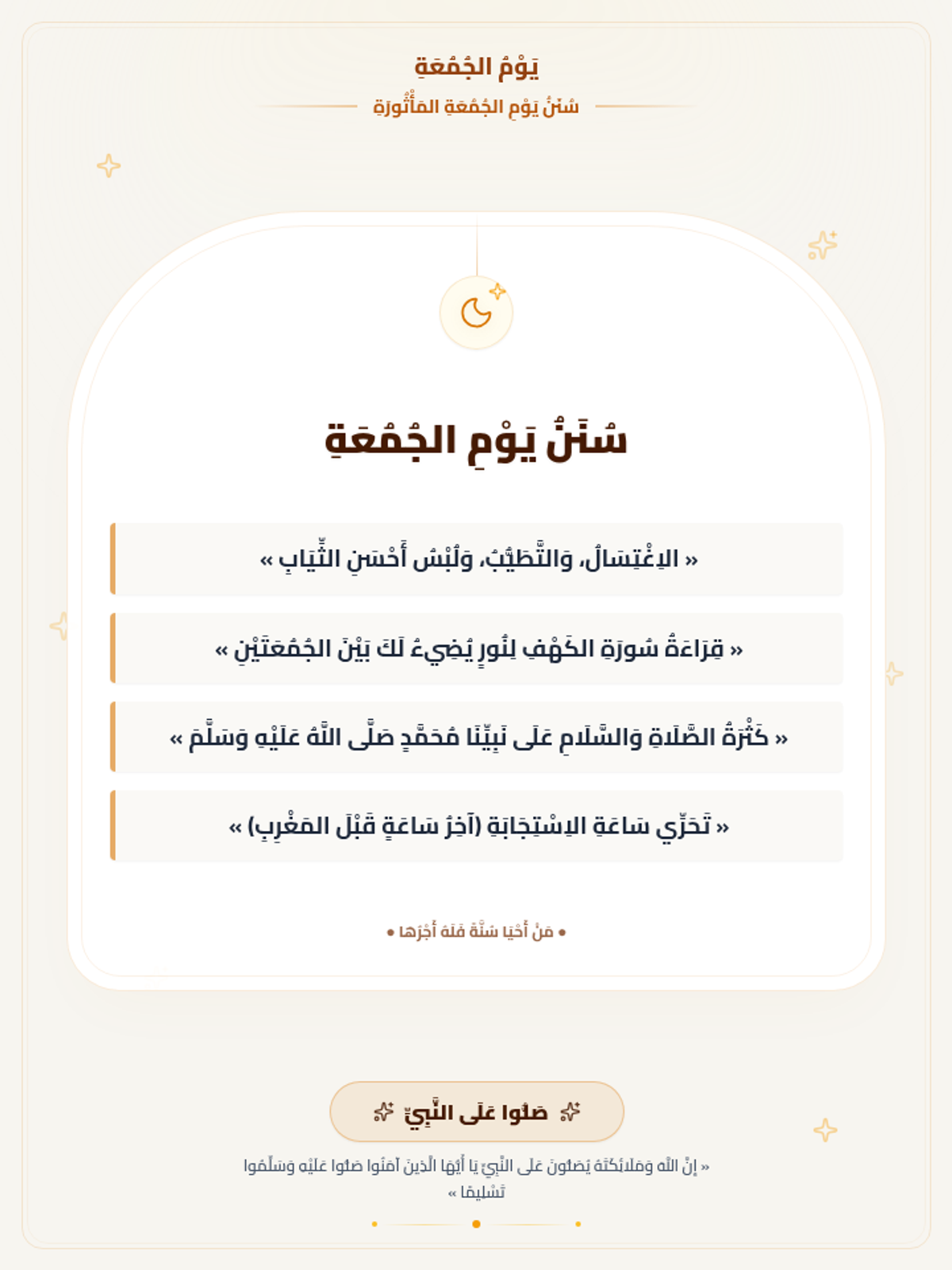
A premium, cohesive collection of beautifully designed spiritual and religious reminders for daily, weekly, and seasonal practices, featuring high-contrast connected Arabic typography, elegant arches, and glowing celestial themes.
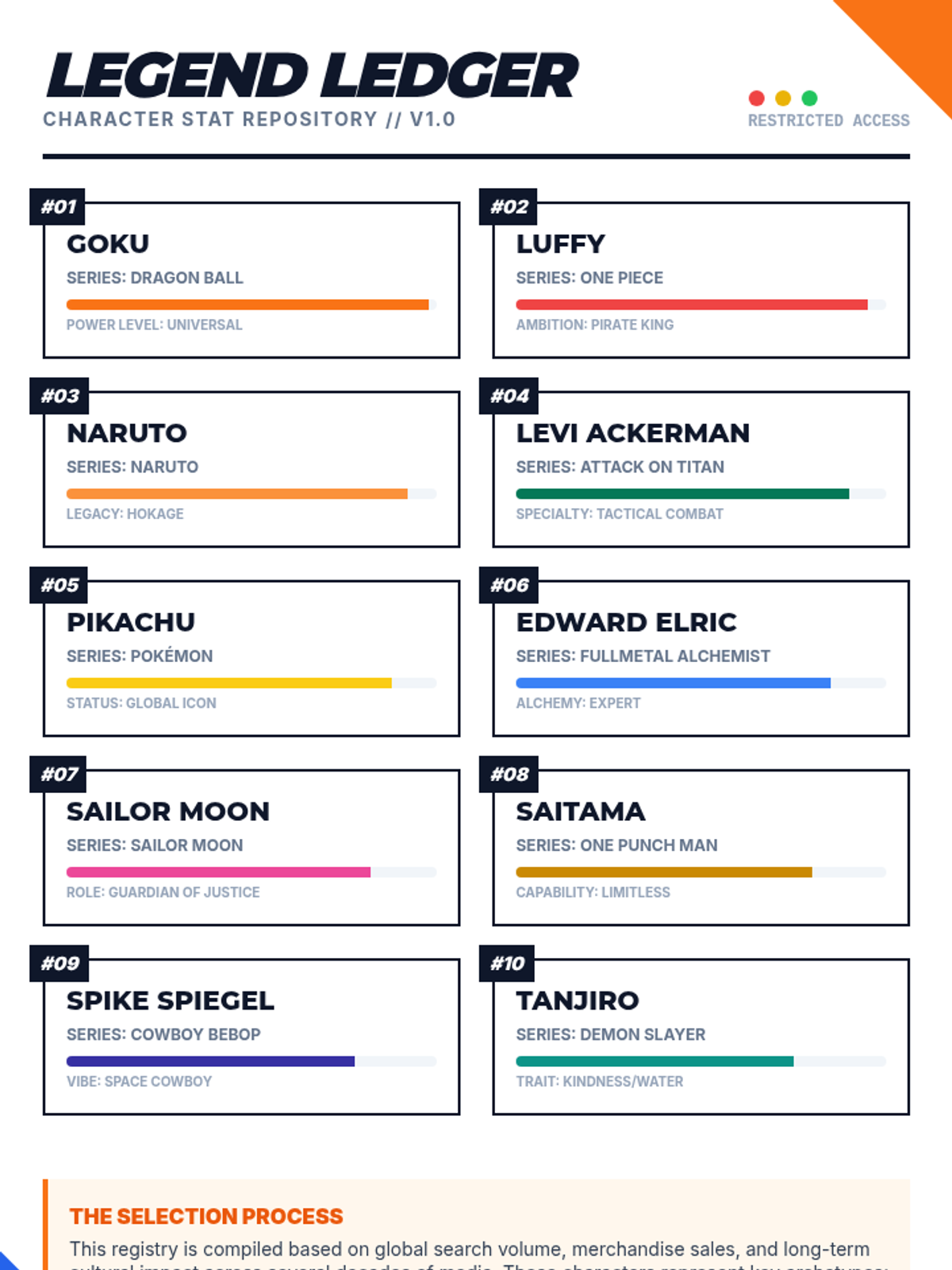
Explore the cultural impact and character archetypes of the world's most iconic anime characters. This lesson analyzes why these characters resonate globally and how their designs and stories influence modern media.
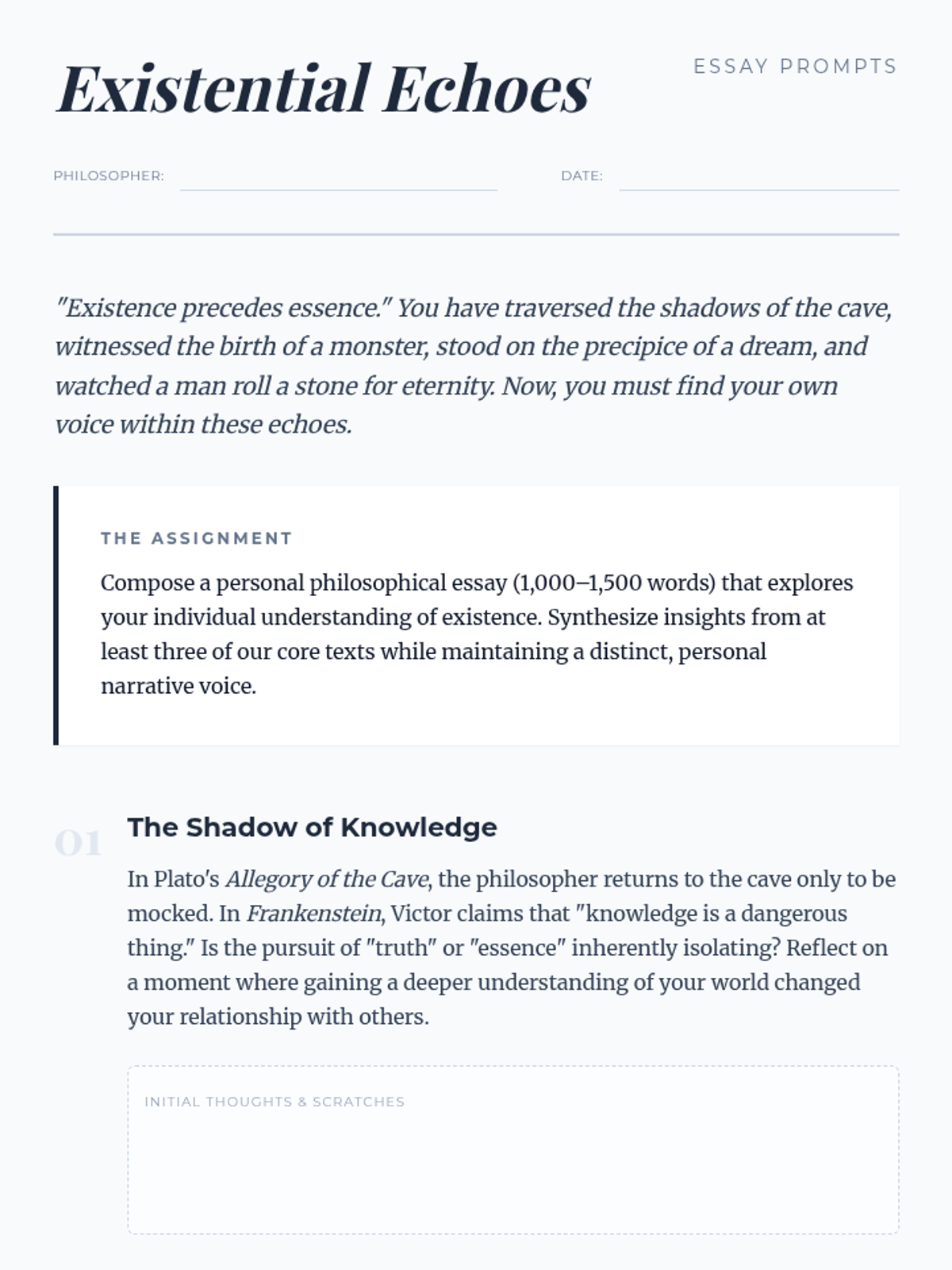
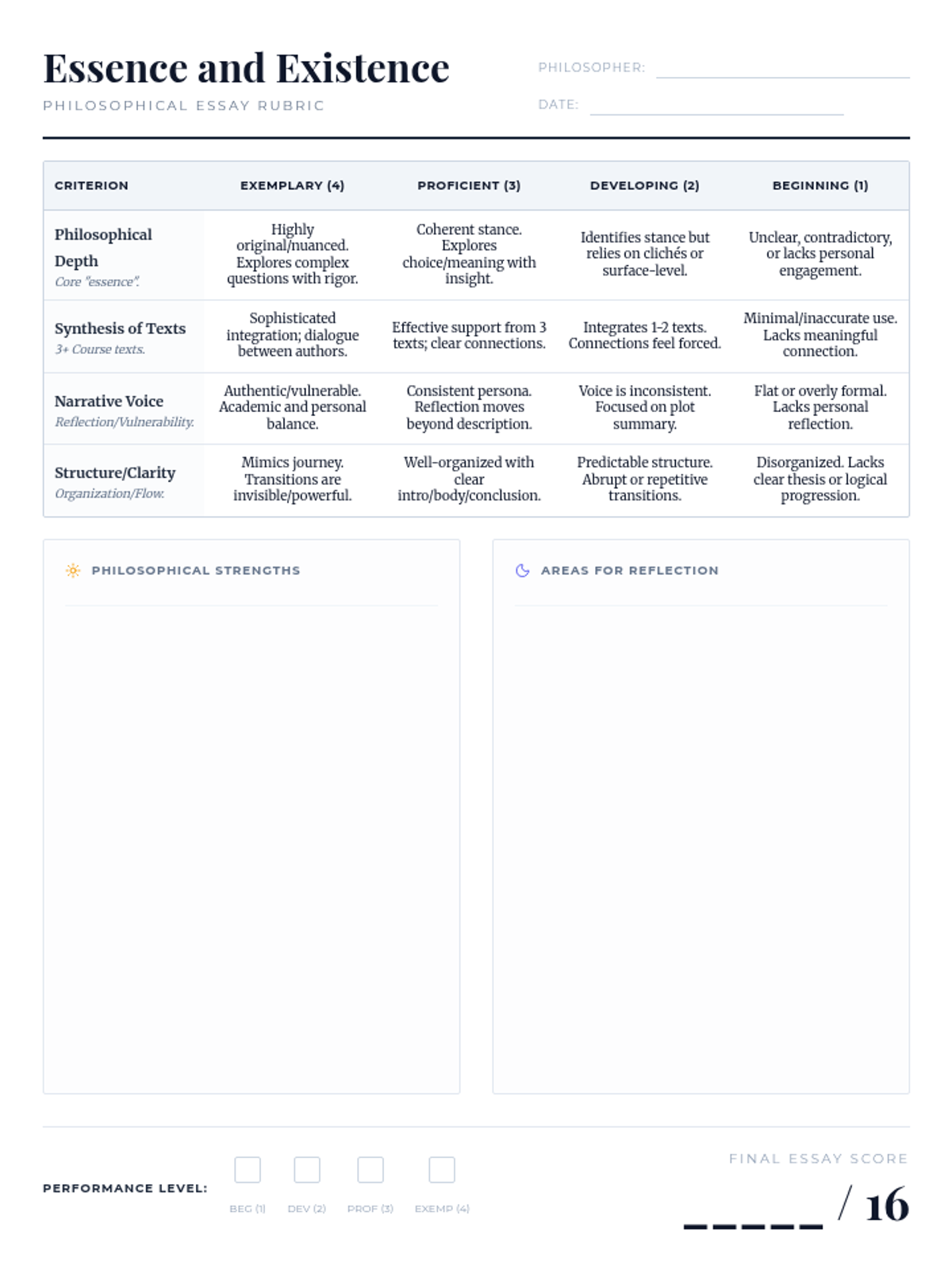
A exploration of existential themes through classic literature, philosophy, and contemporary film, culminating in a personal philosophical essay.
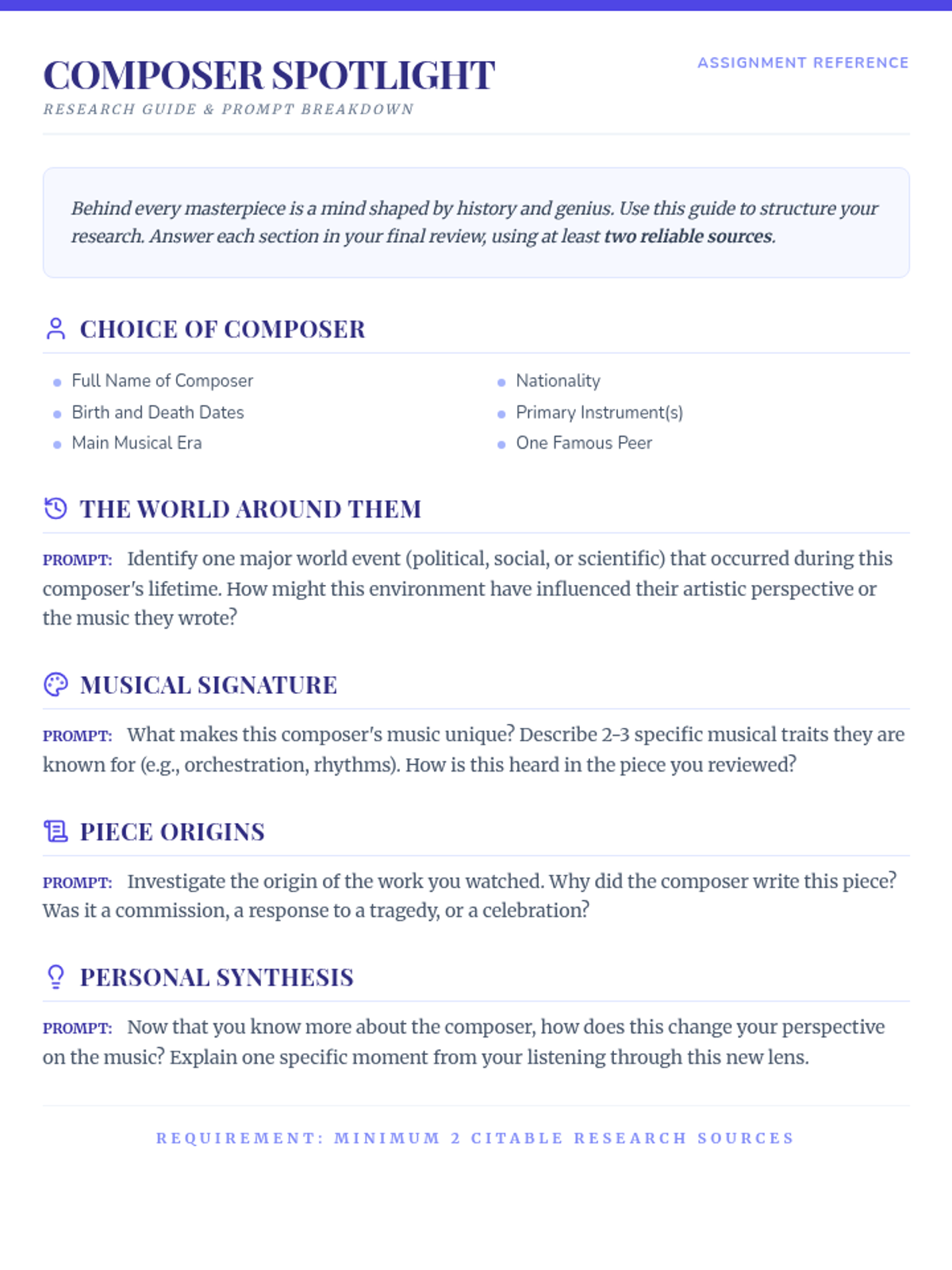
A comprehensive make-up assignment for students who missed a performance, requiring a detailed 5-paragraph review of a world-class orchestral concert with research and personal critique.
A mini-lesson introducing students to the world of stock photography by transforming everyday school environments into marketable, high-quality visual assets. Students learn about composition, lighting, and technical skills like depth of field through the lens of commercial utility.
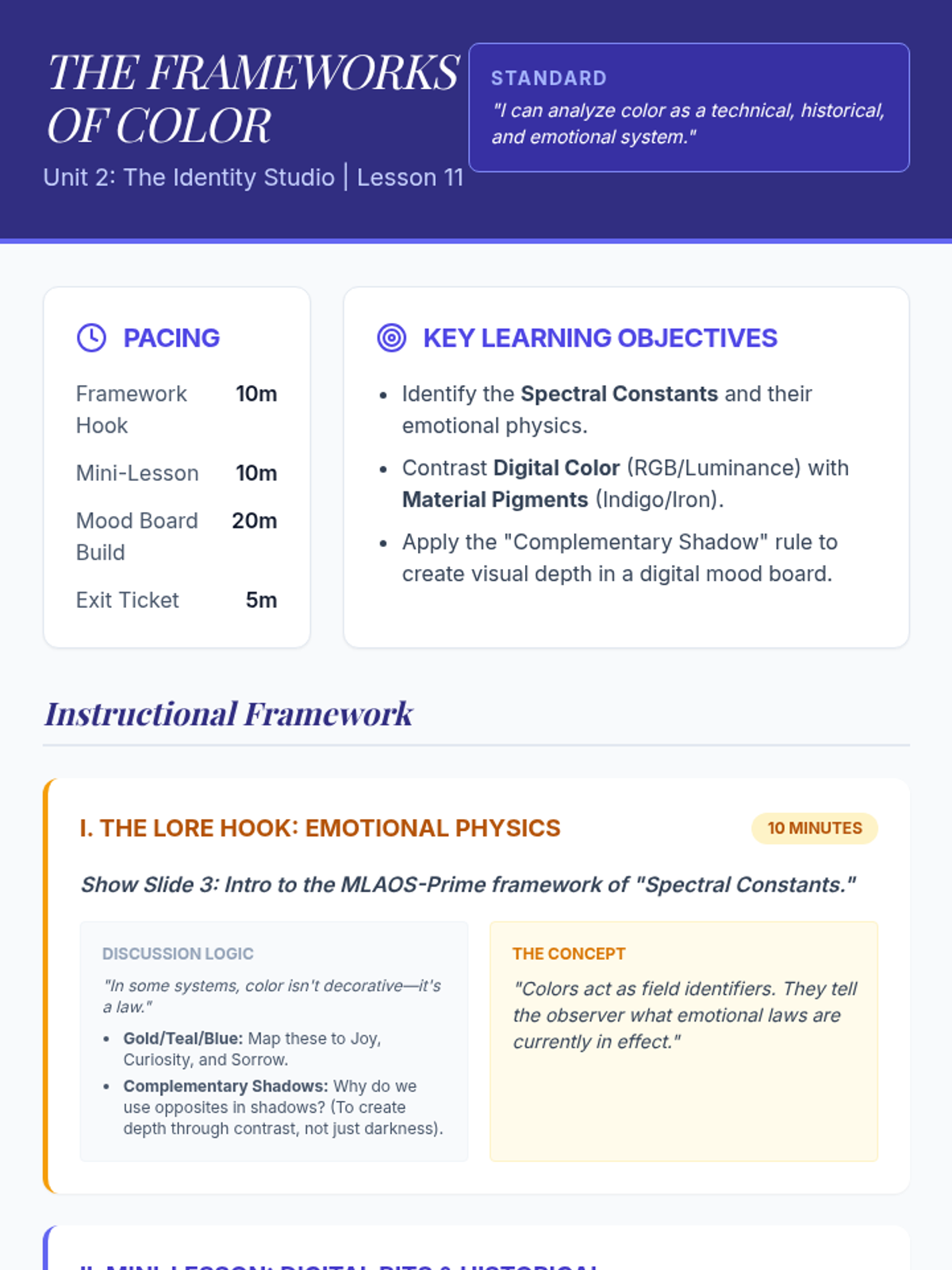
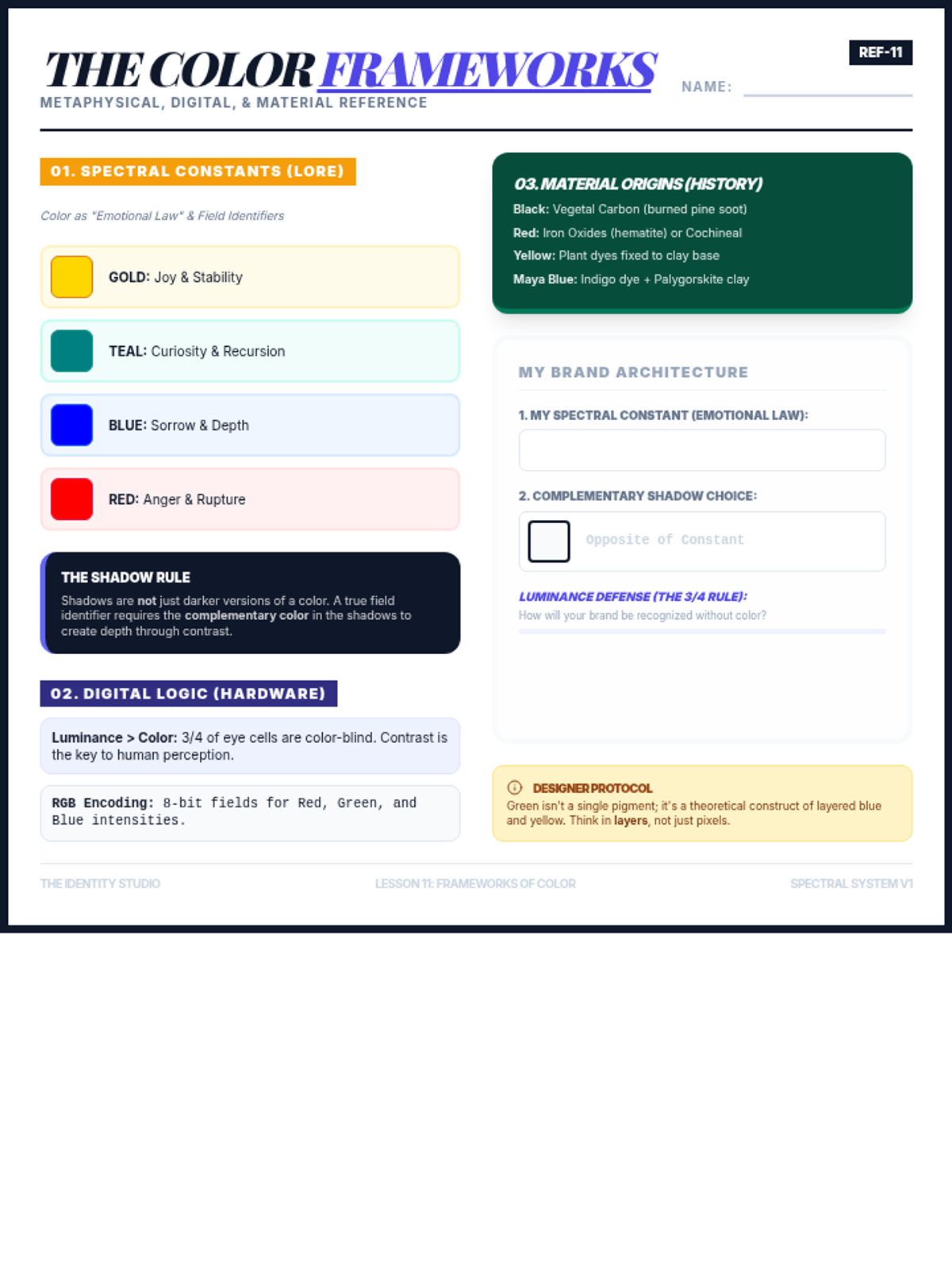
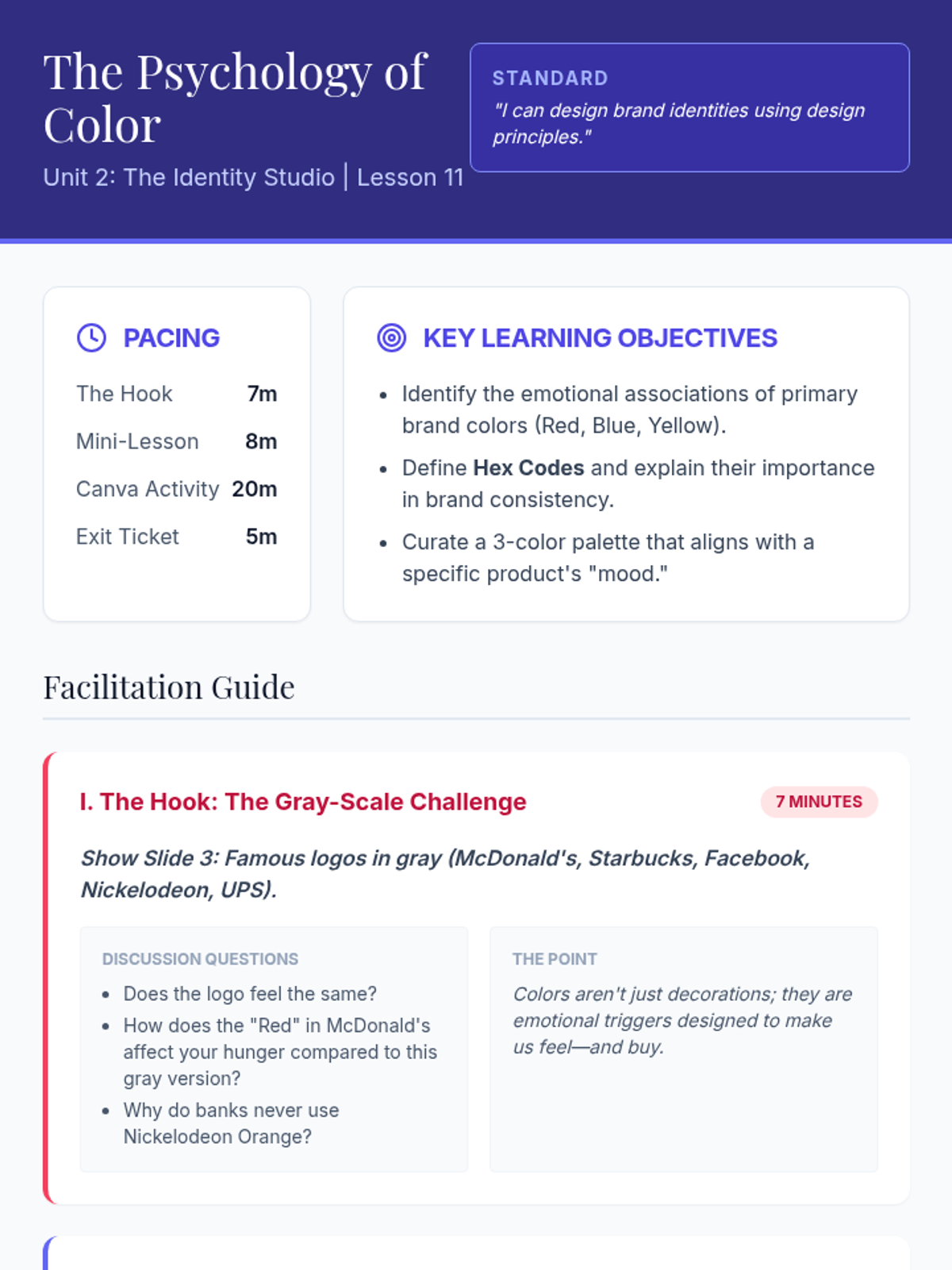
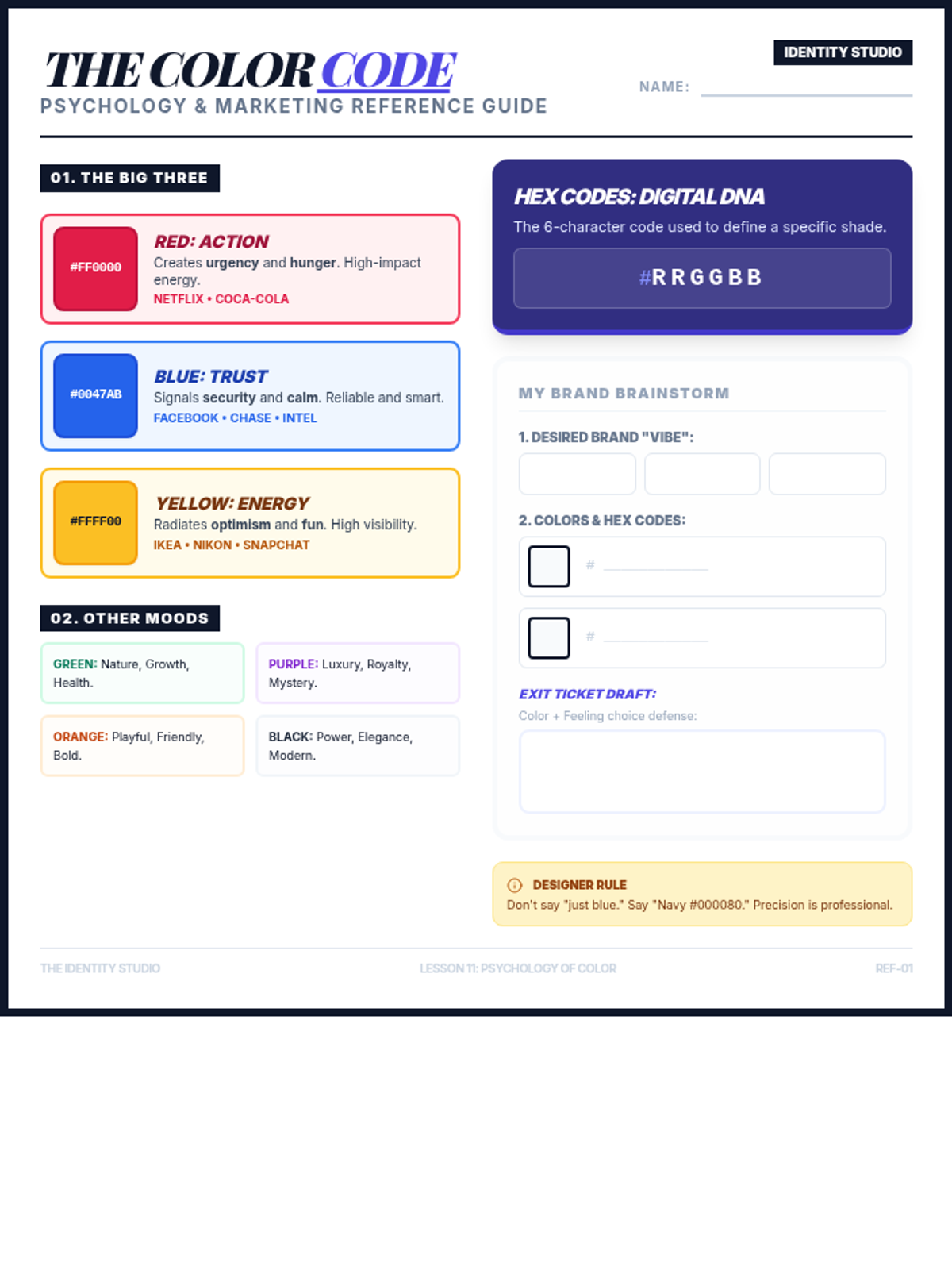
This lesson introduces students to the emotional impact of color in branding, the basics of color theory in marketing, and the technical use of Hex Codes in digital design. Students apply these concepts by creating a brand mood board in Canva.
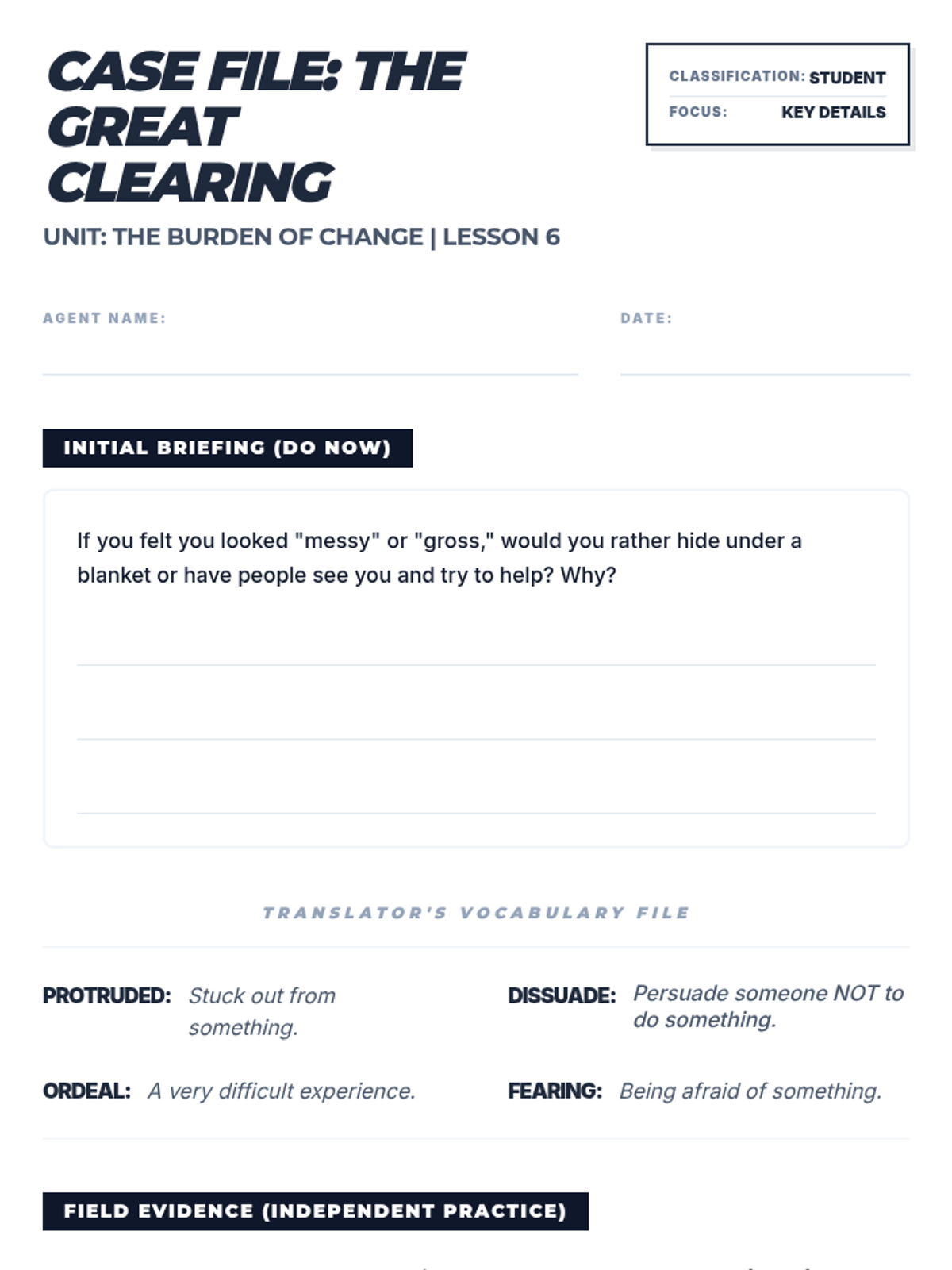
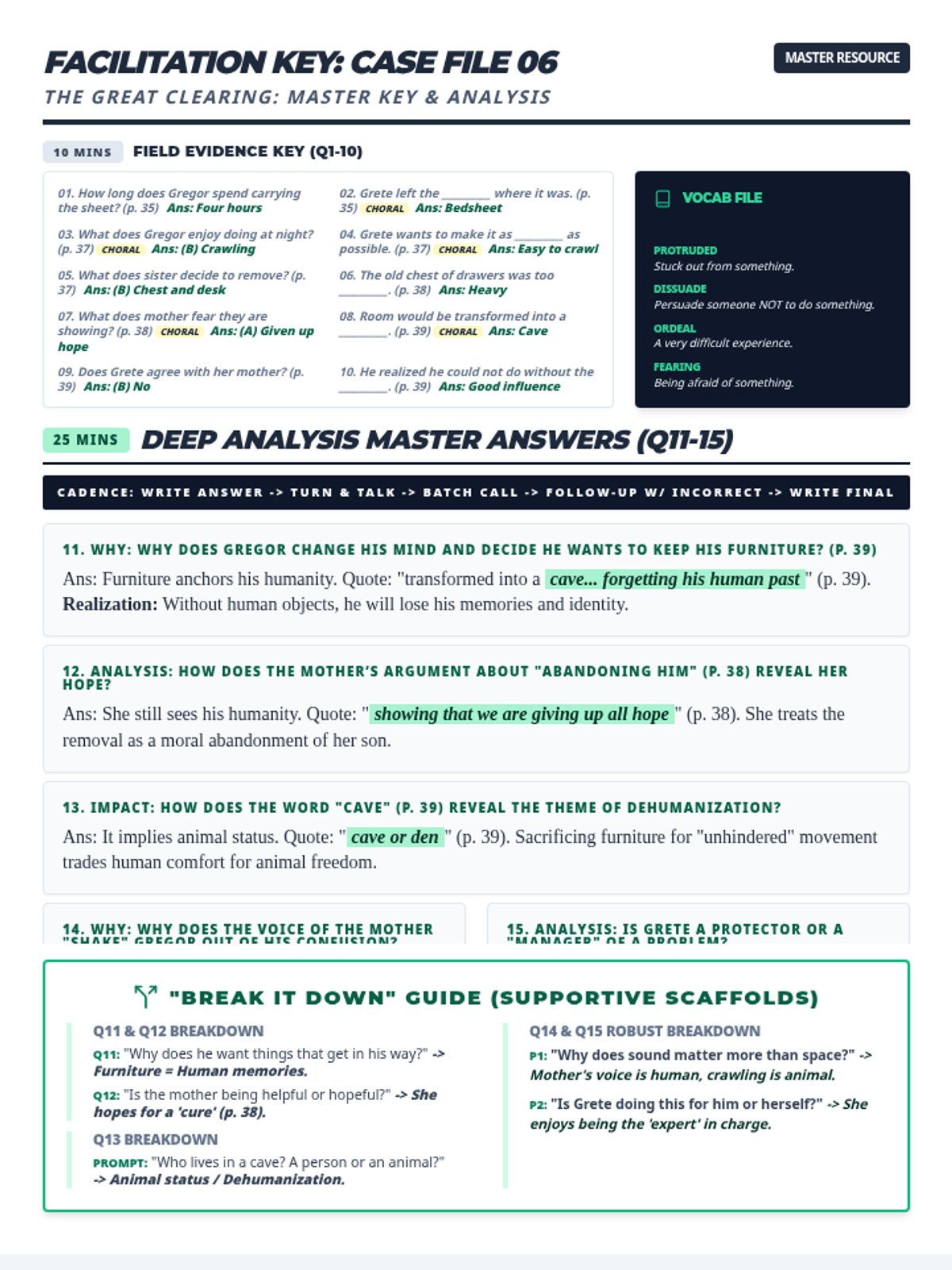
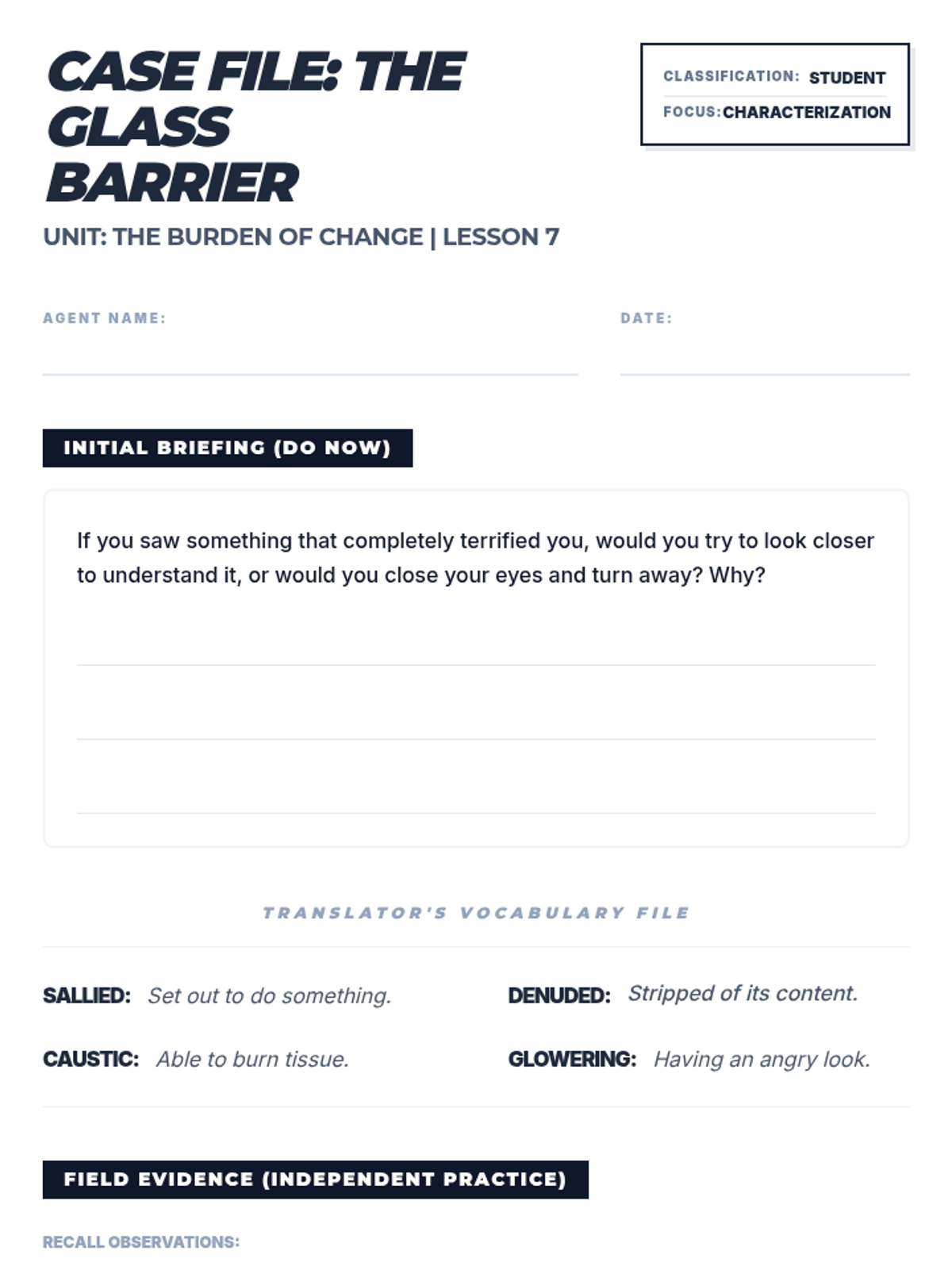
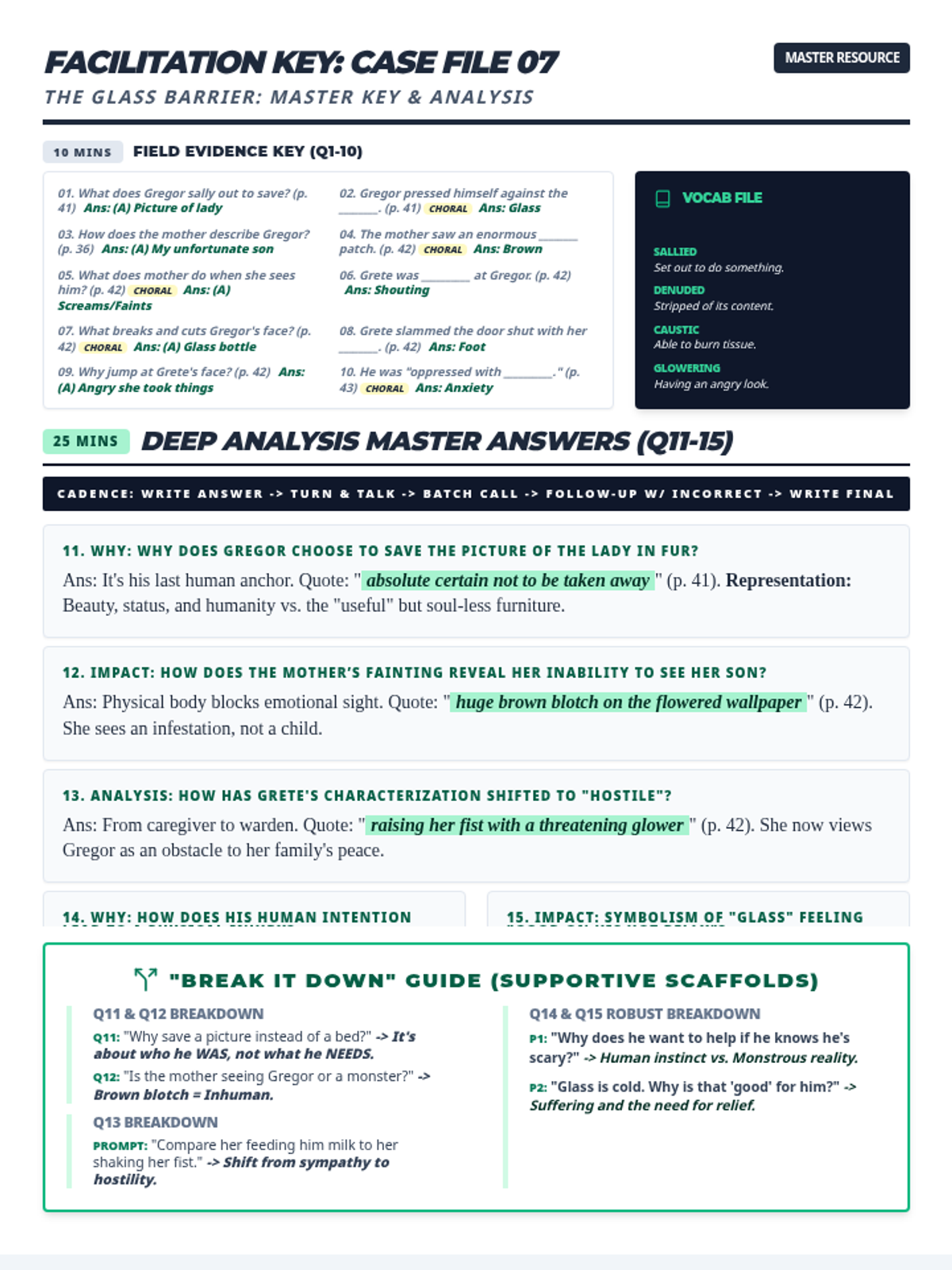
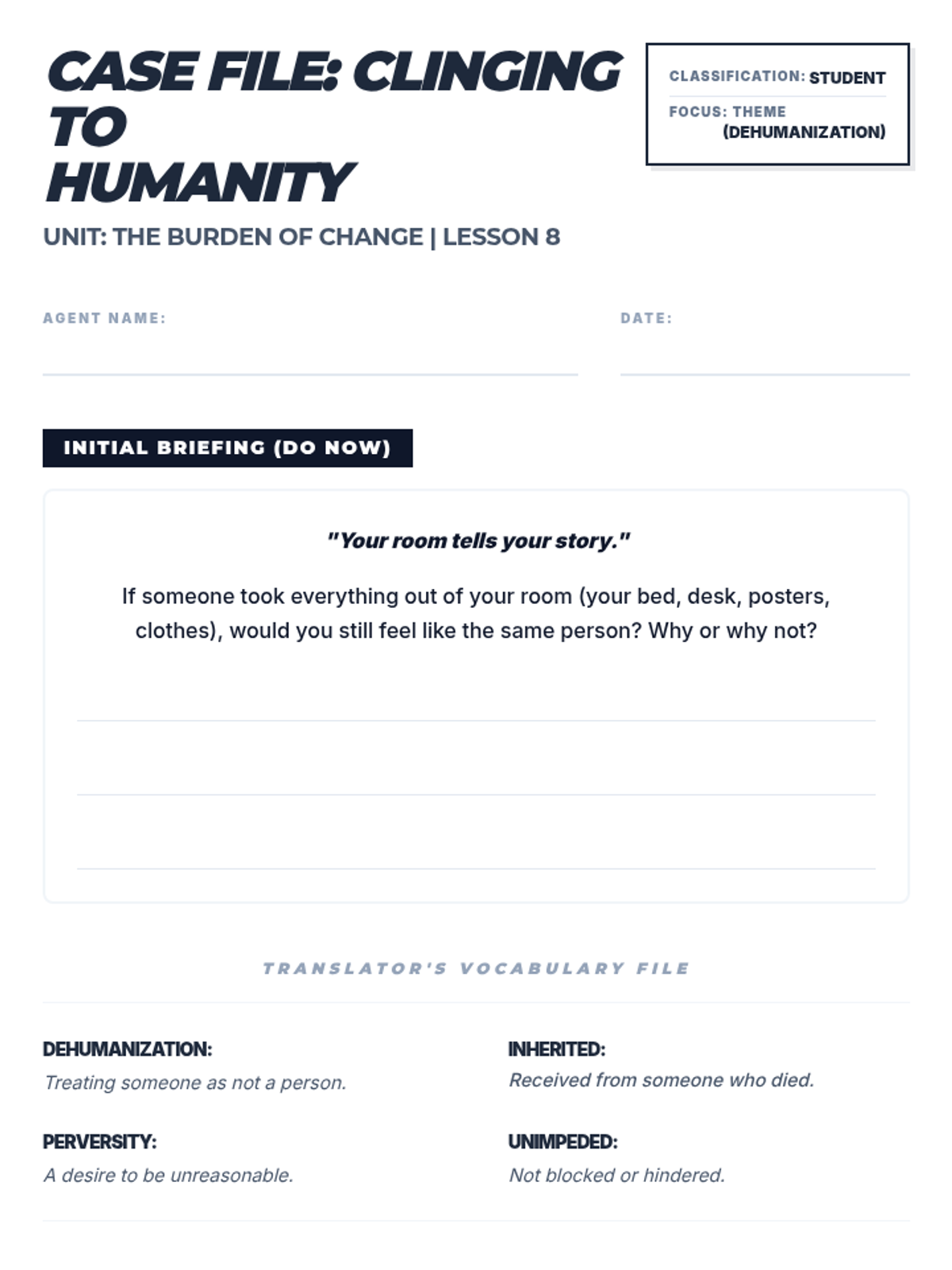
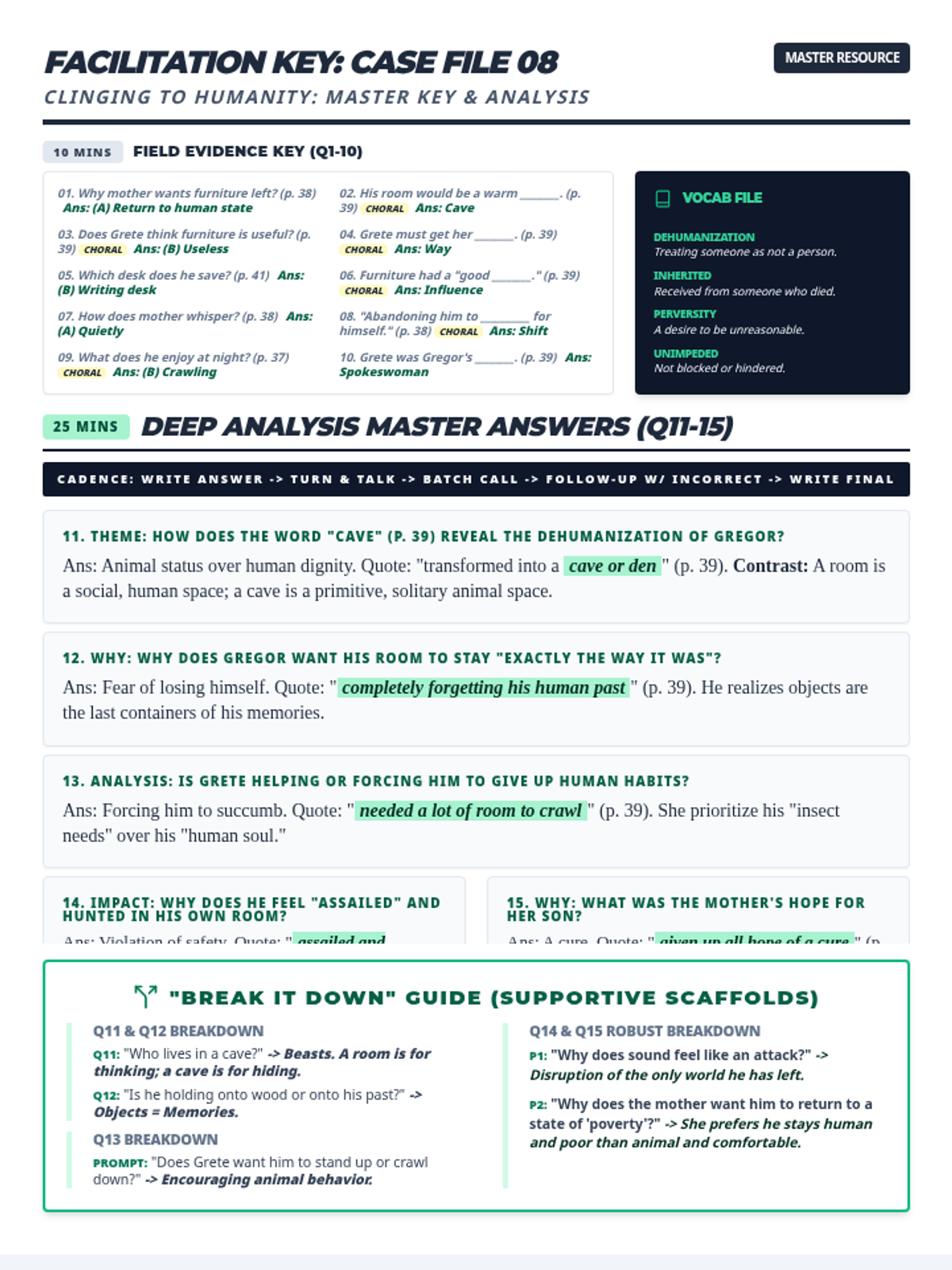
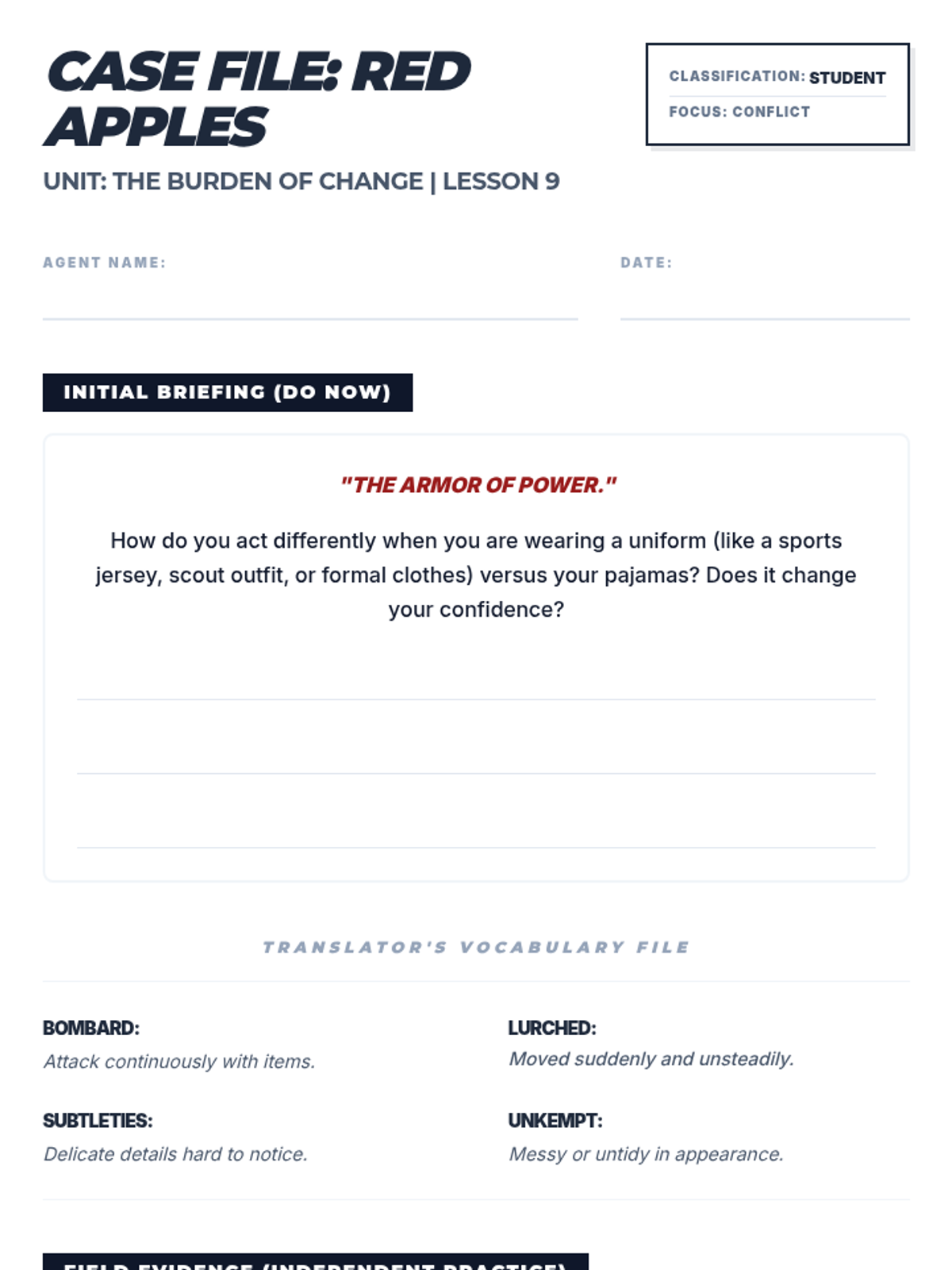
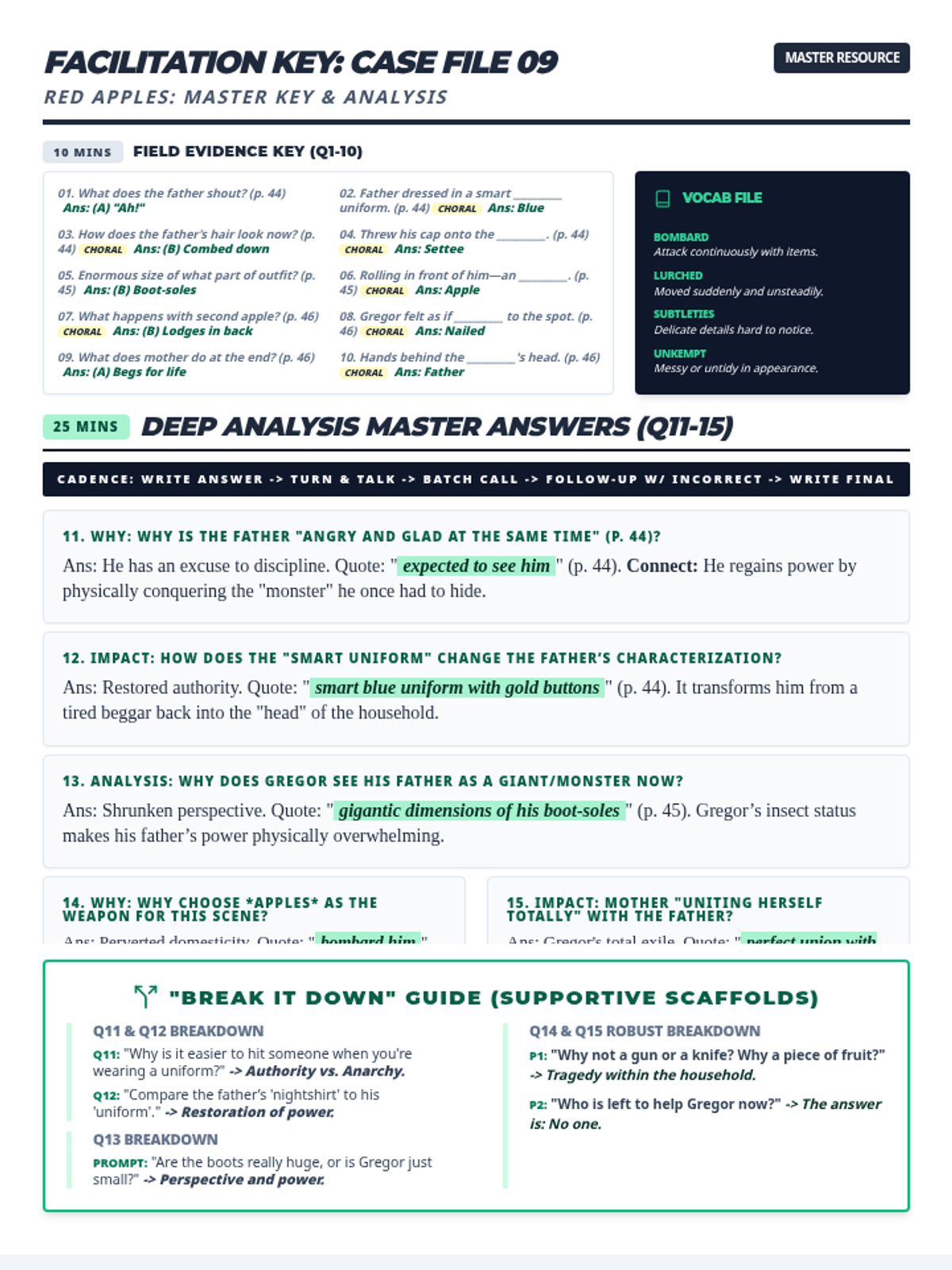
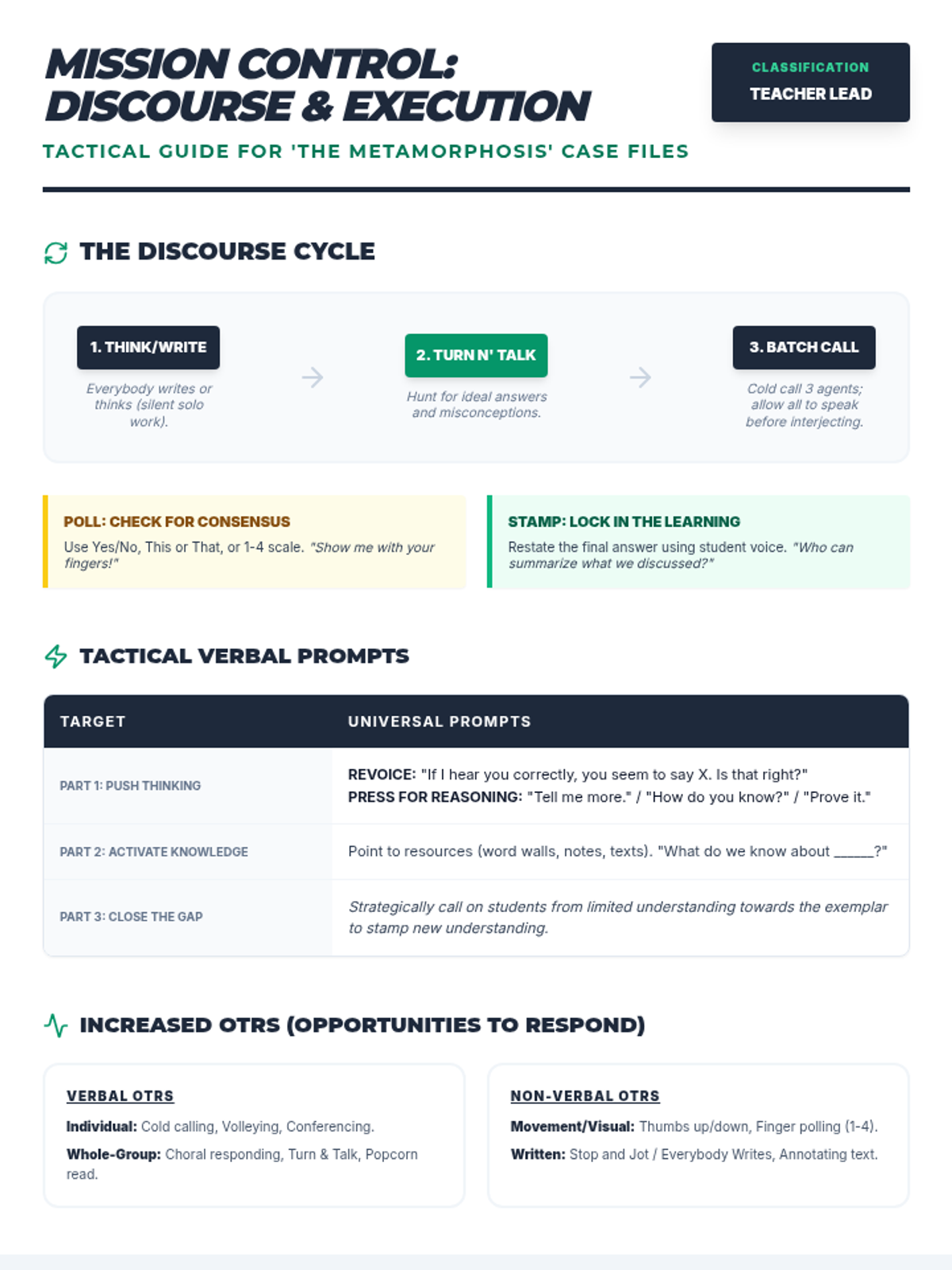
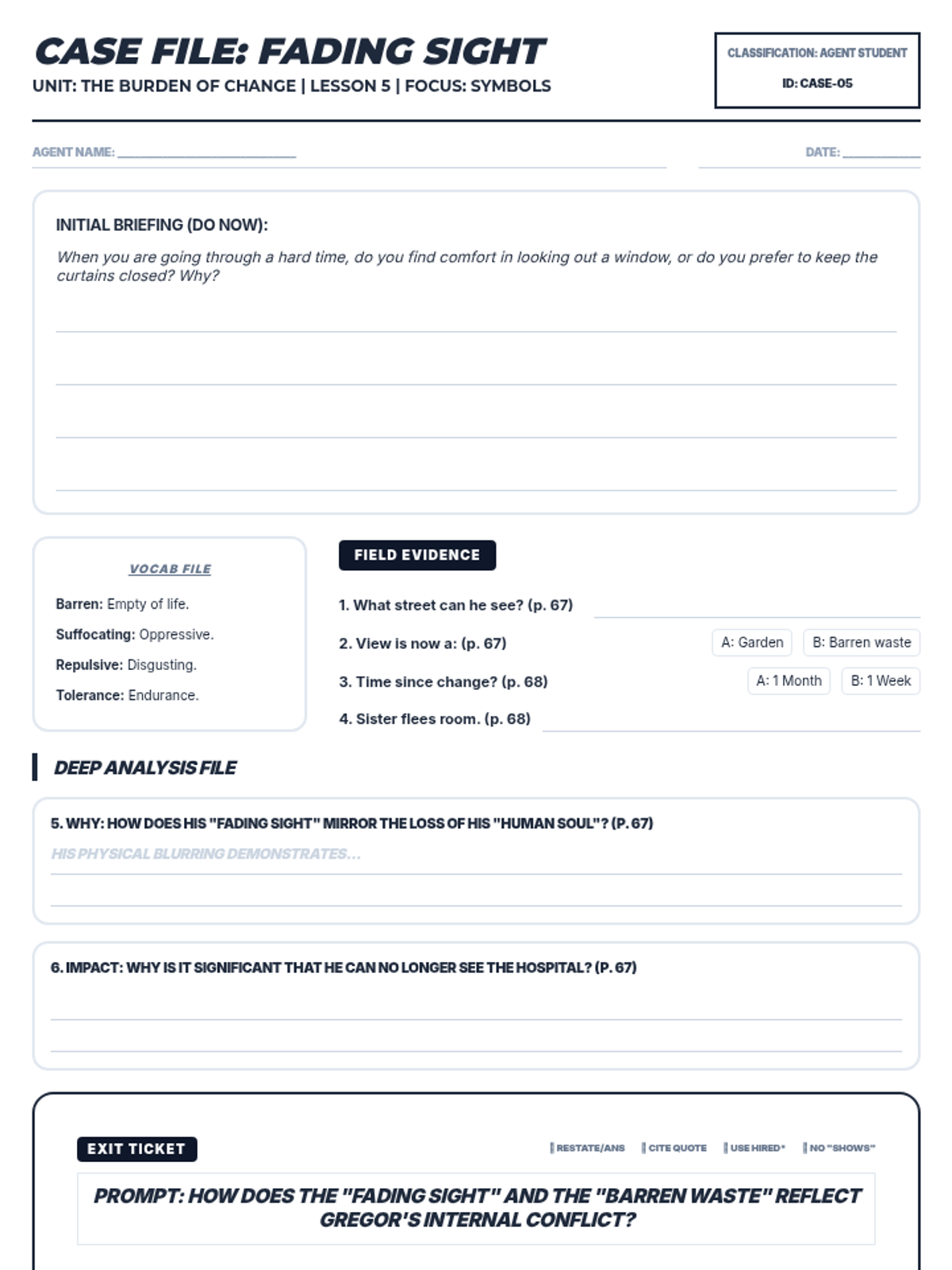
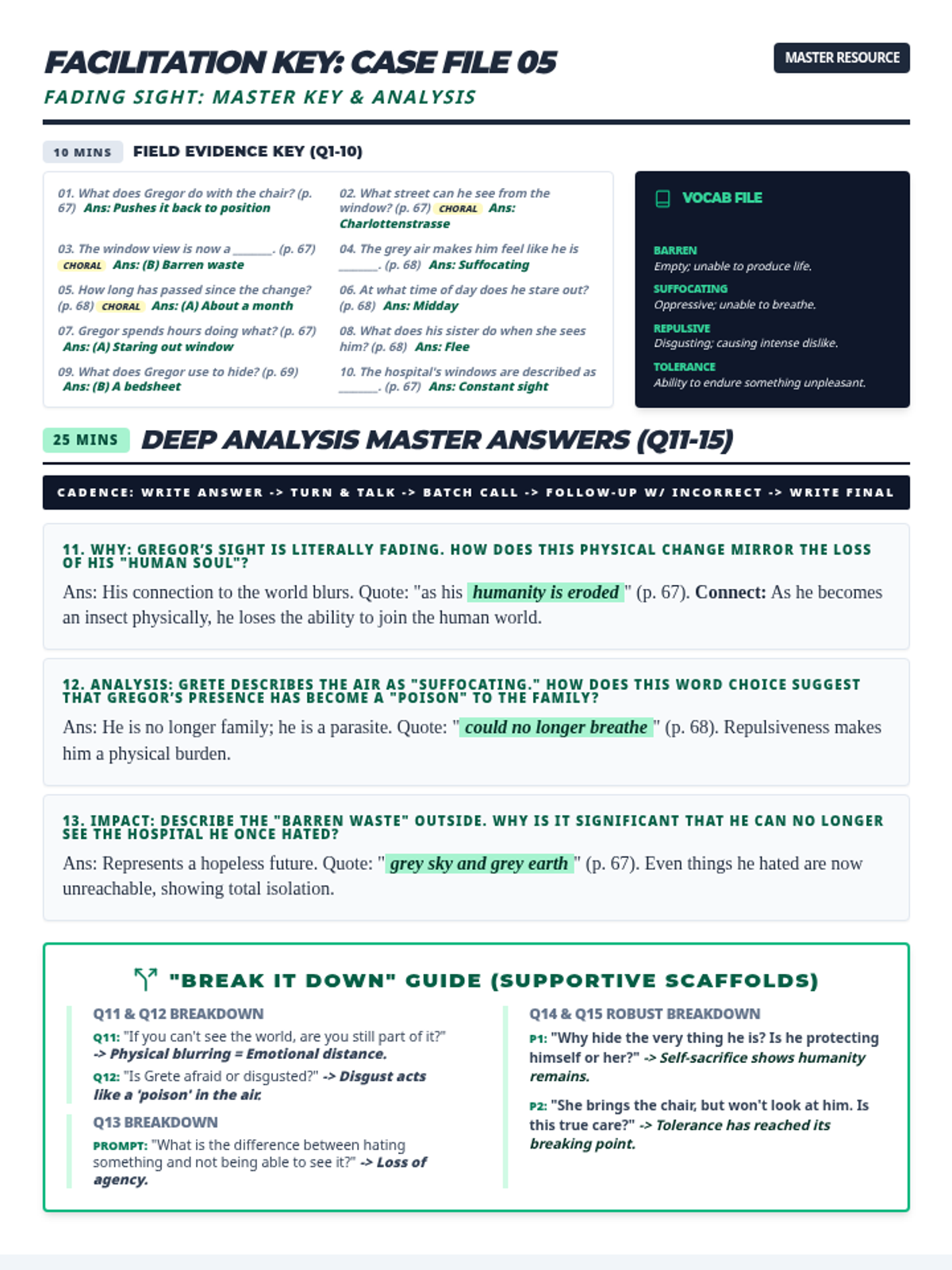
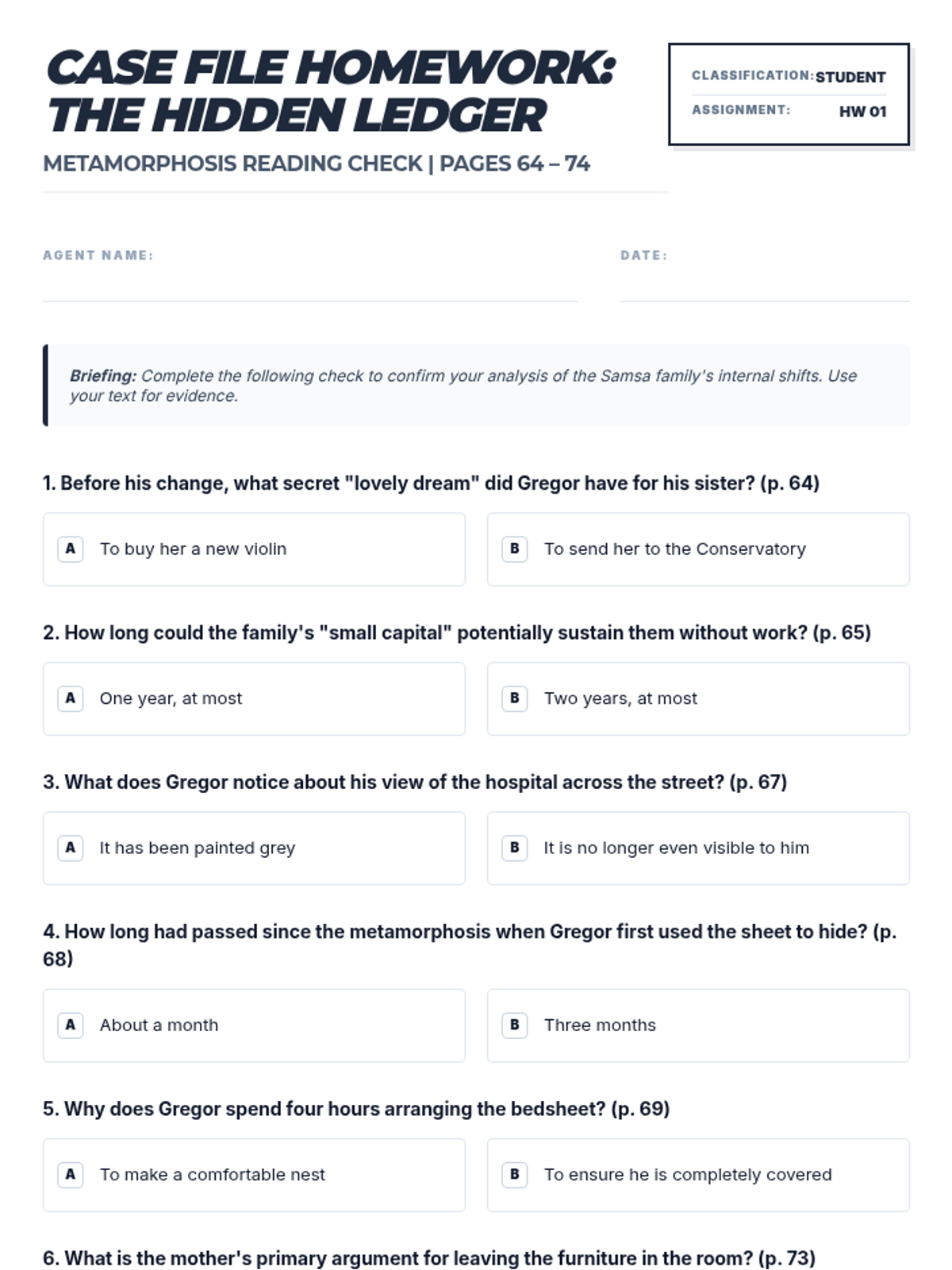
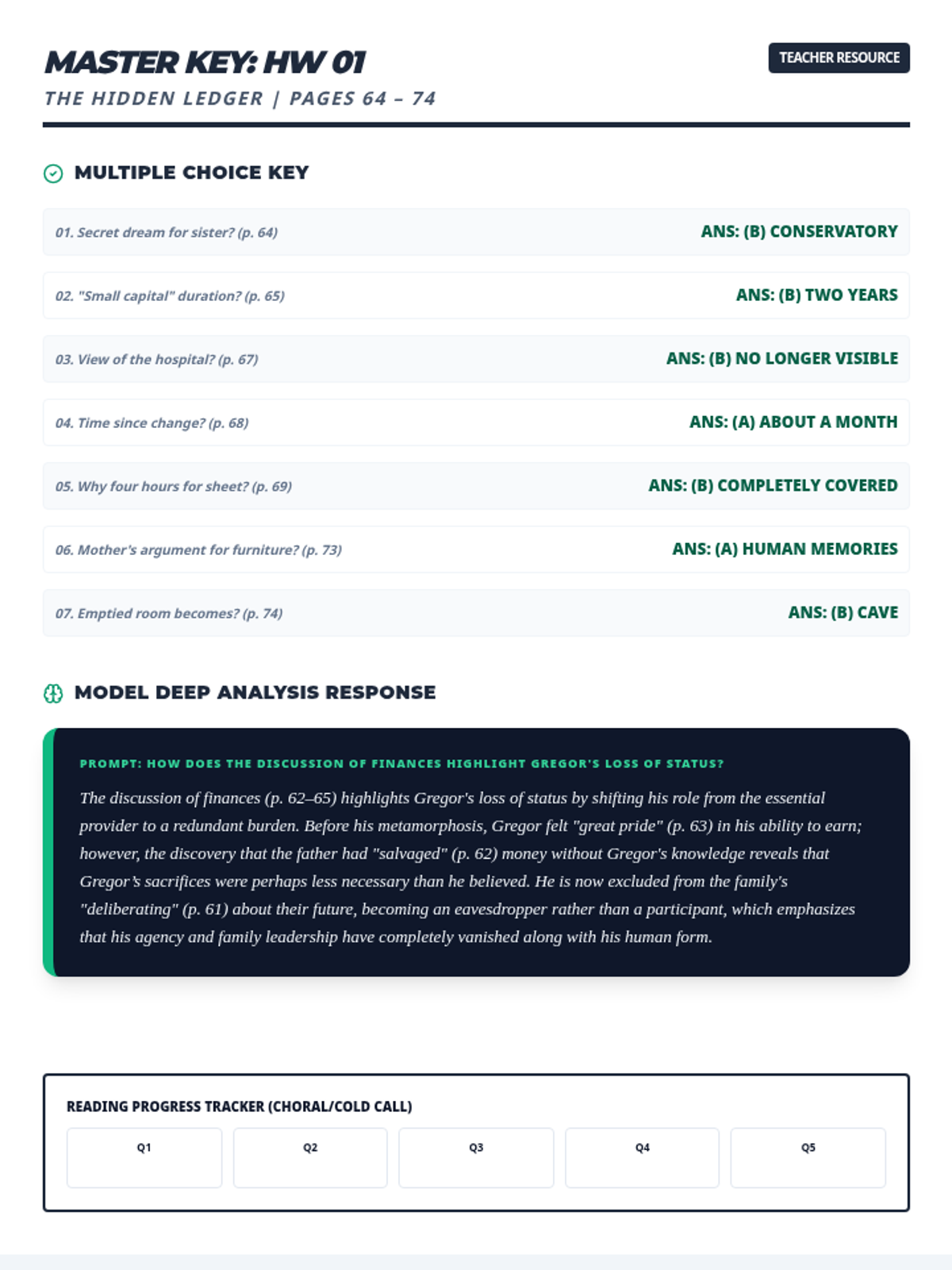
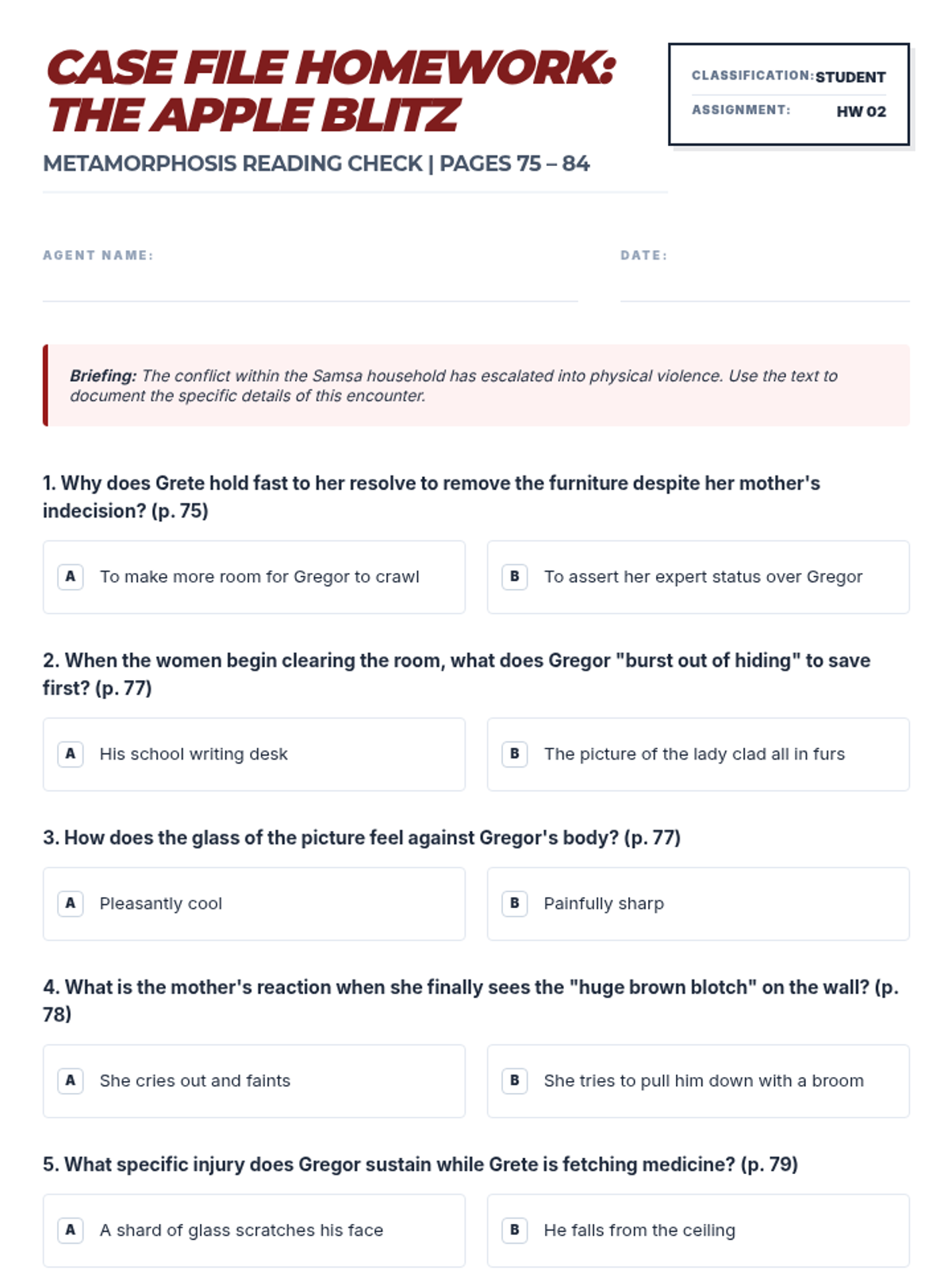
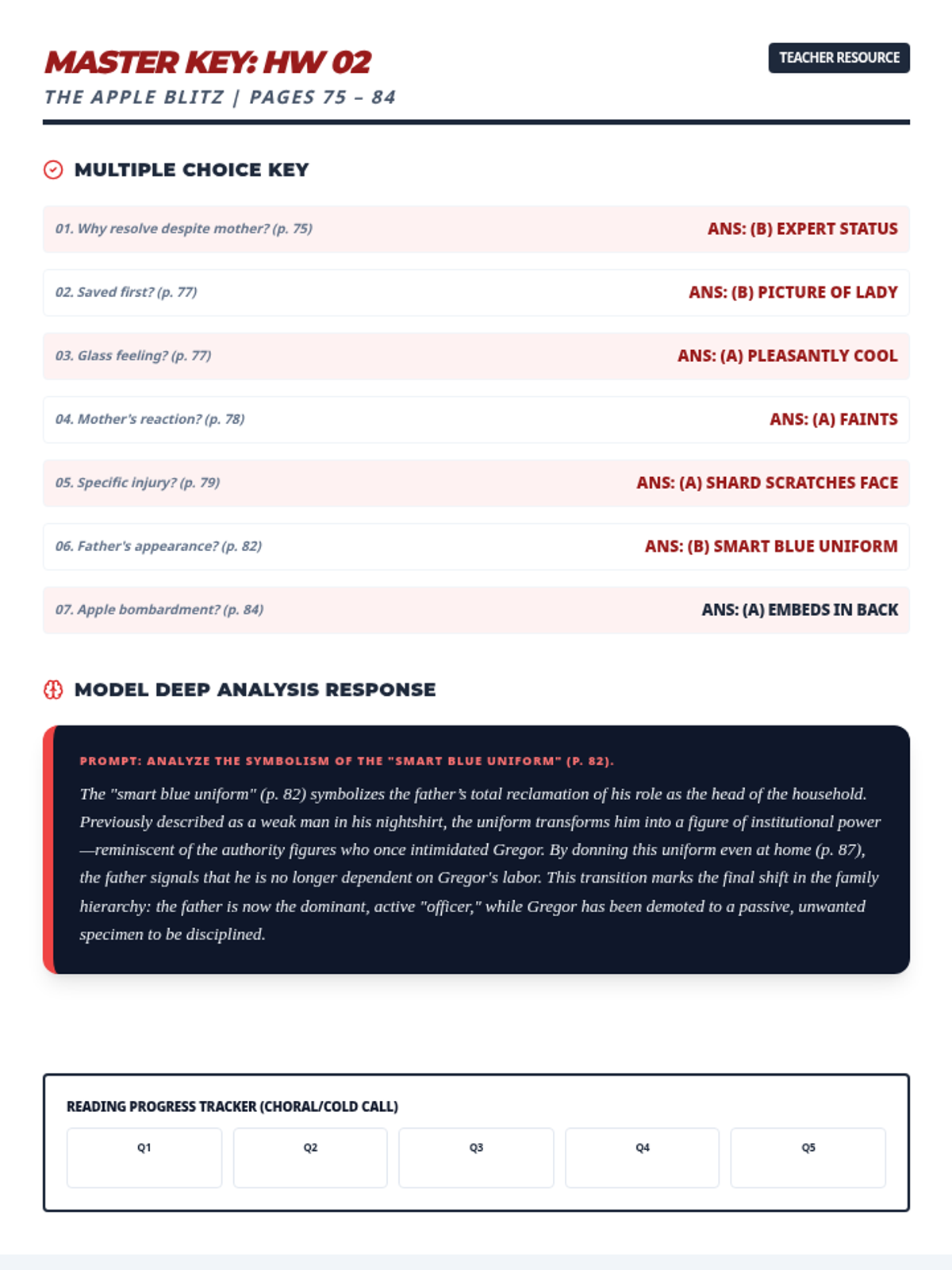
A comprehensive unit covering Gregor Samsa's physical and emotional decay through five sequential 'Case Files'. Students analyze symbols, characterization, theme, and conflict as Gregor's humanity is further eroded and the family hierarchy shifts.
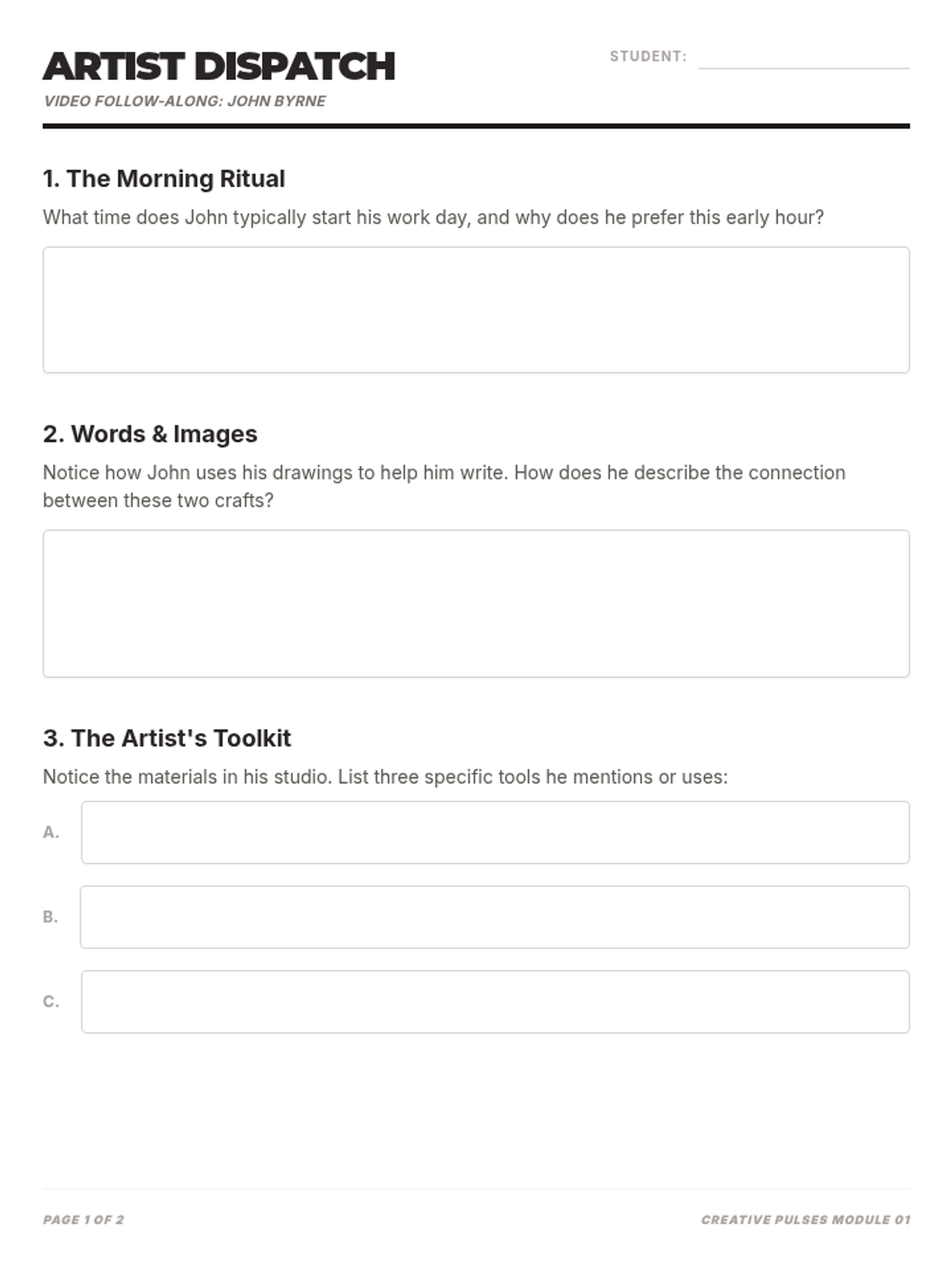
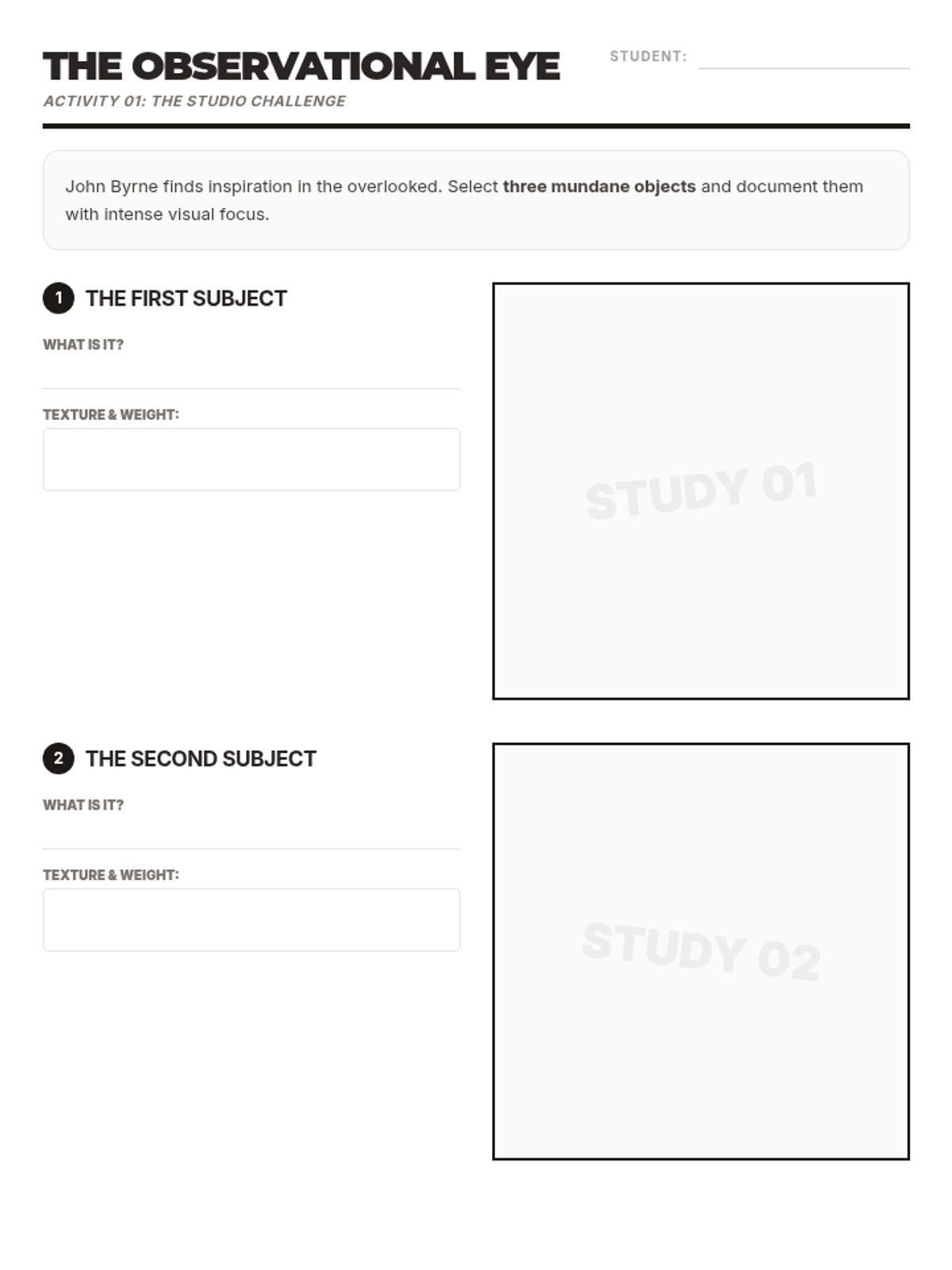
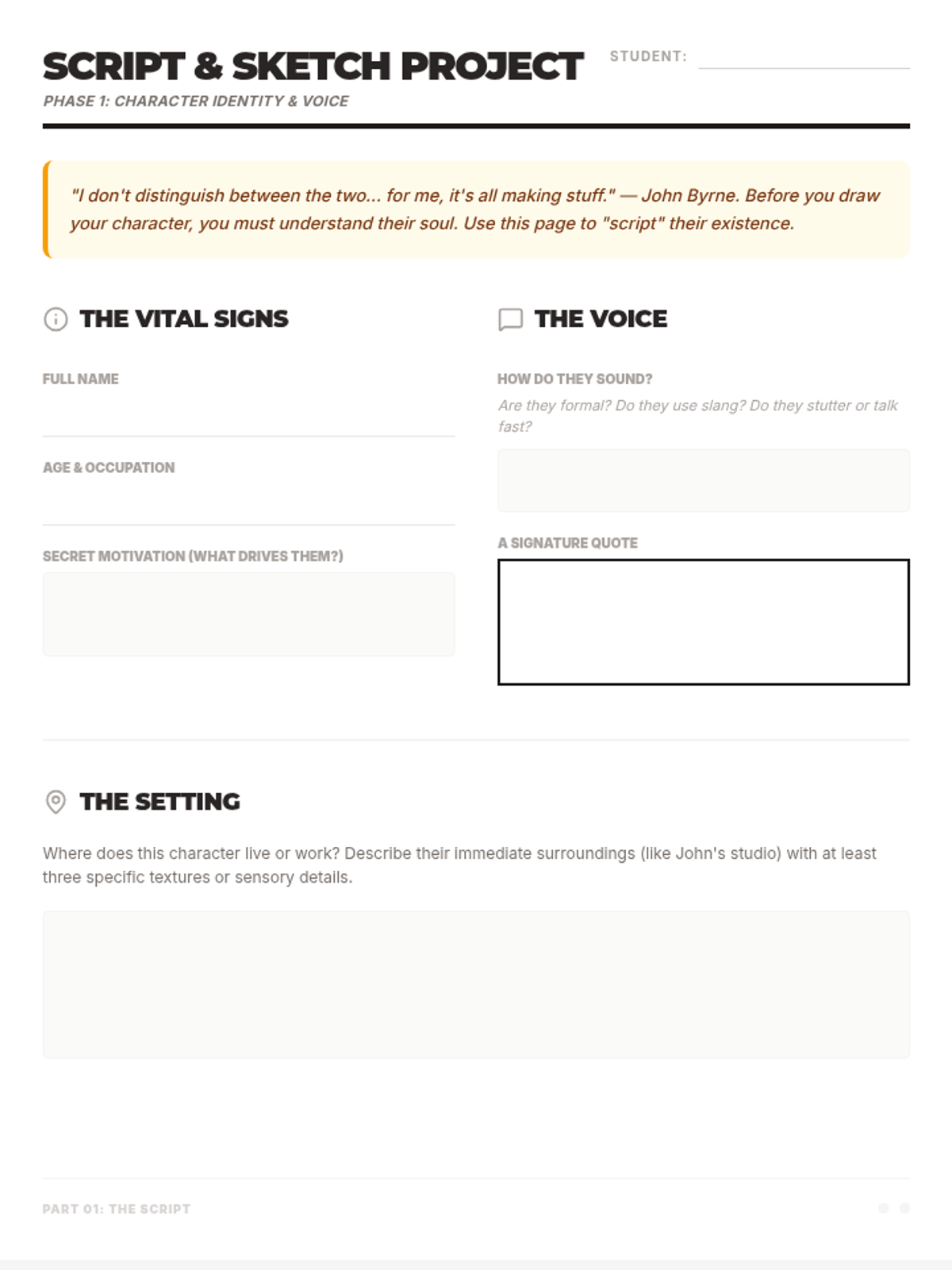
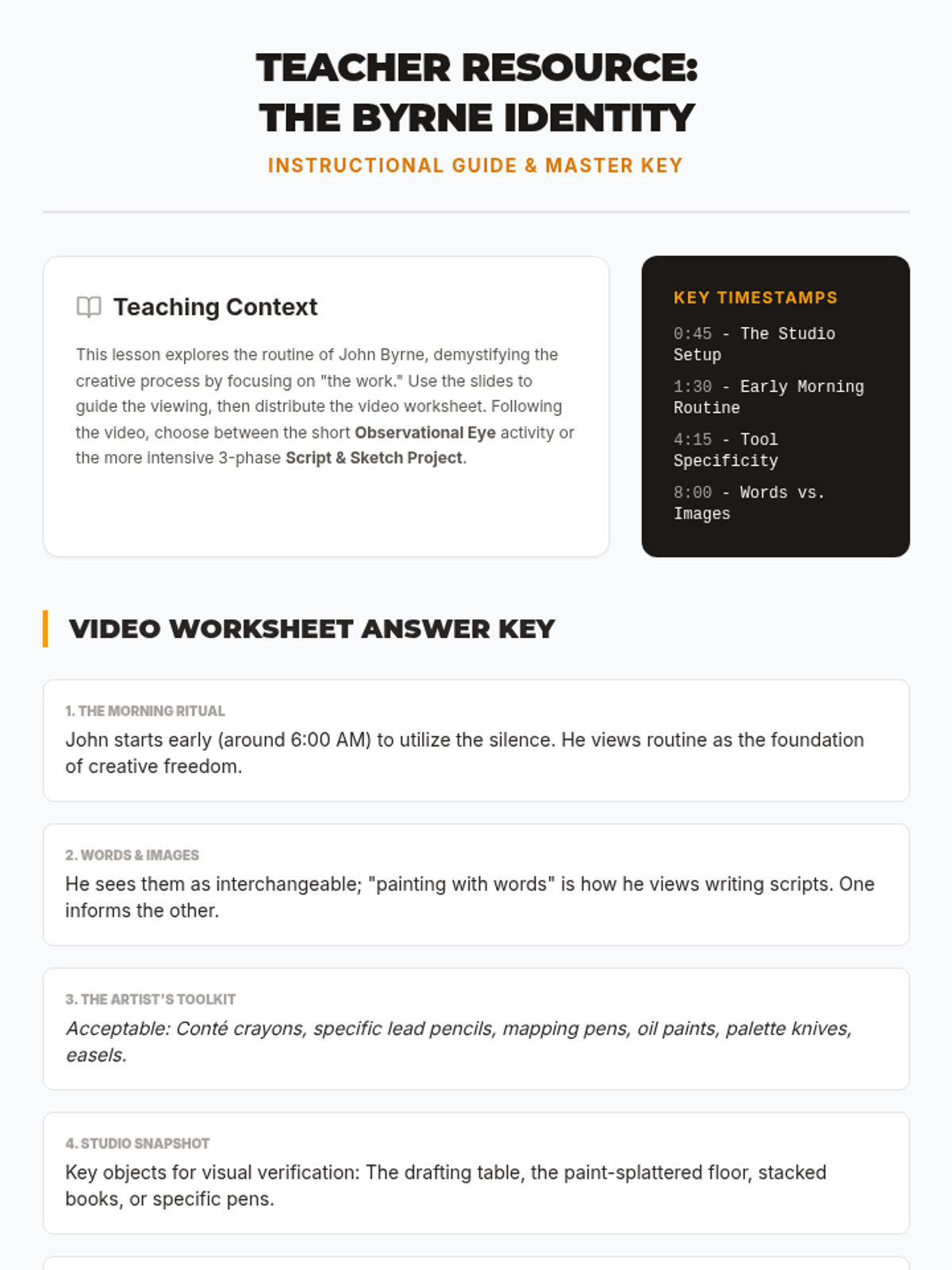
An in-depth look at John Byrne's daily life as a painter and playwright, focusing on his studio habits, materials, and the intersection of visual art and storytelling.
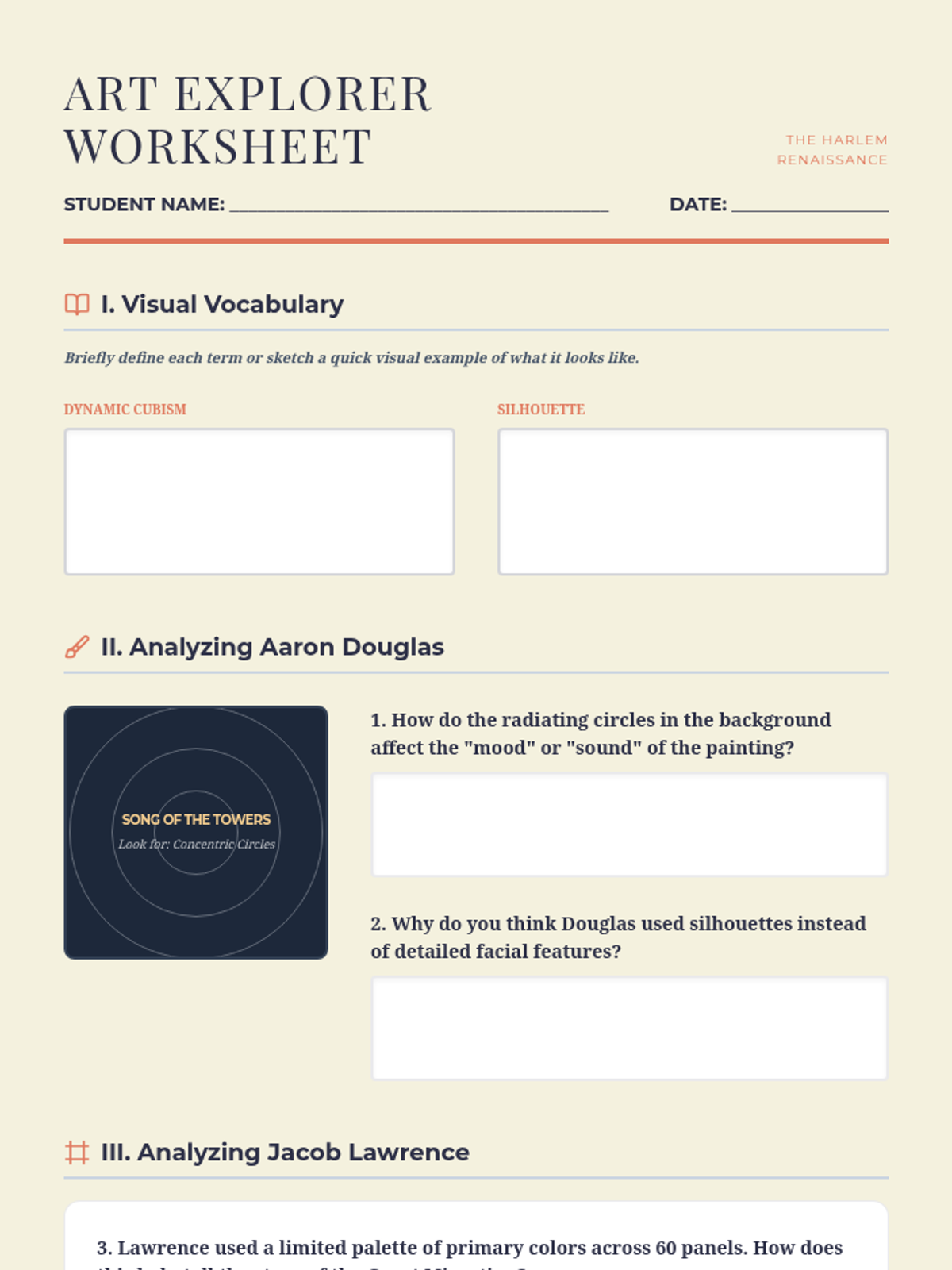
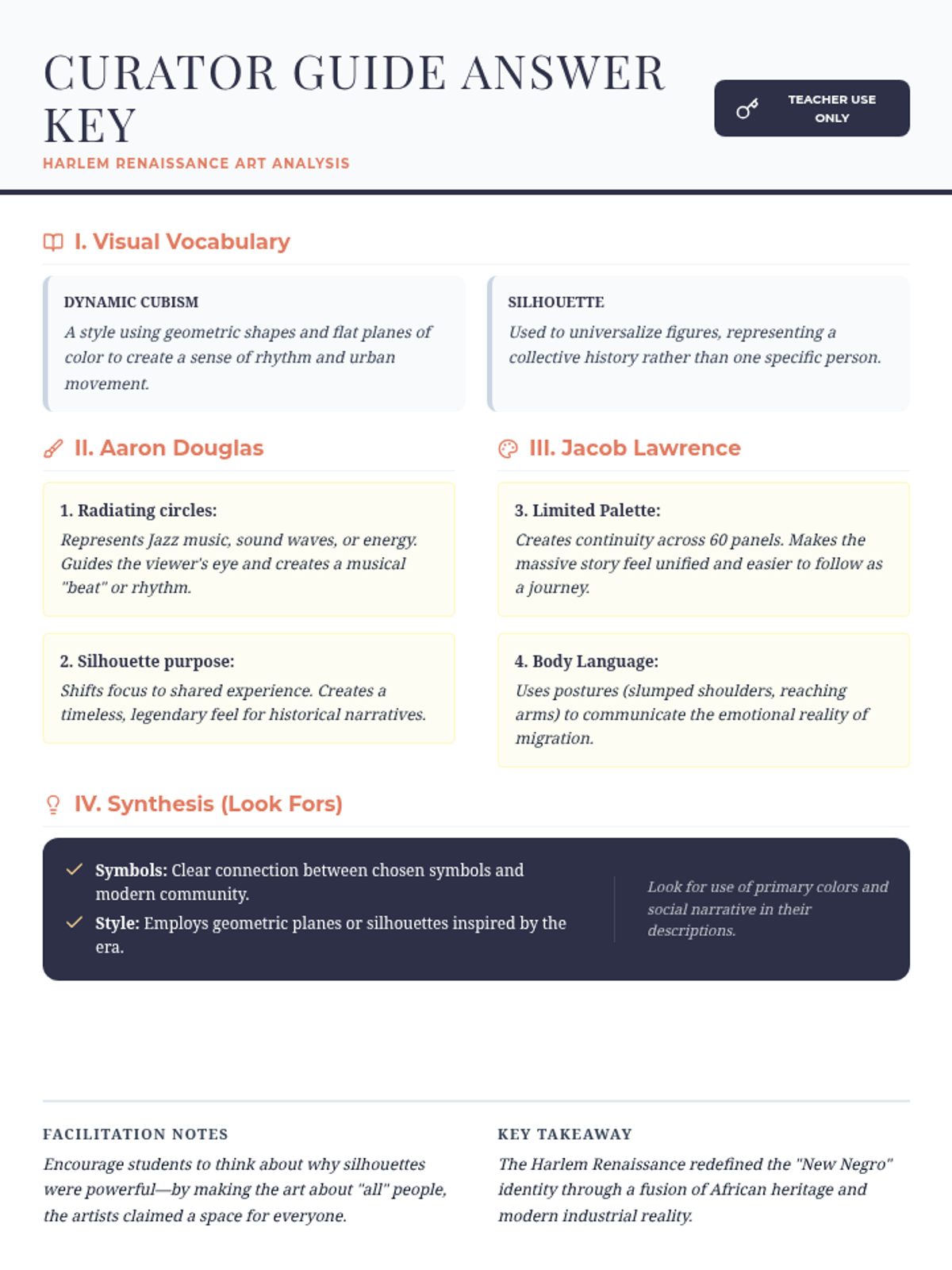
An introductory lesson on the Harlem Renaissance art movement, focusing on visual storytelling, social themes, and the works of Aaron Douglas and Jacob Lawrence.
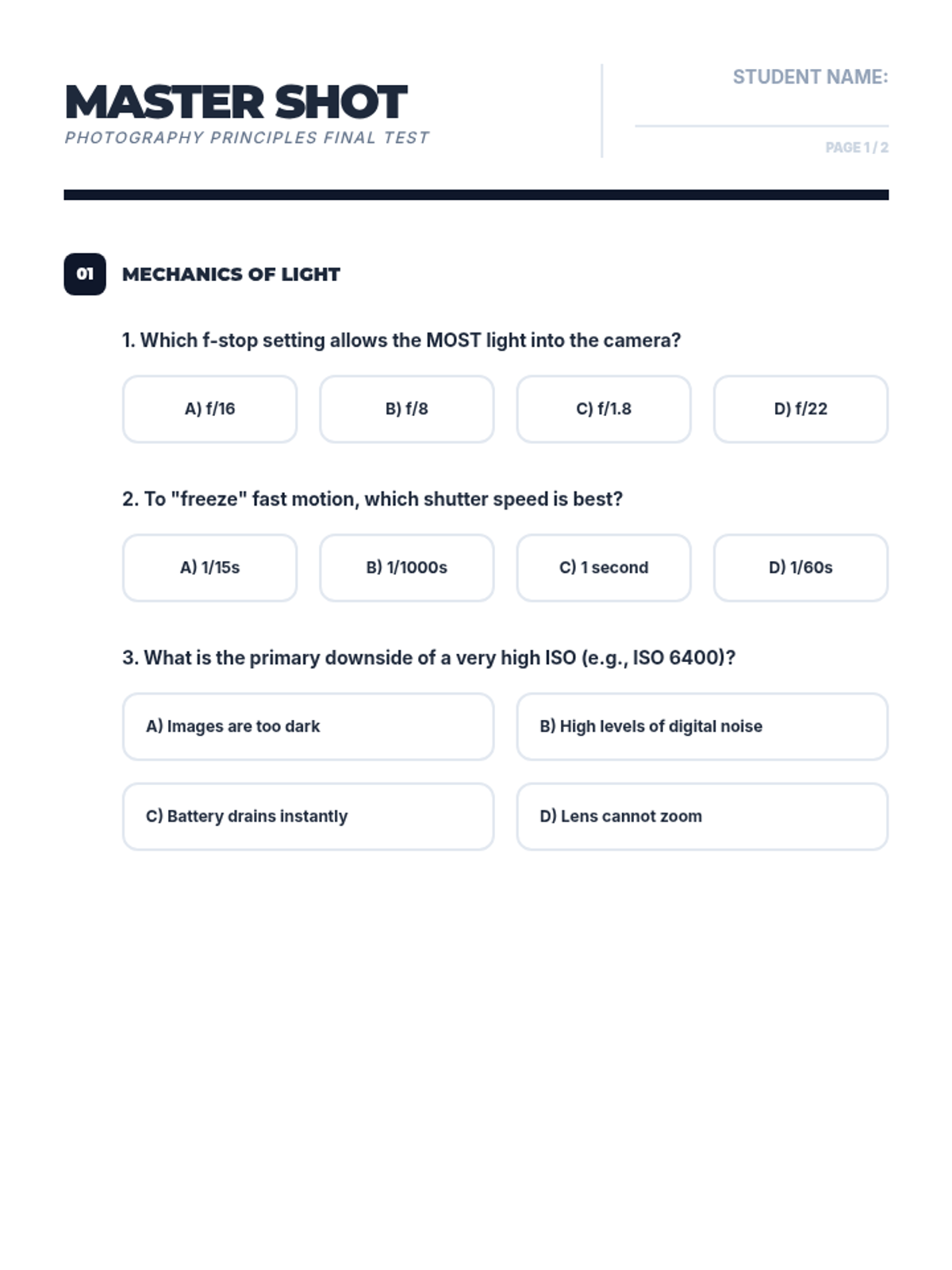
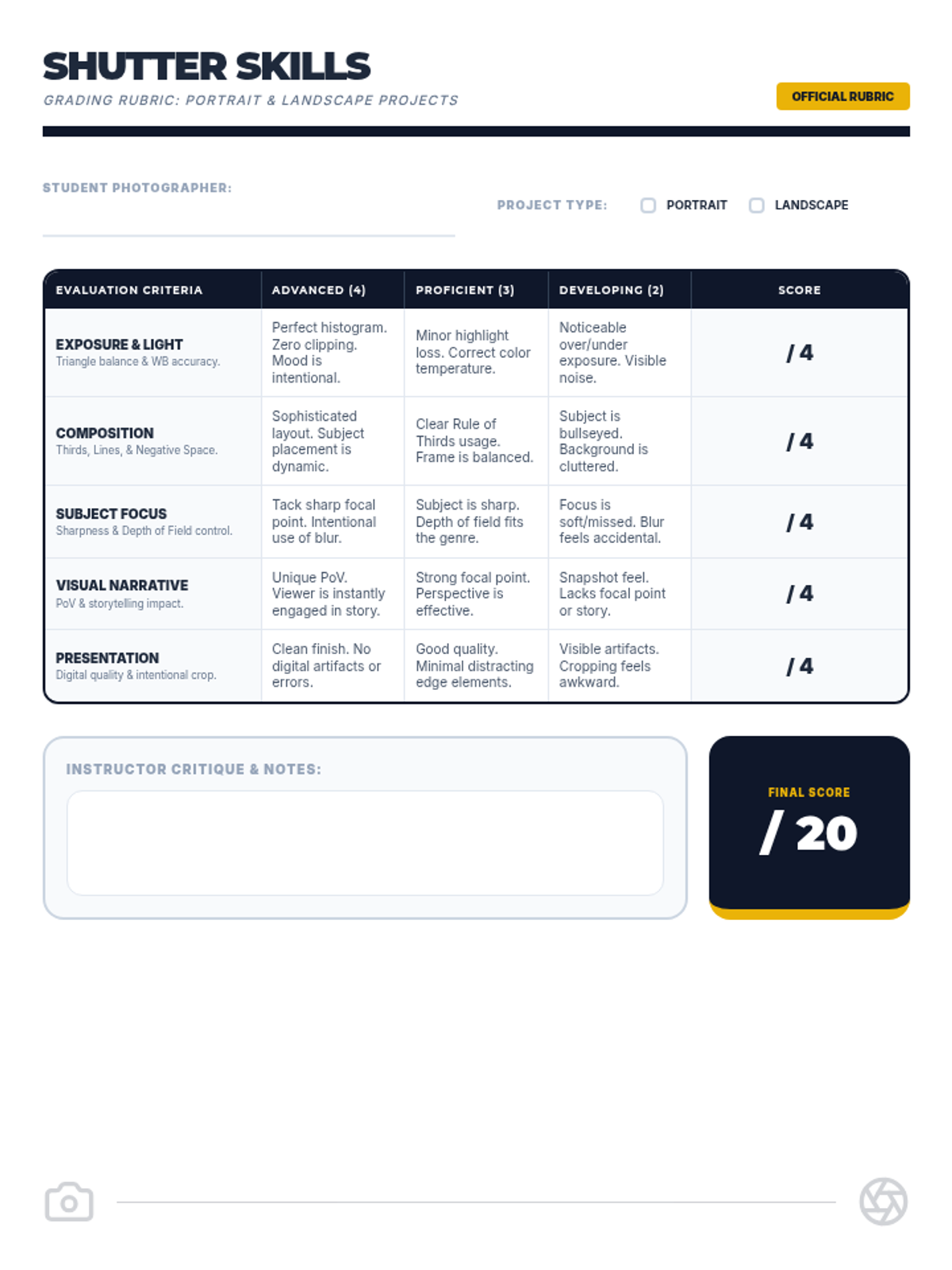
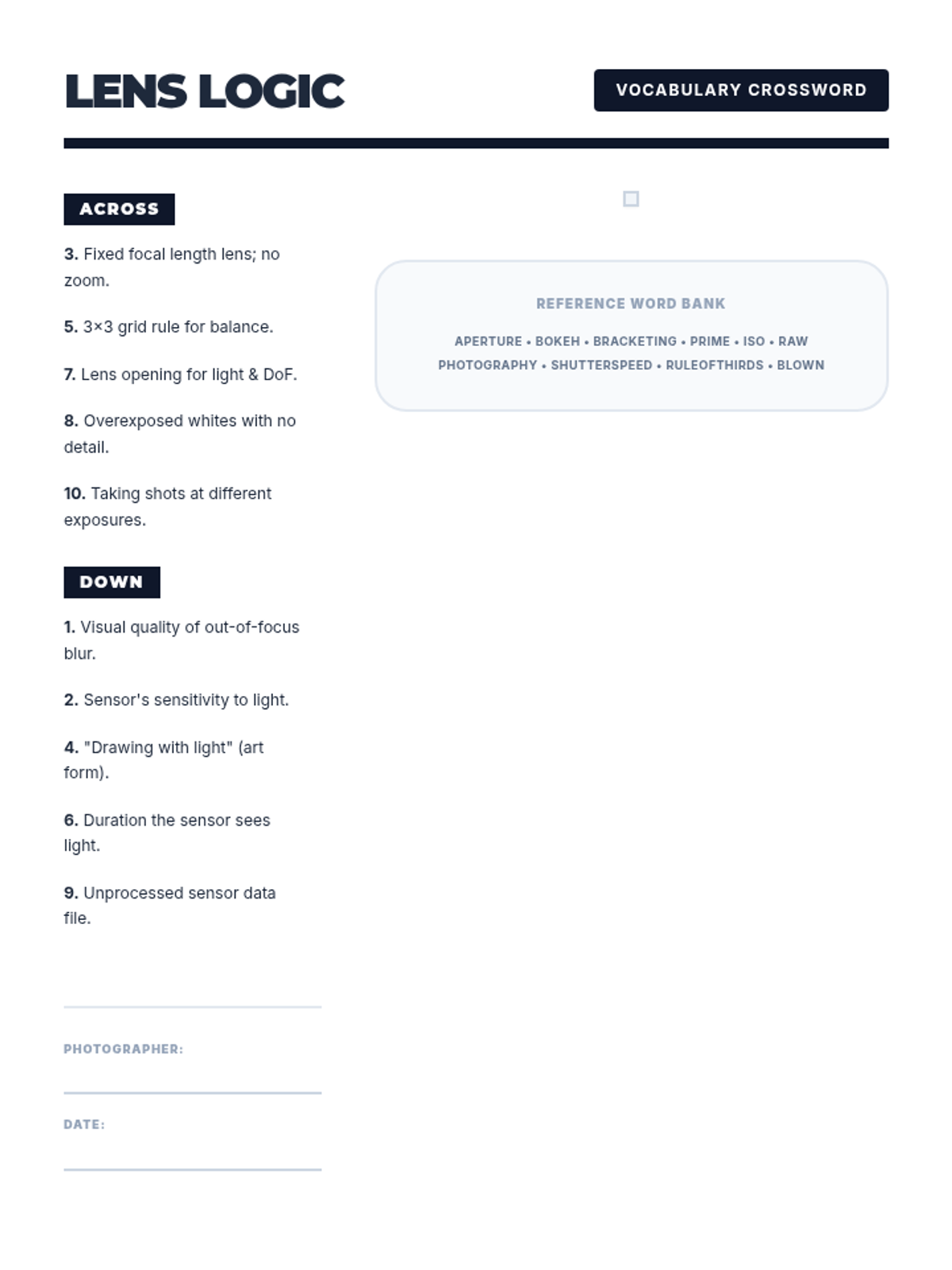
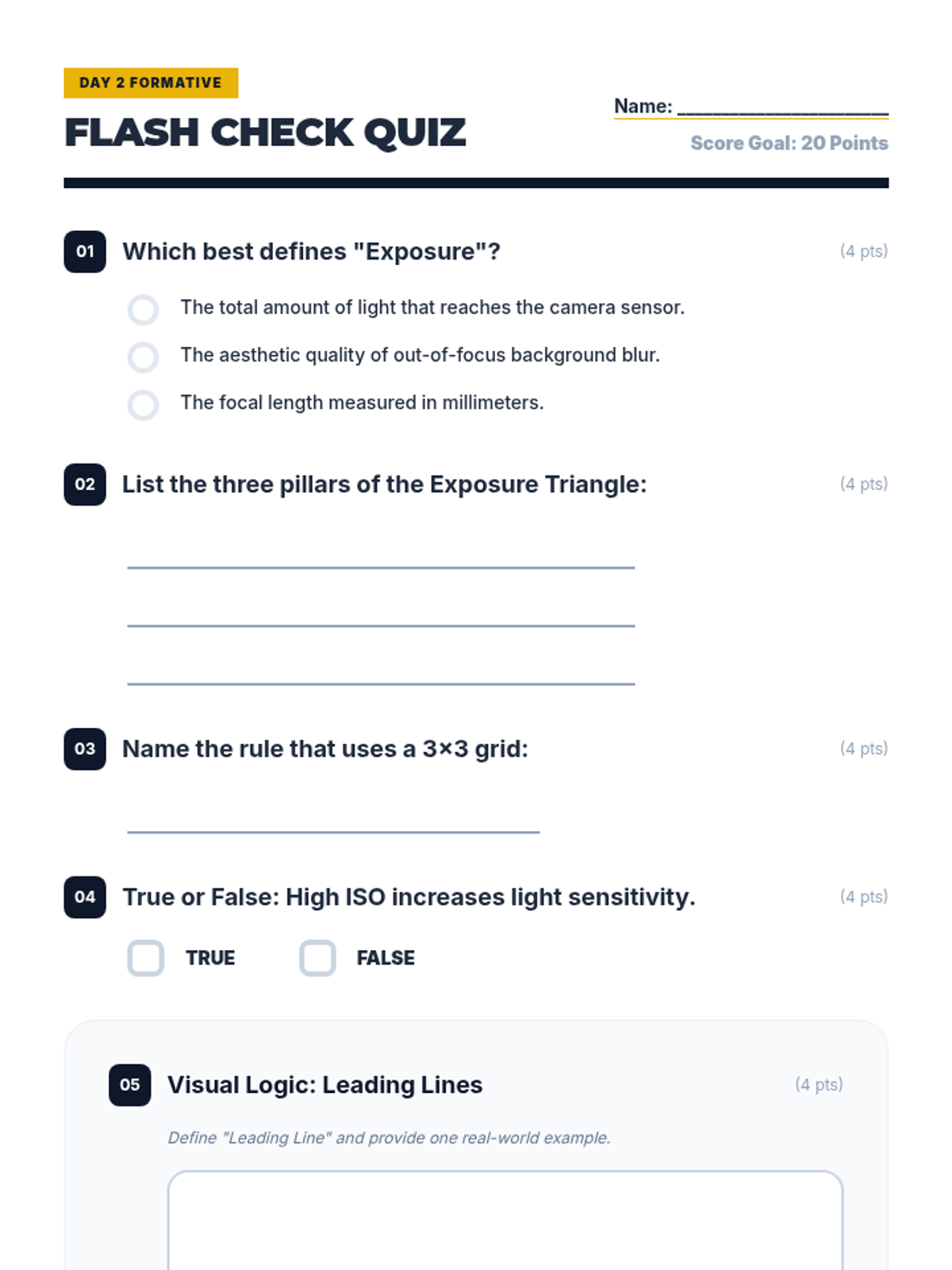
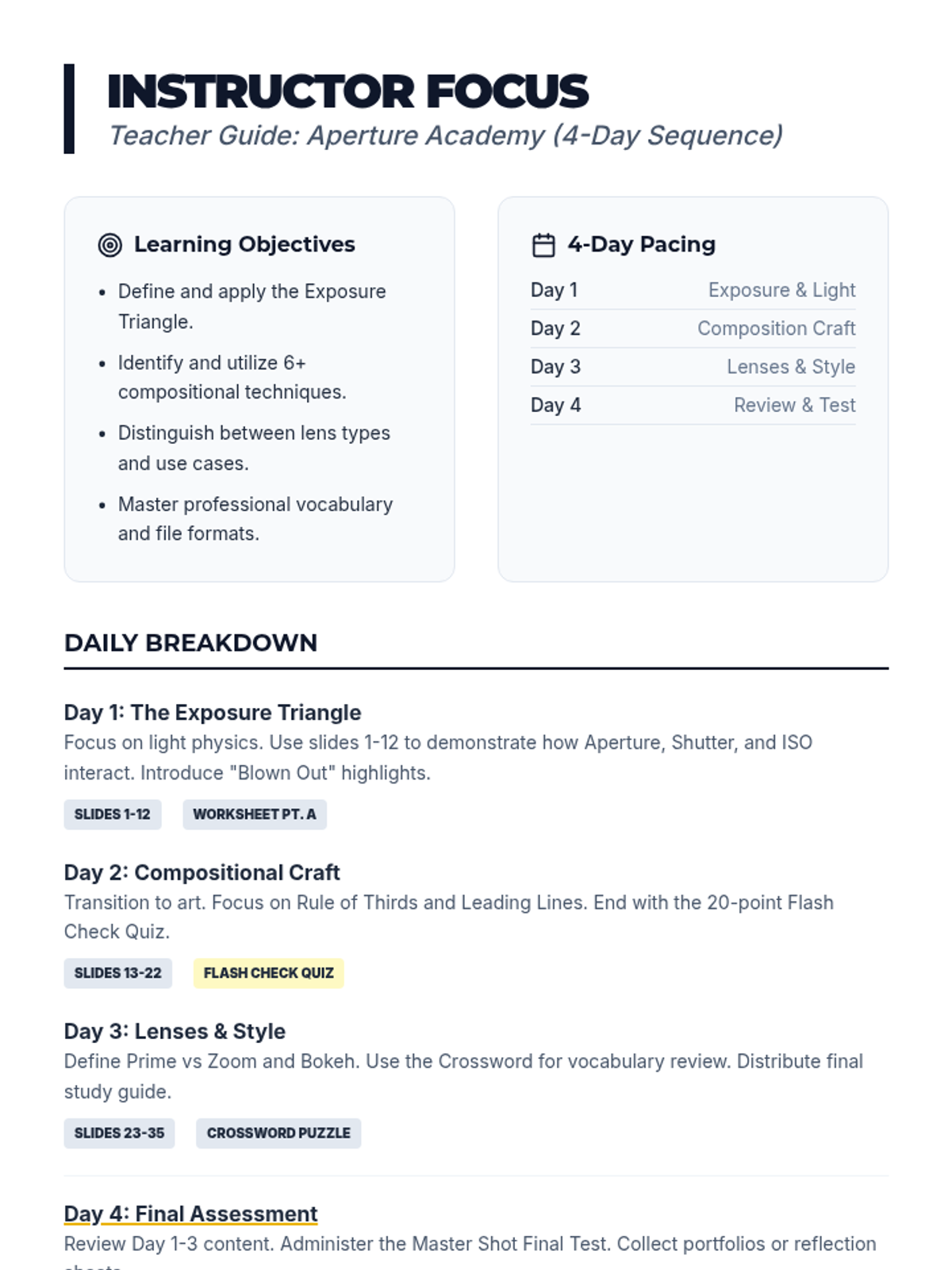
Final review and assessment to evaluate student mastery of photographic principles and vocabulary.
A deep dive into different lens types, depth of field, white balance, and professional photographic styles.
Explores the artistic side of photography through composition principles like the Rule of Thirds, leading lines, and framing.
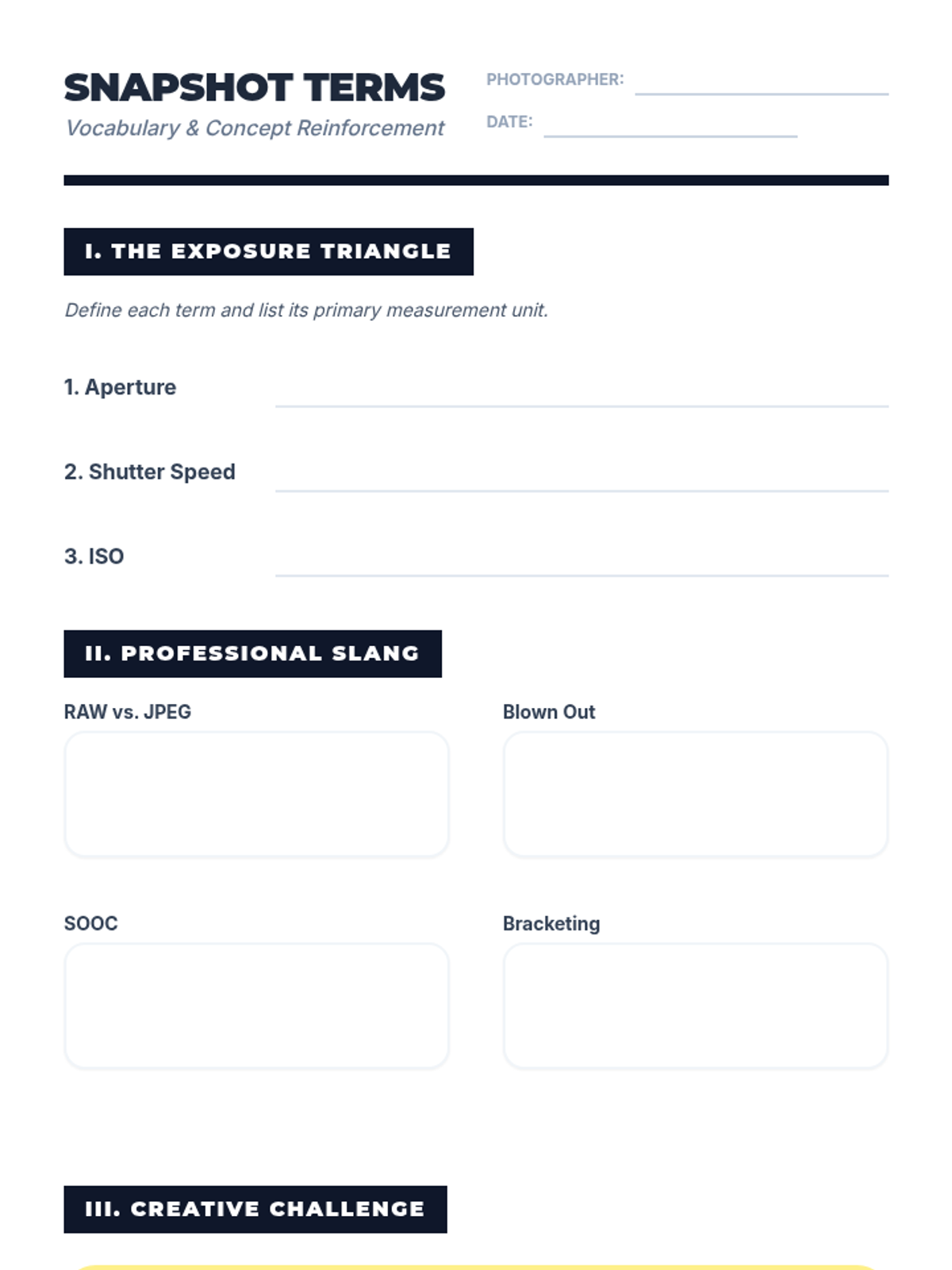
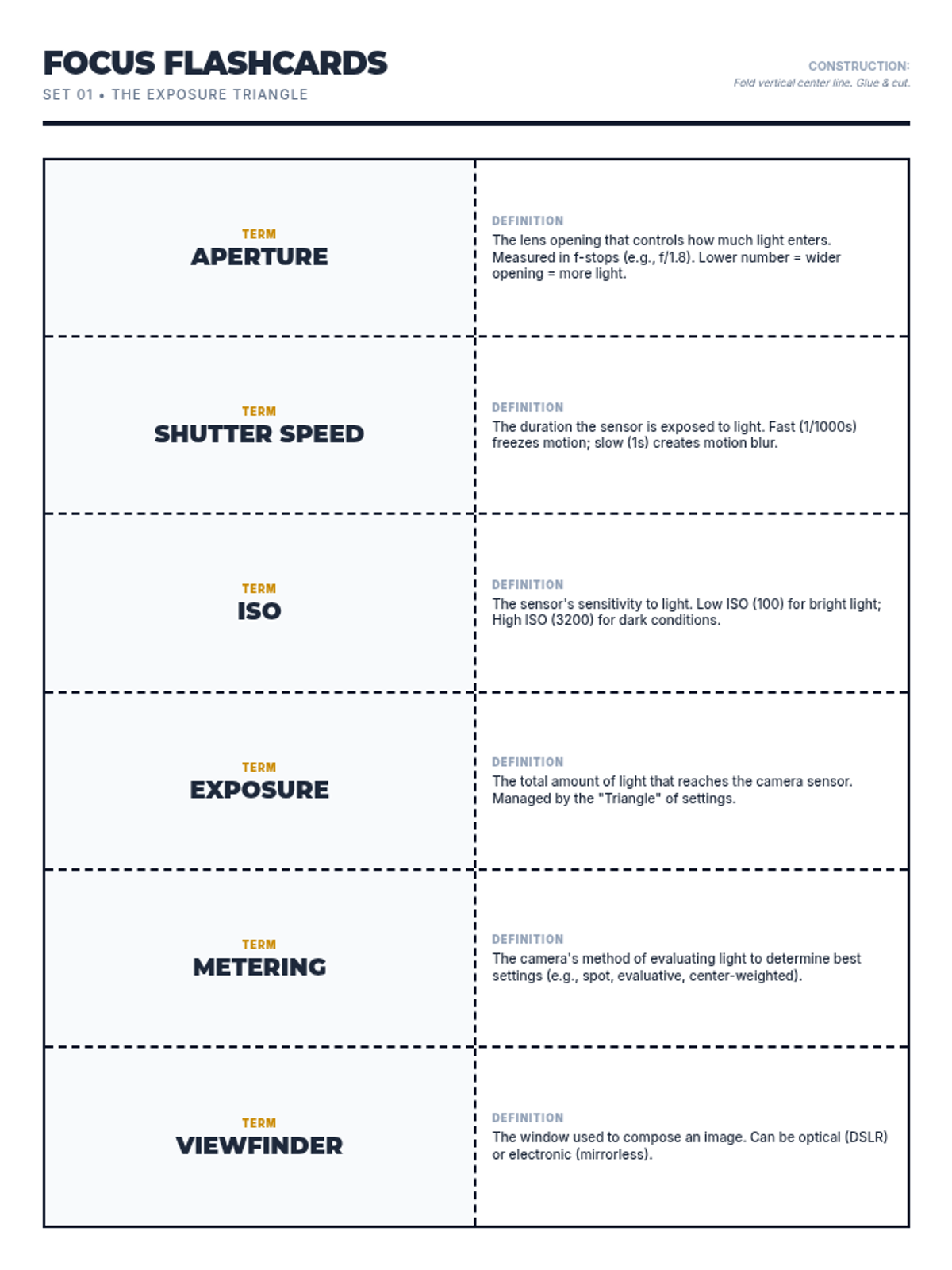
An introduction to the fundamental physics of photography, focusing on light, the exposure triangle (Aperture, Shutter Speed, ISO), and how cameras measure light.
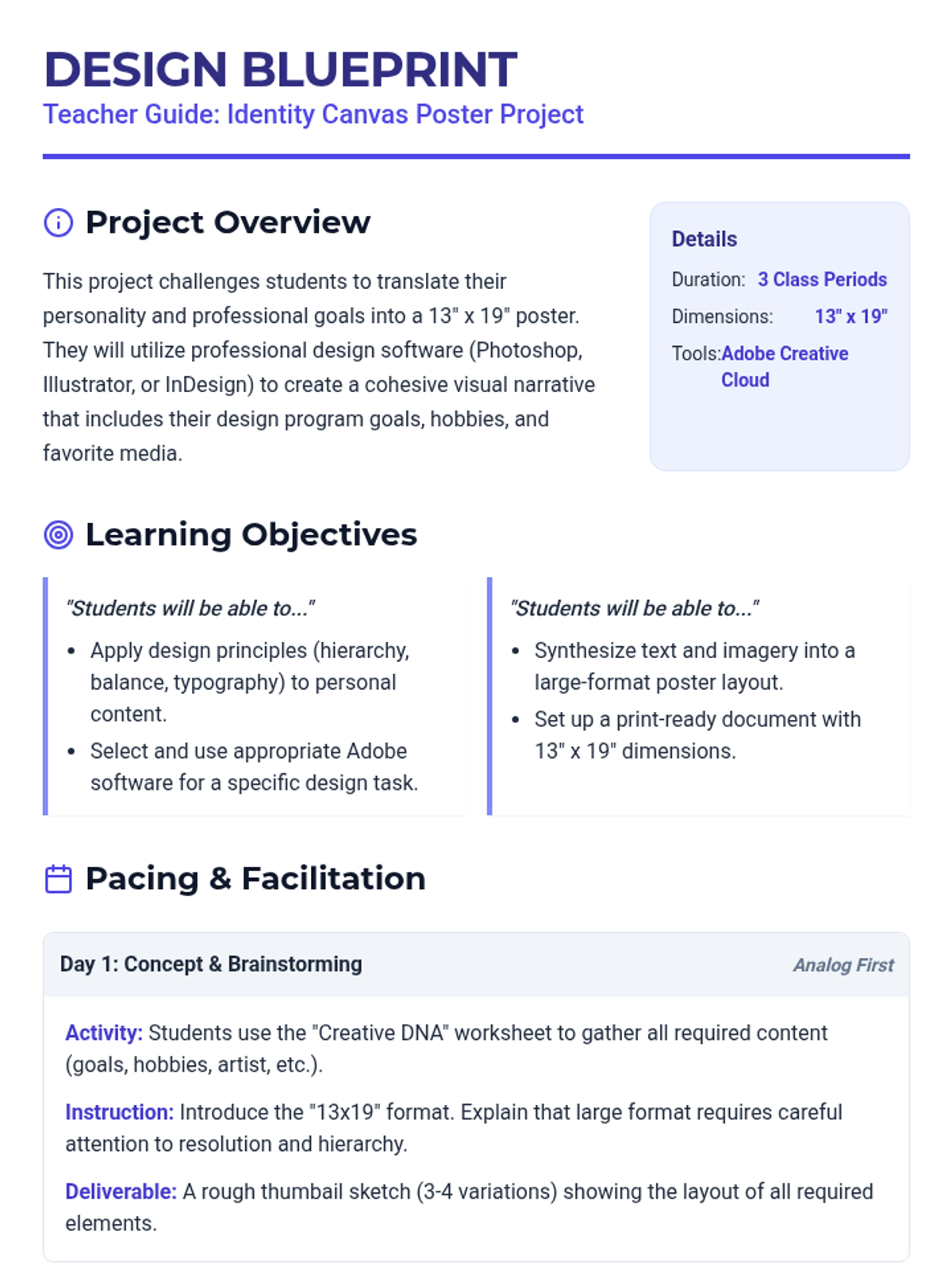
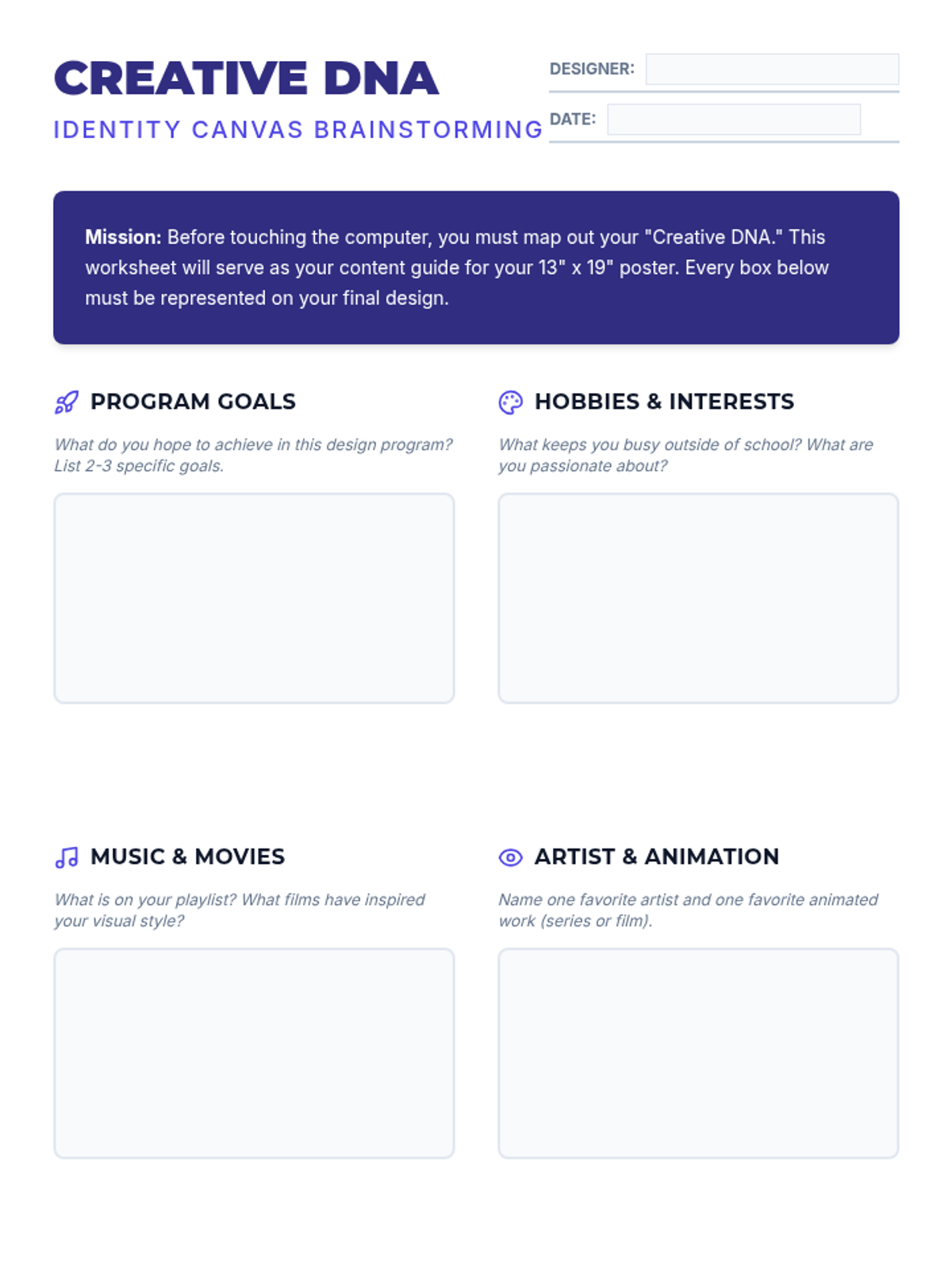
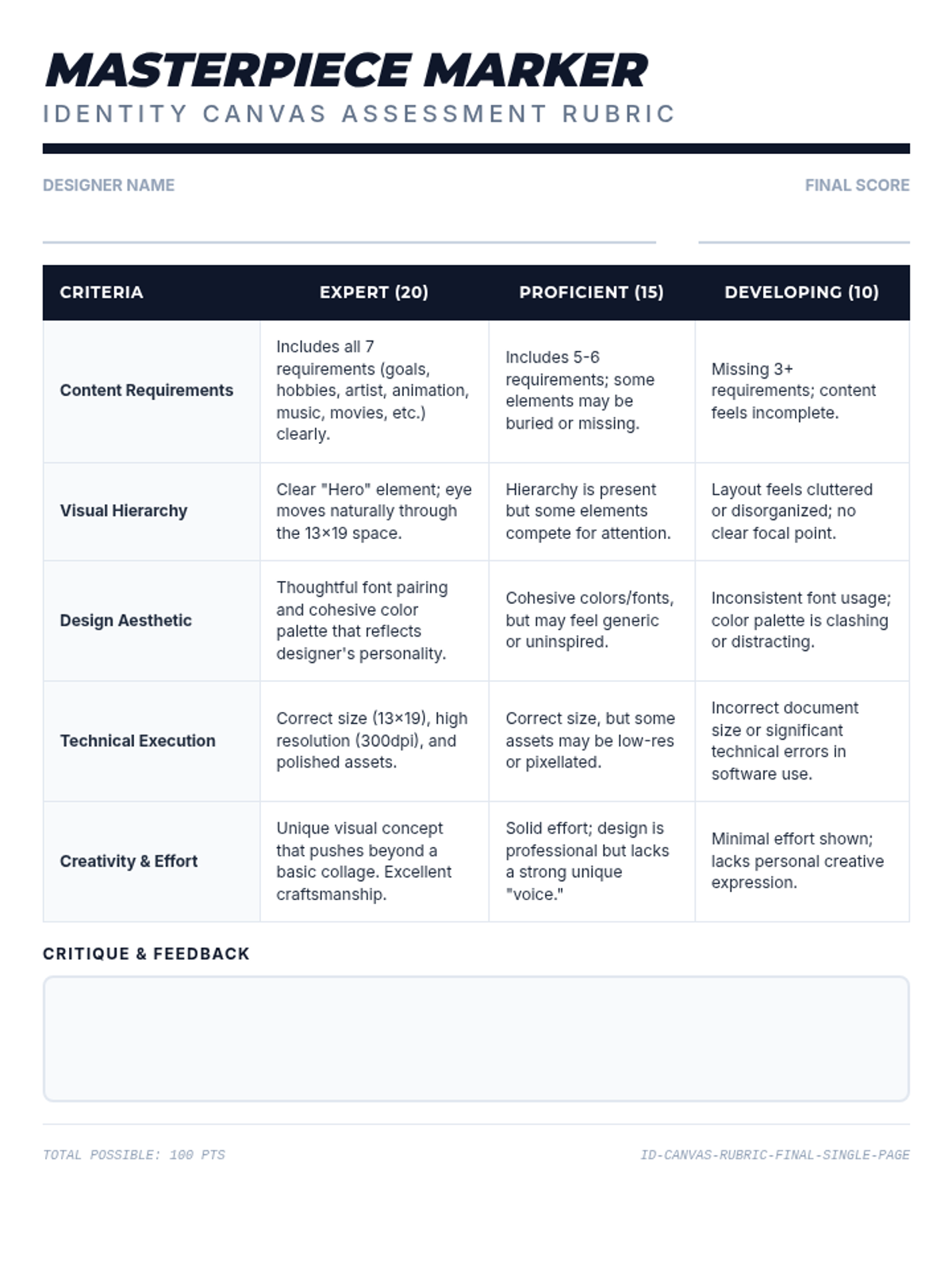
A 3-period design project where students create a 13"x19" 'About Me' poster using Adobe Creative Cloud. Students explore their personal brand through goals, hobbies, and artistic influences.
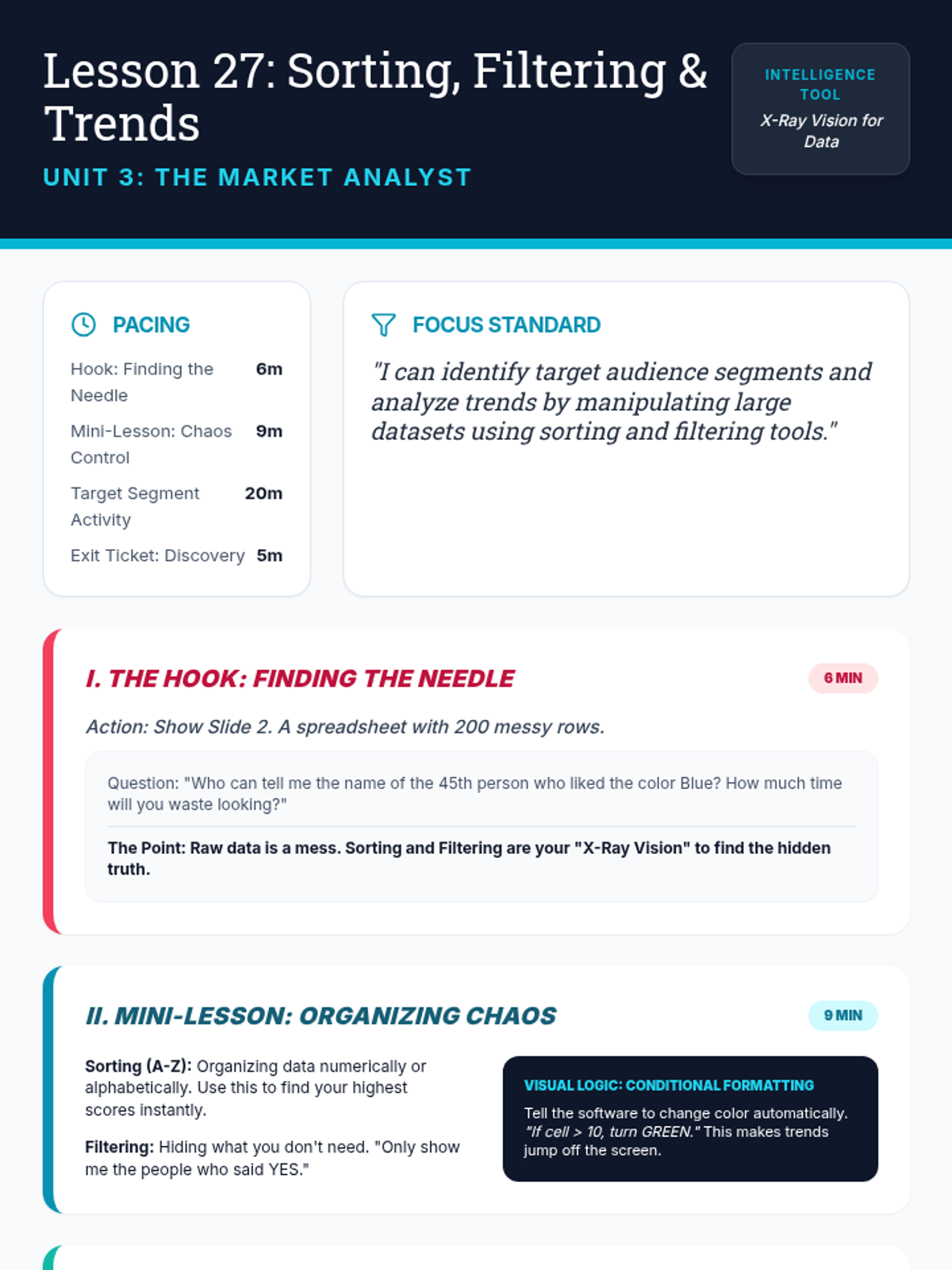
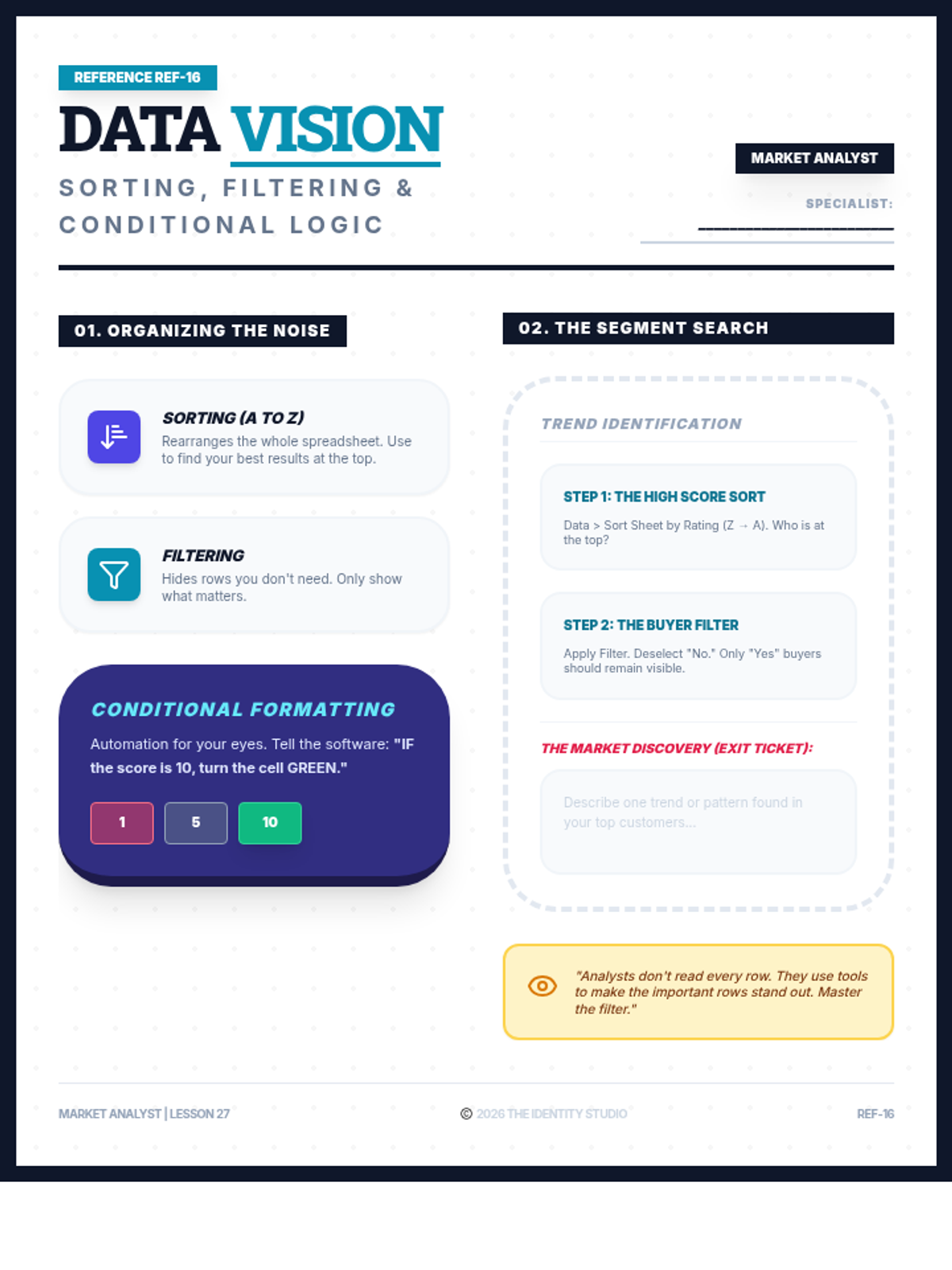
Students gain 'x-ray vision' over large datasets by learning to sort and filter information. They explore conditional formatting to visualize trends and identify specific target segments within their market research data.
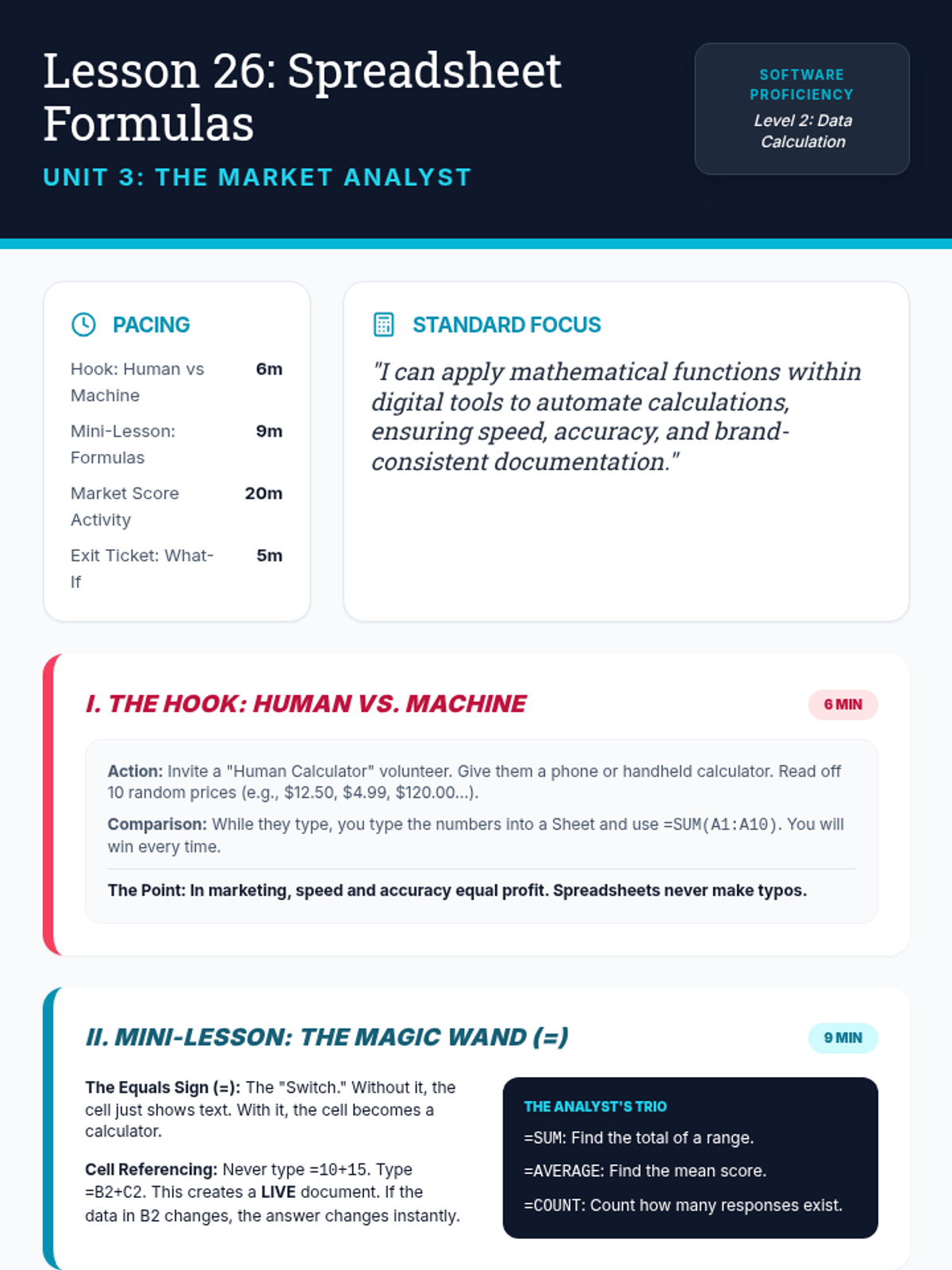
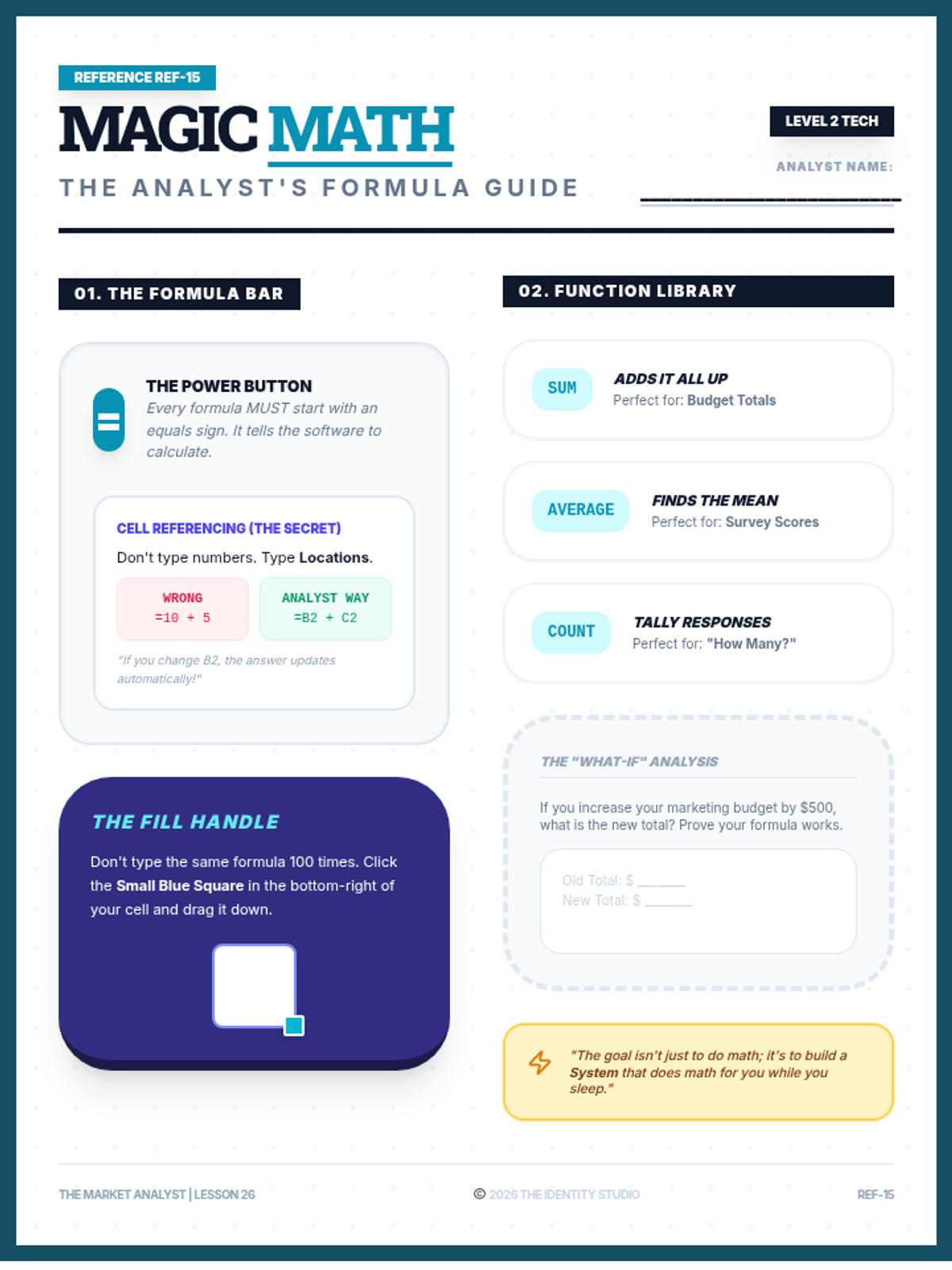
Students transition from data entry to data analysis by mastering fundamental spreadsheet formulas. They learn the power of the equals sign, cell referencing, and essential functions like =SUM, =AVERAGE, and =COUNT to automate business calculations.
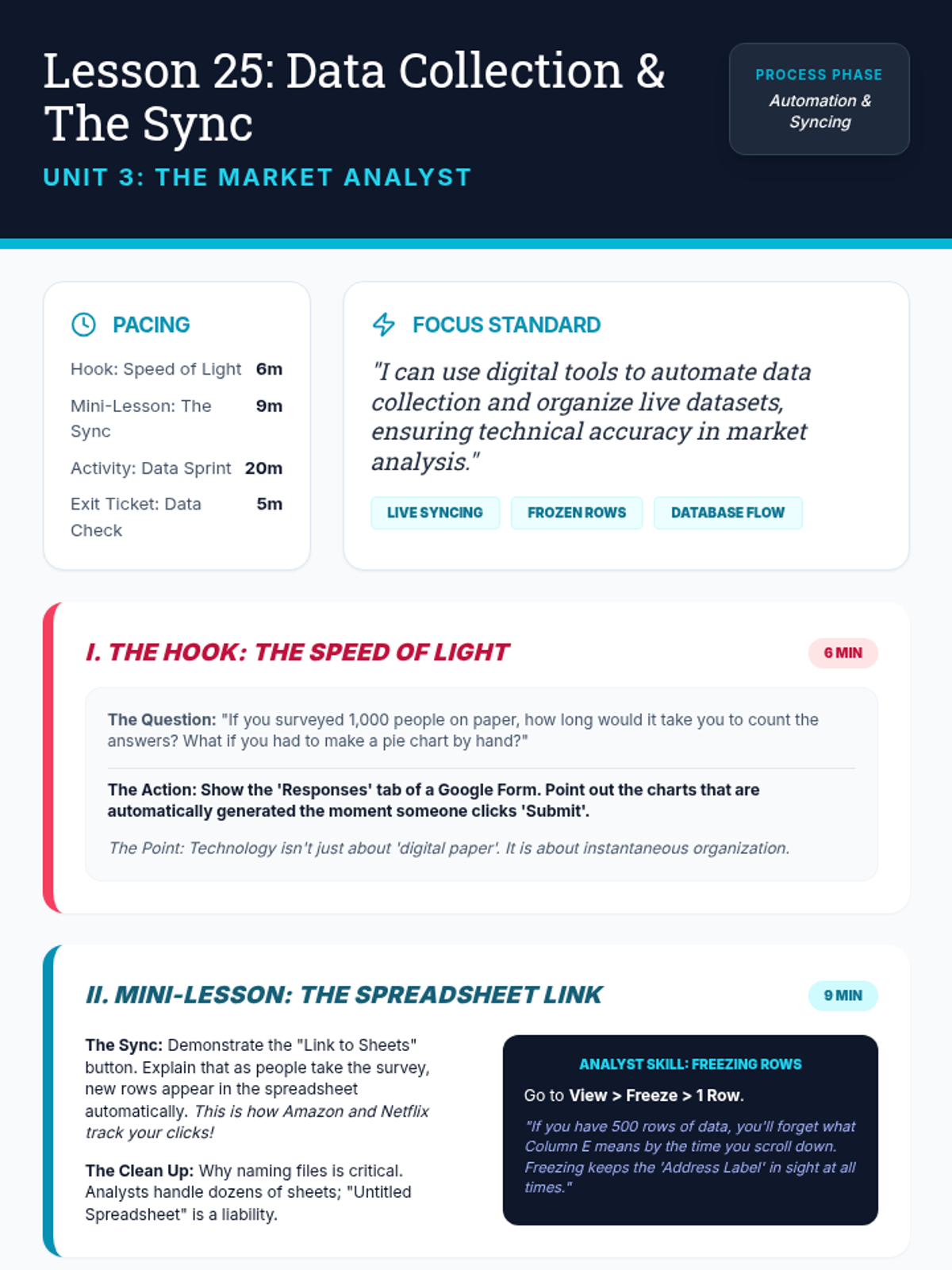
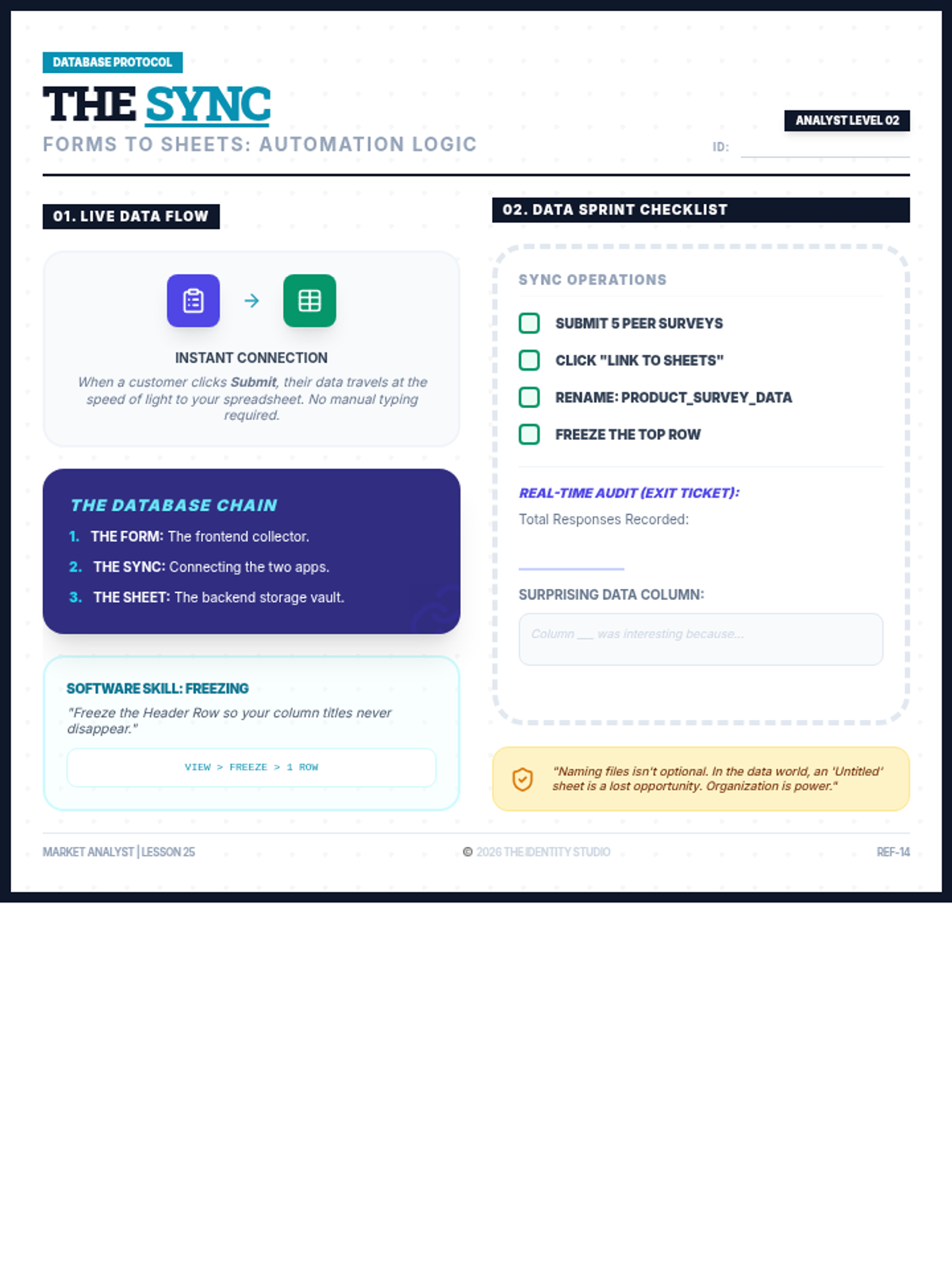
Students explore the efficiency of automated data collection by linking their market research forms to live spreadsheets. They learn the concept of real-time data syncing and master the 'Freezing Rows' skill to manage large datasets effectively.
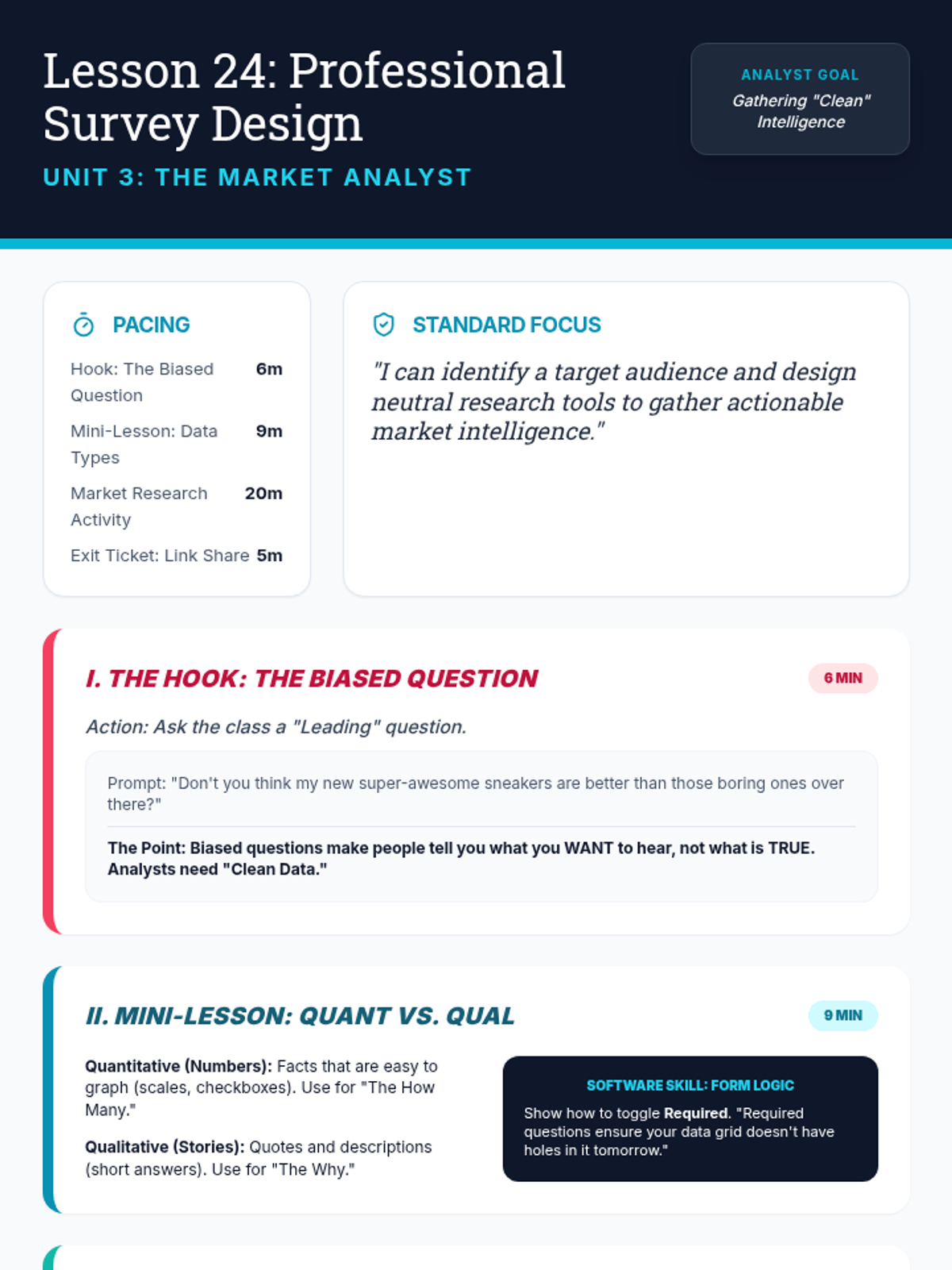
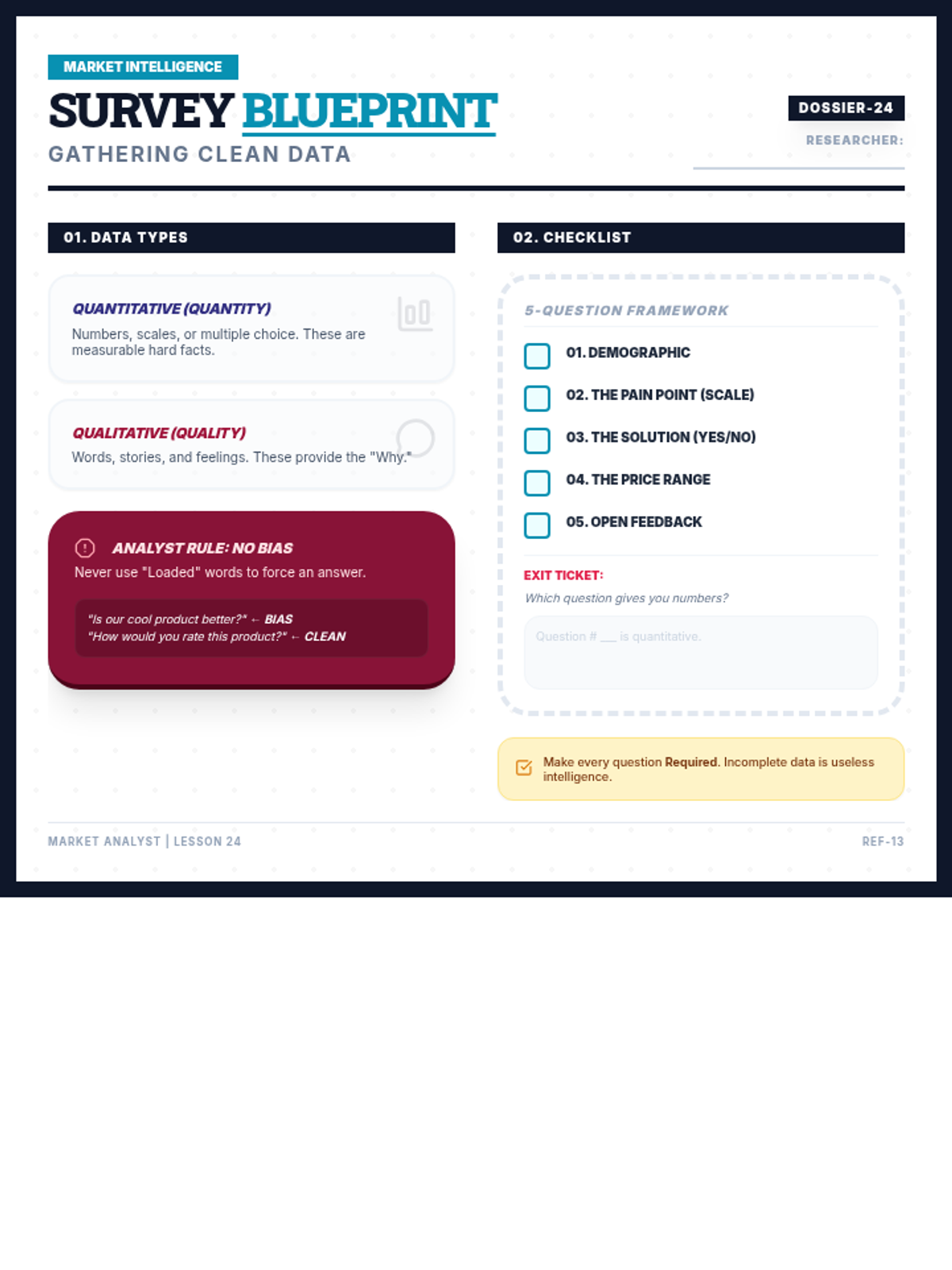
Students learn the art of professional survey design to gather market intelligence. They distinguish between quantitative and qualitative data, identify biased questioning, and build a multi-format survey in Google Forms or Microsoft Forms to collect clean data from their target audience.
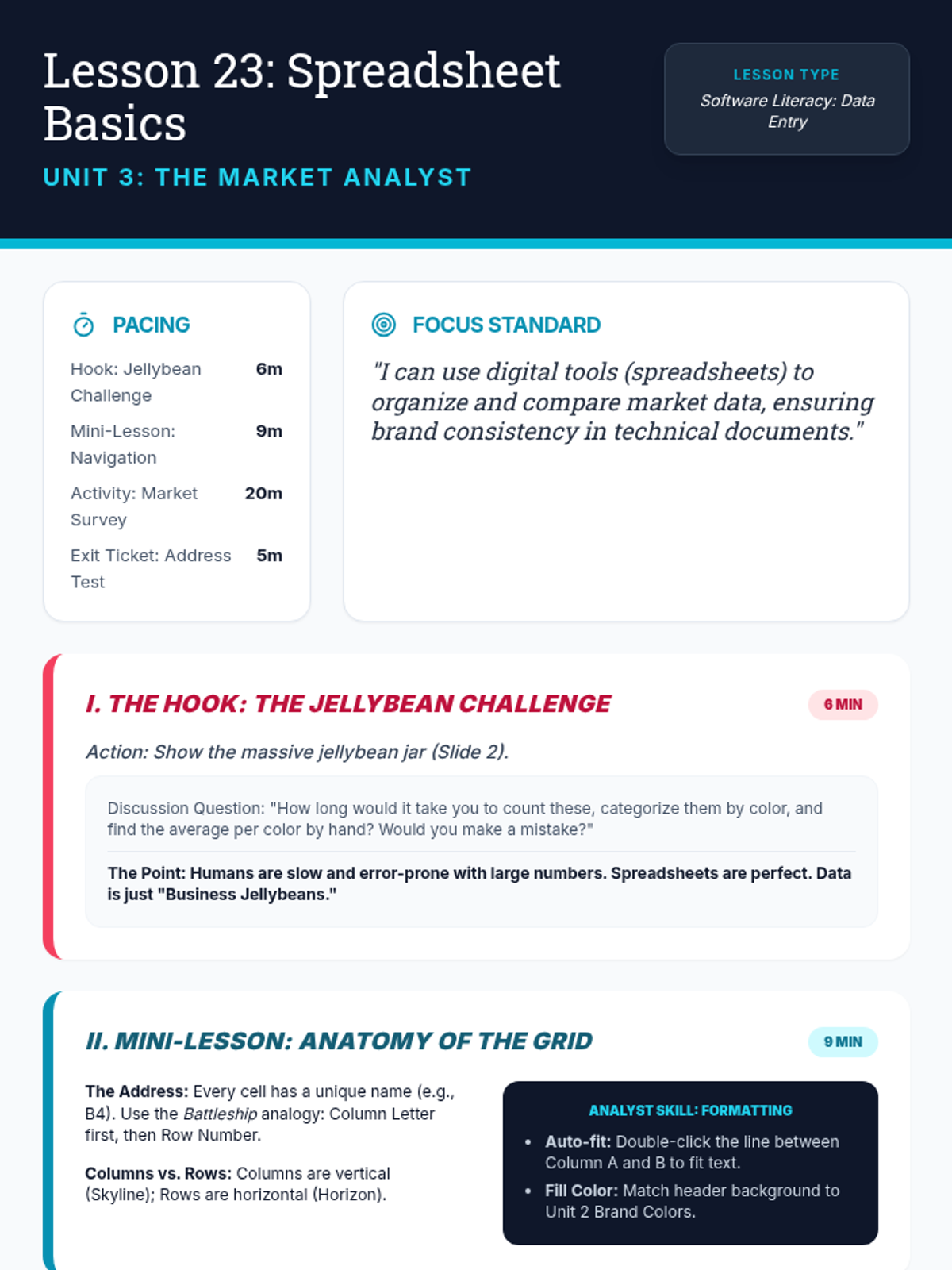
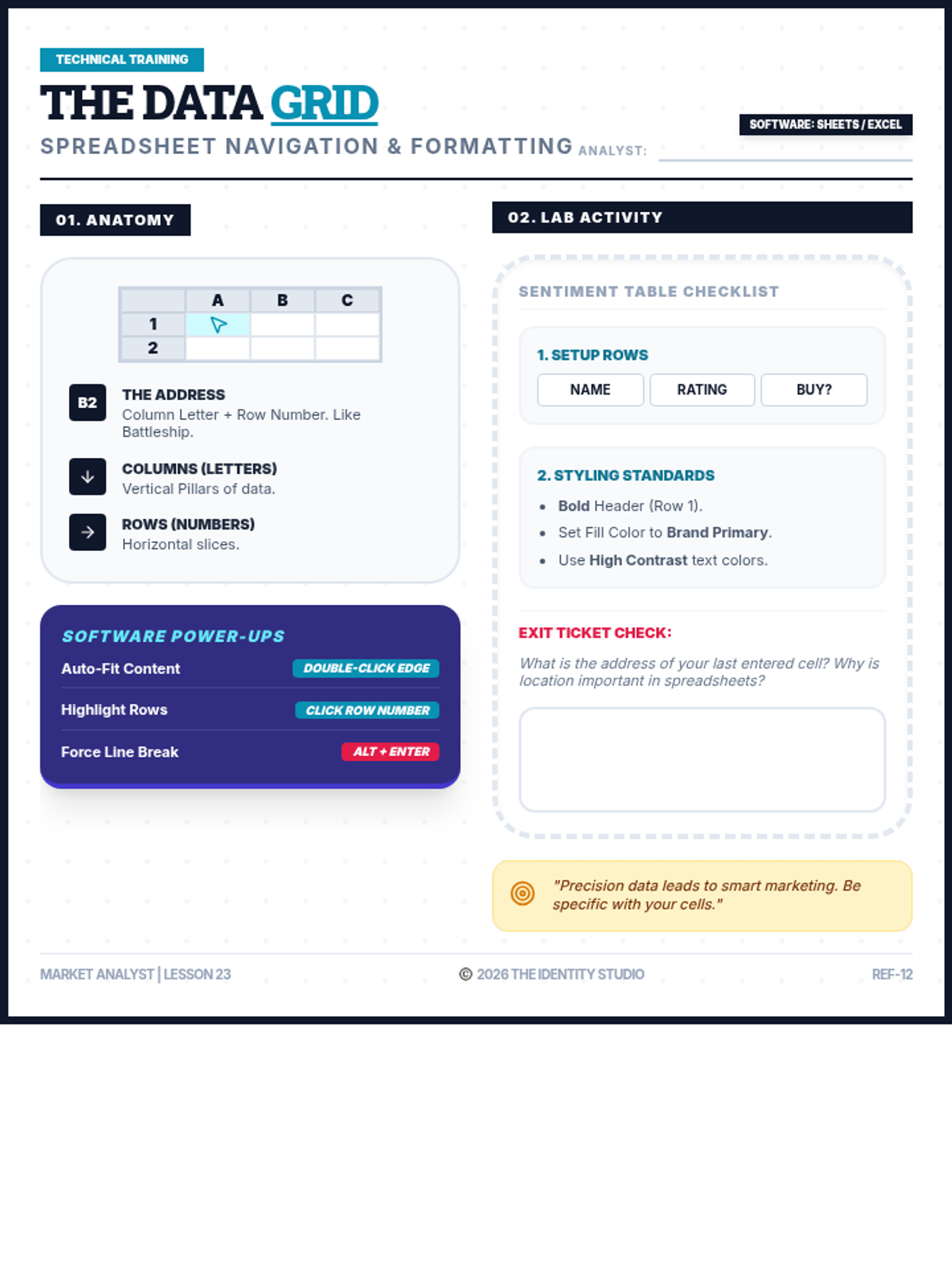
This lesson introduces students to the fundamental structure of spreadsheet software. They learn about cells, rows, columns, and addresses while performing basic data entry and formatting to align with their brand identity.
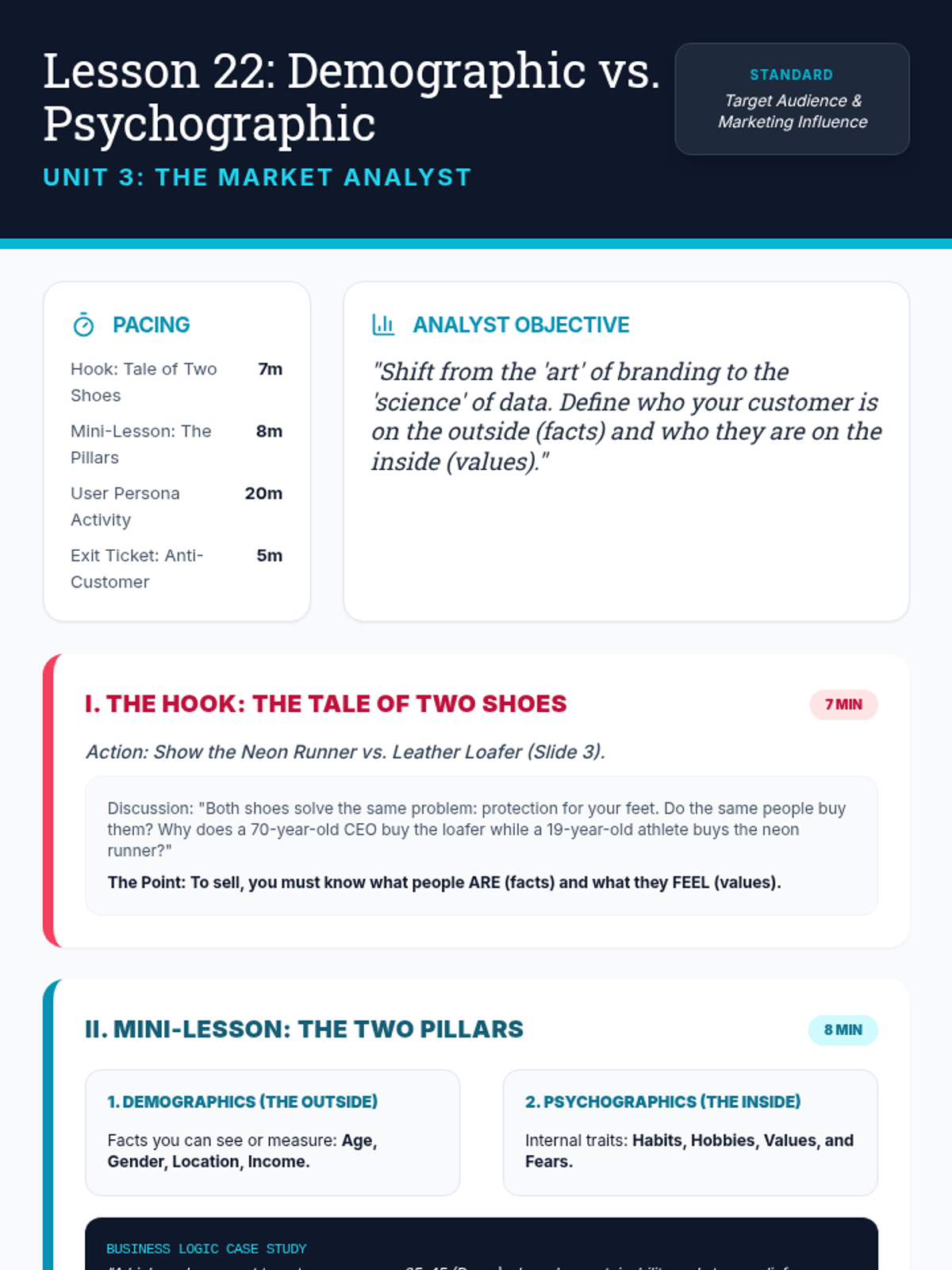
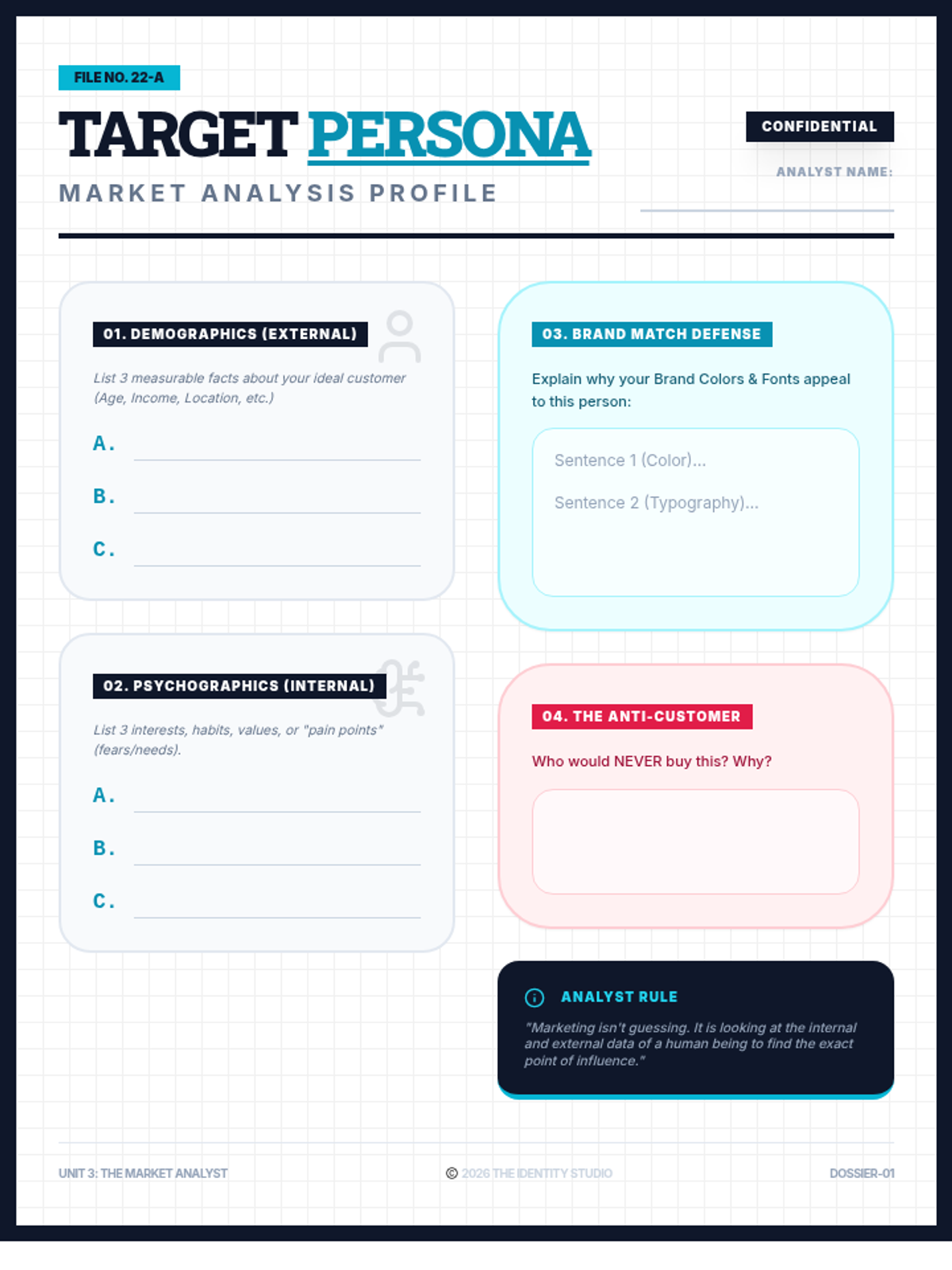
Students transition from brand design to market analysis by distinguishing between demographic data (external facts) and psychographic data (internal values). They apply these concepts by building a formal User Persona for their brand, justifying their earlier design choices based on audience data.
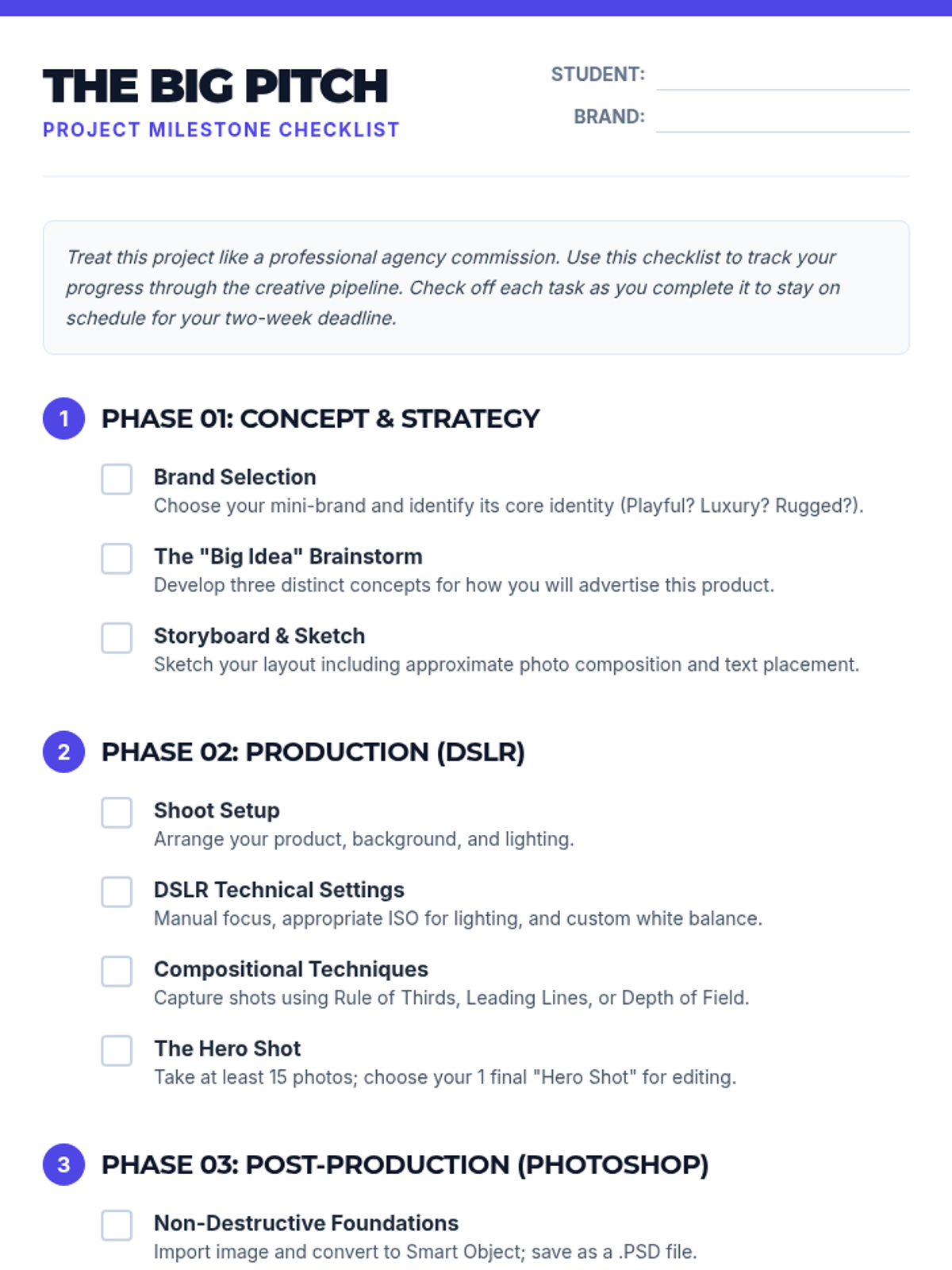
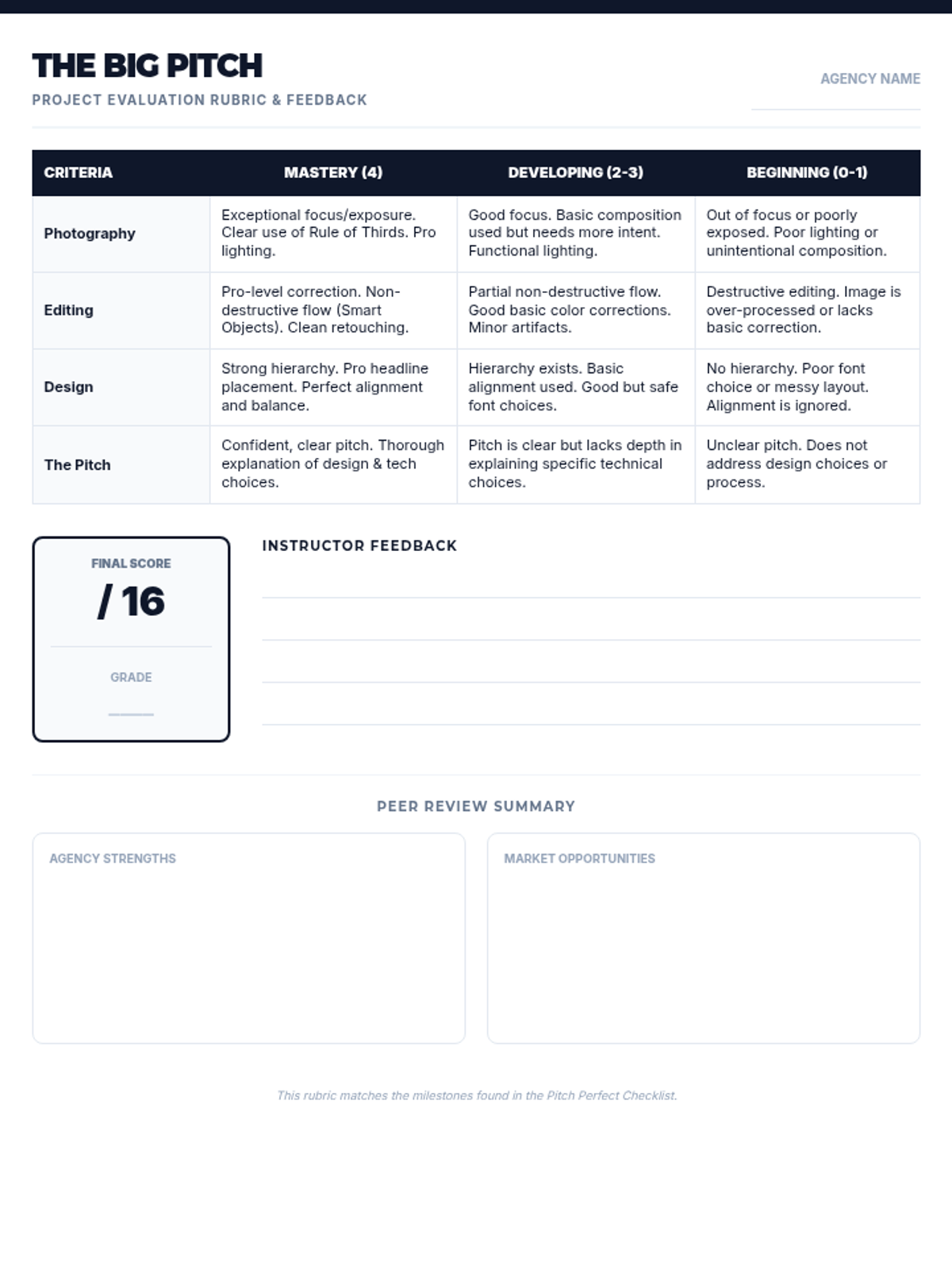
A comprehensive final project where students act as a creative agency to design a professional advertisement for a mini-brand, integrating photography, Photoshop editing, and design principles.
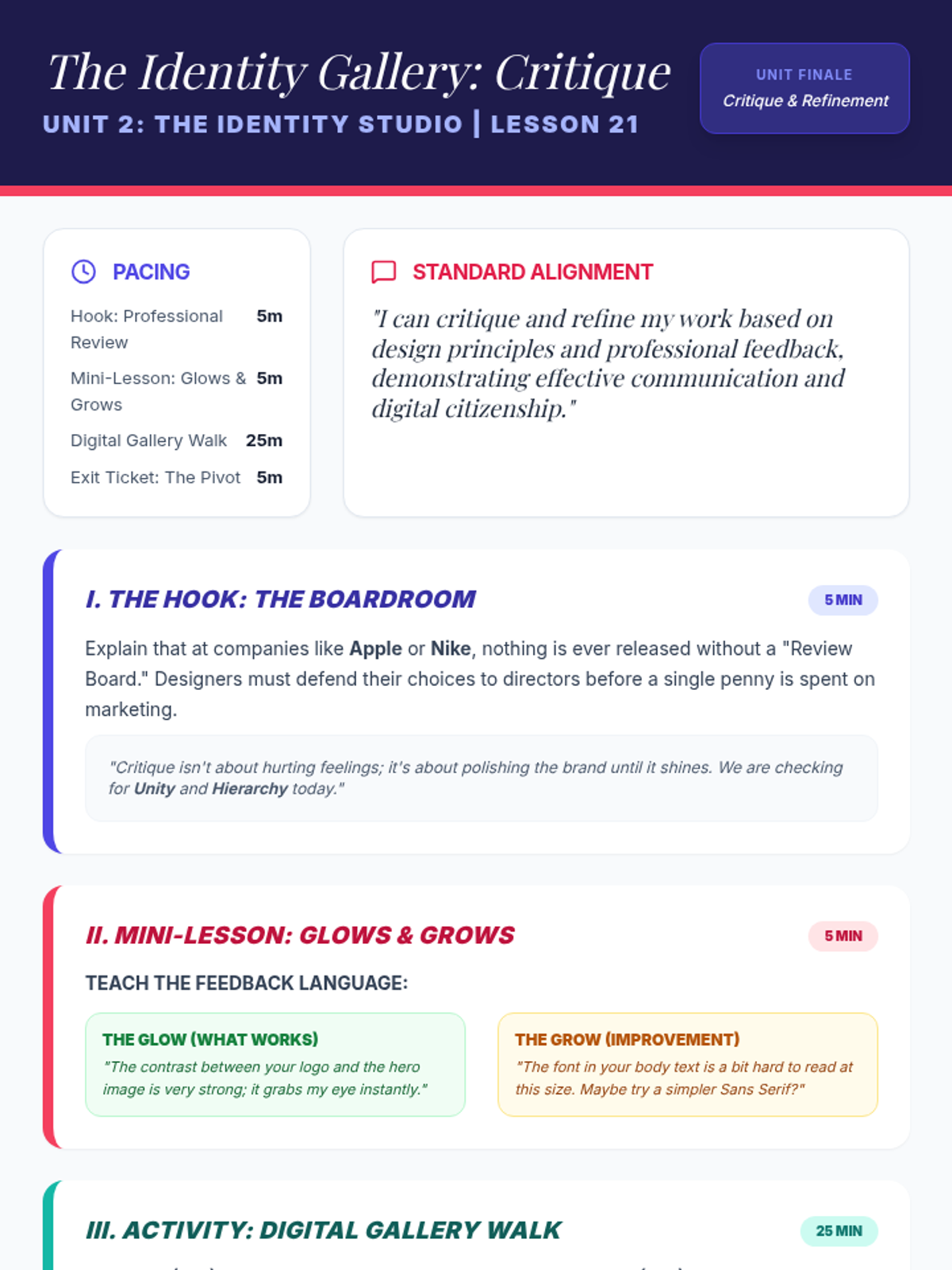
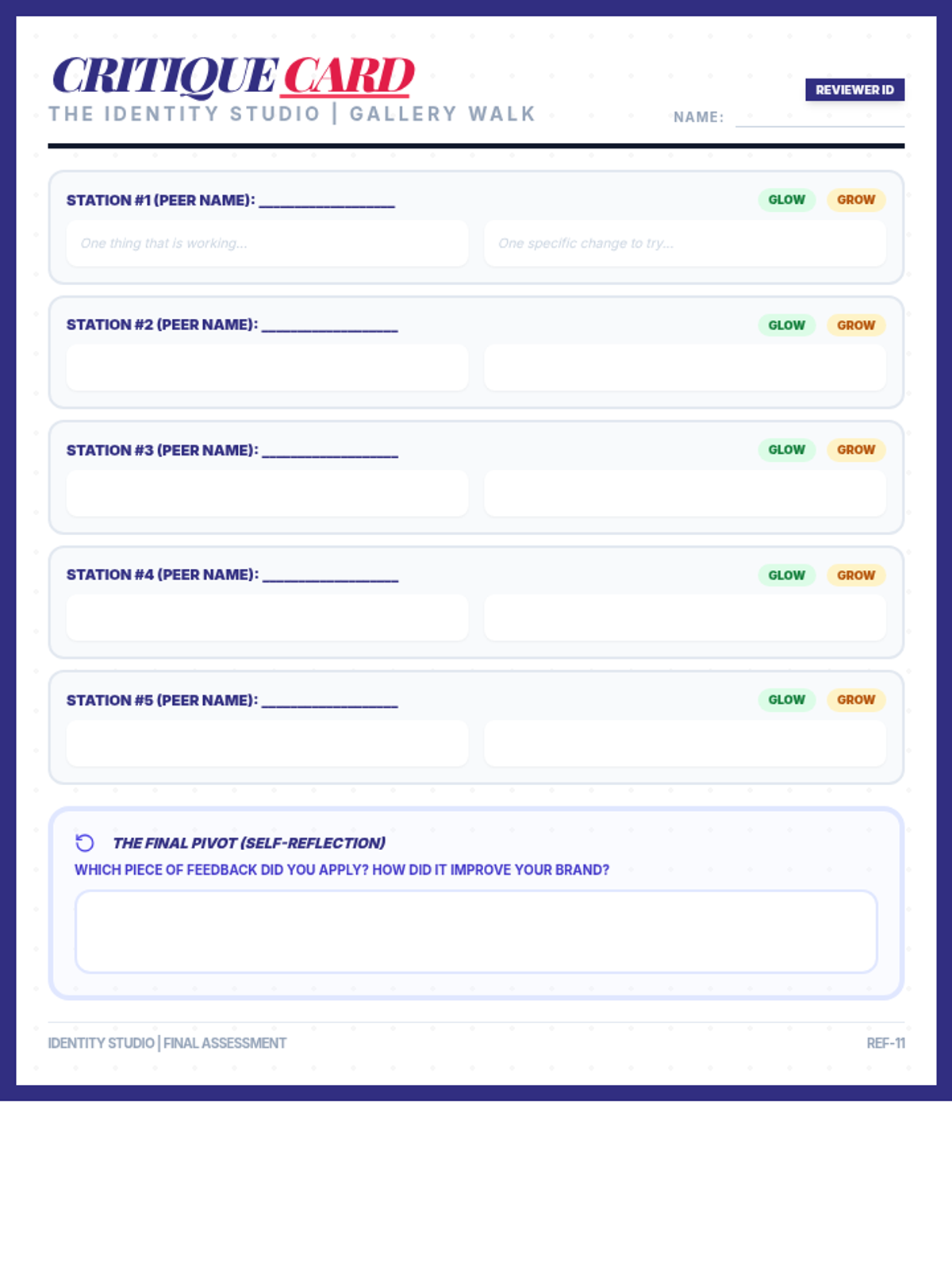
Students participate in a professional 'Gallery Walk' to provide and receive constructive feedback on their Brand Style Guides and One-Pagers. They apply the 'Glow and Grow' framework to refine their designs, fulfilling standards for artistic critique and professional communication.
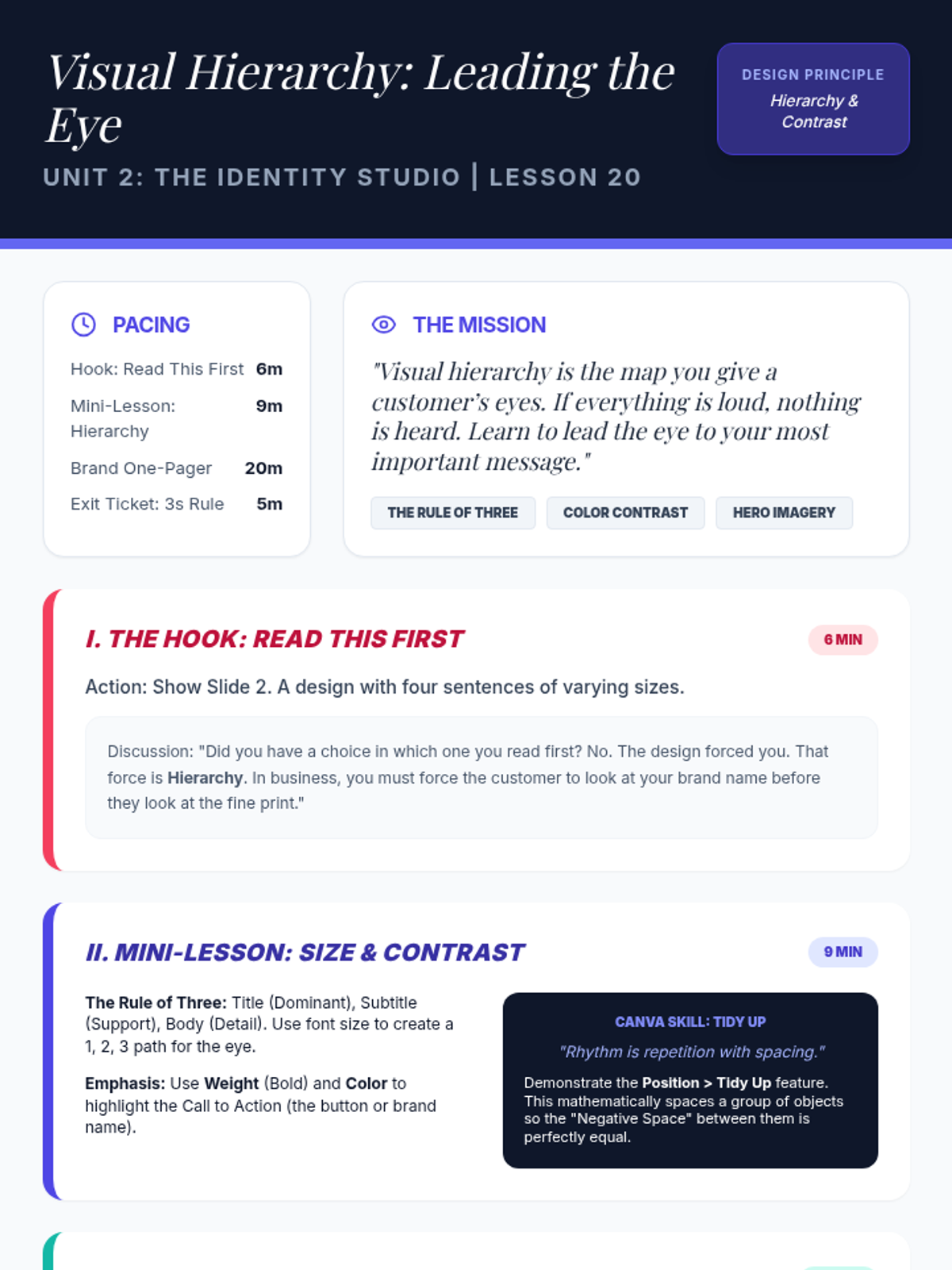
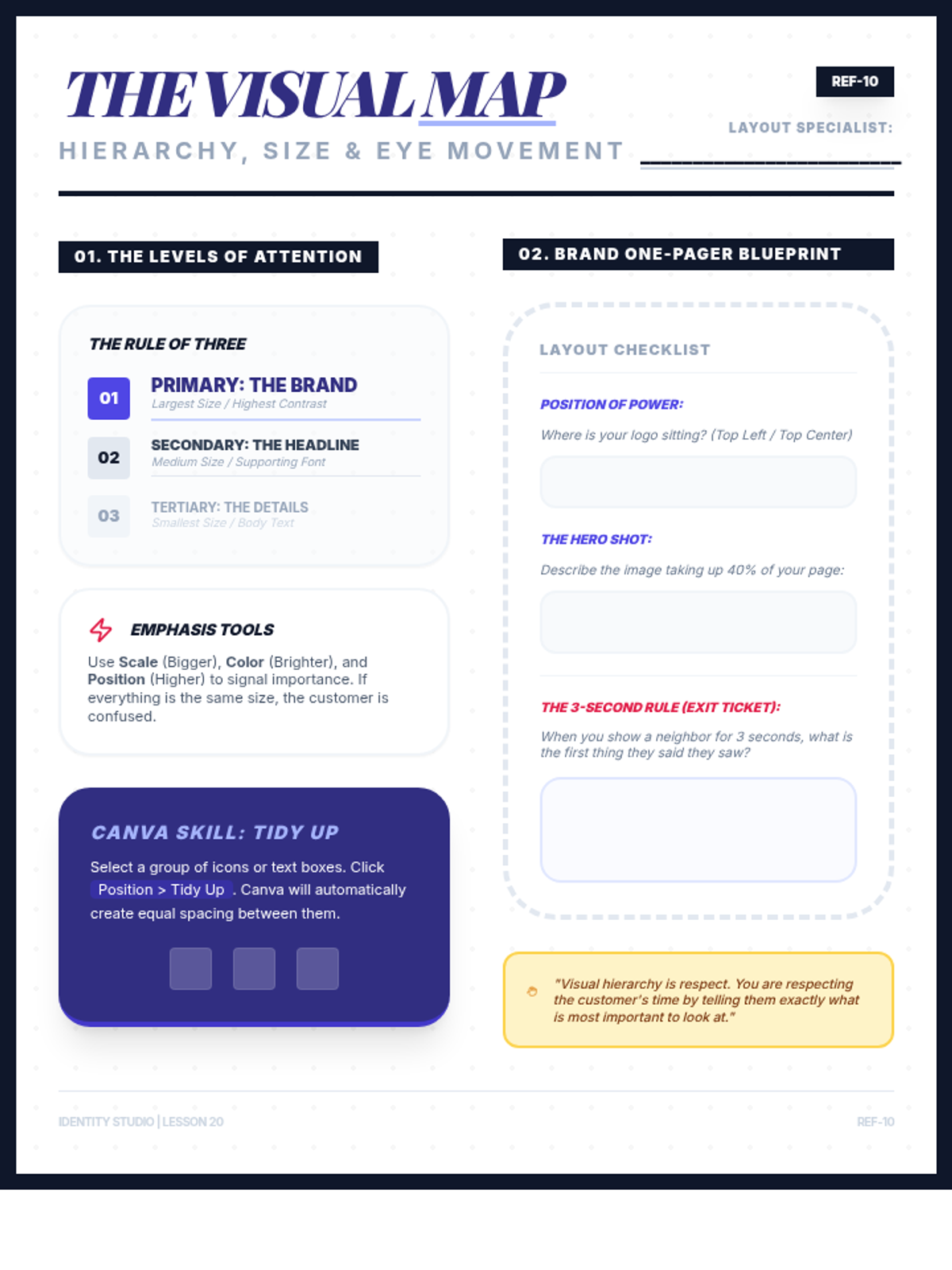
Students master the principle of visual hierarchy to lead a customer's eye through a design. They apply the 'Rule of Three' (Size, Weight, and Contrast) to create a professional brand 'One-Pager' in Canva, ensuring their most important brand assets receive maximum visibility.
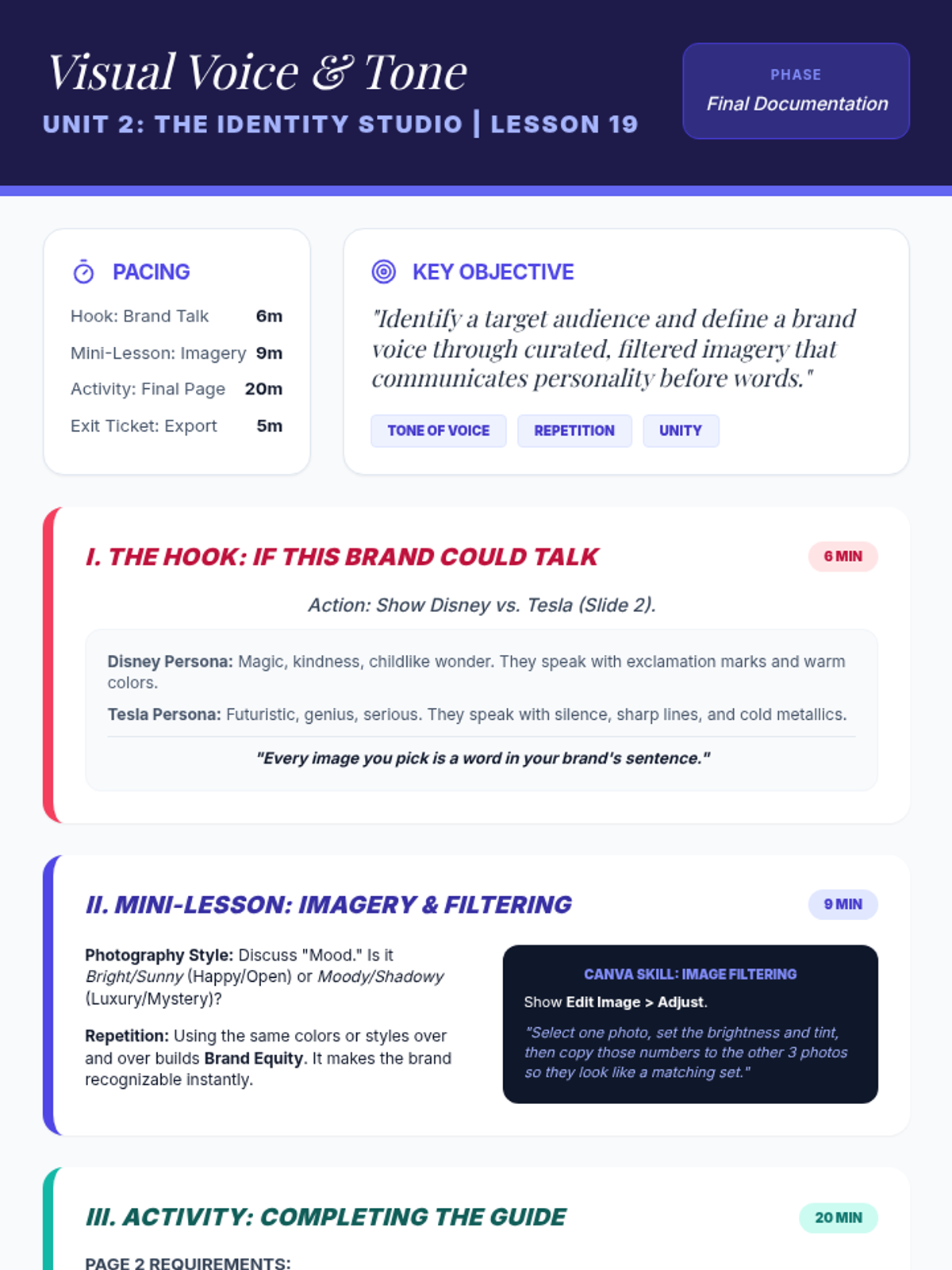
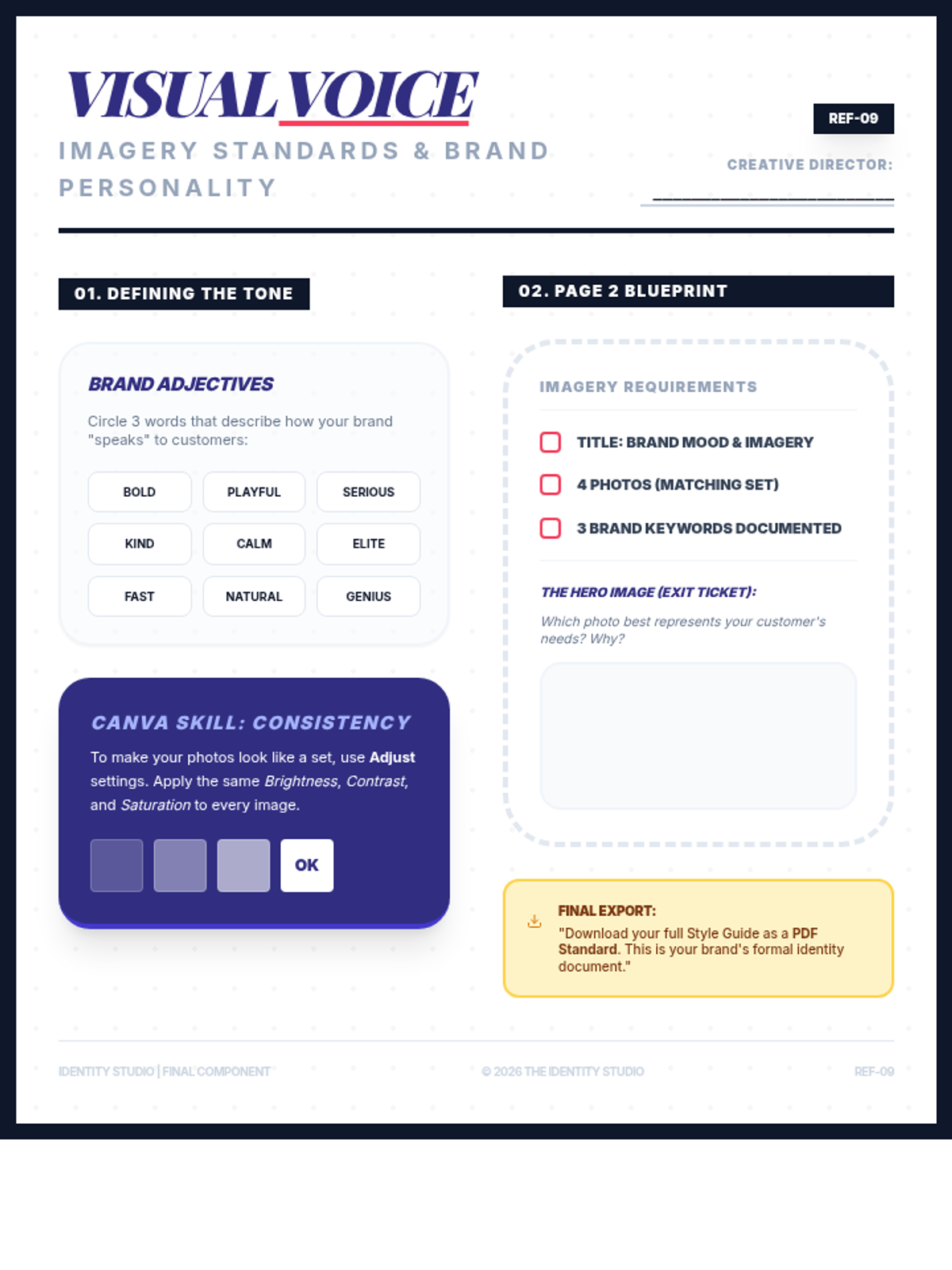
Students define their brand's 'personality' by selecting and filtering imagery that aligns with a specific tone. They complete their formal Brand Style Guide by documenting photography standards and brand keywords, focusing on the principles of repetition and unity.
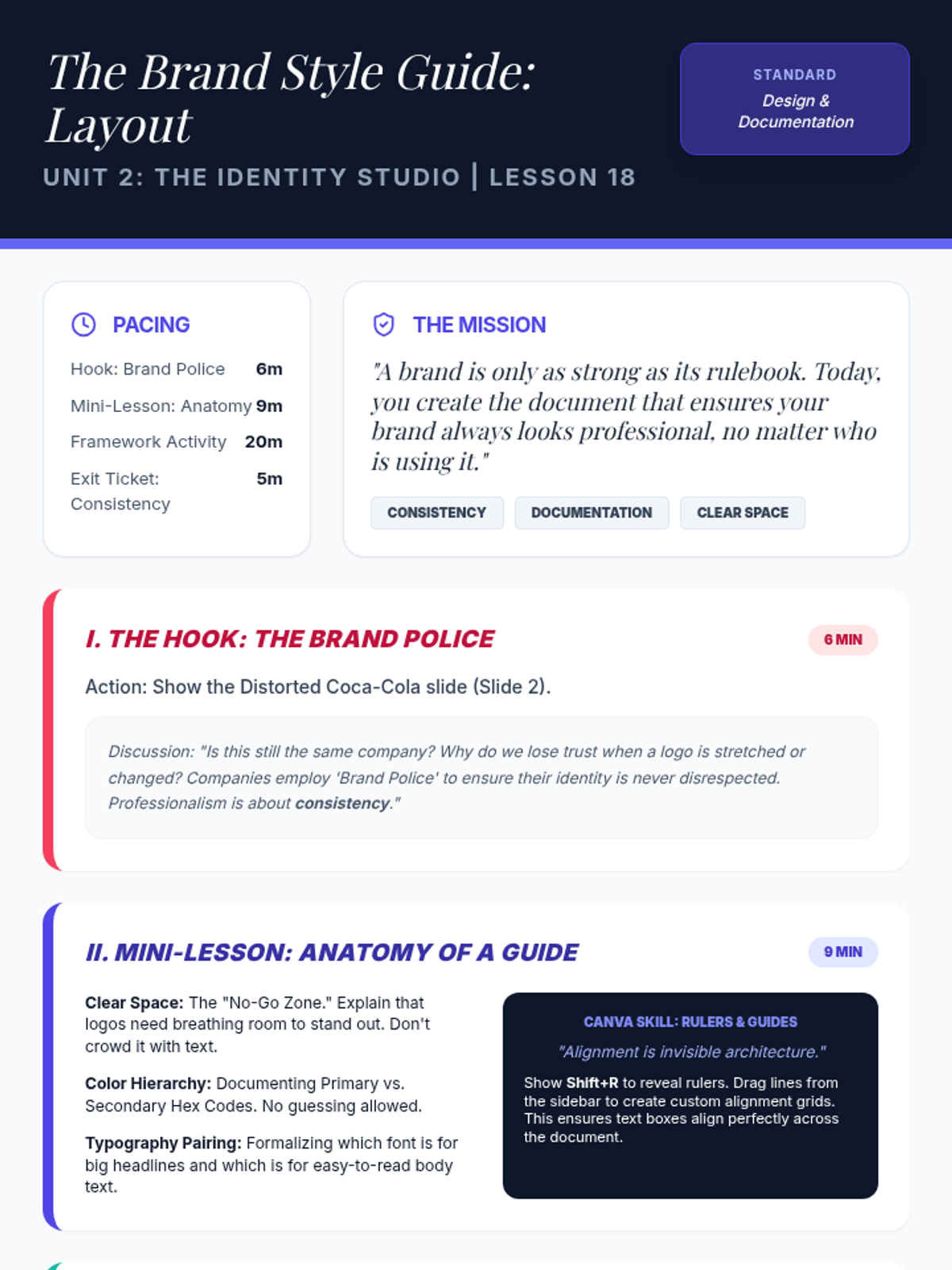
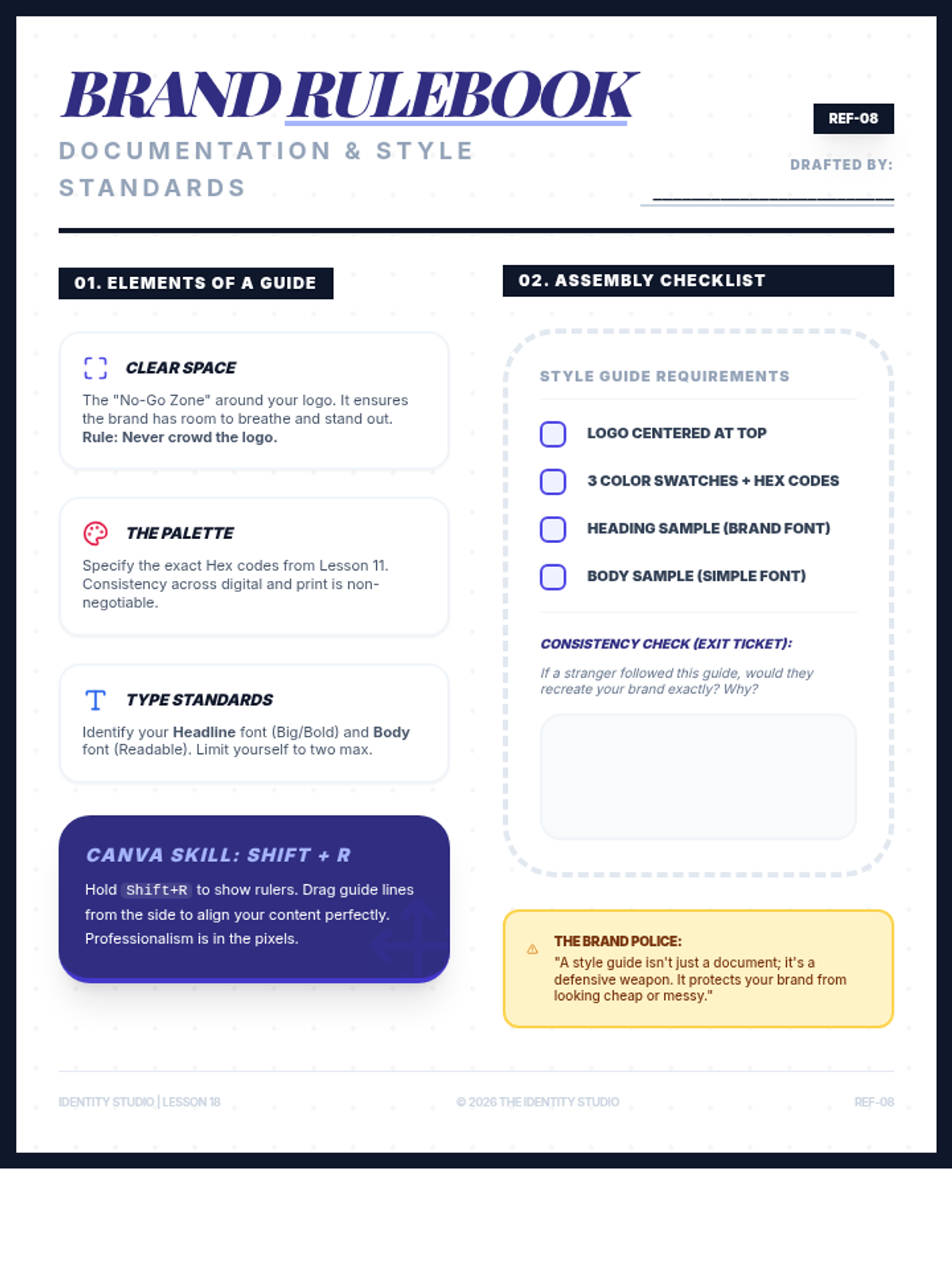
Students transition from brand creation to documentation by building a formal Style Guide. They learn the importance of brand consistency through 'The Brand Police' concept and document their logo usage, hex codes, and typography pairings in Canva using alignment rulers and guides.
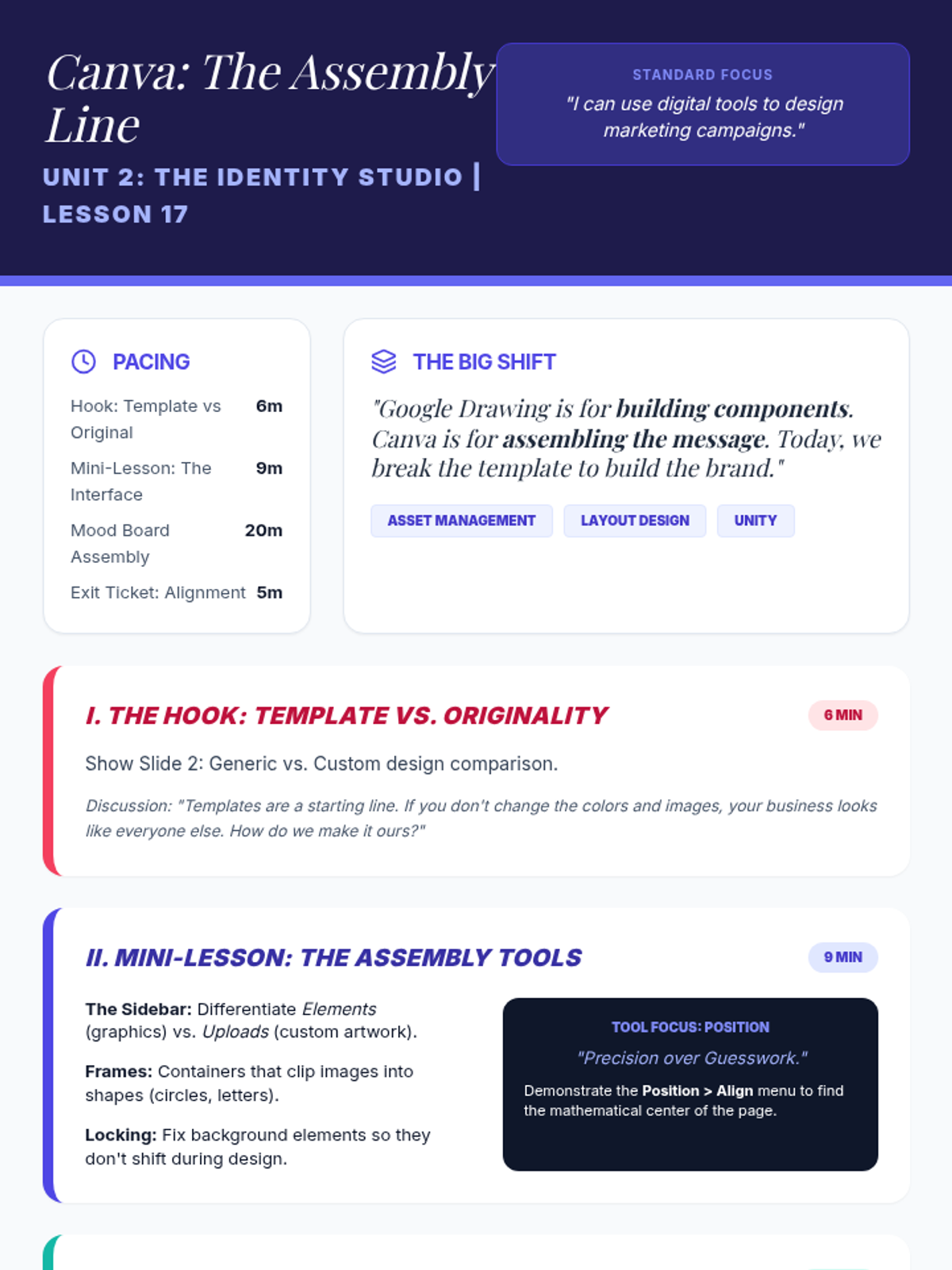
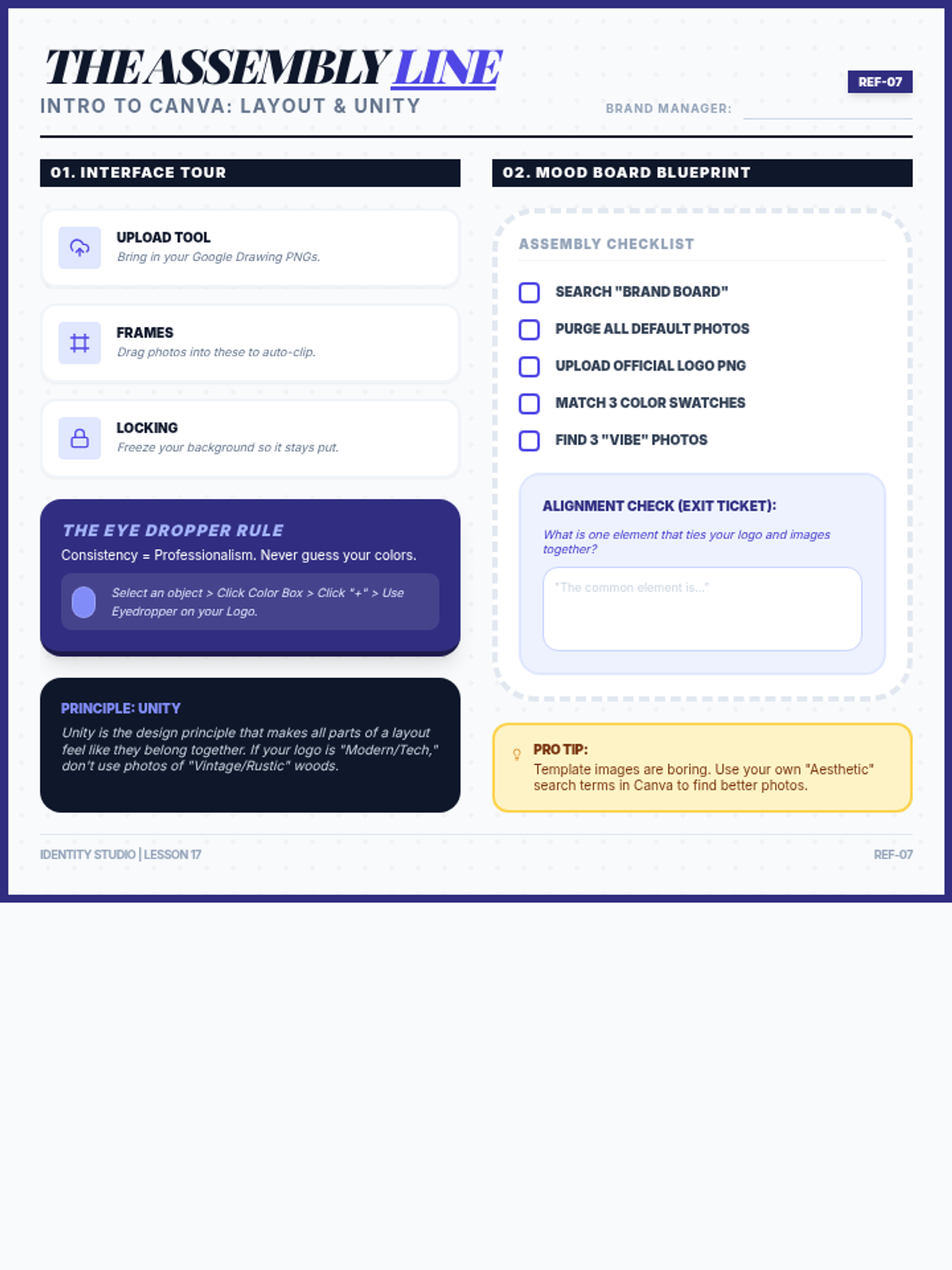
Students transition to Canva as a layout tool to assemble their brand assets into a professional Mood Board. They learn to 'break' templates by replacing generic elements with their own custom logos and colors, focusing on brand consistency and visual harmony.
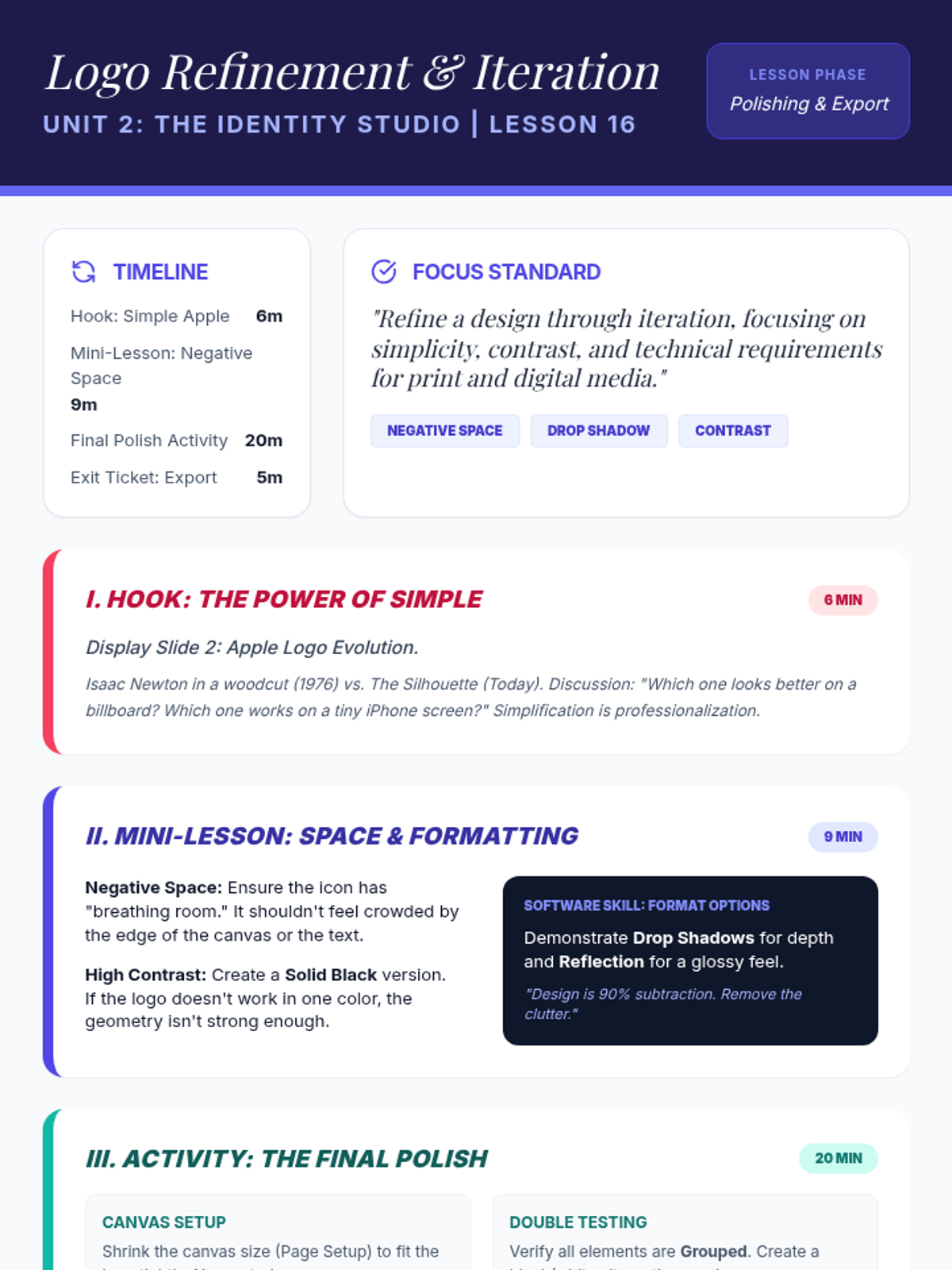
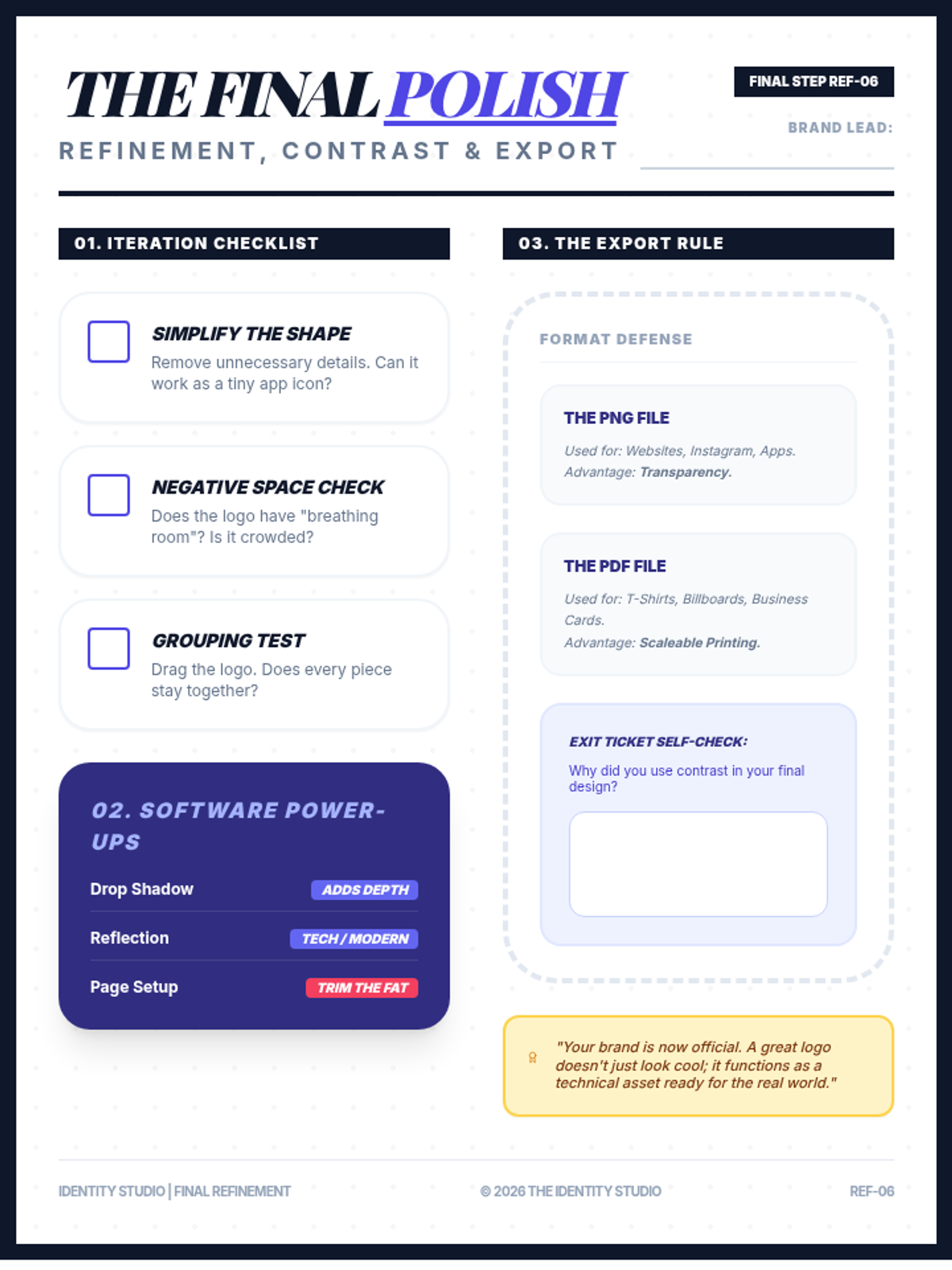
Students refine their logo drafts for professional use, focusing on simplicity, negative space, and contrast. They learn to create multiple versions (Full Color and Solid Black) and understand the technical export requirements for digital vs. print media (PNG vs. PDF).
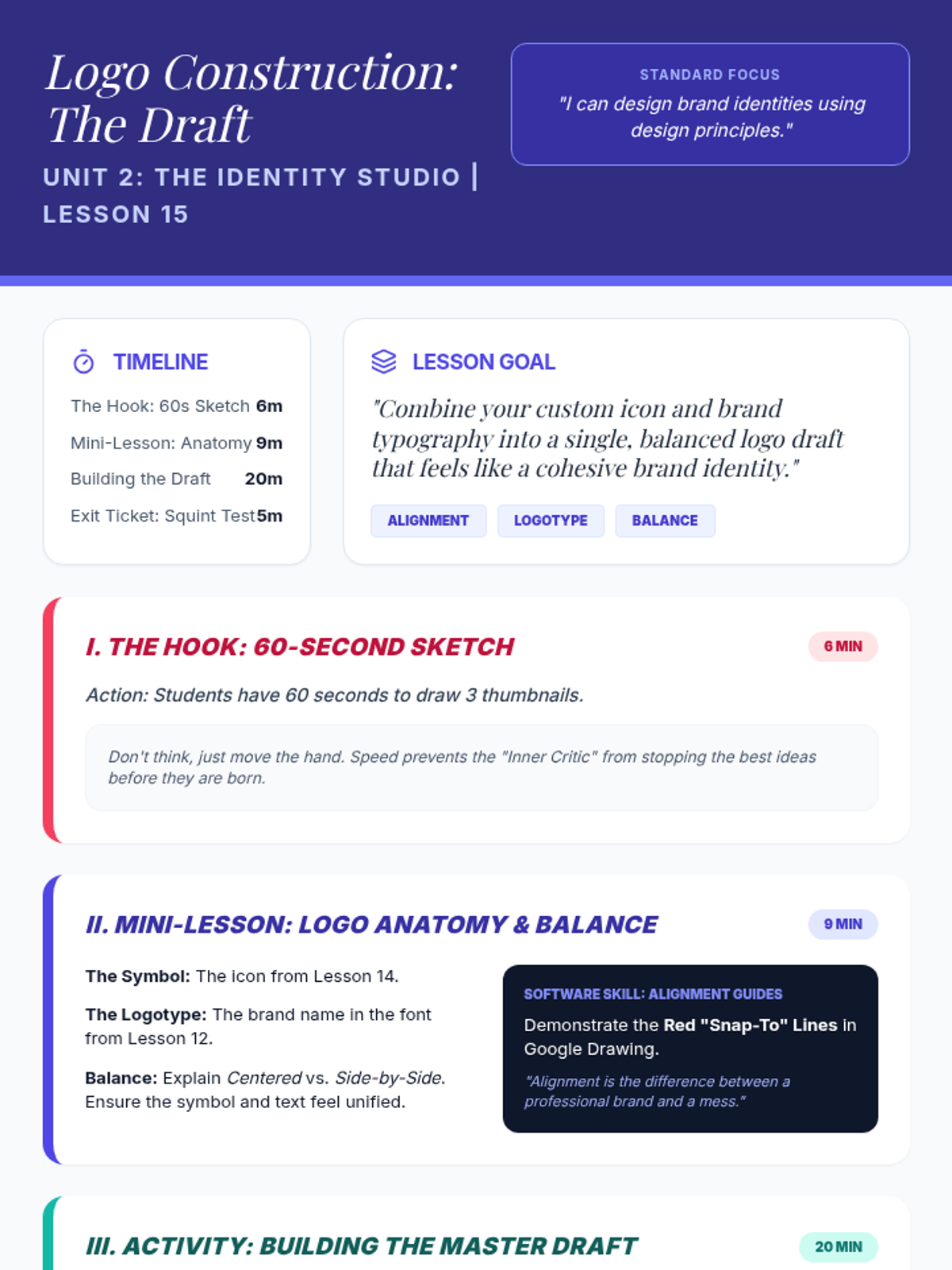
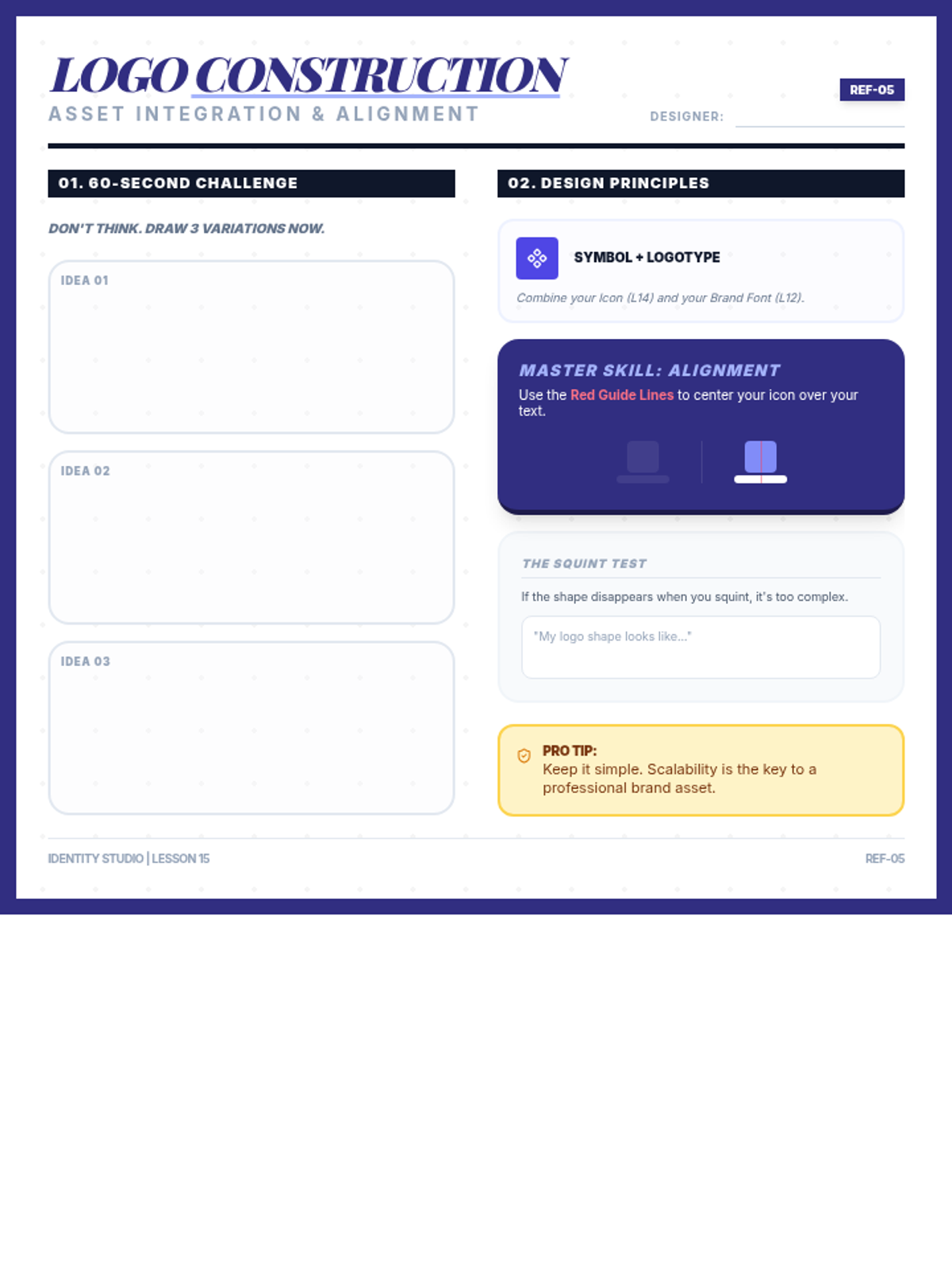
Students transition from creating isolated assets to building their official brand logo. They learn the anatomy of a logo (Symbol + Logotype), master alignment guides in Google Drawing, and perform the 'Squint Test' to ensure their design is clear and balanced.
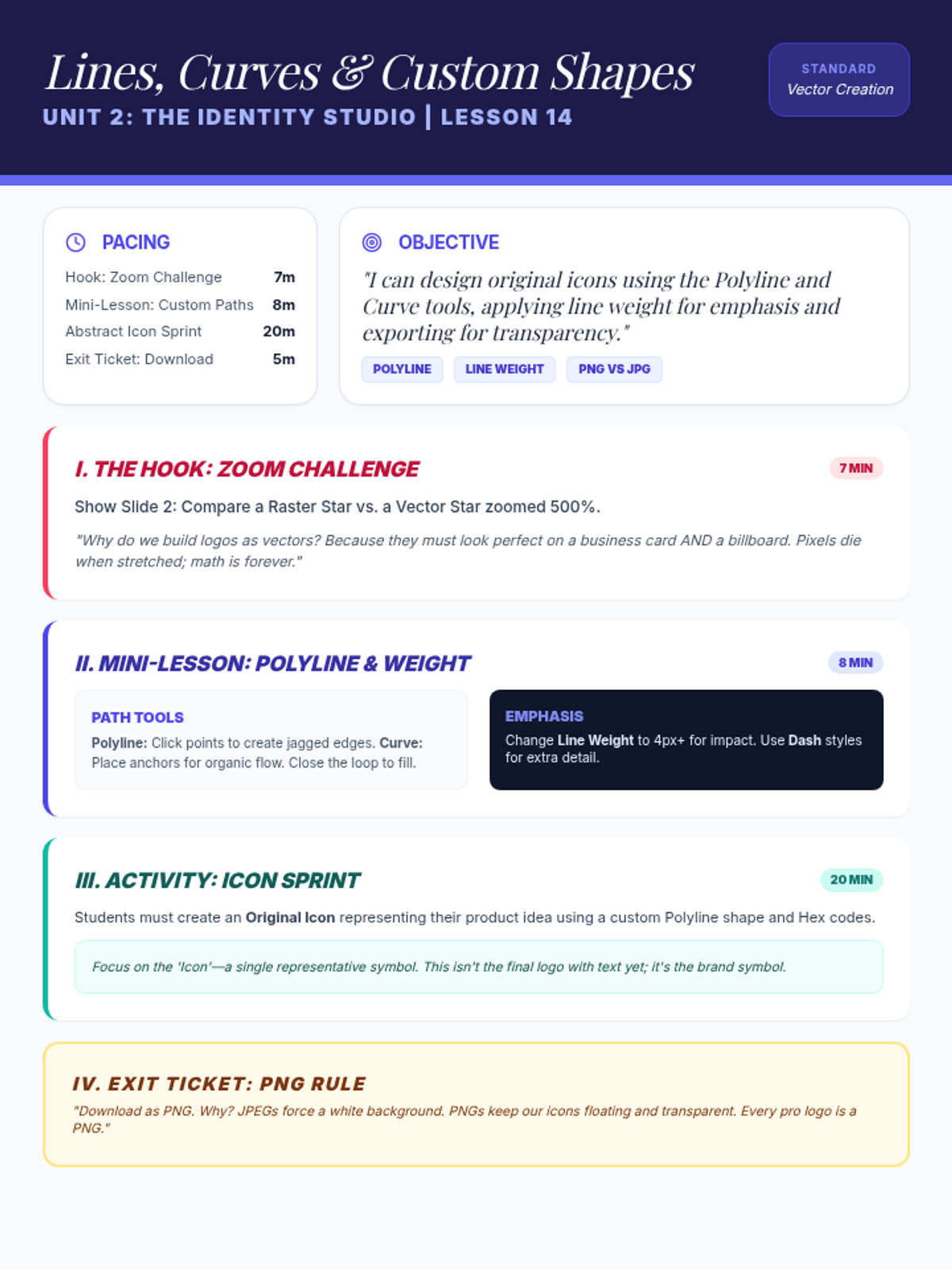
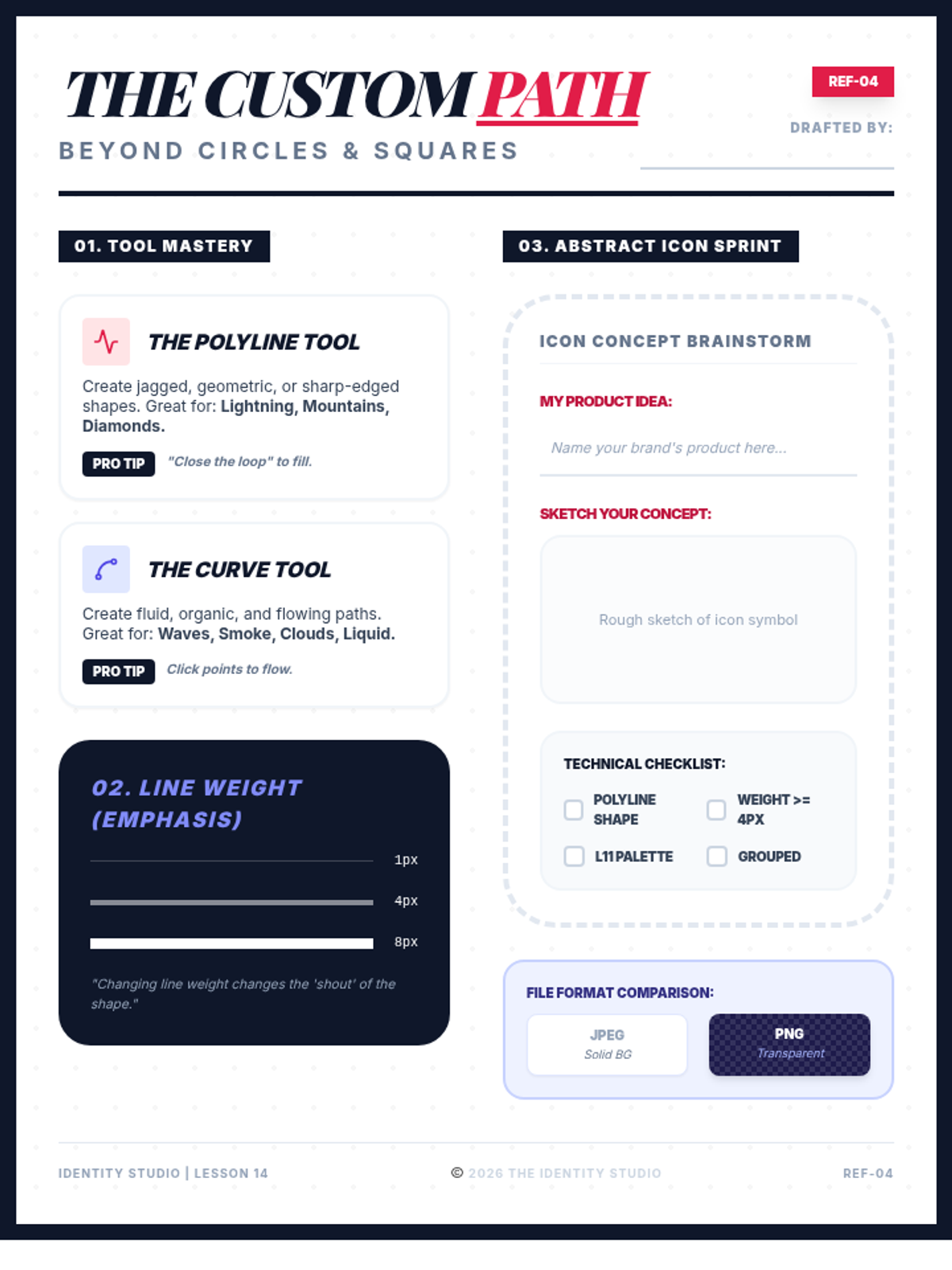
Students advance their Google Drawing skills by moving beyond basic geometric shapes to custom paths. They learn to use the Polyline and Curve tools to create original icons, while understanding the technical differences between Vector and Raster images and the importance of PNG transparency.
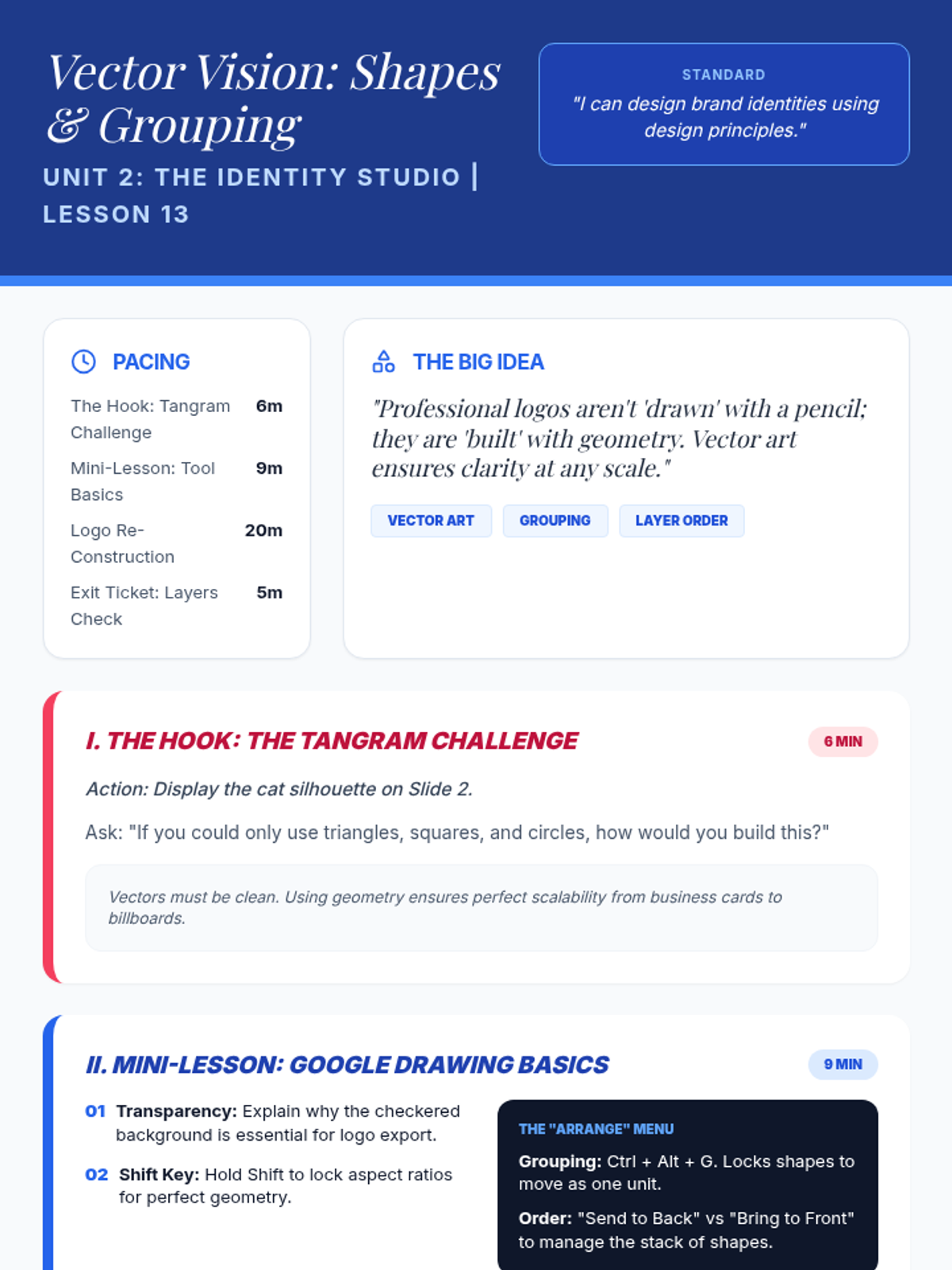
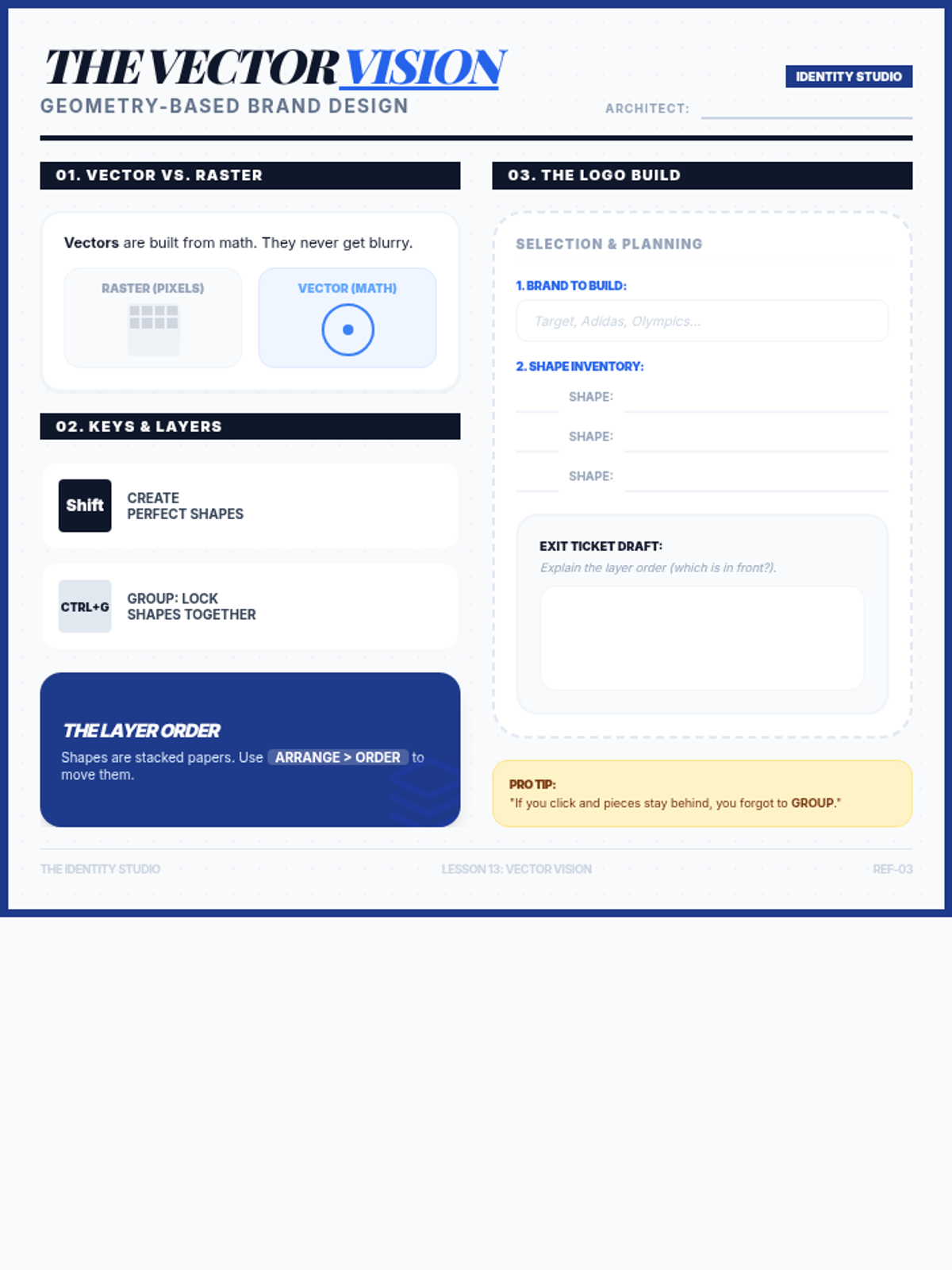
This lesson introduces students to the concept of vector art using Google Drawing. Students learn to build complex objects using simple geometric shapes, mastering skills like grouping, layering (order), and the use of the Shift key for perfect proportions.
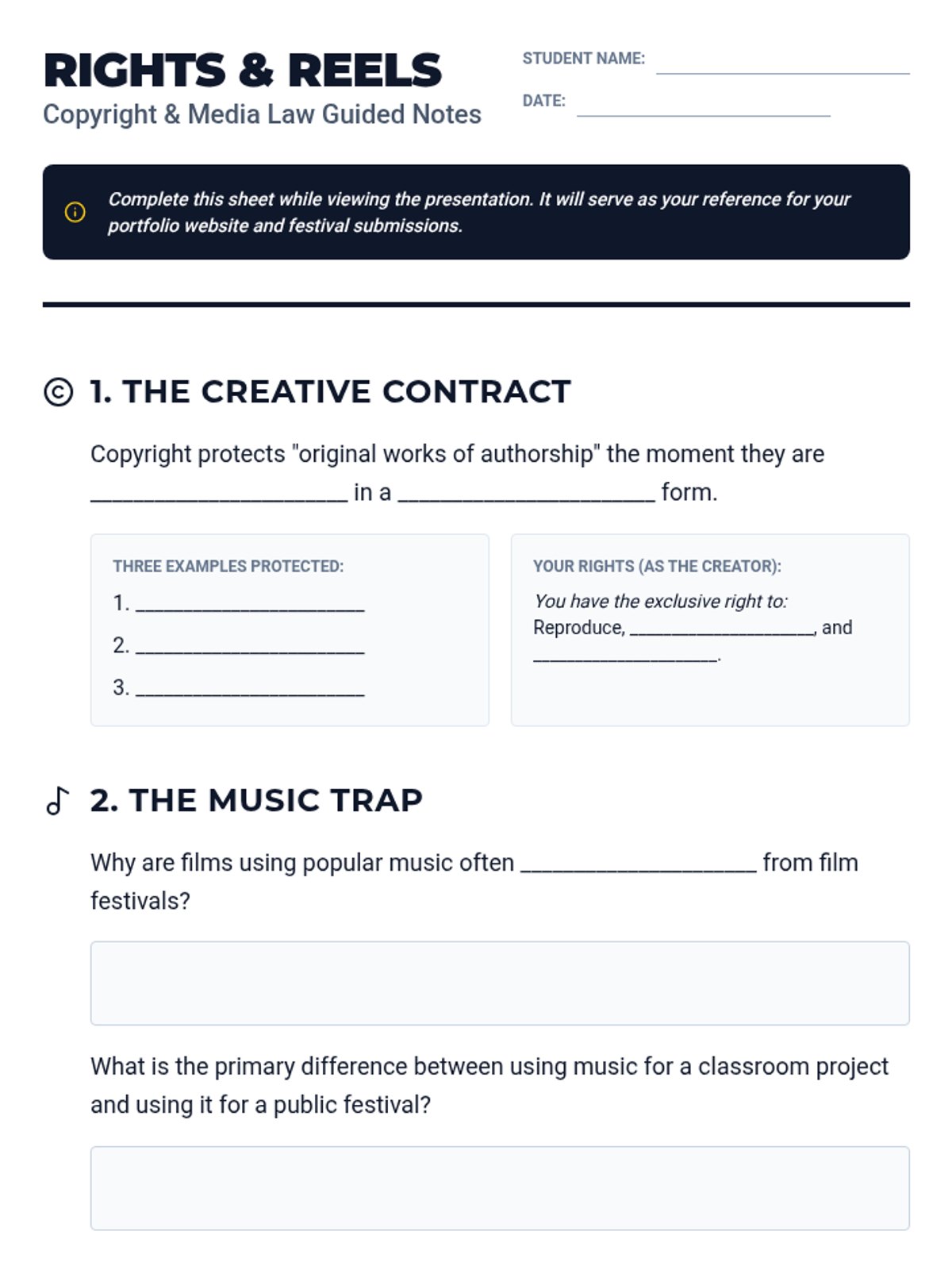
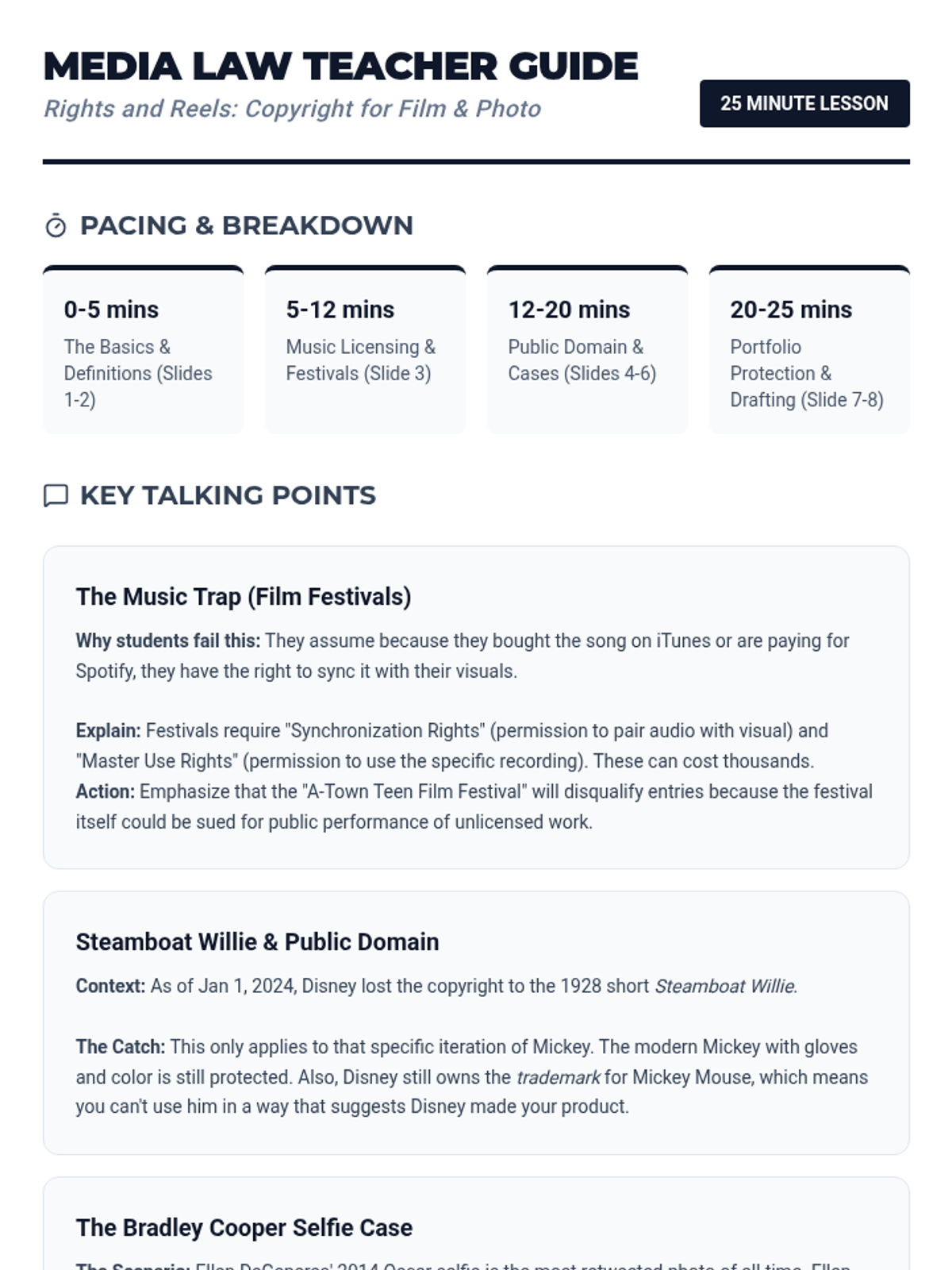
A 25-minute intensive lesson for film and photo students covering copyright law, music licensing for festivals, public domain via Steamboat Willie, and personal portfolio protection.
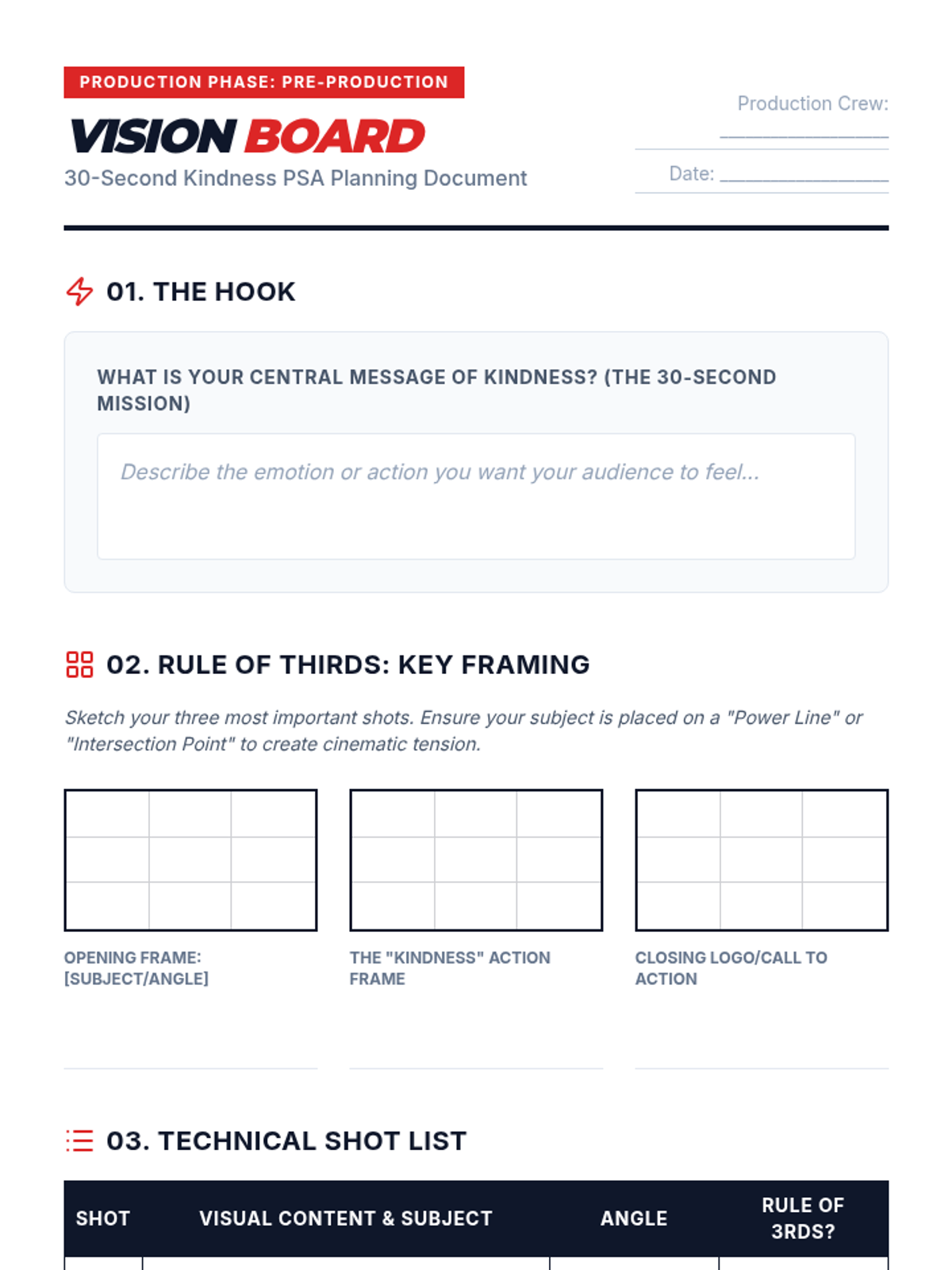
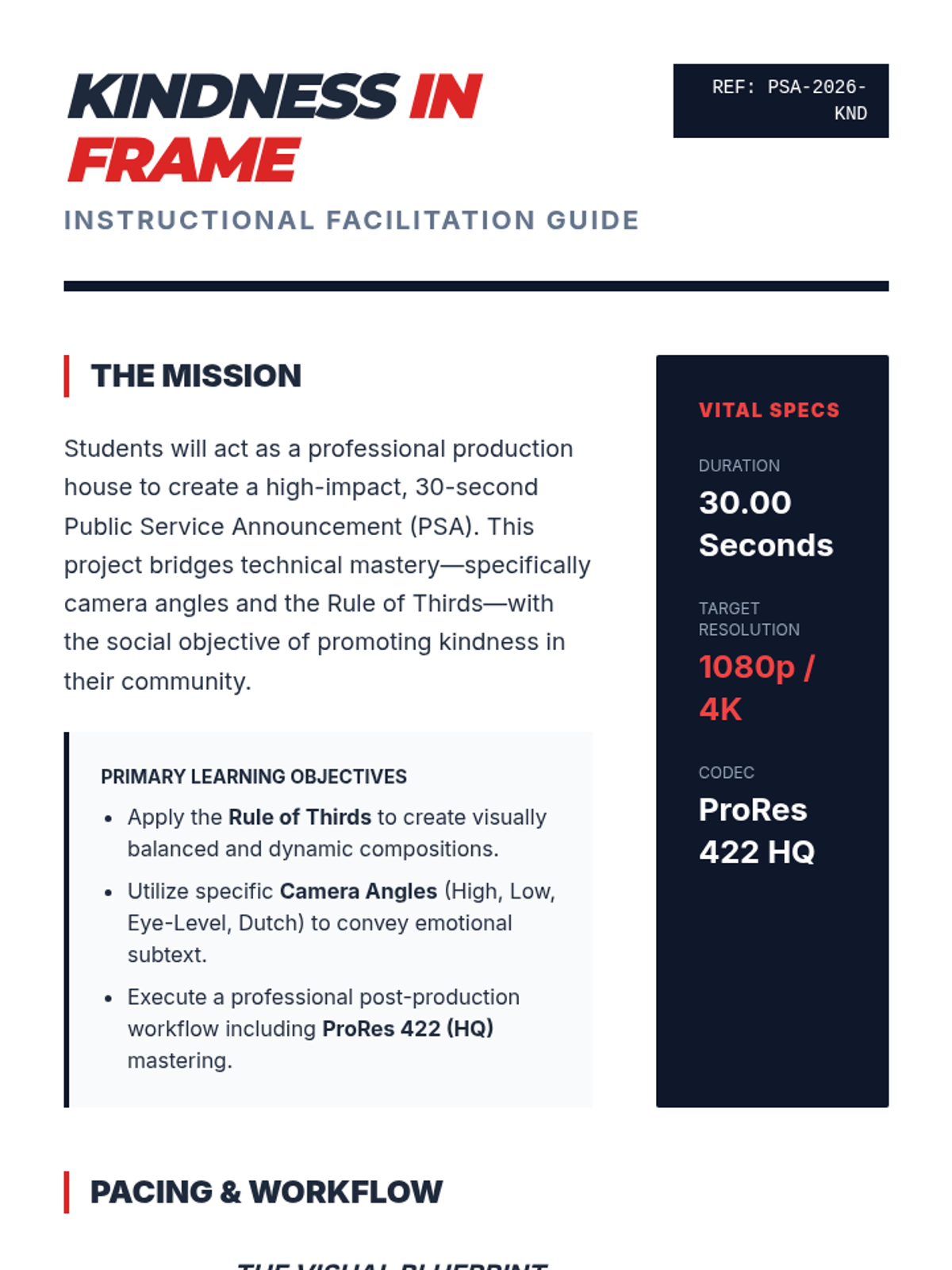
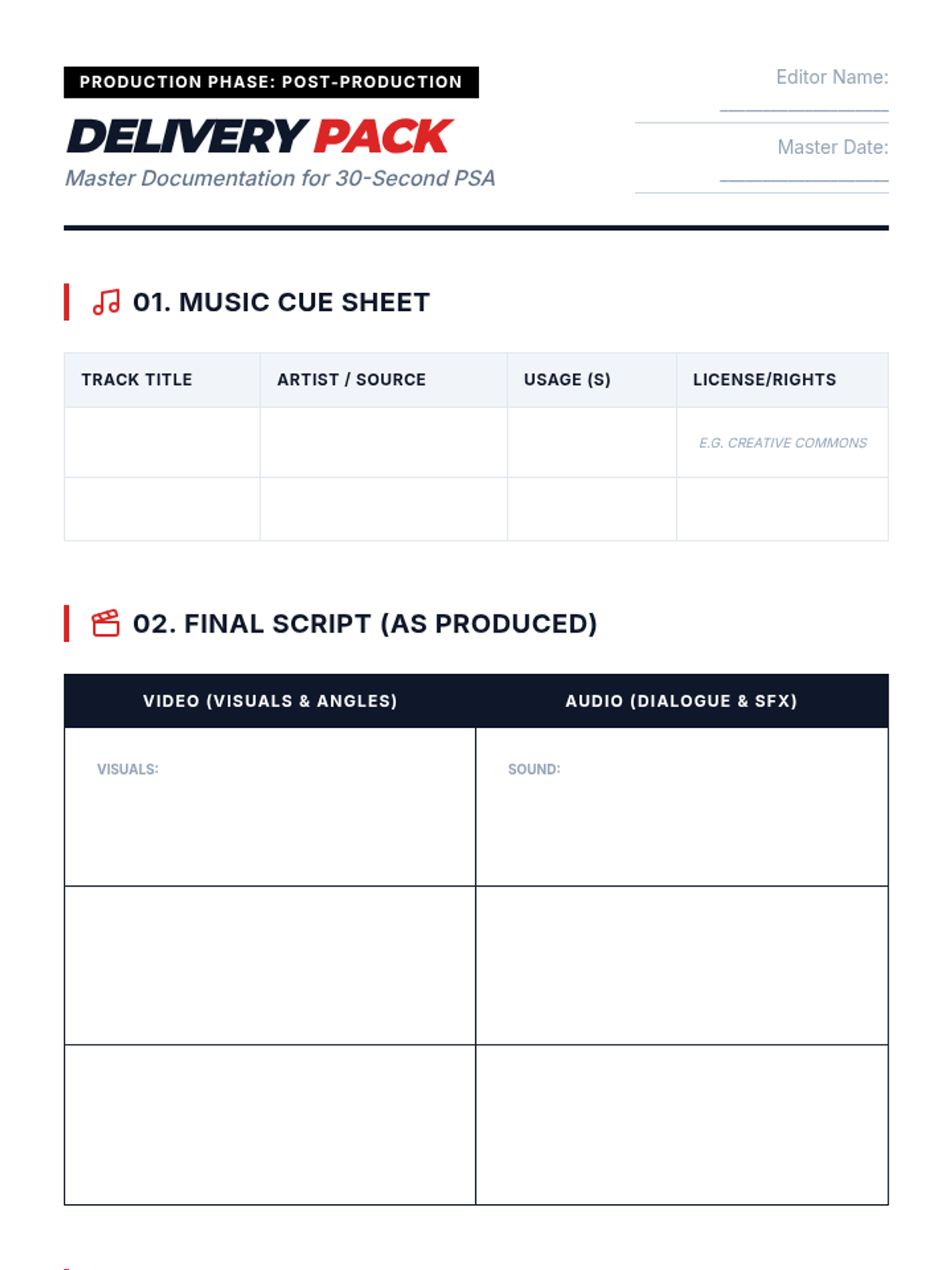
A project-based lesson where students create a 30-second kindness PSA, focusing on the technical mastery of camera angles, the rule of thirds, and professional delivery standards.
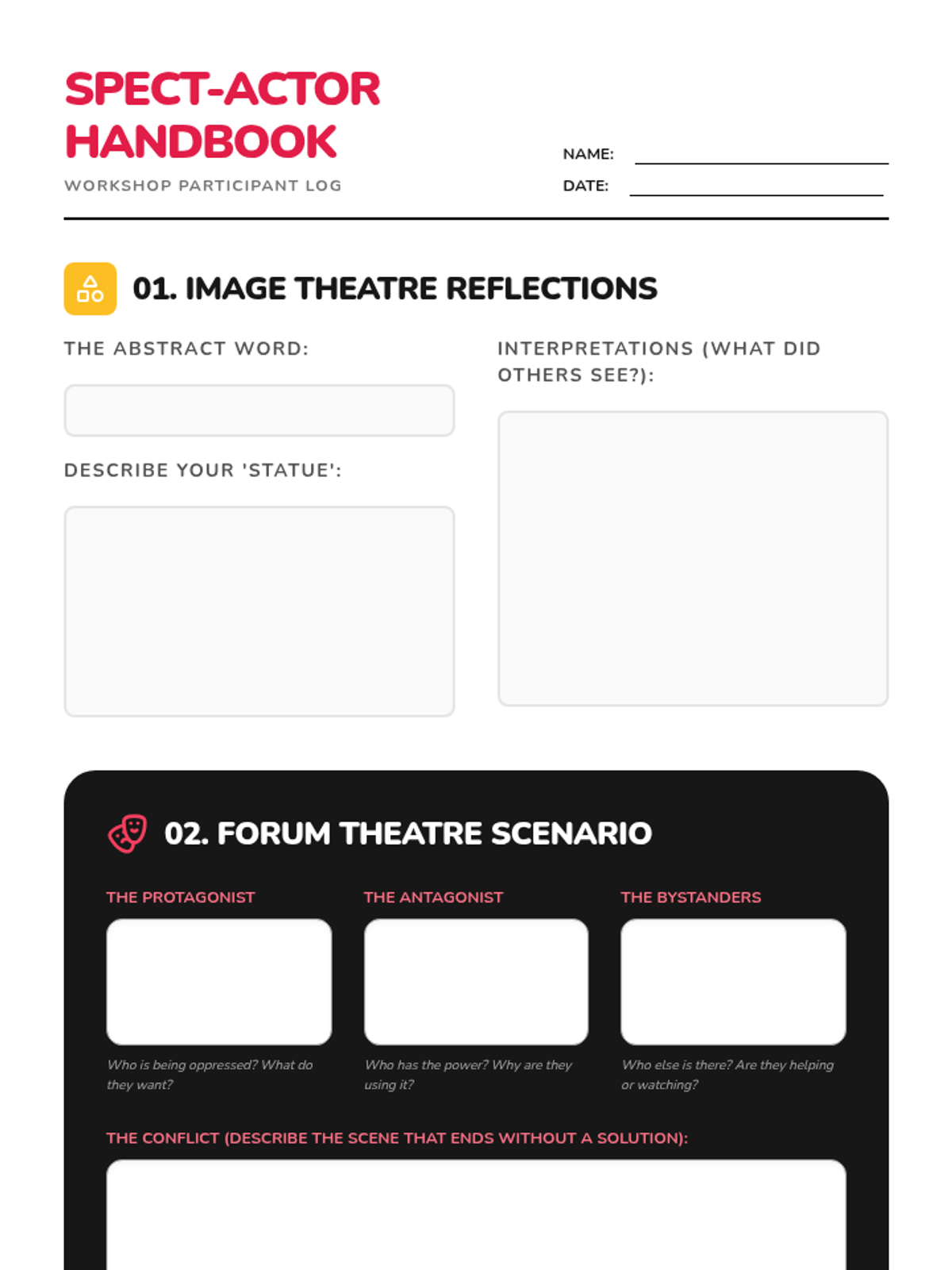
An exploration of Augusto Boal's Theatre of the Oppressed, covering its historical roots in Brazil, key techniques like Forum and Image Theatre, and its ongoing role in global social justice movements.