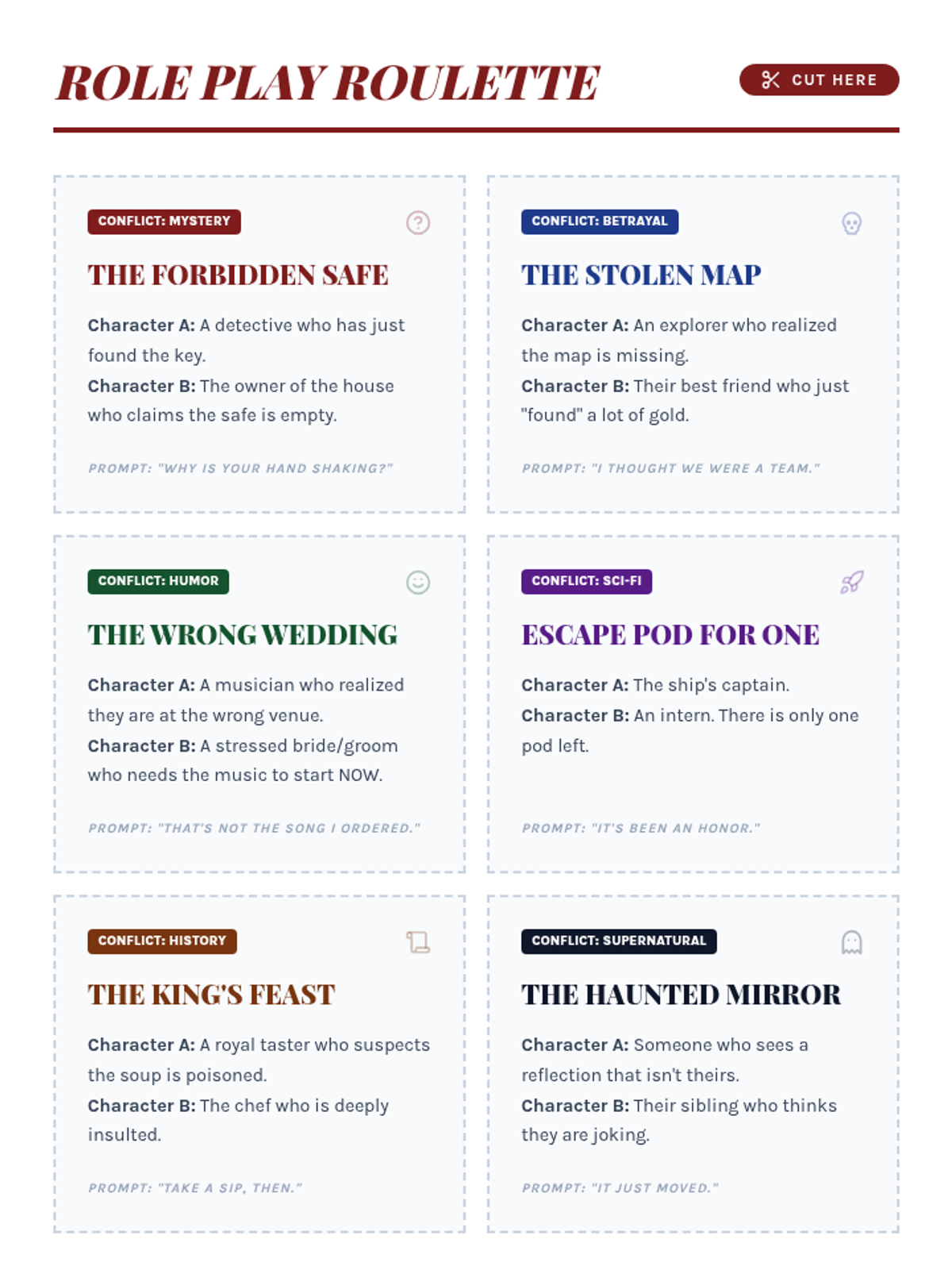
Historical evolution of performance, technical stagecraft, and core acting techniques. Develops playwriting skills and fosters imaginative expression through script development and production management.
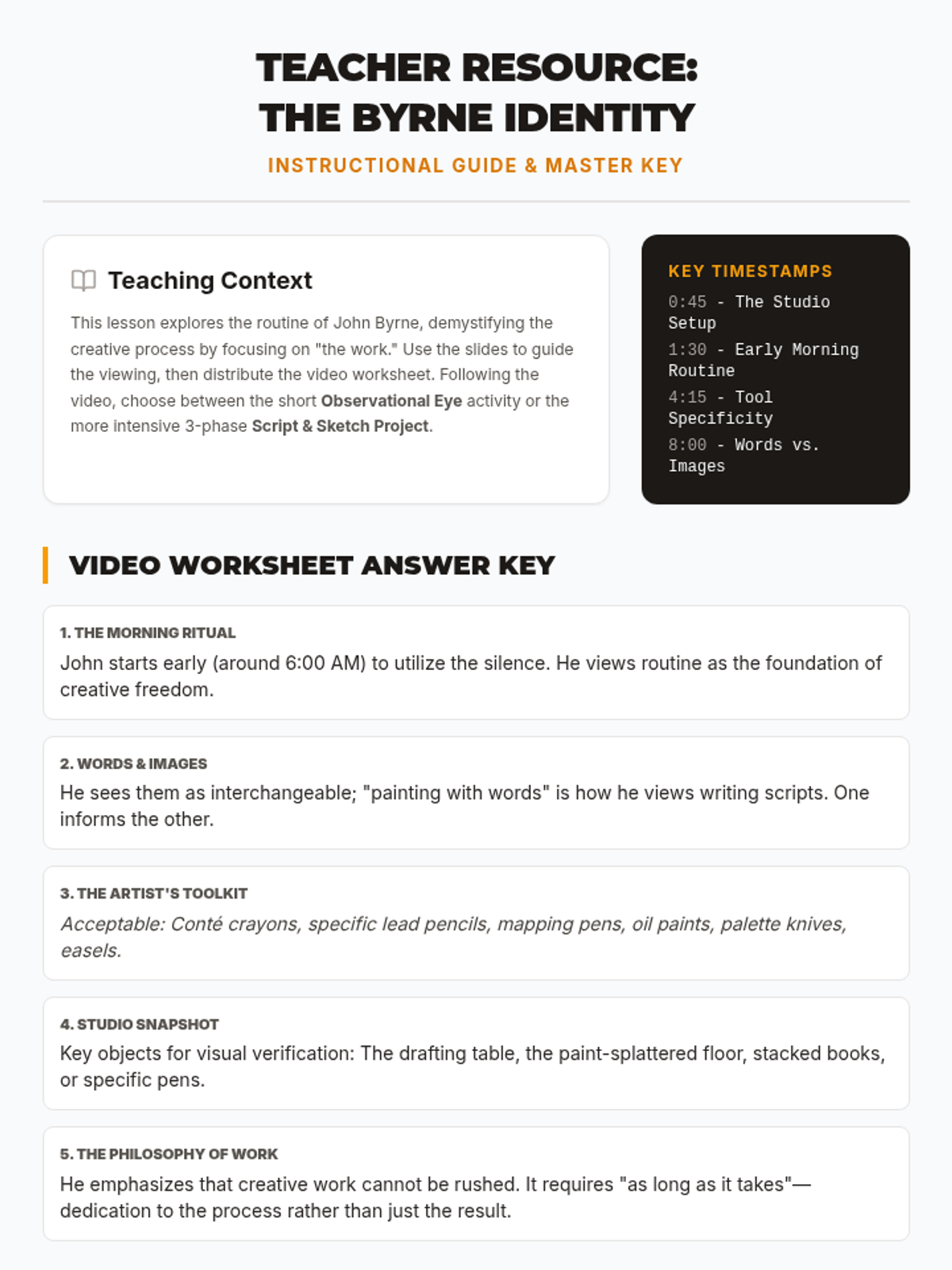
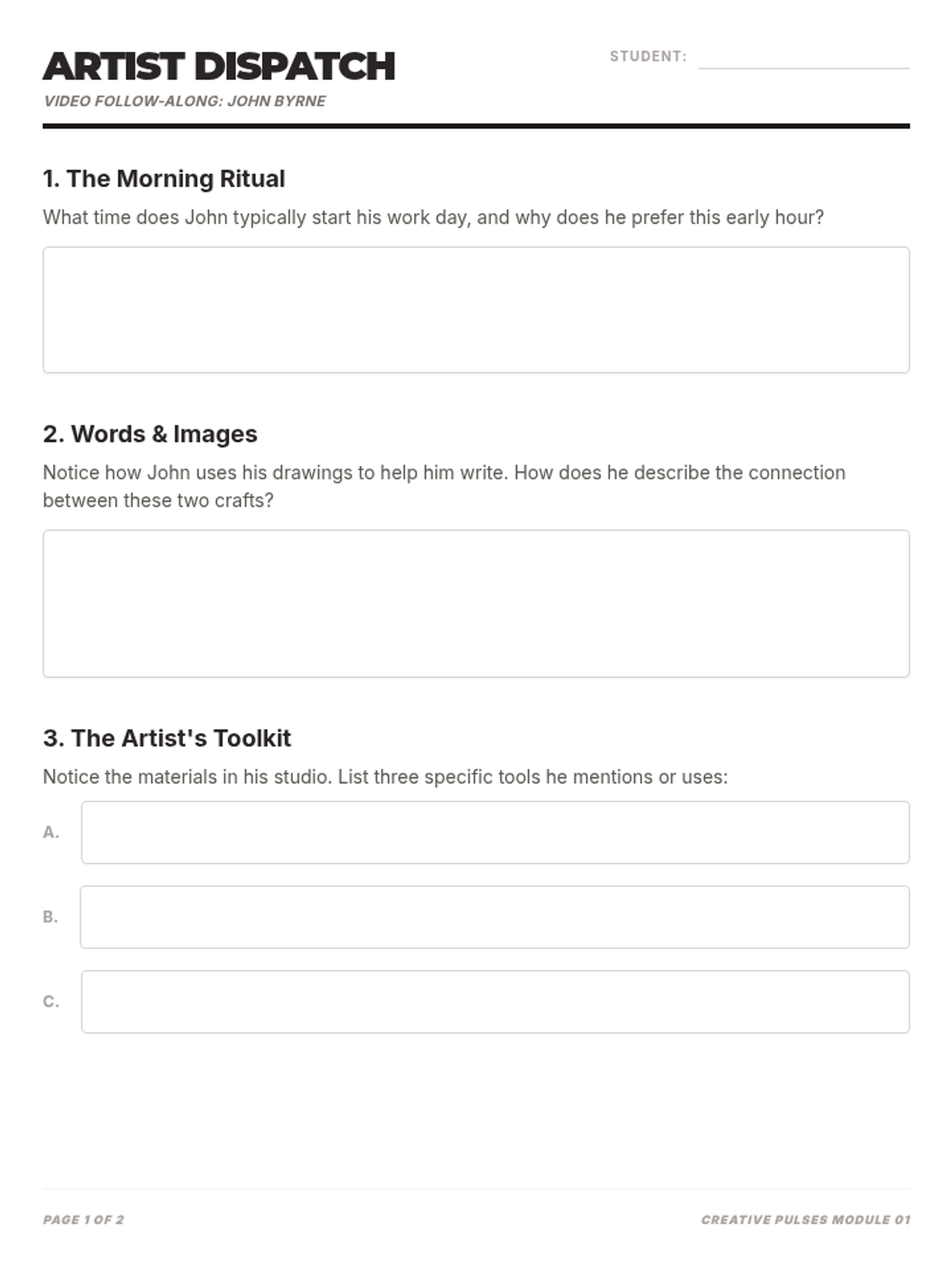
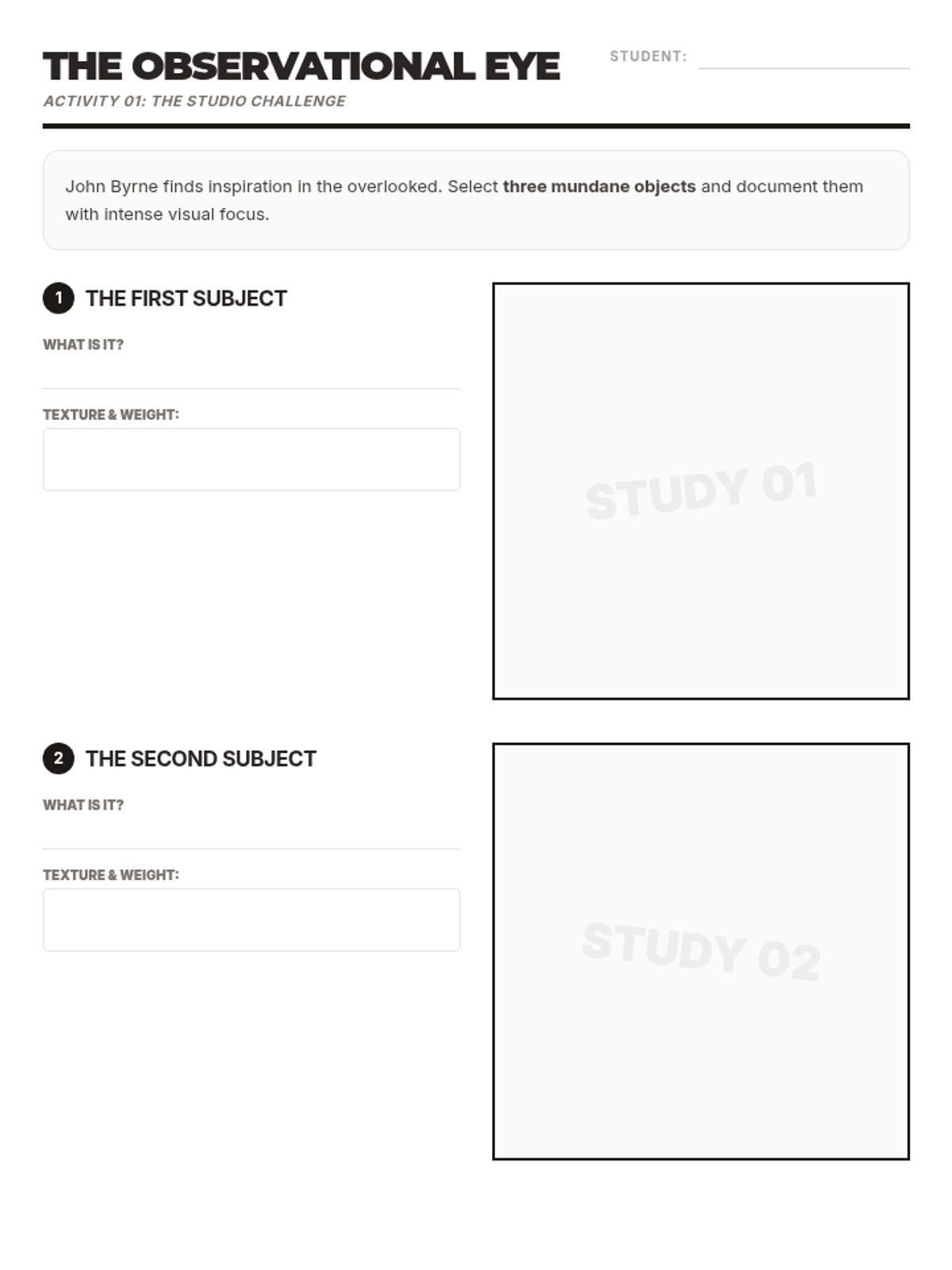
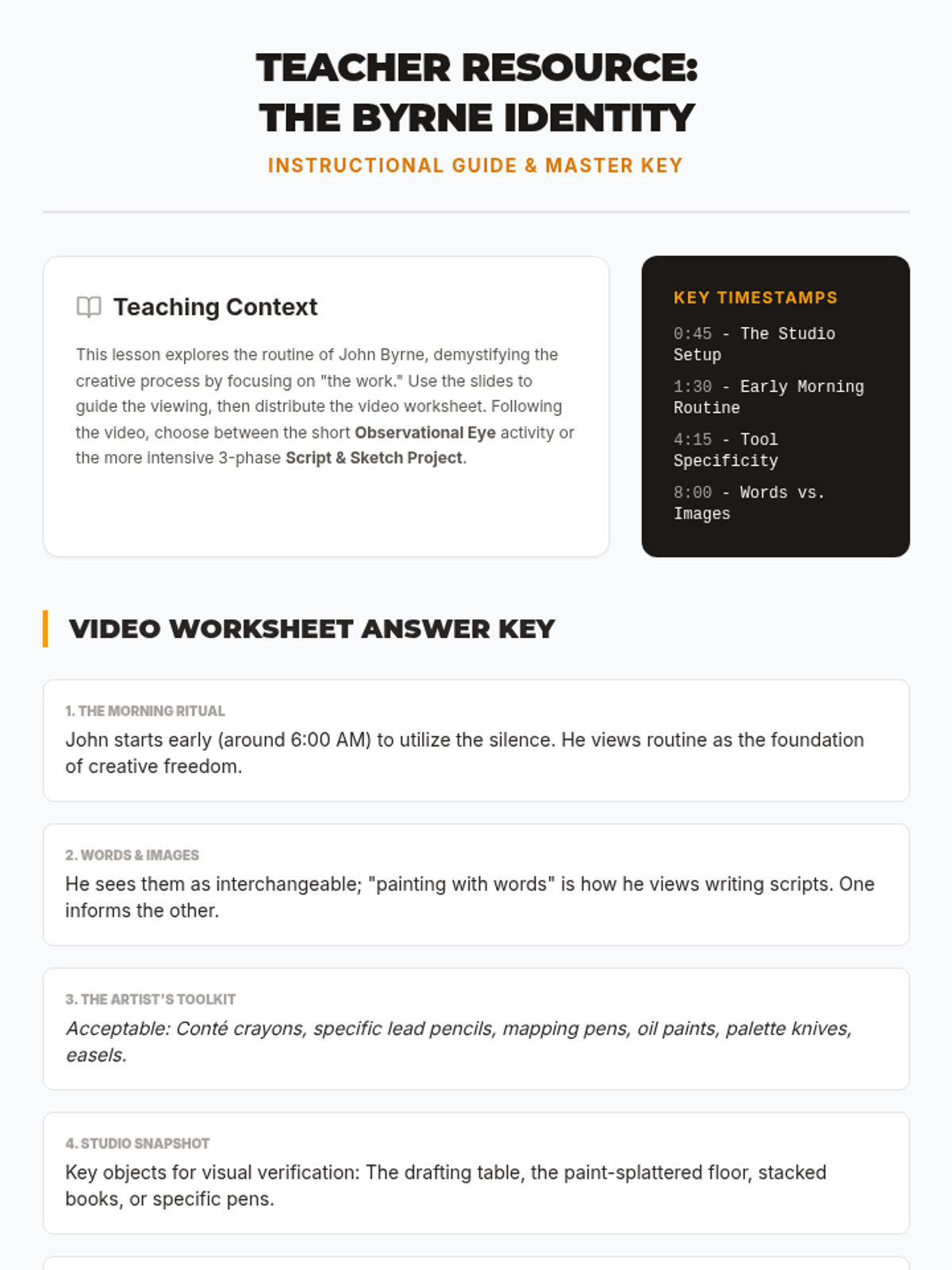
An in-depth look at John Byrne's daily life as a painter and playwright, focusing on his studio habits, materials, and the intersection of visual art and storytelling.
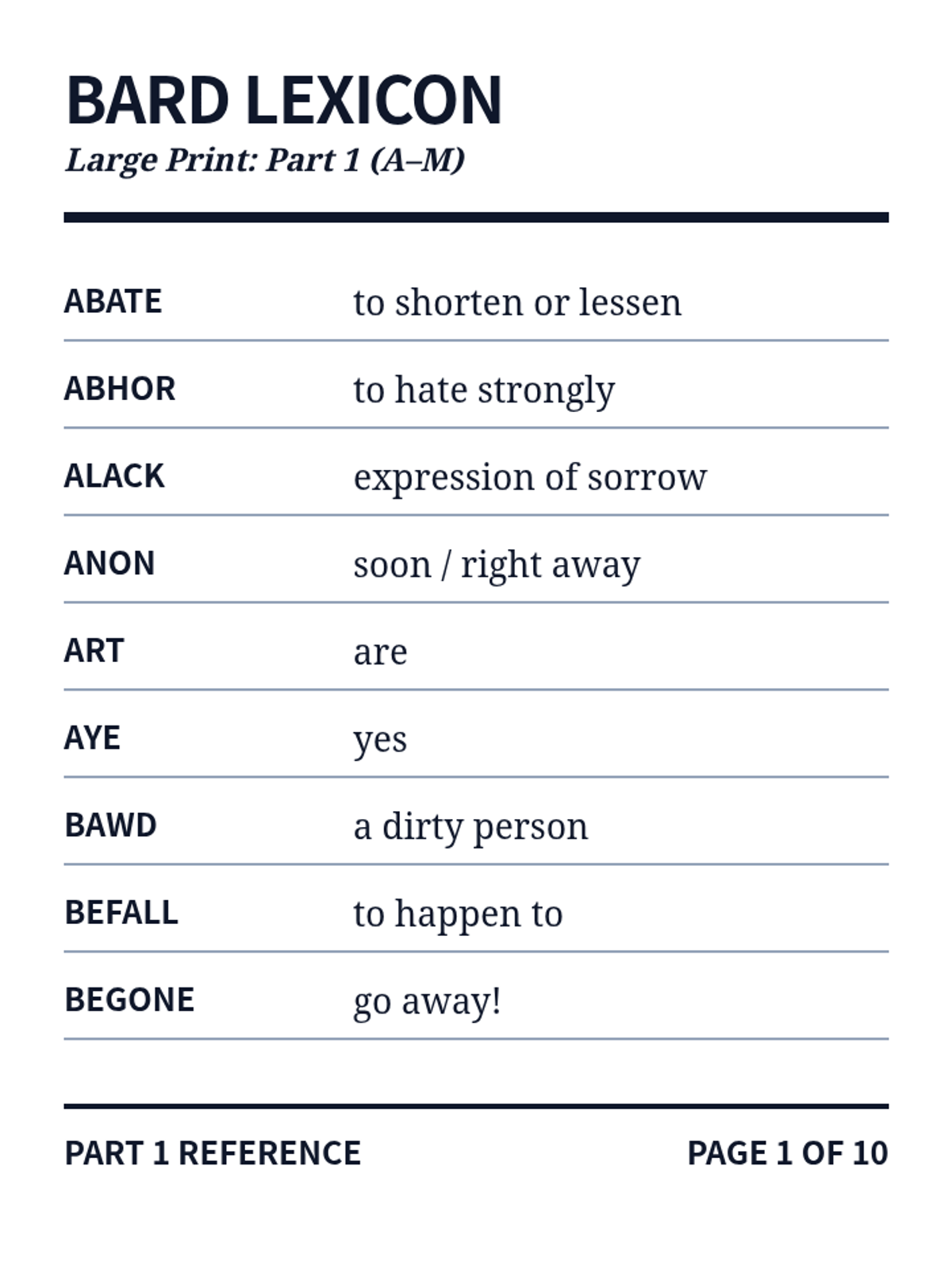
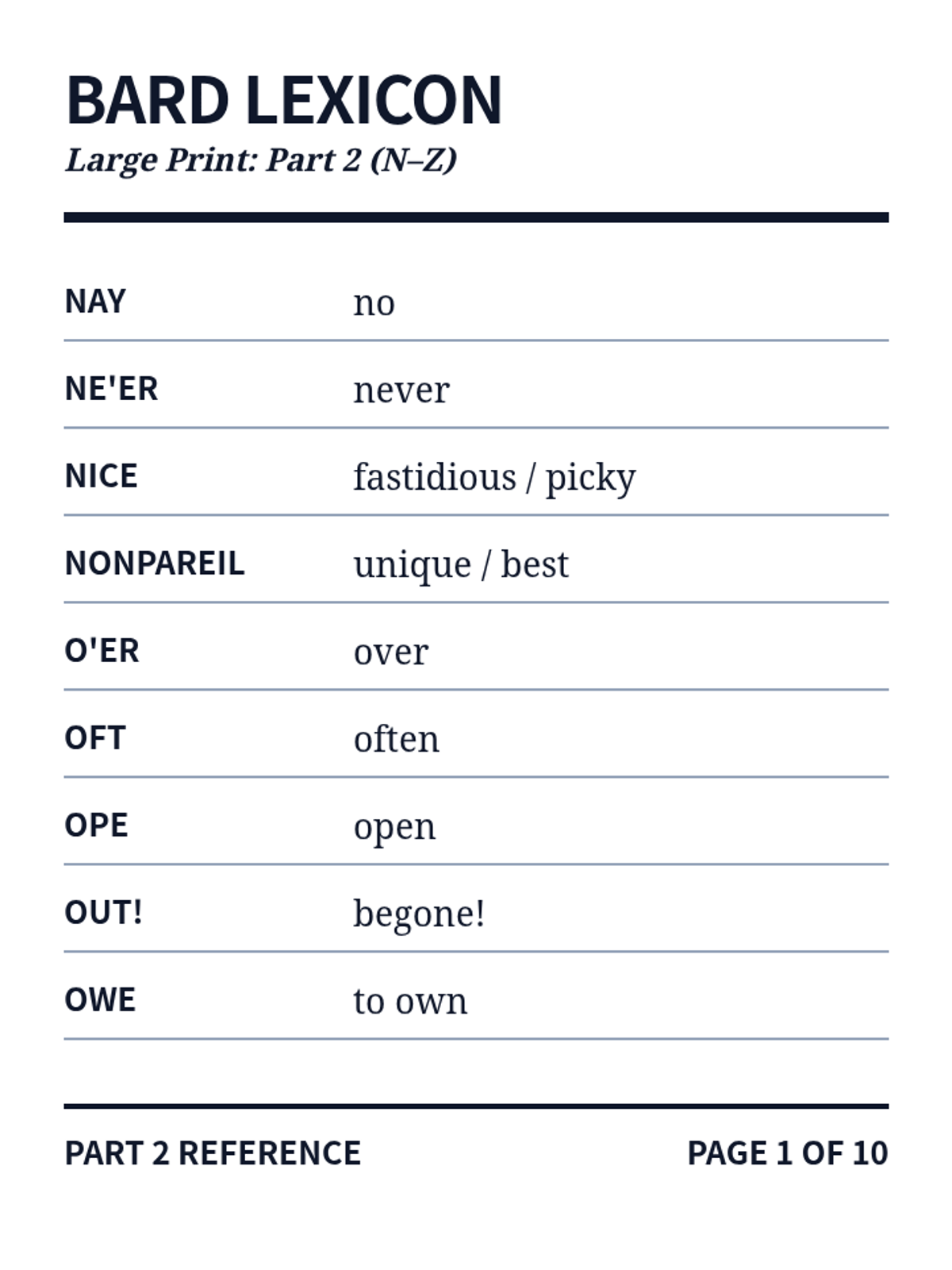
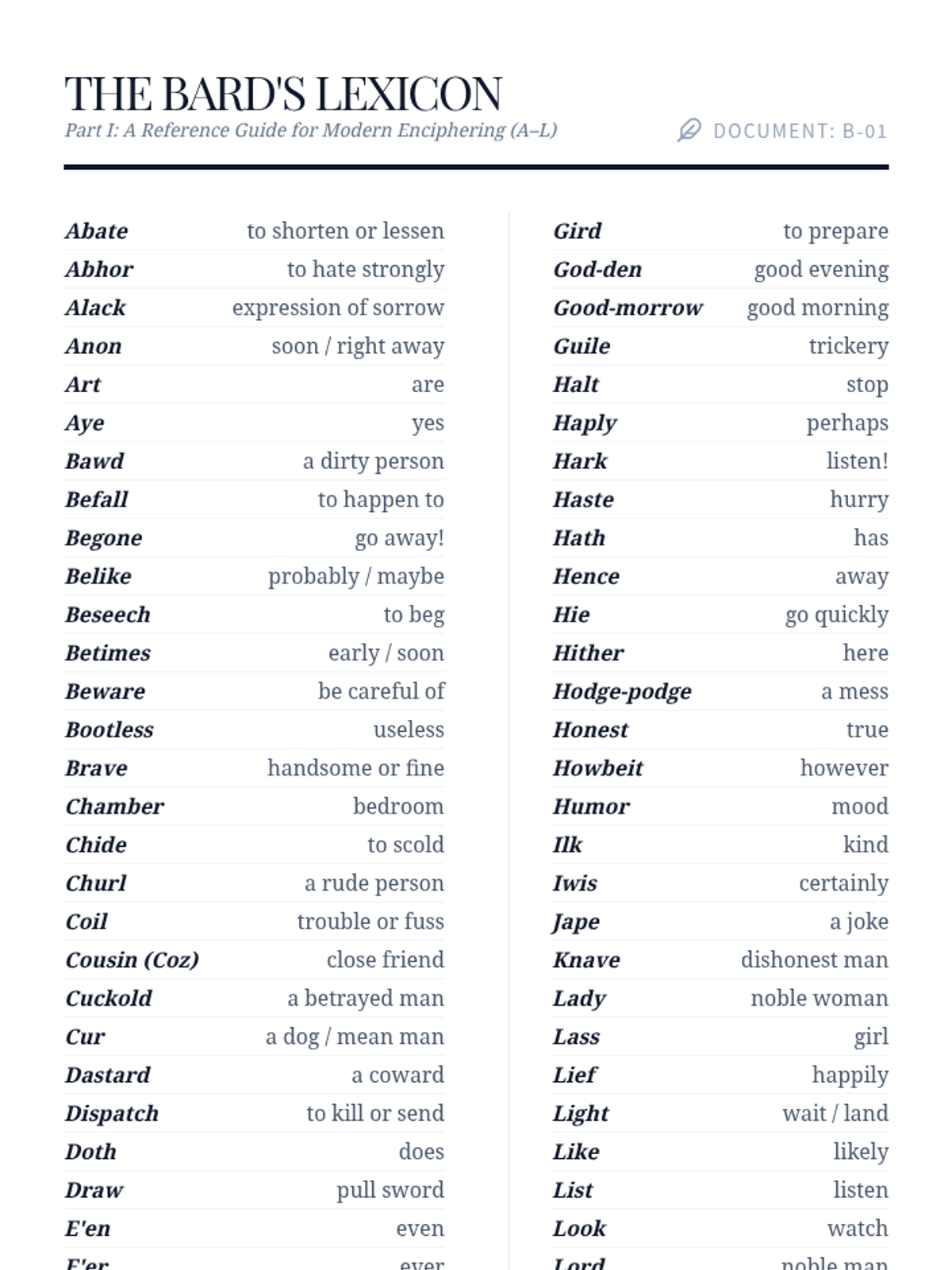
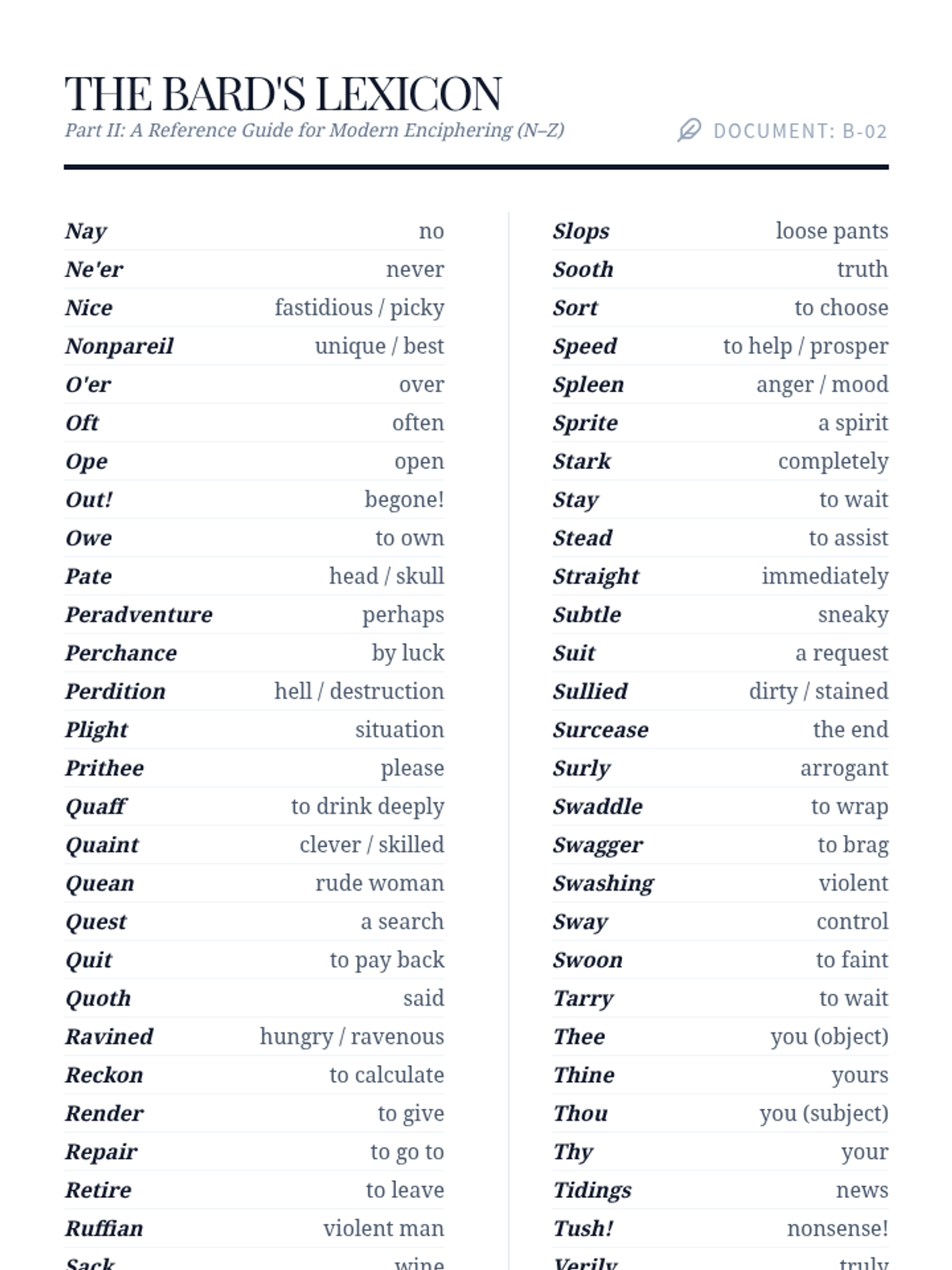
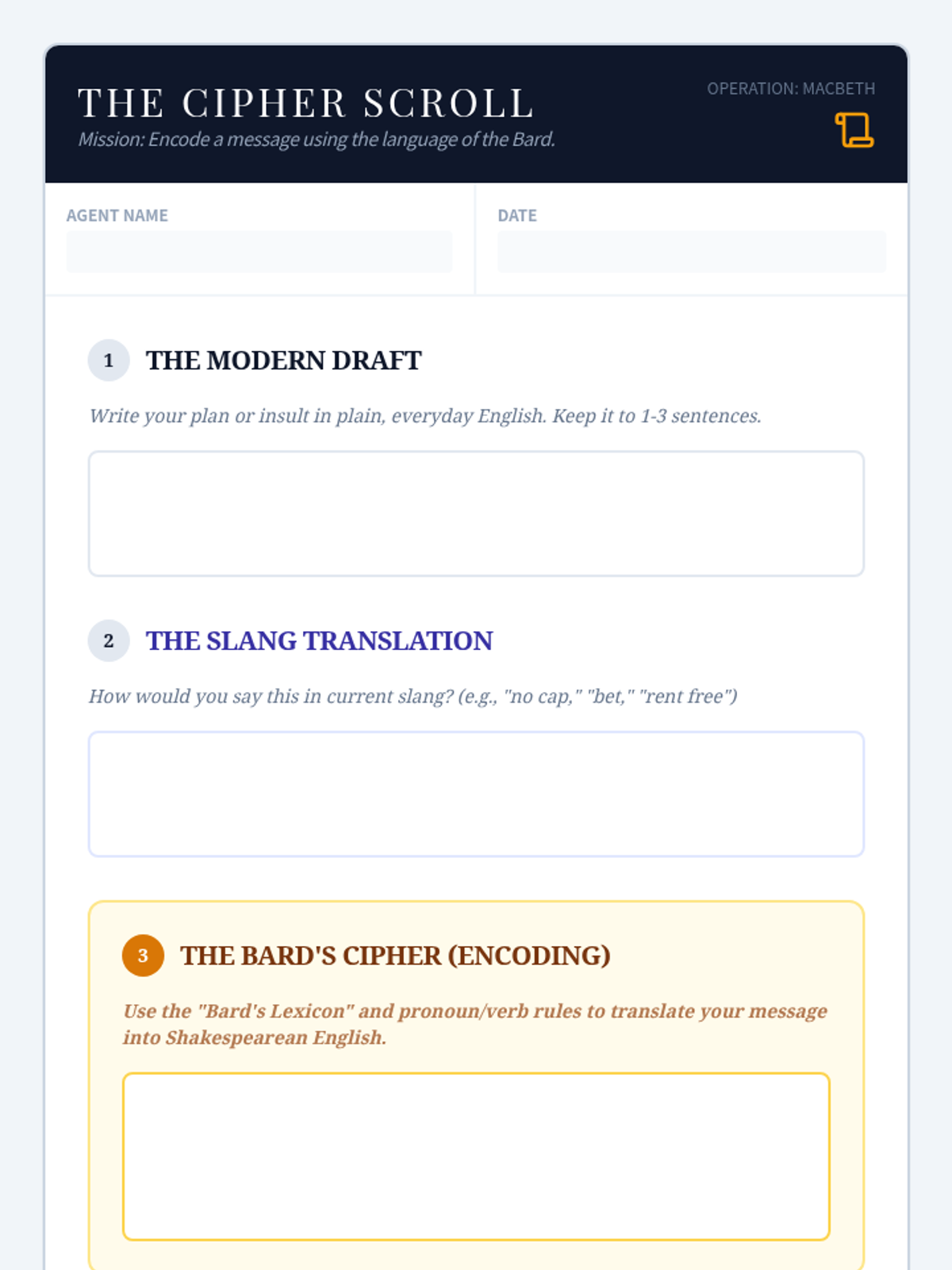
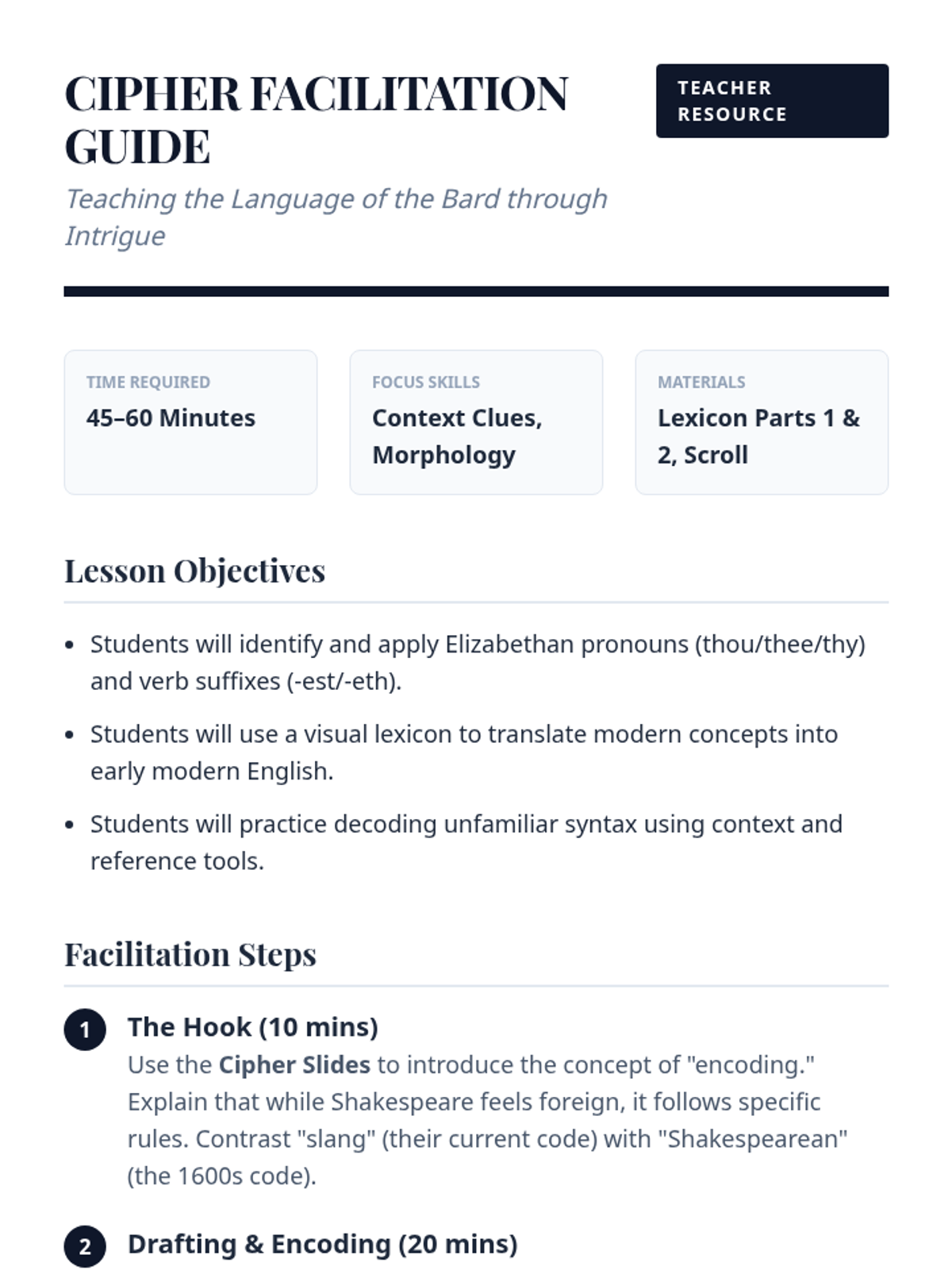
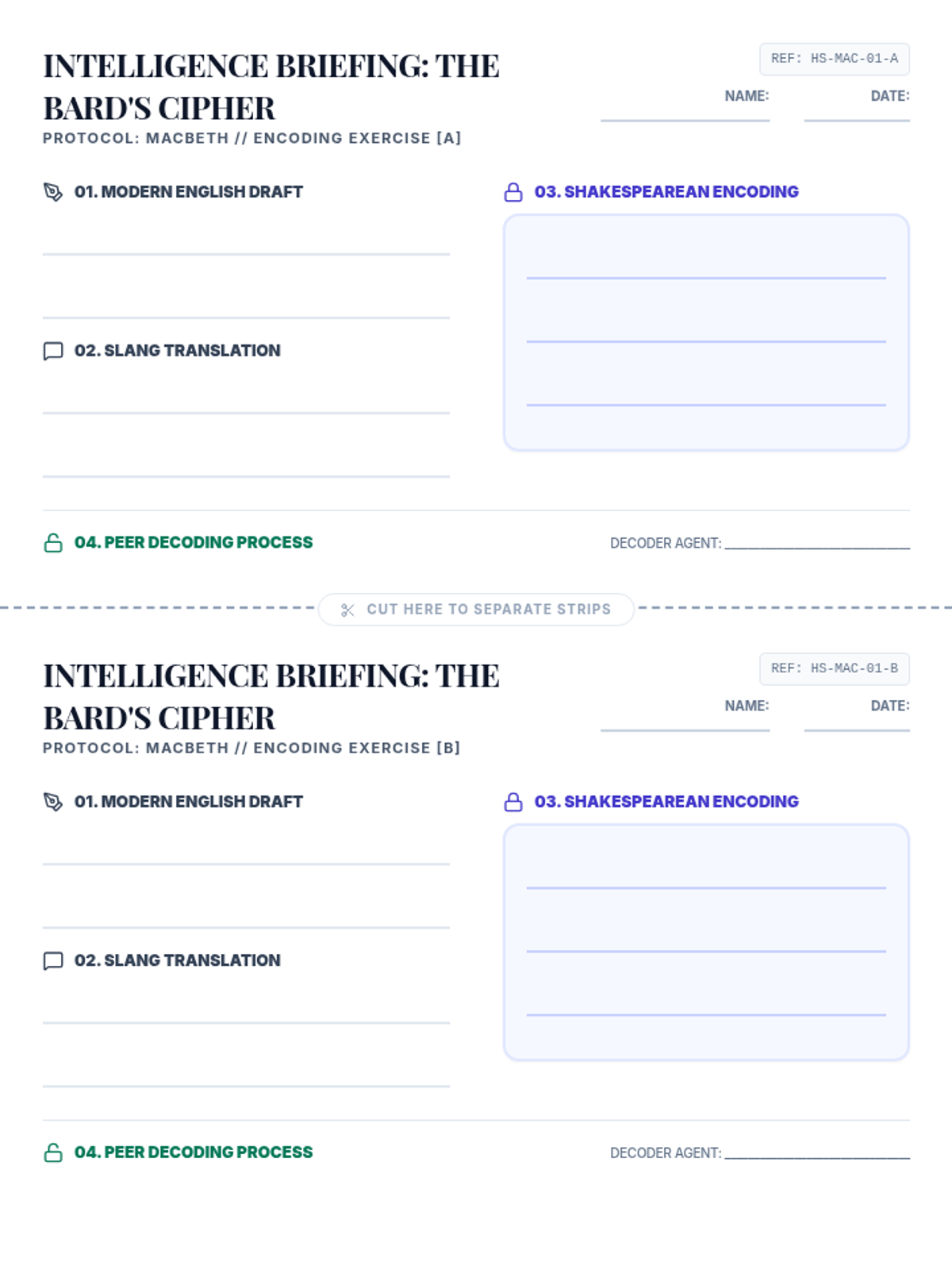
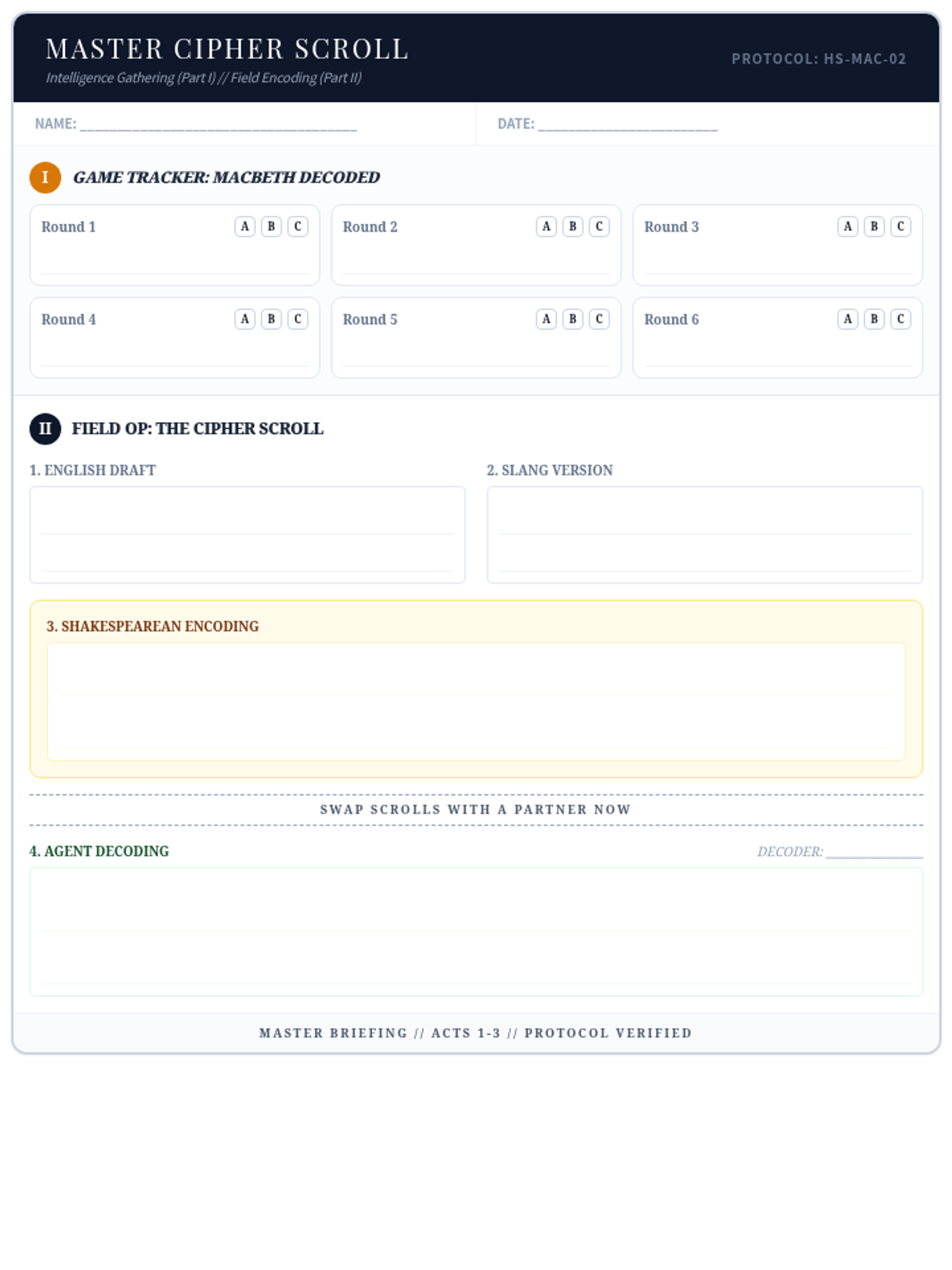
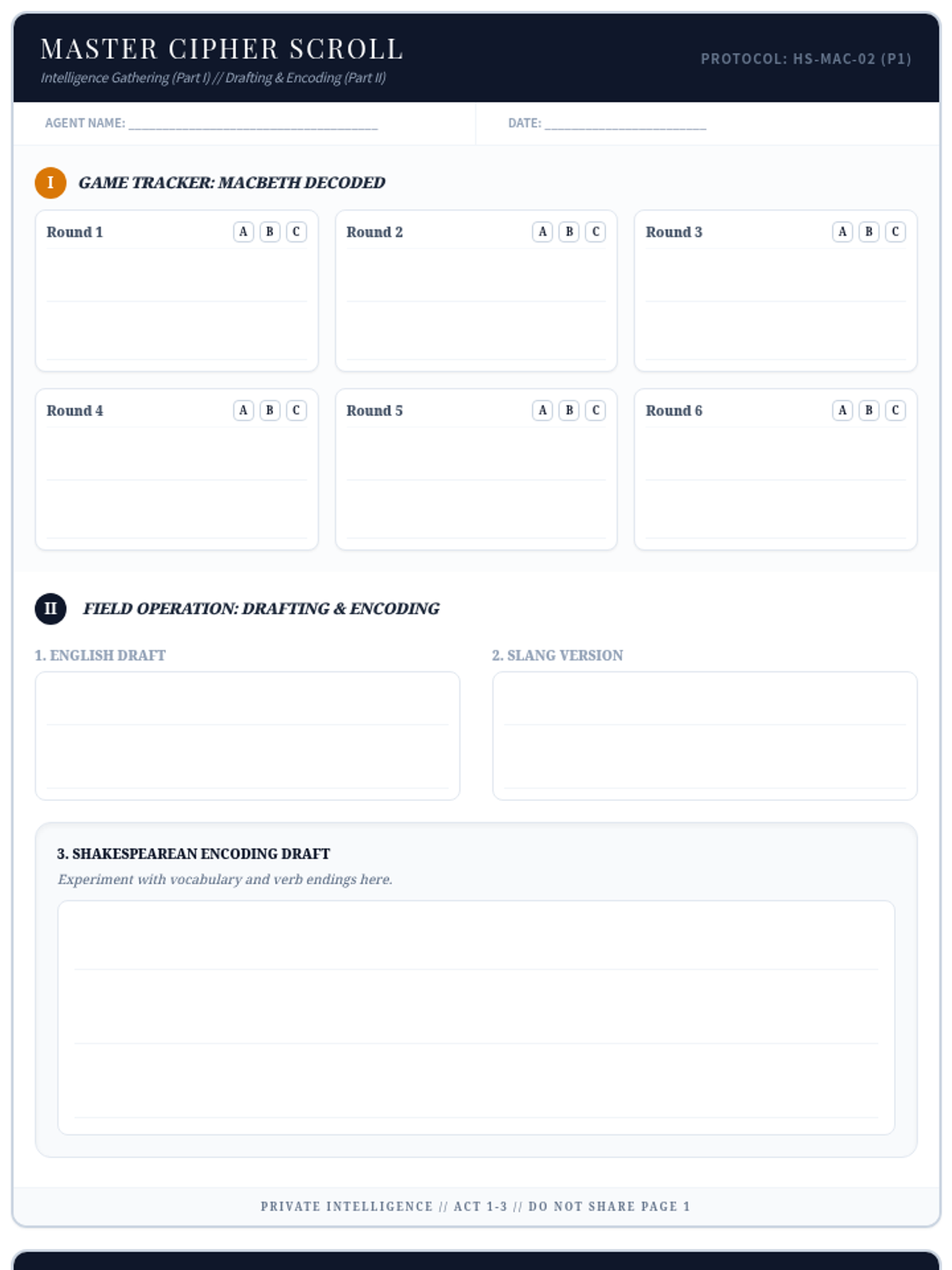
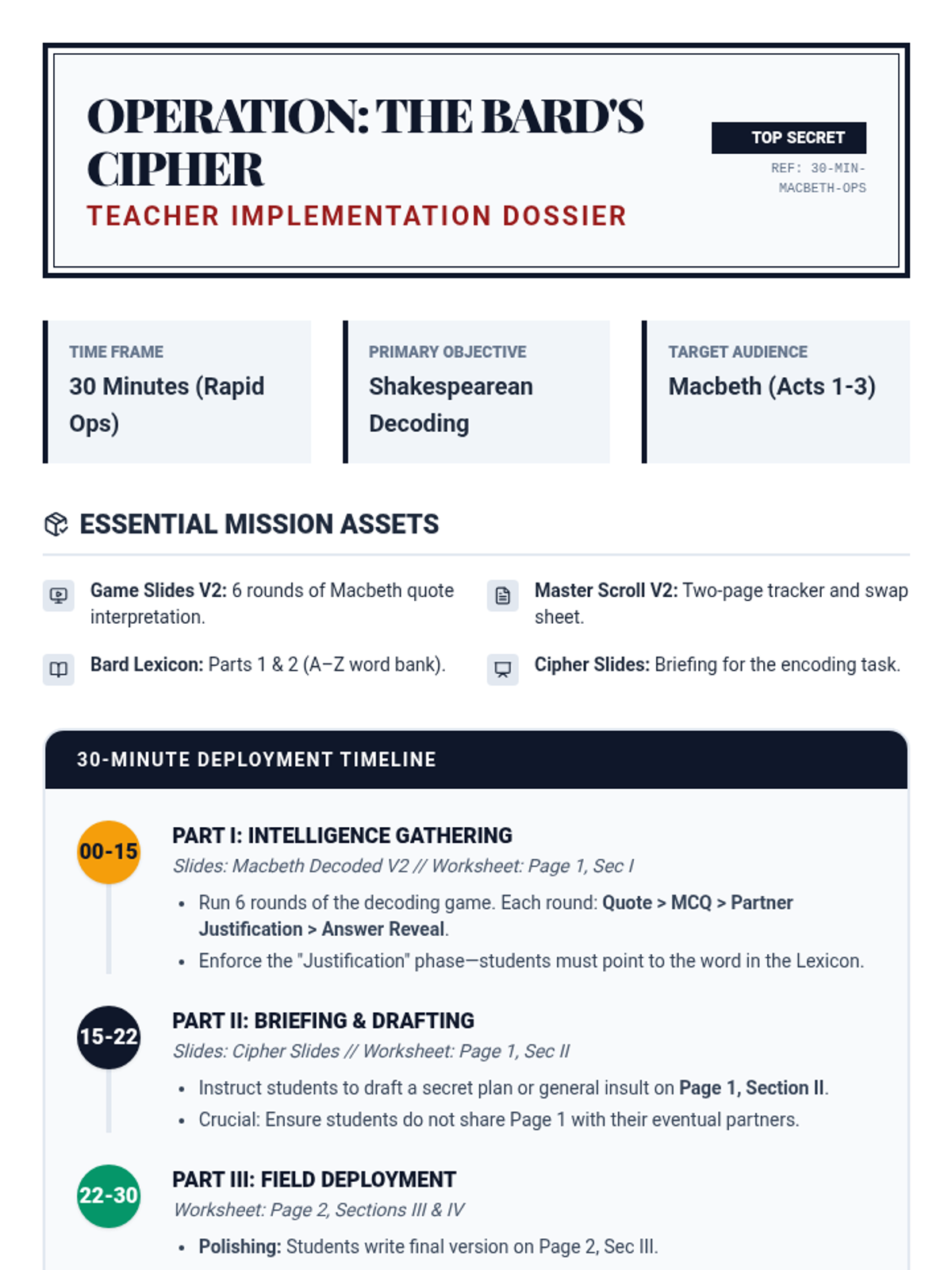
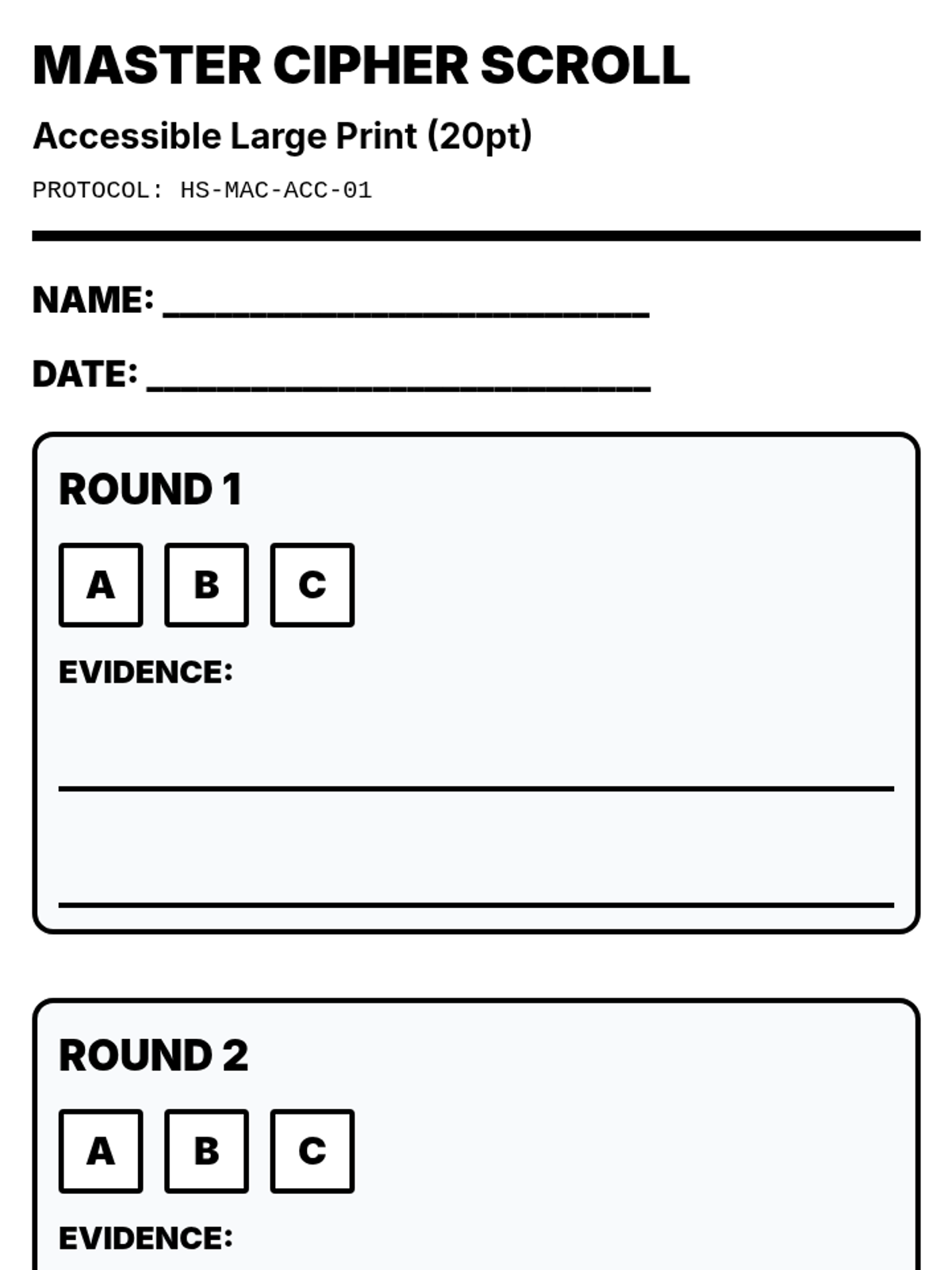
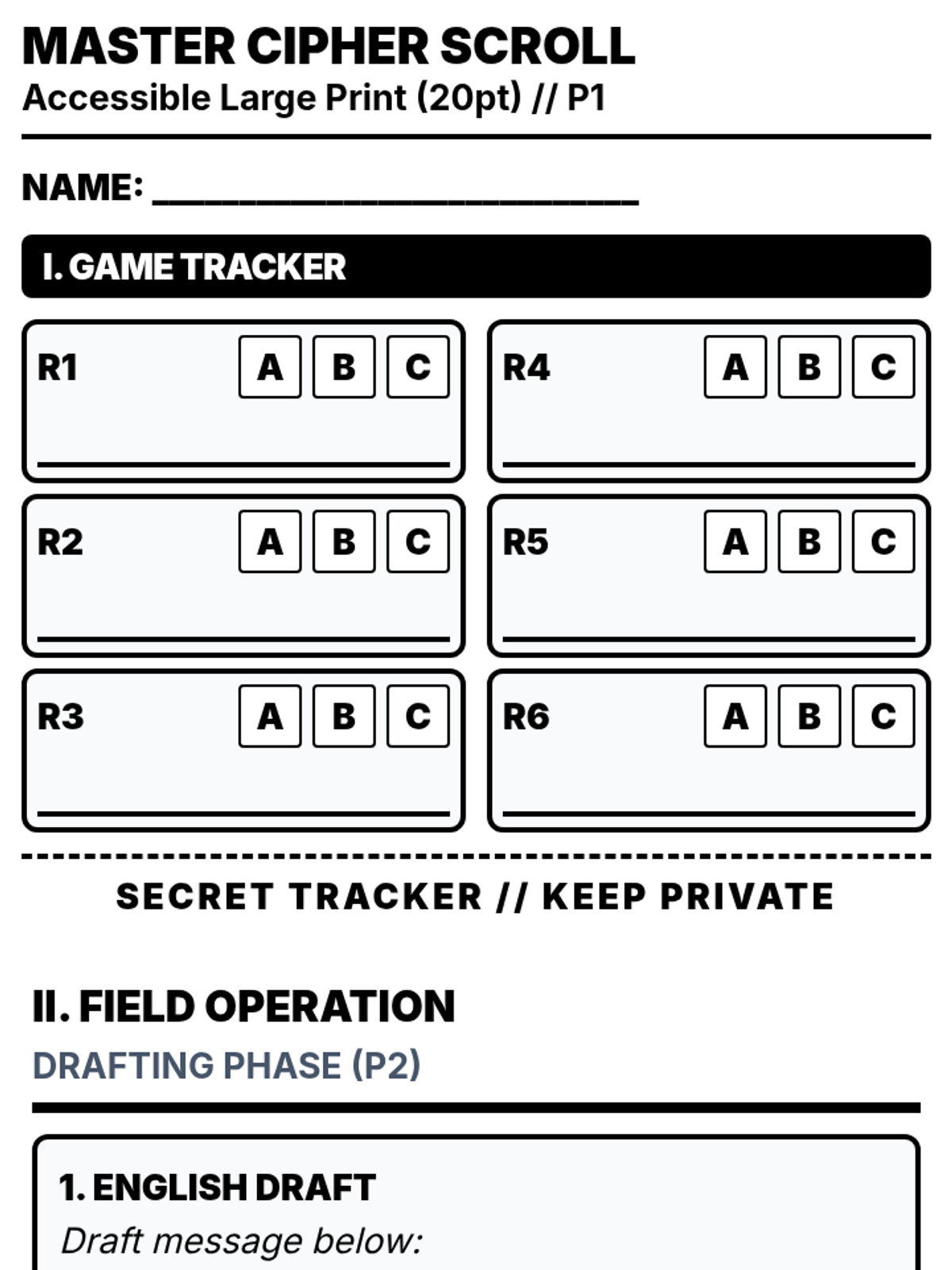
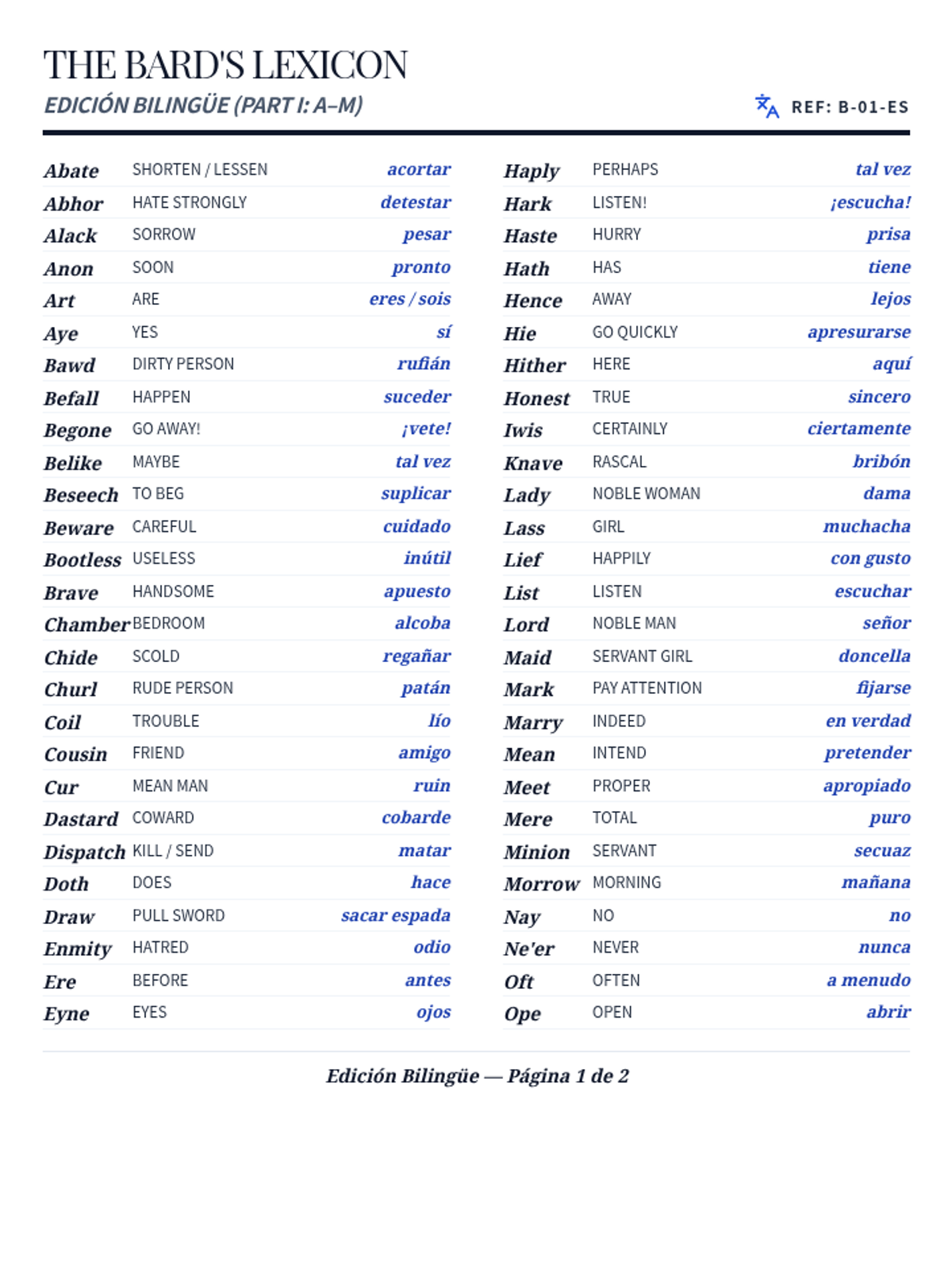
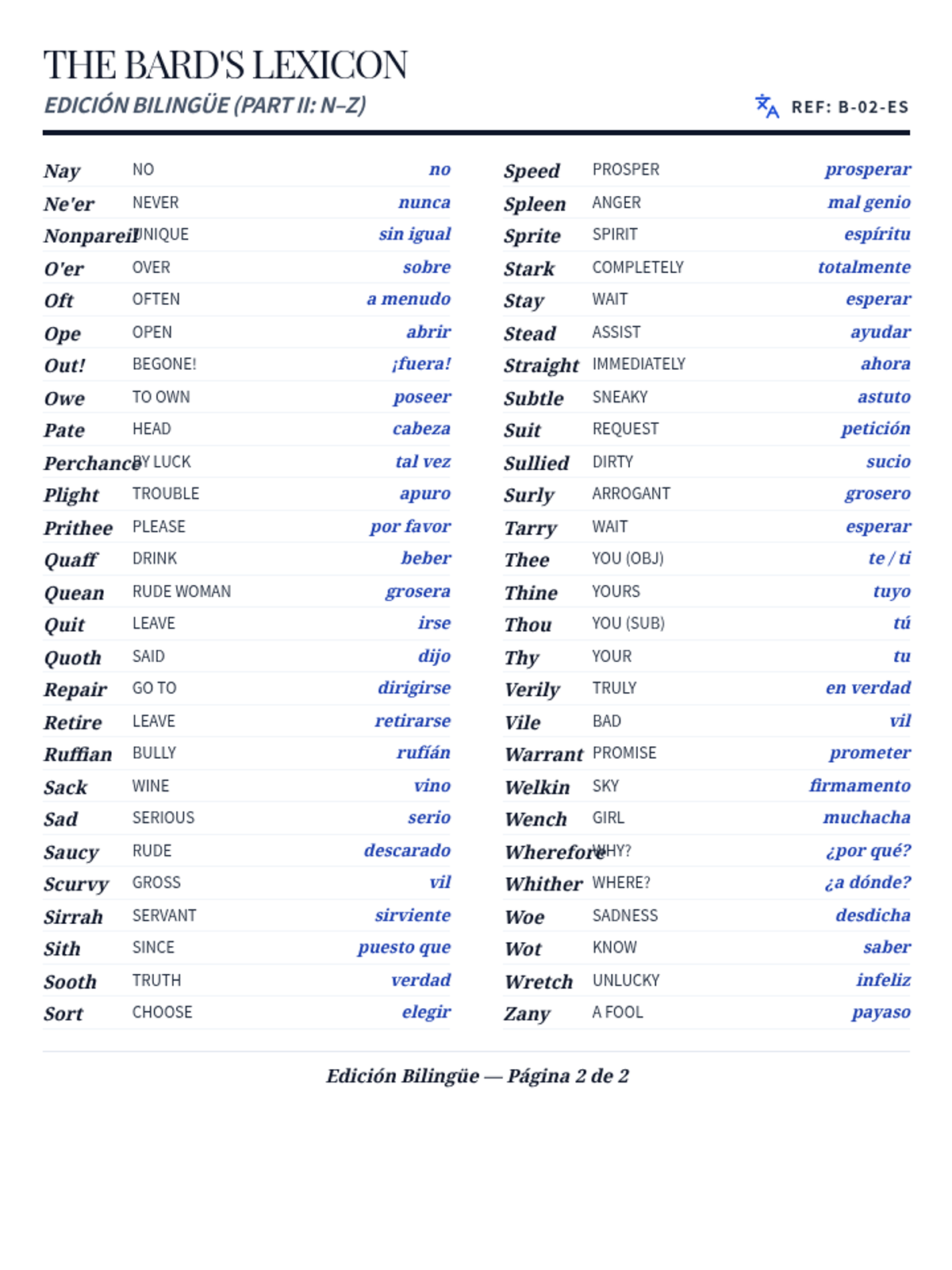
A hands-on activity where students learn to decode and encode Shakespearean language by writing secret messages or insults, then swapping them with peers to translate.
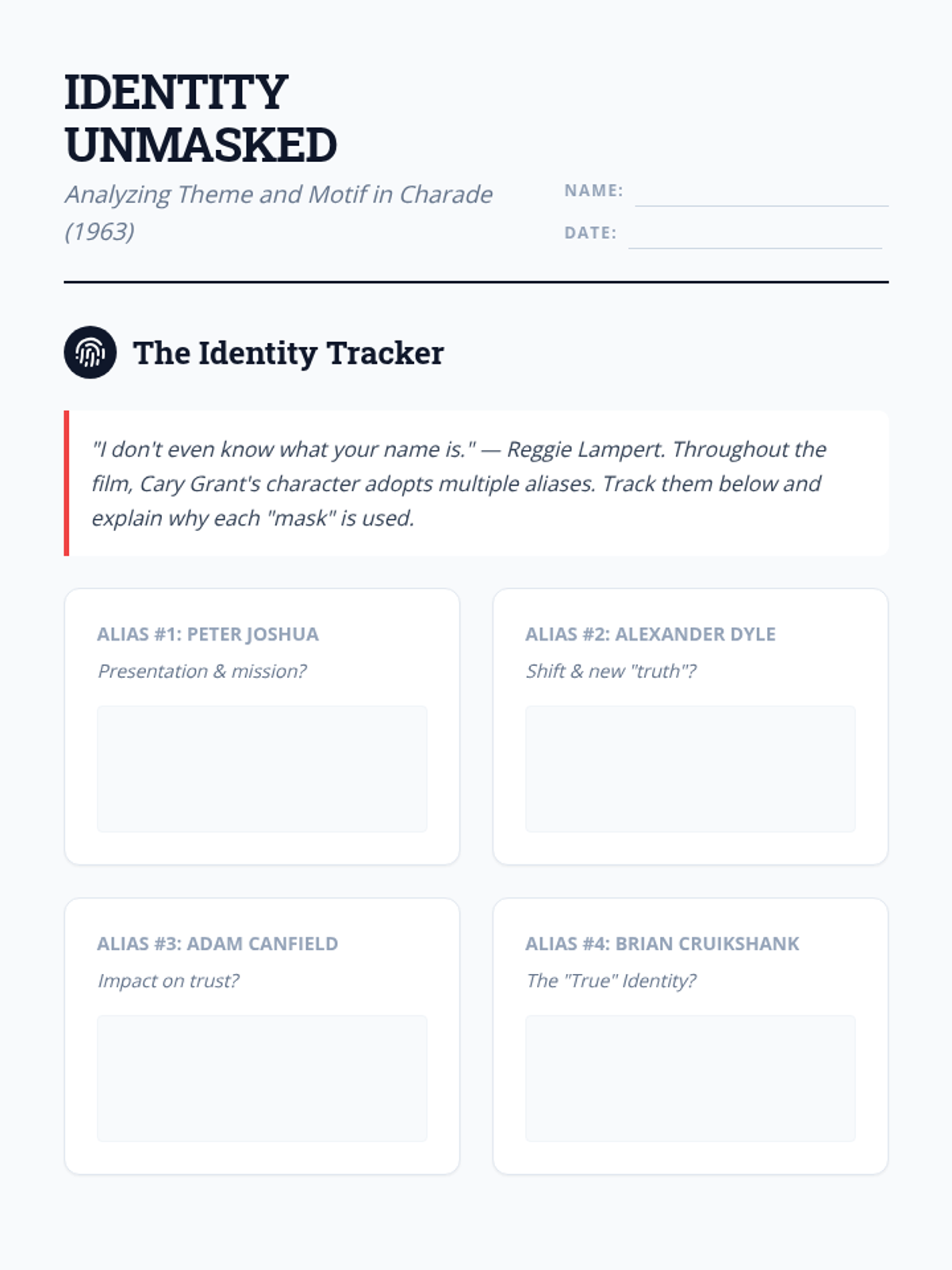
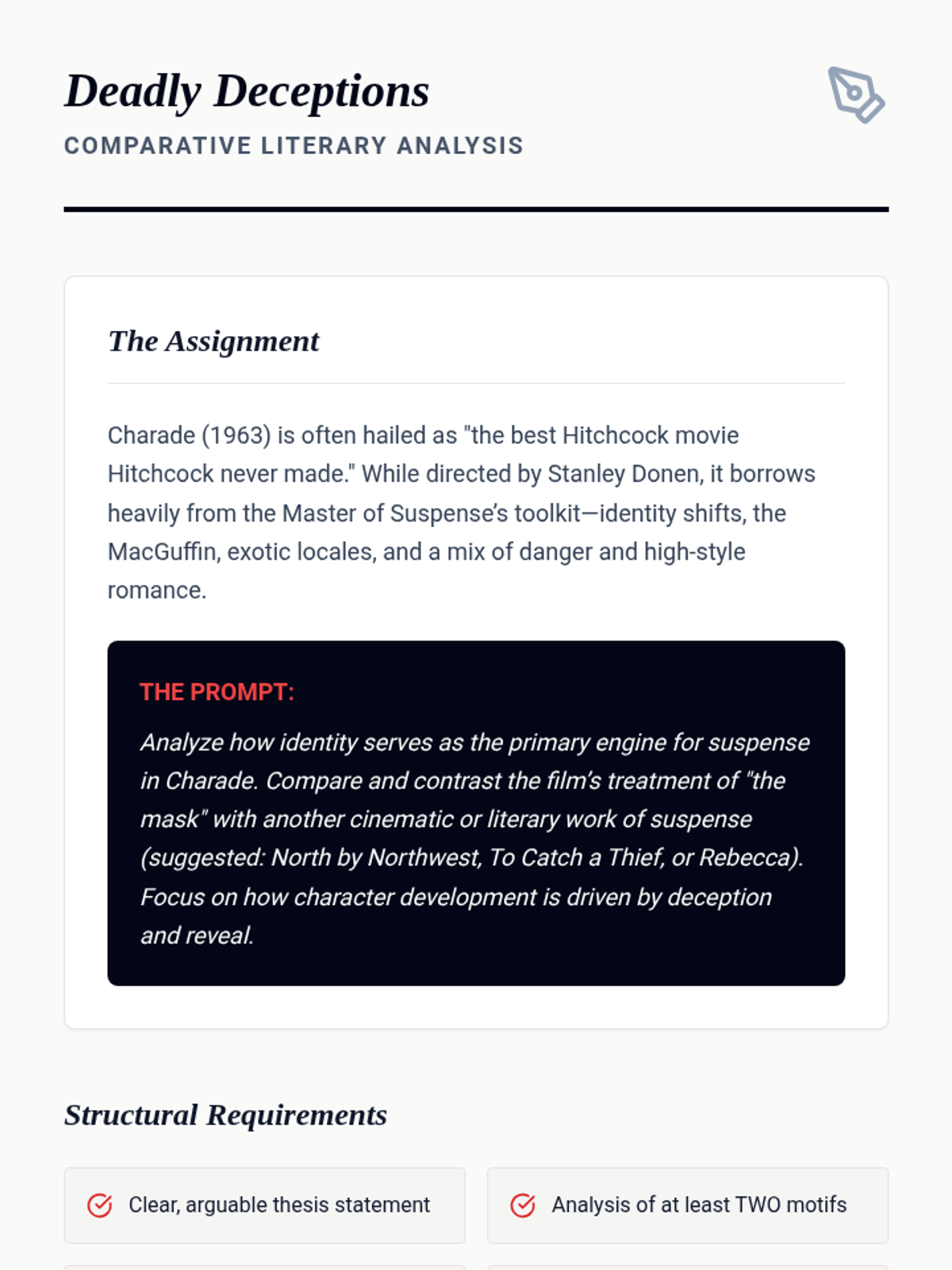
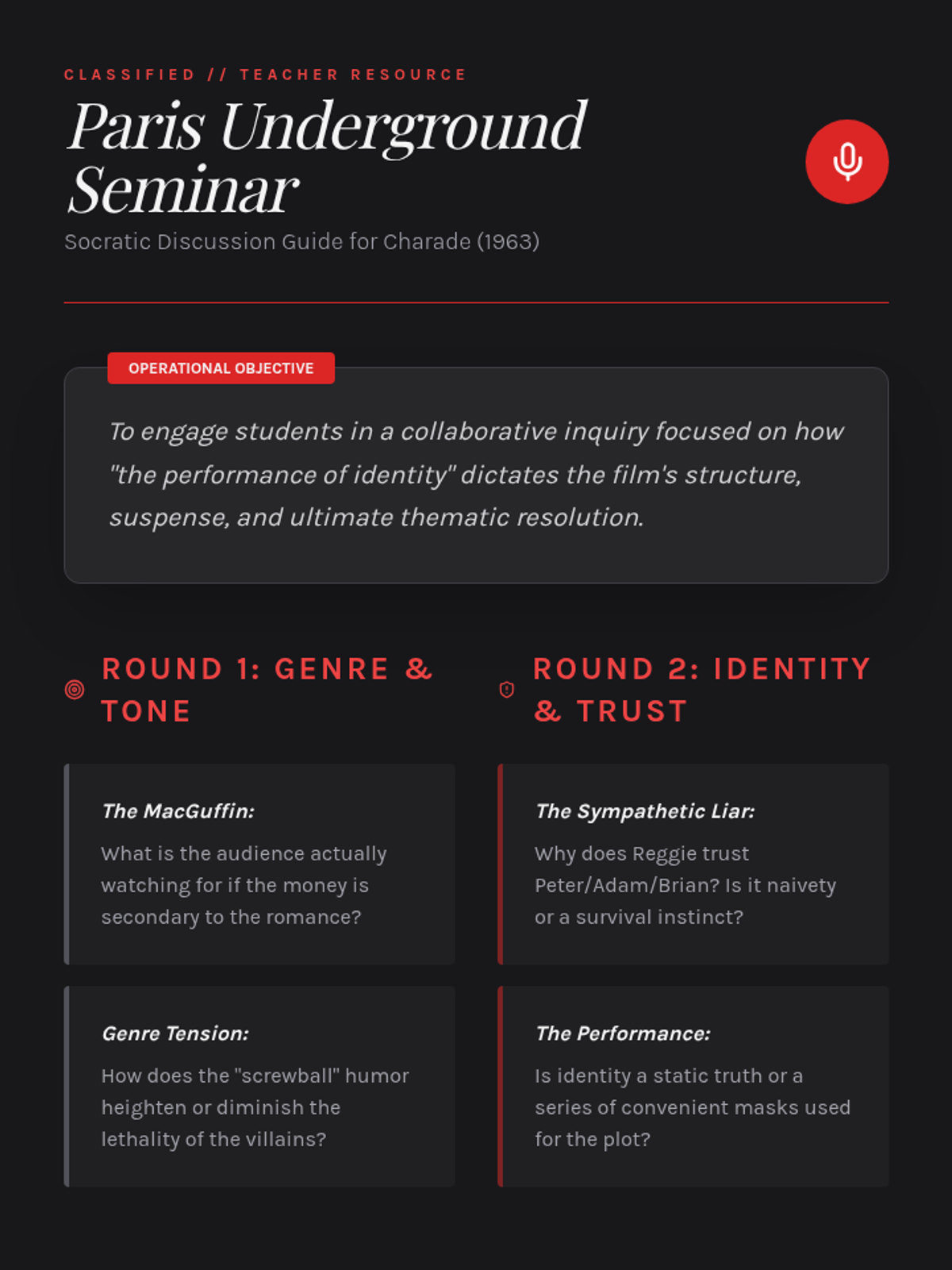
A deep dive into the 1963 film Charade, exploring its unique blend of romantic comedy and suspense, the fluidity of identity, and the use of visual metaphors. Students analyze genre conventions, irony, and symbolism through a cinematic lens.
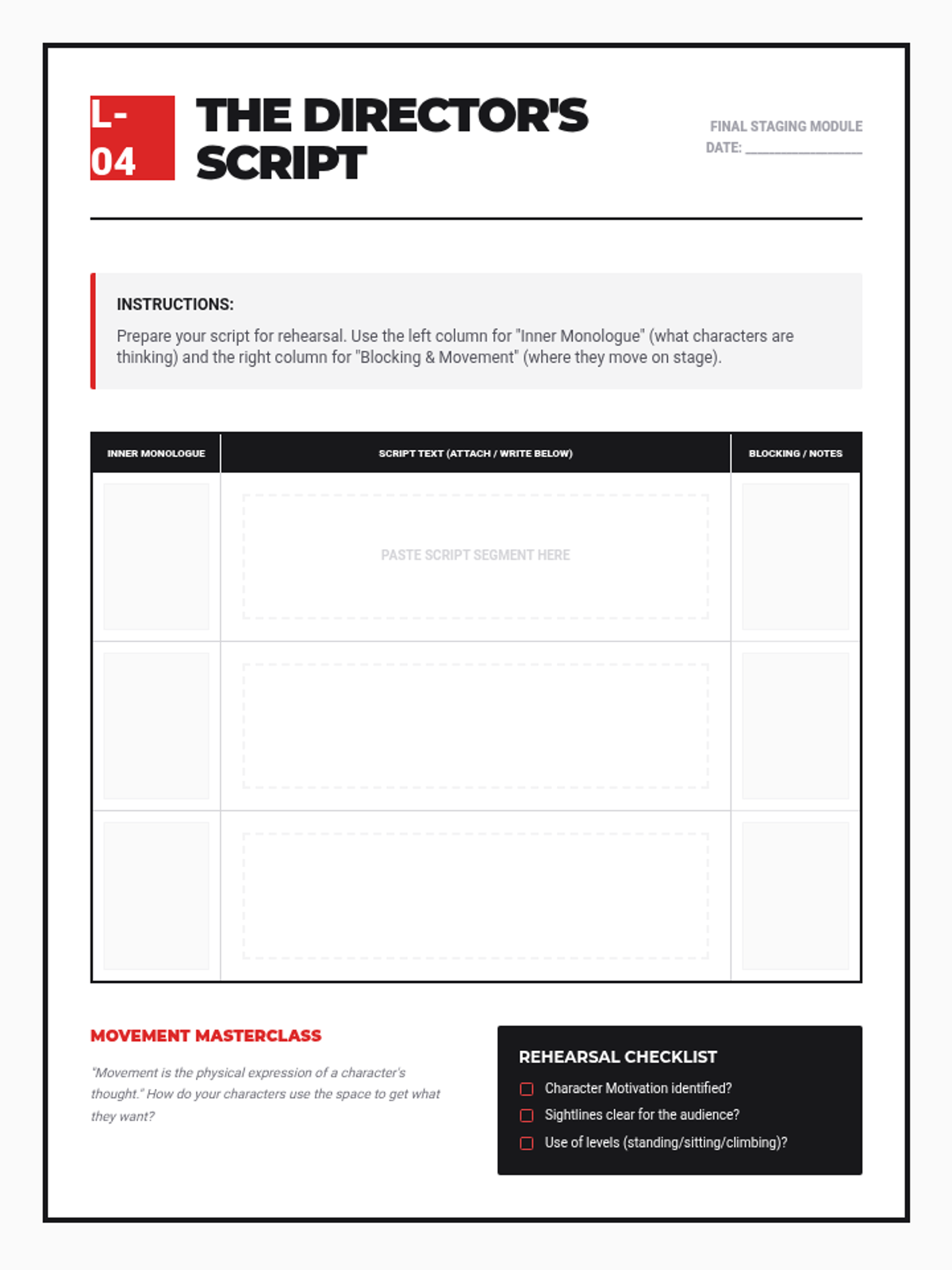
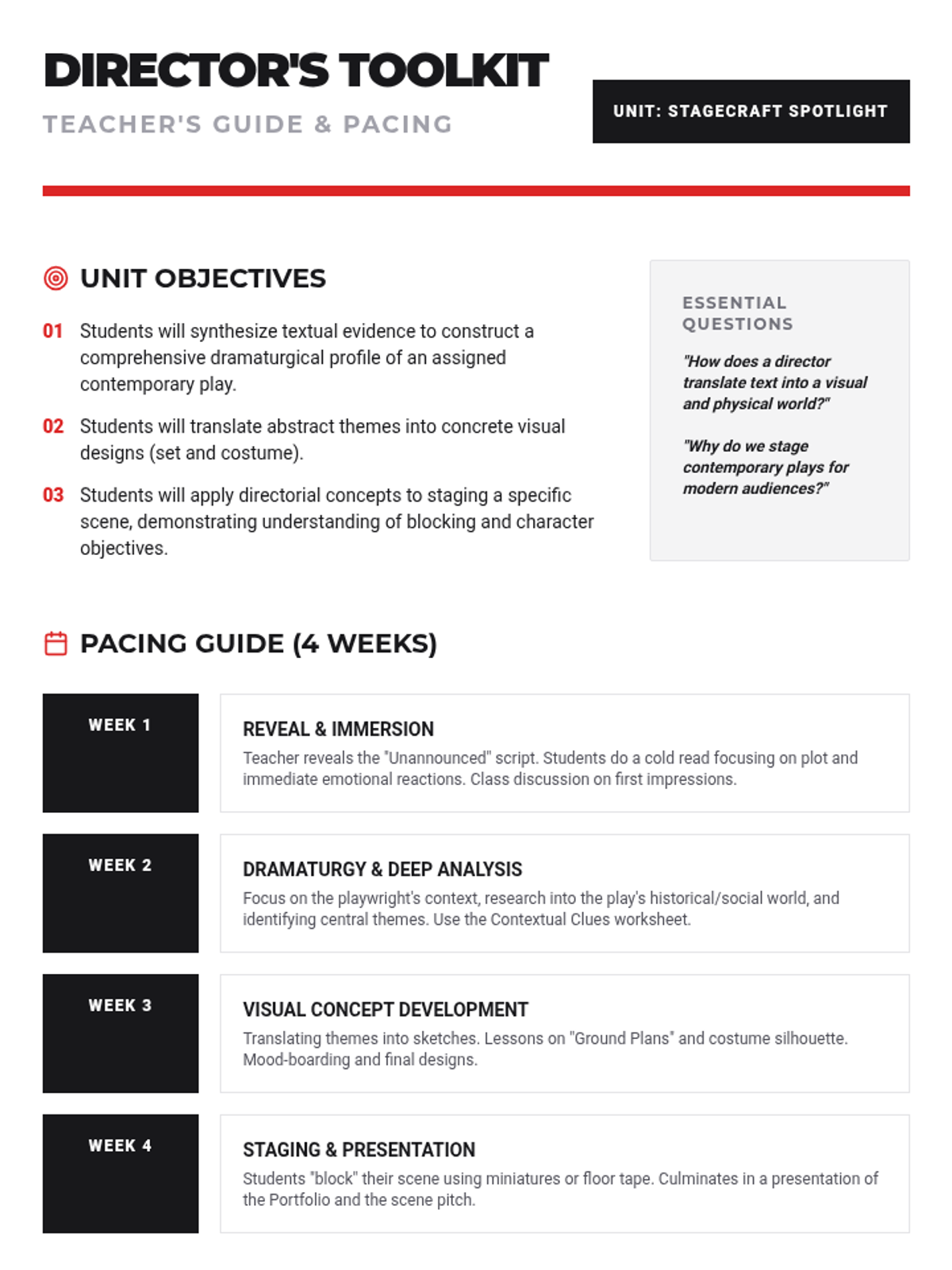
The culminating phase where students stage a scene and compile their final production portfolio.
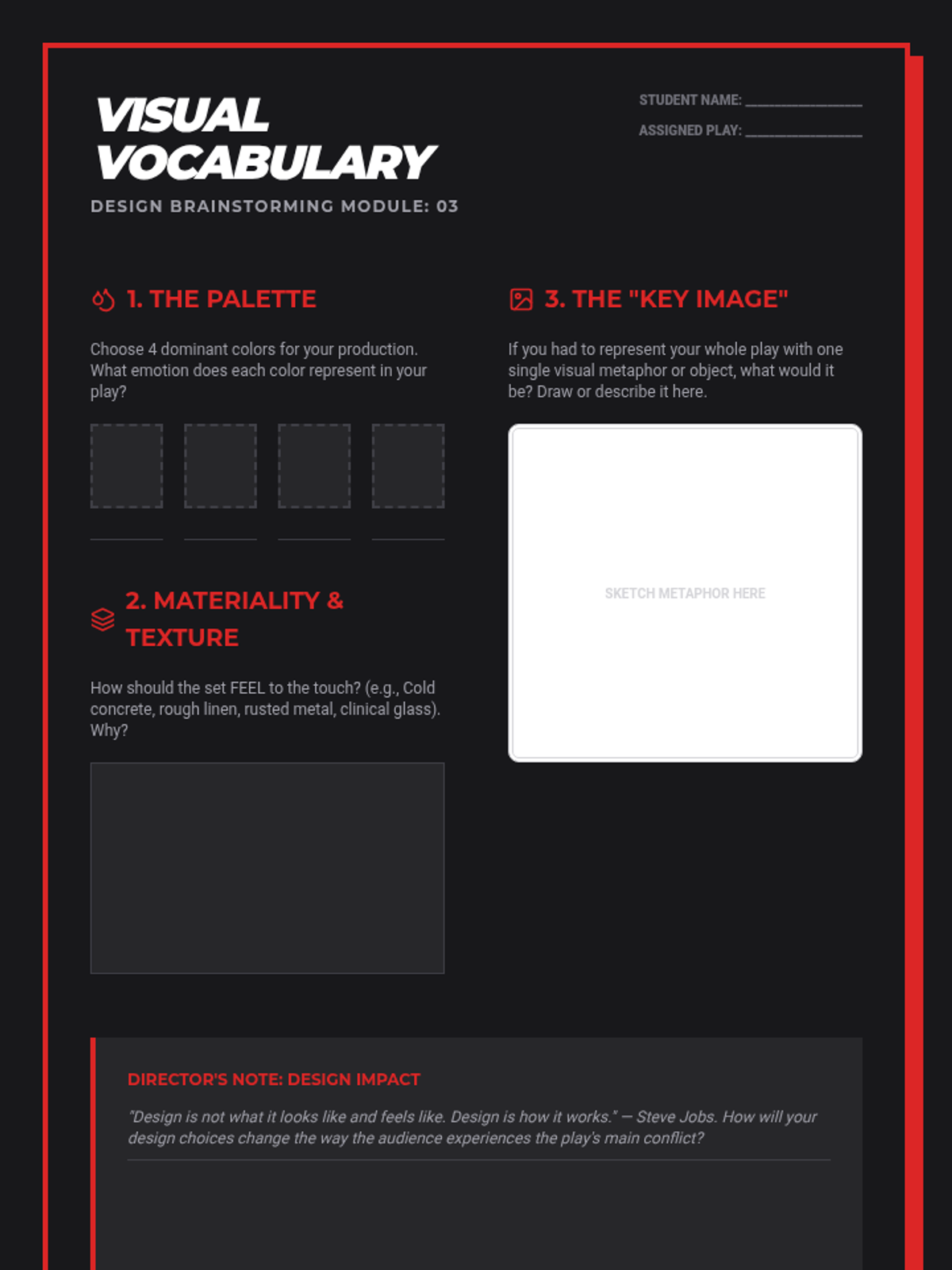
Students transition from analysis to design, creating set blueprints and costume concepts.
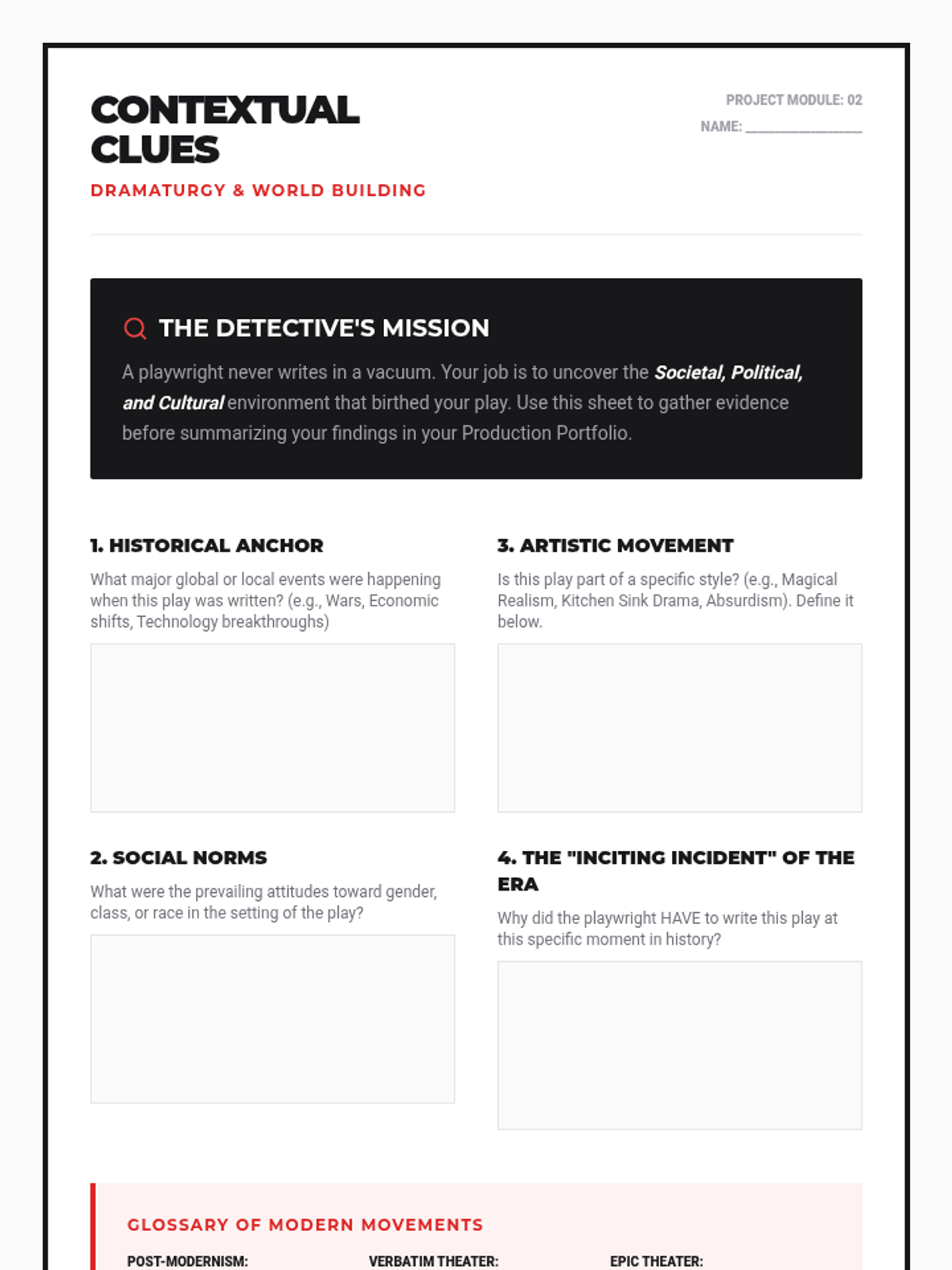
Focuses on the playwright's context and the deeper thematic structures of the chosen contemporary drama.
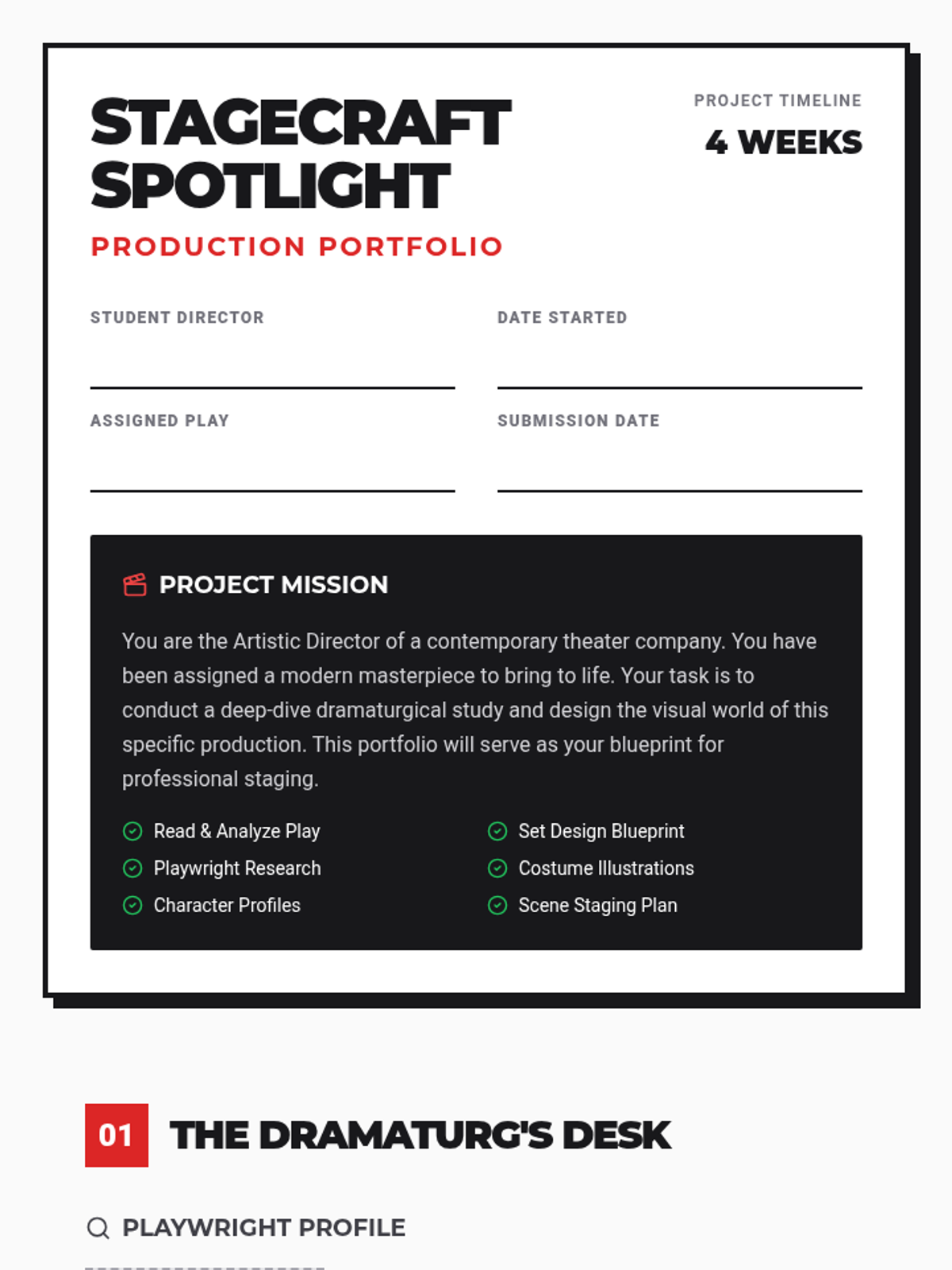
Students select a contemporary play and begin their analytical journey through character and theme exploration.
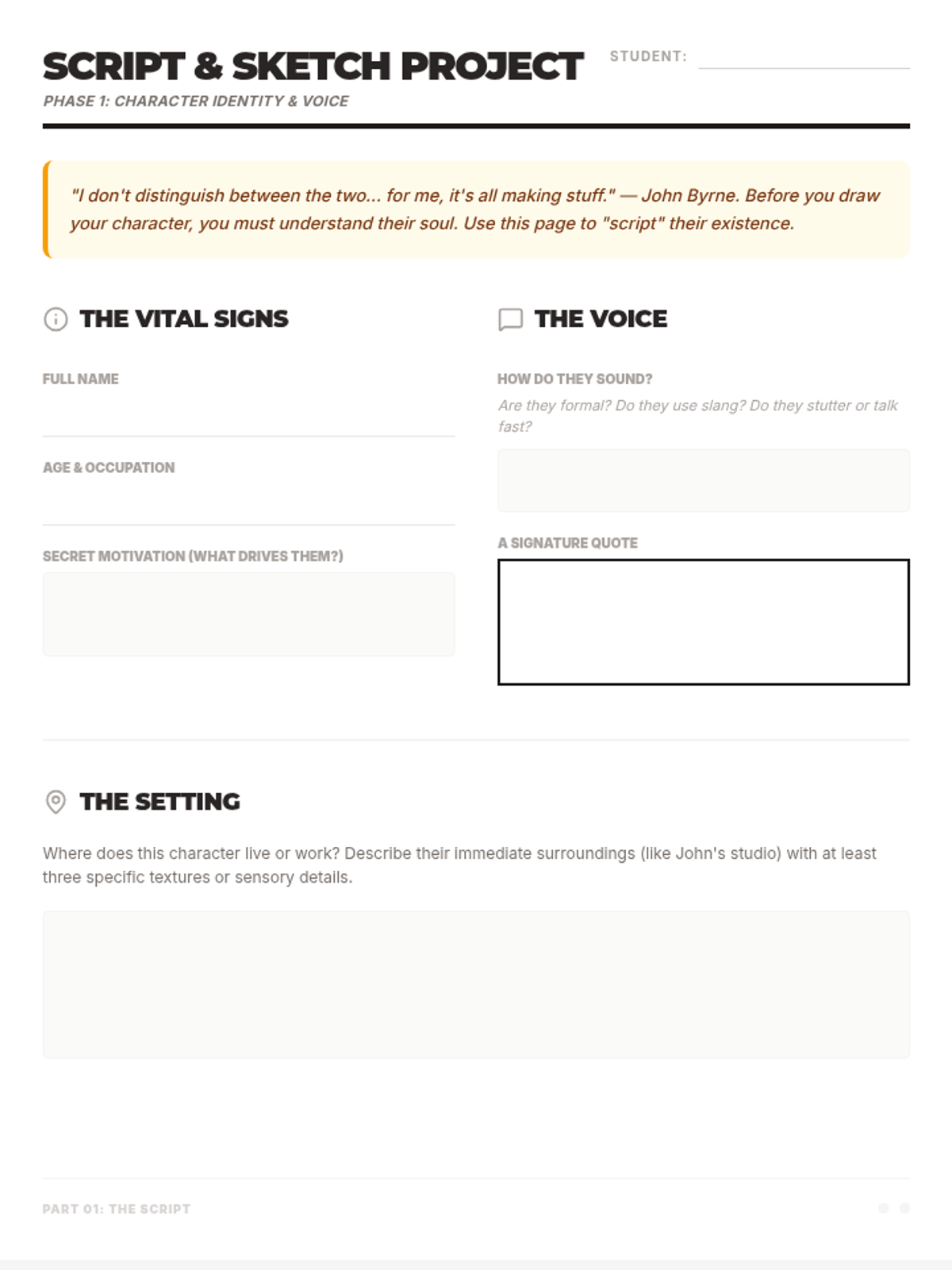
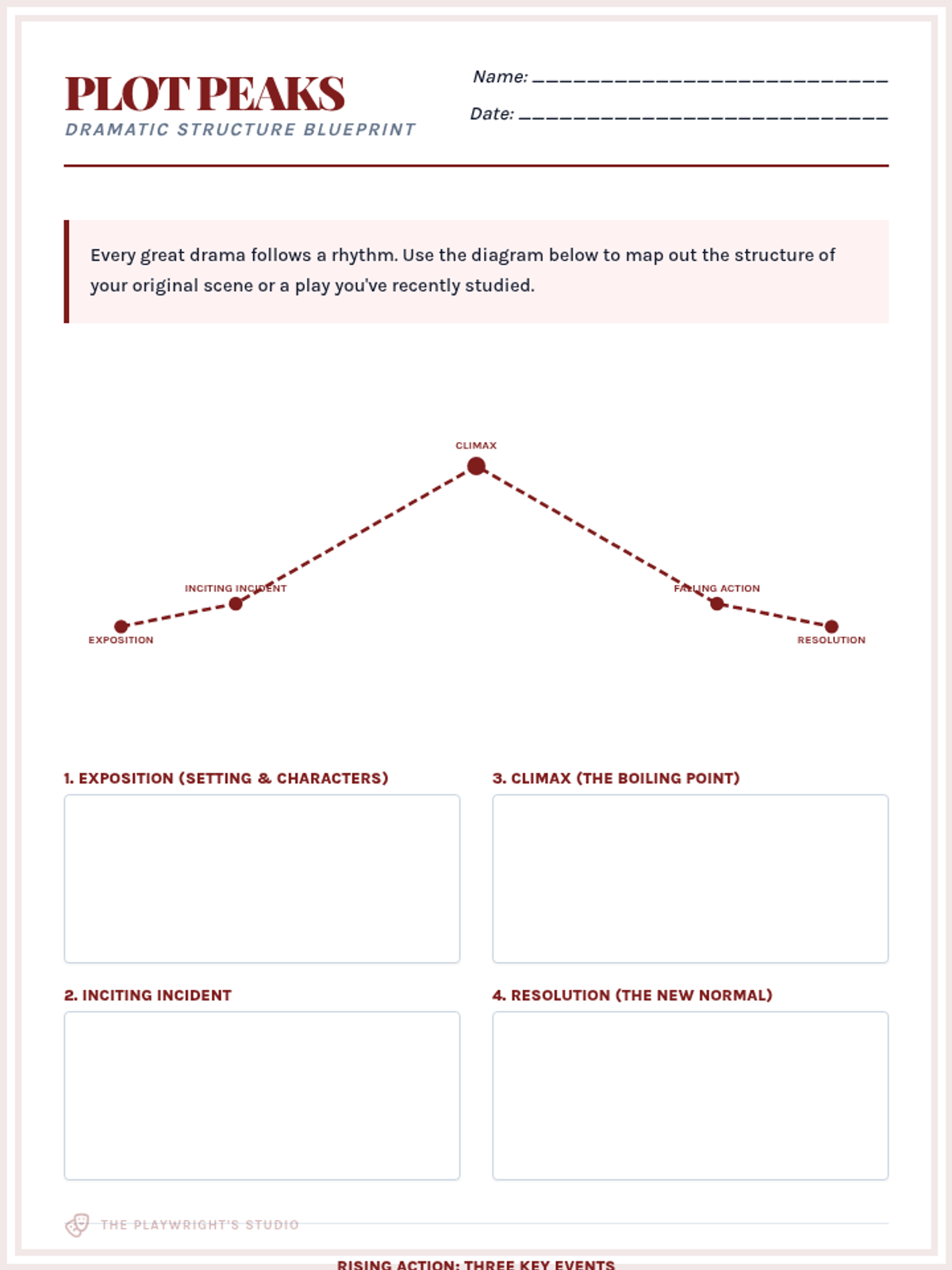
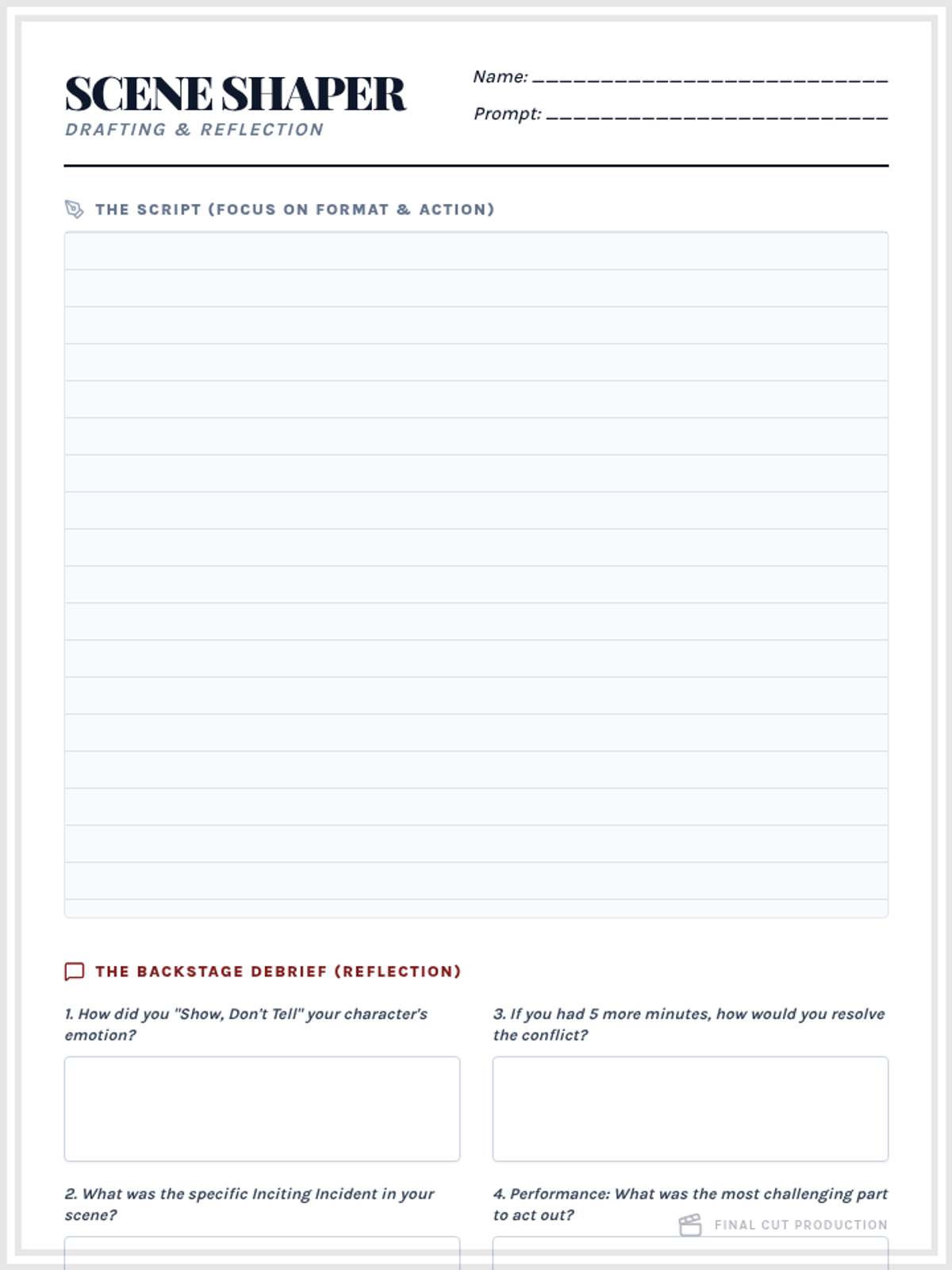
A comprehensive introduction to dramatic structure and scriptwriting, guiding students from the arc of a story to the technical layout of a stage play.
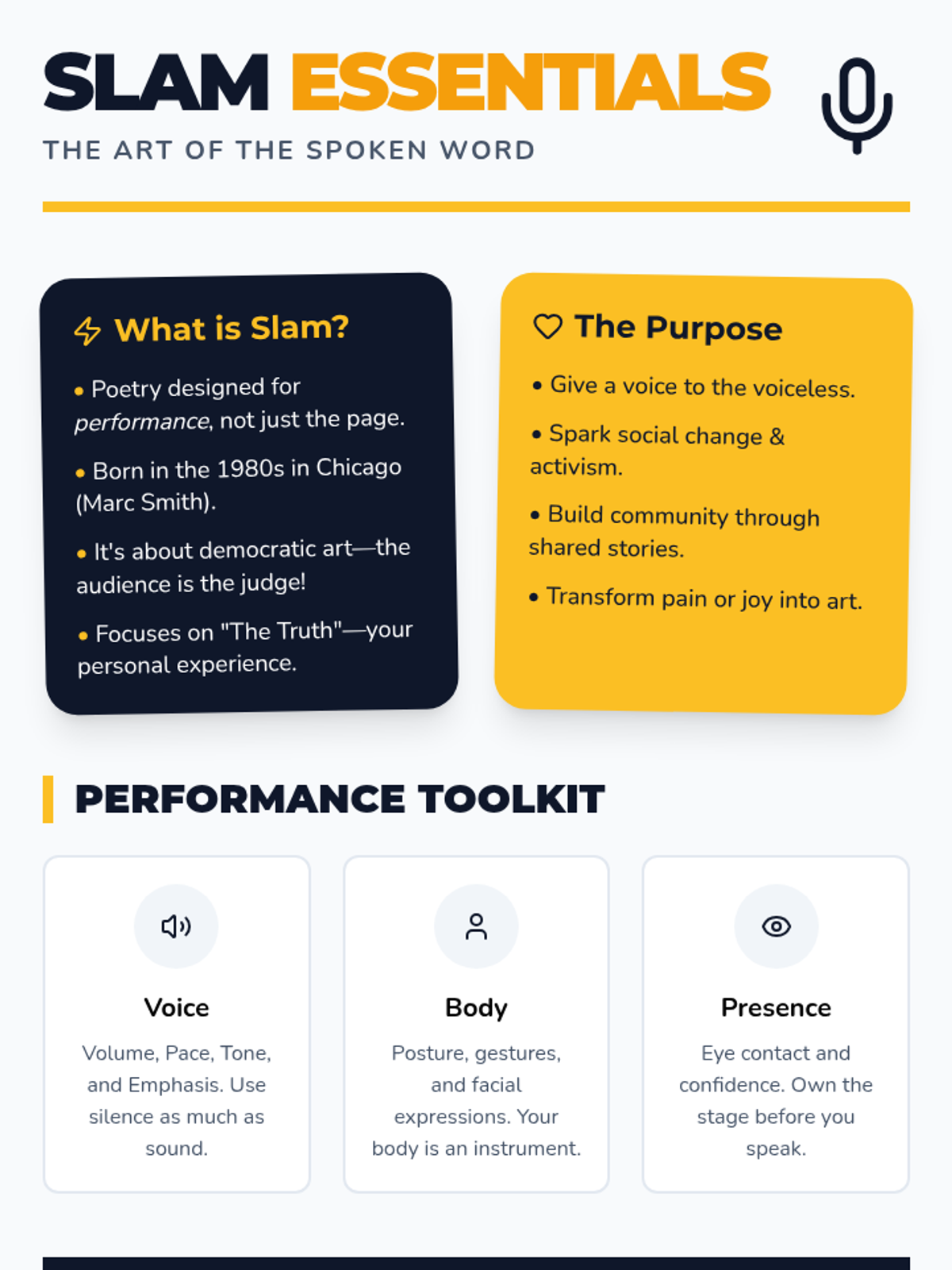
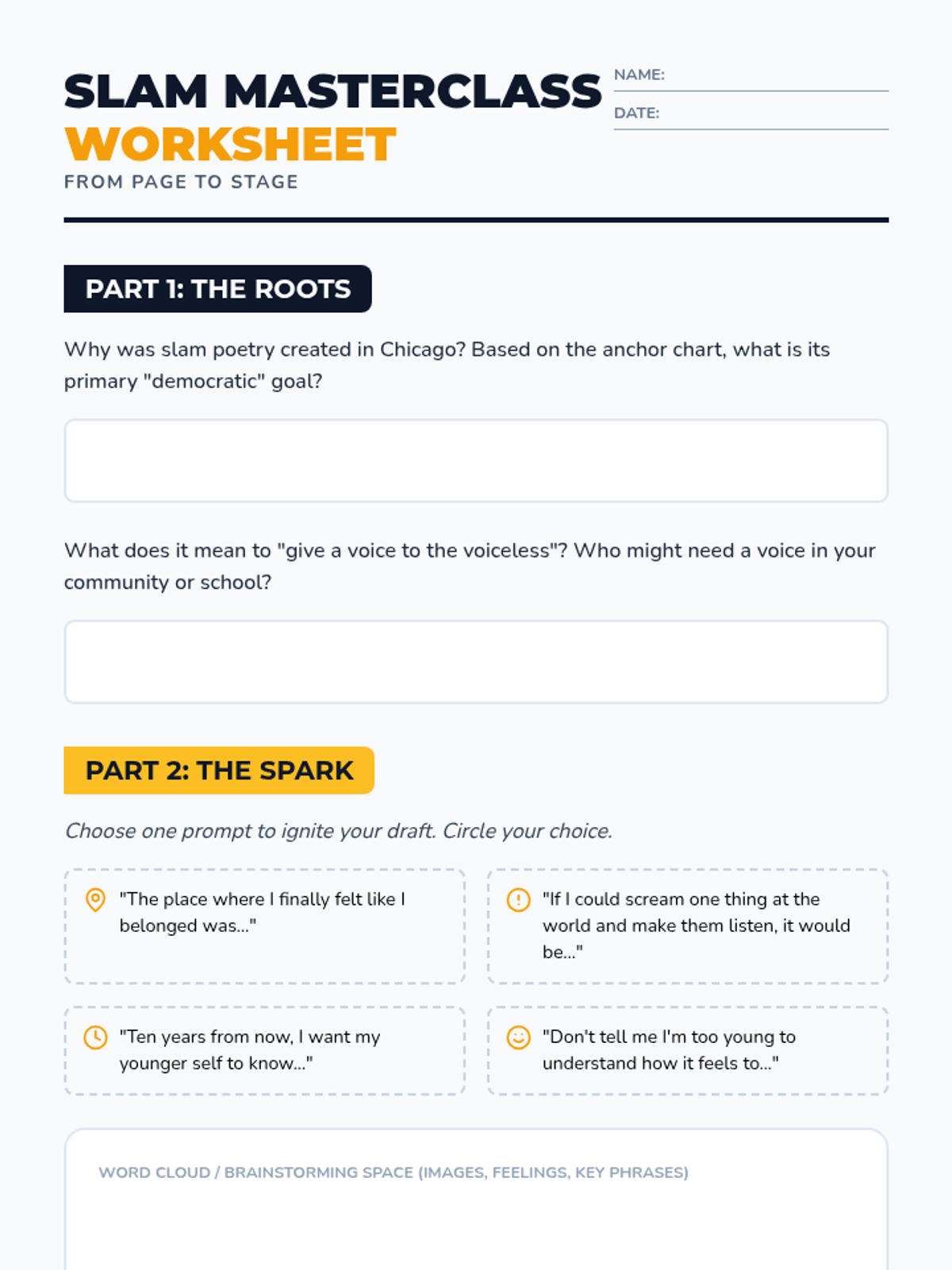
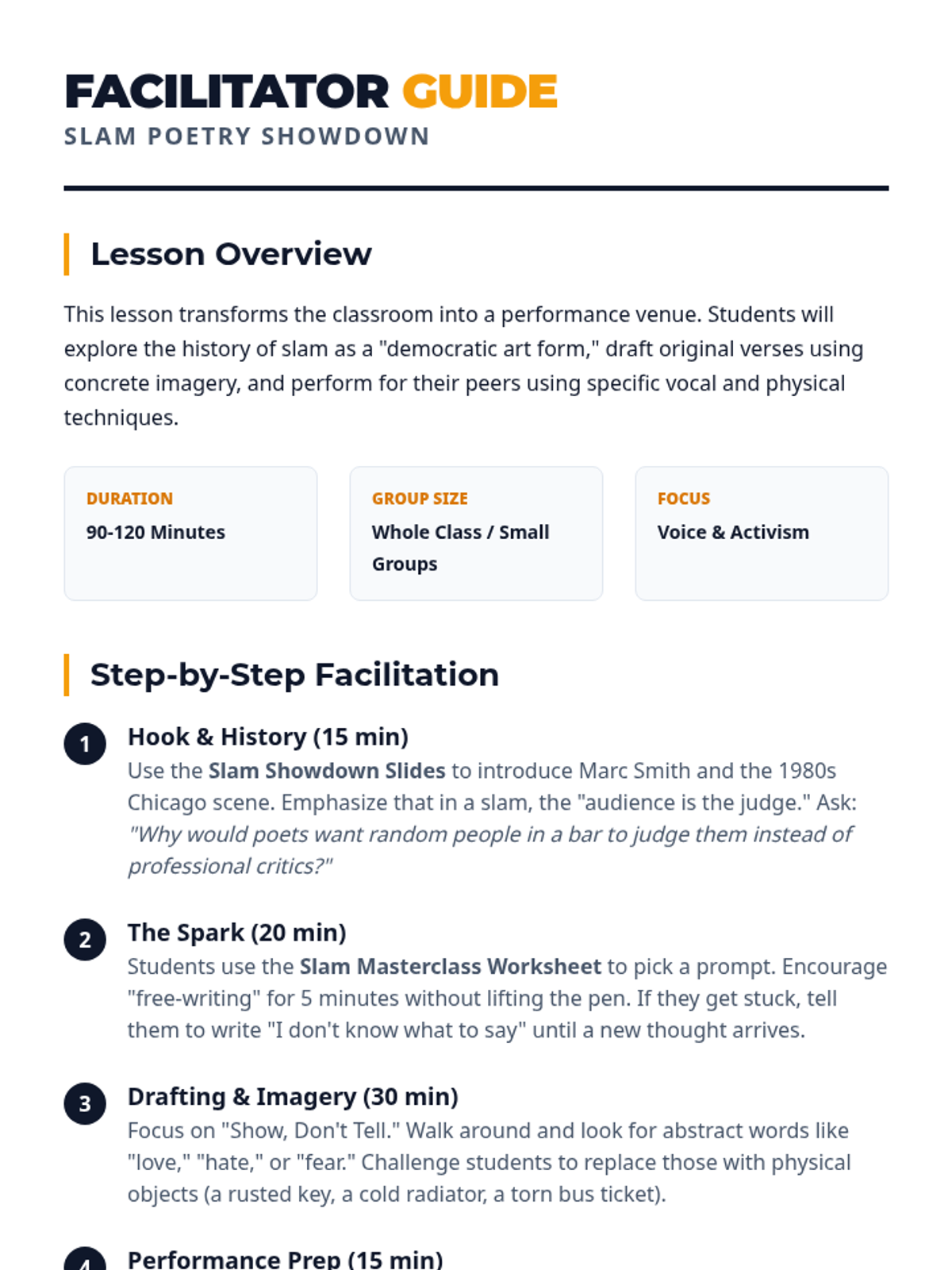
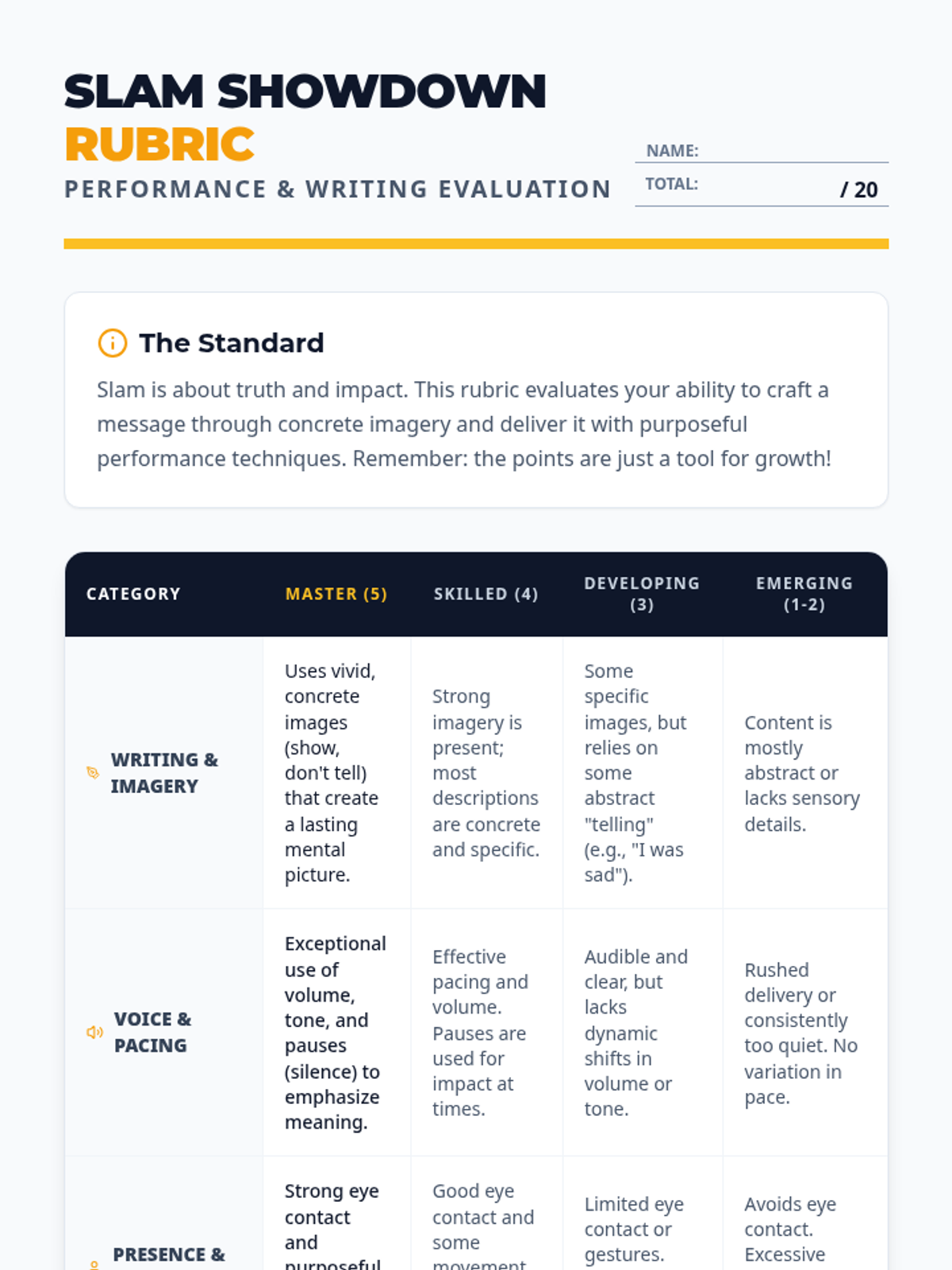
A comprehensive lesson guiding students from the history and purpose of slam poetry through writing original verses to performing with impact and giving constructive peer feedback.
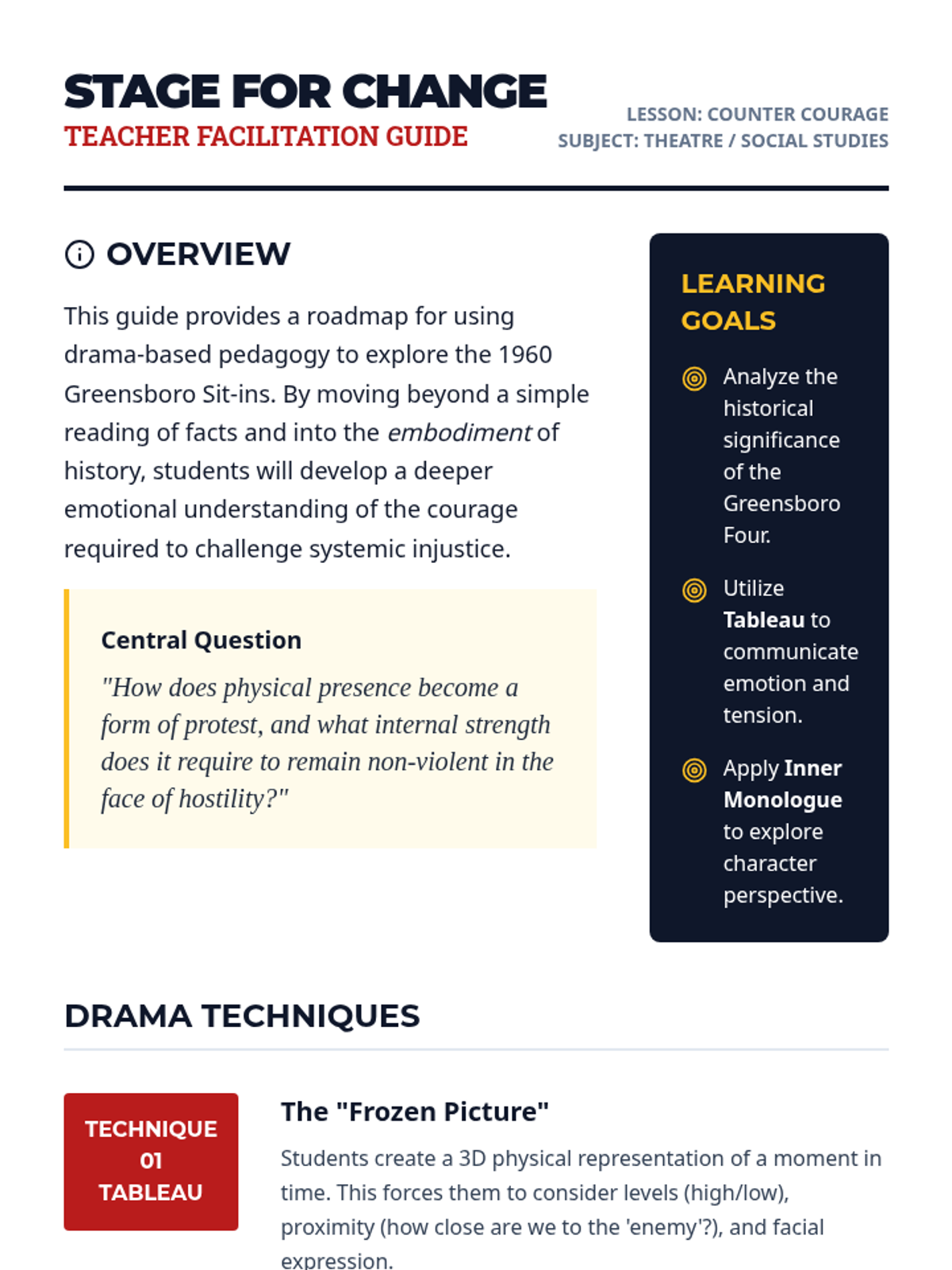
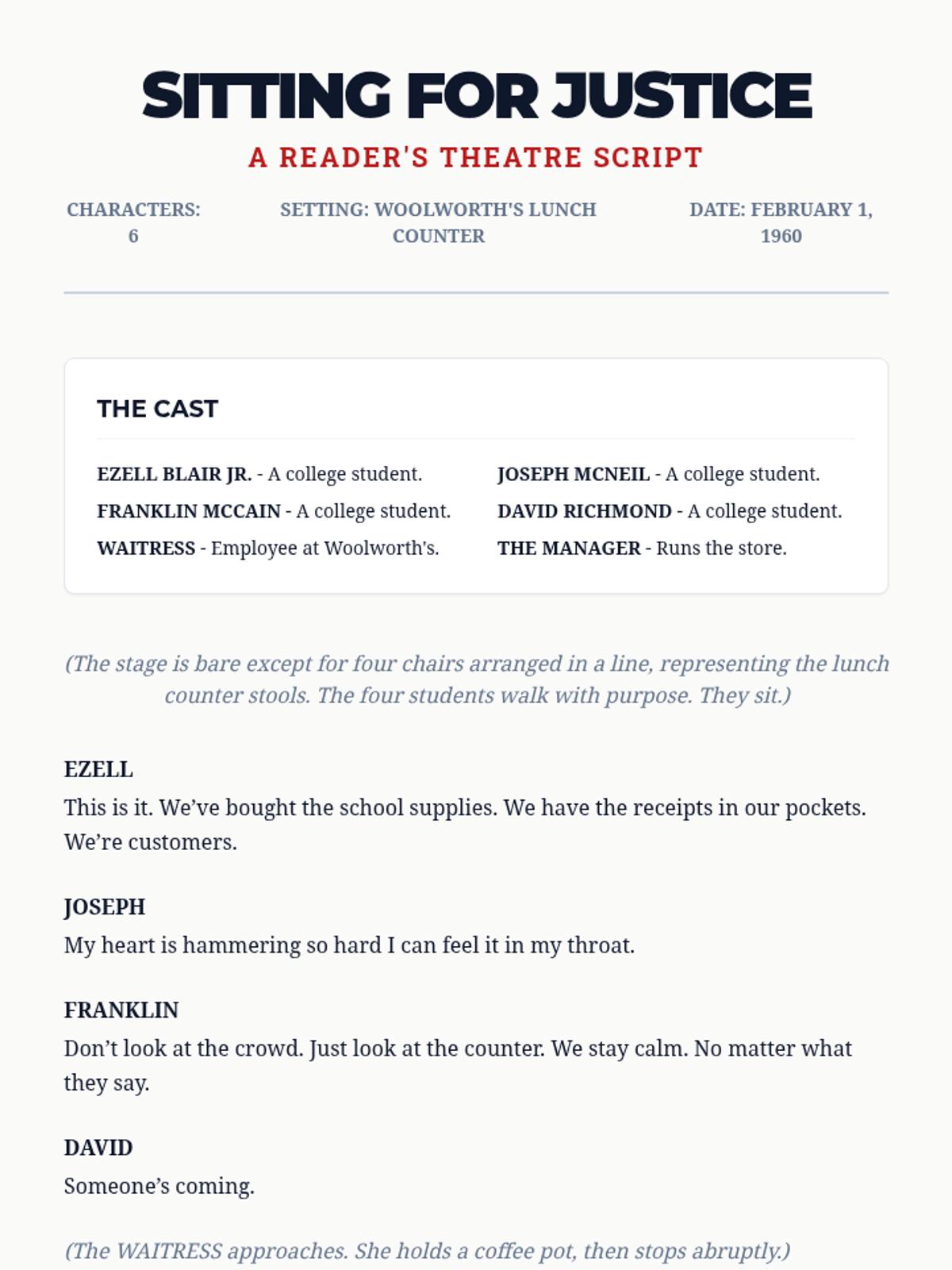
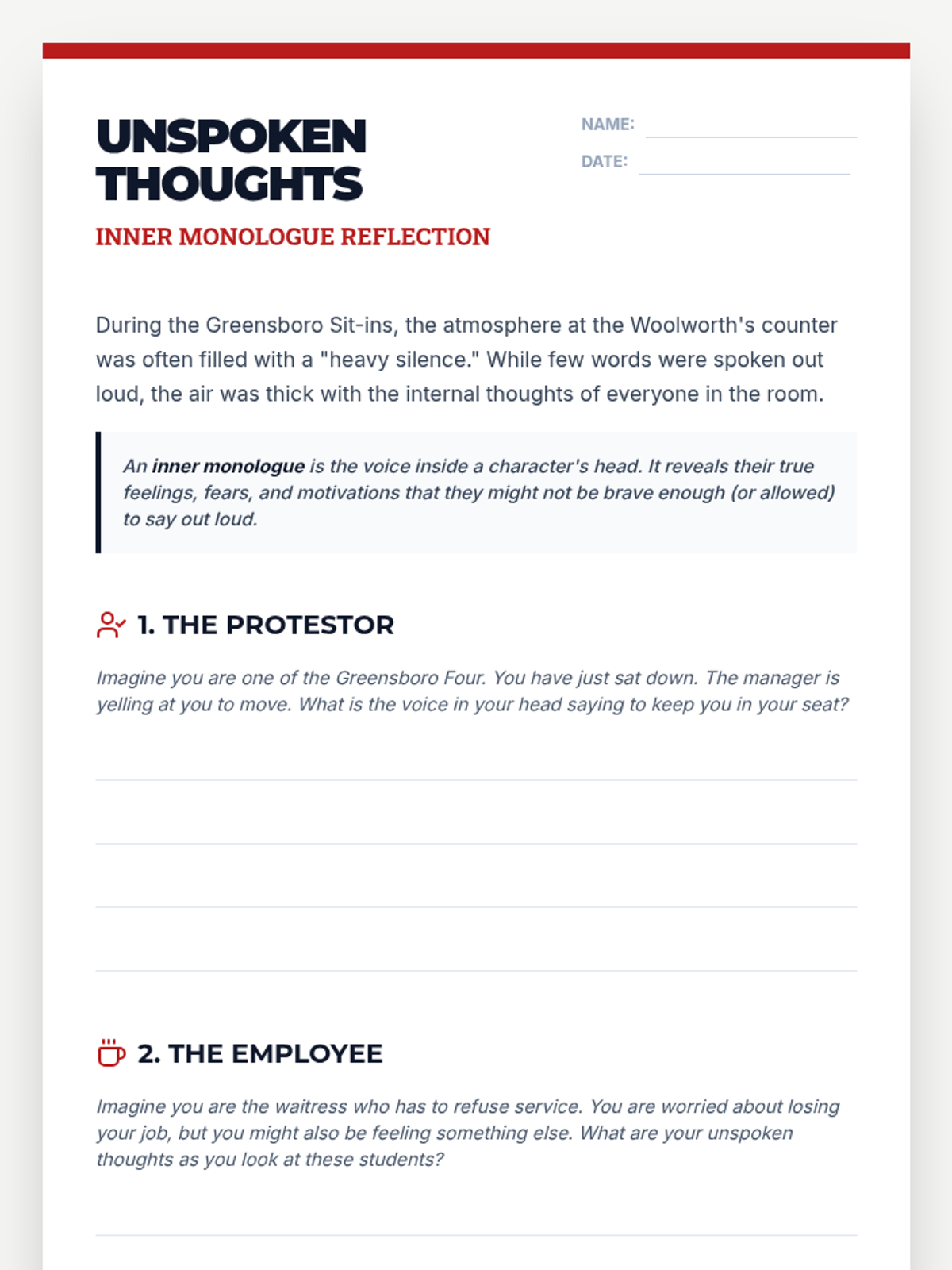
Students explore the historical significance and emotional weight of the Greensboro Sit-ins through drama-based activities and historical analysis, focusing on the theme of courage.
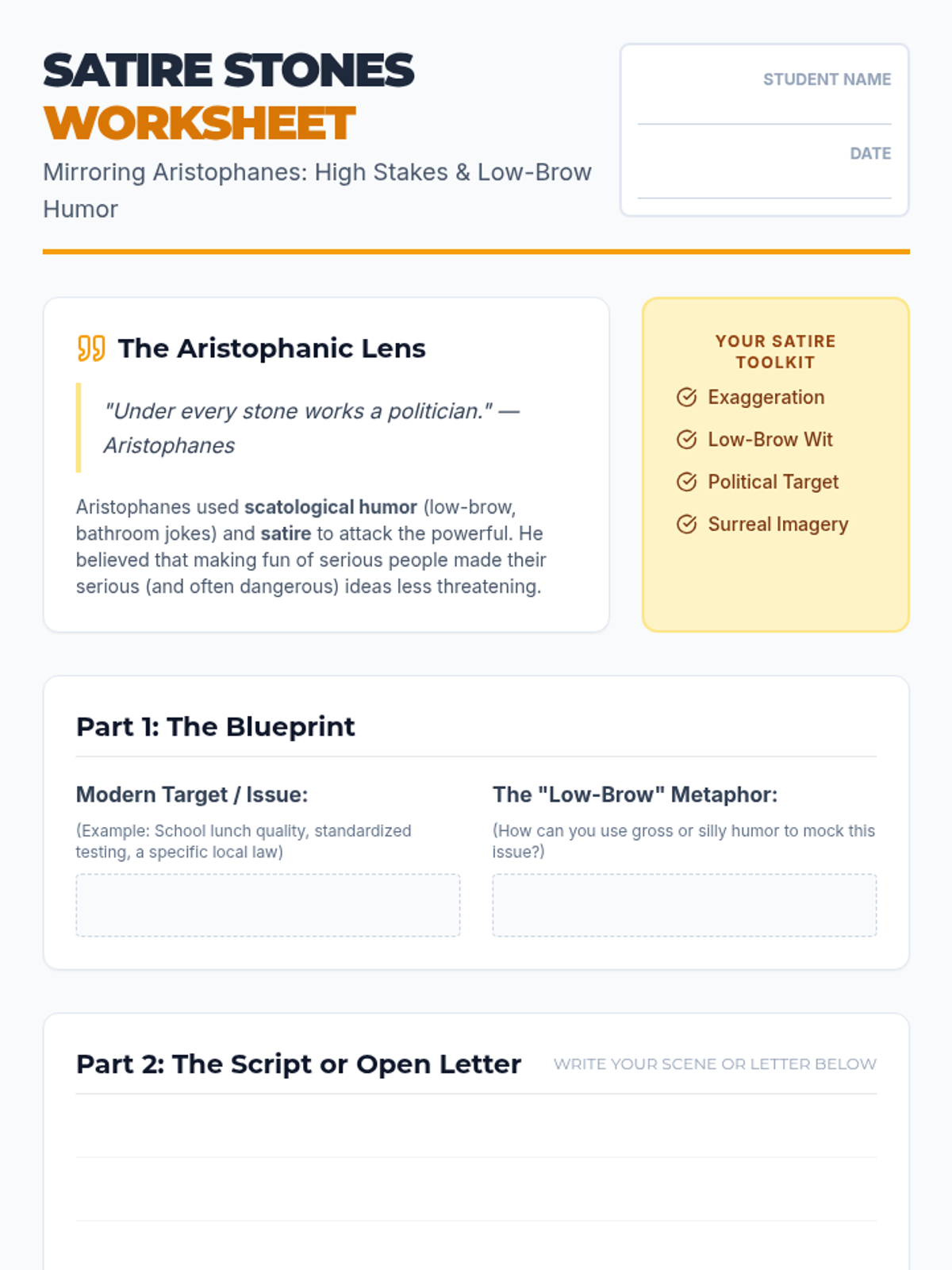
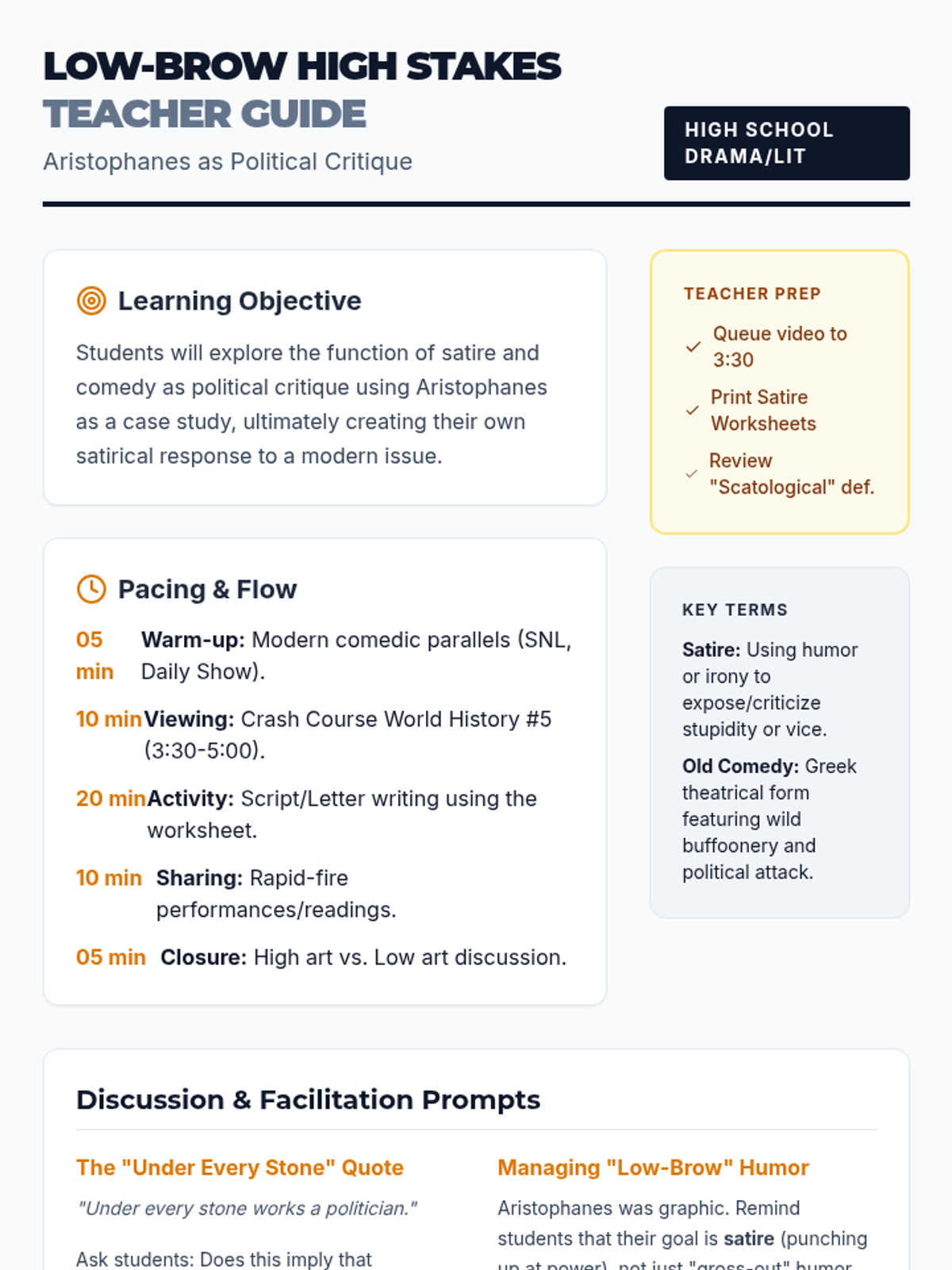
A lesson exploring the power of satire and political comedy through the lens of Ancient Greek playwright Aristophanes, featuring modern connections and a creative script-writing activity.
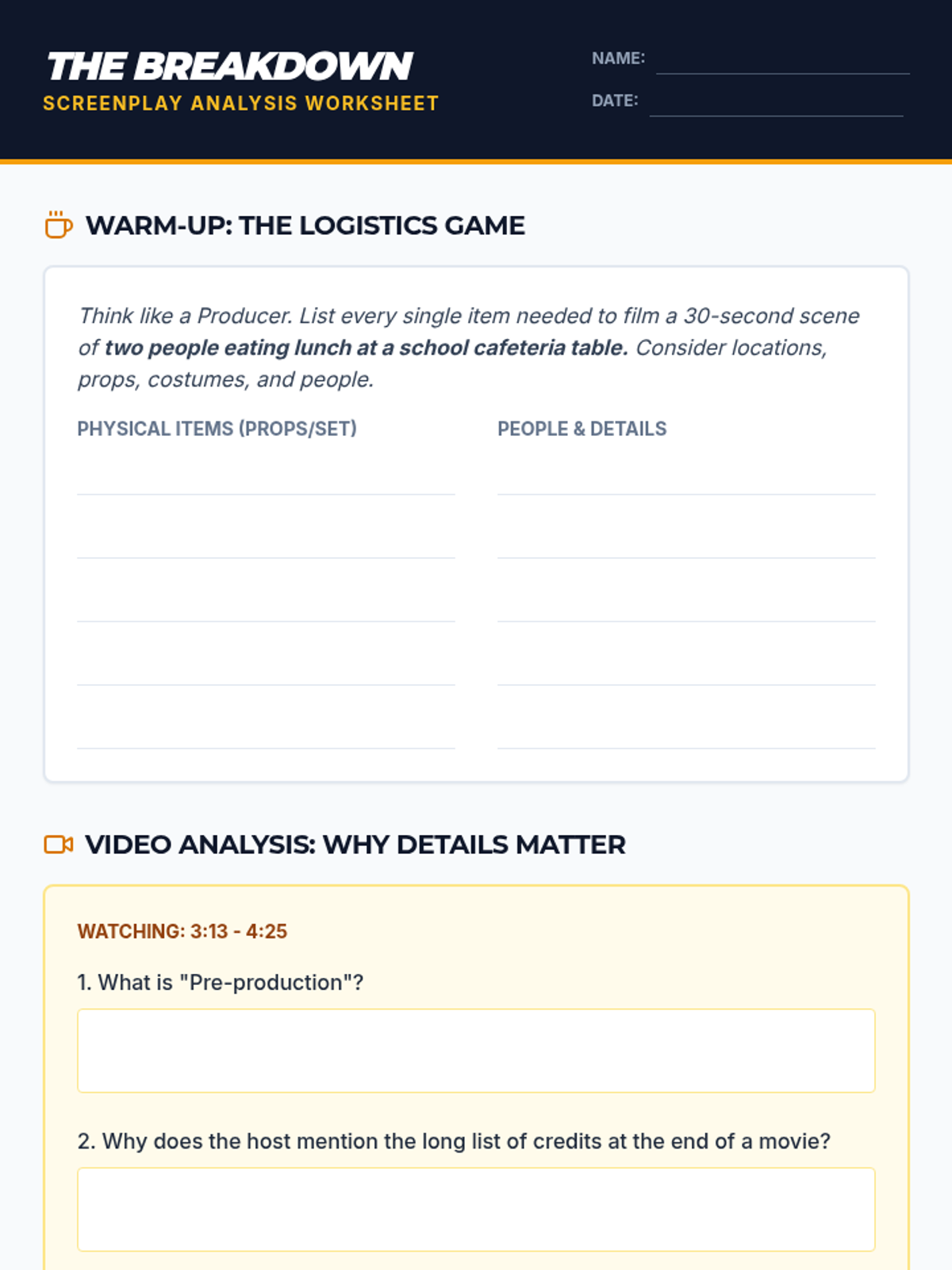
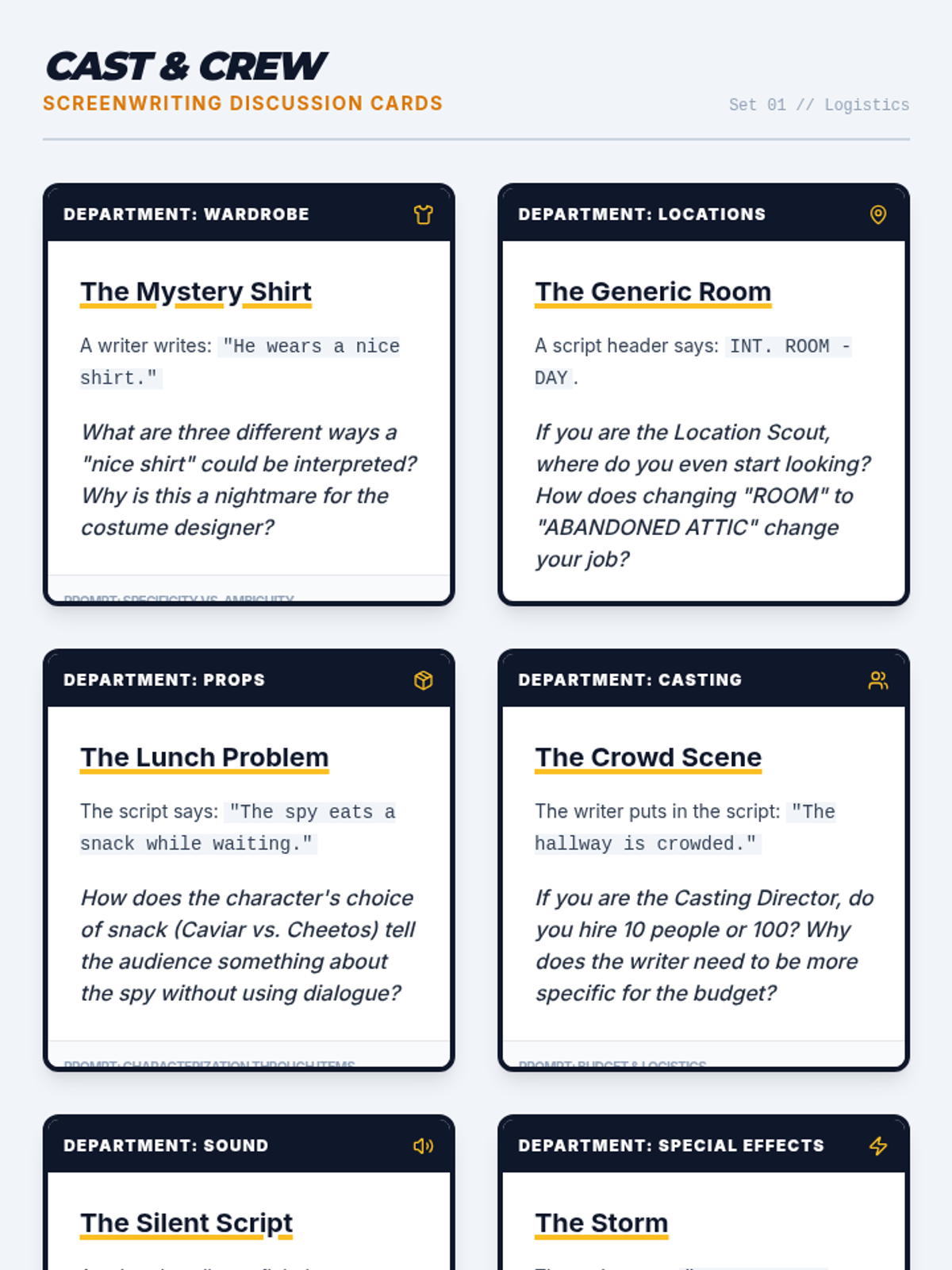
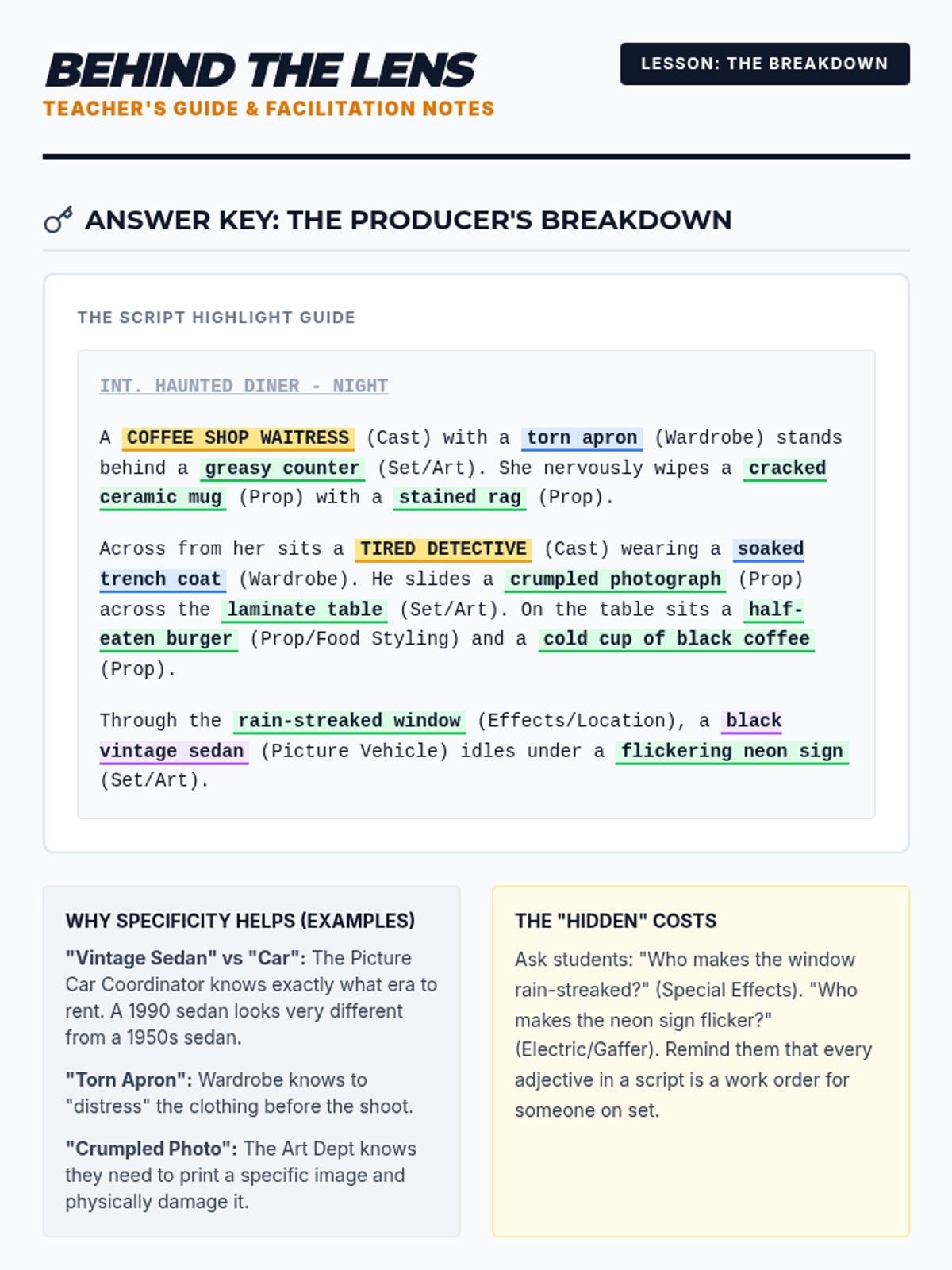
This lesson explores how pre-production logistics influence screenwriting, teaching students that specific writing is a tool for professional collaboration and production planning.
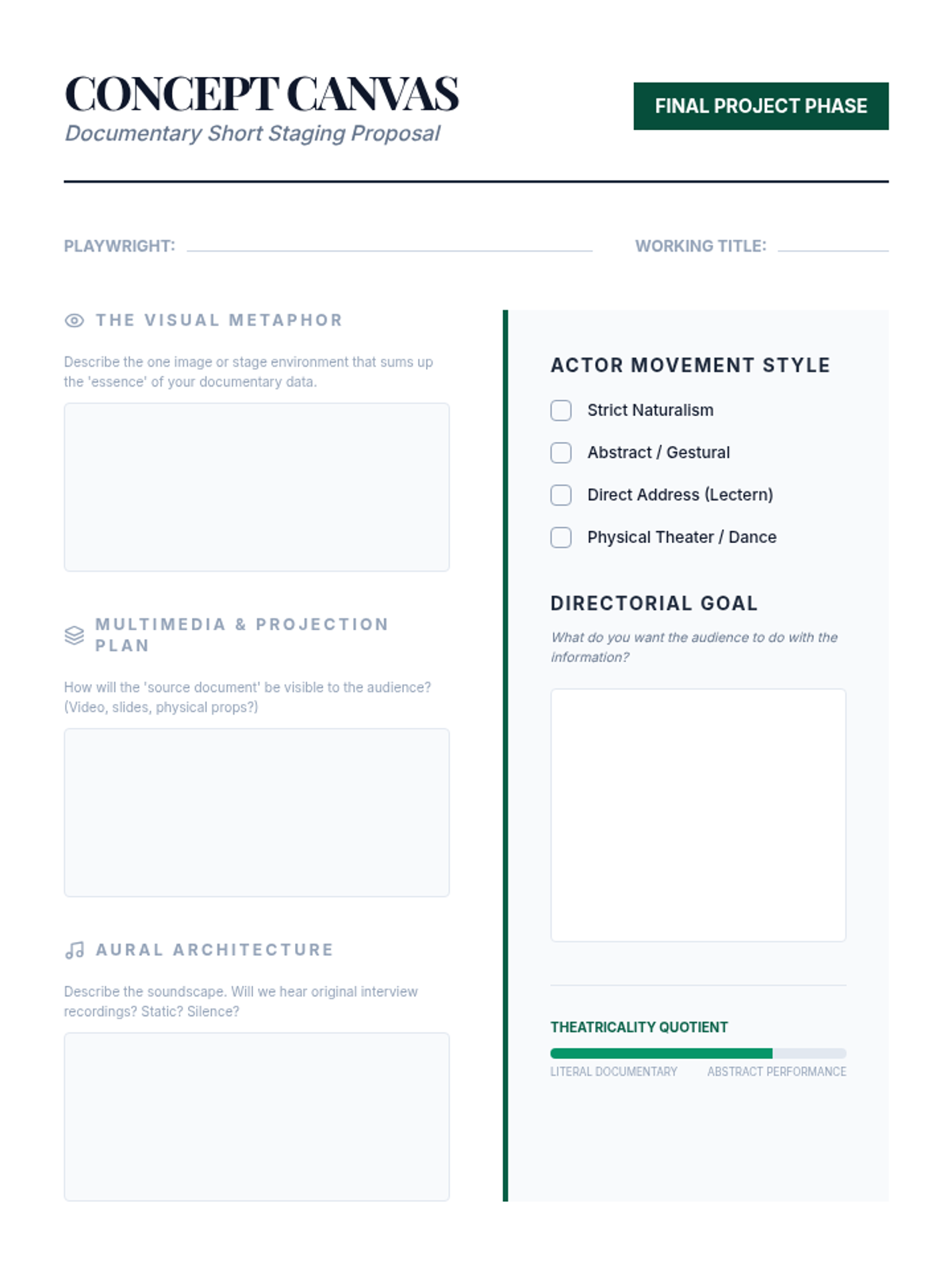
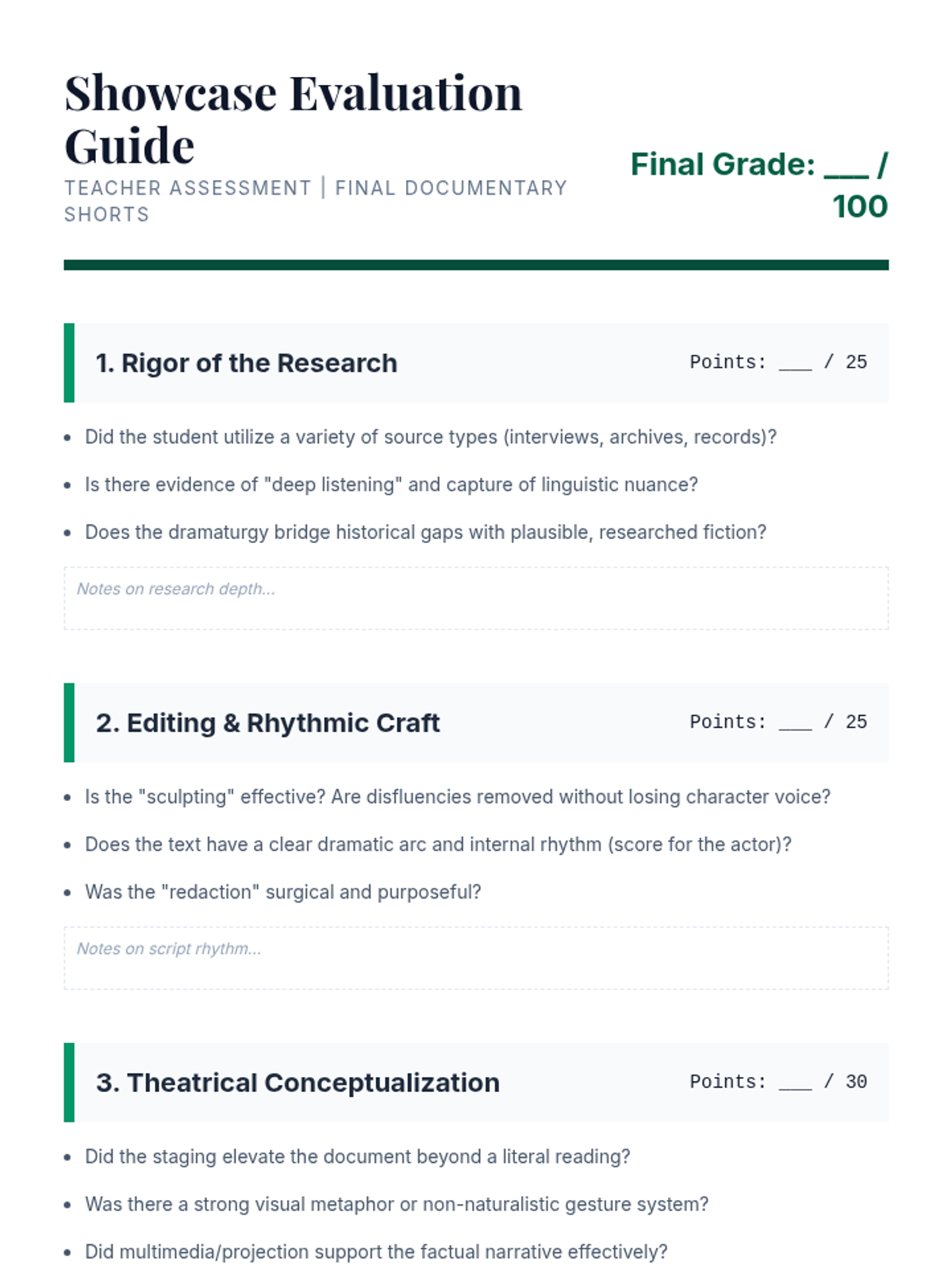
Concludes with a focus on non-naturalistic staging techniques for documentary theatre, culminating in a presentation of student documentary shorts.
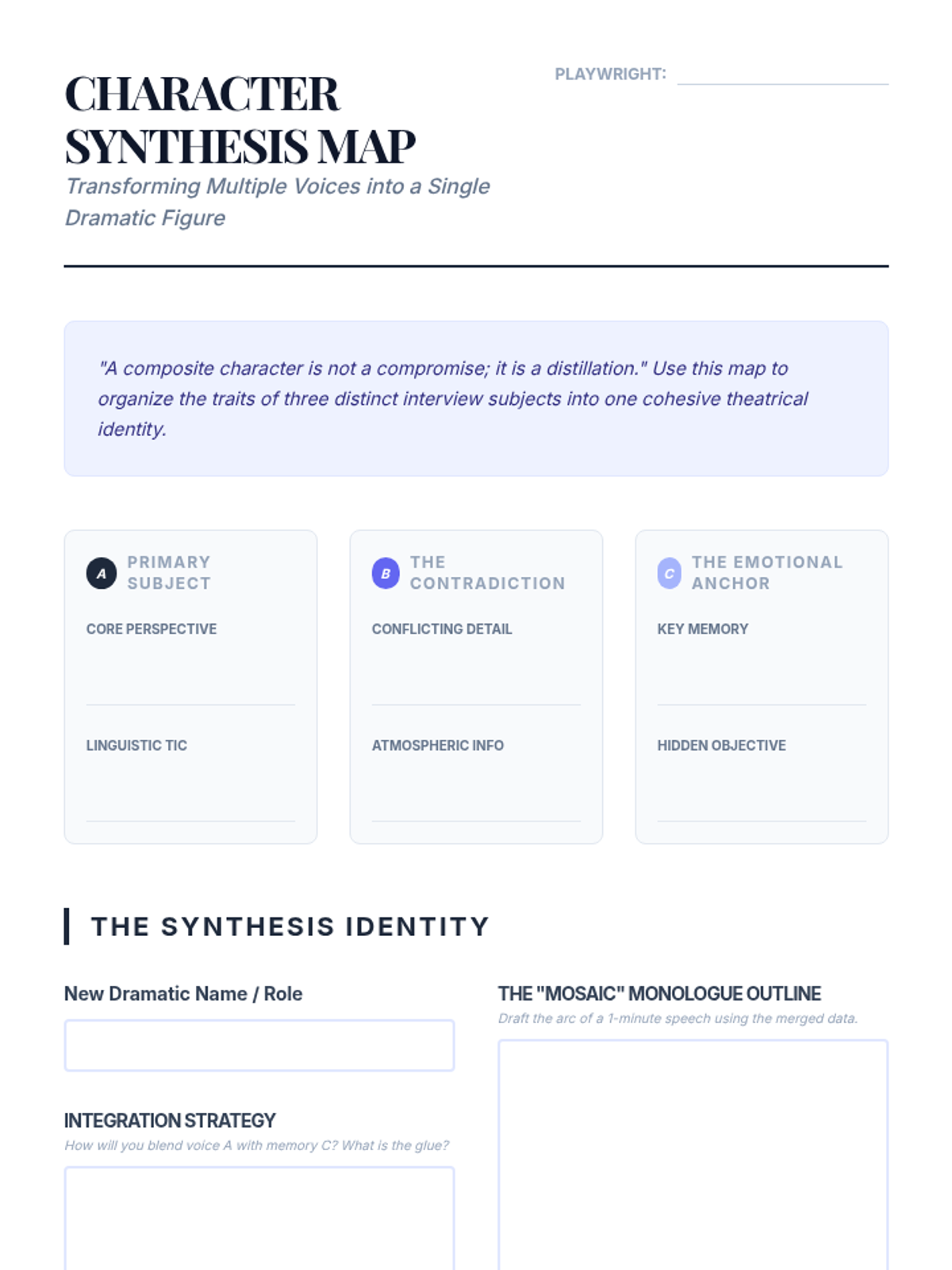
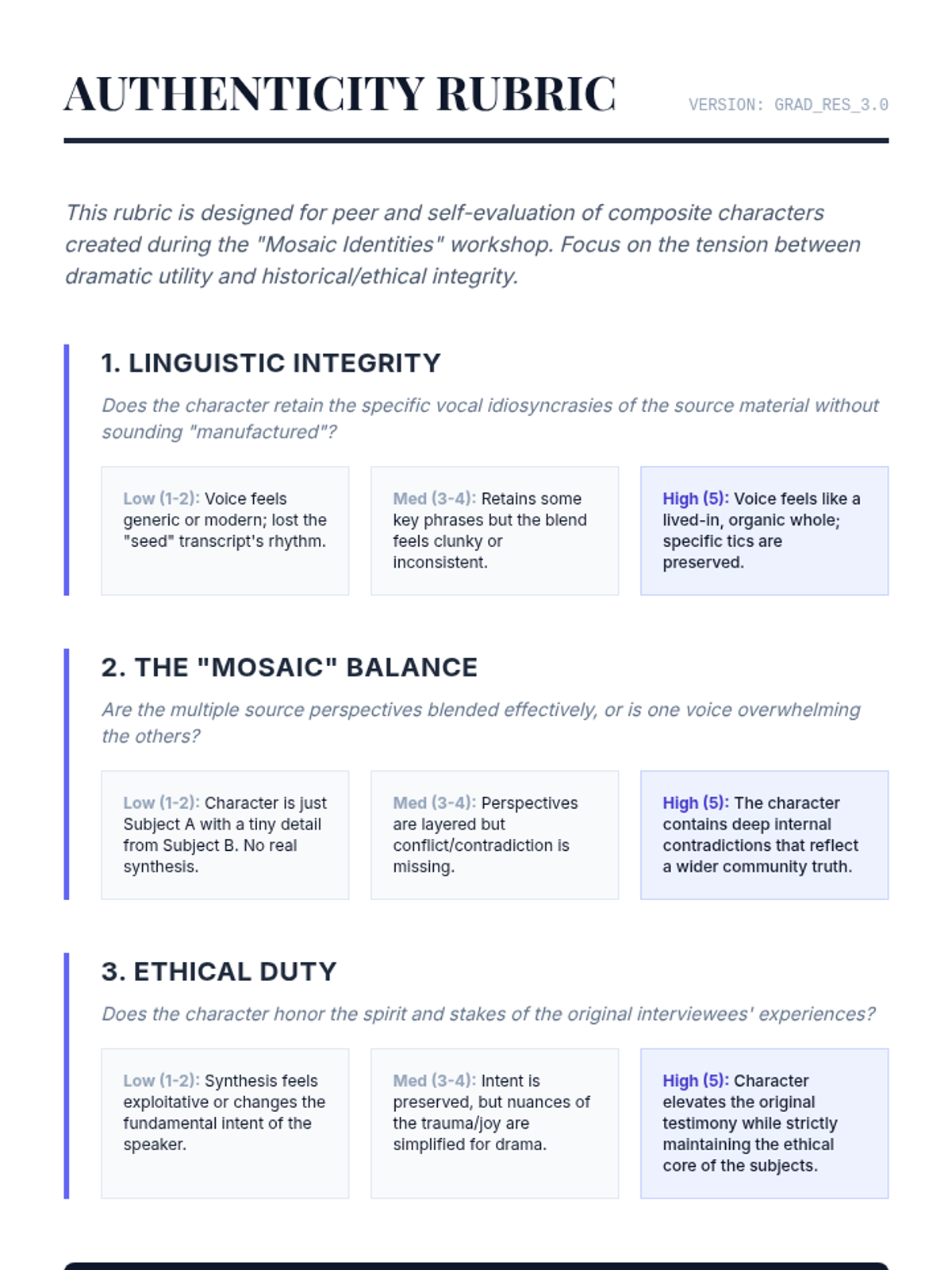
Explores the controversial technique of composite characters, balancing the need for dramatic economy with the ethics of authentic representation.
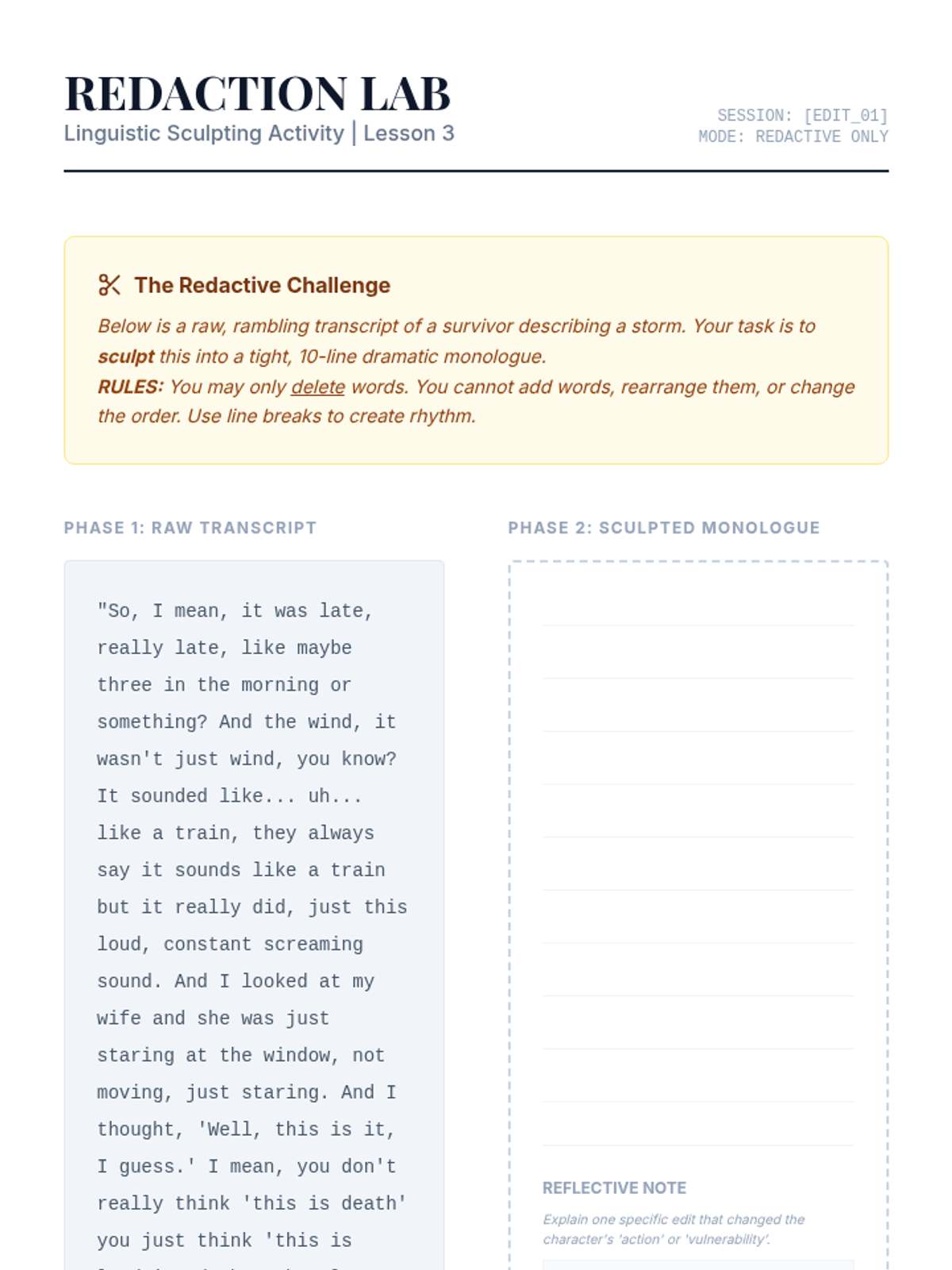
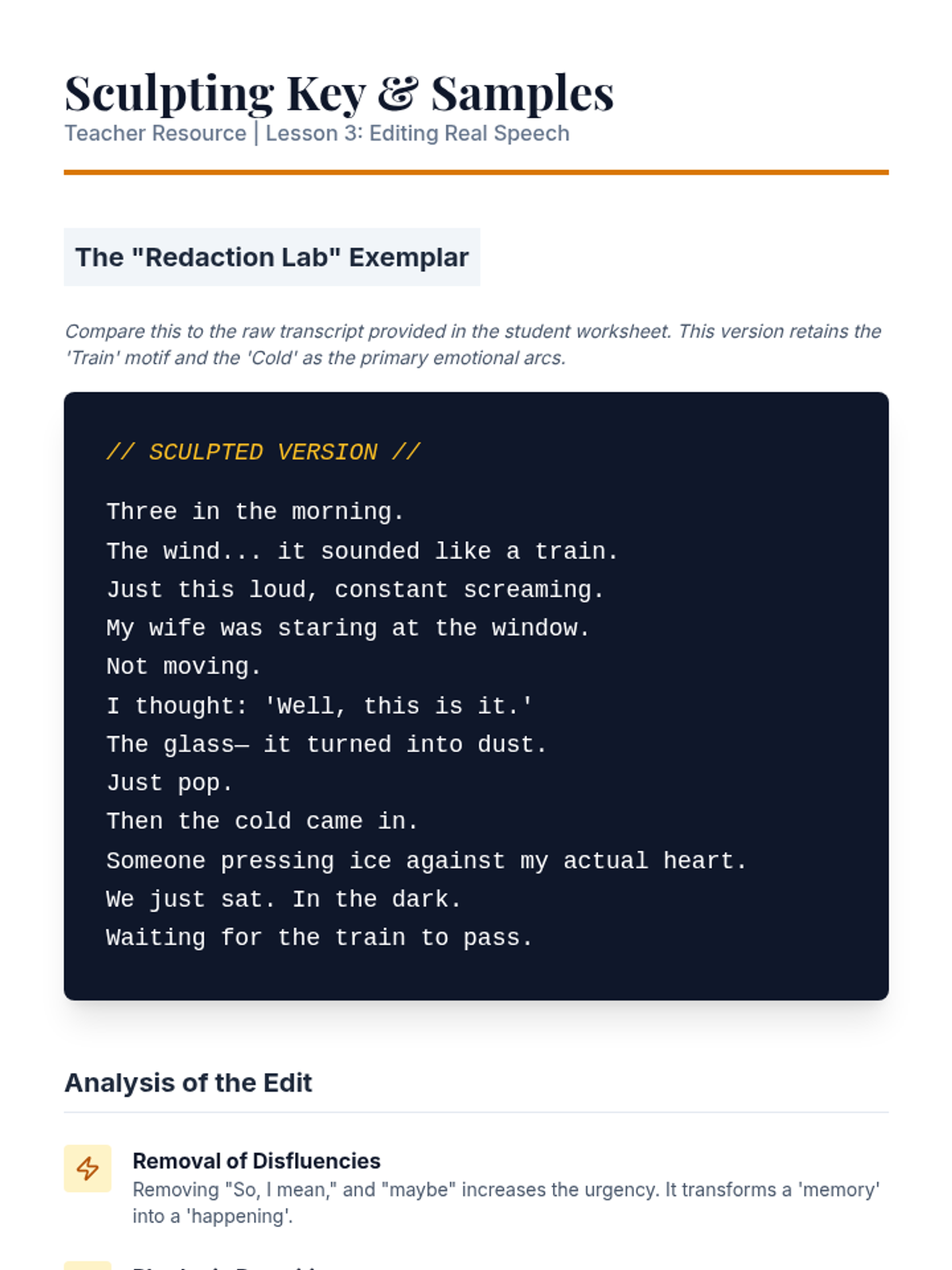
A workshop-based lesson on the technical art of editing raw transcript data into rhythmic, dramatically impactful stage speech.
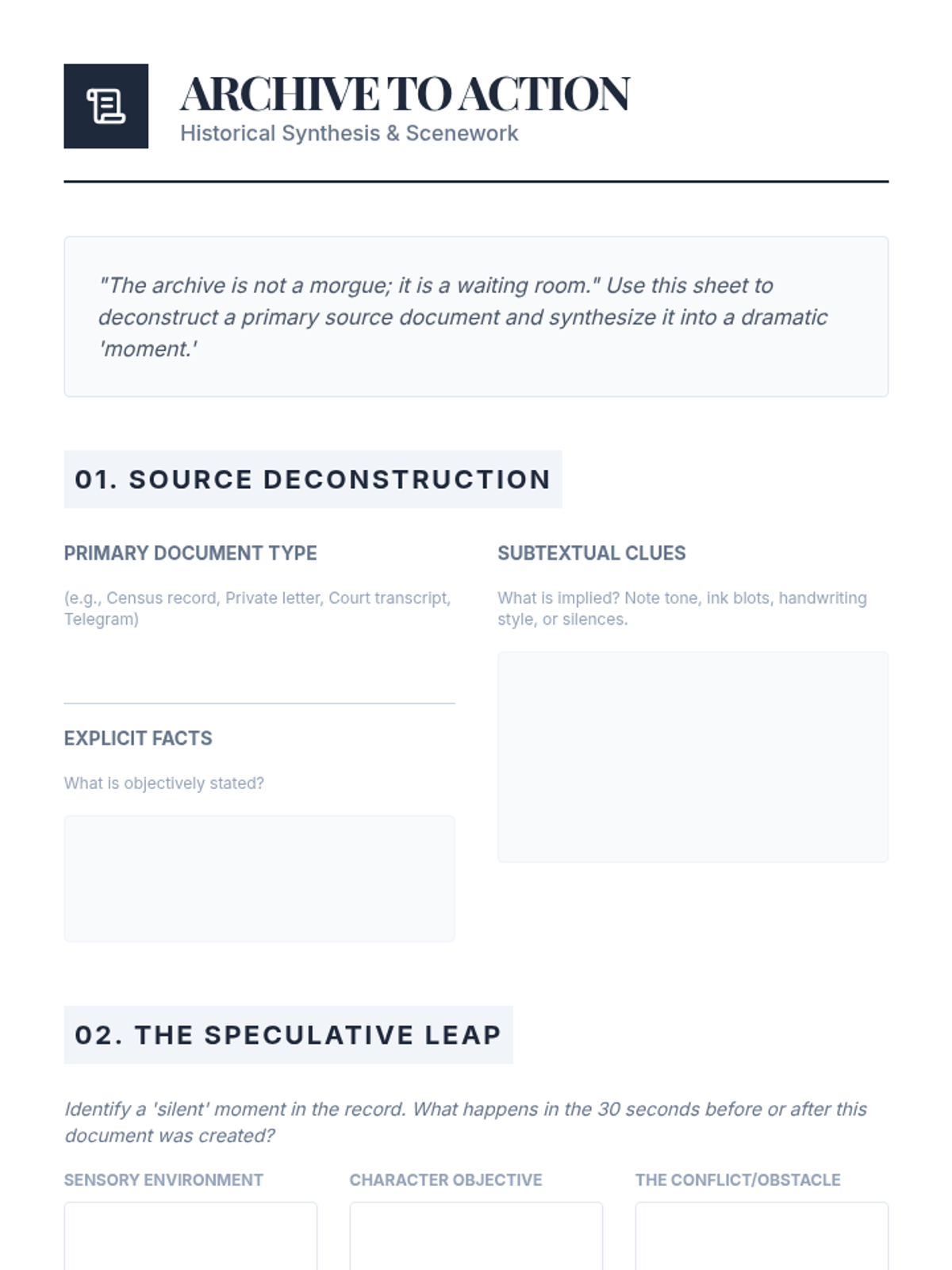
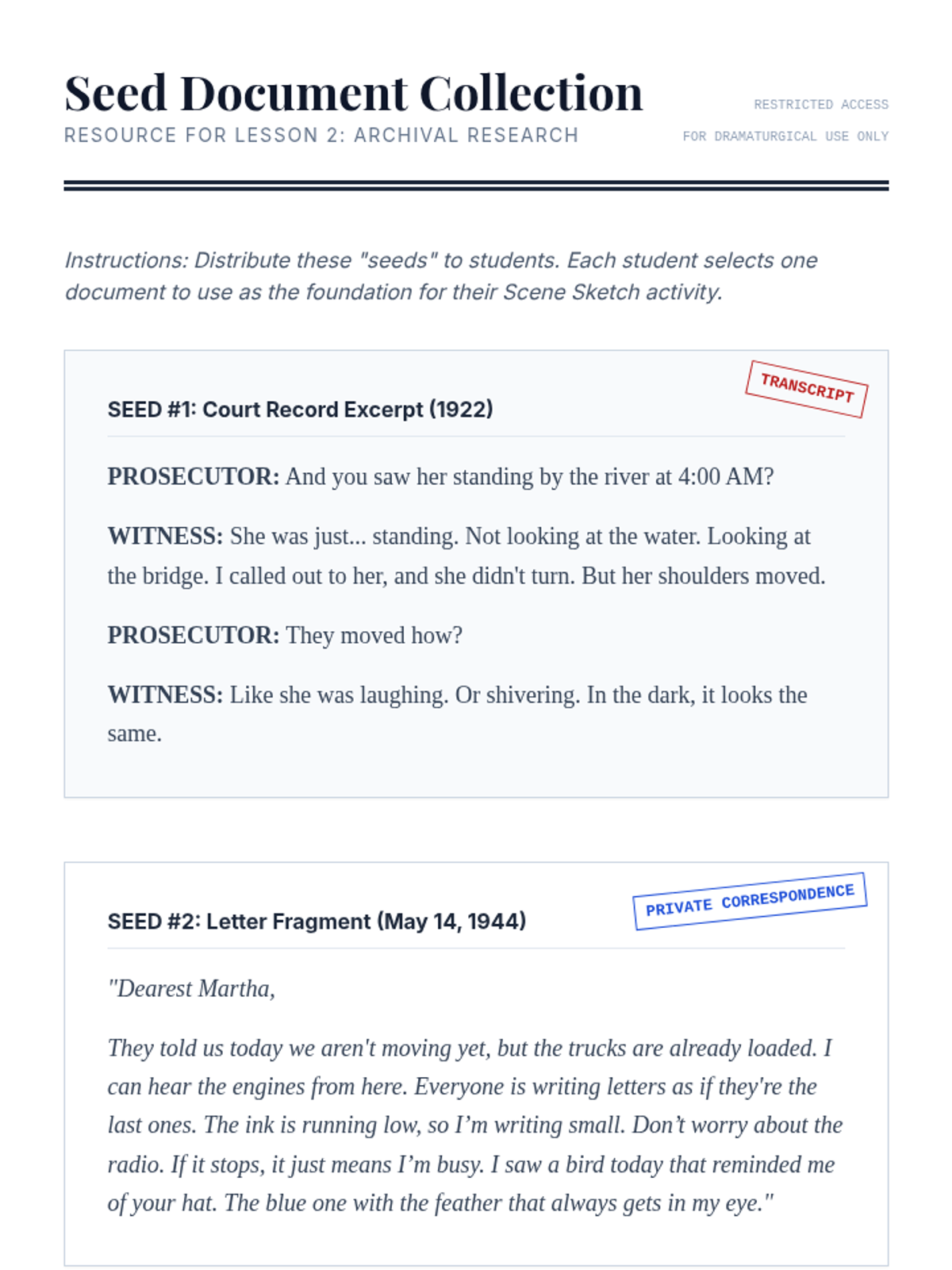
Focuses on archival research as a source for drama, teaching students how to bridge historical gaps and transform dry documents into compelling scenes.
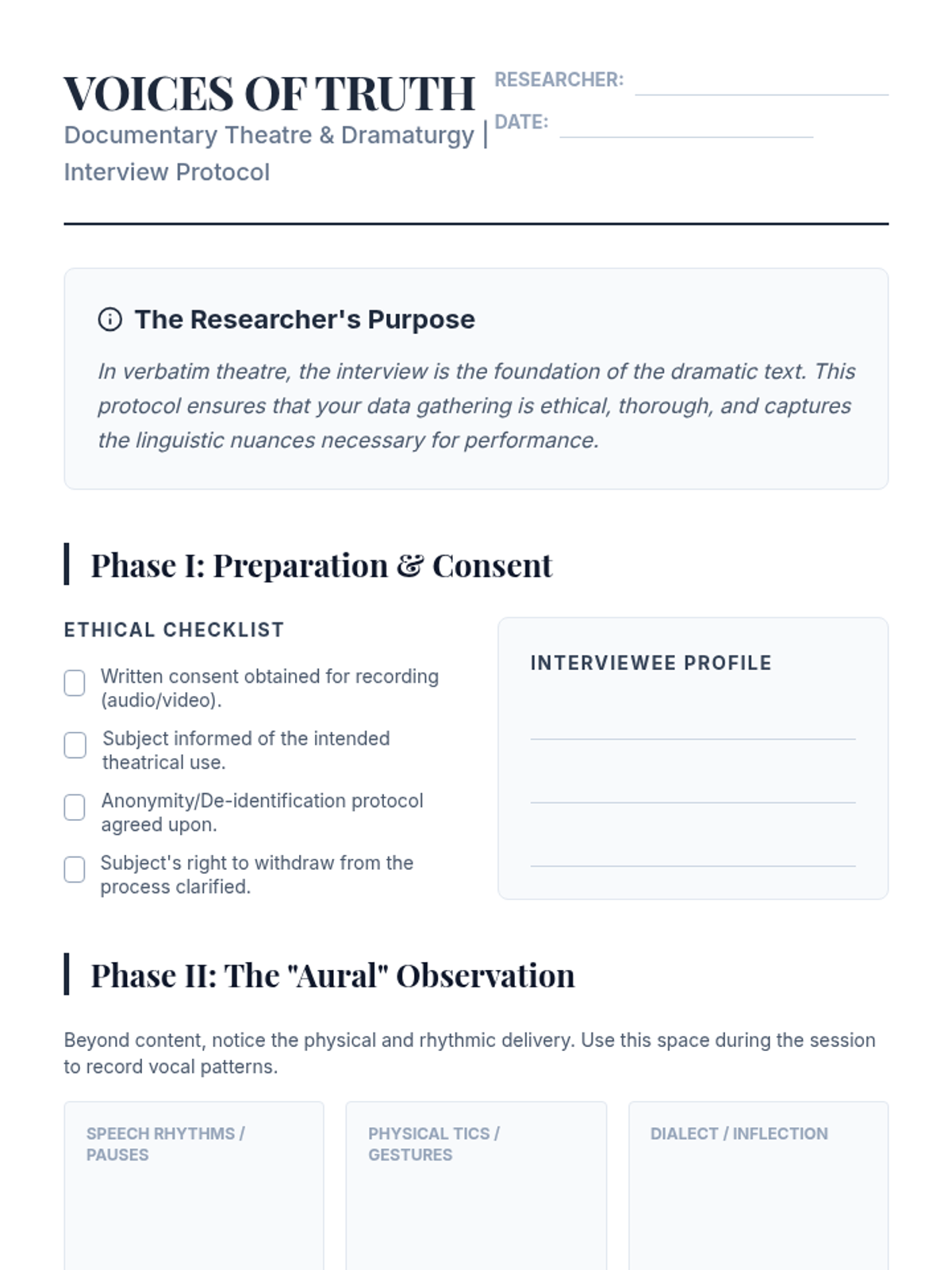
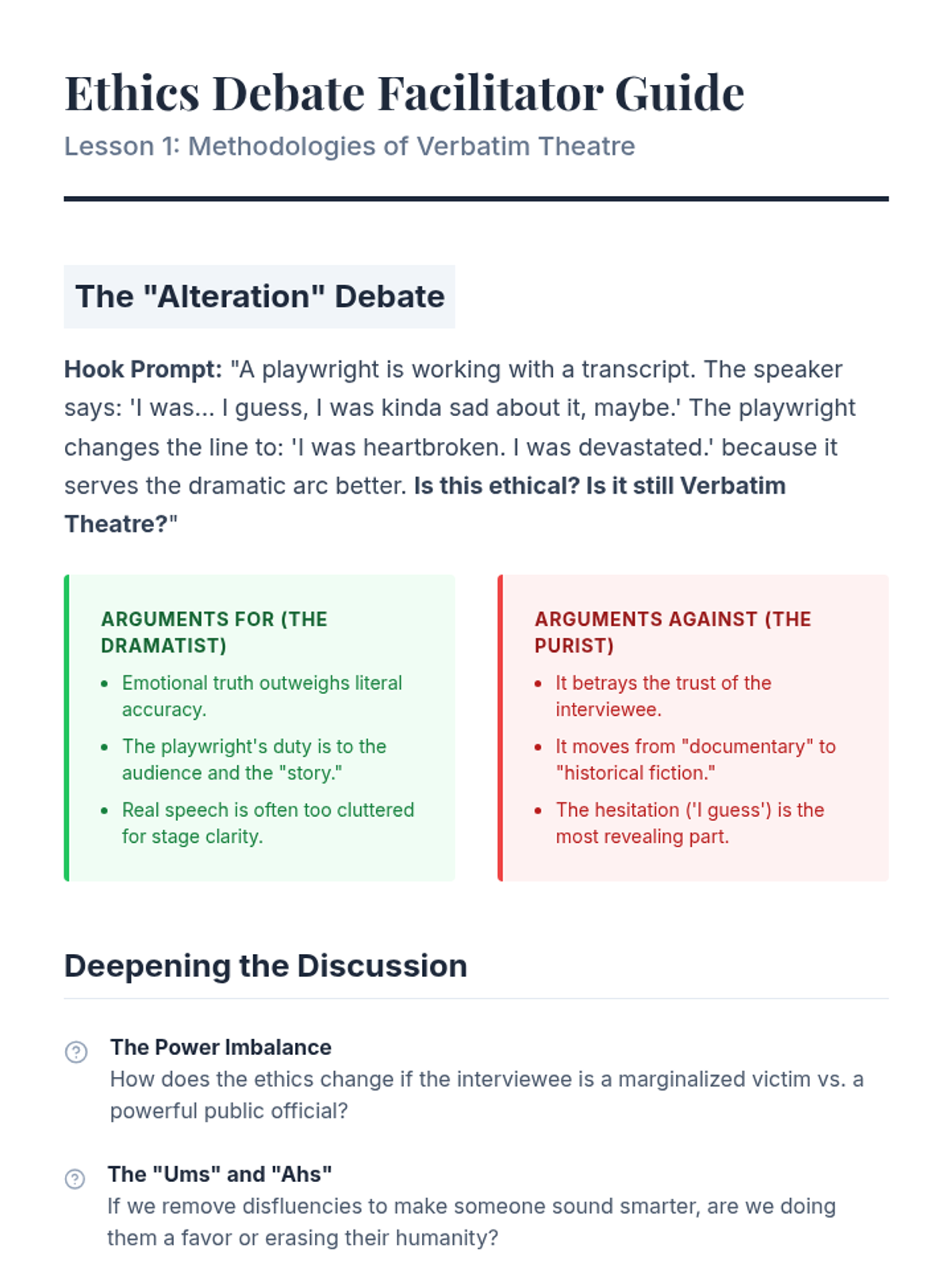
Investigates the history and ethics of verbatim theatre, focusing on interviewing methodologies and the legal/ethical frameworks of representing real subjects.
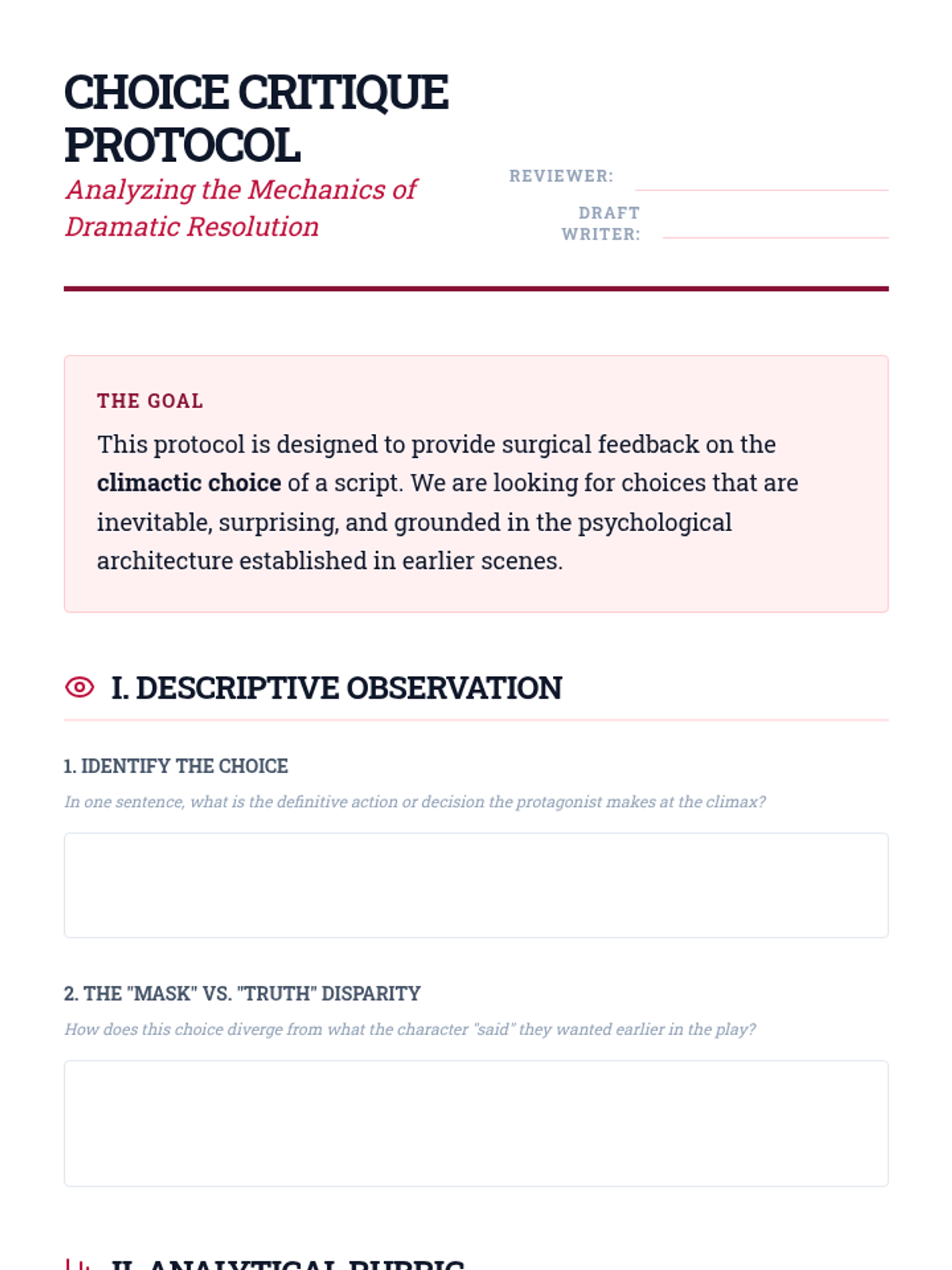
Synthesizes prior learning to draft a climactic scene where the protagonist makes an essential choice, followed by structured peer critique.
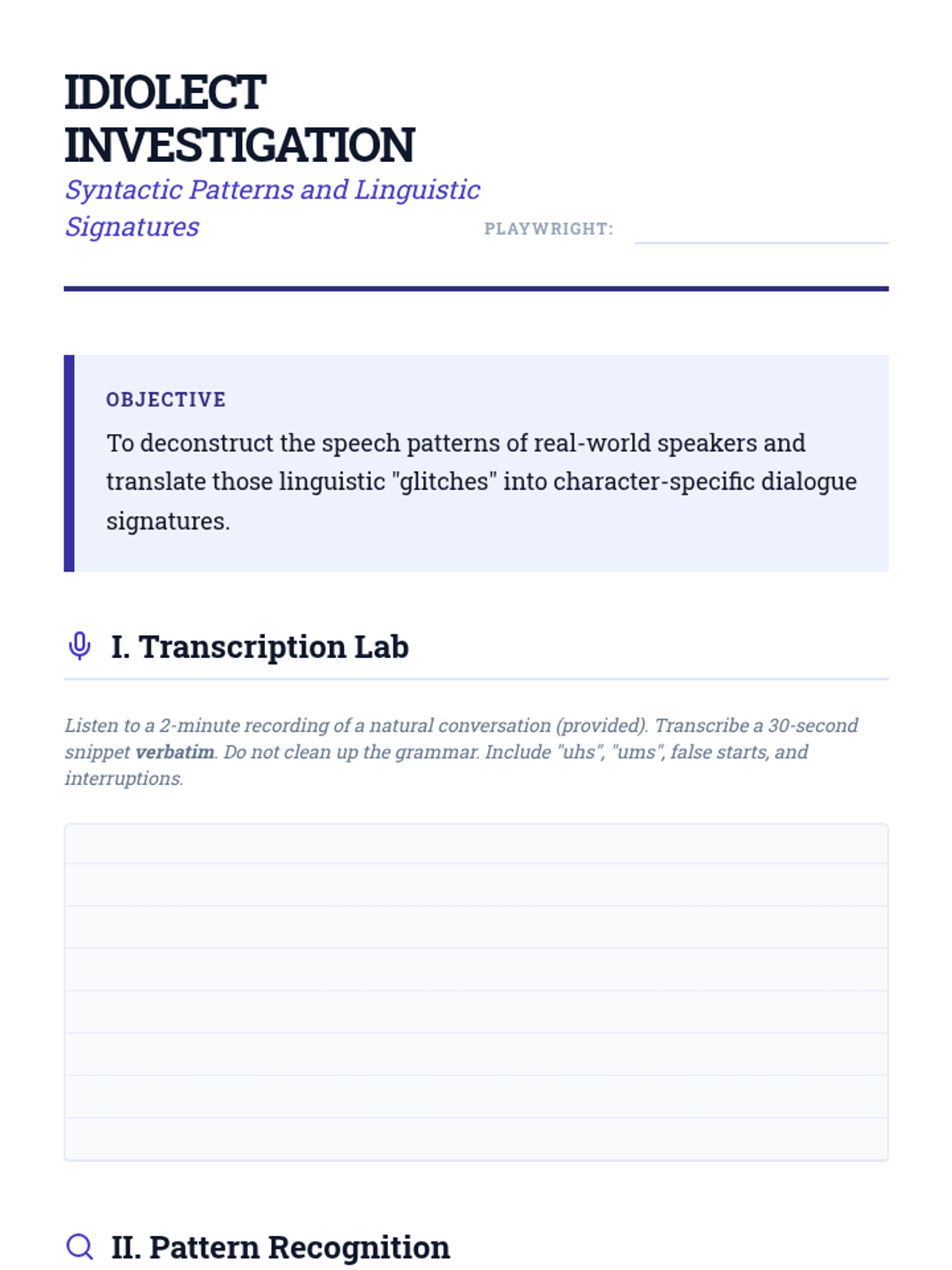
Examines sociolinguistic aspects of character voice, syntax, and rhythm to develop distinct idiolects that prevent characters from sounding like the playwright.
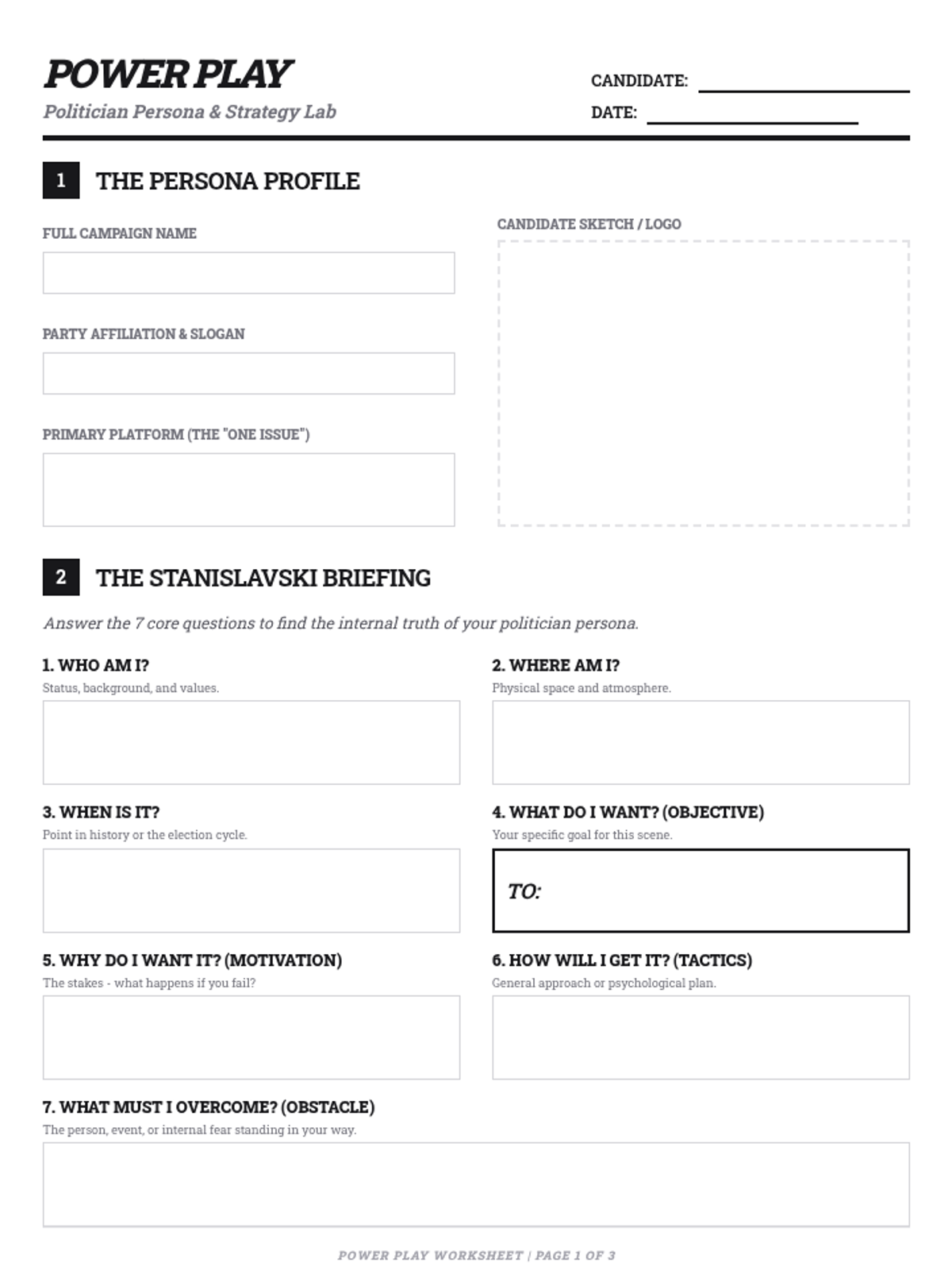
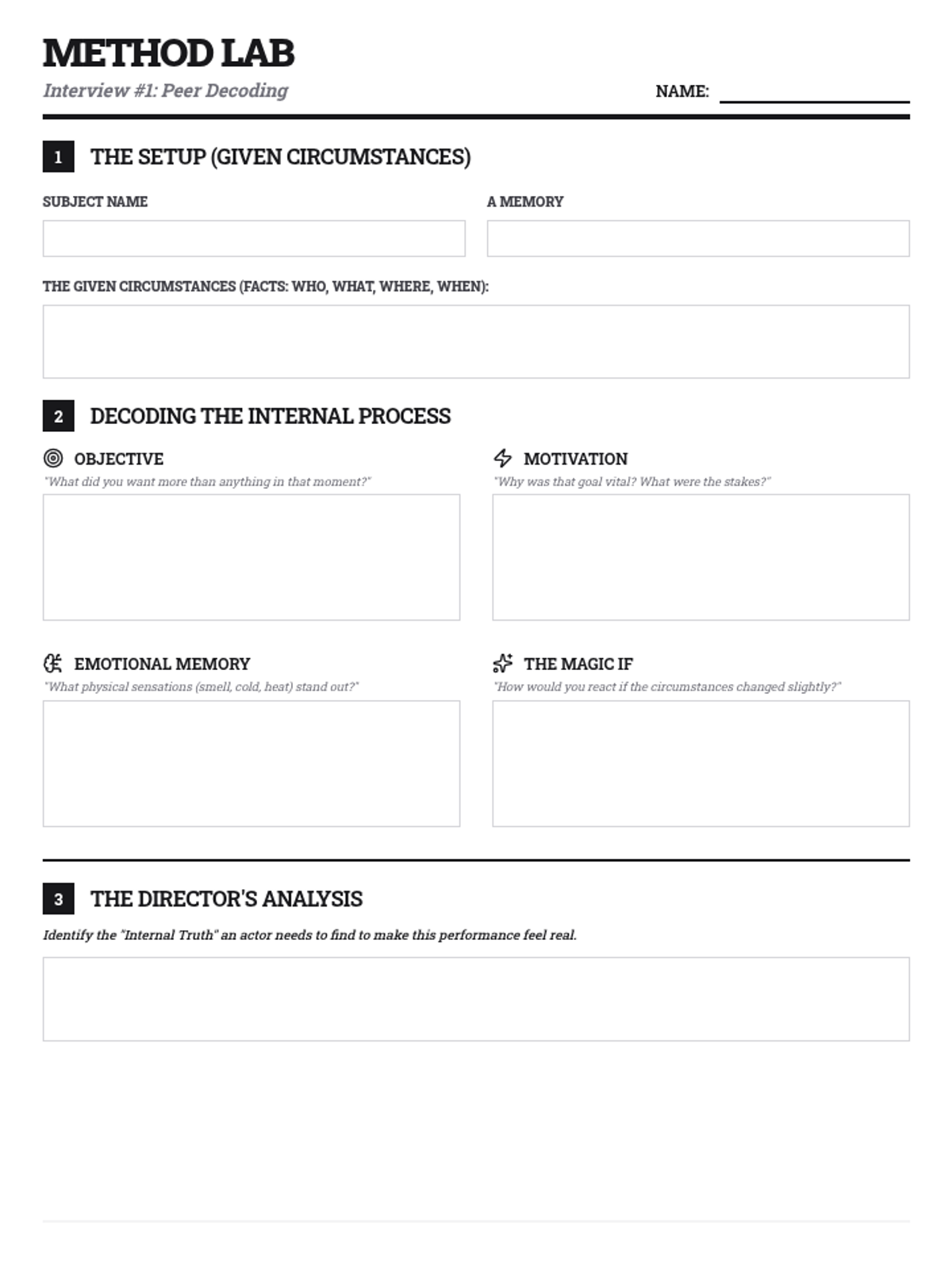
A deep dive into Stanislavski's 'System', focusing on using real-world experiences to inform character work through peer interviews.
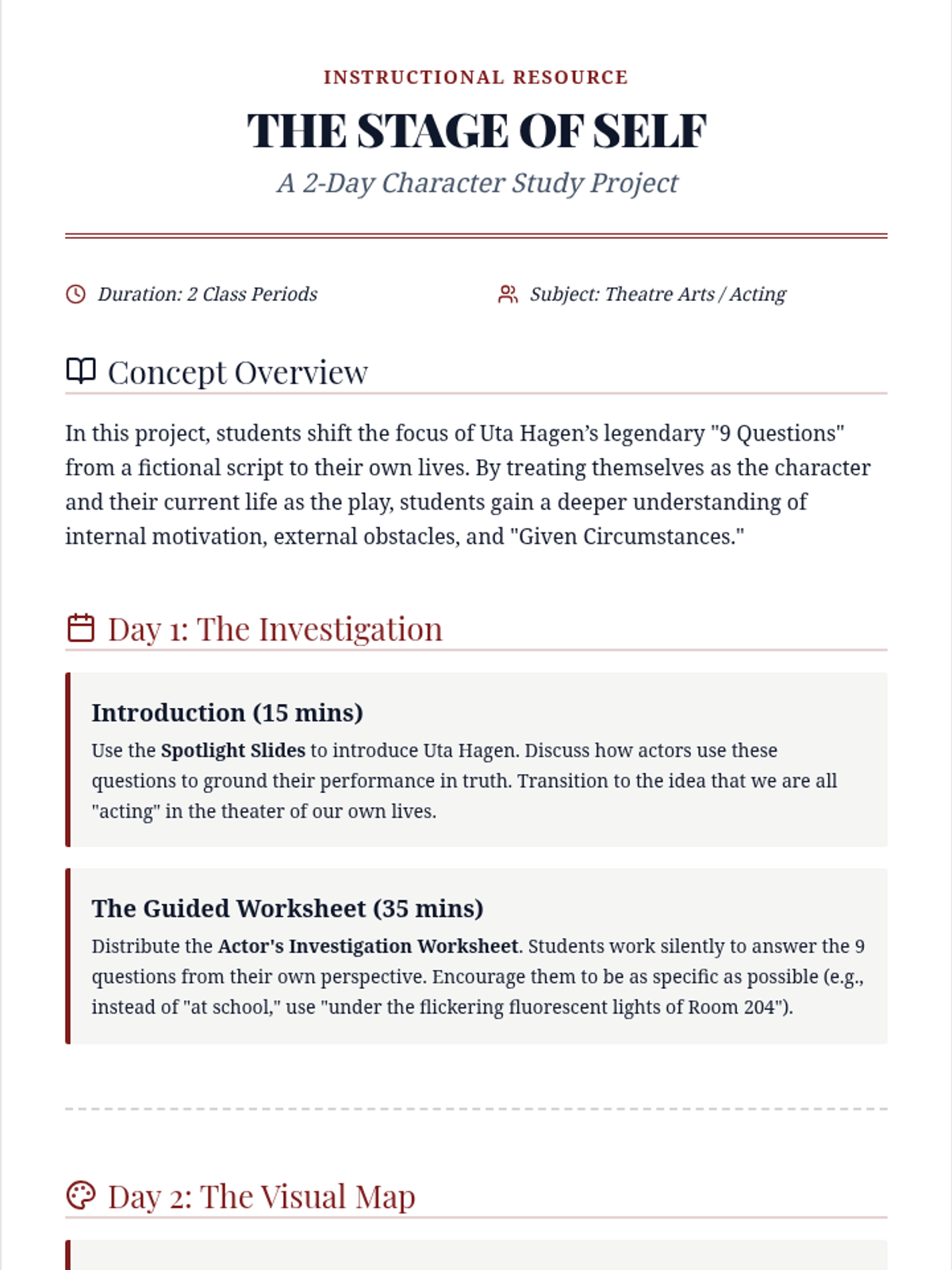
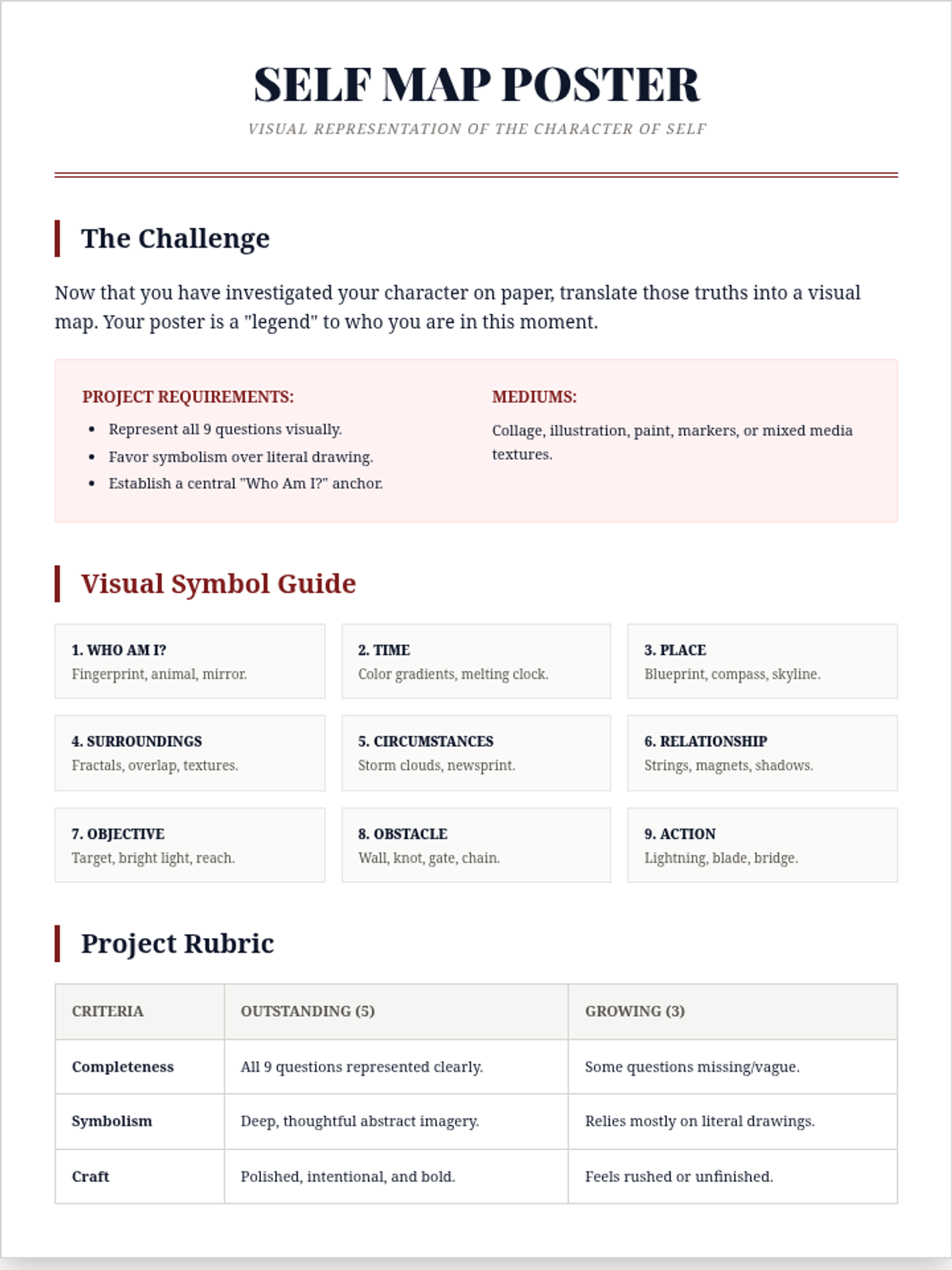
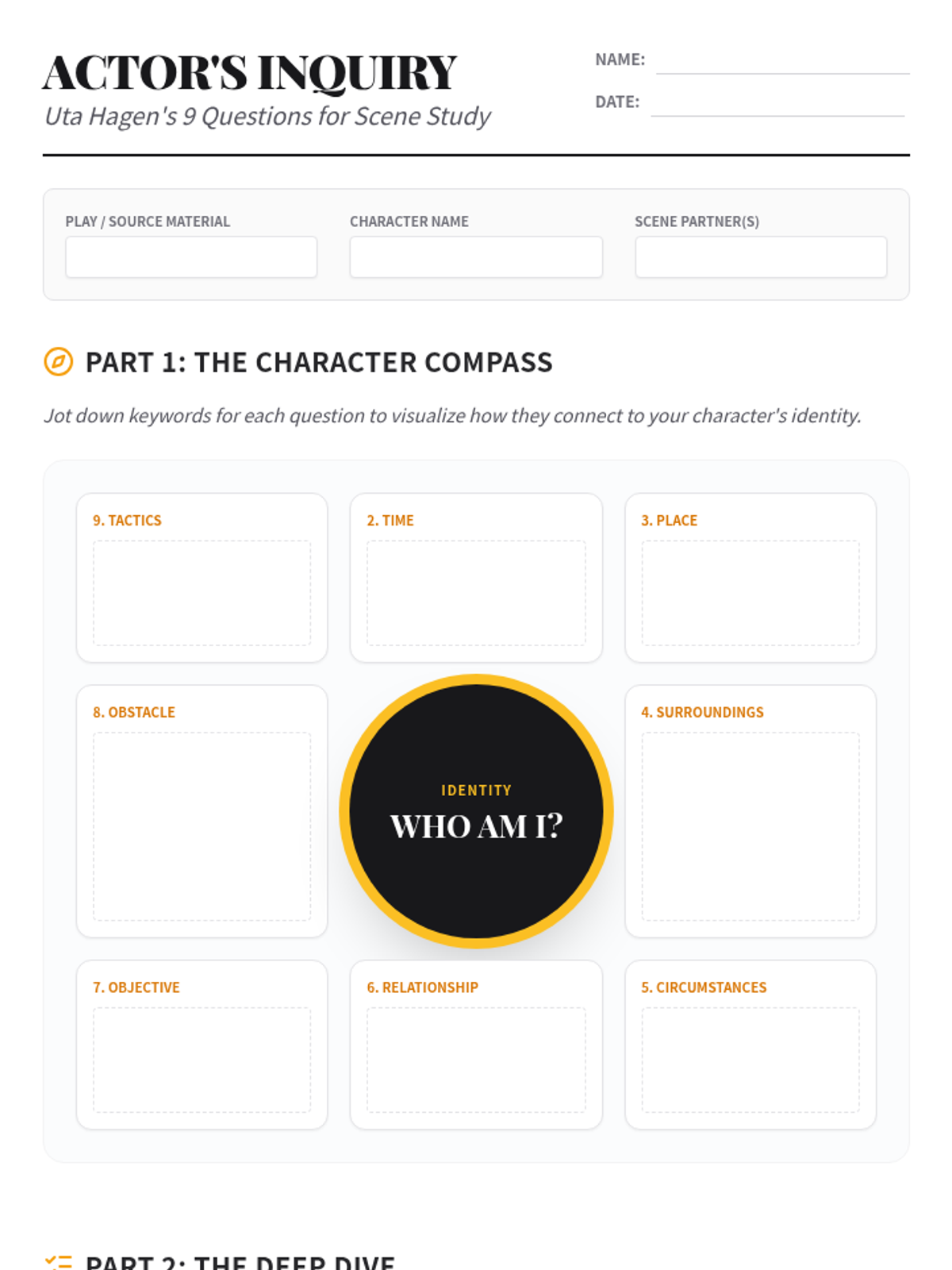
A 2-day drama project where students apply Uta Hagen's 9 Questions to themselves, culminating in a visual character map poster that explores their own 'given circumstances' and 'objectives'.
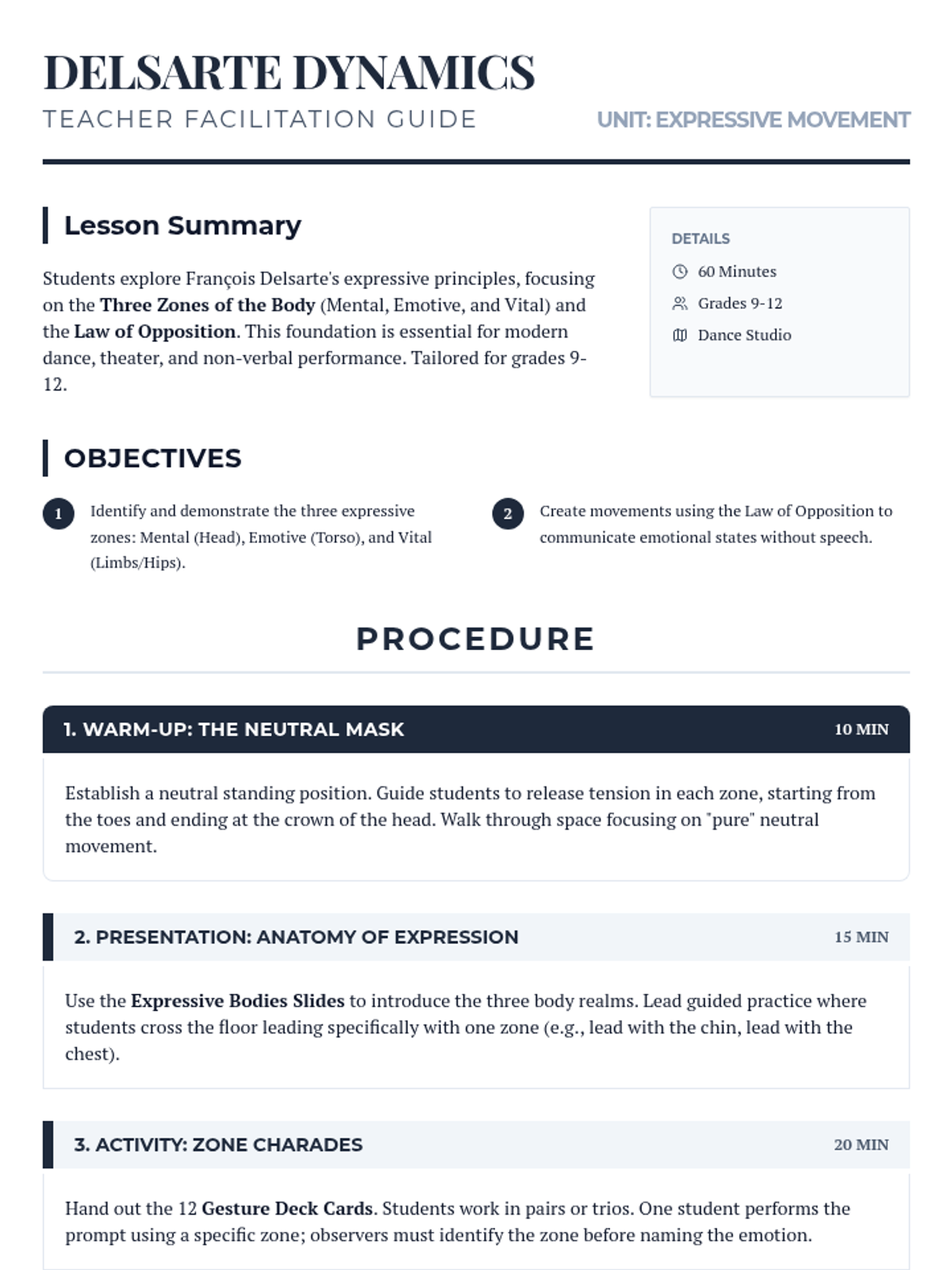
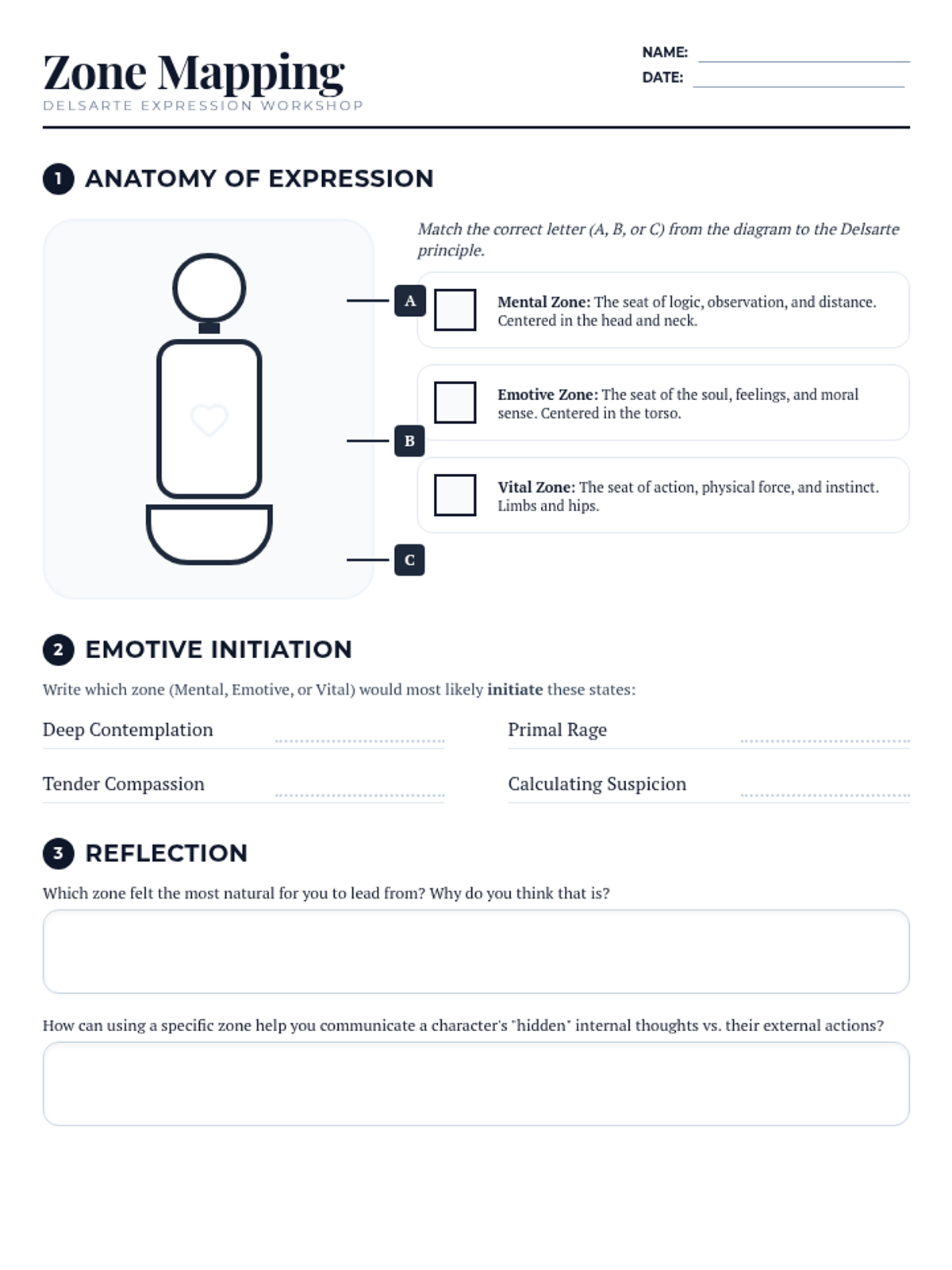
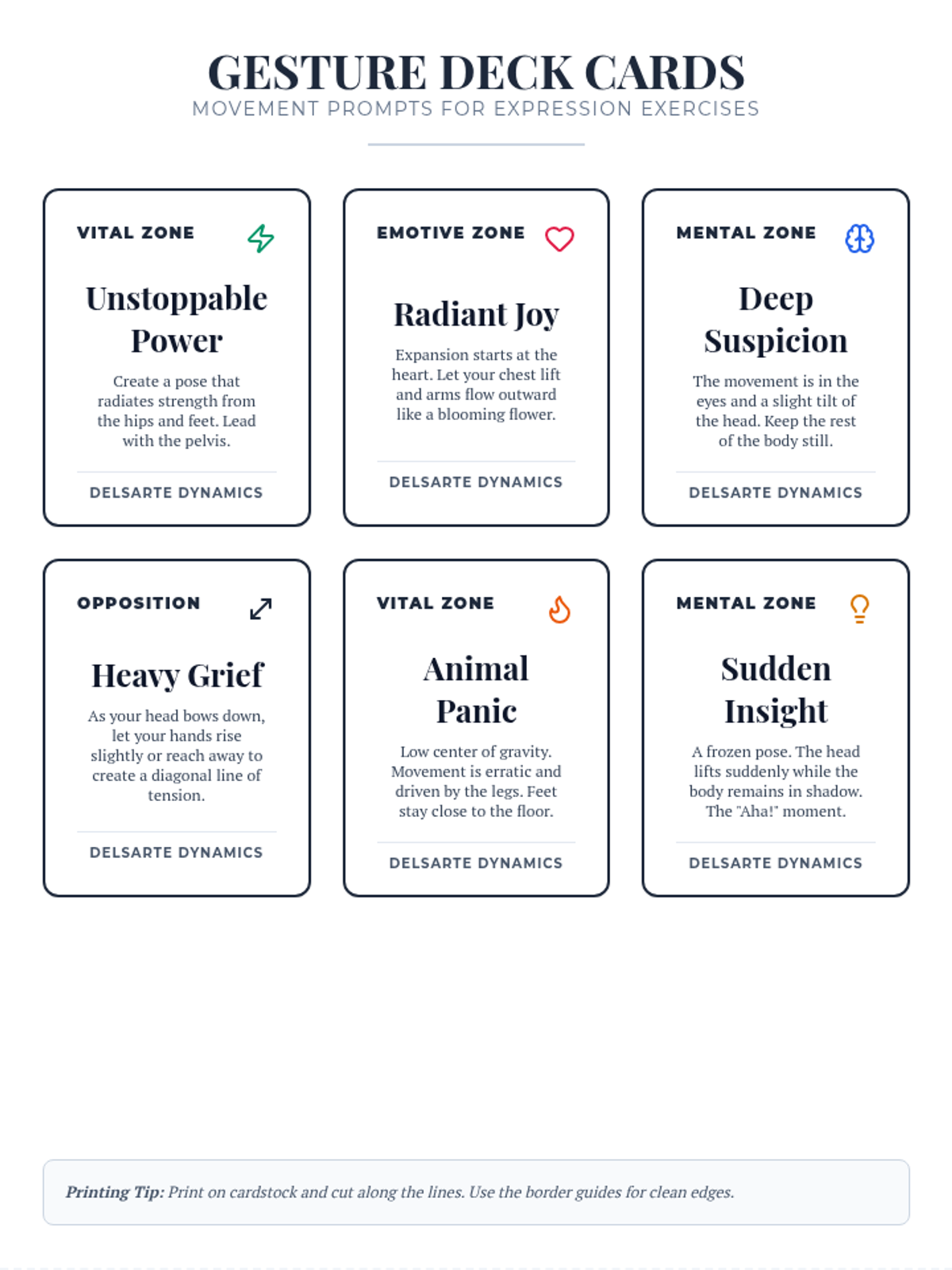
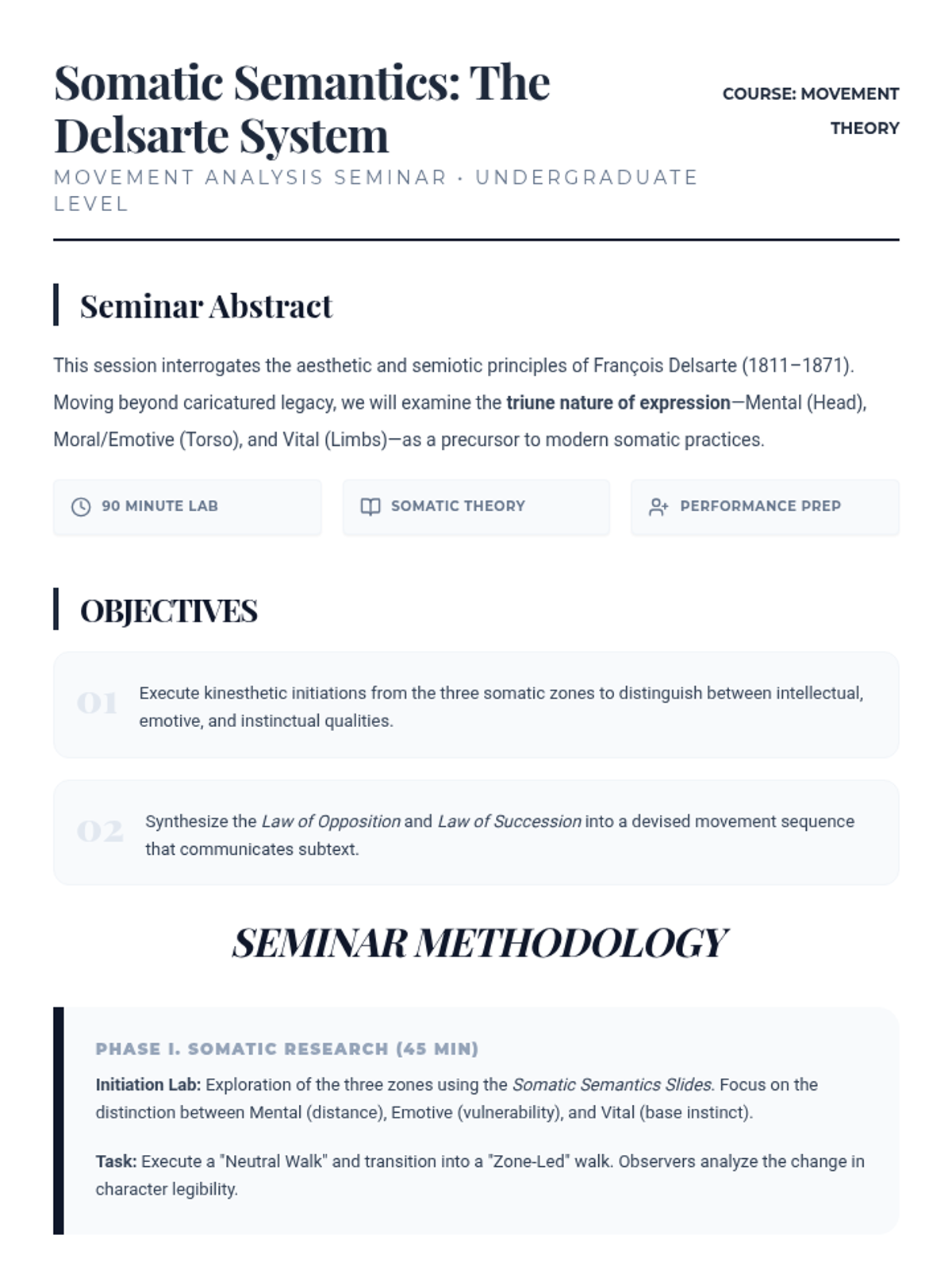
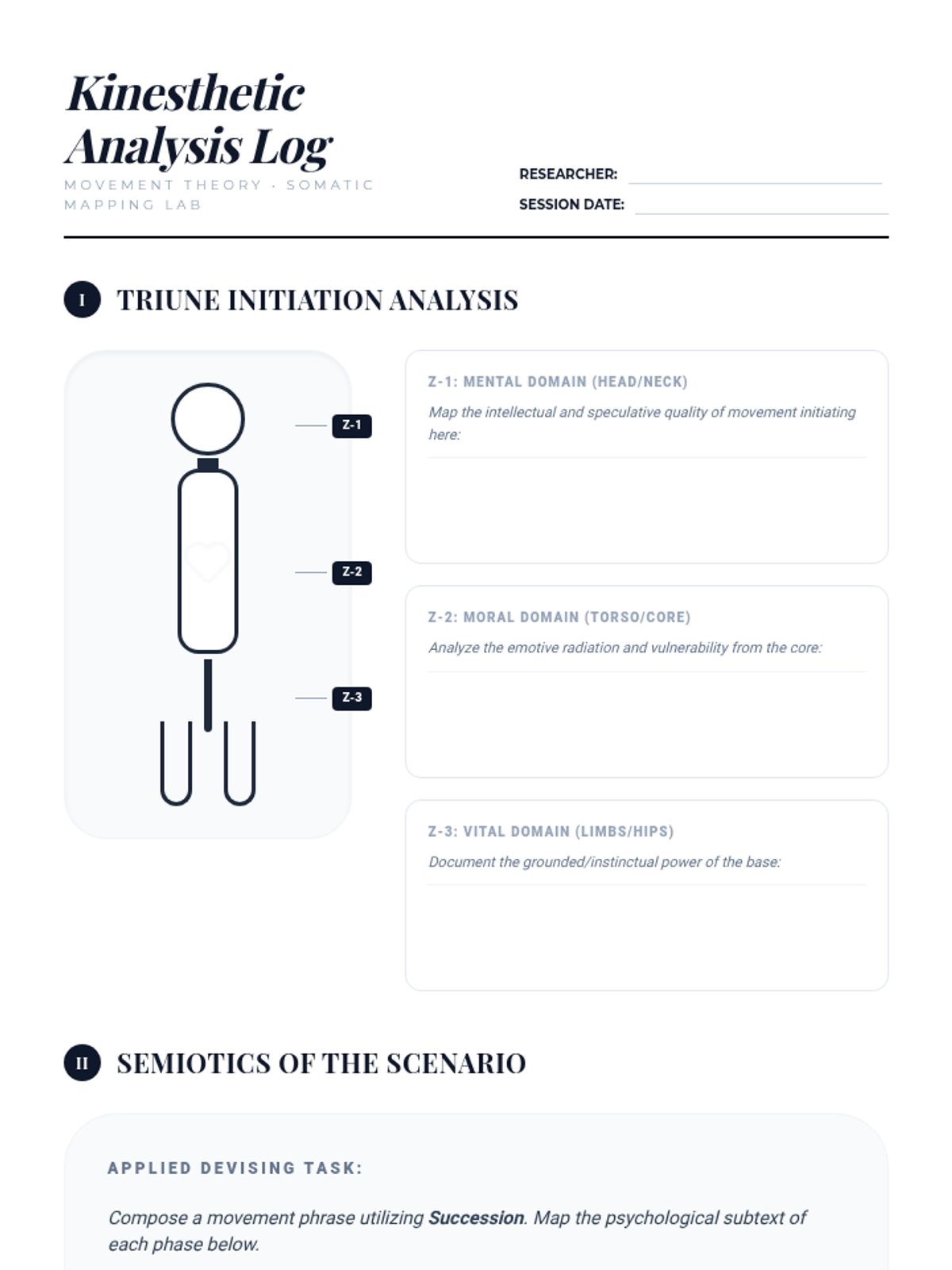
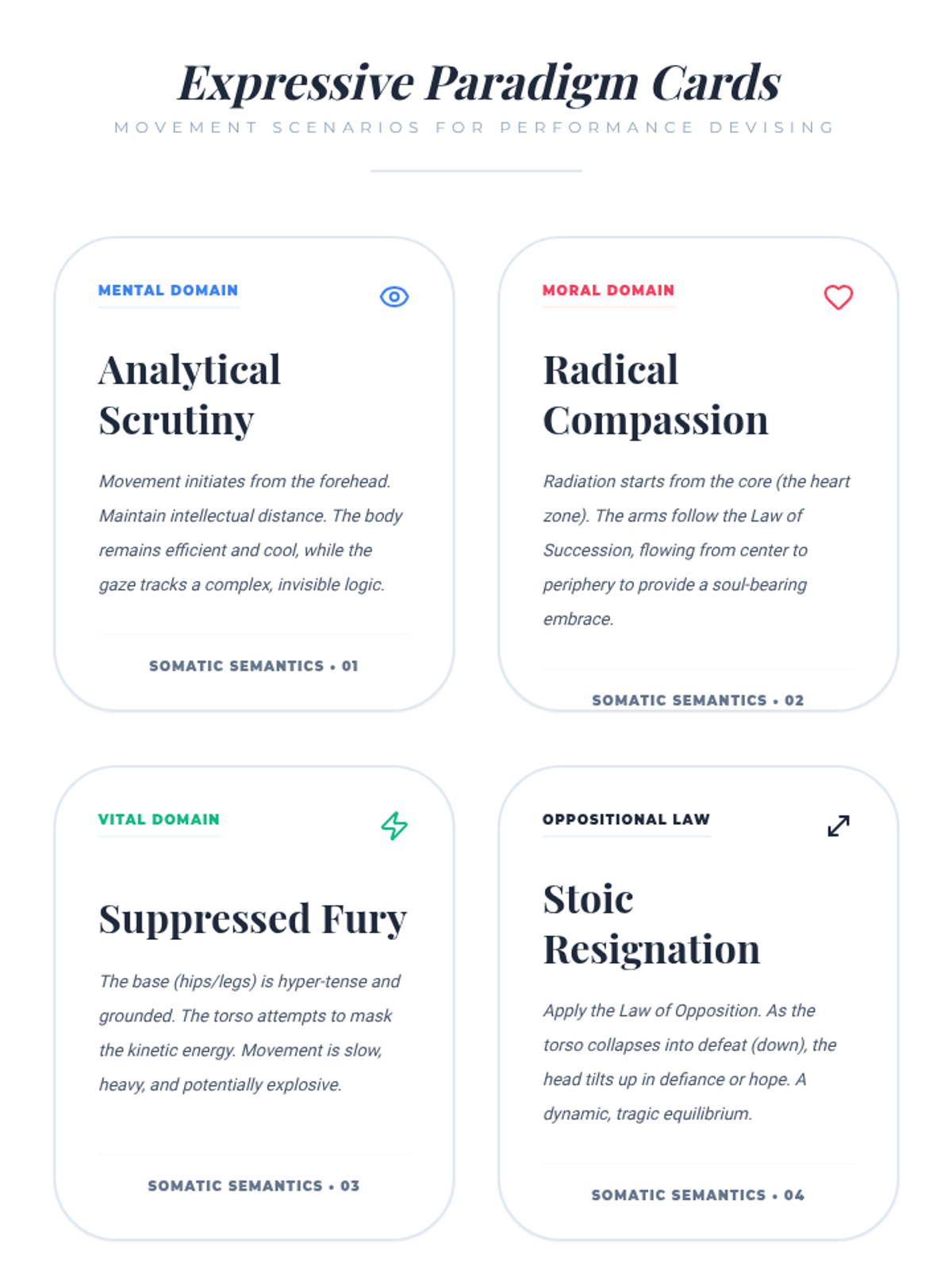
An advanced pedagogical exploration of François Delsarte's applied semiotics for undergraduate performance students. The lesson analyzes the triune nature of expression (Mental, Moral/Emotive, Vital) and its influence on modern somatic practices.
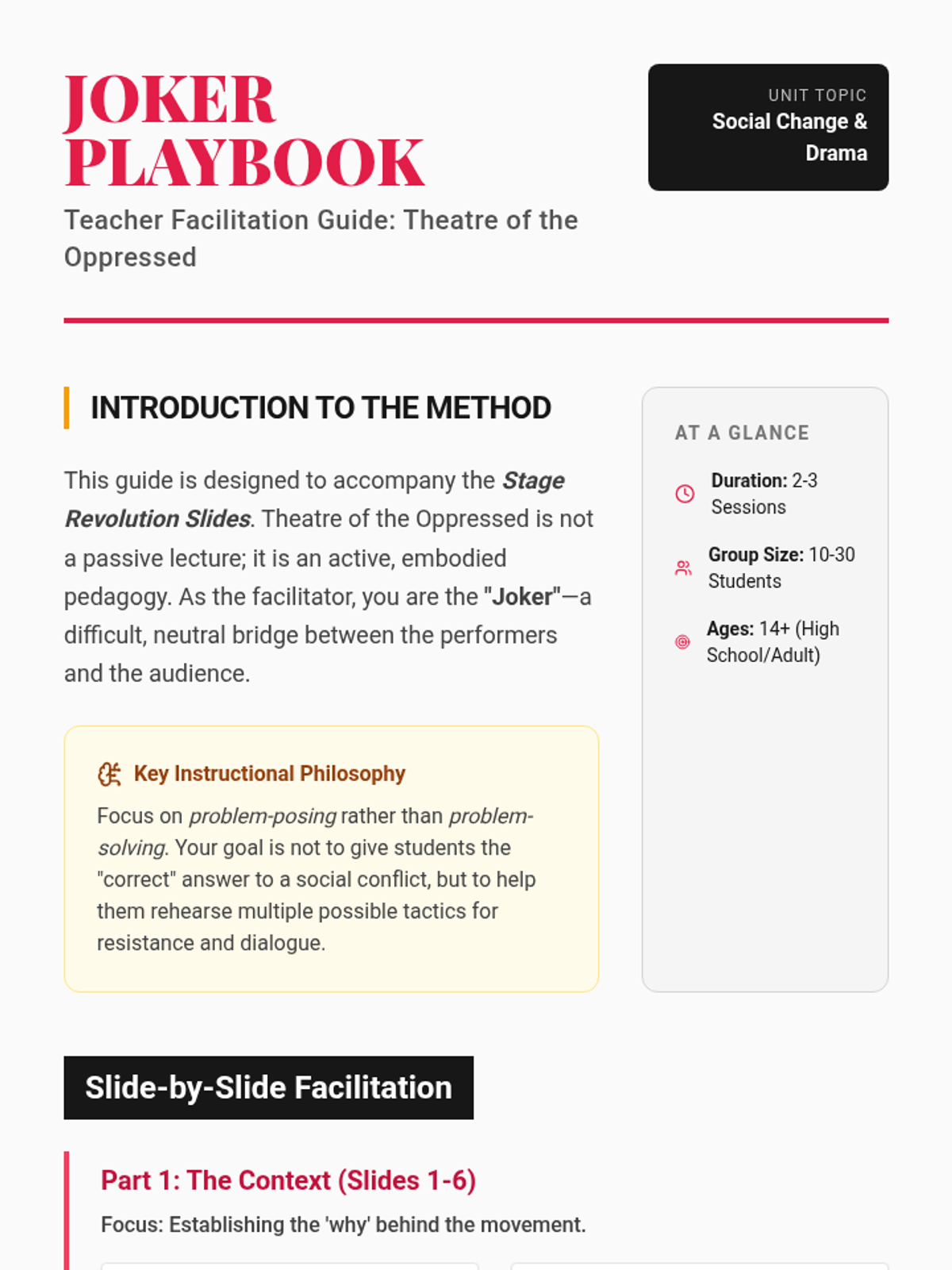
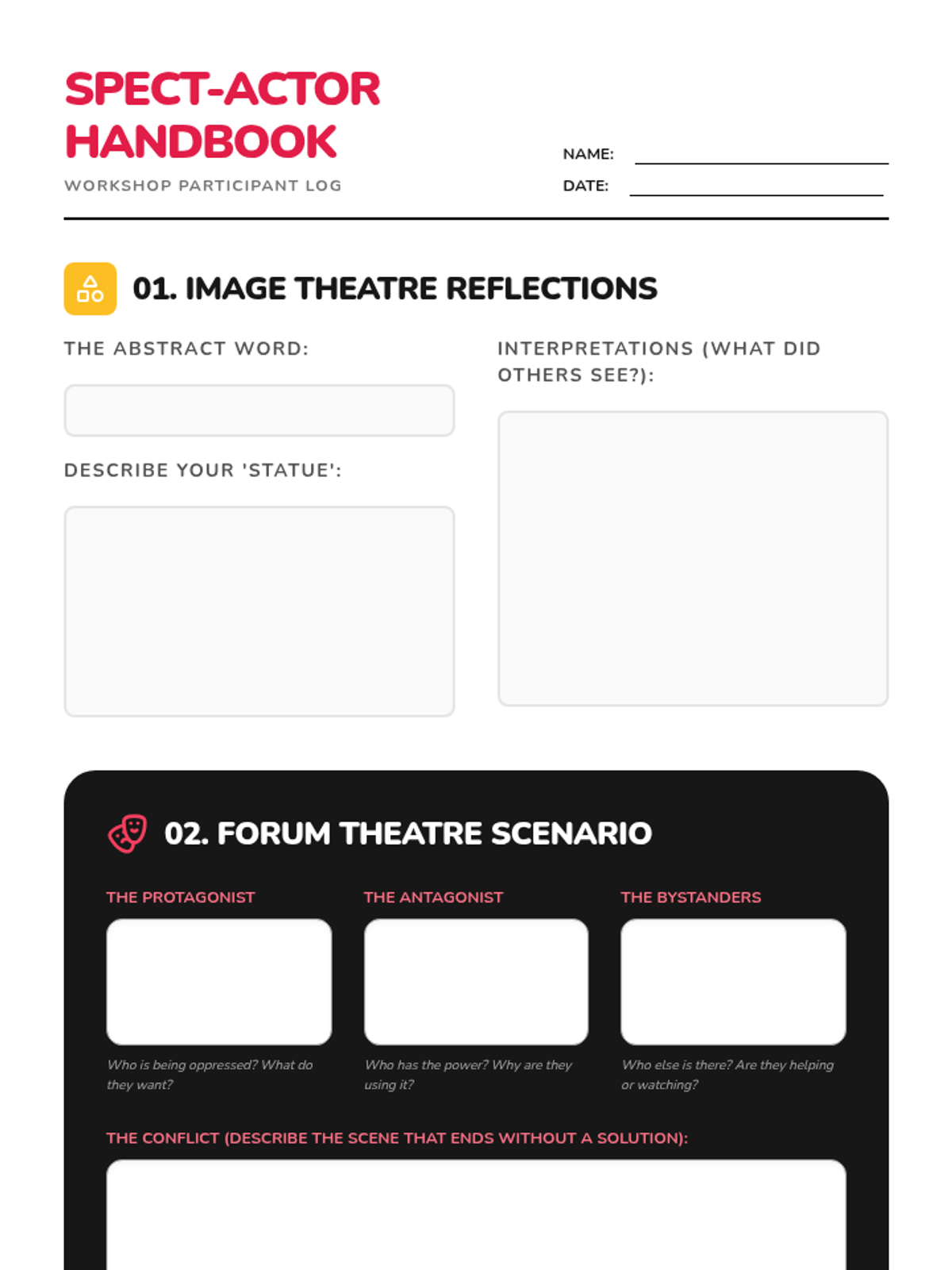
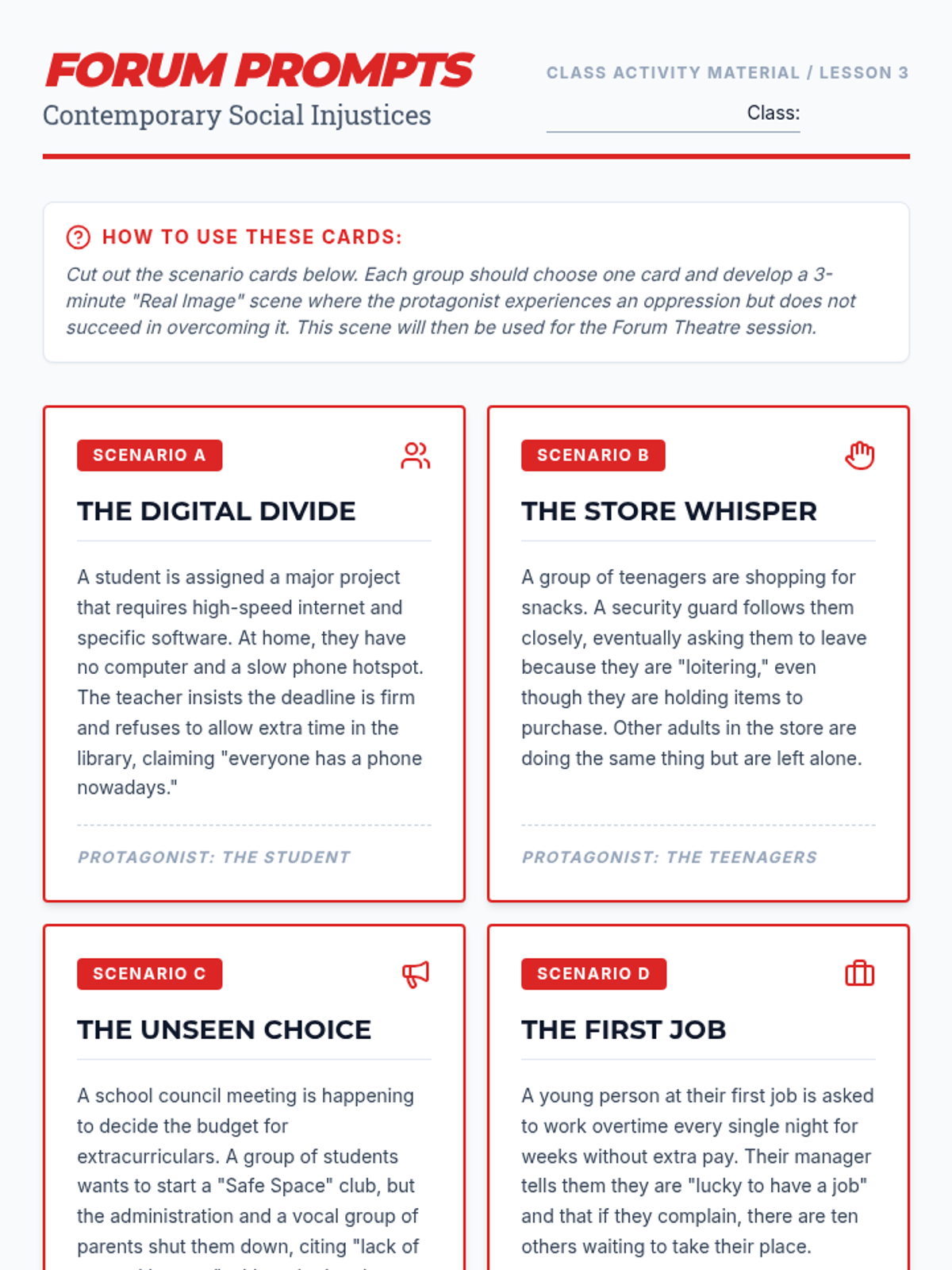
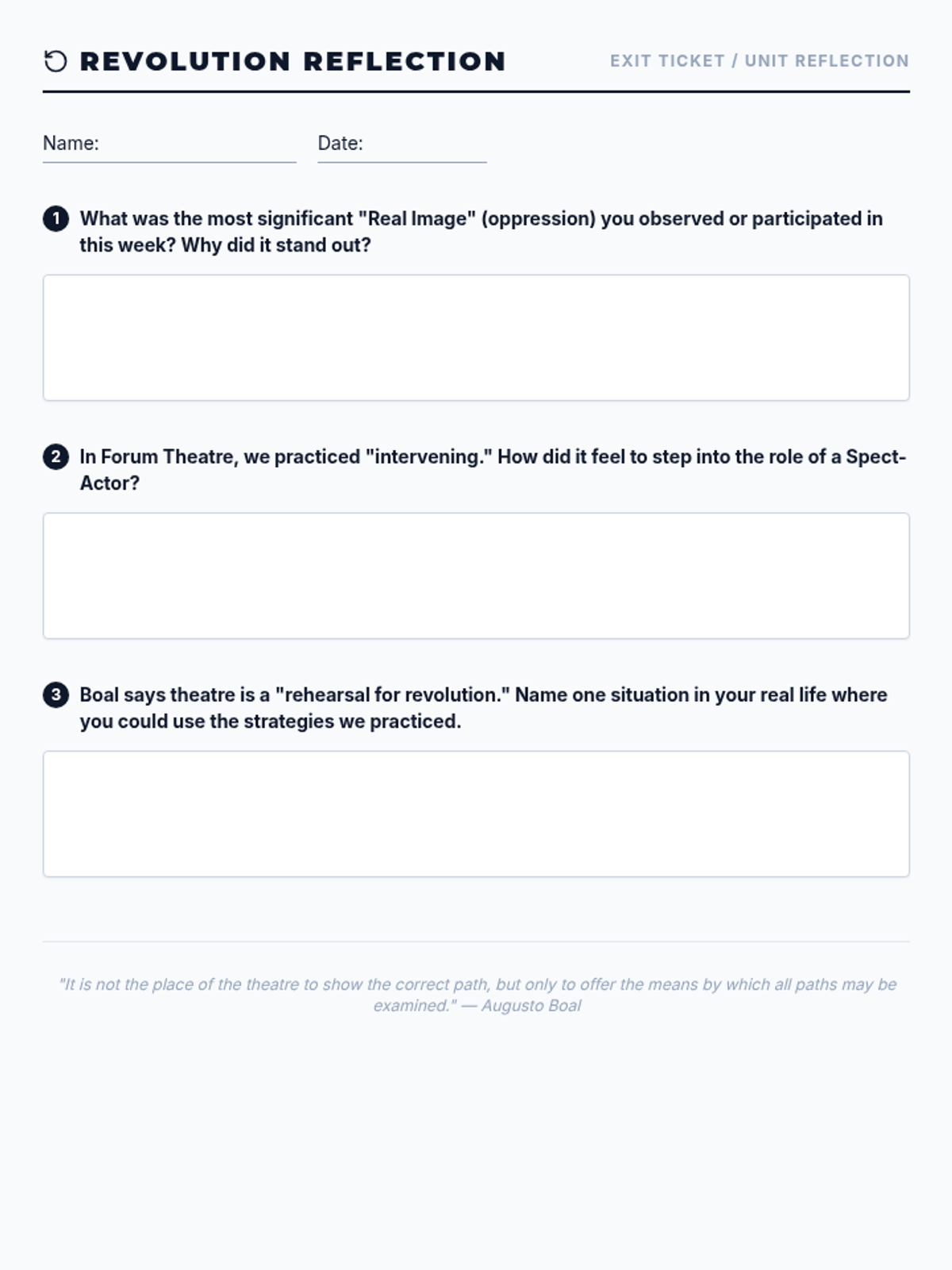
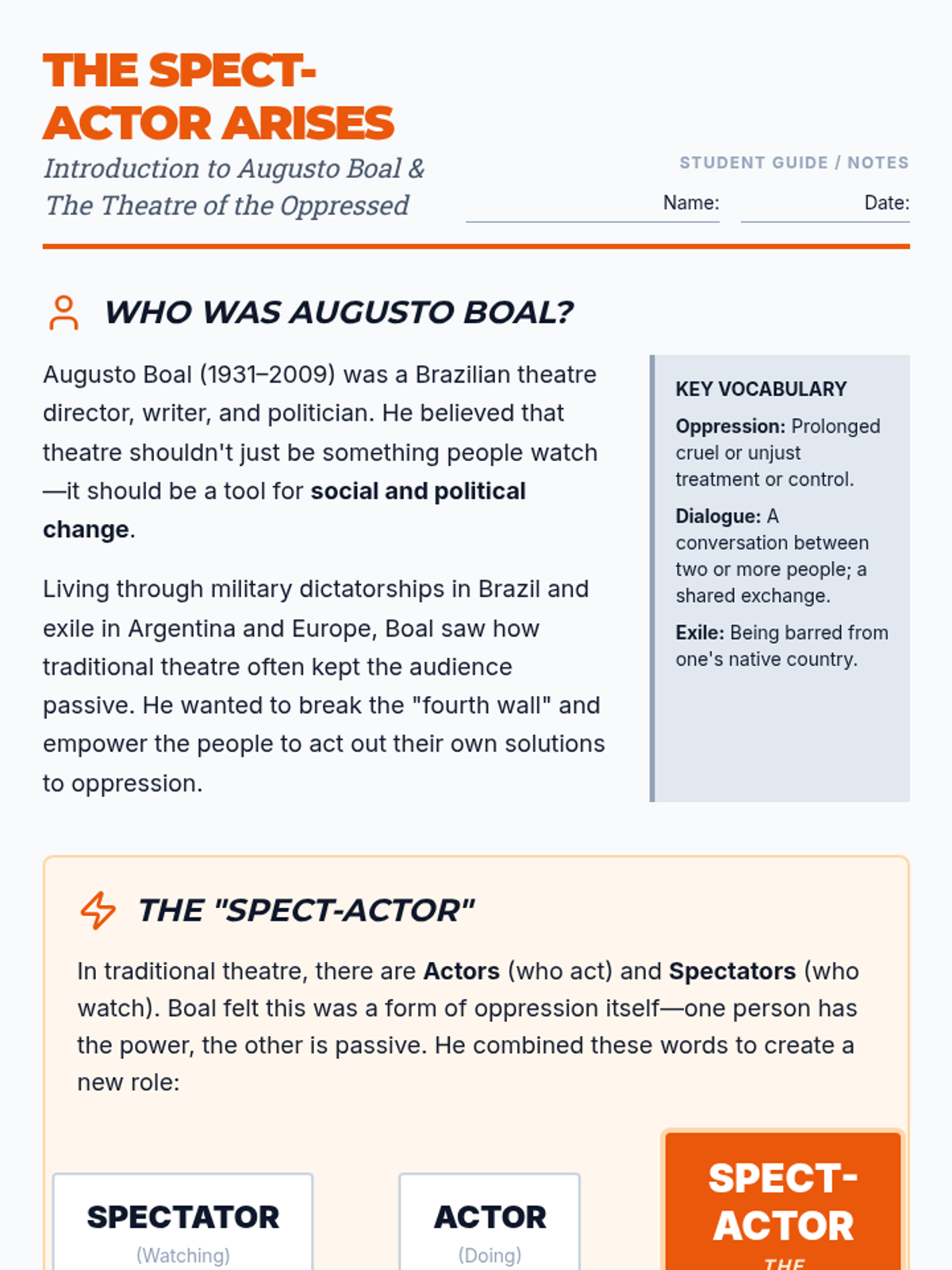
An exploration of Augusto Boal's Theatre of the Oppressed, covering its historical roots in Brazil, key techniques like Forum and Image Theatre, and its ongoing role in global social justice movements.
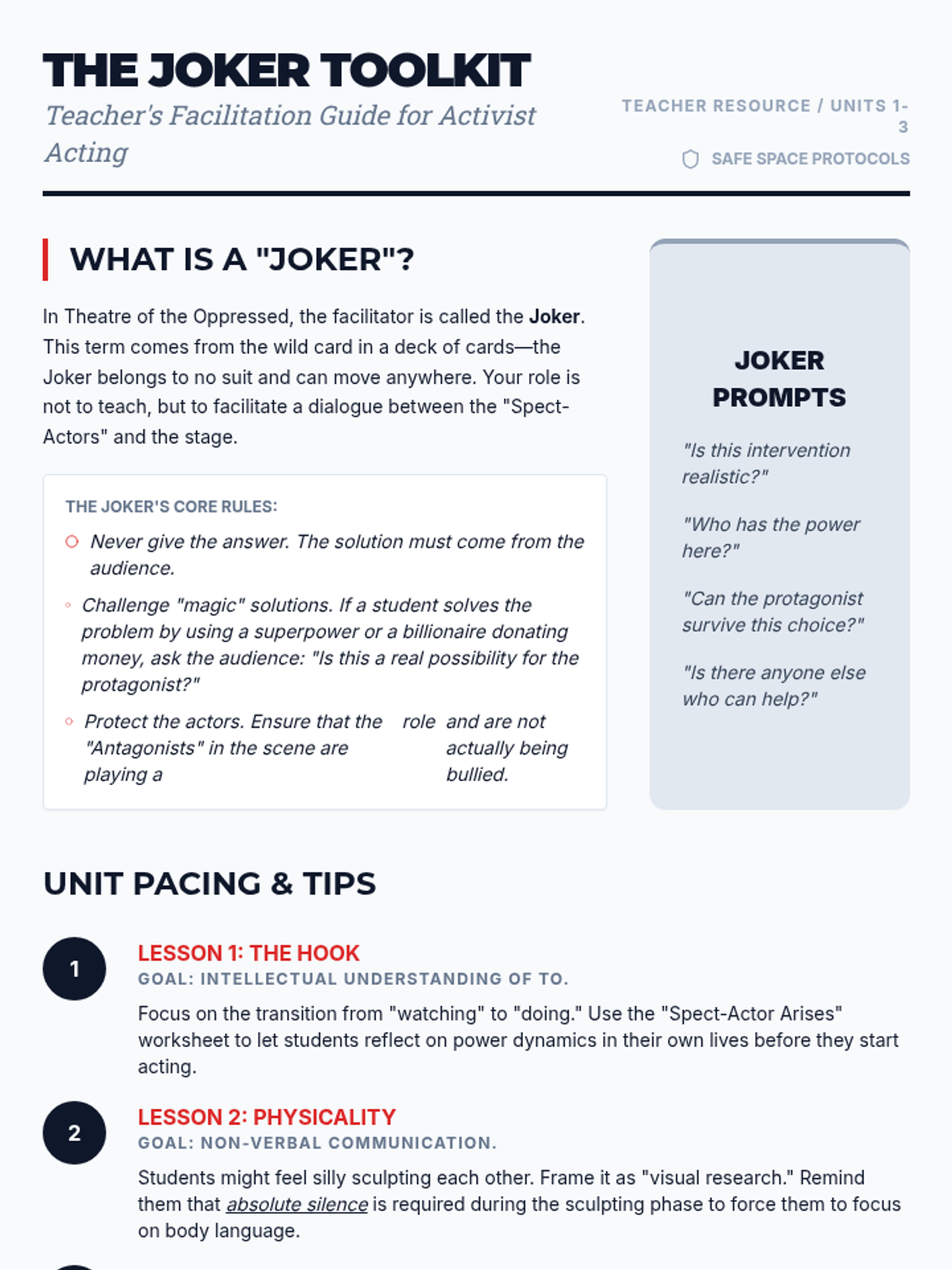
Mastering Forum Theatre, the role of the Joker, and applying these techniques to solve real-world social problems.
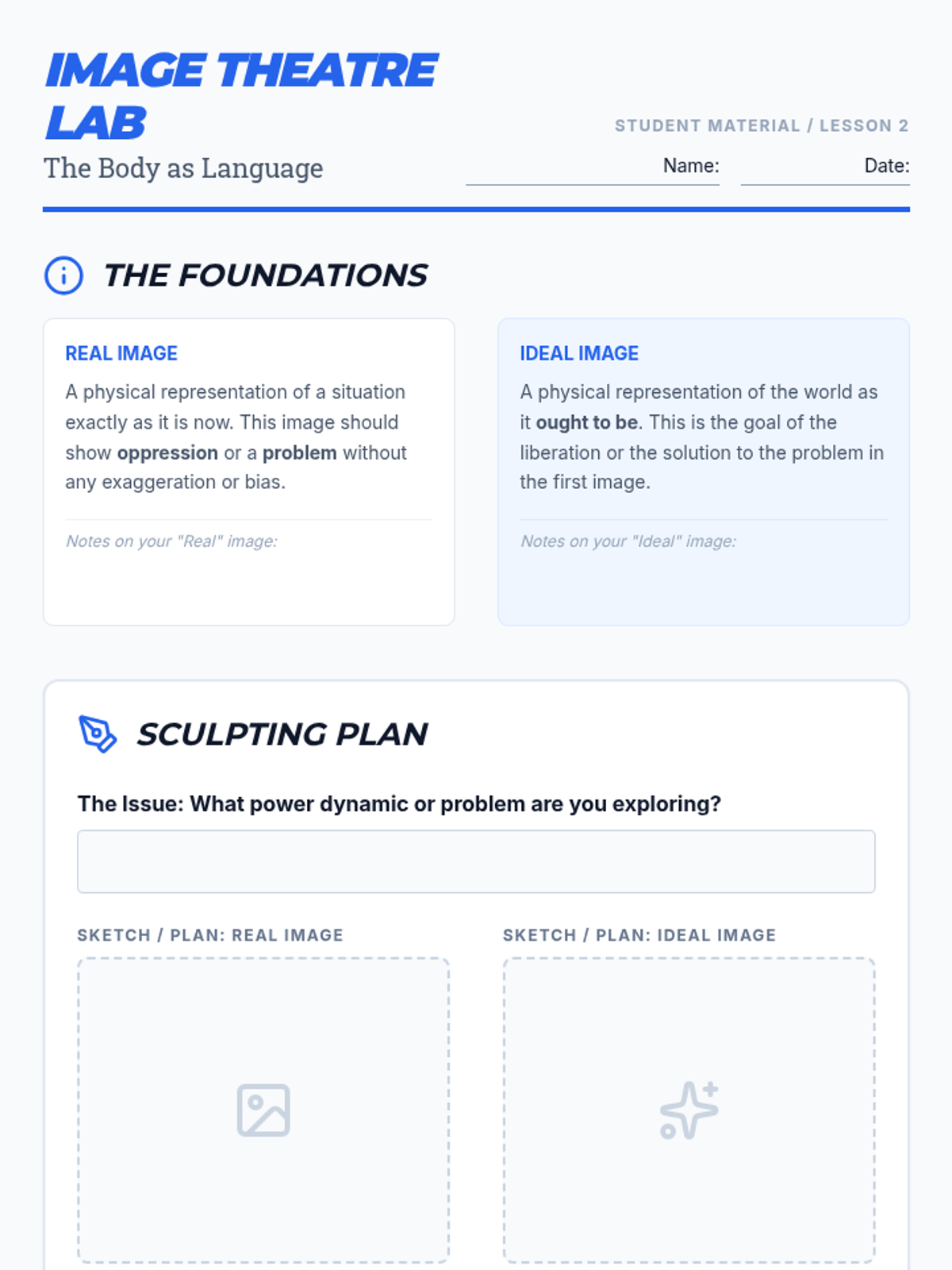
Deep dive into Image Theatre techniques, using the body as a language to explore internal and external oppressions.
An introduction to Augusto Boal, the origins of Theatre of the Oppressed, and the transformative concept of the 'spect-actor'.
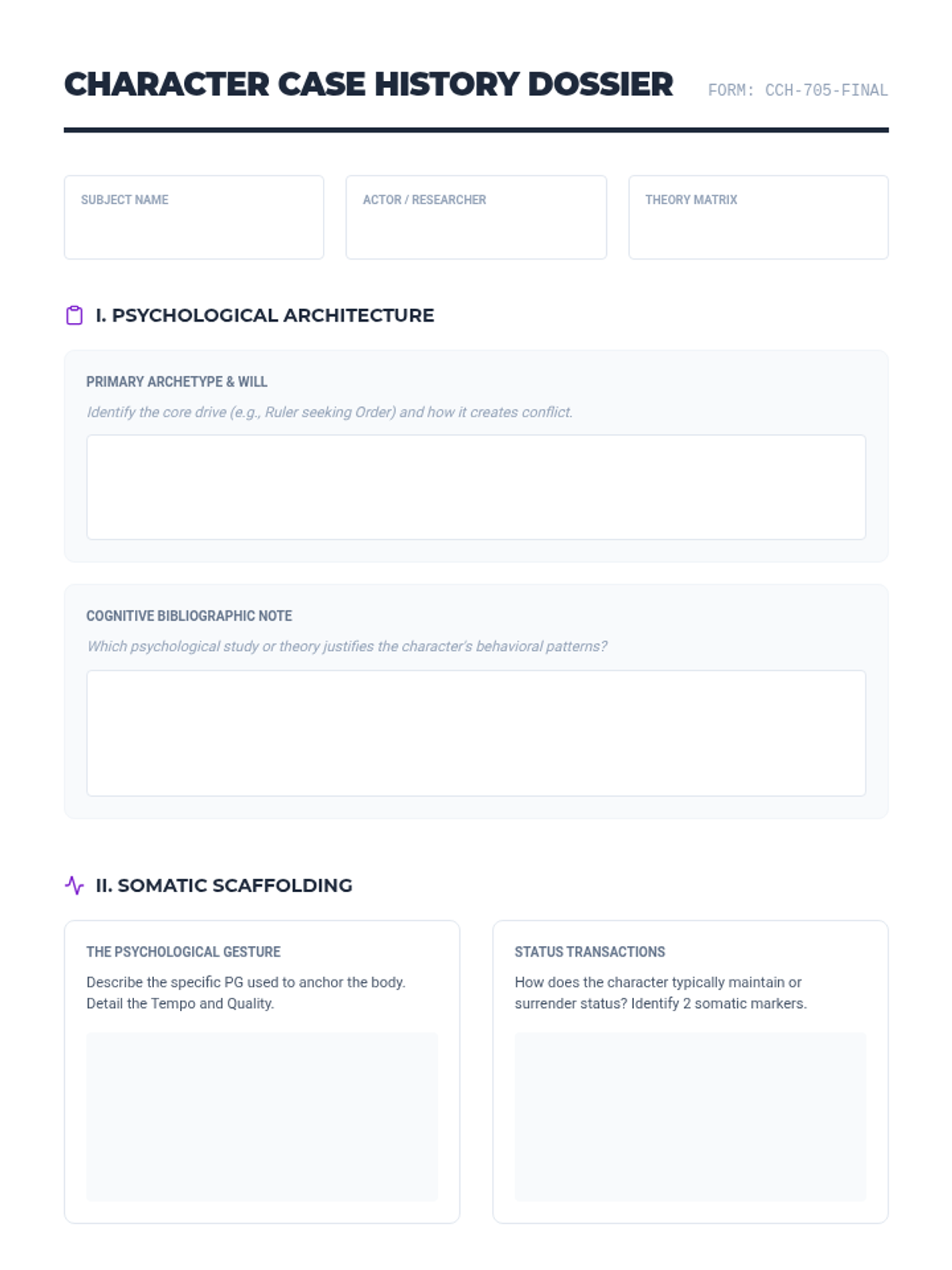
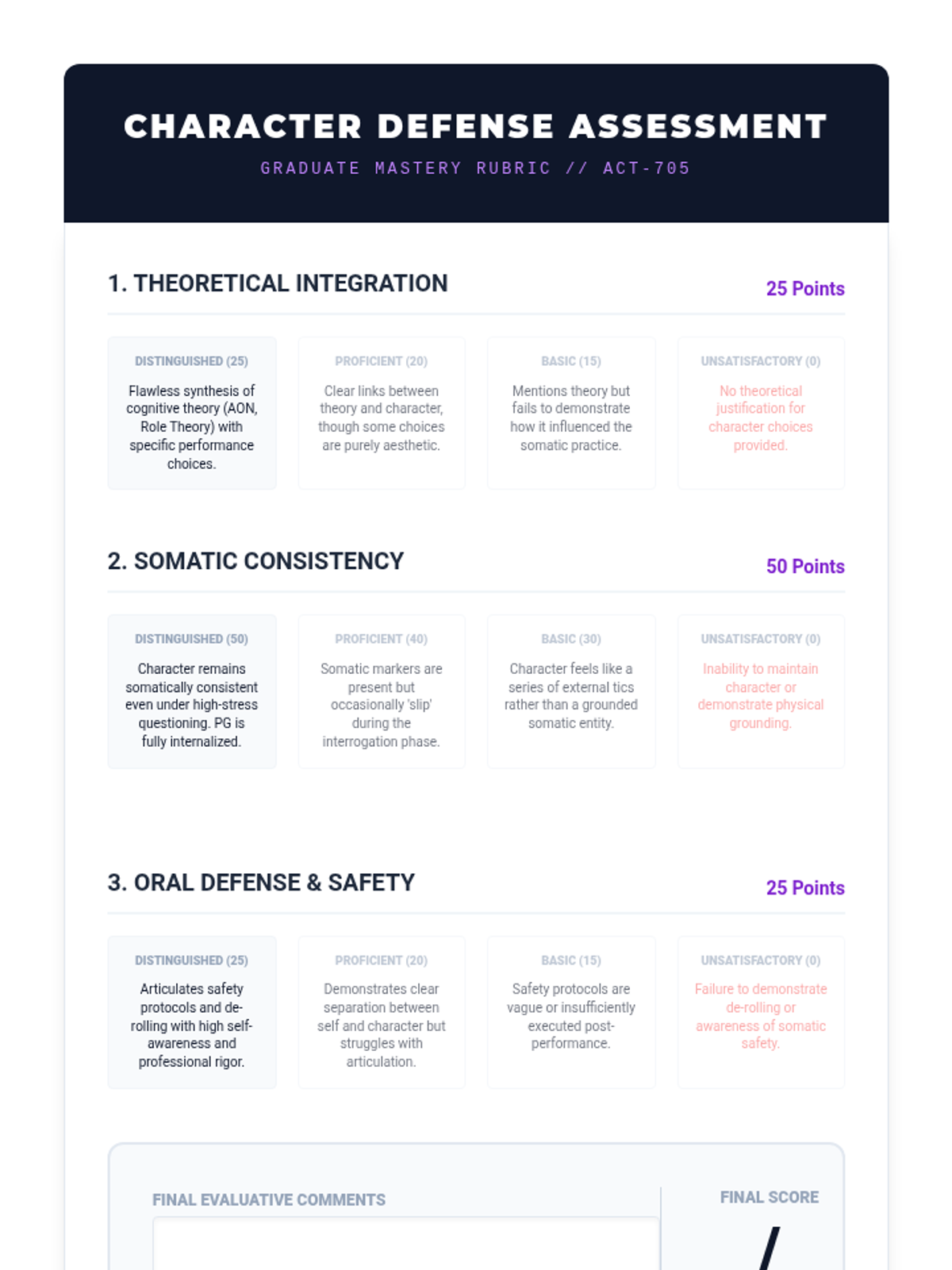
A culminating presentation and oral defense of a constructed character persona, supported by a psychological dossier.
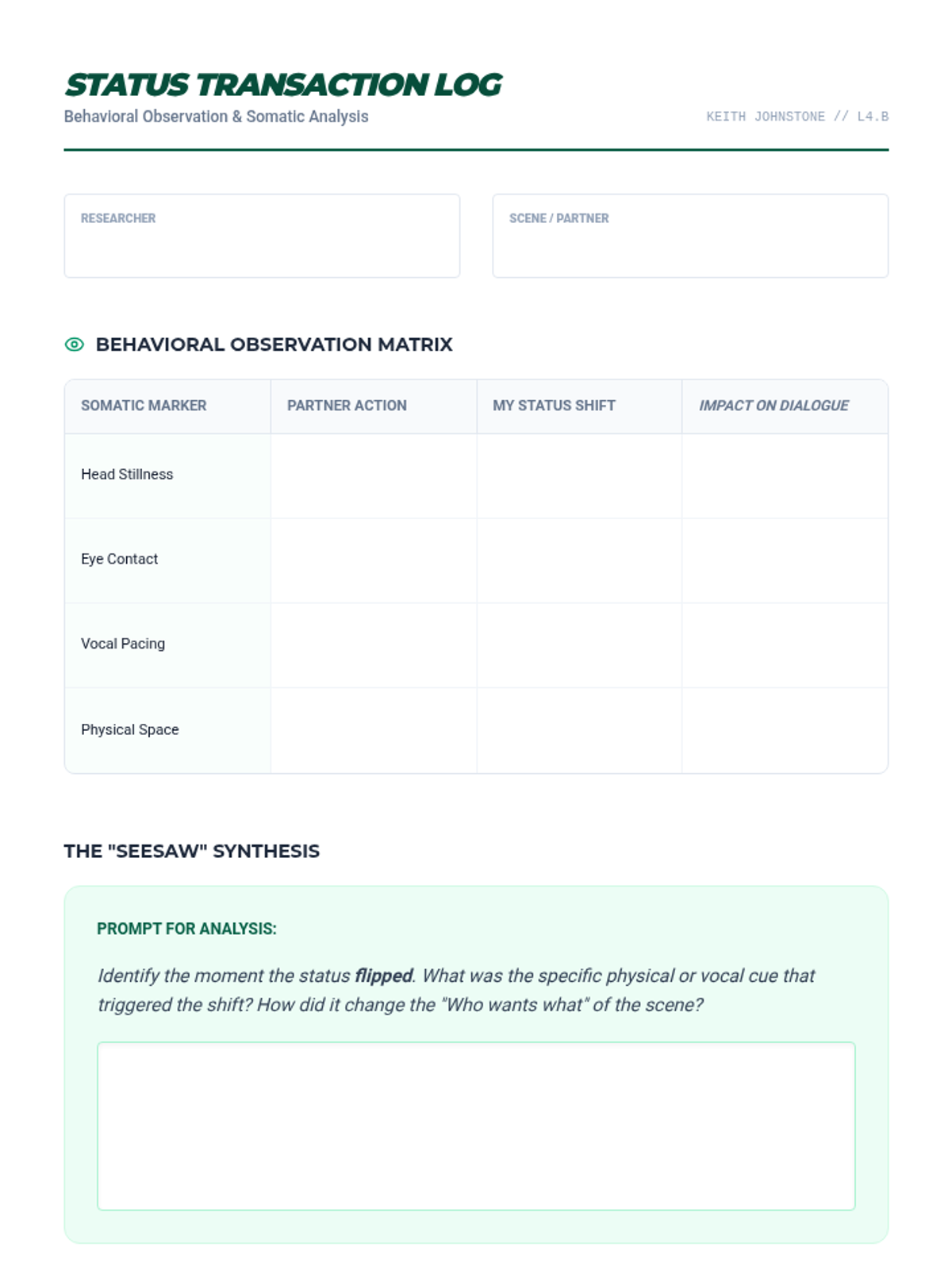
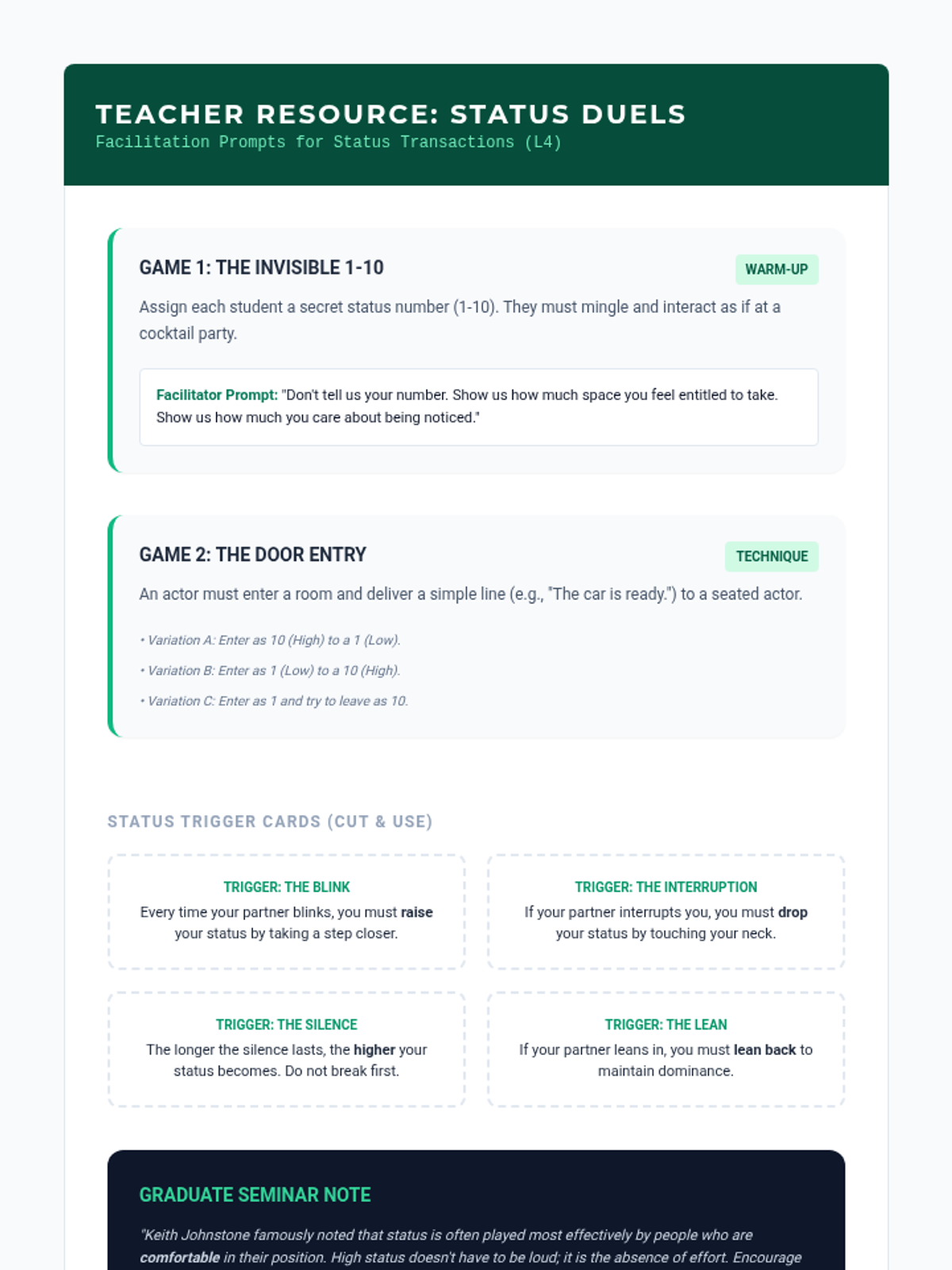
Explores Keith Johnstone’s status transaction theory to manipulate power dynamics through subtle vocal and physical cues in performance.
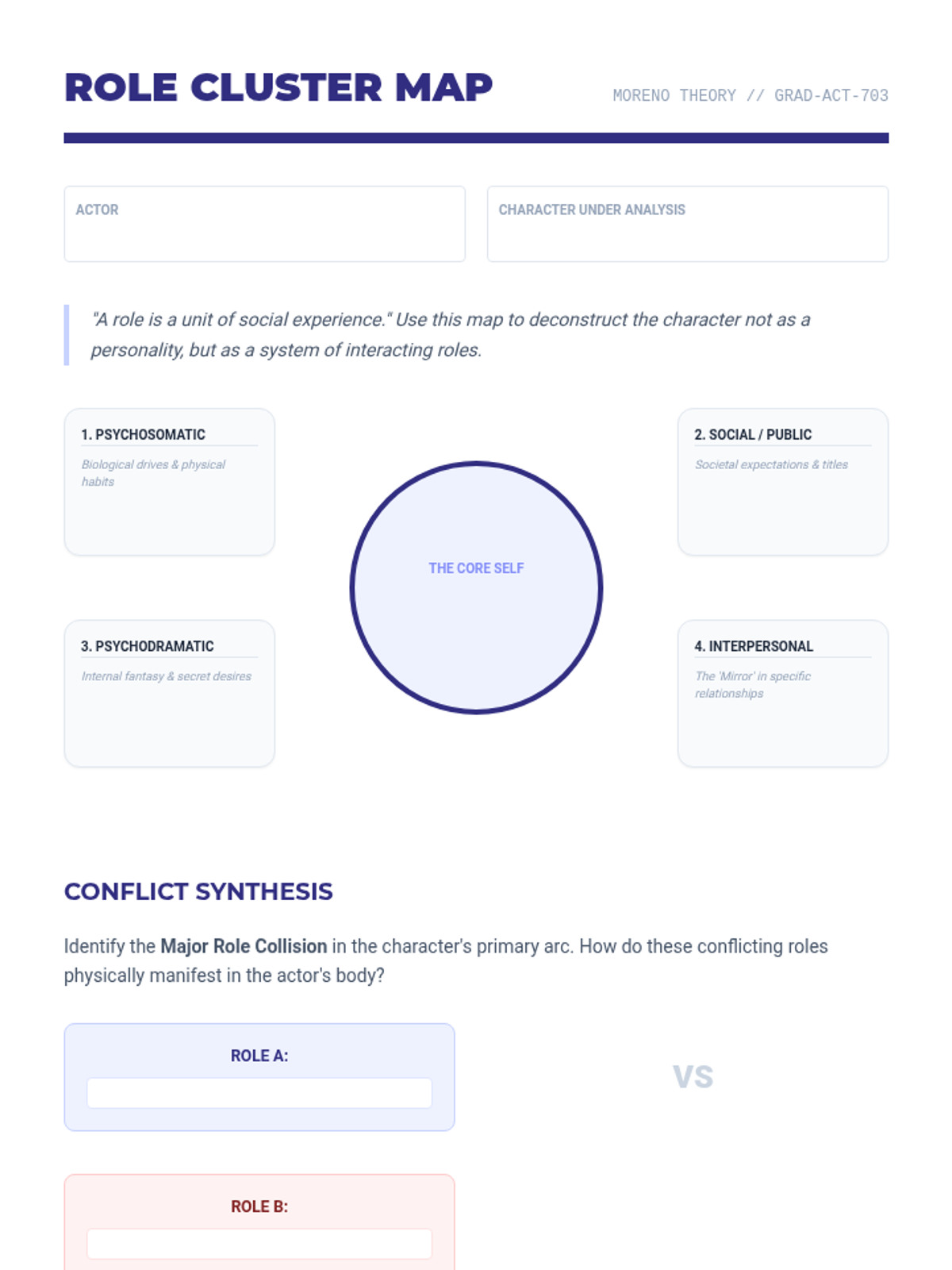
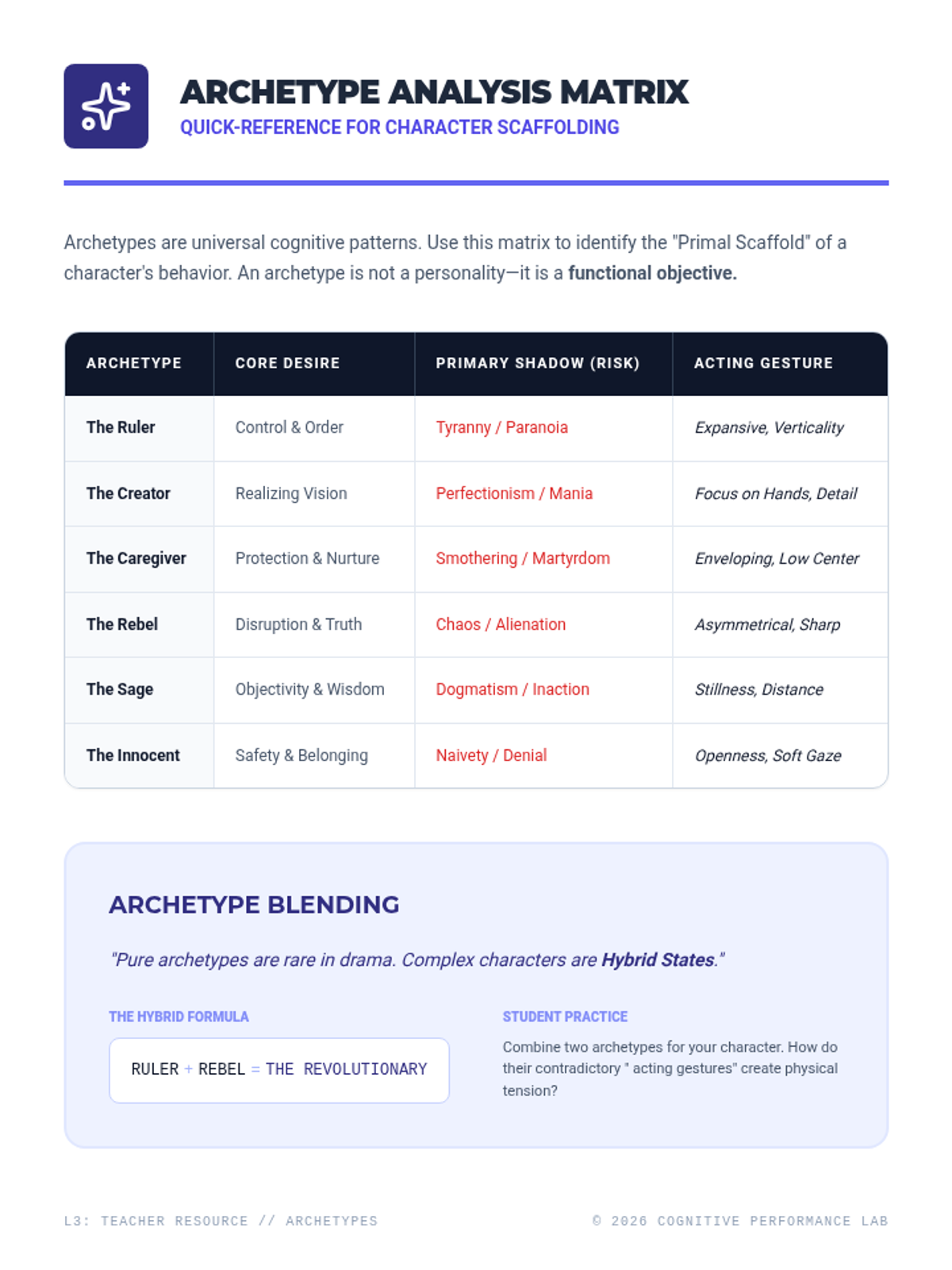
Applies Jacob Moreno’s Role Theory to analyze social archetypes and interpersonal dynamics through character deconstruction.
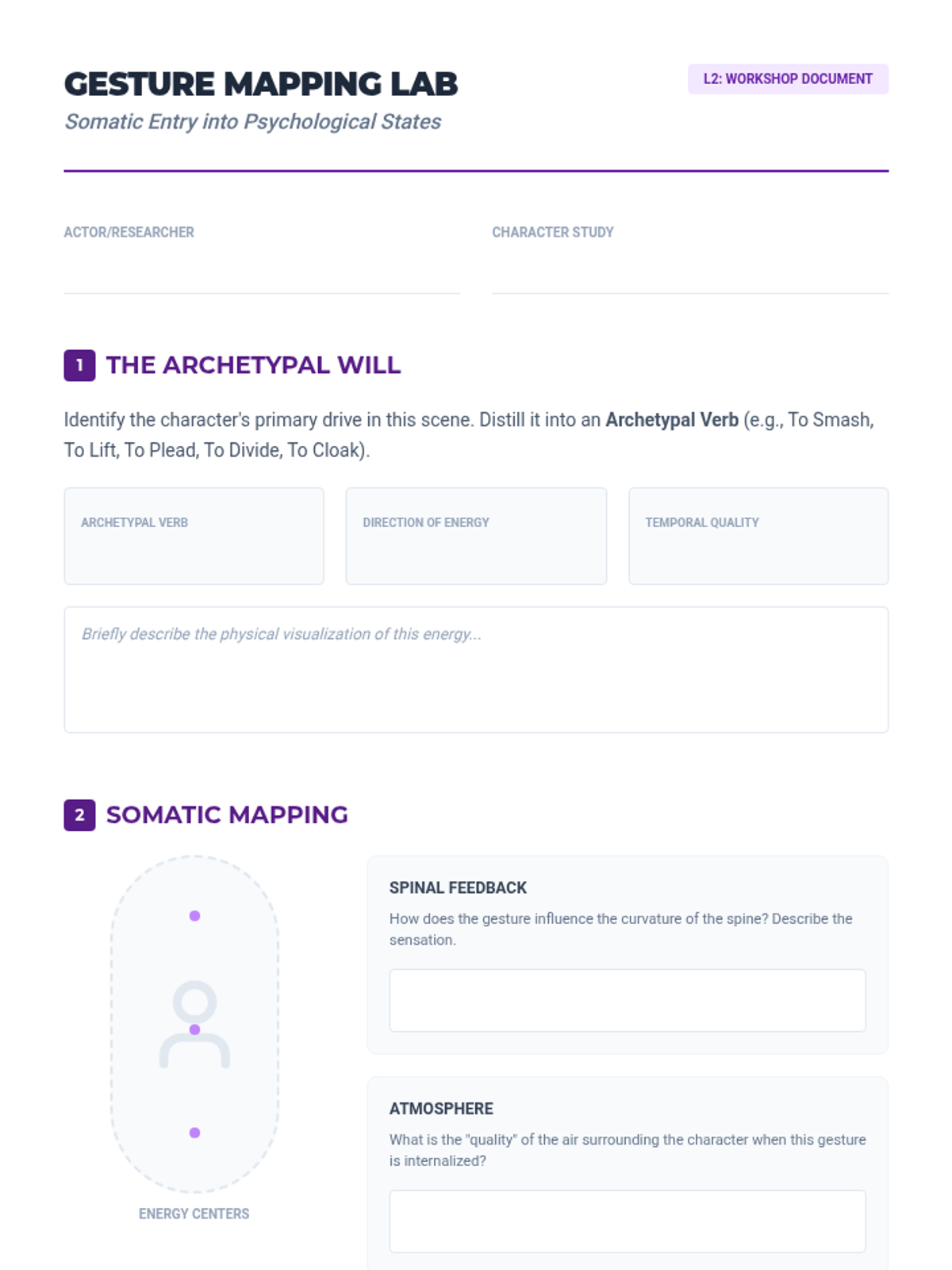
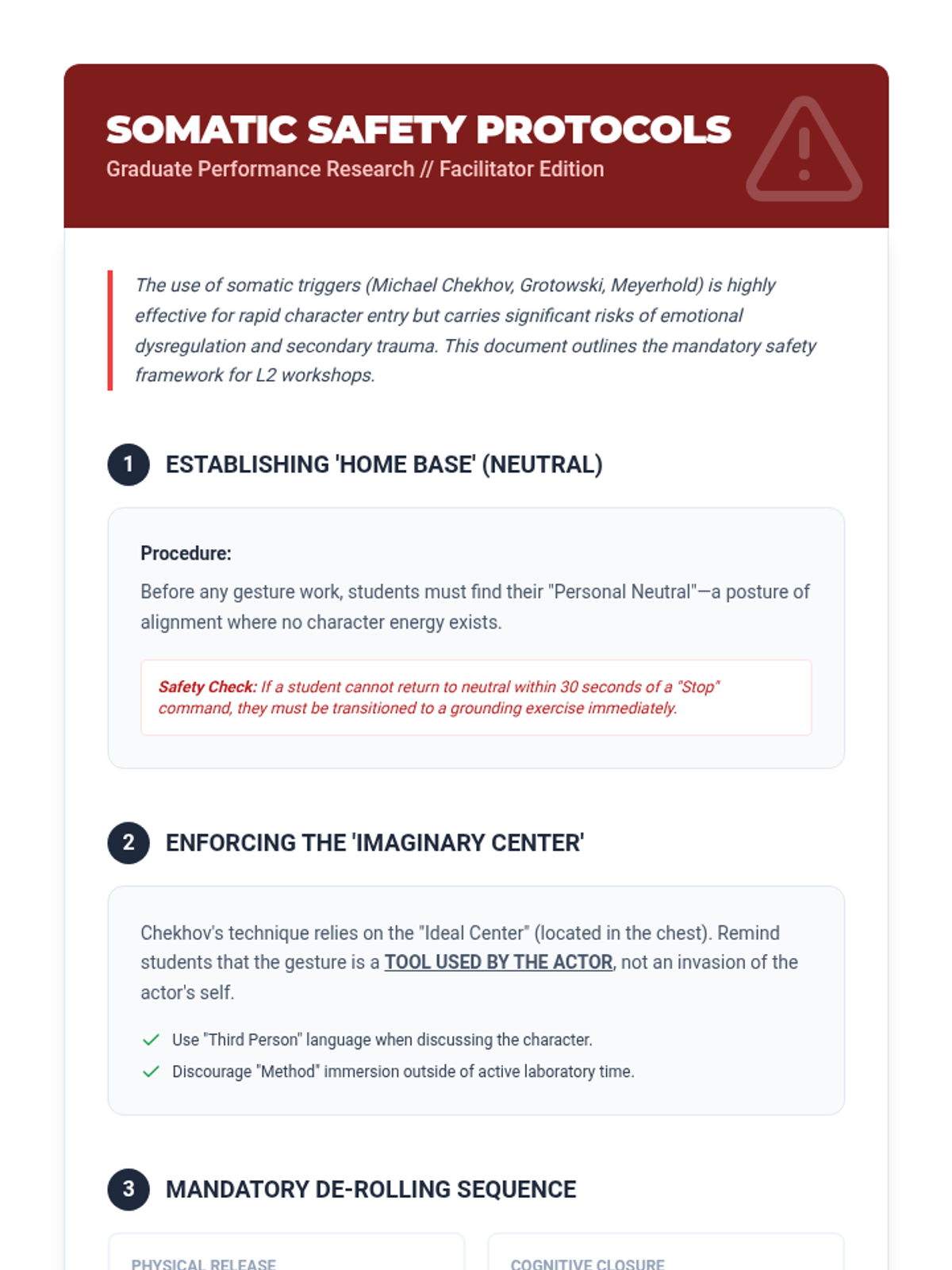
Introduces Michael Chekhov’s 'Psychological Gesture' as a somatic entry point for character development, focusing on emotional regulation and safety.
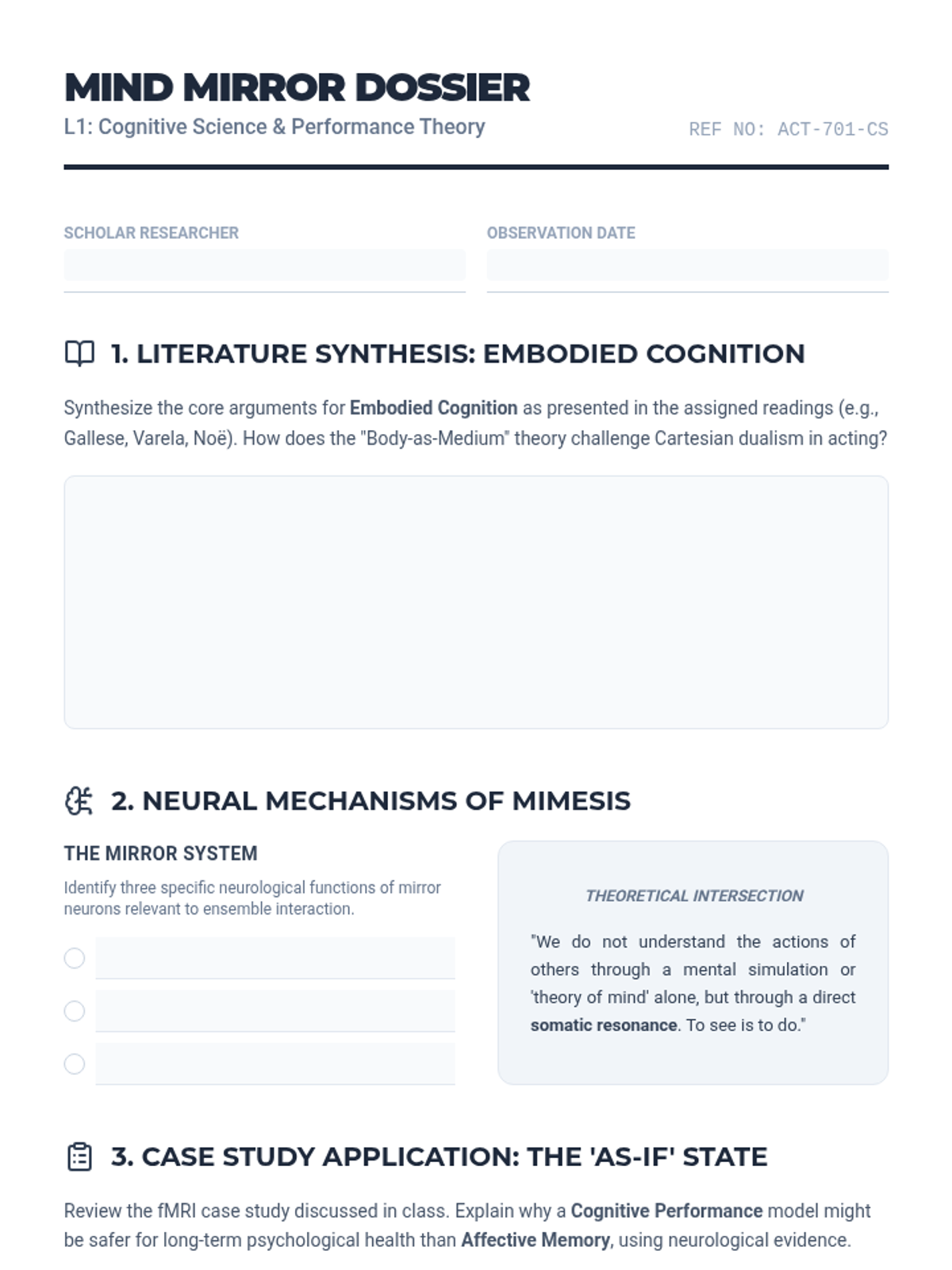
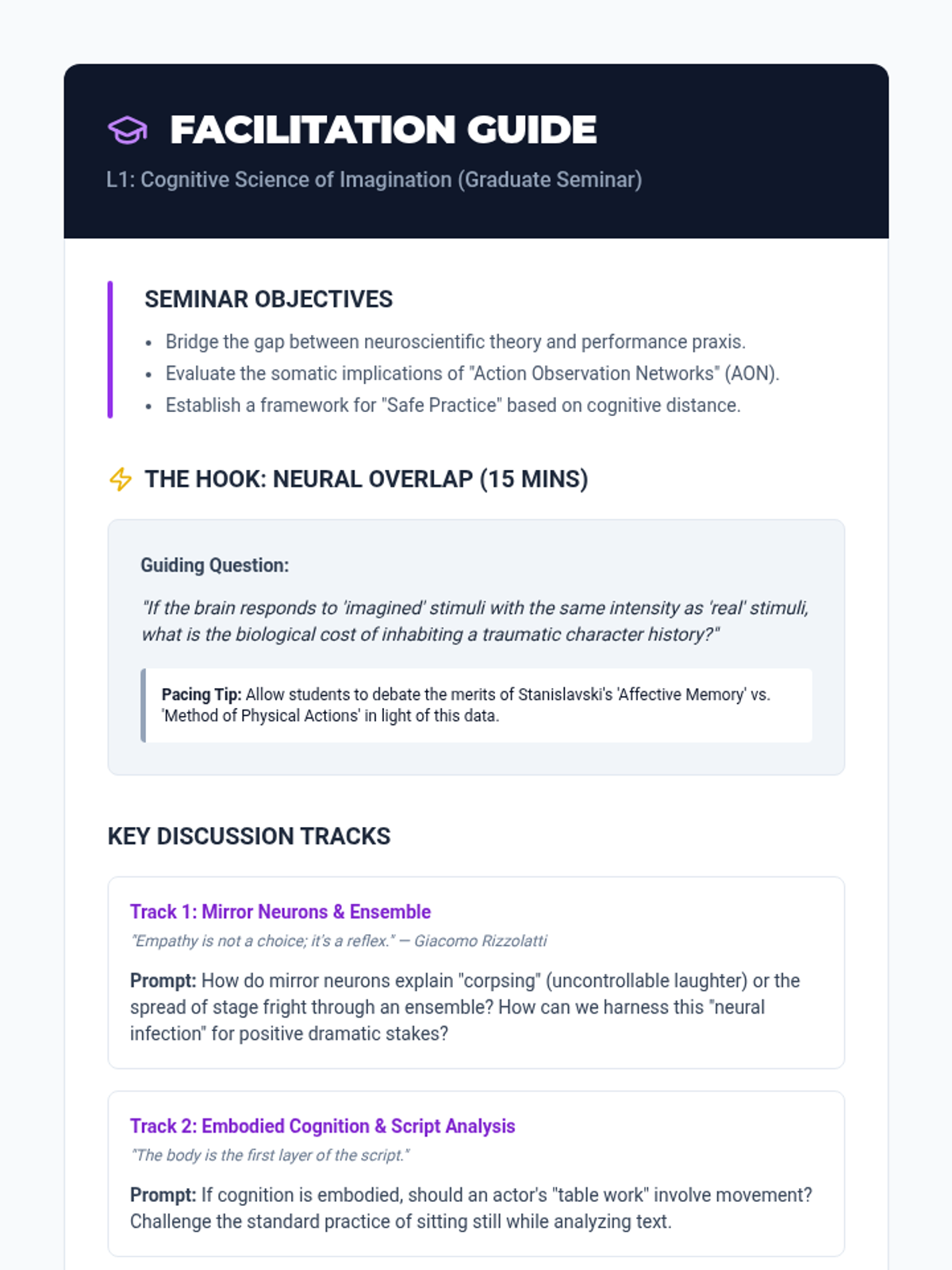
Explores the biological basis of empathy and role-play through embodied cognition and mirror neurons, contrasting traditional 'method' acting with neuroscientific findings.
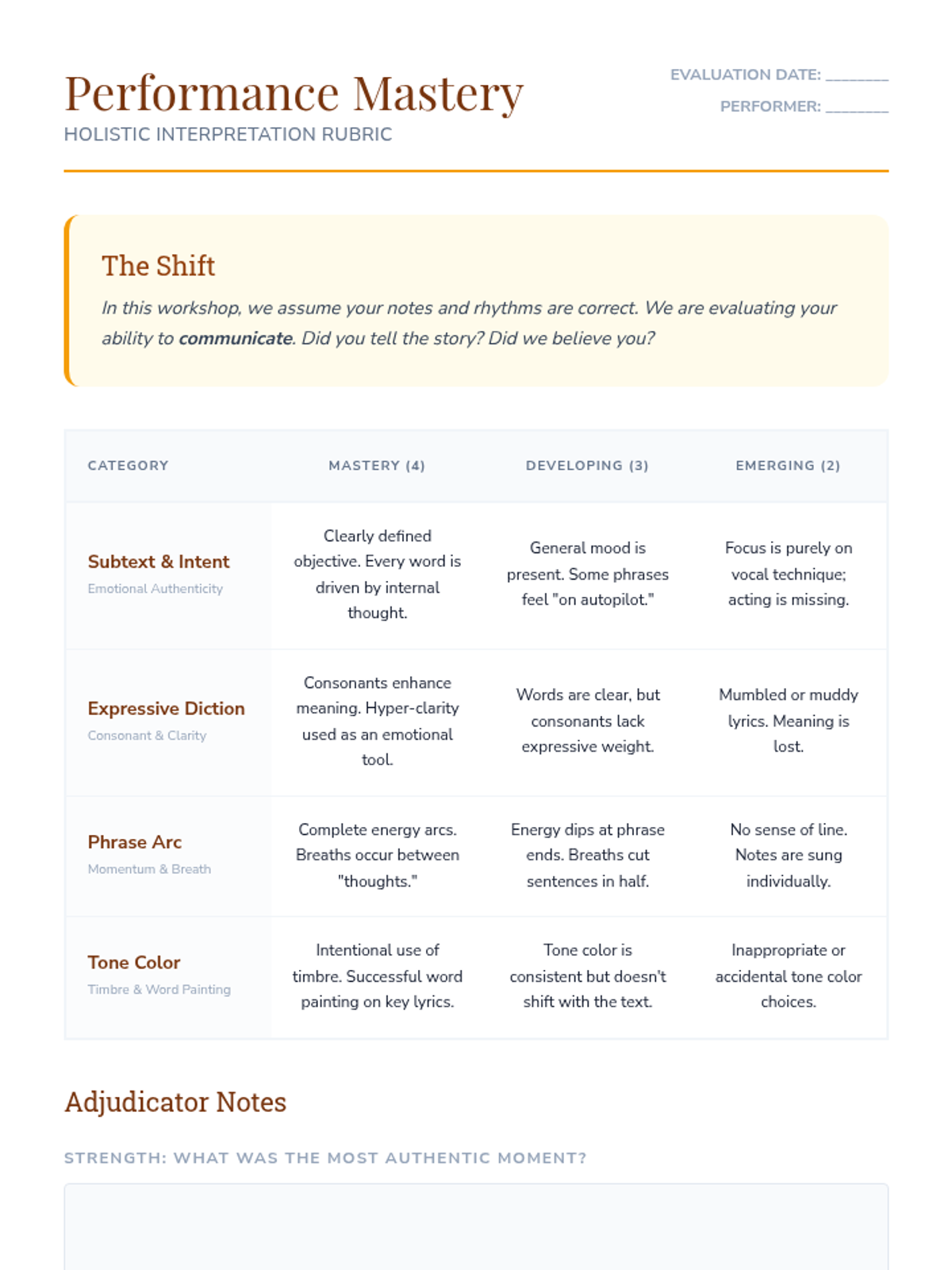
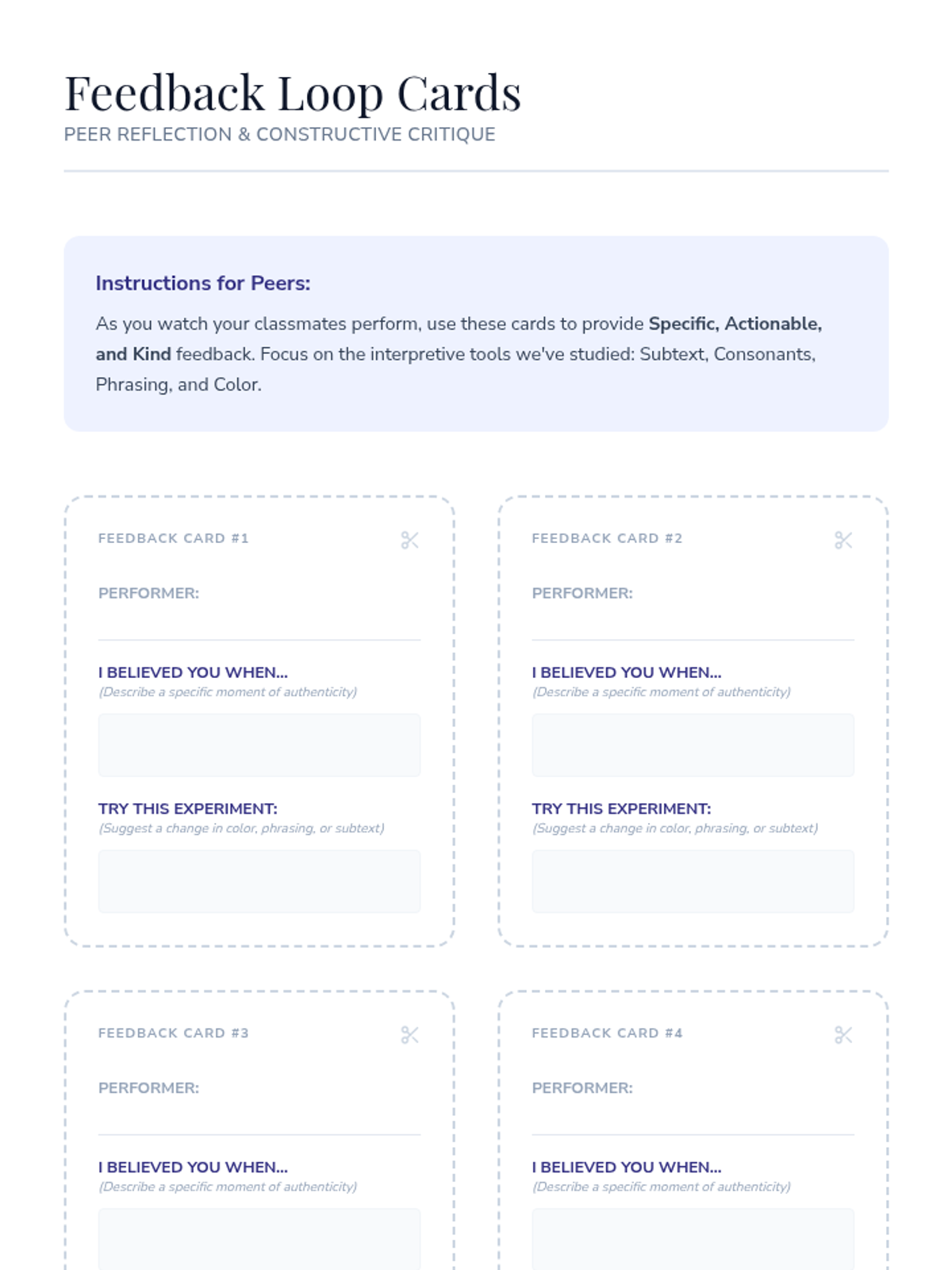
A masterclass-style workshop where students synthesize their skills to perform for peers, focusing on emotional communication and authenticity.
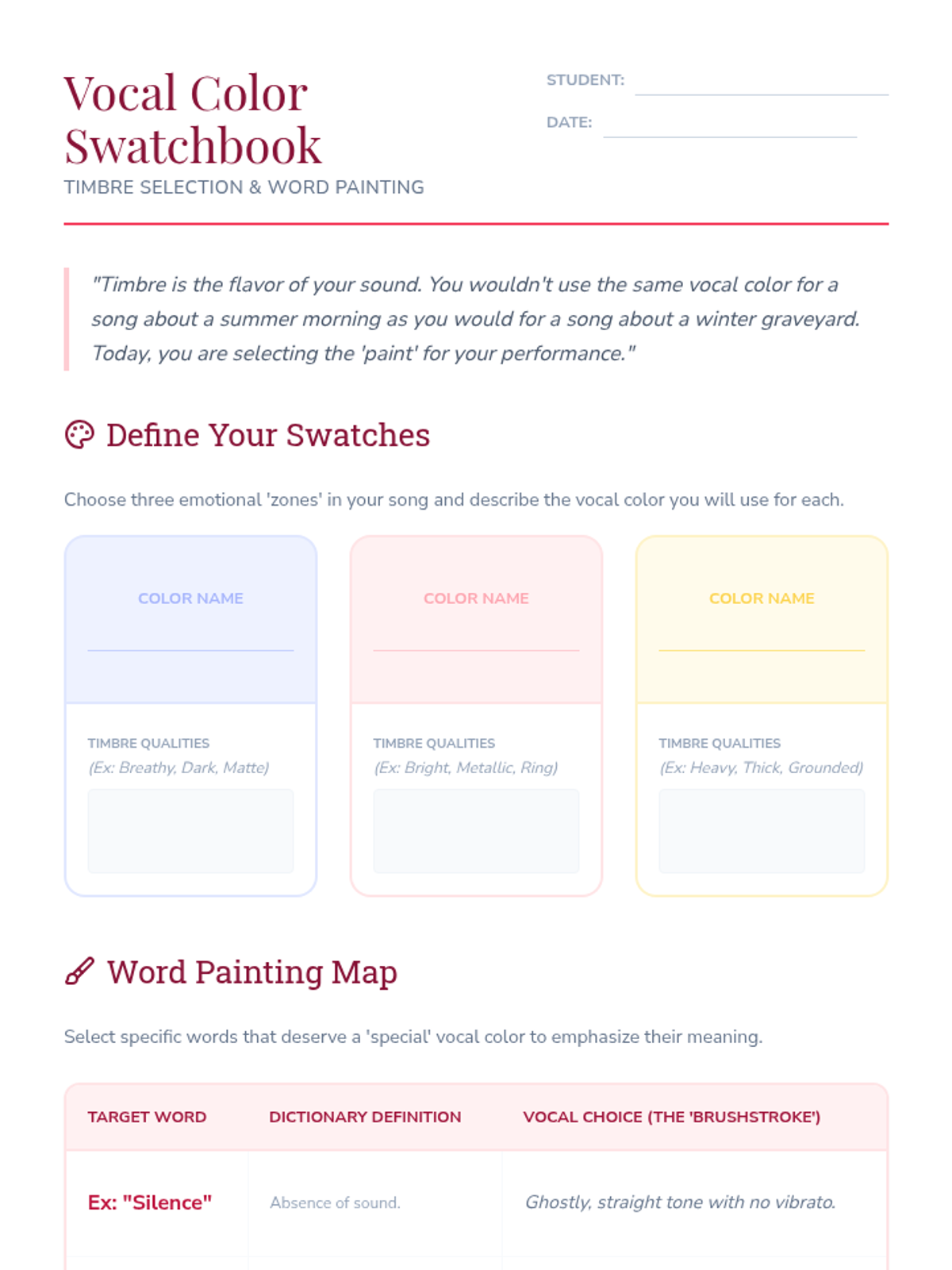
Exploration of vocal timbre and 'word painting' techniques, where students choose specific tone colors to reflect the meaning of key words in their repertoire.
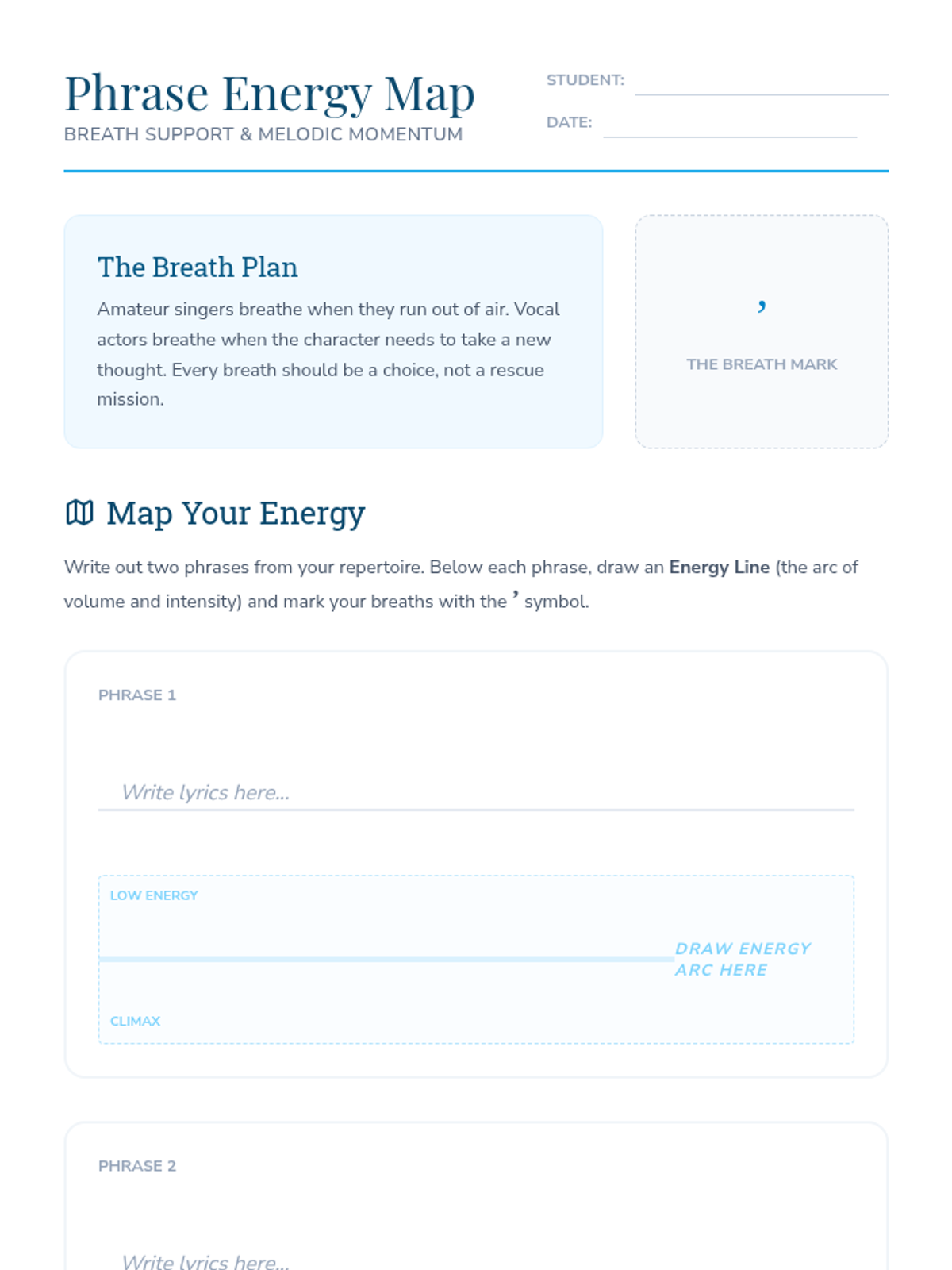
Students map the energy arcs of musical phrases, learning to use breath support to sustain intensity and connect musical lines to grammatical thoughts.
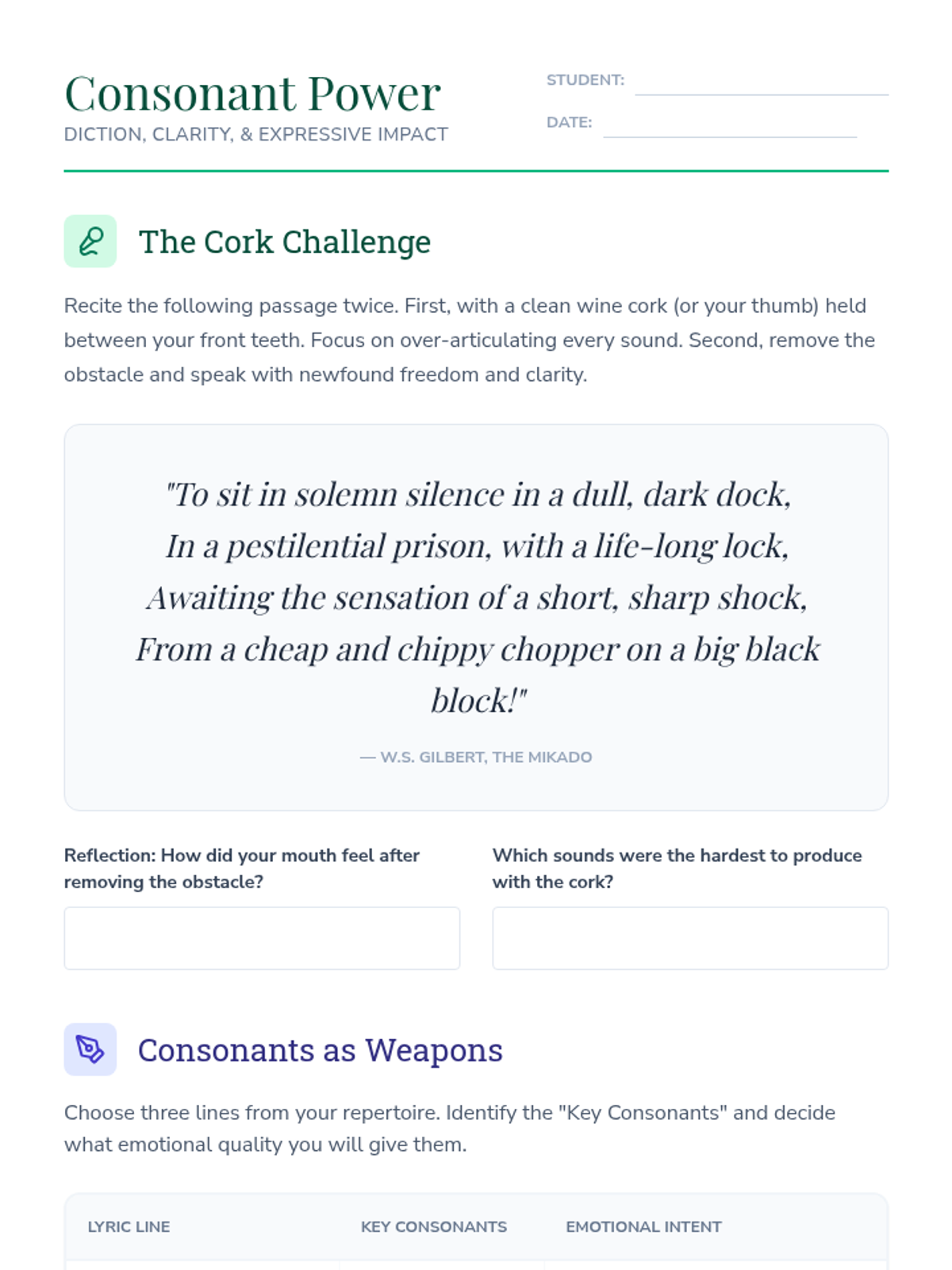
A technical workshop focused on the expressive power of consonants, using articulation drills and hyper-clarity to enhance lyrical storytelling.
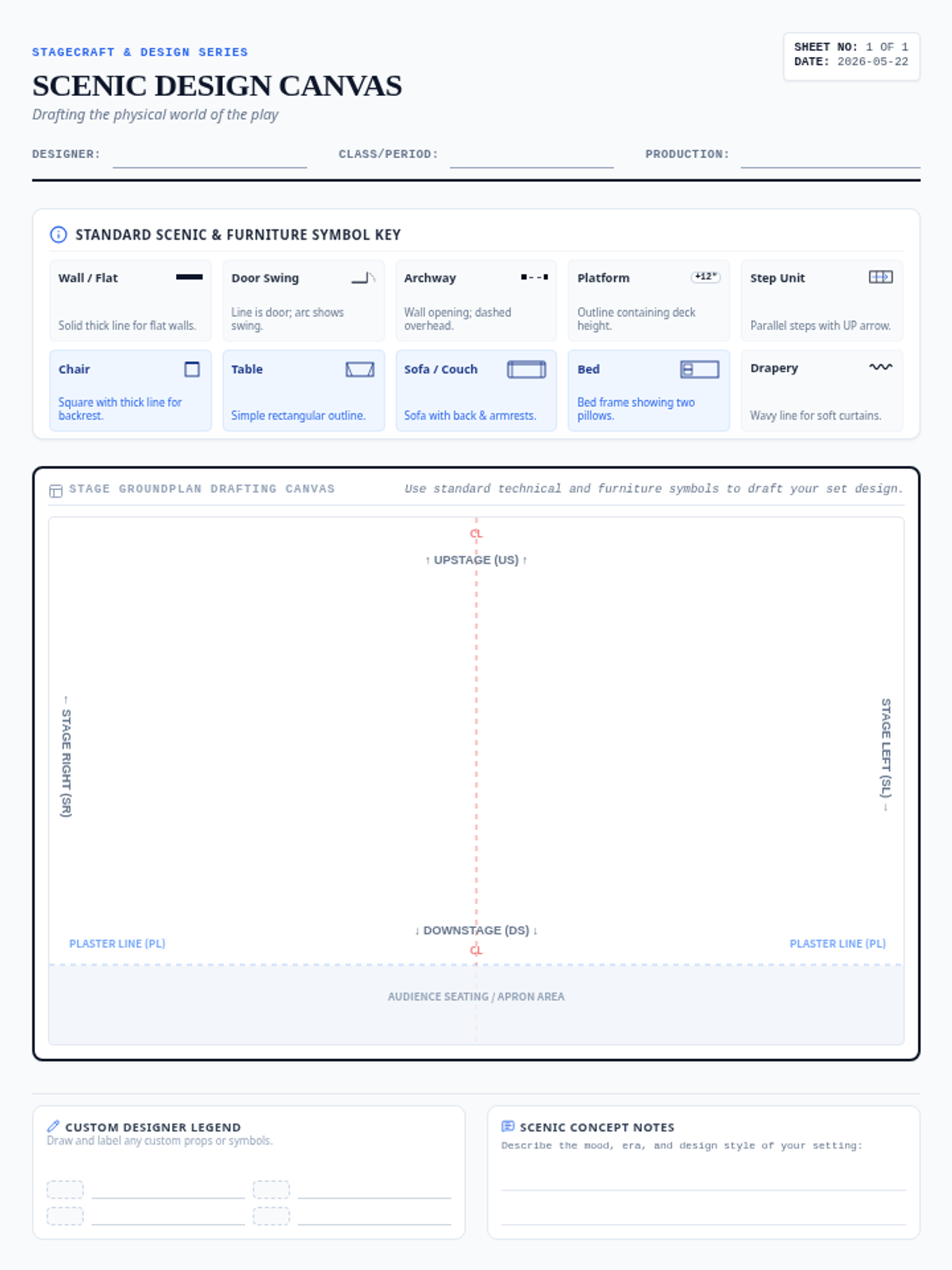
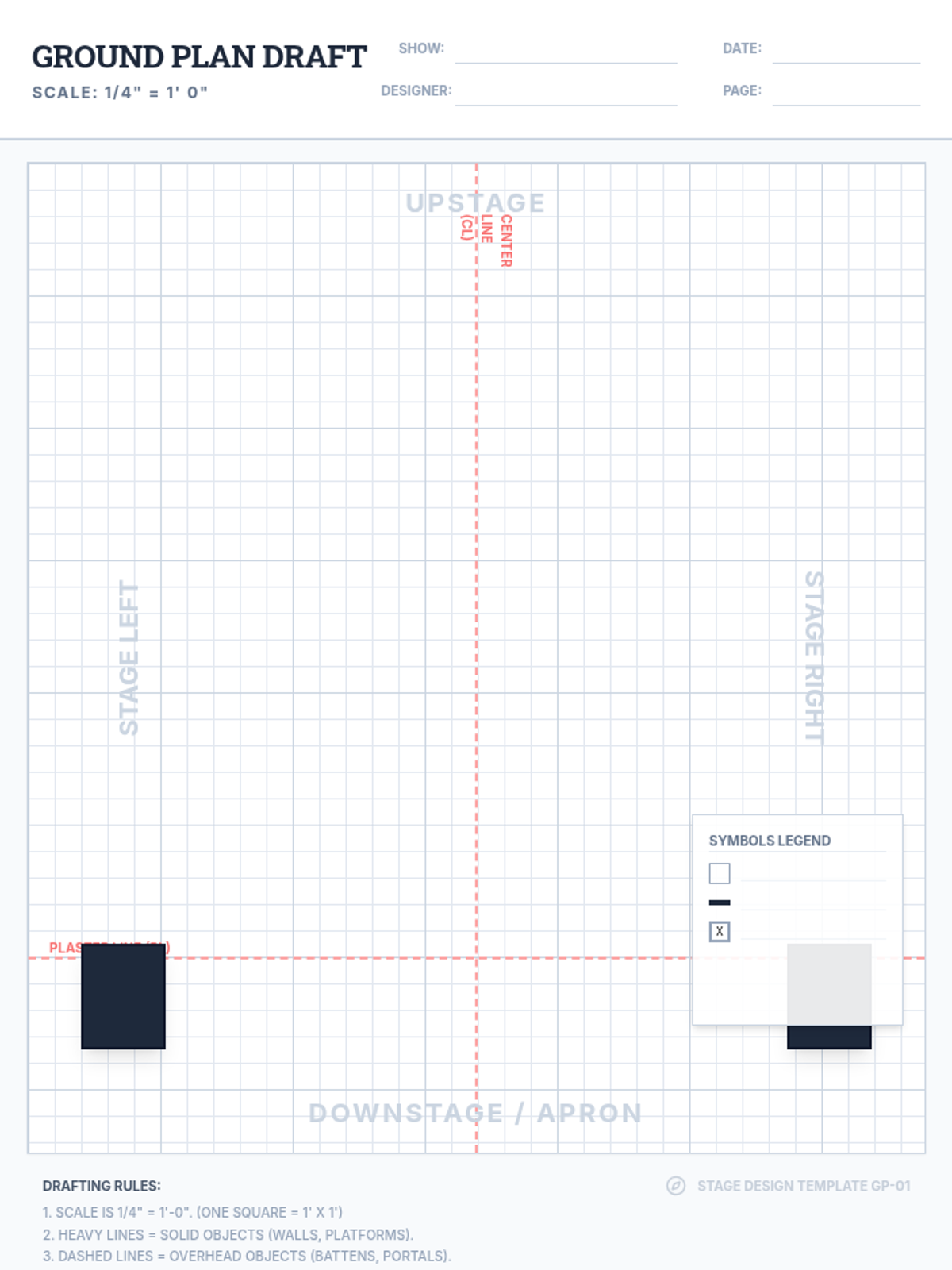
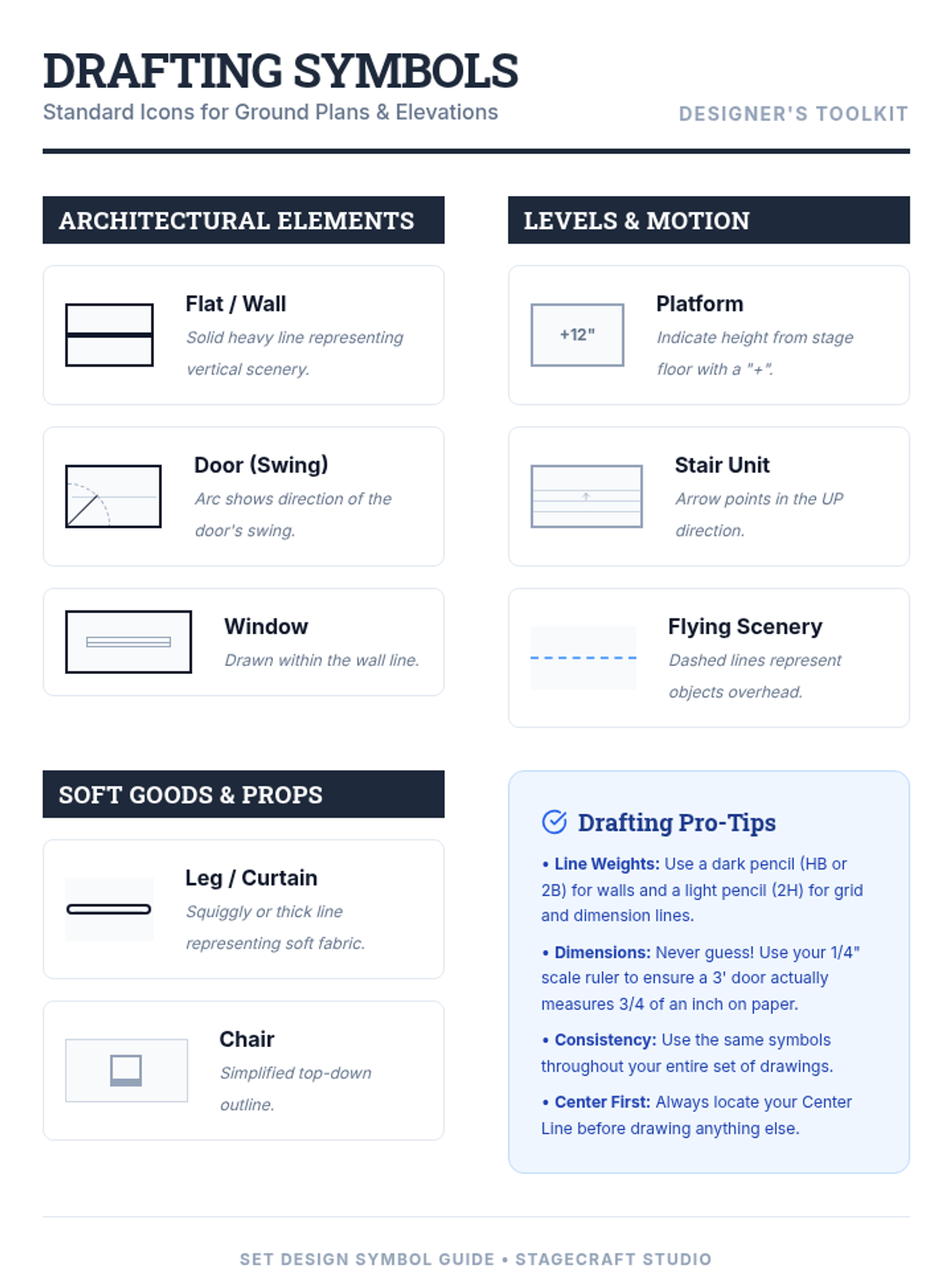
An introductory lesson on the fundamentals of scenic design, guiding students to create their own stage groundplans using industry-standard drafting symbols.
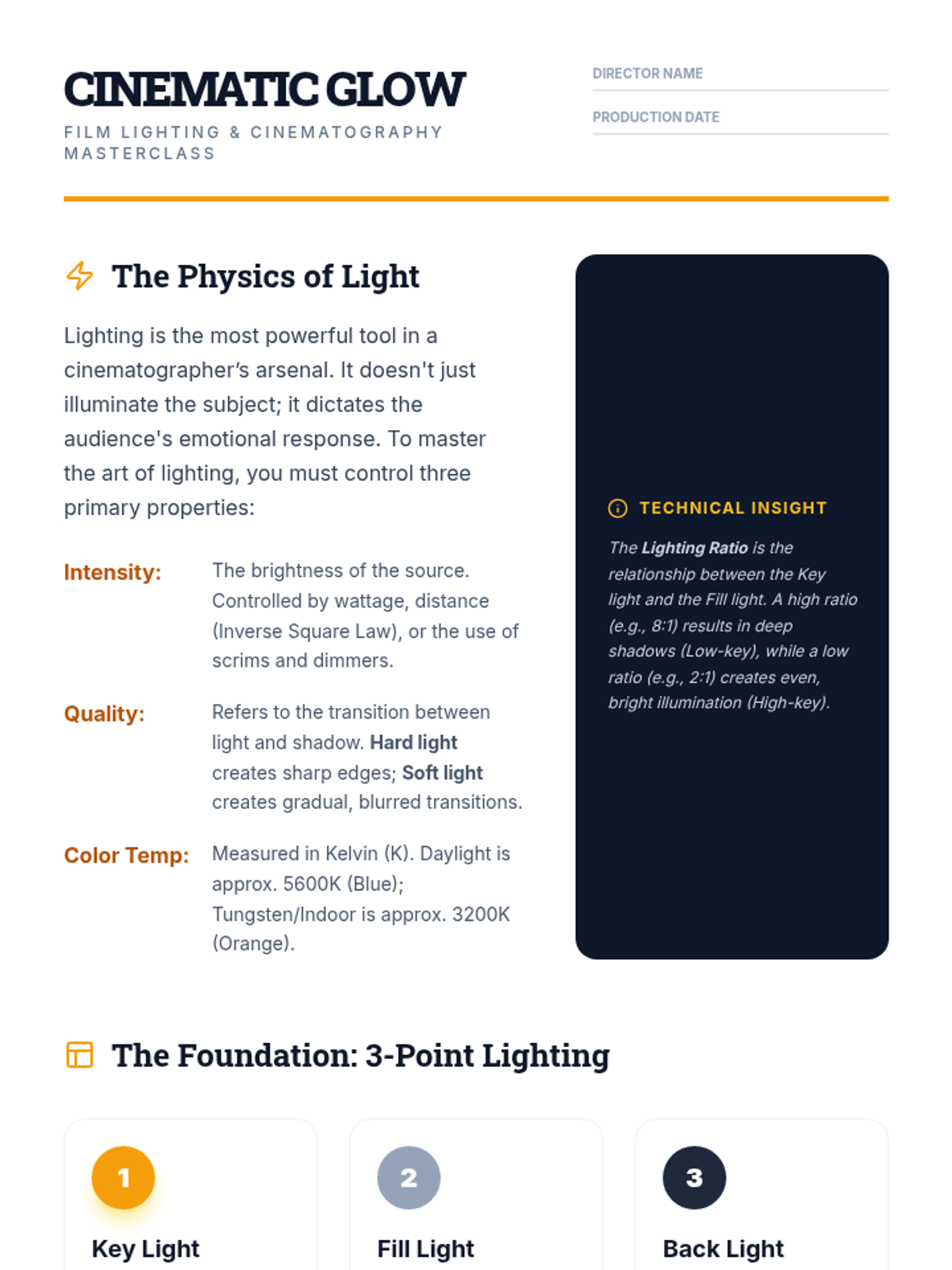
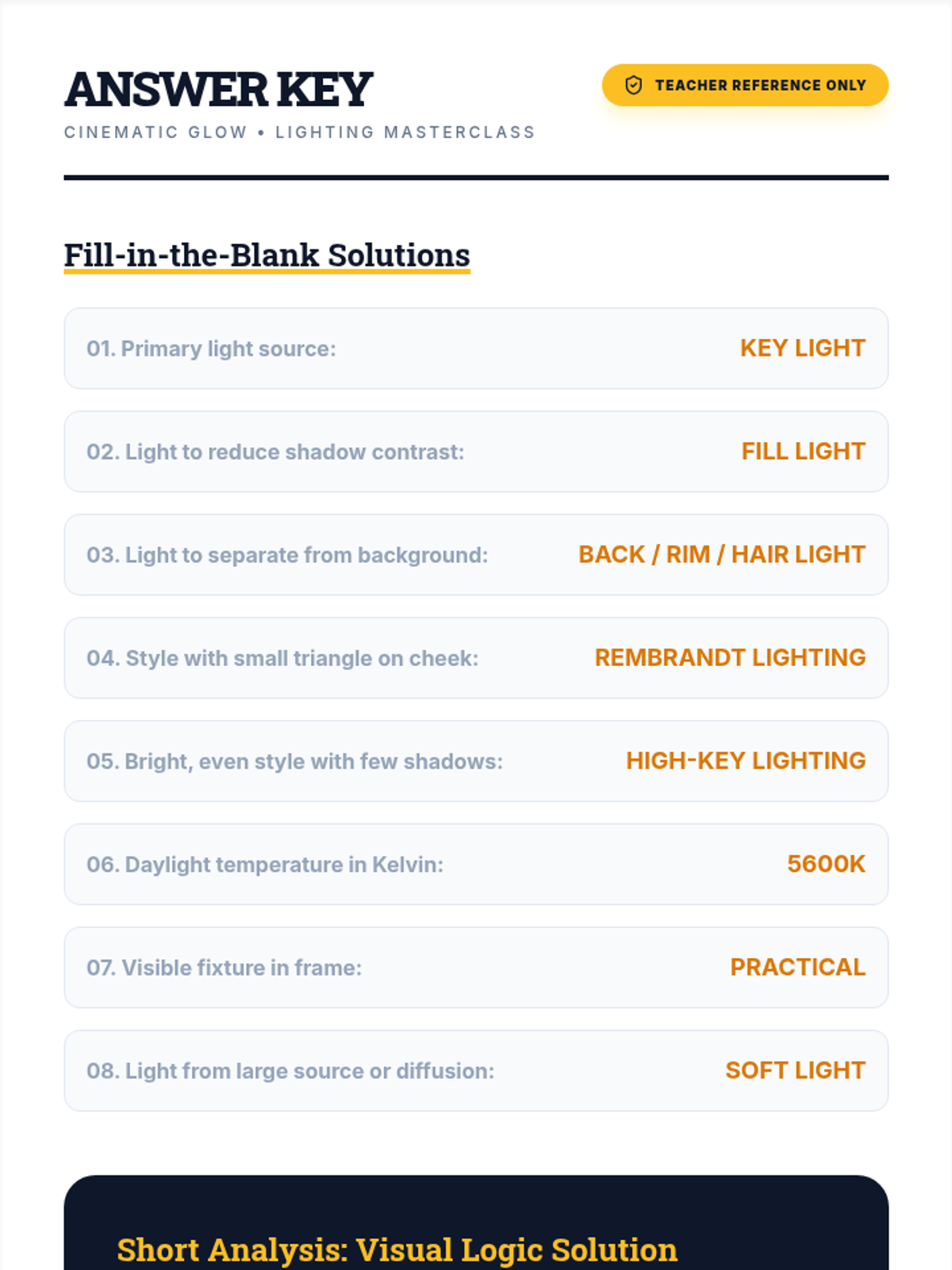
A deep dive into cinematic lighting, from the physics of light and 3-point setups to professional styles like Rembrandt and Butterfly lighting, including a hands-on assessment.
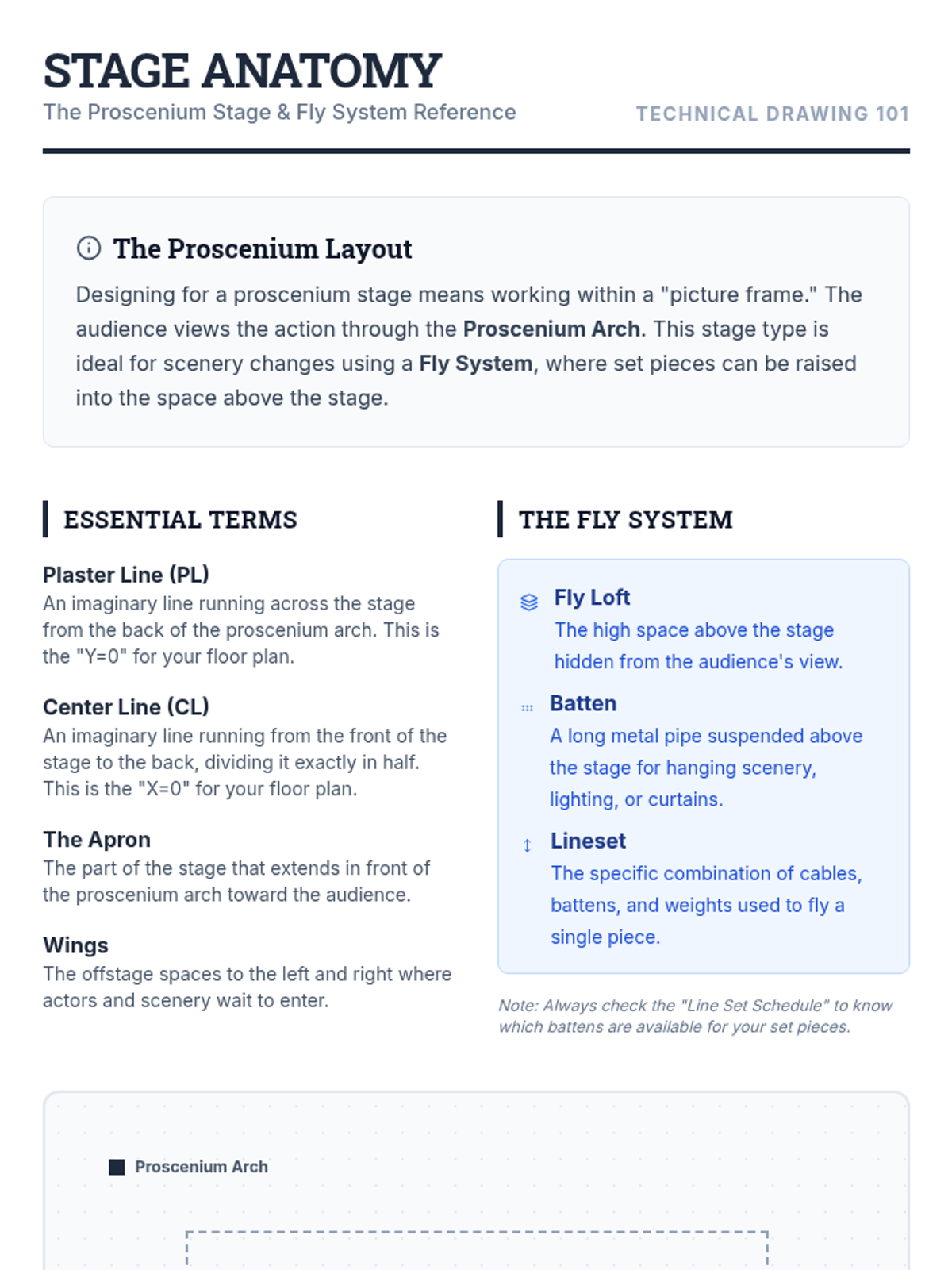
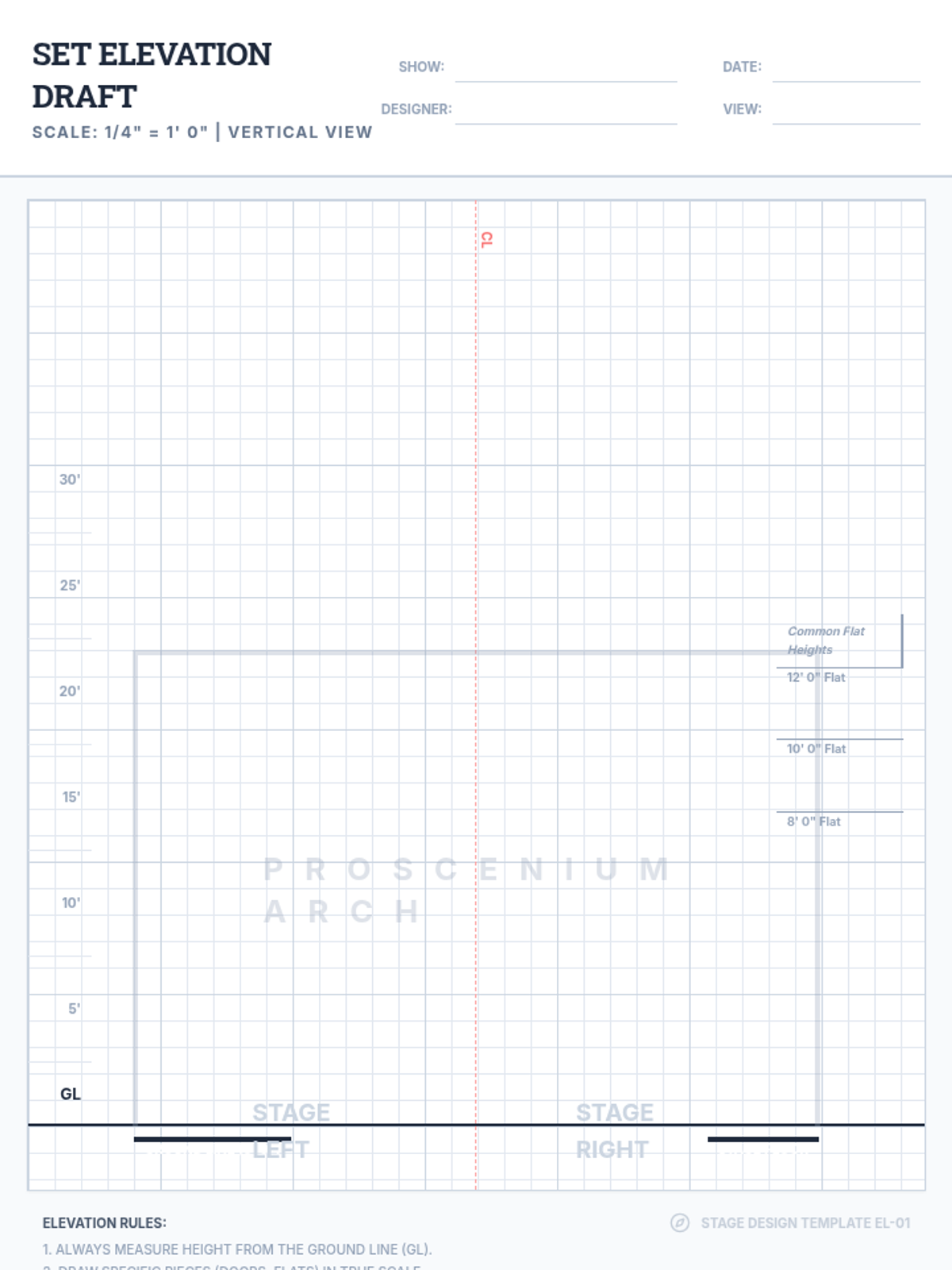
A comprehensive set of technical drawing templates and reference guides for theatrical set design. This lesson focuses on the proscenium stage and fly system, providing students with the professional tools needed to create ground plans and elevations.
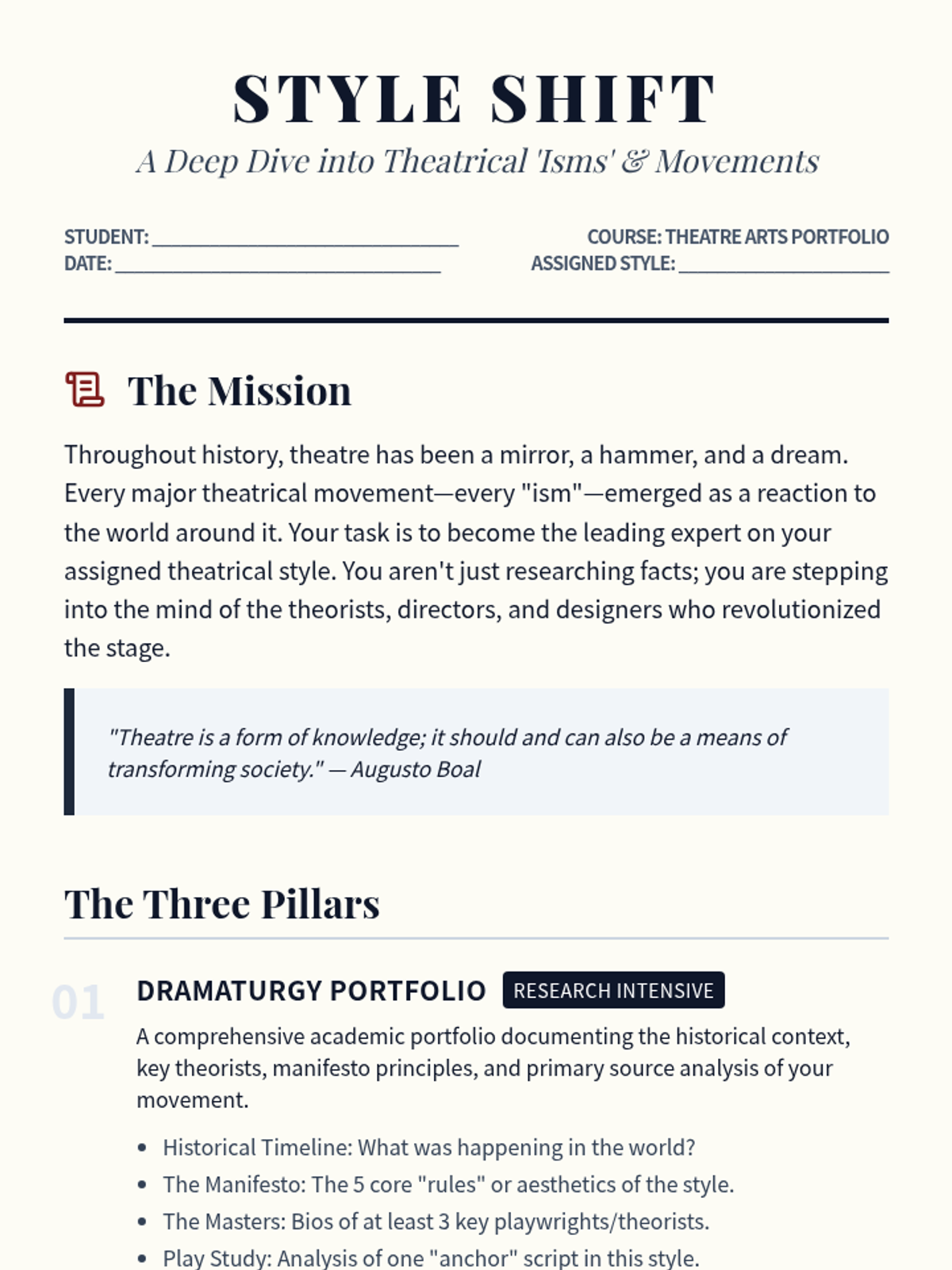
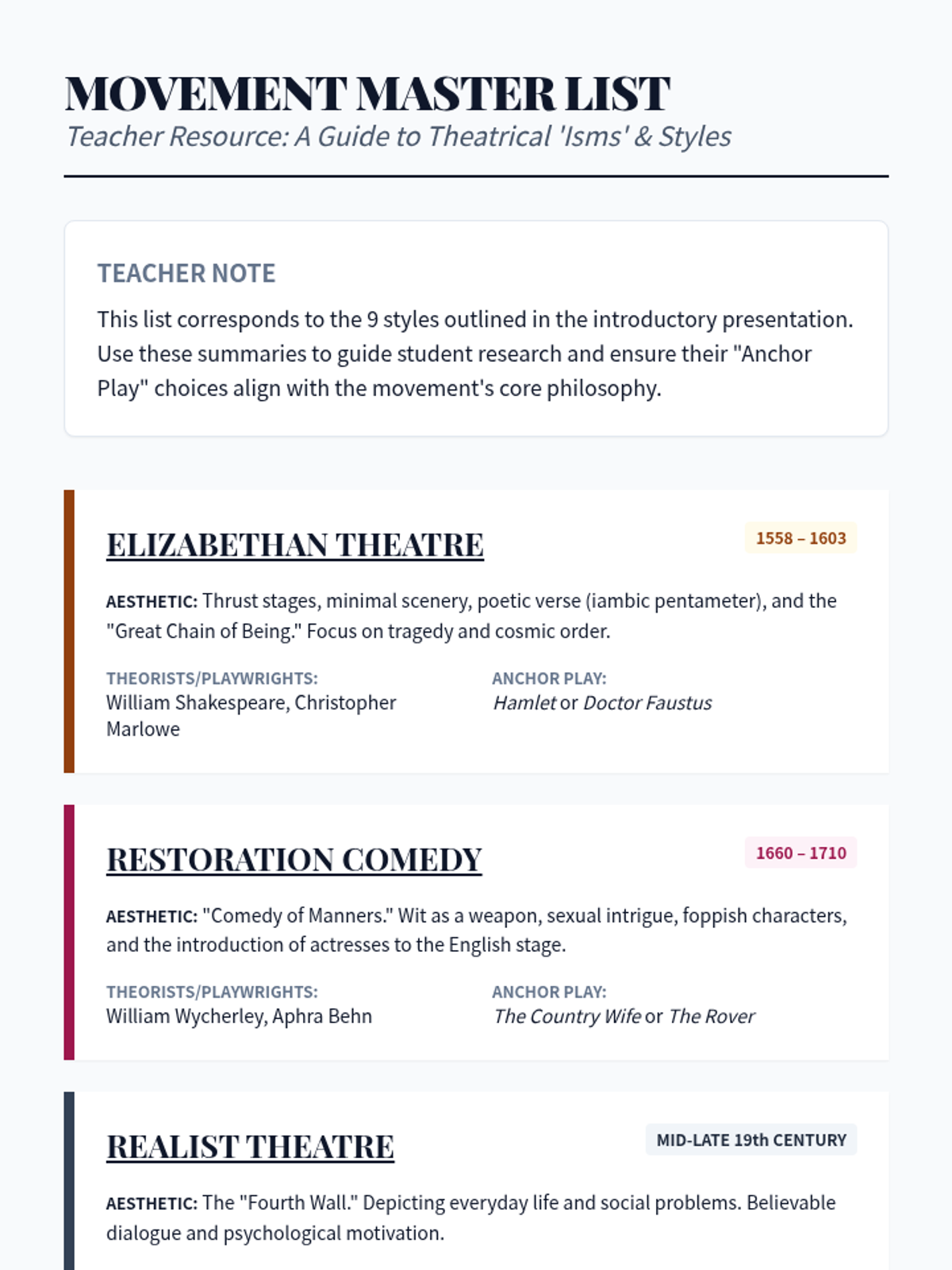
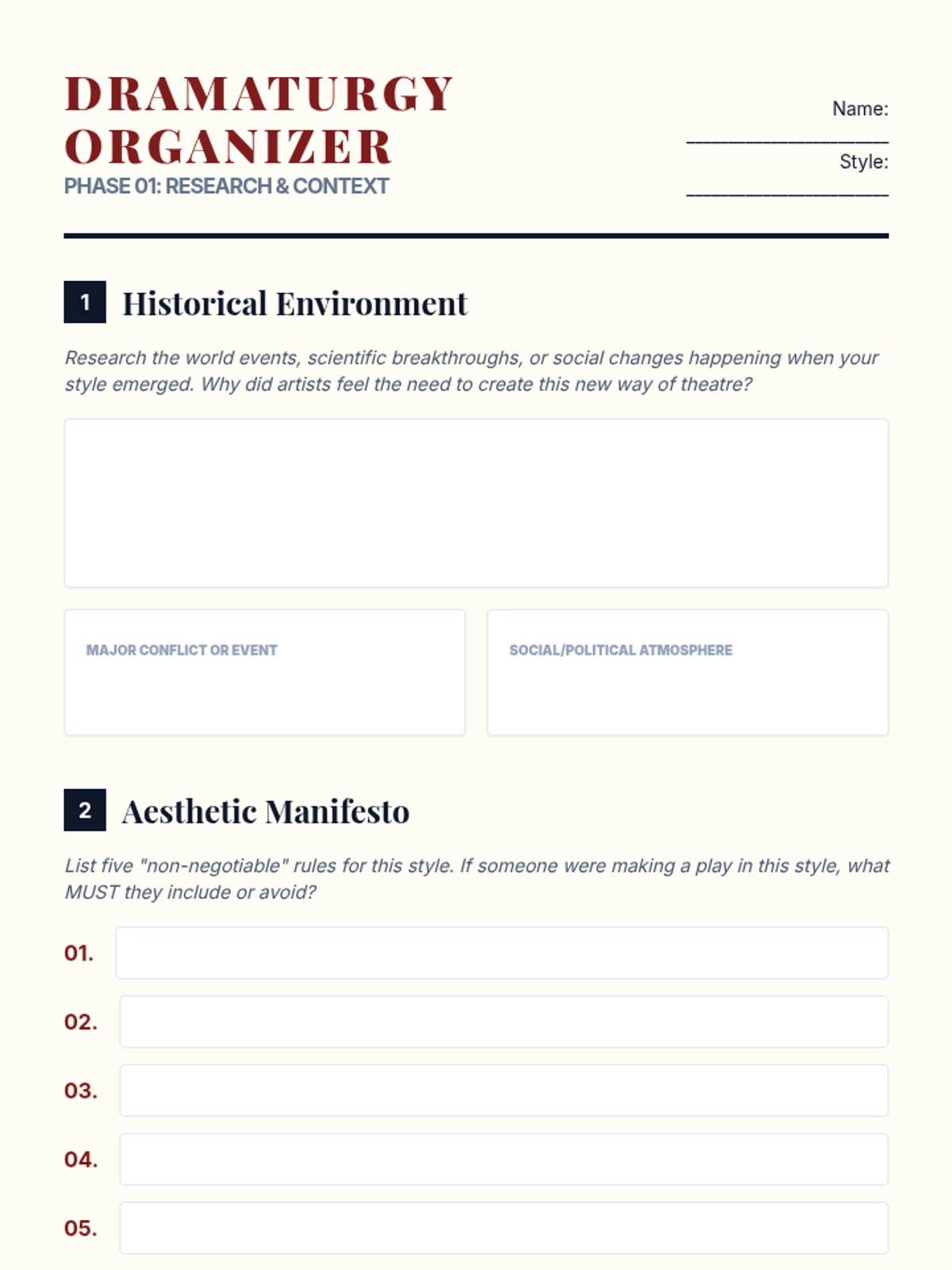
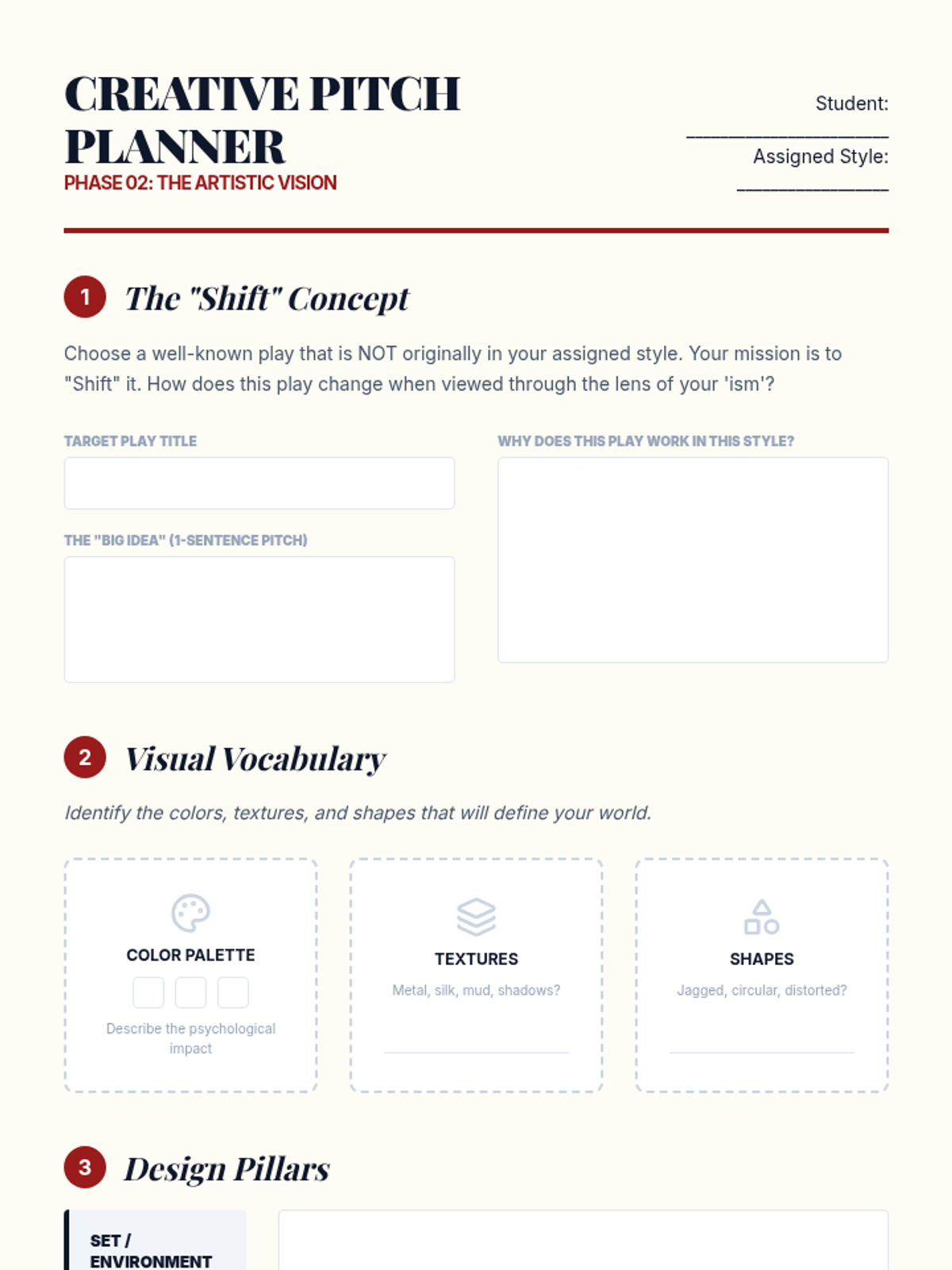
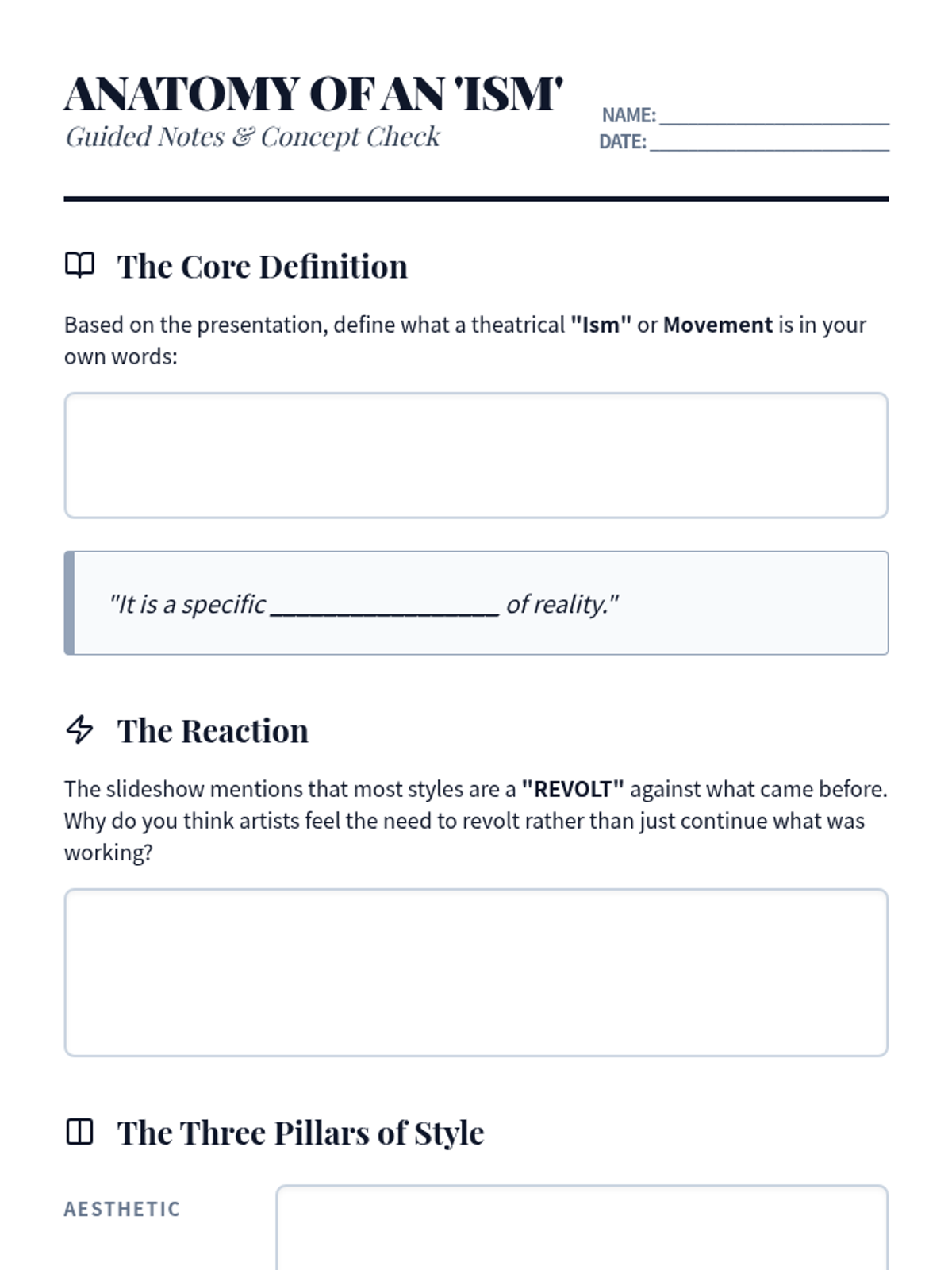
A comprehensive culminating research project where students explore a specific theatre style or 'ism'. Students produce a research-heavy Dramaturgy Portfolio, a Creative Design Pitch Deck, and a final Presentation with a visual aid.
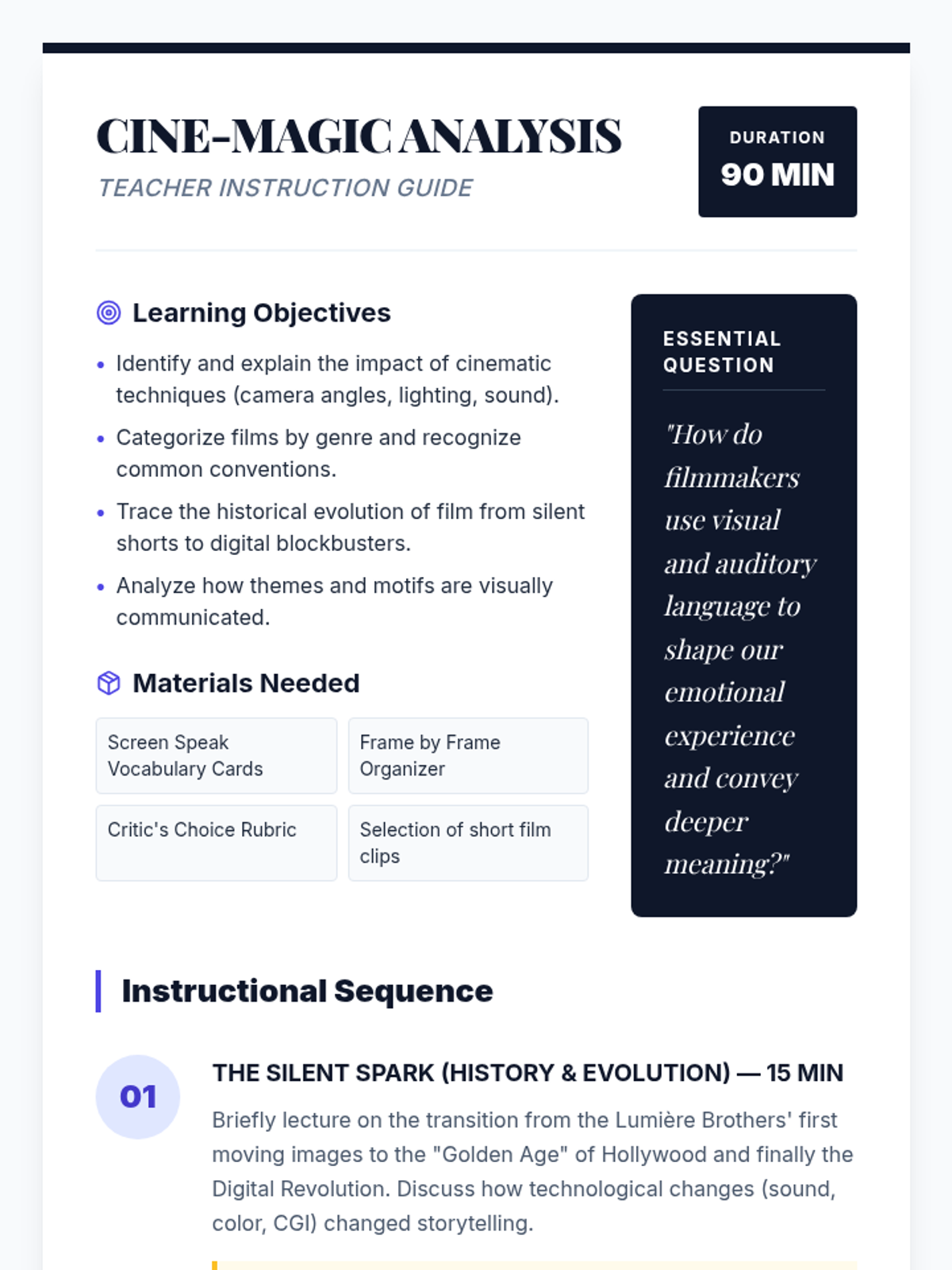
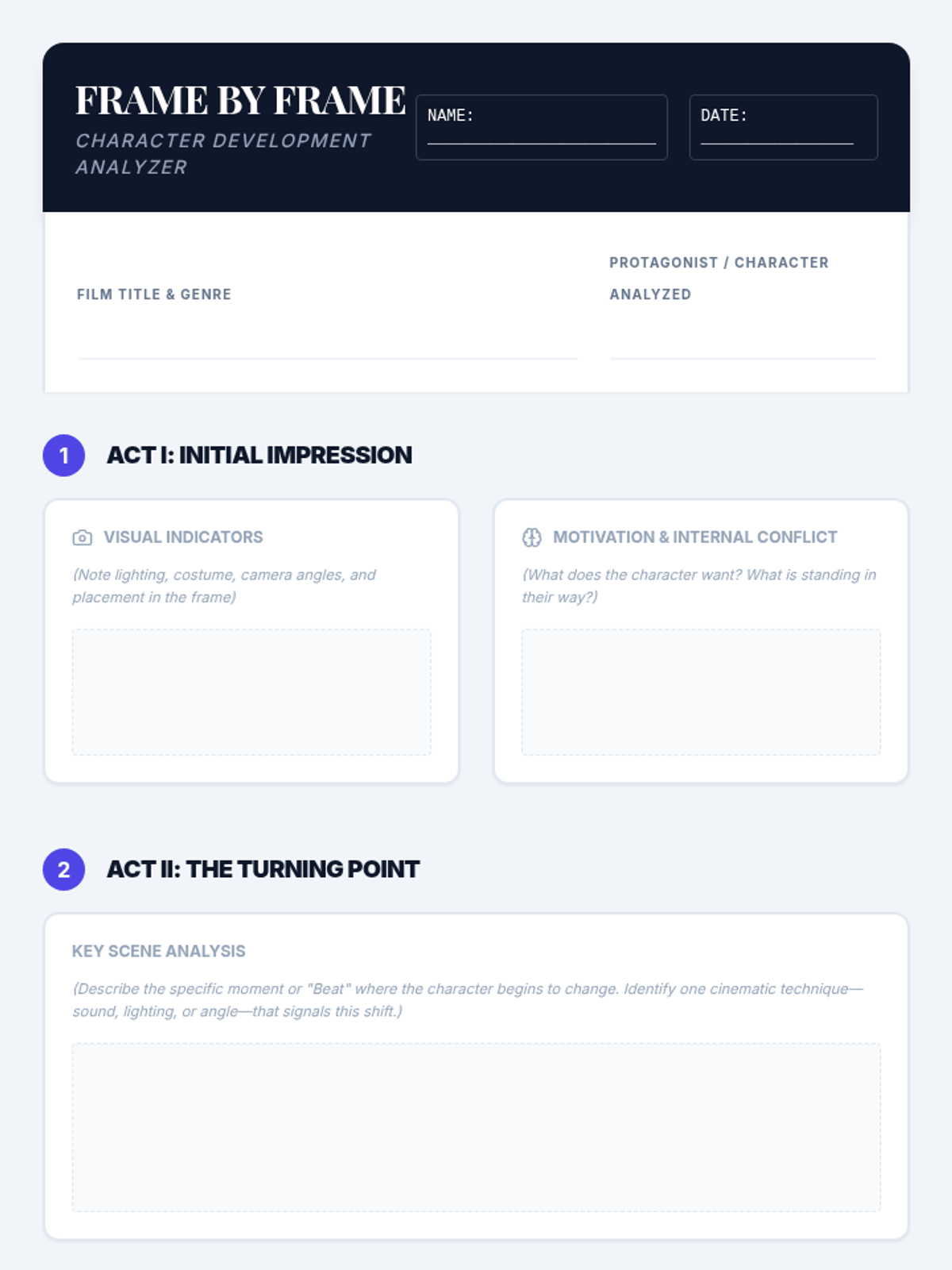
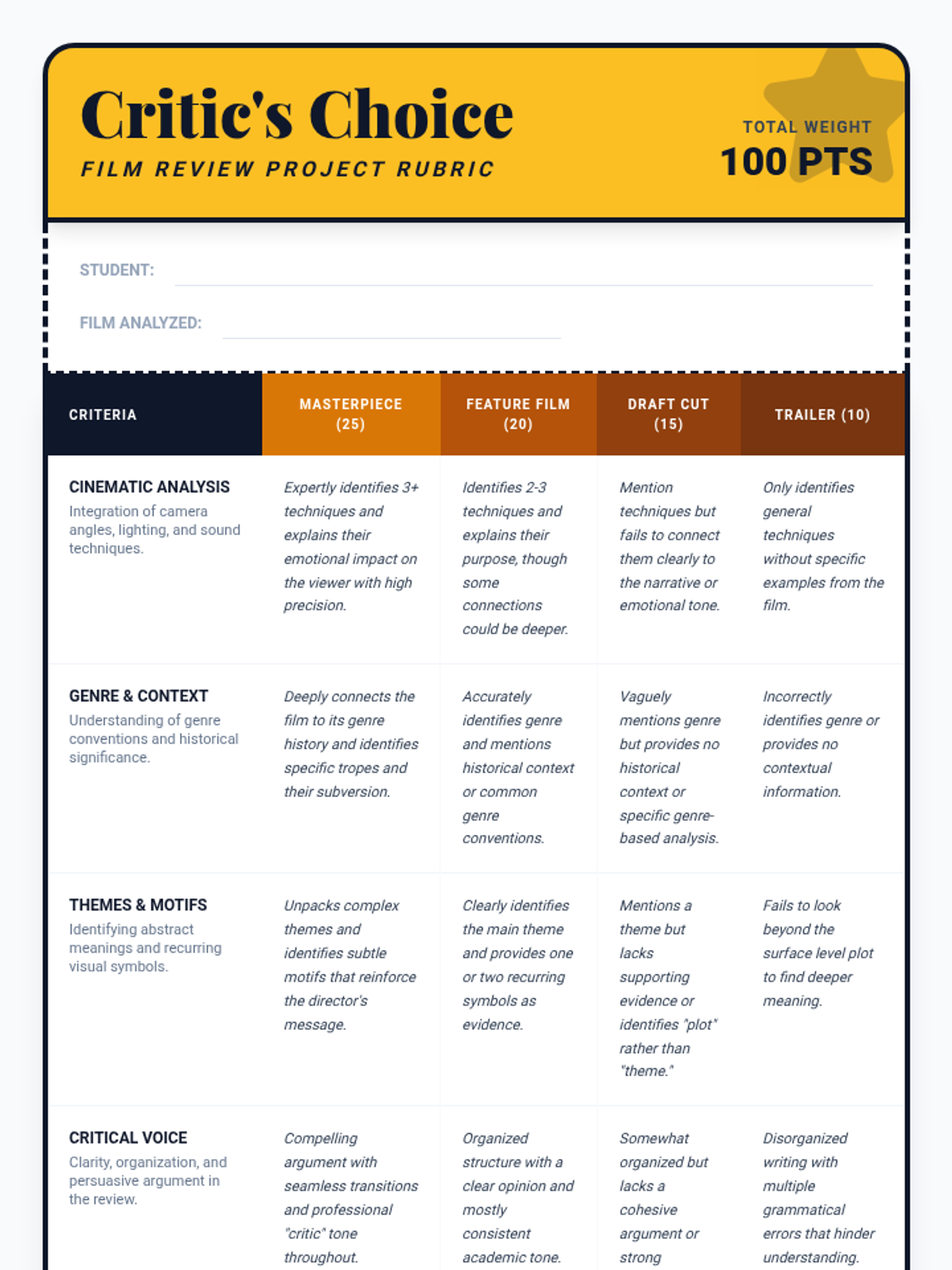
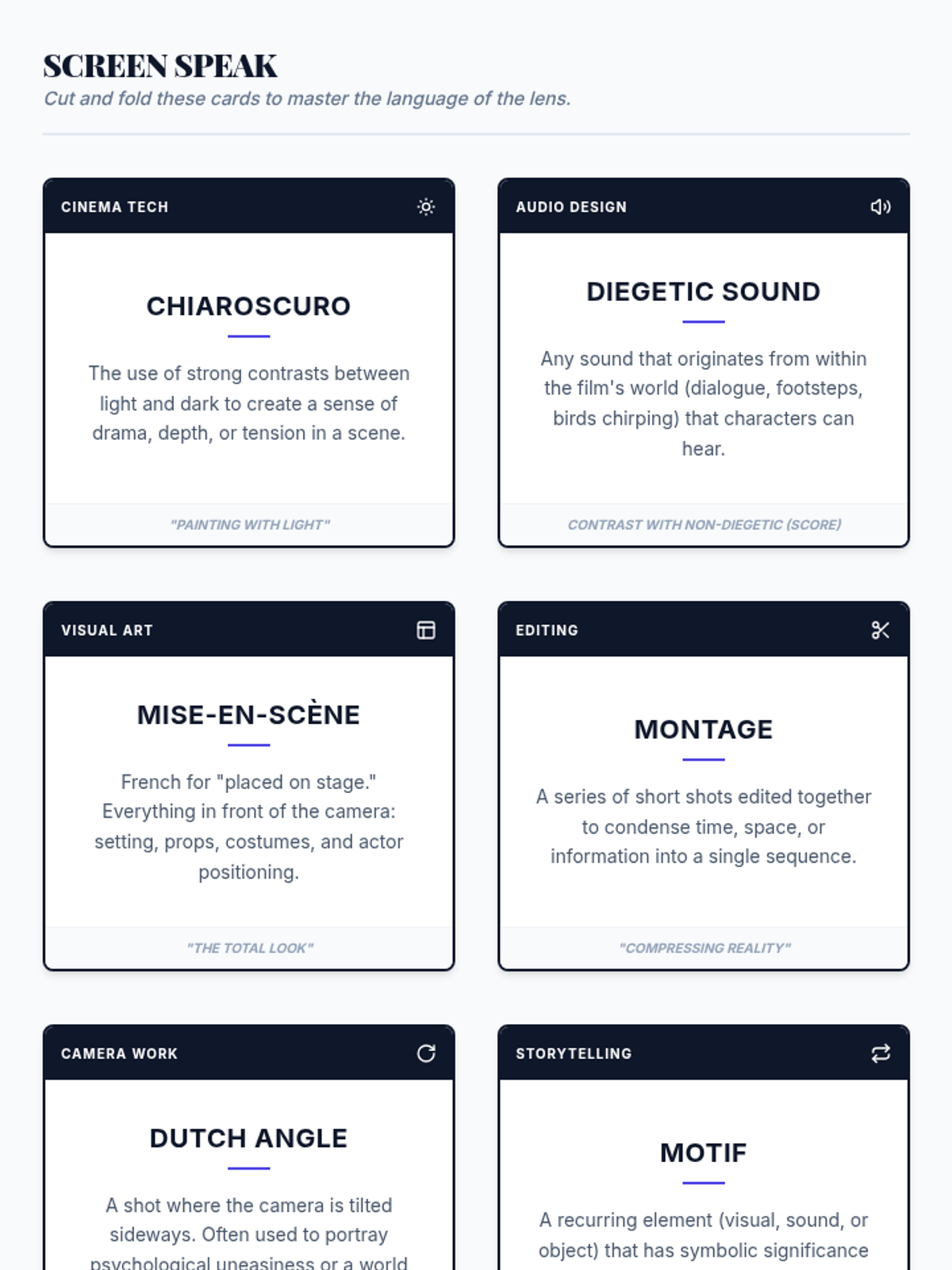
A comprehensive introduction to film analysis, covering cinematic techniques, genre studies, and historical evolution to help students decode the language of cinema.
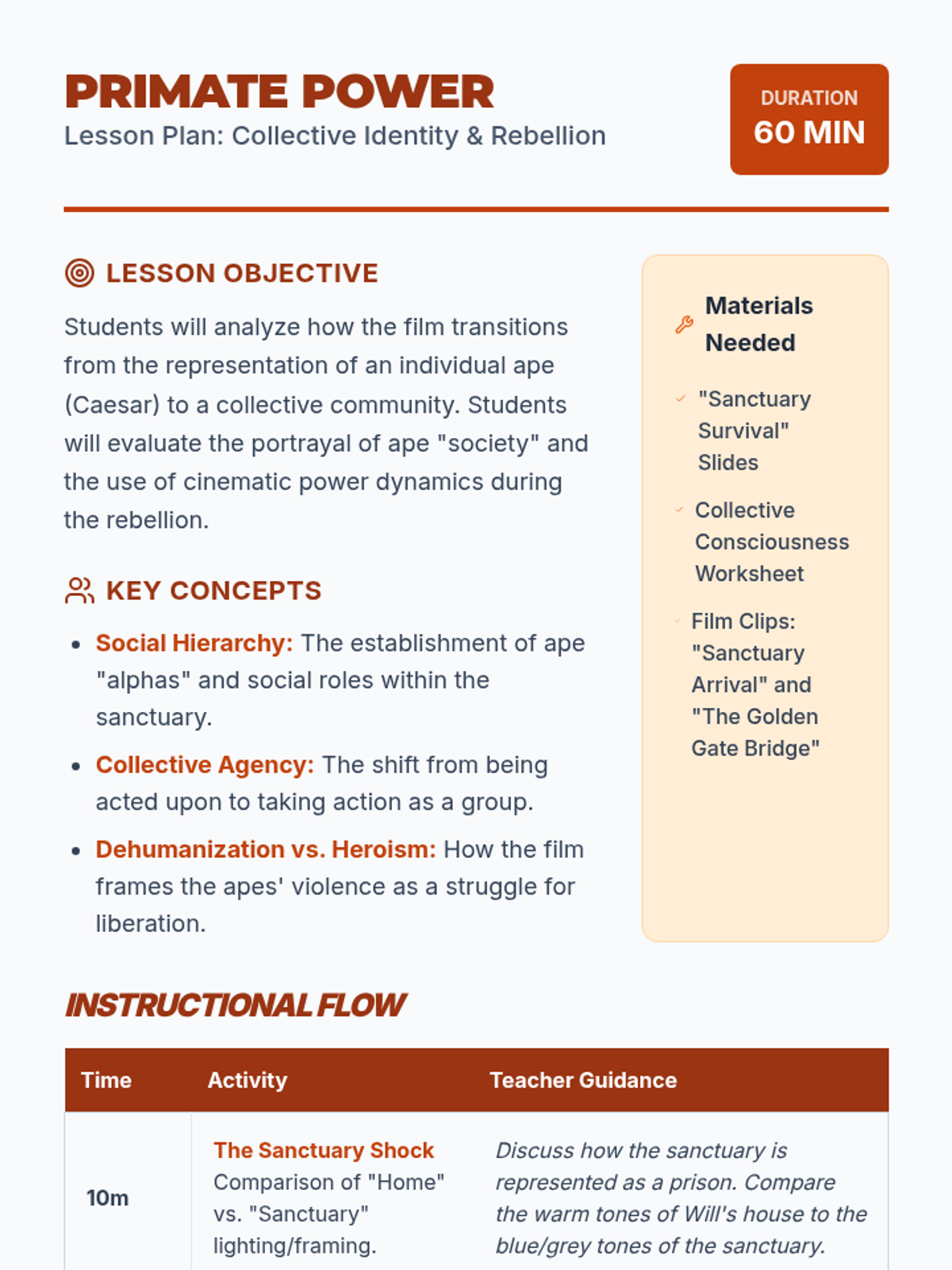
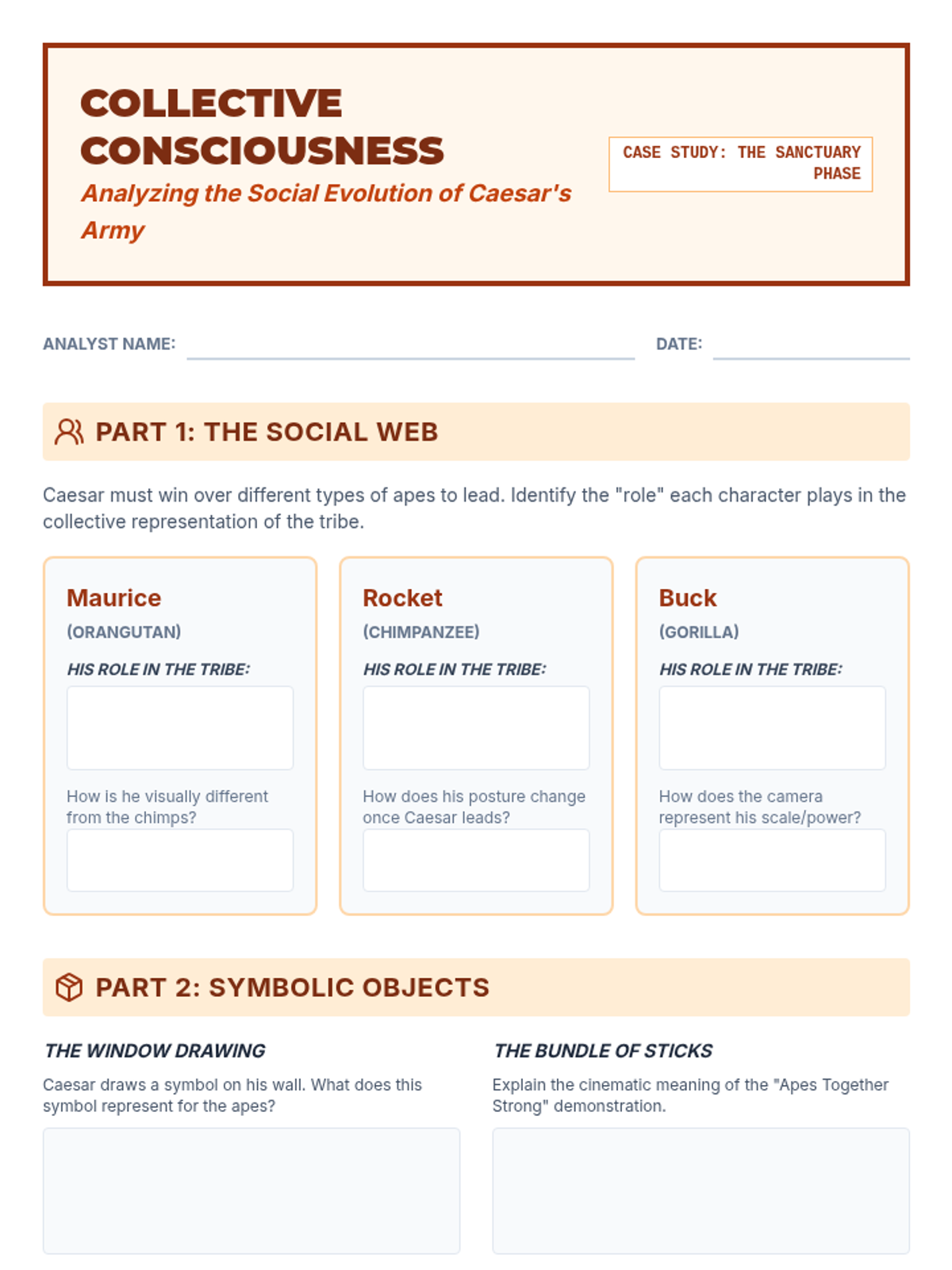
This lesson shifts focus to the collective representation of apes as they form a community in the sanctuary and eventually rebel. Students analyze the portrayal of ape communication, social hierarchy, and the final shift toward agency.
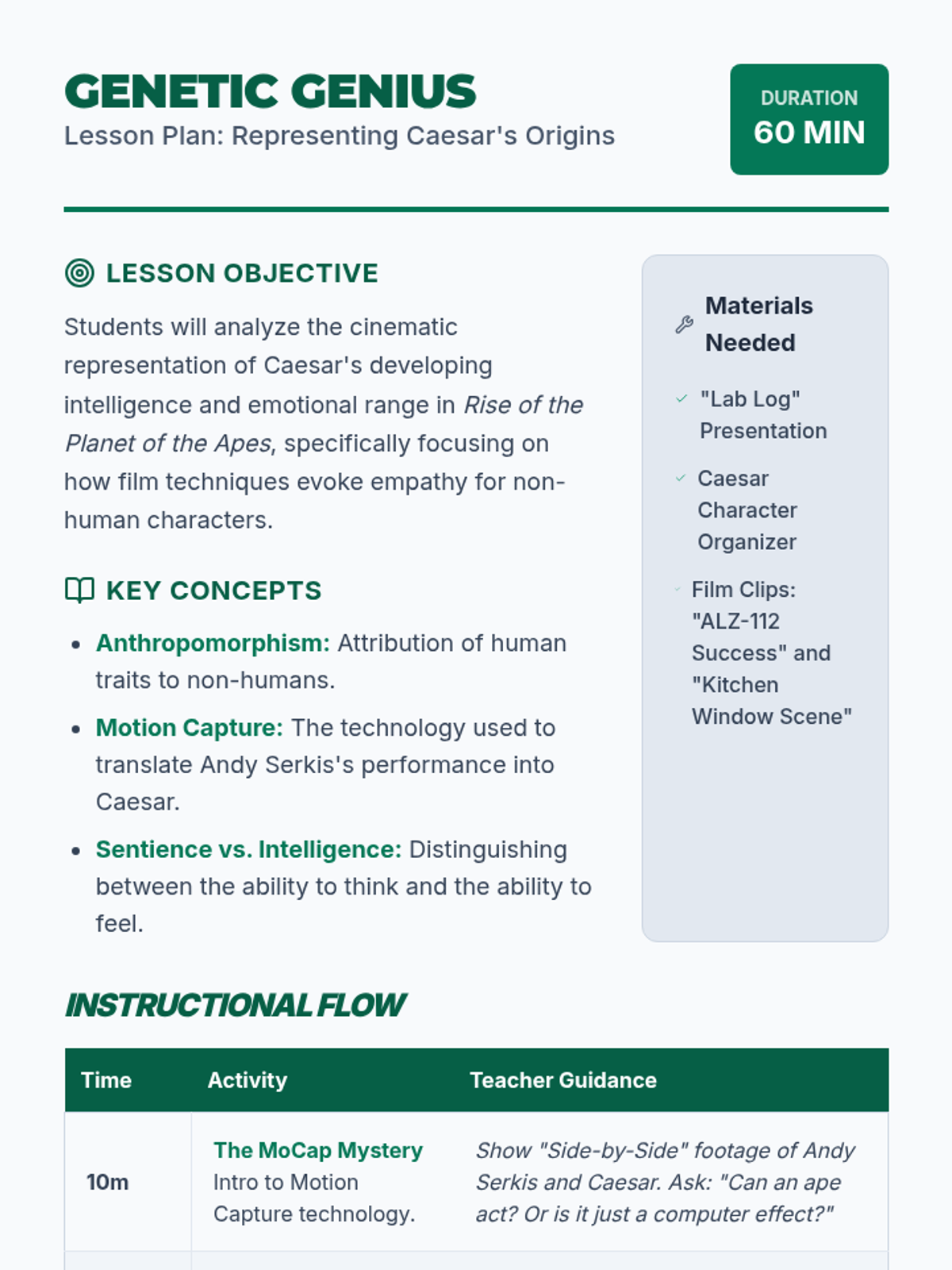
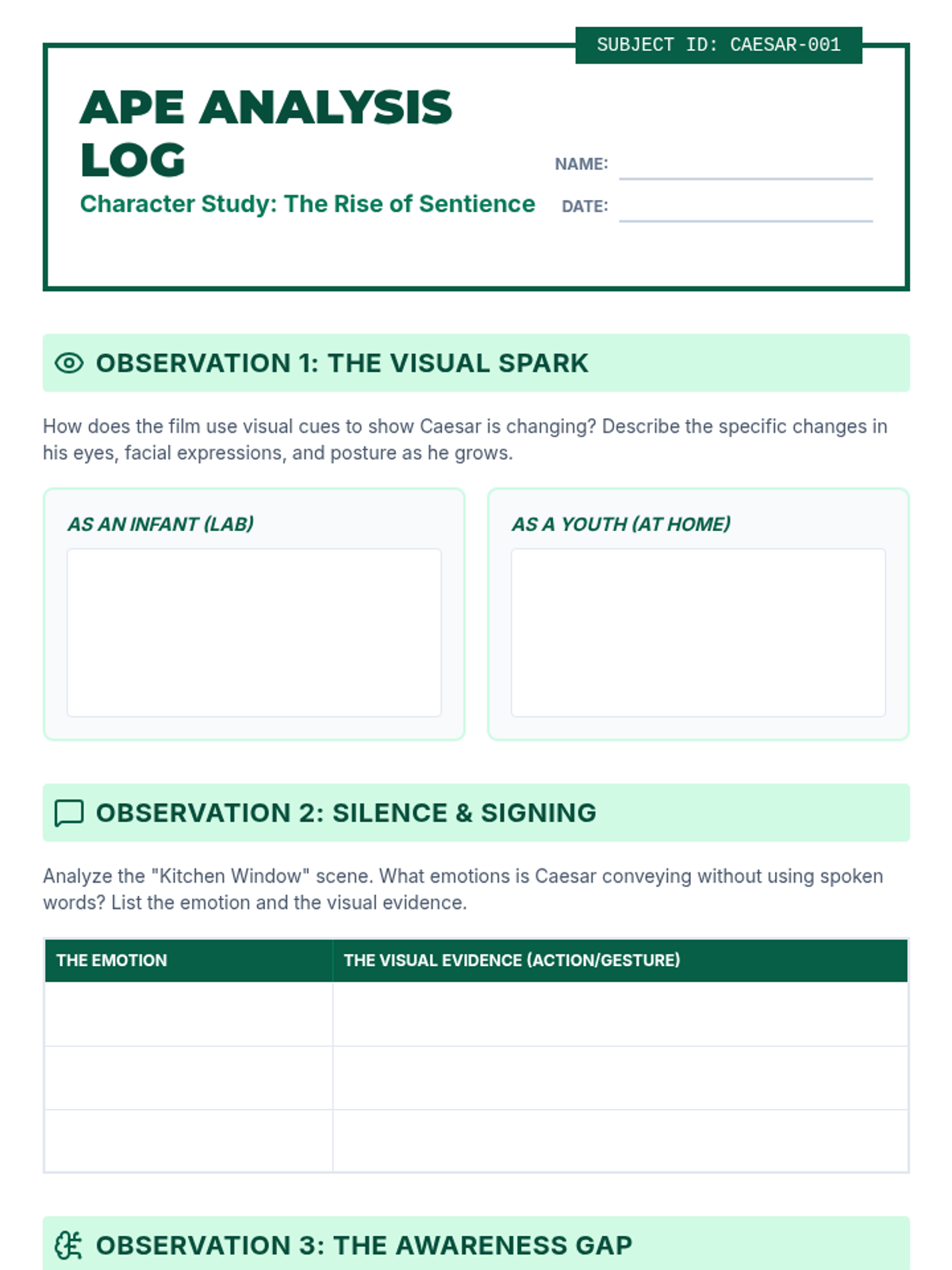
Students explore Caesar's origin story, analyzing how the film represents growing ape intelligence and emotional complexity within a laboratory setting. The lesson focuses on the intersection of science and ethics through the lens of primate representation.
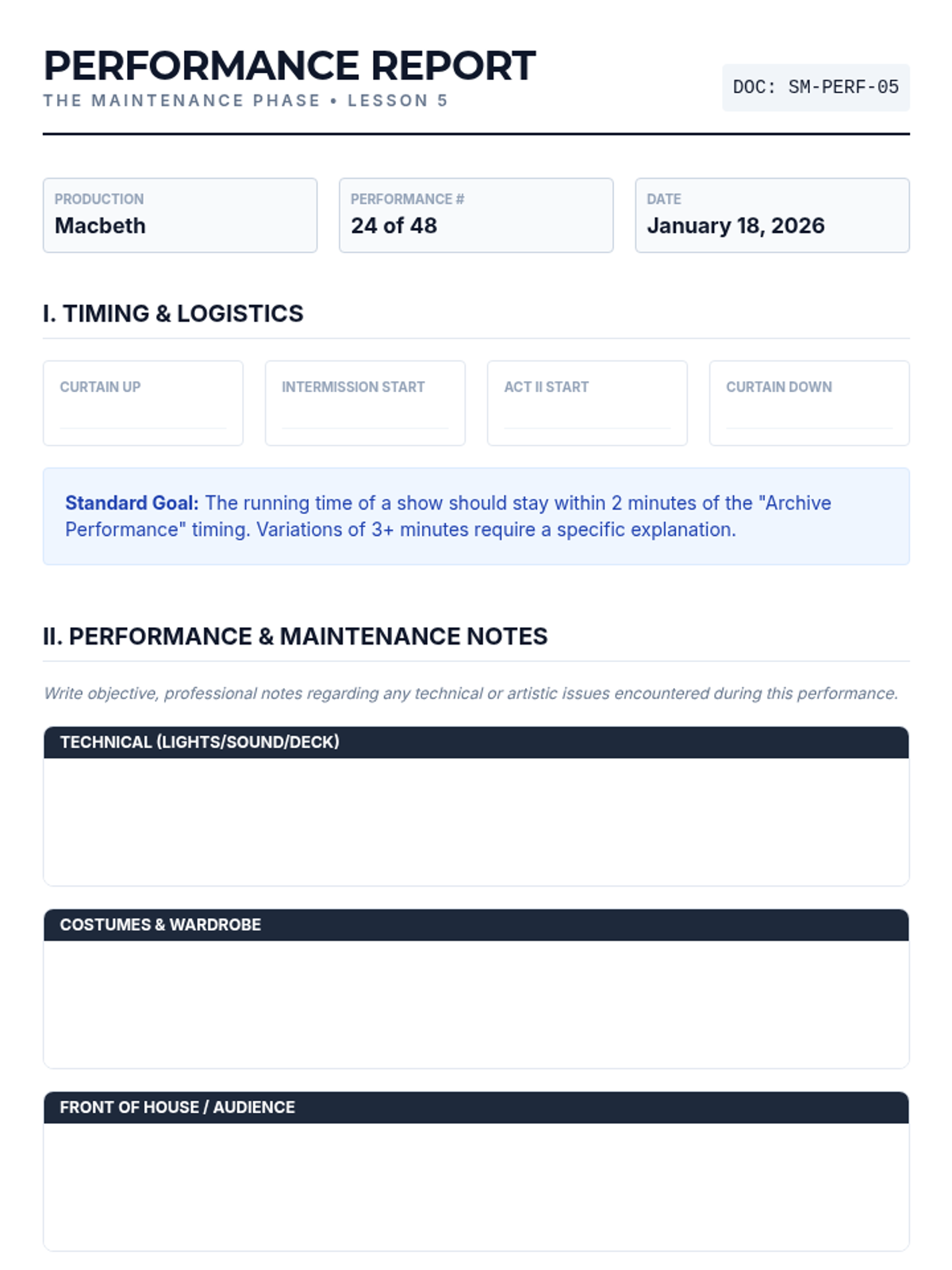
The final lesson covers the maintenance phase of a production run. Students learn to write performance reports, manage understudies, and maintain artistic integrity through note sessions.
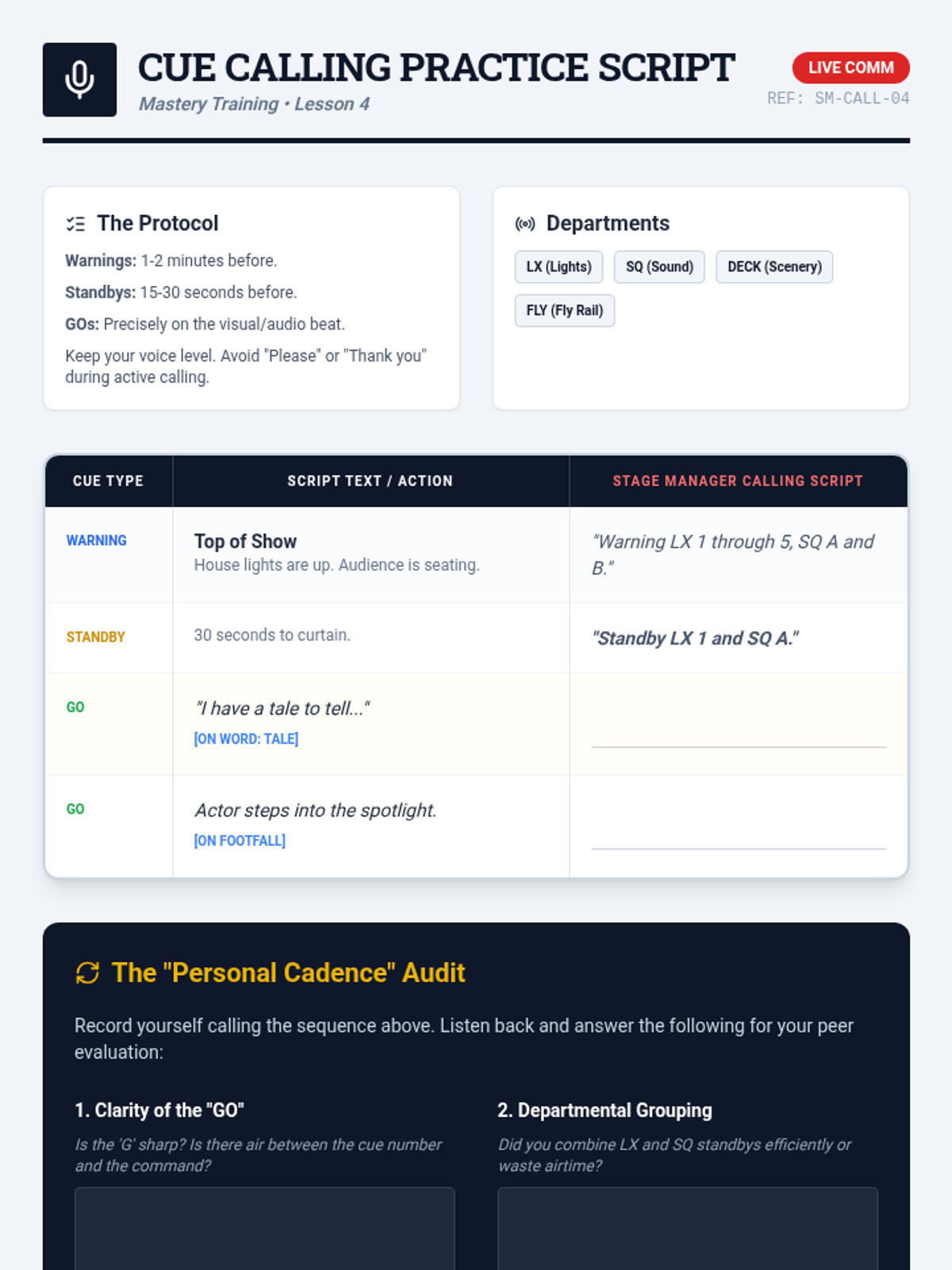
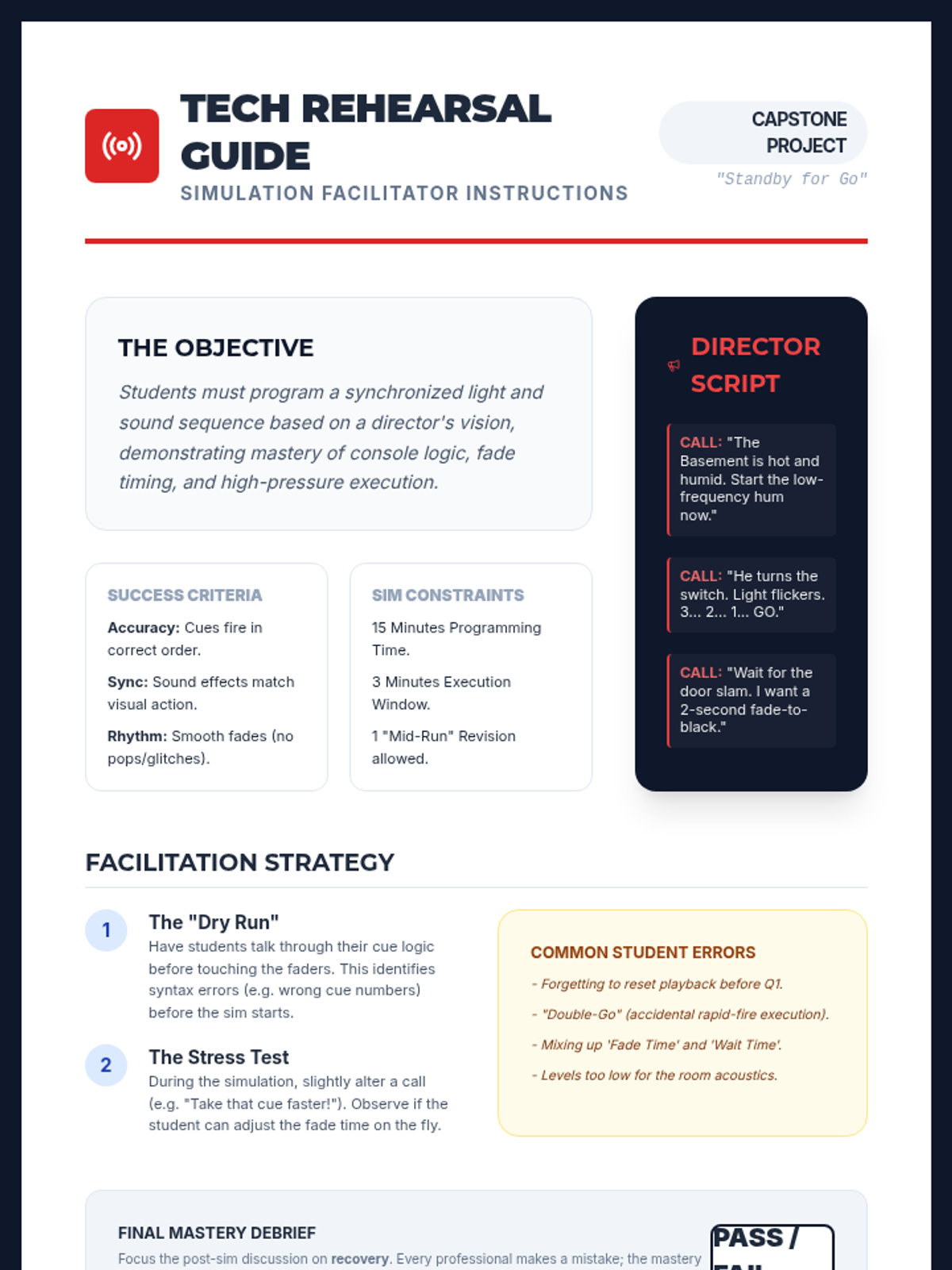
The core skill of performance management is practiced here, as students learn to 'call' cues (lights, sound, deck moves) with precision and personal cadence.
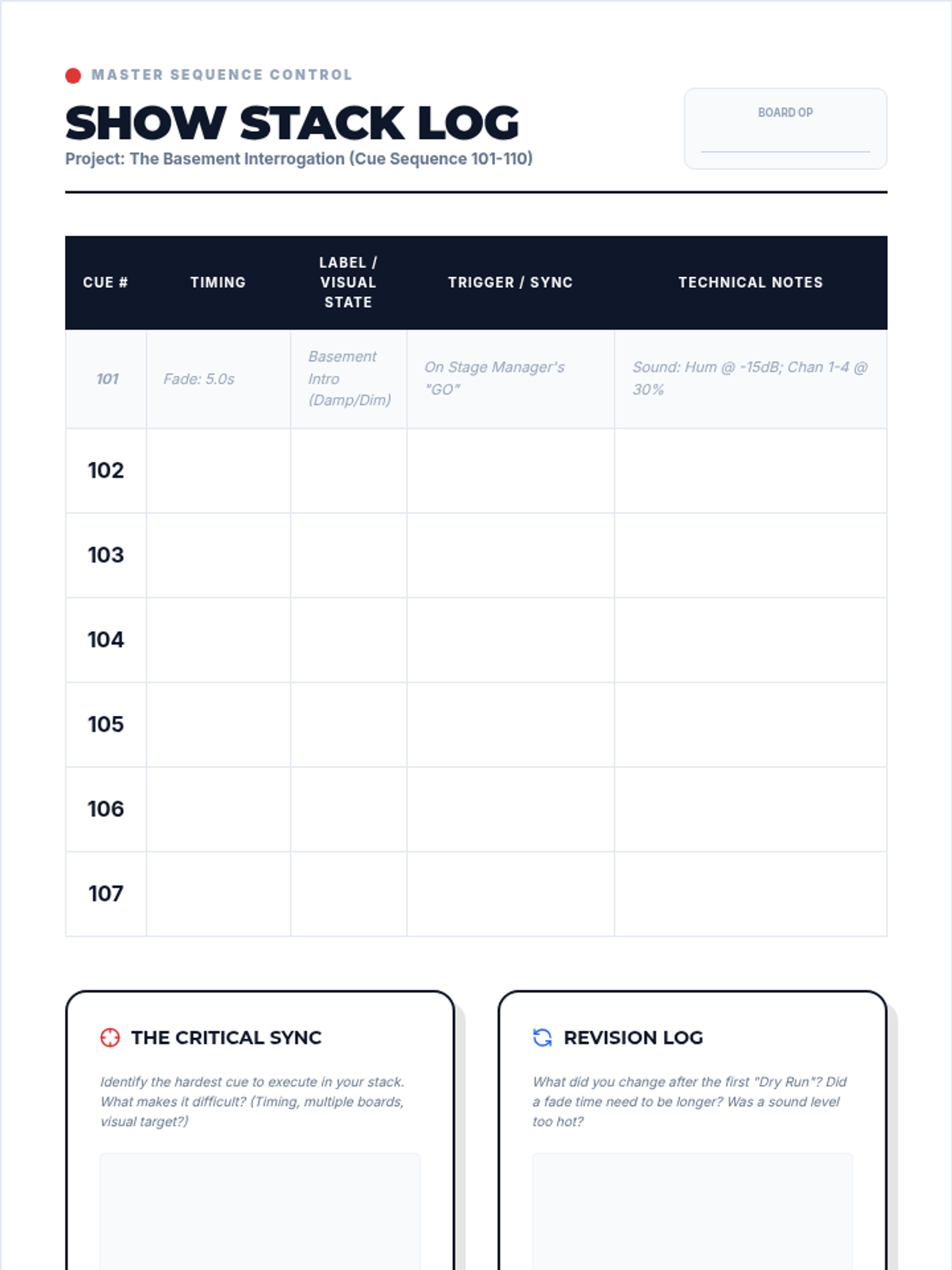
Mastery of control systems and the artistry of timing through cue programming and live execution.
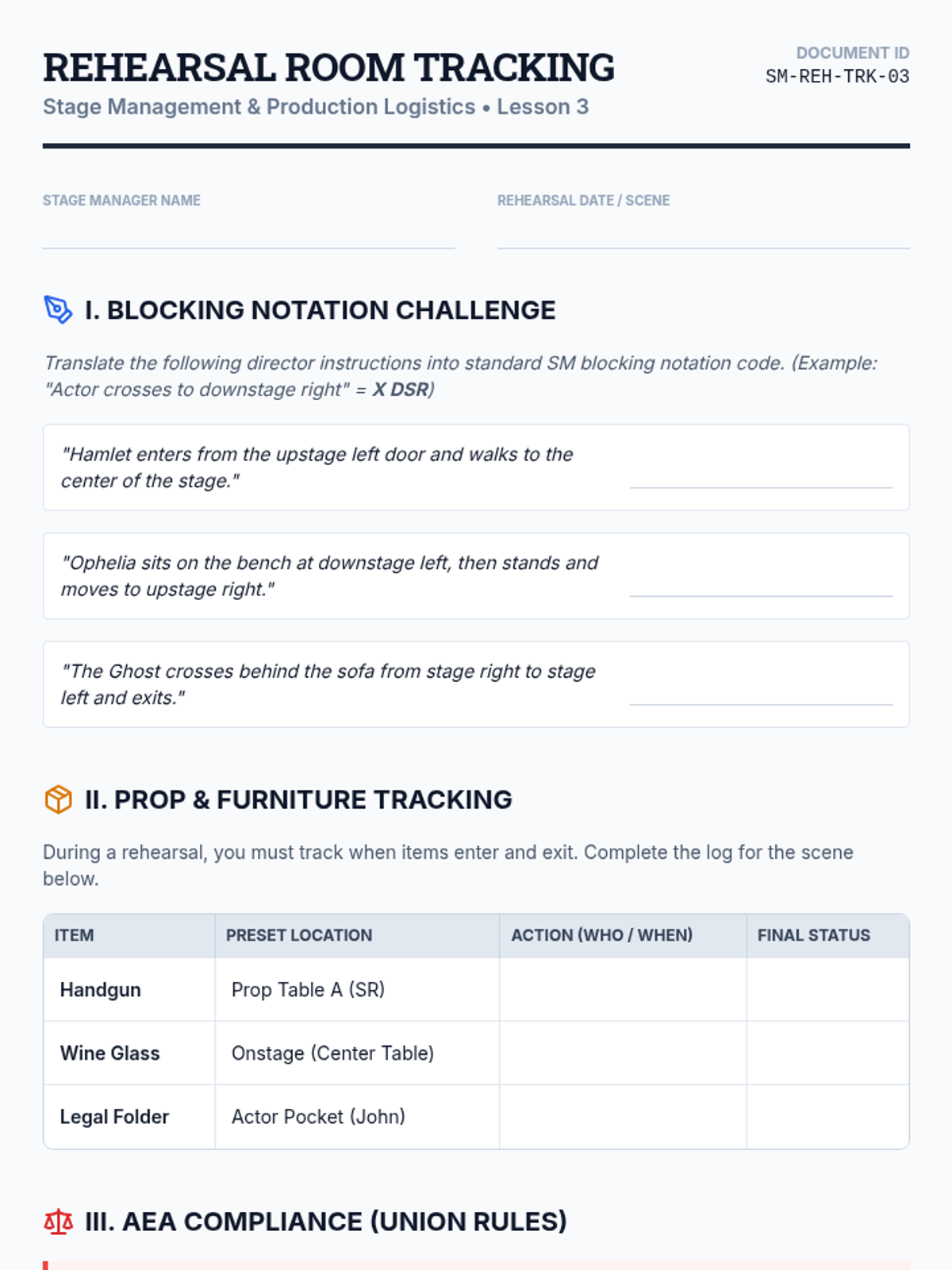
Students practice running a rehearsal room, including timing splits, tracking props, and notating actor movement. They learn to balance artistic needs with union regulations.
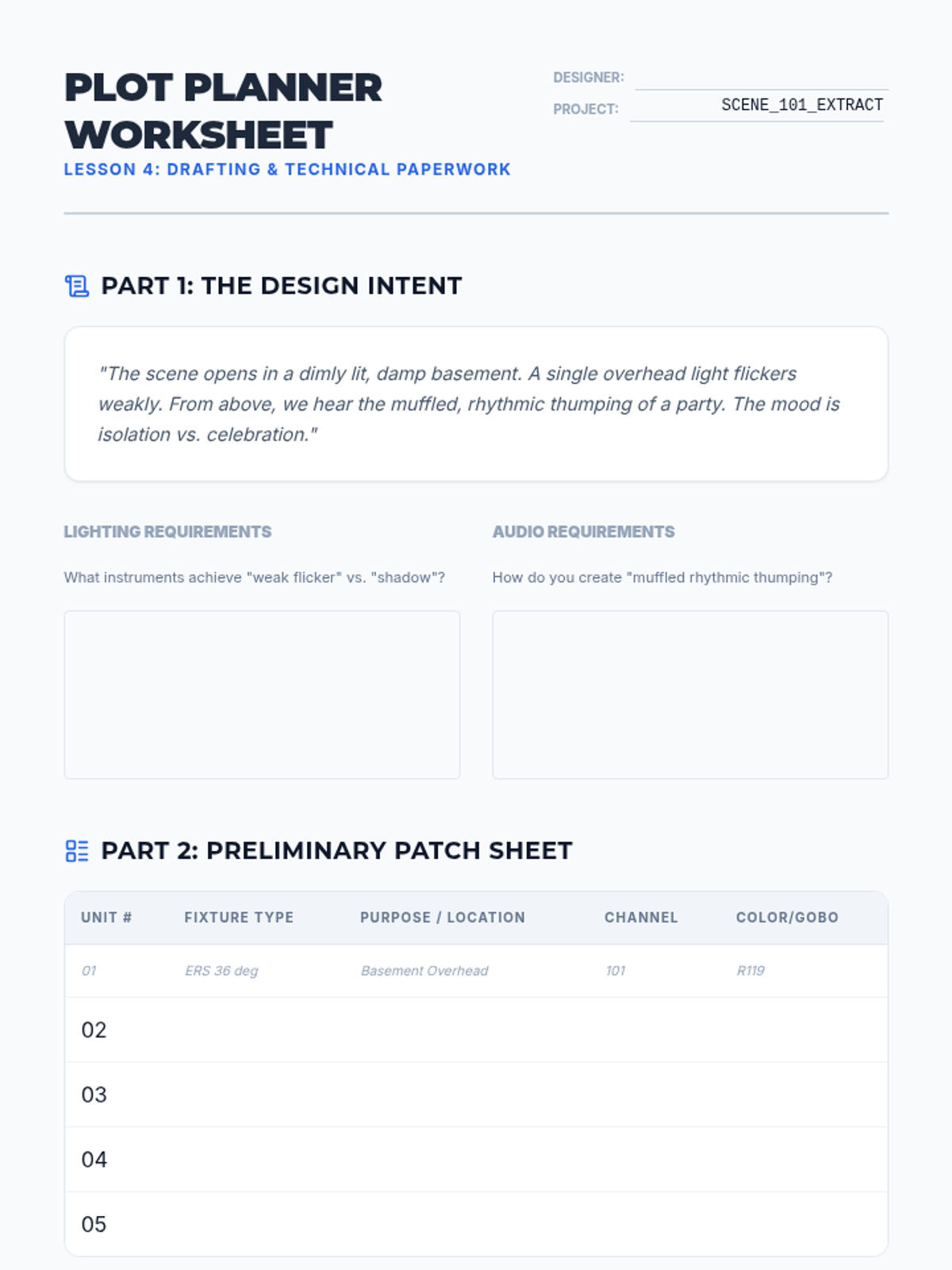
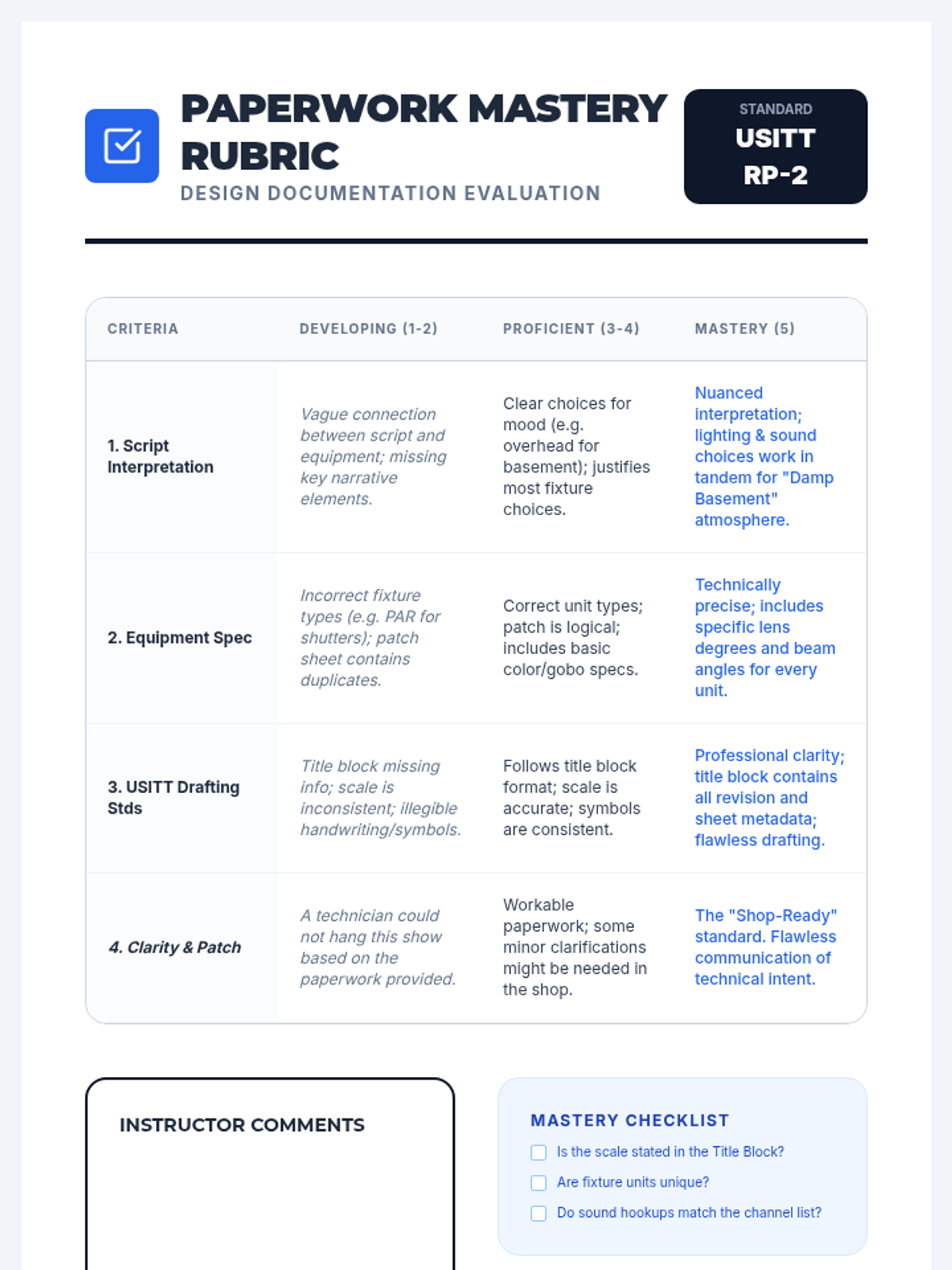
Translation of creative concepts into technical documentation, including light plots, hookups, and equipment lists.
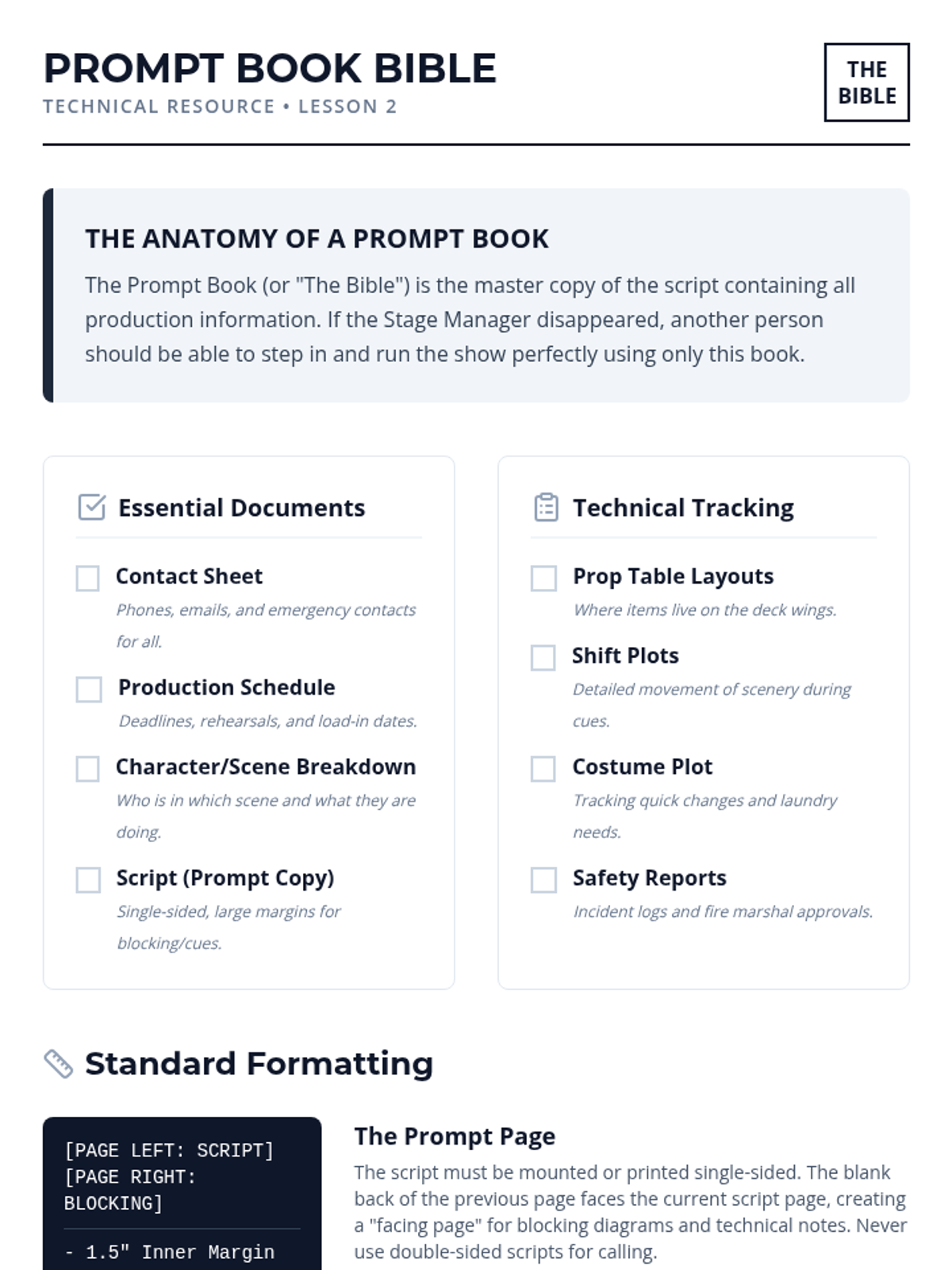
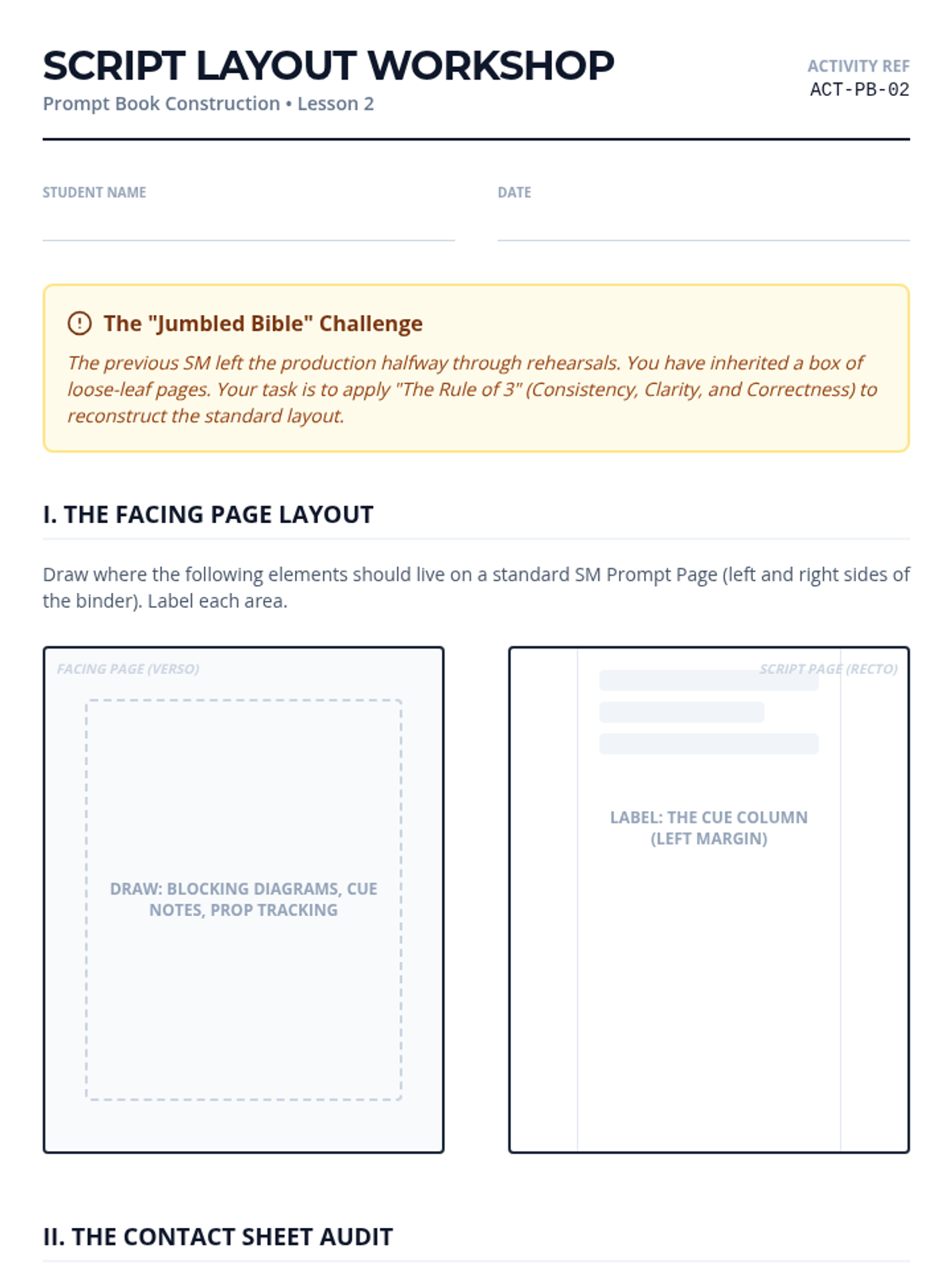
This workshop focuses on creating the 'Bible' of the production: the Prompt Book. Students learn formatting for blocking keys, script pagination, contact sheets, and rehearsal reports.
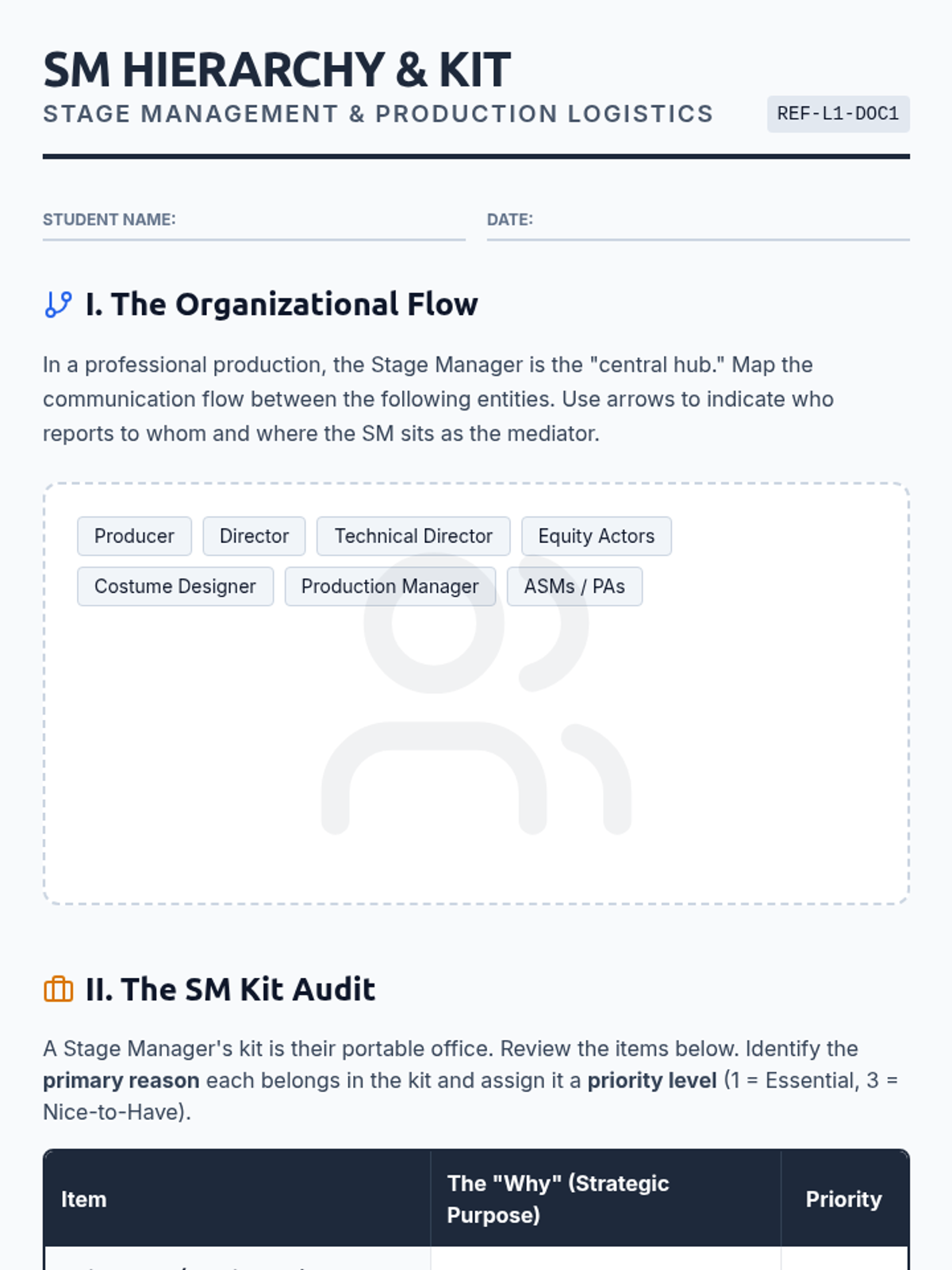
Students analyze the organizational structure of professional theater companies and the specific responsibilities of the Stage Management team. They assemble a theoretical 'SM Kit' and discuss the leadership dynamics within artistic groups.
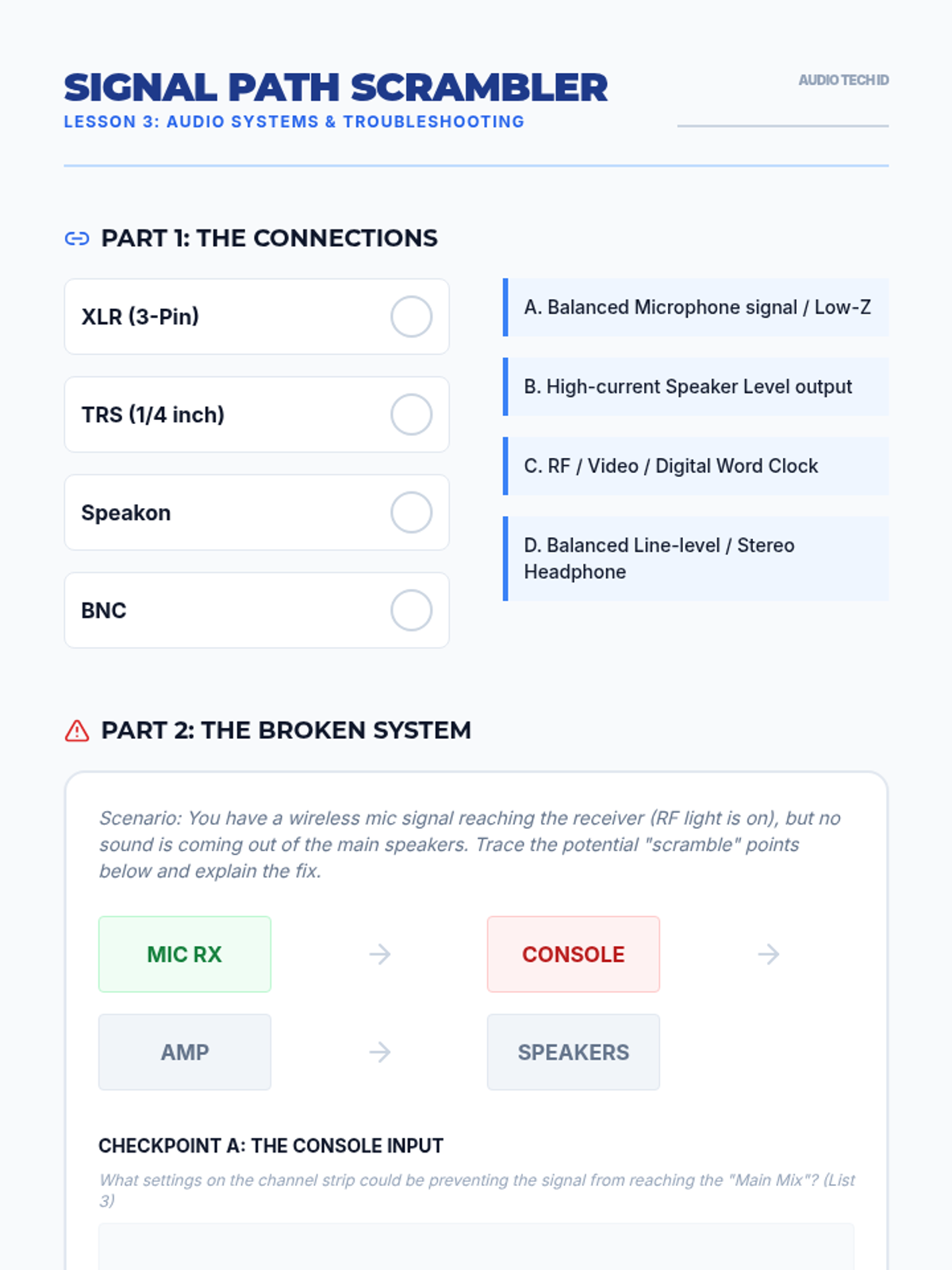
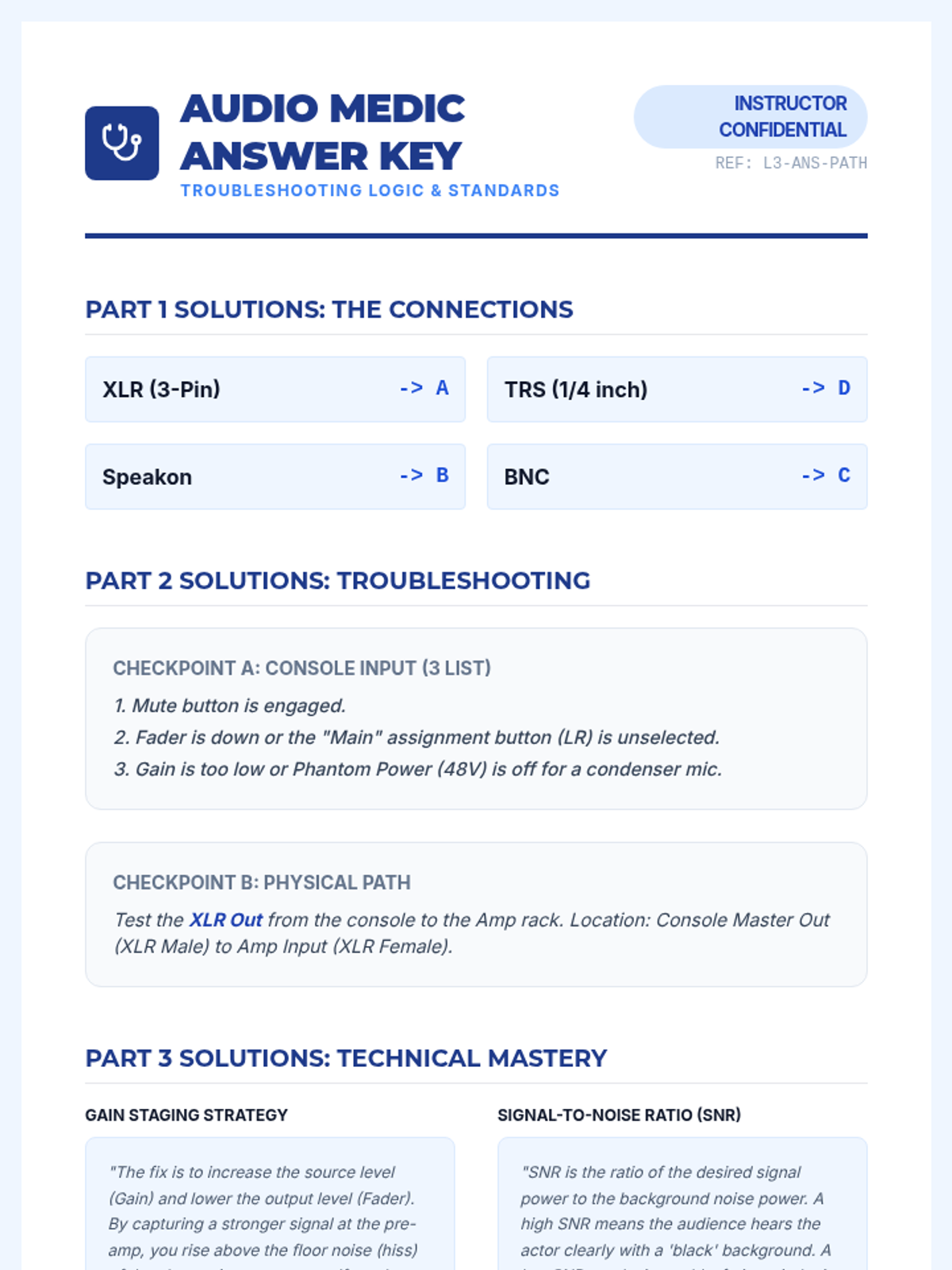
Analysis of signal flow from input to output, including console operation and troubleshooting common audio failures.
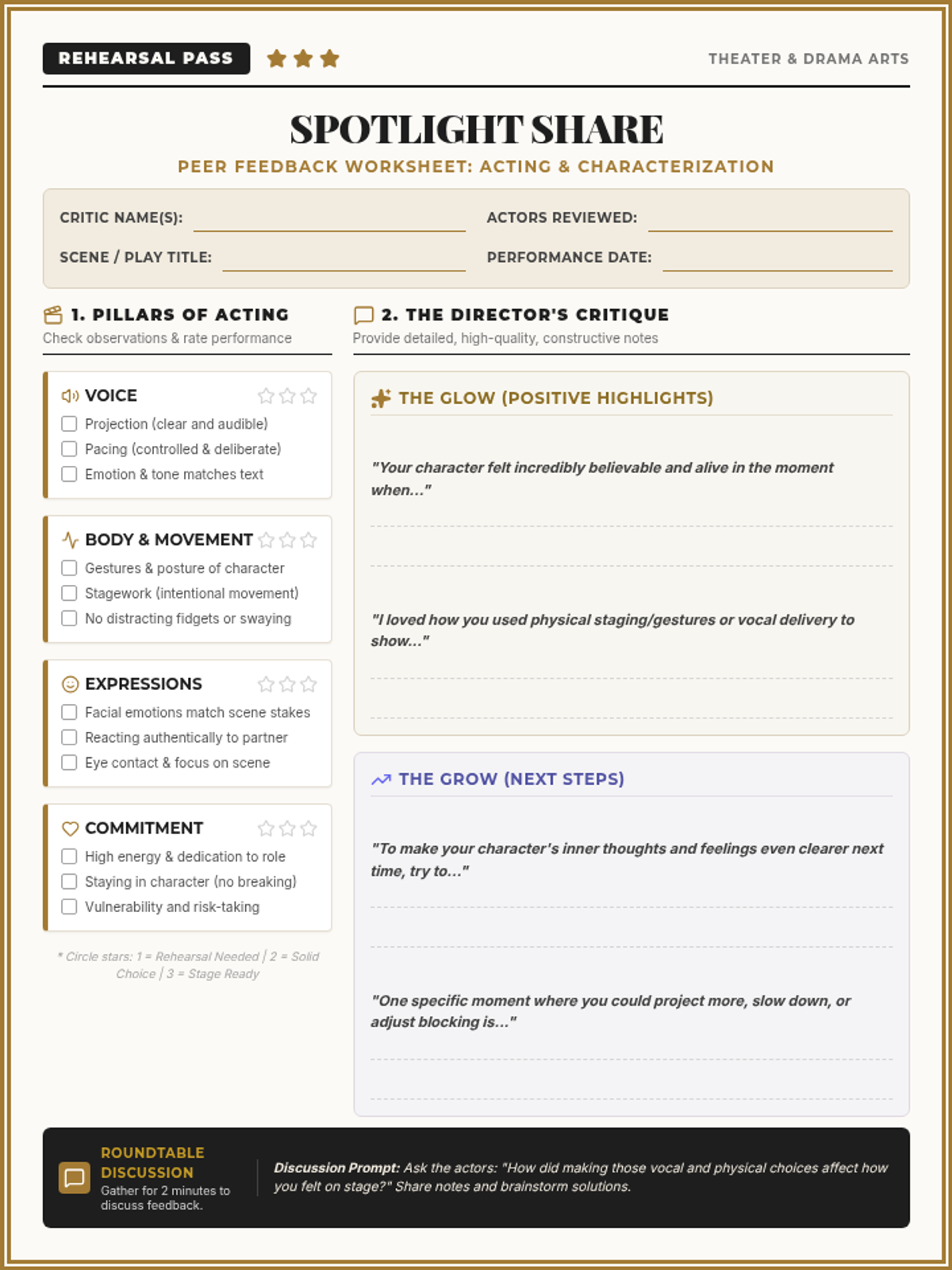
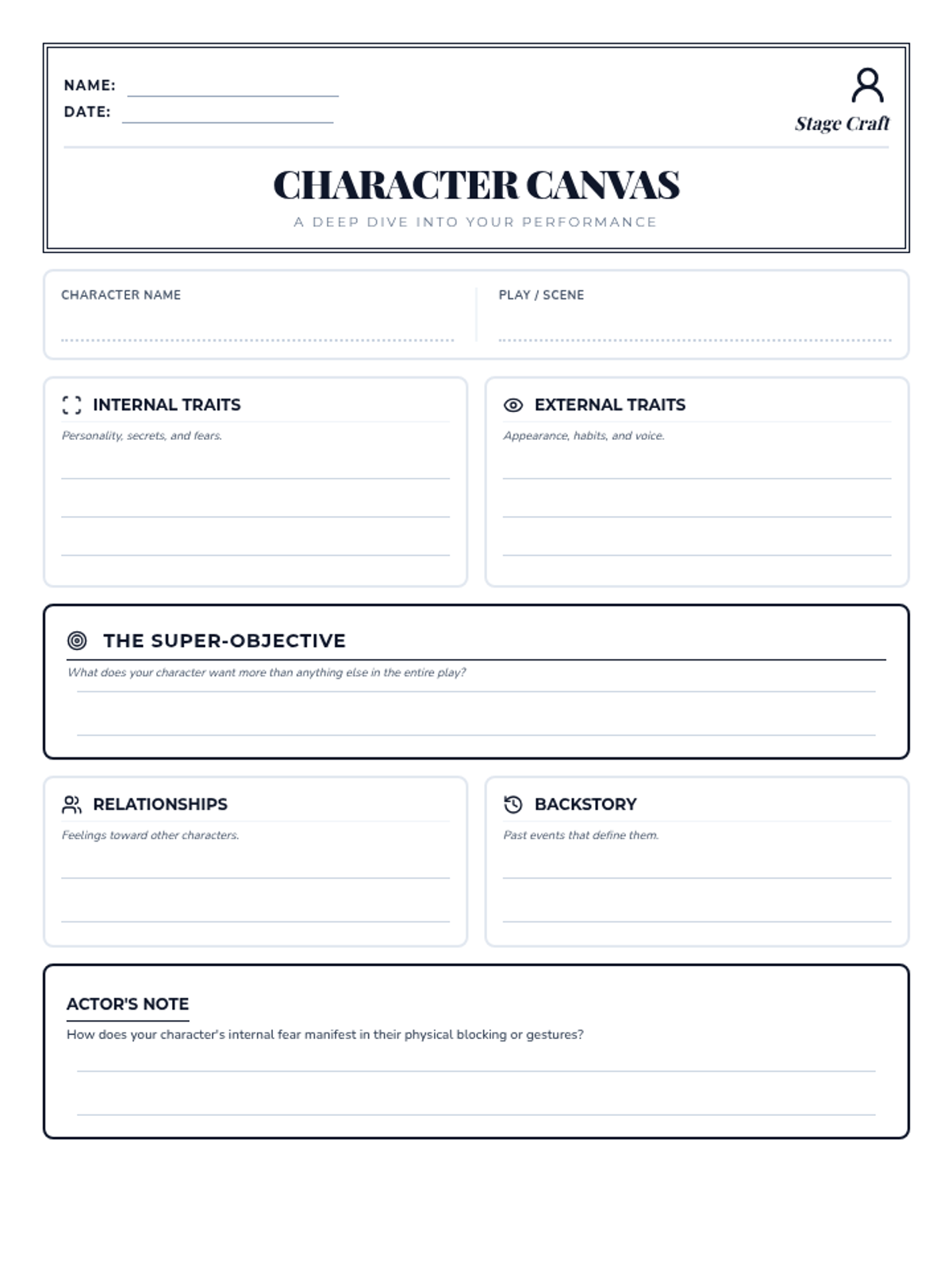
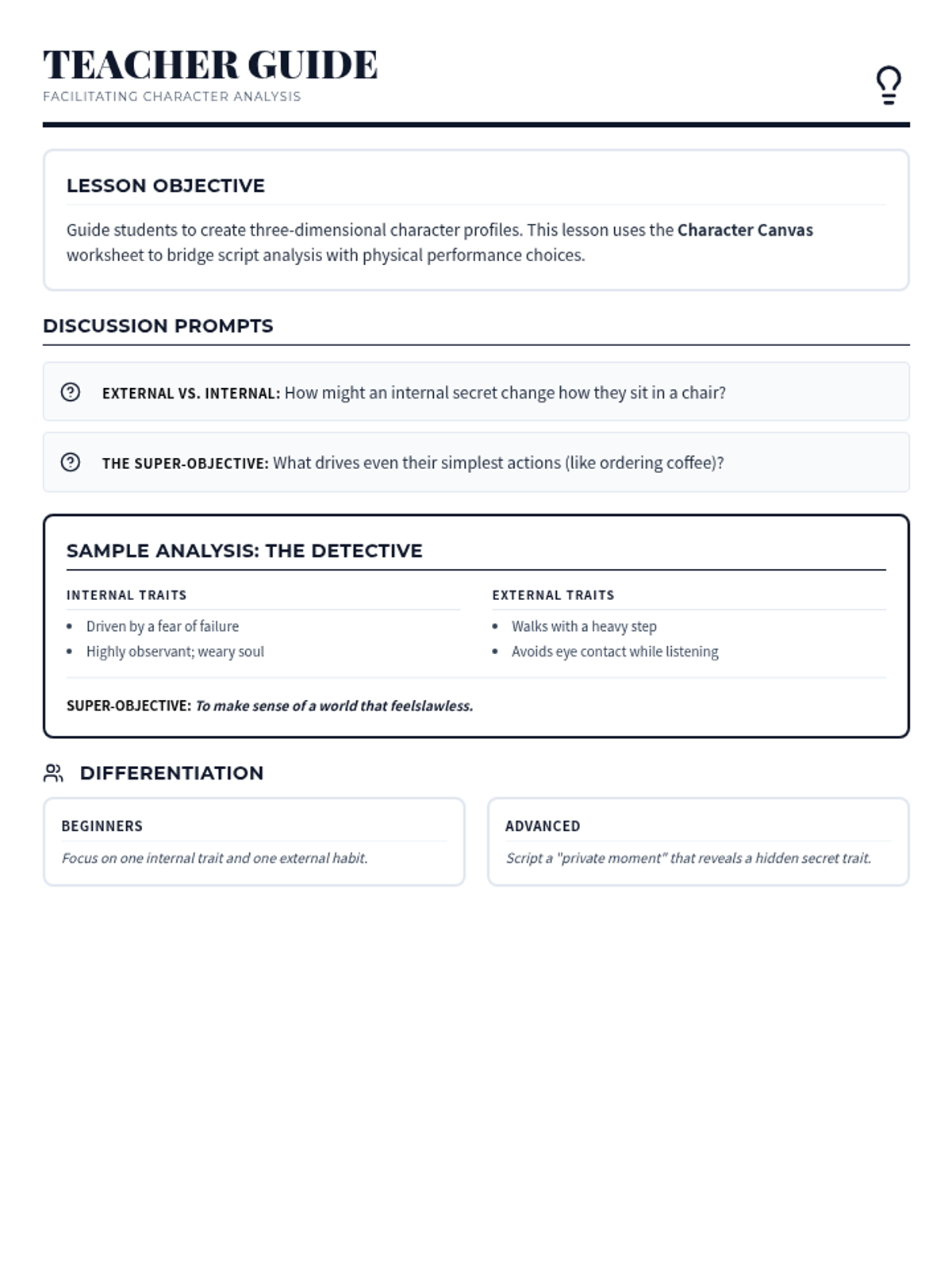
A lesson centered on scene work, characterization, and dramatic performance. Students analyze characters, rehearse scripts, and engage in peer feedback to elevate their physical and vocal choices before final performance.
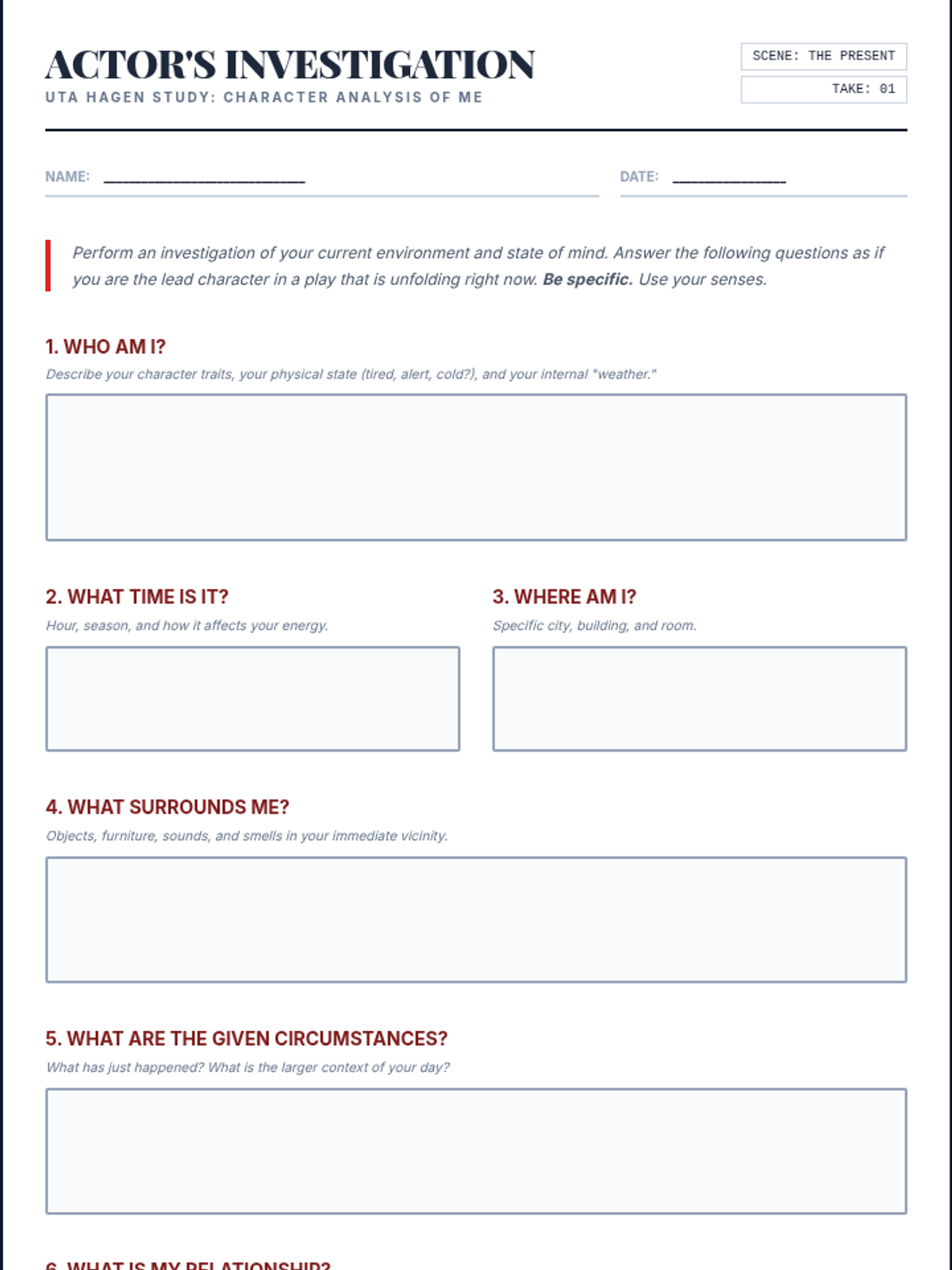
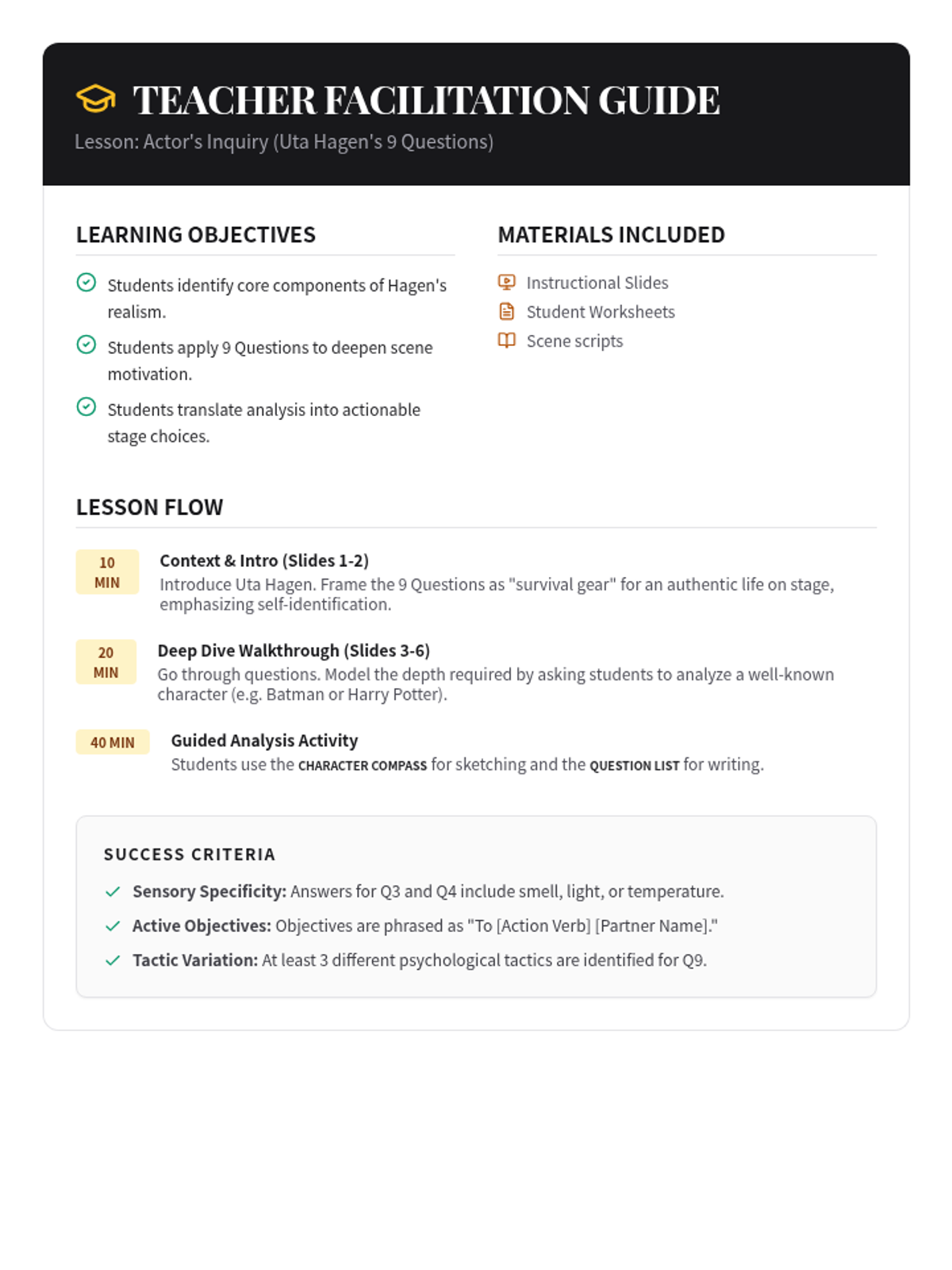
A comprehensive lesson introducing Uta Hagen's 9 Questions for character development in scene study. Includes instructional slides, a visual graphic organizer worksheet, and a teacher facilitation guide.
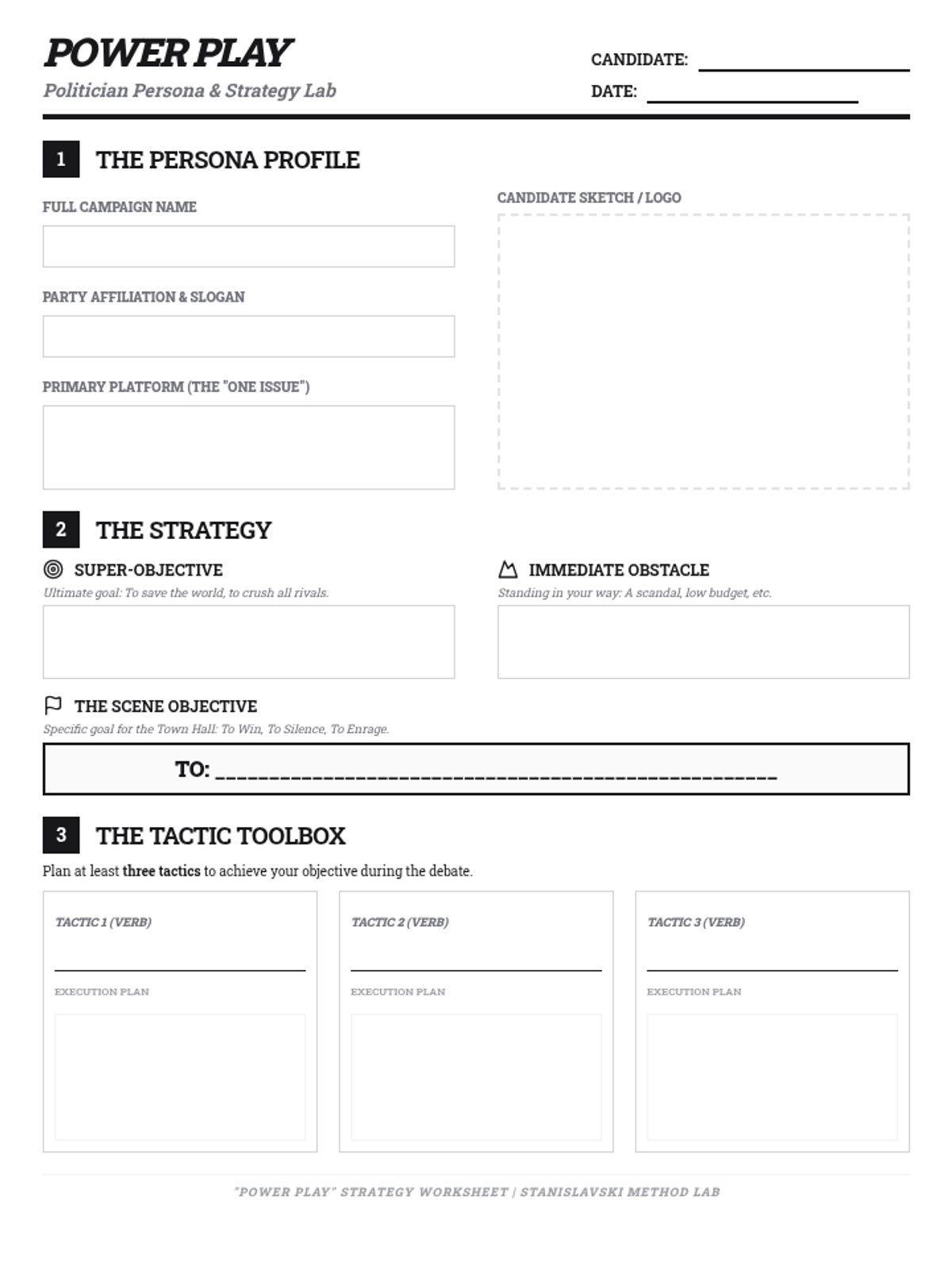
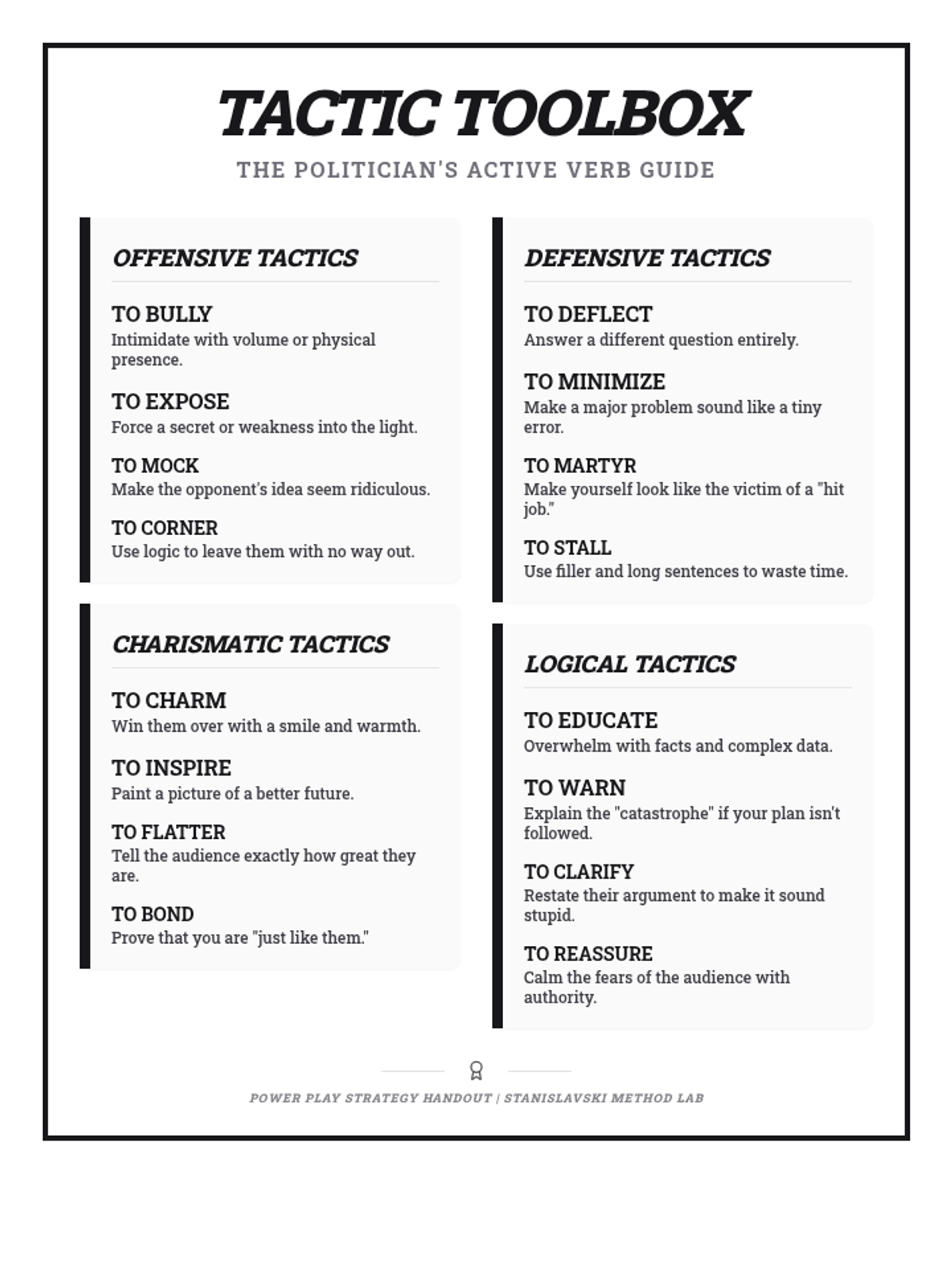
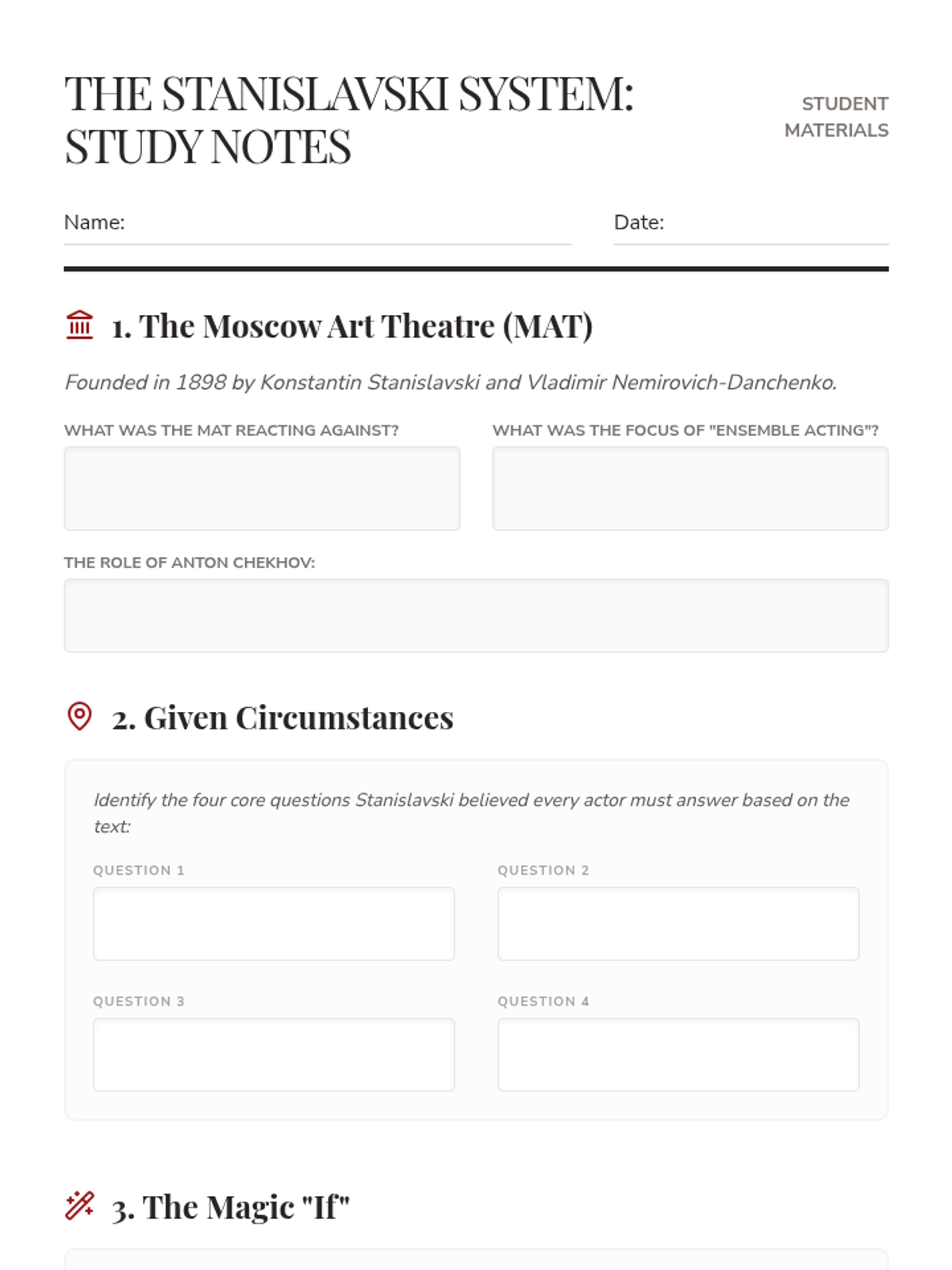
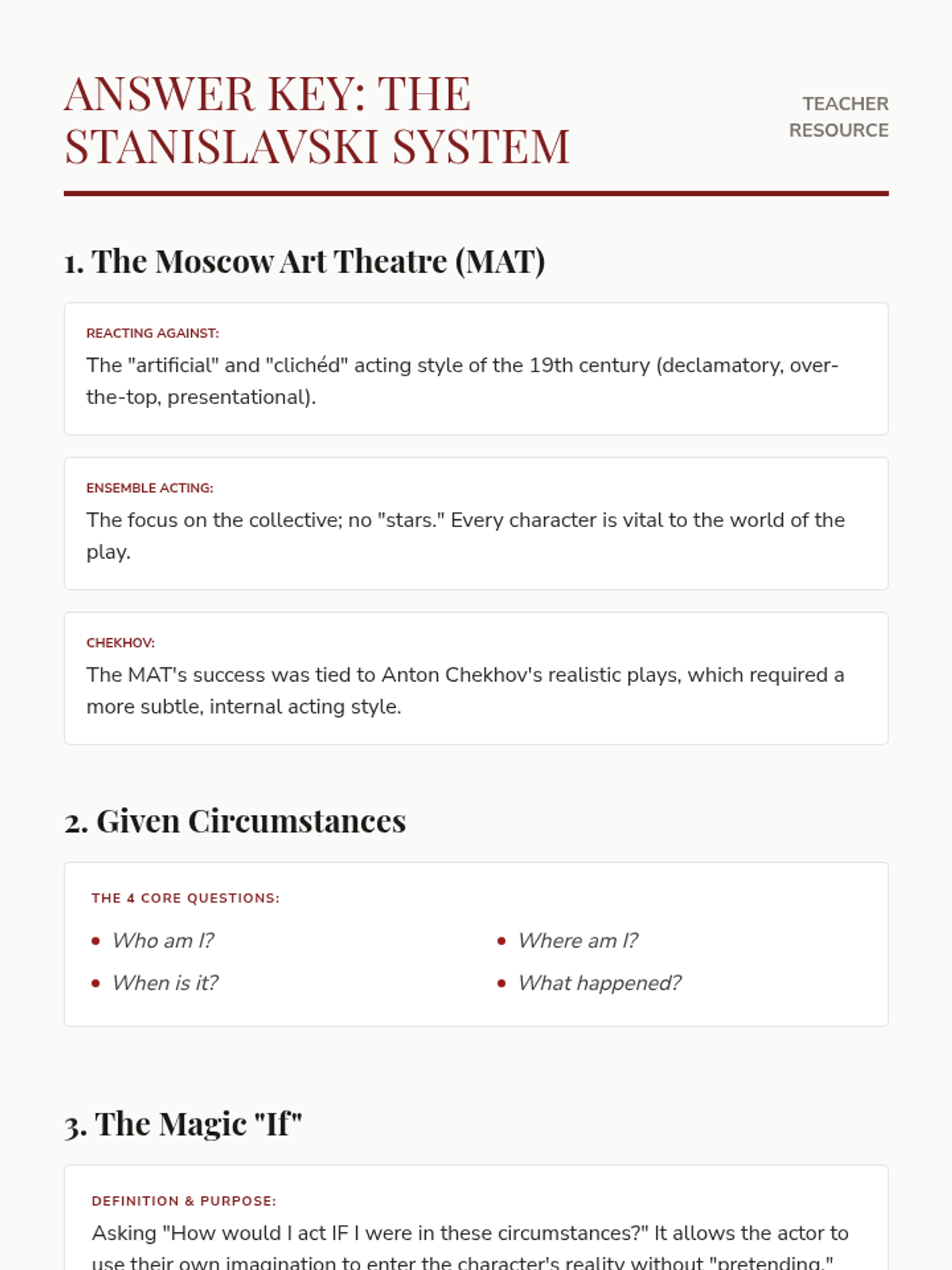
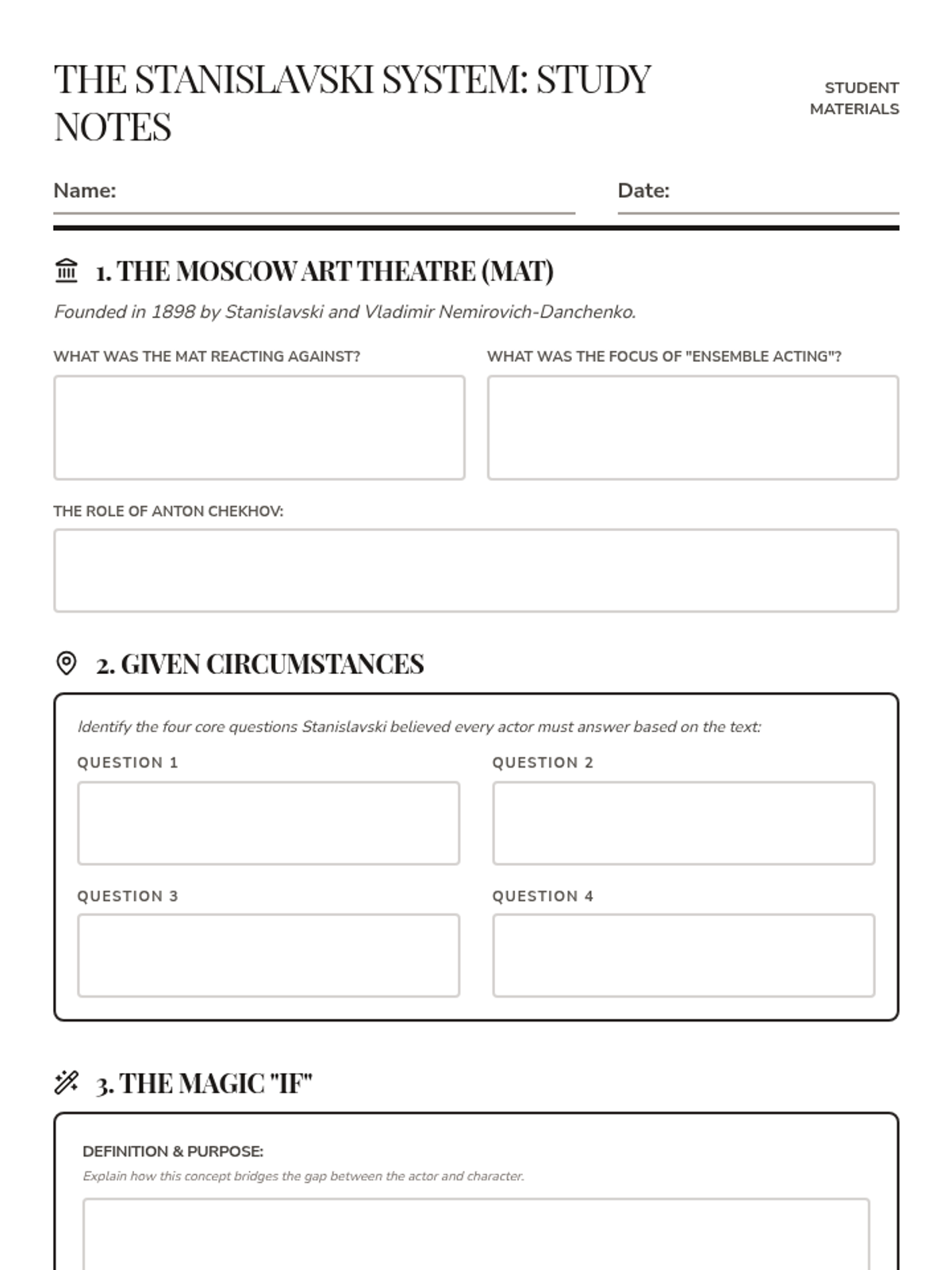
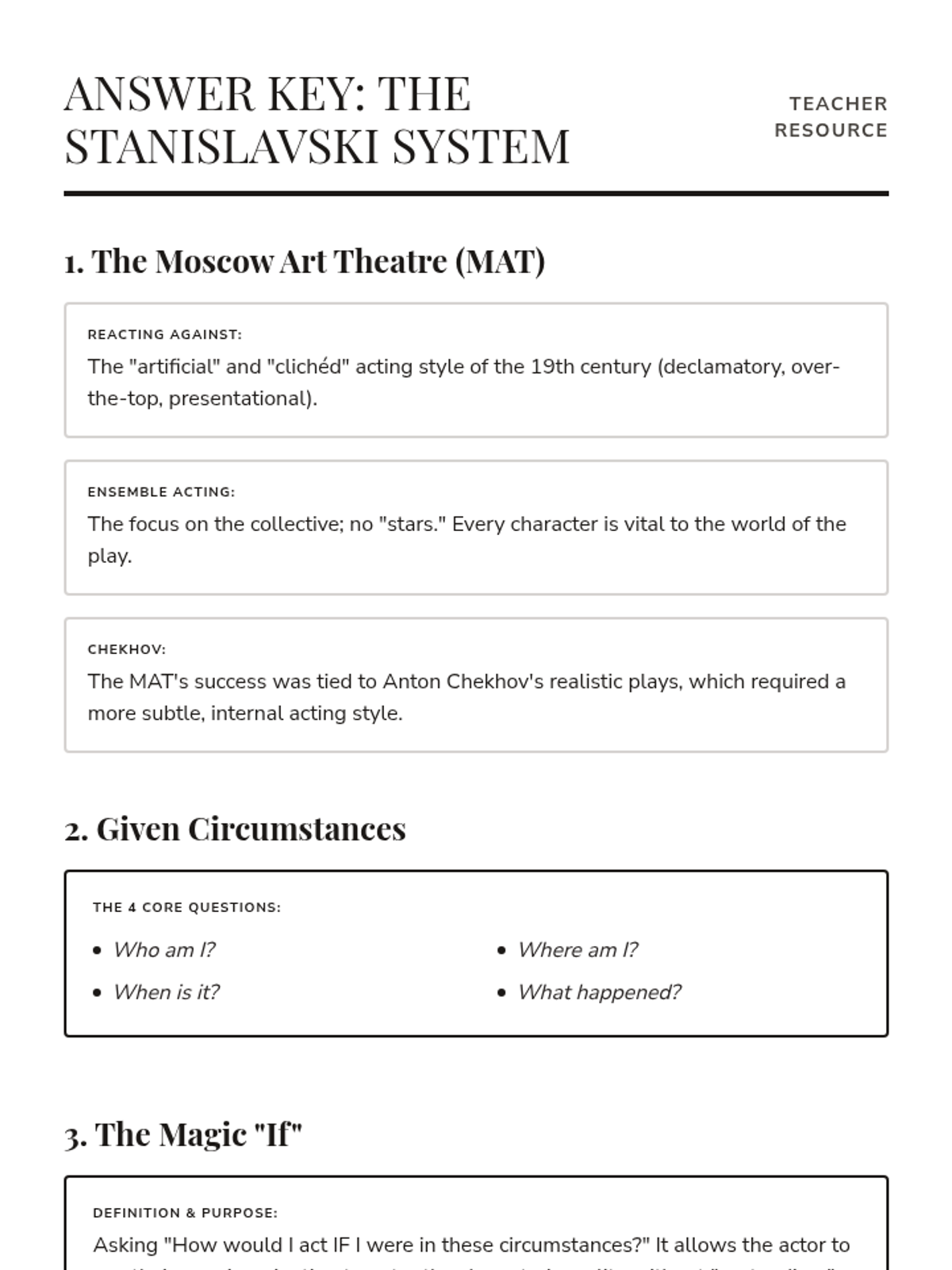
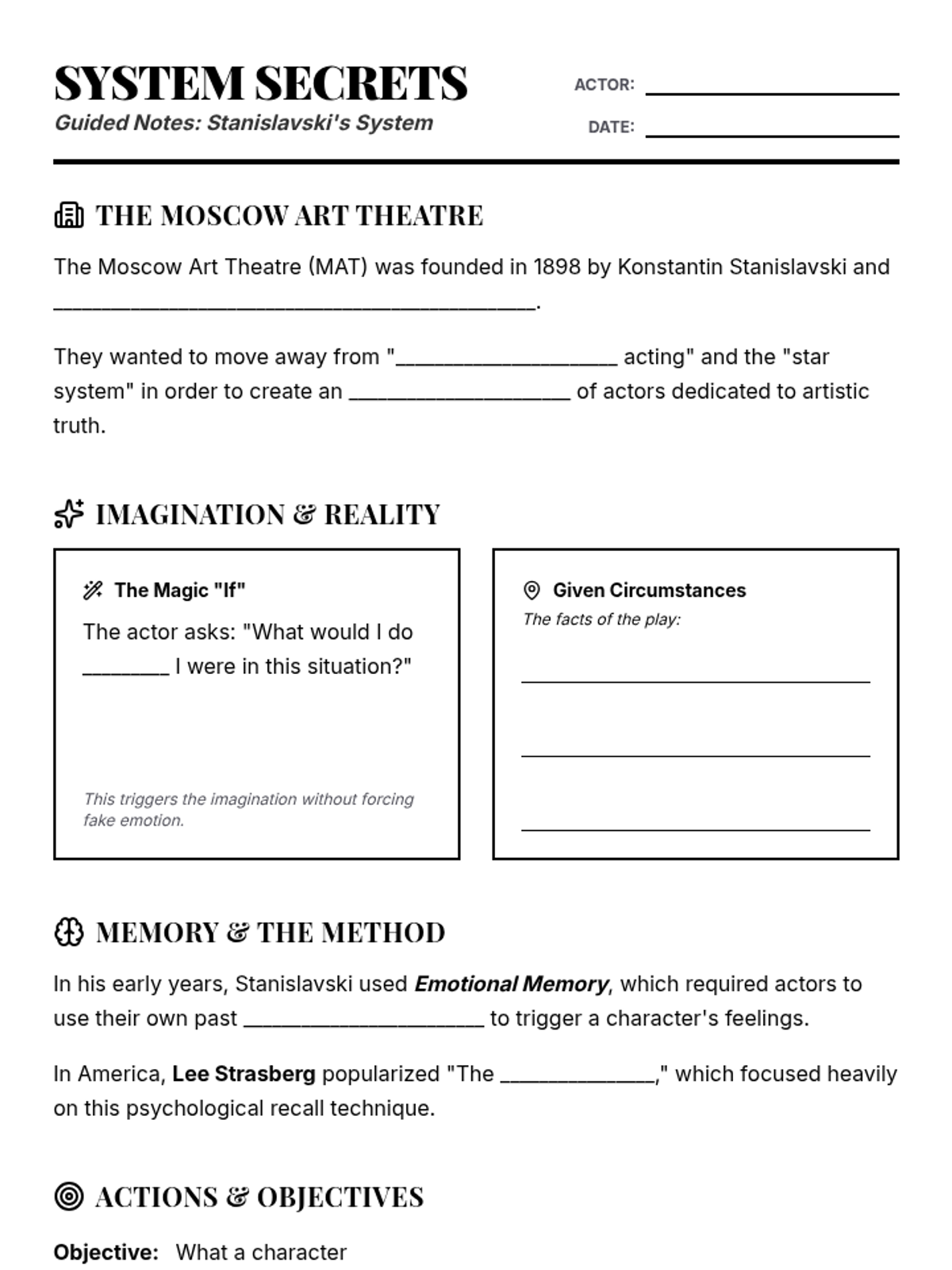
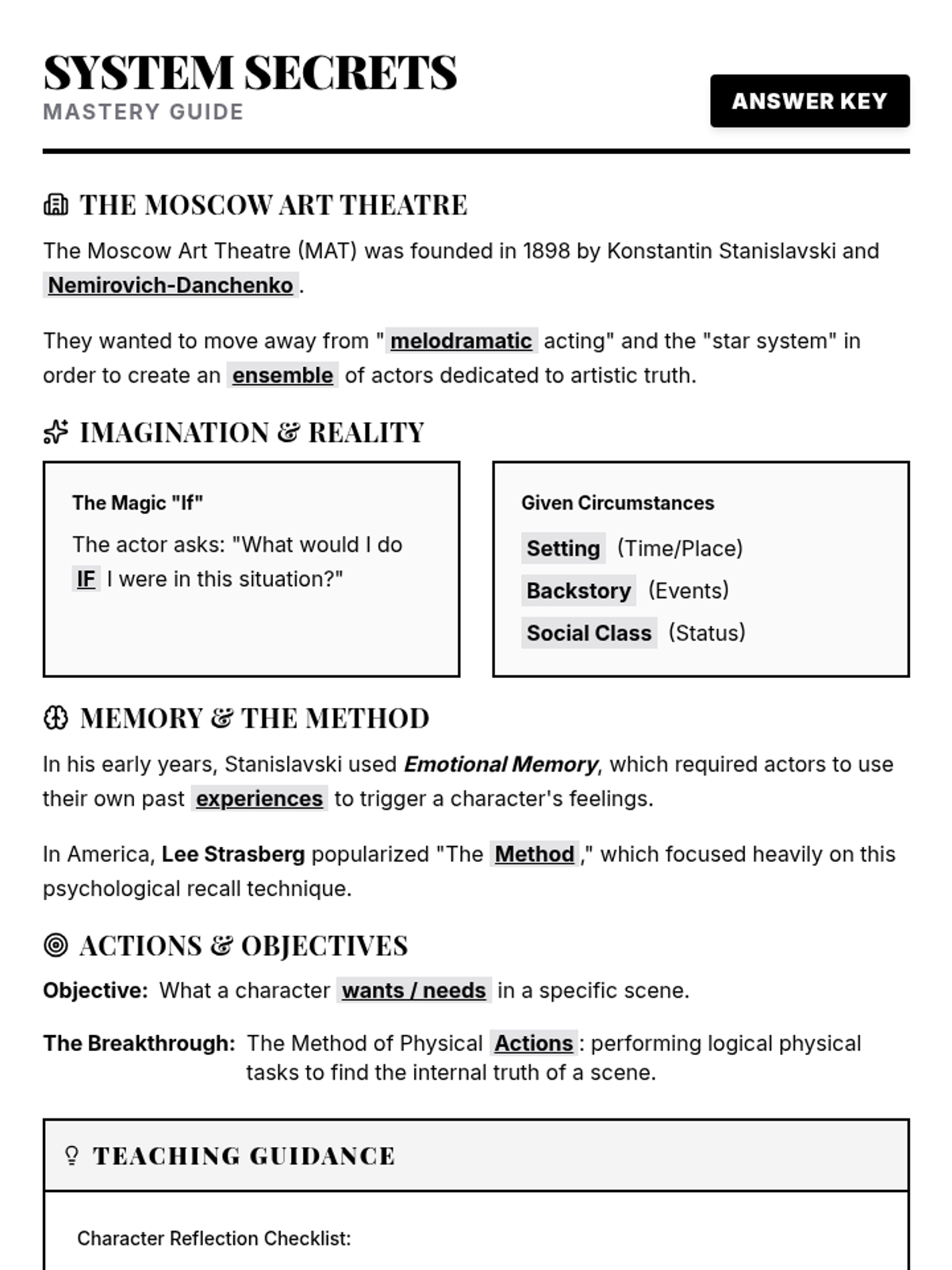
An in-depth exploration of Konstantin Stanislavski's revolutionary acting system, from the founding of the Moscow Art Theatre to the evolution of the Method of Physical Actions. Students will learn key concepts like the Magic If, Given Circumstances, and the shift from internal emotion to external action.
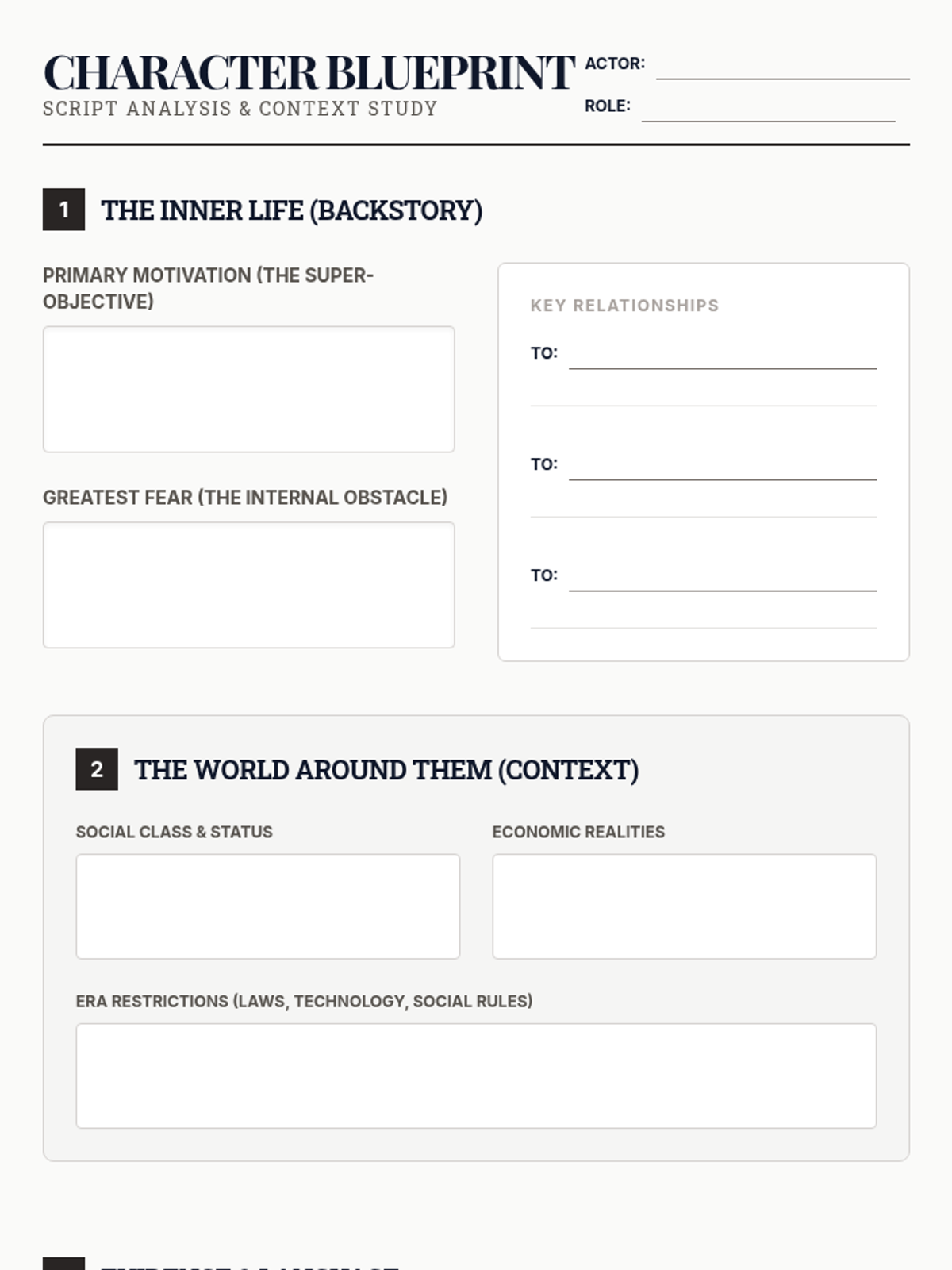
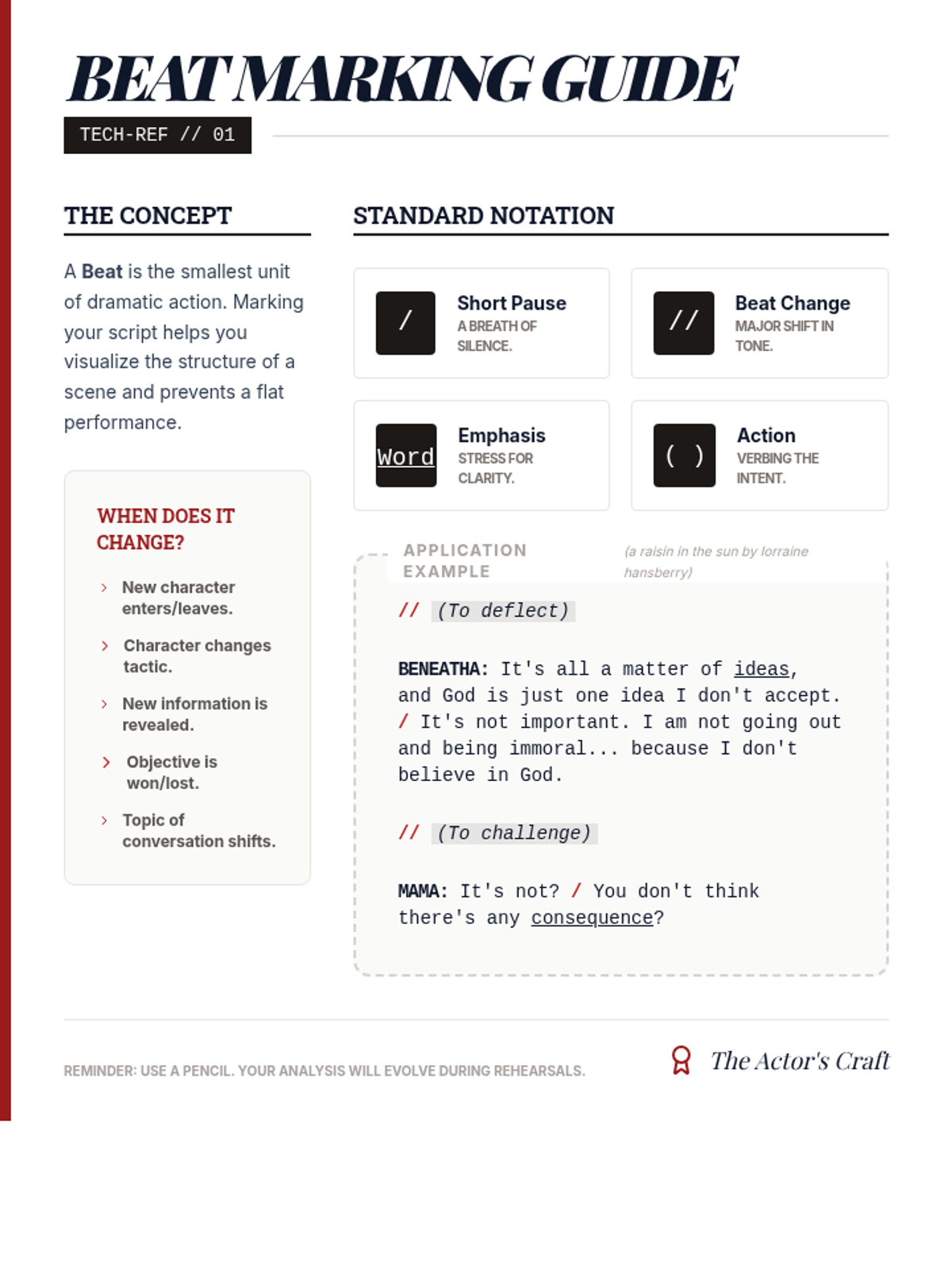
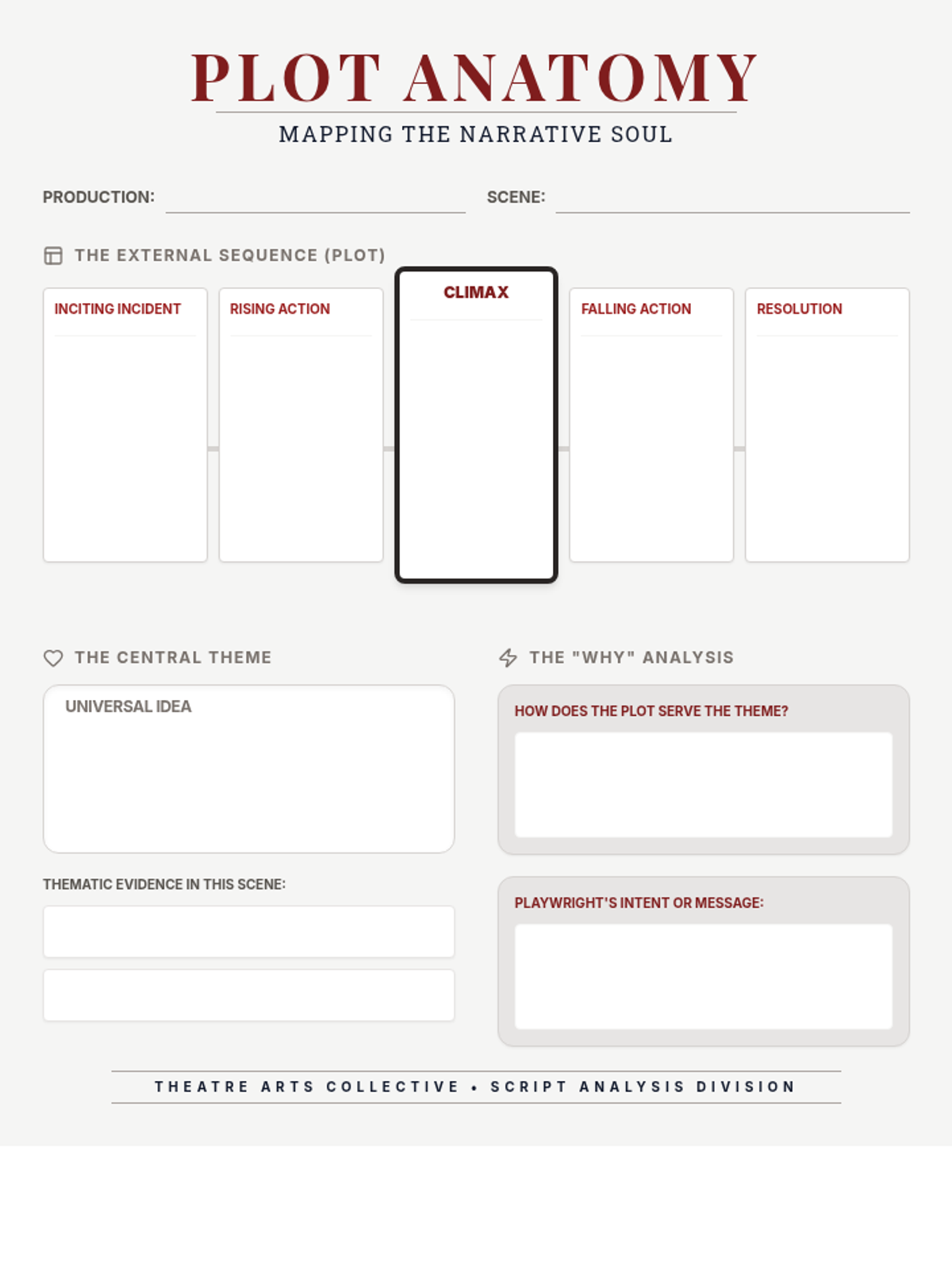
A comprehensive dive into the 'table work' phase of theatrical production, focusing on character depth, historical context, and technical script analysis. Students will move from initial reading to deep interpretation.
A deep dive into Konstantin Stanislavski's revolutionary approach to realistic acting, covering the Moscow Art Theatre, the Magic If, and the shift from Emotional Memory to Physical Actions.
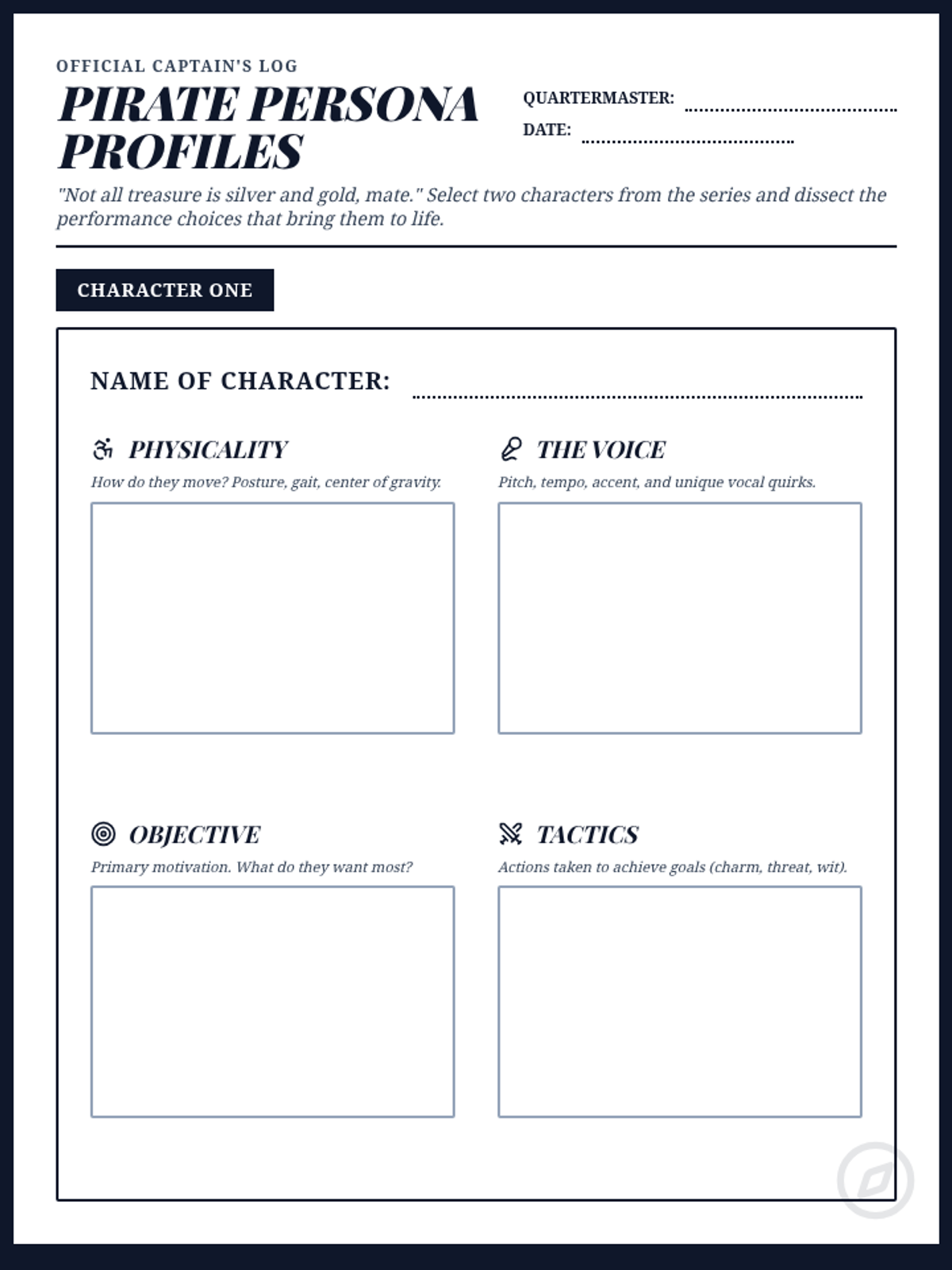
A lesson focused on analyzing the performance choices and narrative motivations of characters in the Pirates of the Caribbean series. Students explore how physicality, voice, and tactics define iconic cinematic figures.
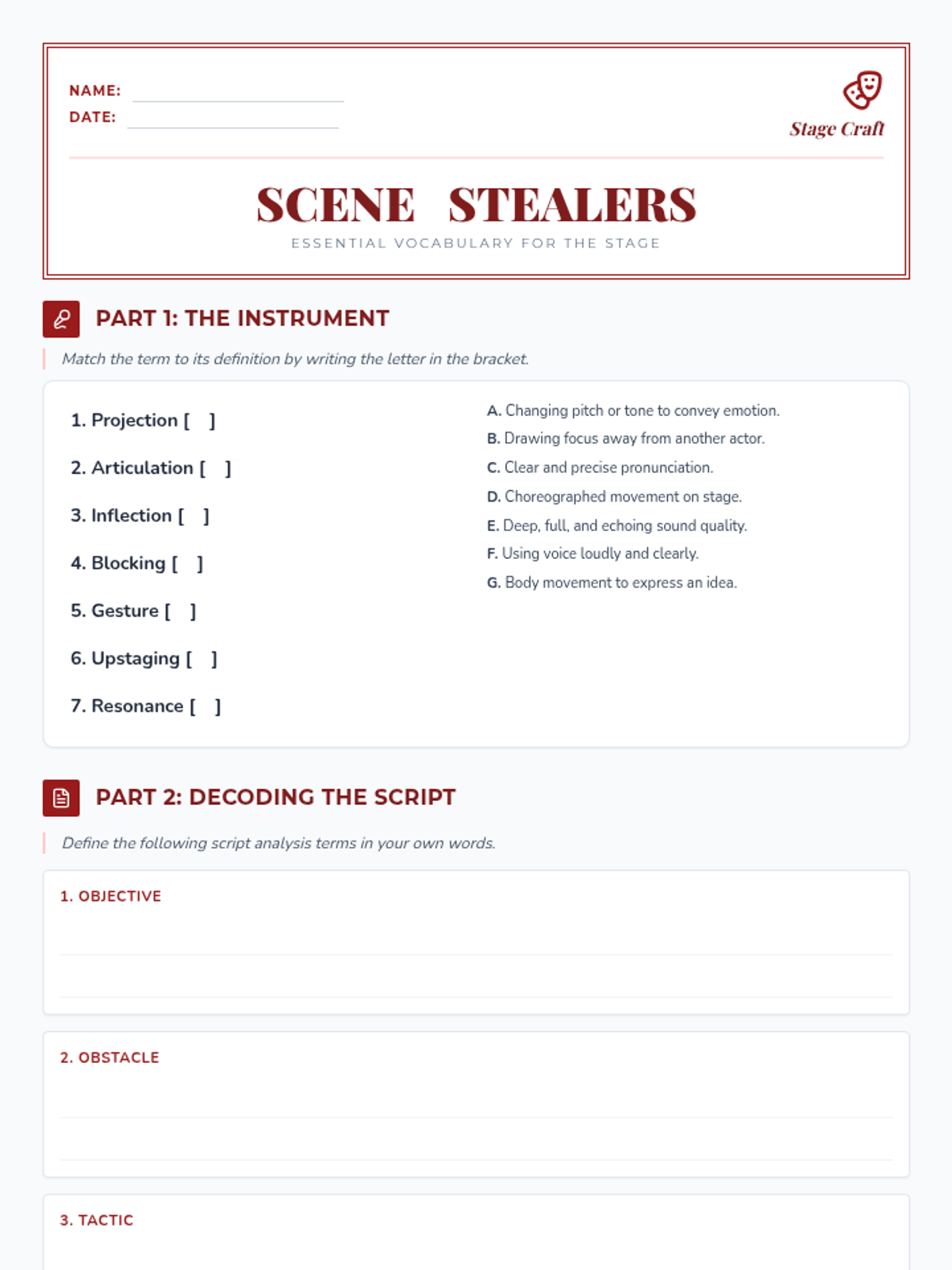
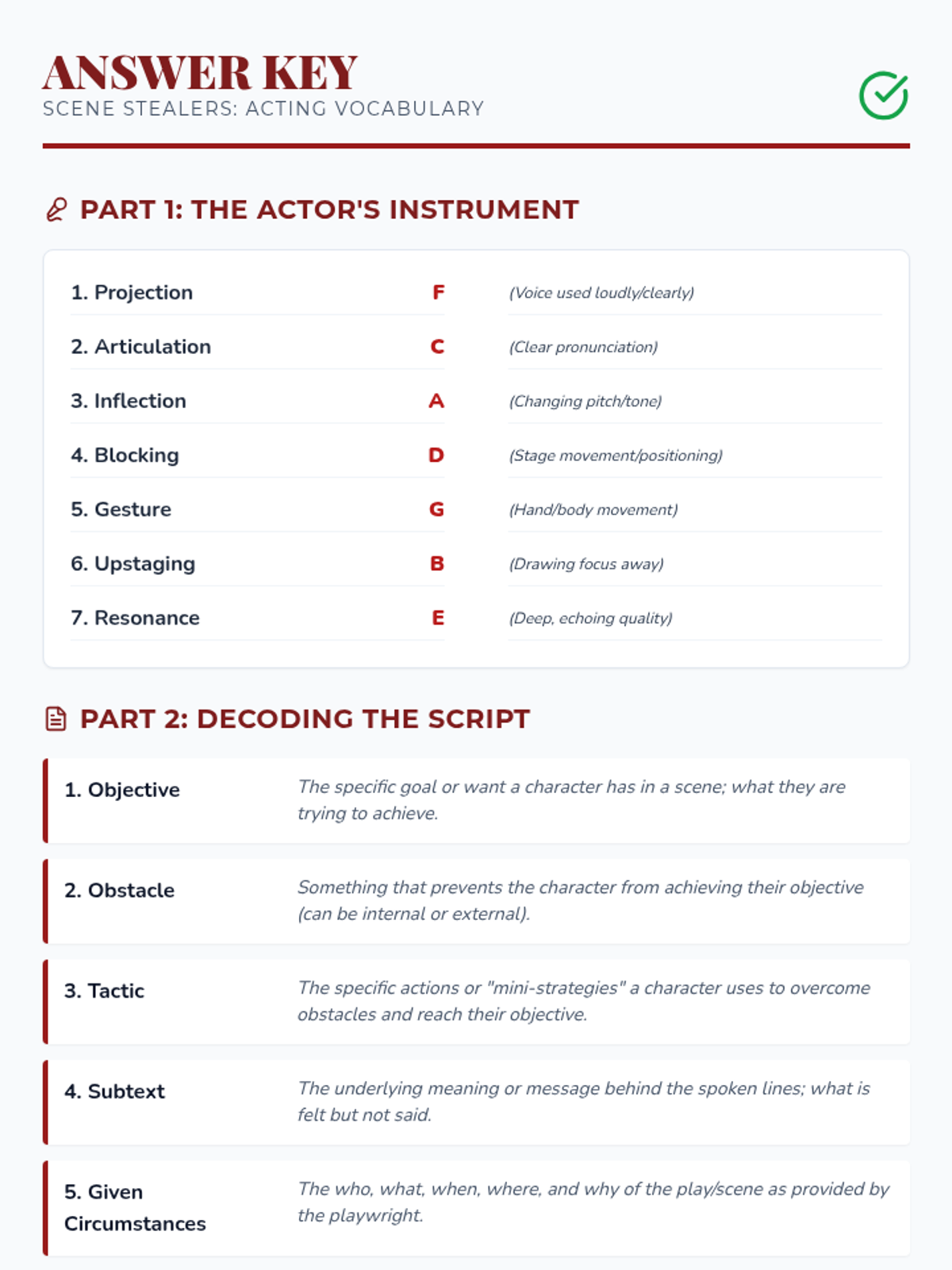
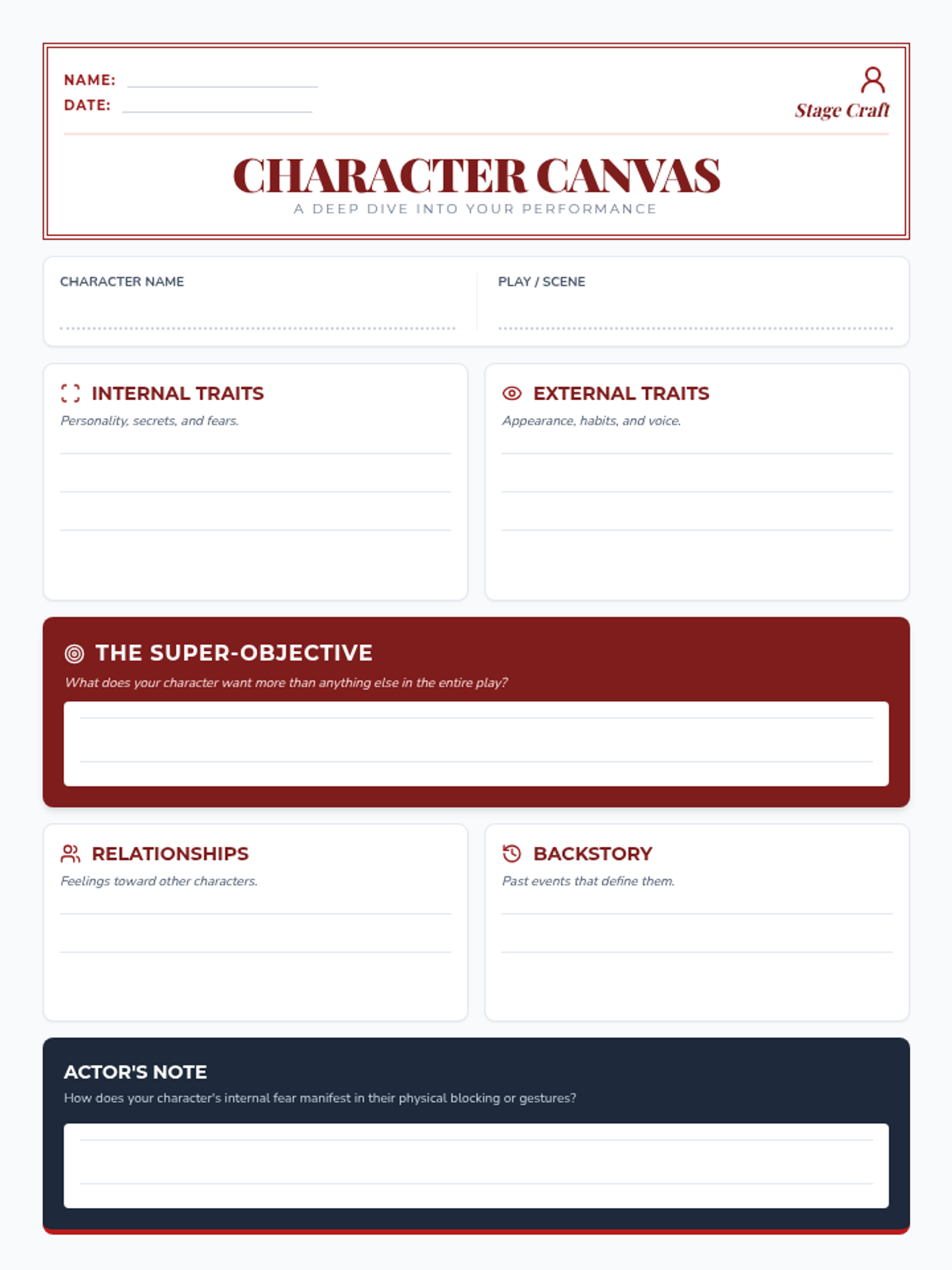
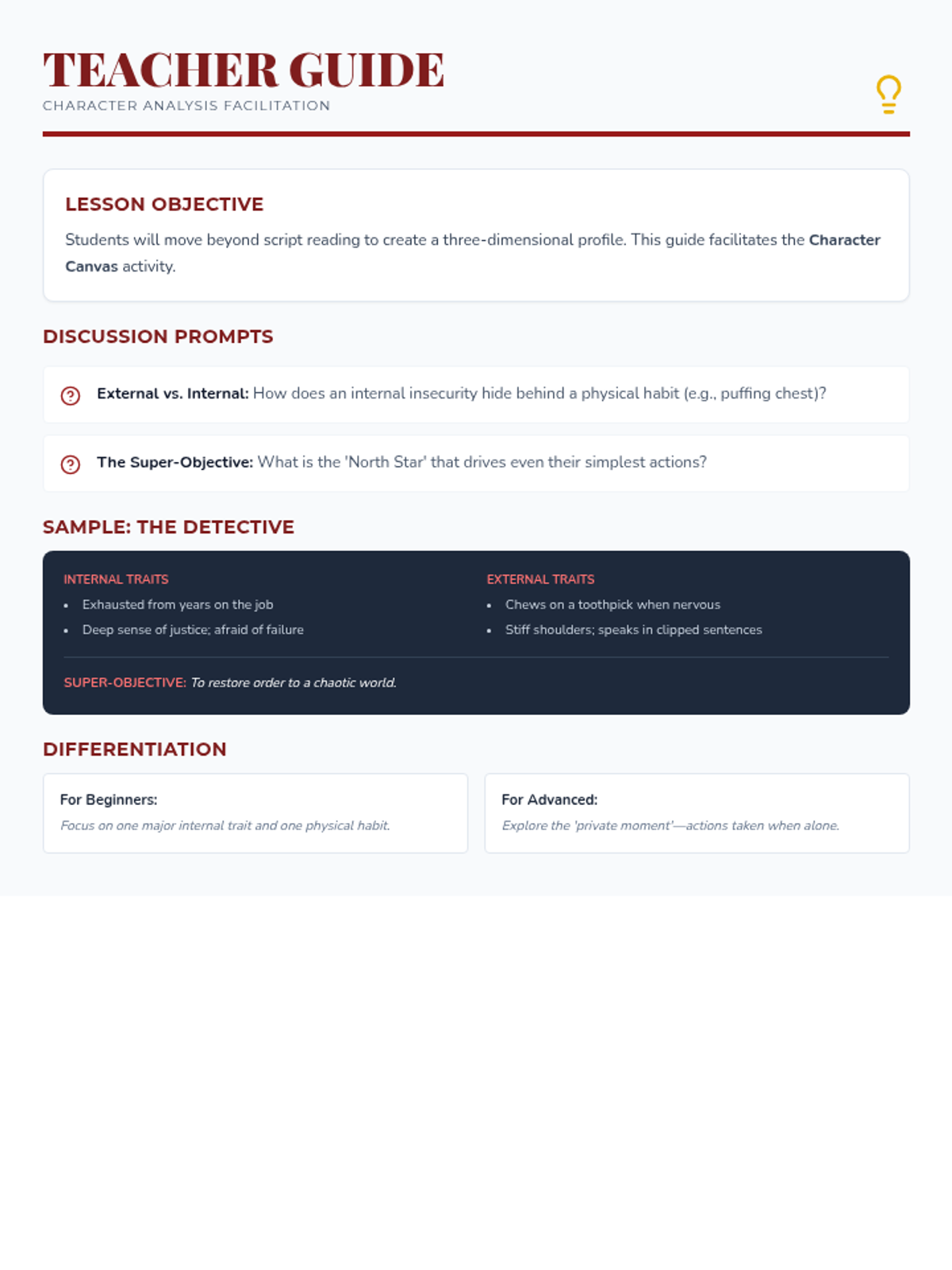
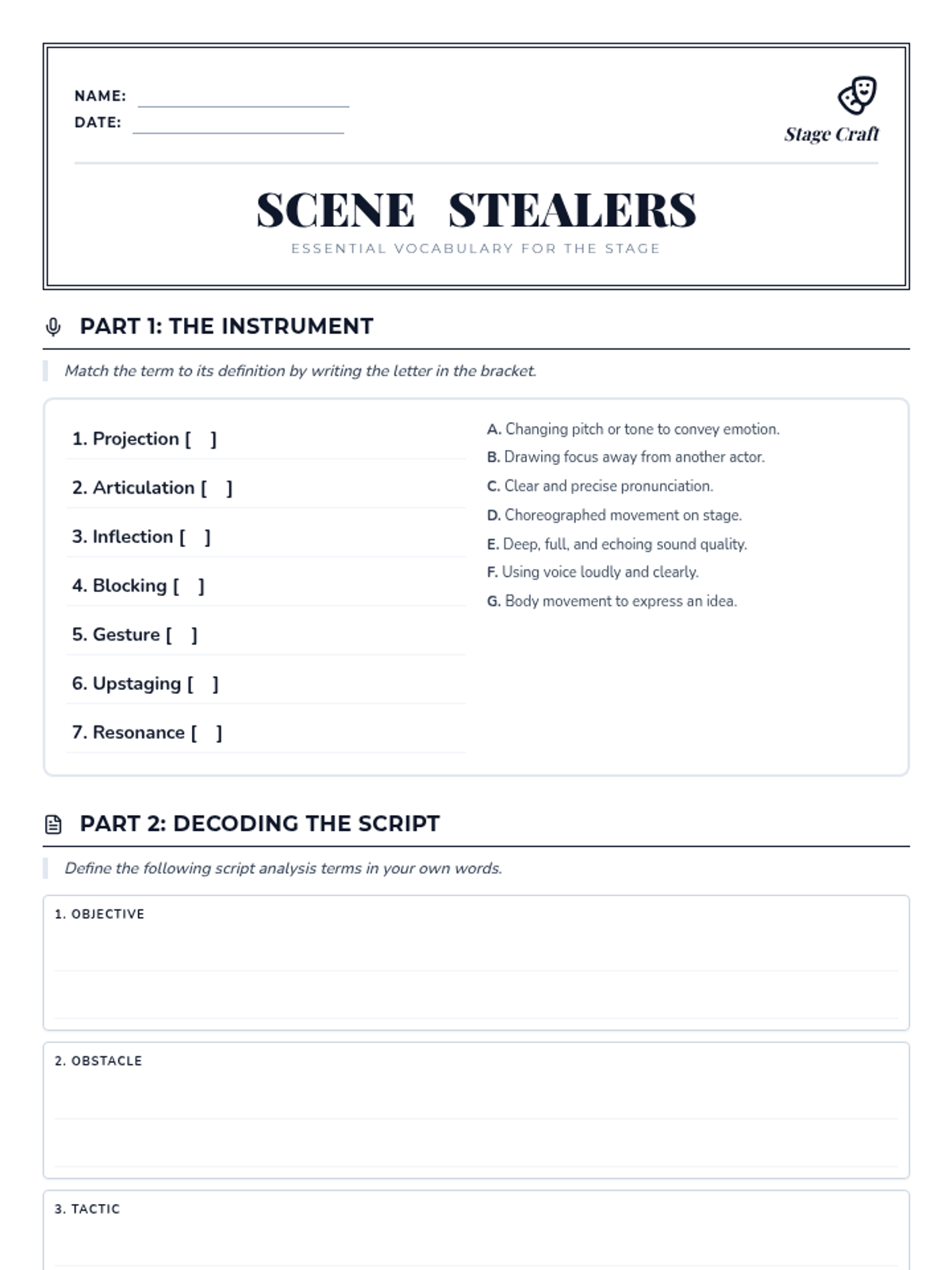
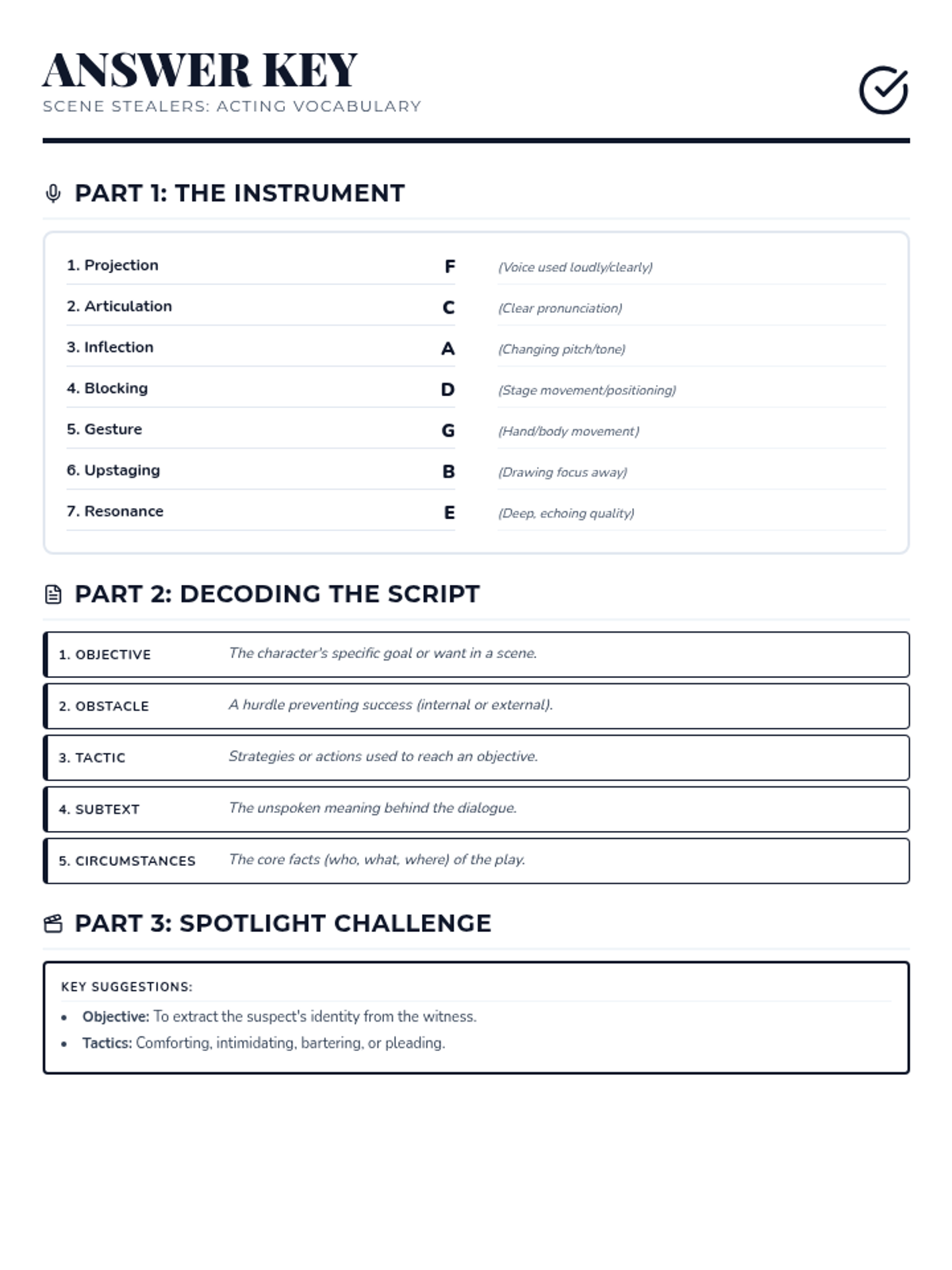
A foundational lesson on theater terminology focusing on how actors use their voice, body, and script analysis to create compelling characters.
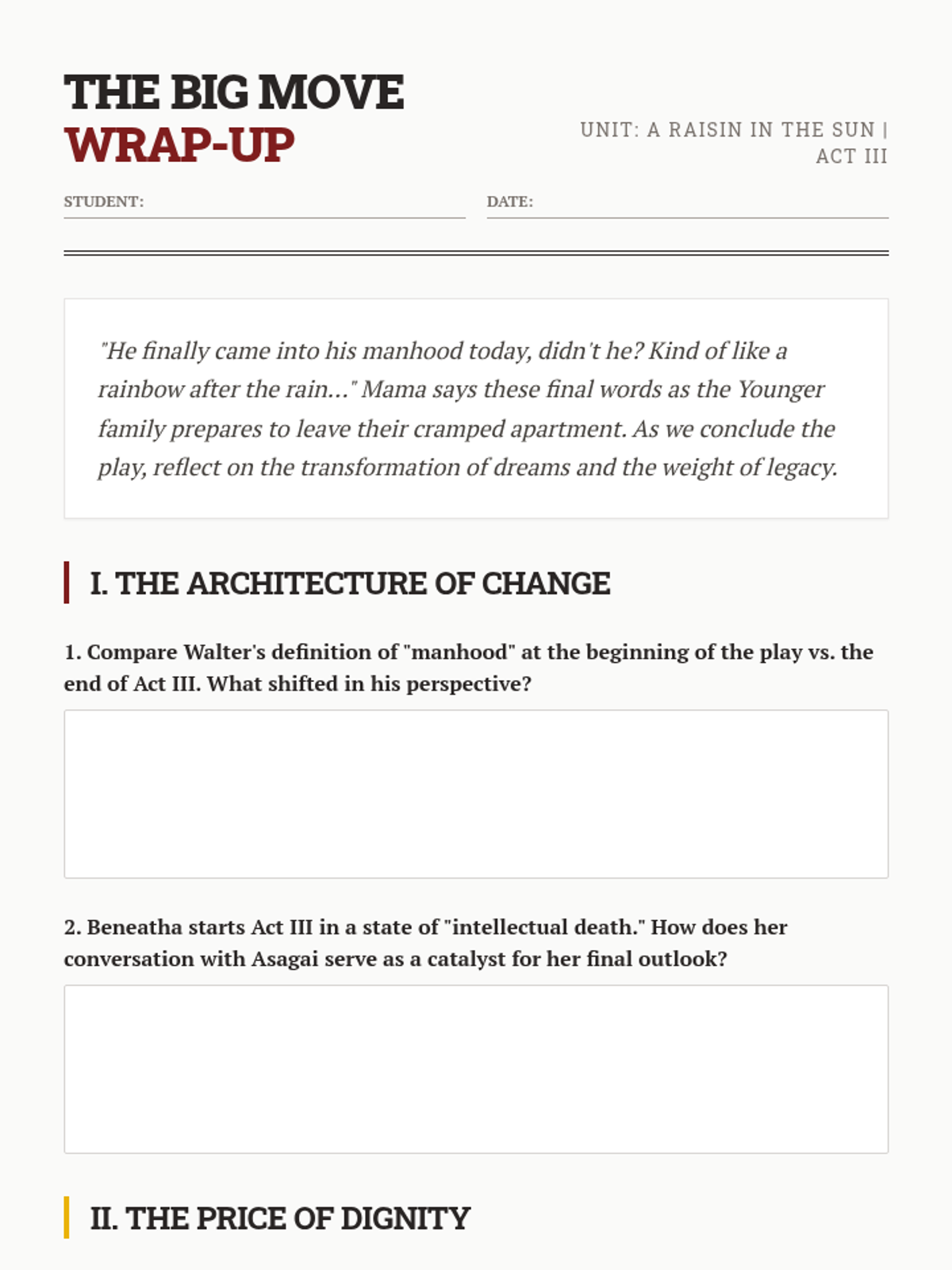
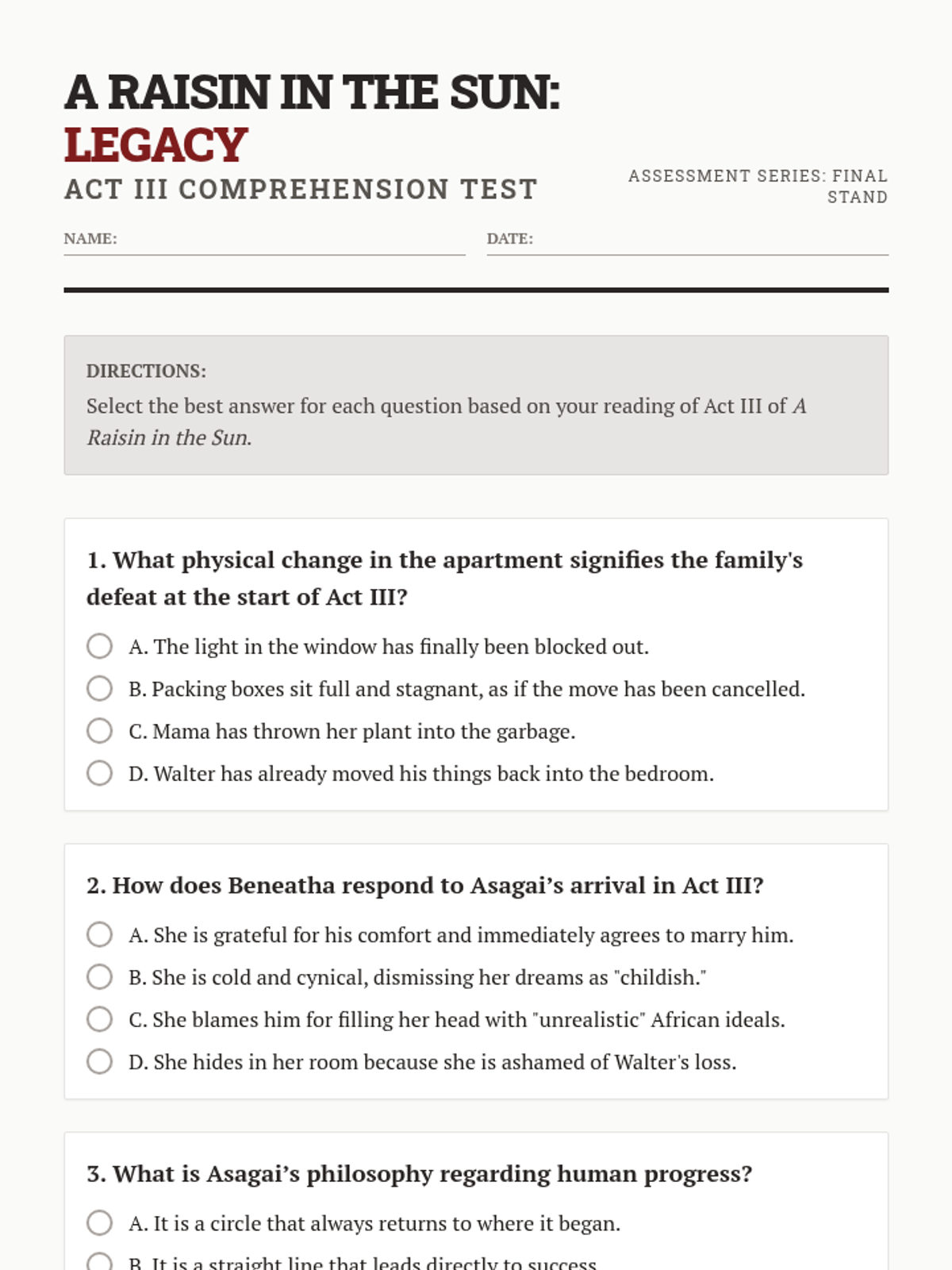
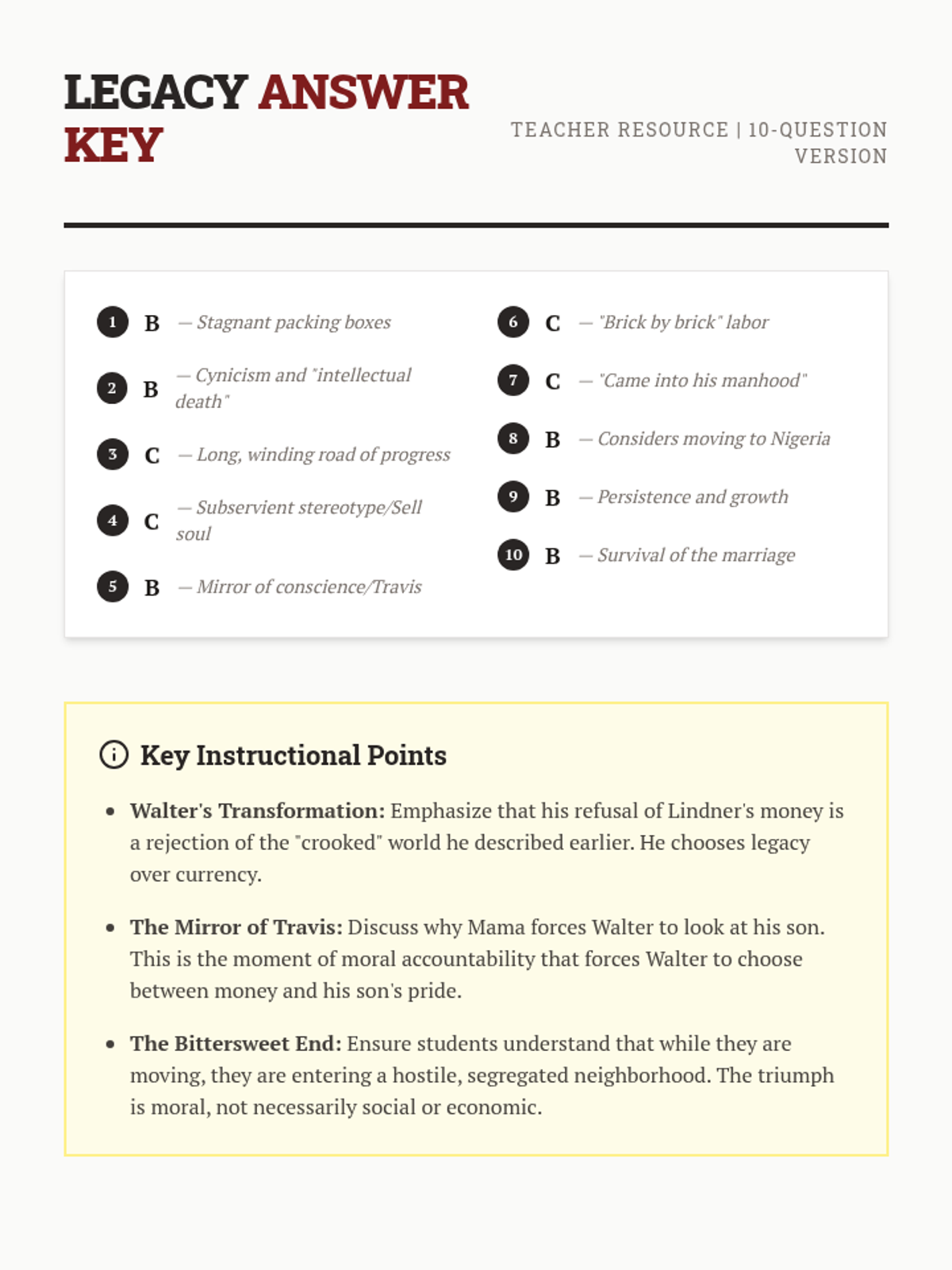
A comprehensive lesson covering the climax and resolution of 'A Raisin in the Sun', featuring instructional slides, a discussion-based wrap-up worksheet, and a comprehension assessment.
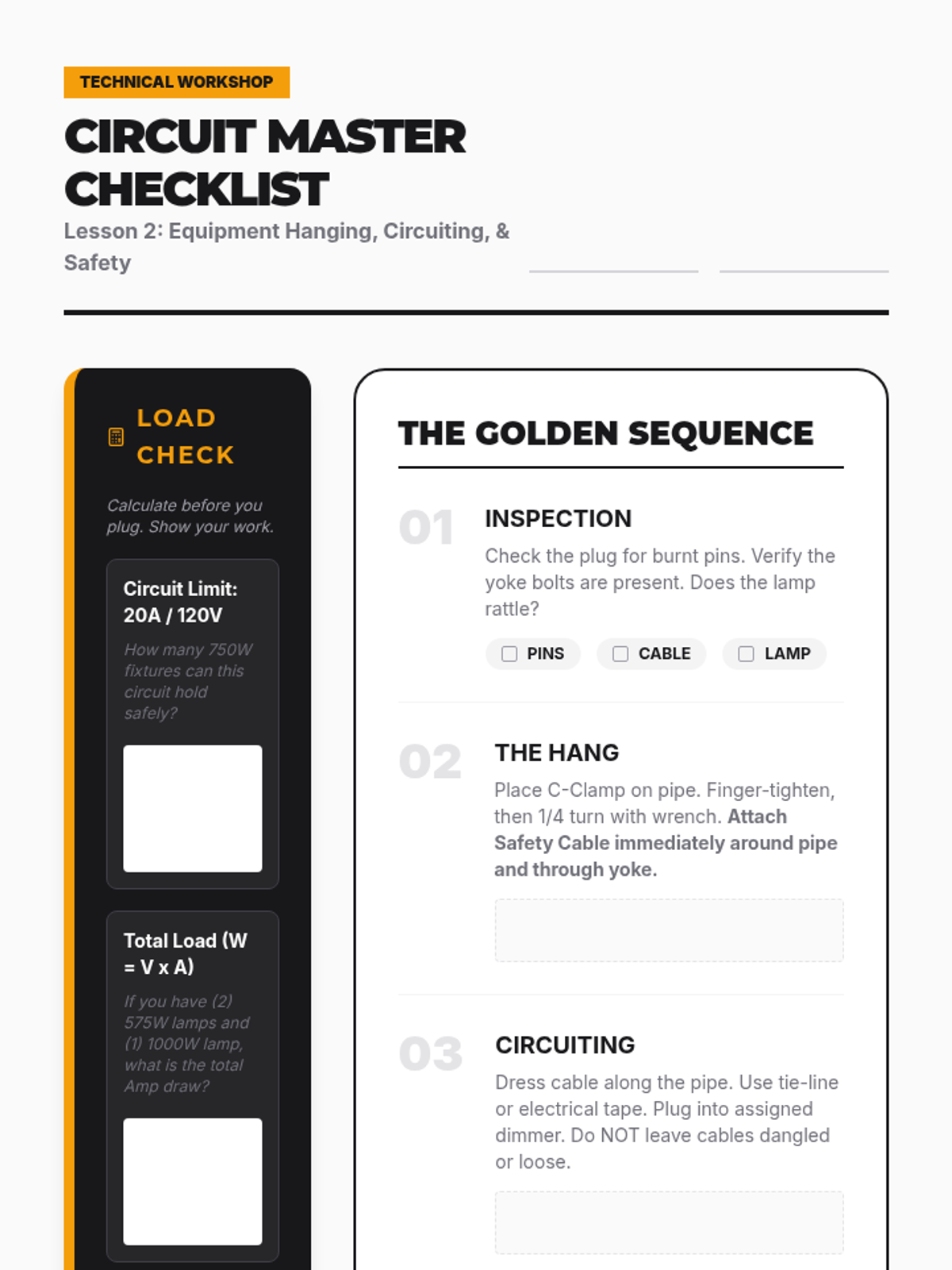
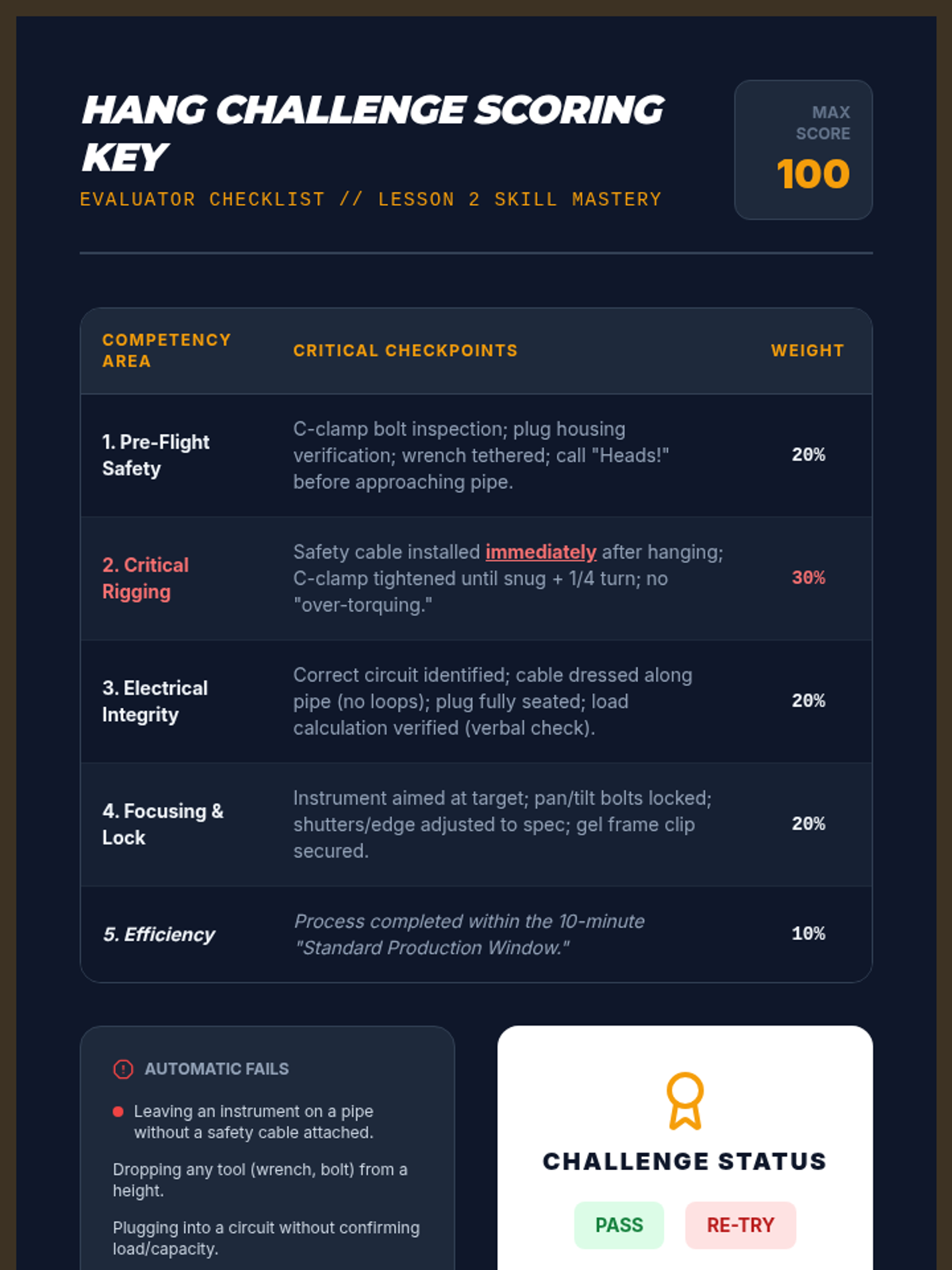
Hands-on instruction on lighting fixtures, electrical safety, and the technical process of hanging, circuiting, and focusing.
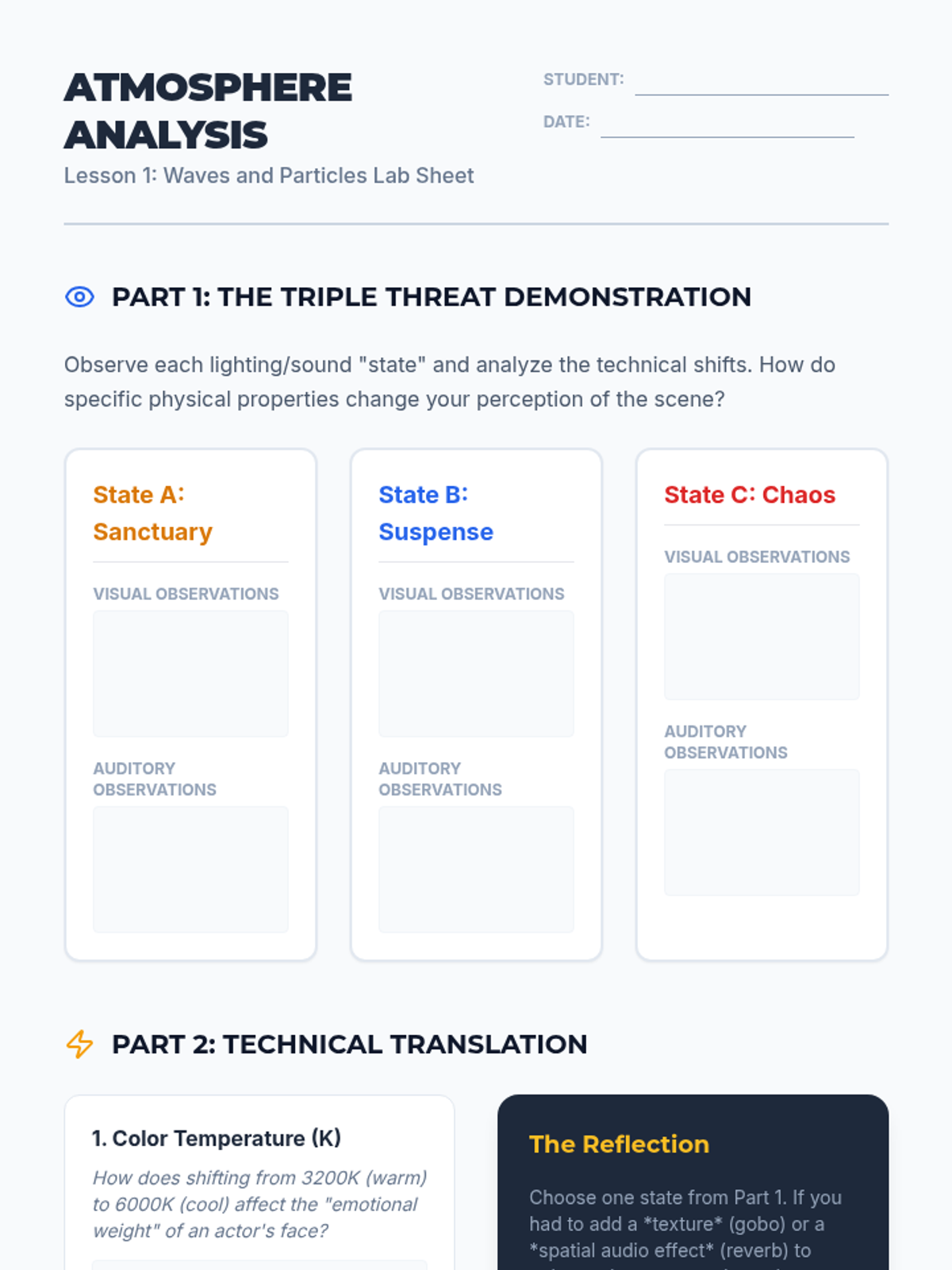
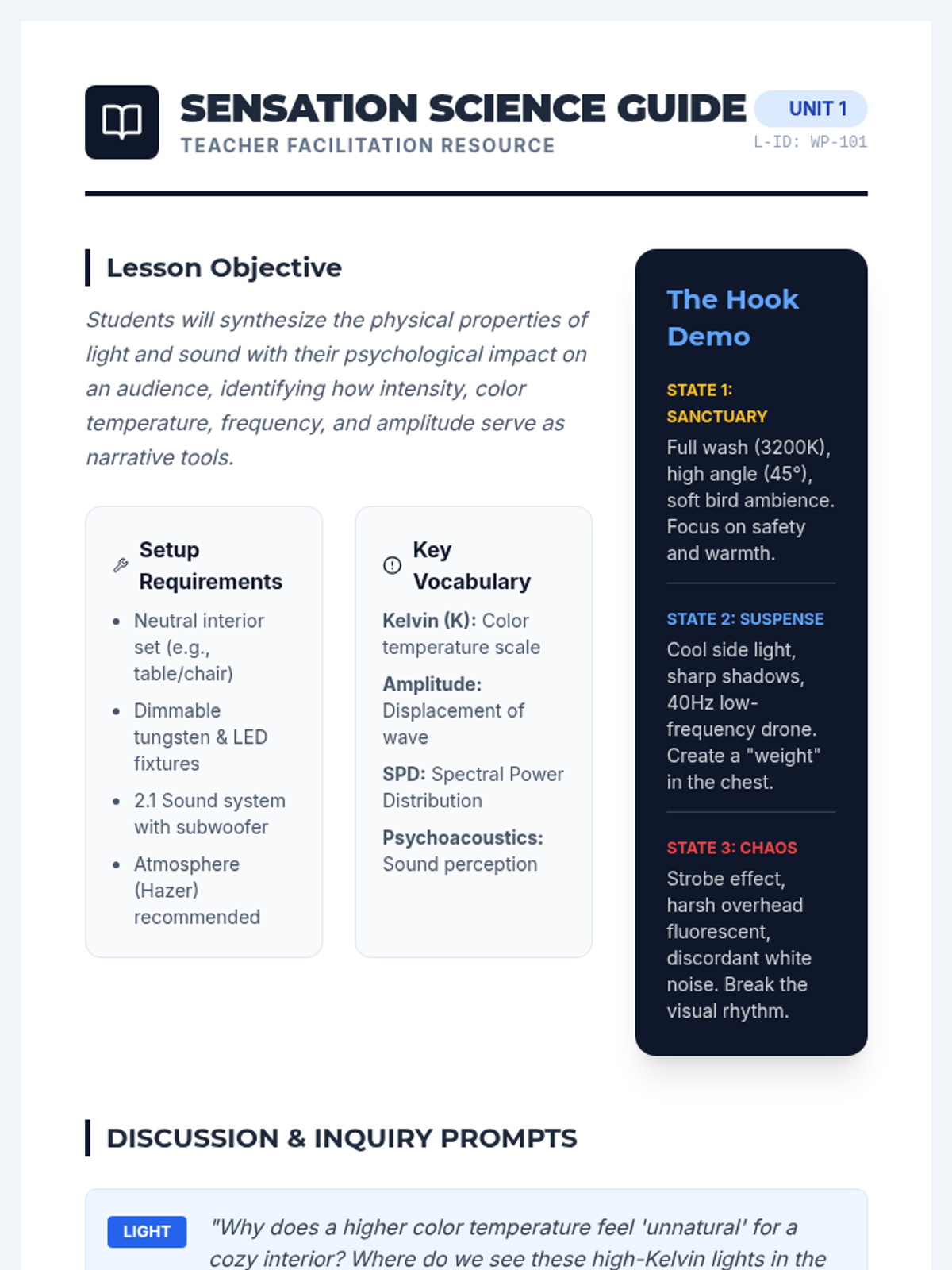
Exploration of the physical properties of light and sound and how they translate into emotional and narrative impact in a theatrical space.
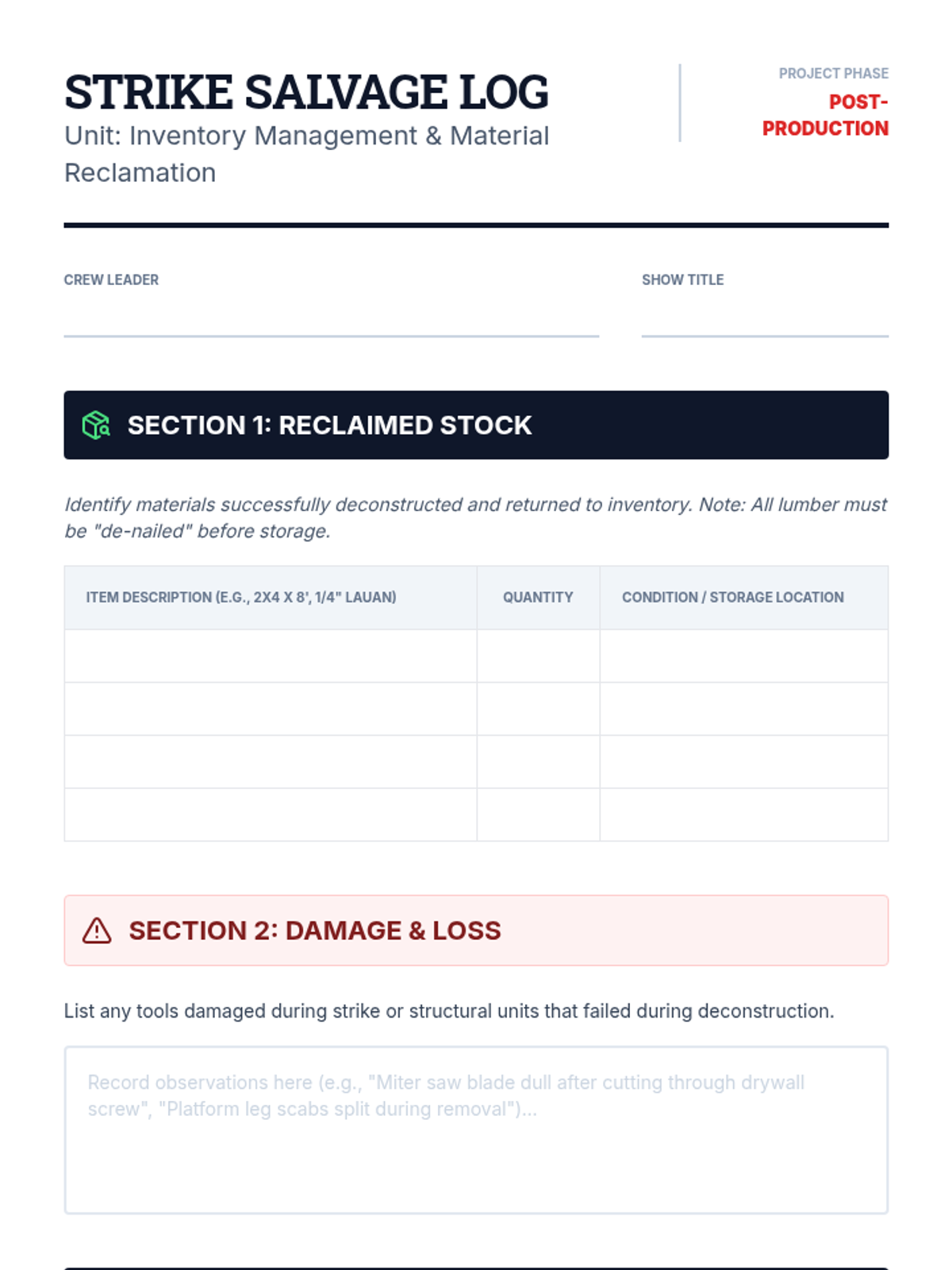
Students simulate the process of loading in a set and subsequently striking it, emphasizing organization and salvage.
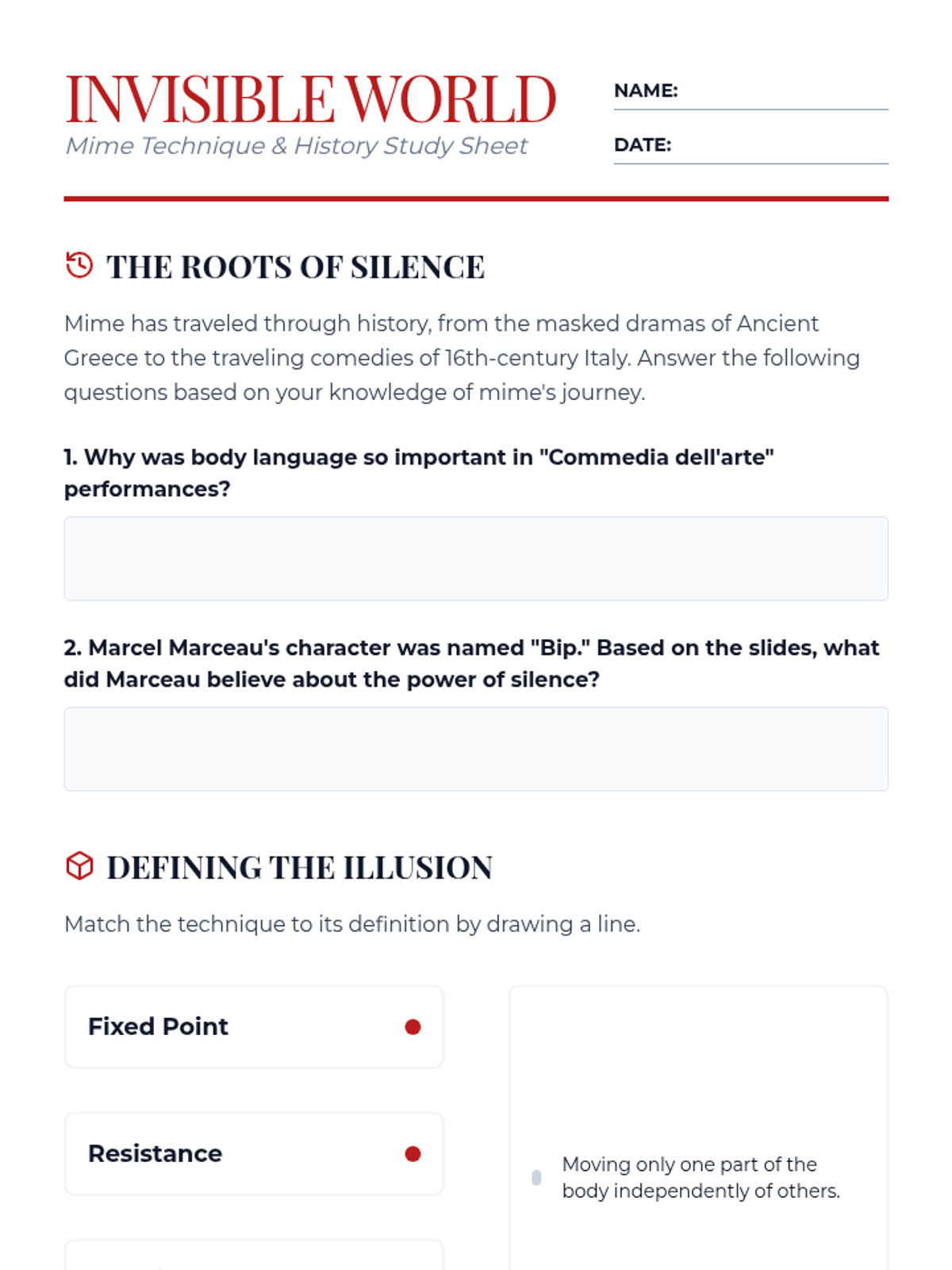
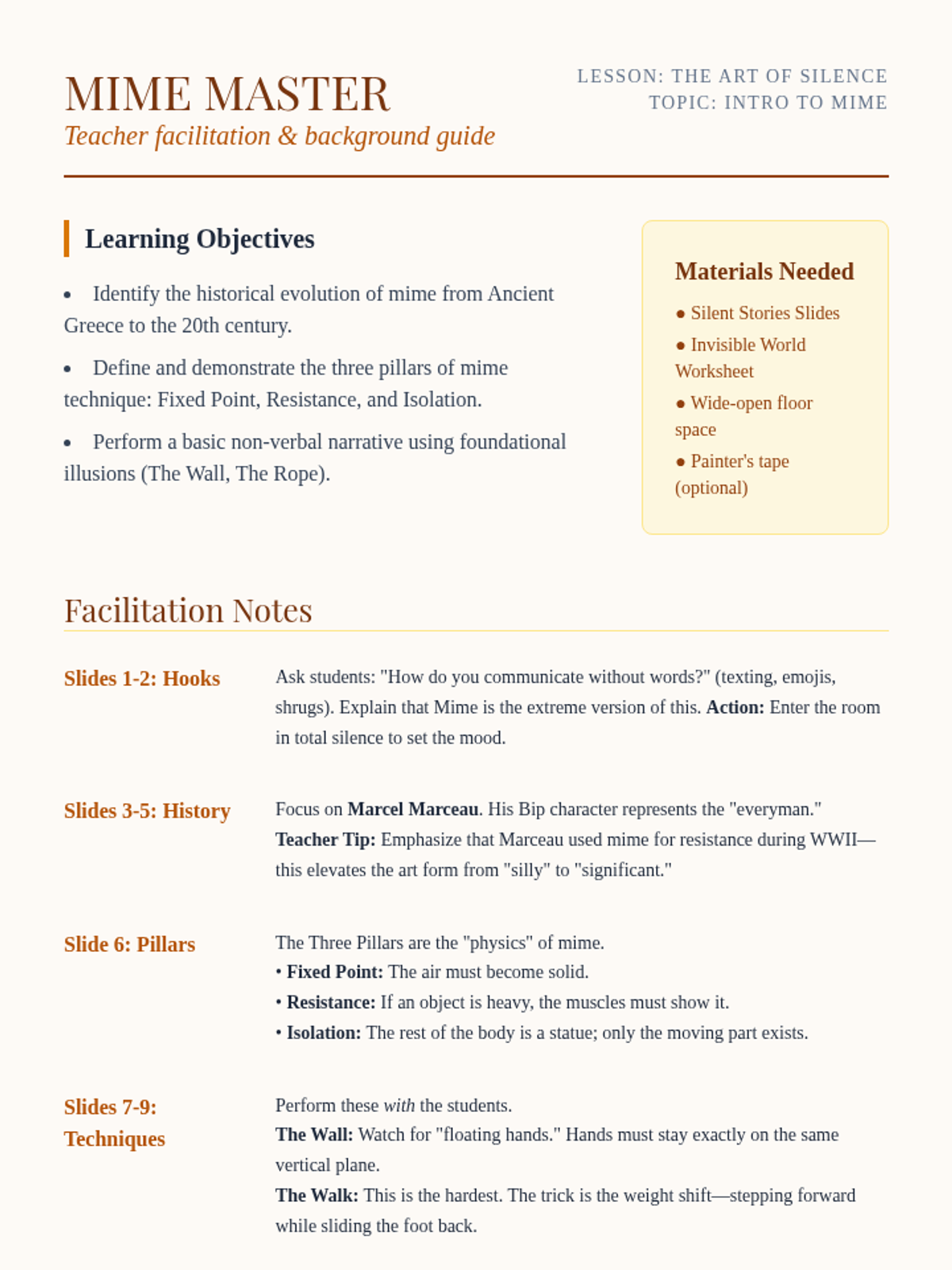
An introductory lesson on the art of mime, exploring its historical roots, cultural impact, and the foundational techniques of non-verbal storytelling.