Fundamental notation, instrumental proficiency, and vocal techniques across various genres. Connects historical analysis with original composition and creative performance skills.
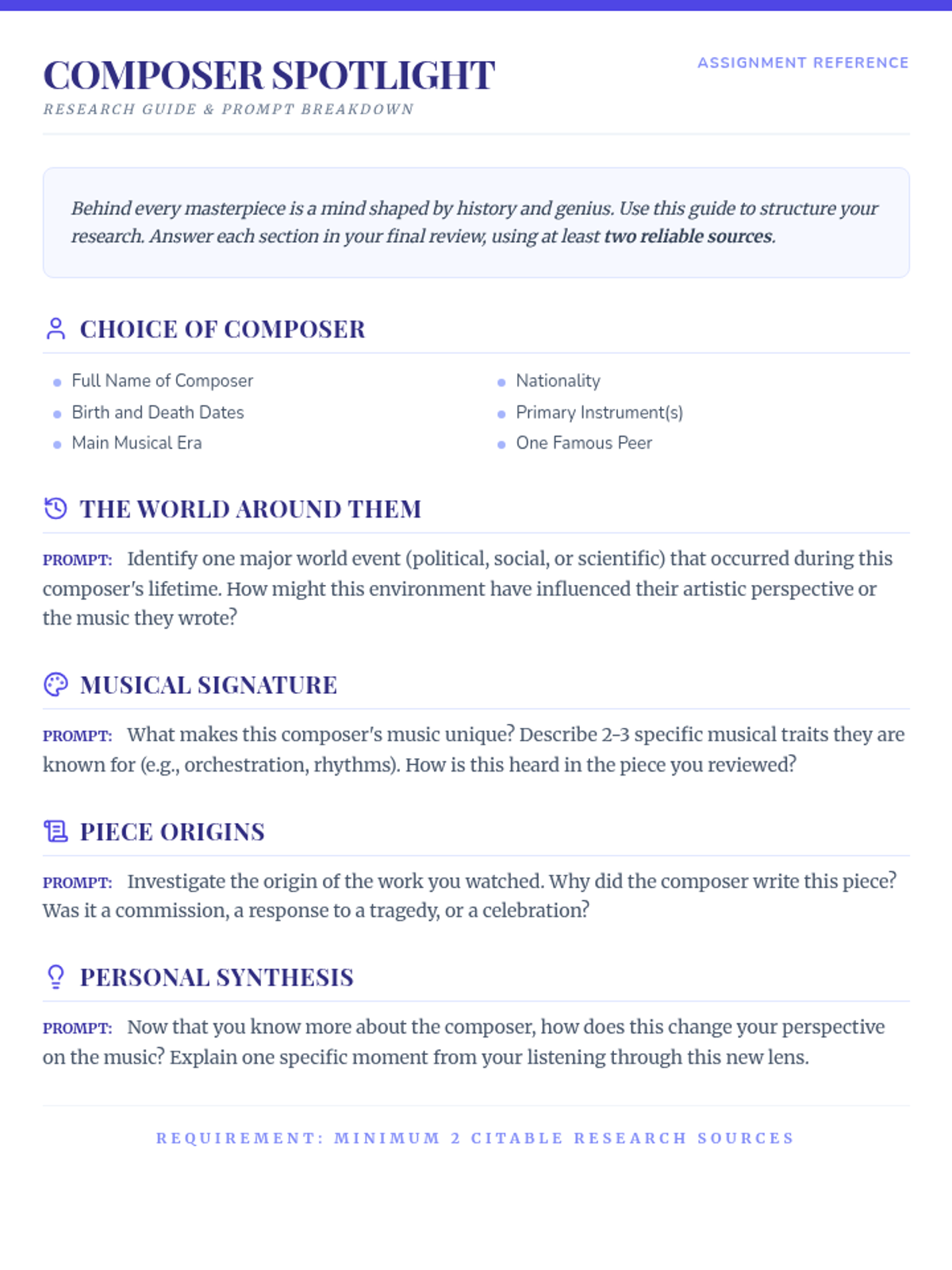
A comprehensive make-up assignment for students who missed a performance, requiring a detailed 5-paragraph review of a world-class orchestral concert with research and personal critique.
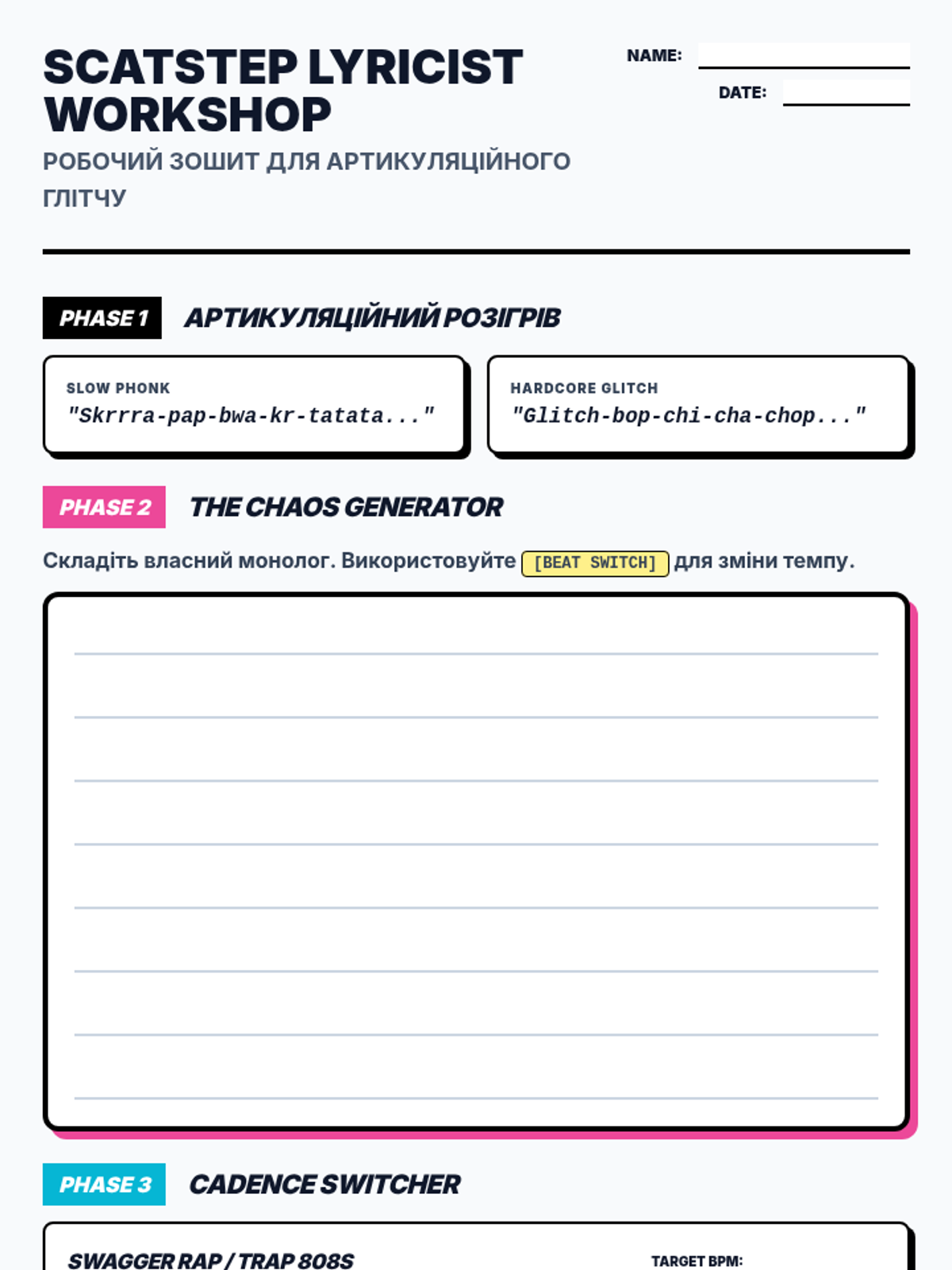
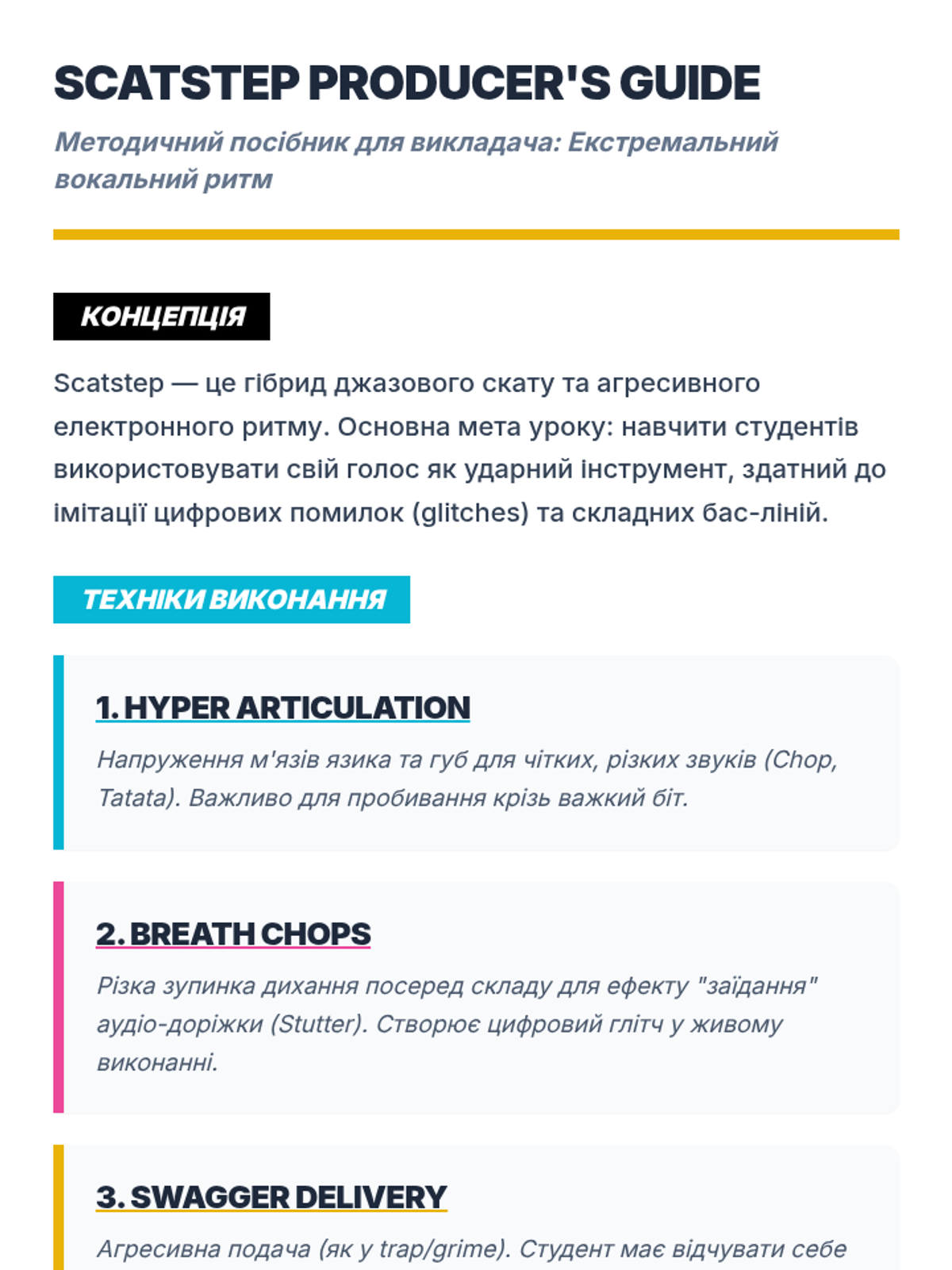
Курс з екстремального скату та сучасного музичного продакшну, що поєднує абсурдну фонетику з агресивними бітами (phonk, hardbass, trap).
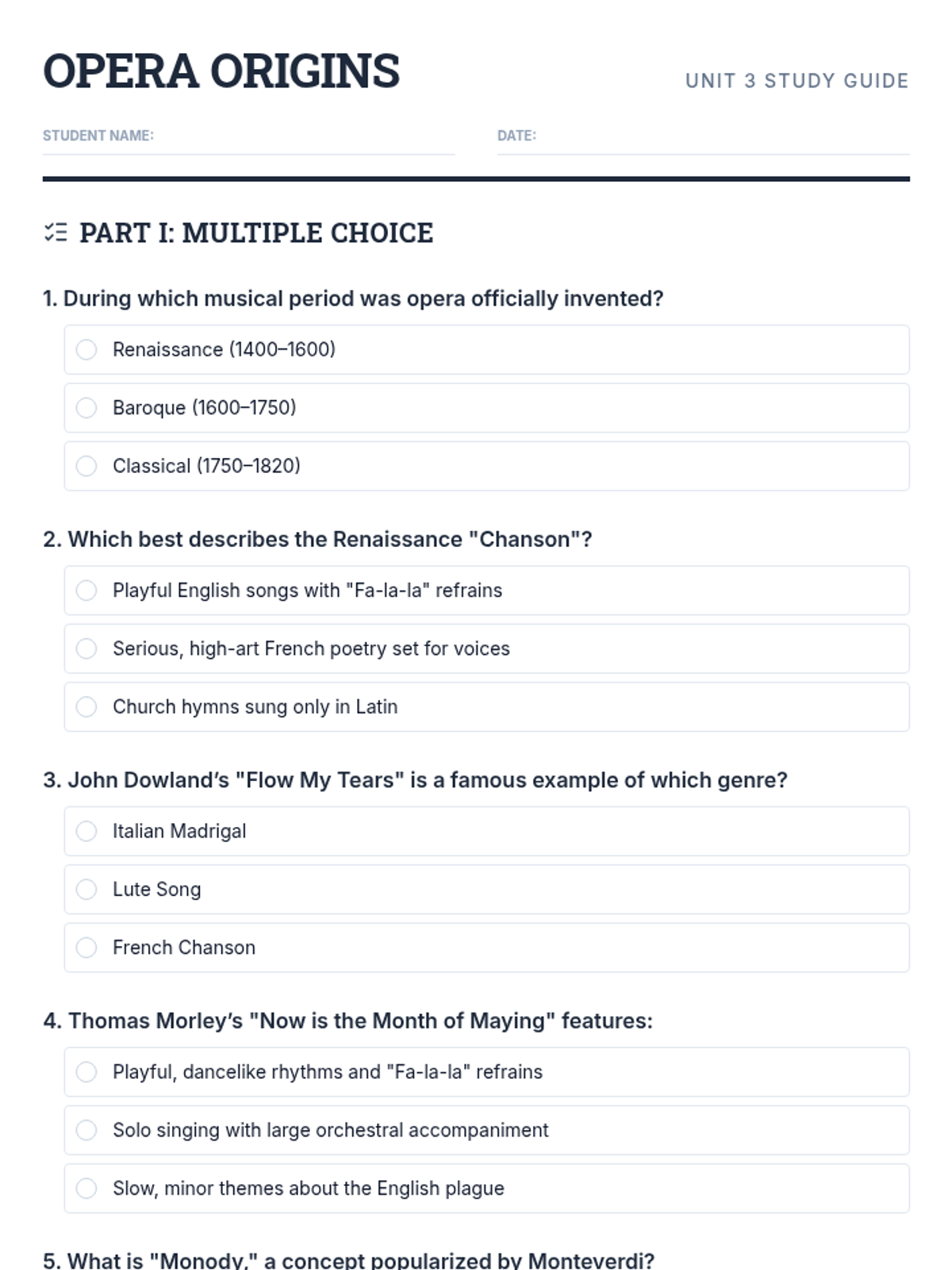
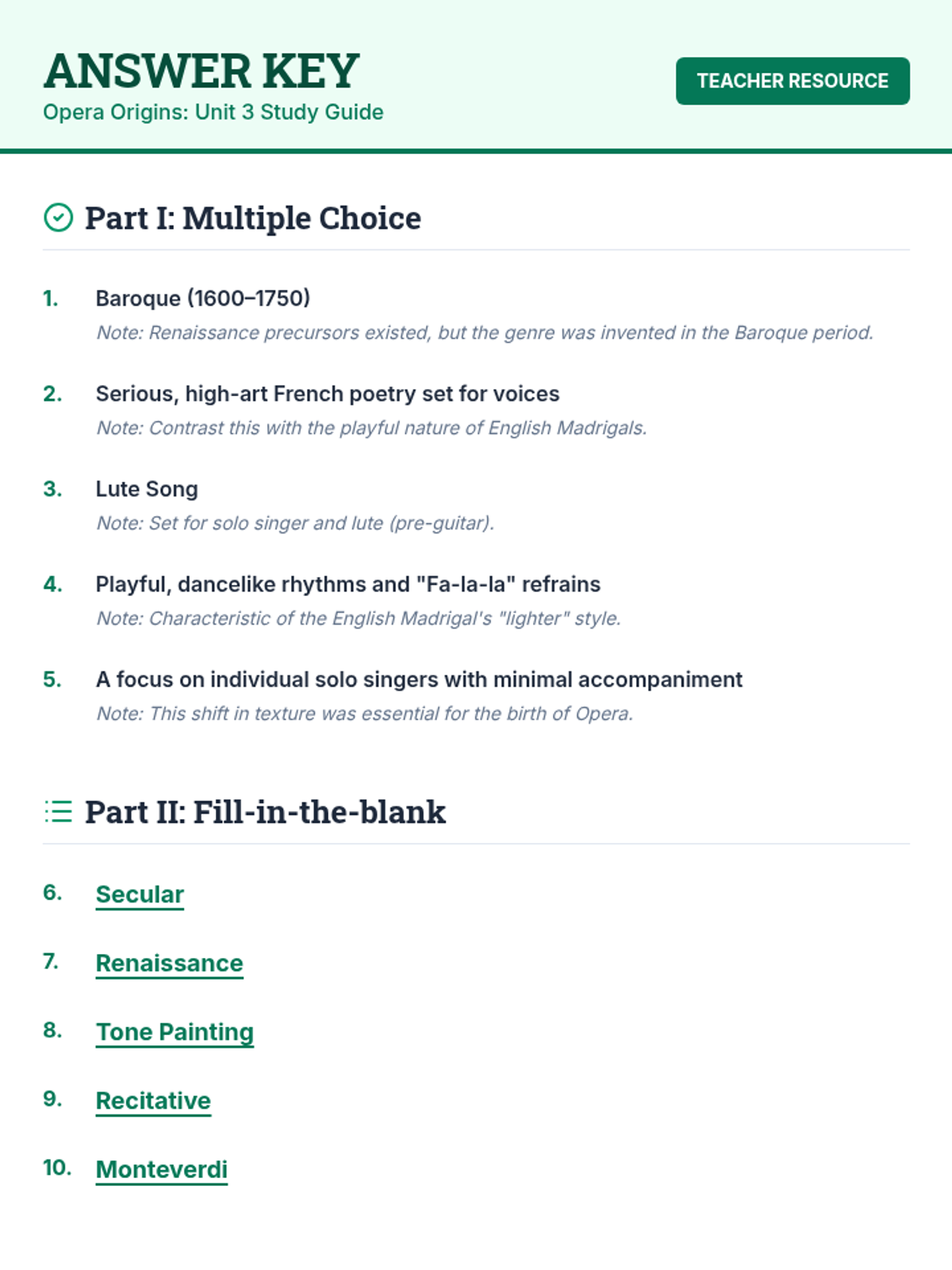
A foundational lesson on the precursors to opera, focusing on Renaissance vocal forms like the Chanson, Madrigal, and Lute Song that paved the way for the Baroque invention of opera.
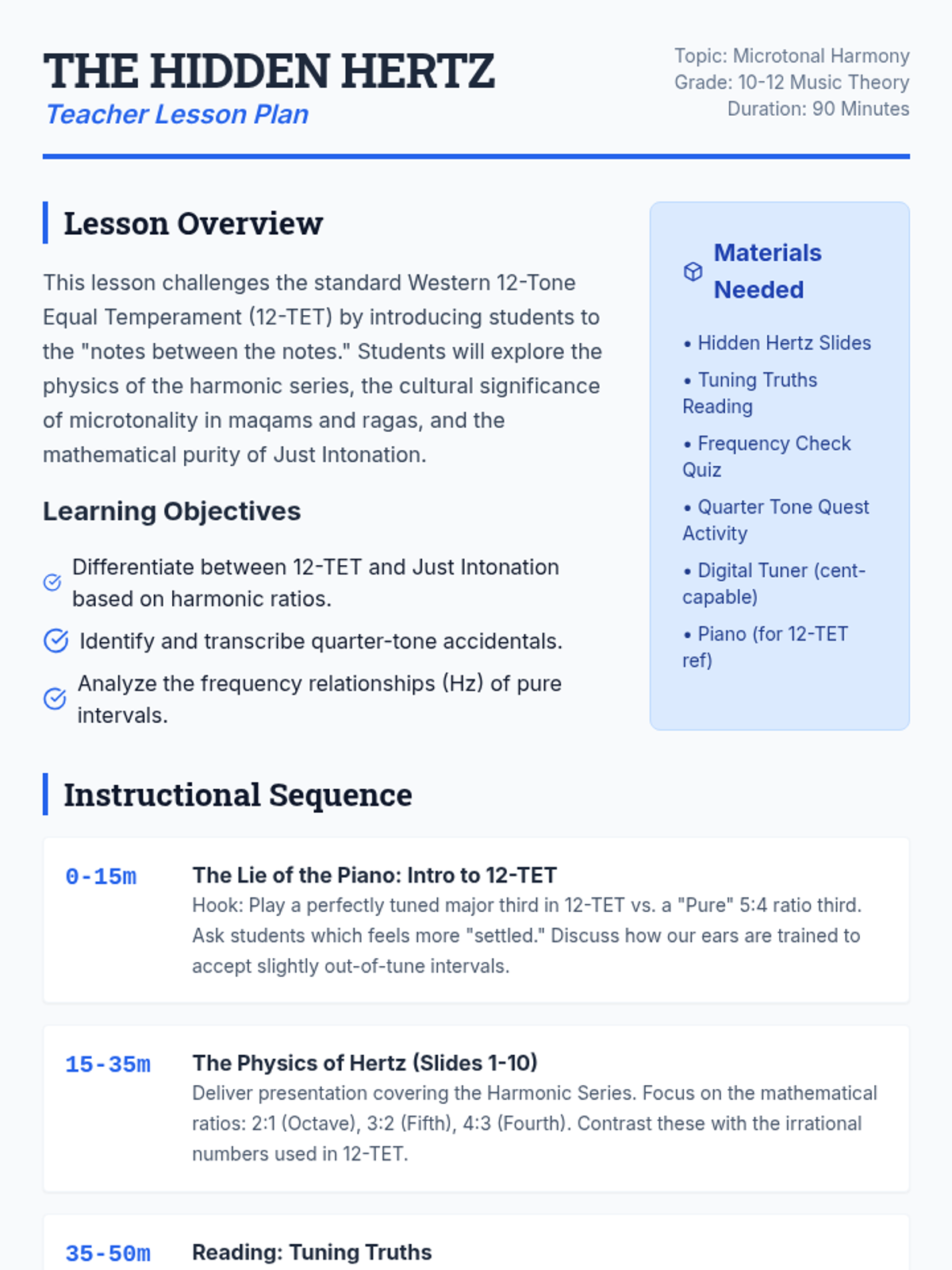
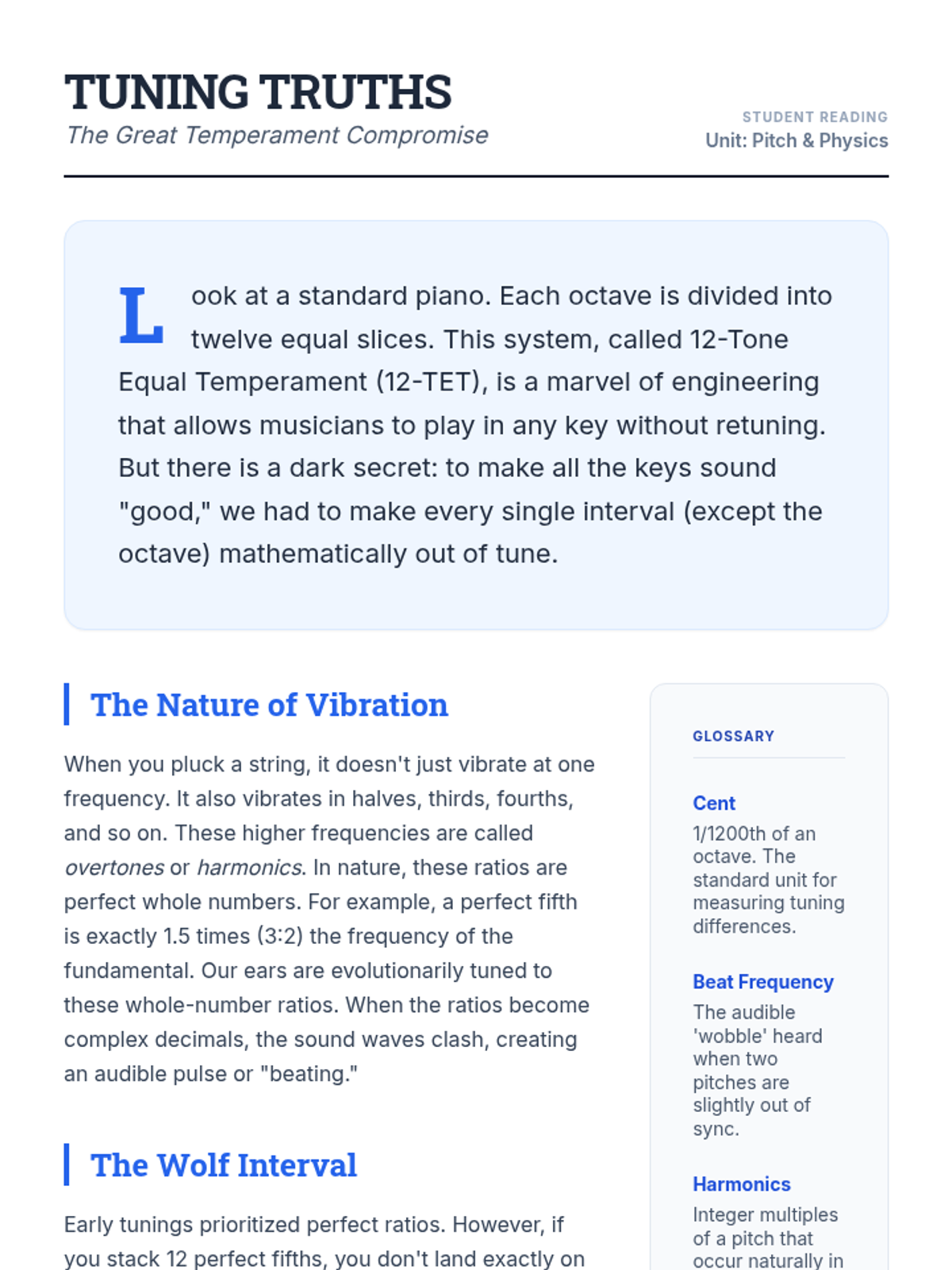
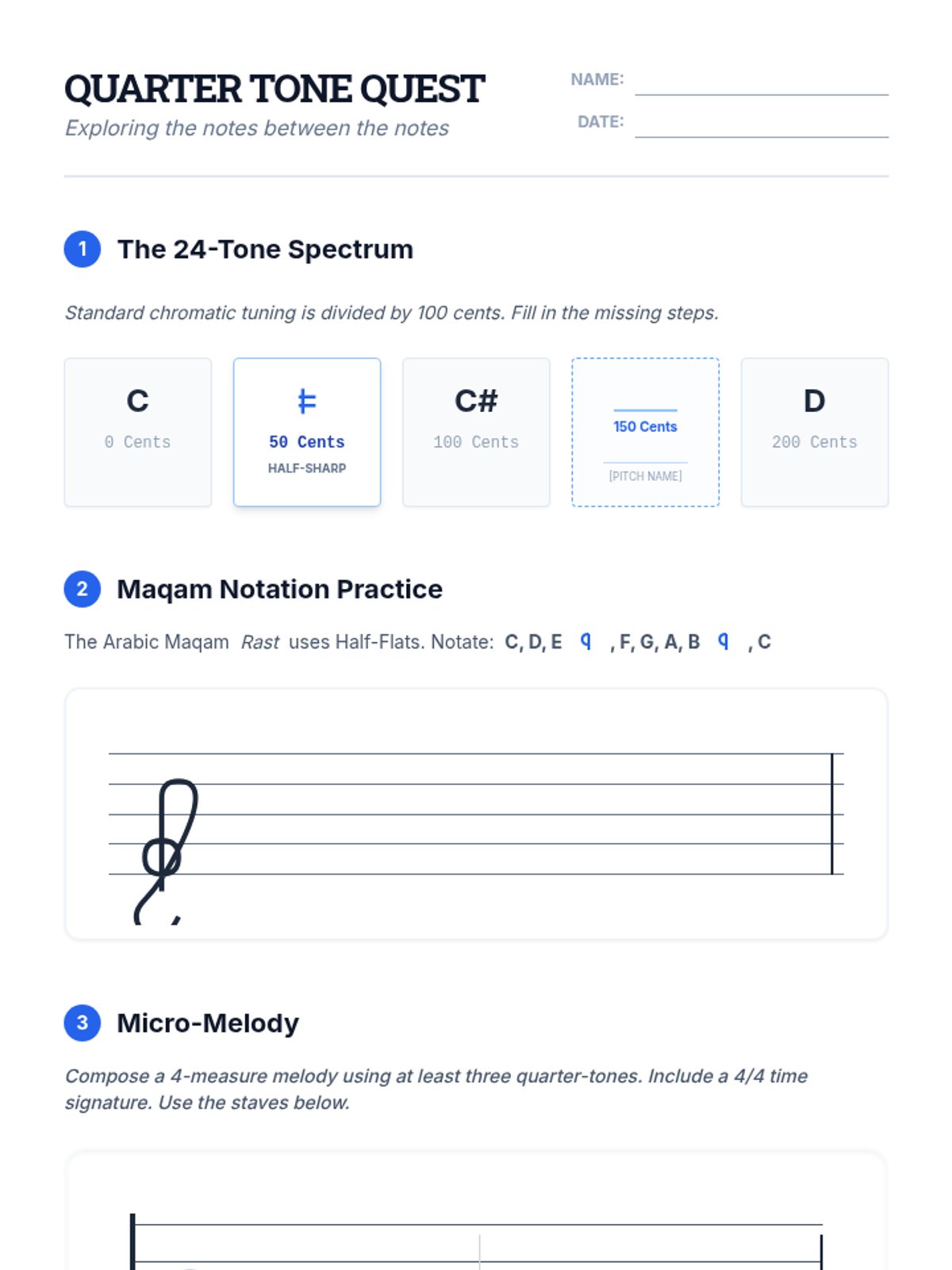
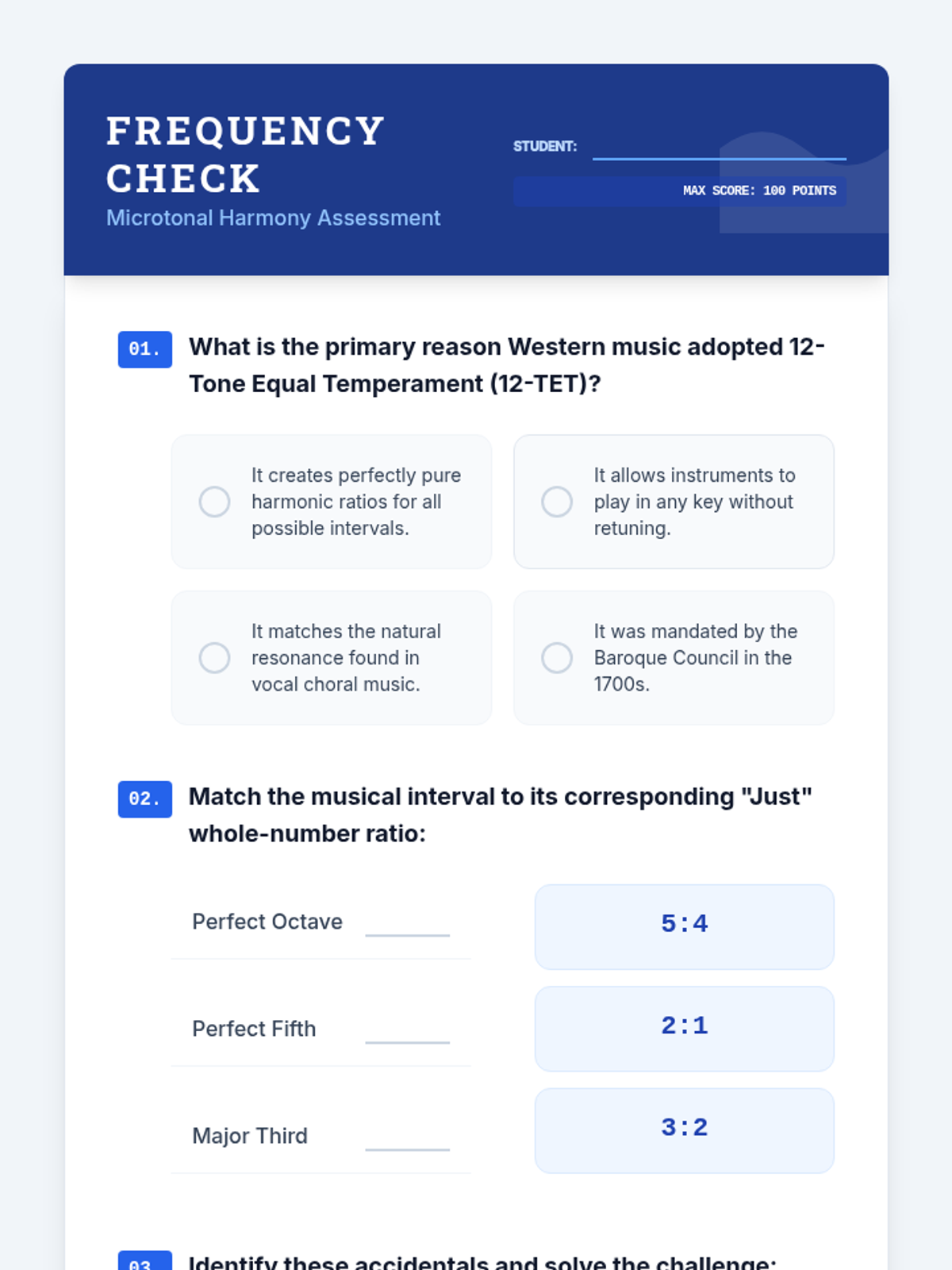
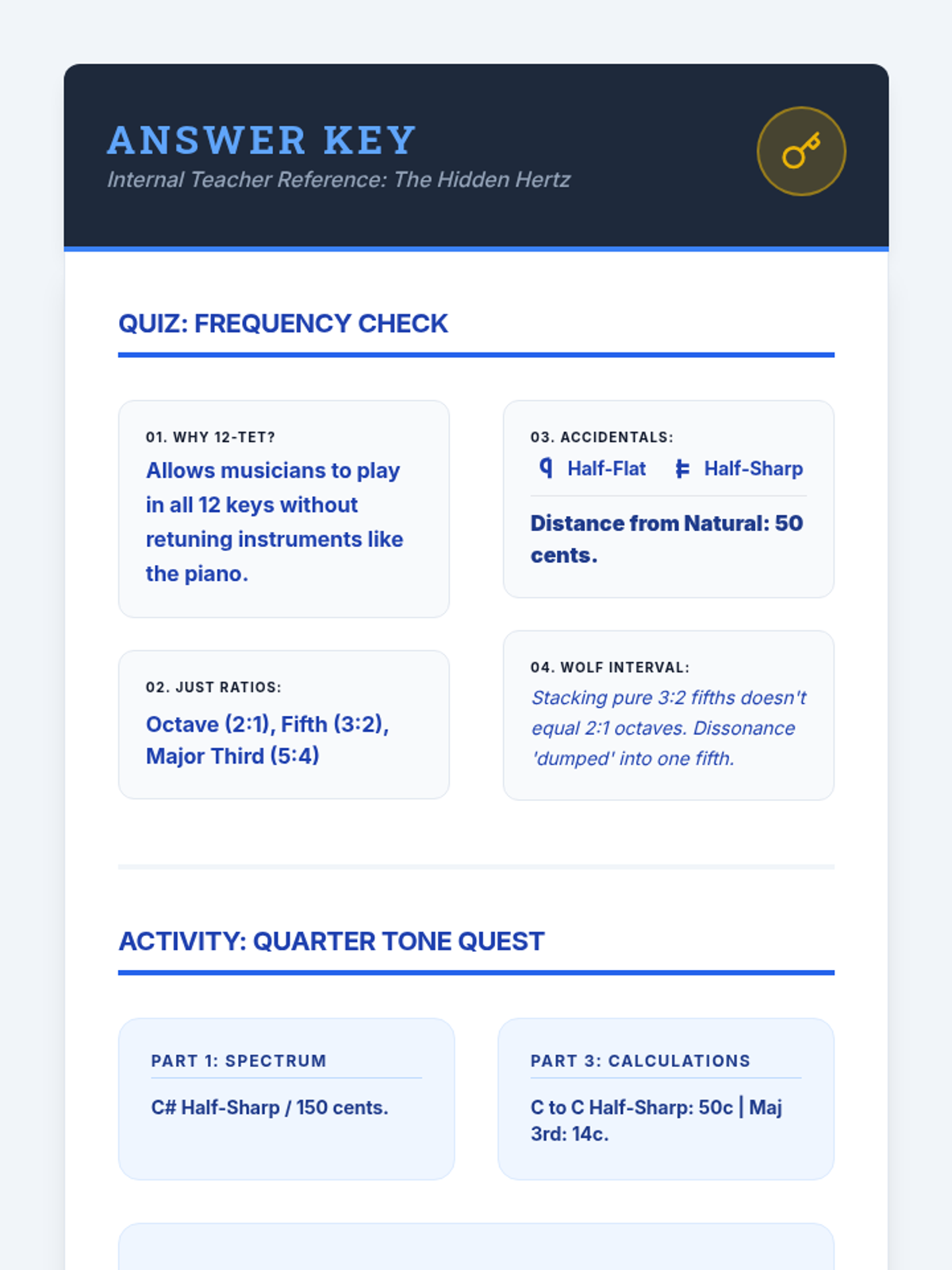
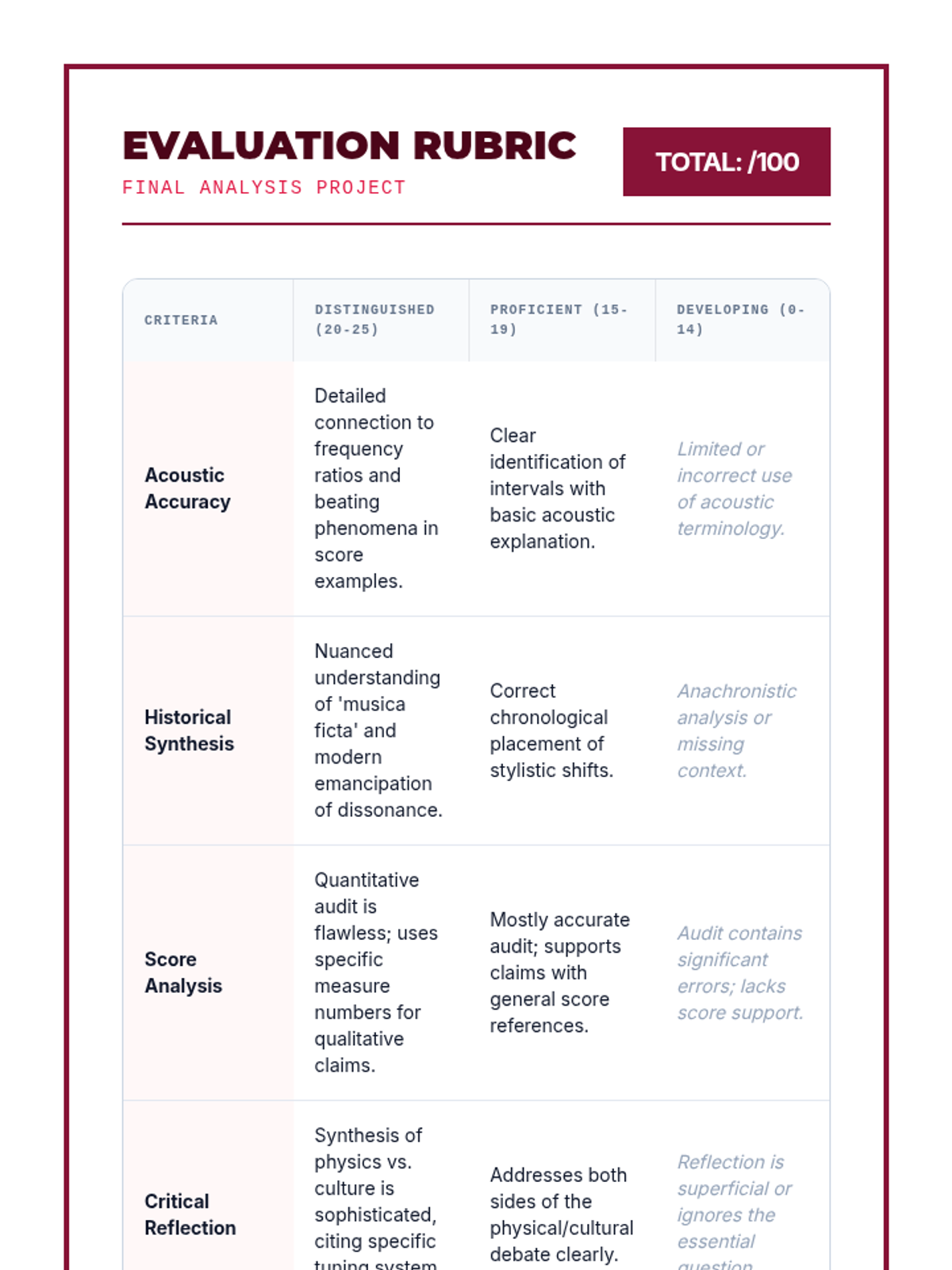
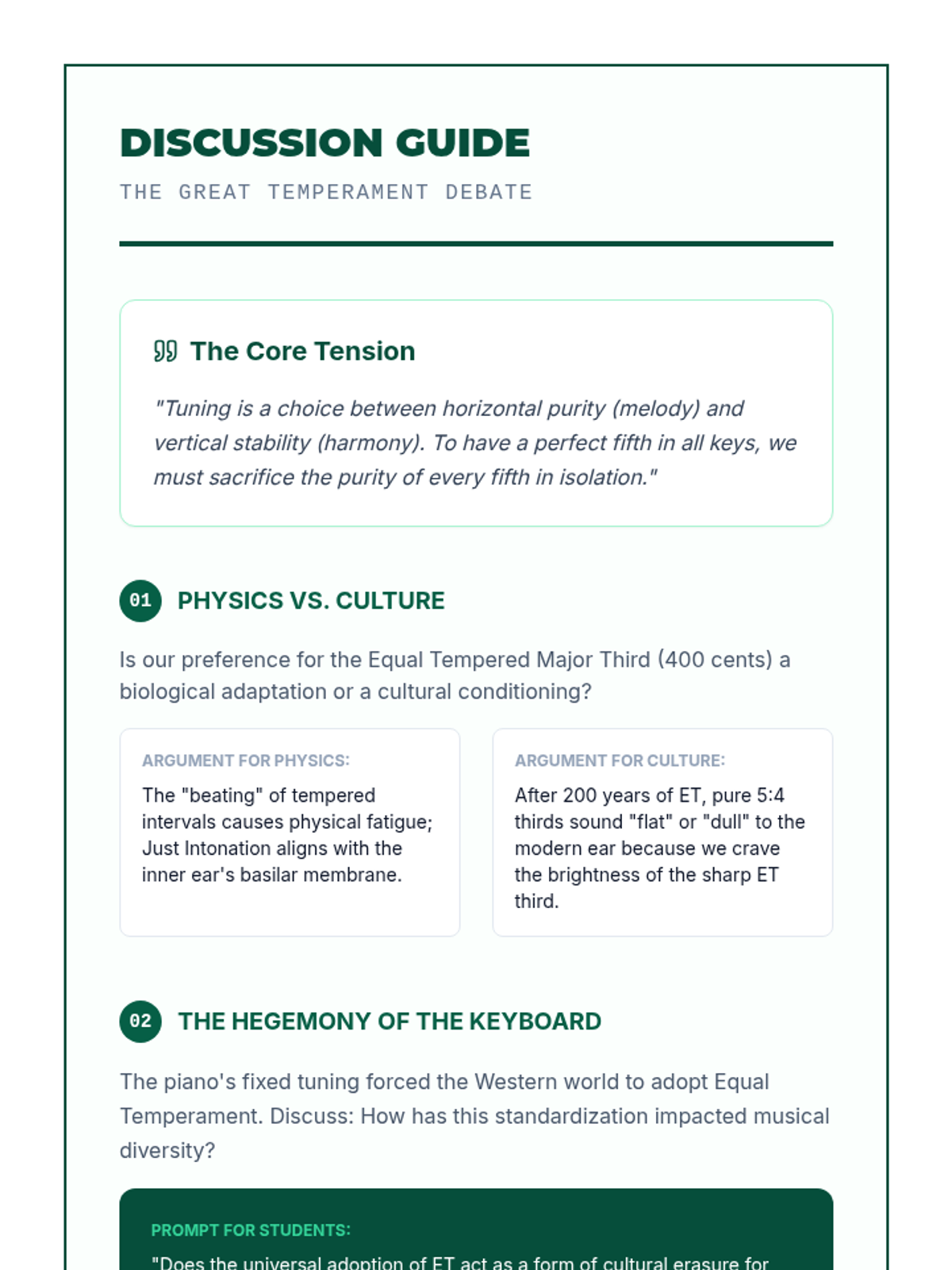
An advanced exploration of microtonal music, covering the physics of pitch, tuning systems beyond 12-TET, and practical experimentation with quarter-tones and just intonation.
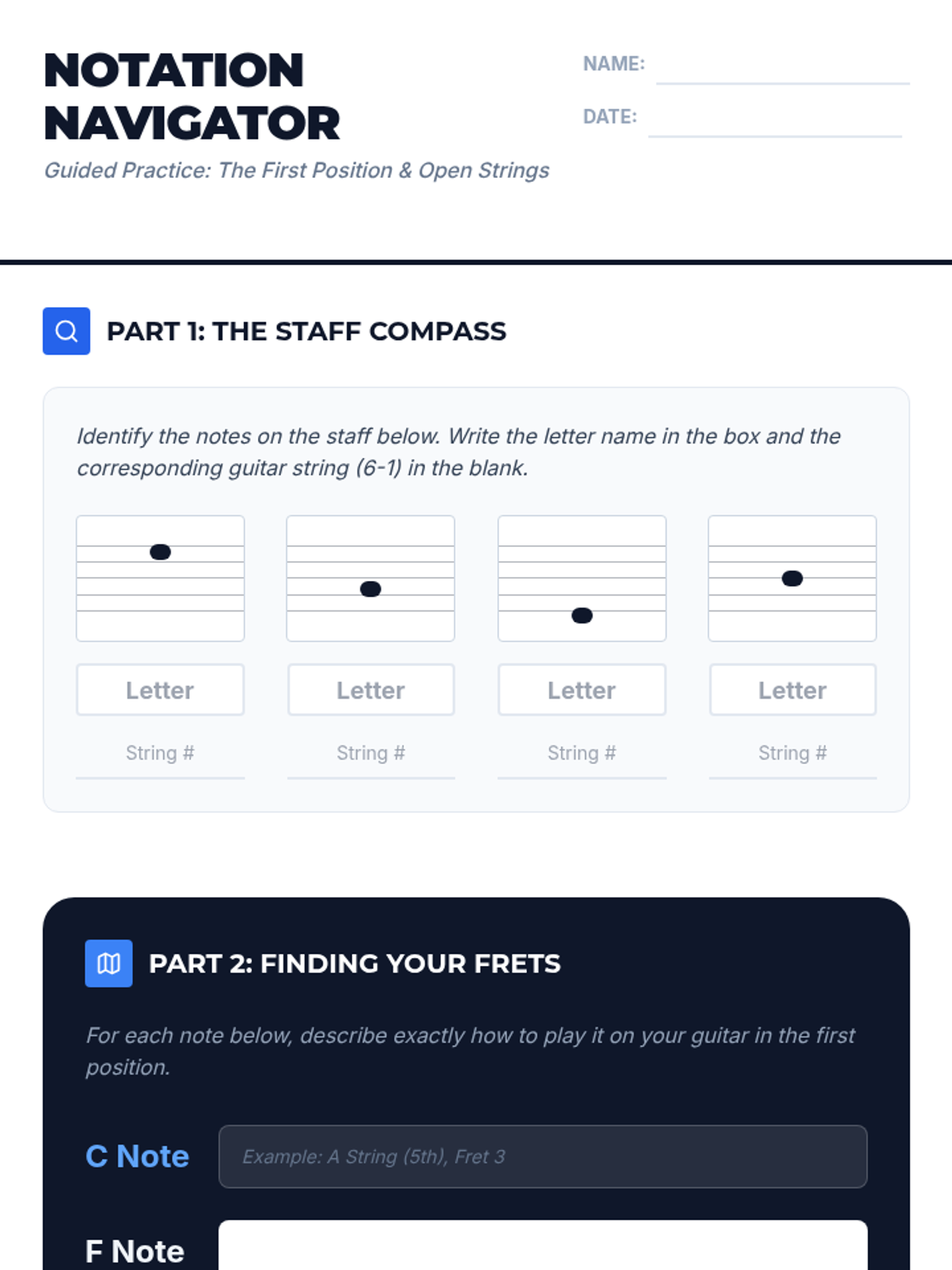
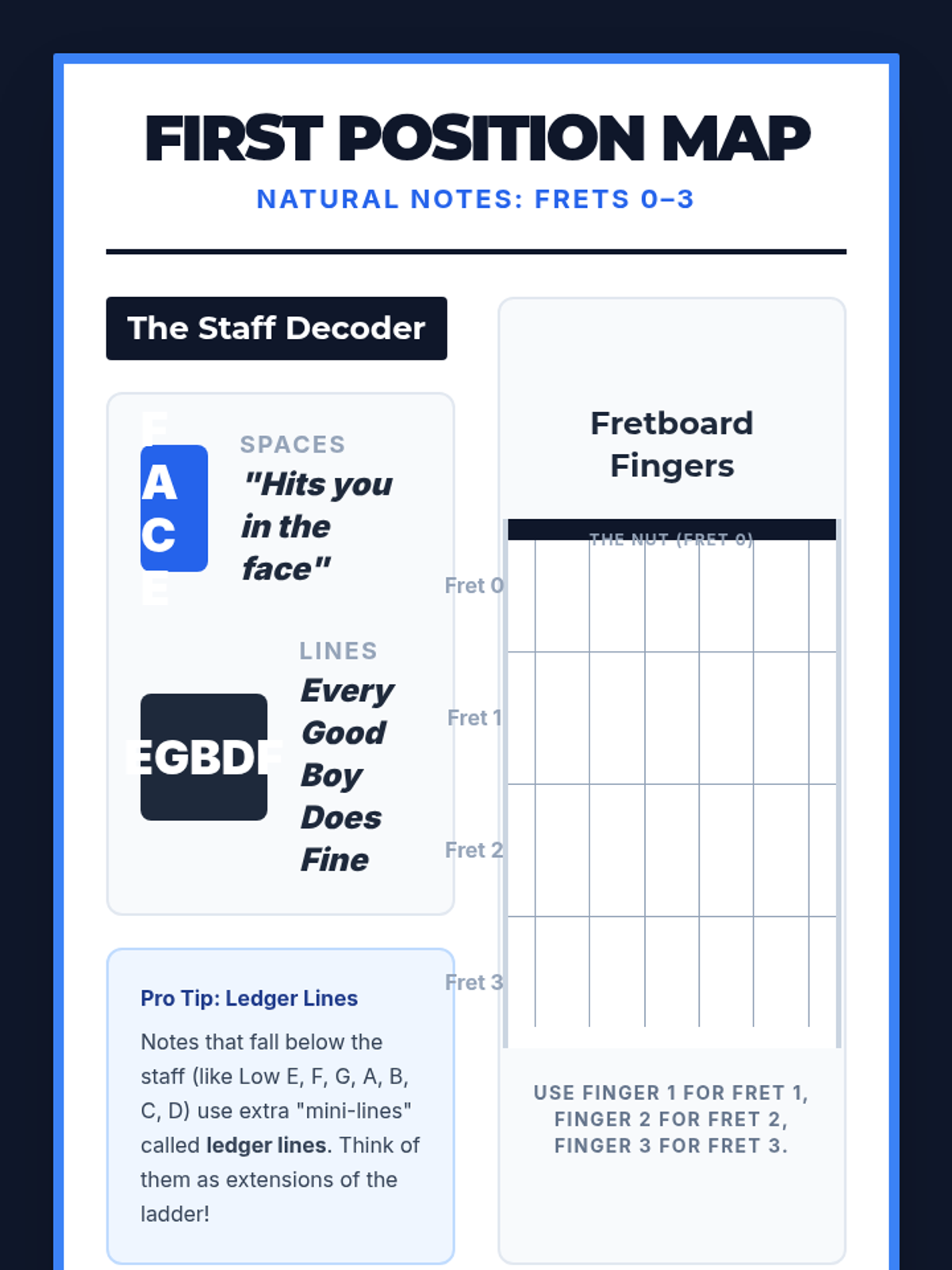
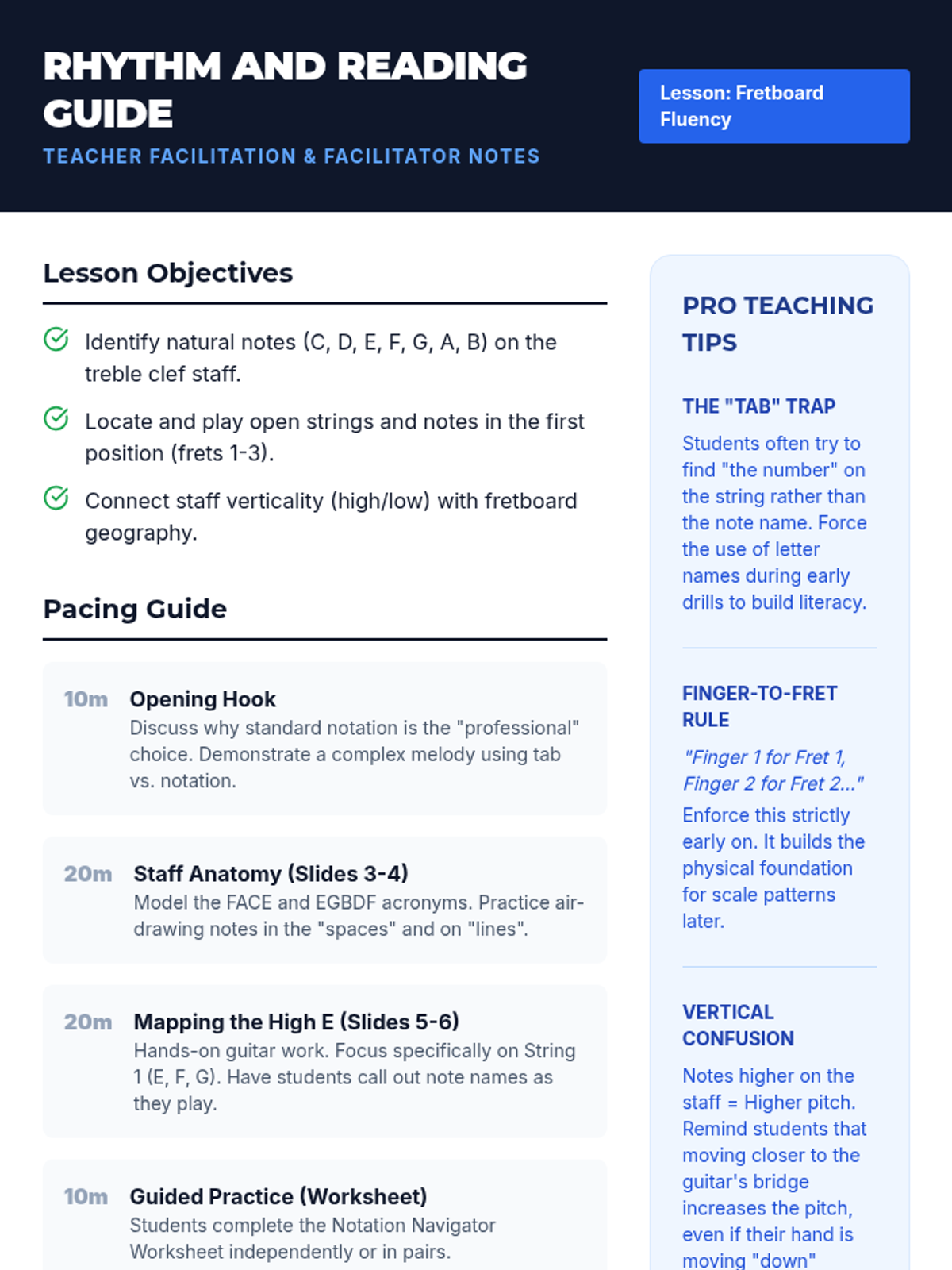
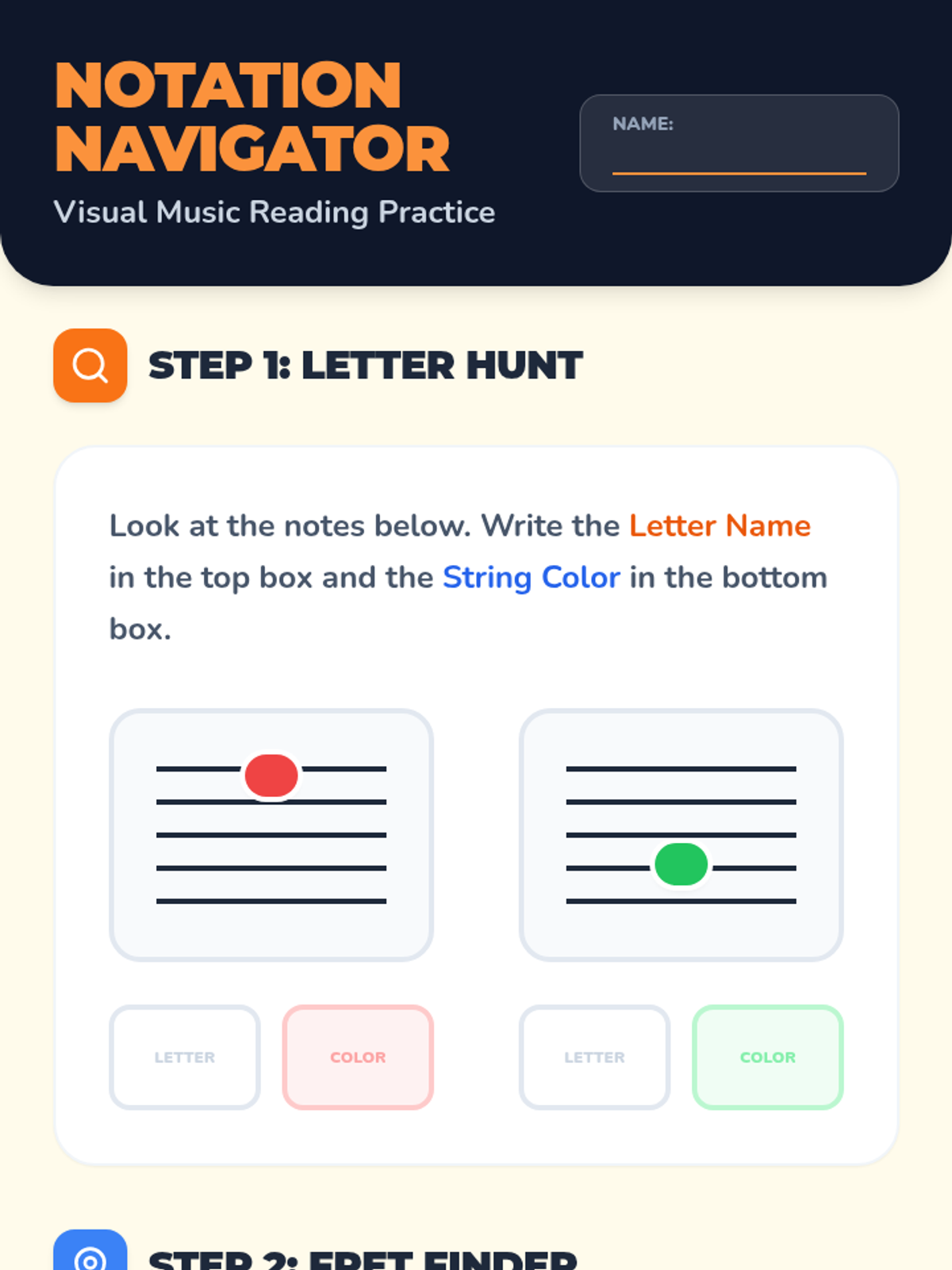
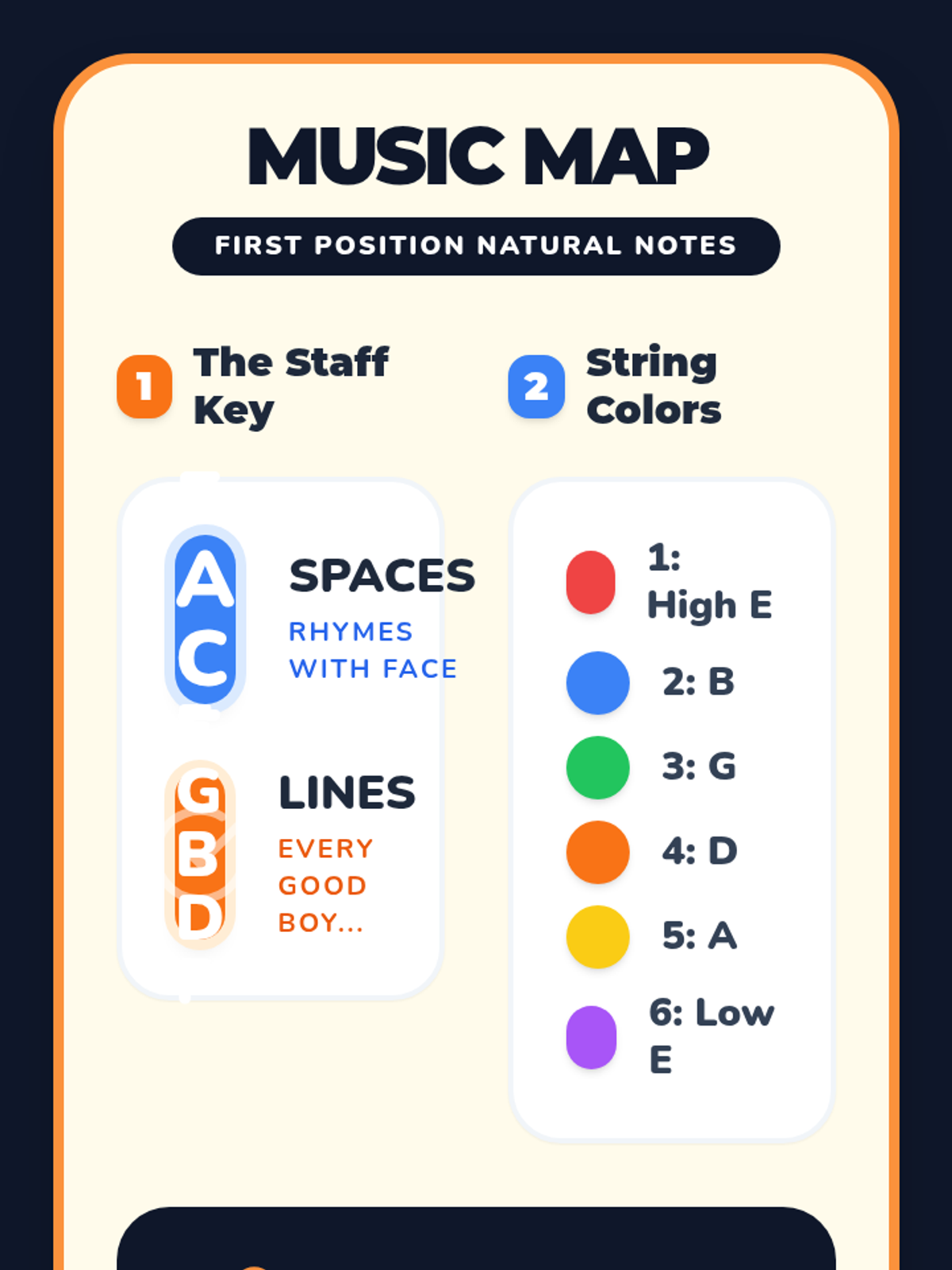
A comprehensive introduction to reading standard musical notation on the guitar, specifically targeting open strings and the first position notes for high school beginners.
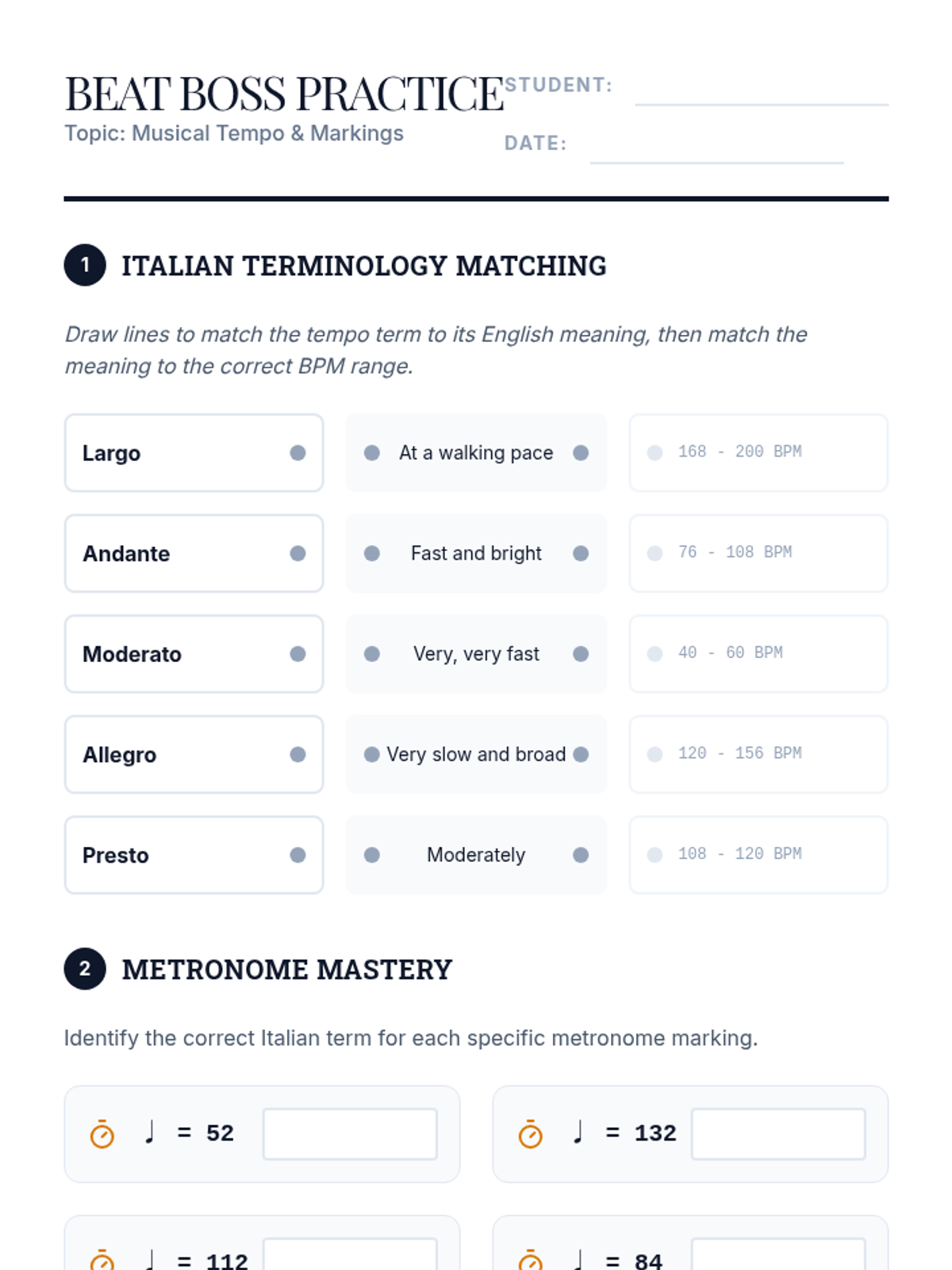
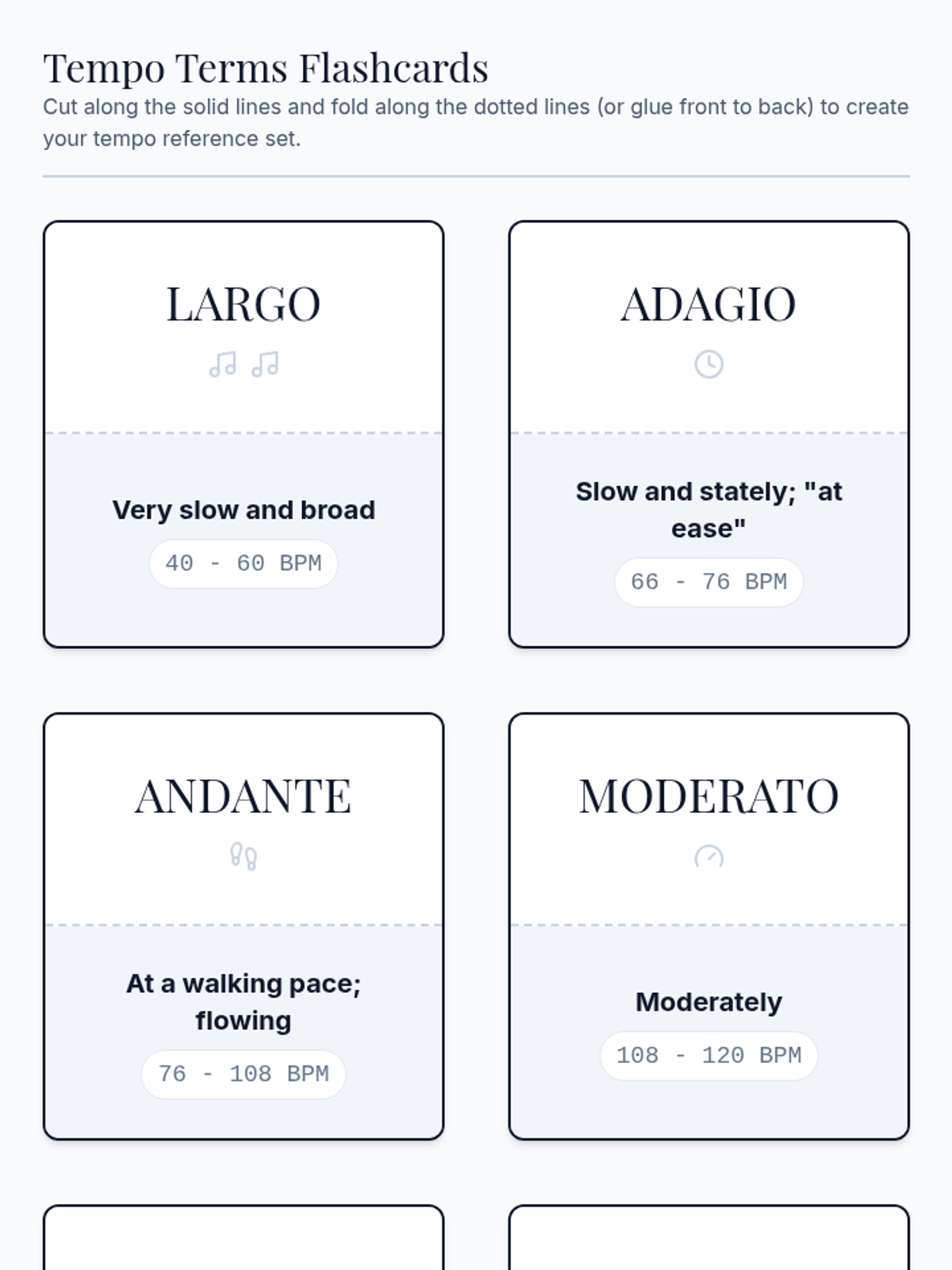
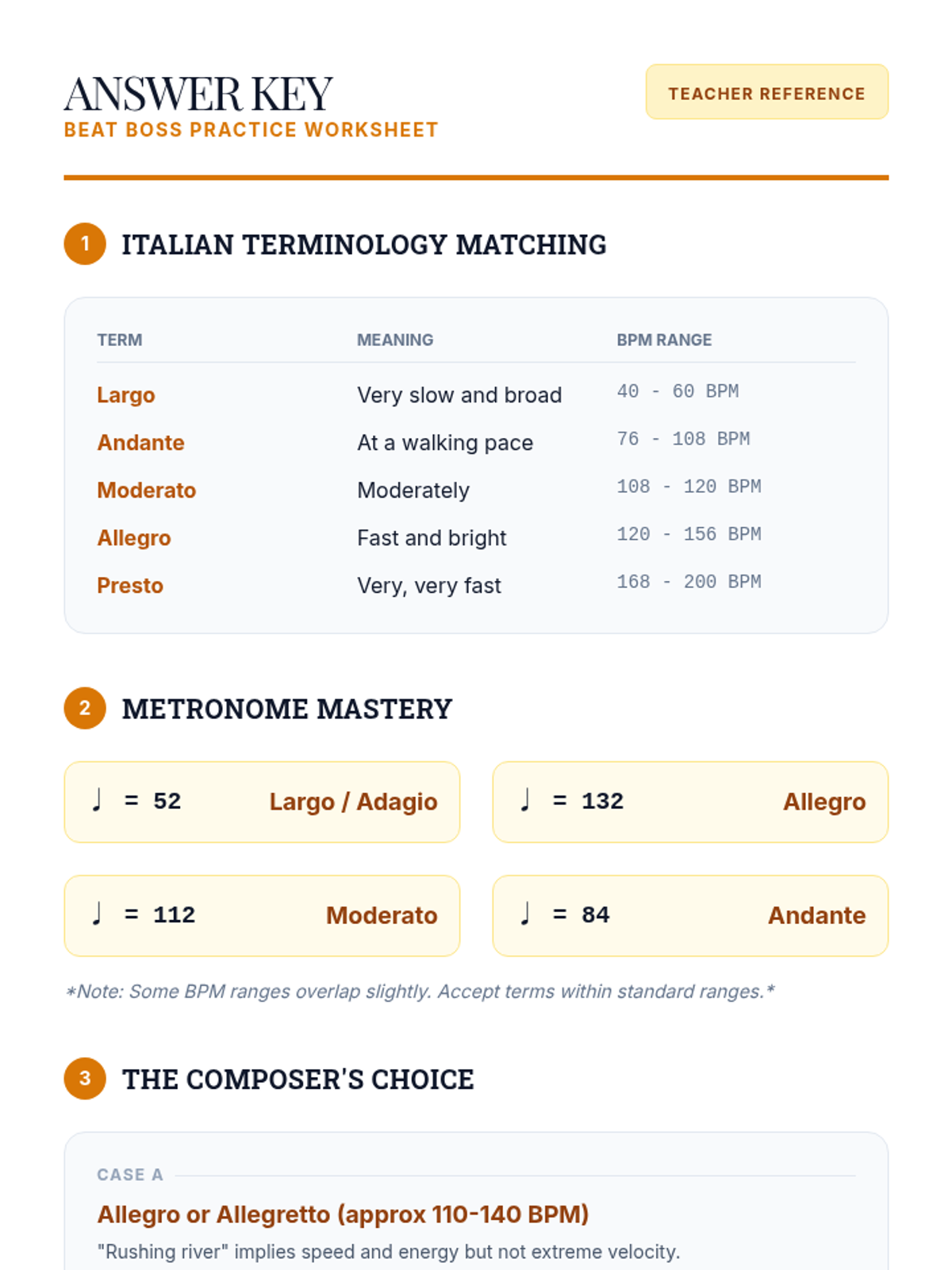
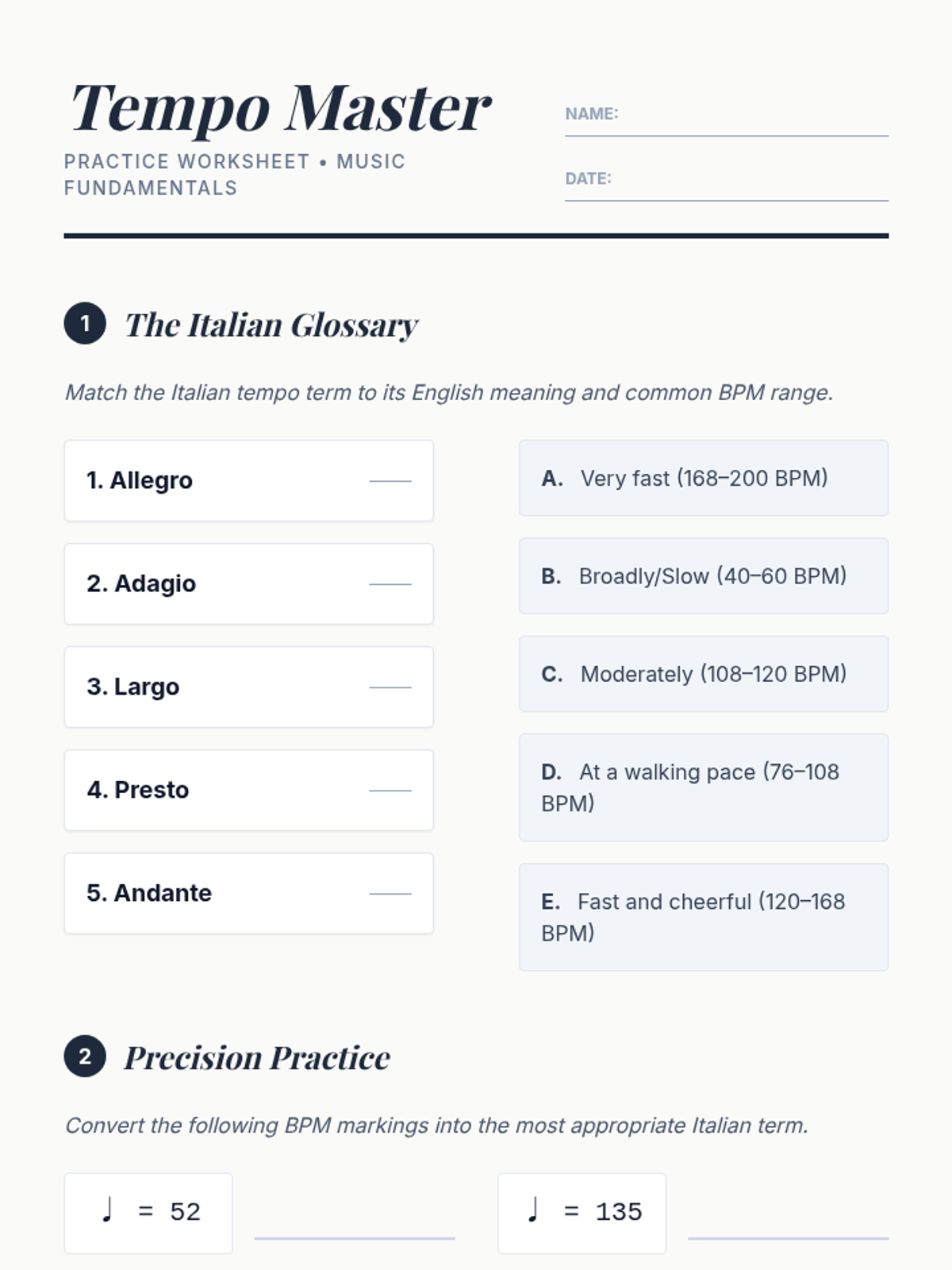
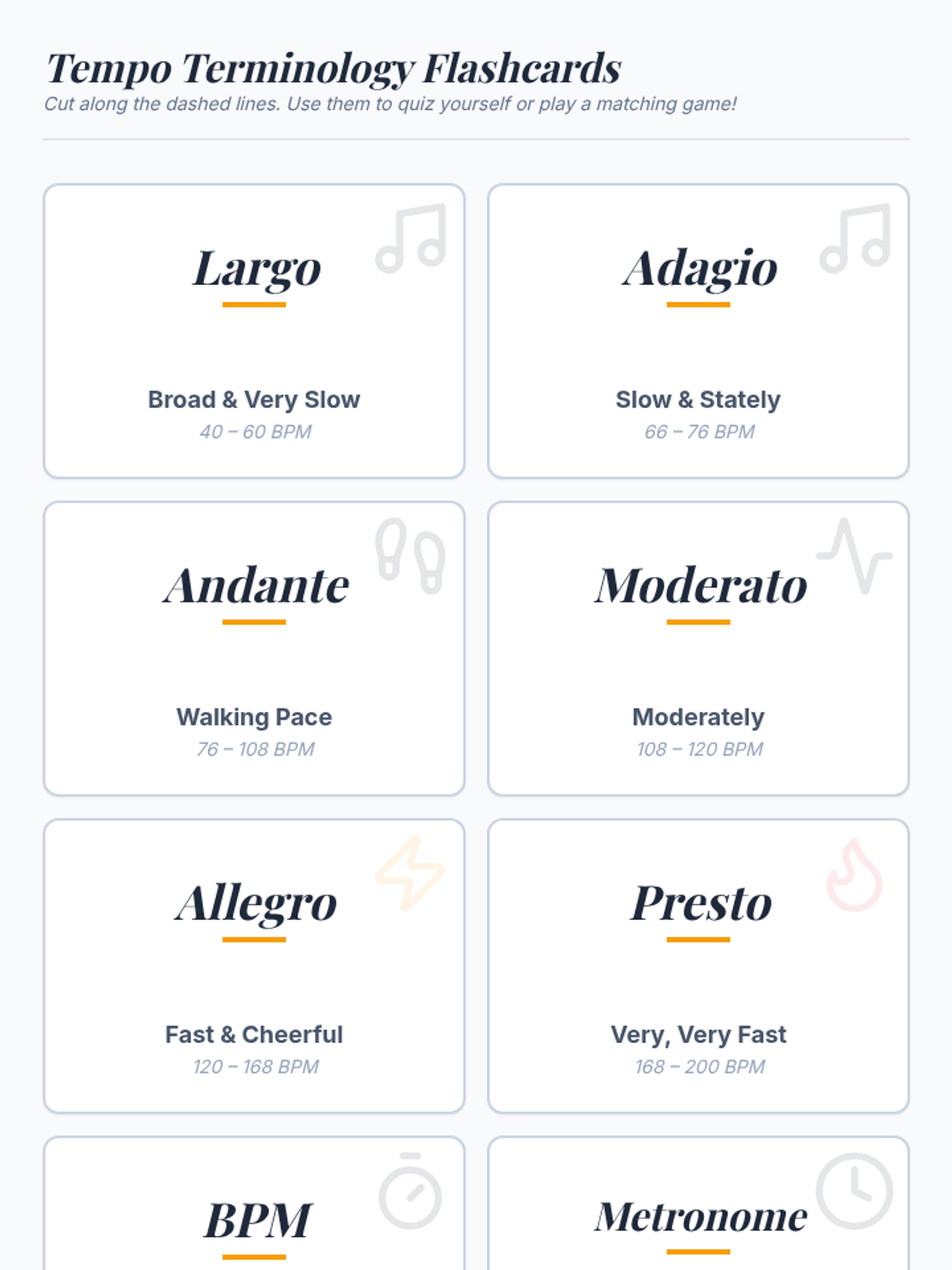
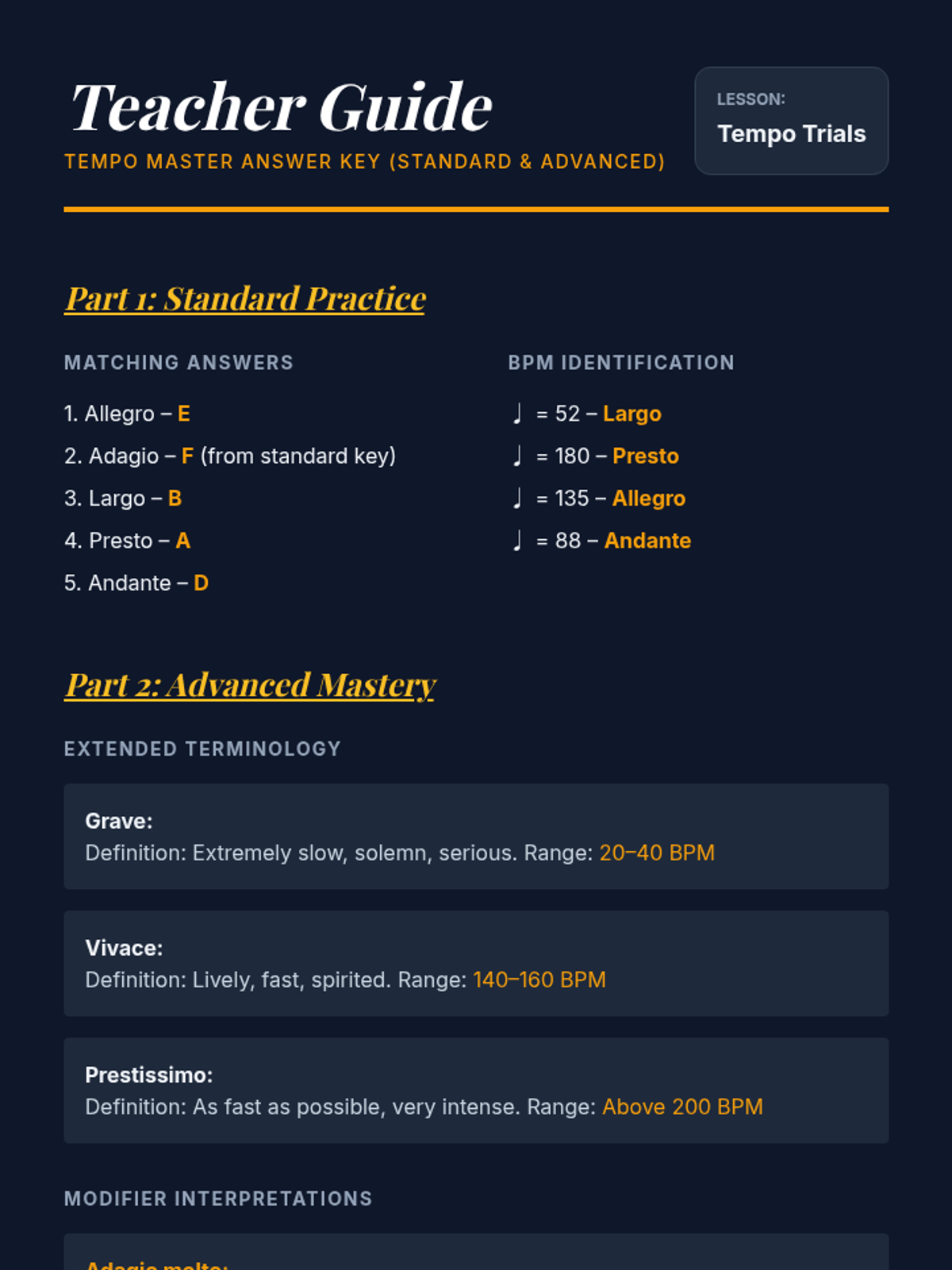
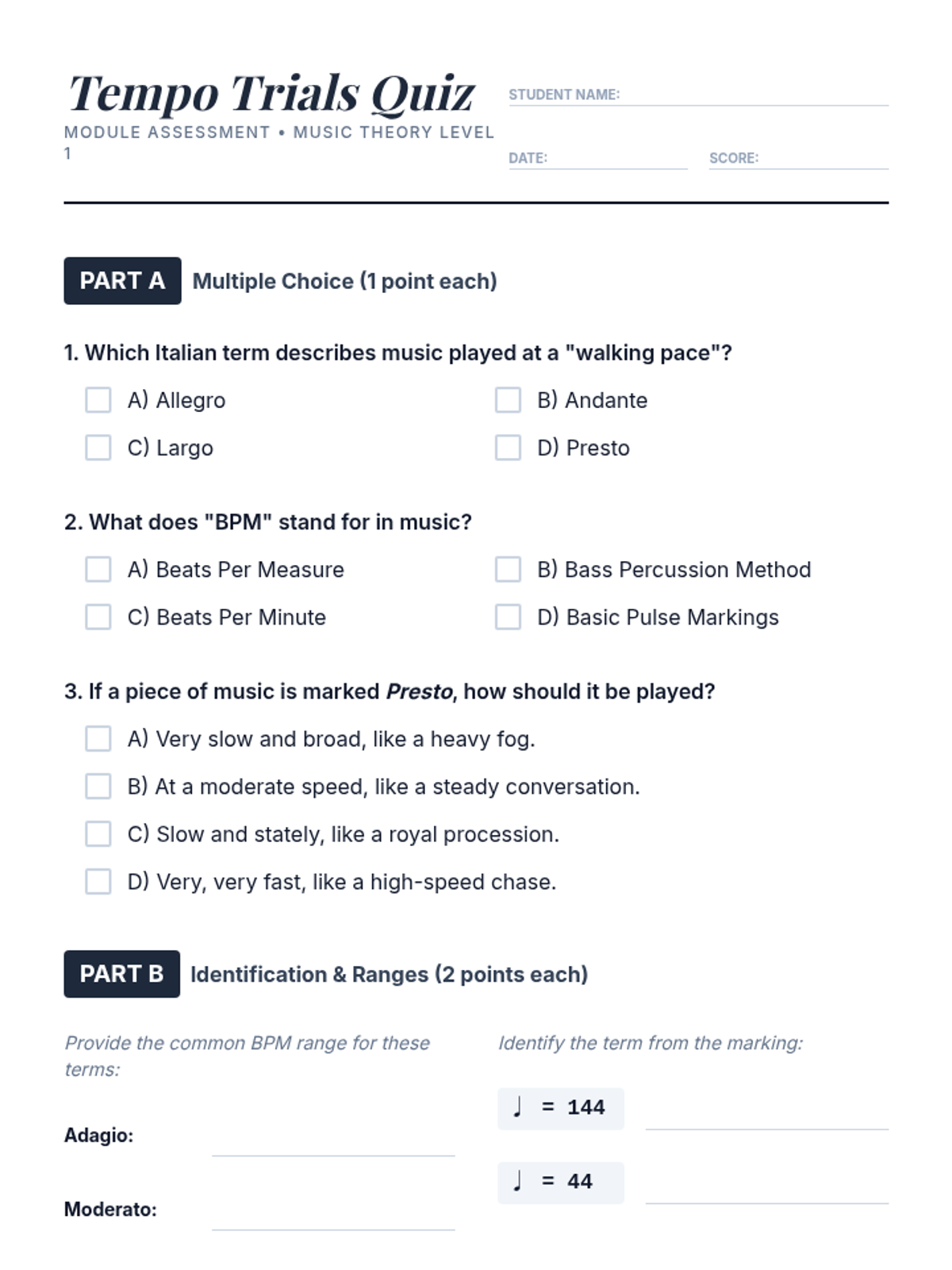
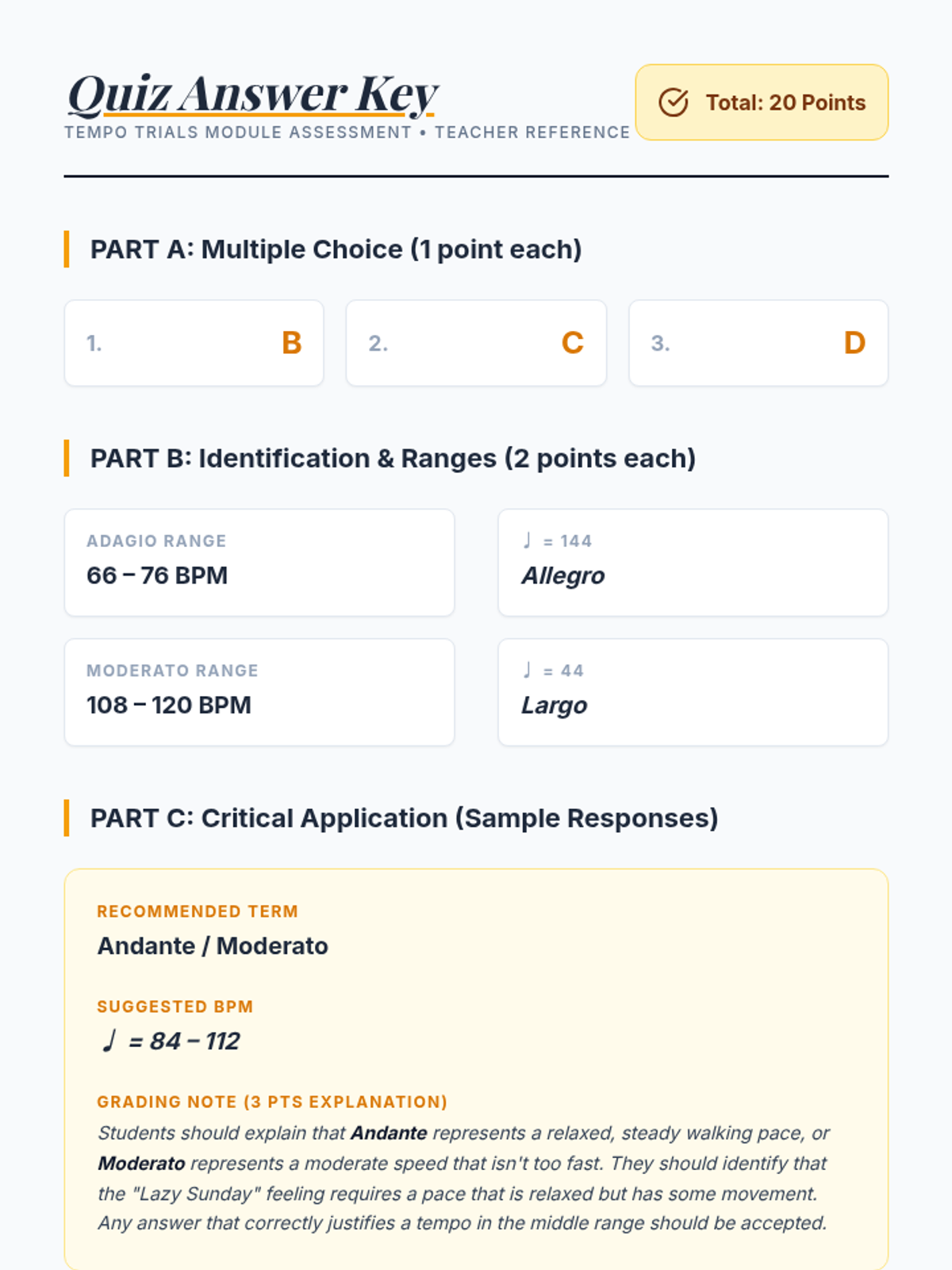
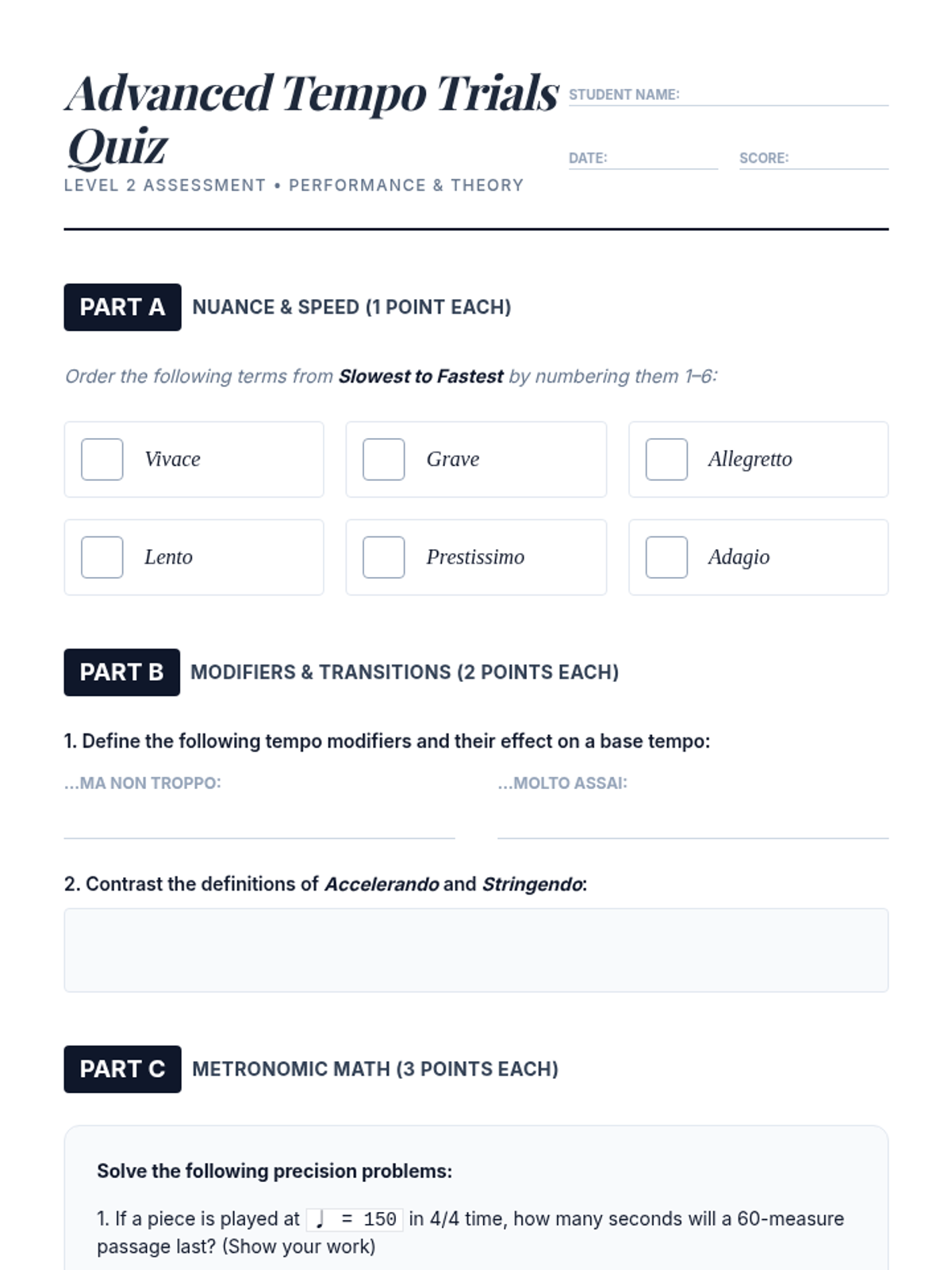
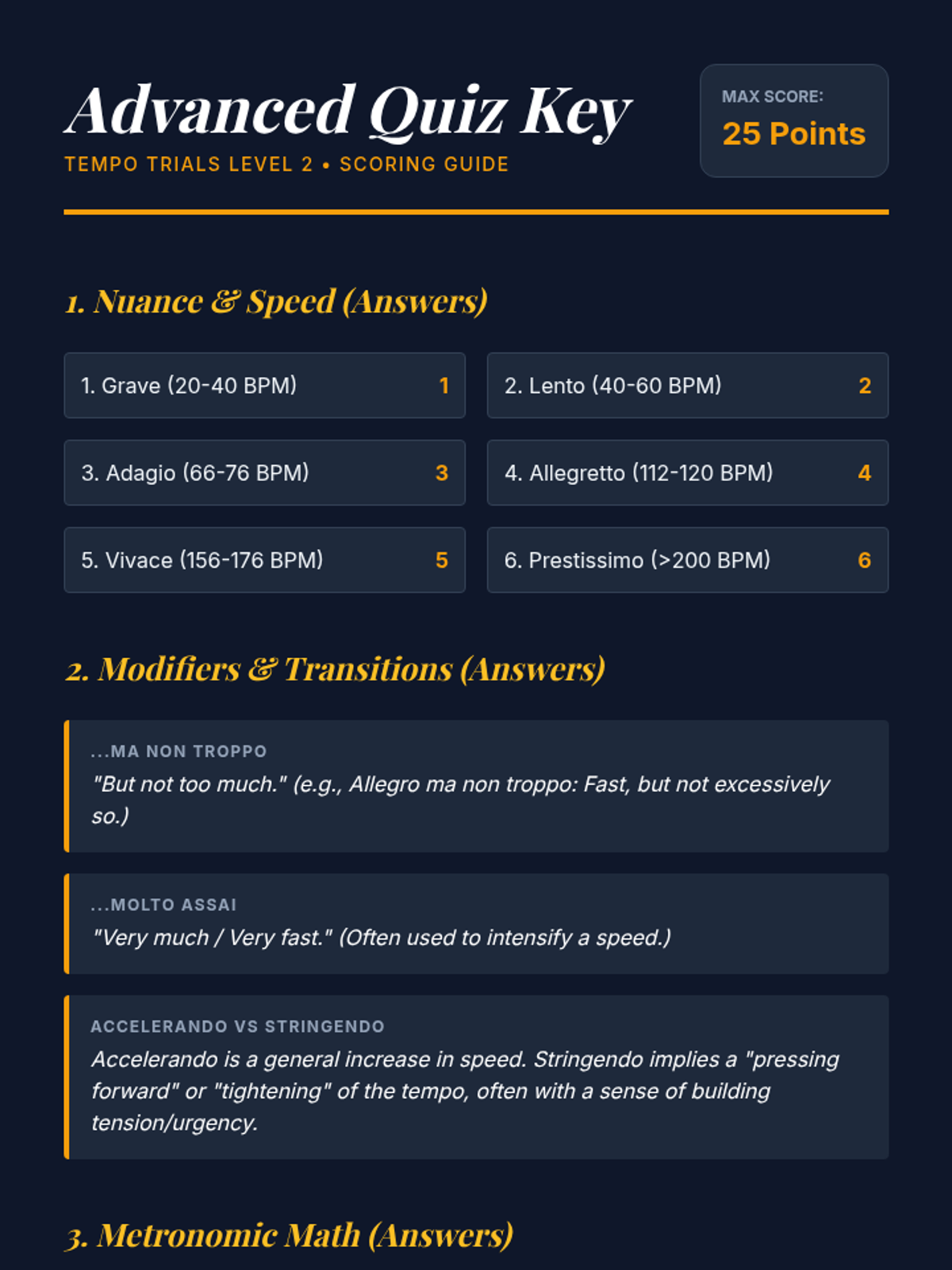
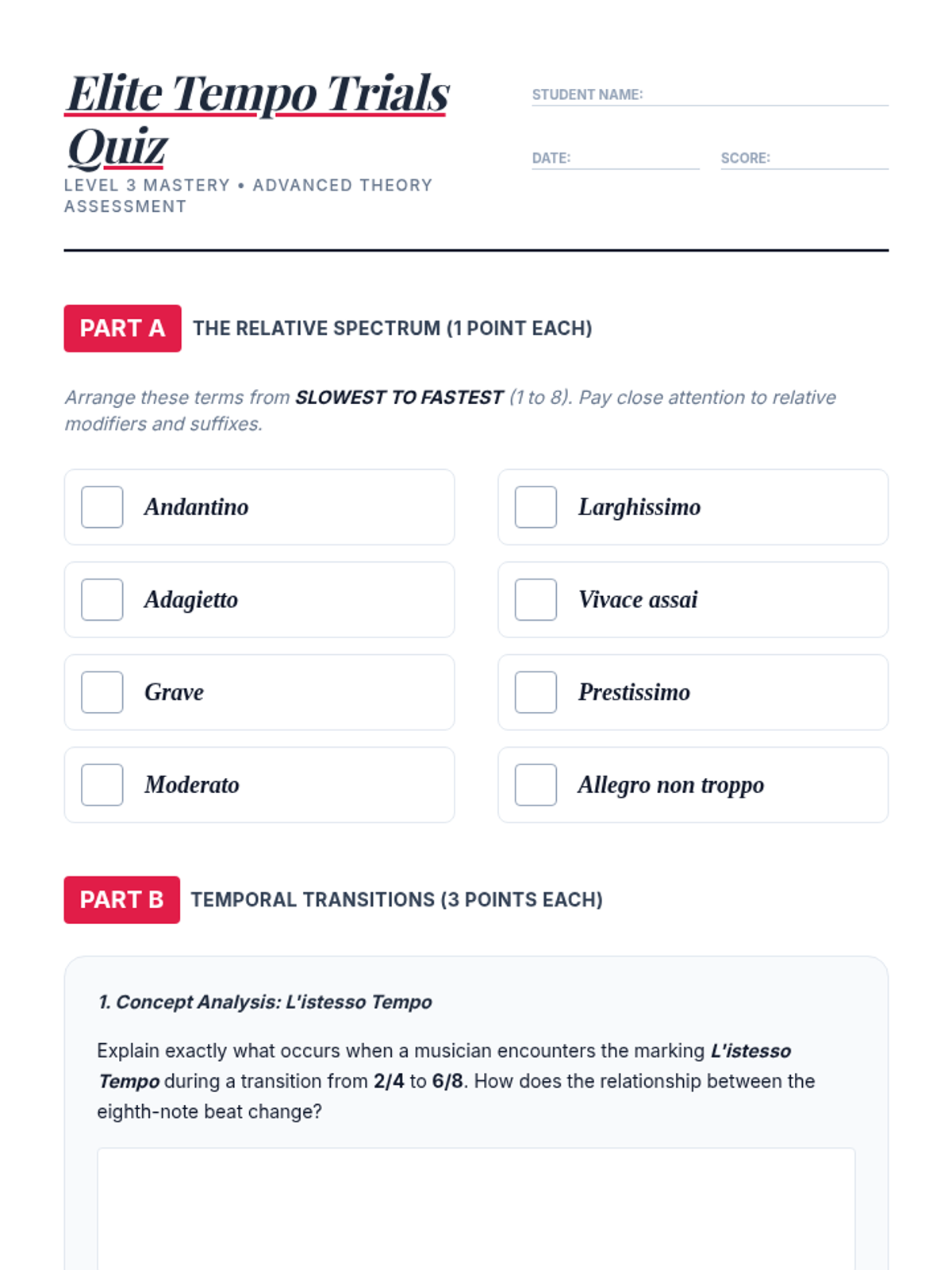
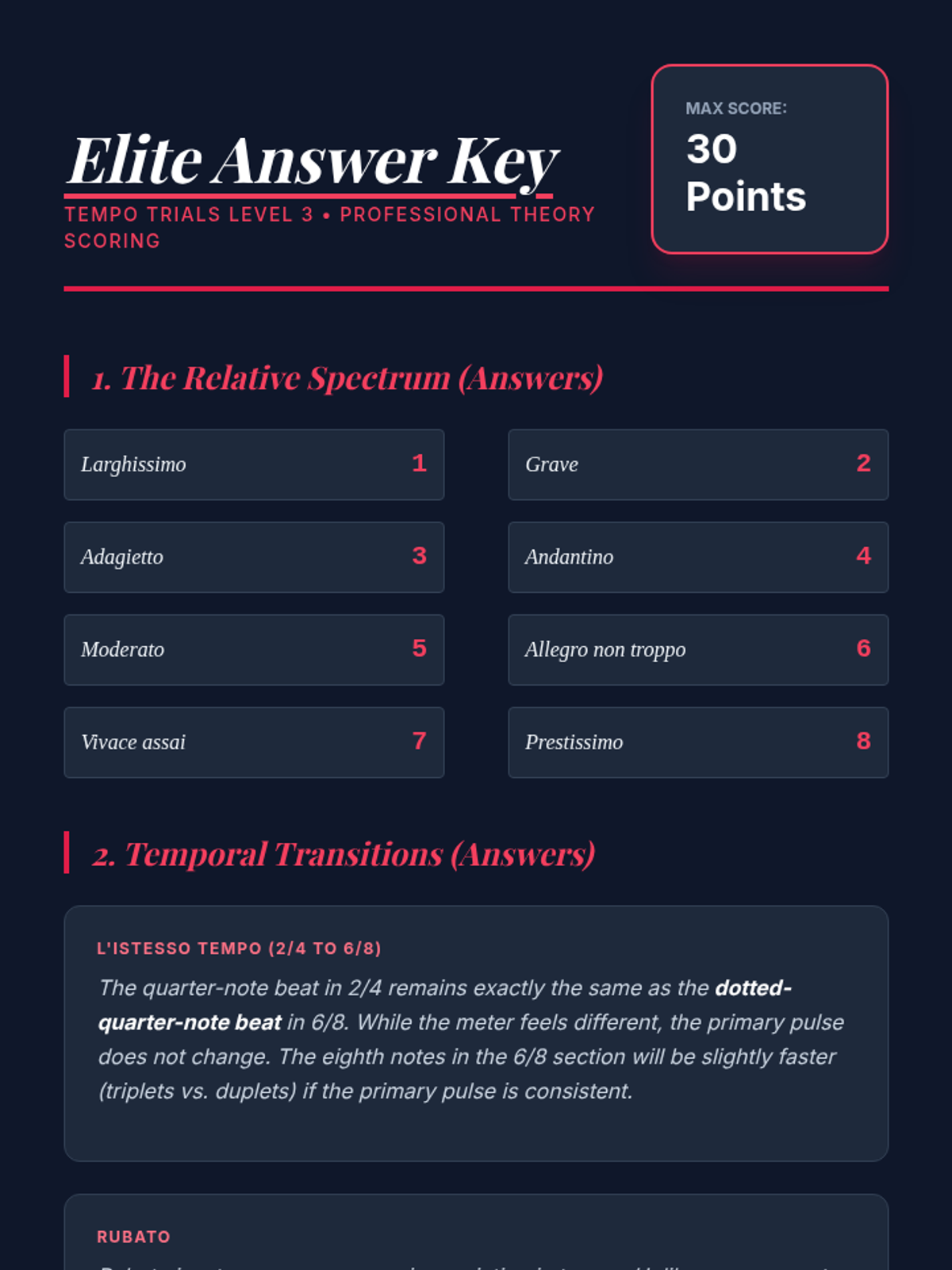
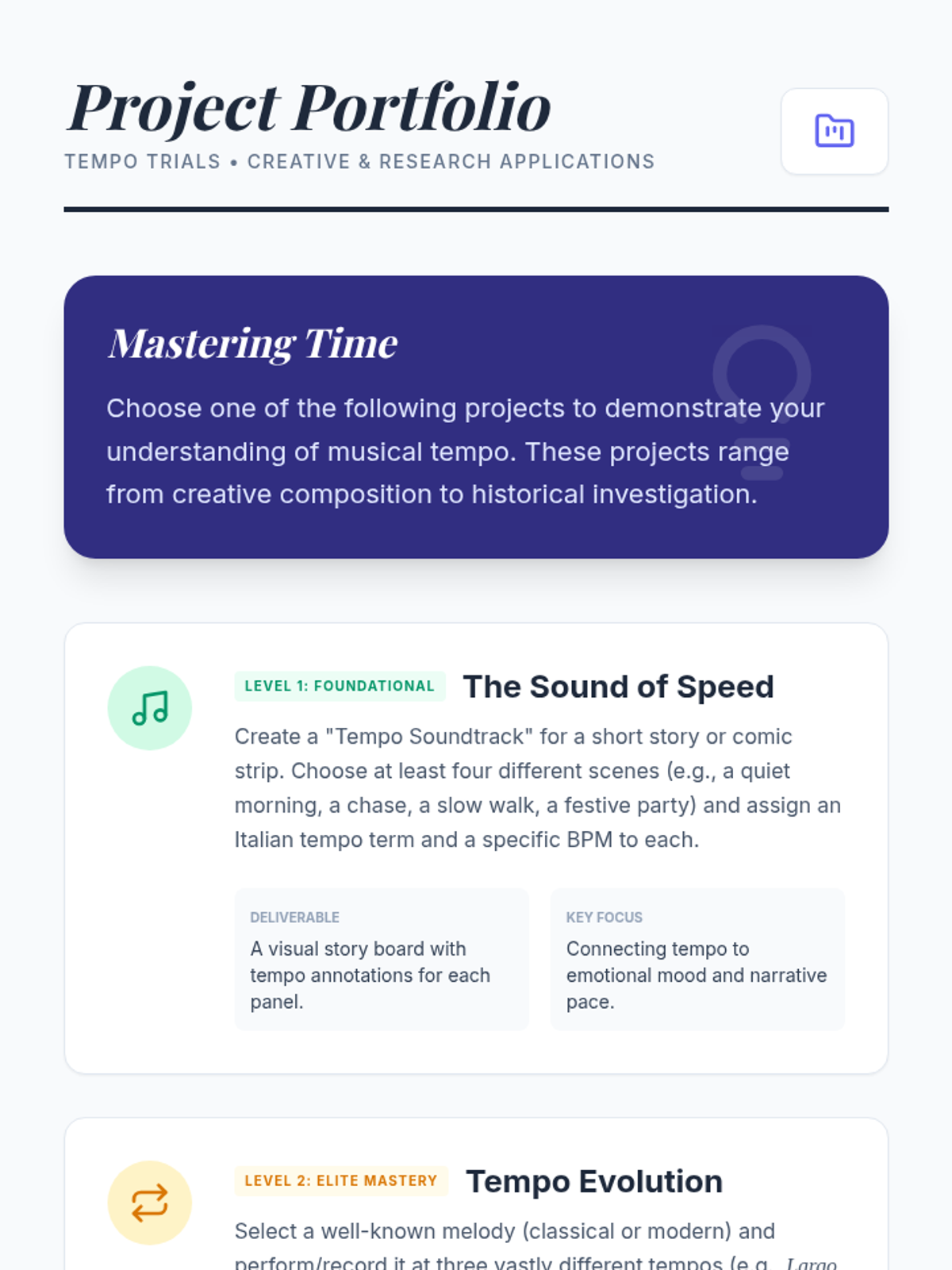
A comprehensive lesson on music tempo covering Italian terminology, metronome markings, and practical application to musical scores. Students will learn to identify and apply various speeds to music.
A comprehensive guide to understanding and applying musical tempo, covering Italian terminology, BPM, and metronome markings.
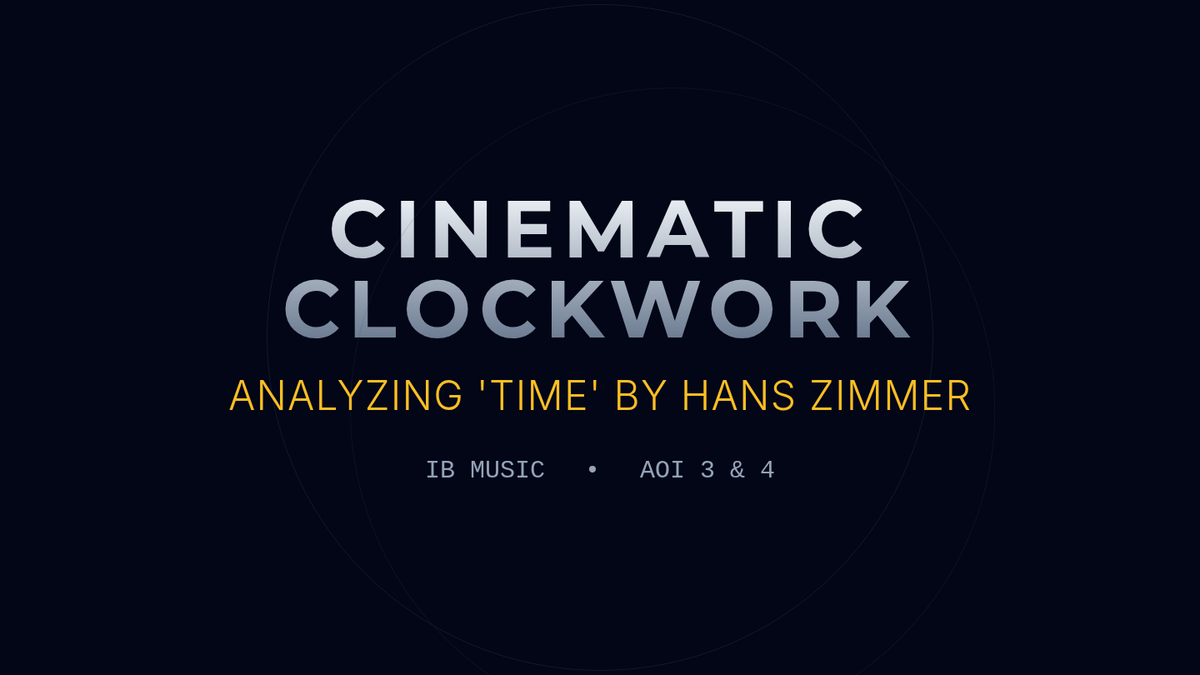
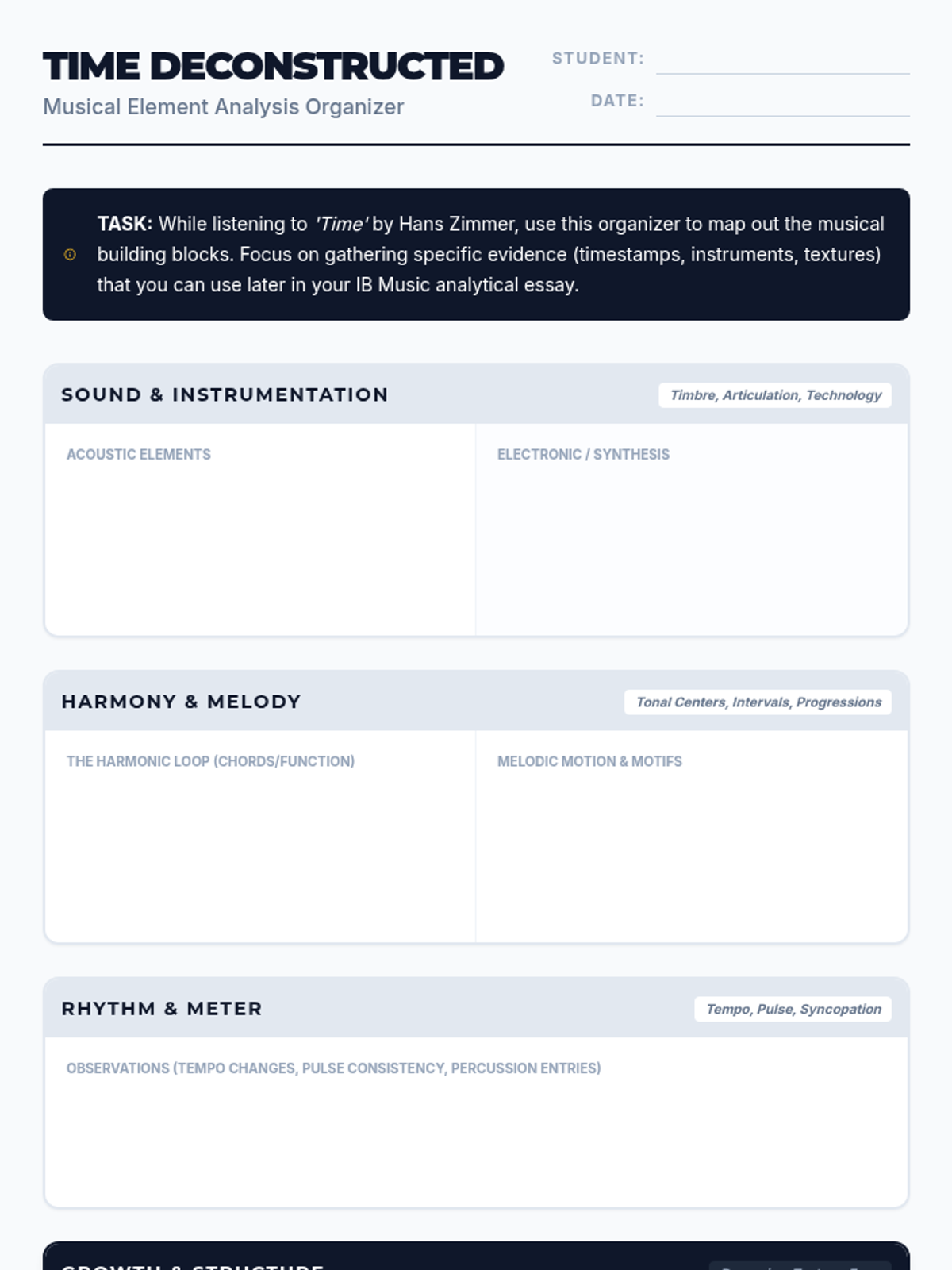
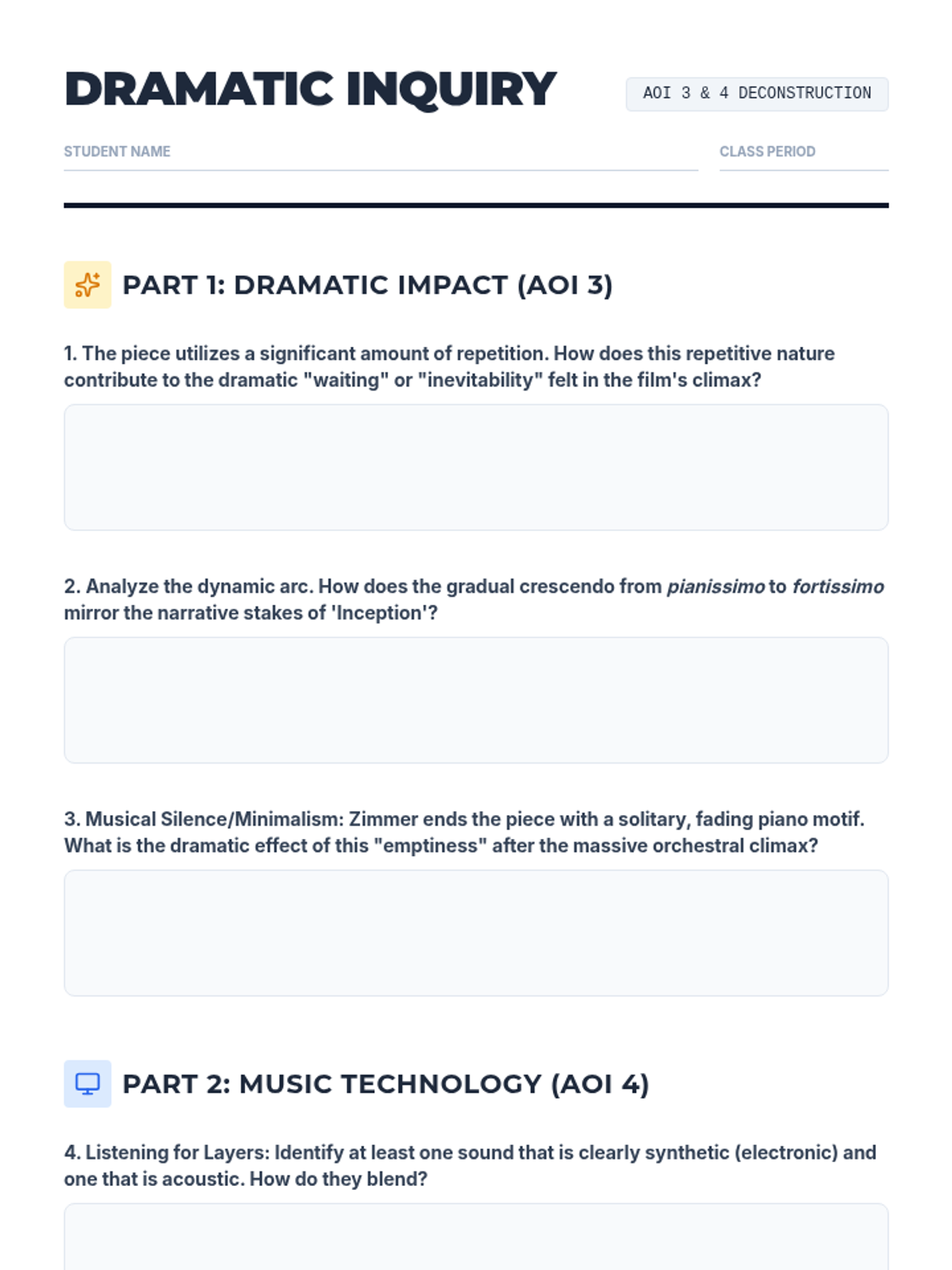
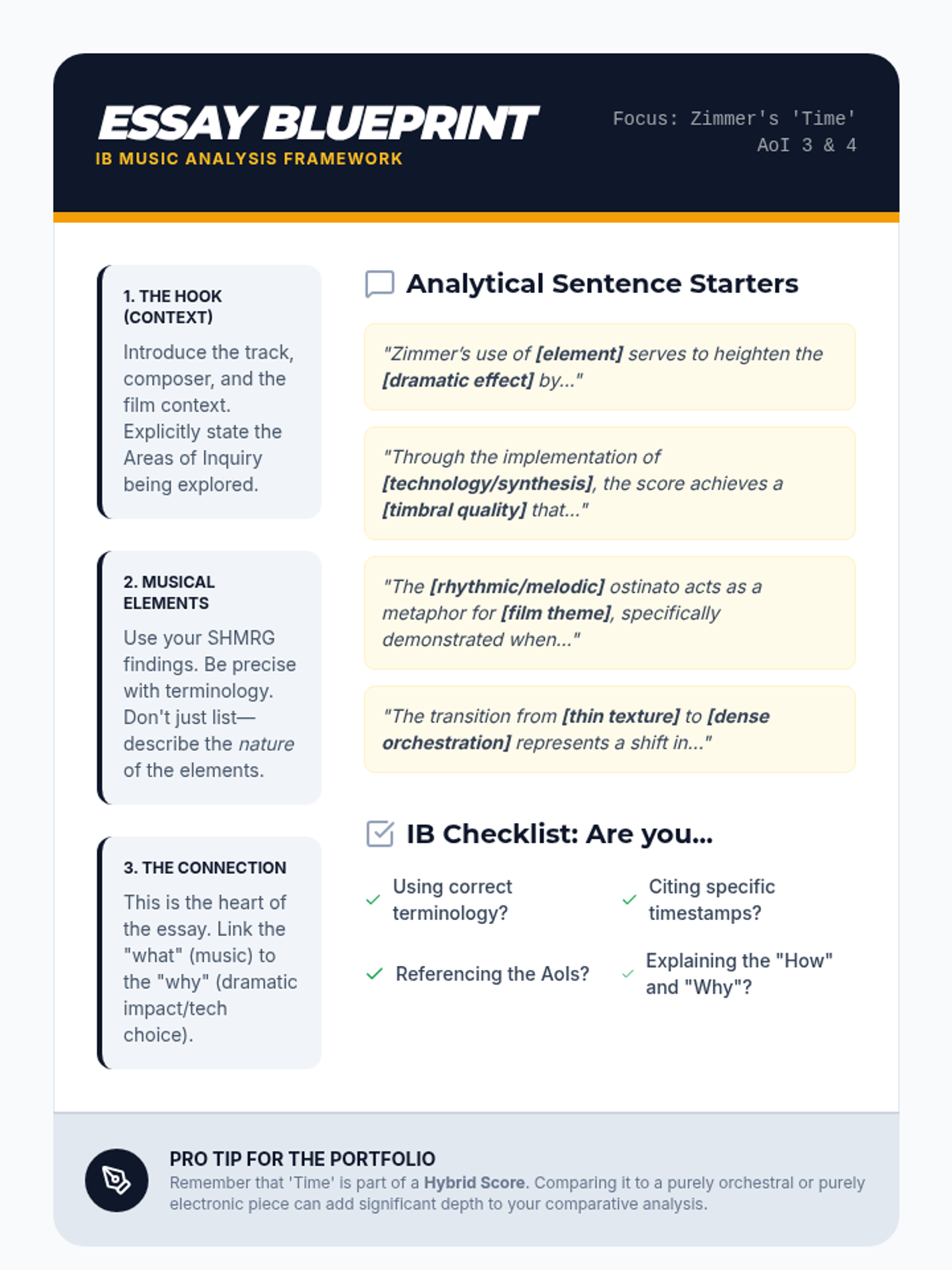
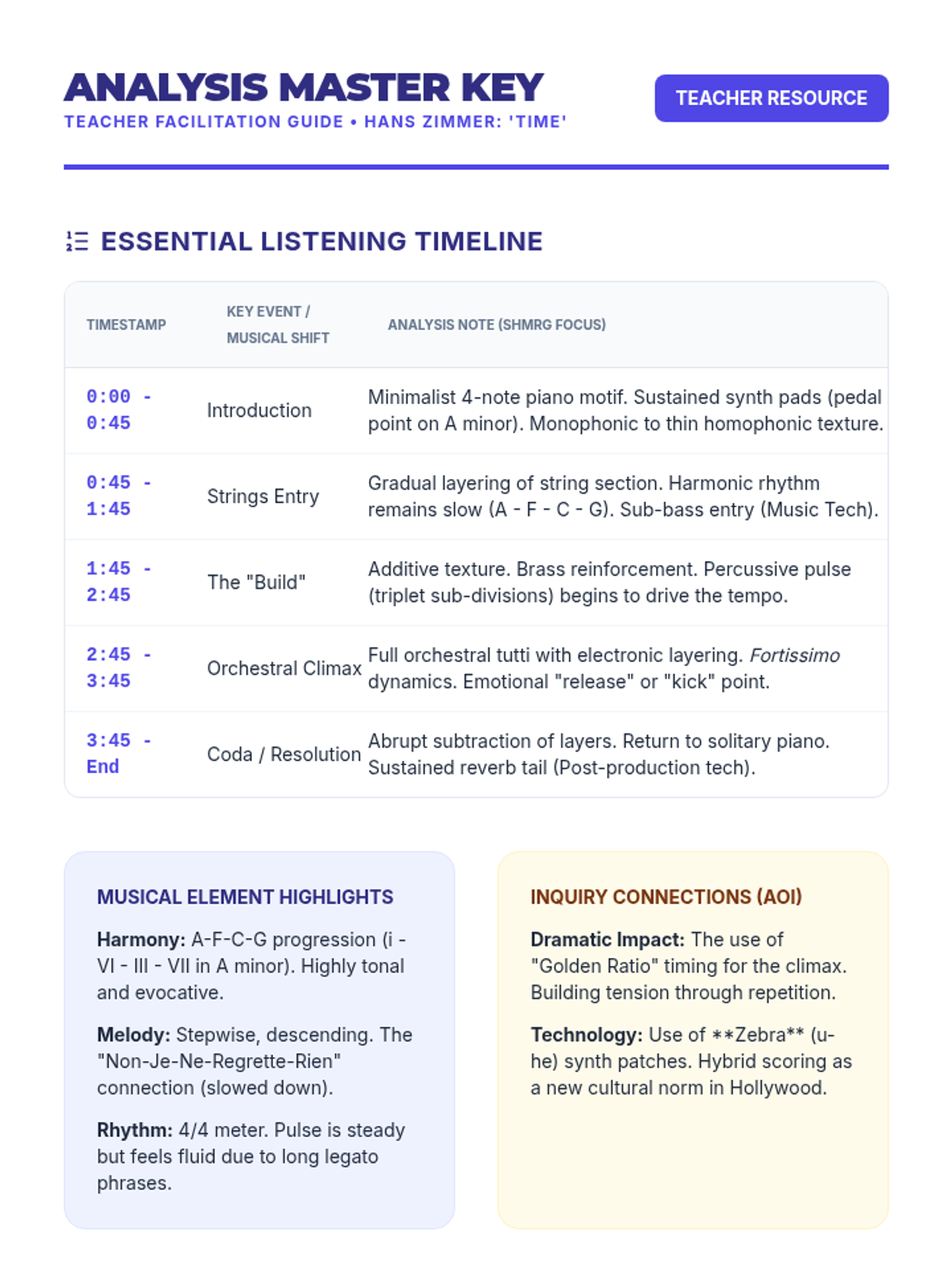
An in-depth exploration of Hans Zimmer's 'Time' from the Inception soundtrack, focusing on IB Music's Dramatic Impact and Music Technology Areas of Inquiry to build essay-writing skills.
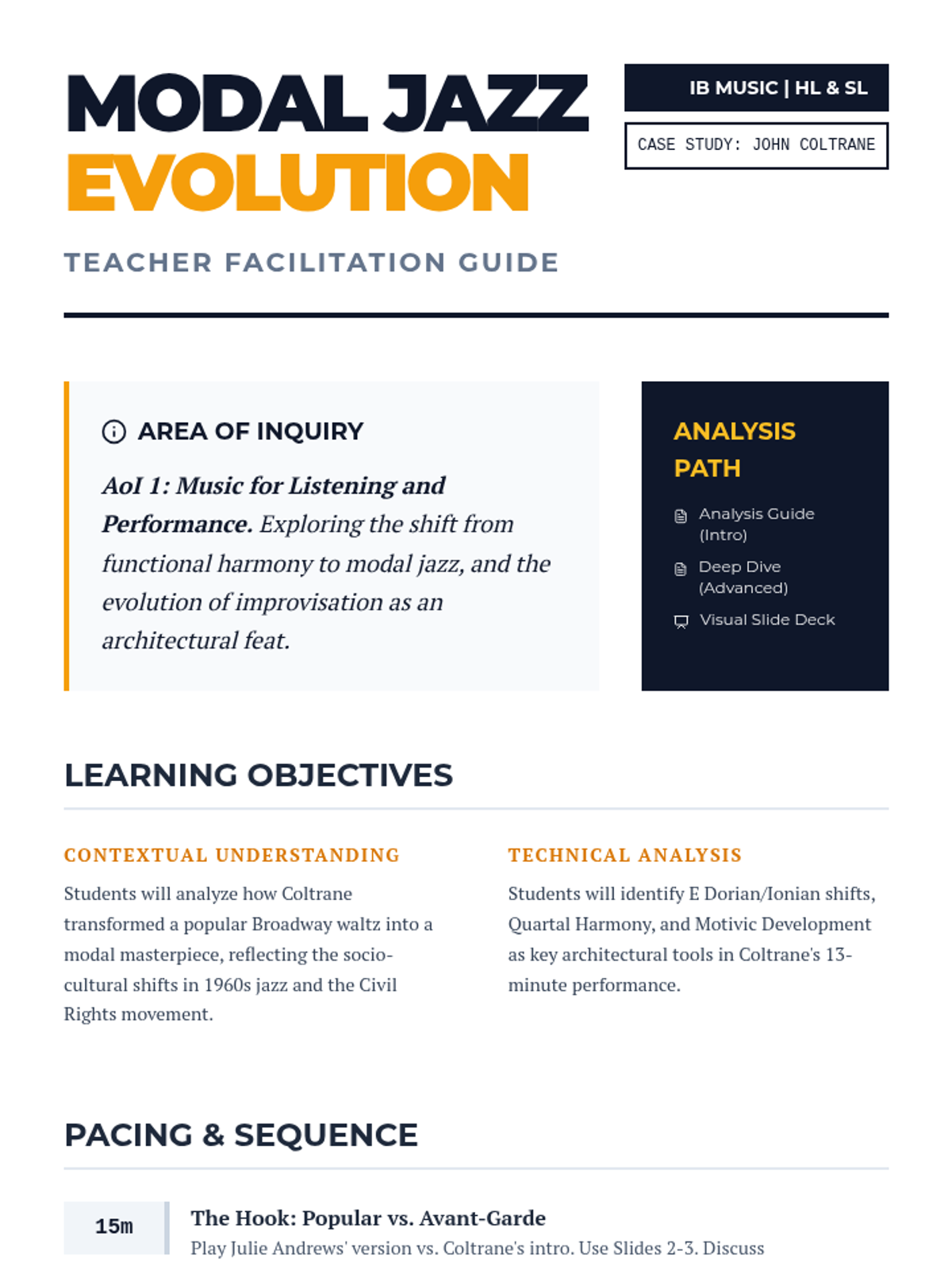
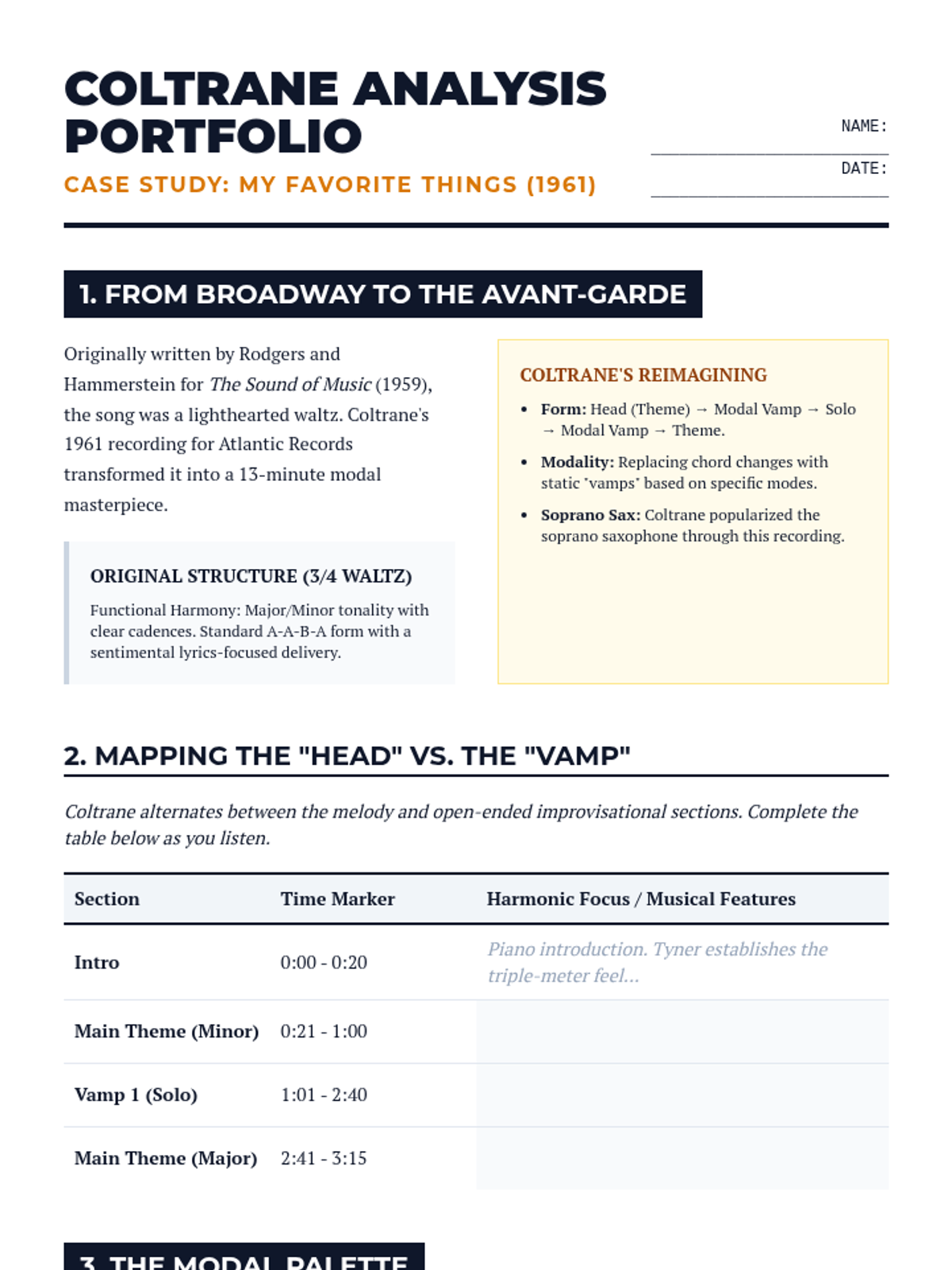
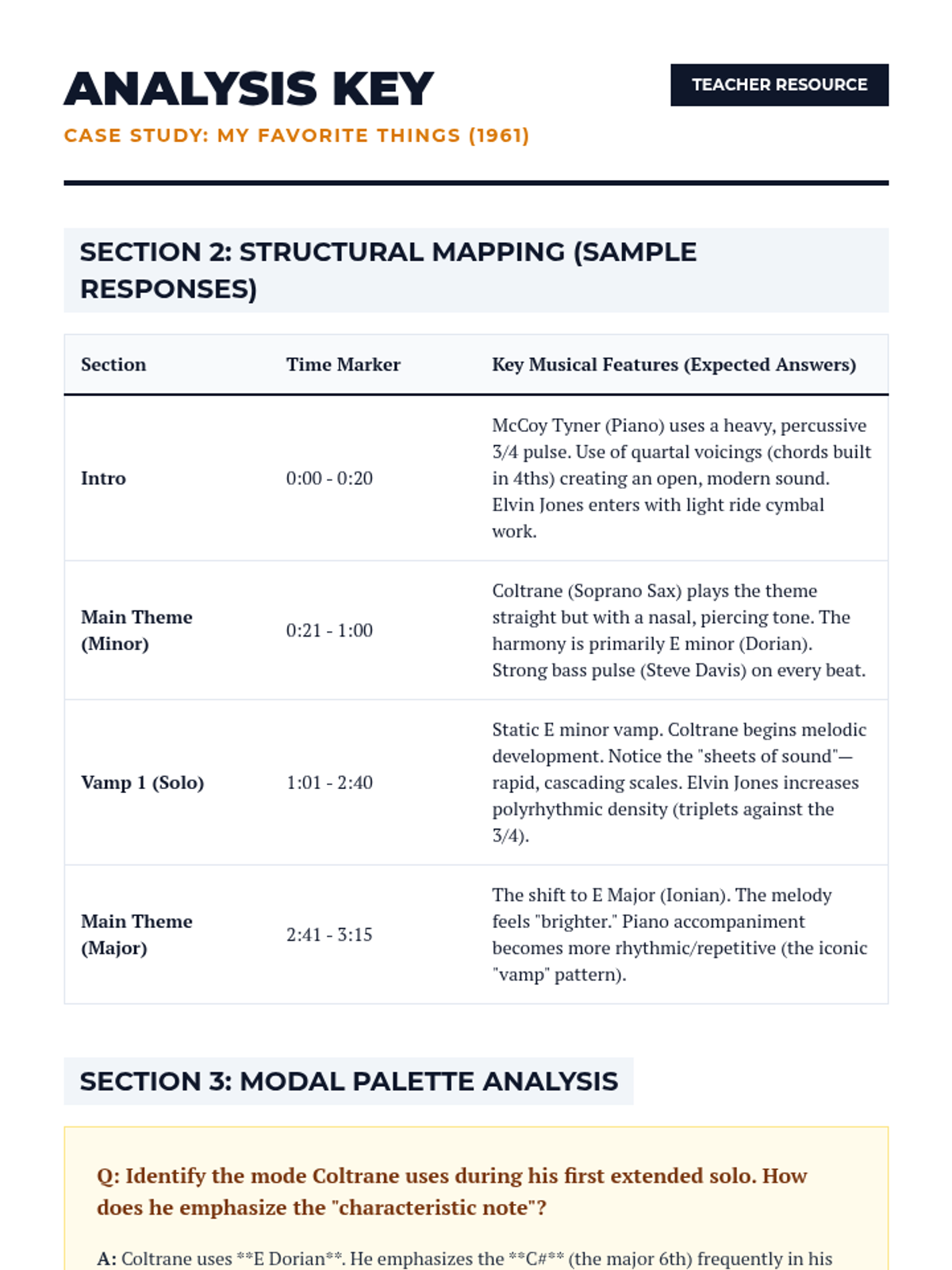
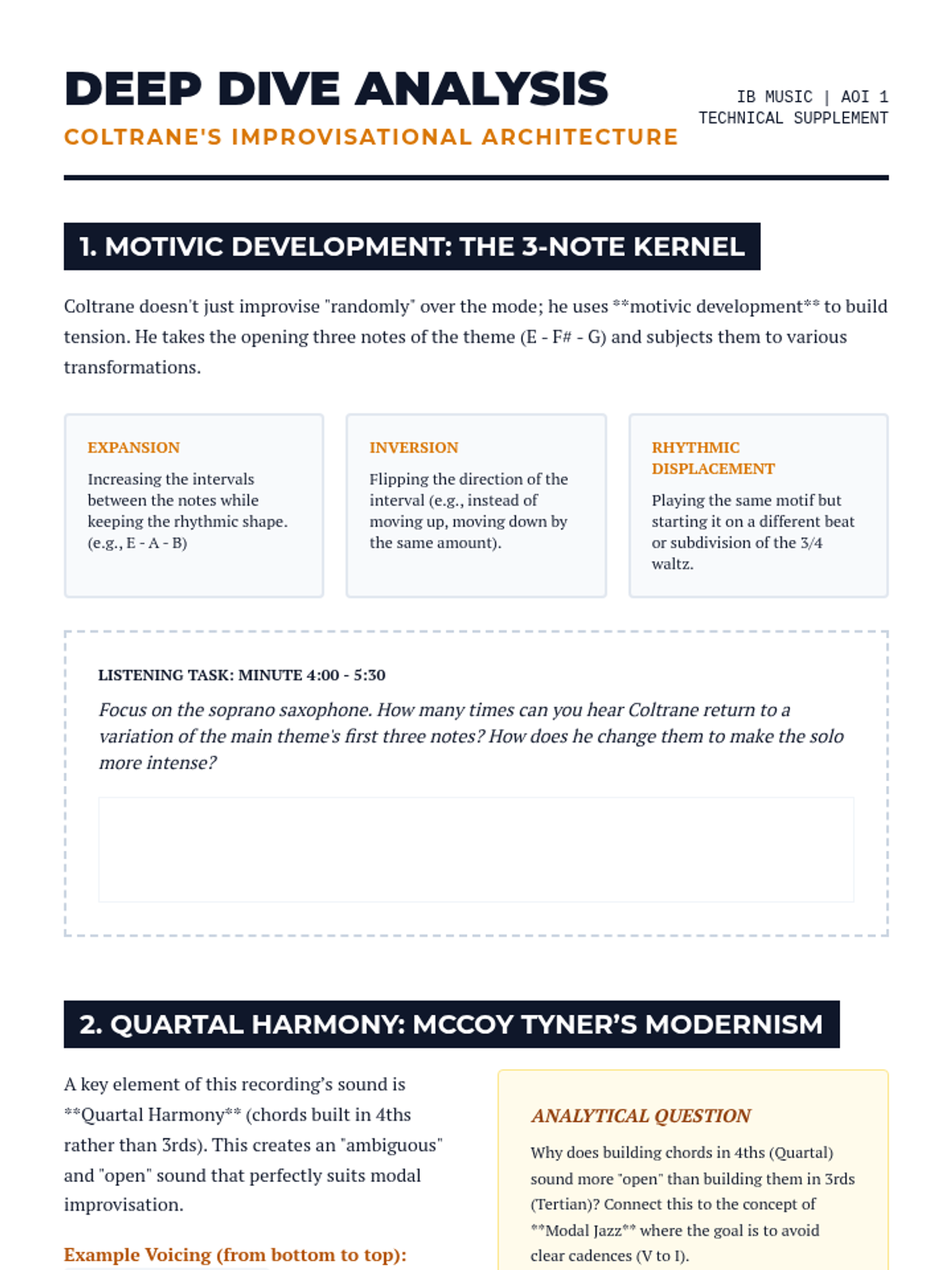
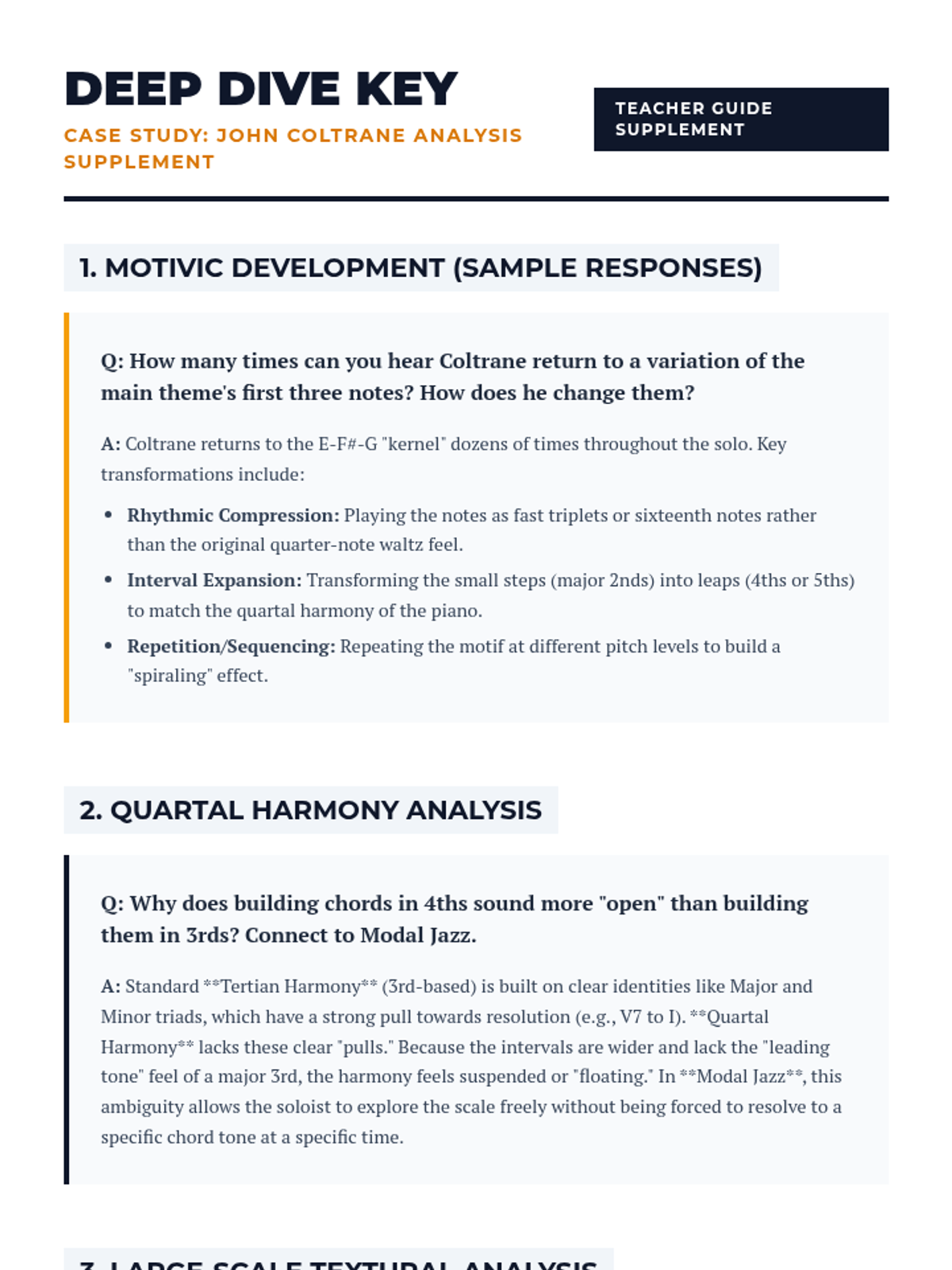
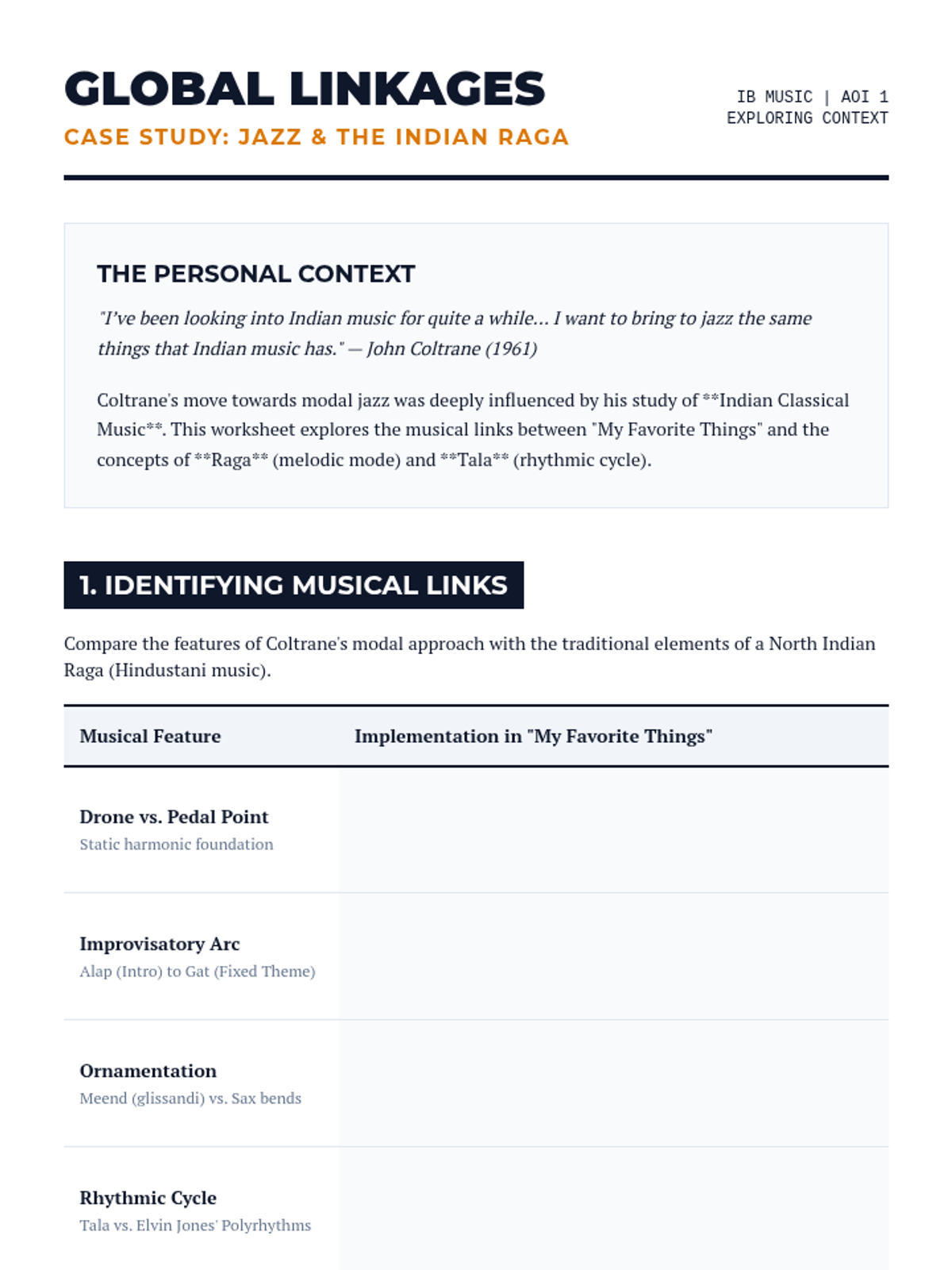
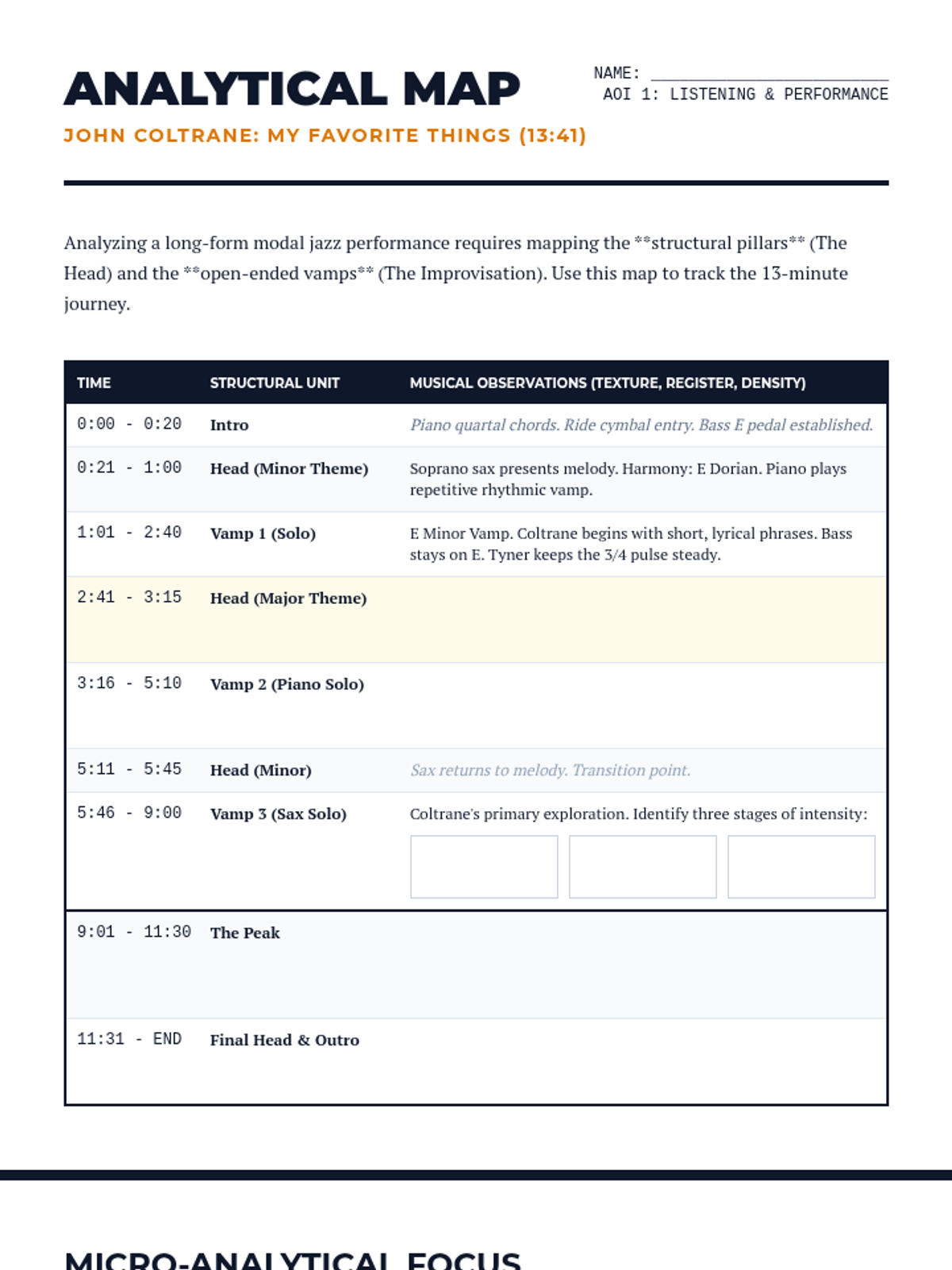
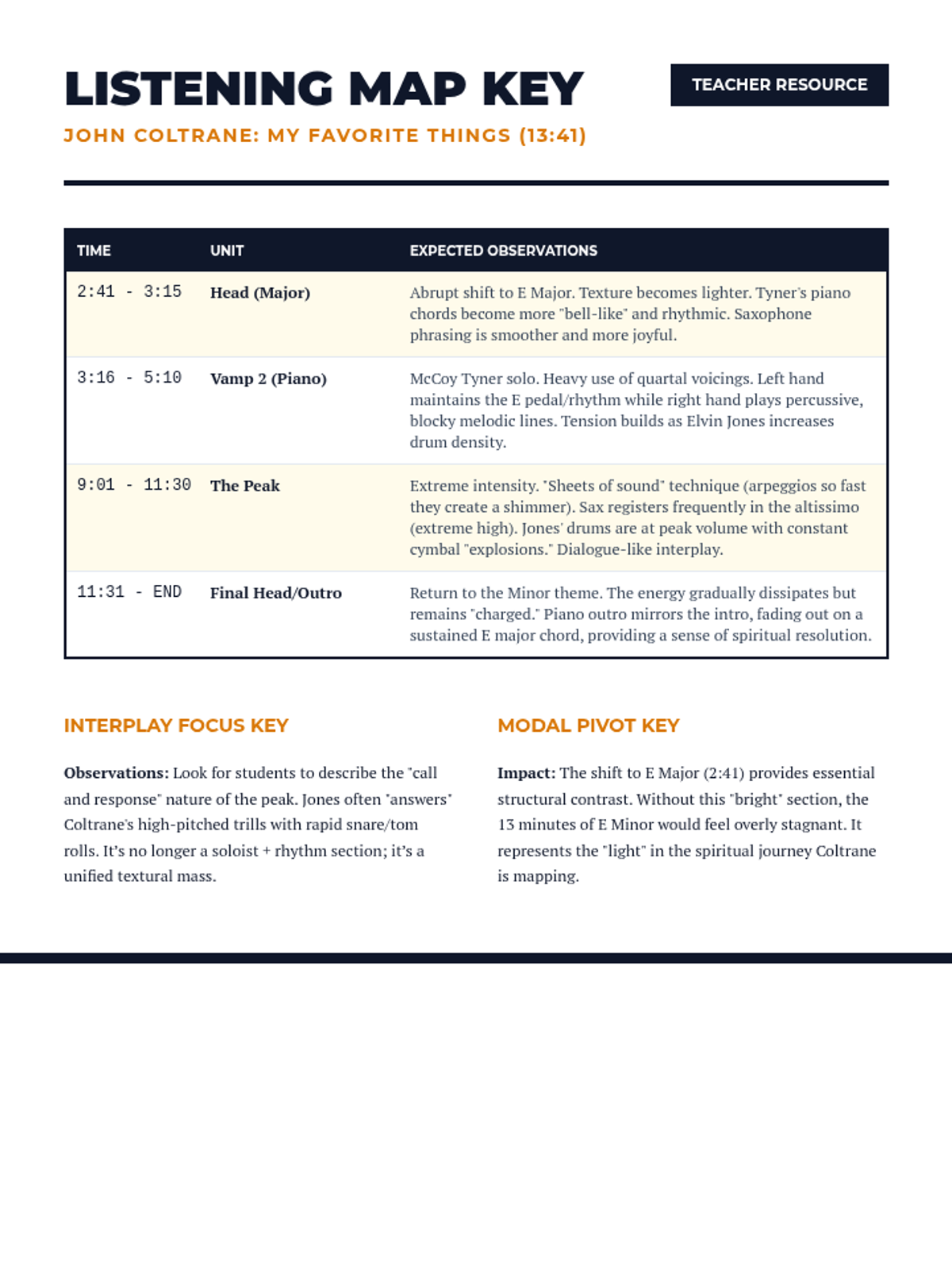
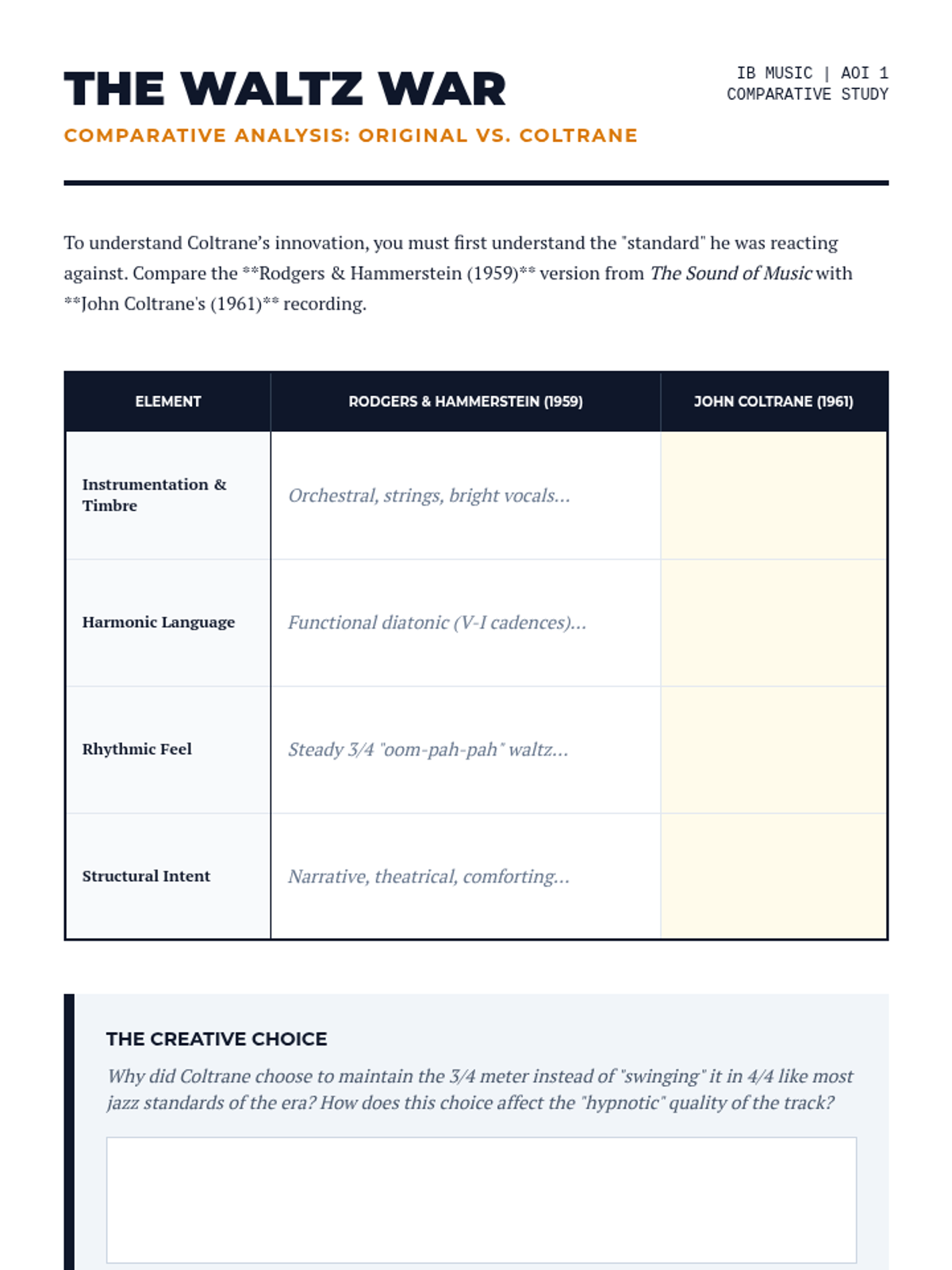
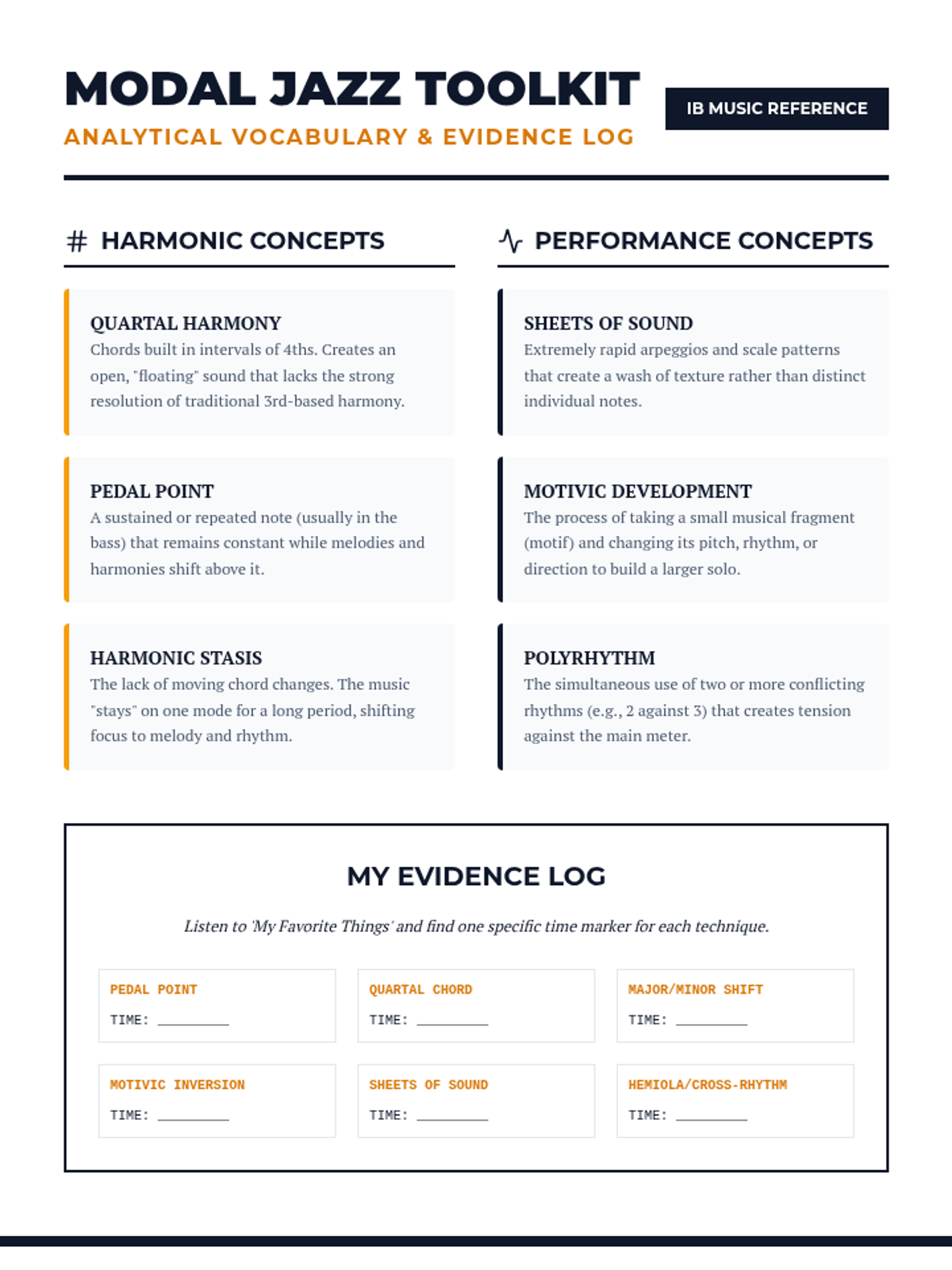
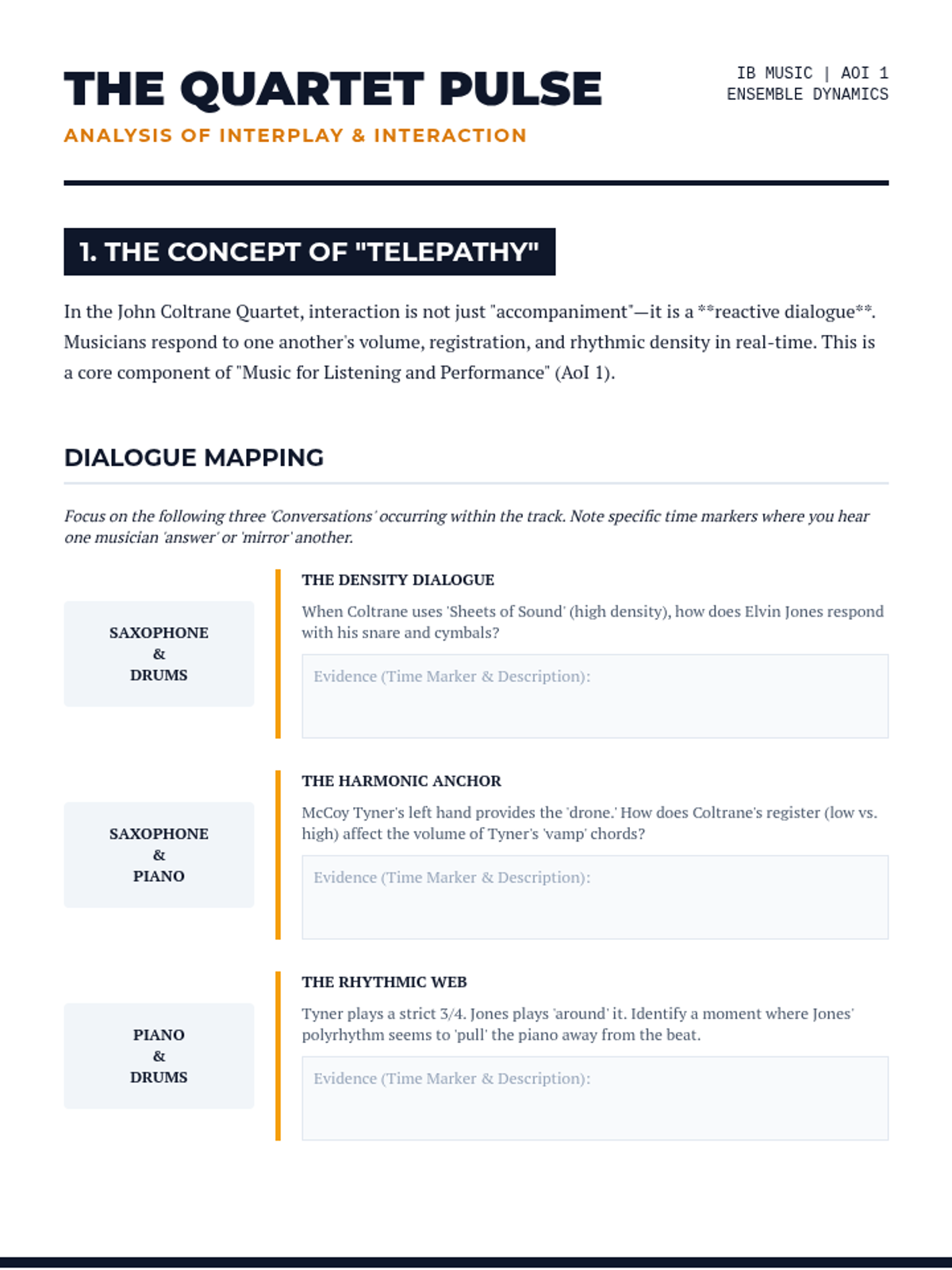
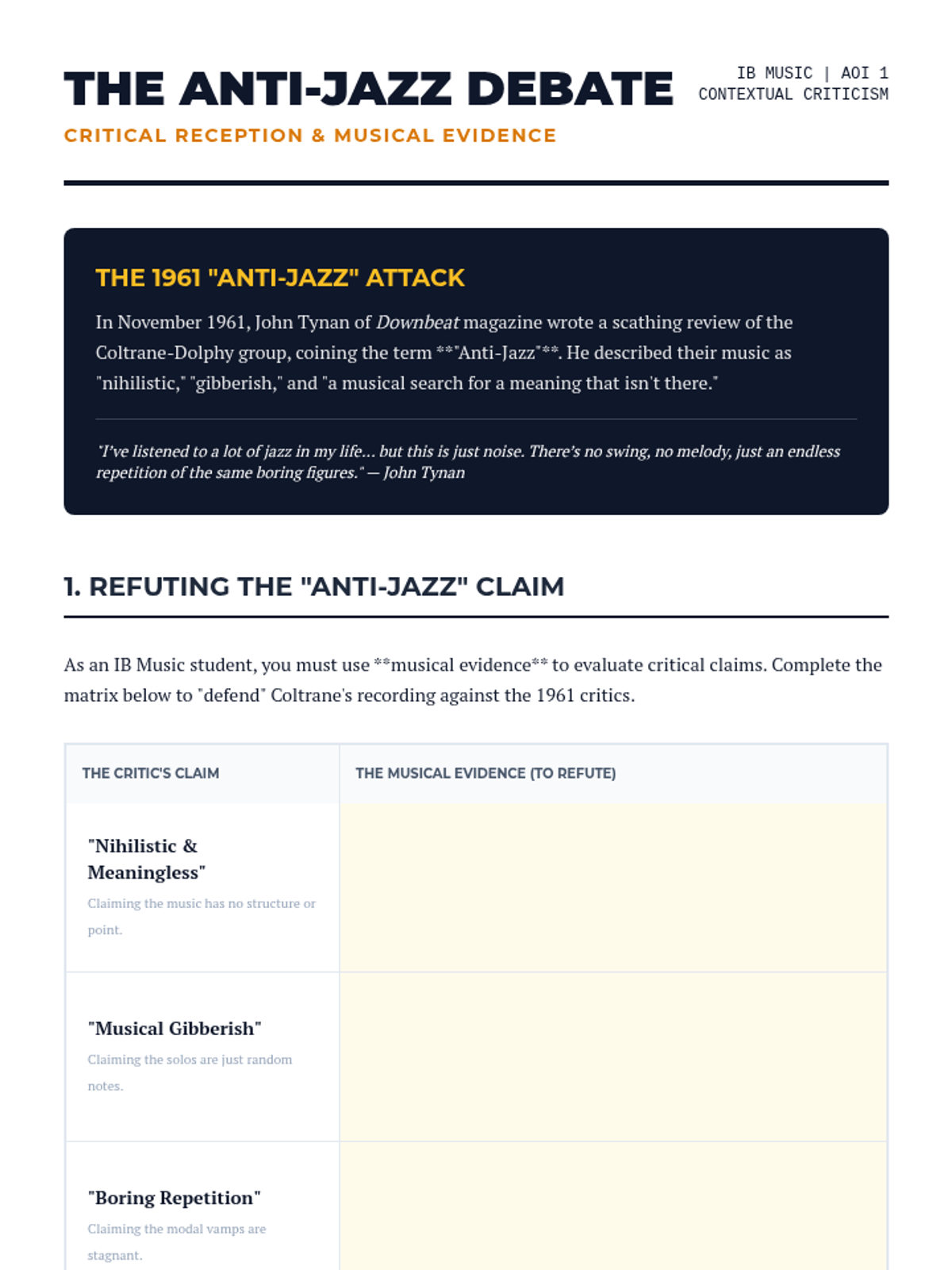
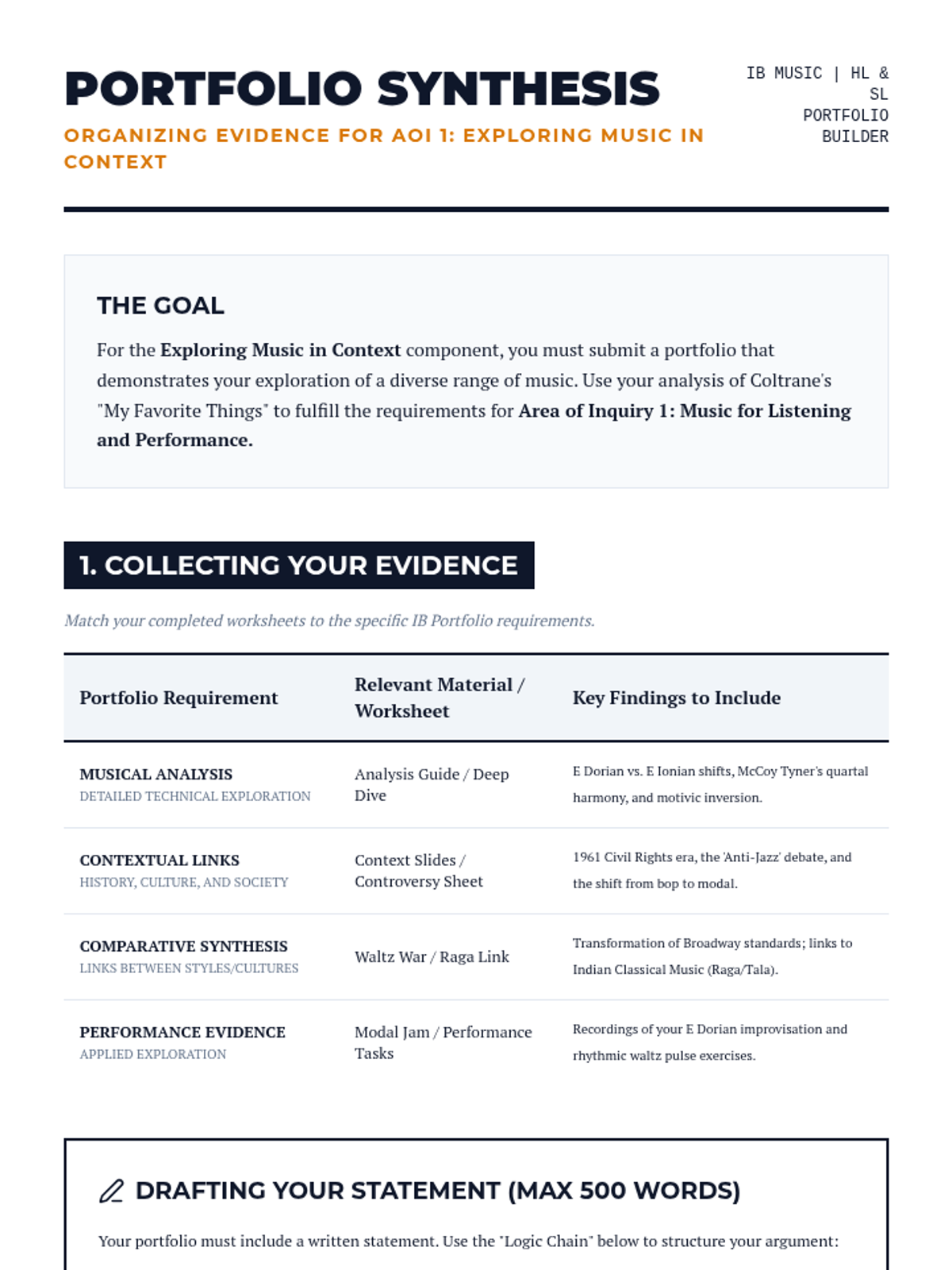
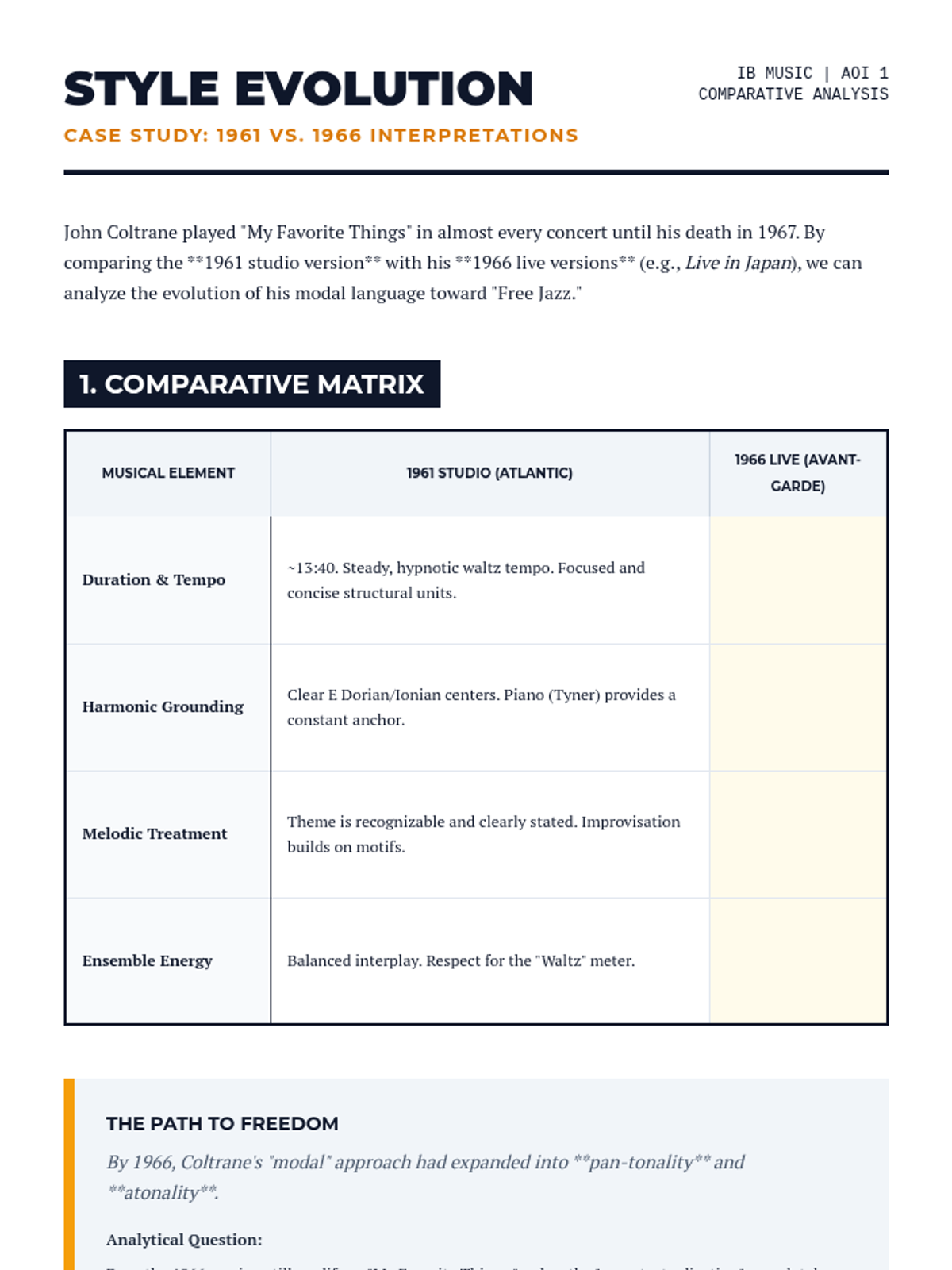
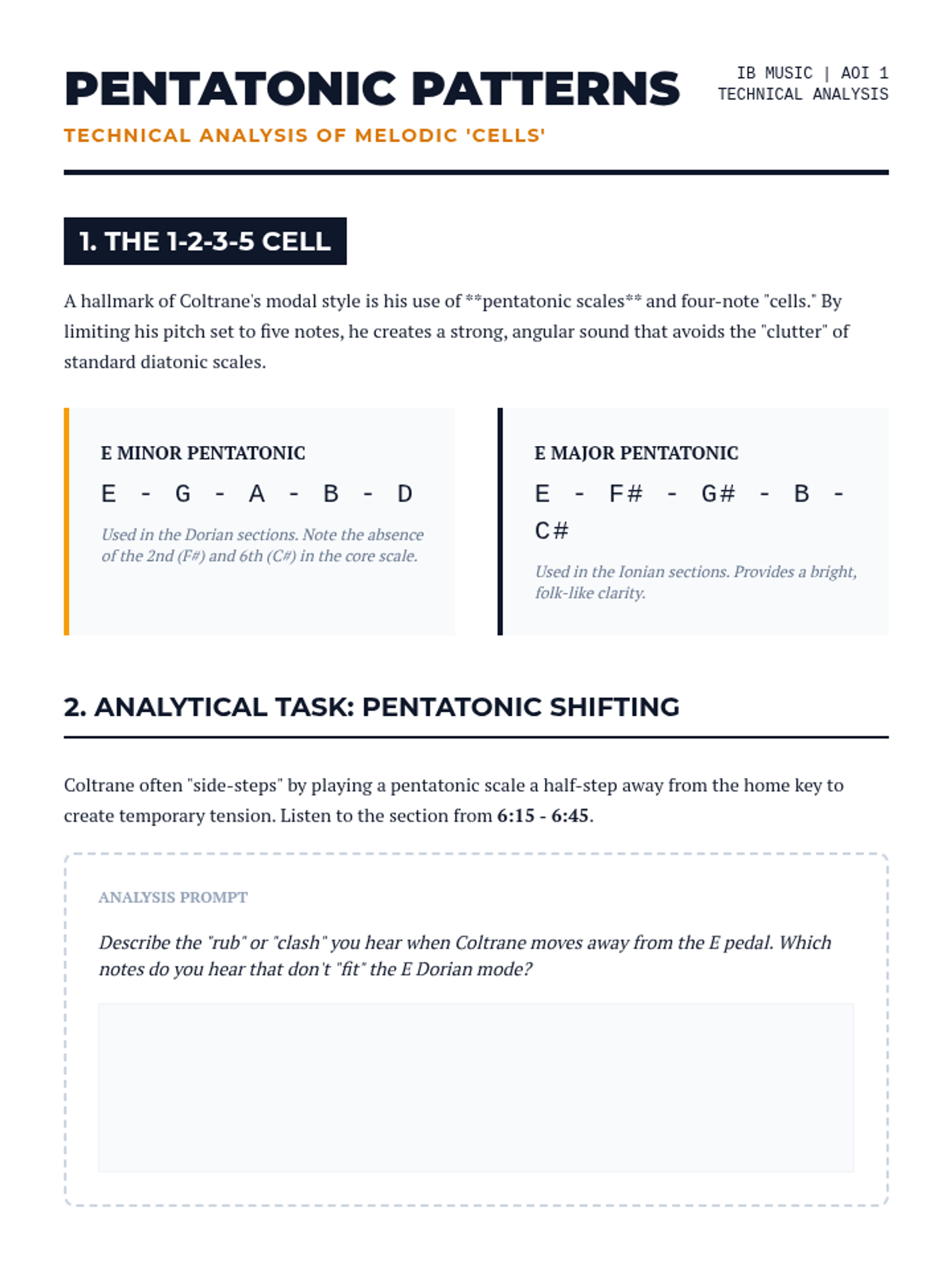
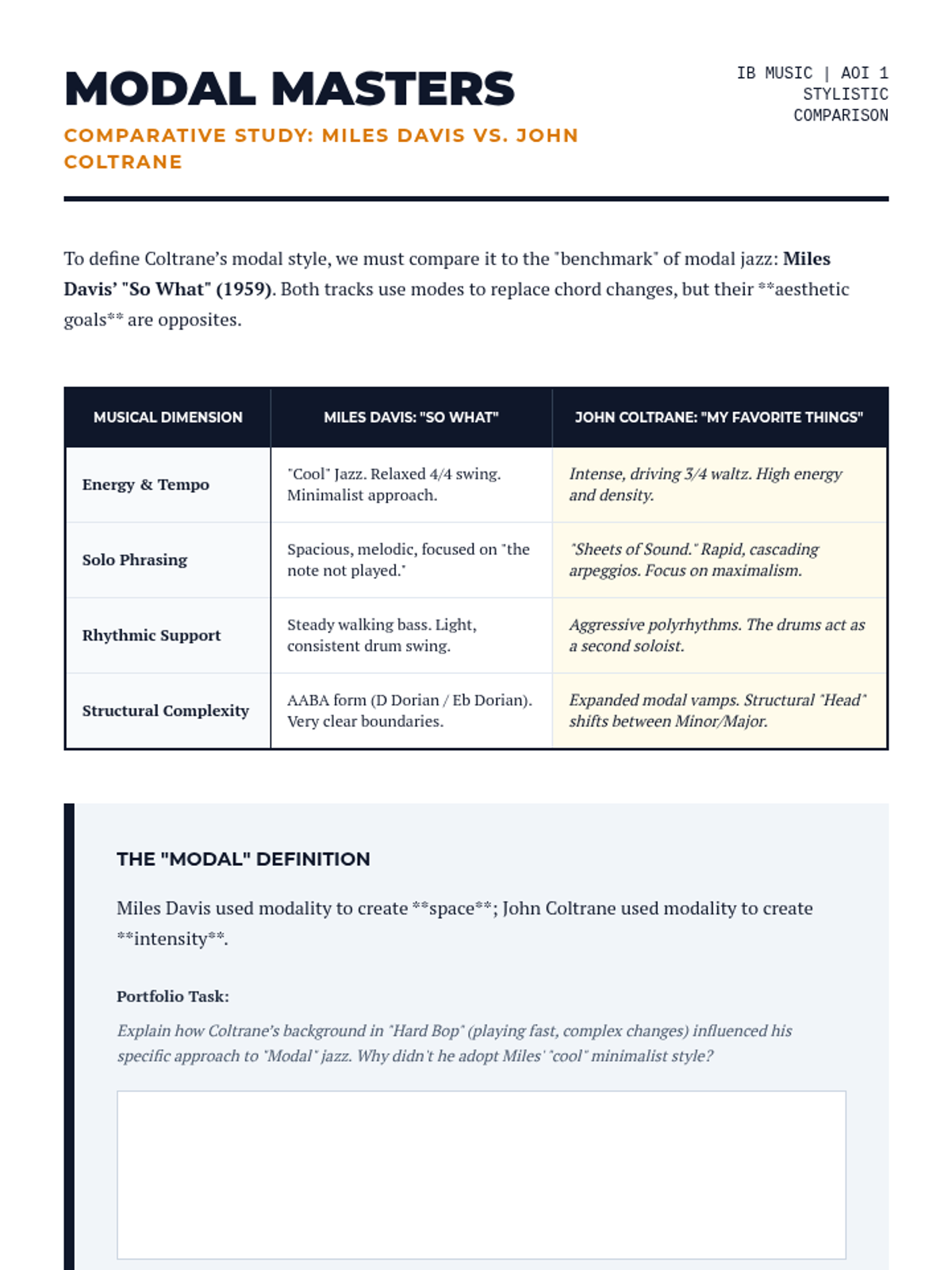
A comprehensive exploration of John Coltrane's 'My Favorite Things' for IB Music, focusing on modal jazz, structural innovation, and the 'Exploring Music in Context' Area of Inquiry.
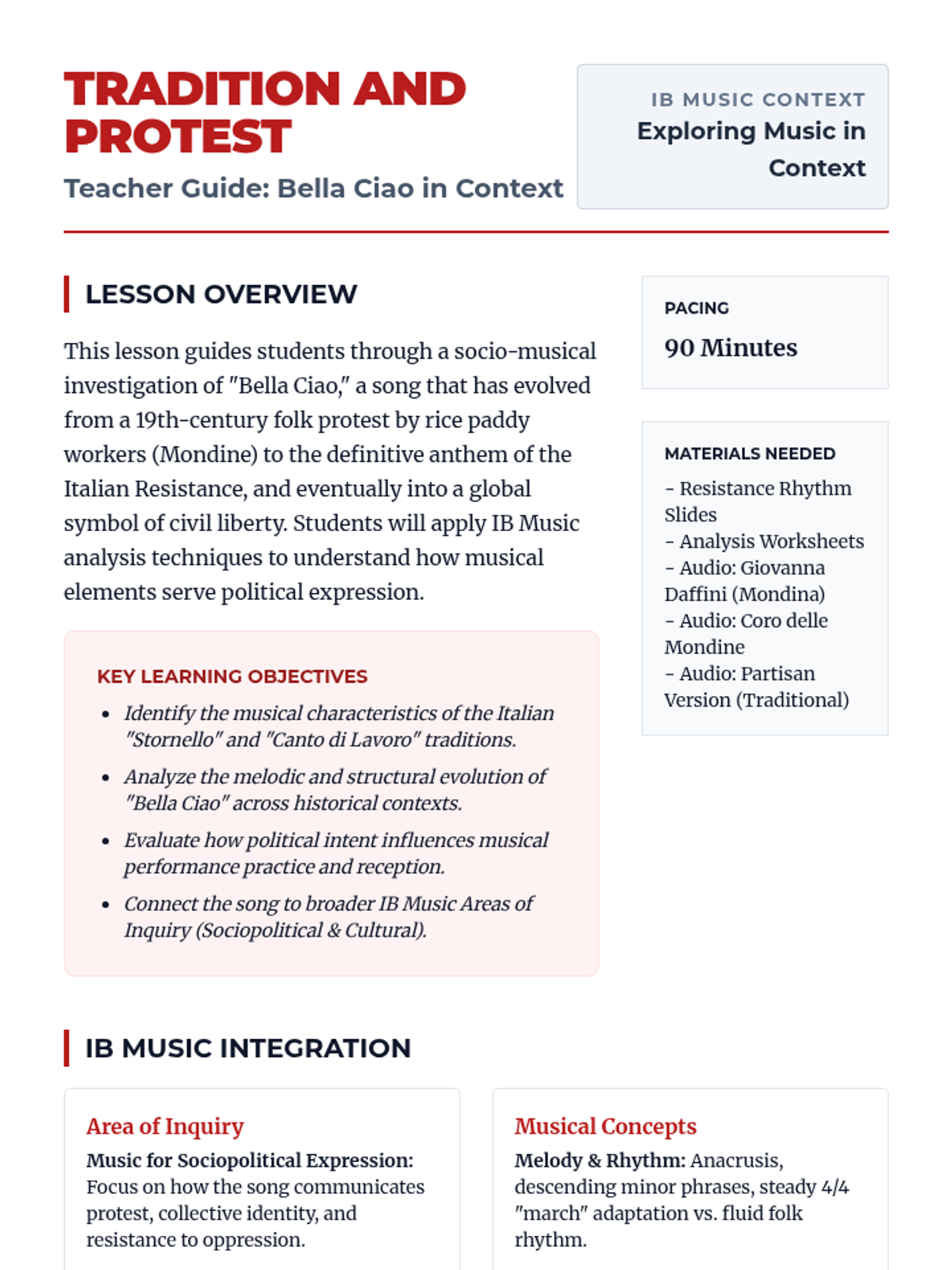
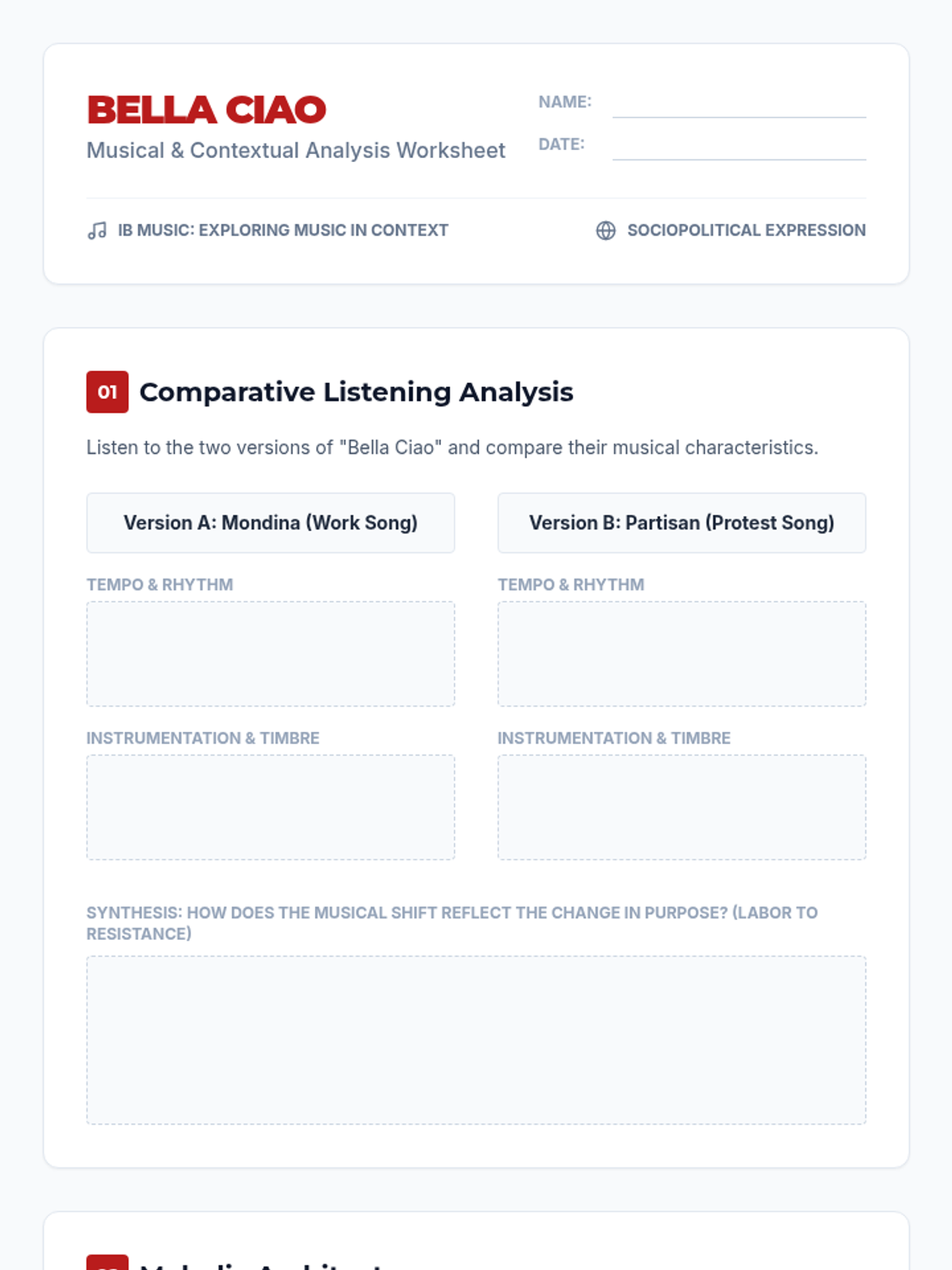
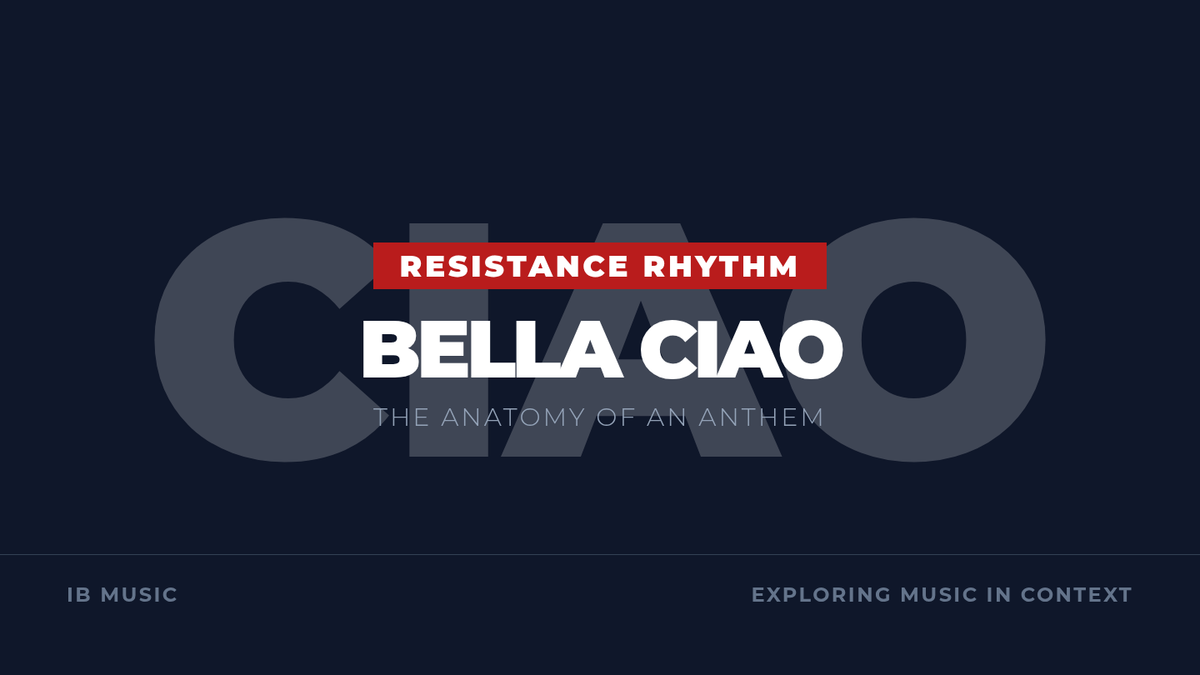
Explore the evolution of 'Bella Ciao' from an Italian folk song of labor to a global anthem of resistance. Students analyze its musical characteristics and socio-political impact through the lens of IB Music's Exploring Music in Context.
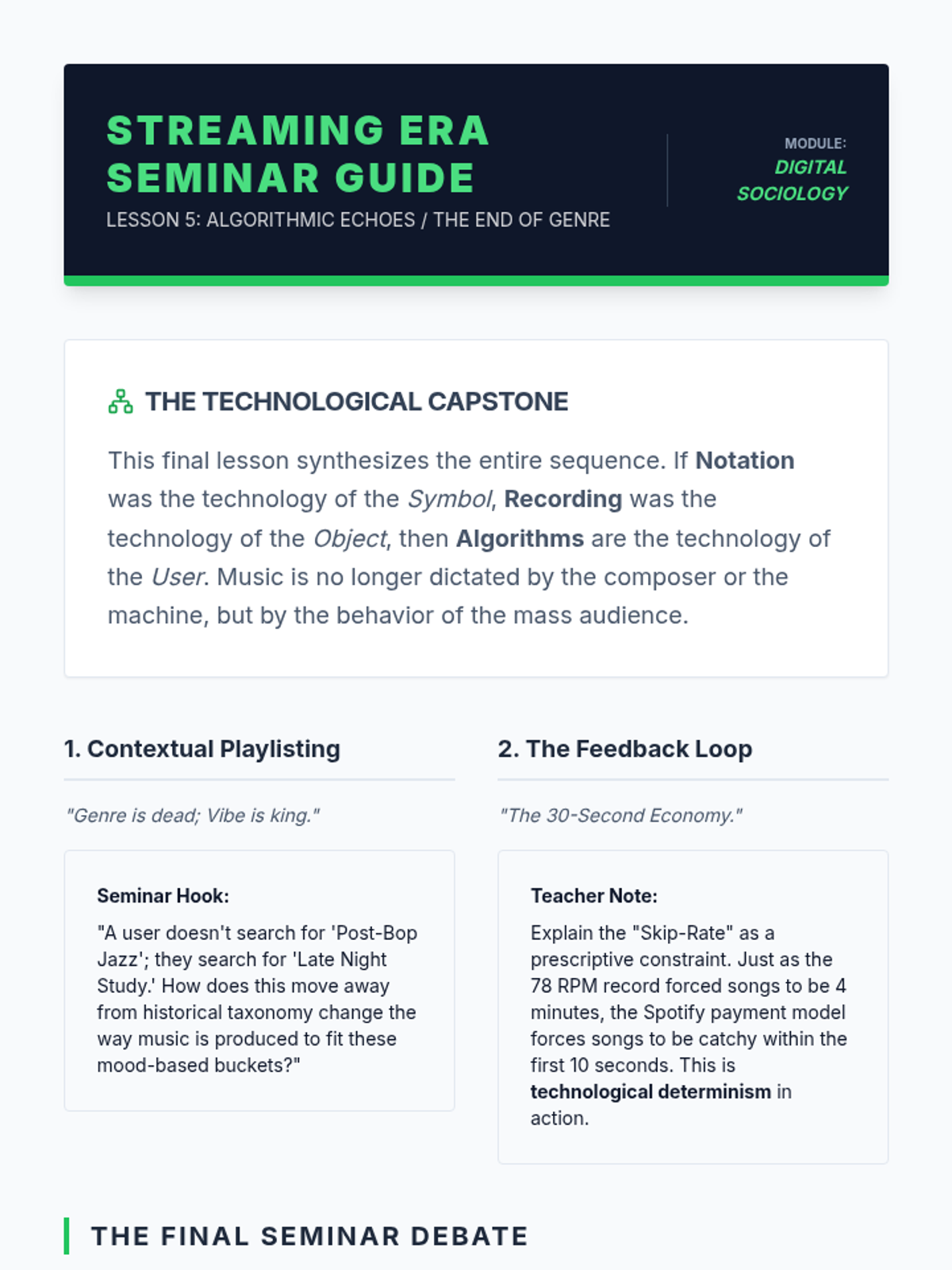
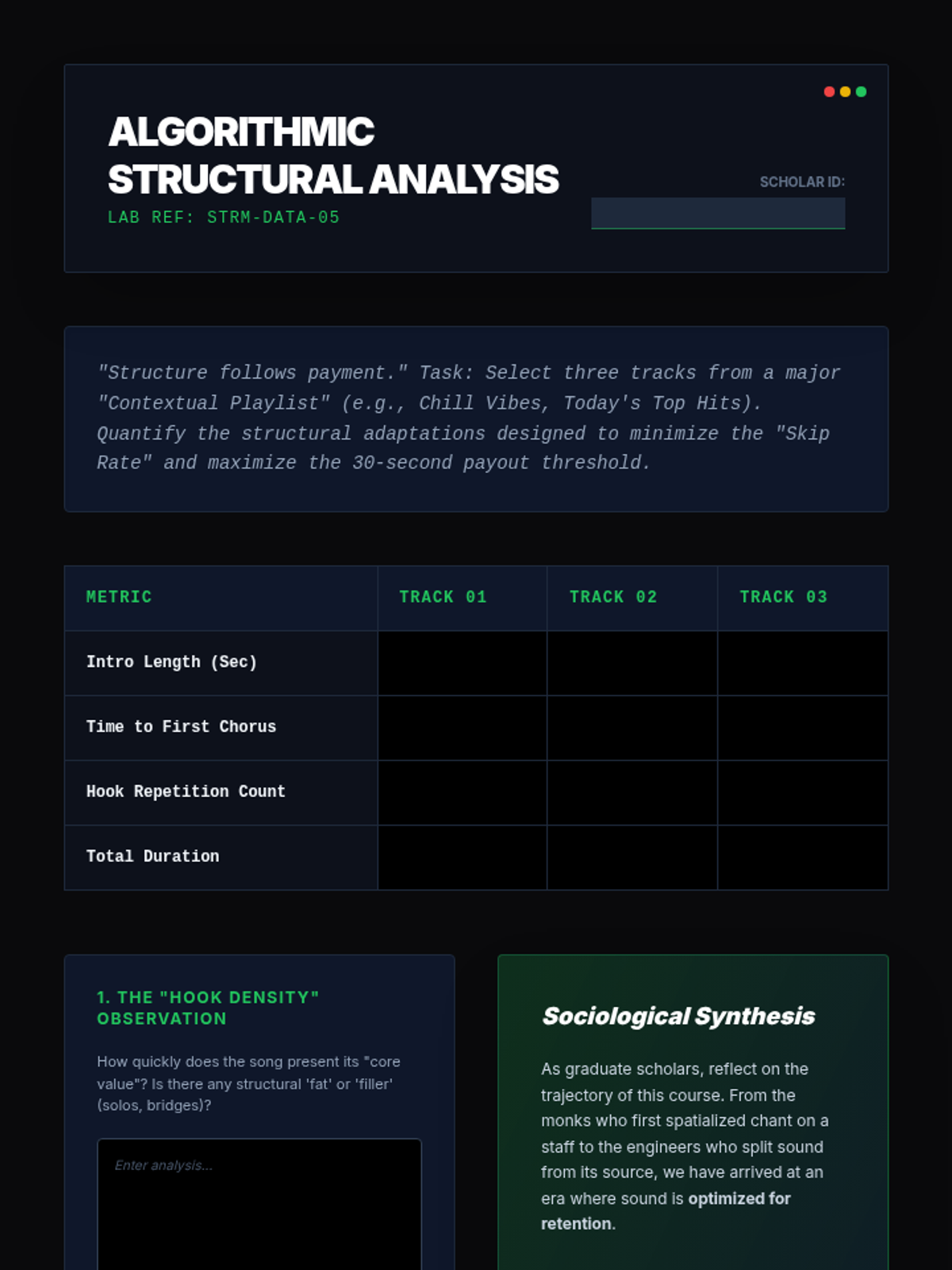
Concludes with an analysis of how streaming algorithms and metadata influence modern song structure and the sociological phenomenon of the 'end of genre.'
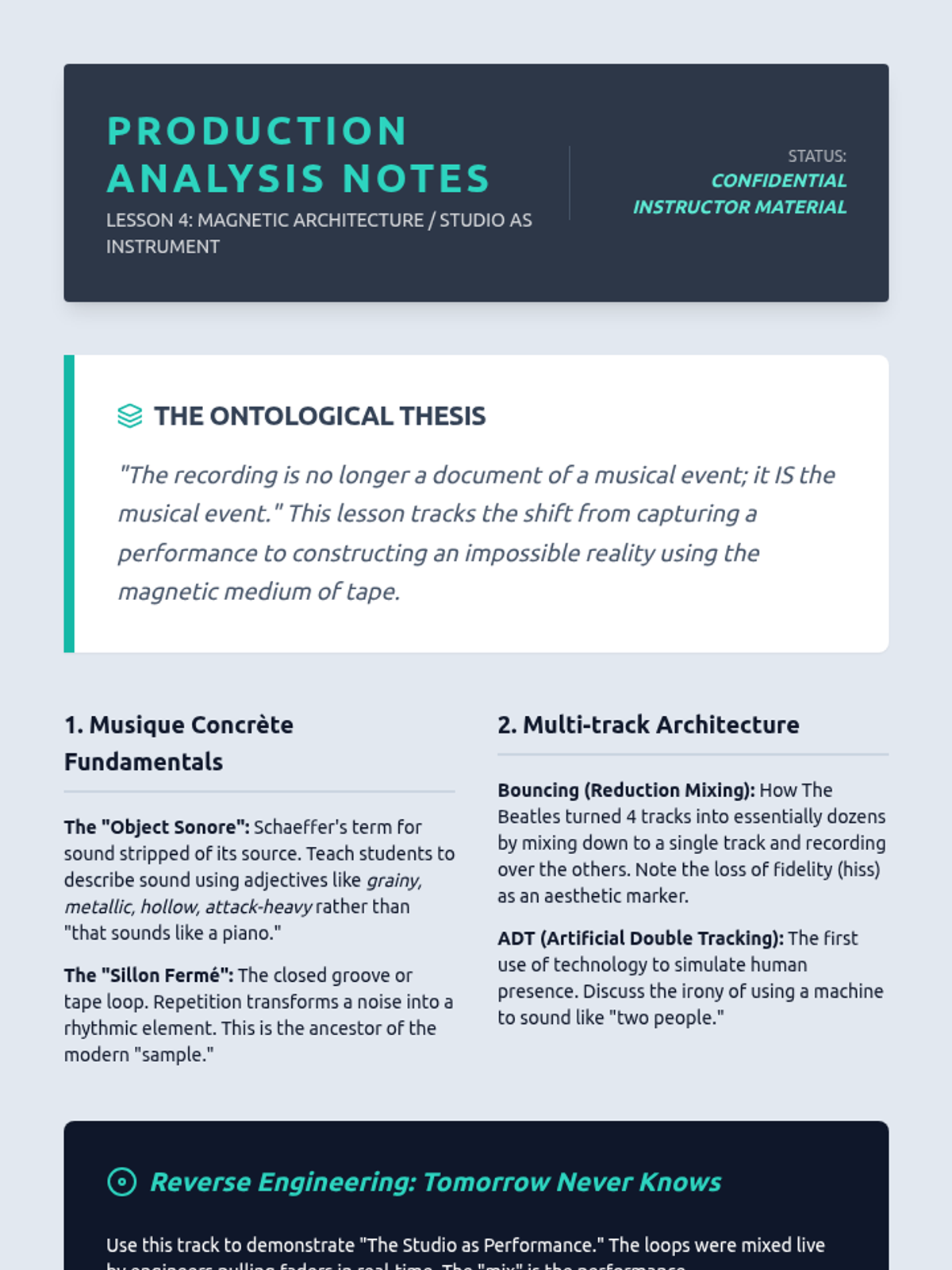
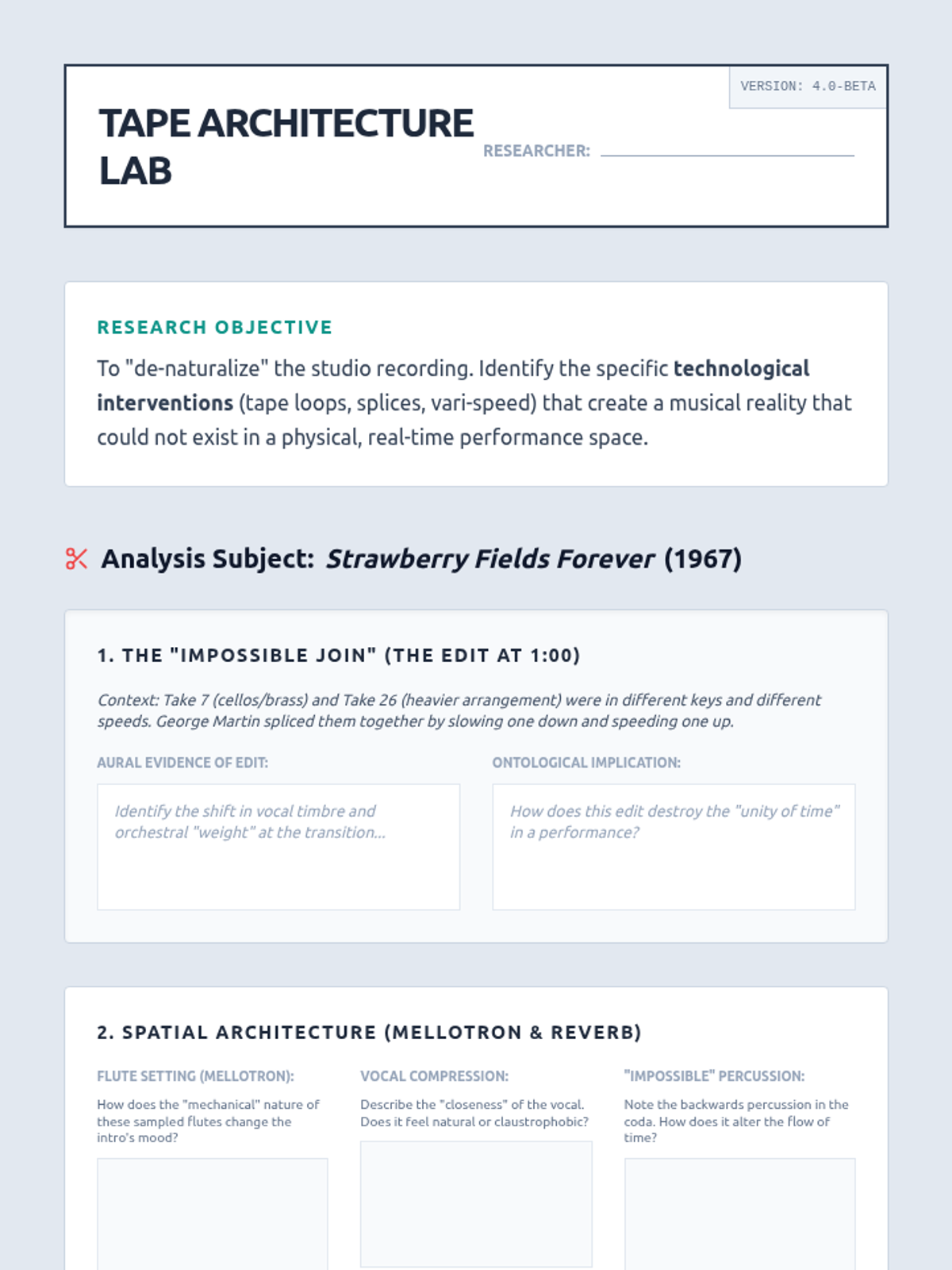
Explores the recording studio as a primary compositional tool, moving from Musique Concrète to multi-track recording and the ontological shift from score to recording.
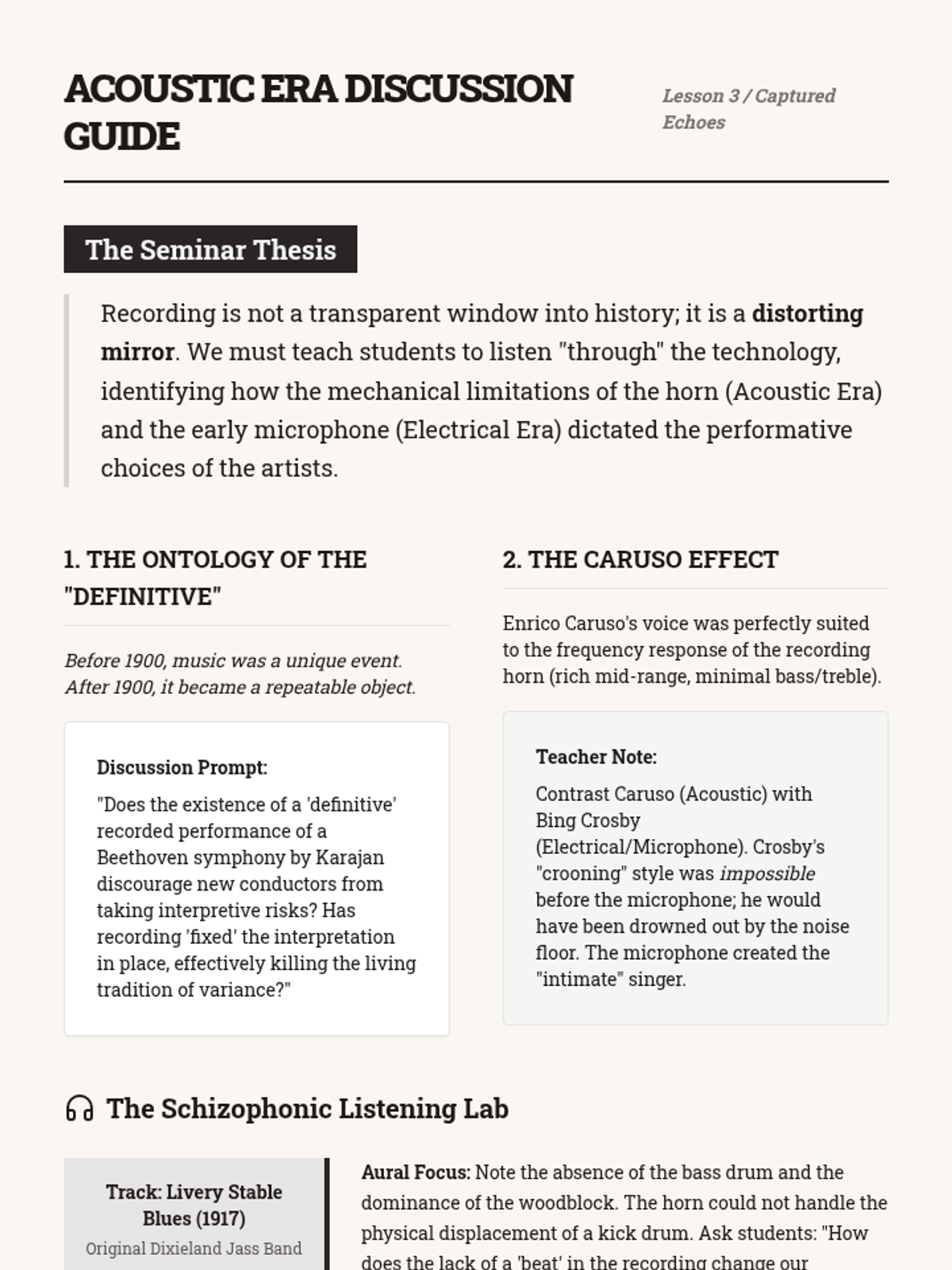
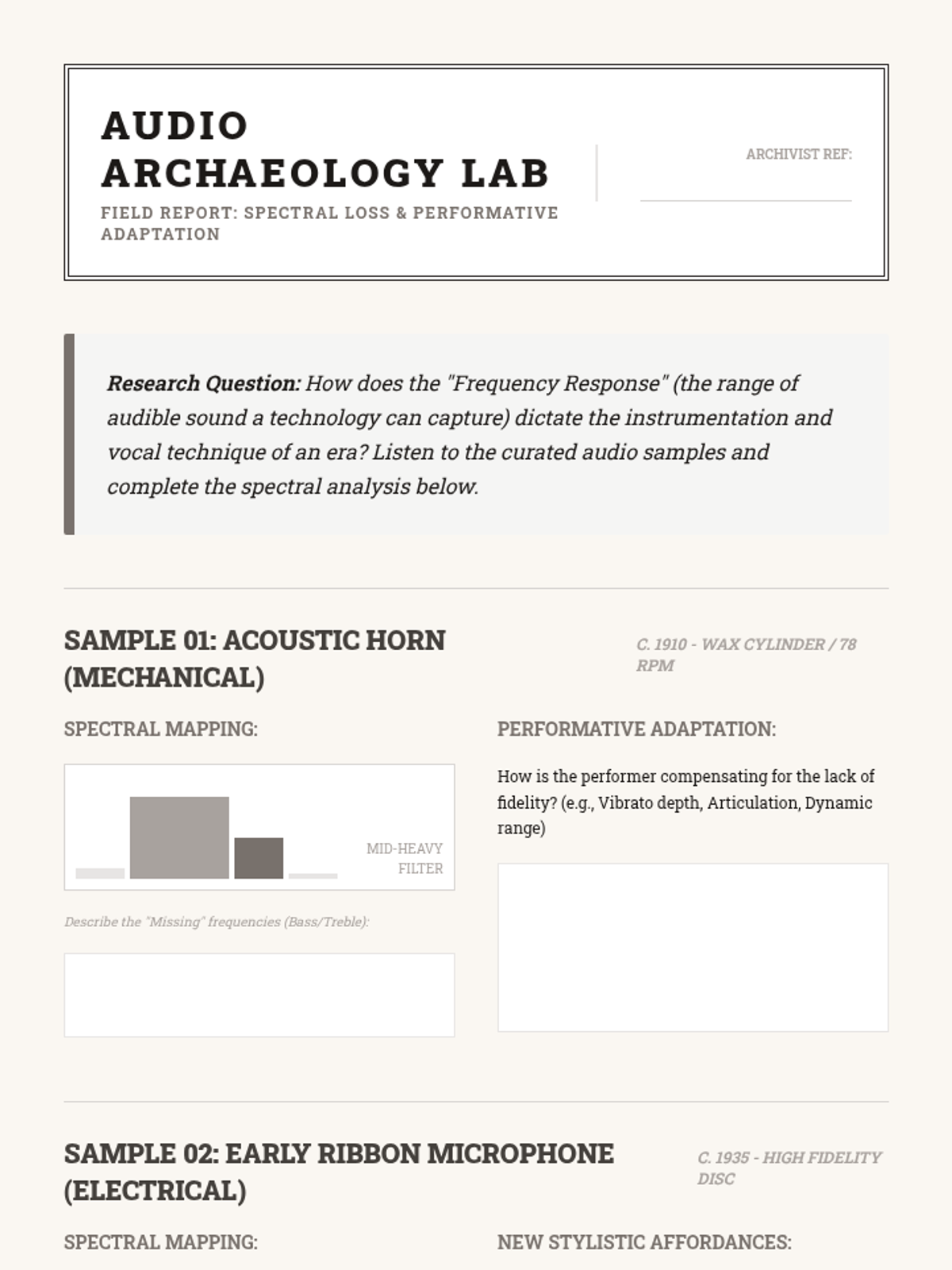
Investigates the separation of sound from its source (schizophonia) and how early recording limitations influenced performance practice and the concept of the 'definitive performance.'
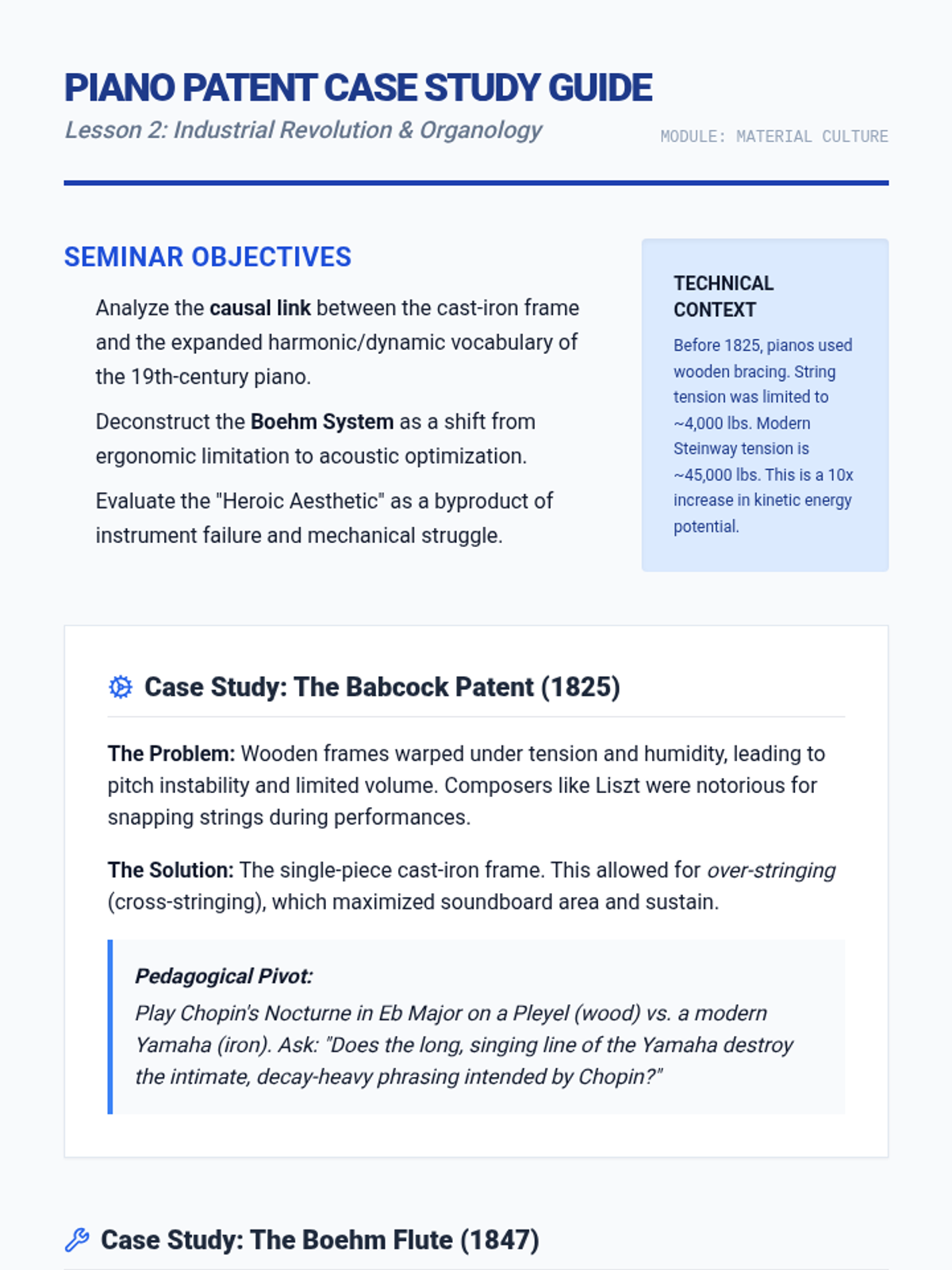
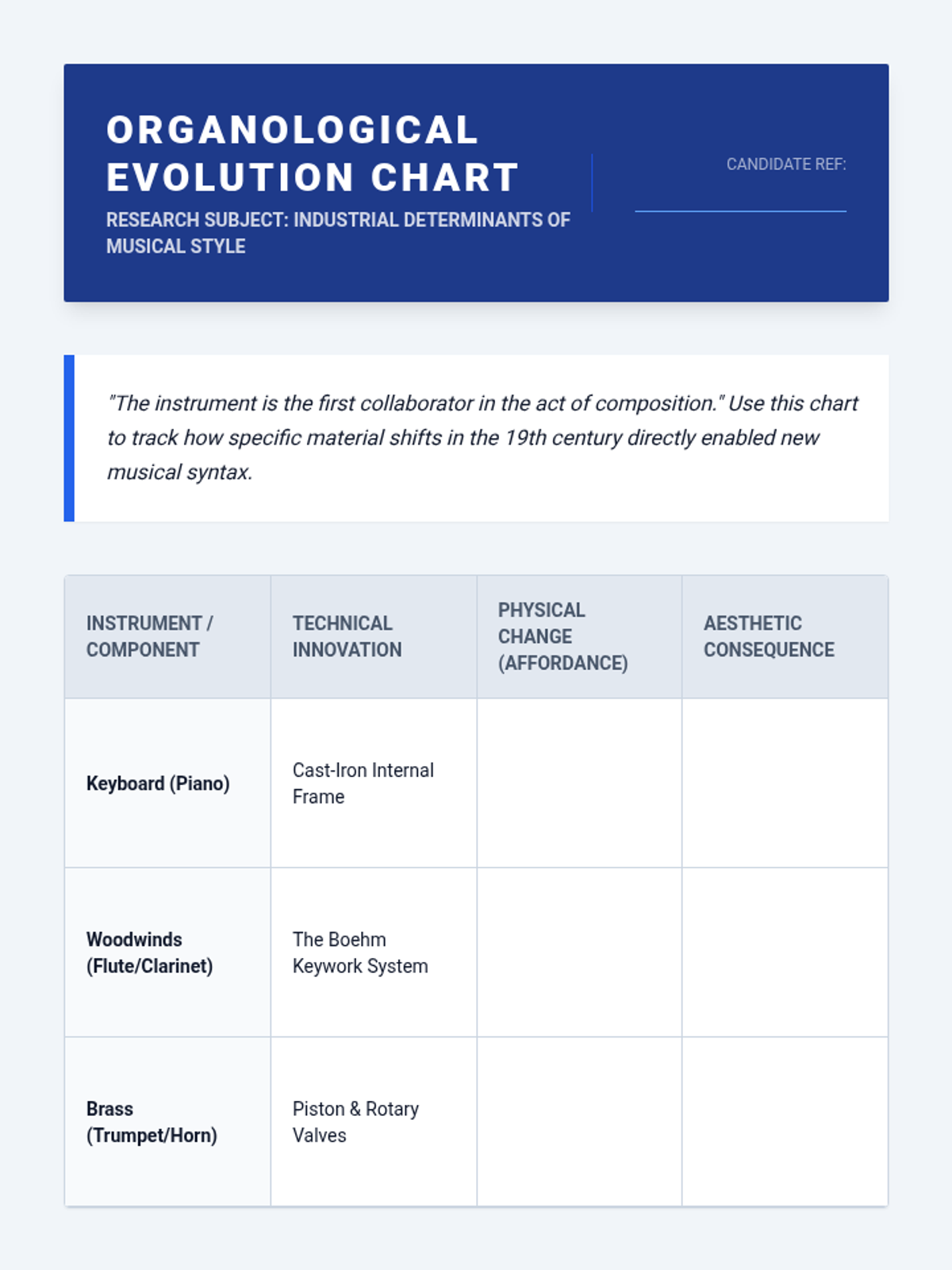
Examines how the physical evolution of instruments during the Industrial Revolution, such as the cast-iron piano frame, dictated Romantic era orchestration and the rise of the virtuoso.
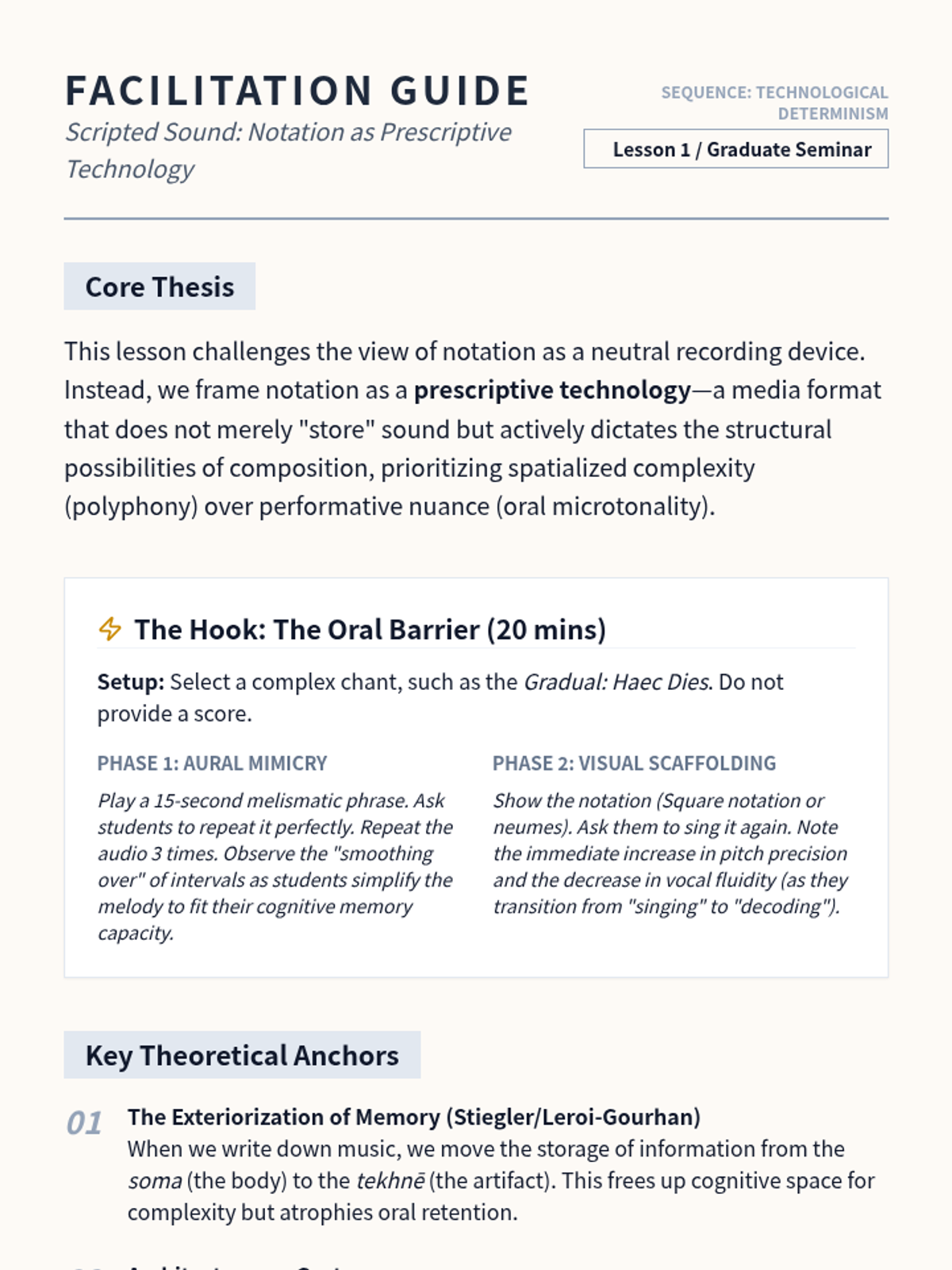
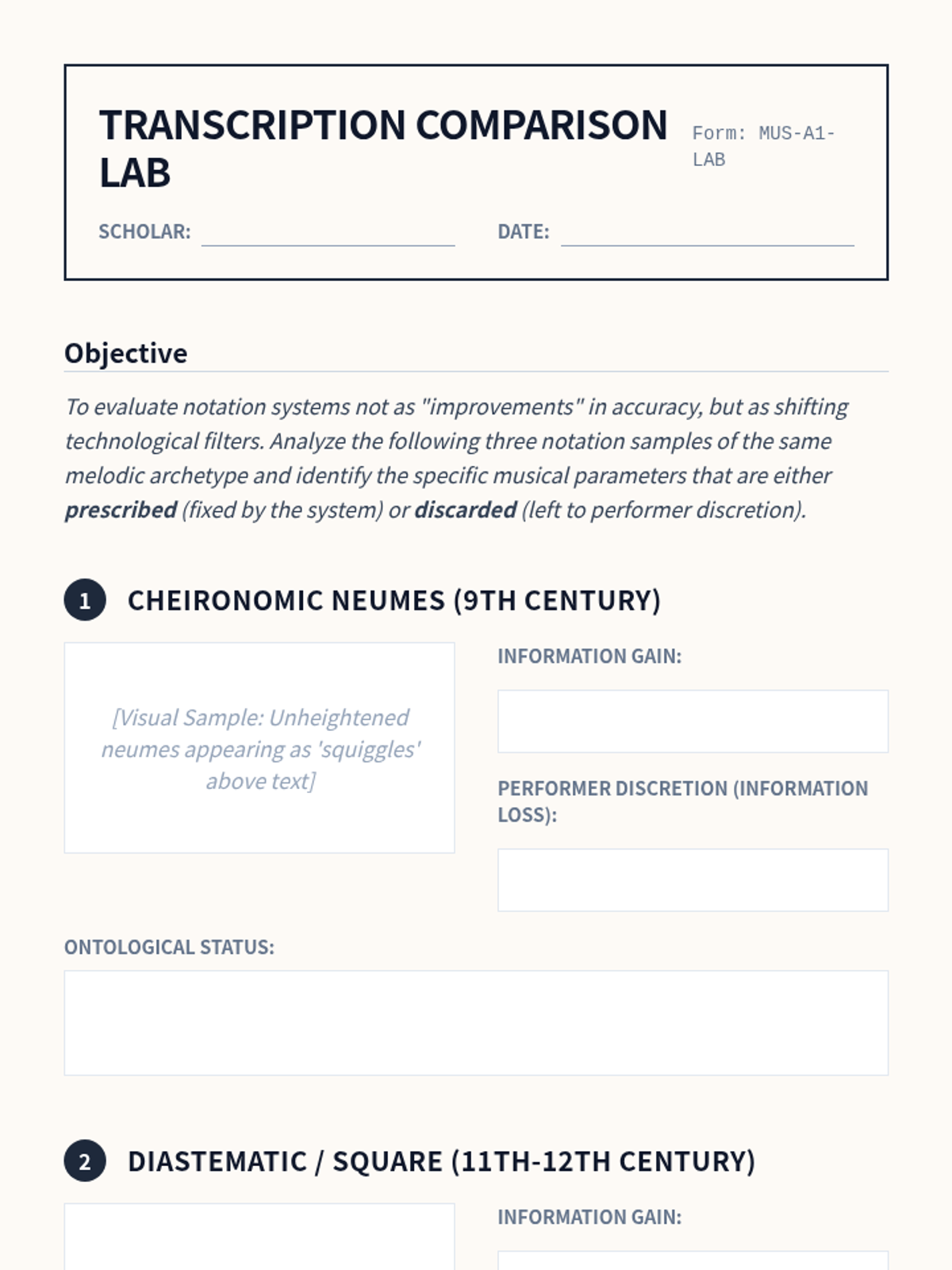
Analyzes the shift from oral tradition to fixed notation and how the technology of 'writing' music enabled new levels of polyphonic complexity while altering musical memory.
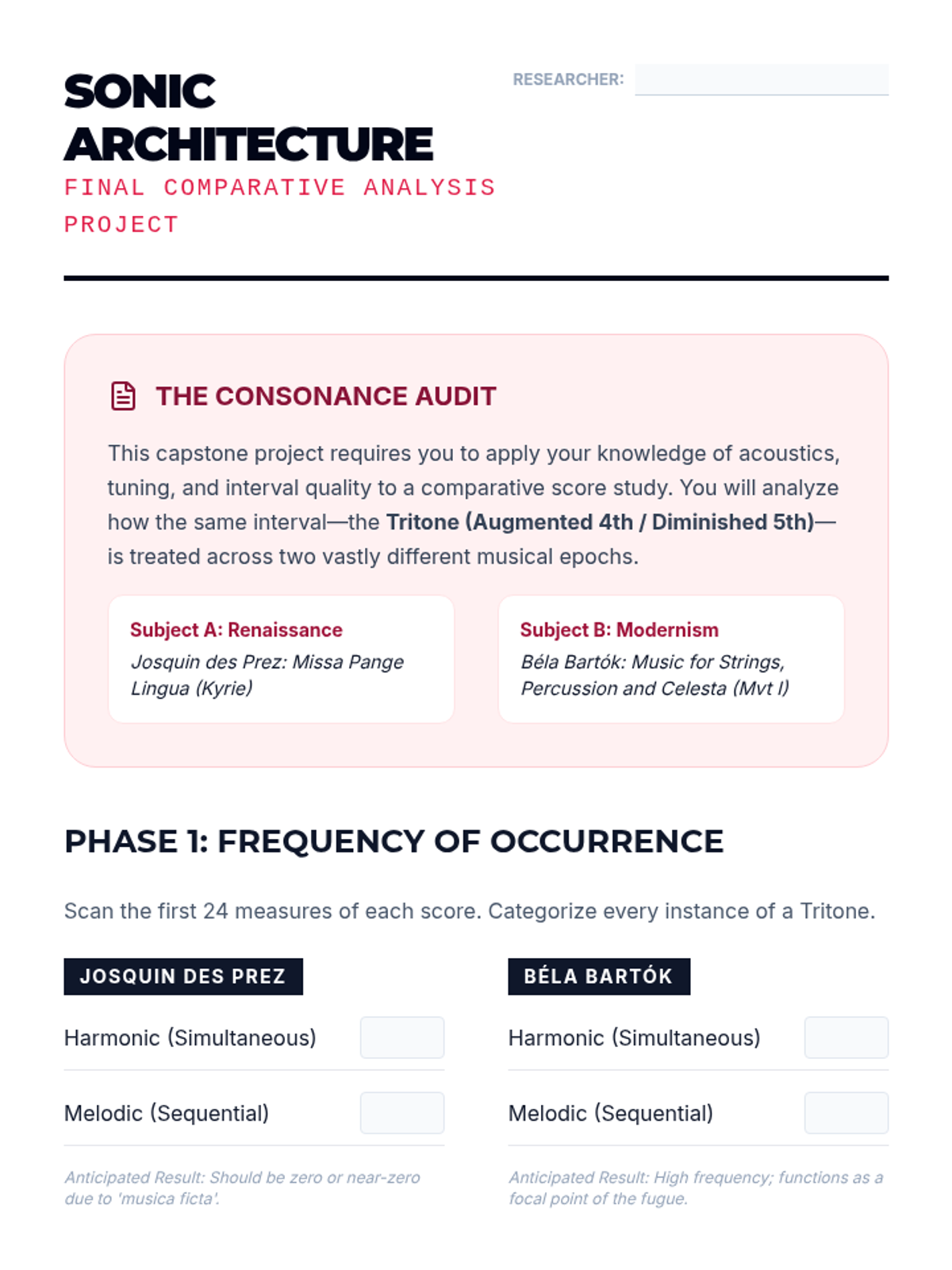
Examination of how intervals function in melodic versus harmonic contexts and the historical evolution of consonance and dissonance.
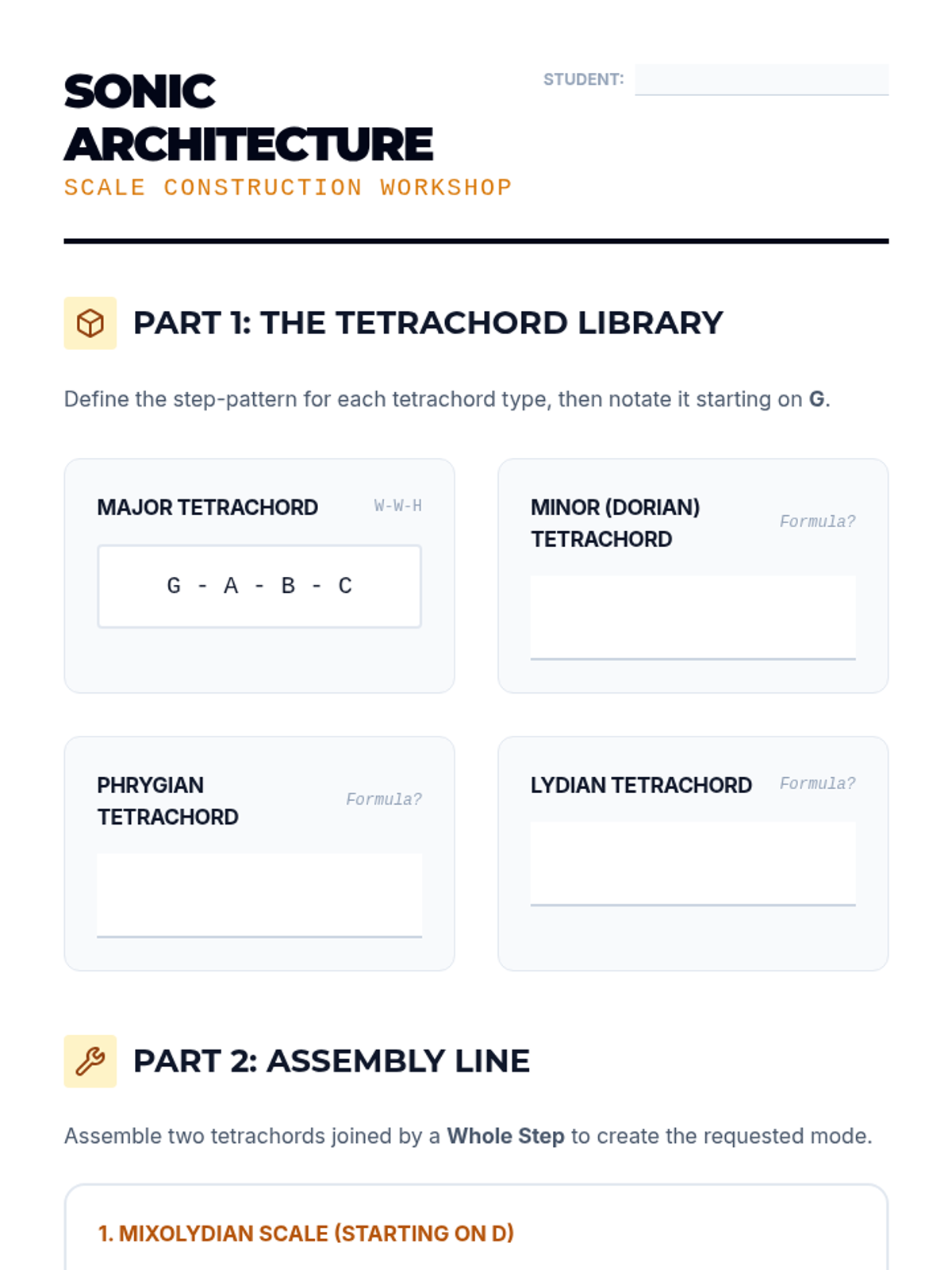
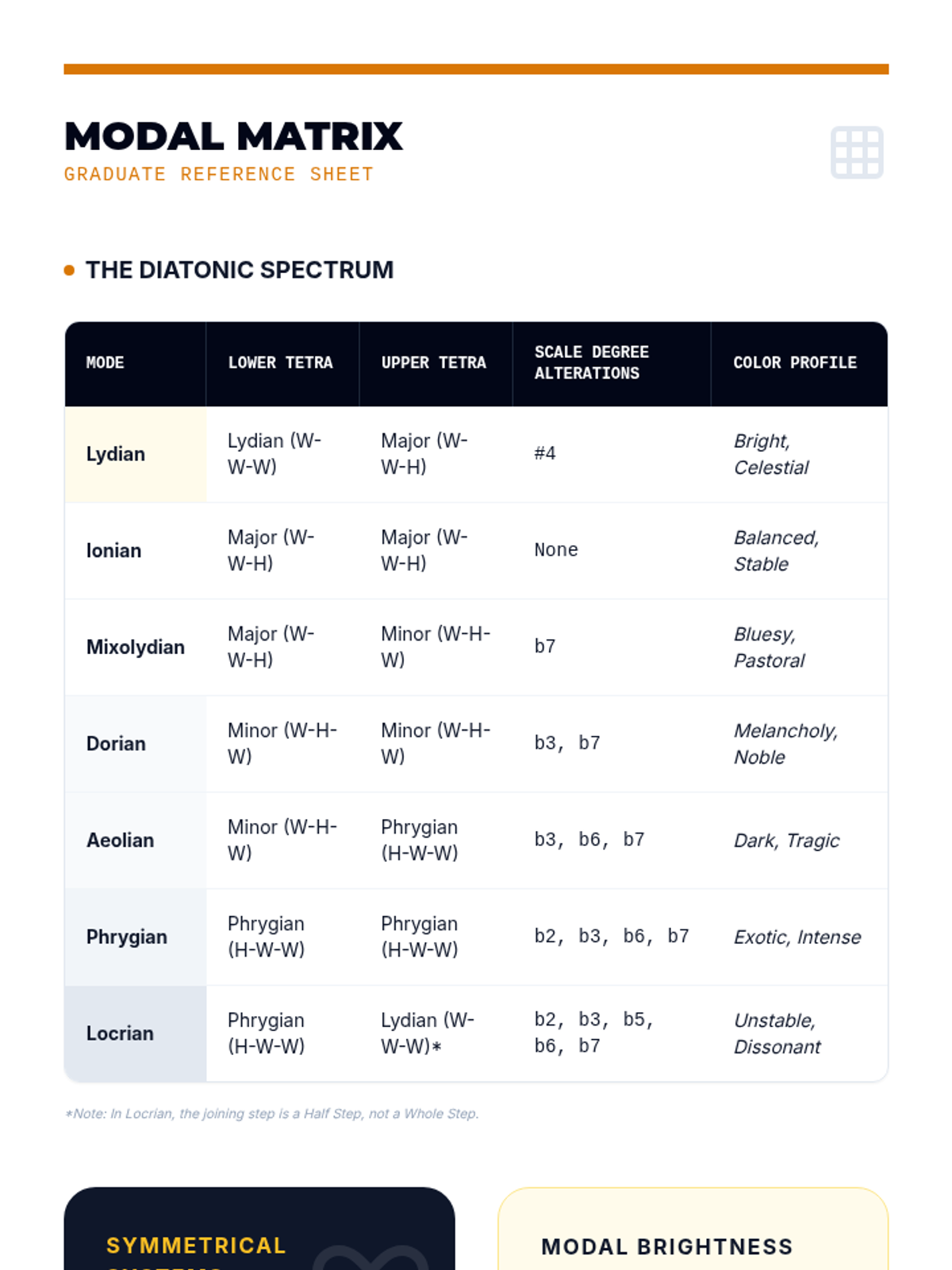
Deconstruction of scales into tetrachordal patterns and expansion into modal and synthetic scale theory.
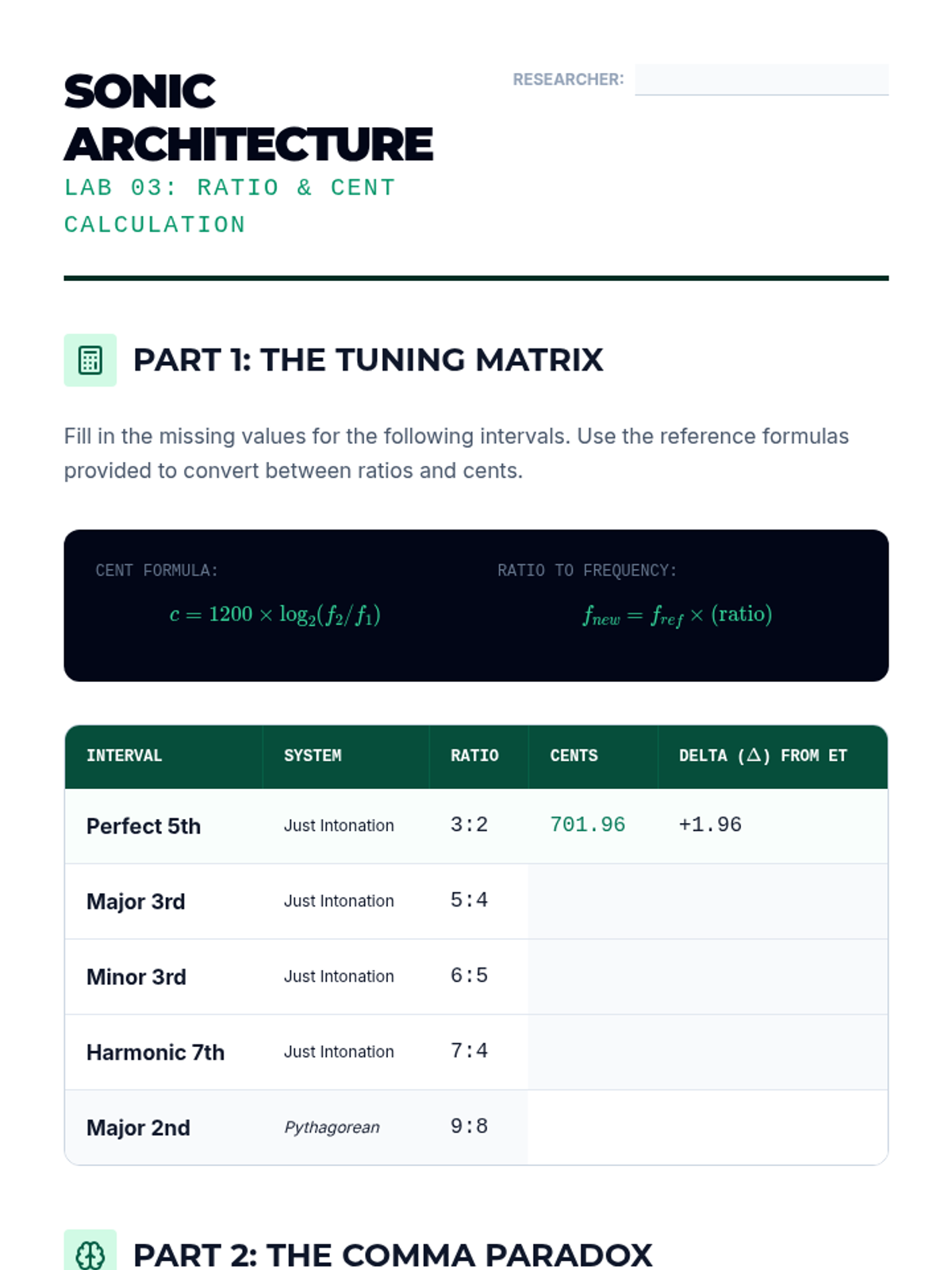
Calculation of frequency ratios for different tuning systems and comparison of Just Intonation versus Equal Temperament.
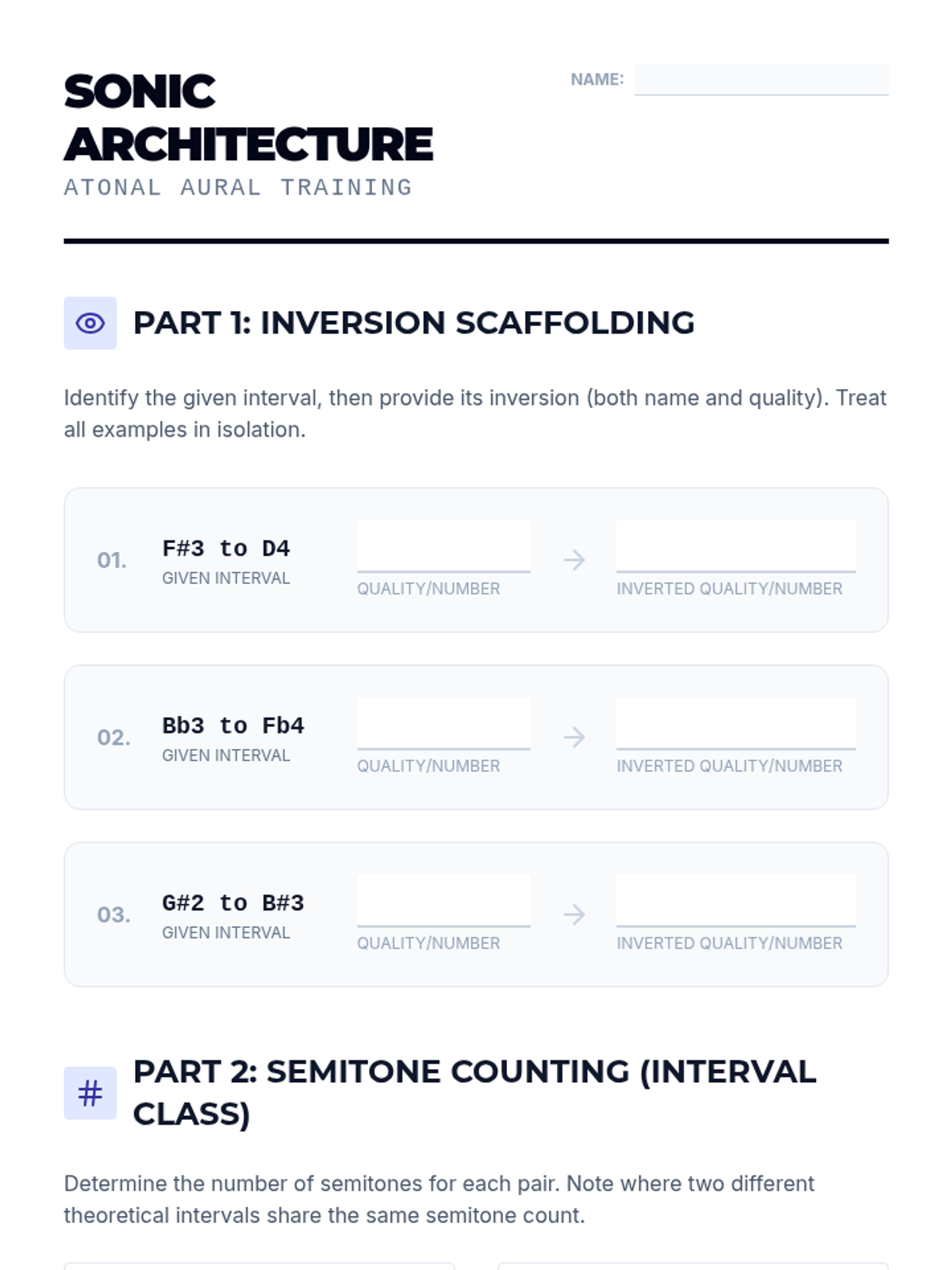
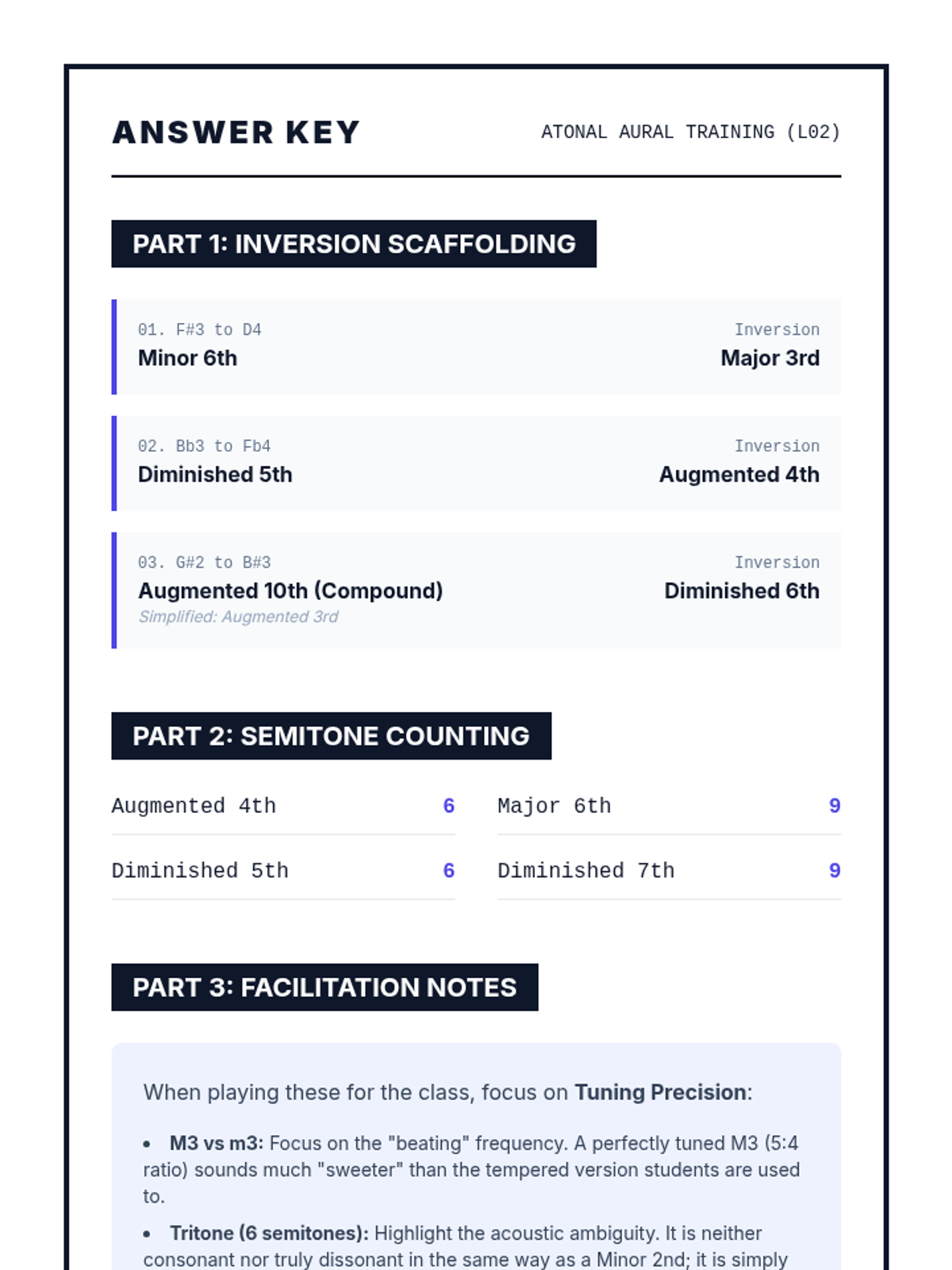
A systematic review of interval inversion and quality, identifying intervals in atonal contexts to remove cultural key-based bias.
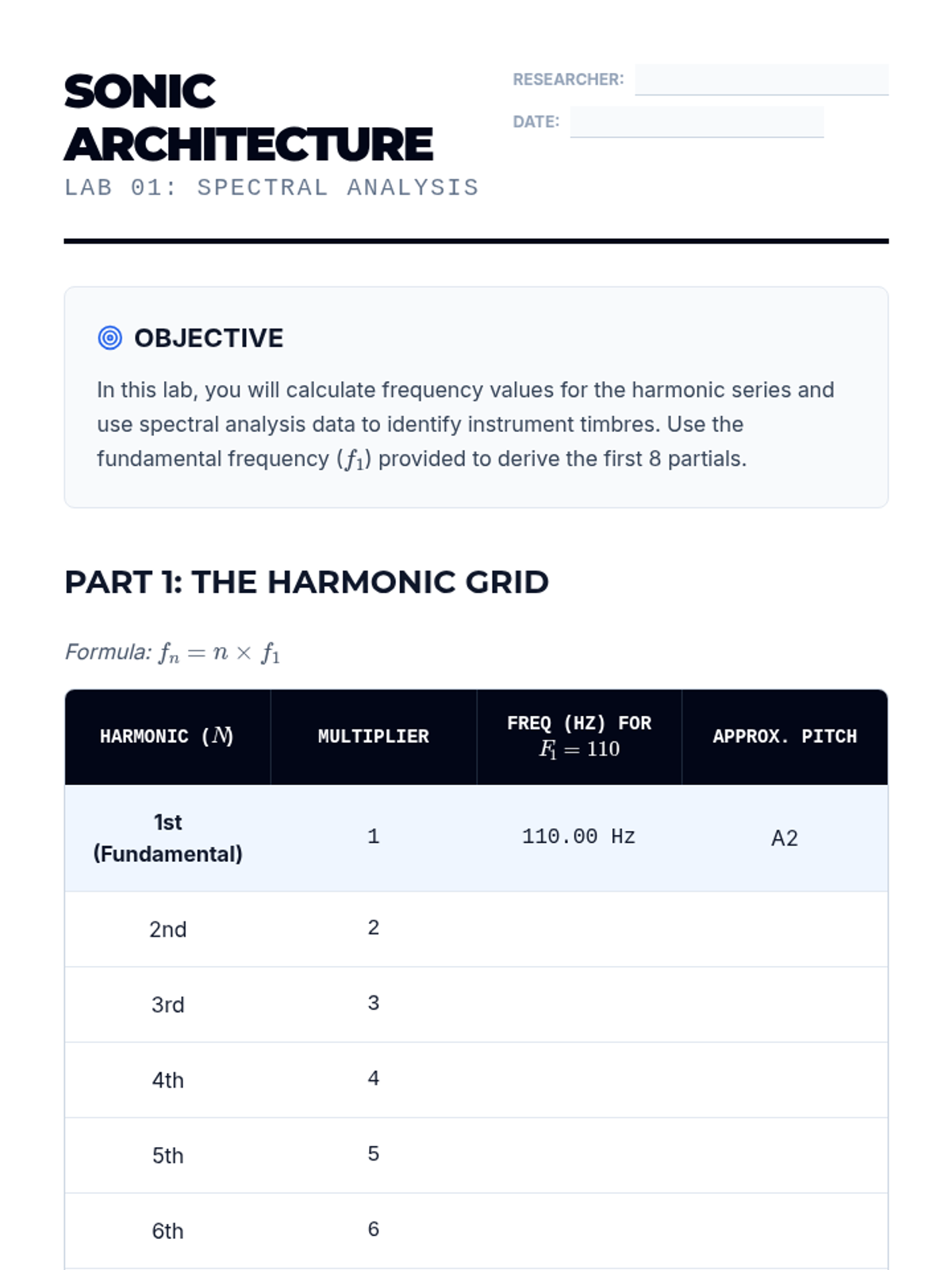
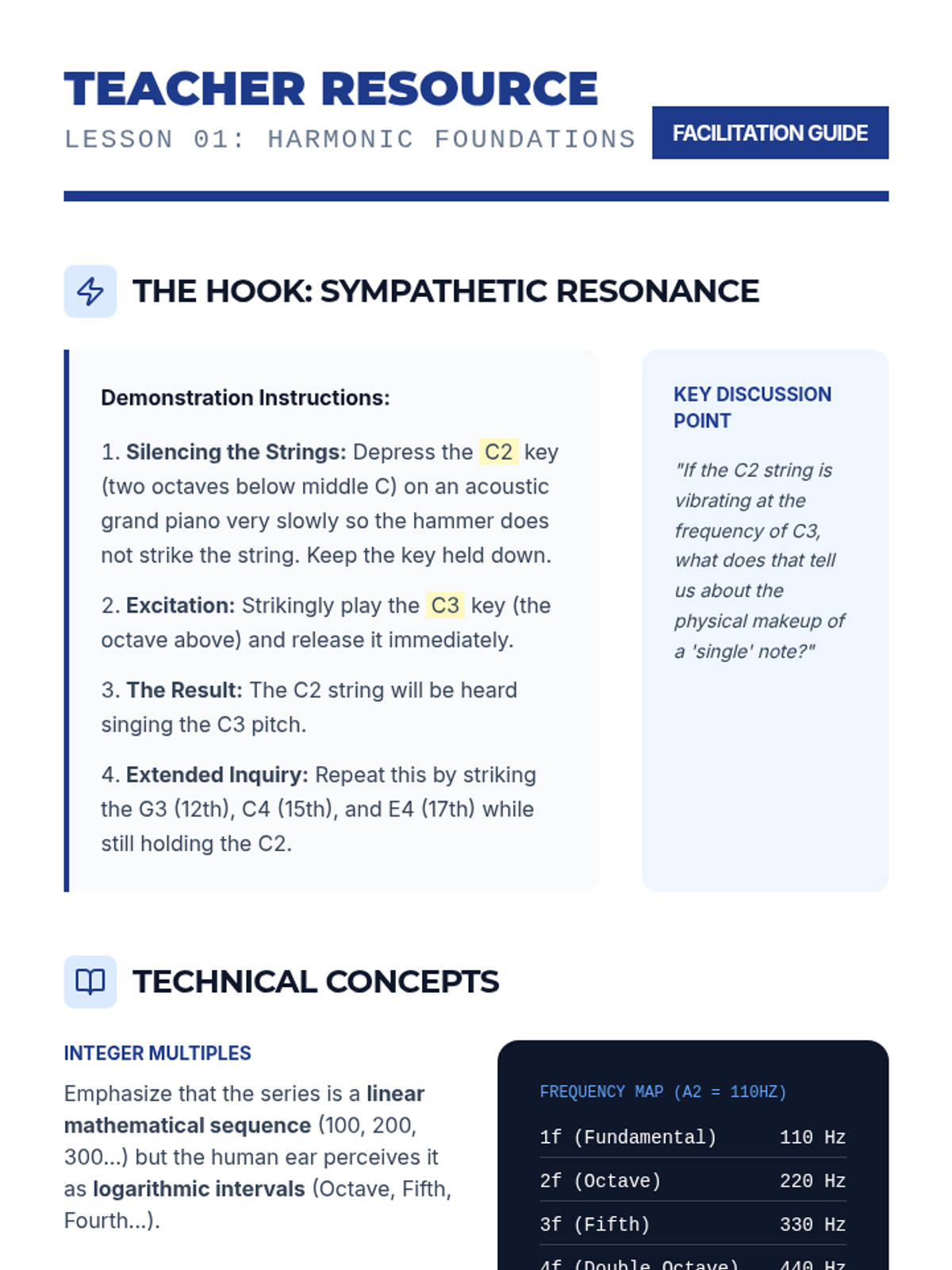
Students analyze the harmonic series to understand the origin of the octave, fifth, and major triad through frequency calculation and spectral analysis.
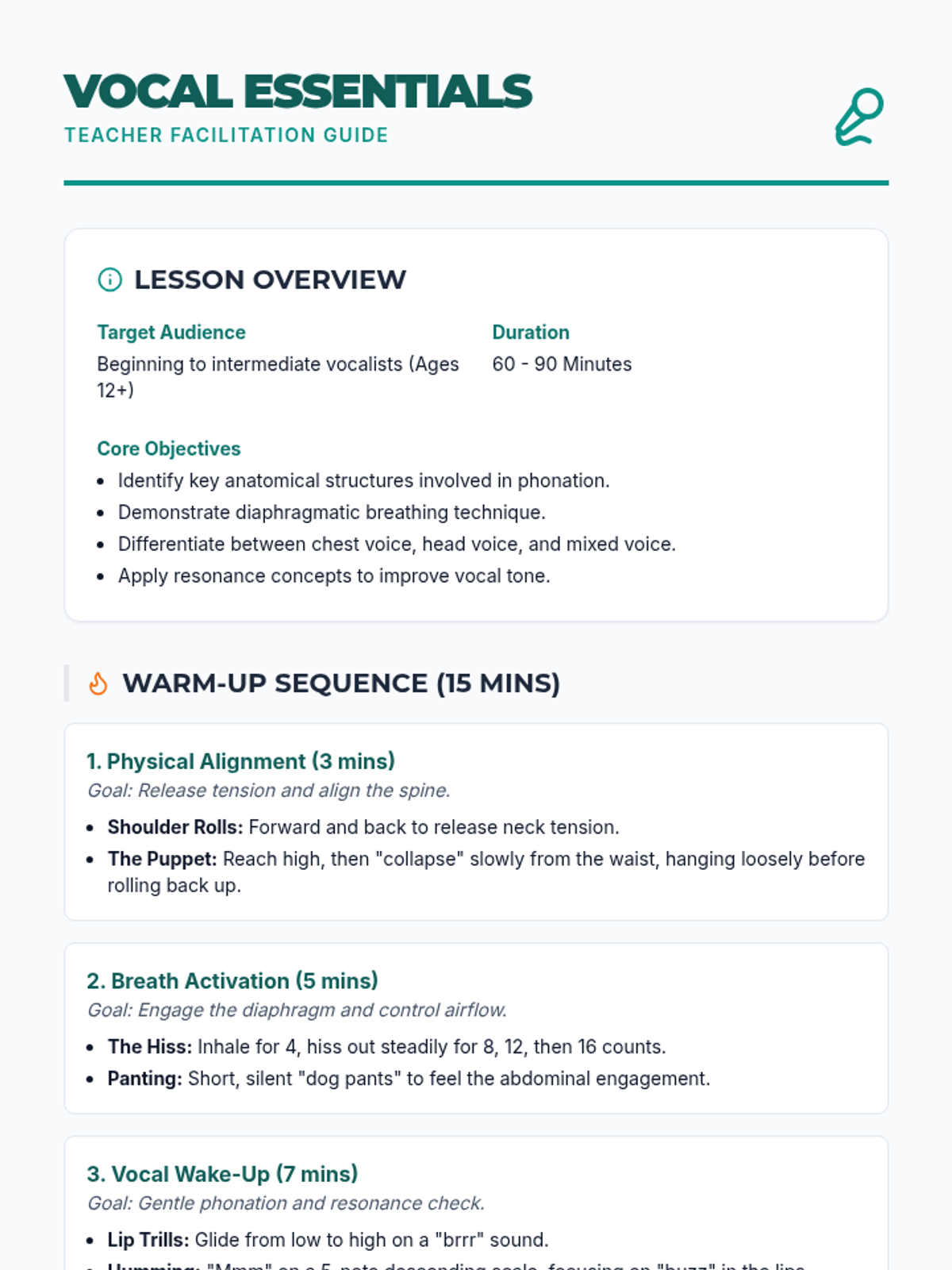
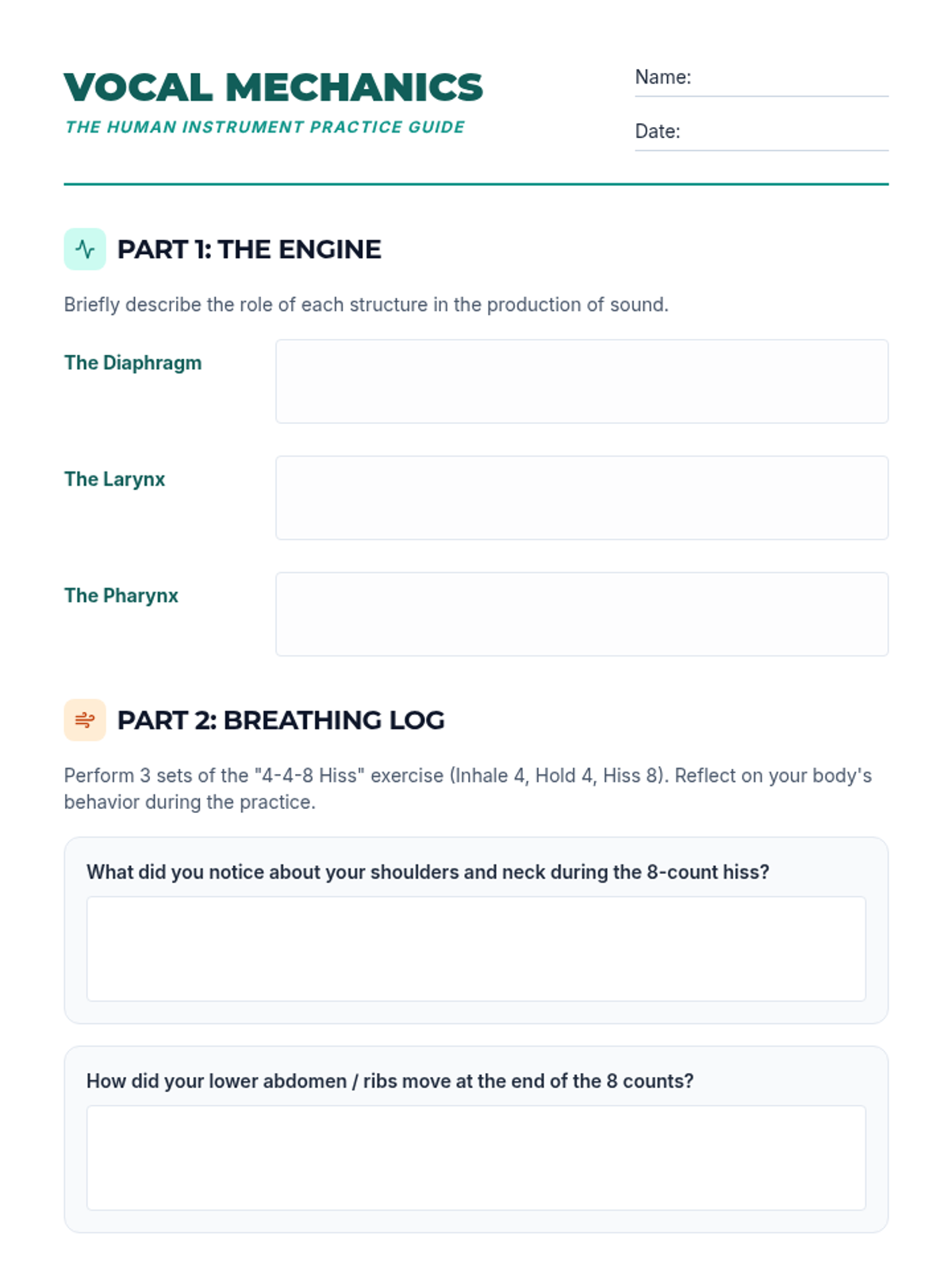
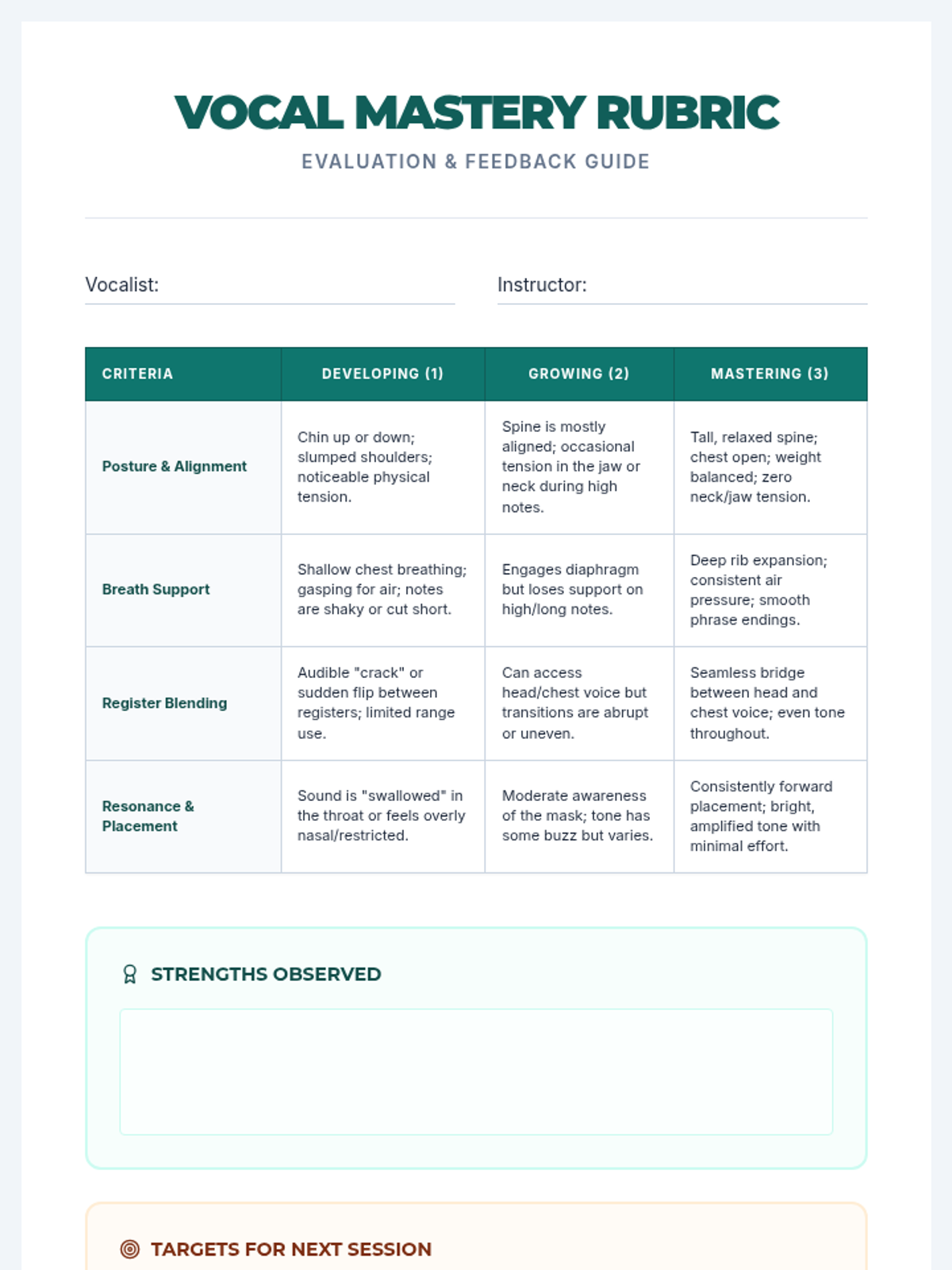
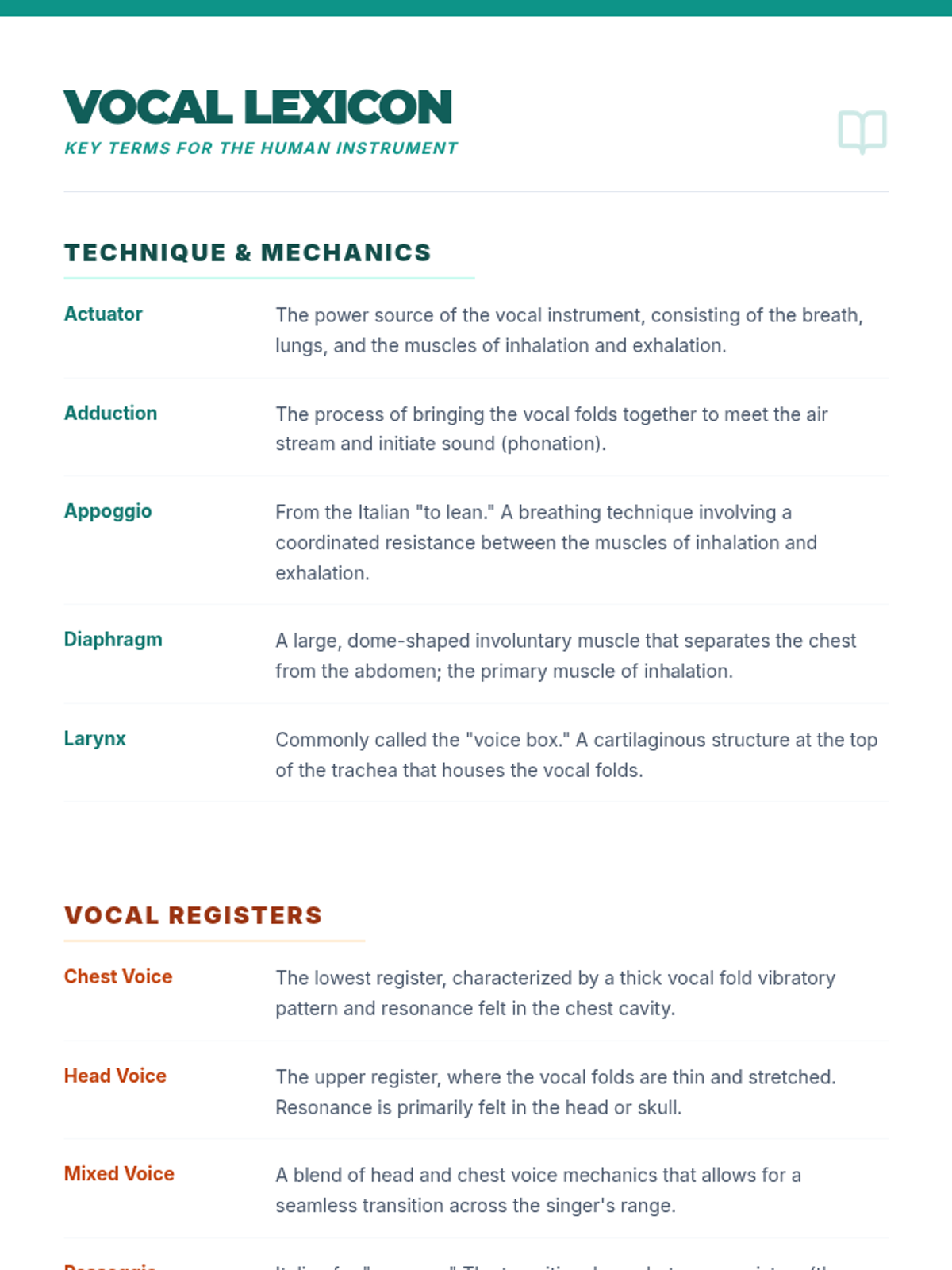
A comprehensive introduction to the physiological and technical aspects of singing, covering vocal anatomy, breath support, vocal registers, and resonance.
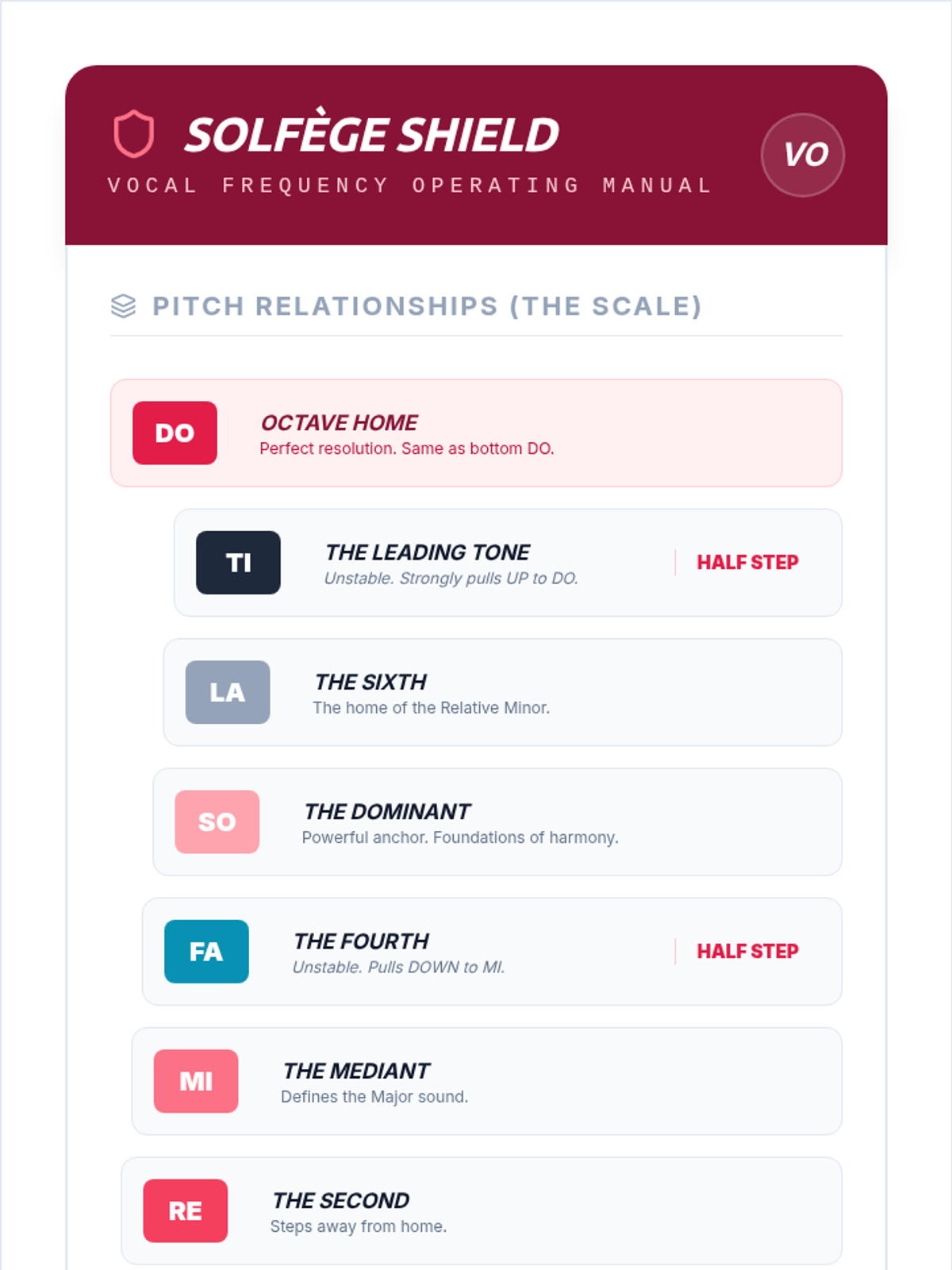
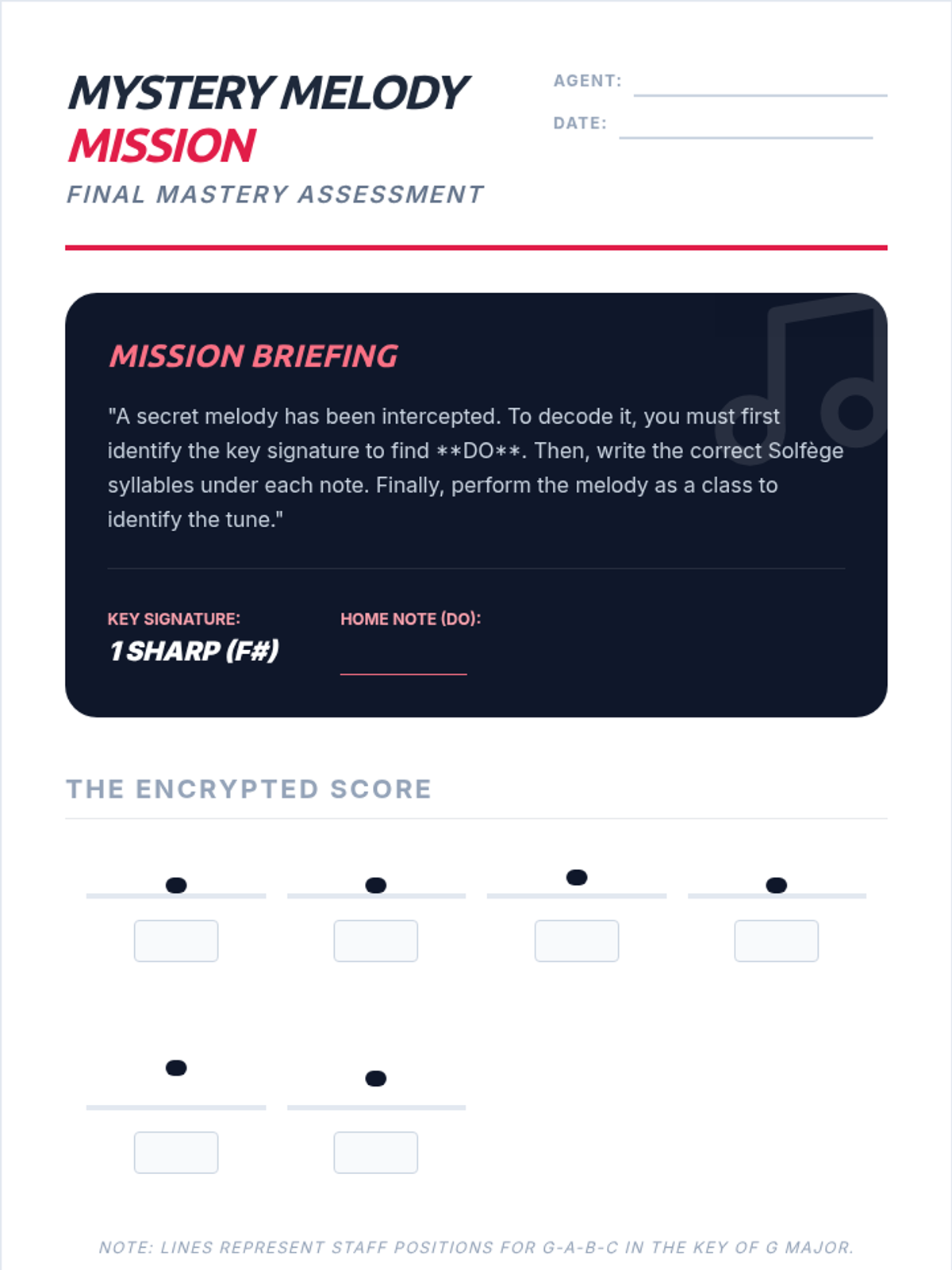
Applying theory to performance by using Solfège to sight-read melodies in various keys, culminating in a mystery melody challenge.
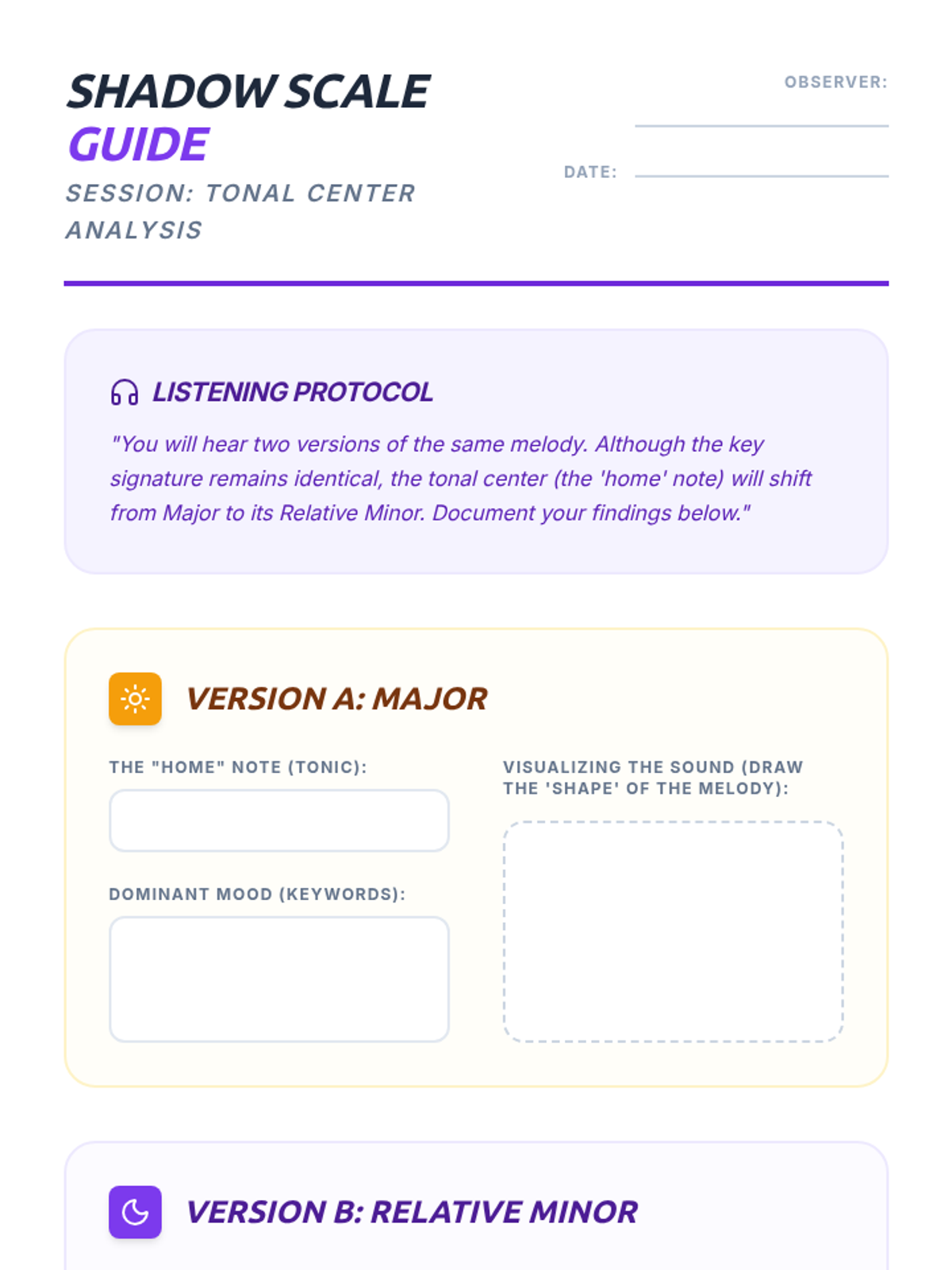
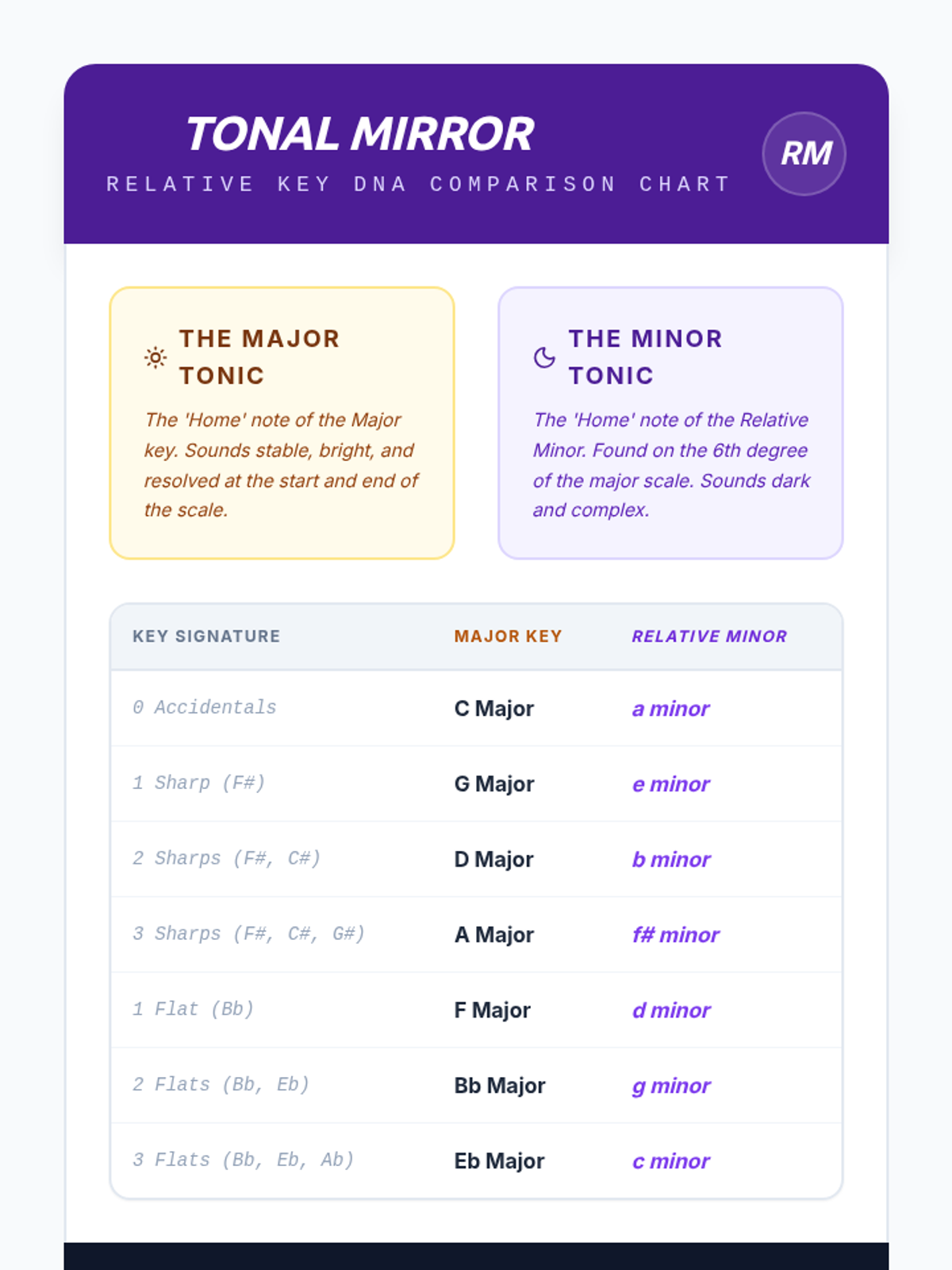
Exploring the emotional and structural link between major keys and their relative minors through listening and scale analysis.
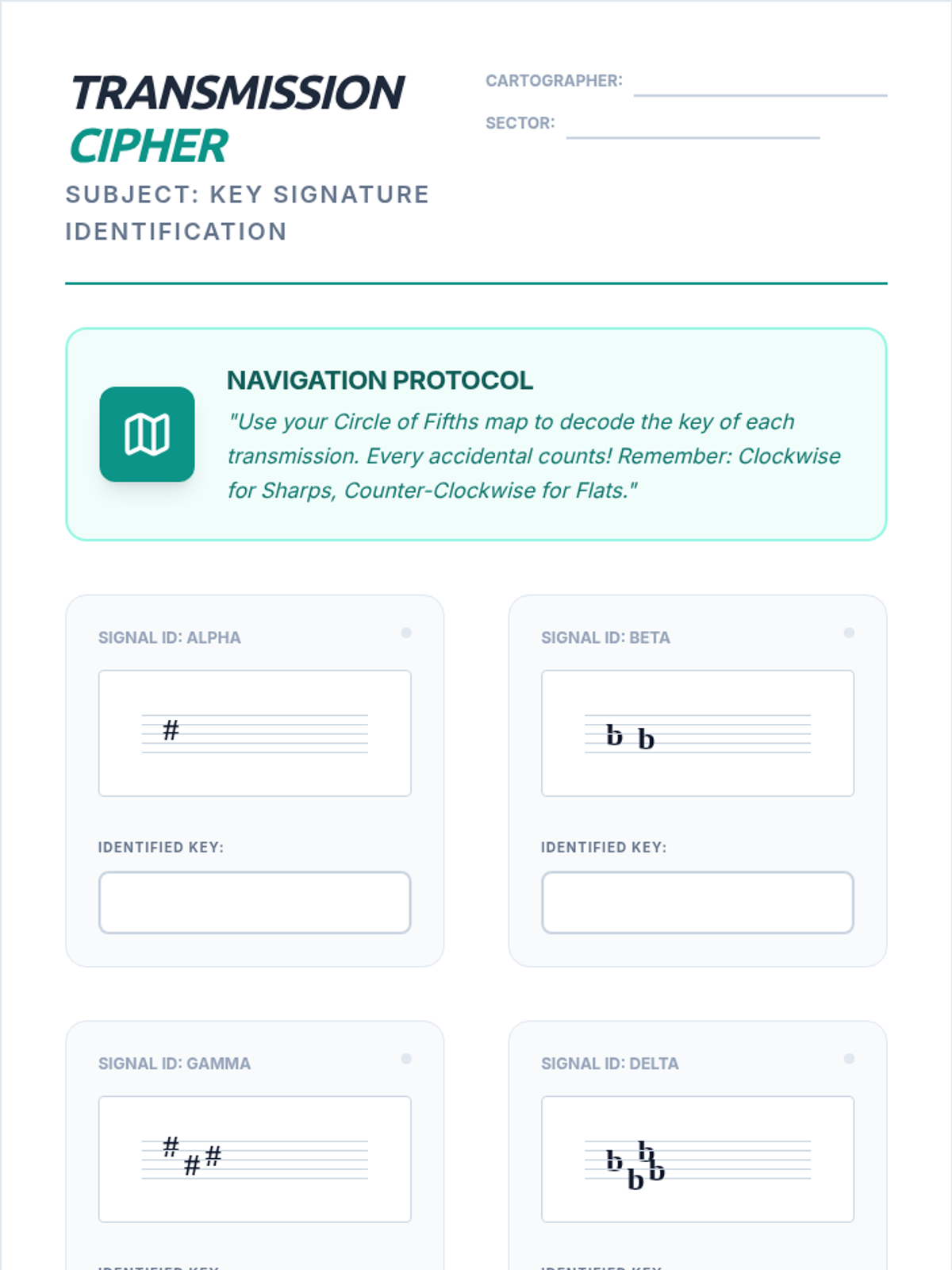
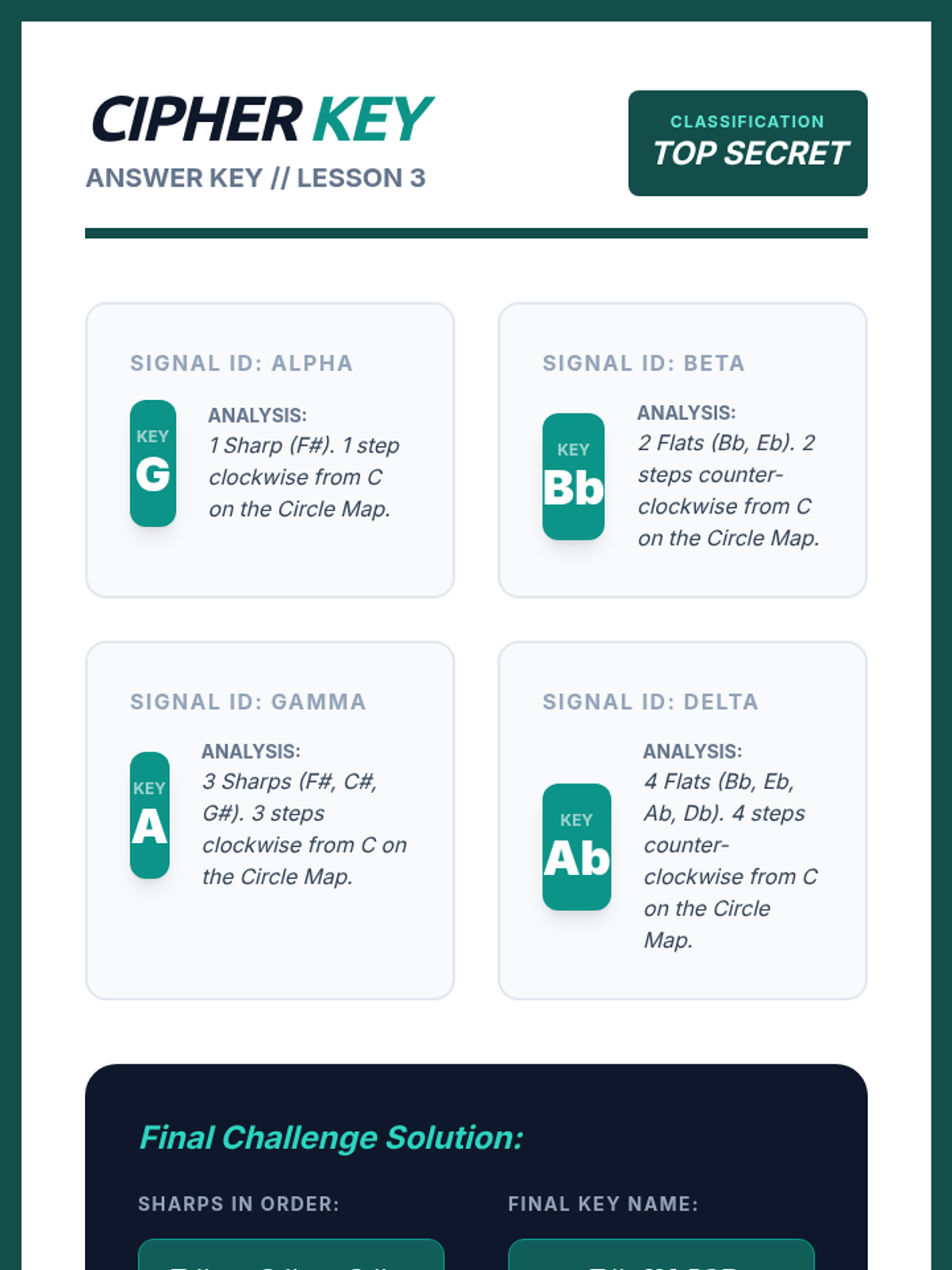
Visualizing the relationship between keys using the Circle of Fifths as a tool for rapid key signature identification.
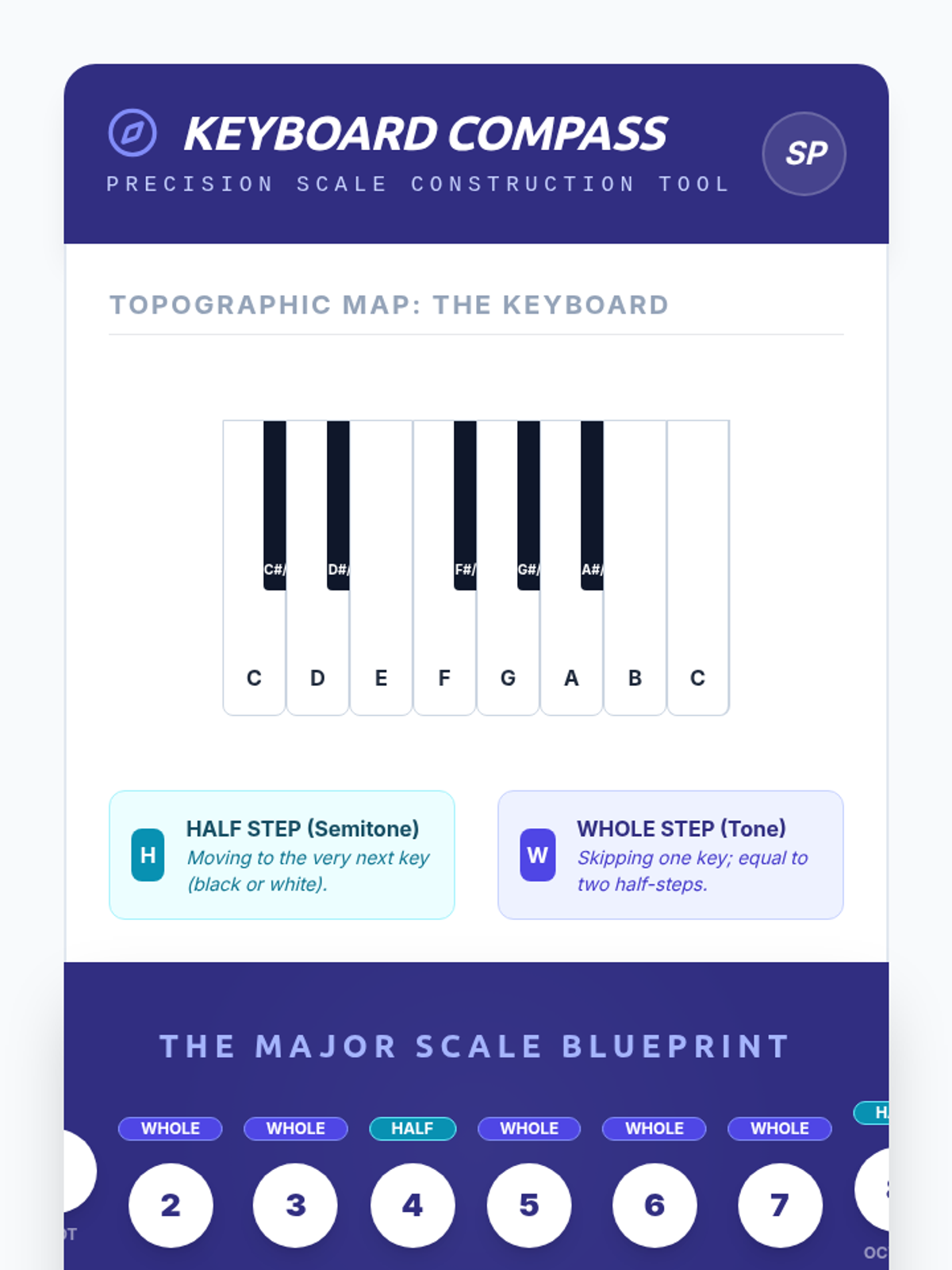
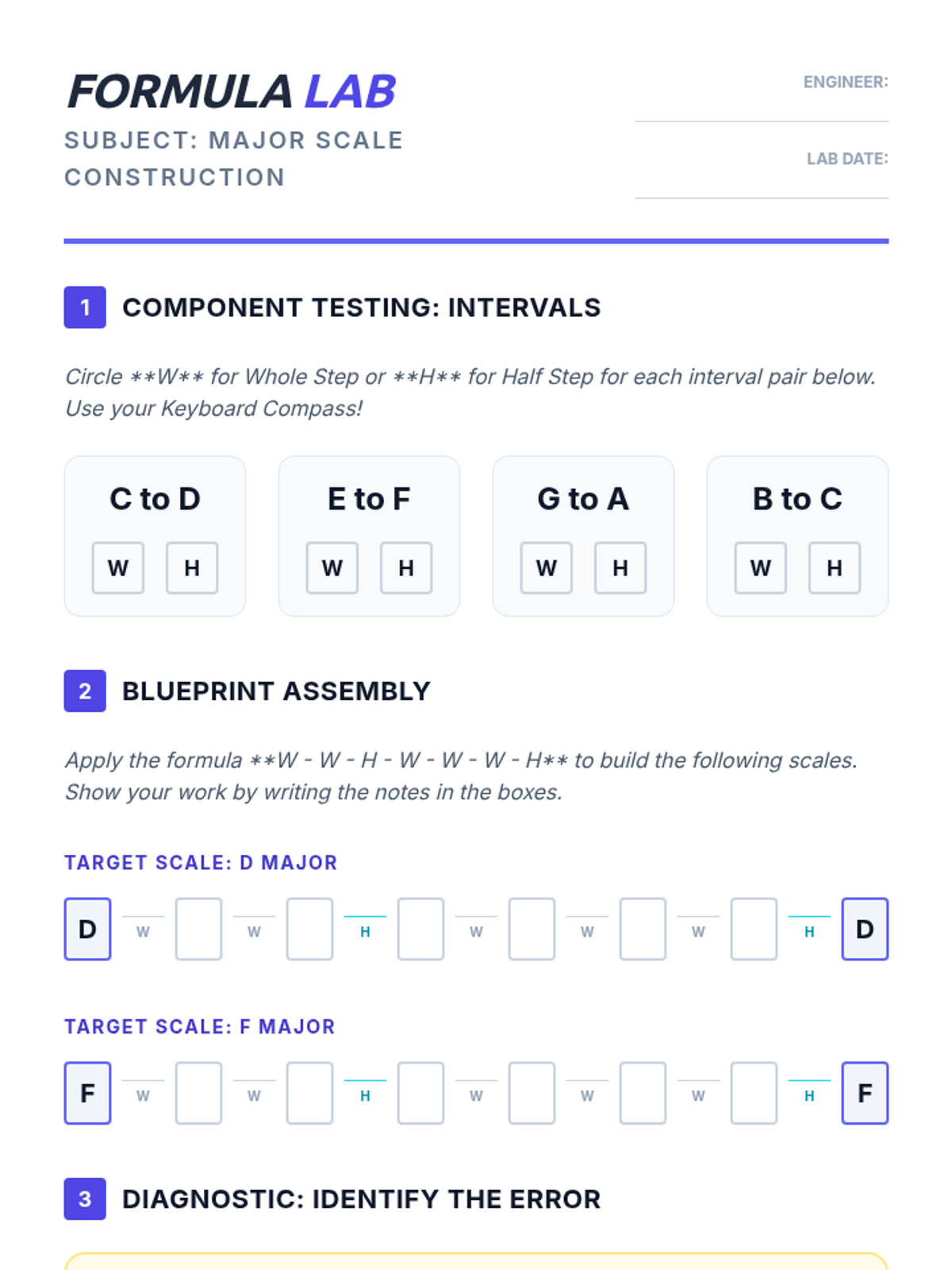
An inquiry into the Whole-Half step formula that builds major scales, explaining the 'why' behind sharps and flats.
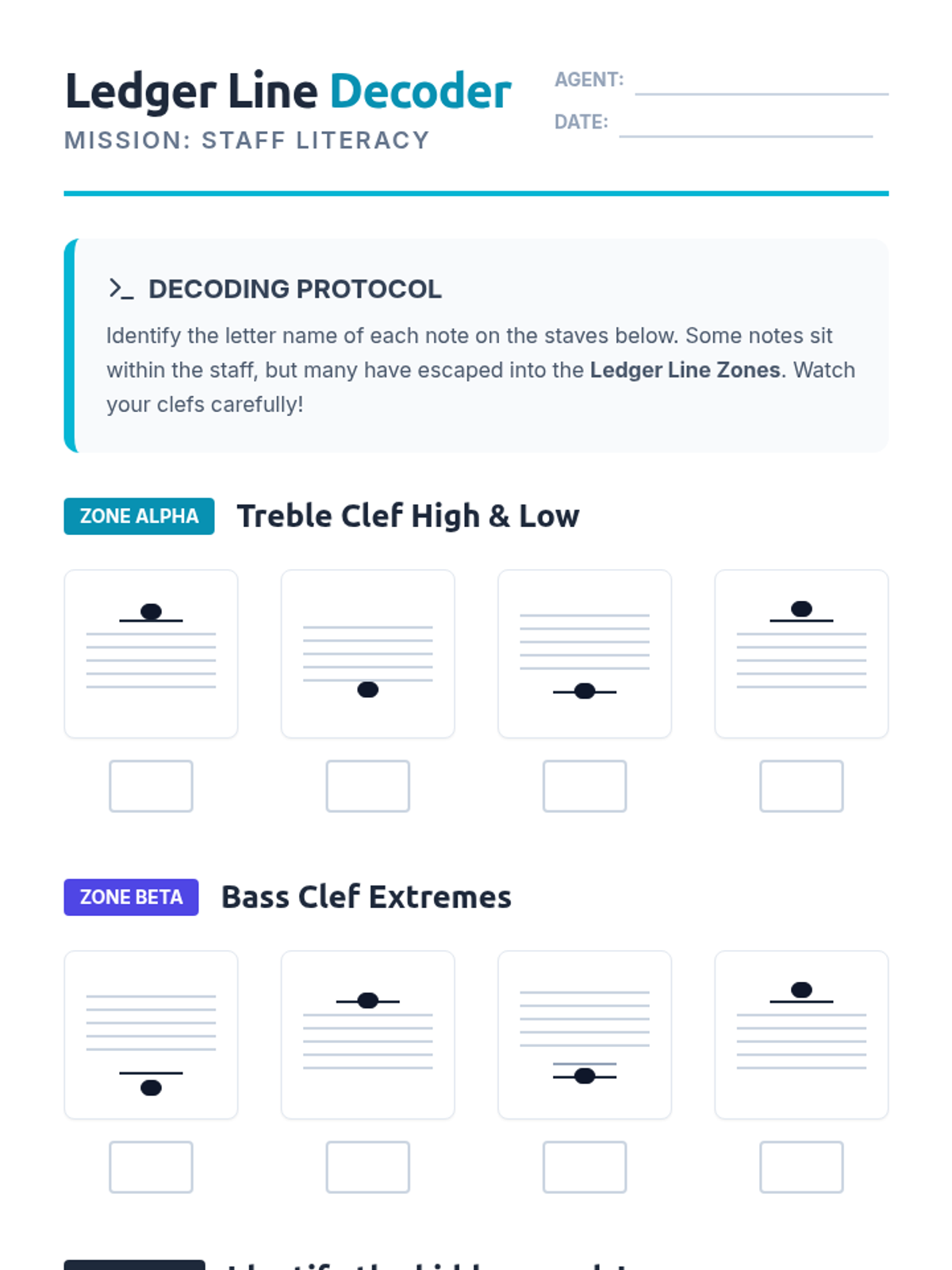
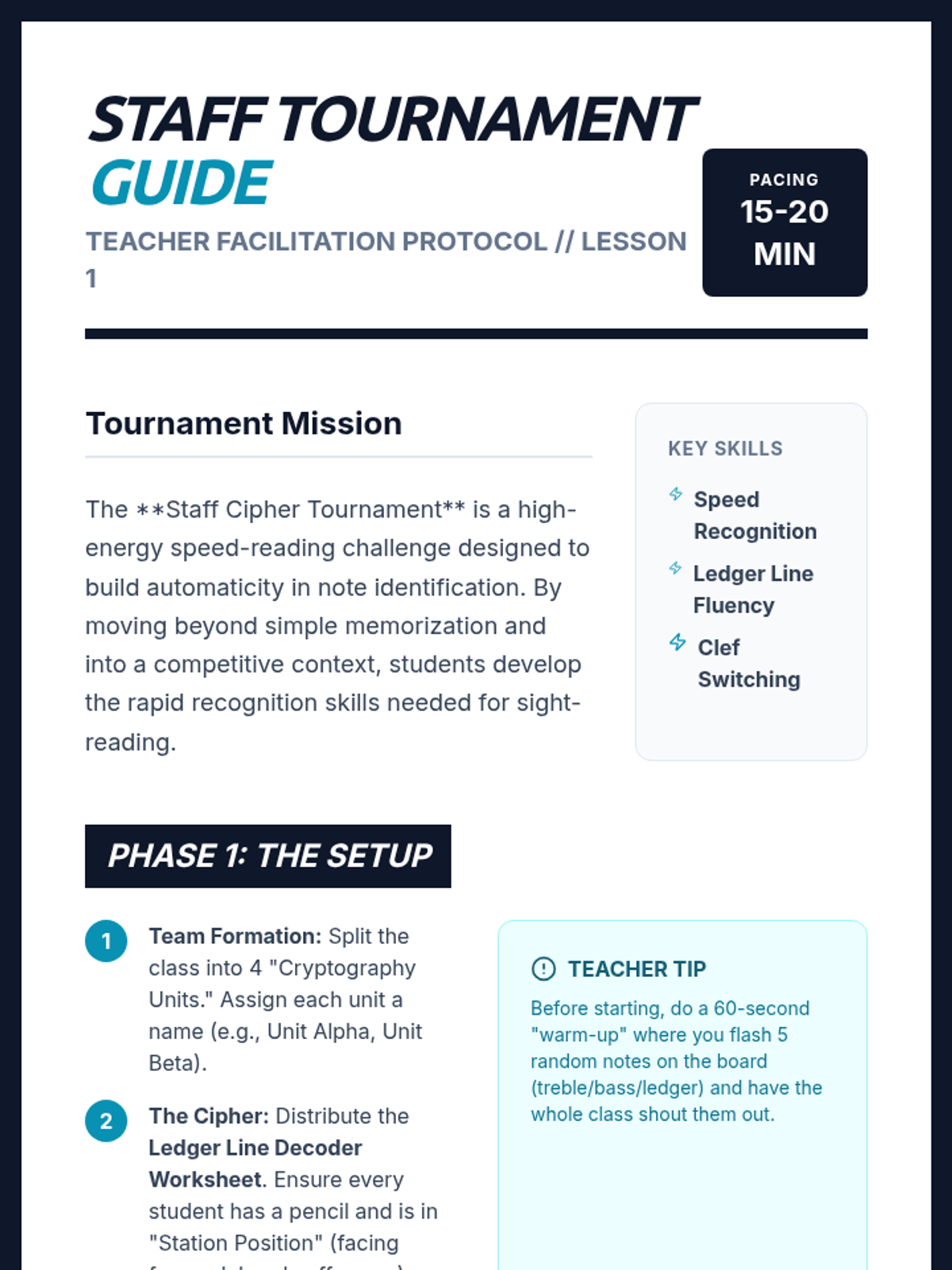
Students master the Grand Staff, ledger lines, and octave designations through a series of speed-reading challenges and 'cipher' decoding activities.
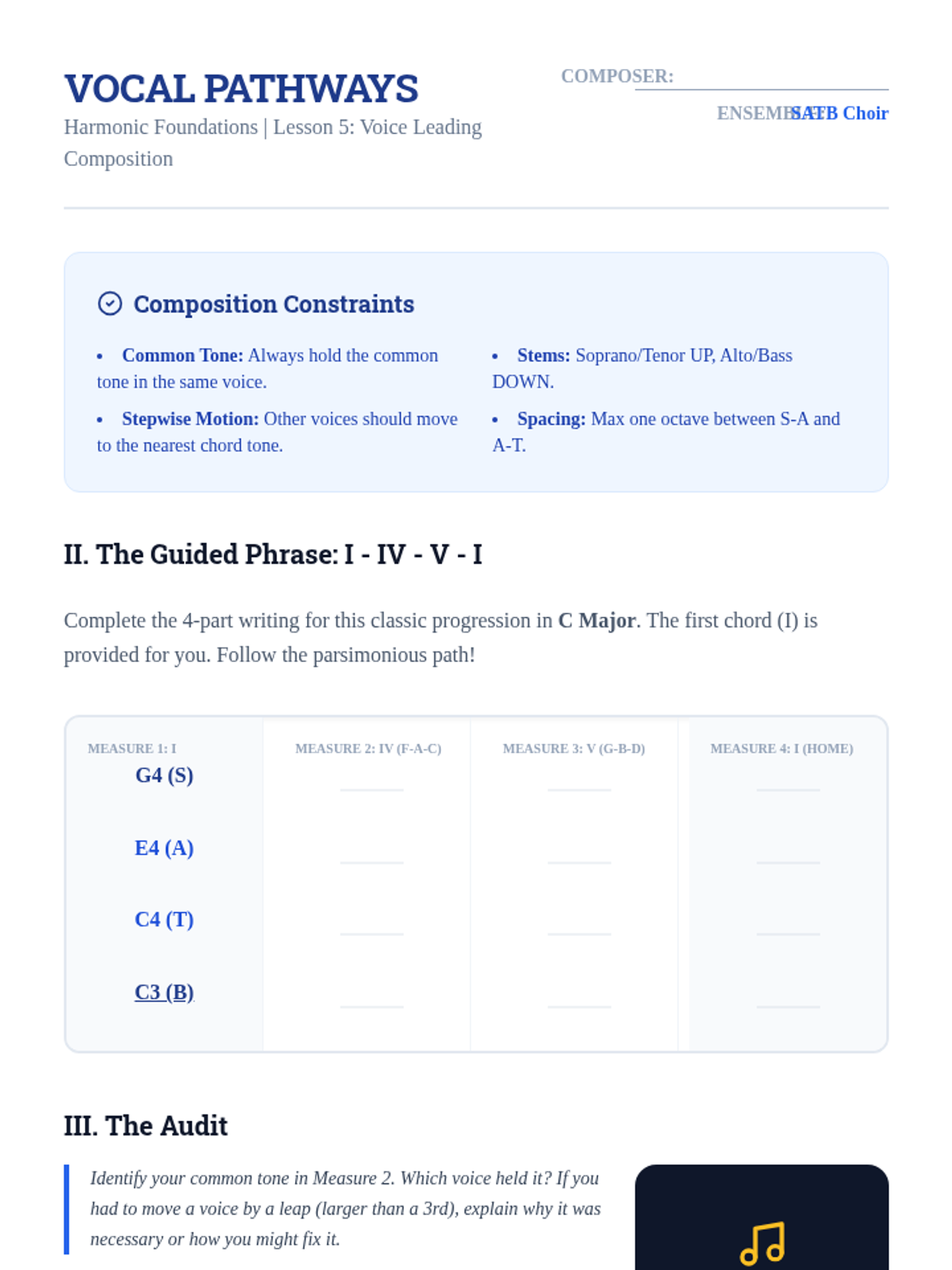
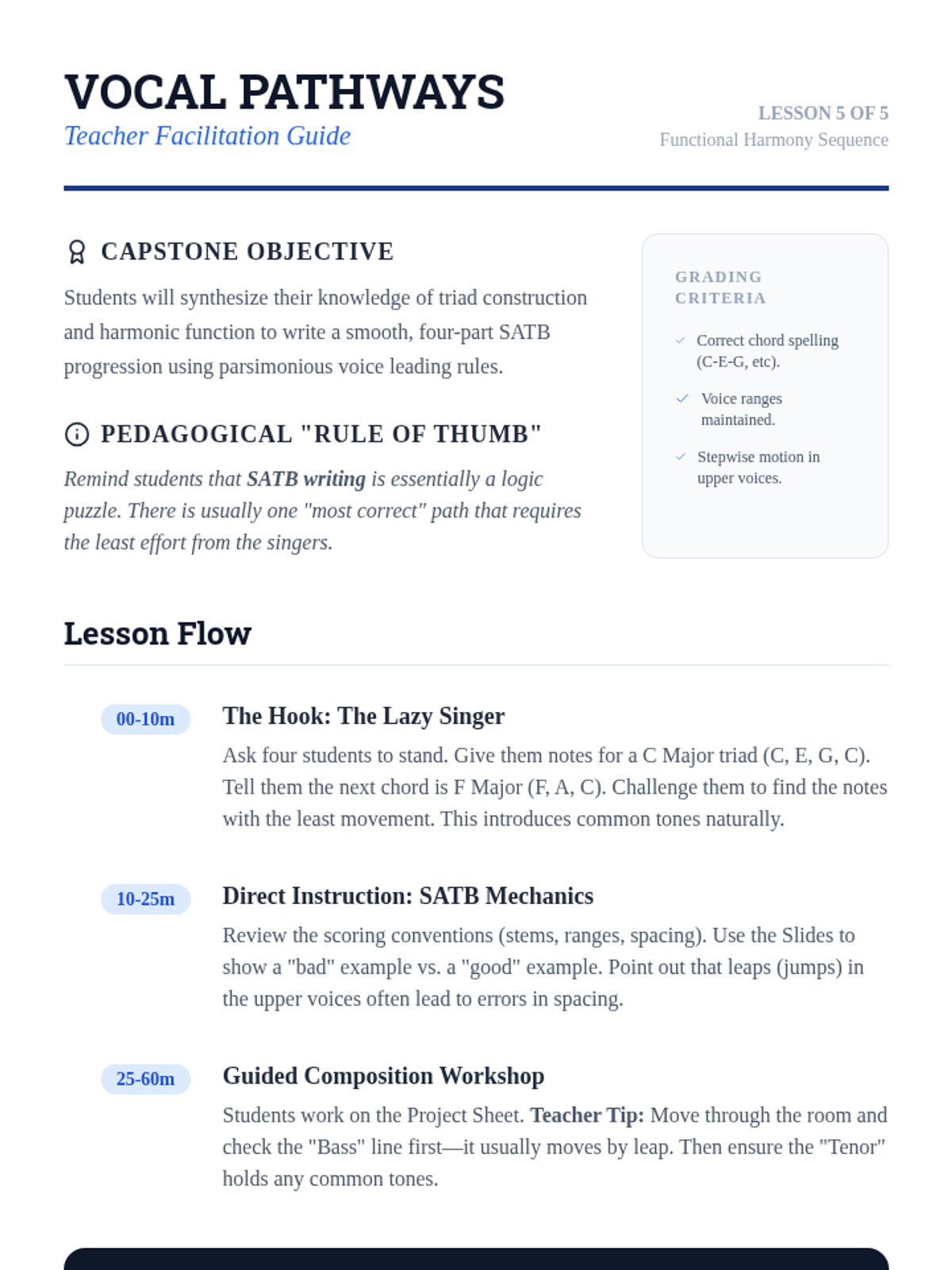
Introduction to SATB writing principles, focusing on smooth voice leading and the 'lazy singer' rule for parsimonious motion.
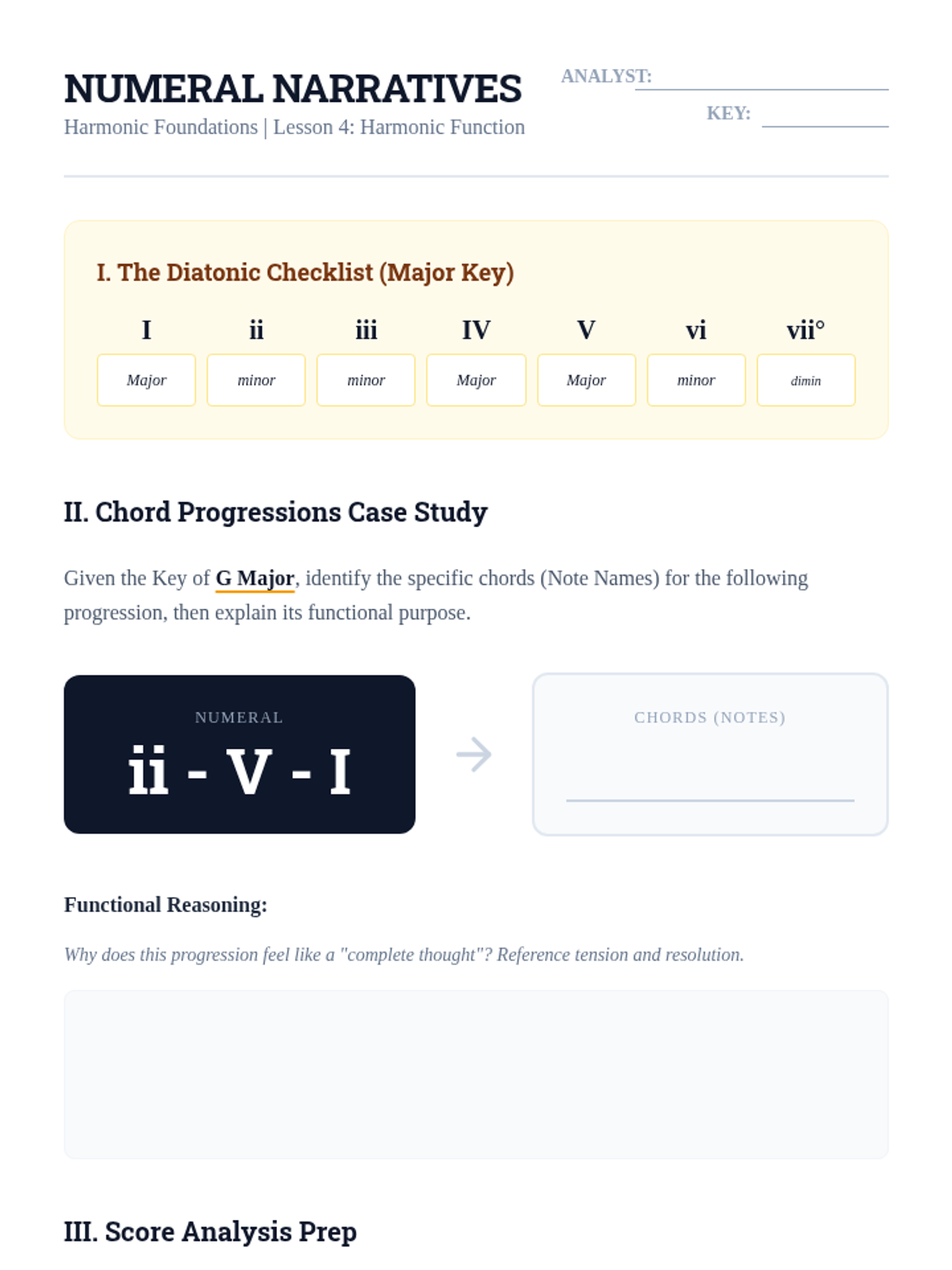
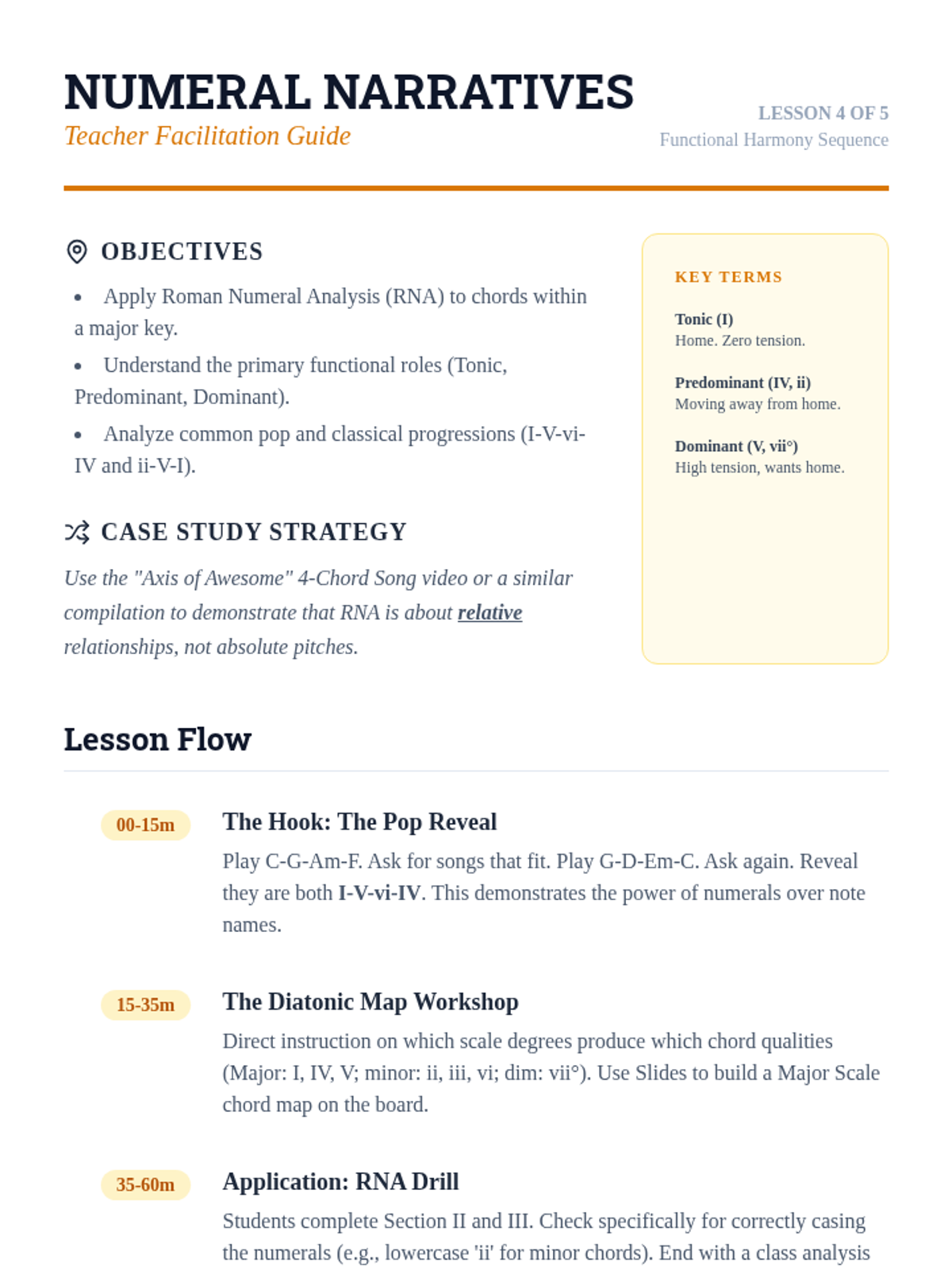
Introduction to diatonic chord scales and the application of Roman Numeral Analysis to identify functional harmonic patterns in repertoire.
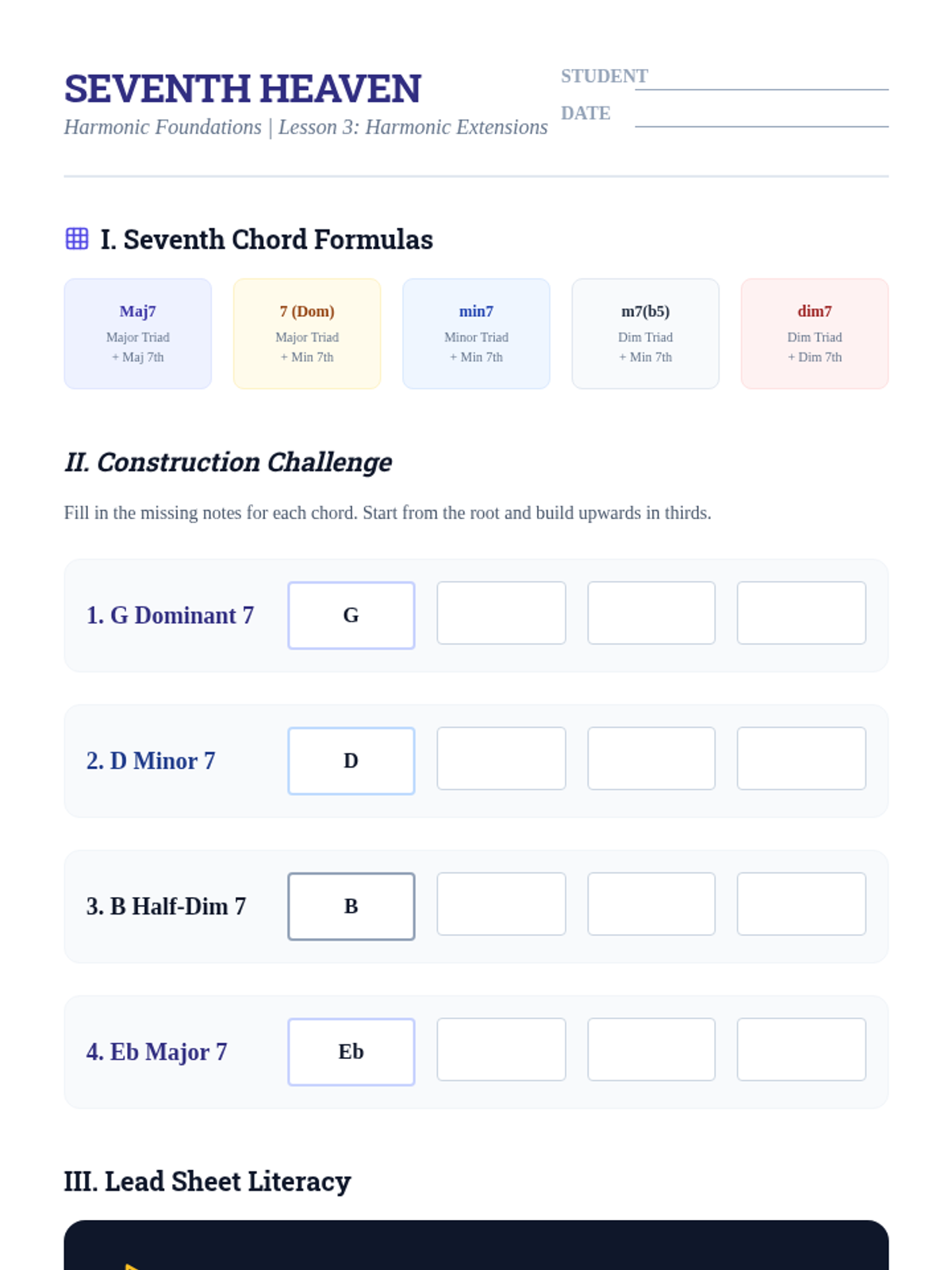
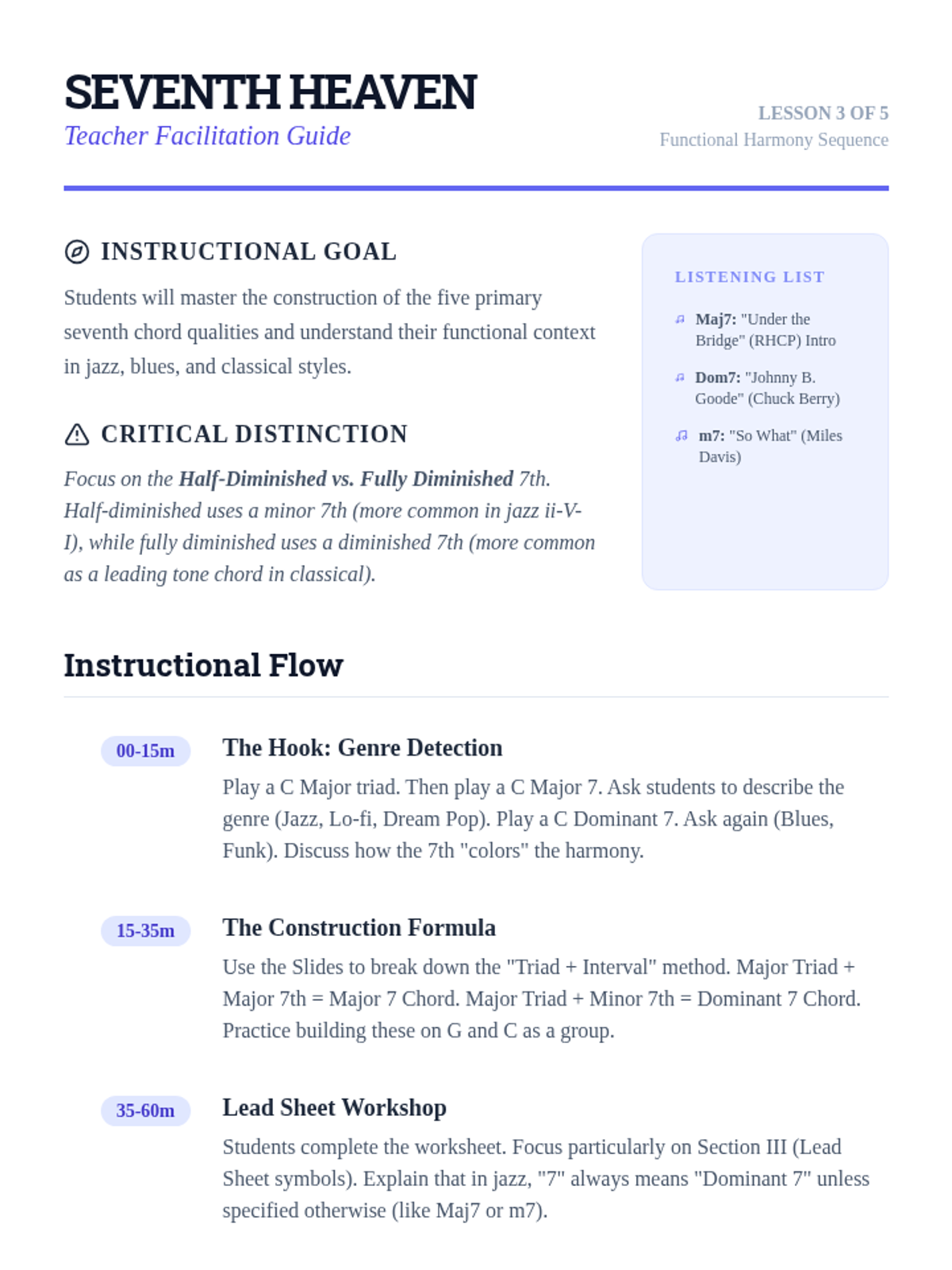
Exploration of seventh chords including Major 7, Dominant 7, Minor 7, and diminished varieties in preparation for complex harmonic analysis.
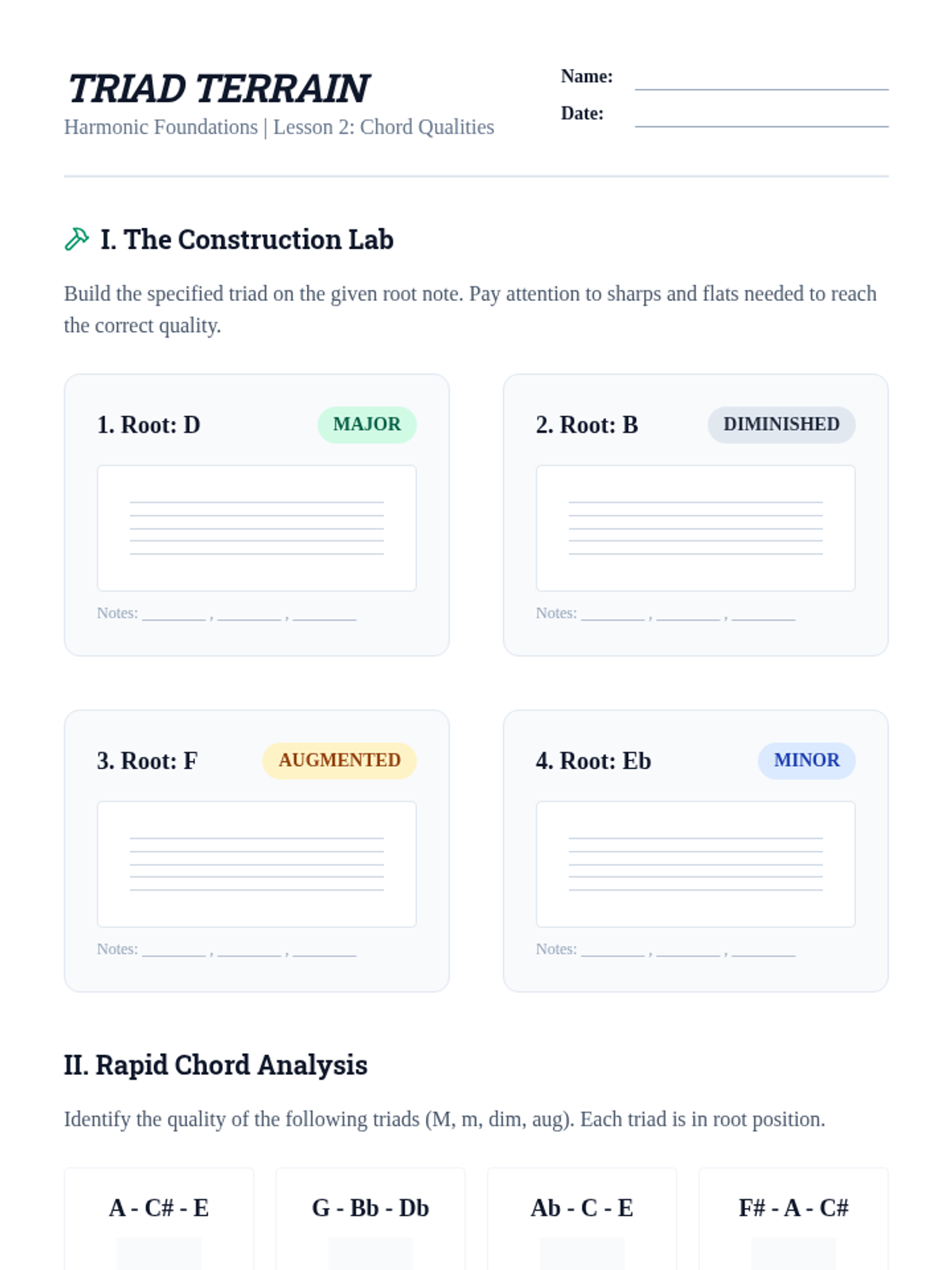
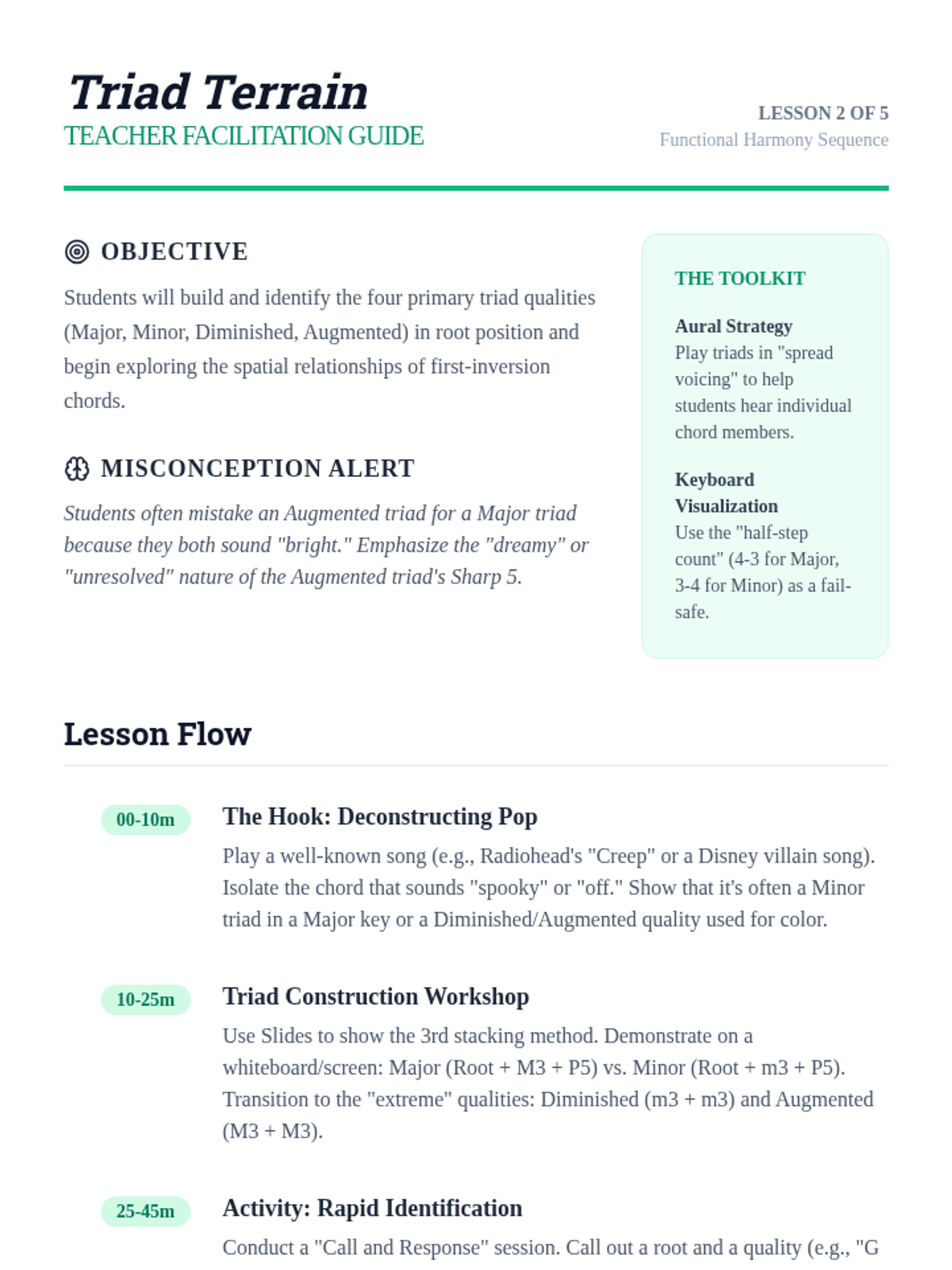
Construction and identification of triads (Major, Minor, Diminished, Augmented) and their inversions using keyboard visualization.
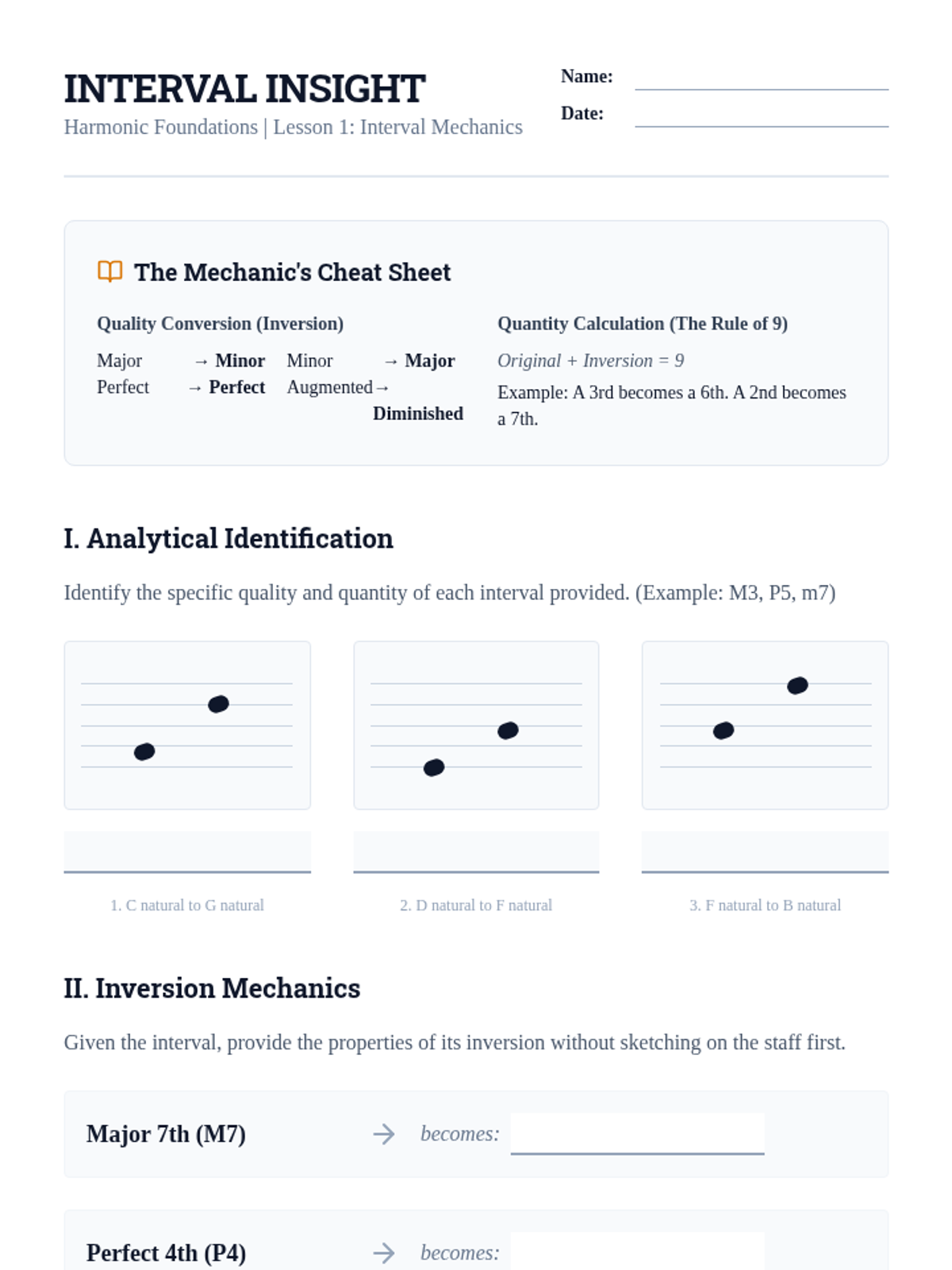
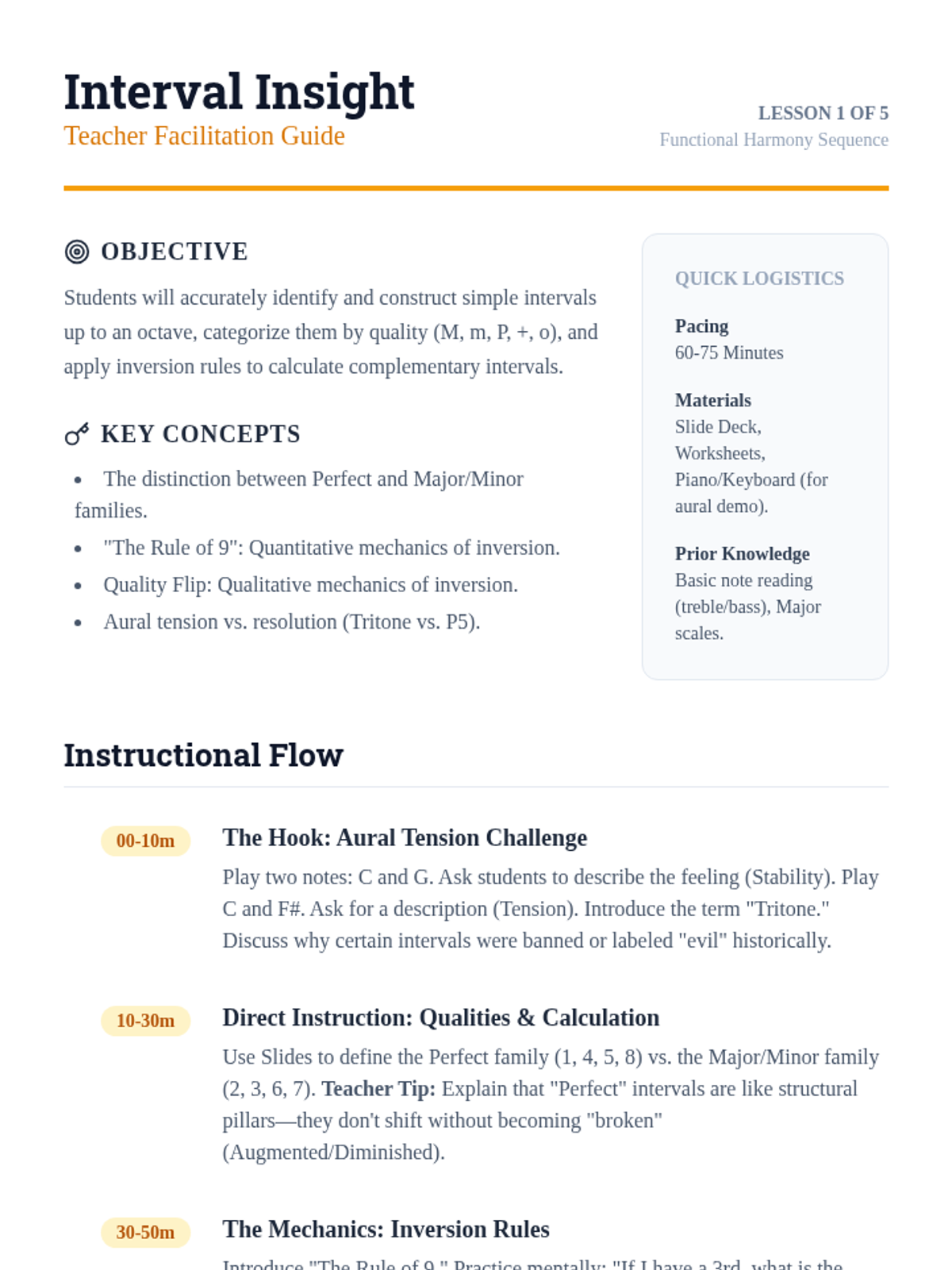
Deep dive into simple and compound intervals, their qualities (major, minor, perfect, augmented, diminished), and the mechanics of inversion.
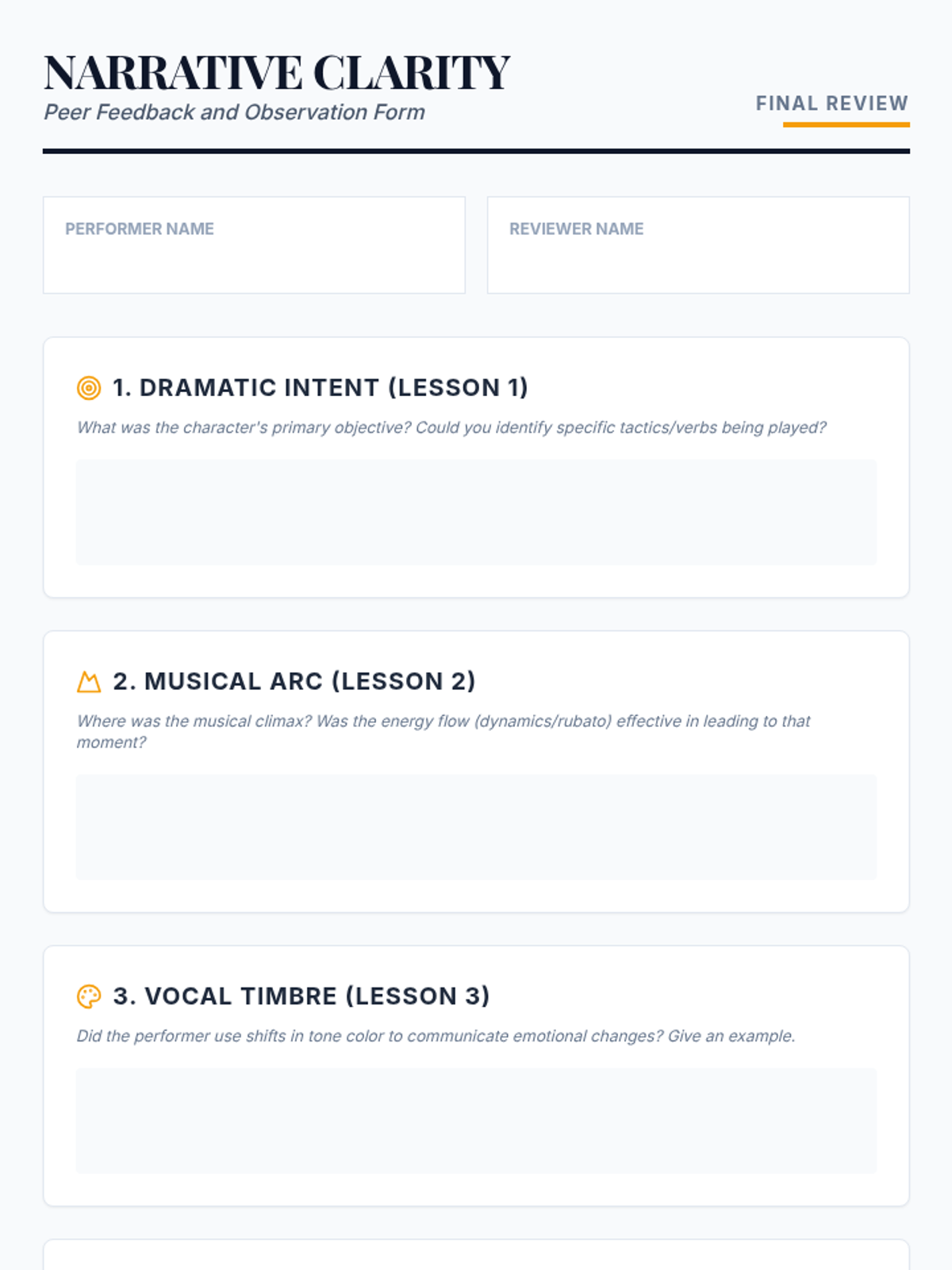
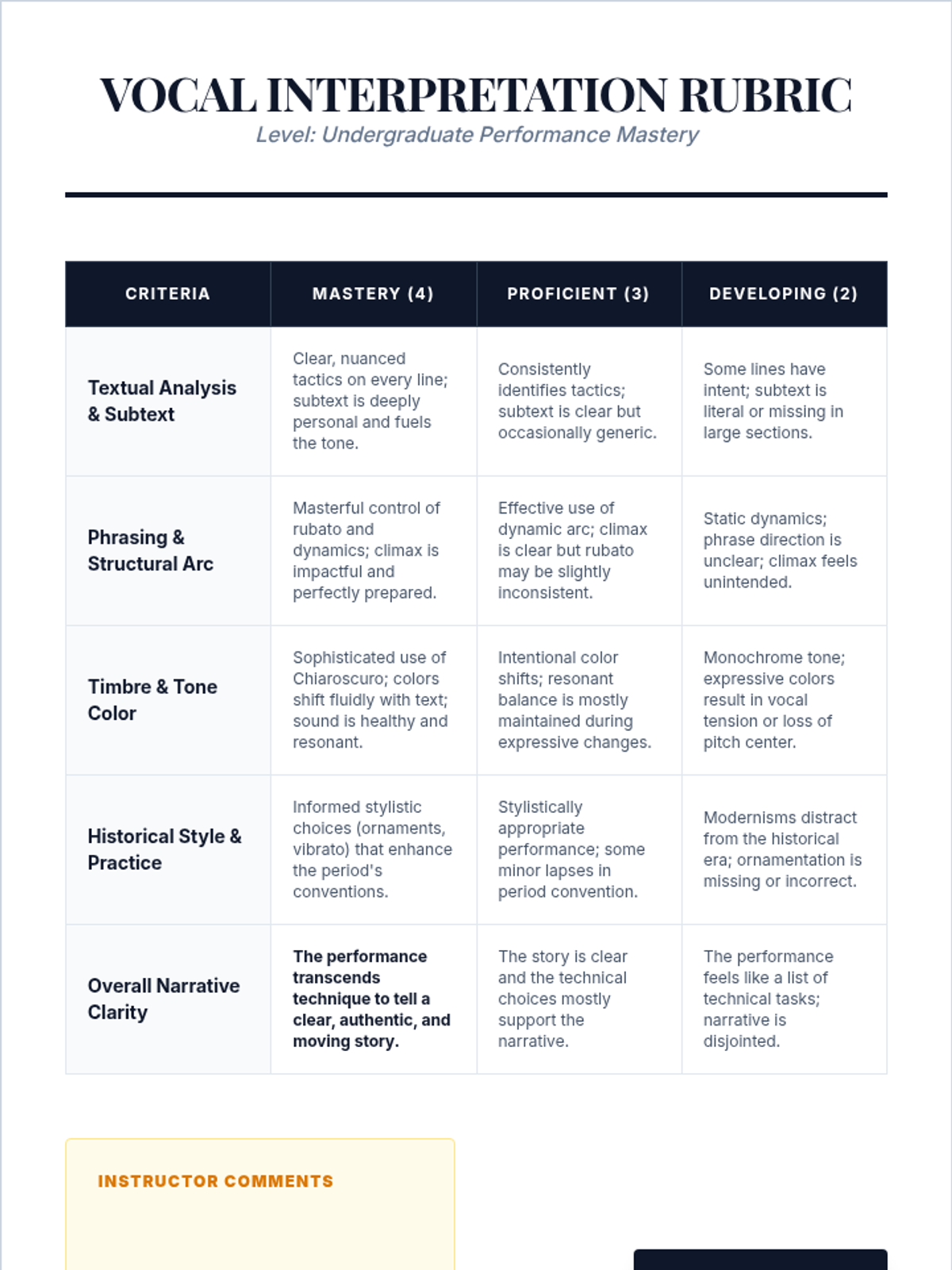
Students synthesize text analysis, phrasing, and historical context into a final performance, providing and receiving peer feedback on narrative clarity.
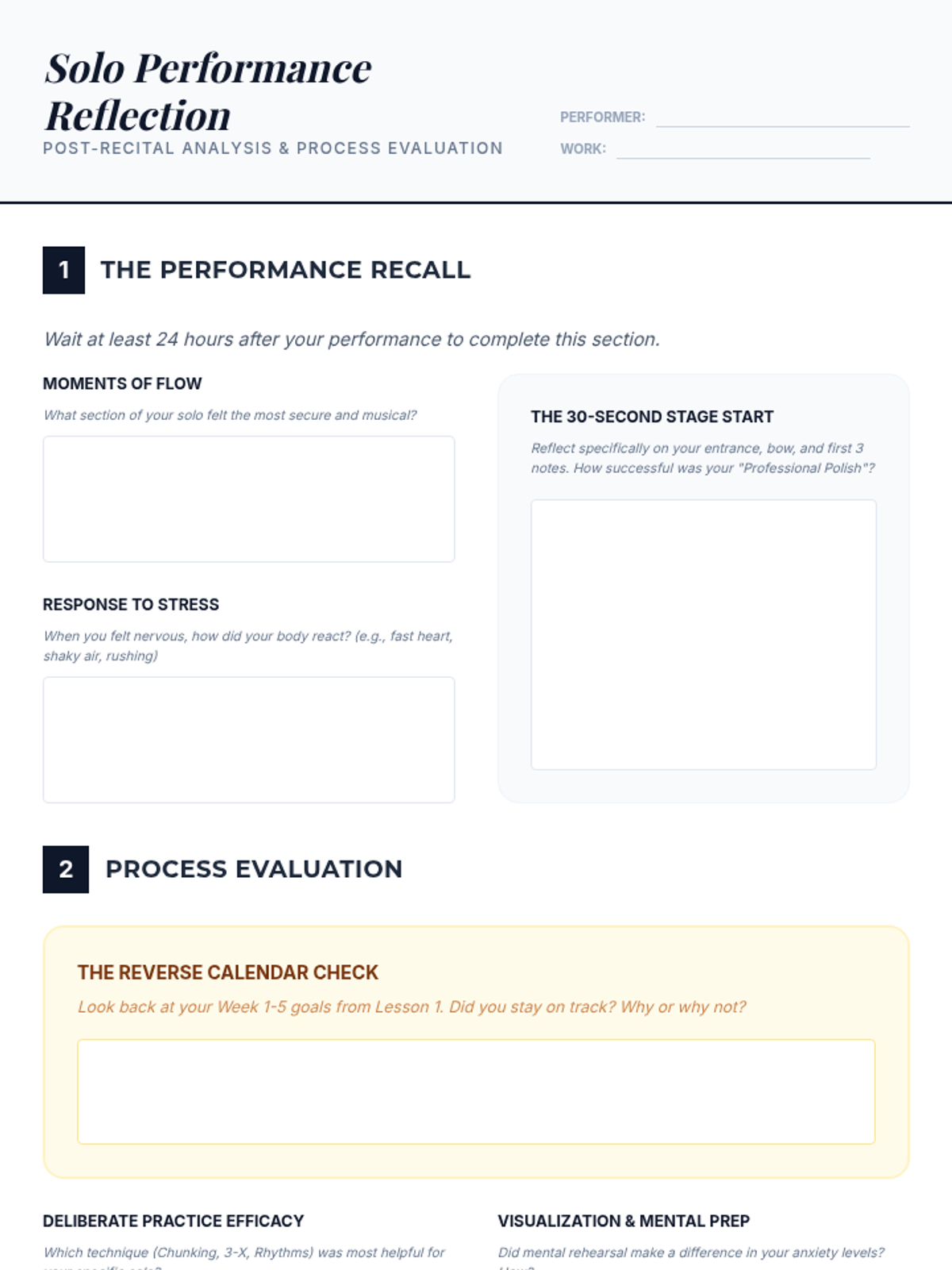
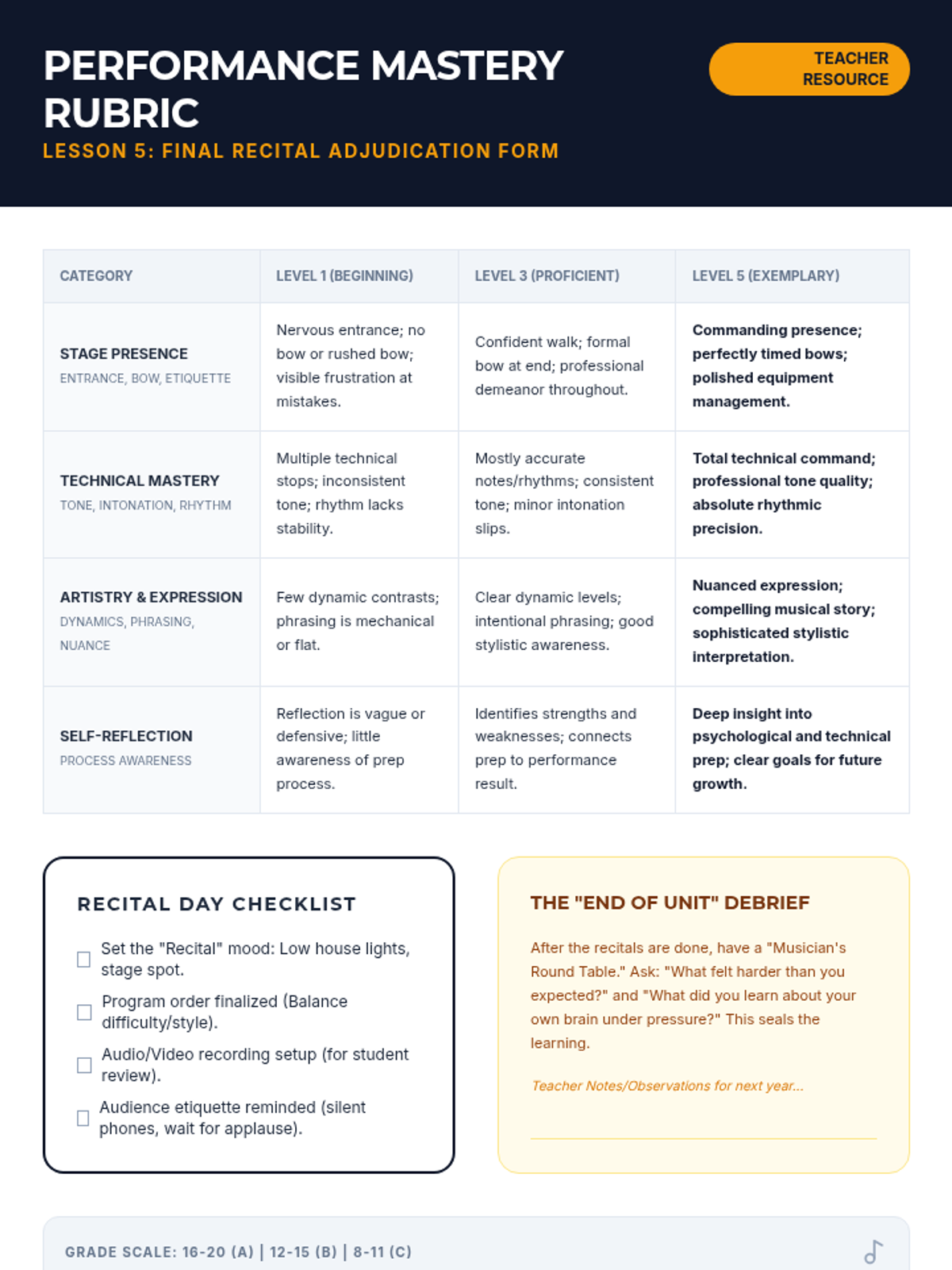
Students deliver a full solo performance in a formal recital setting. They apply all technical, artistic, and stage presence skills learned throughout the sequence, followed by a detailed self-reflection on their preparation and performance.
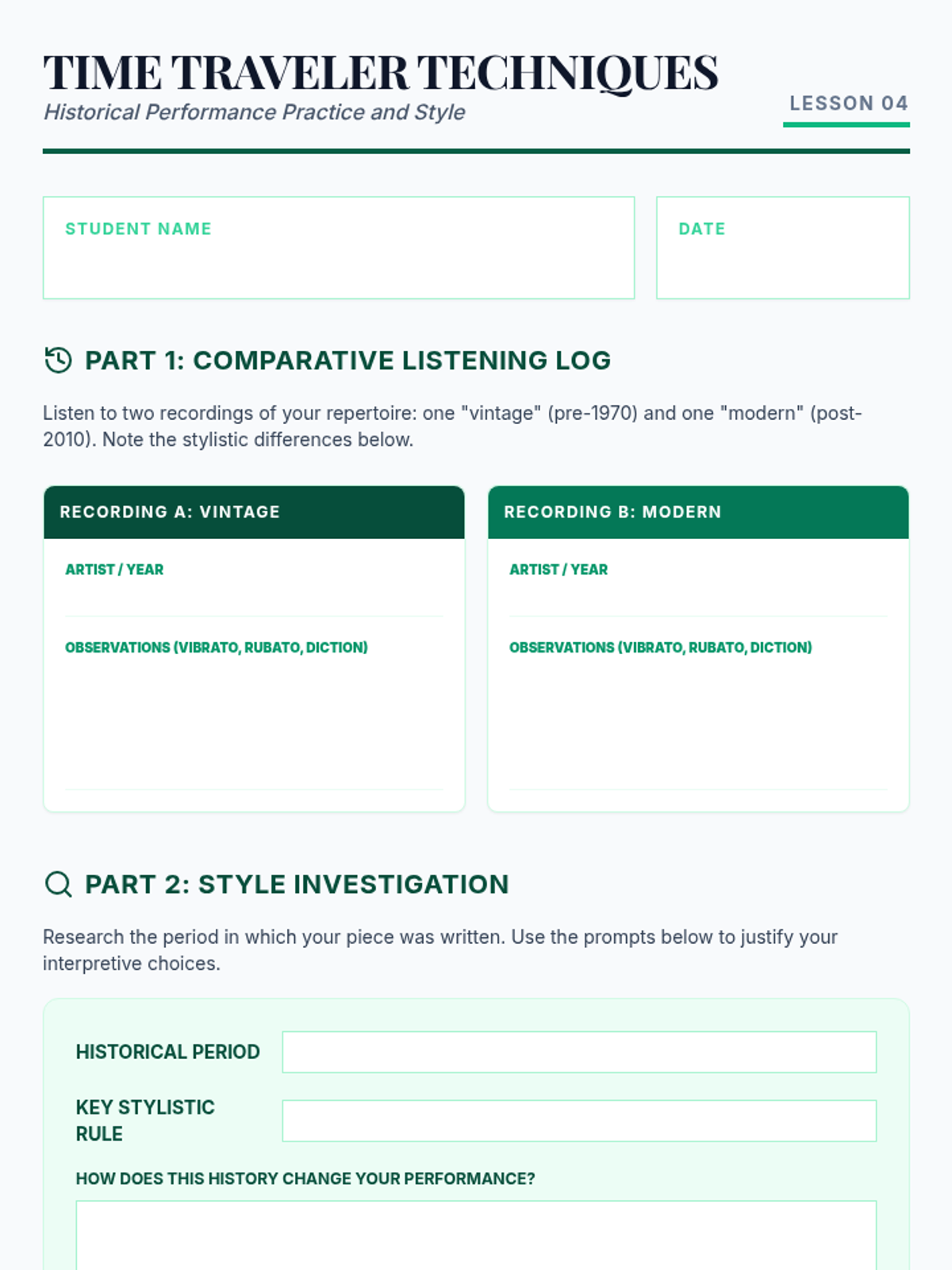
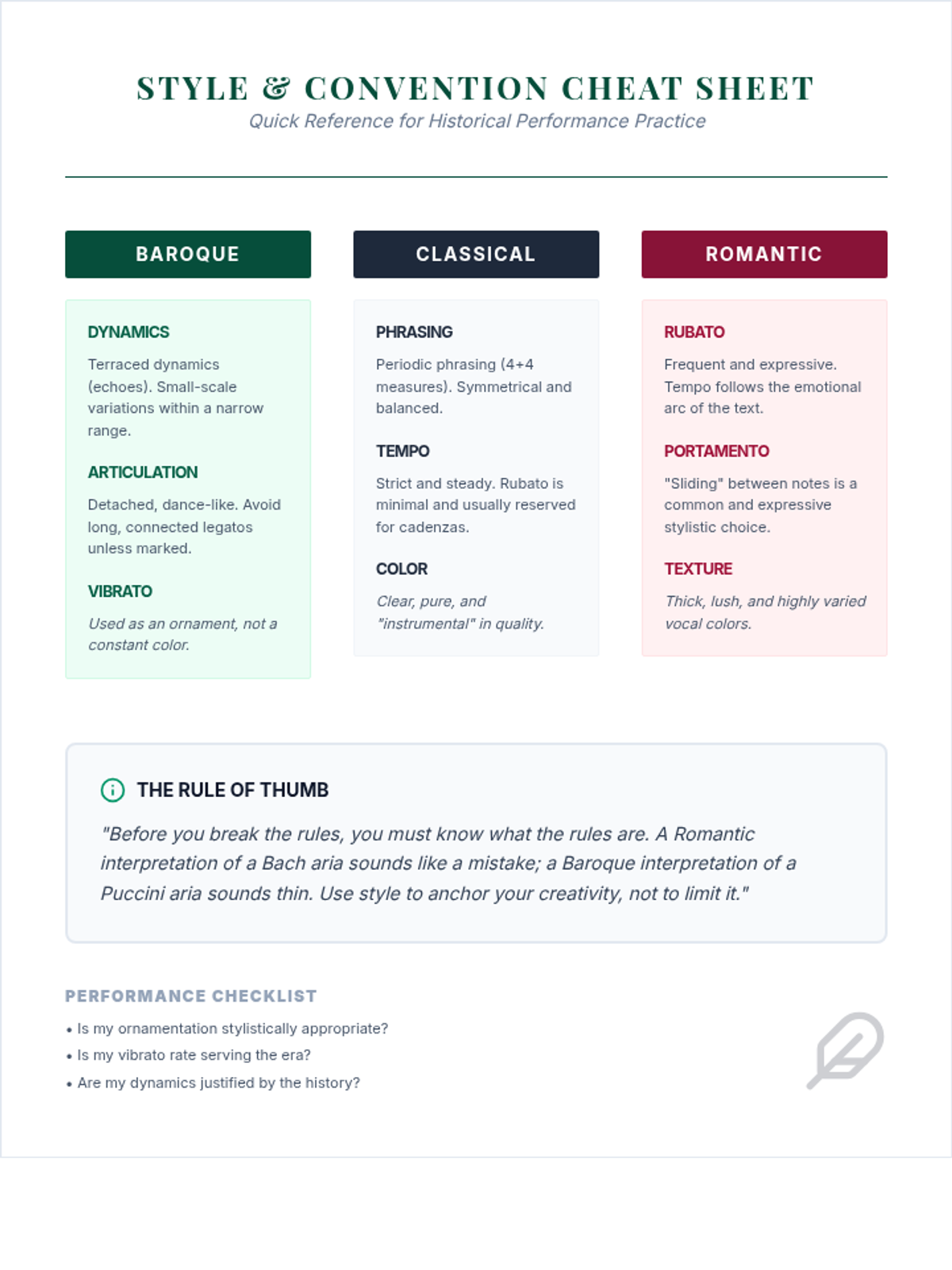
Students research the historical period and performance practices of their repertoire, comparing recordings to justify their interpretive choices.
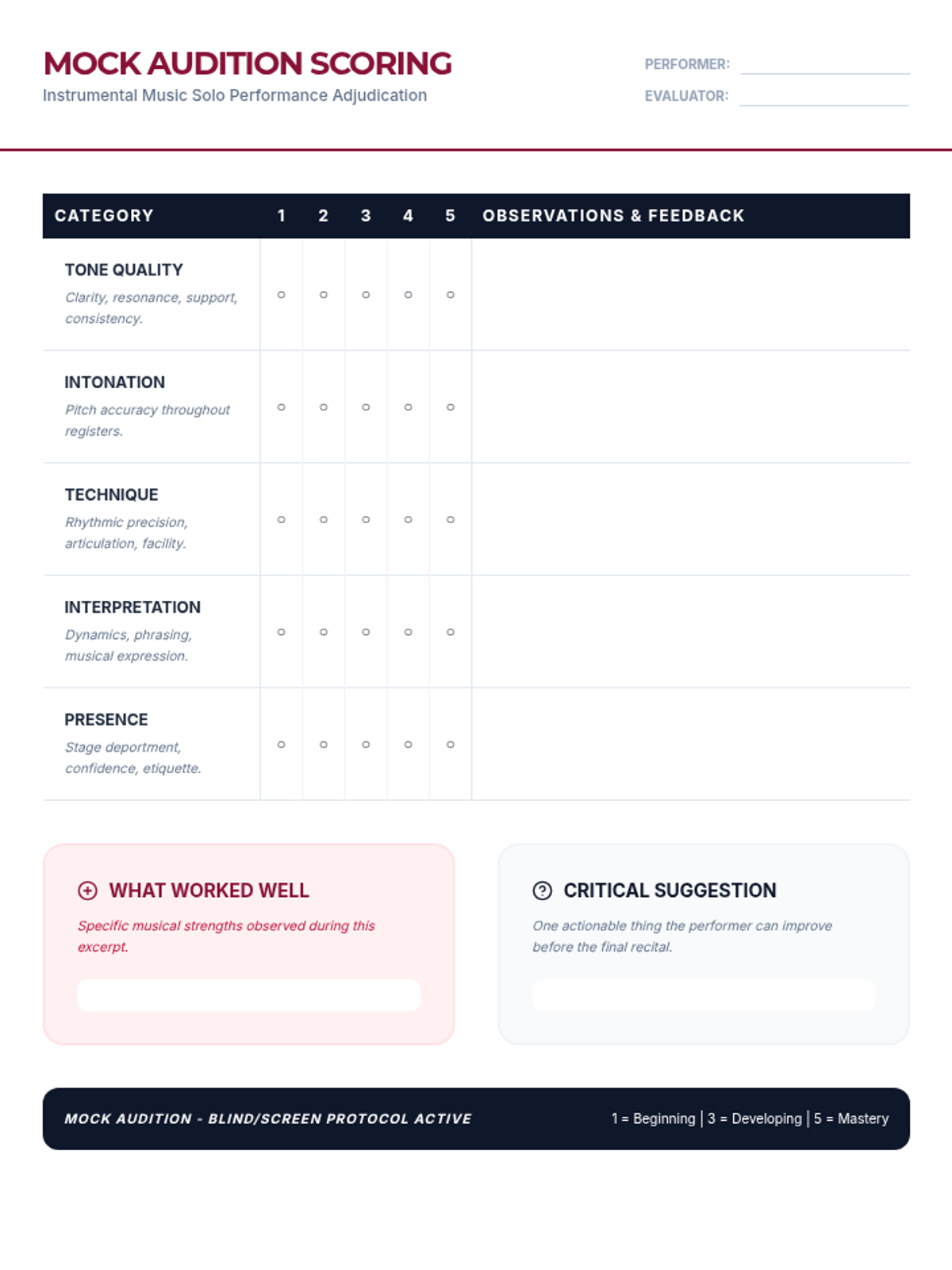
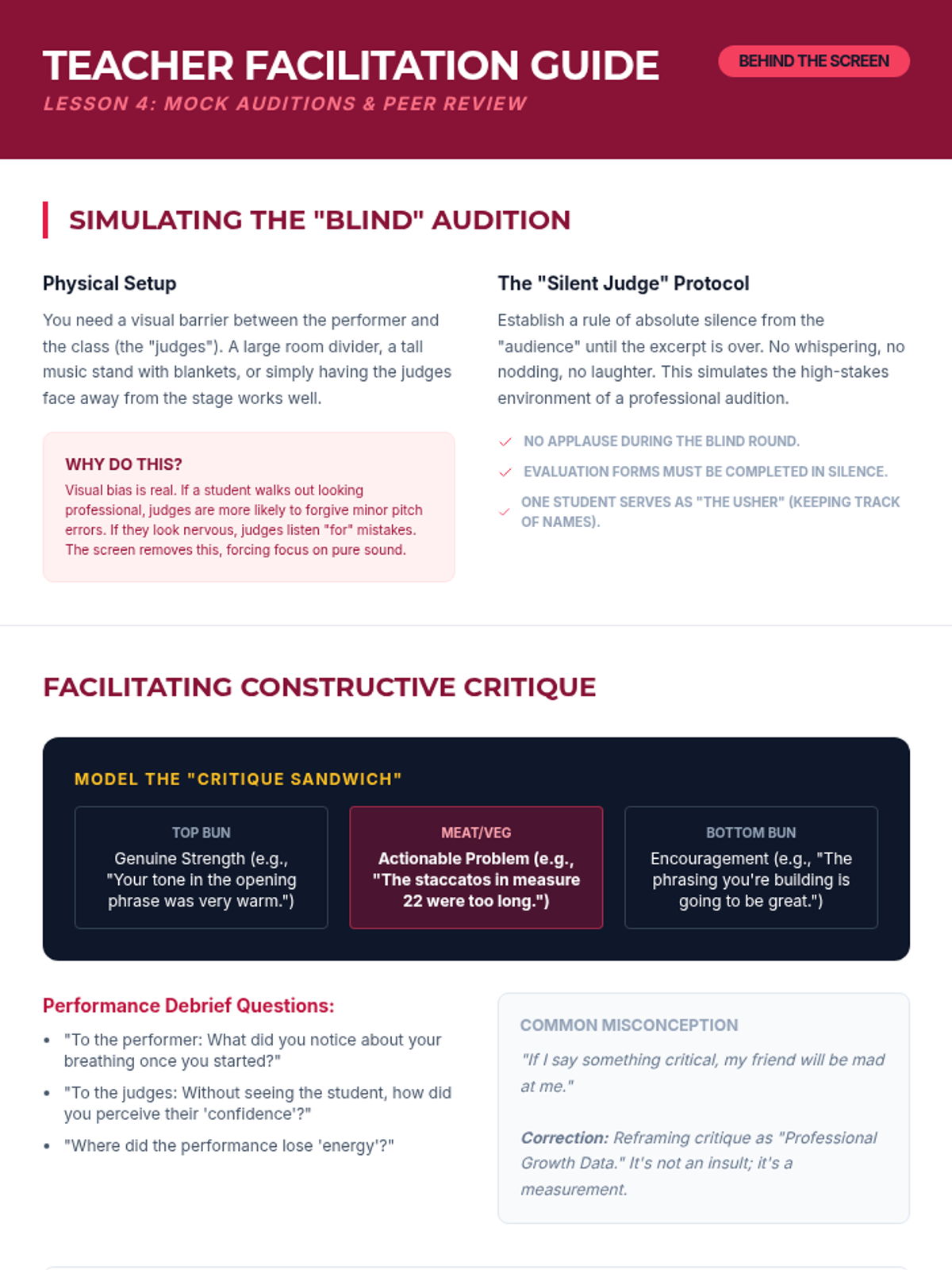
Students perform excerpts of their solo works in a simulated audition setting. They practice giving and receiving constructive feedback using standardized rubrics, with a focus on 'blind' auditions to isolate musical performance from visual bias.
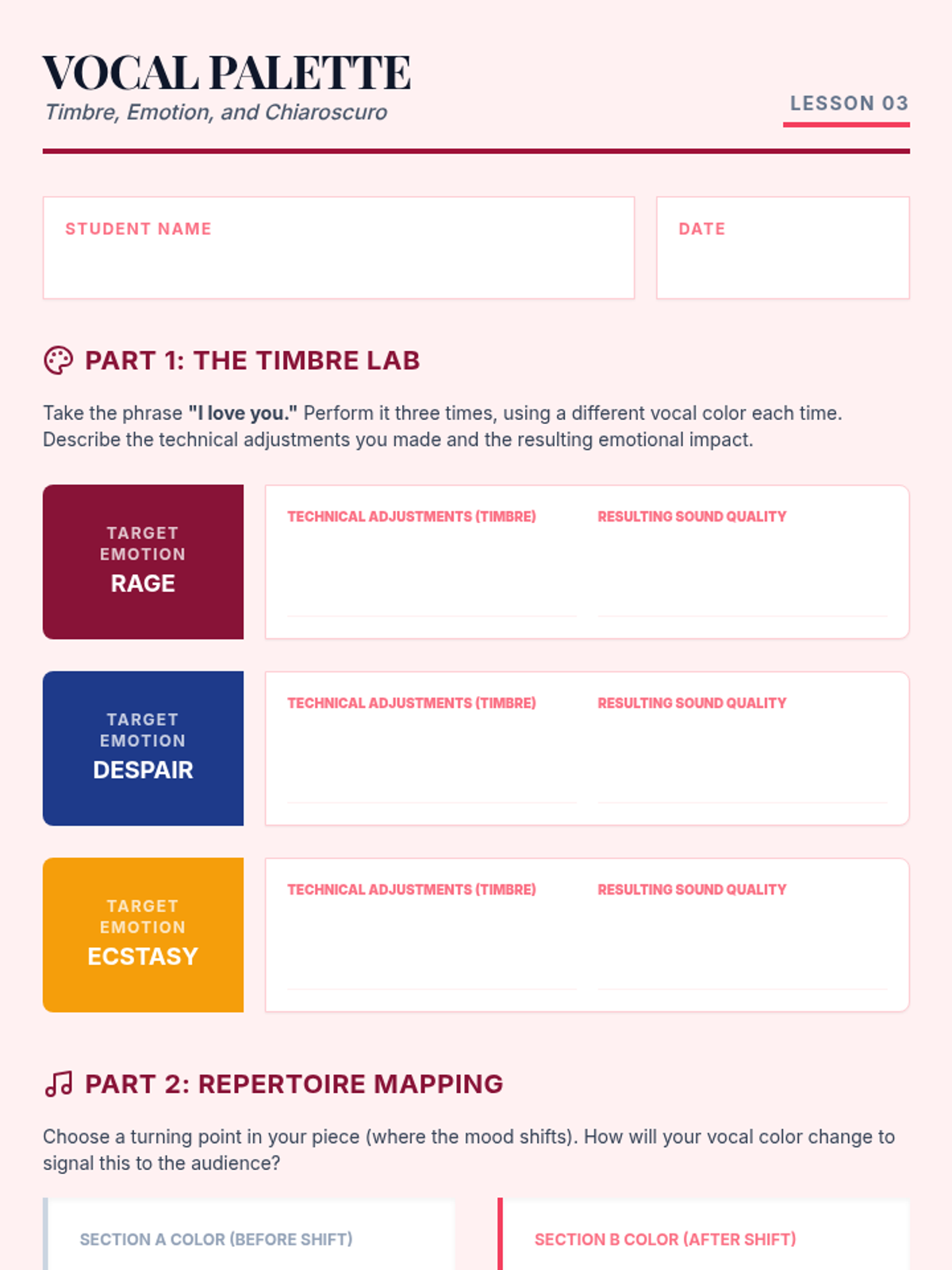
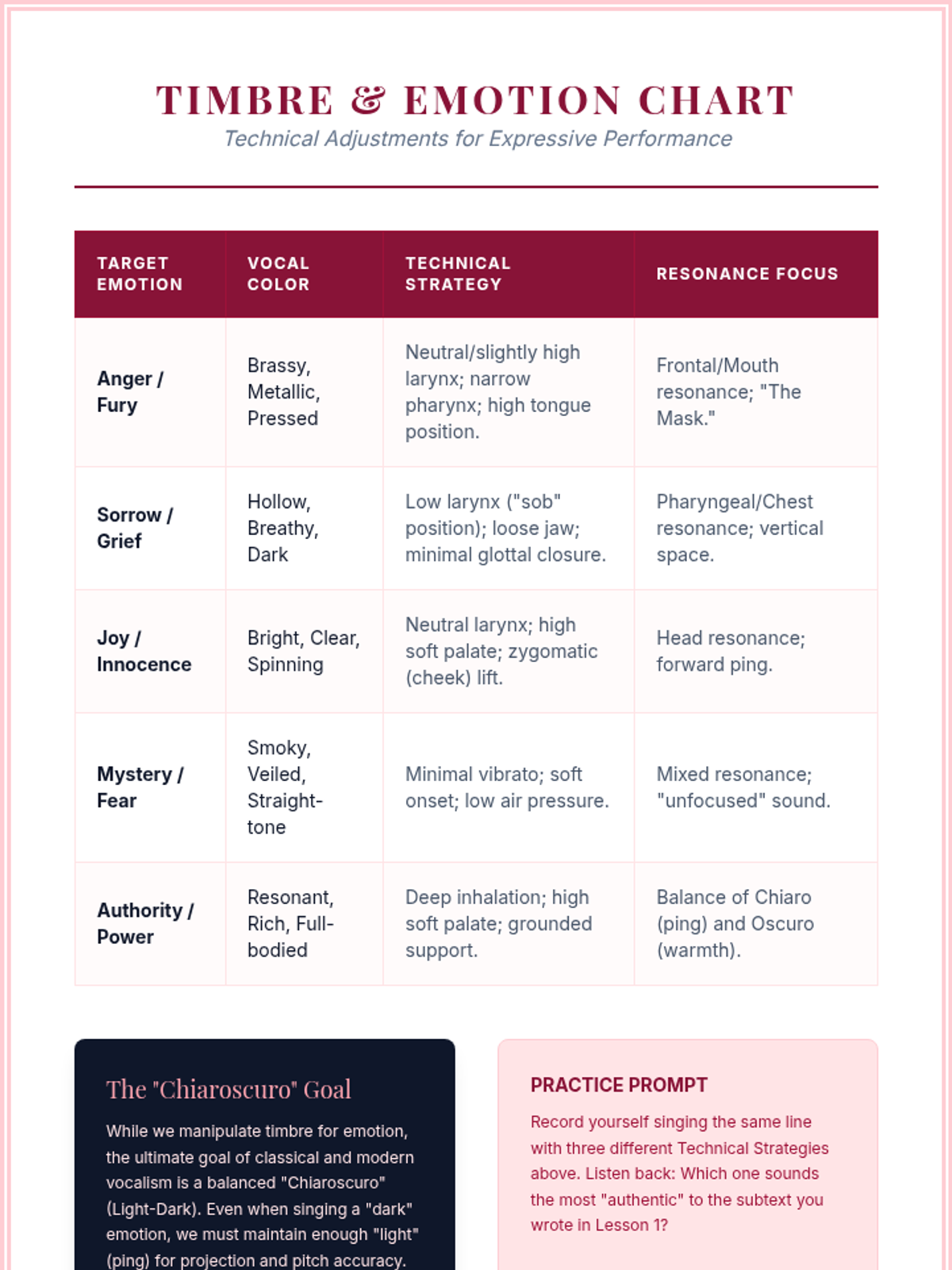
Students explore vocal timbre and color to convey emotion, learning to safely vary their sound to match the subtext of their repertoire.
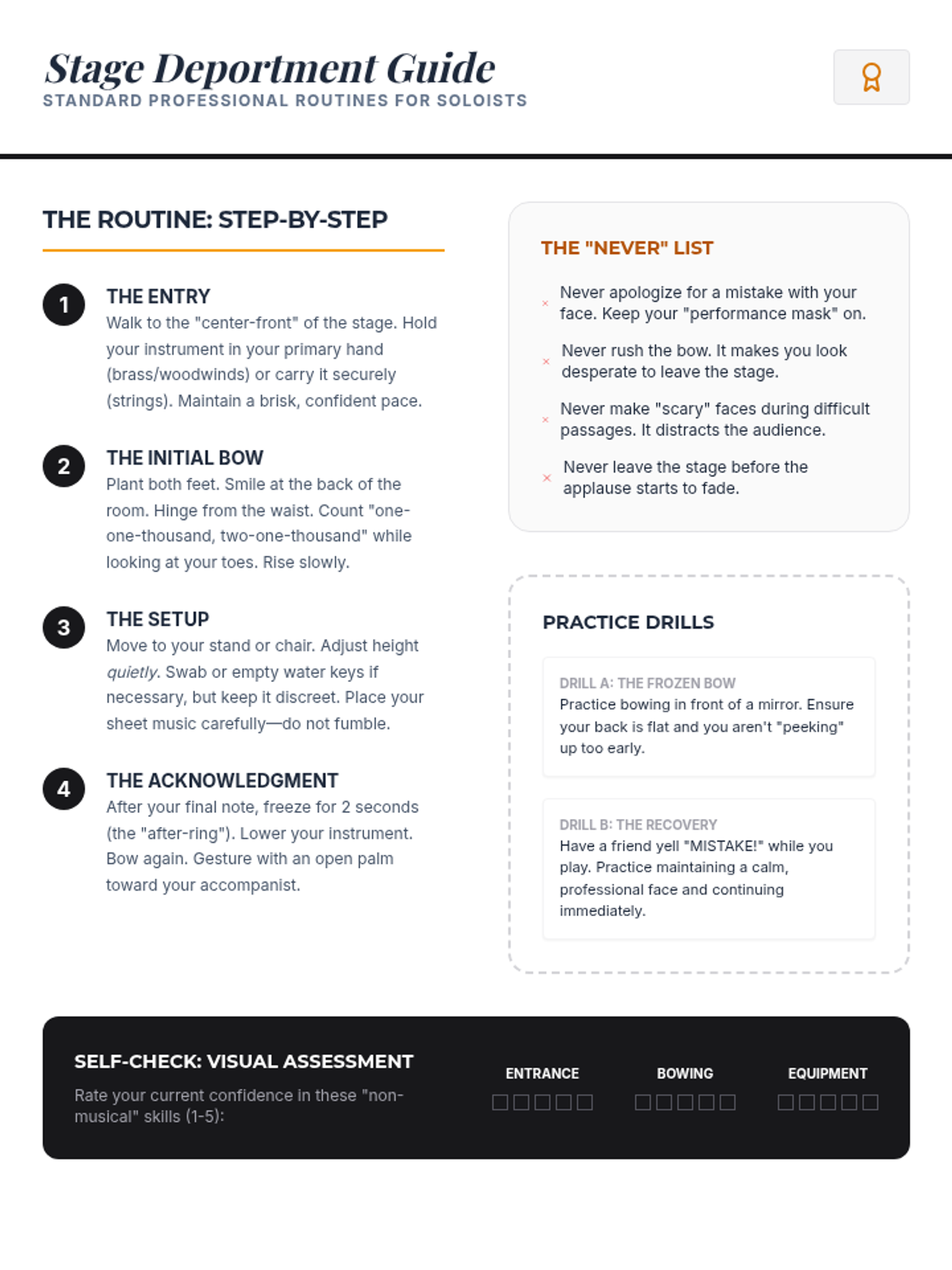
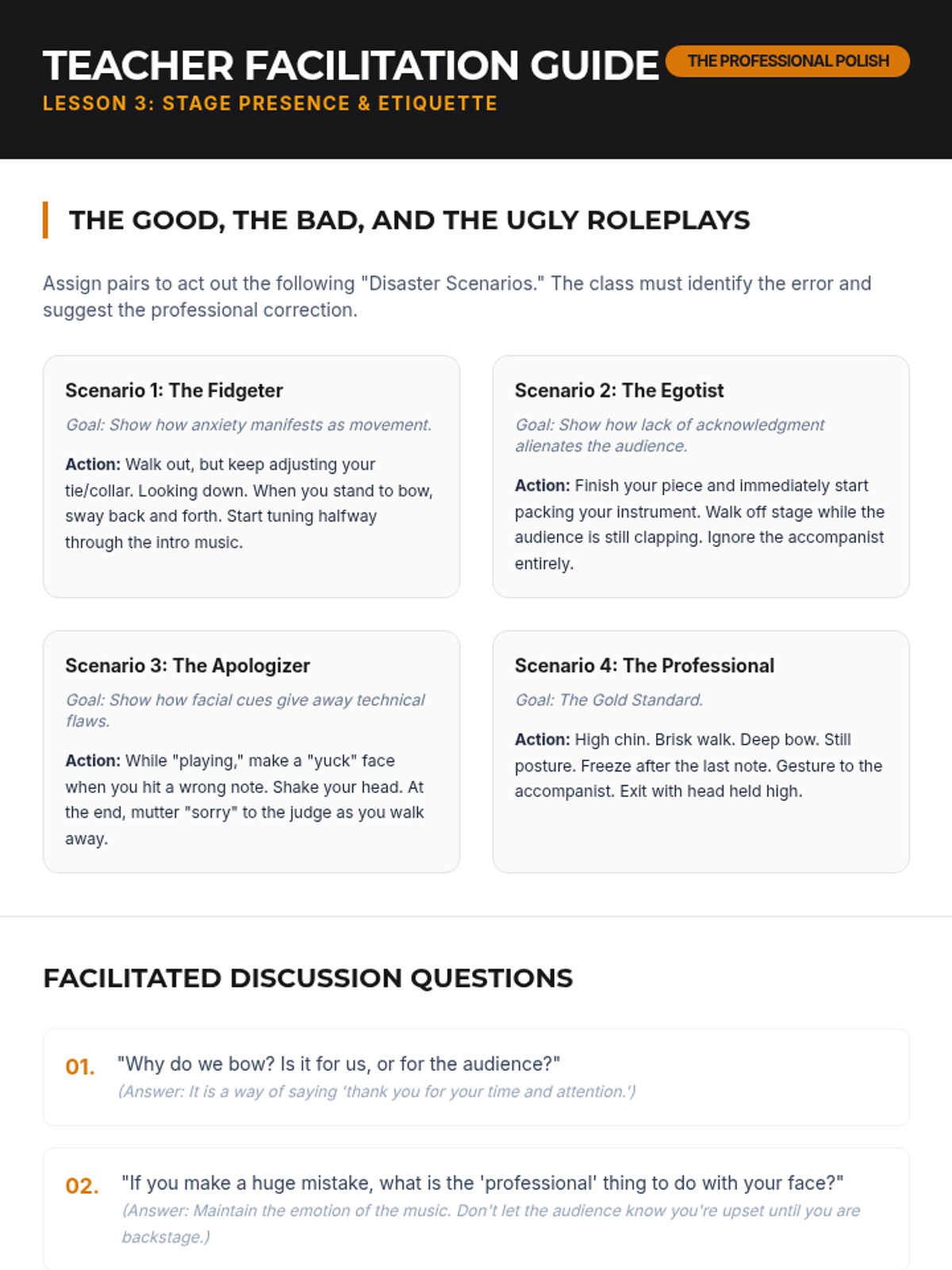
Students master the professional routines of stage performance, including entrance, bowing, and equipment management. Through roleplay and discussion, they learn how stage deportment influences audience perception.
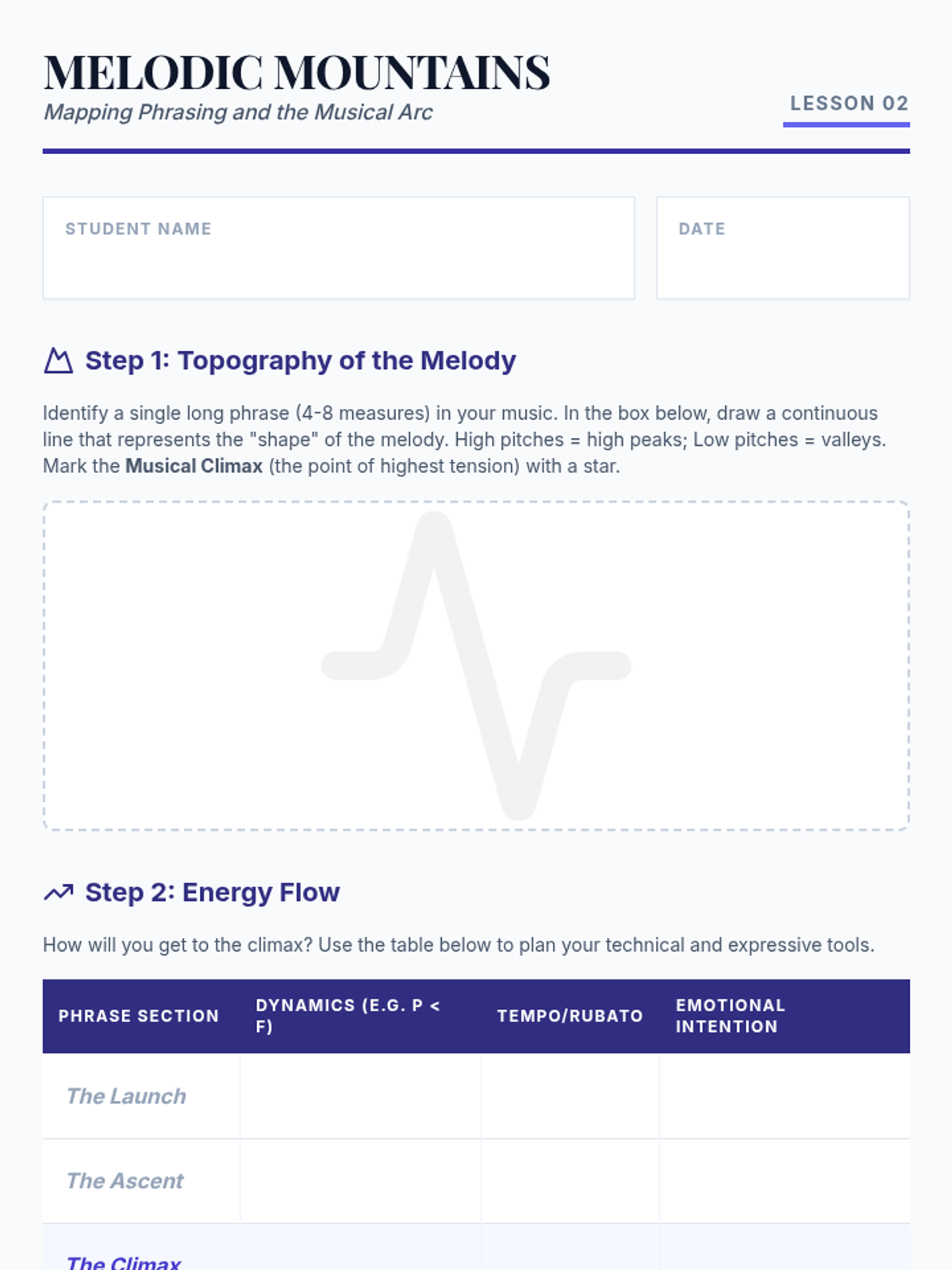
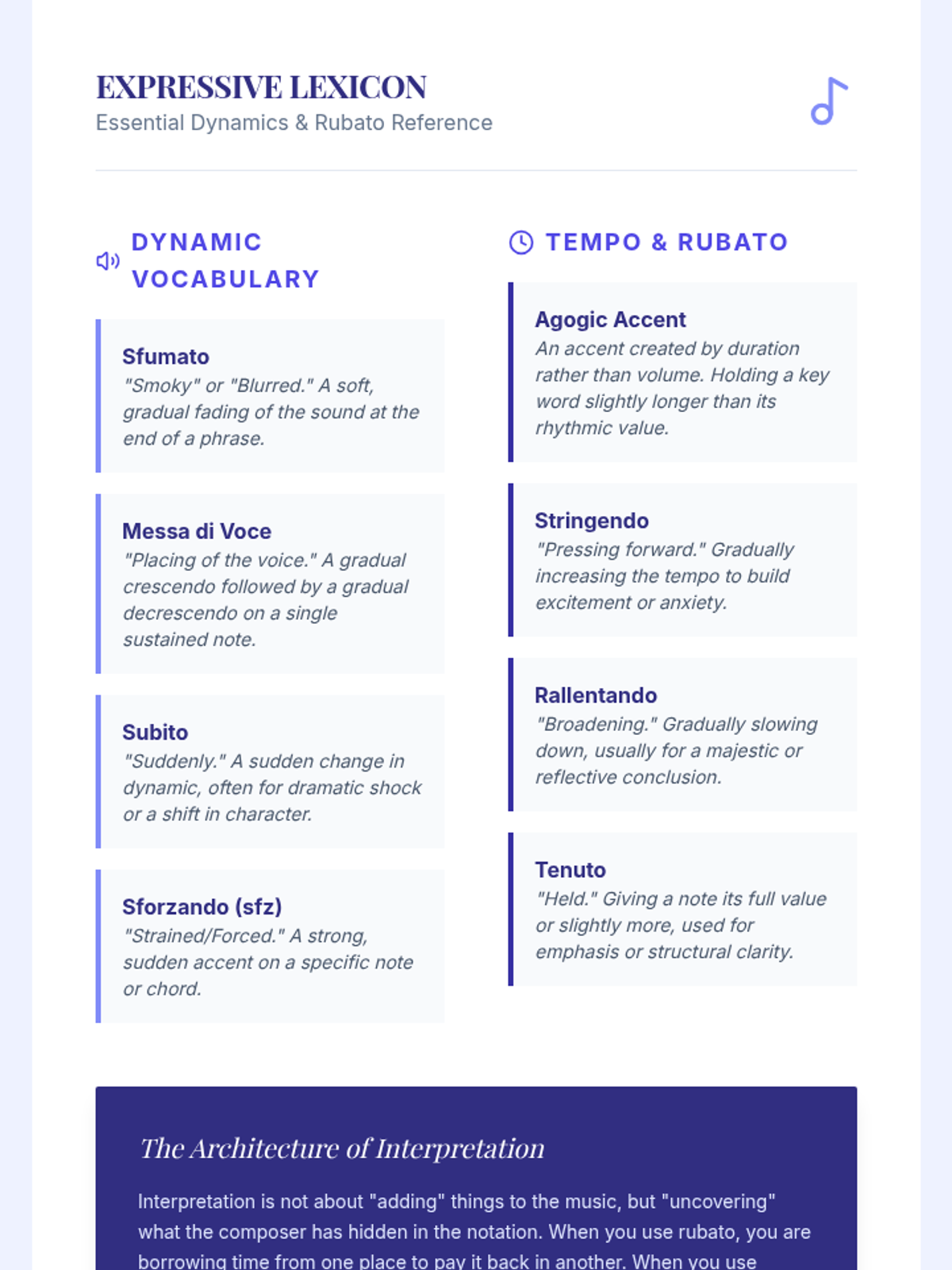
Students map the emotional and musical structure of their repertoire, identifying climaxes and planning dynamic/tempo choices to support the musical arc.
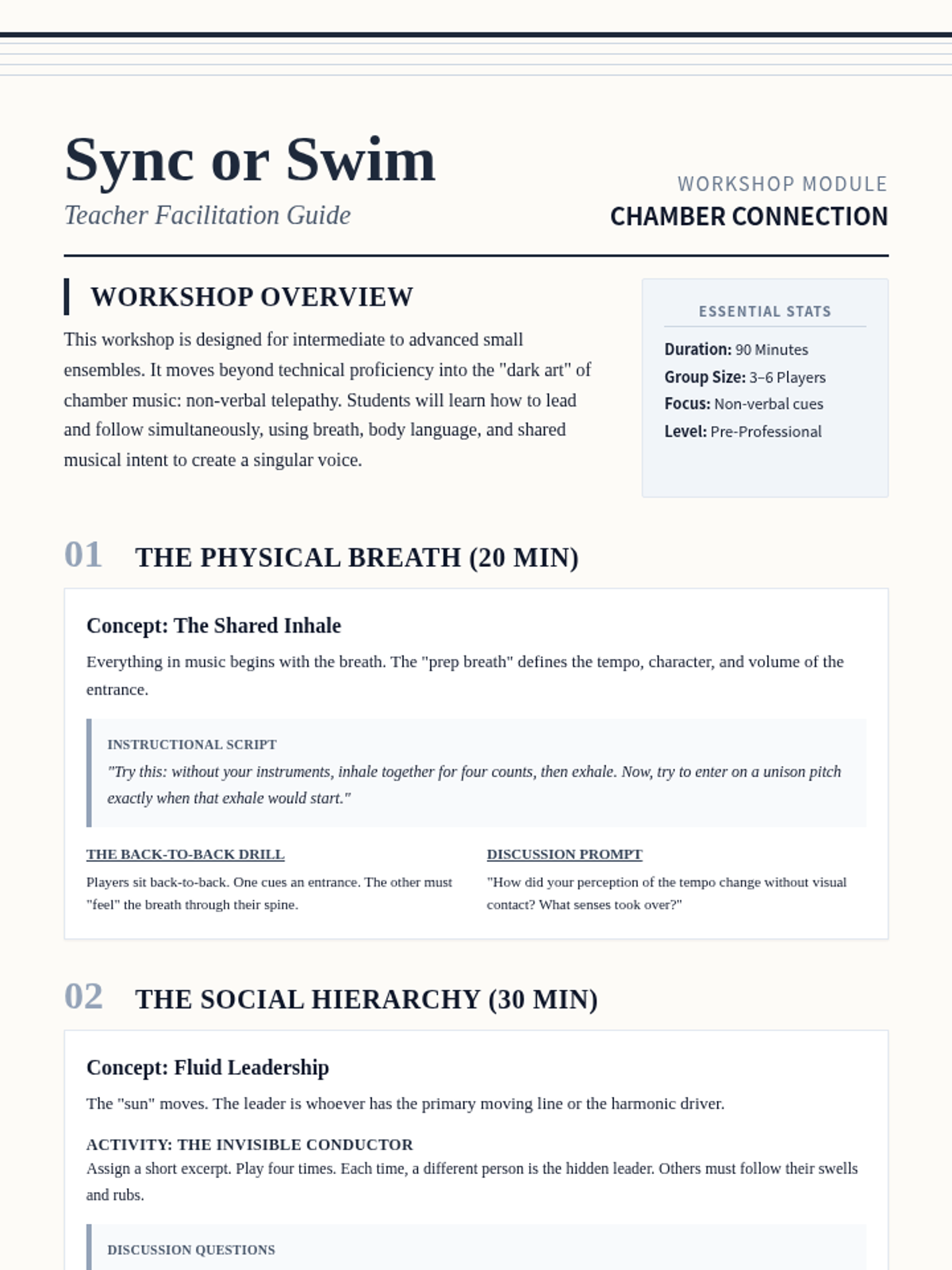
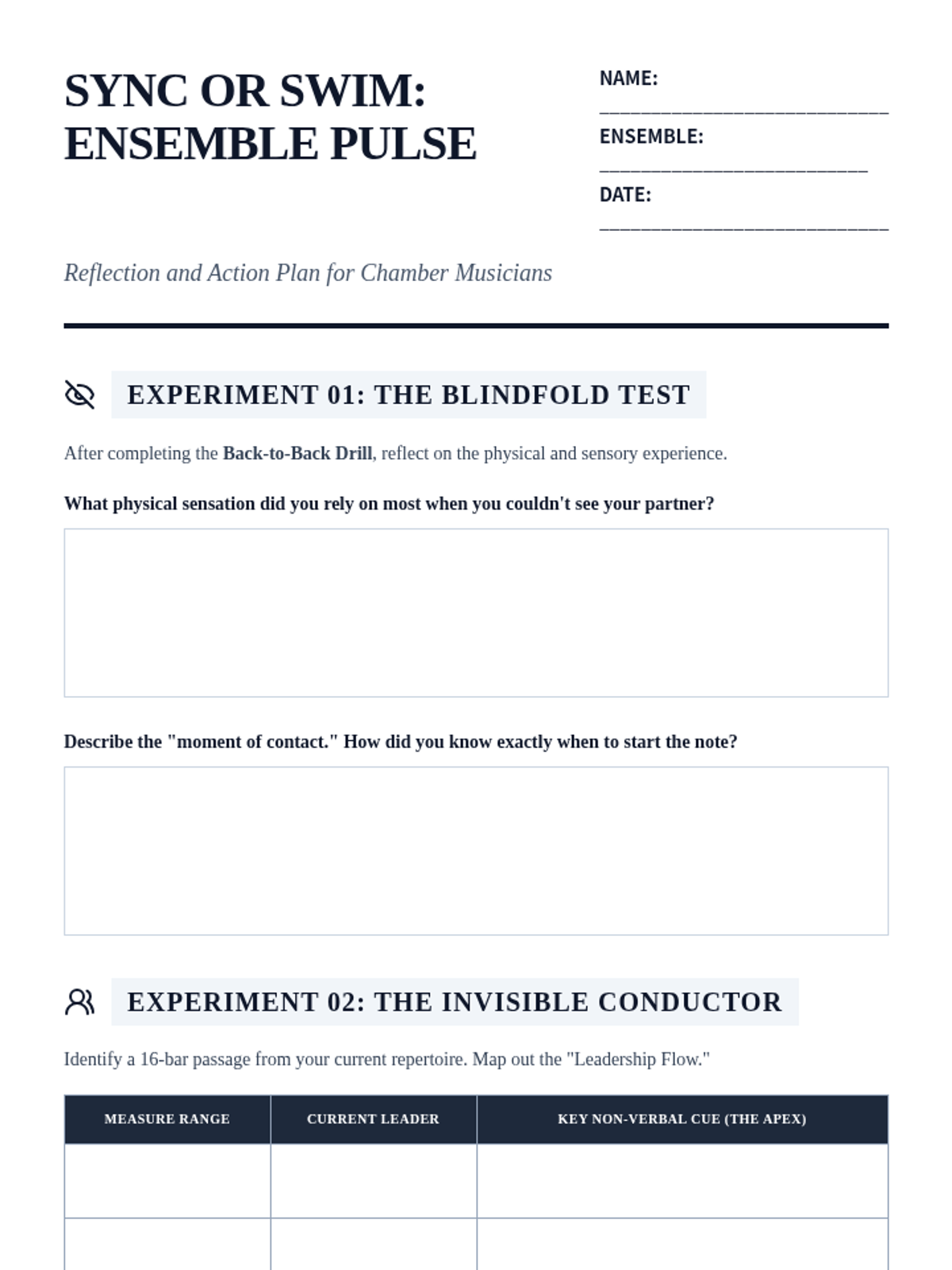
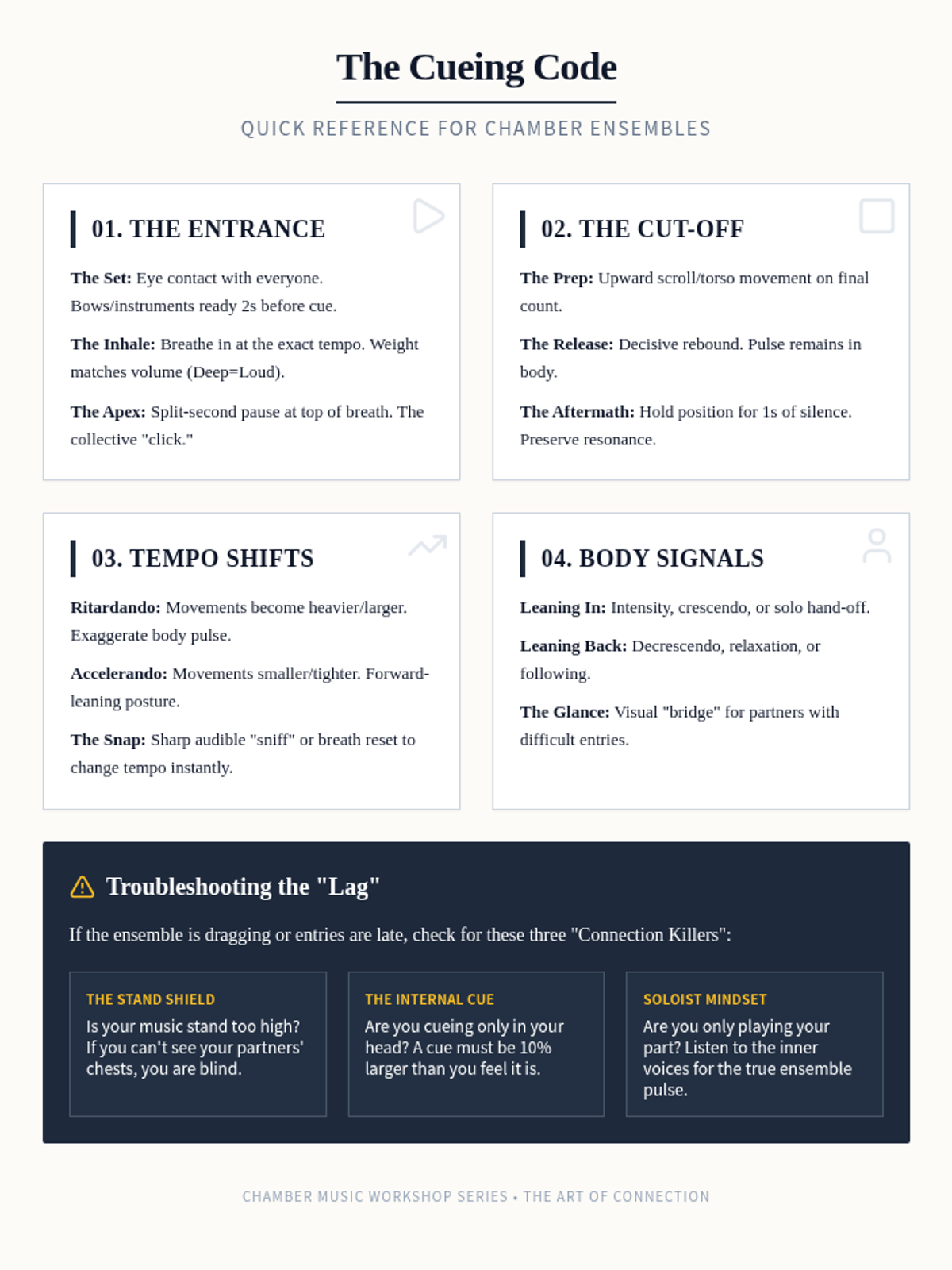
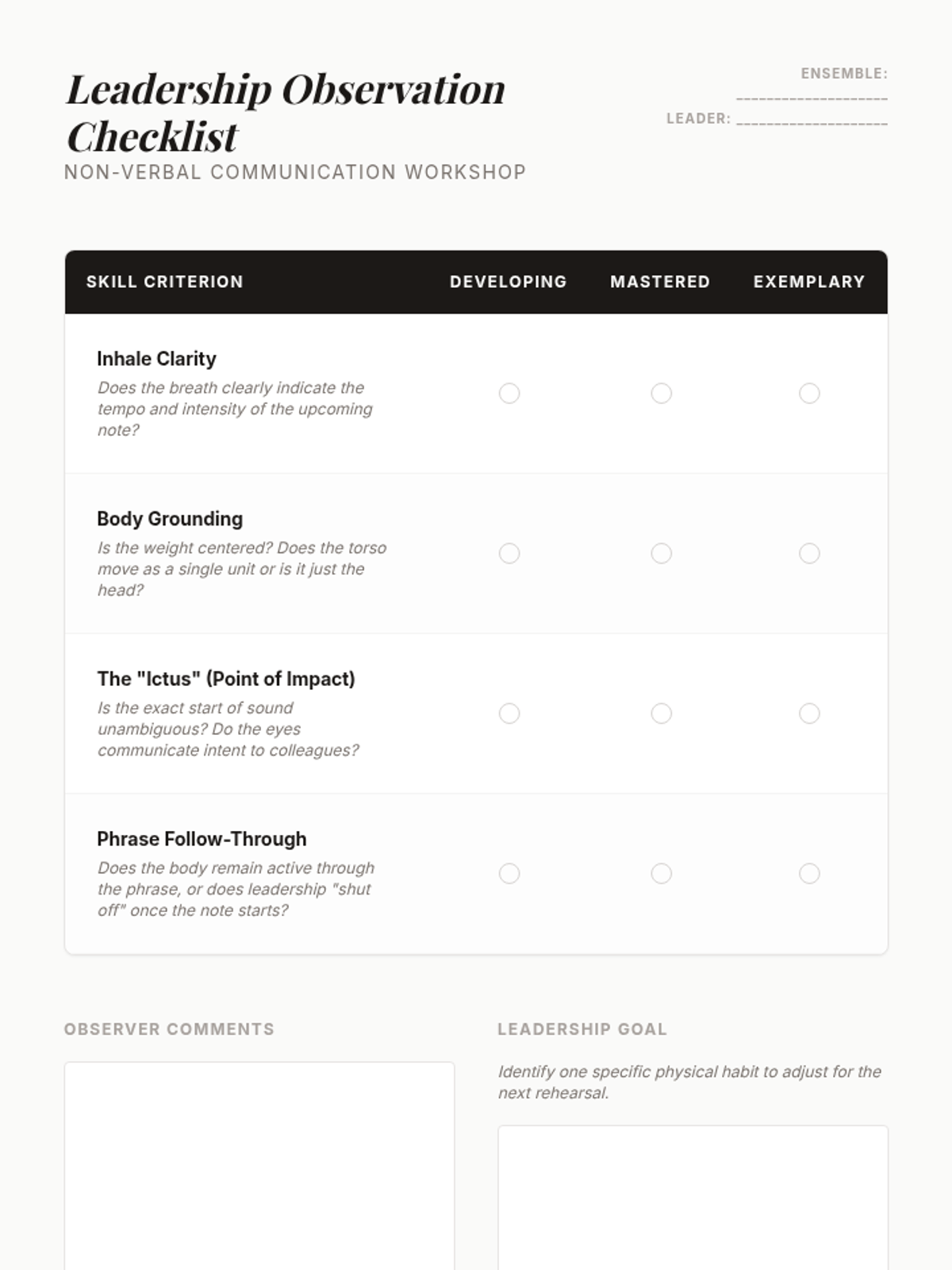
A comprehensive workshop on chamber music communication, focusing on non-verbal cues, shared breathing, and collective phrasing to achieve a unified ensemble sound without a conductor.
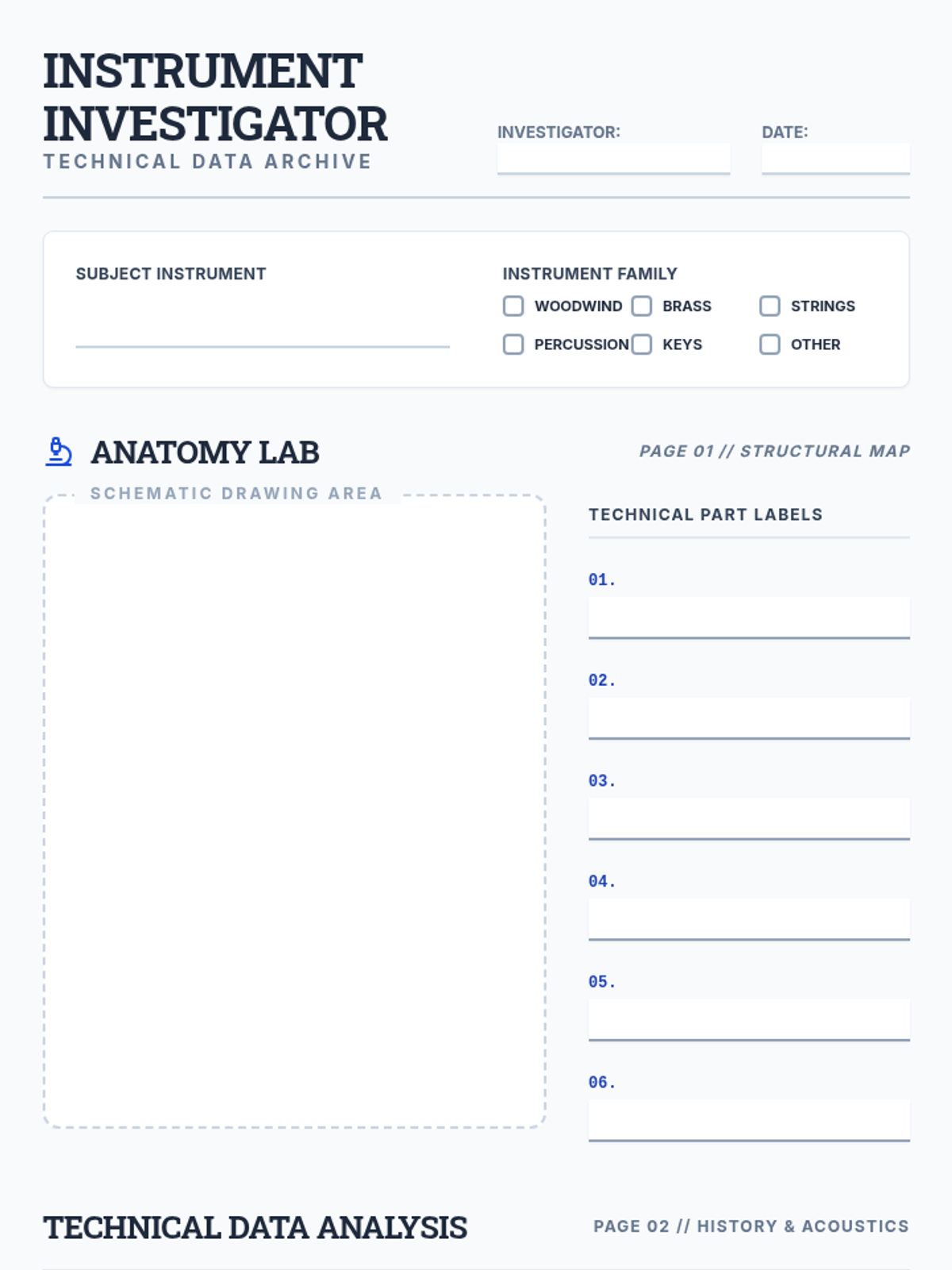
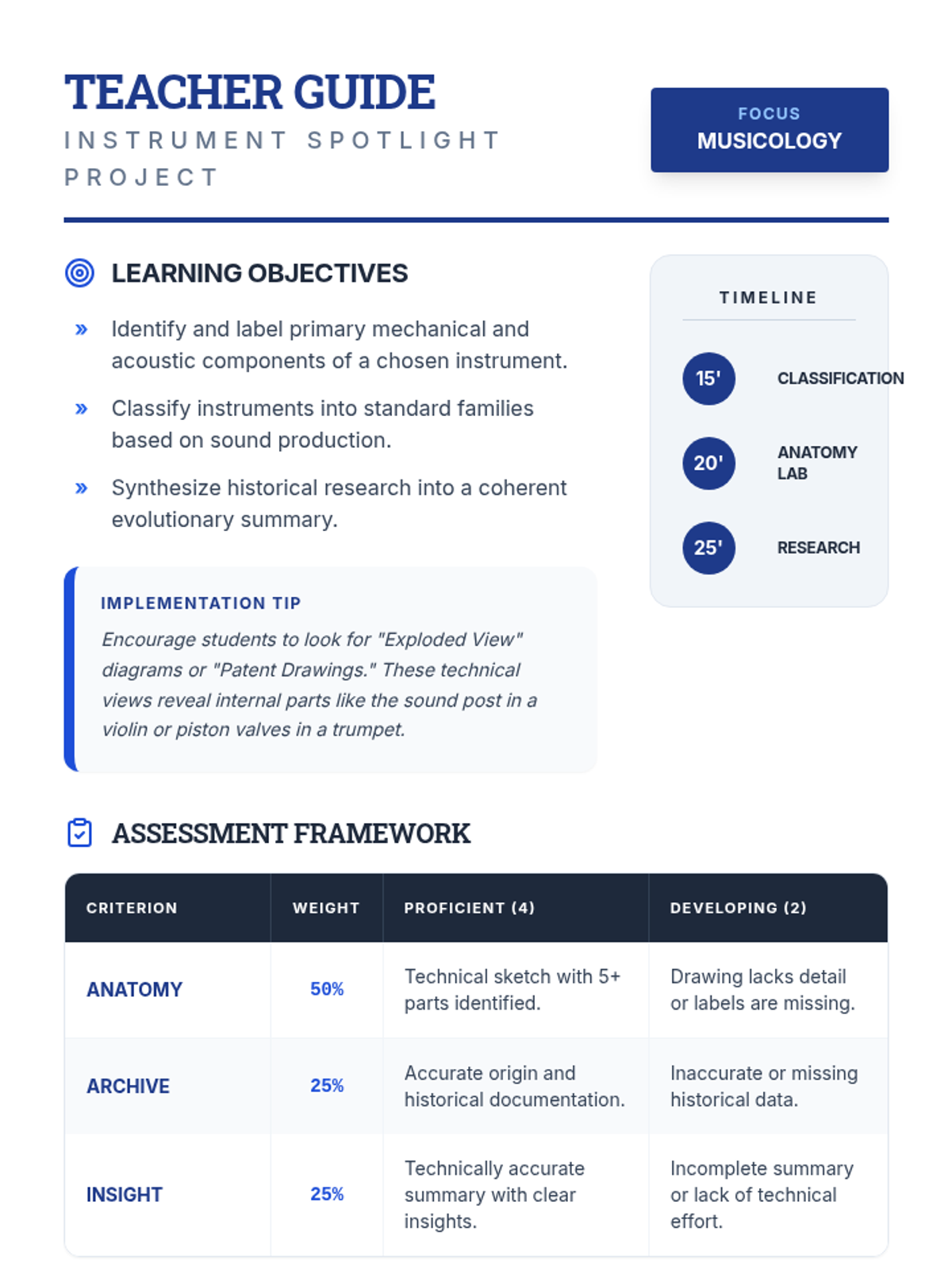
A guided research project where students explore the anatomy, history, and classification of a musical instrument of their choice.
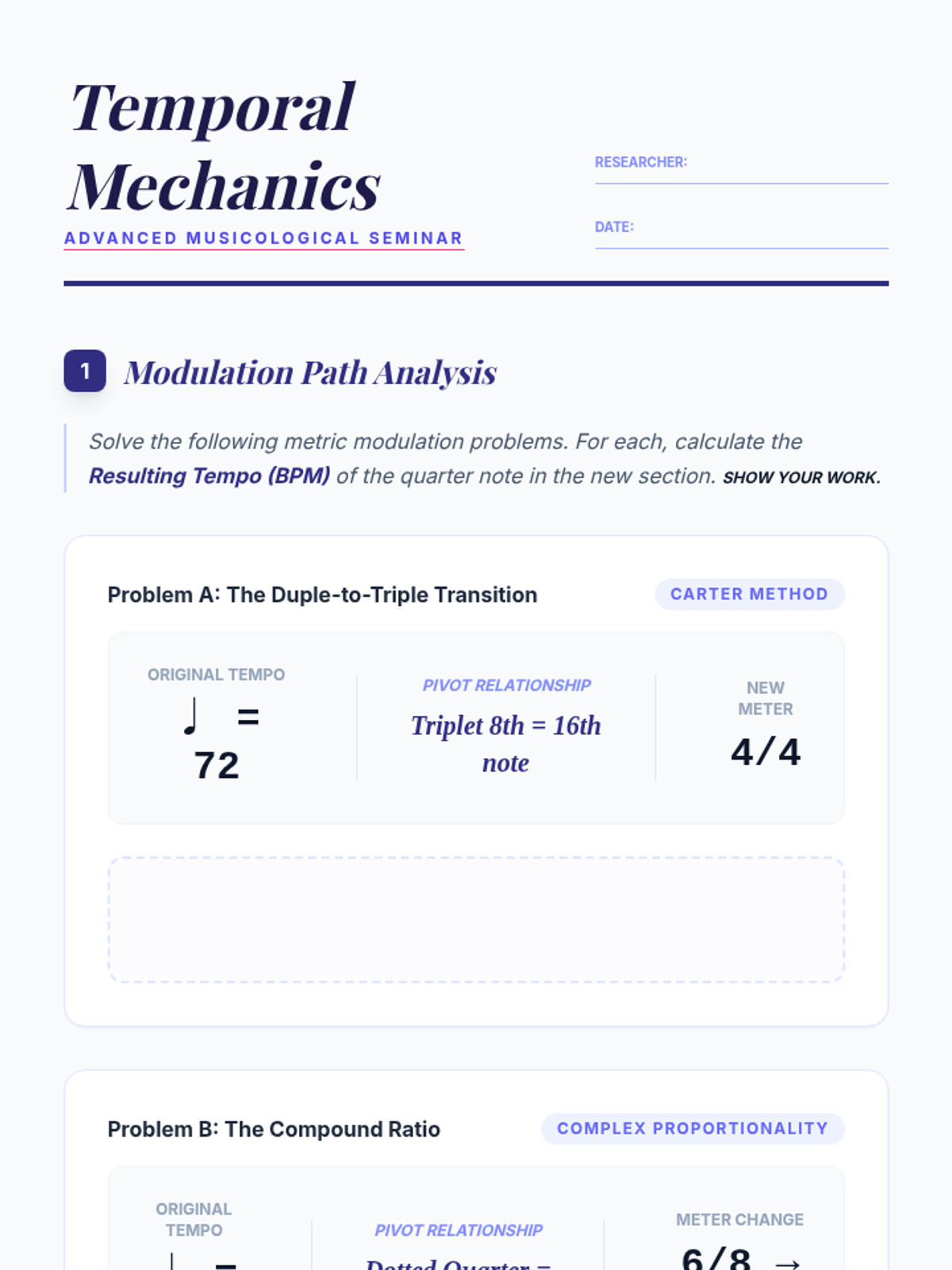
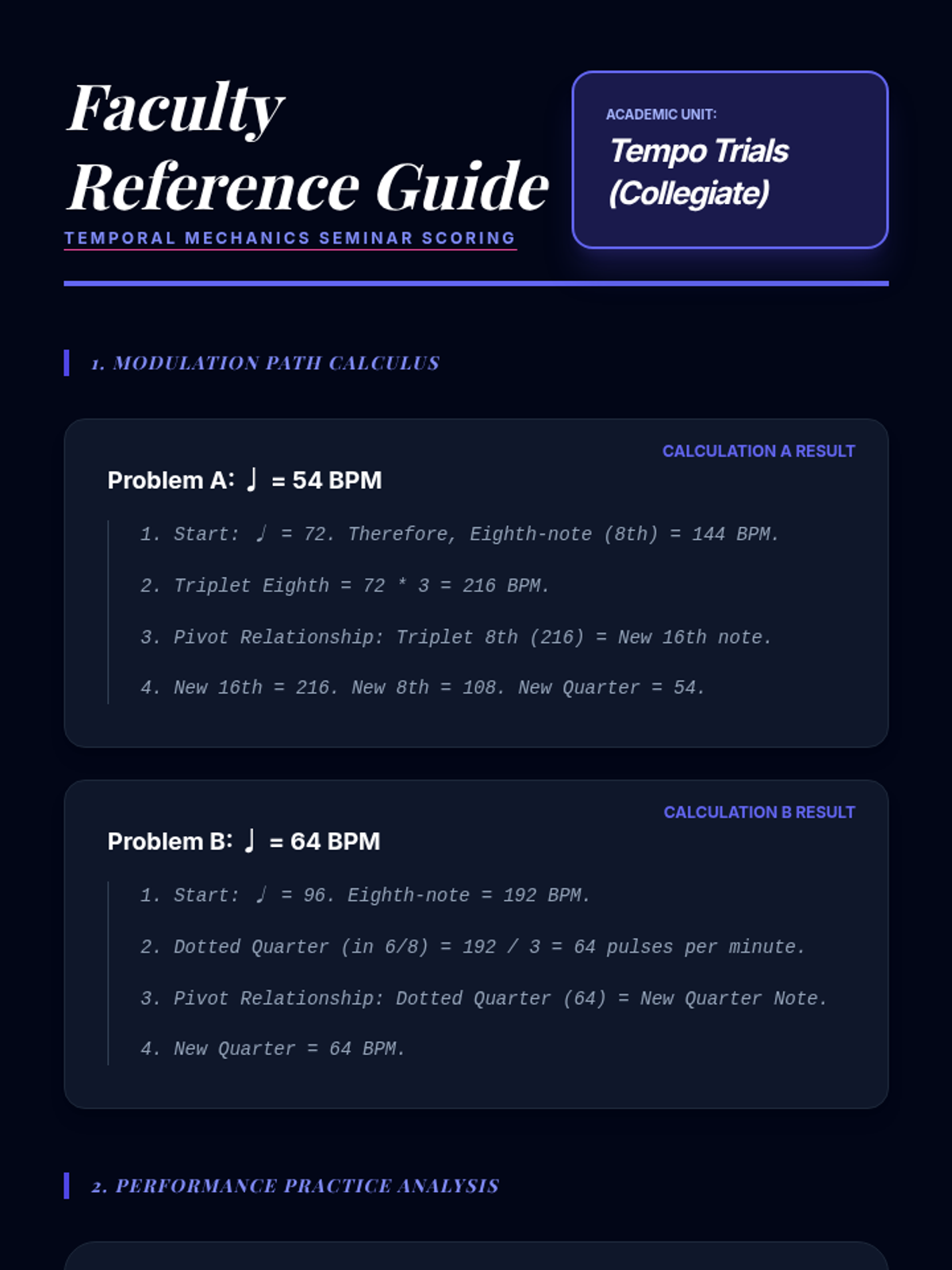
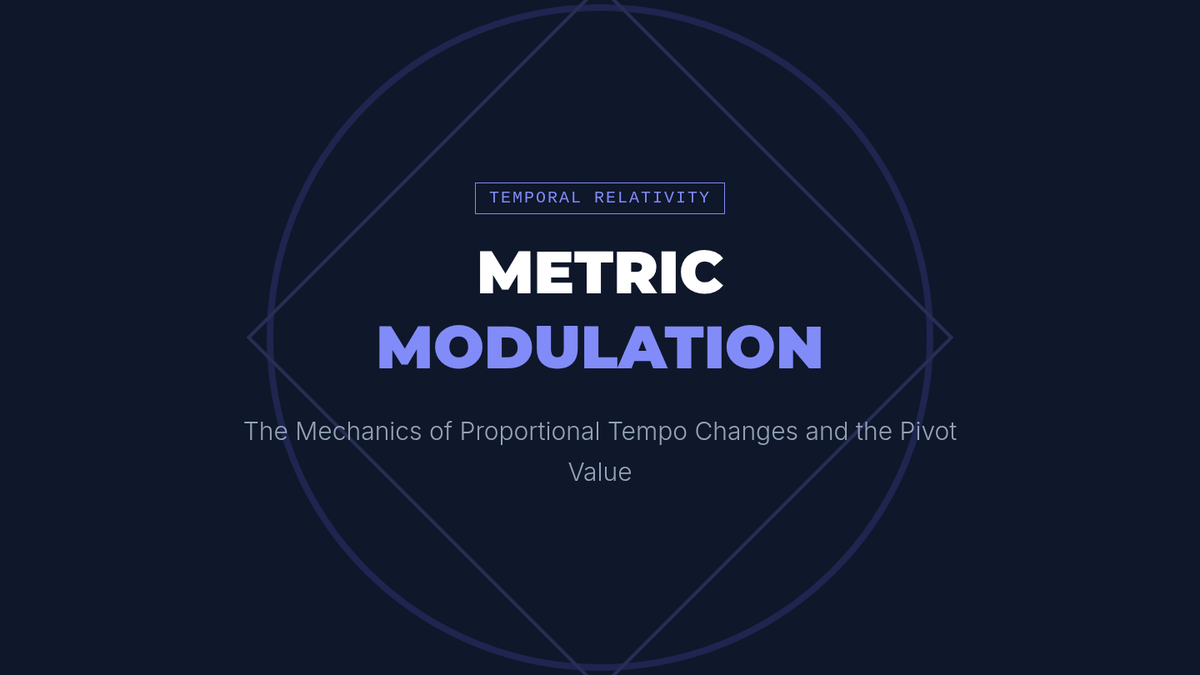
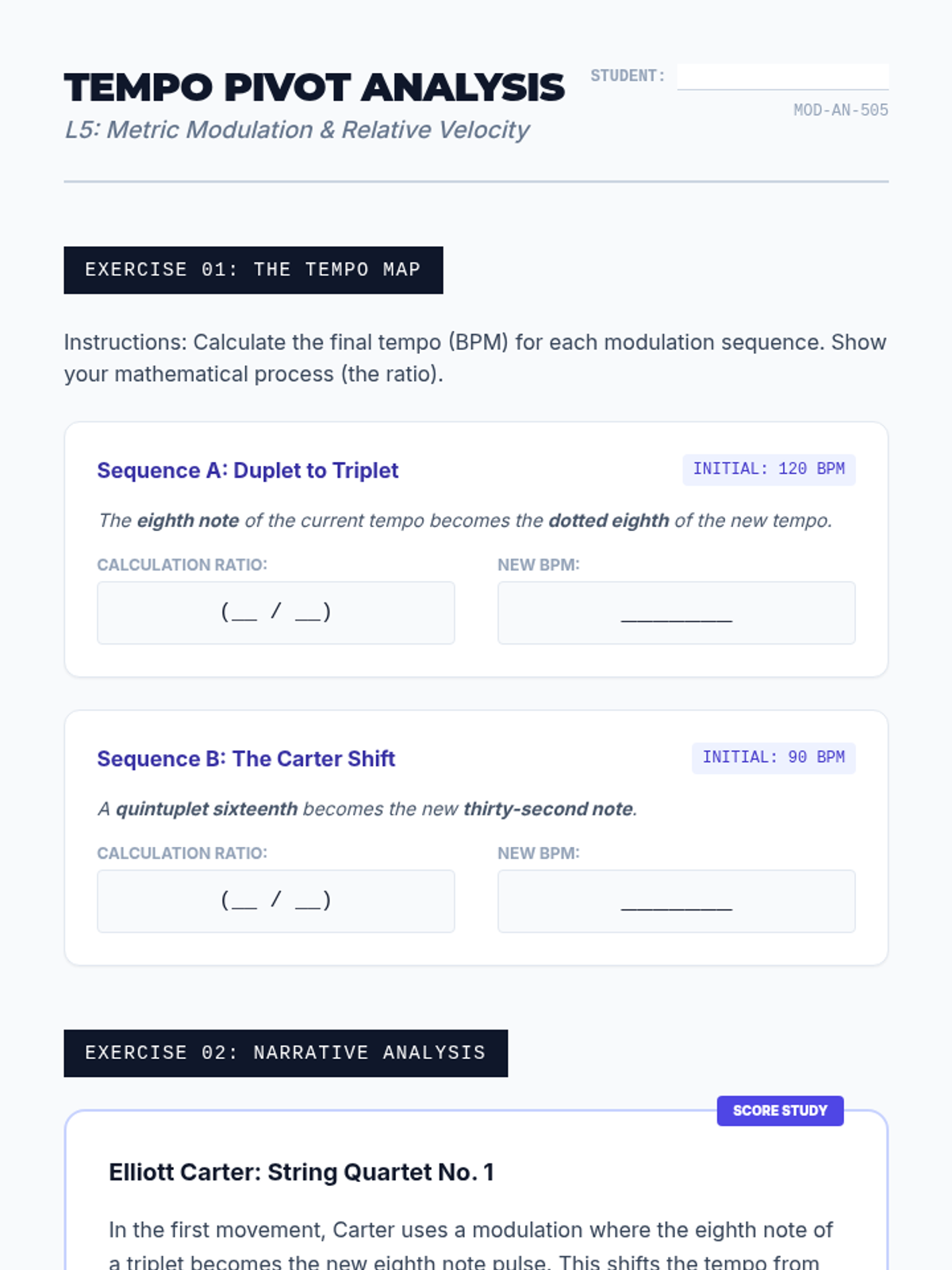
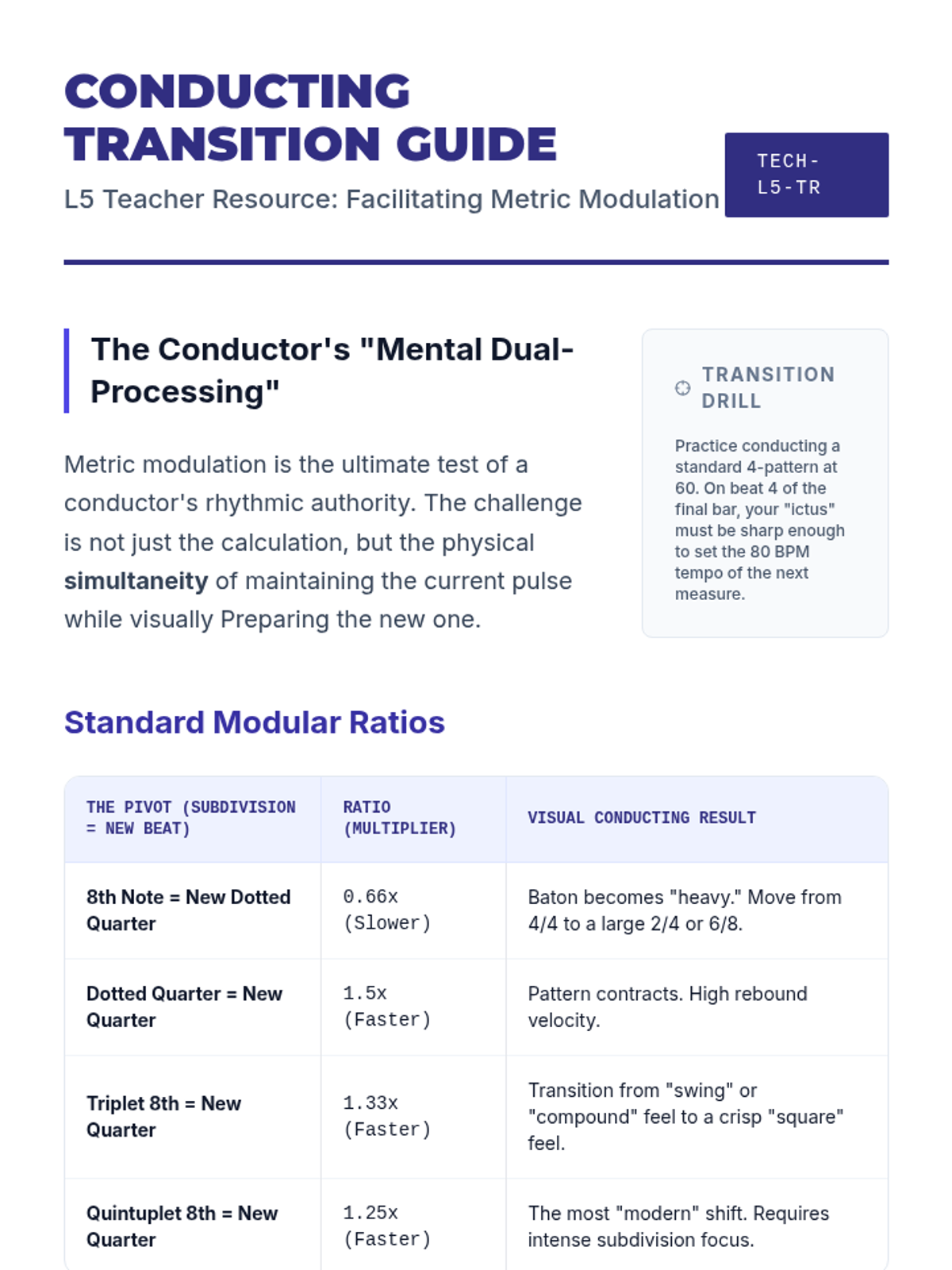
Investigates the mechanics of metric modulation, teaching students how to navigate complex tempo transitions in modern repertoire.
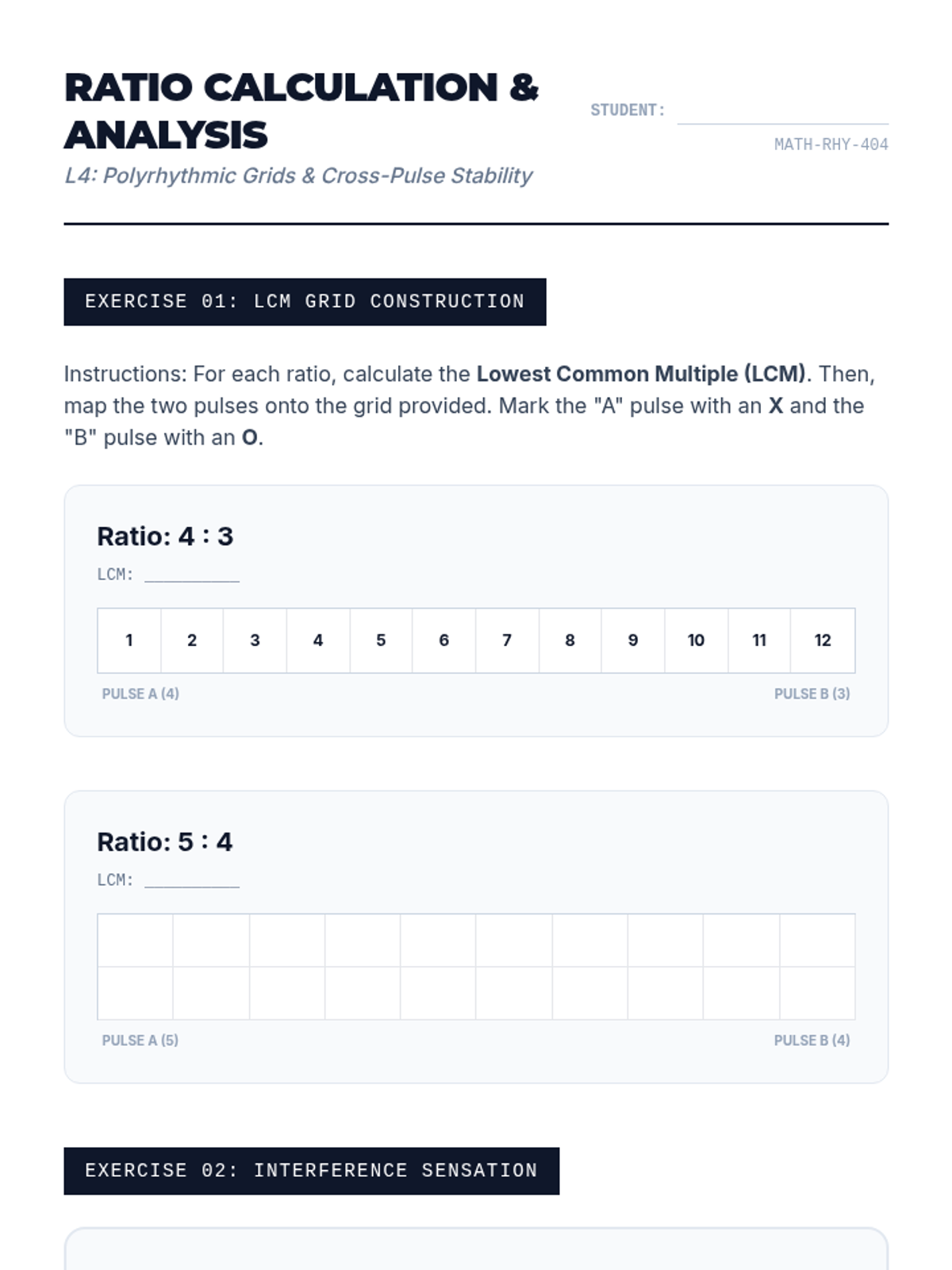
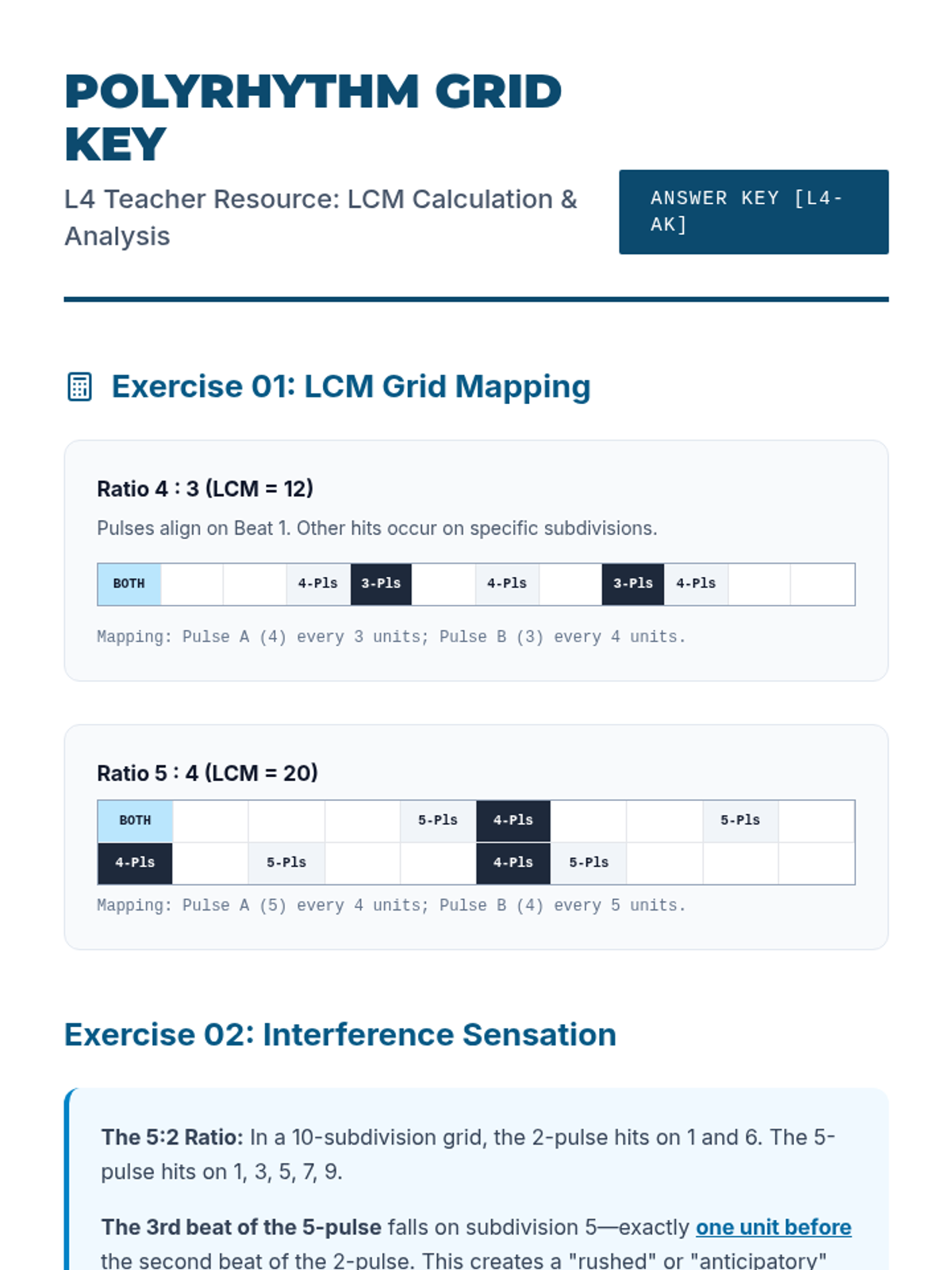
A mathematical and physical dive into artificial beat divisions, polyrhythms, and hemiola using lowest common multiple grids.
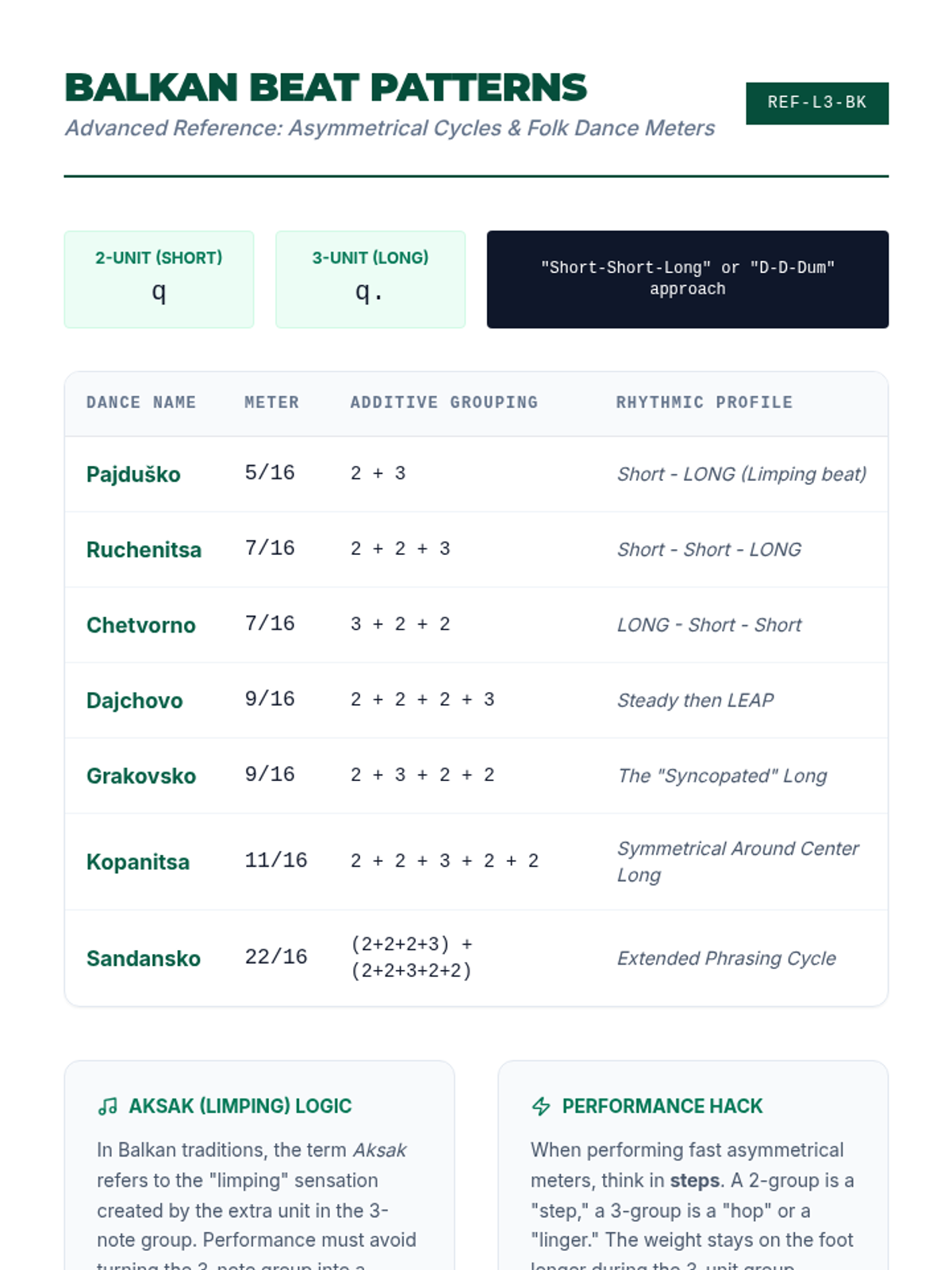
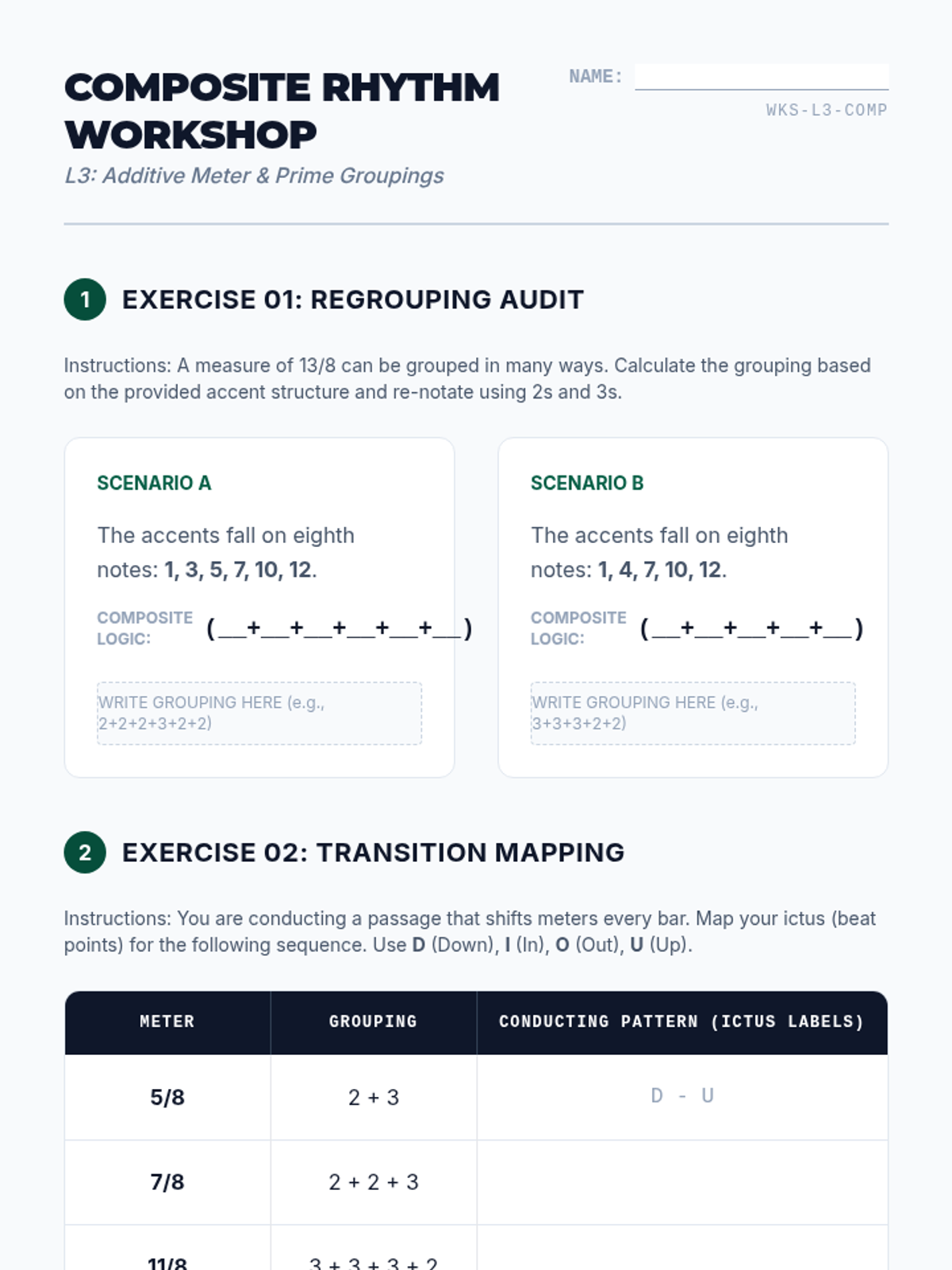
Explores prime number meters and composite groupings, featuring Balkan folk rhythms and conducting challenges in changing meters.
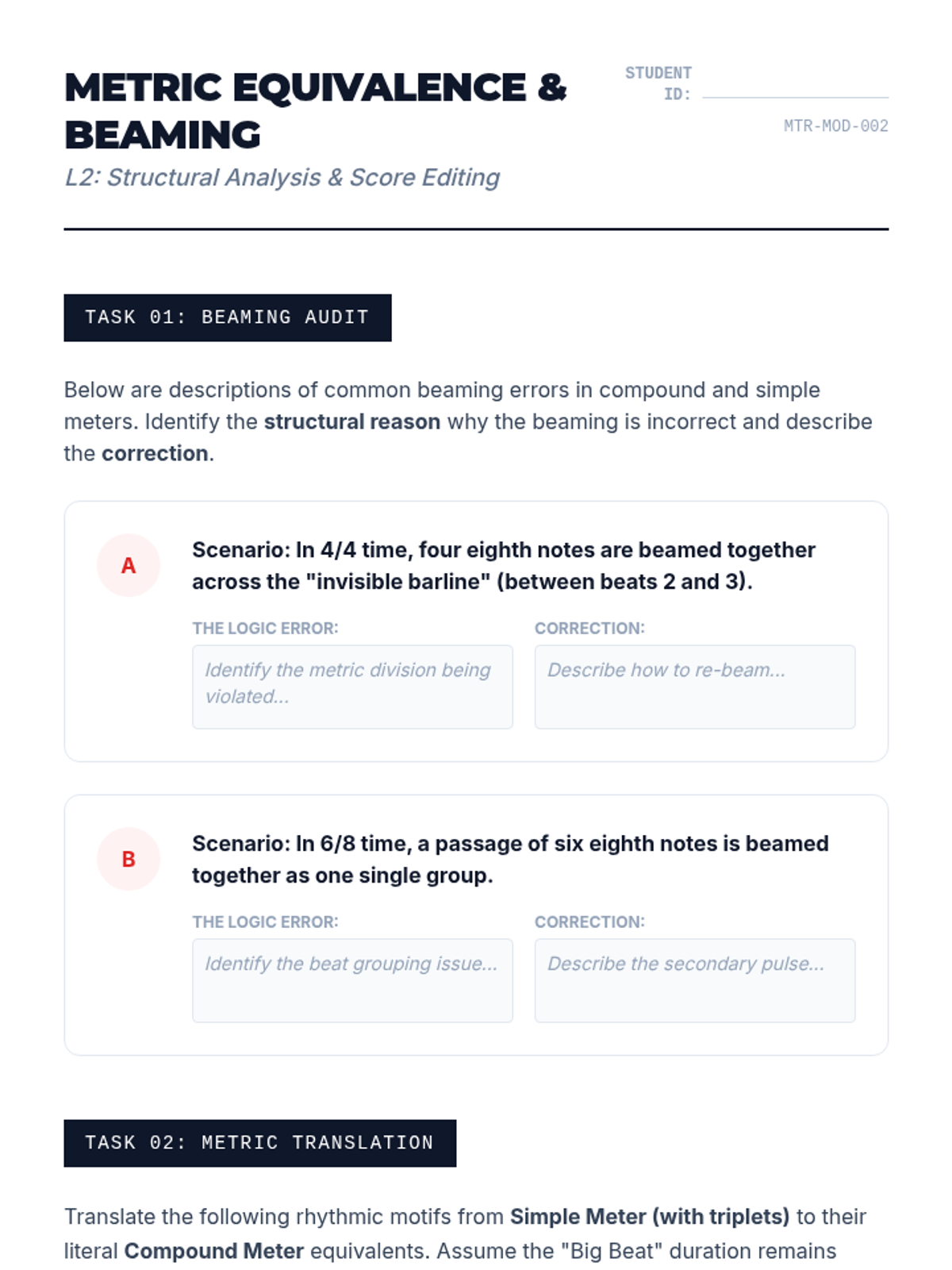
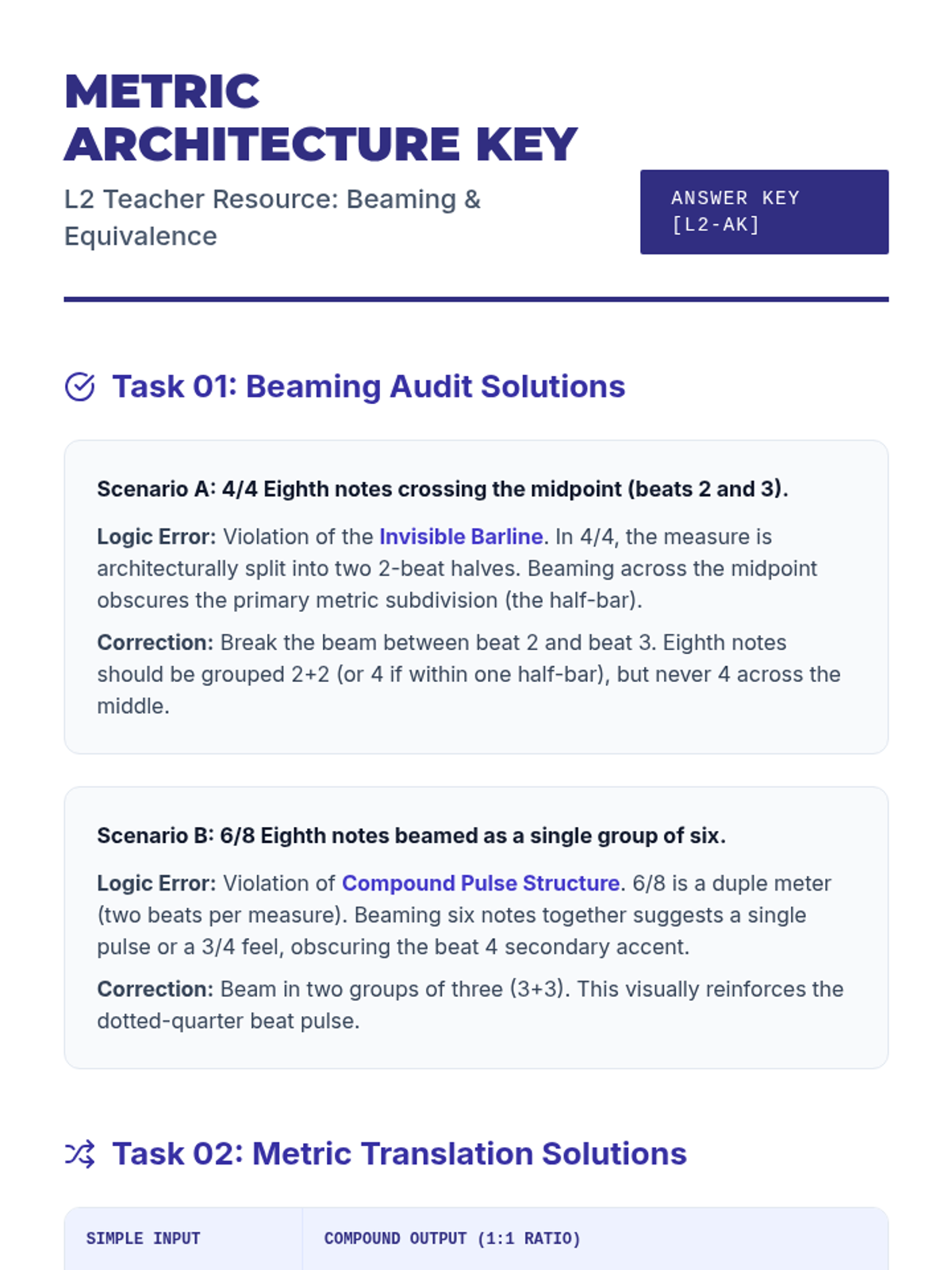
Analyzes the architectural differences between simple and compound meters, focusing on beaming, accent structures, and metric equivalence.
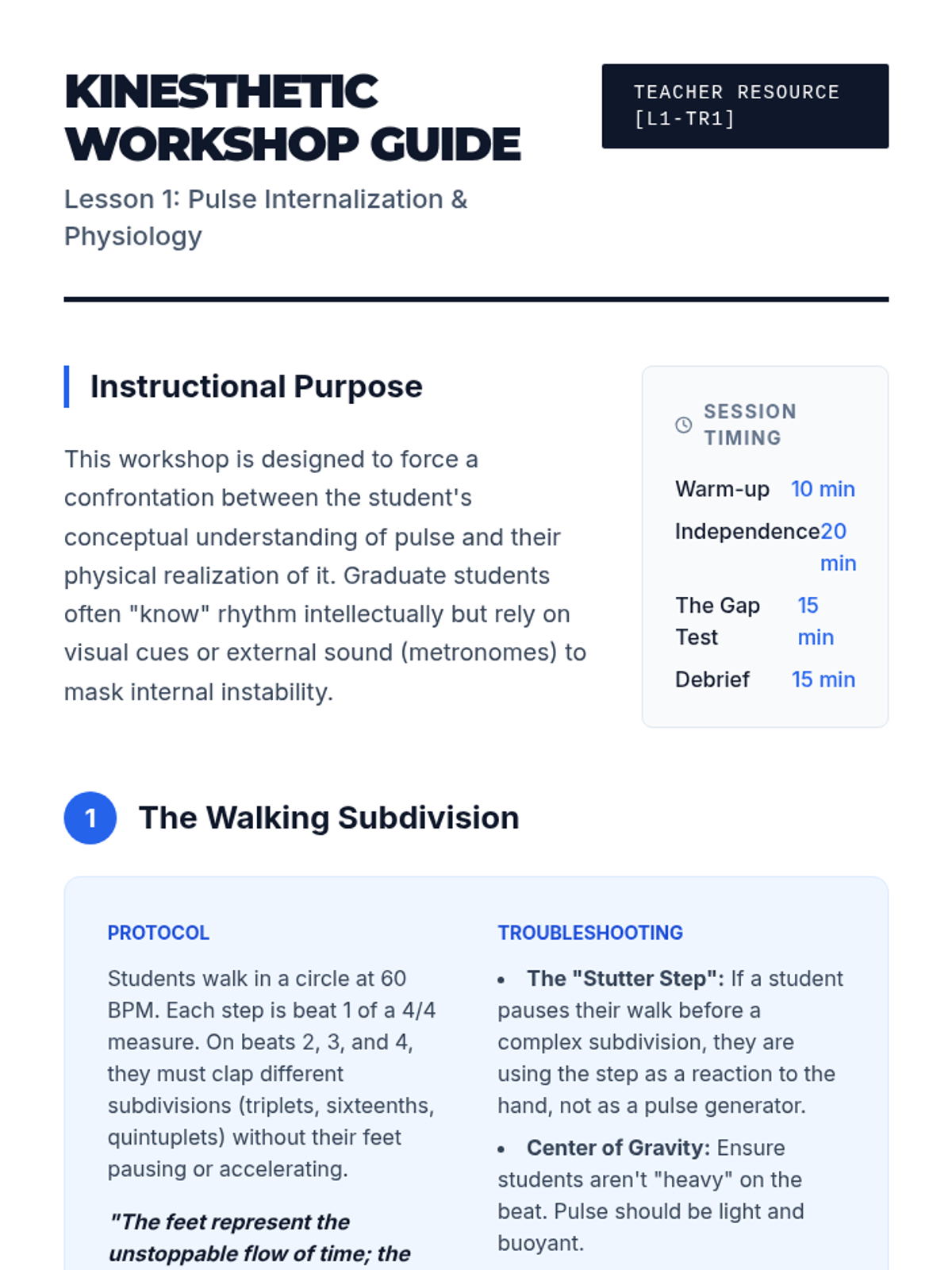
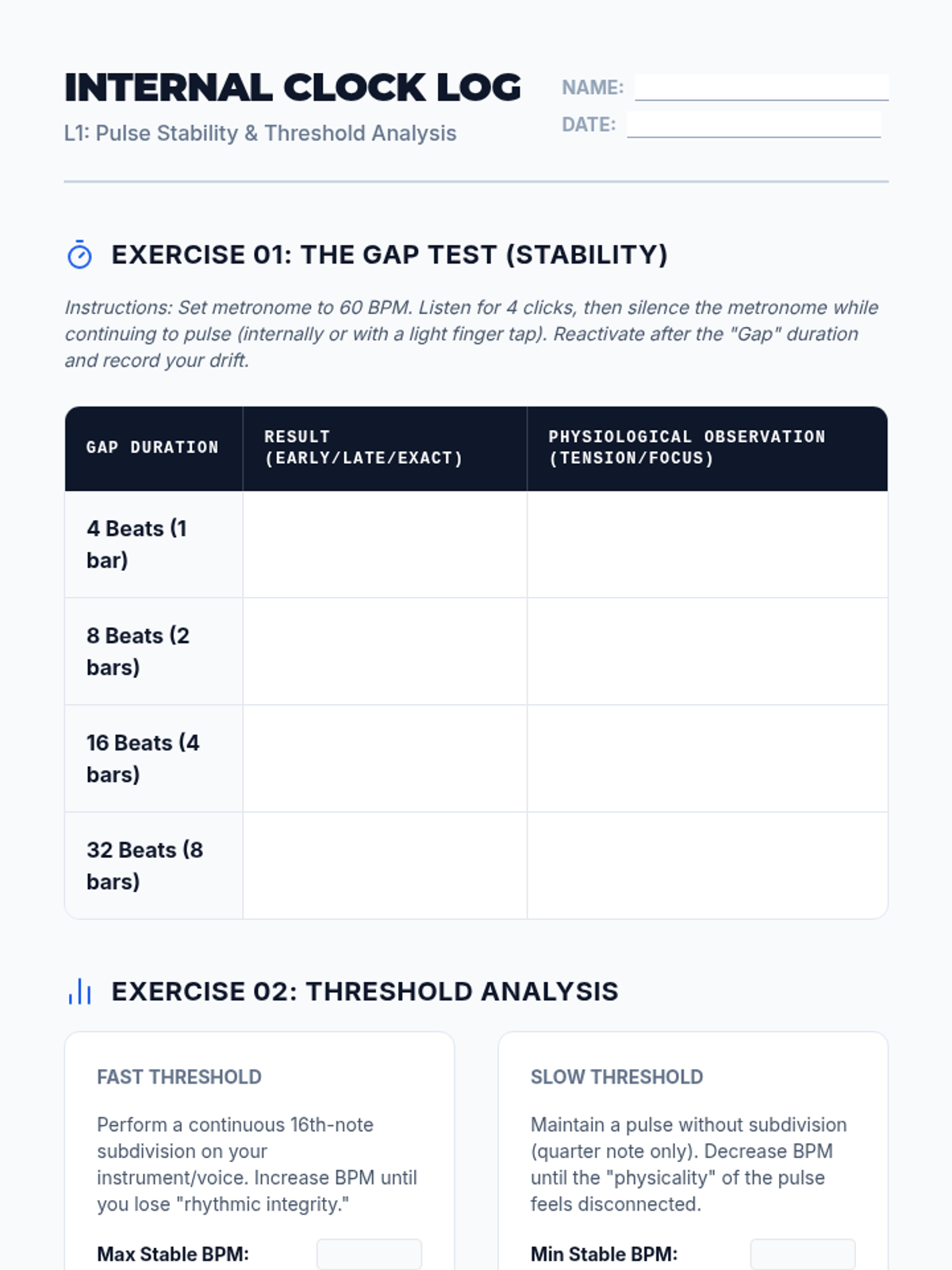
Focuses on the physical internalization of pulse and the physiology of keeping time. Students engage in eurhythmic exercises to decouple internal pulse from external performance.
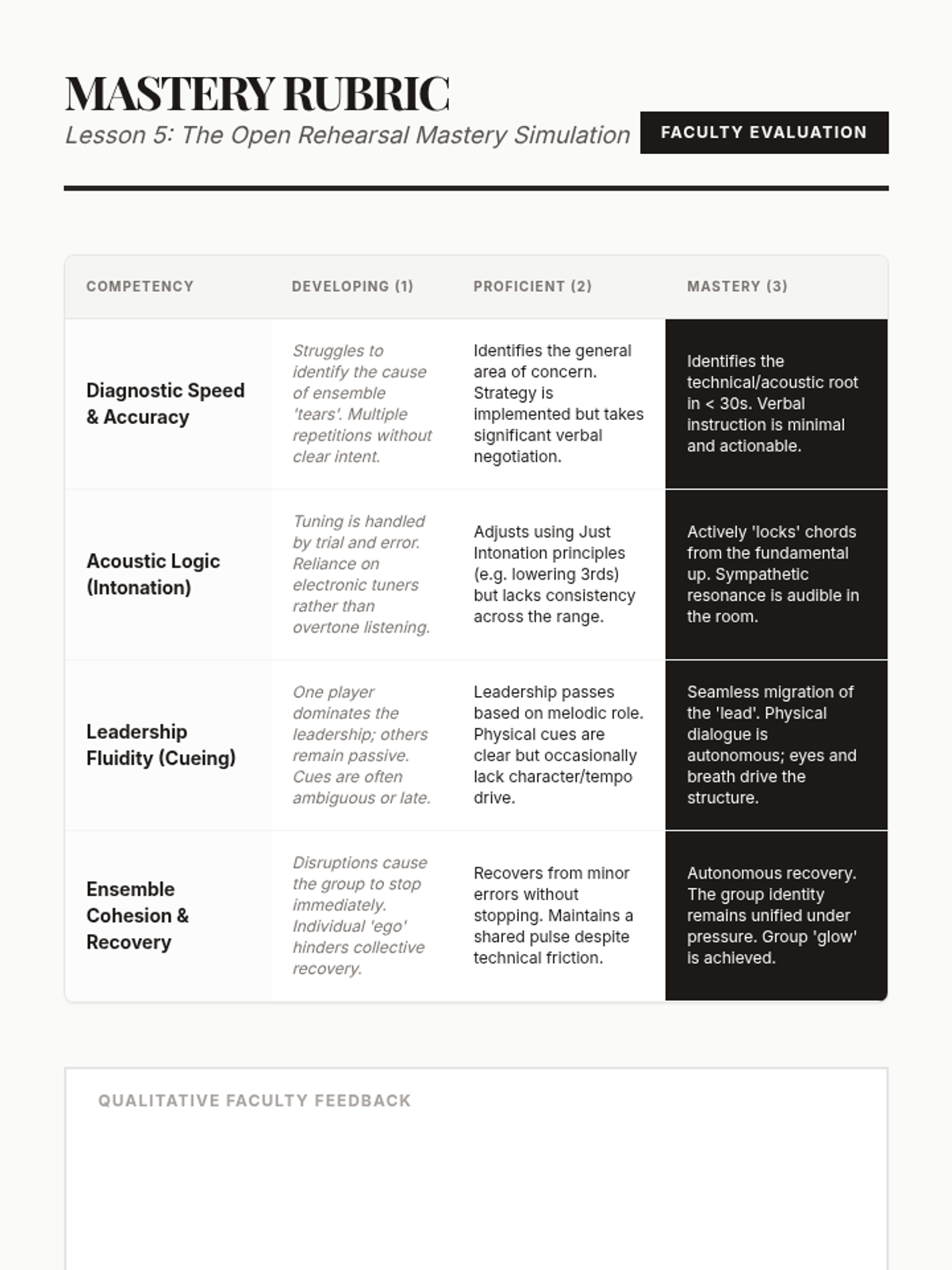
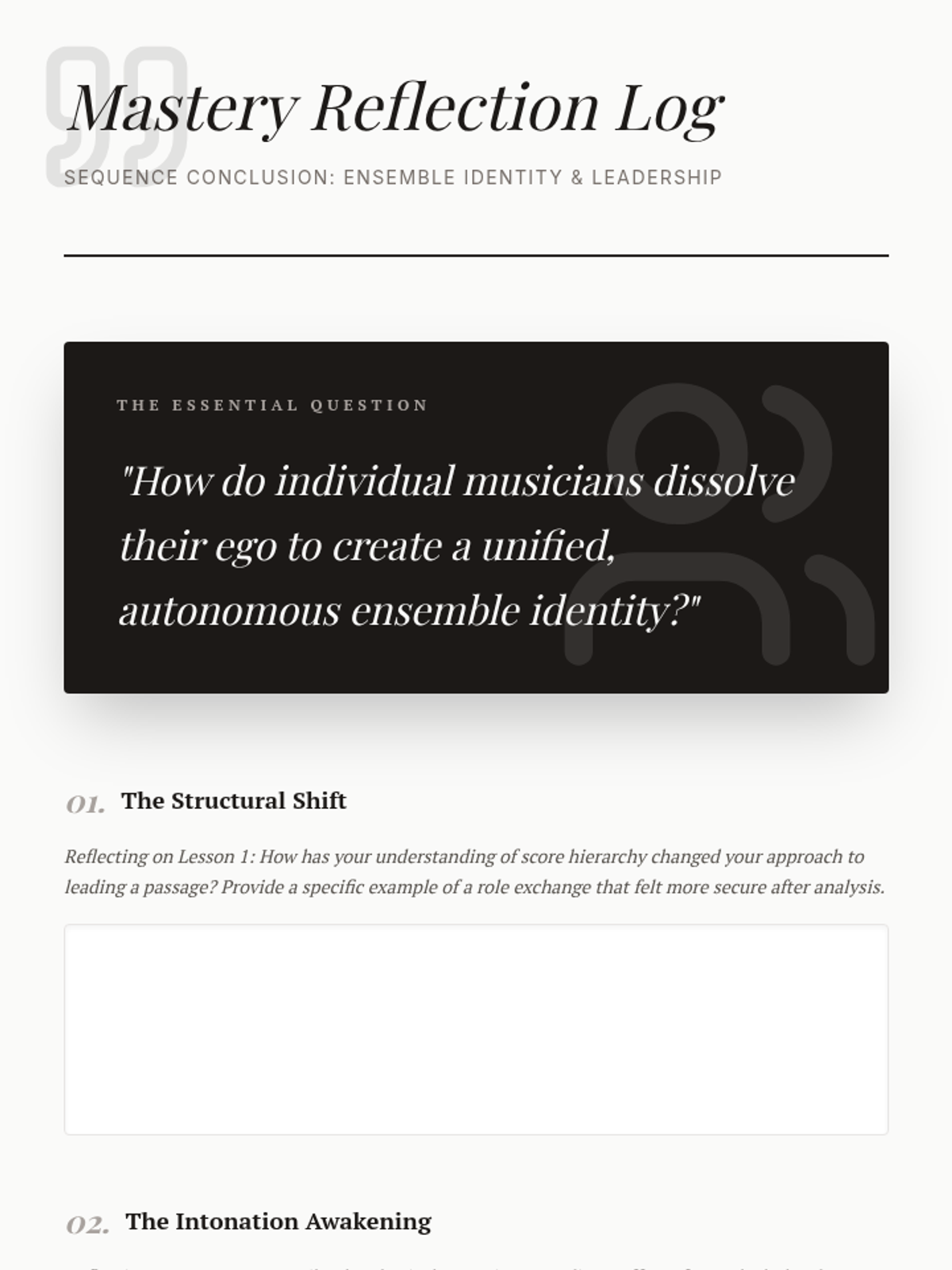
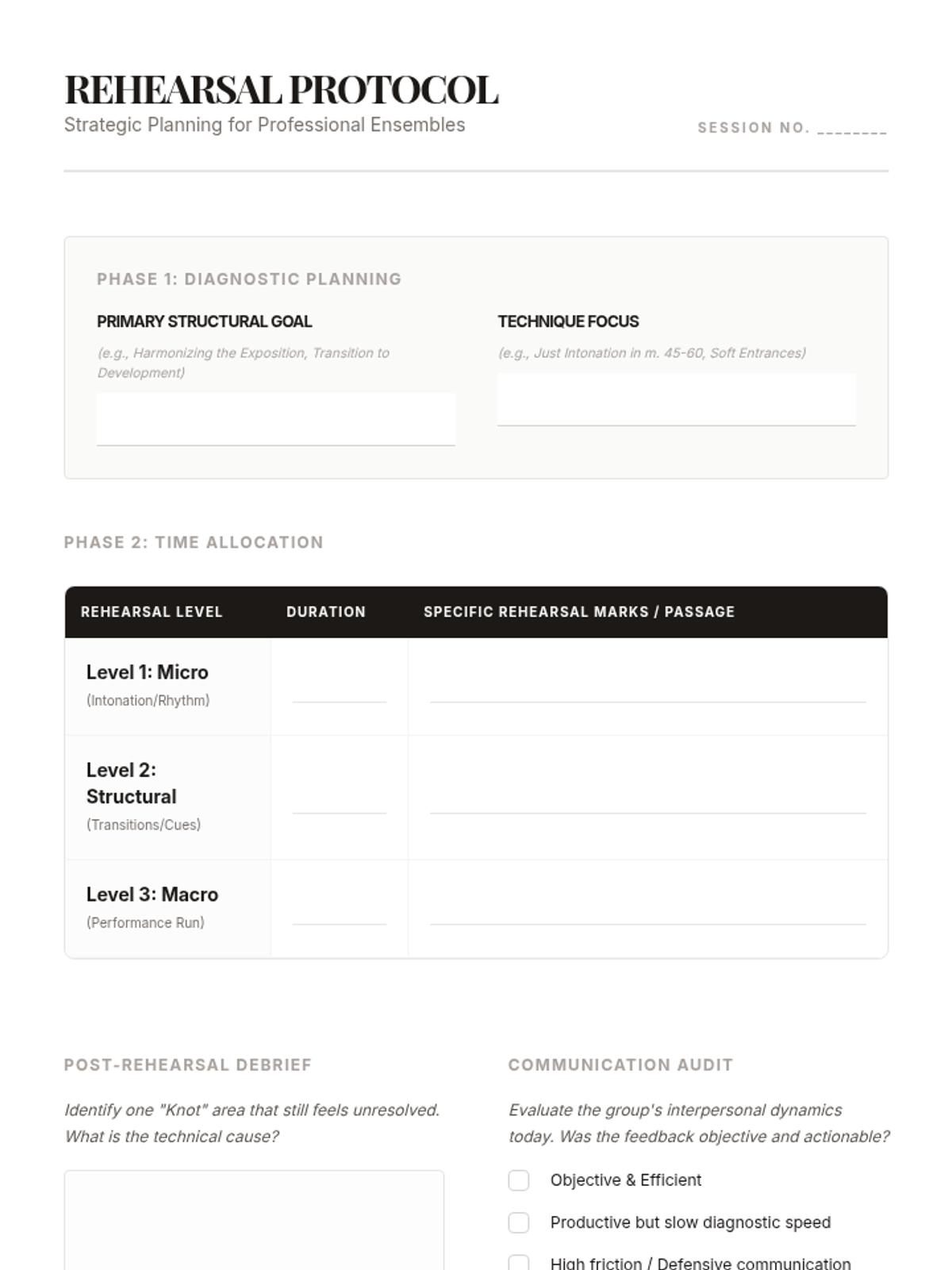
Students hold a rehearsal in front of an audience or faculty mentor, demonstrating their ability to stop, fix, and refine passages efficiently in real-time. They are evaluated on their diagnostic speed and group cohesion. This mirrors the pressure of professional chamber residencies.
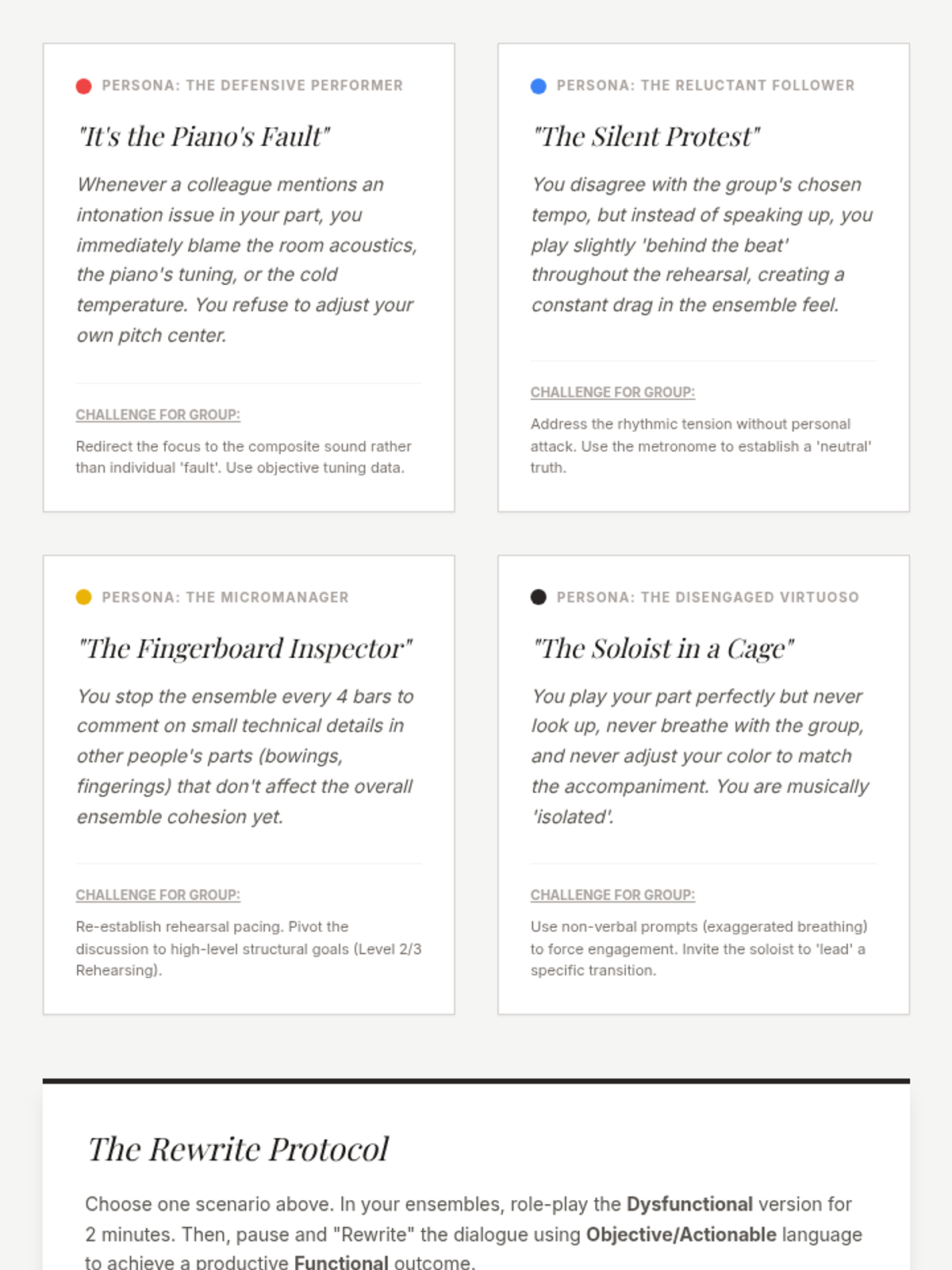
Focusing on the social aspect of ensembles, students role-play difficult rehearsal scenarios (e.g., disagreements on tempo, criticism of intonation). They learn conflict resolution strategies and efficient rehearsal pacing. This professionalizes the collaborative process.
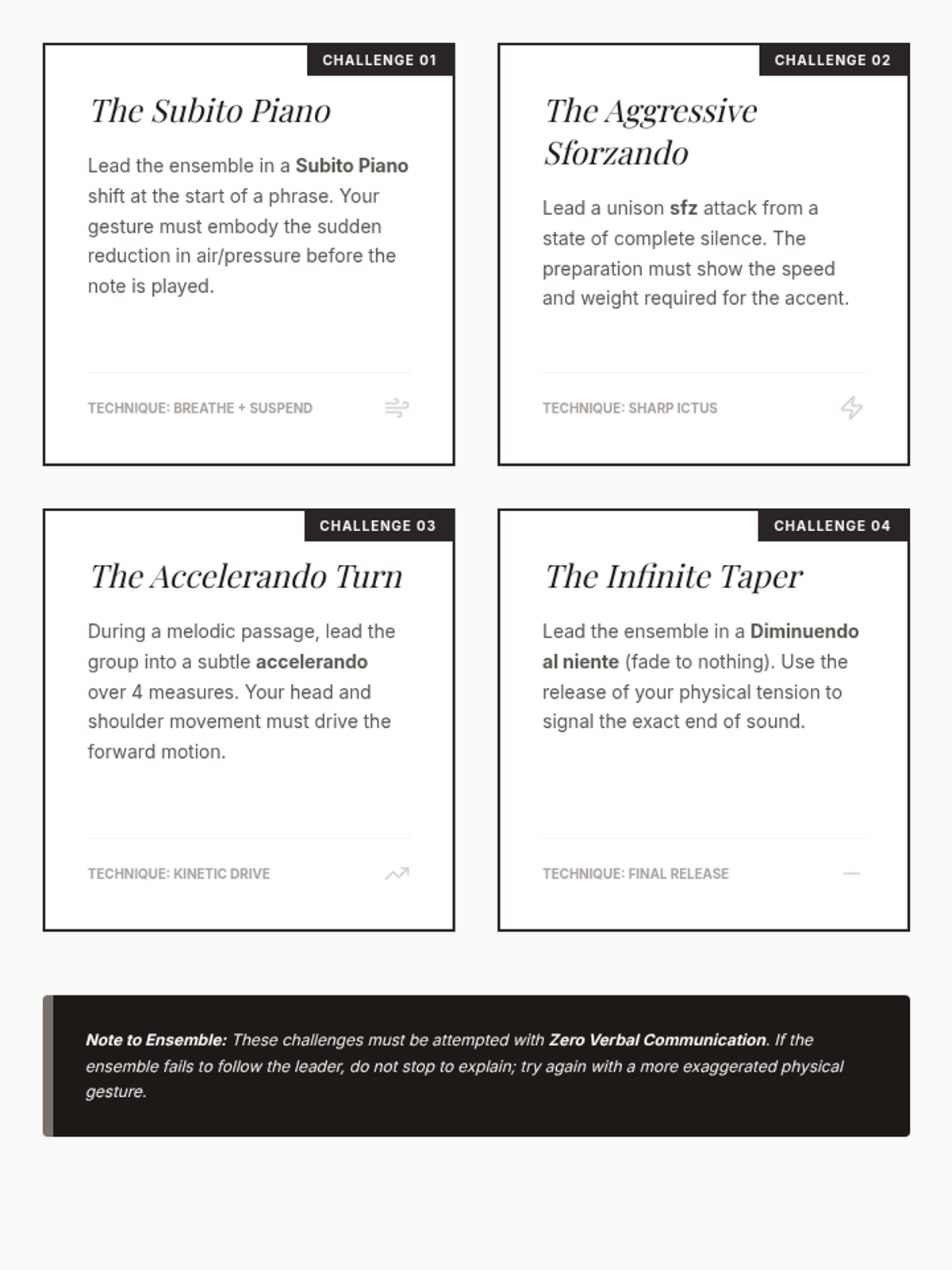
Students practice leading entrances, cut-offs, and tempo changes using only body language and breath. They experiment with leading from different chairs (e.g., the cellist leading the quartet). This builds the visual connection necessary for conductor-less performance.
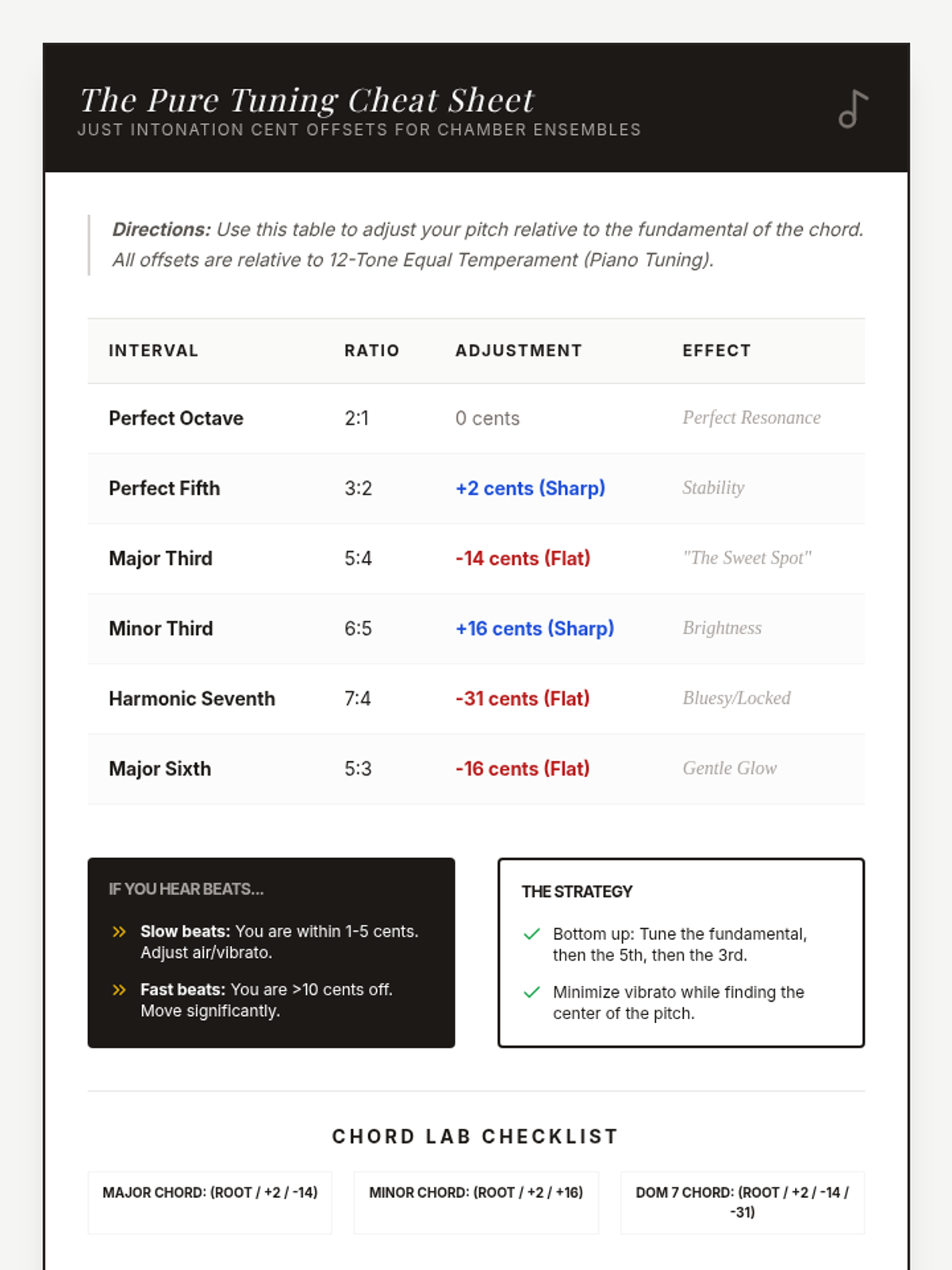
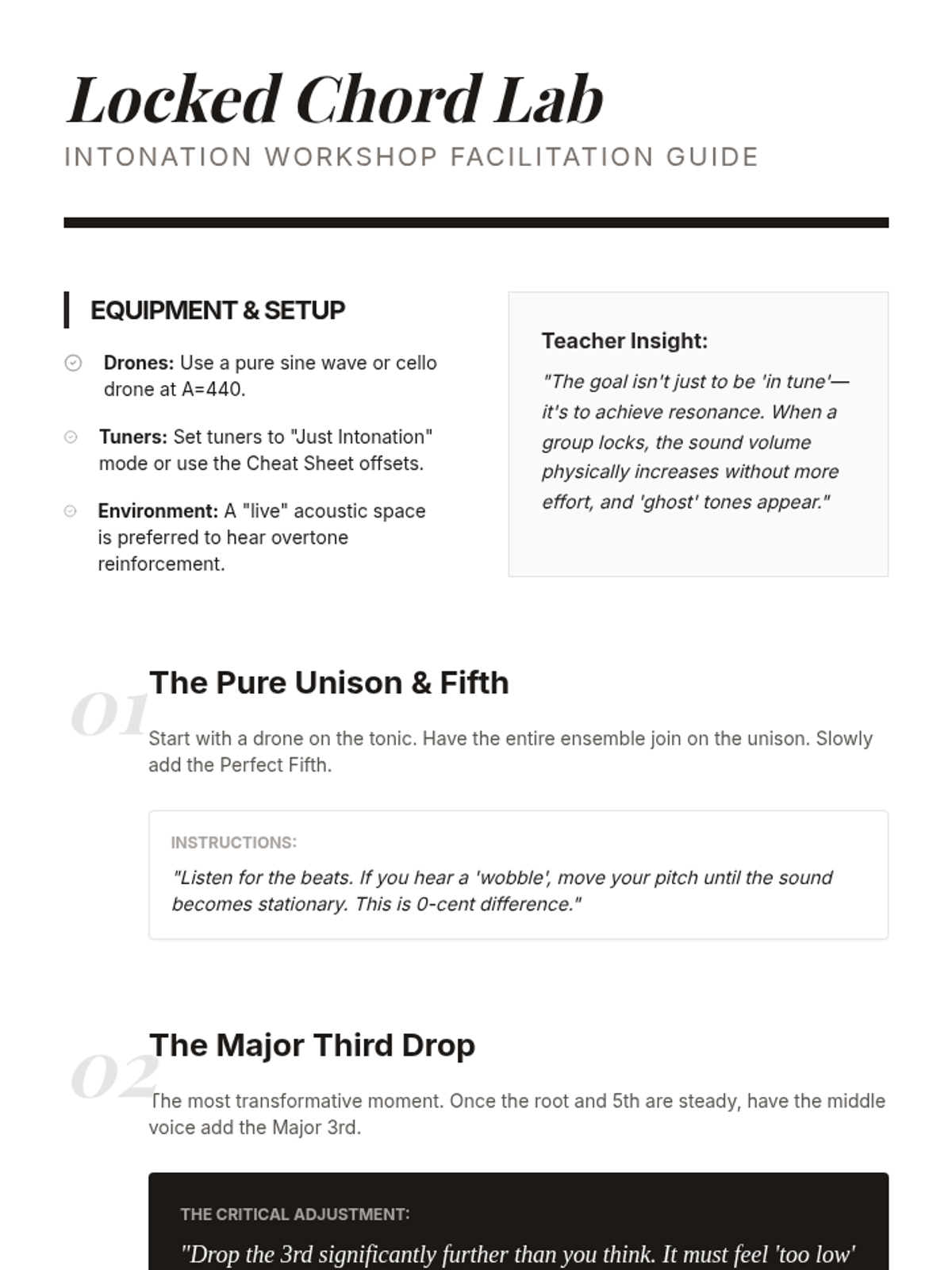
Students explore the physics of overtone series and the difference between tempered piano tuning and pure interval tuning. They practice adjusting thirds and sevenths in chordal passages to achieve 'locking' chords.
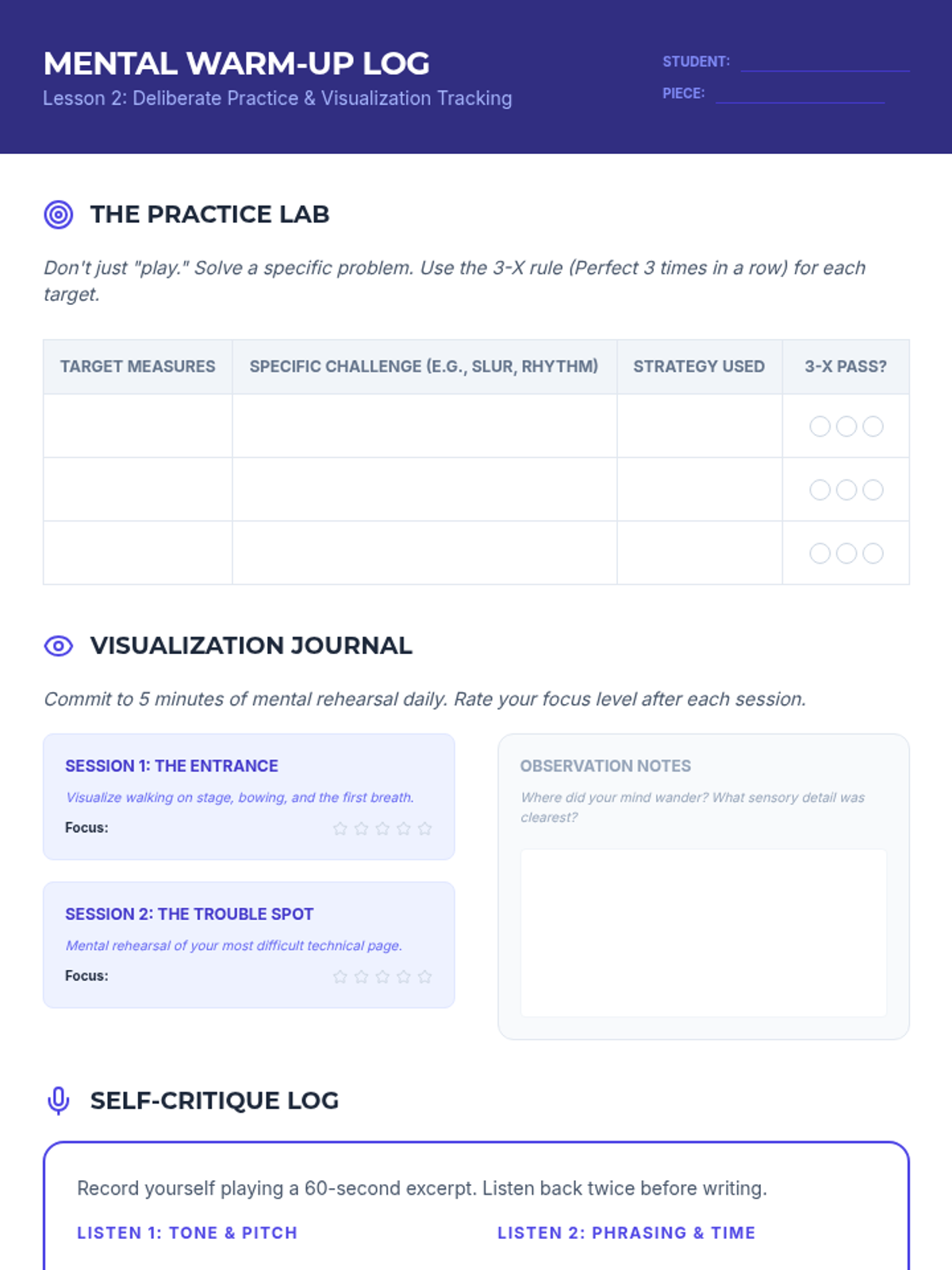
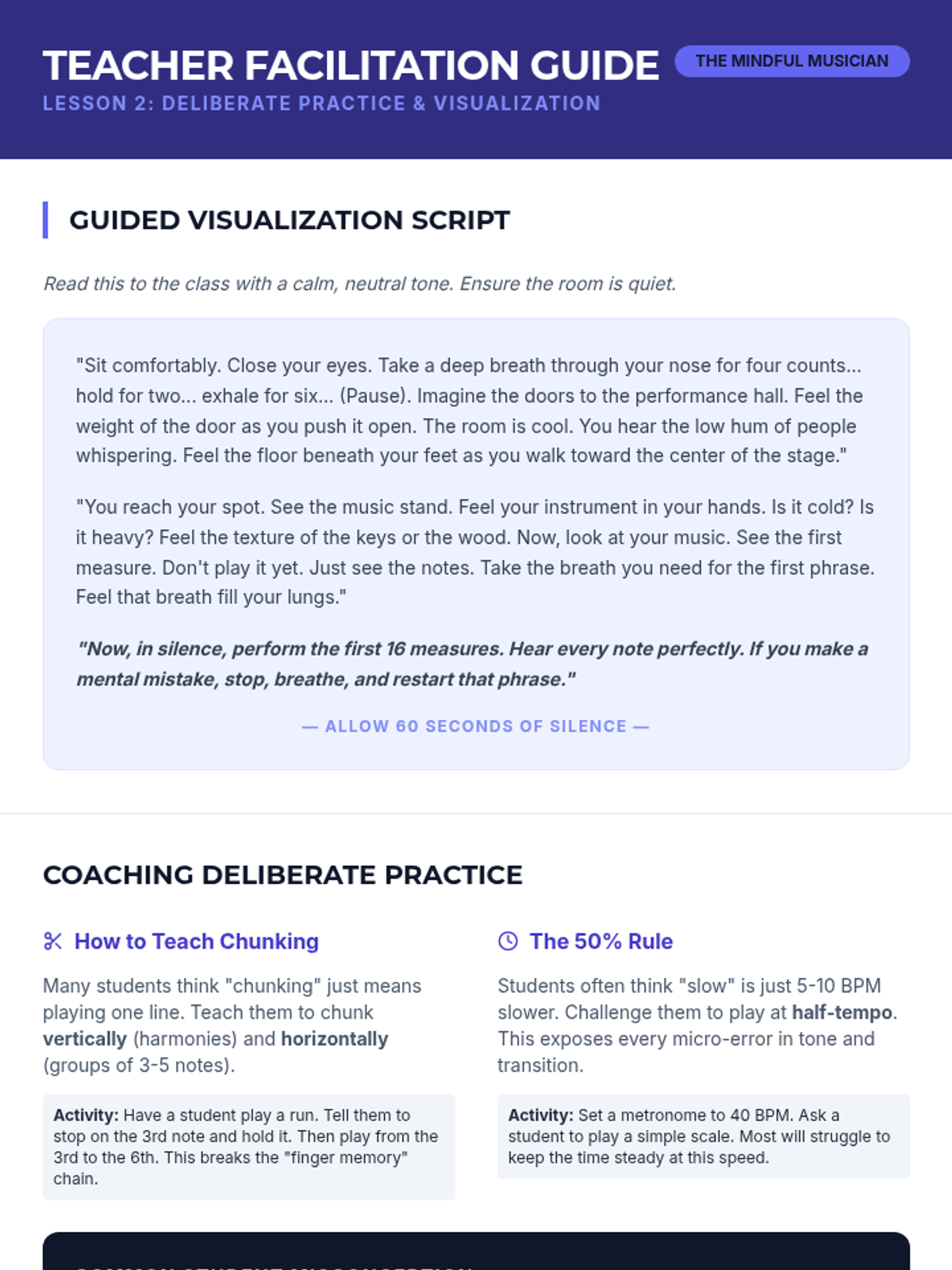
Focuses on deliberate practice strategies and mental imagery to enhance performance readiness. Students learn techniques like chunking and slow practice, alongside visualization exercises to manage performance anxiety.
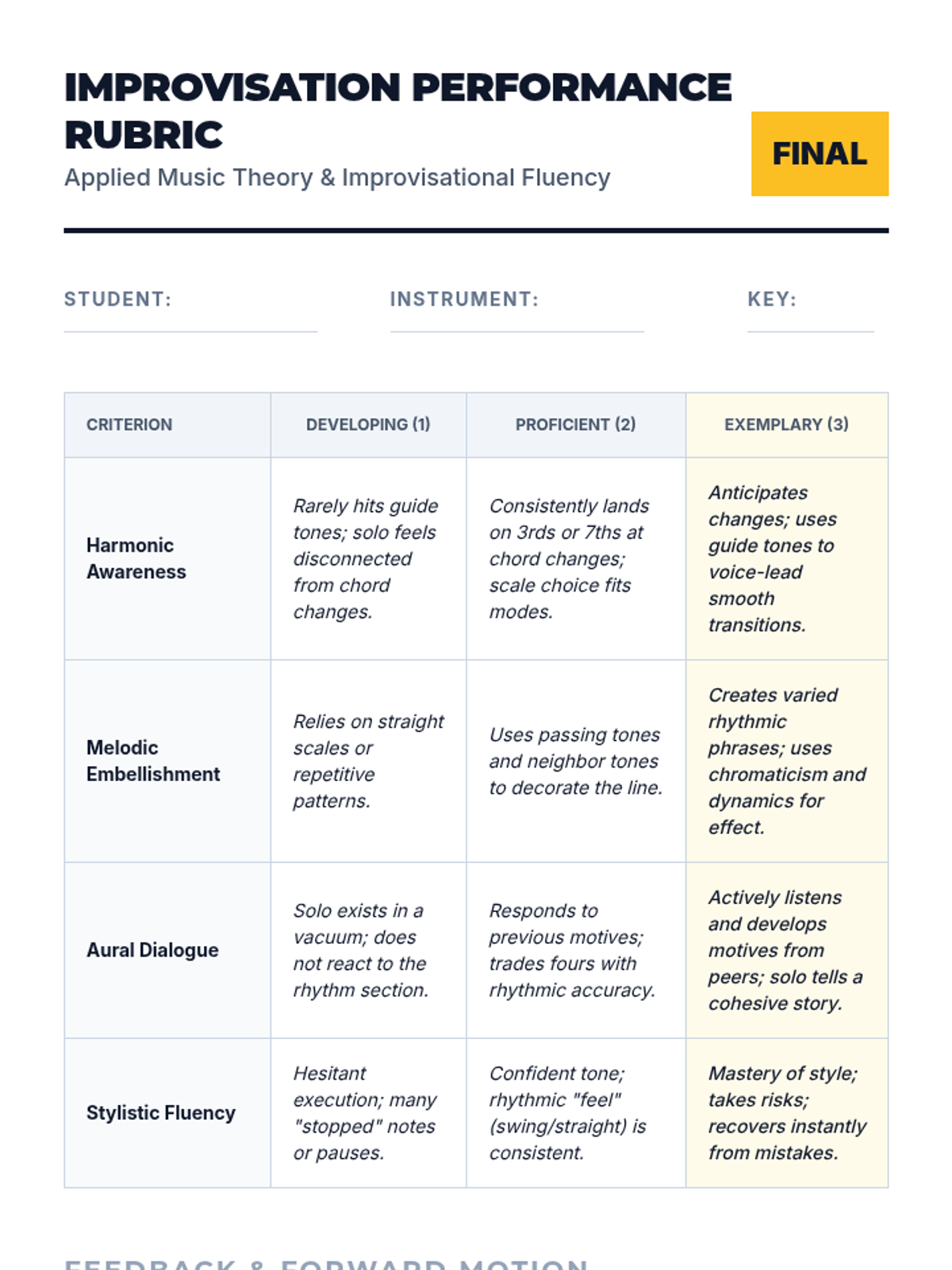
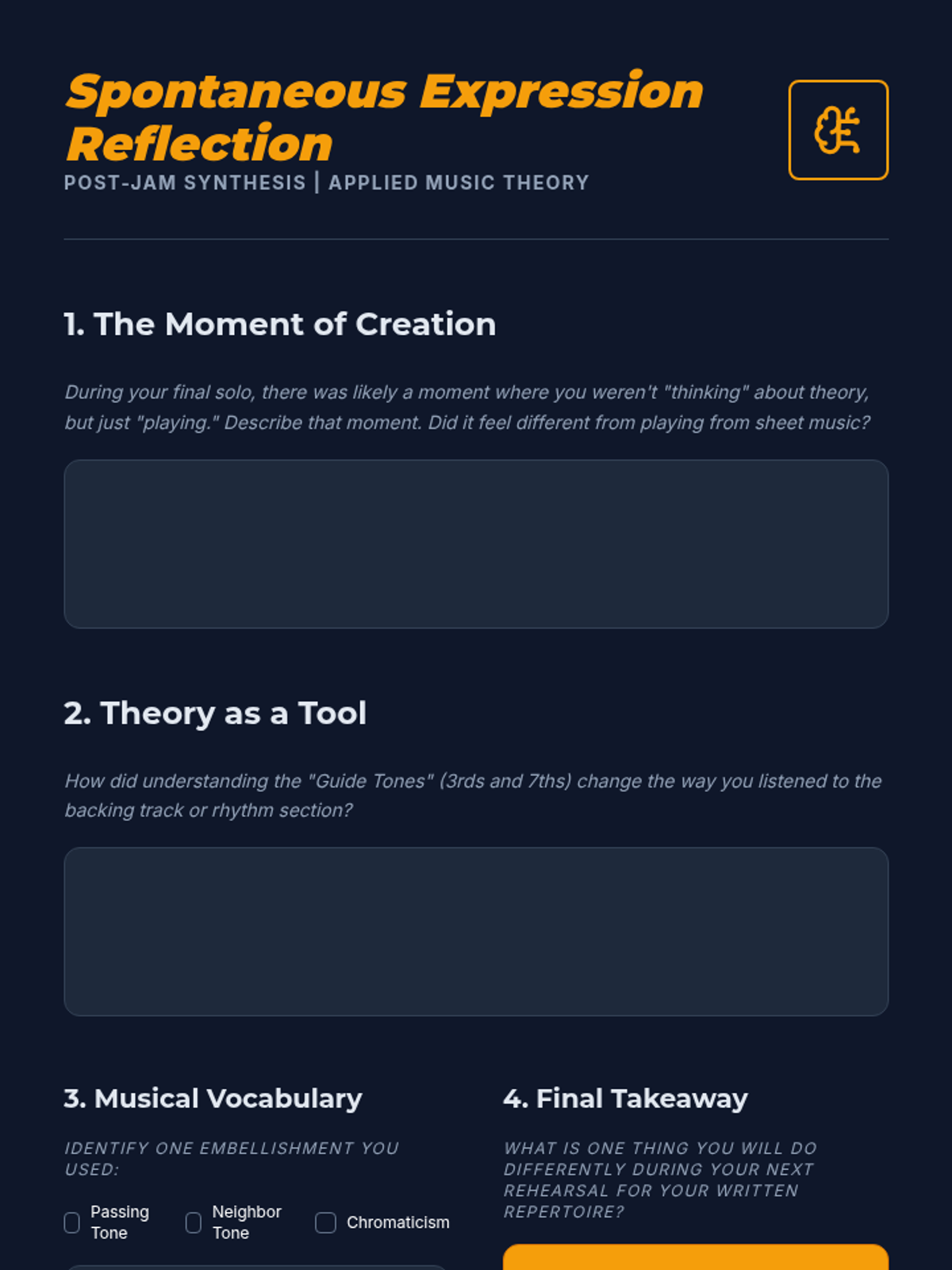
In the final lesson, students synthesize all skills—harmonic analysis, modal fluency, and melodic variation—to improvise solos in a collaborative jamming circle.
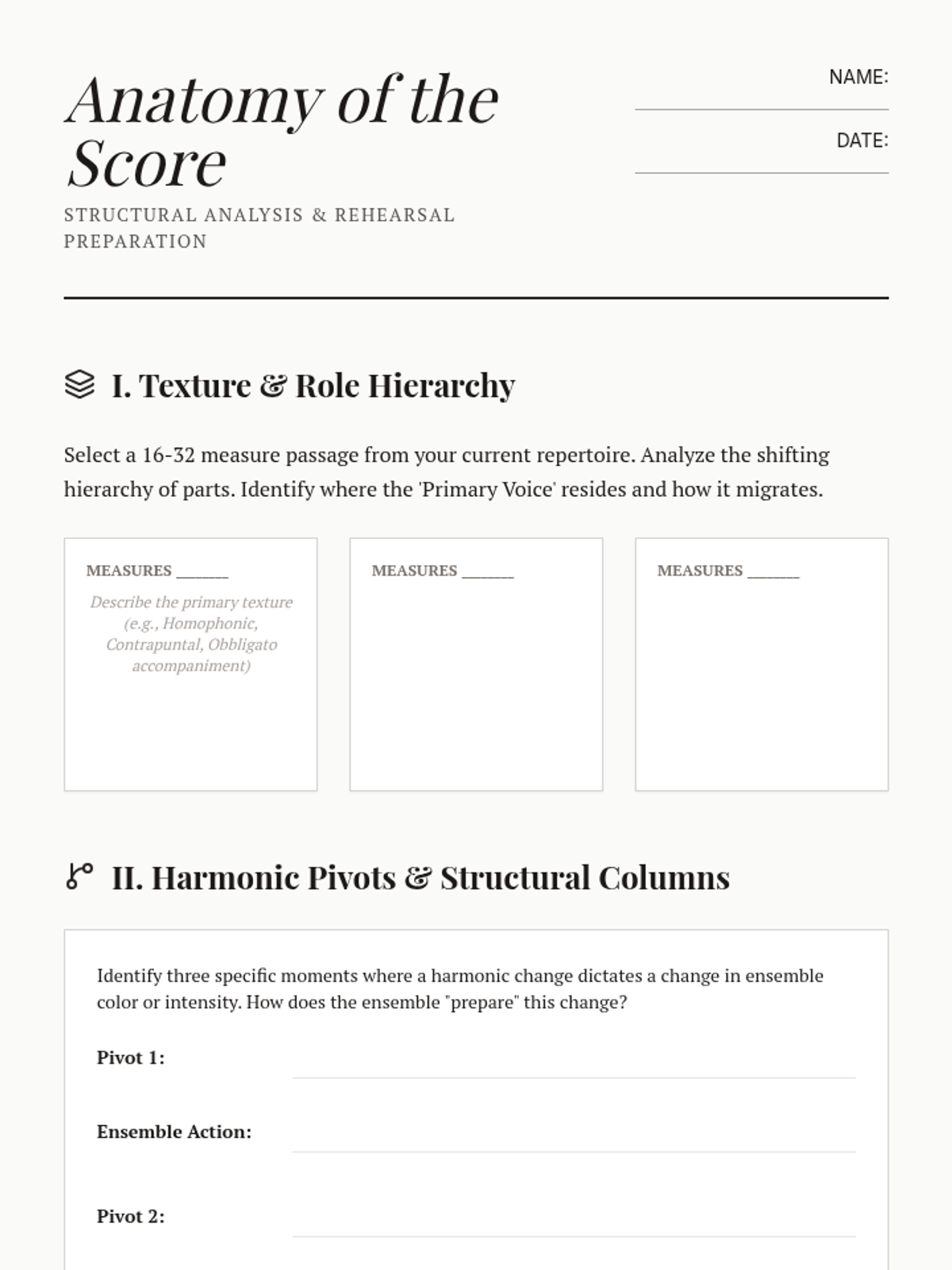
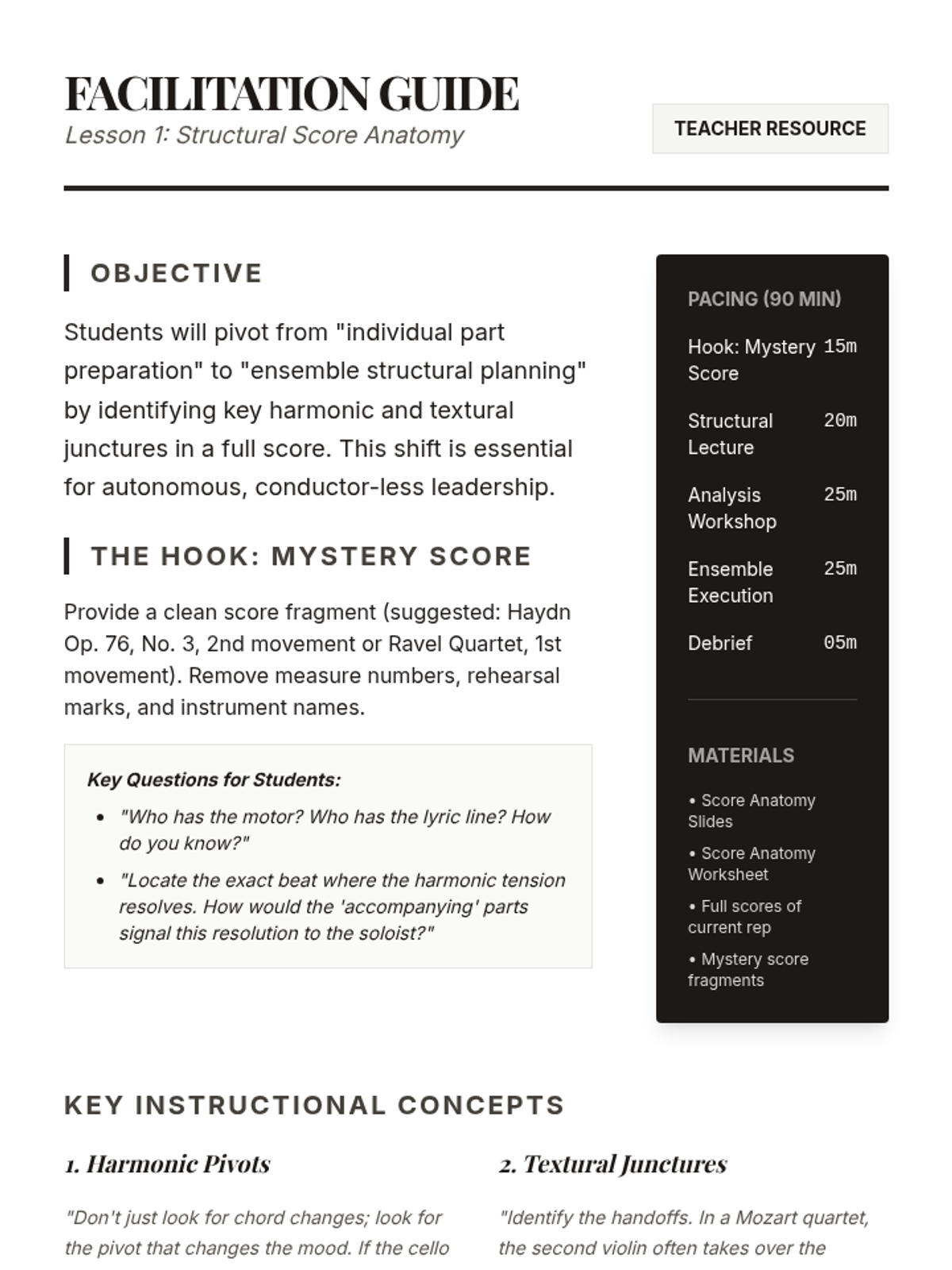
Students move beyond their individual parts to analyze the structural hierarchy and harmonic pivots of a full chamber score. This lesson emphasizes identifying role exchanges and planning ensemble cues based on structural analysis.
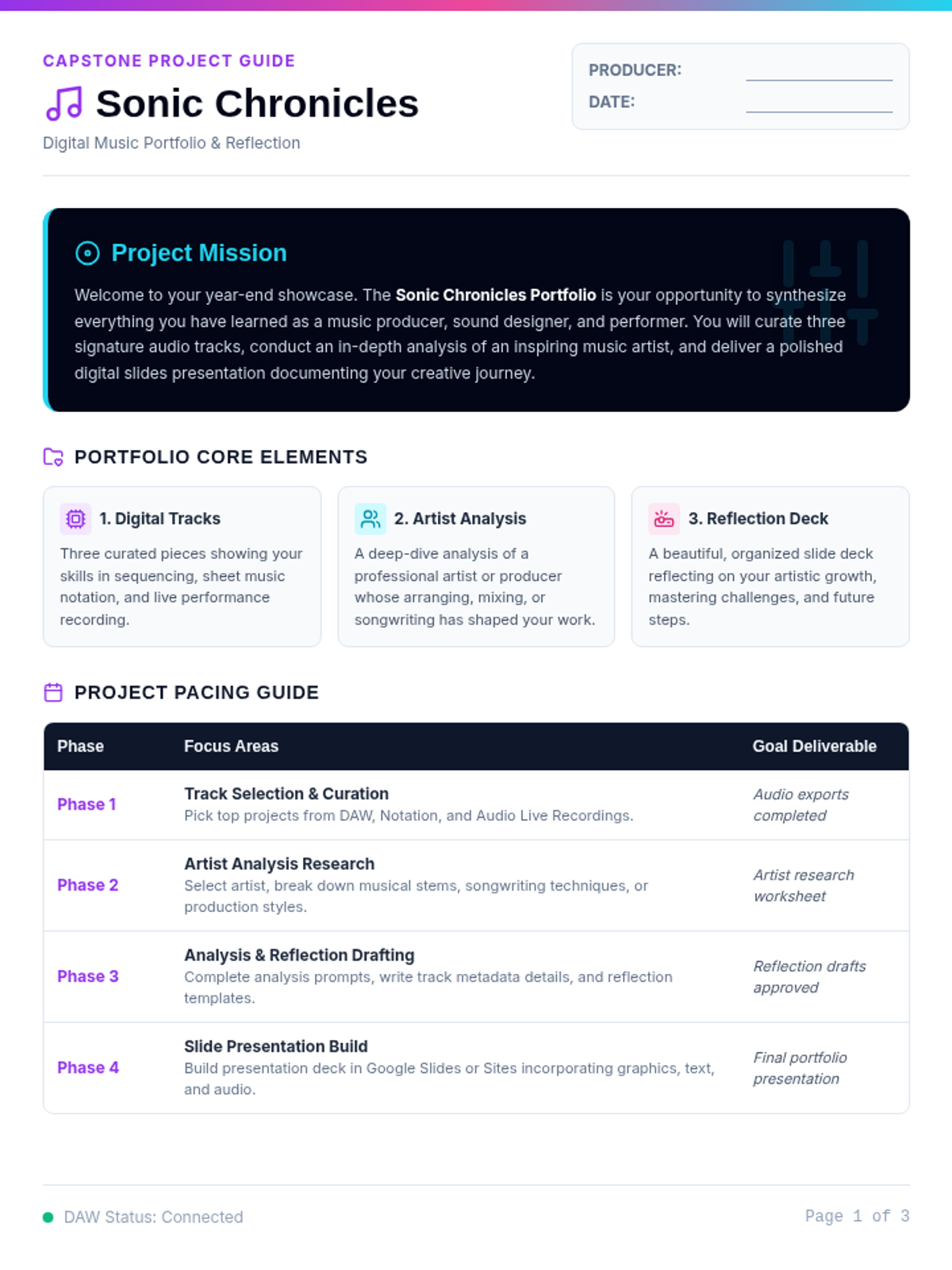
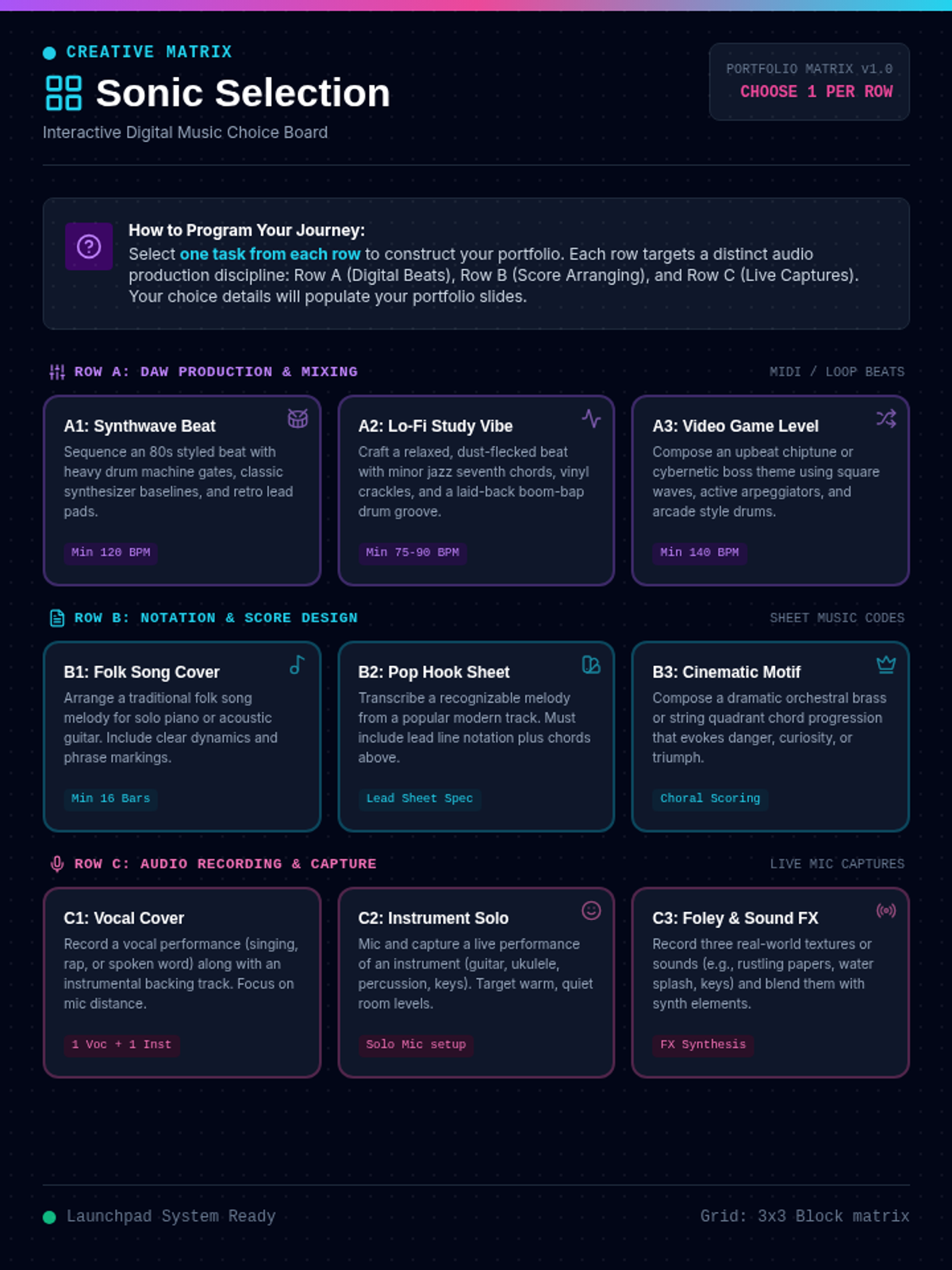
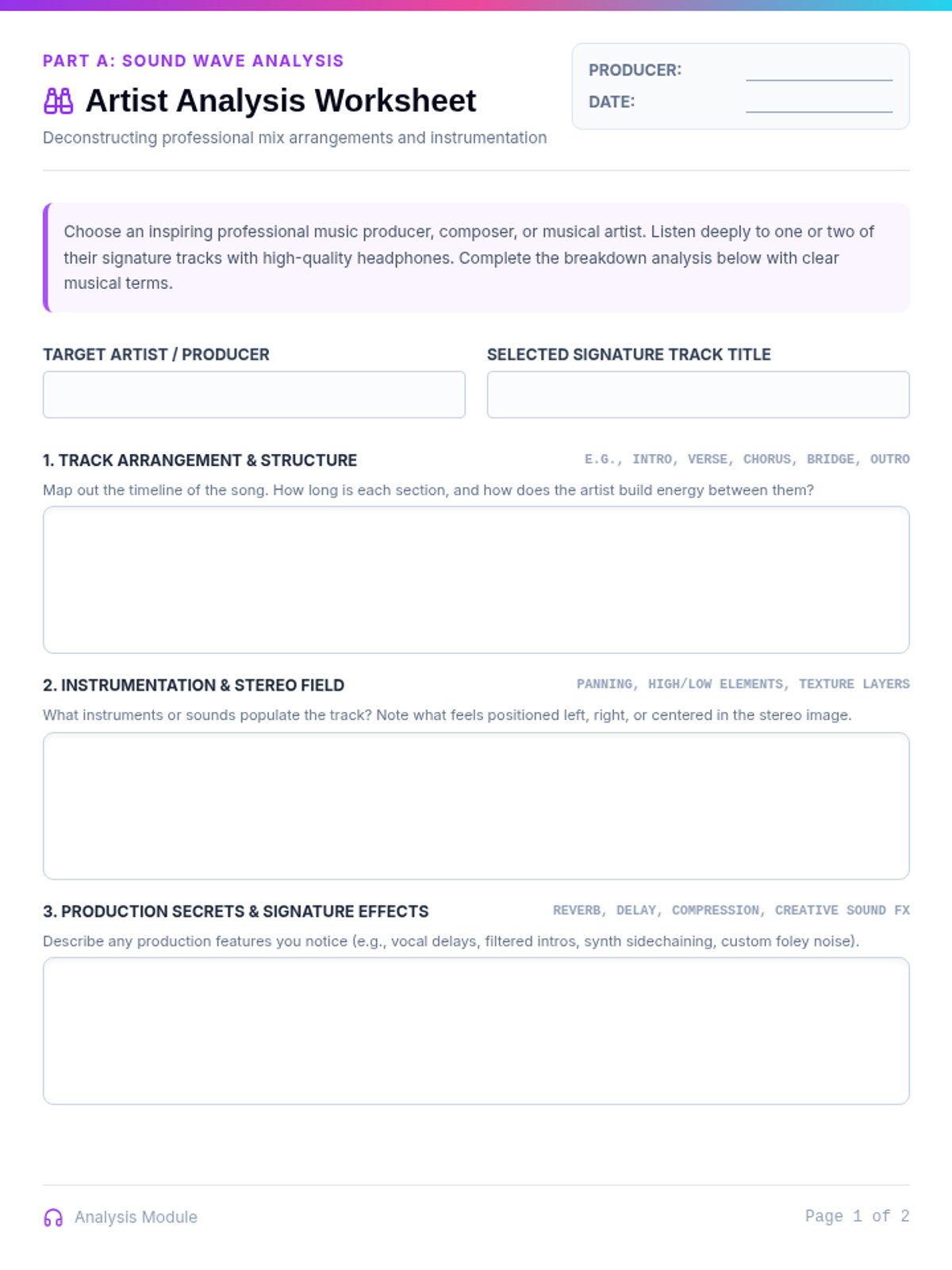
A comprehensive digital music portfolio project where students curate, analyze, and reflect on their musical creations using DAWs, notation tools, and audio recordings. This unit guides students through selecting their best work, performing deep artist analysis, and presenting a professional digital portfolio.
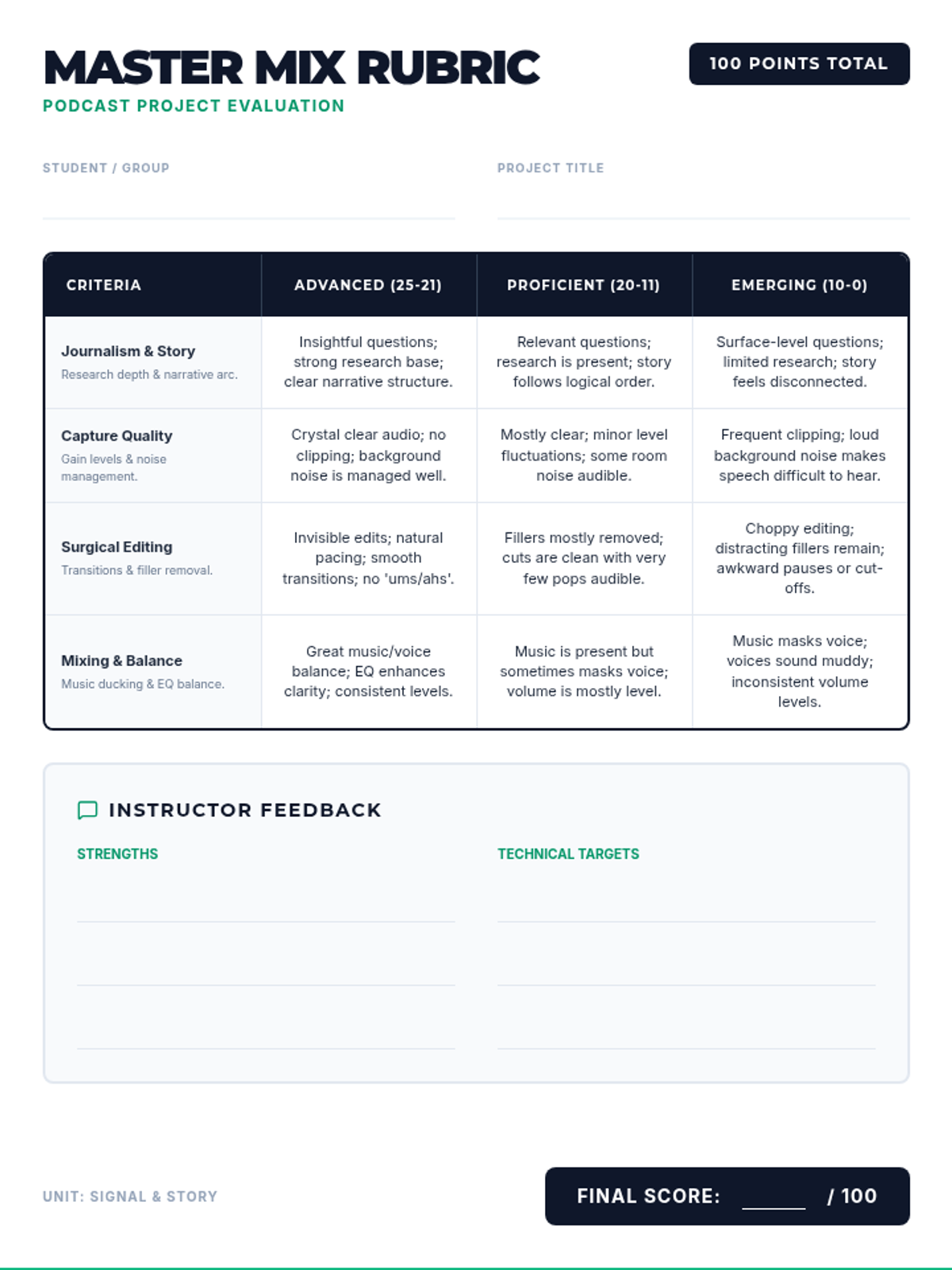
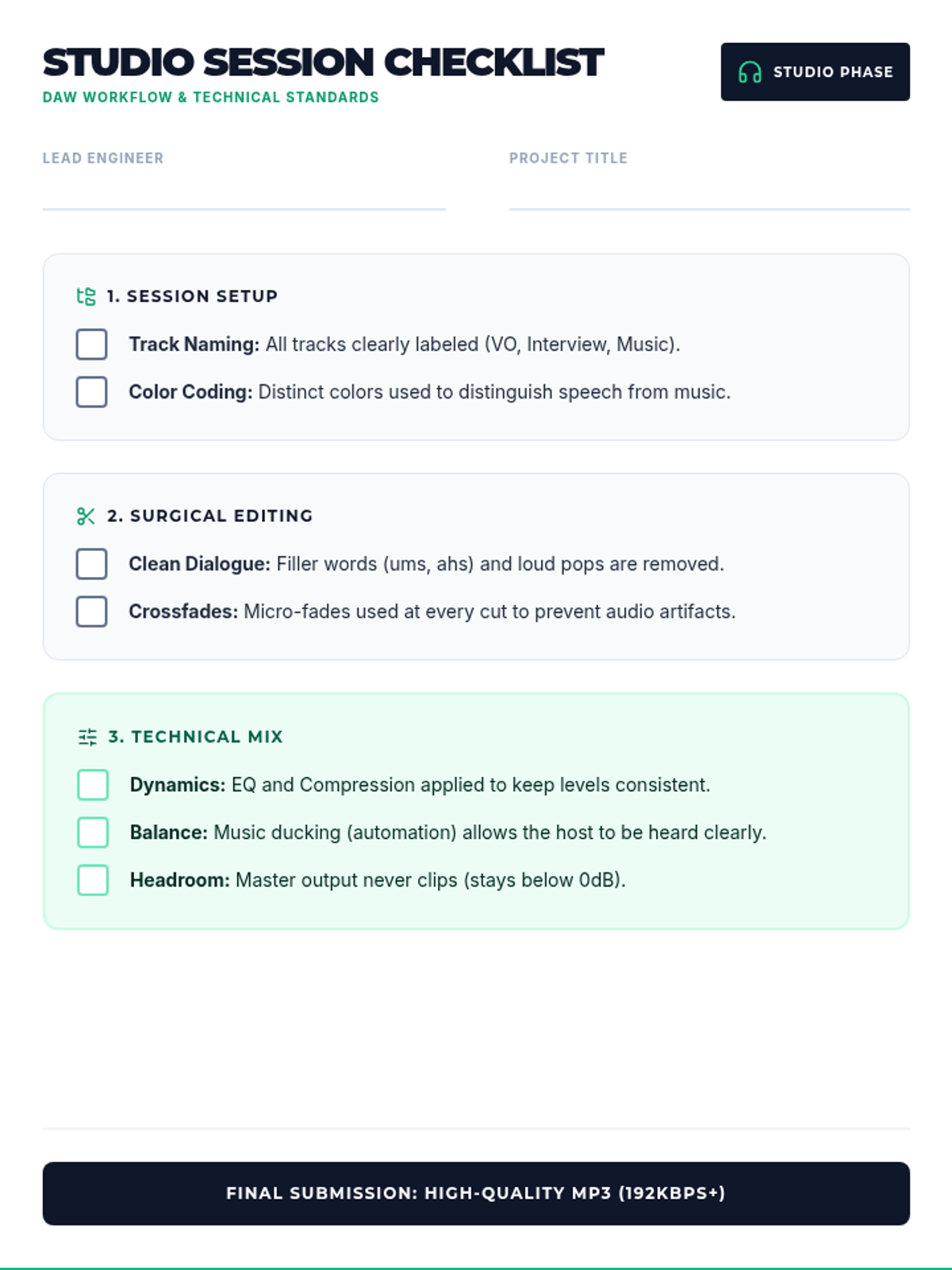
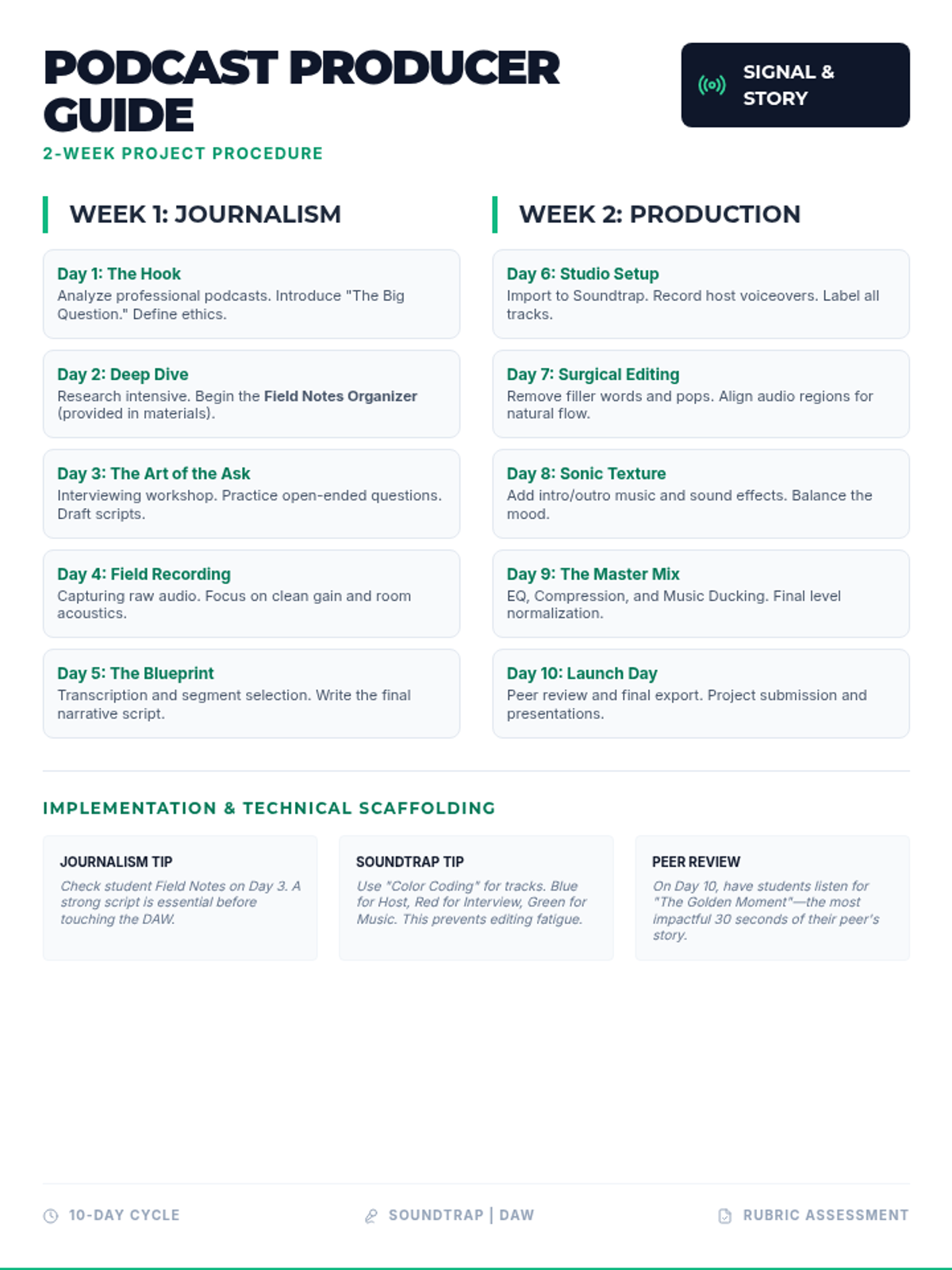
Students transition from raw audio to a polished production. This week focuses on Soundtrap technical skills, including multi-track editing, adding bumpers/music, and applying professional mixing and mastering techniques.
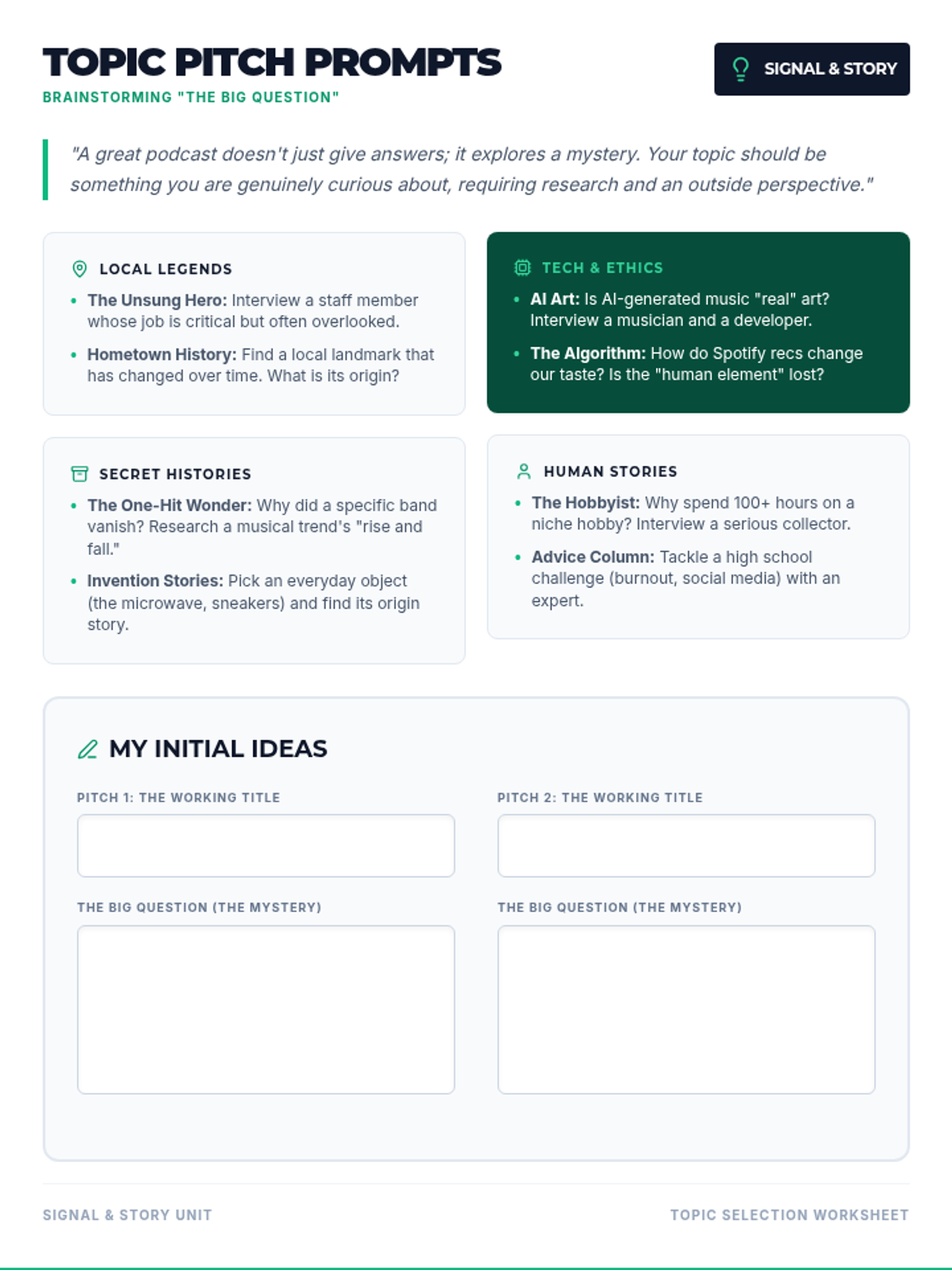
Students focus on the journalistic foundations of podcasting: selecting a topic, conducting deep research, and developing professional interviewing techniques. This week culminates in the recording of raw interview footage.
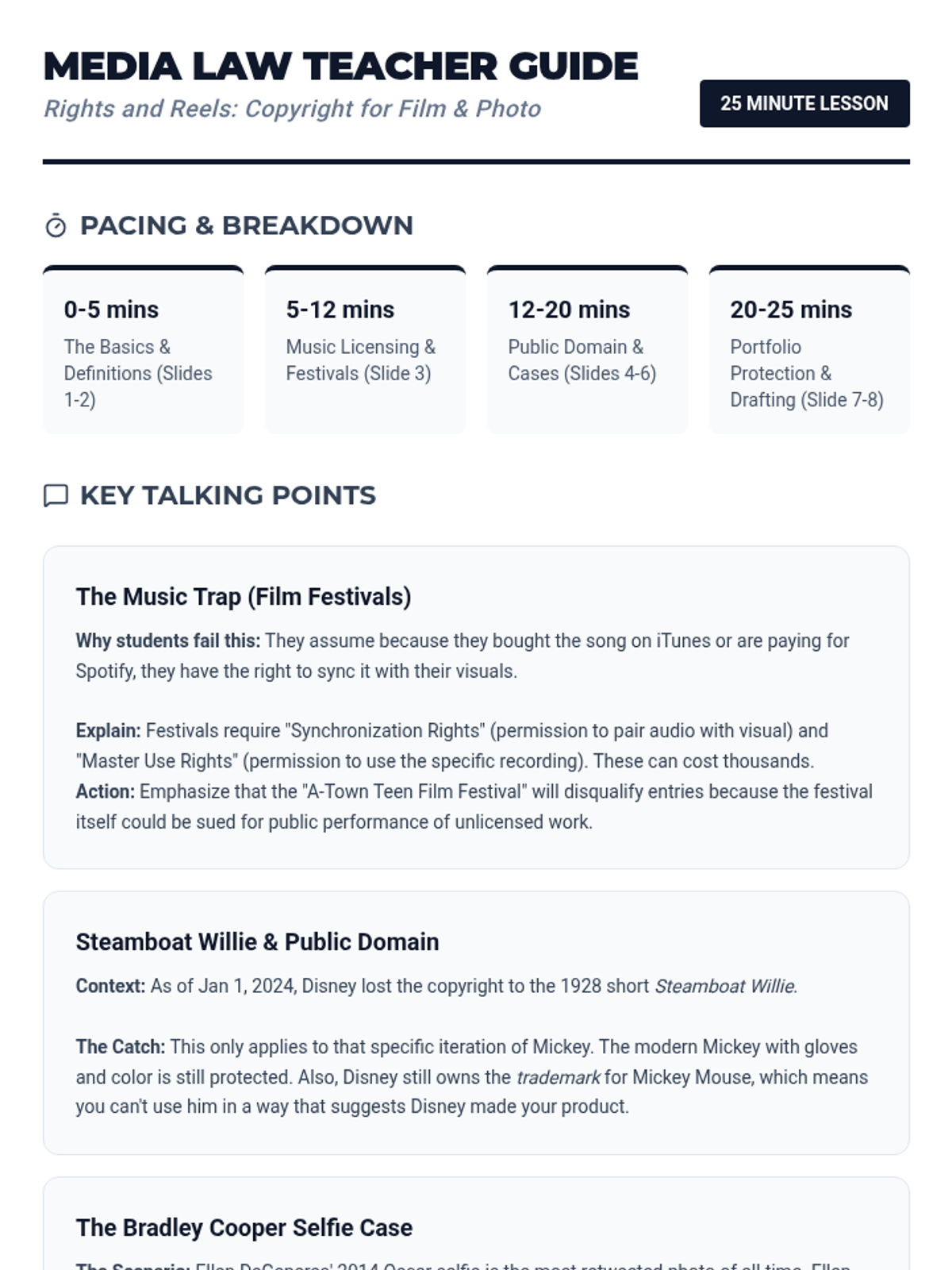
A 25-minute intensive lesson for film and photo students covering copyright law, music licensing for festivals, public domain via Steamboat Willie, and personal portfolio protection.
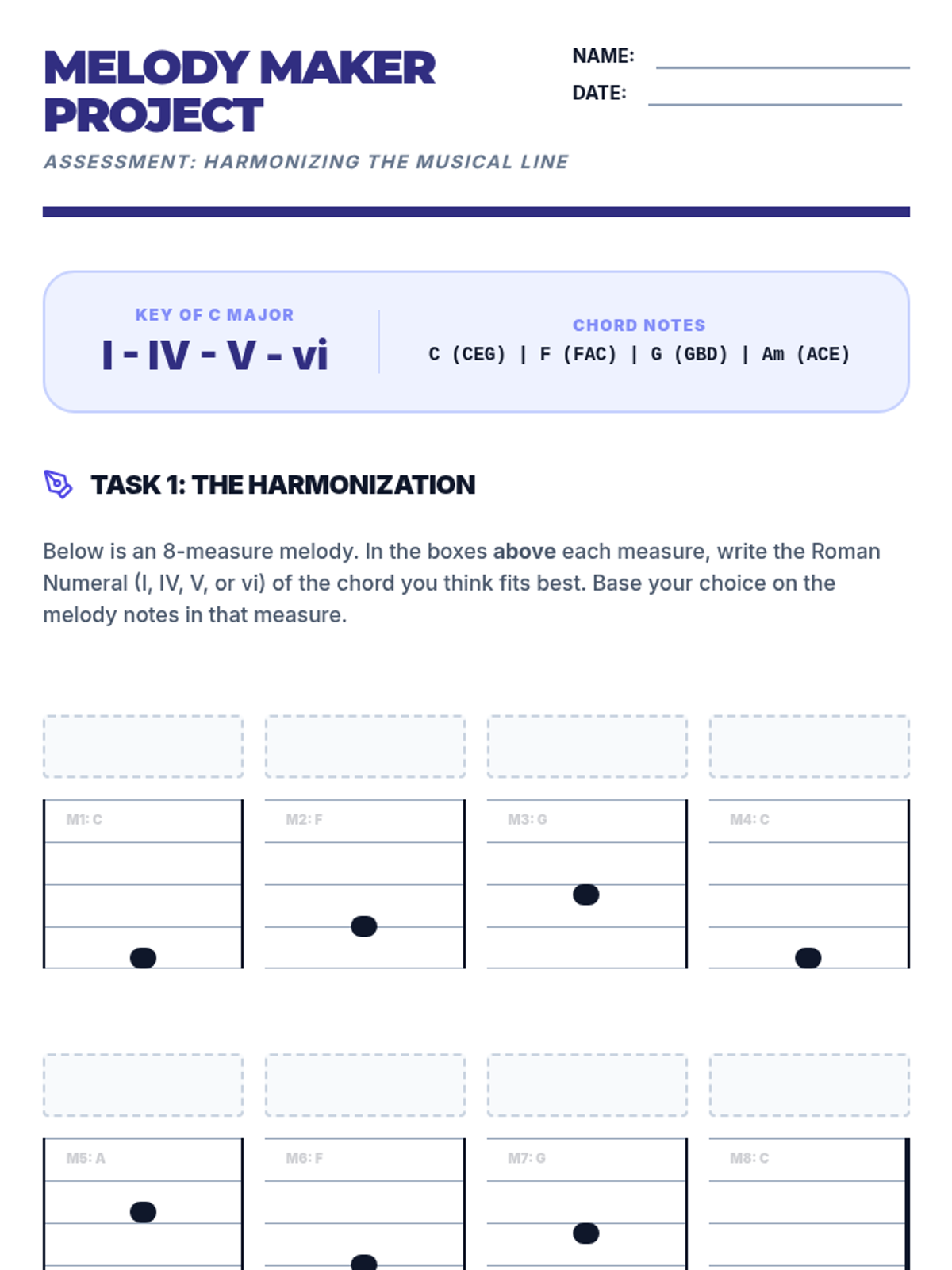
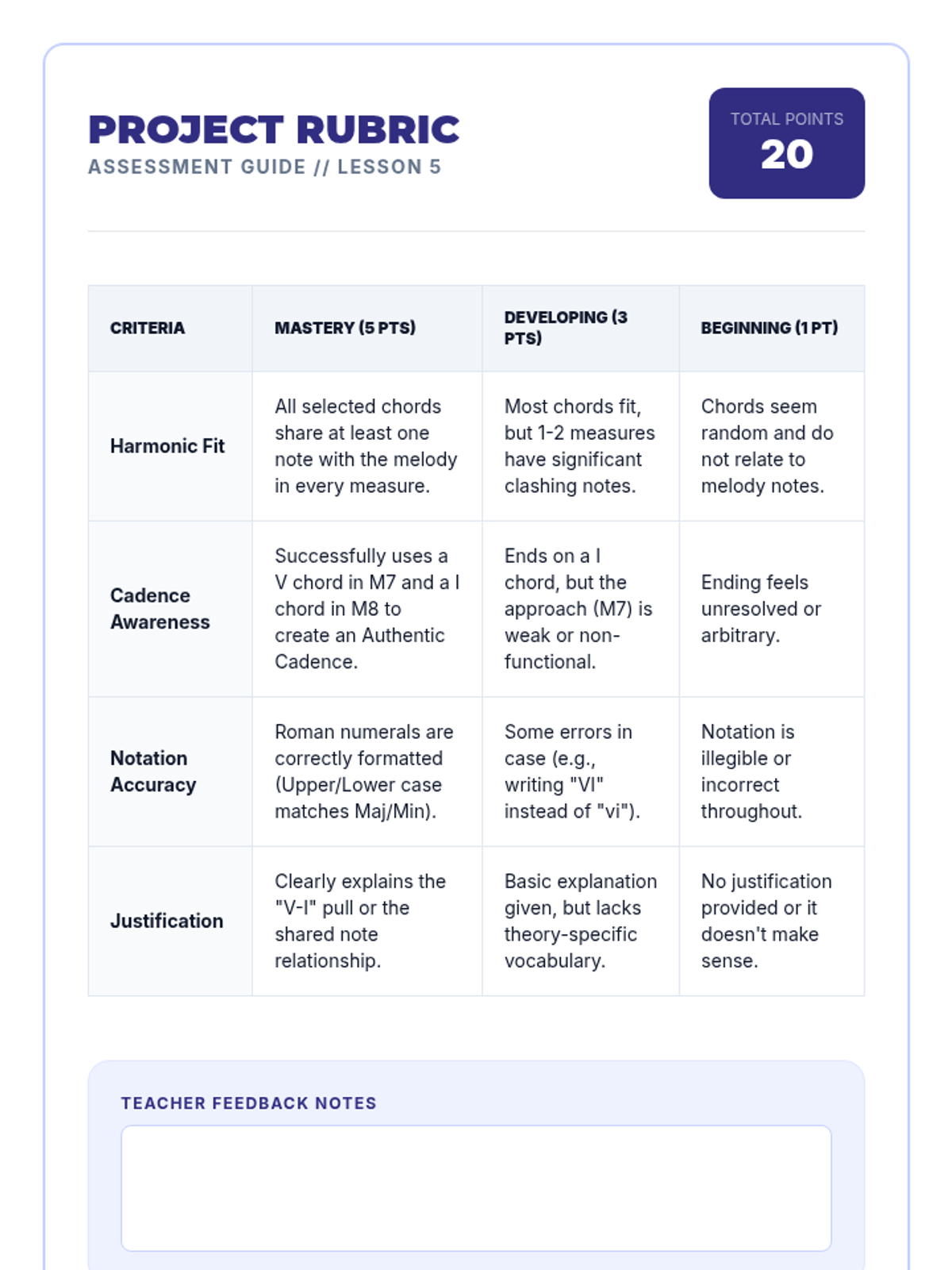
In this culminating project, students harmonize a simple melody by choosing appropriate chords and justifying their harmonic choices.
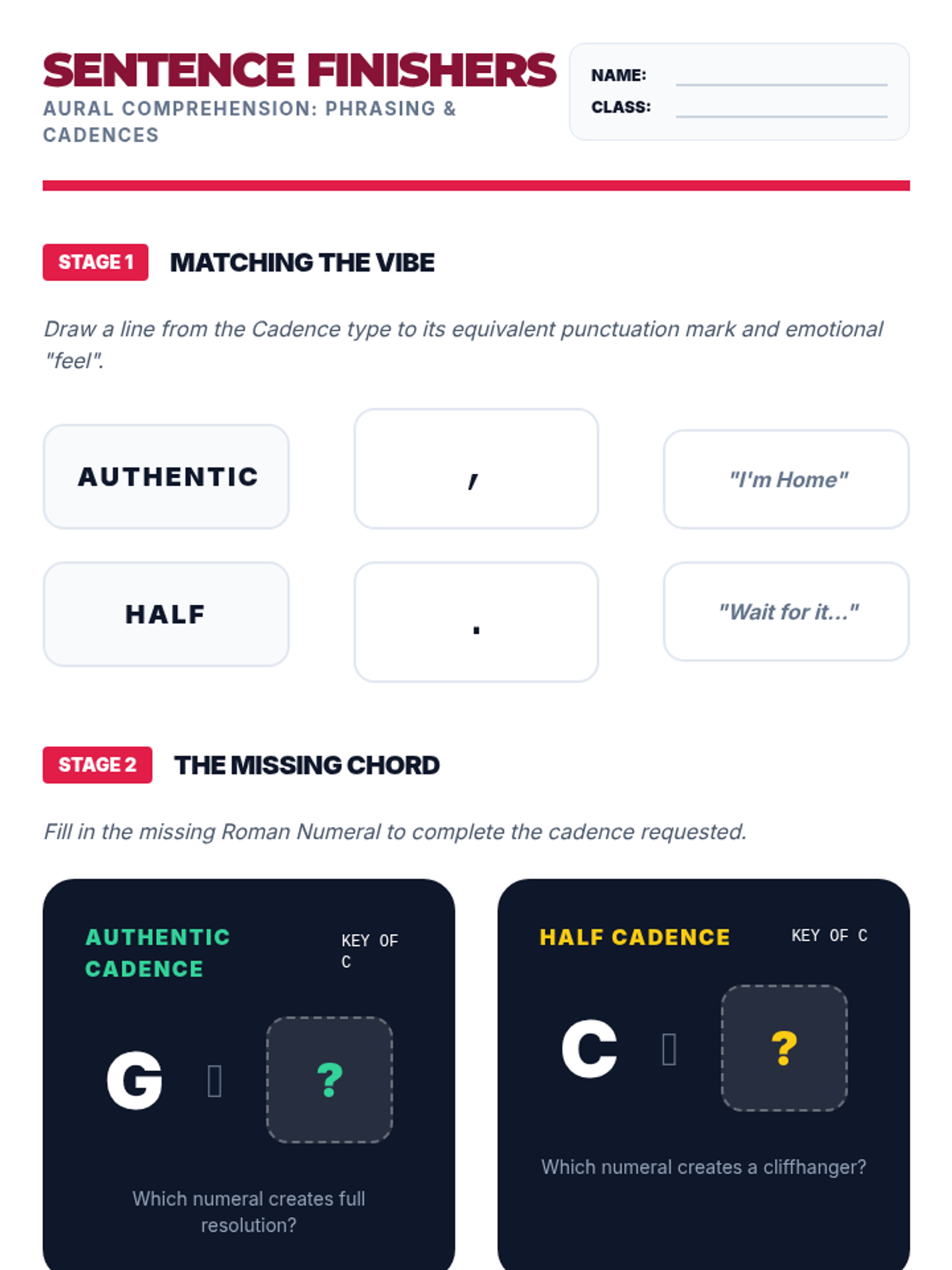
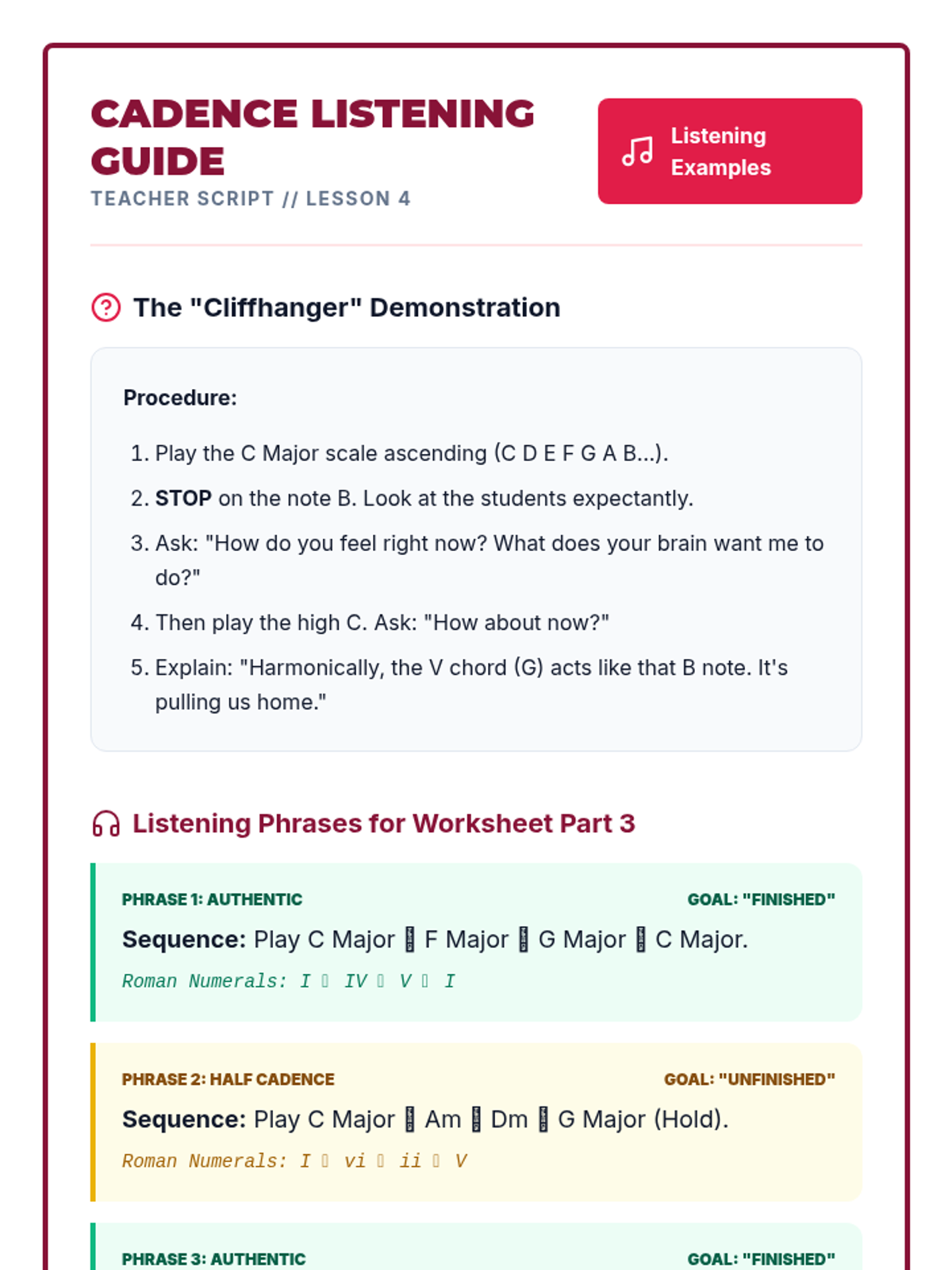
Students explore musical phrasing through cadences, learning how chord progressions create a sense of 'finished' or 'unfinished' thoughts.
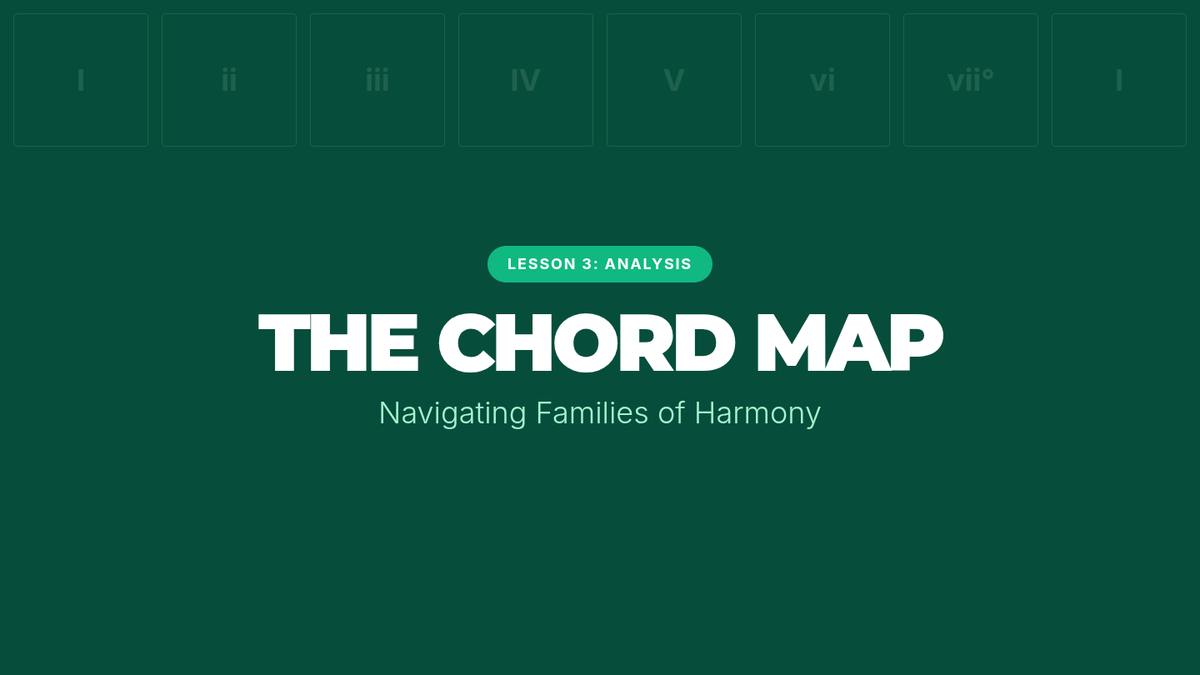
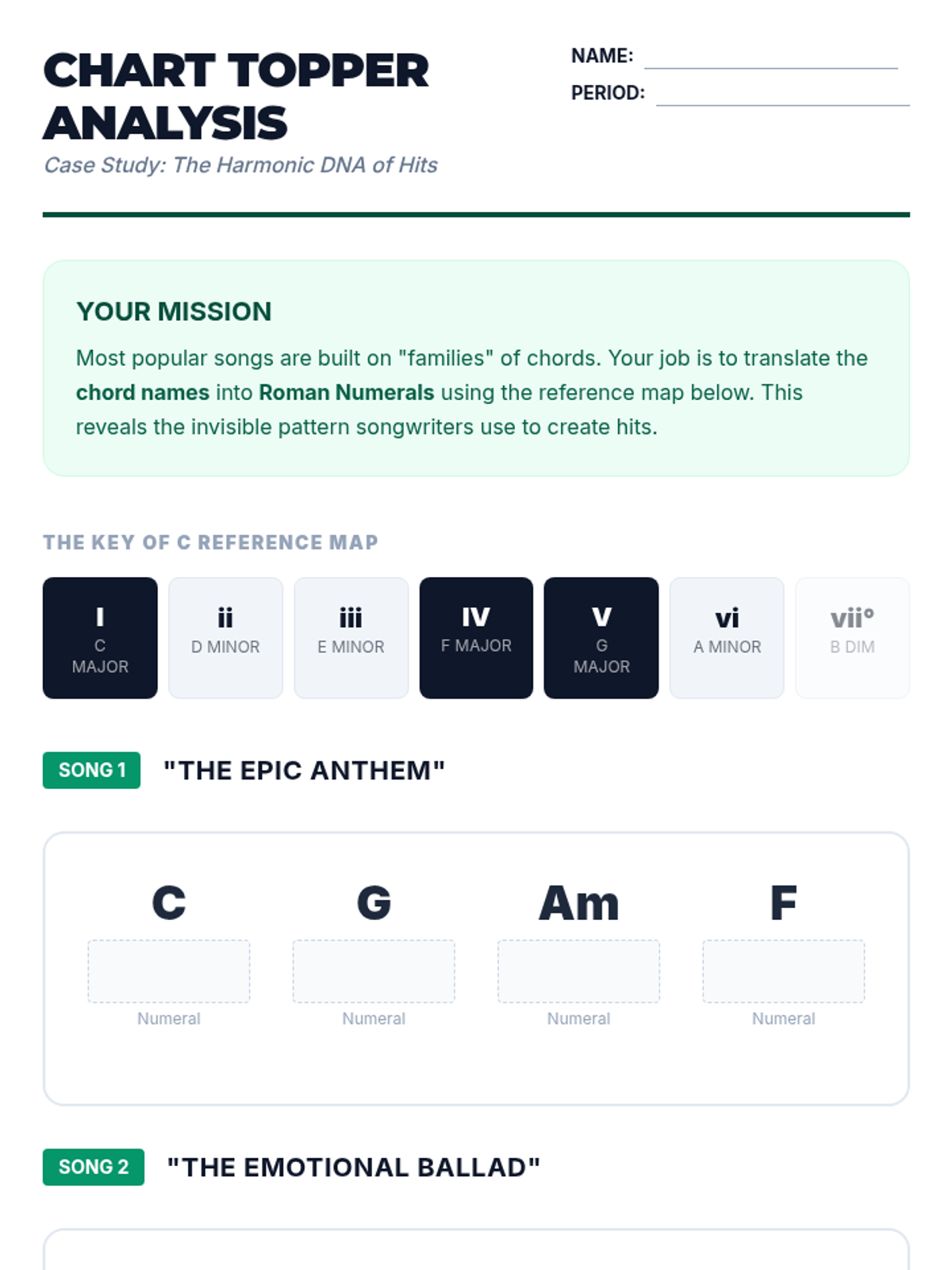
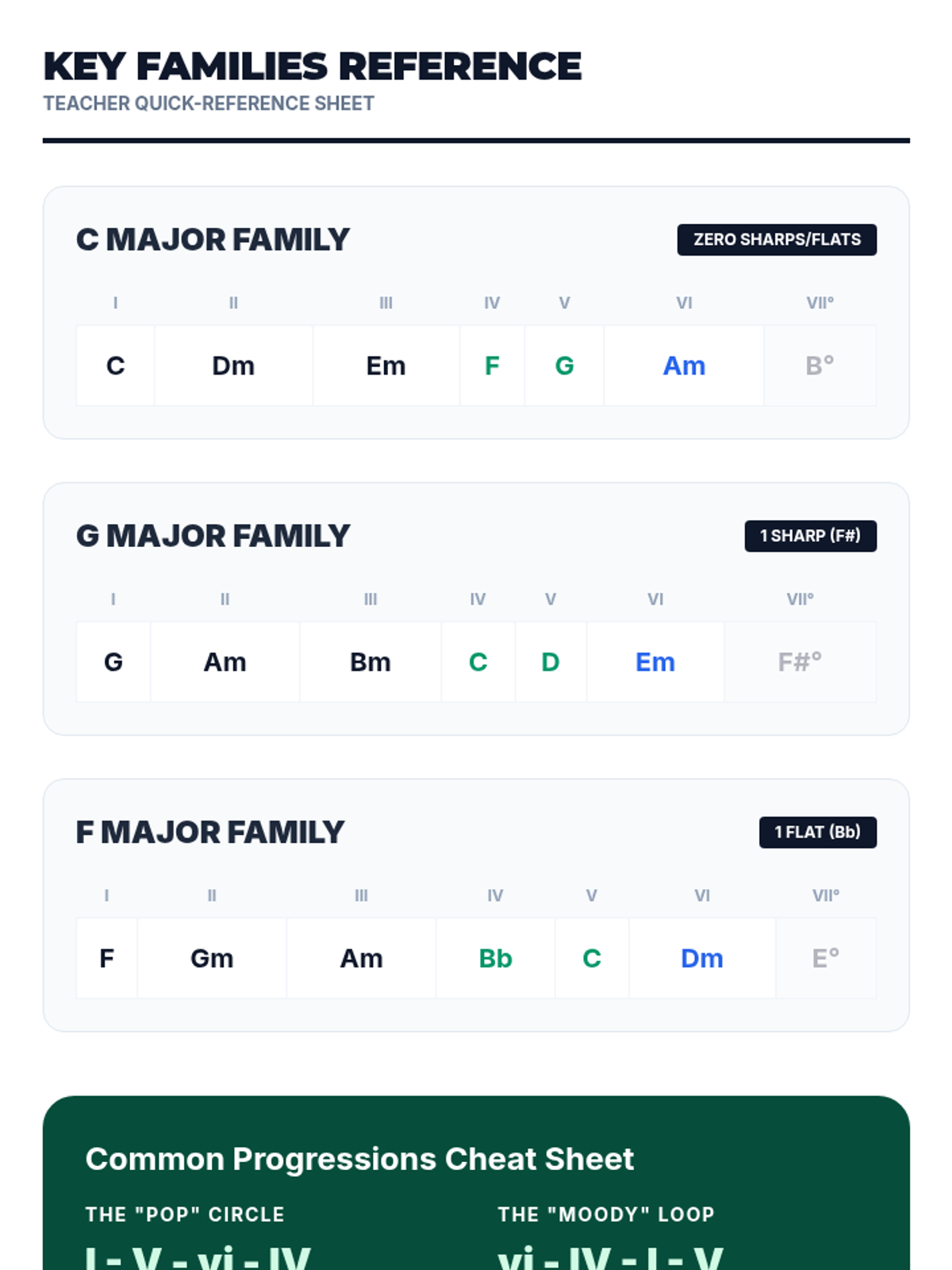
This lesson introduces the concept of chord families within a key and uses Roman Numeral analysis to understand common pop music progressions.
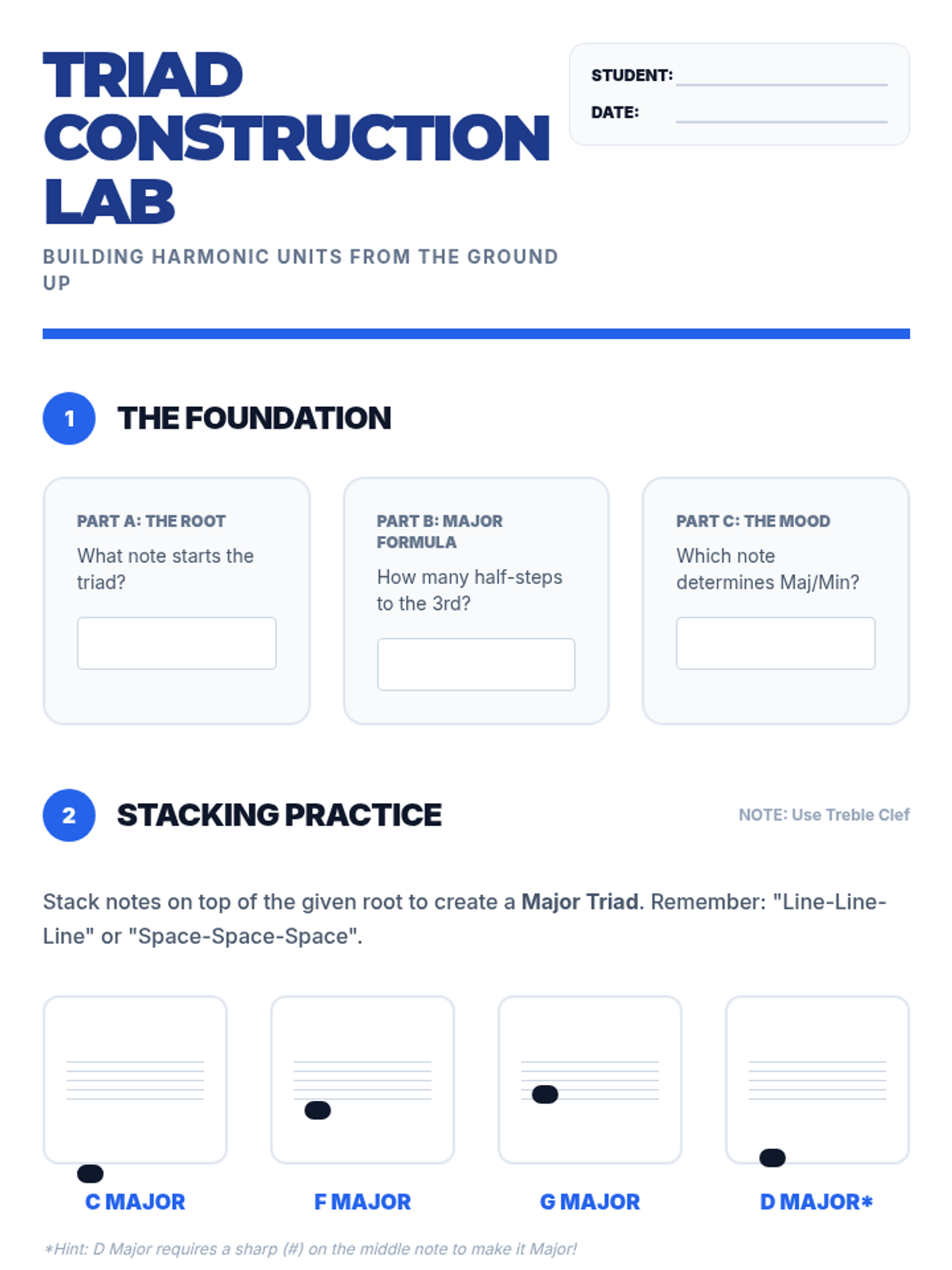
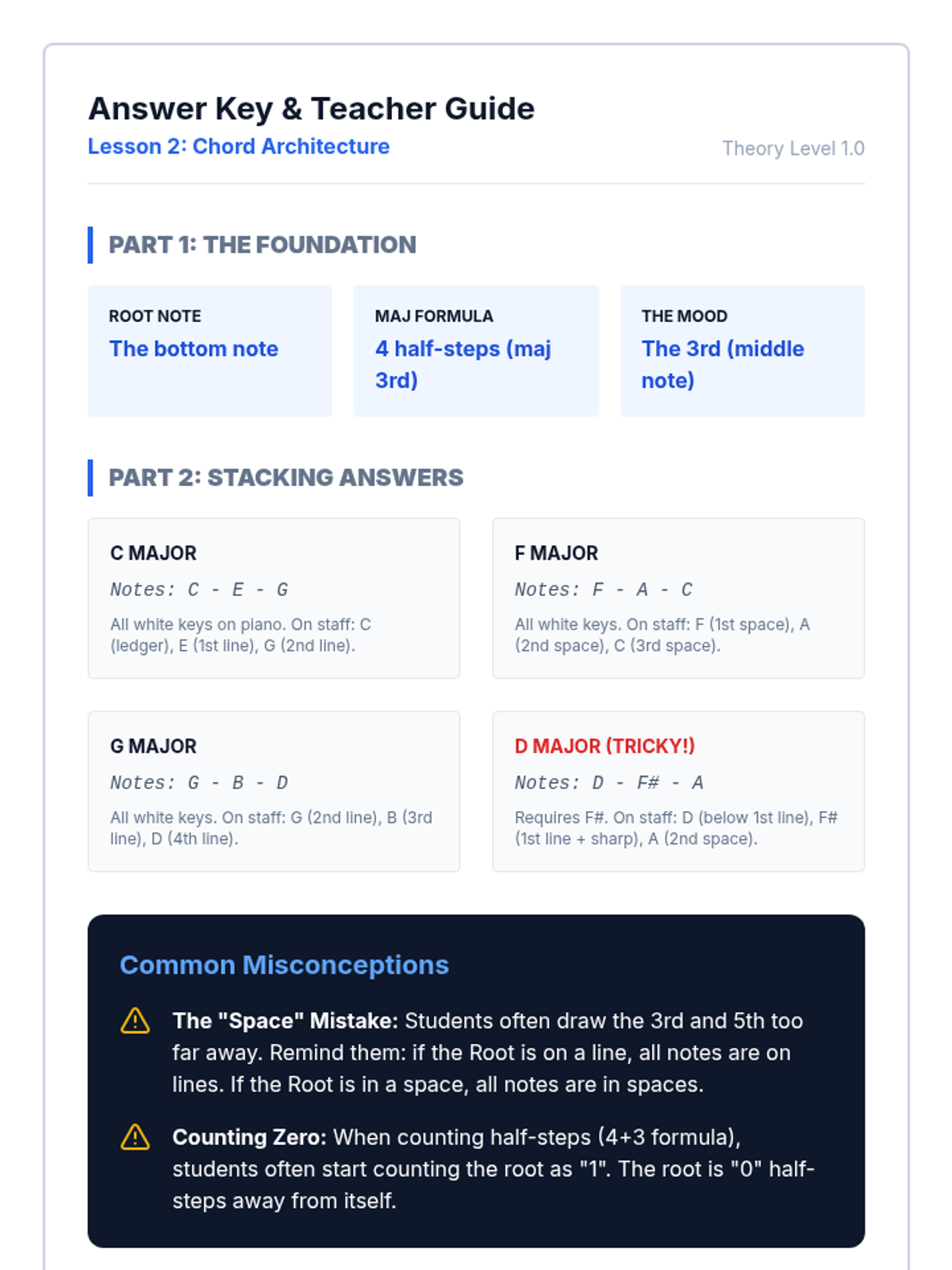
Students learn the architecture of basic chords (root, third, fifth) and practice building Major and Minor triads by stacking thirds on the staff.
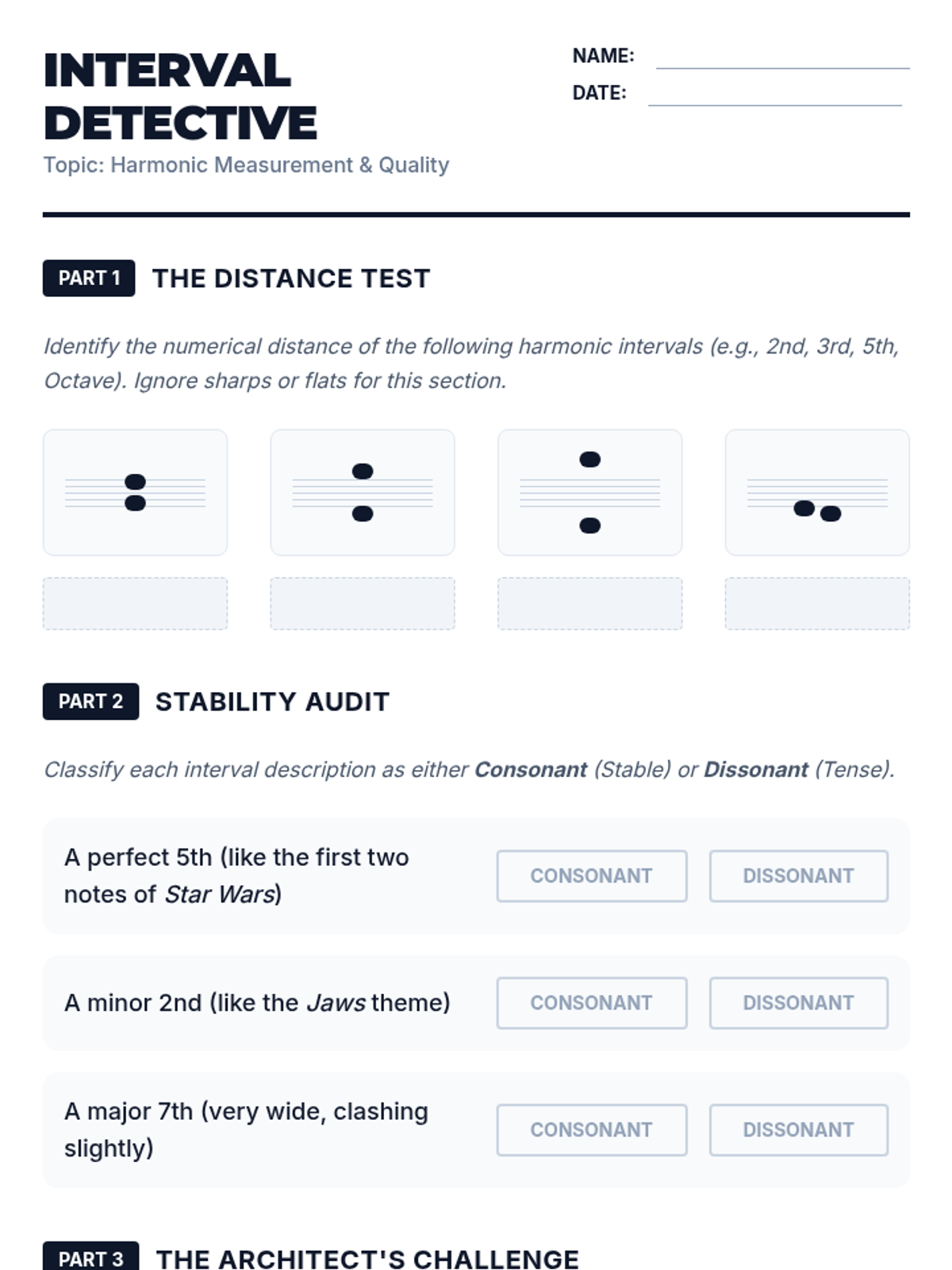
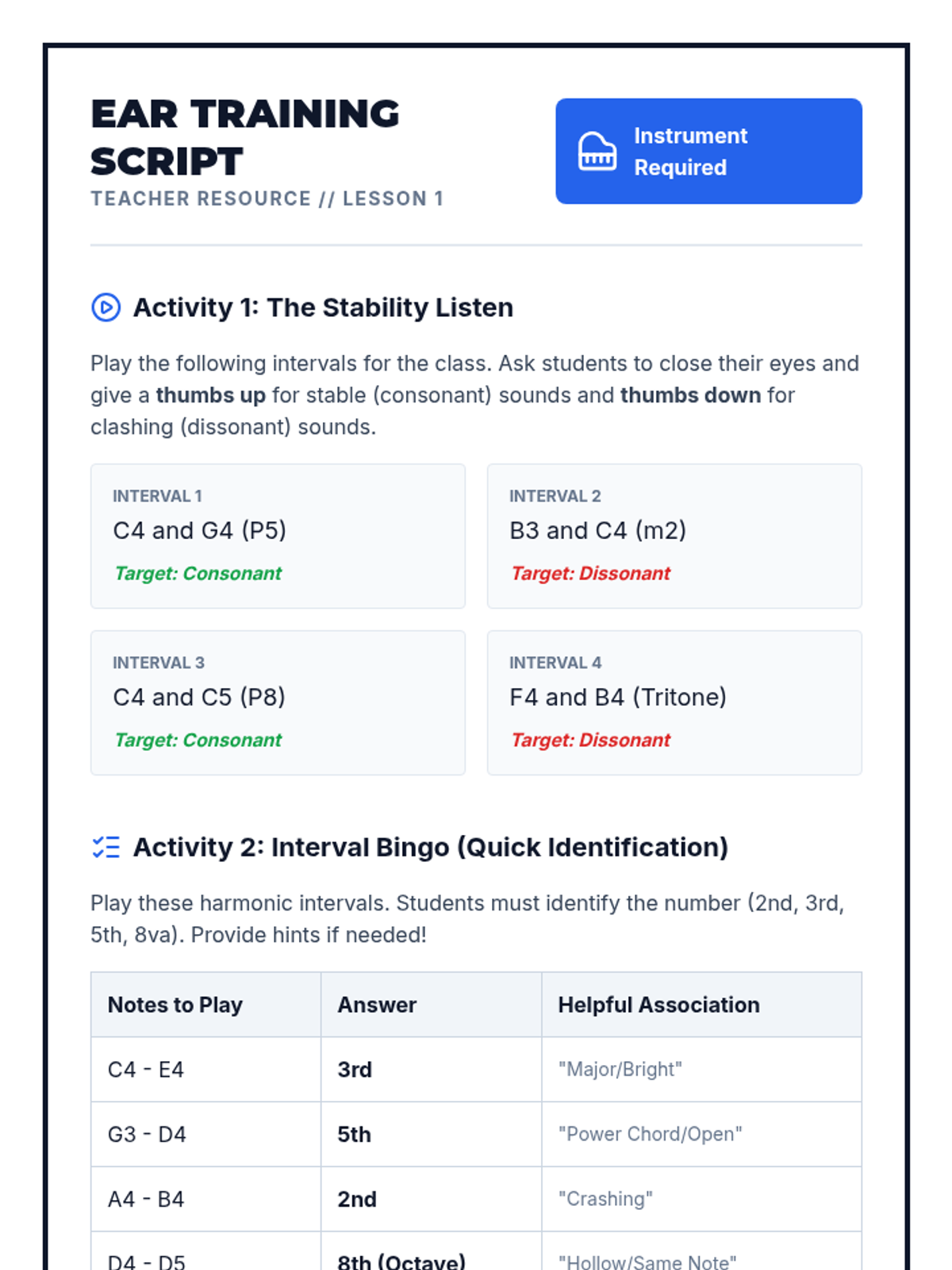
Students learn to measure the distance between two simultaneous notes, identifying specific intervals by sight and sound while distinguishing consonance from dissonance.
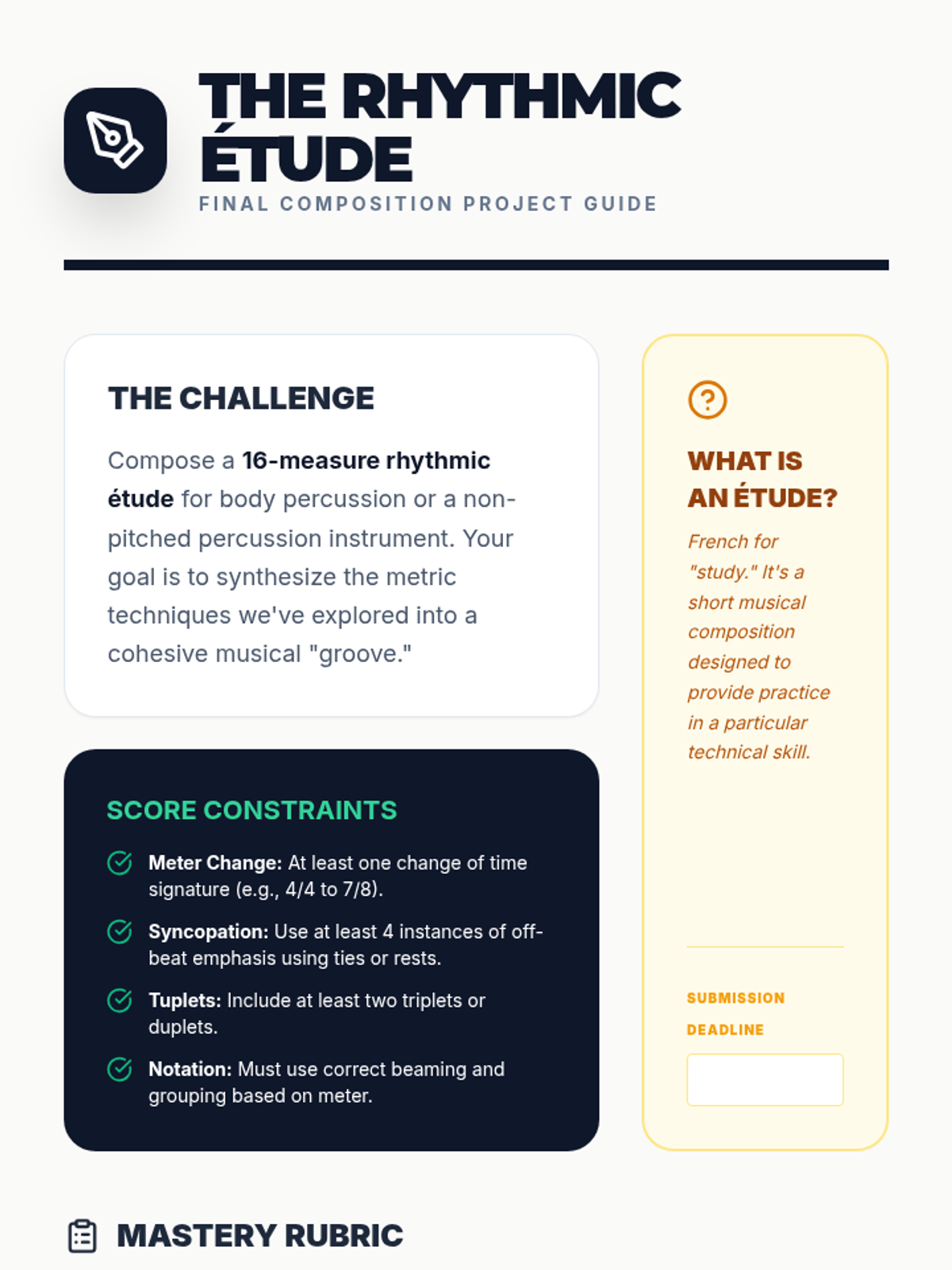
The culminating project where students compose and perform an original 16-measure rhythmic étude incorporating sequence concepts.
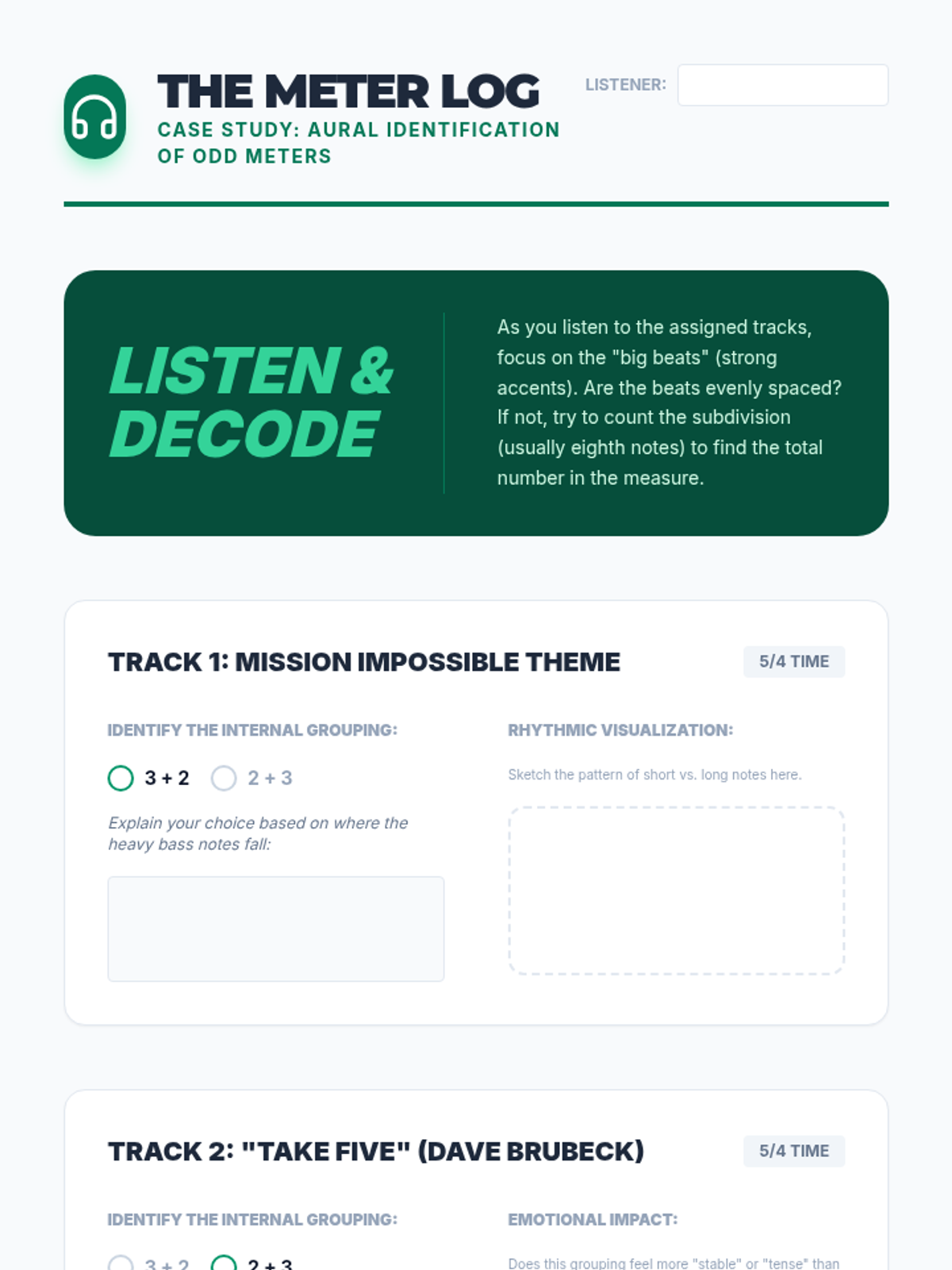
Examines asymmetrical time signatures (5/4, 7/8) and mixed meter through progressive rock and modern classical analysis.
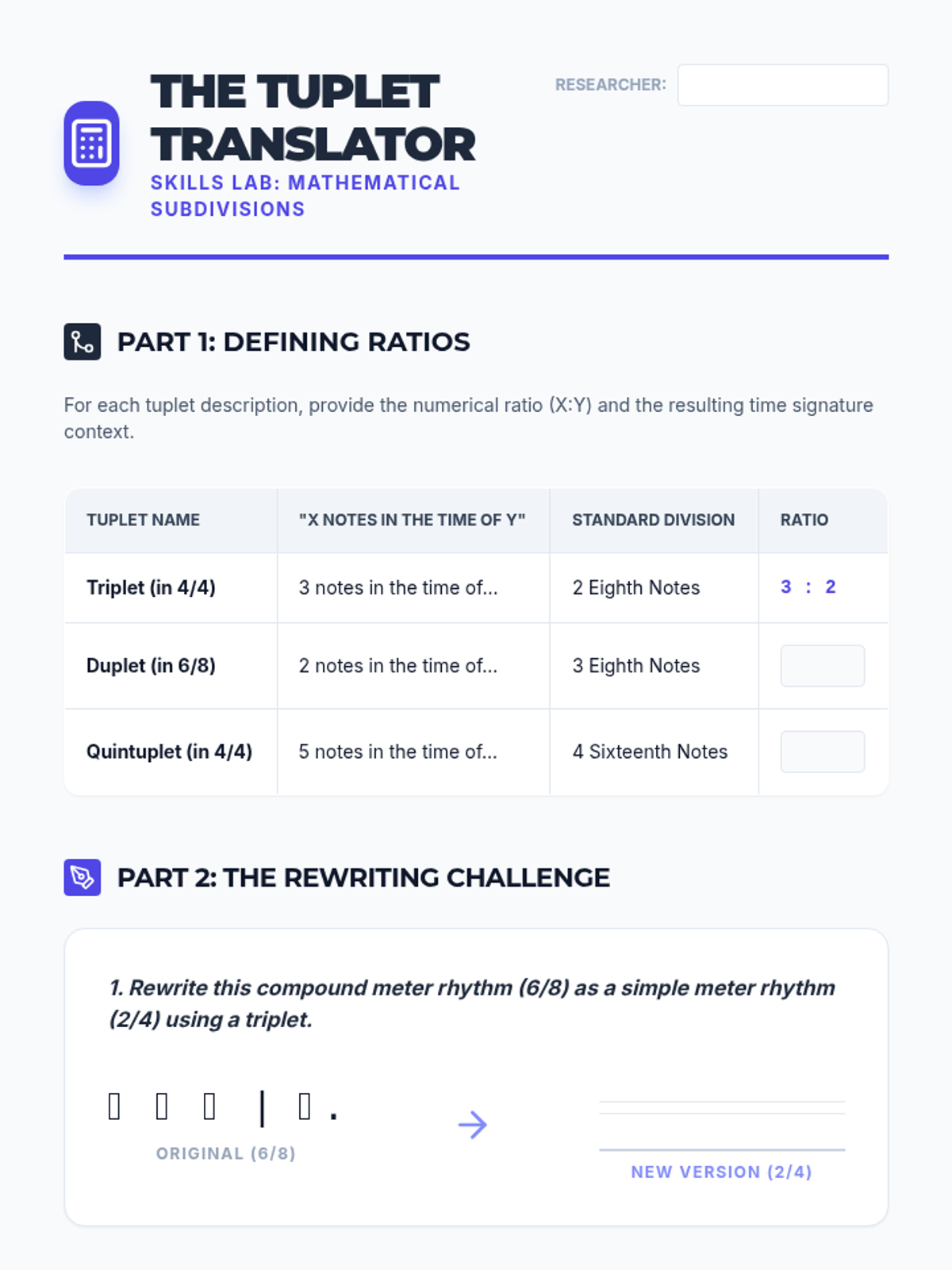
Explores artificial divisions of the beat, including triplets and duplets, and the mathematical logic of irregular subdivisions.
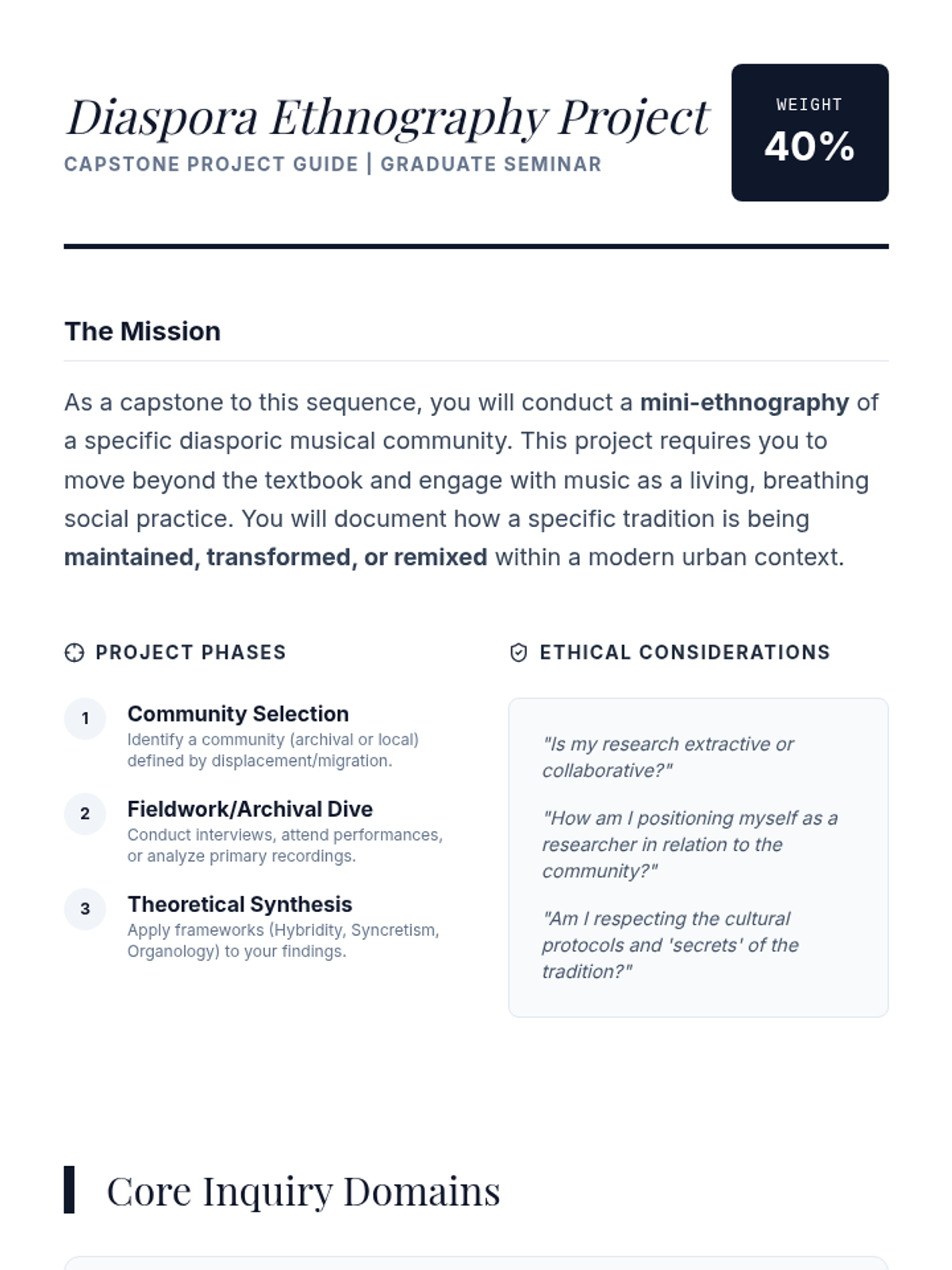
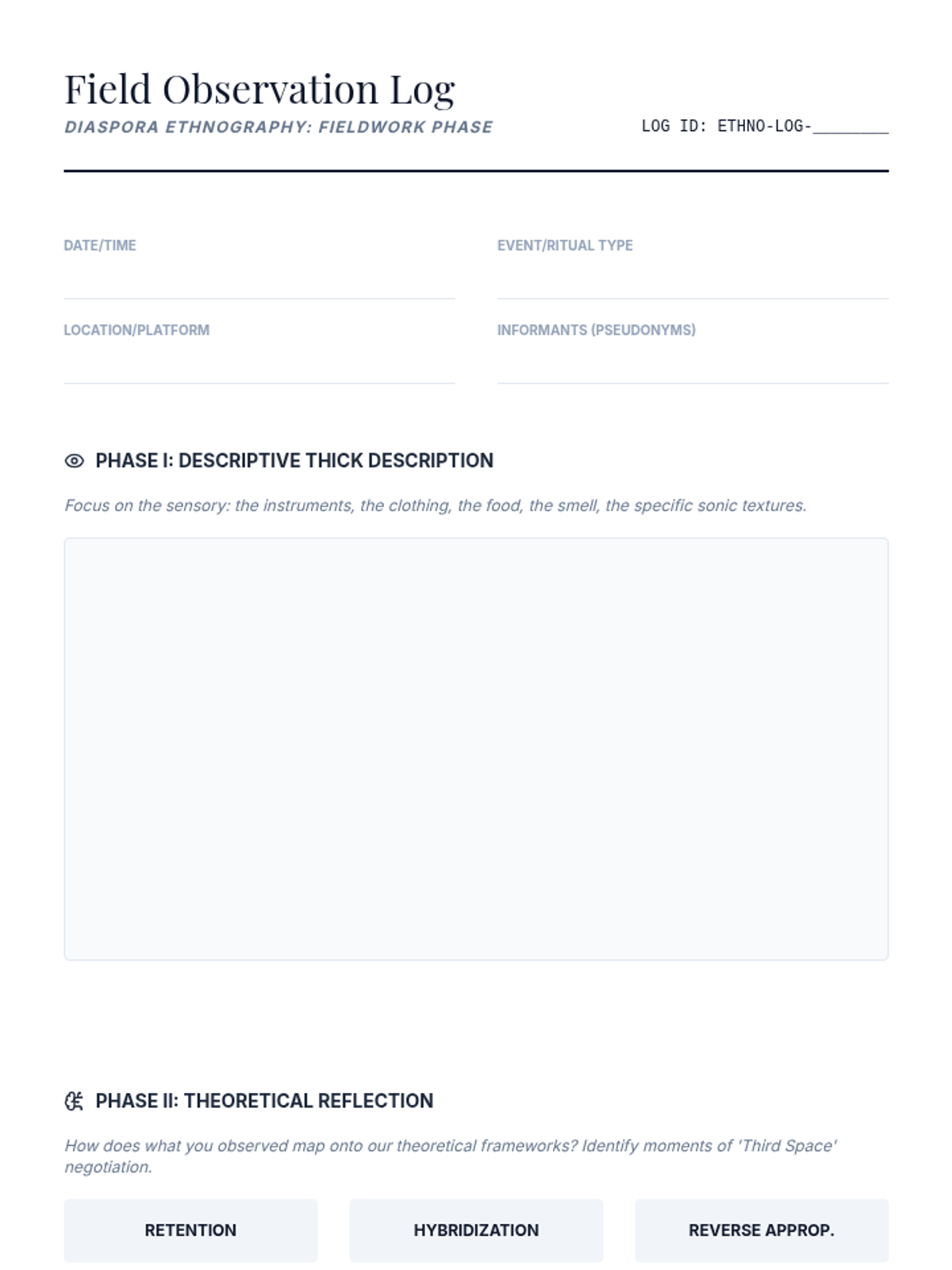
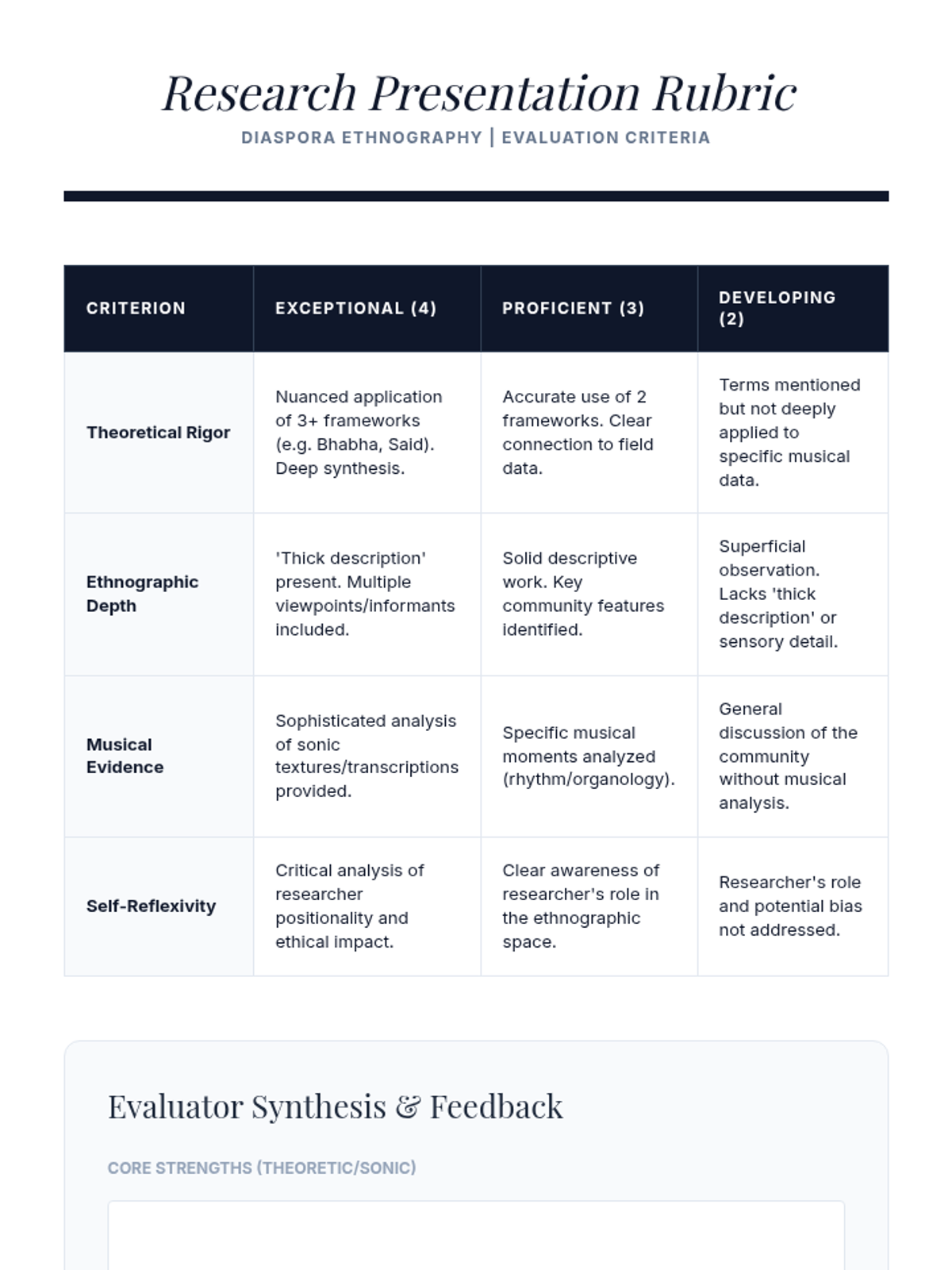
A project-based lesson where students design and conduct a mini-ethnography of a diasporic musical community, synthesizing theoretical frameworks into a research presentation.
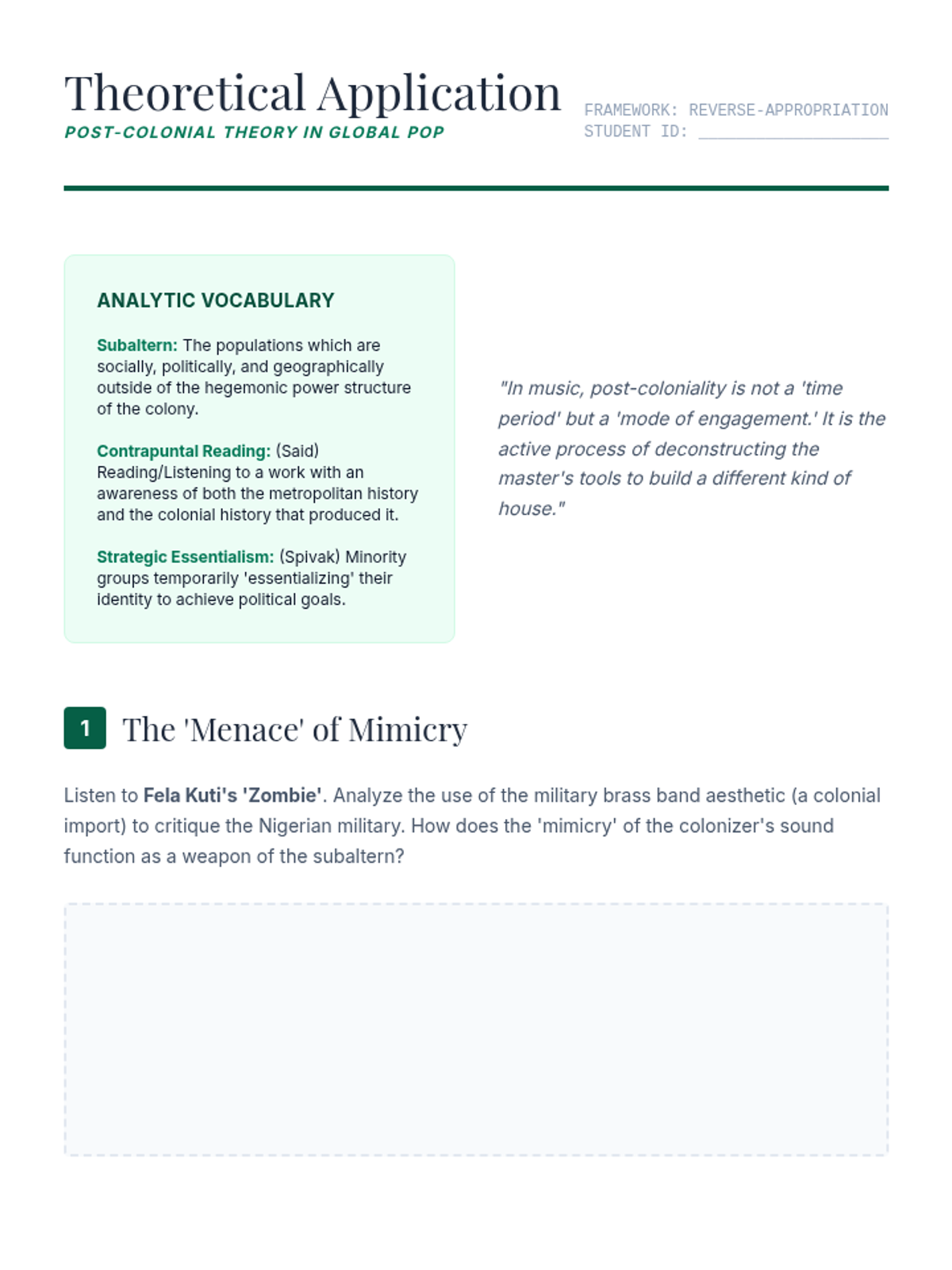
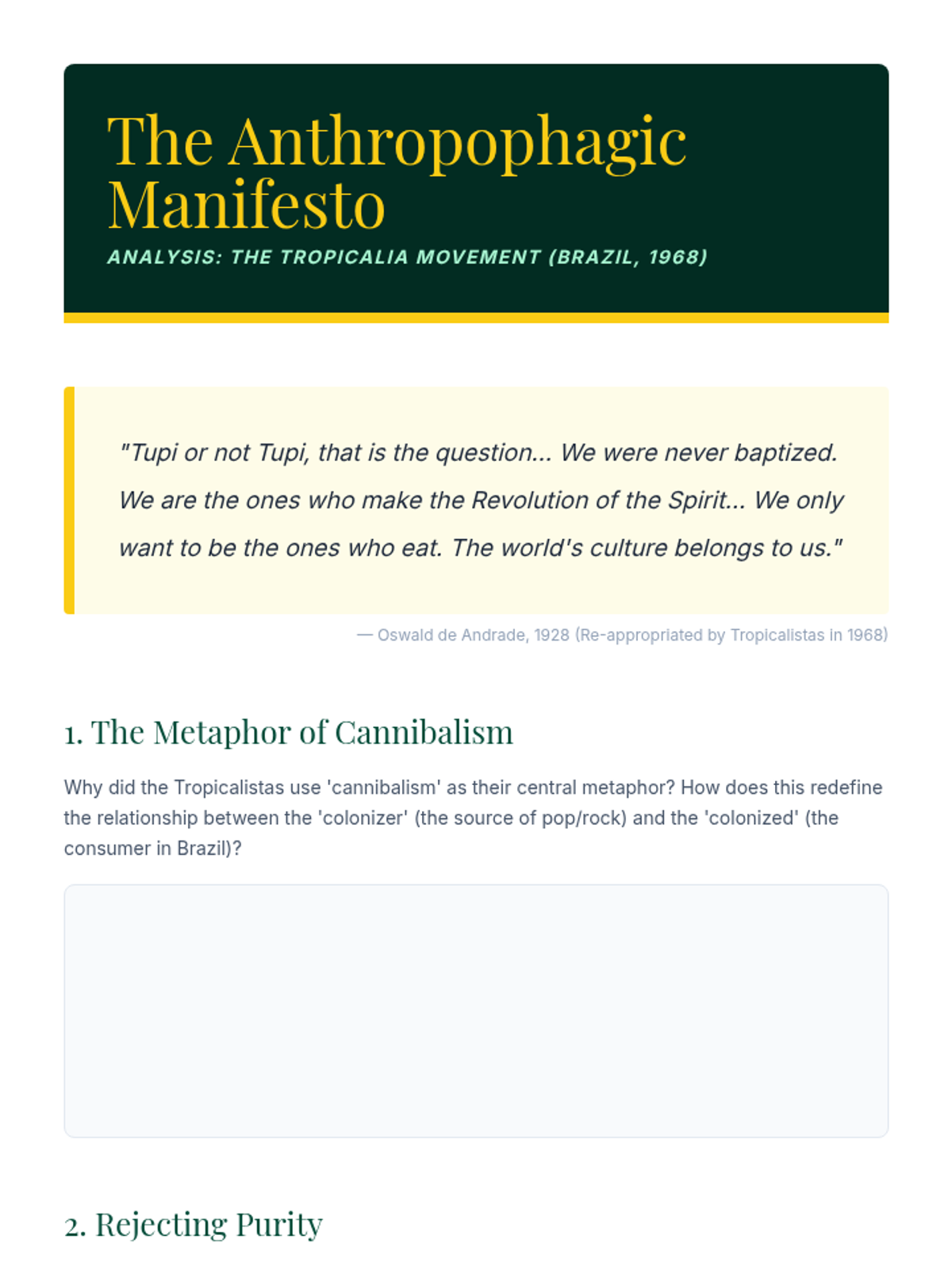
Applying post-colonial theory to late 20th-century global pop, exploring how formerly colonized nations reclaimed and remixed colonial instruments to assert cultural identity.
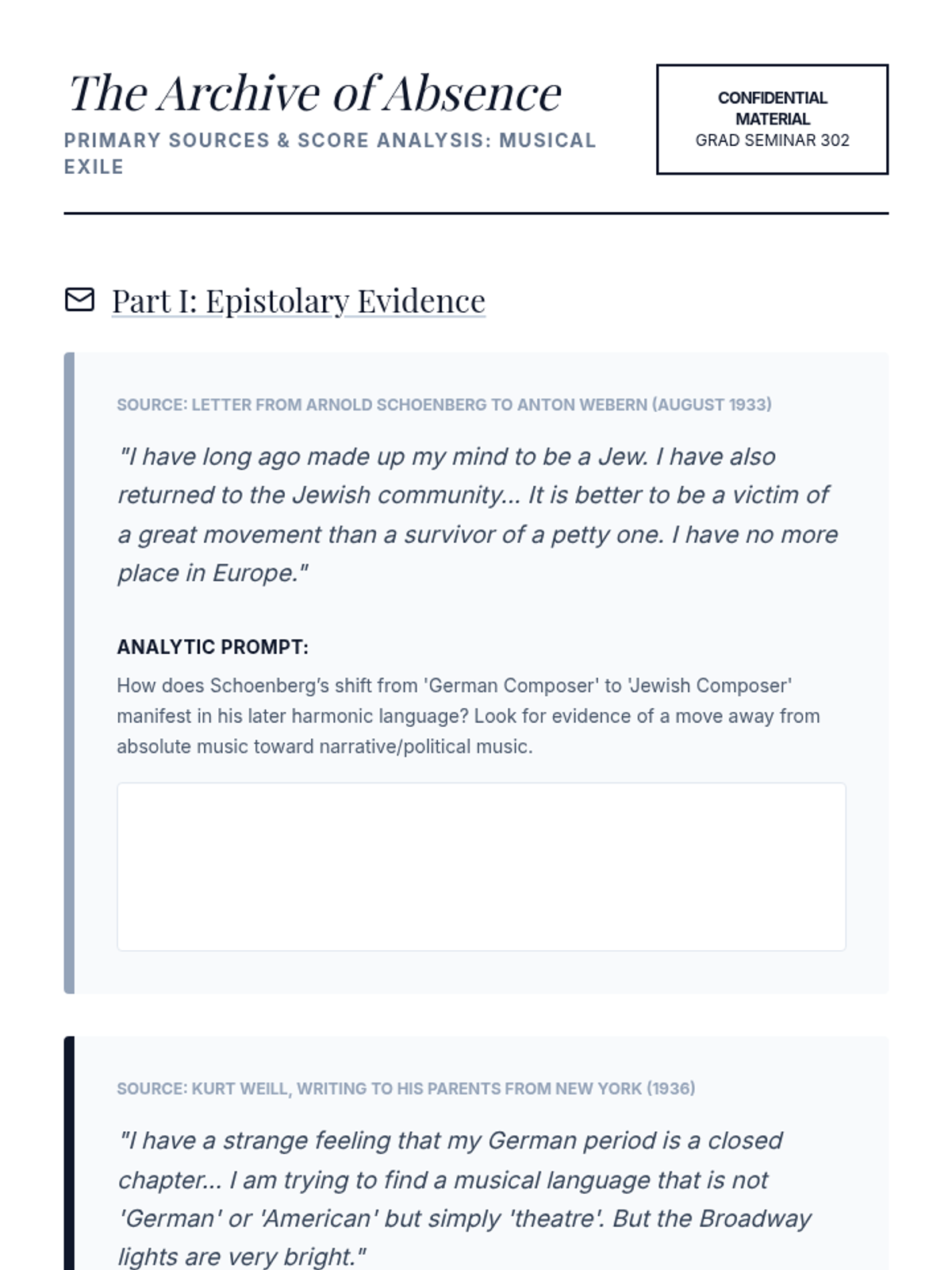
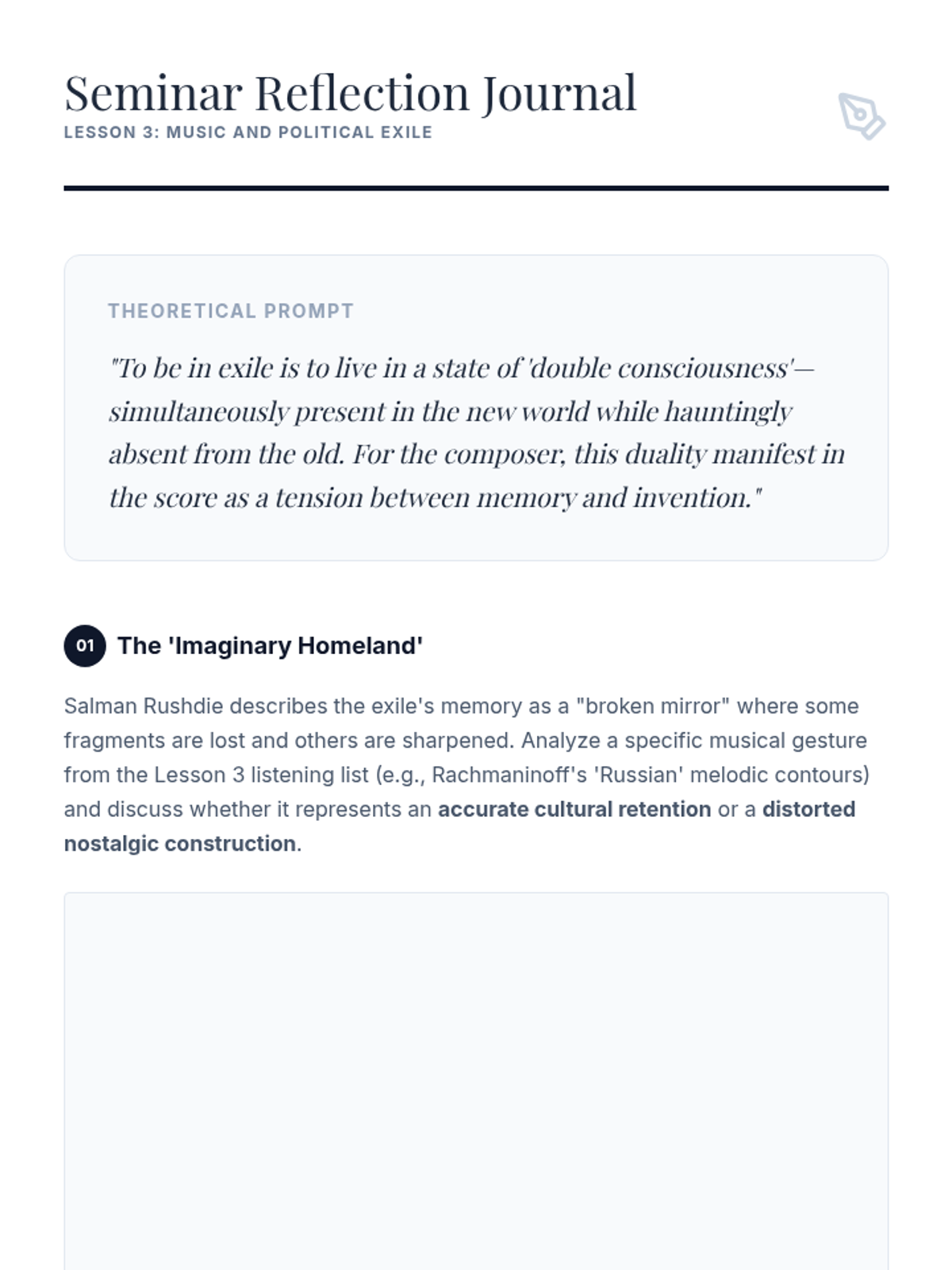
Investigating the impact of political displacement on 20th-century composers, examining how exile and the search for 'homeland' manifest in musical style and creative output.
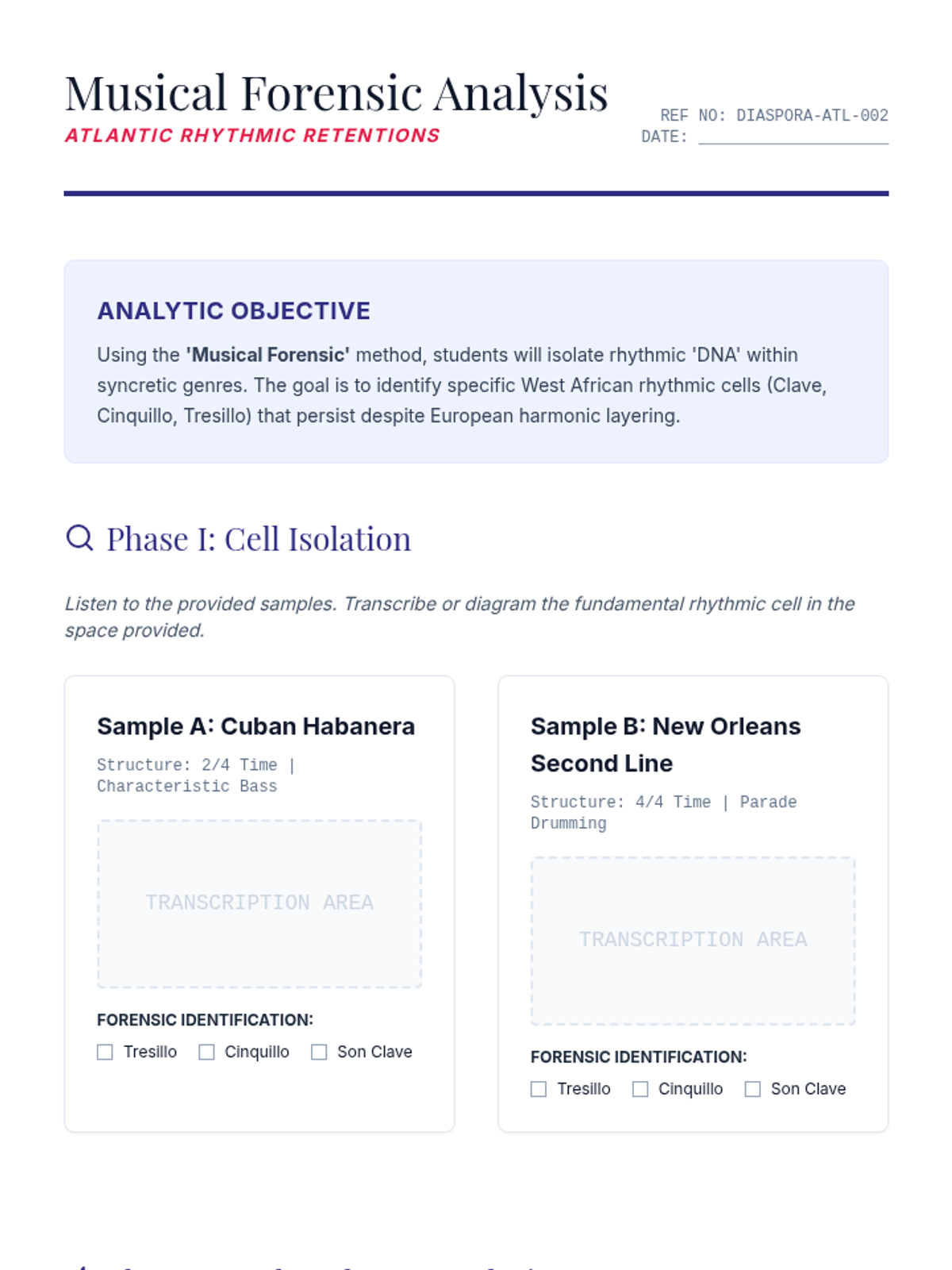
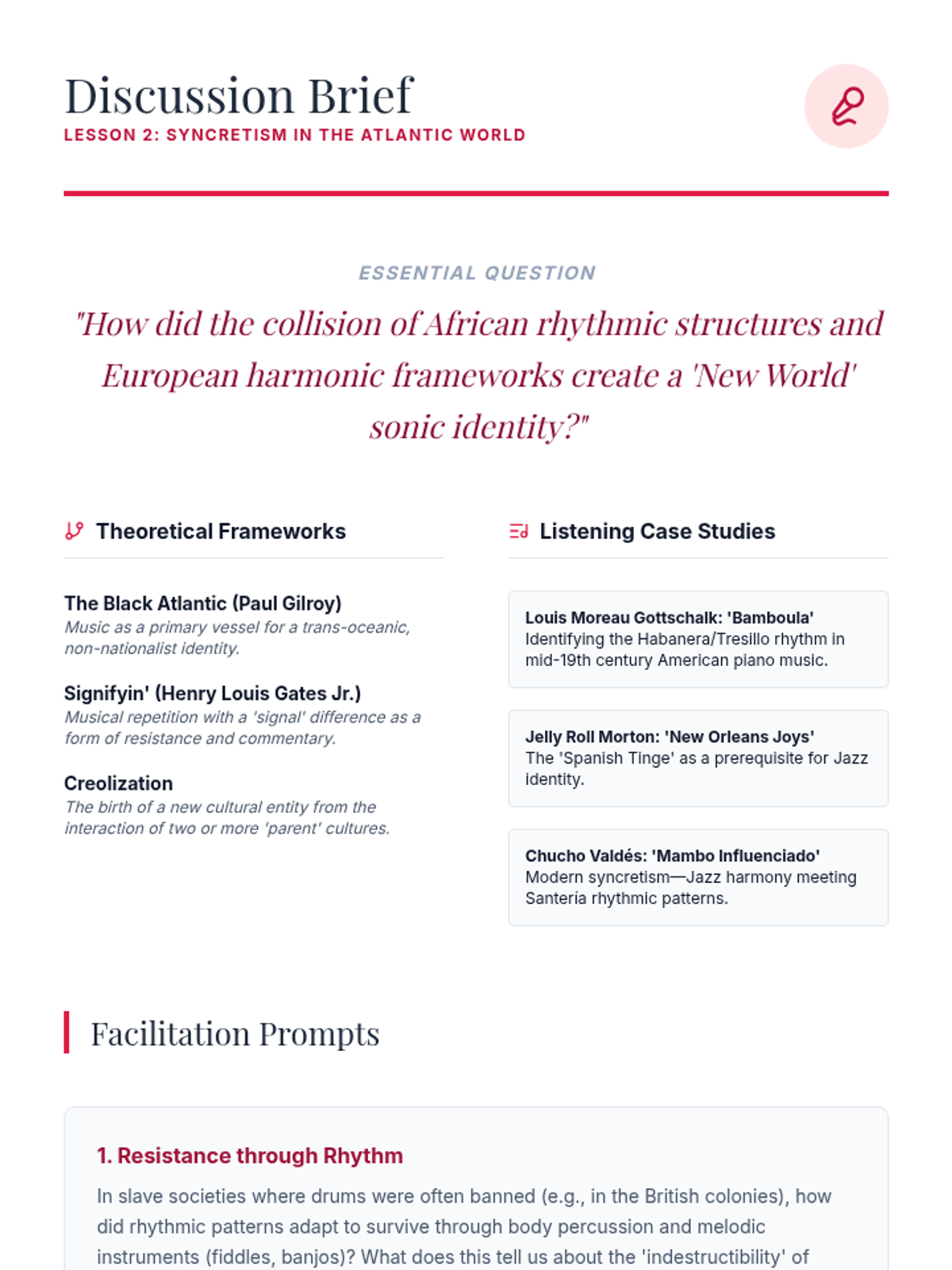
An analysis of the collision between African rhythmic structures and European harmonic traditions in the Americas, focusing on the genesis of syncretic genres like Jazz and Habanera.
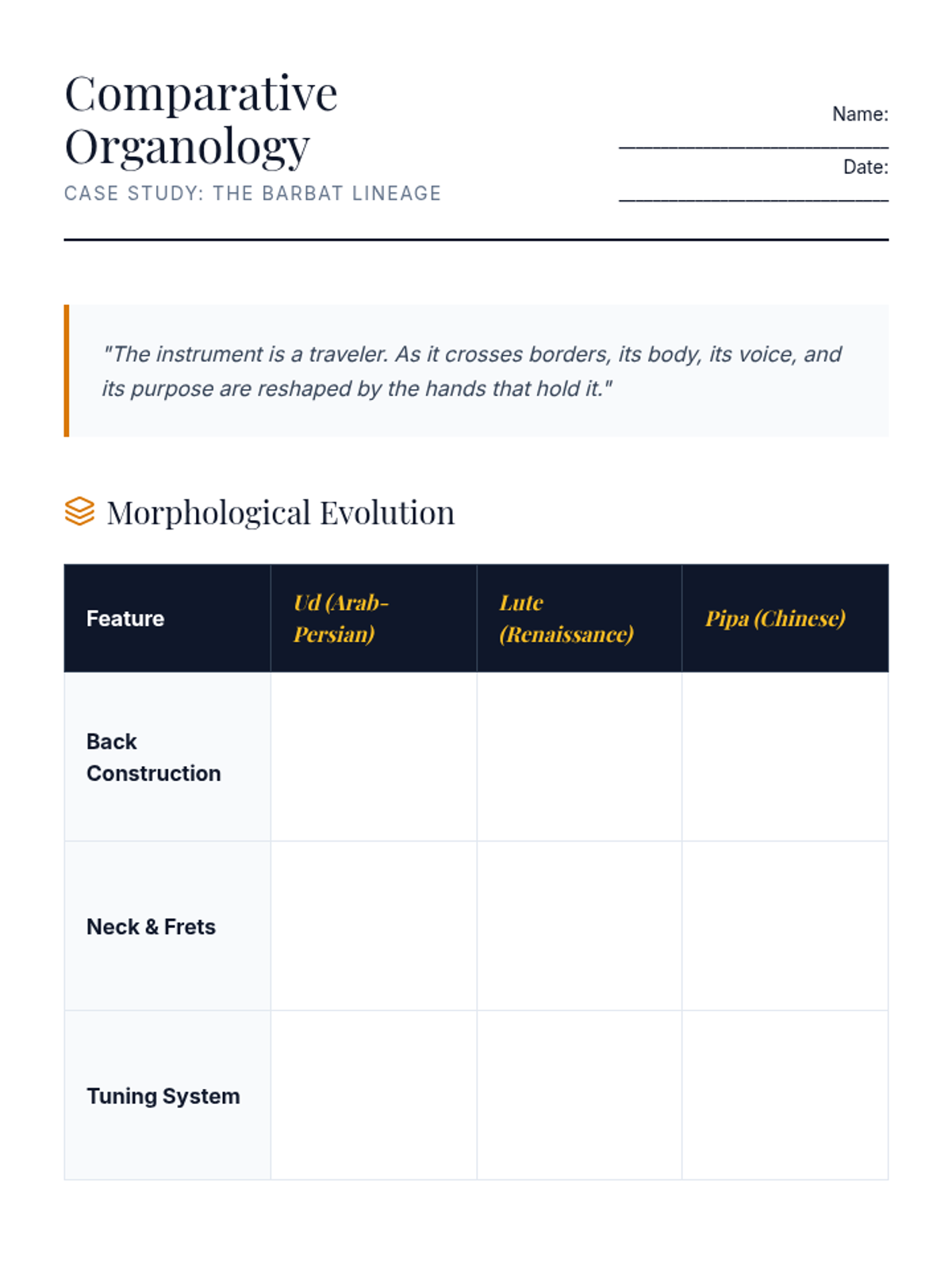
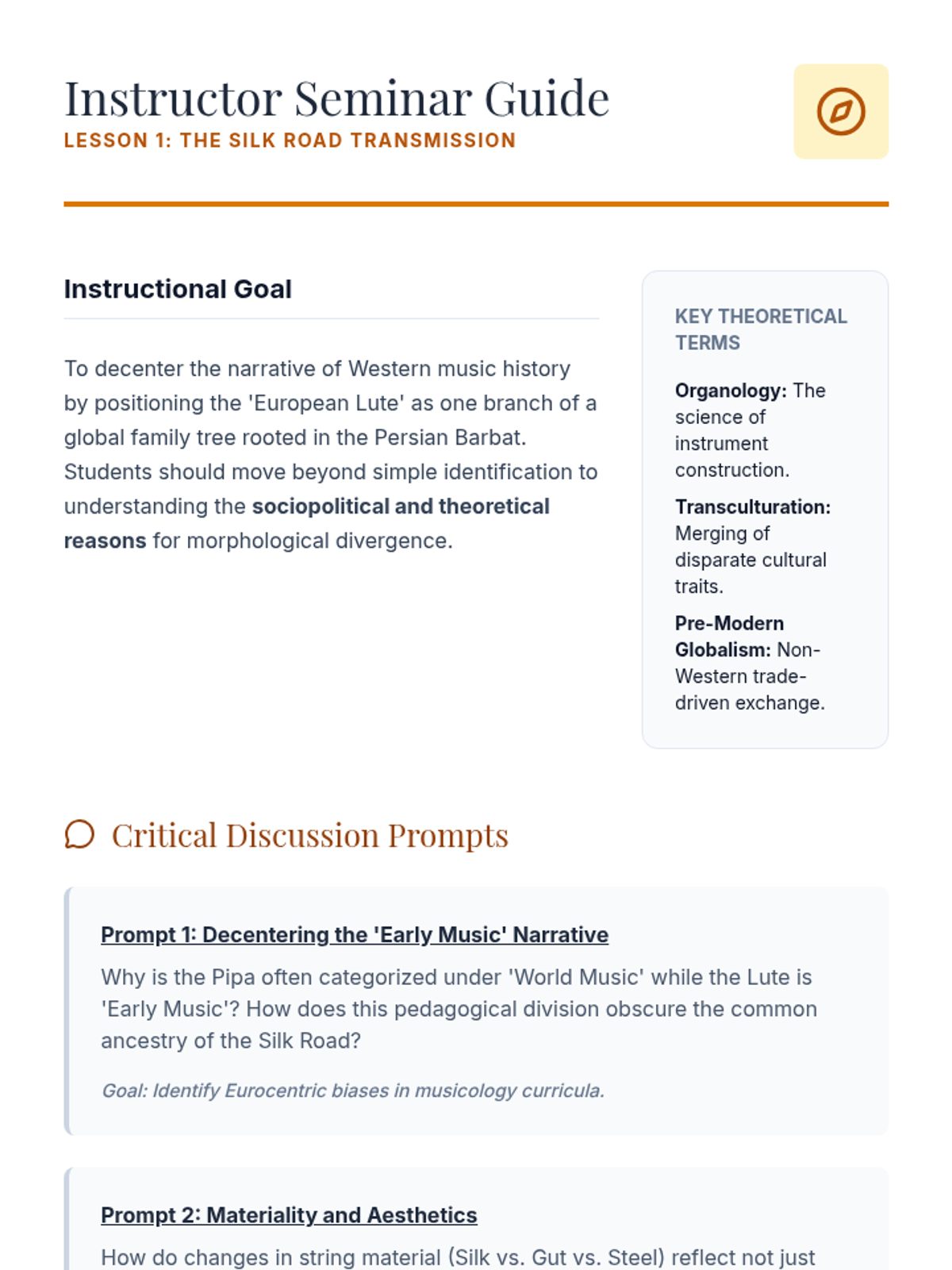
Students trace the organological evolution of string instruments along the Silk Road, exploring how pre-modern globalization facilitated trans-cultural musical flow between East and West.
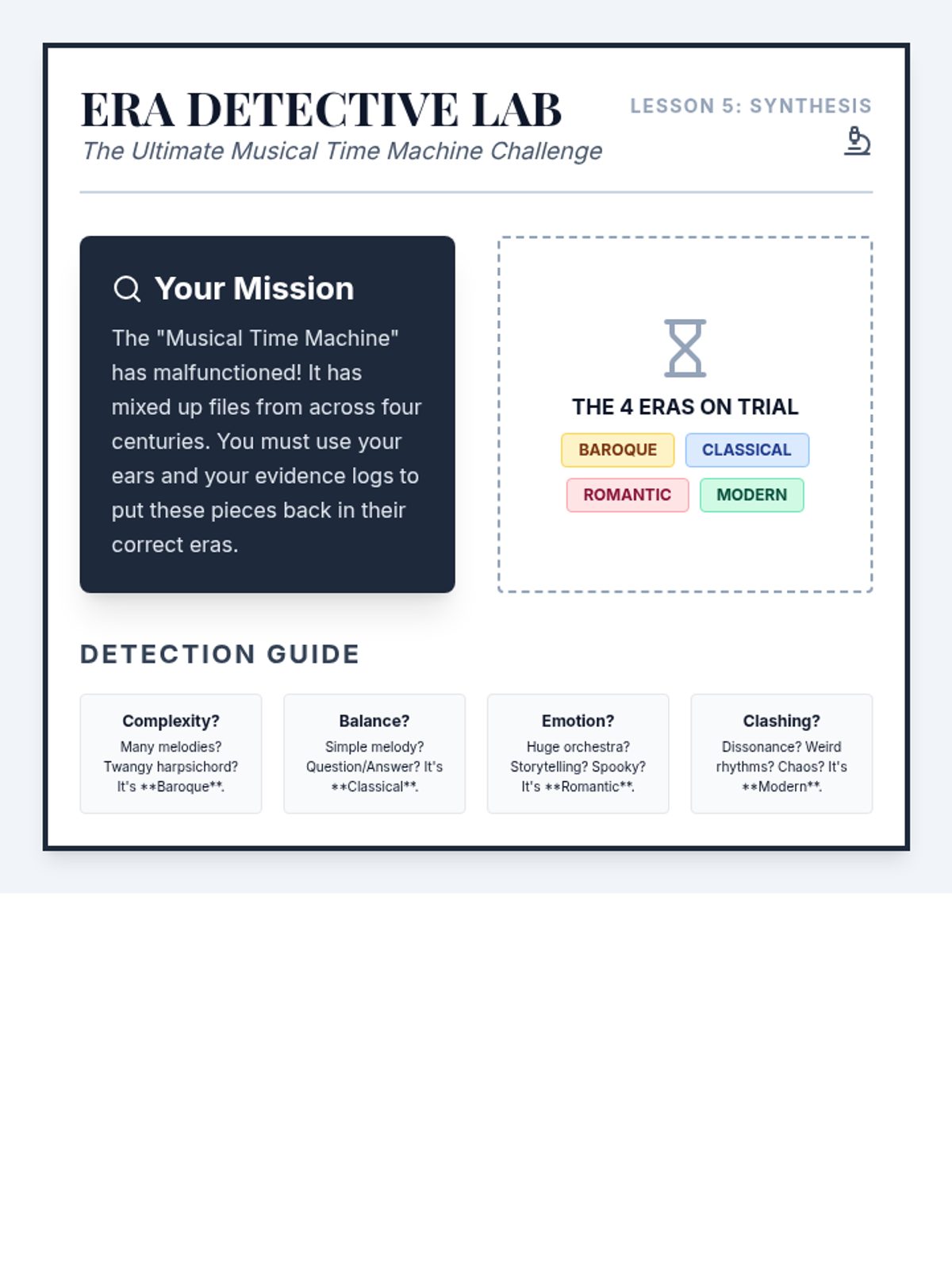
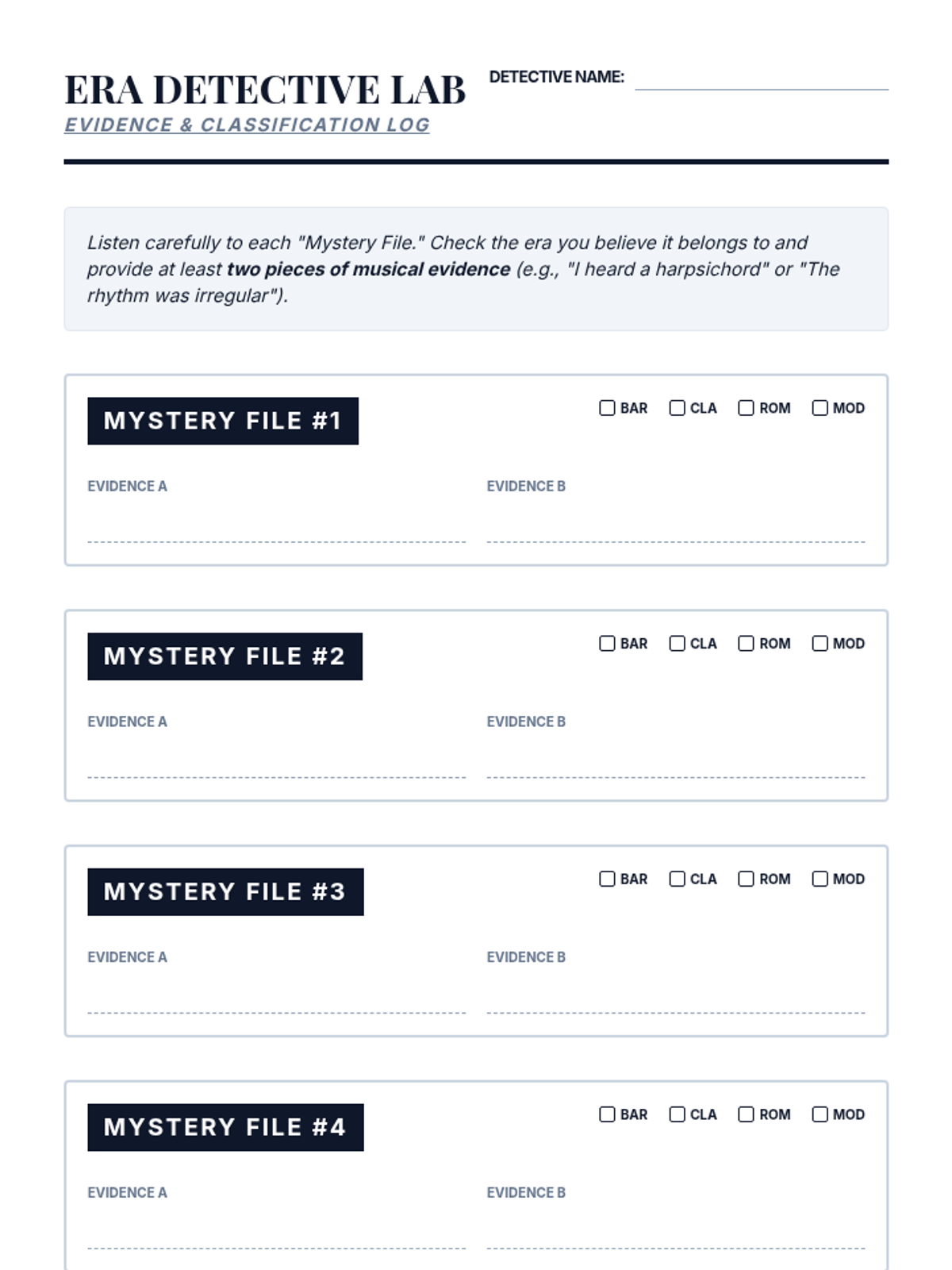
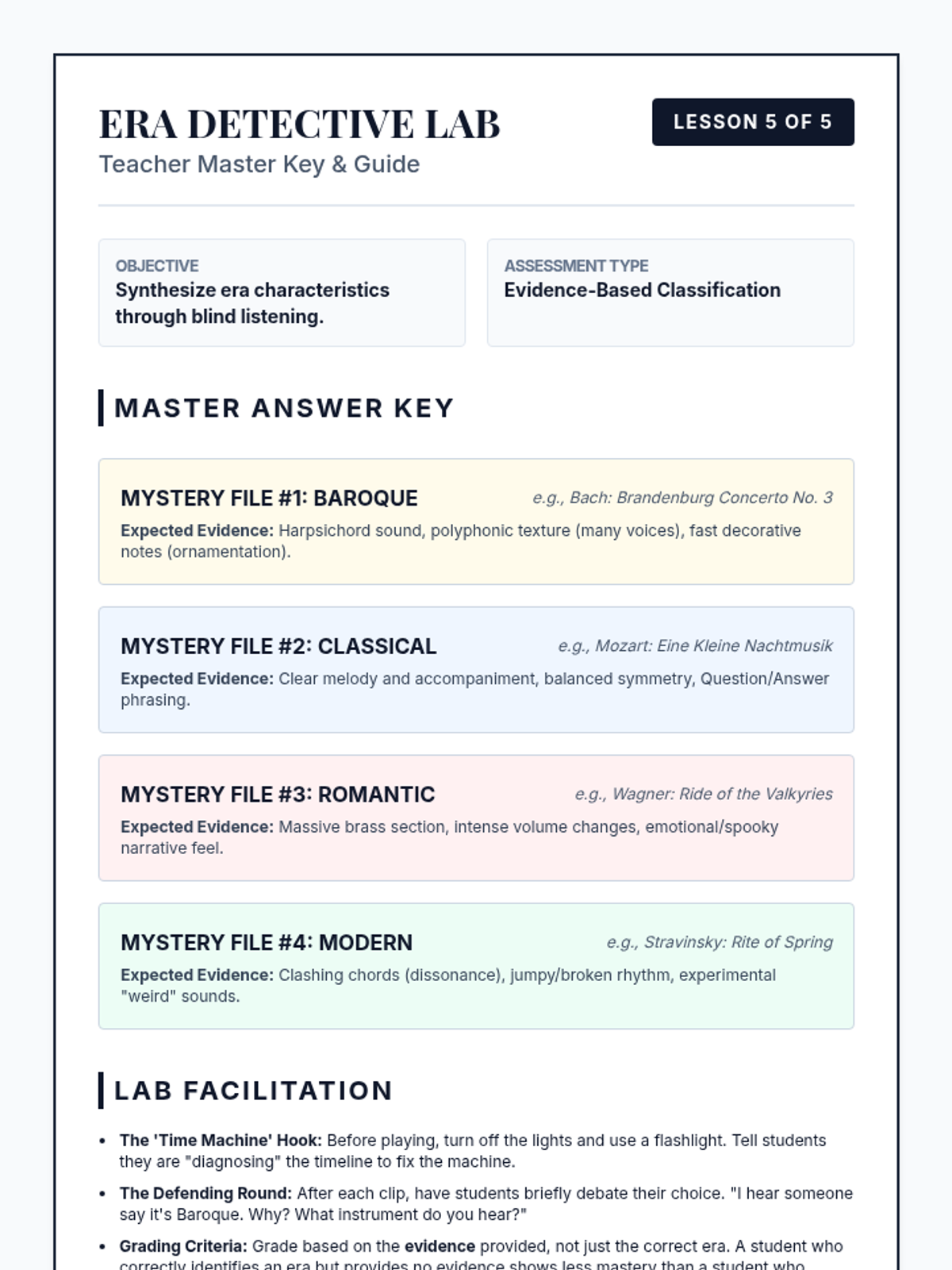
A synthesis lesson where students participate in a blind listening challenge to categorize excerpts into correct eras.
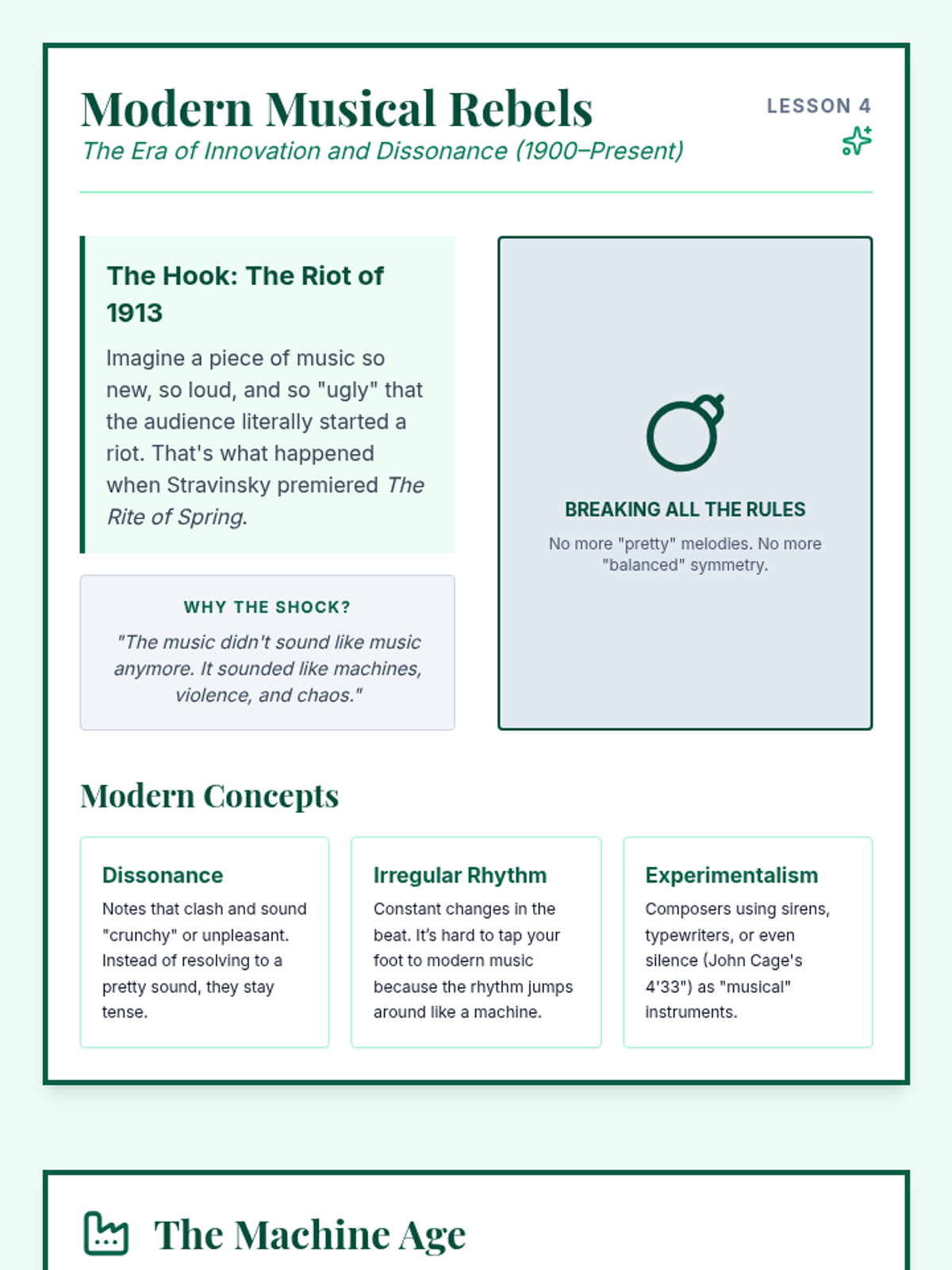
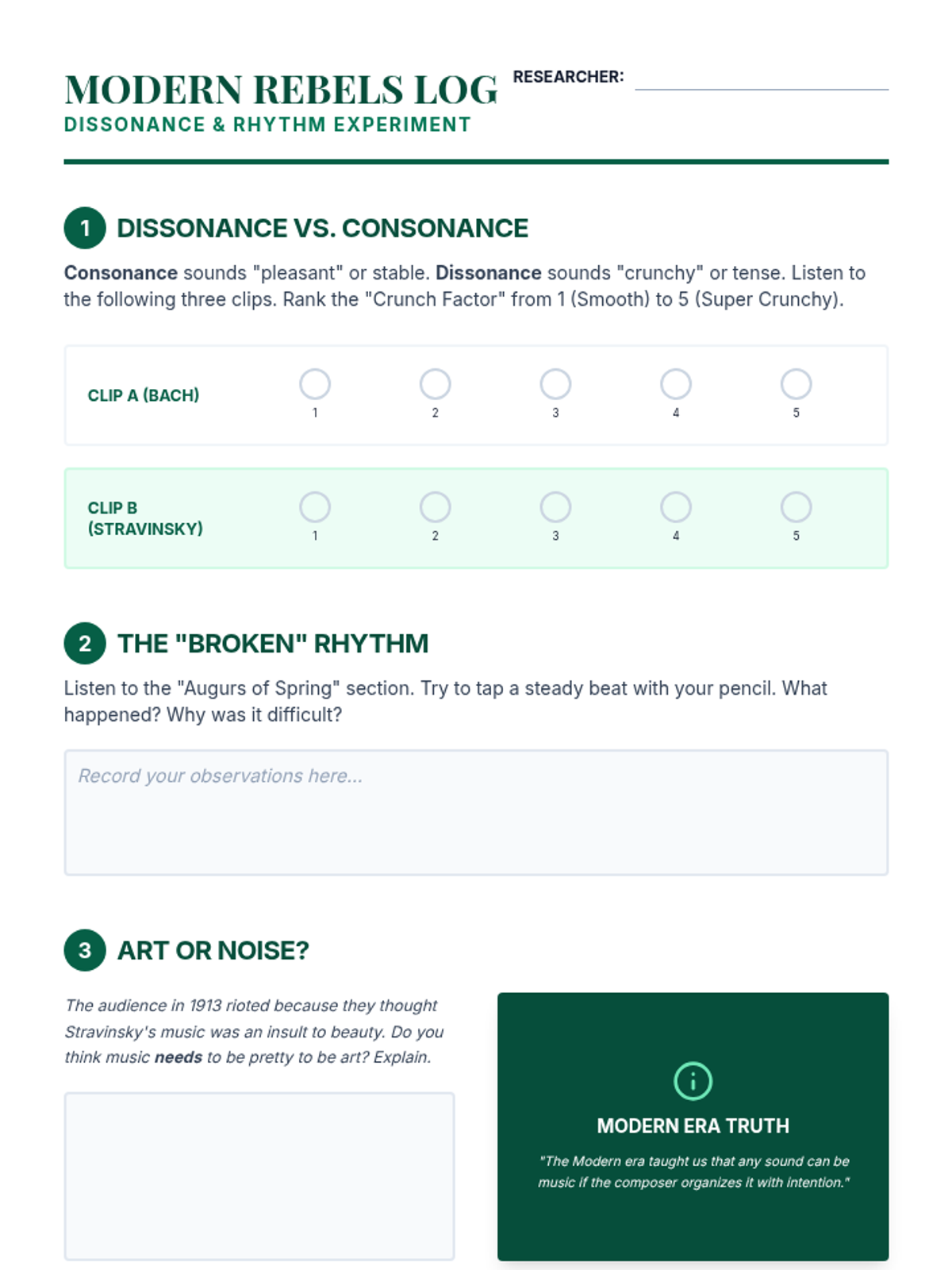
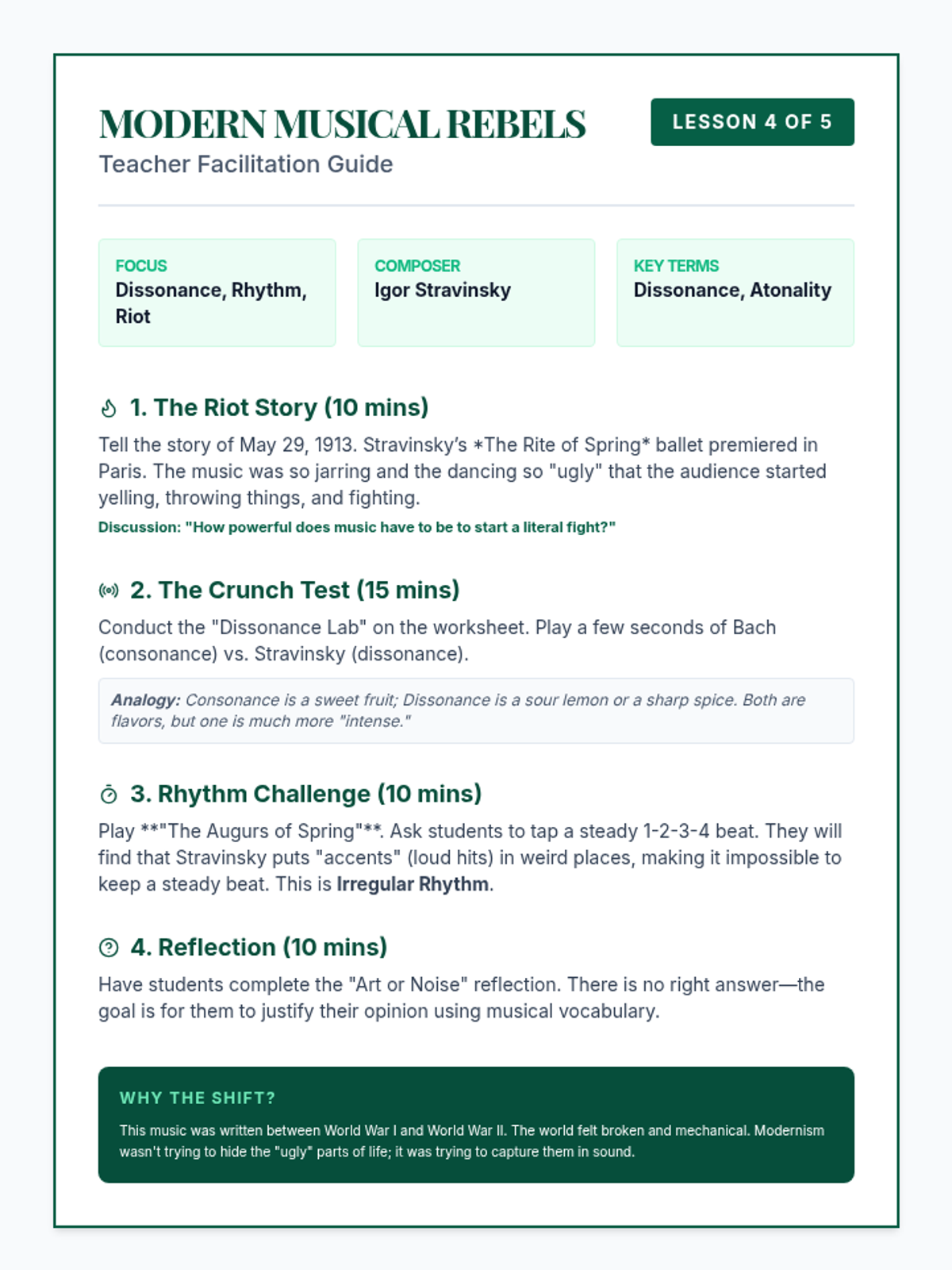
Cover the radical shift in the 1900s where composers broke traditional rules of harmony and rhythm.
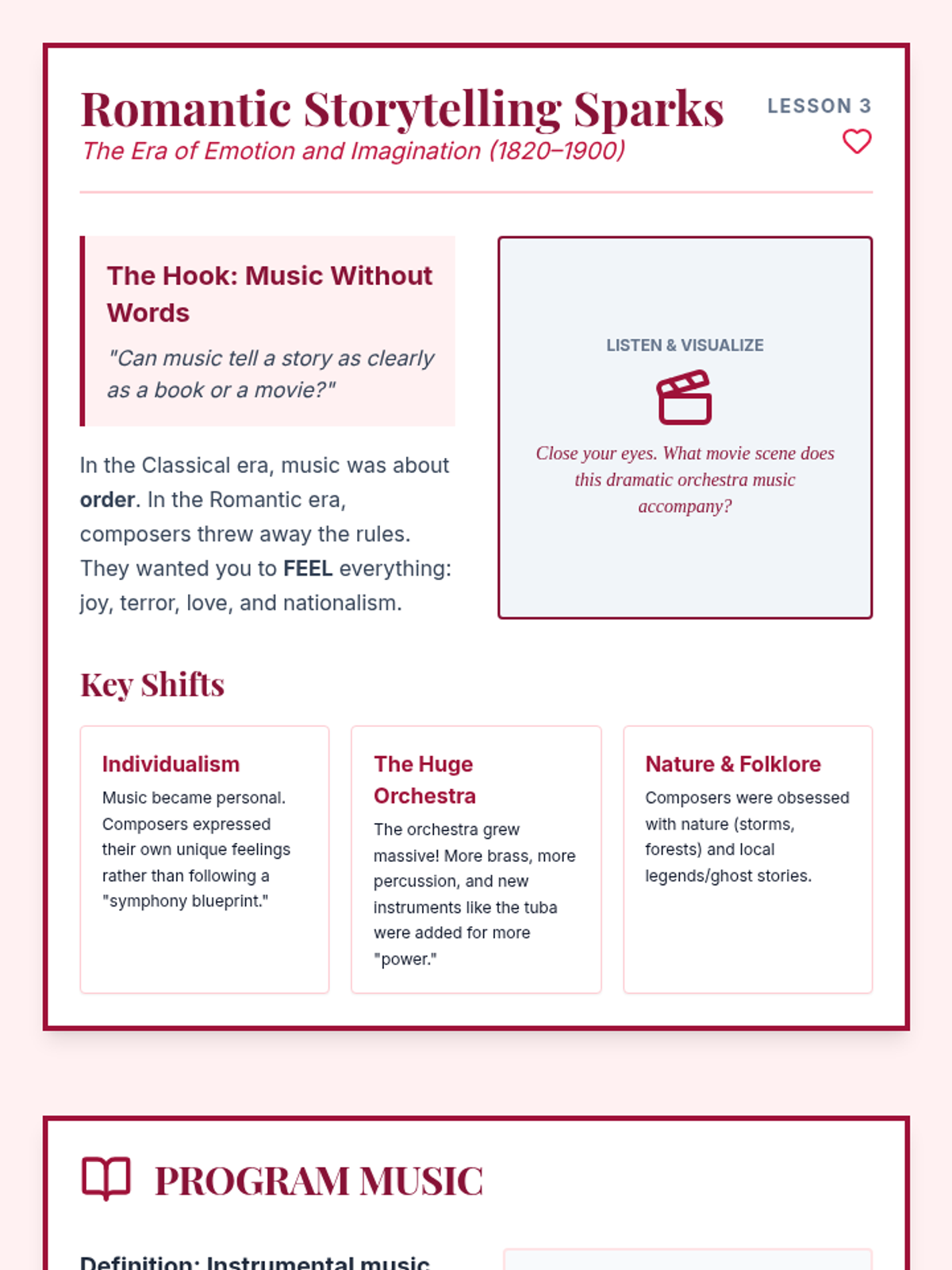
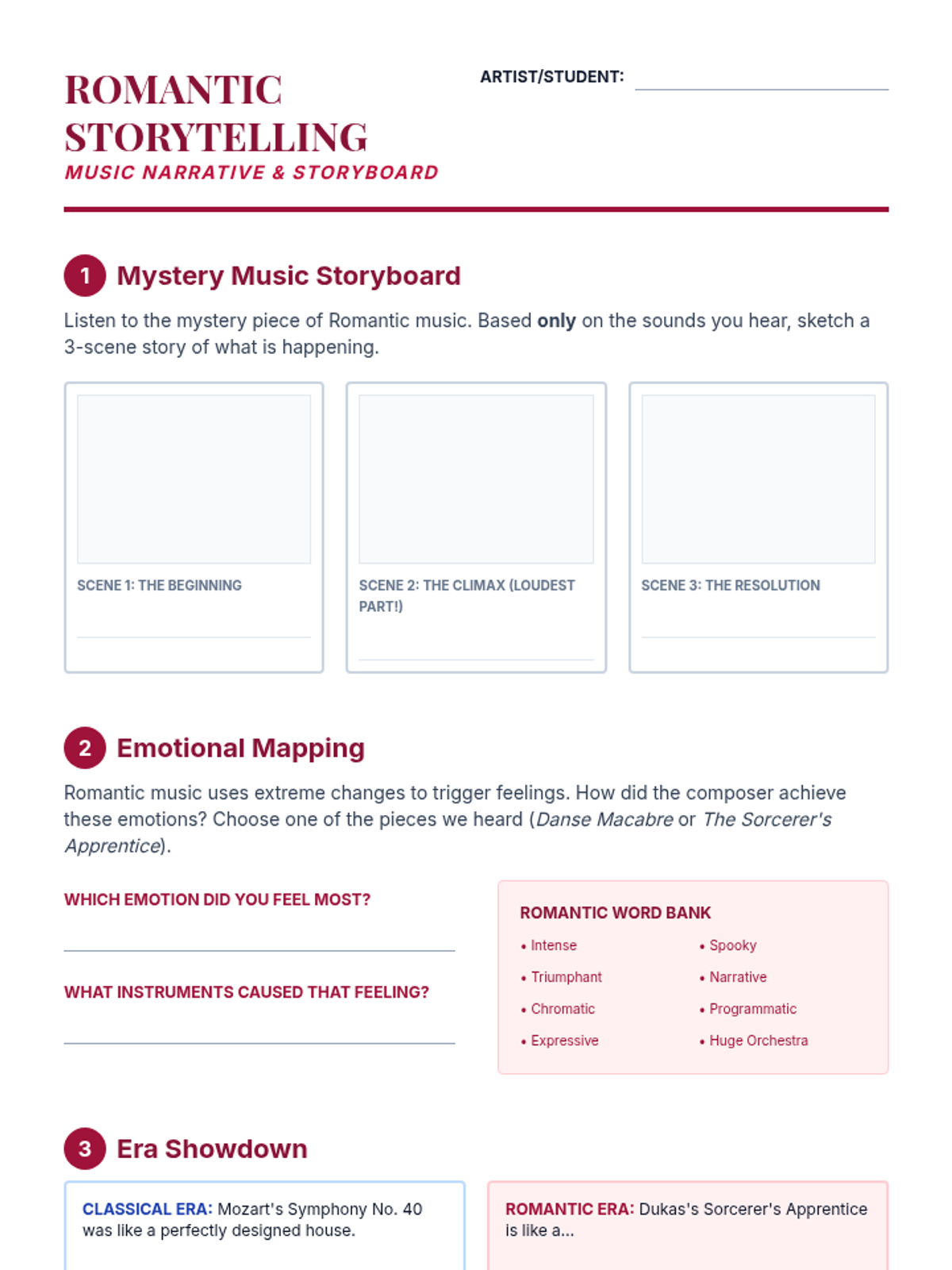
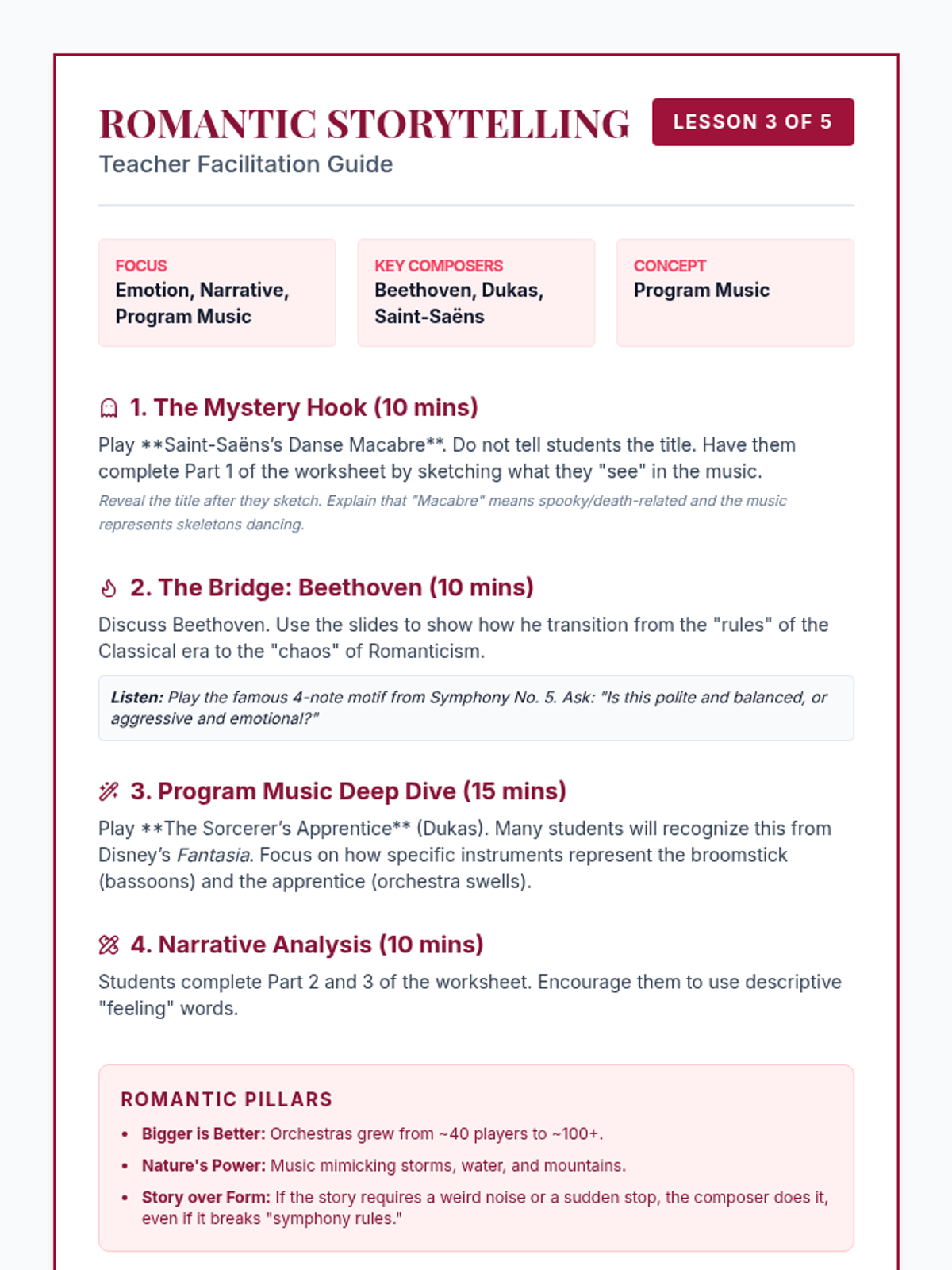
Investigate how music shifted towards intense emotion and storytelling (Program Music) during the Romantic era.
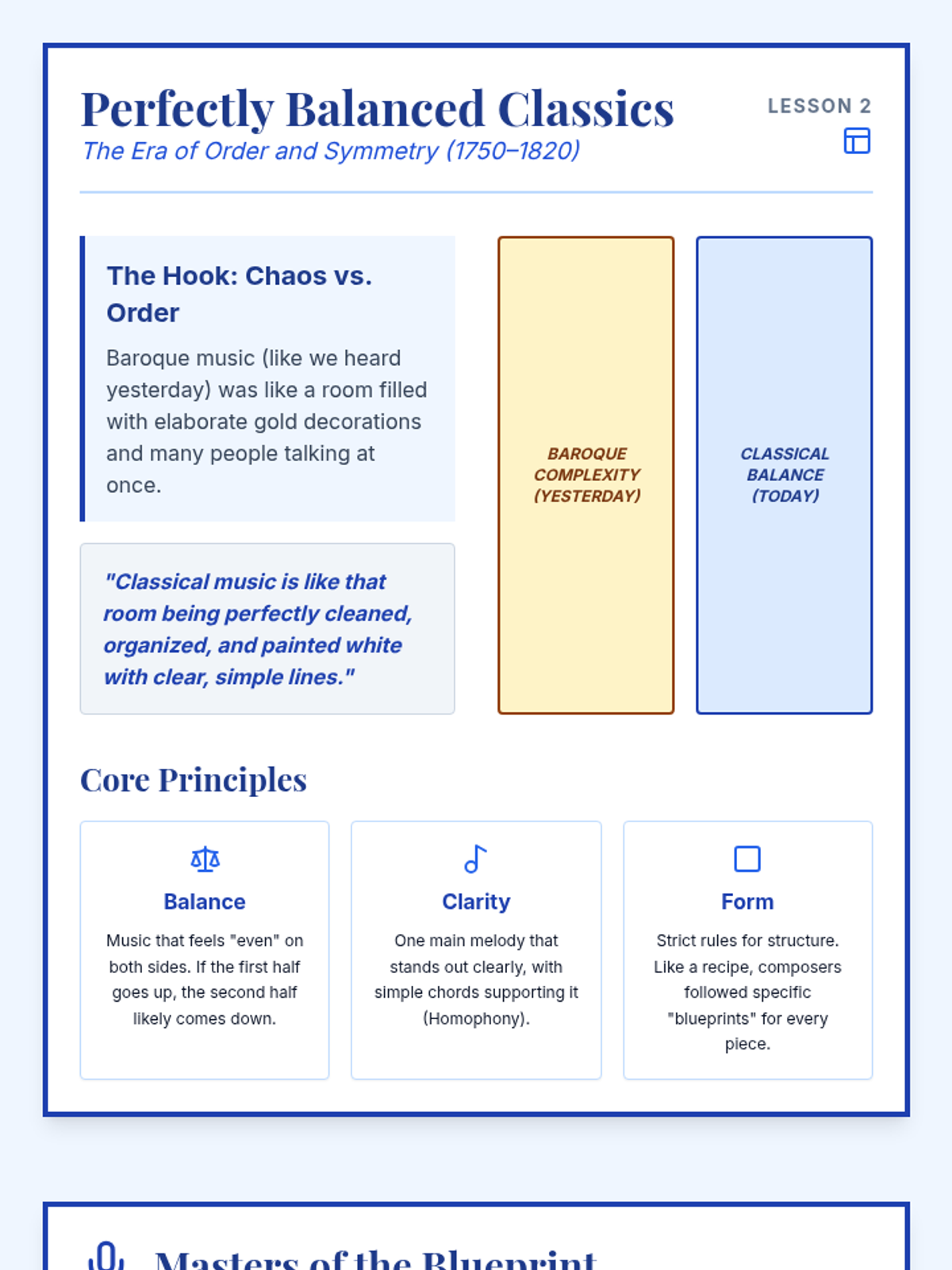
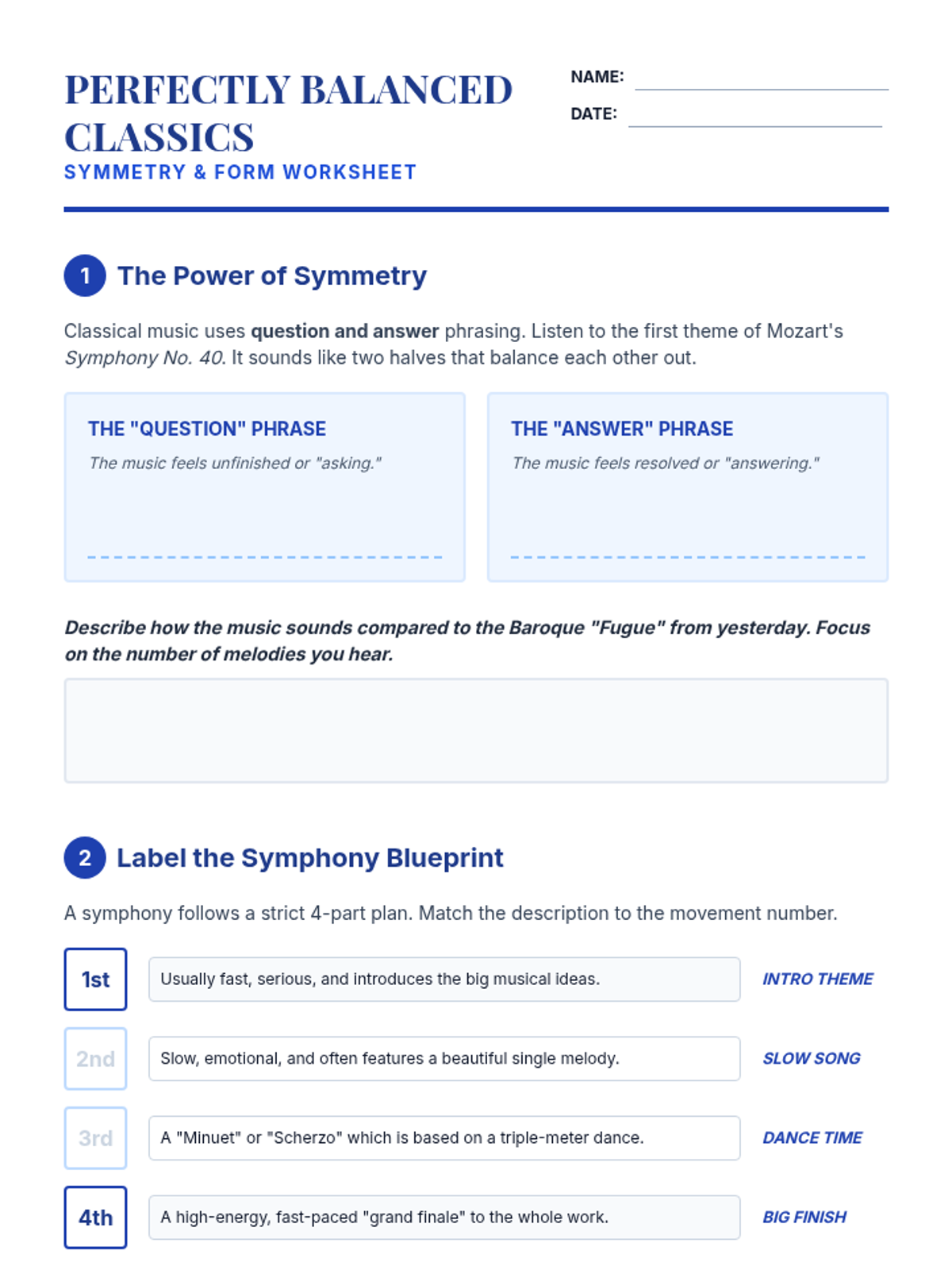
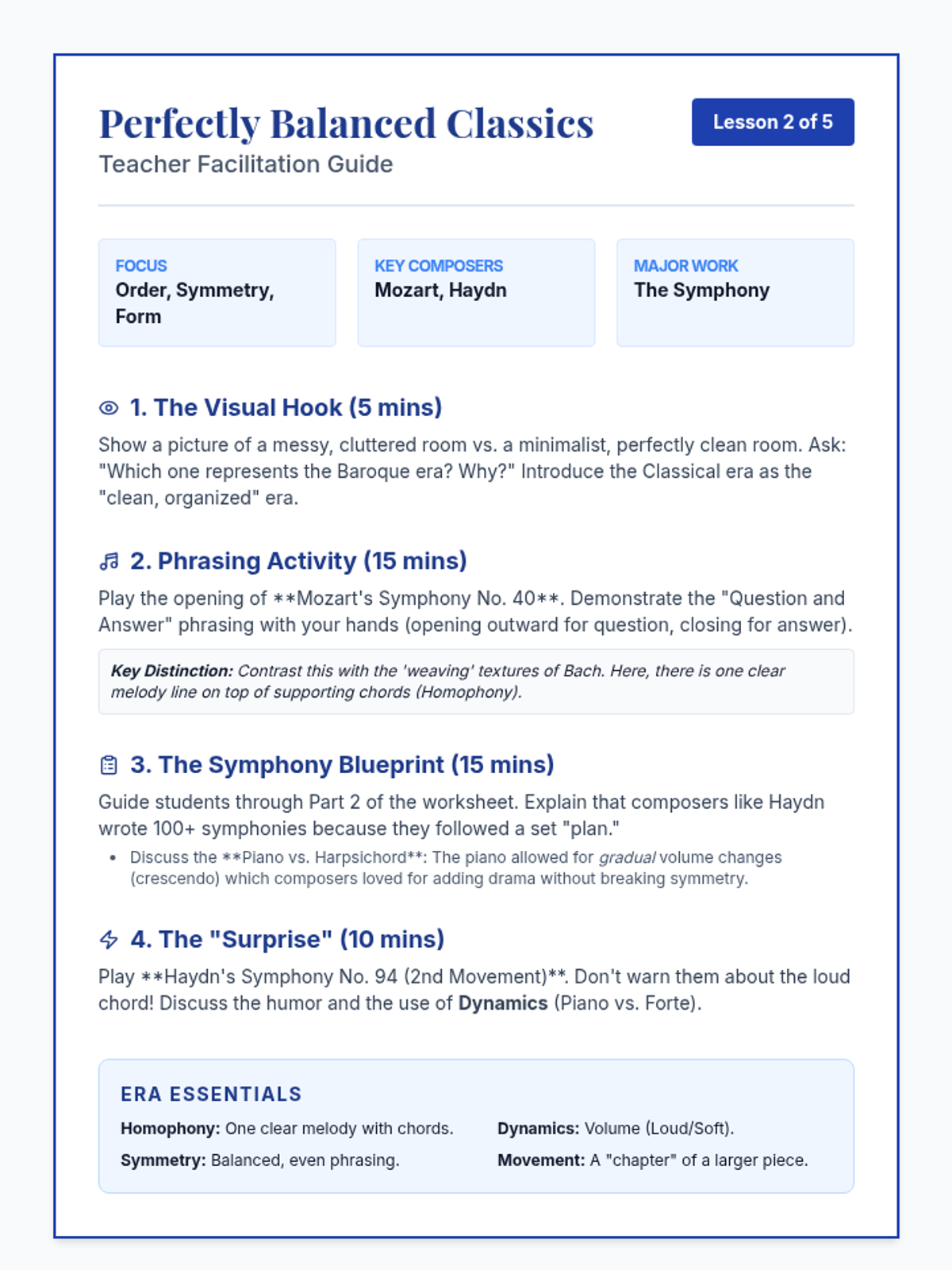
Introduce the Classical era's obsession with order, symmetry, and clear melody through Mozart and Haydn.
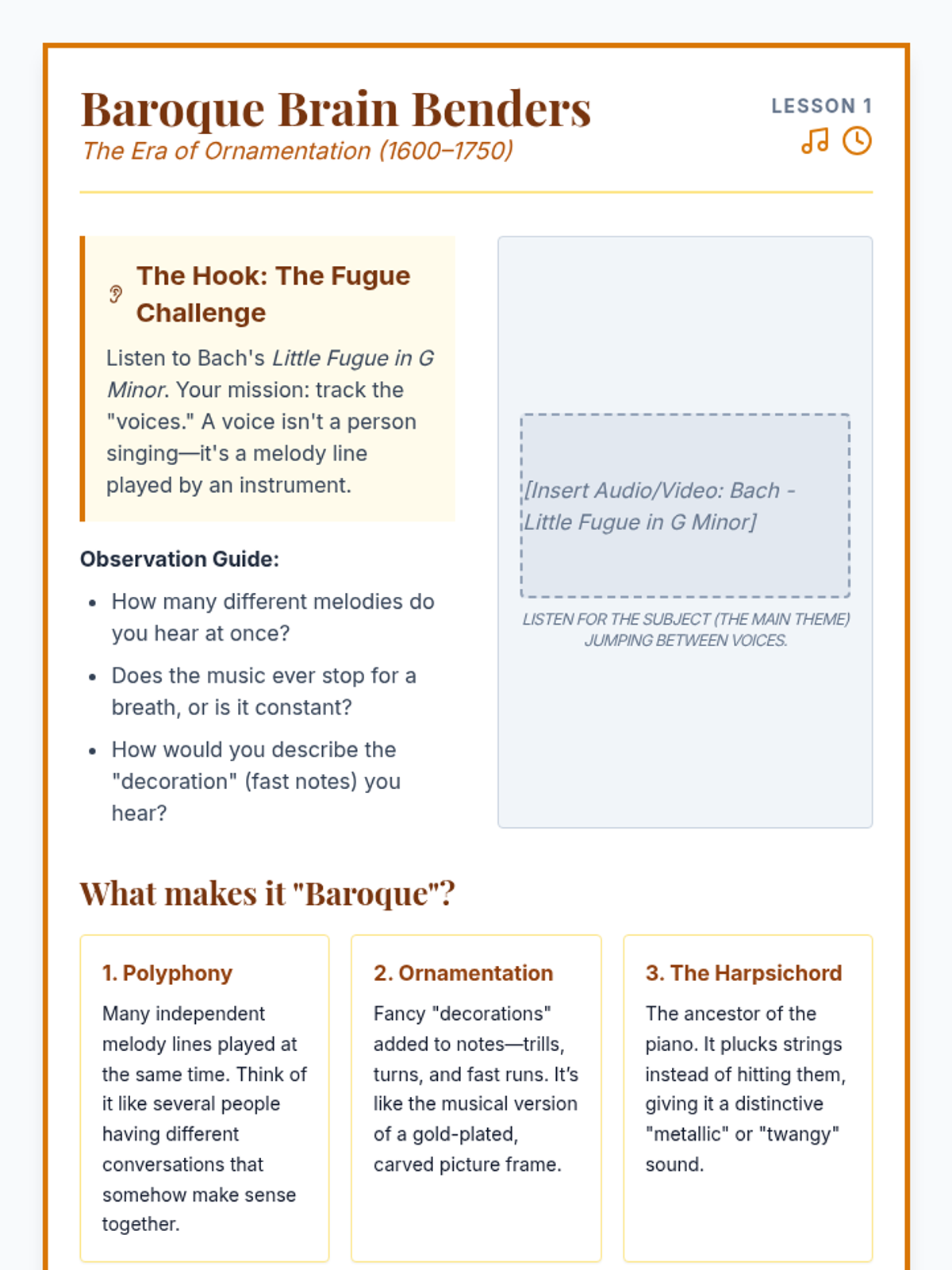
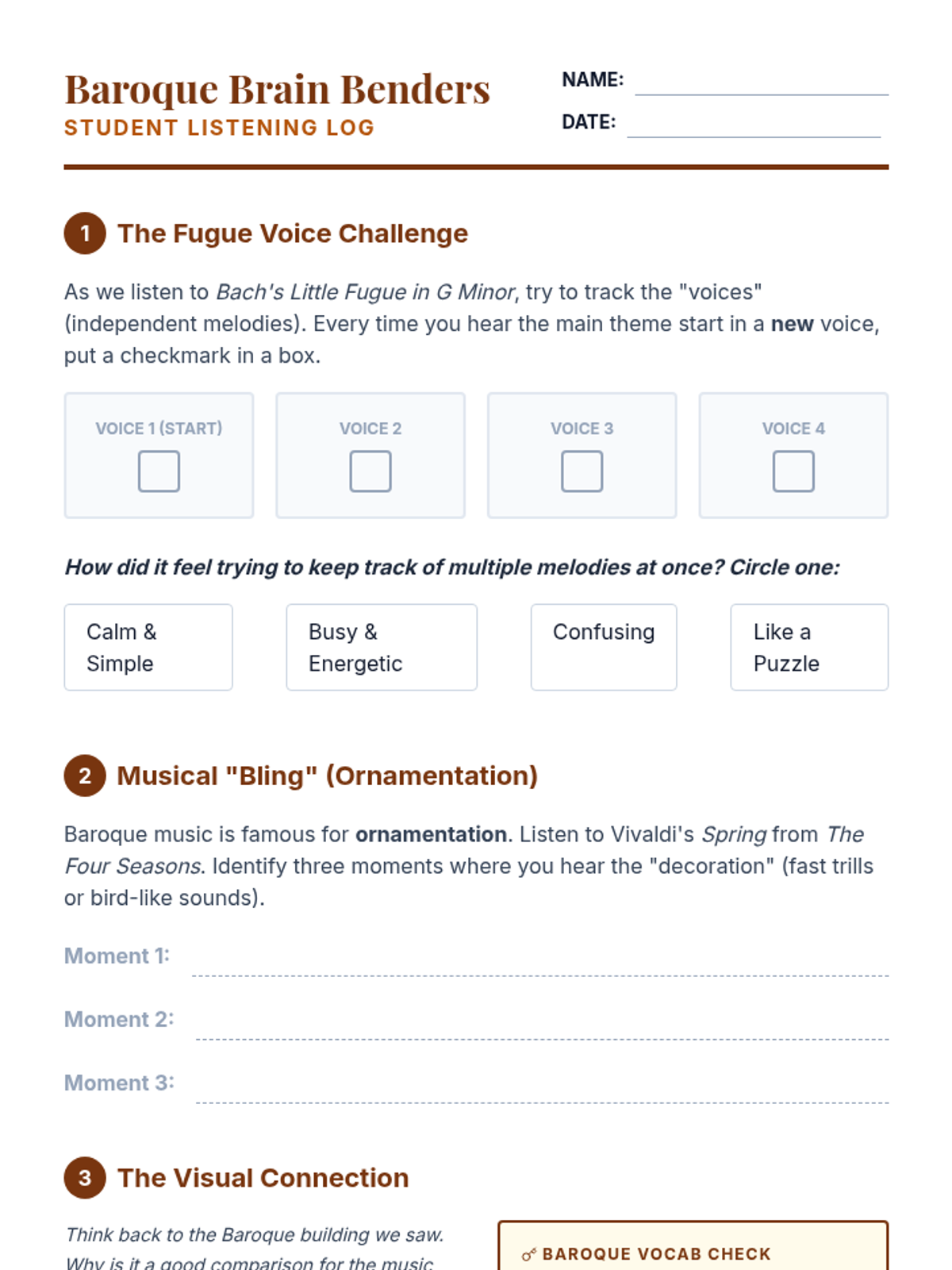
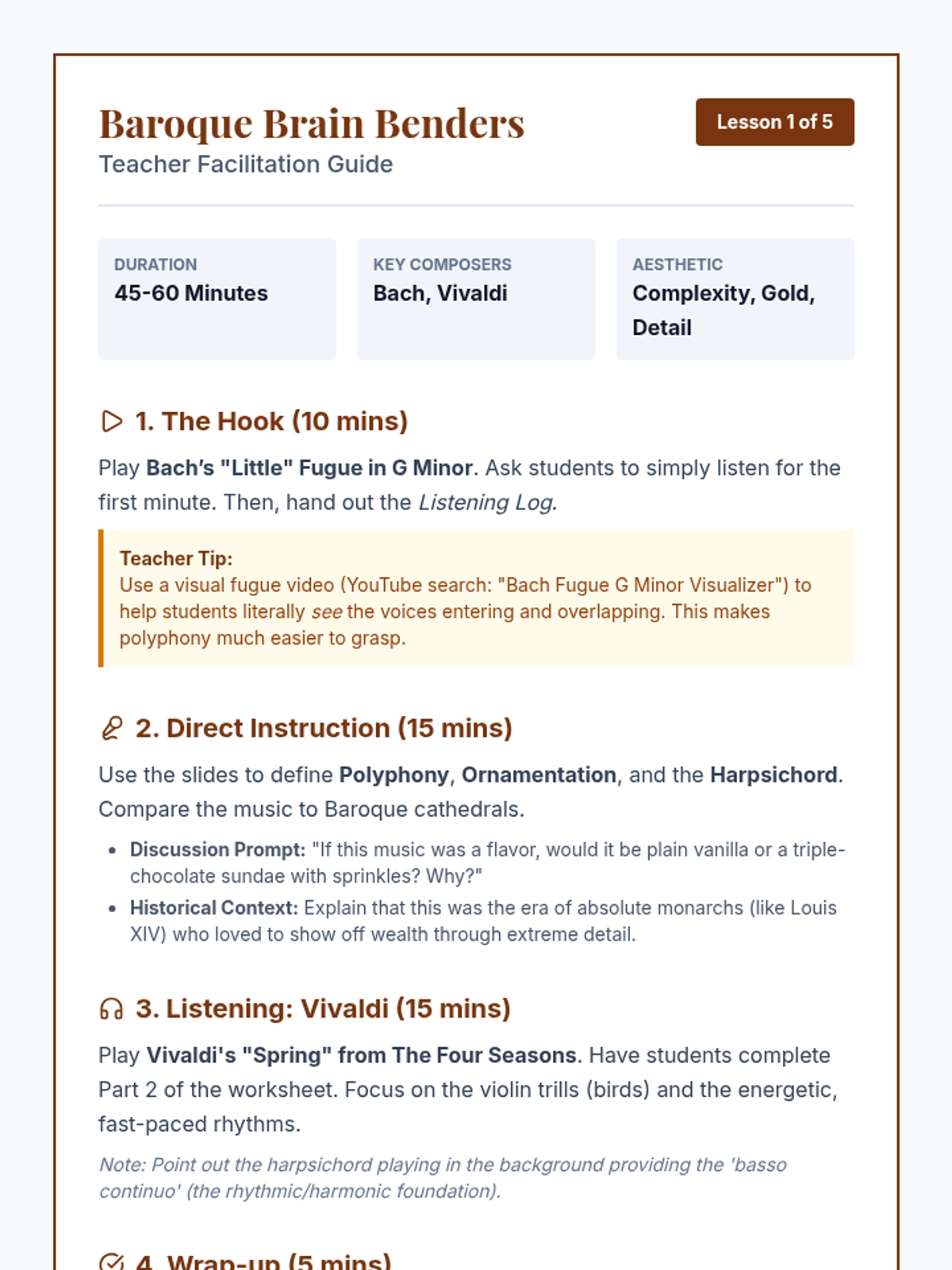
Explore the ornate style of the Baroque period through the works of Bach and Vivaldi, focusing on polyphony and harpsichord.