Develops technical proficiency and creative movement skills across various styles. Examines choreographic principles alongside the historical and cultural origins of diverse global dance forms.
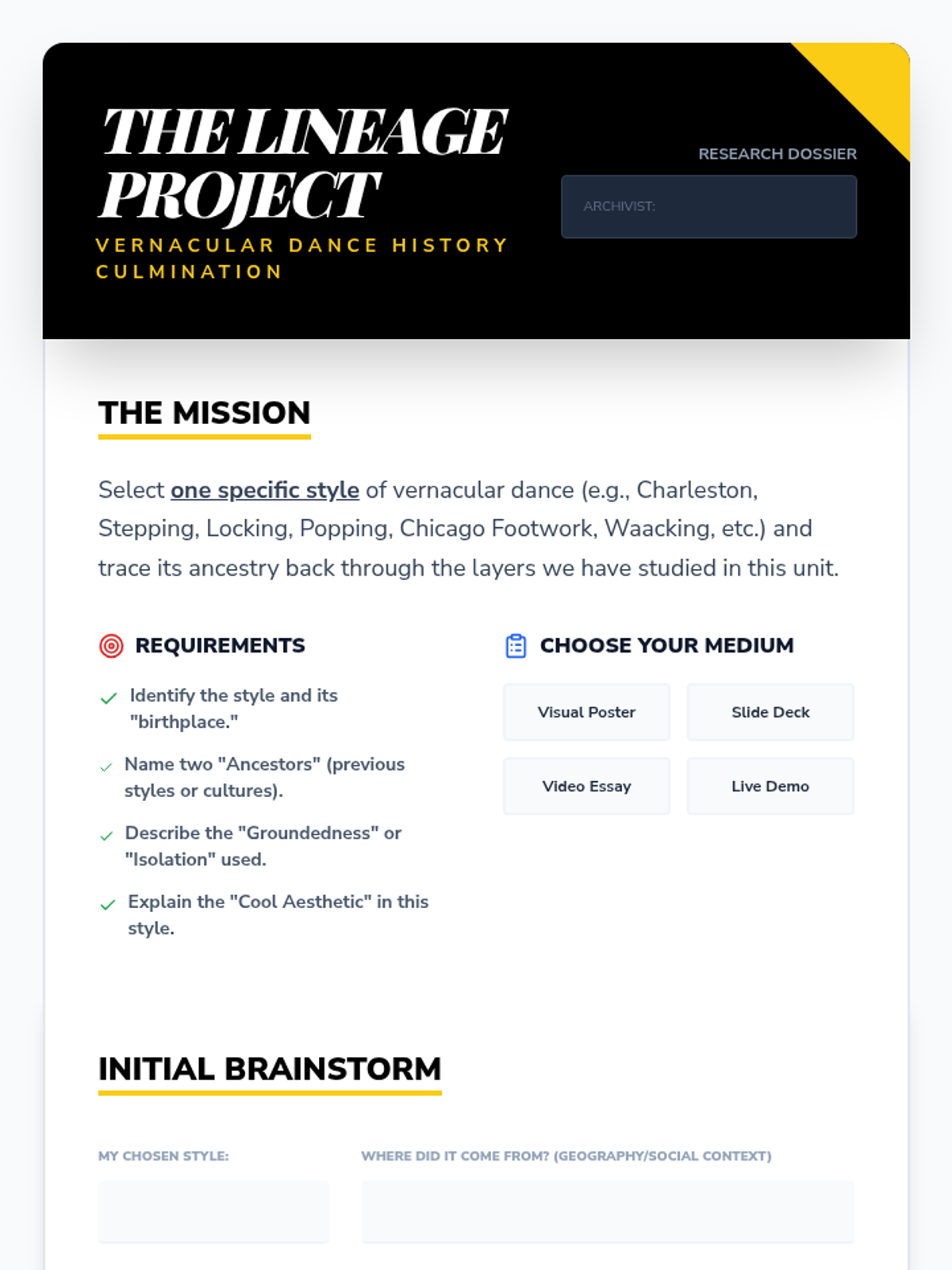
A final mastery-based lesson where students present research findings through performance-lectures.
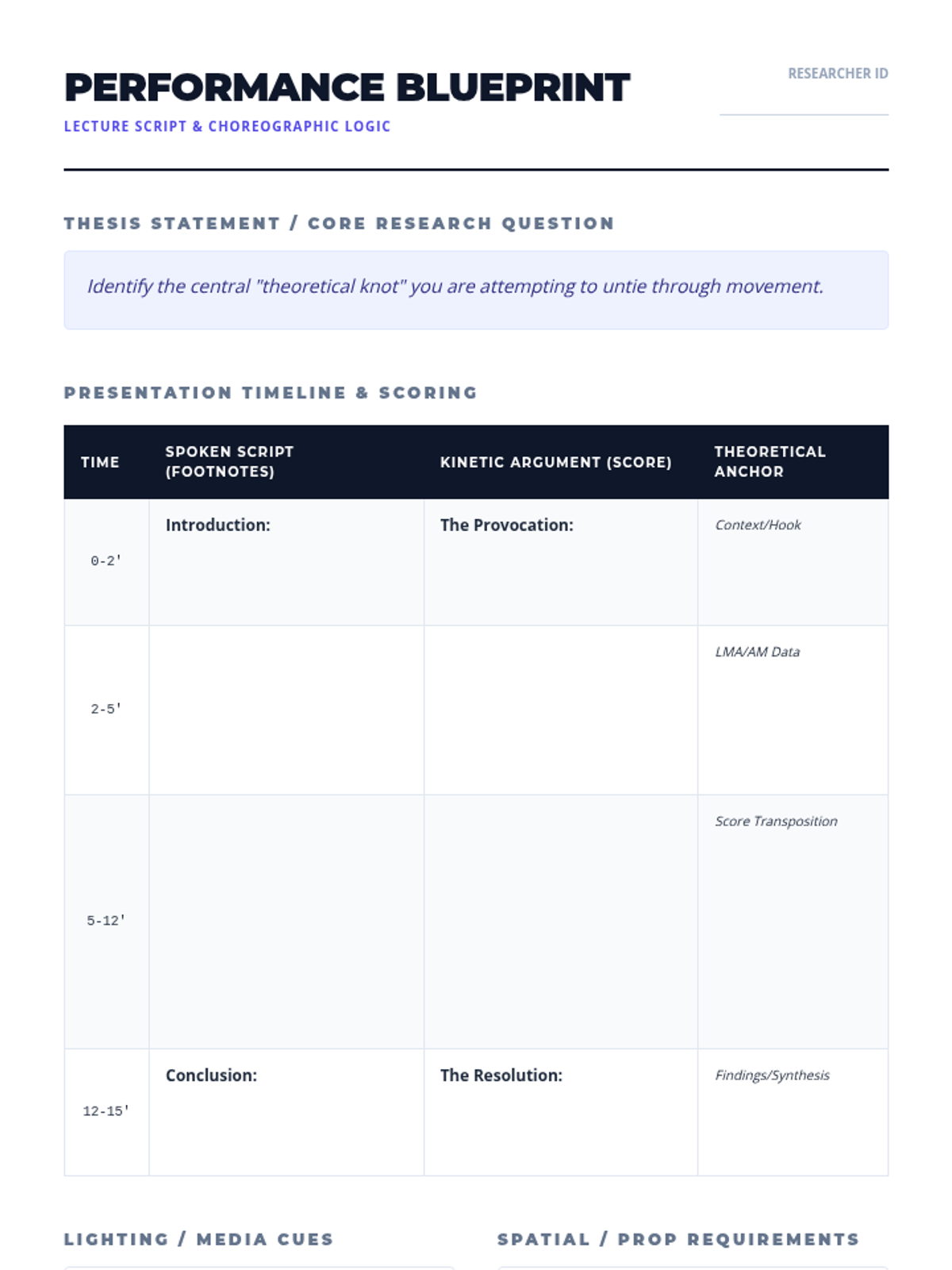
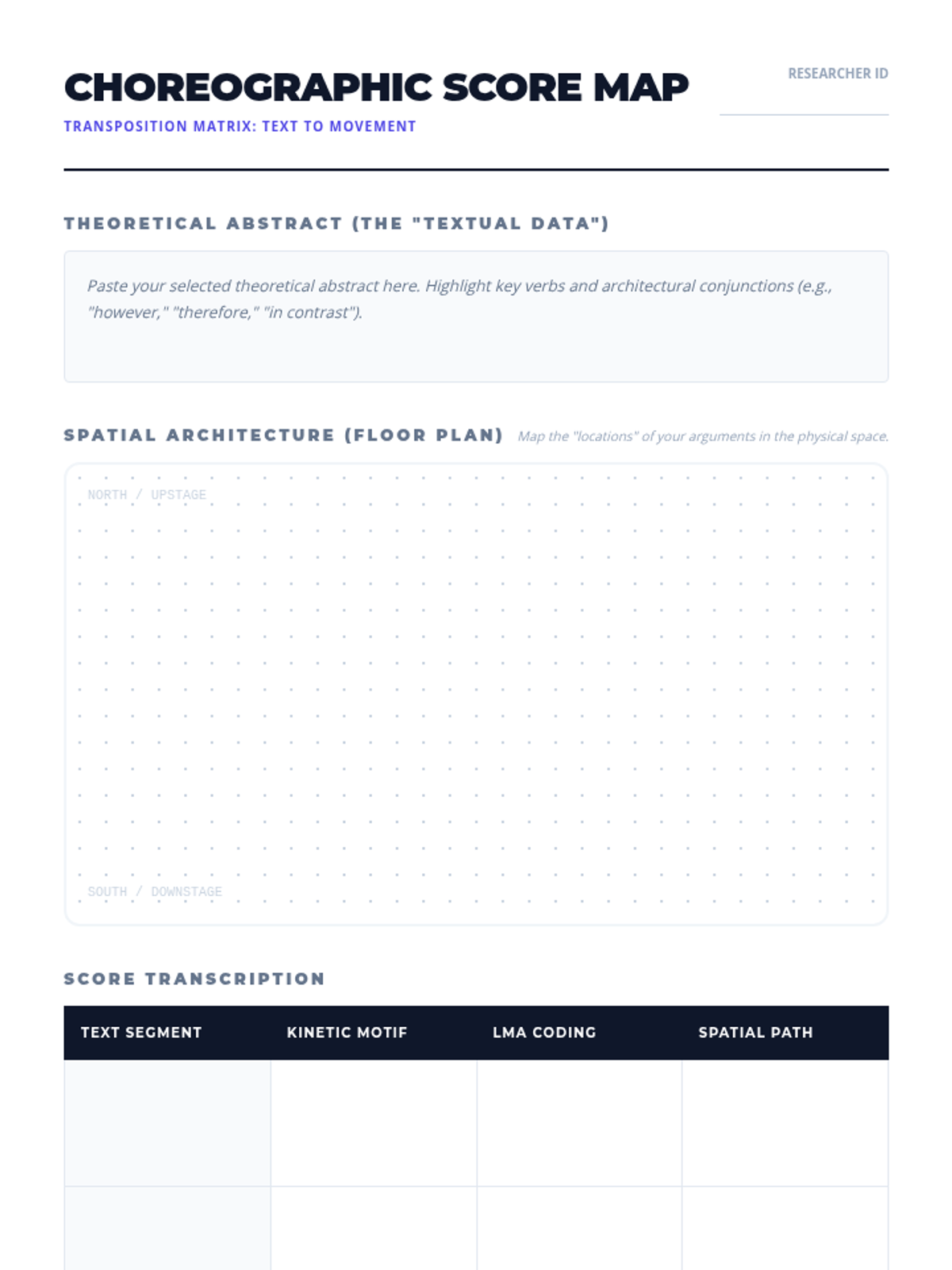
Translating dense theoretical abstracts into choreographic scores to analyze the architecture of arguments.
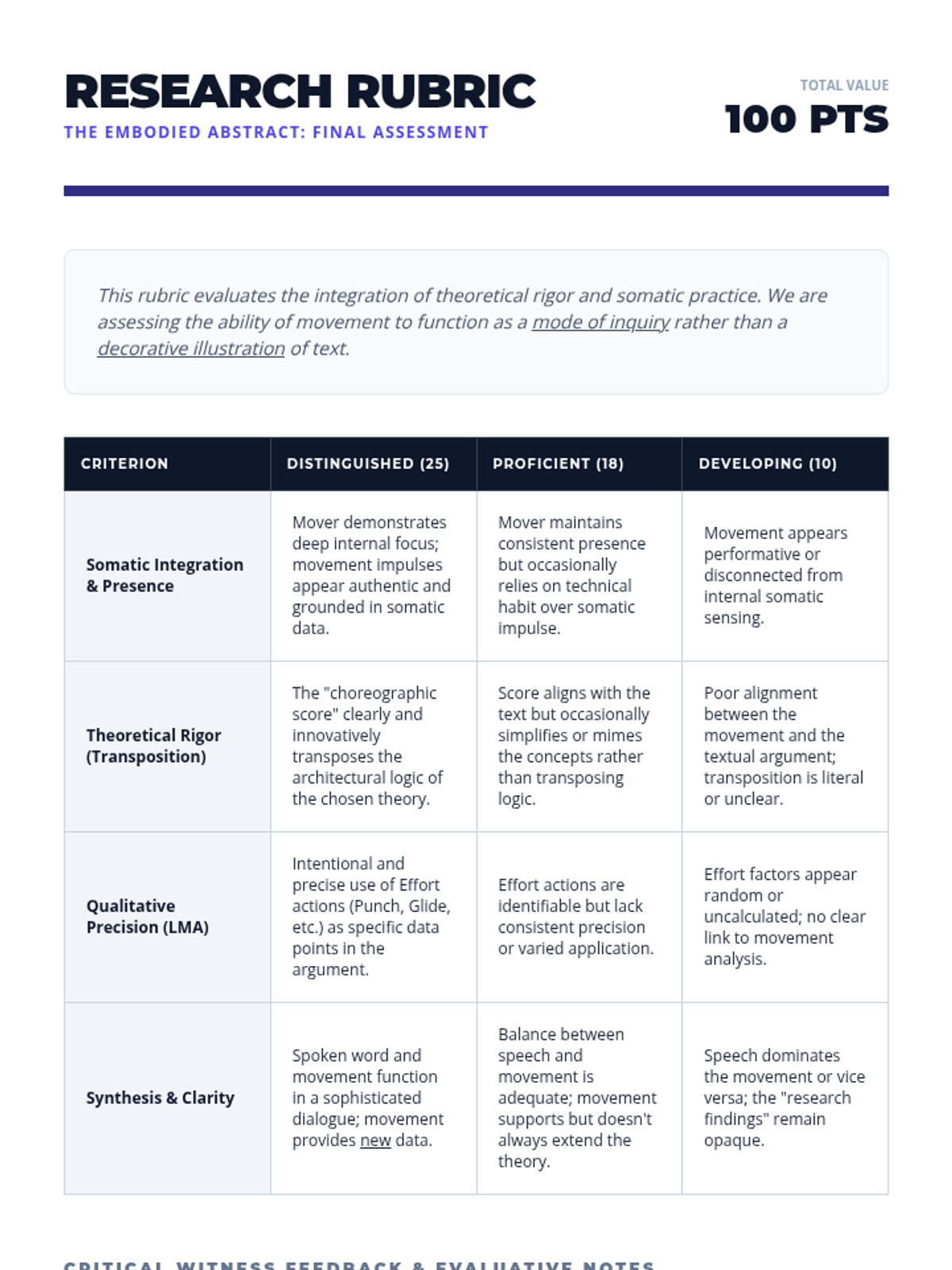
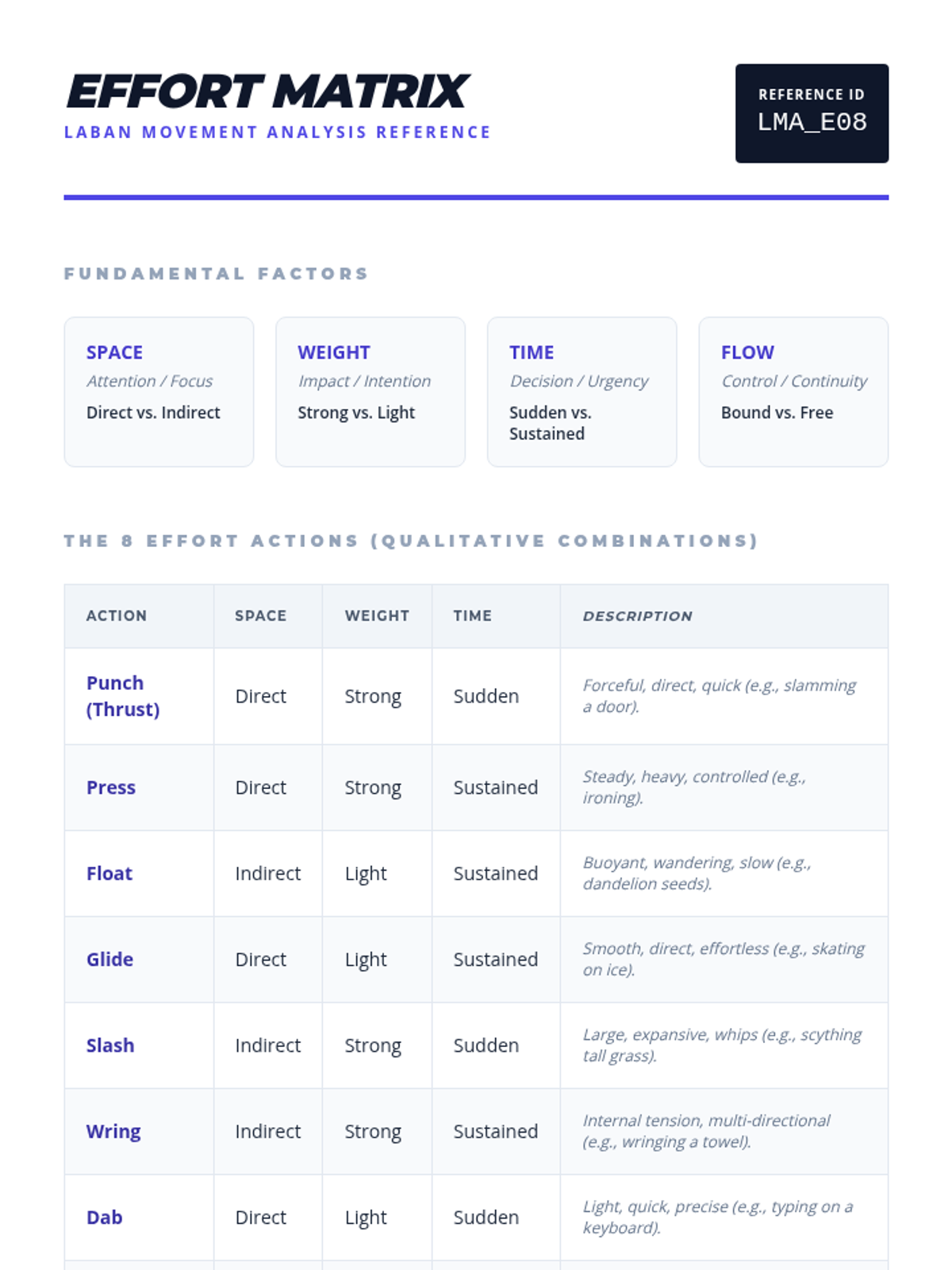
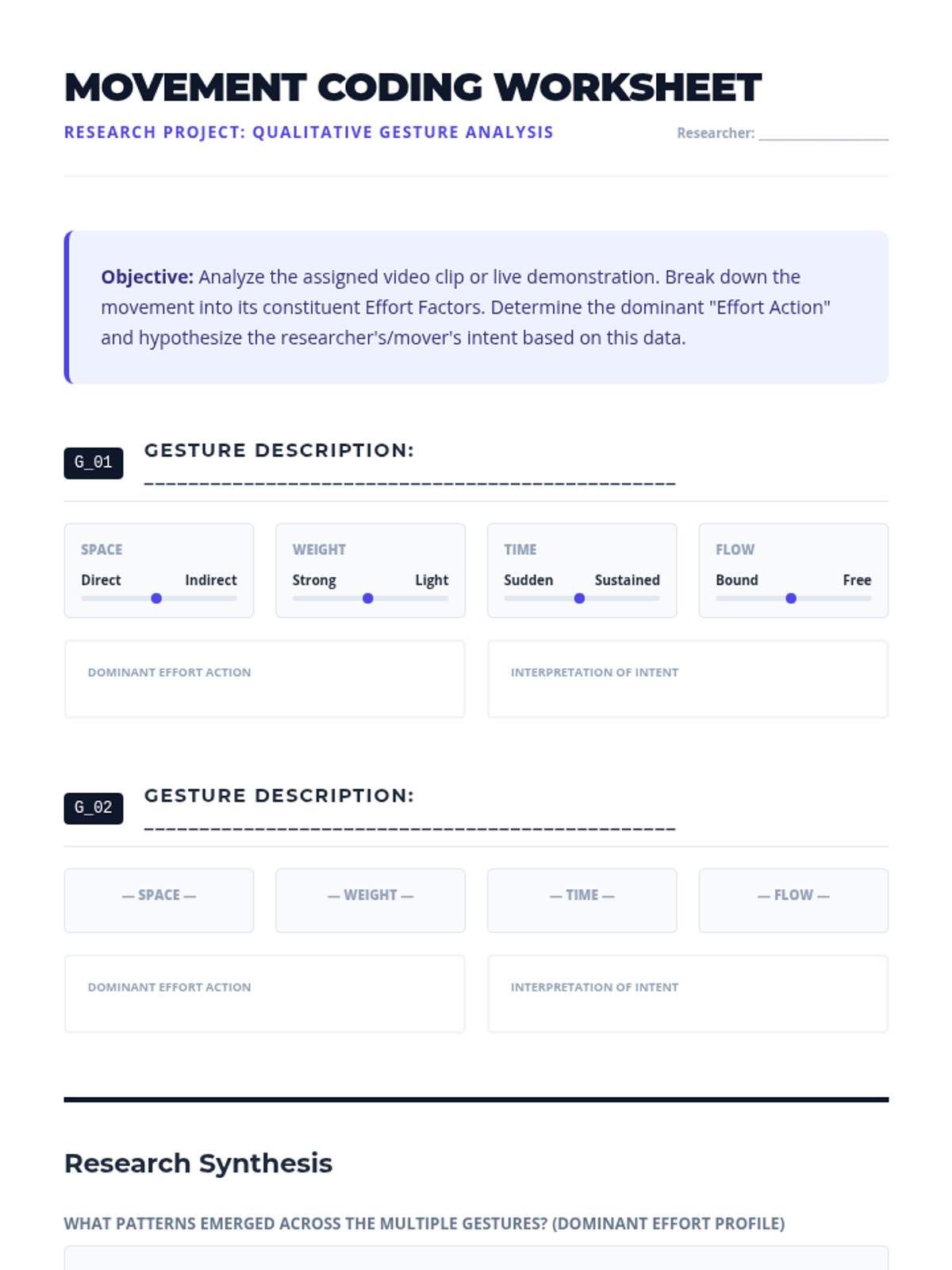
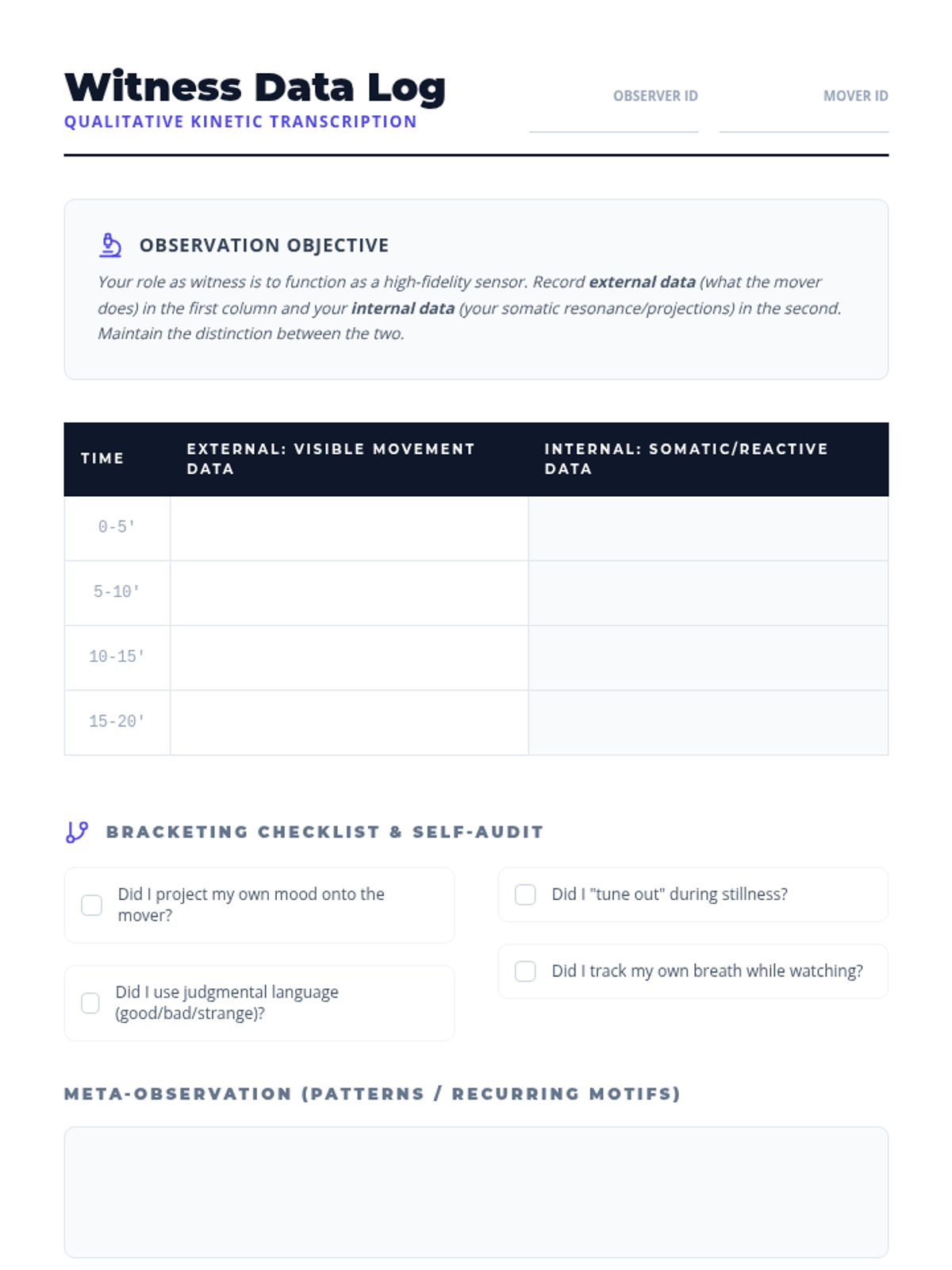
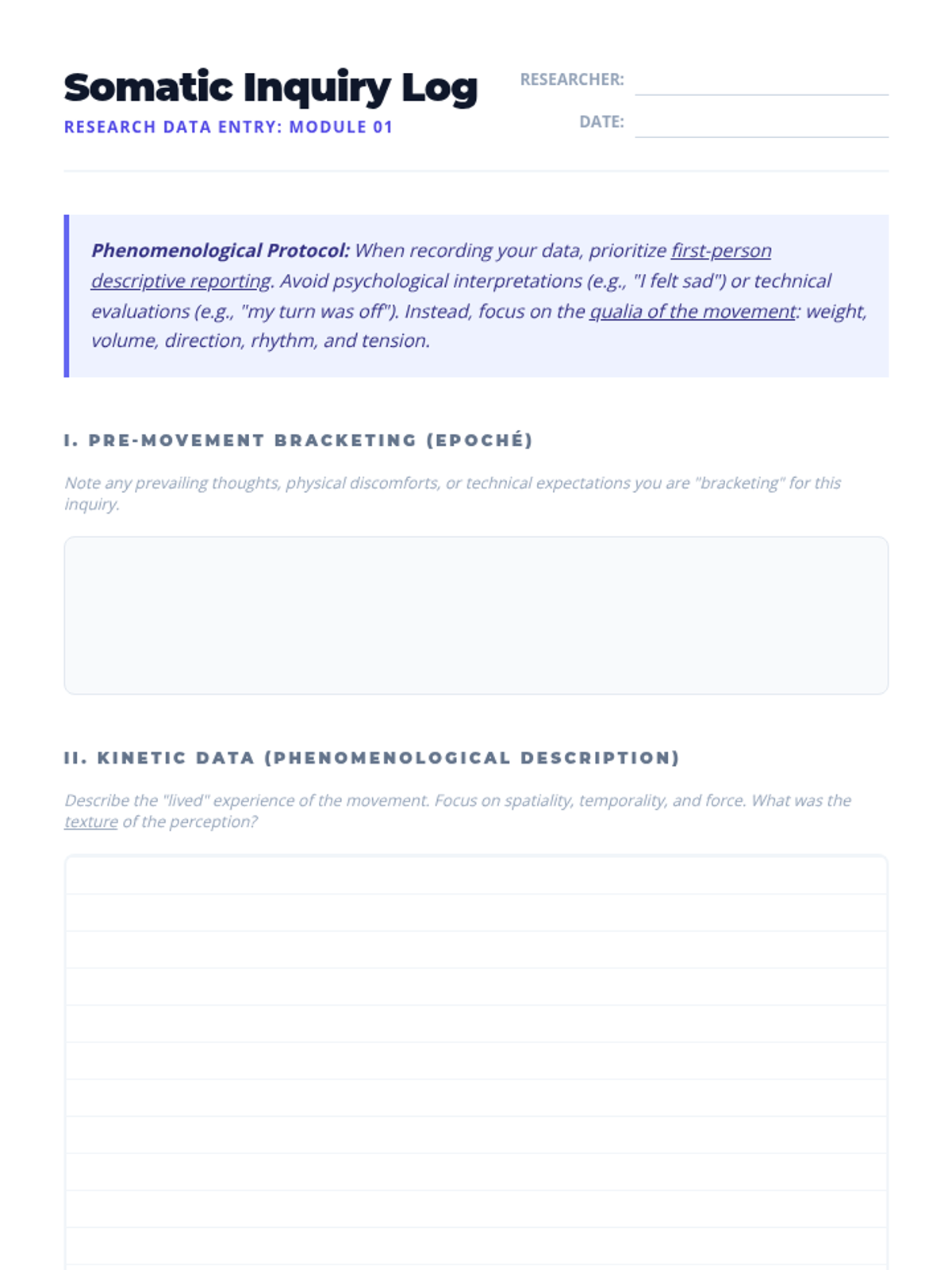
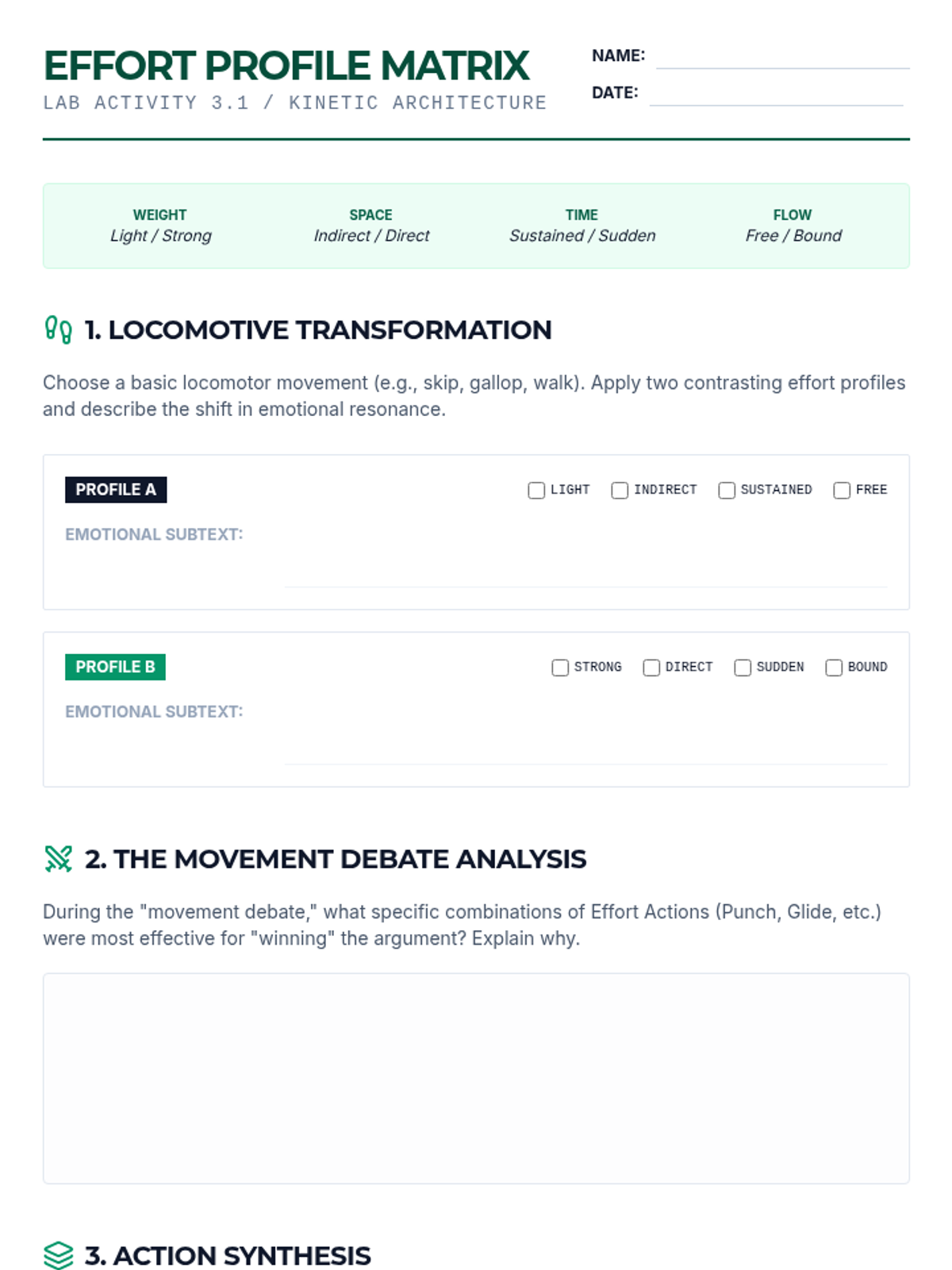
Learning to codify movement using Laban's Effort factors as a tool for qualitative data analysis.
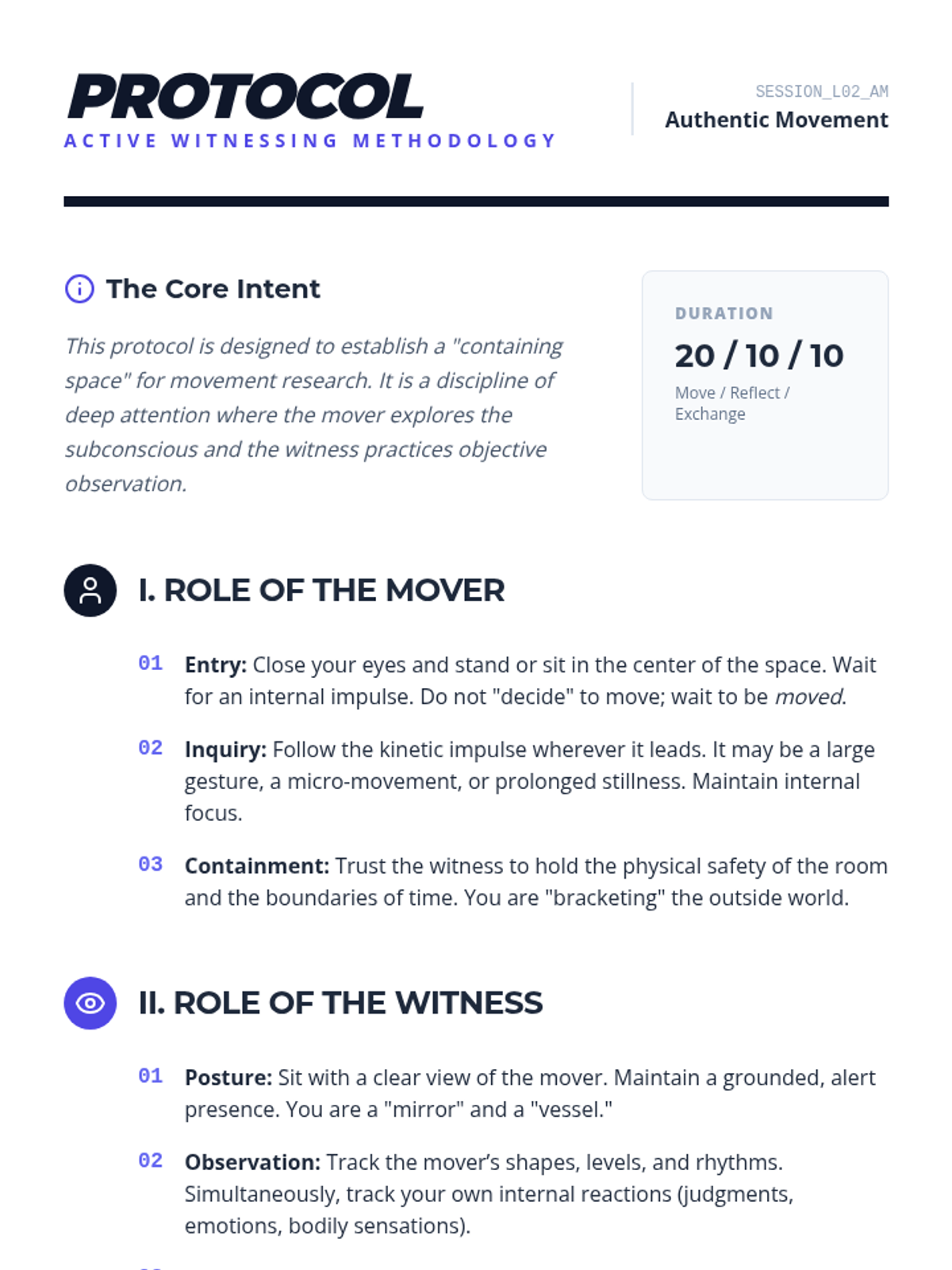
Utilizing the Mover/Witness discipline to access and transcribe subconscious kinetic data.
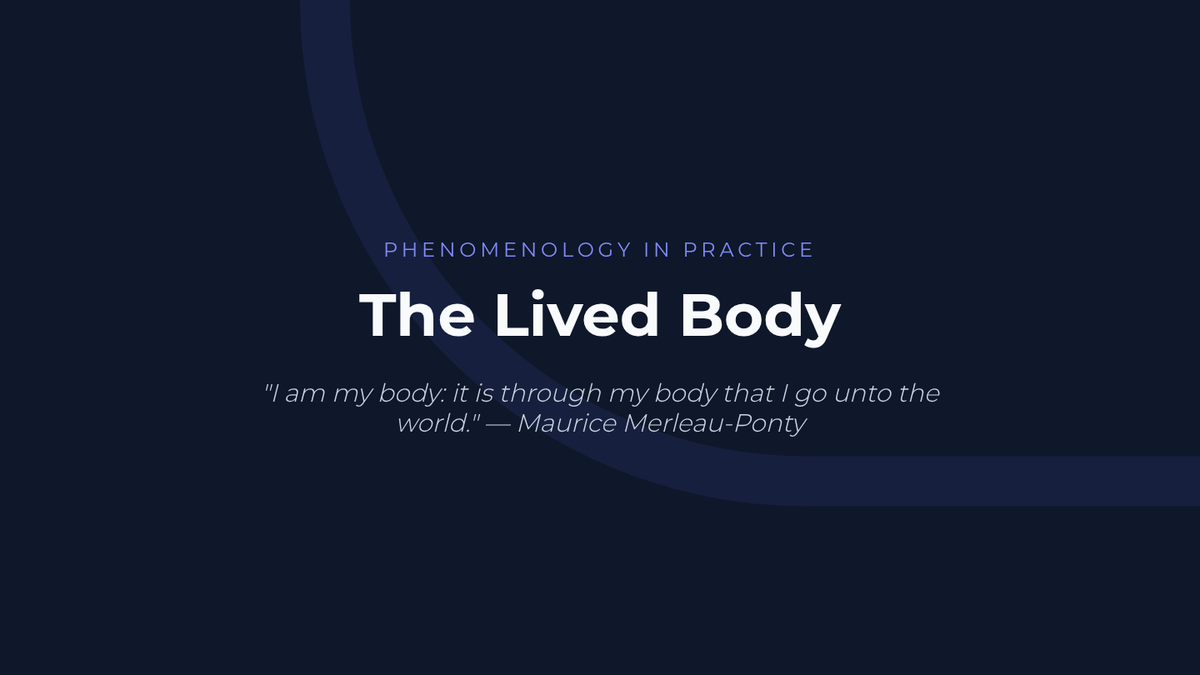
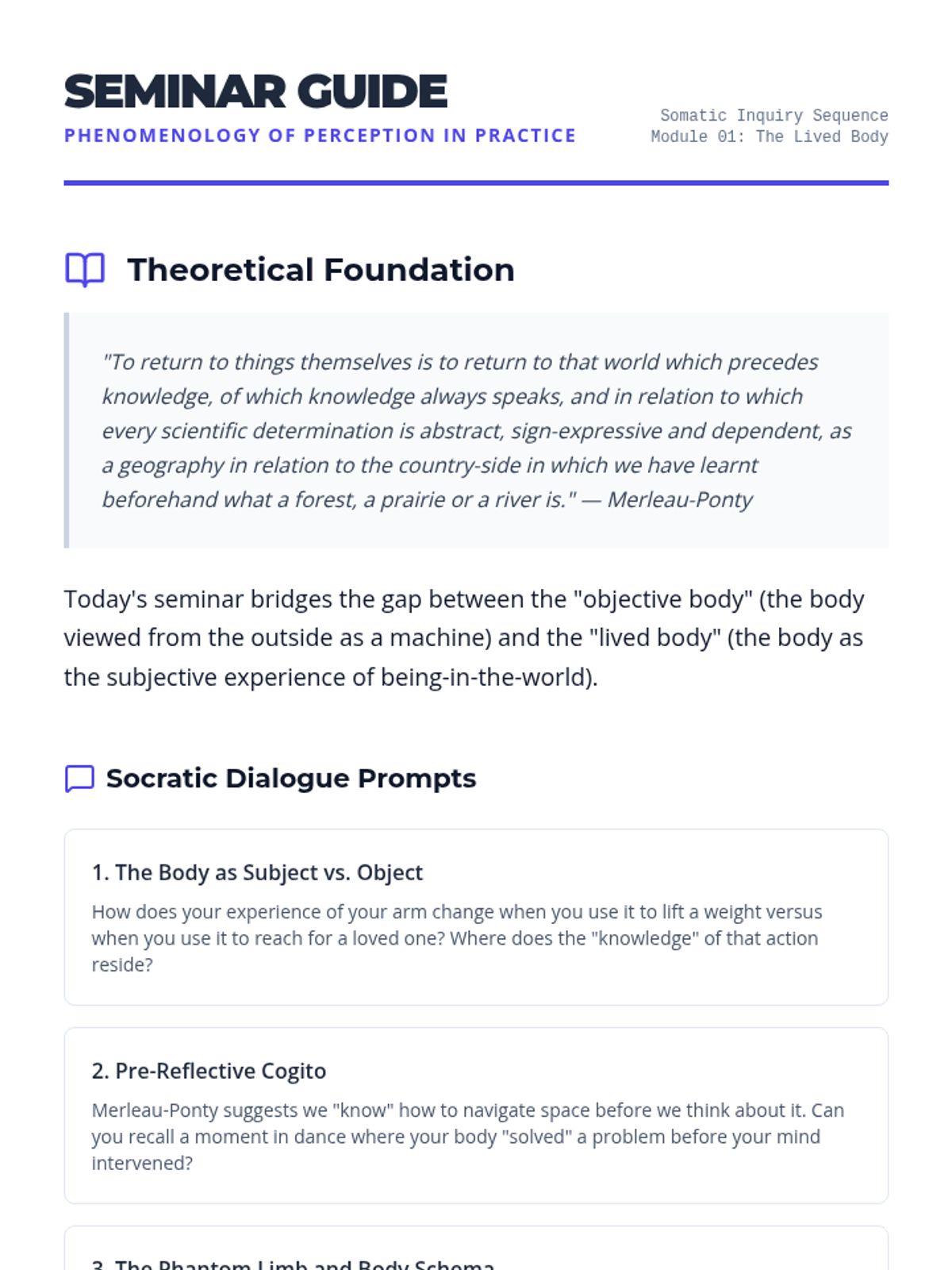
Students engage with Merleau-Ponty and Husserl, translating theoretical 'lived body' concepts into movement experiments.
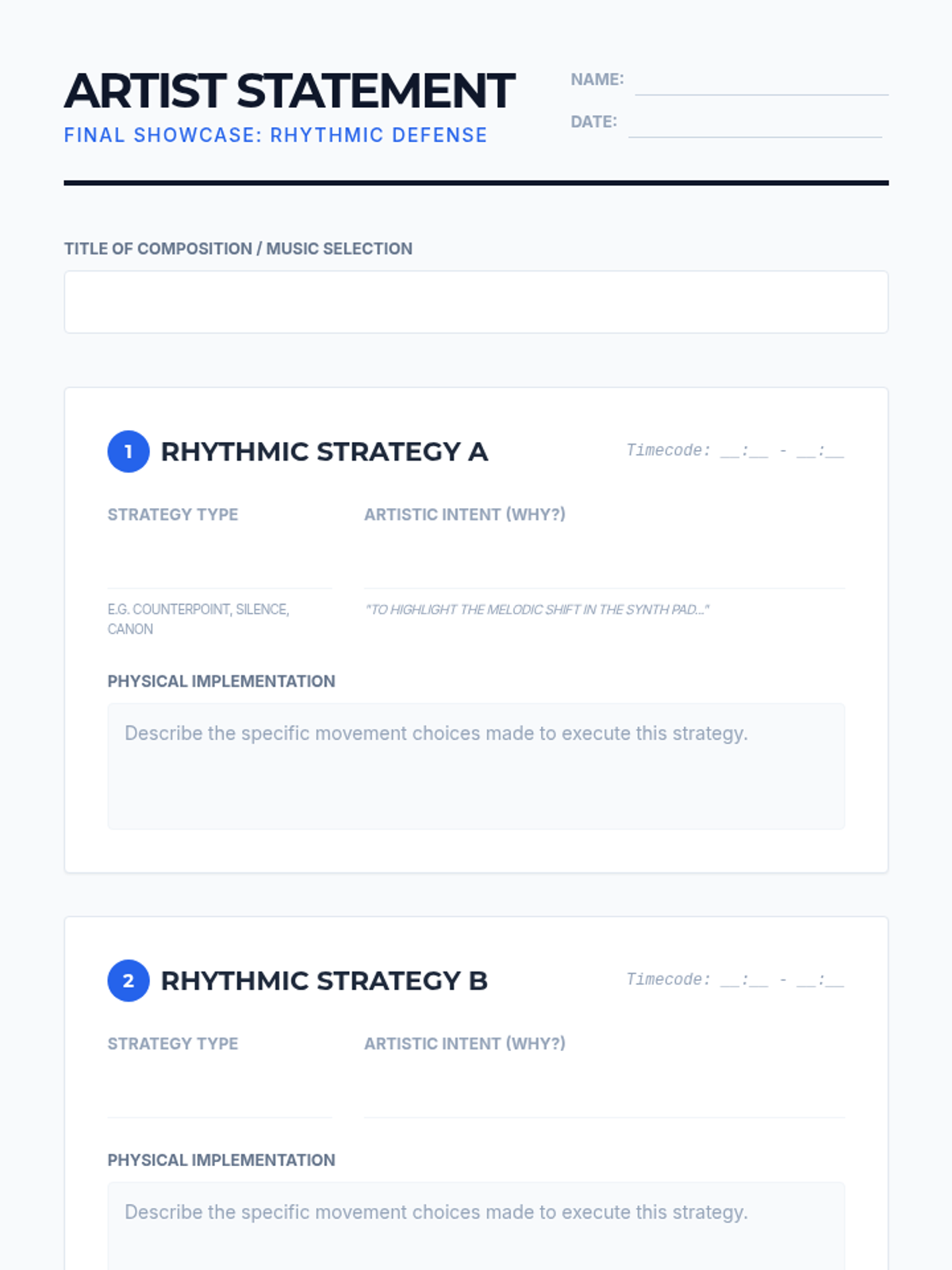
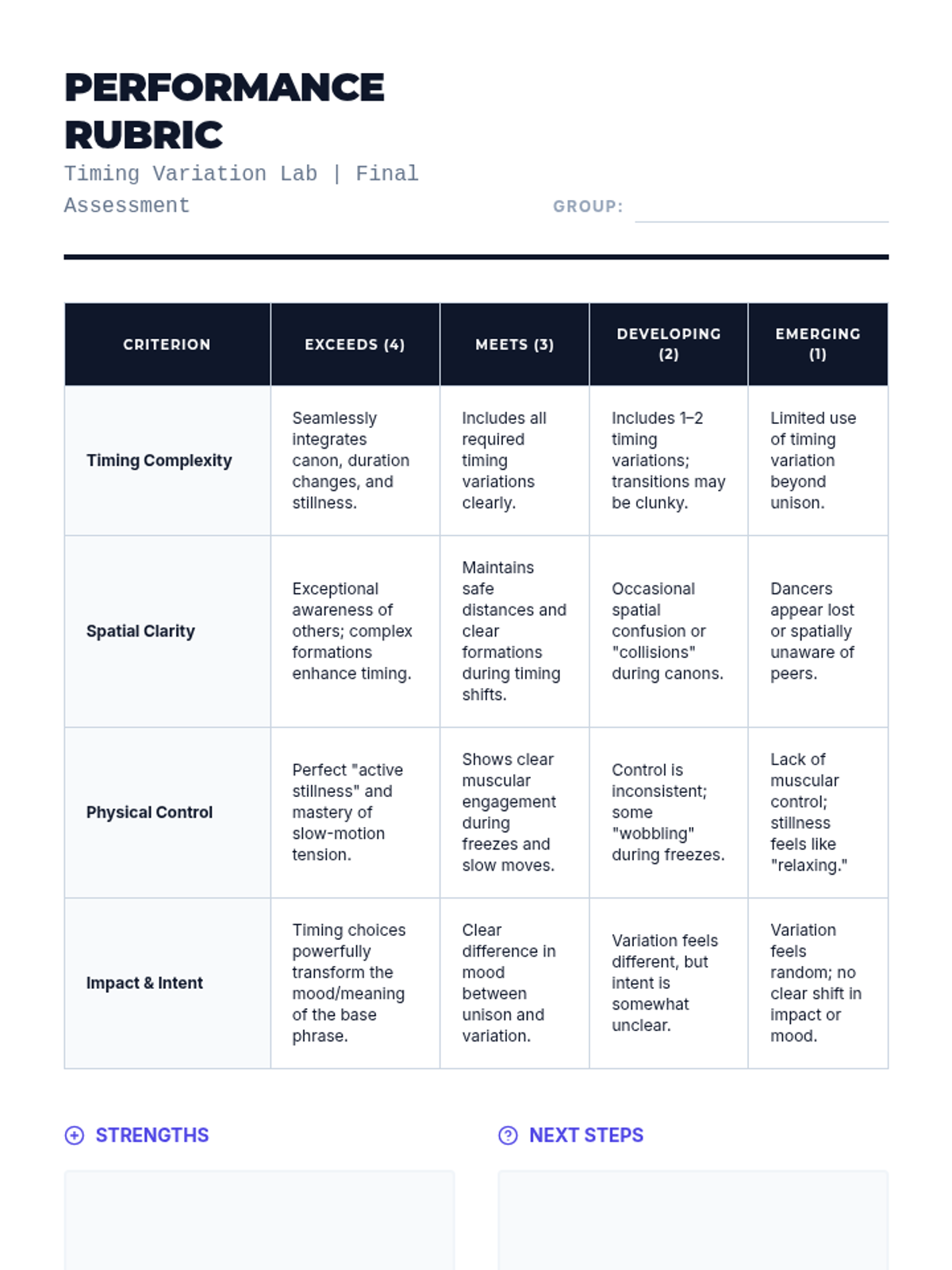
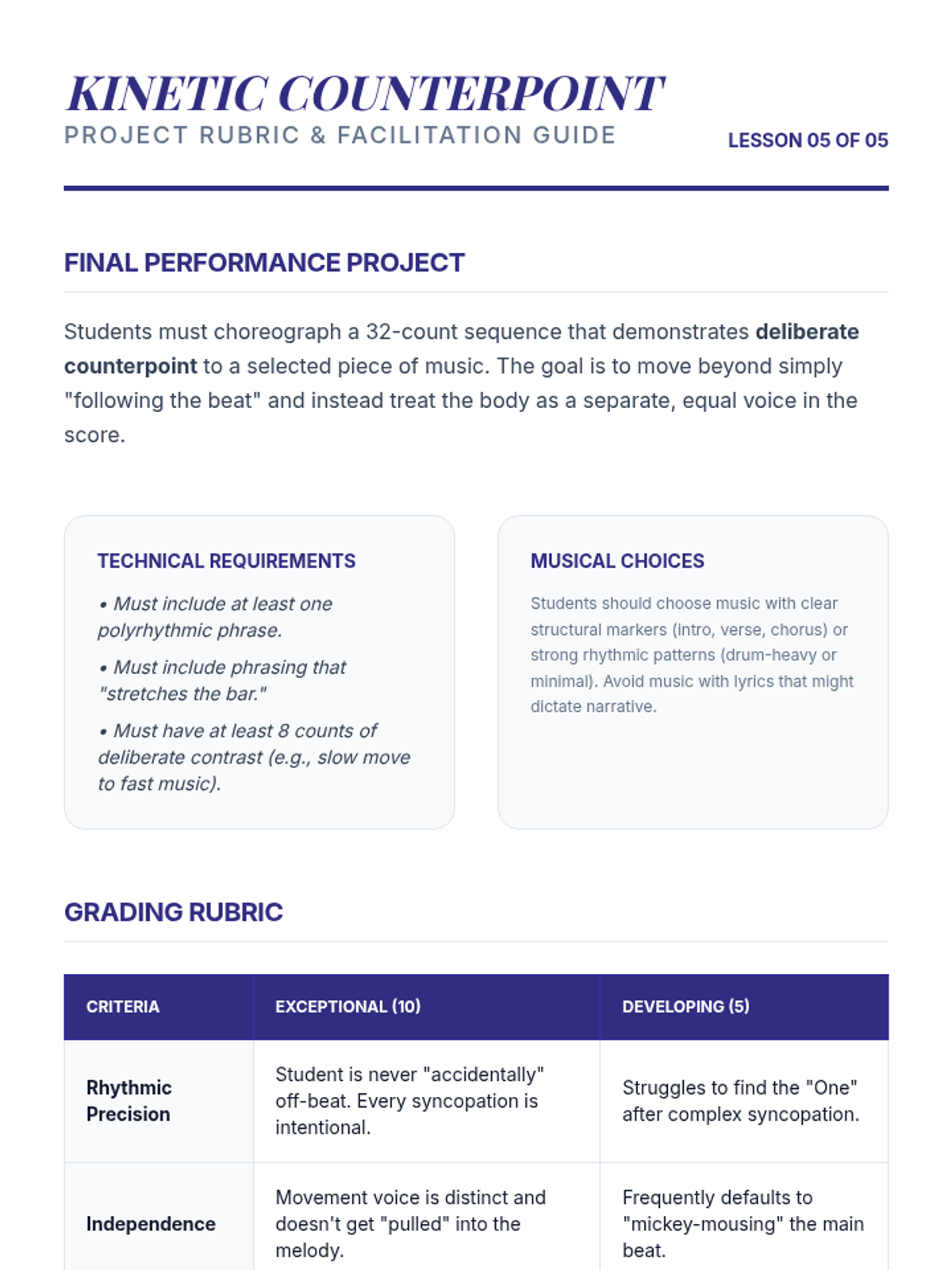
Students present a final composition utilizing distinct rhythmic strategies and articulate their choices in a post-performance defense.
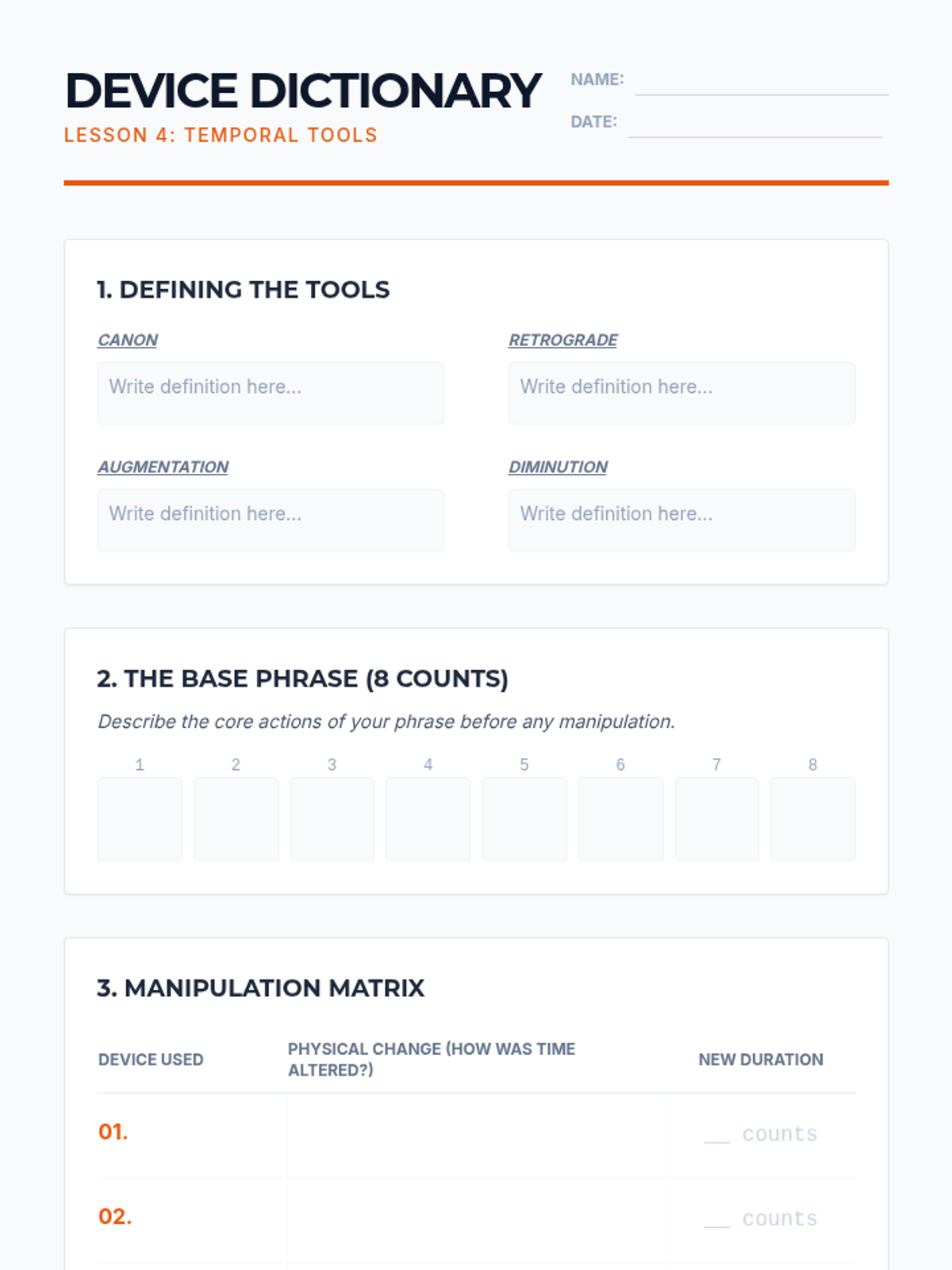
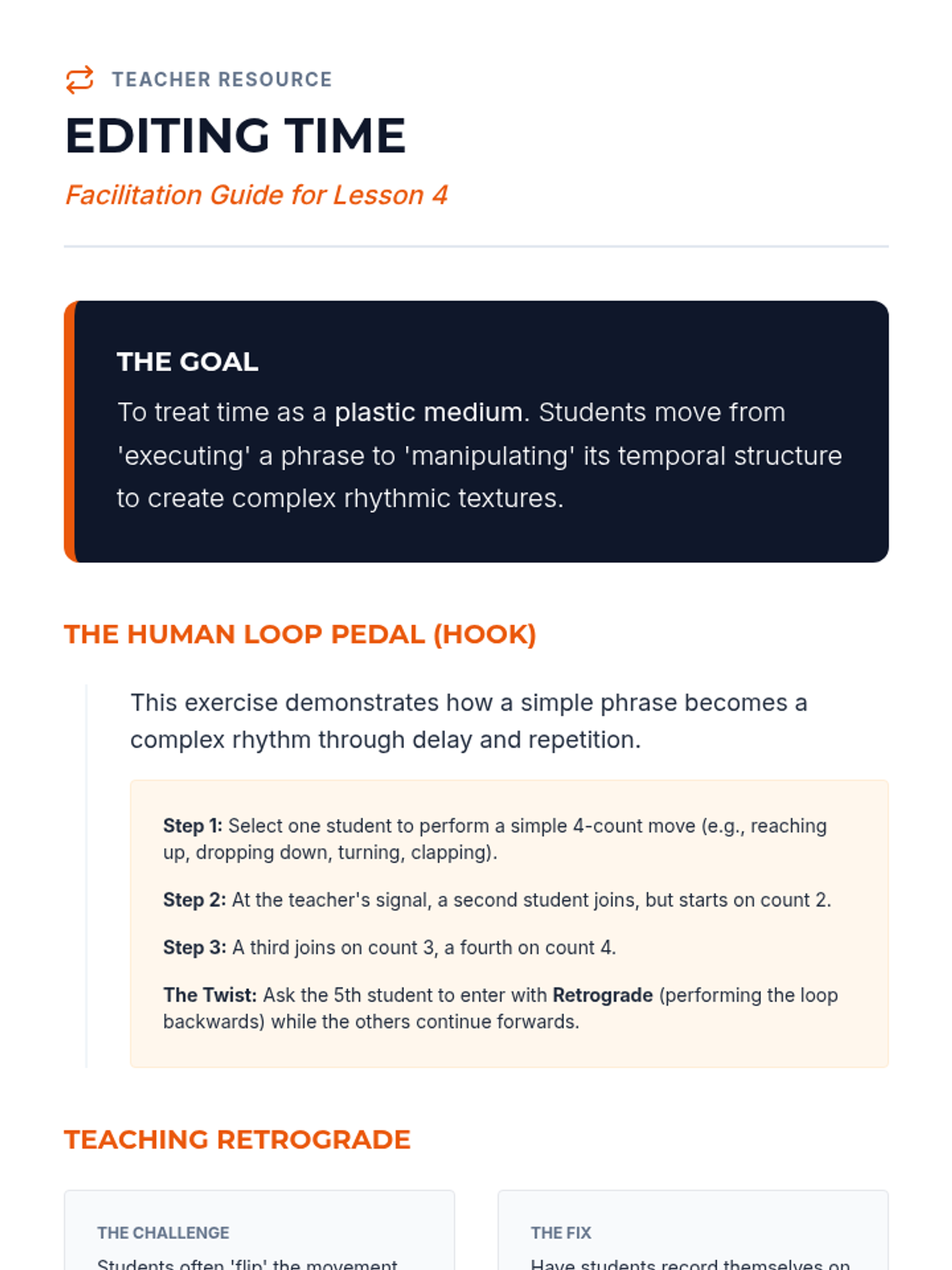
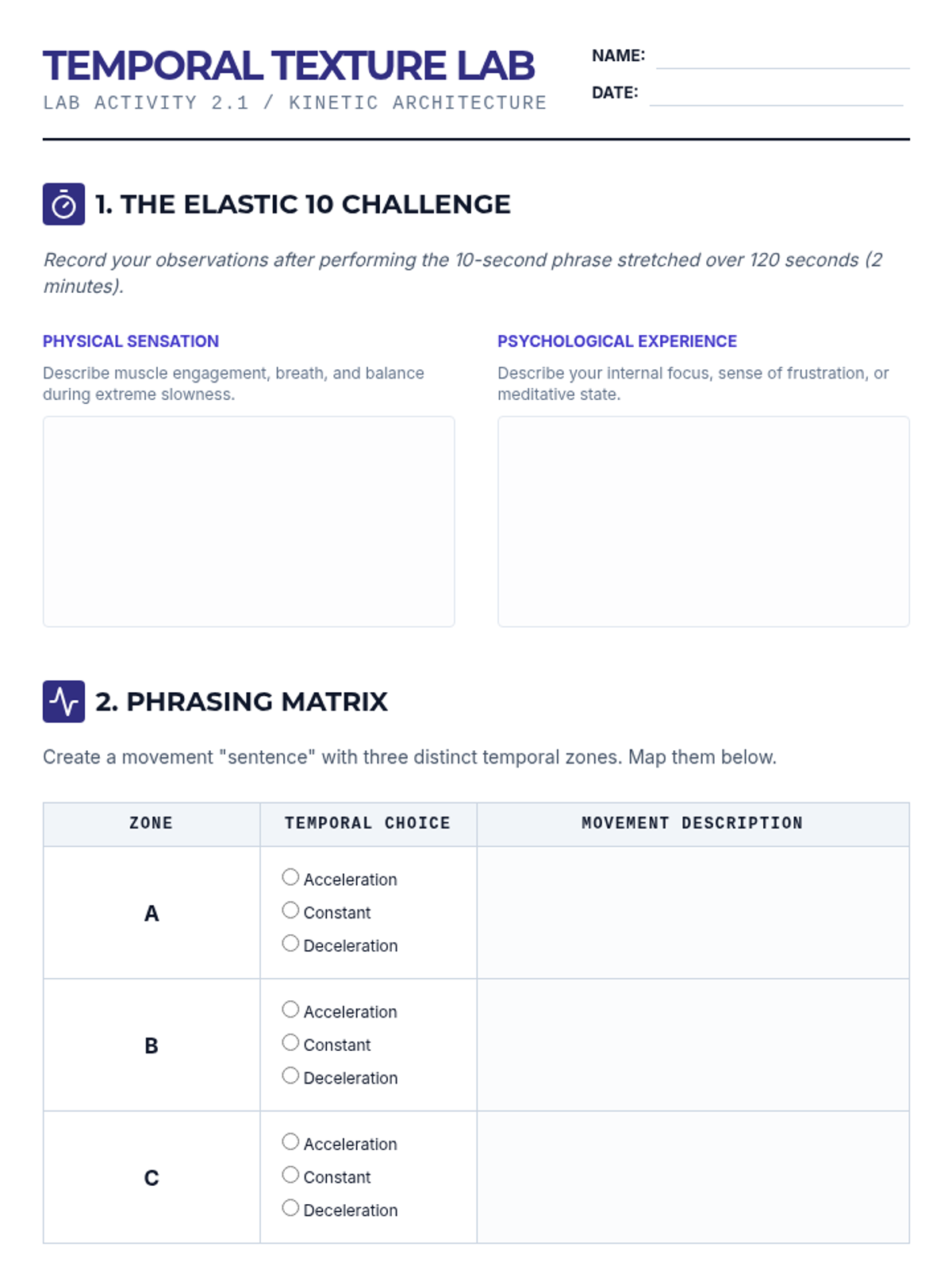
Students explore choreographic devices that manipulate time, such as canons, retrograde, and time-stretching, applying them to simple phrases.
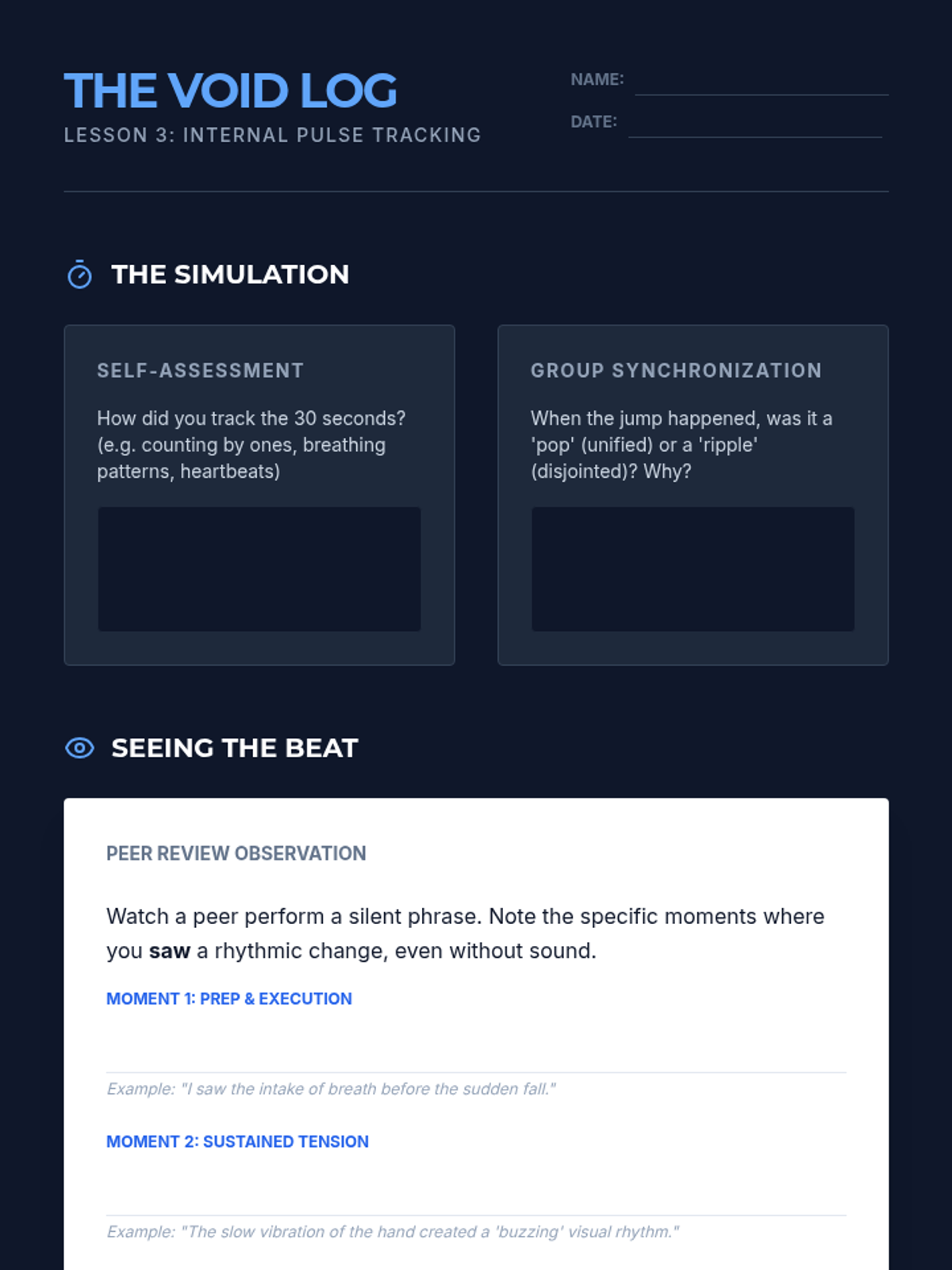
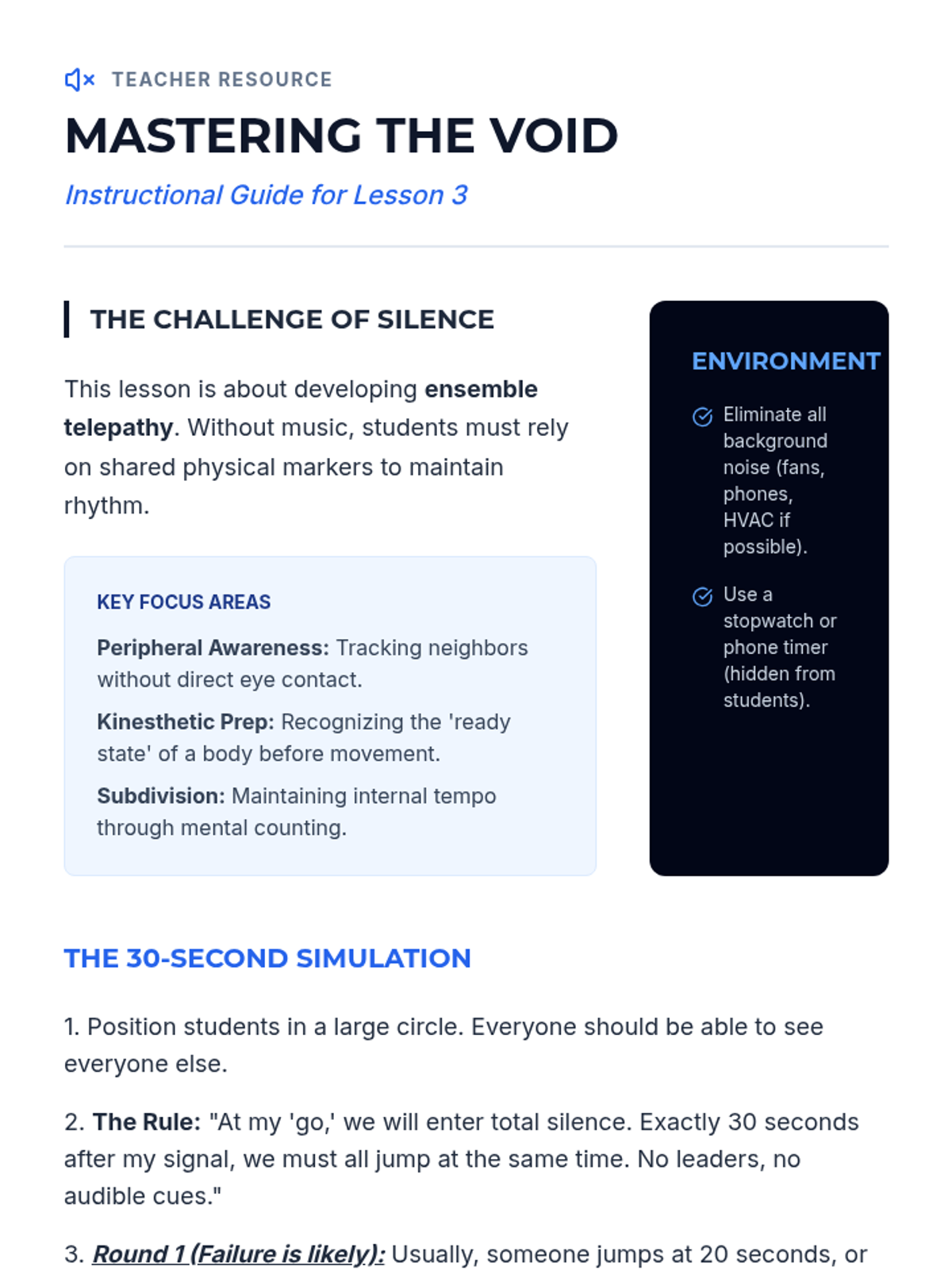
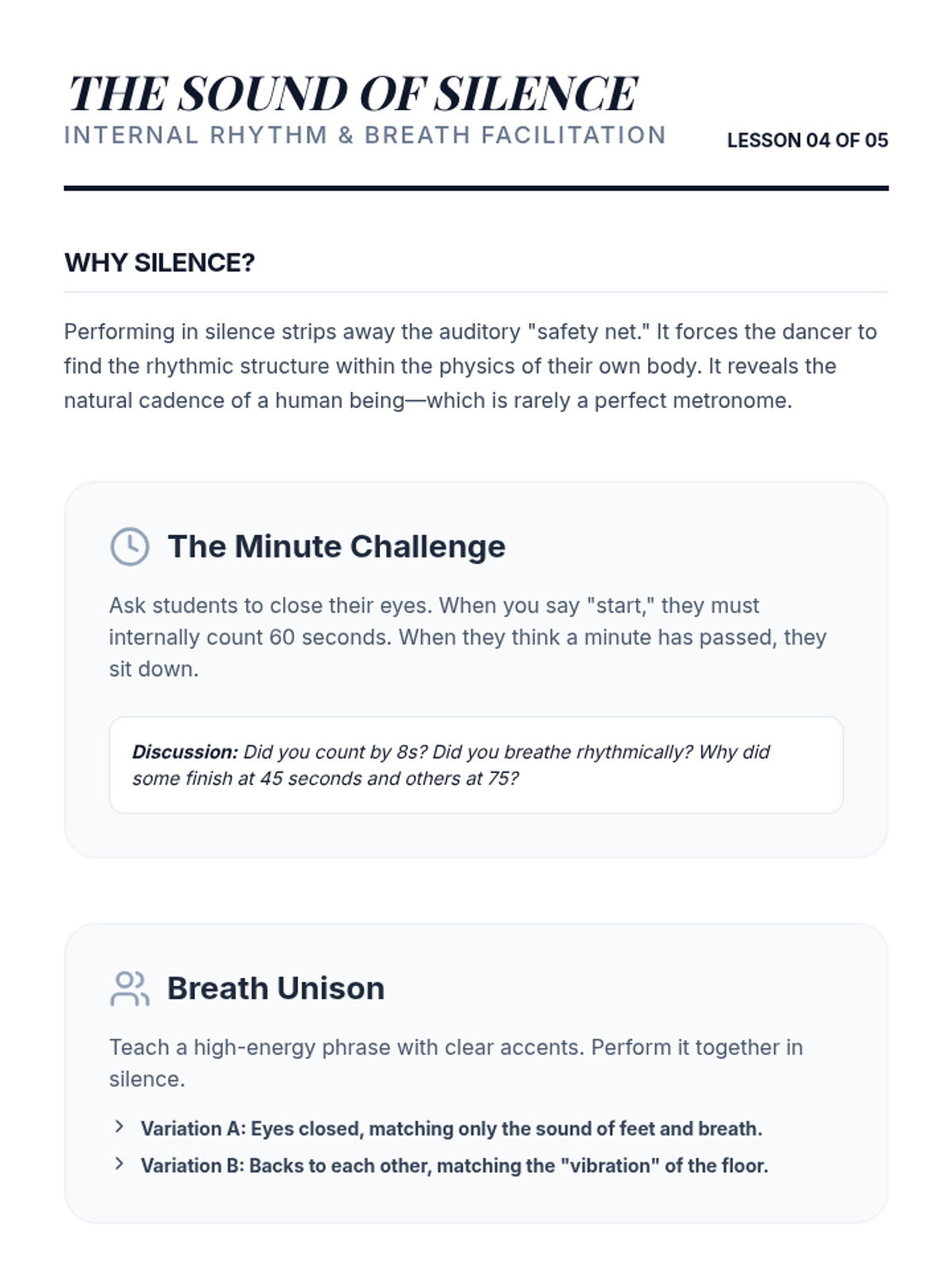
Students choreograph a sequence that must be performed in silence but relies on a strict internal clock, forcing the audience to 'see' the rhythm.
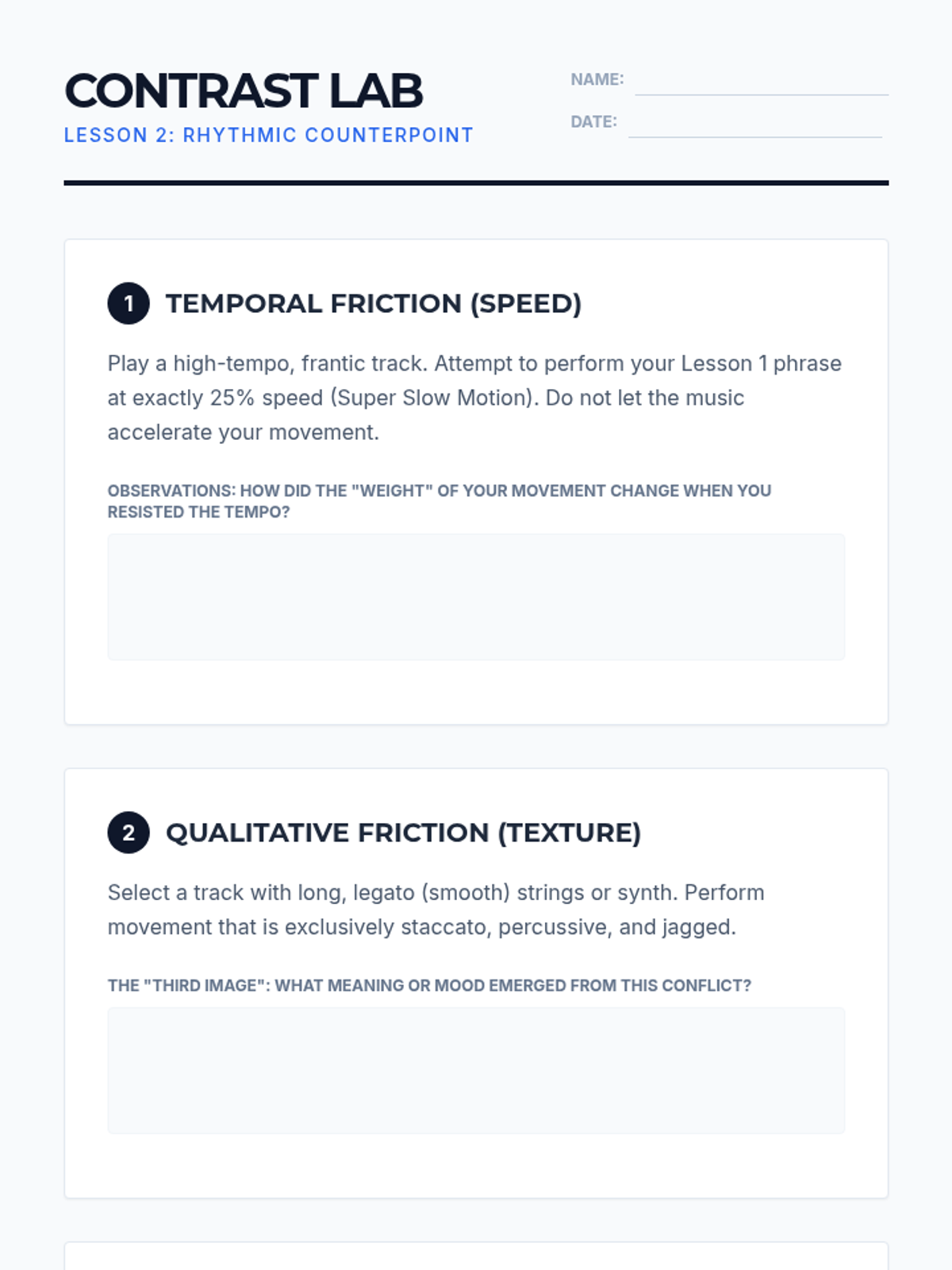
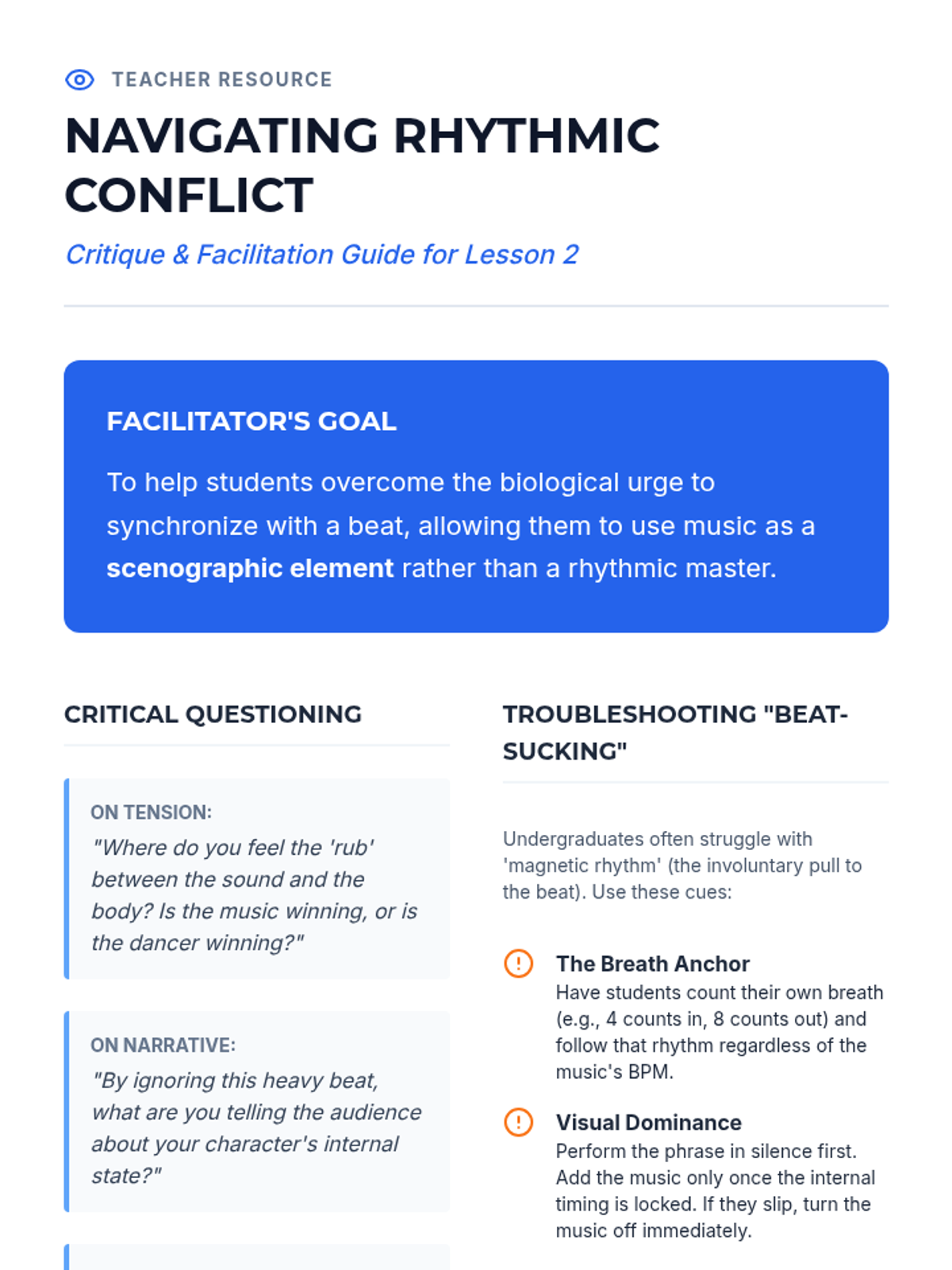
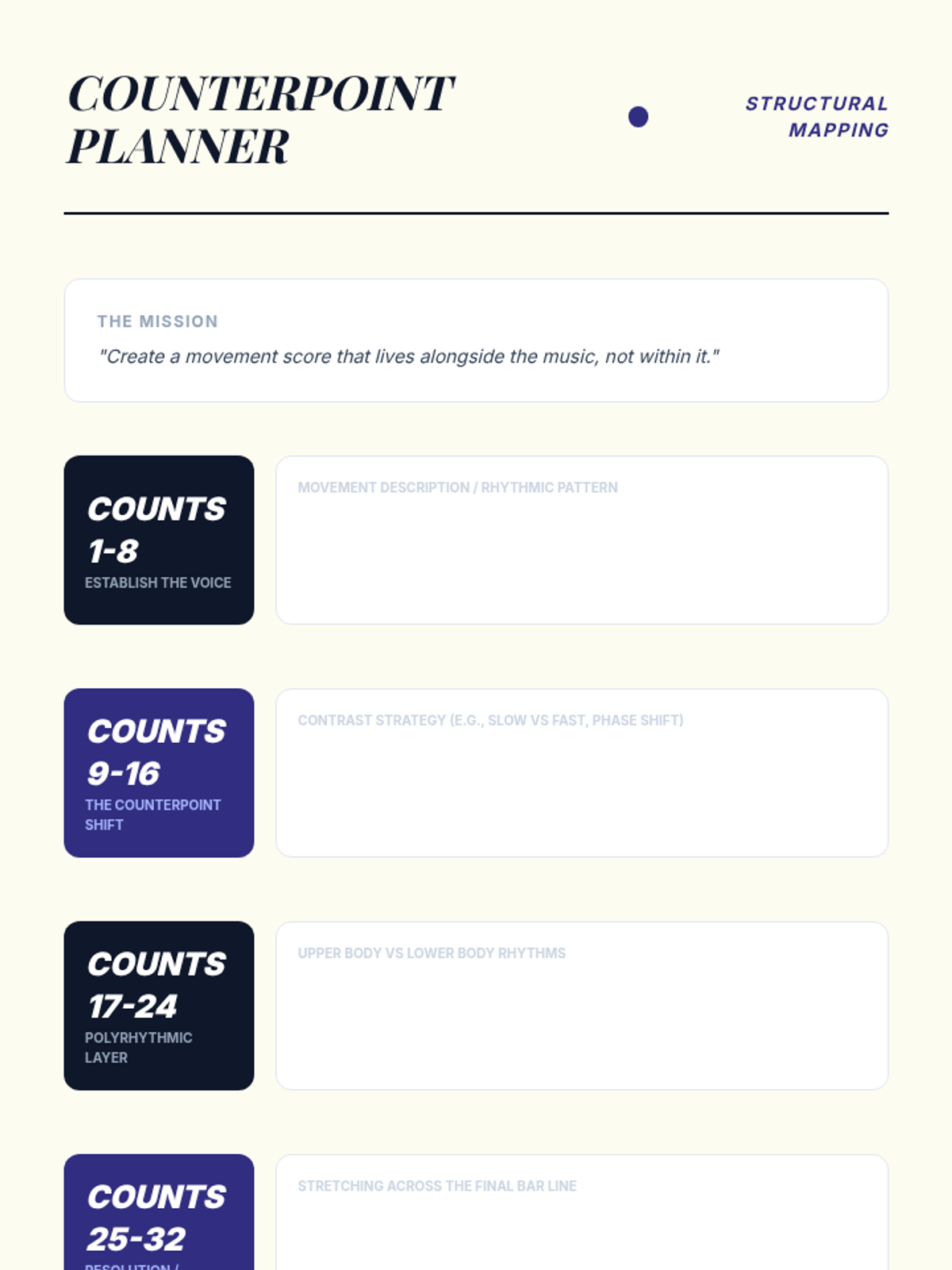
Students are challenged to create movement that opposes the music, exploring how contrast creates tension and interest in a performance.
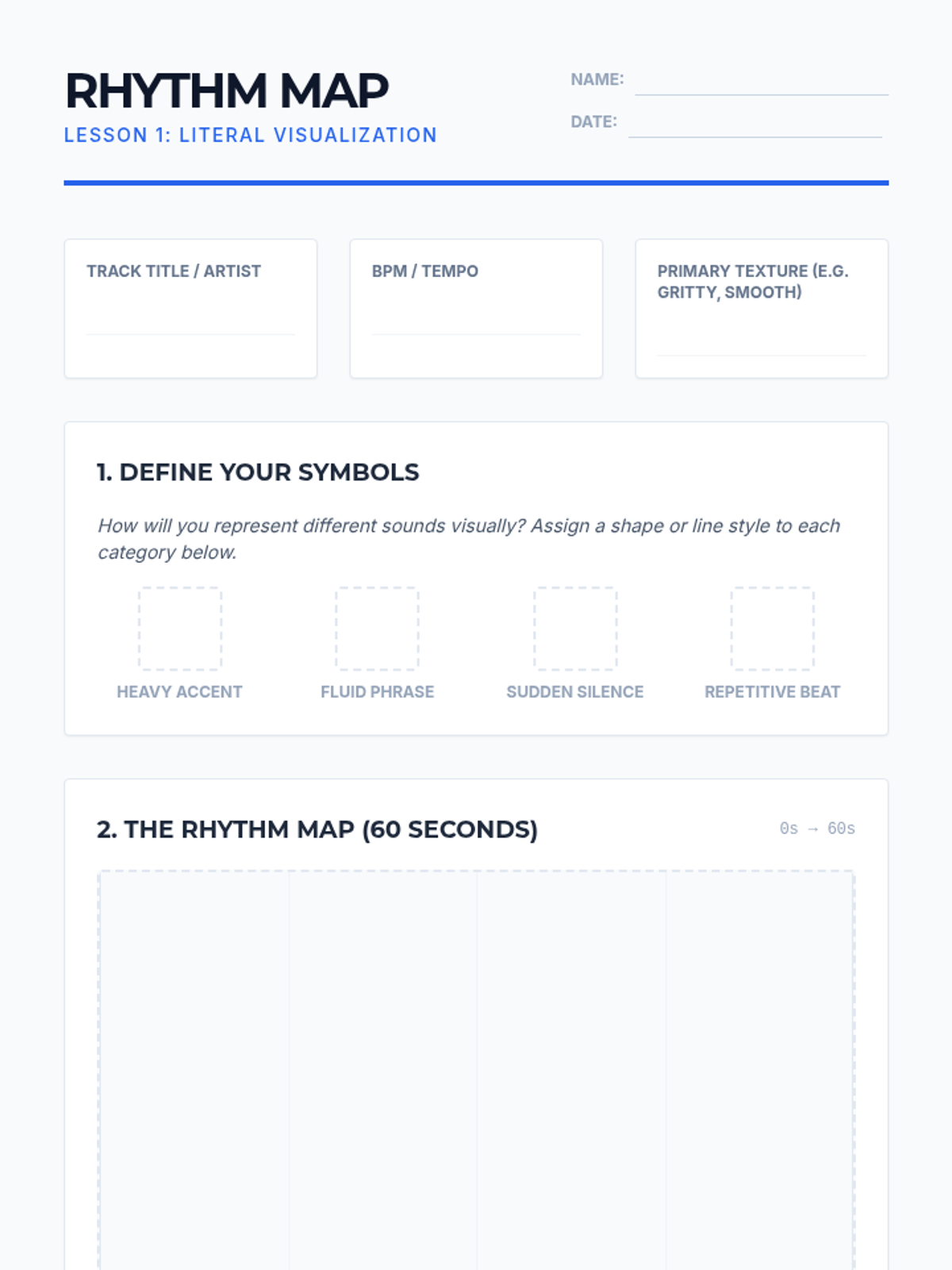
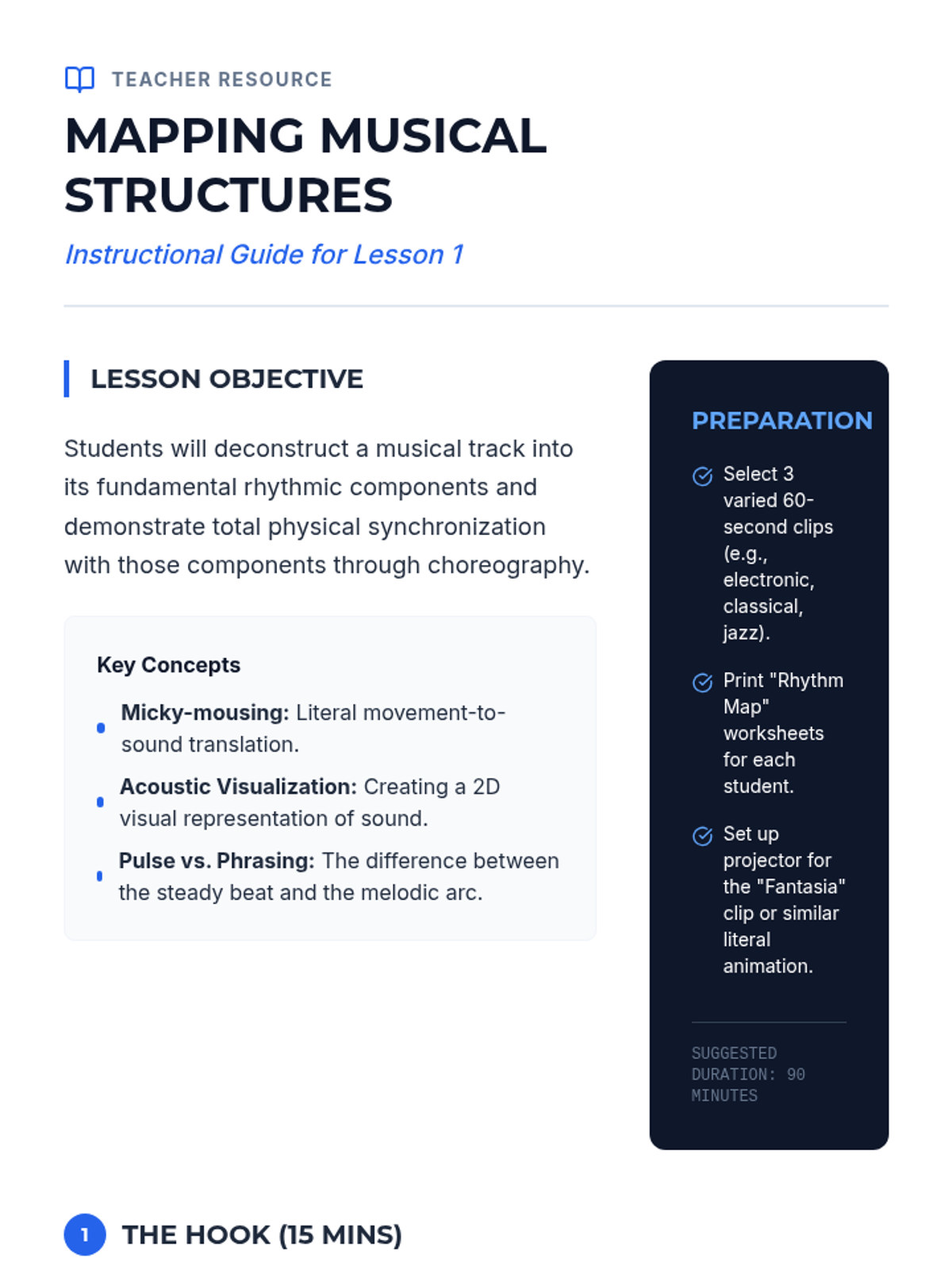
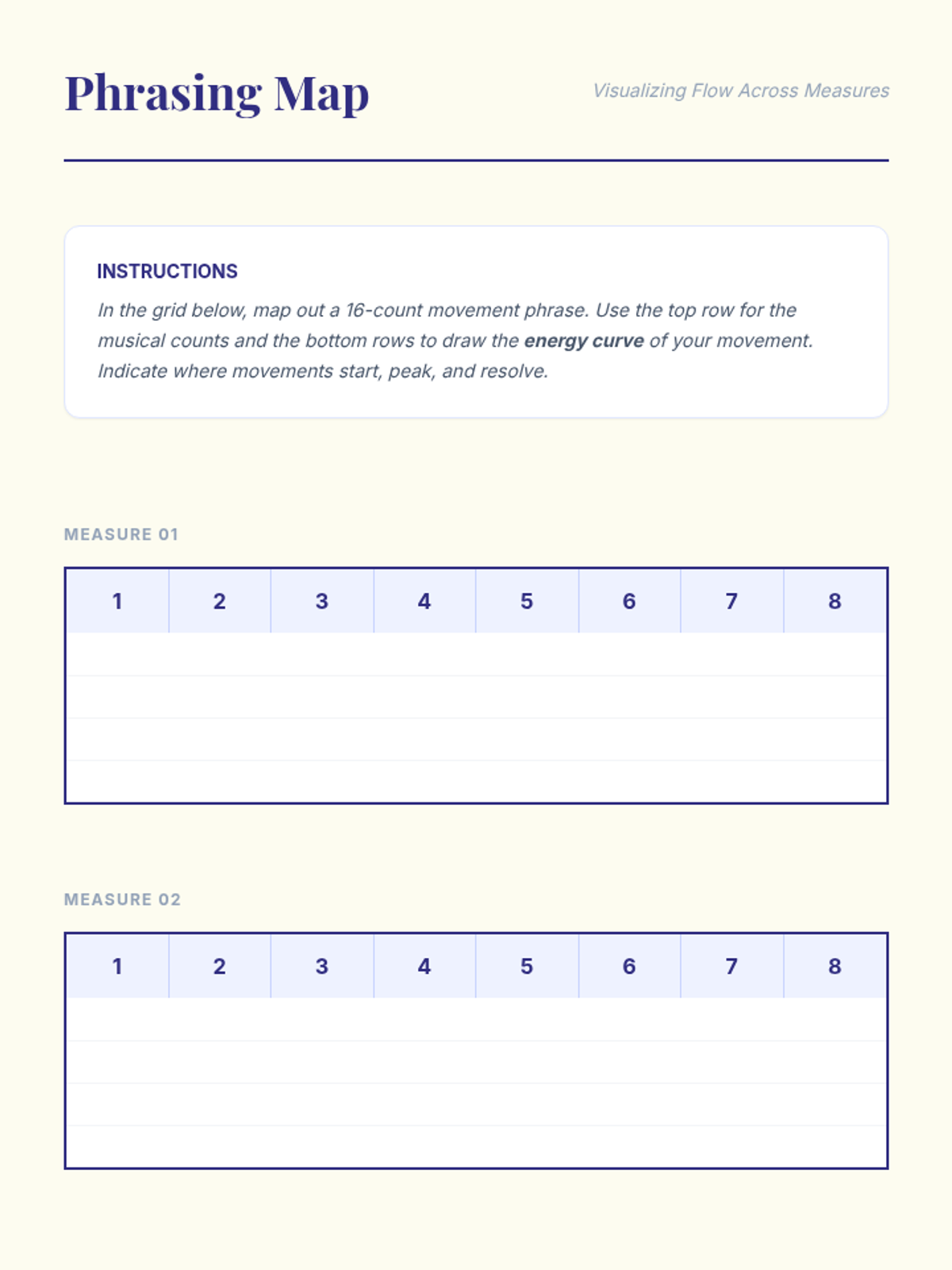
Students select a piece of music and create a 'rhythm map' on paper, marking peaks, valleys, and accents before creating movement that mimics the music exactly.
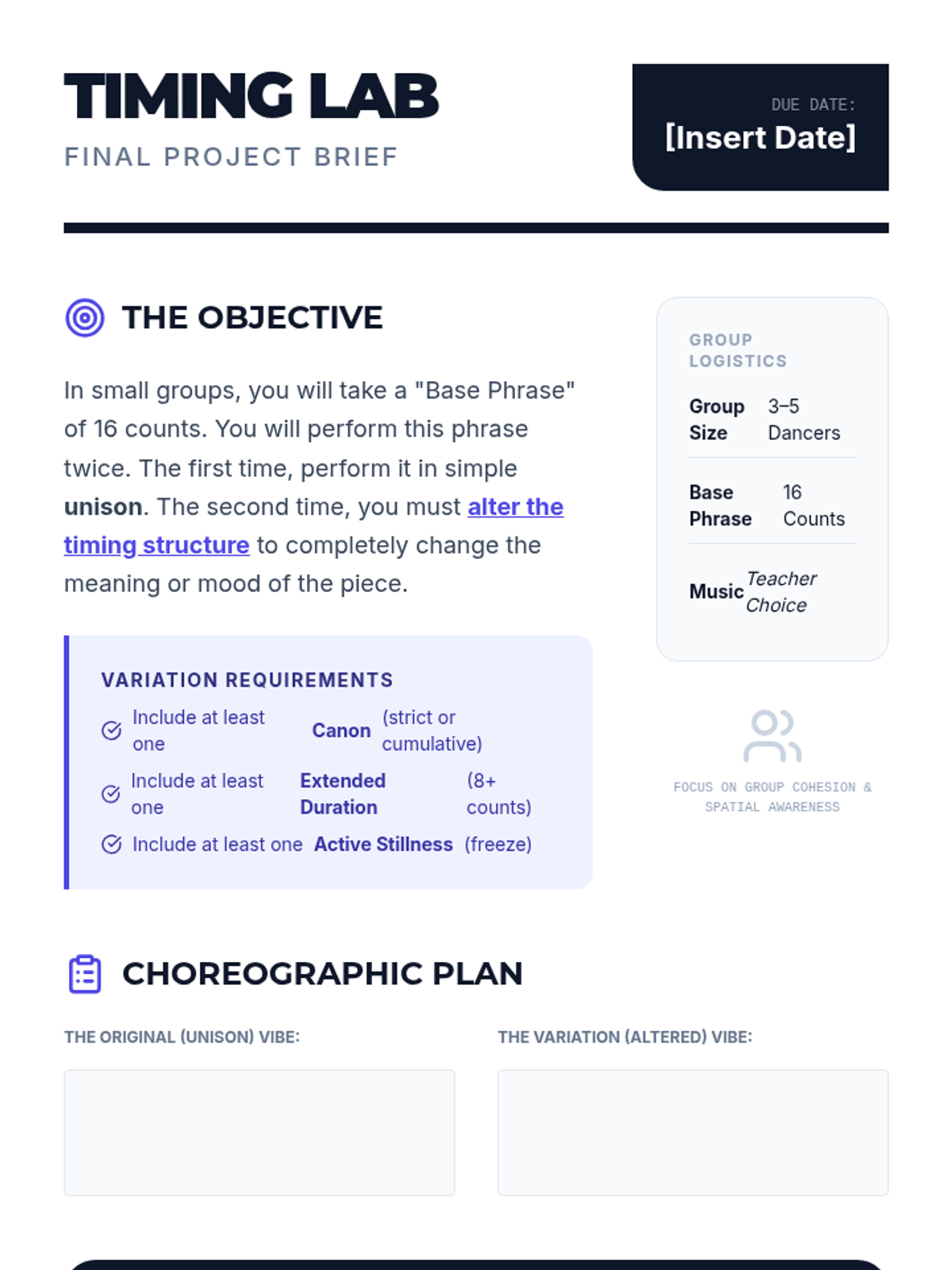
In small groups, students take a known short phrase and alter its timing structure to alter its meaning. They present the variations and discuss how time manipulation changed the audience's interpretation.
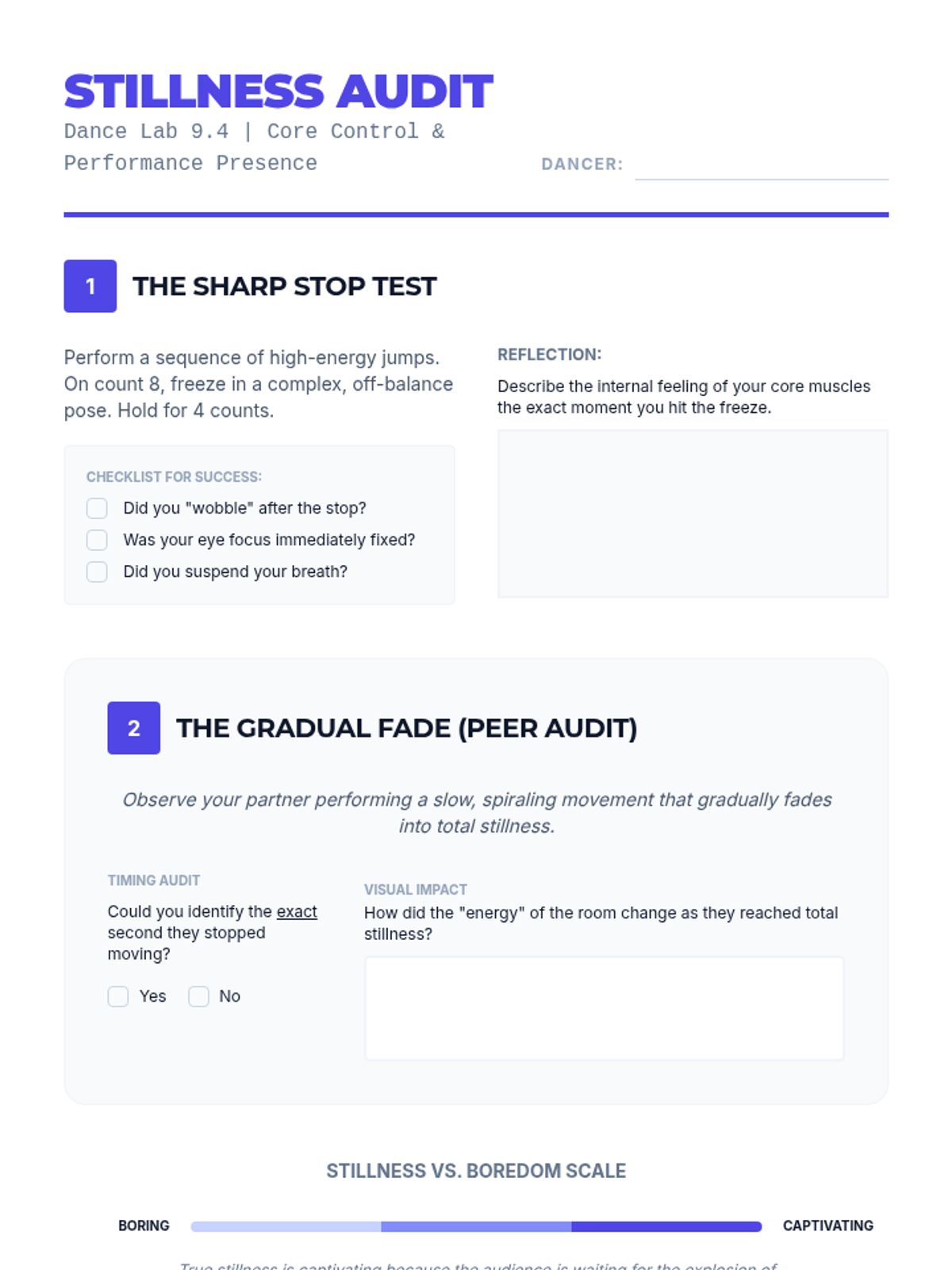
Students investigate the power of the 'stop' or 'freeze' in a rhythmic sequence. They practice freezing on unexpected counts to build core control and dramatic tension.
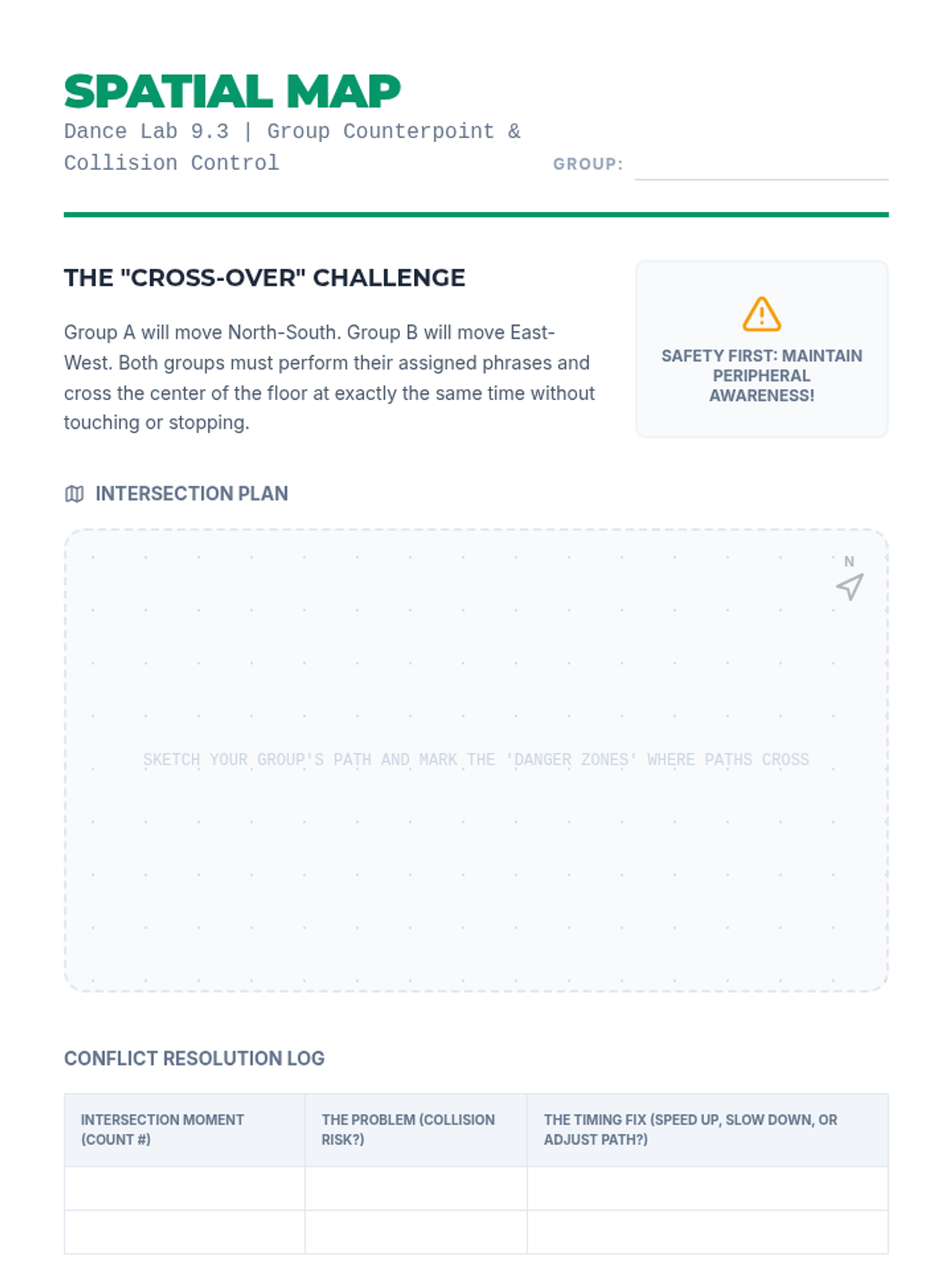
The class splits into two groups performing different movement phrases that intersect at specific moments. Students focus on the spatial timing required to avoid collisions and create interesting visual patterns.
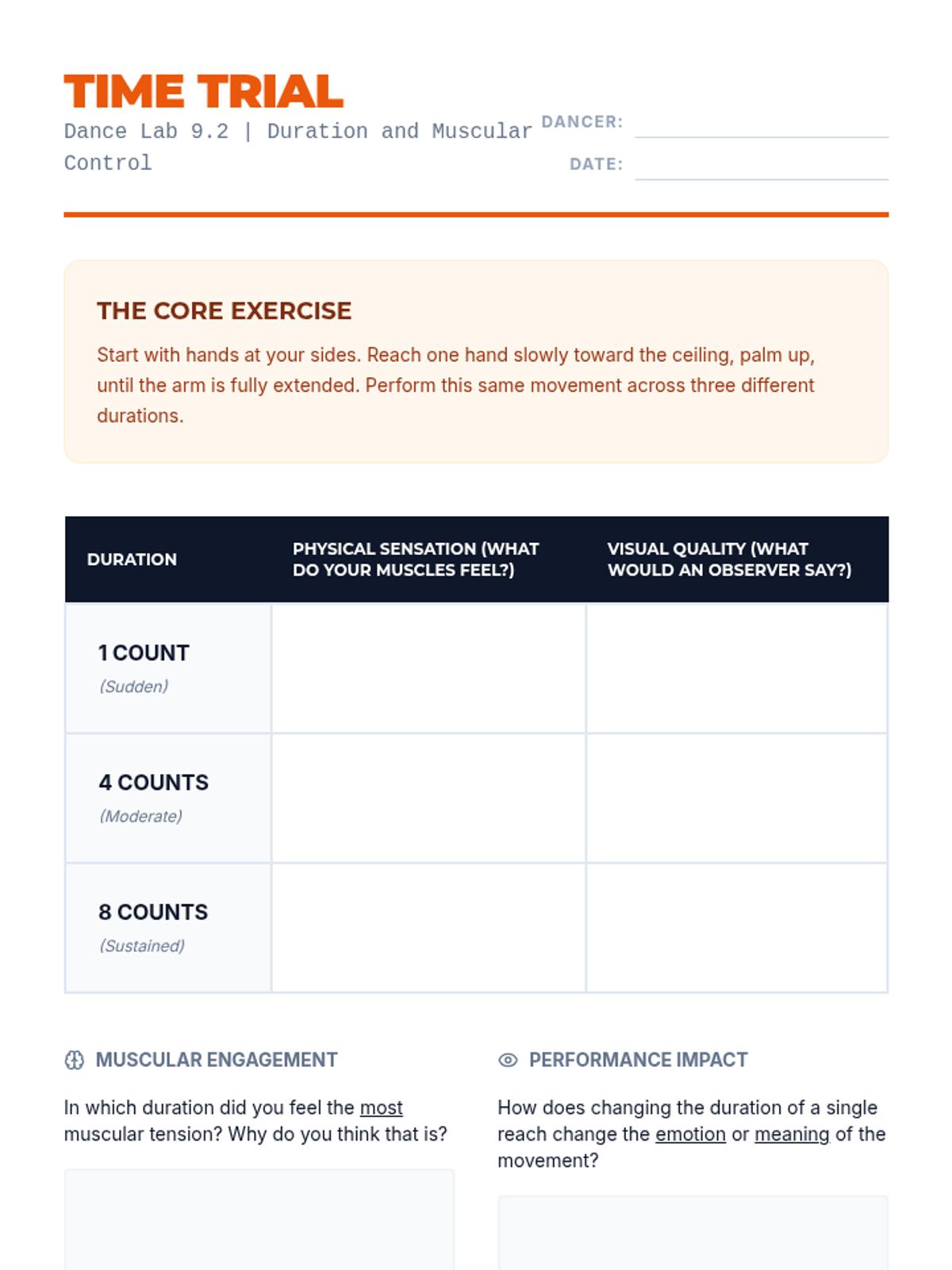
Students take a single movement and perform it over 1 count, 4 counts, and 8 counts. They analyze how the muscular tension and quality of movement change based on the duration allowed.
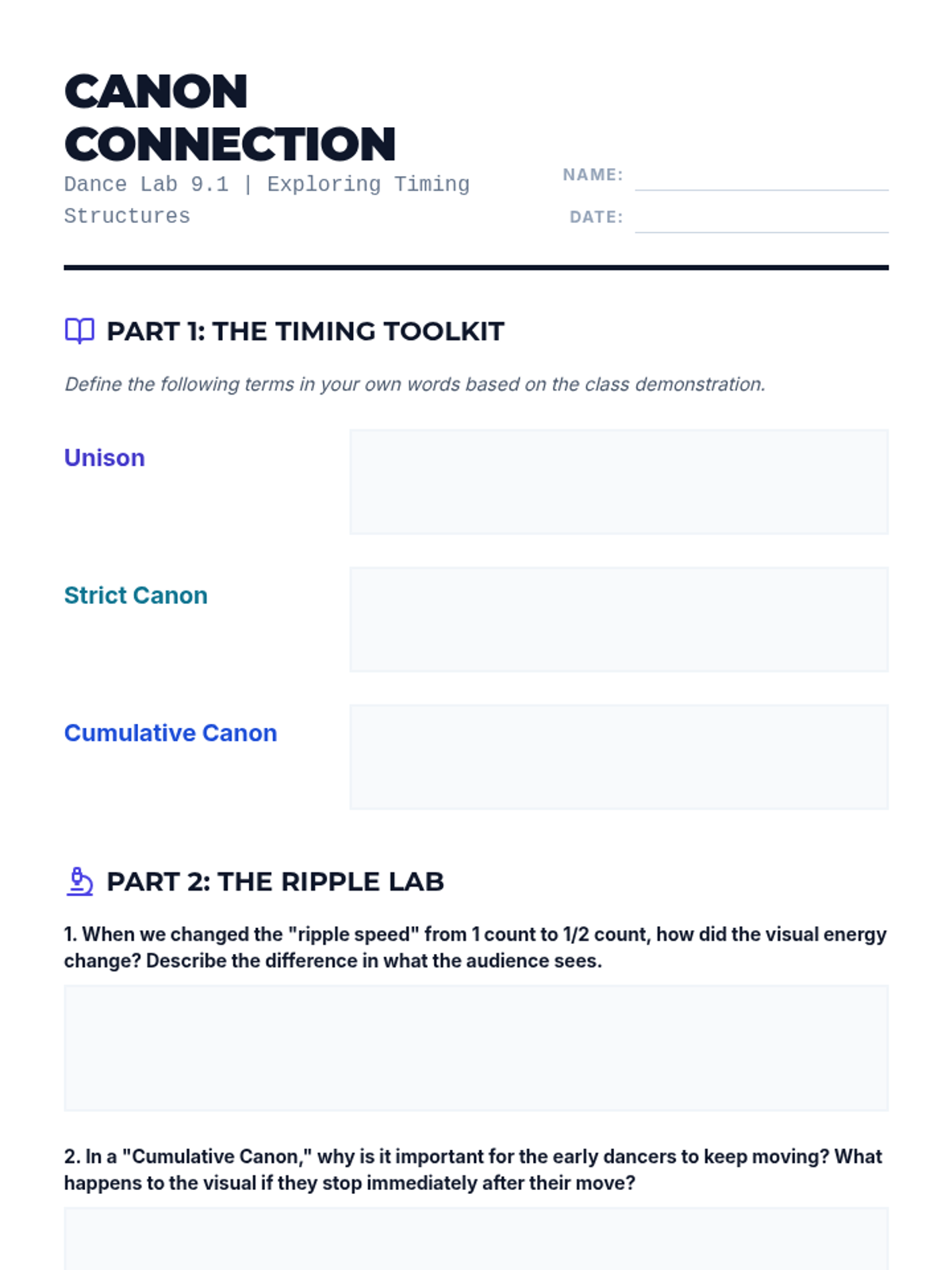
Students learn the difference between unison, strict canon, and cumulative canon through simple arm movements and formations. They experiment with how 'ripples' of movement travel through a line of dancers at different speeds.
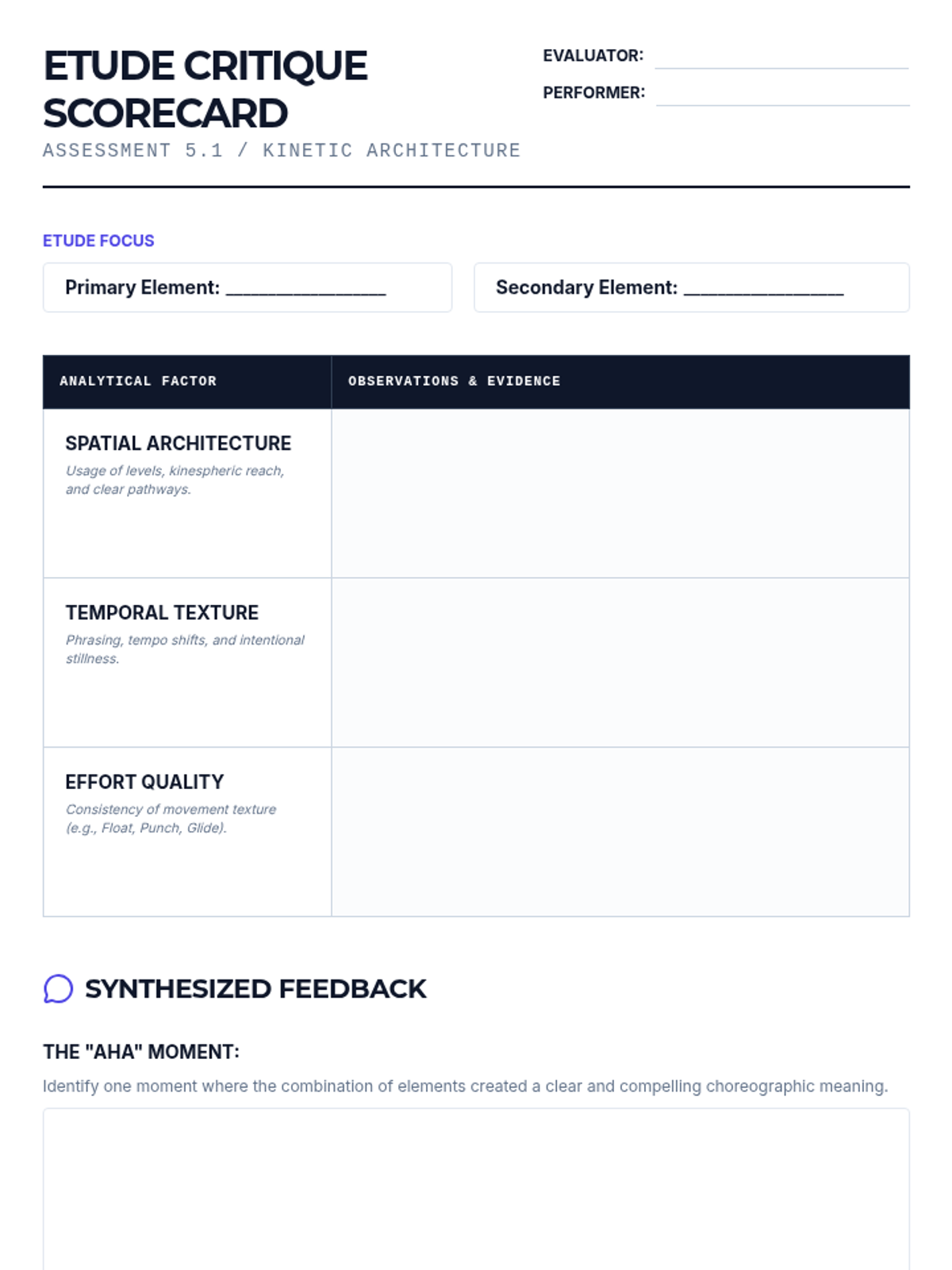
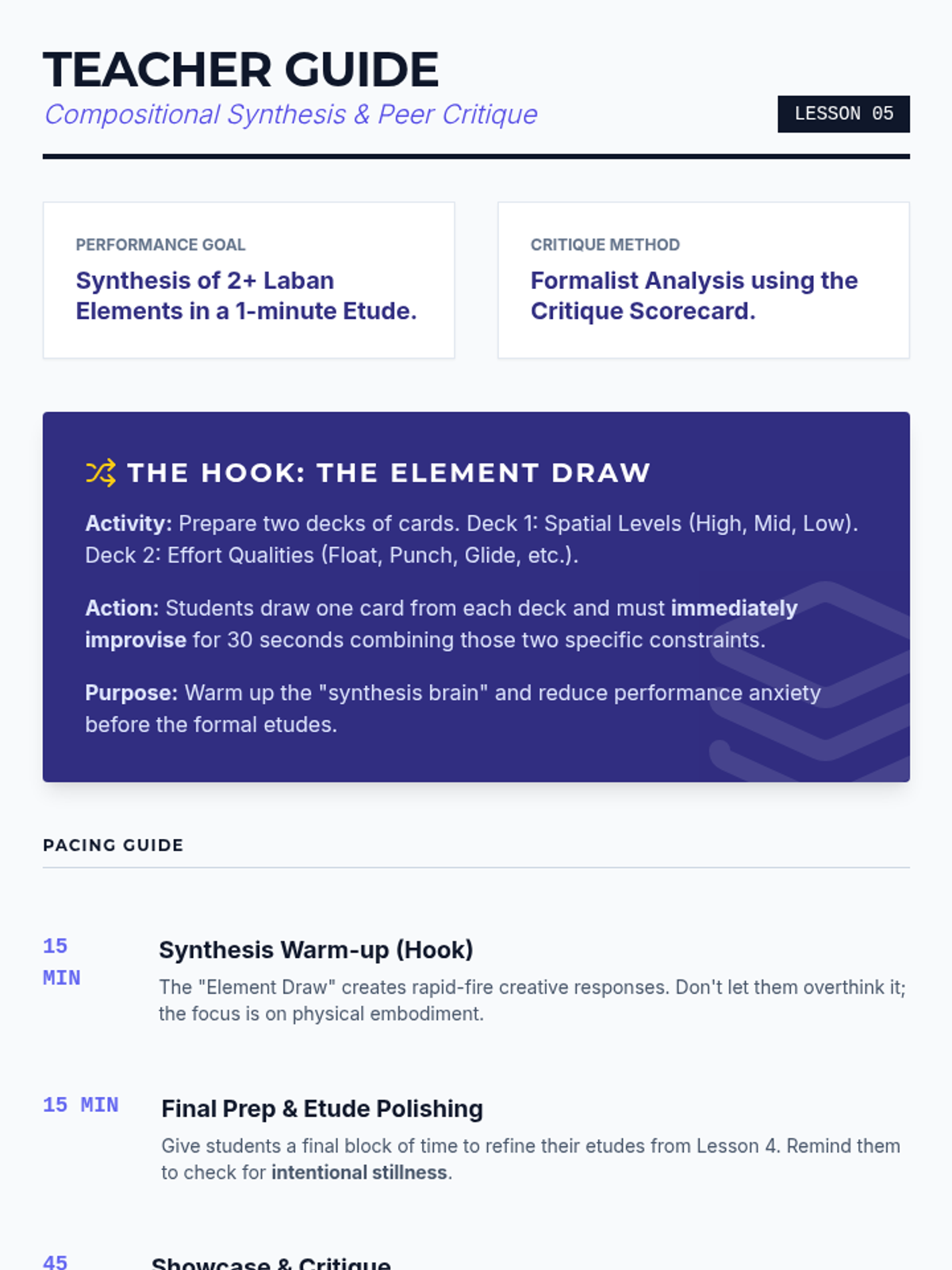
A culminating compositional study where students synthesize dance elements into short etudes and engage in peer critique.
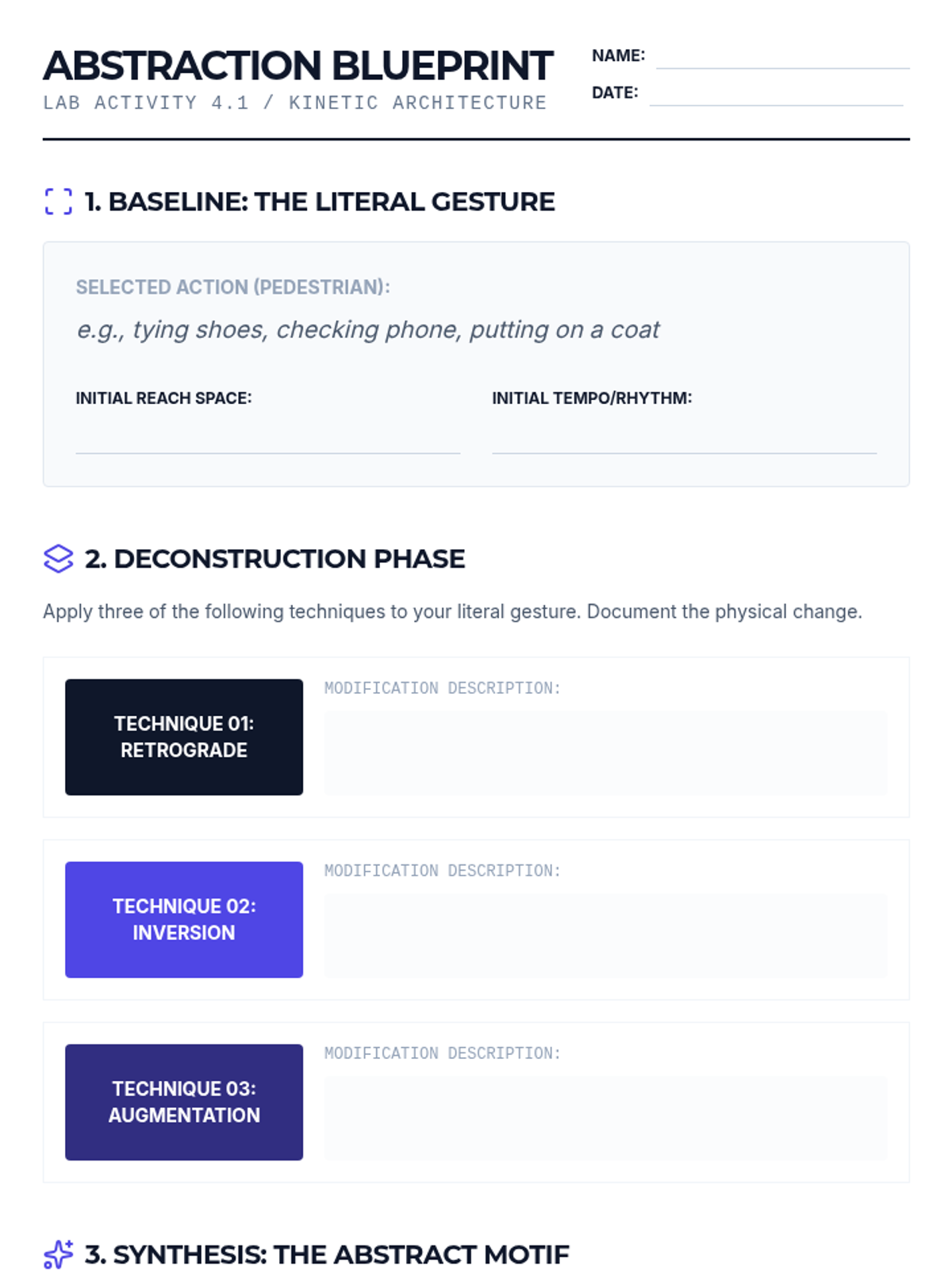
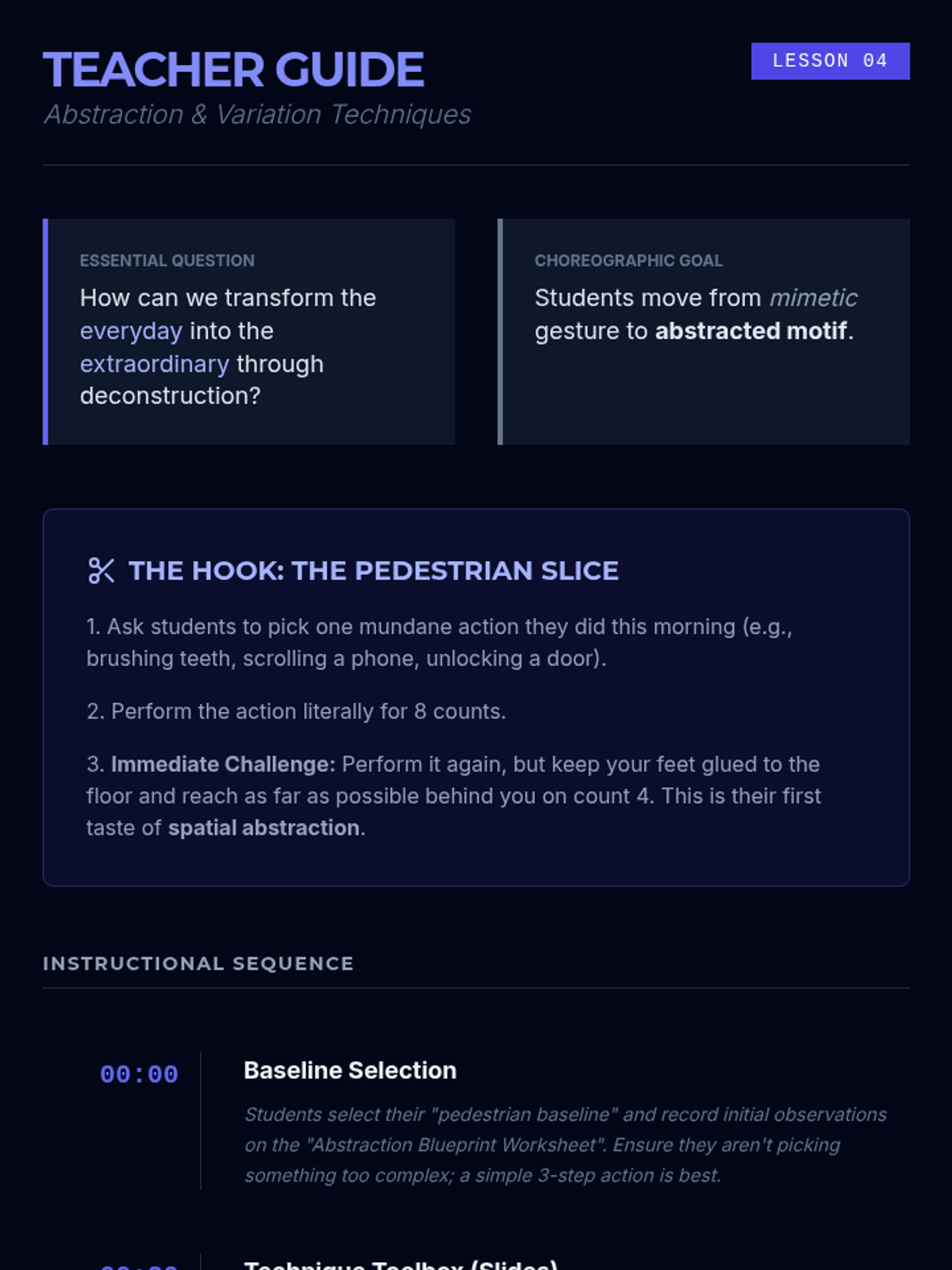
Students apply choreographic devices such as retrograde and inversion to abstract literal gestures into sophisticated movement motifs.
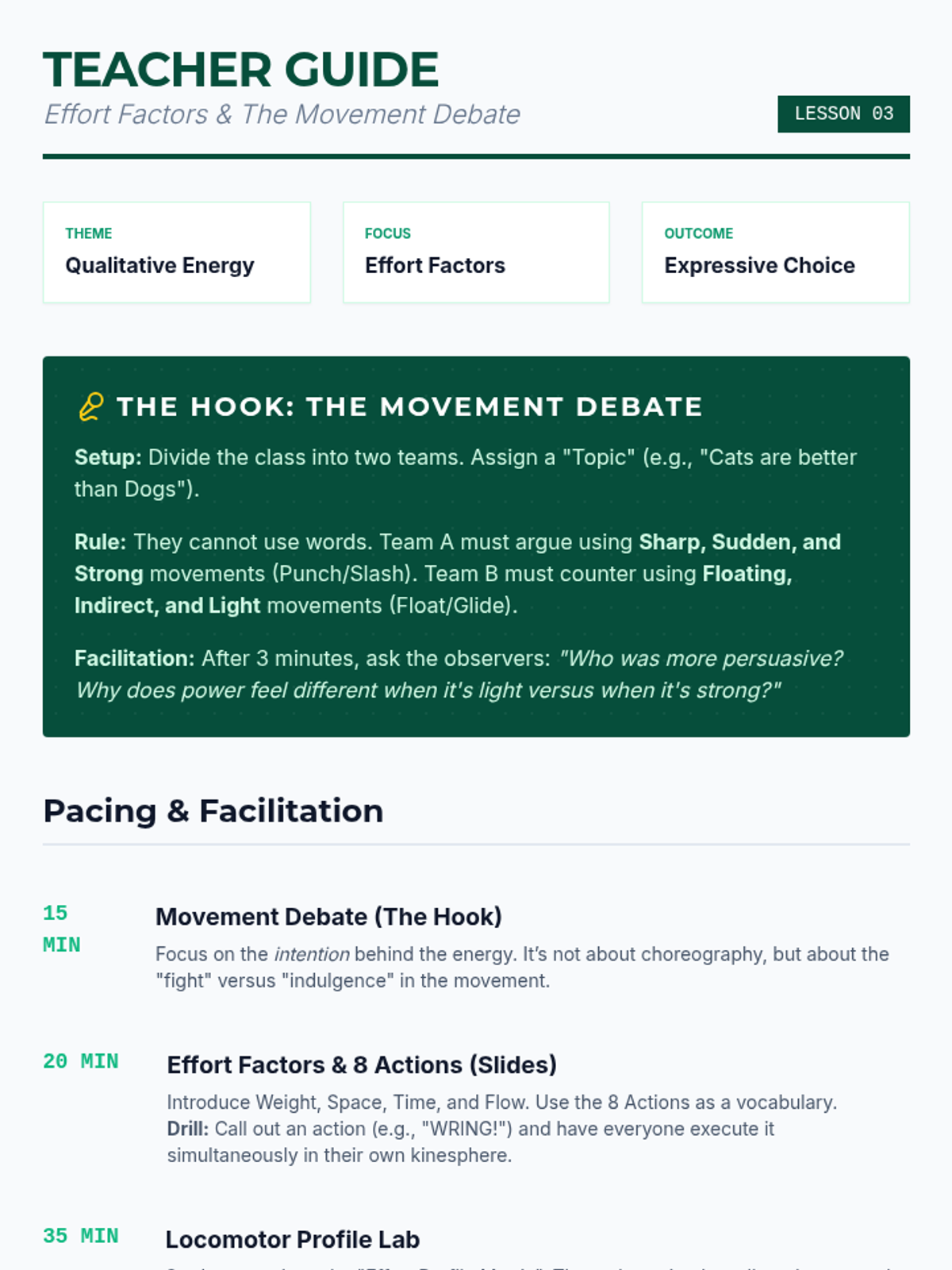
An introduction to Laban Effort factors, focusing on movement qualities like weight, flow, and directness to convey emotional context.
Applying rhythmic independence to create movement that acts as a visual counterpoint to music.
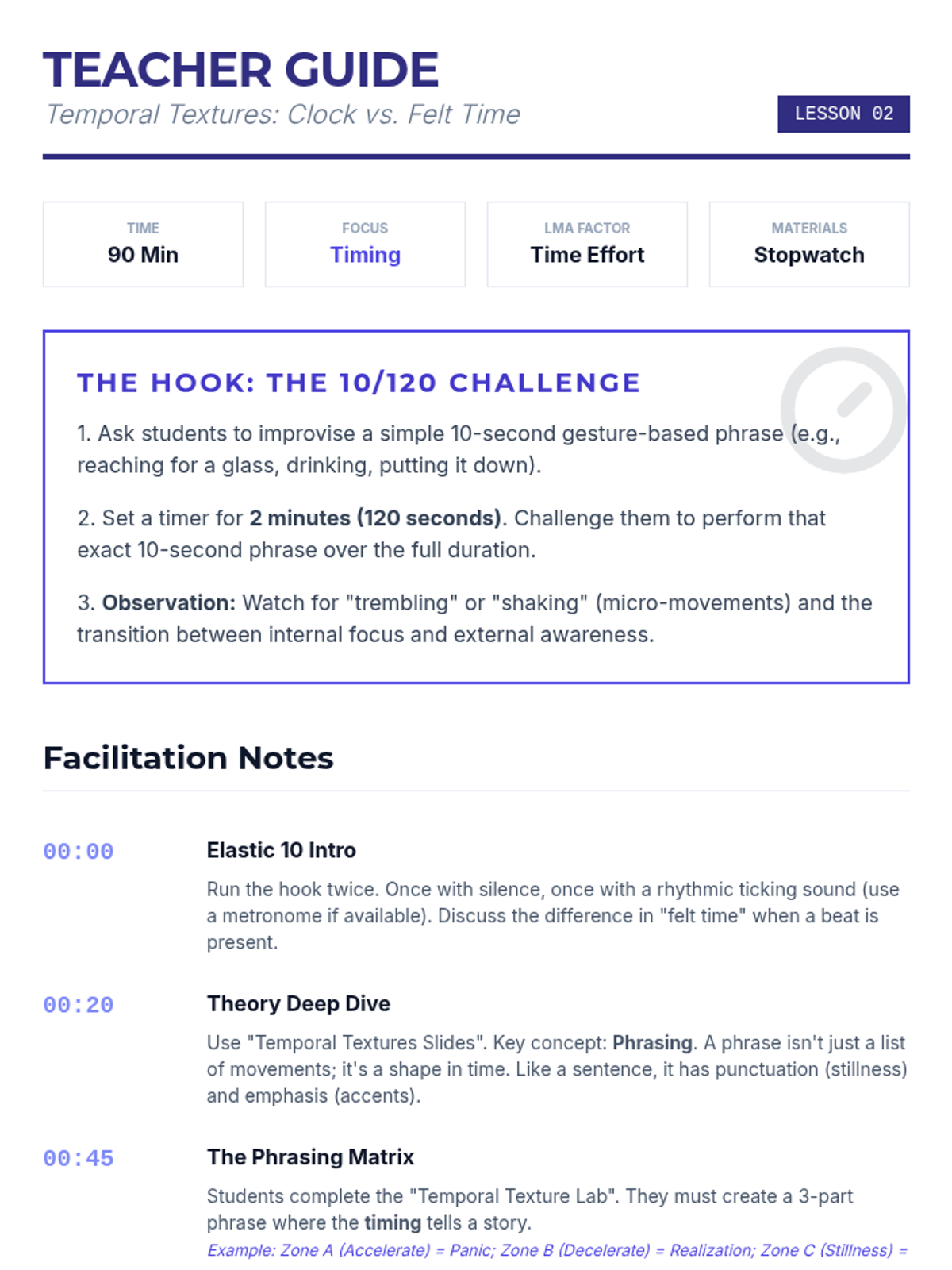
Investigation of temporal elements in dance, including clock time vs. felt time, tempo manipulation, and dynamic phrasing.
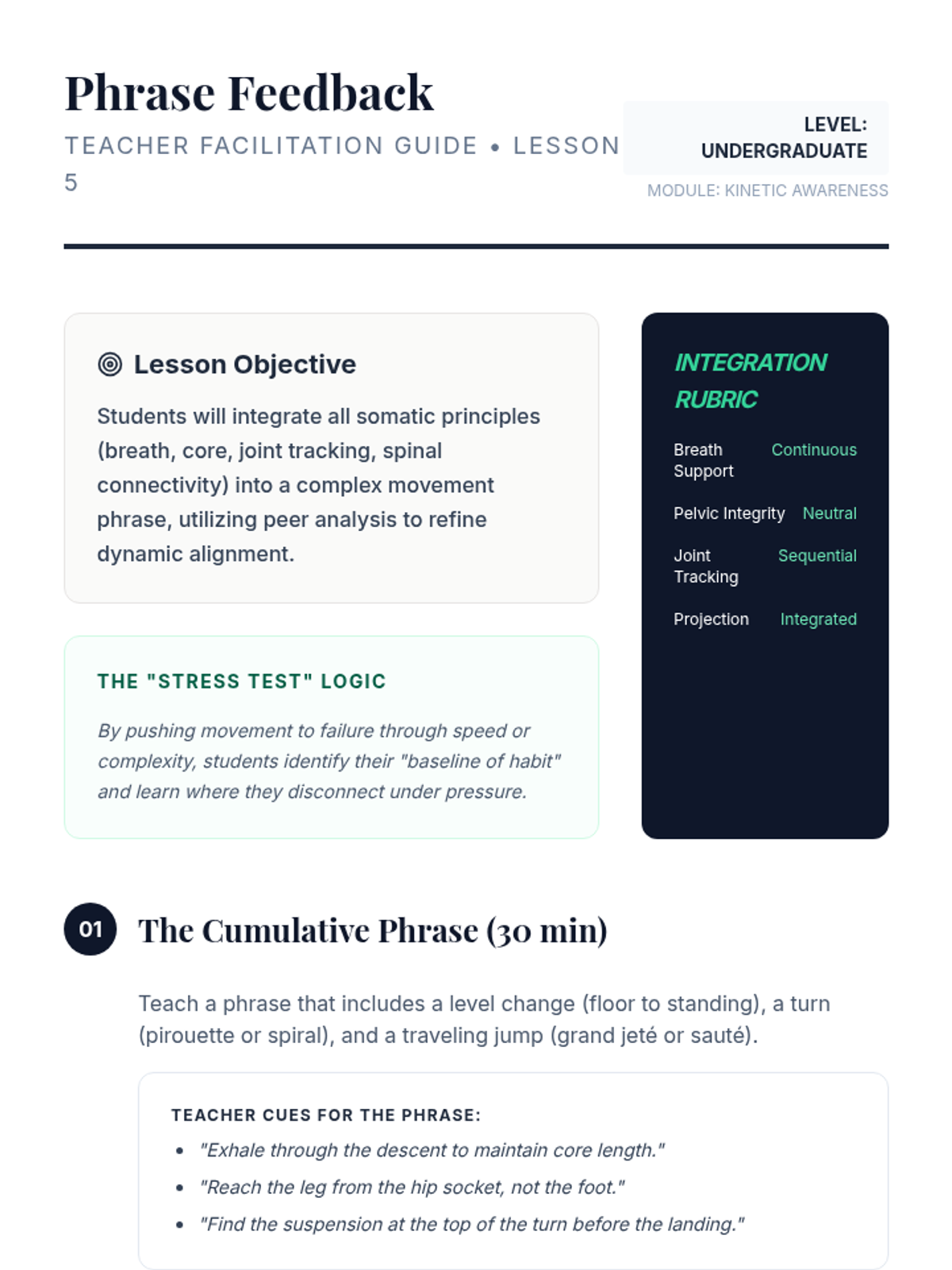
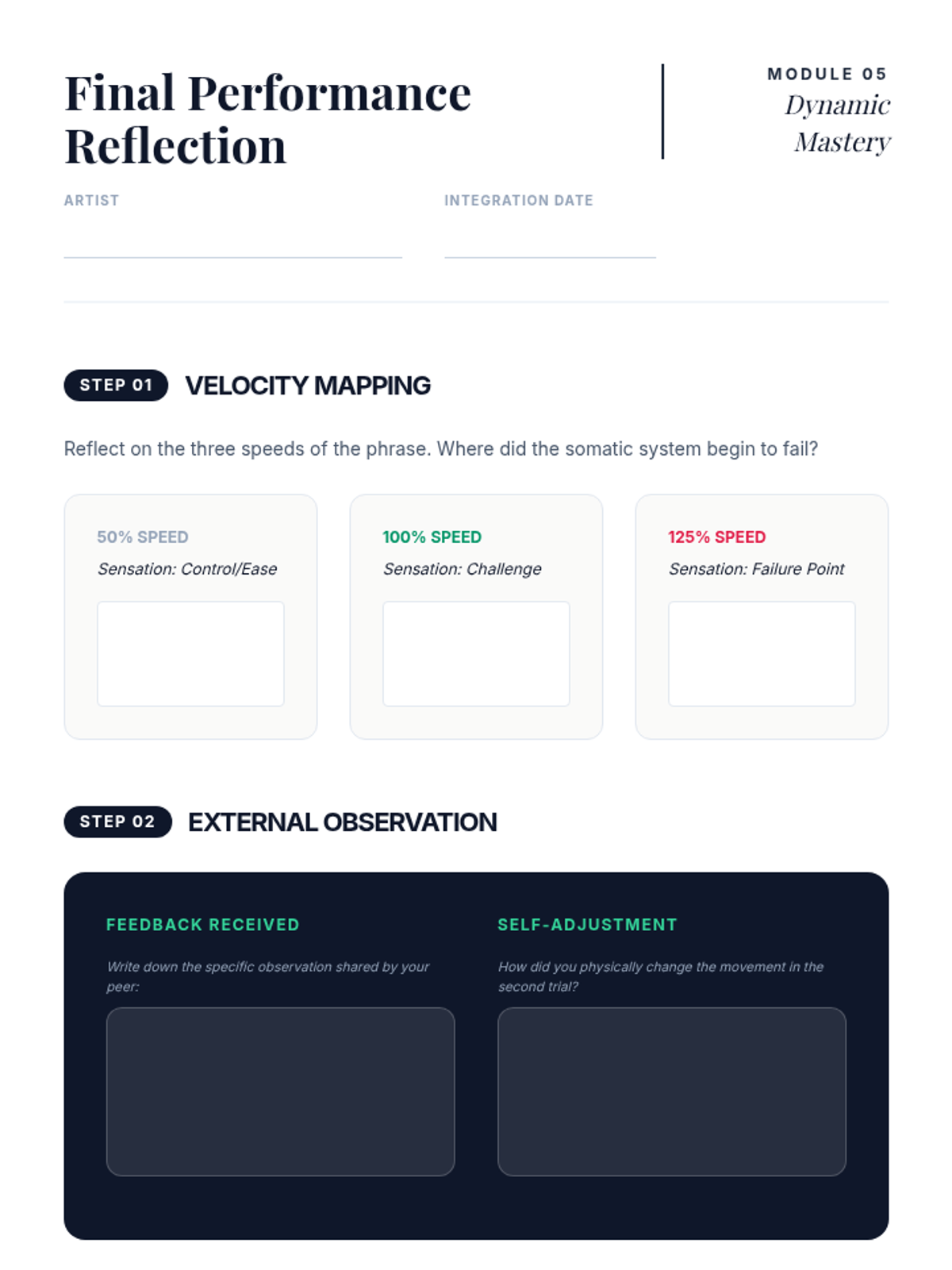
Cumulative movement phrase application where students maintain alignment principles during dynamic levels, turns, and jumps.
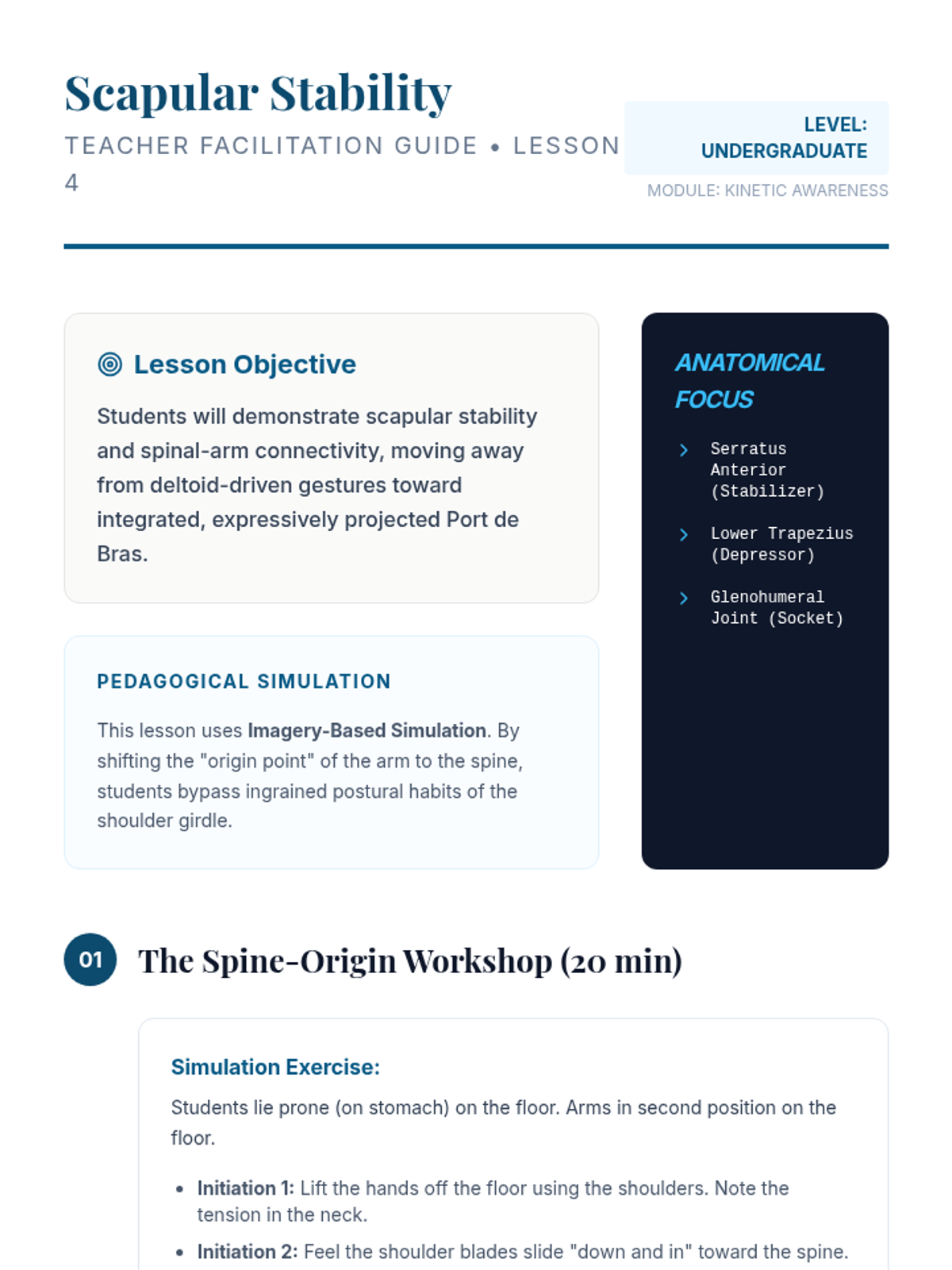
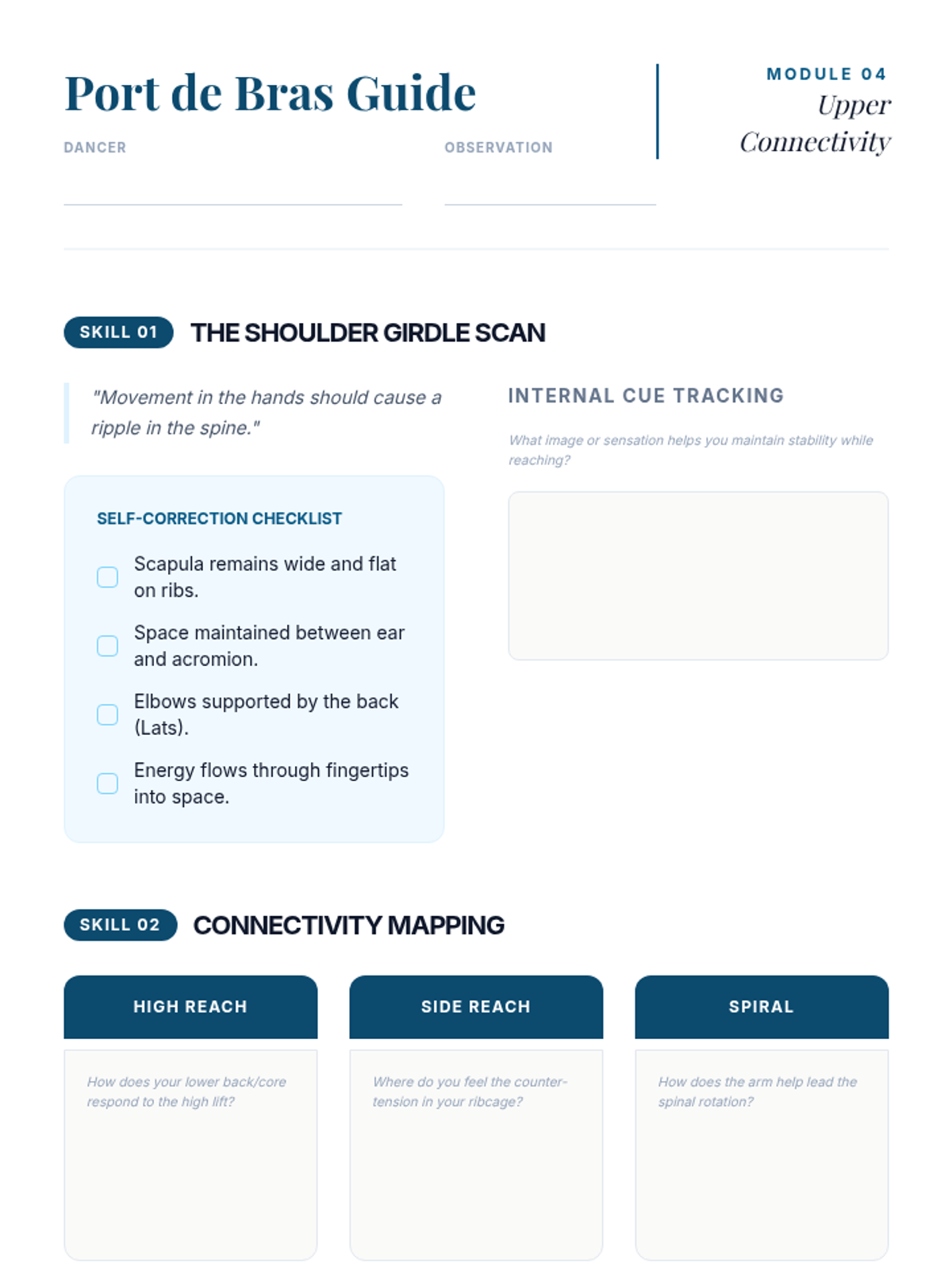
Exploration of the scapular-humeral rhythm and connectivity between the arms and the spine for expressive movement.
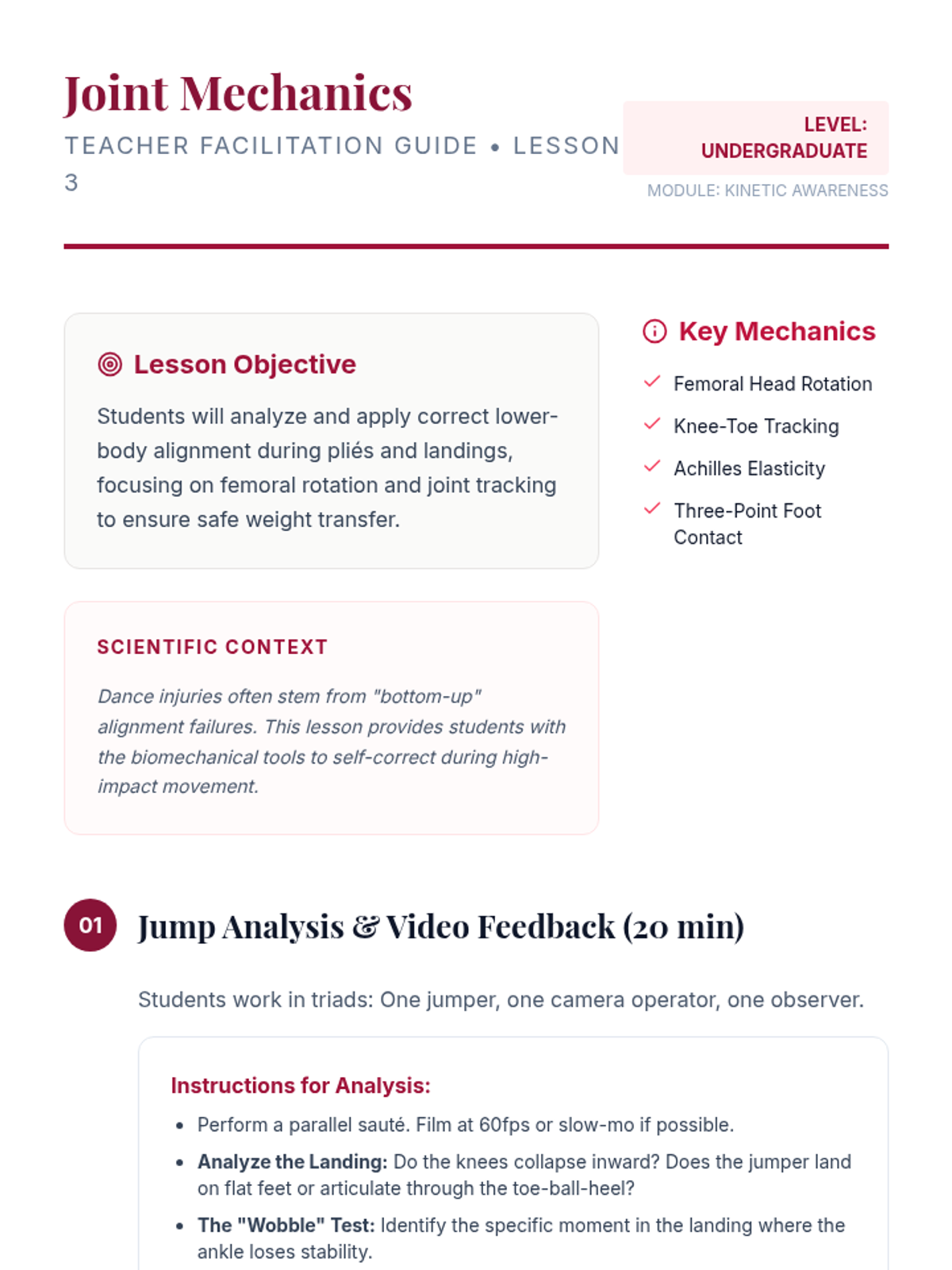
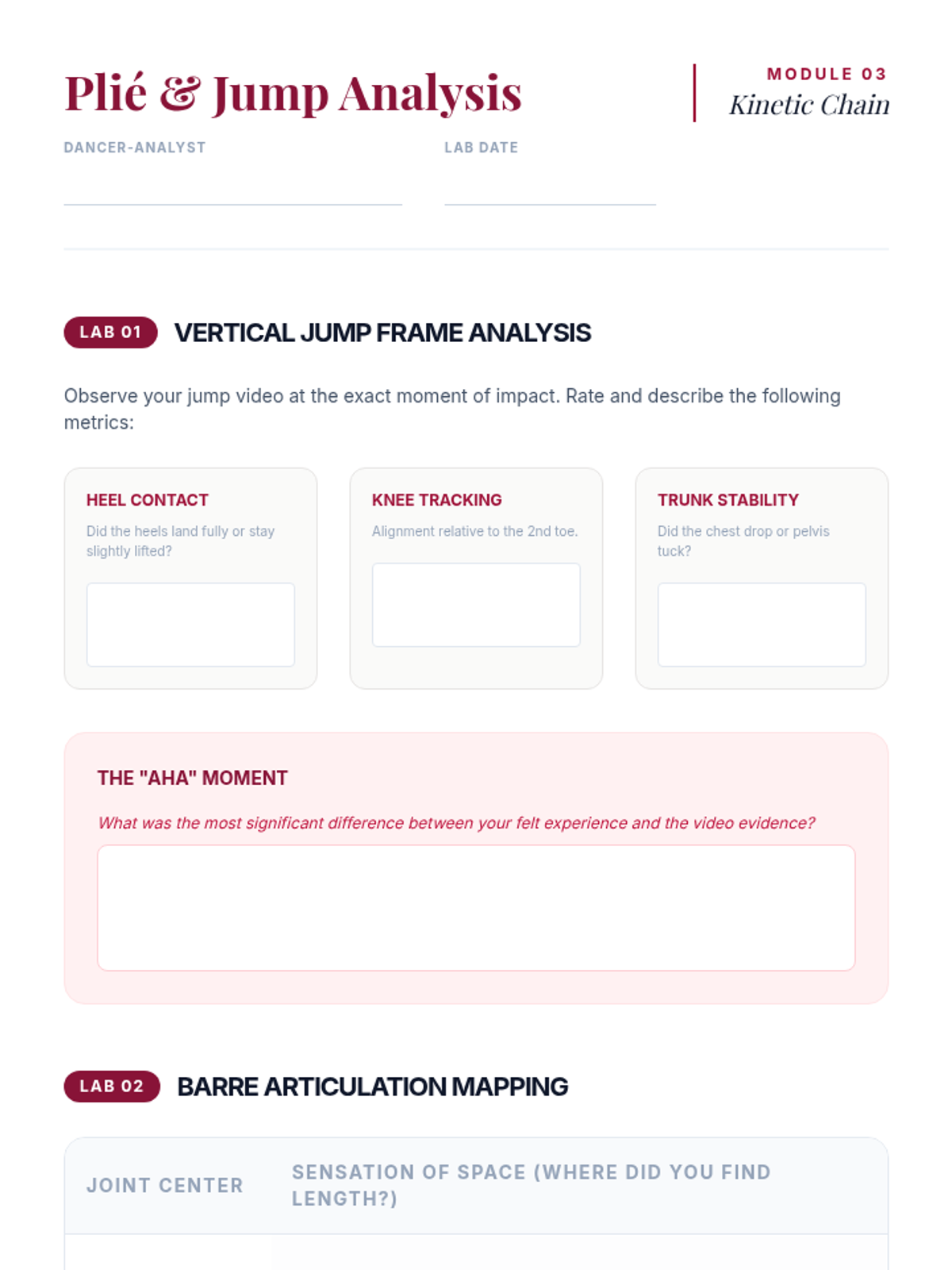
Analysis of hip, knee, and ankle mechanics through plié and tendu to ensure safe landing and weight transfer.
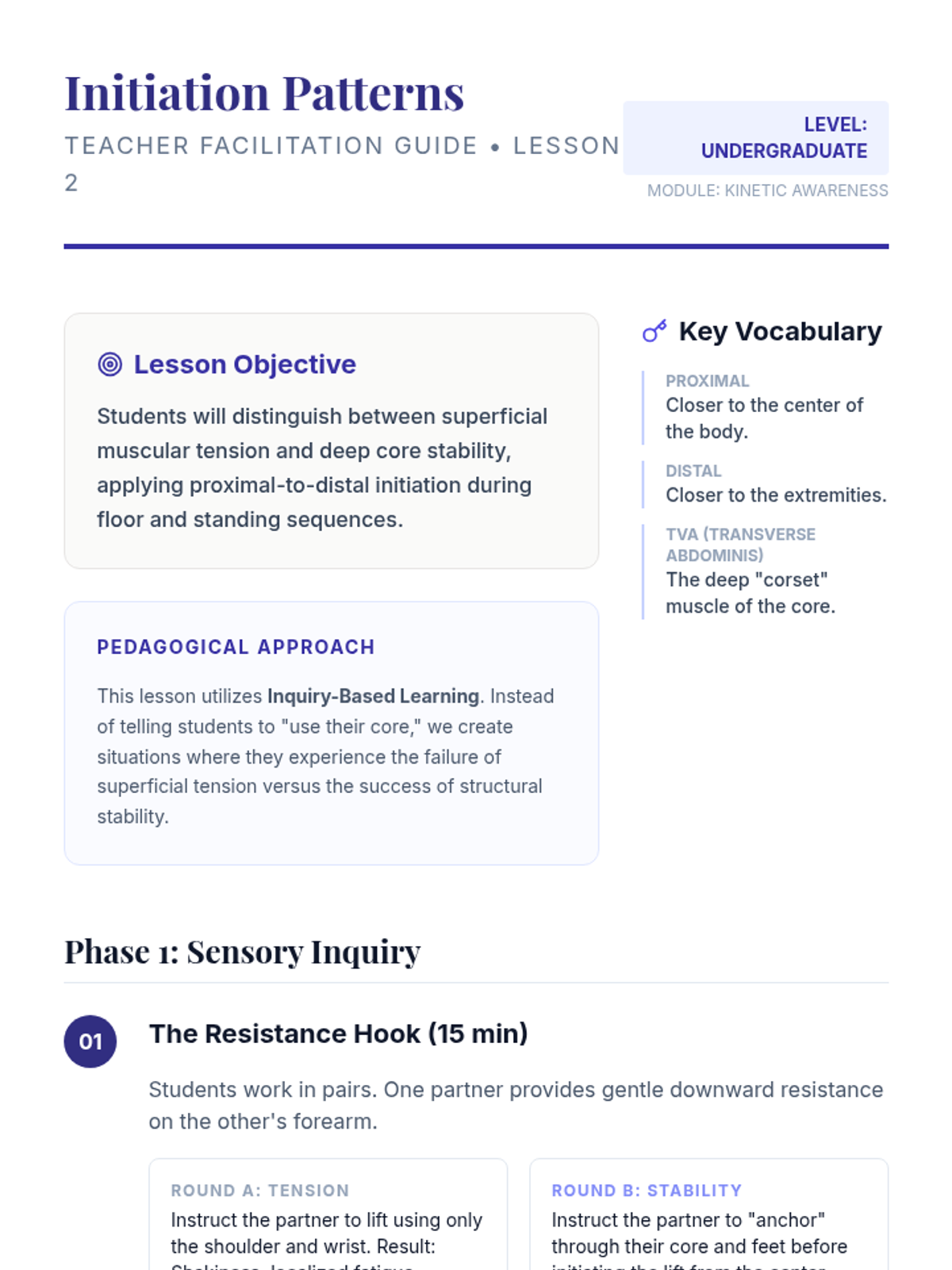
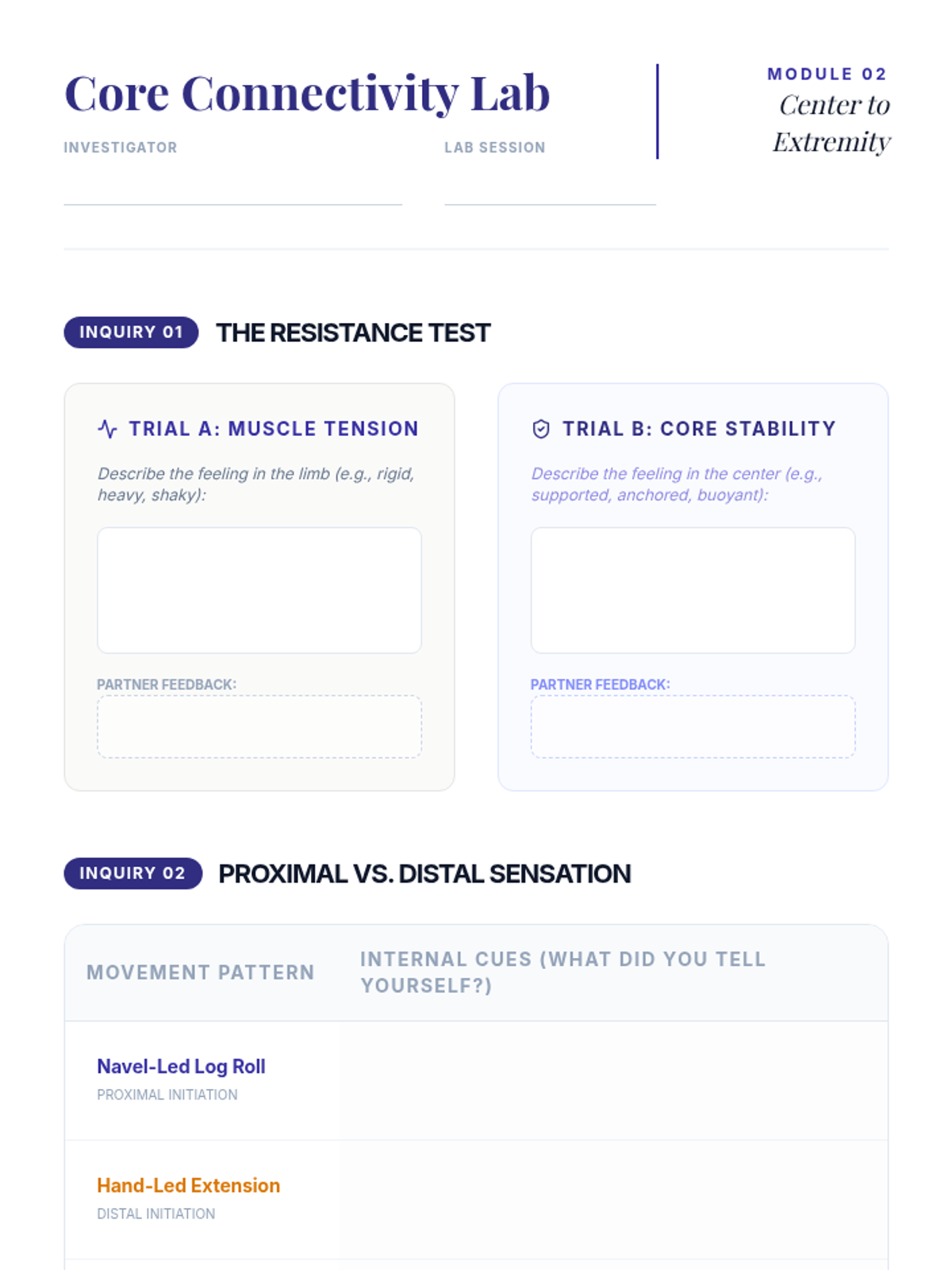
Focuses on the relationship between deep abdominal muscles and limb movement, emphasizing proximal-to-distal initiation.
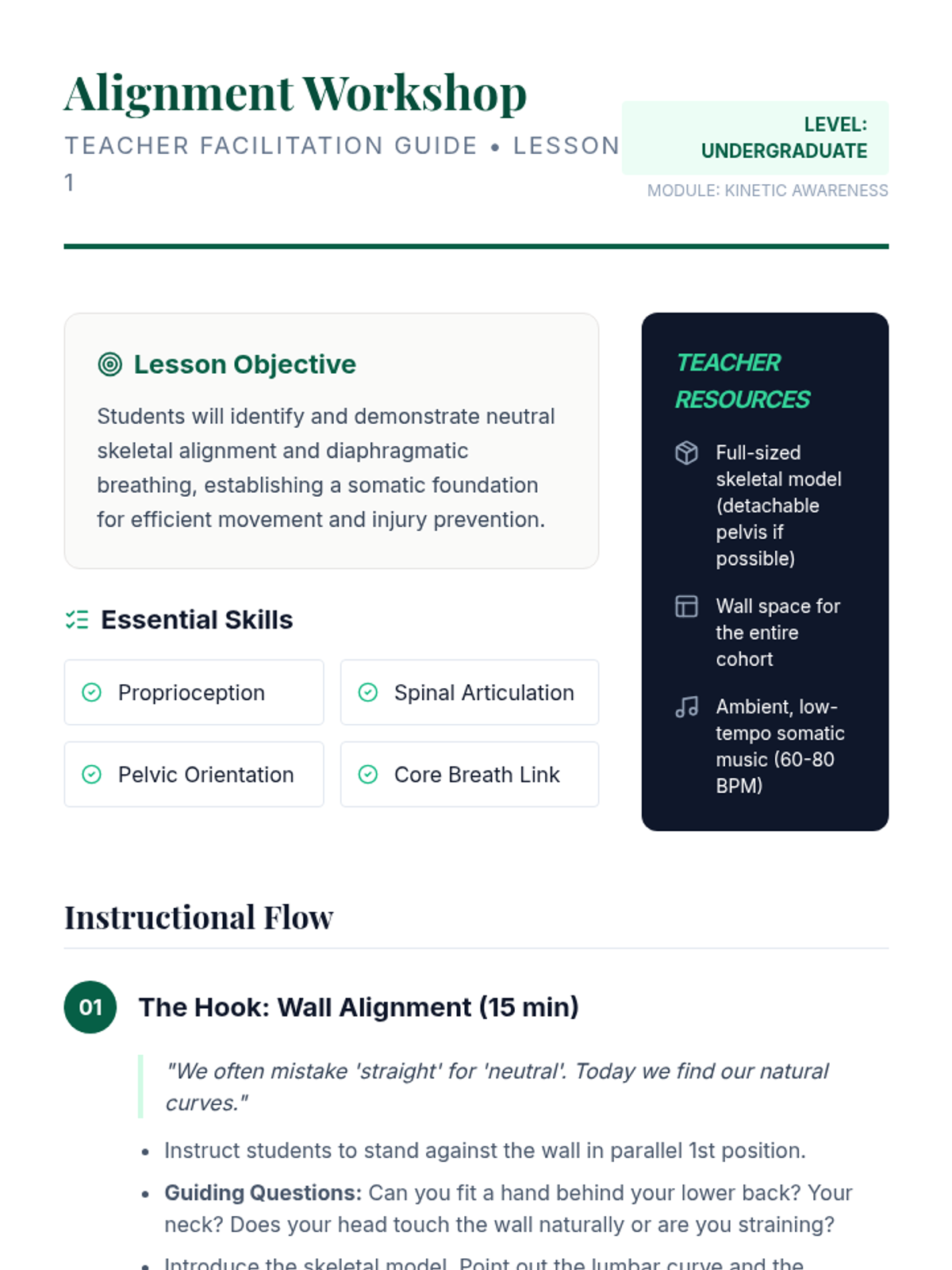
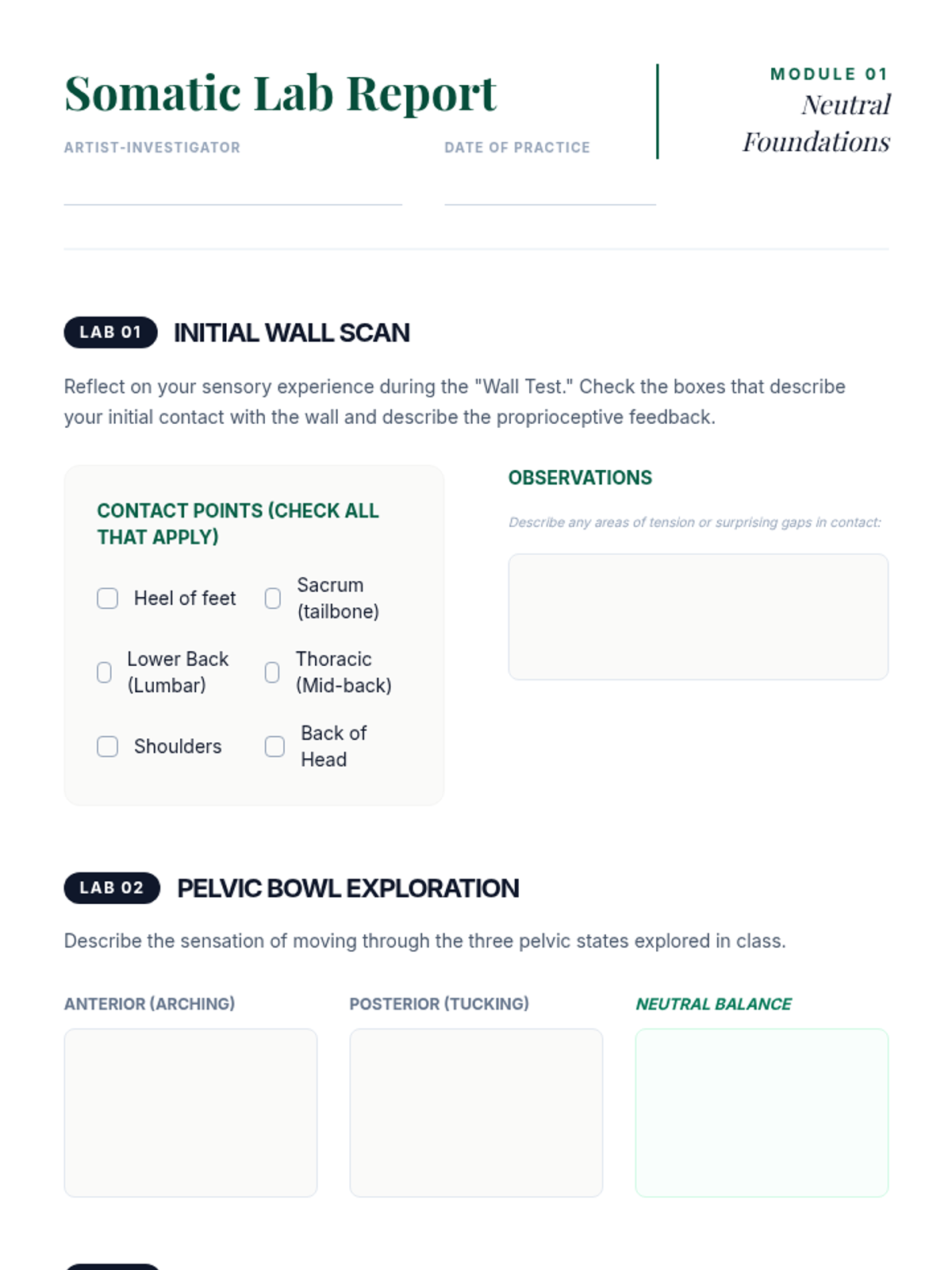
Students identify natural spinal curves and establish a neutral pelvis through somatic workshop exercises, integrating diaphragmatic breathing.
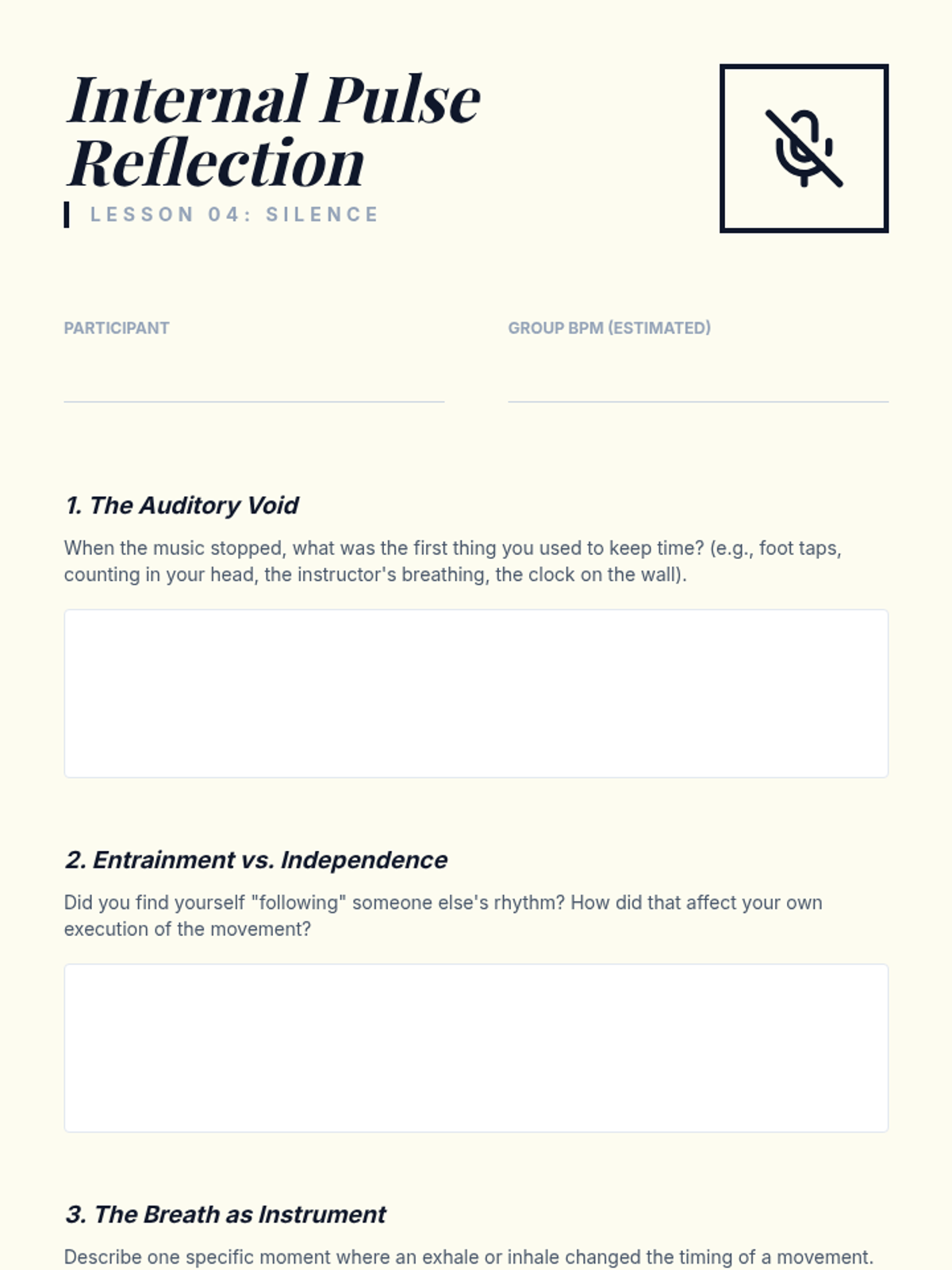
Focusing on internal rhythm, breath control, and the visual impact of movement performed in silence.
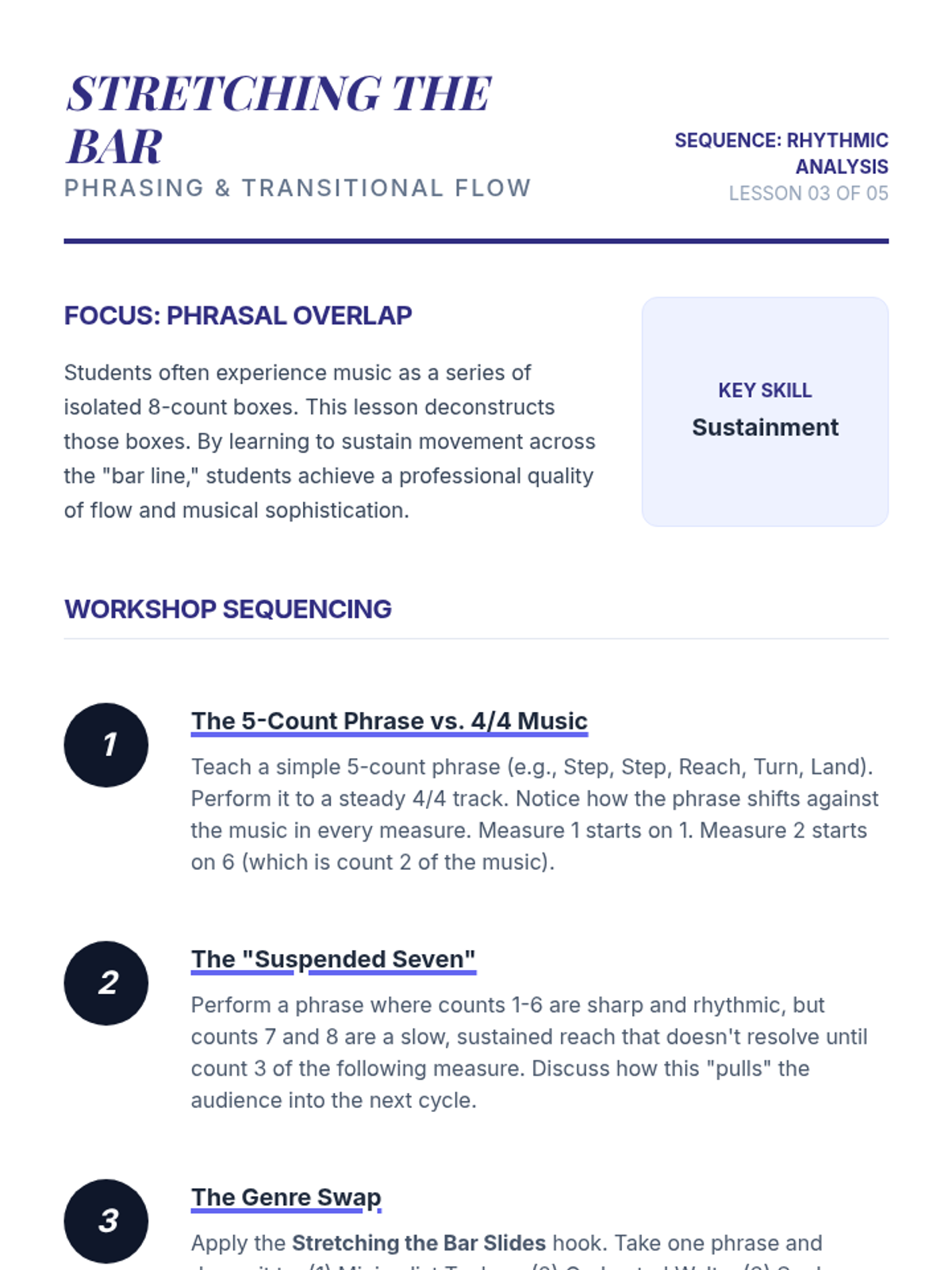
Exploring how movement phrases can transcend musical bars to create fluid, sustained sequences.
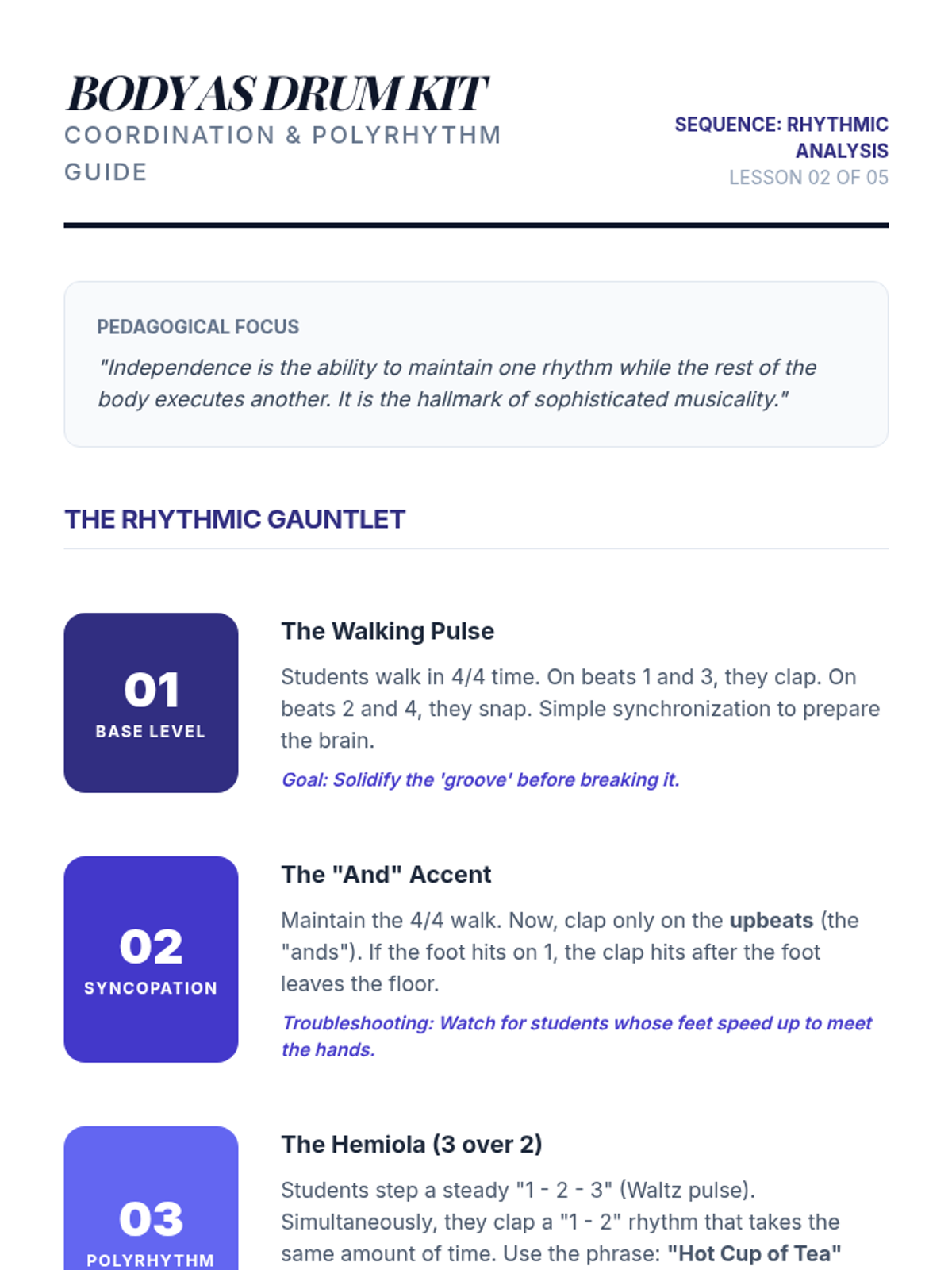
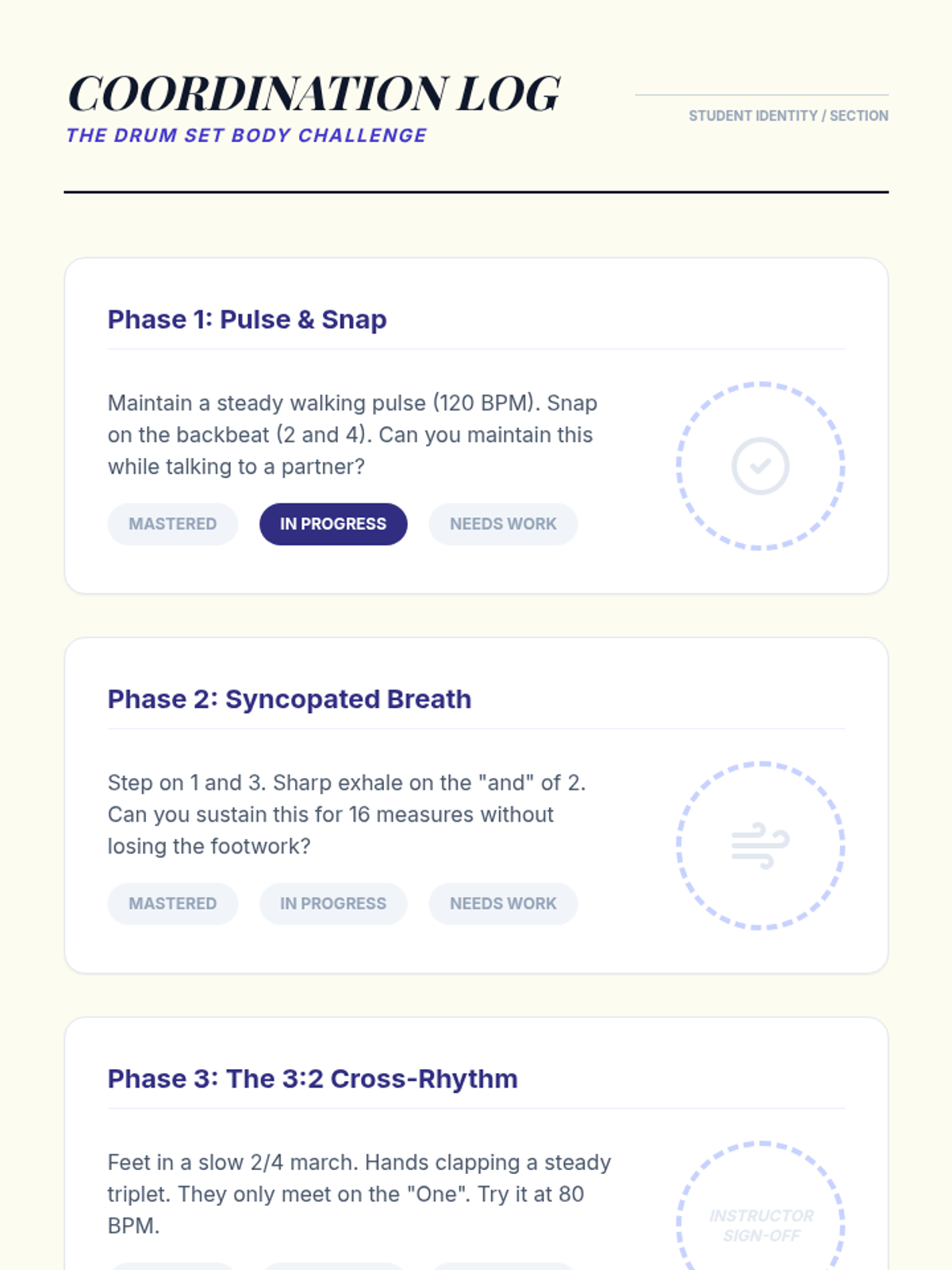
Developing physical coordination and rhythmic independence through polyrhythmic exercises and syncopated phrasing.
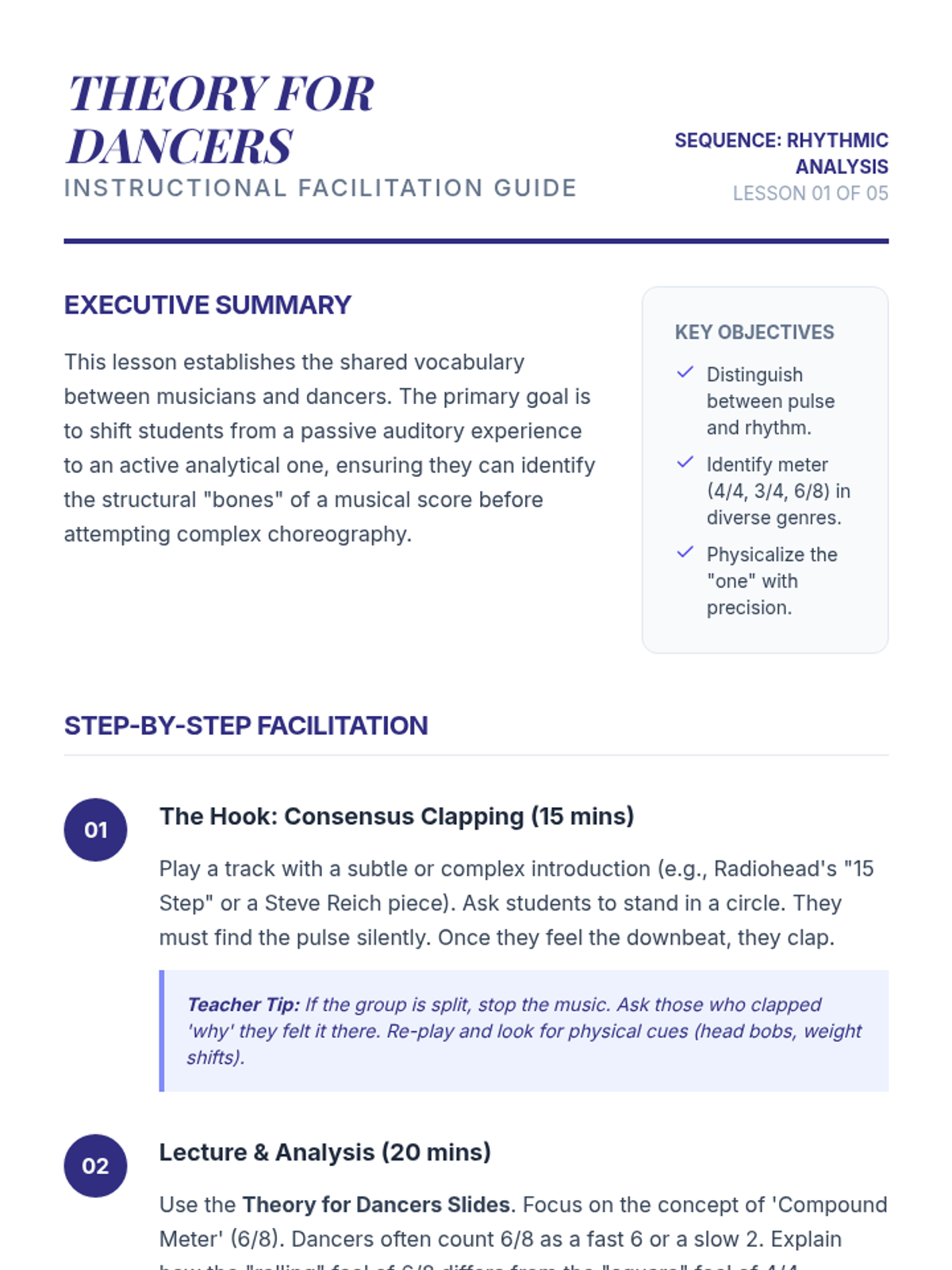
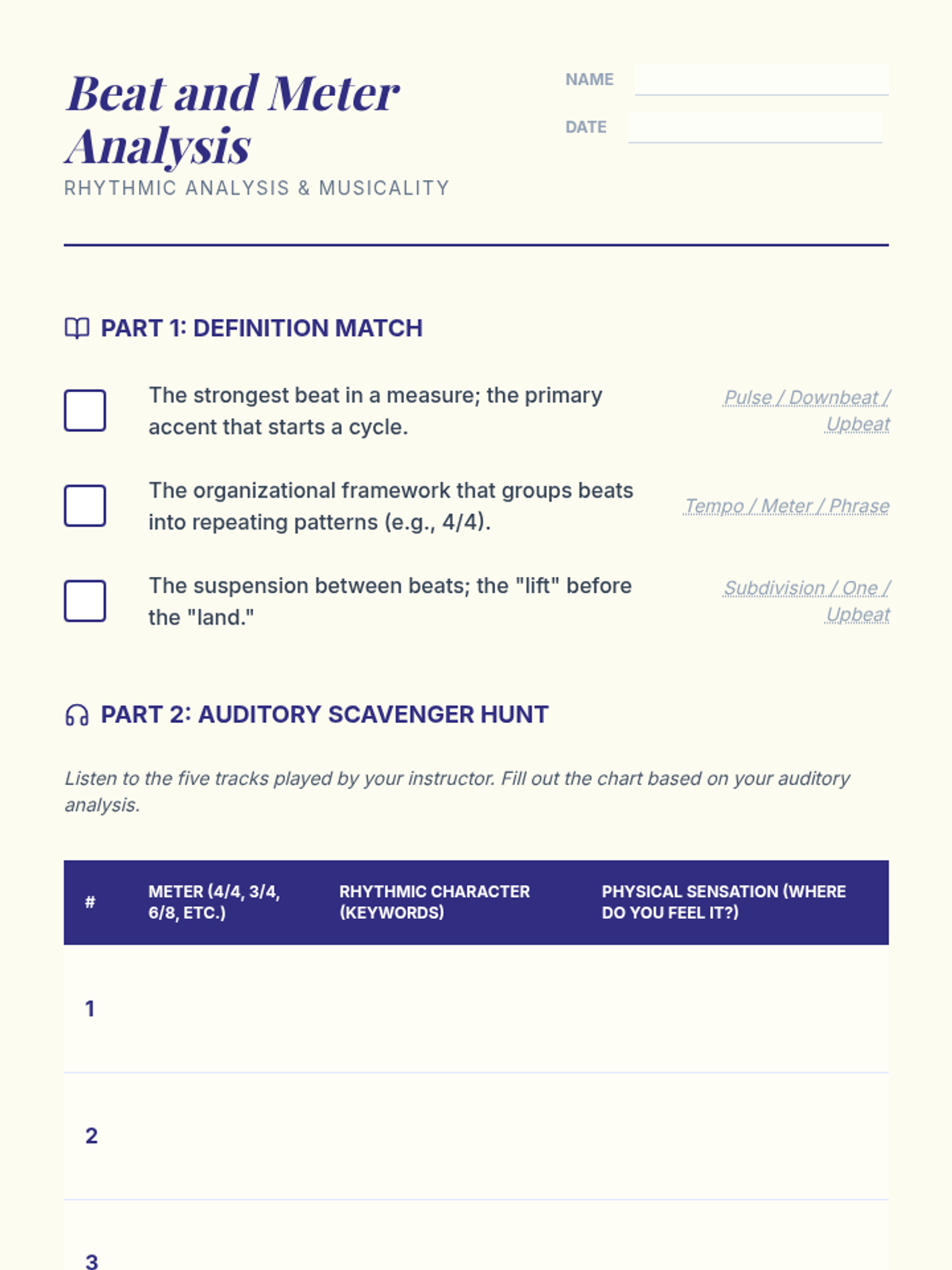
Introduction to fundamental music theory concepts tailored for dancers, focusing on identifying the downbeat and understanding common time signatures.
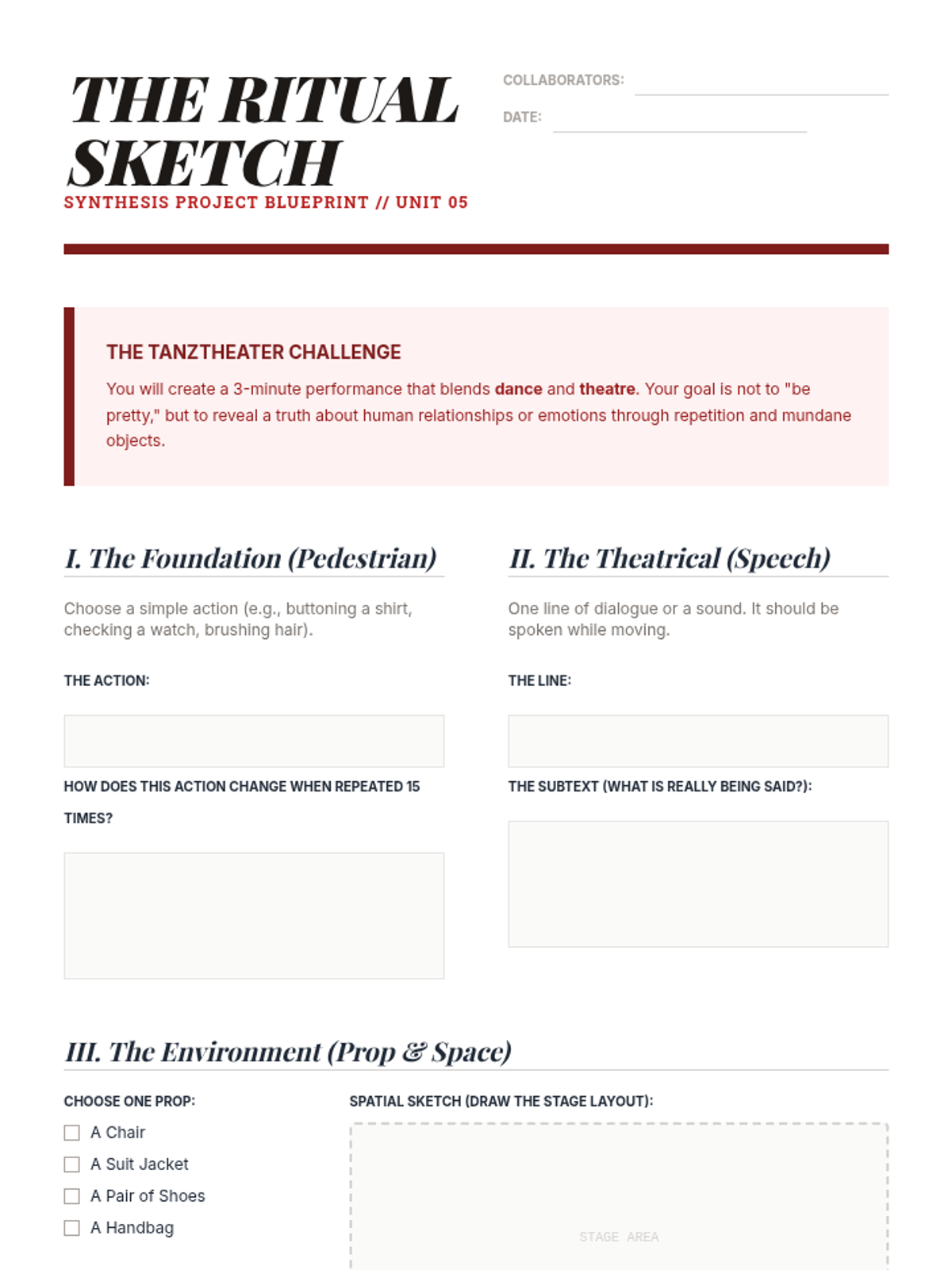
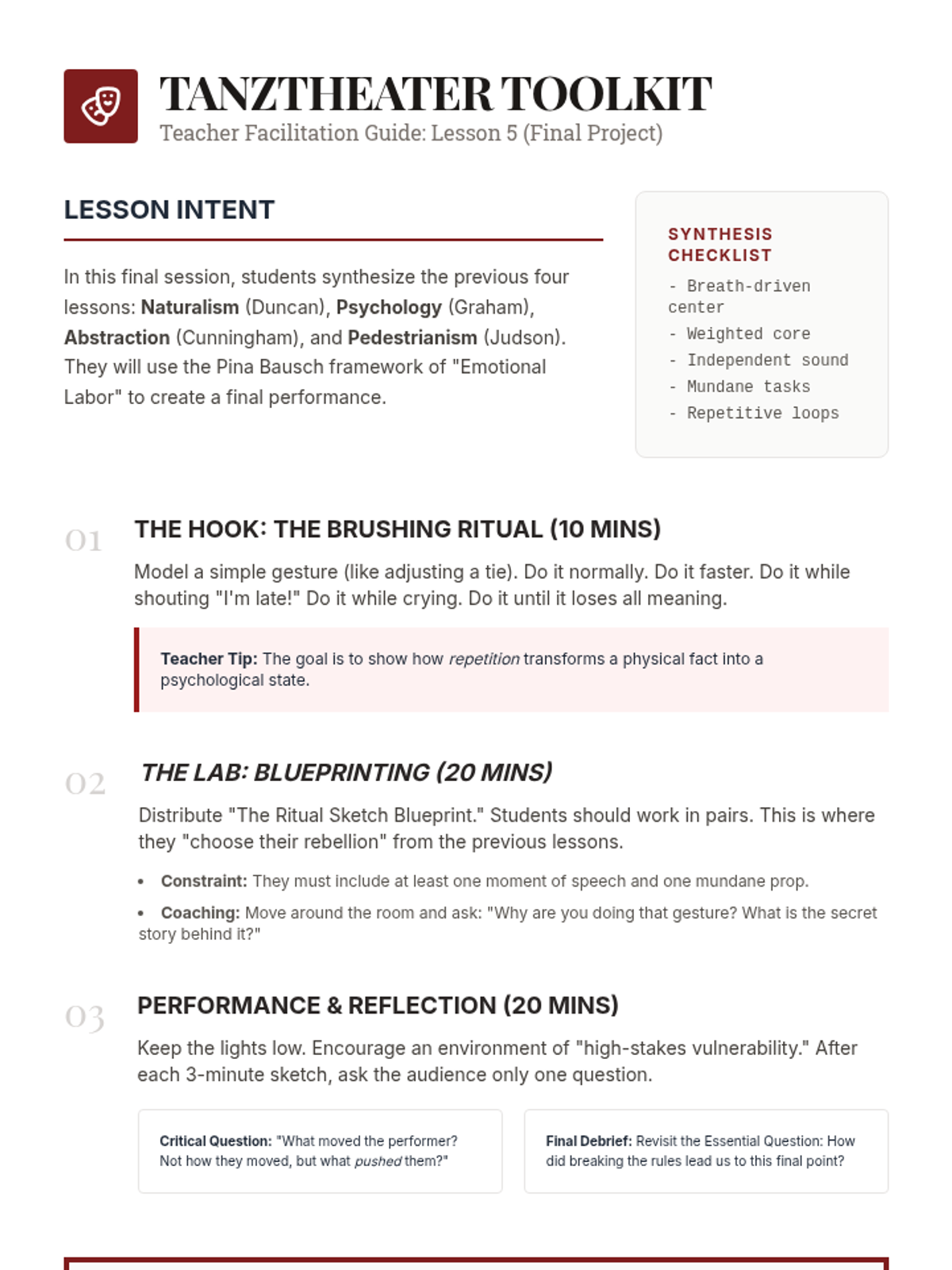
Students study Pina Bausch and the German Tanztheater movement, exploring how repetitive gestures and speech are combined with dance to address human relationships. They create a short 'dance-theater' sketch.
Connecting the 1970s Bronx breaking scene back to ancestral ring traditions, exploring the 'cypher' as a space for community and competition.
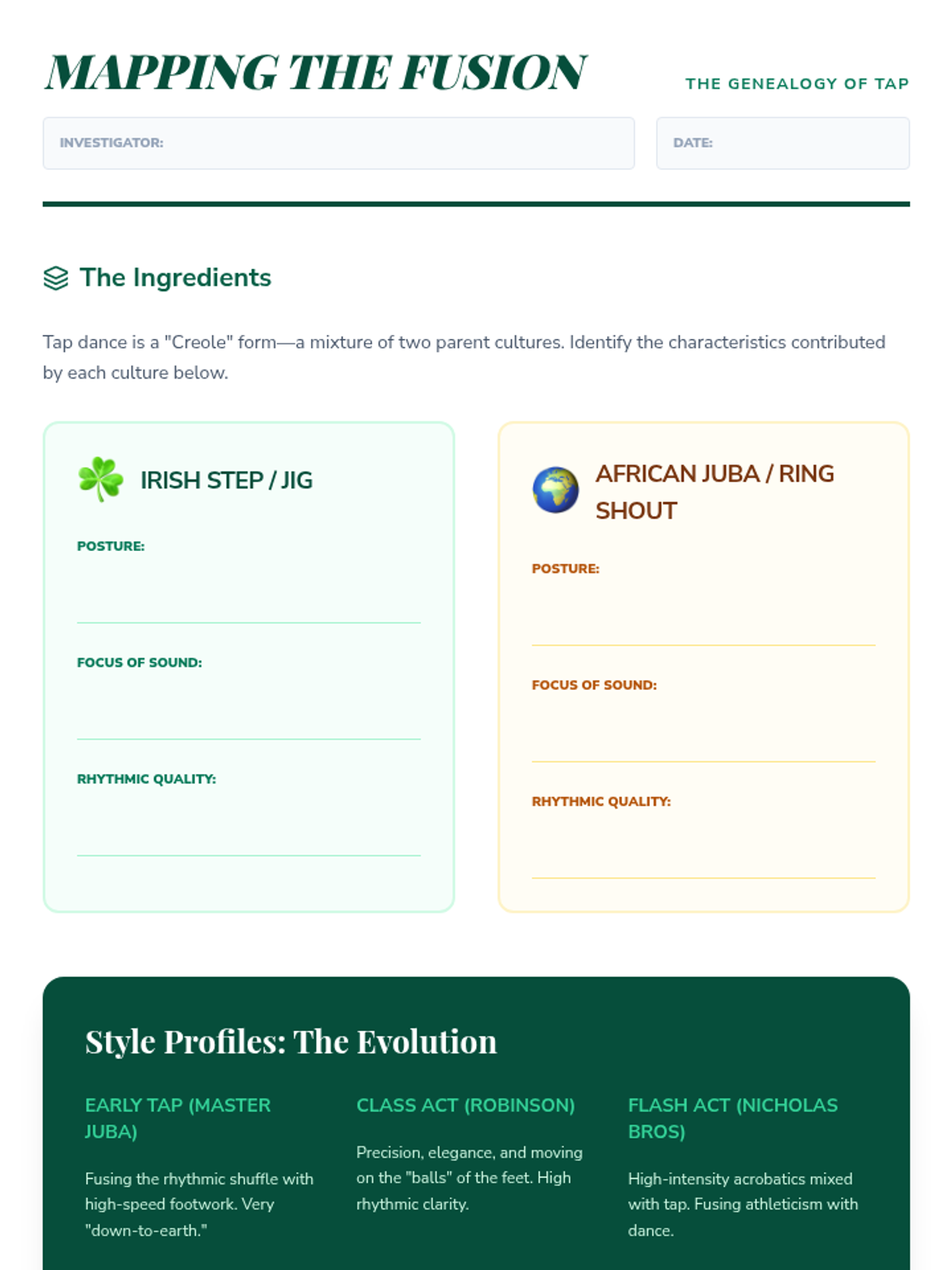
Tracing the cross-cultural fusion of Irish and African dance traditions that birthed Tap, highlighting key innovators and stylistic shifts.
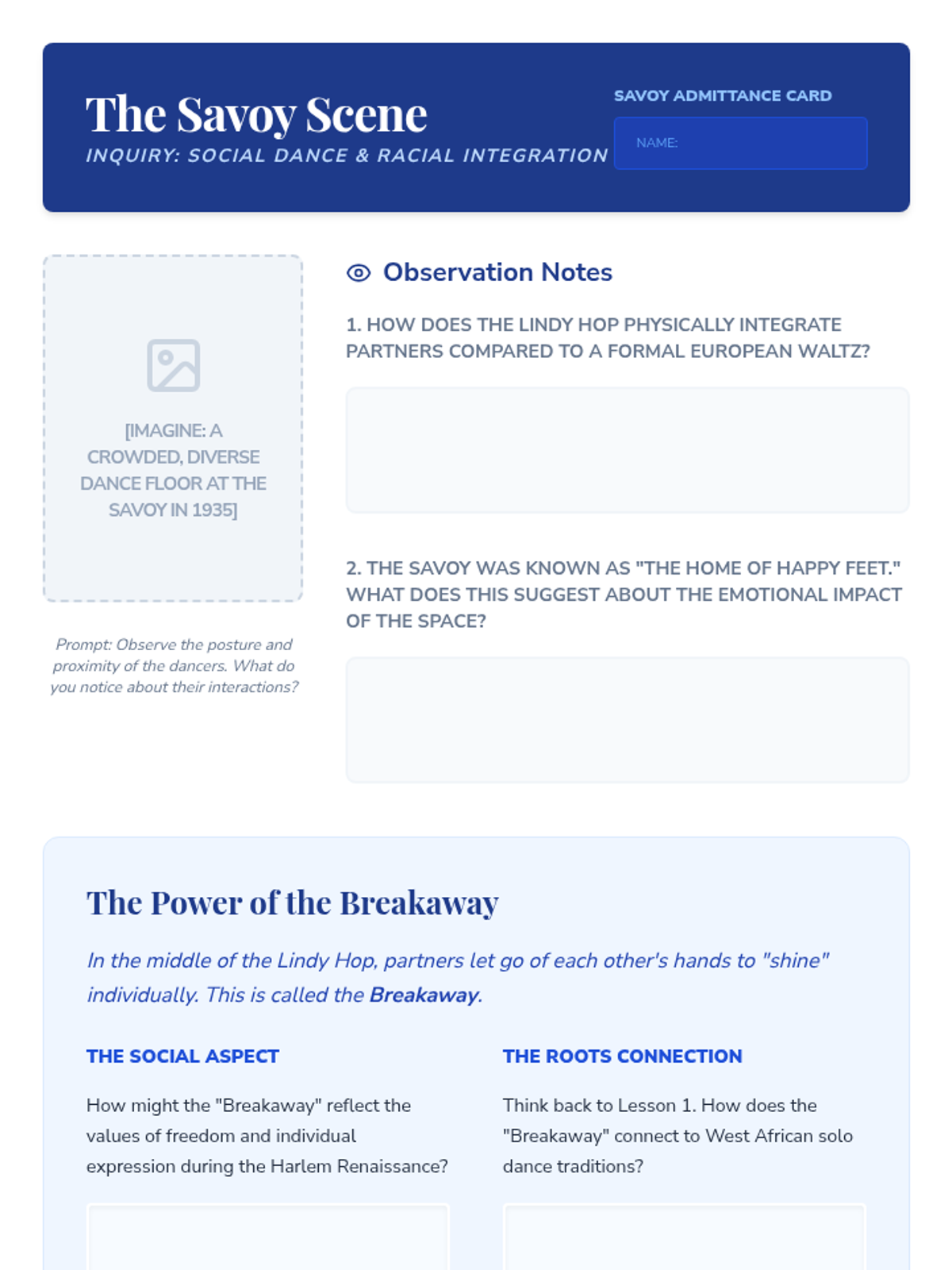
A look at the social and cultural explosion of the Harlem Renaissance, focusing on the Lindy Hop and the democratizing power of the Savoy Ballroom.
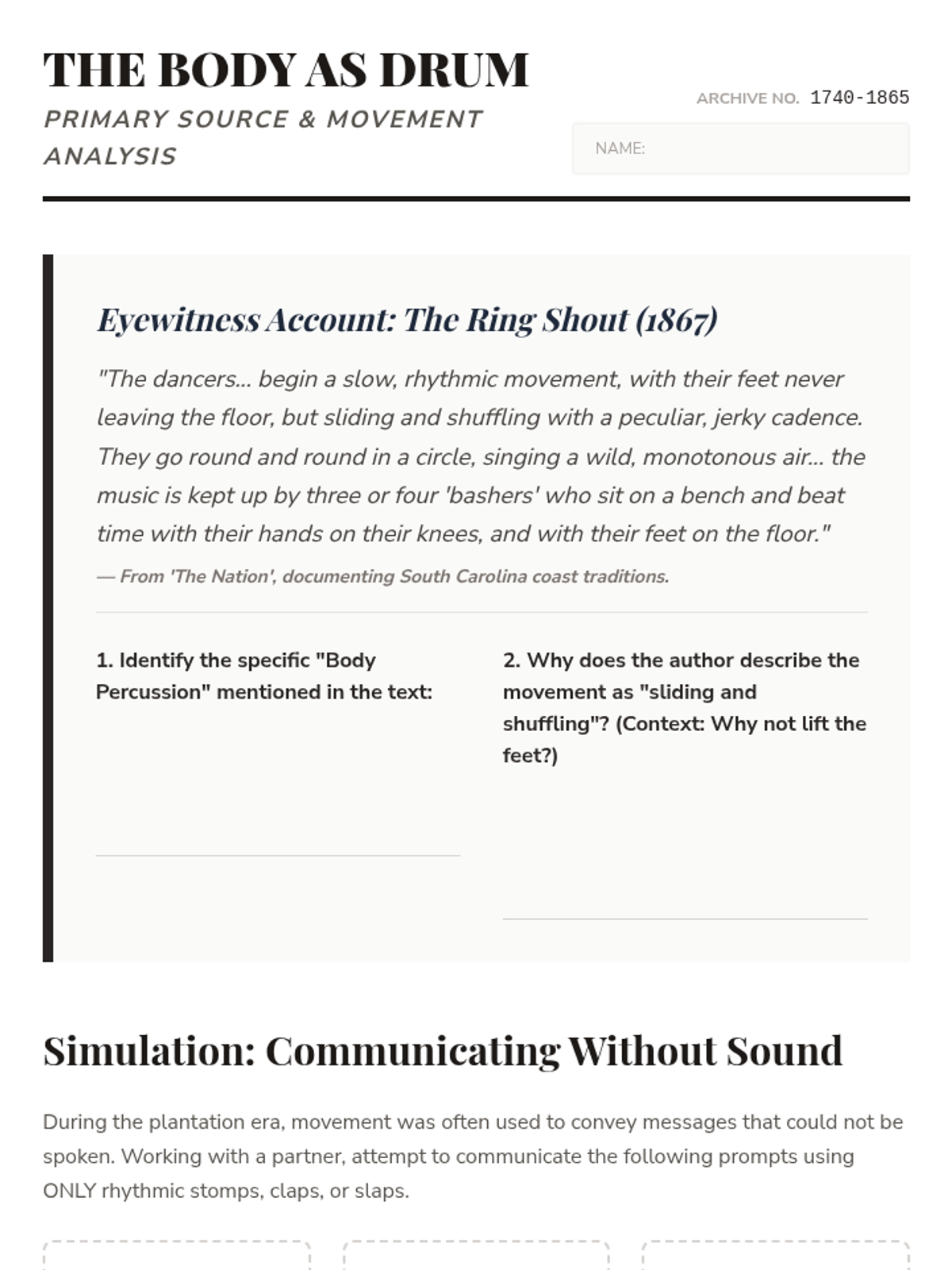
An examination of how enslaved people maintained cultural identity through the Ring Shout and Juba, using the body as a percussive instrument when drums were banned.
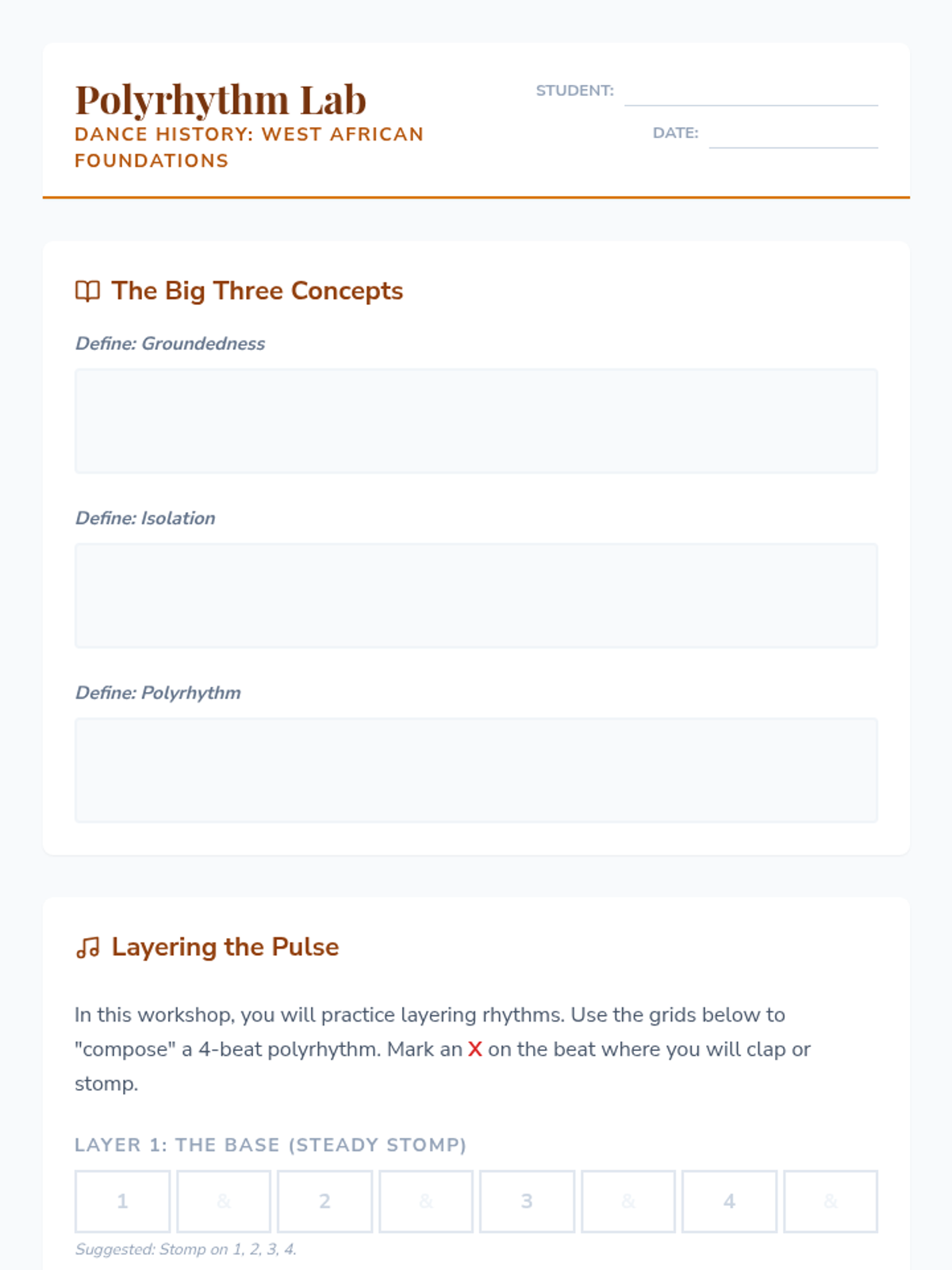
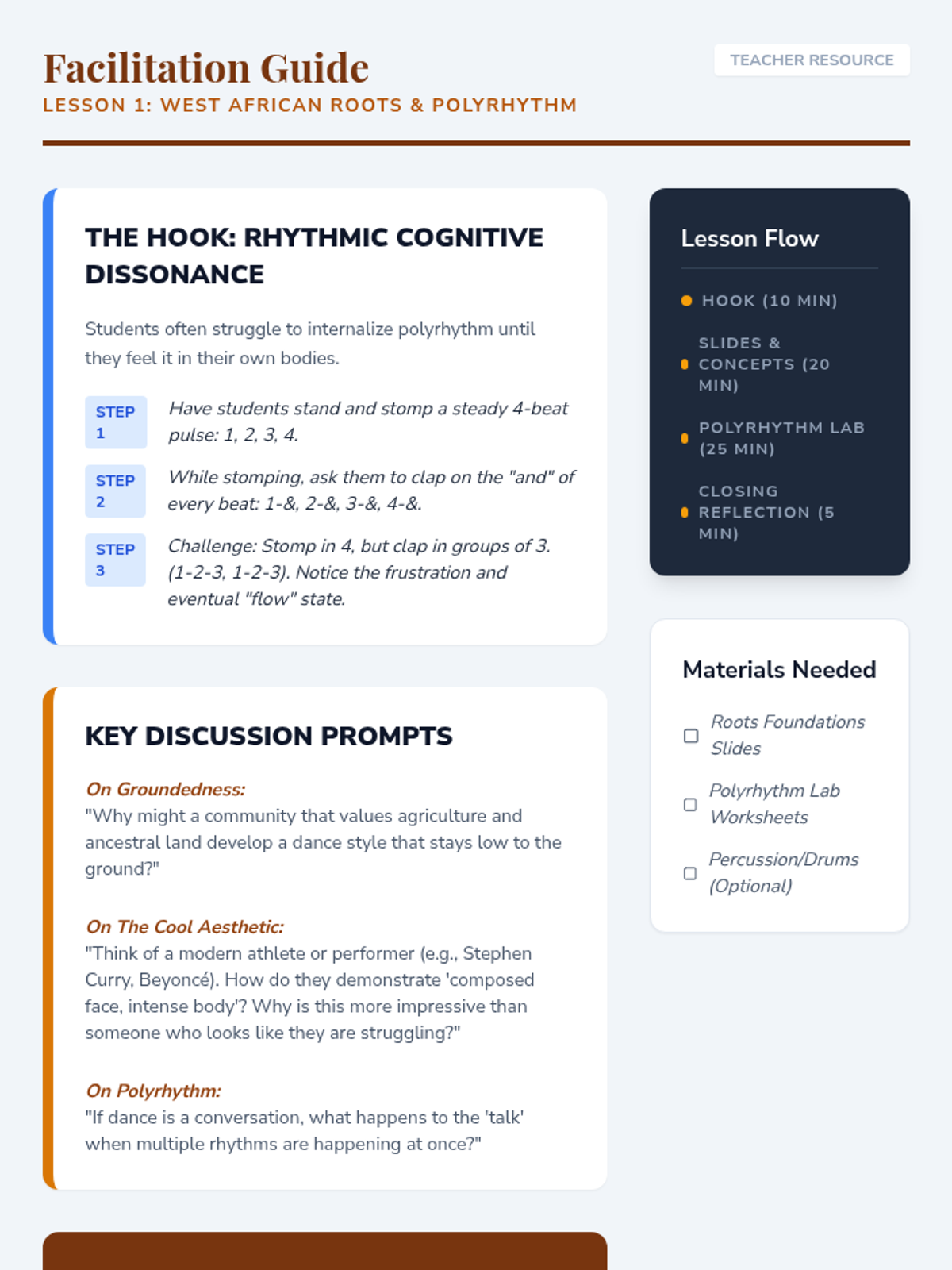
Introduction to West African dance fundamentals, focusing on groundedness, isolation, and the complex layers of polyrhythm.
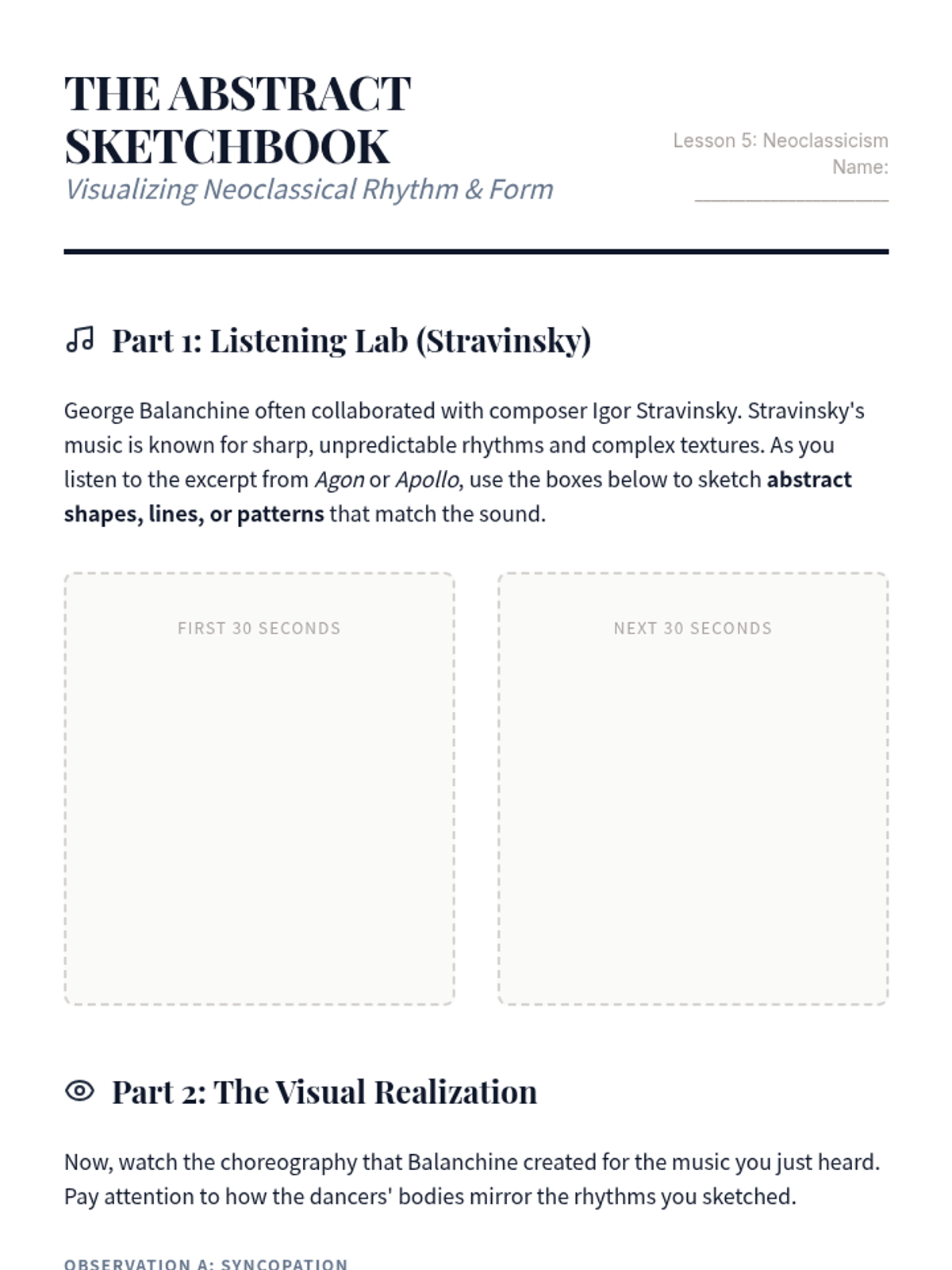
Analyze the 20th-century shift toward abstraction led by George Balanchine, focusing on the relationship between pure movement and music.
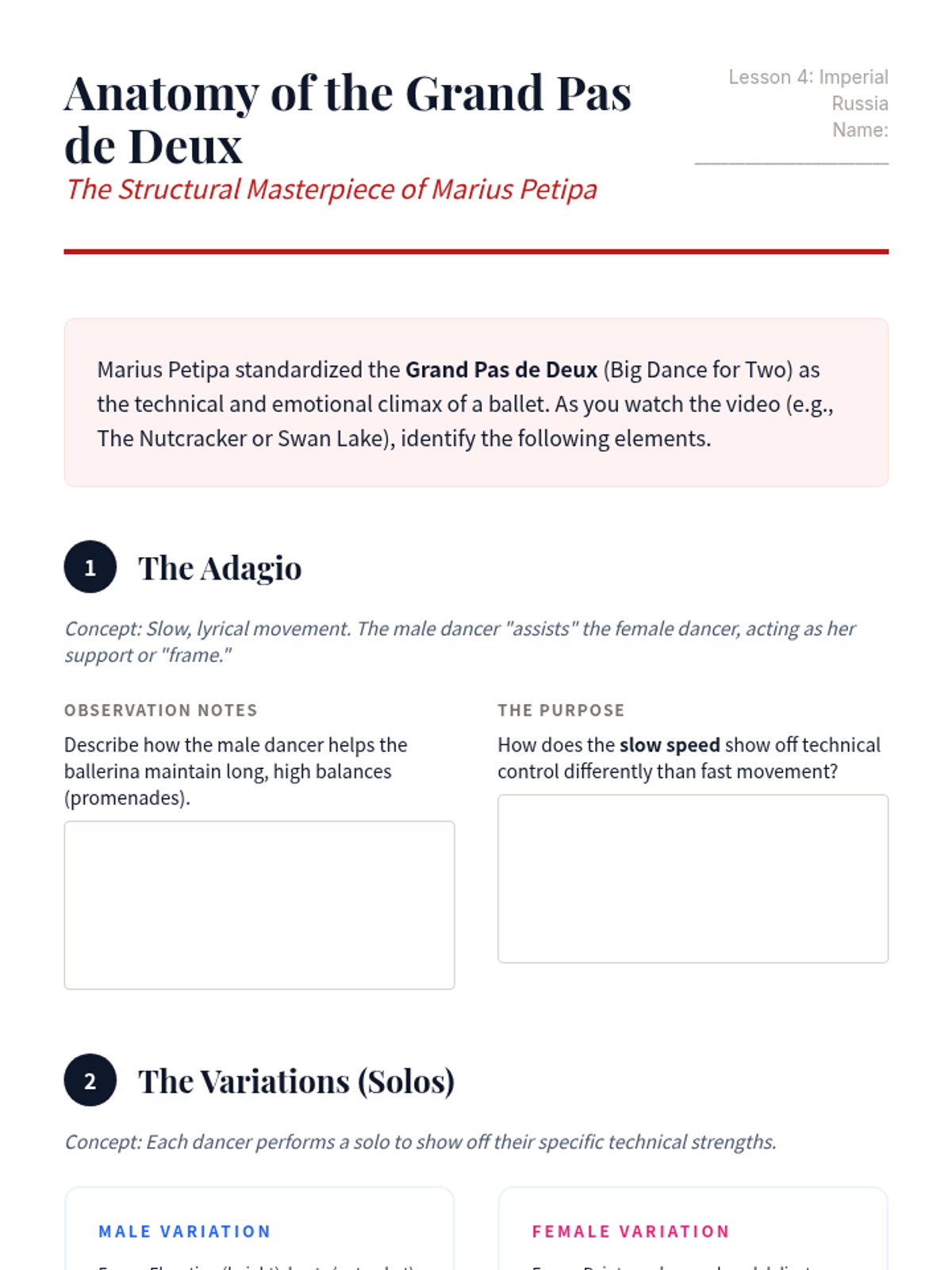
Examine the Imperial Russian era under Marius Petipa, focusing on the structured Grand Pas de Deux and the rise of technical virtuosity.
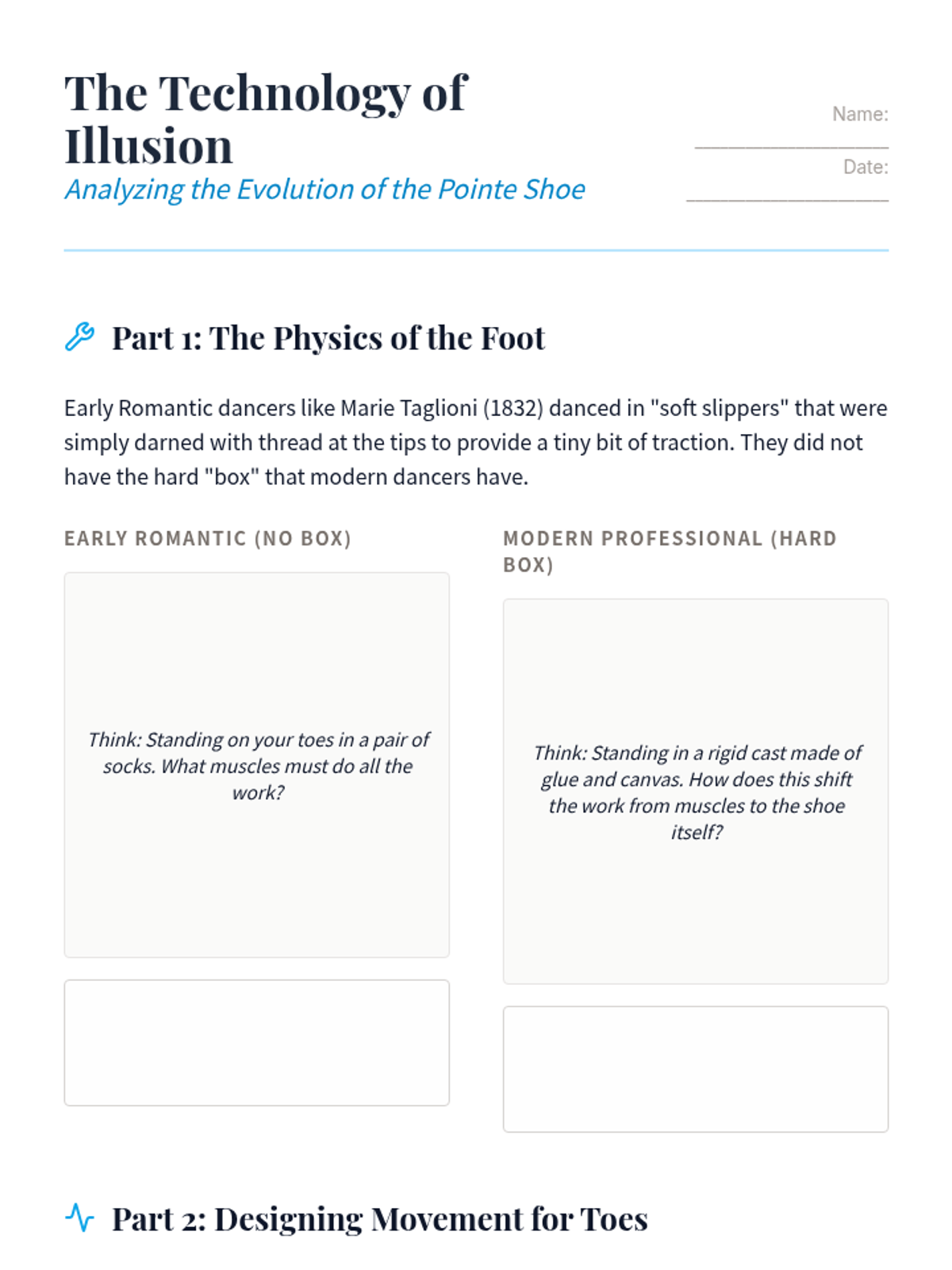
Investigate the shift toward the supernatural and the technological innovation of the pointe shoe during the Romantic era.
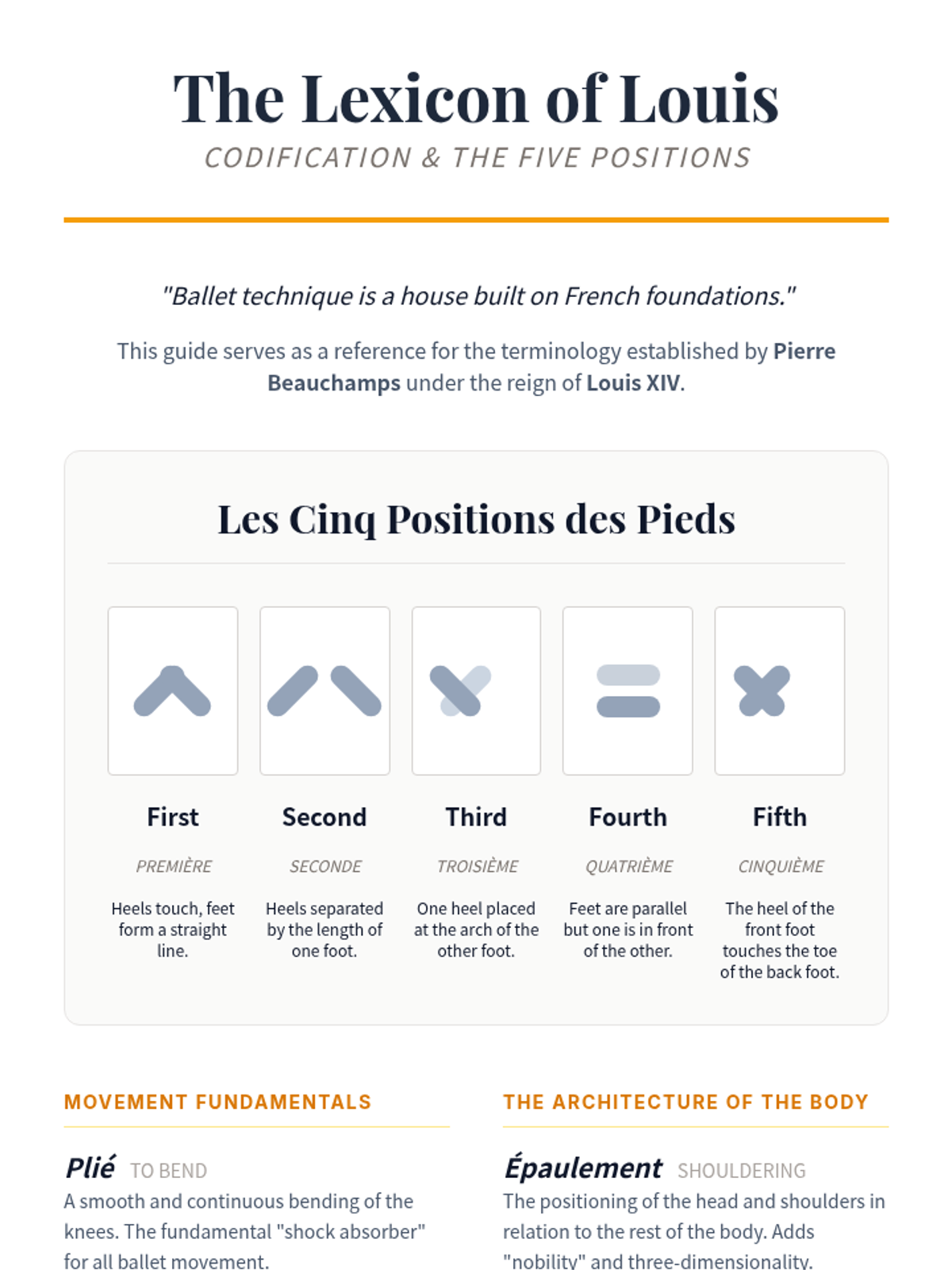
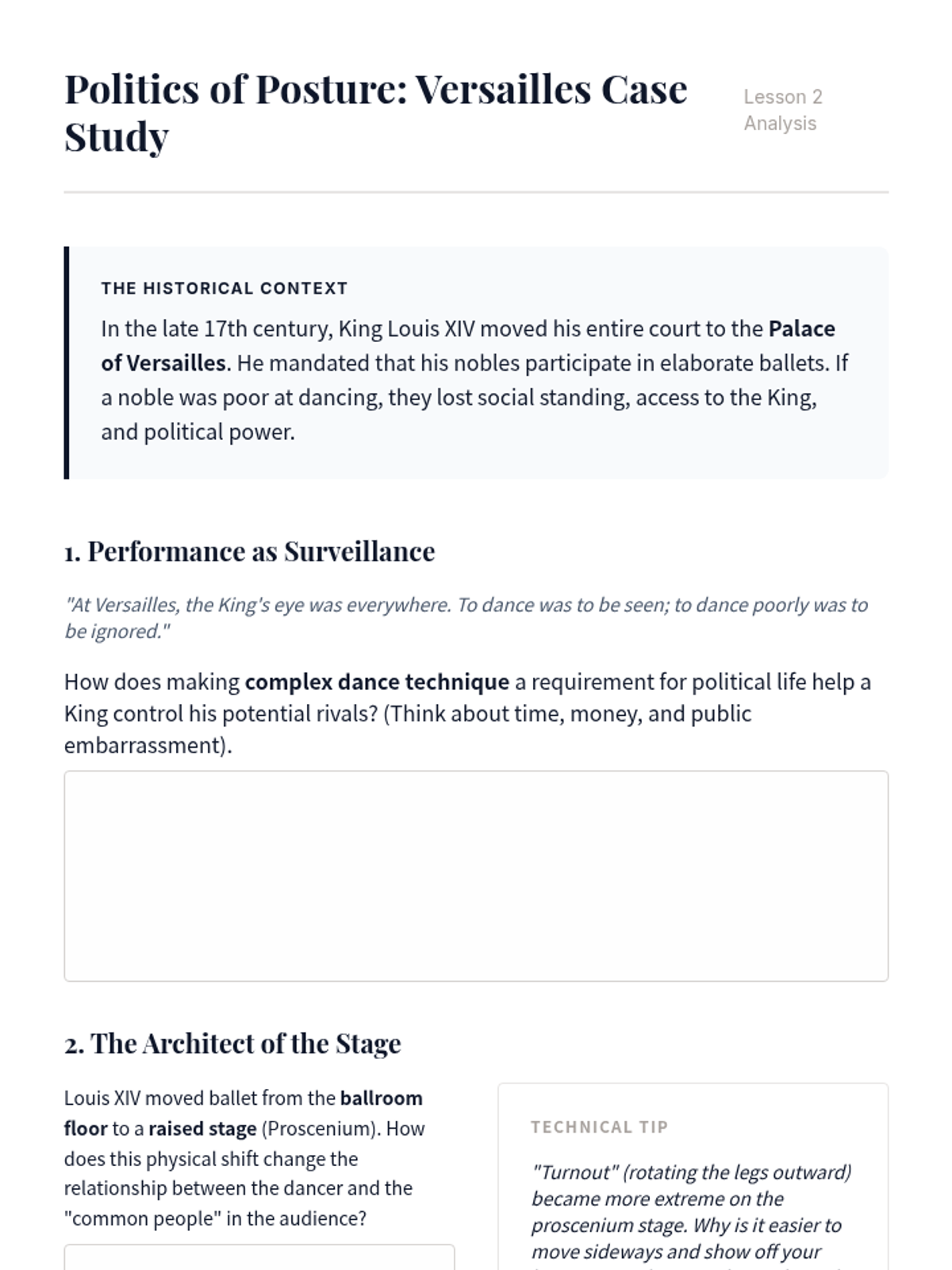
Analyze Louis XIV's role in establishing the Royal Academy of Dance and how the codification of the five positions served as a tool for political control.
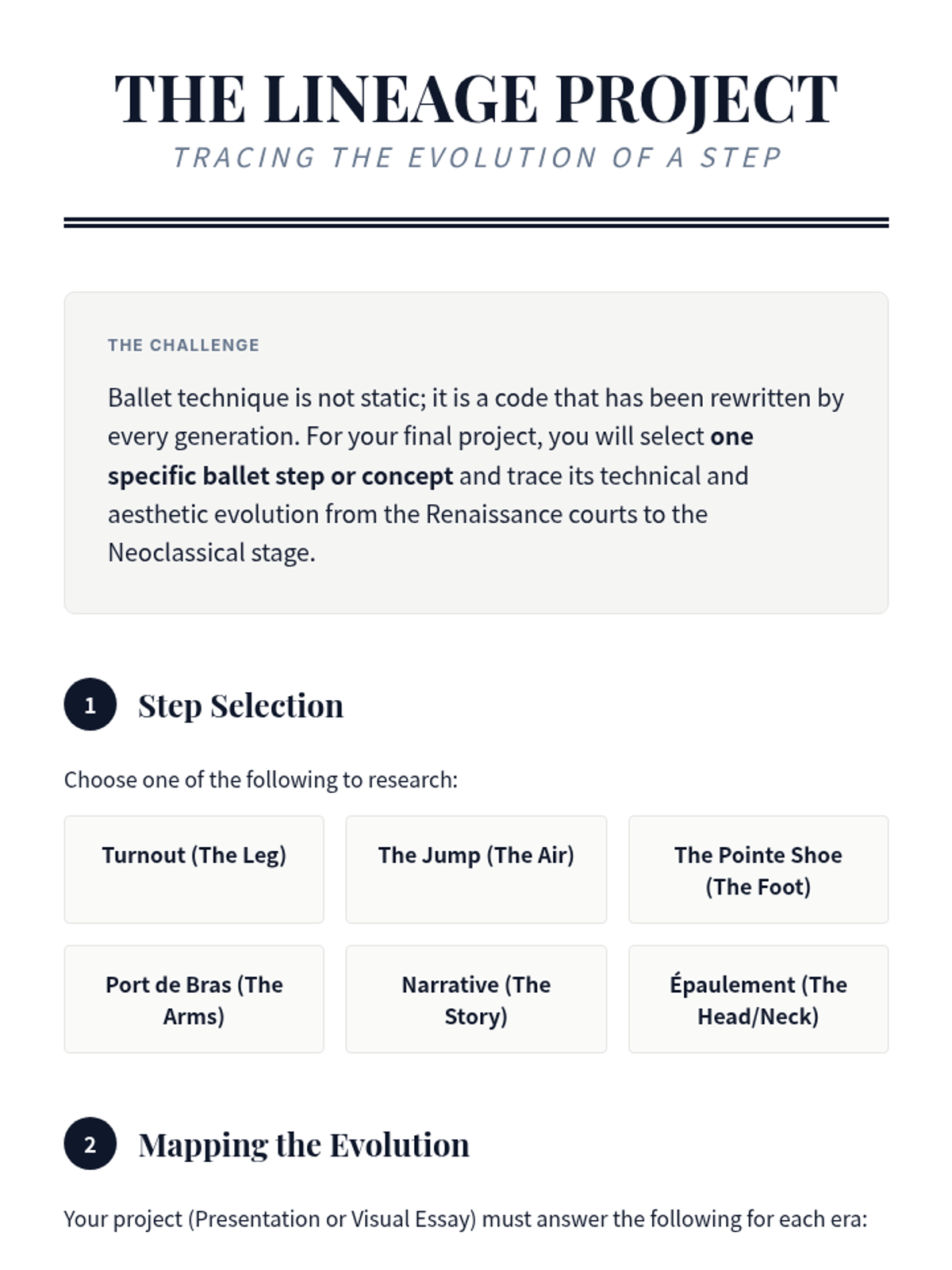
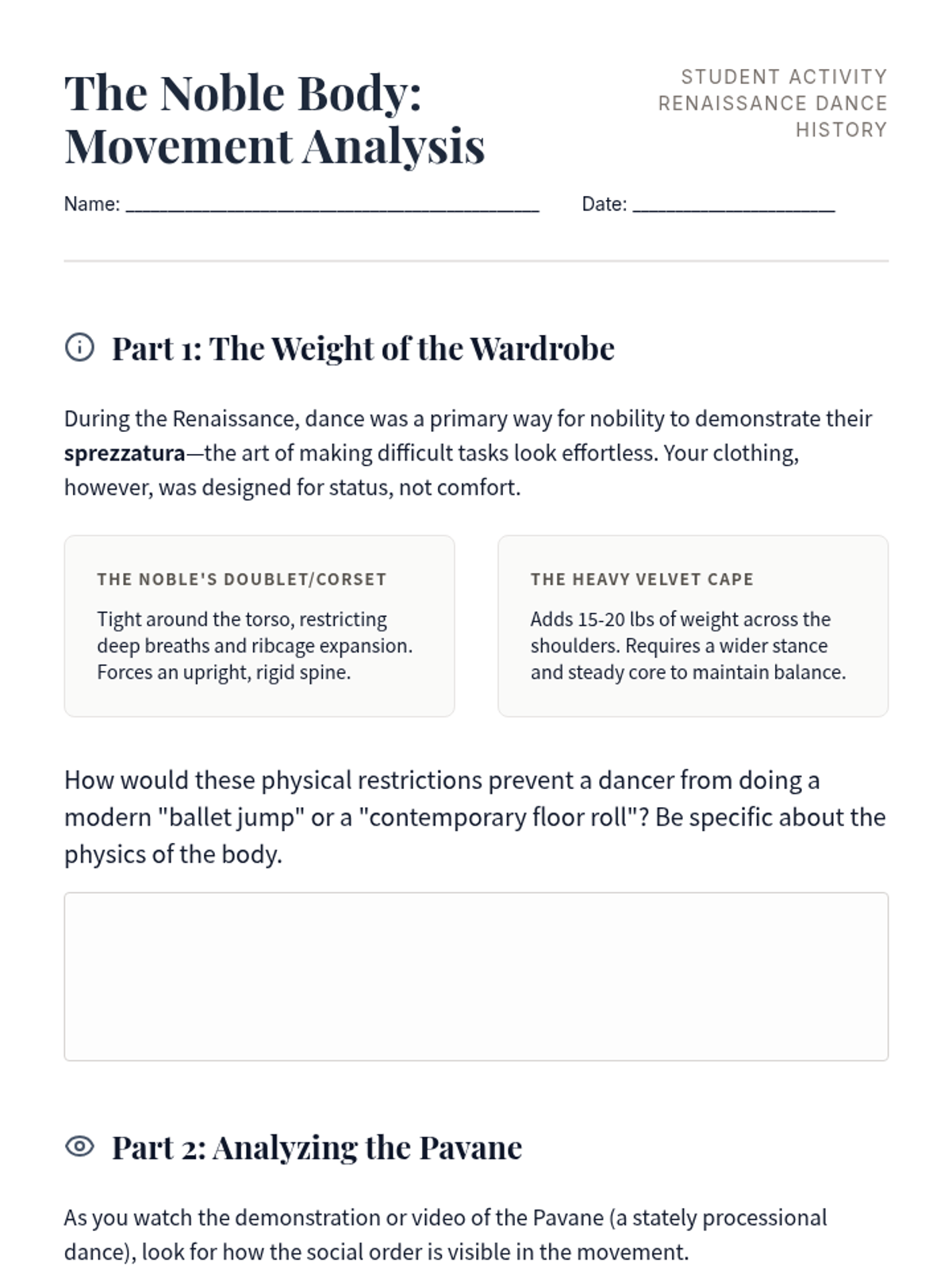
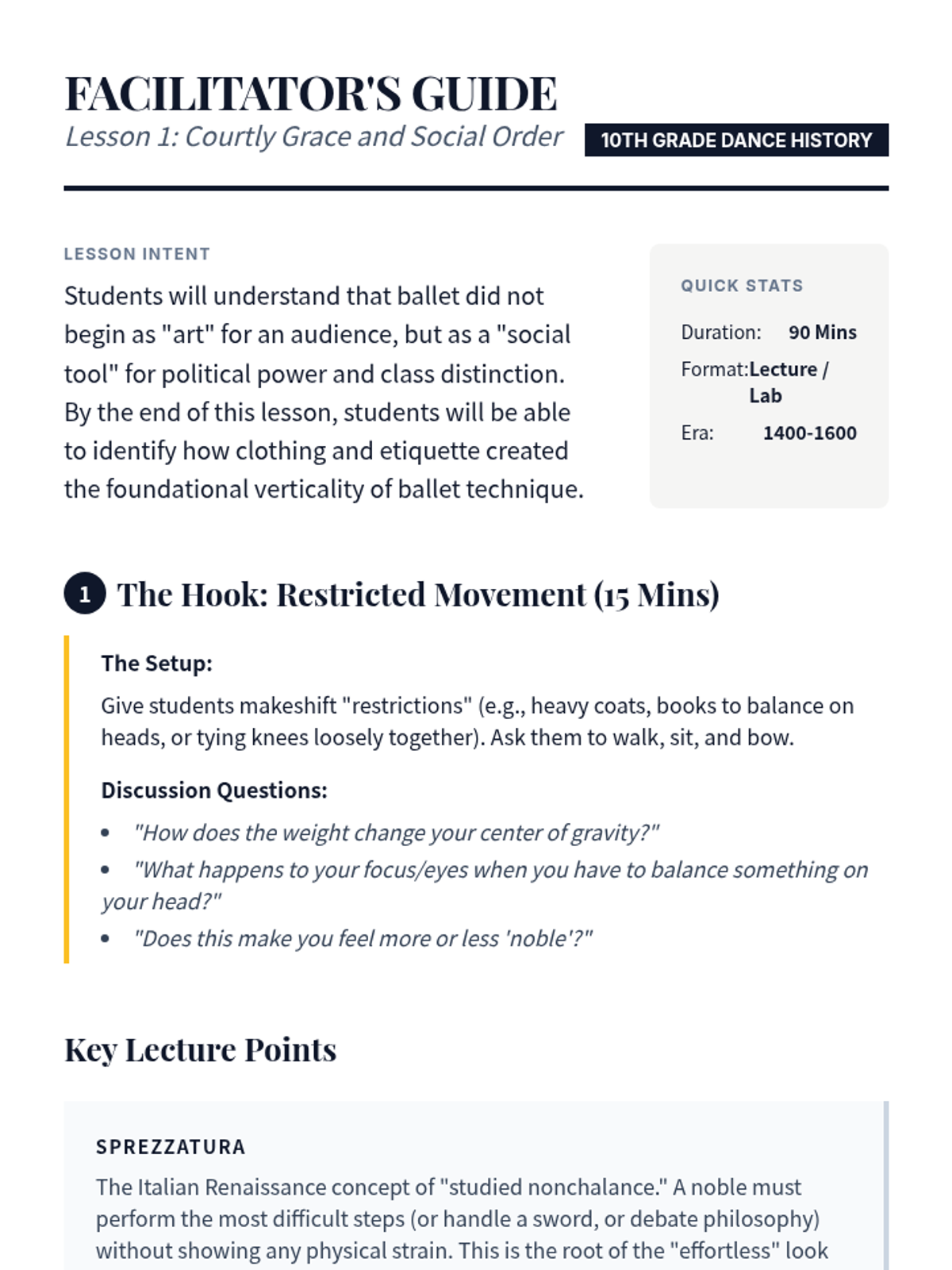
Explore the origins of ballet in Italian and French courts, focusing on how restrictive social etiquette and heavy clothing influenced early movement standards.
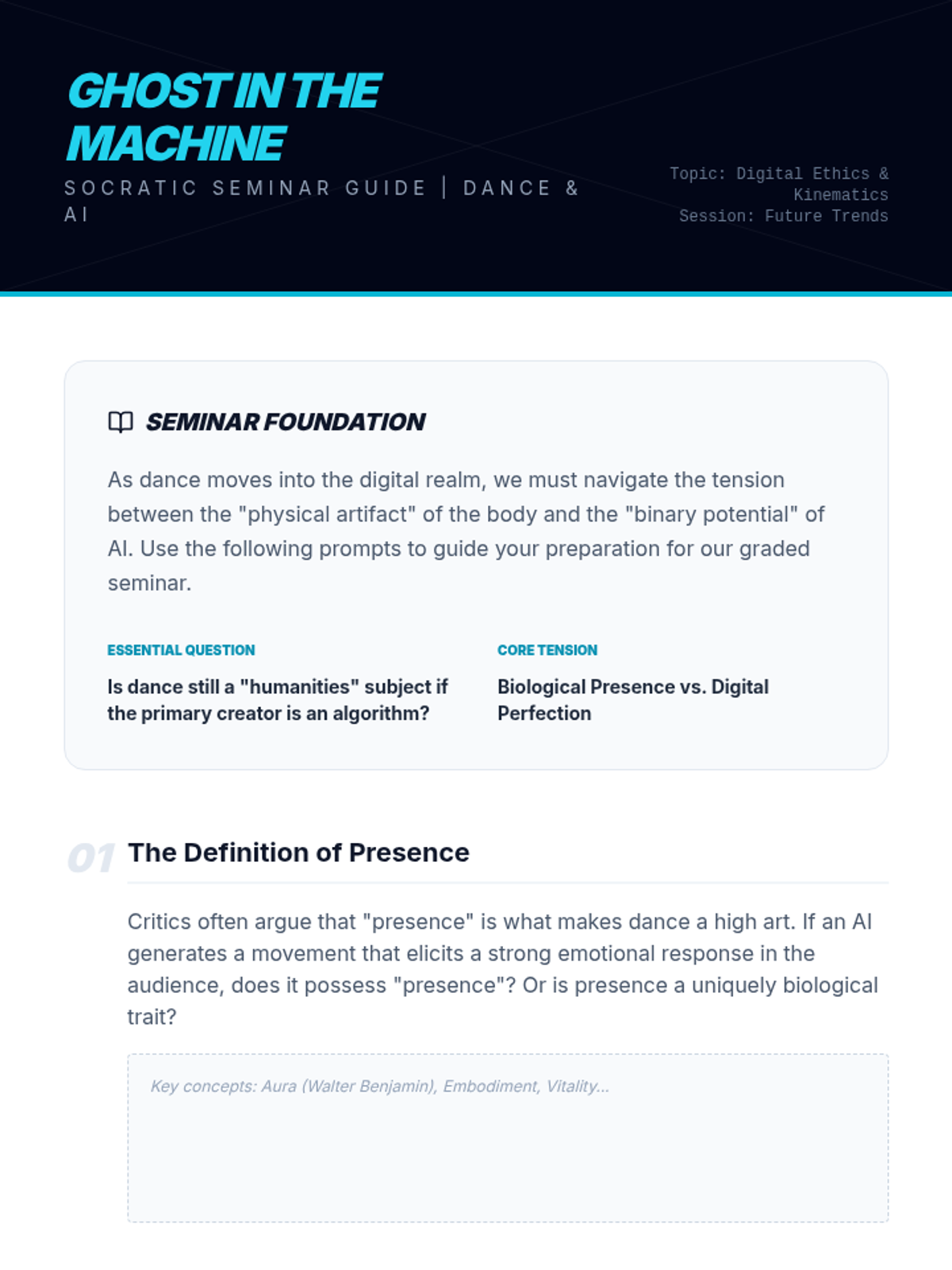
Debating the future of dance in the age of motion capture and AI, questioning the role of the 'live' body in digital performance.
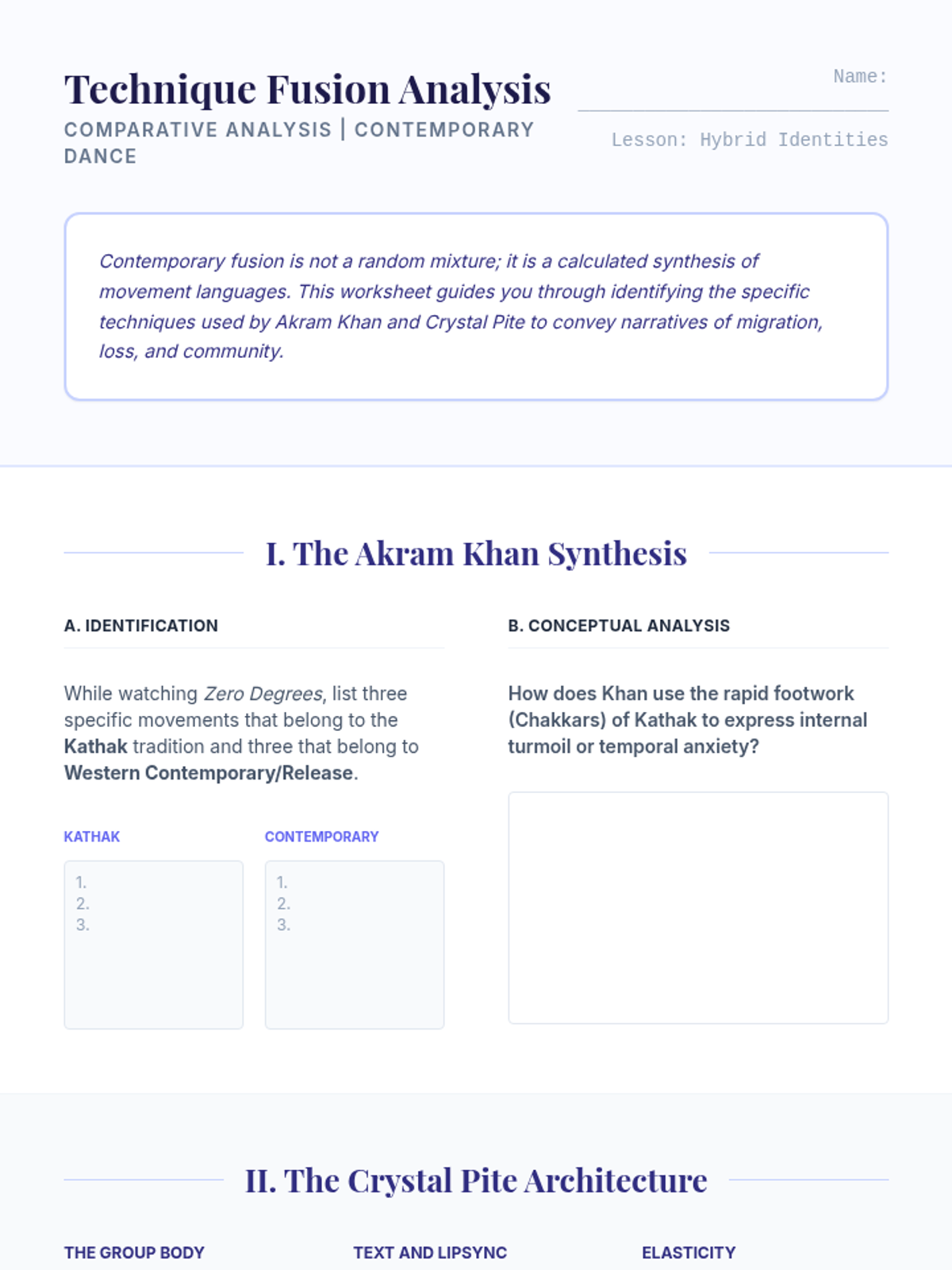
Analyzing the works of Akram Khan and Crystal Pite to understand how contemporary fusion narrates complex stories of migration and identity through hybrid techniques.
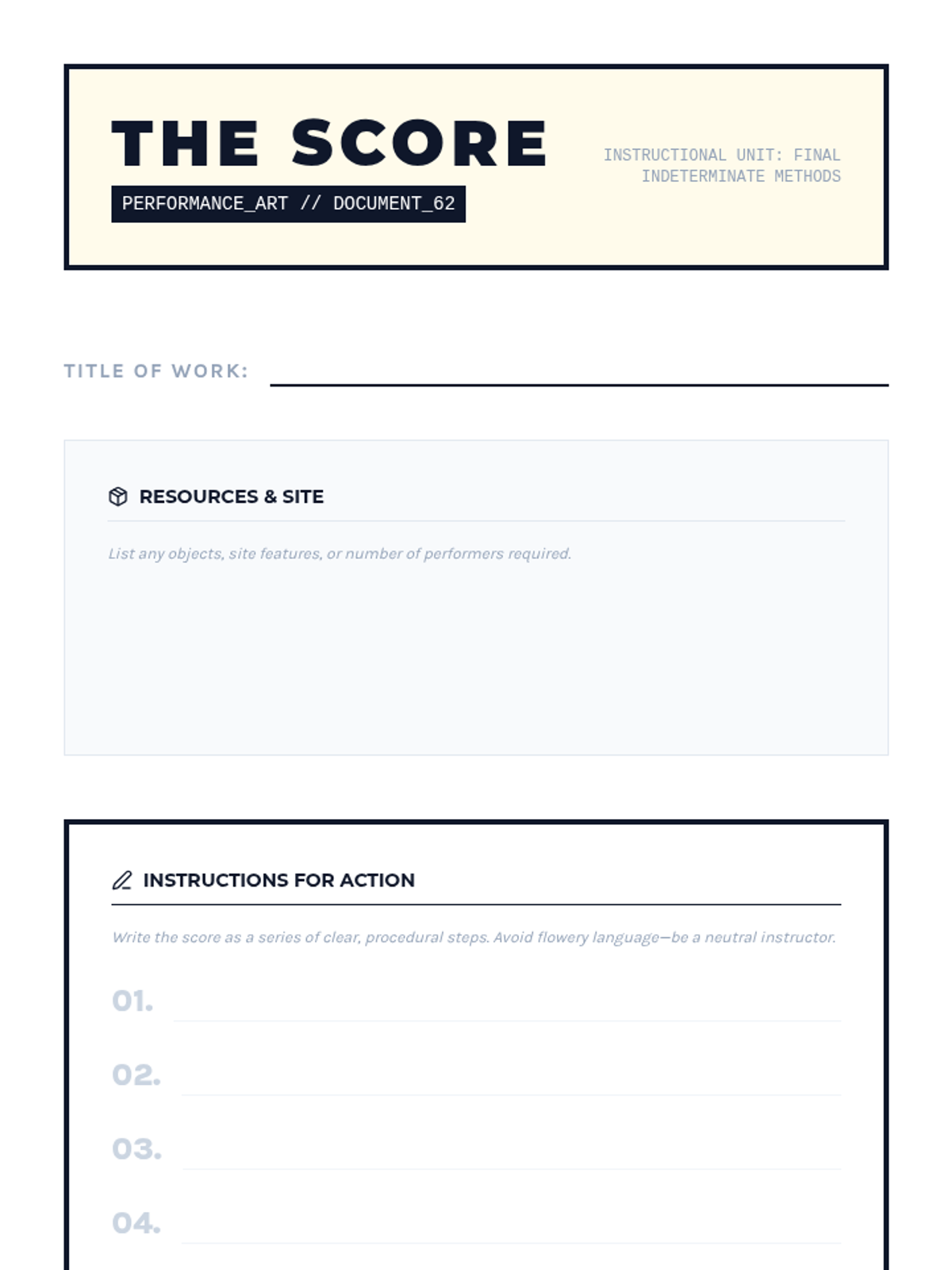
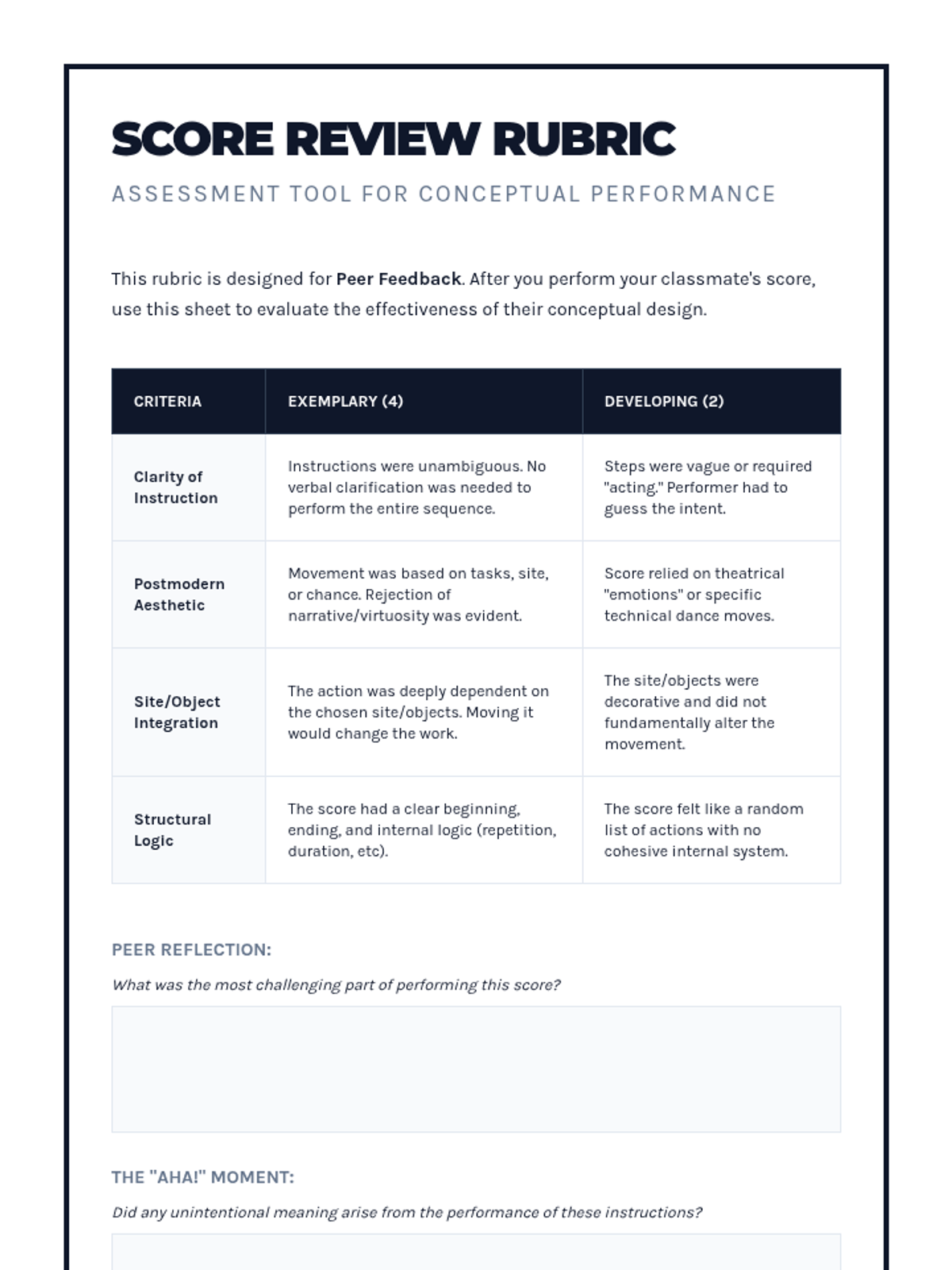
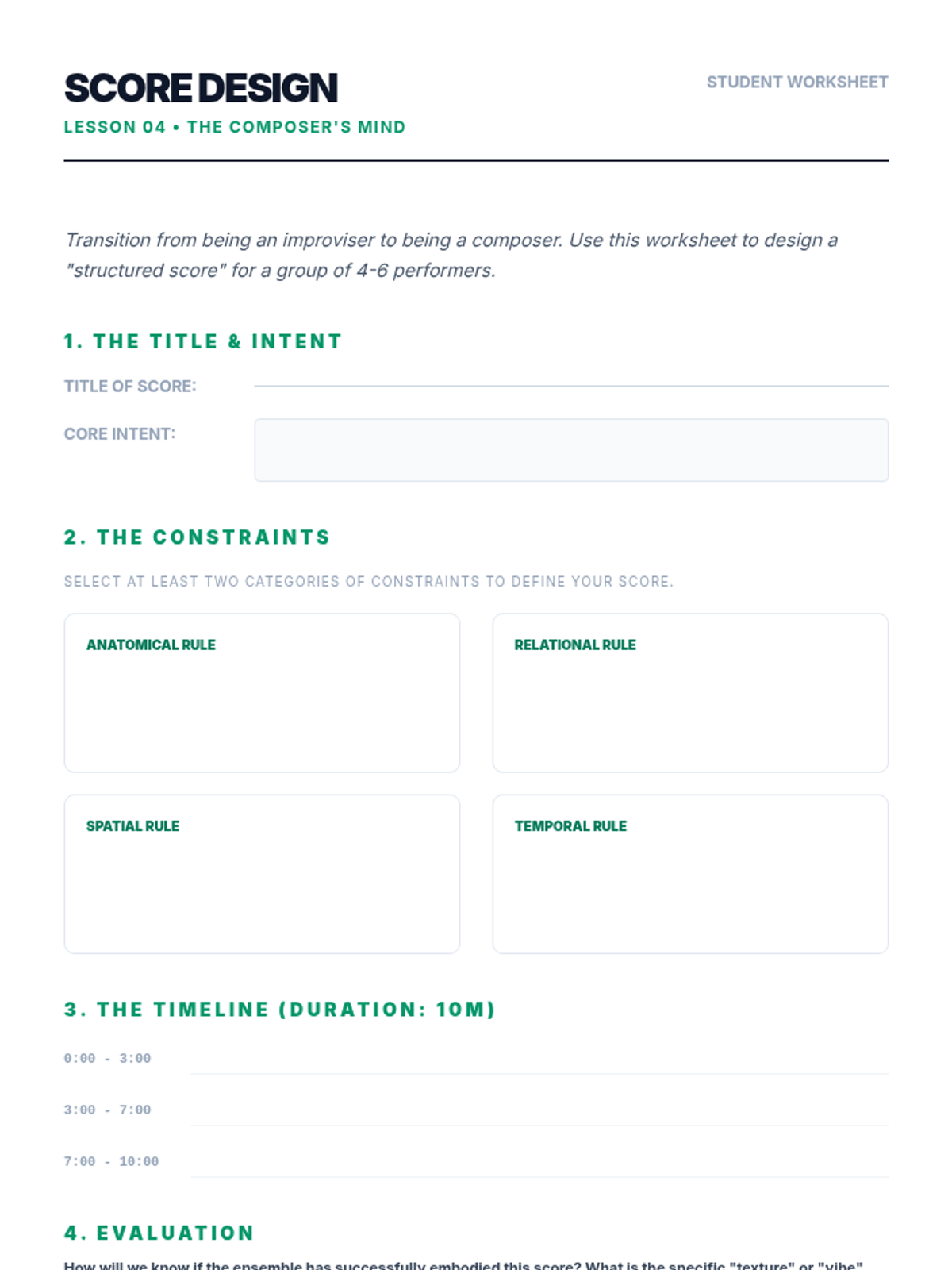
Concludes the sequence by blurring the lines between dance and performance art, teaching students to create and interpret conceptual performance scores.
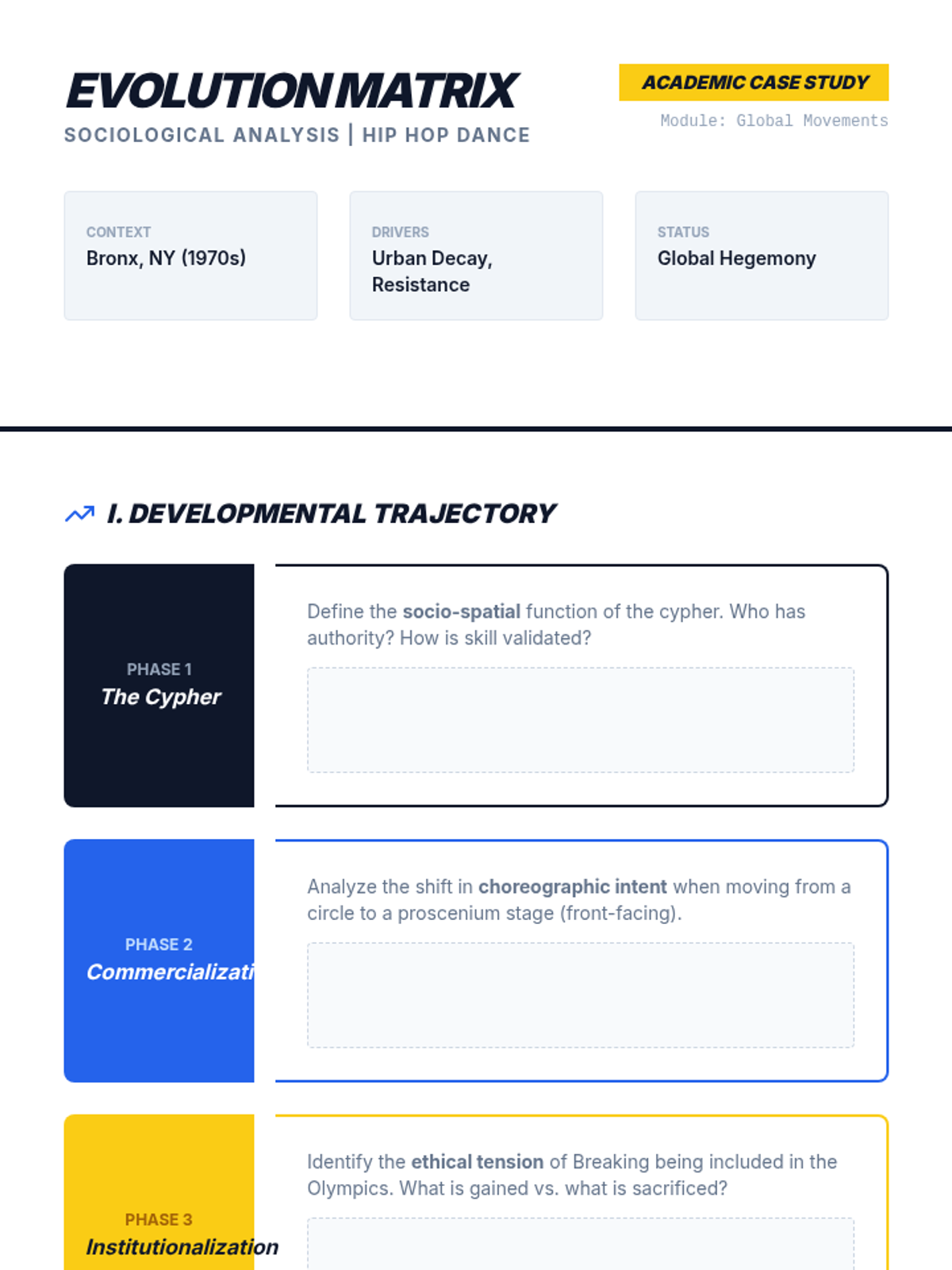
Tracing the trajectory of Hip Hop from the Bronx to theatrical conservatories, analyzing its sociological impact and the transition of breaking to a competitive sport.
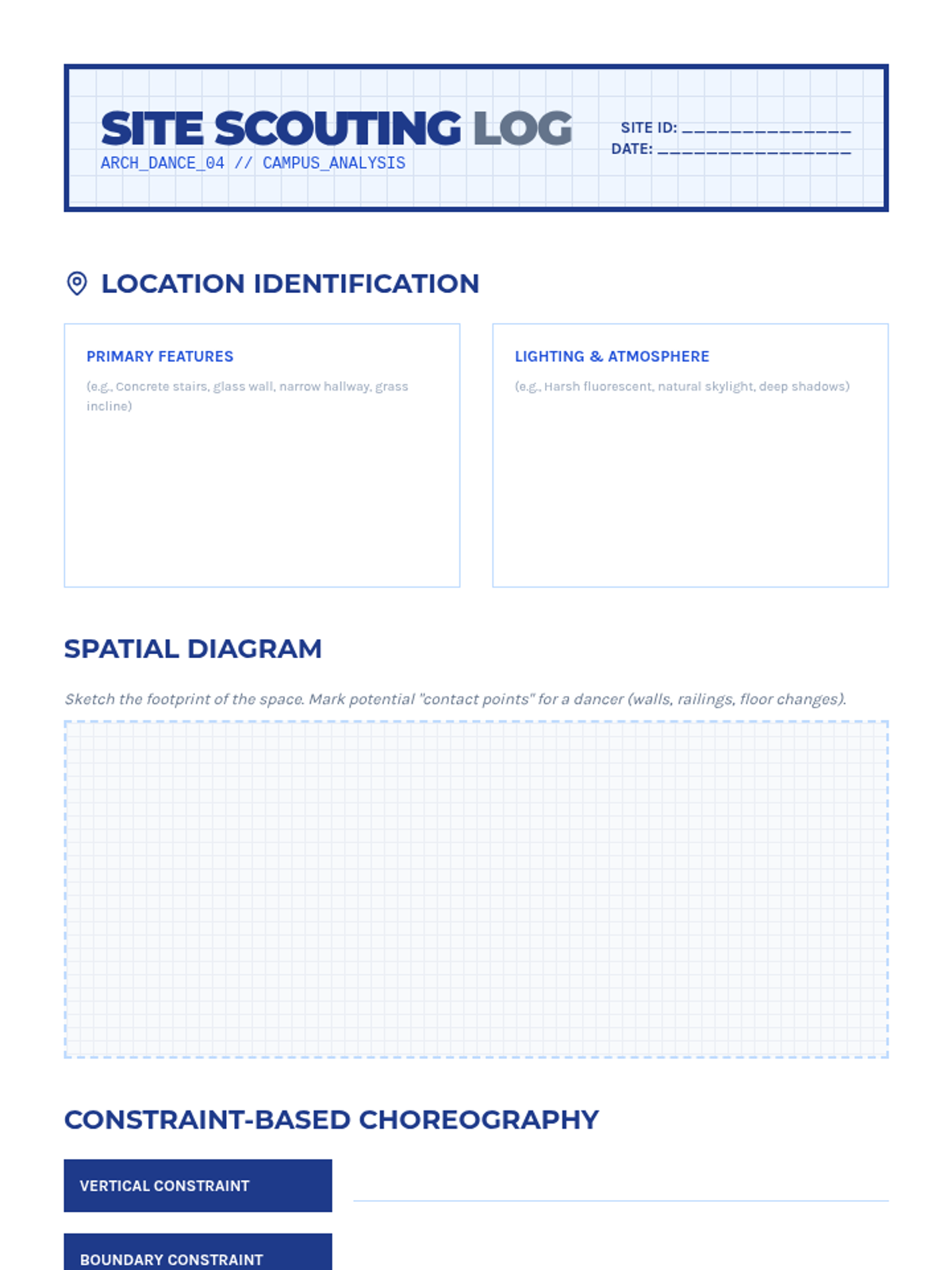
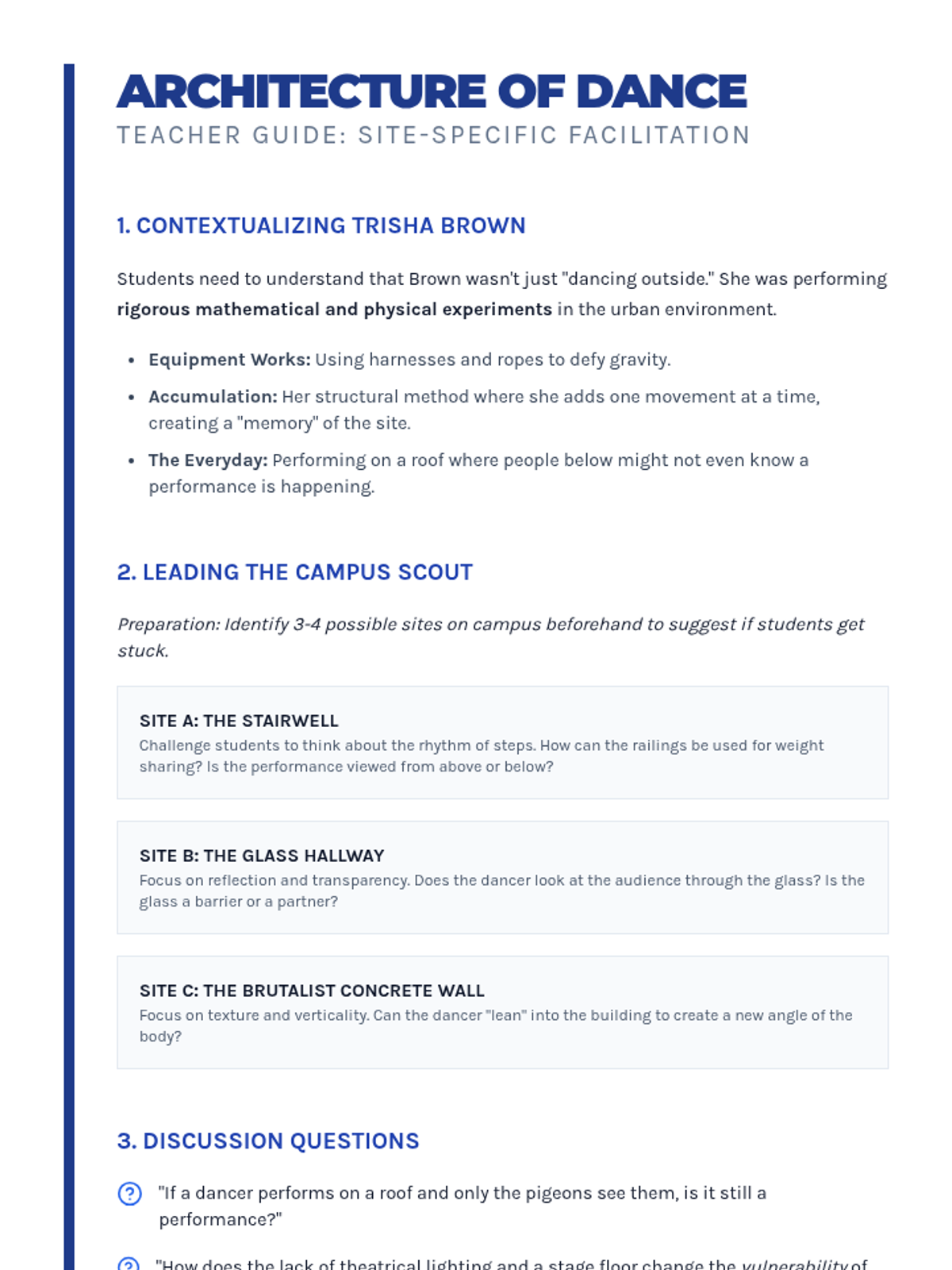
Explores Trisha Brown's site-specific choreography and how changing the venue alters the architectural and gravitational expectations of dance.
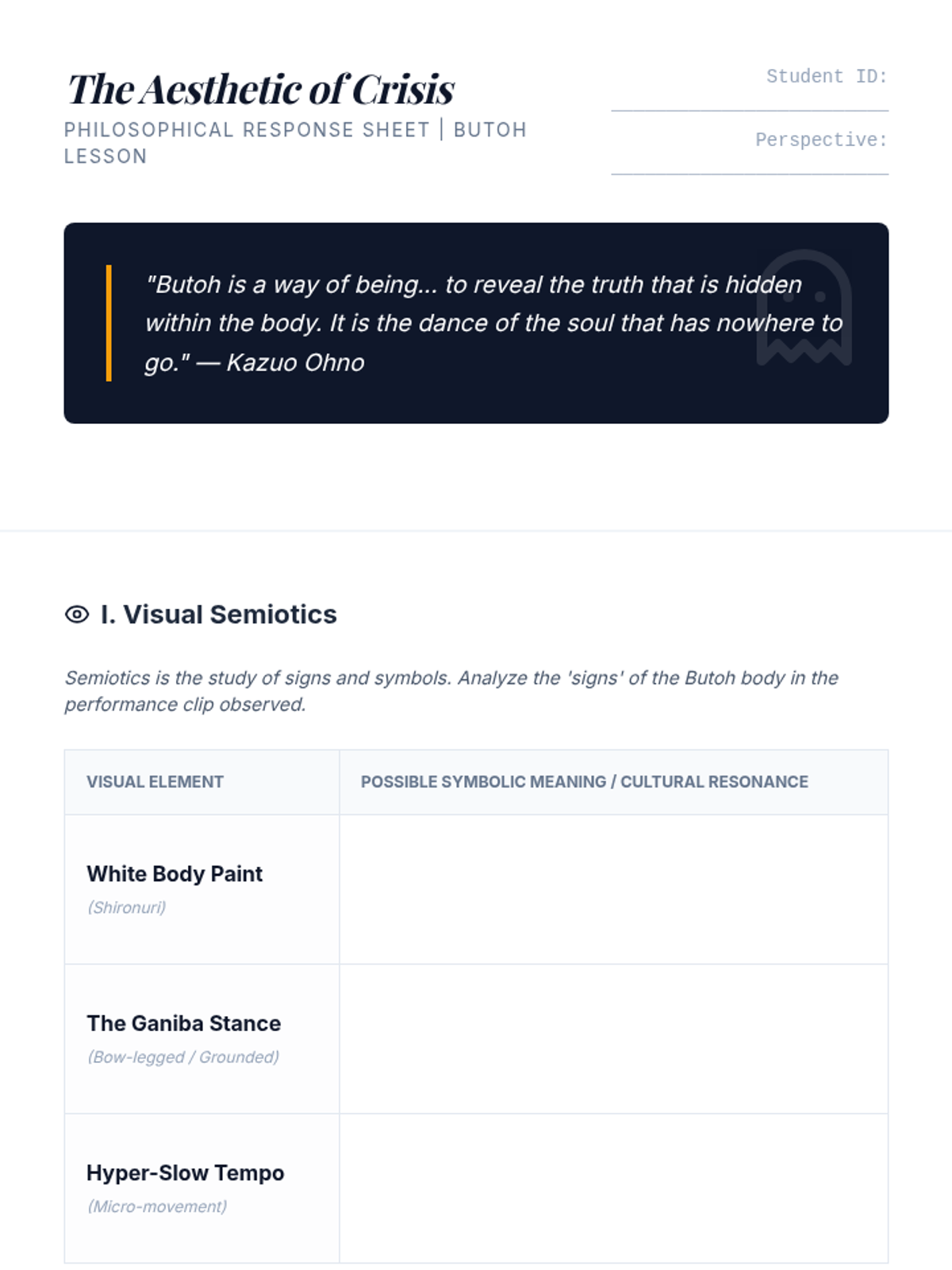
An exploration of Butoh as a reaction to post-WWII Japan, focusing on the 'body in crisis' and the works of Tatsumi Hijikata and Kazuo Ohno.
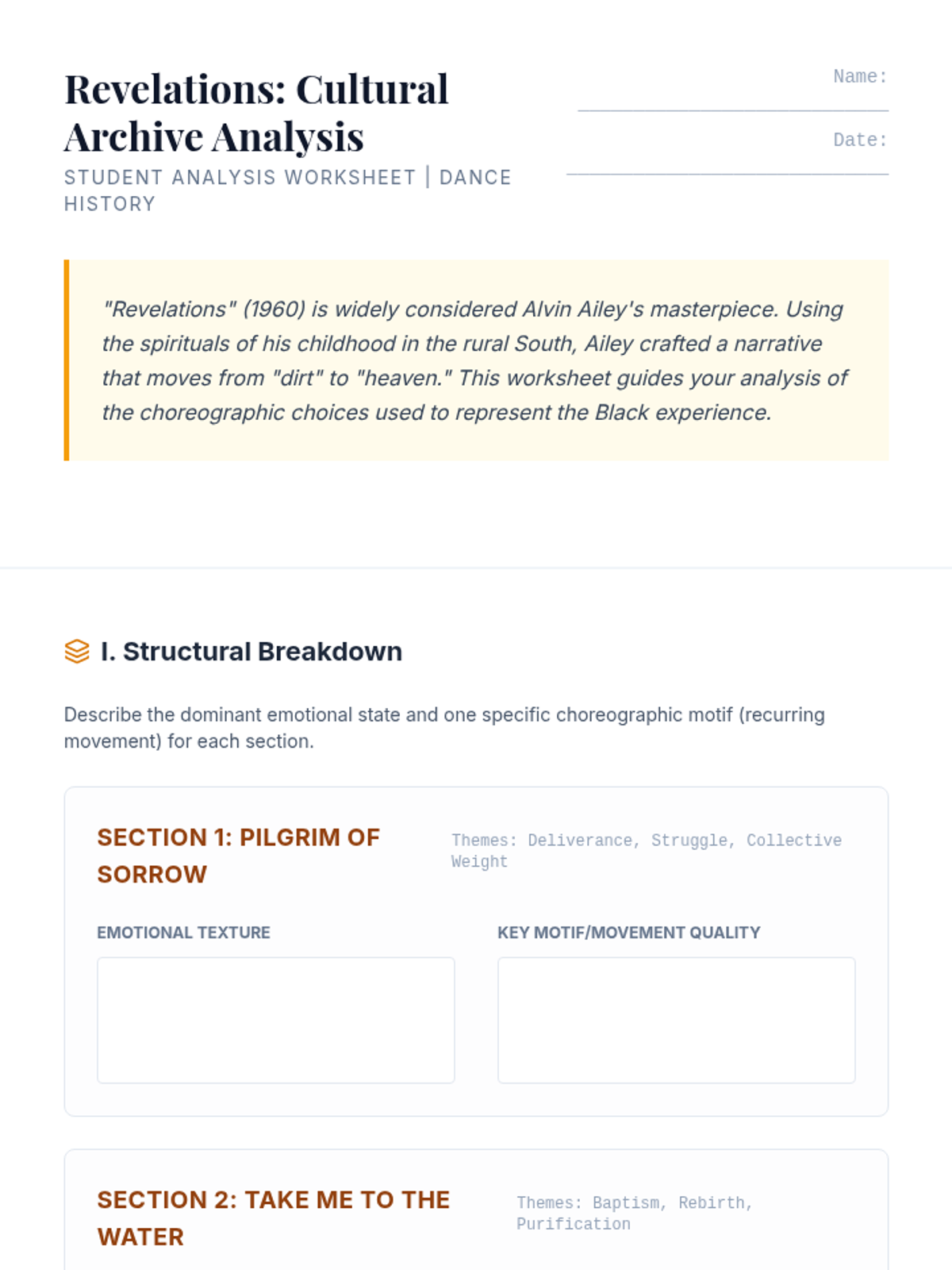
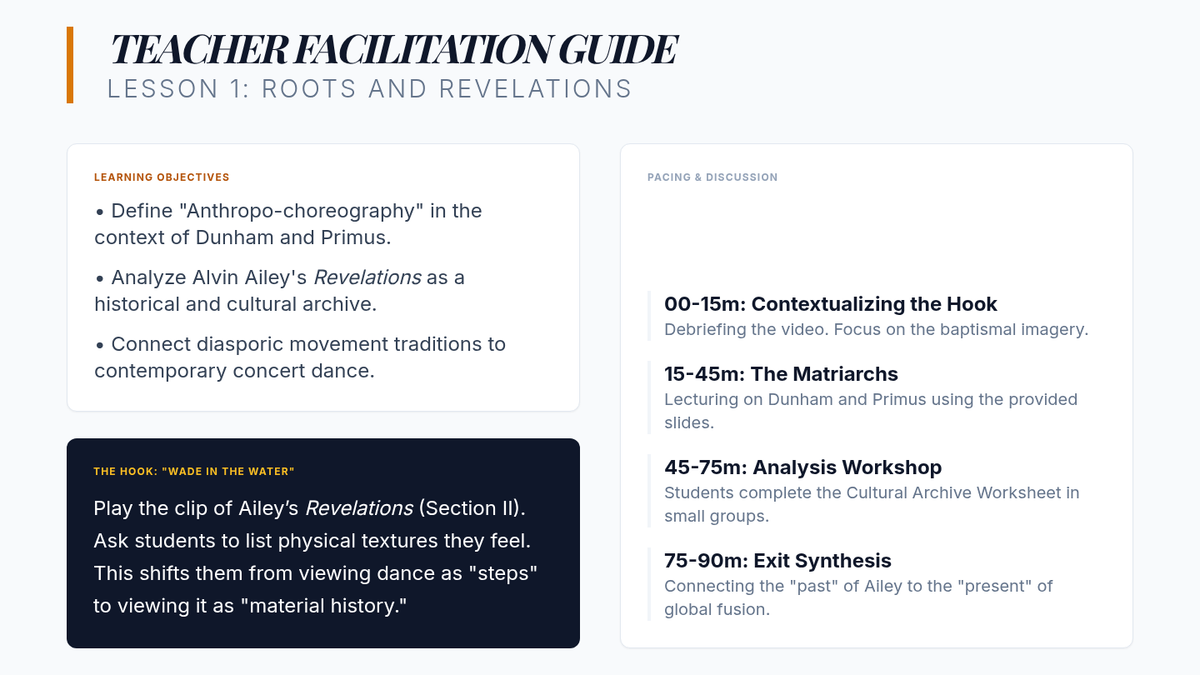
Students trace the lineage of Black concert dance, analyzing how Katherine Dunham and Pearl Primus integrated anthropology with modern technique, culminating in a study of Alvin Ailey's 'Revelations'.
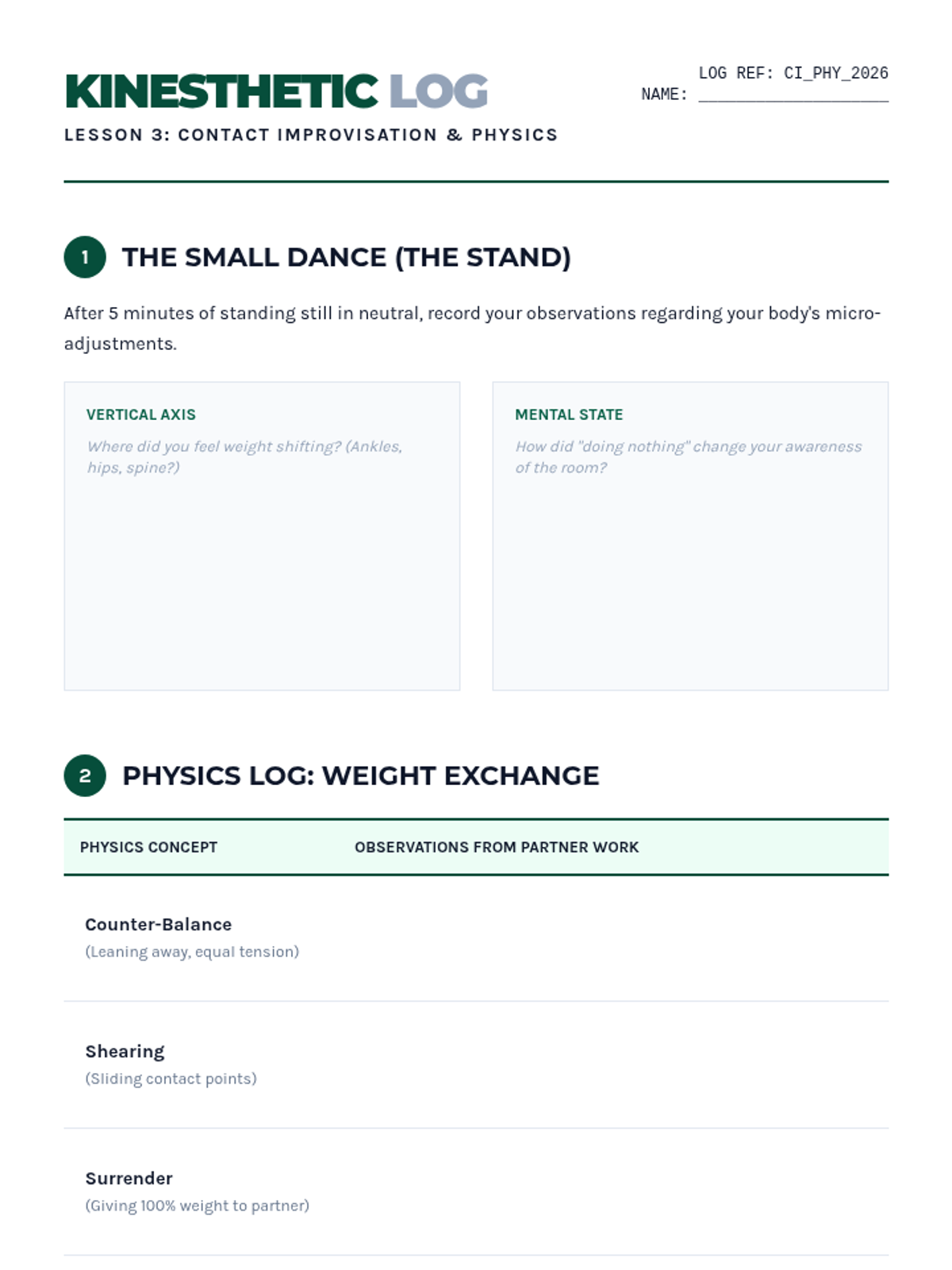
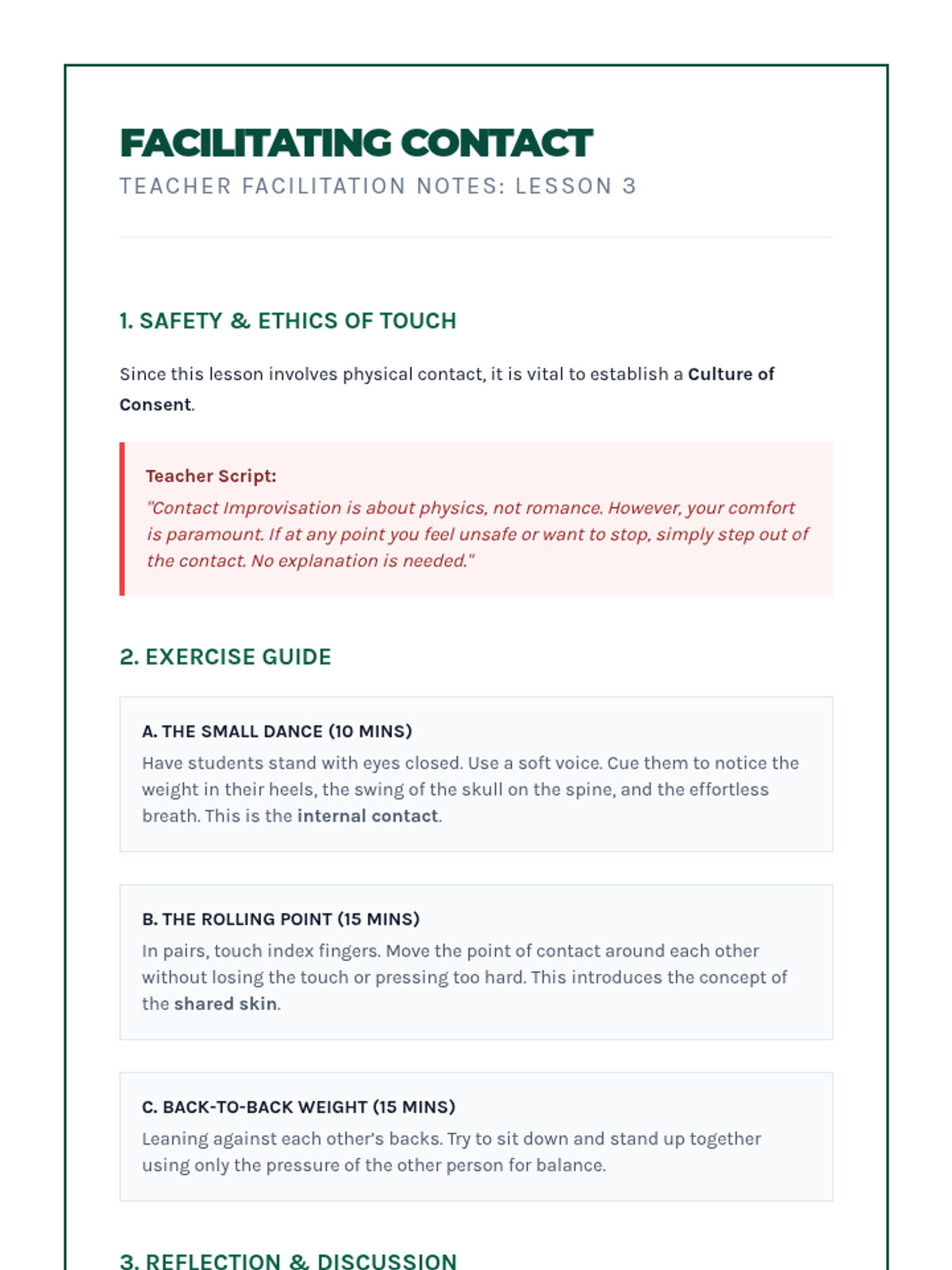
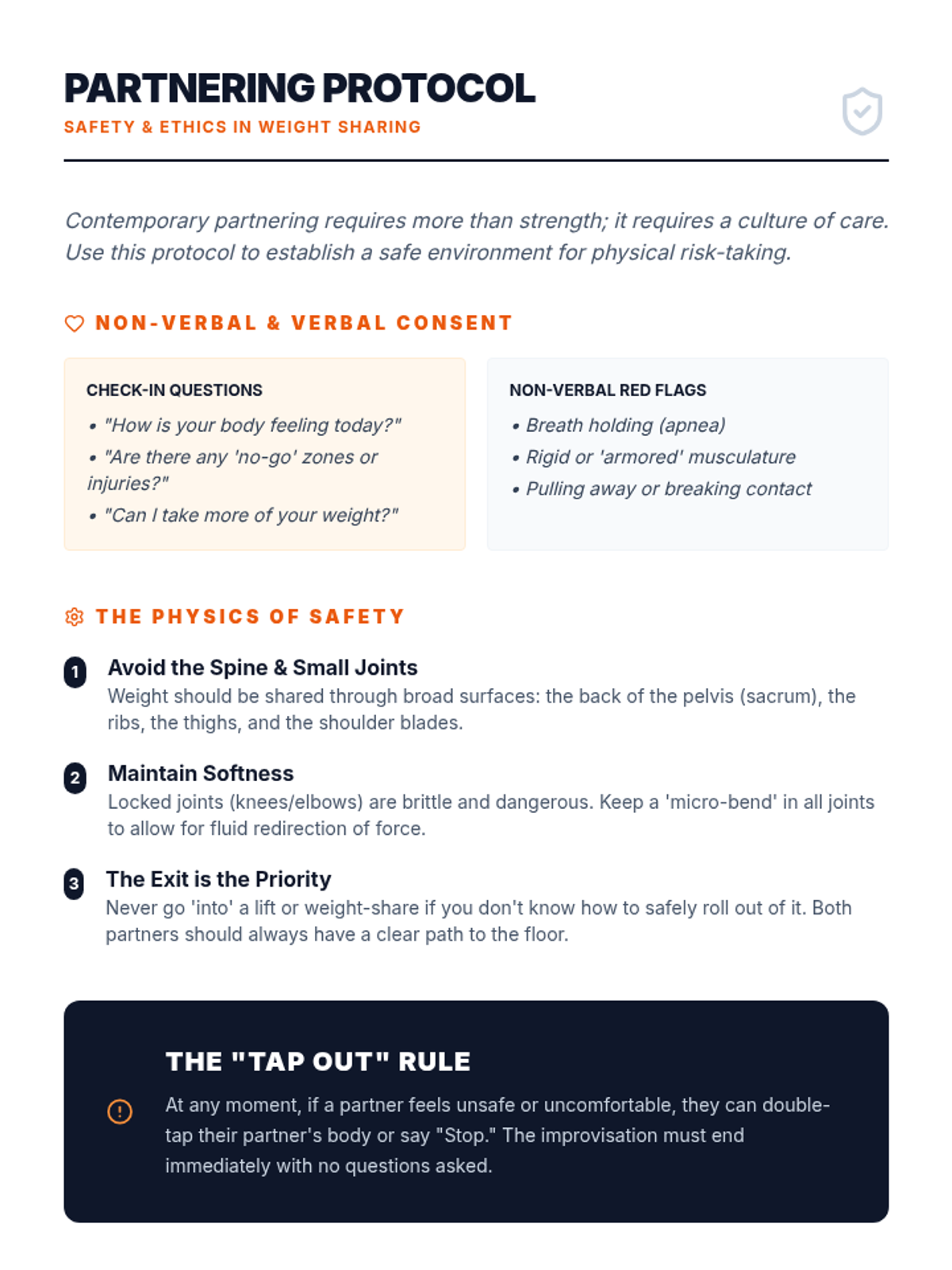
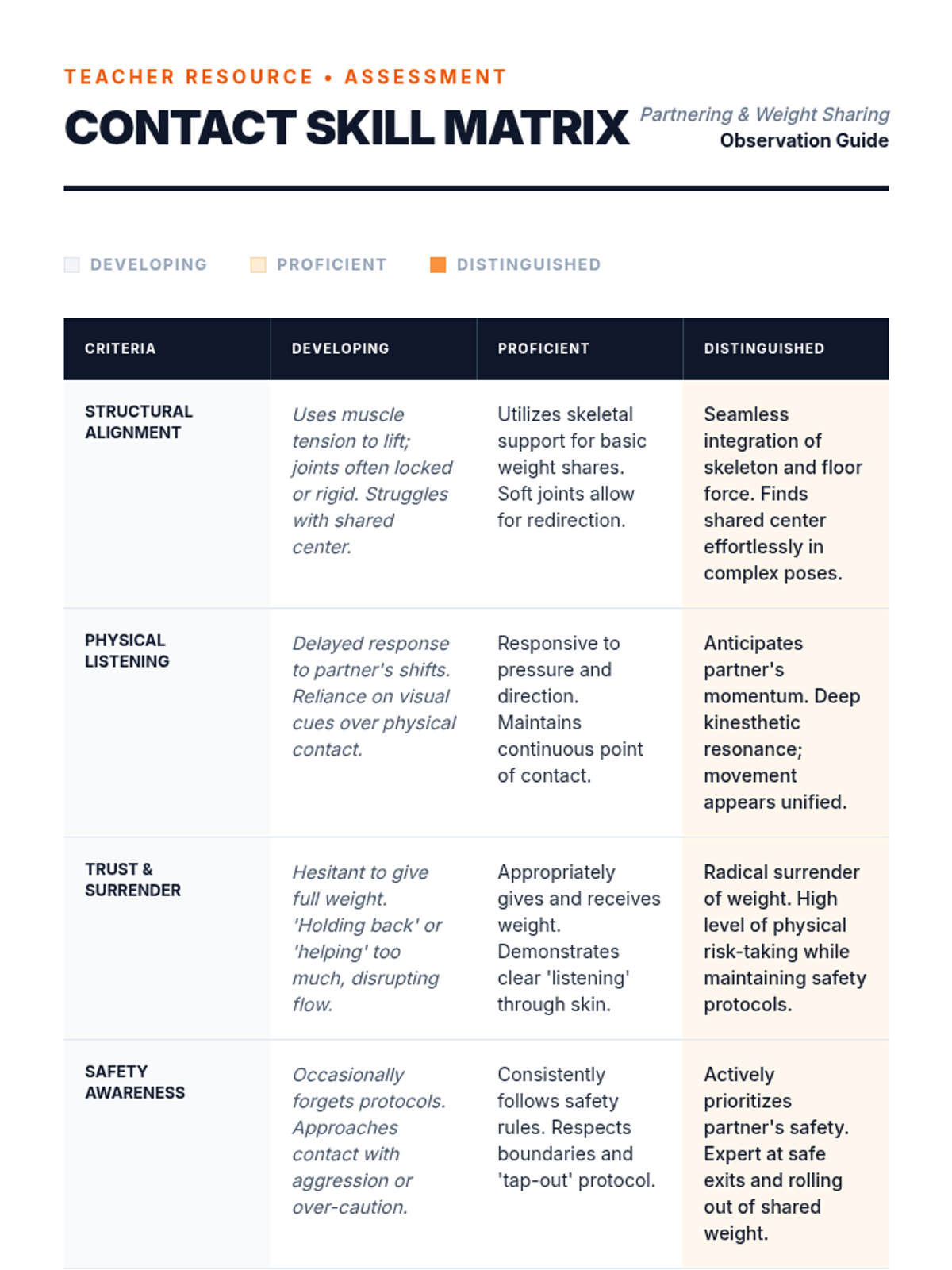
Investigates Steve Paxton's development of Contact Improvisation, focusing on shared weight, physics, and the social implications of touch.
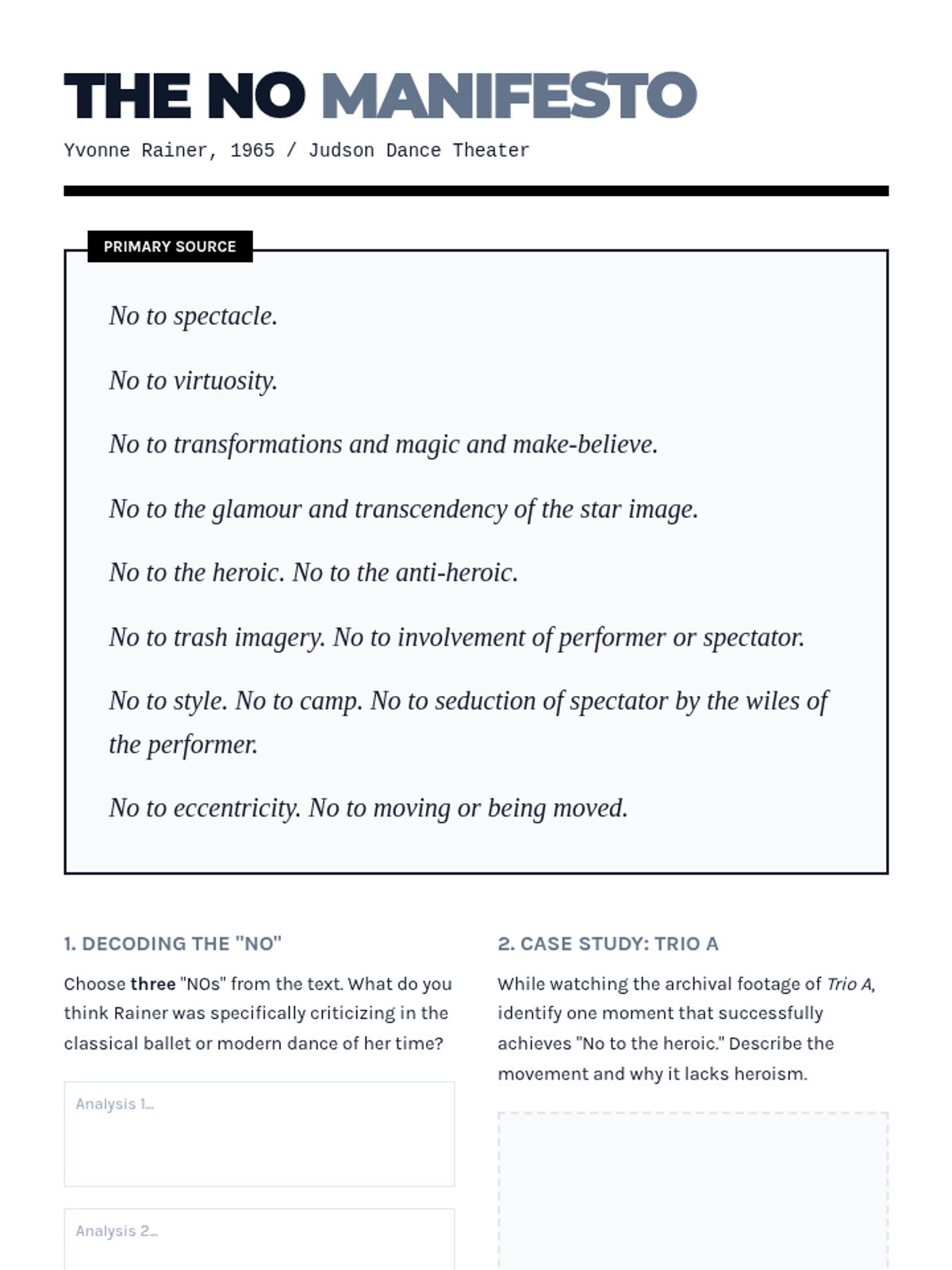
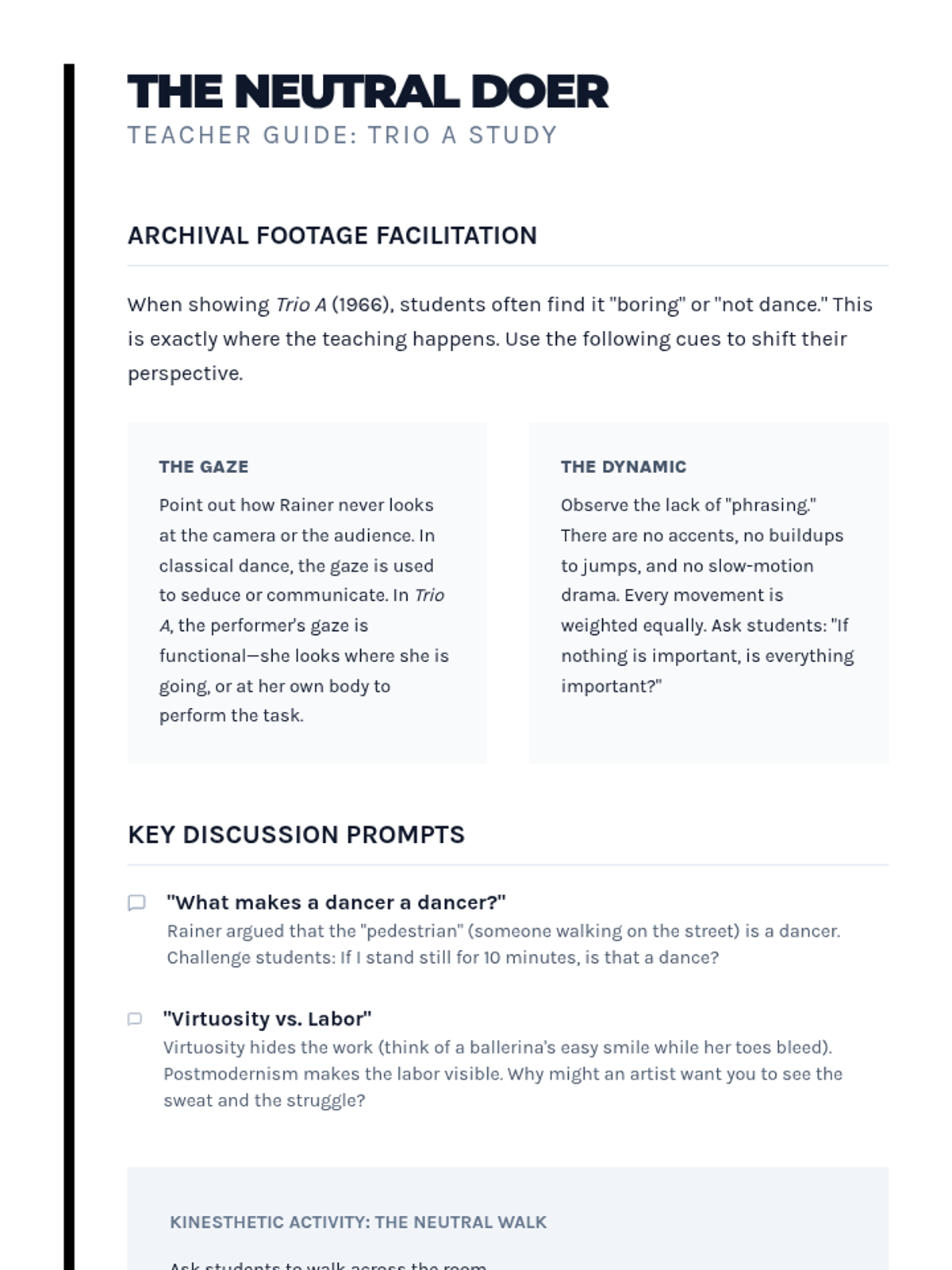
Analyzes Yvonne Rainer's 'No Manifesto' and the Judson Dance Theater's rejection of spectacle in favor of pedestrian movement and the 'neutral doer.'
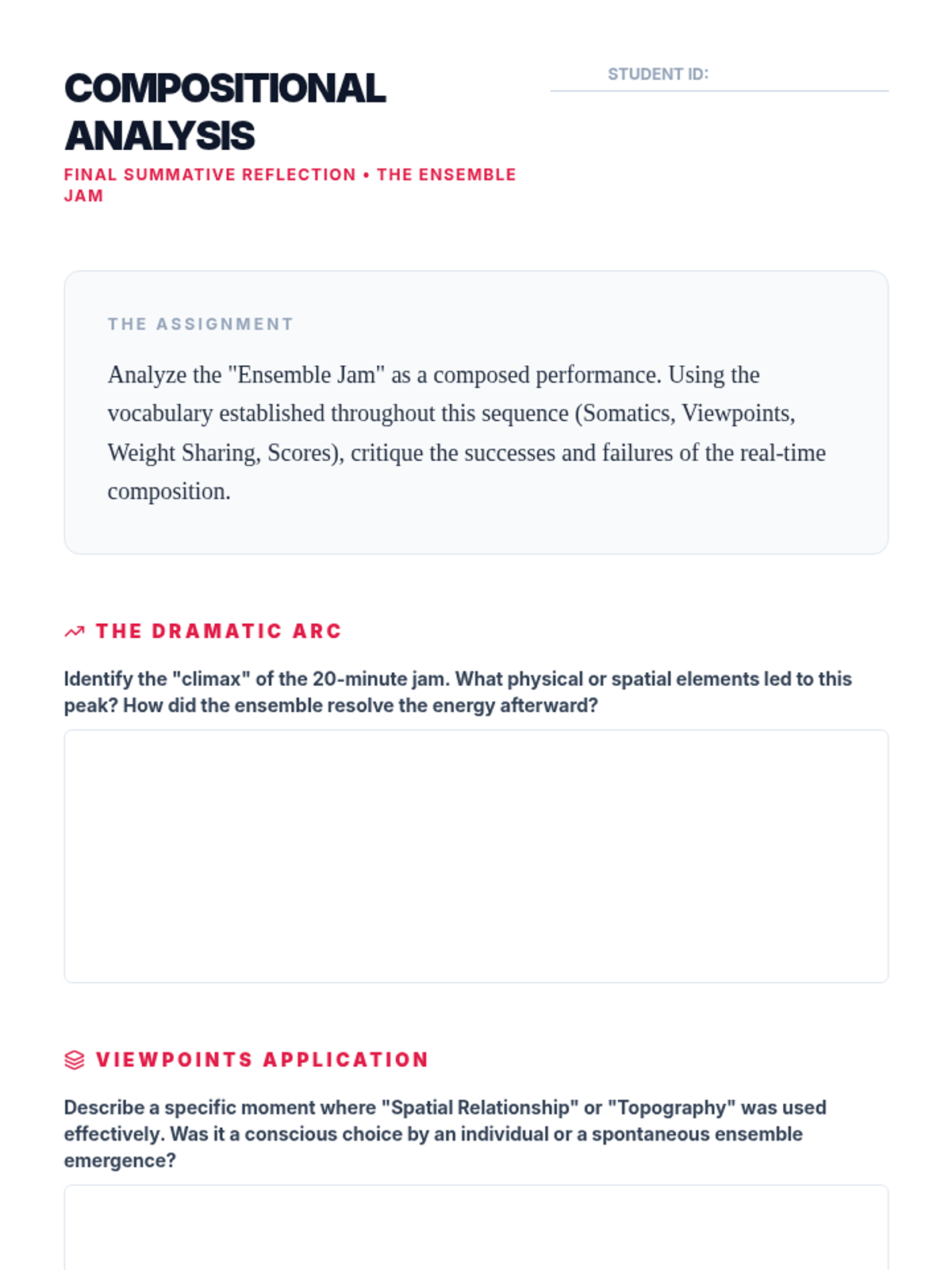
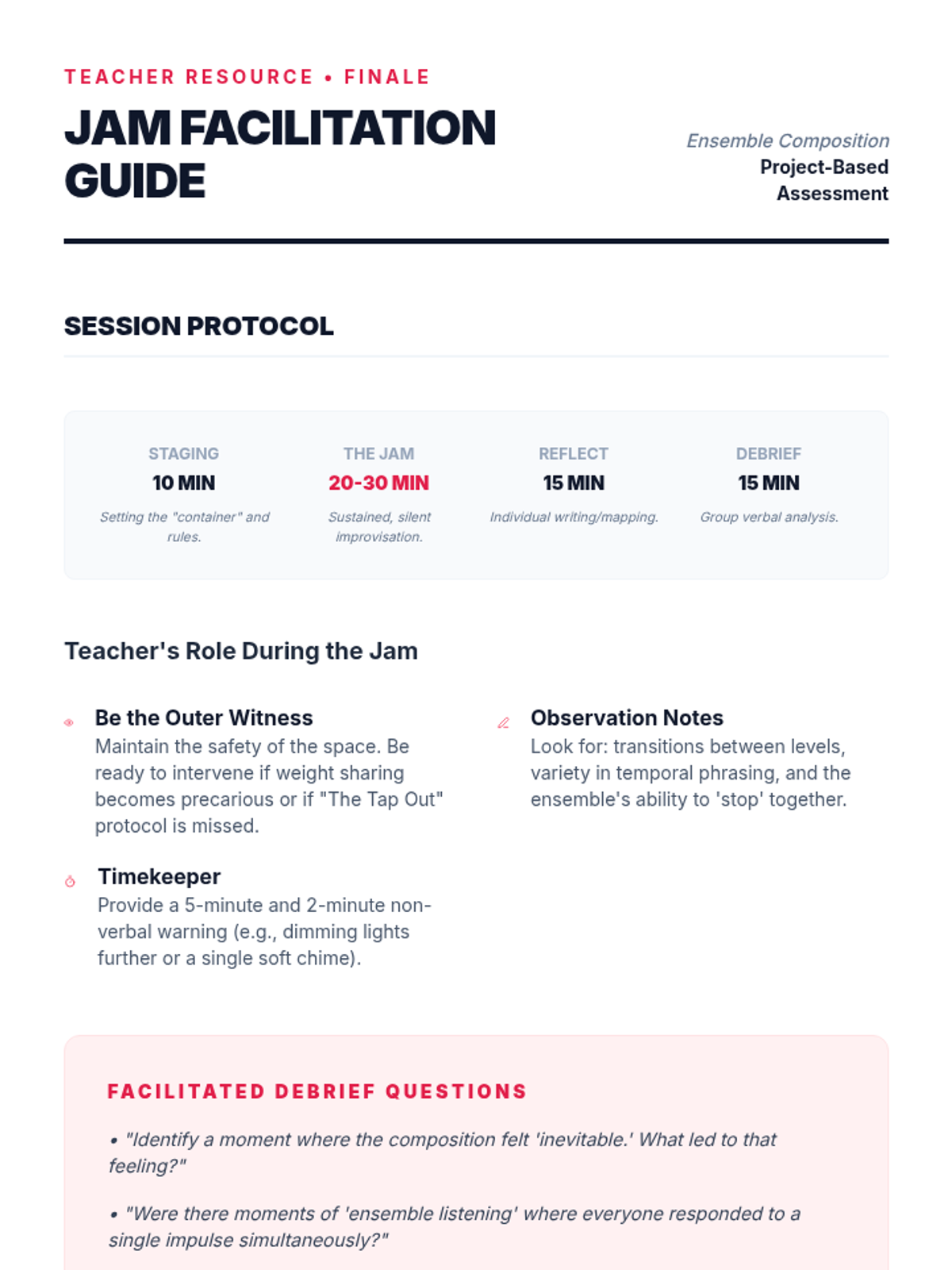
The sequence culminates in an 'open jam' where students utilize all previous skills to create a sustained, improvised performance followed by reflective analysis.
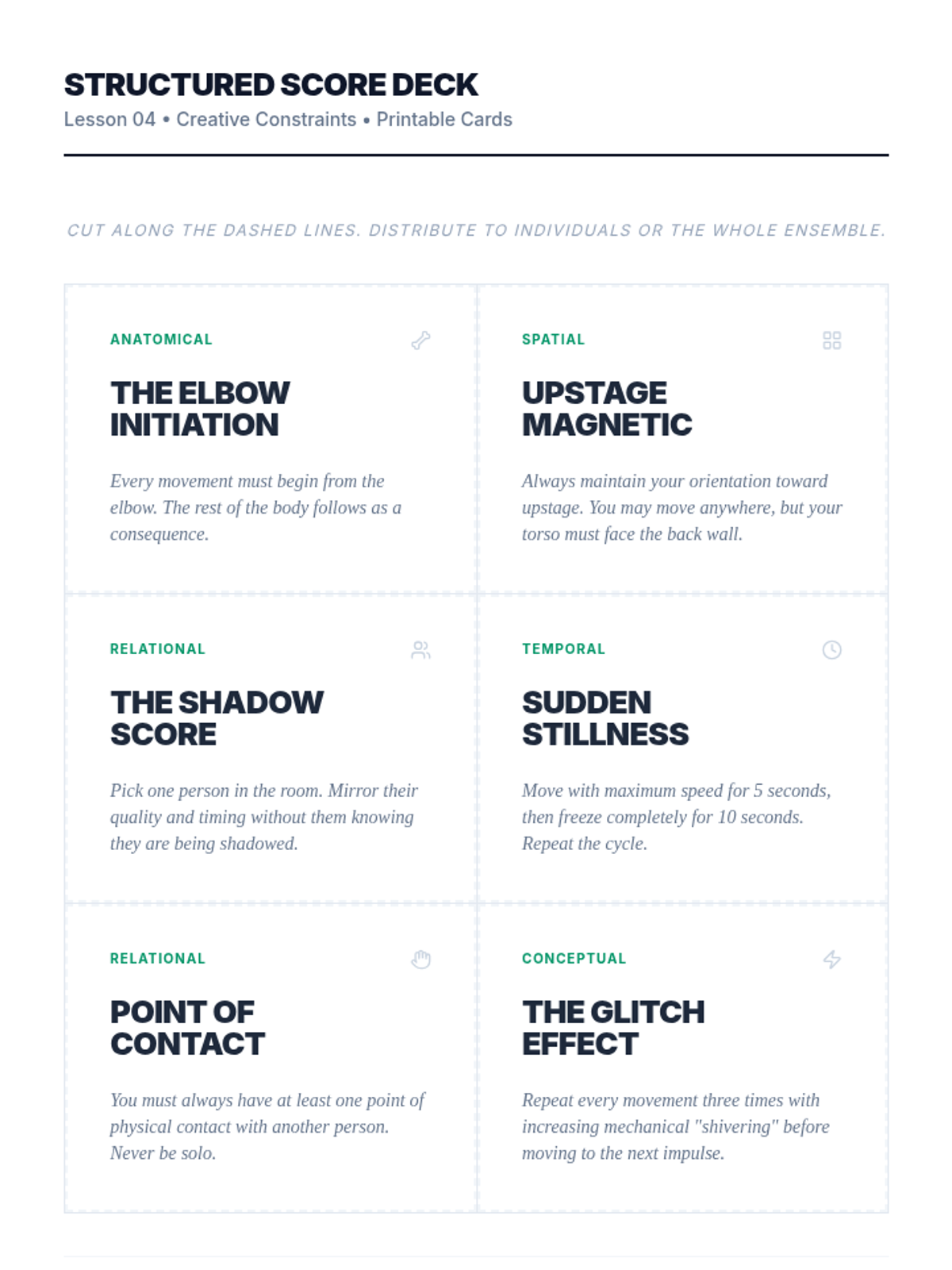
Students practice improvising within strict rules or 'scores' to explore how constraints can liberate creativity and remove the paralysis of choice.
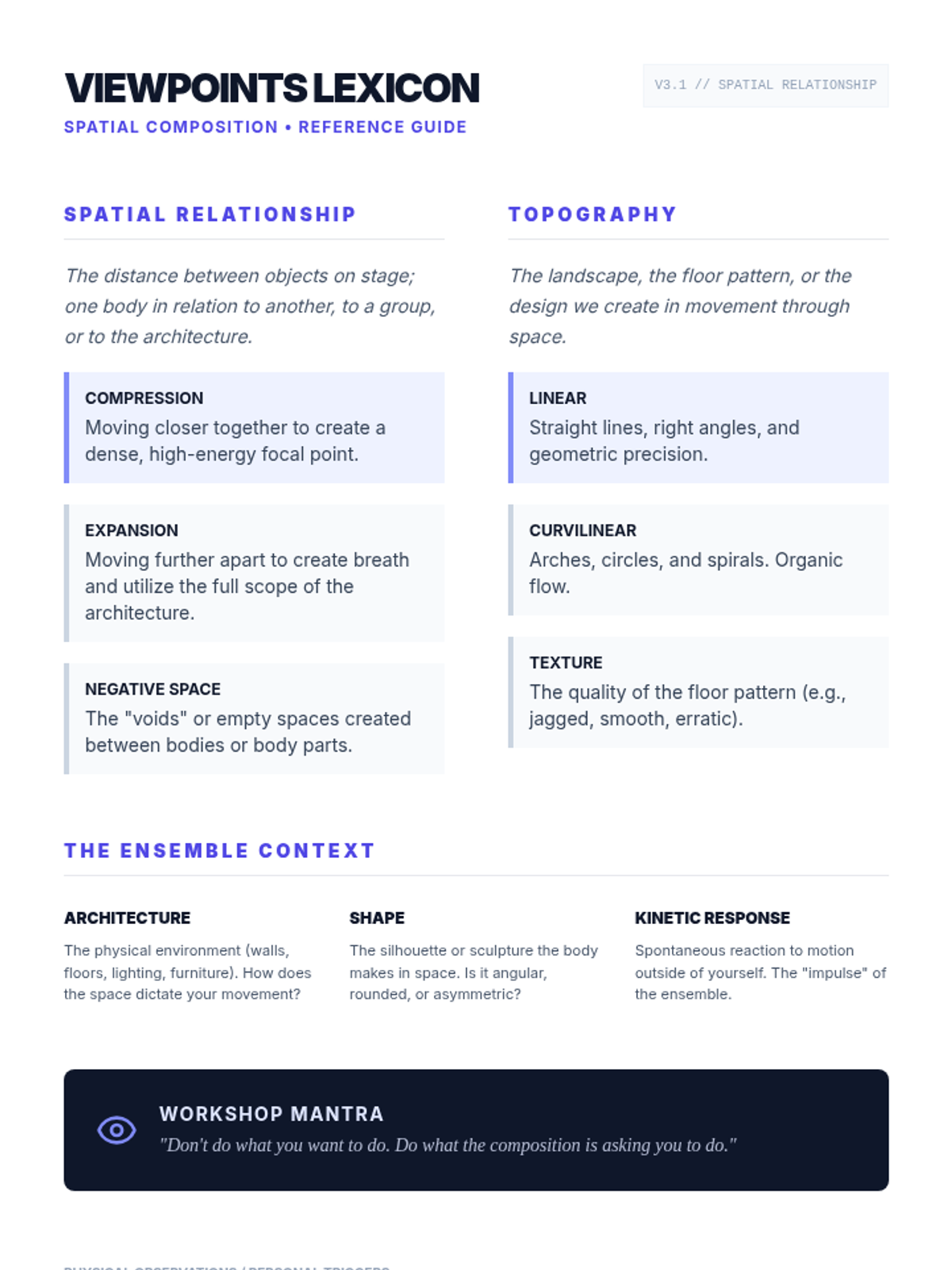
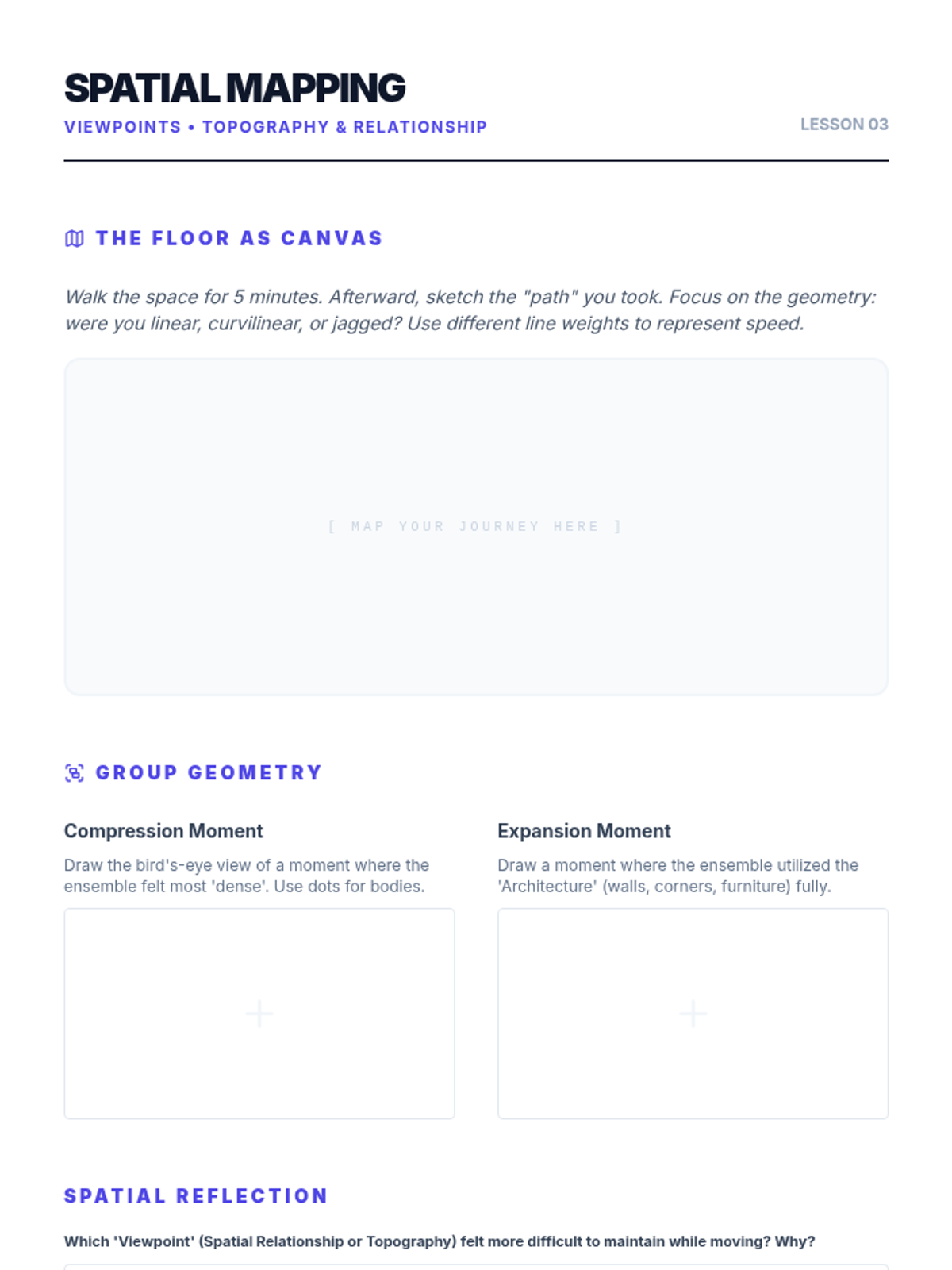
Using the Viewpoints framework, students explore group improvisation, analyzing the geometry of the space and their relationship to other bodies.
Introduction to basic contact improvisation concepts including points of contact and counterbalance, focusing on giving and receiving weight safely.
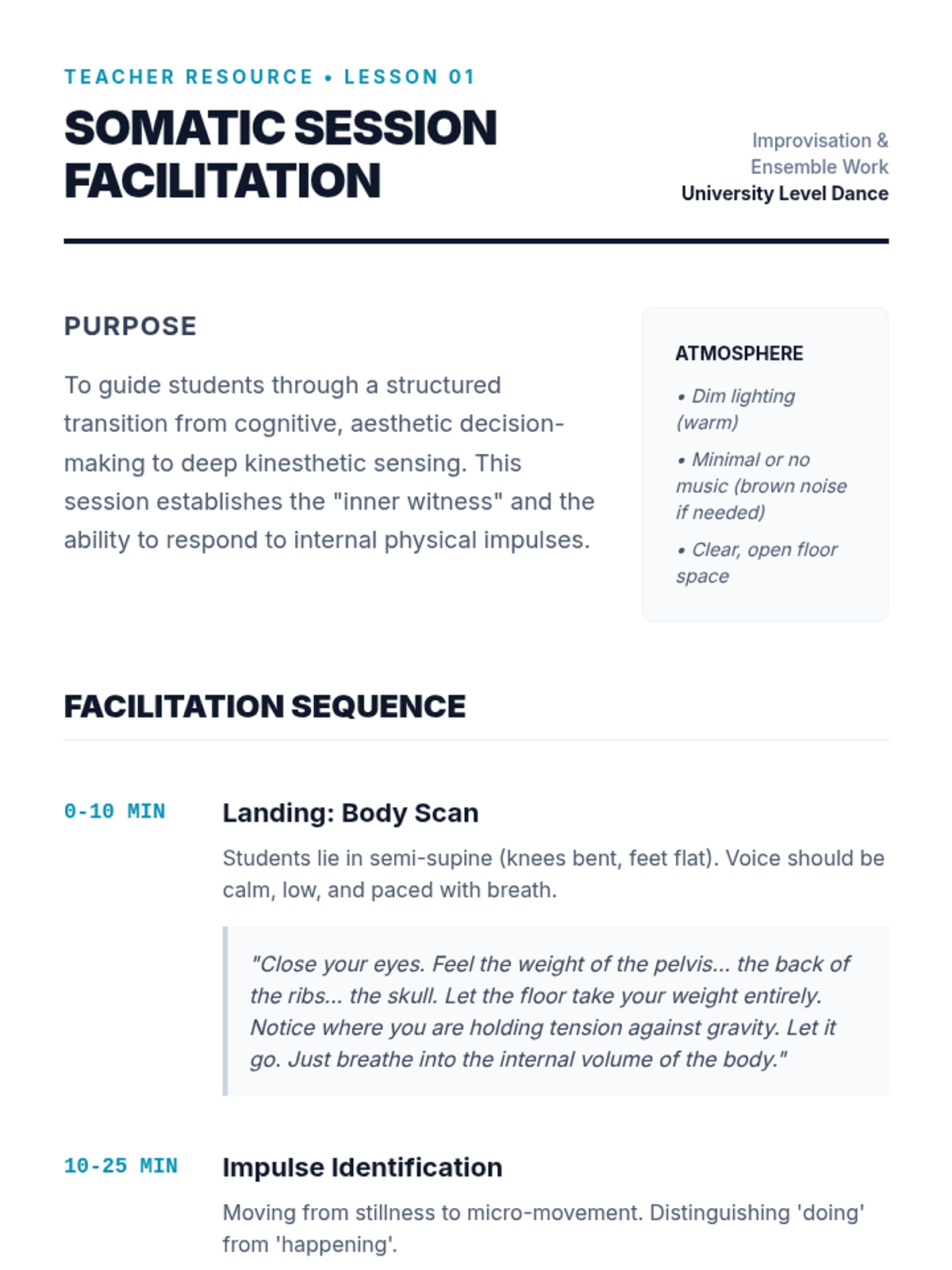
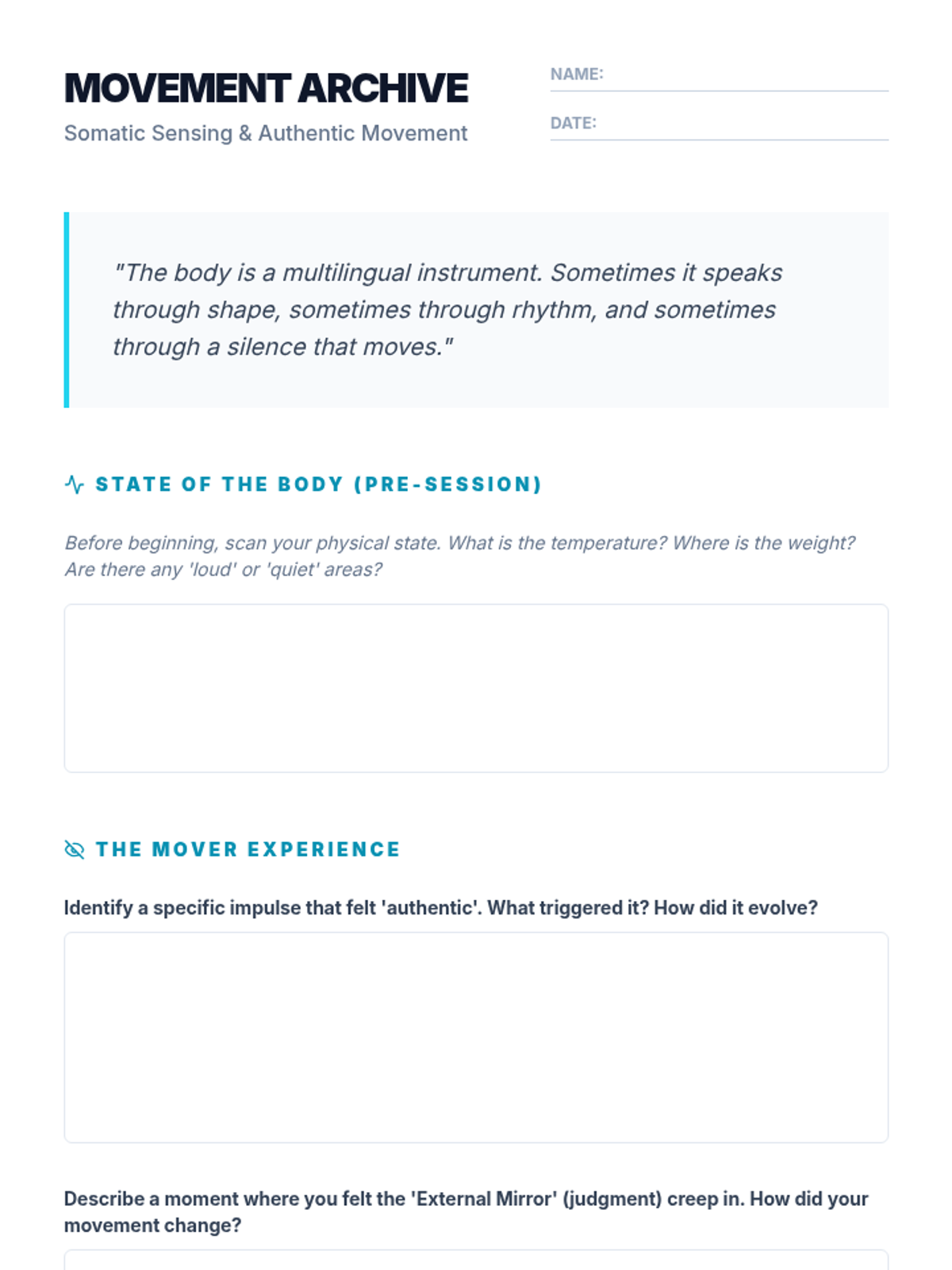
Students engage in eyes-closed improvisation to disconnect from visual judgment and connect to internal impulse, focusing on kinesthetic sensing and authentic movement.