Fundamental techniques for drawing, painting, sculpture, and photography alongside modern digital design principles. Analyzes historical artistic movements while building skills in printmaking and graphic media.
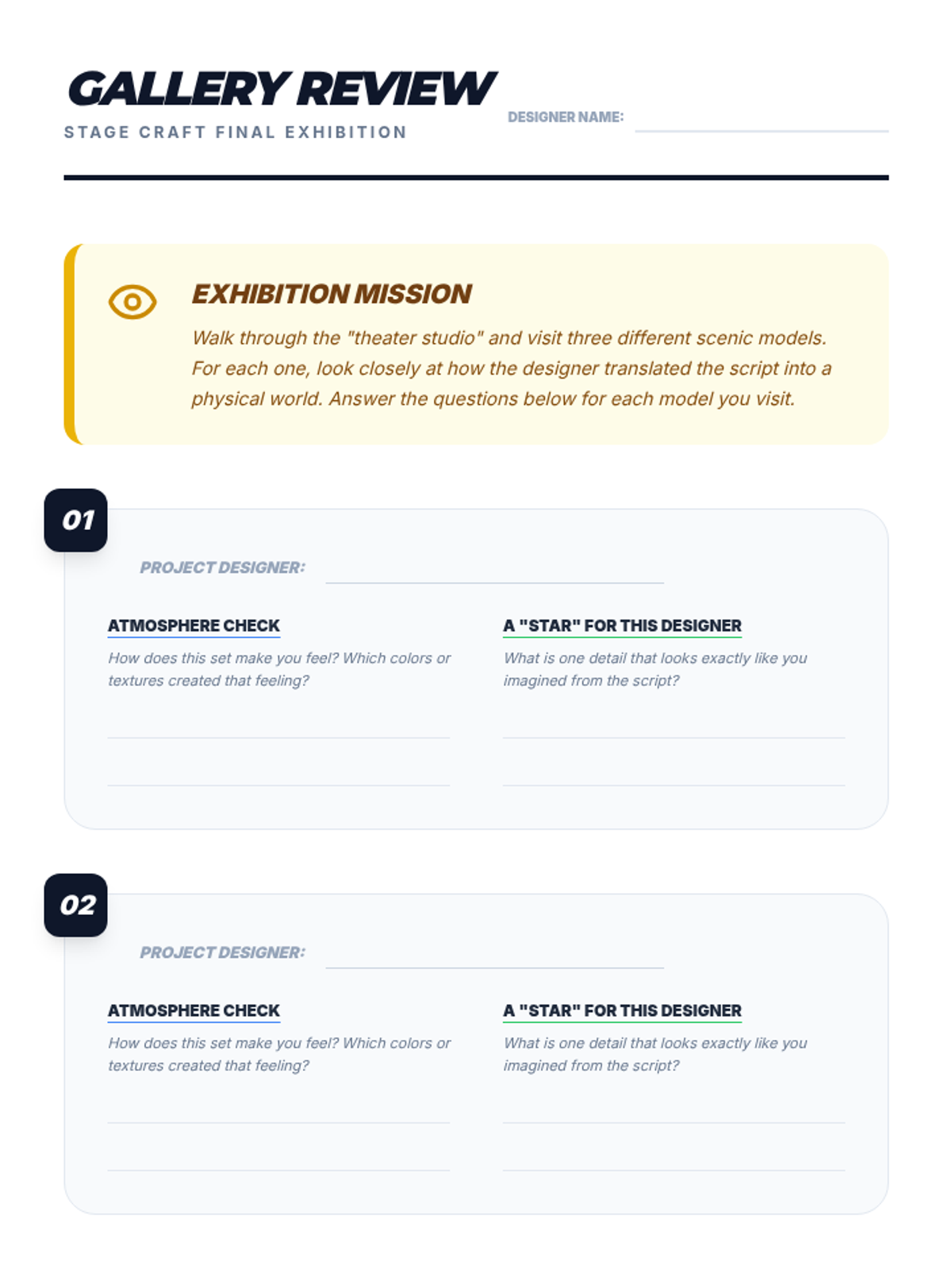
Students complete their models by adding furniture pieces, architectural details, and applying color or texture. The sequence concludes with a gallery walk where students critique how well the designs serve the script.
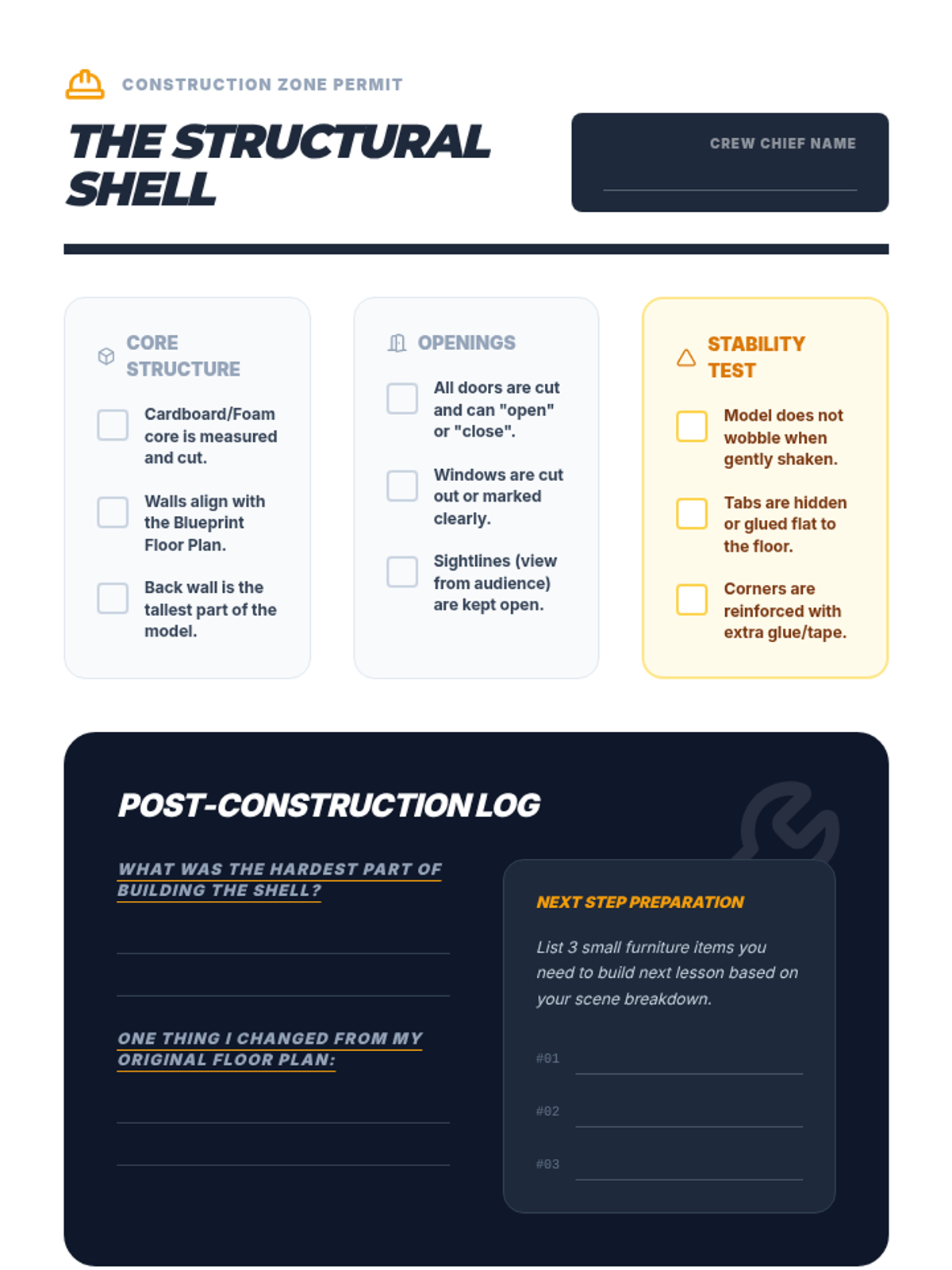
Students begin the hands-on construction of their scale model using cardstock, foam core, or shoeboxes. They build the perimeter walls and floor based on their earlier floor plans.
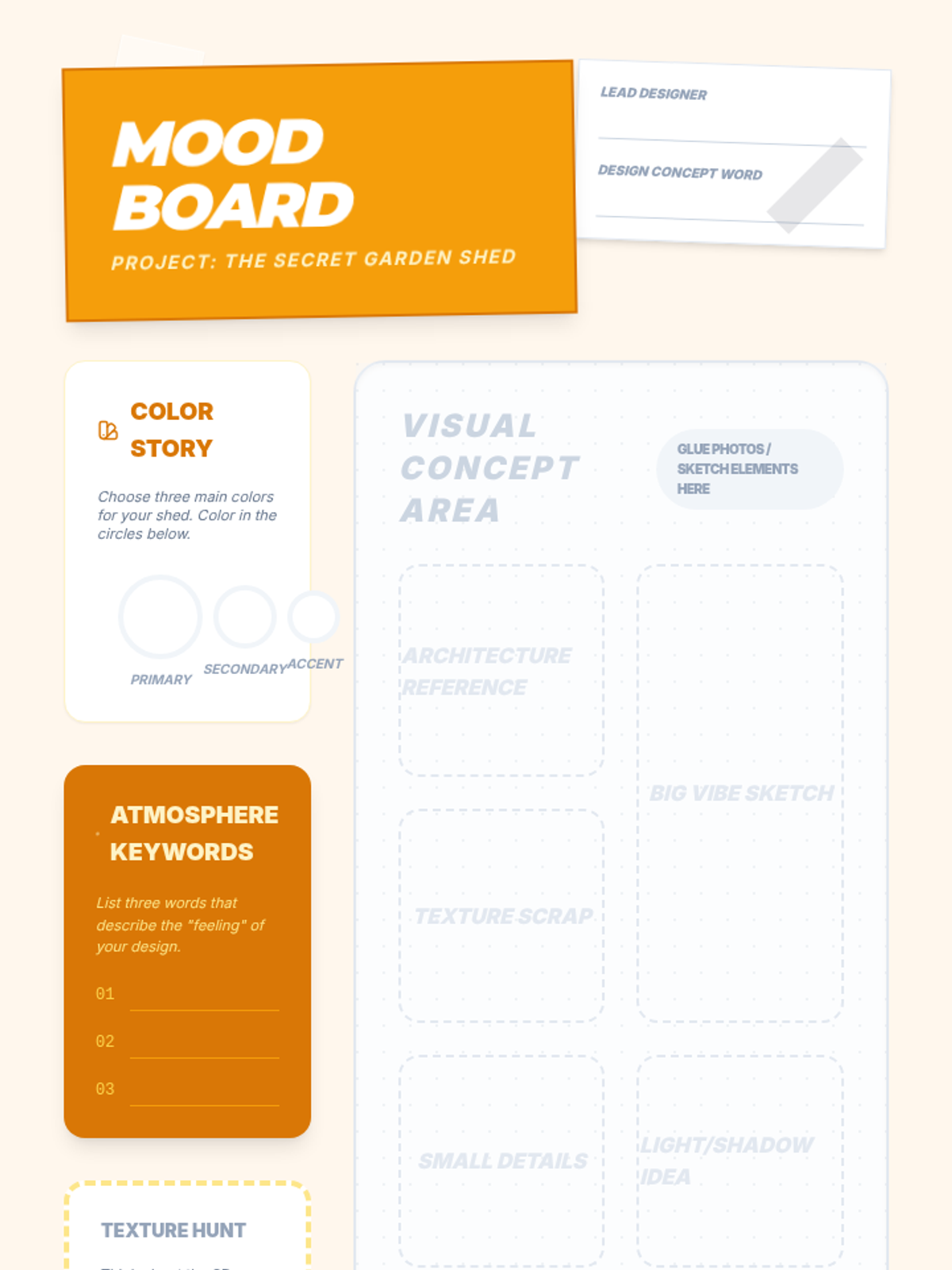
Focusing on the artistic atmosphere, students select color palettes, textures, and reference images that evoke the emotion of the scene. They compile these into a mood board that serves as the aesthetic guide for their final model.
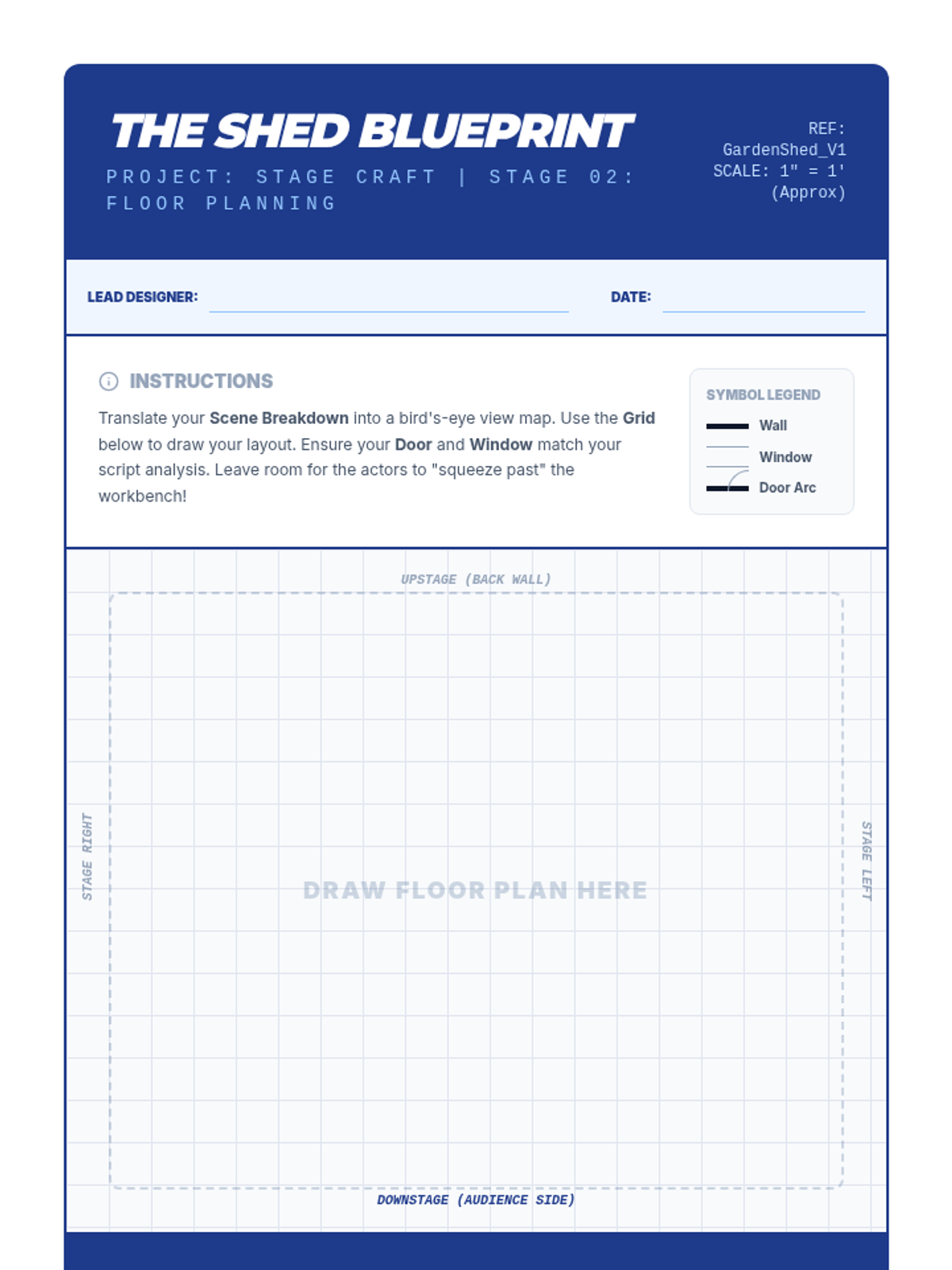
Students learn to translate their scene breakdown into a bird's-eye view floor plan, focusing on placement of furniture and walls to ensure actors have room to move and sightlines remain clear.
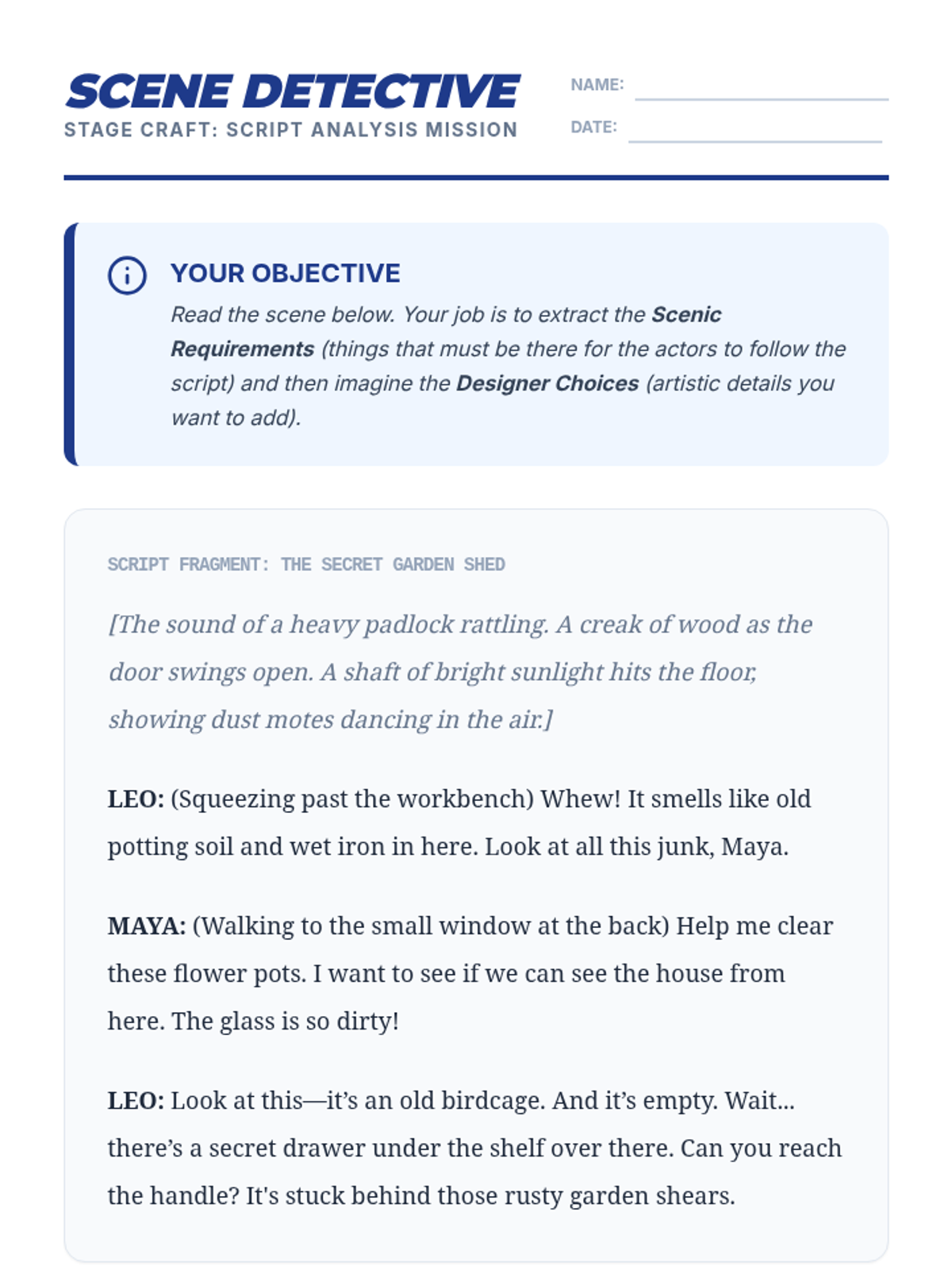
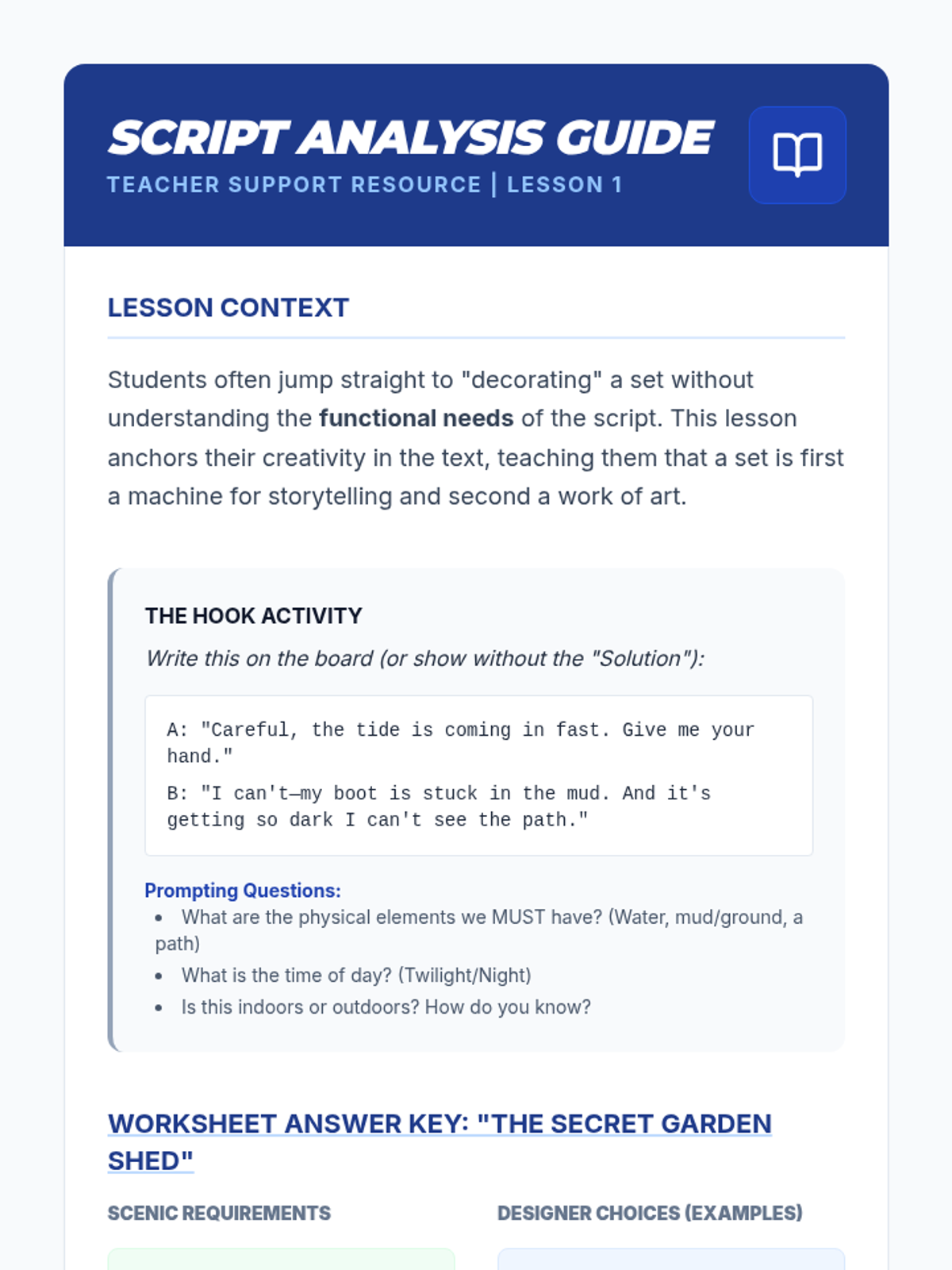
Students read a short scene to identify specific scenic needs, such as entrances, exits, furniture, and time period clues. They create a 'scene breakdown' list that categorizes these necessary elements versus artistic possibilities.
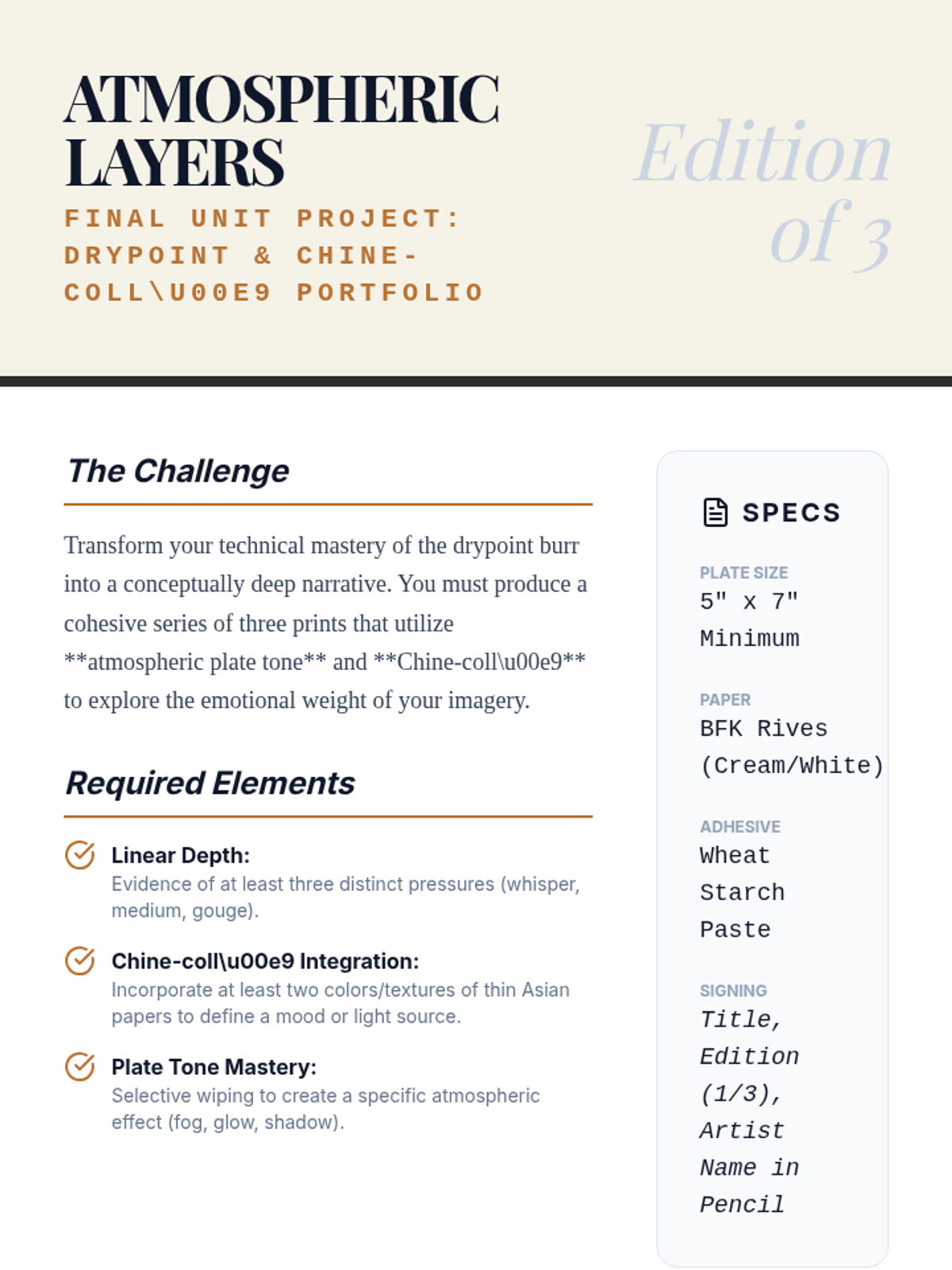
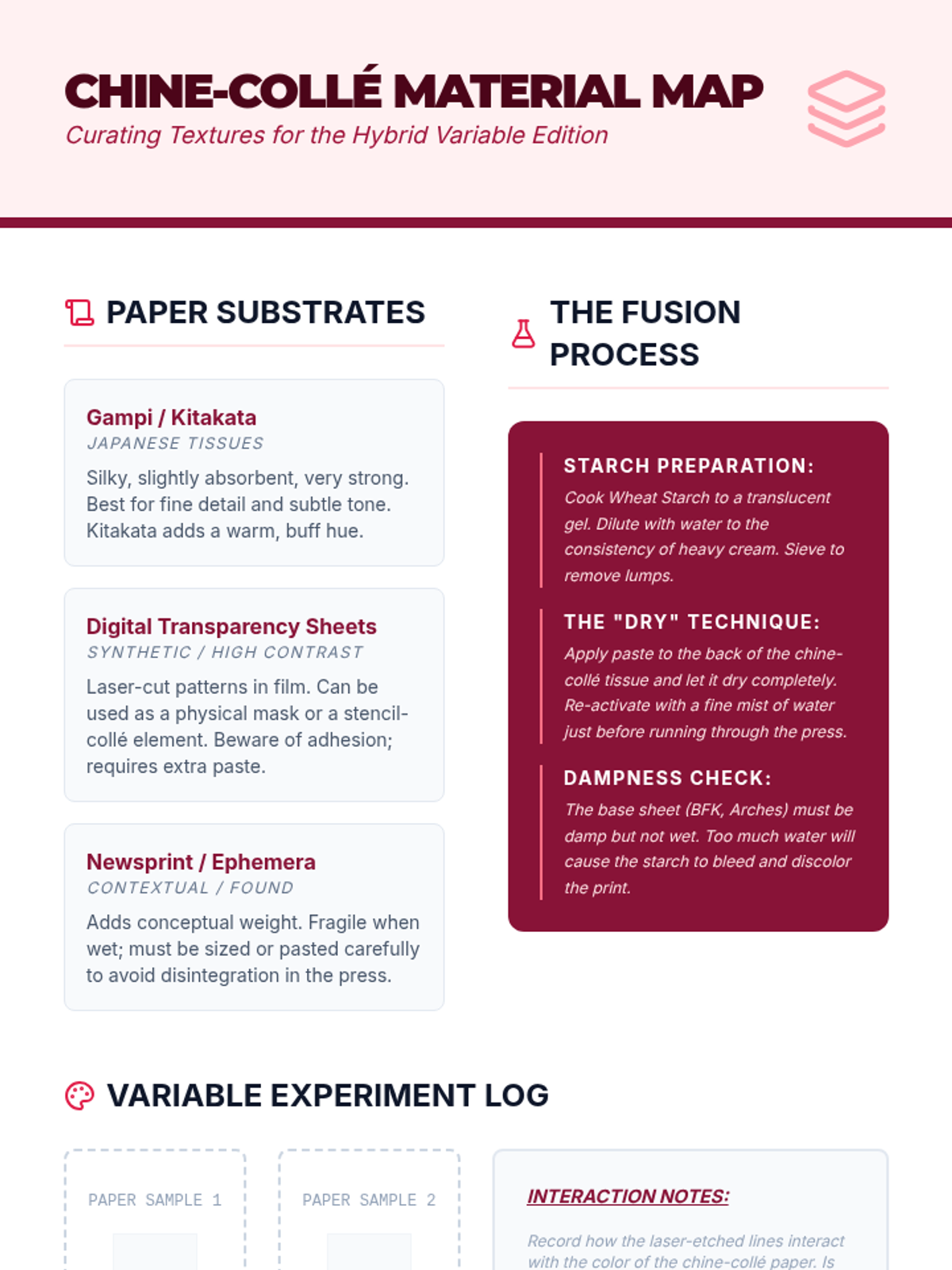
Advanced integration of color and texture through the ancient technique of Chine-coll\u00e9, adding depth to linear compositions.
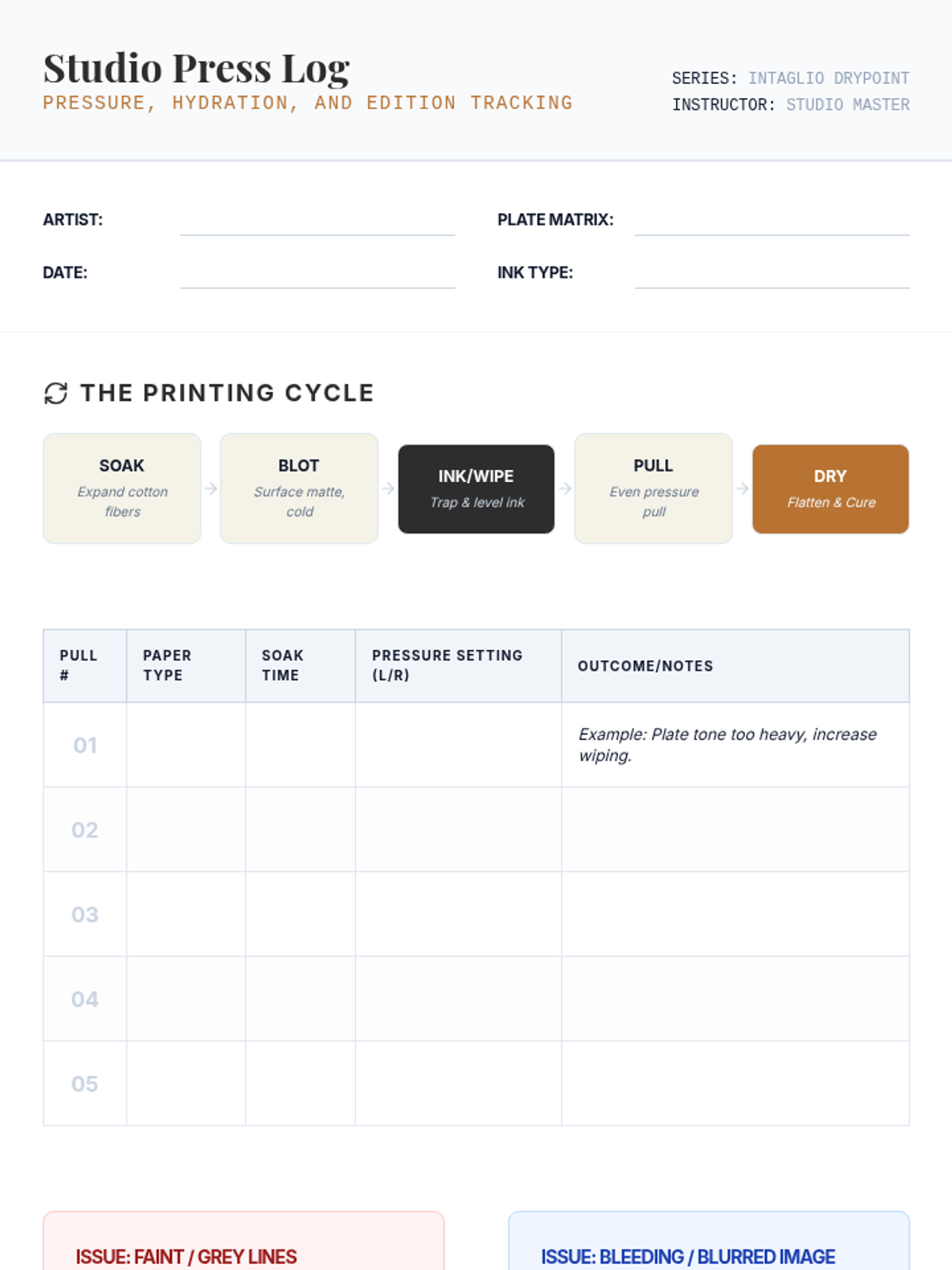
Students master the science of paper hydration and the mechanics of the etching press to achieve high-fidelity transfers.
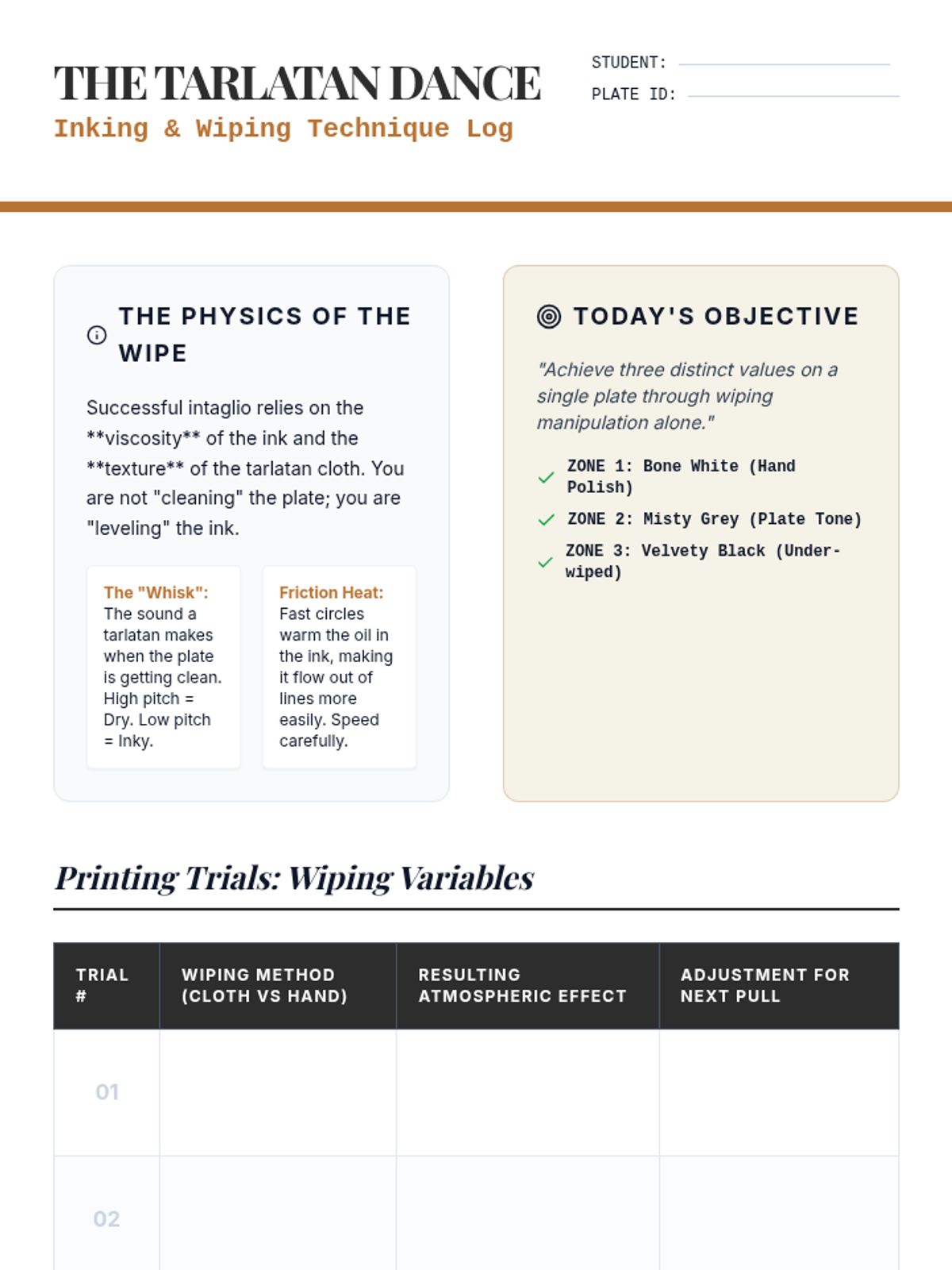
Focusing on the 'wiping' process, students explore how tarlatan manipulation and plate tone influence the mood and depth of a print.
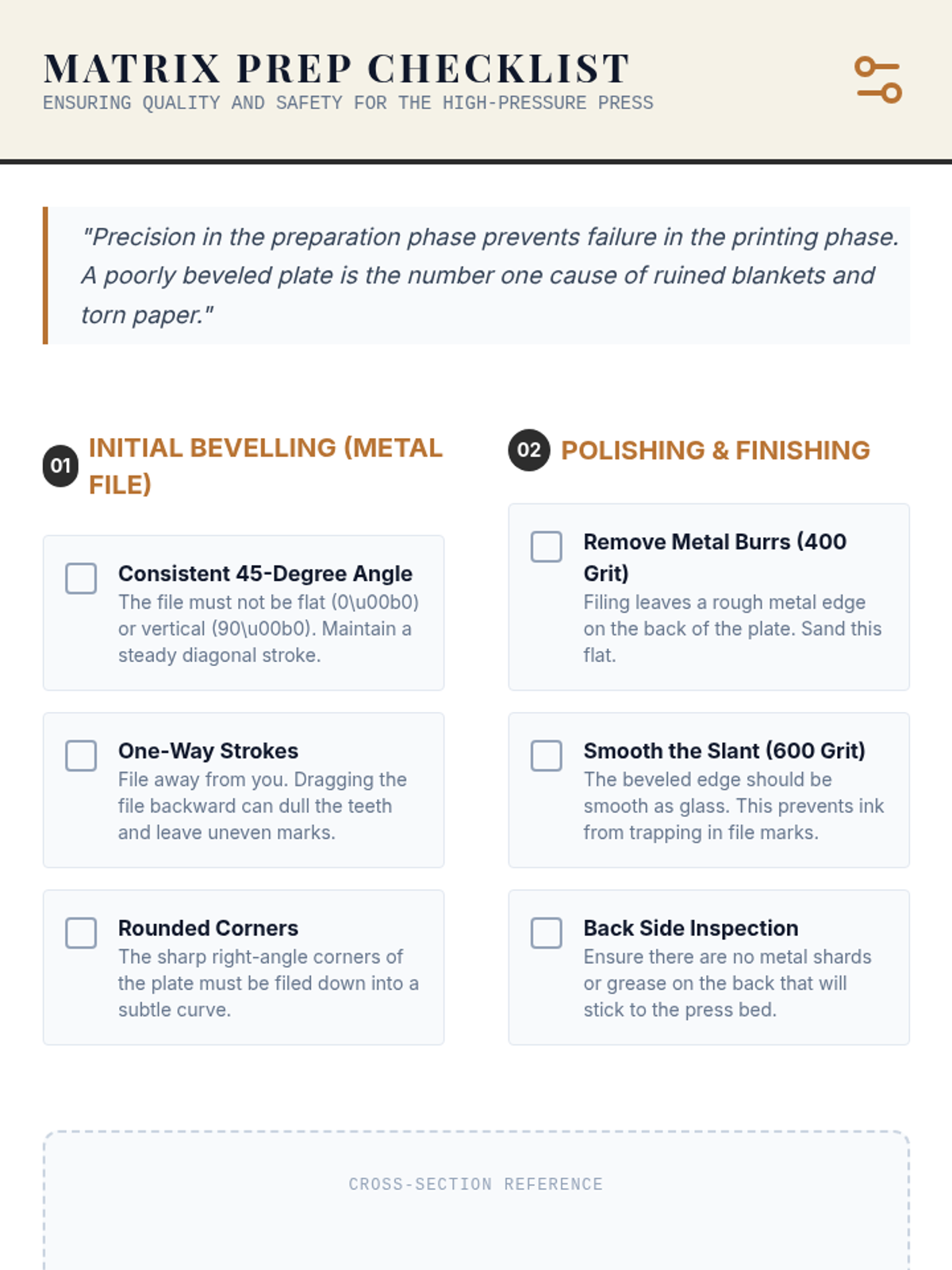
A technical workshop on plate preparation, focusing on the critical skill of beveling to ensure press safety and print quality.
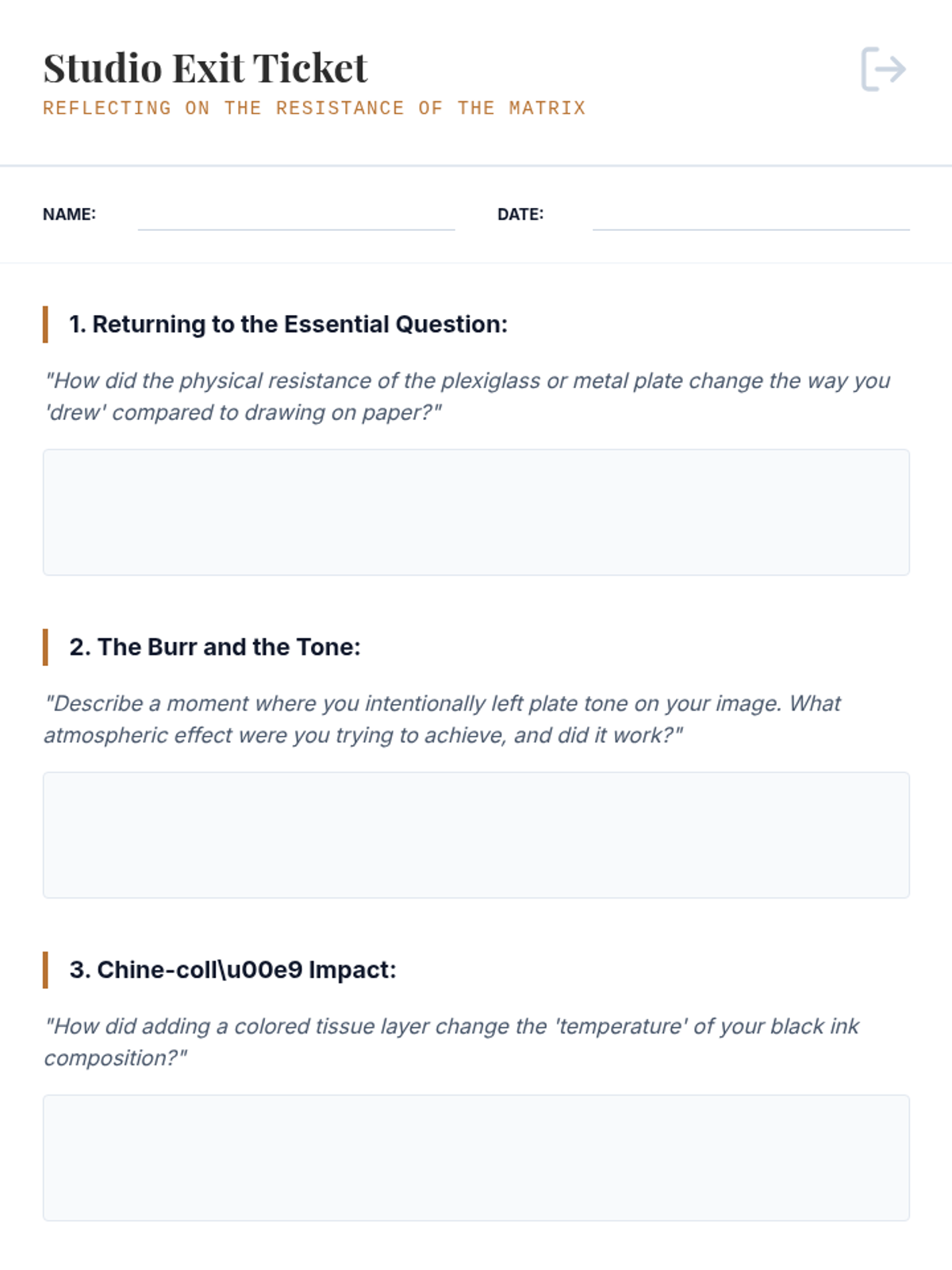
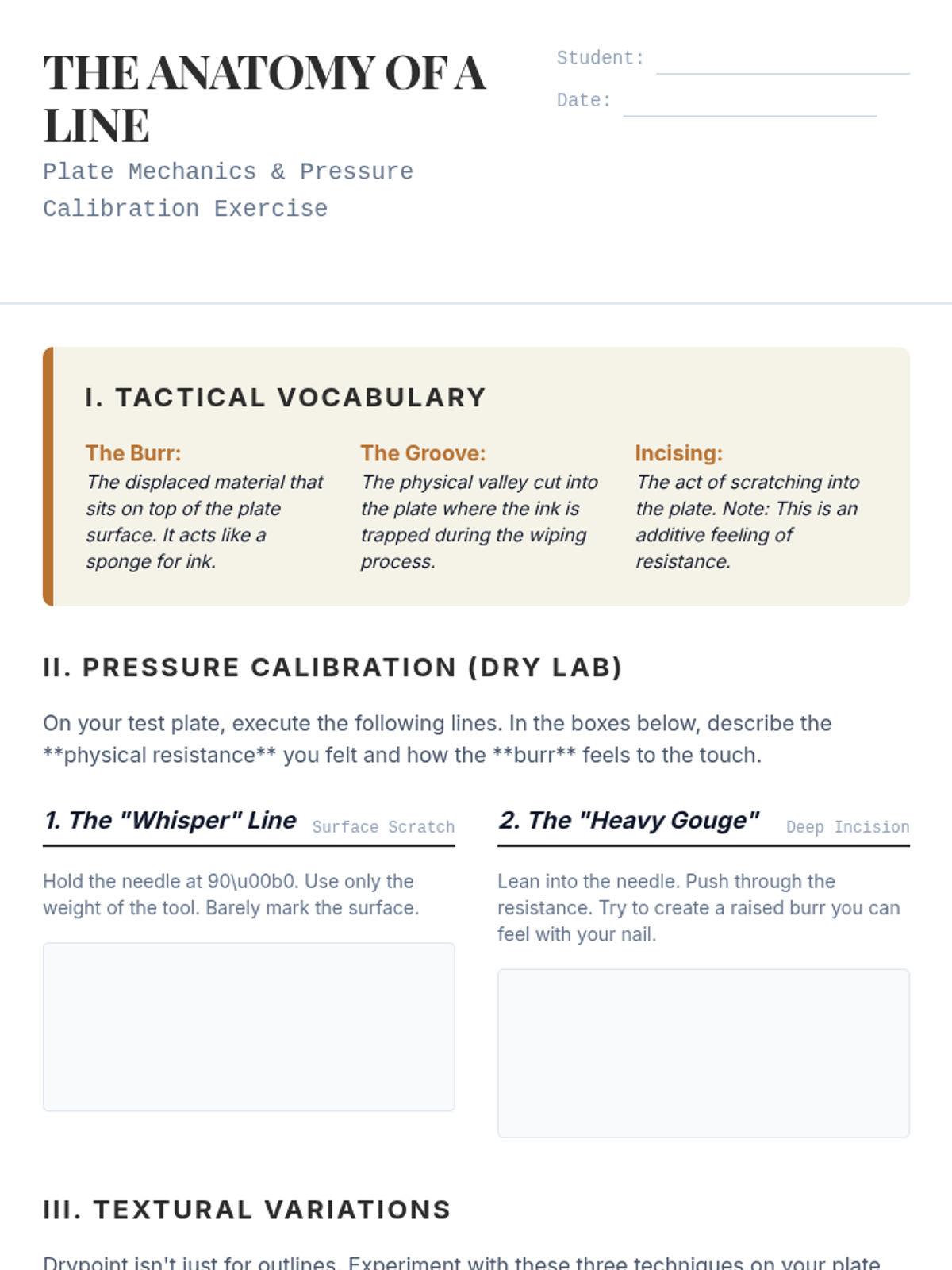
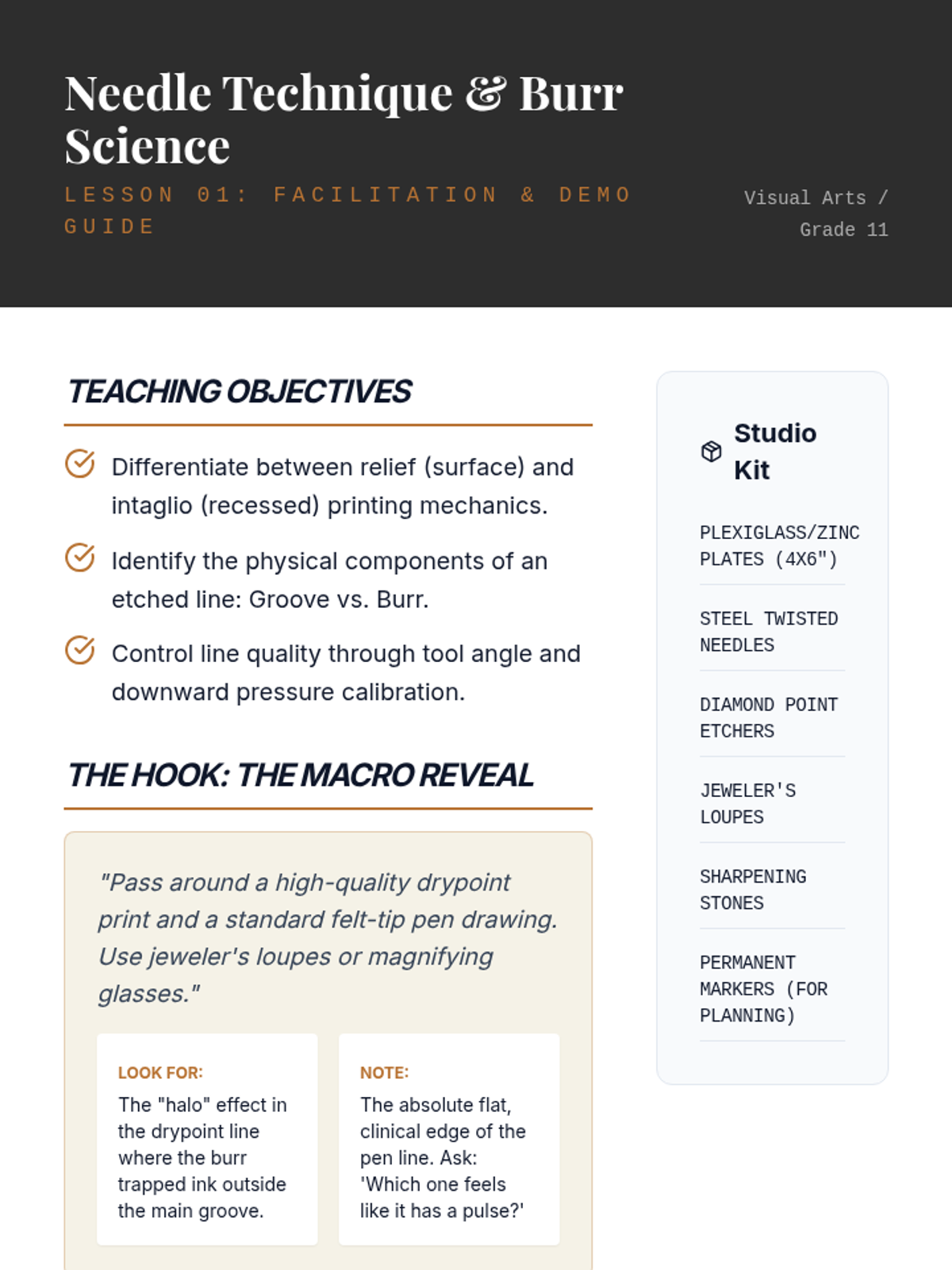
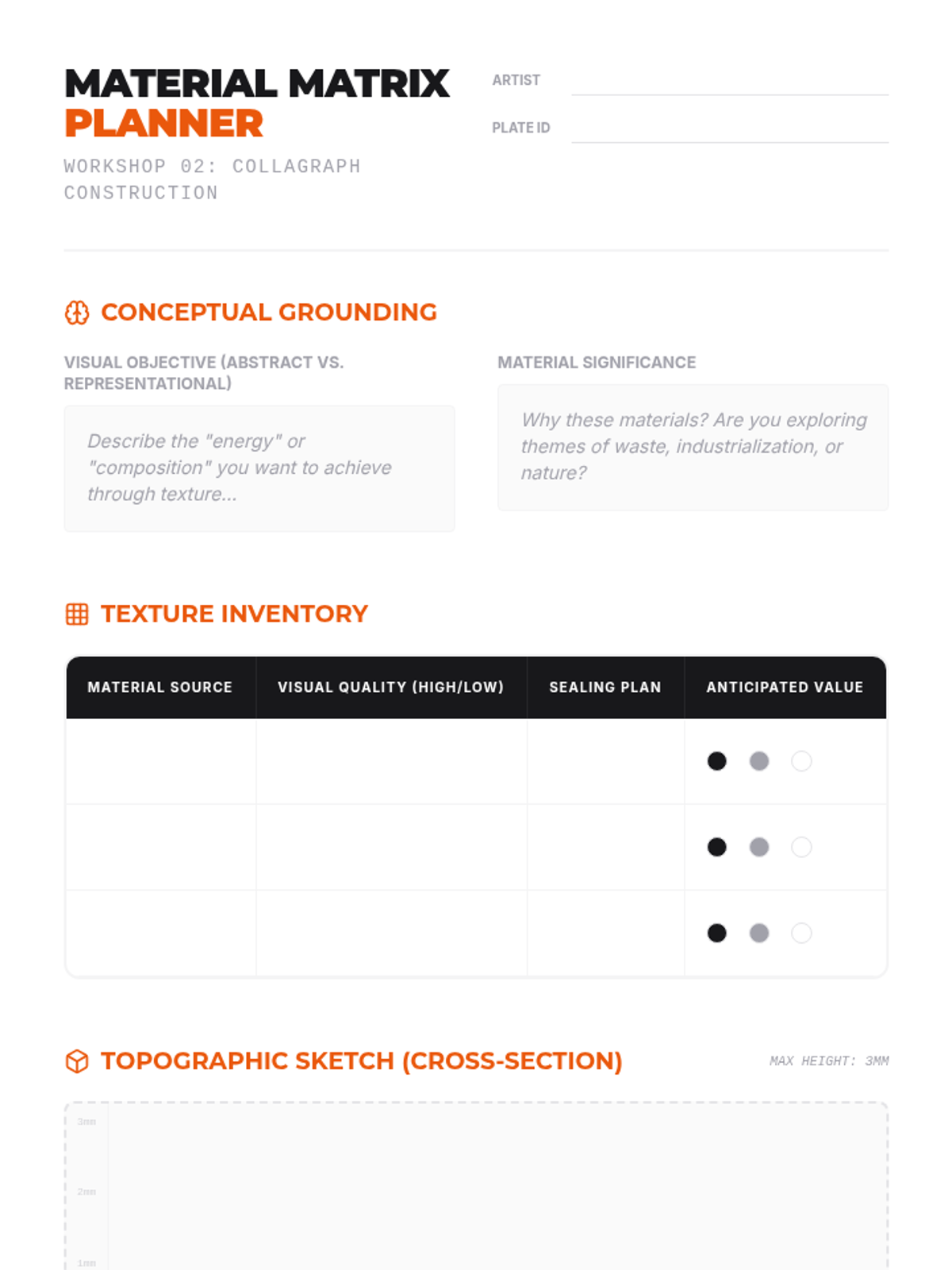
Students investigate the mechanics of intaglio by experimenting with scribes and needles to understand the 'burr' and ink retention.
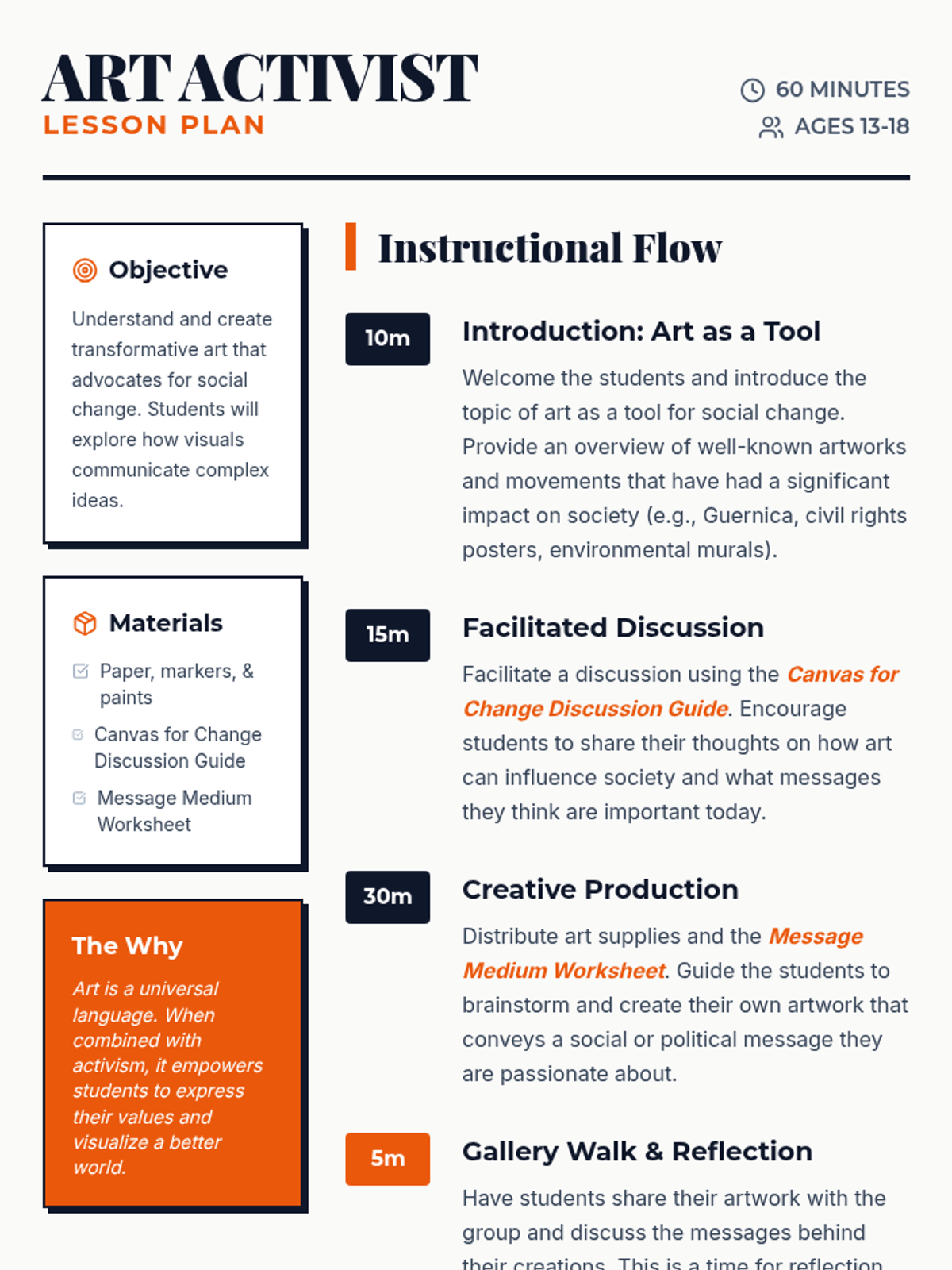
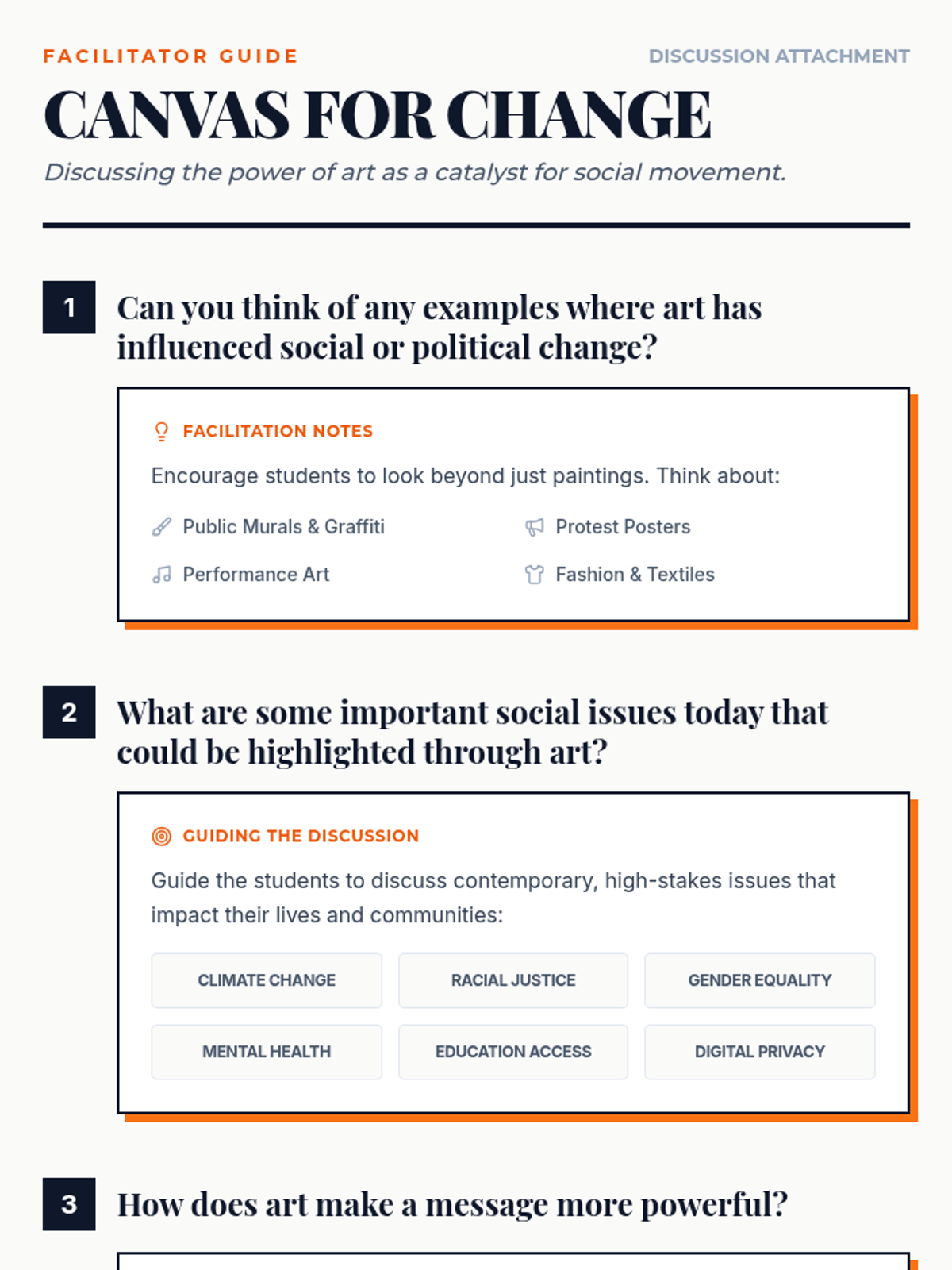
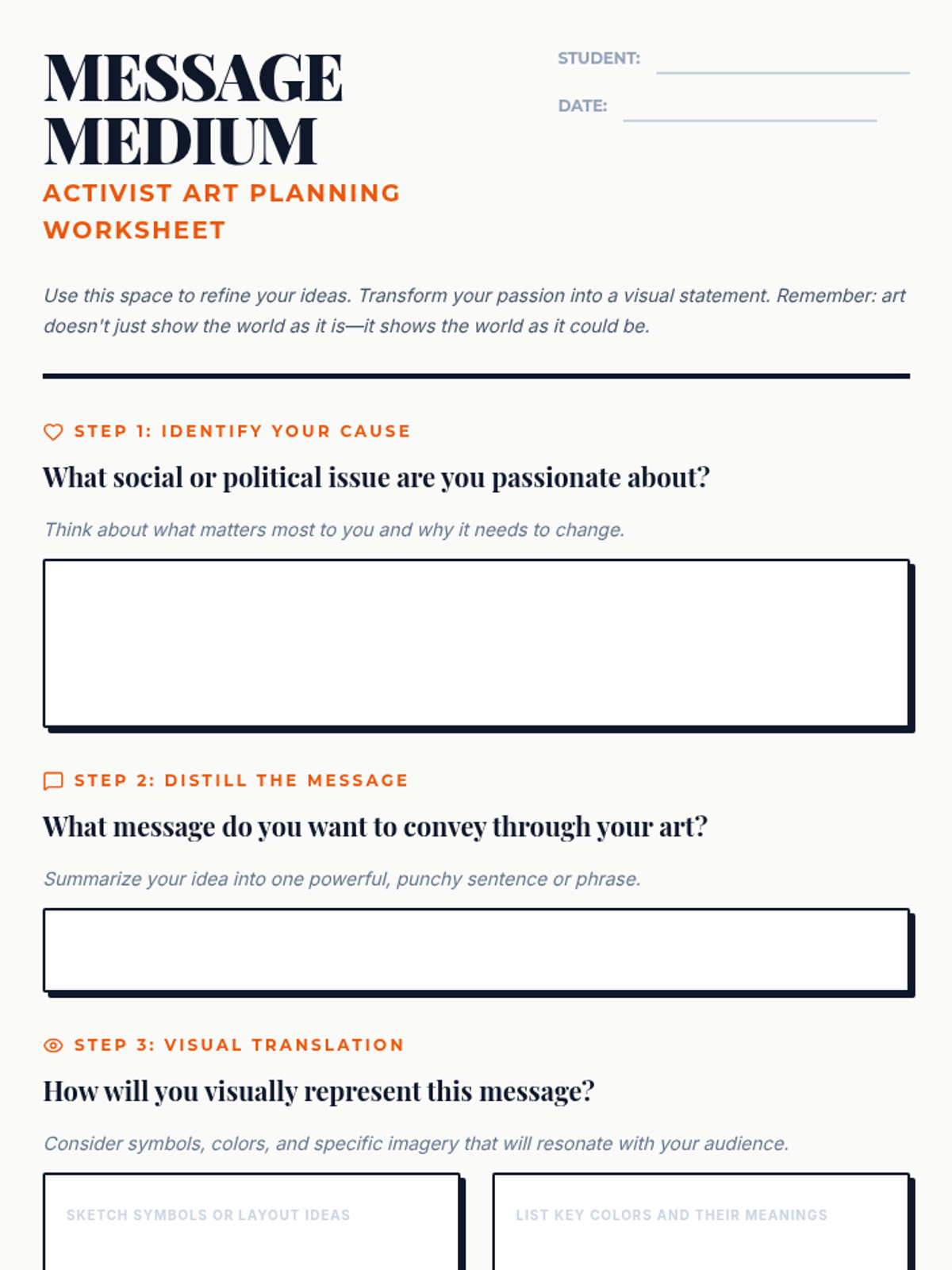
Students explore the history and impact of art in social movements, then brainstorm and plan their own activist artwork focused on contemporary issues.
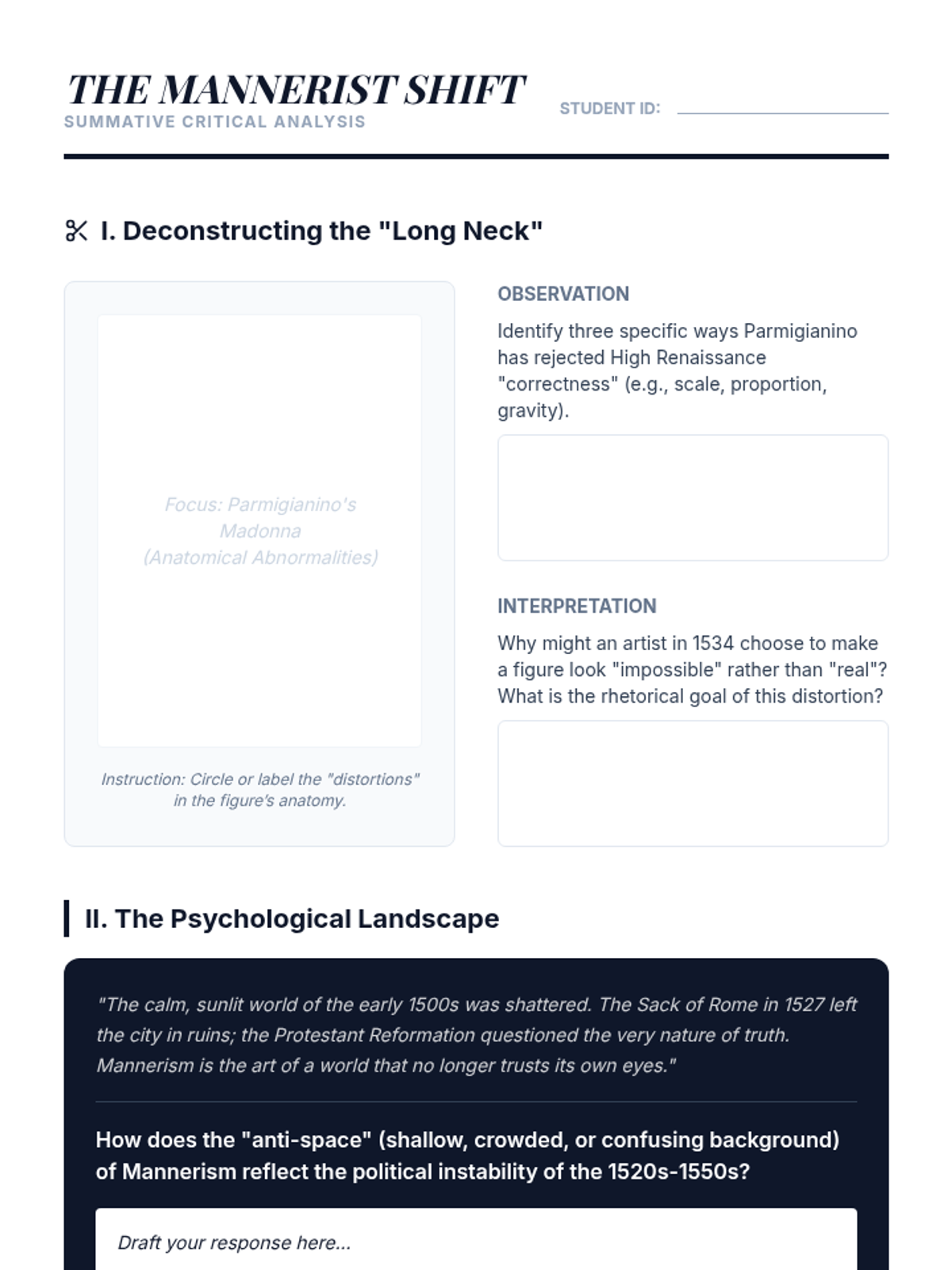
The sequence concludes with an analysis of Mannerism as a response to political instability and the Reformation, characterized by distorted anatomy and a rejection of classical balance.
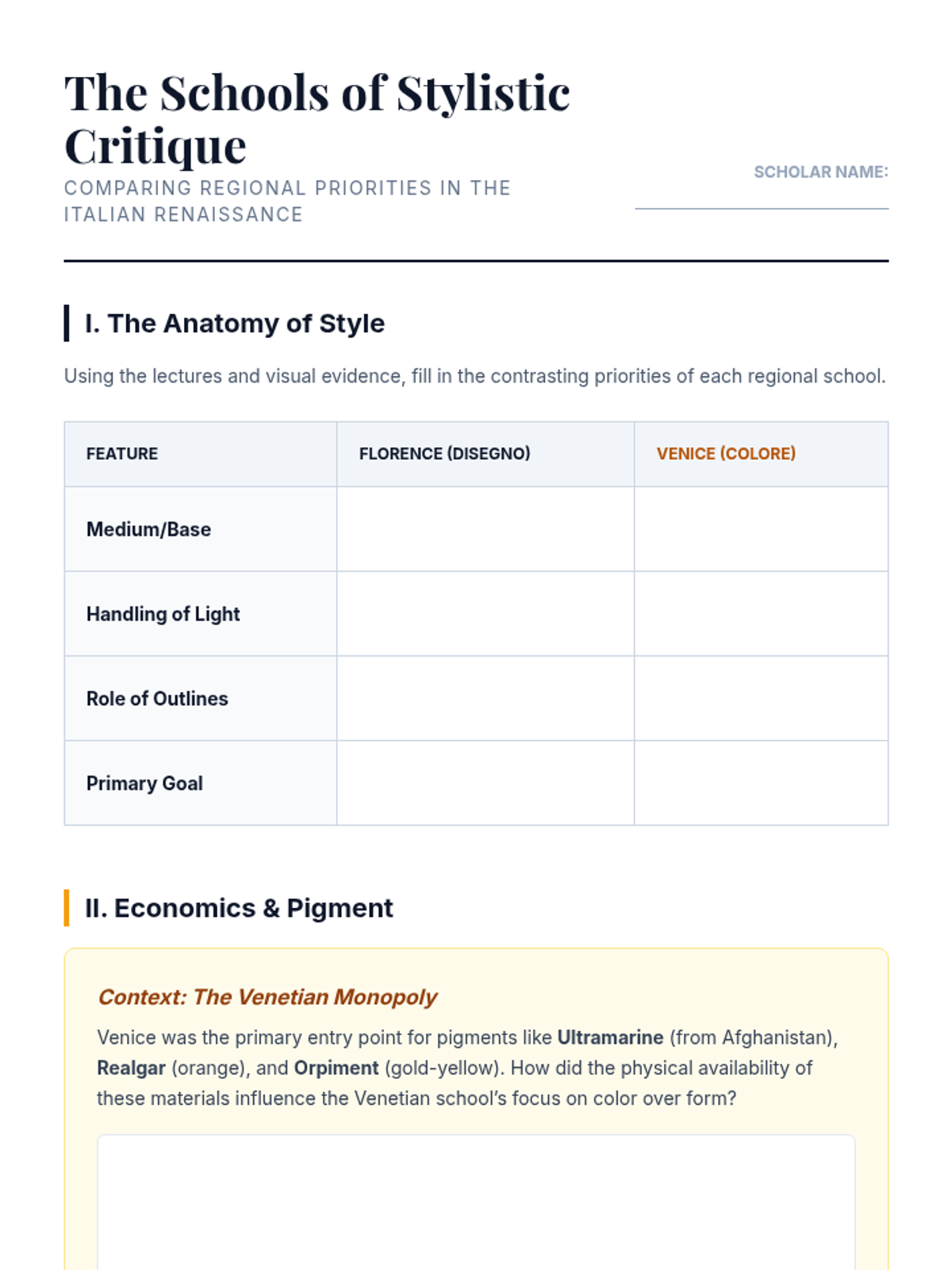
A comparative study of the Florentine emphasis on 'disegno' (drawing/design) versus the Venetian focus on 'colore' (color/light), highlighting how geography and trade influenced artistic priorities.
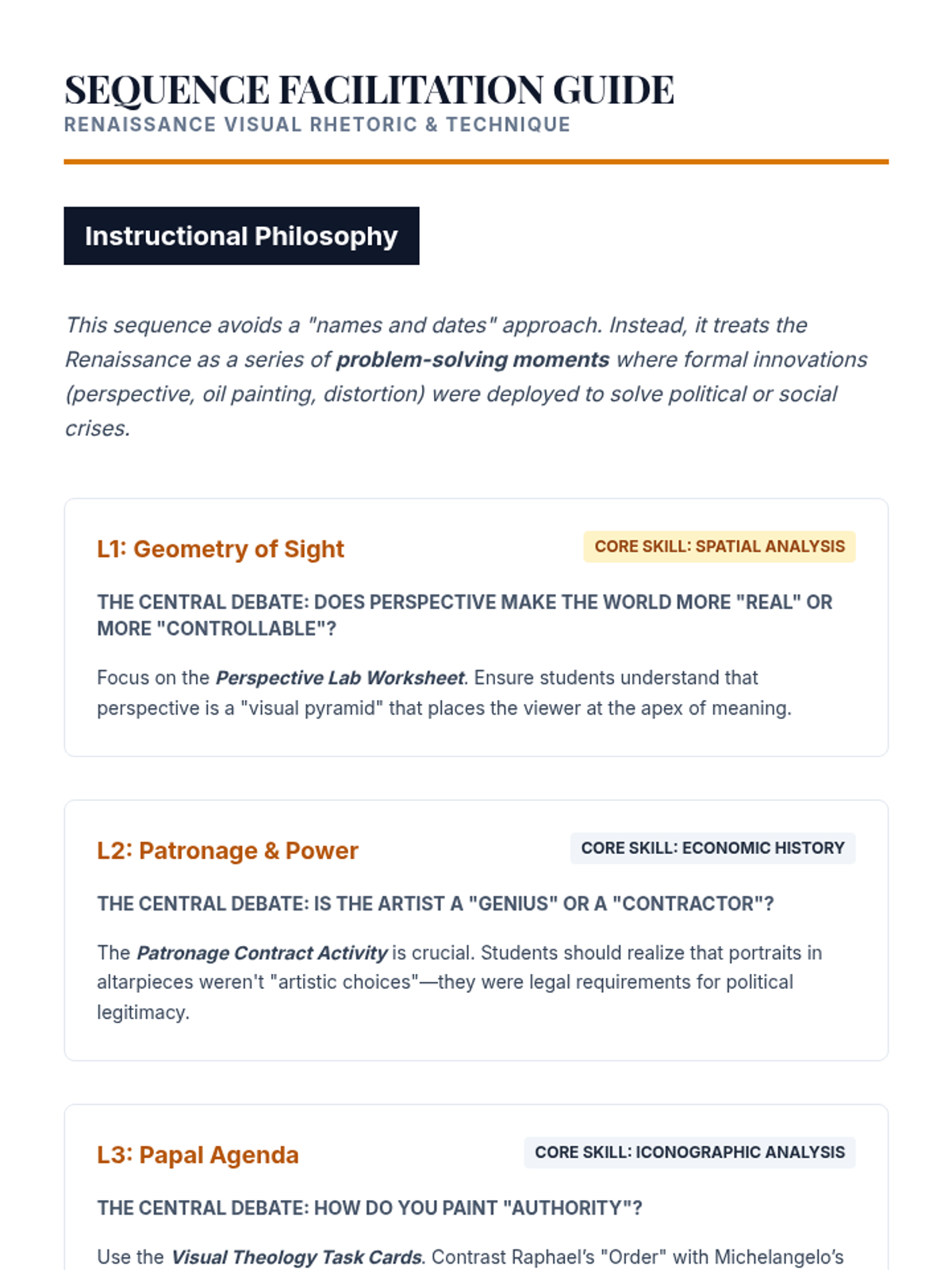
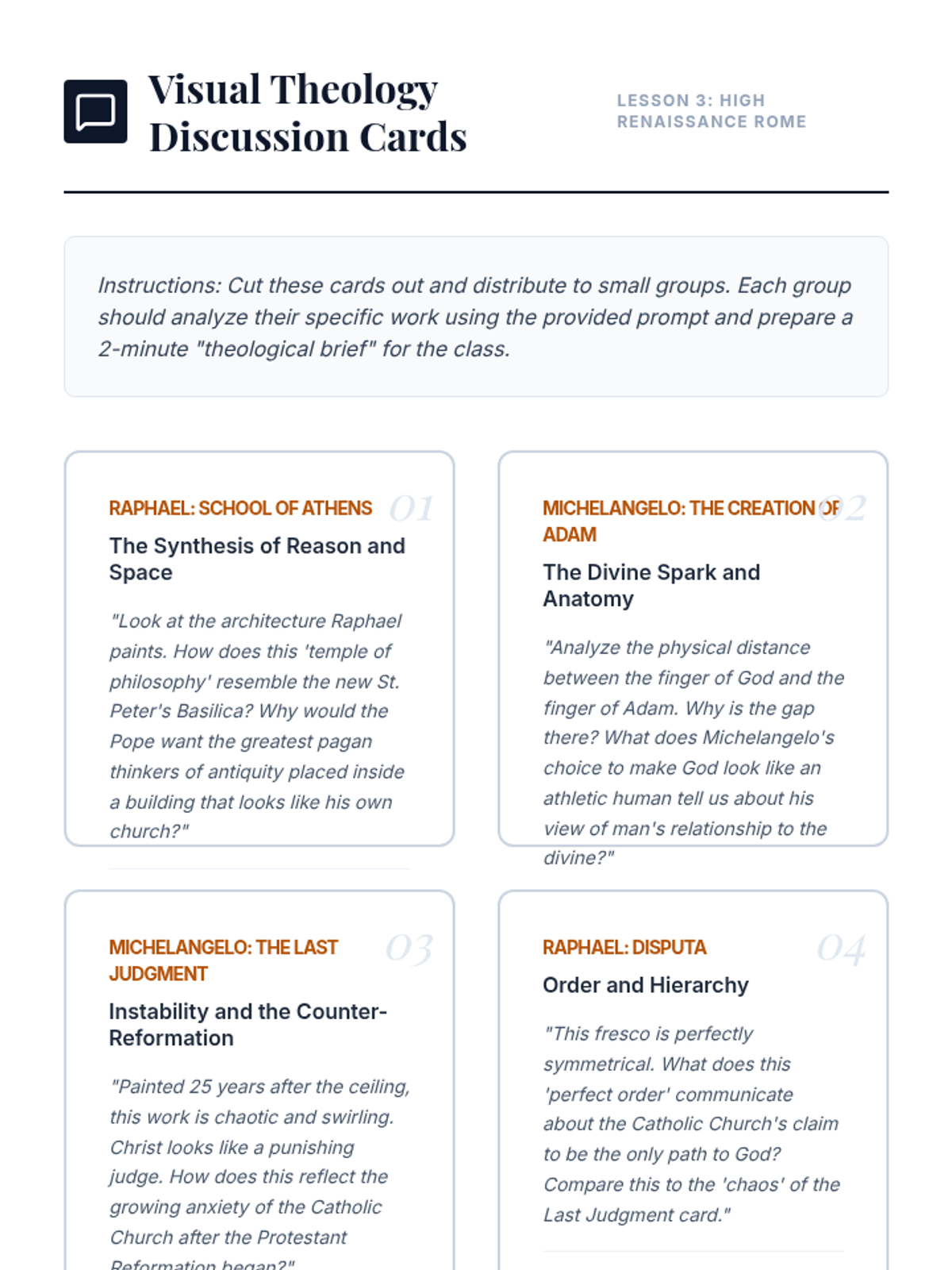
Students analyze the High Renaissance in Rome, focusing on Michelangelo and Raphael's work for the Papacy as a tool for reasserting institutional authority and visual theology.
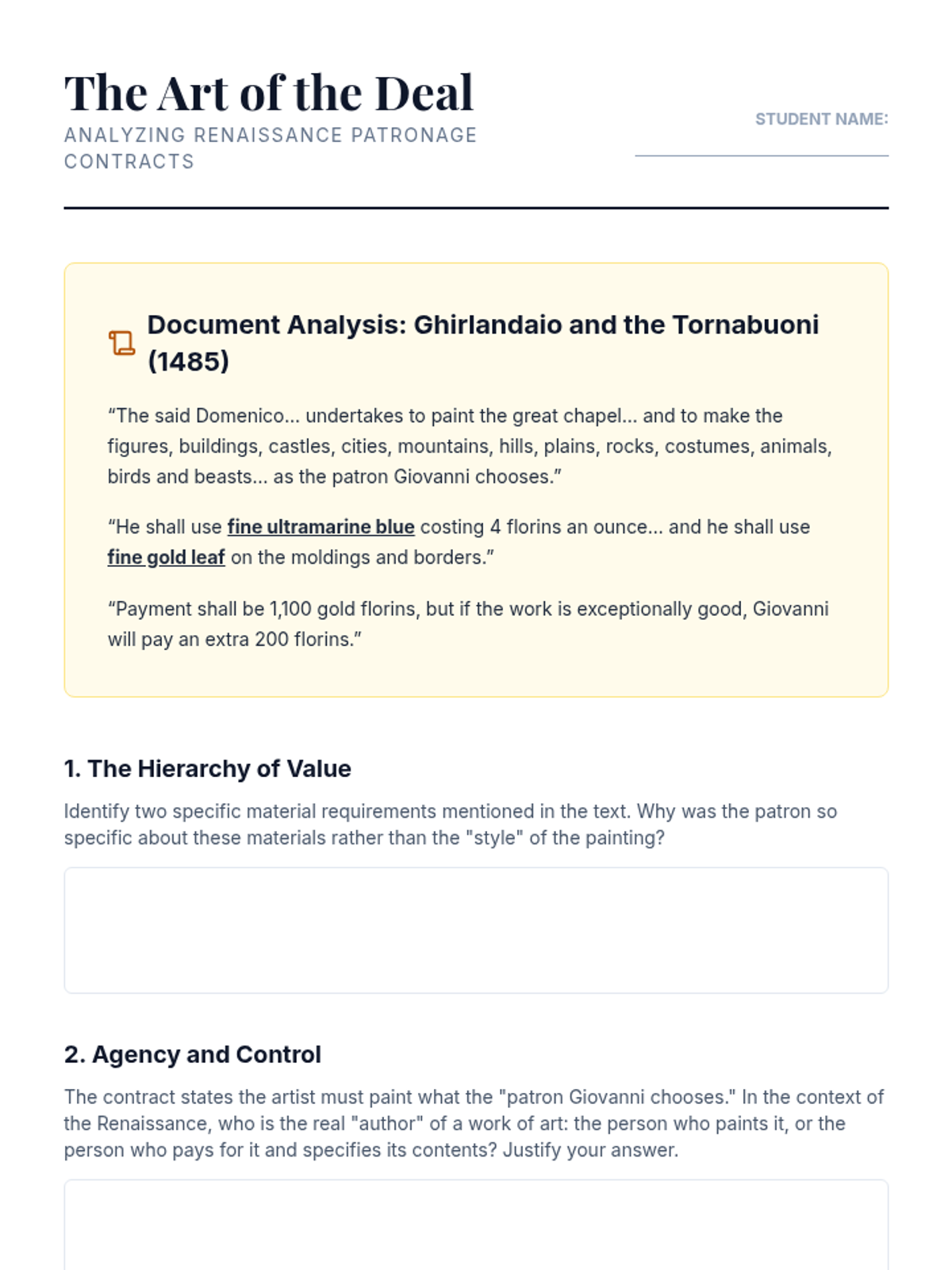
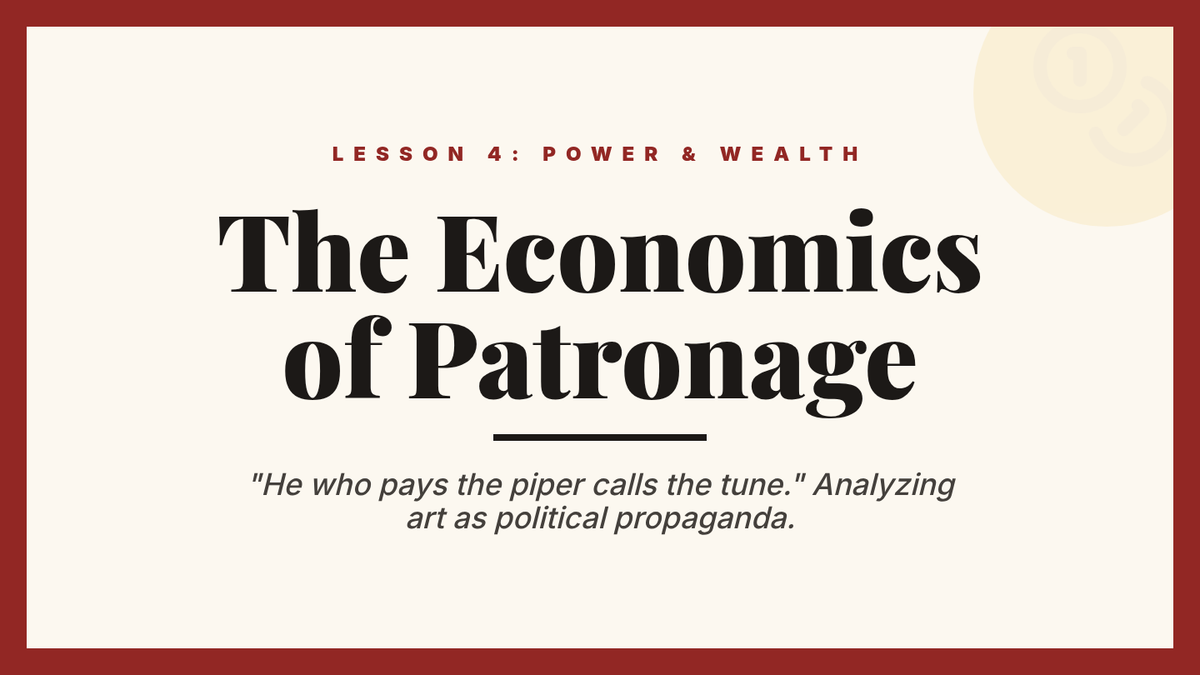
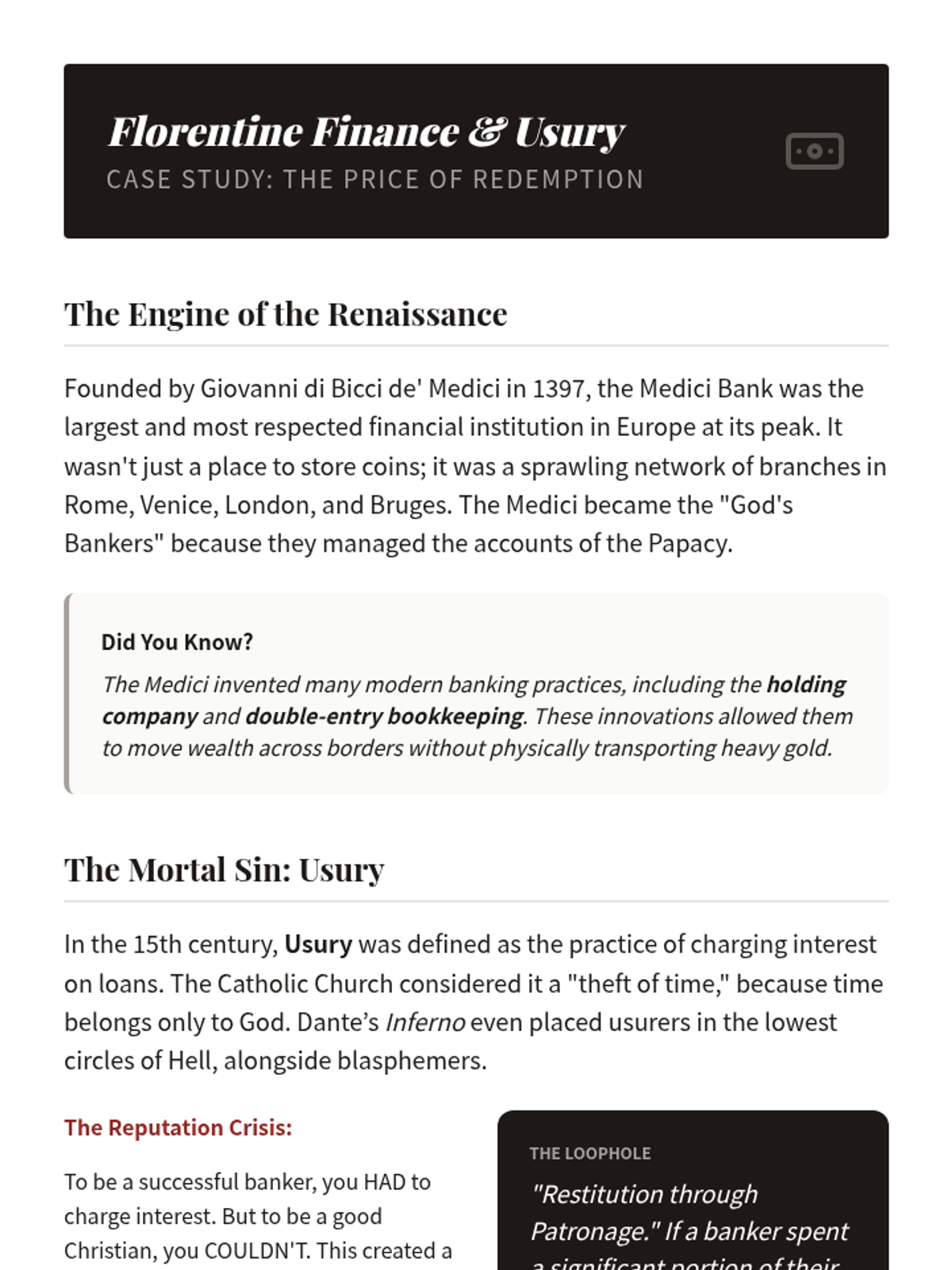
This lesson examines the economic and social foundations of Renaissance art, focusing on how the Medici family utilized artistic patronage to secure political legitimacy and social control.
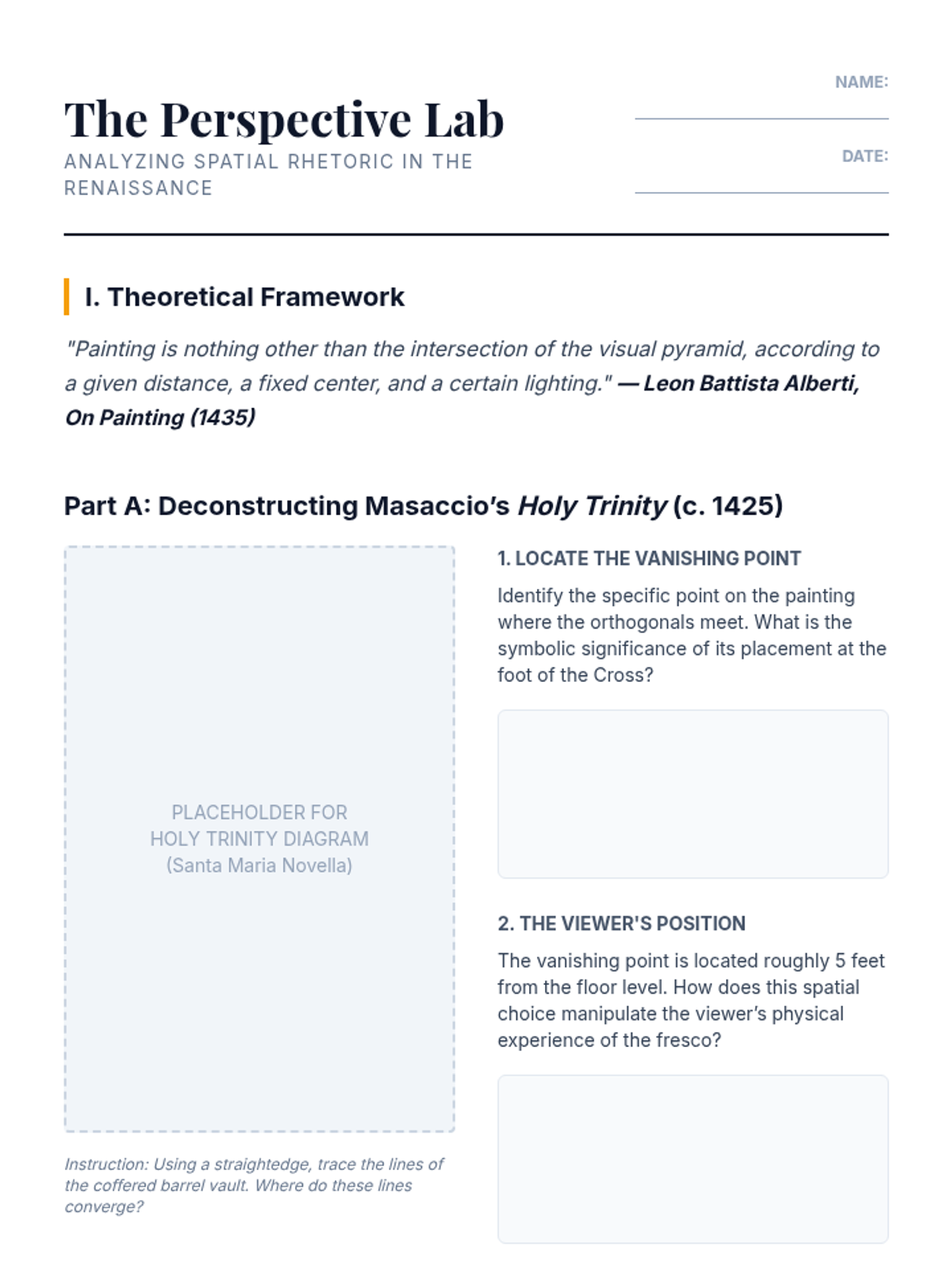
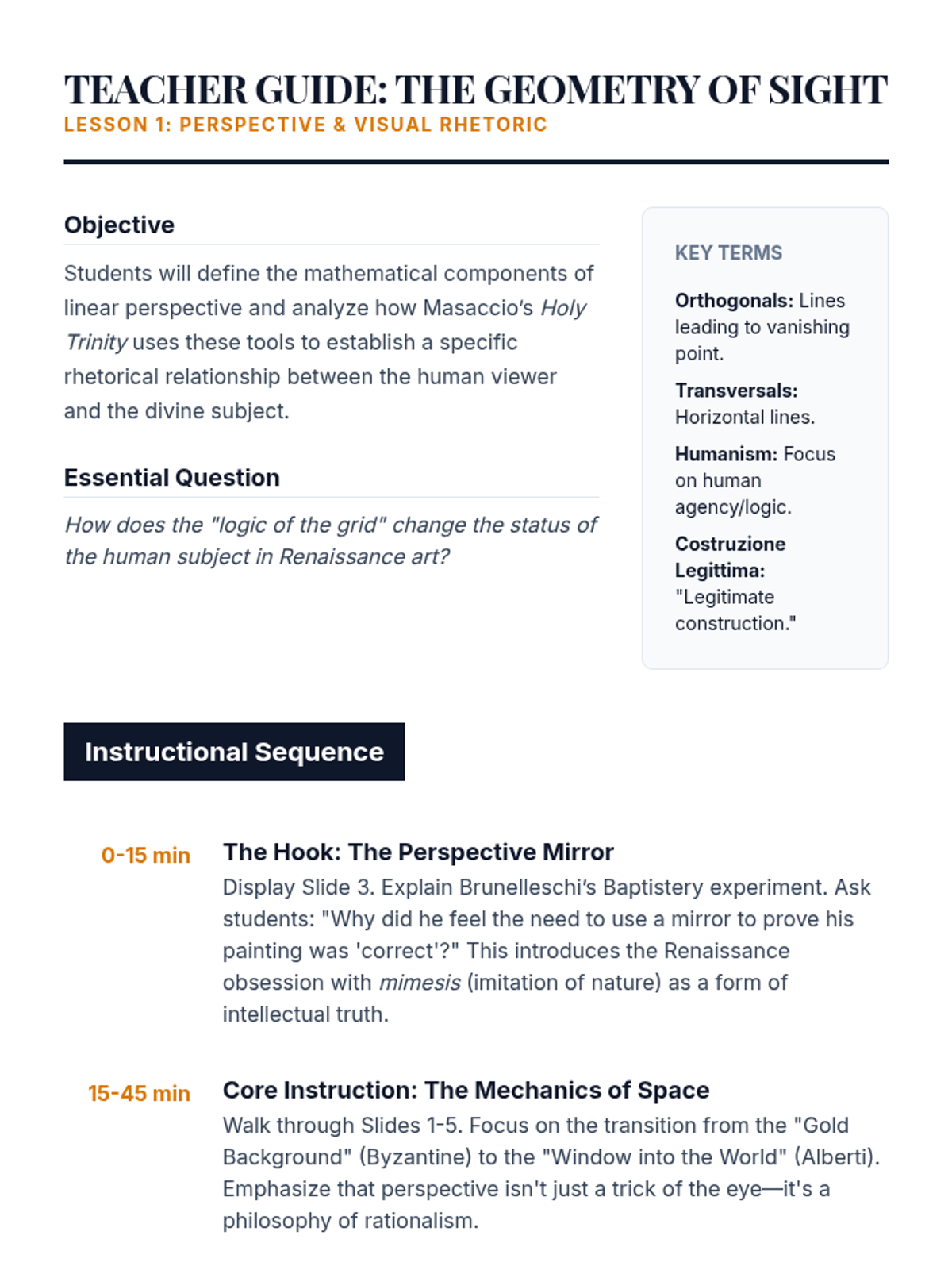
Students investigate the mathematical rediscovery of linear perspective by Brunelleschi and its first major application in Masaccio's 'Holy Trinity,' exploring the shift in spatial reality and the viewer's relationship to the divine.
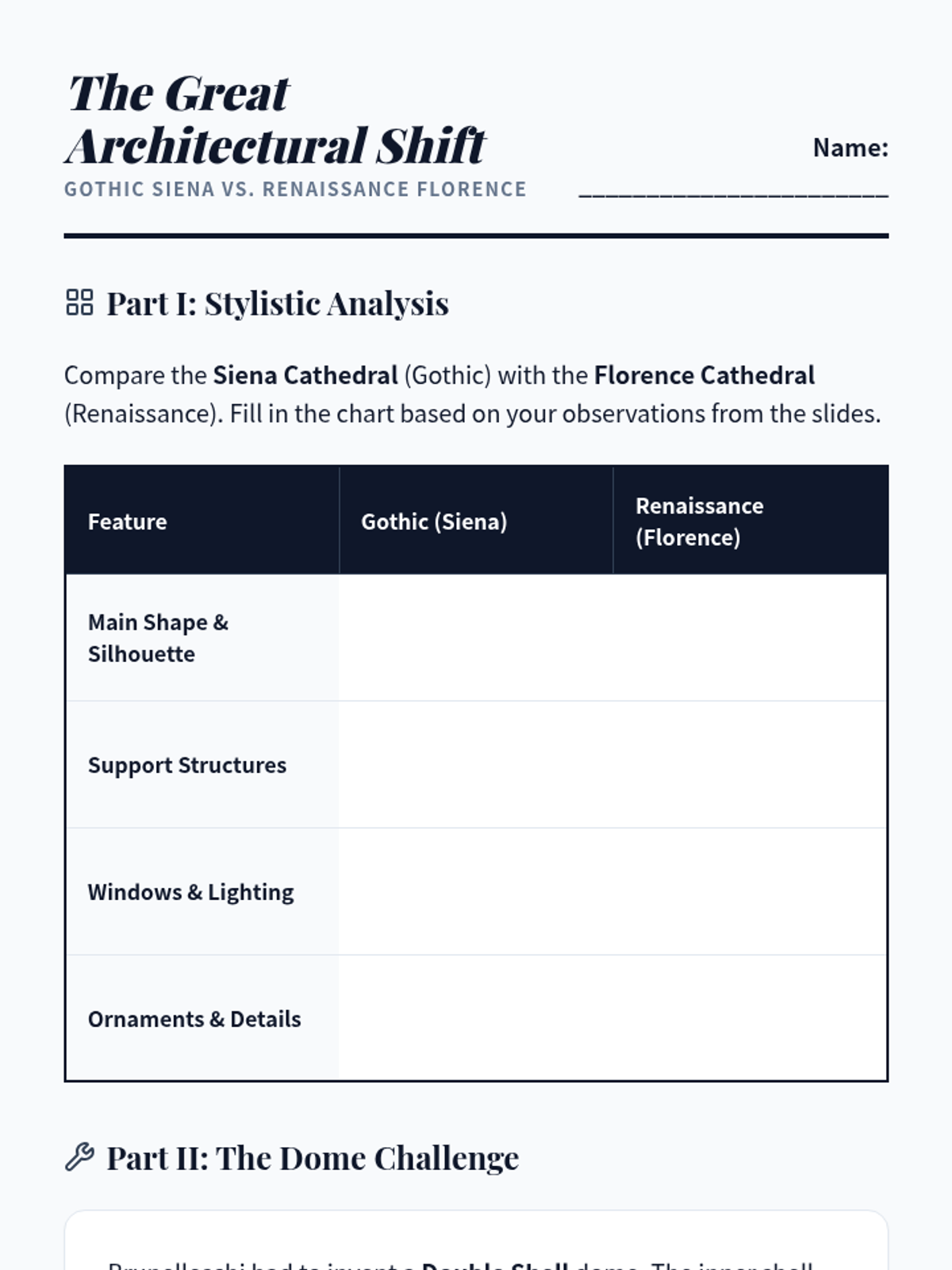
Focusing on the construction of the Florence Cathedral dome, students explore the engineering challenges and civic pride associated with Renaissance architecture. The lesson concludes with a comparative look at Gothic vs. Renaissance structures.
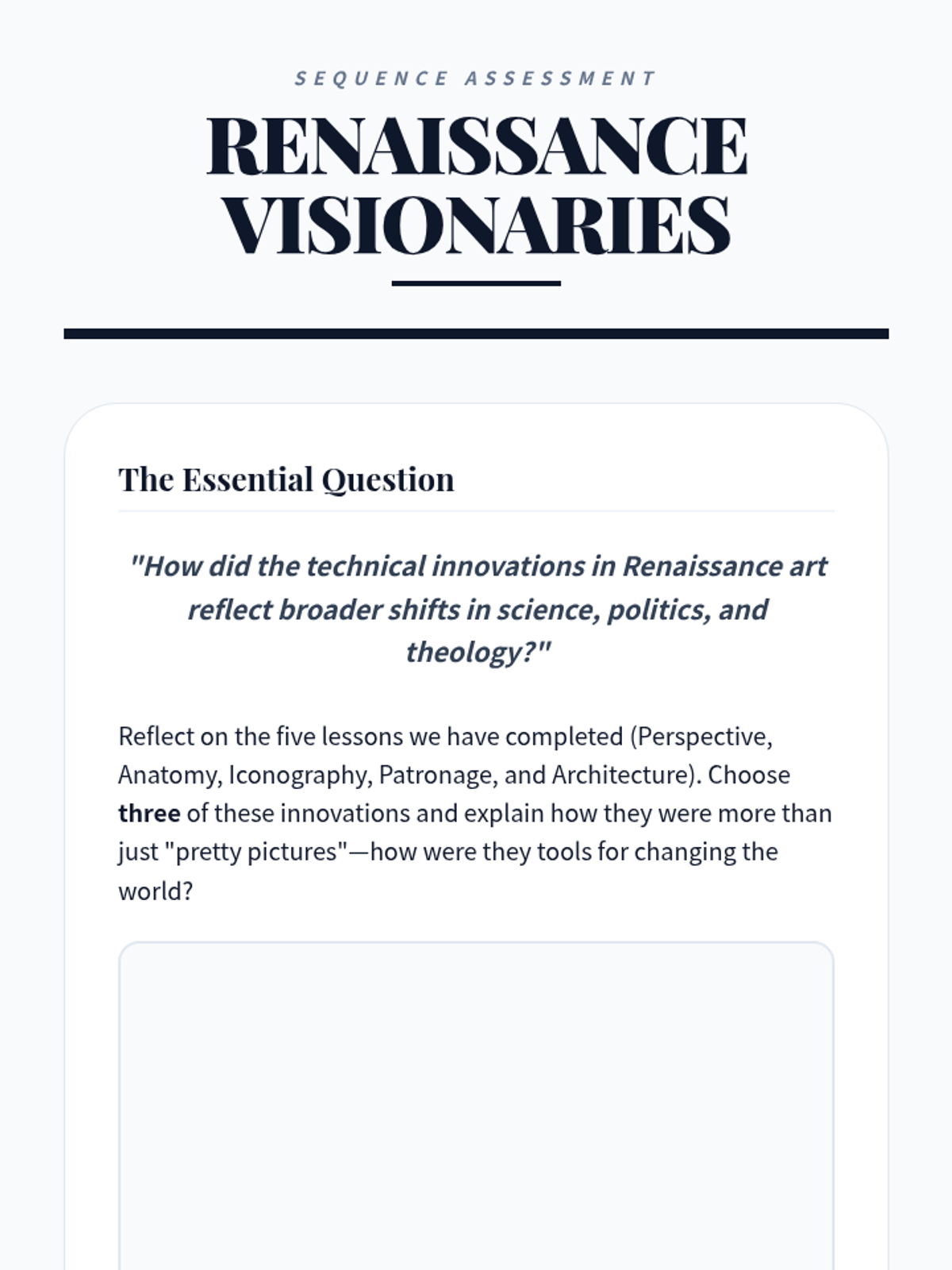
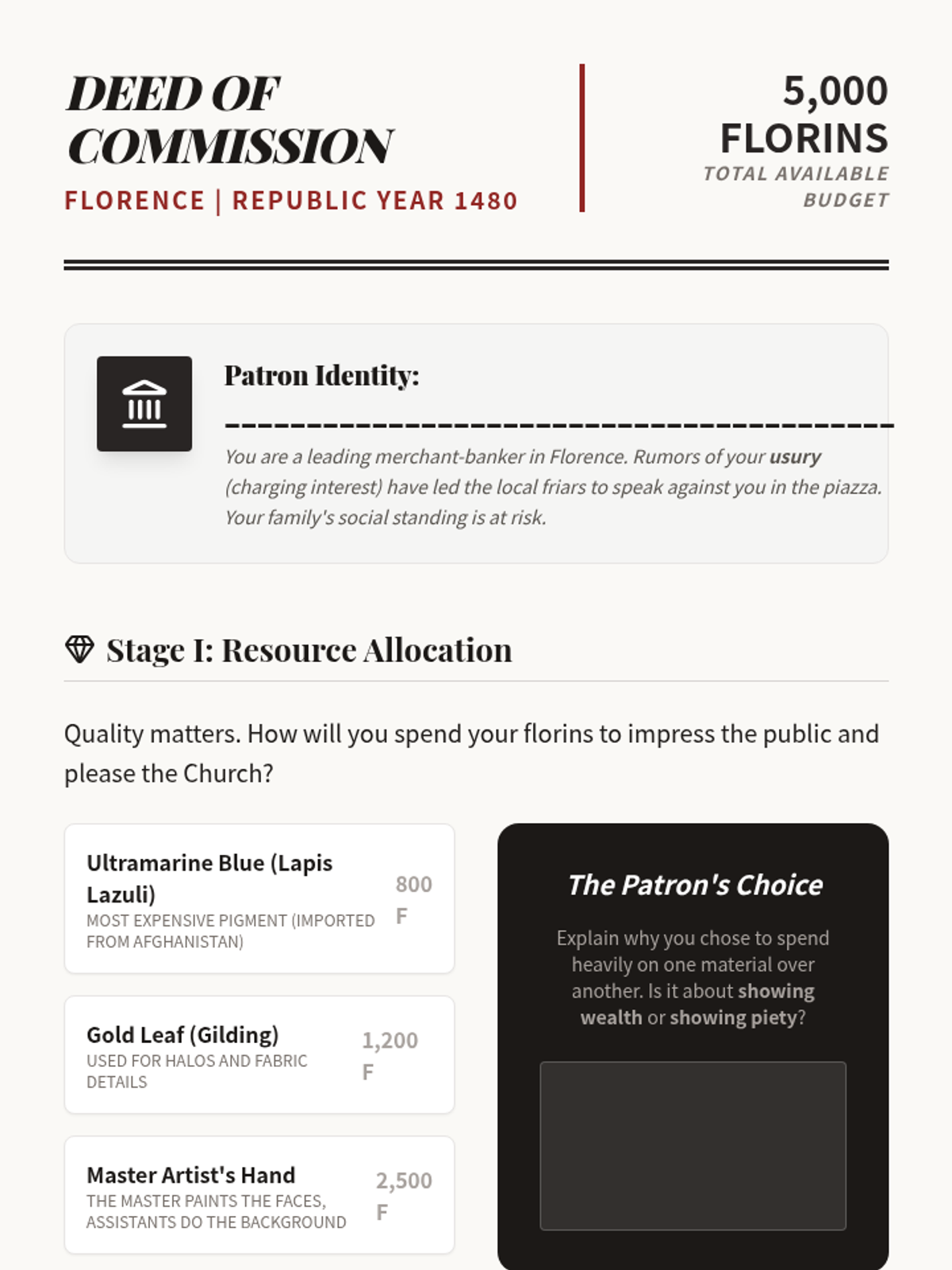
Students analyze the Medici family's financial records and commissions to understand art as political propaganda. They evaluate how patronage legitimized wealth and power in Republican Florence.
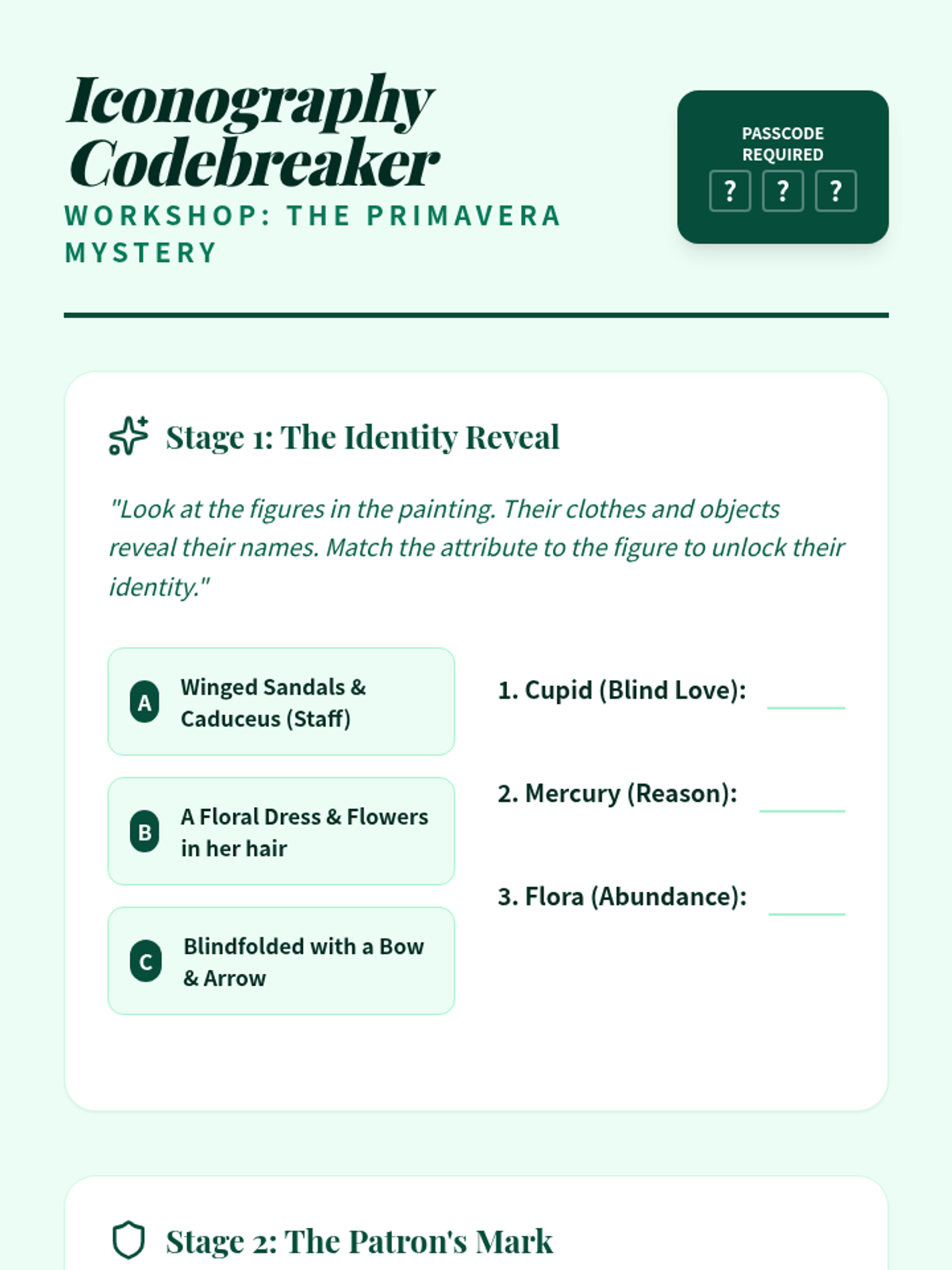
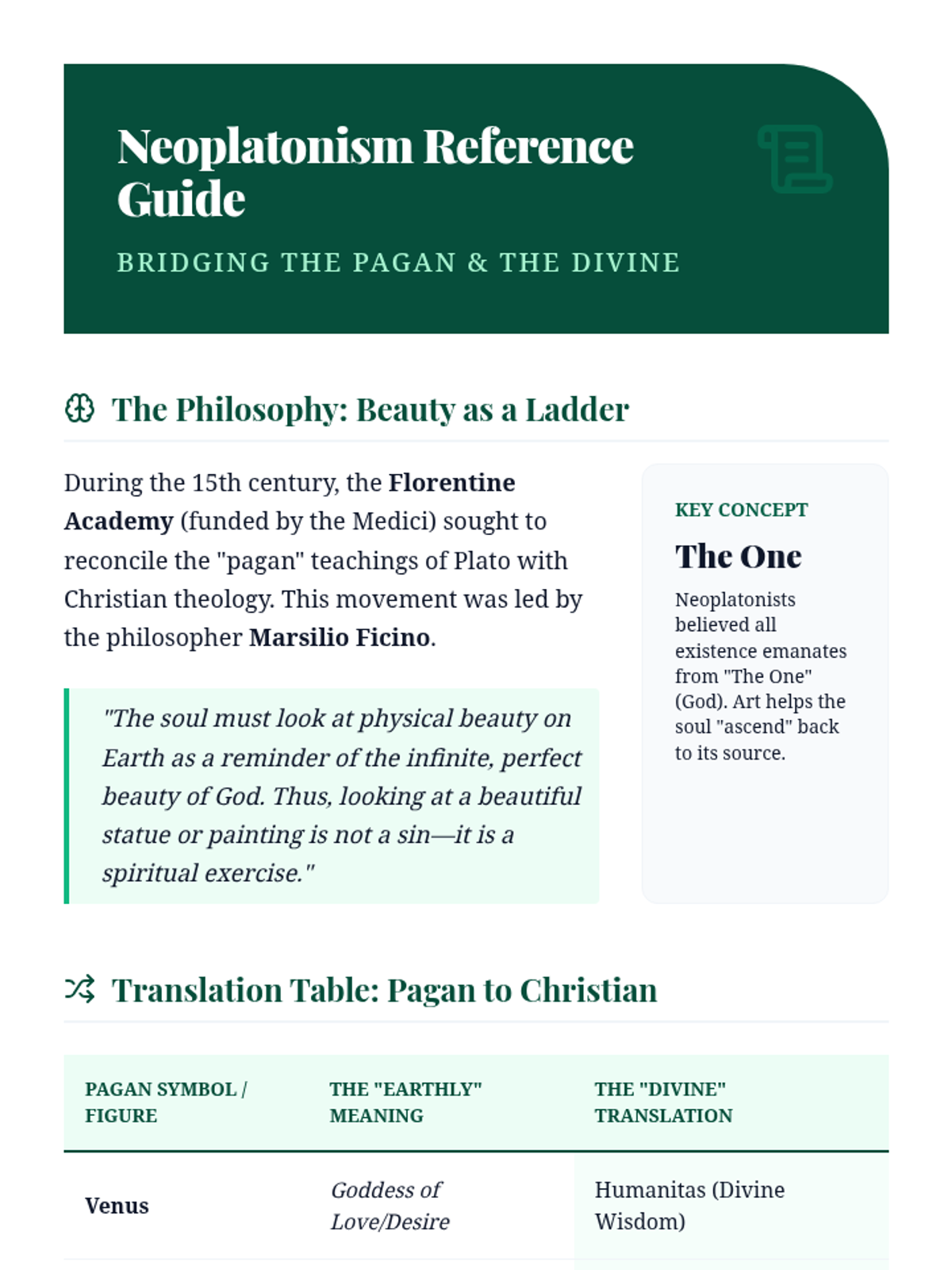
Students engage in an iconography workshop, decoding the pagan symbols in Botticelli’s 'Primavera' and 'Birth of Venus'. They interpret how Neoplatonism allowed Christian patrons to embrace pagan mythology without heresy.
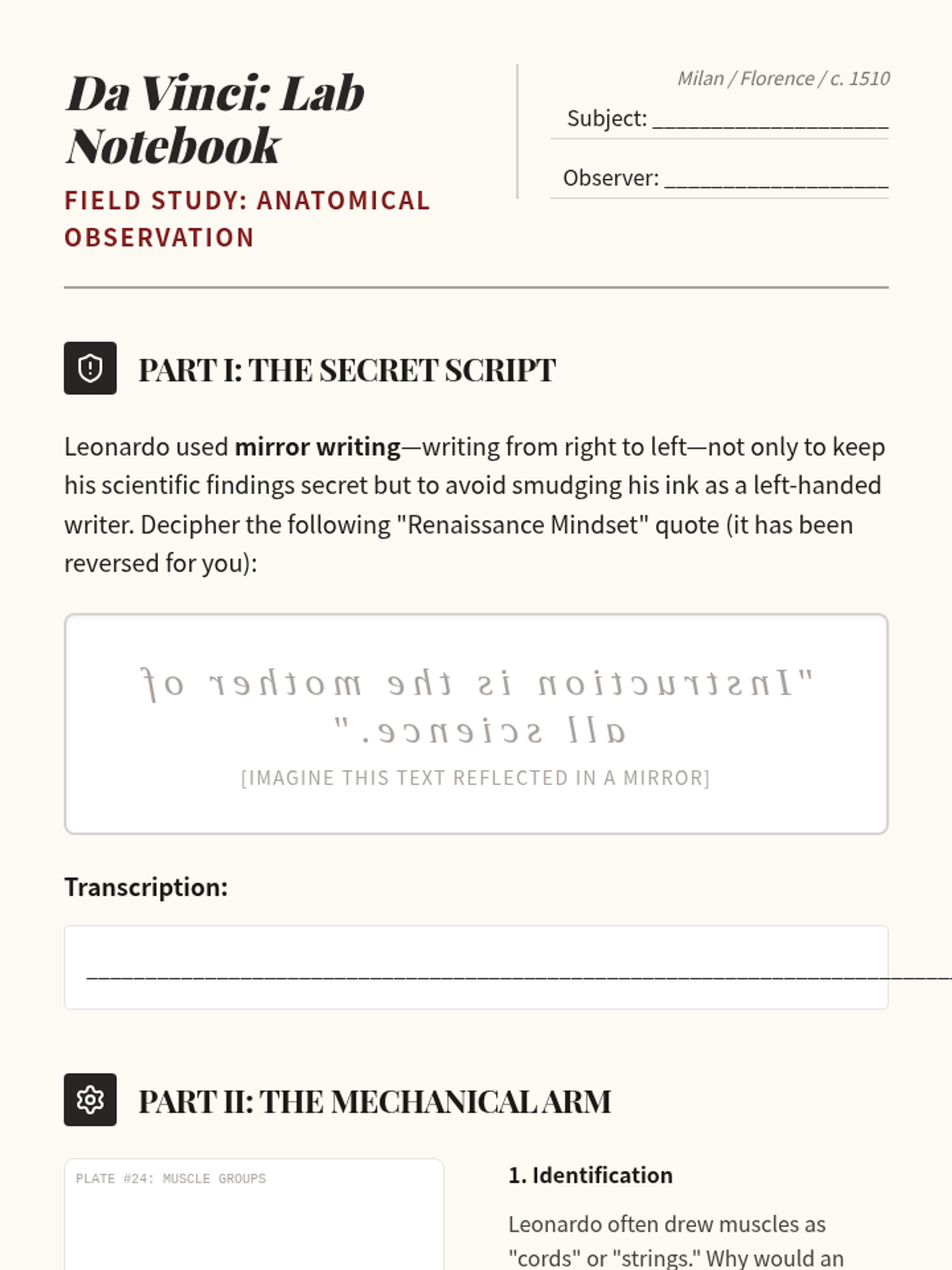
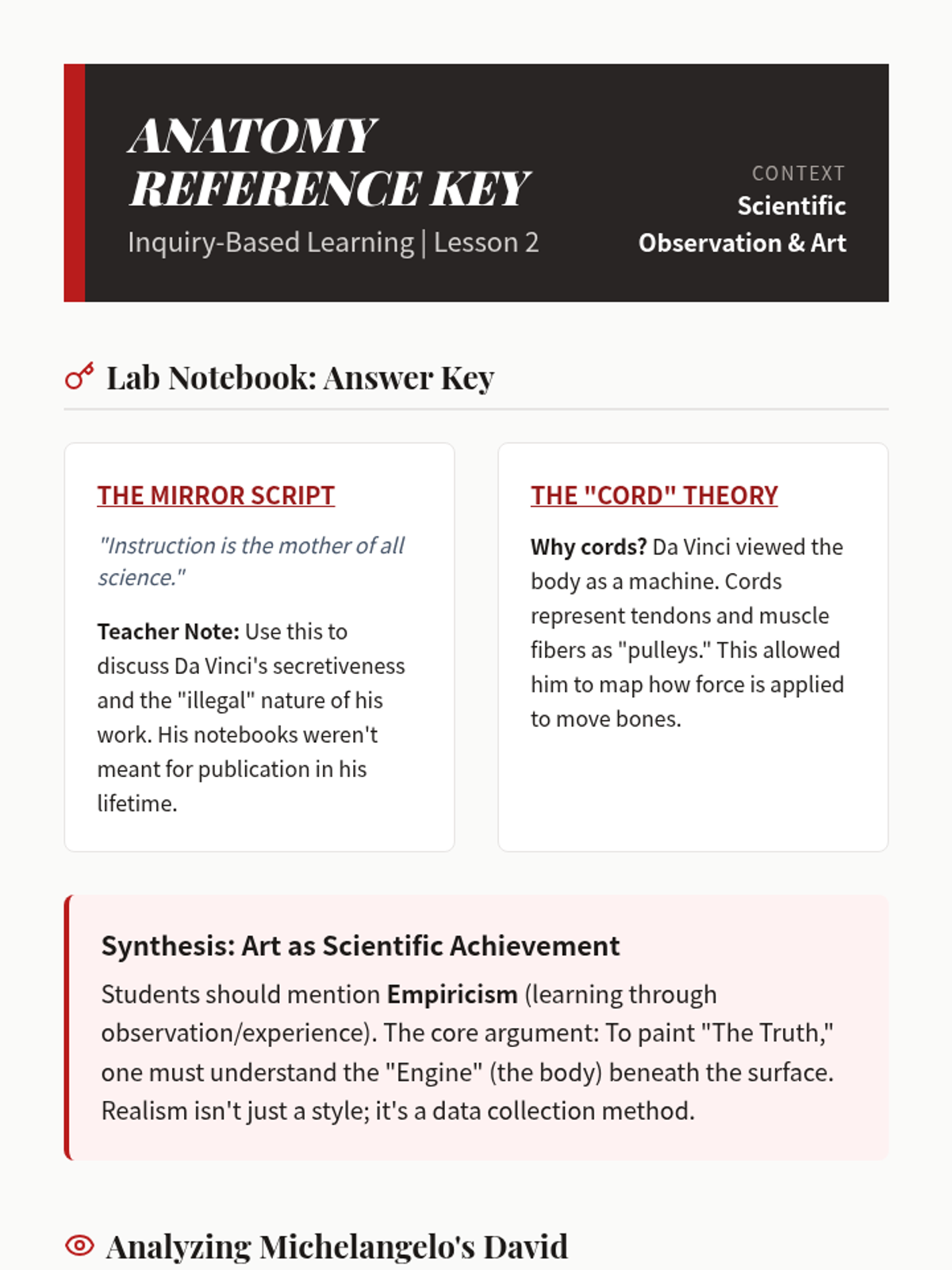
Examining the notebooks of Da Vinci and the sculptures of Michelangelo, students explore the intersection of dissection, observation, and art. They analyze how the accurate depiction of the human body celebrated the physical world.
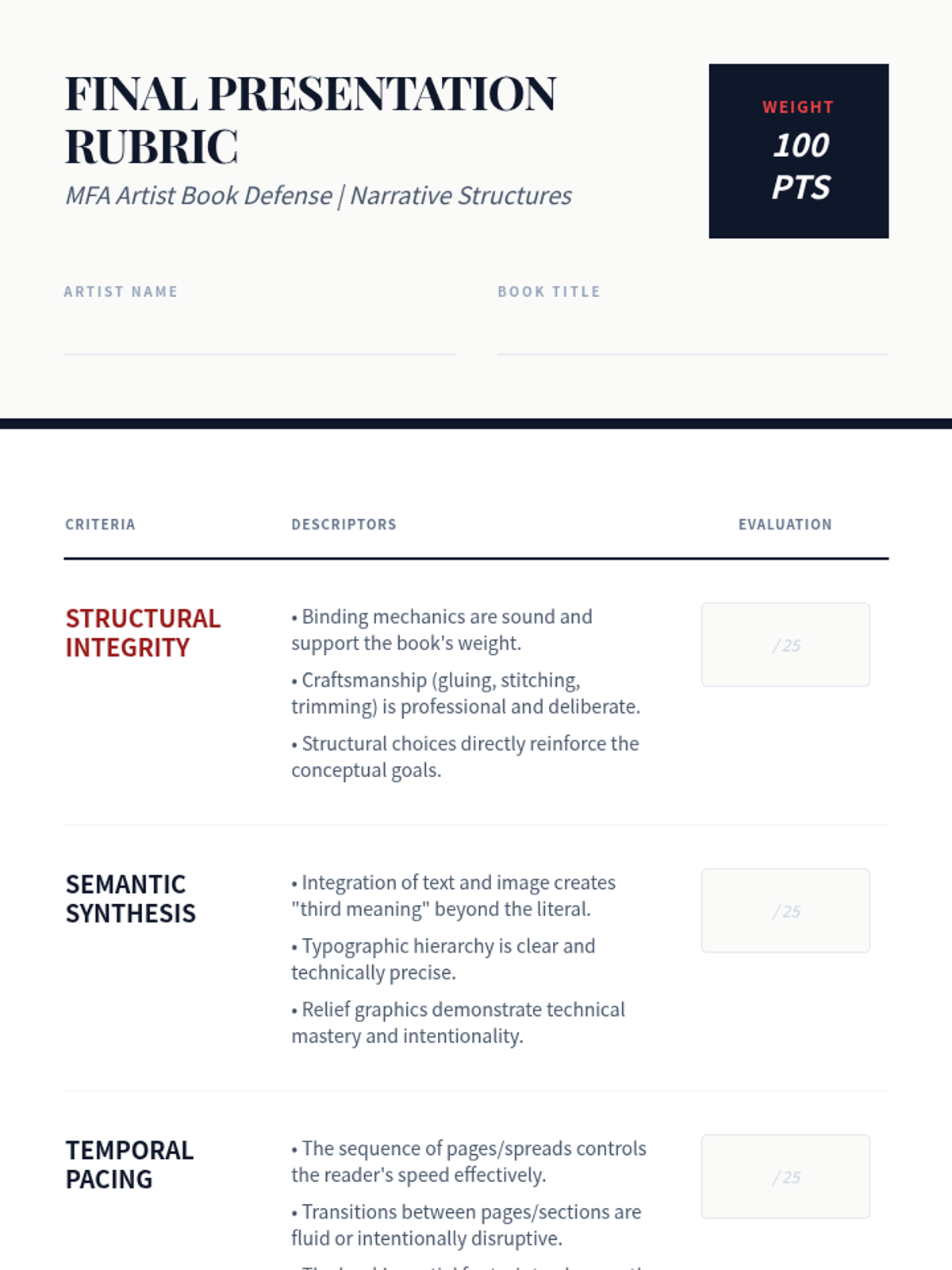
The final assembly and refinement of the artist book, concluding with a formal presentation and critique of the haptic and intellectual experience.
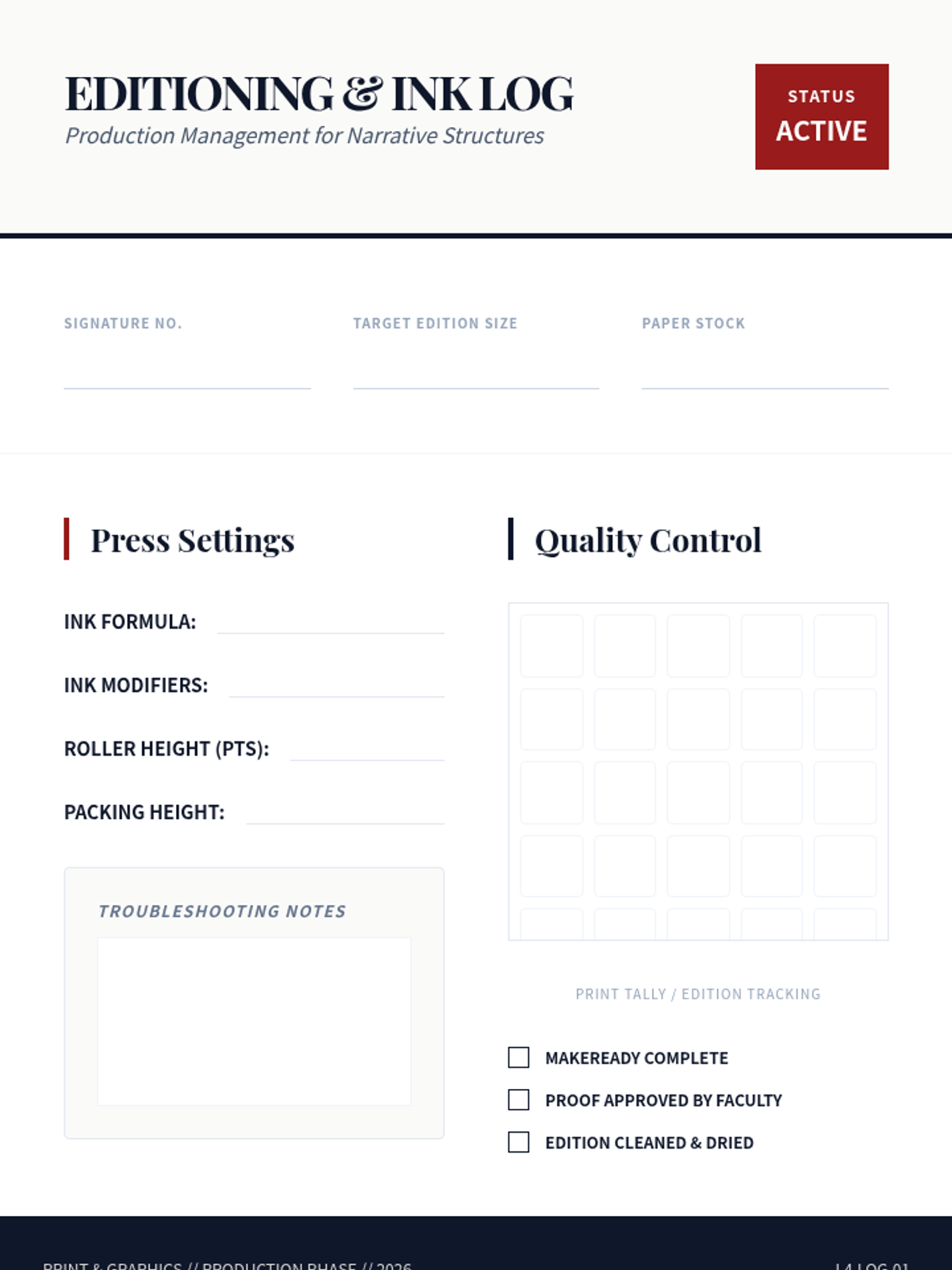
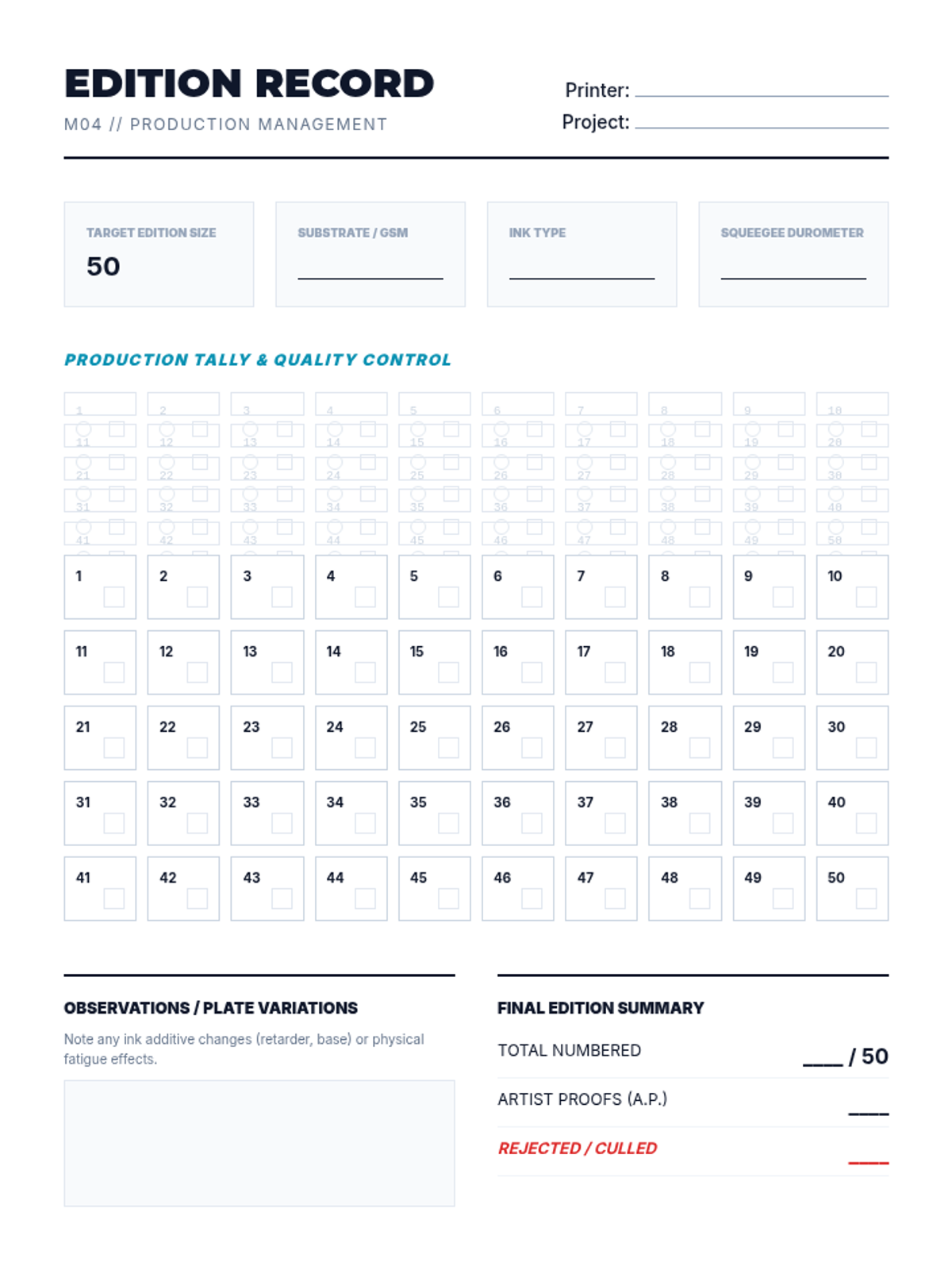
A production-focused session where students manage the logistics of printing a full edition, including imposition, paper handling, and quality control.
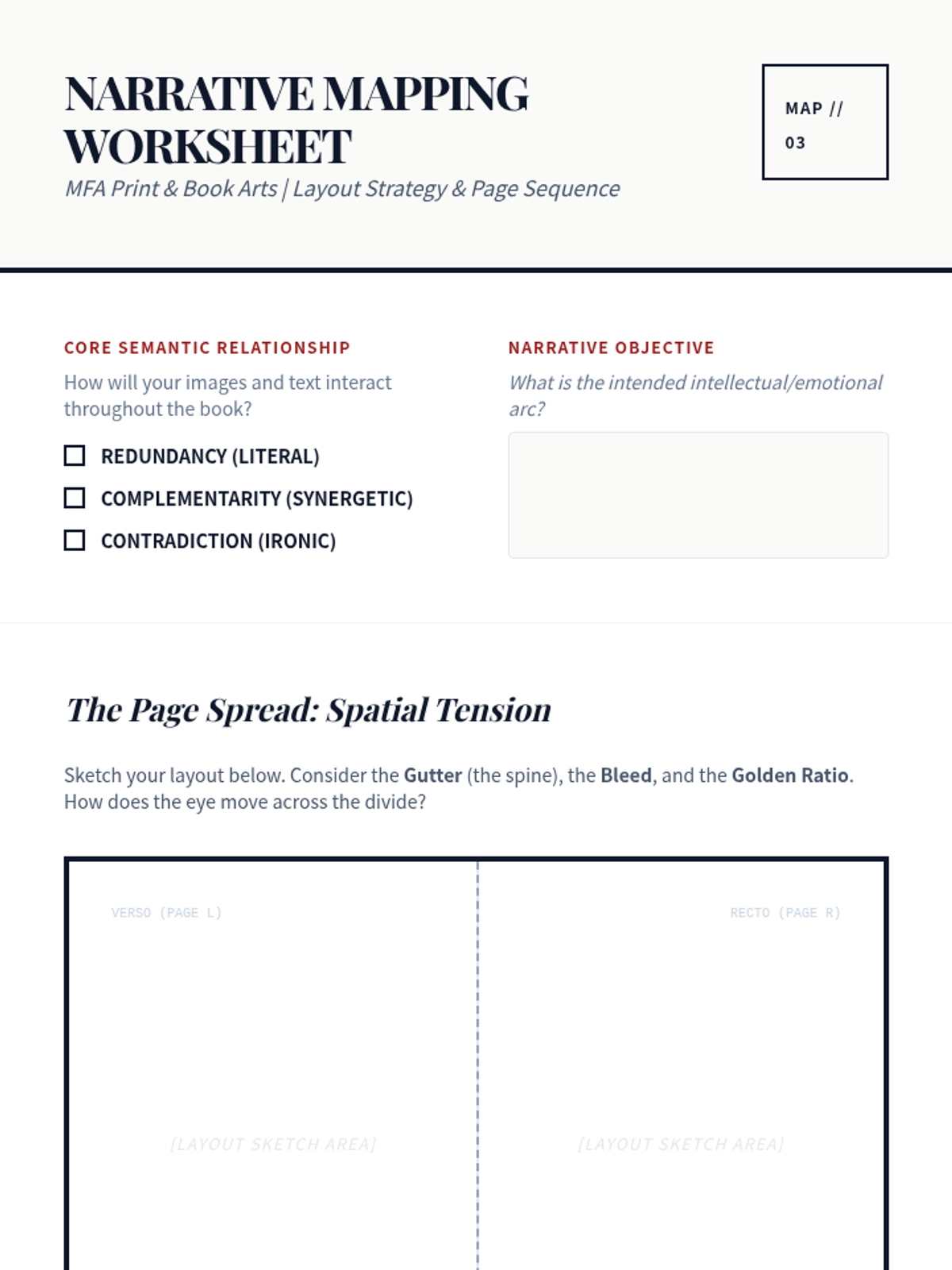
Explores the conceptual and visual integration of images (linocut/polymer) with text, focusing on composition, visual weight, and semantic tension.
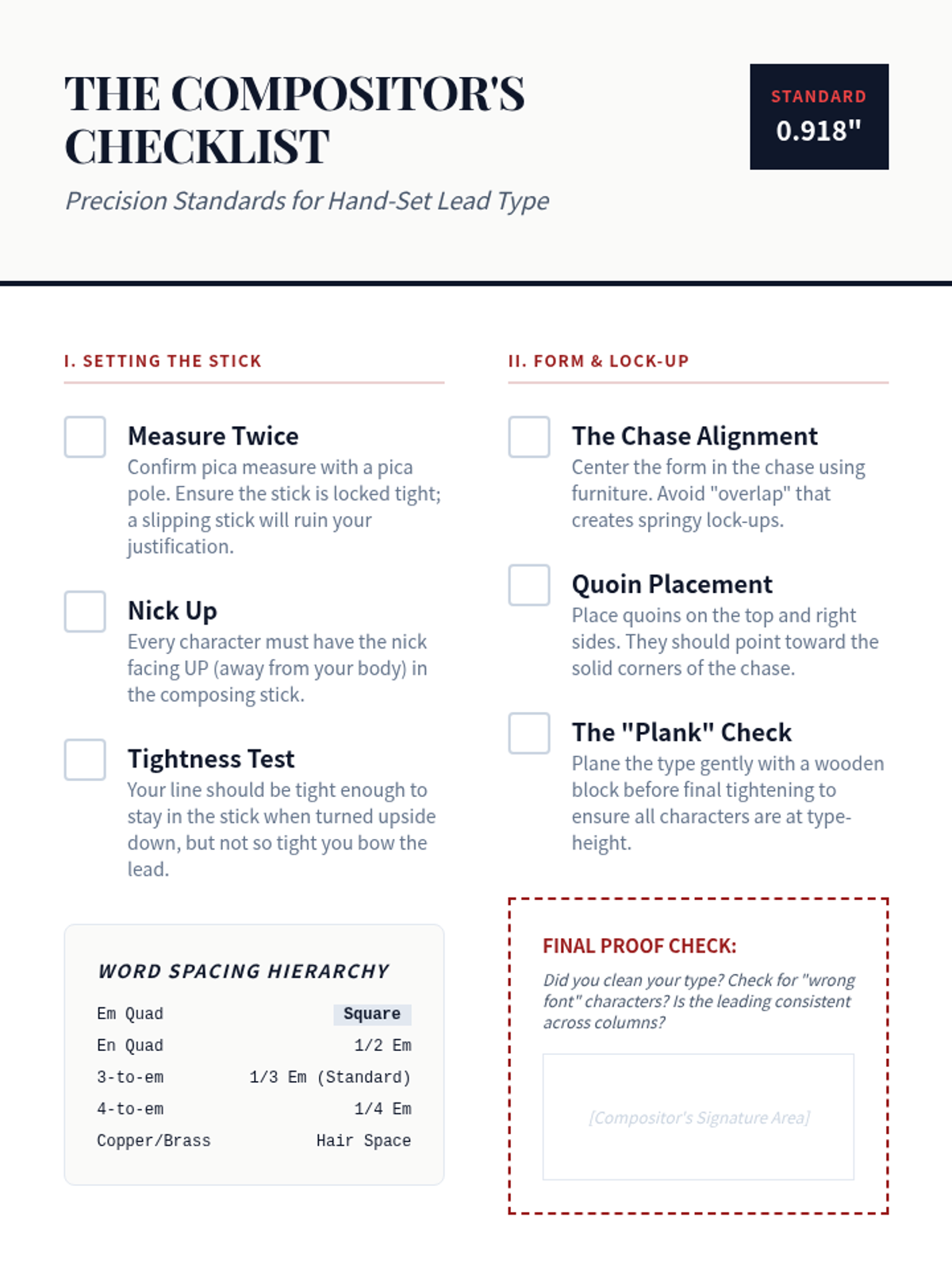
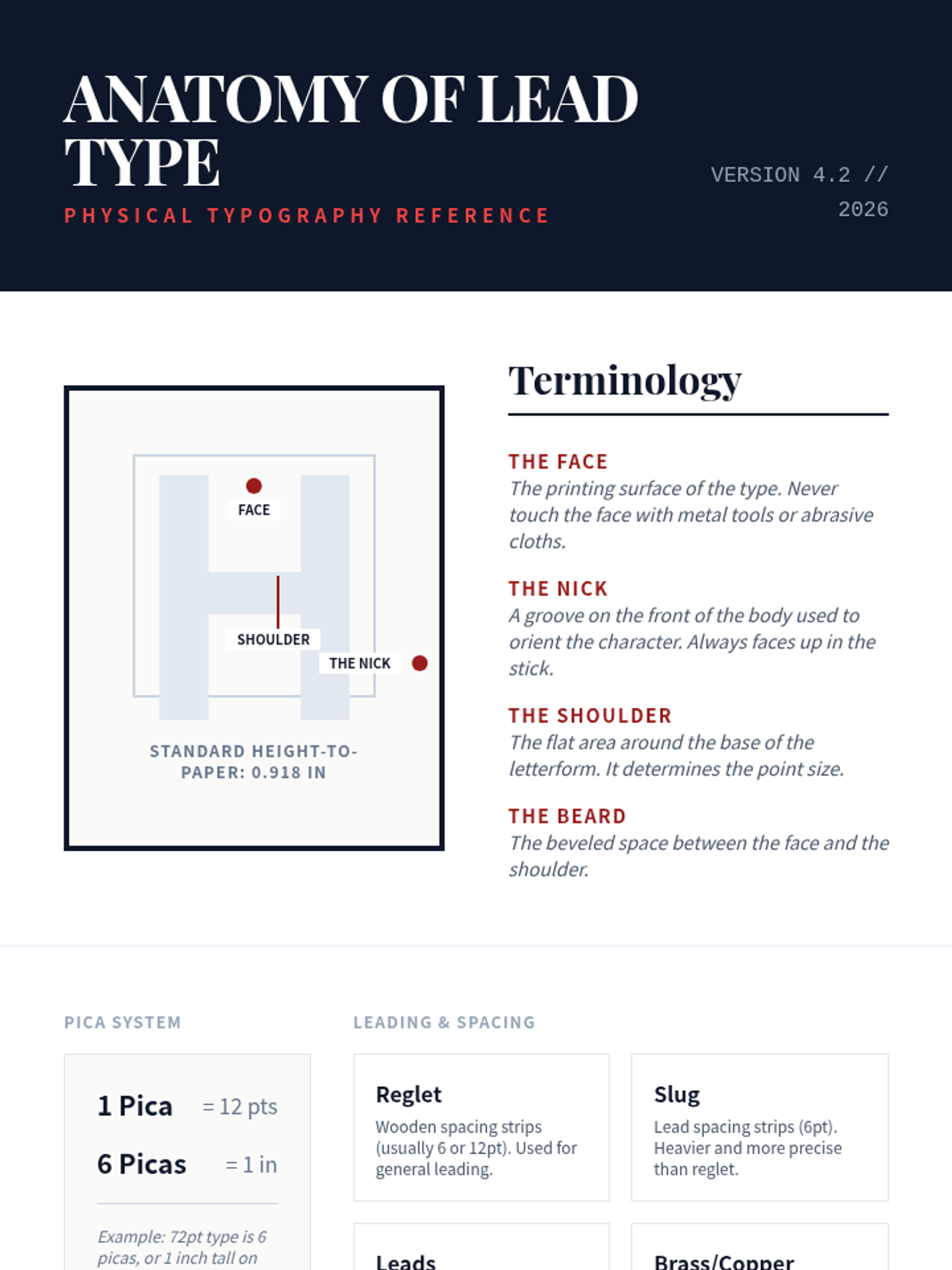
An introduction to the tactile world of movable type, focusing on the precision of hand-setting lead type and the technical operation of a letterpress.
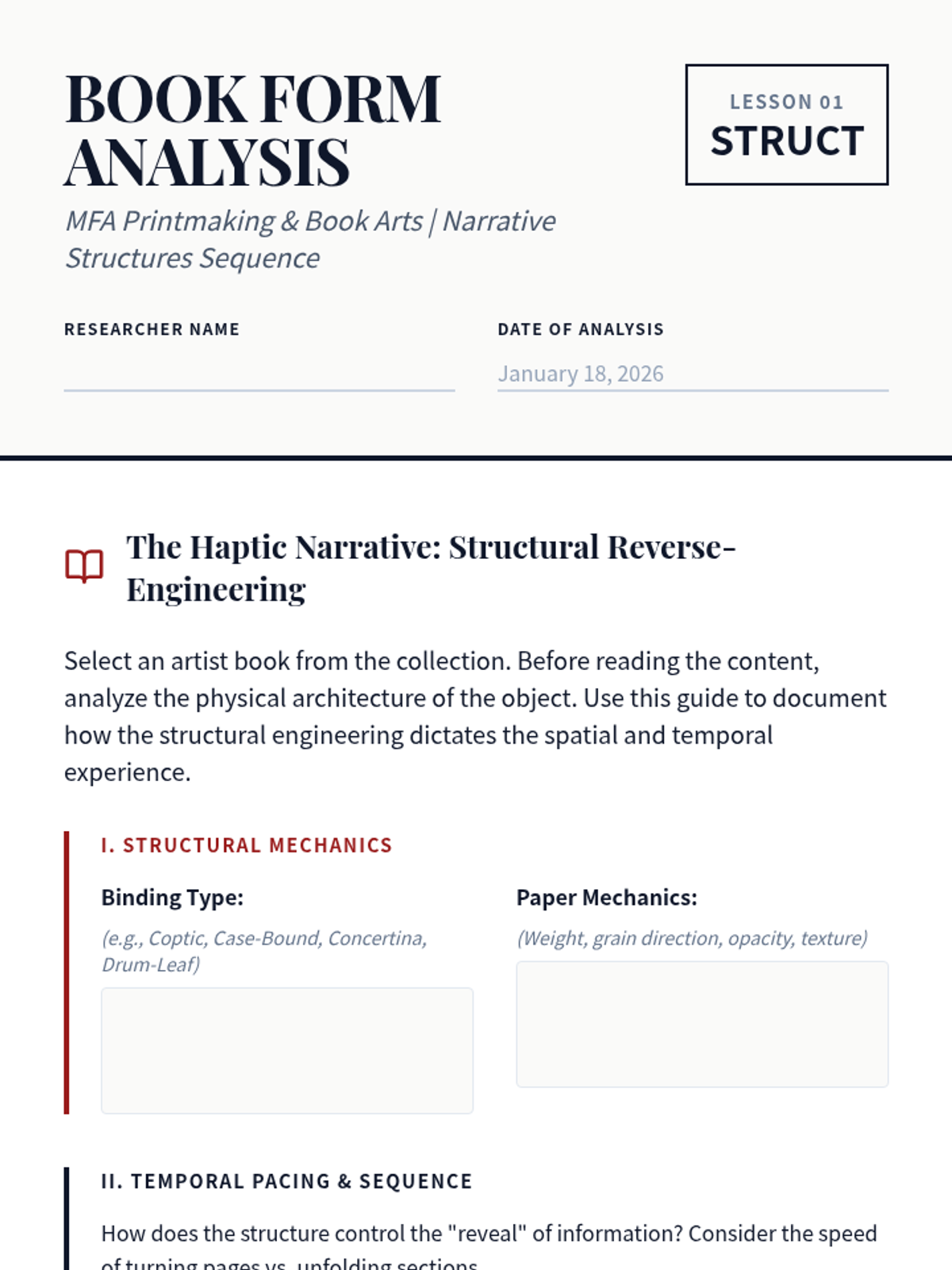
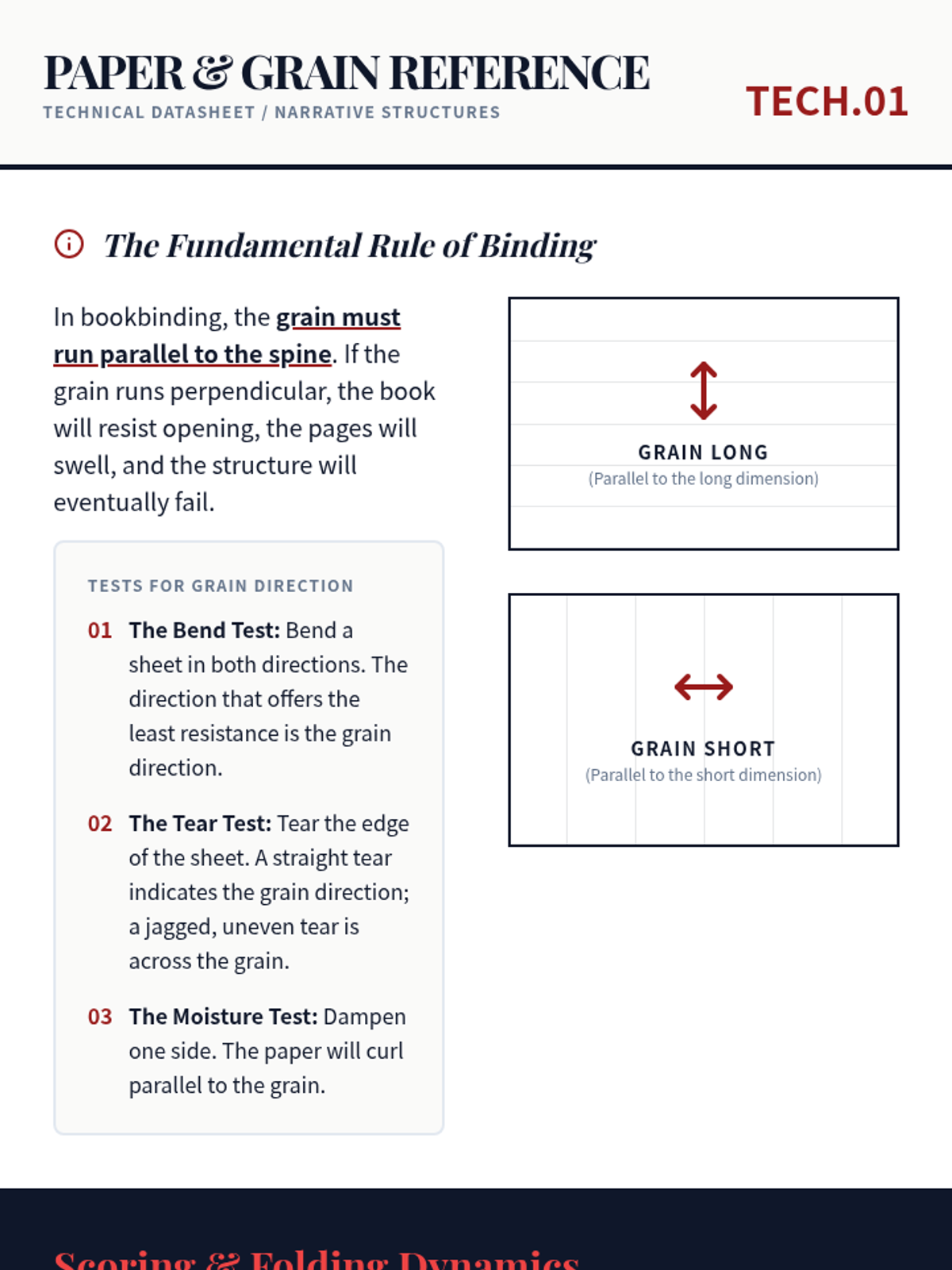
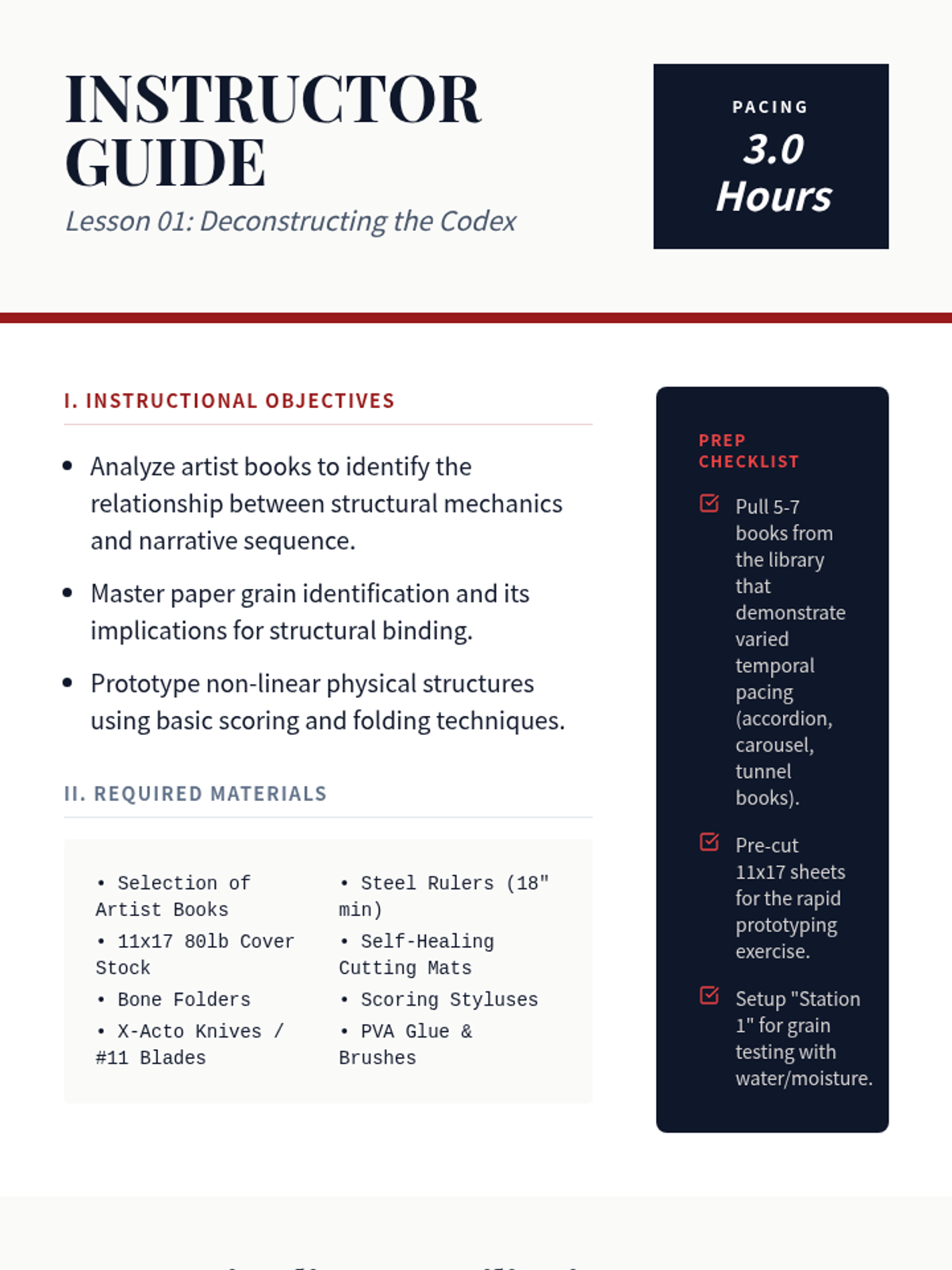
Students analyze and prototype various book structures, exploring how the physical mechanics of paper and binding influence the temporal pacing of a narrative.
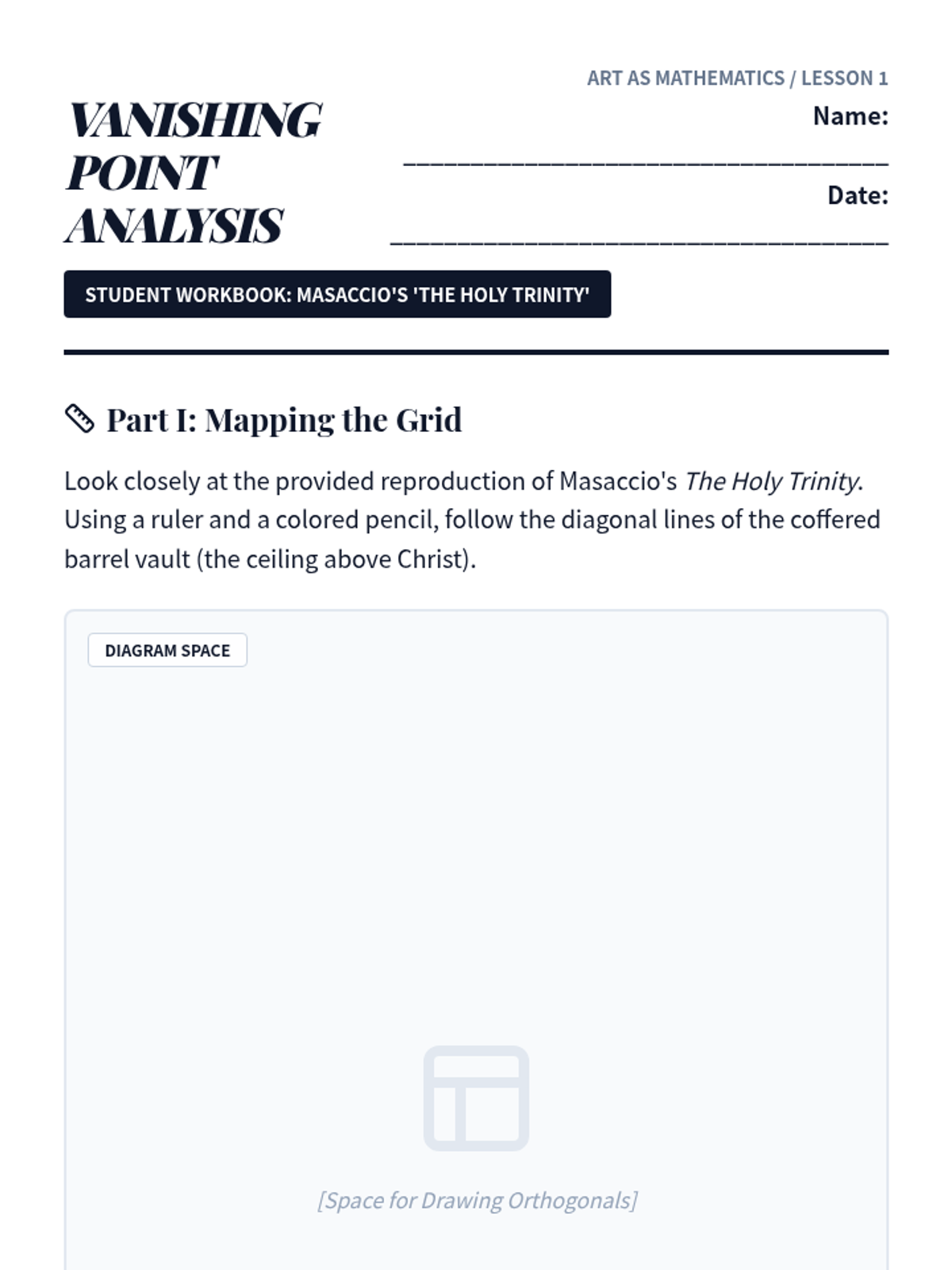
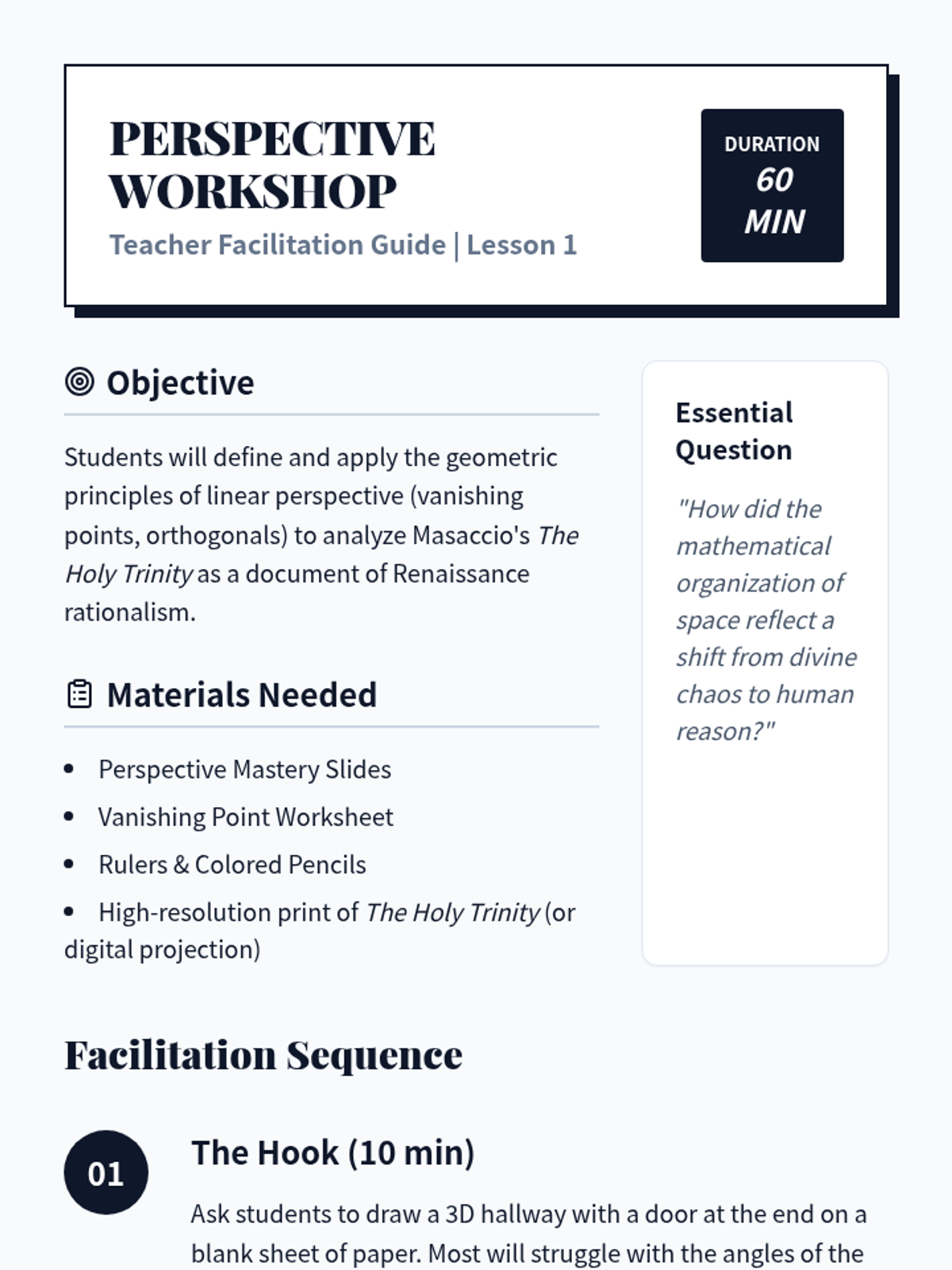
Students learn the geometric principles of linear perspective rediscovered by Brunelleschi and codified by Alberti. They apply these concepts by deconstructing the vanishing points in Masaccio’s 'The Holy Trinity' to understand how art rationalized space.
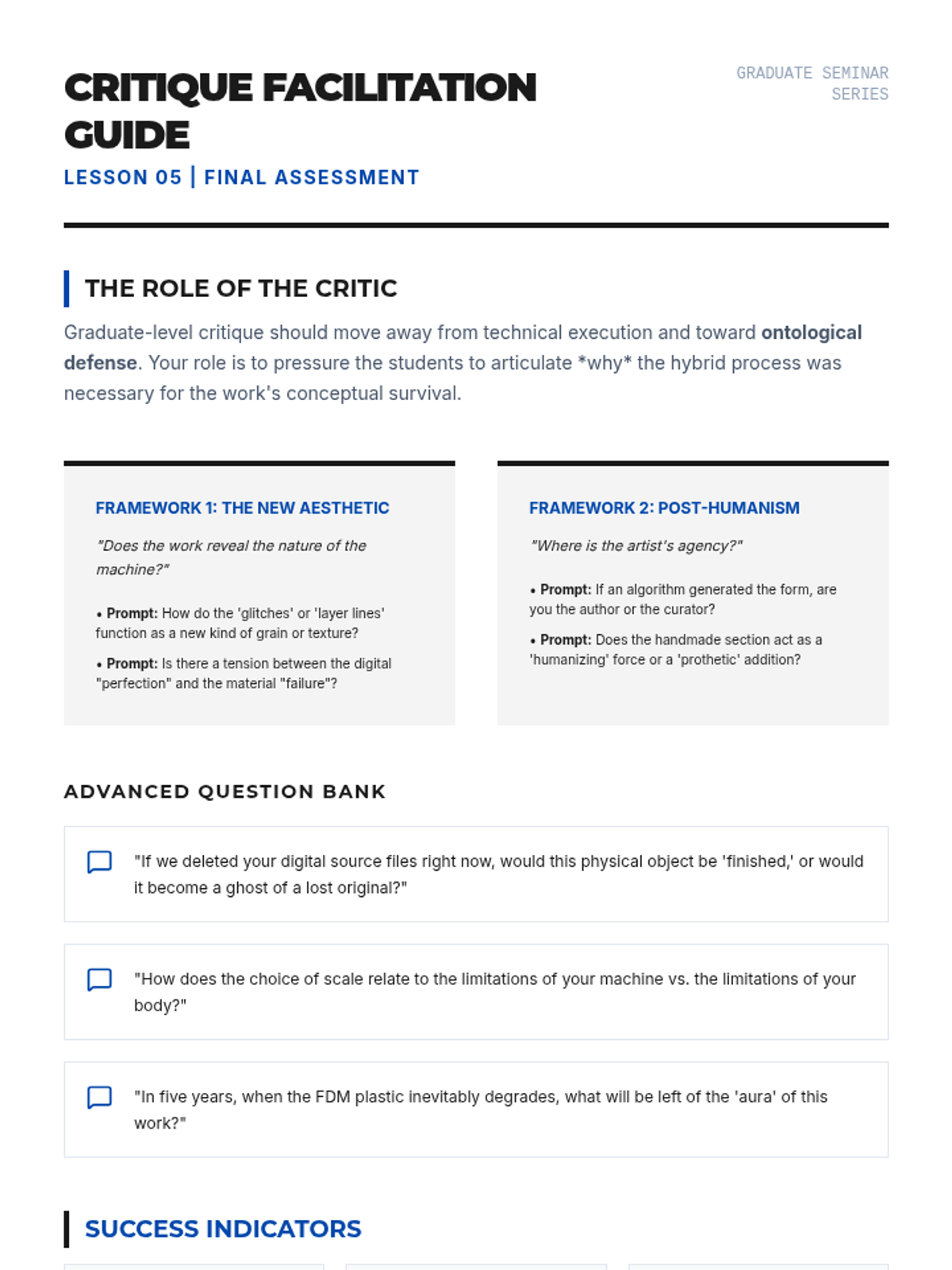
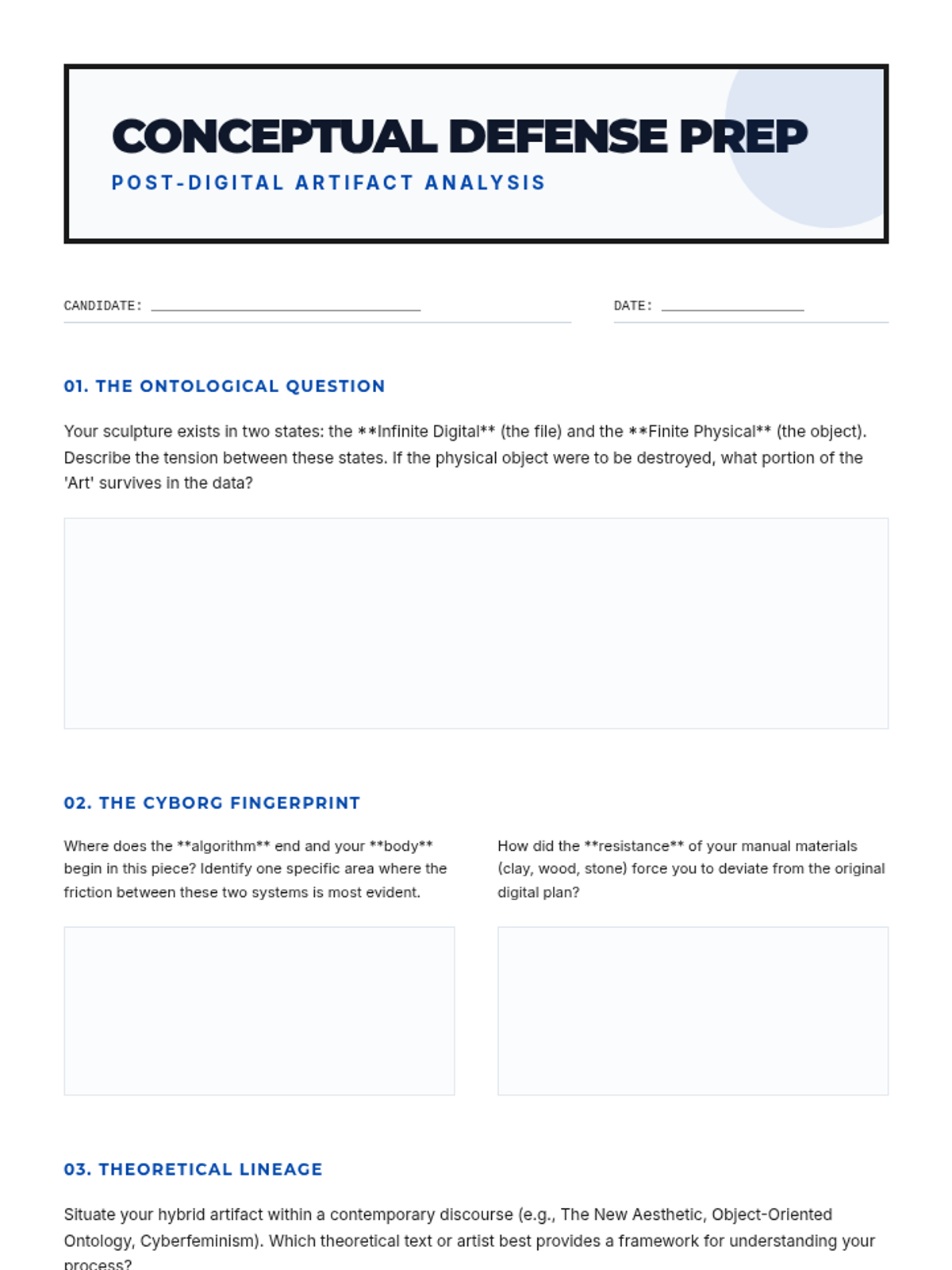
A concluding seminar and critique where students situate their hybrid works within the 'New Aesthetic' and post-digital theory. Debating the Ship of Theseus paradox and the future of authorship in the age of algorithmic reproduction.
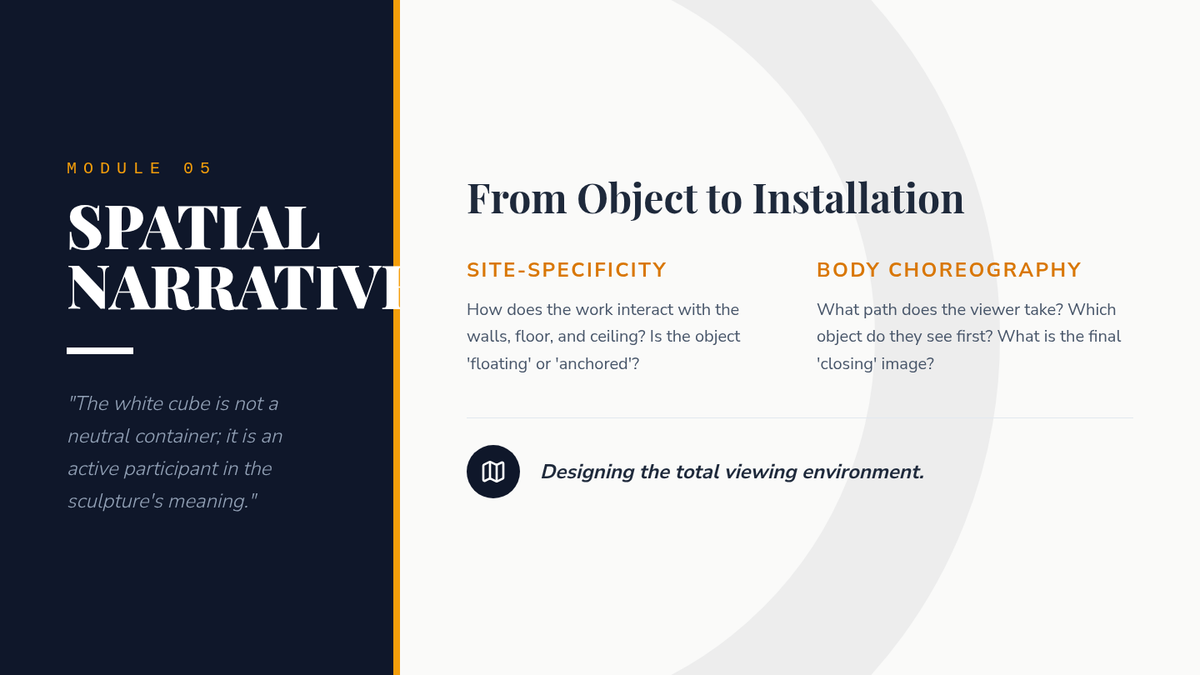
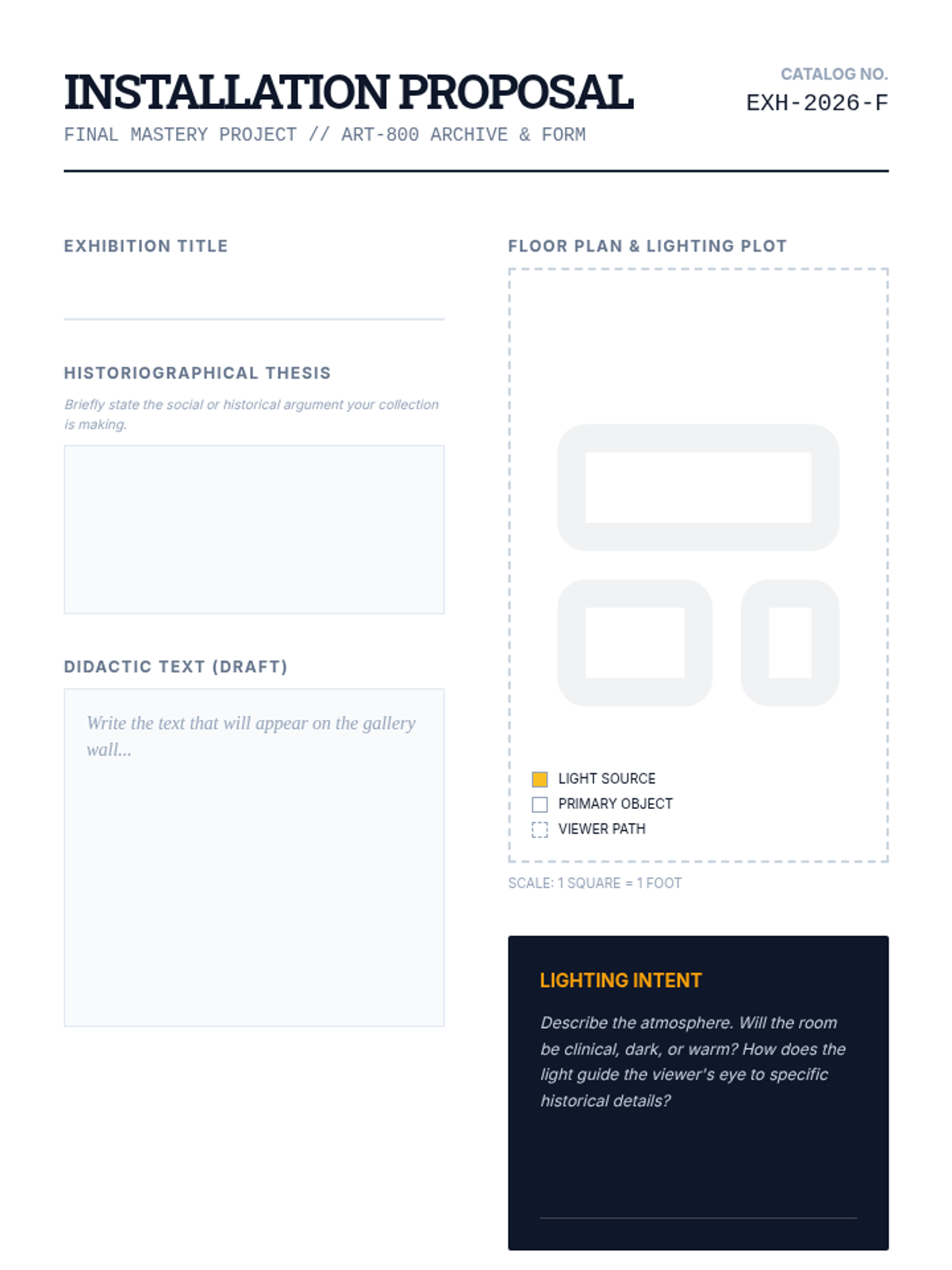
Mastery-based conclusion focusing on the spatial and narrative environment of the exhibition, including lighting design, didactic writing, and spatial choreography.
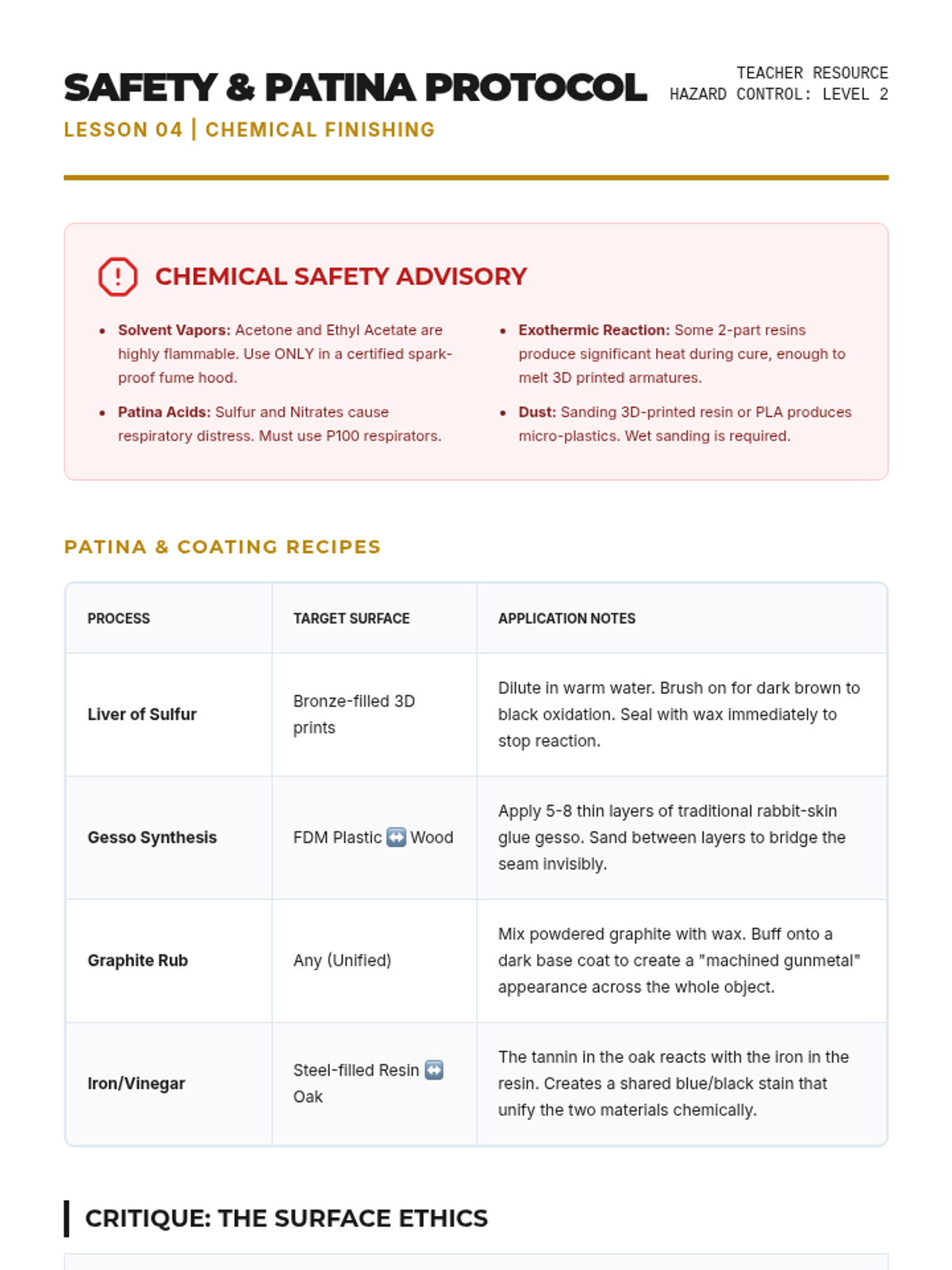
Students master advanced surface treatment techniques, using coatings, chemical patinas, and sanding to either unify the hybrid parts or highlight their material differences. Standardizing the object for professional gallery display.
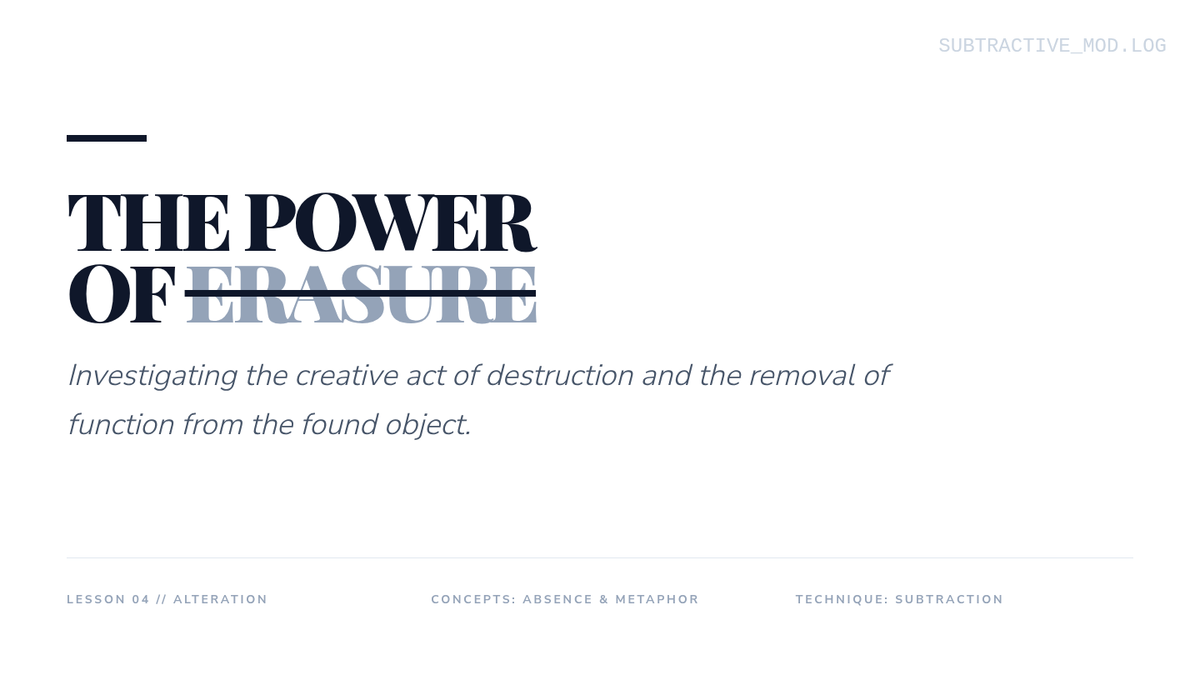
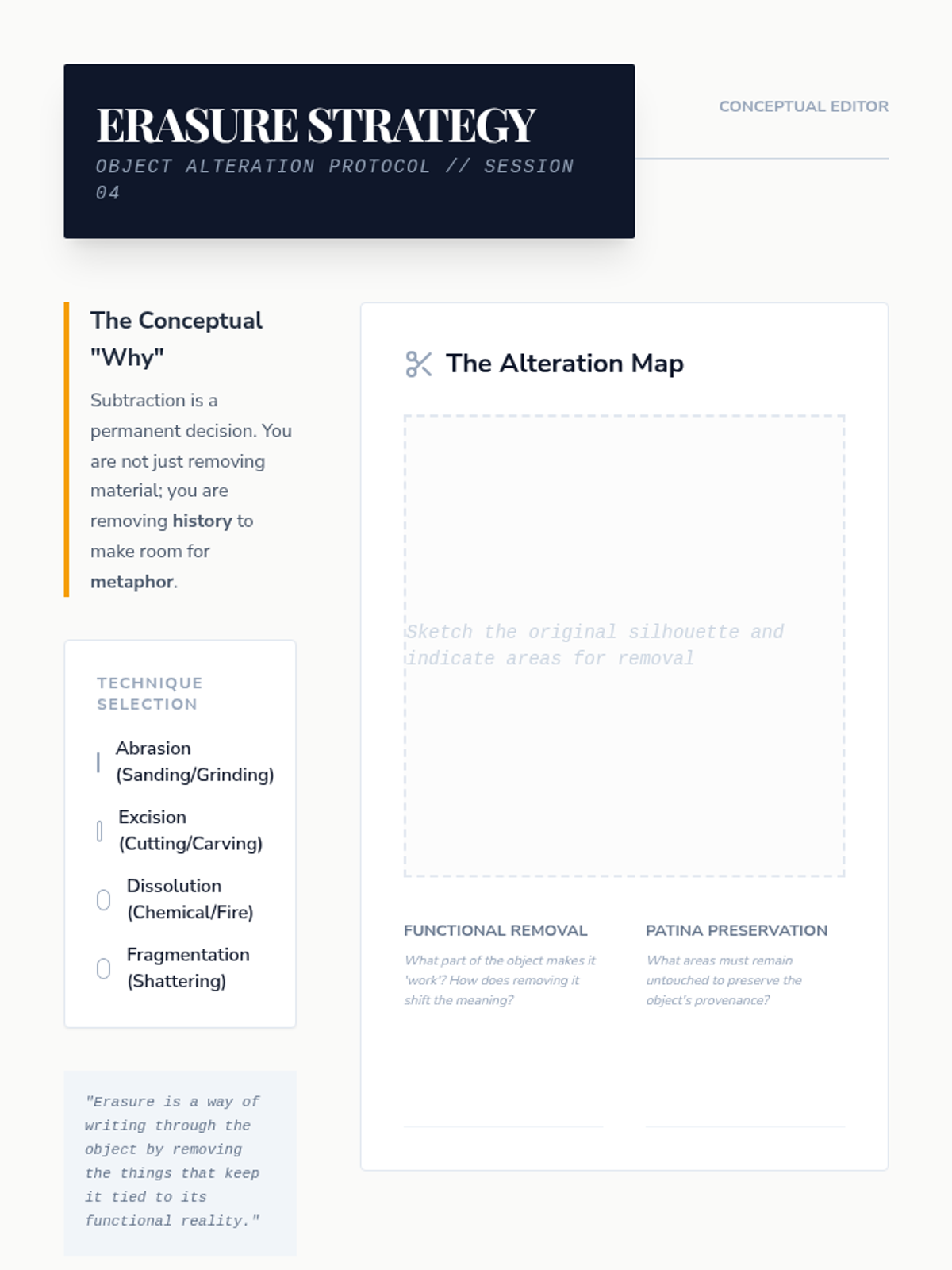
Explores the concept of 'erasure' and subtractive modification as creative acts, analyzing how the permanent removal of material can heighten an object's metaphorical power.
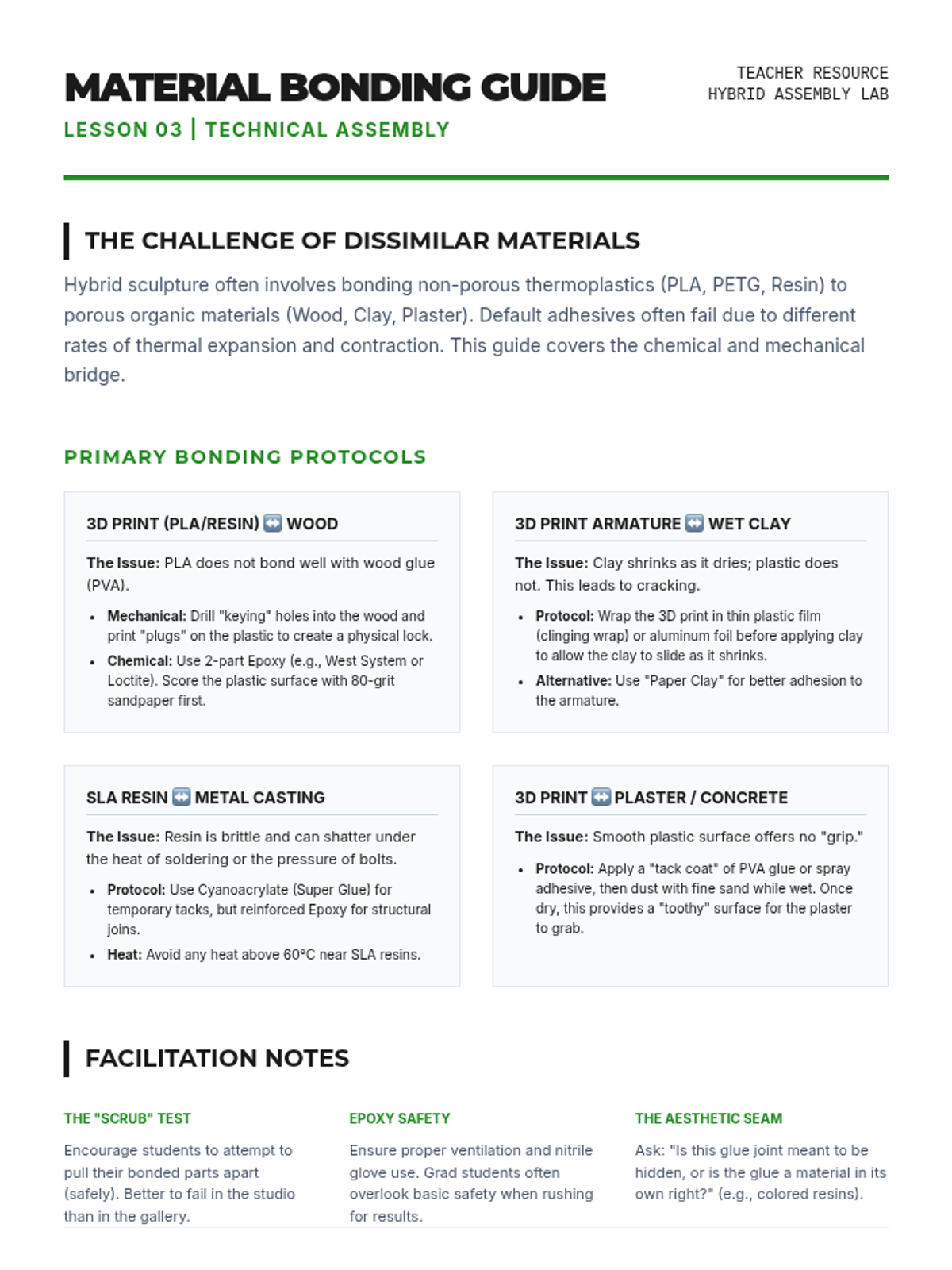
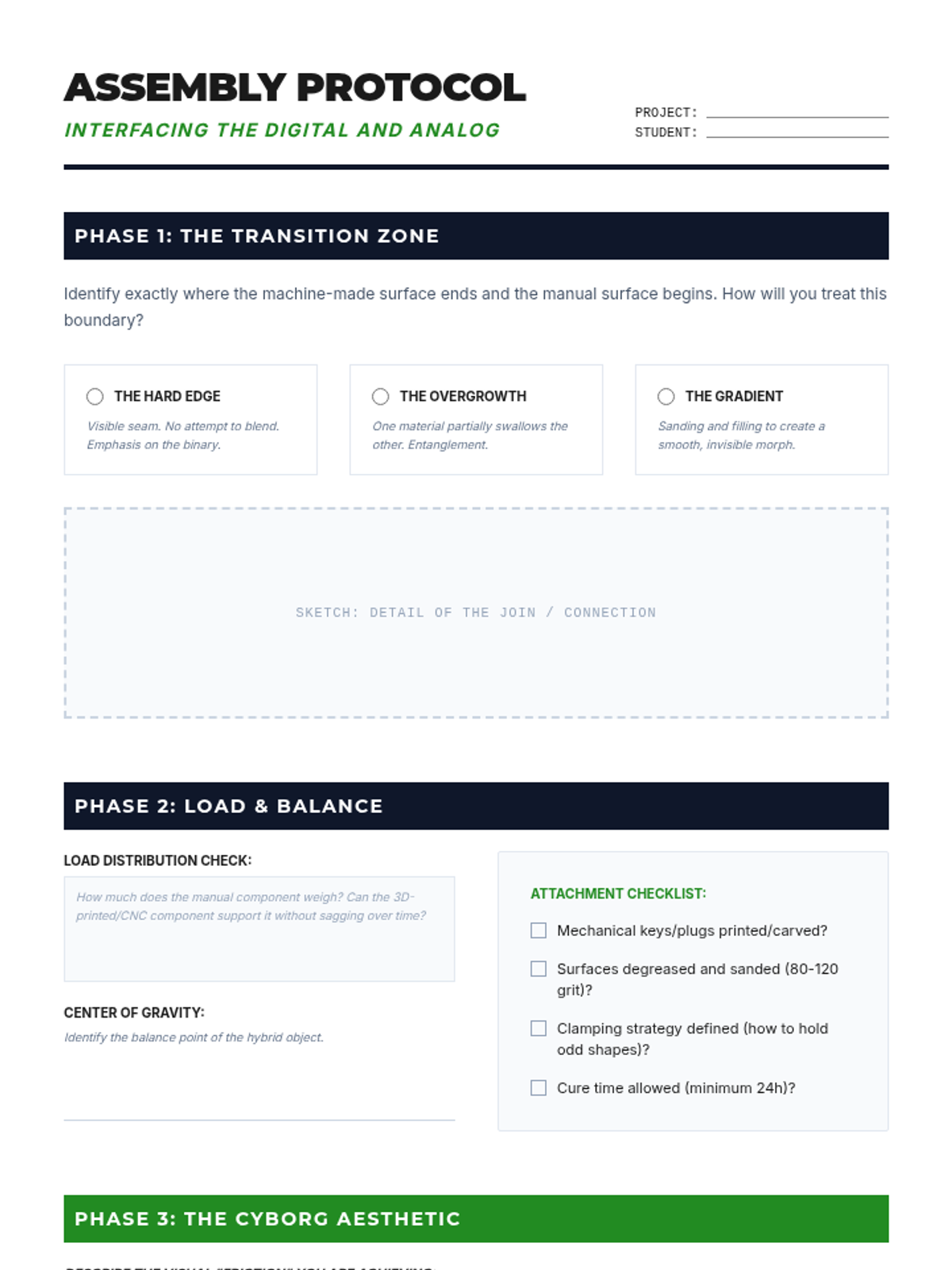
Focus shifts to the physical assembly of hybrid sculptures, managing the aesthetic and structural tension between algorithmic surfaces and hand-worked textures. Students explore the visual language of the 'cyborg' artifact.
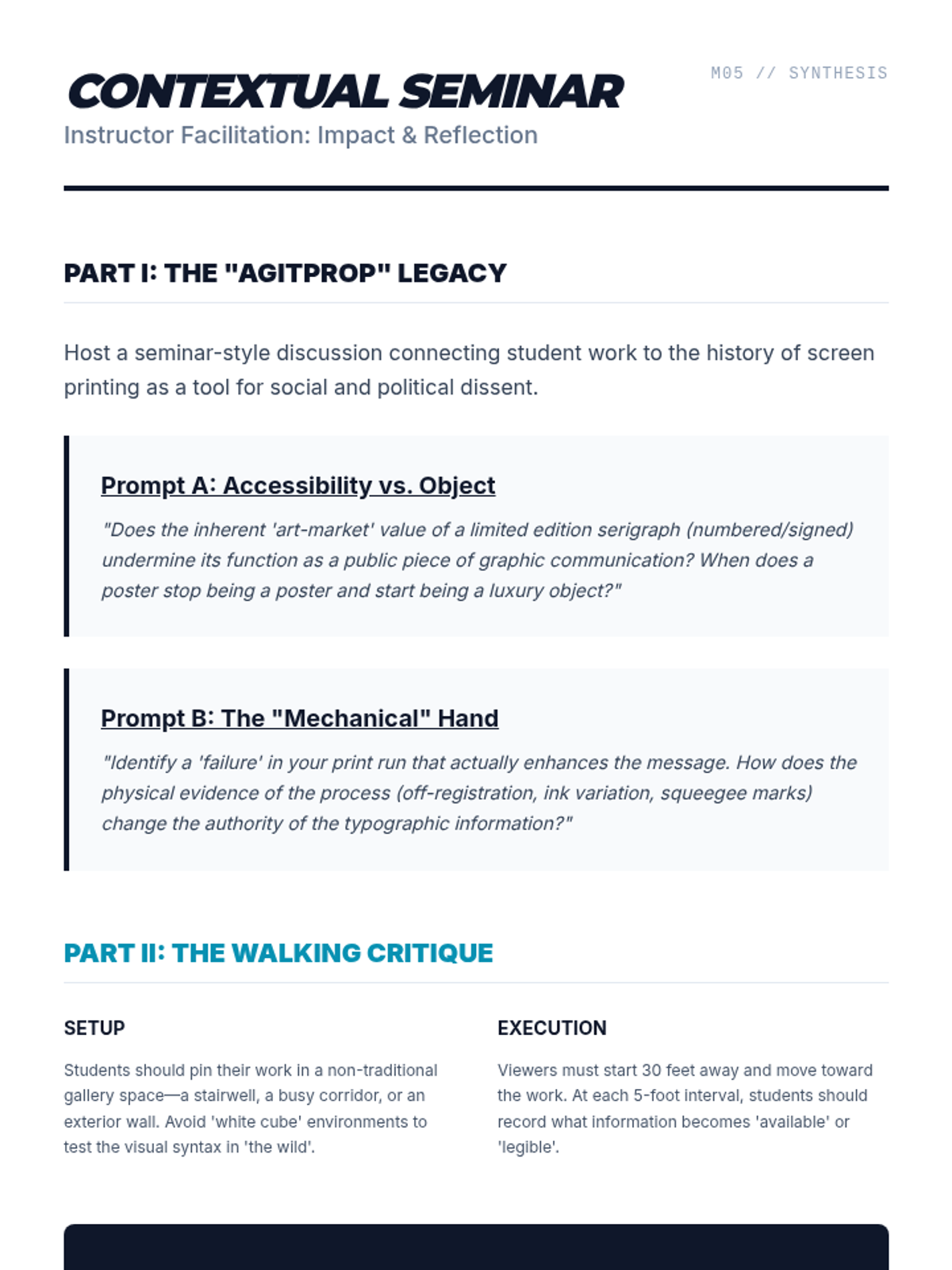
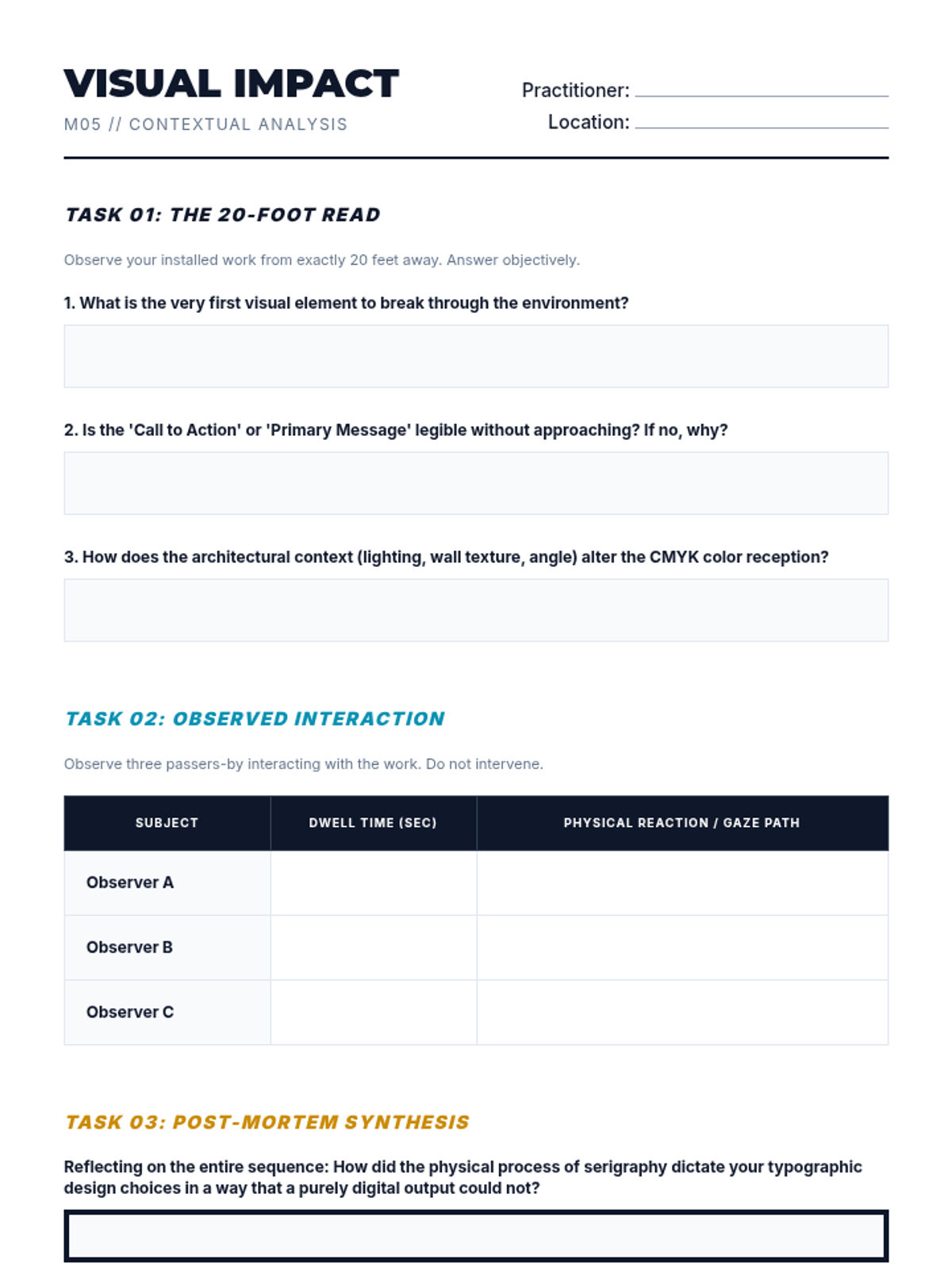
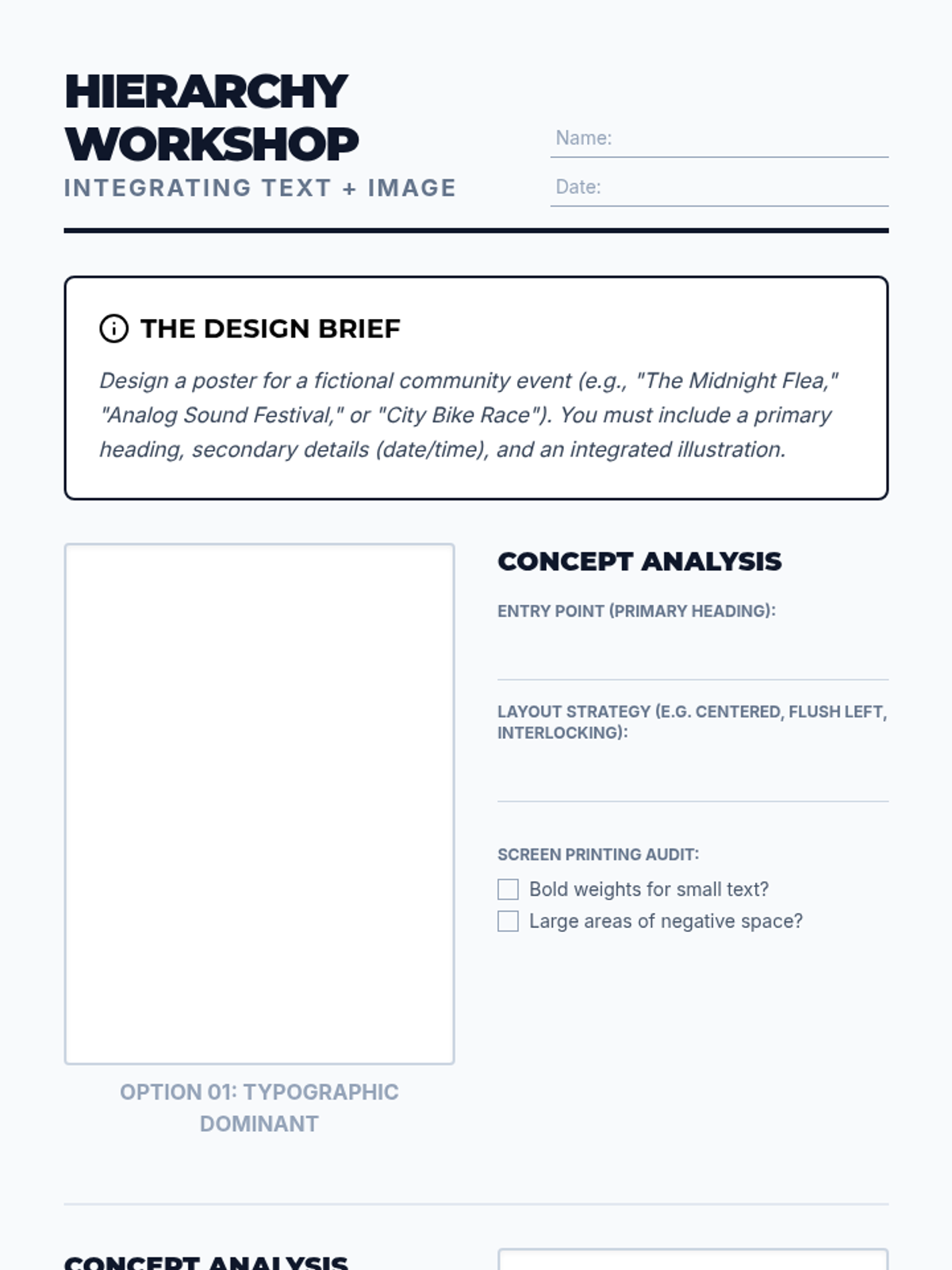
Students install their posters in a public or semi-public context to test readability and impact. The lesson concludes with a seminar discussing the role of the graphic artist in contemporary visual culture and the effectiveness of their design choices.
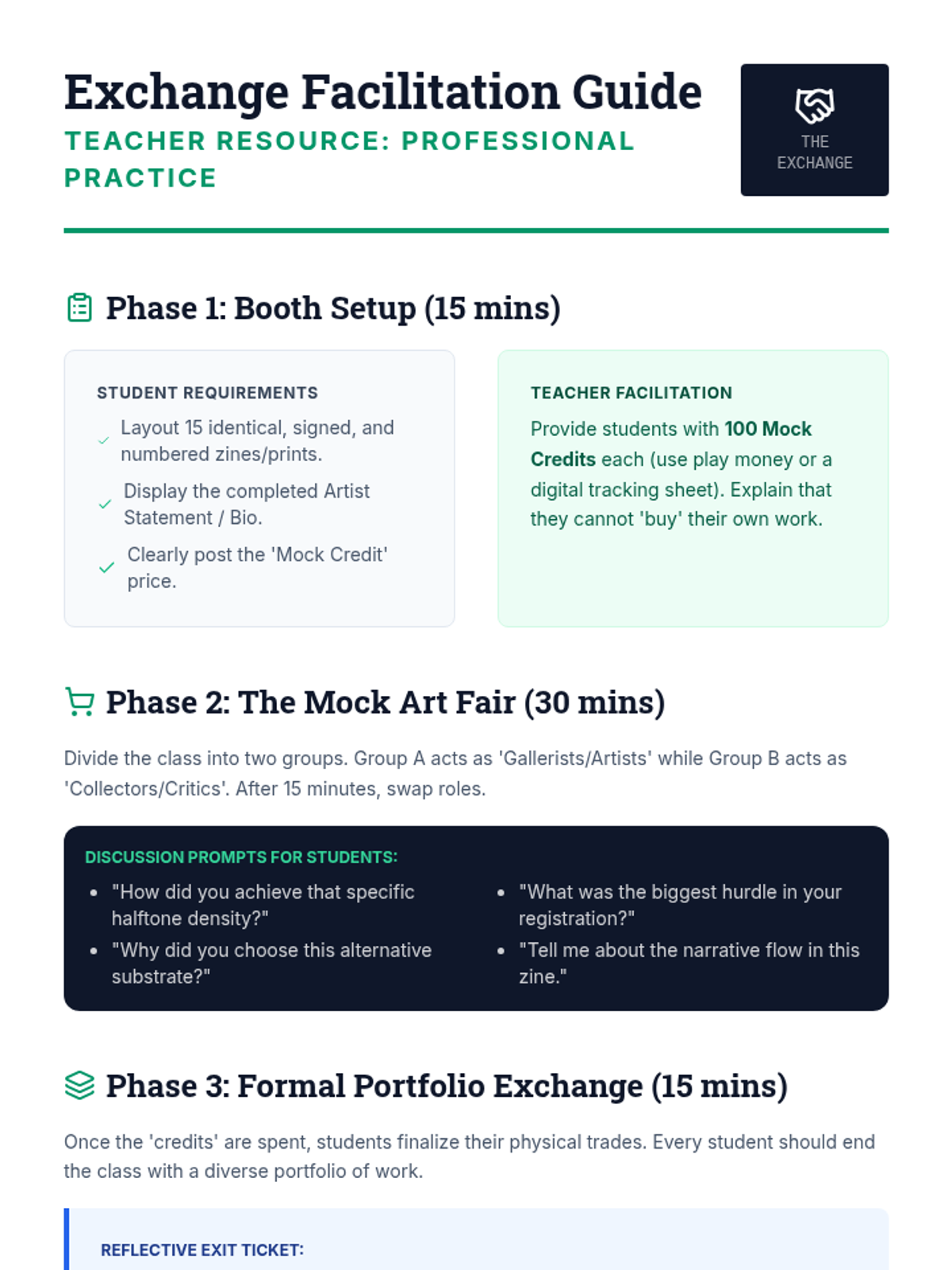
Students participate in a print exchange, write artist bios, and explore the valuation of their work.
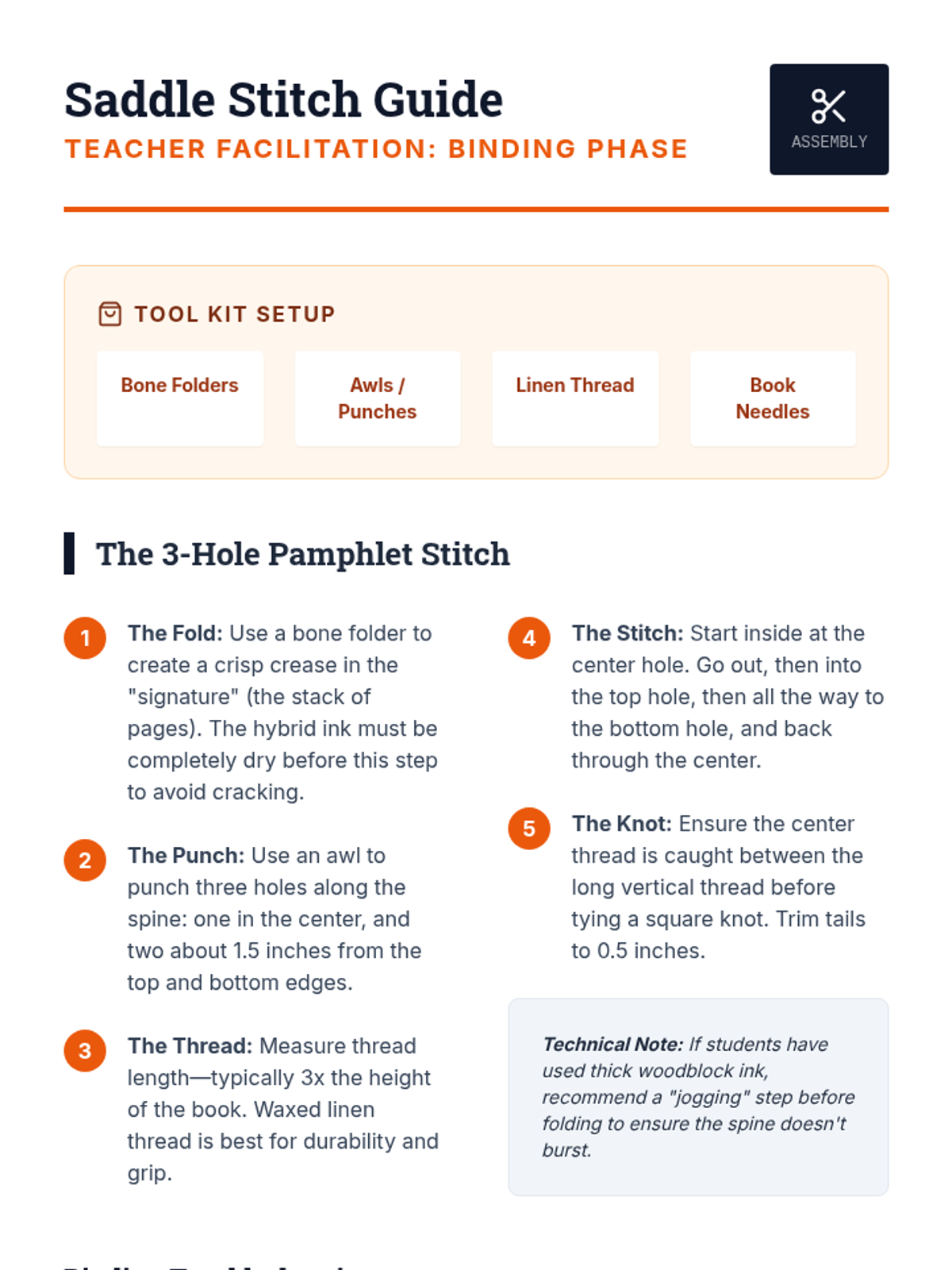
Students compile their hybrid prints into a Zine format, focusing on pagination and basic bookbinding.
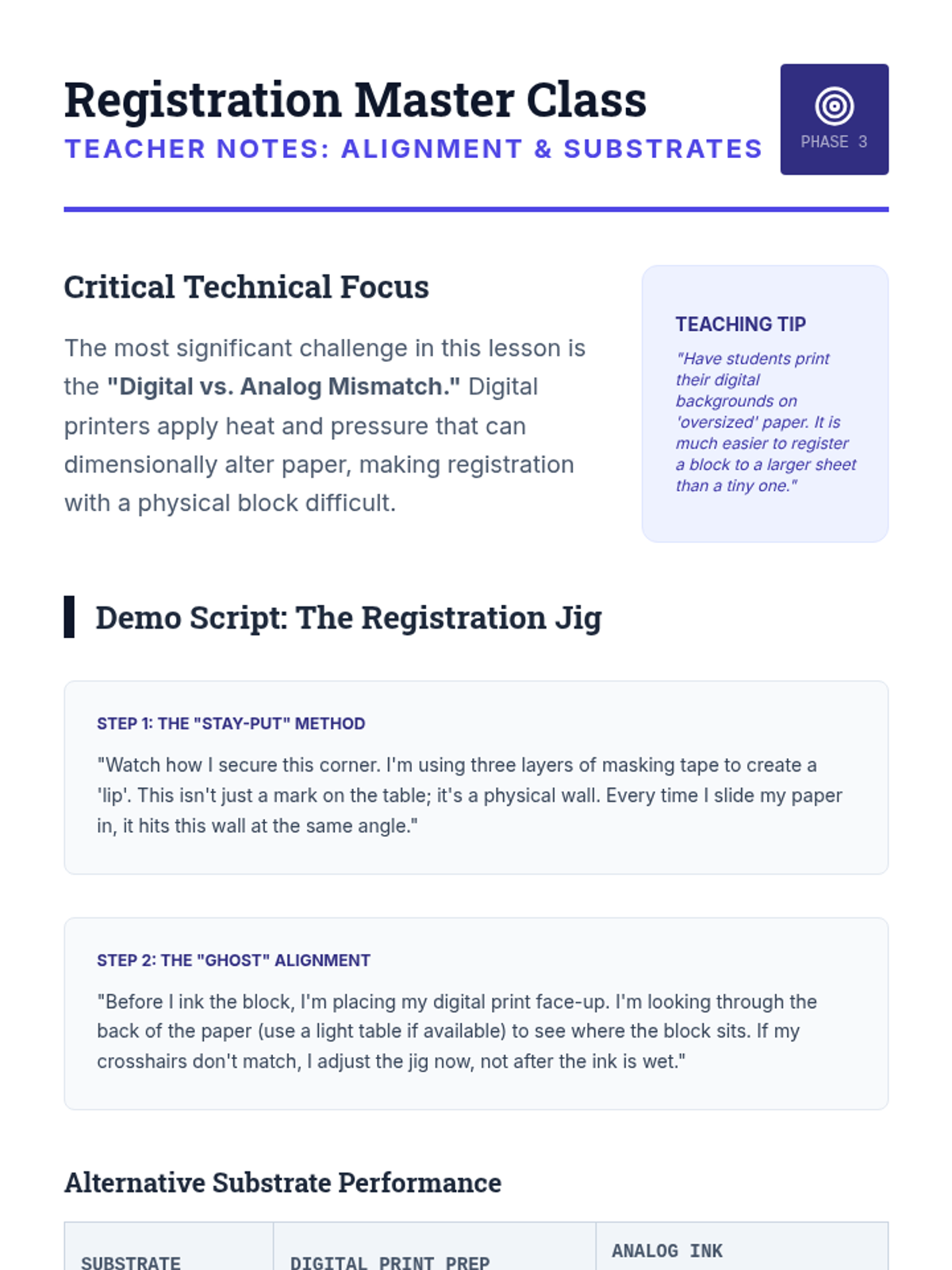
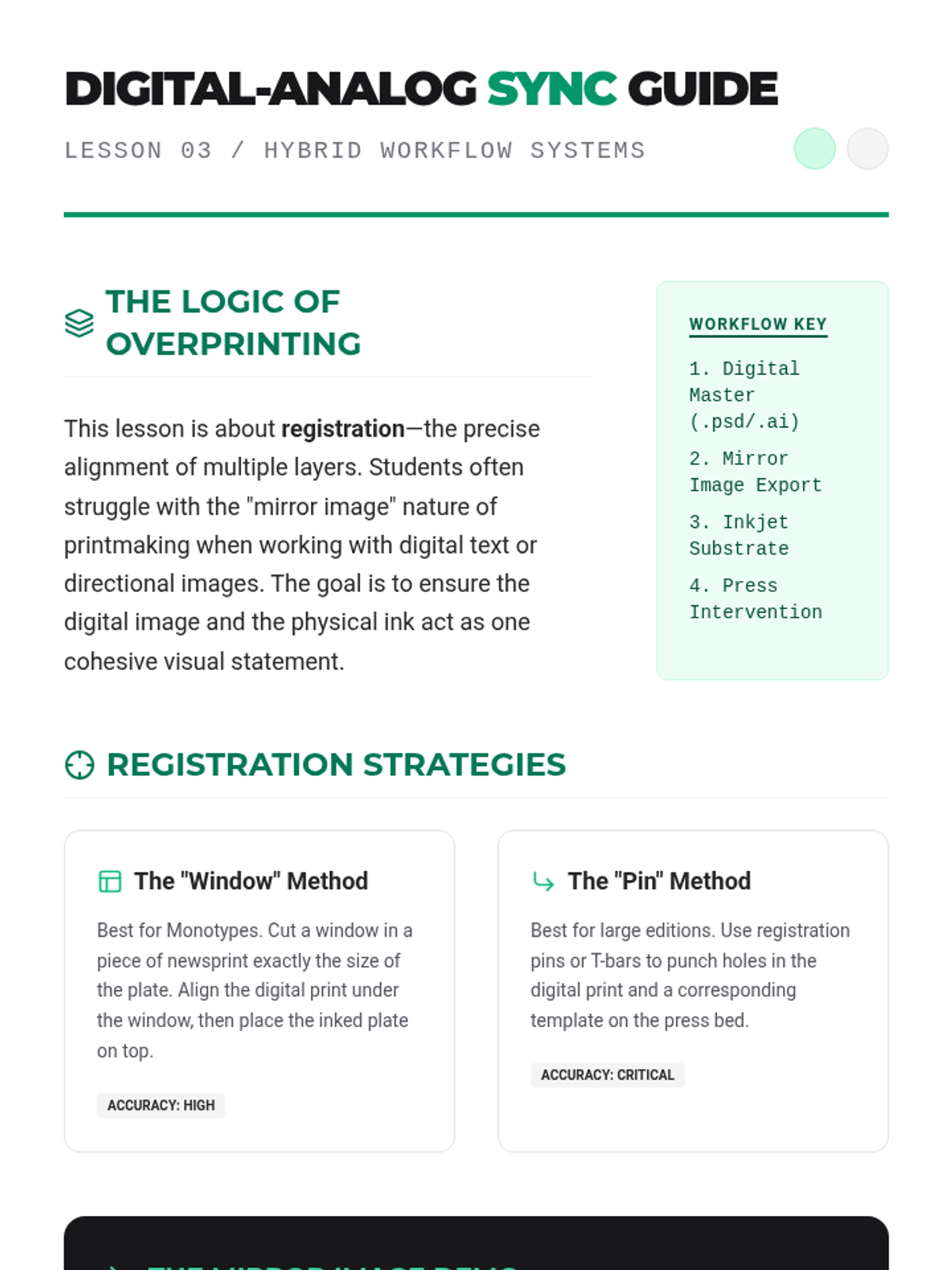
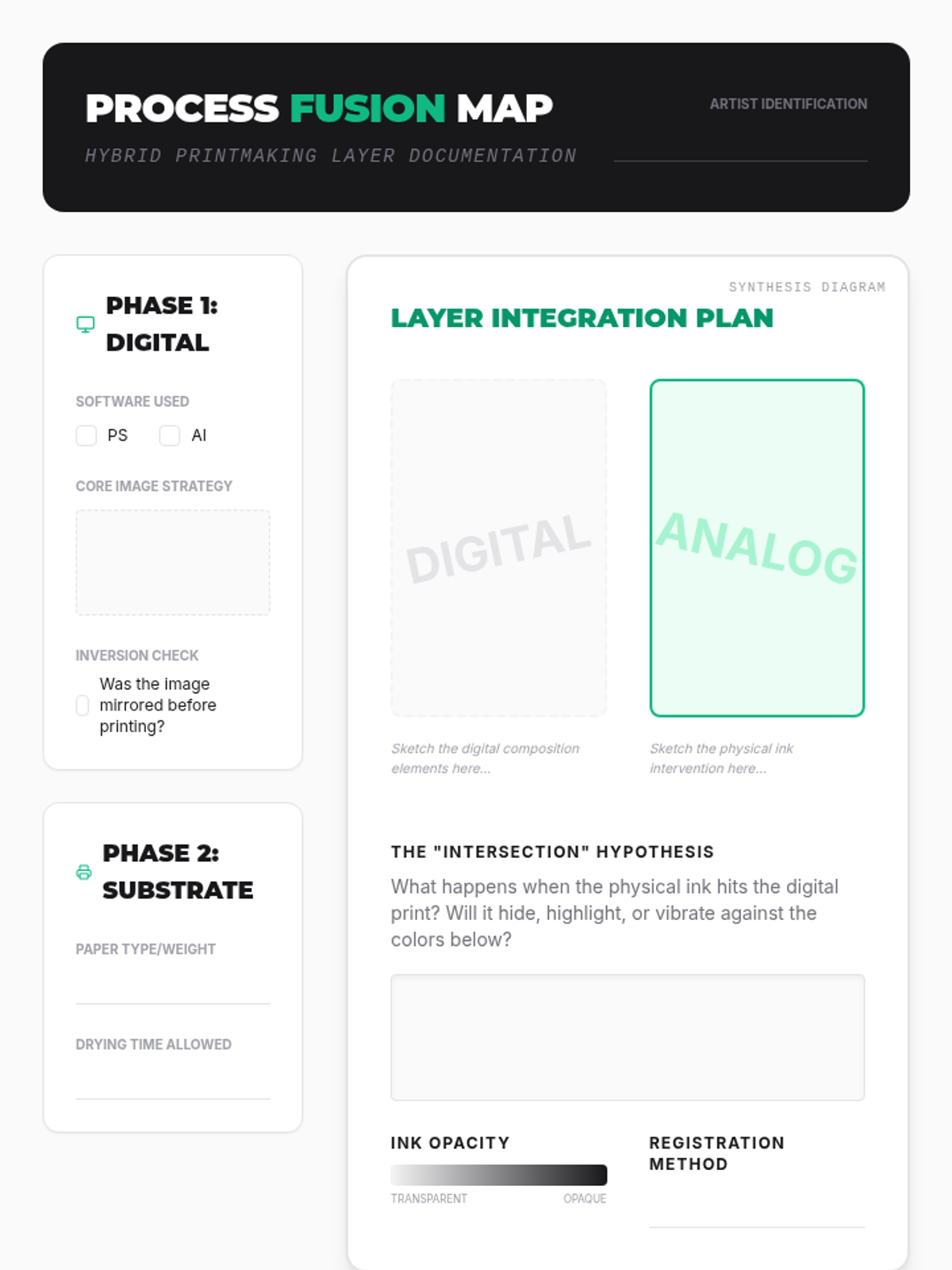
Students experiment with printing analog elements onto digitally prepared backgrounds and managing registration.
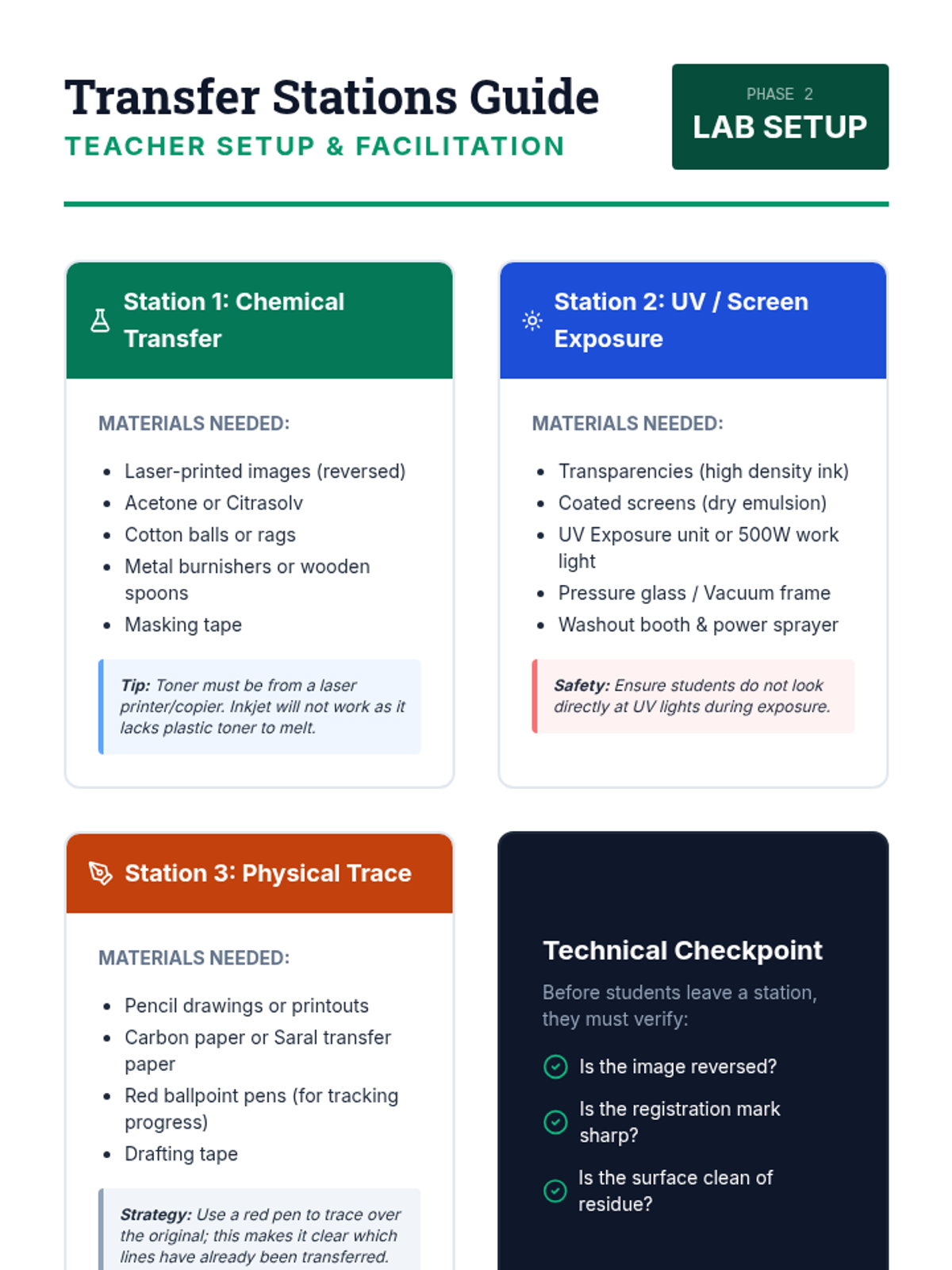
Students explore methods to transfer digital designs onto physical surfaces like woodblocks or screen stencils.
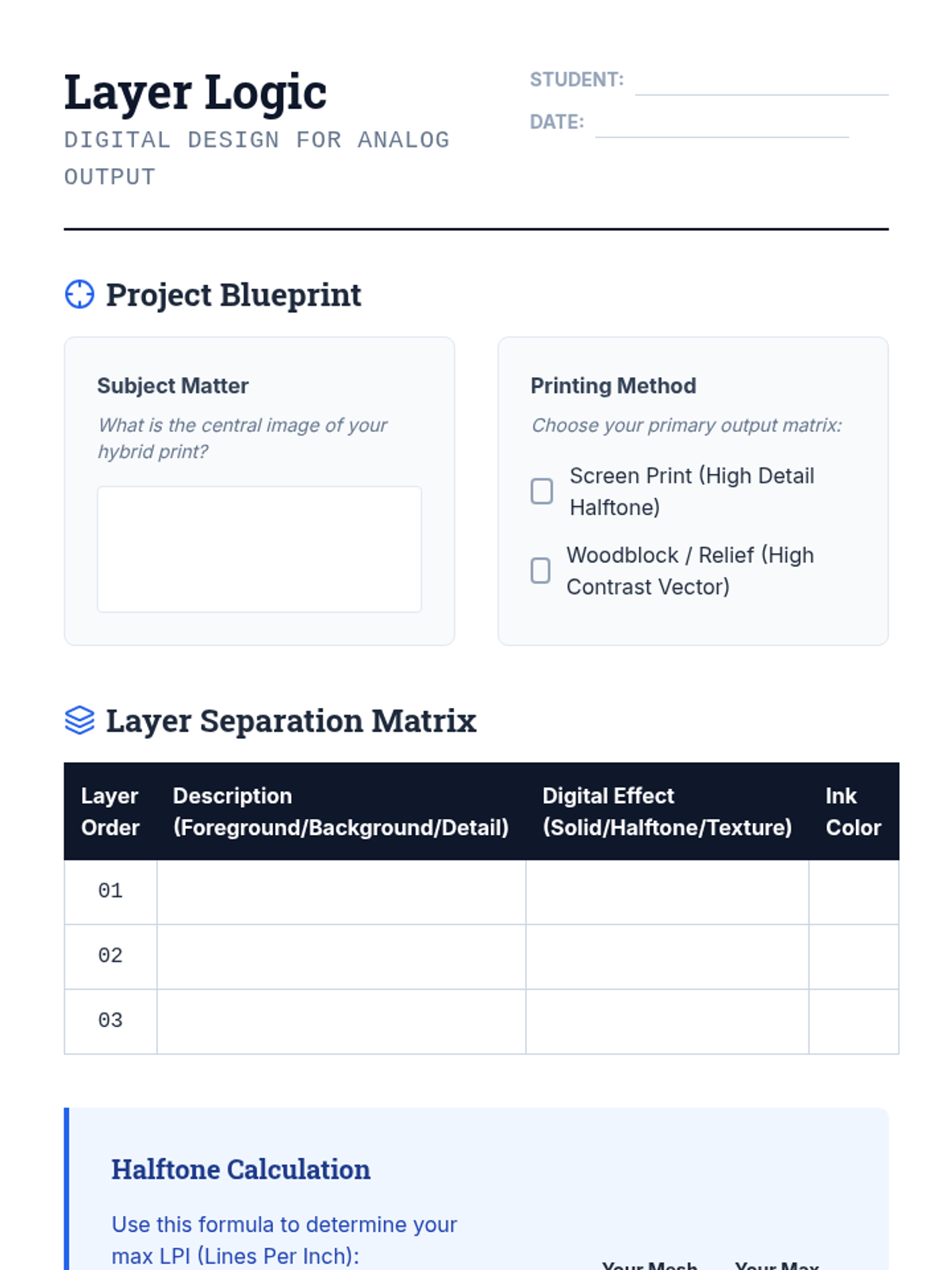
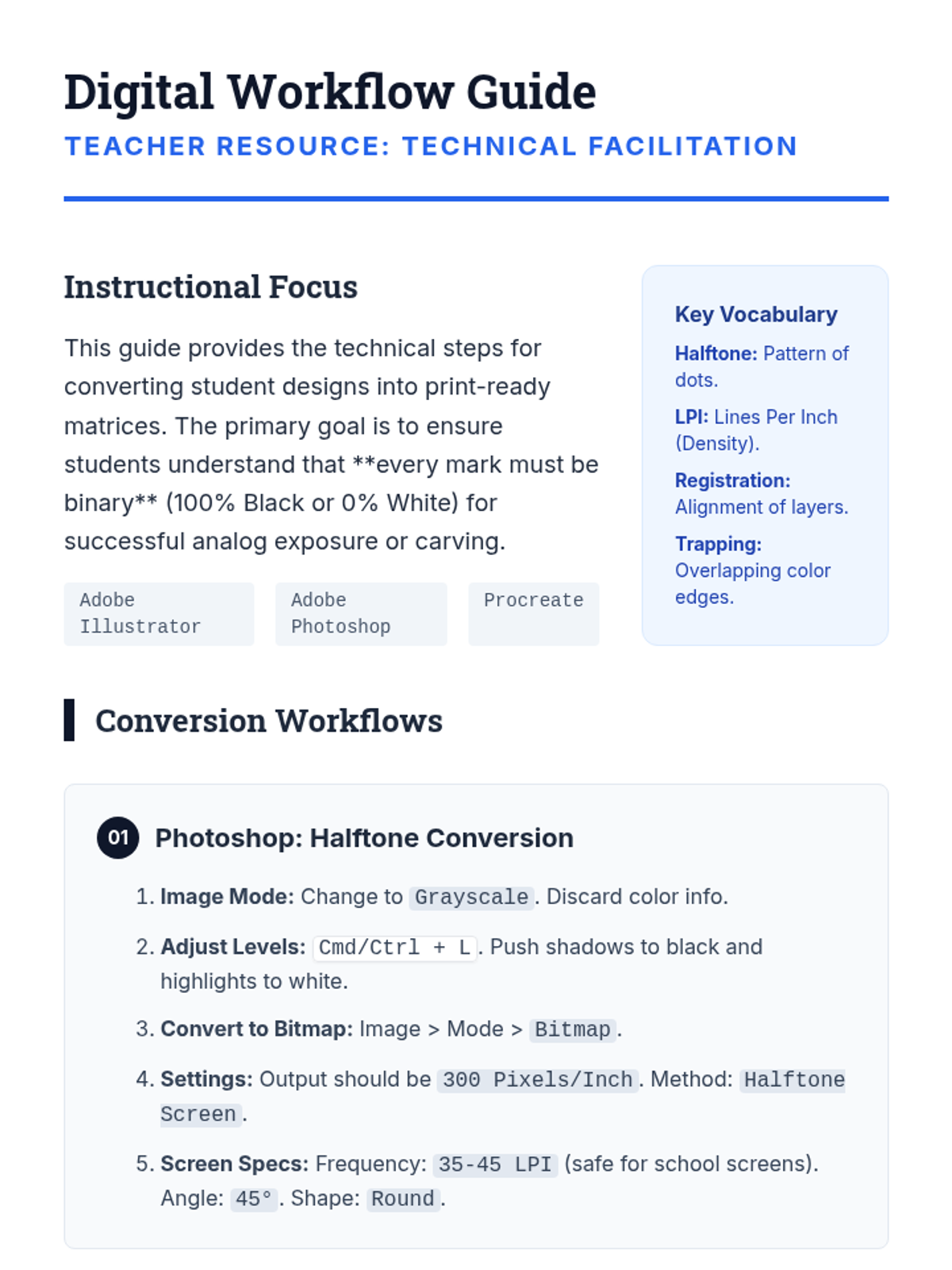
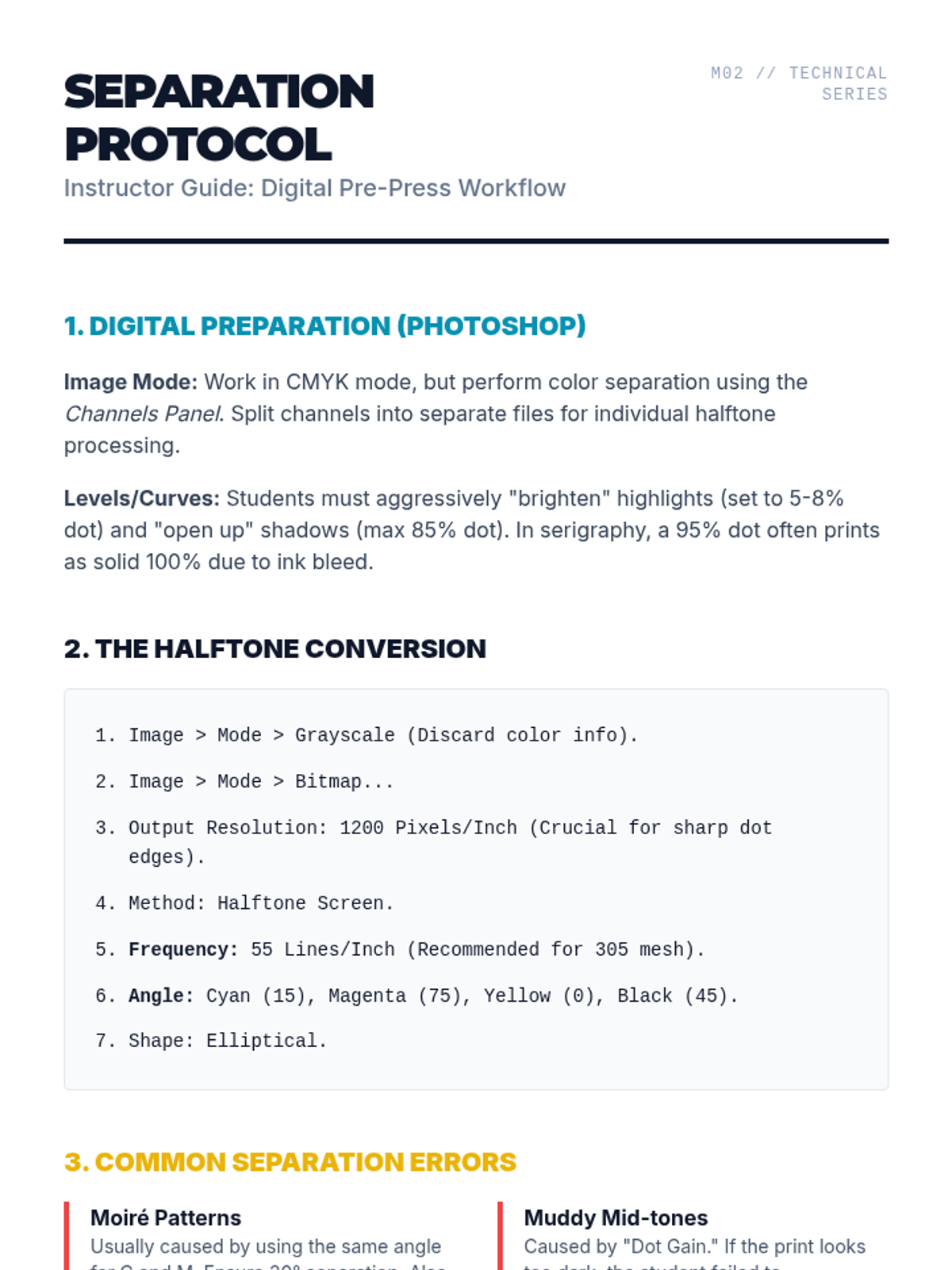
Students design high-contrast imagery and learn about layer separation, halftones, and bitmap conversions for analog output.
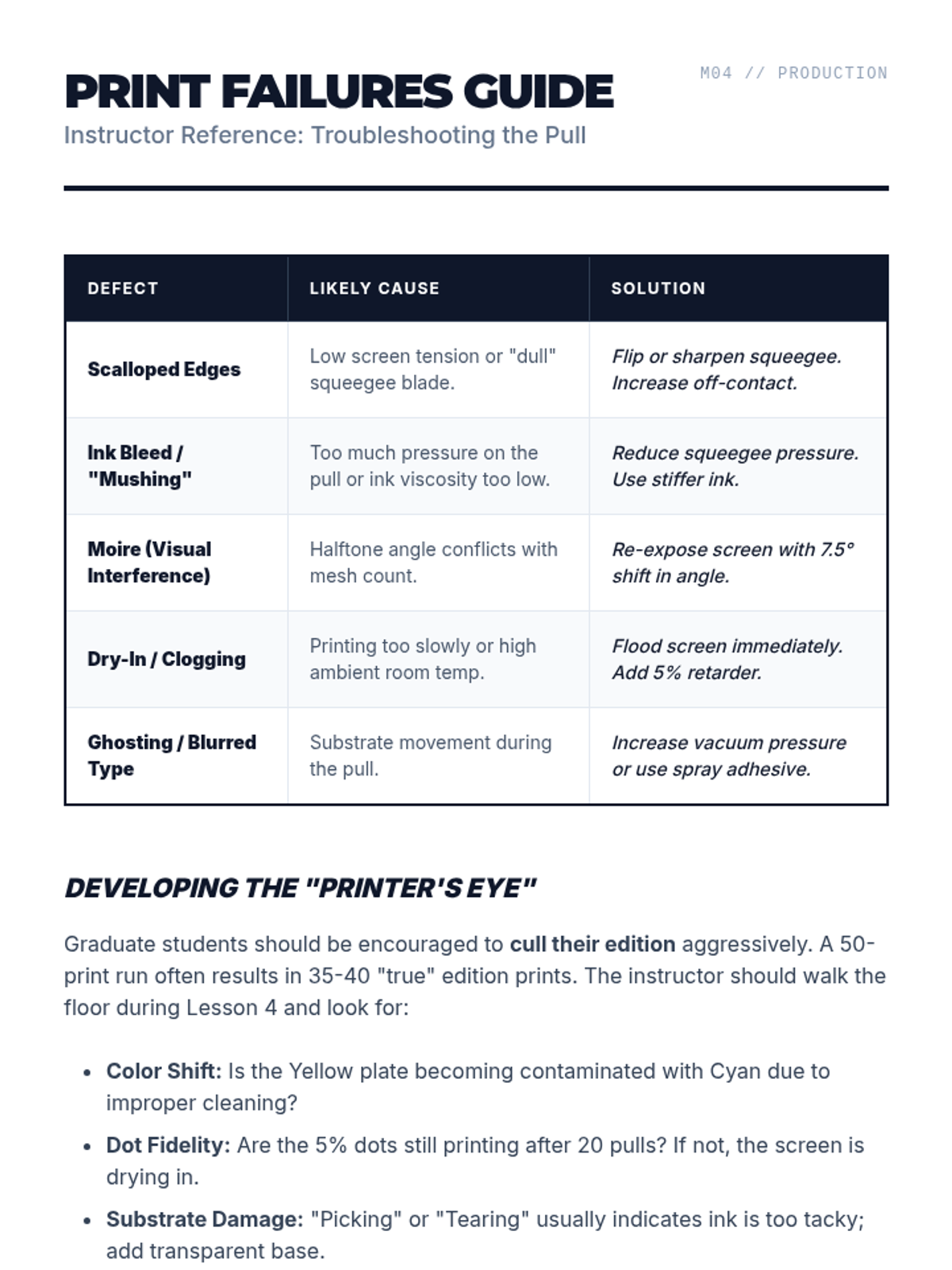
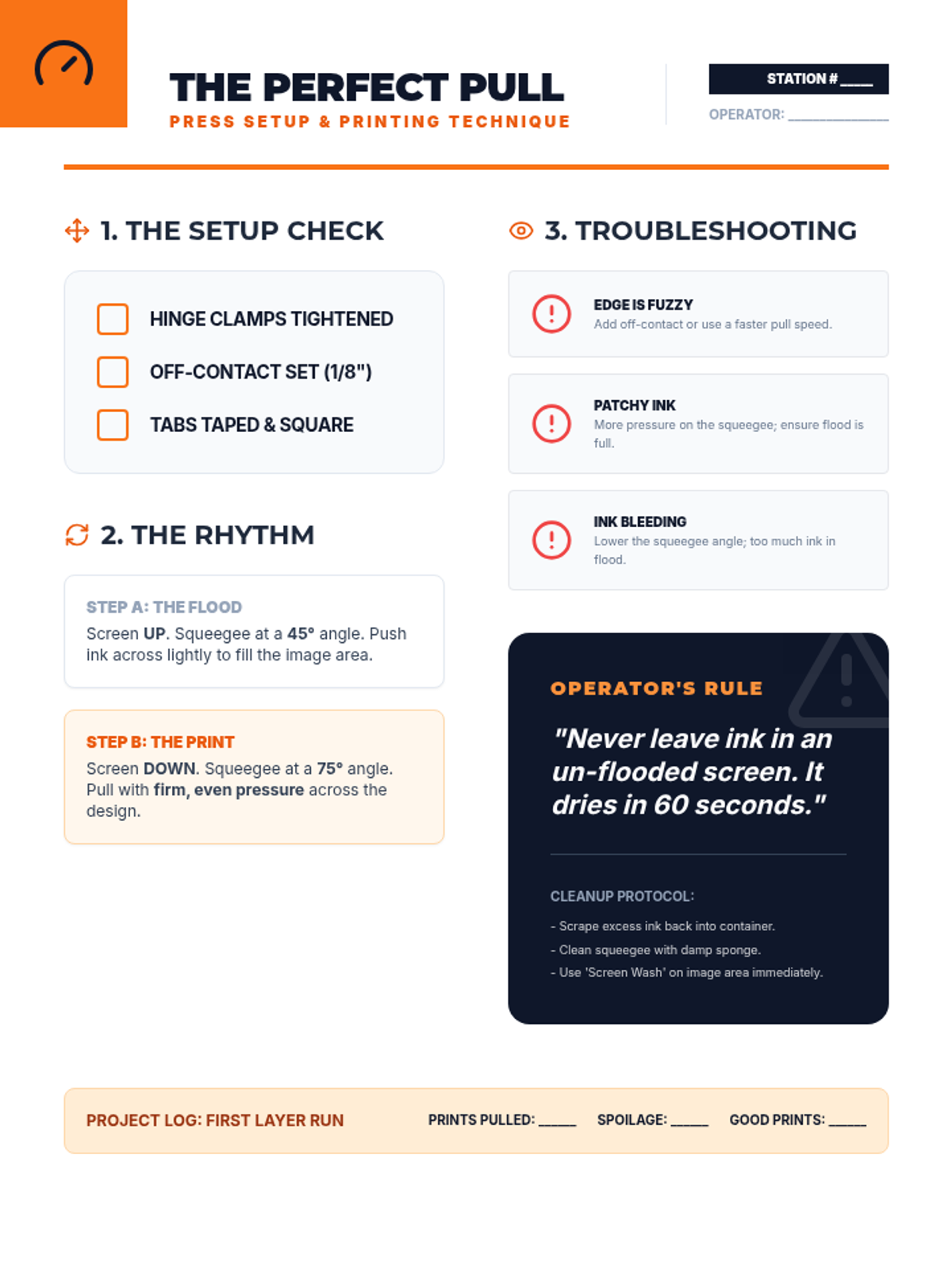
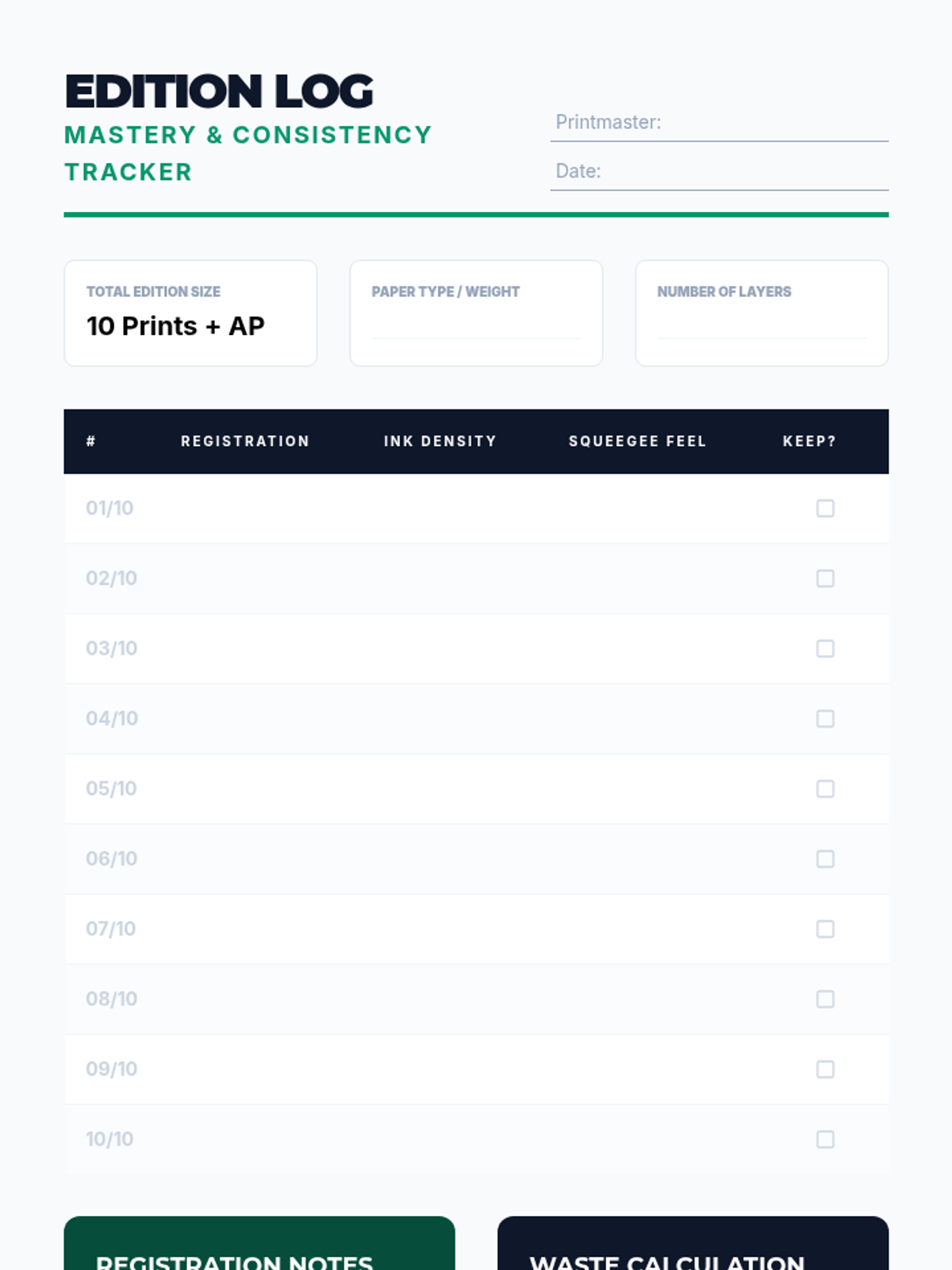
Students execute their print runs, focusing on tight registration systems for multi-color layers. The lesson emphasizes consistent ink application, squeegee angle, and pressure to ensure uniformity across a limited edition.
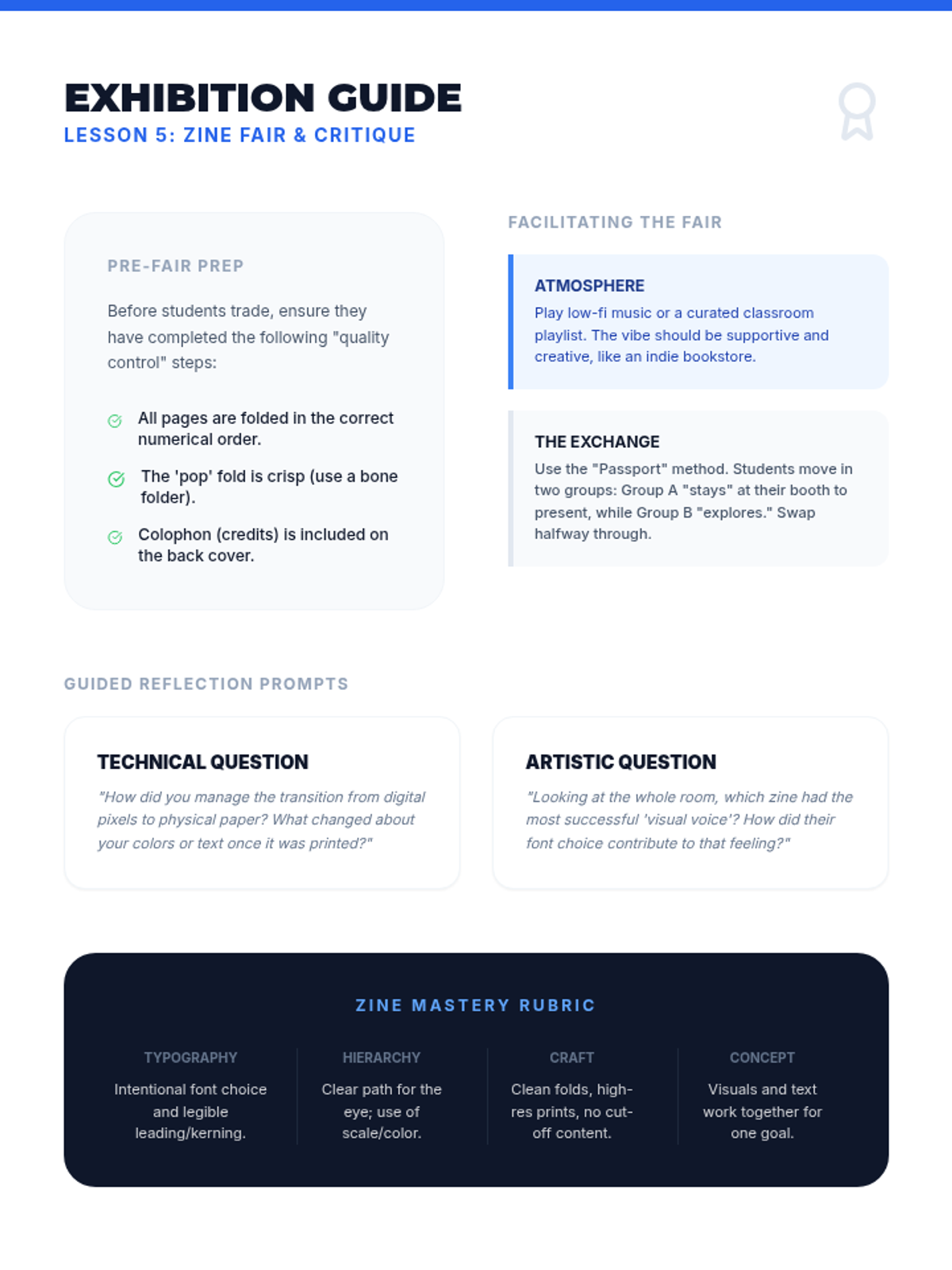
The culmination of the unit where students assemble their final Zines and participate in a classroom 'Zine Fair' for critique and exchange.
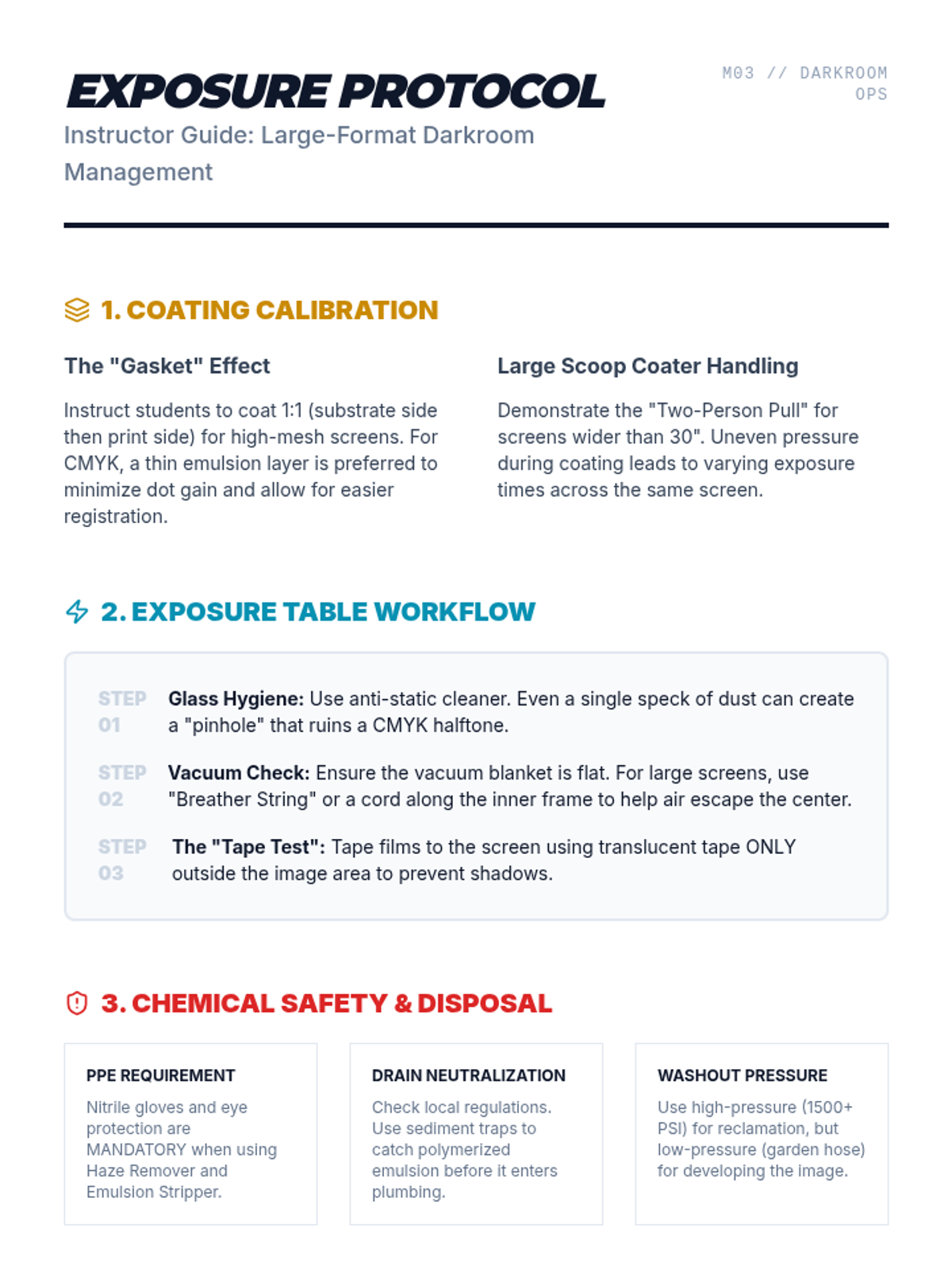
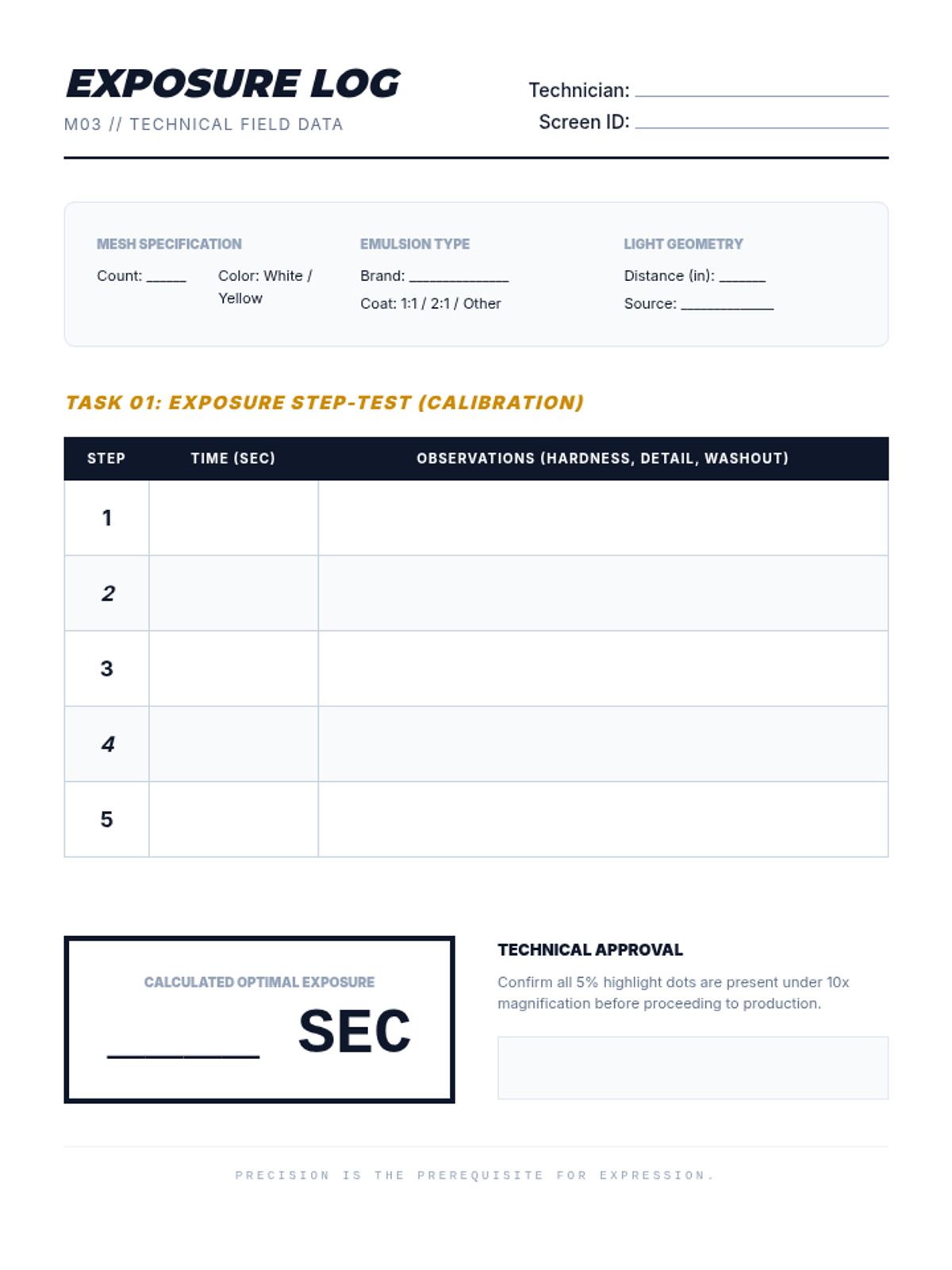
Students handle large-scale screens, learning advanced emulsion coating techniques and exposure calculation for fine details. The lesson covers the physical ergonomics of printing large formats and the chemistry of reclaiming screens efficiently.
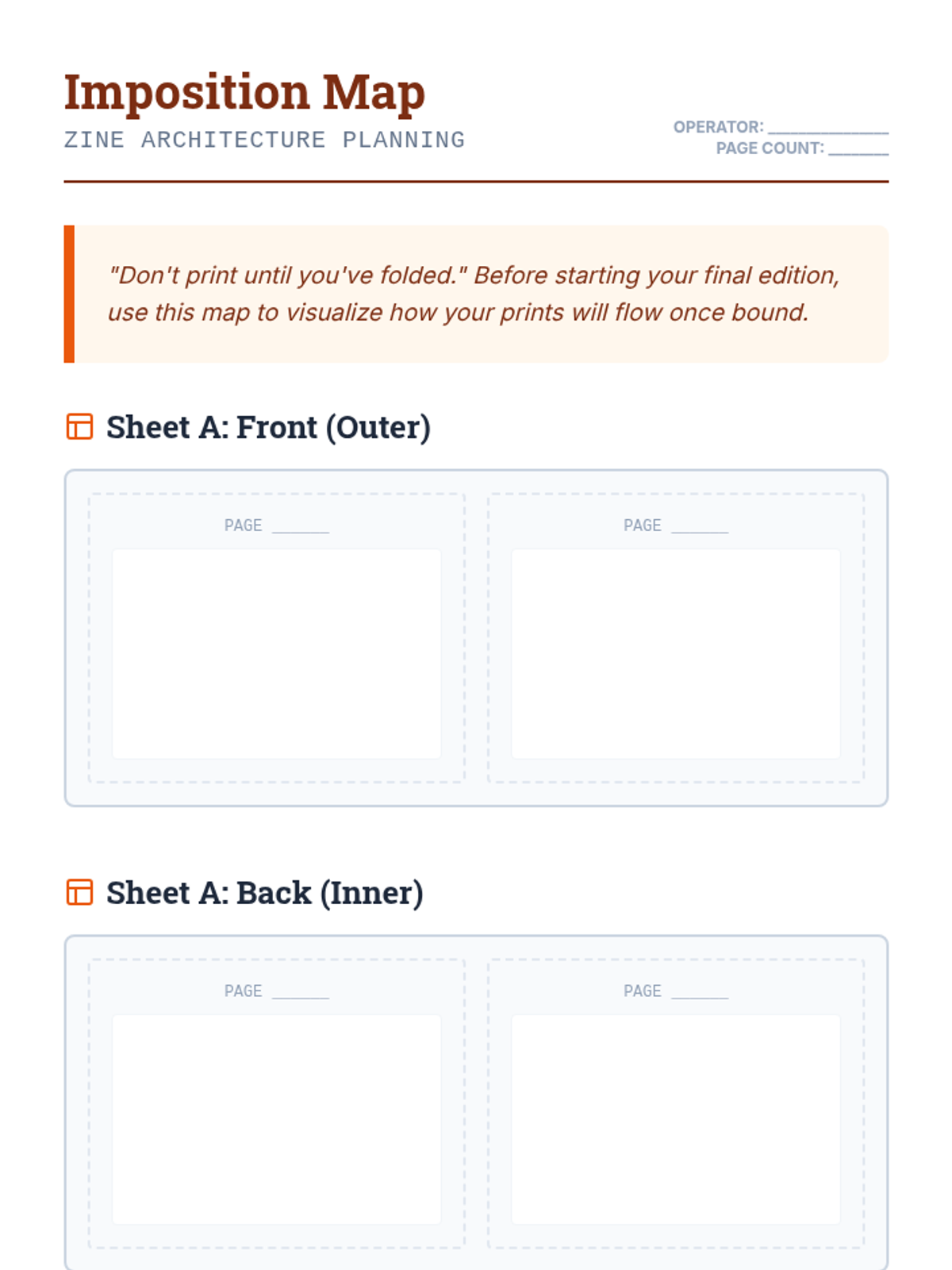
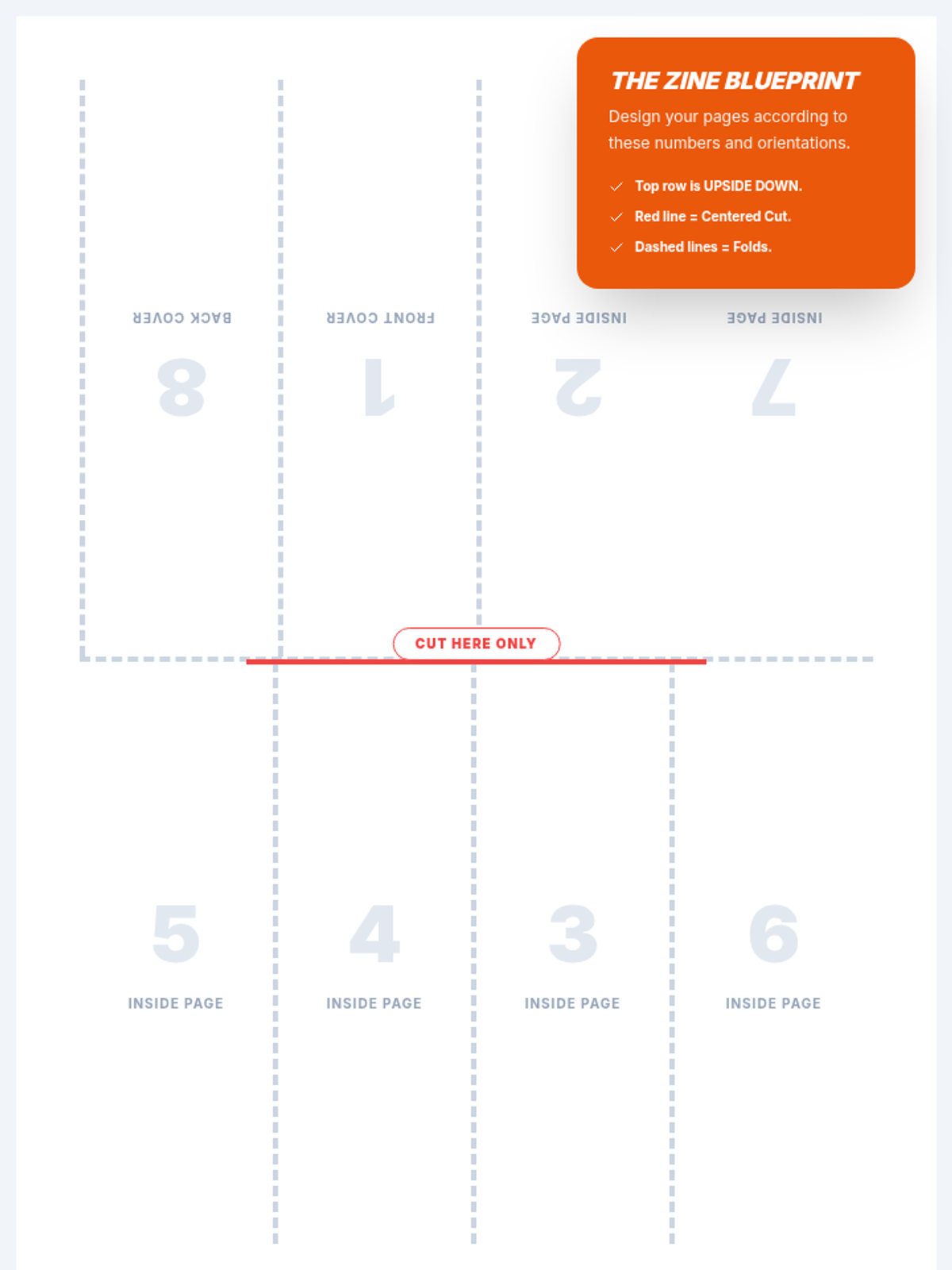
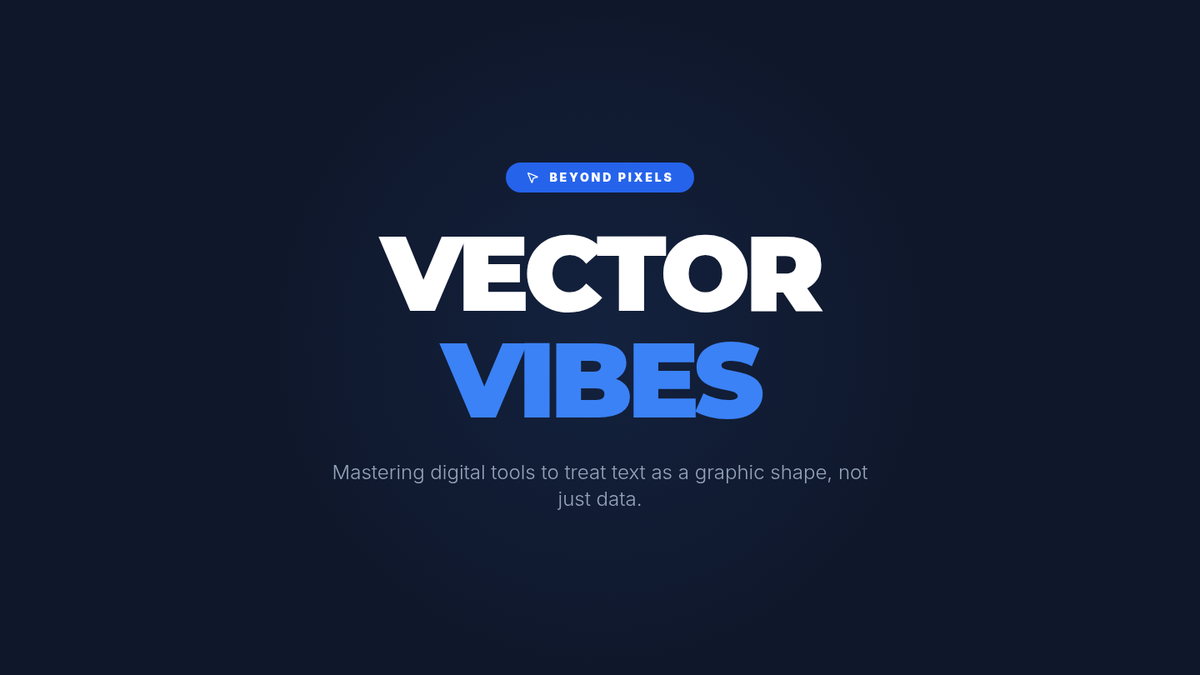
Students learn the technical side of print production, focusing on page imposition for an 8-page booklet. Includes a physical mock-up workshop to master the 'one-sheet zine' fold.
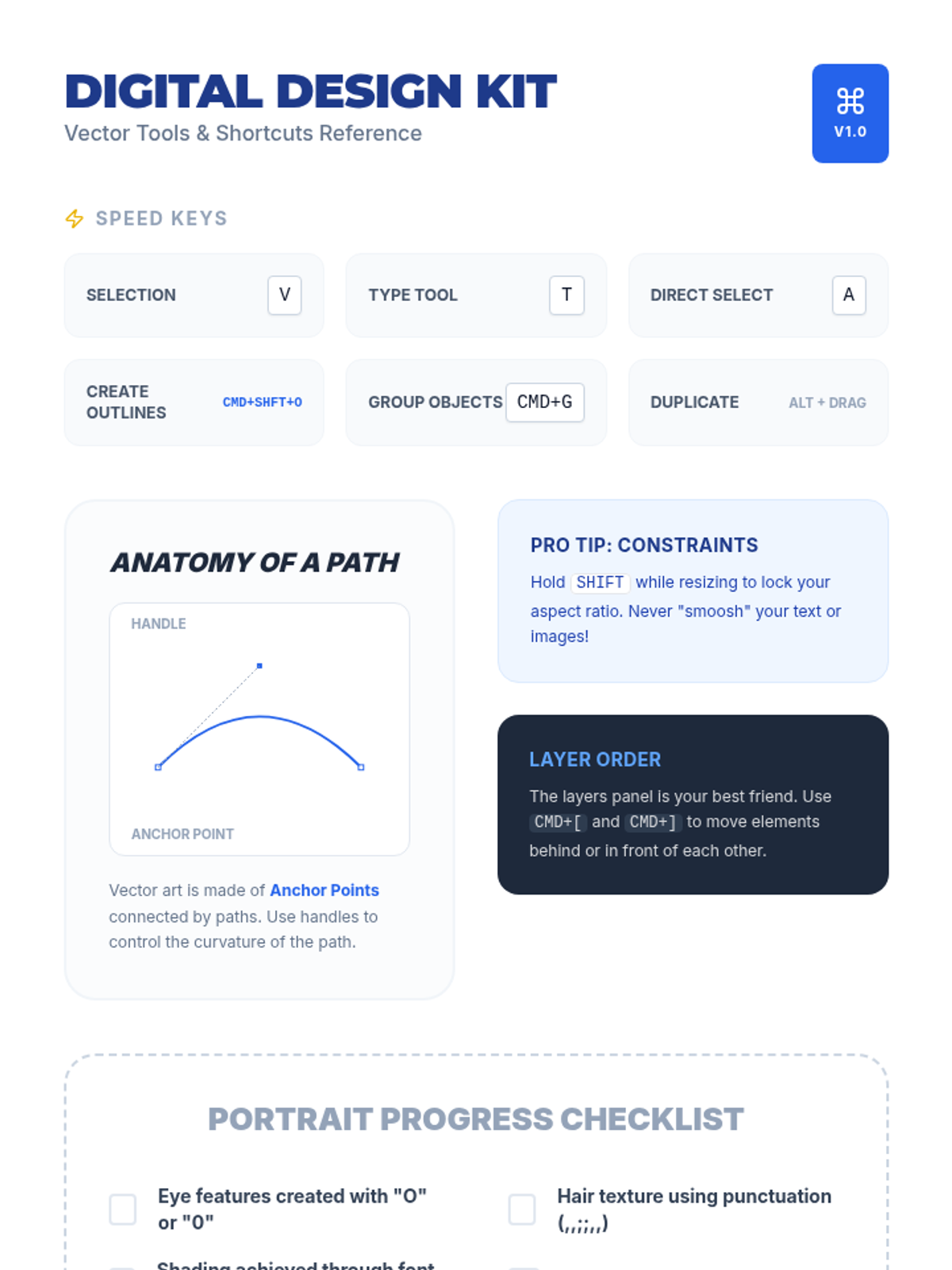
Students transition to design software, learning to manipulate vector shapes and treat text as a visual object. Includes a creative challenge to build a portrait using type.
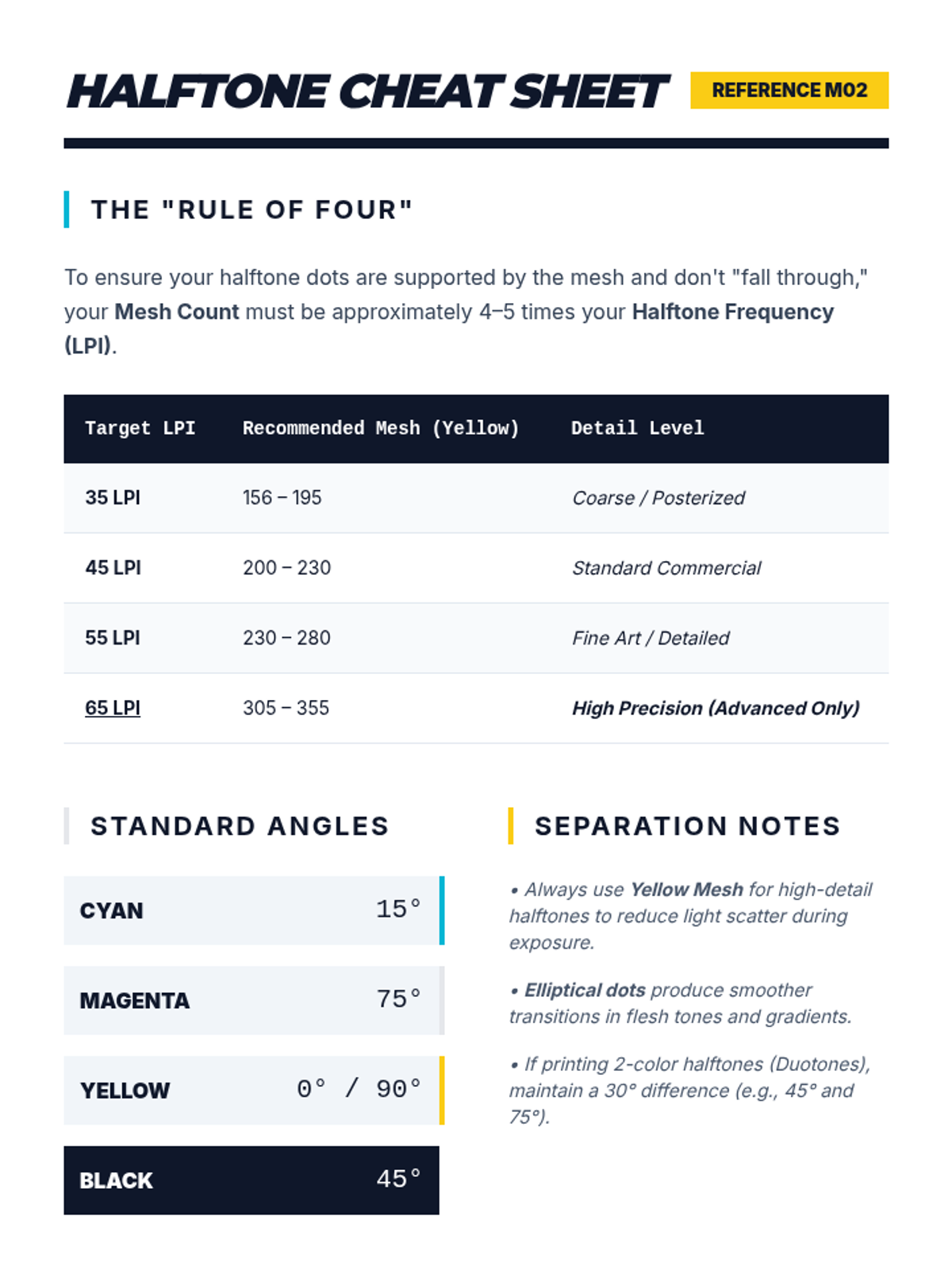
This technical workshop focuses on separating full-color digital images into CMYK channels for screen preparation. Students learn about halftone angles, frequency, and dot gain to prevent moiré patterns when printing photographic elements manually.
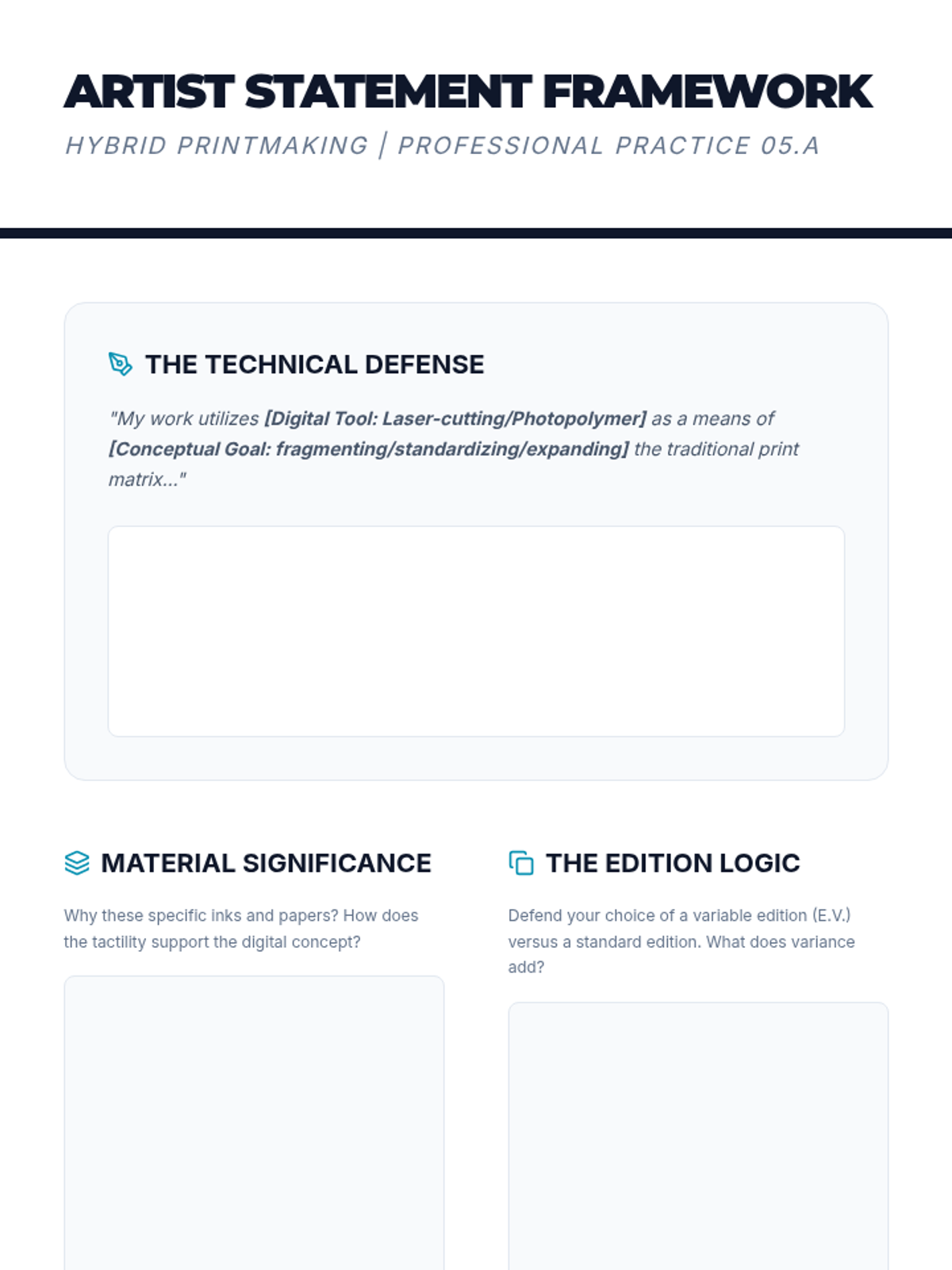
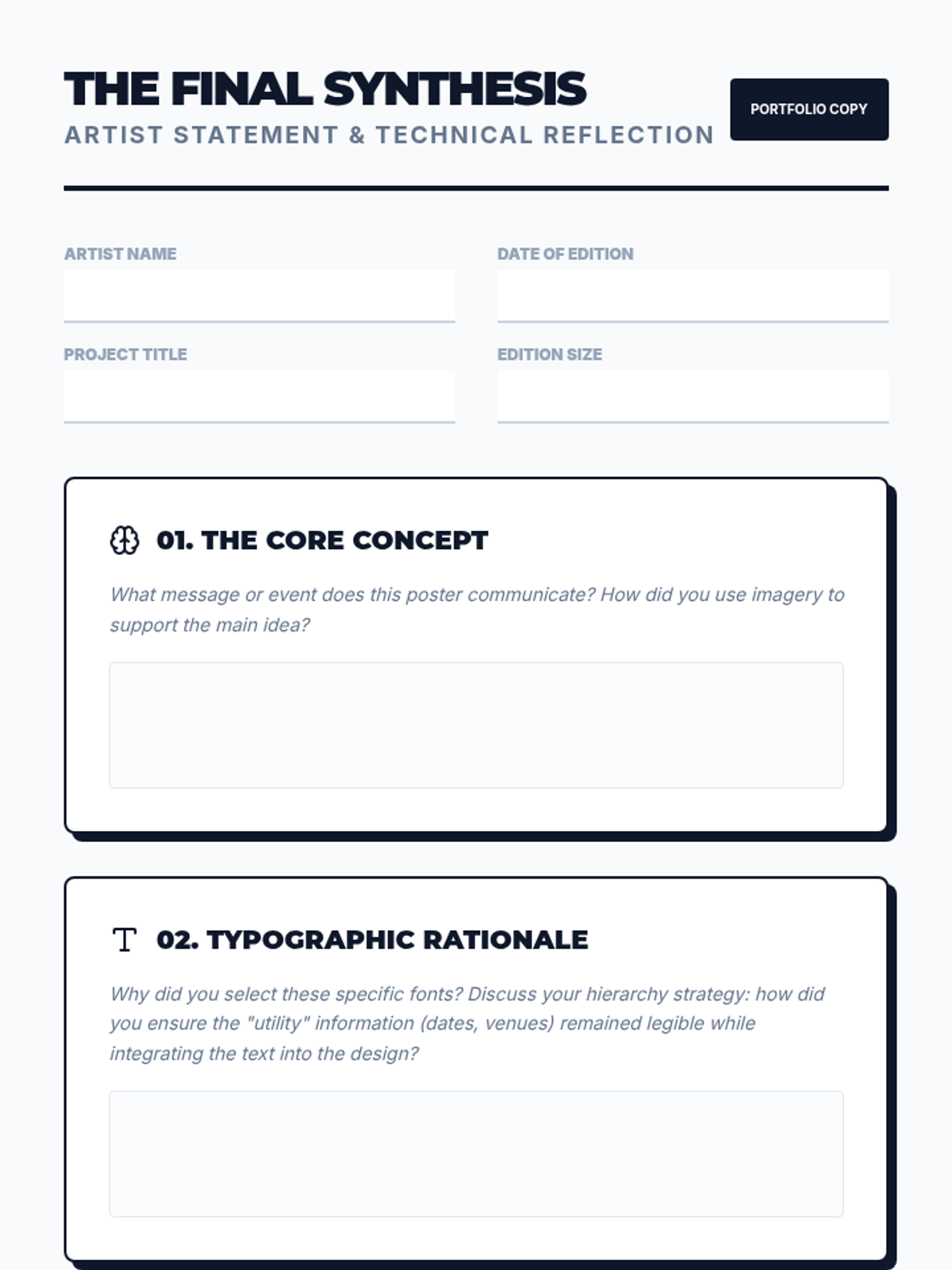
Students curate their work and write professional artist statements to reflect on their hybrid workflow.
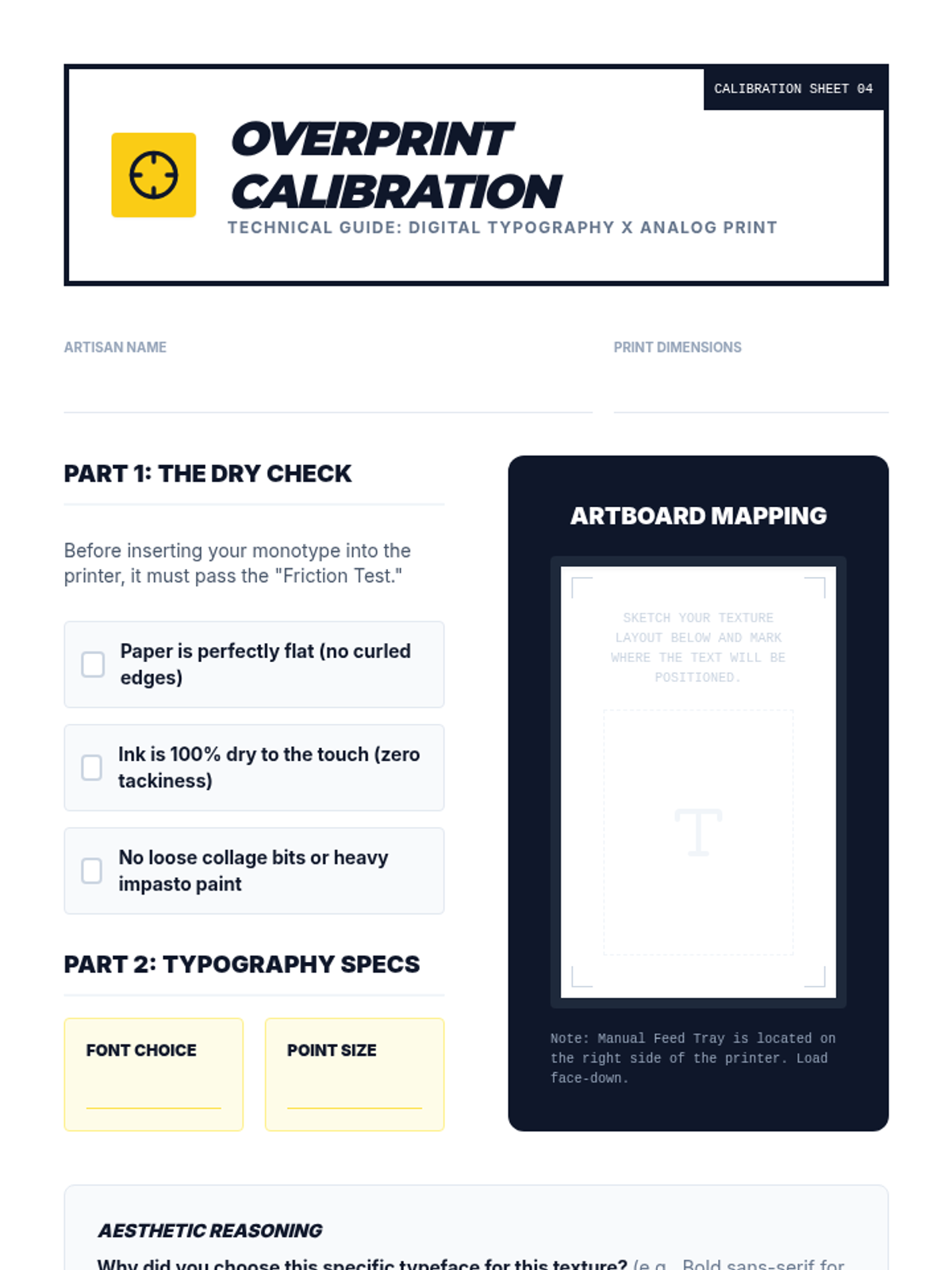
A technical workshop on overprinting digital typography onto analog monotypes, focusing on alignment and legibility.
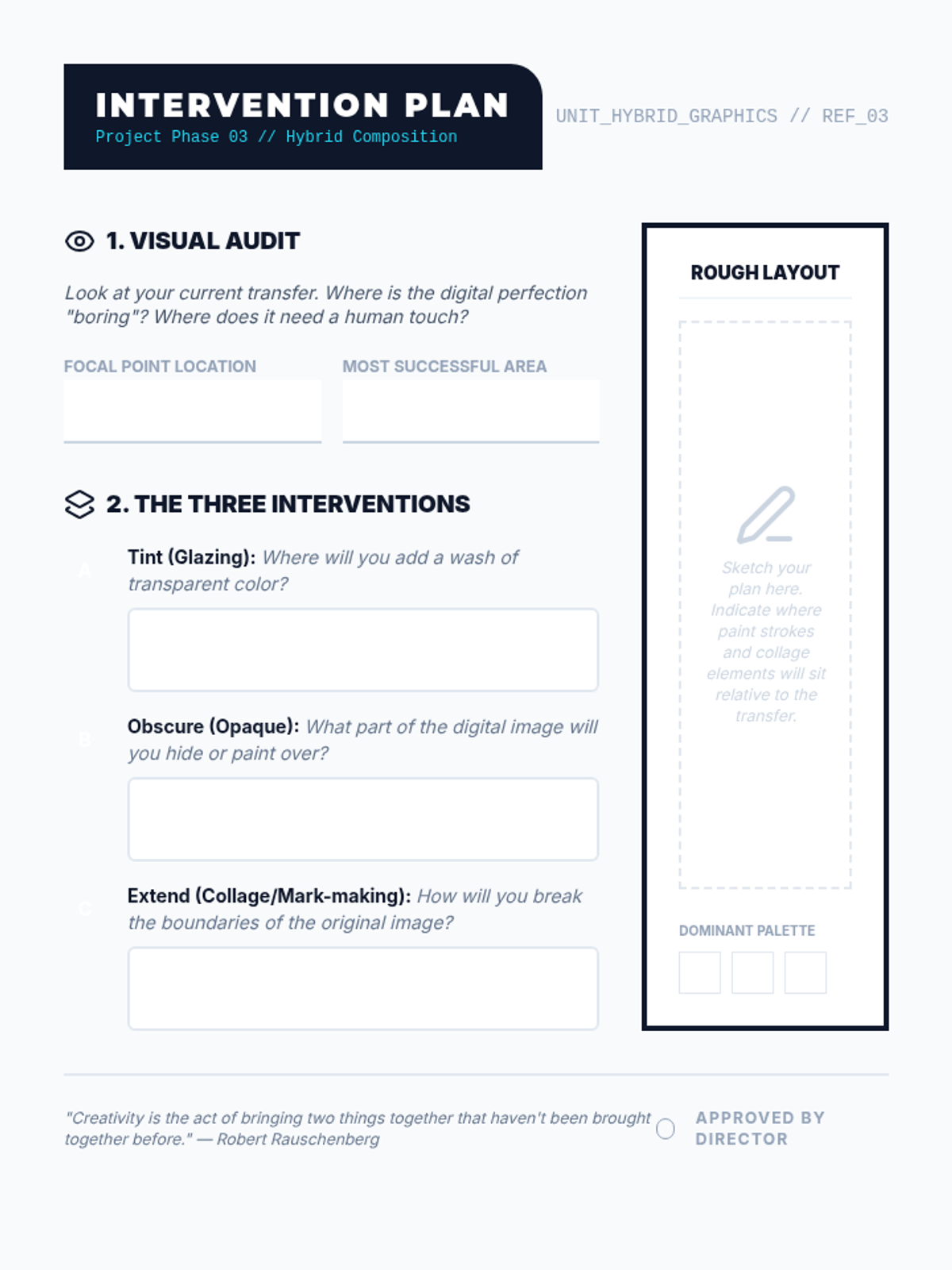
Students disrupt digital perfection by integrating hand-applied media like paint and collage into their transferred prints.
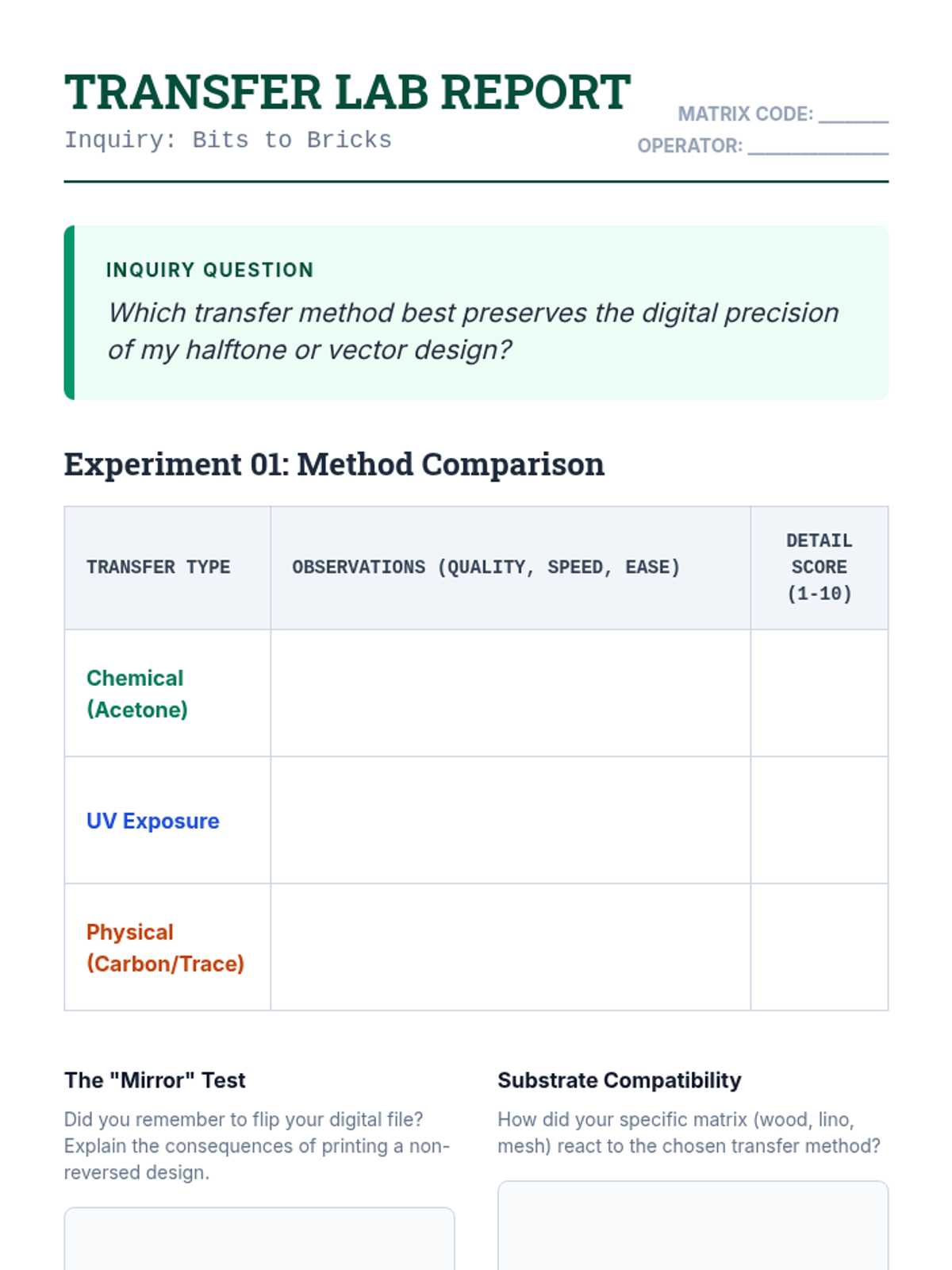
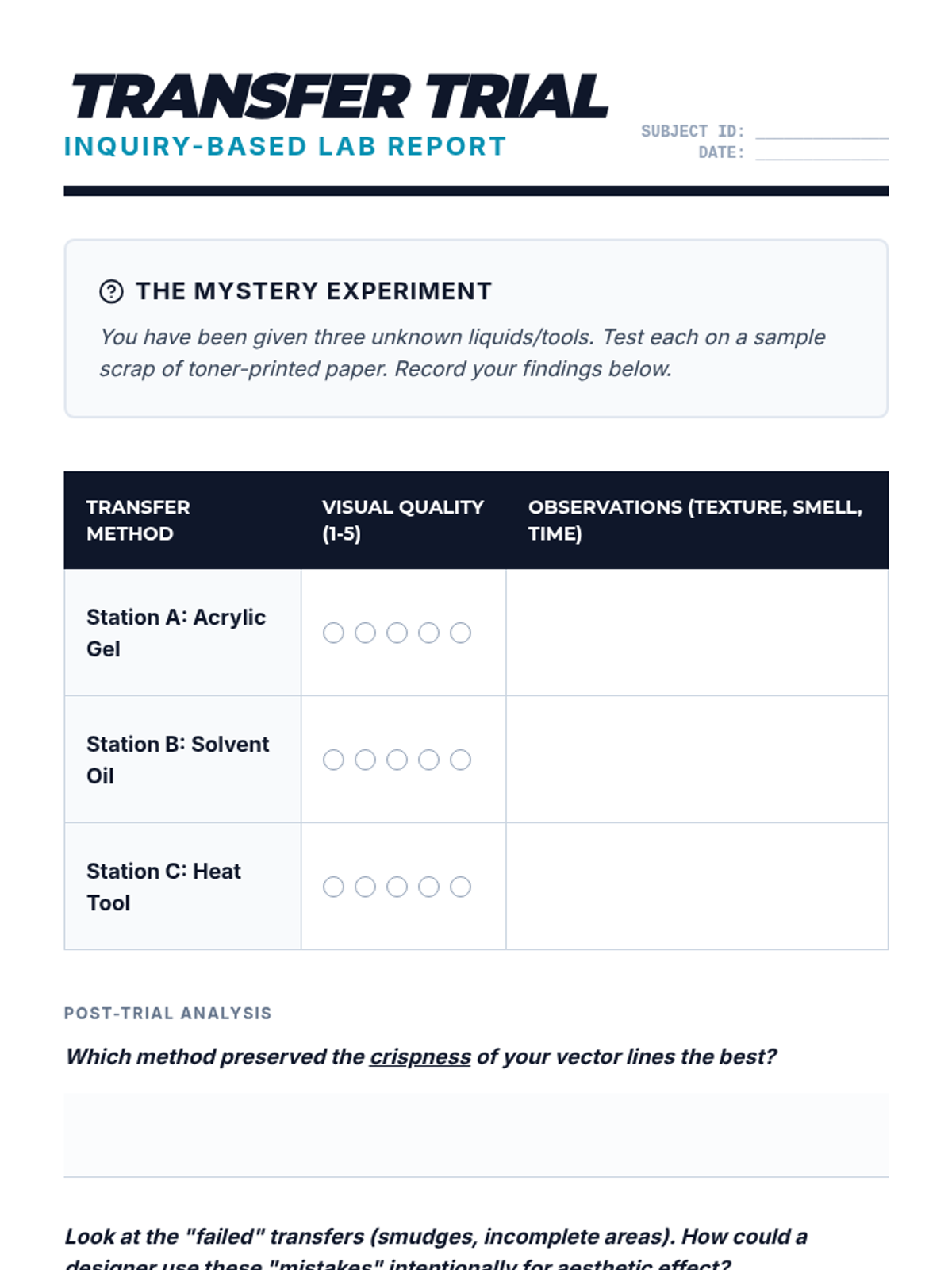
An inquiry-based exploration of moving digital toner onto physical surfaces using chemical and heat-based transfer methods.
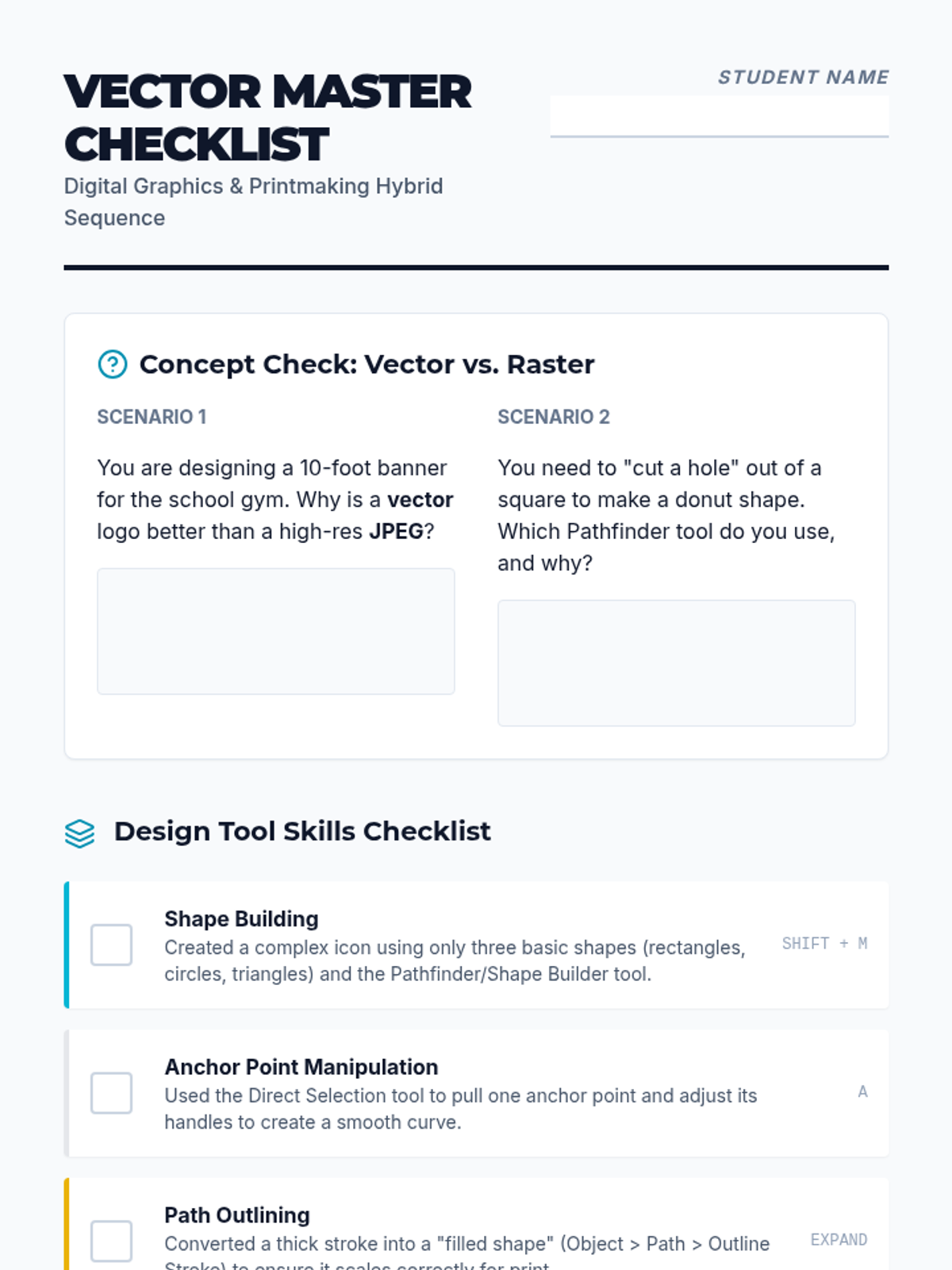
Students master vector graphic creation using shape-building tools and explore the conceptual differences between scalable vectors and fixed rasters for print.
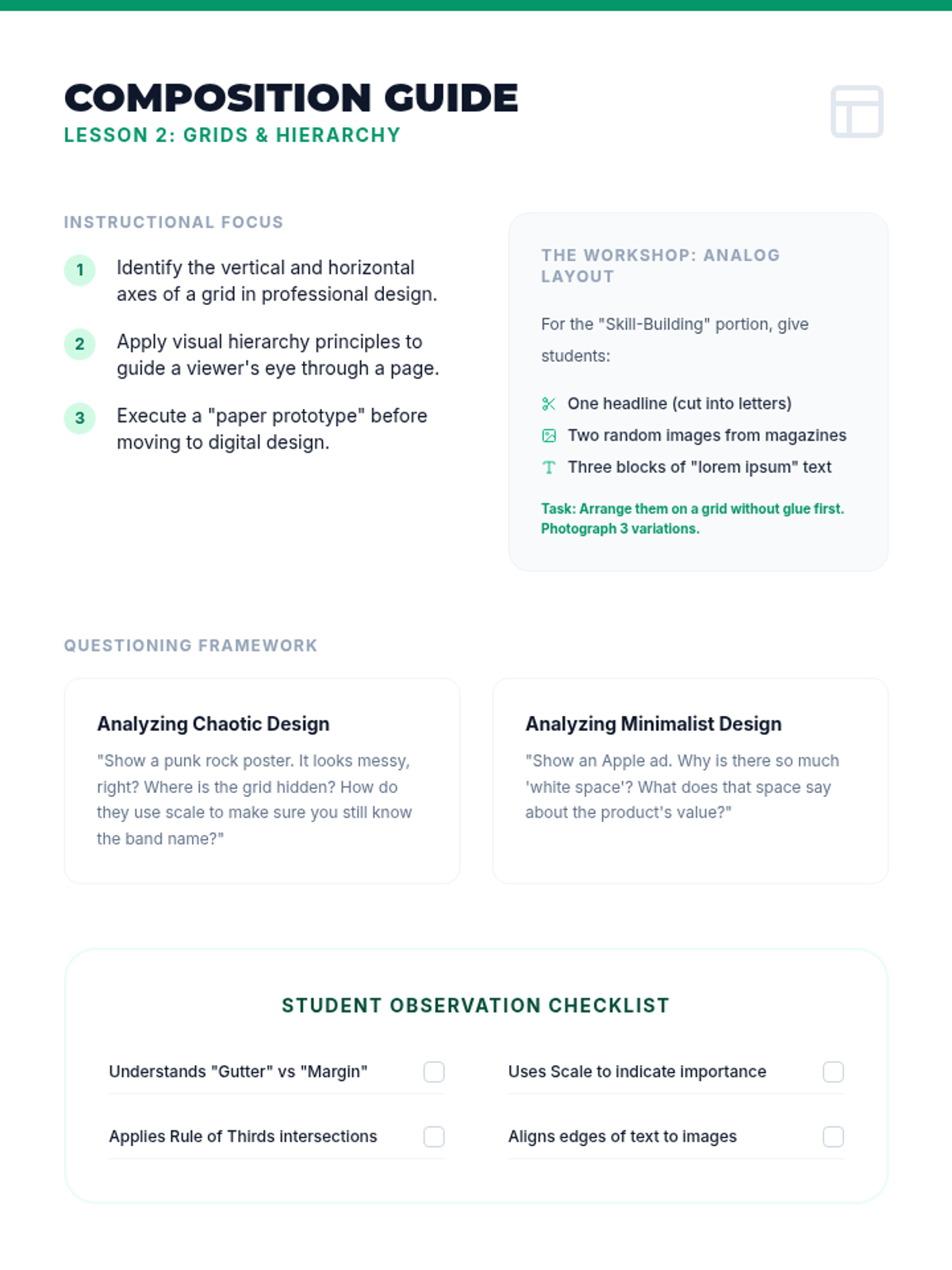
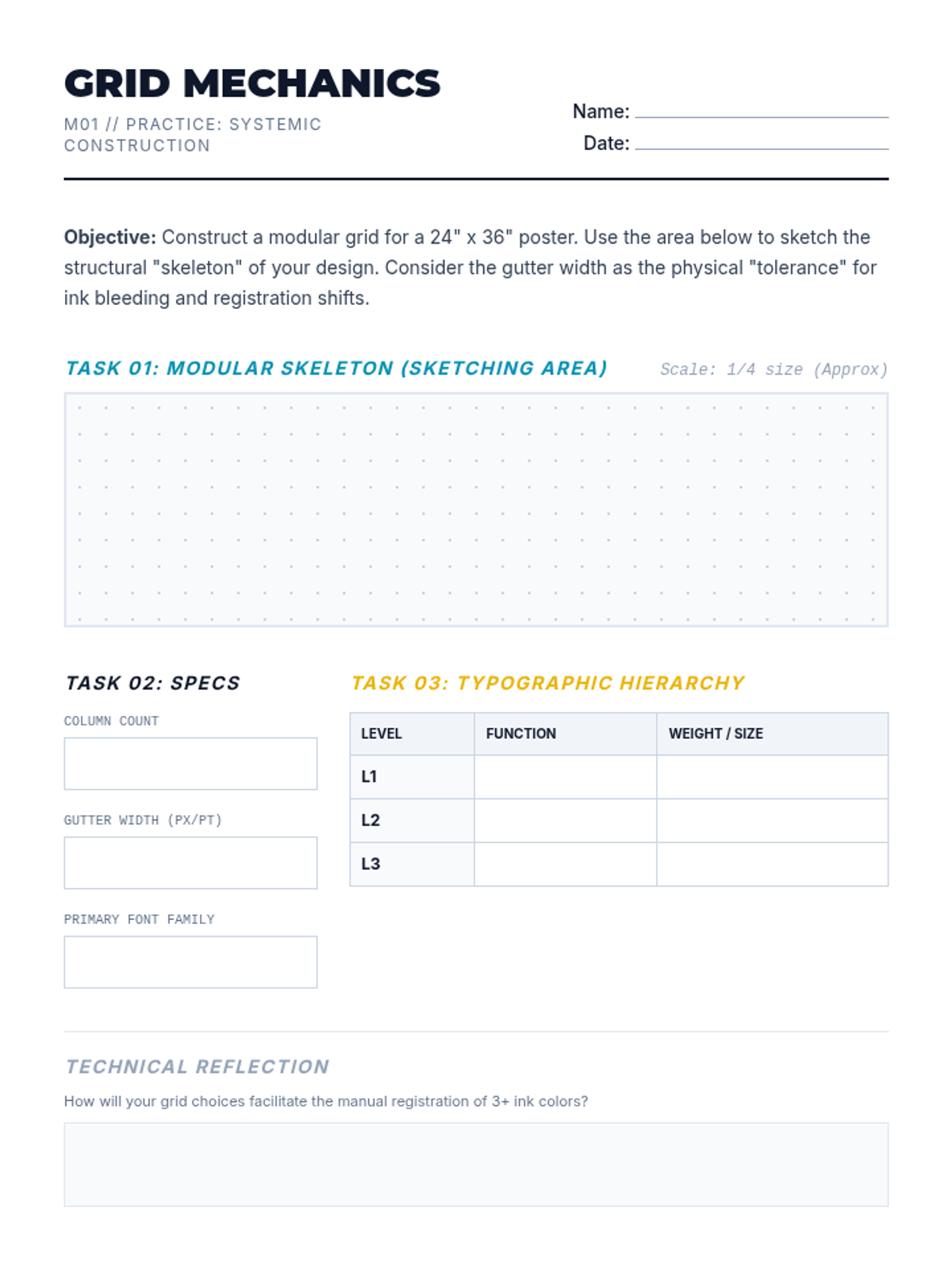
Focuses on visual hierarchy, the rule of thirds, and the use of invisible grids to organize complex layouts. Includes a physical 'cut-and-paste' workshop.
Students curate their work for professional presentation and engage in rigorous peer critique. The lesson addresses artist statements, numbering conventions, and framing for experimental prints.
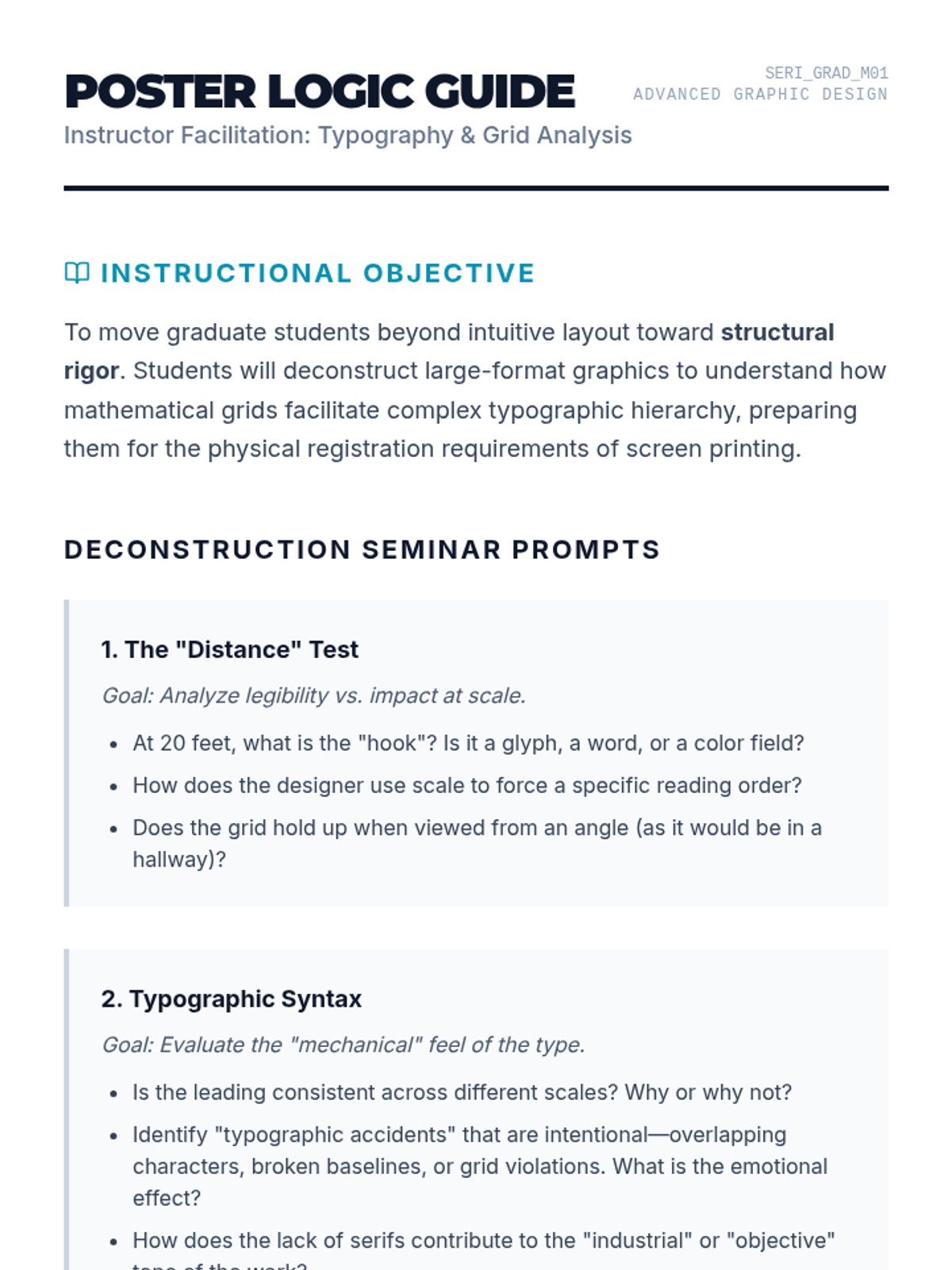
Students analyze complex grid systems and typographic hierarchy within the context of large-format design. They design poster concepts that balance legibility with expressive visual syntax for screen printing.
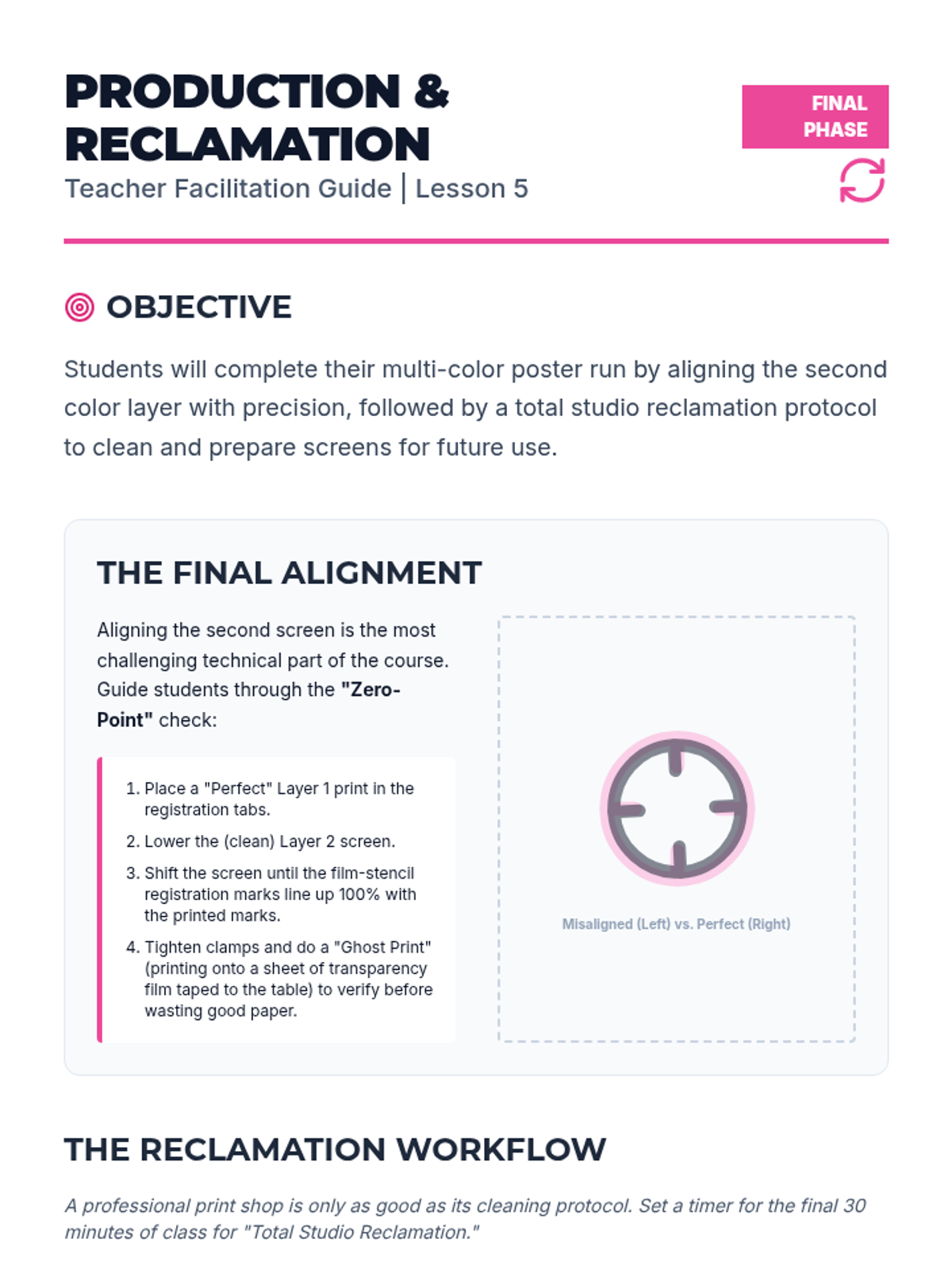
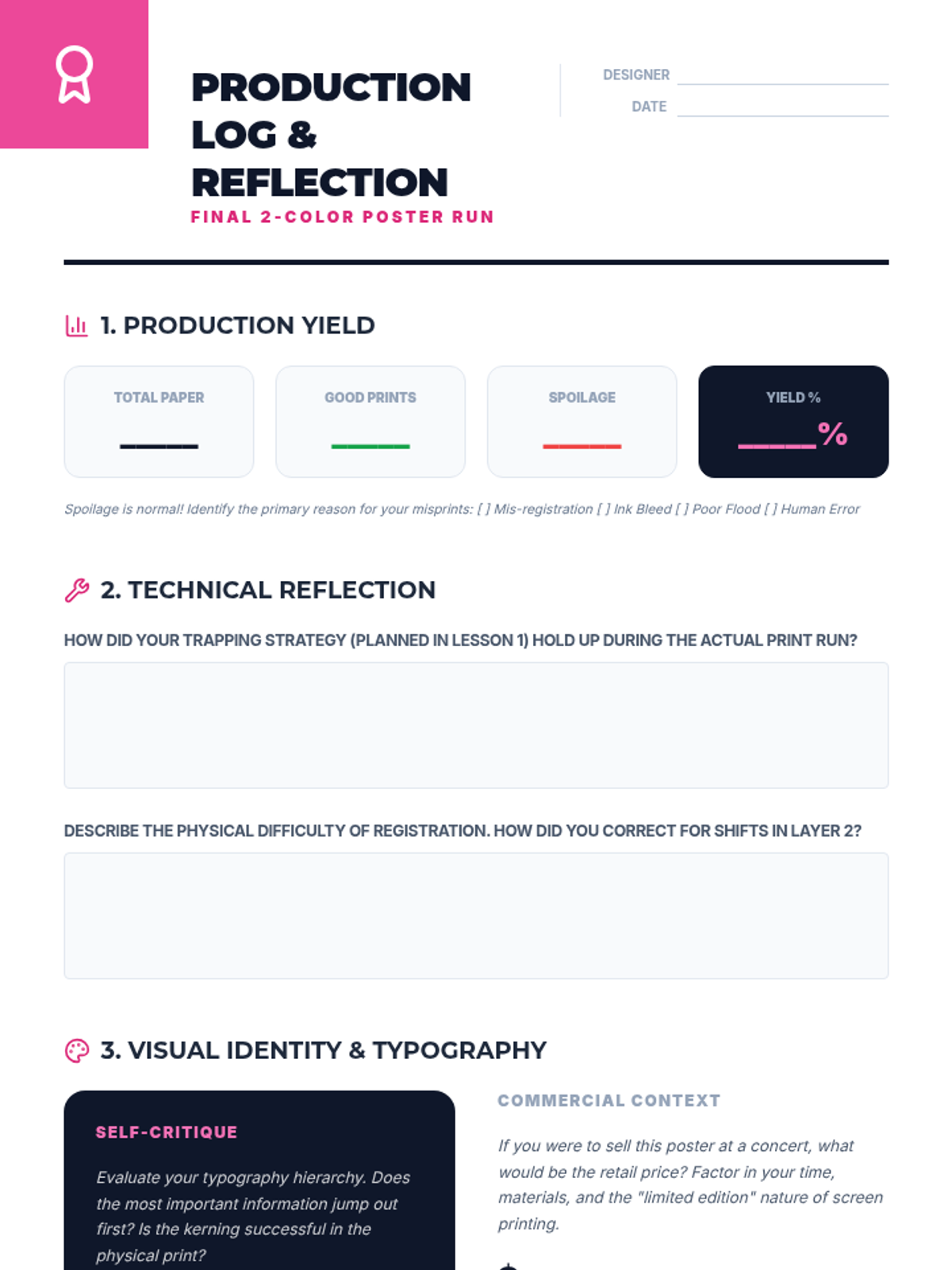
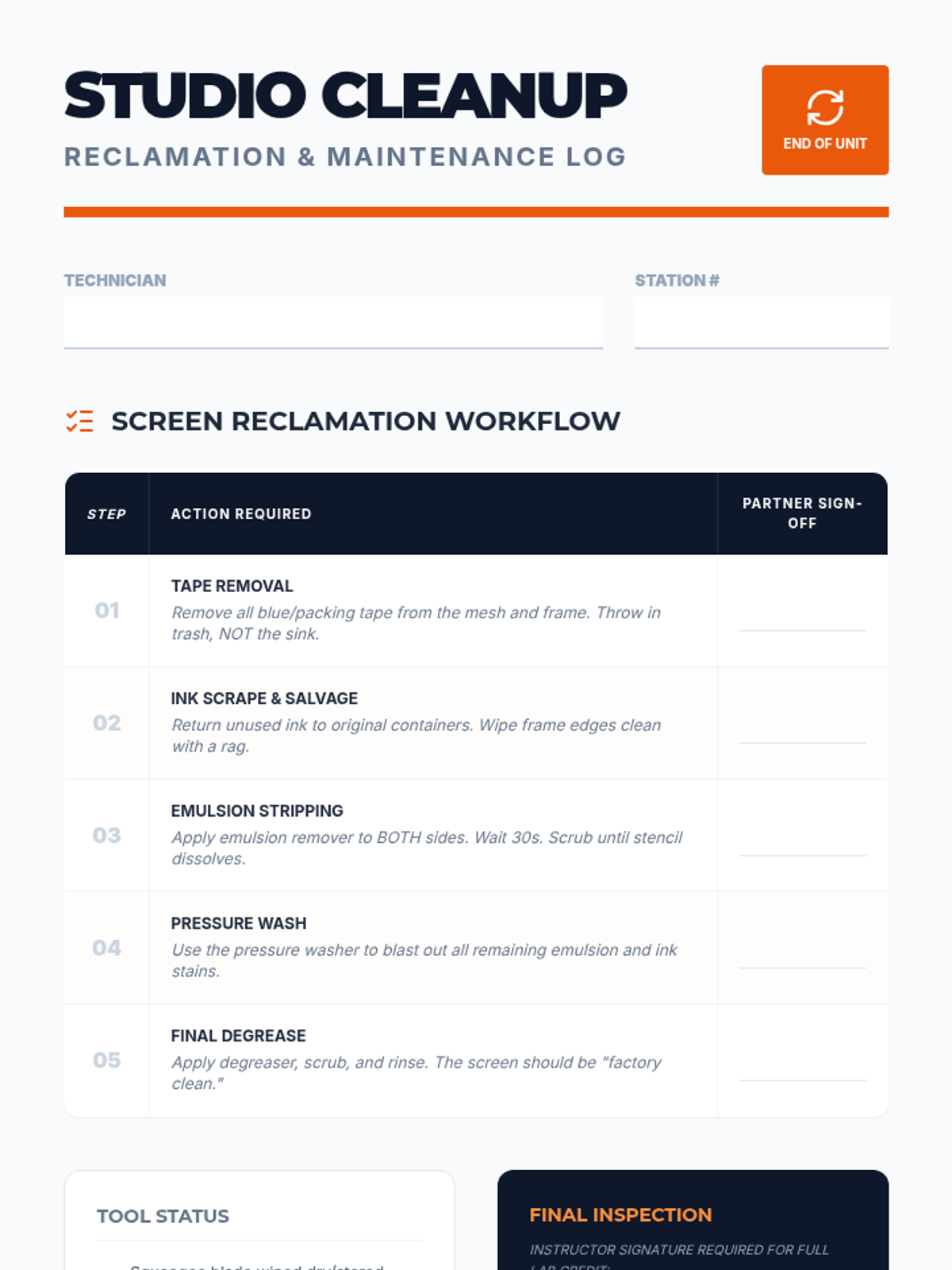
Students print the second color layer, tackling the difficulty of aligning tight registration. The sequence concludes with reclaiming screens (cleaning) and a discussion on the commercial viability of screen printing.
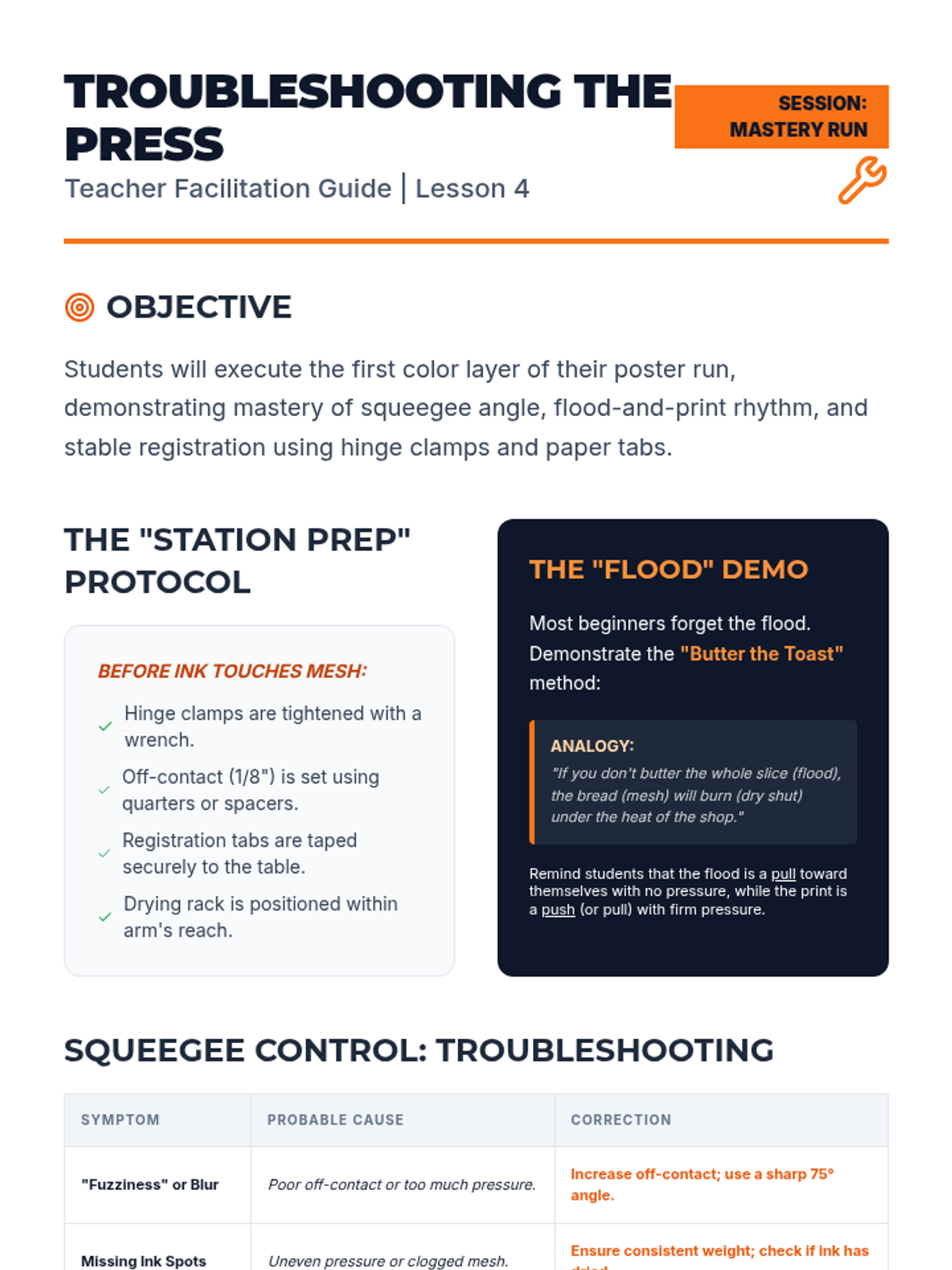
Students set up hinge clamps and registration tabs to print their first color layer. The lesson emphasizes the angle, pressure, and speed of the squeegee pull to ensure crisp edges and avoid bleeding.
Focus on studio responsibility through screen reclamation and the synthesis of work through artist statements and portfolio assembly.
Mastering the physical mechanics of the squeegee pull, focus on angle, pressure, and consistency across a limited edition print run.
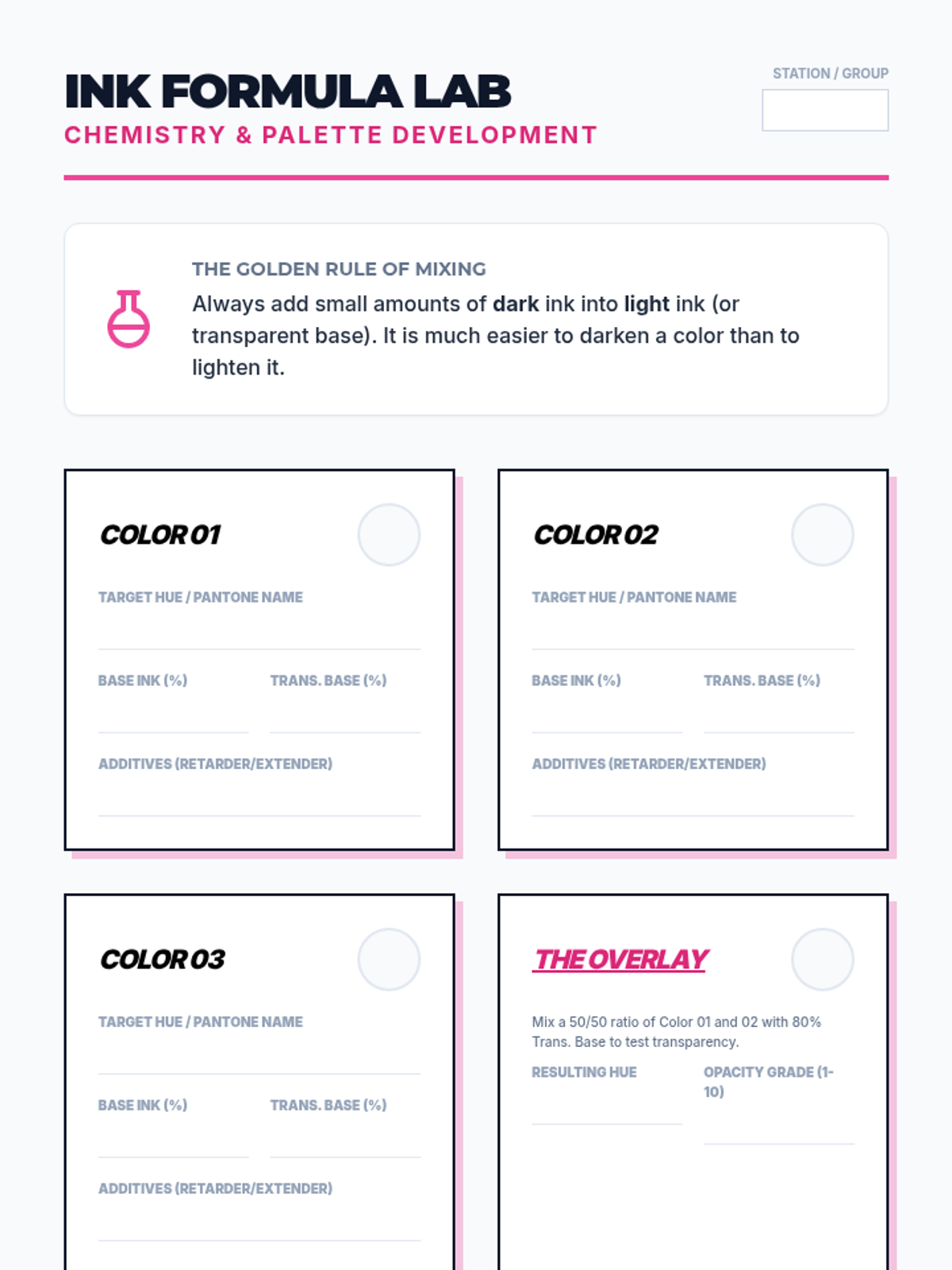
Instruction on ink modification using transparent bases and CMYK process simulation to achieve complex color palettes.
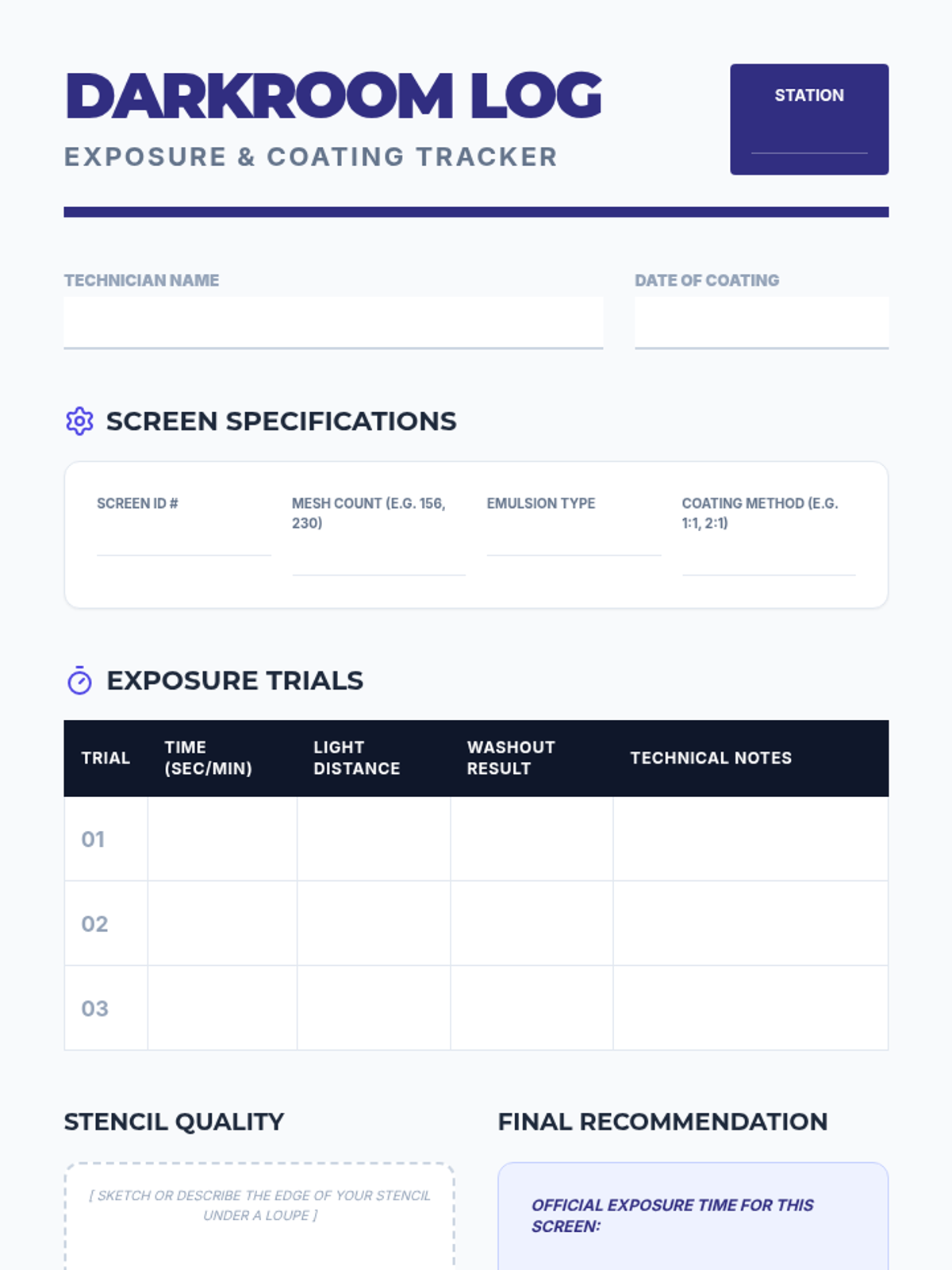
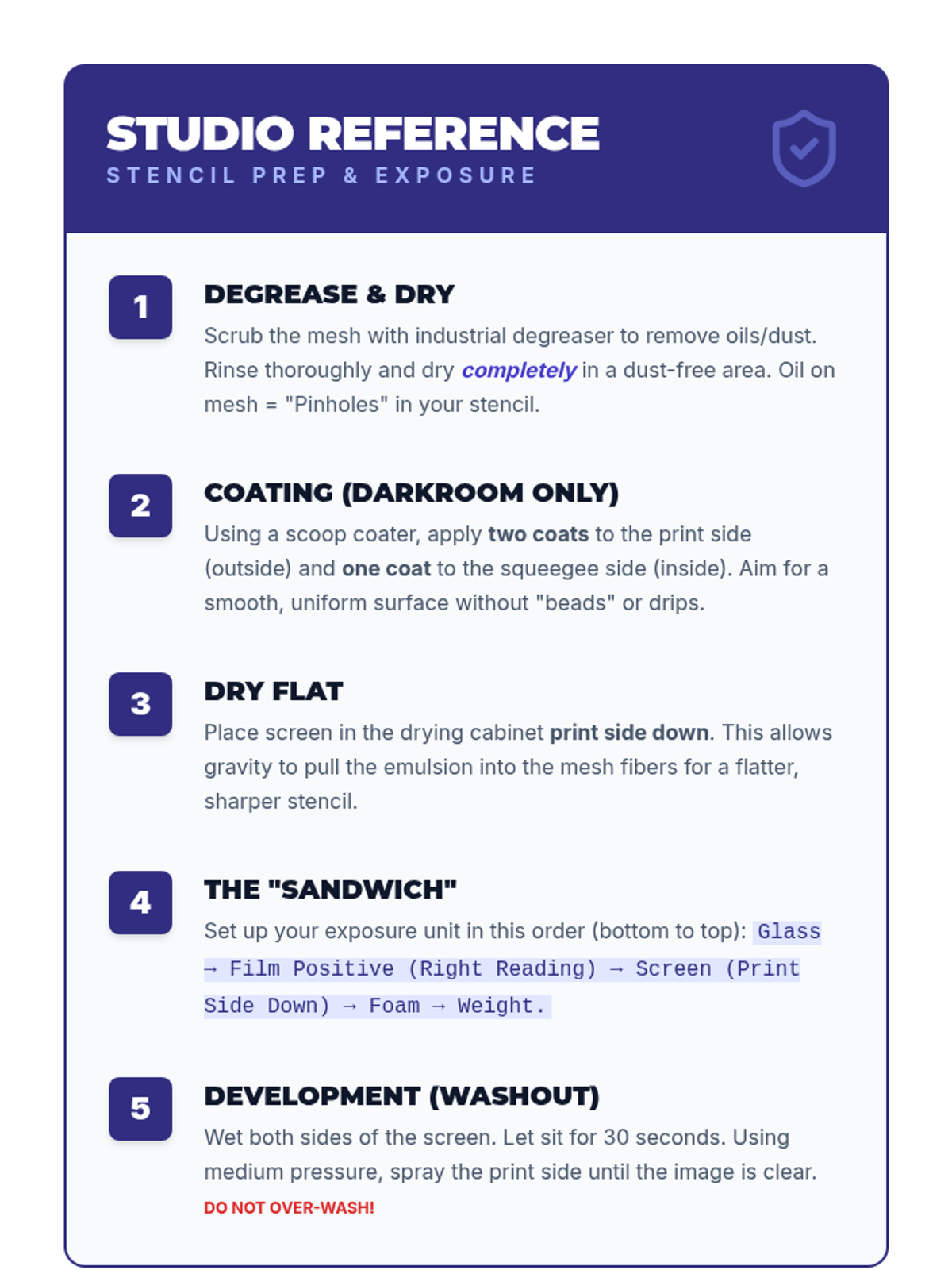
A technical exploration of photo-emulsion chemistry, screen coating techniques, and exposure calculations for creating high-fidelity stencils.
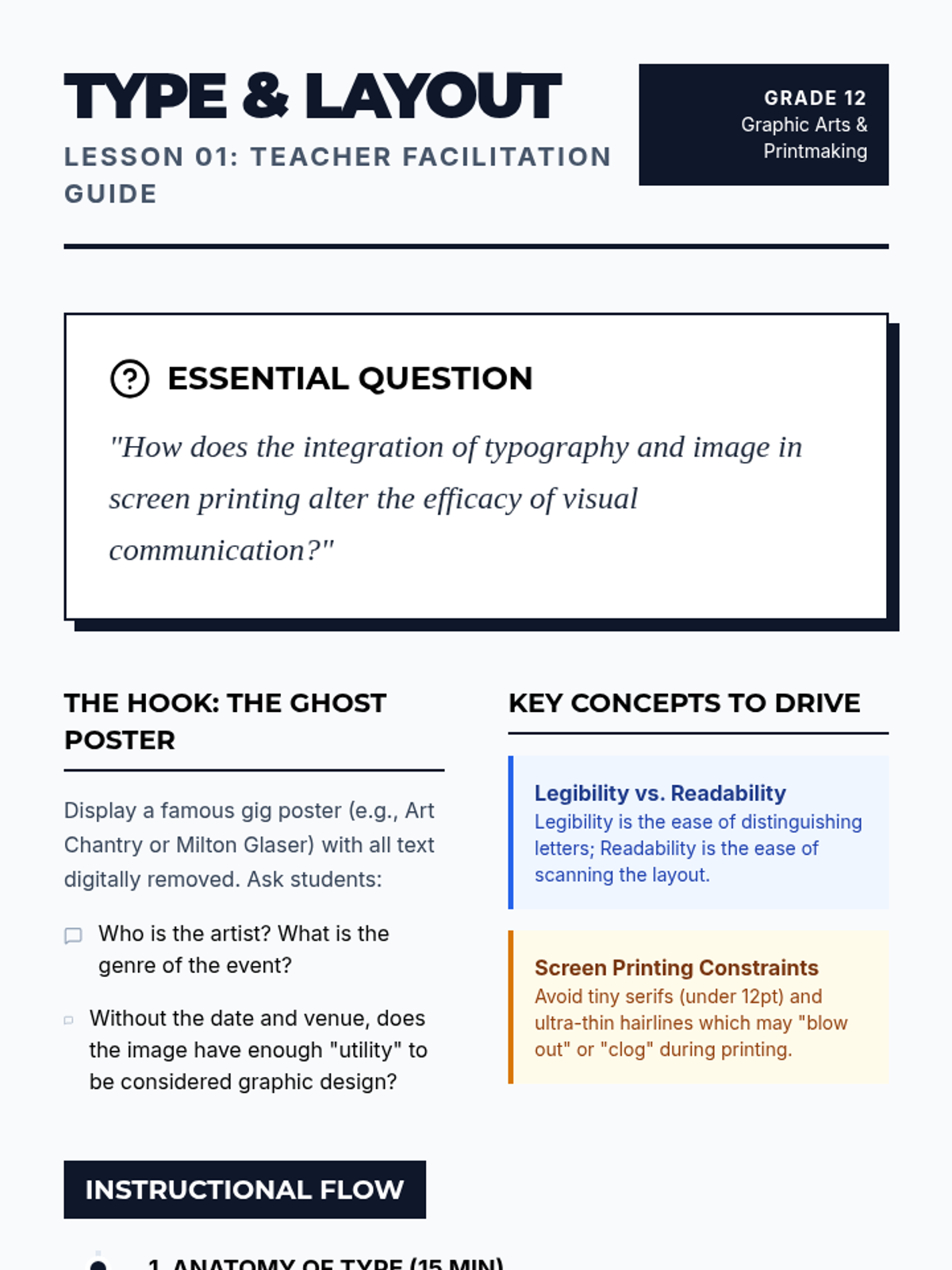
Students analyze the fundamentals of typography in poster design, focusing on visual hierarchy and the technical constraints of screen printing.
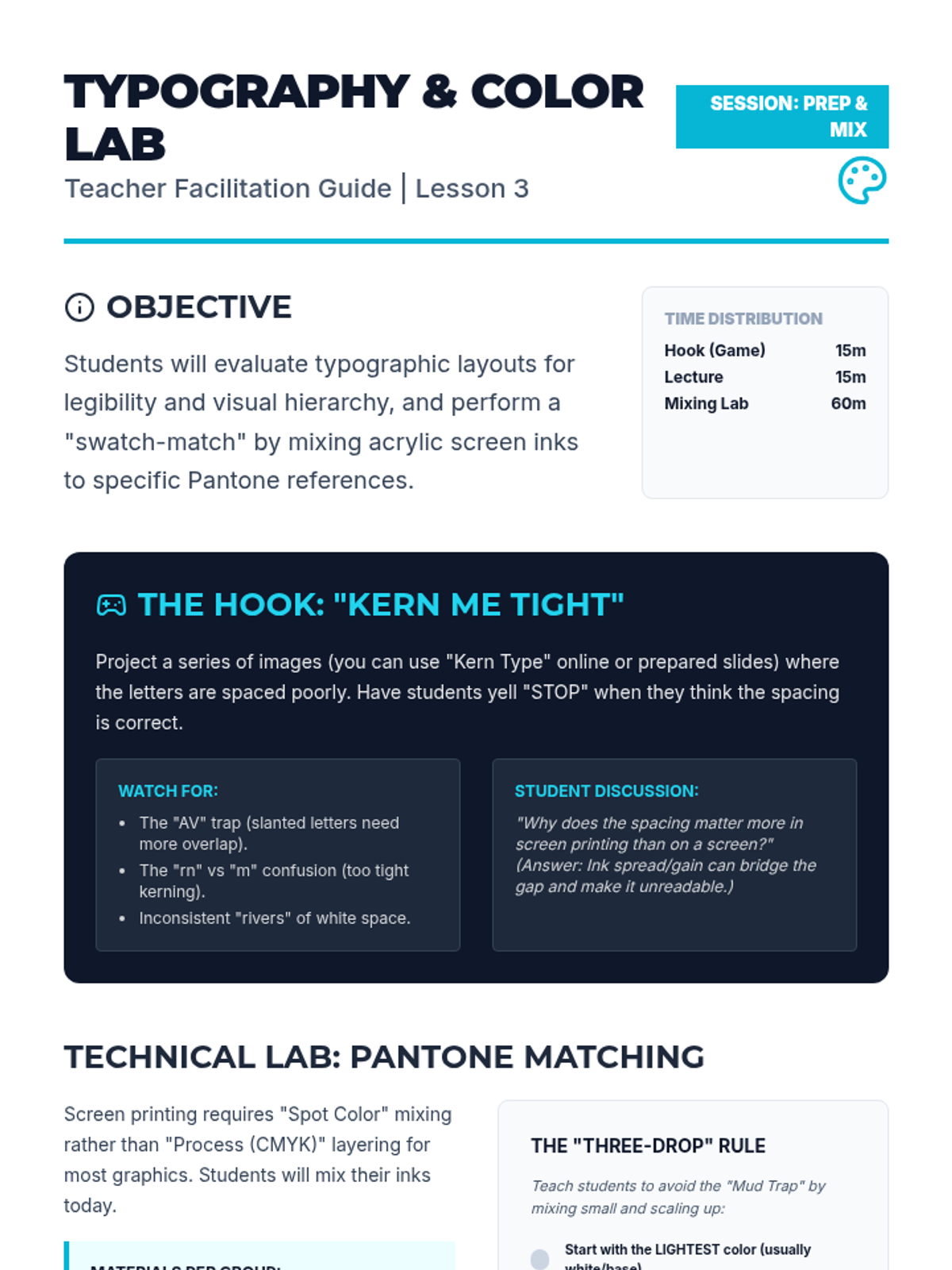
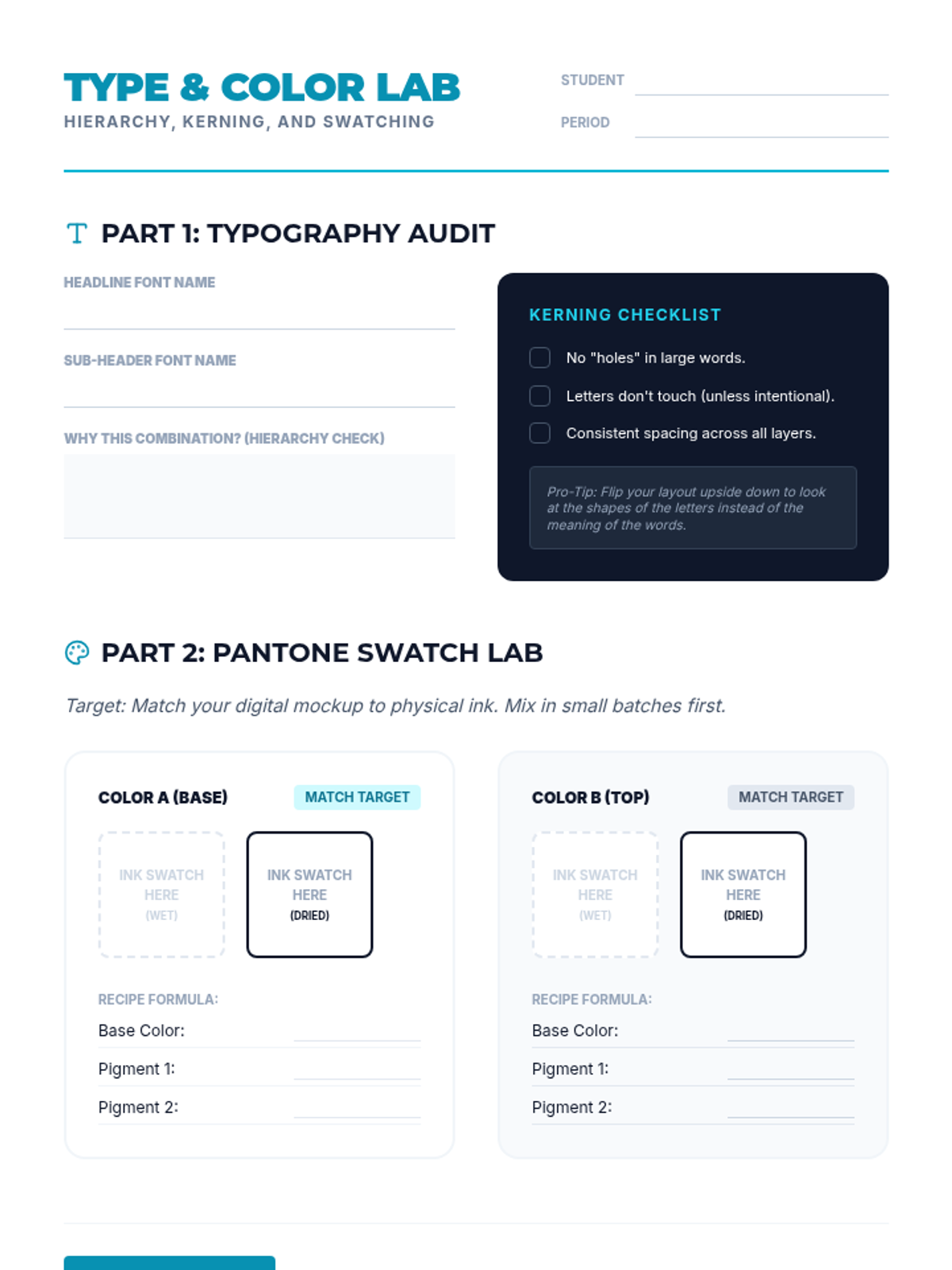
Before printing the final run, students analyze typography rules (kerning, hierarchy, font choice). They practice mixing acrylic inks to match specific Pantone references relevant to their design's mood.
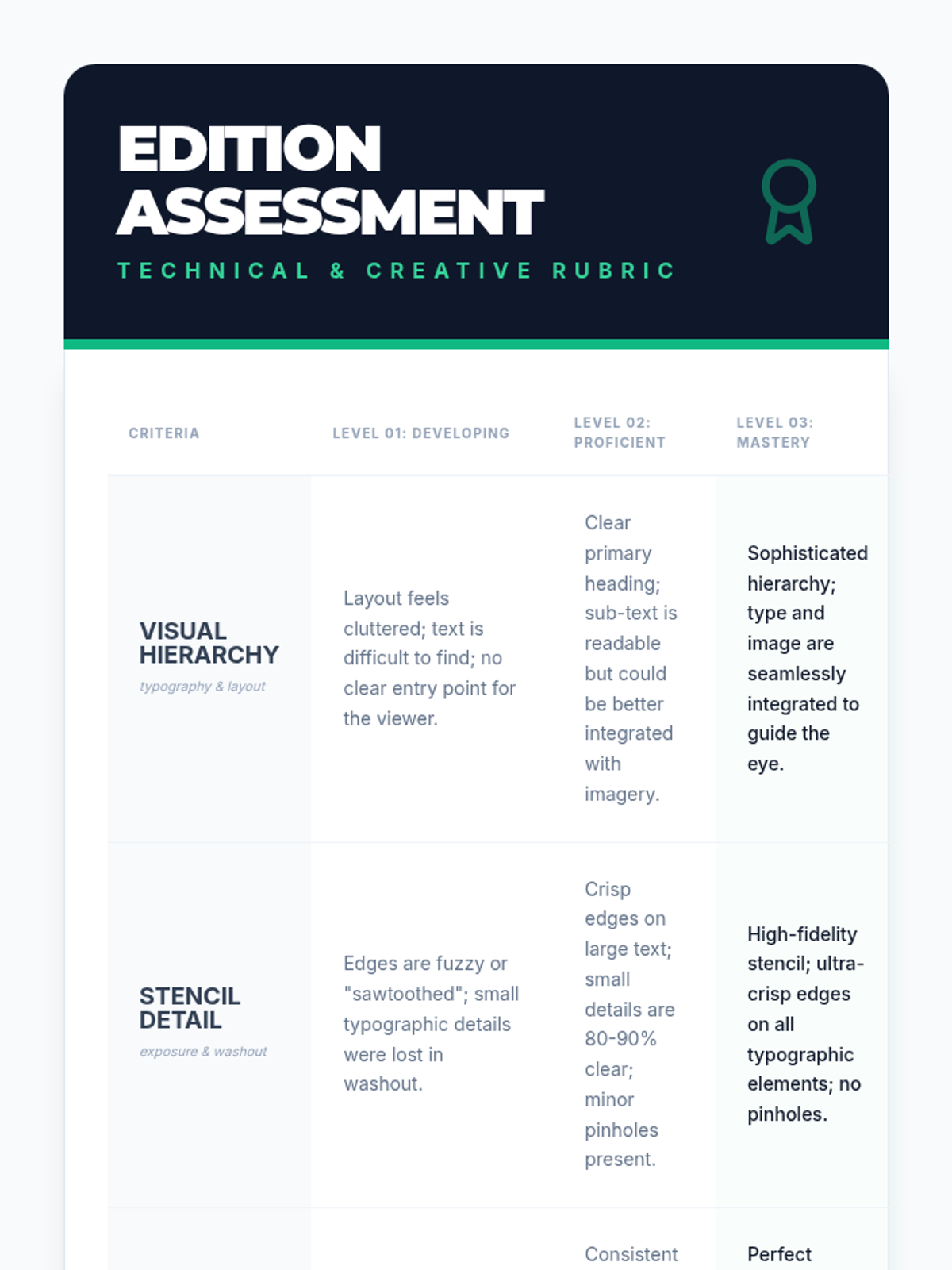
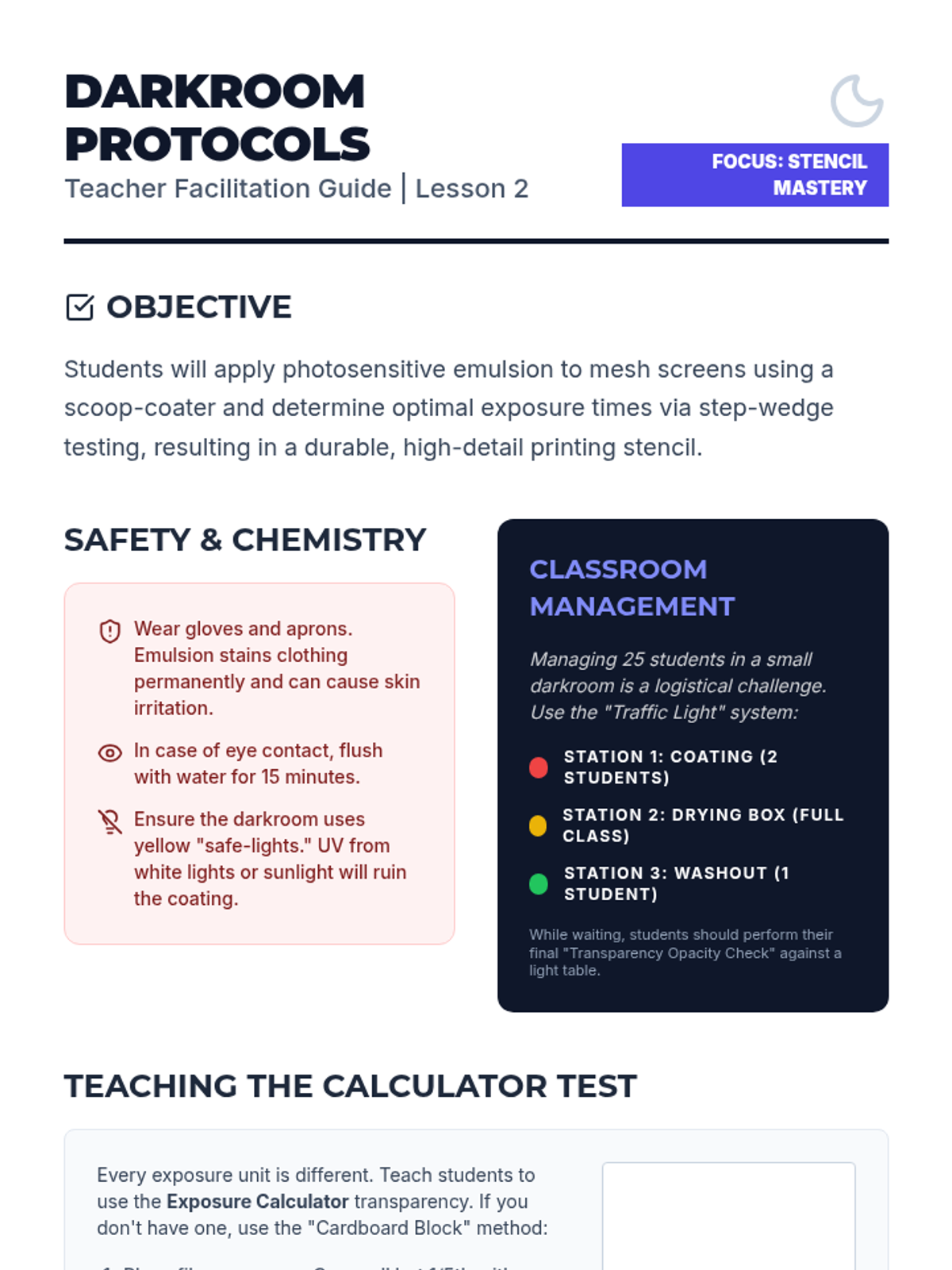
A darkroom-focused lesson where students coat screens with photosensitive emulsion and expose their designs. They learn the chemistry of light exposure and the washout process to create a crisp stencil.
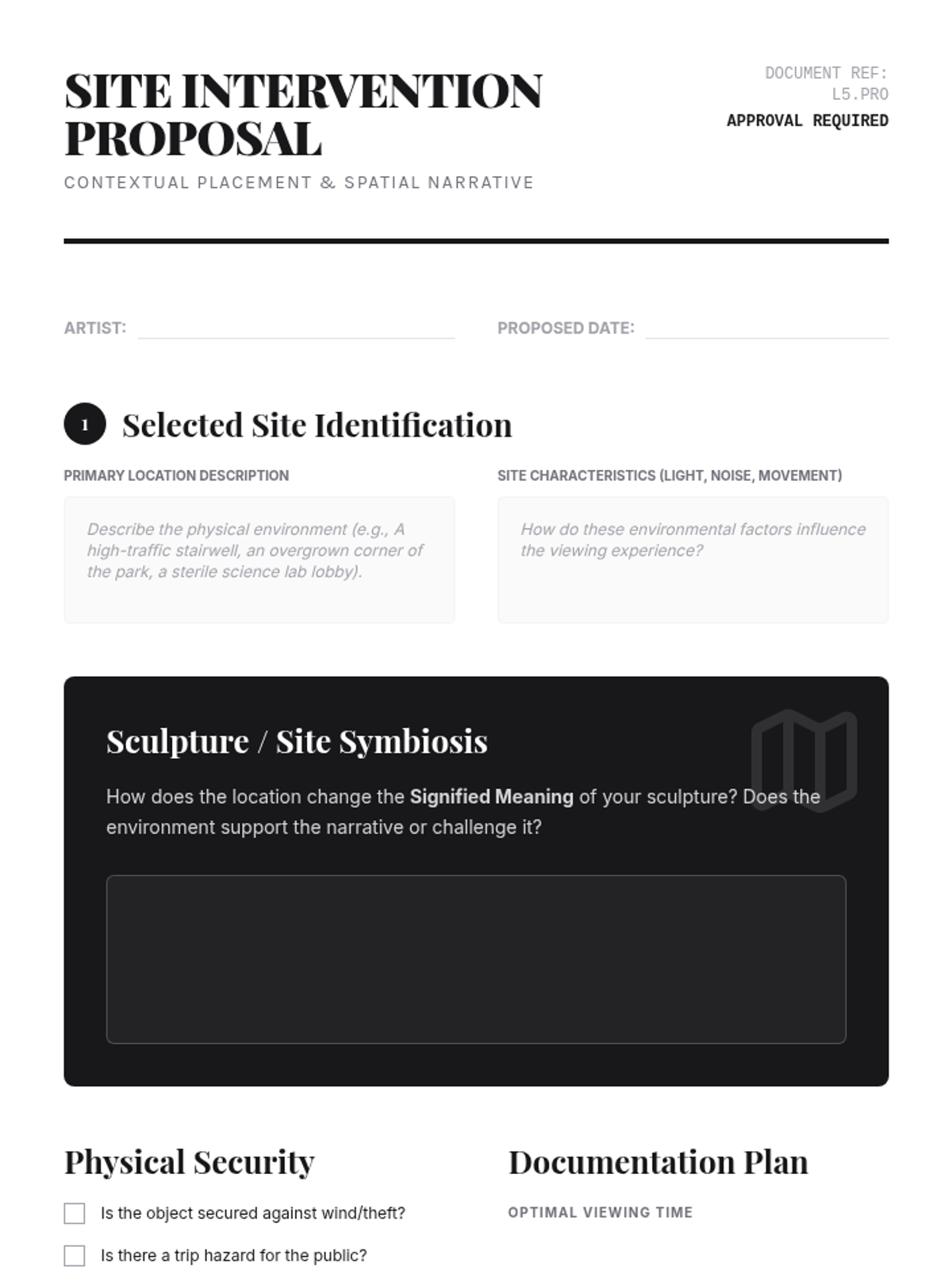
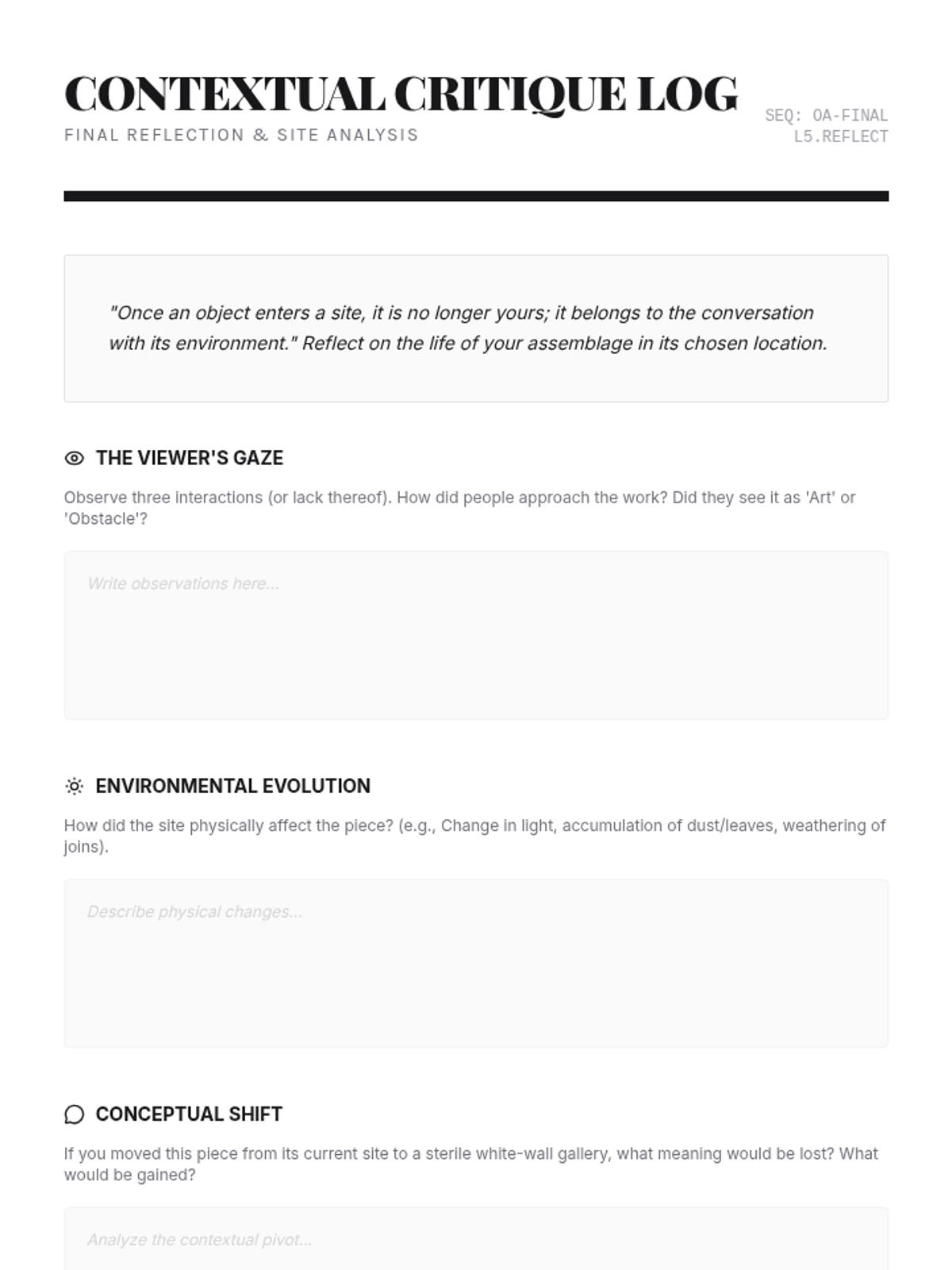
A study of how environment influences the reading of a sculpture, culminating in a site-specific installation.
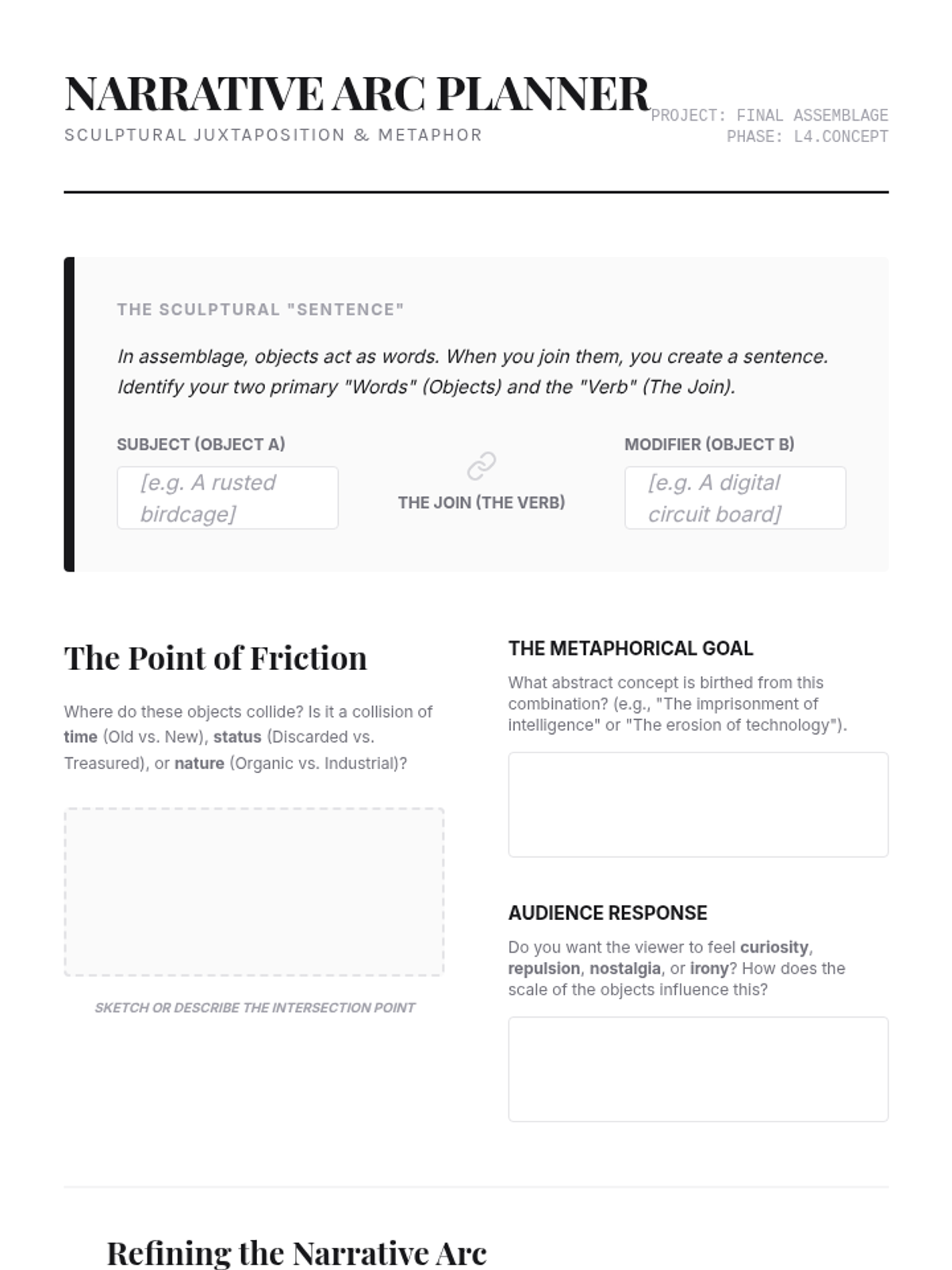
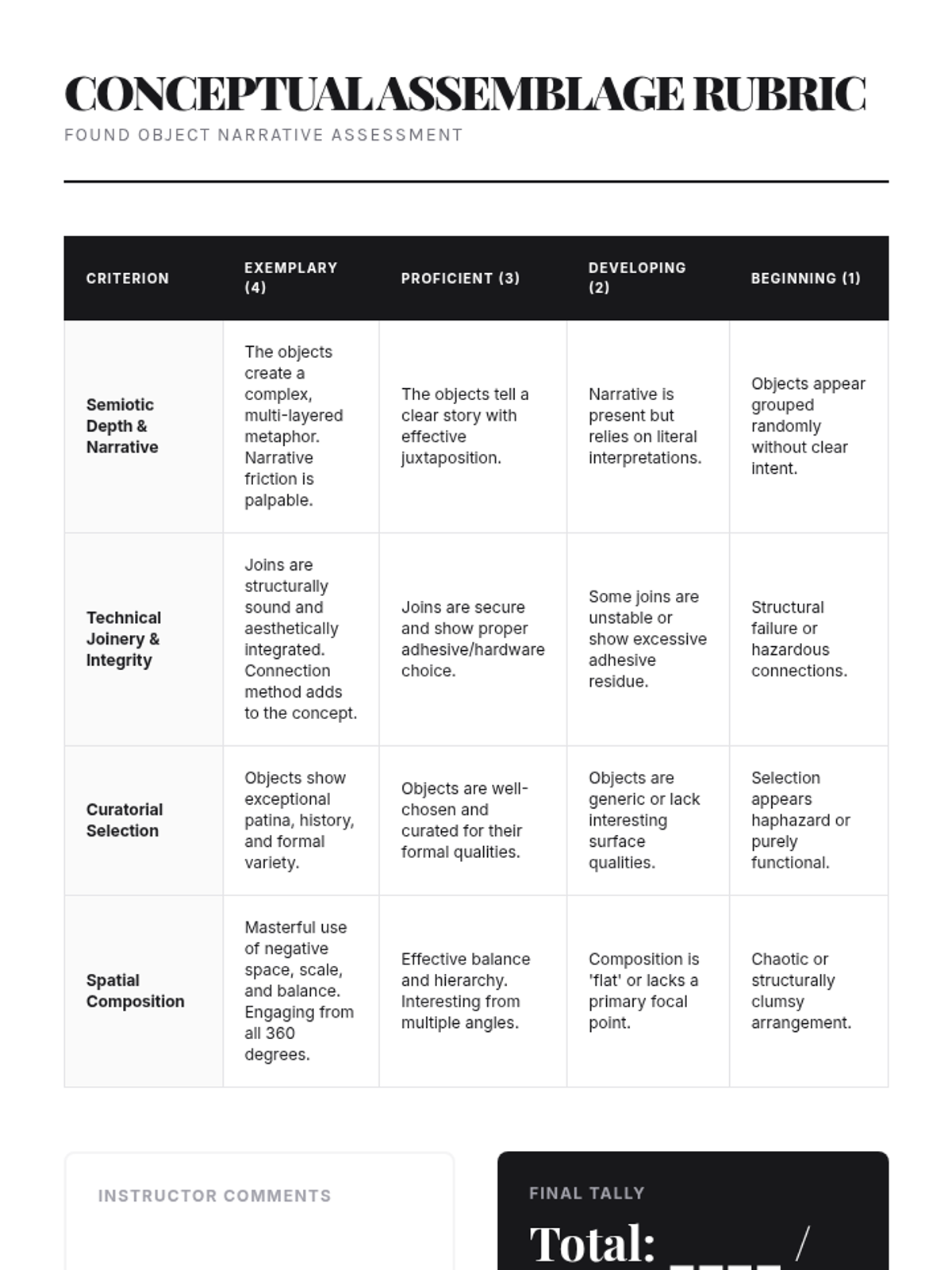
Students synthesize their collected objects into a cohesive sculpture that utilizes juxtaposition to build a conceptual narrative.
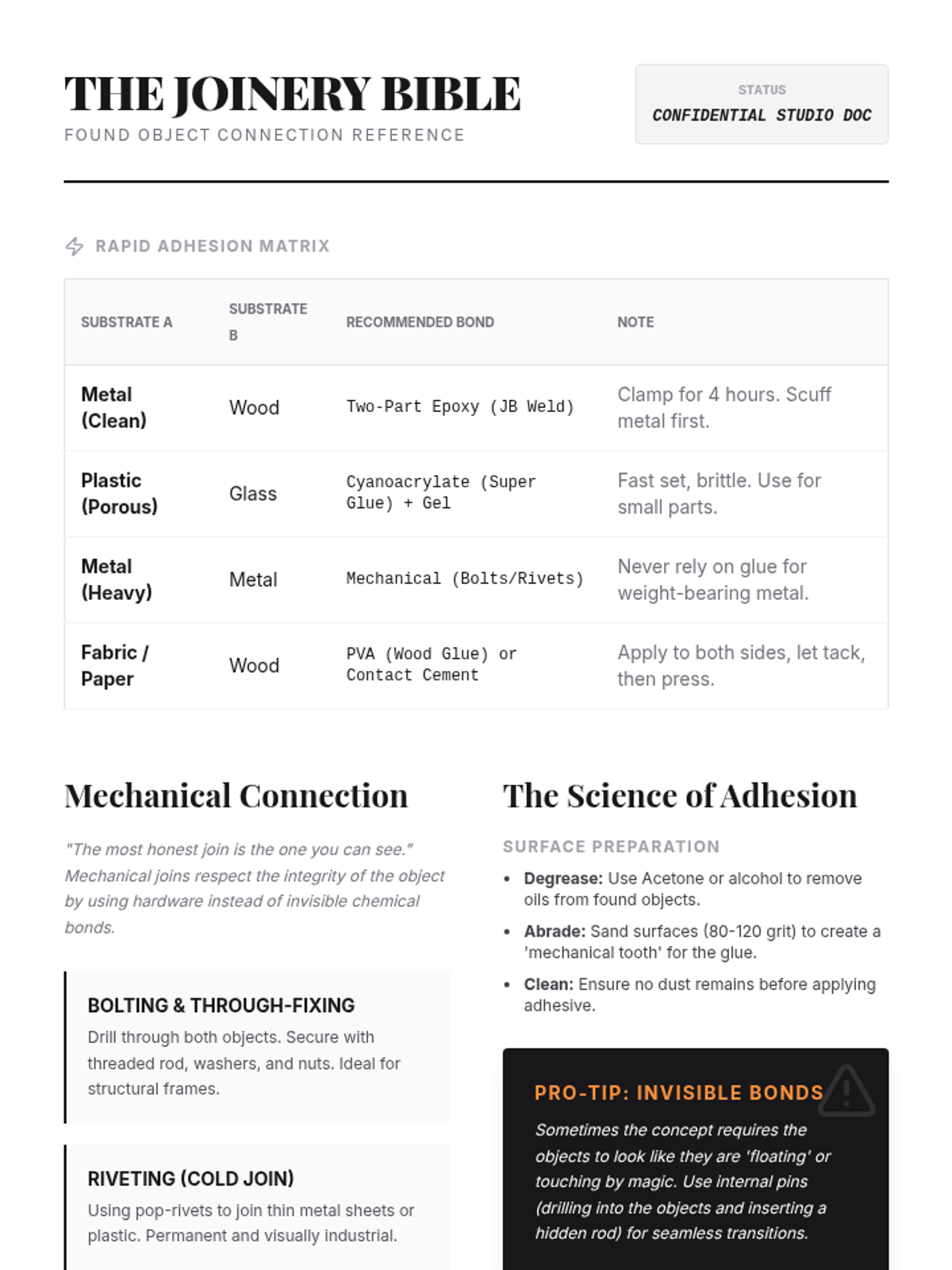
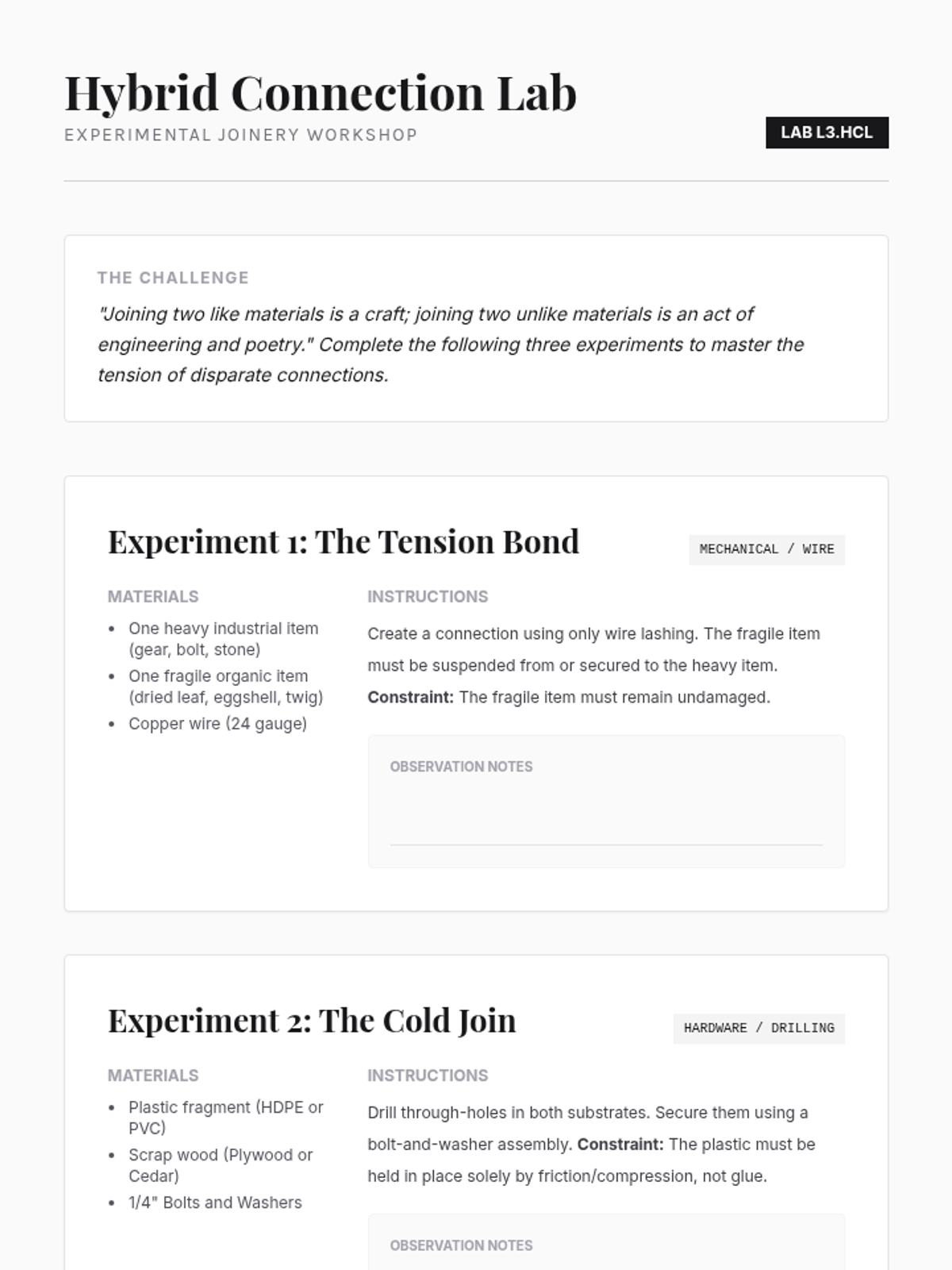
A technical workshop focused on the structural integrity and aesthetic choice of joining disparate materials.
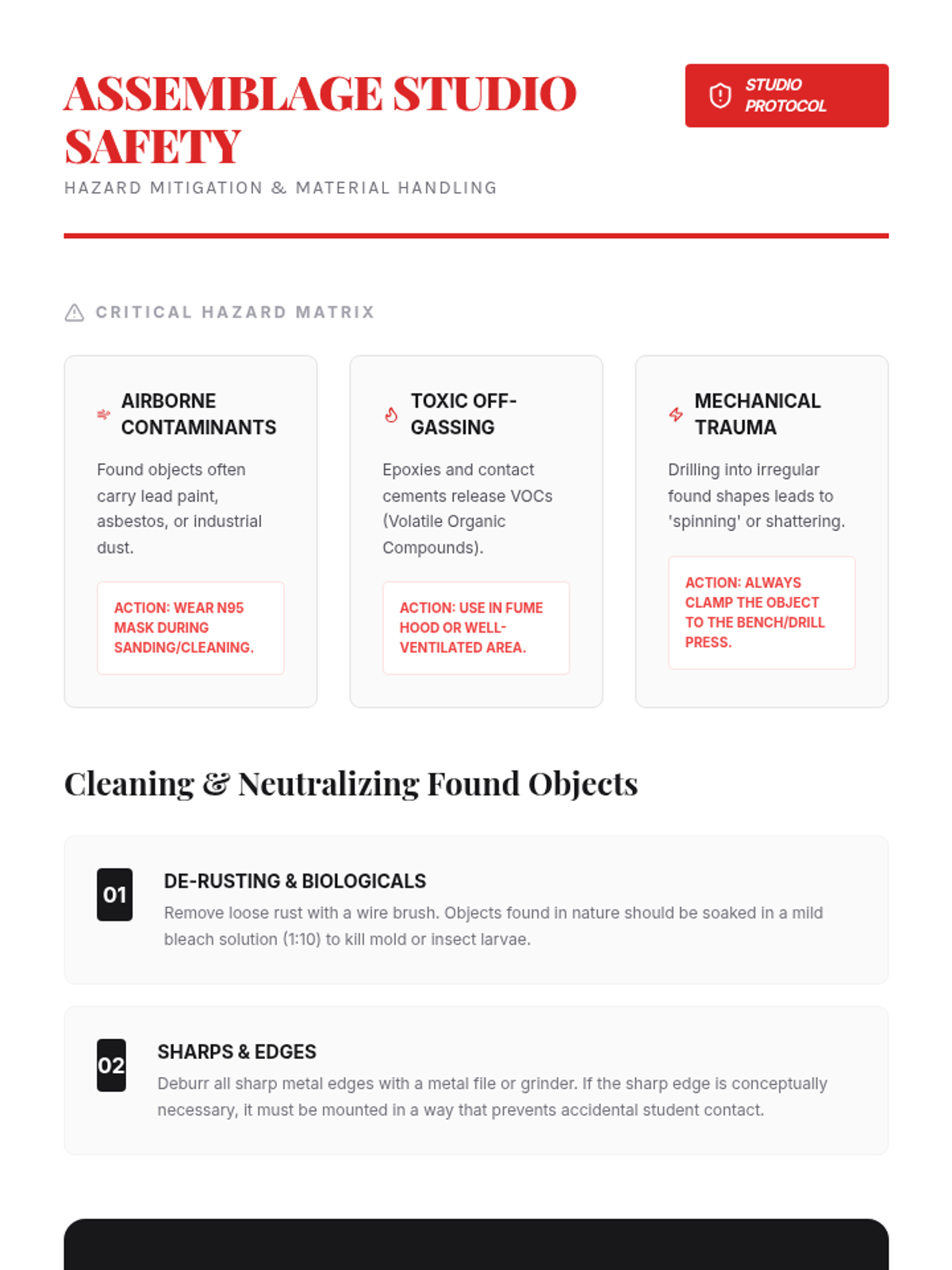
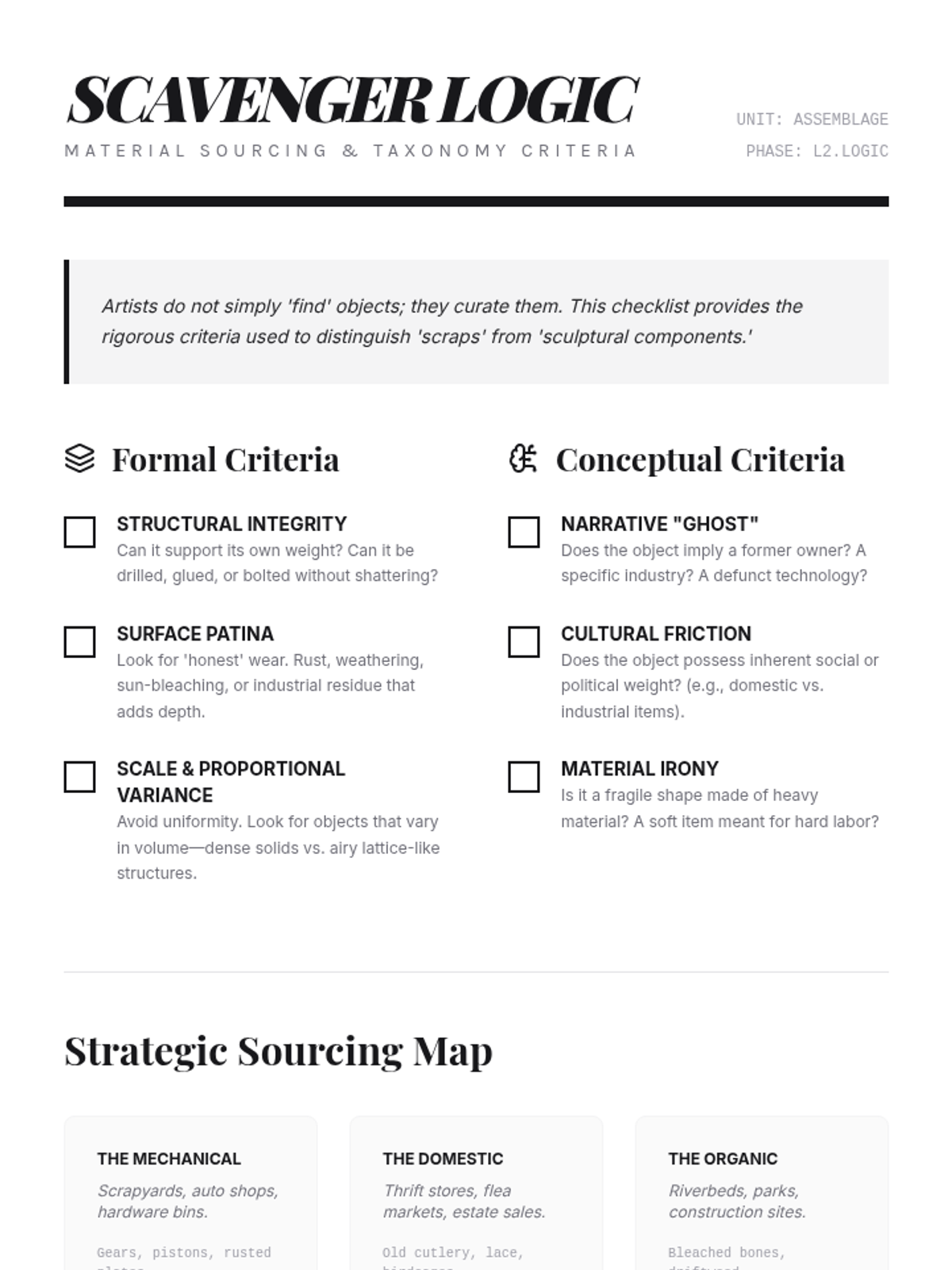
A field-based lesson on sourcing materials and categorizing them based on formal and conceptual properties.
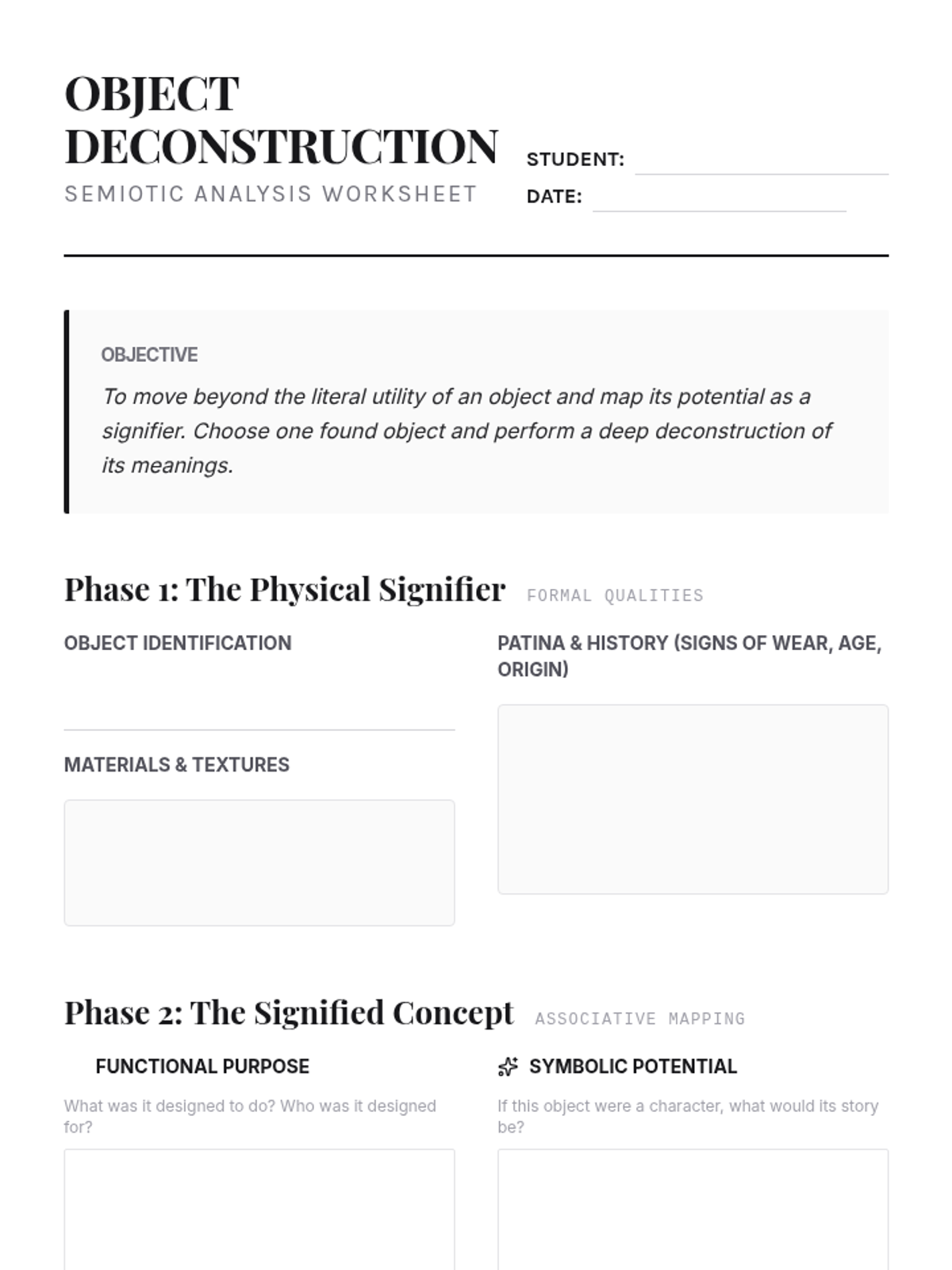
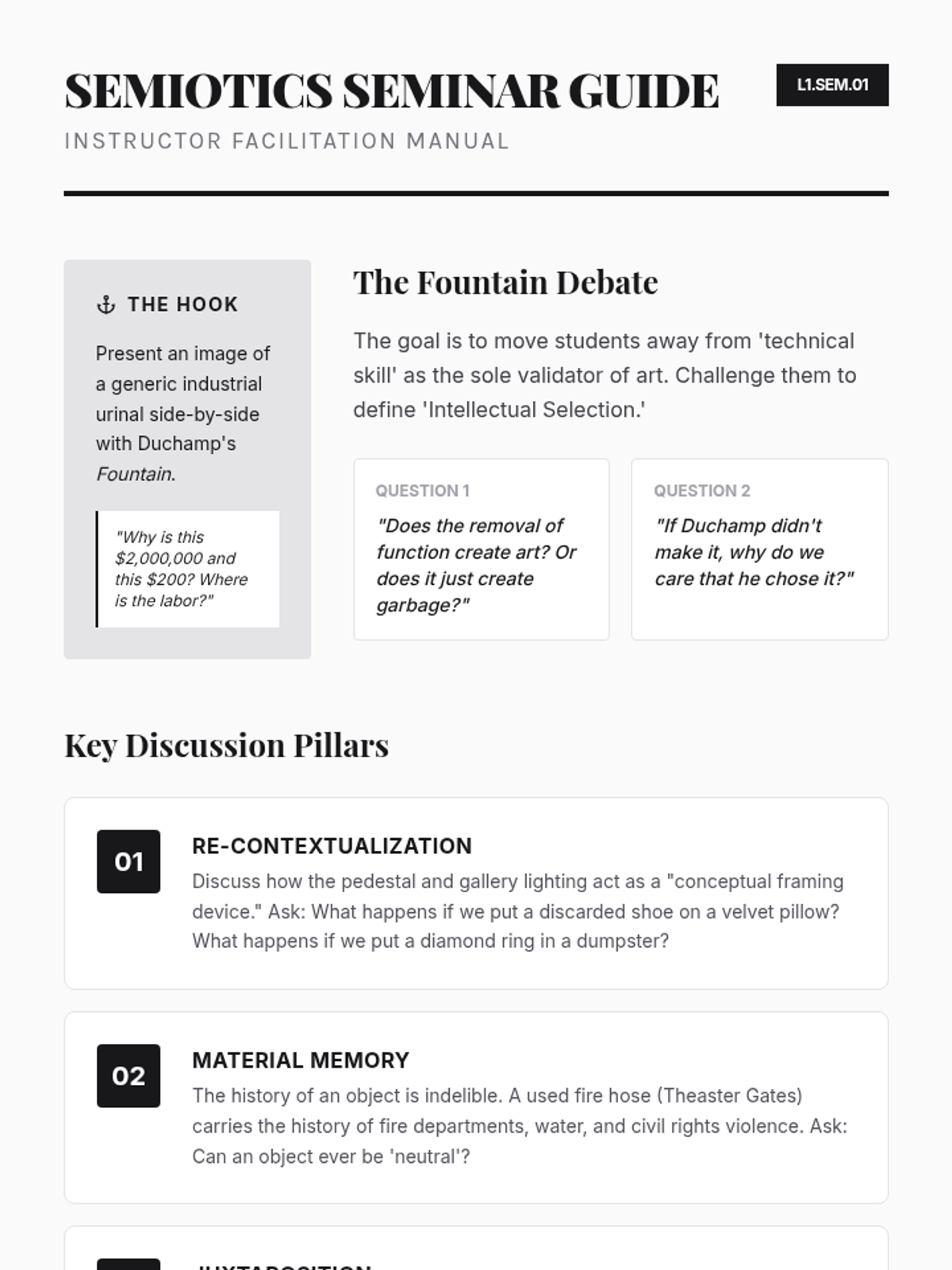
A seminar analyzing the shift from functional objects to 'Readymades' and contemporary assemblage through the lens of semiotics.
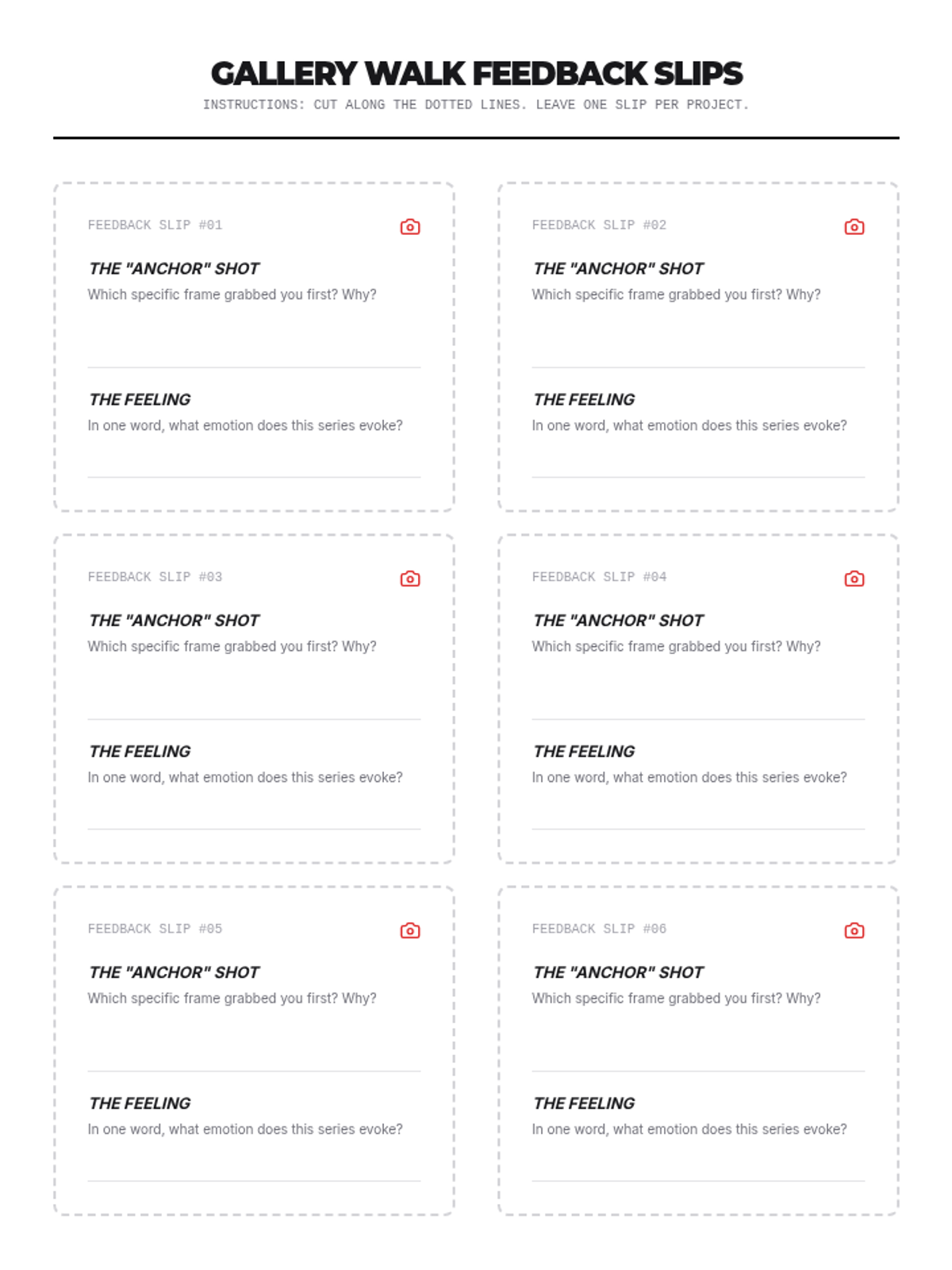
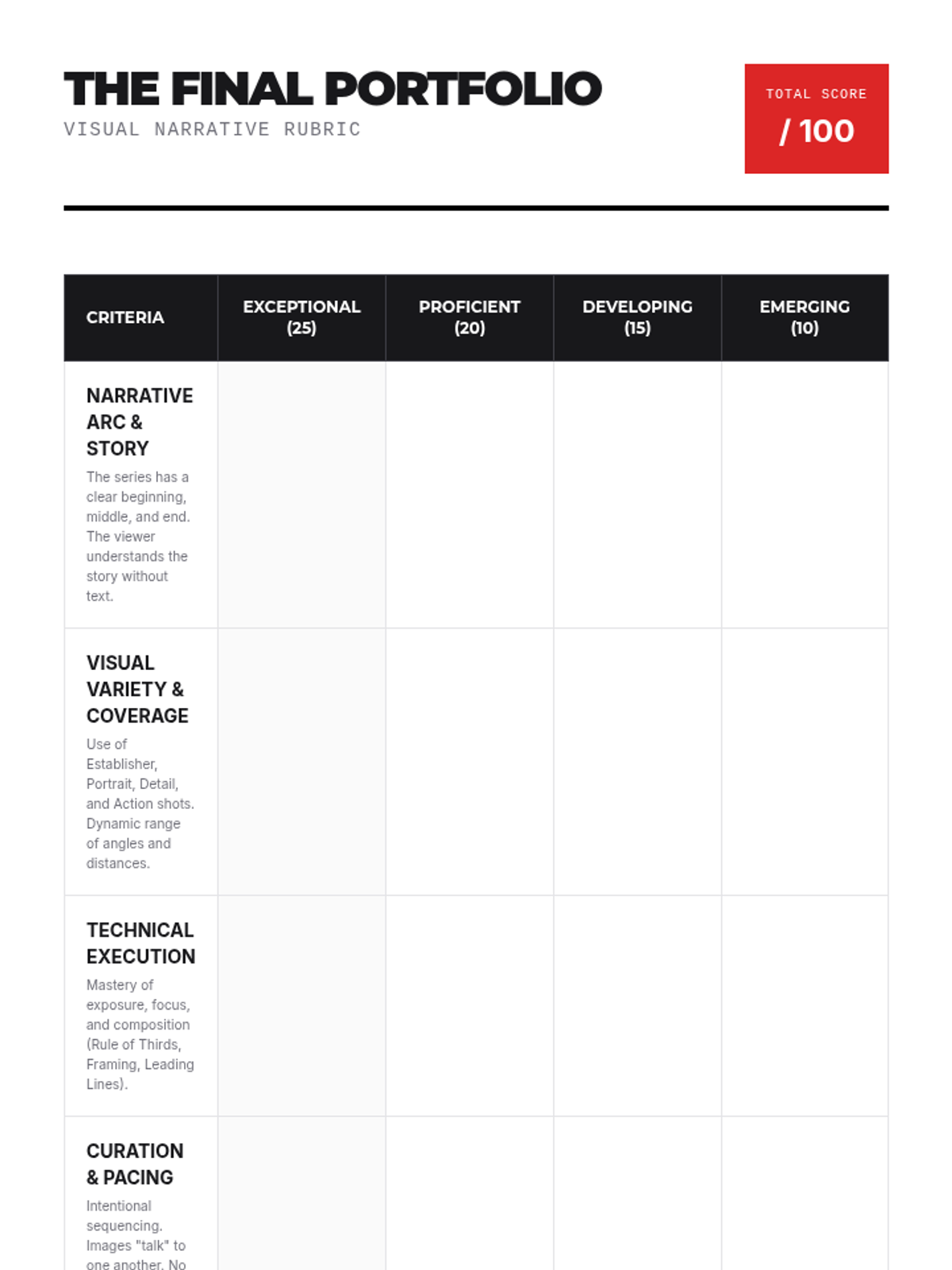
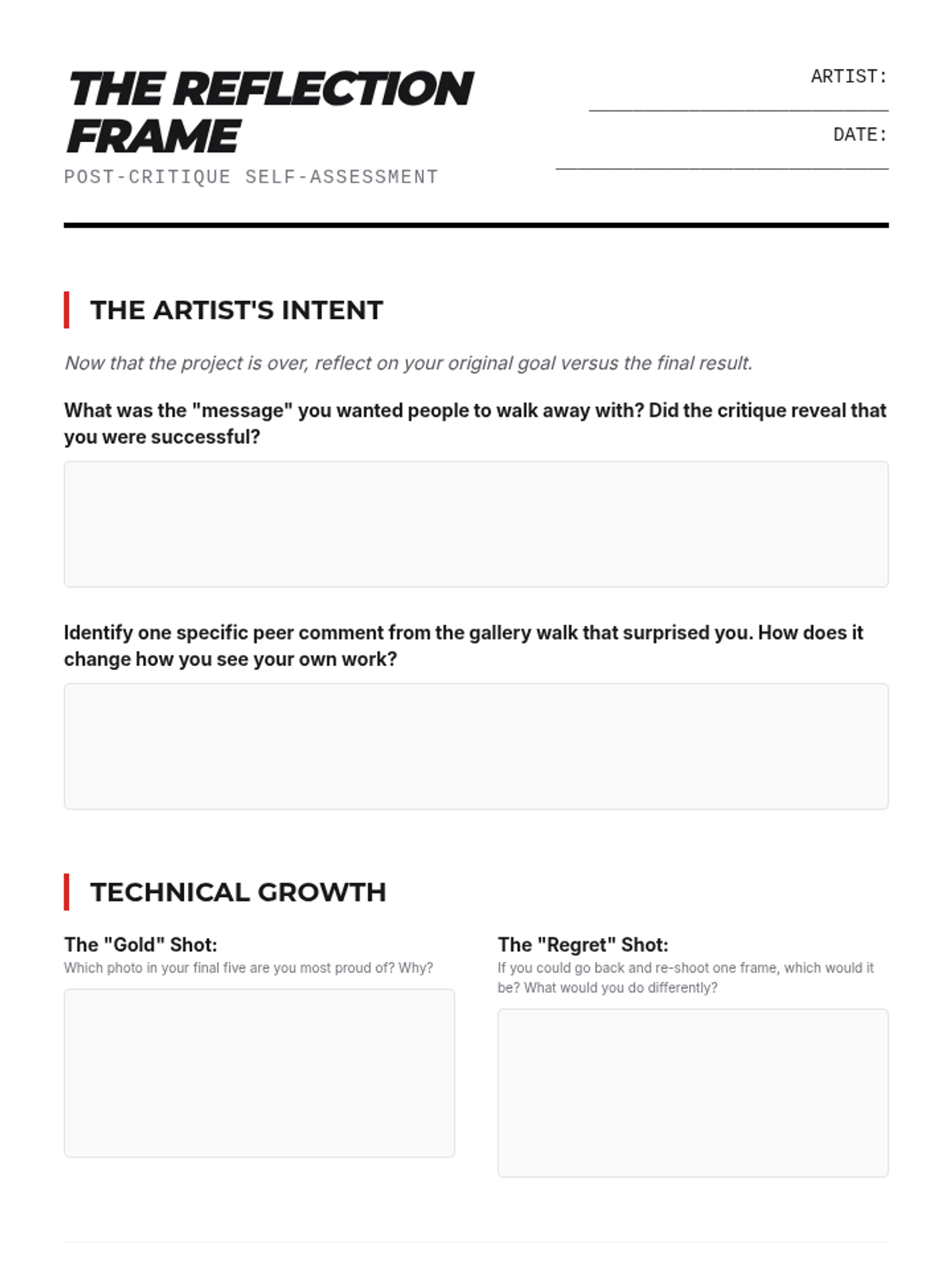
Students present their final photo essays to the class, explaining their intent and narrative choices. The class engages in a formal critique session, offering feedback on technical execution and emotional resonance.
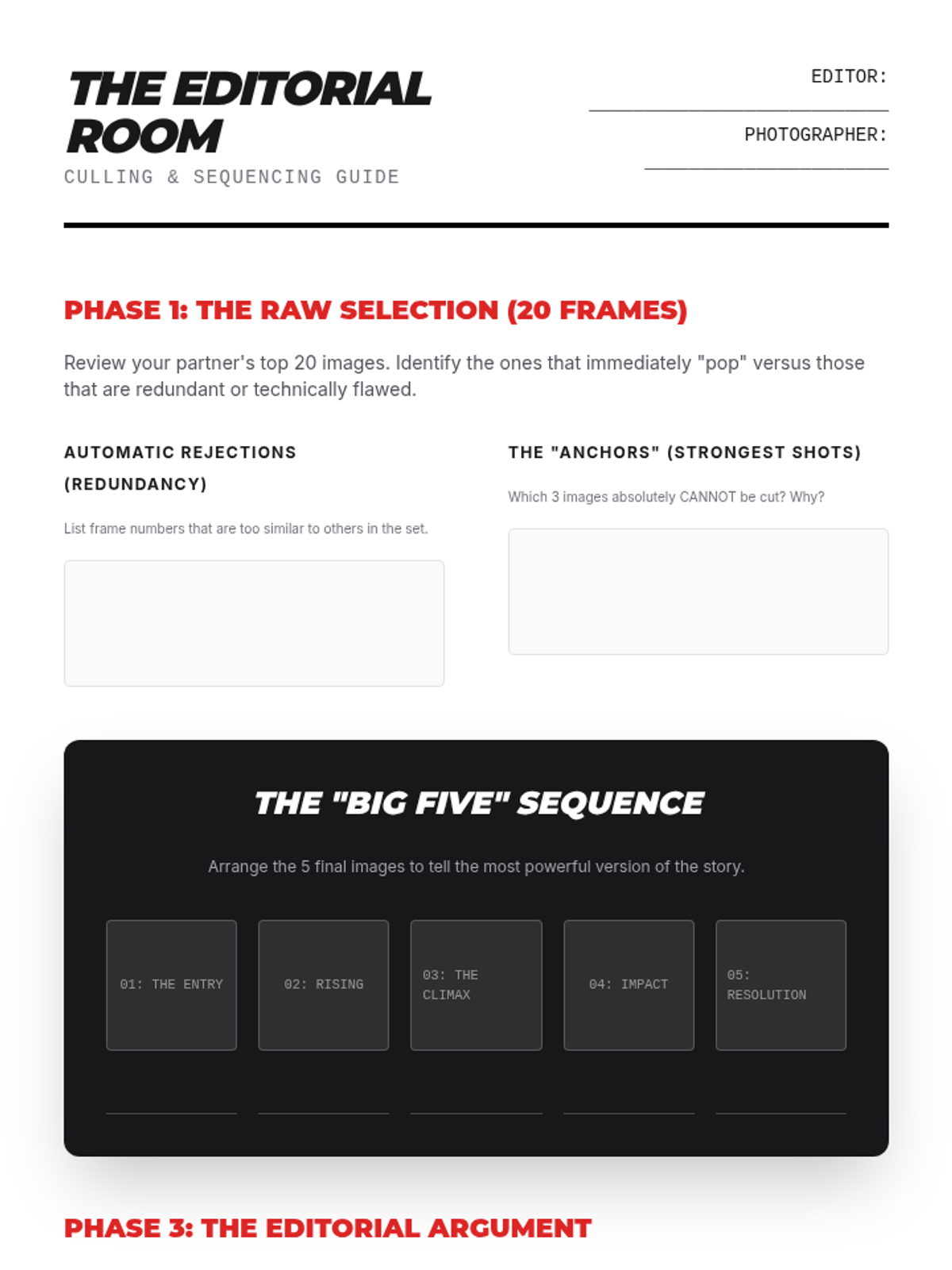
Students print small versions of their photos and physically arrange them to find the strongest flow. They practice 'killing their darlings'—removing good individual photos that don't serve the larger story.
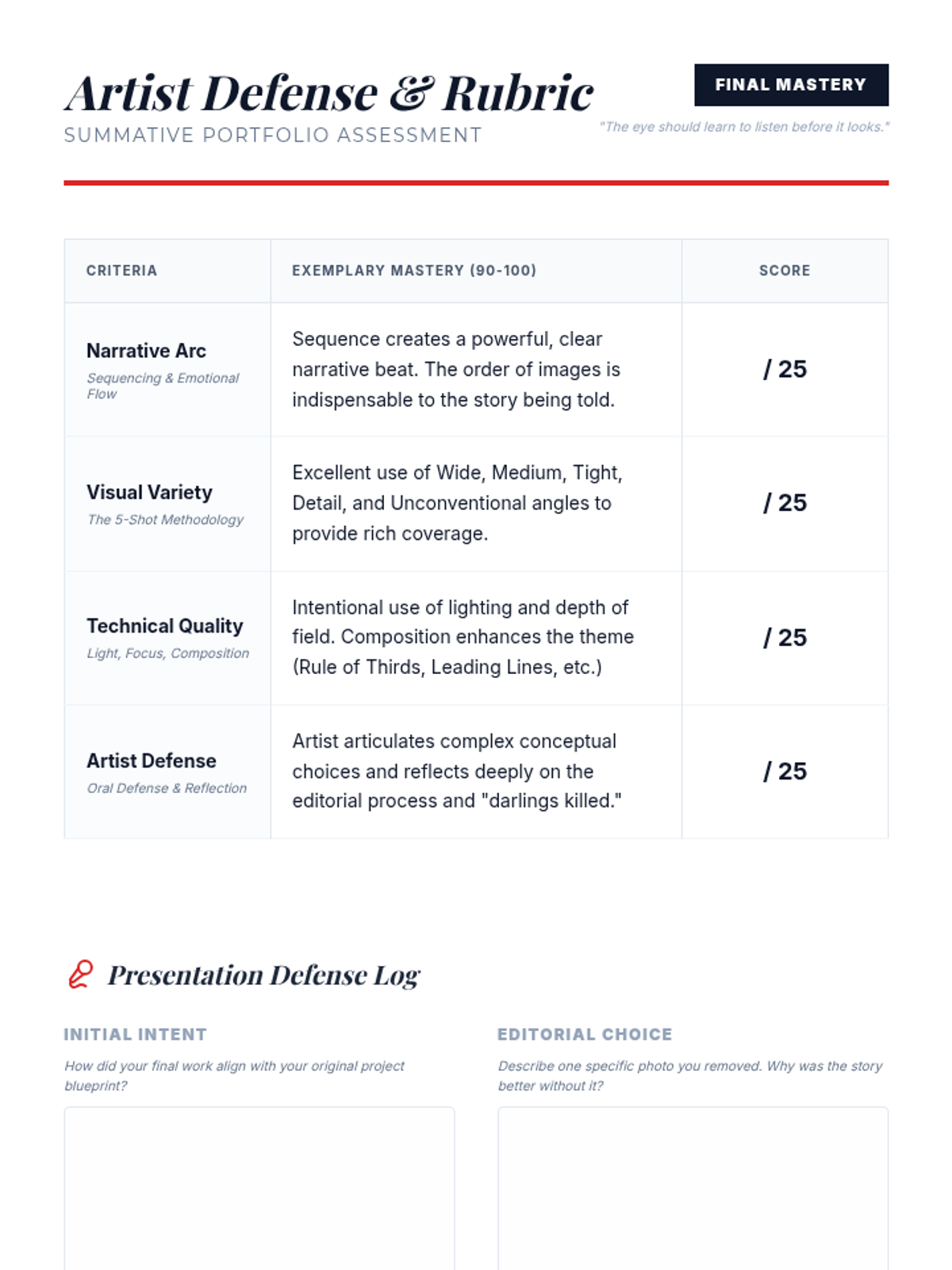
The sequence culminates in a professional-style gallery presentation. Students showcase their final photo essays, defend their artistic choices, and reflect on their growth as visual storytellers.
The focus shifts to the editorial process, where students select and sequence their best work. They will engage in peer critique to refine their narratives and learn the art of 'killing their darlings' for the sake of the story.
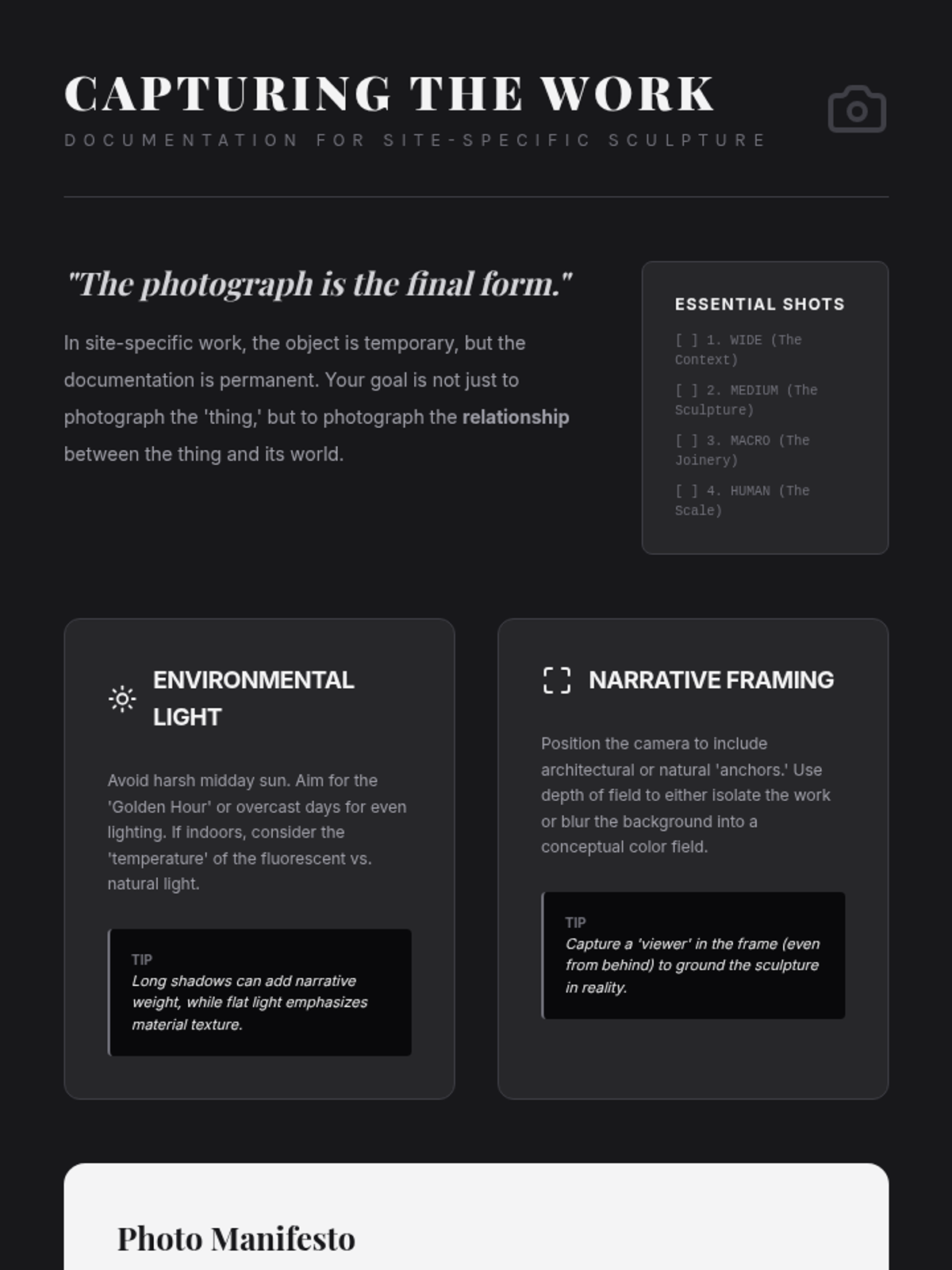
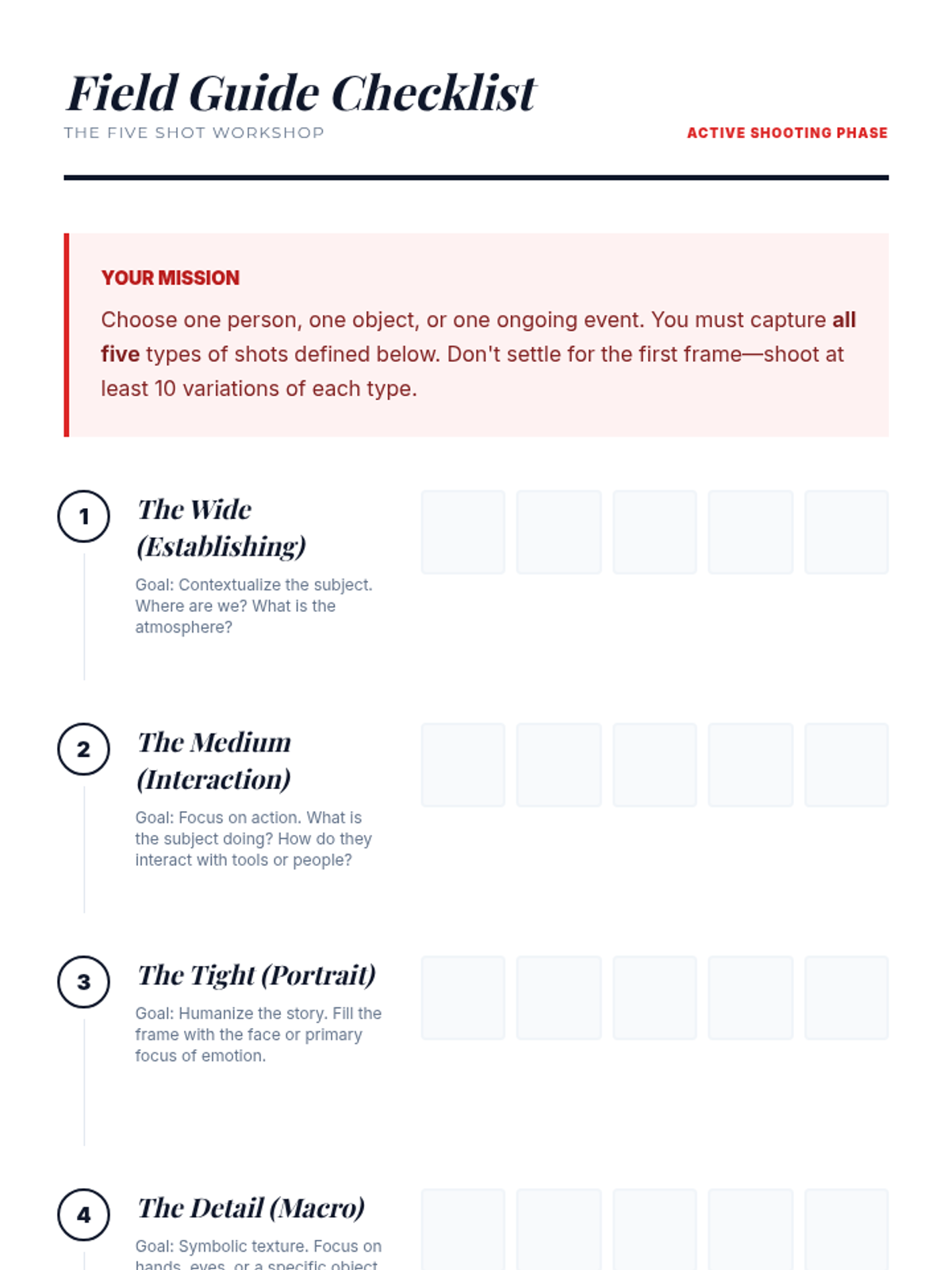
Students master the 'Five Shot Method' to ensure visual variety in their work. This technical workshop focuses on capturing wide, medium, tight, detail, and unconventional angles to build a rich narrative palette.
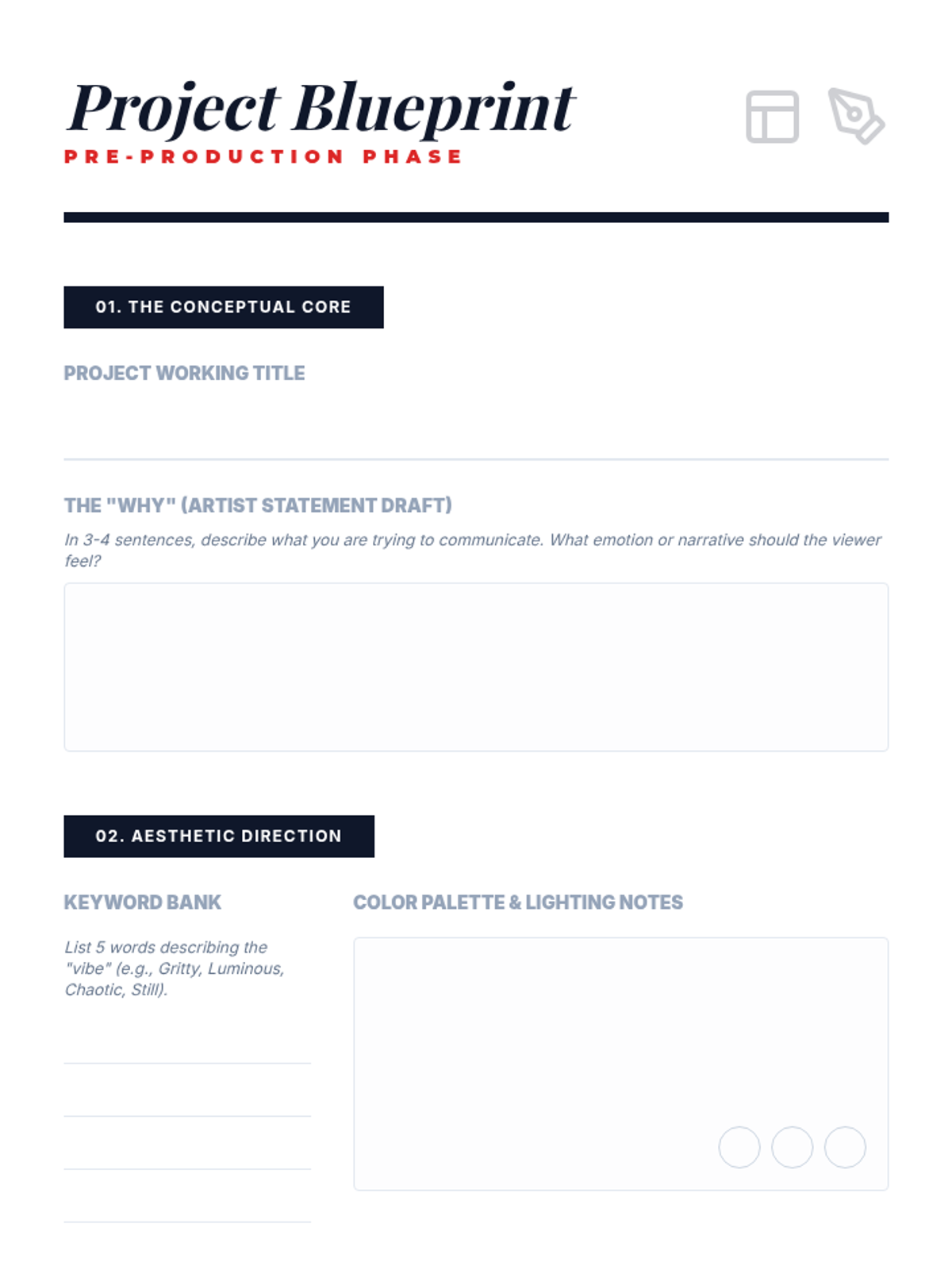
Shifting from luck to intention, students learn to plan their narrative projects through artist statements, mood boards, and storyboards. This lesson emphasizes the intellectual preparation required for high-level visual storytelling.
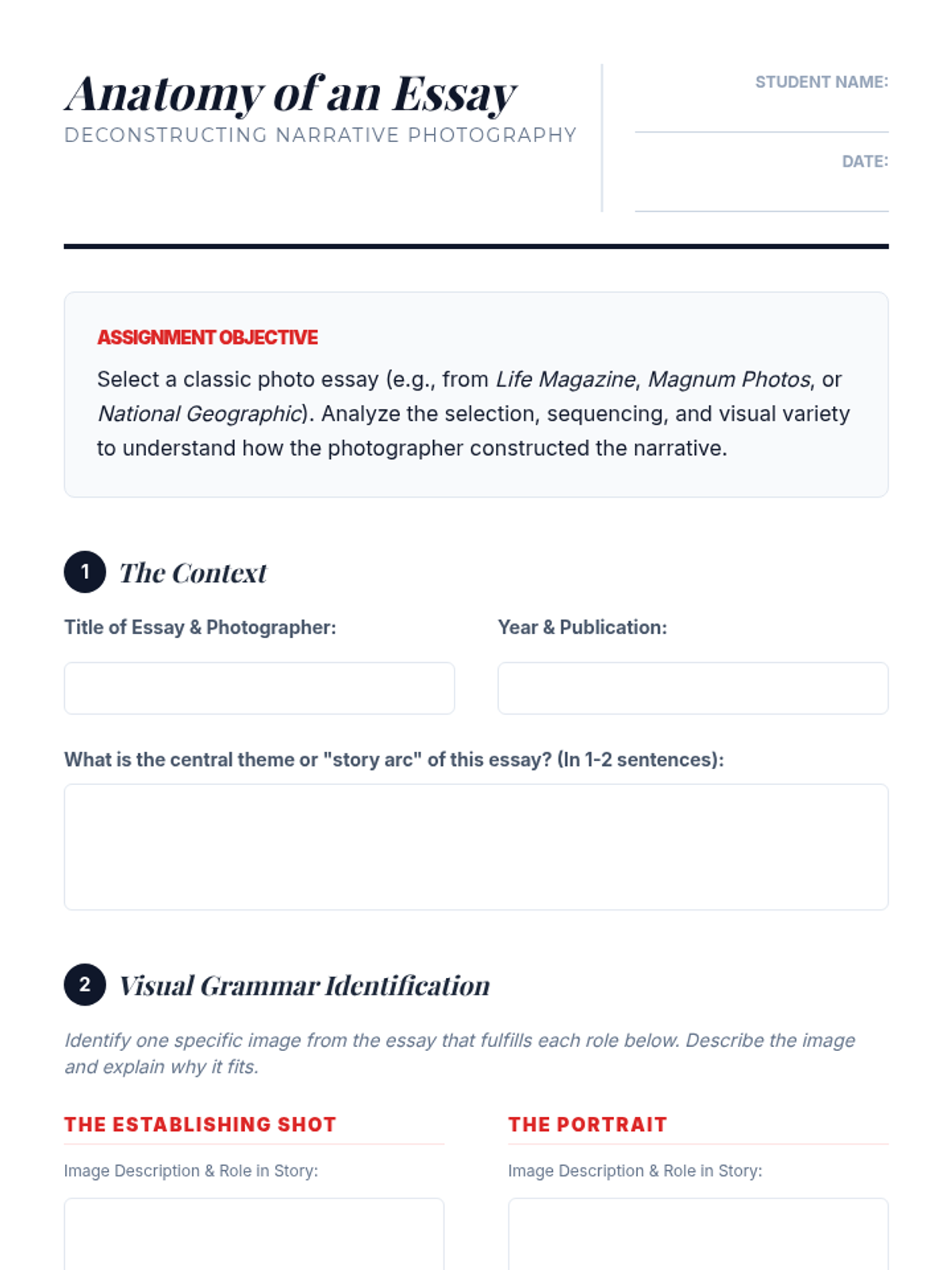
Students explore the history and structure of the photo essay, identifying the essential visual 'scripts' that drive a narrative. They will analyze classic examples to understand how image sequencing creates meaning.
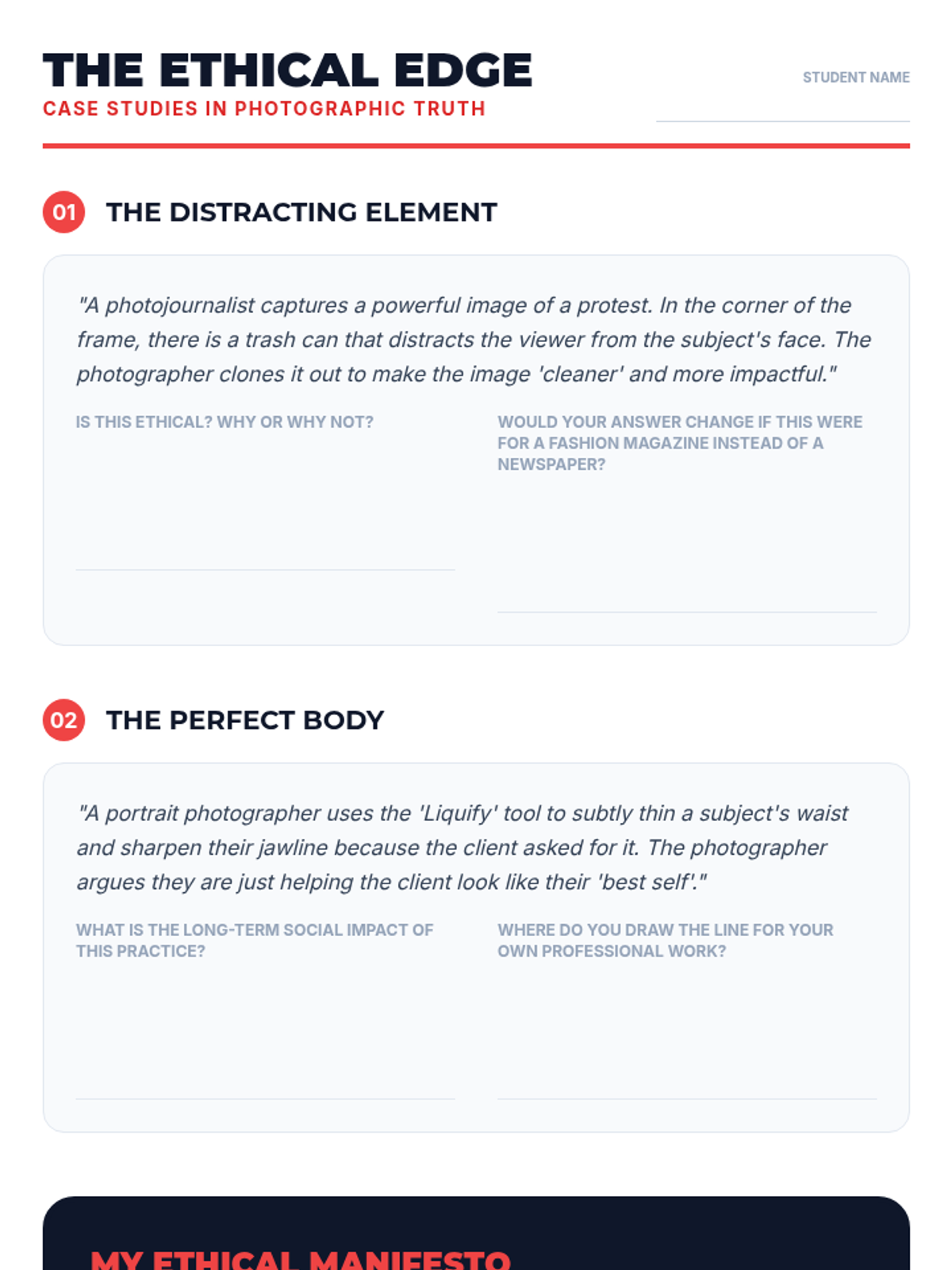
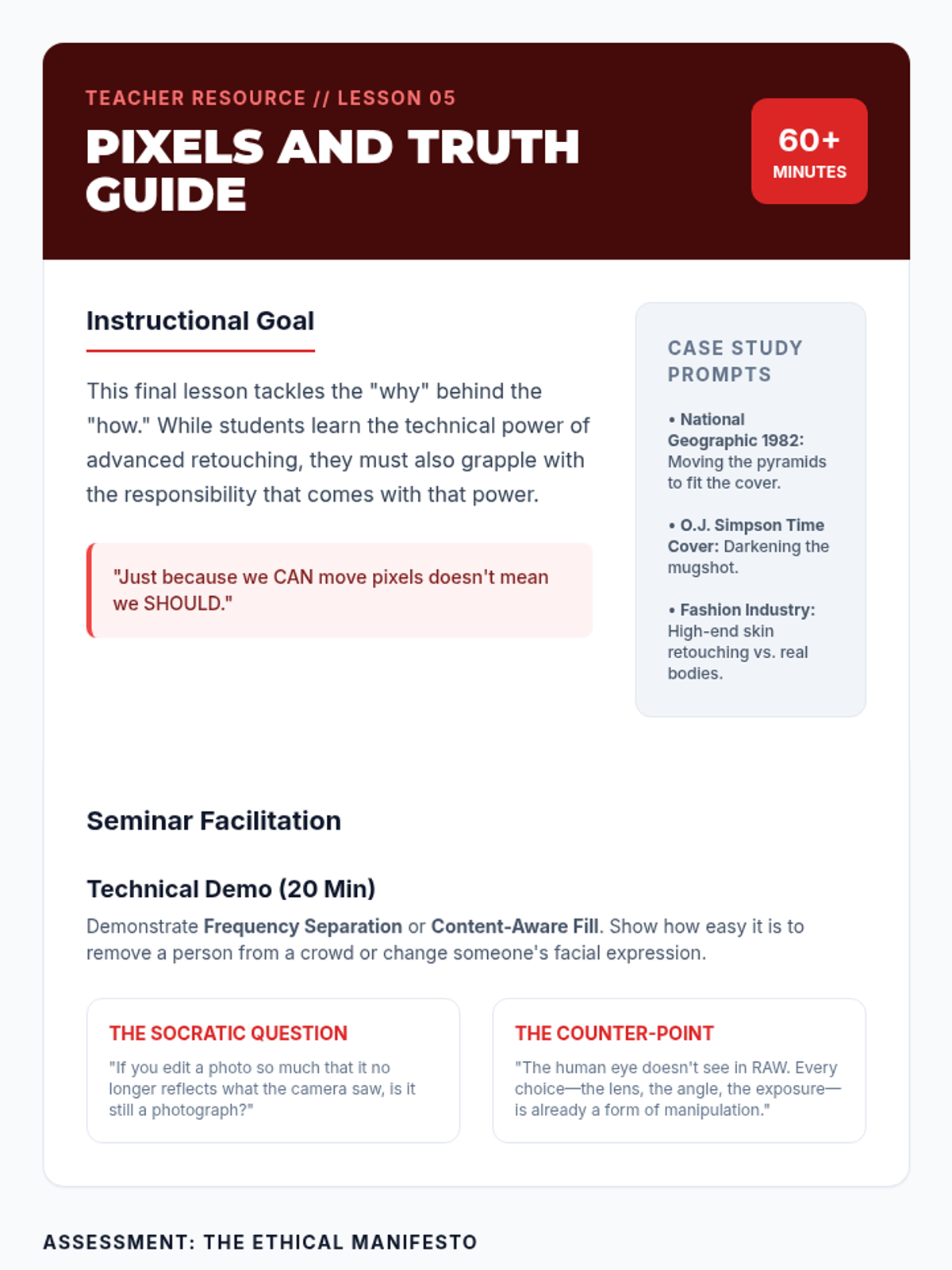
The final lesson tackles advanced retouching techniques alongside a critical discussion on media ethics. Students weigh the technical ability to 'perfect' an image against the ethical responsibility of truth in representation.
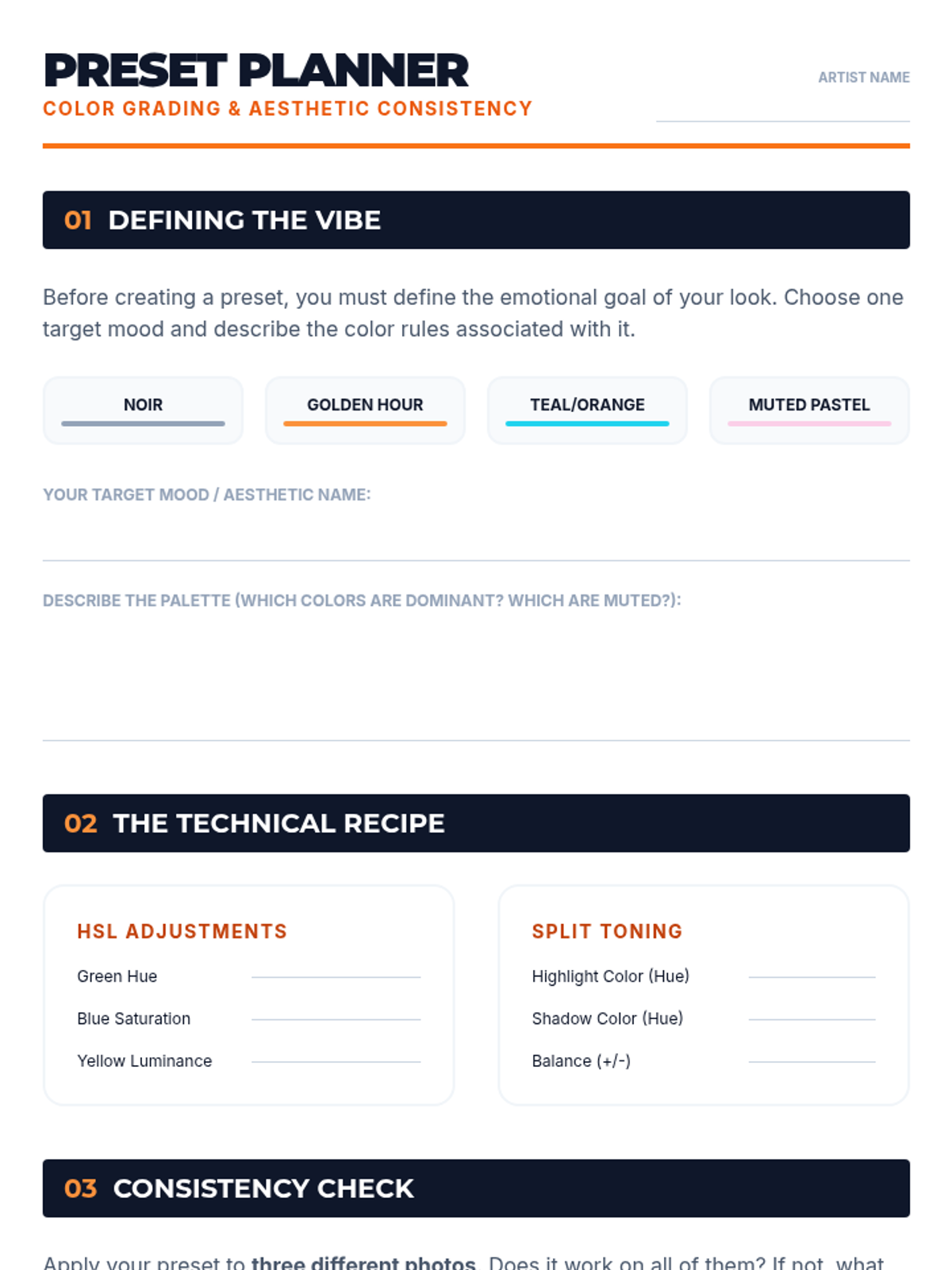
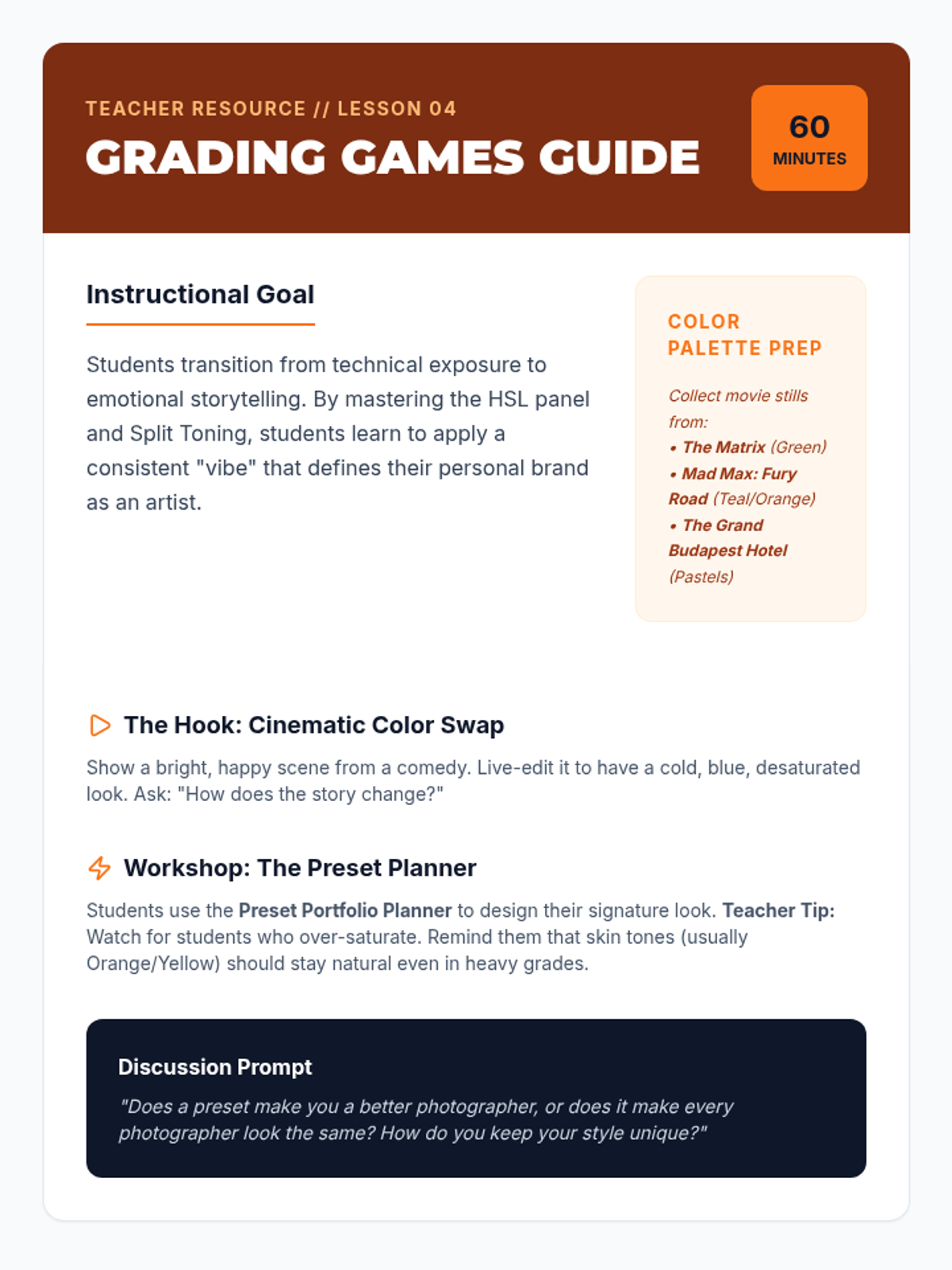
Exploring the psychology and aesthetics of color, students learn to grade their images for mood and narrative. This lesson covers HSL adjustments, split toning, and the creation of custom presets for a consistent portfolio look.
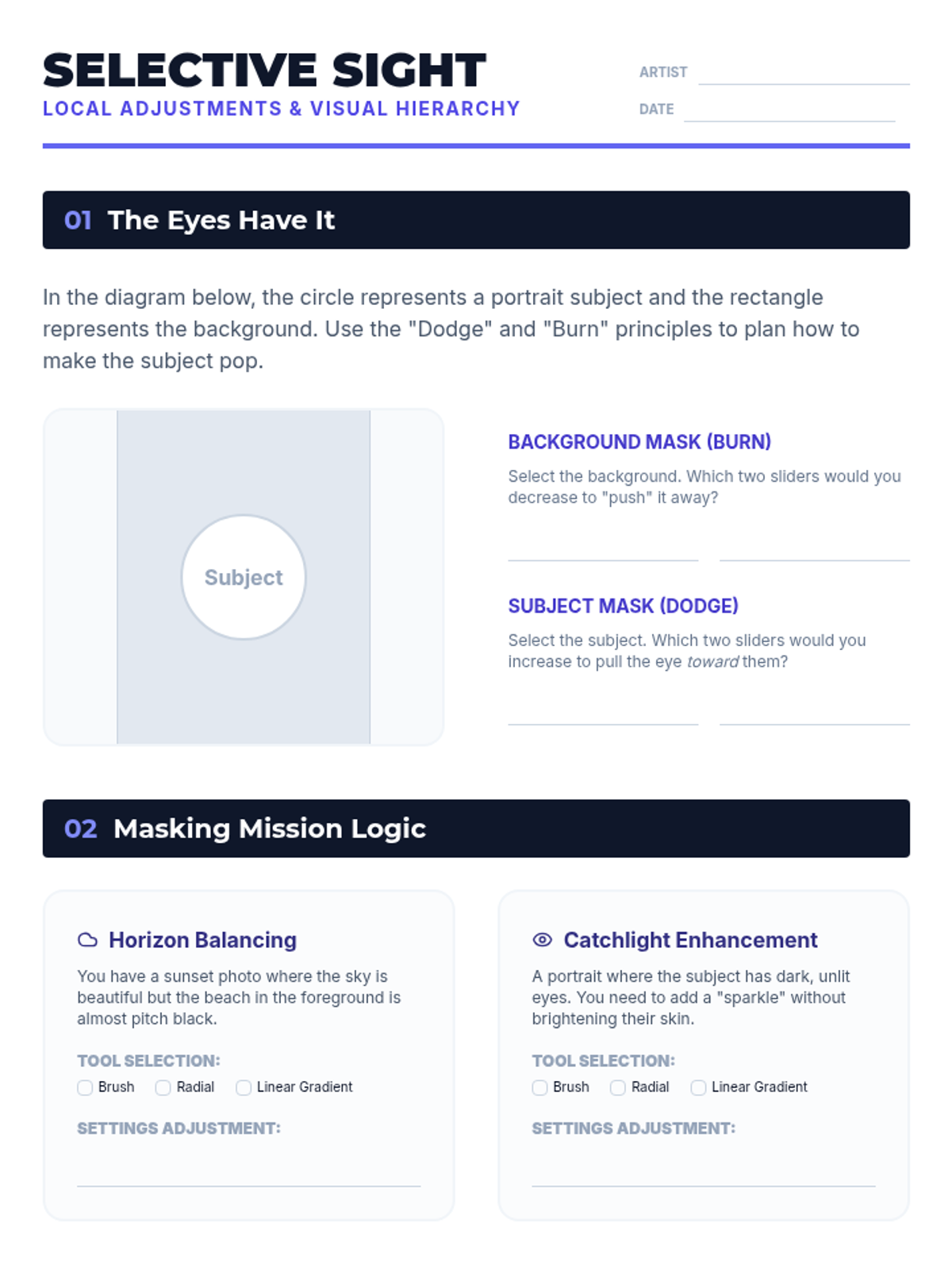
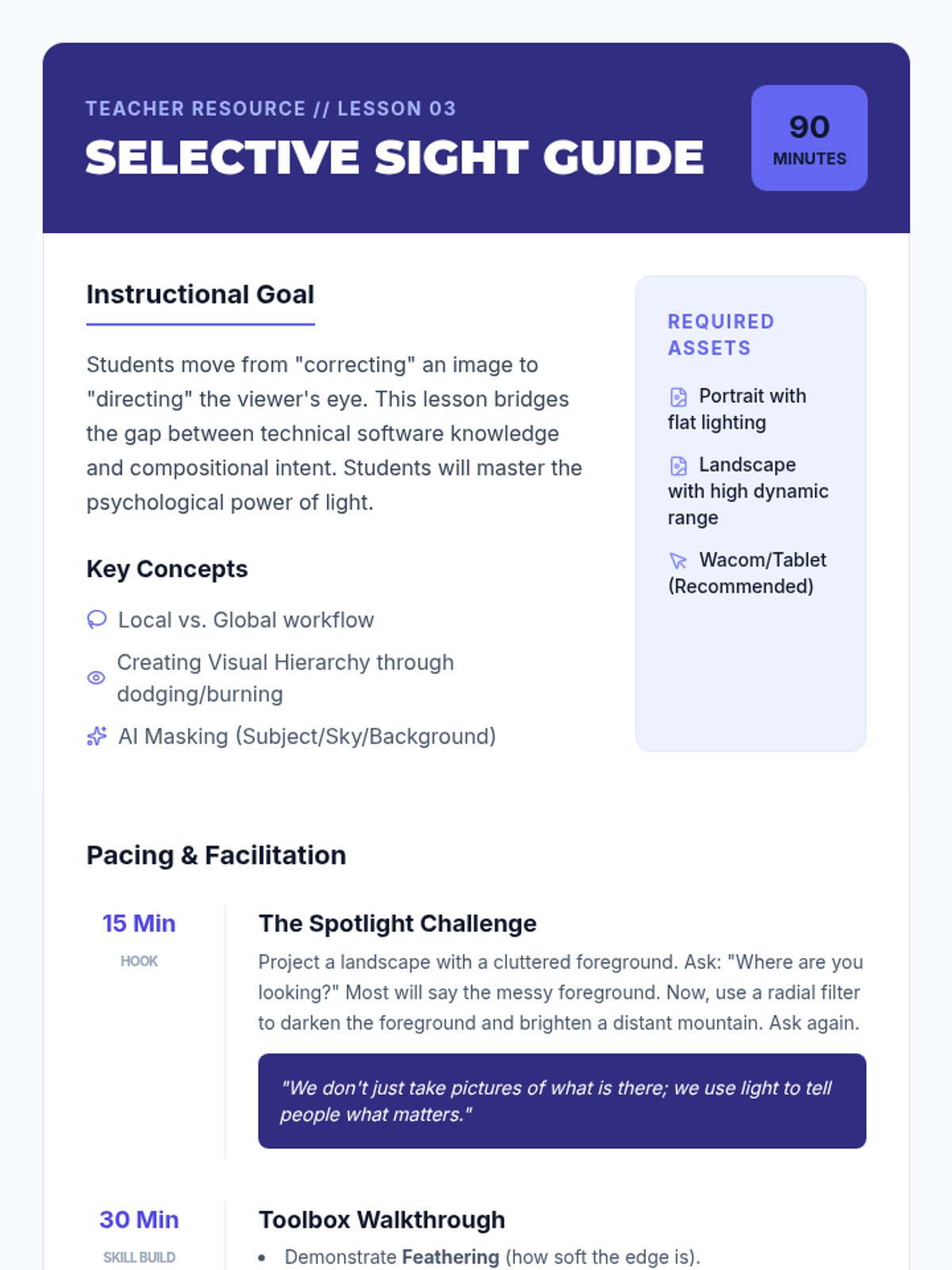
Students move beyond global changes to selective editing using masking tools. They learn the traditional darkroom techniques of dodging and burning applied to the digital world to guide viewer attention and create depth.
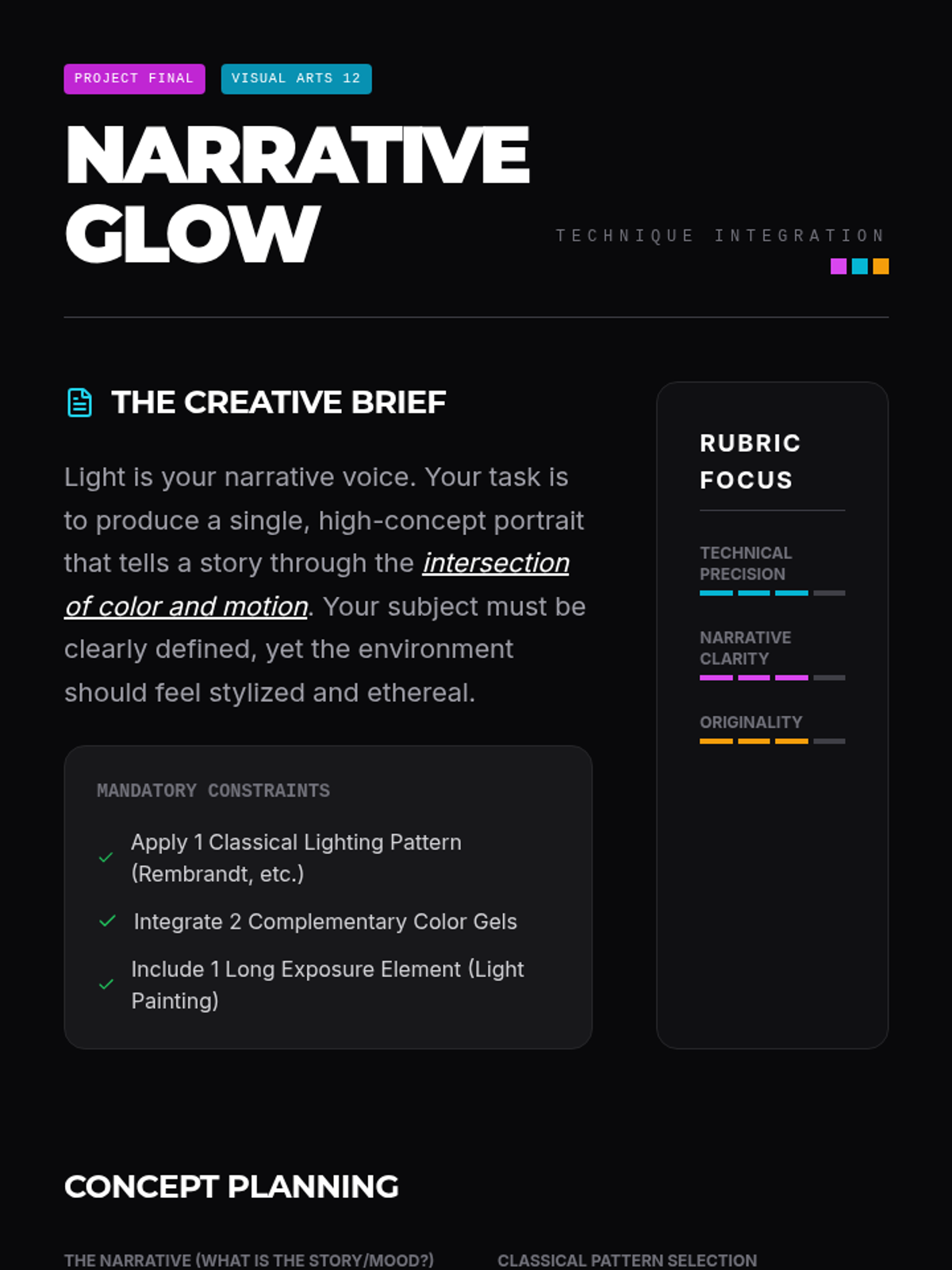
Students push the boundaries of lighting with color gels and long exposures to create stylized, narrative-driven images.
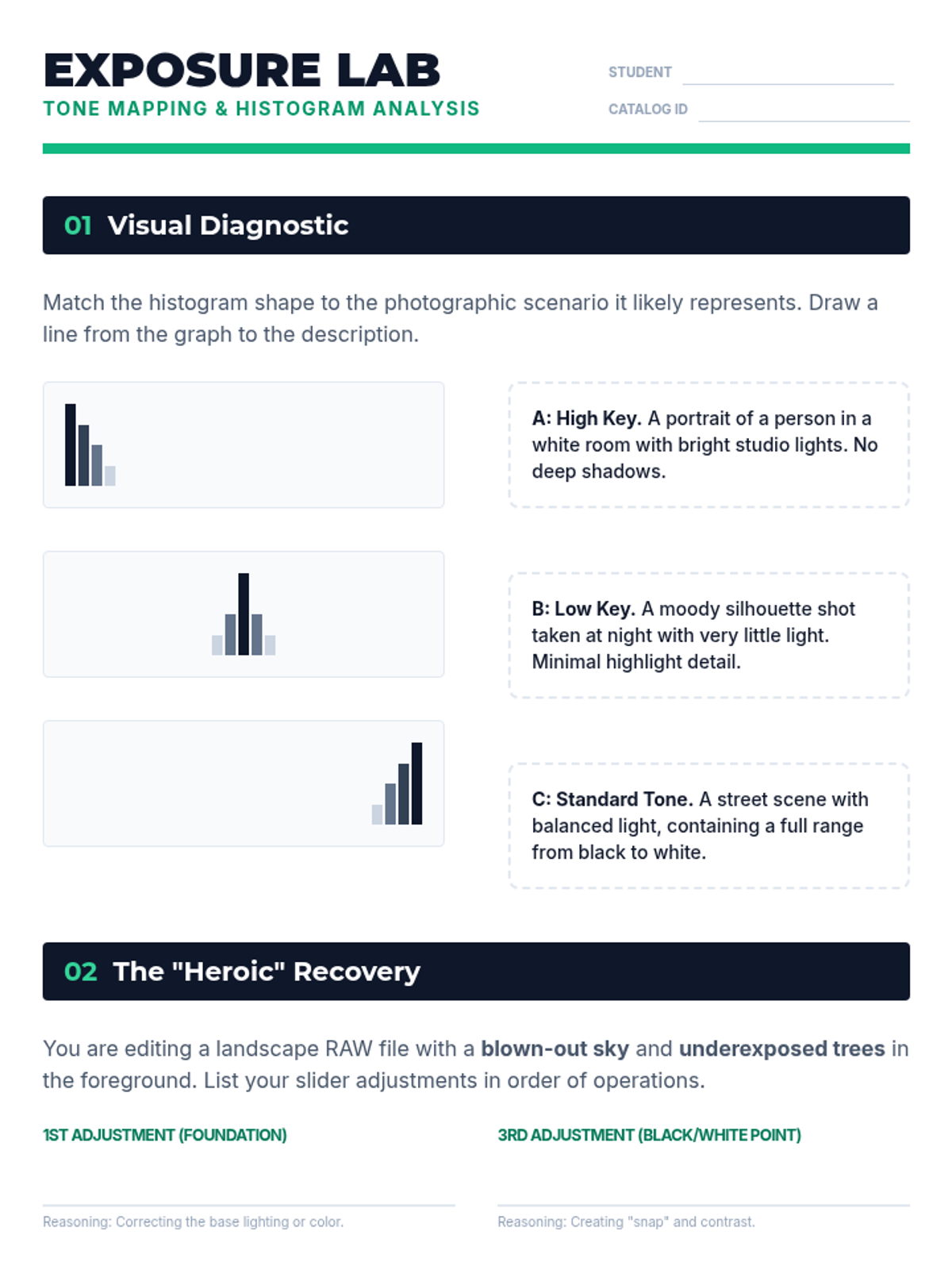
Focusing on the global development panel, students learn to balance exposure and tone. They master reading the histogram to prevent data loss (clipping) and produce high-quality, neutral base images for further creative work.
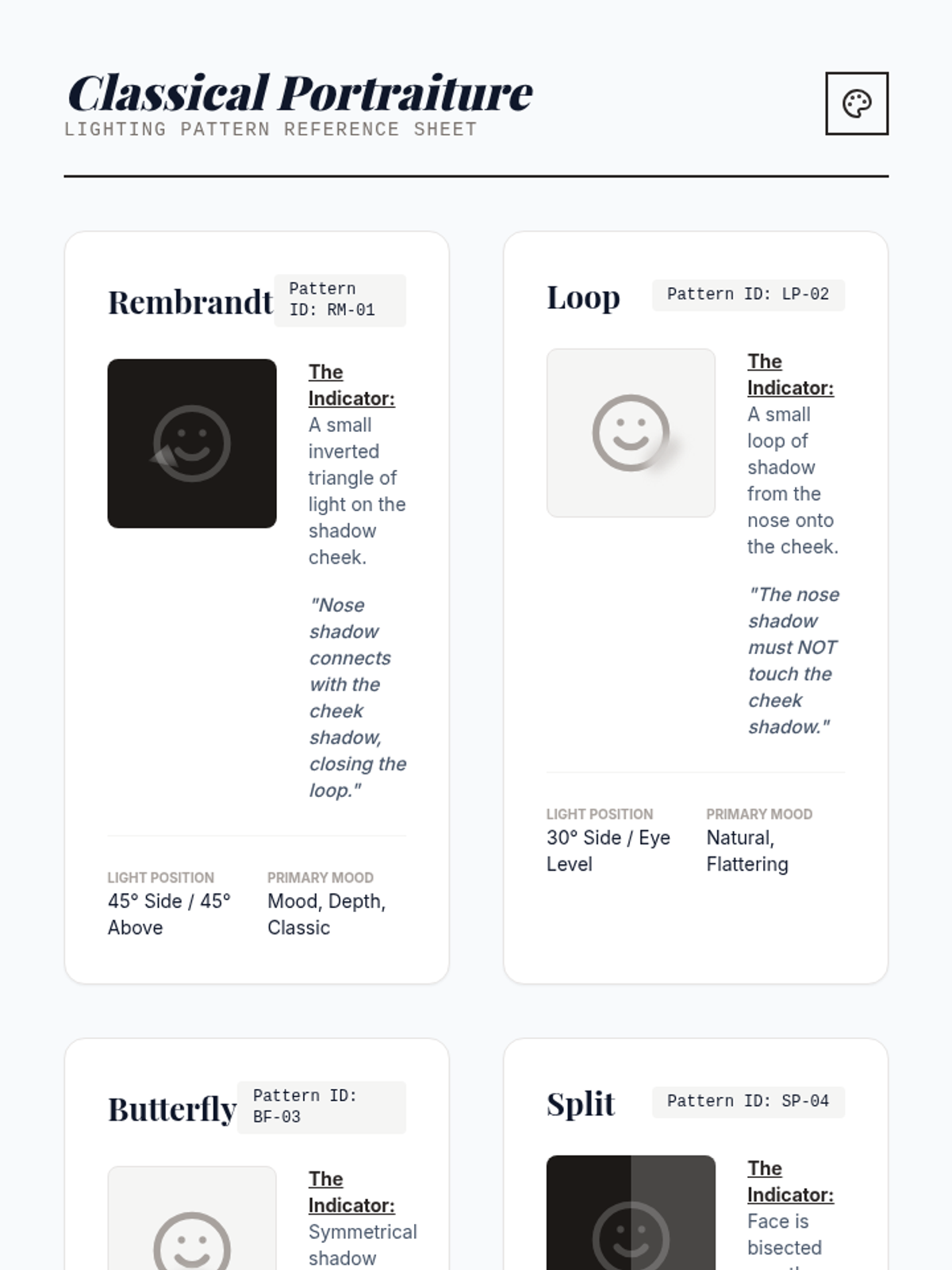
A masterclass in classical portrait lighting patterns, connecting historical art techniques with modern photographic practice.
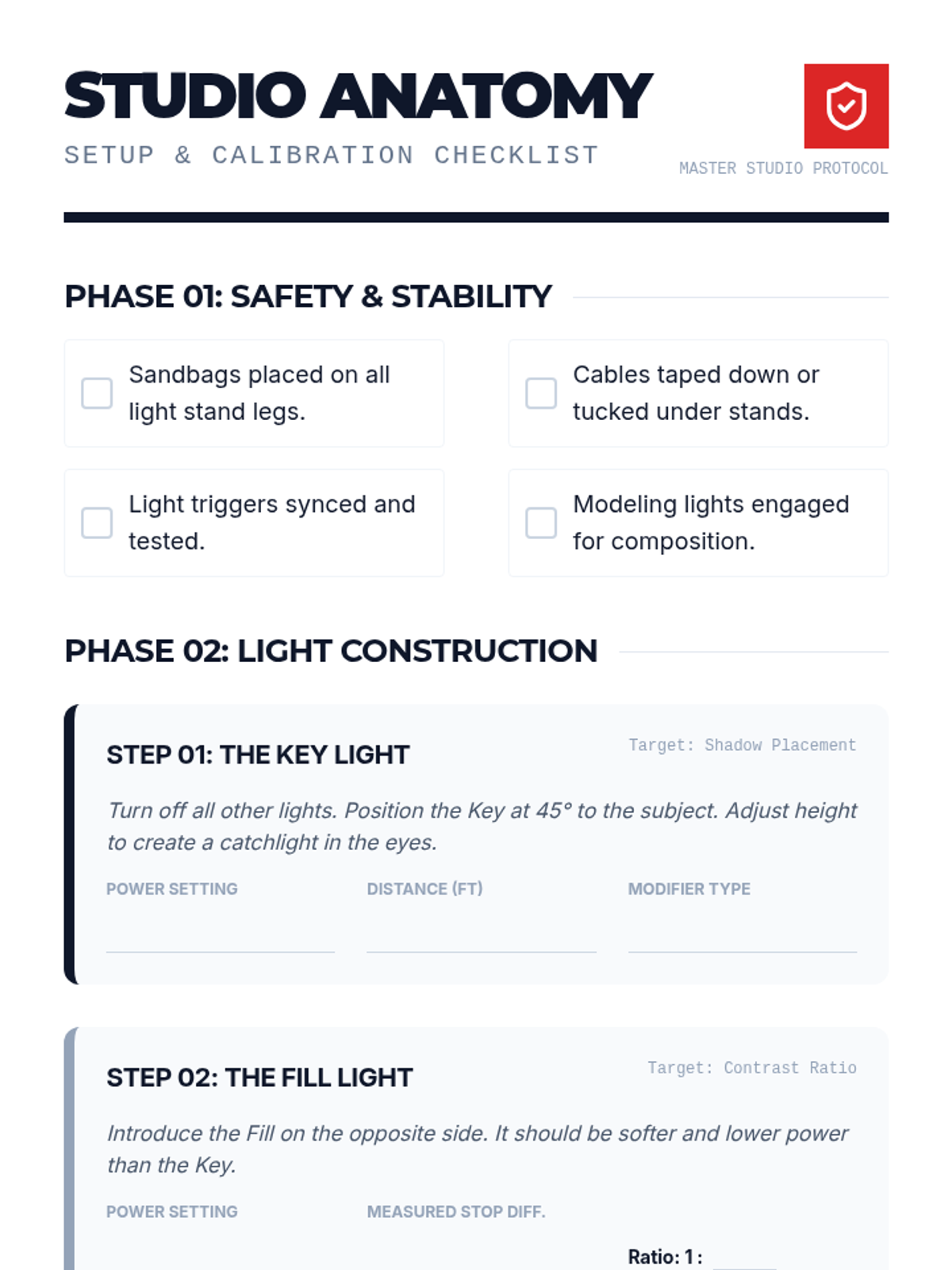
An introduction to the professional studio environment, covering the fundamental three-point lighting setup and light ratio management.
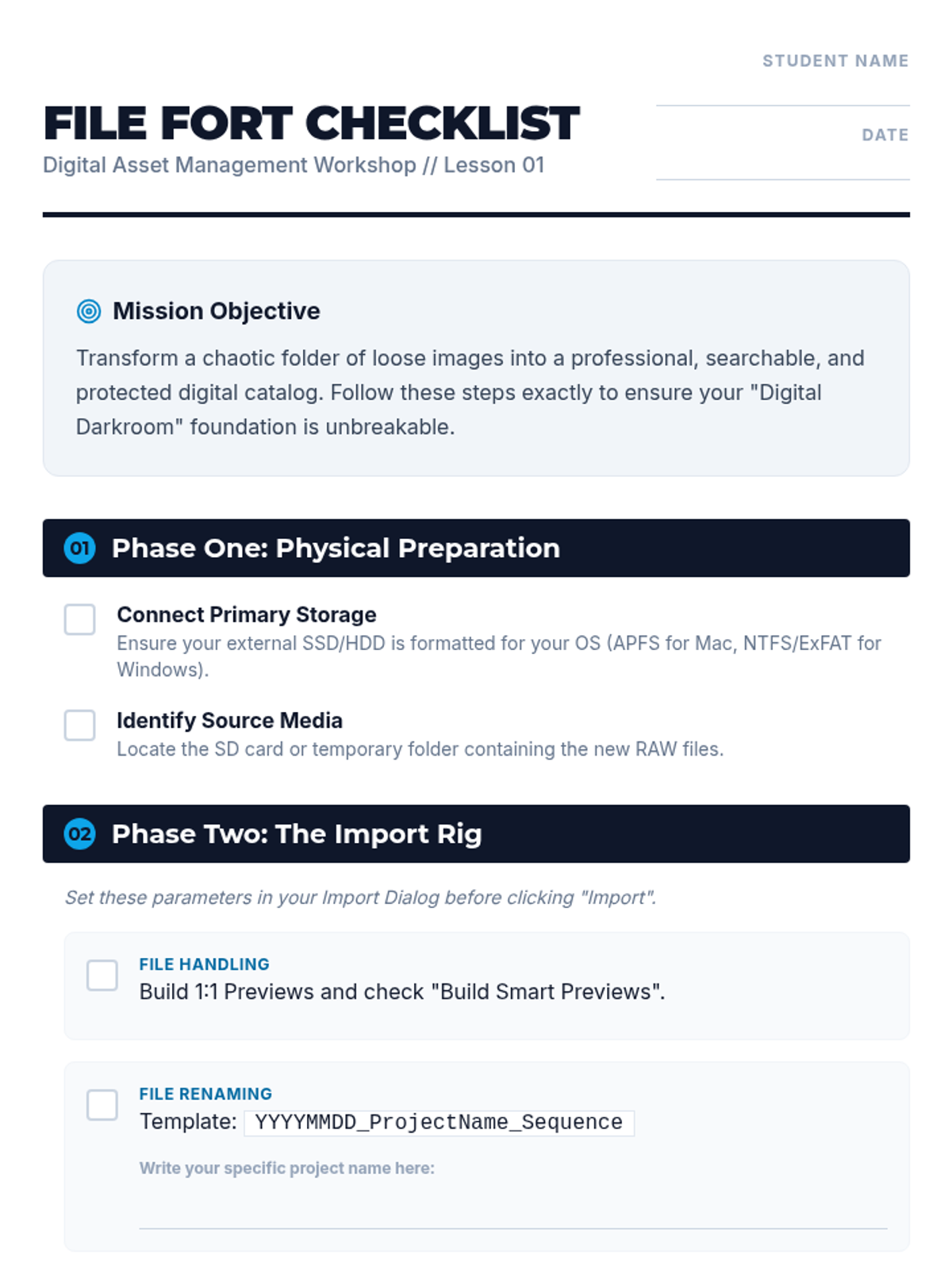
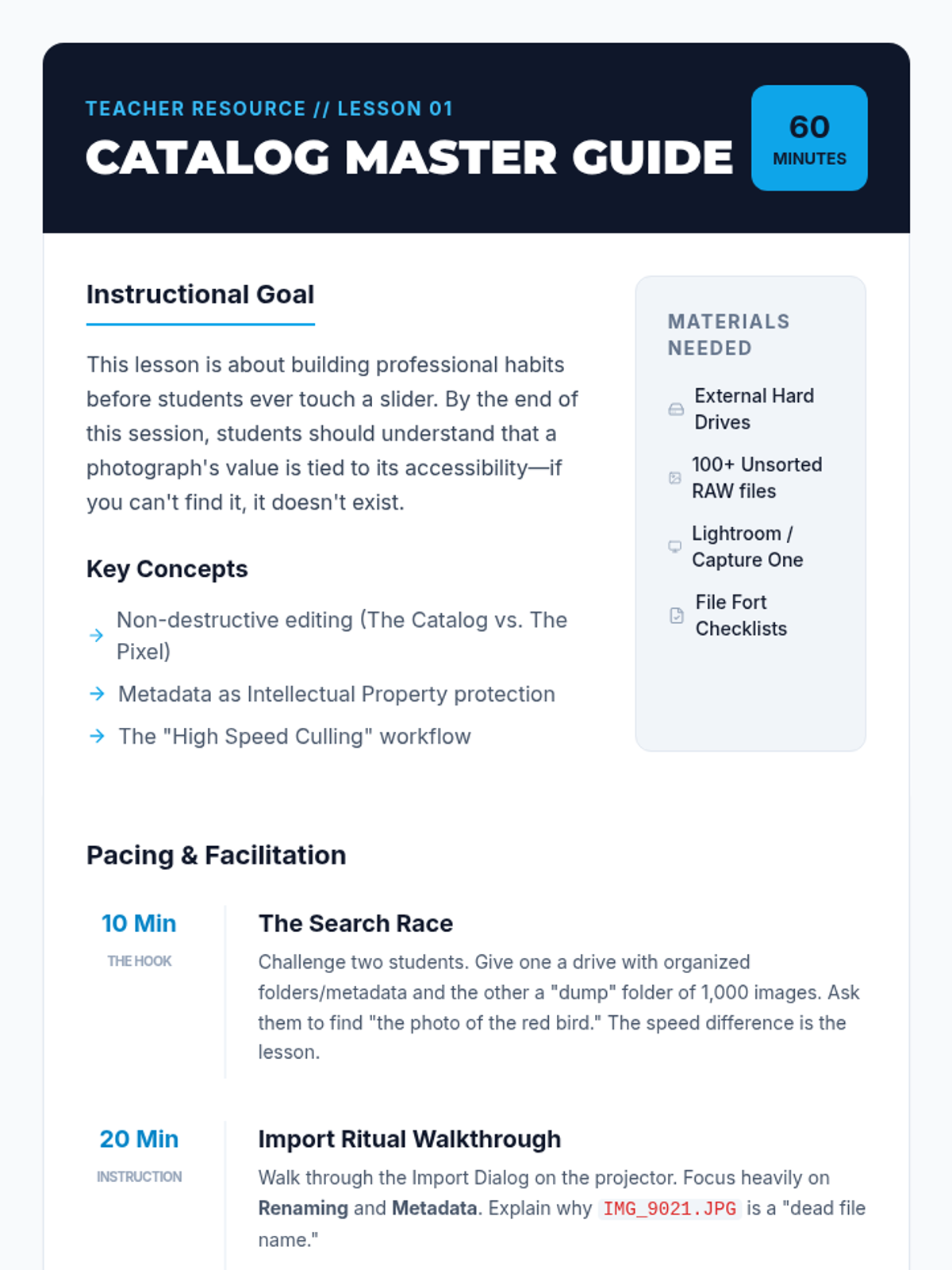
Students master the 'first half' of the digital darkroom: organizing, rating, and protecting their creative assets. This lesson establishes a professional foundation for non-destructive workflow through file naming conventions, metadata application, and culling techniques.
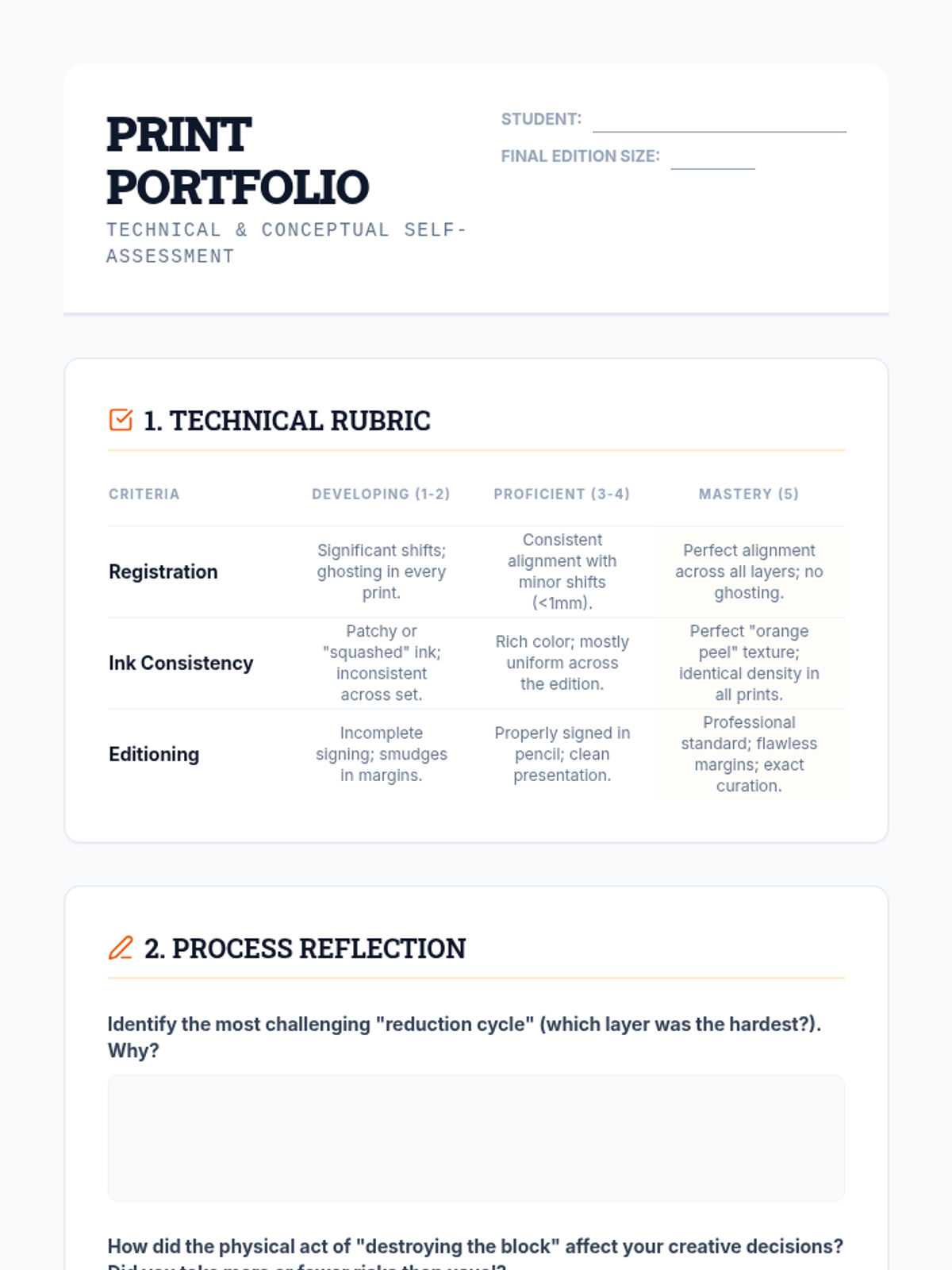
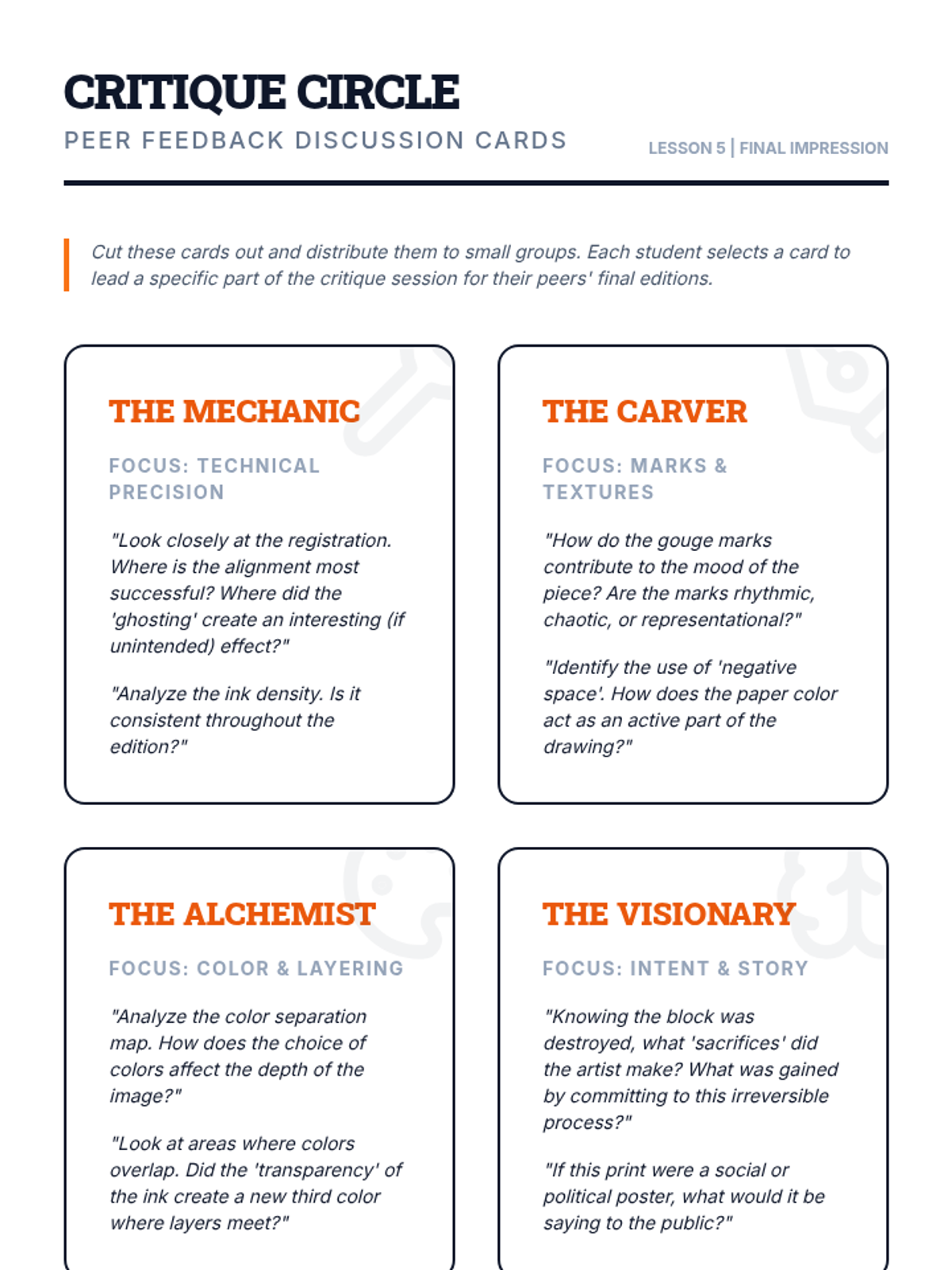
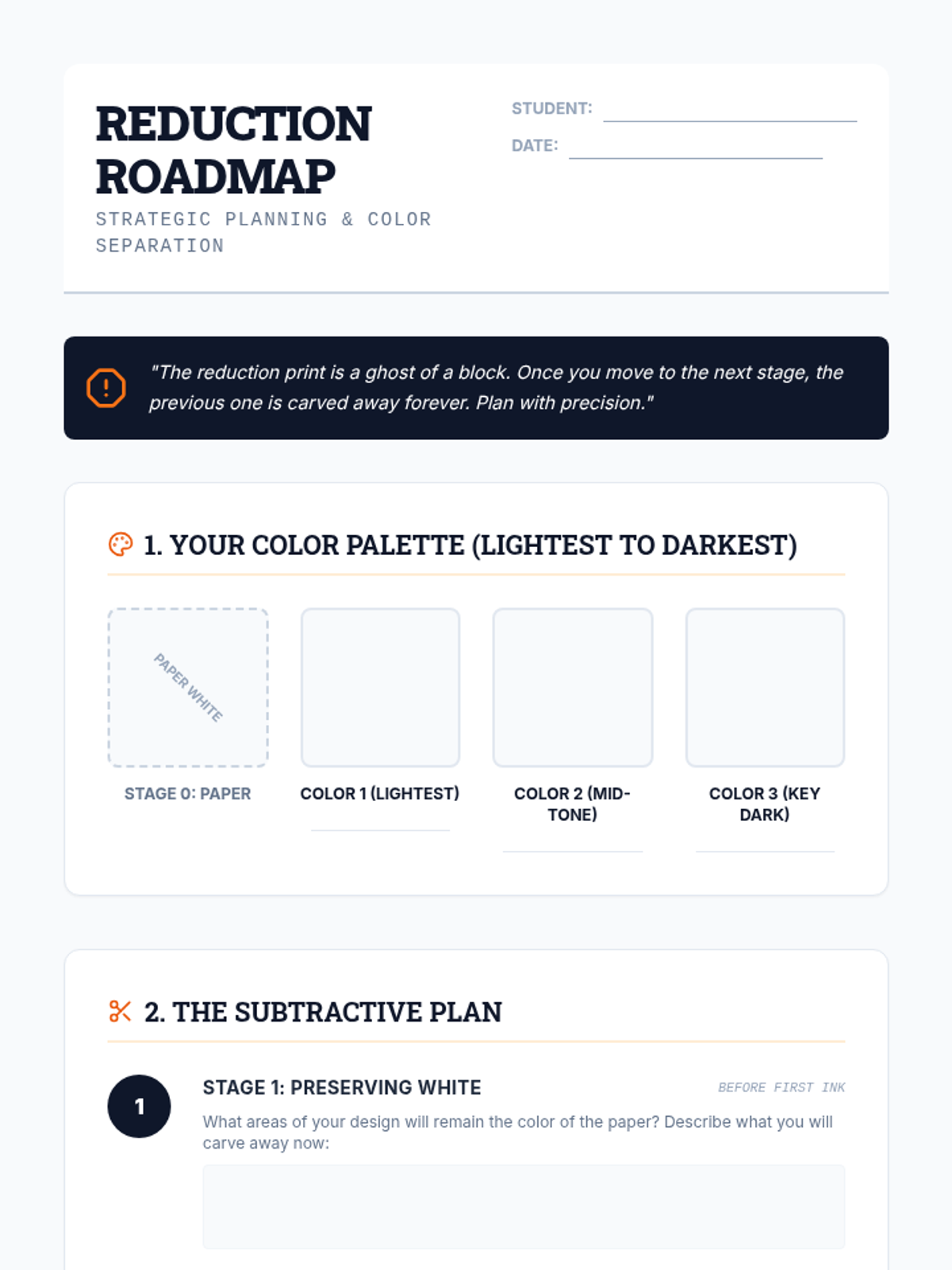
Students repeat the carve-ink-print cycle for subsequent darker colors, effectively destroying the previous image states. The lesson culminates in curating a consistent edition, signing prints according to convention, and a critique of the technical execution.
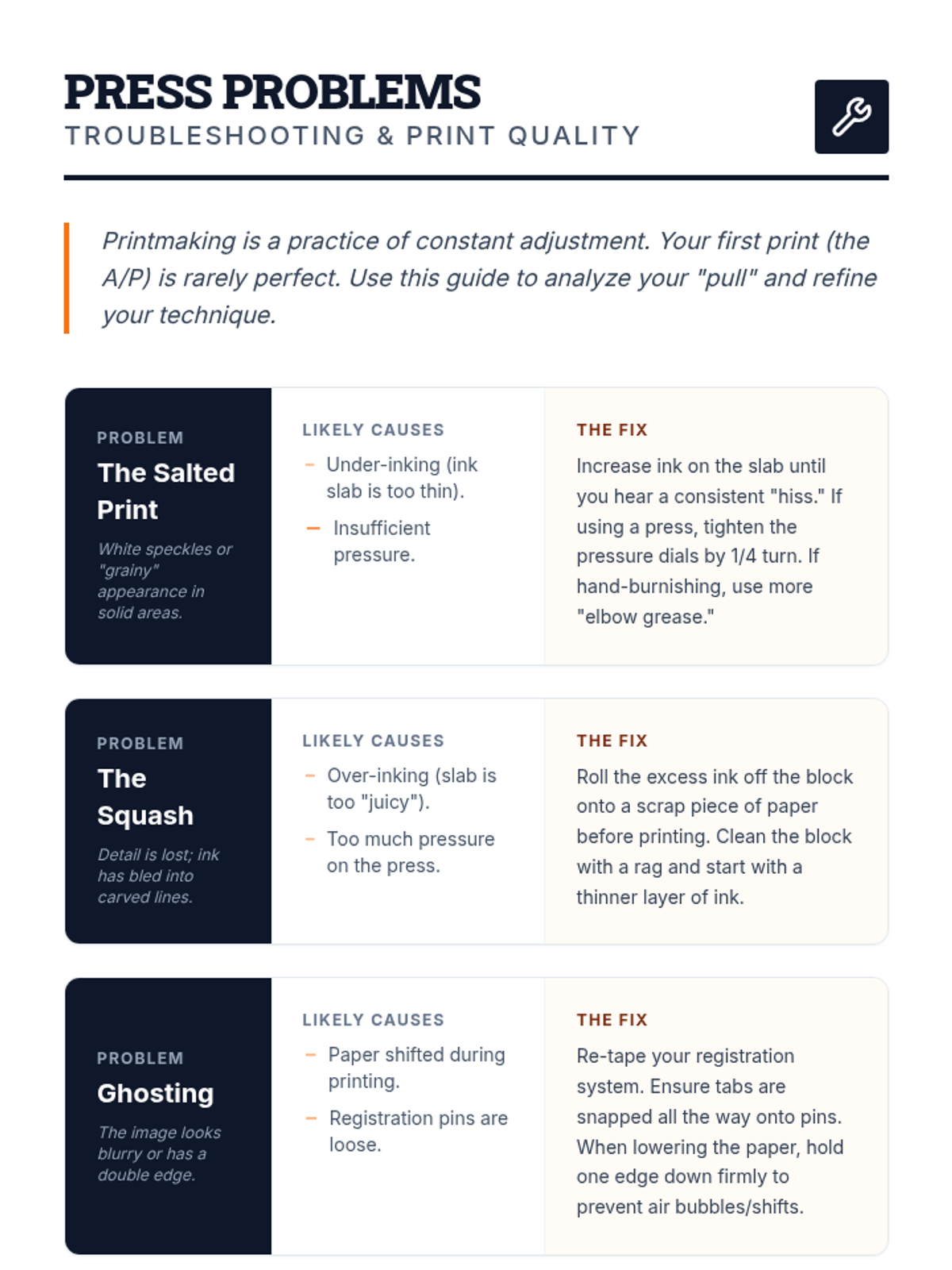
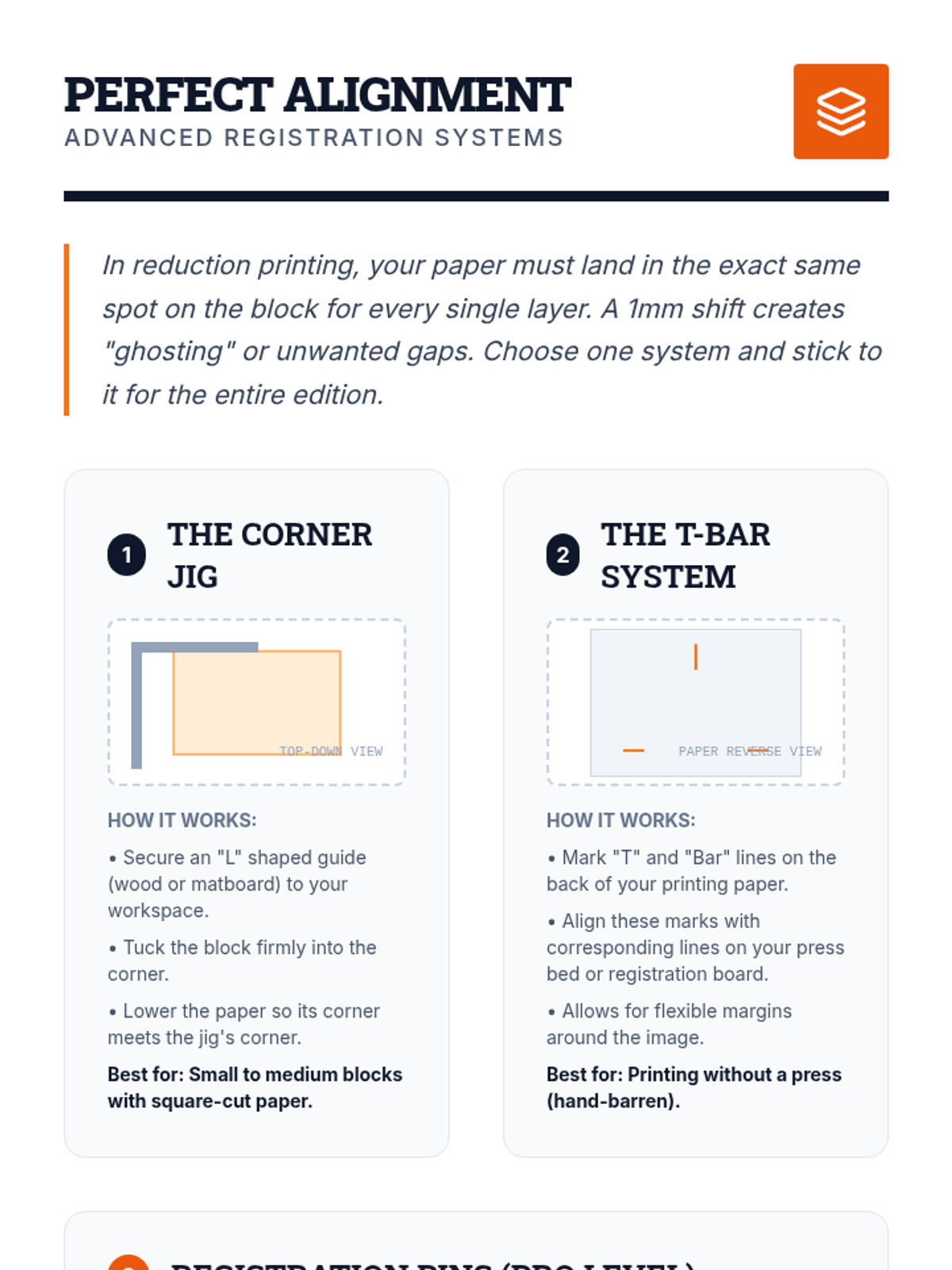
Students print their first light color layer, focusing on consistent ink slab preparation (the 'hiss' sound) and using registration pins or jigs. They troubleshoot common issues like over-inking or paper shifting.
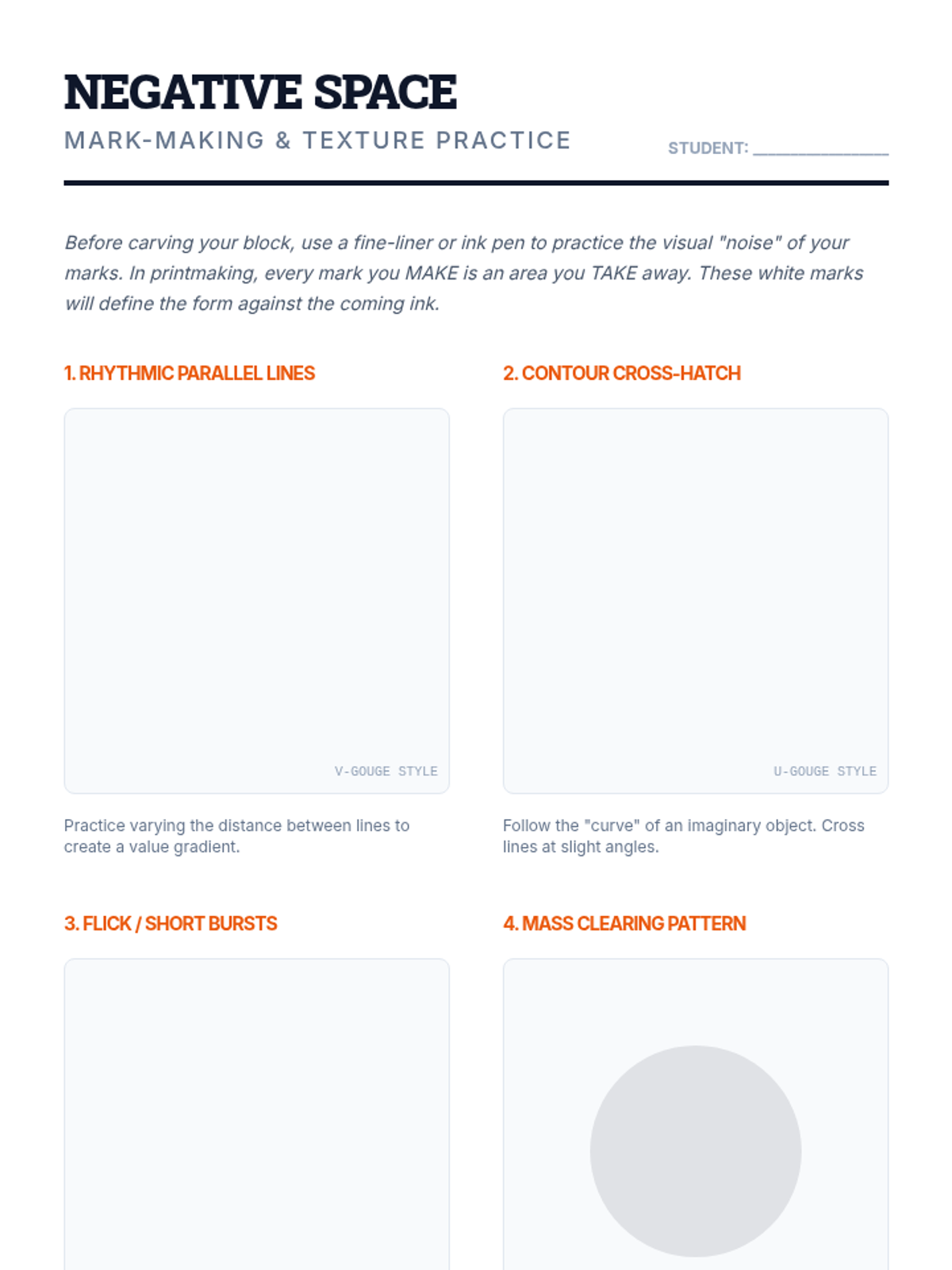
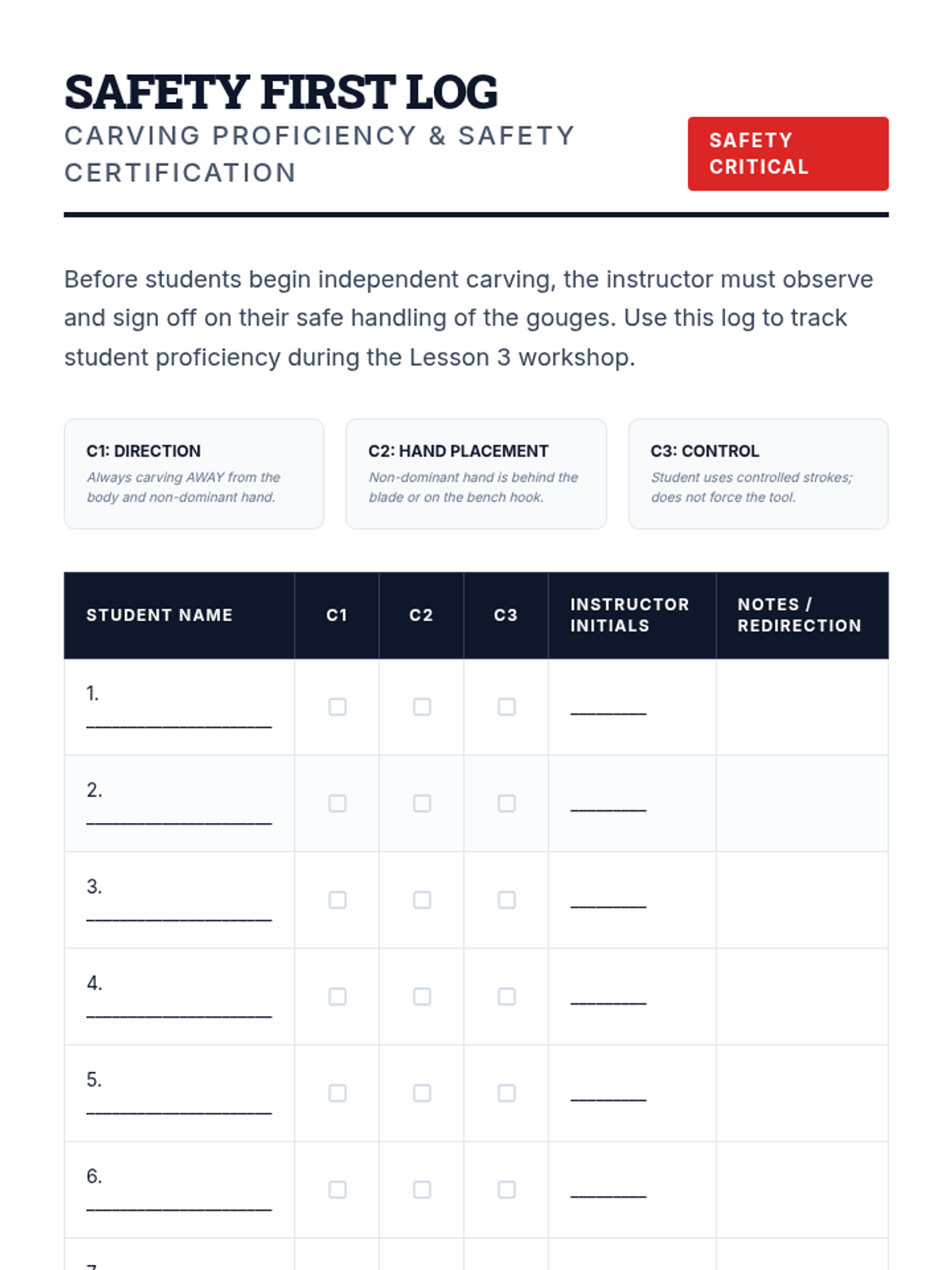
Students begin the irreversible carving process, removing areas intended to remain the color of the paper. Instruction focuses on tool handling safety, varying line weights, and textural mark-making to create dynamic negative space.
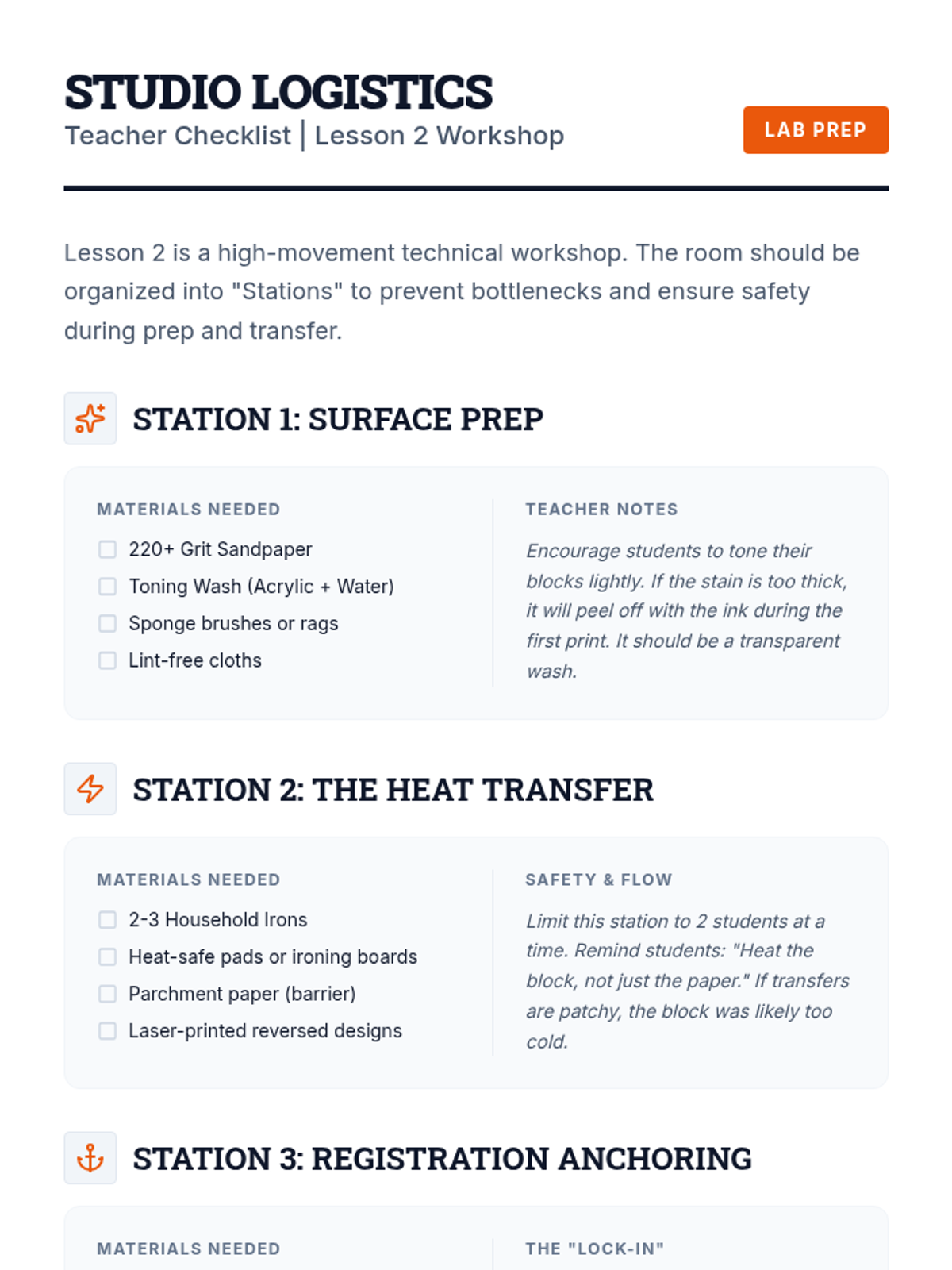
This technical workshop guides students through prepping linoleum blocks, including sanding and toning, before transferring their reversed designs. Students learn to secure their registration systems to ensure alignment for multiple print layers.
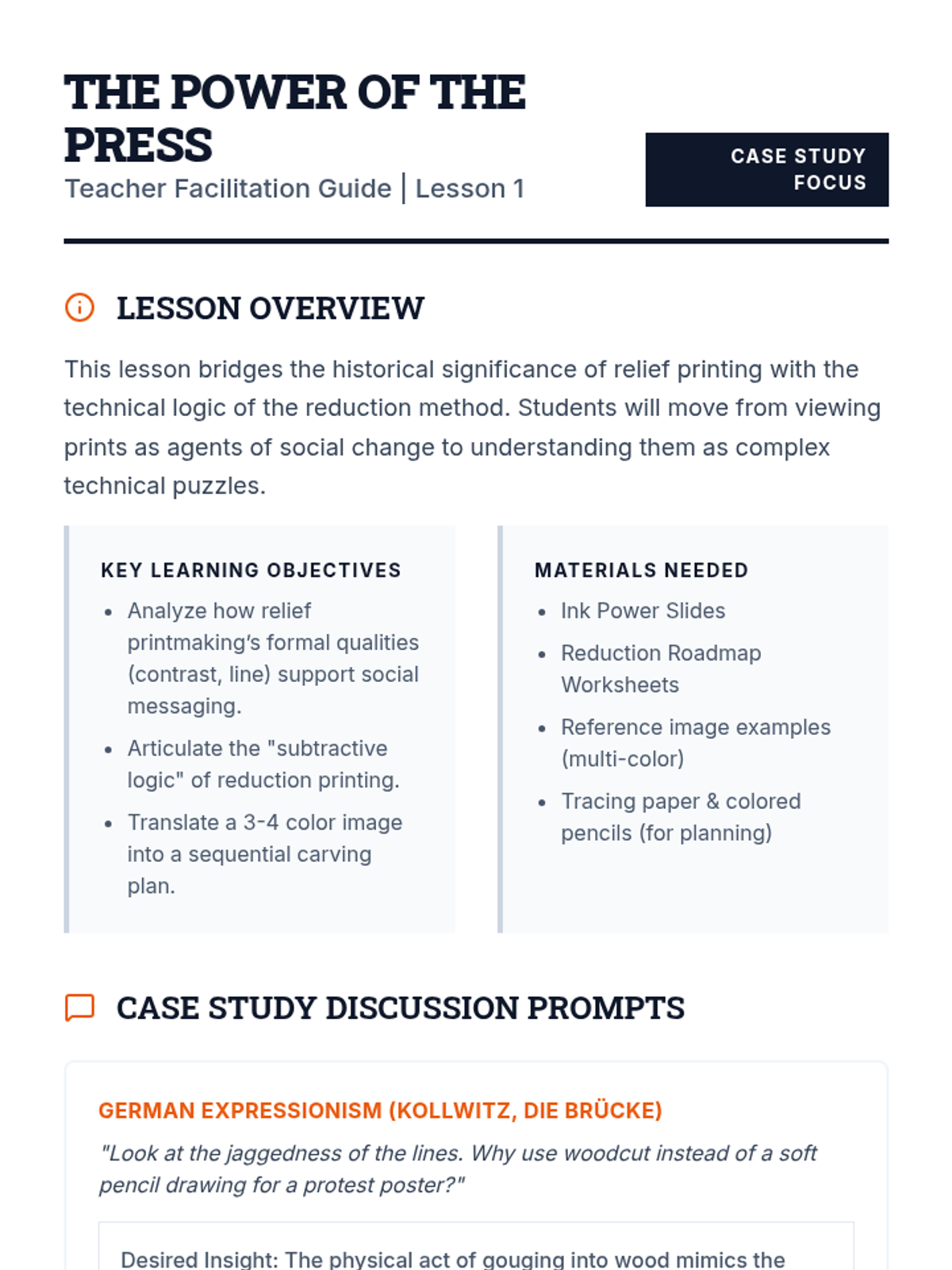
Students analyze the social and political power of relief prints and learn the strategic logic of reduction planning through color separation maps.
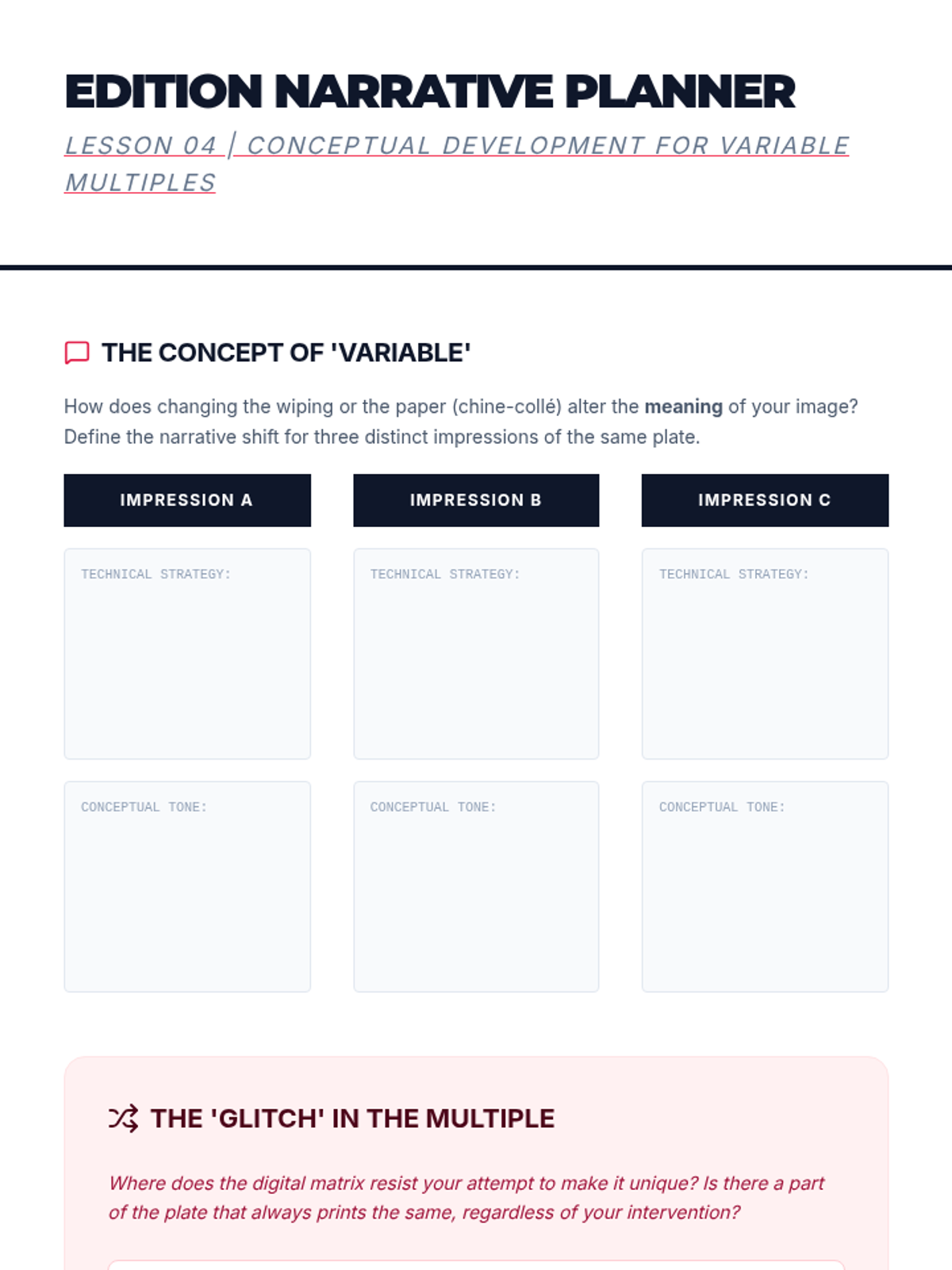
Focusing on the unique 'multiple,' students use hybrid plates for variable editioning and monoprinting. Techniques include chine-collé and hand-wiping to alter emotional resonance.
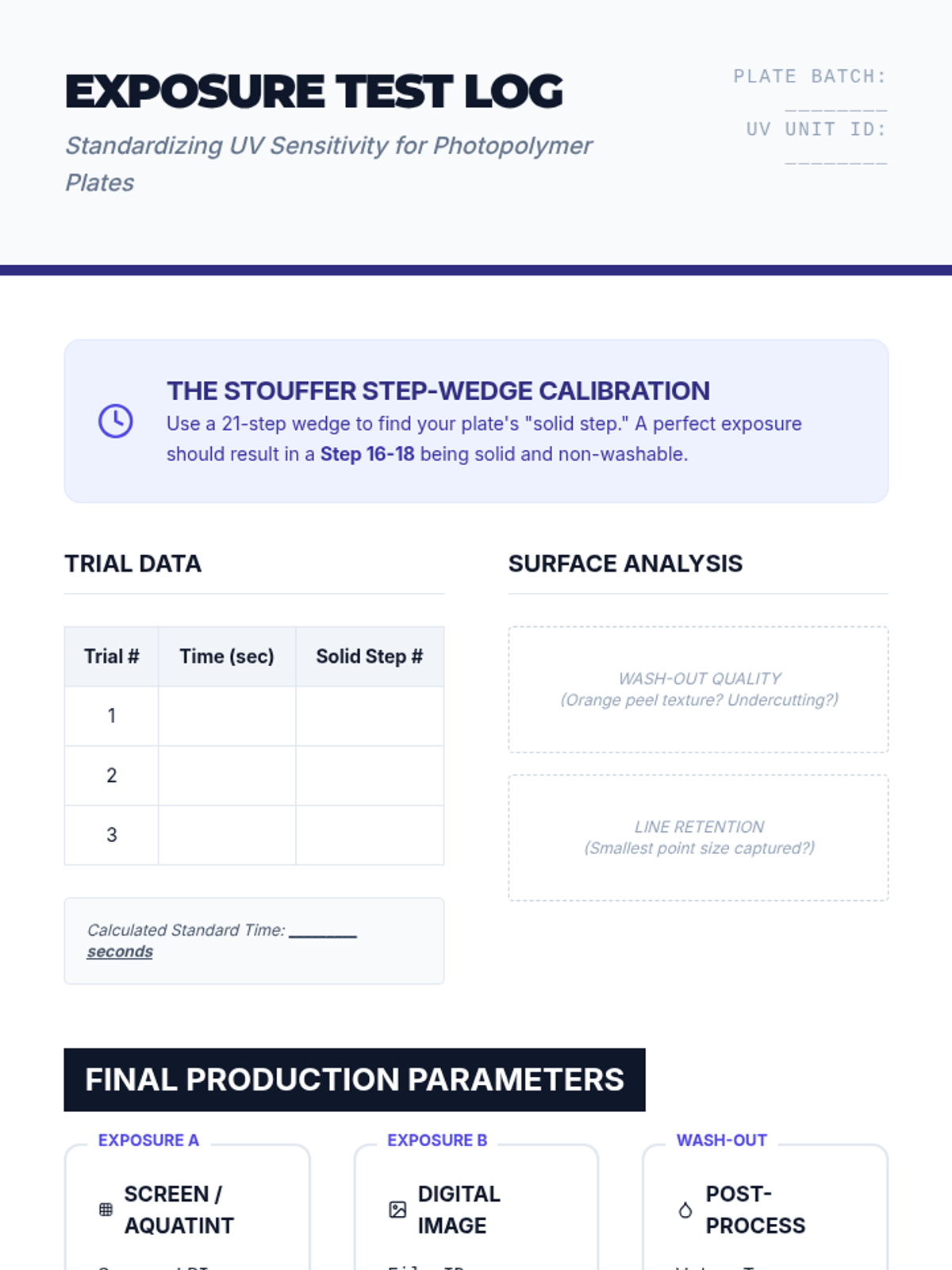
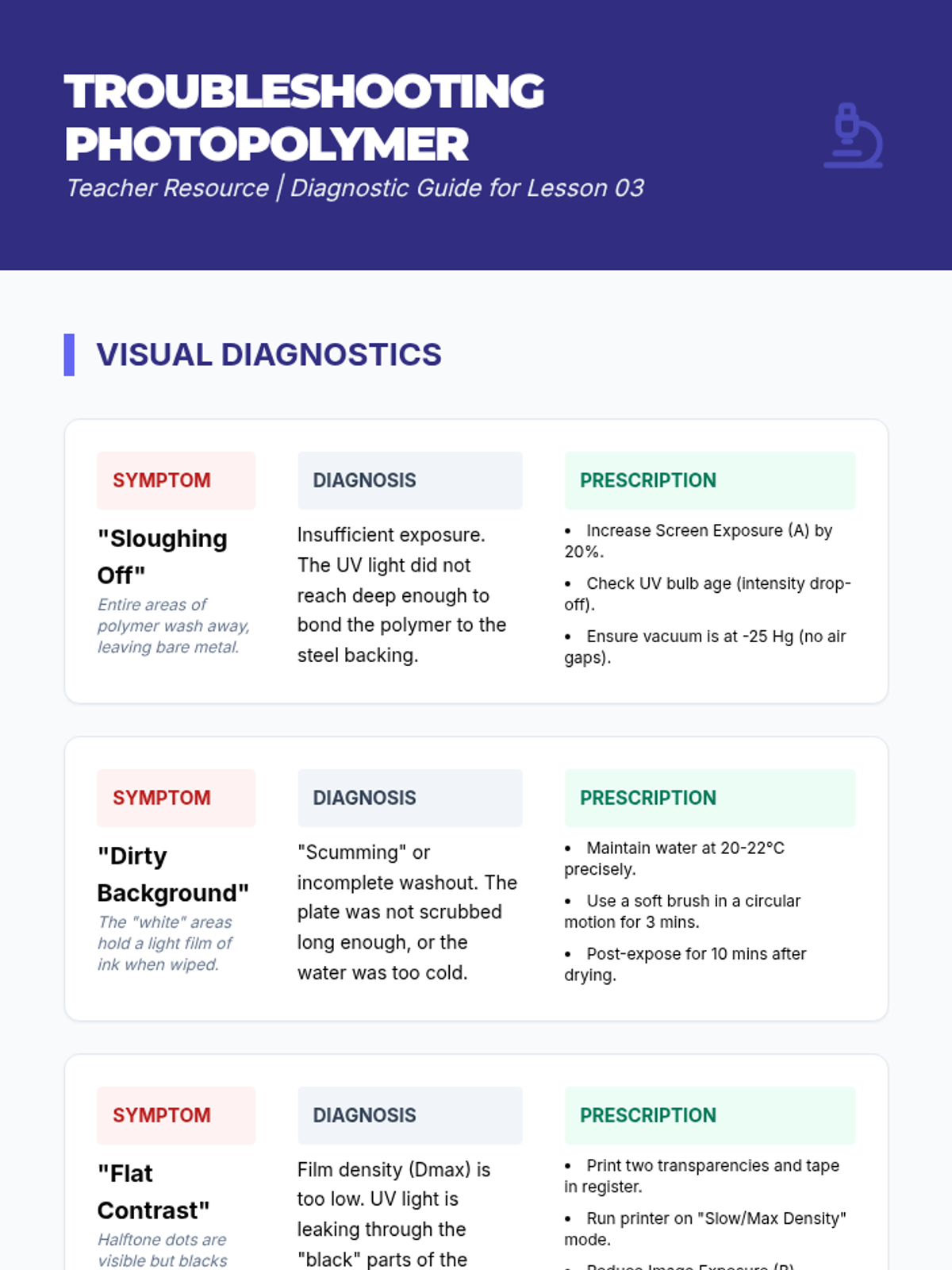
Students bridge photography and printmaking by constructing photopolymer plates. The lesson covers halftone generation, UV exposure calculation, and washout techniques.
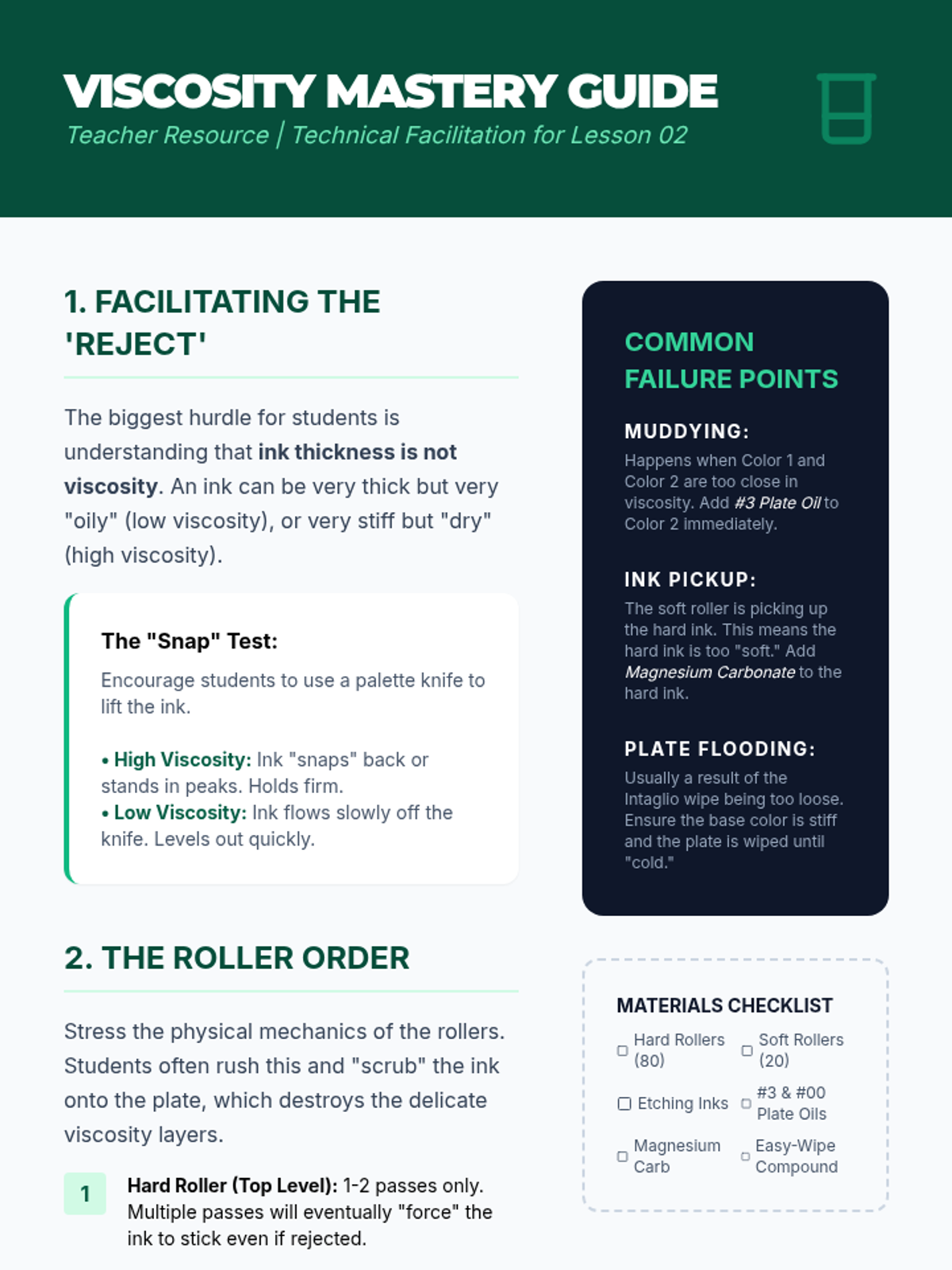
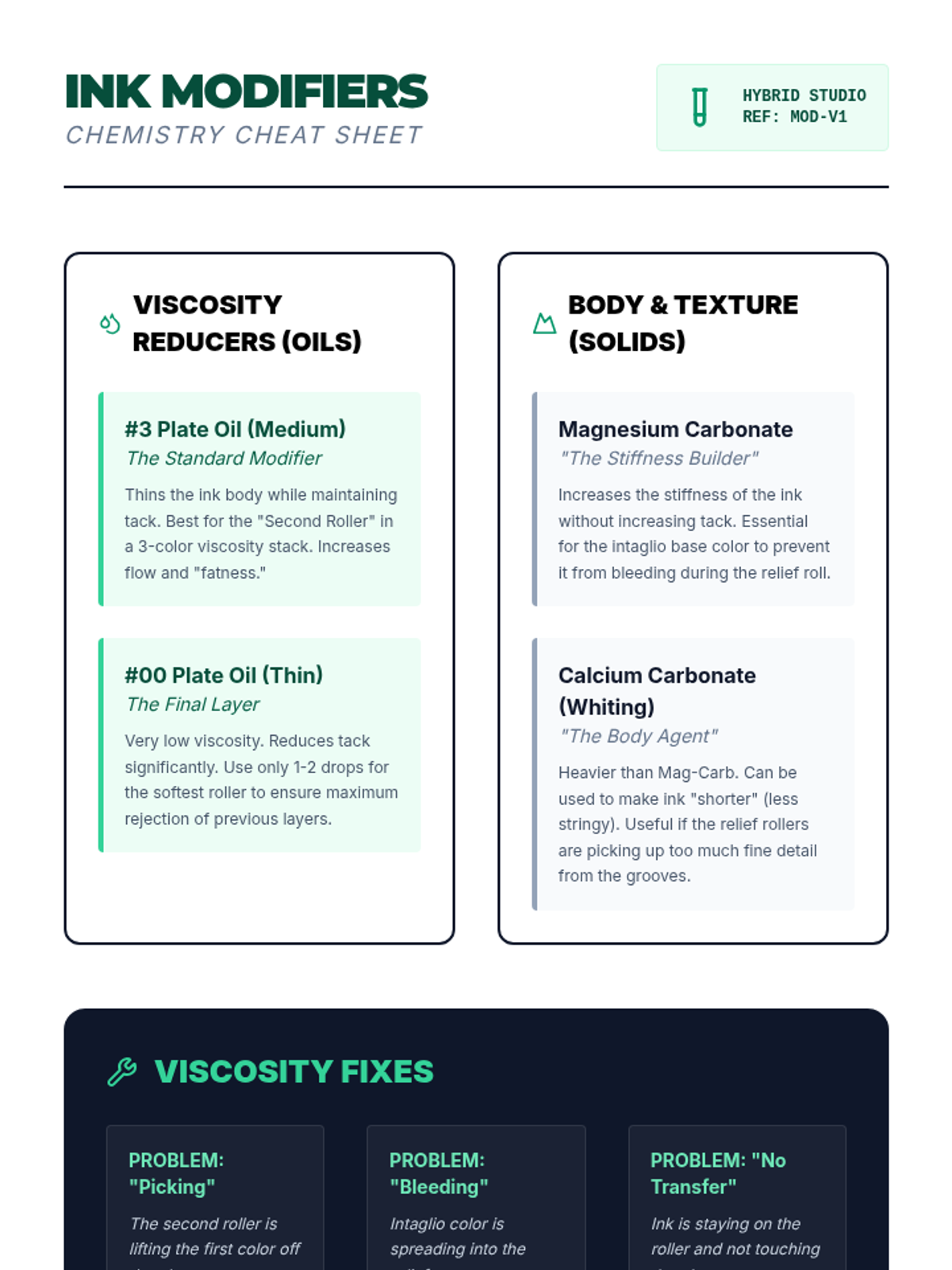
An exploration of the Hayter method, using ink viscosity and oil-resistance to print multiple colors in a single pass. Students master ink modification and roller hardness strategies.
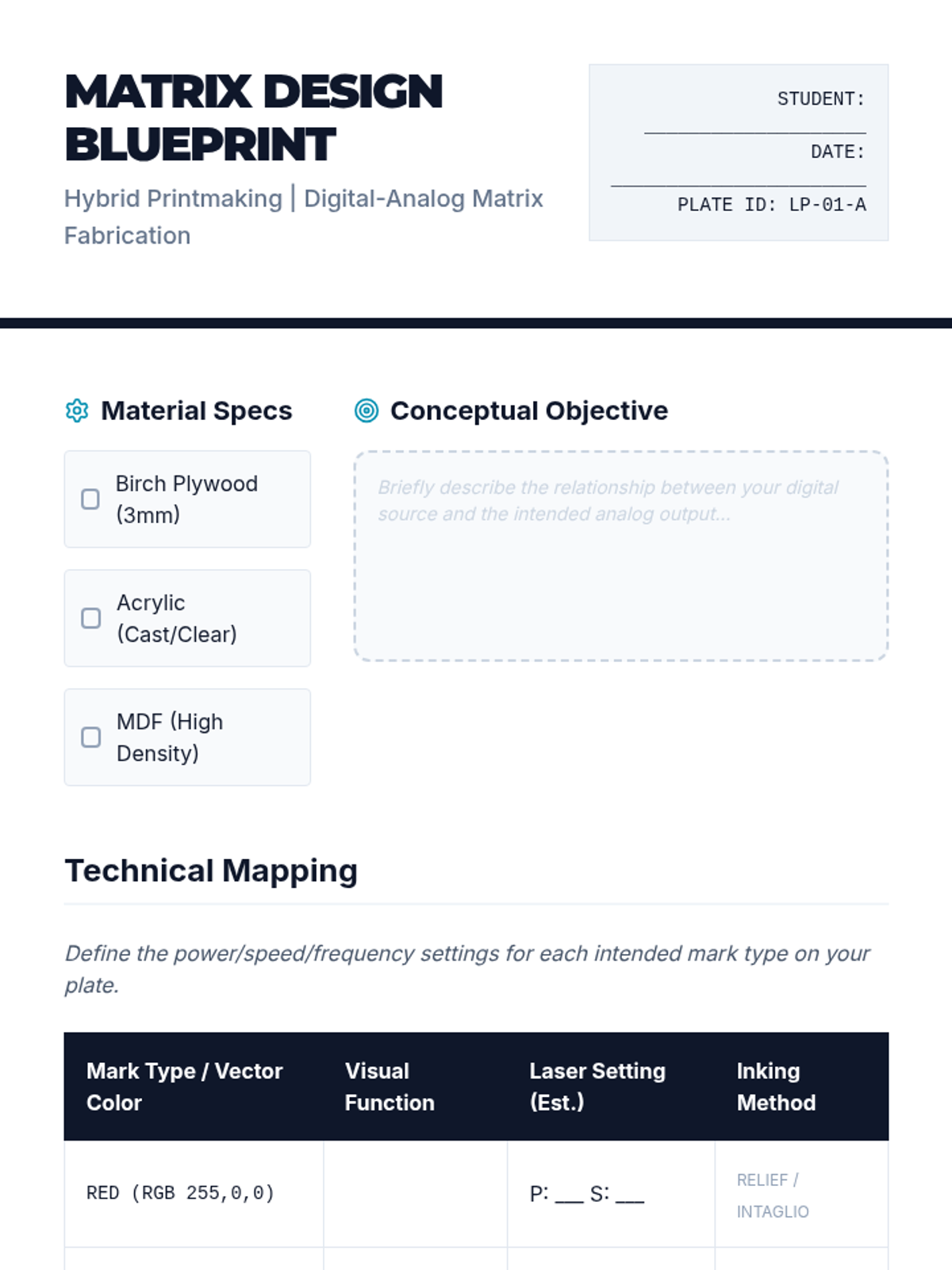
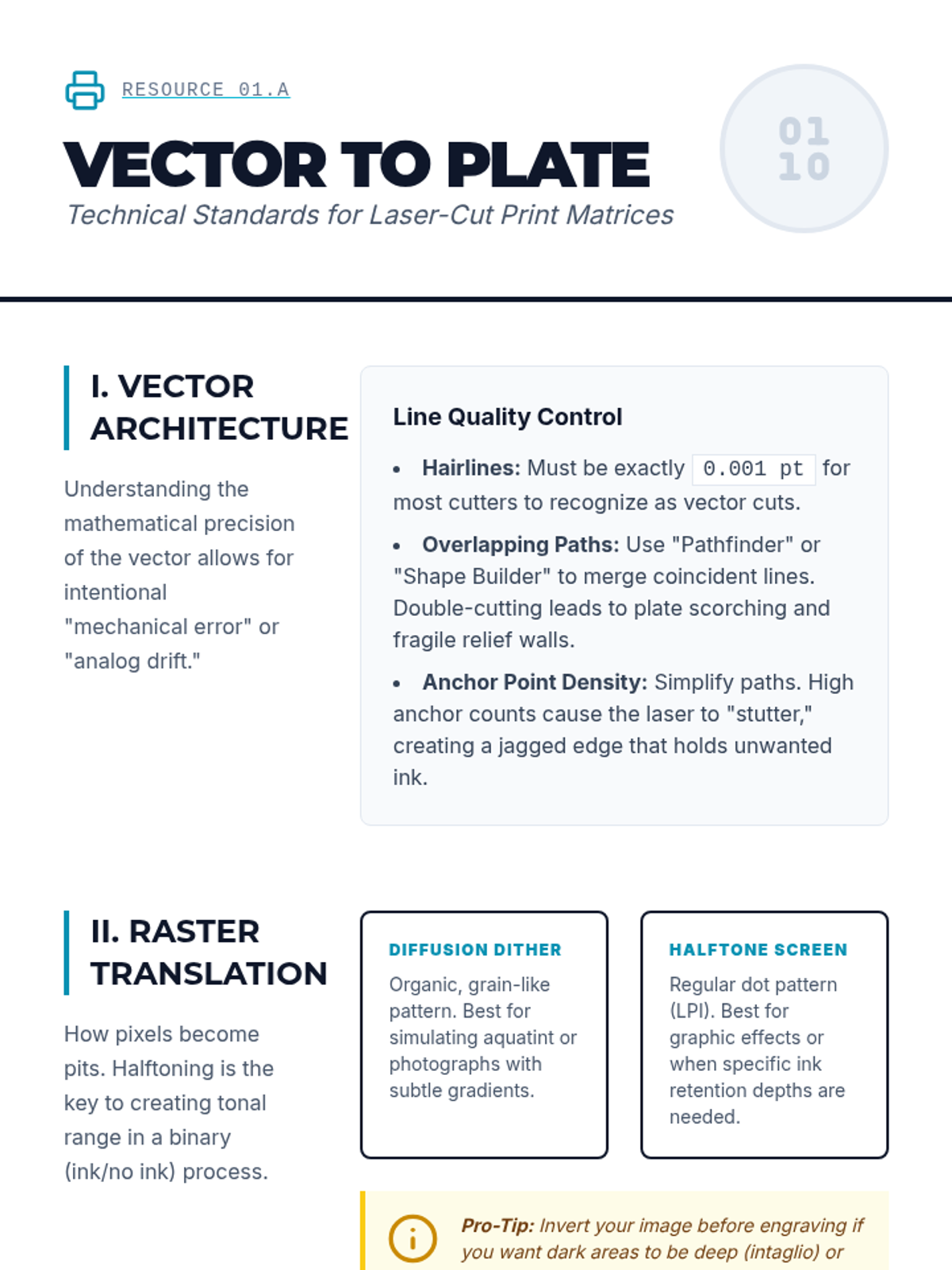
Students translate vector-based designs into physical wood and acrylic plates using laser cutting. The lesson focuses on designing matrices that accommodate both relief and intaglio inking depths.
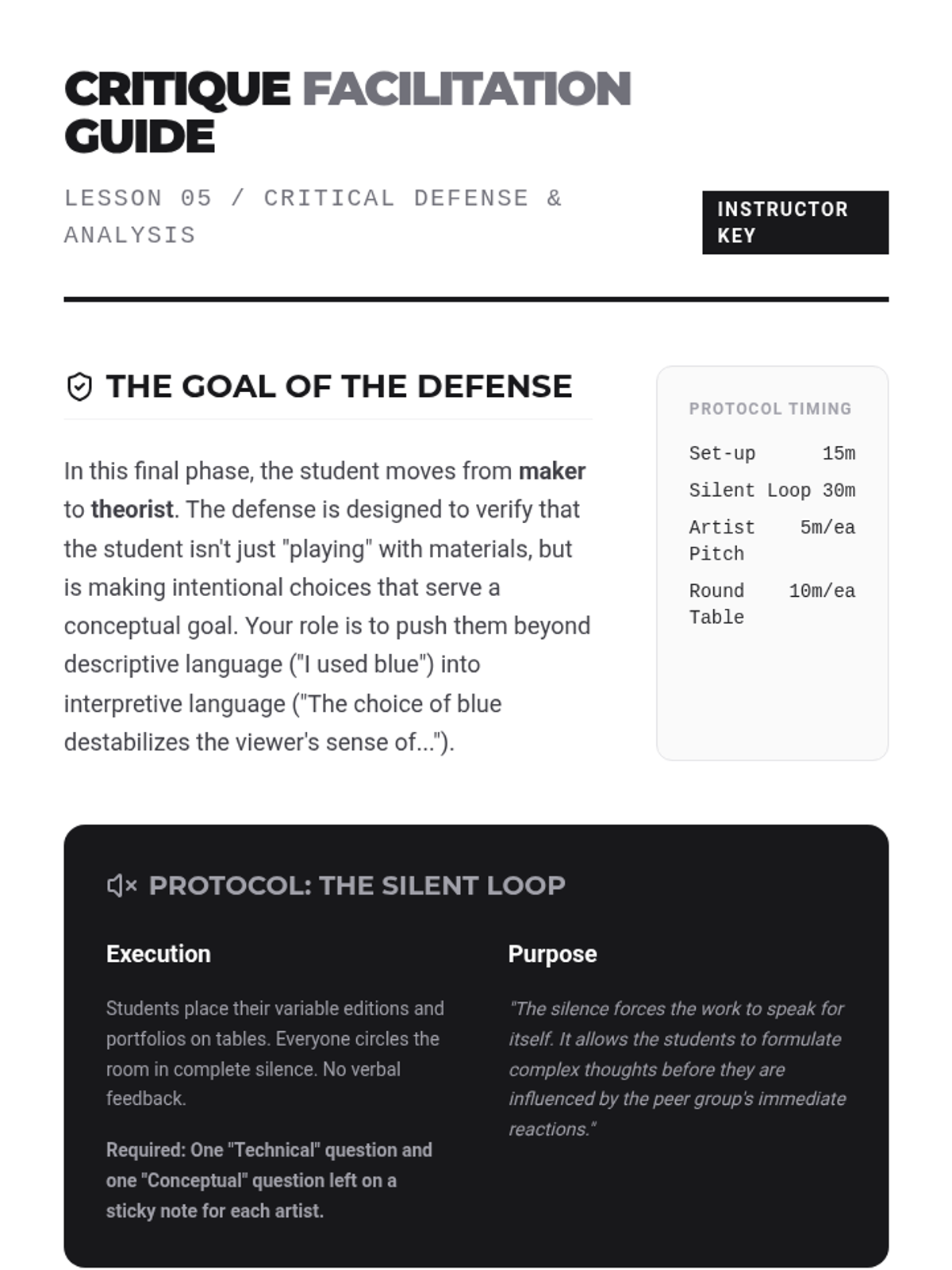
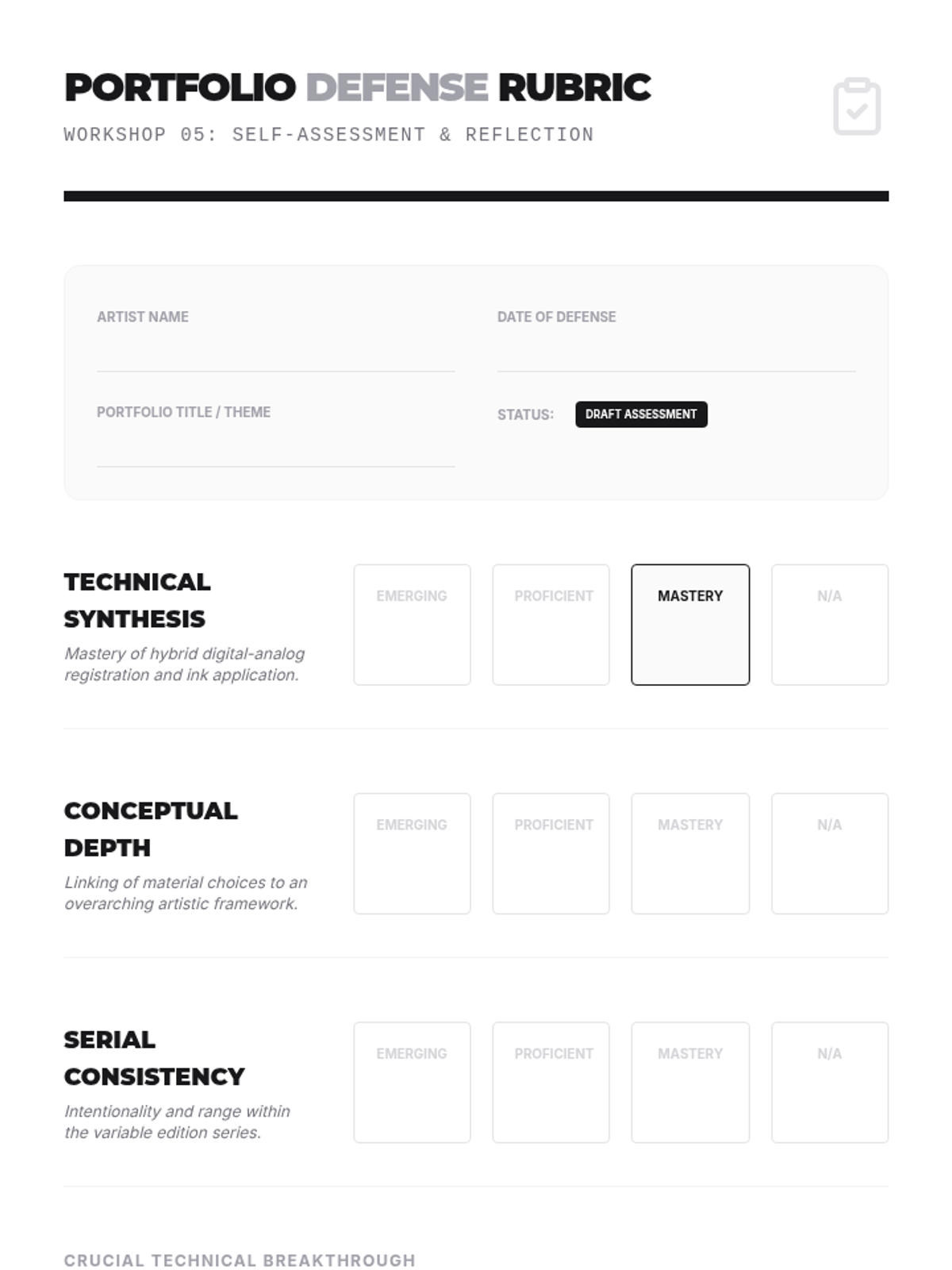
A formal critique and portfolio defense where students articulate their experimental processes and conceptual frameworks within contemporary graphic arts practices.
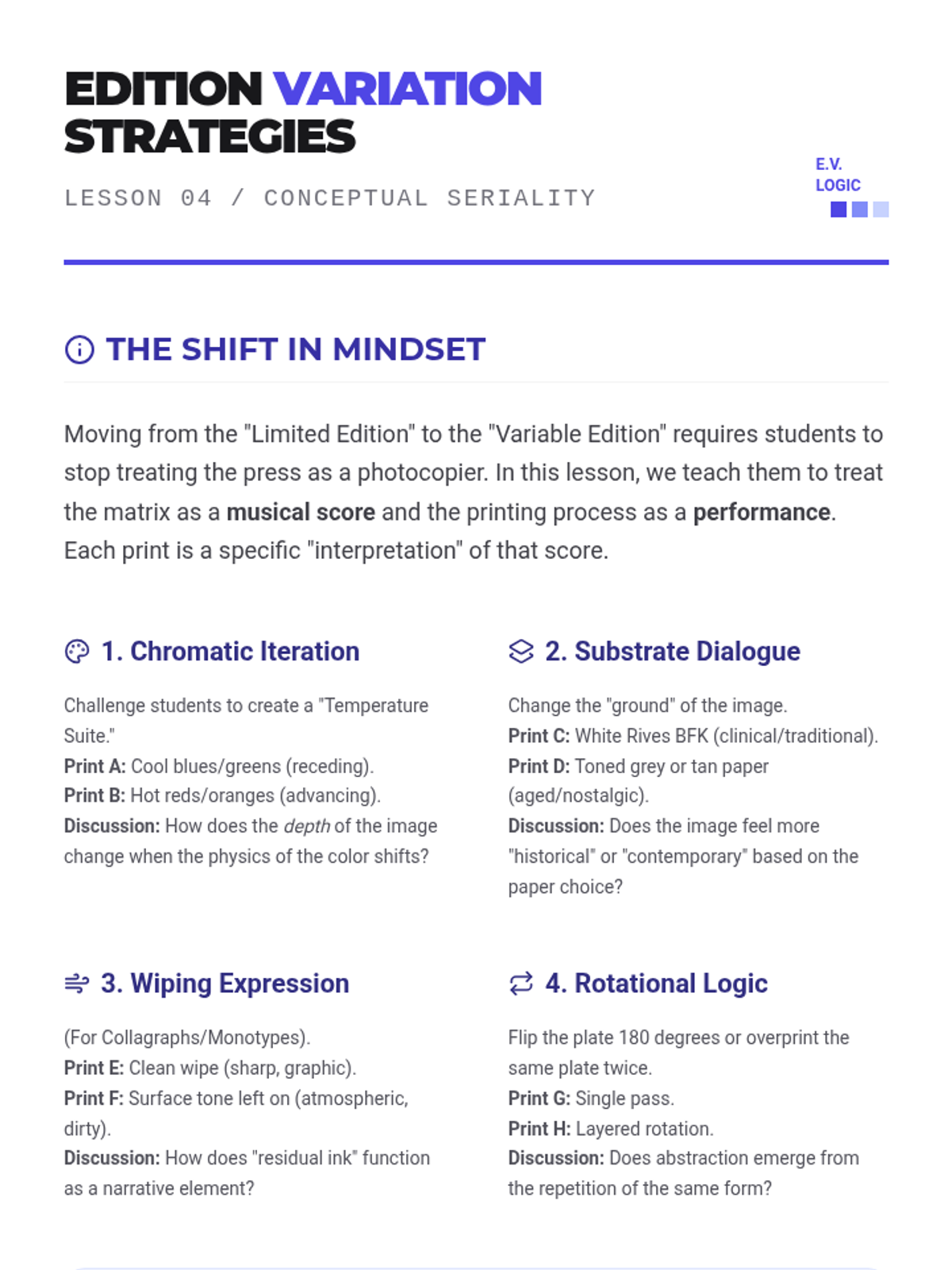
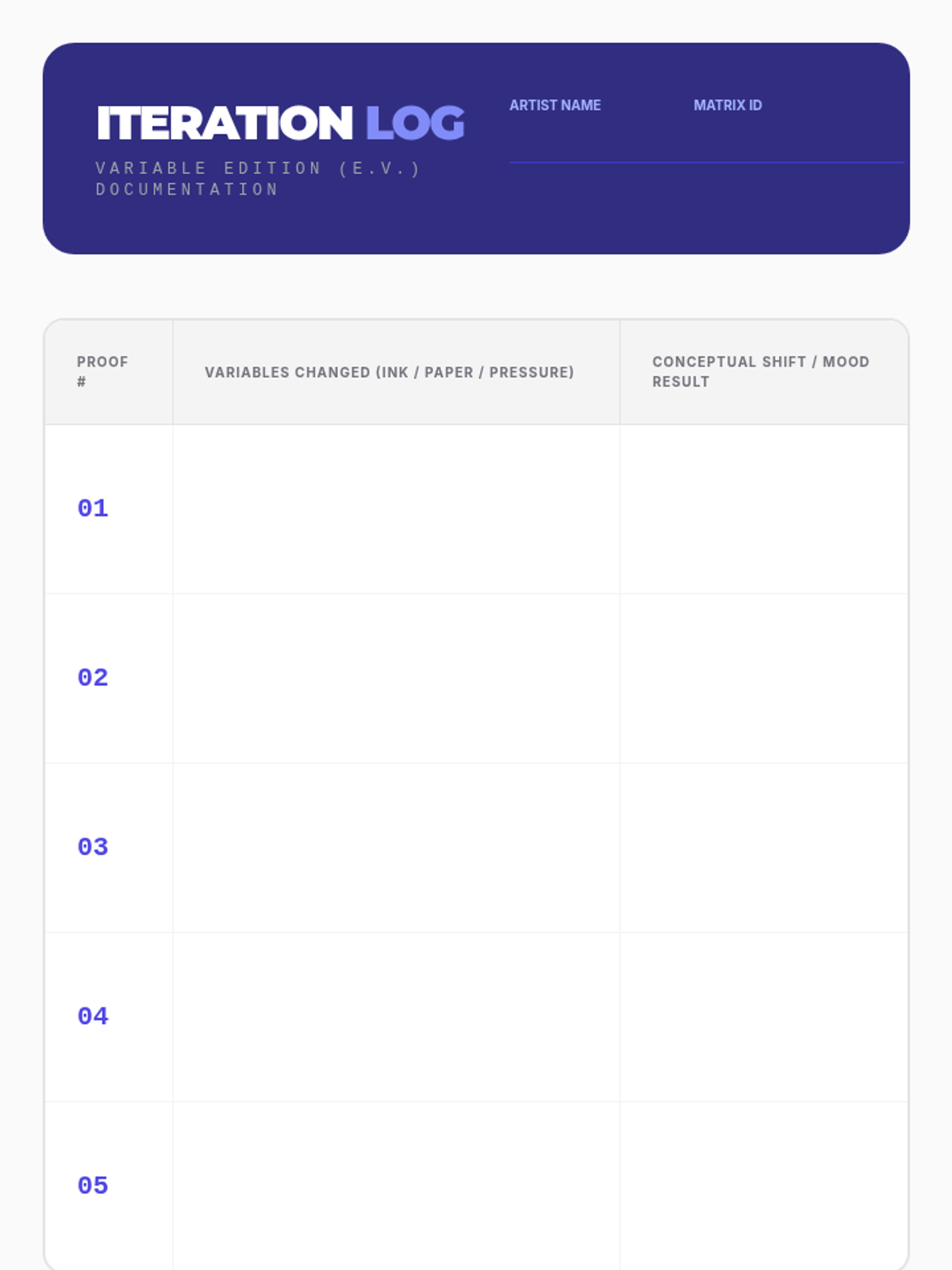
Challenges the traditional concept of the identical edition by creating variable series that explore seriality through changing colors, wiping styles, and paper substrates.
Integrates digital printing with hand-pulled techniques, exploring the conceptual and technical synthesis of pixel-perfect images and organic ink textures.
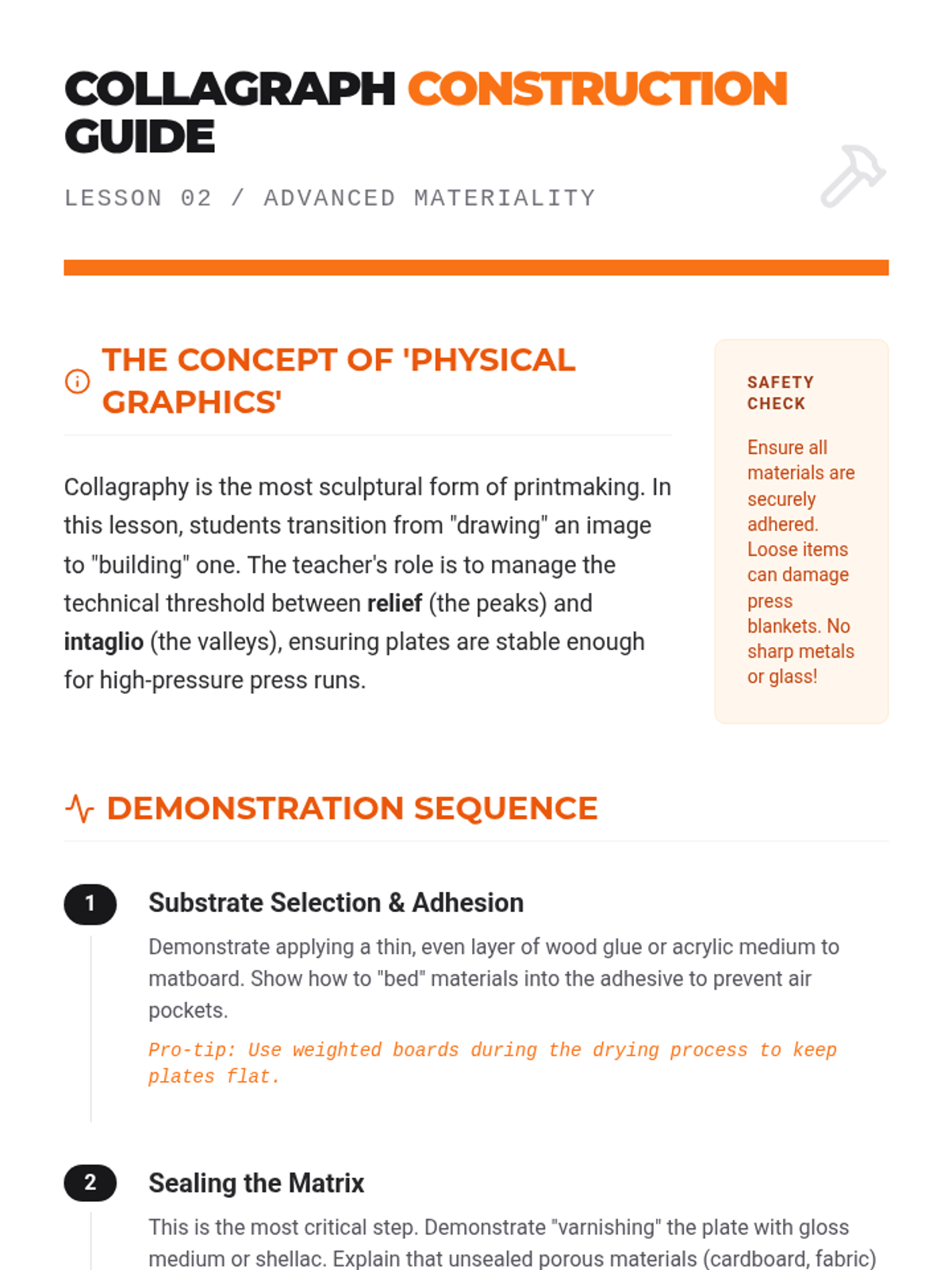
Focuses on building relief plates from found materials and textures, teaching students how to translate physical surfaces into rich, embossed graphic images.
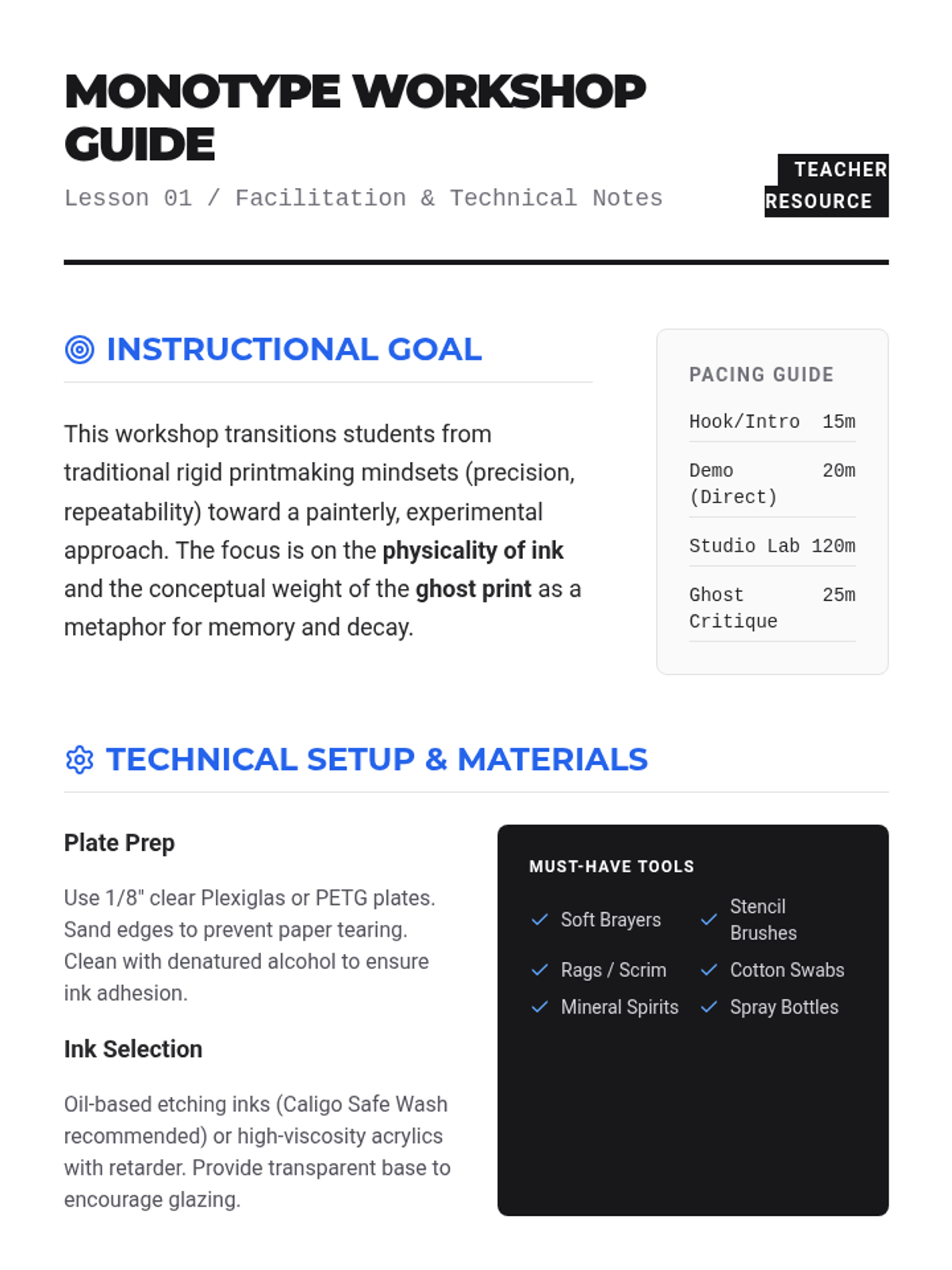
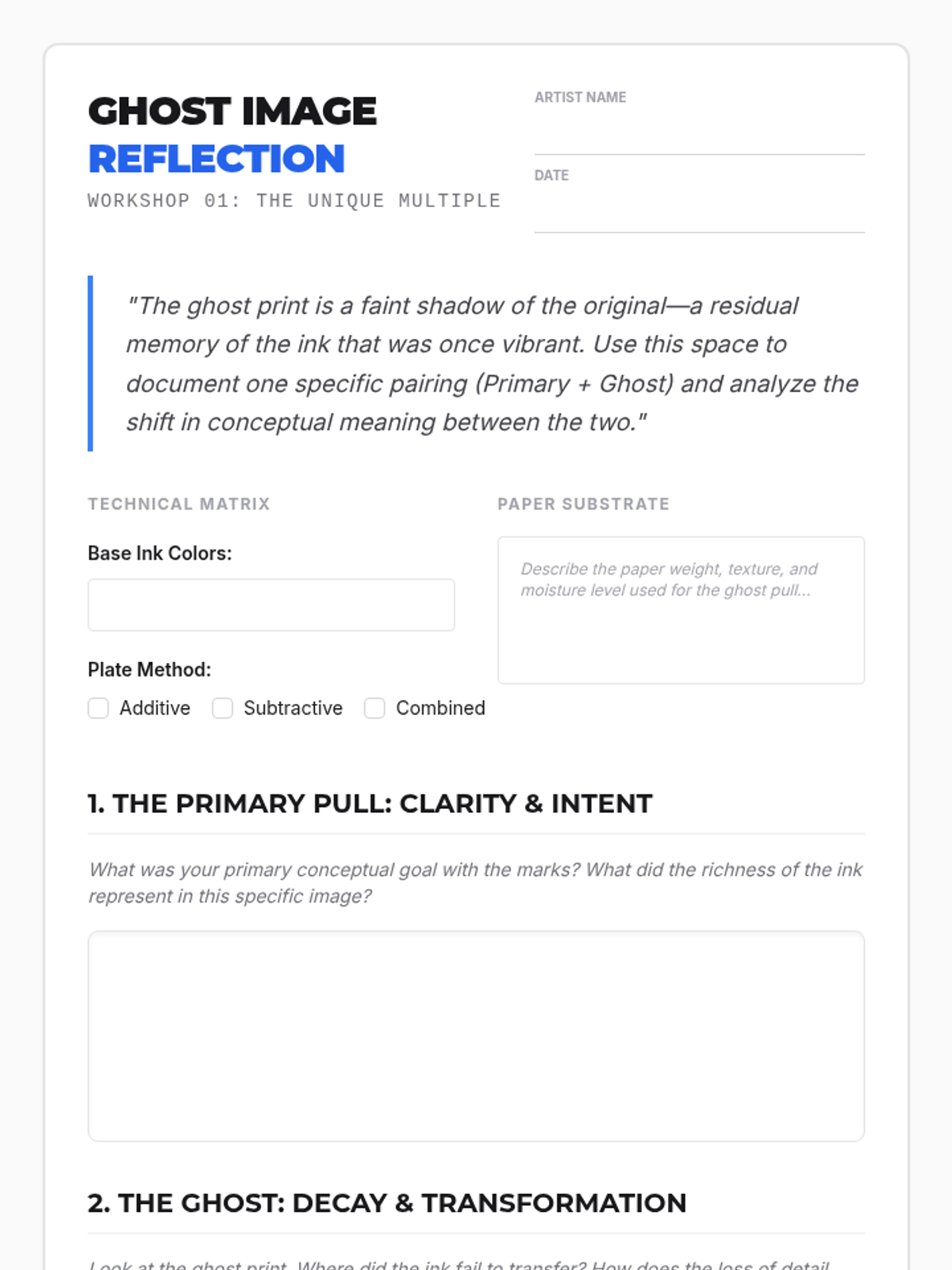
Students explore the painterly side of printmaking using monotype techniques, focusing on spontaneity, mark-making, and the unique 'ghost print' phenomenon.