Develops technical proficiency and creative movement skills across various styles. Examines choreographic principles alongside the historical and cultural origins of diverse global dance forms.
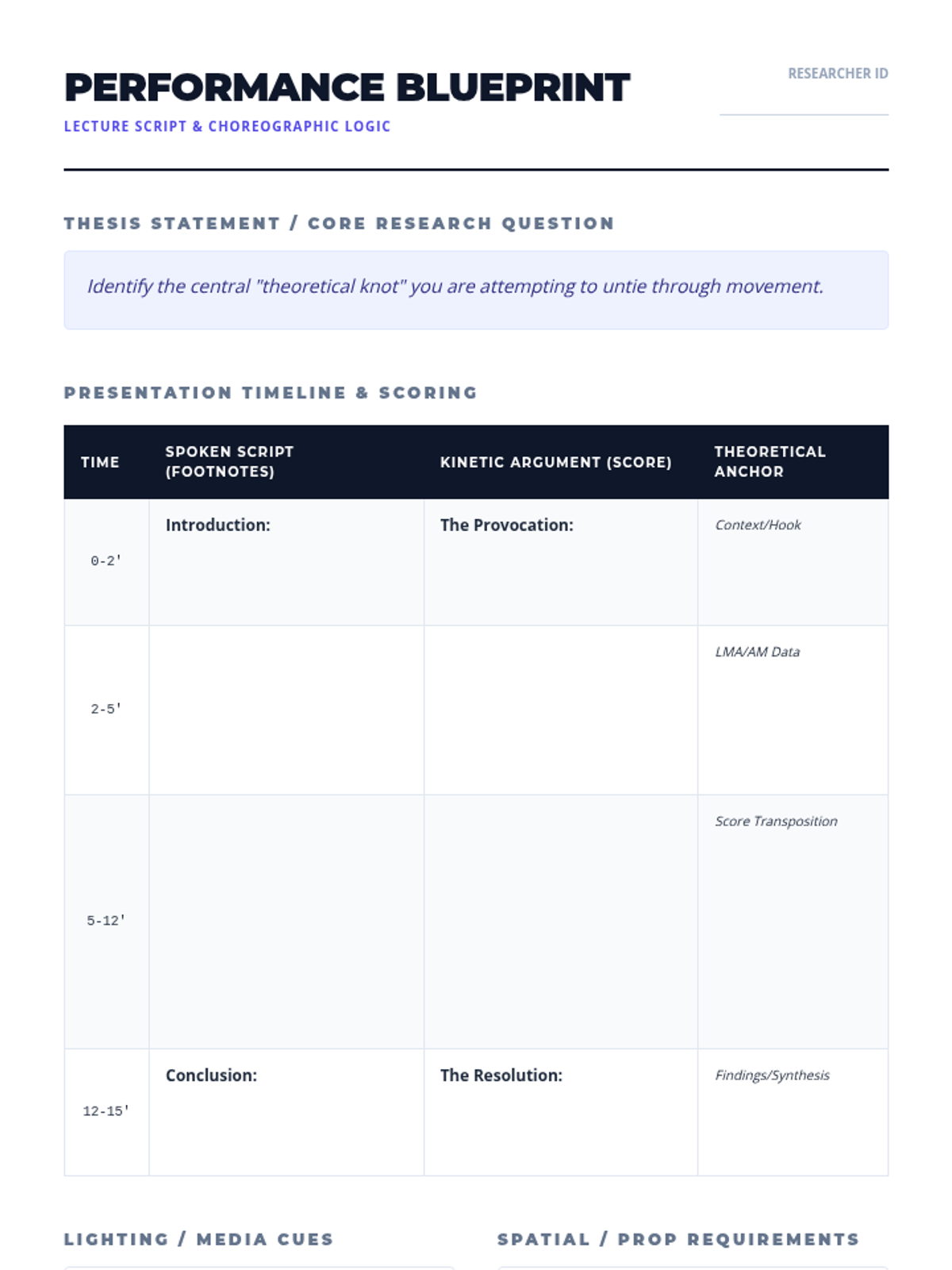
Planning worksheet for the final performance-lecture presentation, featuring a multi-column timeline for scripting and movement scoring.
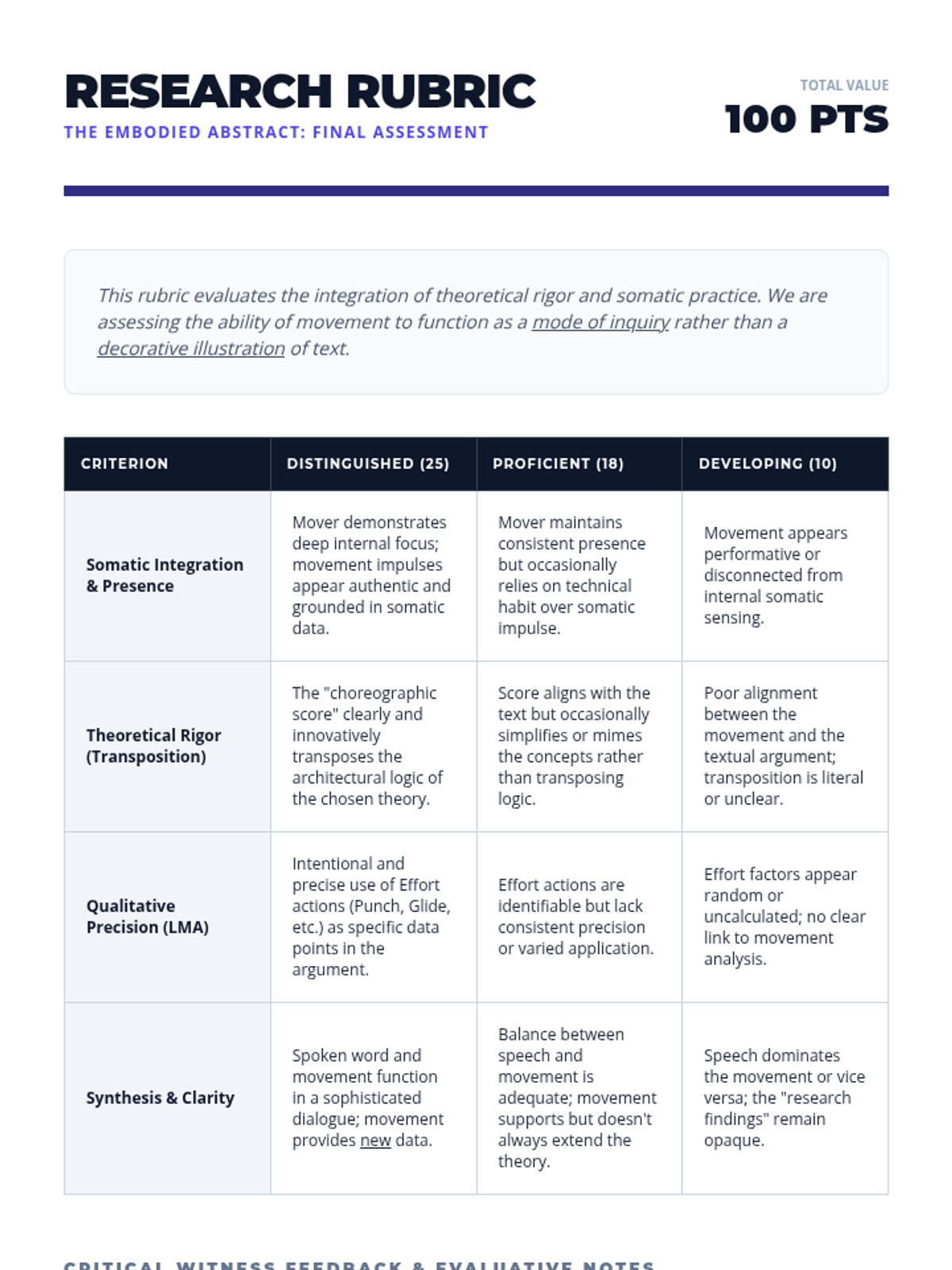
Research-focused assessment rubric for the final performance-lecture, evaluating somatic integration, theoretical rigor, and movement analysis application.
Final slide deck for Lesson 5, defining the performance-lecture format and its role in embodied research presentation.
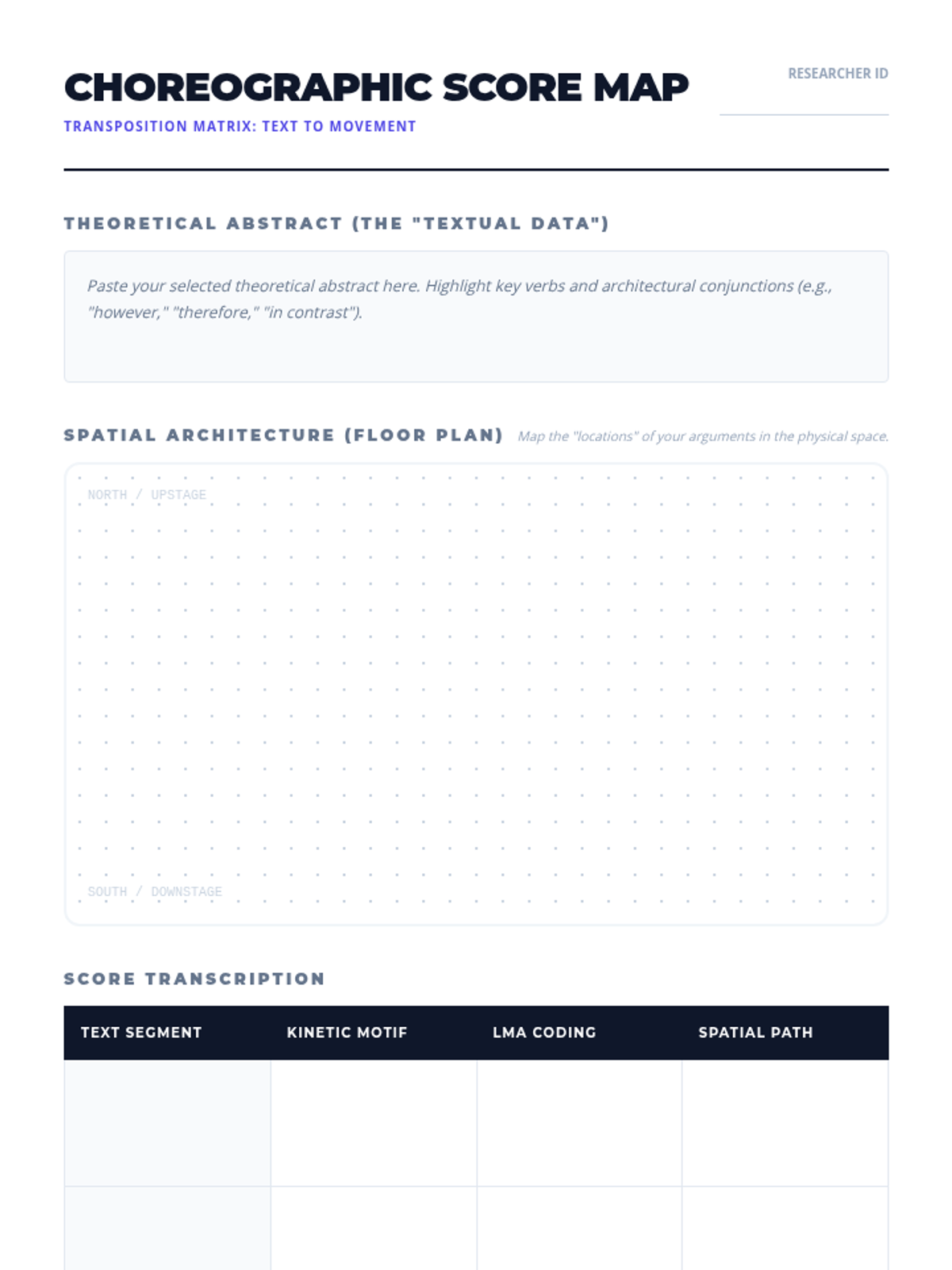
Worksheet for mapping a theoretical text to a choreographic score, featuring a spatial floor plan area and a detailed transcription table.
Introductory presentation for Lesson 4, exploring the transposition of theoretical texts into choreographic scores for research analysis.
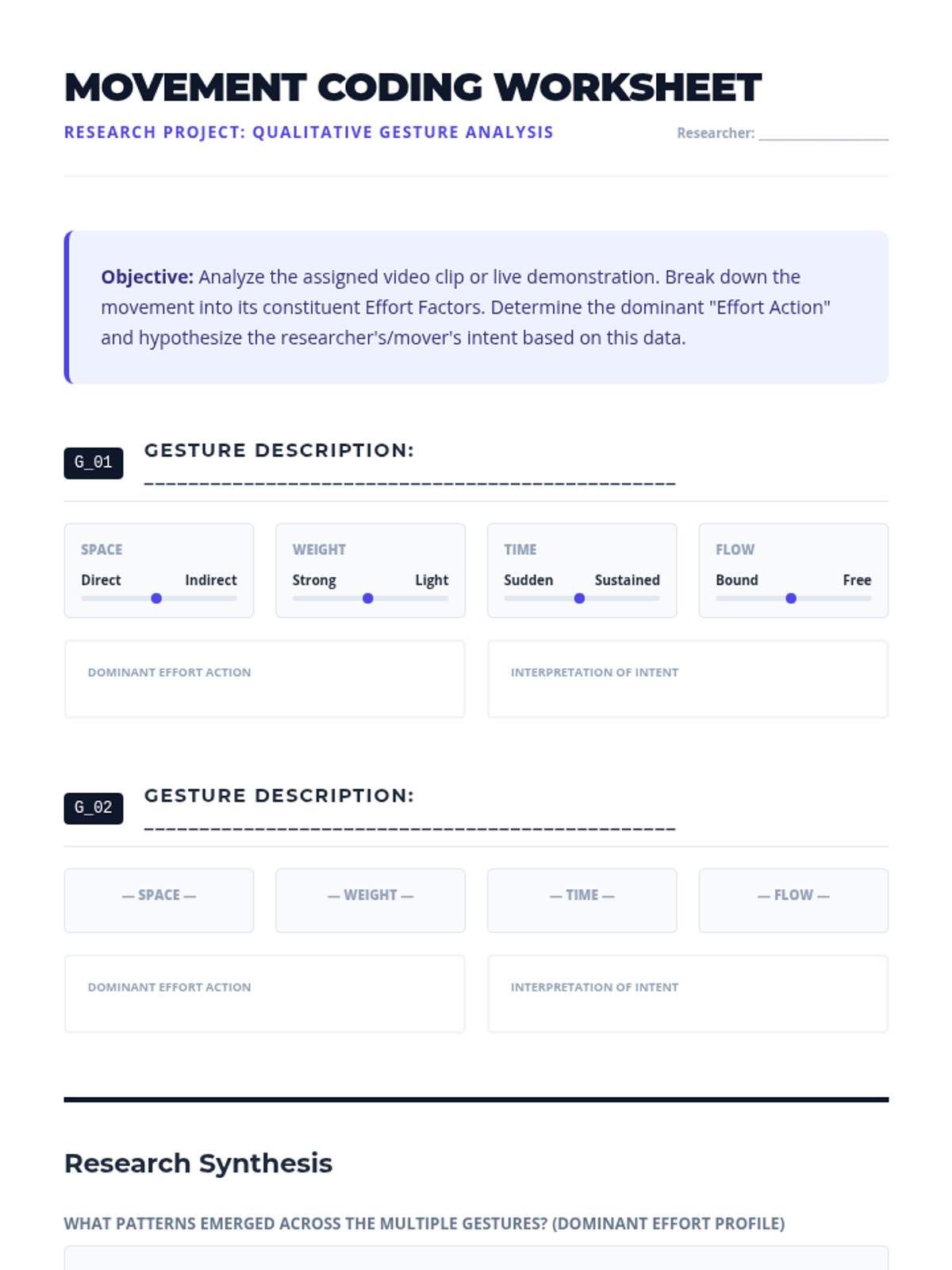
Worksheet for practicing the codification of movement using Laba Effort factors, with sections for gesture analysis and research synthesis.
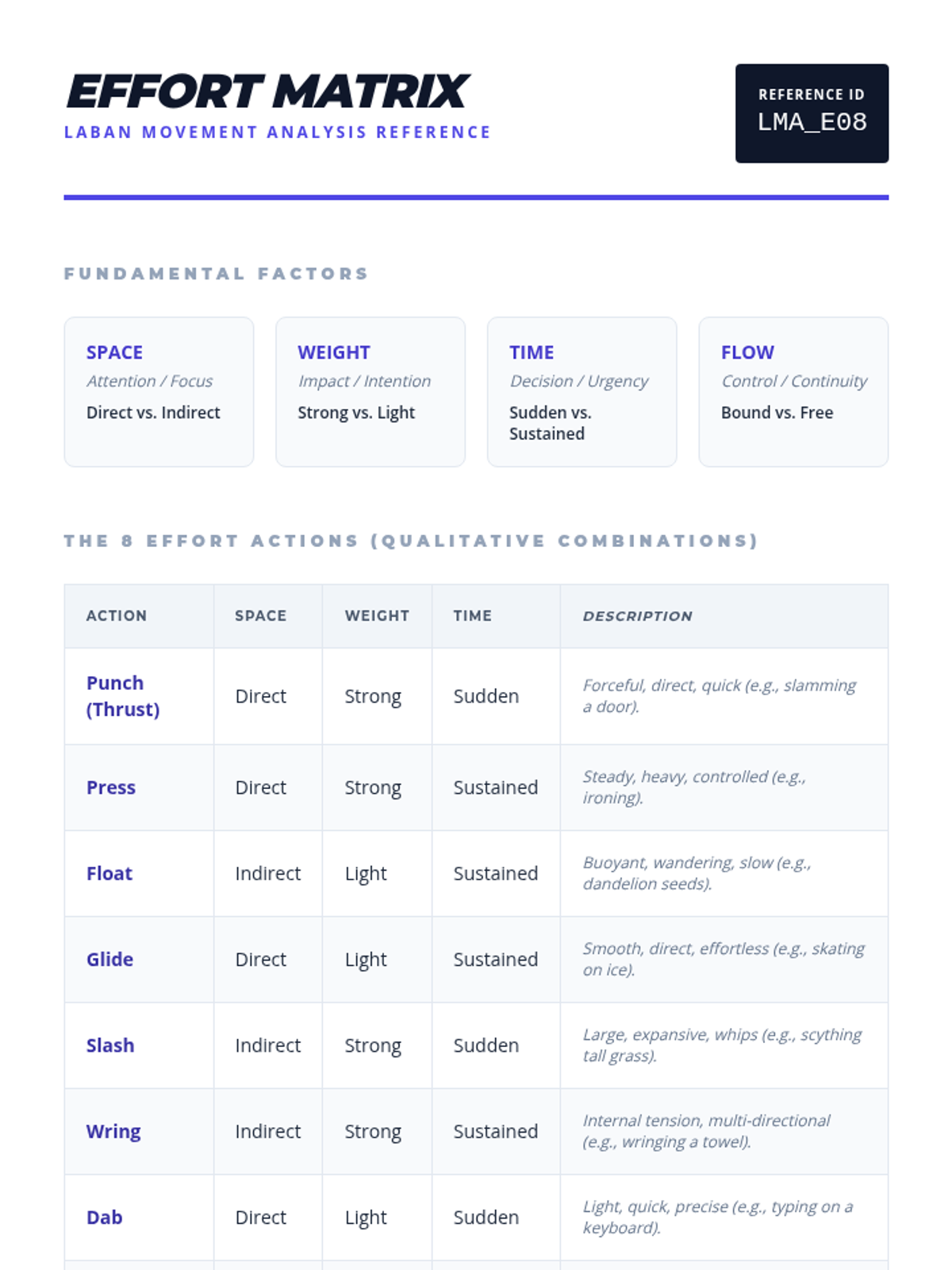
Reference sheet detailing the Laban Effort factors and the eight Effort actions for movement analysis.
Introductory slides for Lesson 3, exploring Laban Movement Analysis (LMA) as a qualitative data coding tool in research.
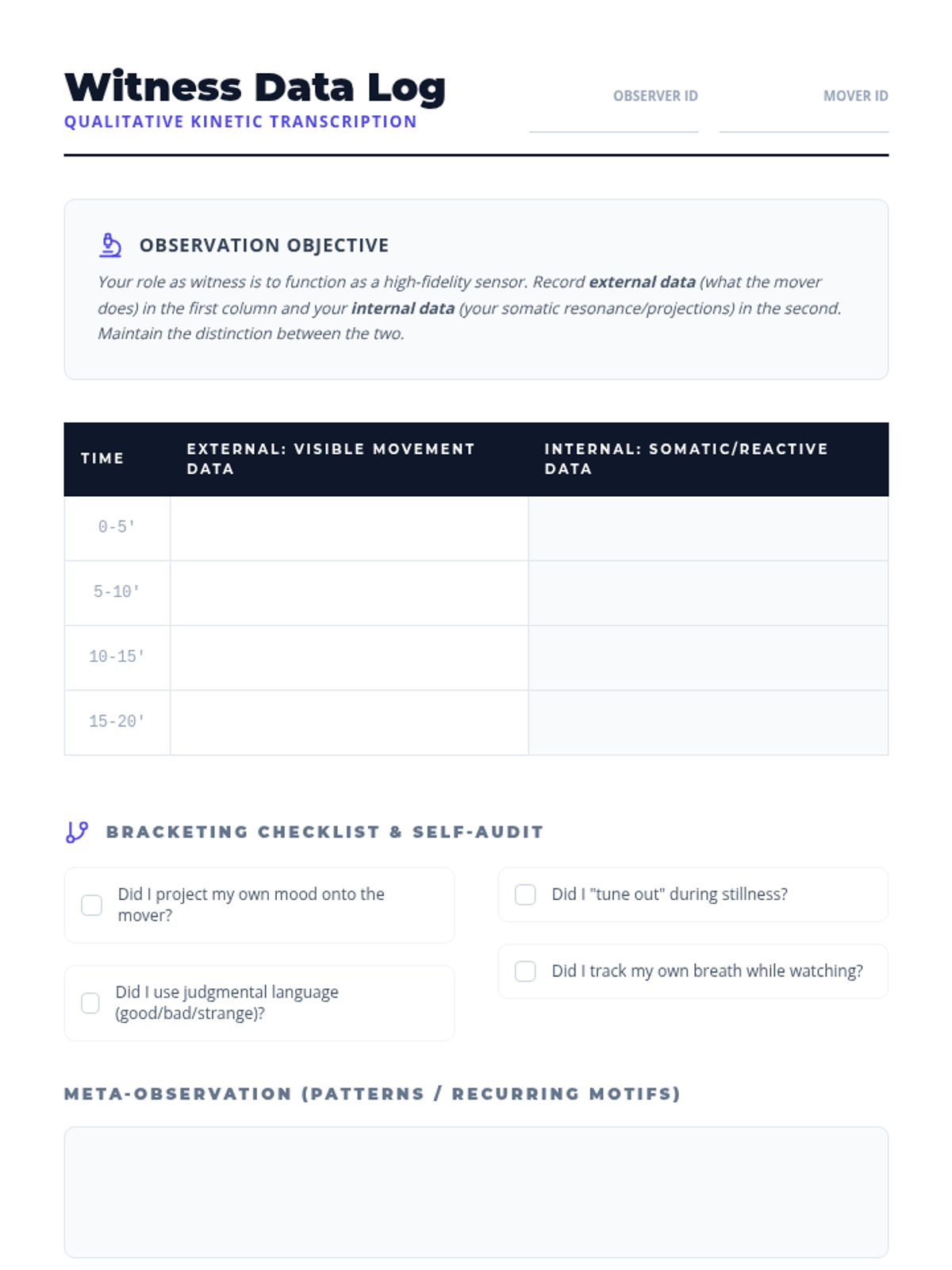
Observation sheet for the Mover/Witness discipline in Authentic Movement, featuring structured columns for external data and internal witness responses.
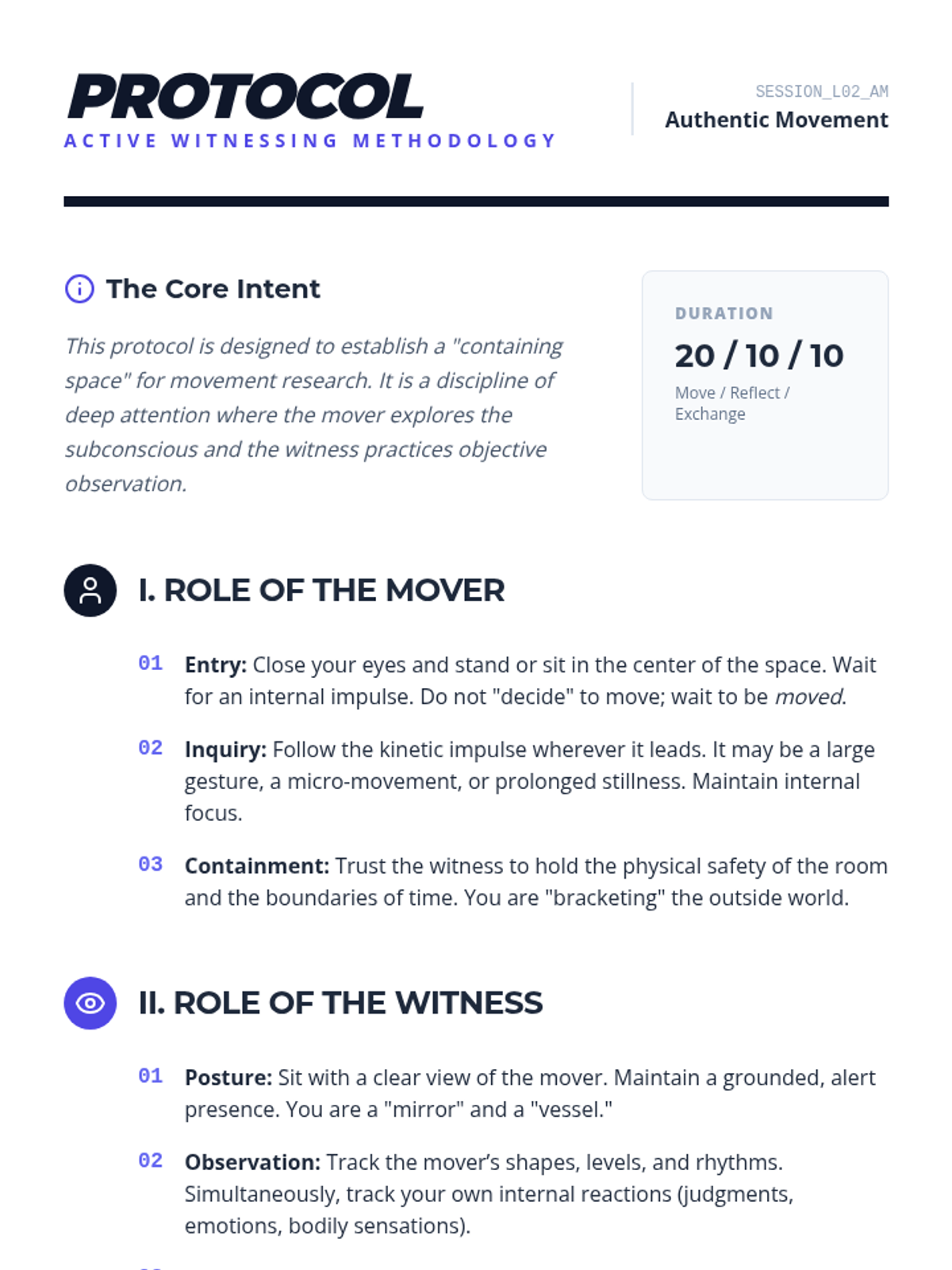
Protocol guide for the Mover/Witness discipline in Authentic Movement, including specific linguistic frames for the feedback loop.
Introductory slides for Lesson 2, covering the philosophy and structure of Authentic Movement as a research methodology.
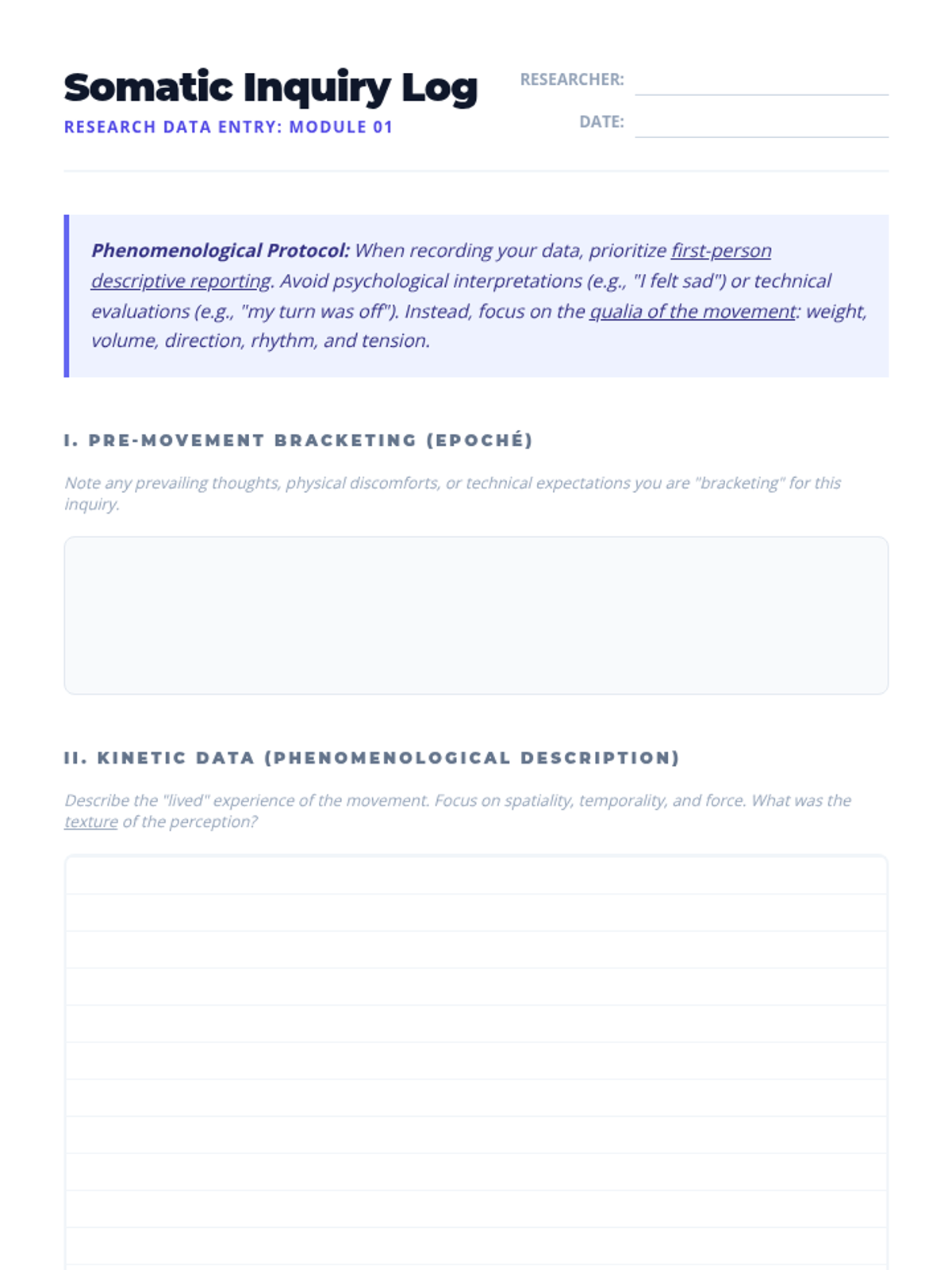
Student journaling template for recording phenomenological descriptions and kinetic data from movement experiments.
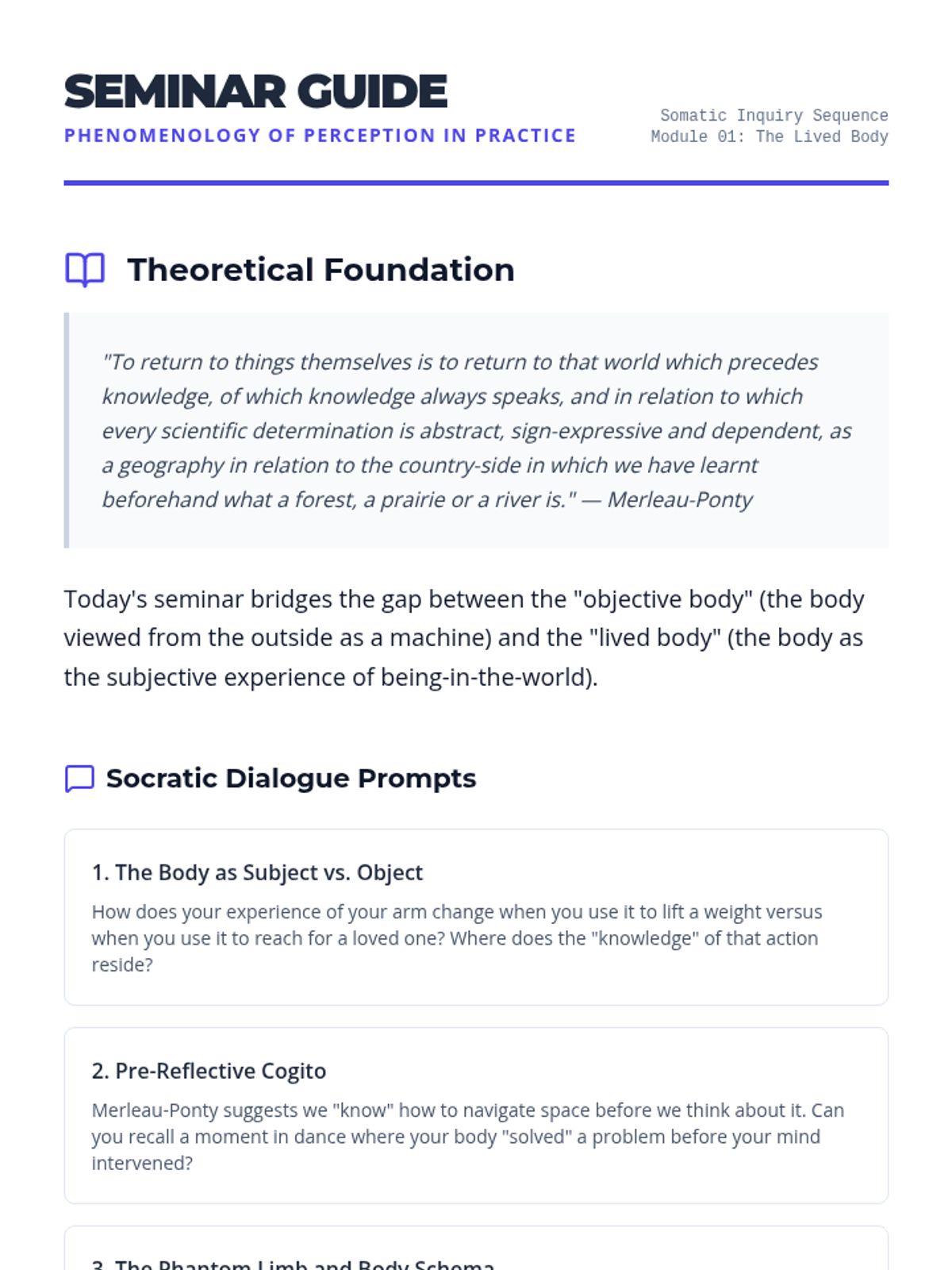
Seminar discussion guide and movement experiment instructions for exploring the phenomenology of perception.
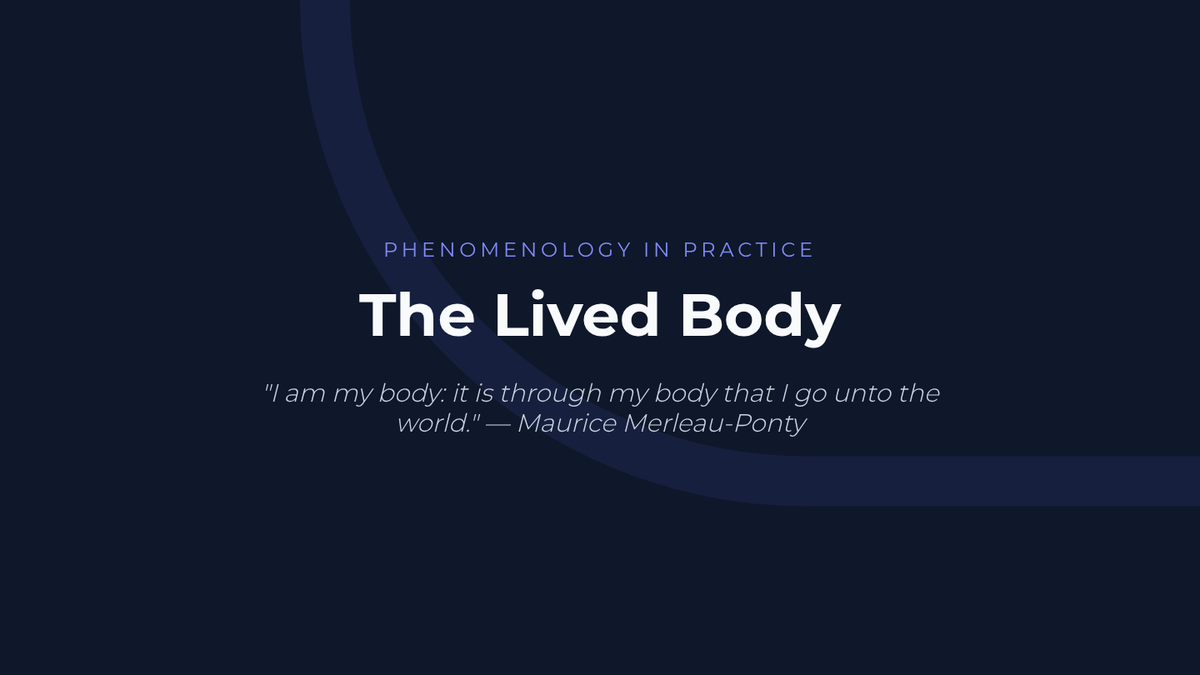
Introductory presentation for Lesson 1, exploring the philosophical foundations of phenomenology in creative movement research.
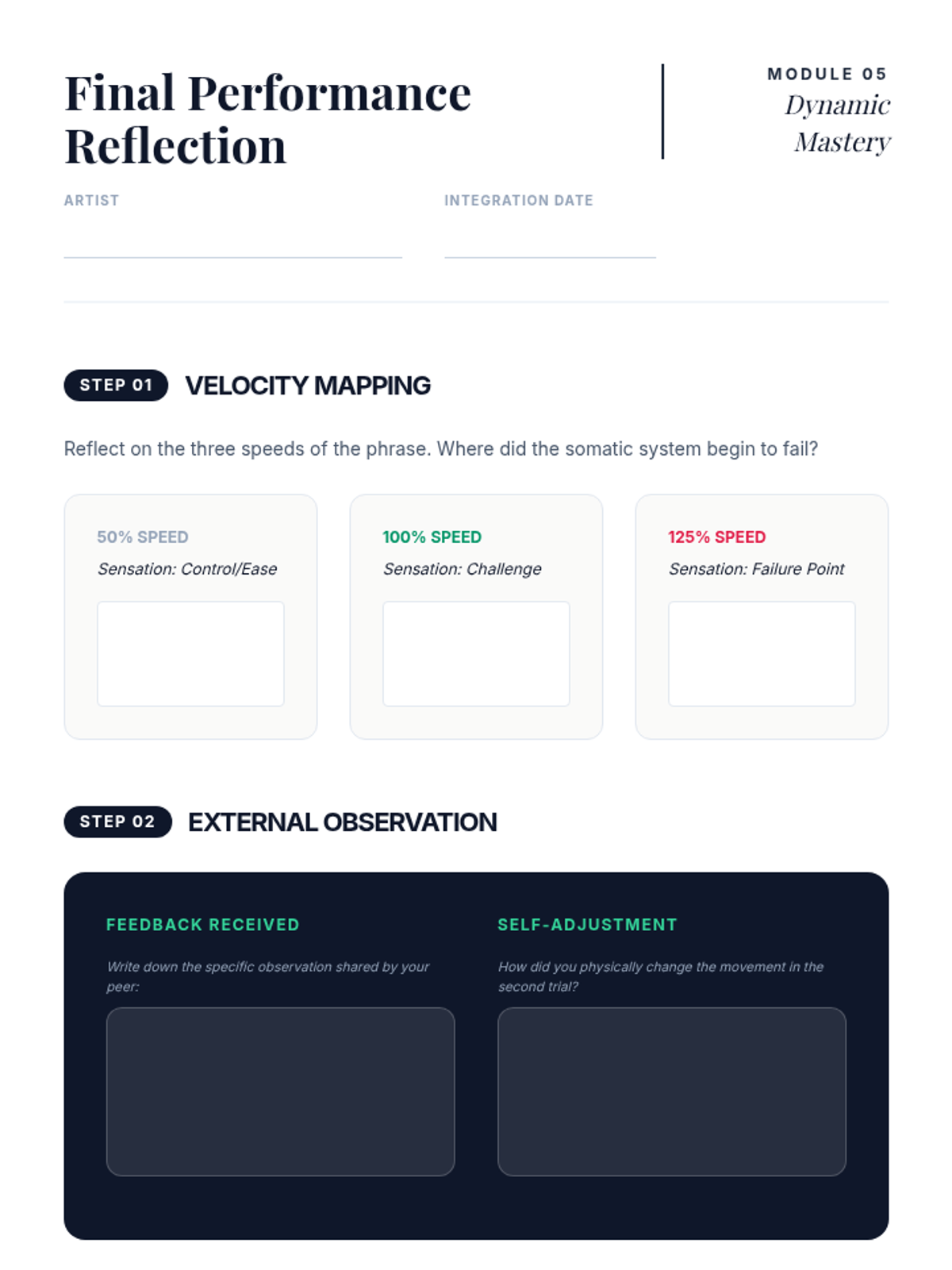
Comprehensive student reflection and self-assessment document for the final movement phrase integration and peer feedback cycle.
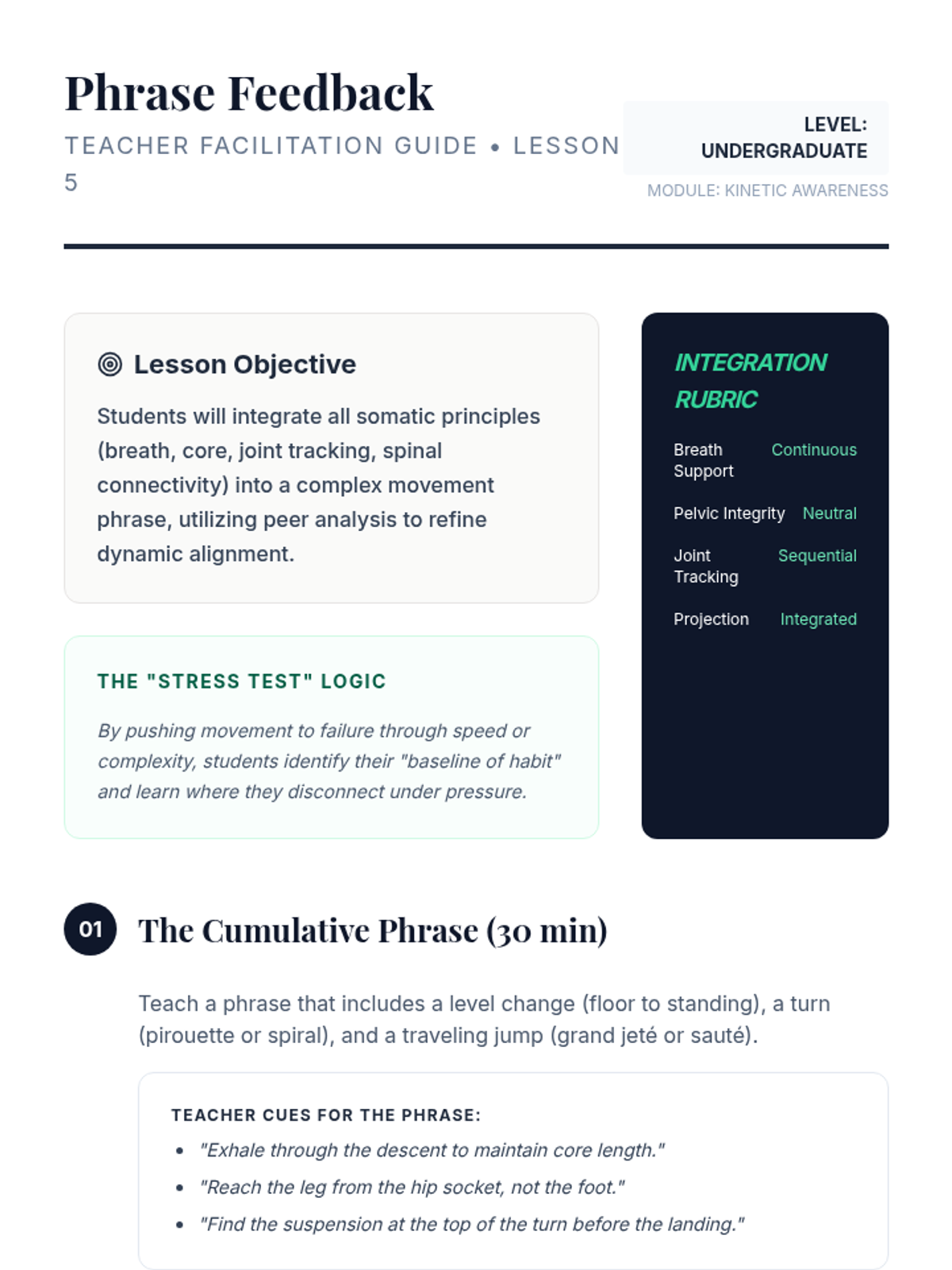
Facilitation guide for the final lesson, including the movement phrase requirements, peer feedback protocols, and debrief prompts for somatic integration.
Final lesson slide deck focusing on dynamic alignment integration, velocity stress tests, and peer feedback protocols for movement phrases.
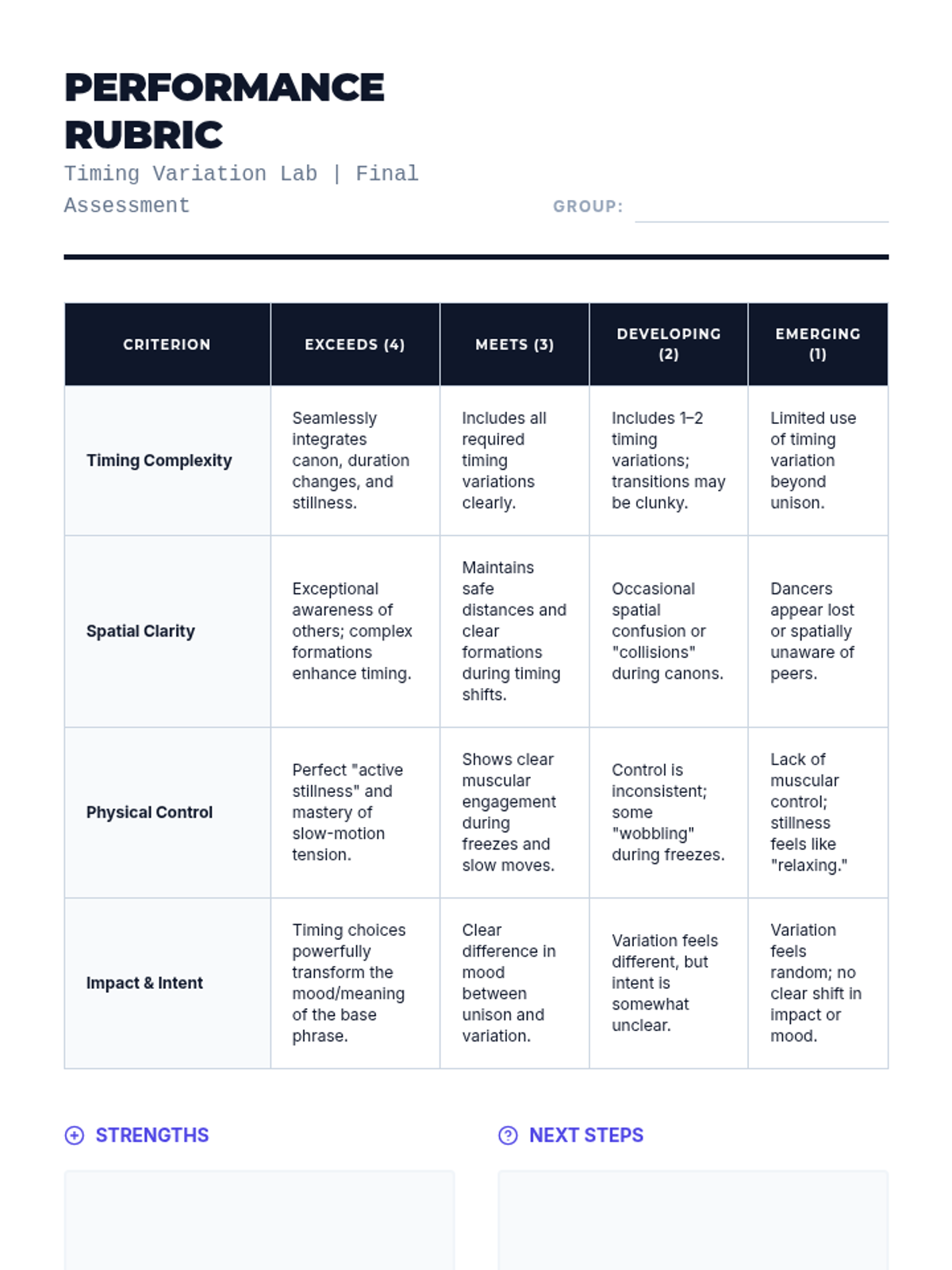
A grading rubric for the final project in Lesson 5. It evaluates groups on timing complexity, spatial clarity, physical control, and the emotional impact of their choreographic variations.
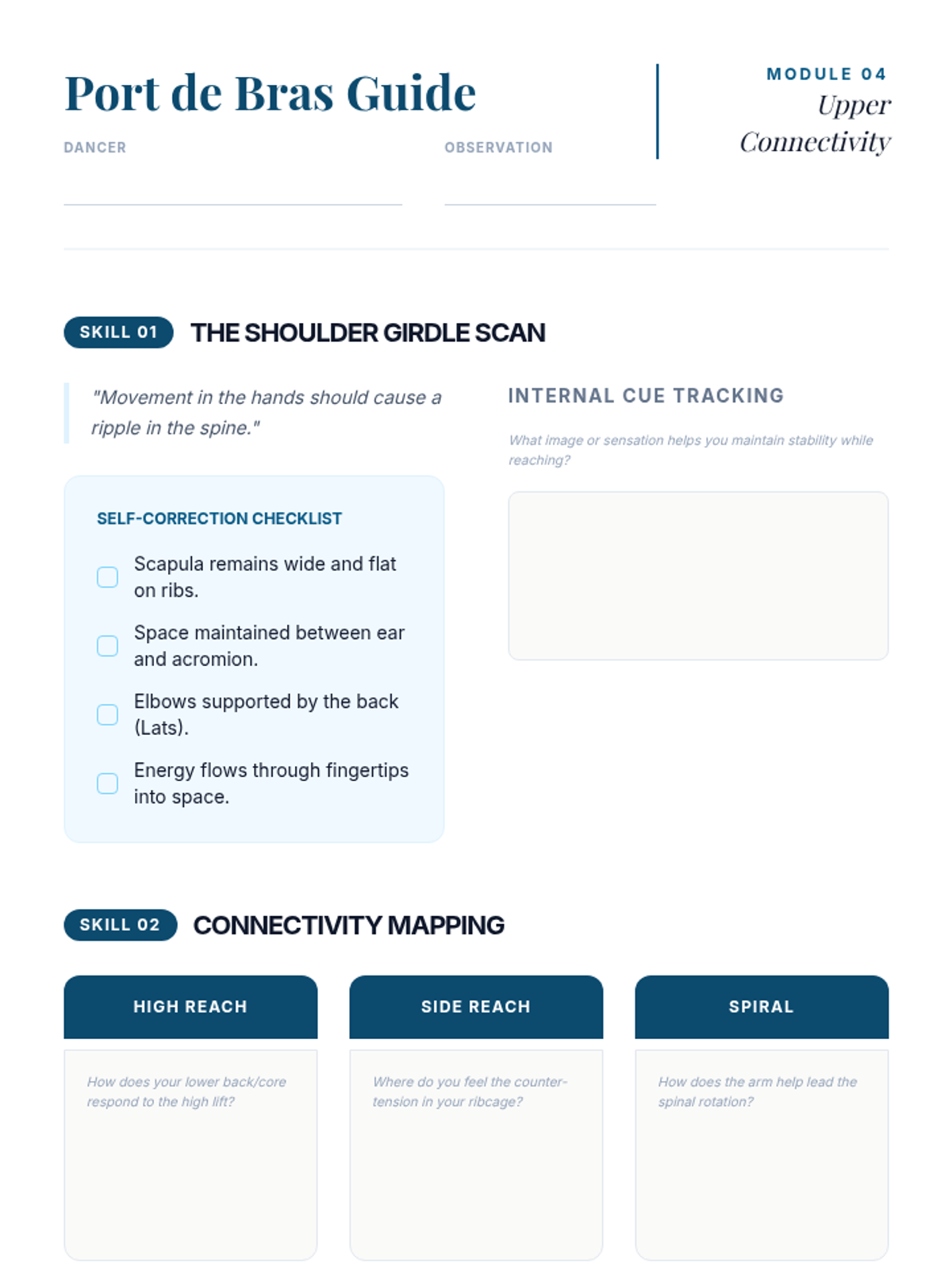
Student reference and reflection sheet for upper body connectivity, including a scapular awareness checklist and connectivity mapping for different reach directions.
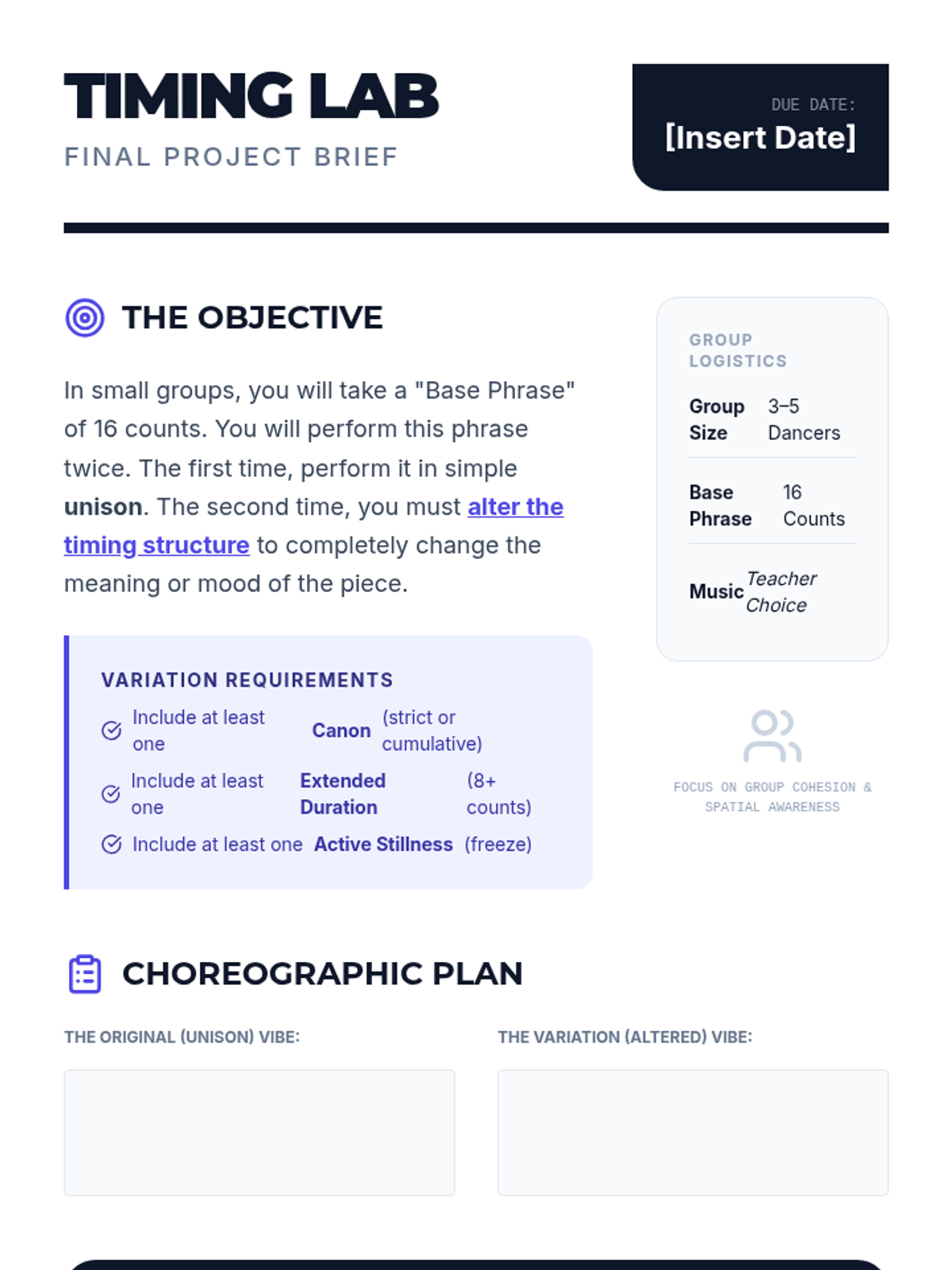
A project guide and planning document for the final lesson. It outlines the requirements for taking a unison phrase and creating a variation using timing manipulation (canon, duration, stillness).
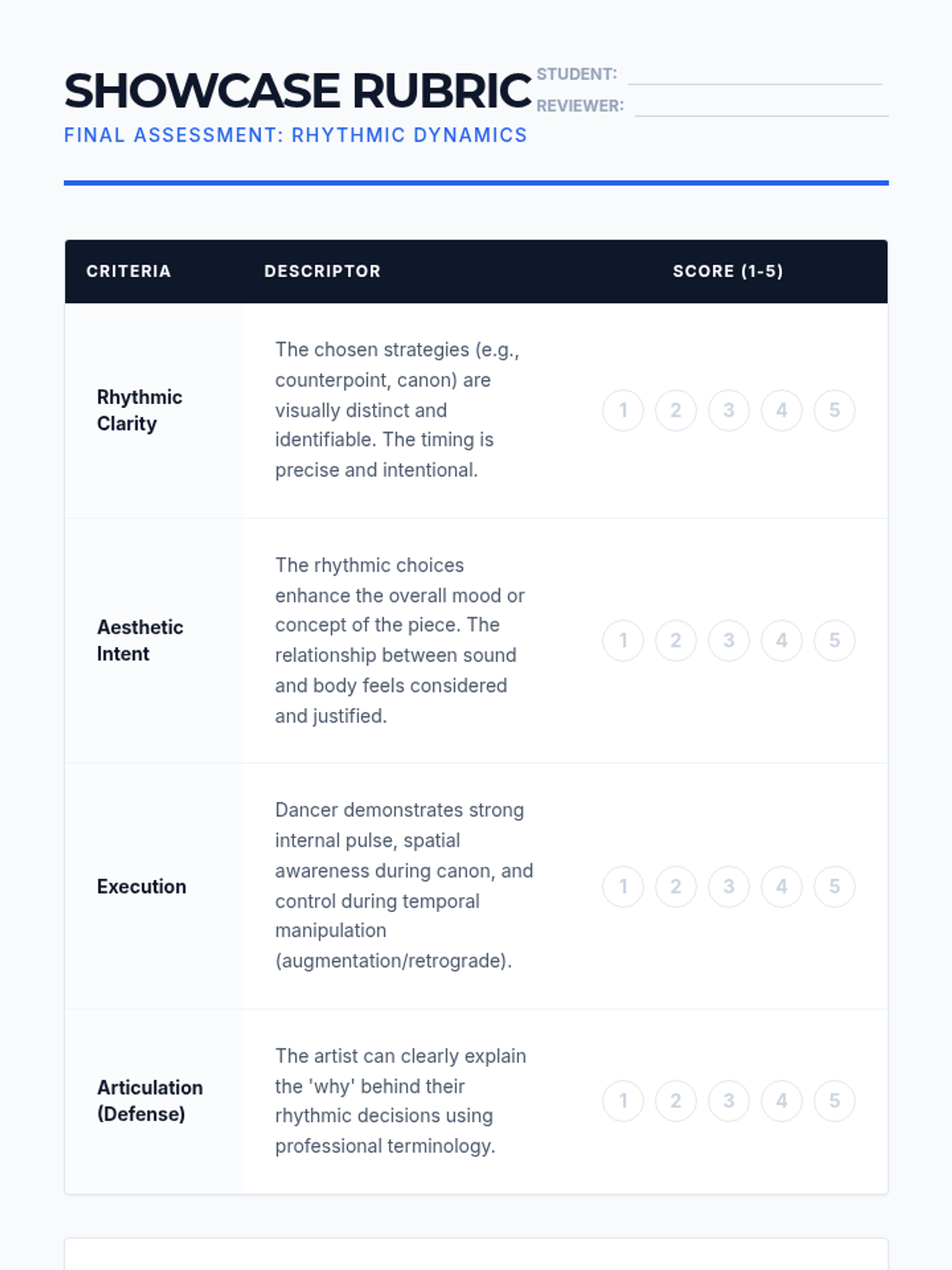
A comprehensive rubric for assessing final choreographic compositions, focusing on rhythmic clarity, intent, execution, and artistic defense.
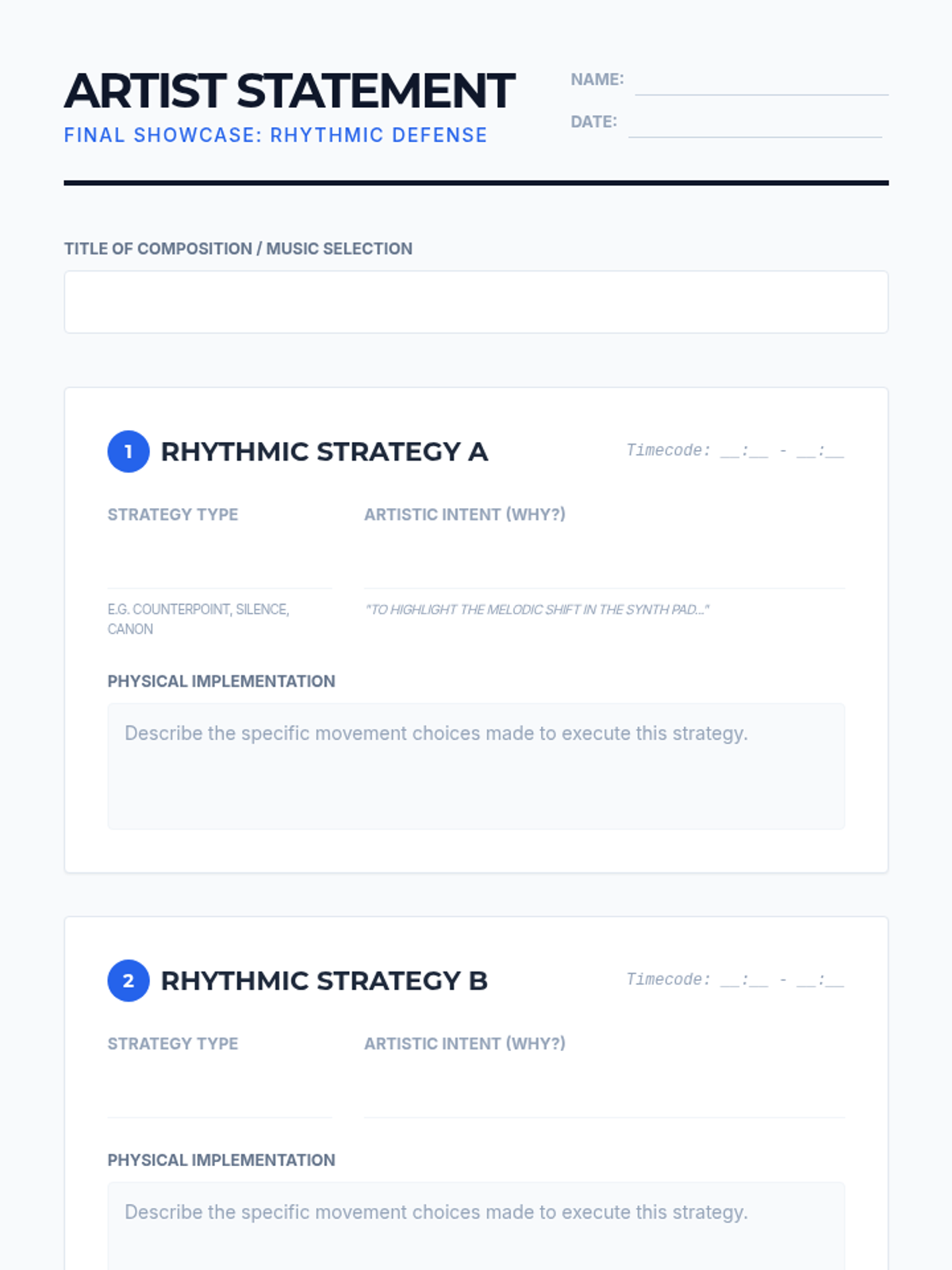
A template for students to prepare their pre-performance defense, articulating their rhythmic strategies and artistic intent for the final showcase.
Preparation for the final defense and performance, including requirements for the composition and etiquette for peer feedback.
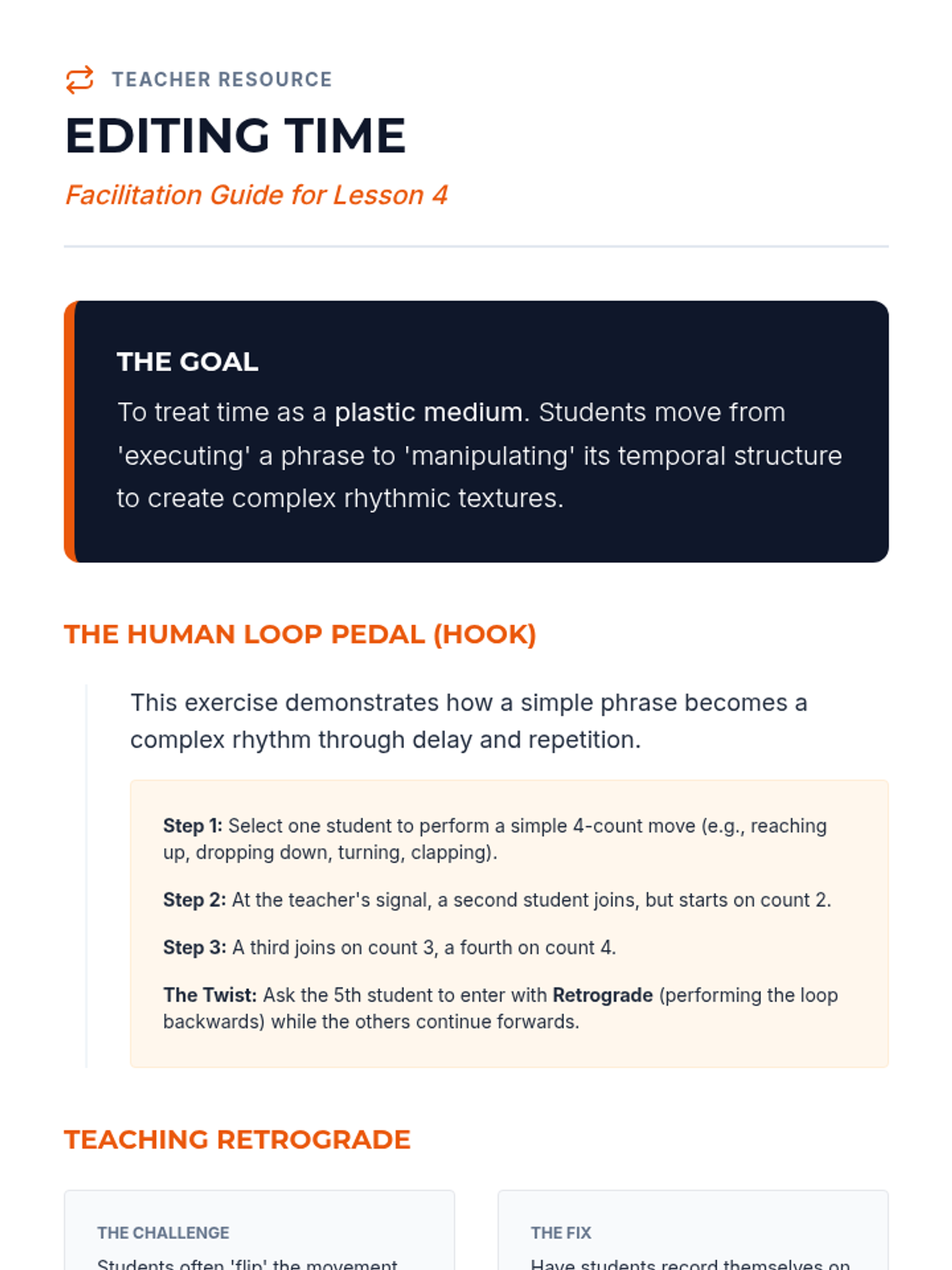
Teacher instructions for the hook and workshop focusing on temporal manipulation tools like the human loop pedal and retrograde techniques.
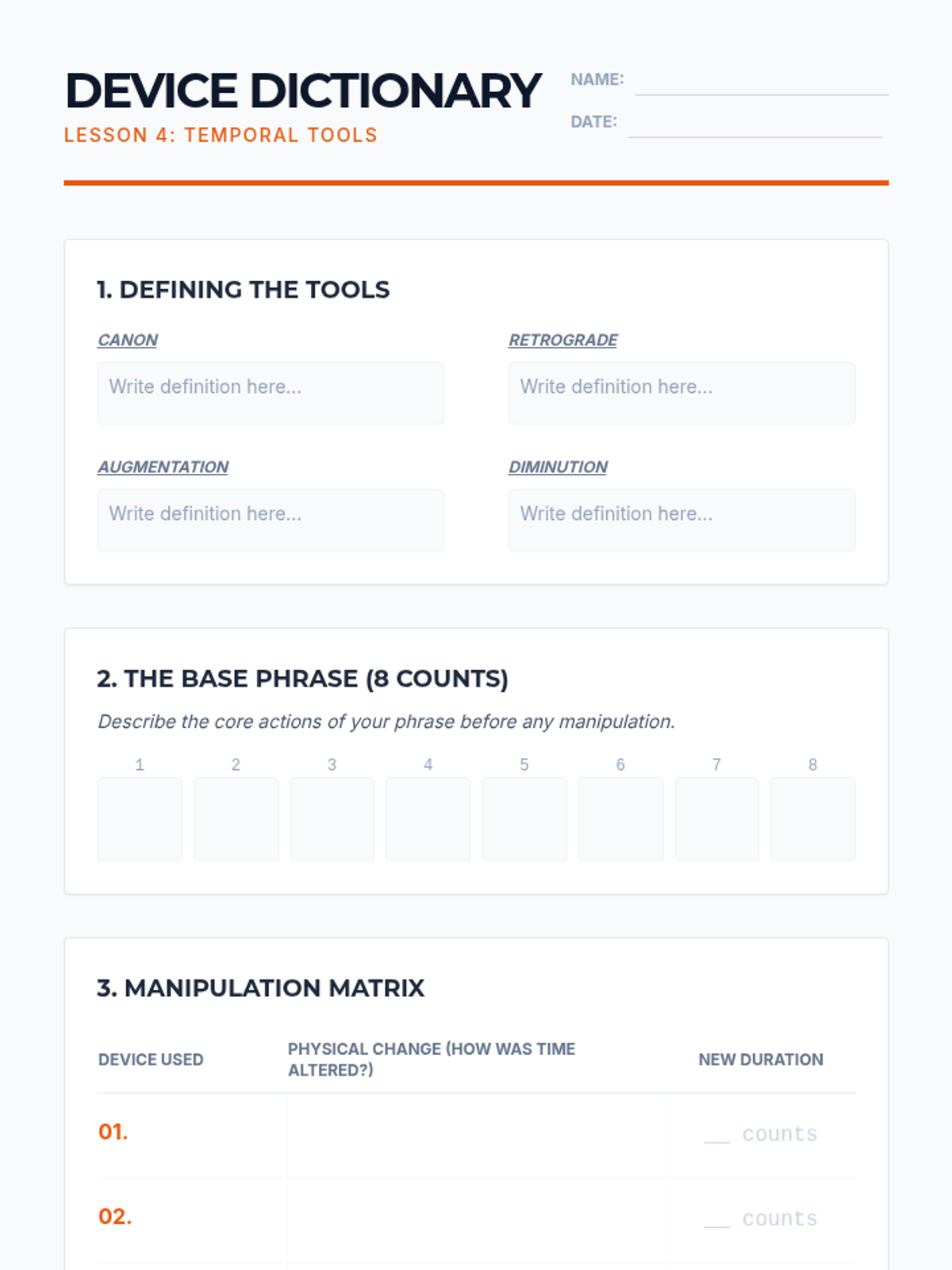
A worksheet for students to define and apply choreographic time manipulation tools (canon, retrograde, etc.) to a movement phrase.
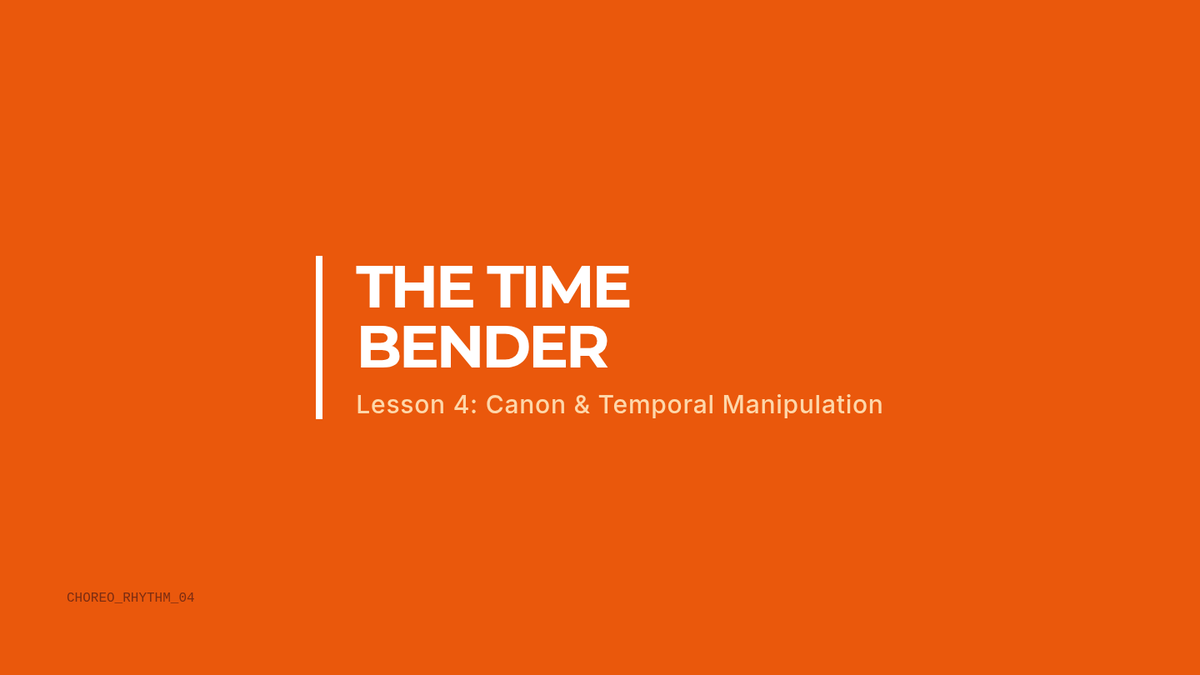
Canon, retrograde, and time-stretching concepts, introducing choreographic devices that manipulate time to create complex rhythmic textures.
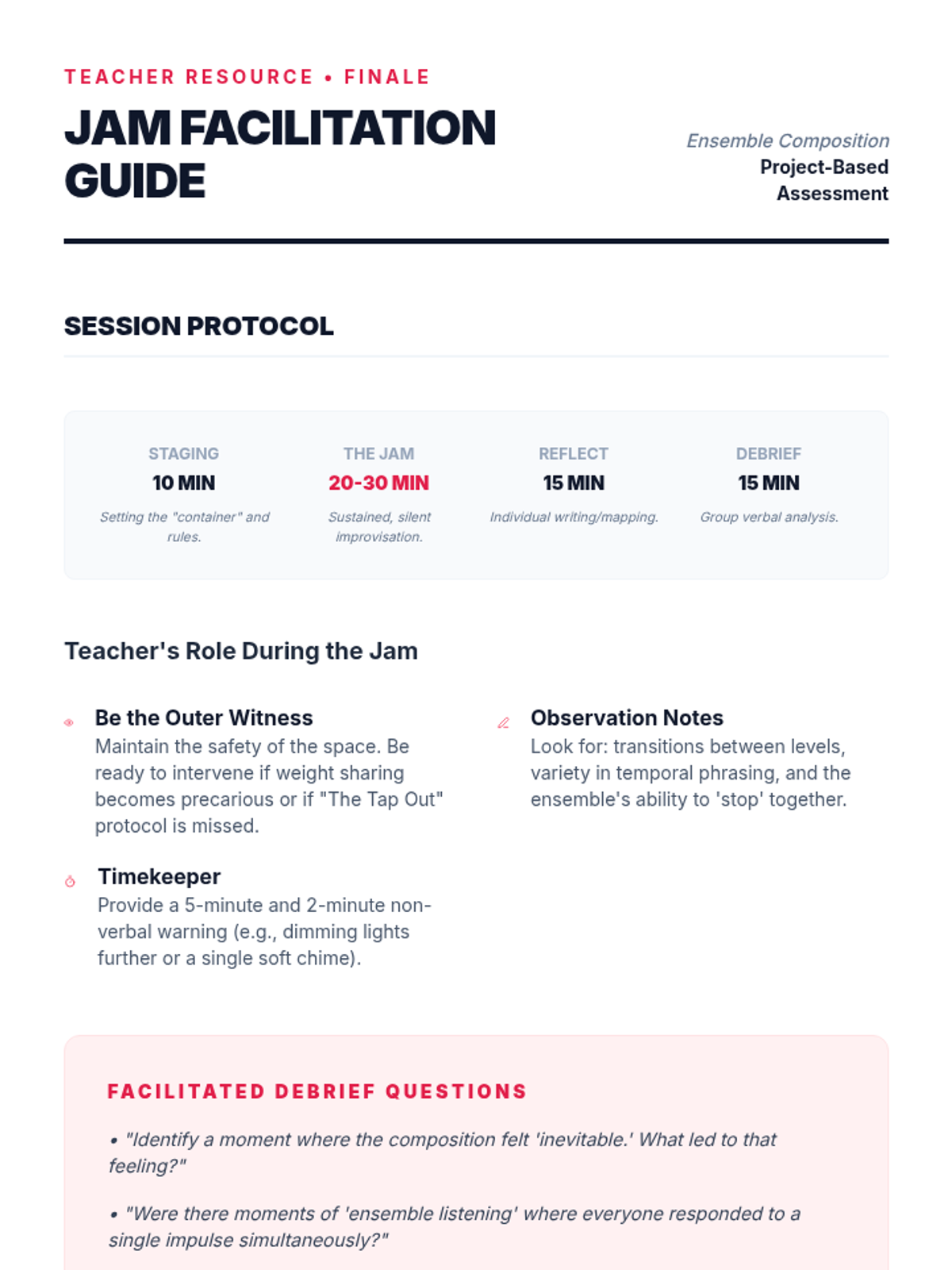
Facilitation guide for teachers to lead the final Ensemble Jam session, including pacing, observation tips, and debrief questions.
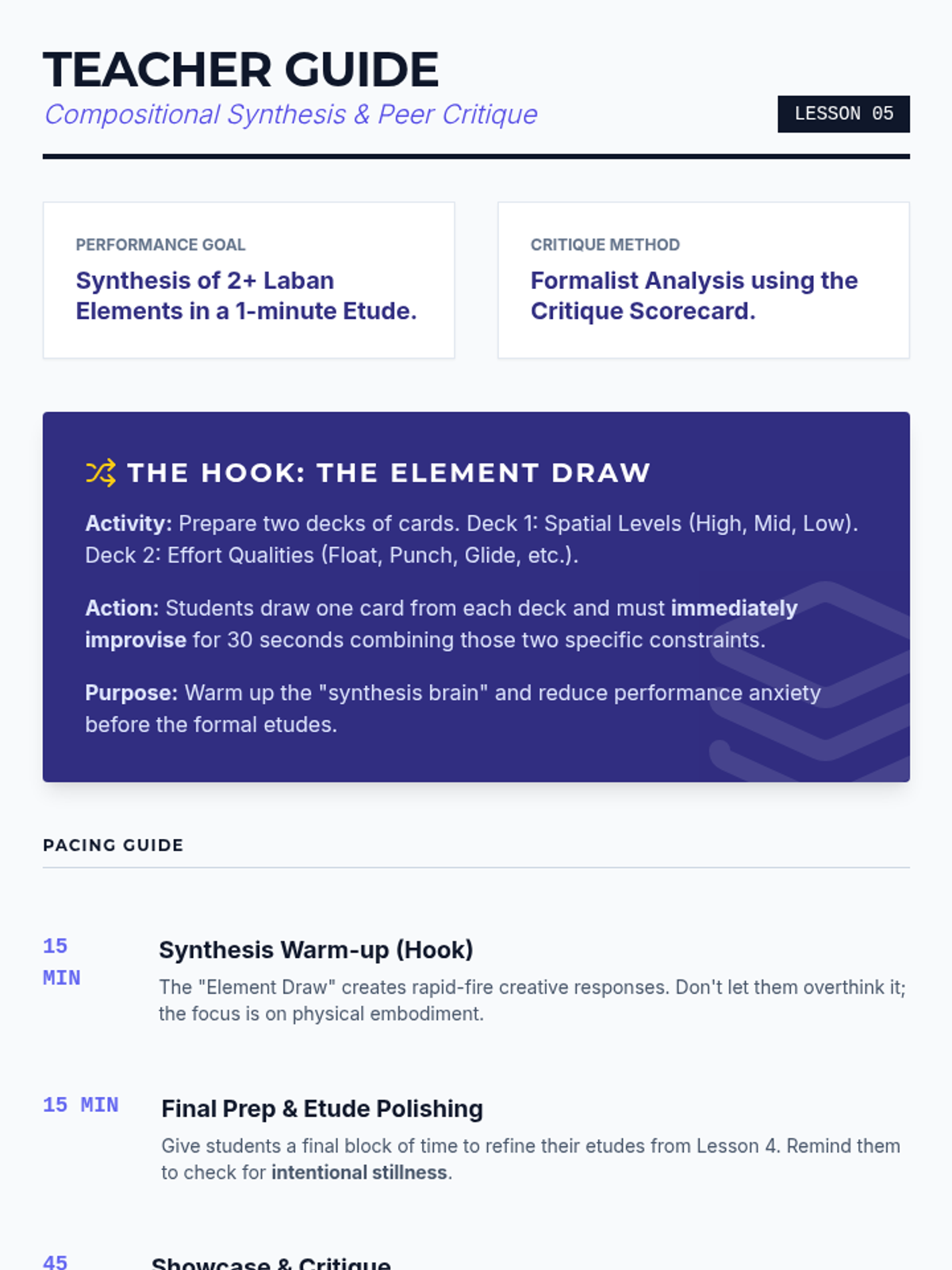
Facilitation guide for Lesson 5 of the Kinetic Architecture sequence, focusing on the synthesis of space, time, and effort elements and the final etude presentations.
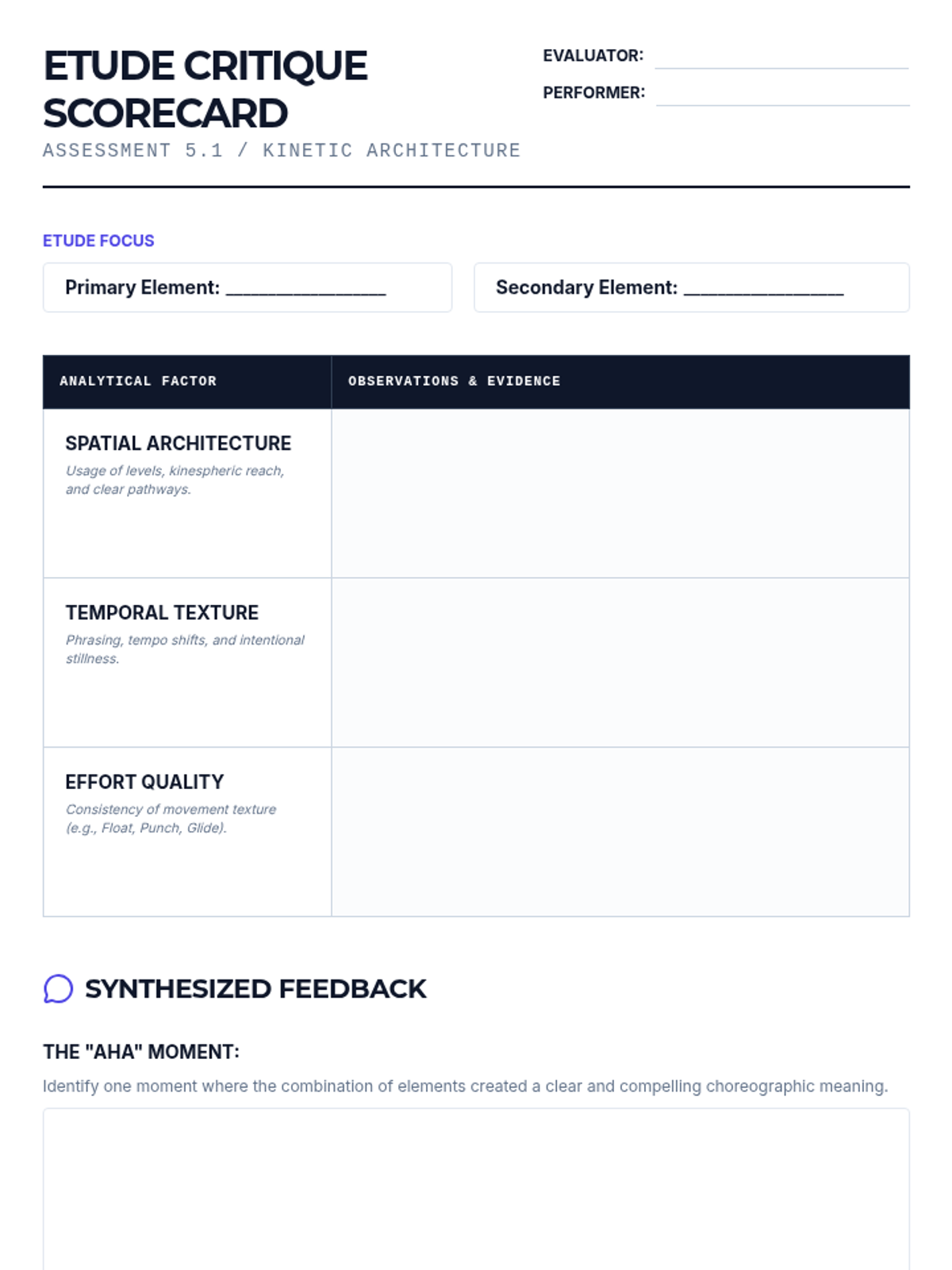
A scorecard for students to provide and receive peer feedback on their compositional etudes, focusing on Space, Time, and Effort.
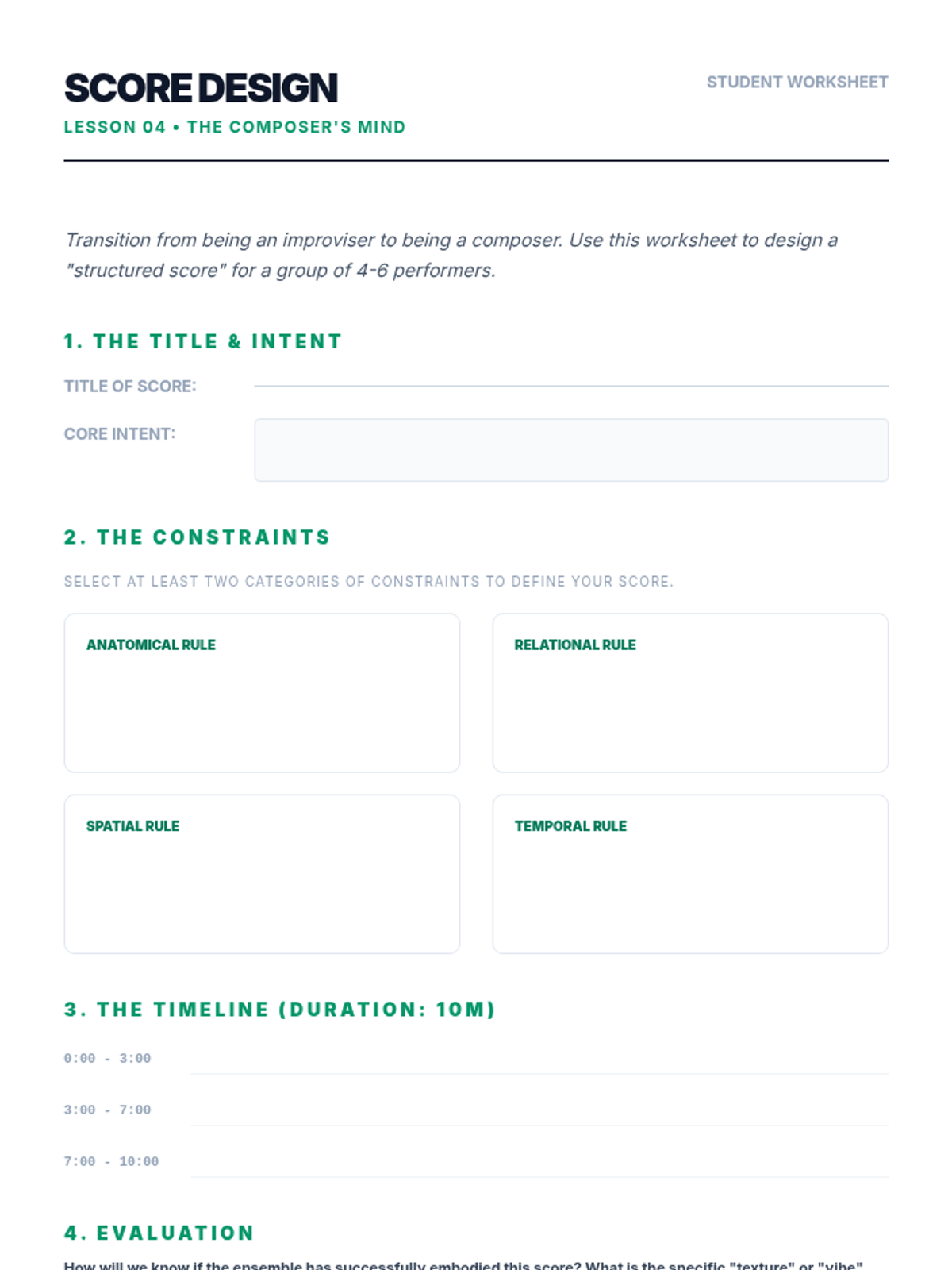
Worksheet for students to design their own improvisational scores using specific constraints and temporal structures.
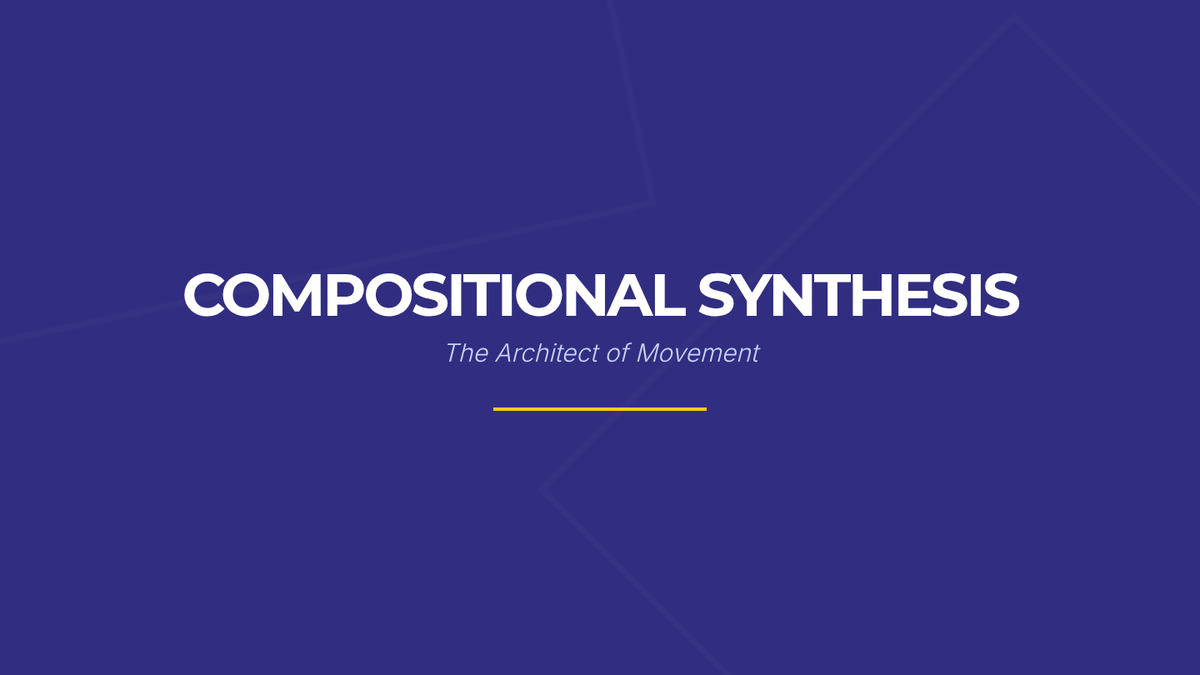
Culminating slides for Lesson 5, focusing on the synthesis of space, time, and effort elements and the framework for peer critique.
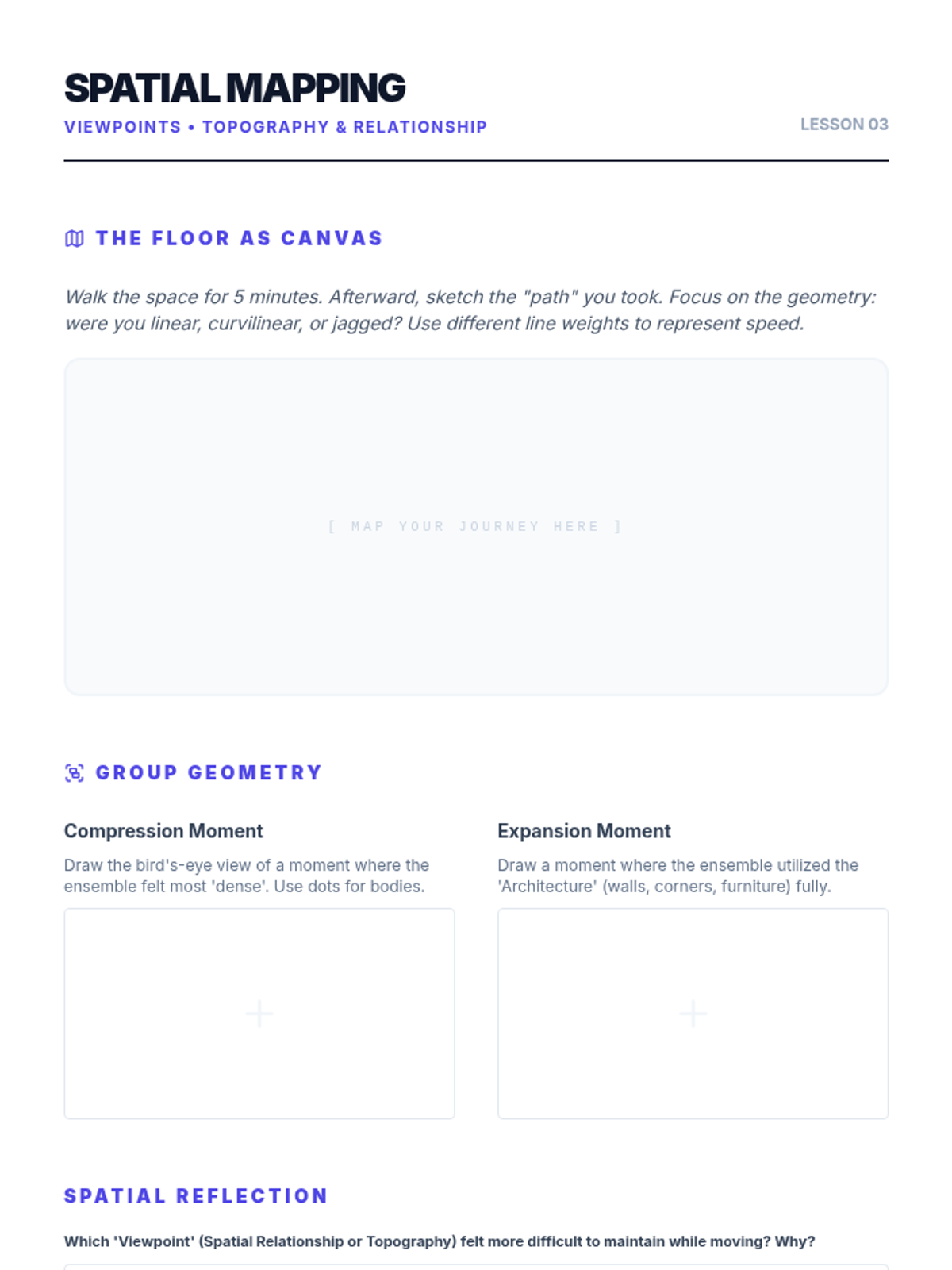
Worksheet for students to physically map their spatial paths and group formations during Viewpoints exercises.
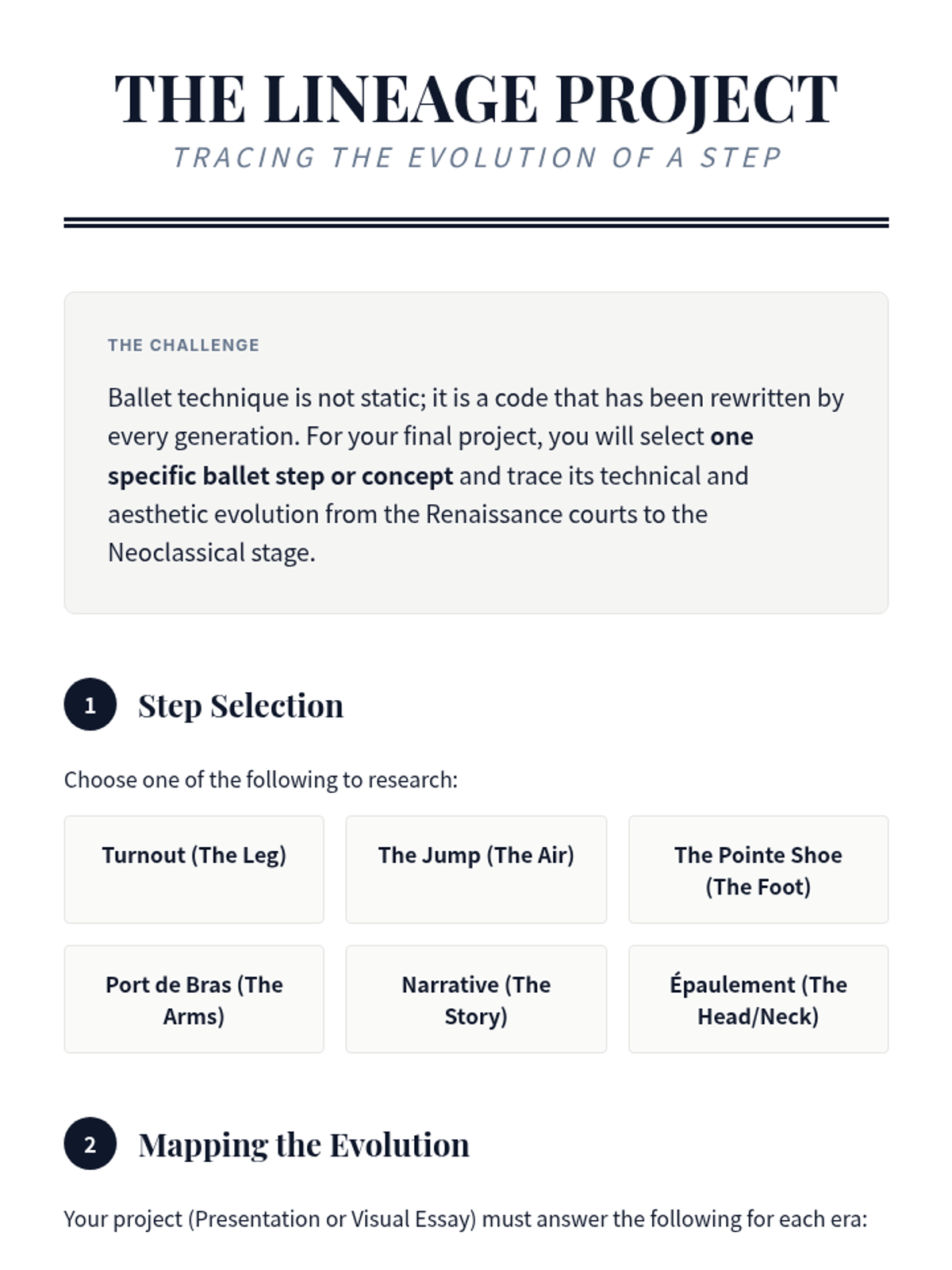
The final assessment project for the unit, where students trace a specific ballet step or concept through all five historical eras studied in the sequence.
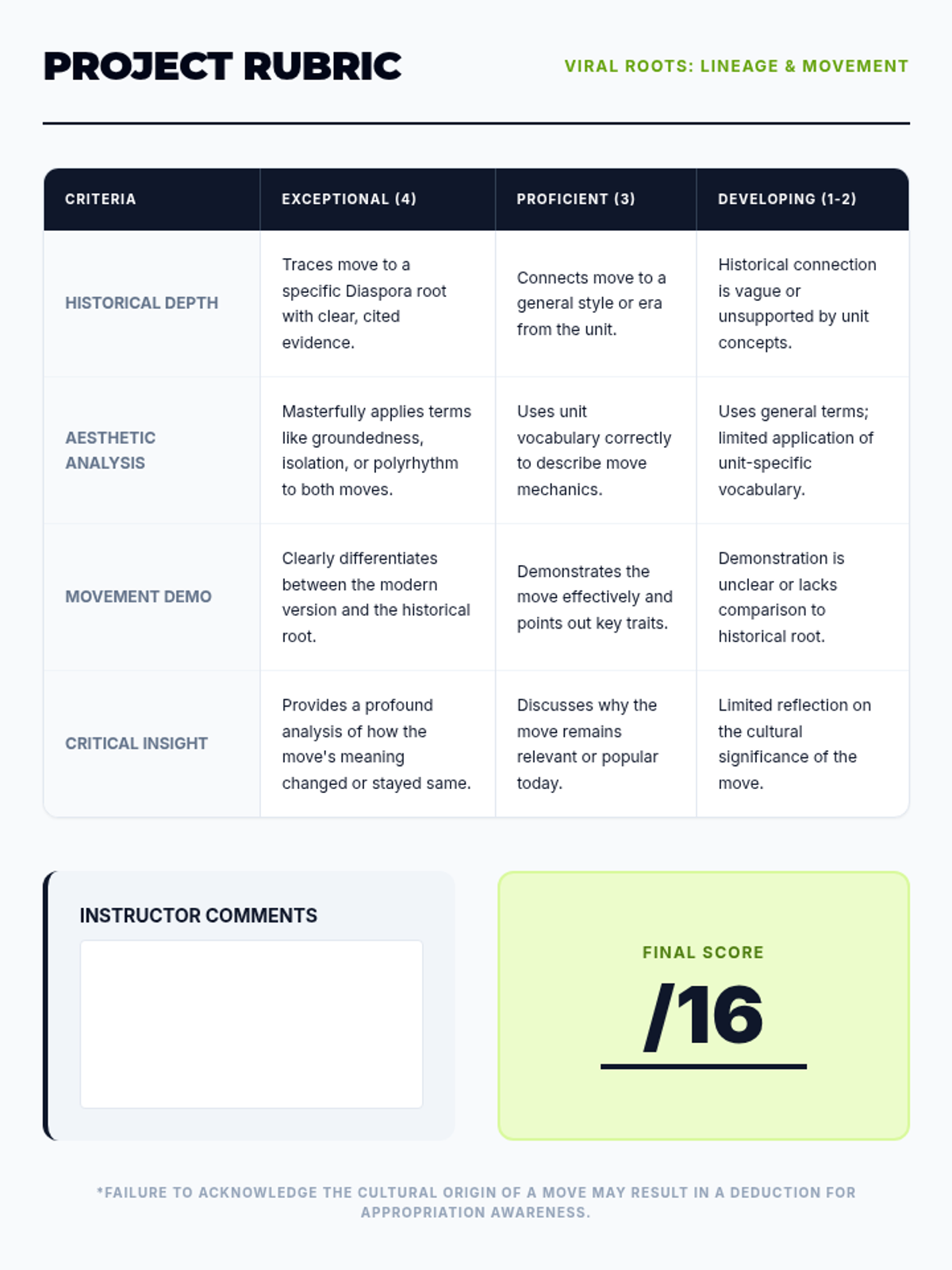
Grading rubric for the final unit assessment, evaluating historical research, movement analysis, and critical insight into the cultural lineage of modern dance moves.
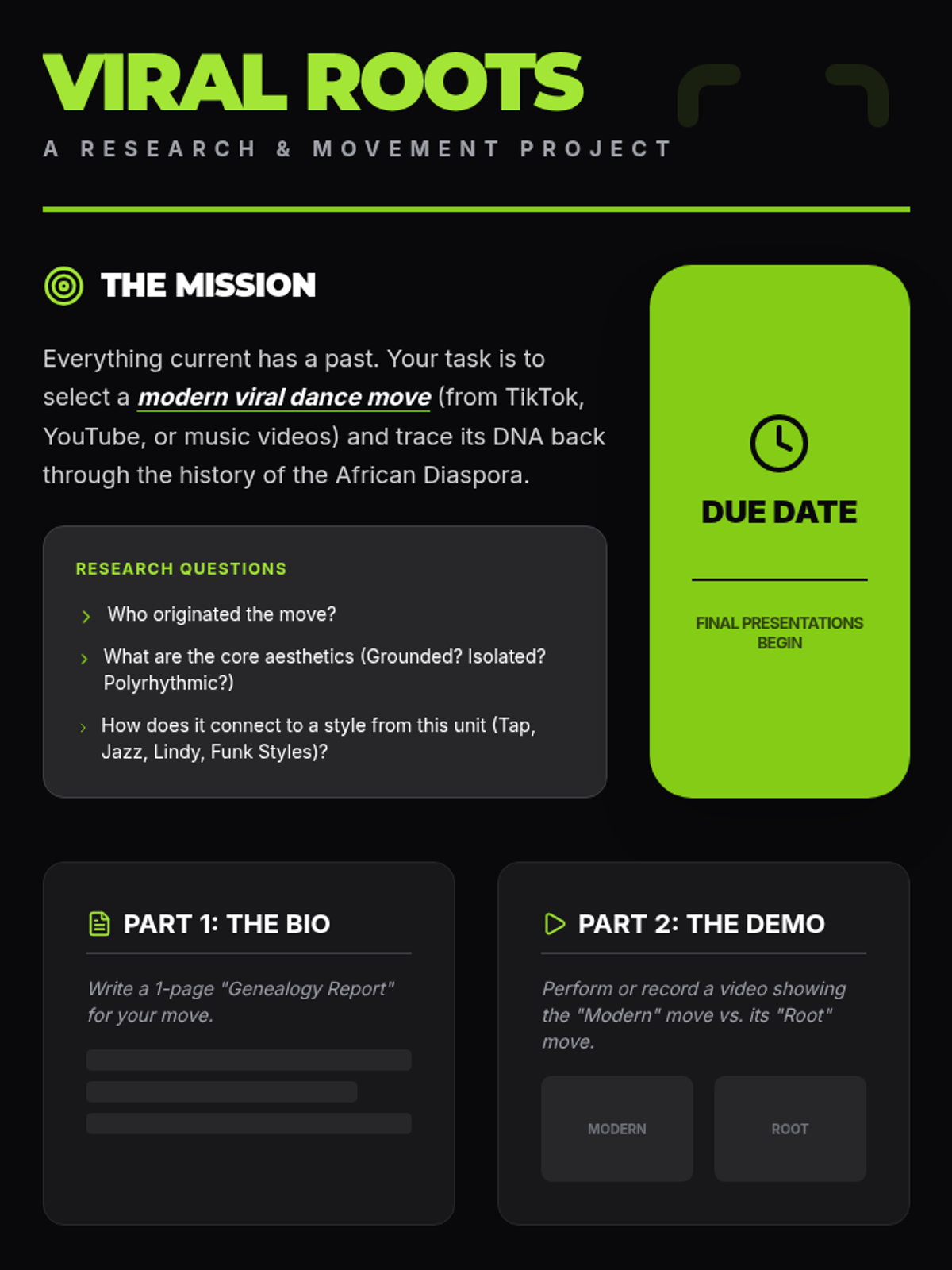
Student project guide for the final unit assessment, requiring students to trace the cultural and technical lineage of a modern dance move back to its historical roots in the African Diaspora.
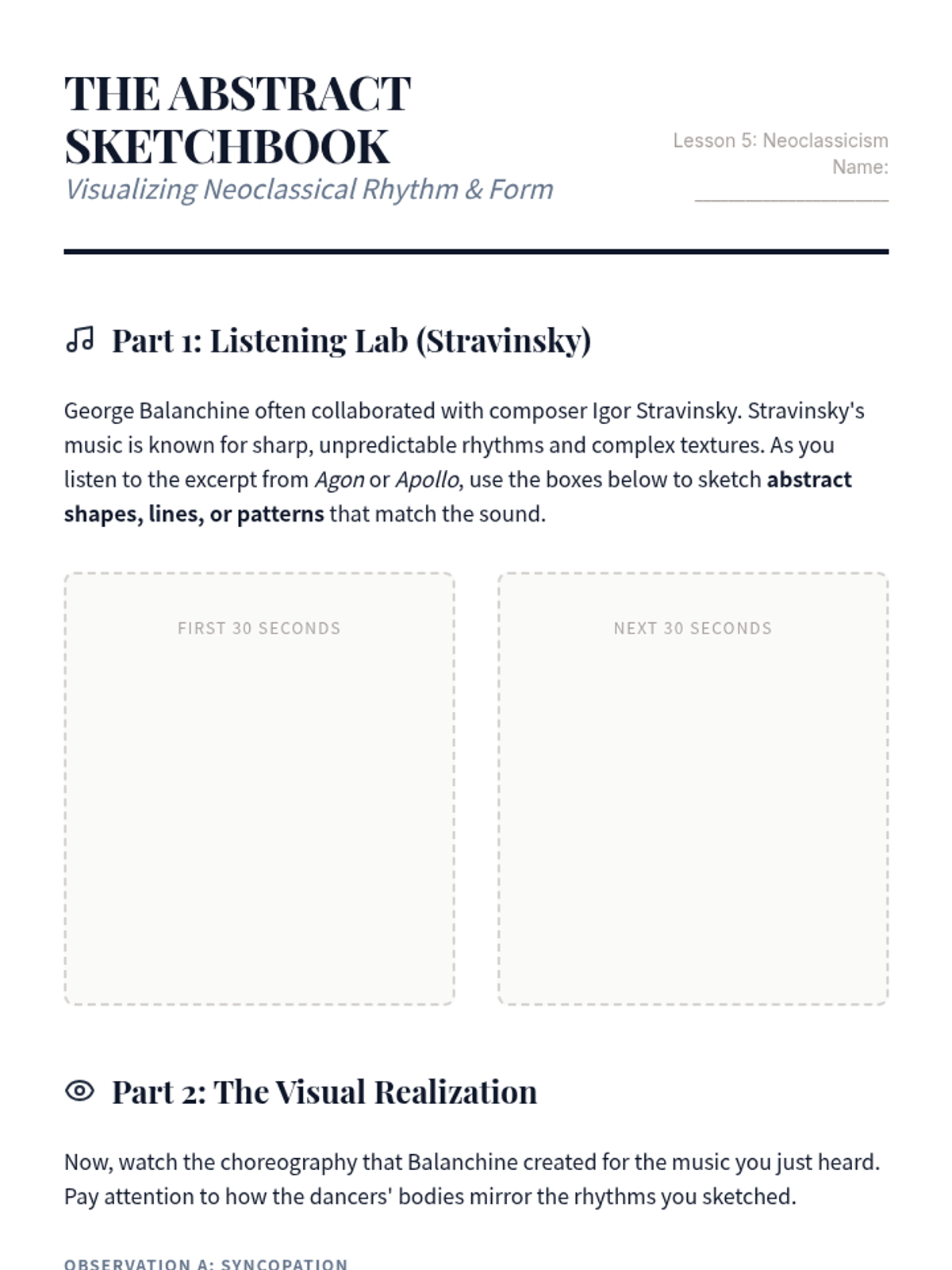
A student activity worksheet for Lesson 5, focusing on the visual relationship between neoclassical choreography and abstract musical structures.
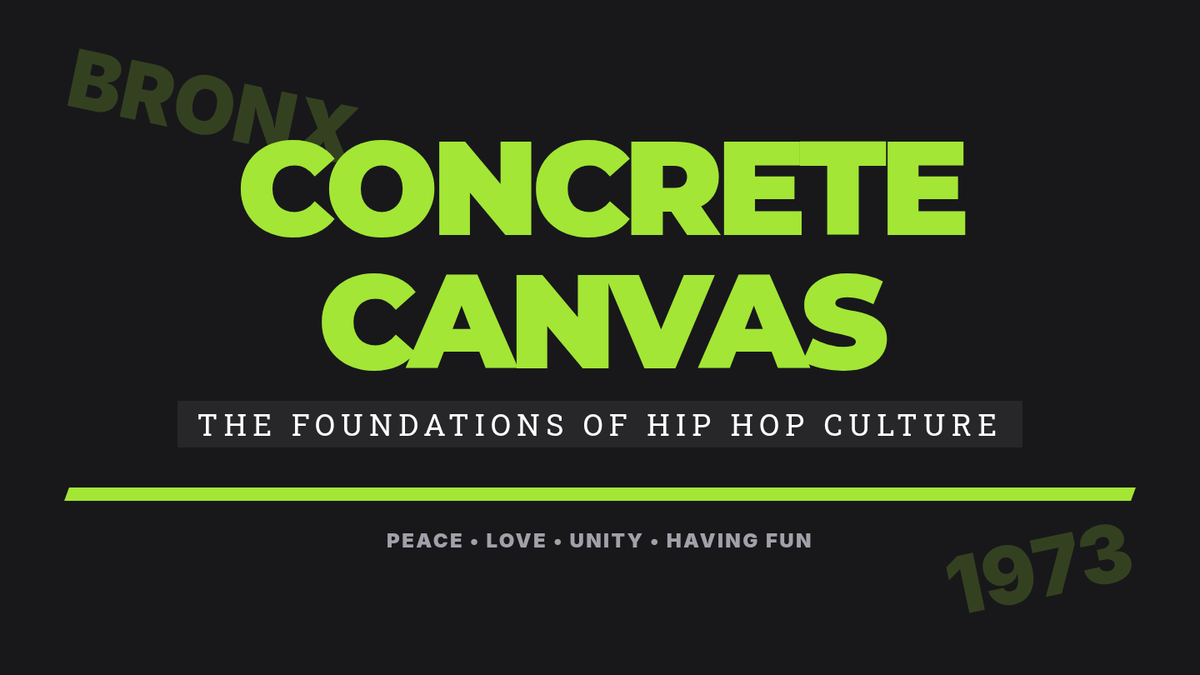
Presentation slides exploring the birth of Hip Hop in the Bronx, the four pillars, and the three foundational styles (Breaking, Locking, Popping).
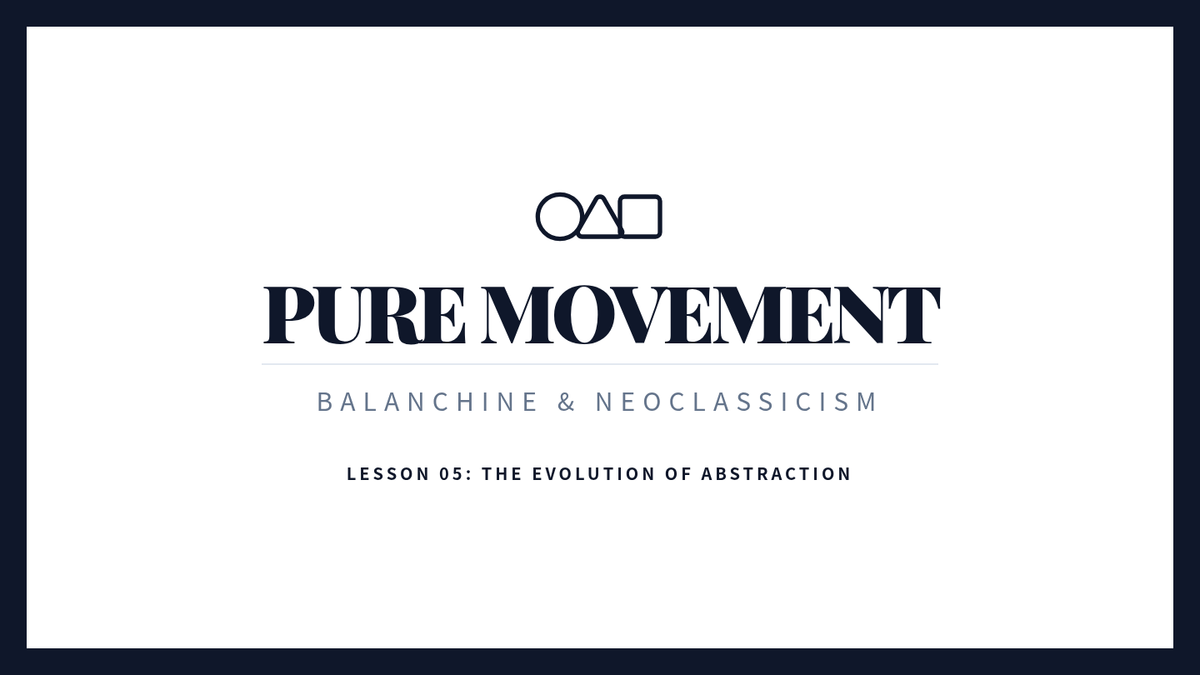
A visual presentation exploring the 20th-century shift toward abstraction led by George Balanchine, focusing on the relationship between pure movement and music.
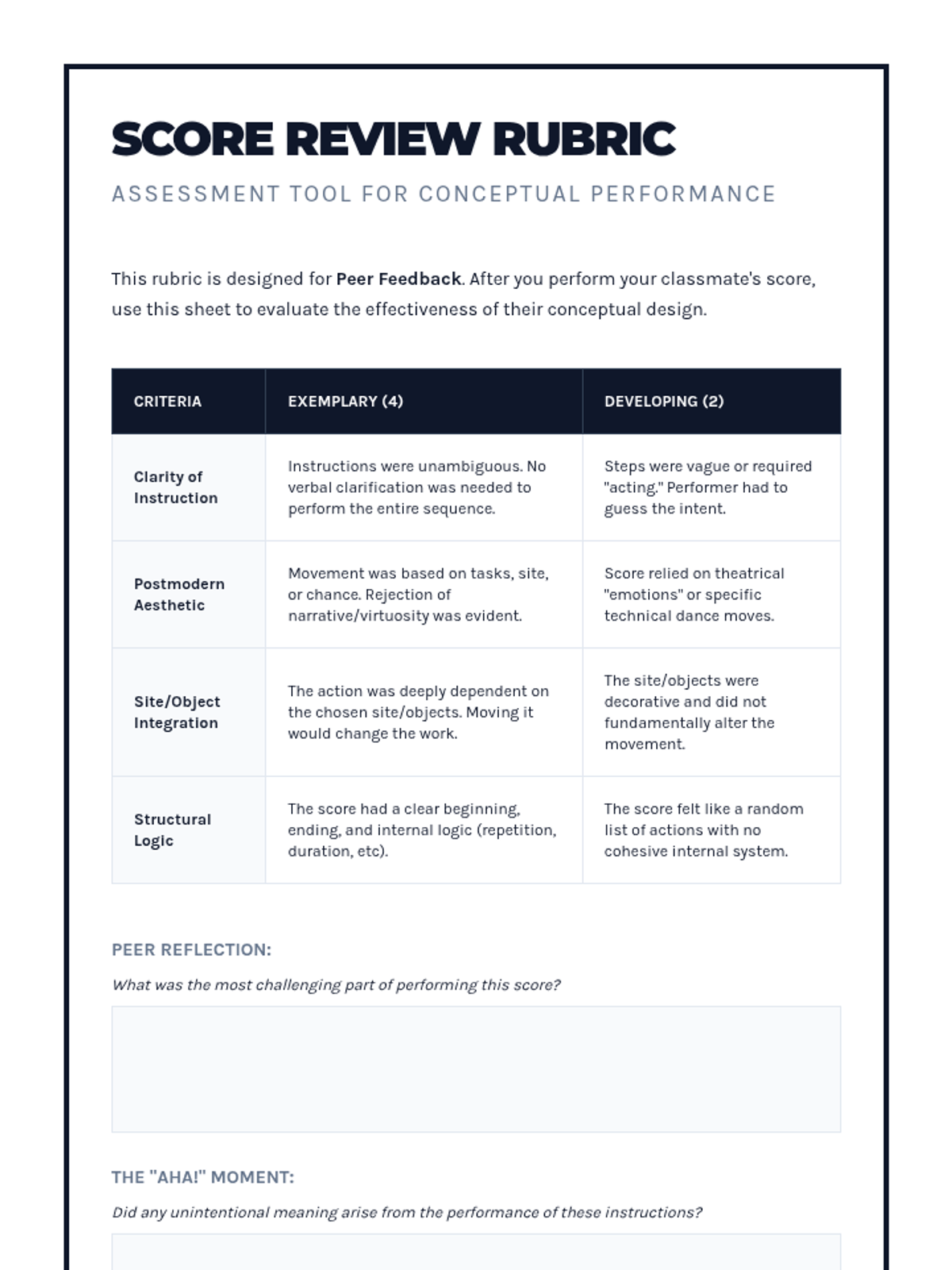
A peer-assessment rubric for evaluating student-created performance scores, focusing on clarity, postmodern aesthetics, and structural logic.
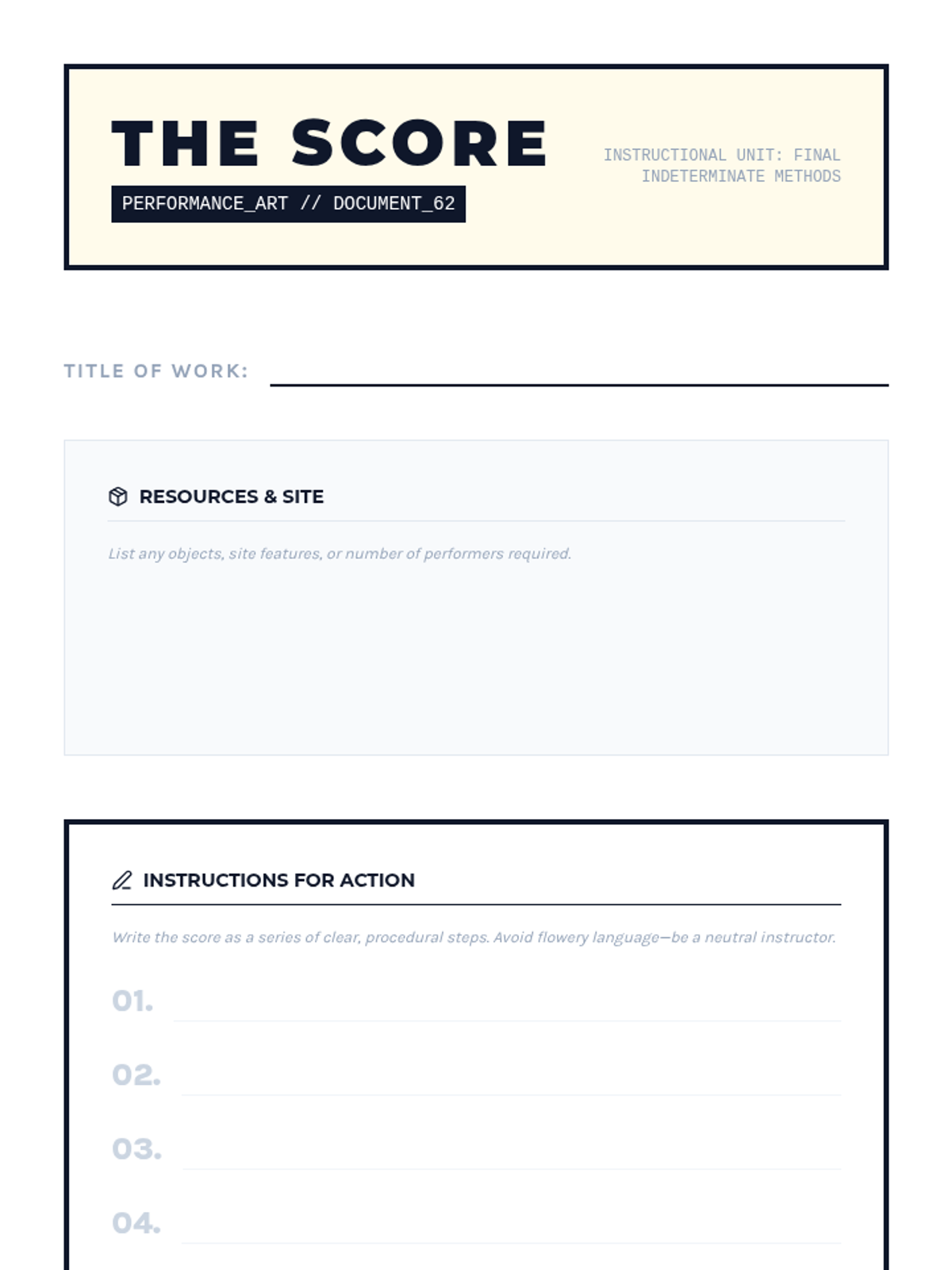
A final project template for students to write a conceptual performance score, focusing on clear instructions and procedural movement.
Teacher answer key for the 'Lineage Mapper' organizer, providing expected movement analysis and ethical discussion points for Lesson 4.
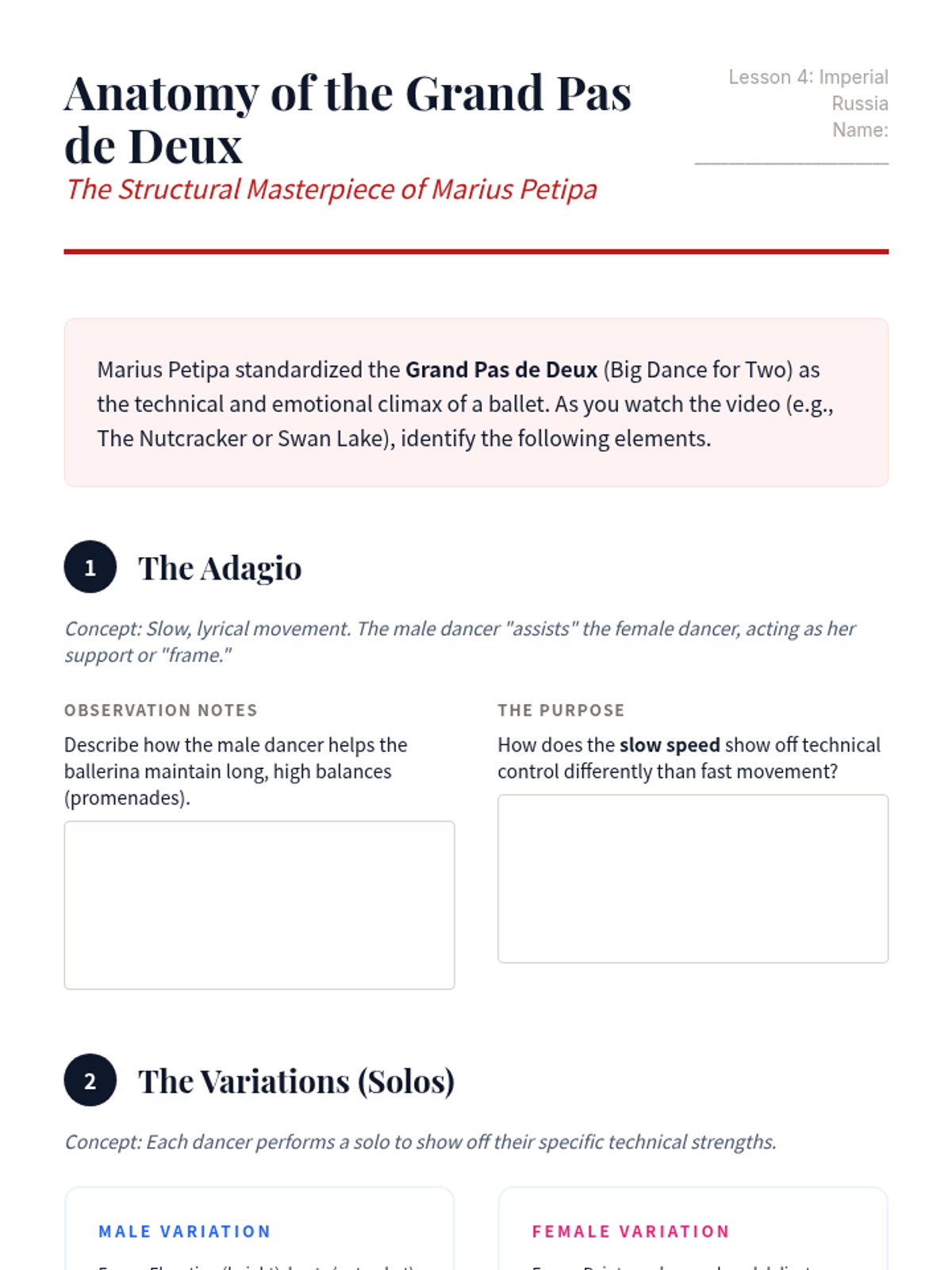
A student analysis worksheet for Lesson 4, mapping the structure of the Grand Pas de Deux and analyzing the shift toward athletic virtuosity in the late 19th century.
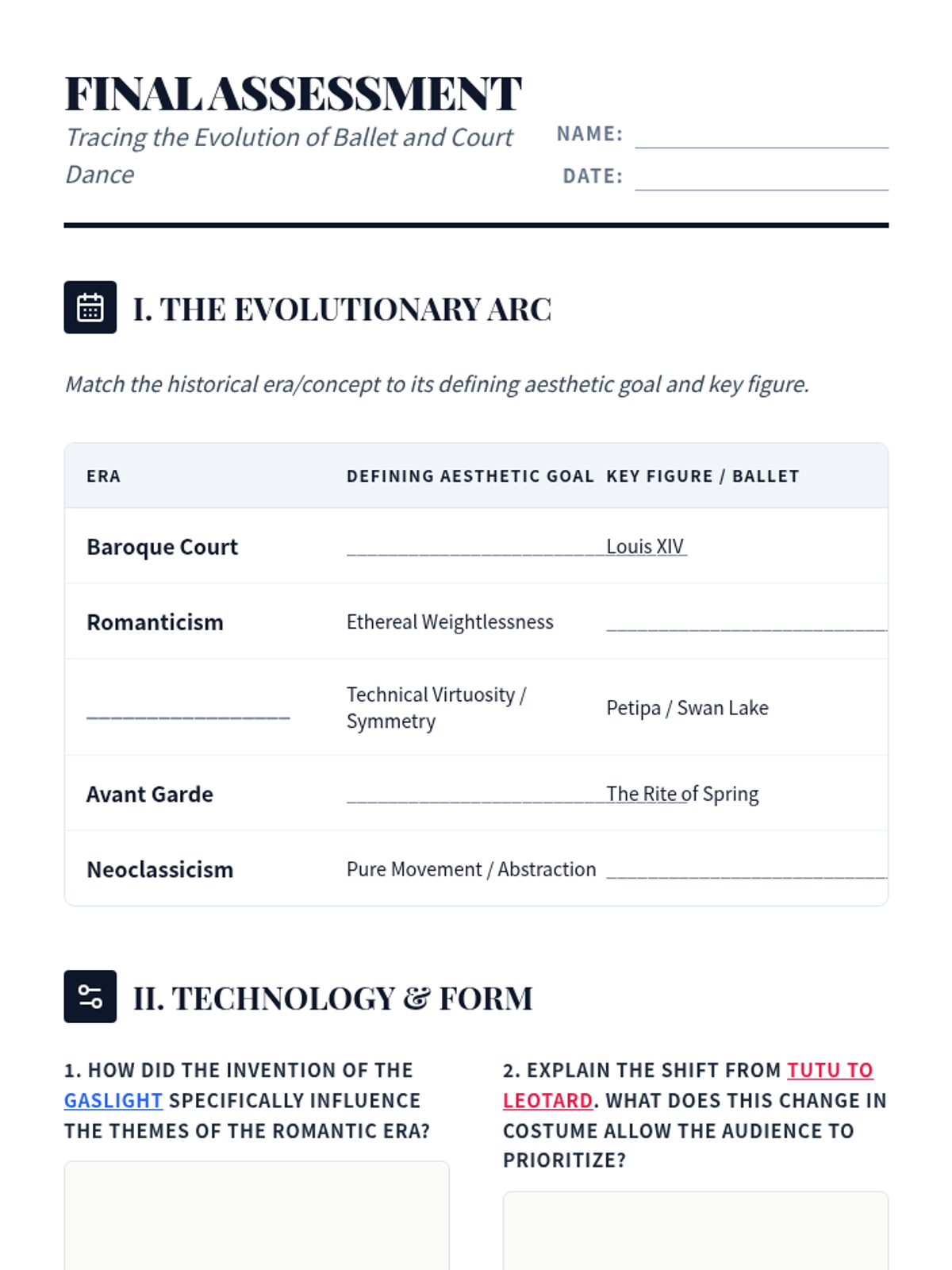
A final summative assessment for the ballet evolution sequence, featuring timeline matching, technical innovation questions, and a comparative essay prompt.
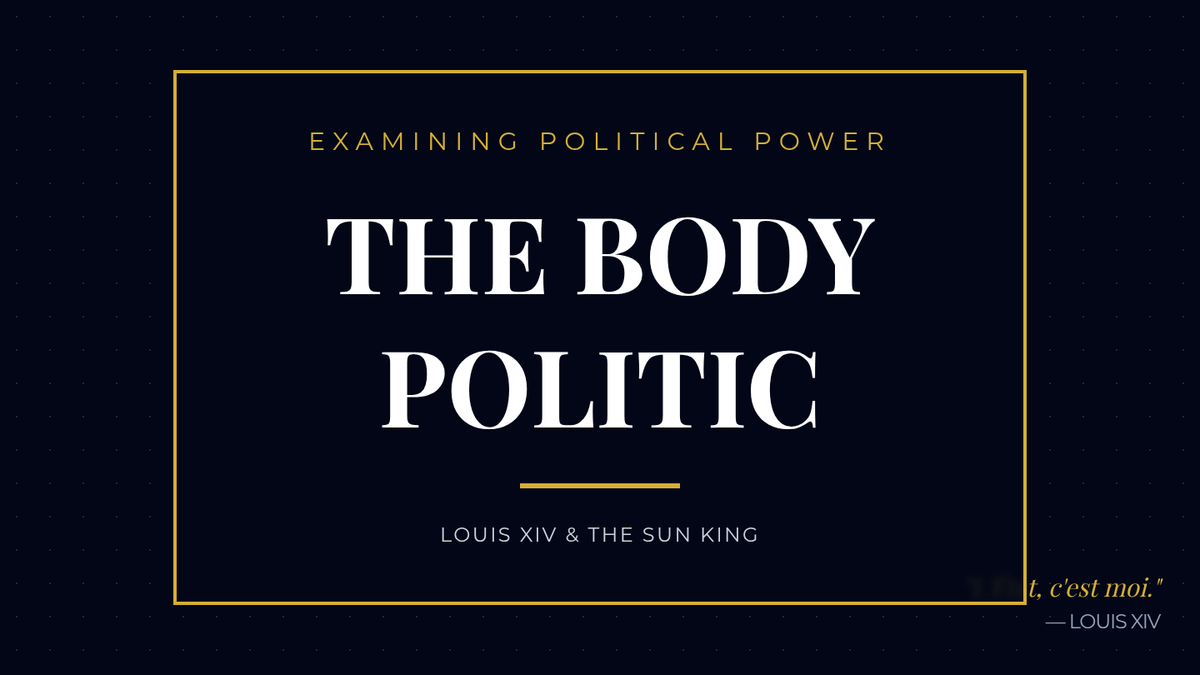
A revised visual presentation for Lesson 1 on Louis XIV, ensuring all text meets the minimum 24px requirement for slide visibility and impact.
A slide deck investigating the blur between dance and performance art, teaching students to create and interpret conceptual performance scores.
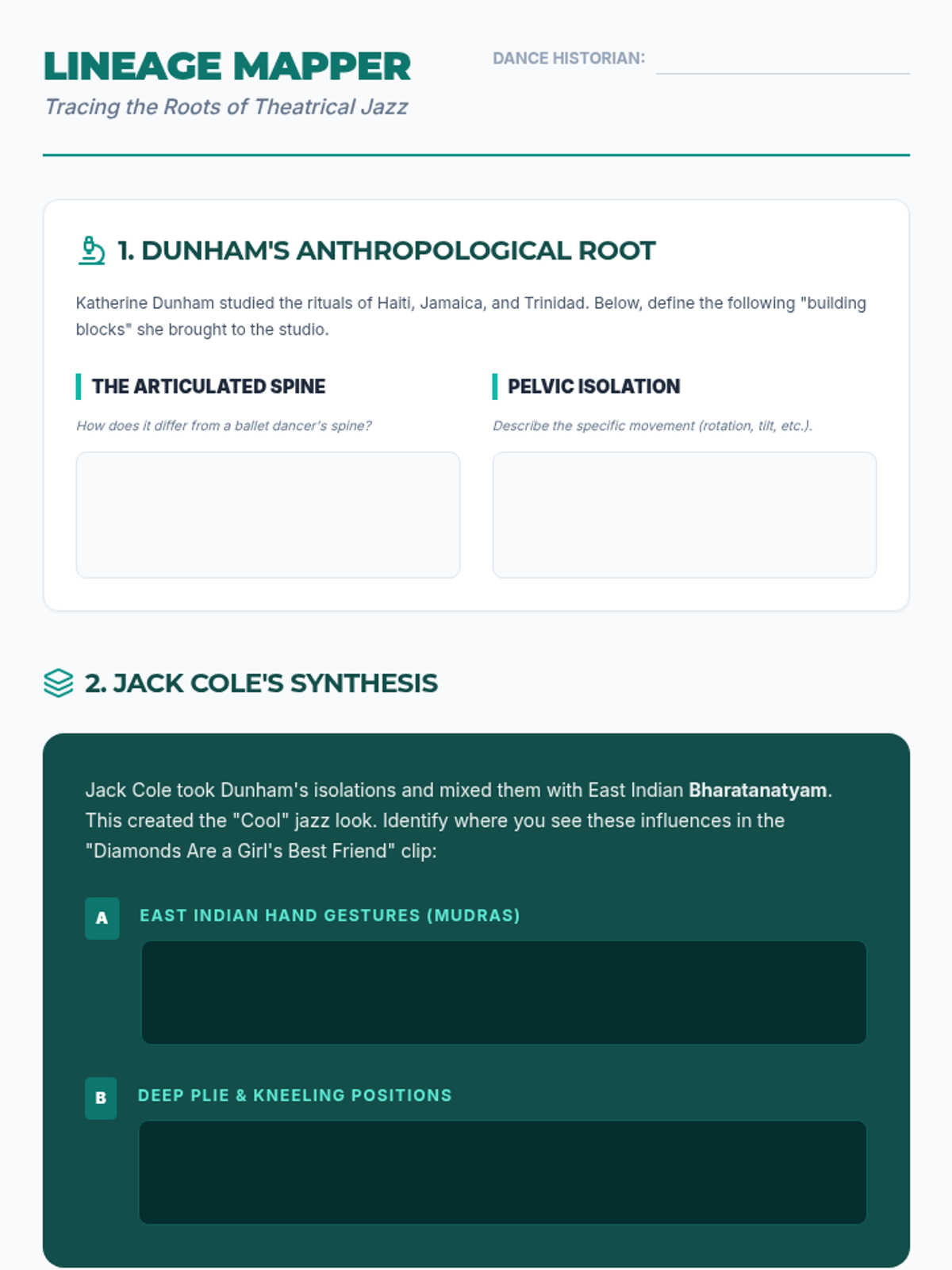
Student worksheet/organizer for Lesson 4, used to trace the movement lineage of Katherine Dunham and Jack Cole in theatrical jazz choreography.
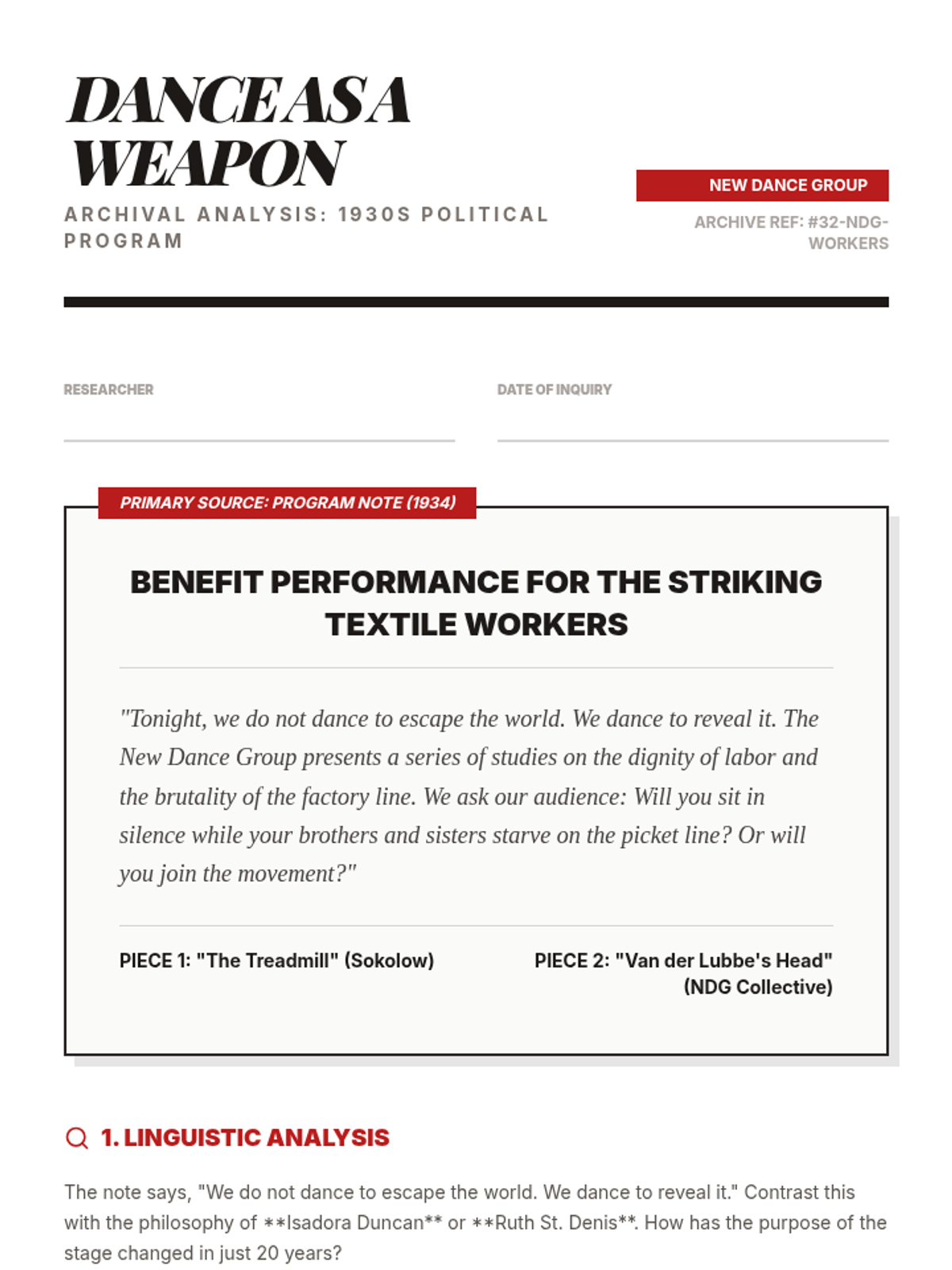
A student worksheet for analyzing archival program notes and political choreography from the 1930s modern dance movement.
A visual presentation exploring the Imperial Russian era of ballet under Marius Petipa, focusing on the development of the Grand Pas de Deux and the shift toward athletic virtuosity.
A presentation exploring George Balanchine's neoclassical aesthetic, focusing on the shift from narrative to abstraction, speed, and musicality.
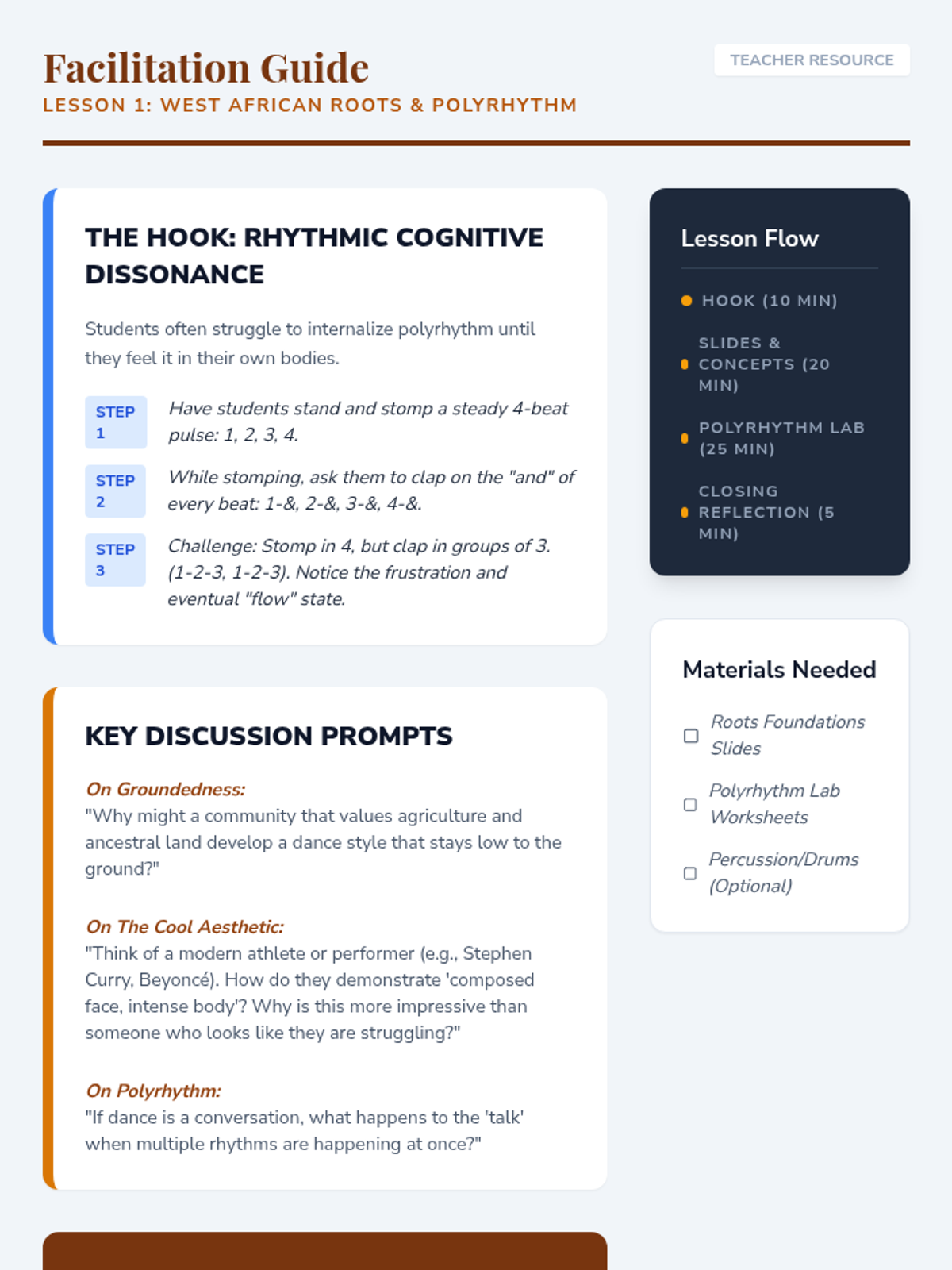
A facilitation guide for teachers for Lesson 1, including hook instructions, discussion prompts, common misconceptions, and a suggested lesson flow.
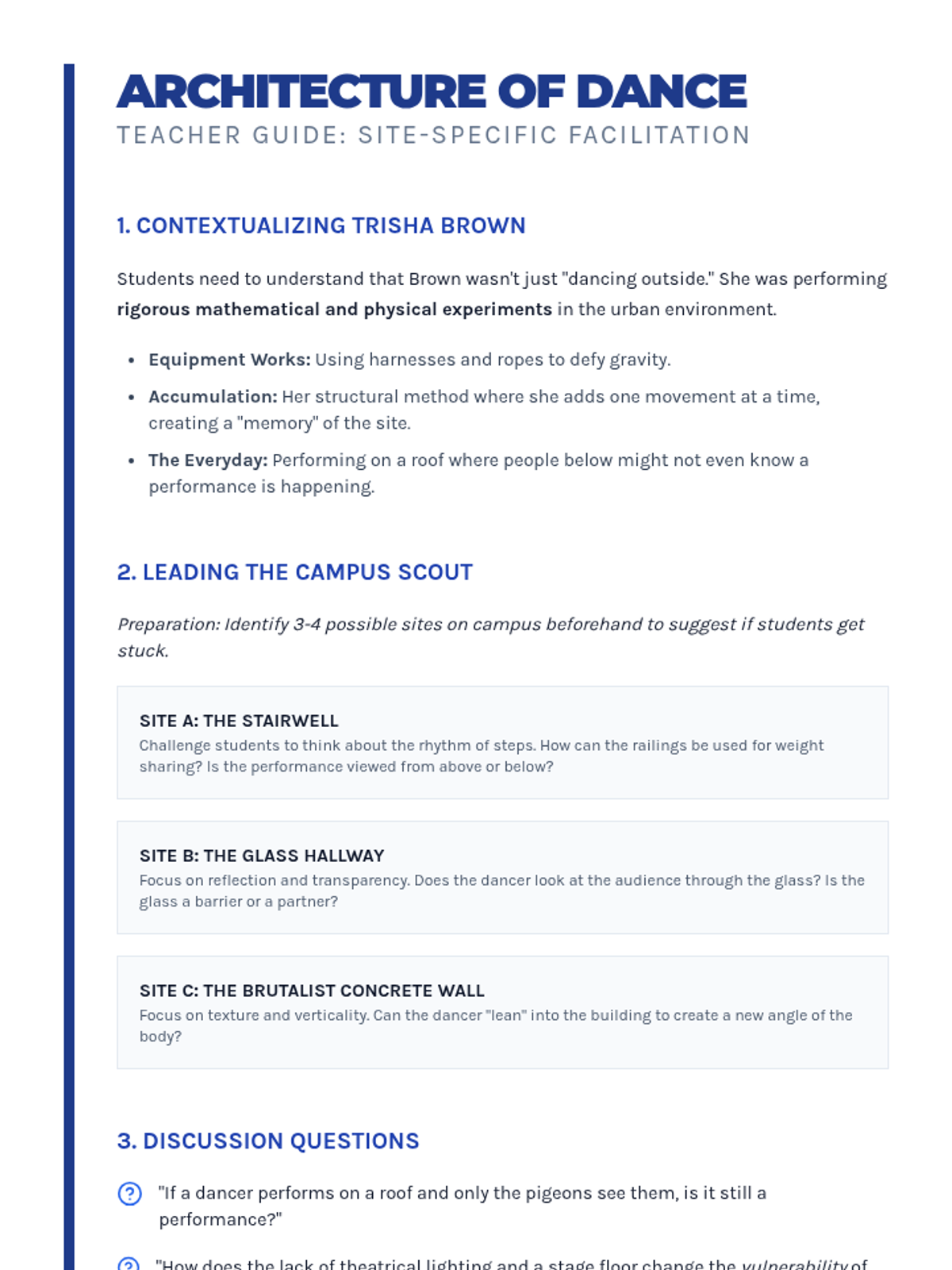
Teacher notes for Lesson 4, focusing on facilitating the campus site-scouting project and analyzing Trisha Brown's site-specific methodology.
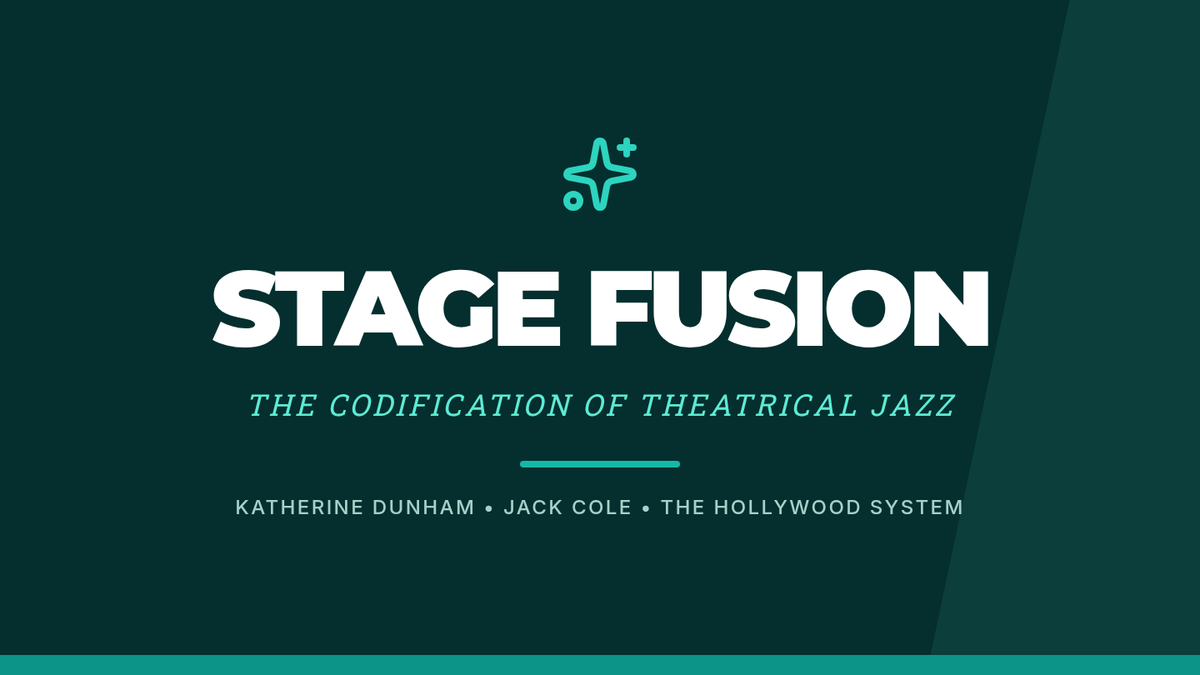
Presentation slides exploring how Katherine Dunham and Jack Cole integrated Caribbean, African, and East Indian isolations into the Broadway and Hollywood systems, codifying 'Theatrical Jazz.'