Fundamental notation, instrumental proficiency, and vocal techniques across various genres. Connects historical analysis with original composition and creative performance skills.
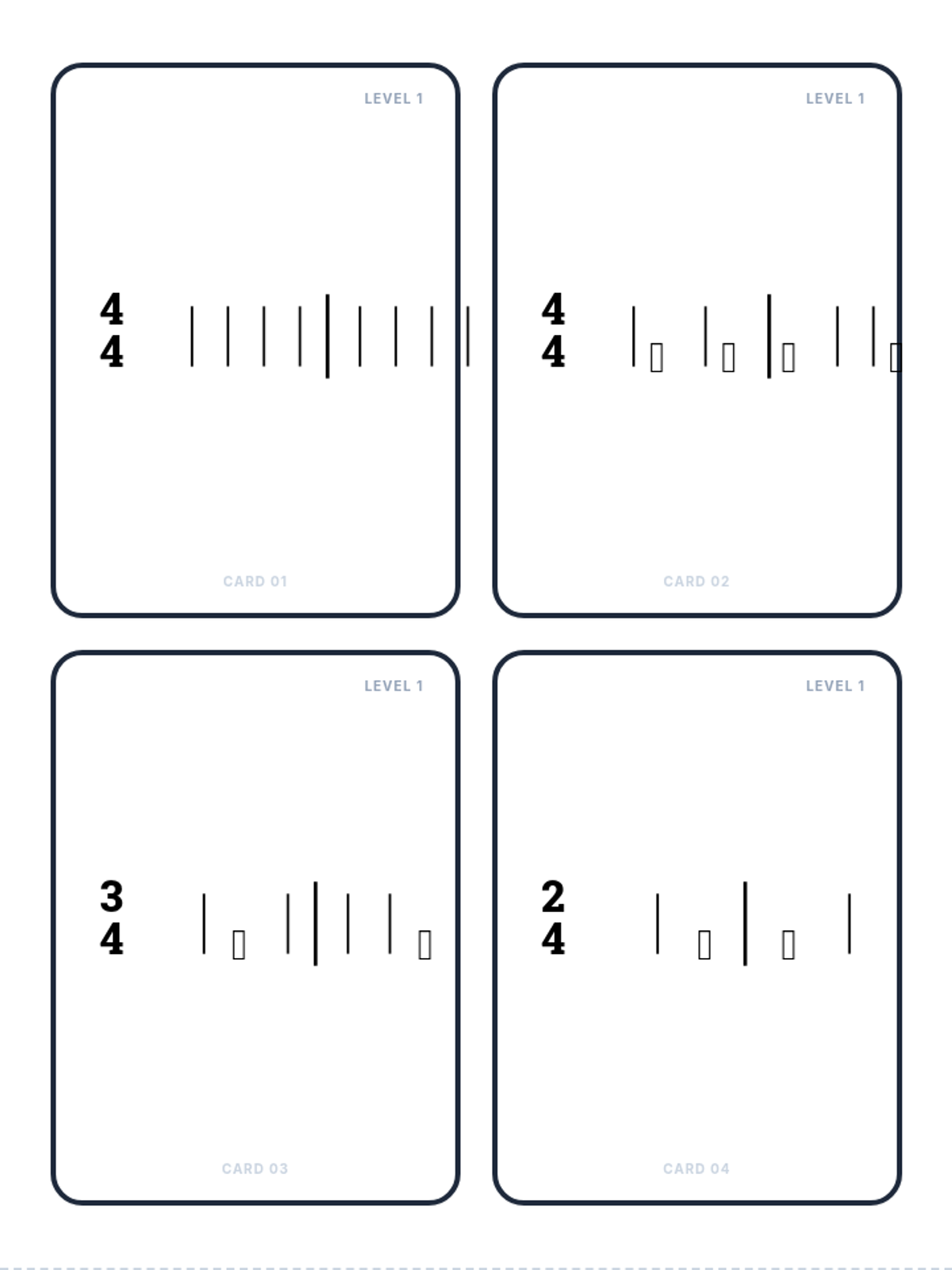
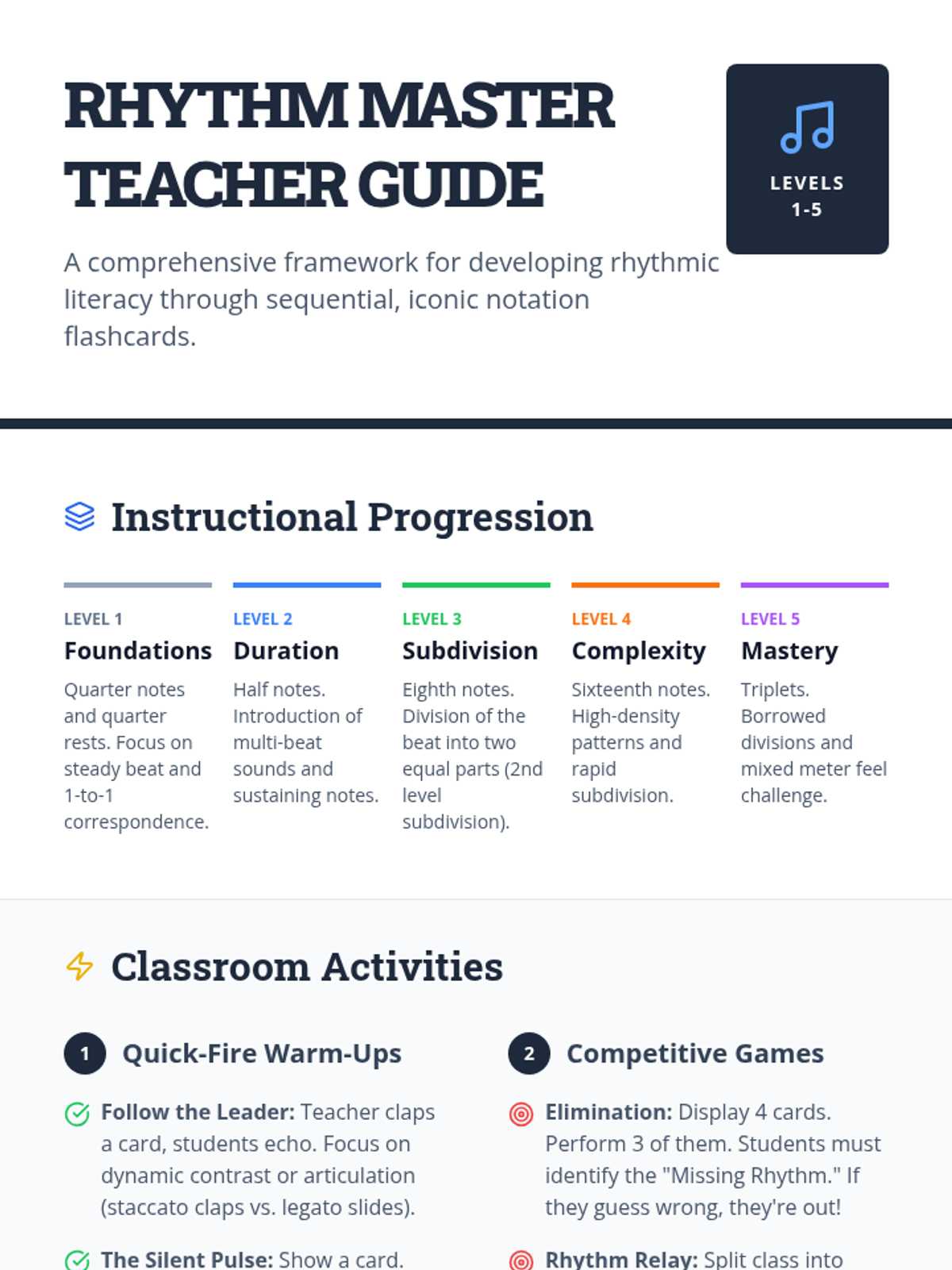
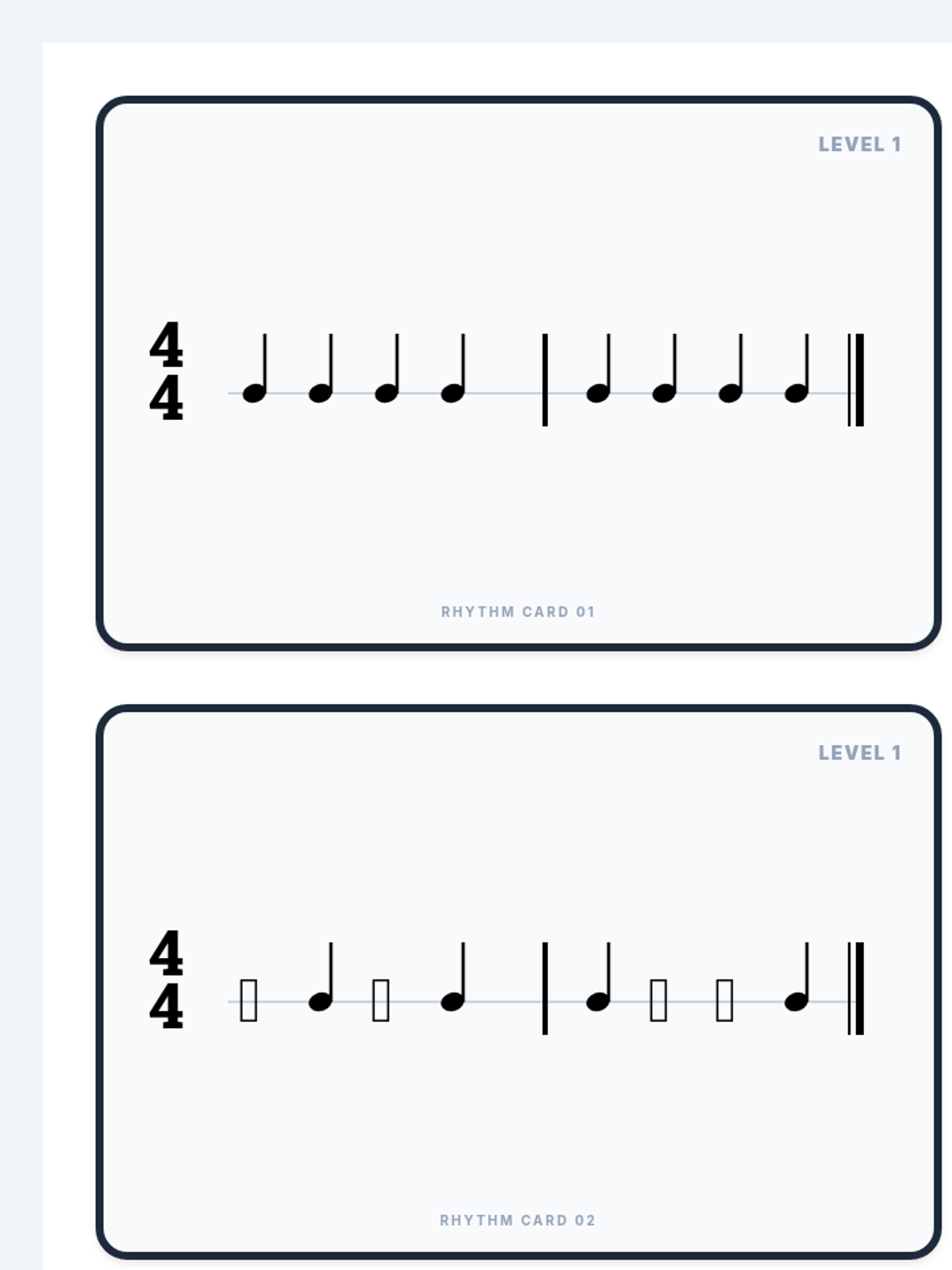
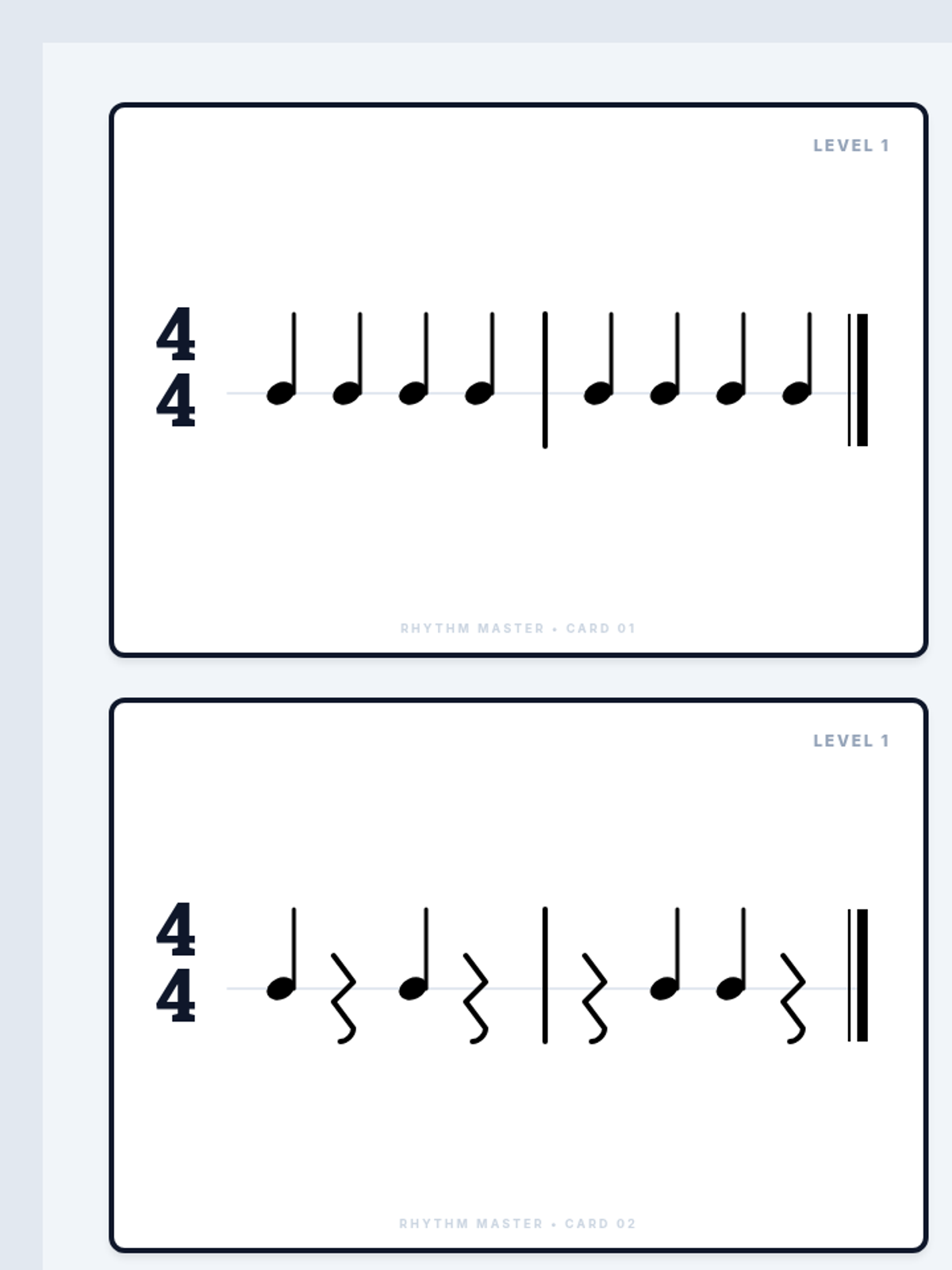
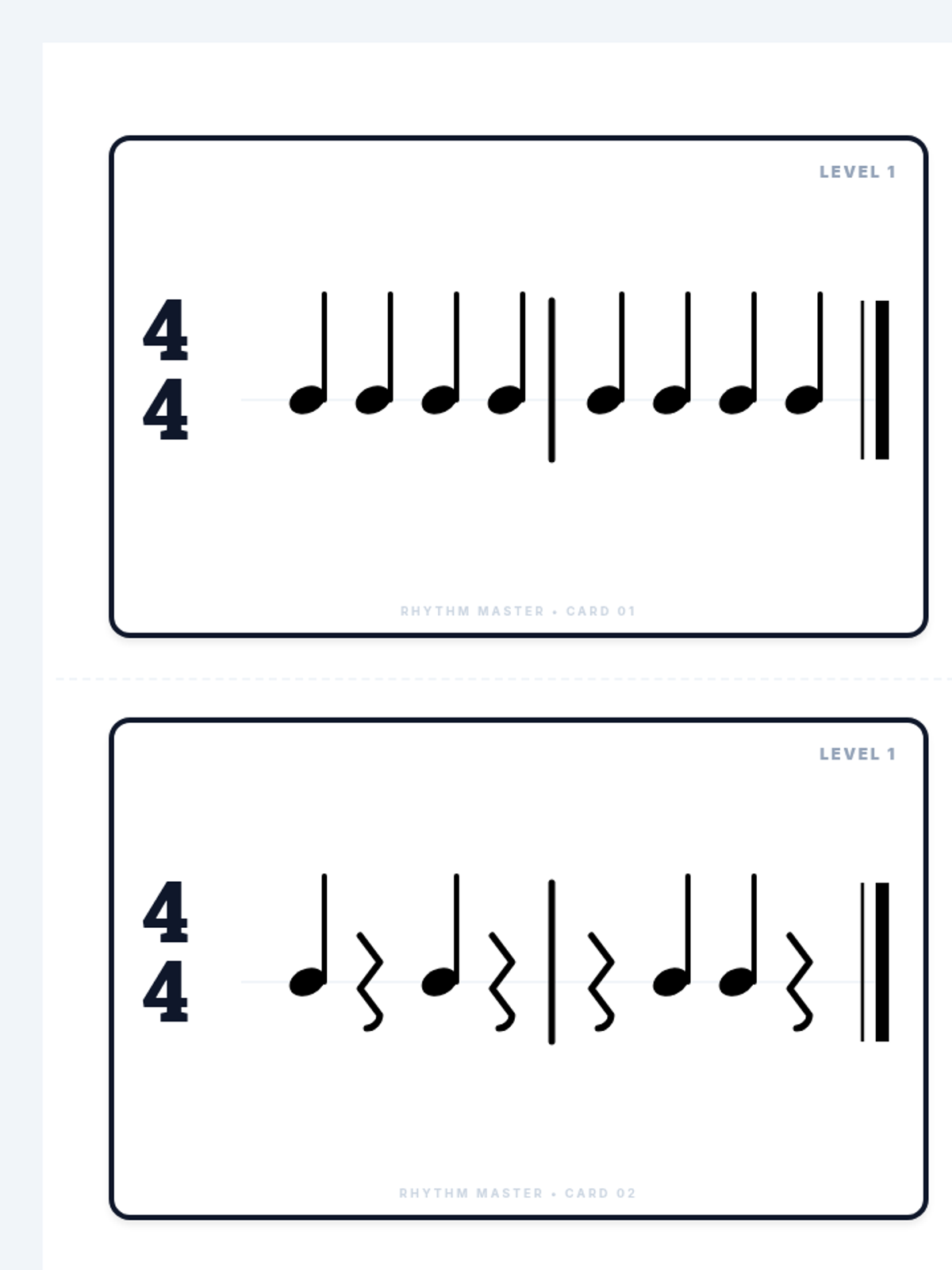
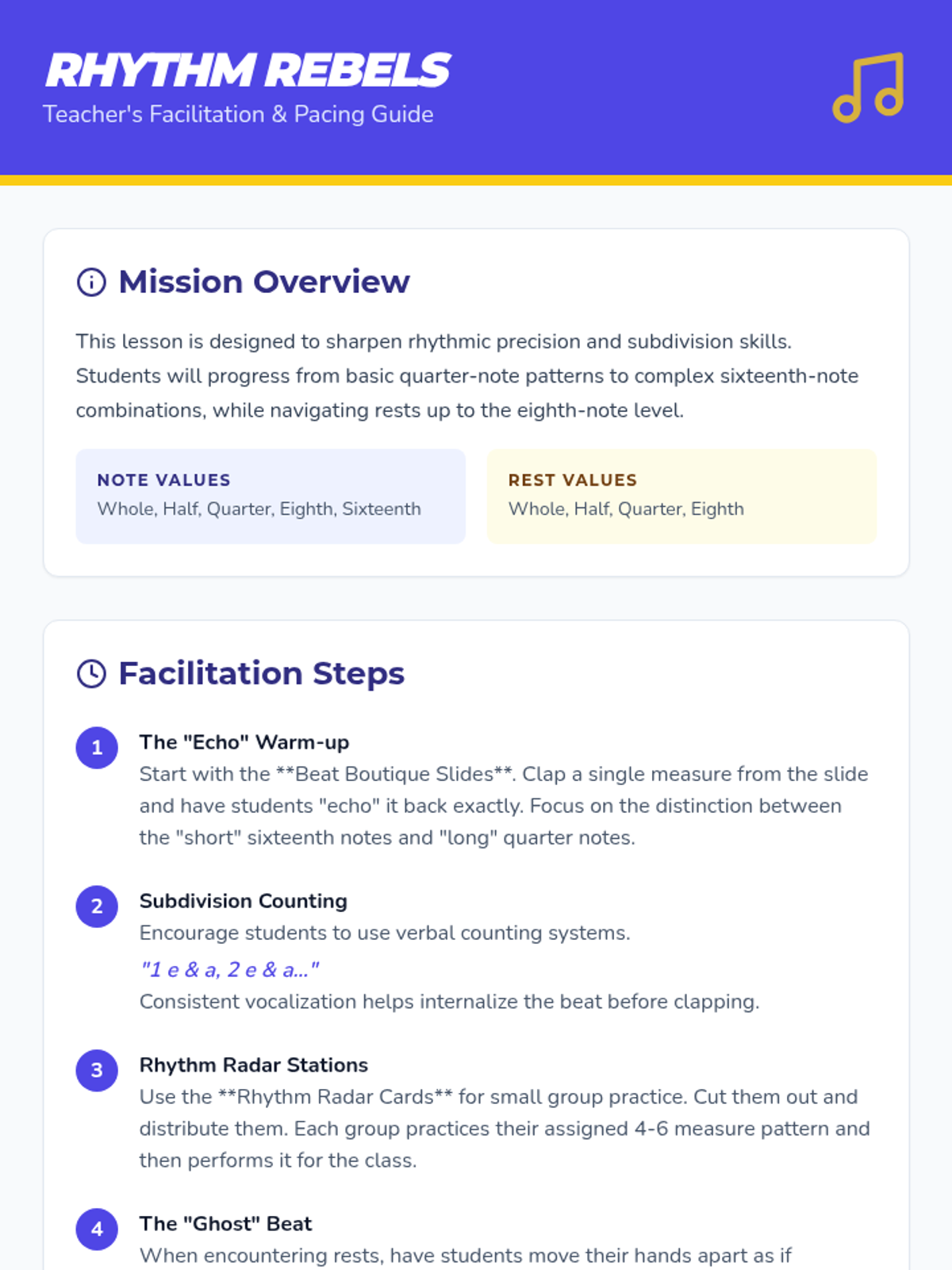
A series of rhythm reading flashcards and a teacher's guide covering basic to advanced rhythmic patterns. Activities progress from quarter notes and rests to complex sixteenth notes and triplets across multiple time signatures.
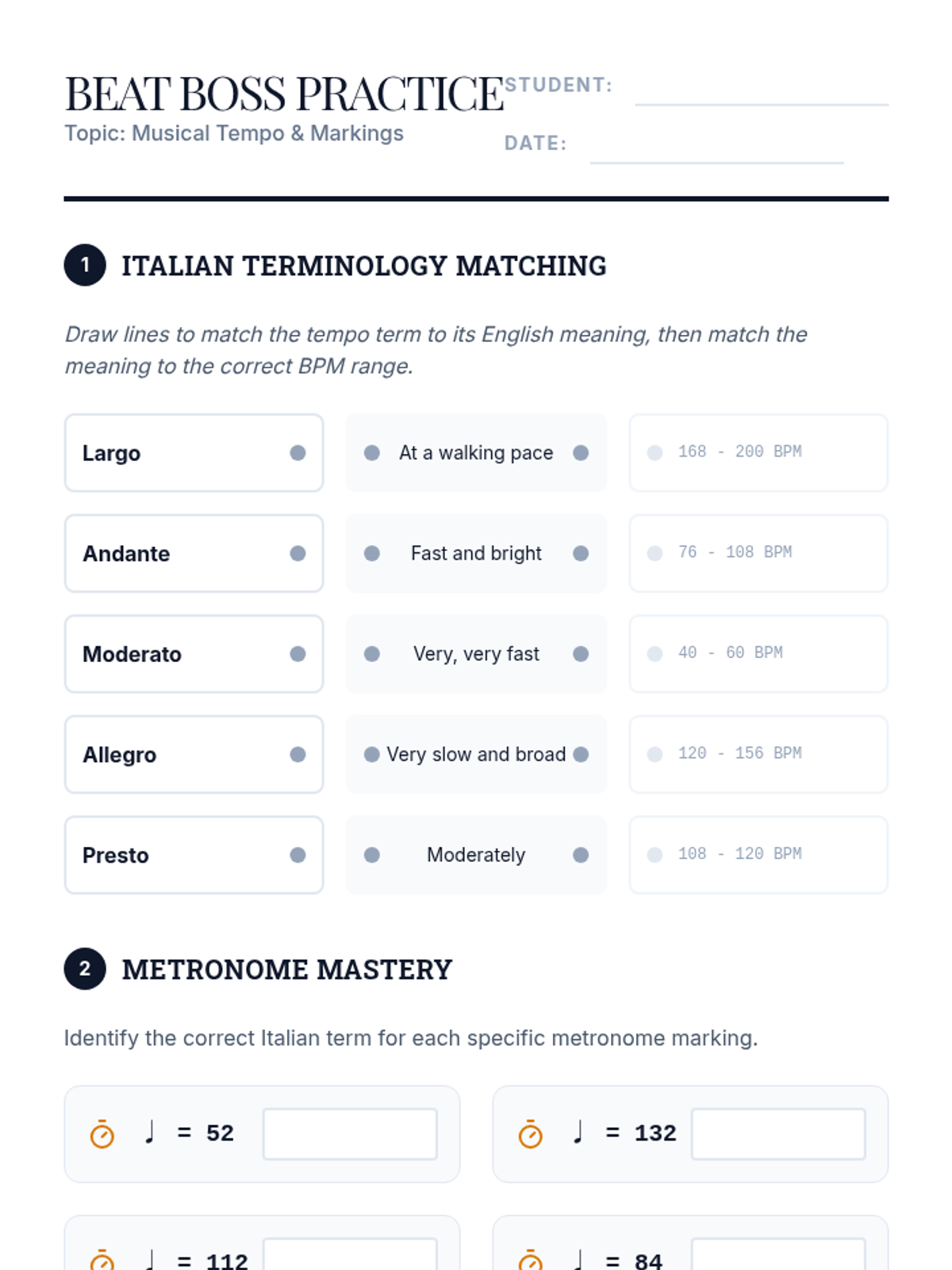
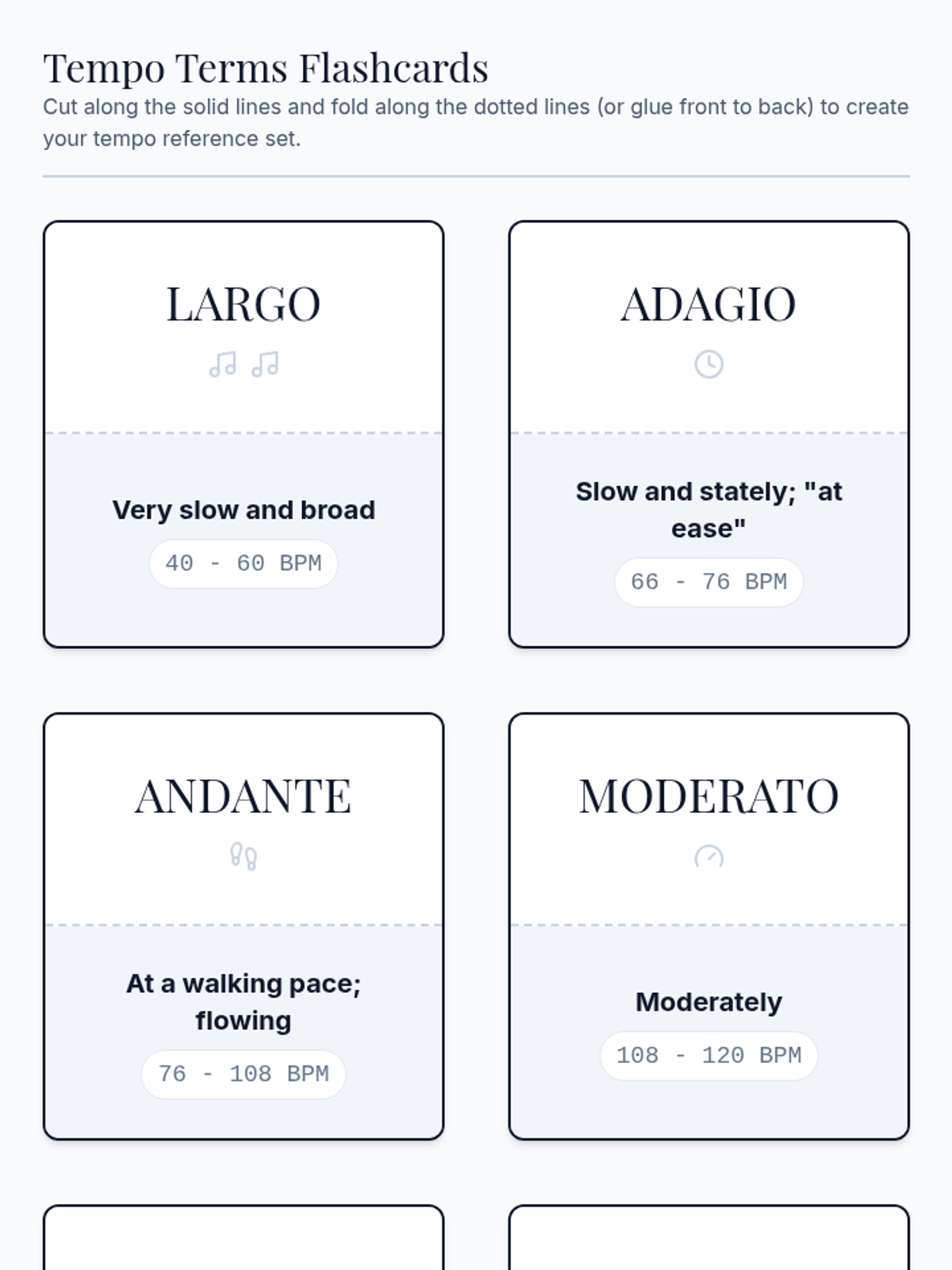
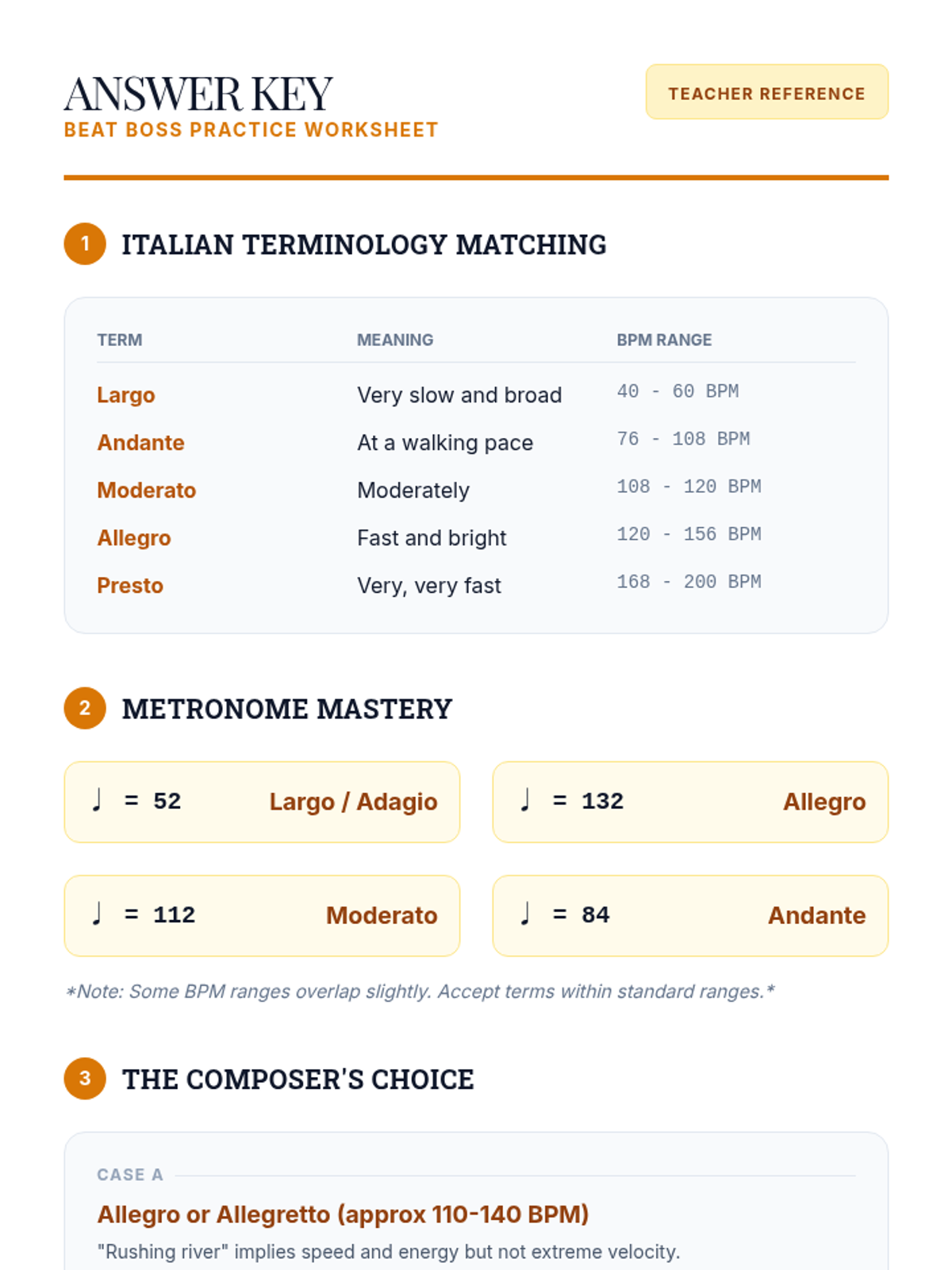
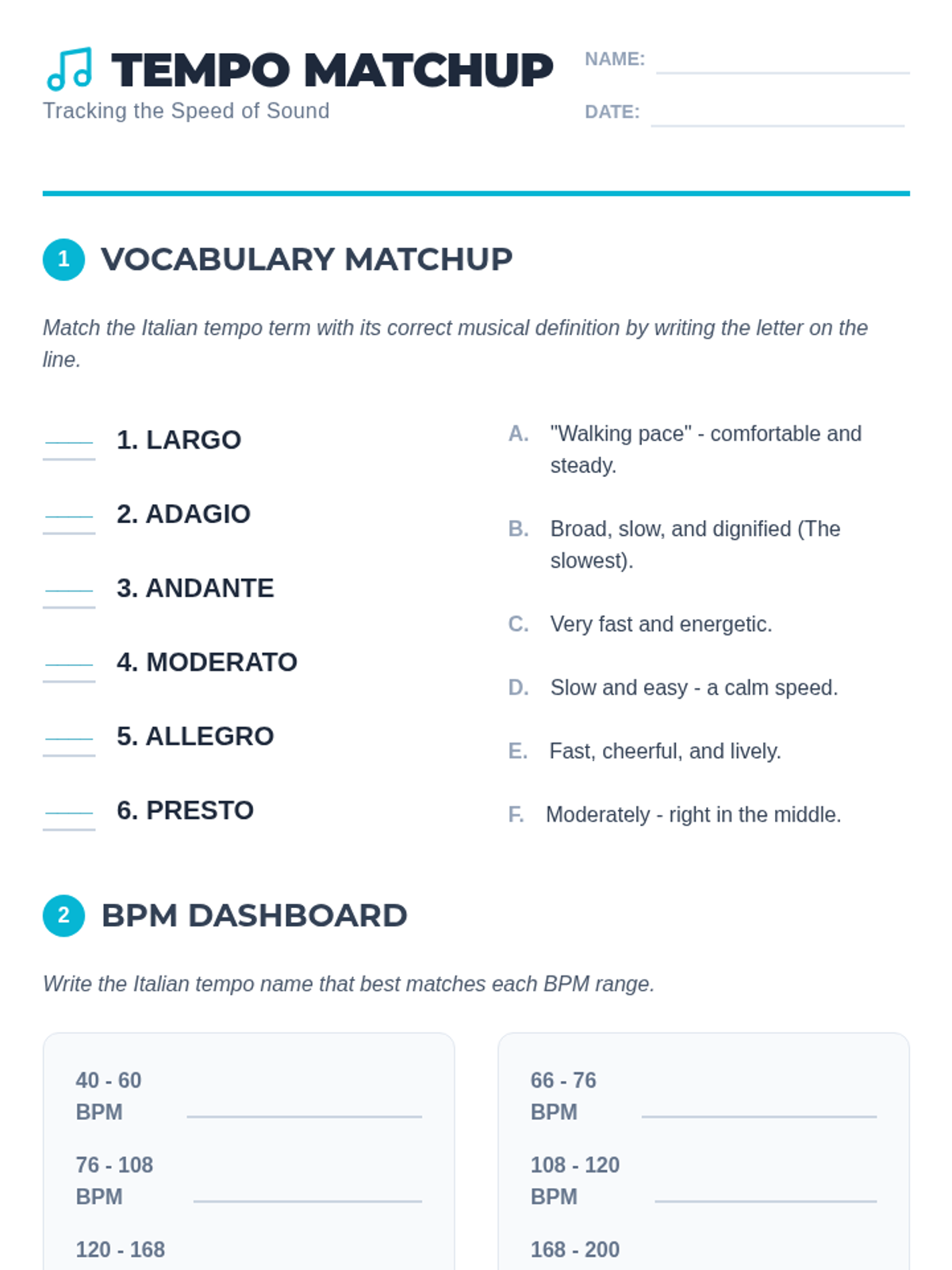
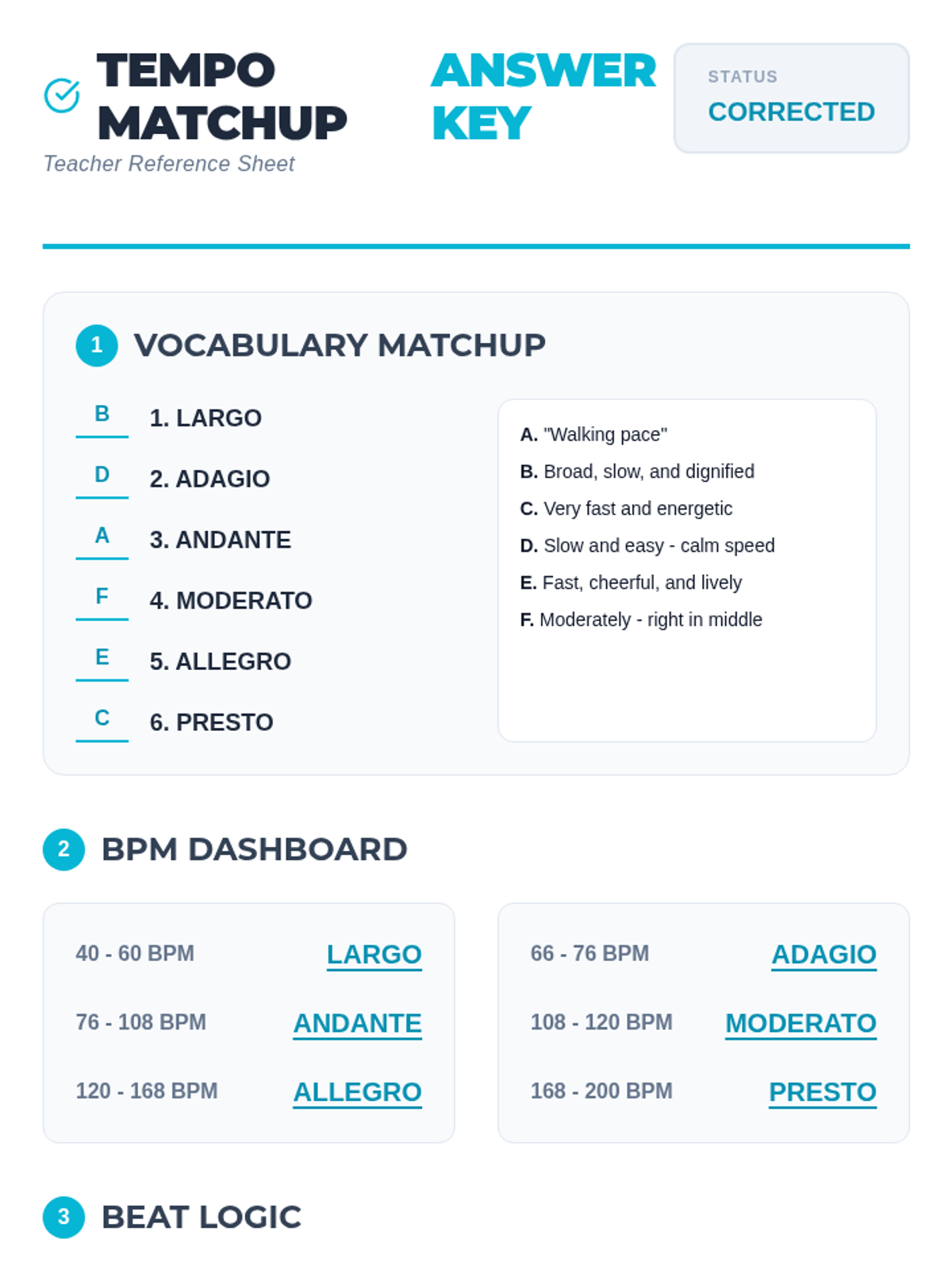
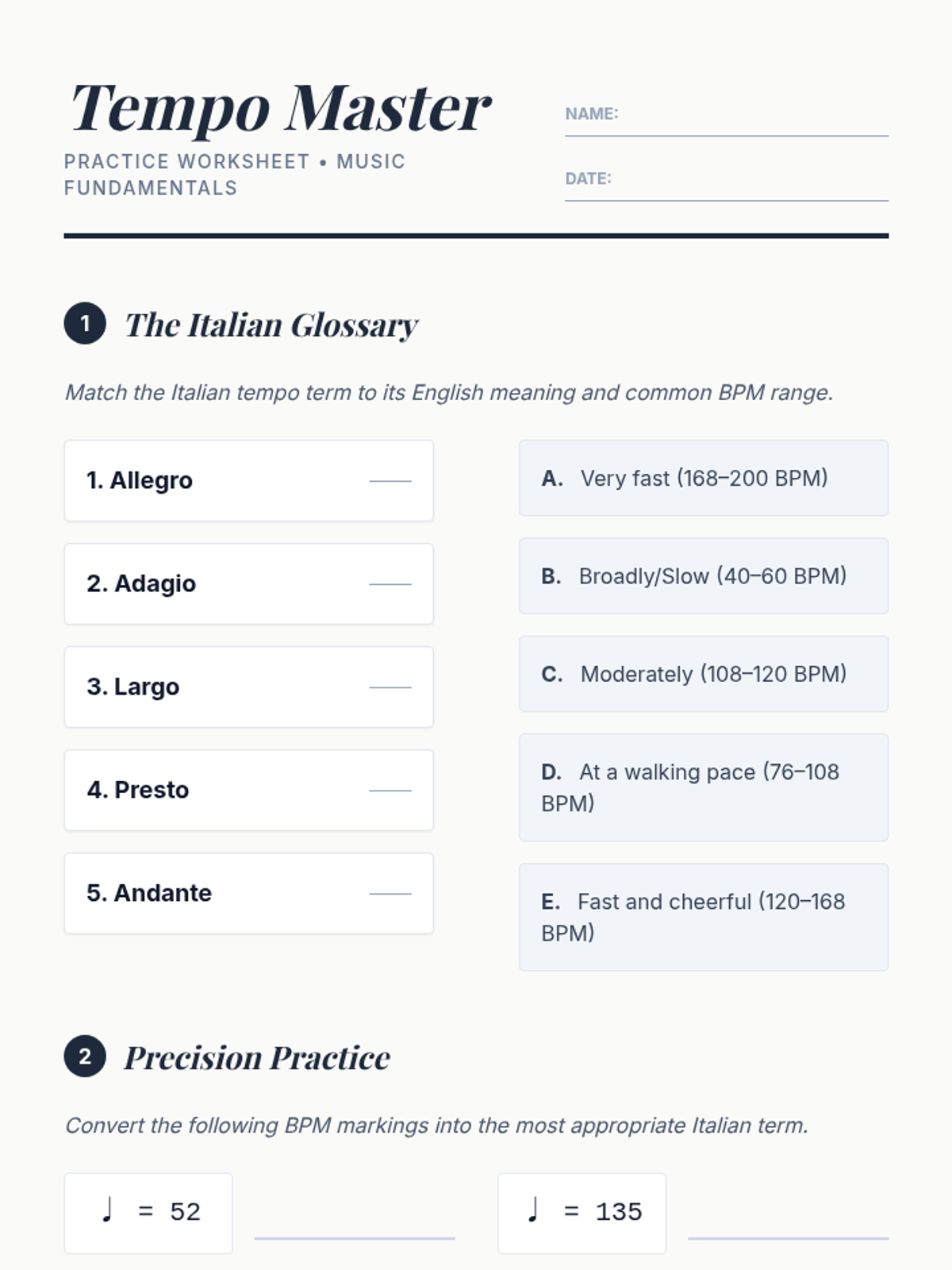
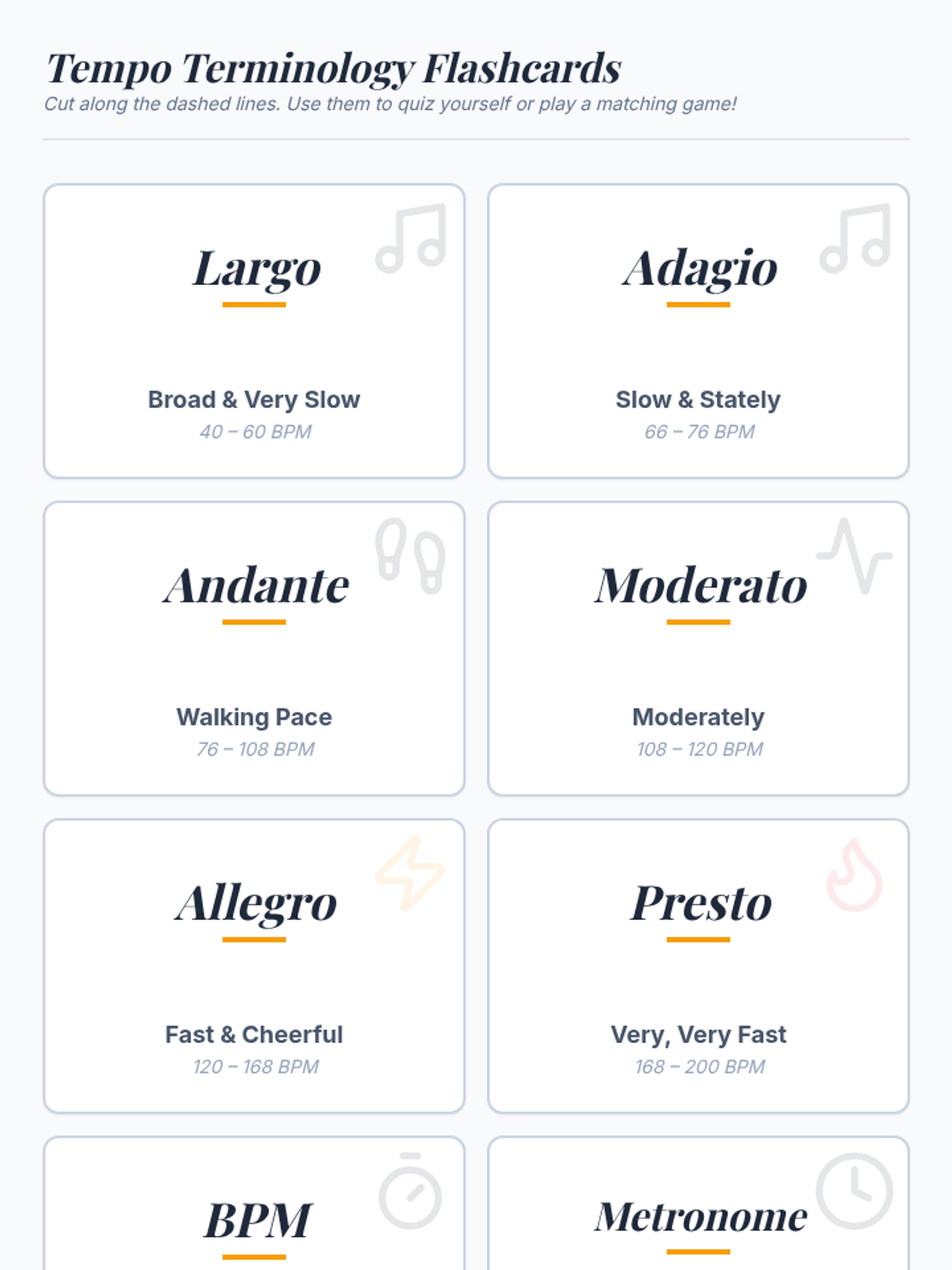
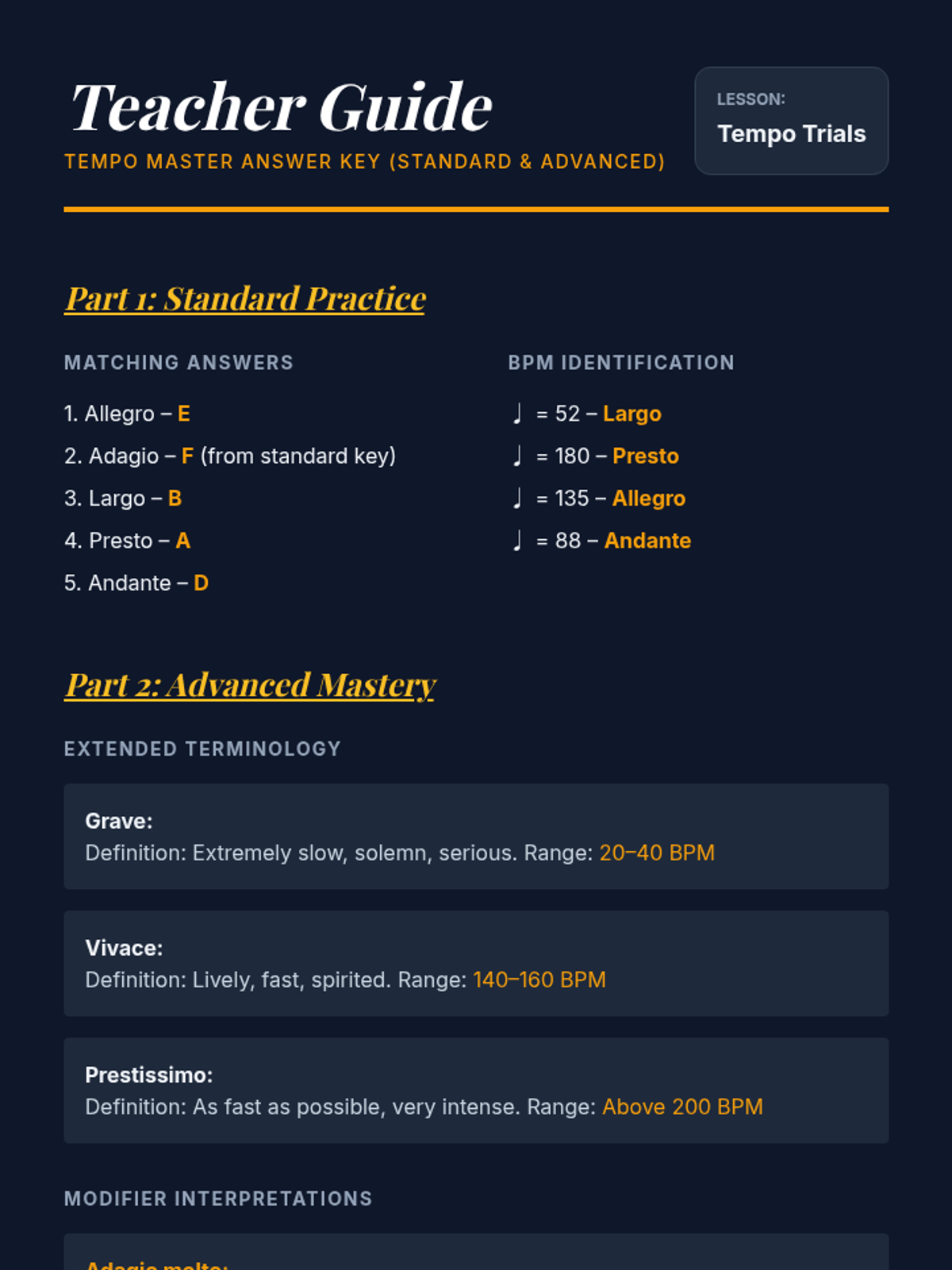
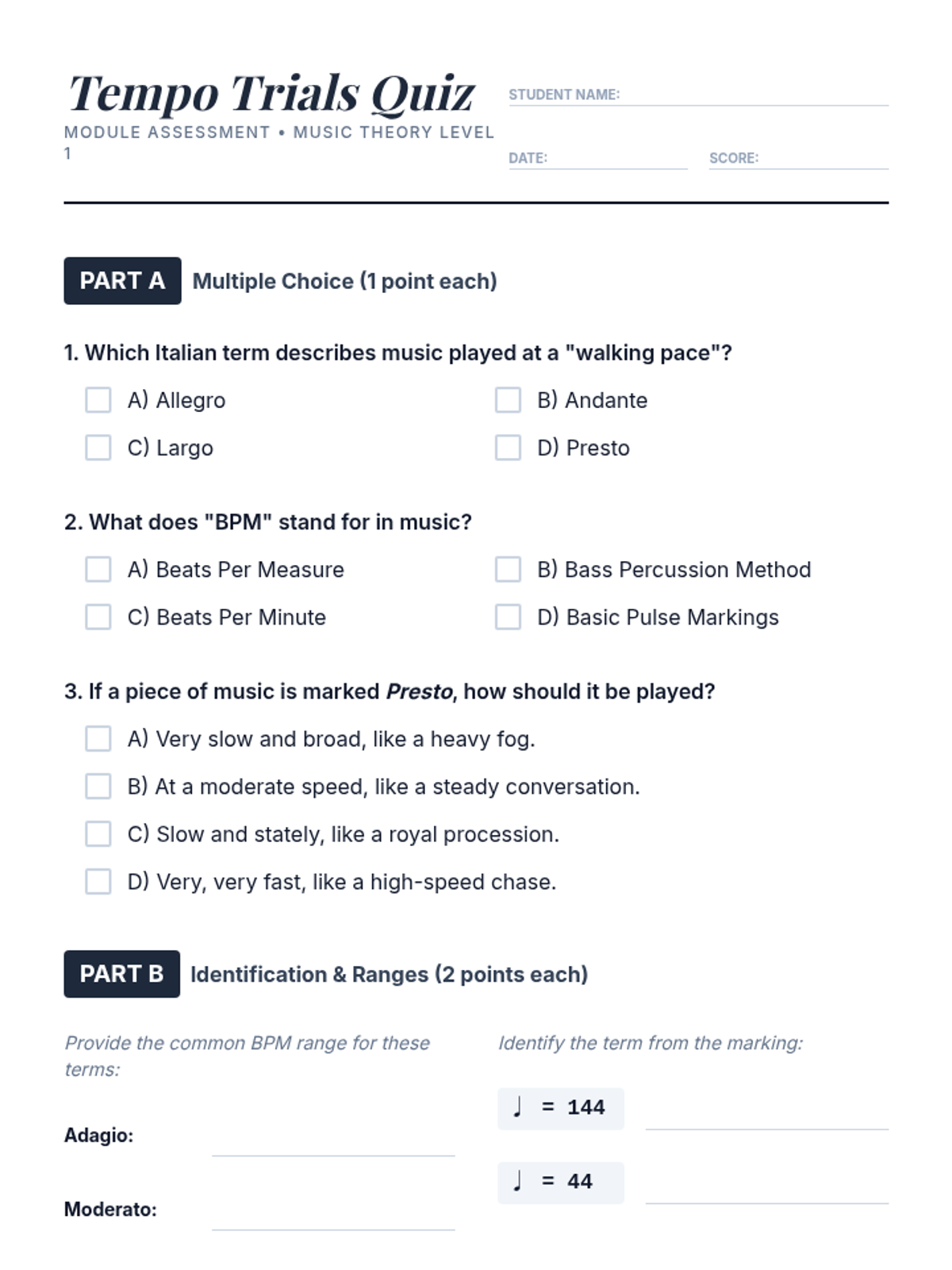
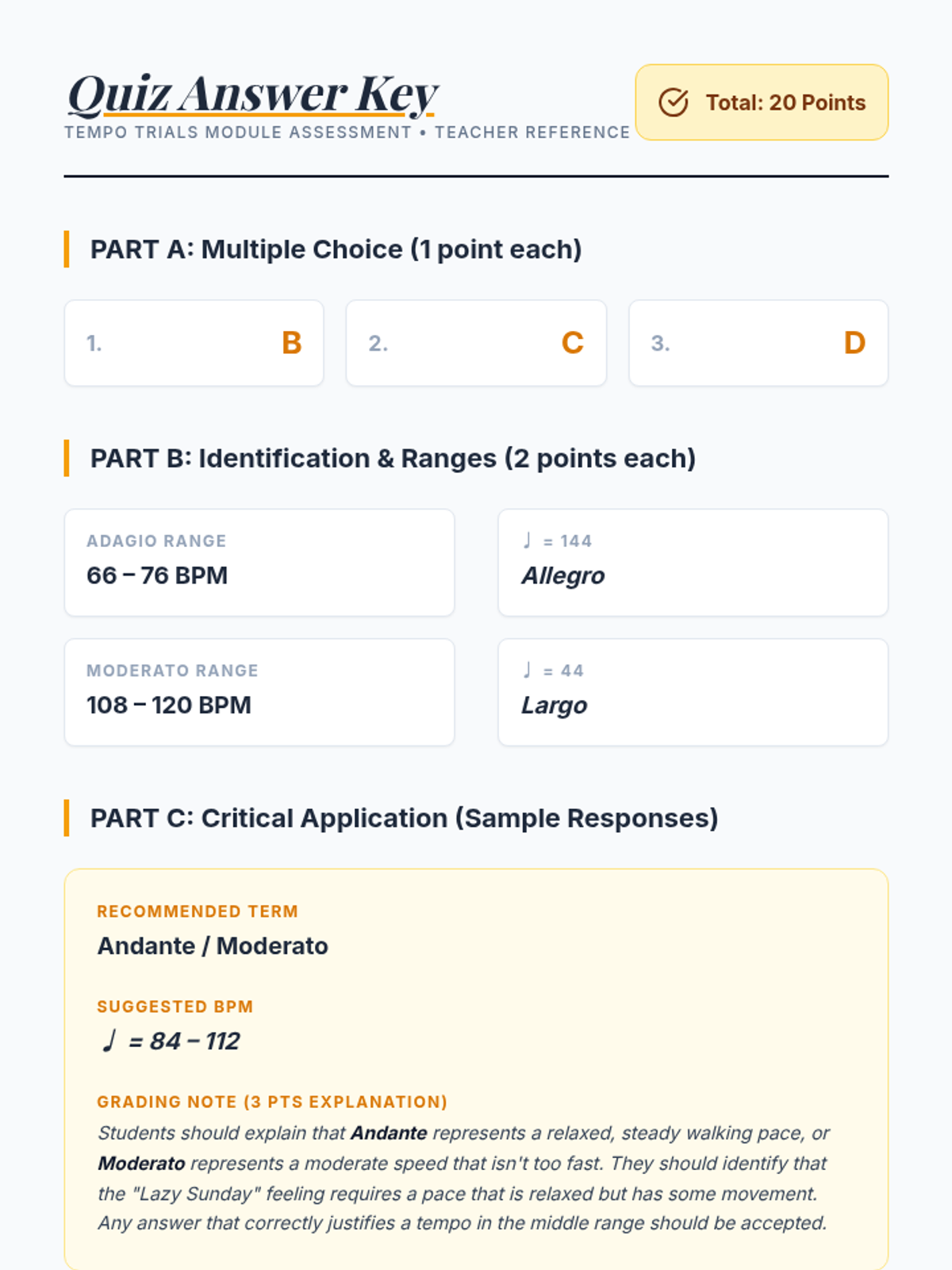
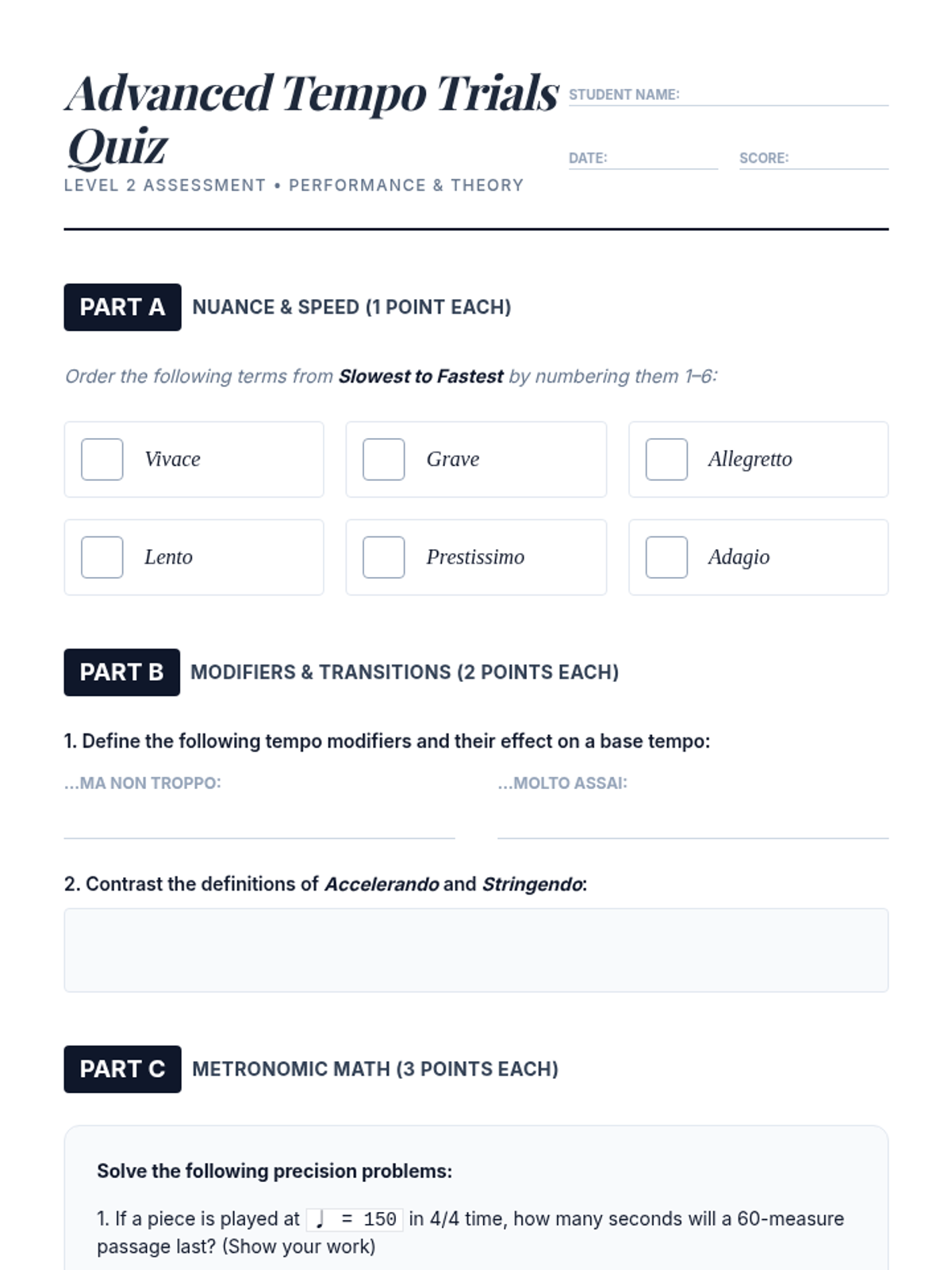
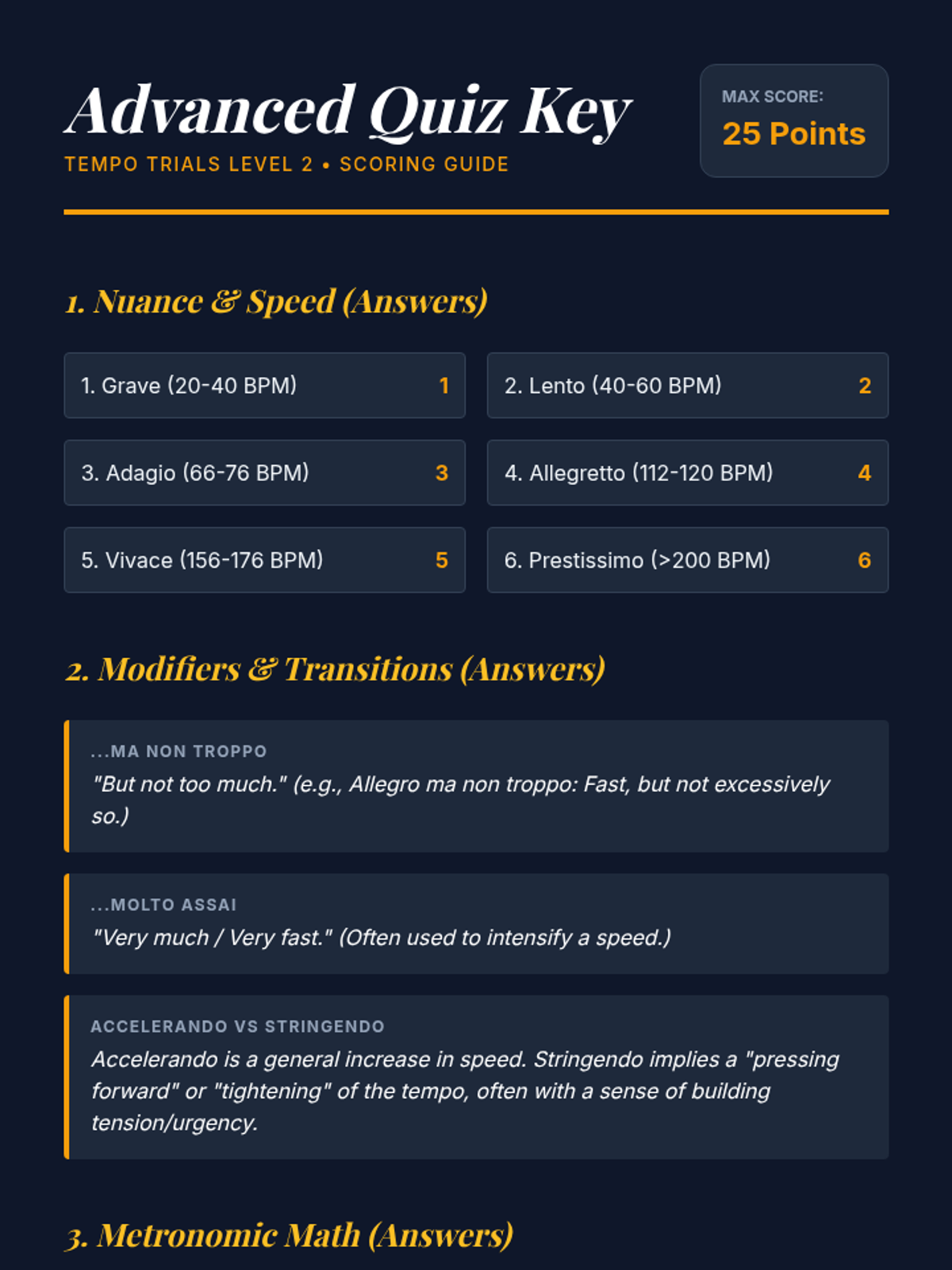
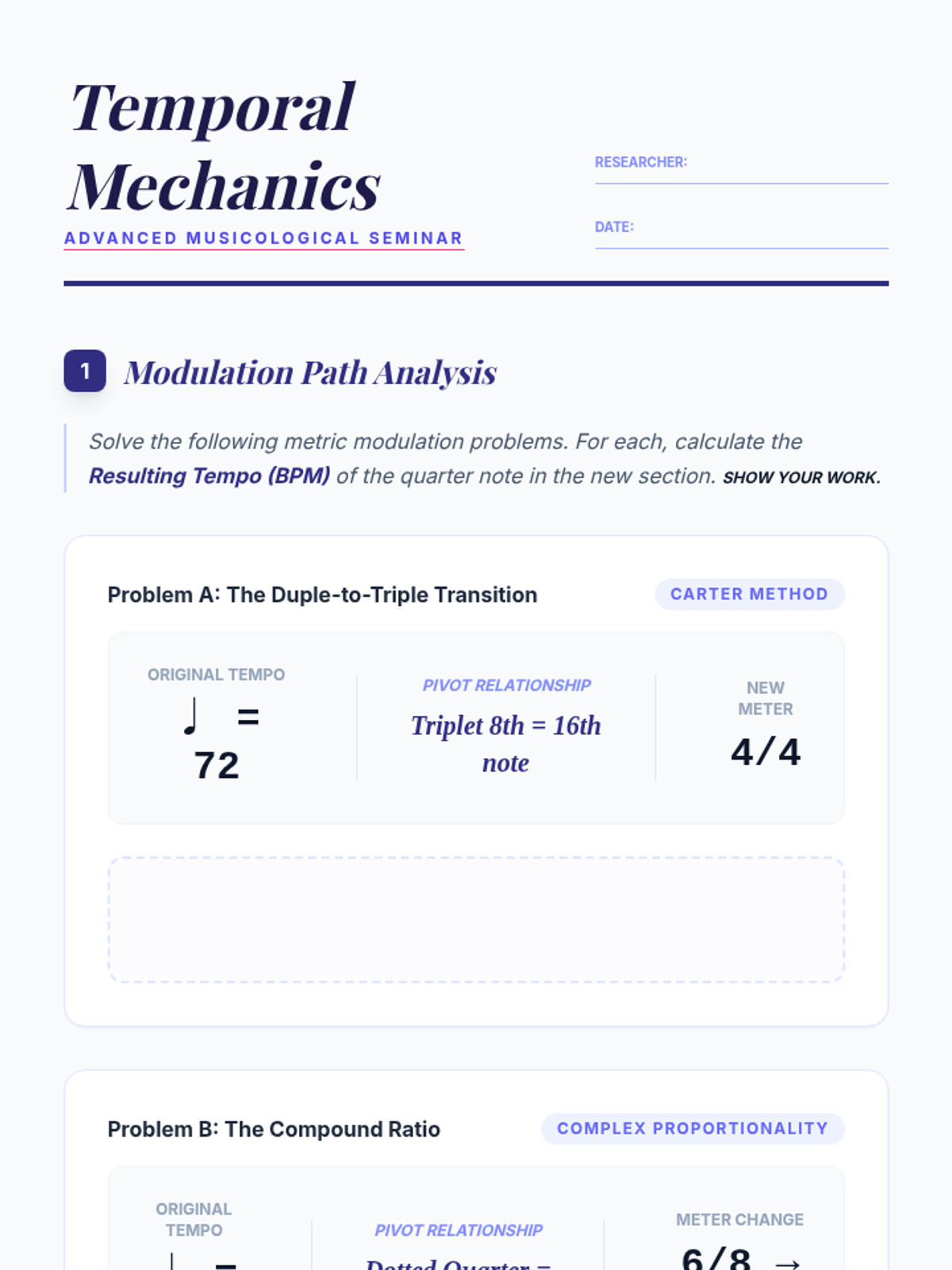
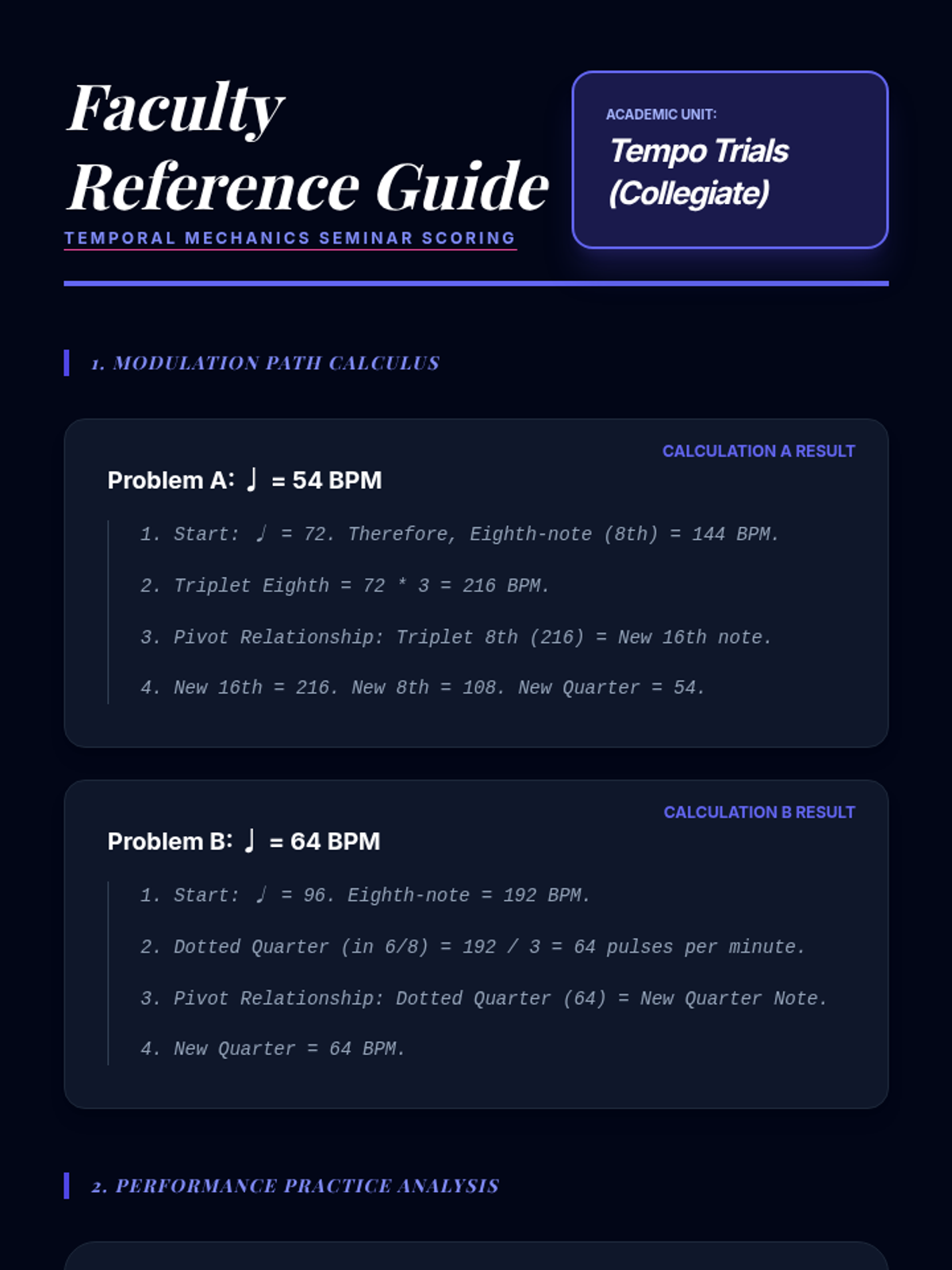
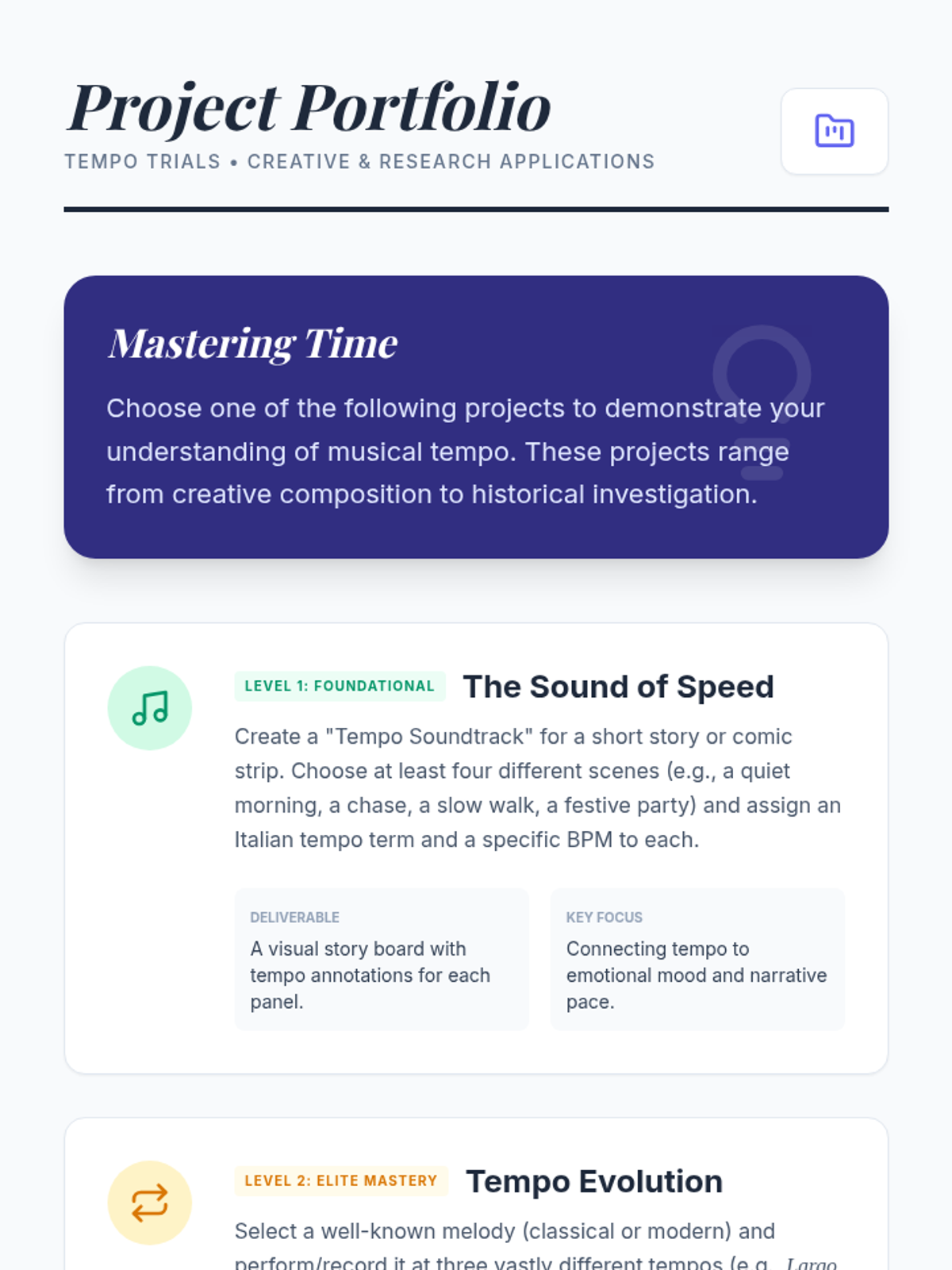
A comprehensive lesson on music tempo covering Italian terminology, metronome markings, and practical application to musical scores. Students will learn to identify and apply various speeds to music.
A lesson exploring the speed of music through Italian tempo markings, the use of metronomes, and understanding Beats Per Minute (BPM).
A comprehensive guide to understanding and applying musical tempo, covering Italian terminology, BPM, and metronome markings.
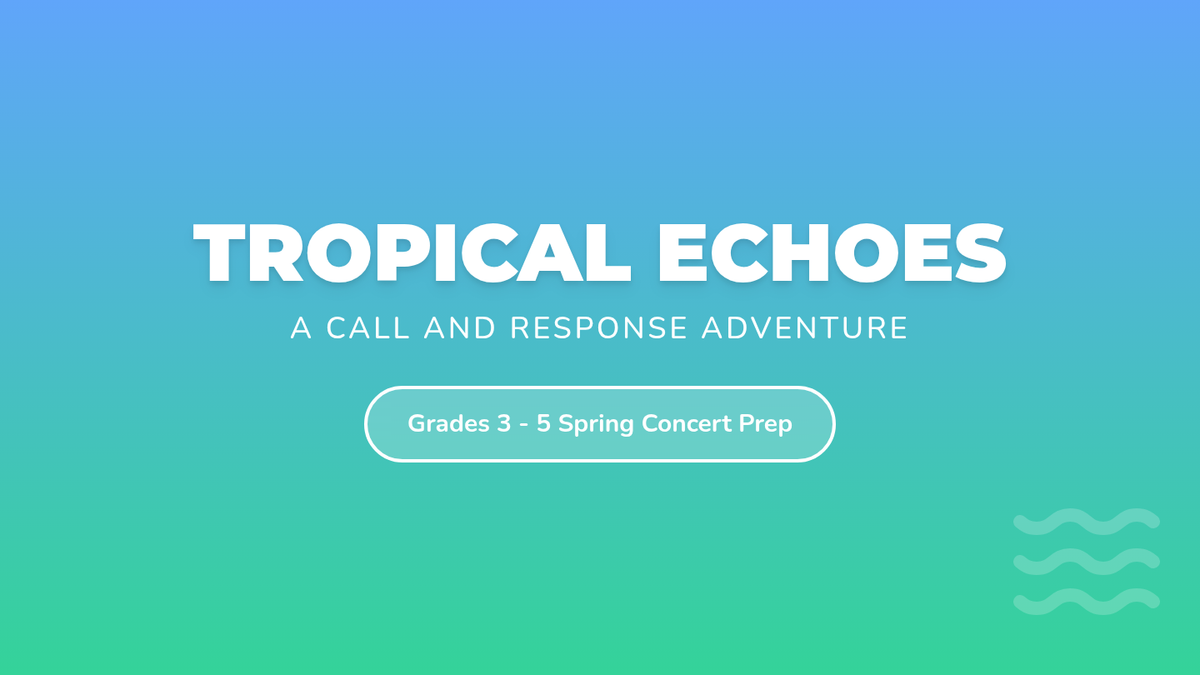
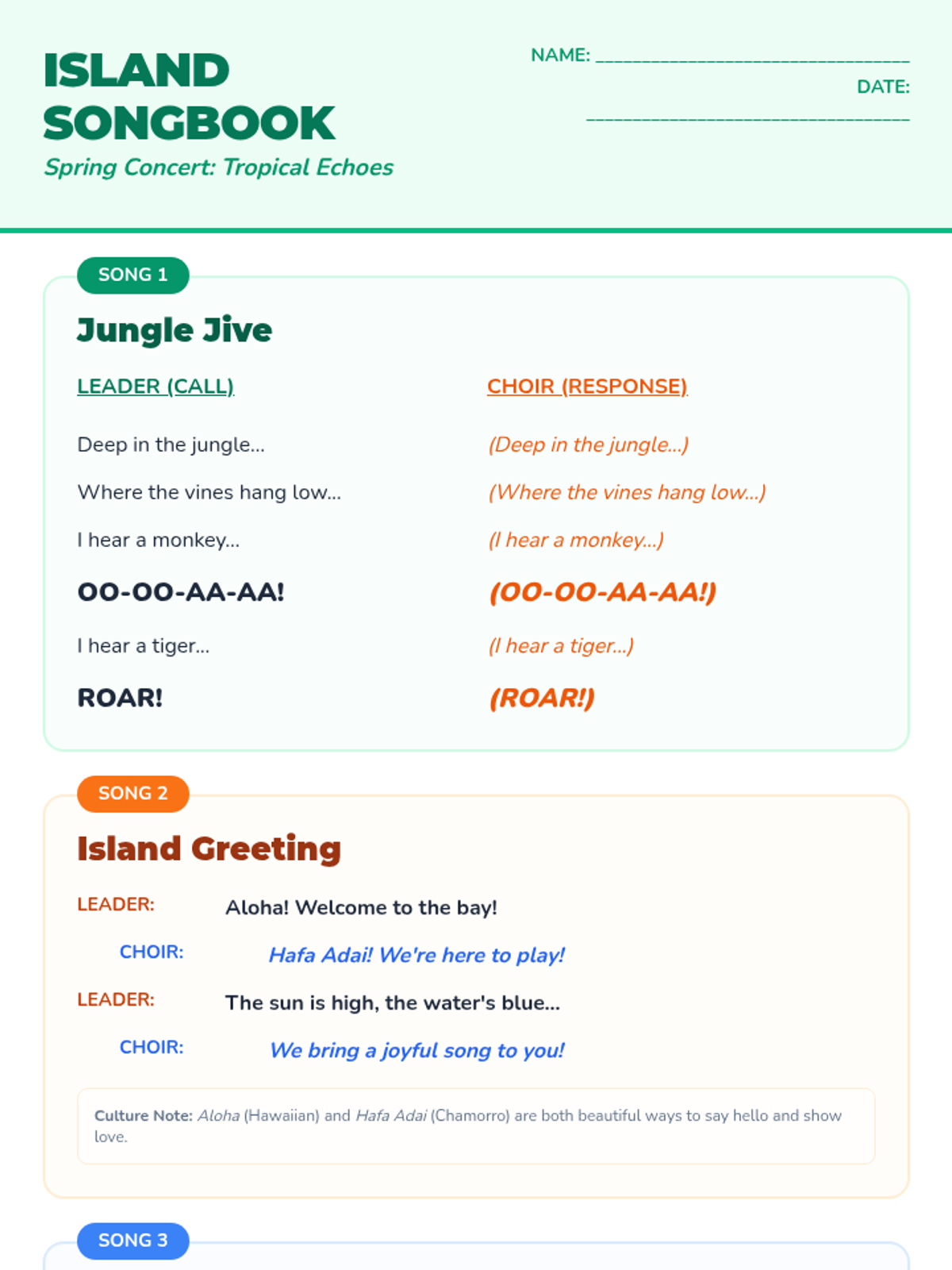
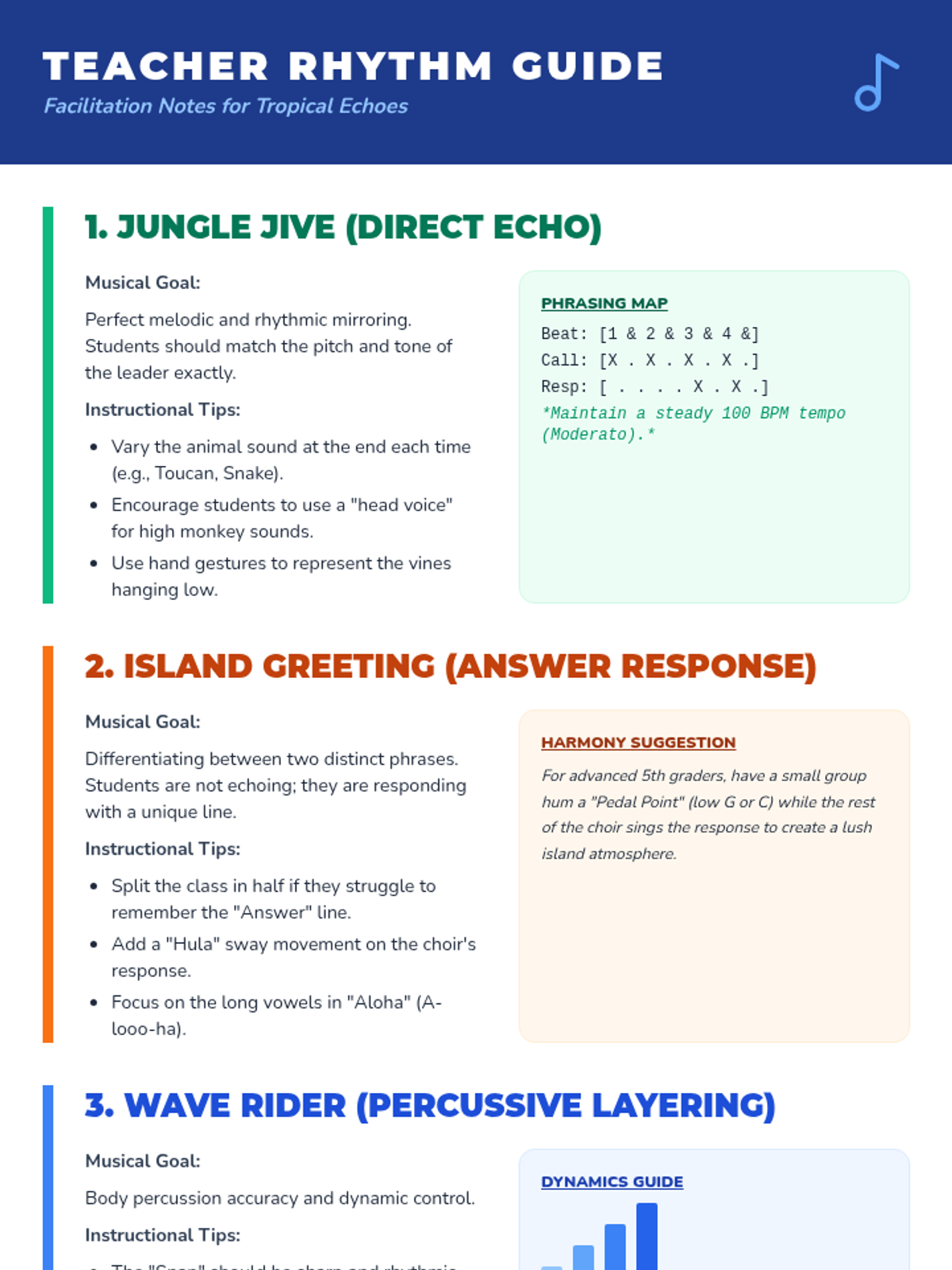
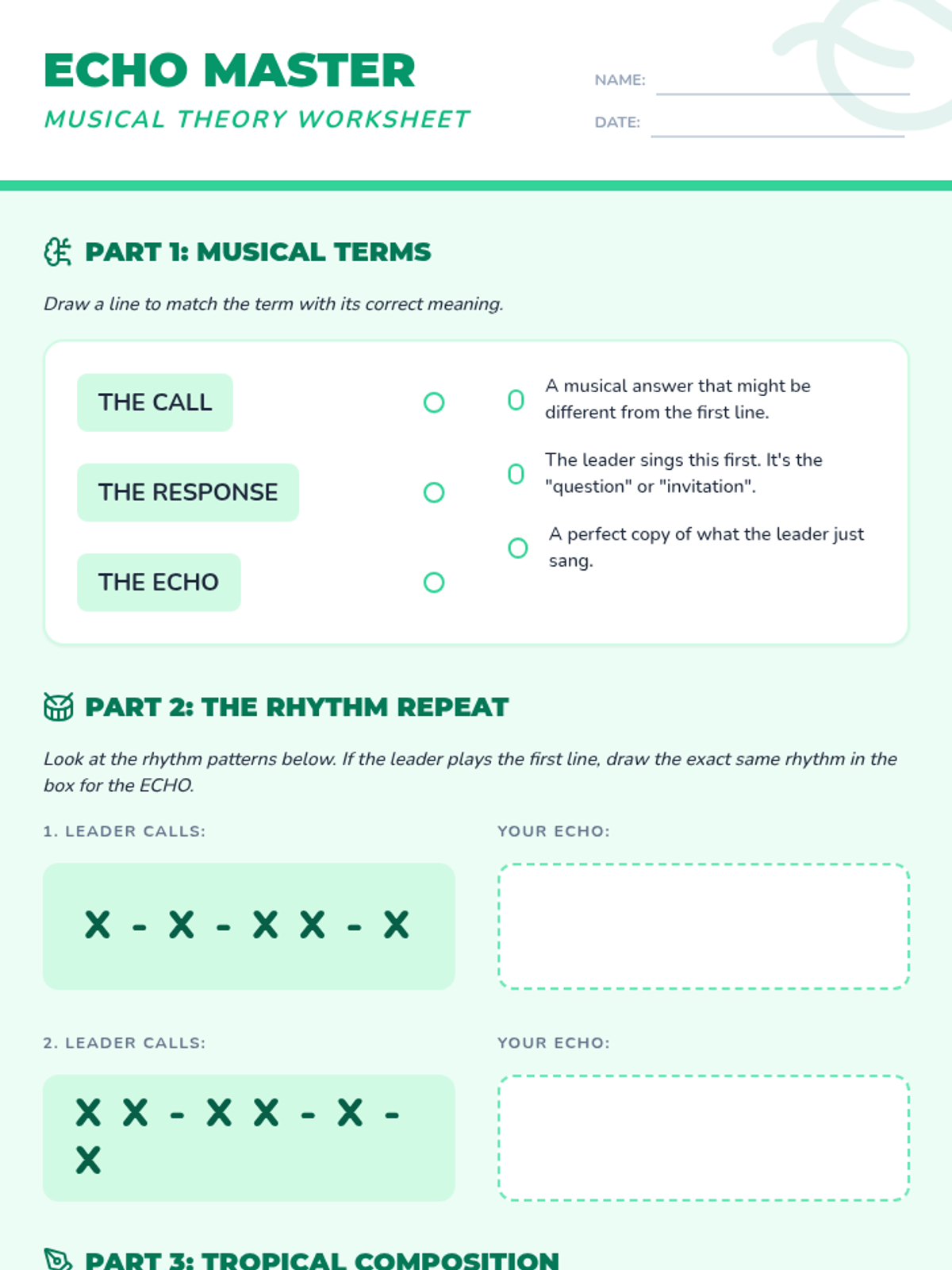
A musical unit focusing on tropical-themed call and response songs for grades 3-5, designed for spring concert preparation and vocal skill development.
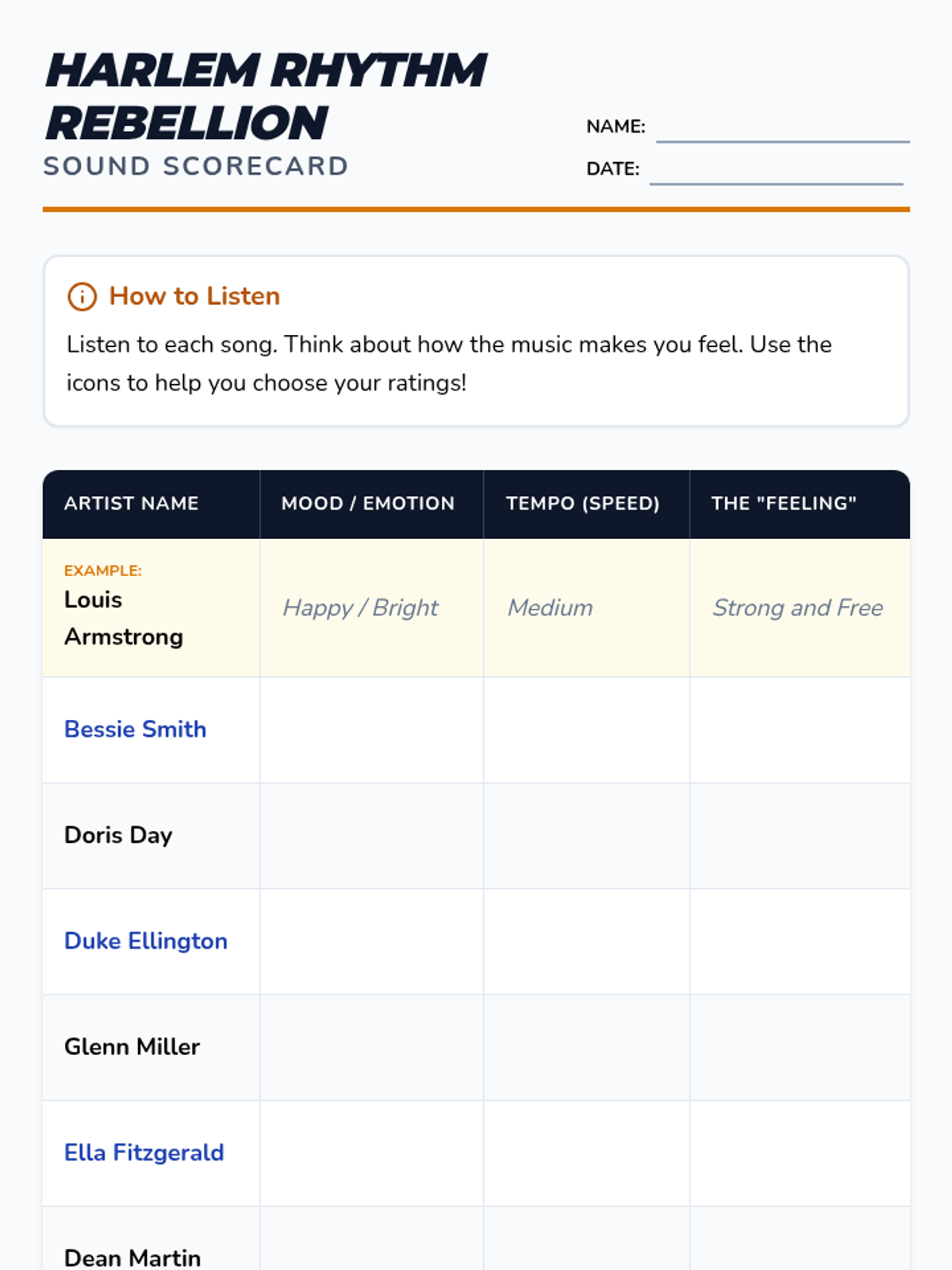
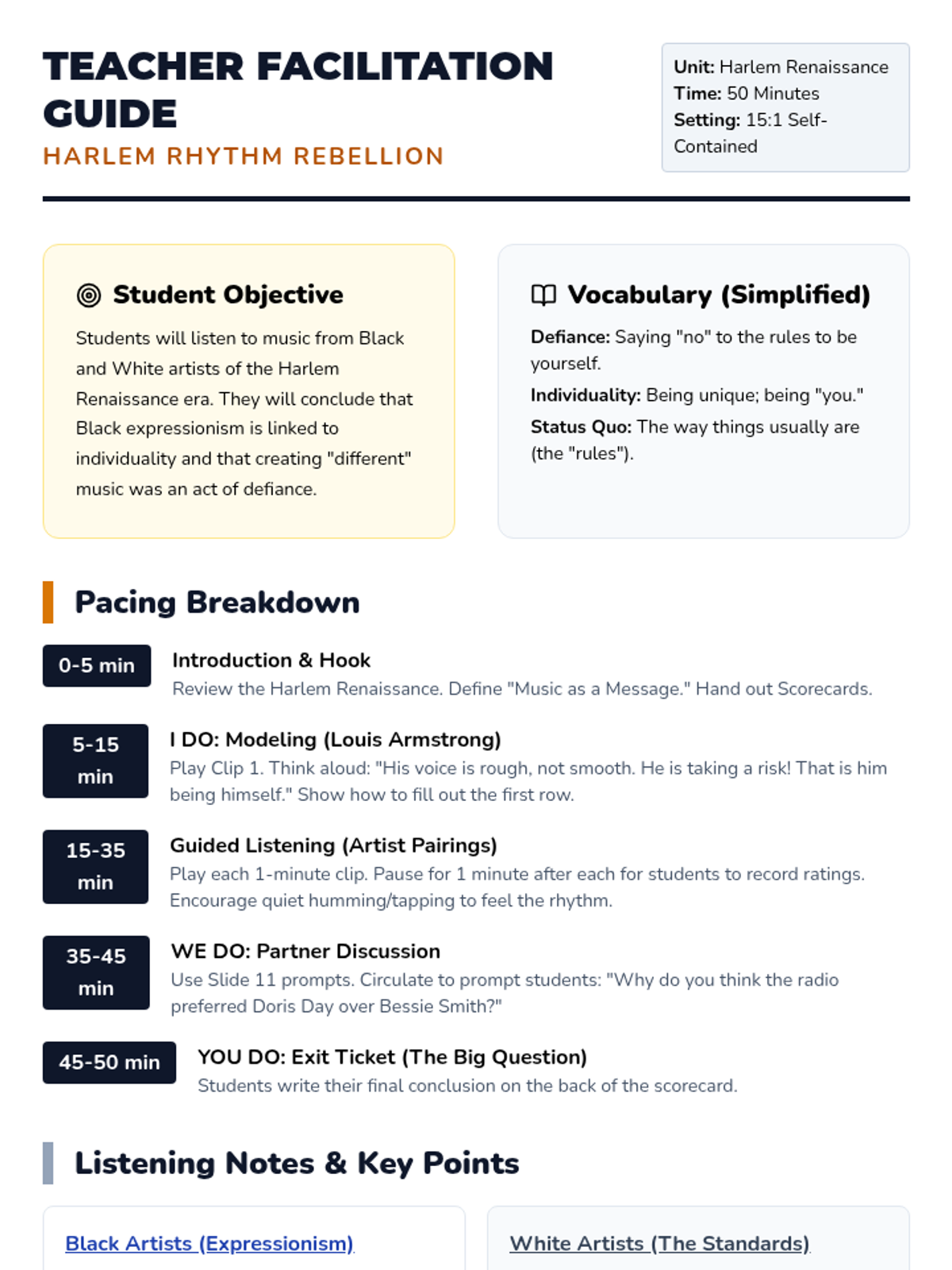
A 50-minute lesson exploring the connection between Jazz music, Black expressionism, and the Harlem Renaissance through music comparison and artist biopics. Students will analyze the differences between Black and White artists of the era to understand music as an act of defiance and cultural identity.
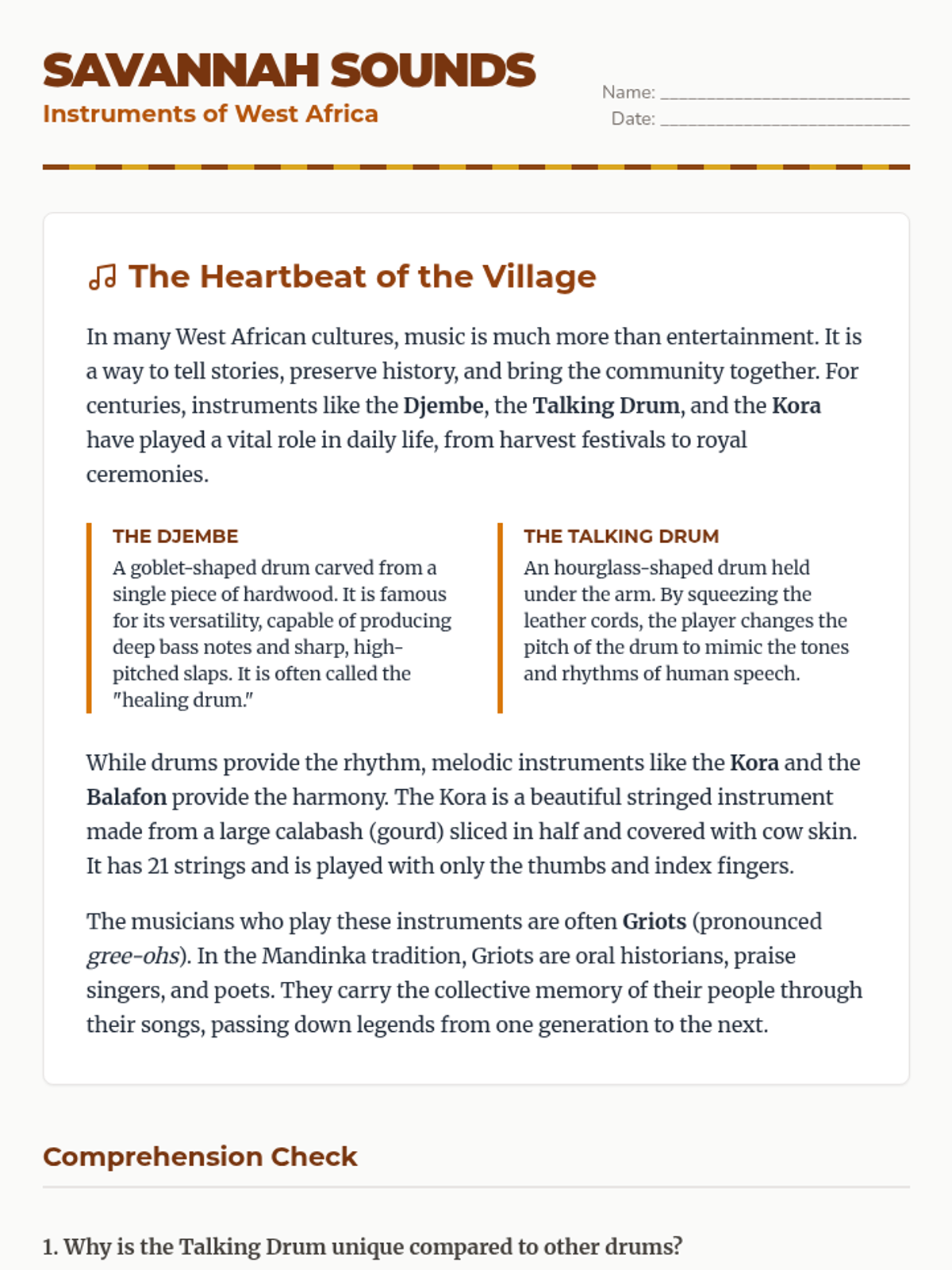
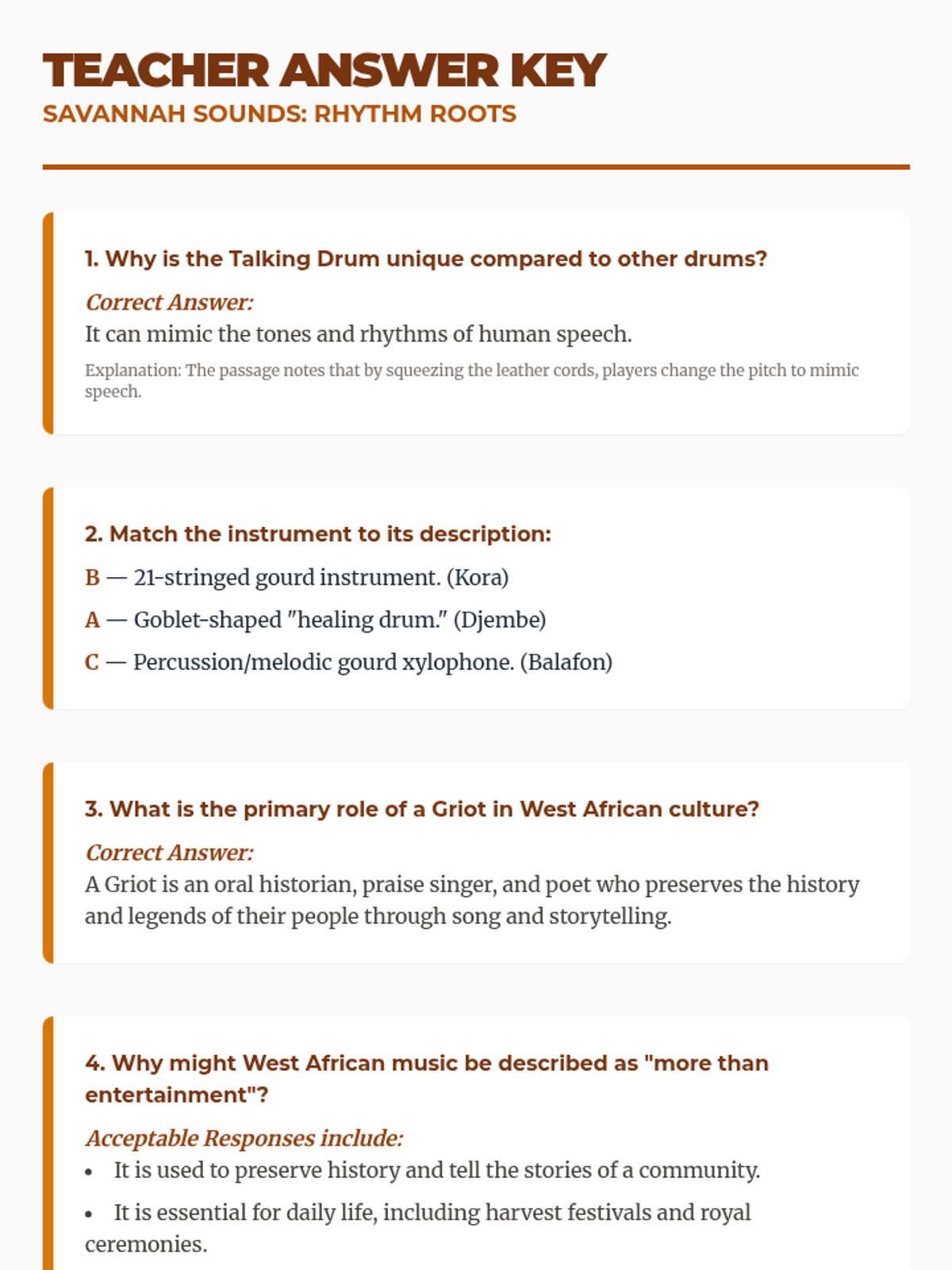
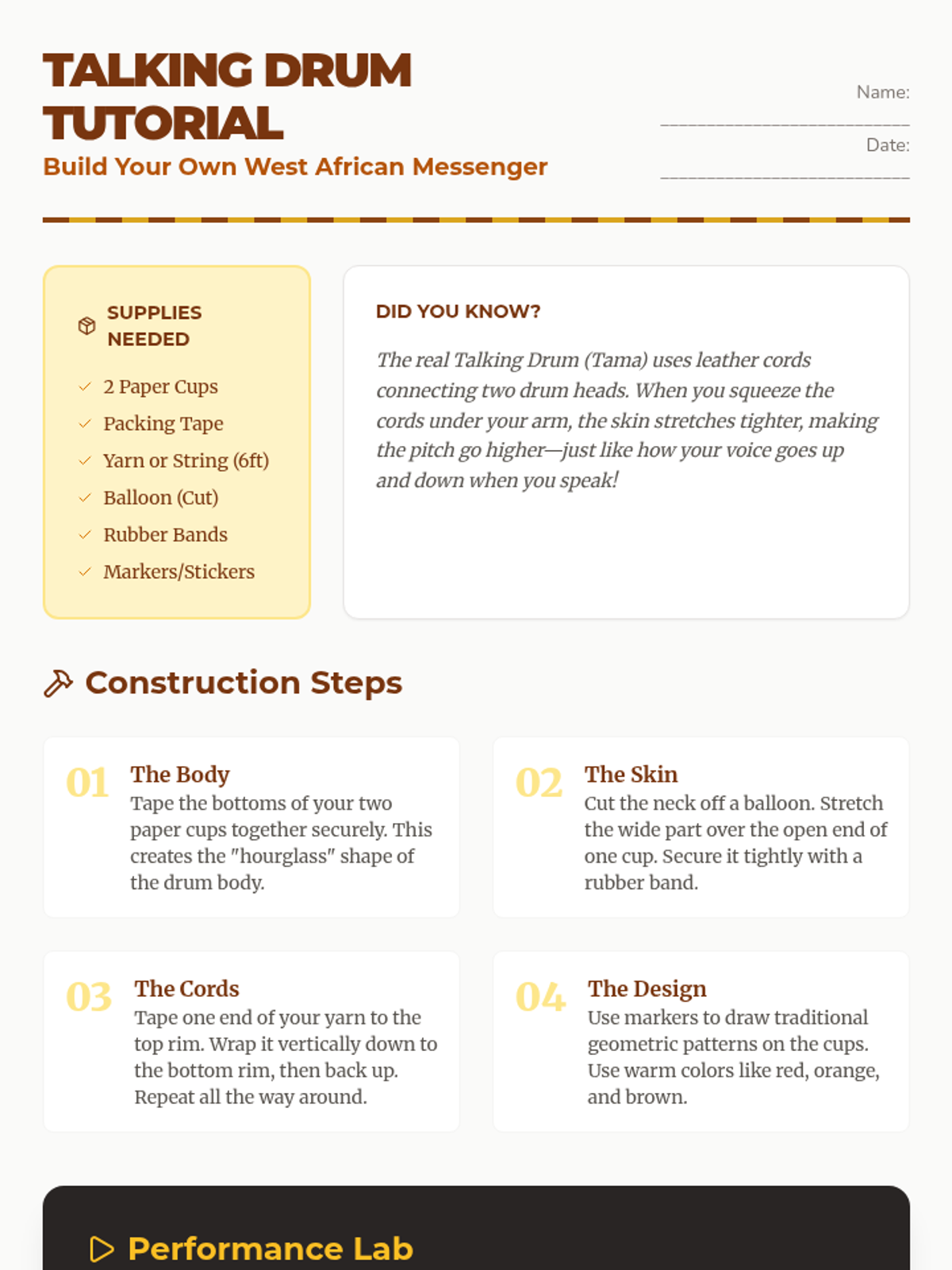
An introduction to the vibrant musical traditions of West Africa, focusing on iconic percussion and melodic instruments like the djembe, kora, and talking drum.
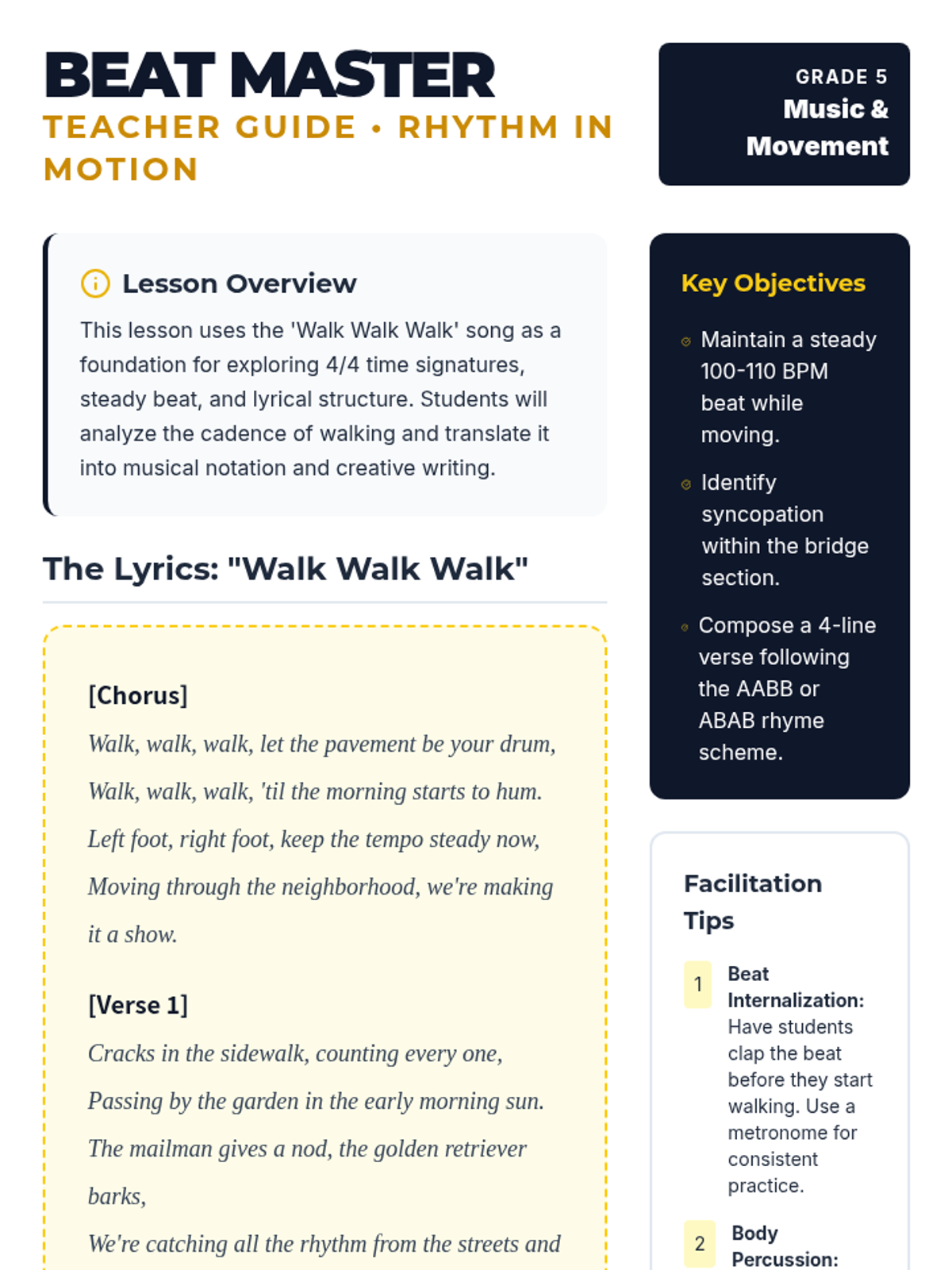
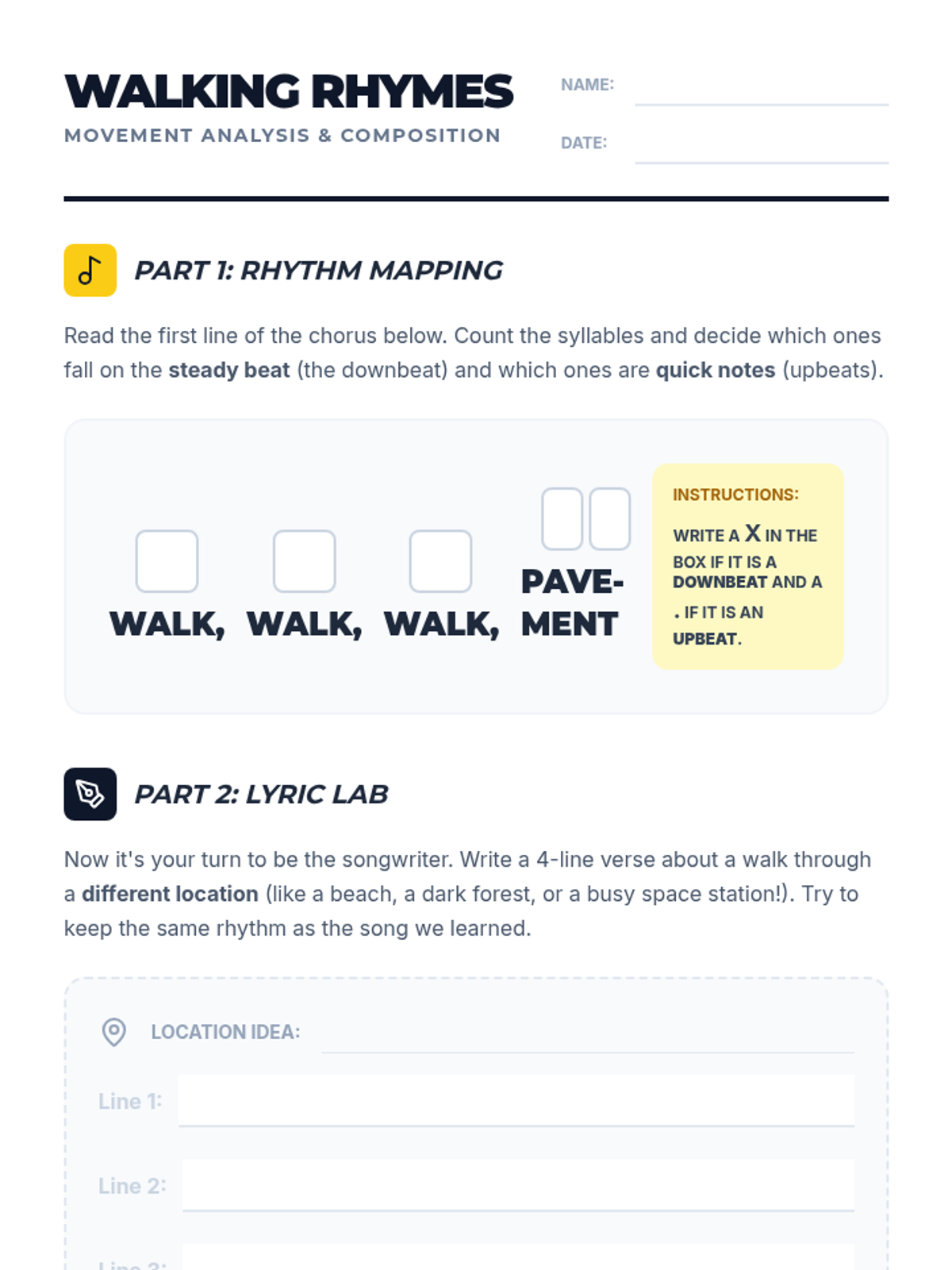
A rhythm-focused music and movement lesson centered around the 'Walk Walk Walk' song, designed to help 5th graders explore tempo, cadence, and creative songwriting through the metaphor of a neighborhood stroll.
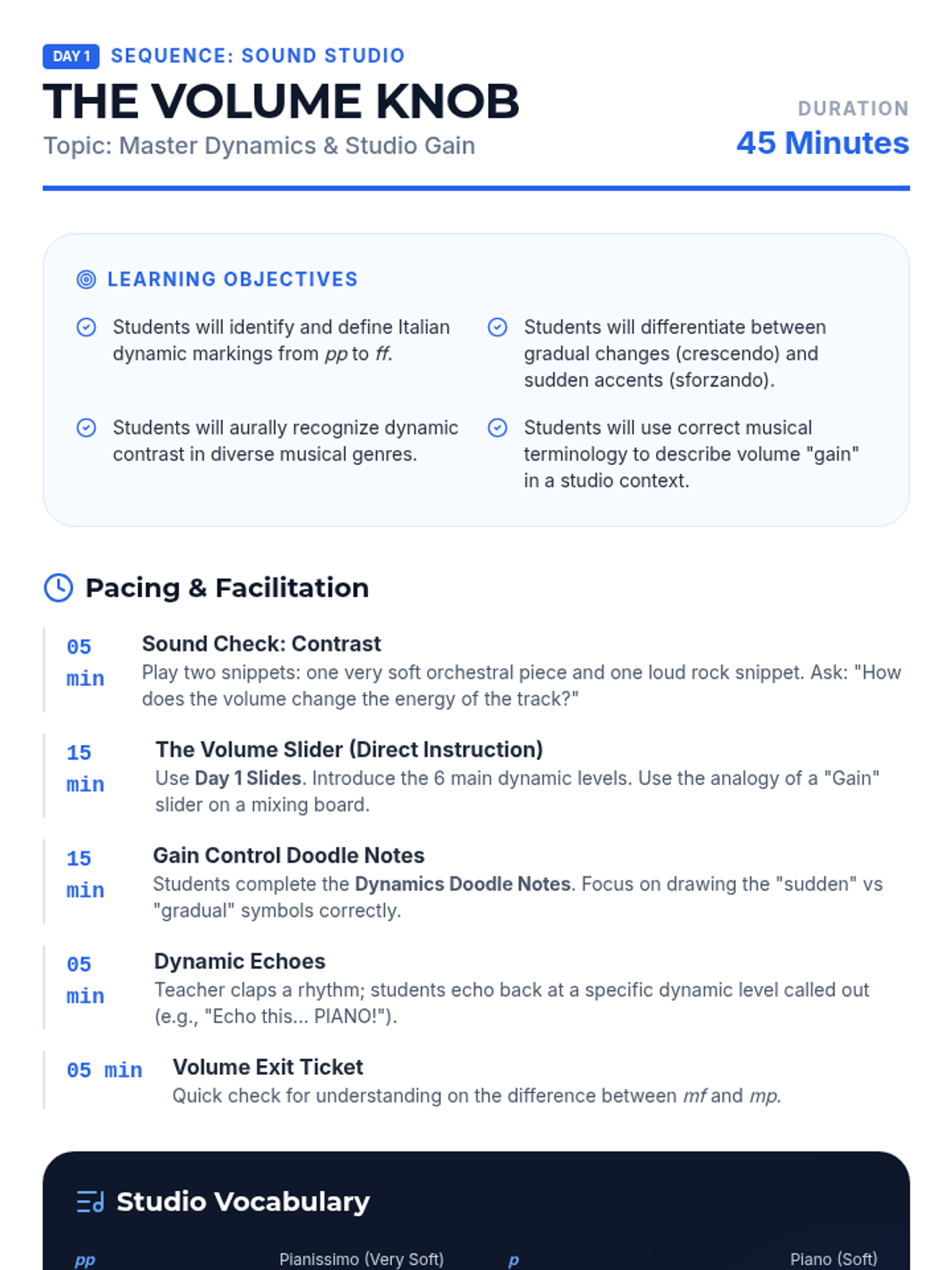
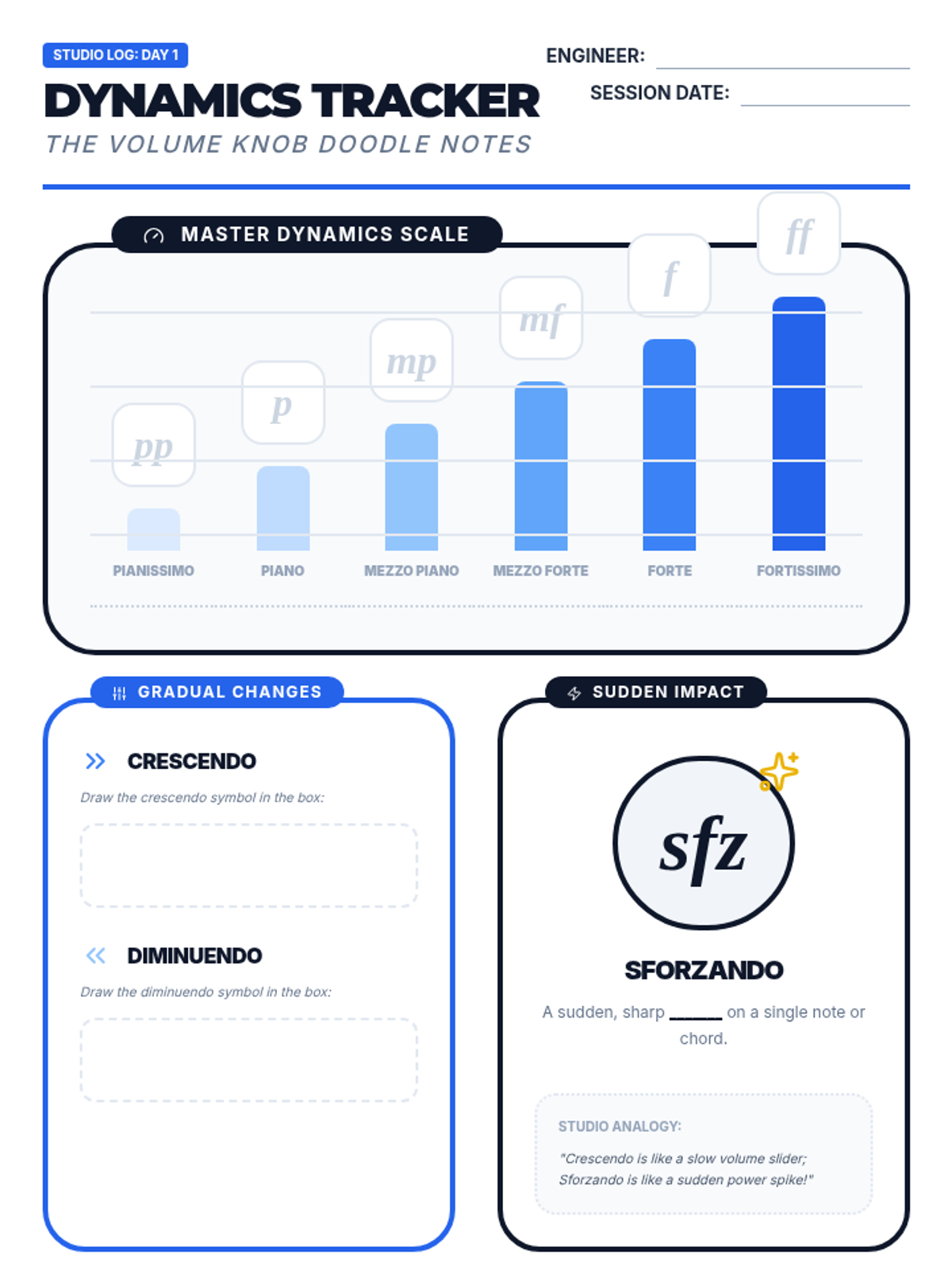
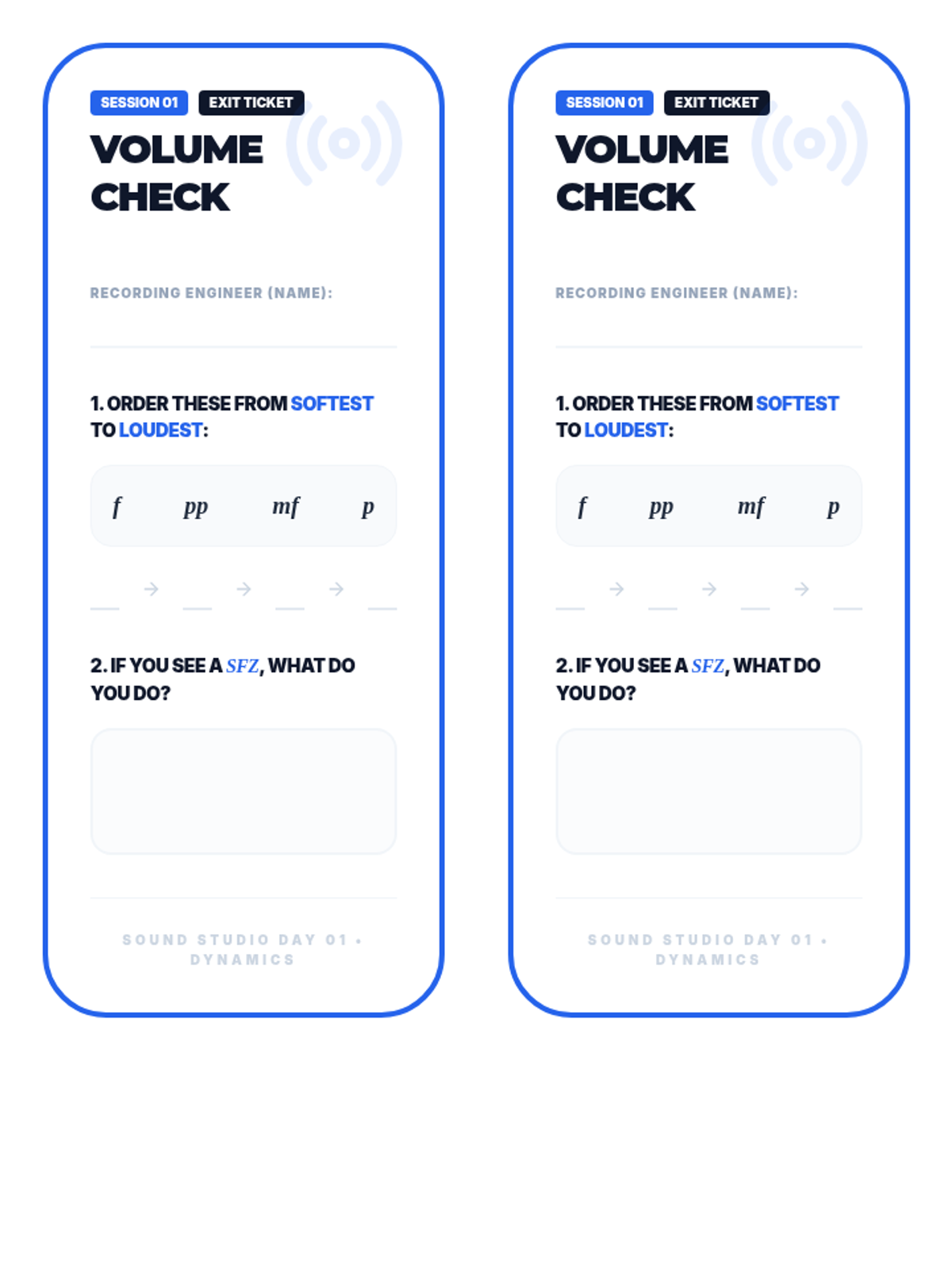
A deep dive into musical volume, covering Italian dynamic markings from pianissimo to fortissimo, plus gradual and sudden changes like crescendo and sforzando.
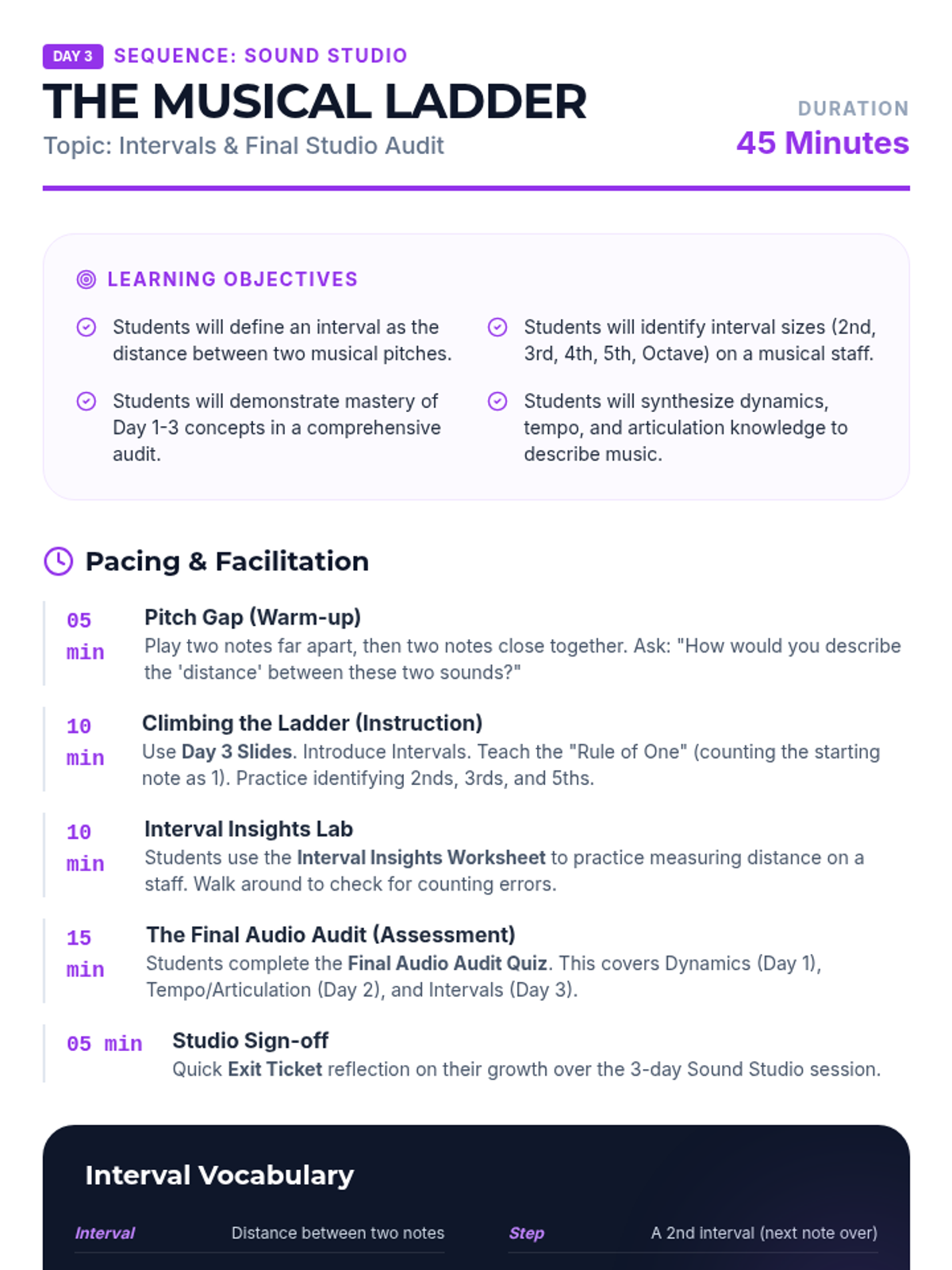
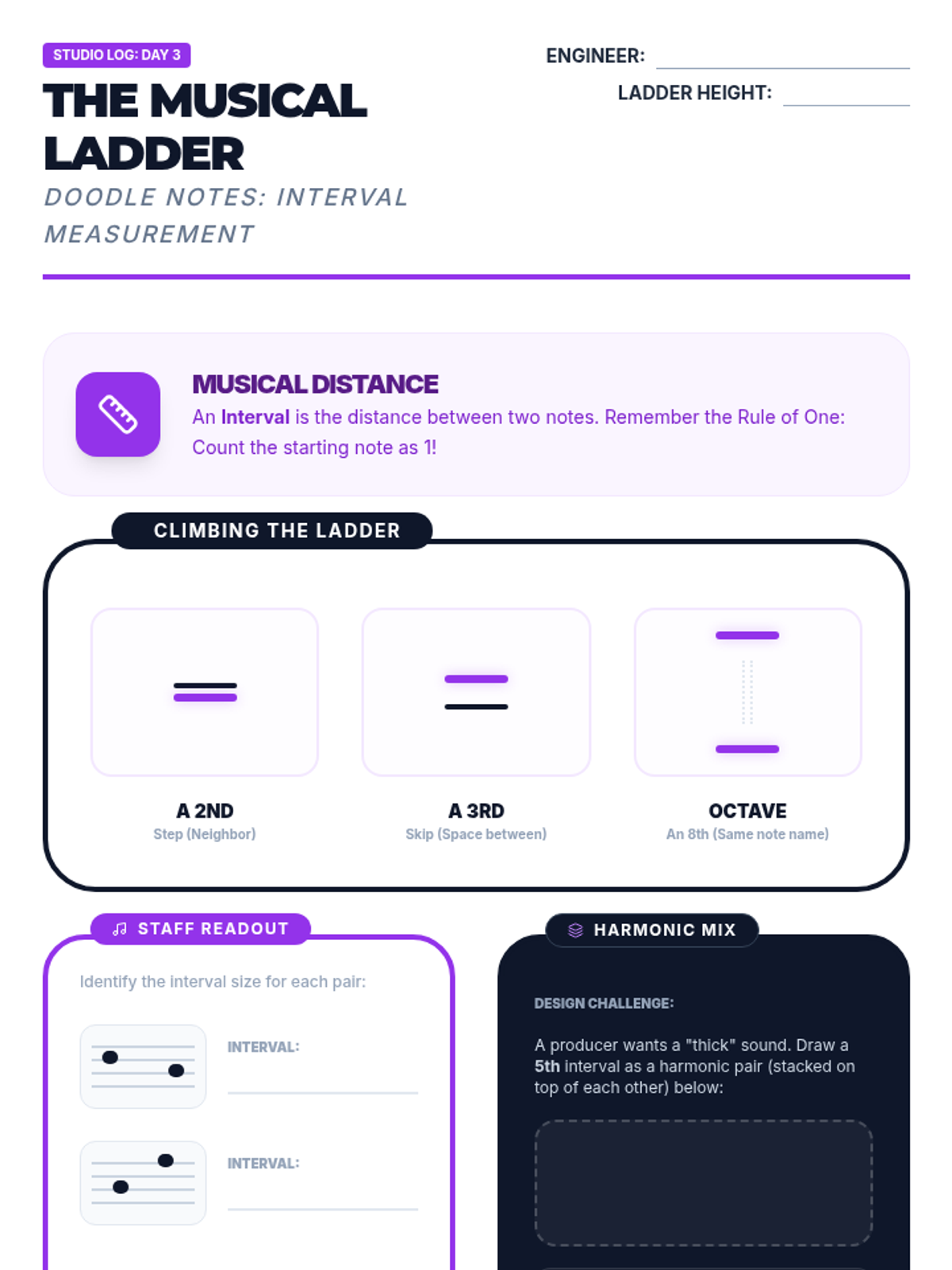
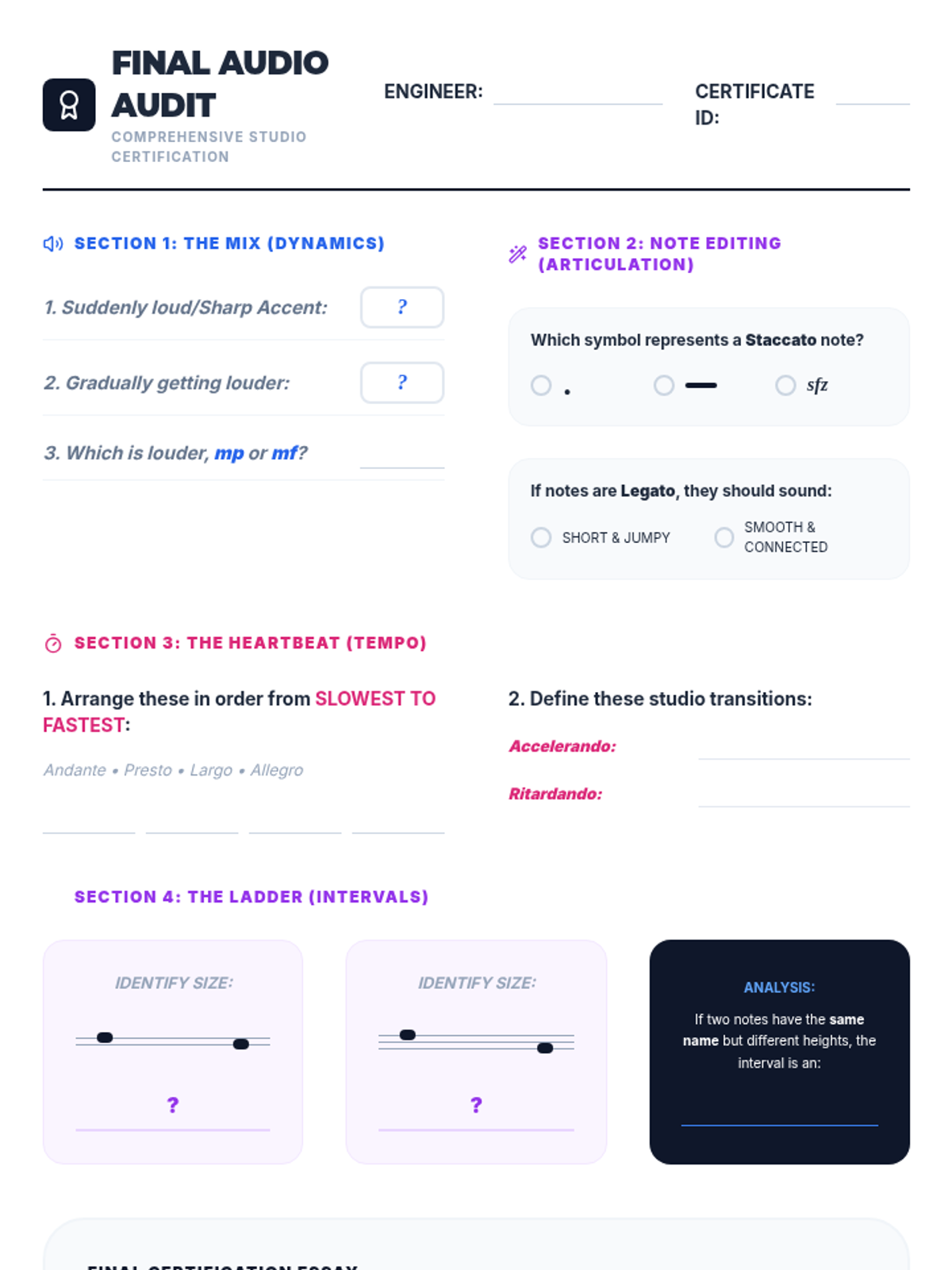
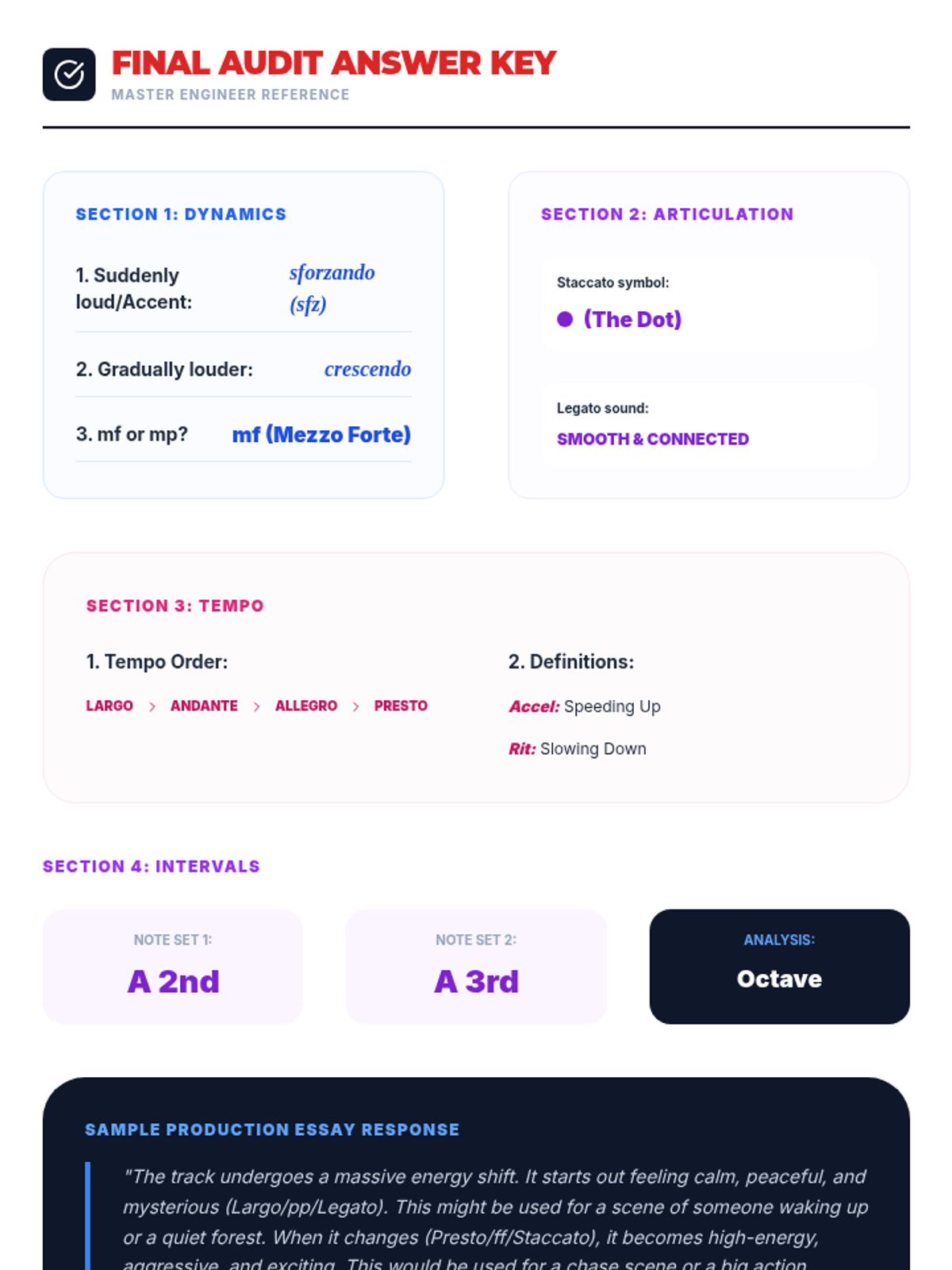
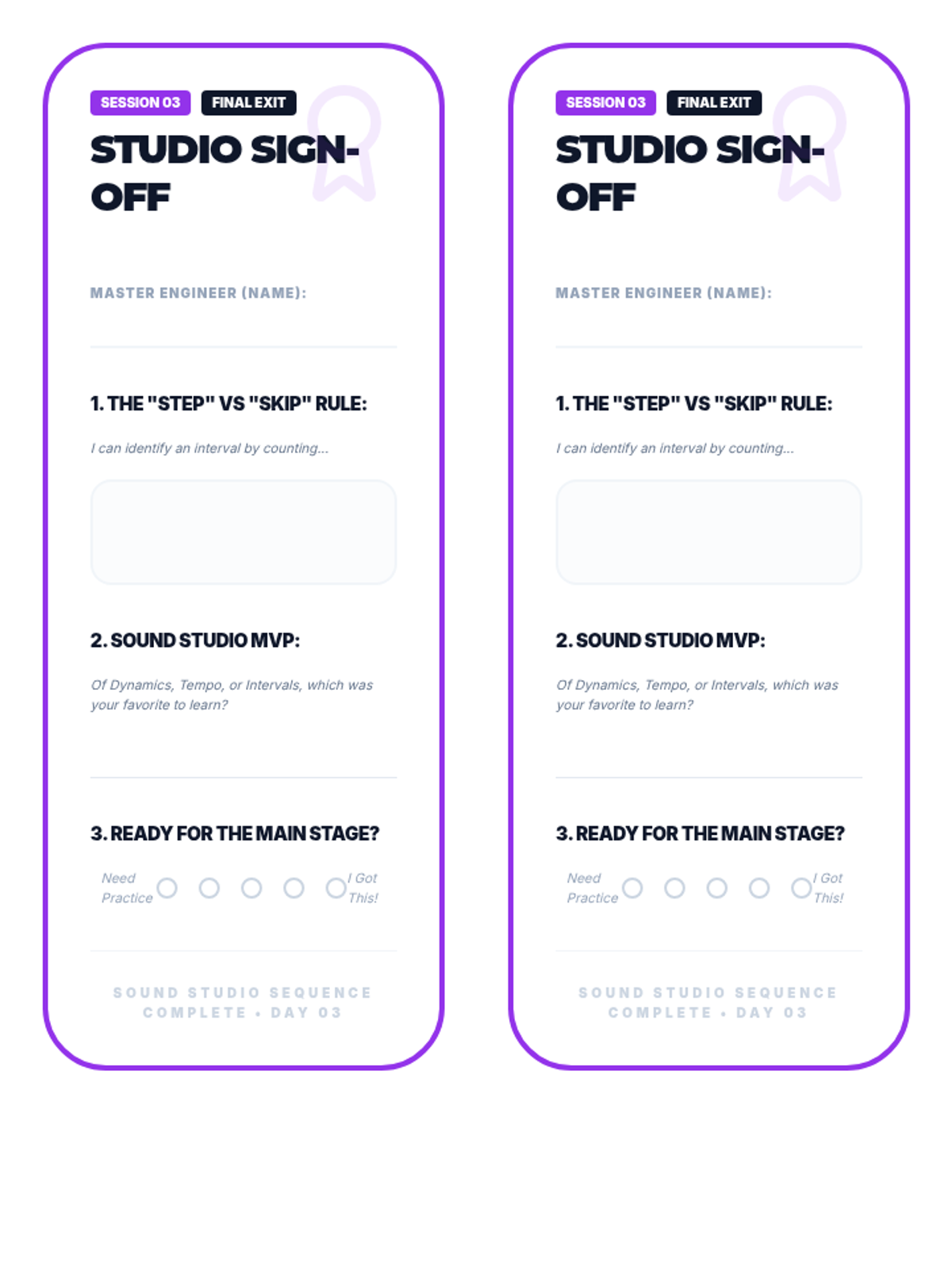
A comprehensive look at musical distance (Intervals) followed by a final studio review and assessment of all core concepts.
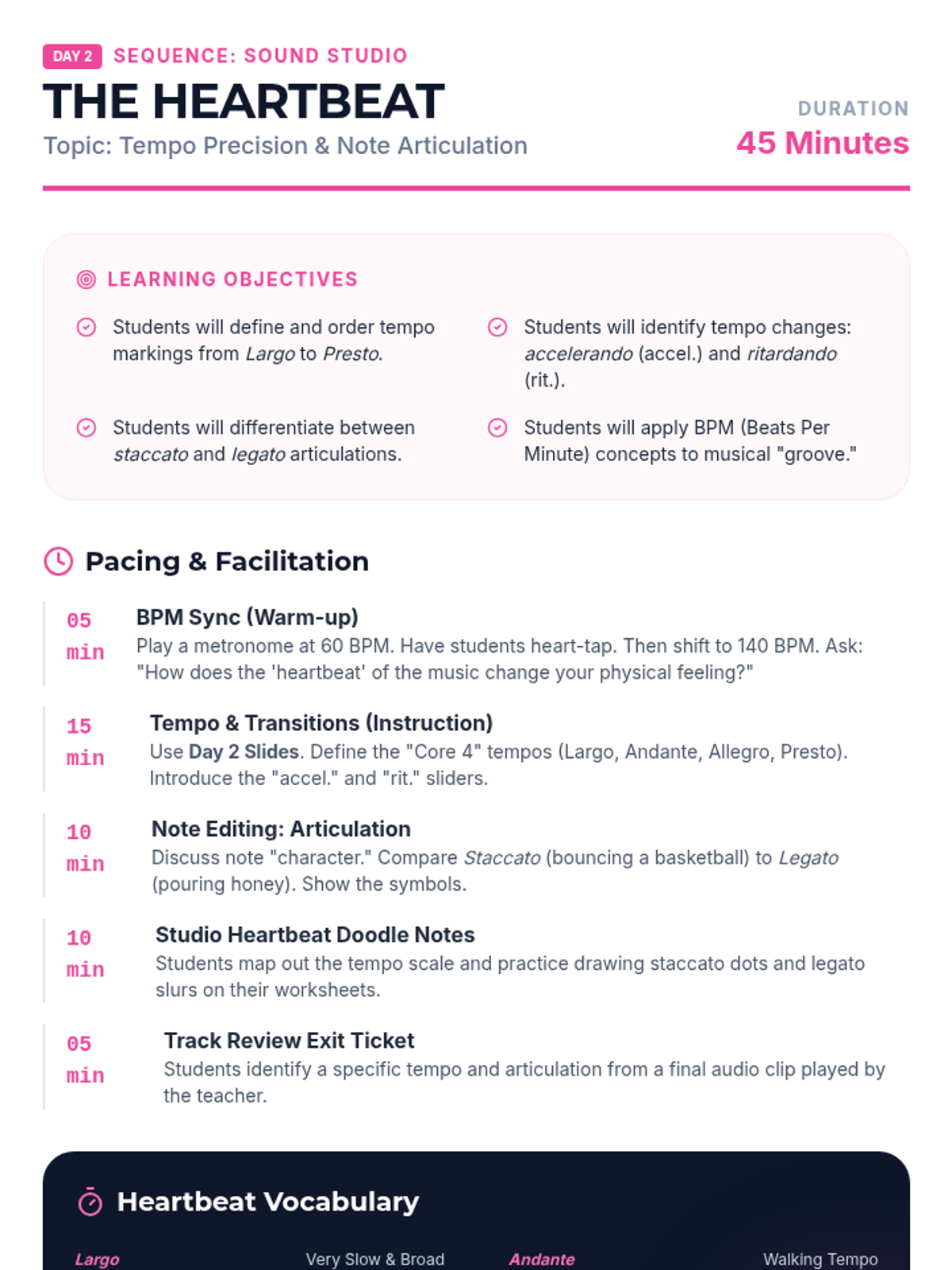
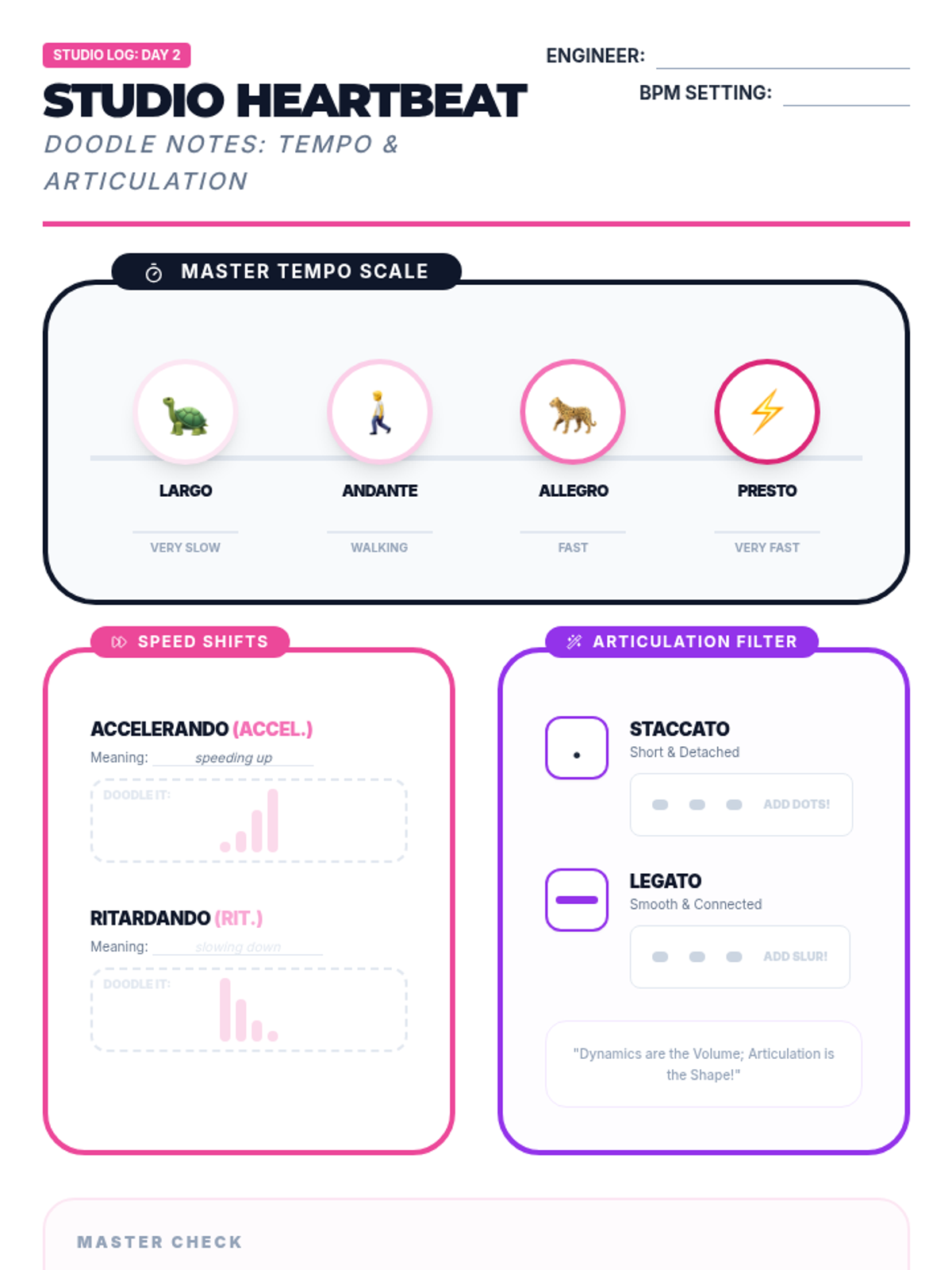
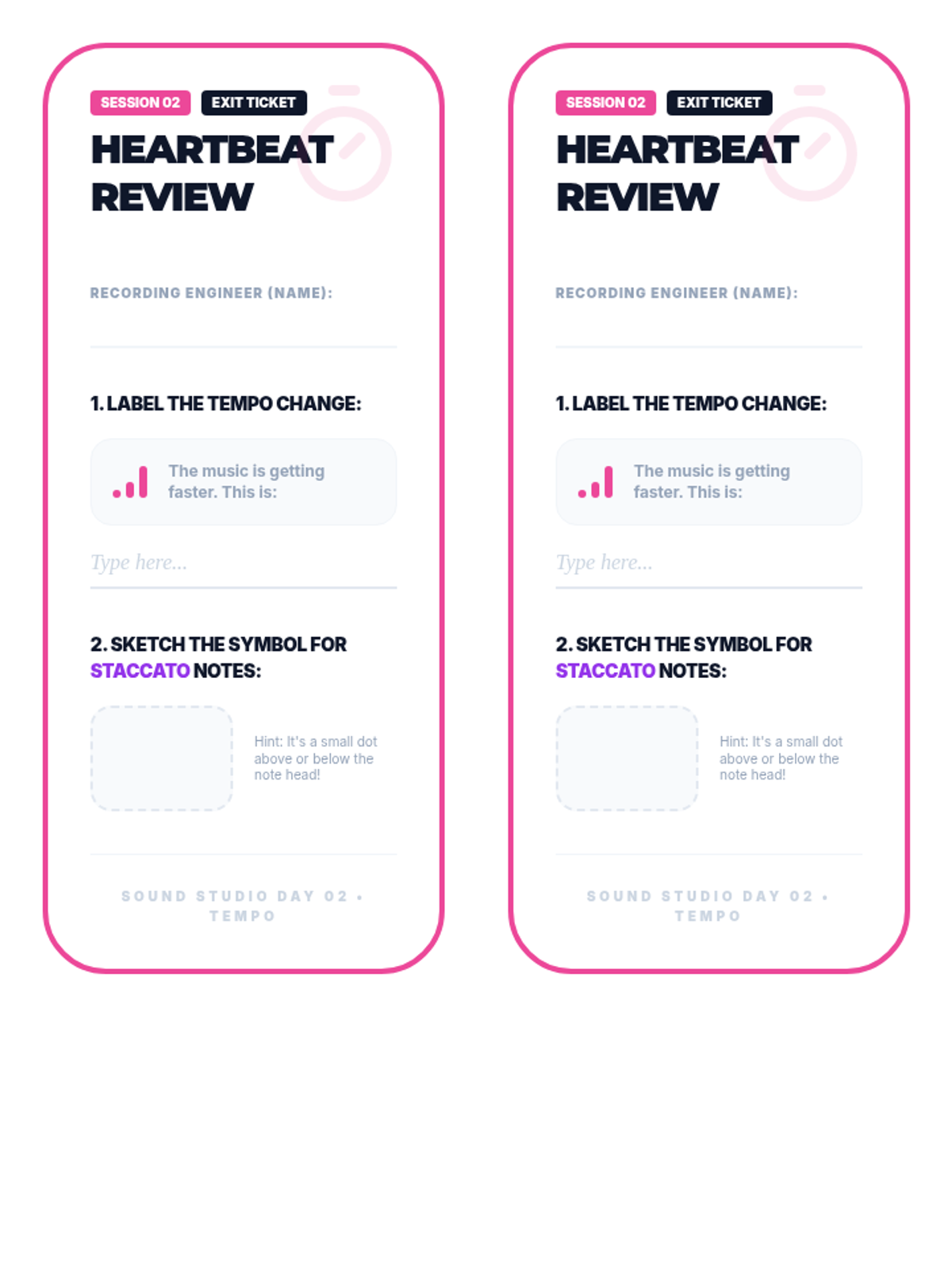
Focuses on the pulse of music (Tempo) and the character of individual notes (Articulation), exploring how speed and shape define musical style.
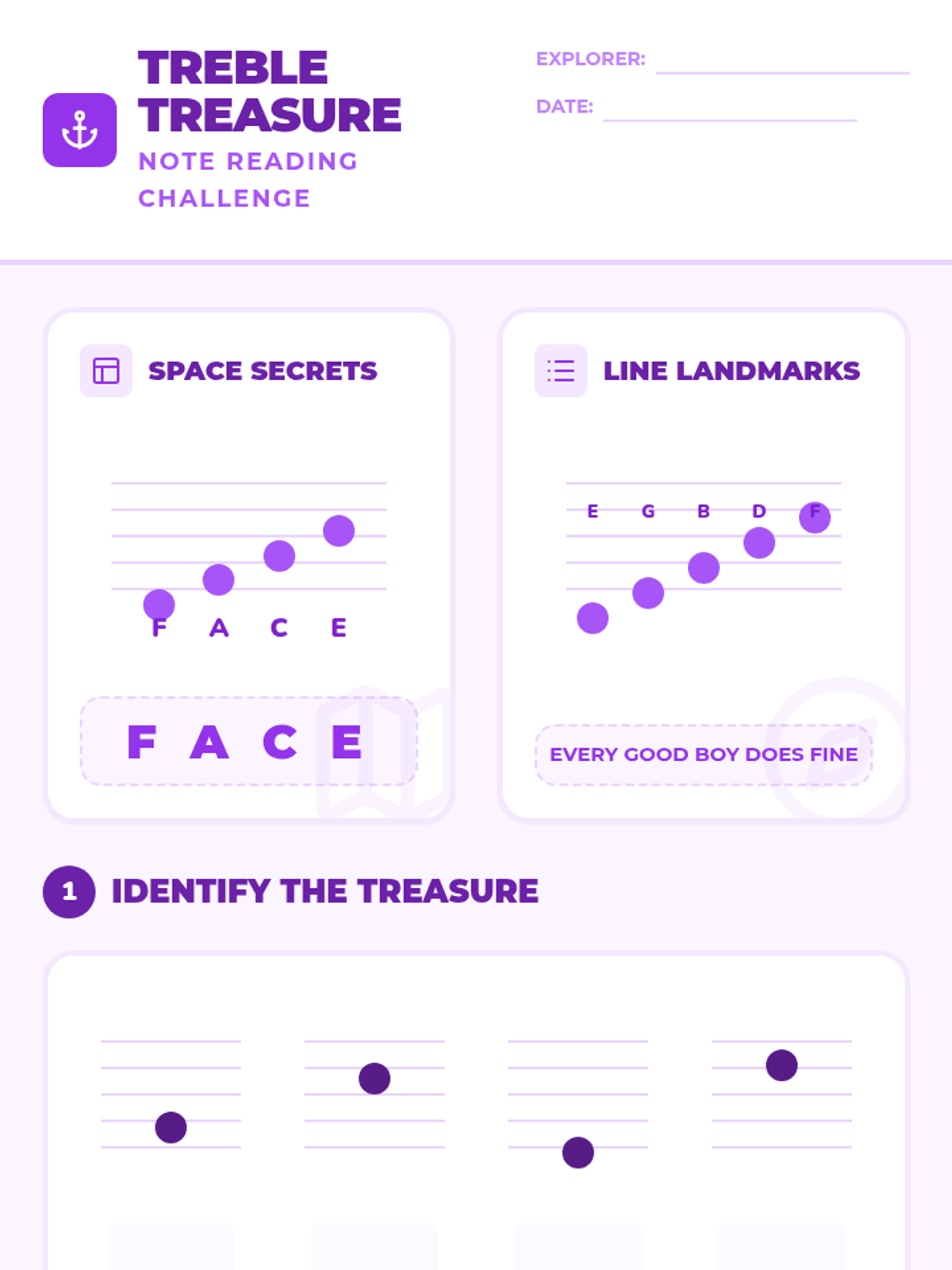
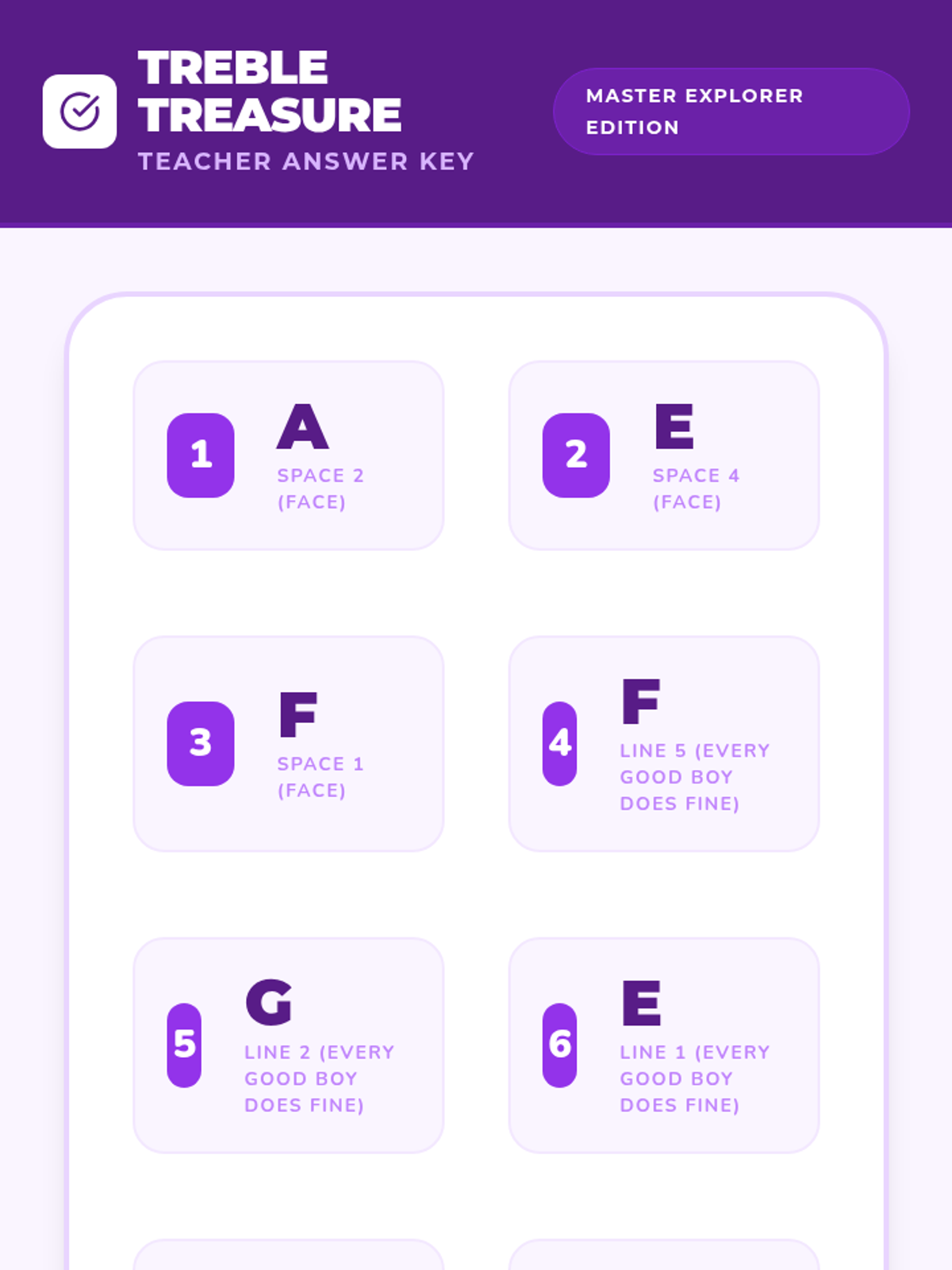
An introductory lesson on reading treble clef notes using the FACE and 'Every Good Boy Does Fine' mnemonics, redesigned with a purple treasure hunt theme.
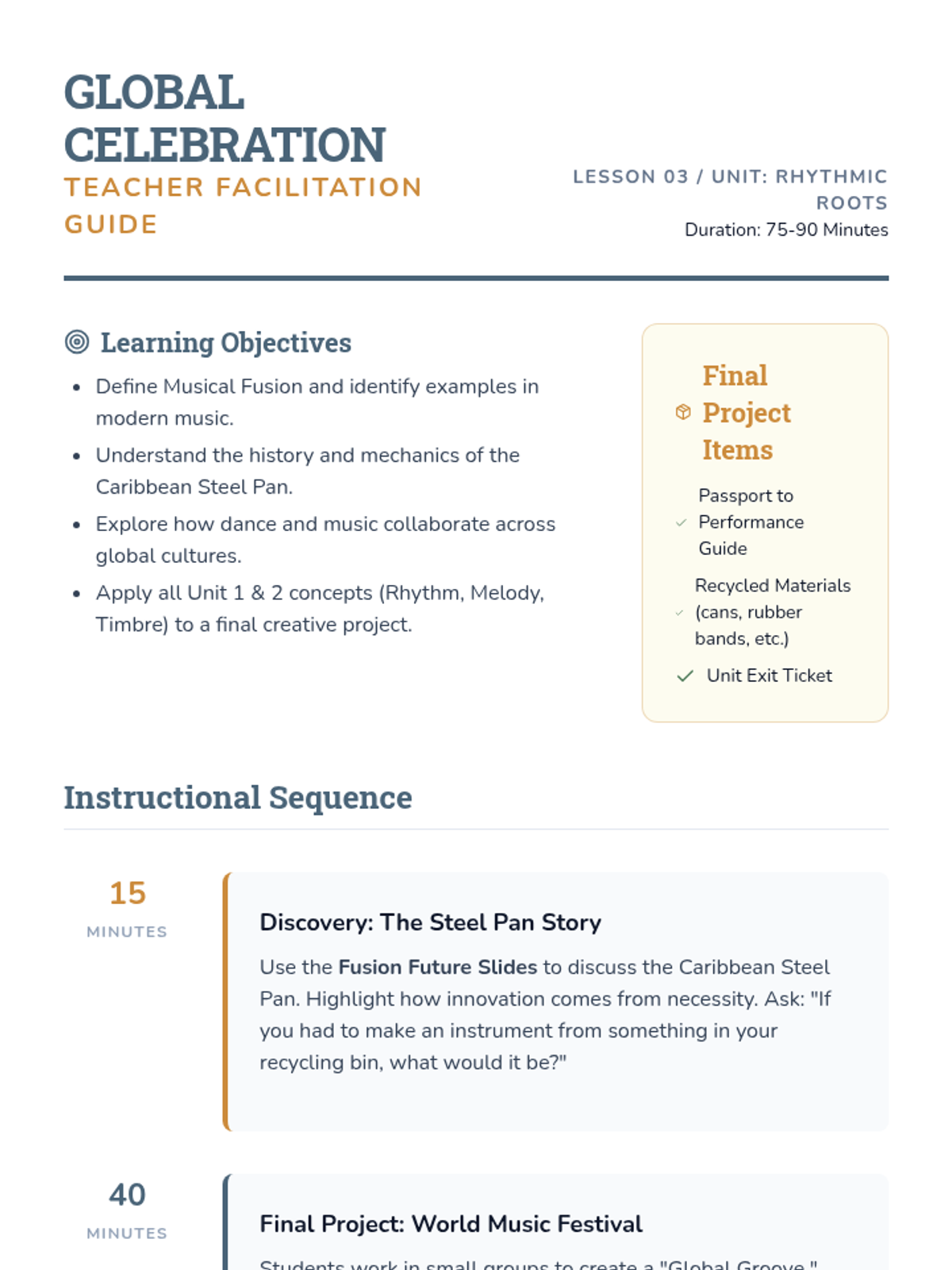
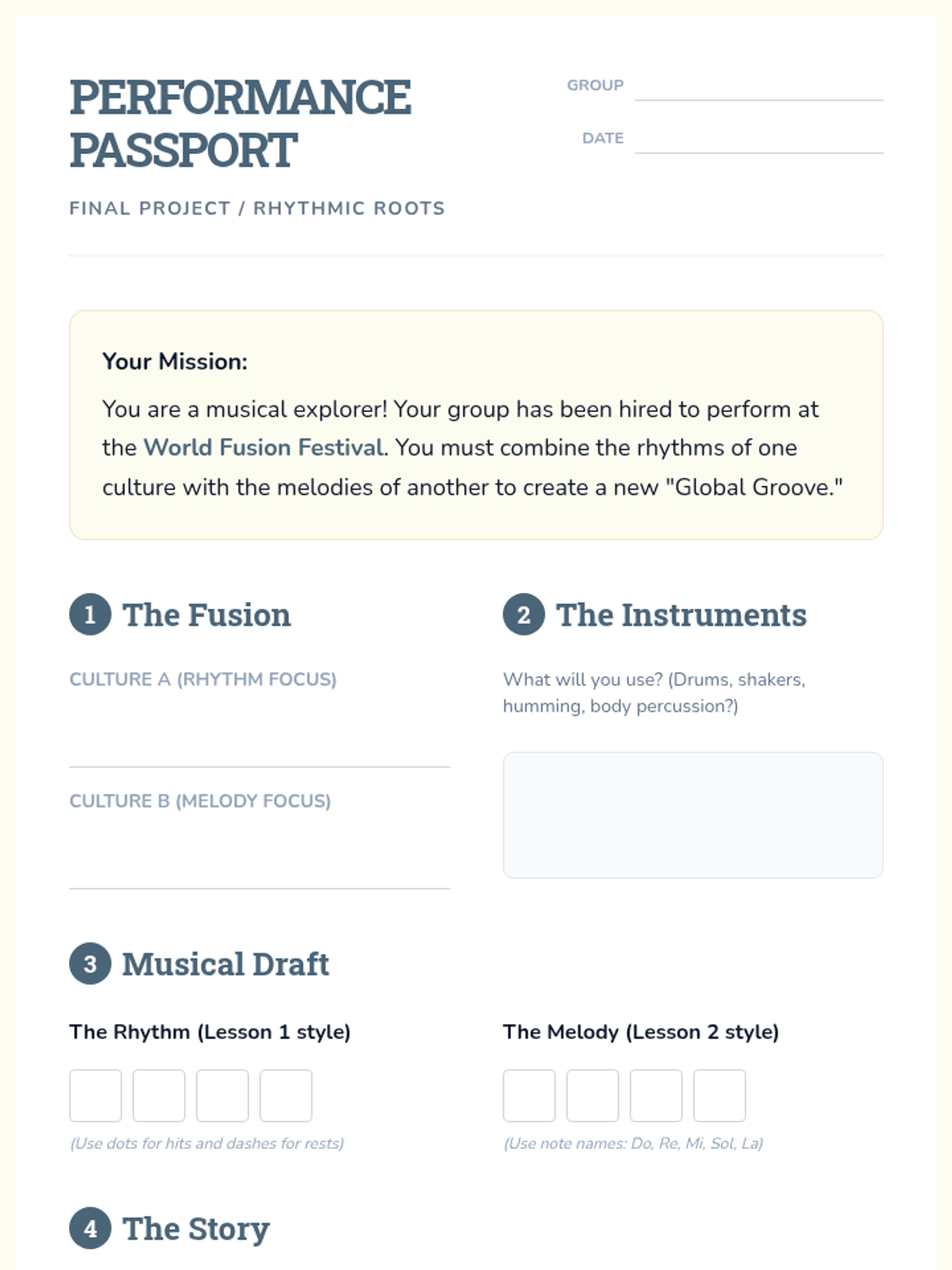
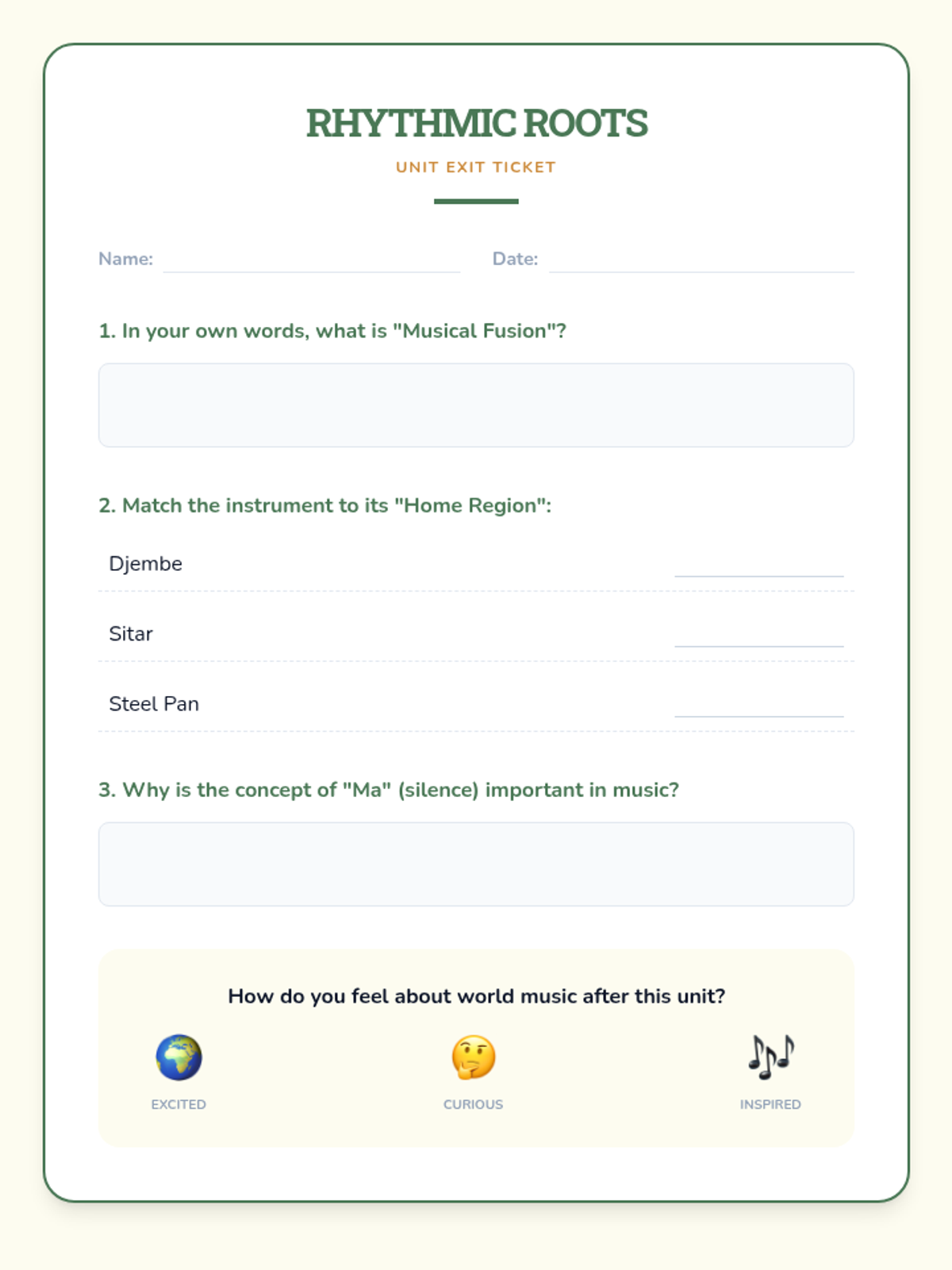
Synthesize learning through the study of global fusion and the creation of a collaborative world music project.
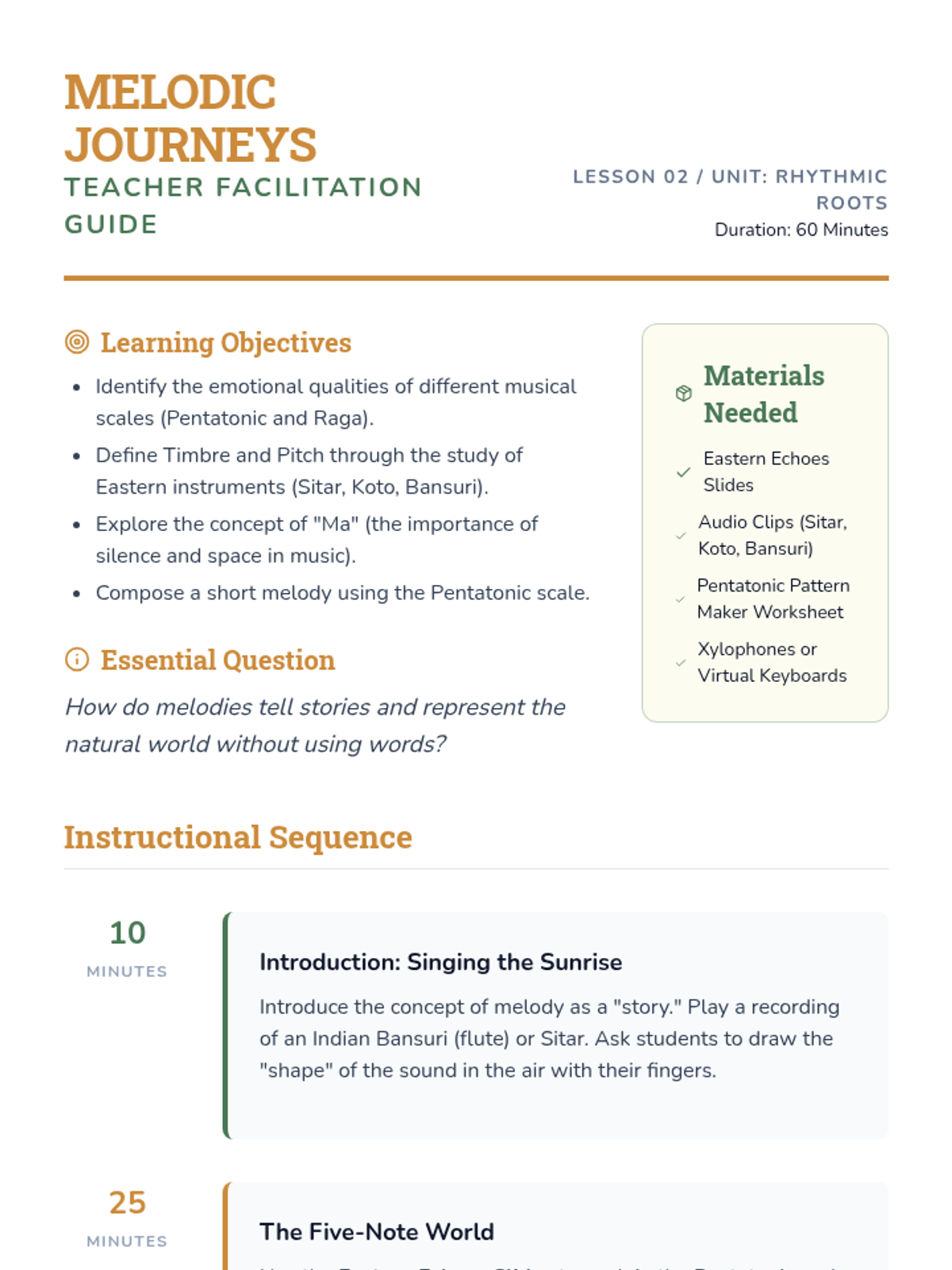
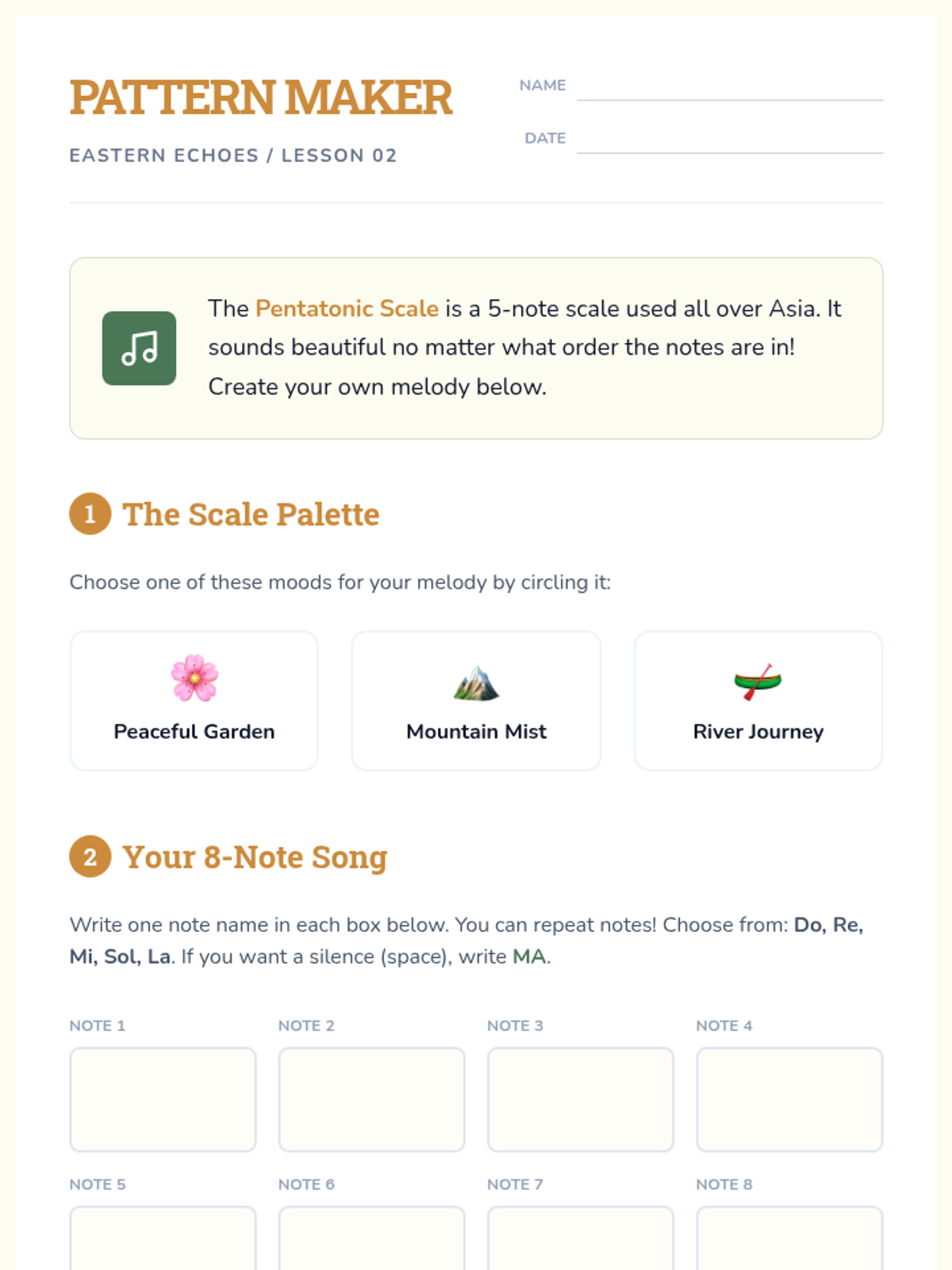
Discover the unique melodic structures, scales, and storytelling traditions of Asian and Middle Eastern music.
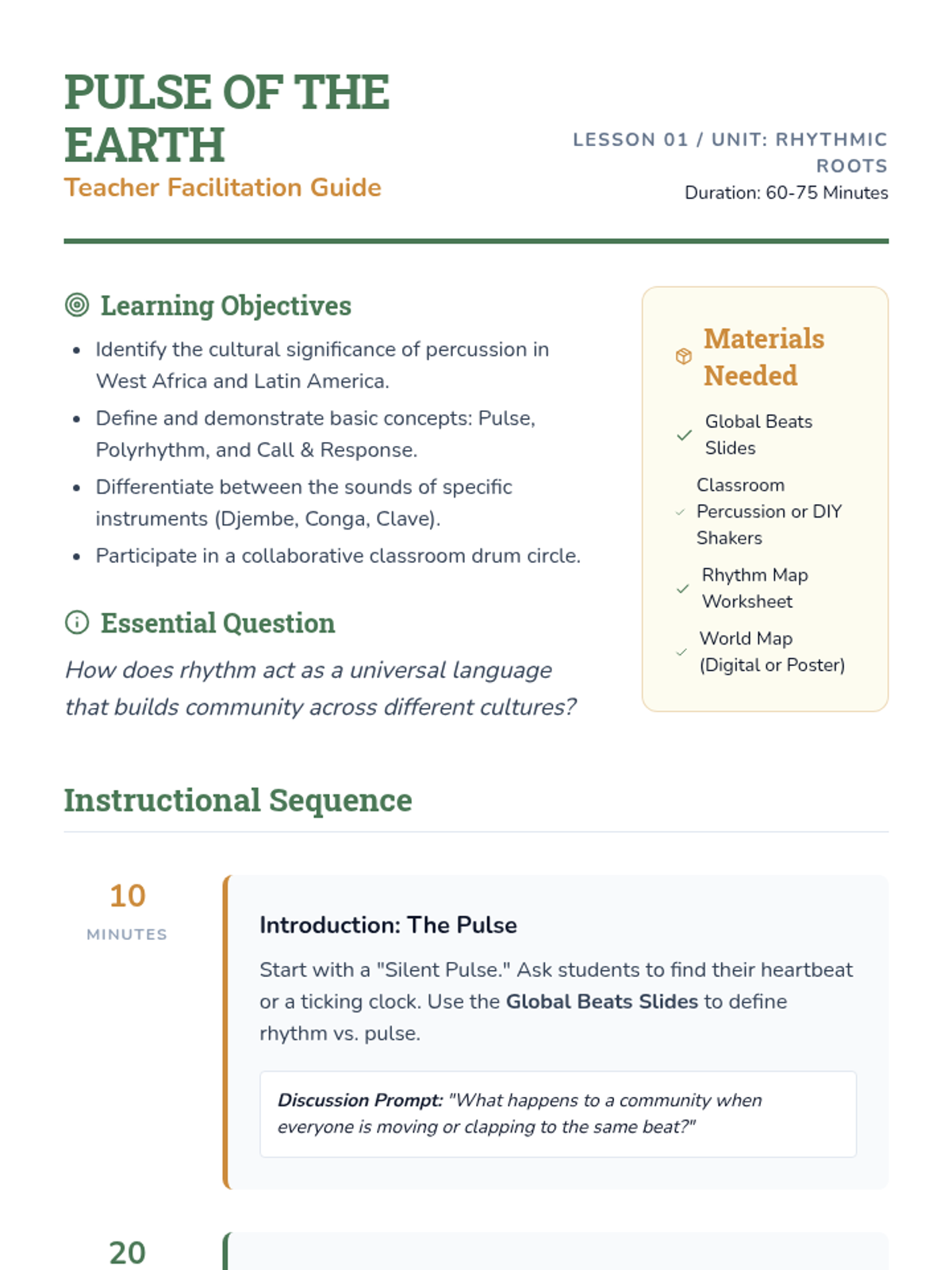
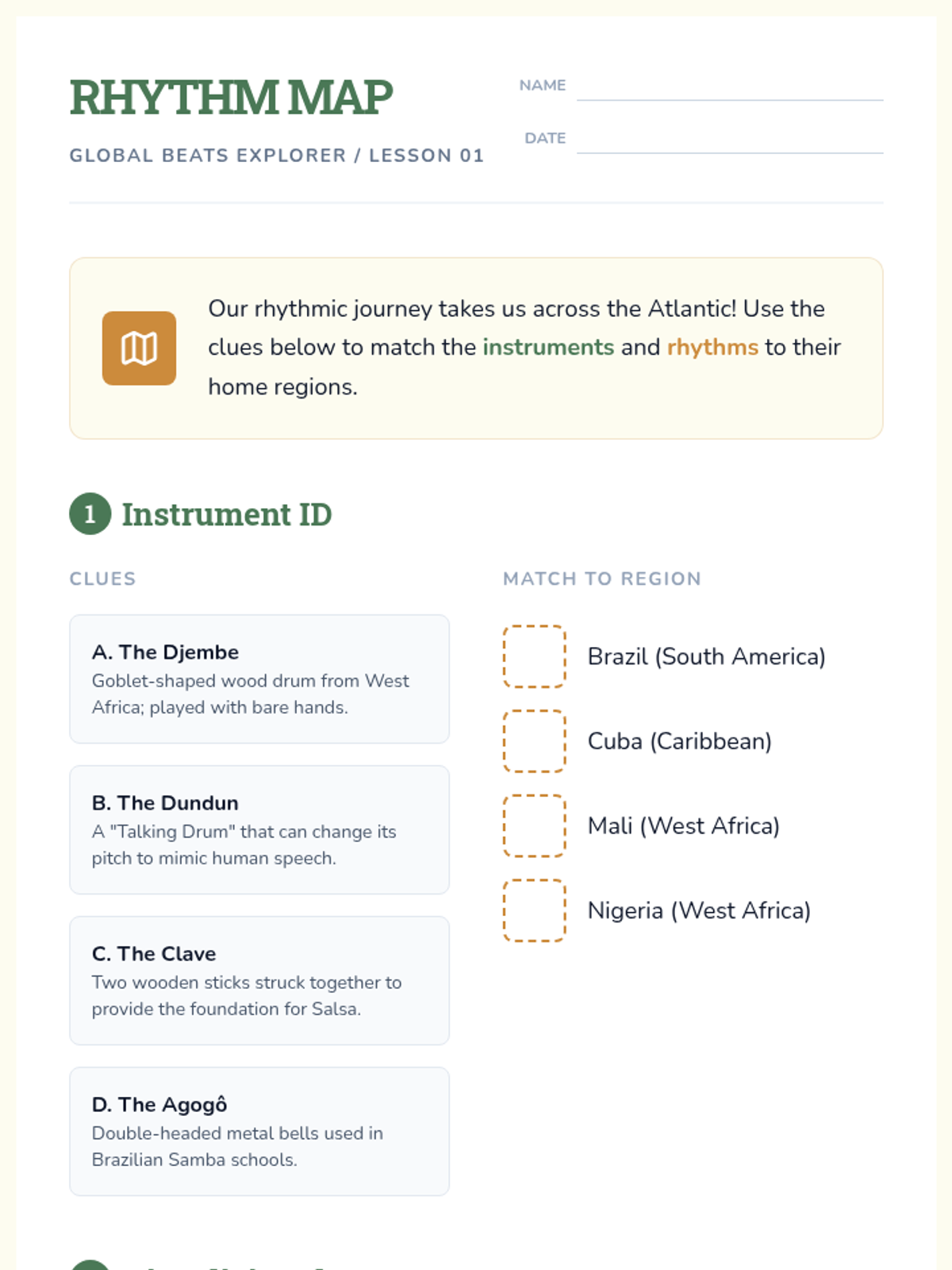
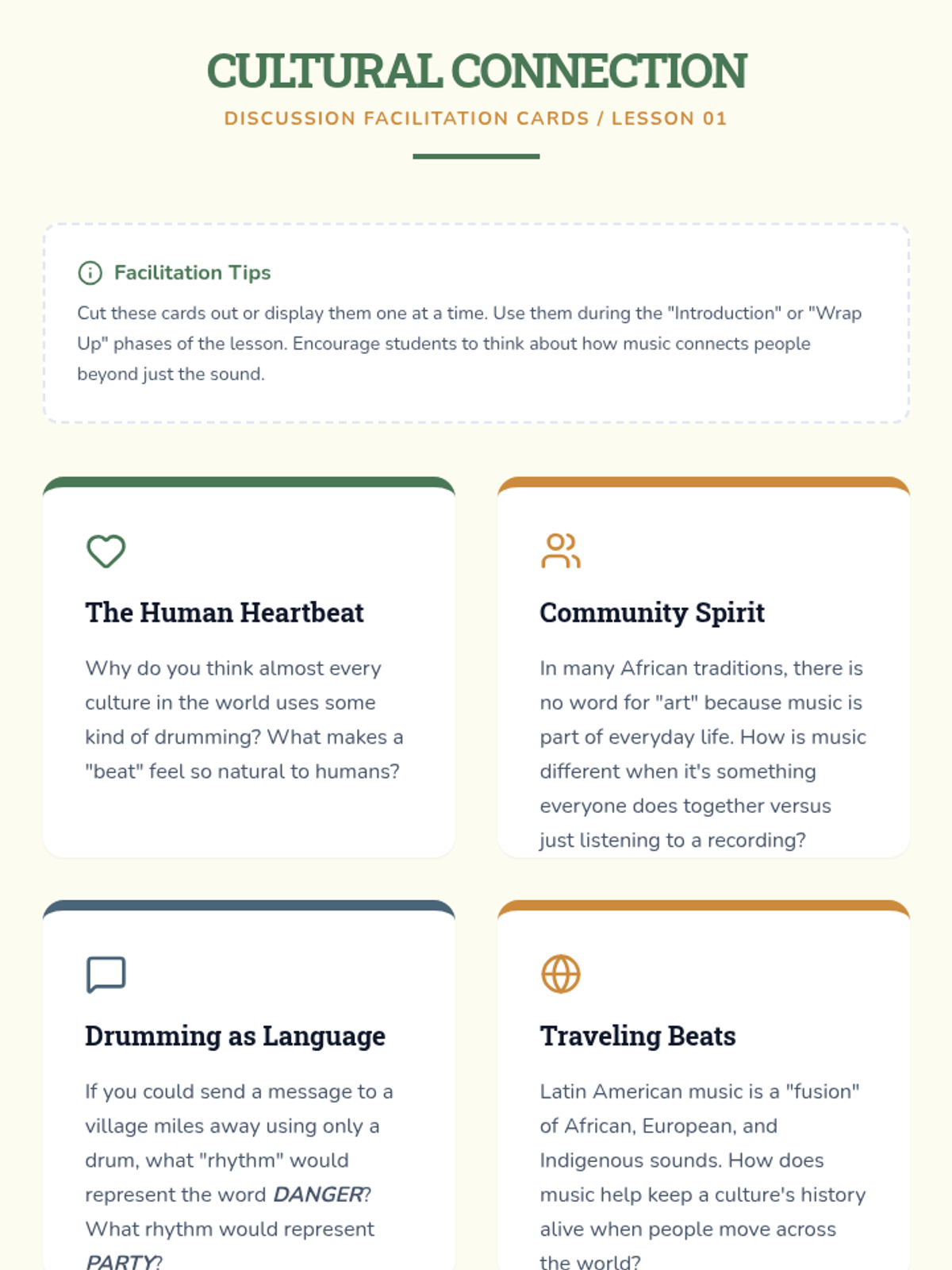
Explore the foundational role of percussion and polyrhythms in West African and Latin American musical traditions.
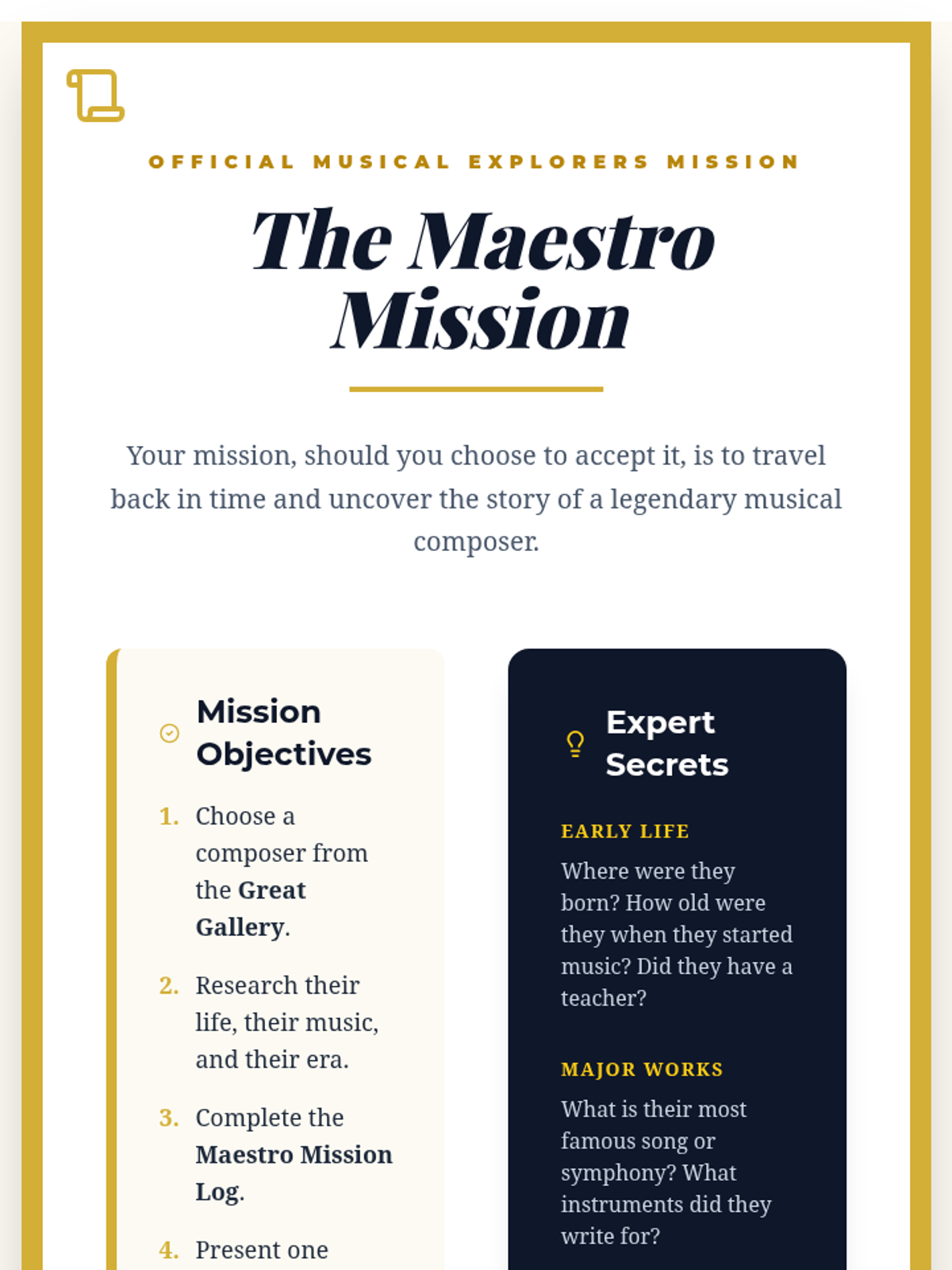
Guides students through researching and presenting a biography of a famous composer.
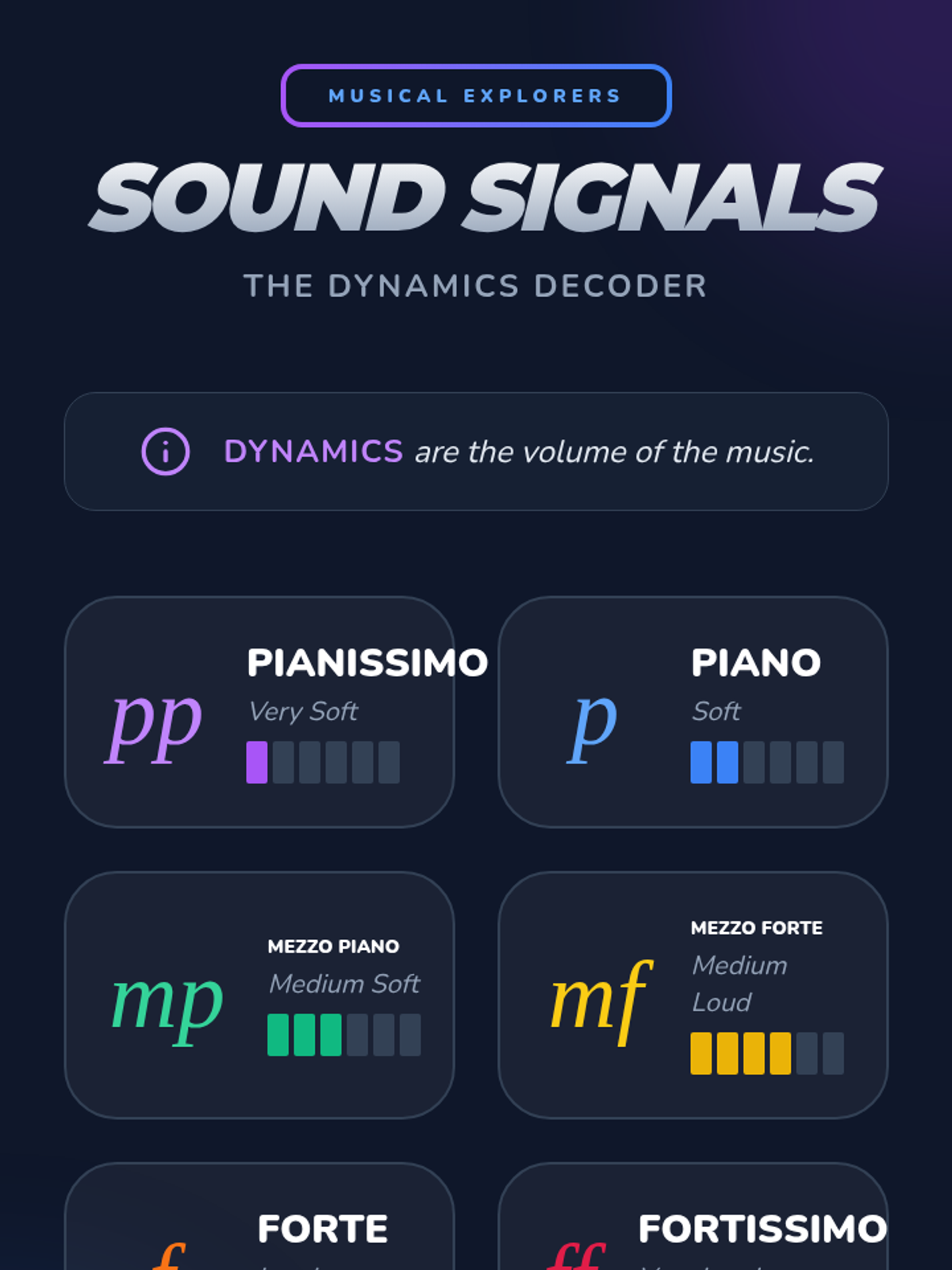
Explores the concept of dynamics through vocabulary and visual aids.
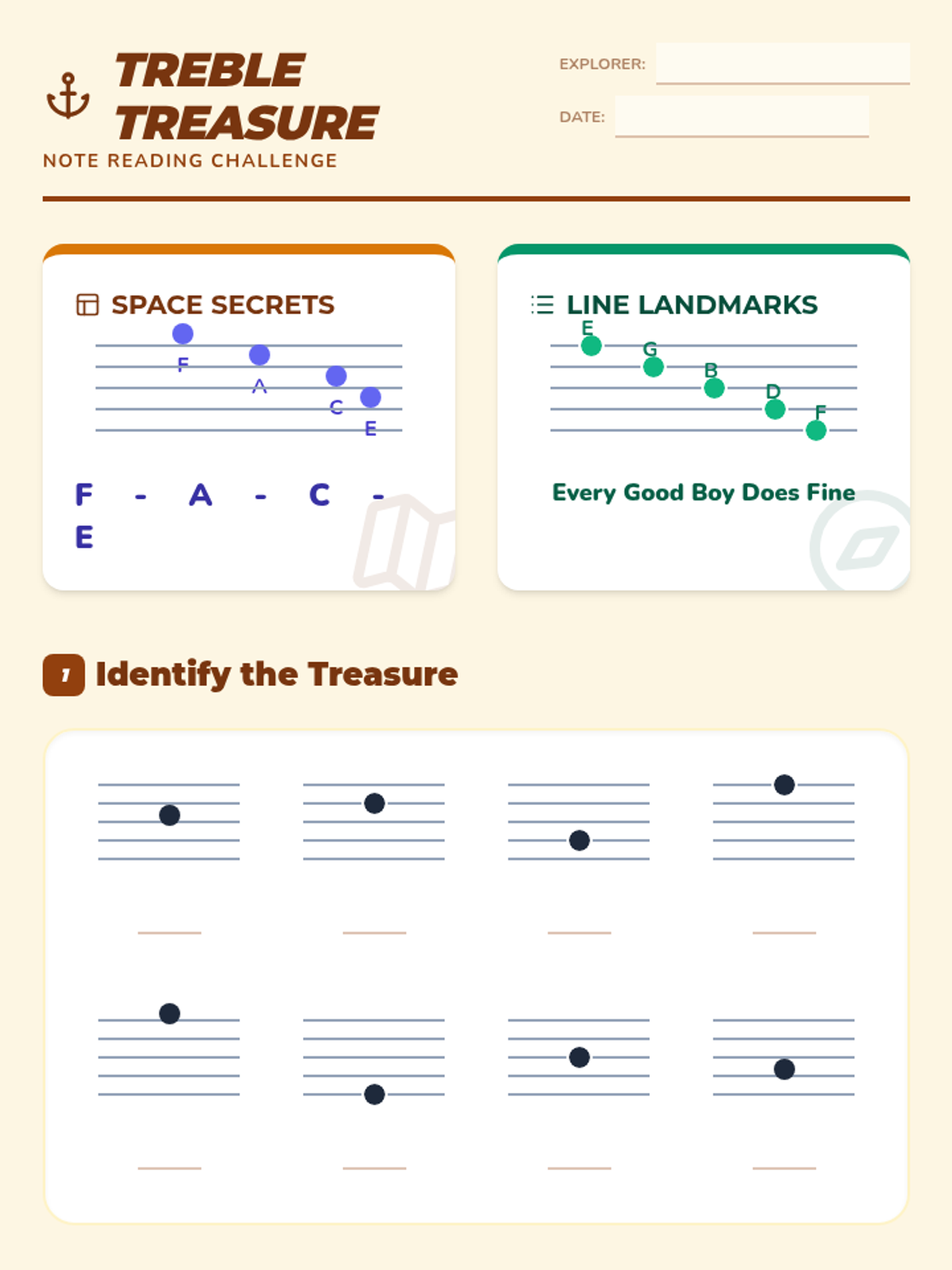
Introduces the treble clef and provides practice for identifying notes on the staff.
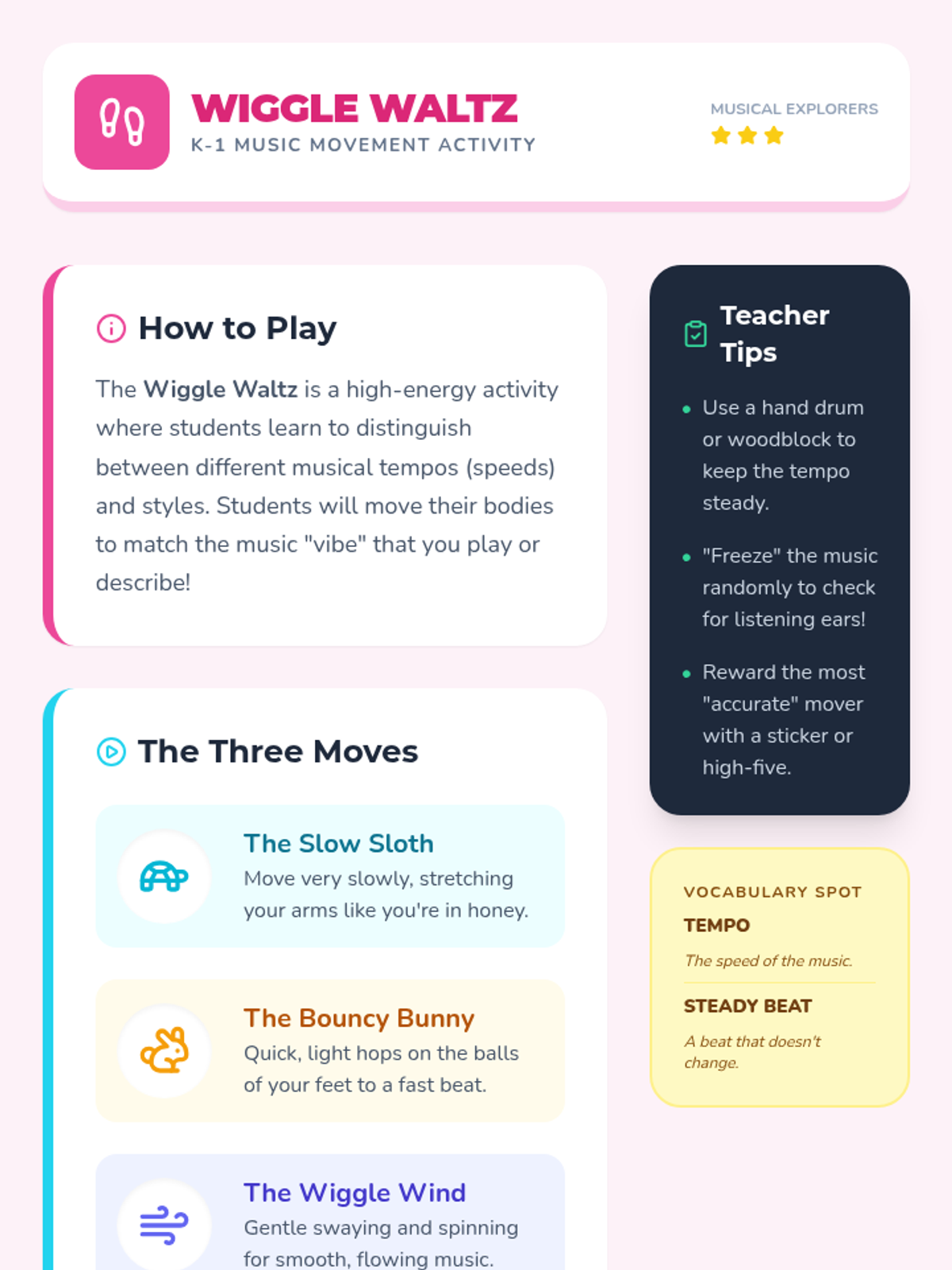
Focuses on the fundamentals of rhythm for 2nd graders and incorporates active movement activities suitable for Kindergarteners.
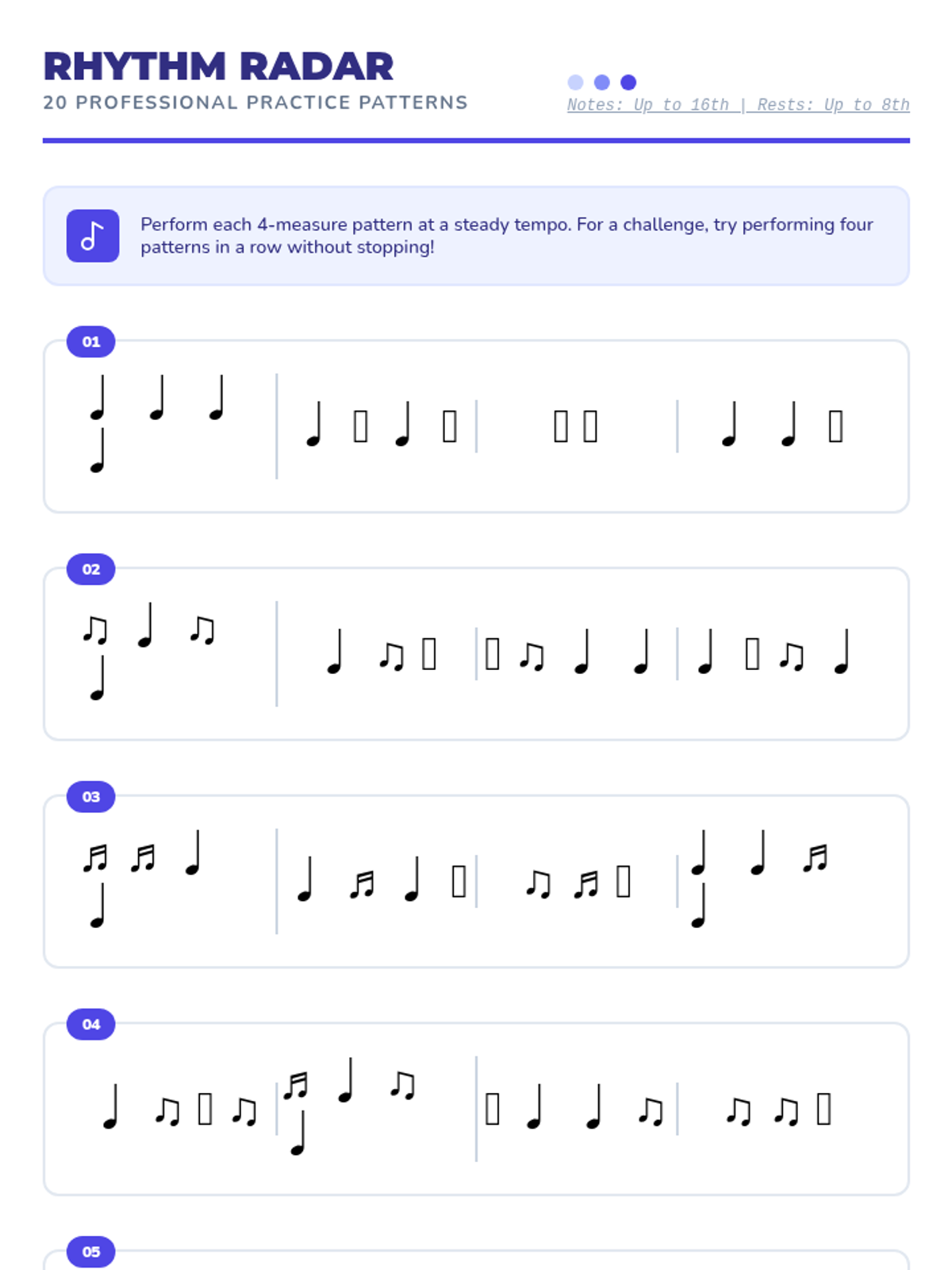
A comprehensive set of rhythm practice materials focusing on notes up to sixteenths and rests up to eighths, designed to build clapping proficiency through 20 unique patterns.
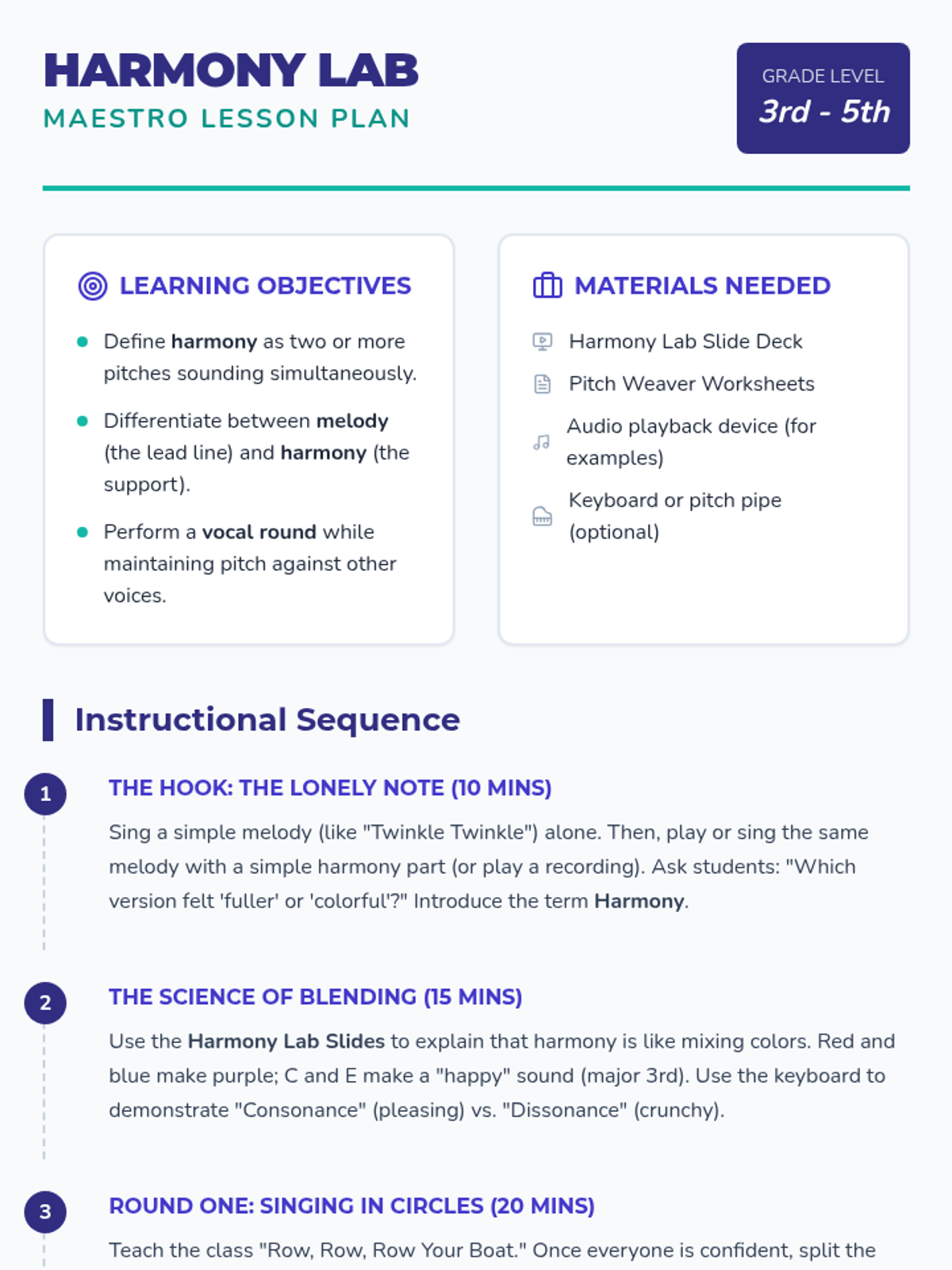
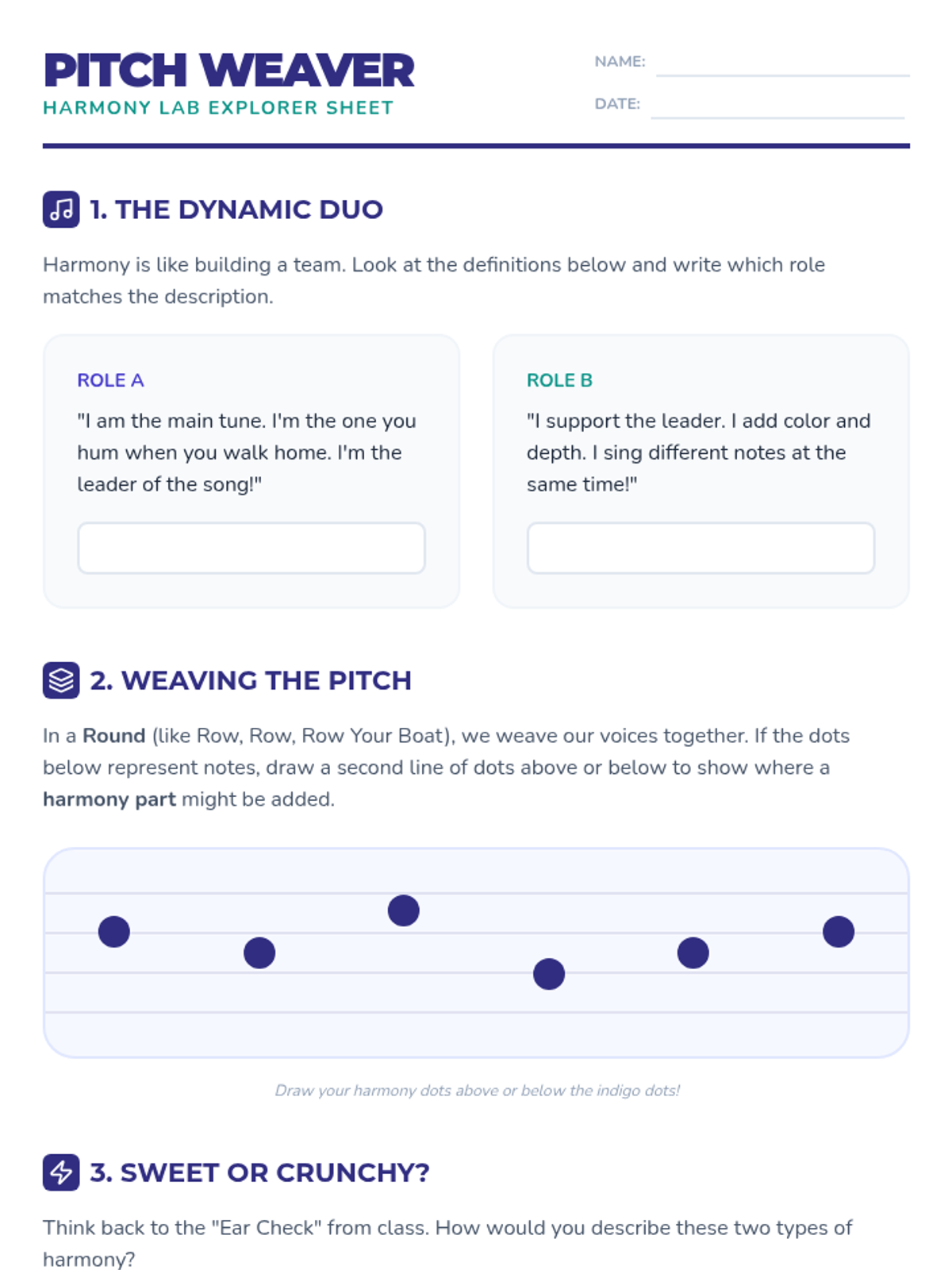
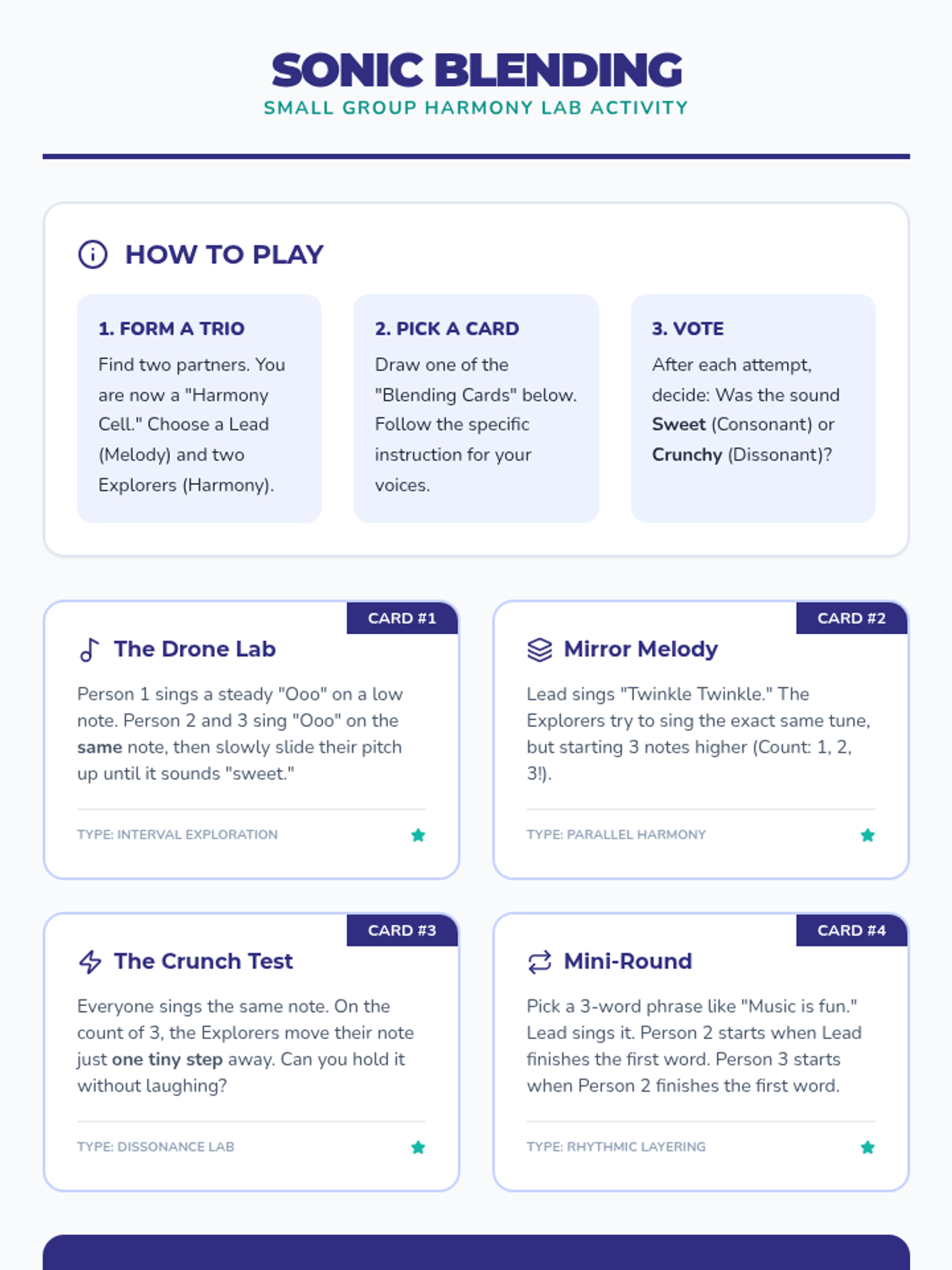
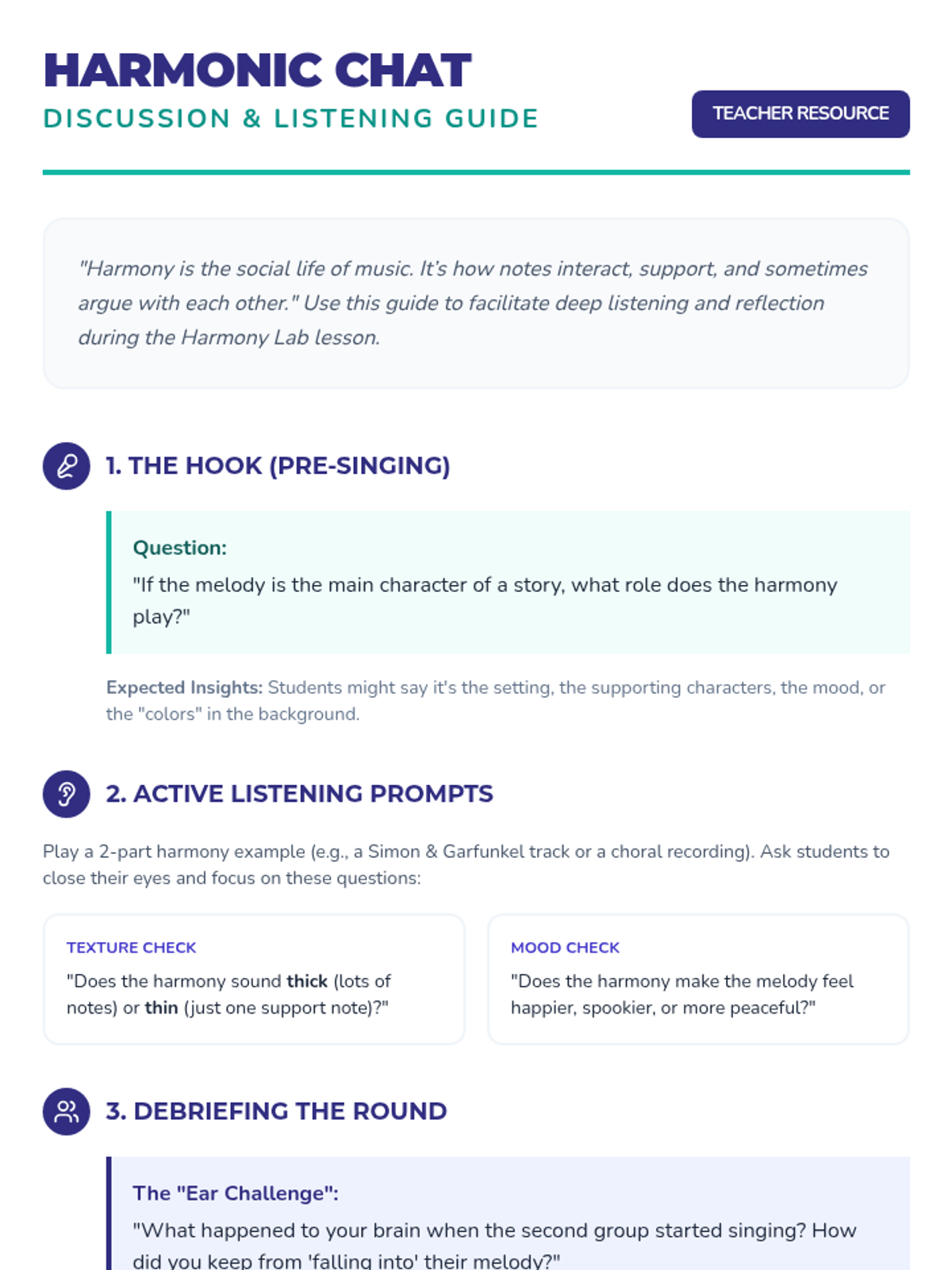
Students explore the concept of musical harmony through interactive singing exercises, listening tasks, and collaborative blending activities. They will learn to distinguish between melody and harmony and participate in multi-part vocal performances.
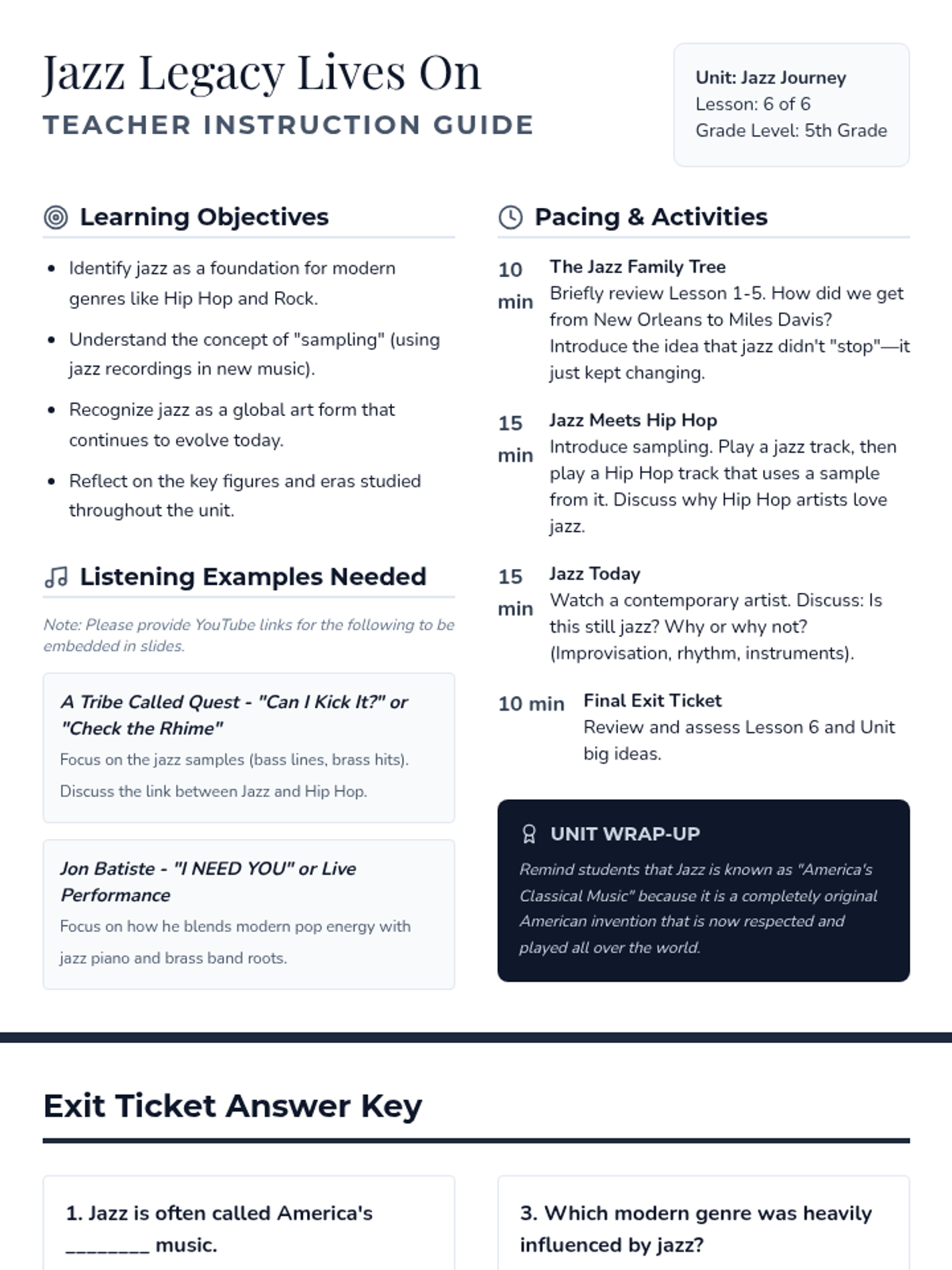
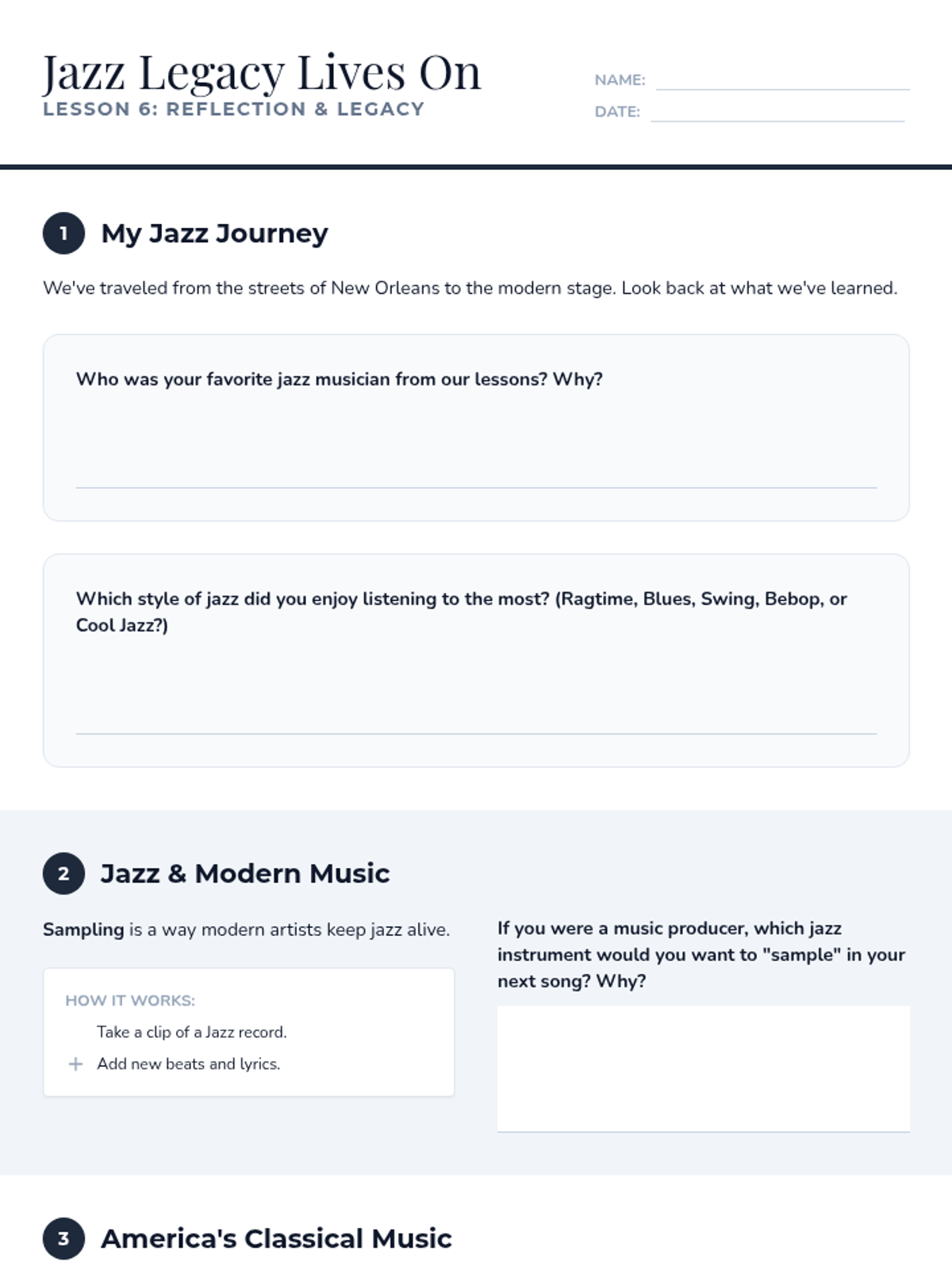
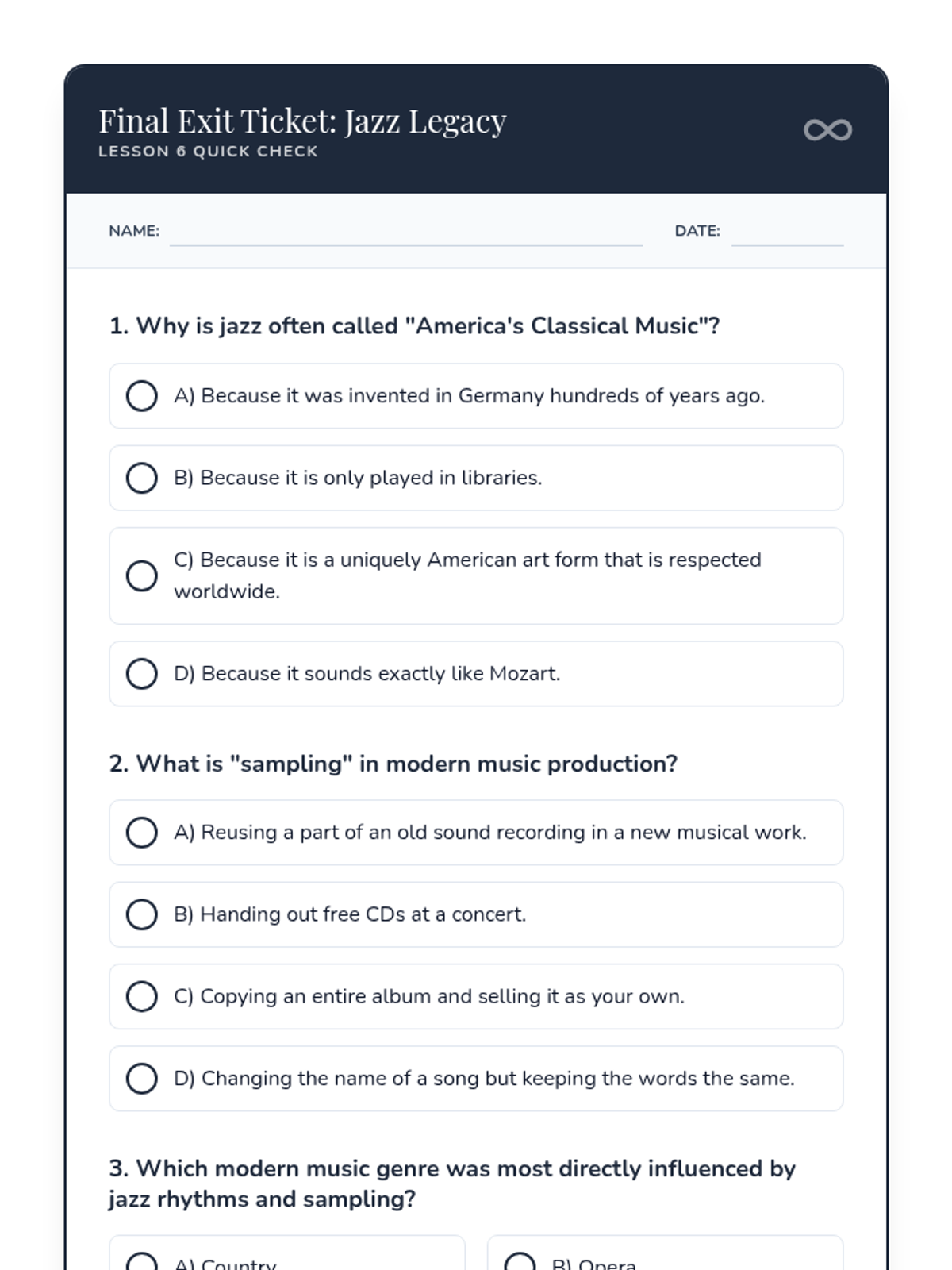
Reflect on the legacy of jazz, its influence on modern music like Hip Hop, and its status as a global art form.
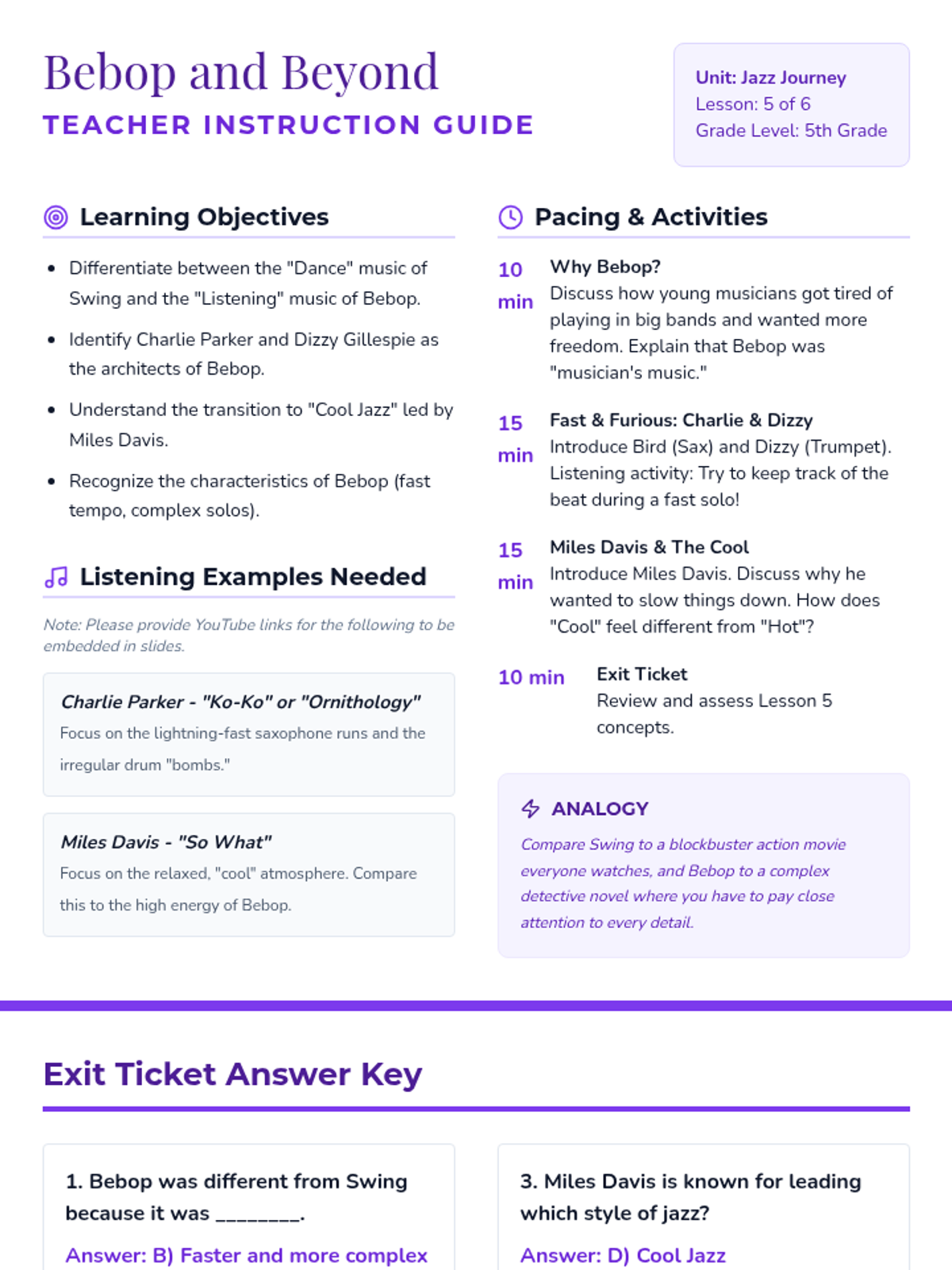
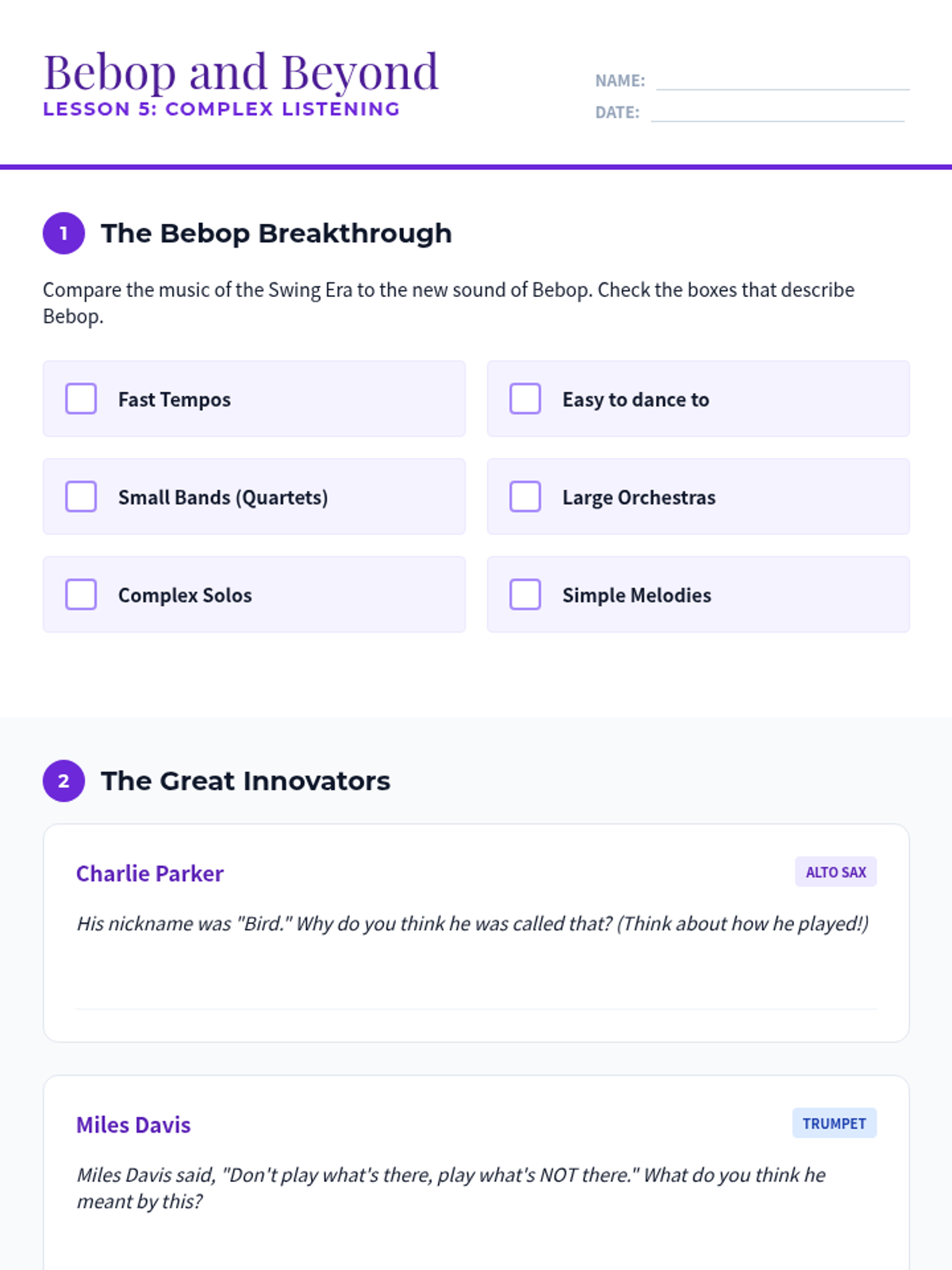
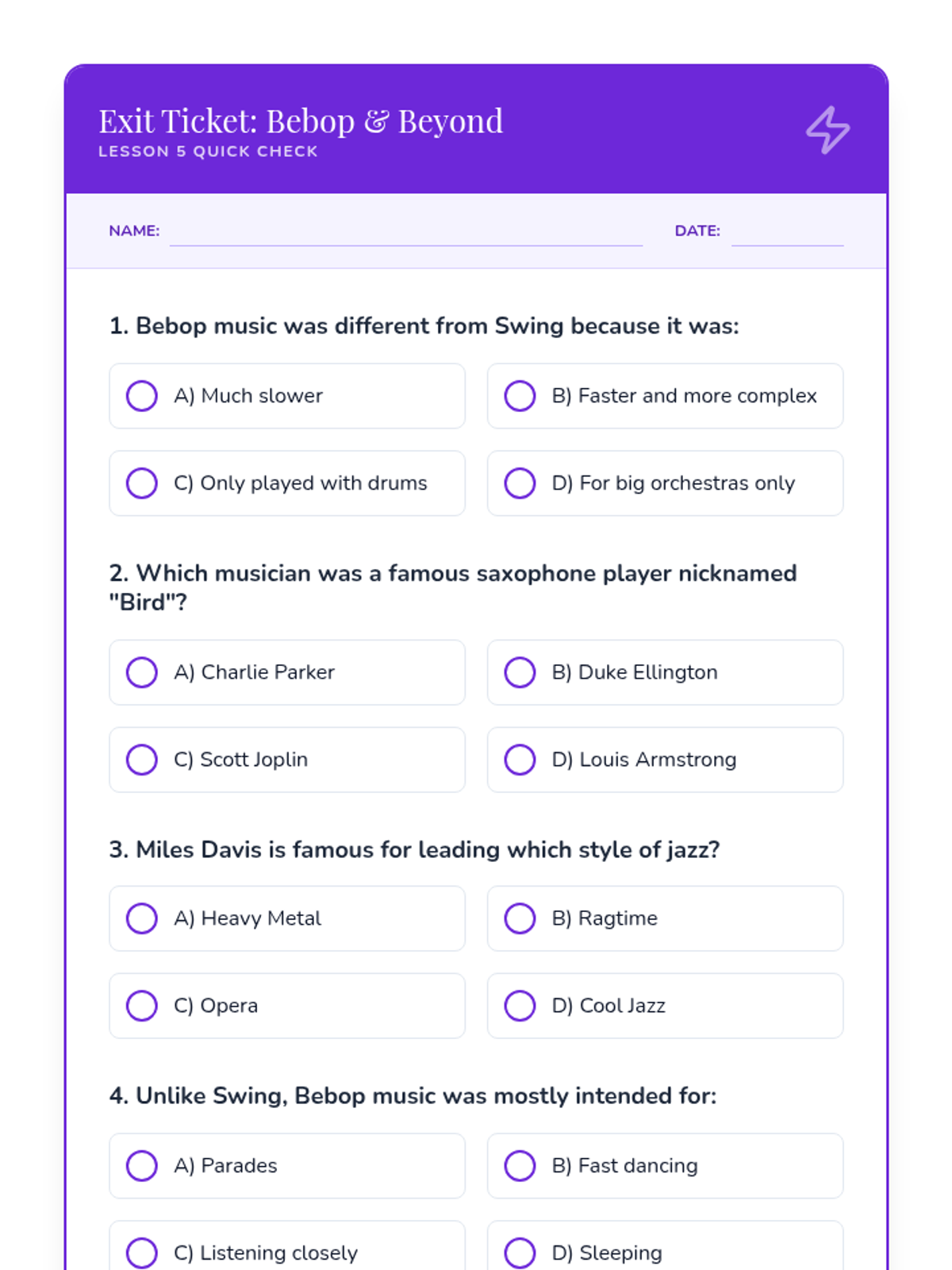
Learn about the fast, complex sounds of Bebop and the cool innovations of Miles Davis that changed music forever.
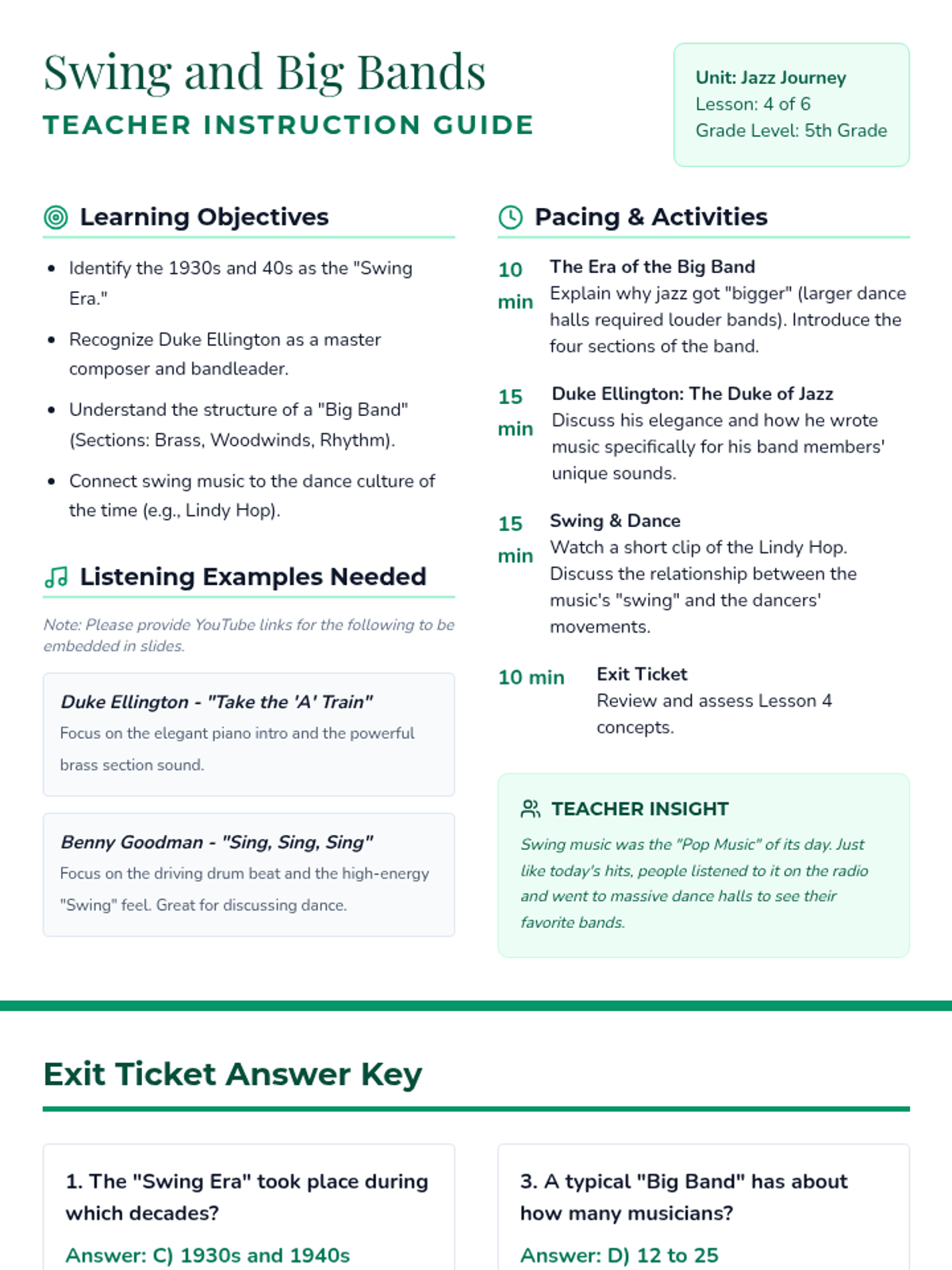
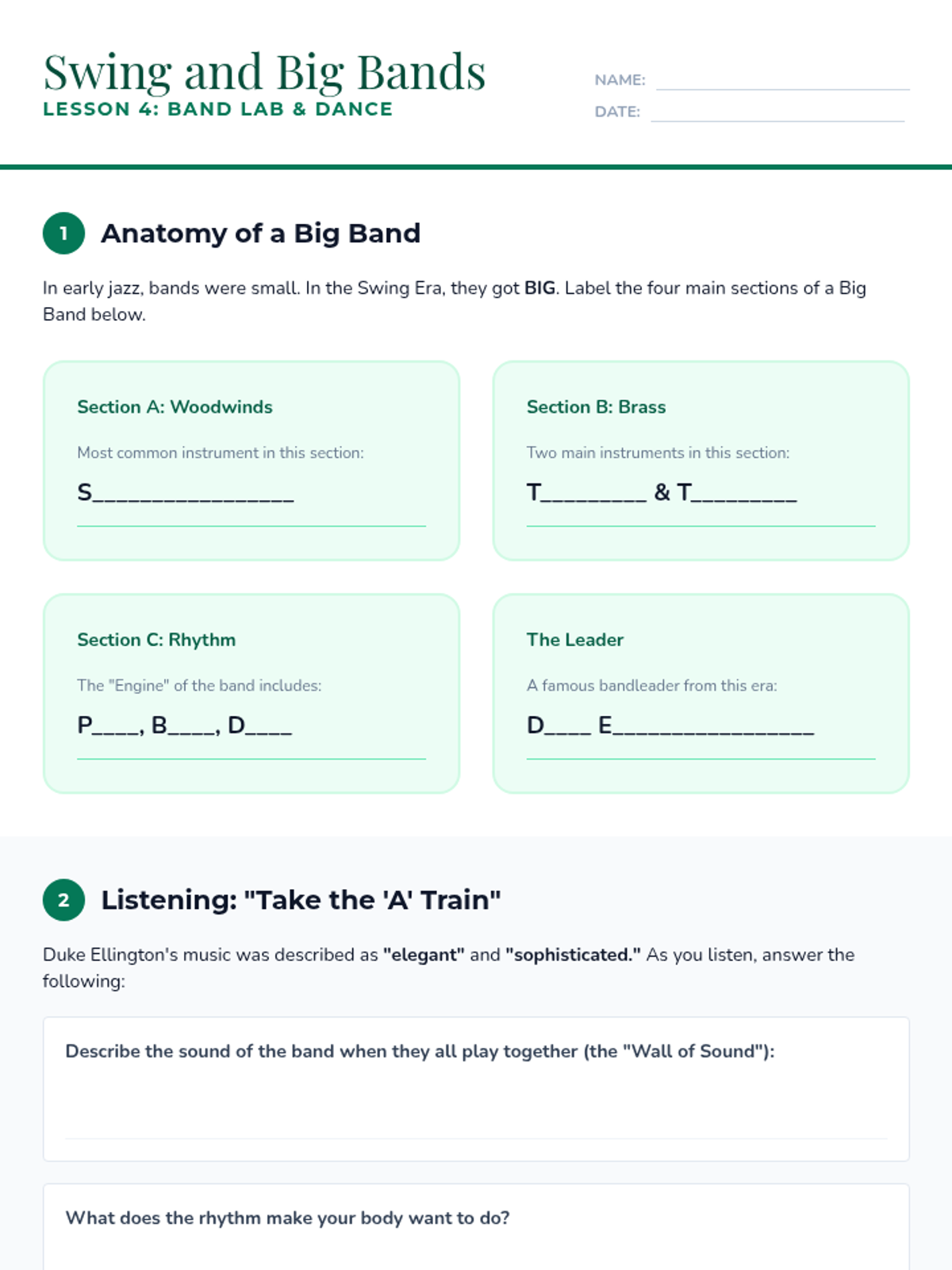
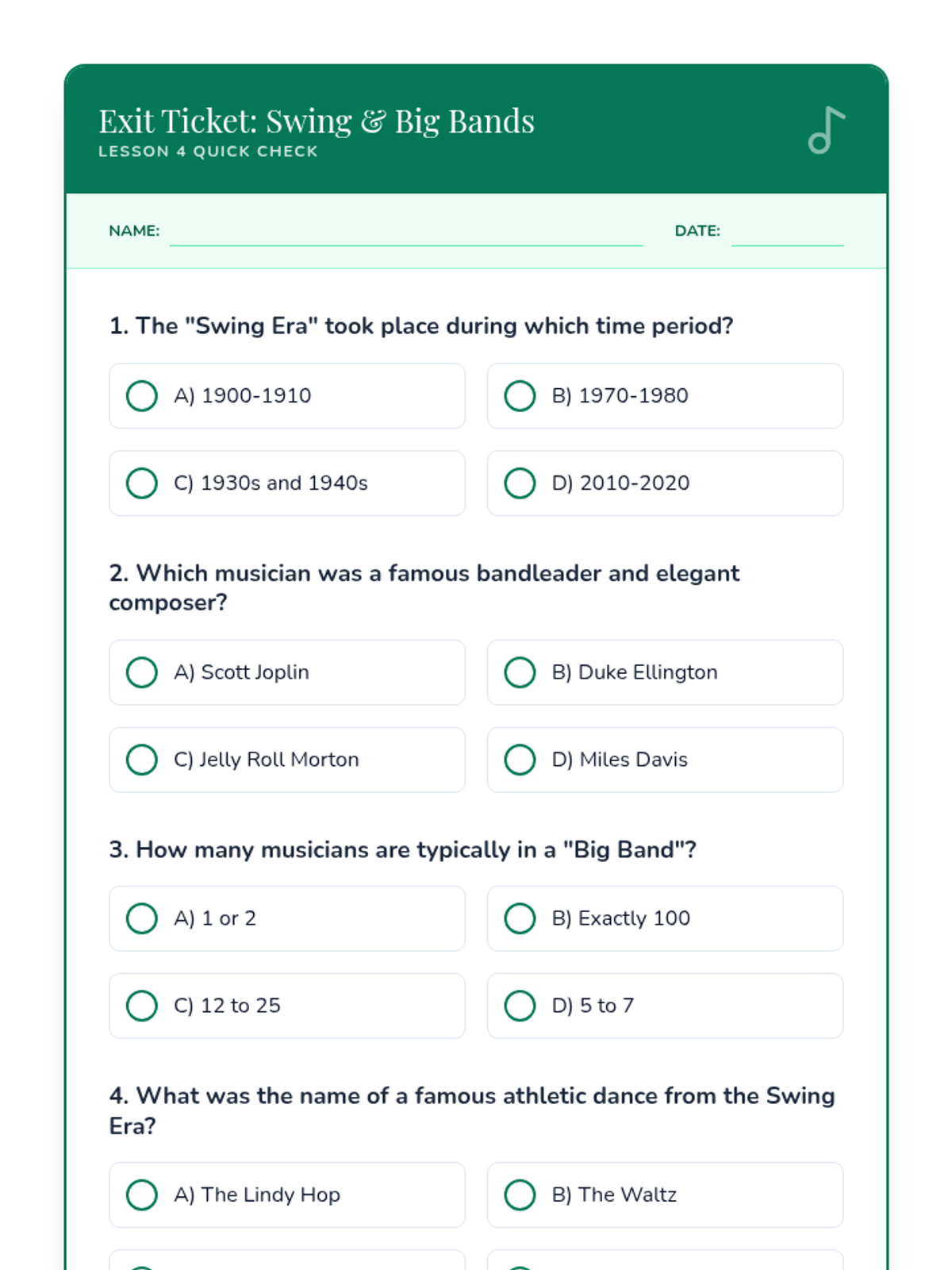
Step into the dance halls of the 1930s and 40s to experience the power of the Big Band Era and the elegance of Duke Ellington.
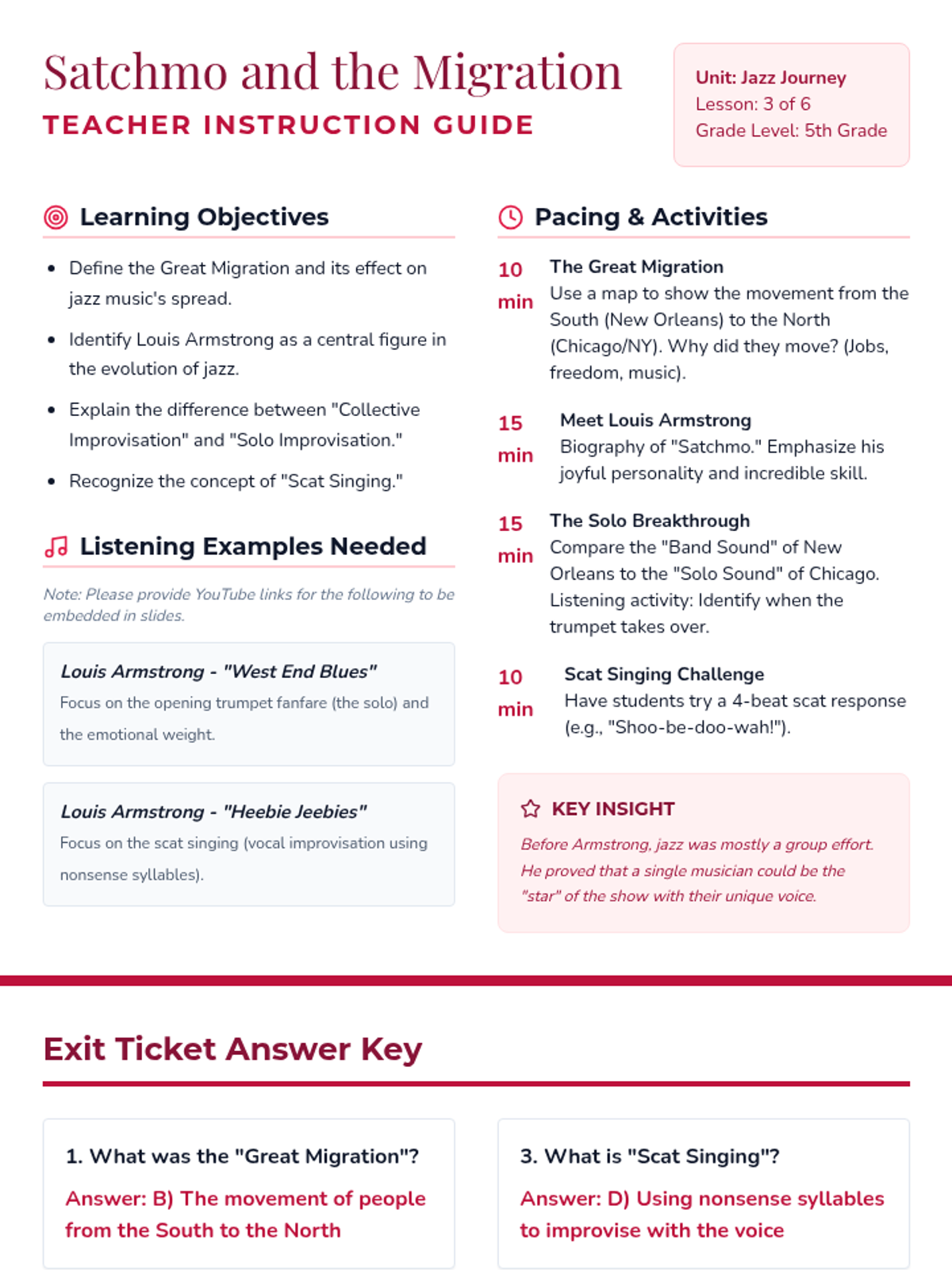
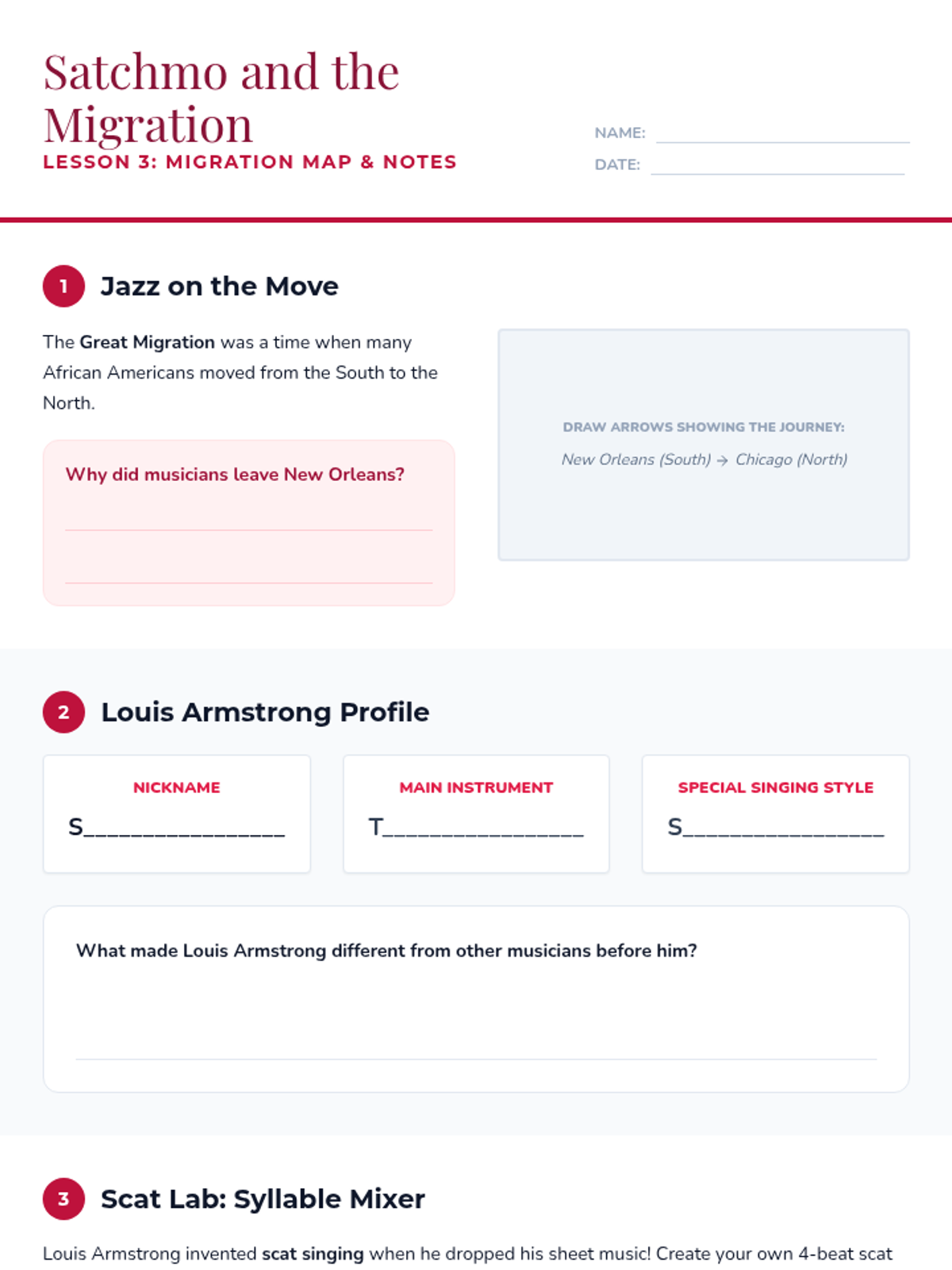
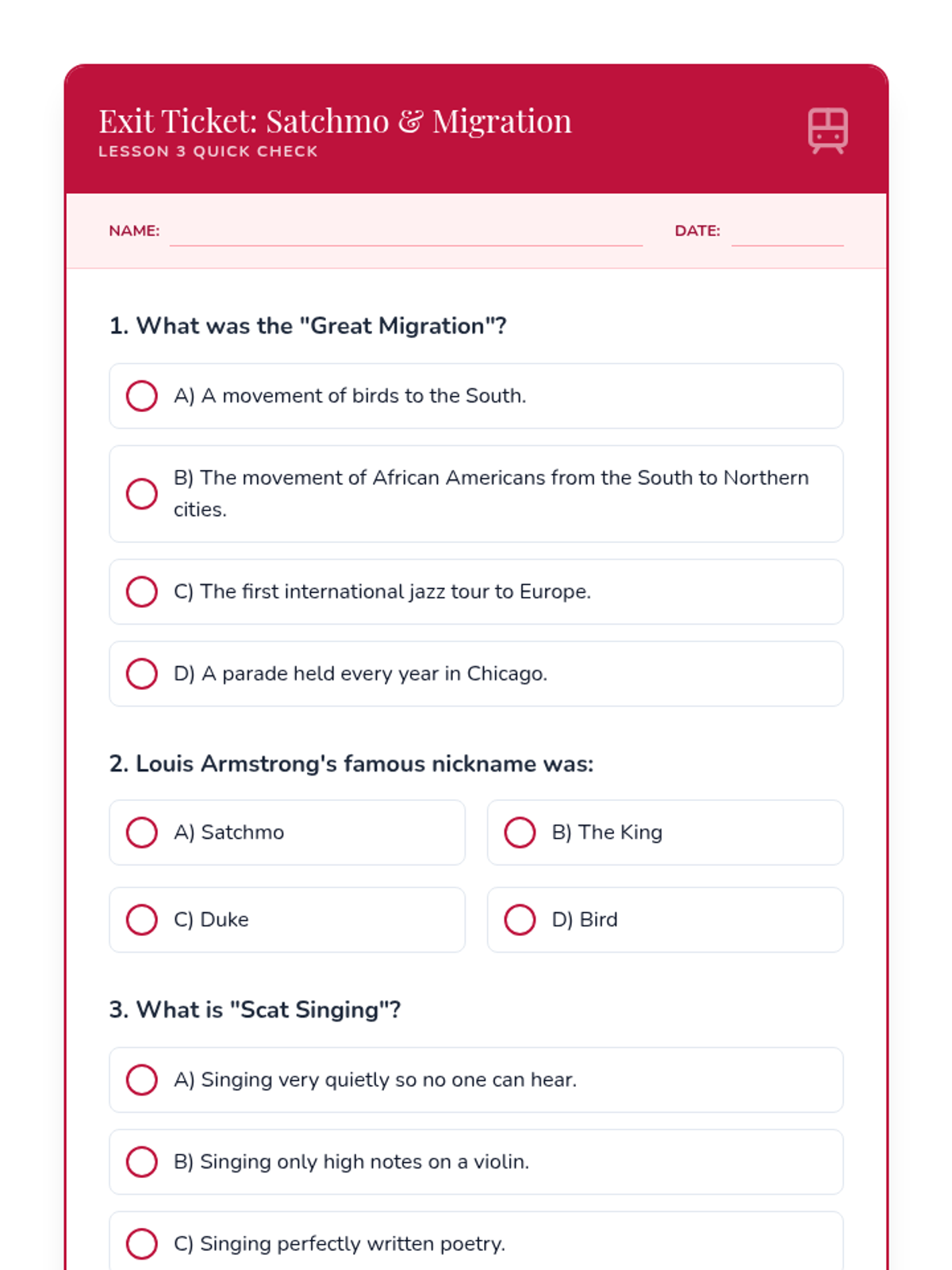
Follow the Great Migration to Chicago and meet the first superstars of jazz, including the legendary Louis Armstrong.
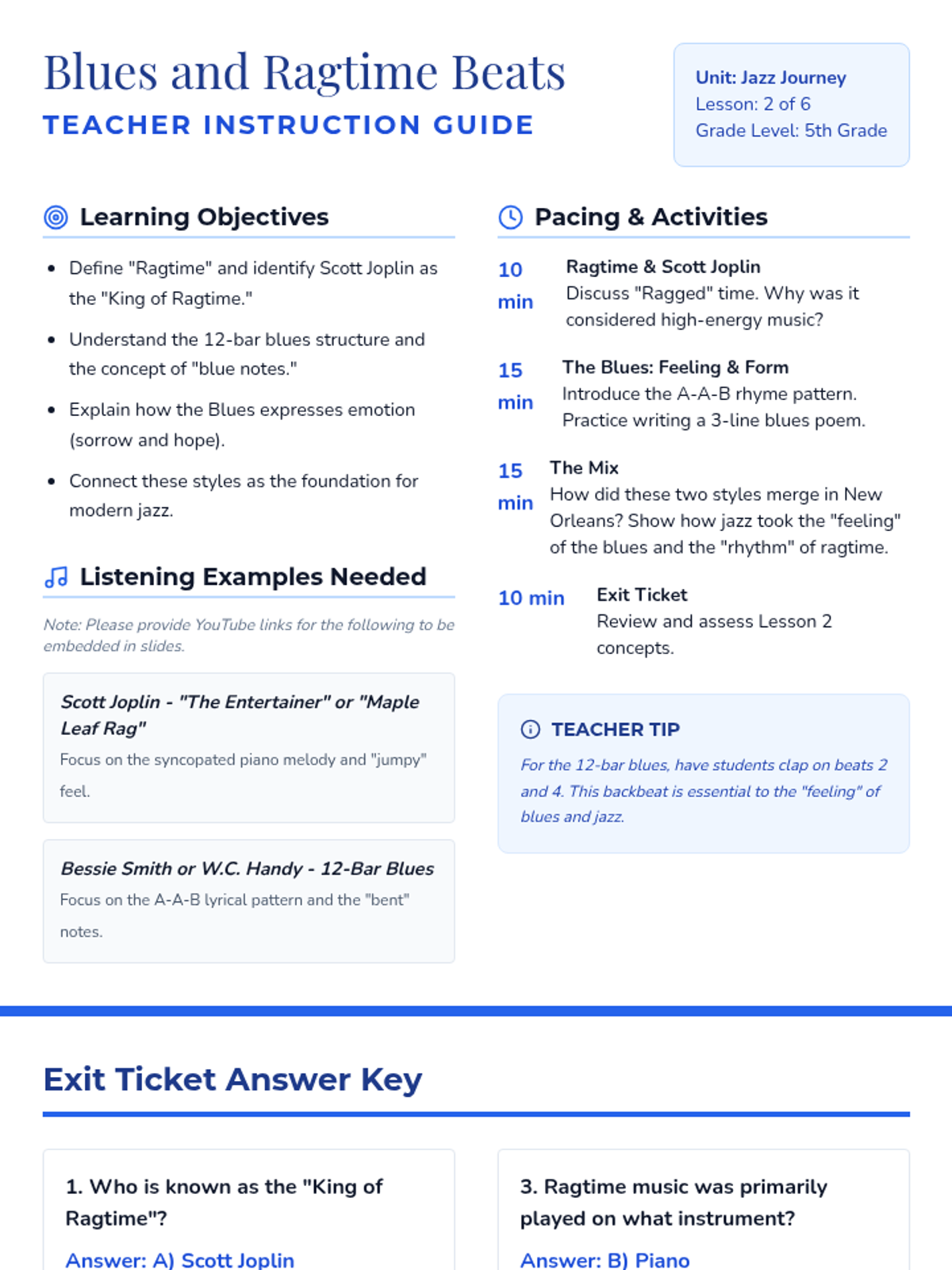
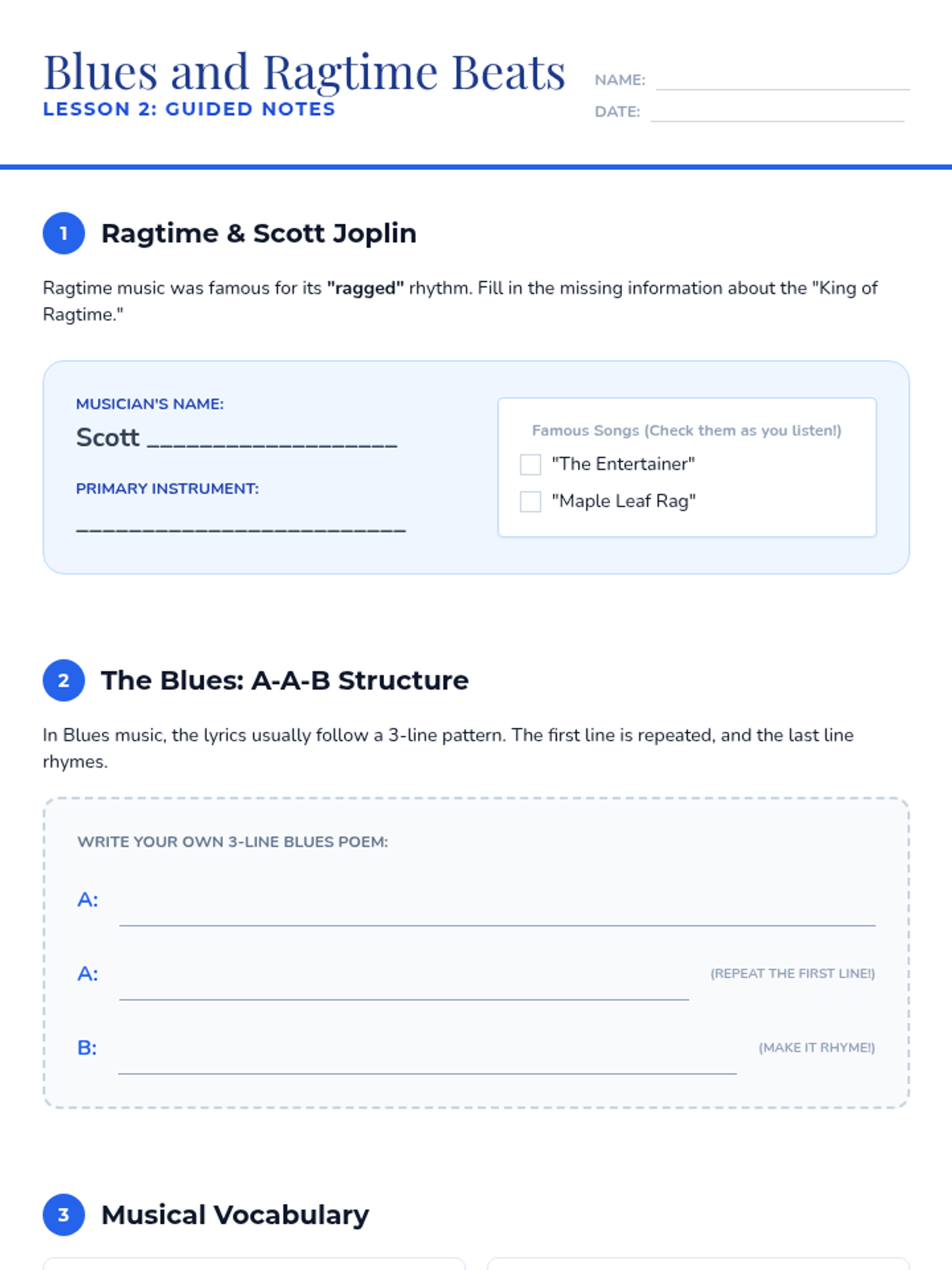
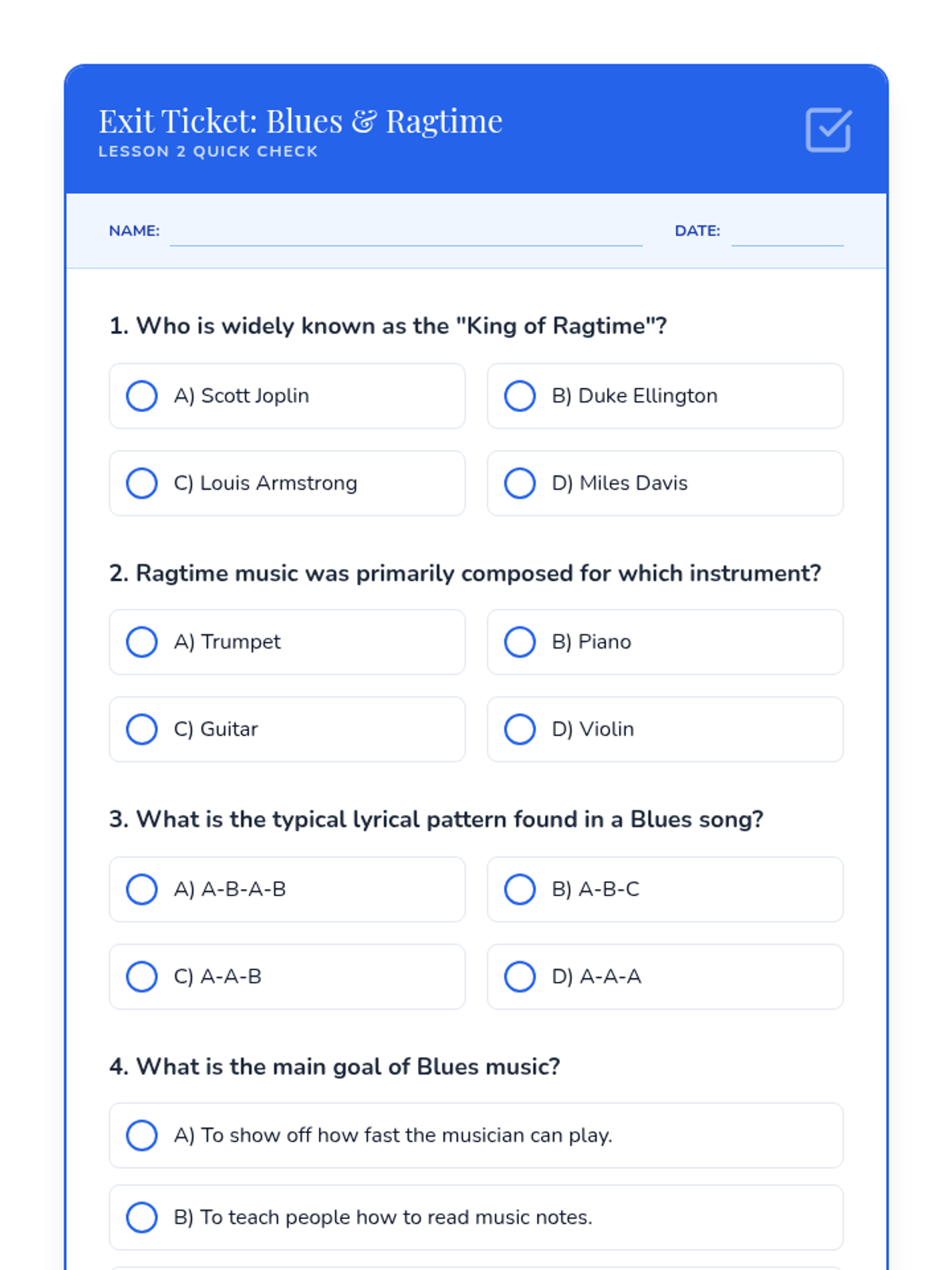
Discover how the emotional depth of the Blues and the syncopated energy of Ragtime provided the foundation for jazz.
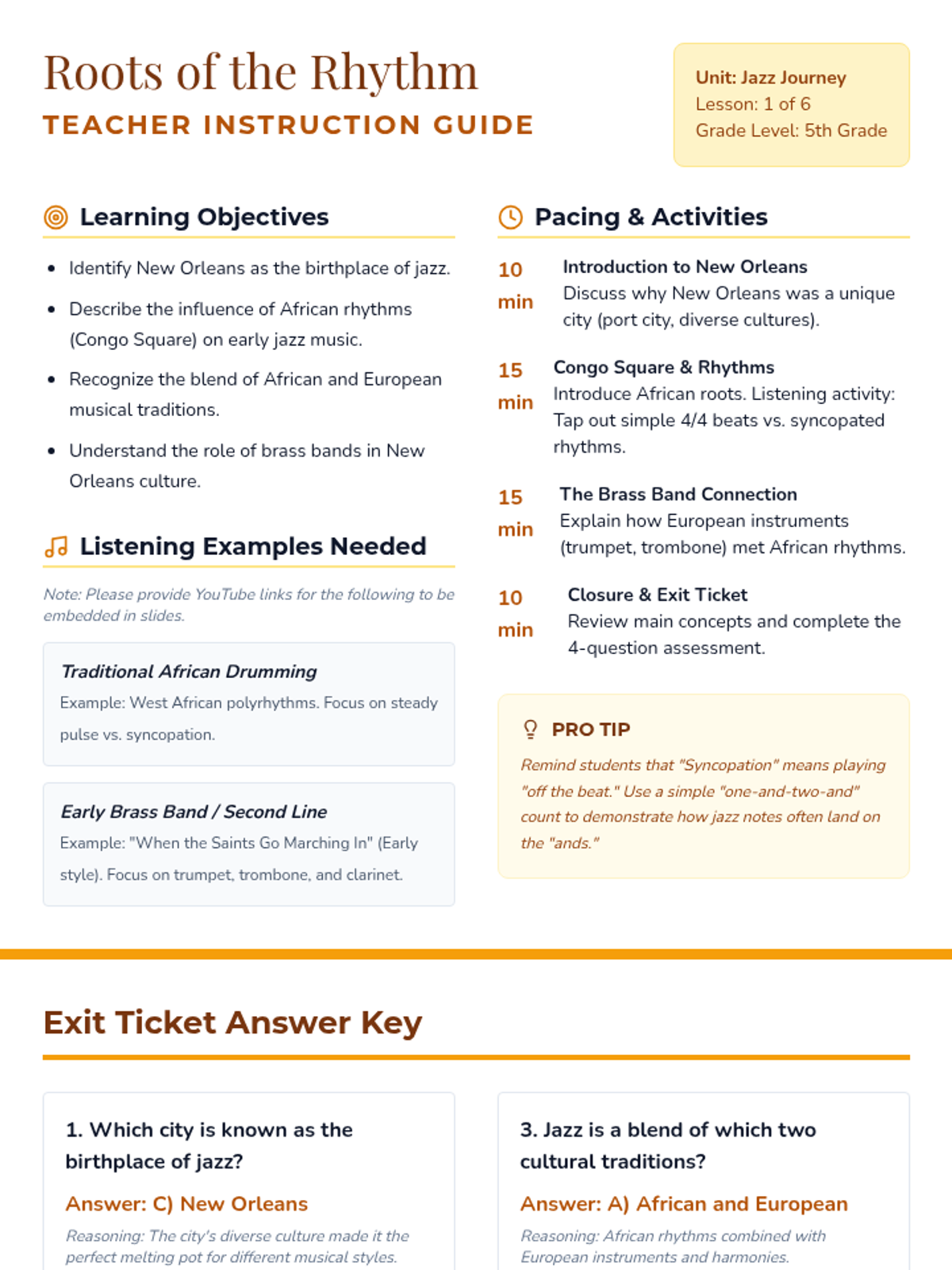
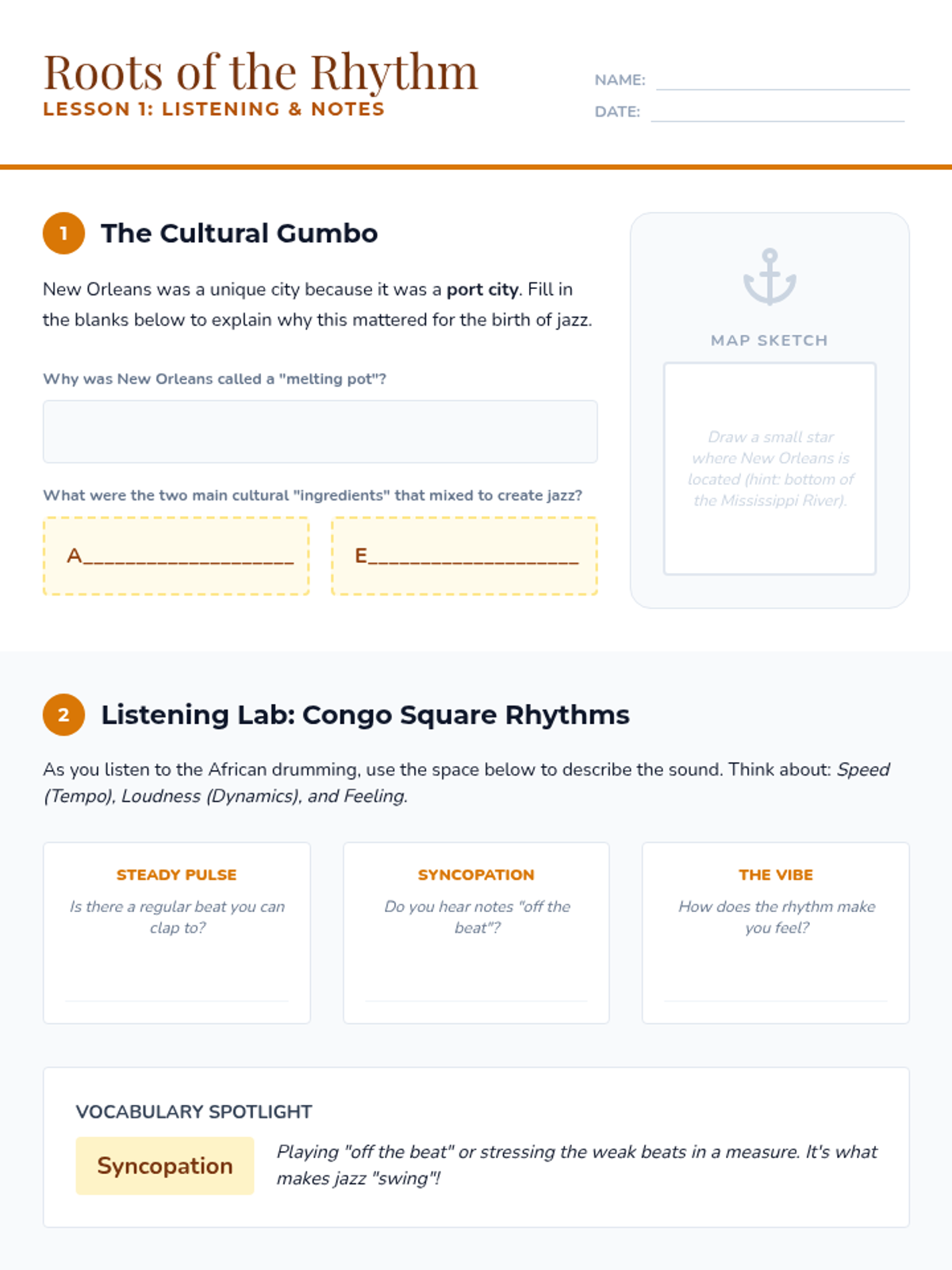
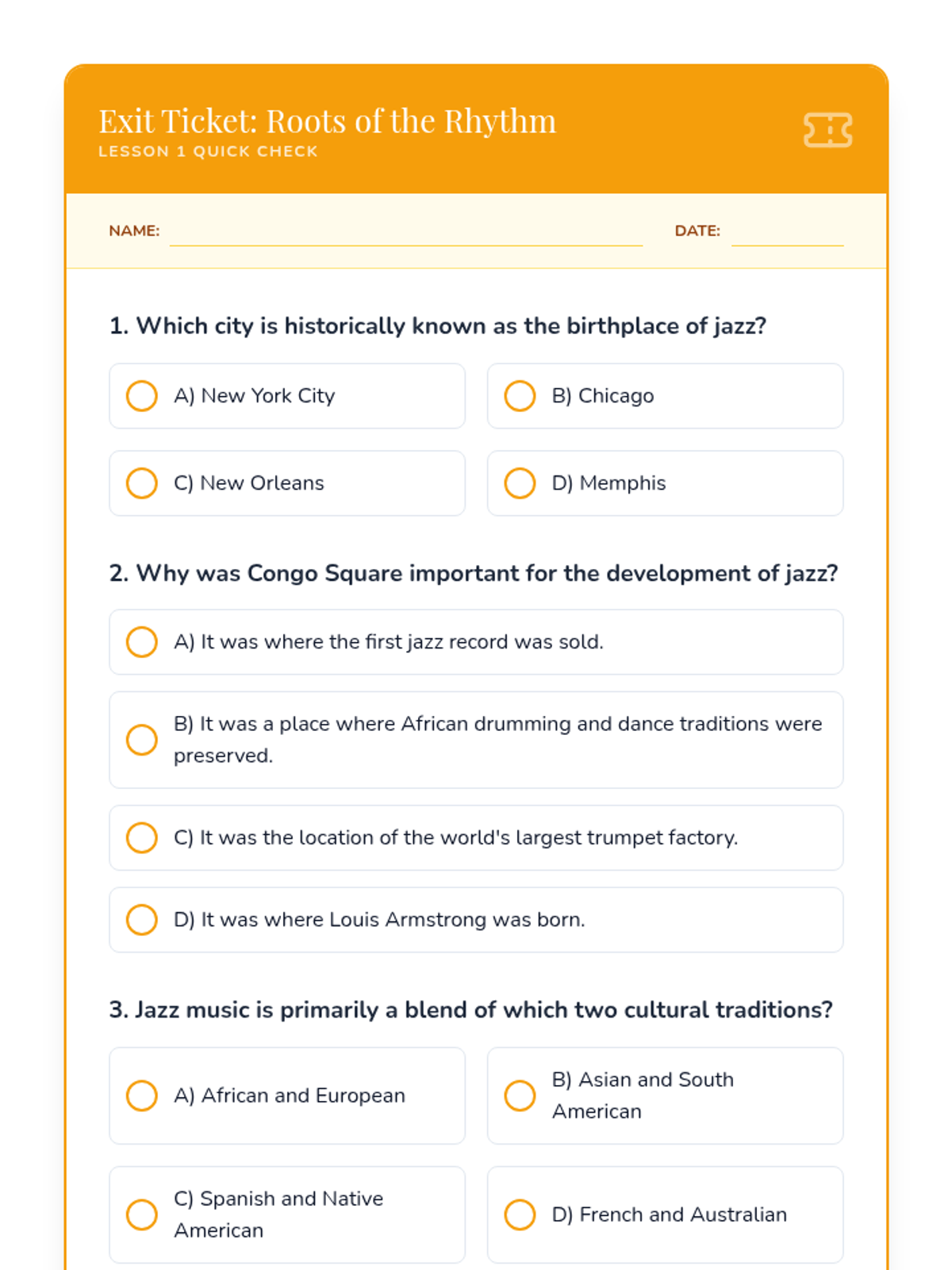
Explore the cultural melting pot of New Orleans and the African rhythms of Congo Square that birthed jazz music.
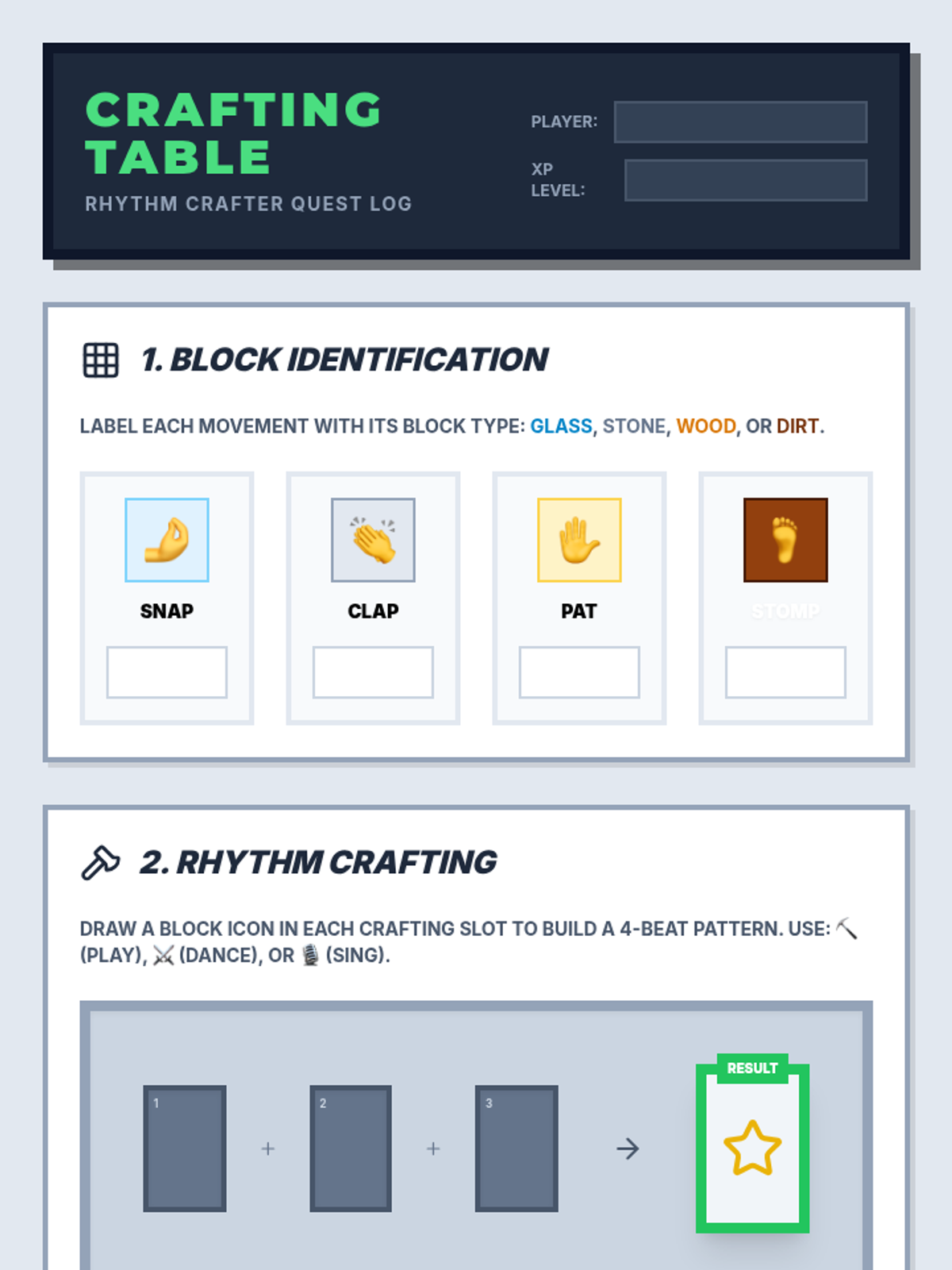
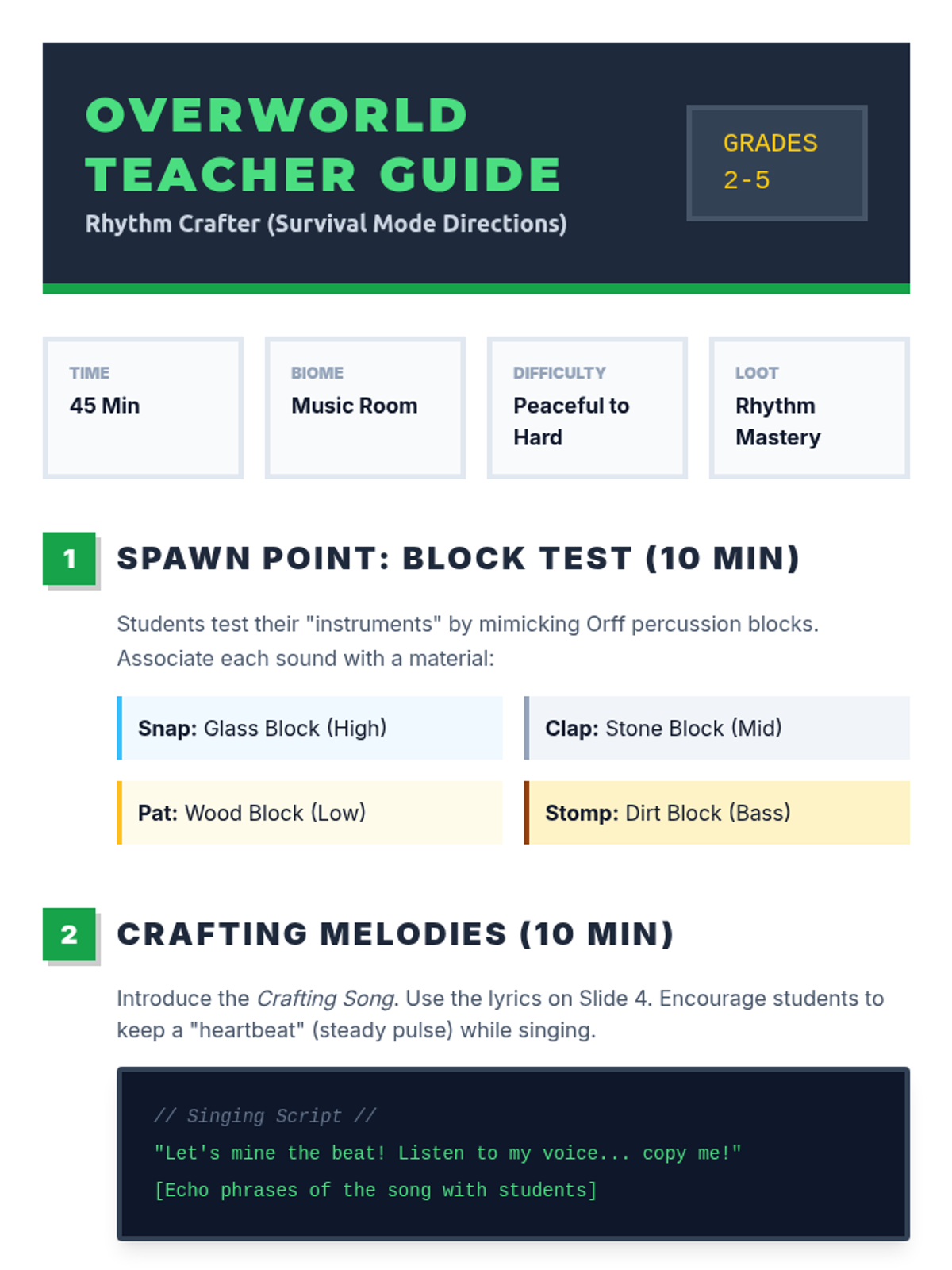
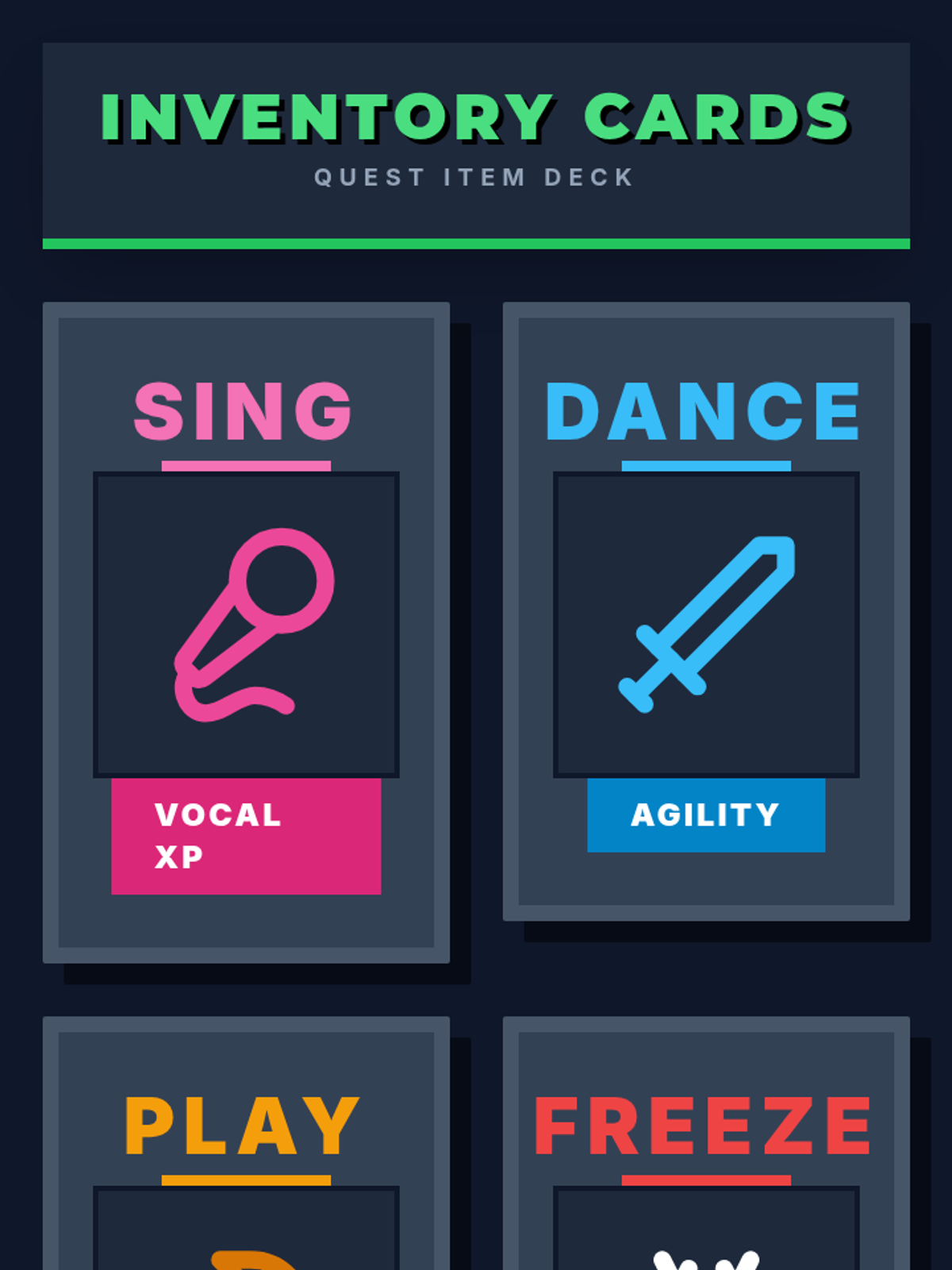
A block-building music lesson where students 'craft' rhythms, 'survive' rapid direction changes, and explore Orff percussion through a pixelated world theme. Includes singing, dancing, and body percussion activities.
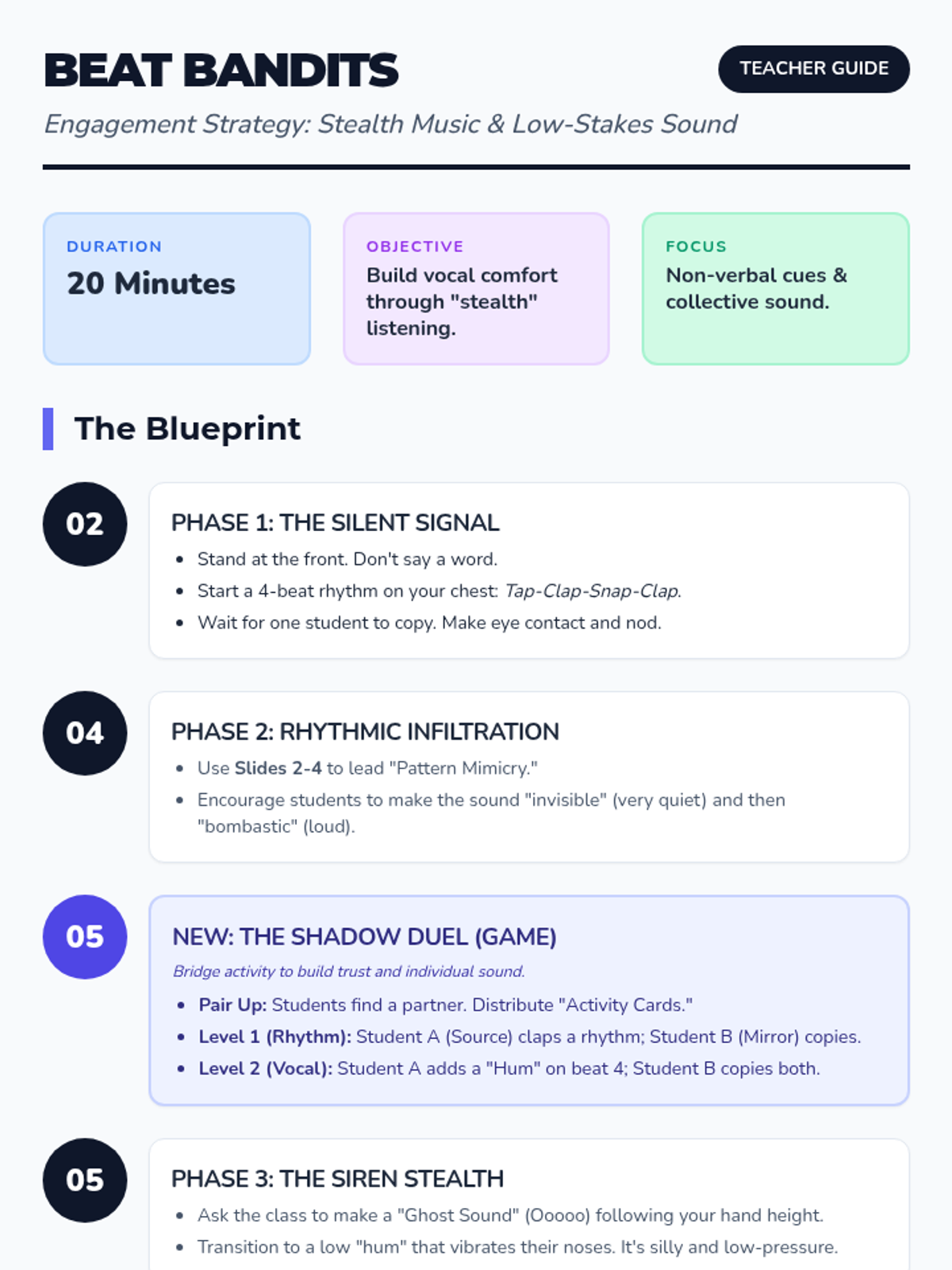
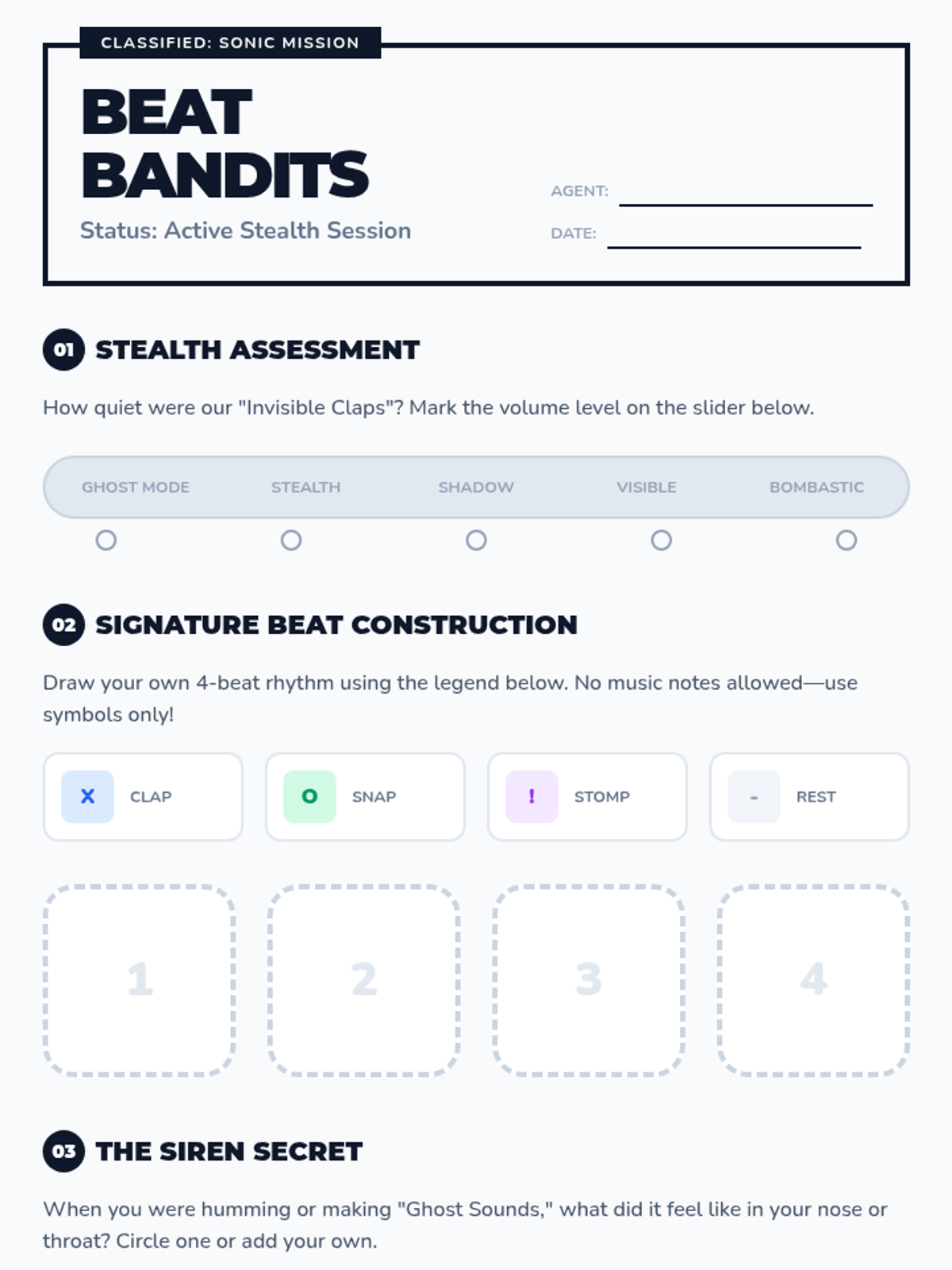
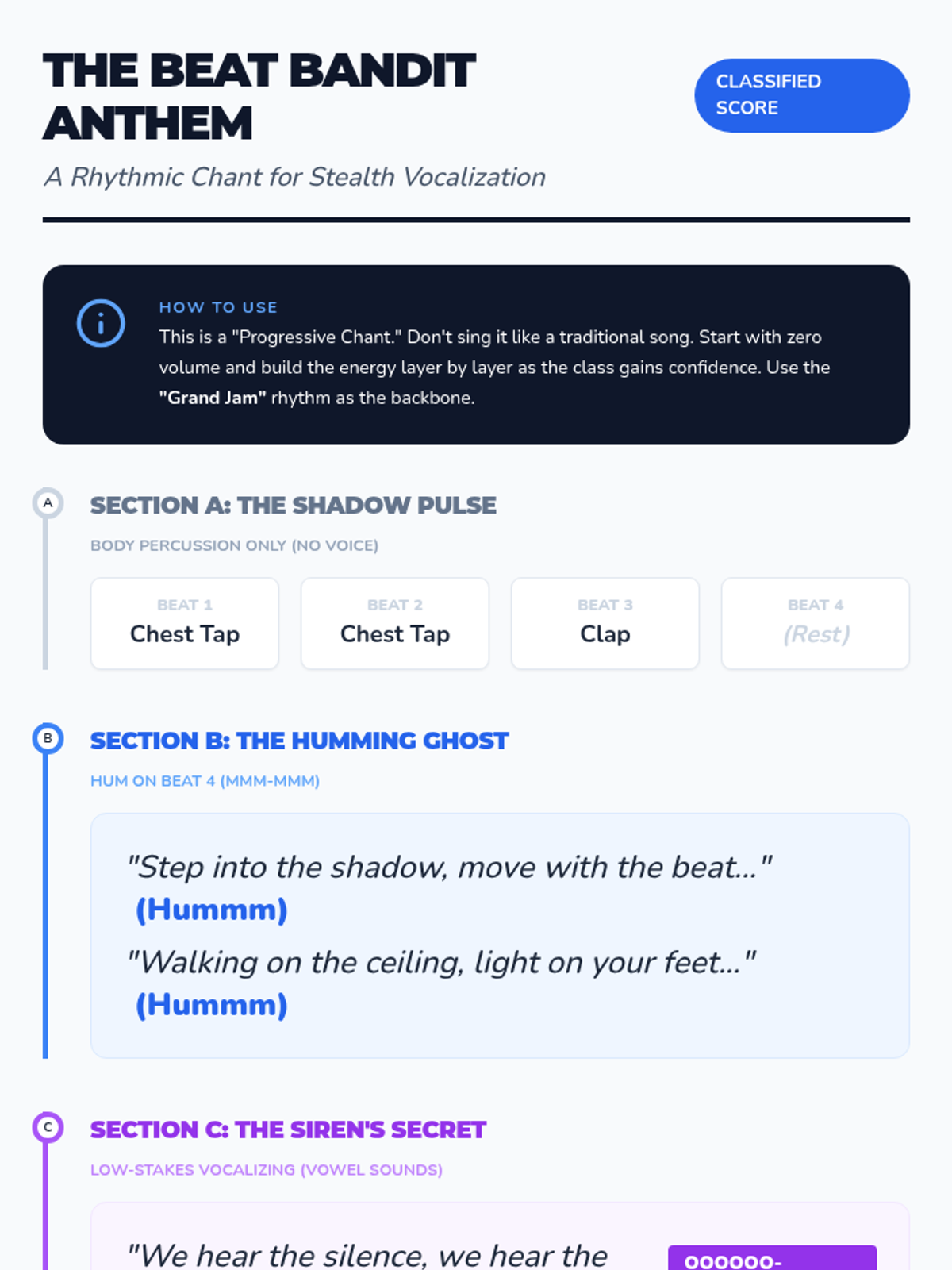
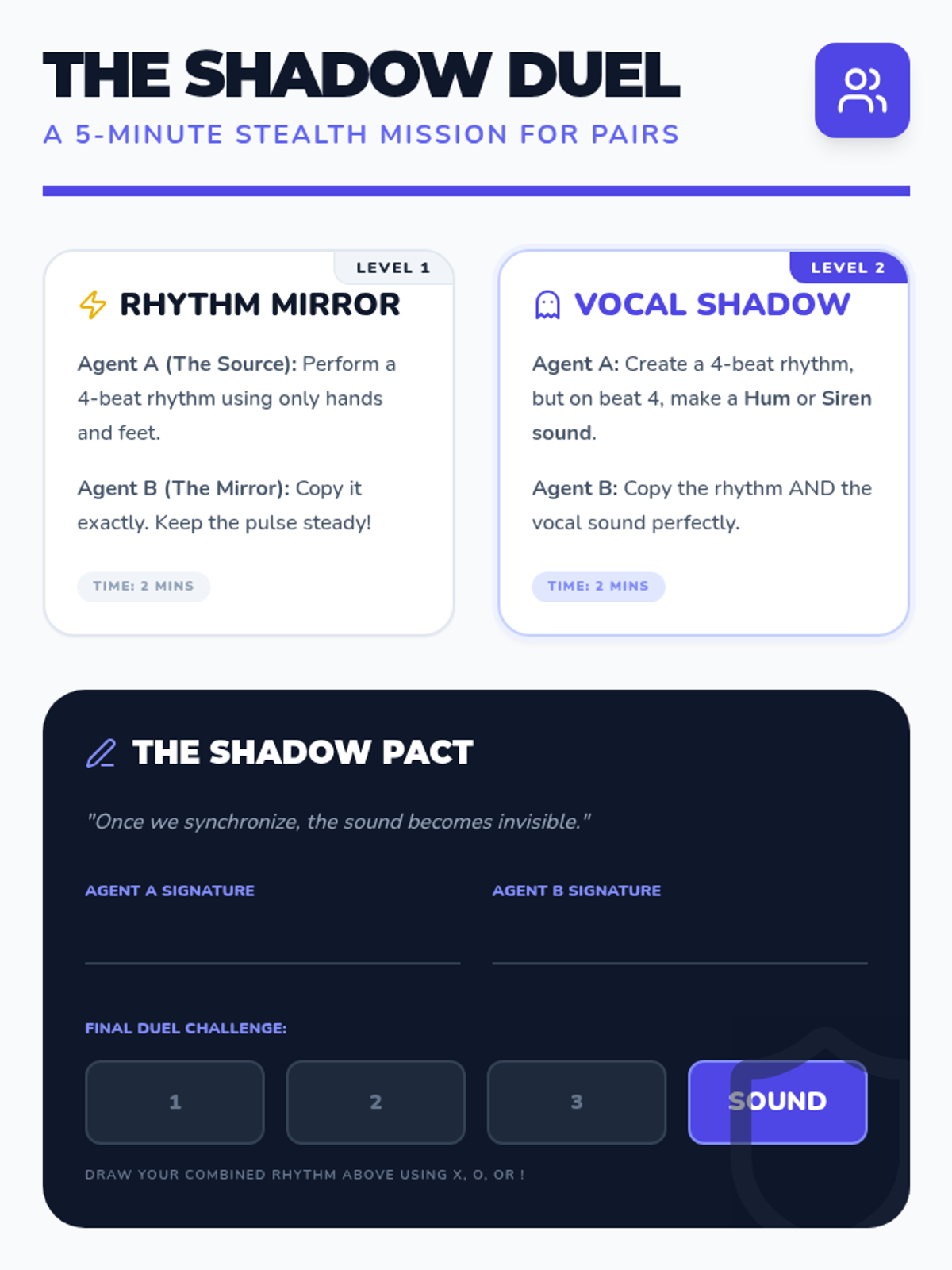
A high-energy, low-pressure 15-minute music lesson designed to engage disengaged students and build vocal confidence through rhythm and stealth games. This lesson moves from non-verbal rhythmic games to collective vocalizing to bypass the fear of singing.
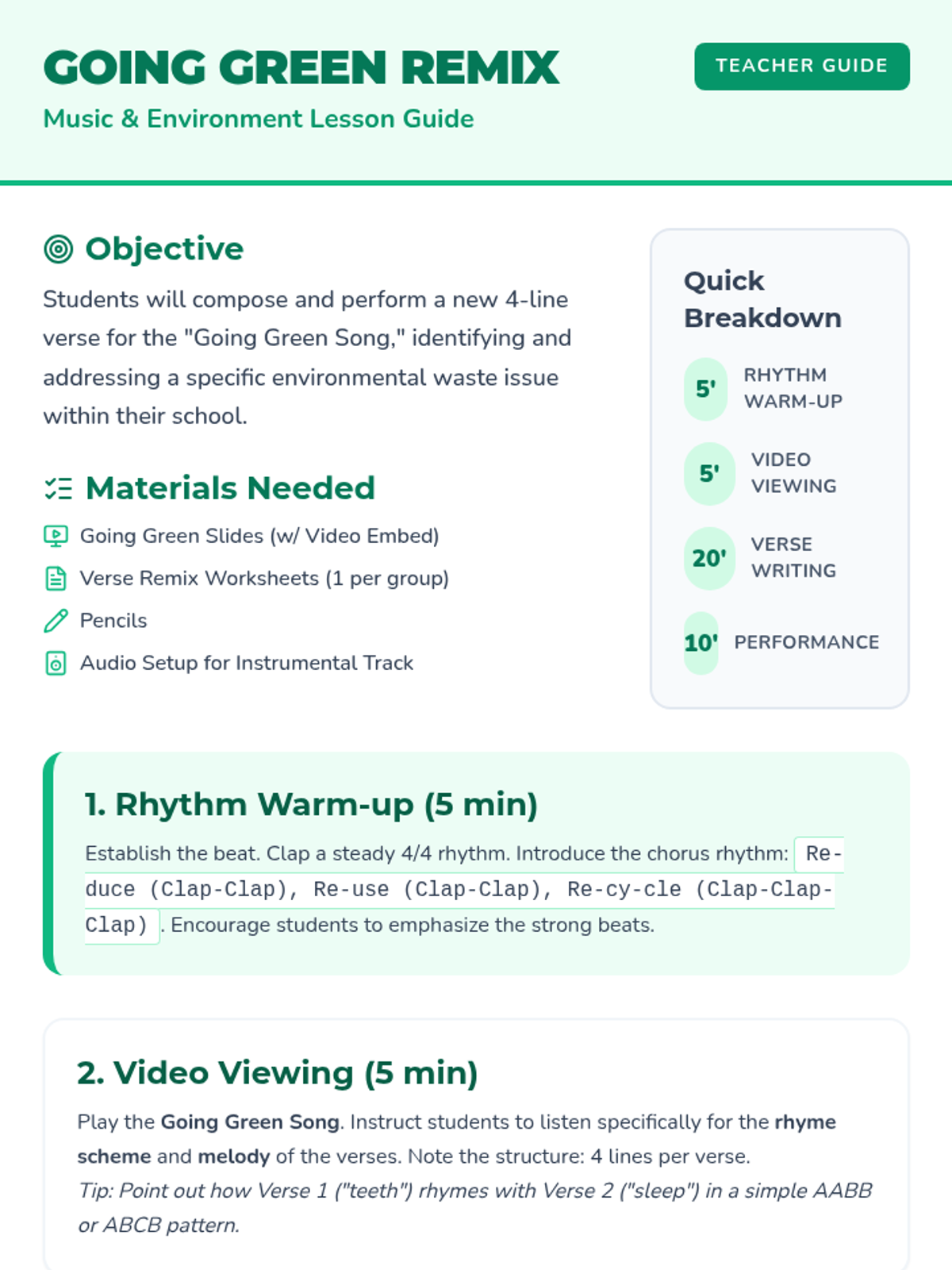
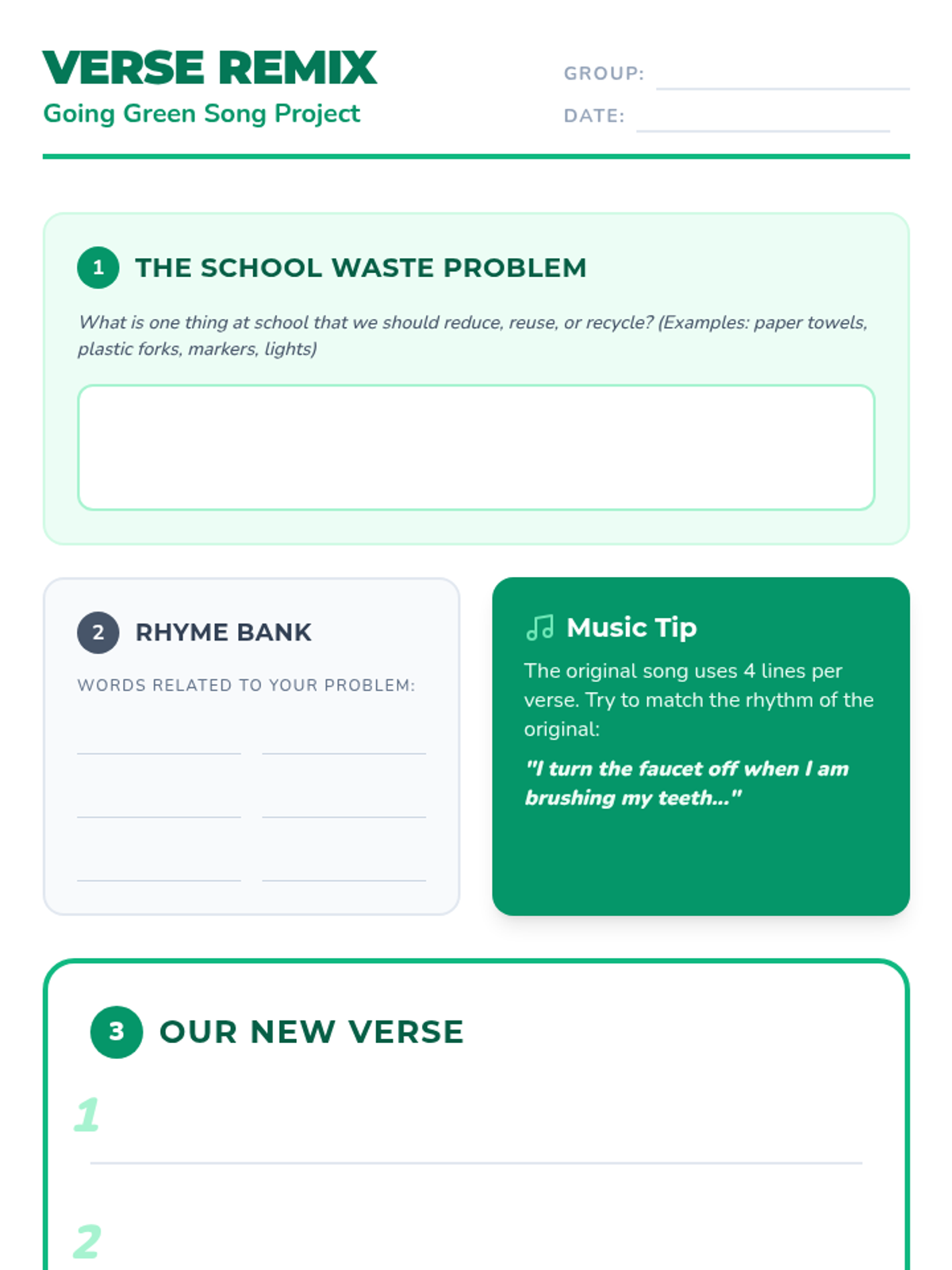
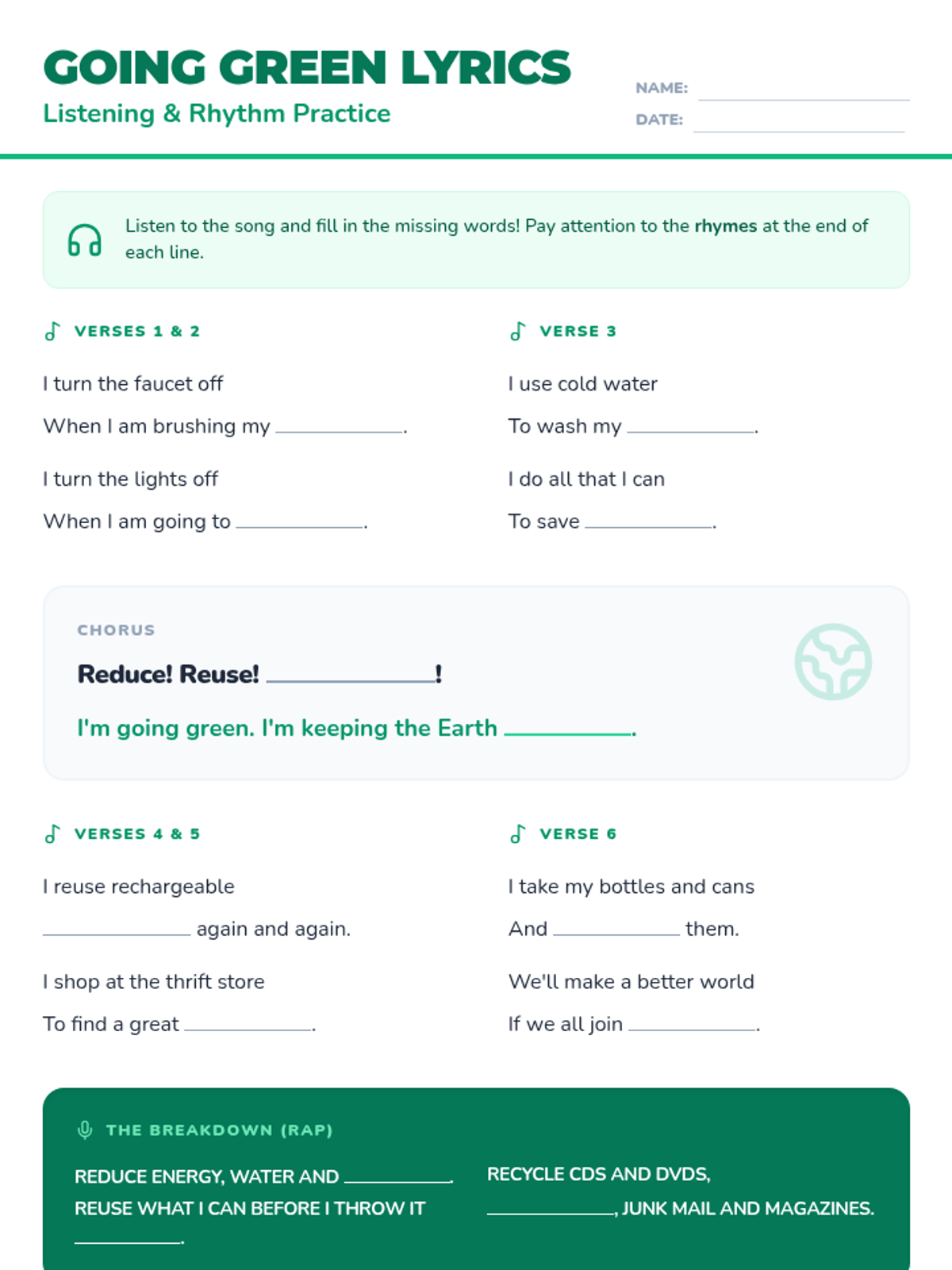
A music lesson where students compose and perform a new verse for 'Going Green Song' about environmental issues in their own school.
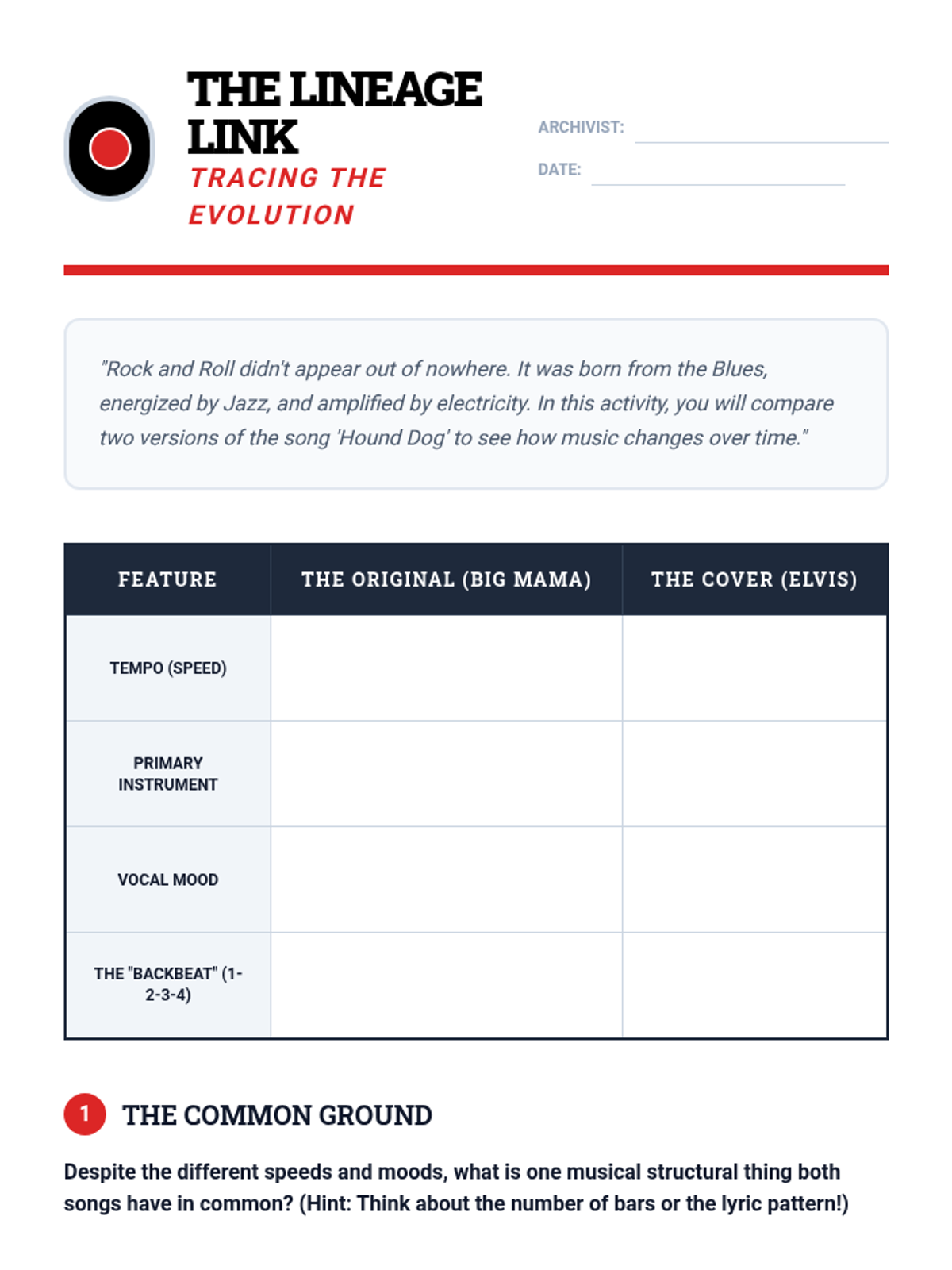
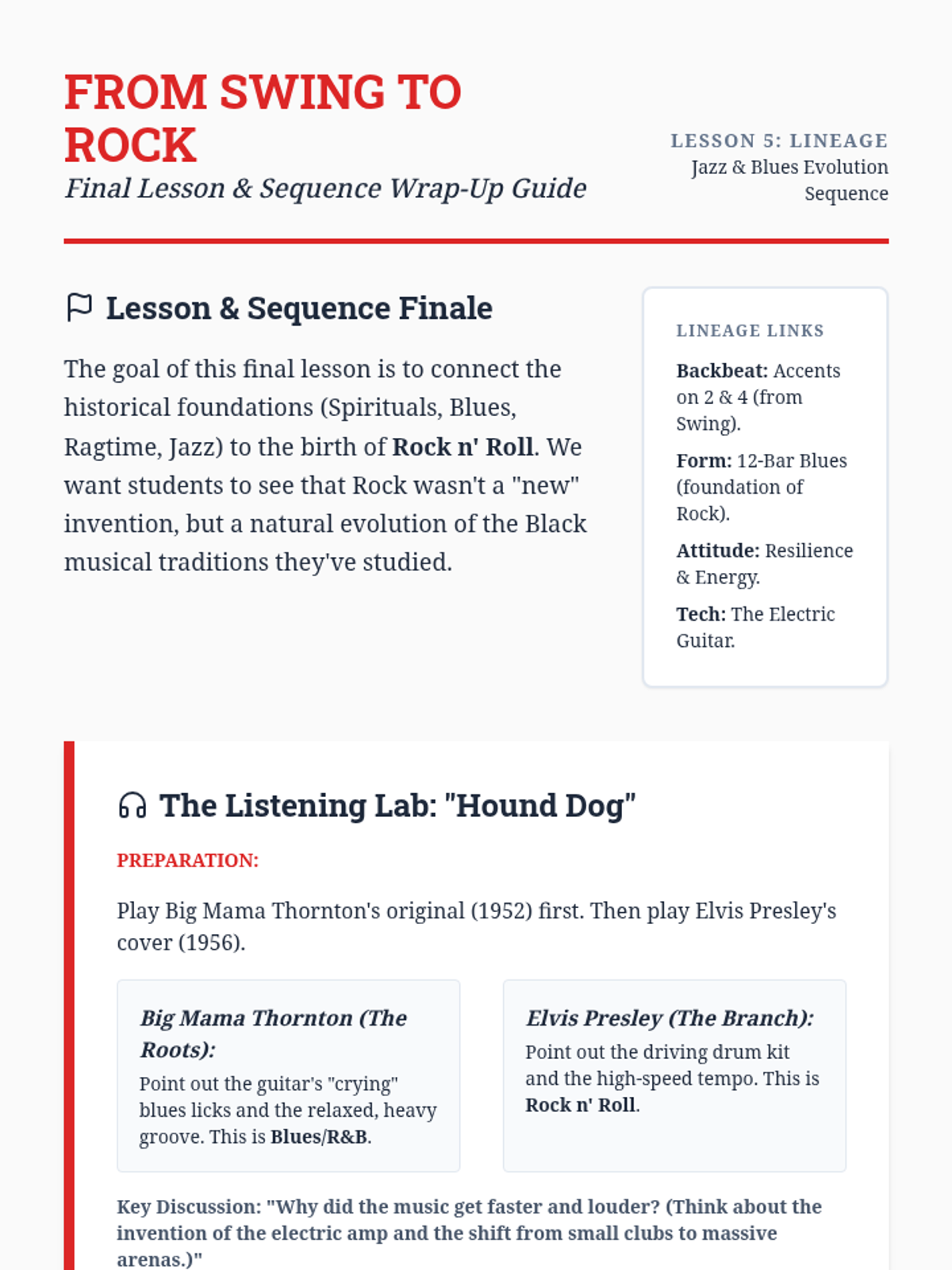
Students map the evolution from jump blues and swing directly to early Rock n' Roll. They compare recordings to identify shared characteristics, solidifying the understanding that modern music stands on the shoulders of Jazz and Blues.
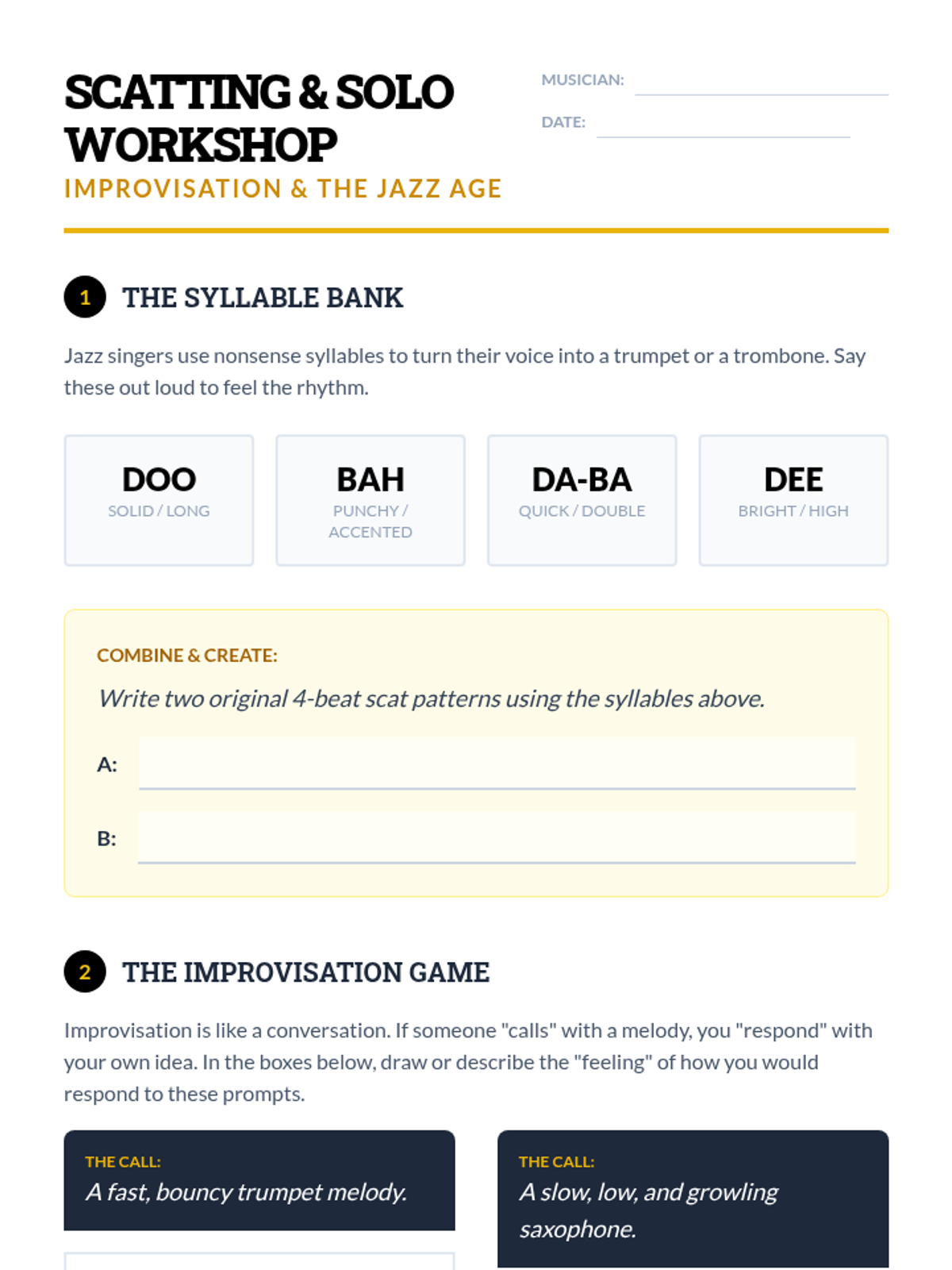
Focusing on the Harlem Renaissance and the Big Band era, students learn the art of improvisation—composing in the moment. They practice simple vocal scatting or instrumental improvisation over a swing groove.
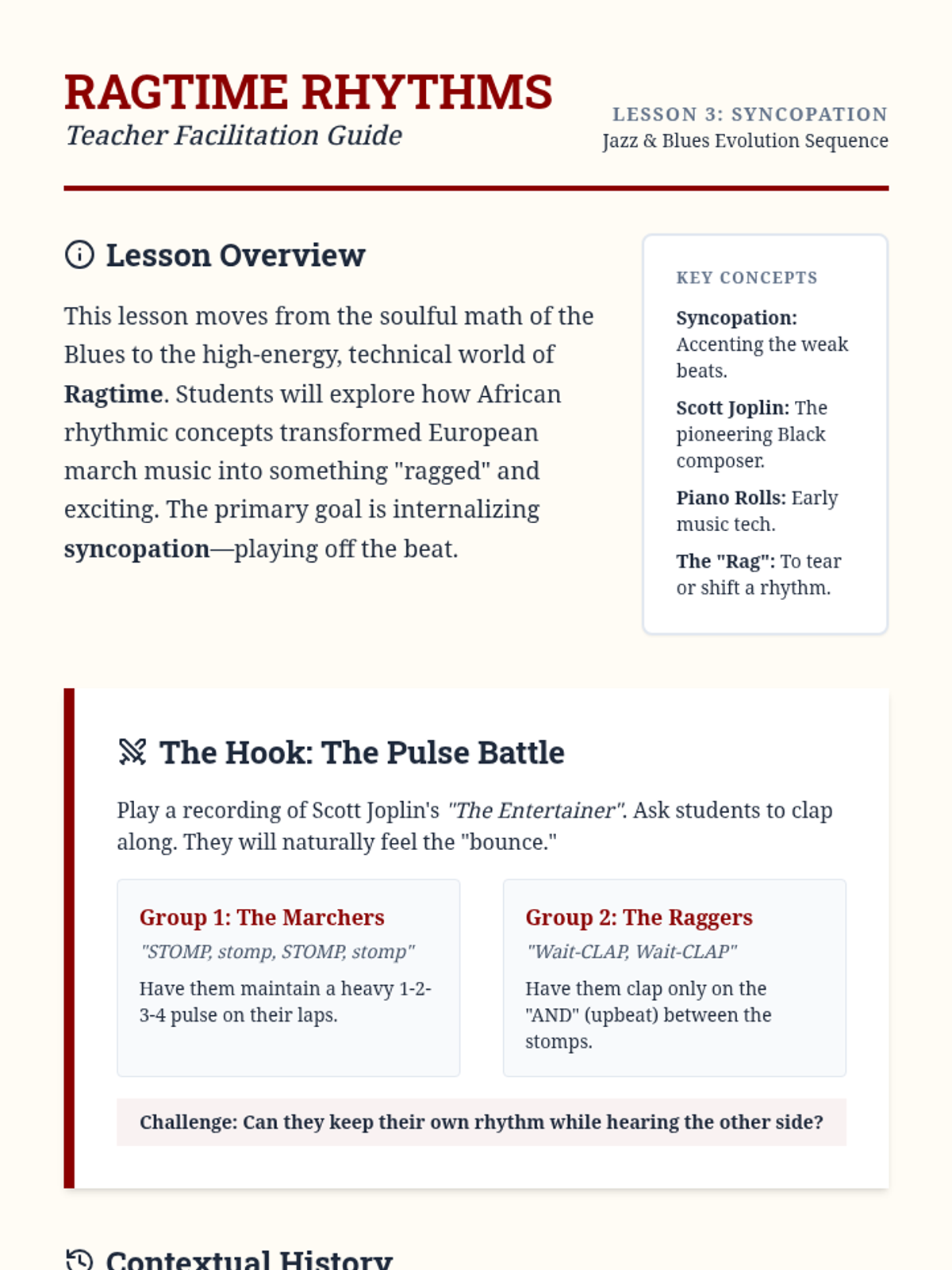
Students explore the piano-driven energy of Ragtime and the concept of syncopation (stressing the off-beat). Through movement and clapping exercises, they internalize the 'ragged' rhythm that defined the turn of the 20th century.
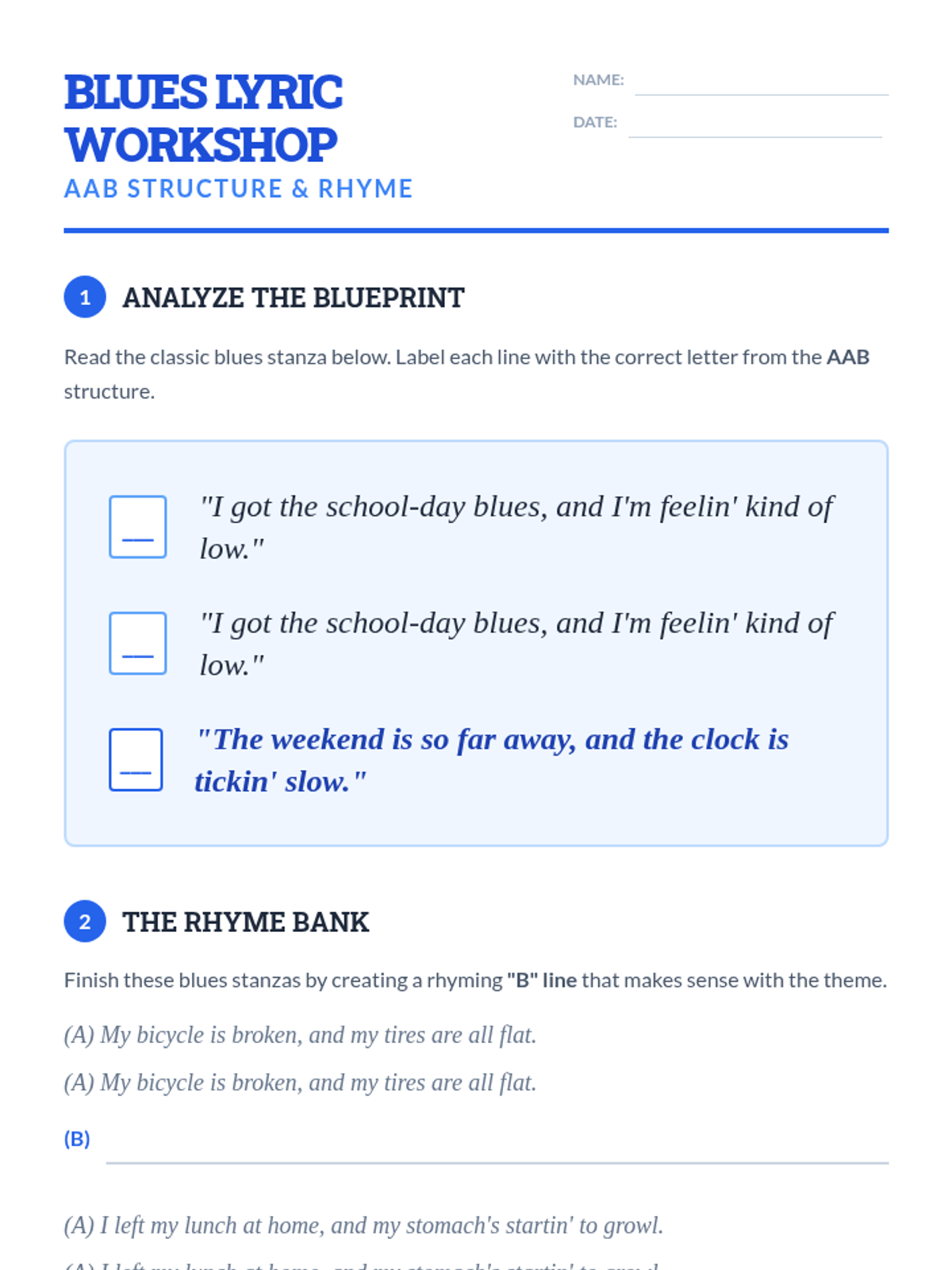
This lesson deconstructs the musical math of the 12-bar blues and the AAB lyric structure. Students analyze lyrical themes of hardship and hope, then write their own grade-appropriate blues stanza fitting the metric structure.
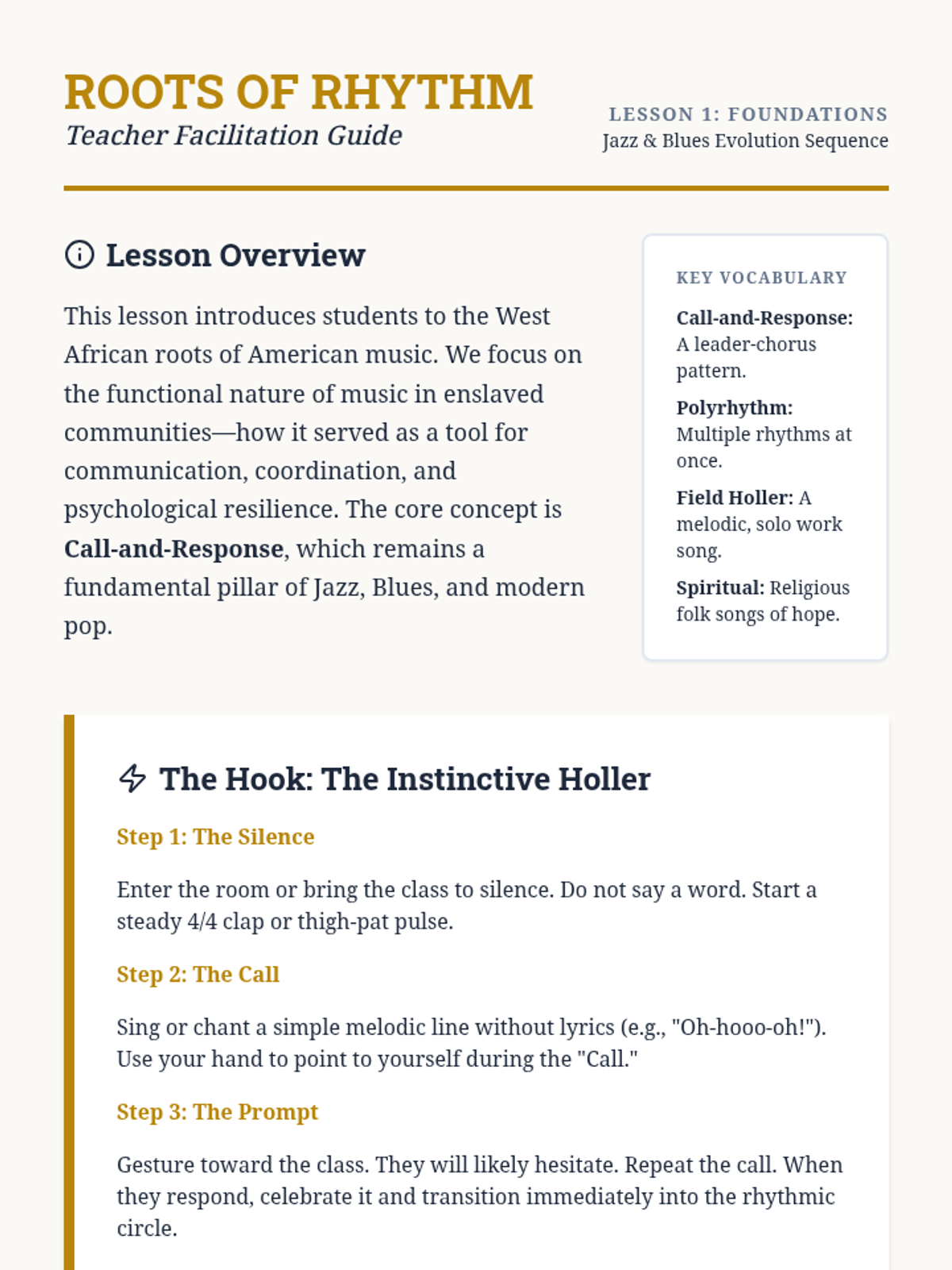
Students examine the African roots of American music, focusing on call-and-response patterns and the function of music in daily labor. They participate in a rhythmic call-and-response circle to experience the communal aspect of the genre.
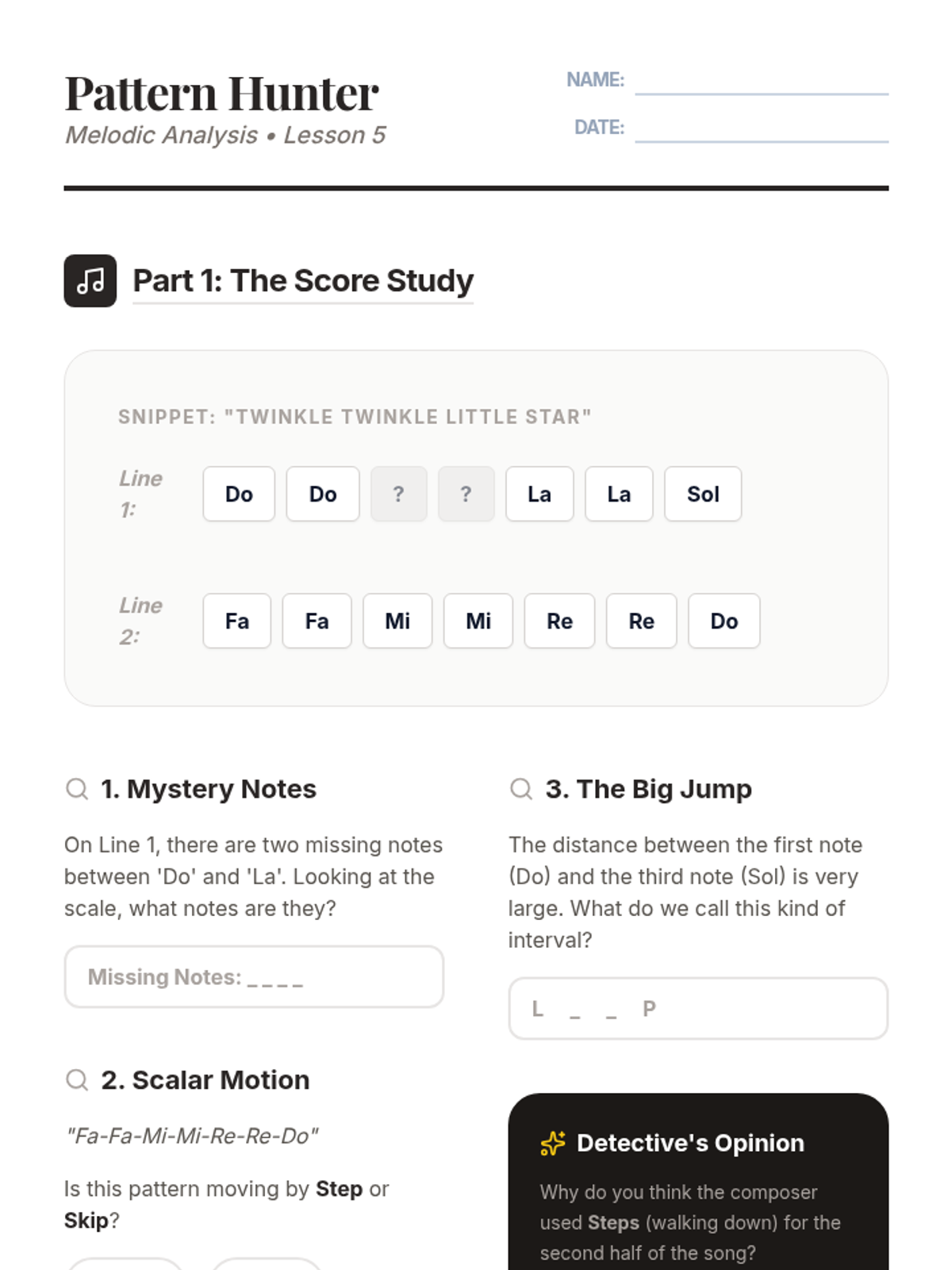
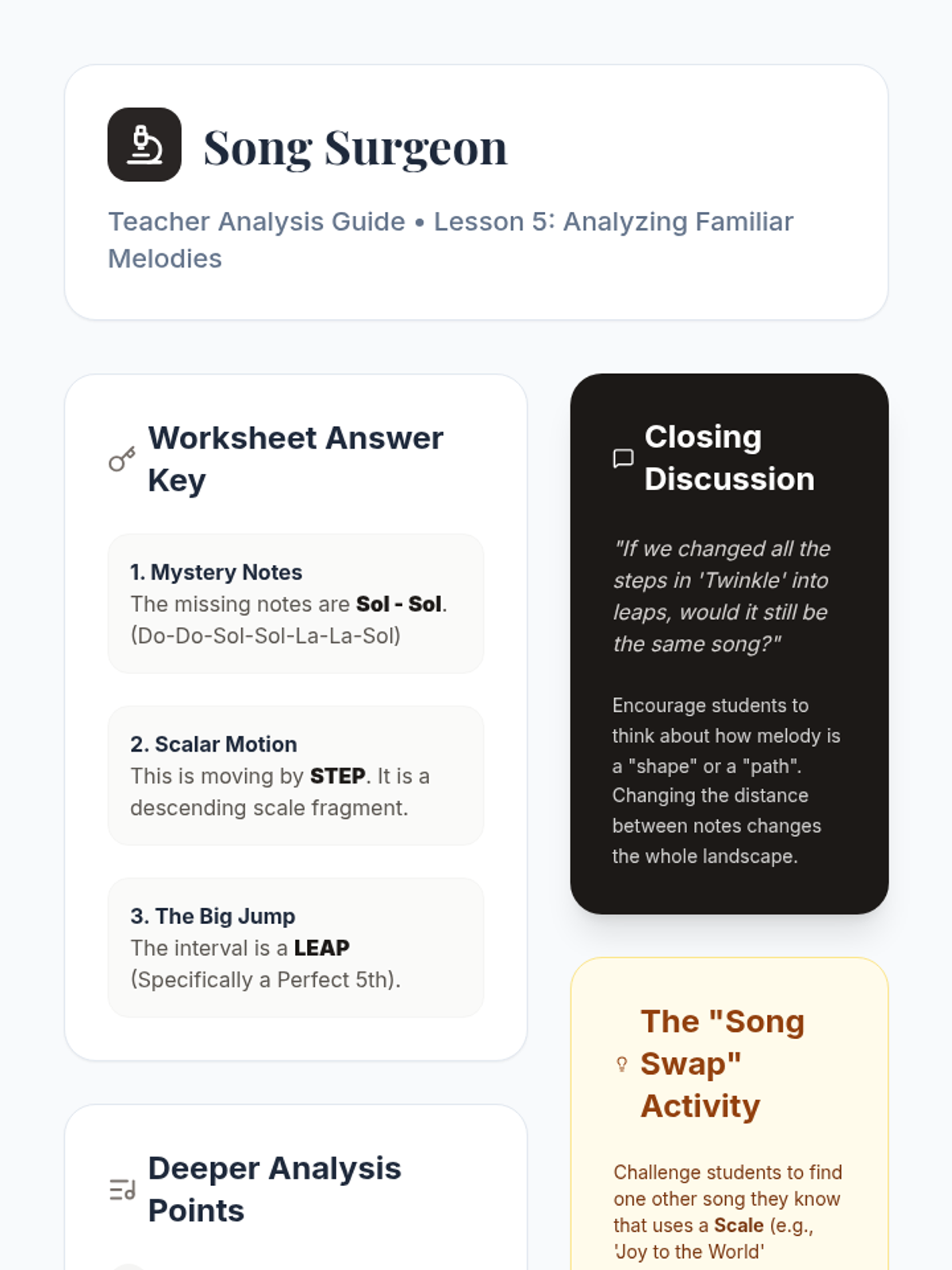
Applying knowledge of intervals and scales to analyze simple, familiar melodies like 'Twinkle Twinkle Little Star'.
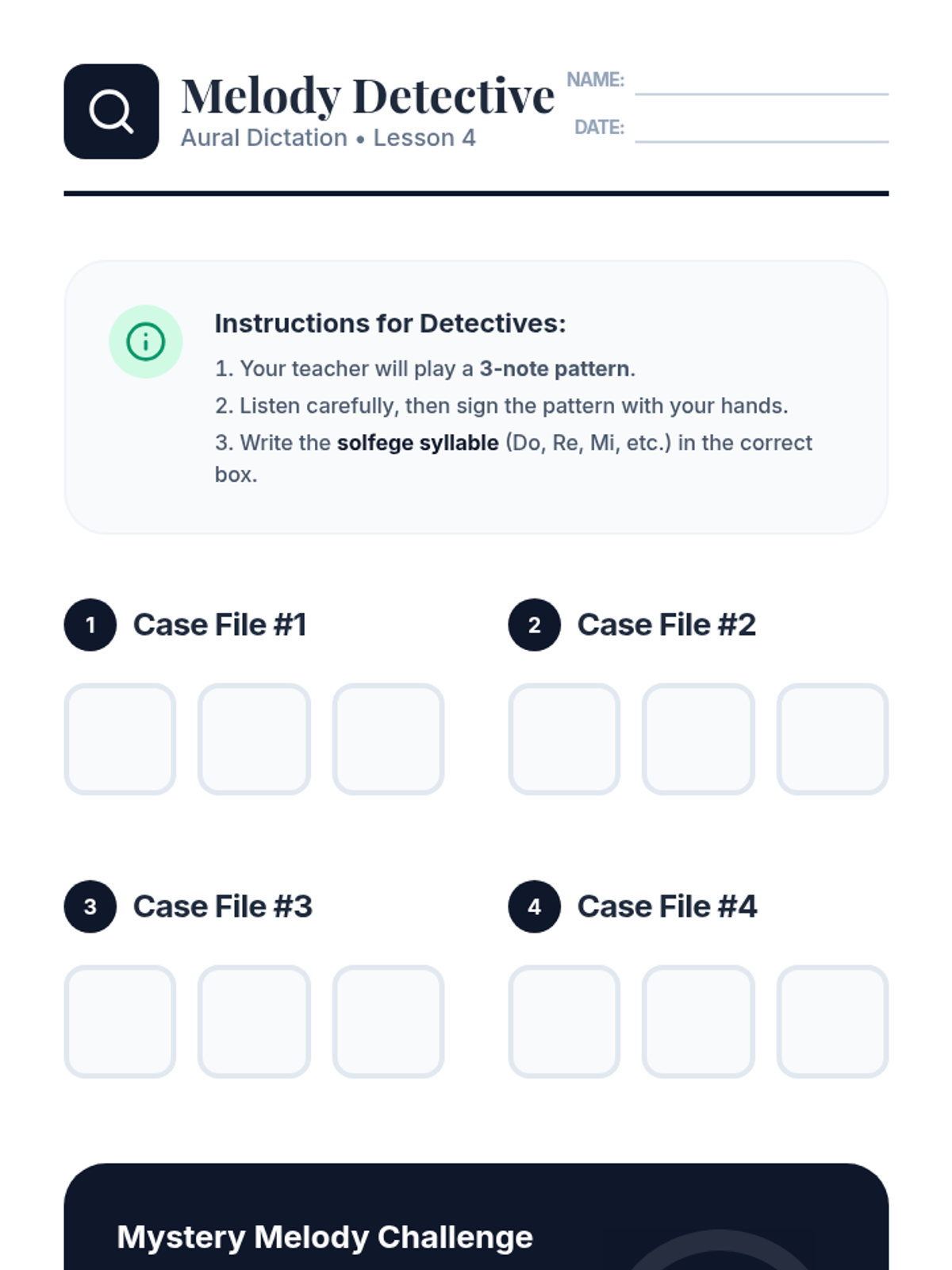
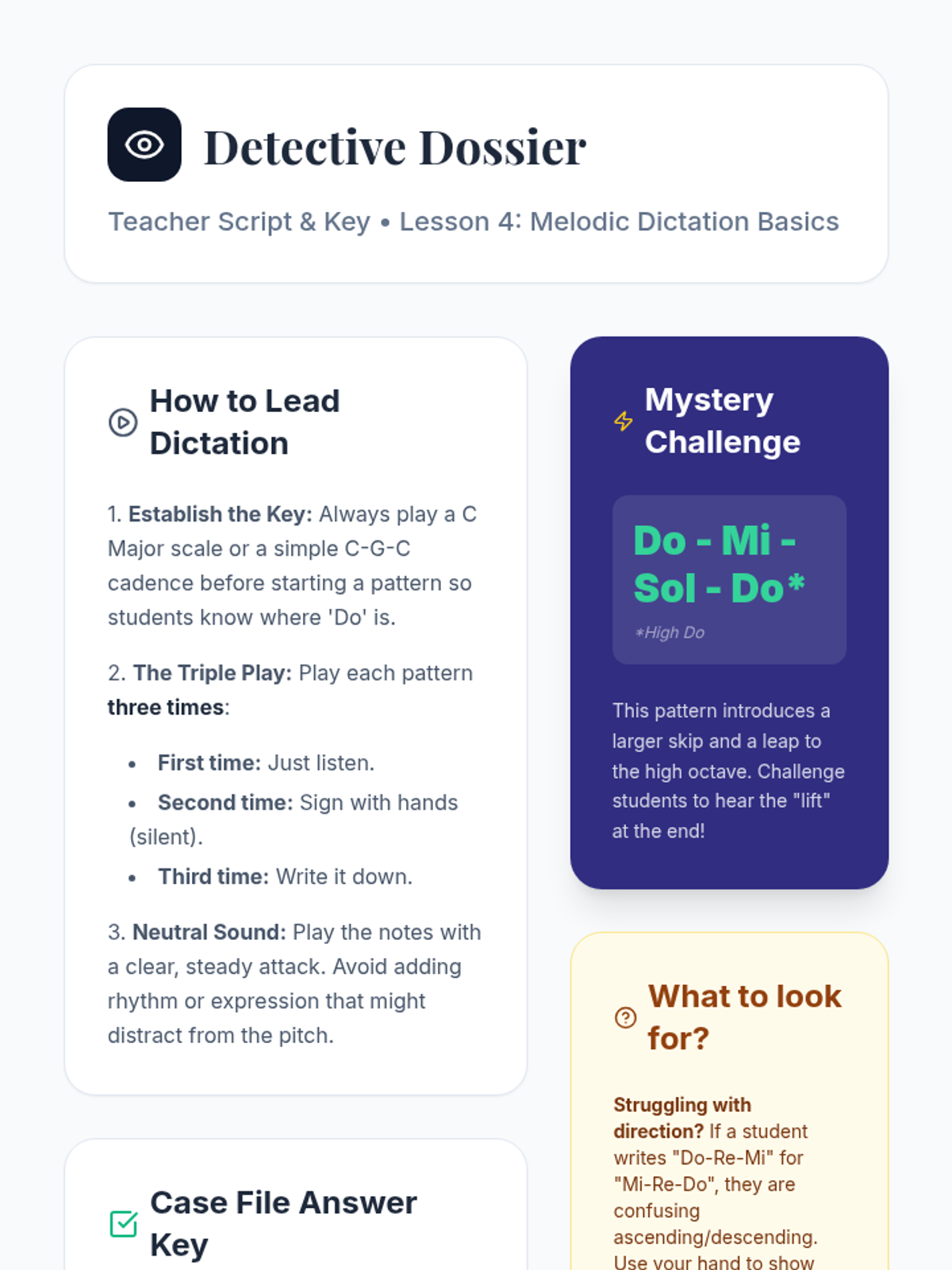
Translating short musical patterns heard by ear into basic notation or symbols.
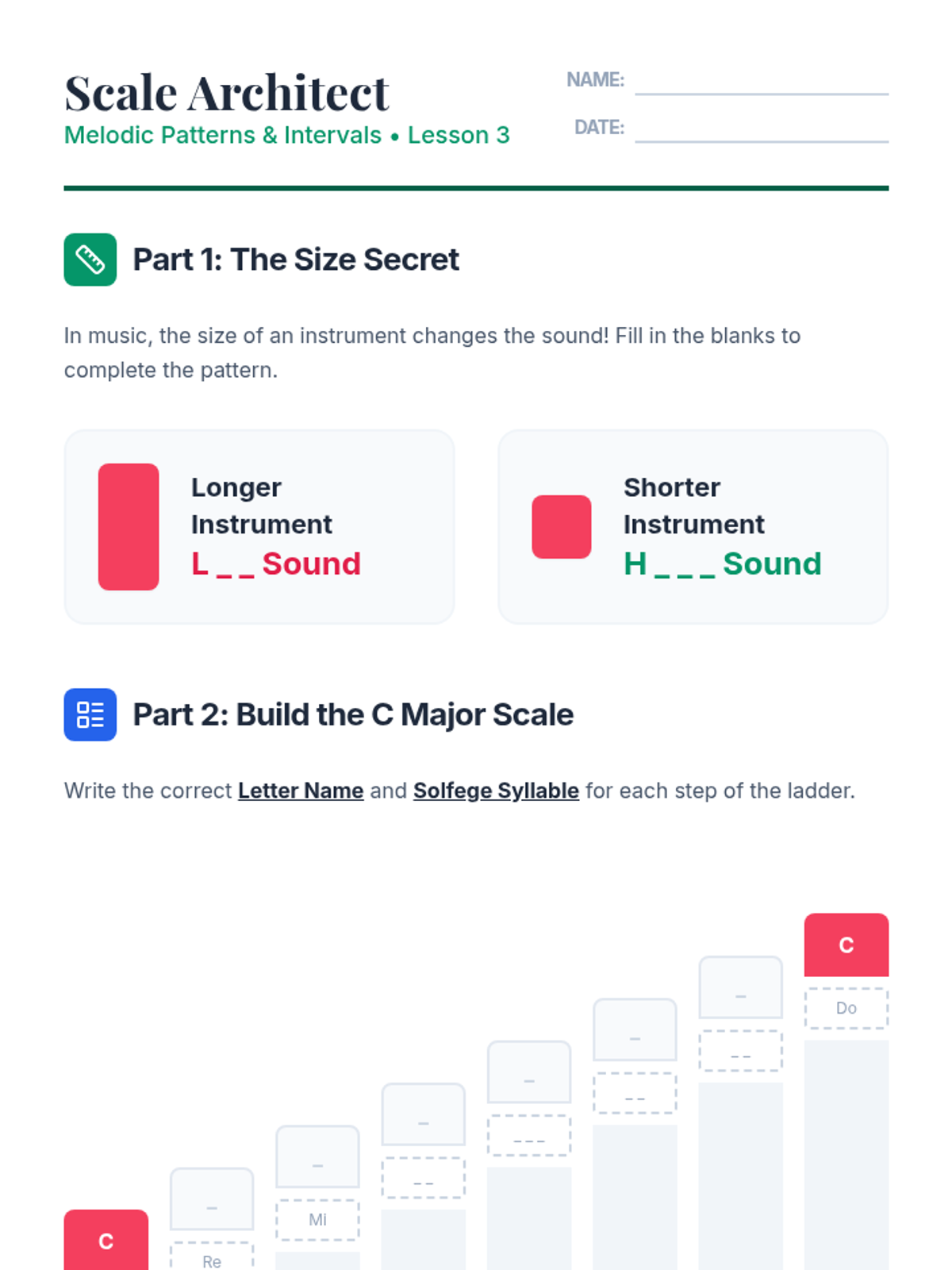
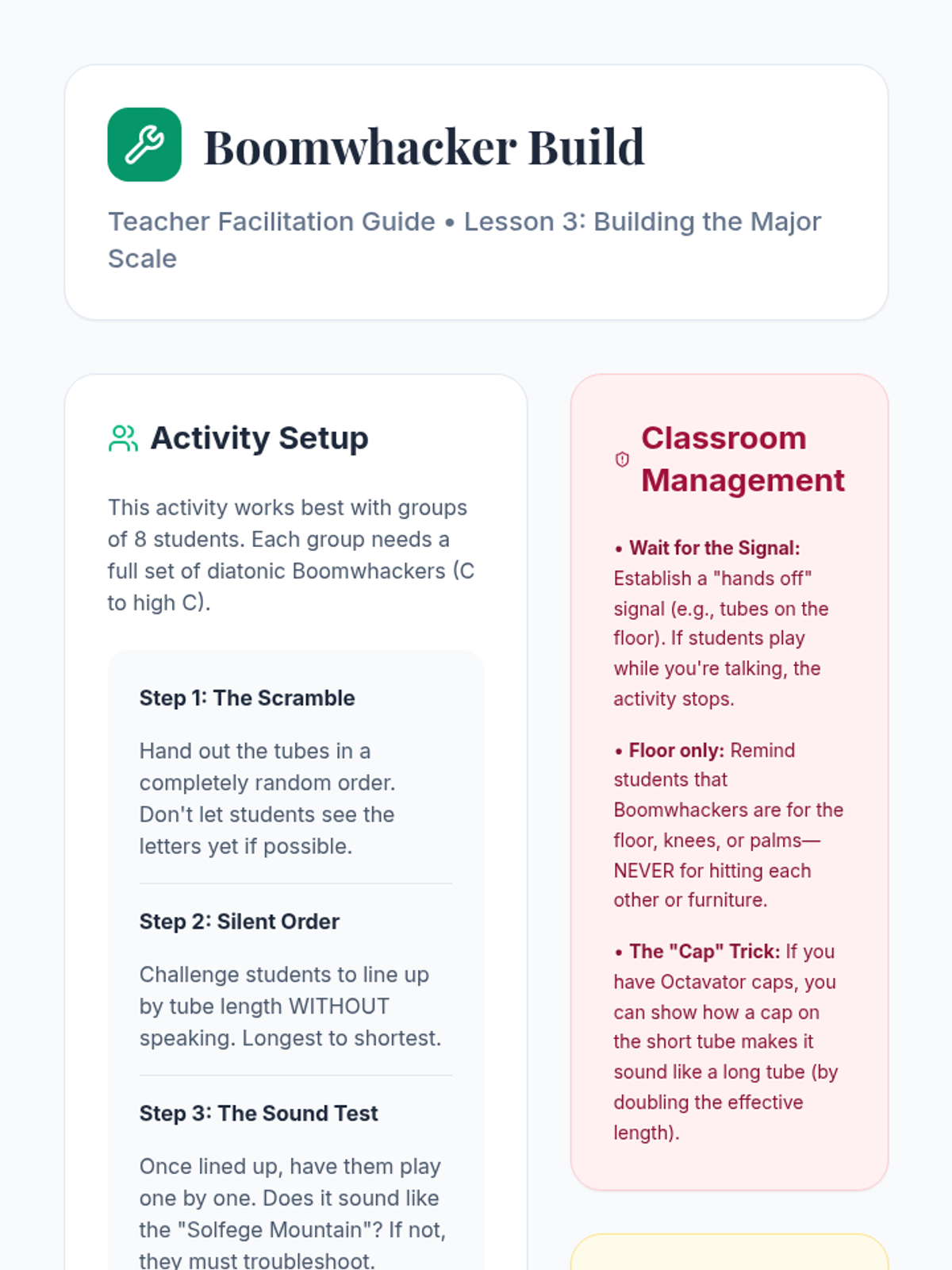
Students organize notes into the C Major scale 'ladder' using hands-on instruments like boomwhackers.
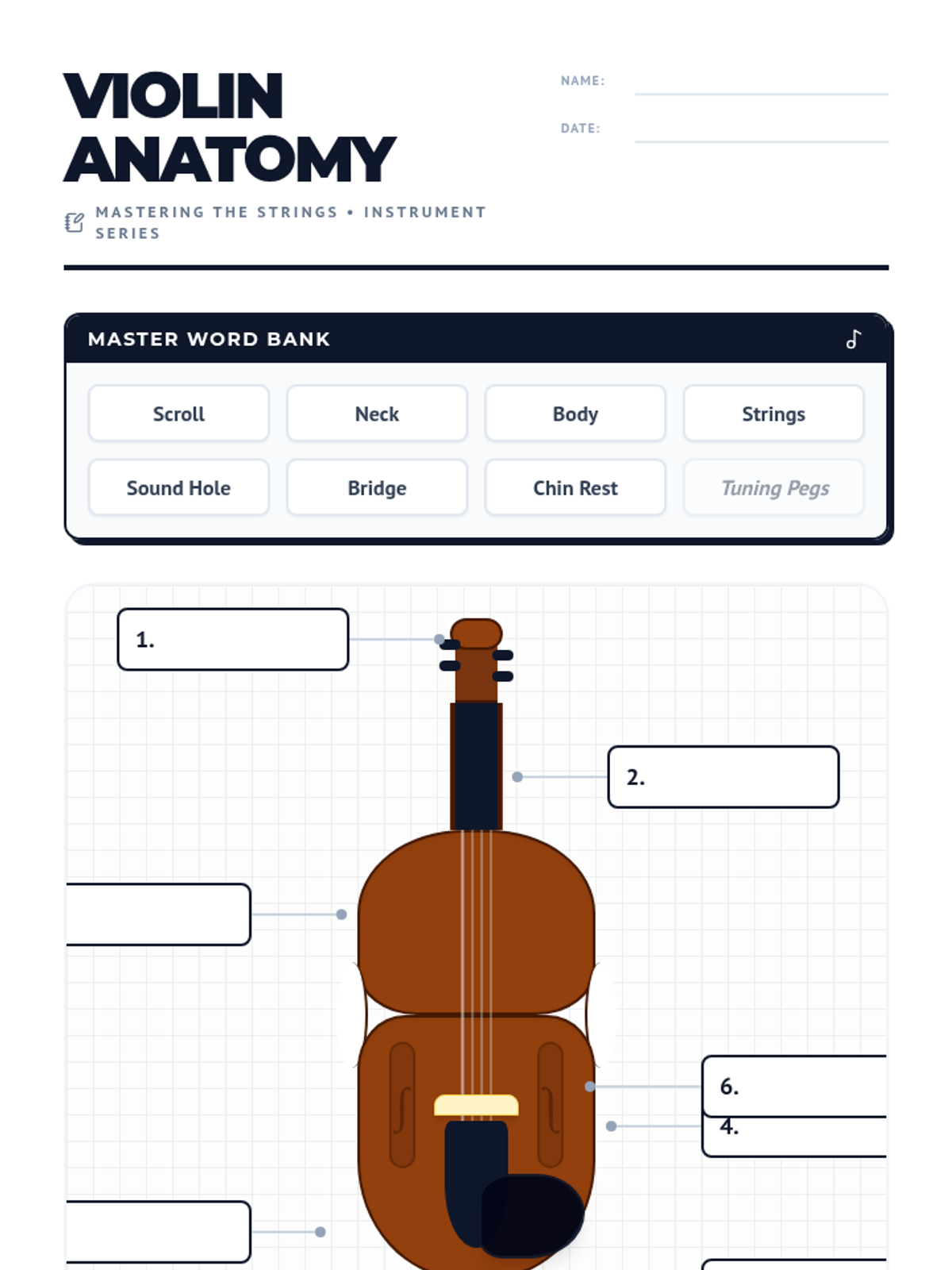
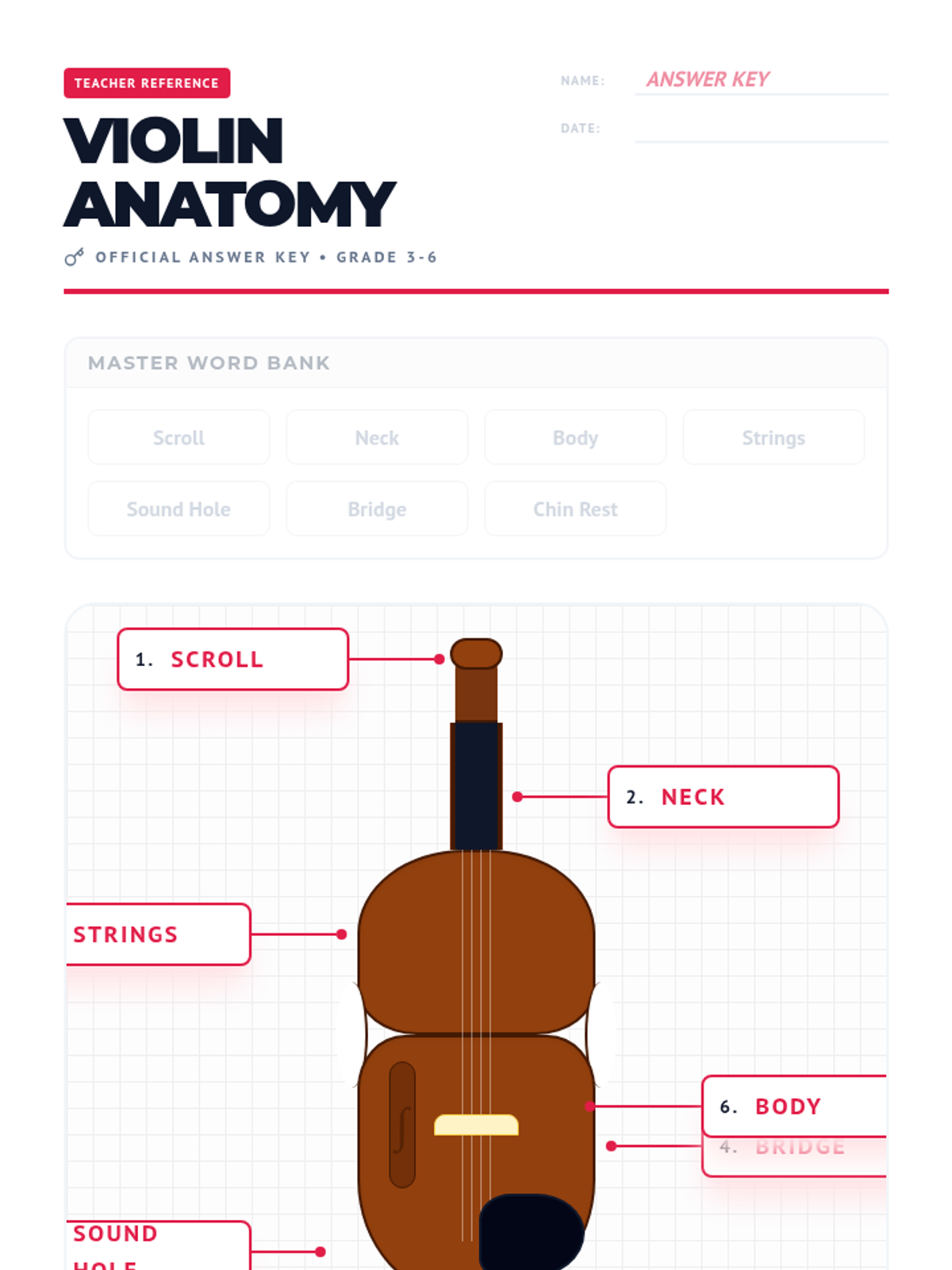
An introductory lesson on the anatomy and mechanics of the violin, including labeling parts and understanding their functions.
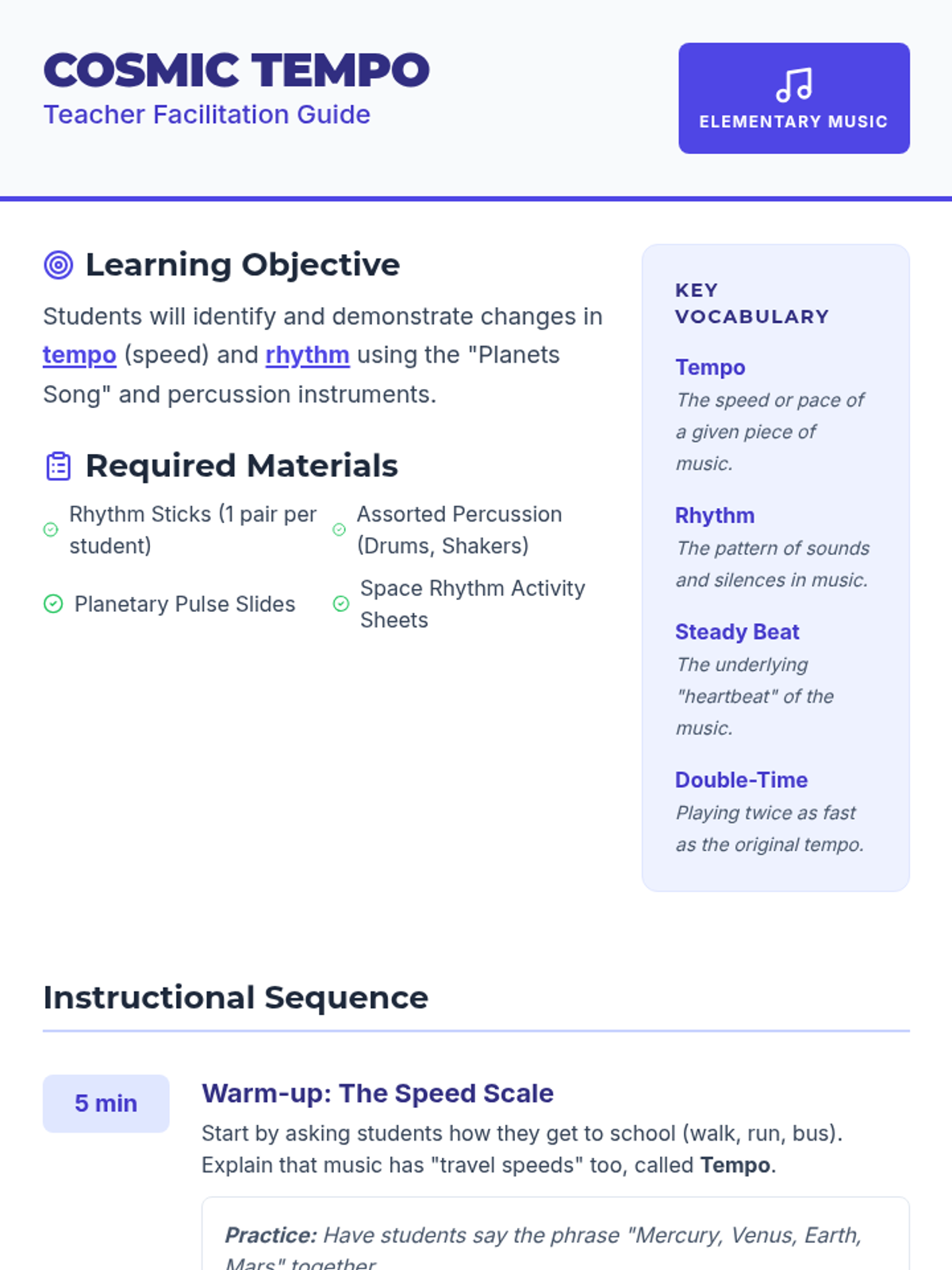
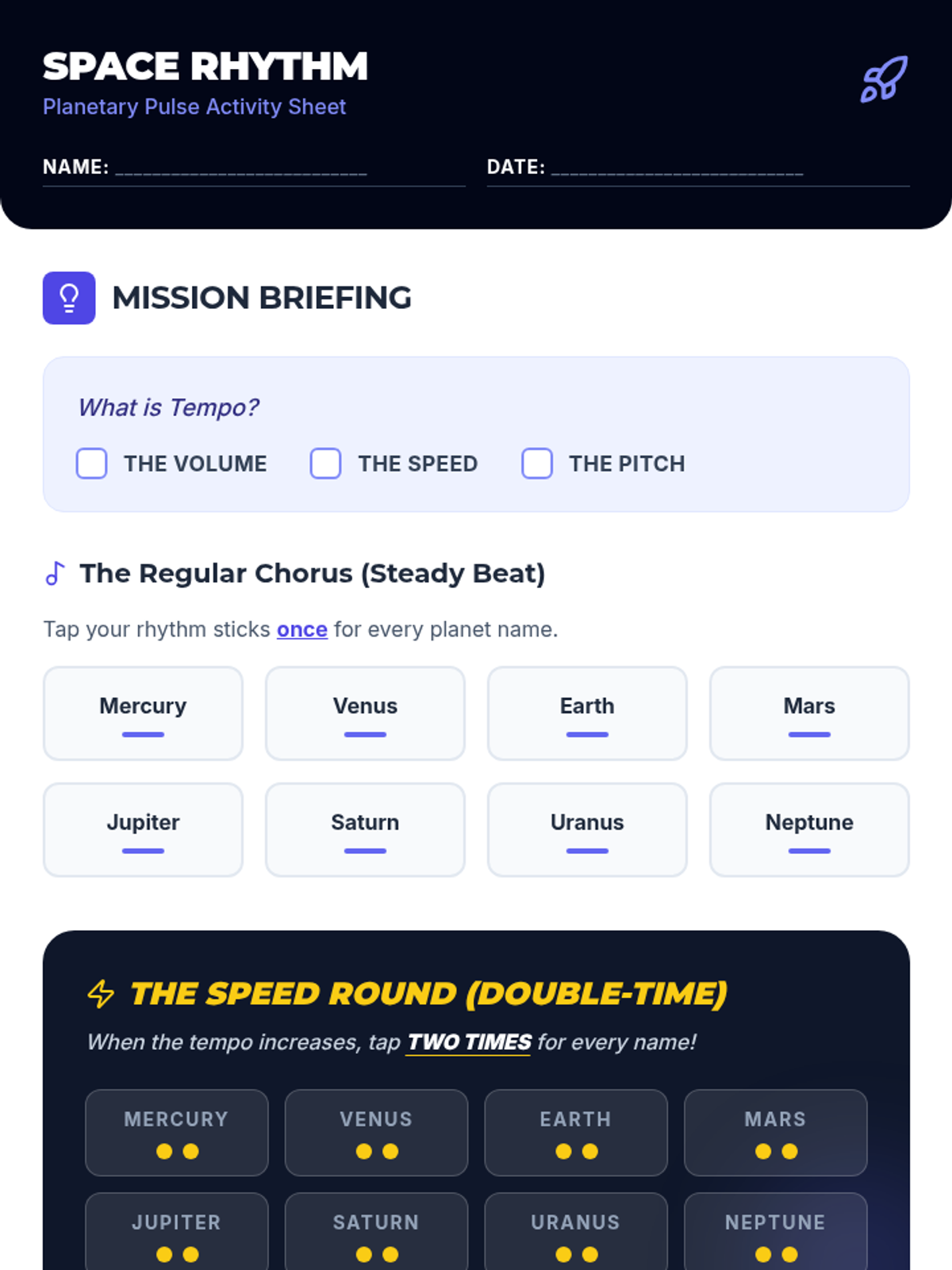
Students explore the concept of tempo and rhythm through a catchy song about the solar system, using rhythm sticks to match shifting speeds.
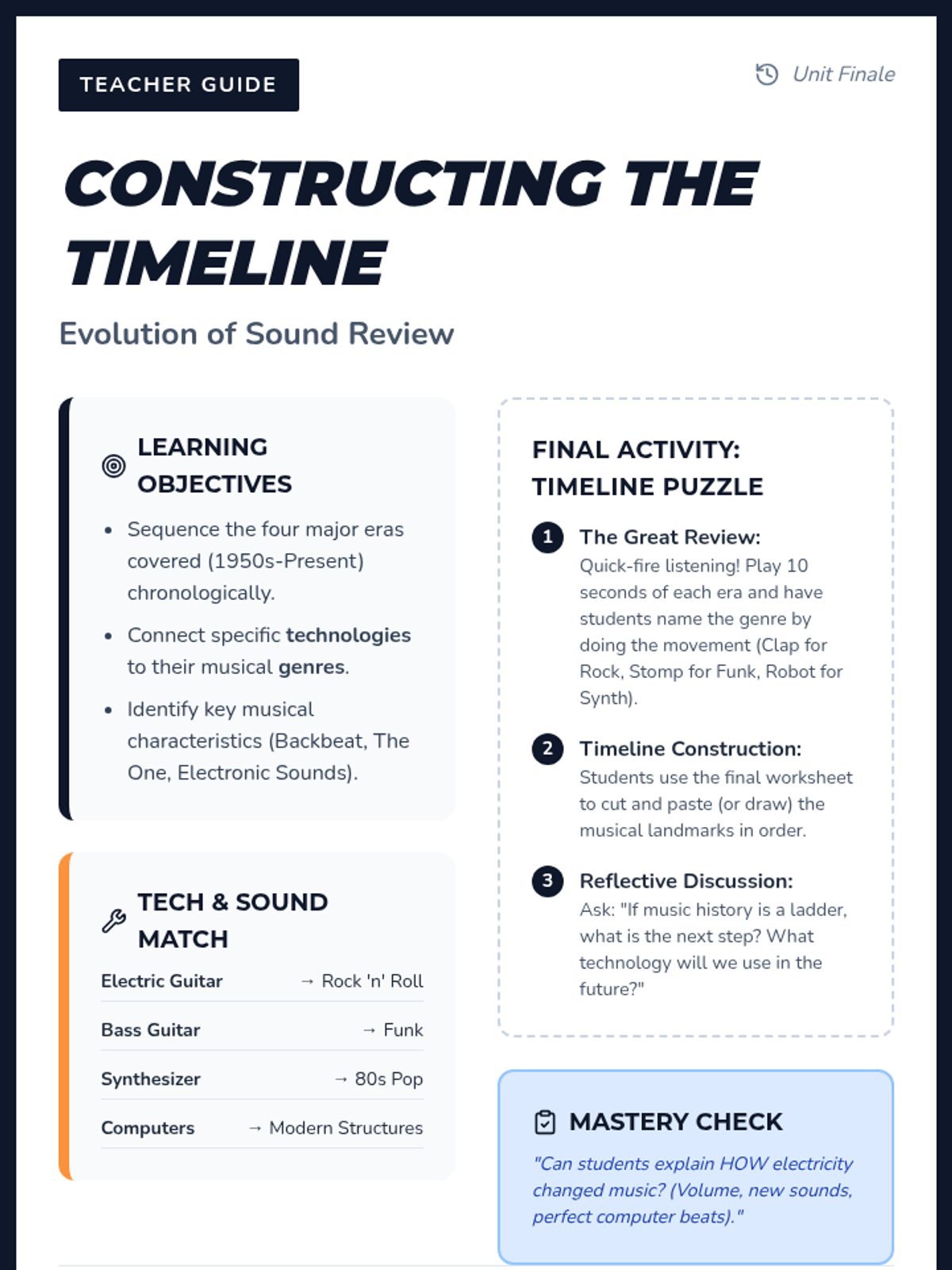
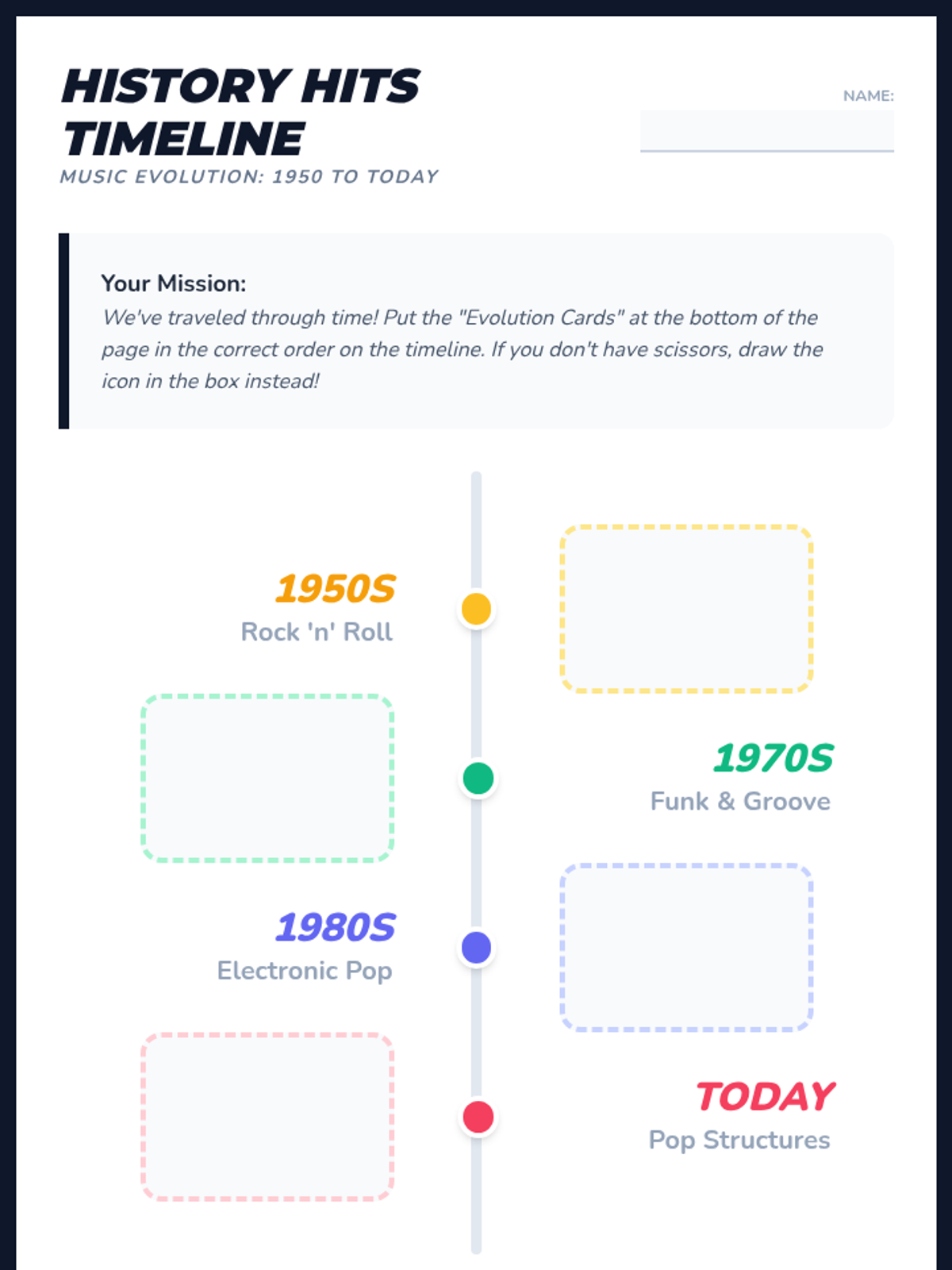
A cumulative review where students synthesize their knowledge to build a complete timeline of music history. They categorize genres by their technological and musical characteristics.
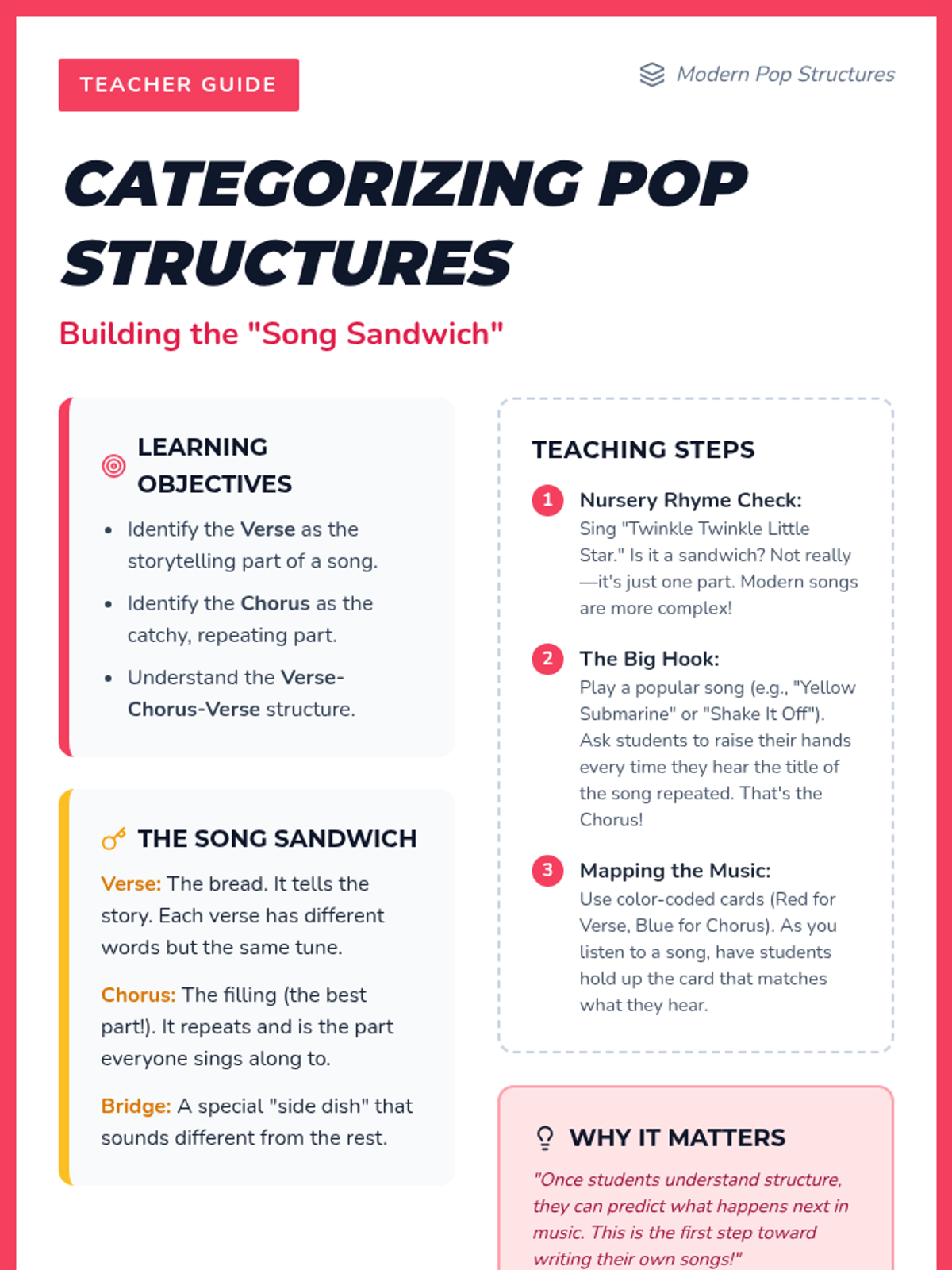
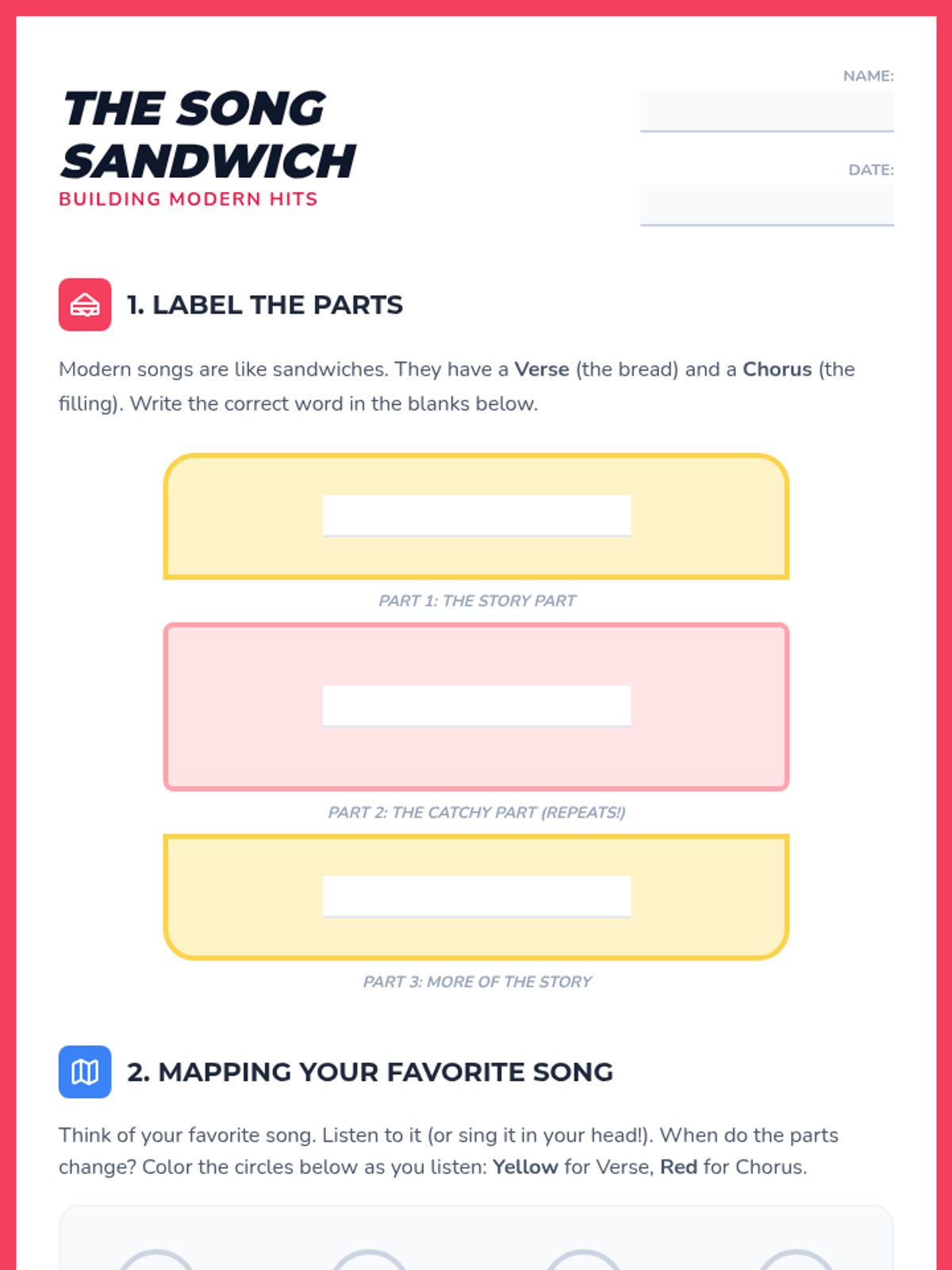
Students deconstruct modern pop songs to find the 'Verse-Chorus' pattern. They use a 'Song Sandwich' analogy to understand how most modern music is structured.
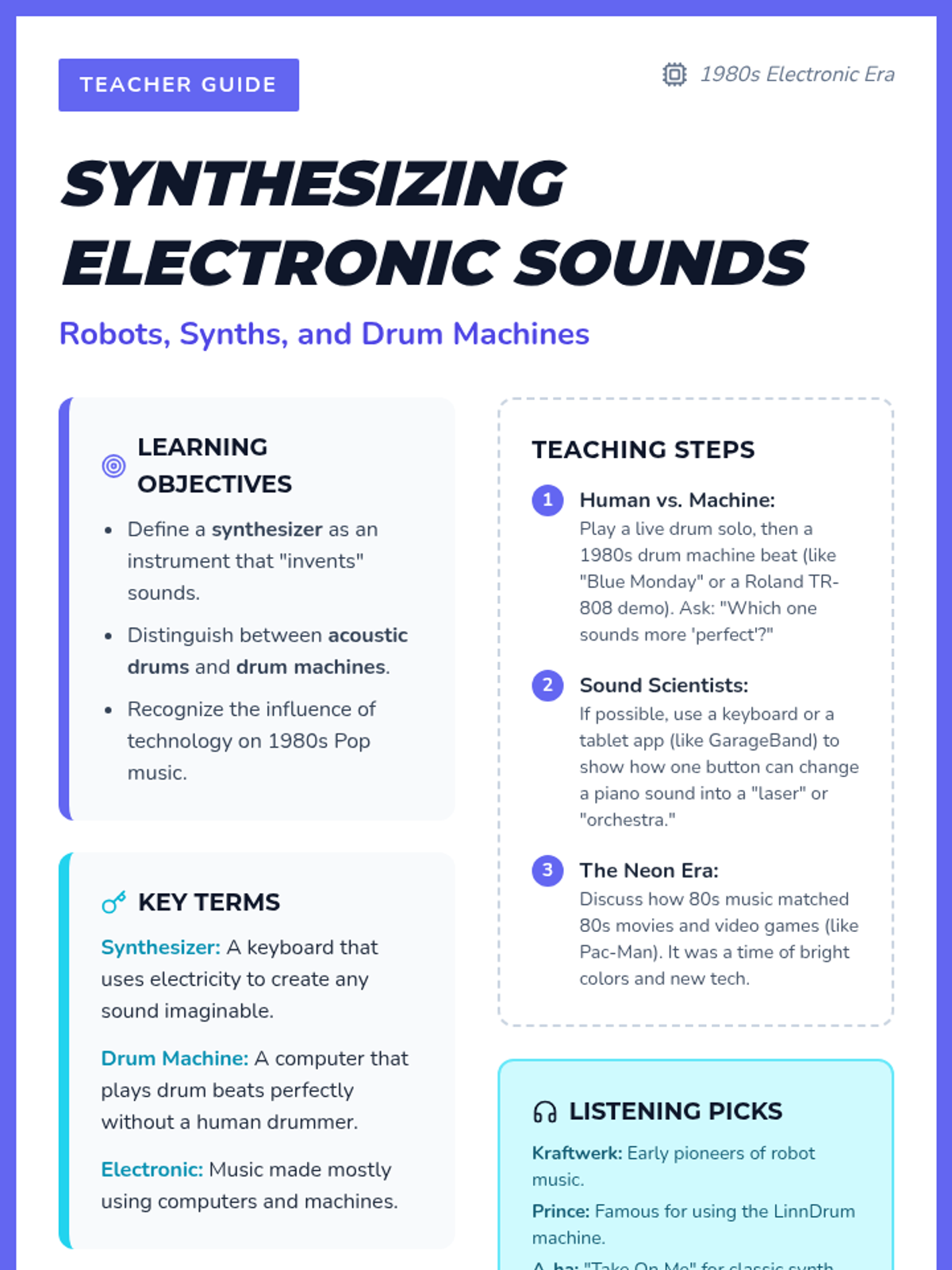
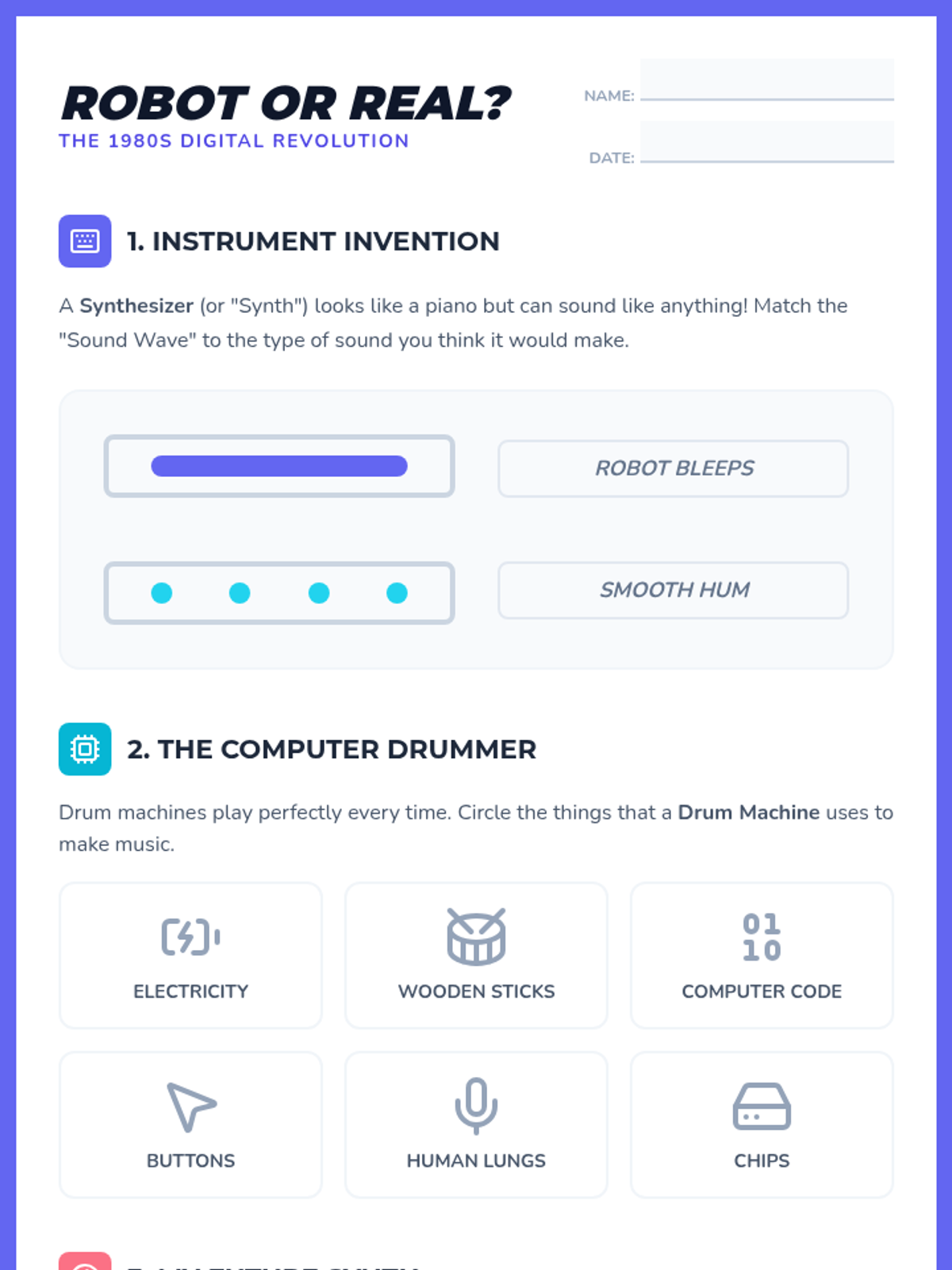
An introduction to the digital age of music, where students explore synthesizers and drum machines from the 1980s. They compare electronic sounds with traditional acoustic instruments.
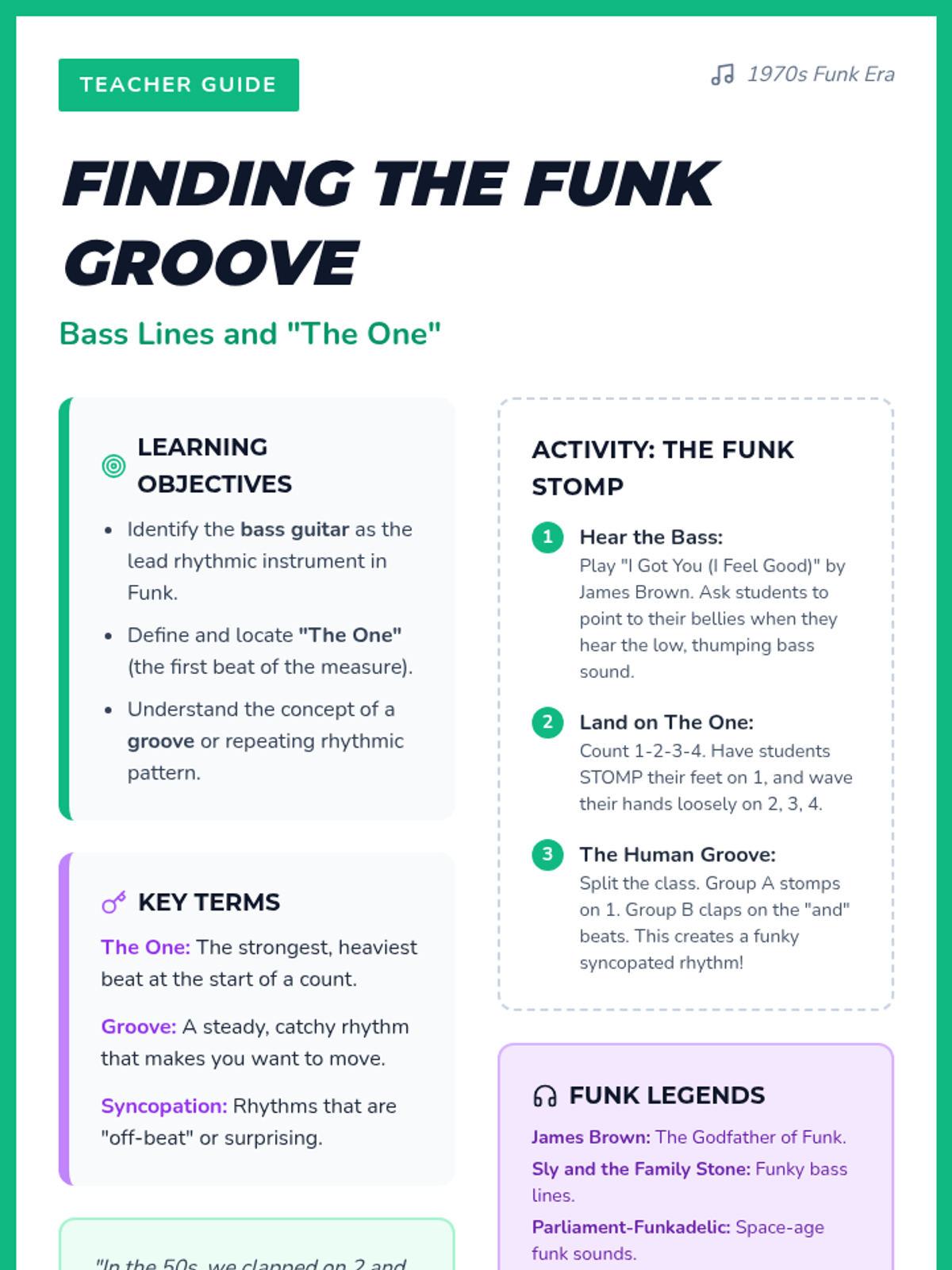
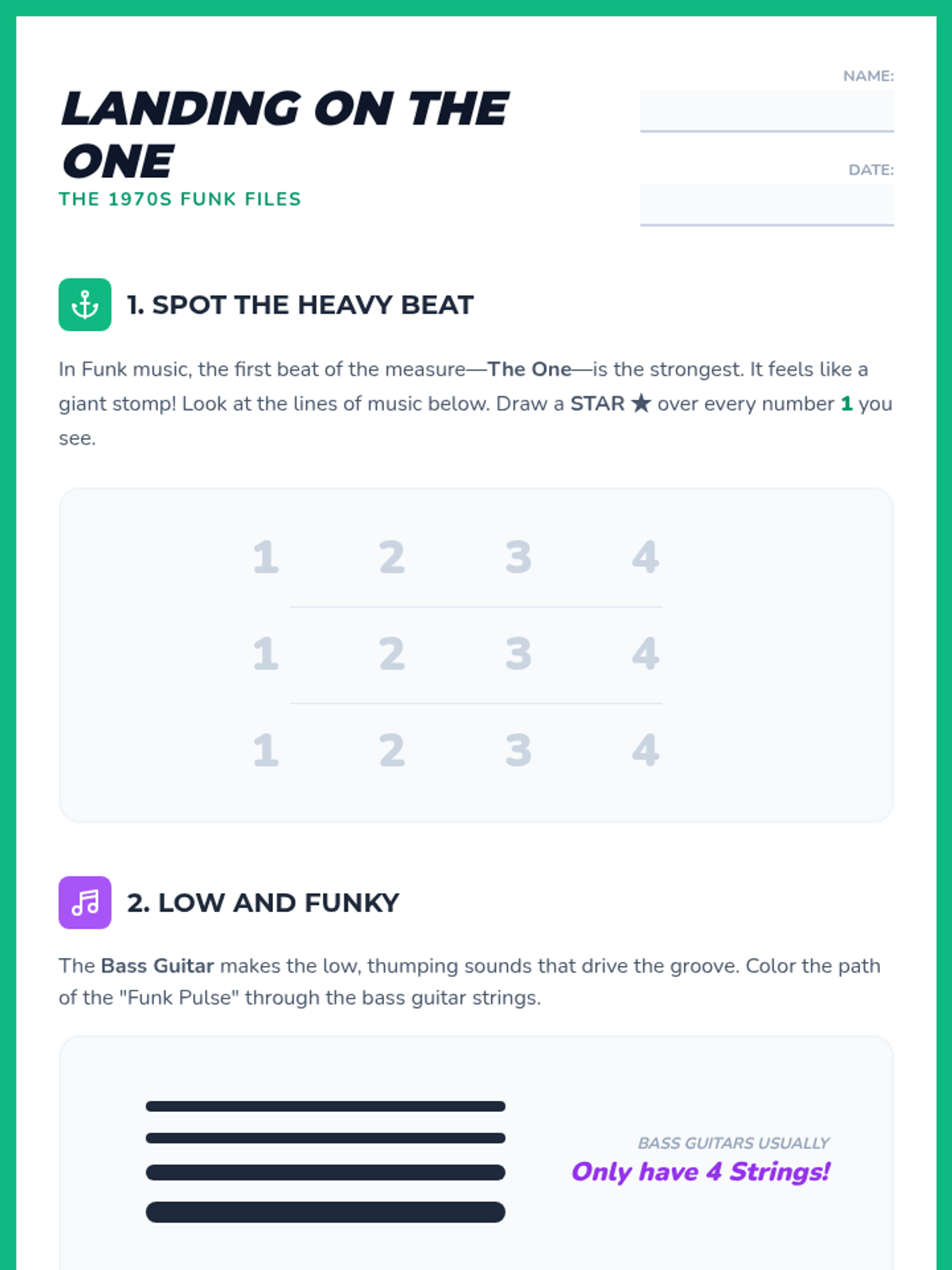
Learners dive into the 1970s Funk era, focusing on the bass guitar and the importance of 'The One.' They practice rhythmic grounding through movement and listening exercises.
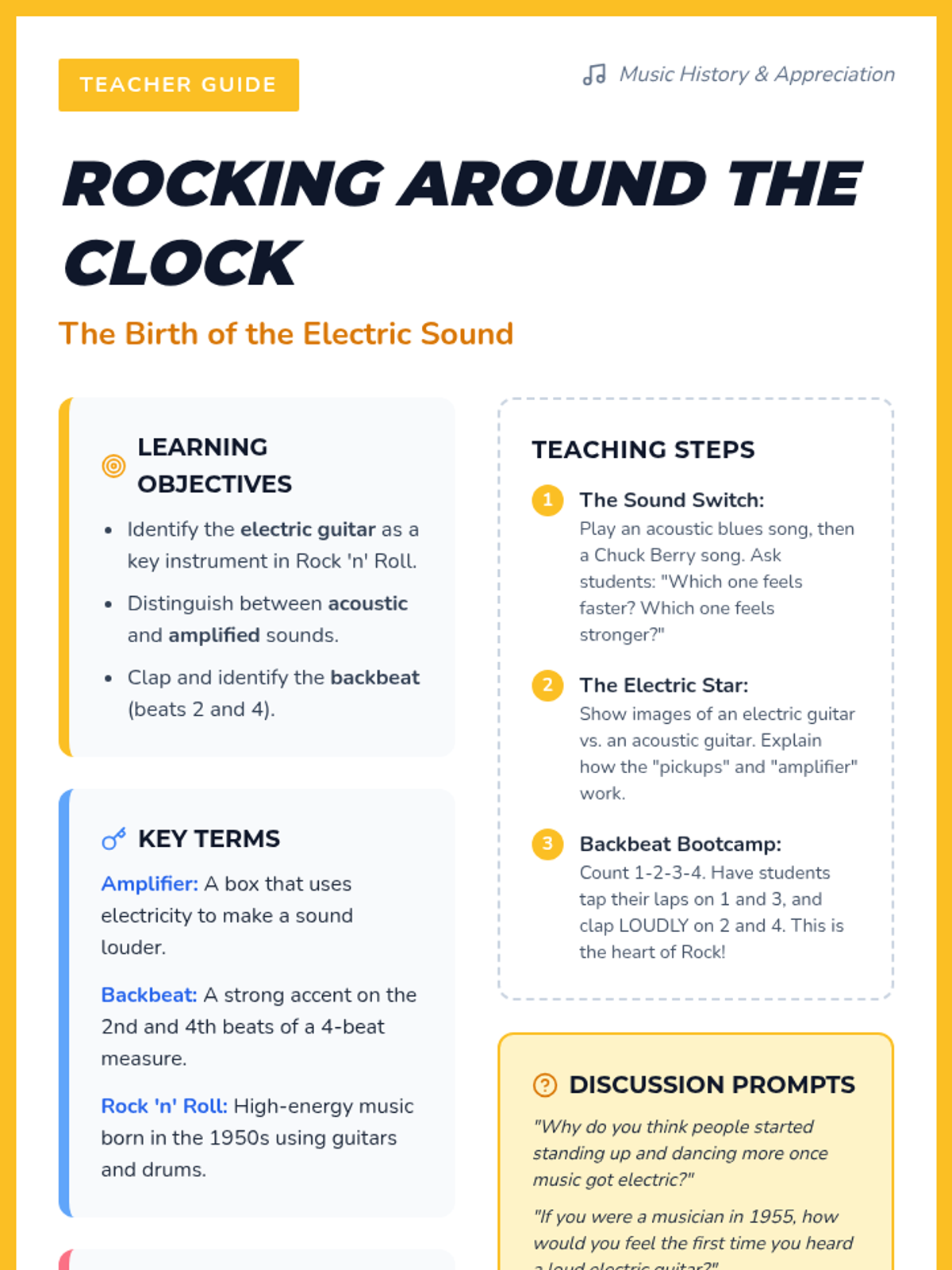
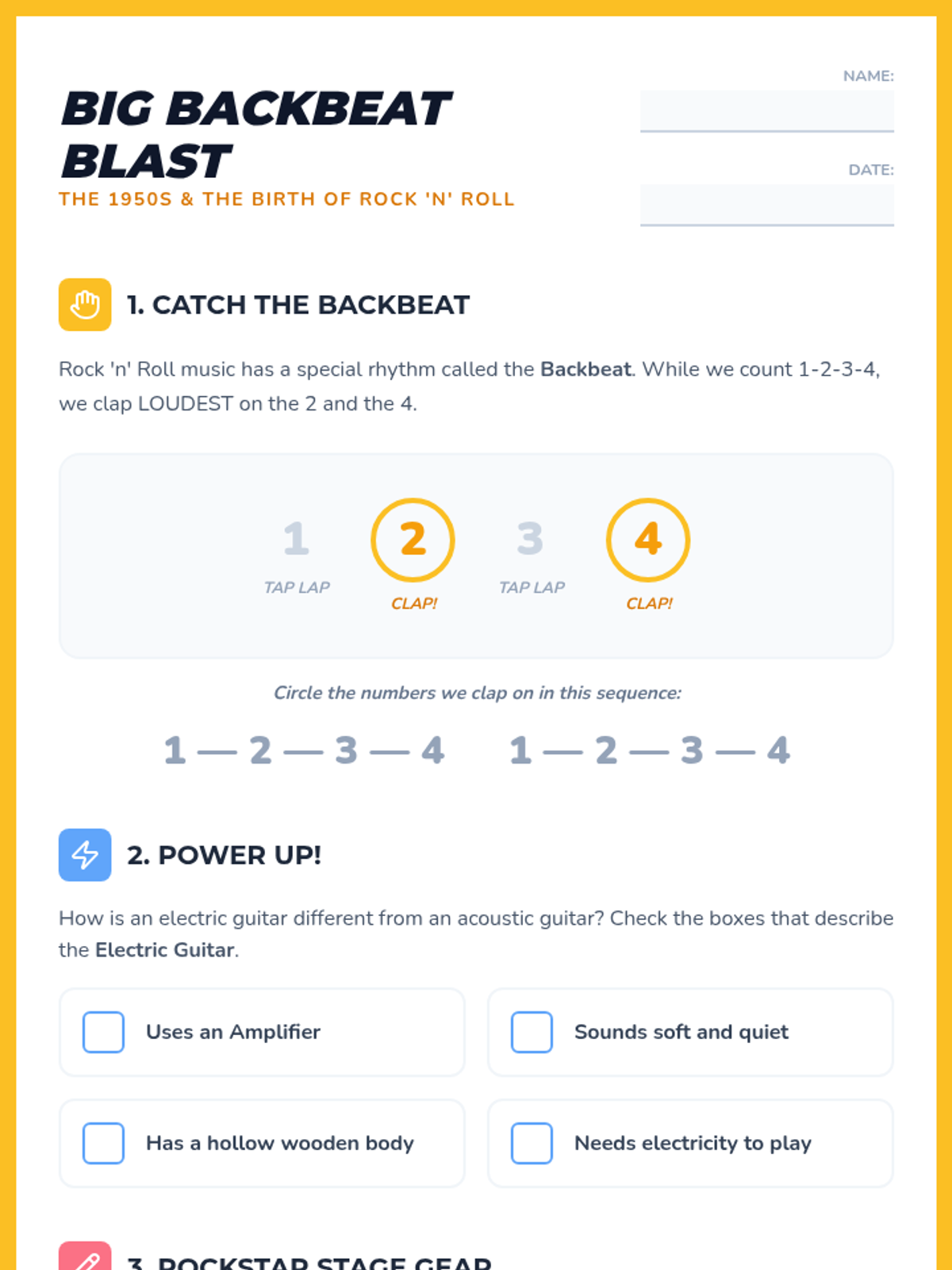
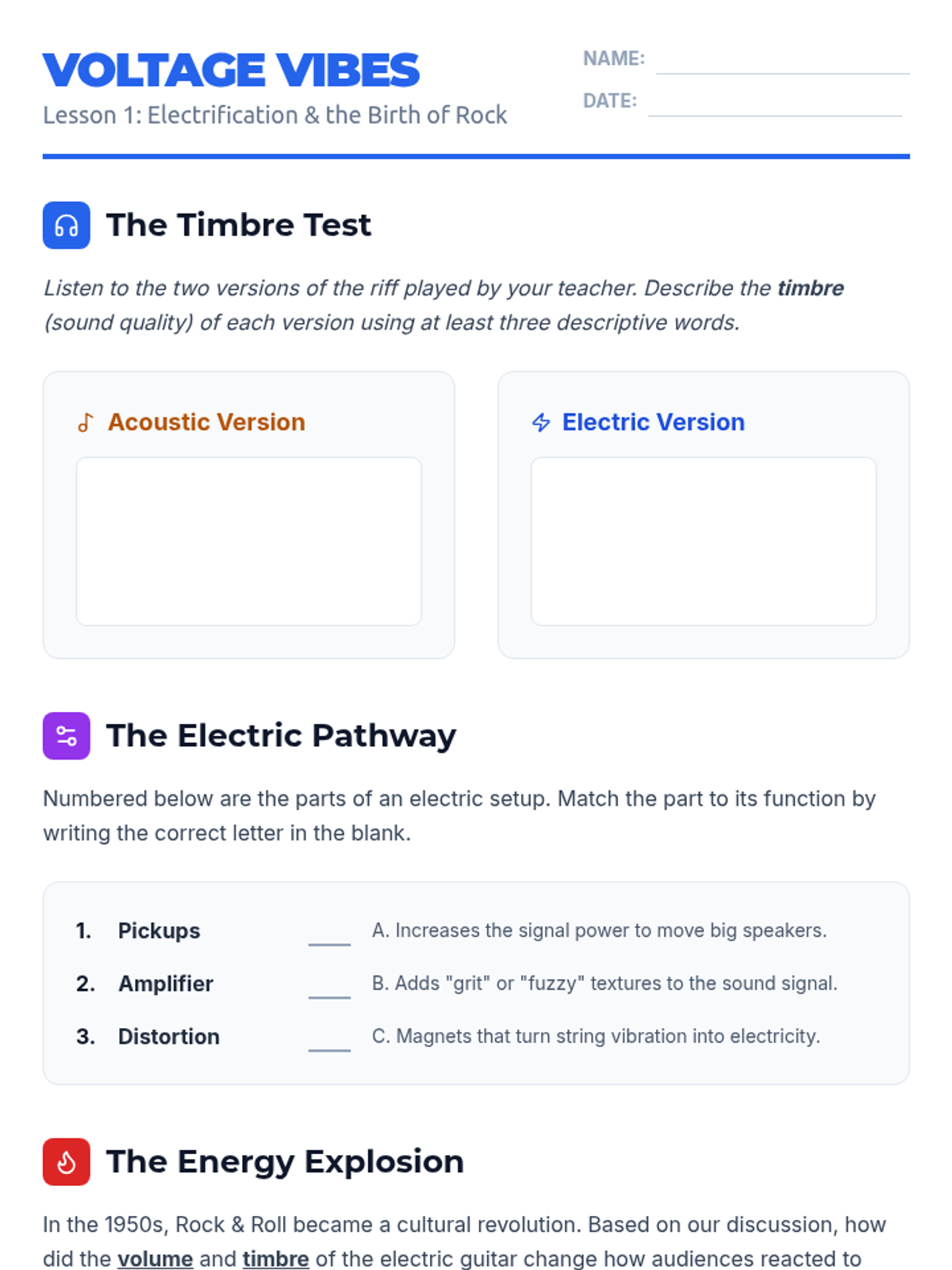
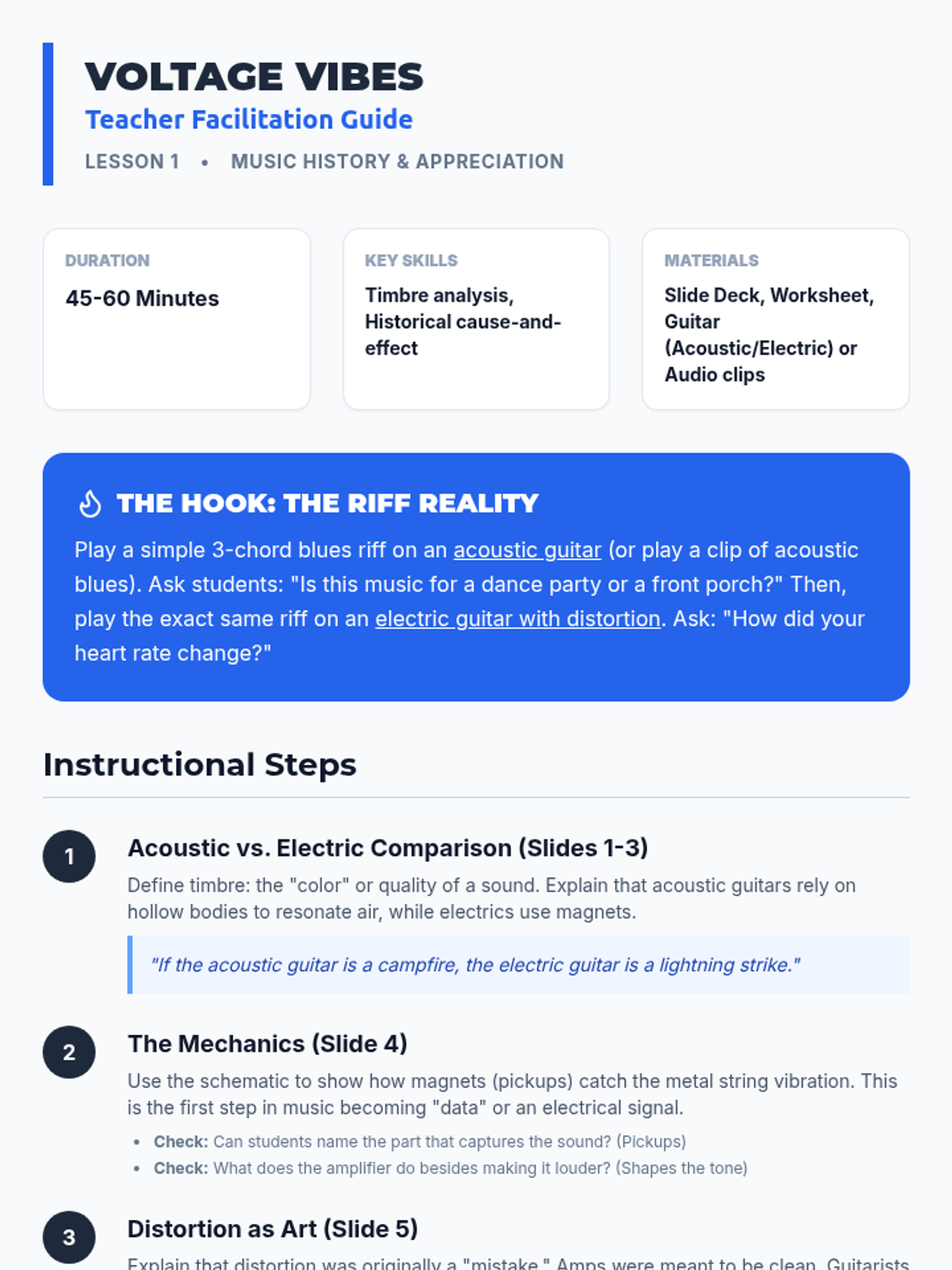
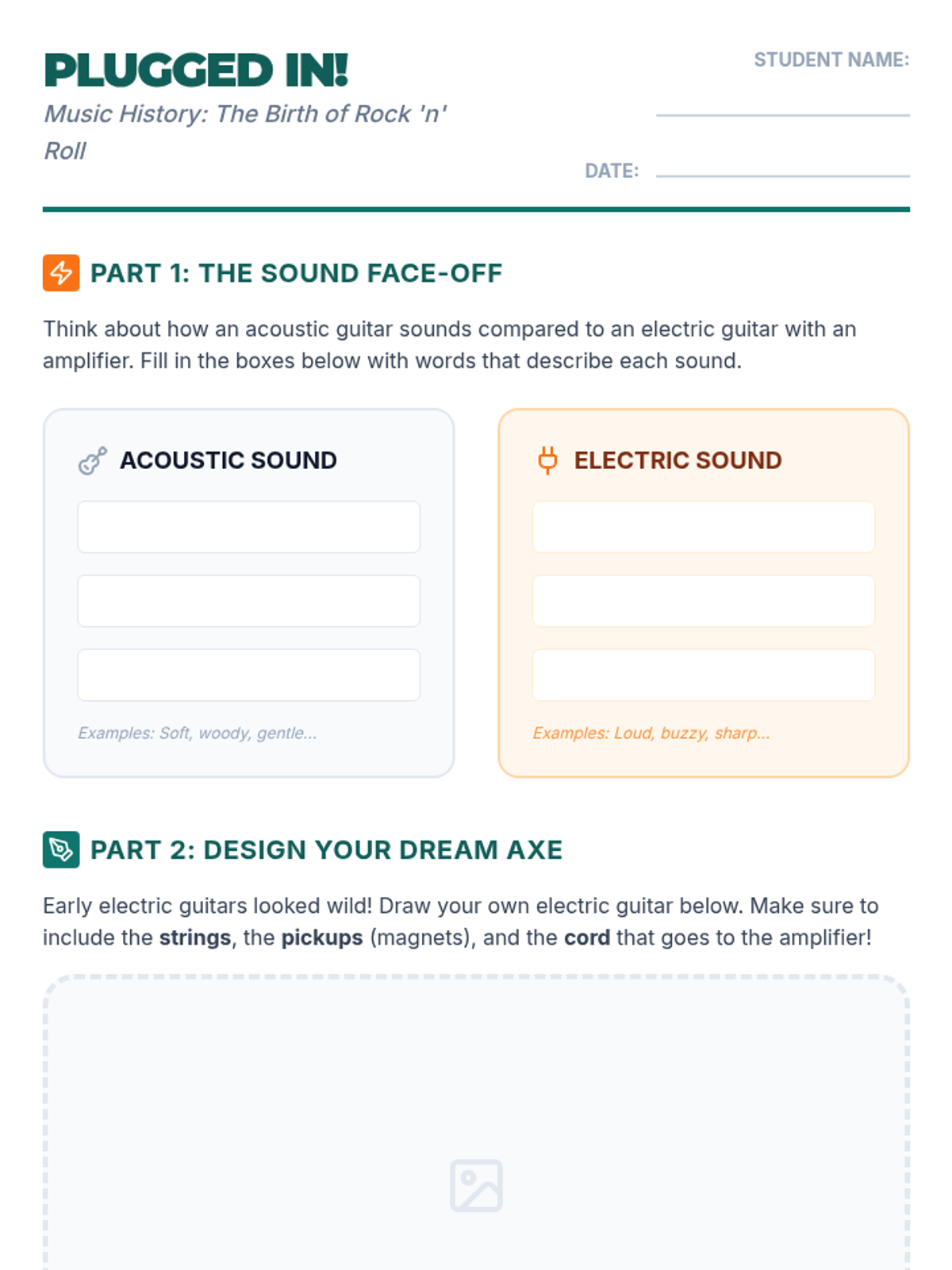
Students explore the birth of Rock 'n' Roll, focusing on the electric guitar and the shift from acoustic to amplified sound. They learn to identify the backbeat and understand how electricity changed the energy of music.
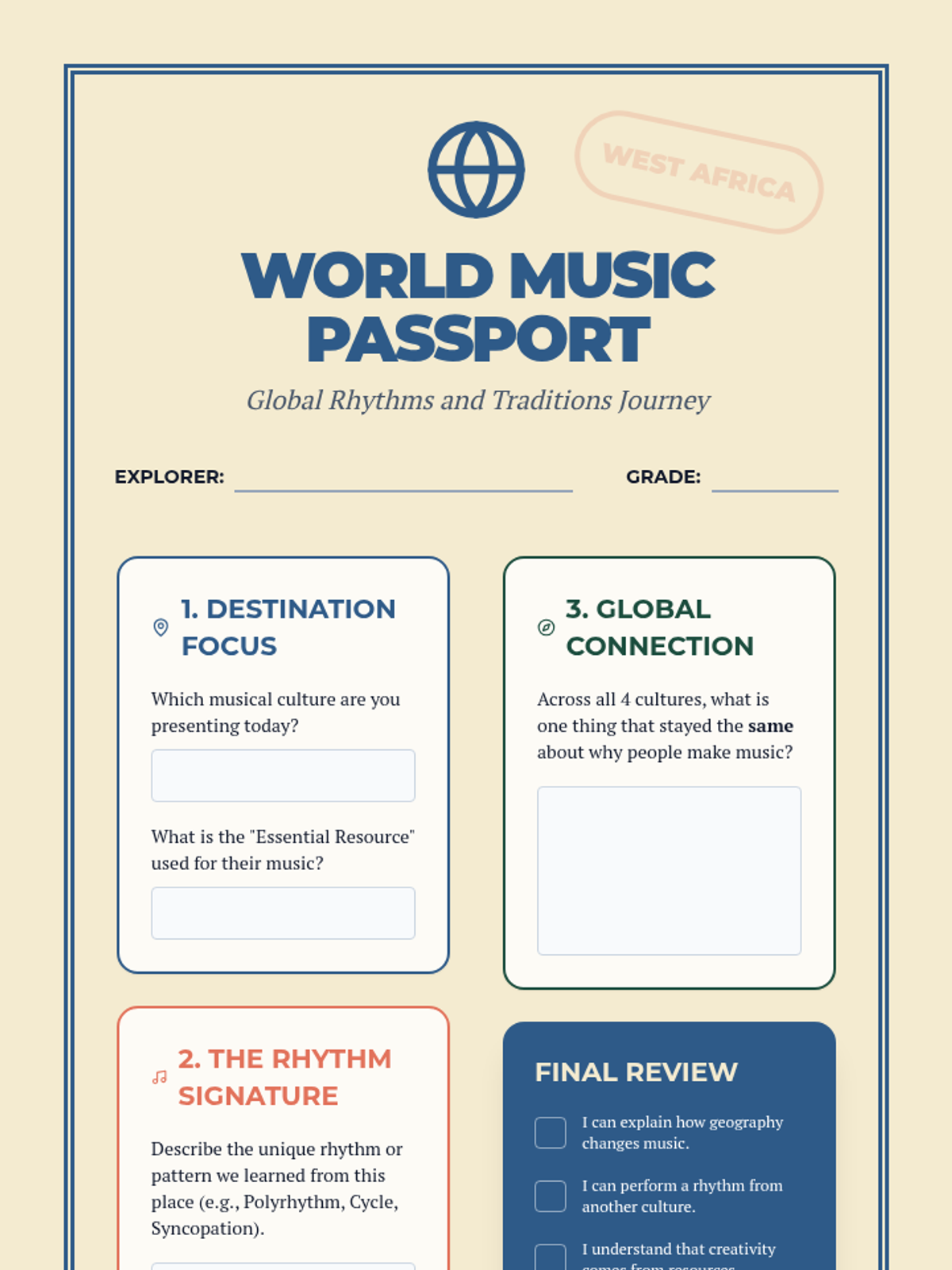
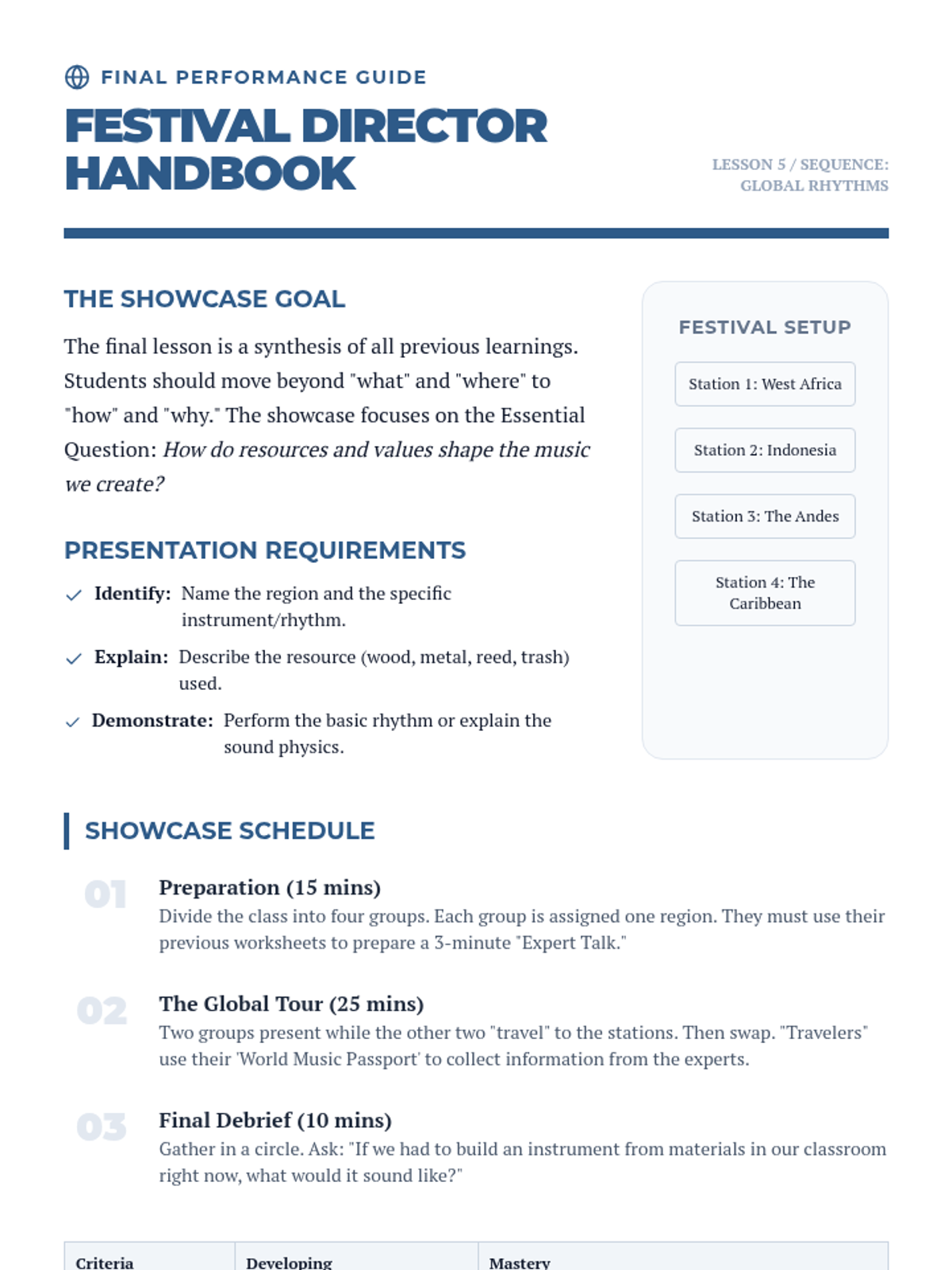
In this final lesson, small groups present on one of the regions studied, demonstrating a characteristic rhythm or explaining an instrument. The class synthesizes their learning by finding commonalities between the different cultures.
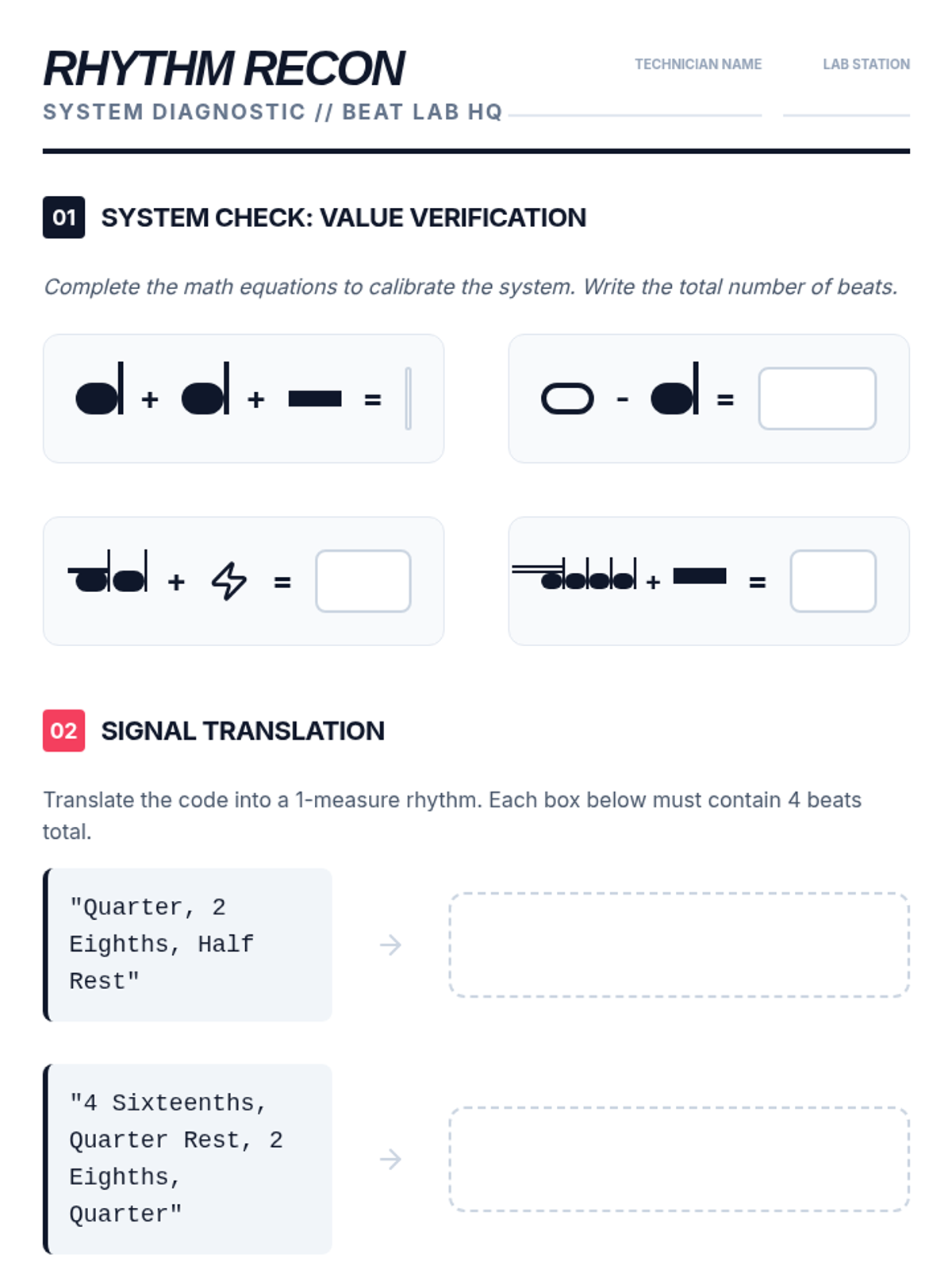
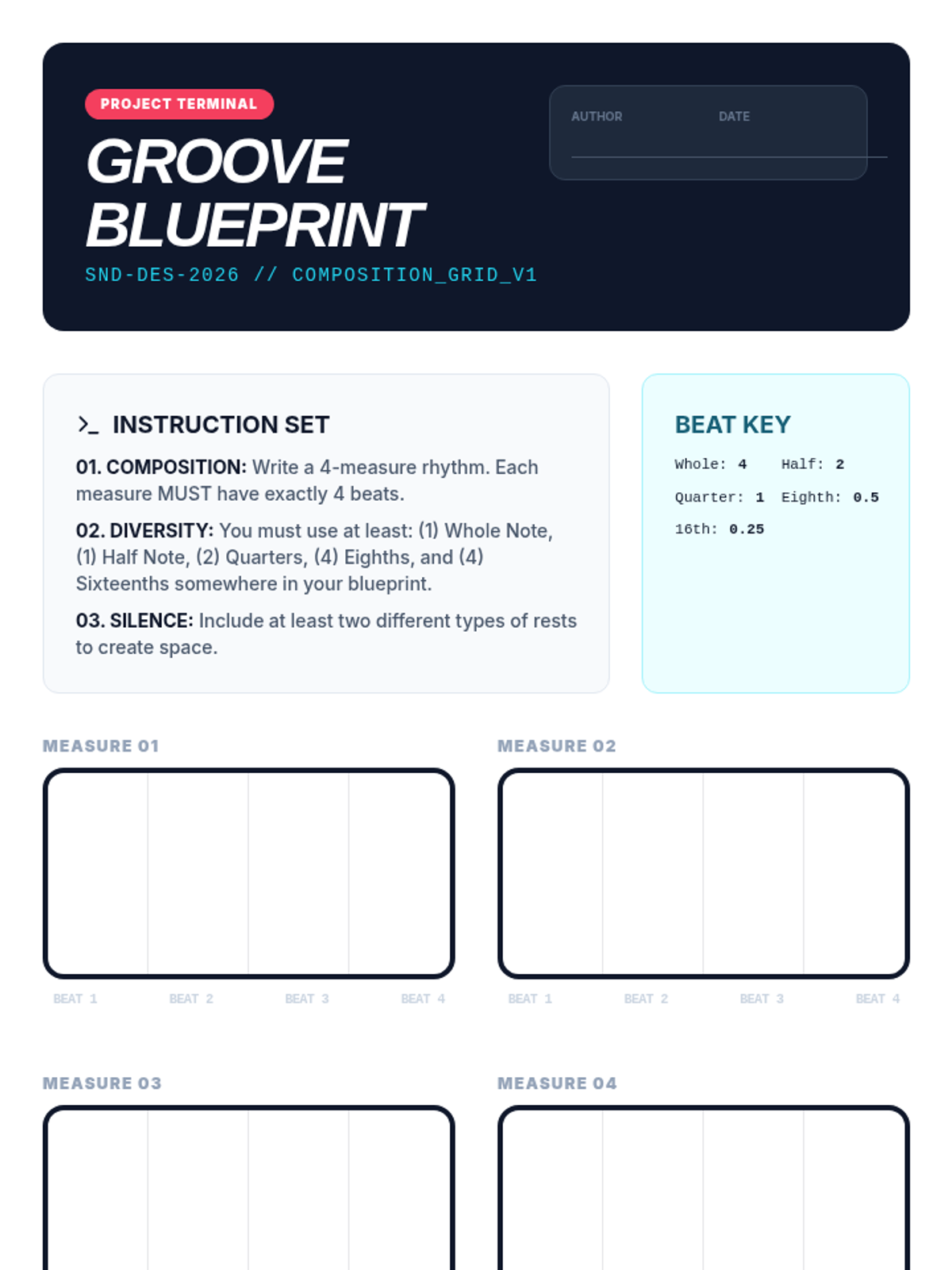
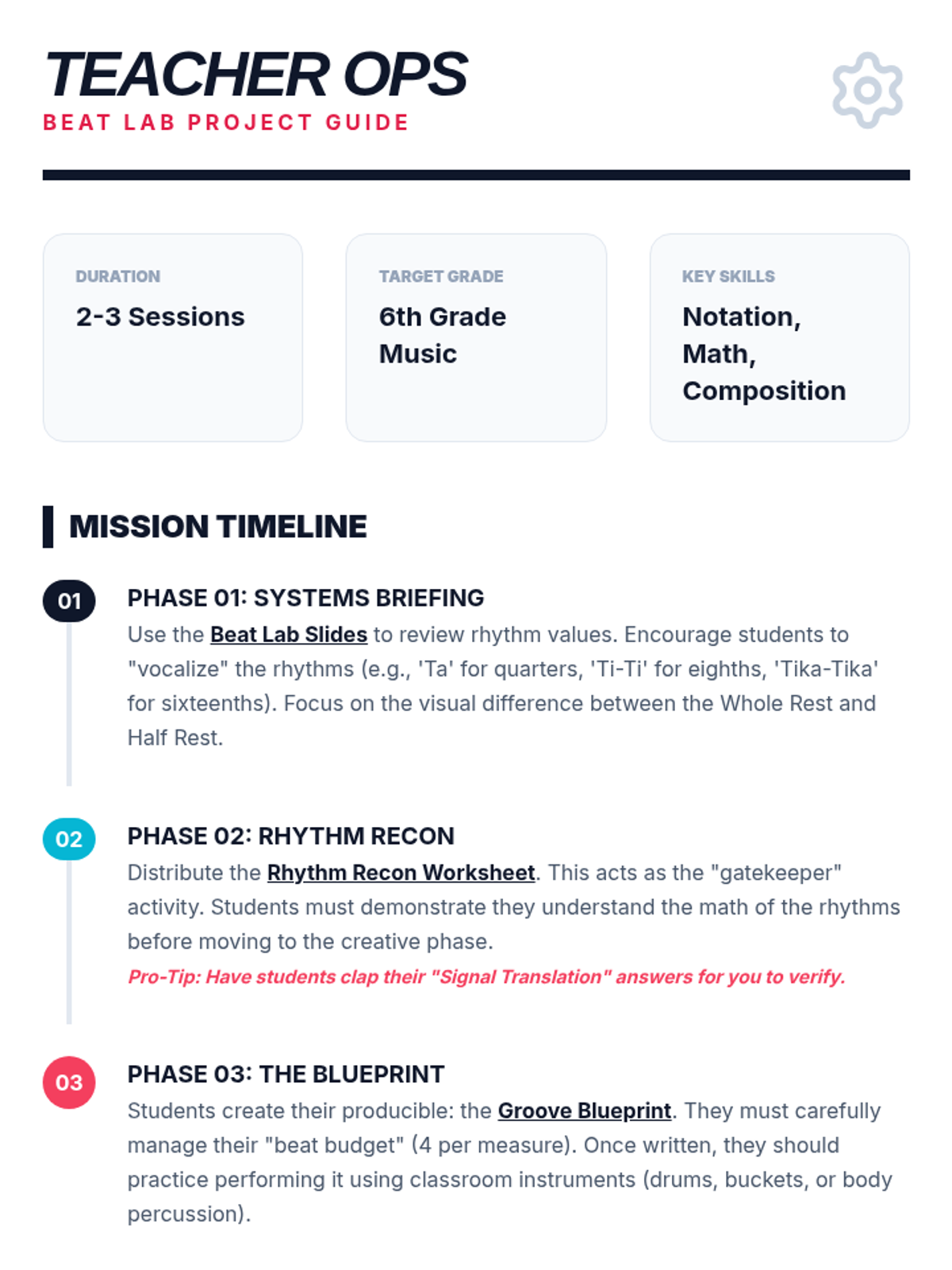
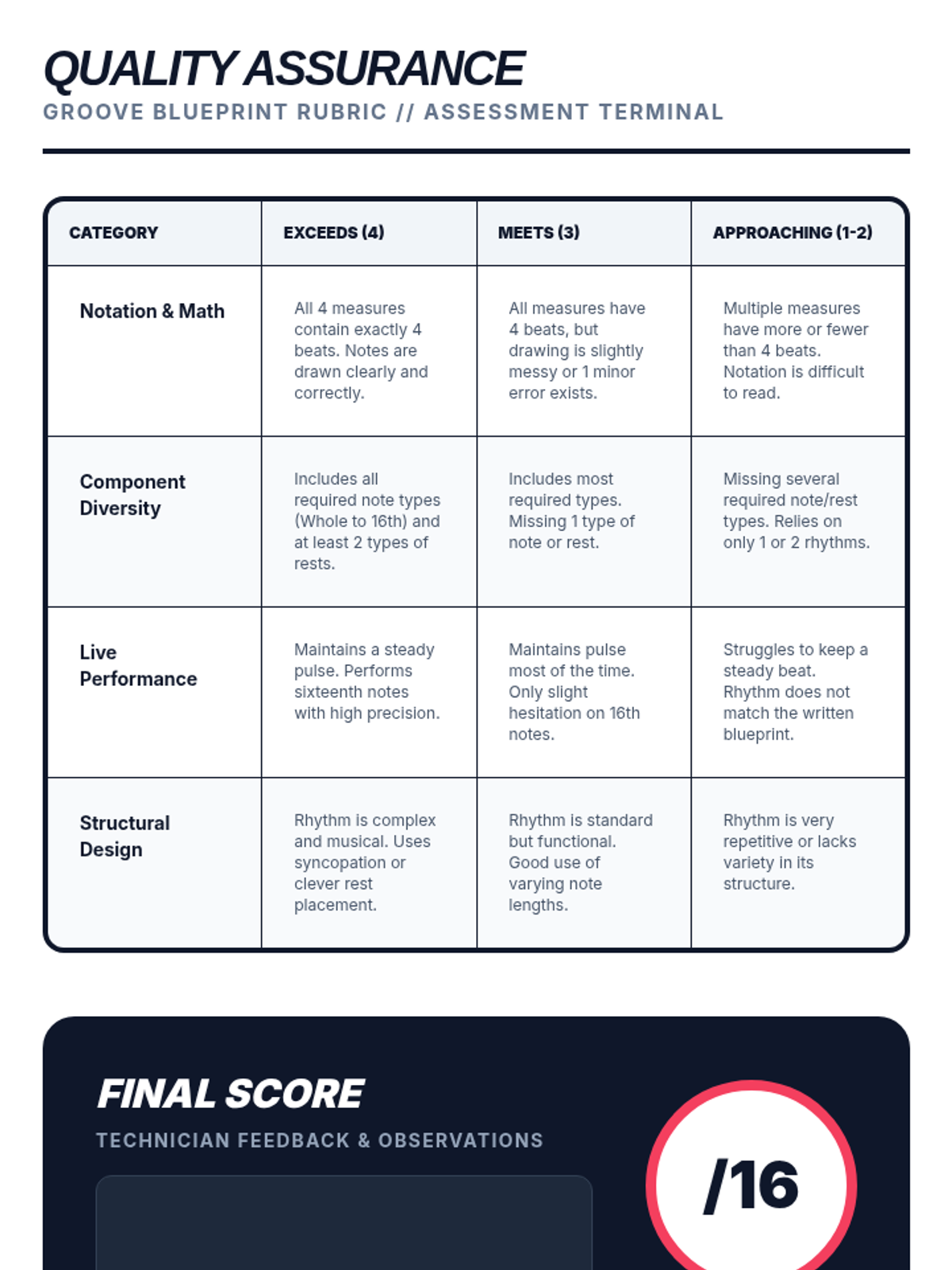
A comprehensive rhythm project where students review fundamental rhythm values (quarter, eighth, sixteenth, half, whole notes and rests) through interactive games and a final composition project called the 'Groove Blueprint'.
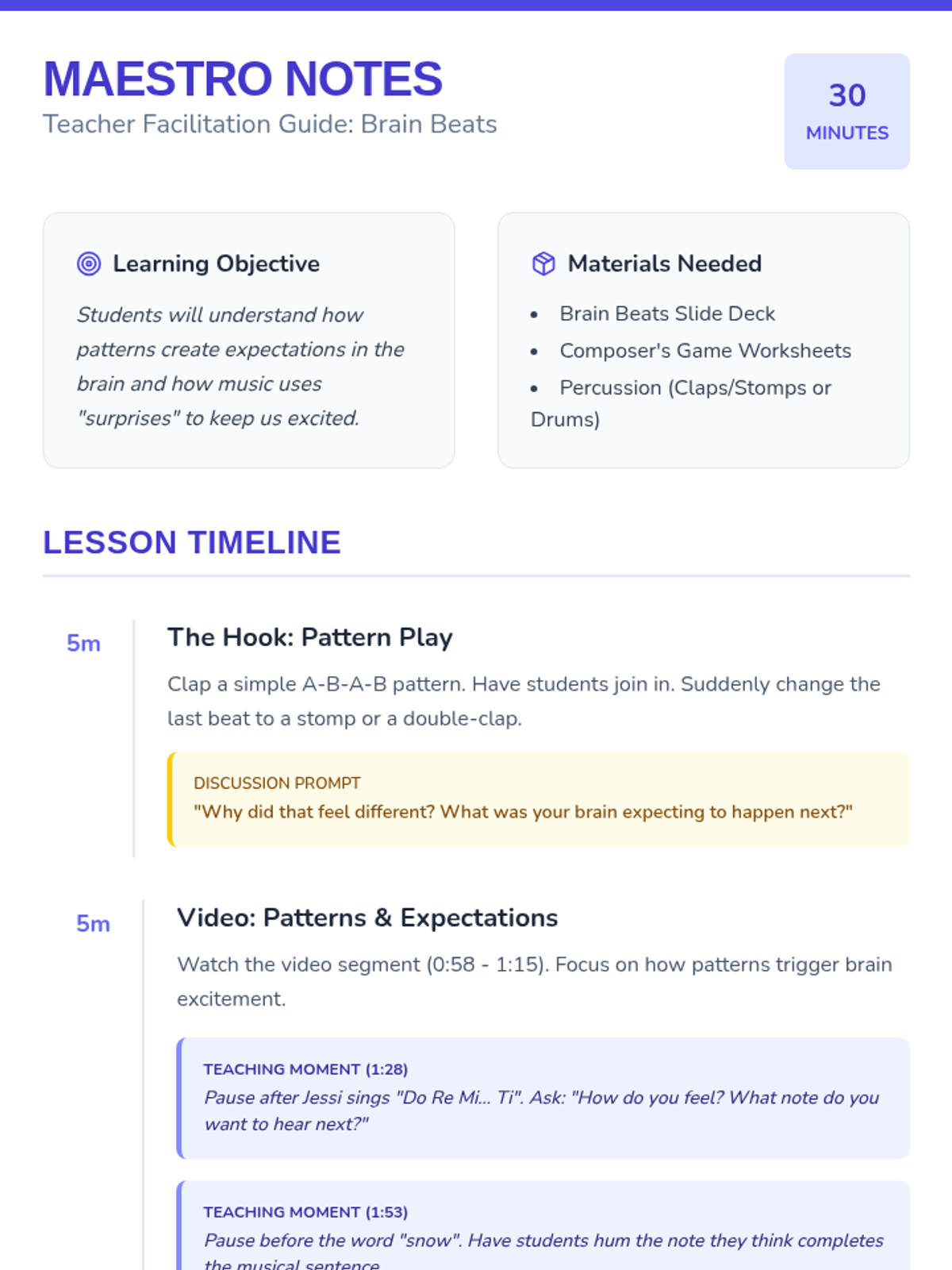
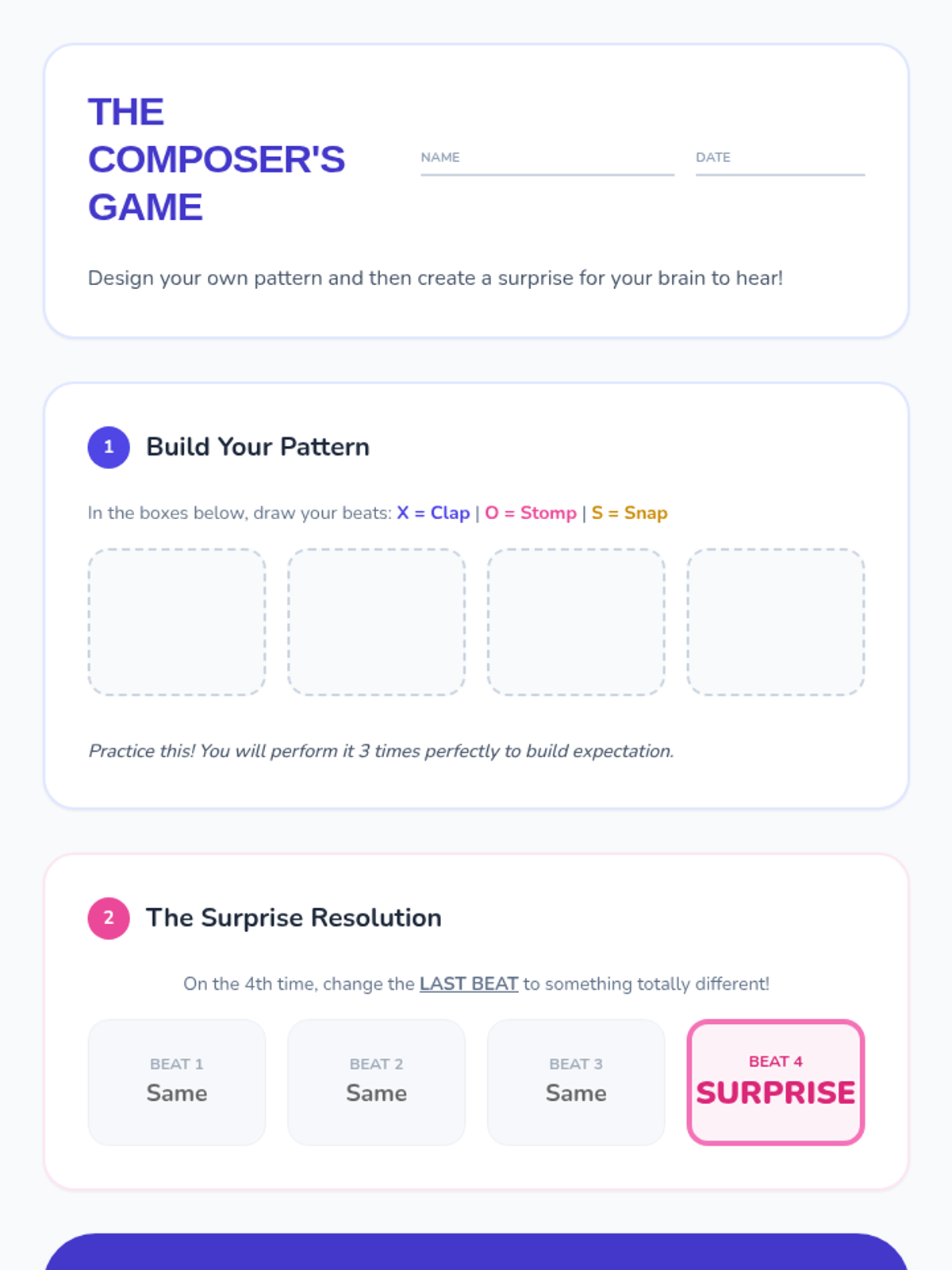
Students explore how the brain uses patterns and expectations to process music, learning about the 'tonic' and 'resolution' through a rhythmic composition game.
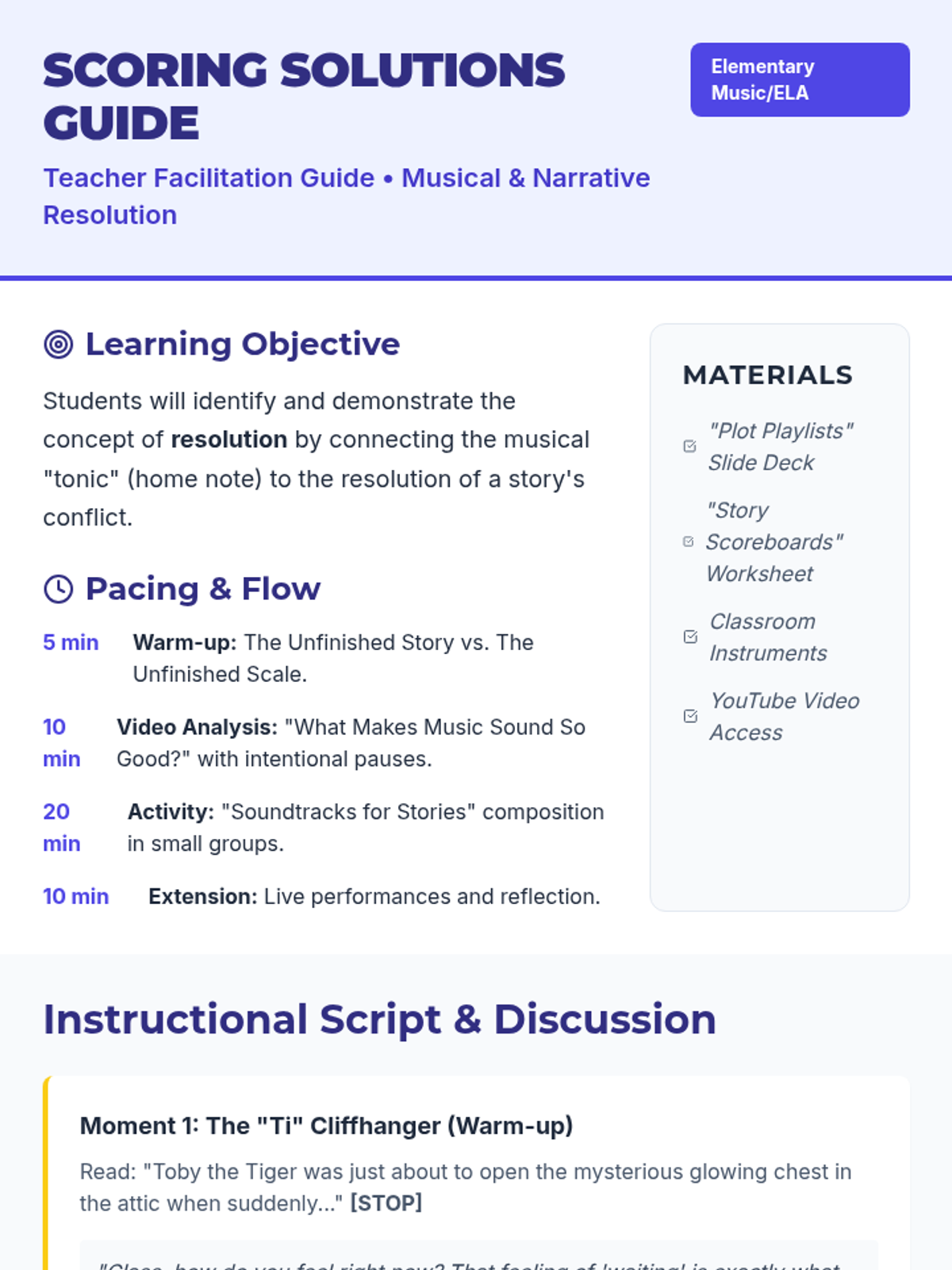
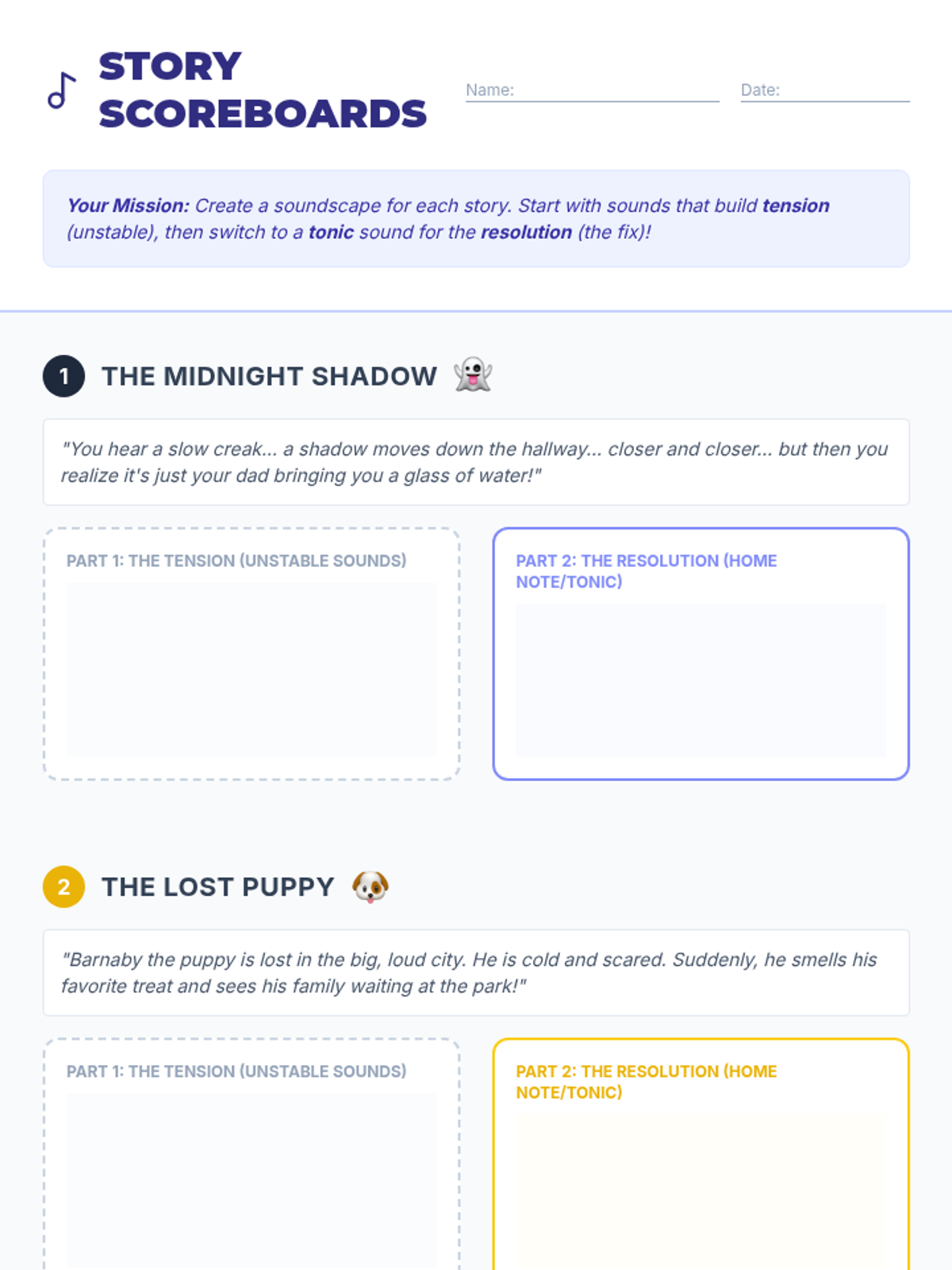
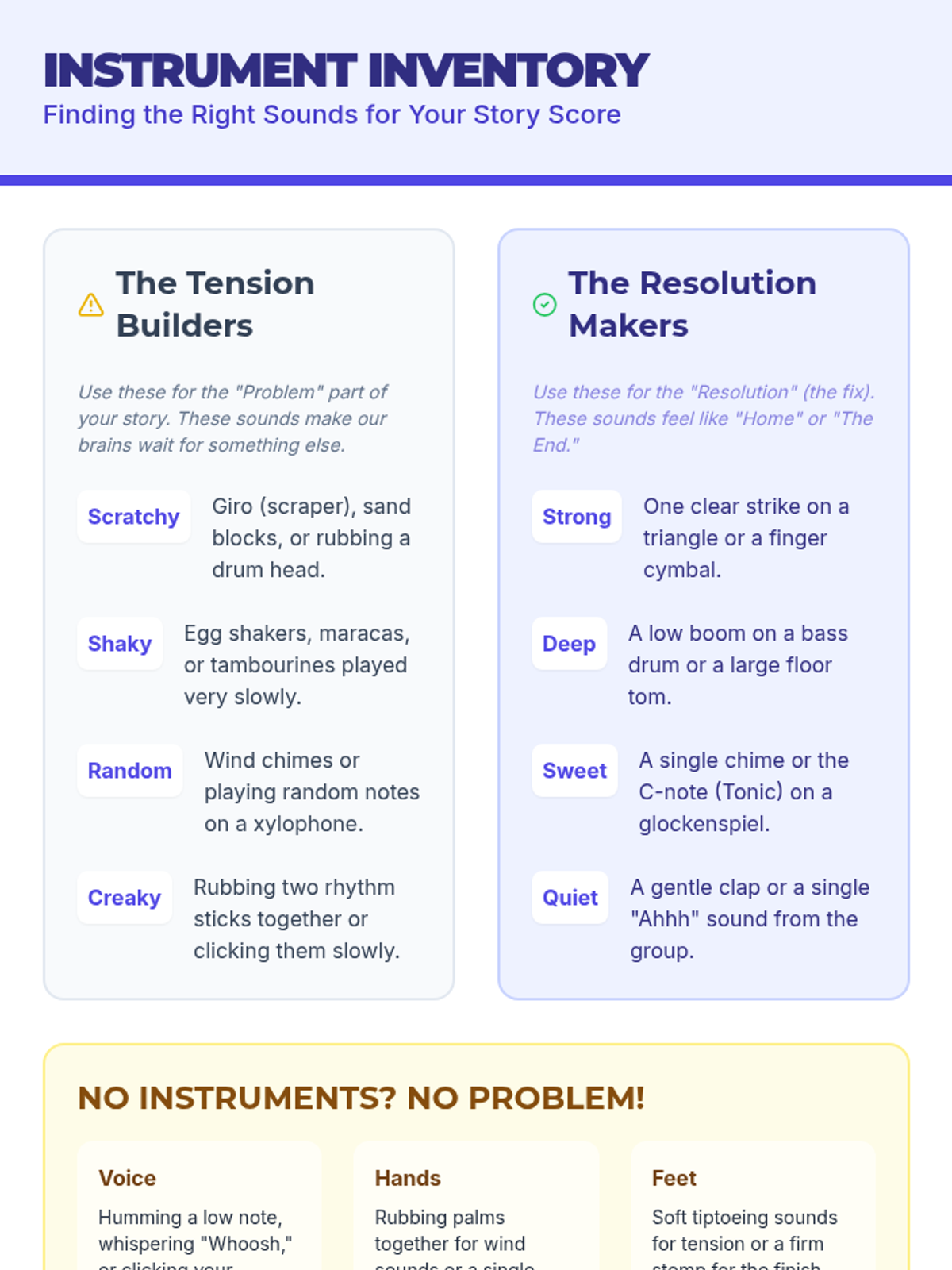
A music and literacy lesson where elementary students learn about musical resolution by connecting it to narrative arcs in stories. Students will use the concept of the 'tonic' note to create soundscapes for specific story prompts.
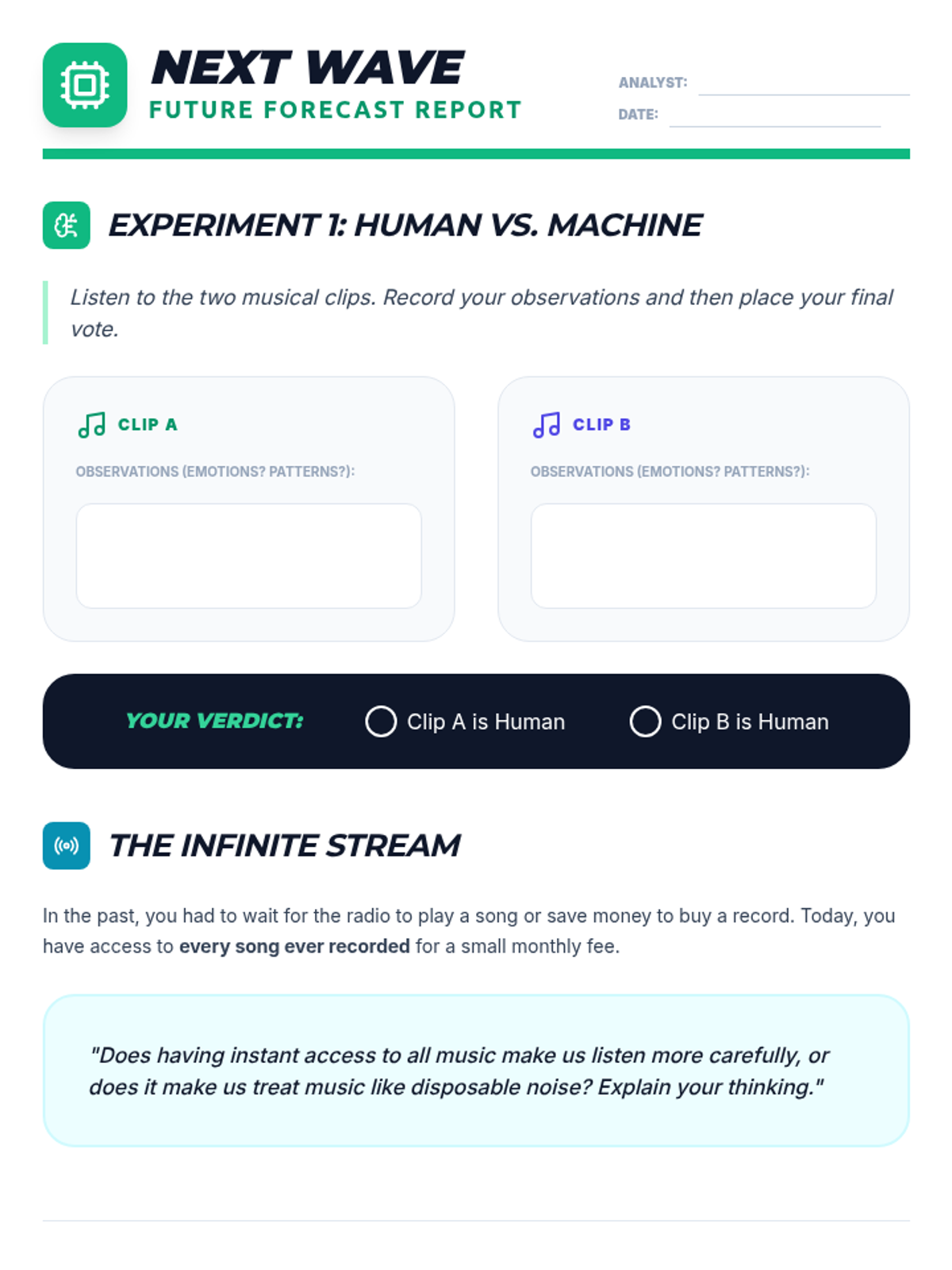
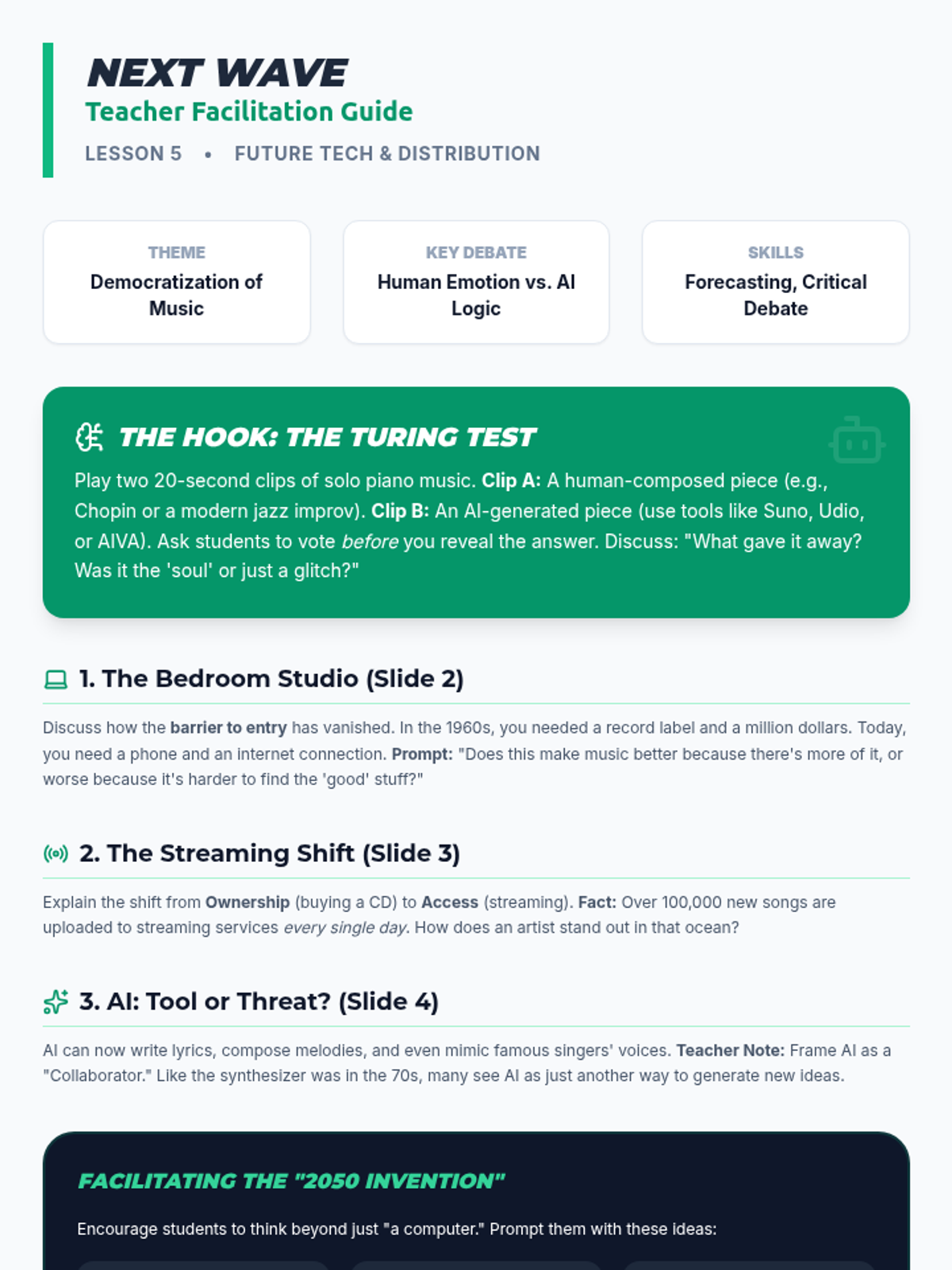
Students debate the future of music history, looking at streaming, AI composition, and bedroom production, analyzing how digital tools change the creation and distribution of music.
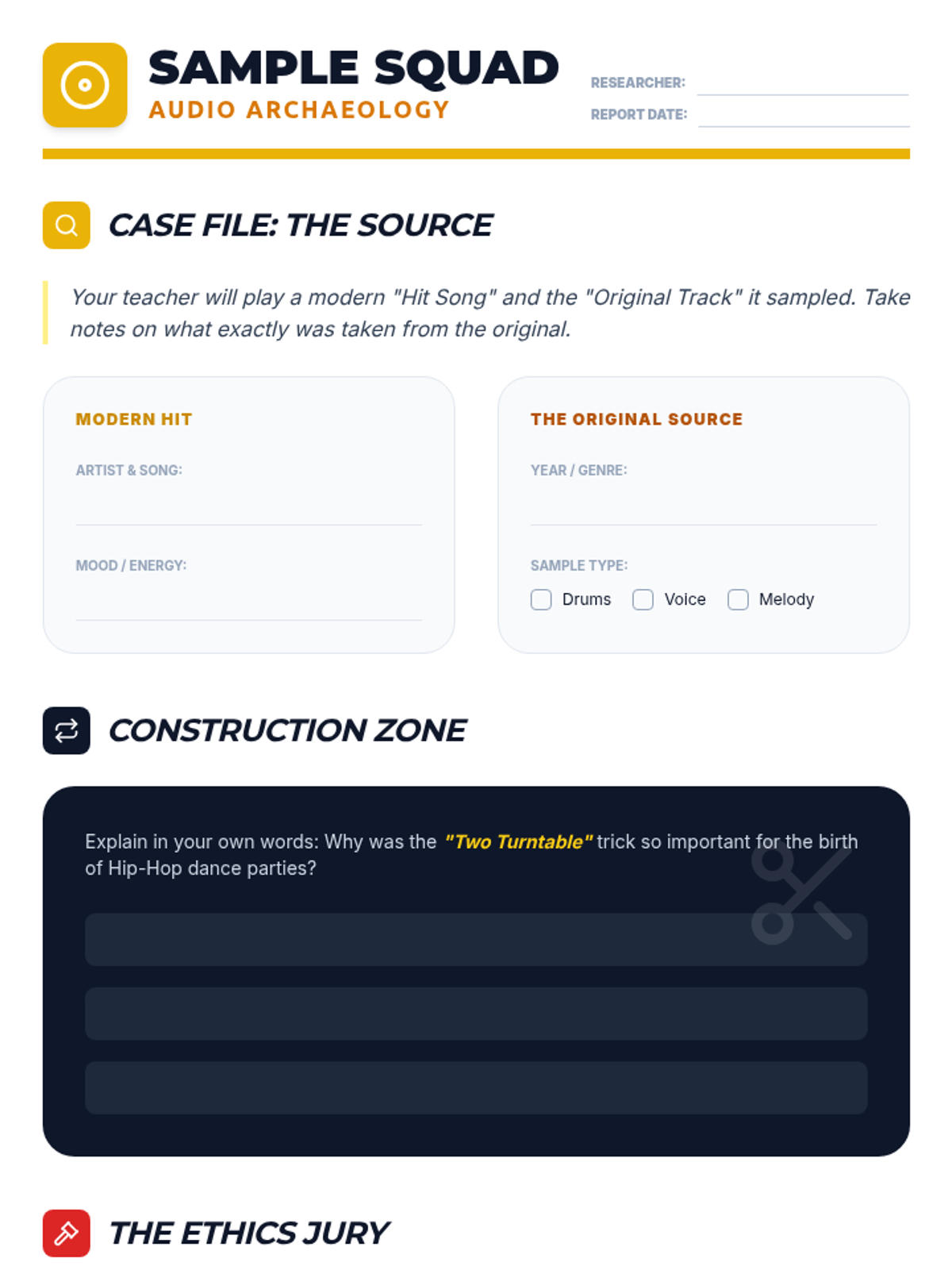
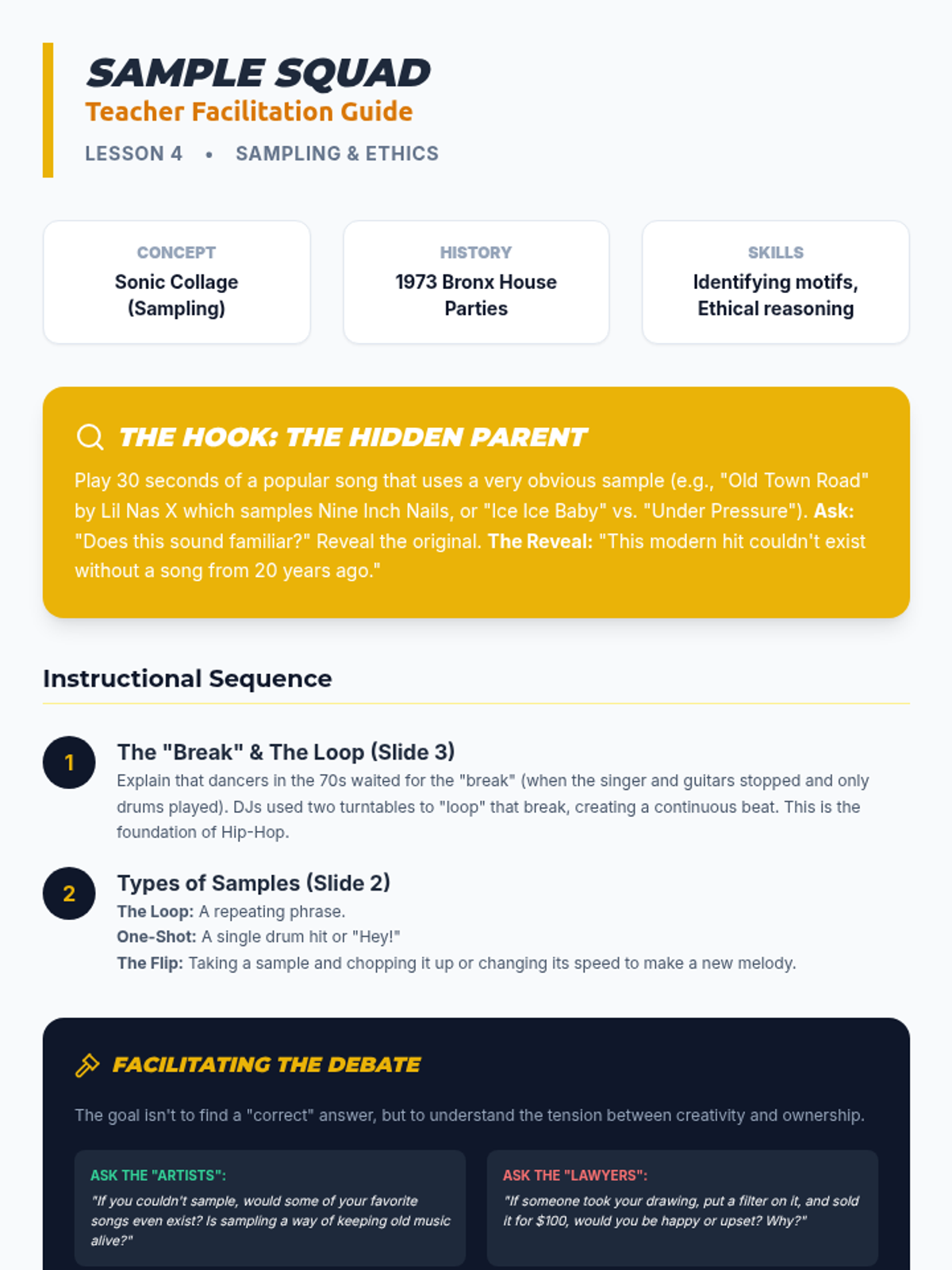
Students investigate the origins of Hip-Hop and the revolutionary technique of sampling, discussing the artistic and legal implications of repurposing existing audio to create new music.
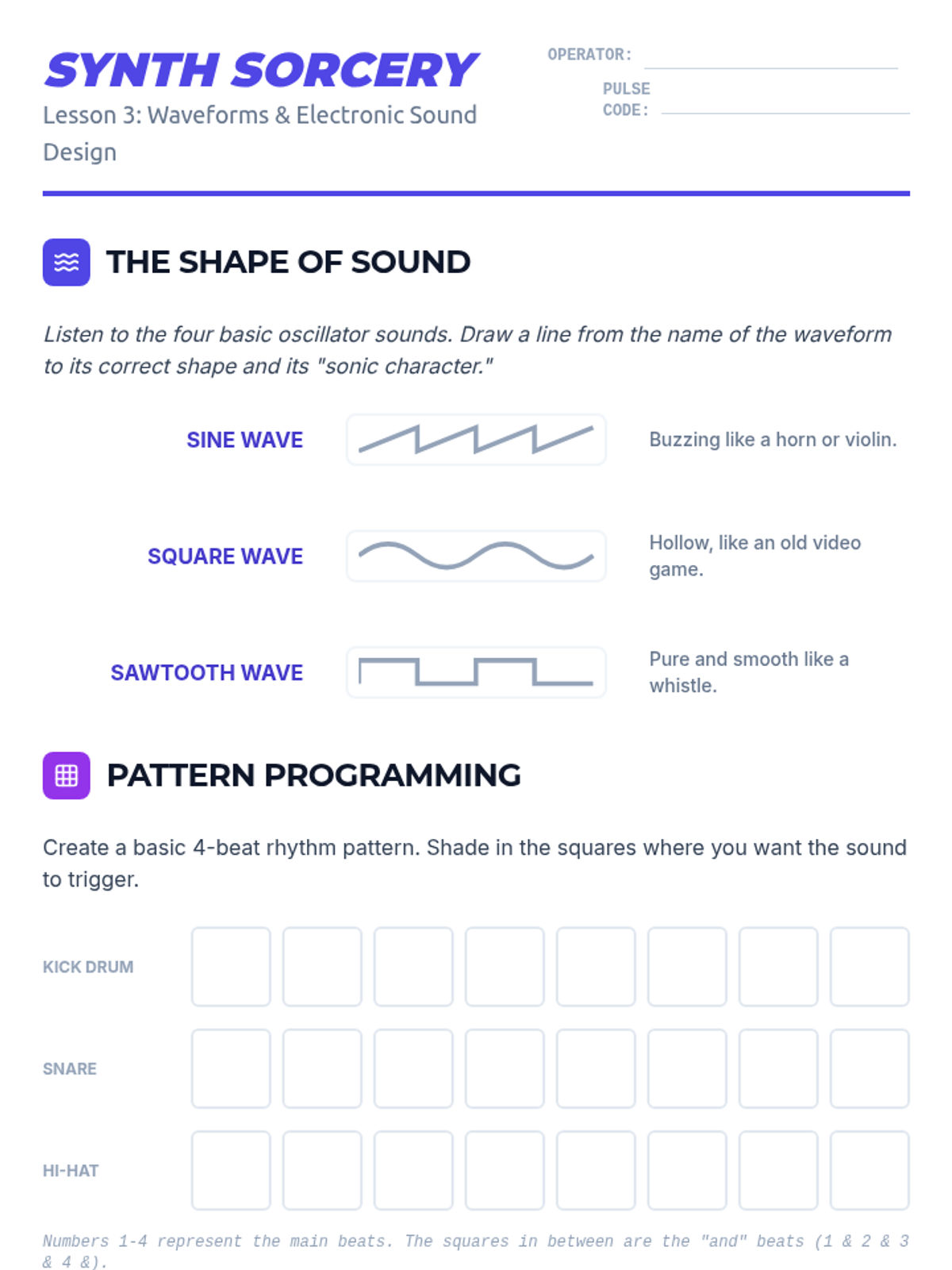
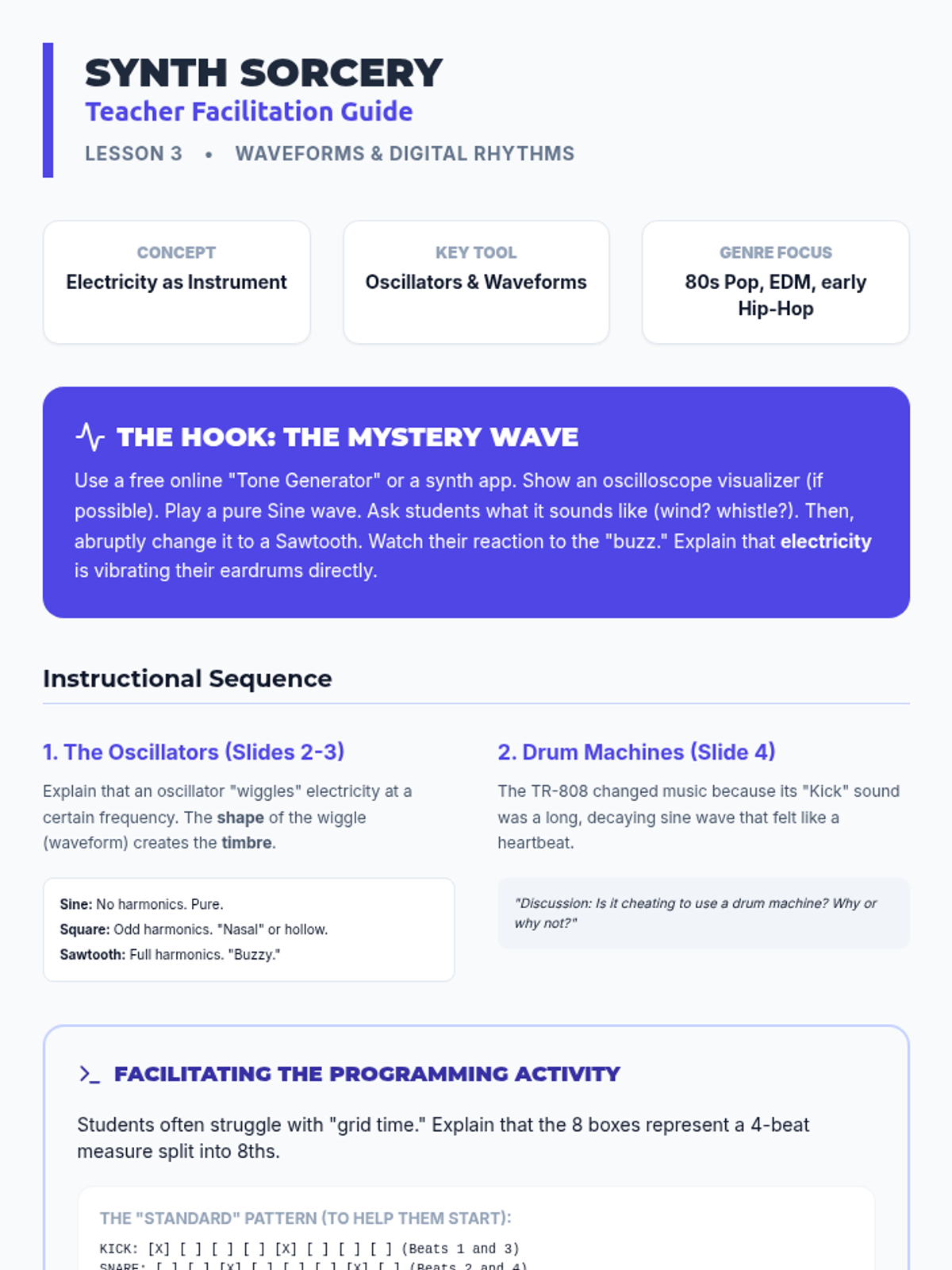
Students explore the introduction of synthesizers and drum machines in the 70s and 80s, learning about waveforms and how electricity can be used to design completely new sounds.
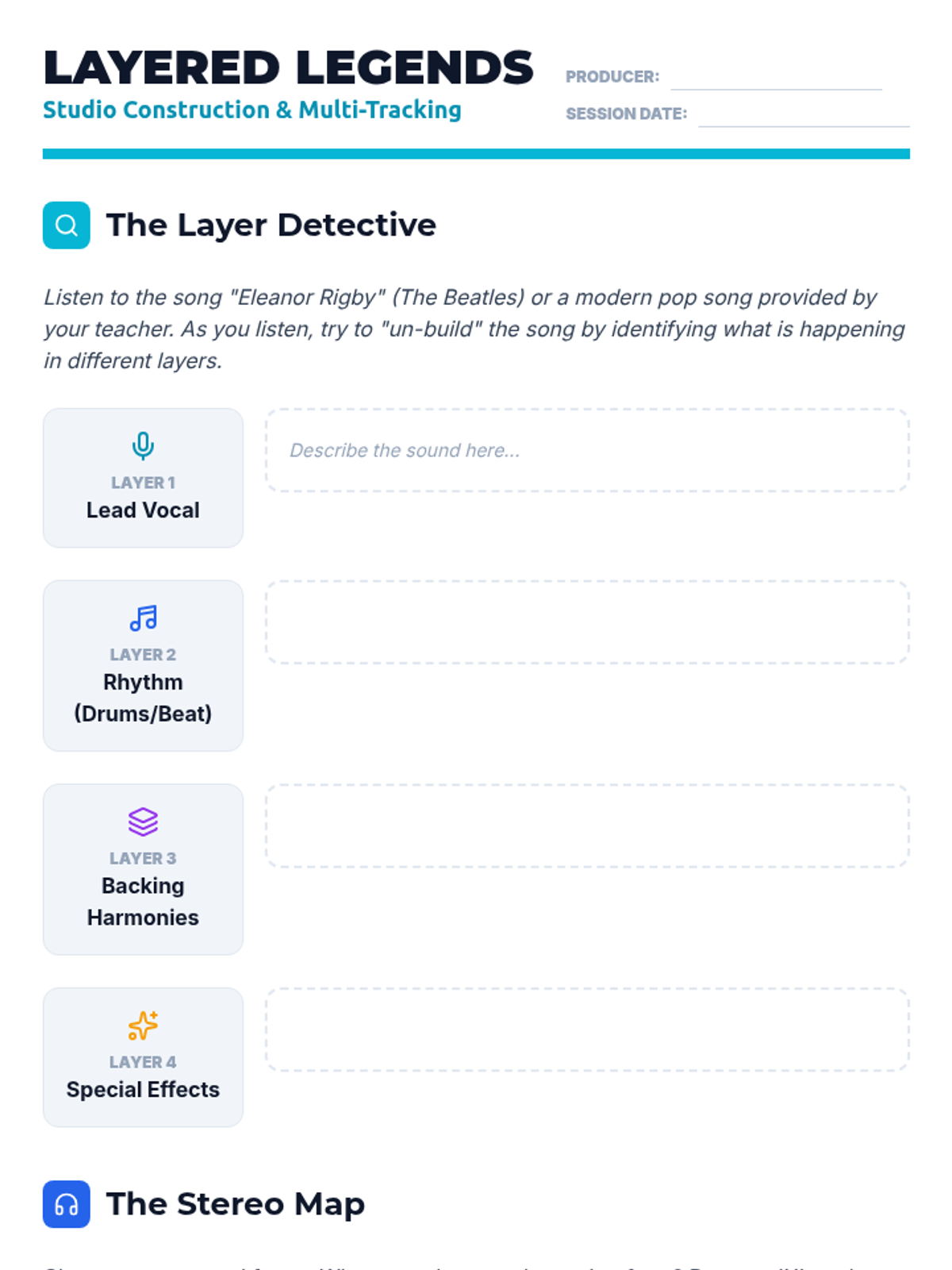
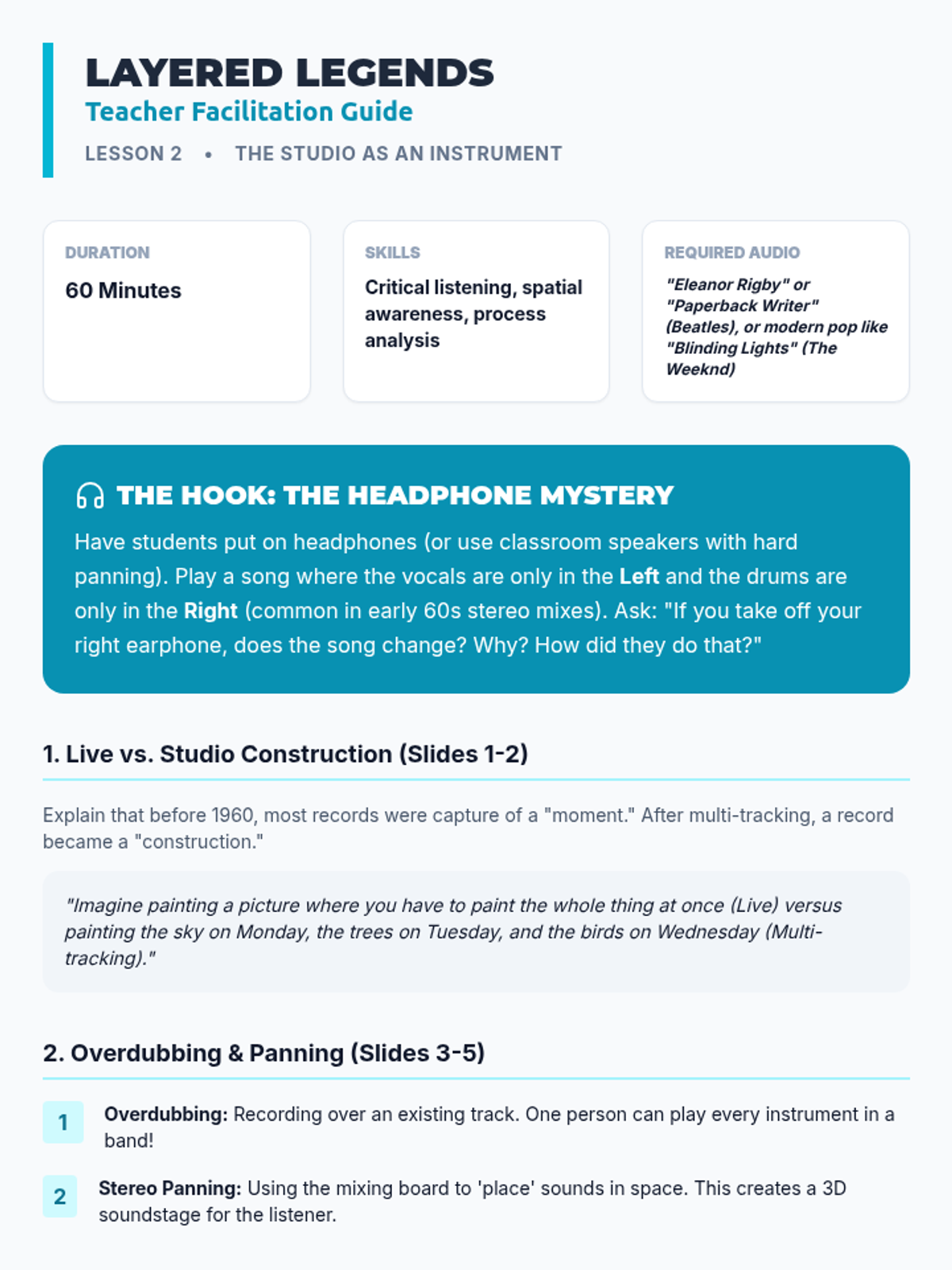
Students explore the 1960s shift from live recording to studio construction, learning about multi-tracking, tape loops, and how The Beatles used the recording studio as a creative instrument.
Students analyze the transition from acoustic to electric instruments in the 1950s, exploring how amplification and the electric guitar changed the sound and energy of music.
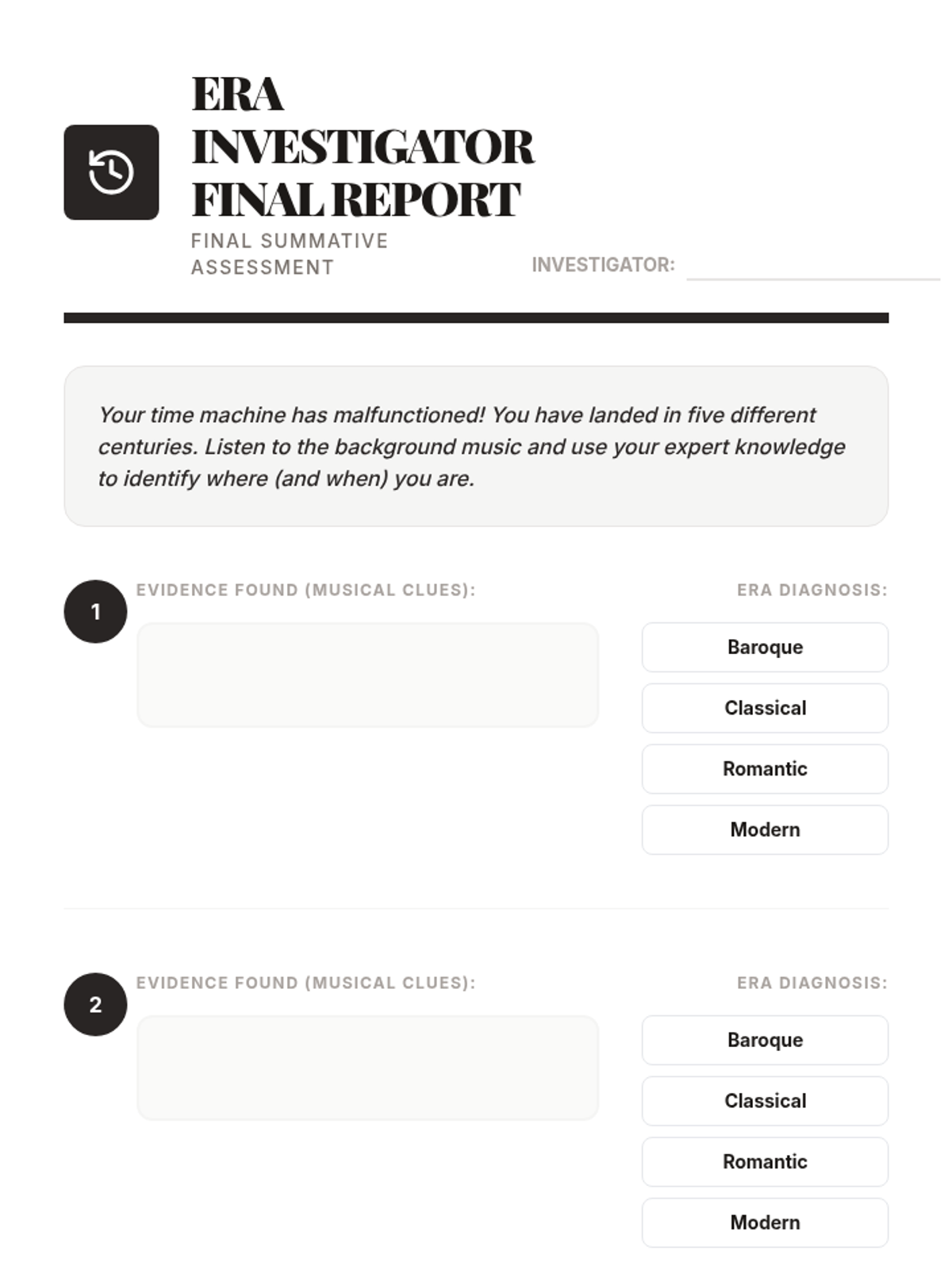
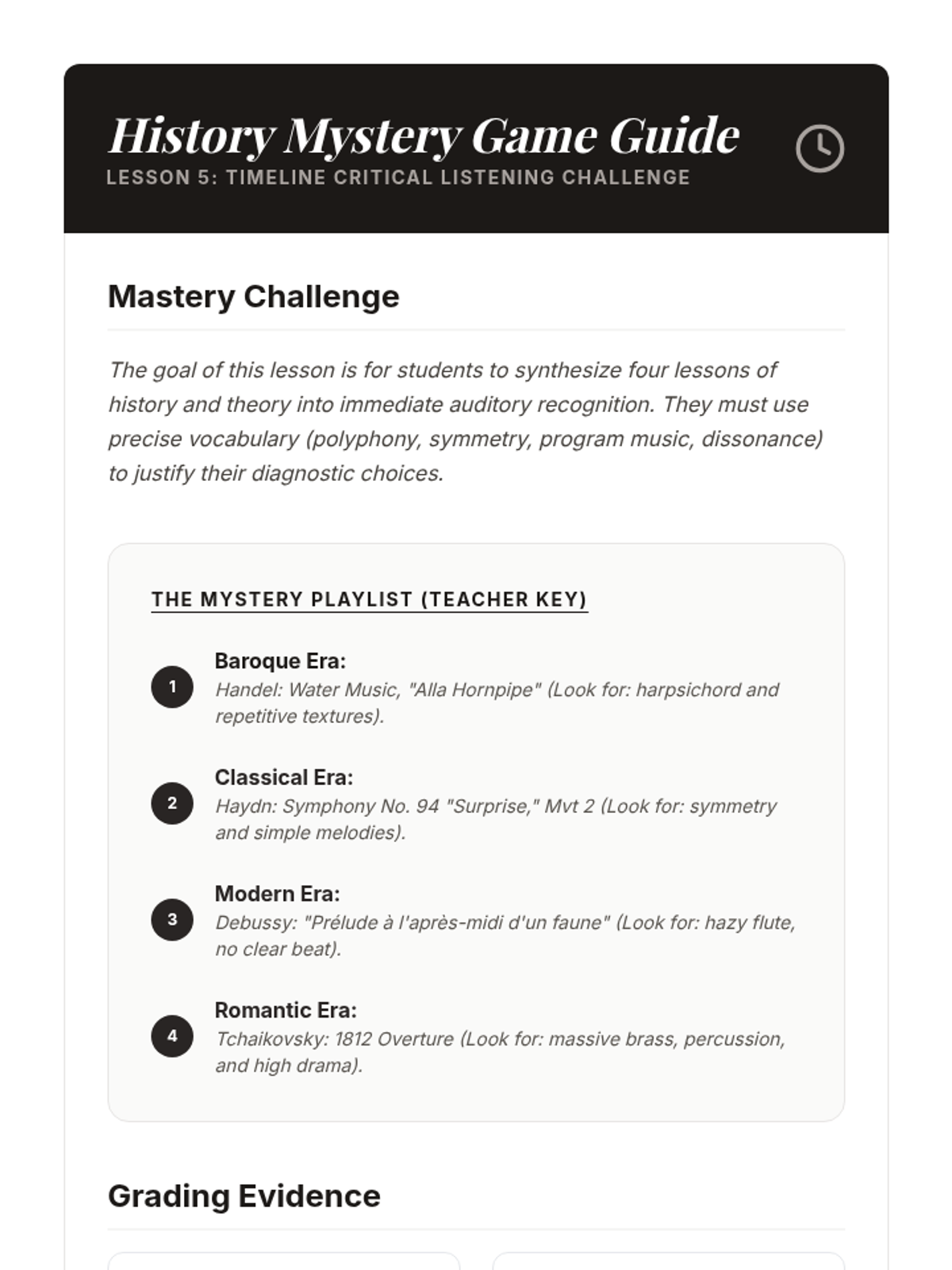
Synthesize knowledge by categorizing mystery musical excerpts into the correct historical era. Students will use specific vocabulary to justify their choices in a 'Time Machine' game.
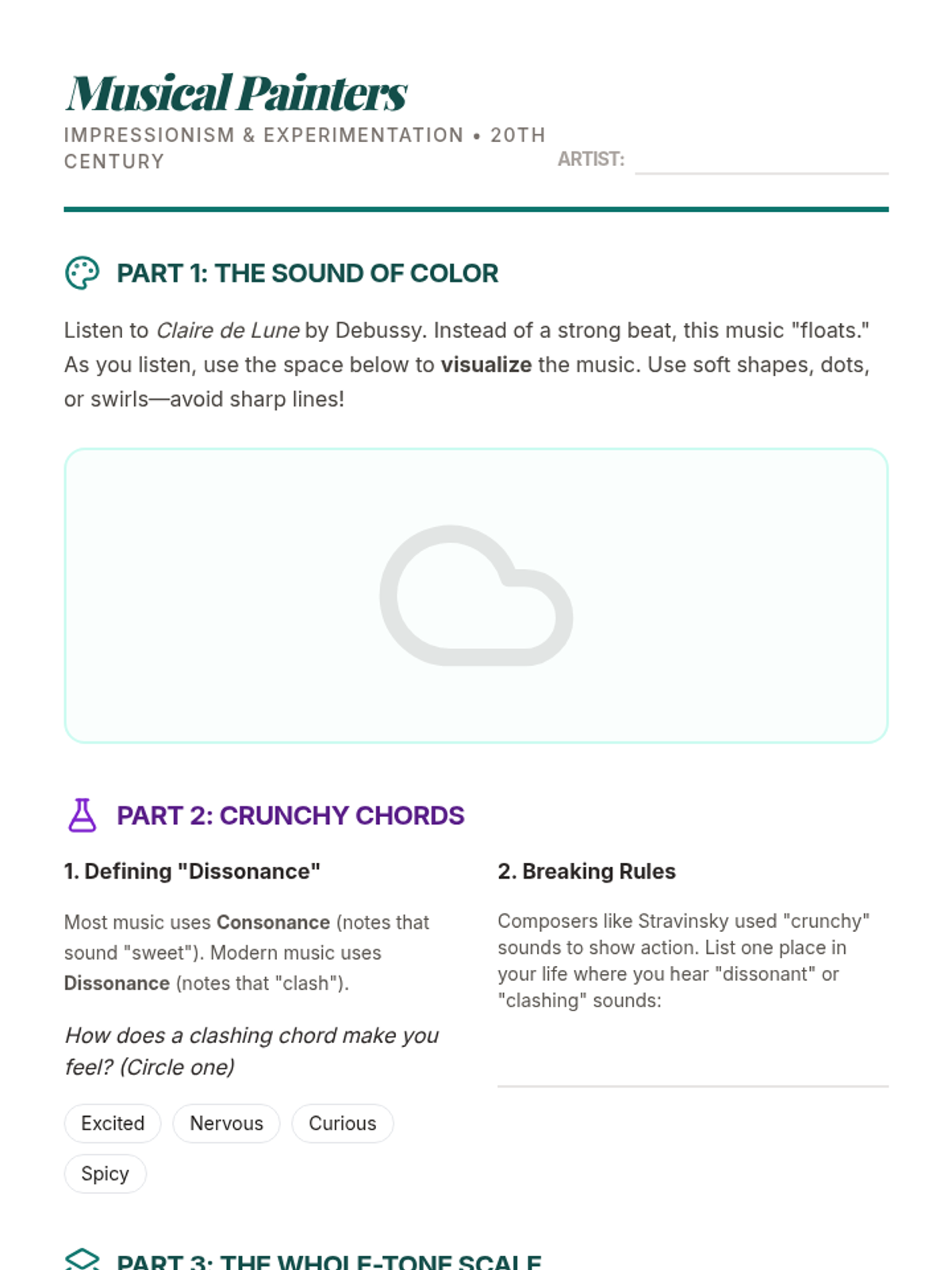
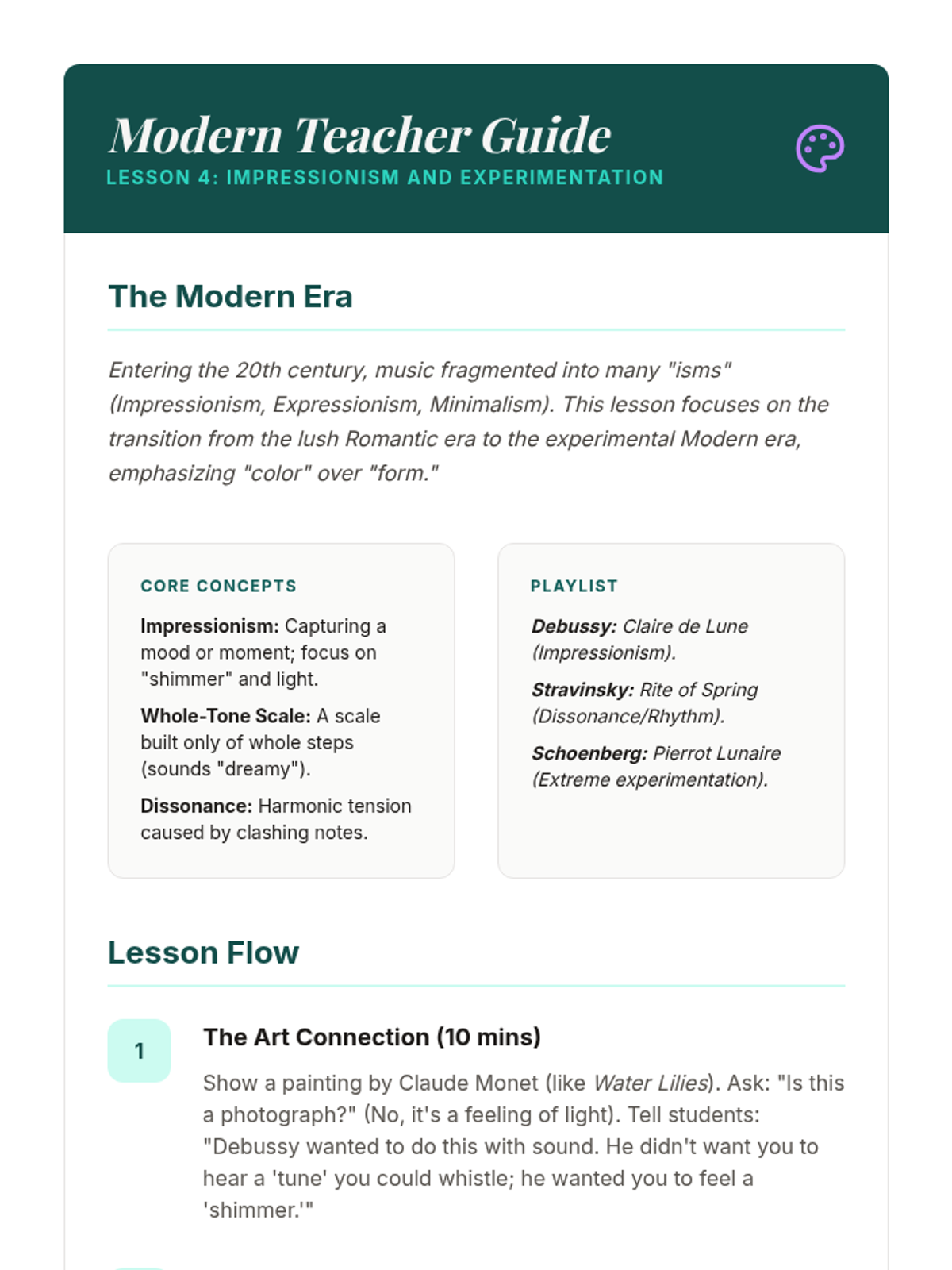
Examine how 20th-century composers like Debussy used 'colors' and dissonance to break traditional rules. Students will experiment with whole-tone scales and auditory analysis.
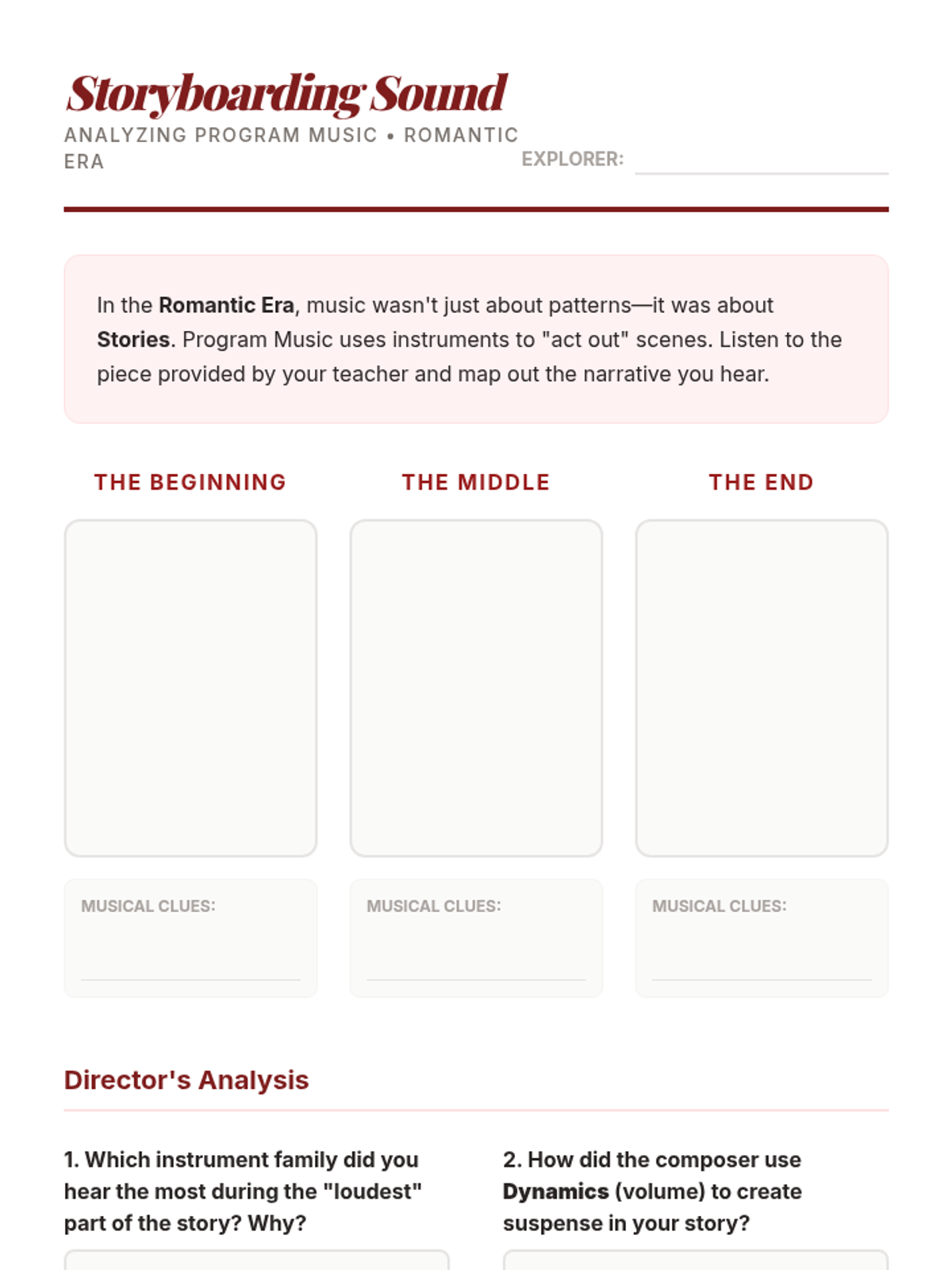
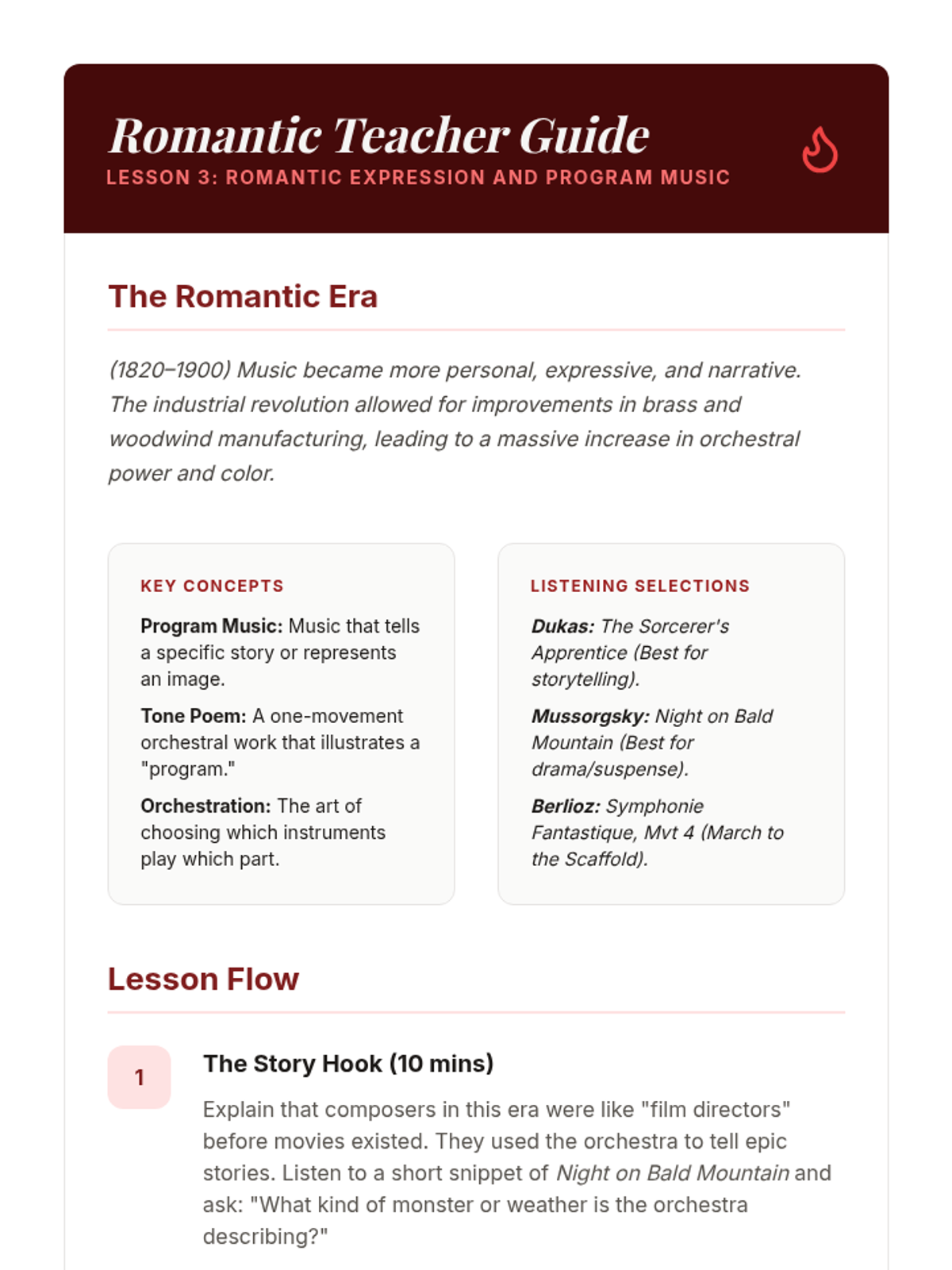
Investigate the expansion of the orchestra and the birth of program music. Students will storyboard a narrative based on dramatic musical excerpts from composers like Berlioz and Mussorgsky.
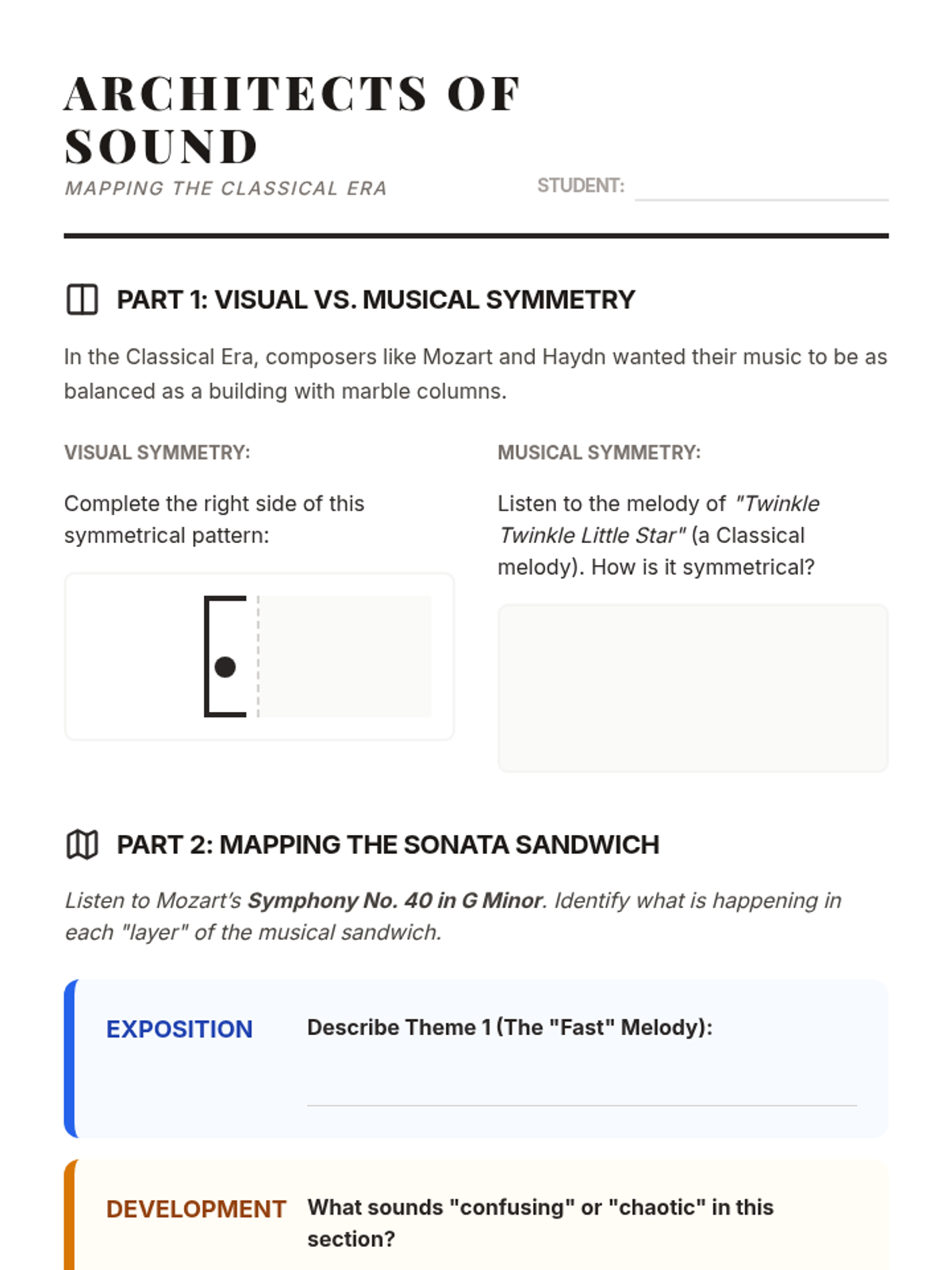
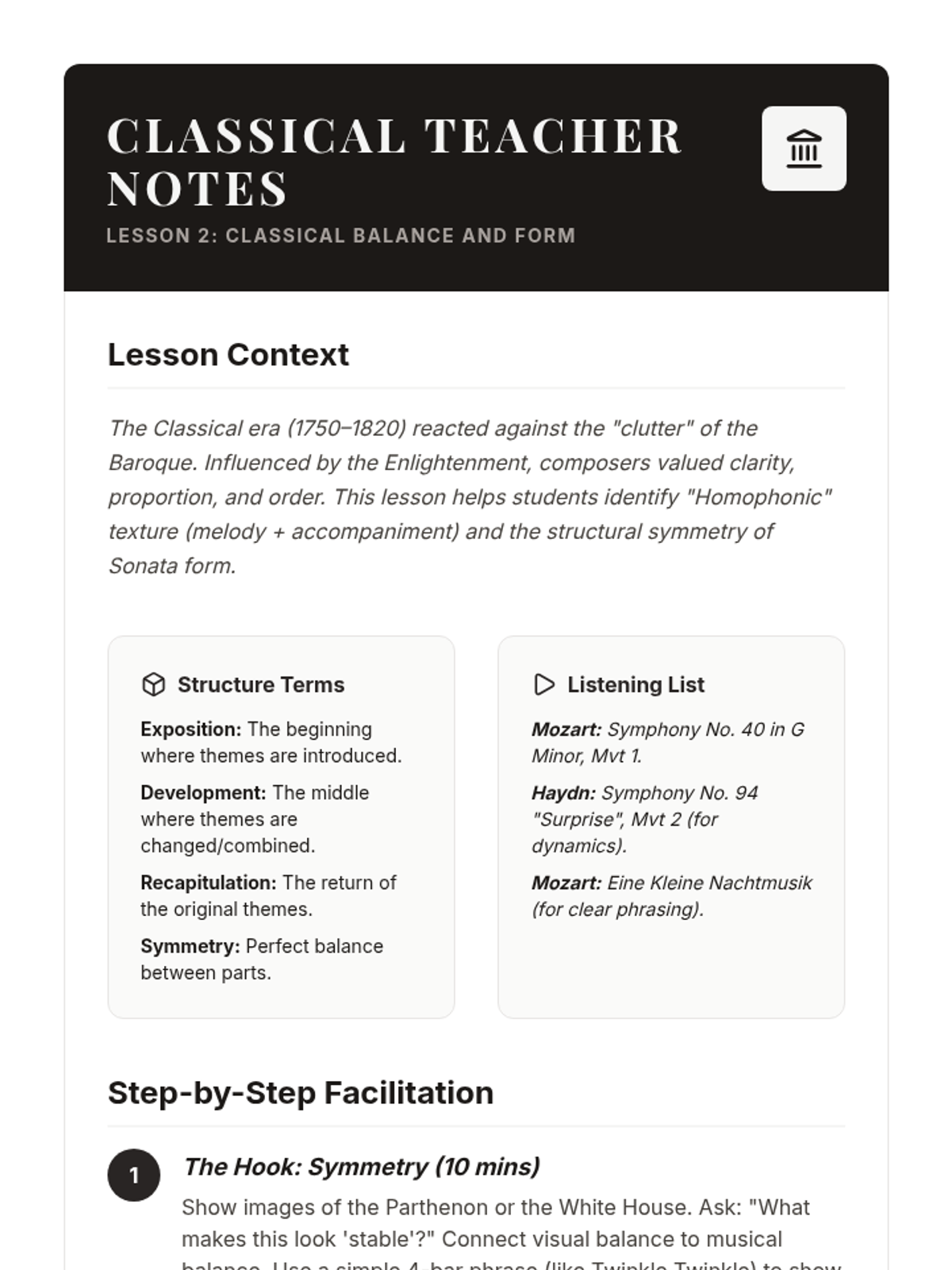
Contrast Baroque complexity with the order and balance of the Classical era. Introduce the Sonata-Allegro form and identify clear phrases and dynamic contrasts in the works of Mozart and Haydn.
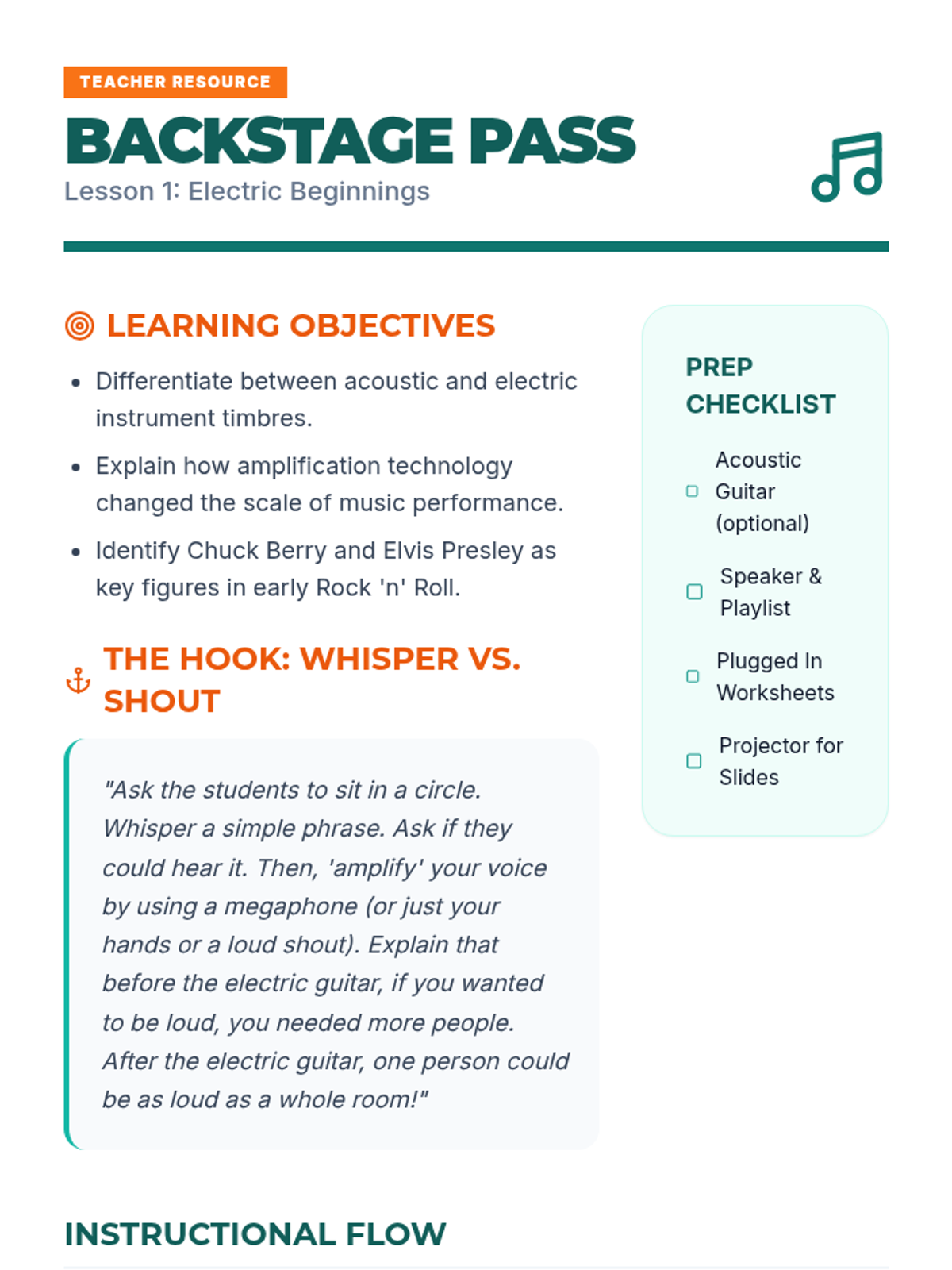
Students compare acoustic and electric sounds, exploring how amplification birthed Rock 'n' Roll through pioneers like Chuck Berry and Elvis Presley.