Develops technical proficiency and creative movement skills across various styles. Examines choreographic principles alongside the historical and cultural origins of diverse global dance forms.
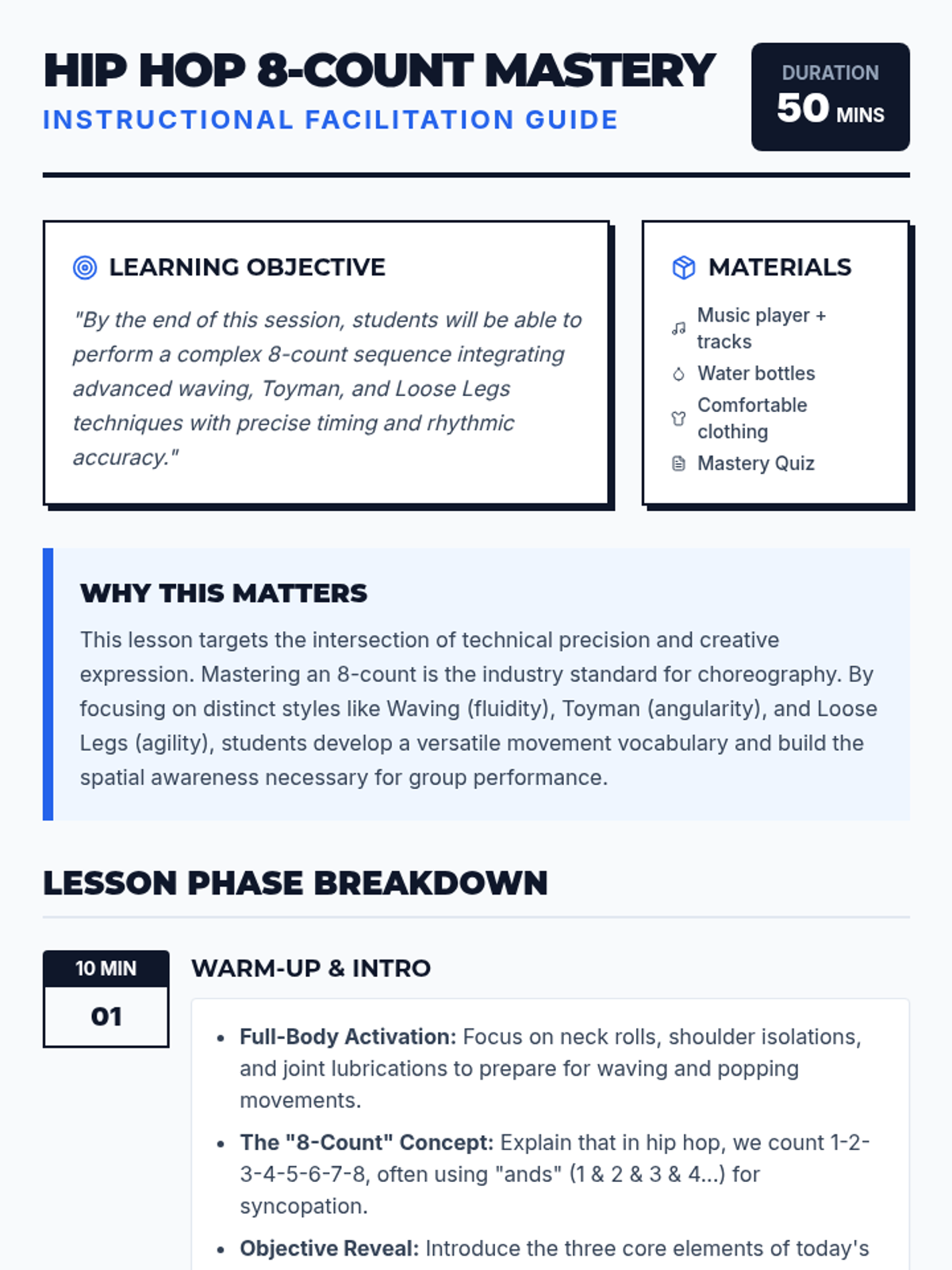
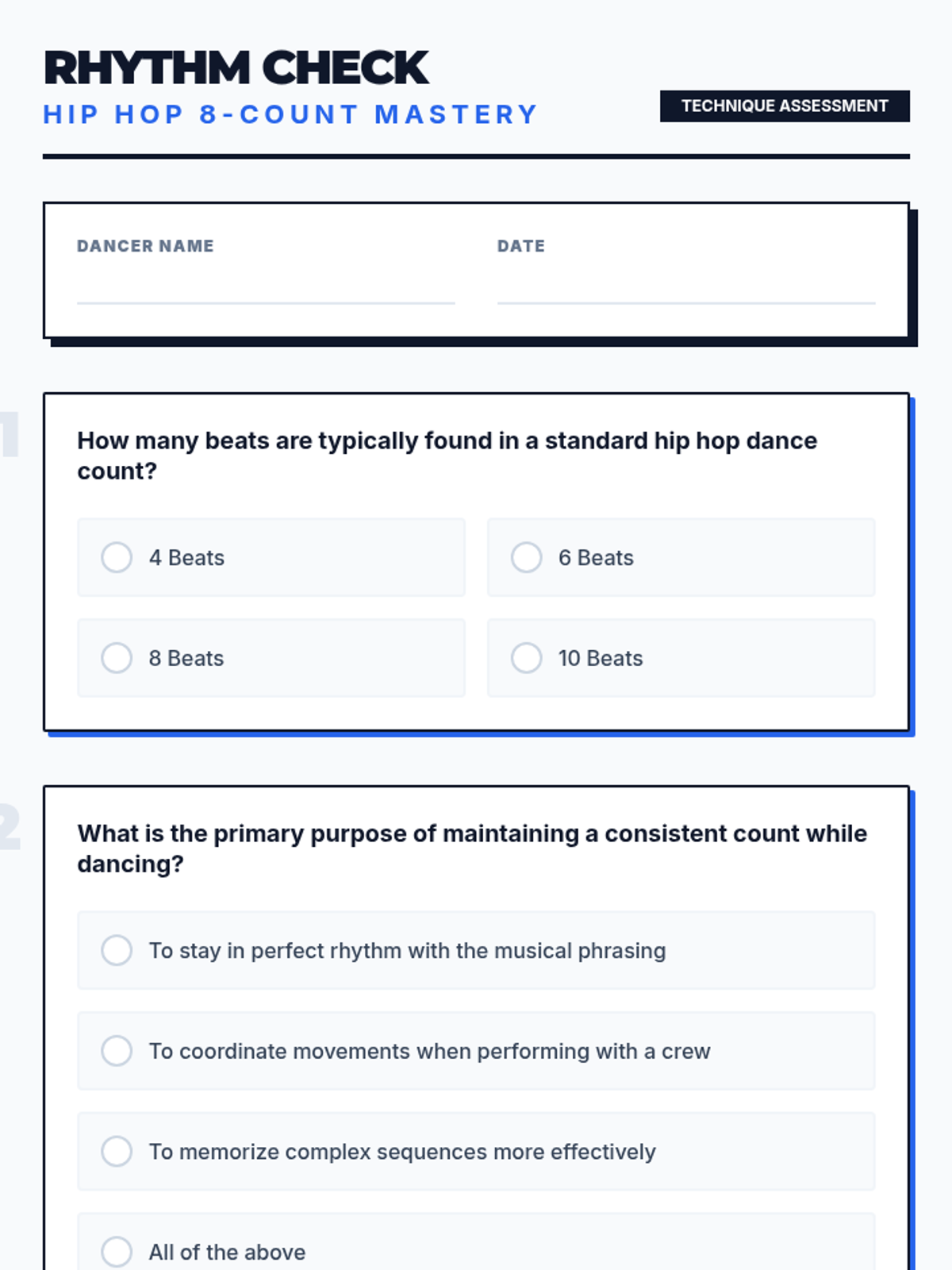
A high-energy lesson focused on mastering an 8-count hip hop sequence featuring advanced waving, Toyman, and Loose Legs techniques.
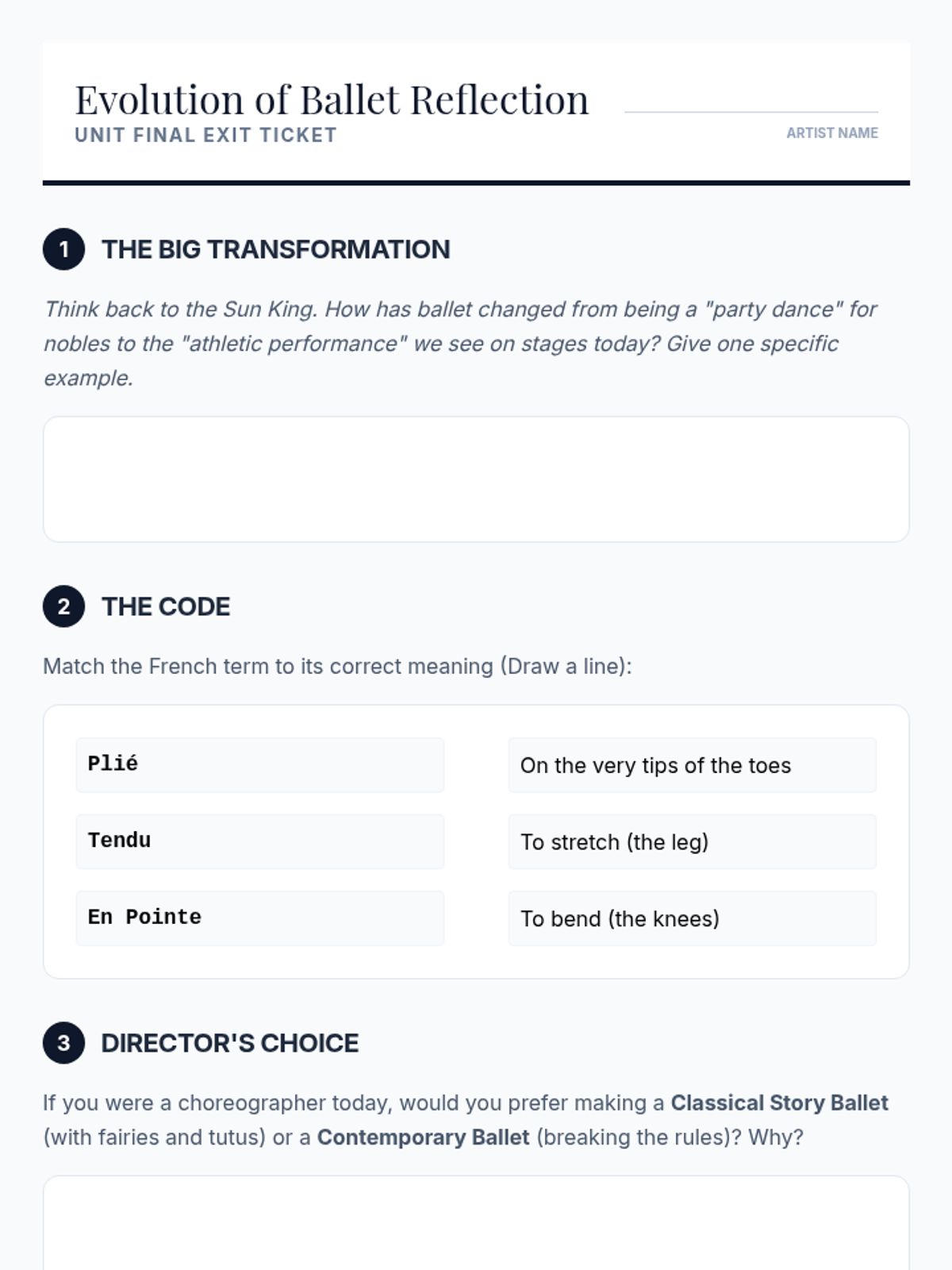
Students conclude the sequence by analyzing the transition to contemporary ballet, comparing traditional rules with modern innovations in costume, movement, and music.
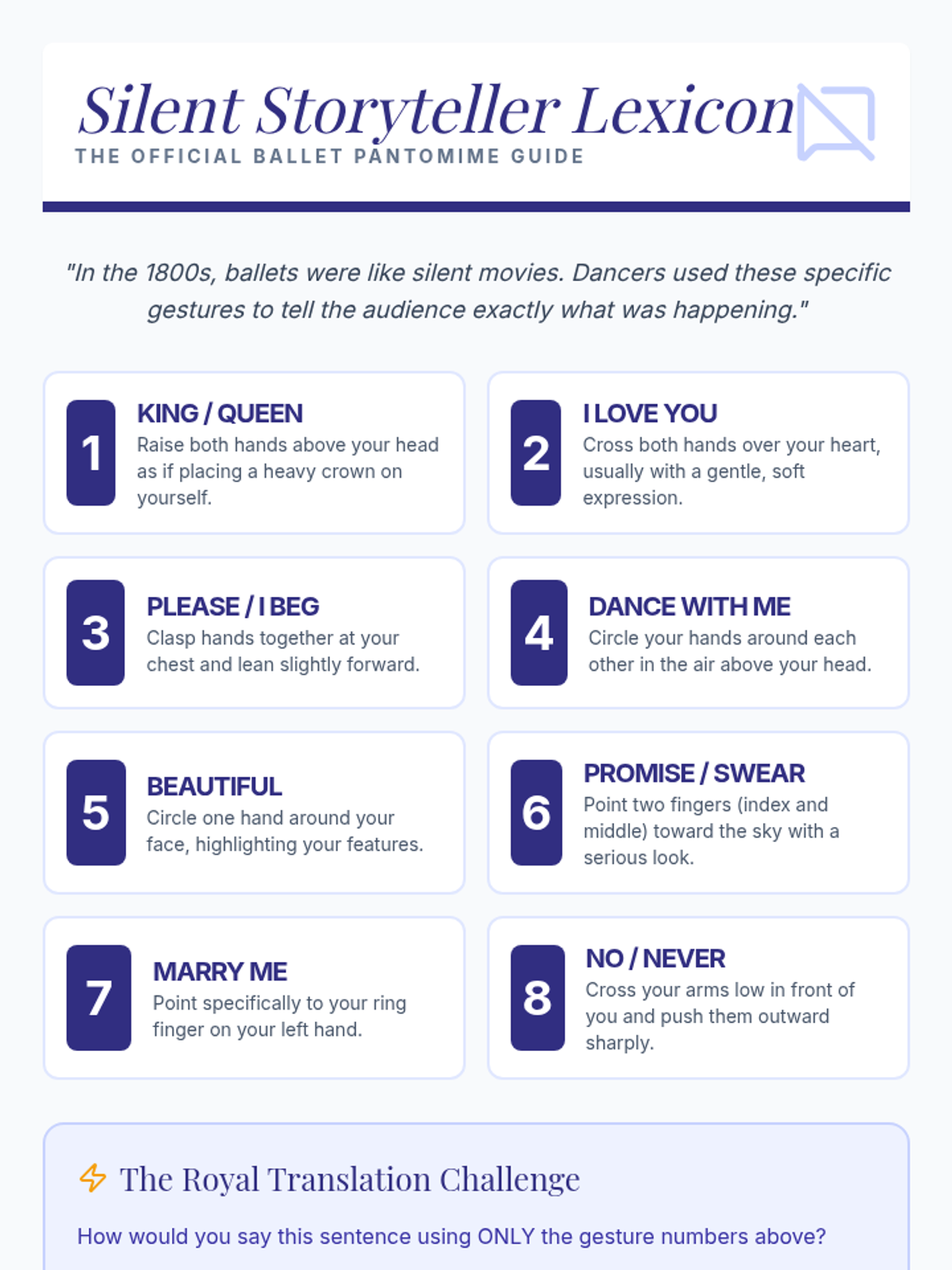
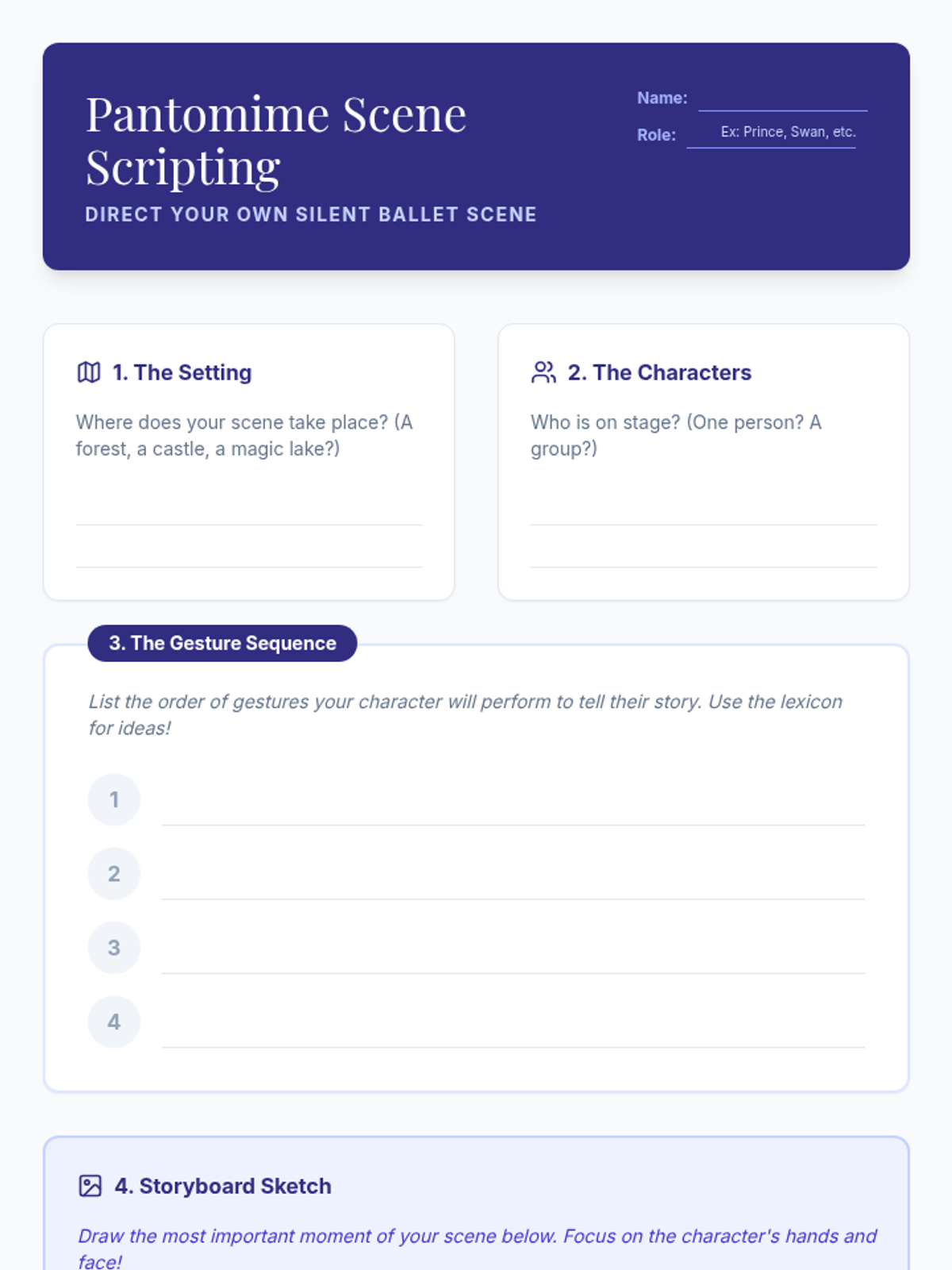
Students learn the specialized language of ballet pantomime, exploring how dancers communicate plot and emotion without words through specific, codified gestures.
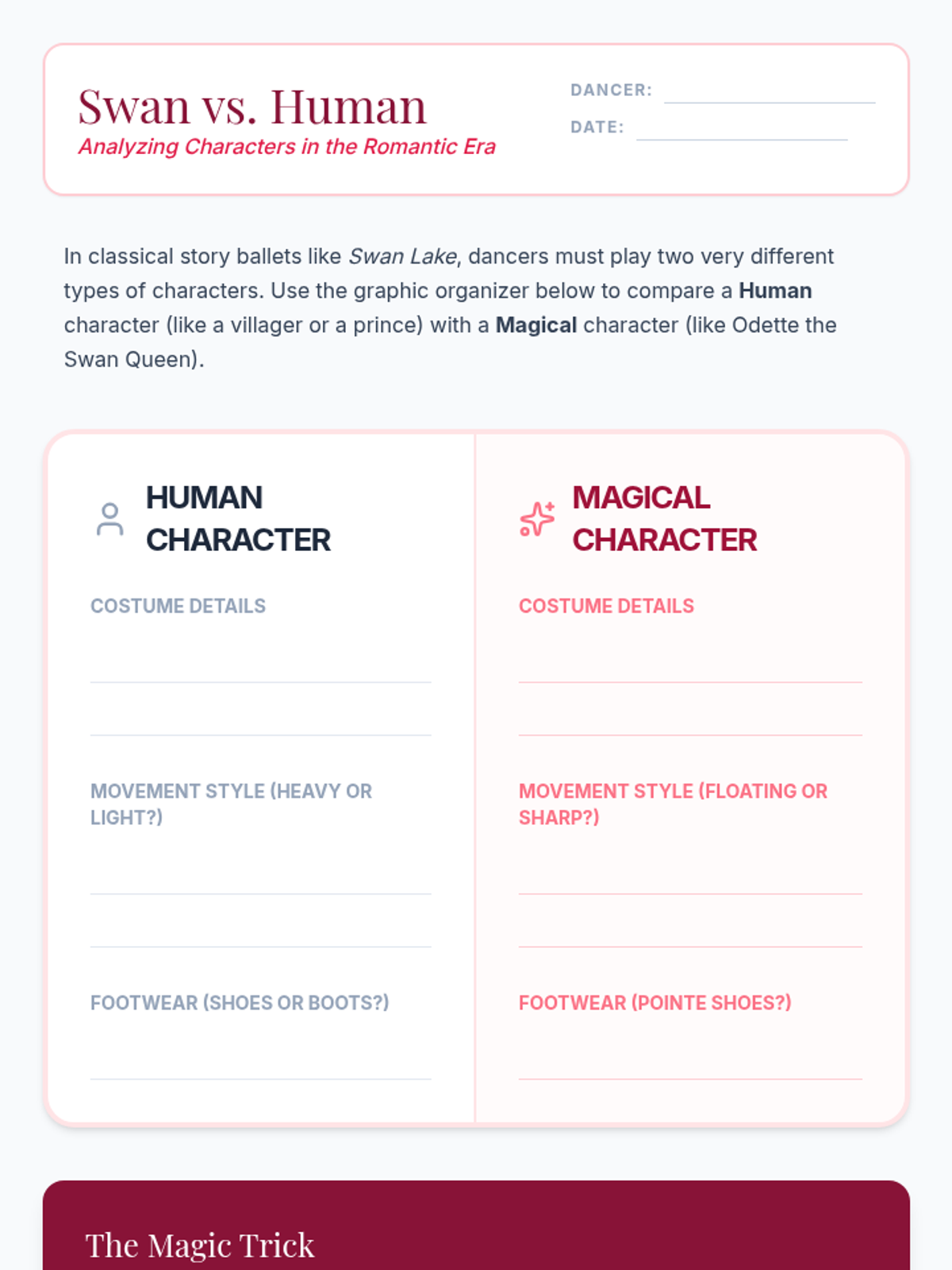
Students explore the era of story ballets, learning about the transition to theatrical narratives, the invention of pointe shoes and tutus, and the distinction between 'real' and 'magical' characters.
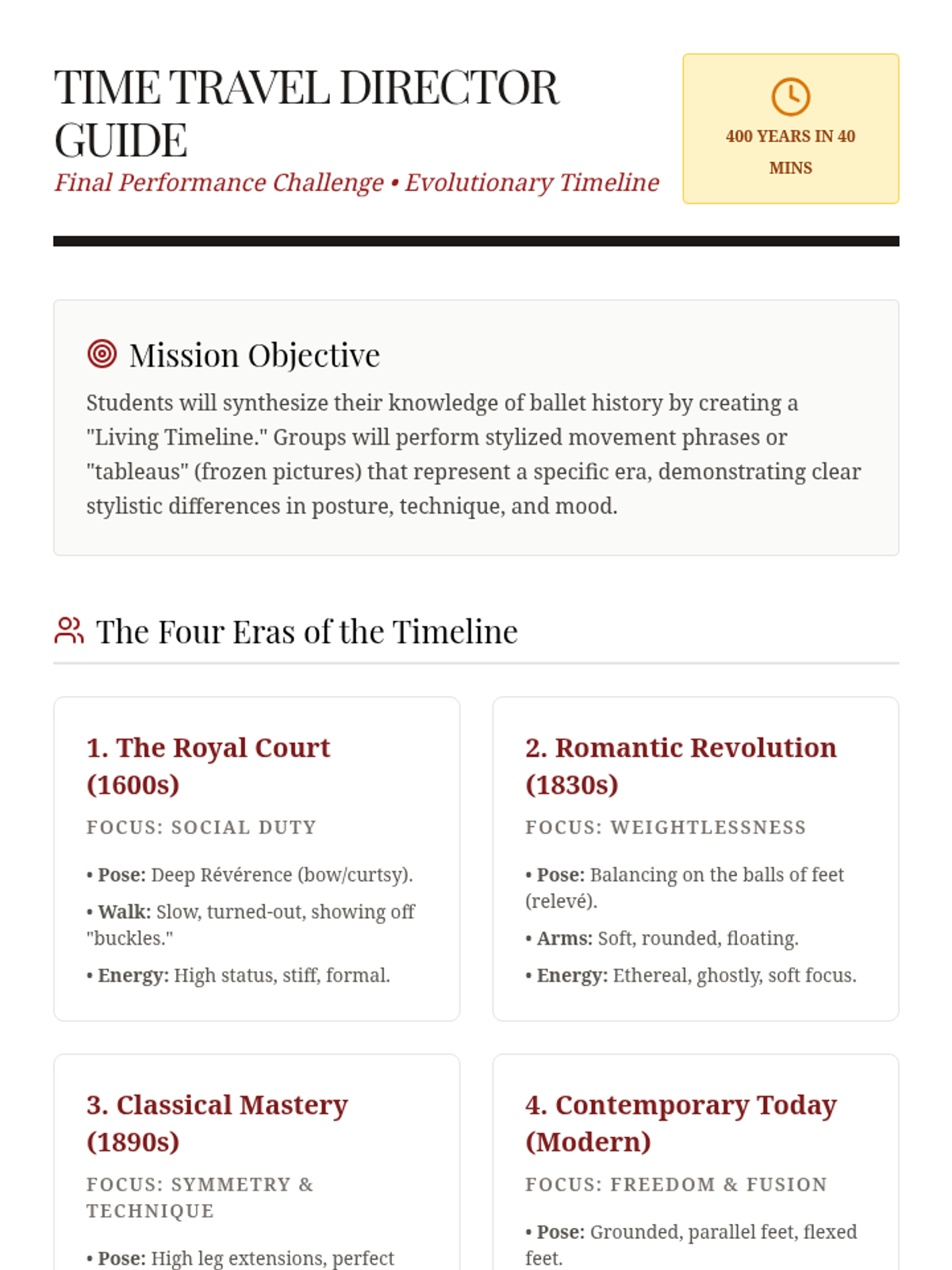
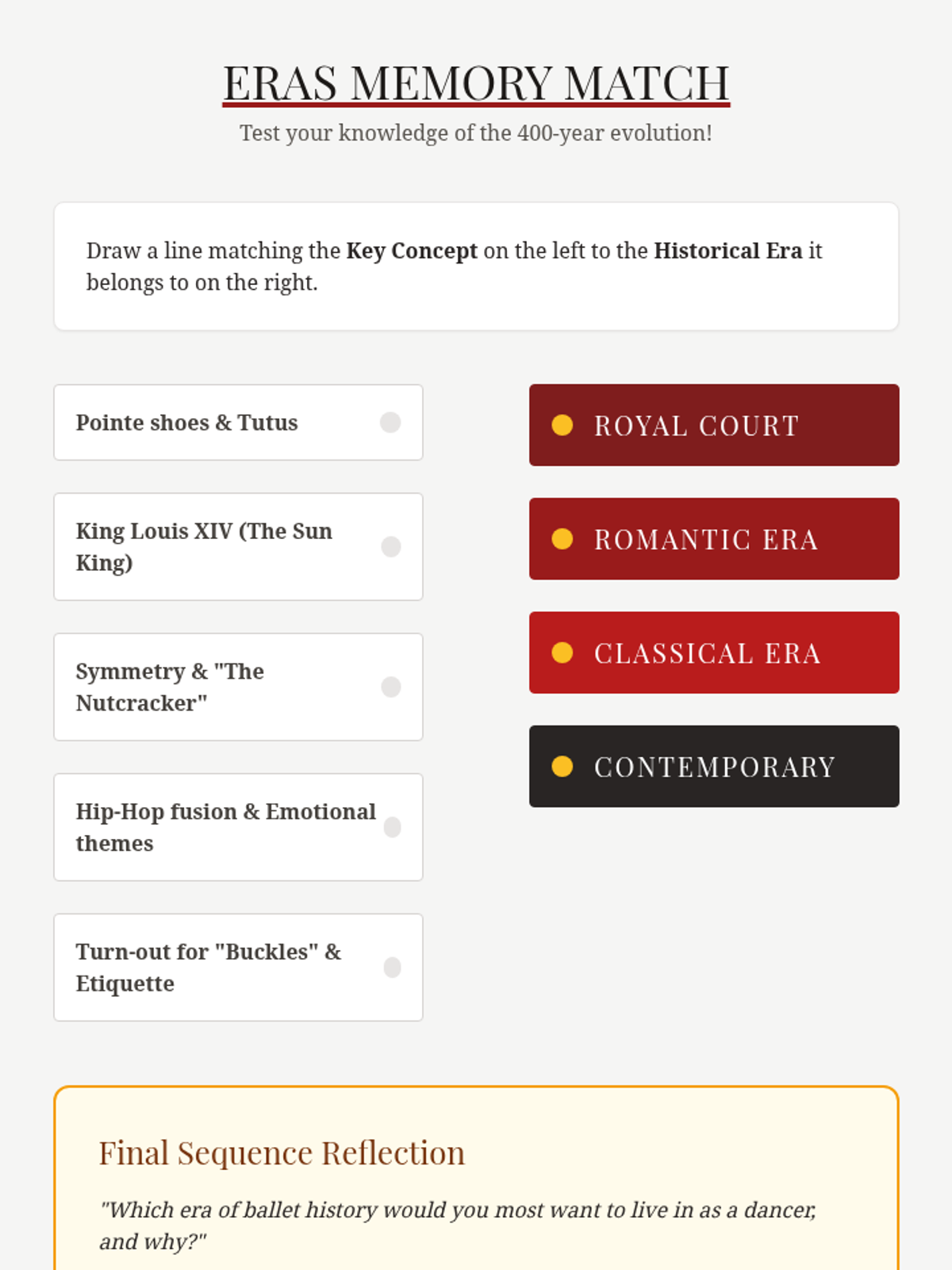
Groups are assigned different eras of ballet history (Court, Romantic, Classical, Modern) and create a 'living timeline' tableau or short phrase demonstrating the style of that period. This reinforces the chronological evolution learned throughout the sequence.
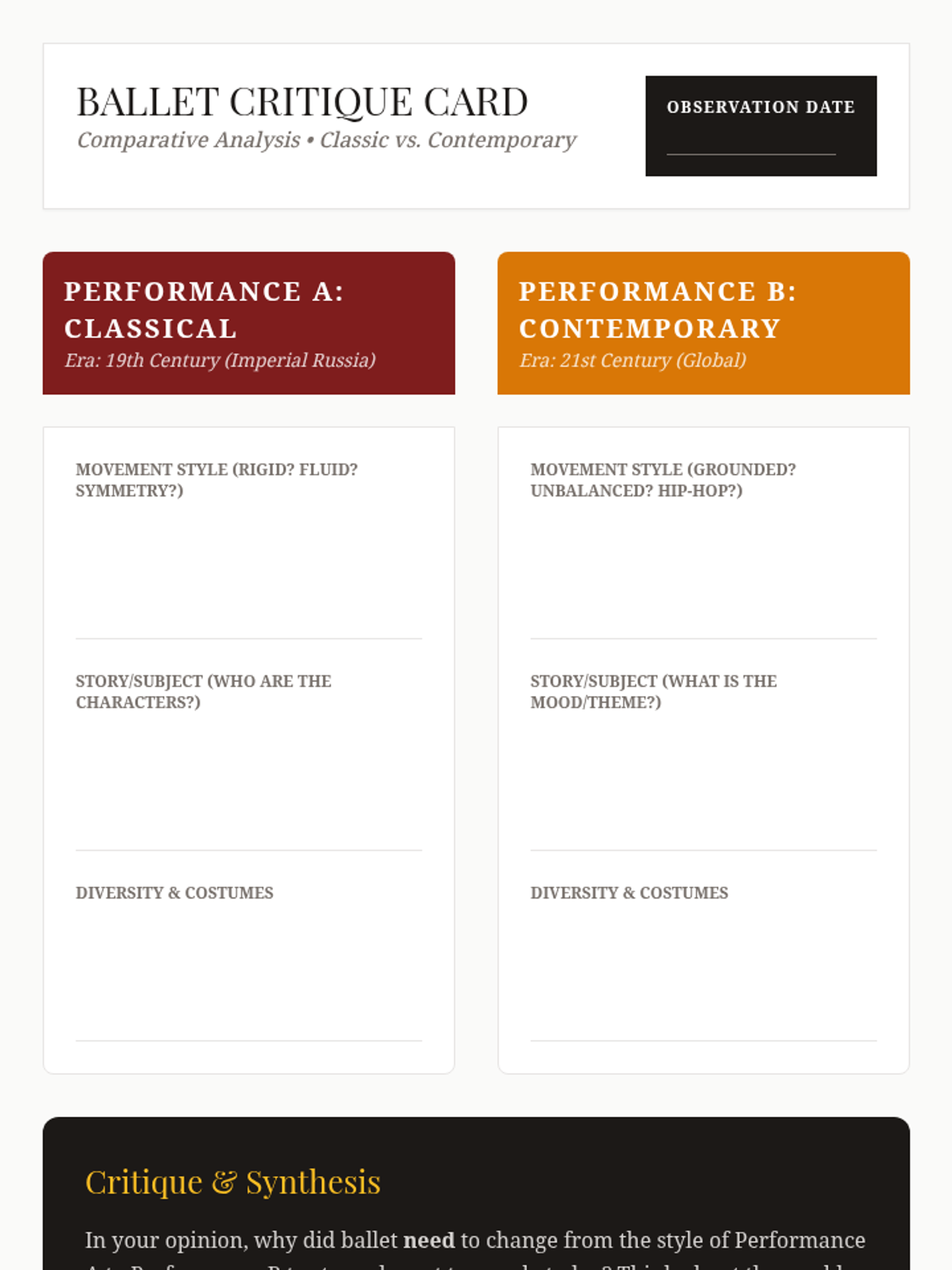
Students watch and critique clips of 'The Nutcracker' versus modern contemporary ballet works to identify differences in rigidity, subject matter, and diversity. They discuss how the art form has expanded beyond its European aristocratic roots.
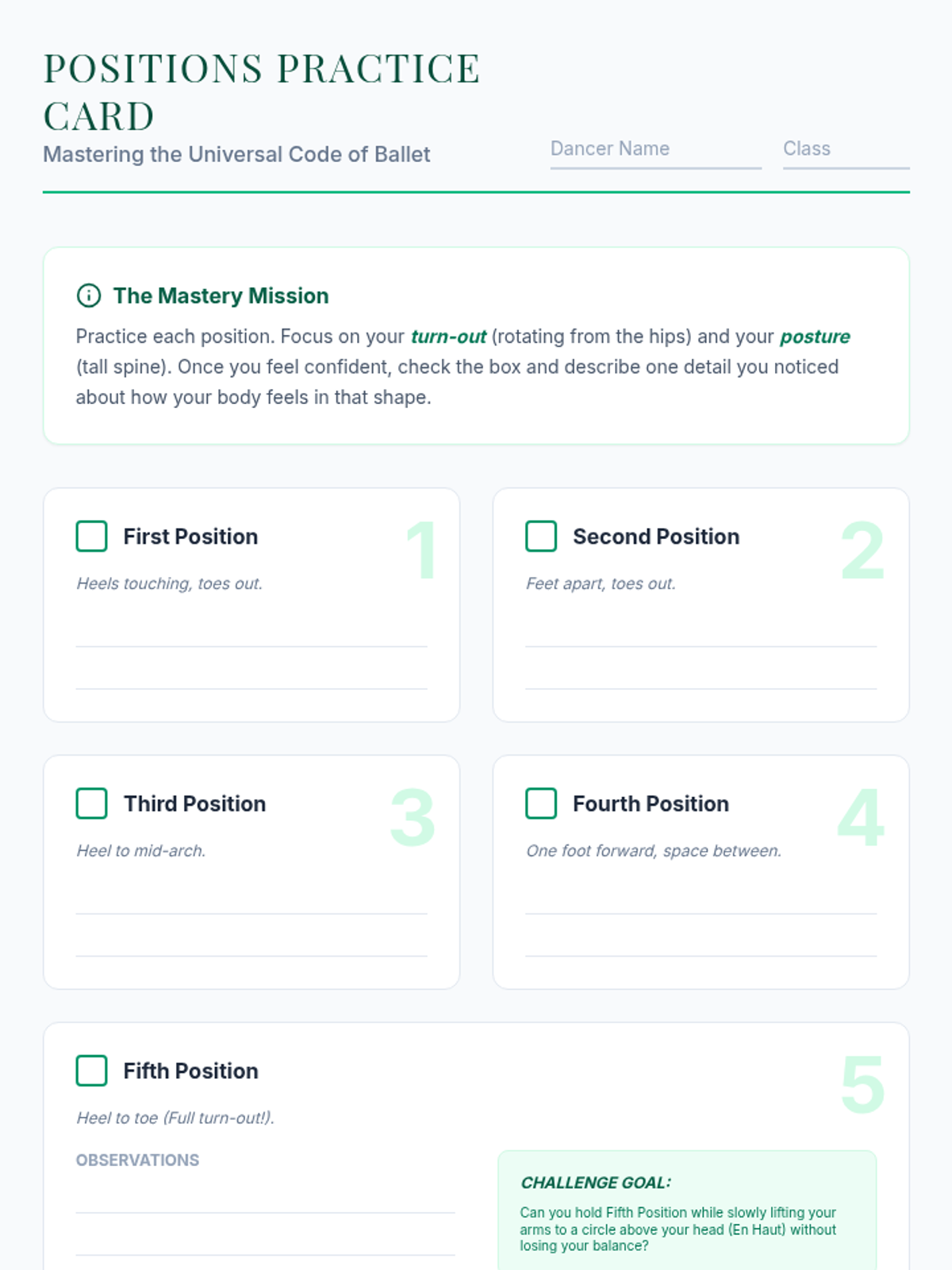
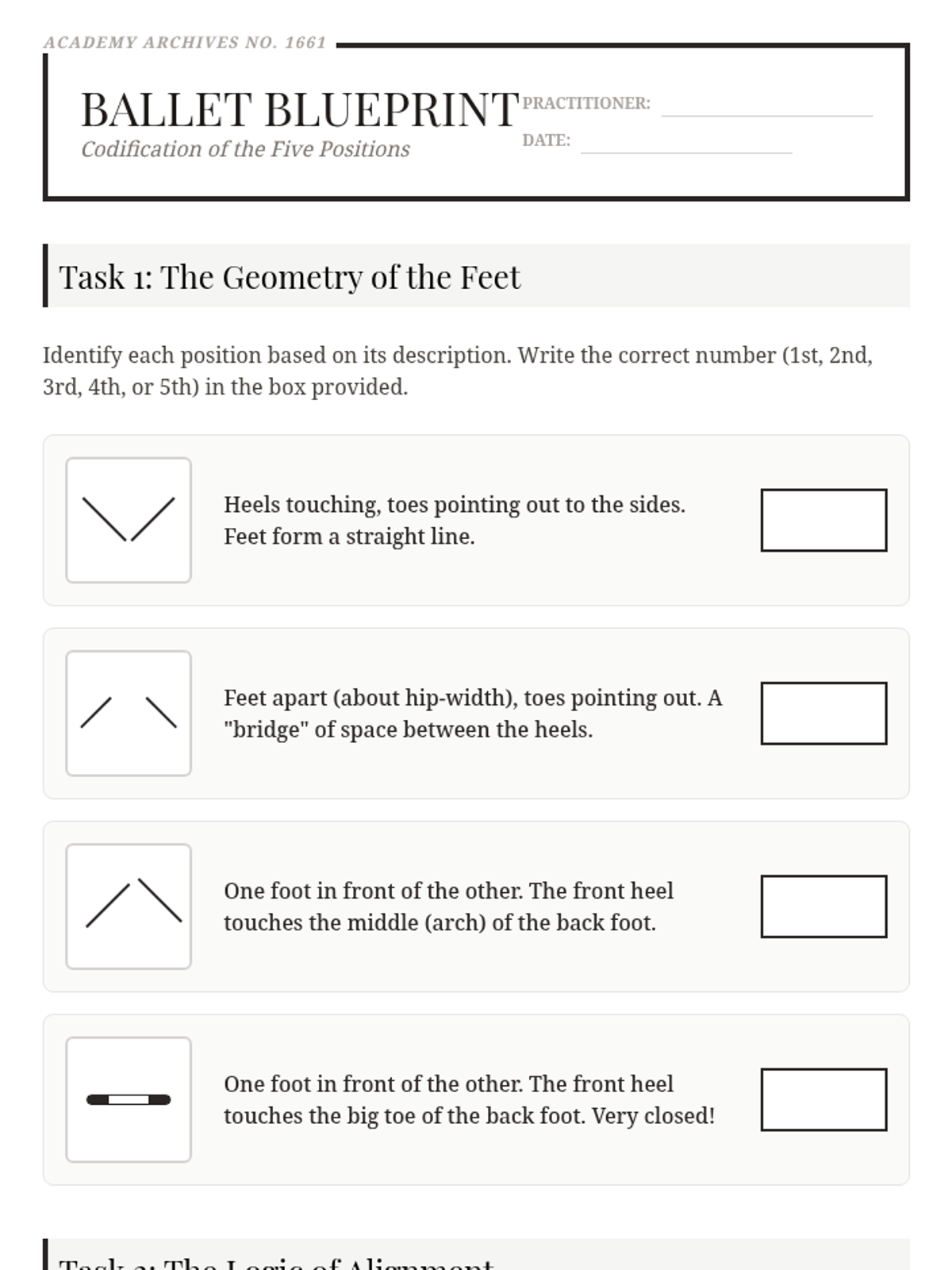
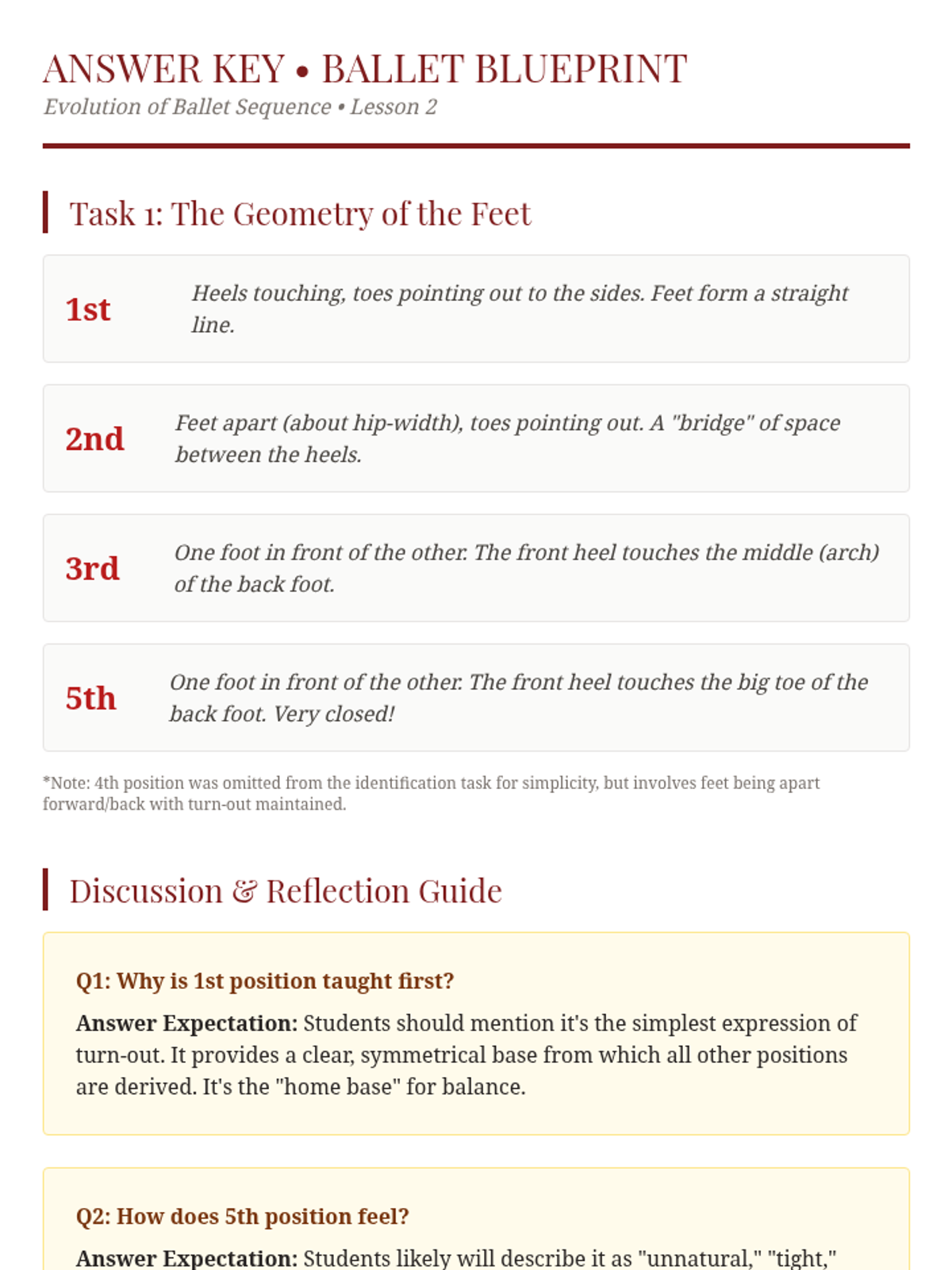
Students learn the five foundational positions of ballet and the concept of 'turn-out,' exploring how these technical codes were established to create a professional standard for dance.
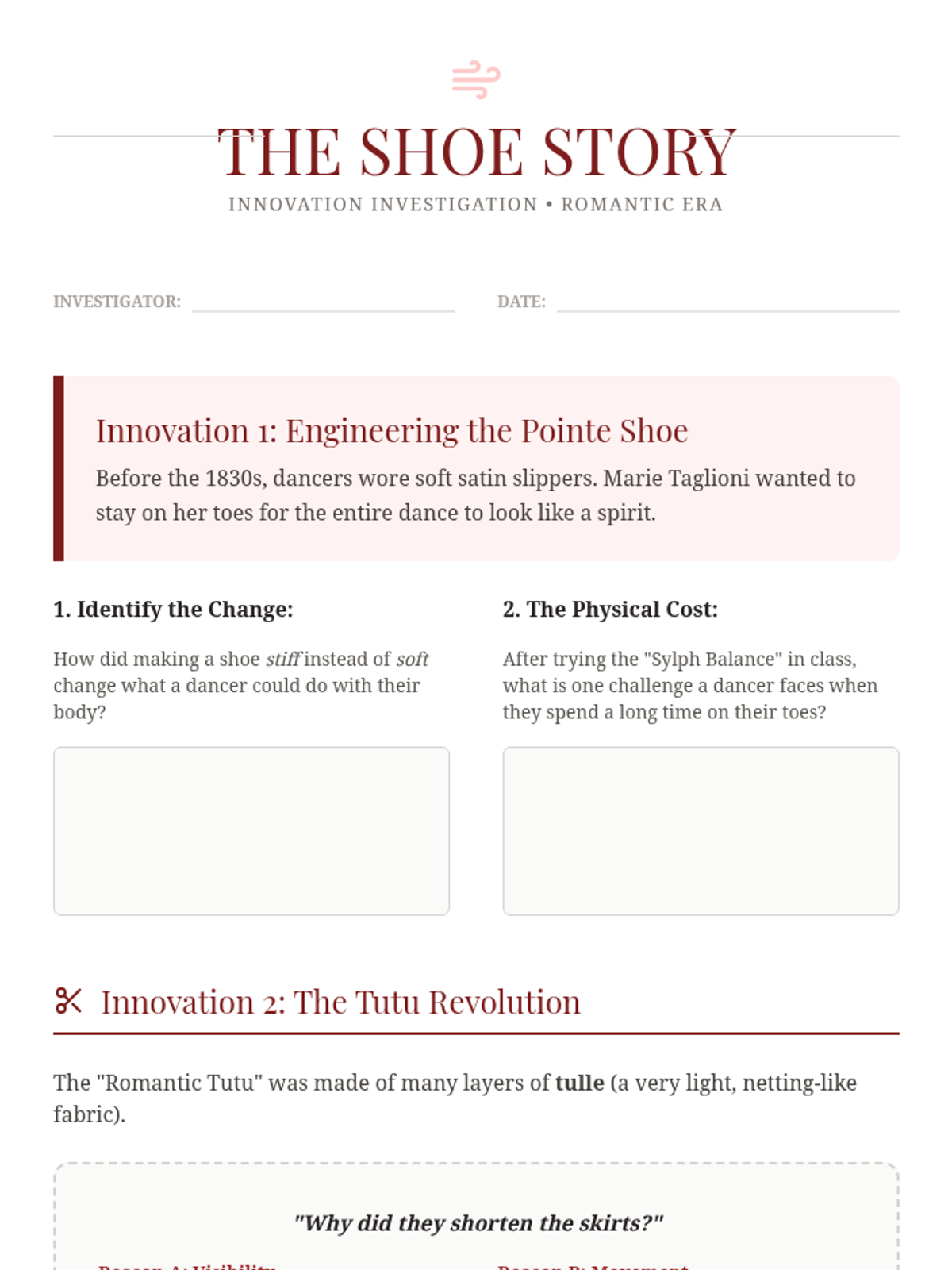
This lesson covers the introduction of the pointe shoe and the tutu, analyzing how these inventions changed choreography to make dancers look weightless and supernatural. Students try balancing exercises to appreciate the difficulty of the technique, connecting technological innovation to artistic shifts.
Students explore the origins of ballet in the court of King Louis XIV, focusing on dance as a tool for social status and etiquette.
Learners explore the systematic codification of ballet technique, practicing the five basic positions of the feet and arms. They compare diagrams from the 17th century to modern photos to see continuity and change, focusing on the discipline and geometry of the art form.
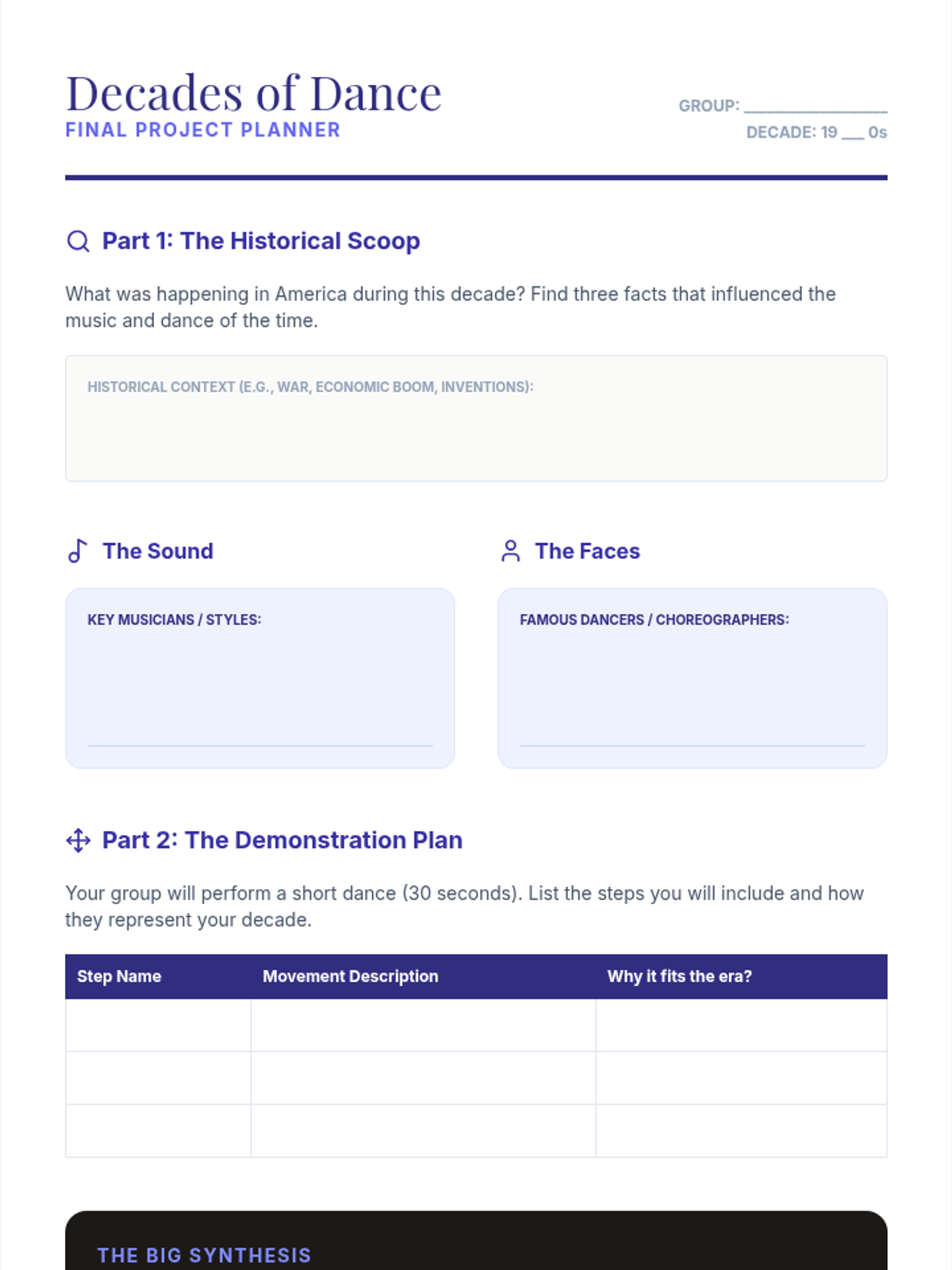
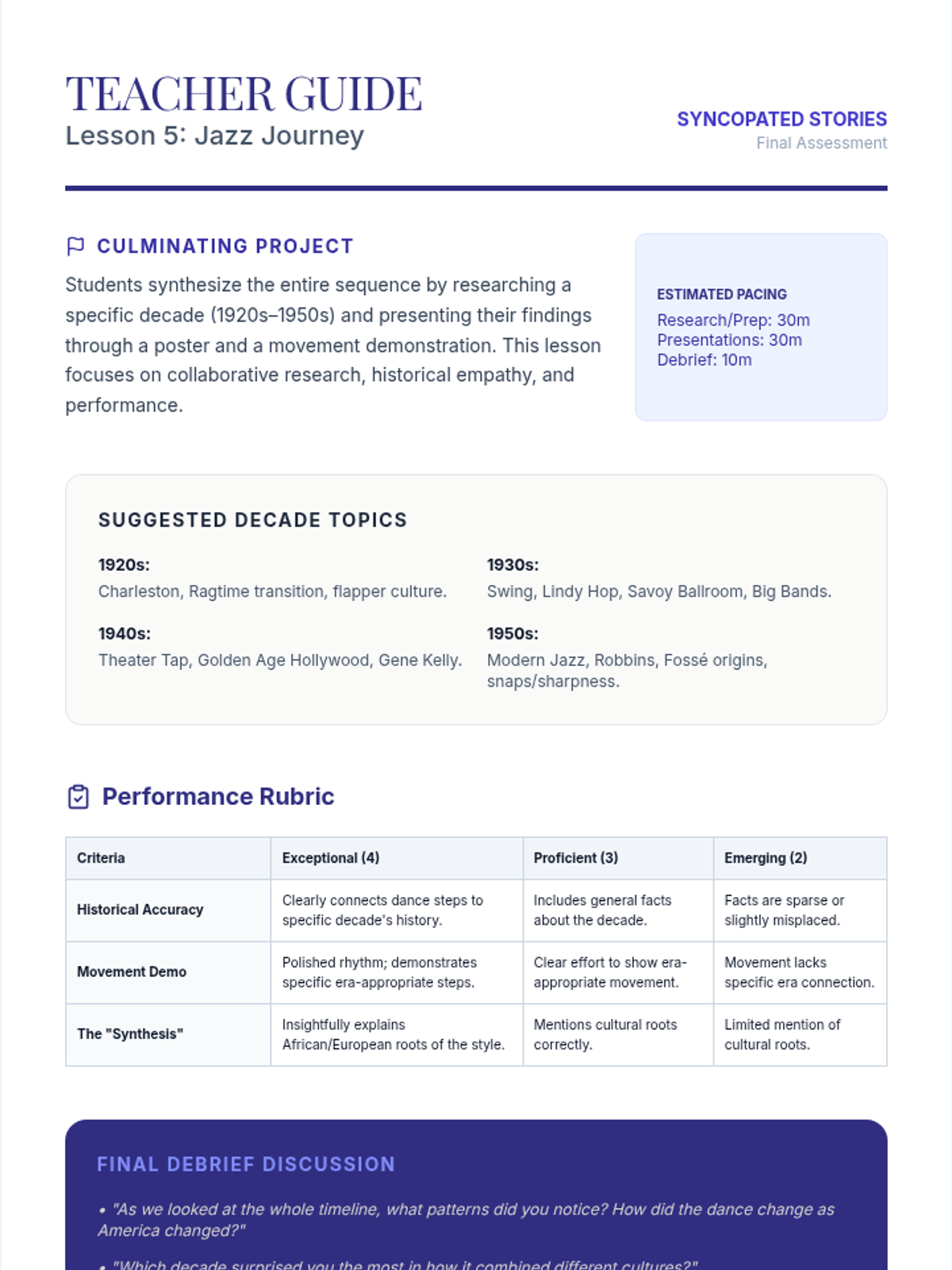
Groups research a specific decade of Jazz dance history to create an informational poster and demonstration, synthesizing the full timeline of the genre.
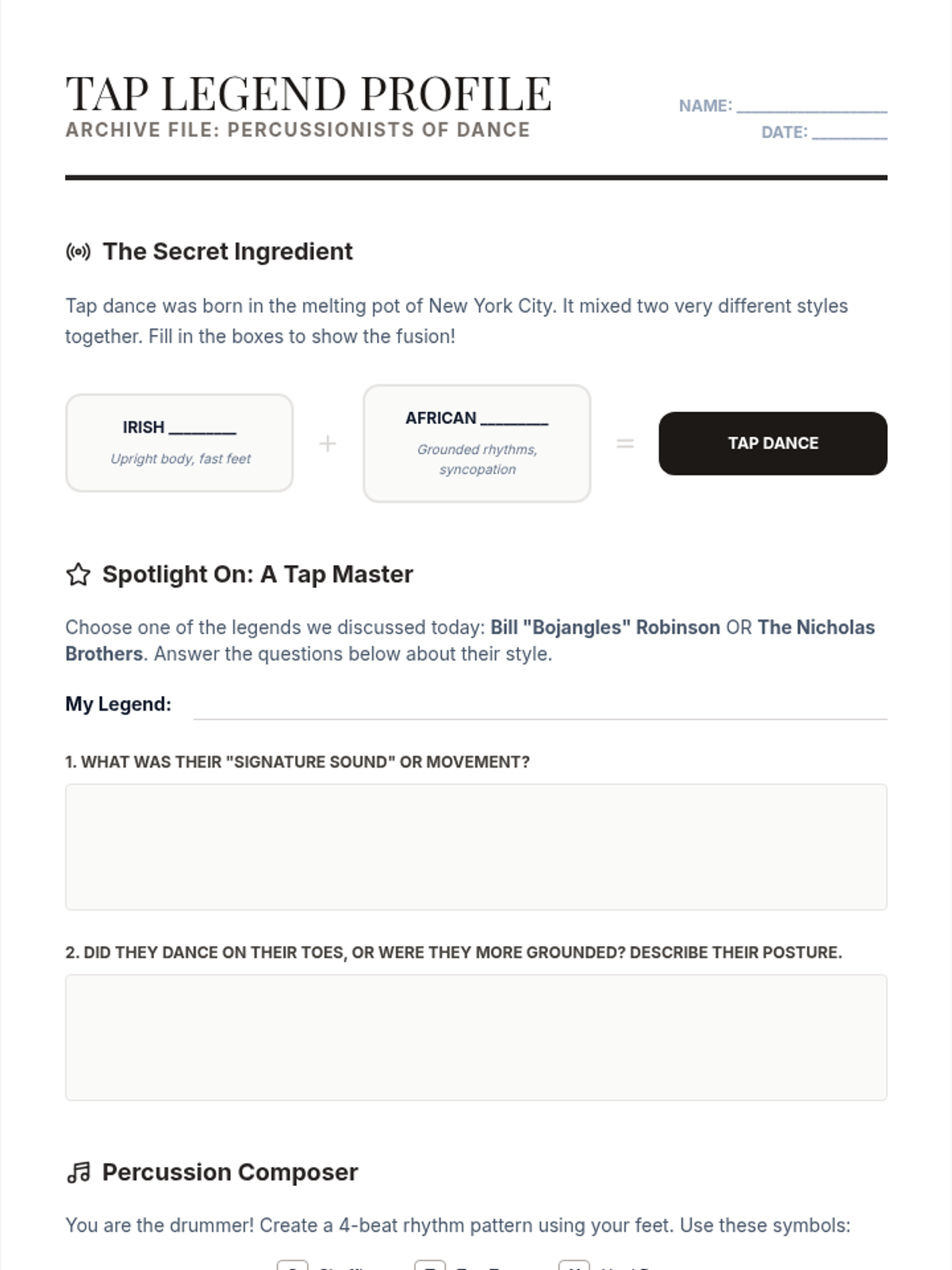
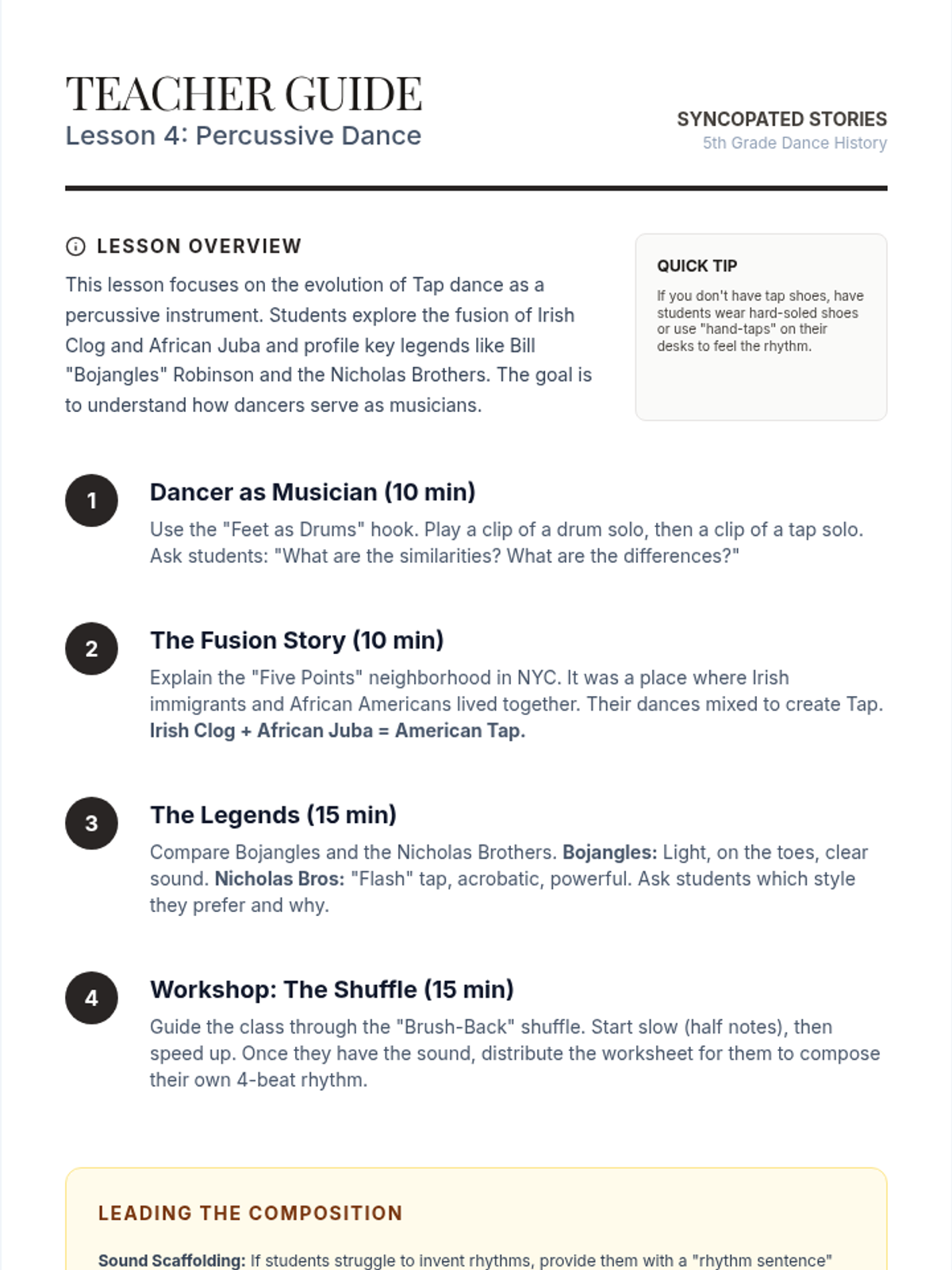
Students investigate the evolution of Tap dance, focusing on the dancer as a musician and key figures like Bill 'Bojangles' Robinson.
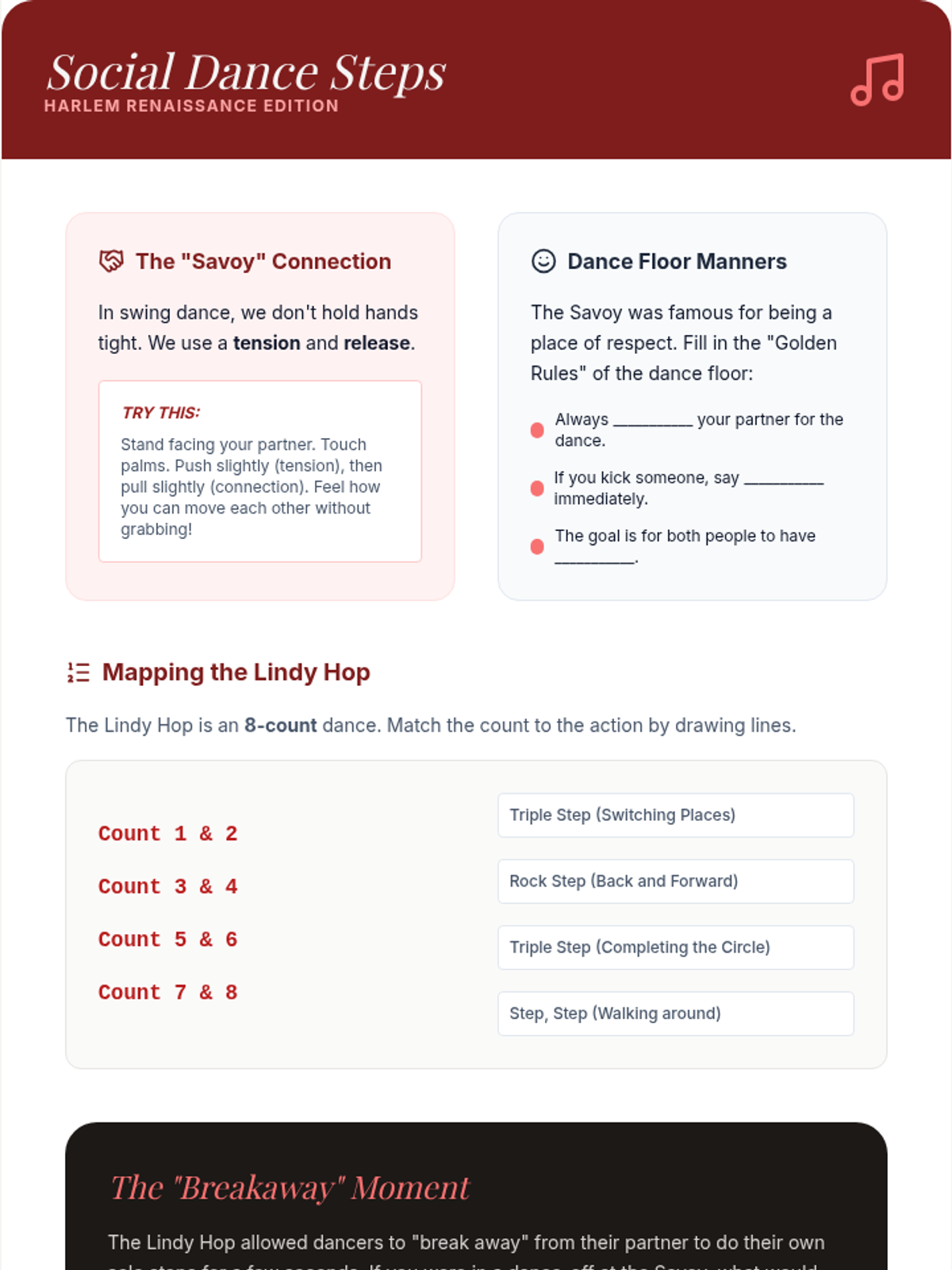
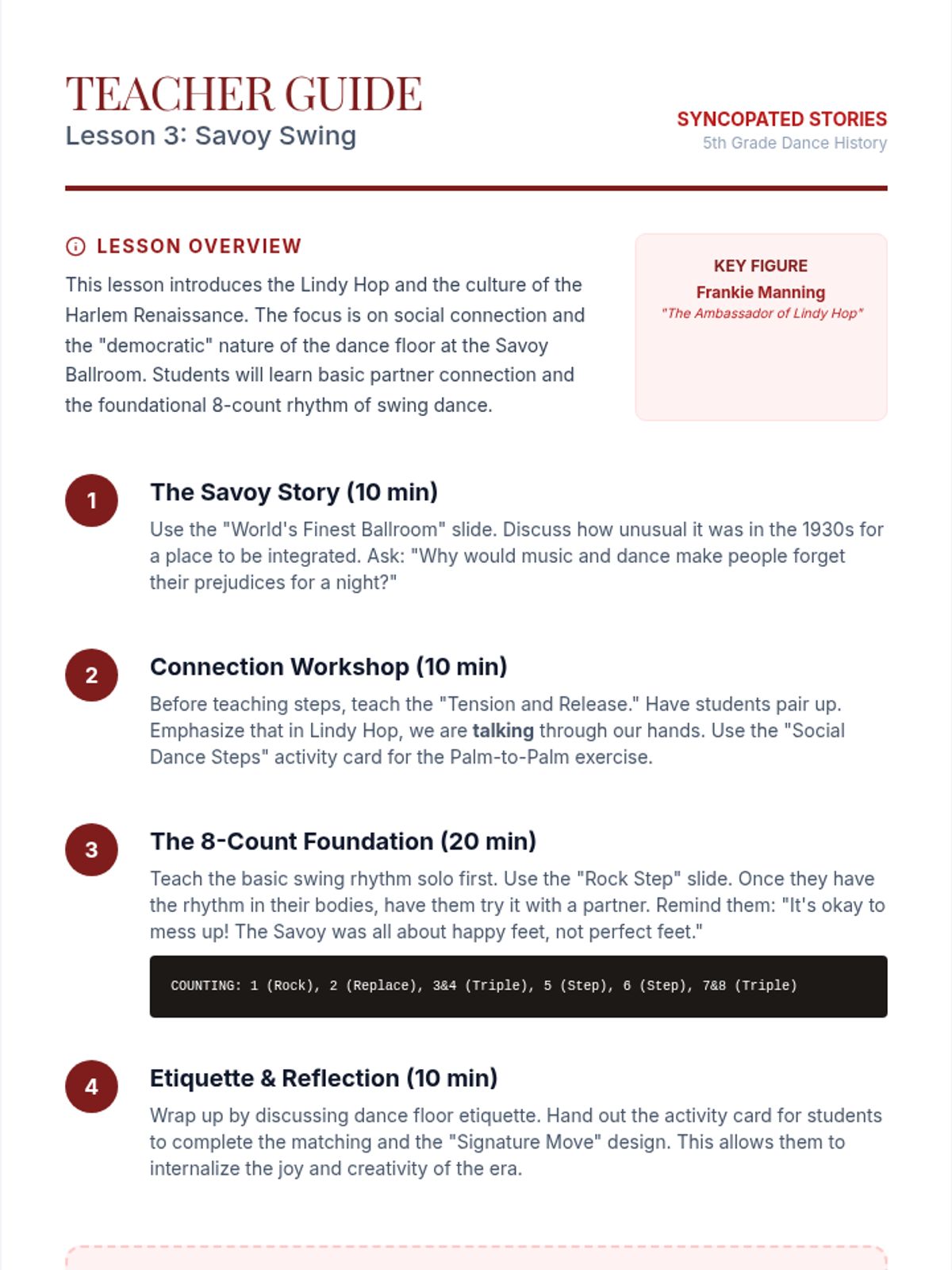
Focused on the Harlem Renaissance and the Savoy Ballroom, students learn the social history of the Lindy Hop and basic swing steps as a bridge across cultures.
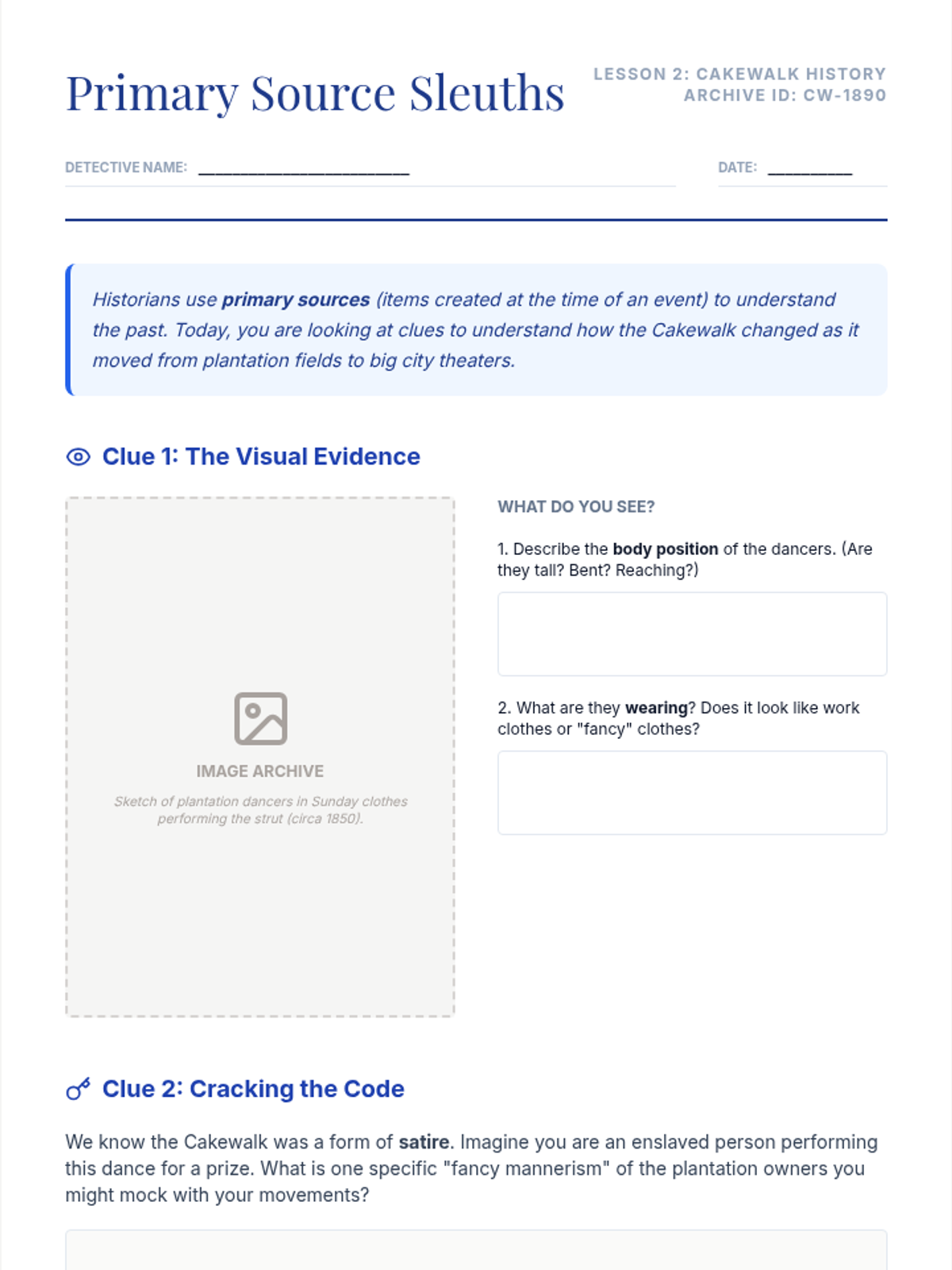
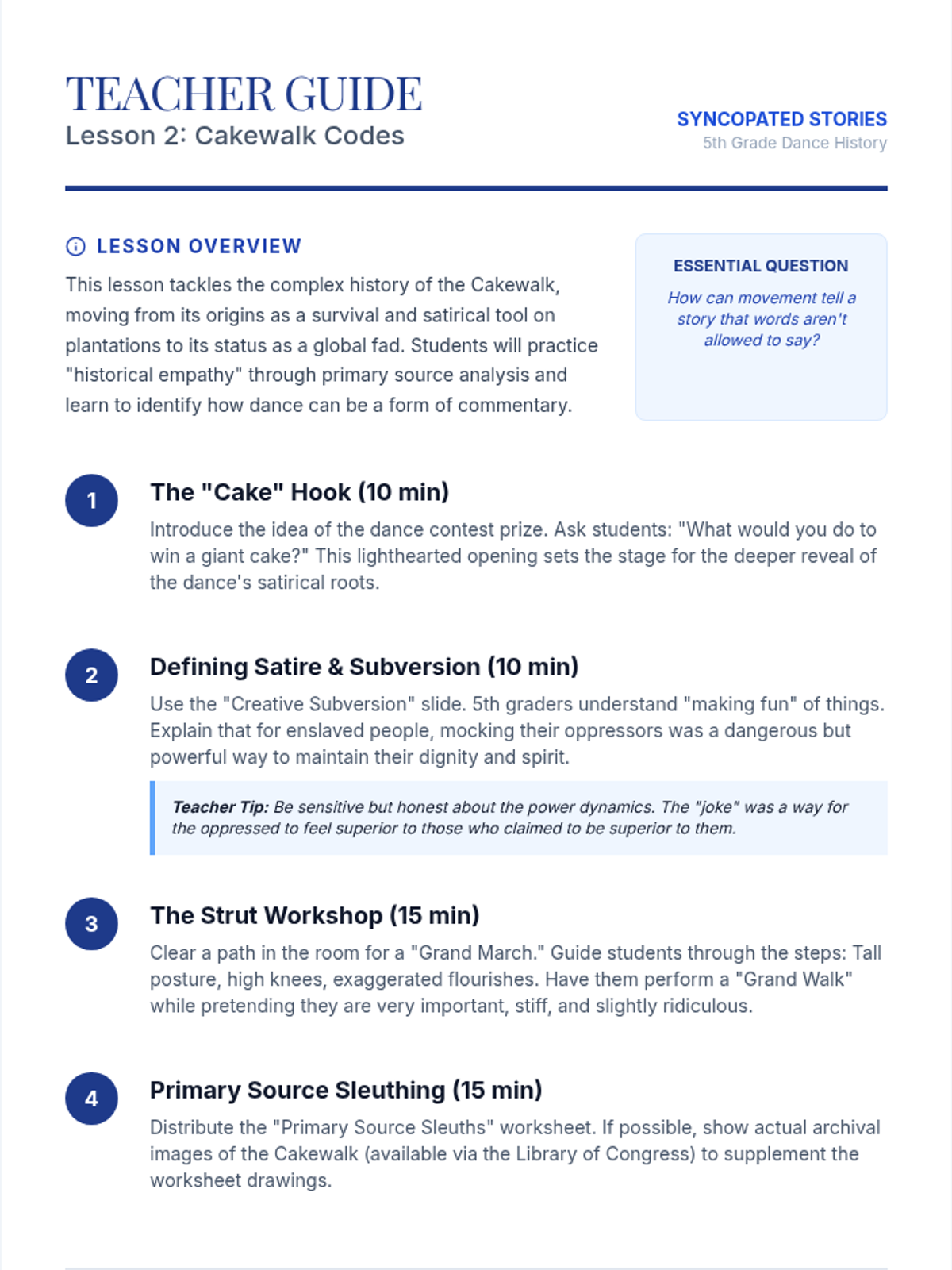
Learners examine the Cakewalk as a form of subtle satire and competition on plantations, analyzing primary sources and practicing the basic strut step.
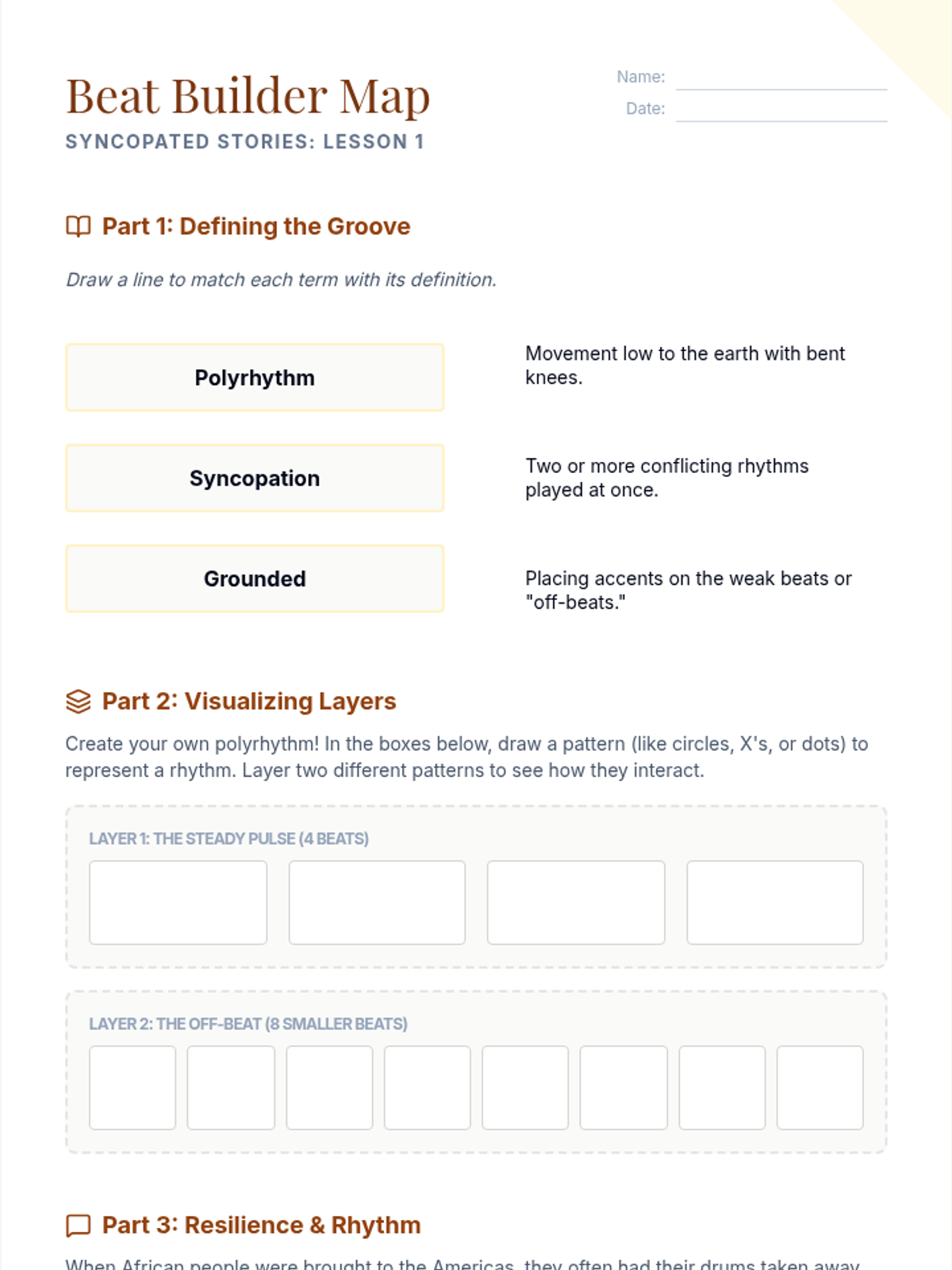
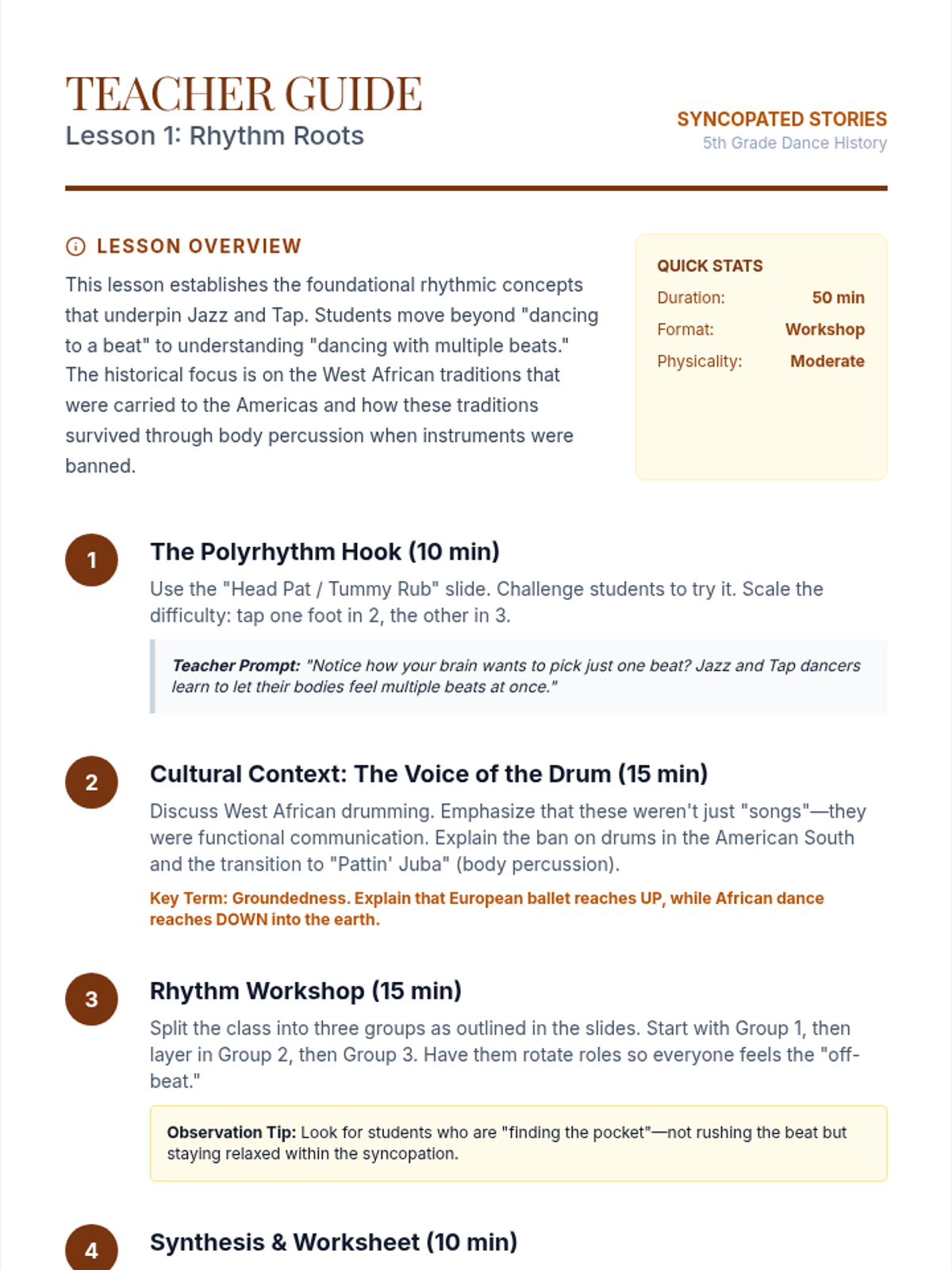
Students explore the foundational influence of African drumming and dance on American culture, practicing polyrhythms and grounded movement while discussing cultural preservation.
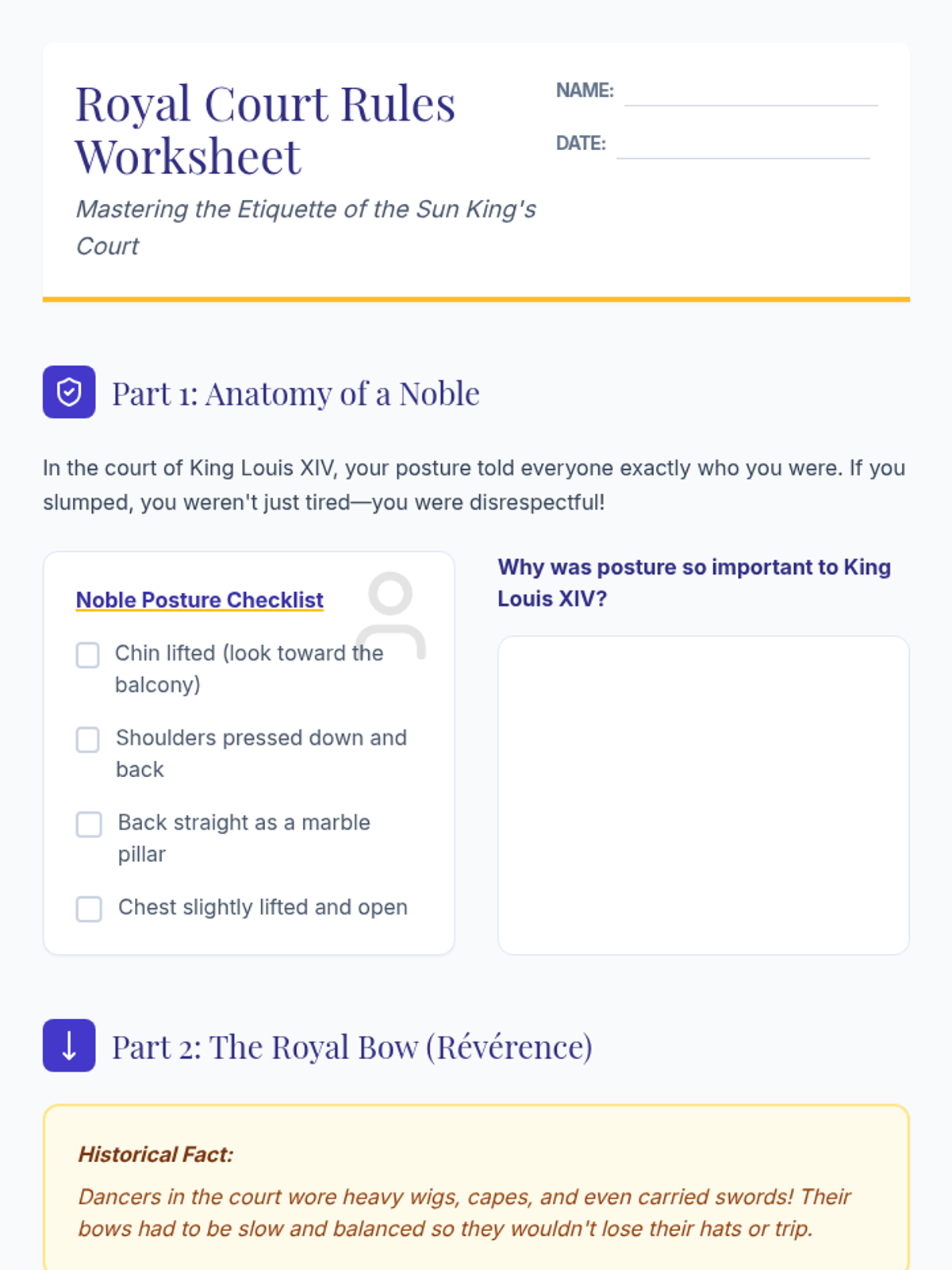
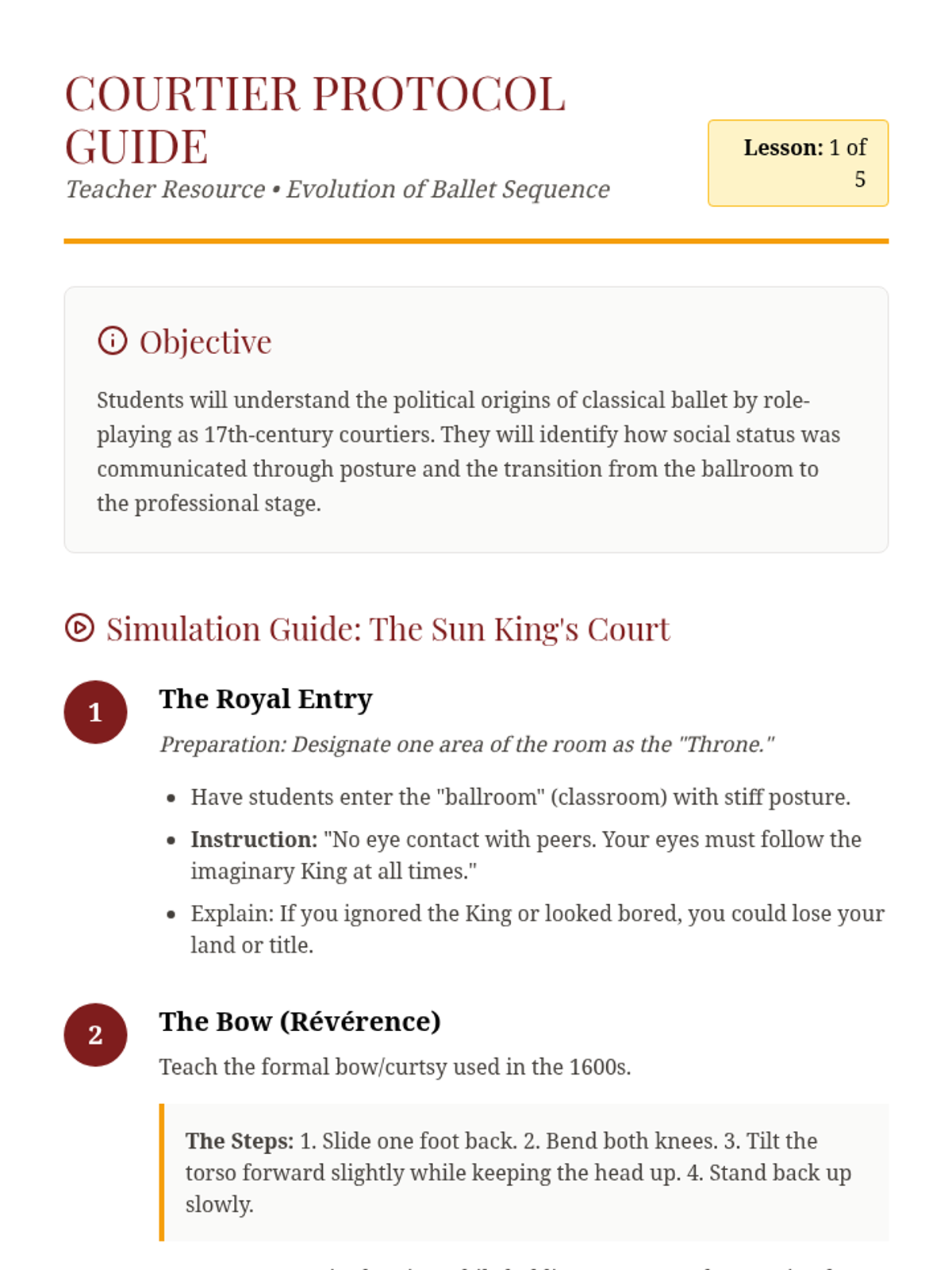
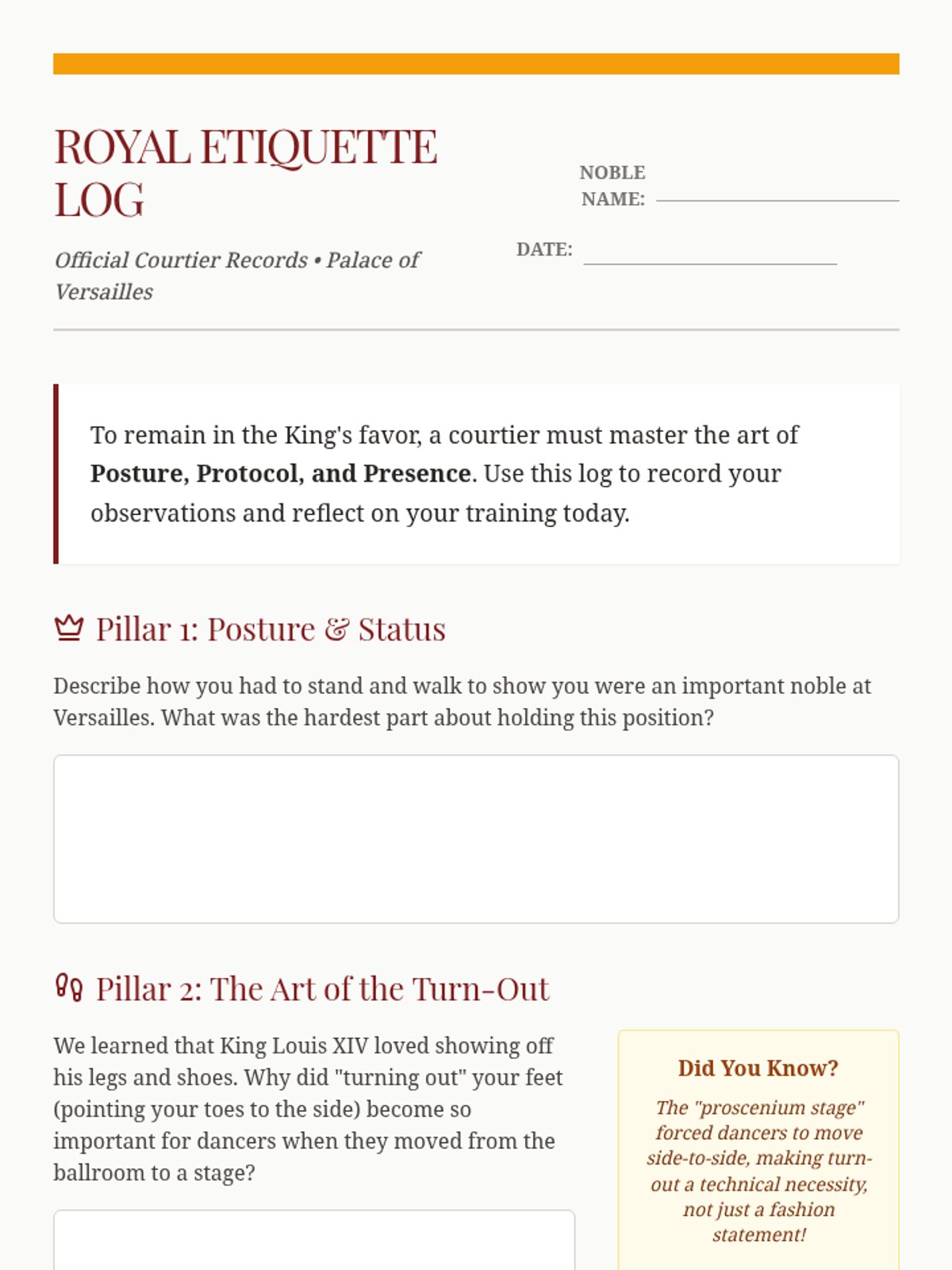
Students role-play as courtiers in the Sun King's court, learning the strict etiquette of bowing, standing, and walking that formed the basis of ballet. They explore how posture displayed social status and the political roots of classical dance.
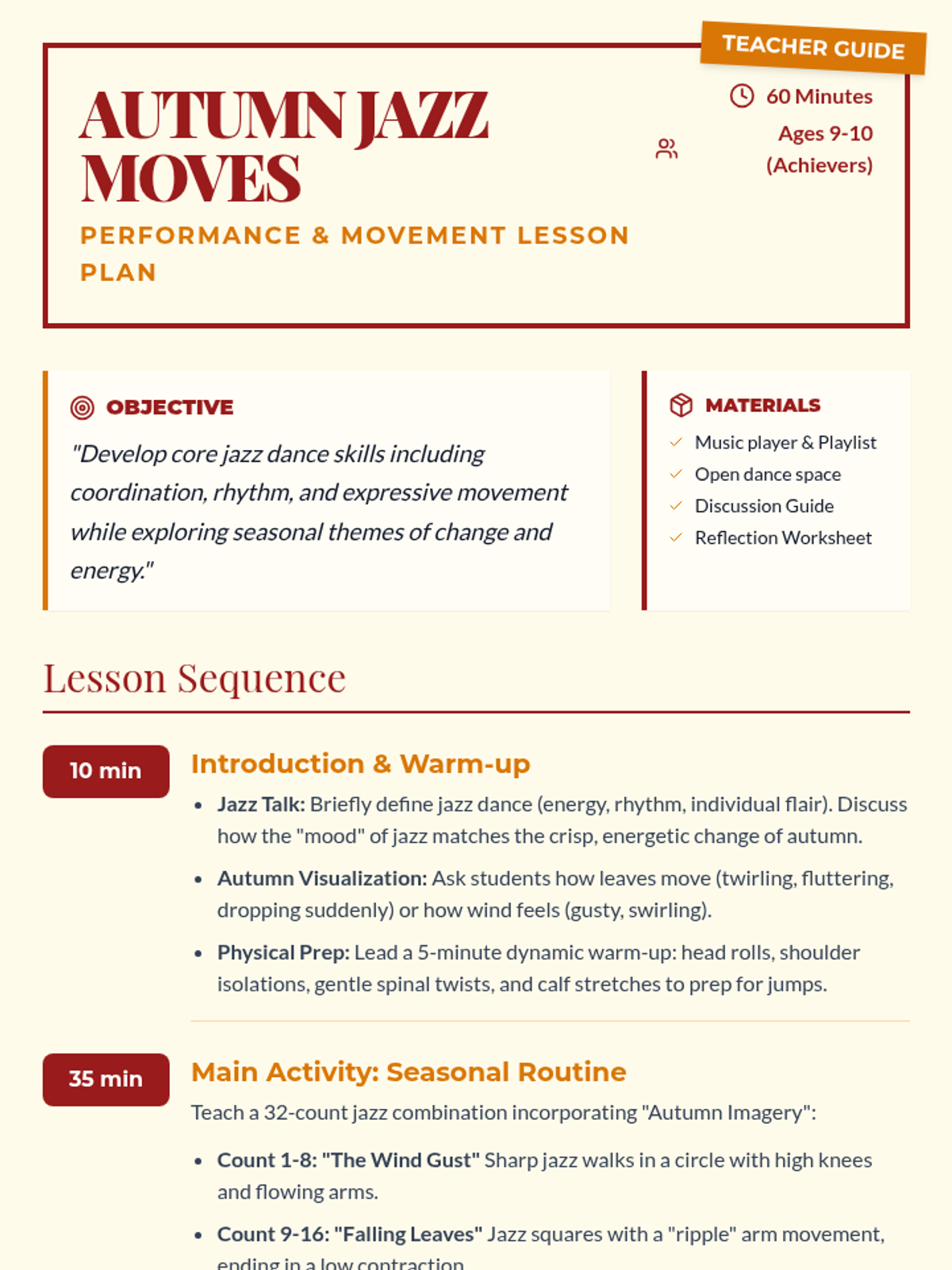
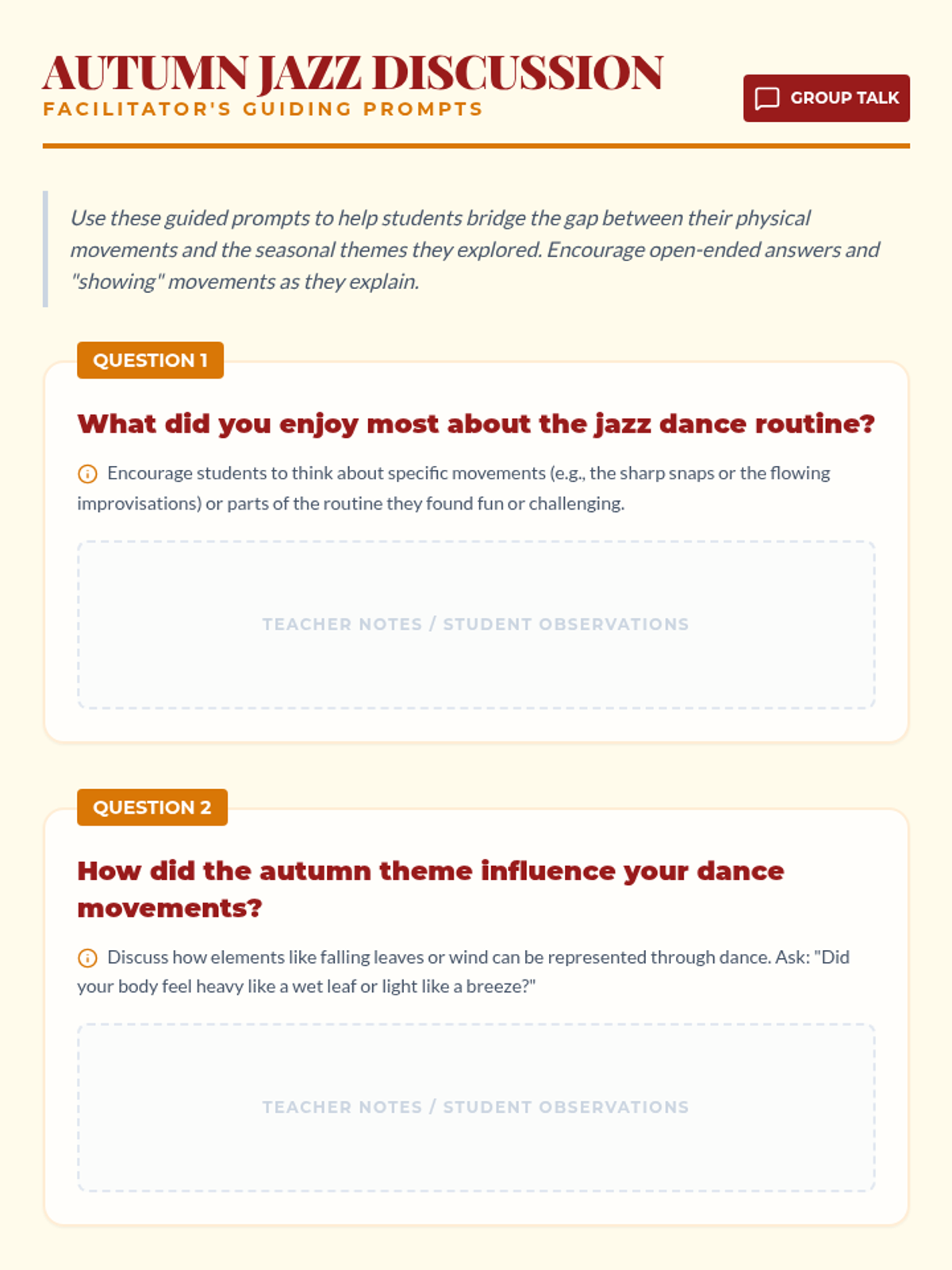
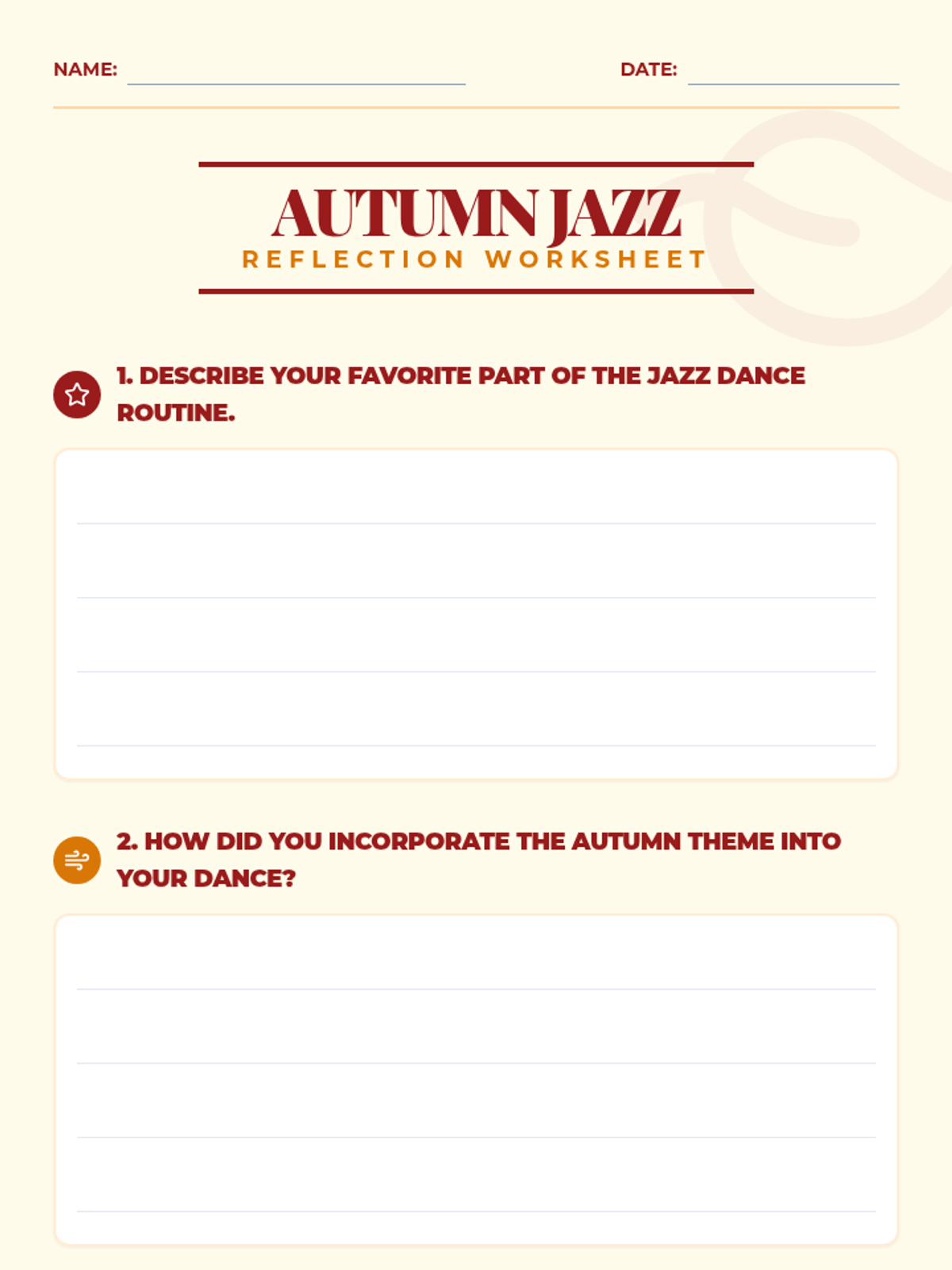
Students will explore jazz dance techniques with a seasonal twist, focusing on the energy and vibrancy of autumn through movement, coordination, and creative expression.
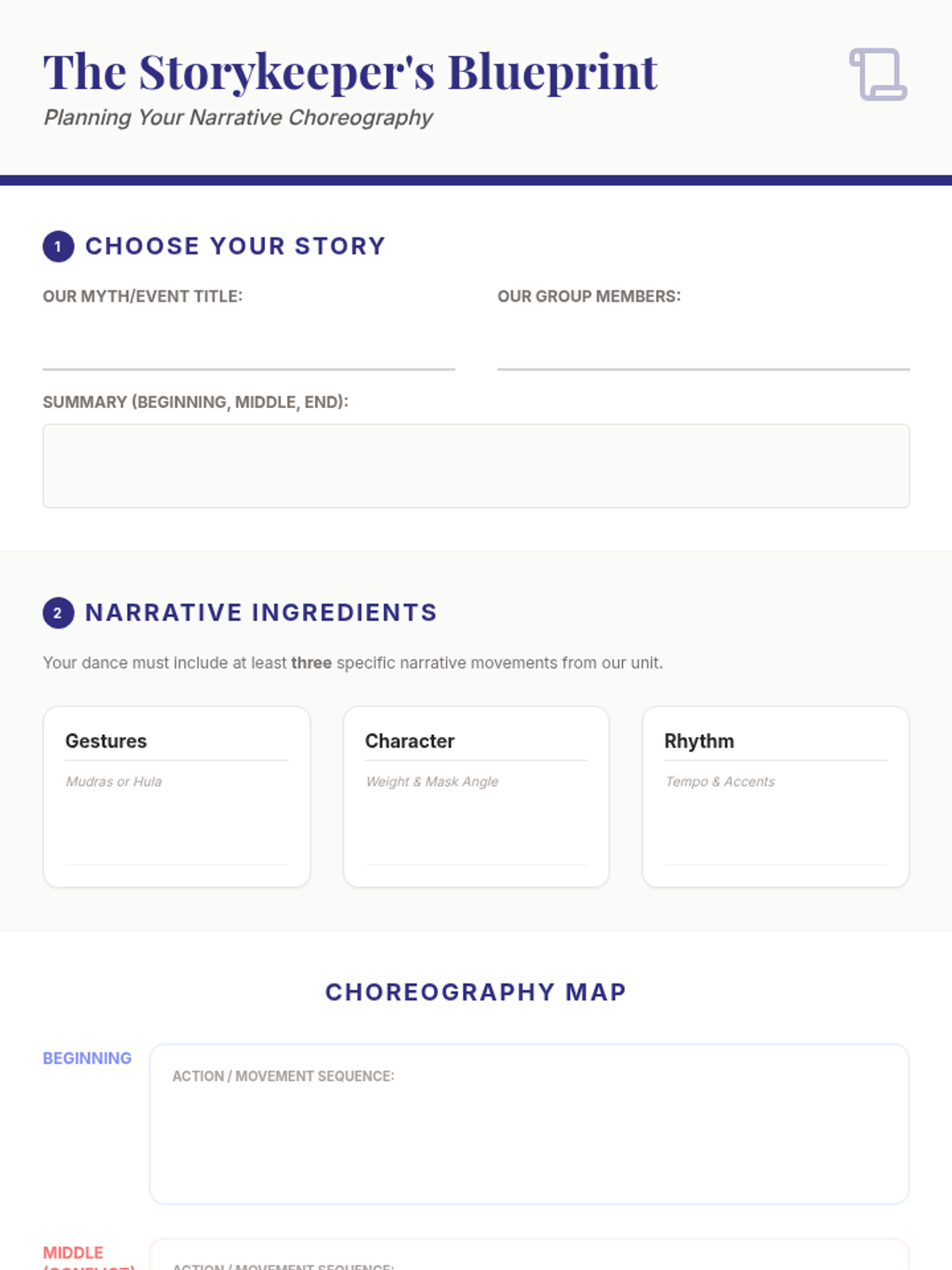
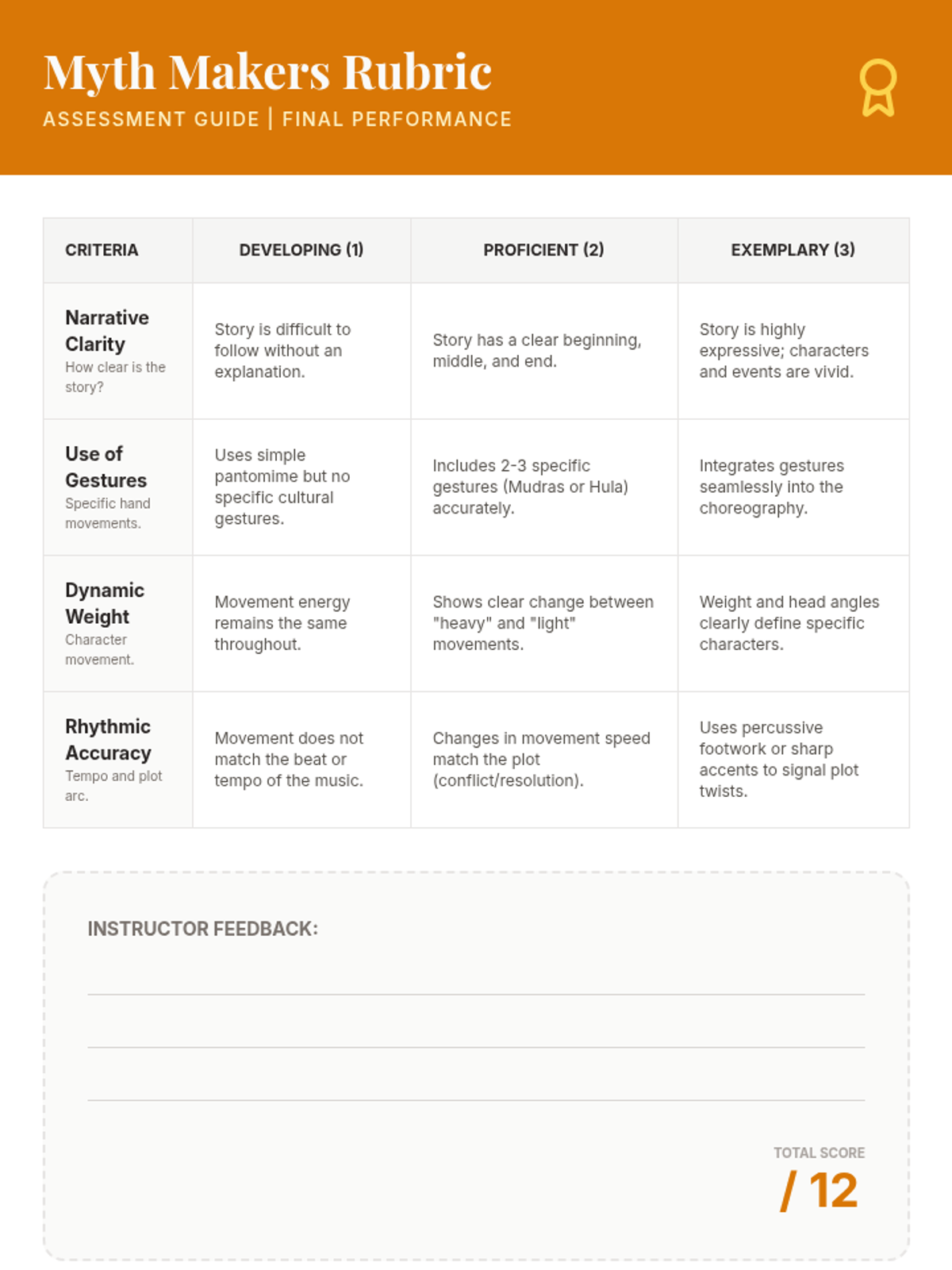
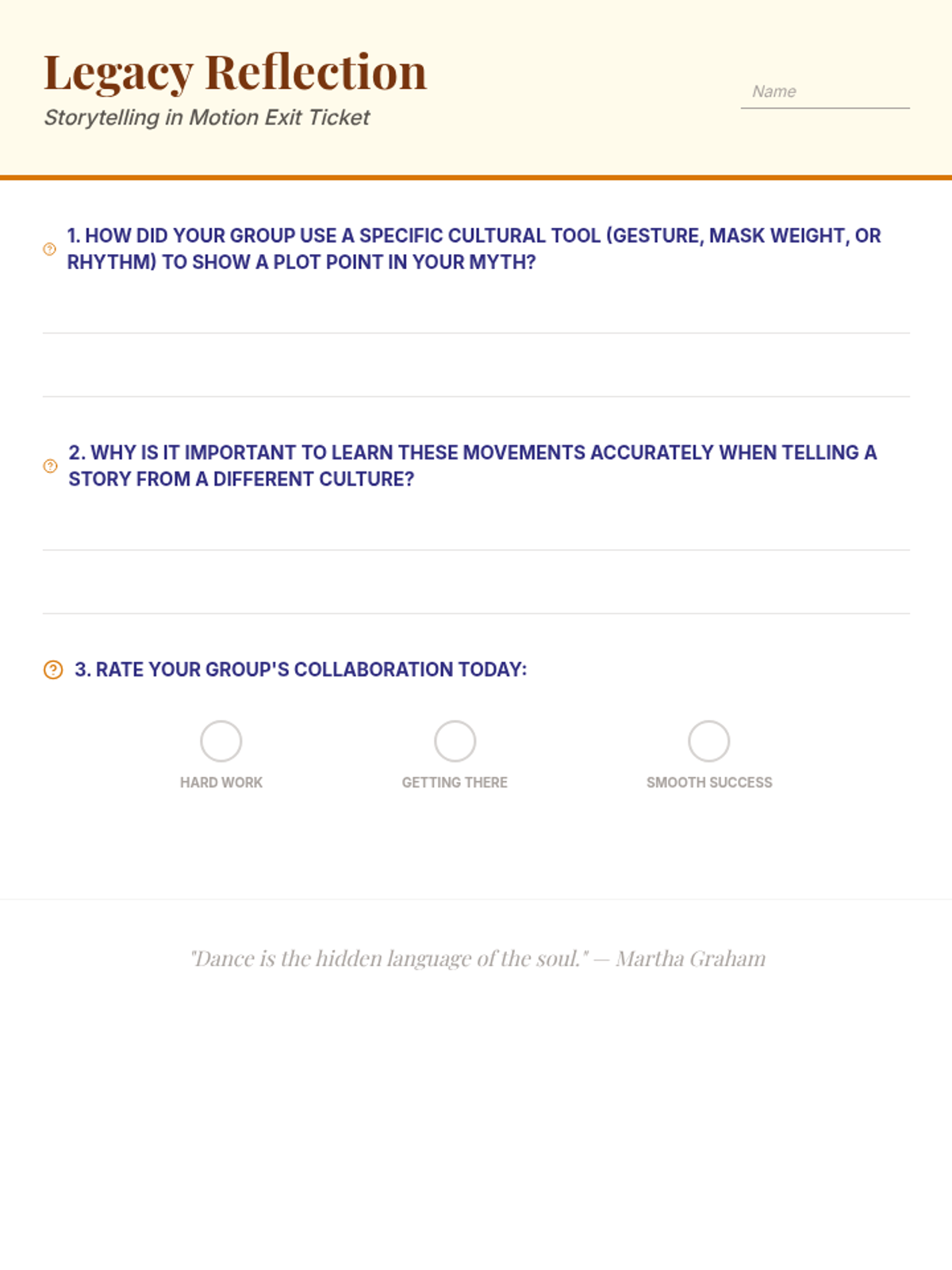
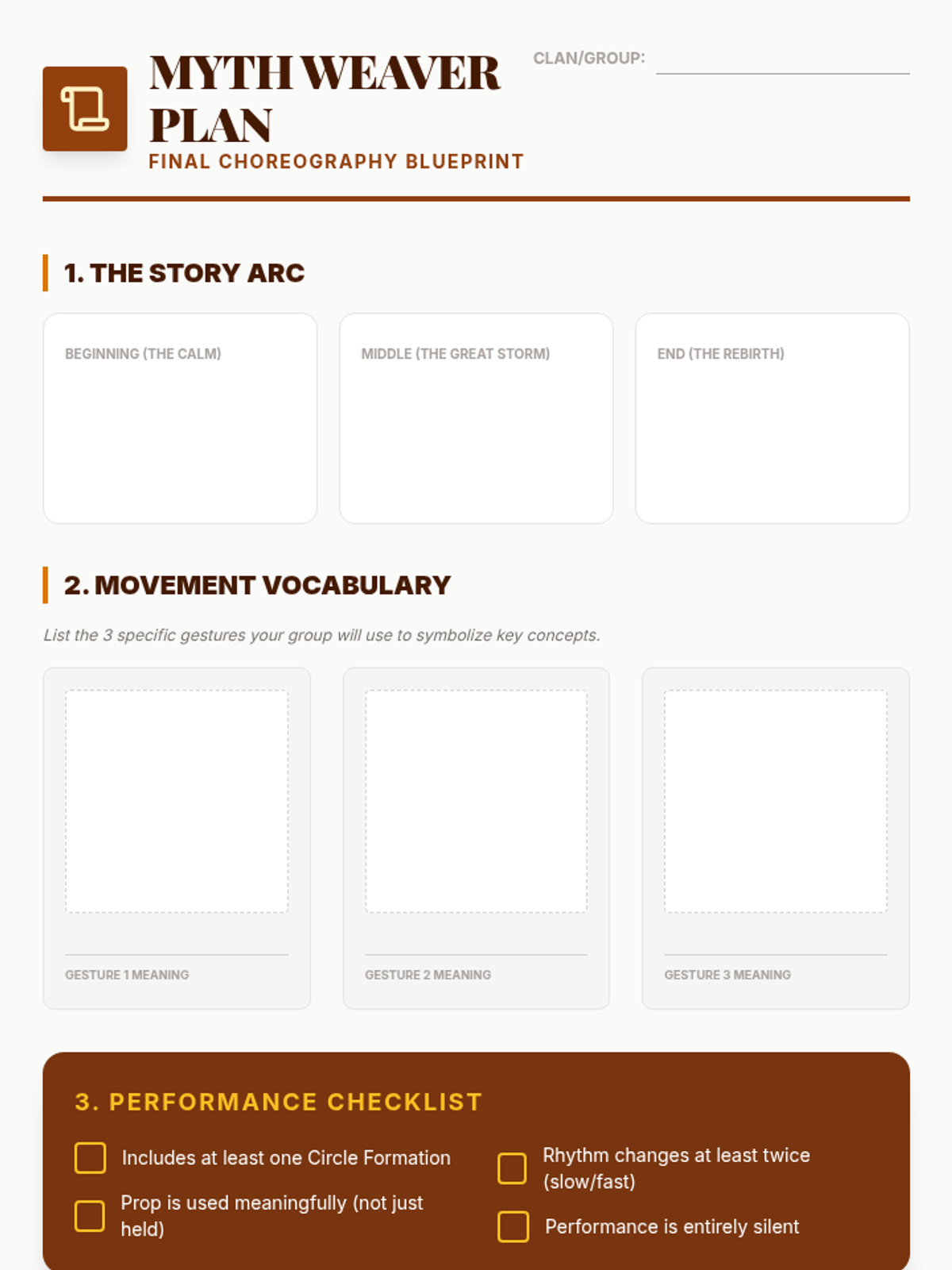
Working in small groups, students choreograph a short dance piece based on a myth or historical event using the gestures and rhythmic tools learned throughout the unit.
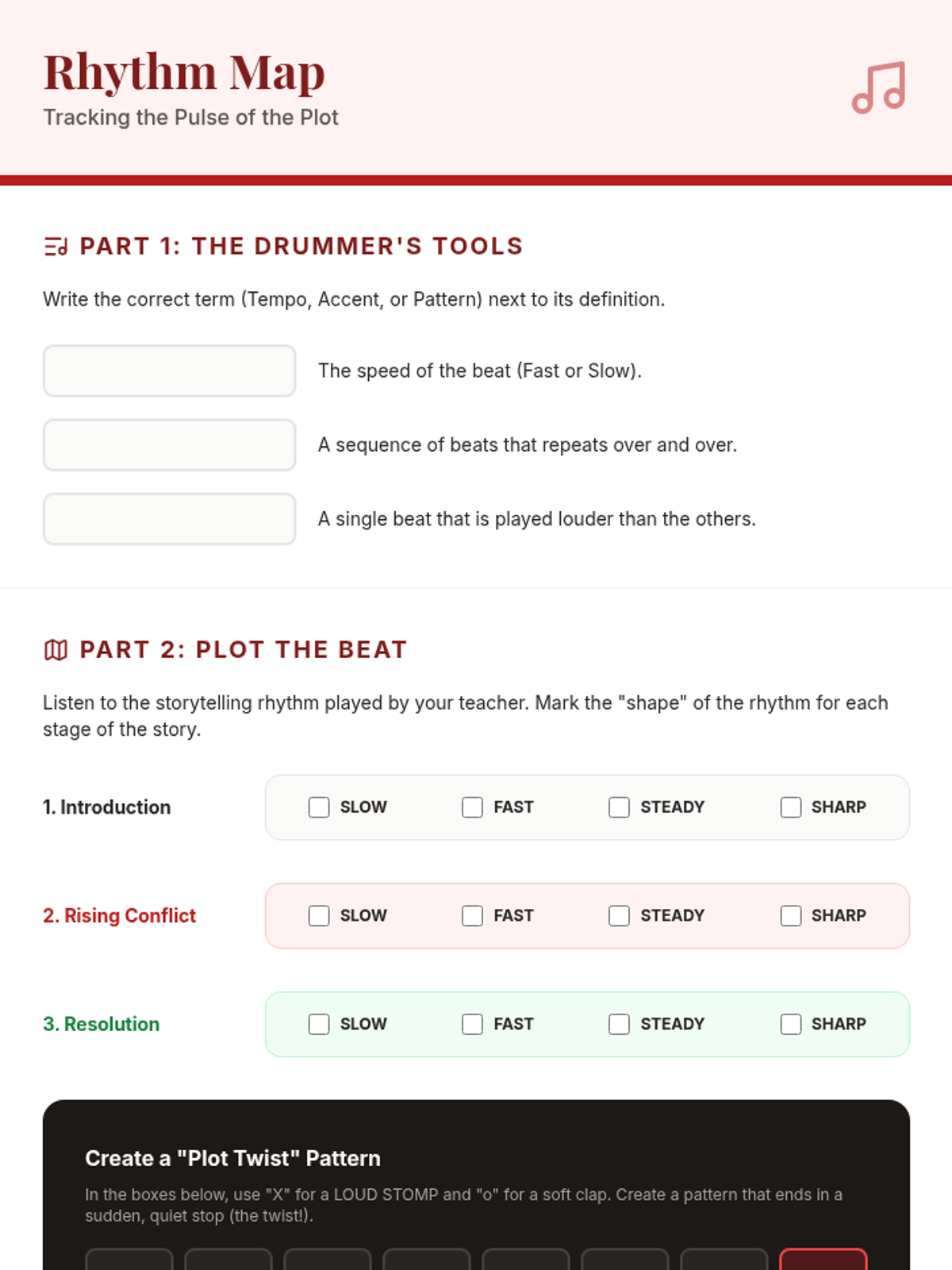
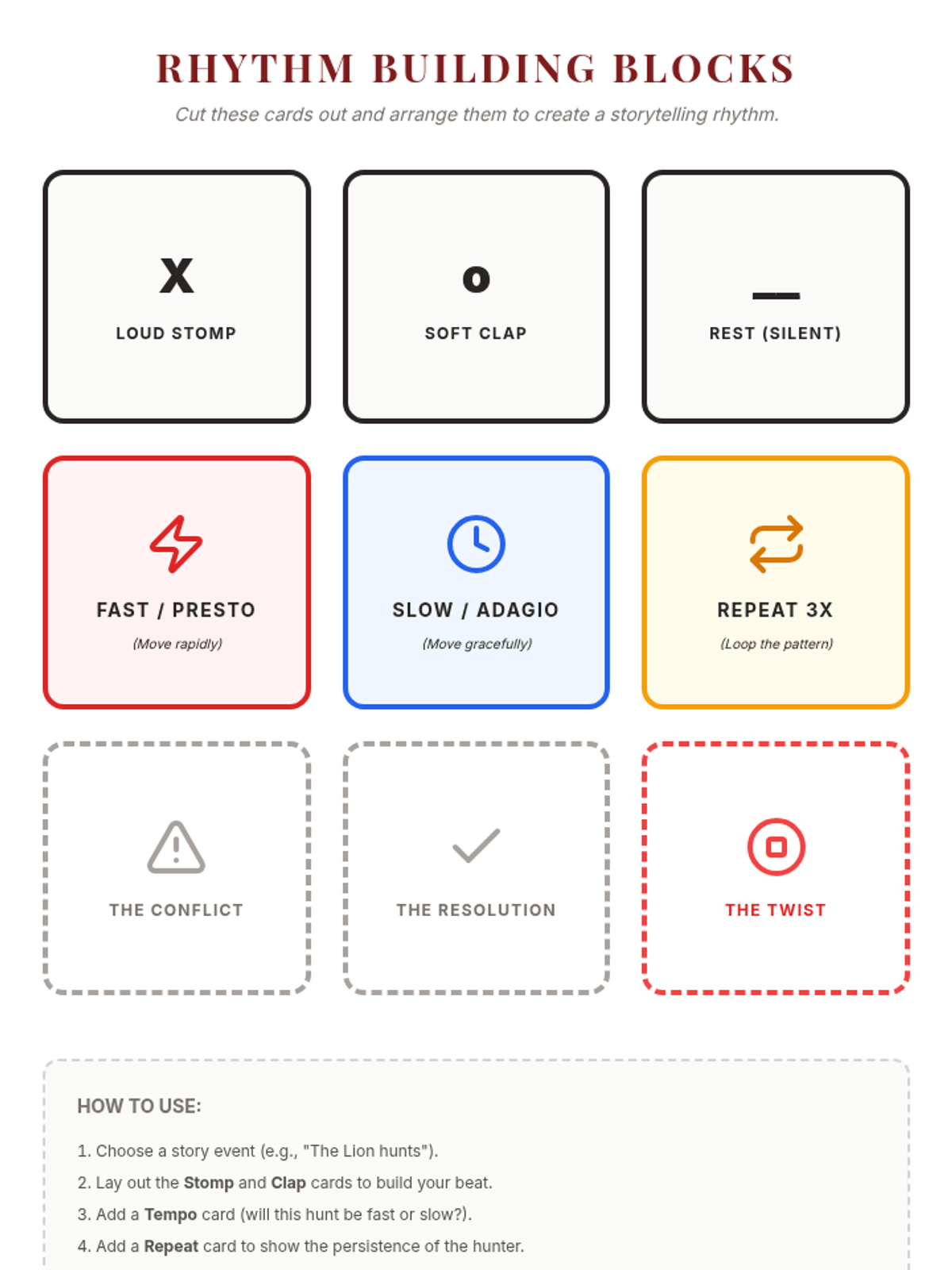
Students explore the relationship between rhythmic patterns, tempo, and dramatic arcs, mapping how drum beats signal conflict and resolution in dance.
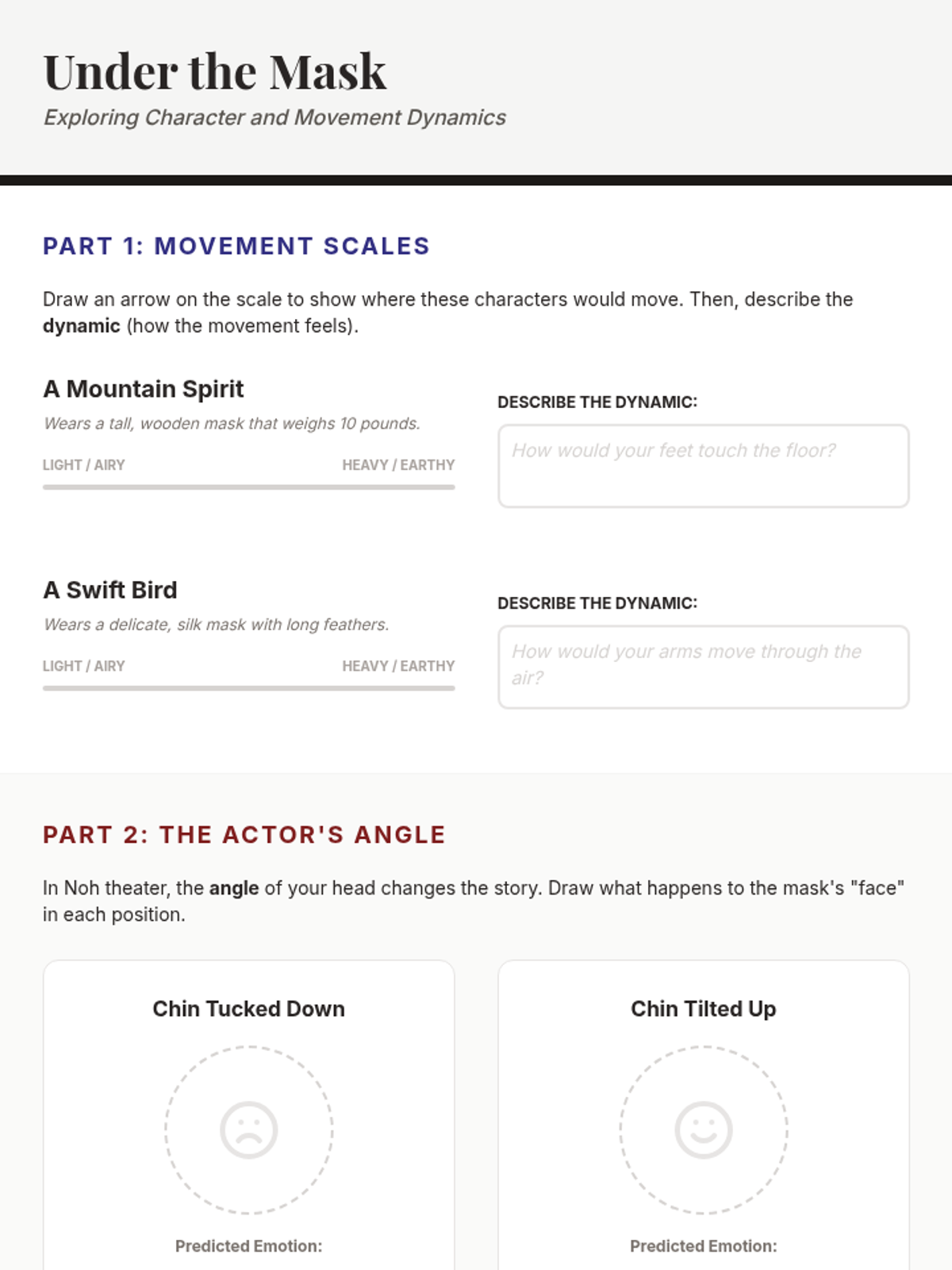
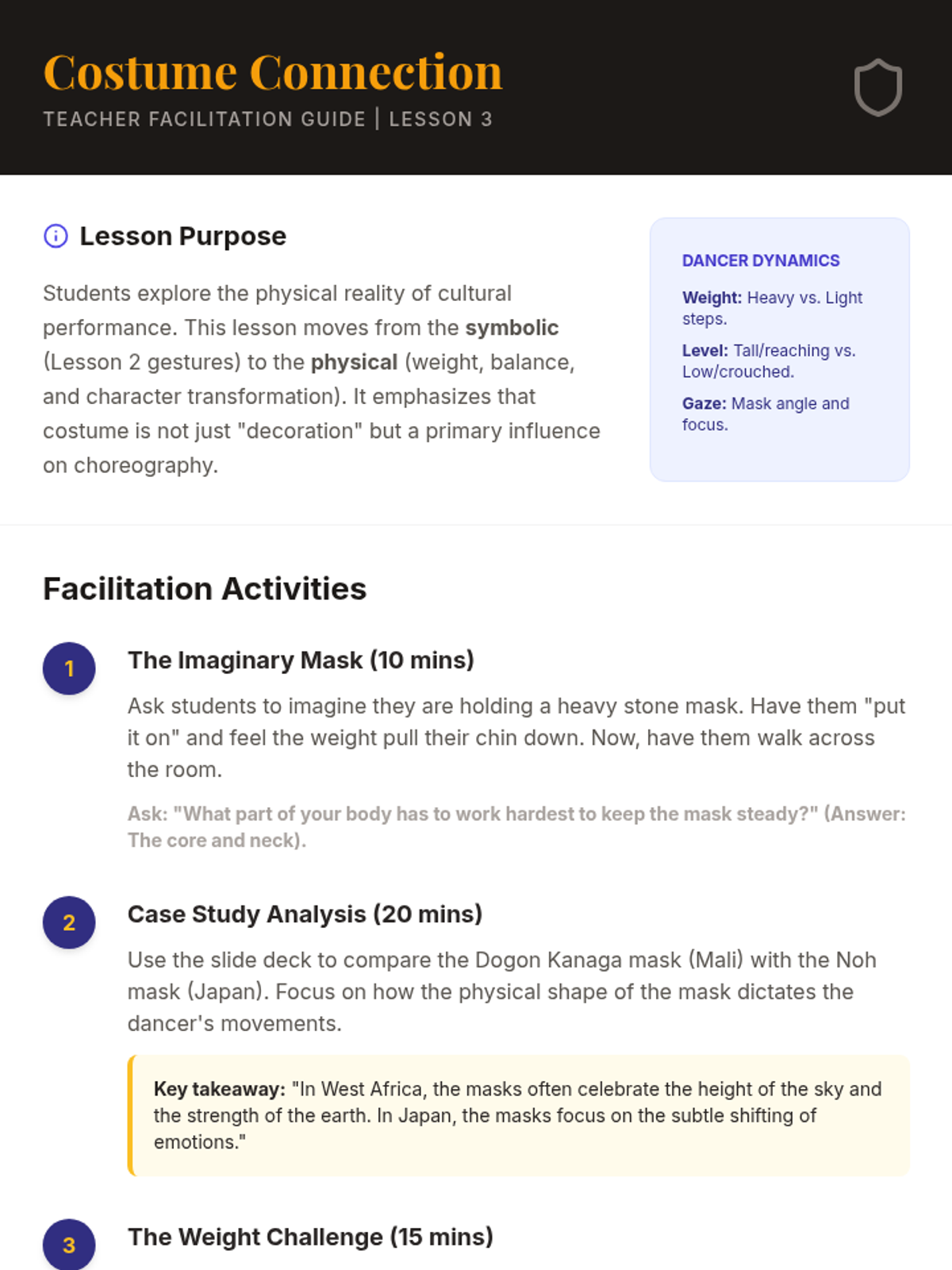
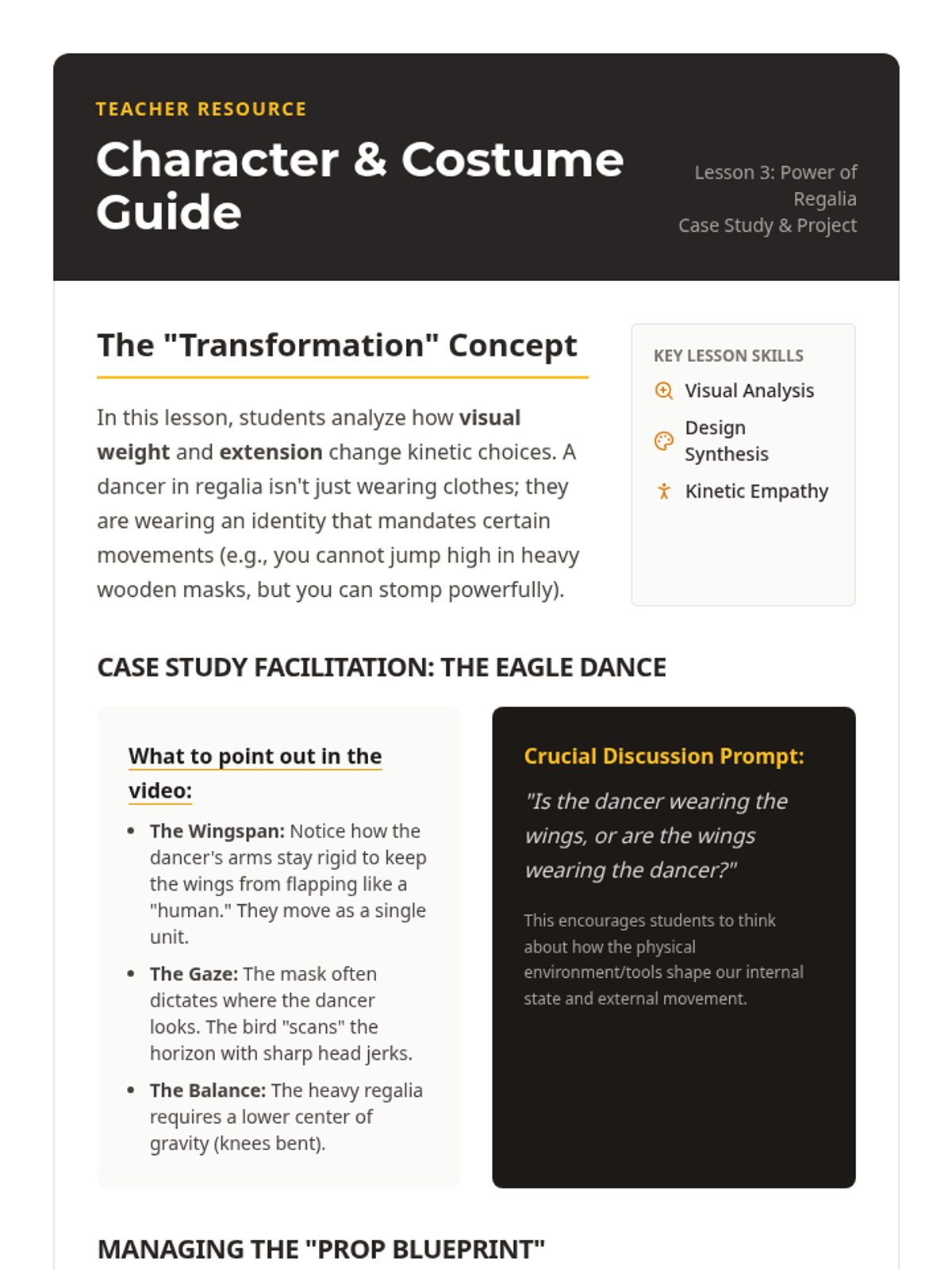
Students analyze how masks and heavy costumes in West African and Asian traditions influence character portrayal and movement dynamics.
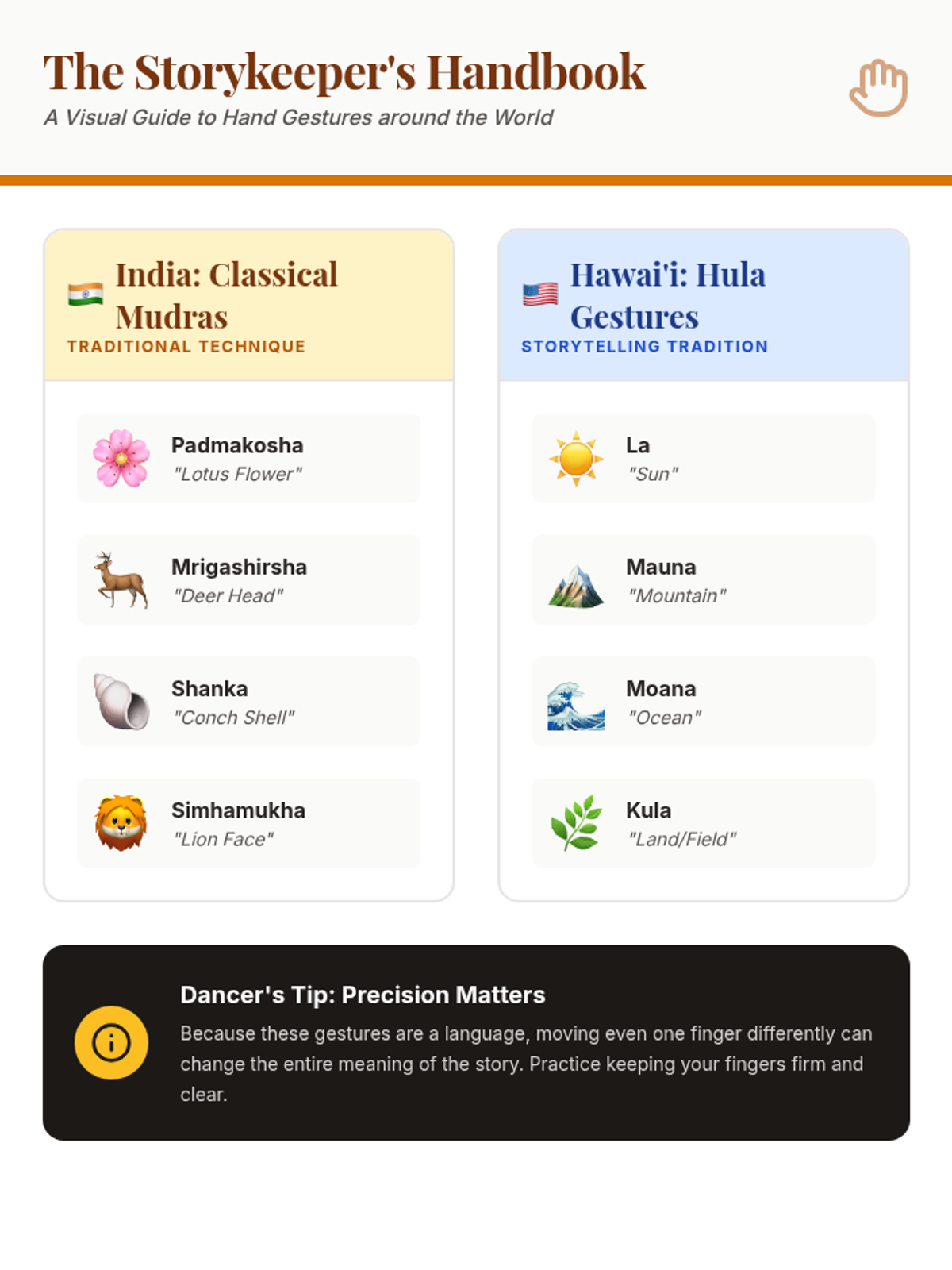
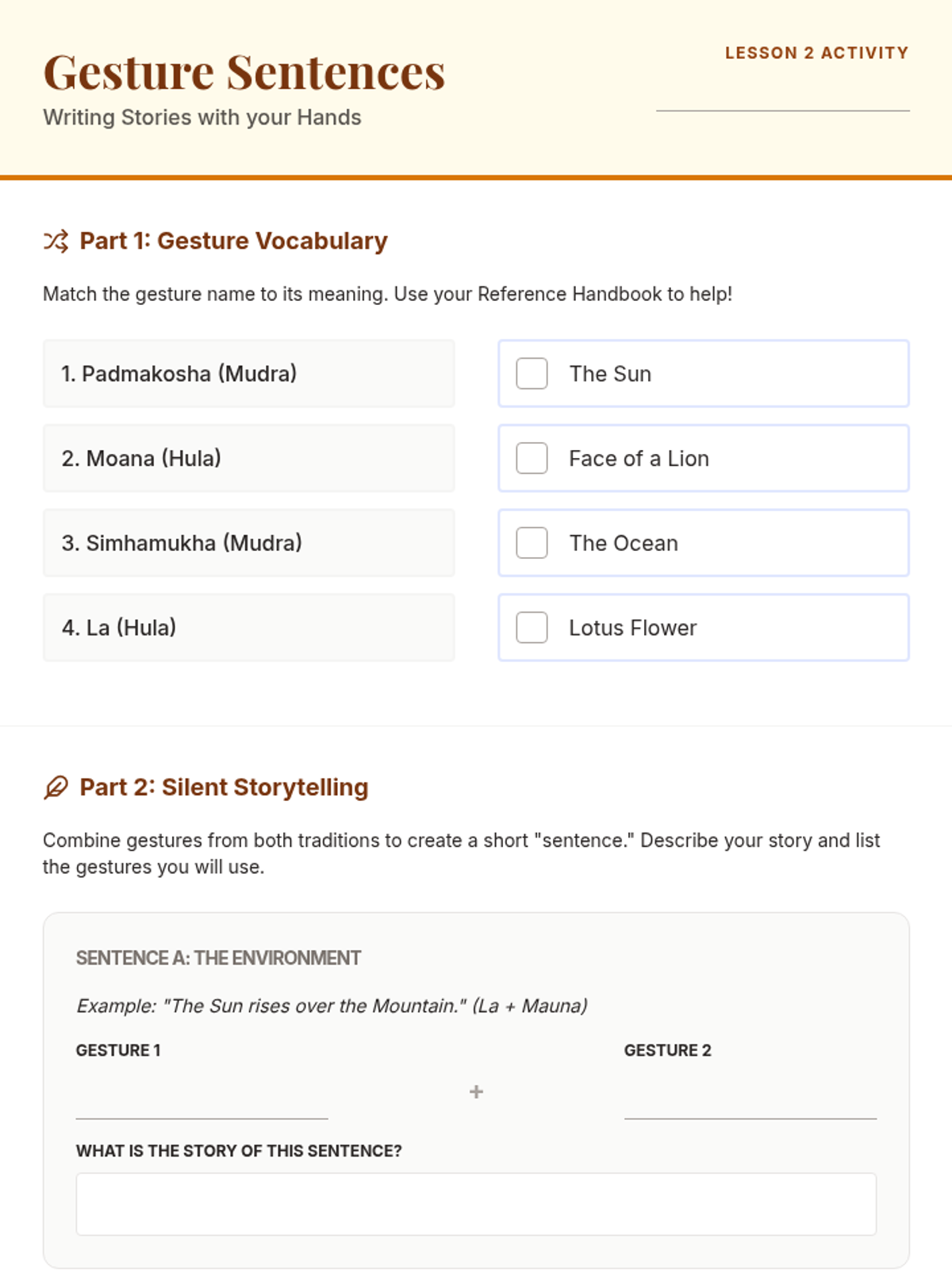
Students learn specific hand gestures from traditions like Classical Indian Mudras and Hawaiian Hula, exploring how these 'secret languages' preserve cultural narratives.
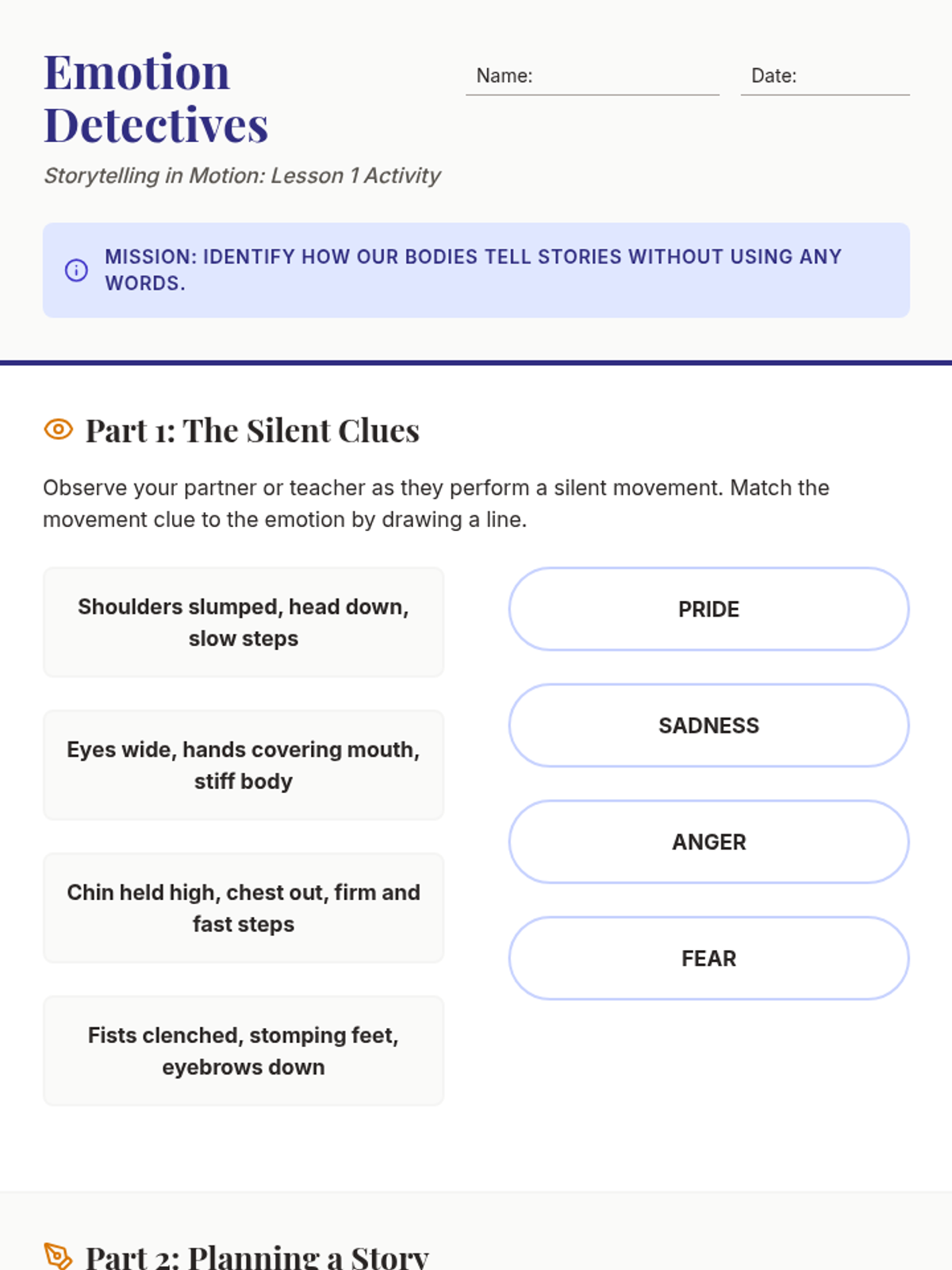
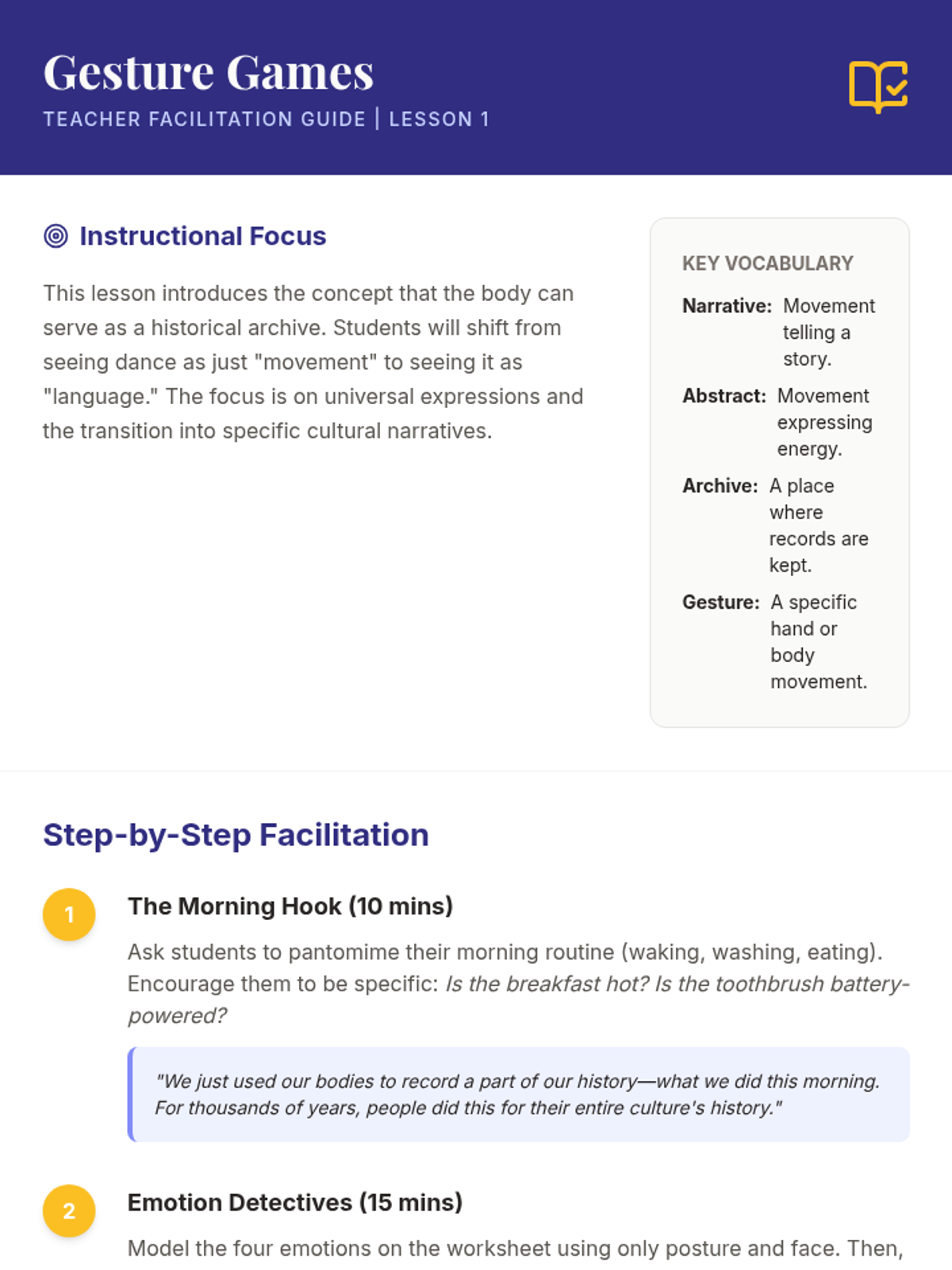
Students investigate the concept of pantomime and gestural language used in ancient cultures, identifying how universal emotions are communicated through posture and facial expression.
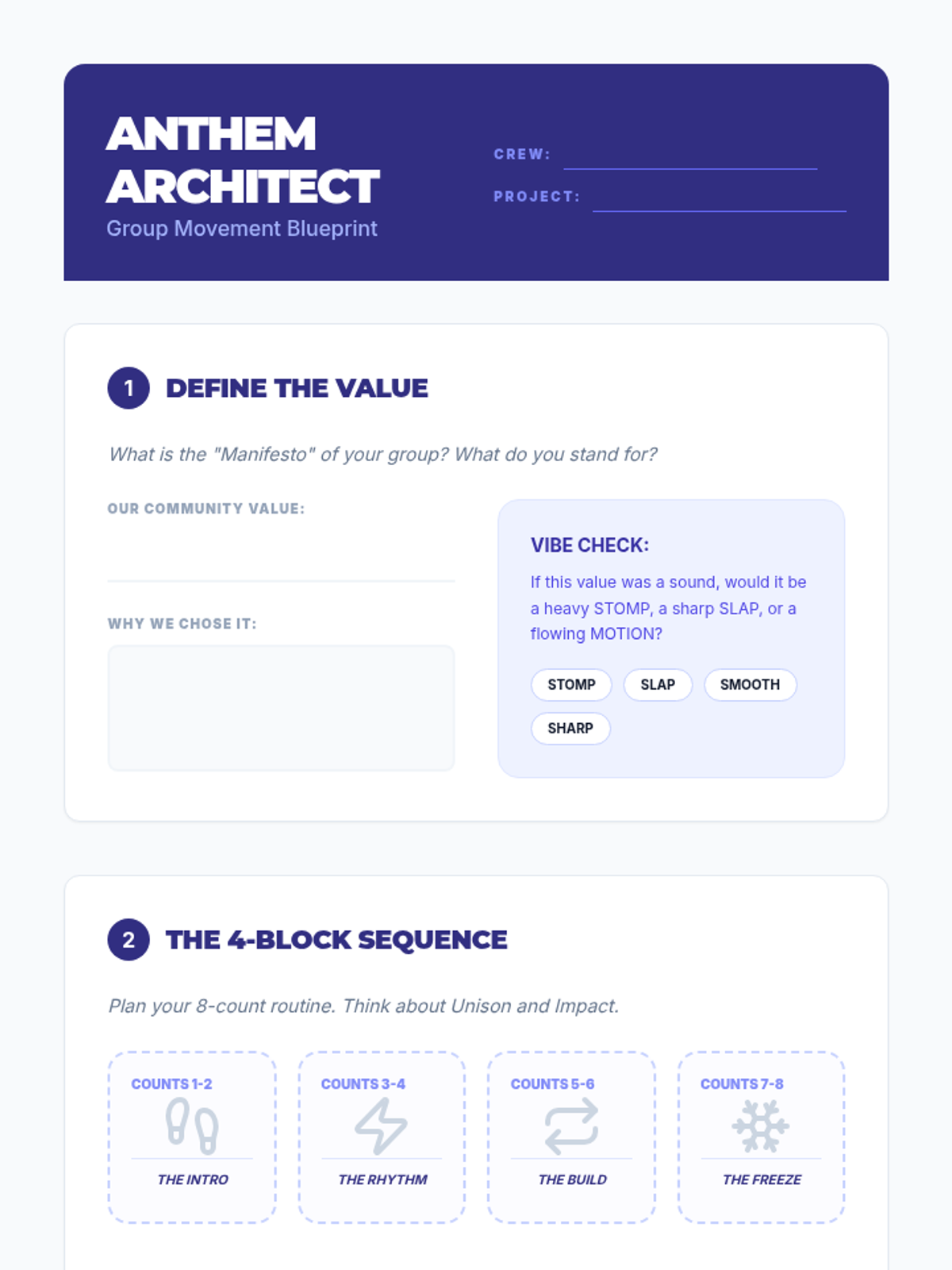
In this culminating project, student groups design an original movement routine that expresses a shared community value, synthesizing techniques learned throughout the sequence.
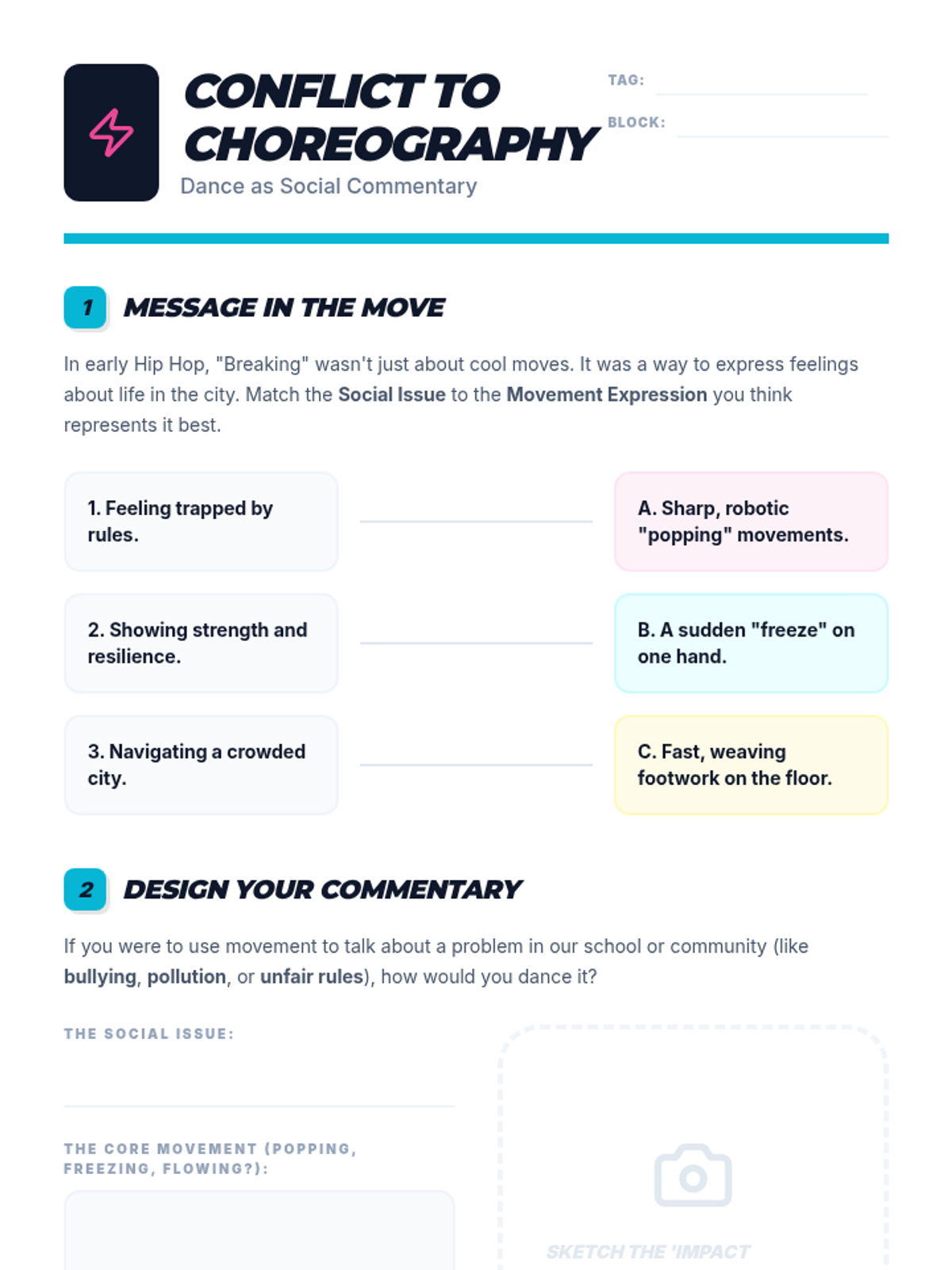
An exploration of the origins of Hip Hop and Breakdancing as a means of social commentary and conflict resolution in the Bronx during the 1970s.
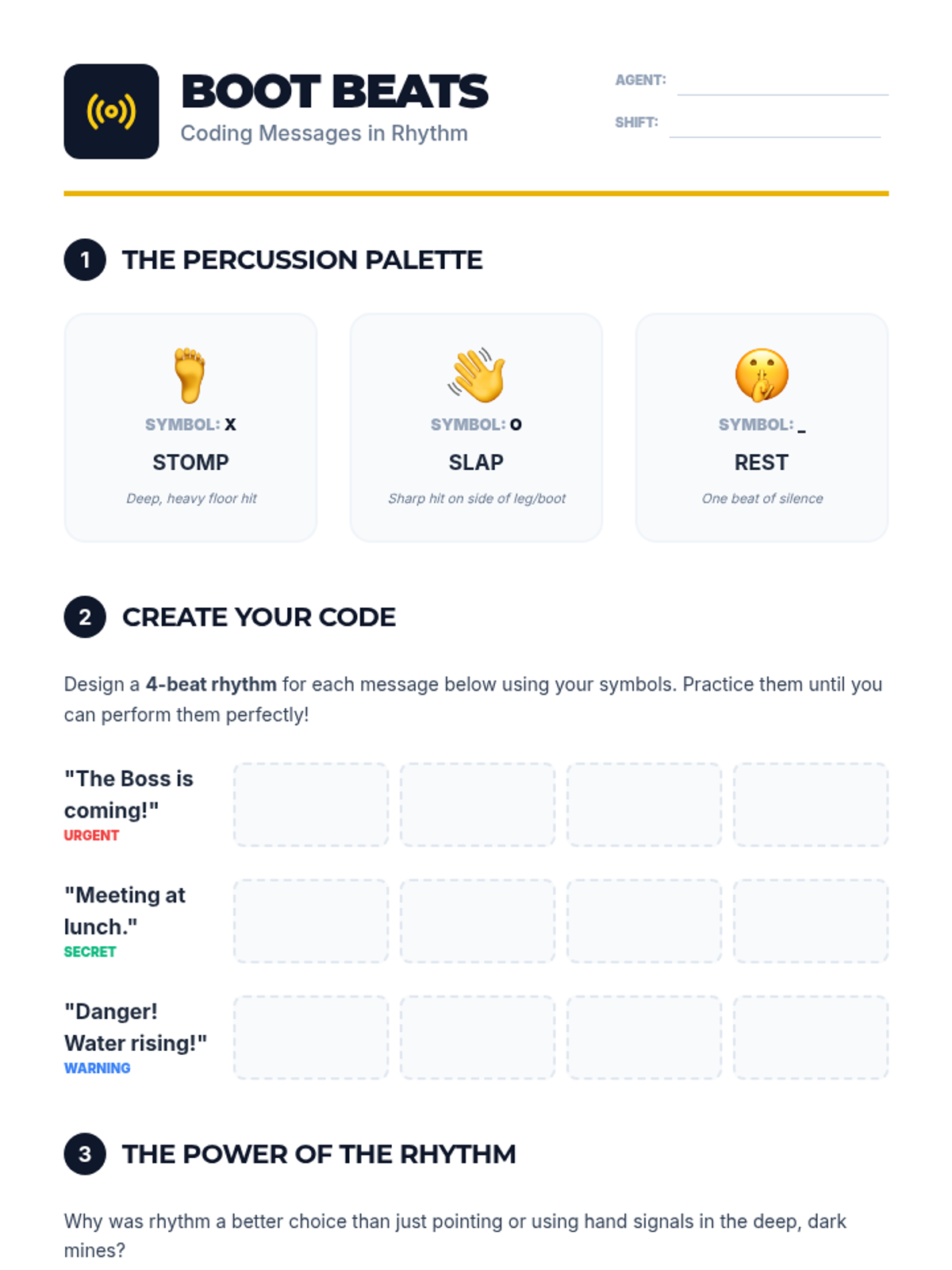
Students investigate South African Gumboot dancing, learning how miners used rhythmic boot-slapping to communicate in an environment where speech was forbidden.
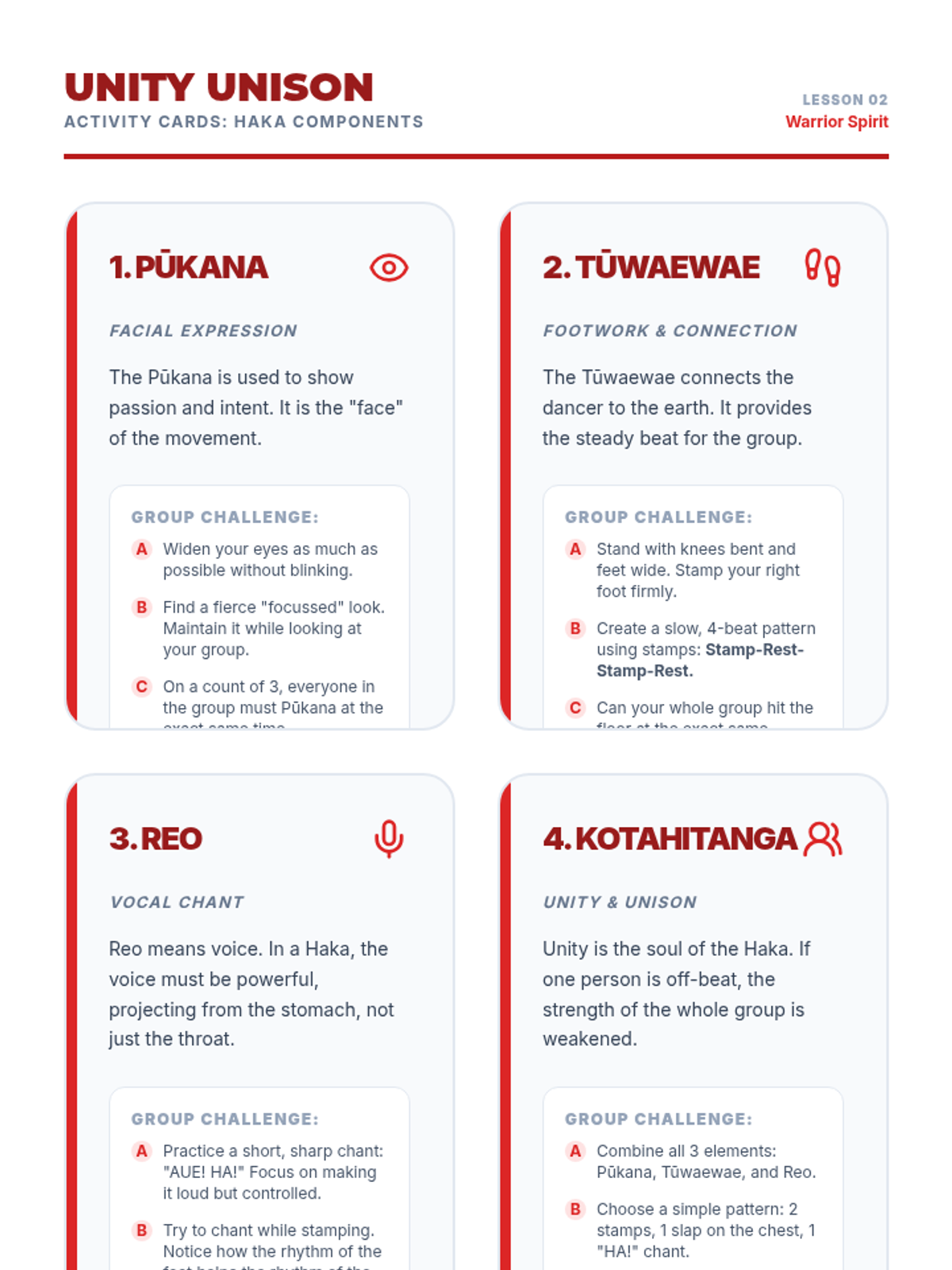
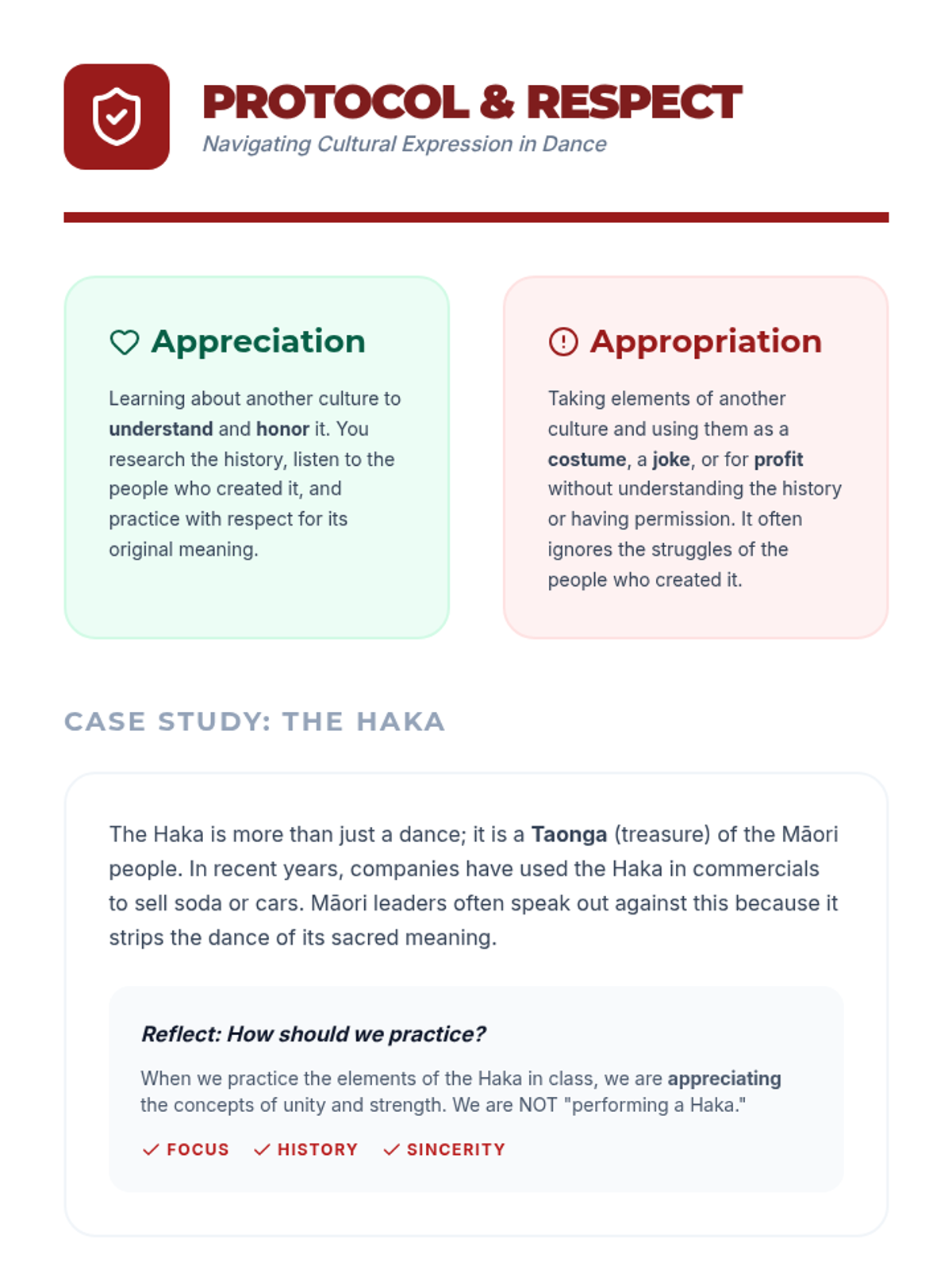
Learners analyze the Māori Haka, focusing on its use of vocal projection, facial expressions, and body percussion to foster unity and express group strength.
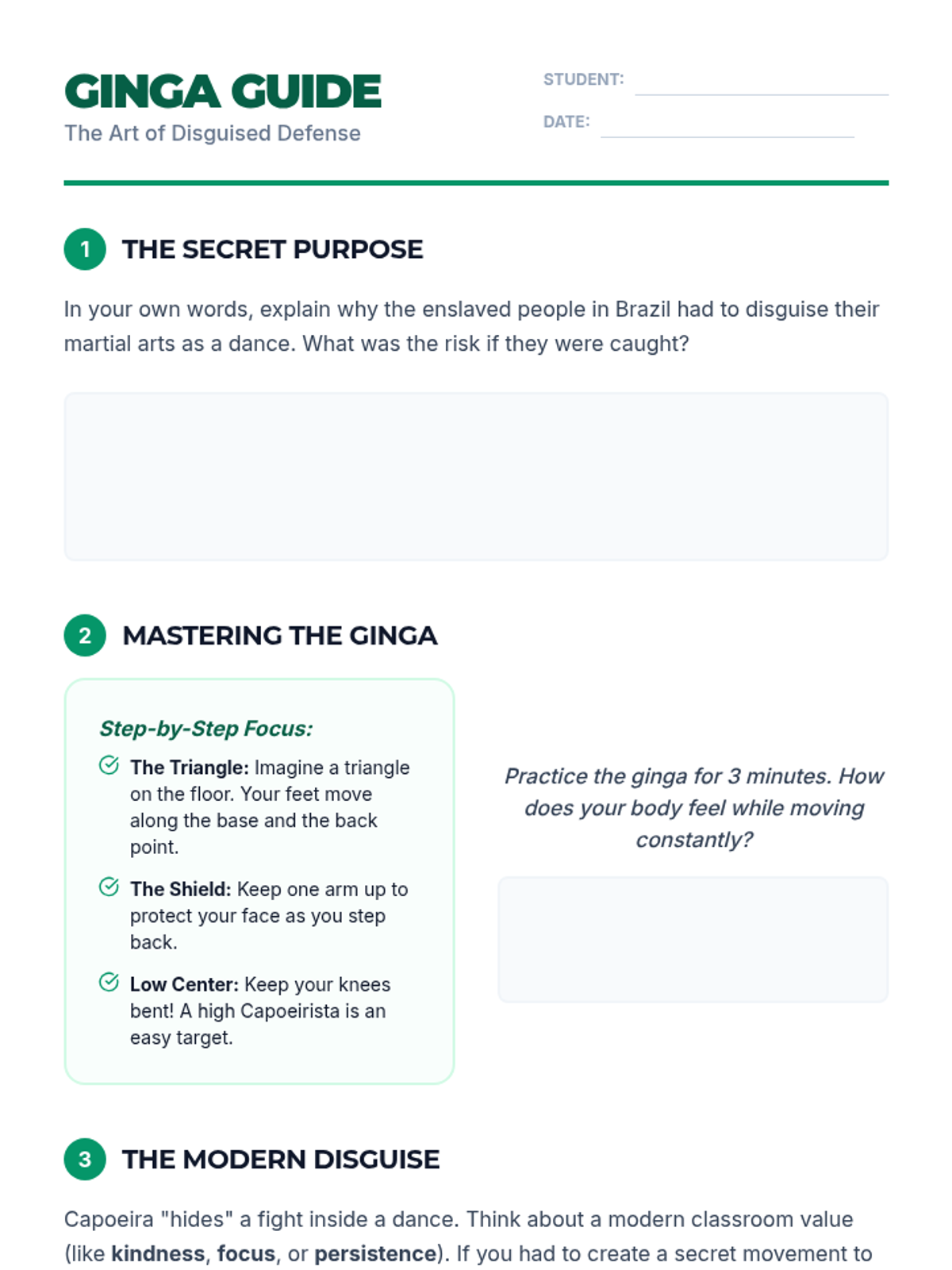
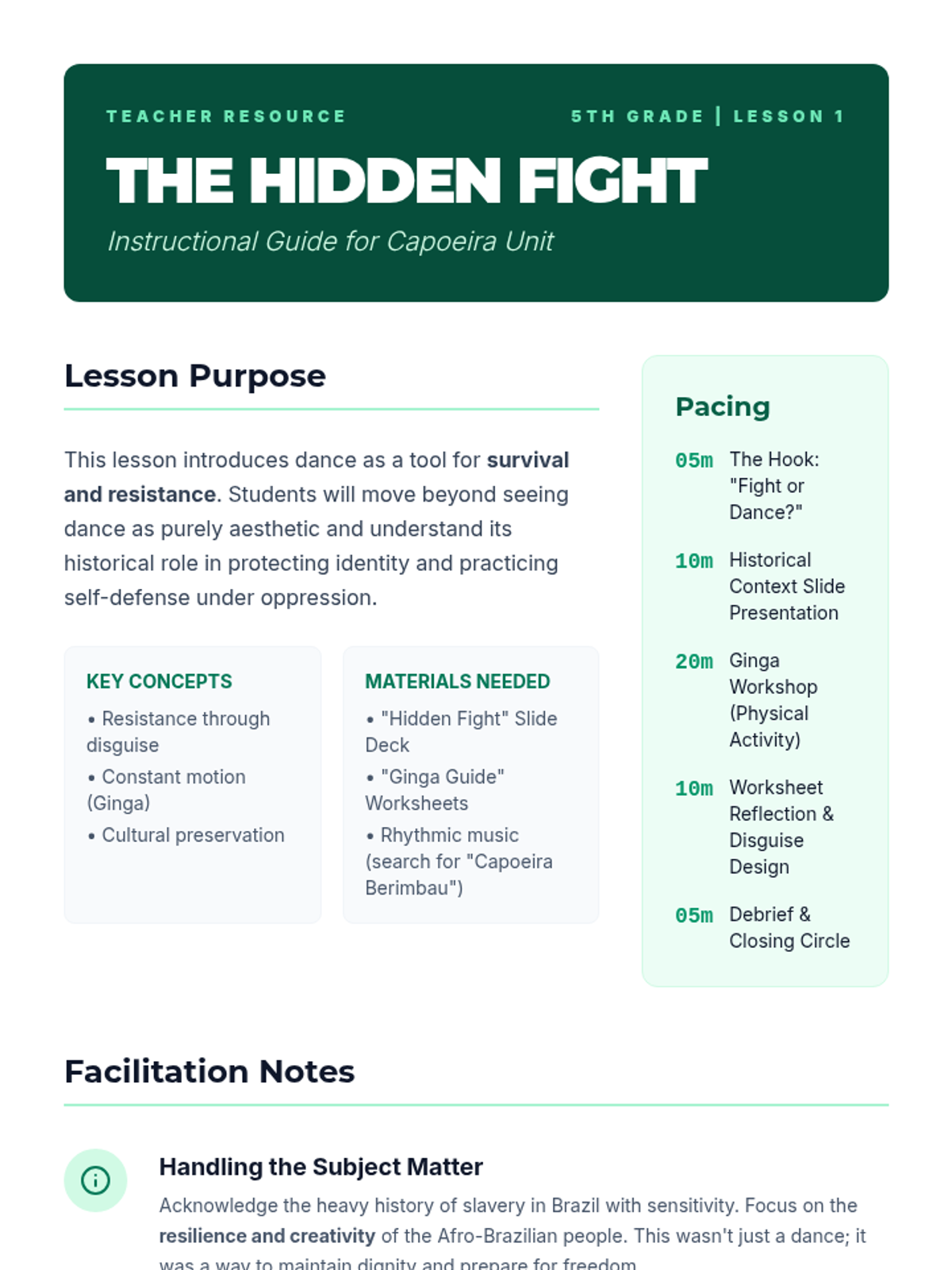
Students explore the history of Capoeira in Brazil, understanding how enslaved people developed a martial art disguised as dance to survive and resist oppression.
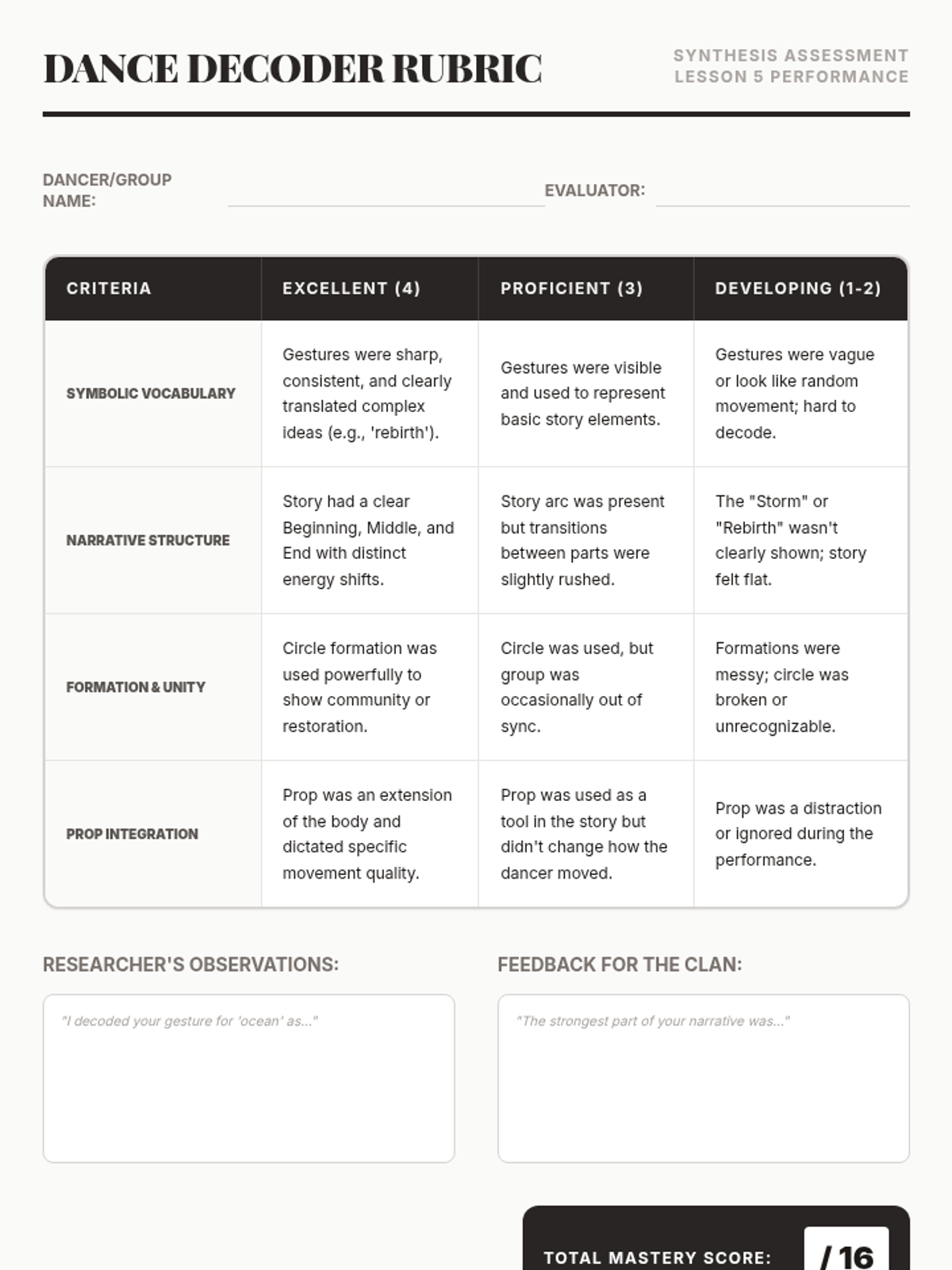
A culminating project where students choreograph and perform a short narrative piece using the symbolic movement vocabulary and techniques learned.
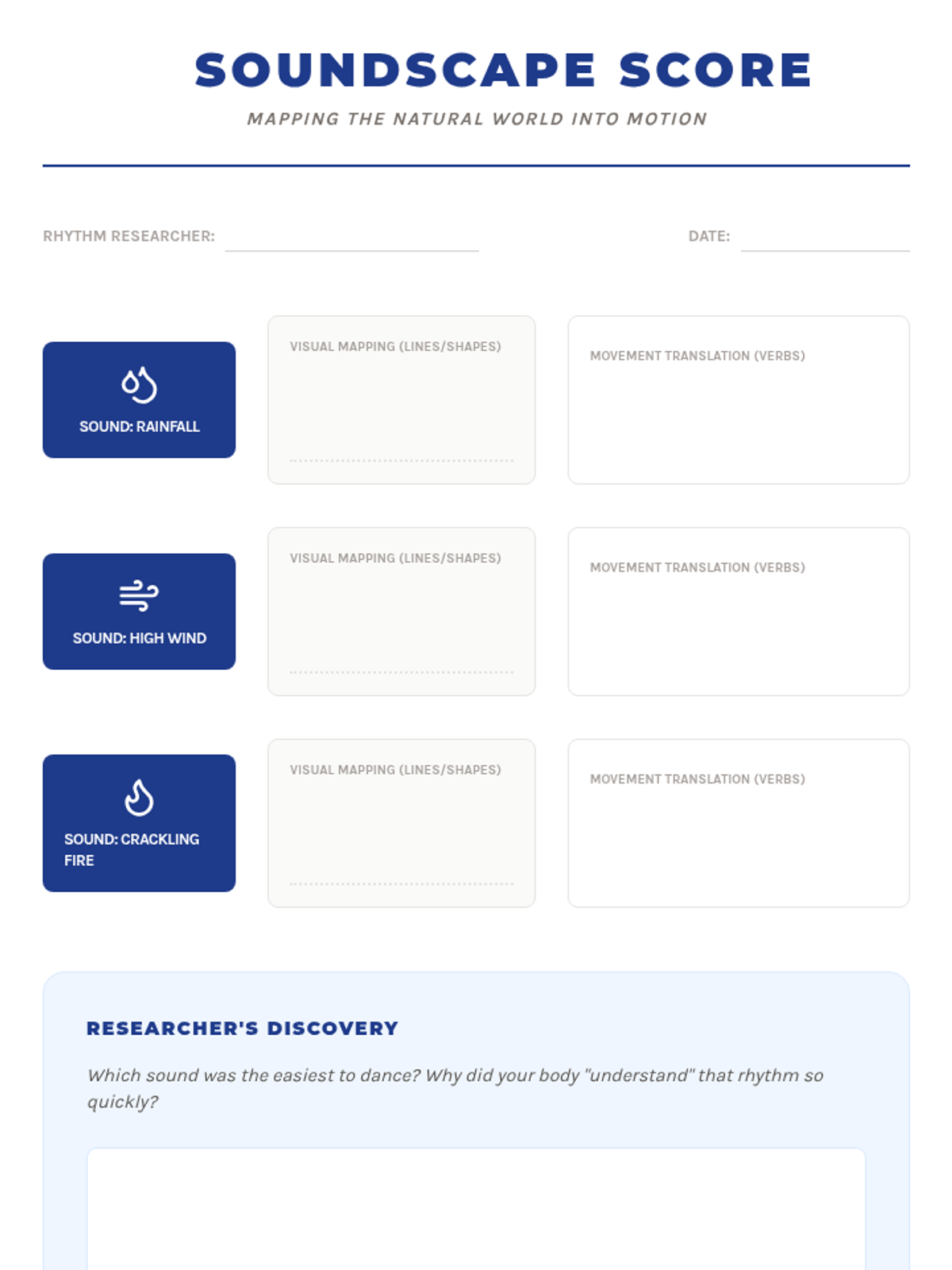
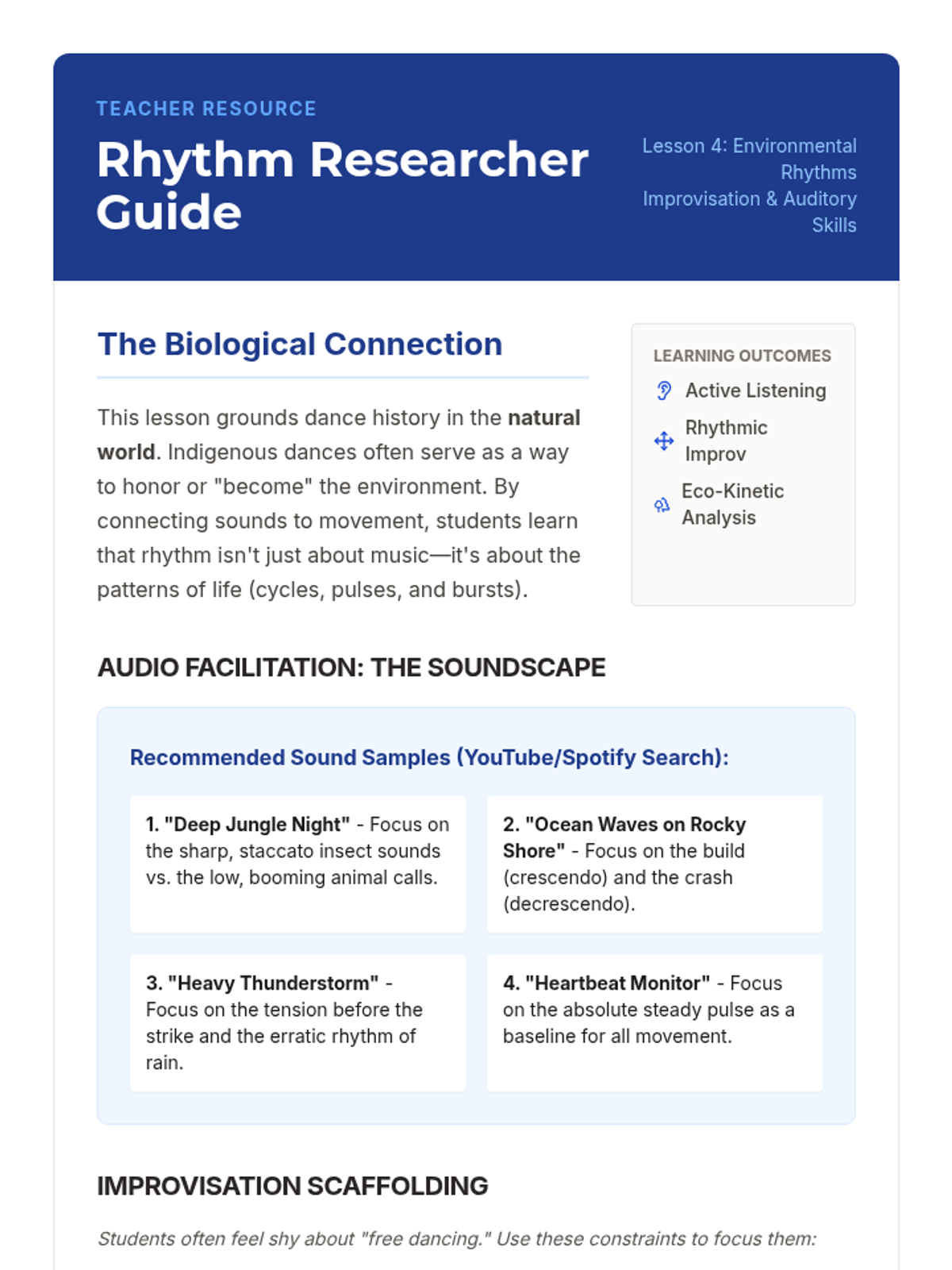
Students investigate the connection between natural soundscapes and traditional dance rhythms, practicing improvisation based on environmental cues.
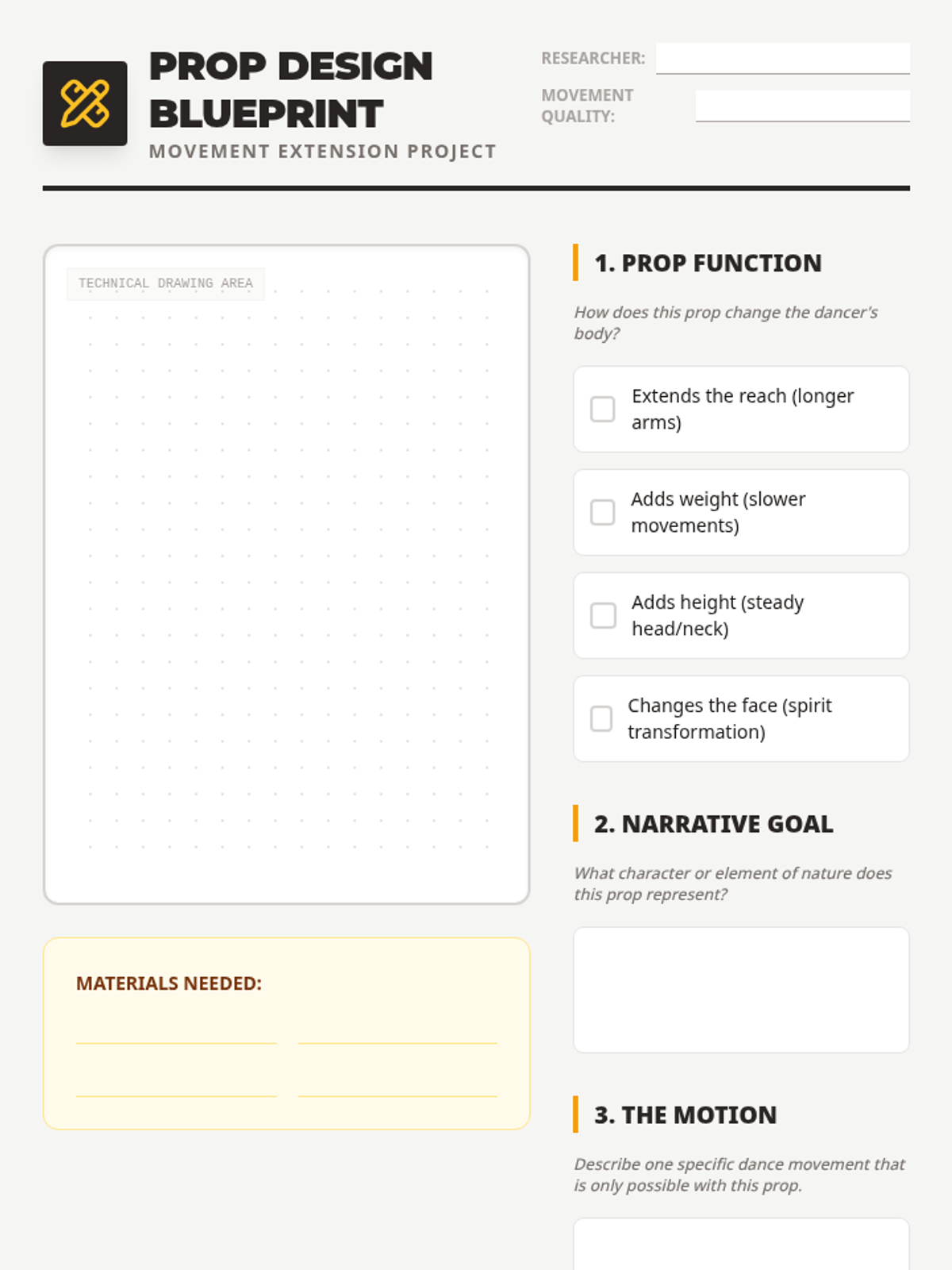
An examination of how regalia and props transform dancers and enhance narrative, concluding with a prop design project.
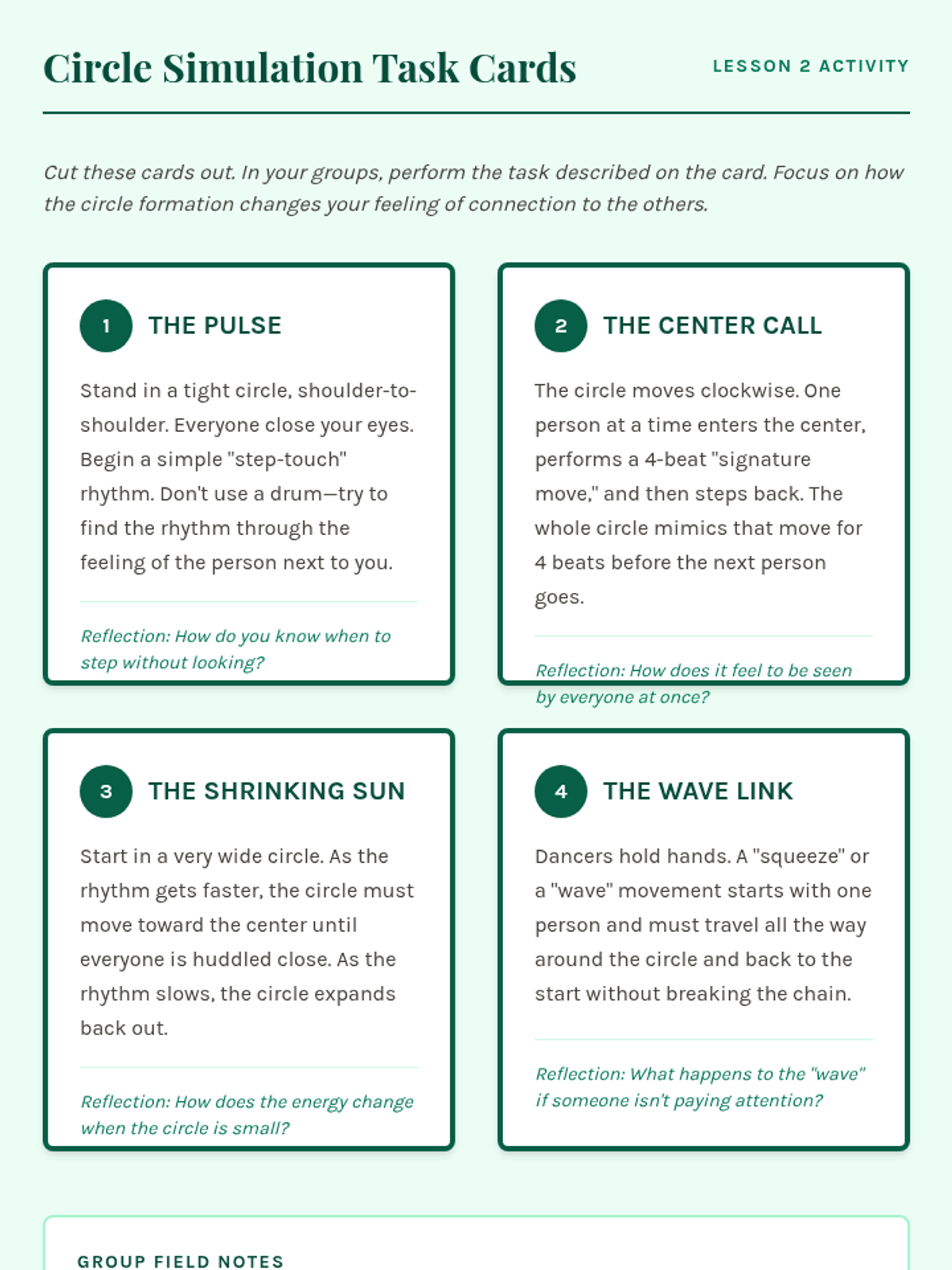
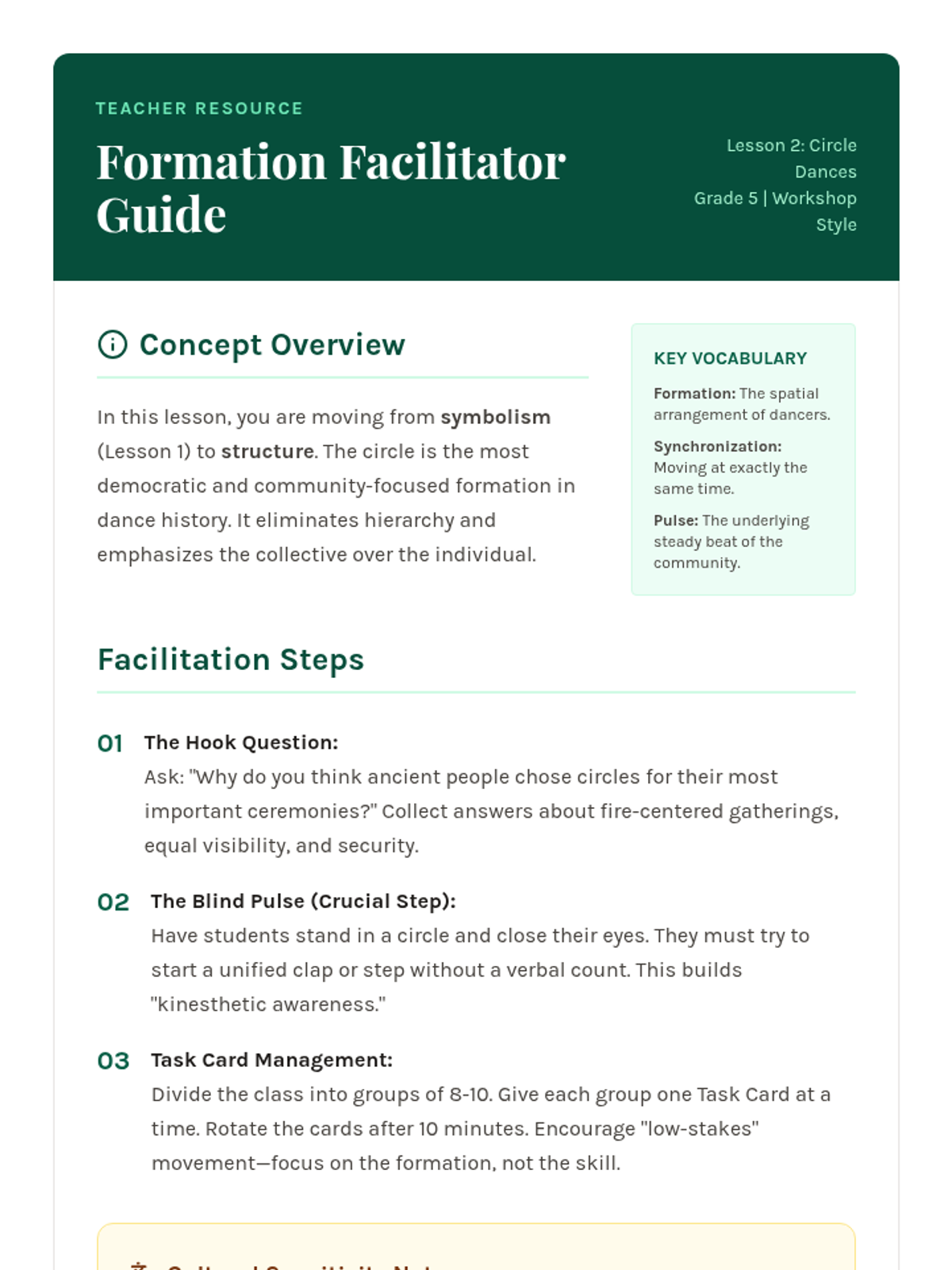
Learners explore the cultural and social significance of circle formations in dance, participating in simulations to experience community unity.
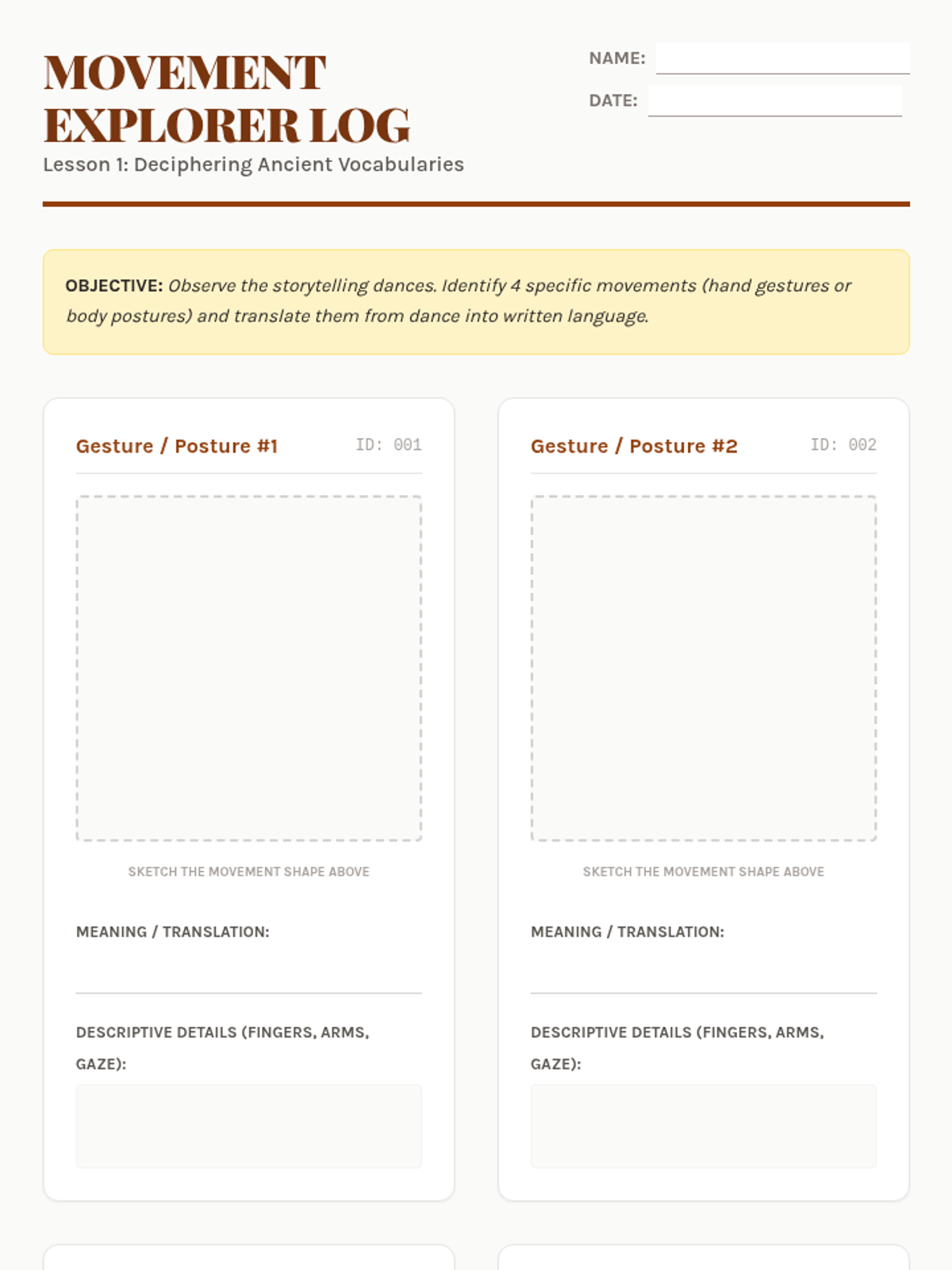
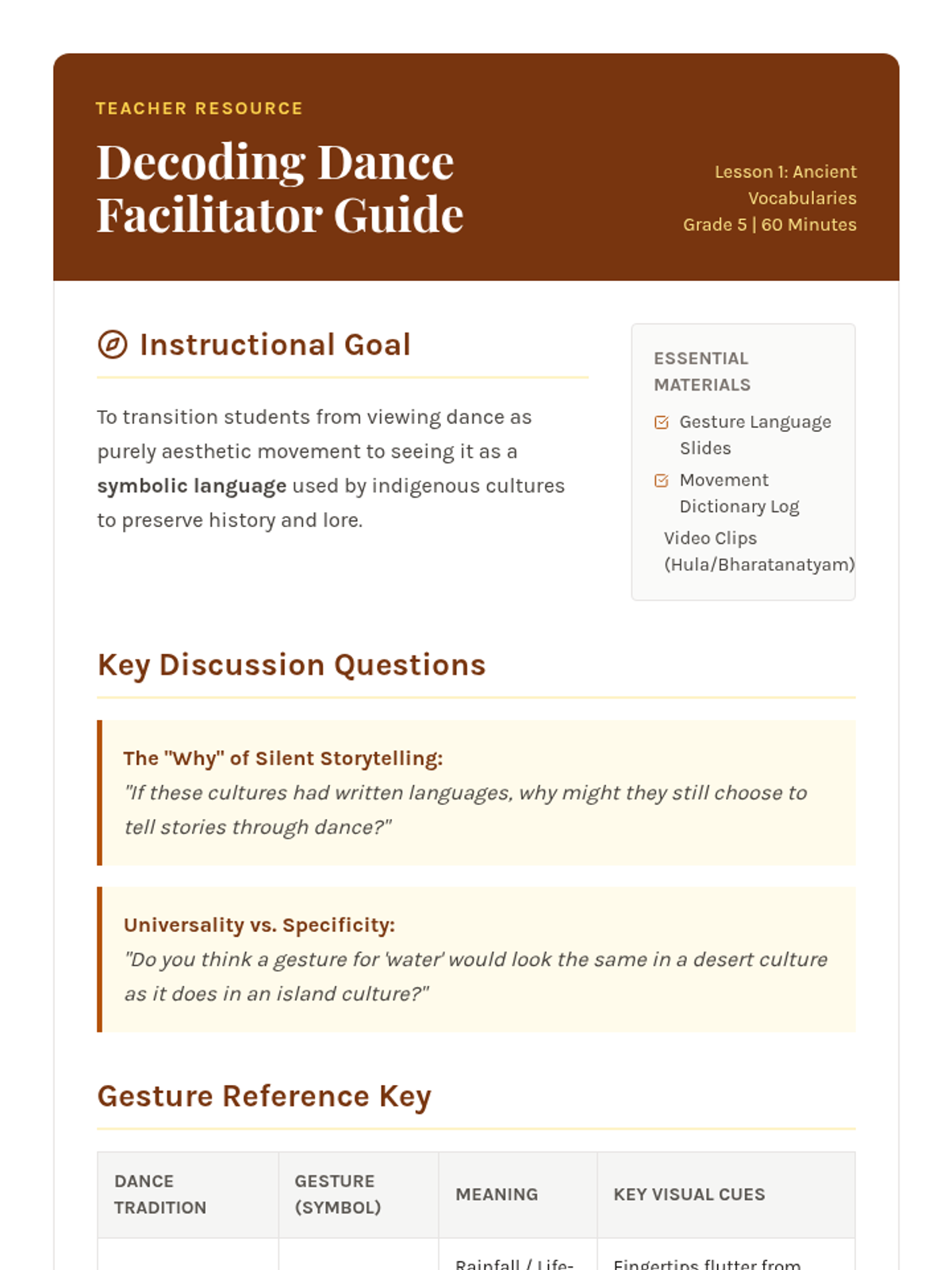
Students analyze hand gestures and body postures in traditional storytelling dances like Hula and Bharatanatyam to understand dance as a symbolic language.
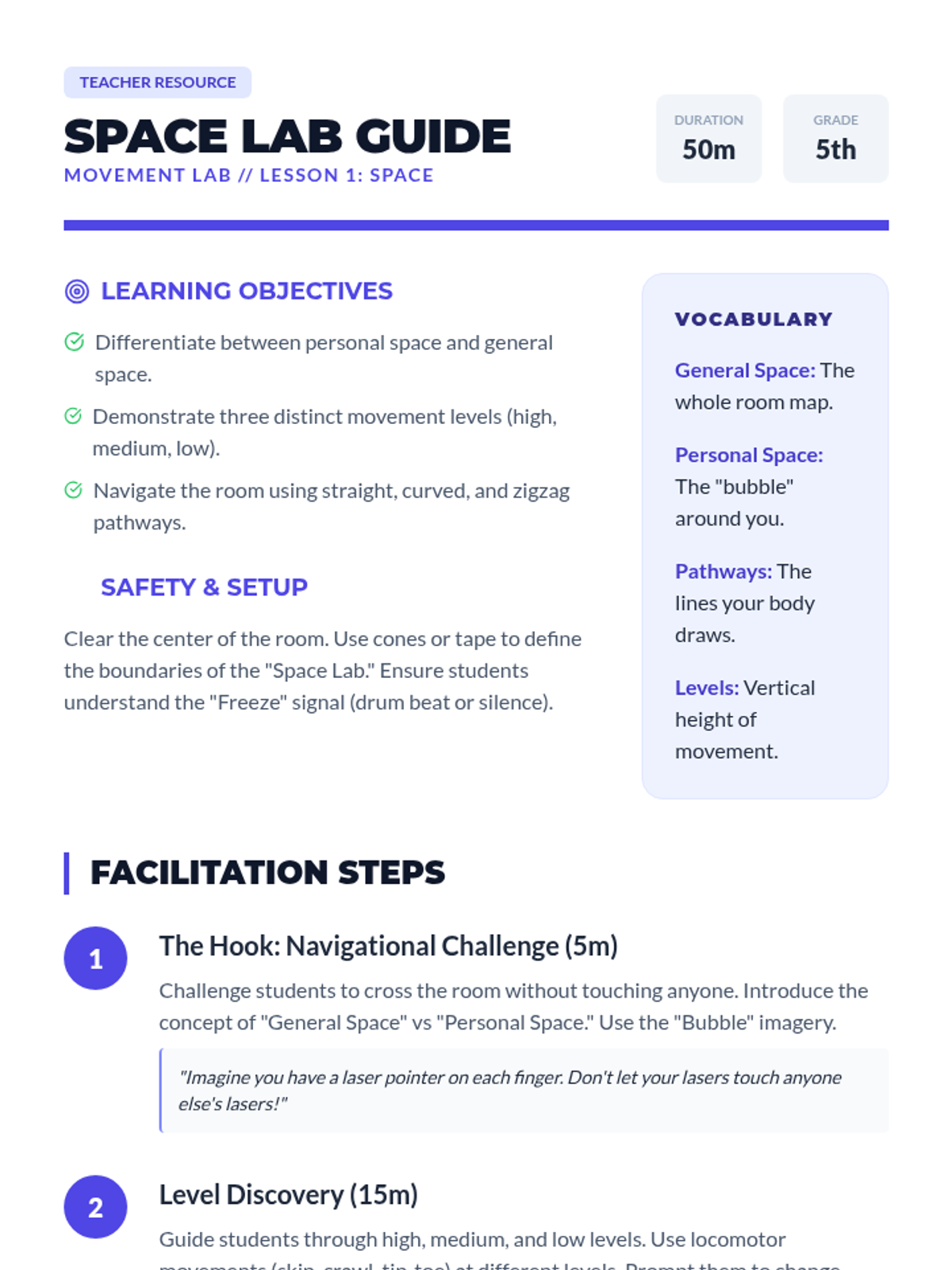
Students explore the concept of 'Space' by navigating the room using various locomotor movements while changing levels (high, medium, low) and pathways (straight, curved, zigzag).
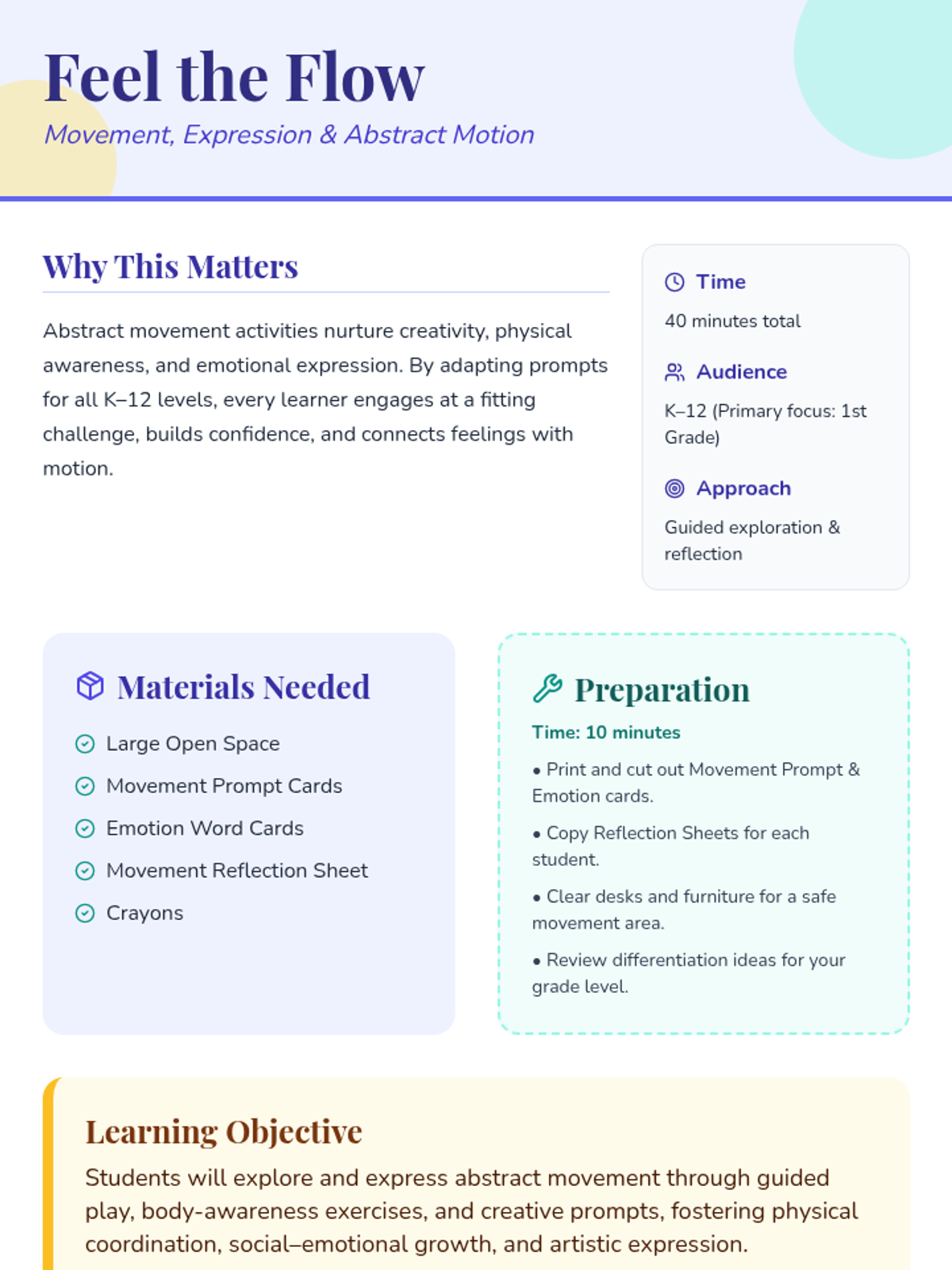
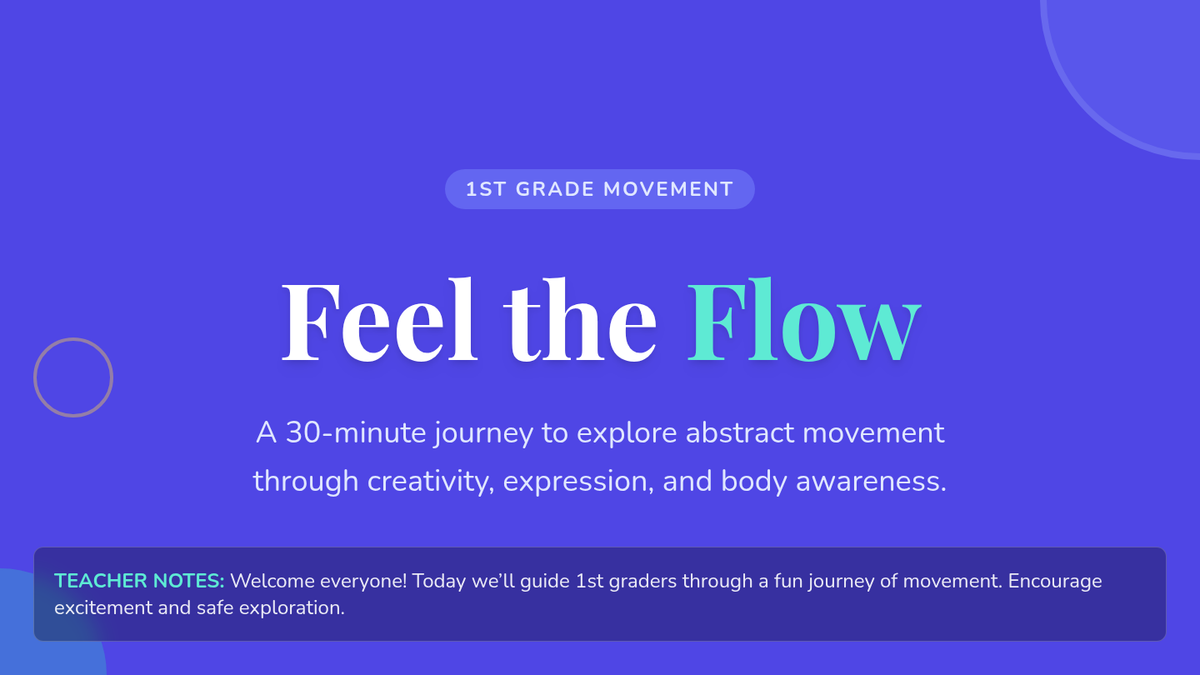
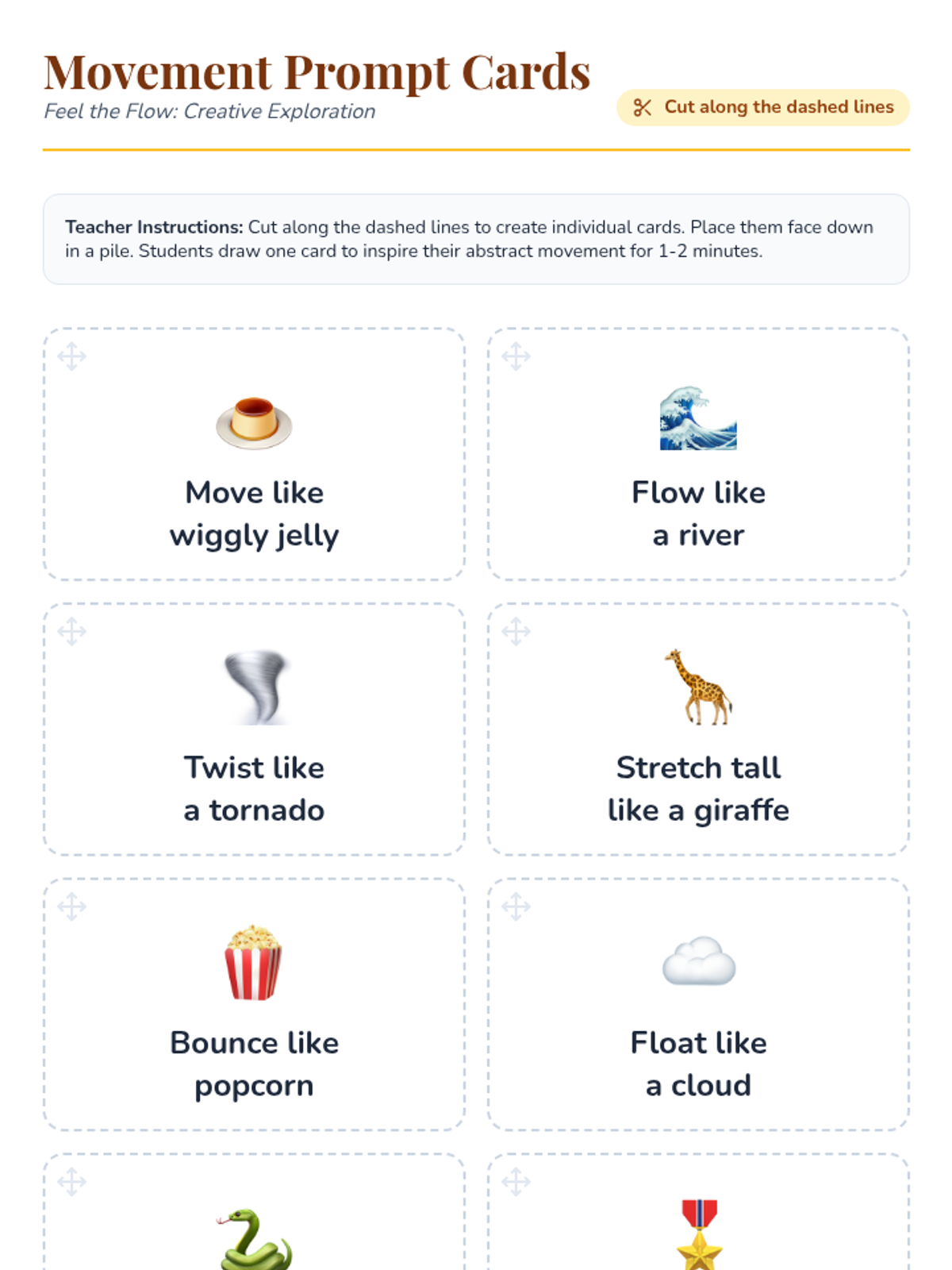
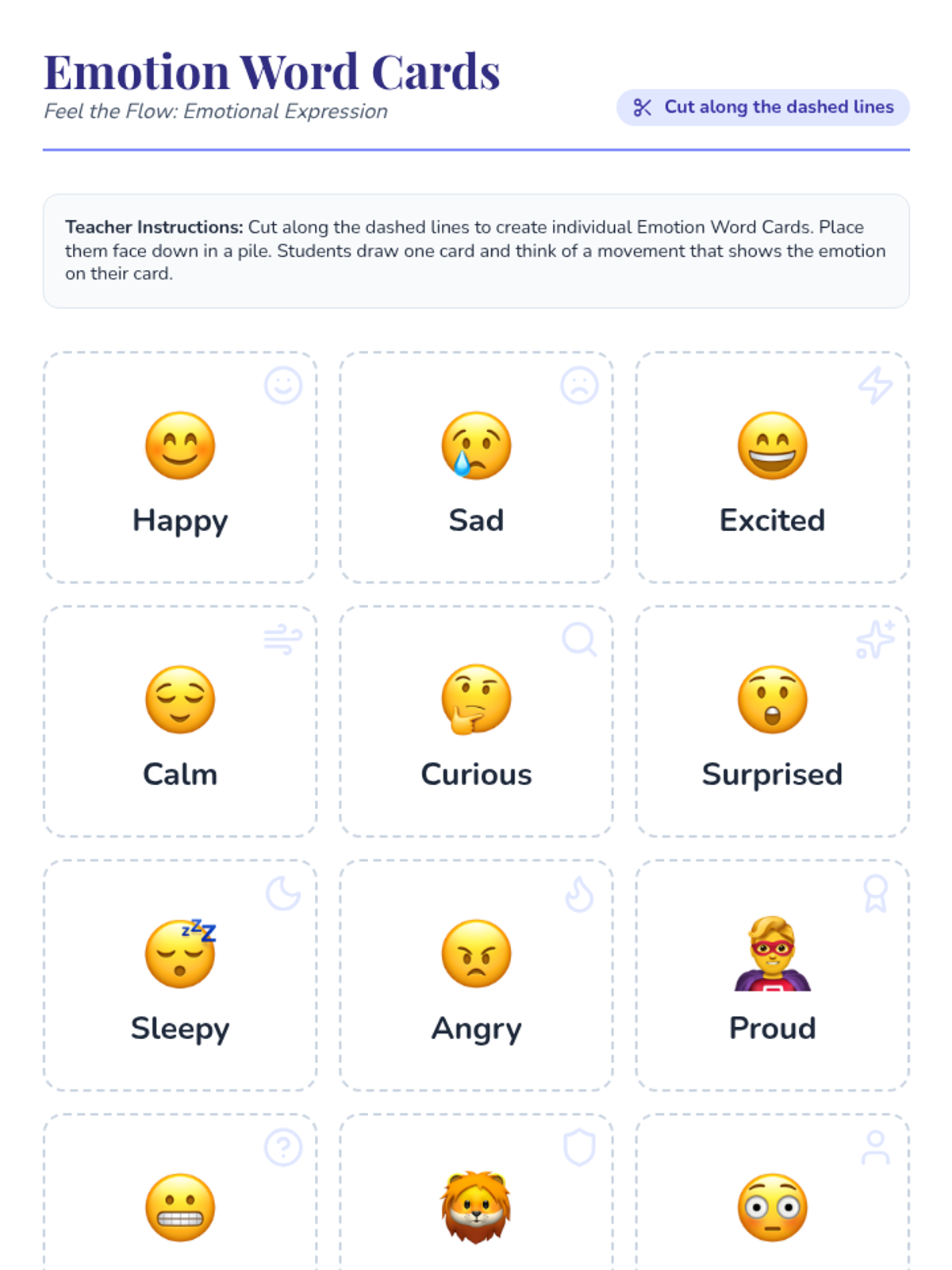
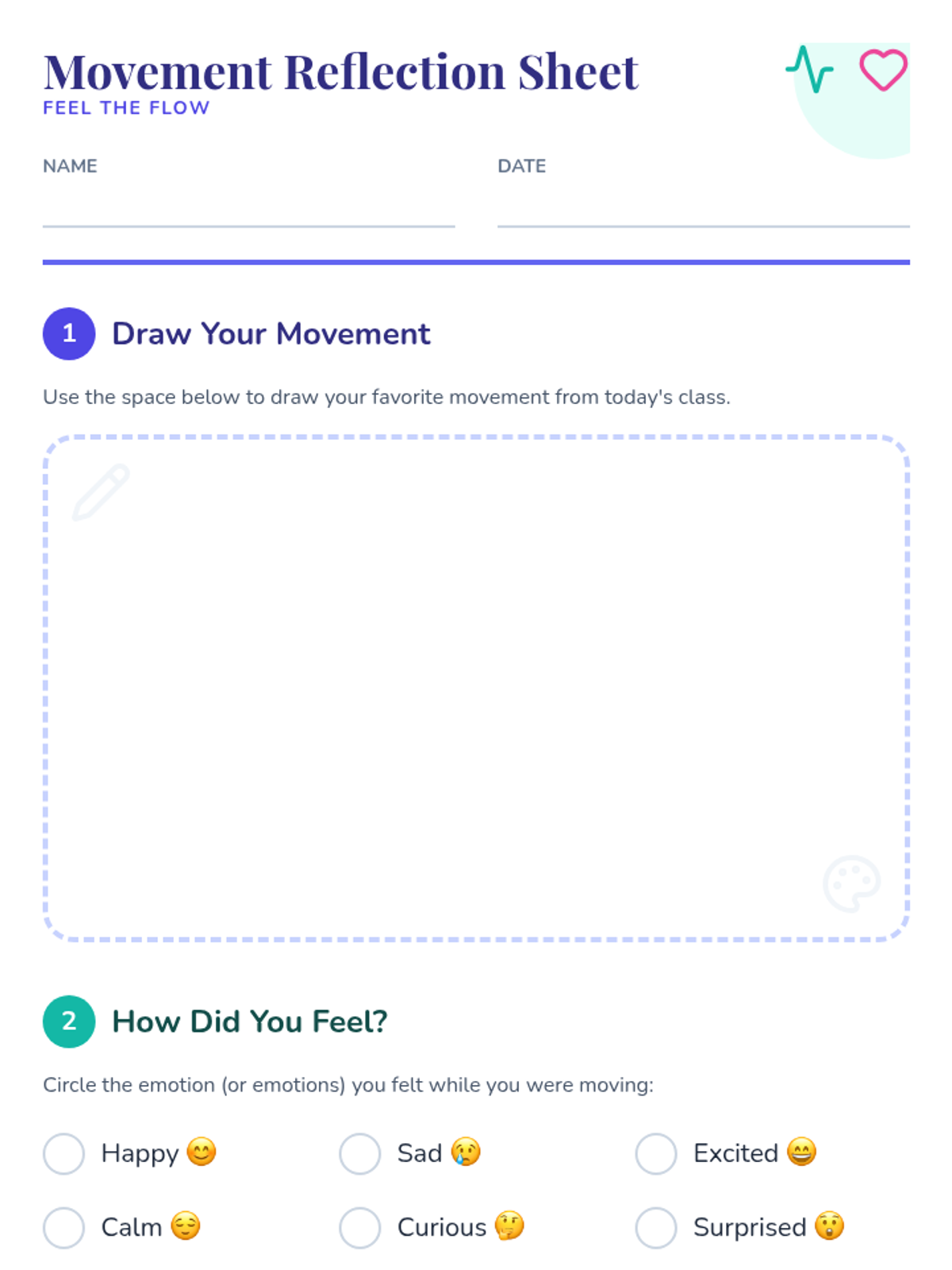
A 30-minute creative movement lesson for 1st graders (adaptable for K-12) that explores abstract motion, body awareness, and emotional expression. Students use prompts and emotion cards to express themselves through movement and reflect on their experience.
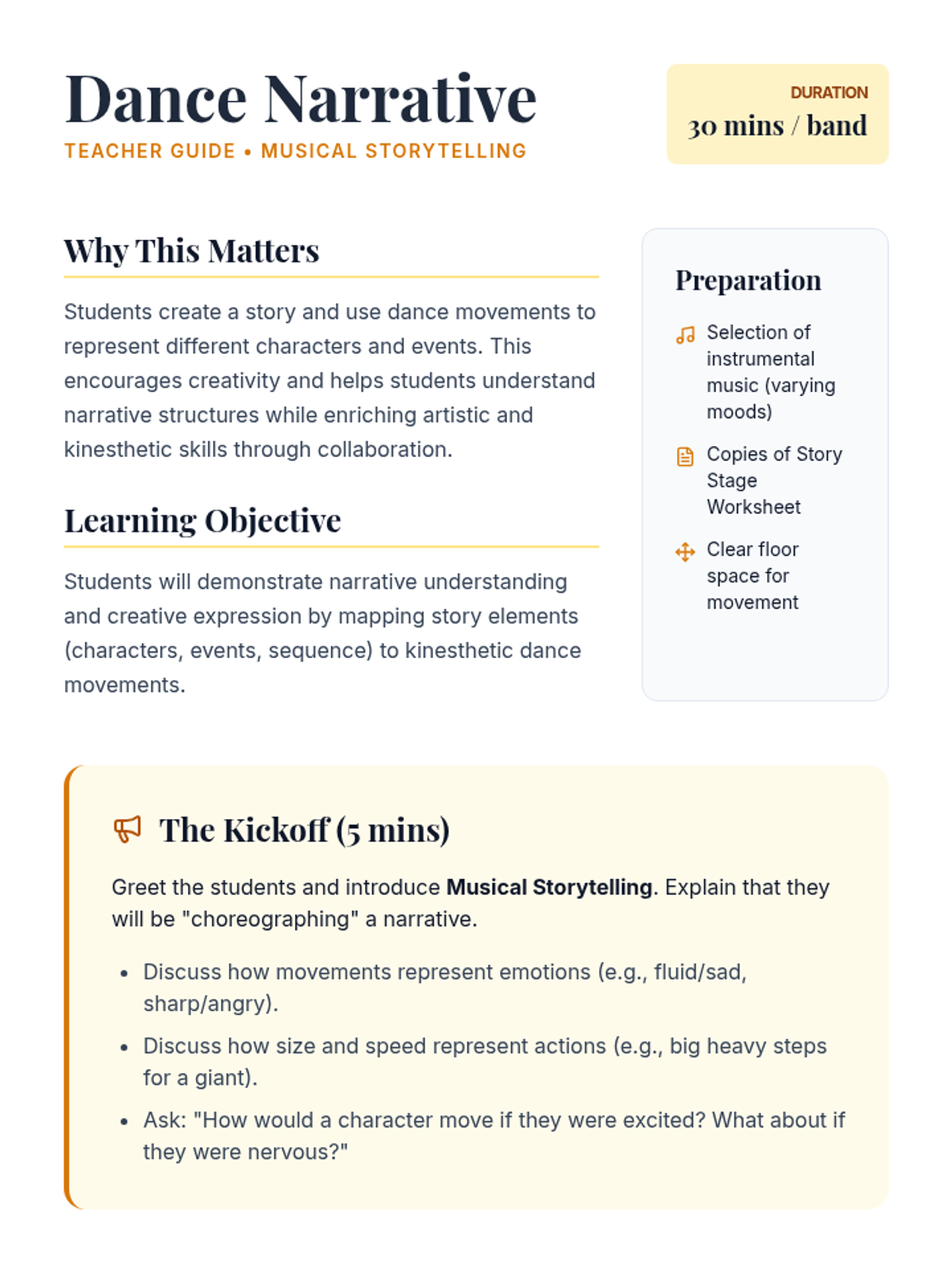
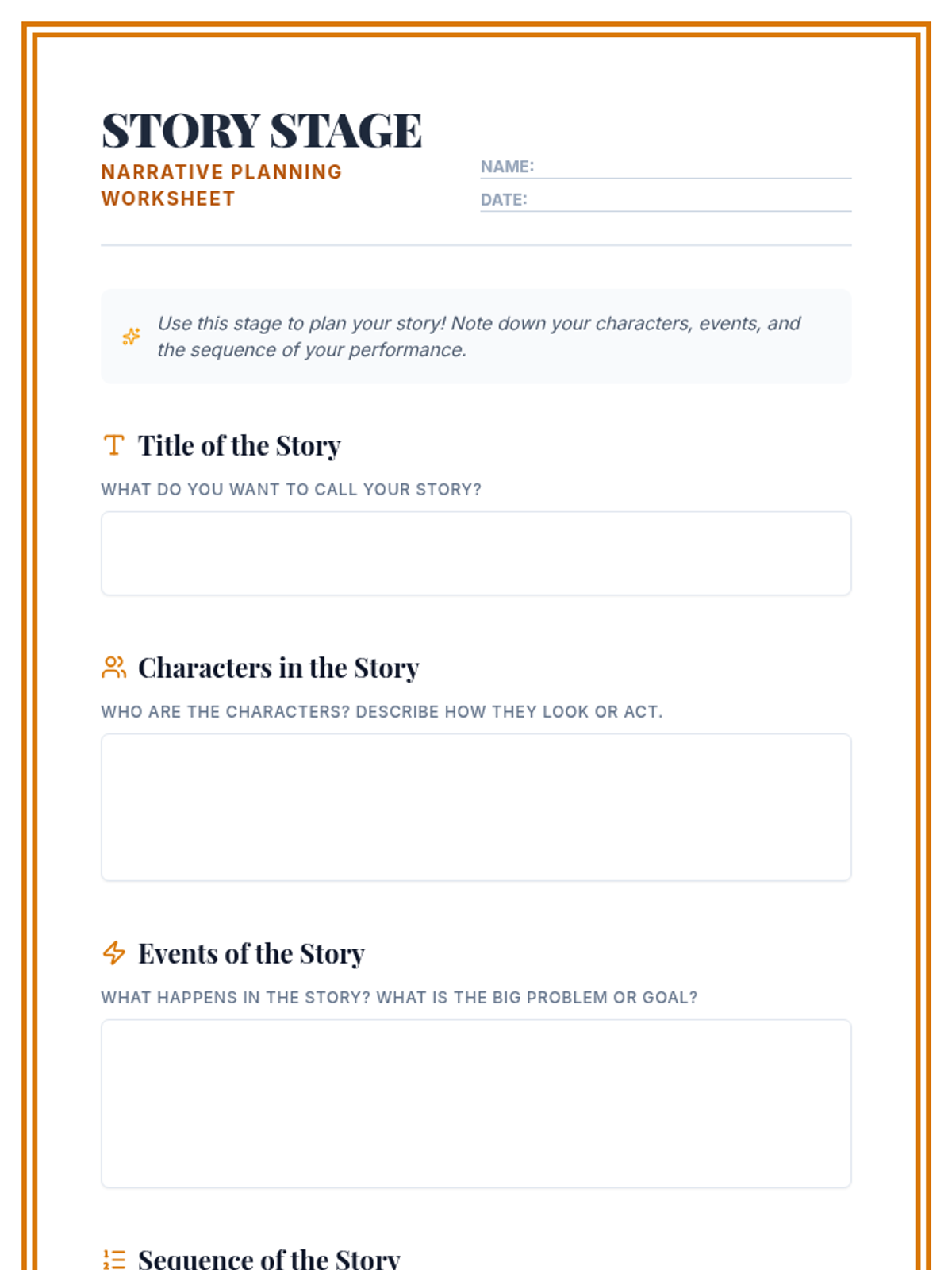
Students will create a story and use dance movements to represent characters and events, enhancing their understanding of narrative structure and kinesthetic expression across K-12 grade levels.
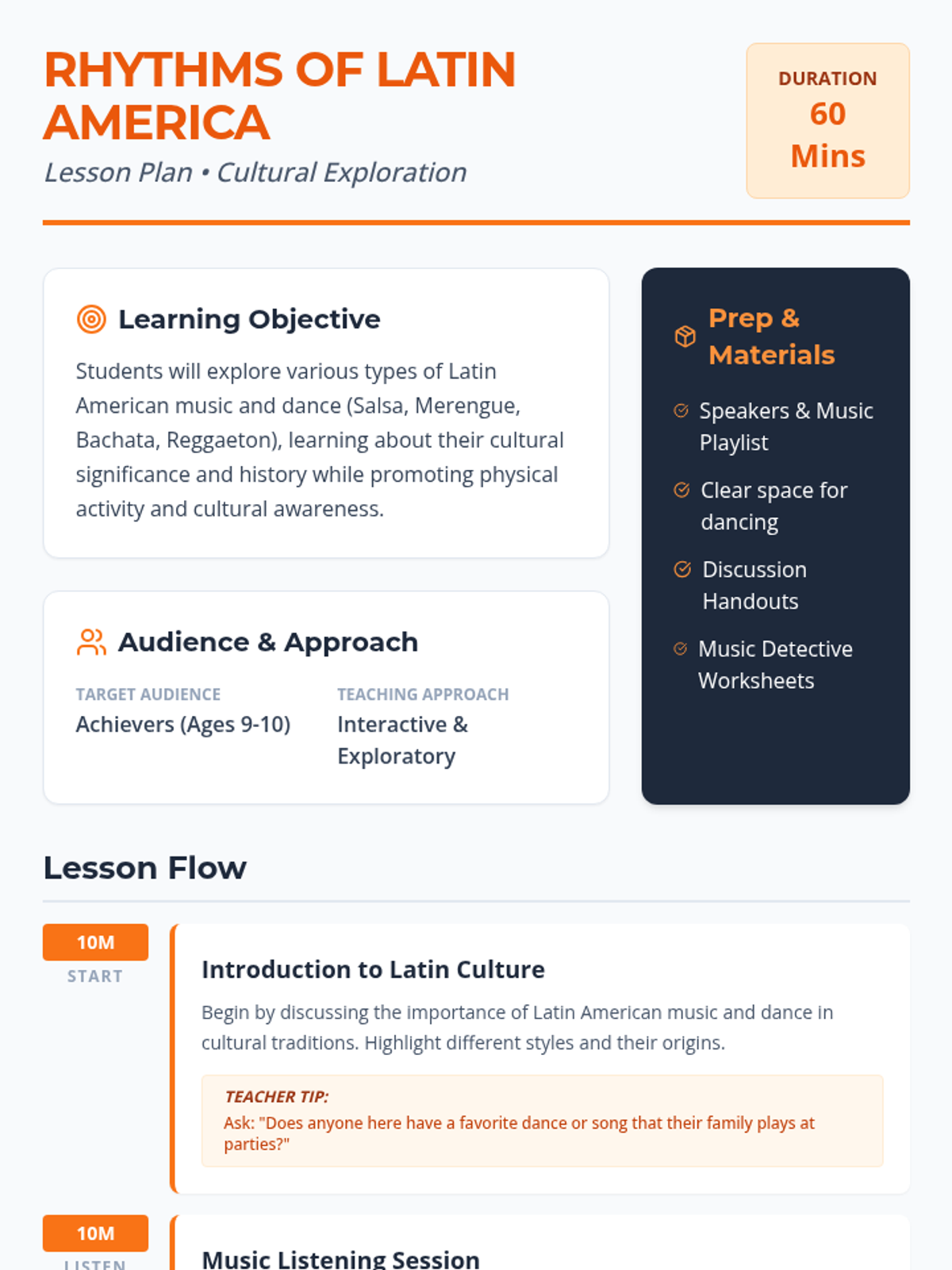
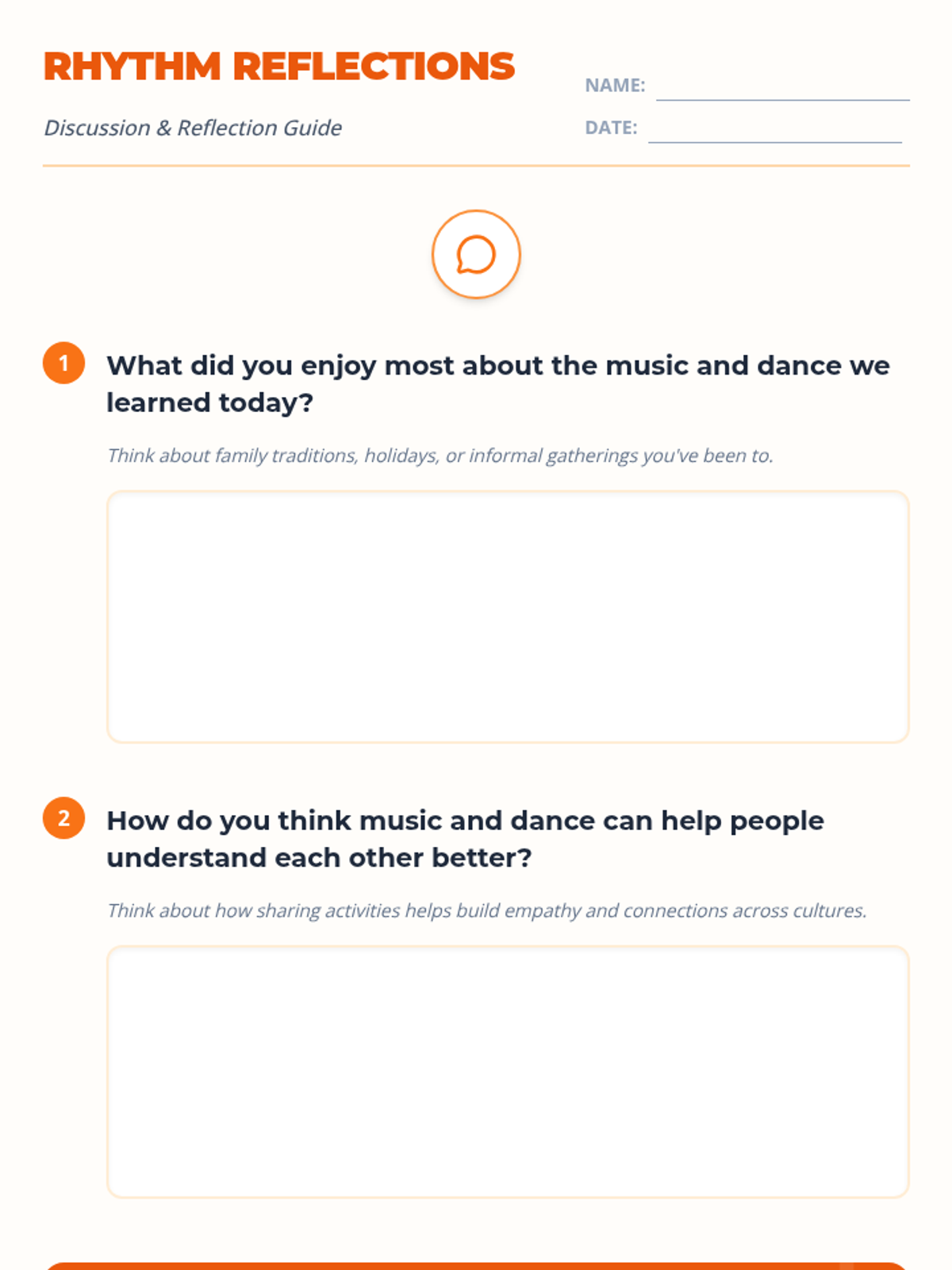
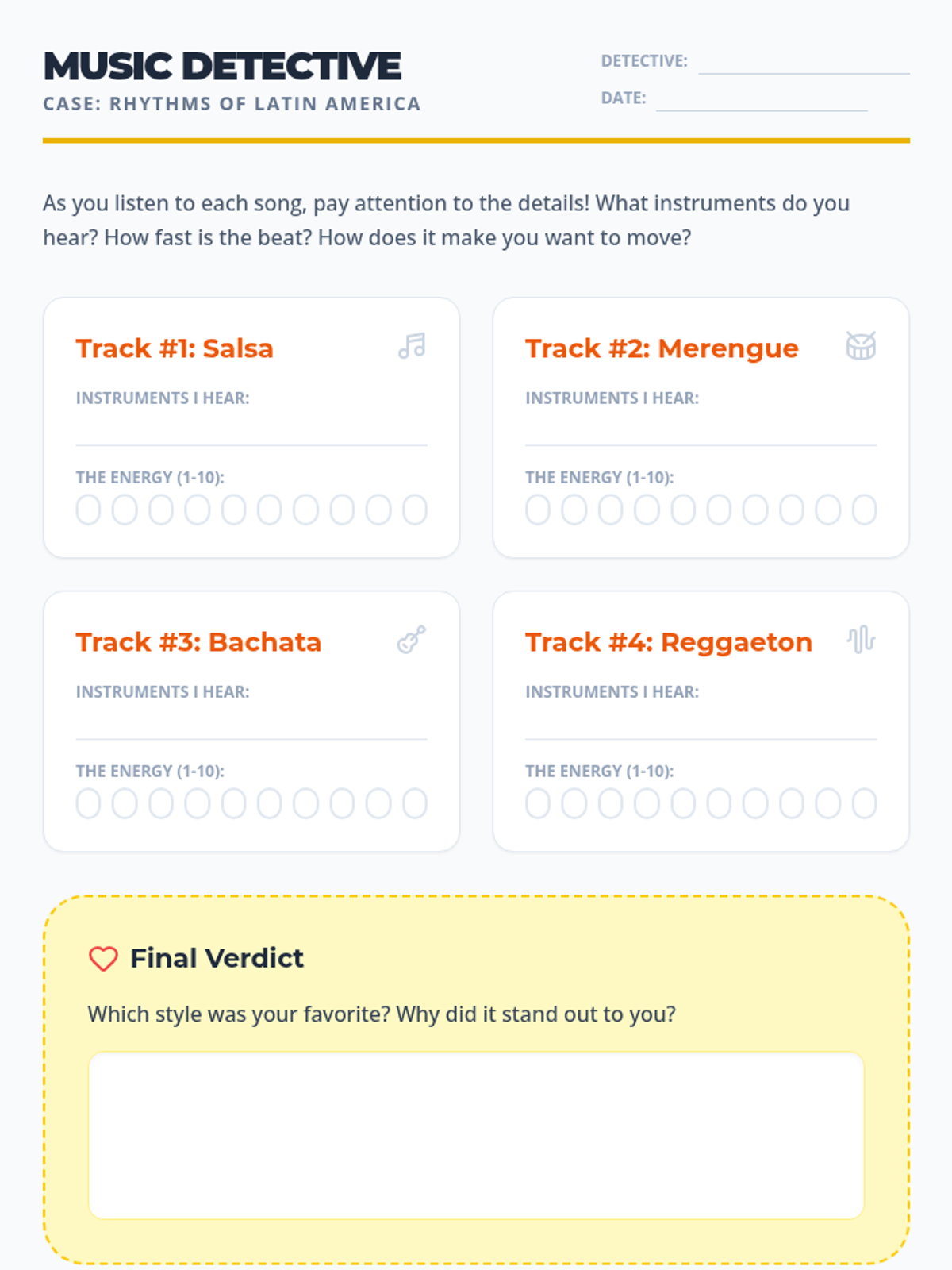
A 1-hour cultural exploration of Latin American music and dance, focusing on genres like Salsa, Merengue, and Bachata. Students learn basic dance steps and discuss the role of music in expressing cultural identity.