Cultural identity, community development, and public policy through the lens of creative practice. Addresses arts advocacy strategies and integrates interdisciplinary connections across social and professional sectors.
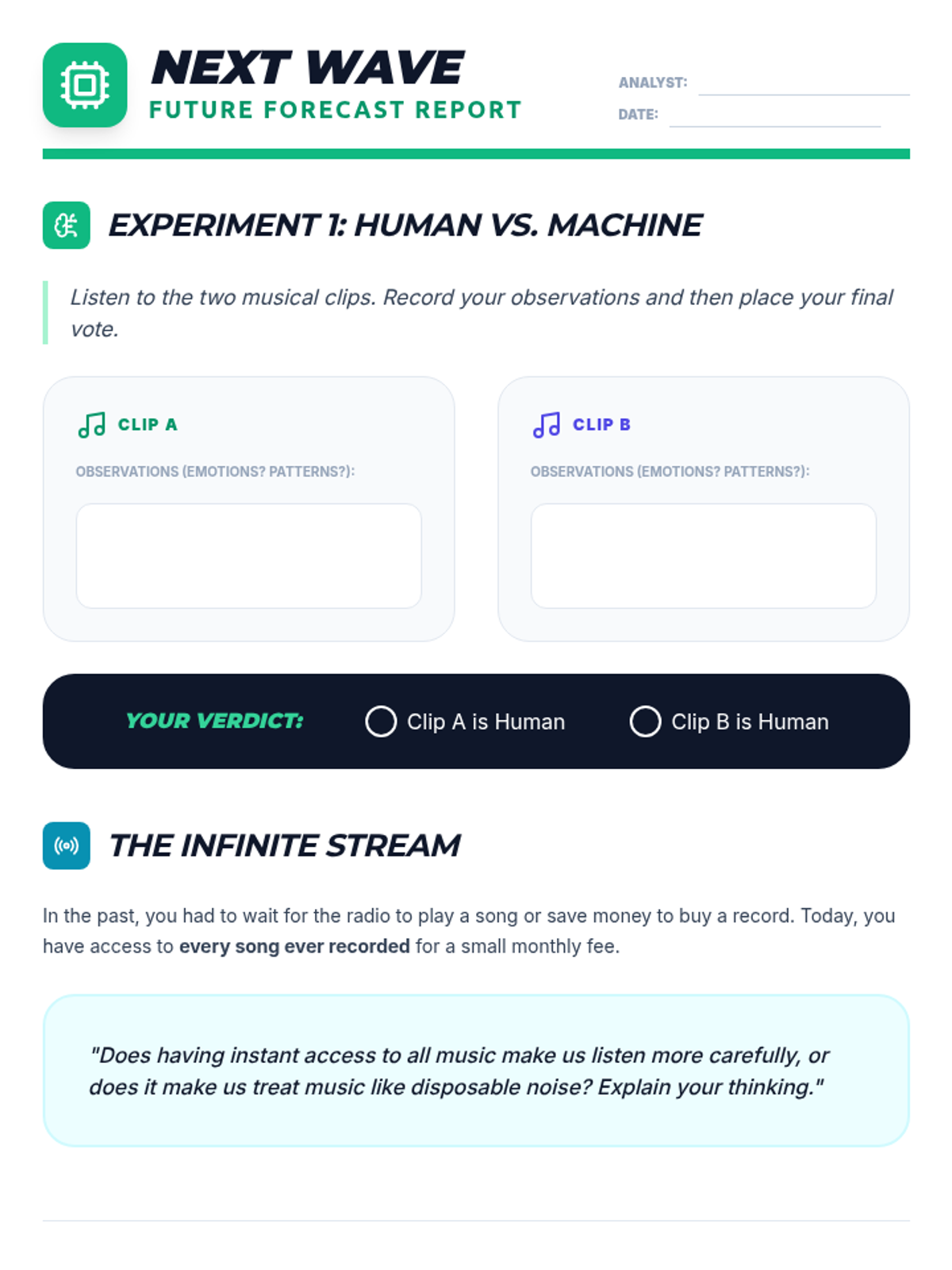
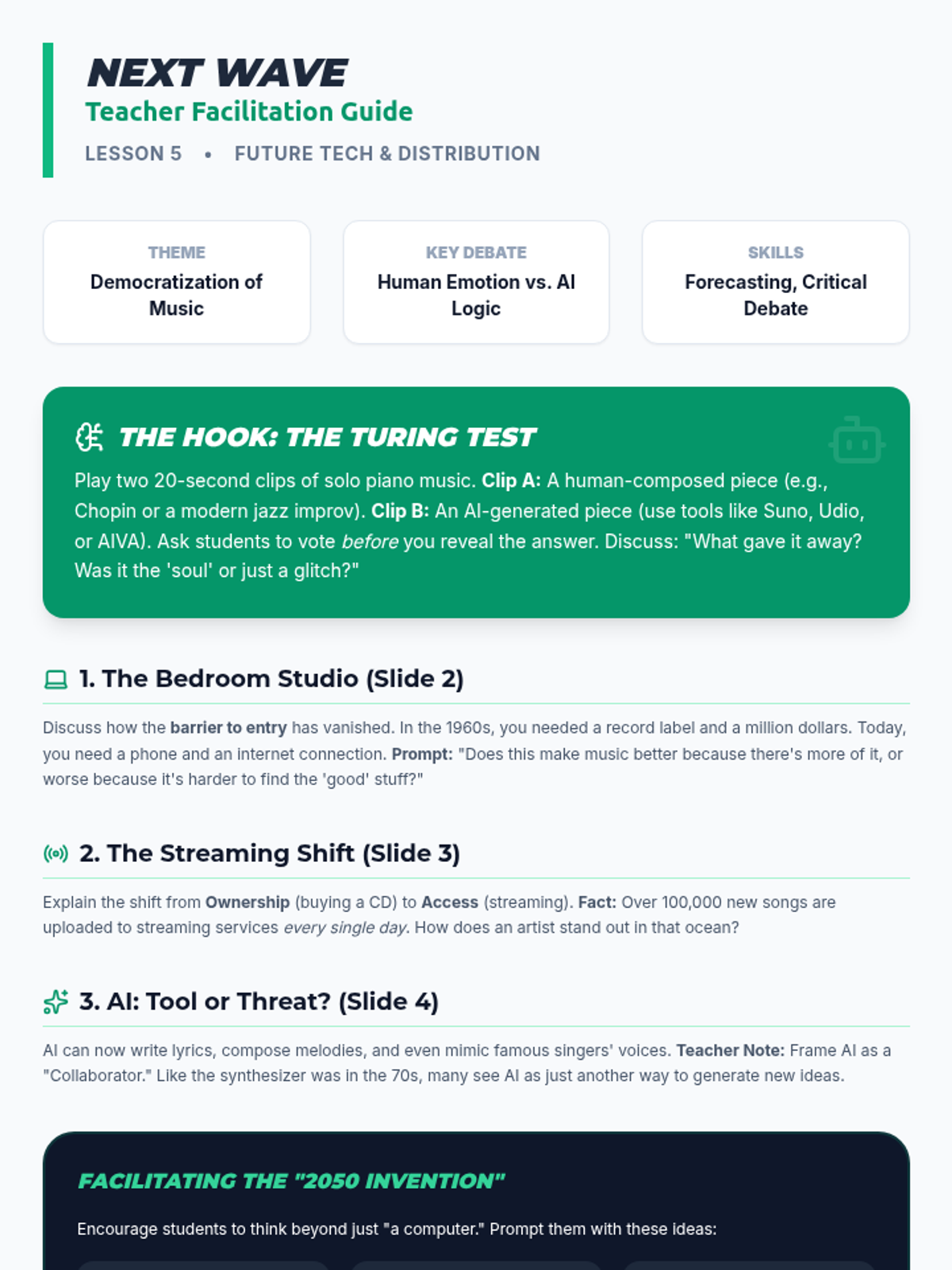
Students debate the future of music history, looking at streaming, AI composition, and bedroom production, analyzing how digital tools change the creation and distribution of music.
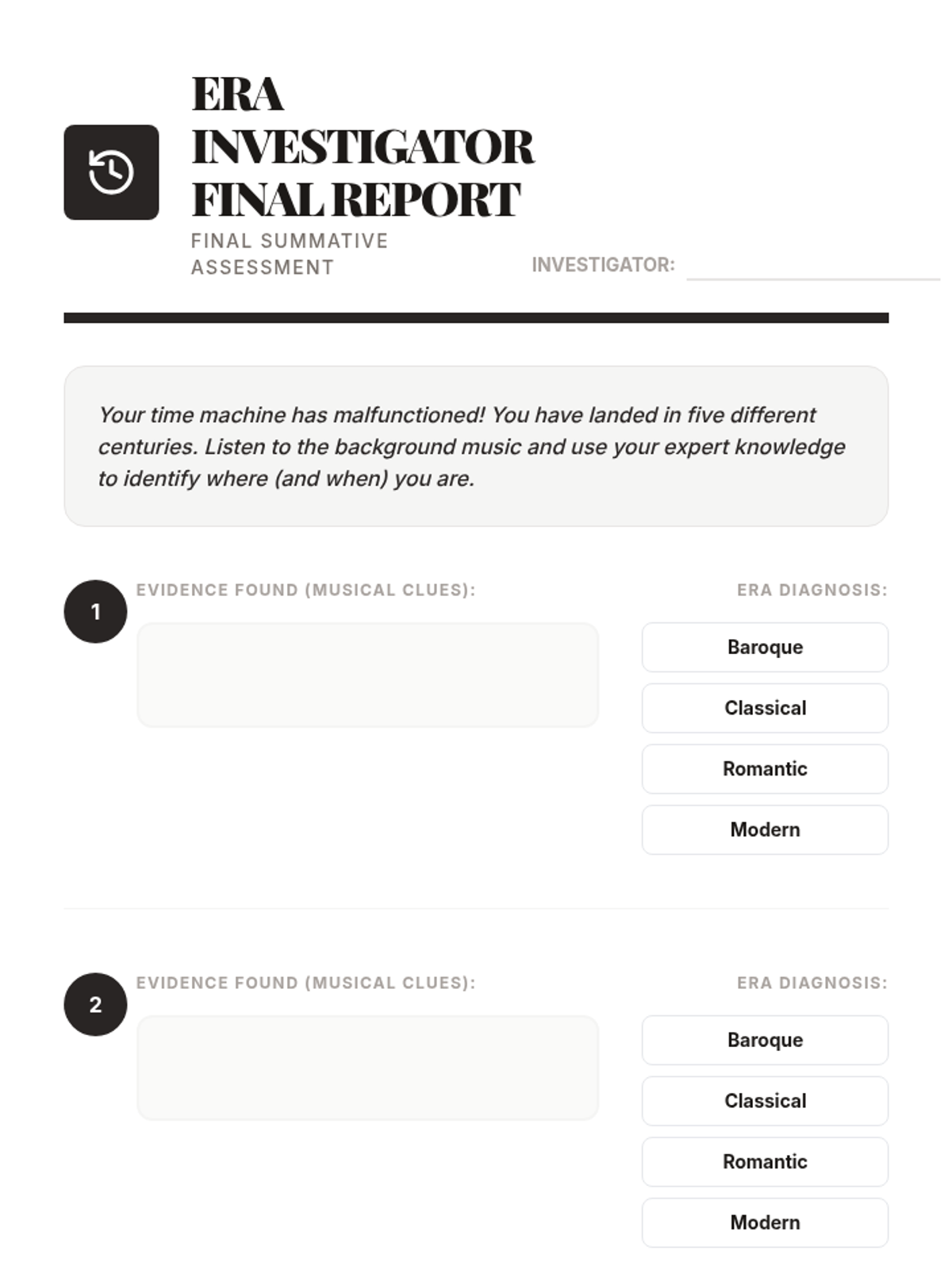
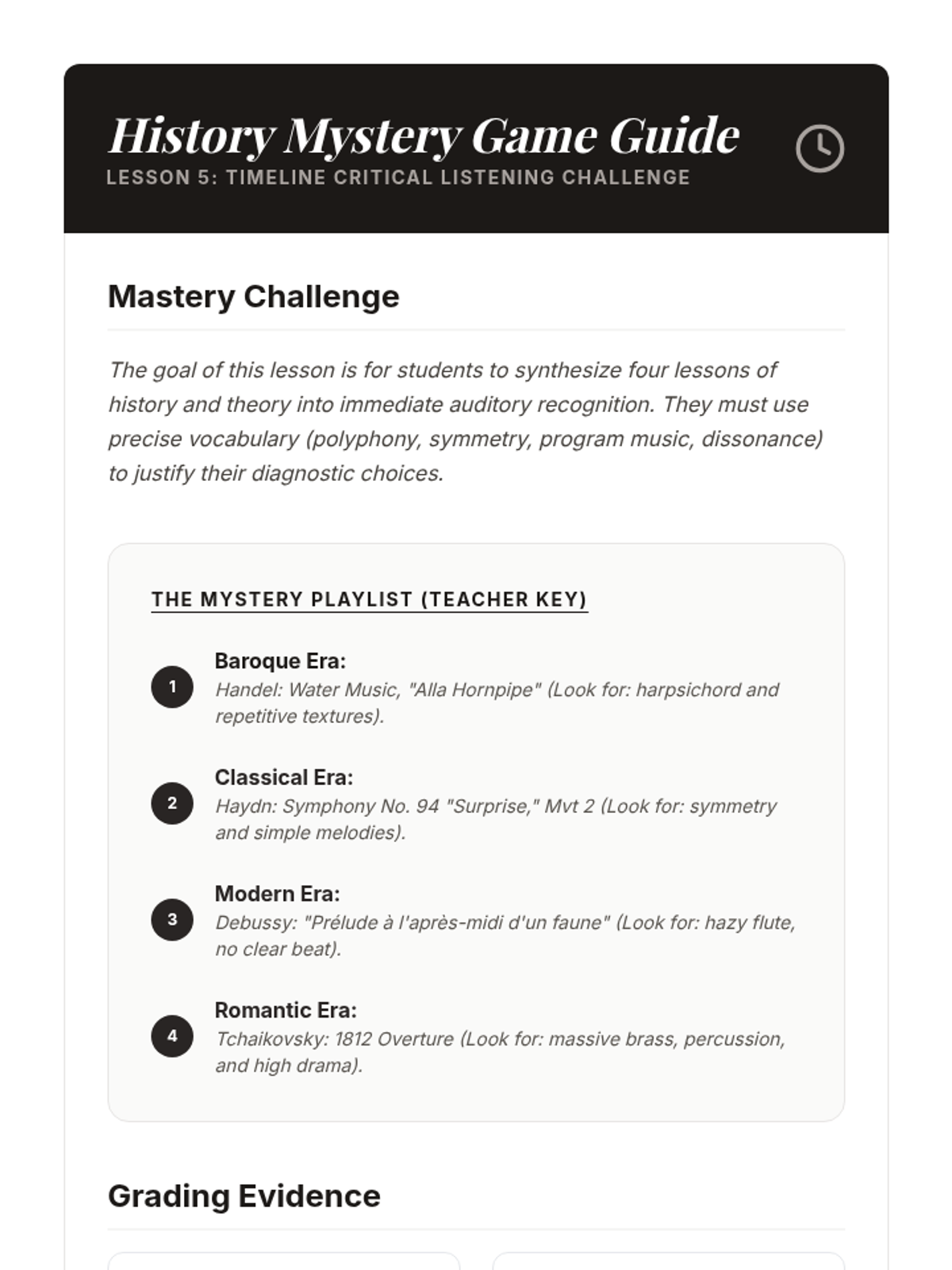
Synthesize knowledge by categorizing mystery musical excerpts into the correct historical era. Students will use specific vocabulary to justify their choices in a 'Time Machine' game.
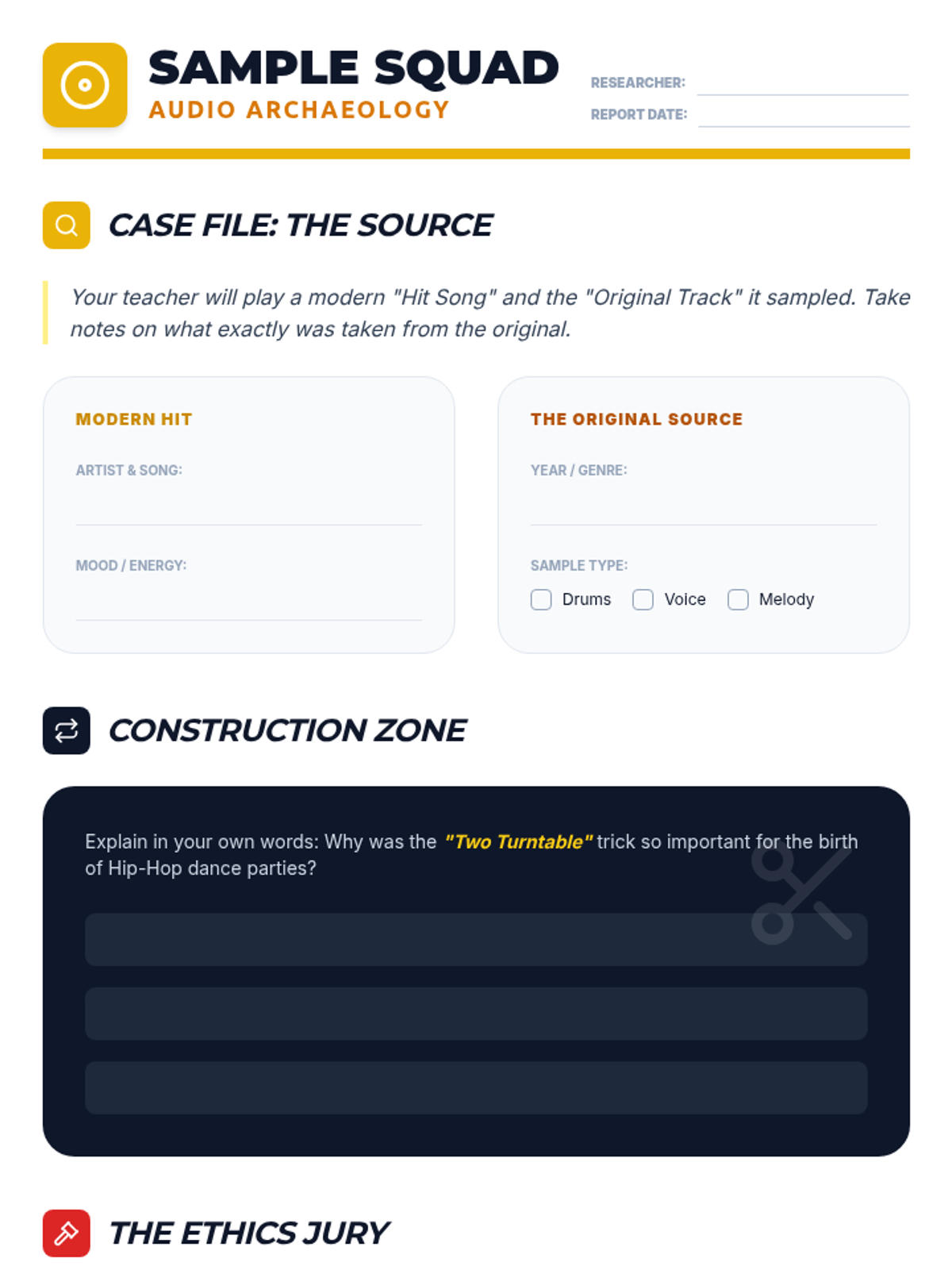
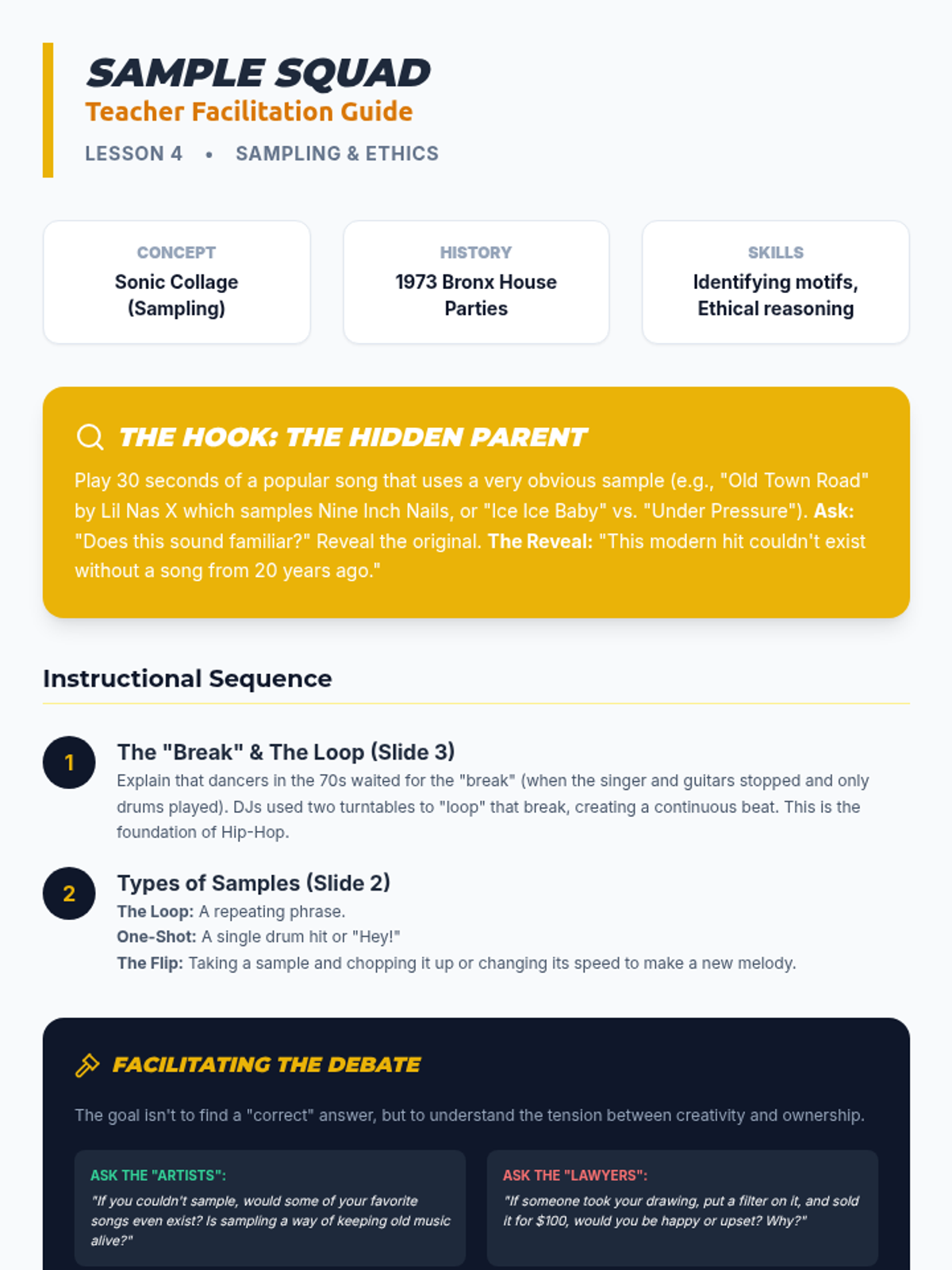
Students investigate the origins of Hip-Hop and the revolutionary technique of sampling, discussing the artistic and legal implications of repurposing existing audio to create new music.
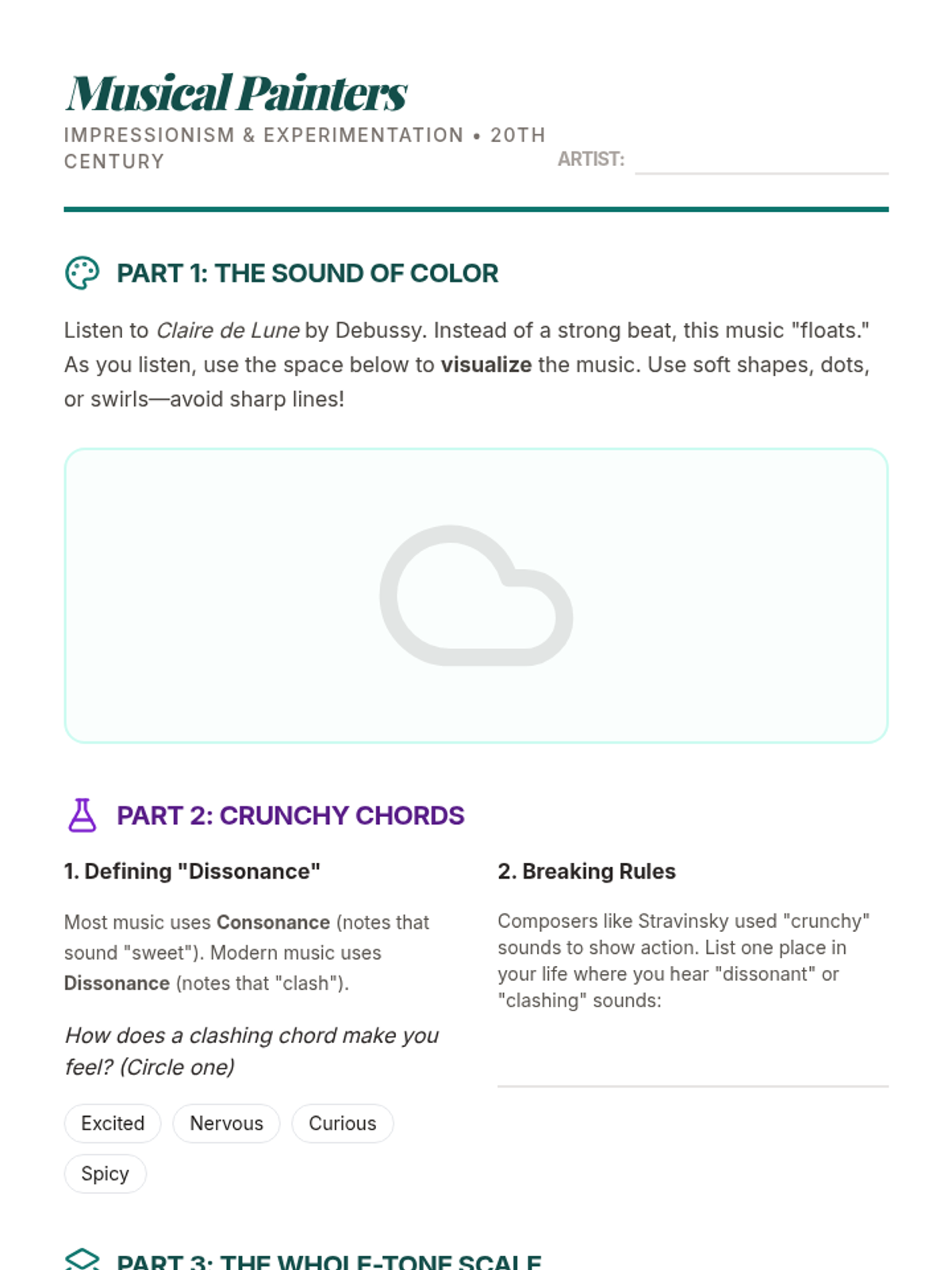
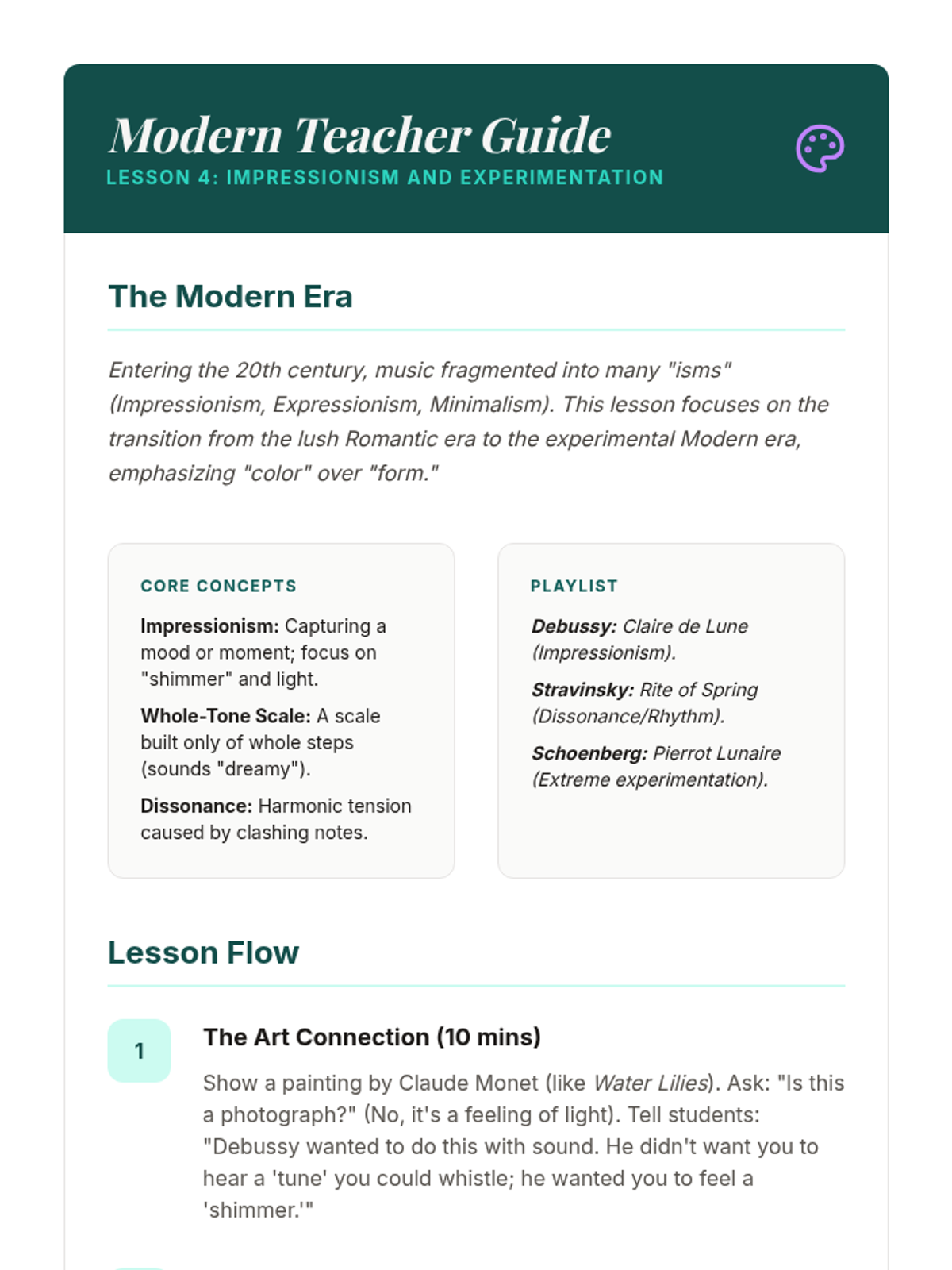
Examine how 20th-century composers like Debussy used 'colors' and dissonance to break traditional rules. Students will experiment with whole-tone scales and auditory analysis.
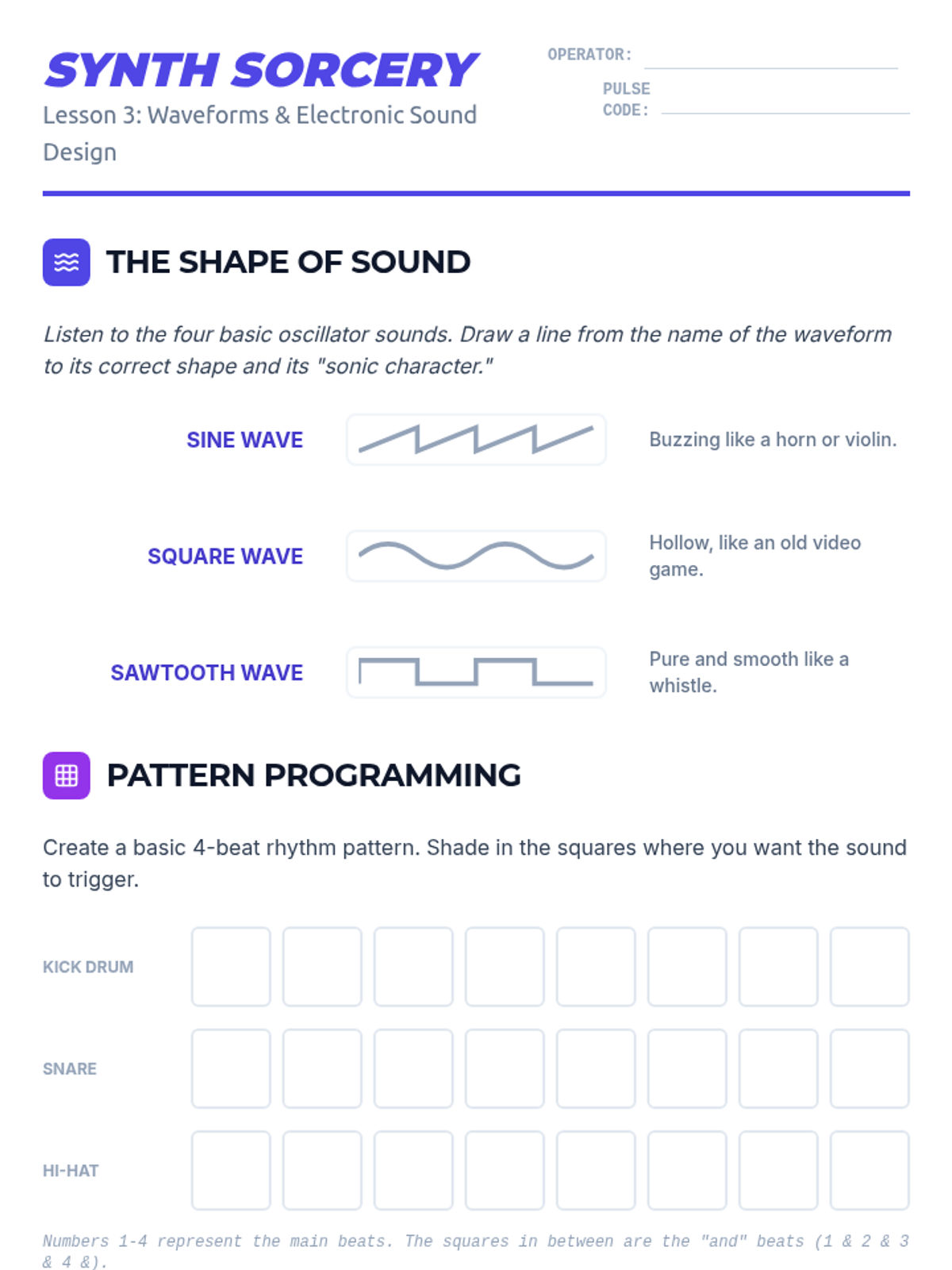
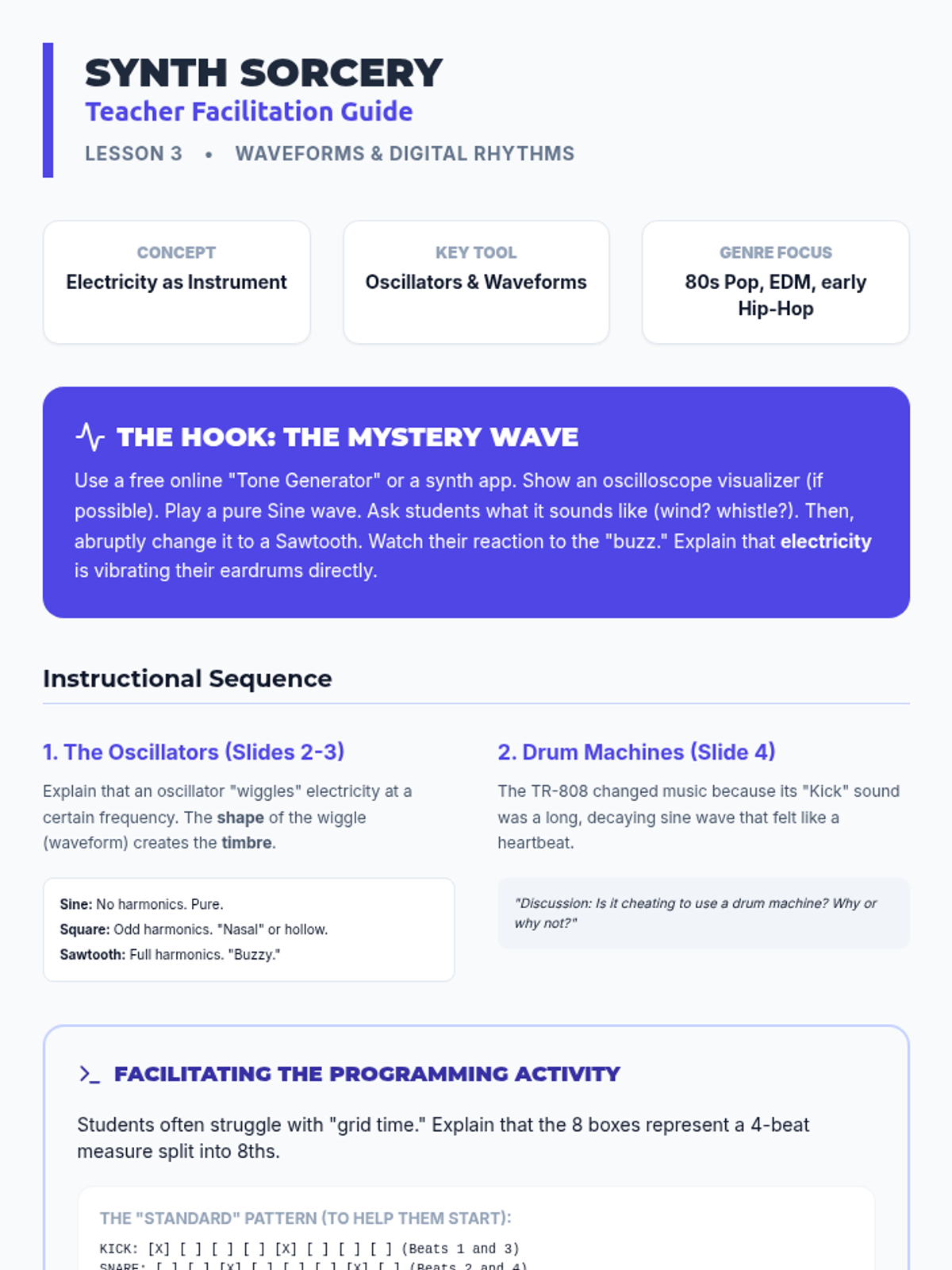
Students explore the introduction of synthesizers and drum machines in the 70s and 80s, learning about waveforms and how electricity can be used to design completely new sounds.
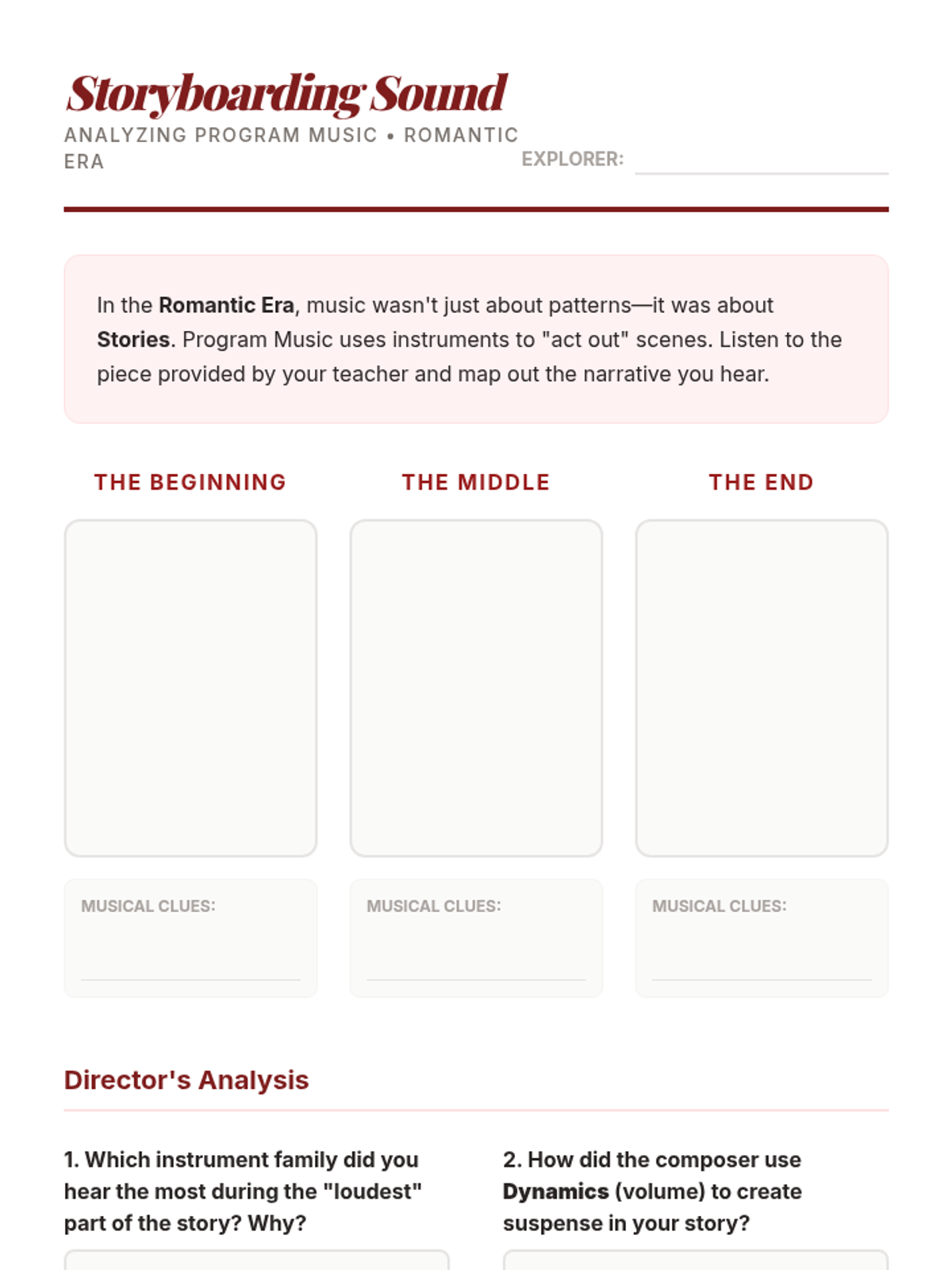
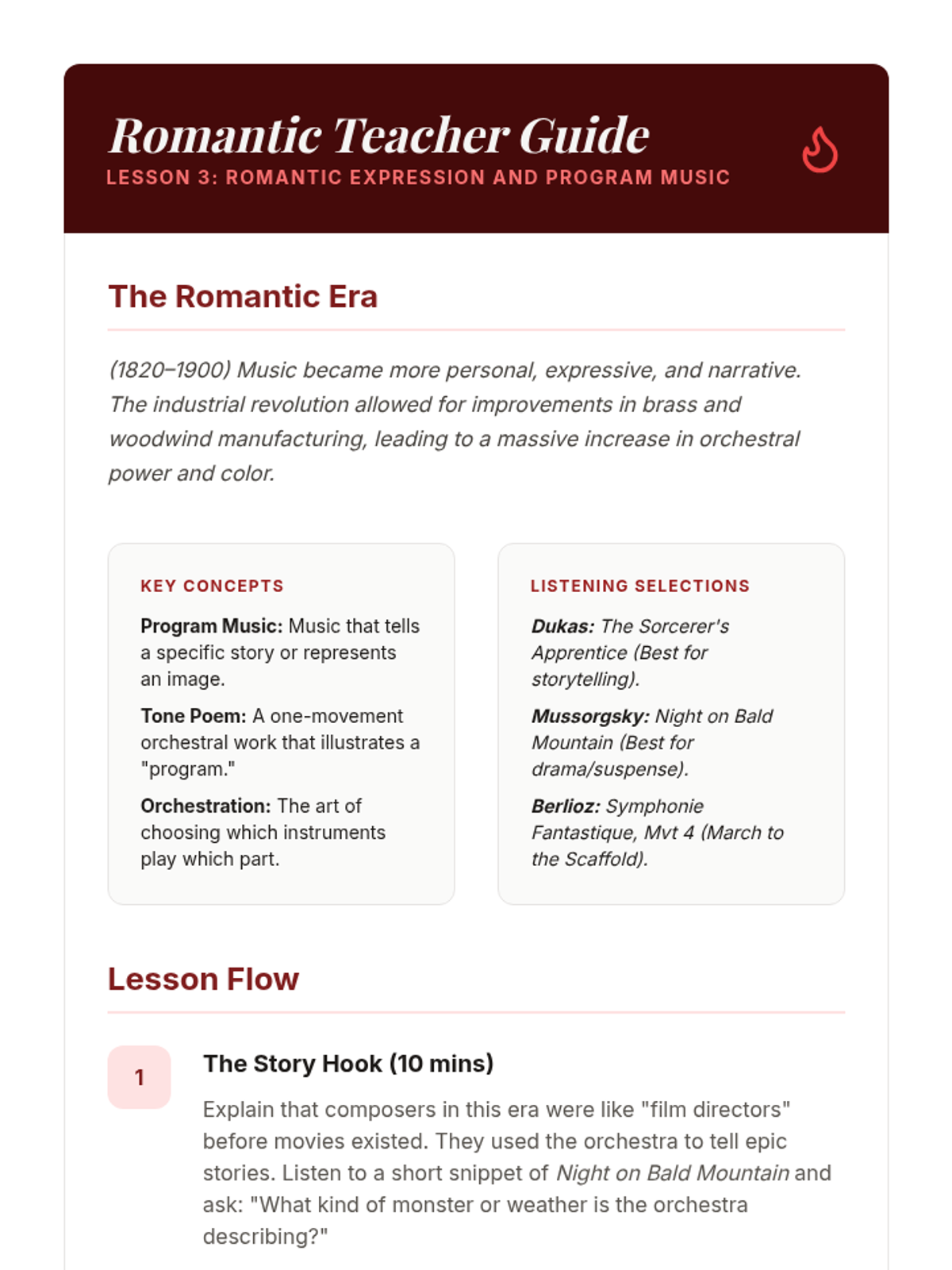
Investigate the expansion of the orchestra and the birth of program music. Students will storyboard a narrative based on dramatic musical excerpts from composers like Berlioz and Mussorgsky.
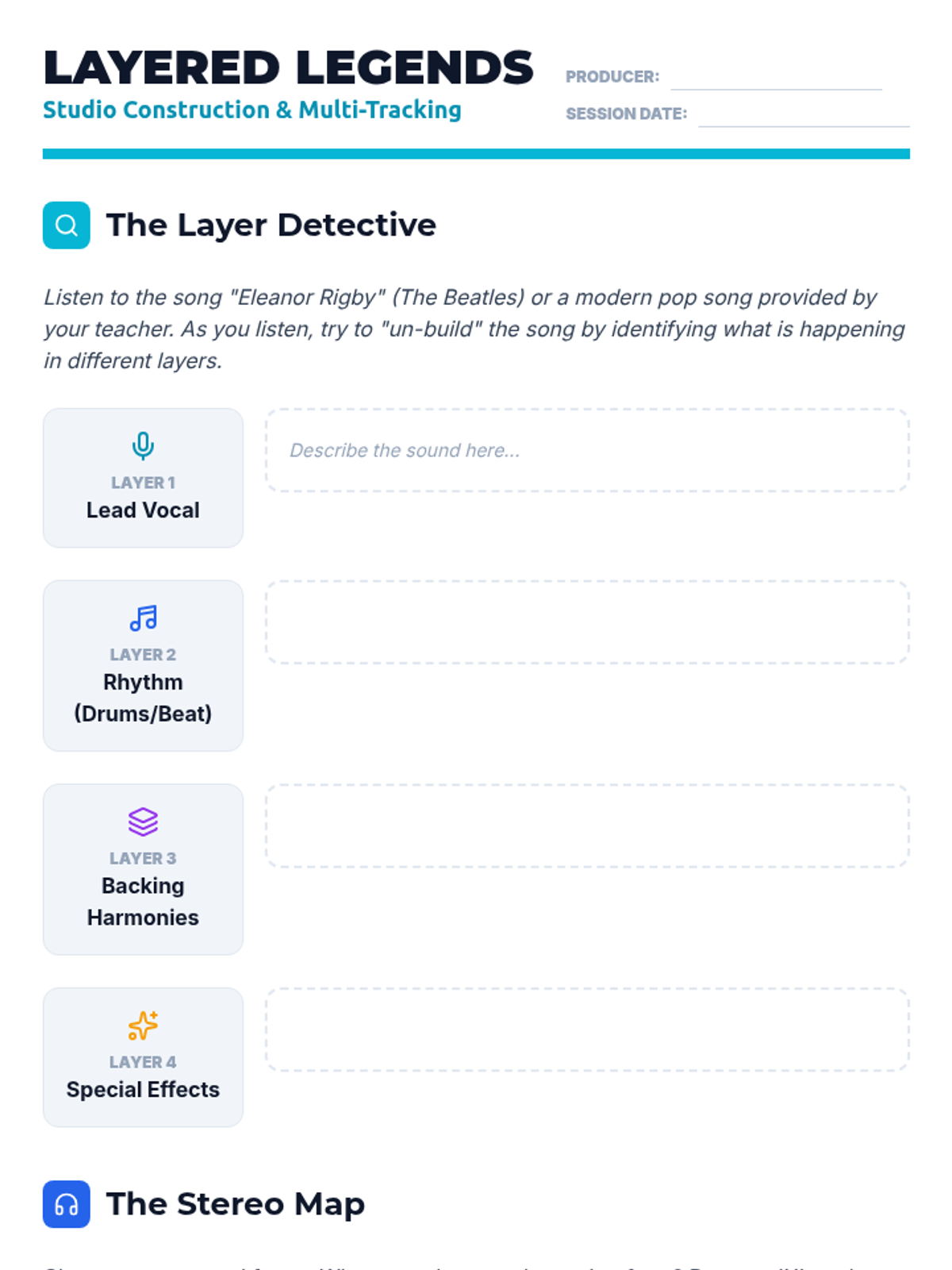
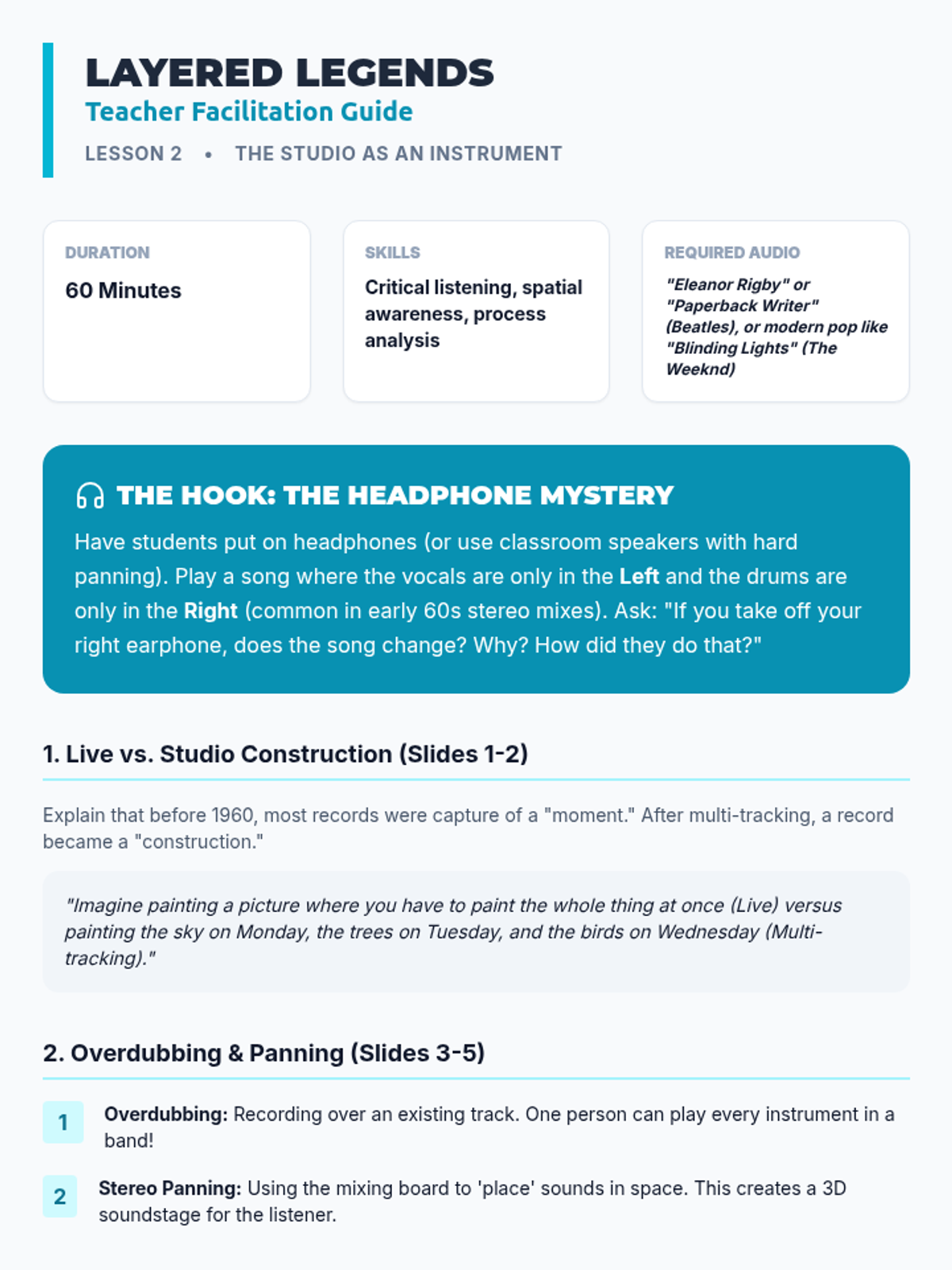
Students explore the 1960s shift from live recording to studio construction, learning about multi-tracking, tape loops, and how The Beatles used the recording studio as a creative instrument.
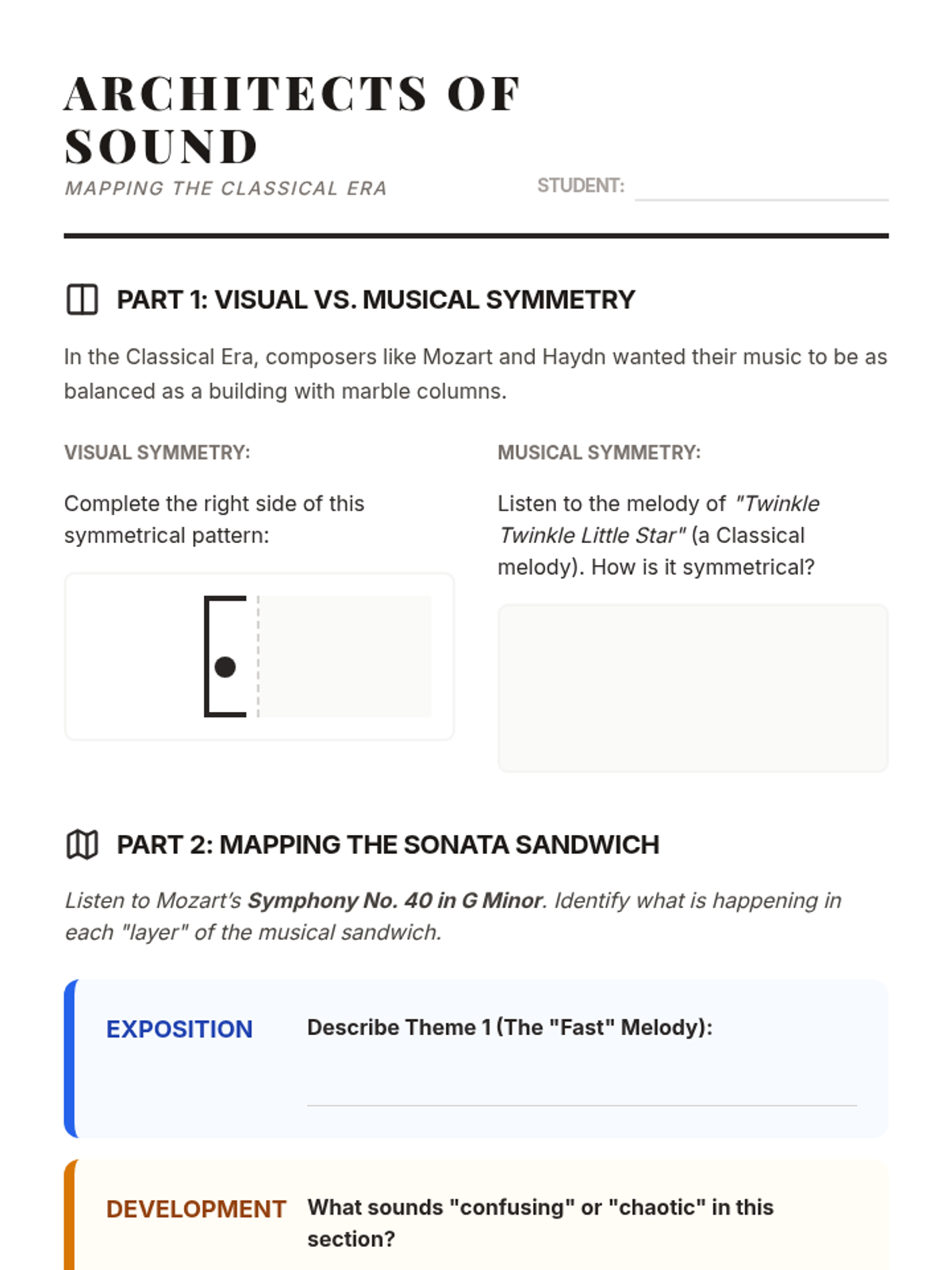
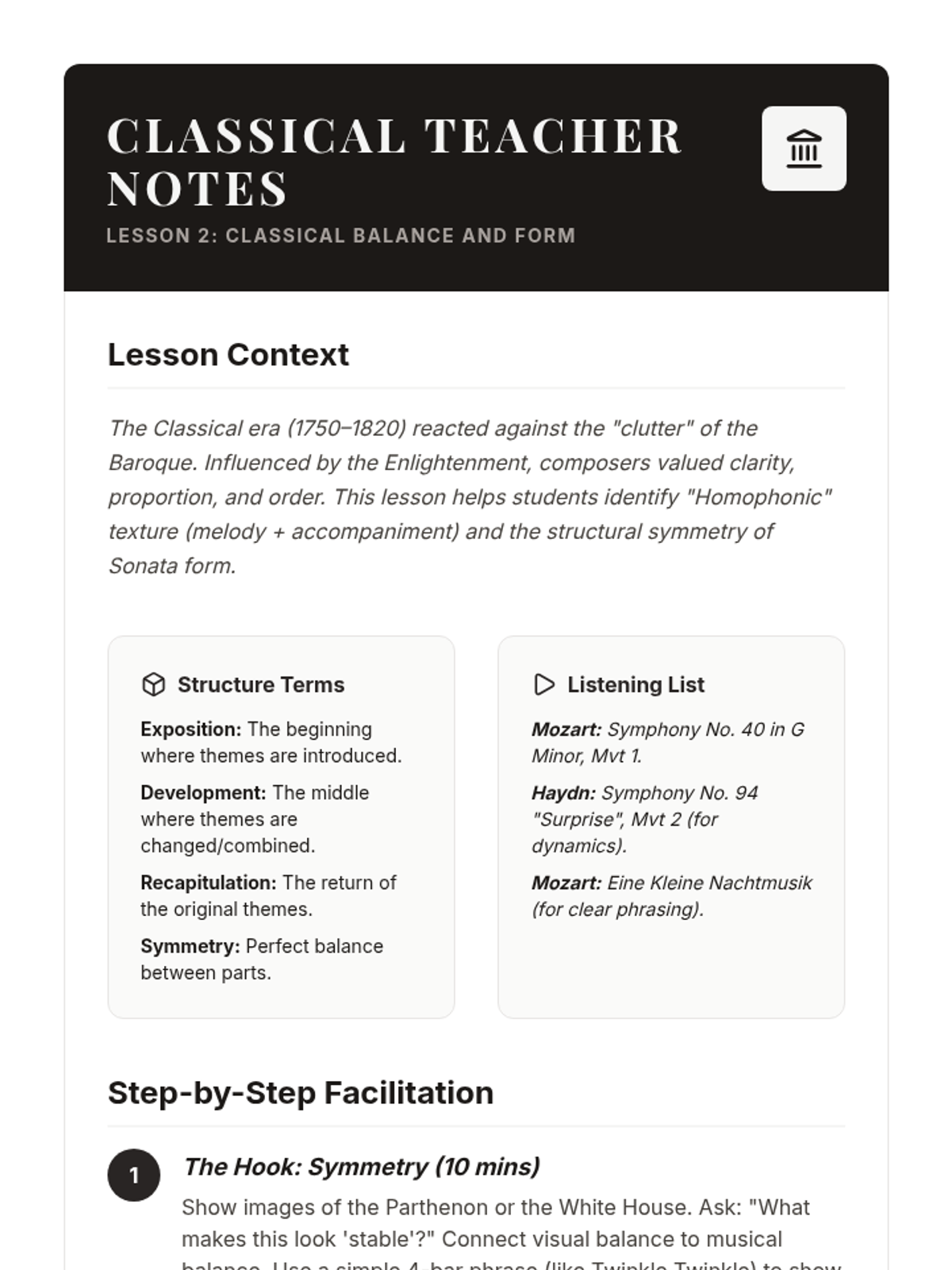
Contrast Baroque complexity with the order and balance of the Classical era. Introduce the Sonata-Allegro form and identify clear phrases and dynamic contrasts in the works of Mozart and Haydn.
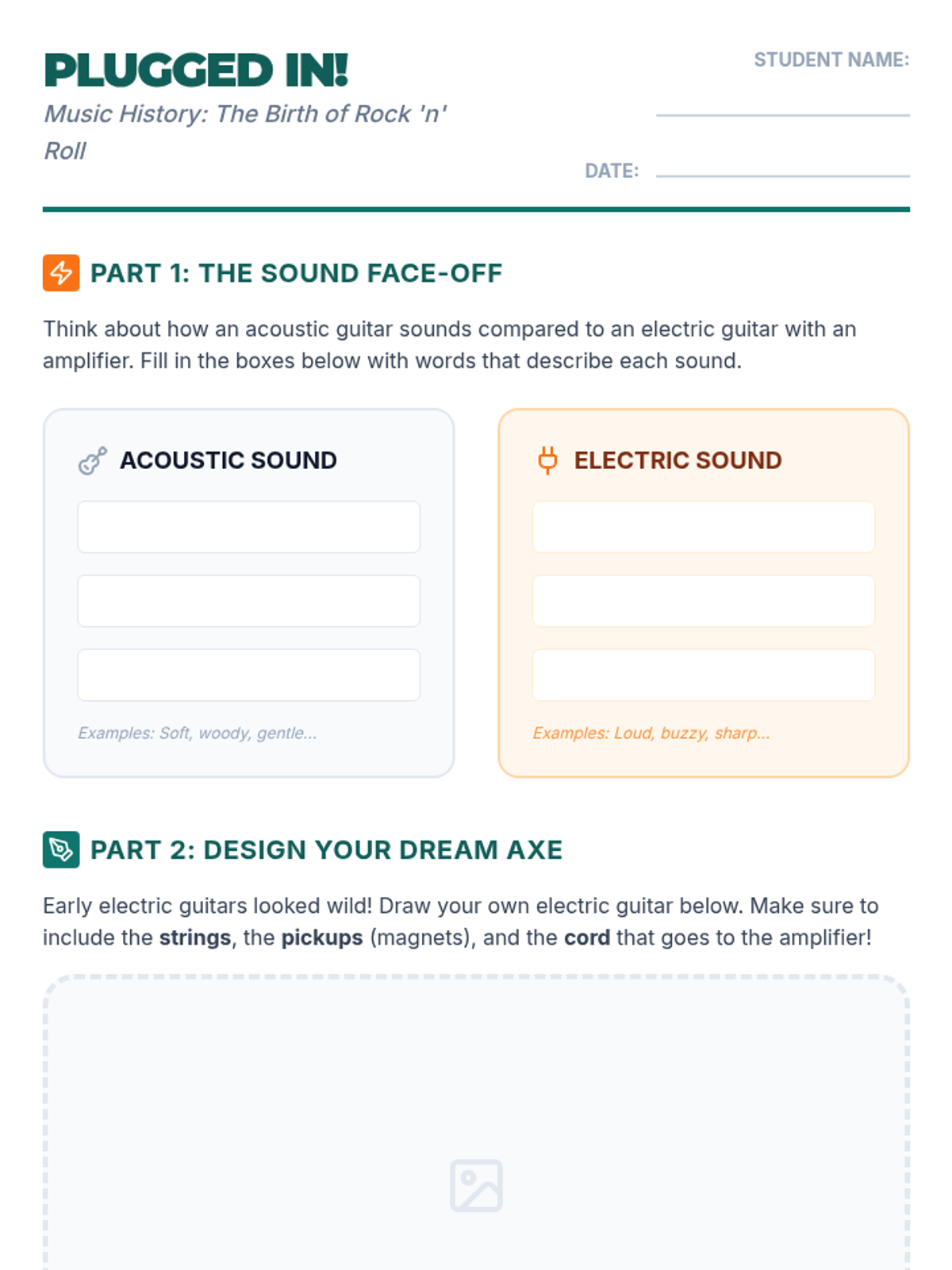
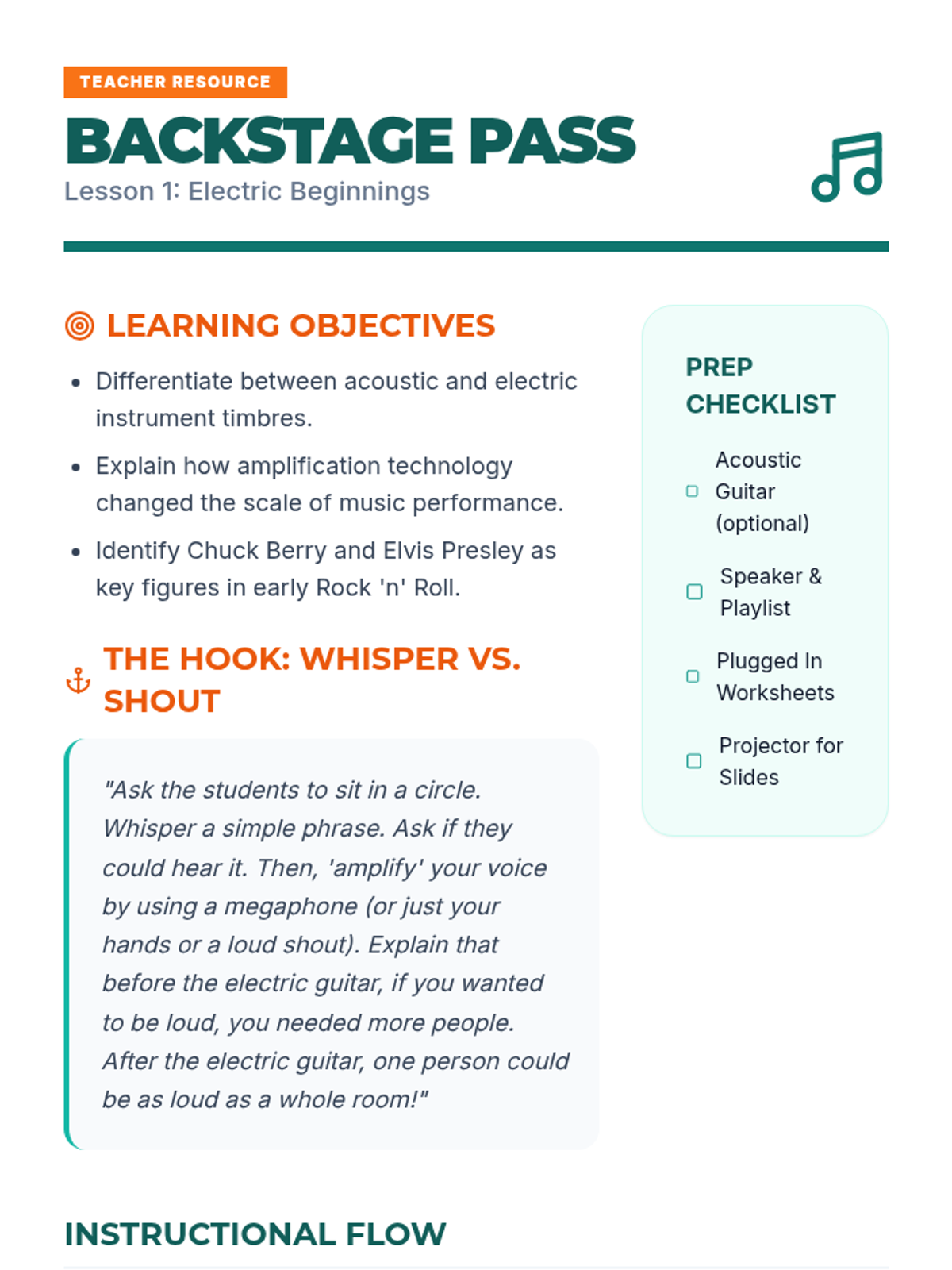
Students compare acoustic and electric sounds, exploring how amplification birthed Rock 'n' Roll through pioneers like Chuck Berry and Elvis Presley.
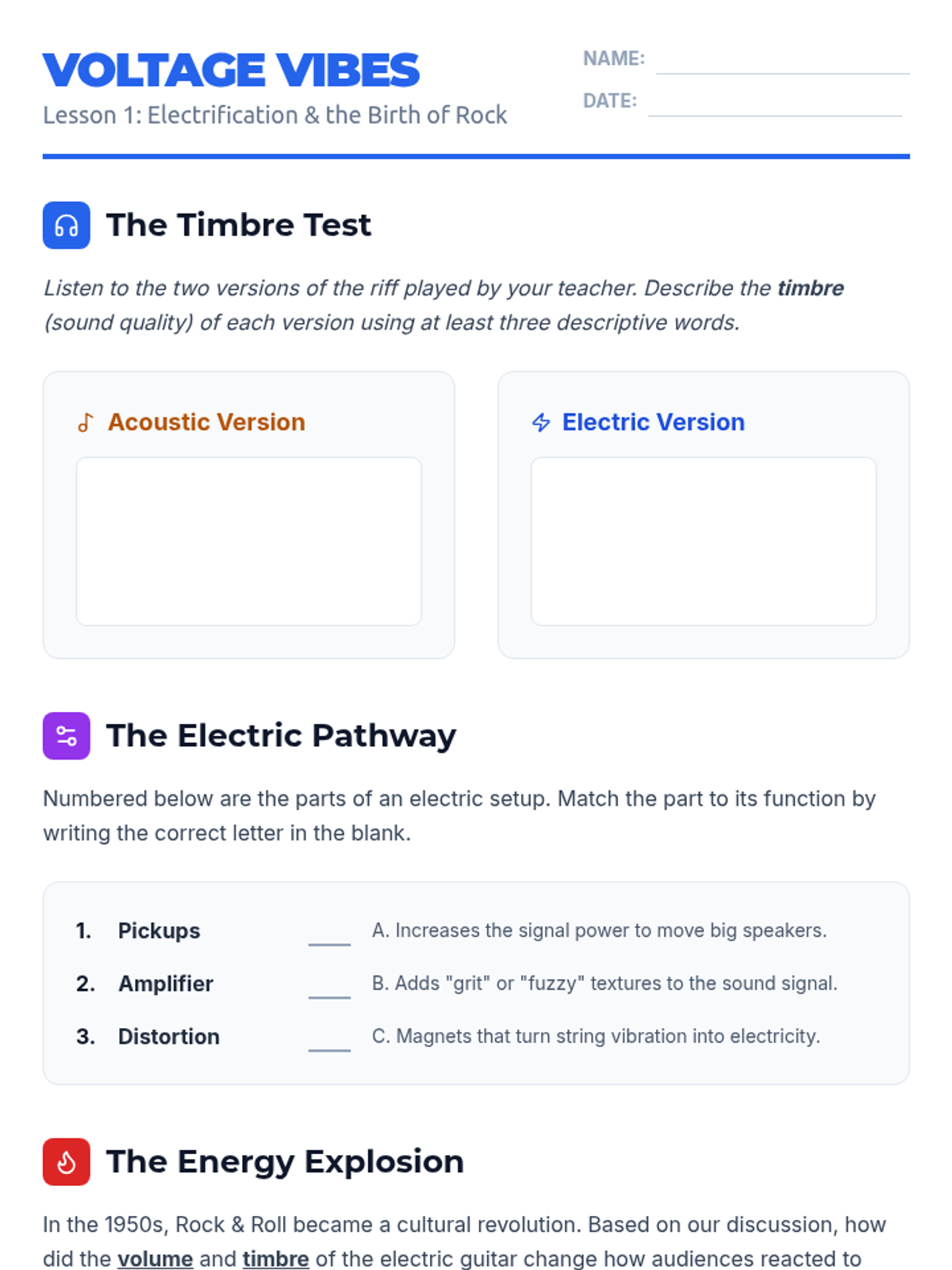
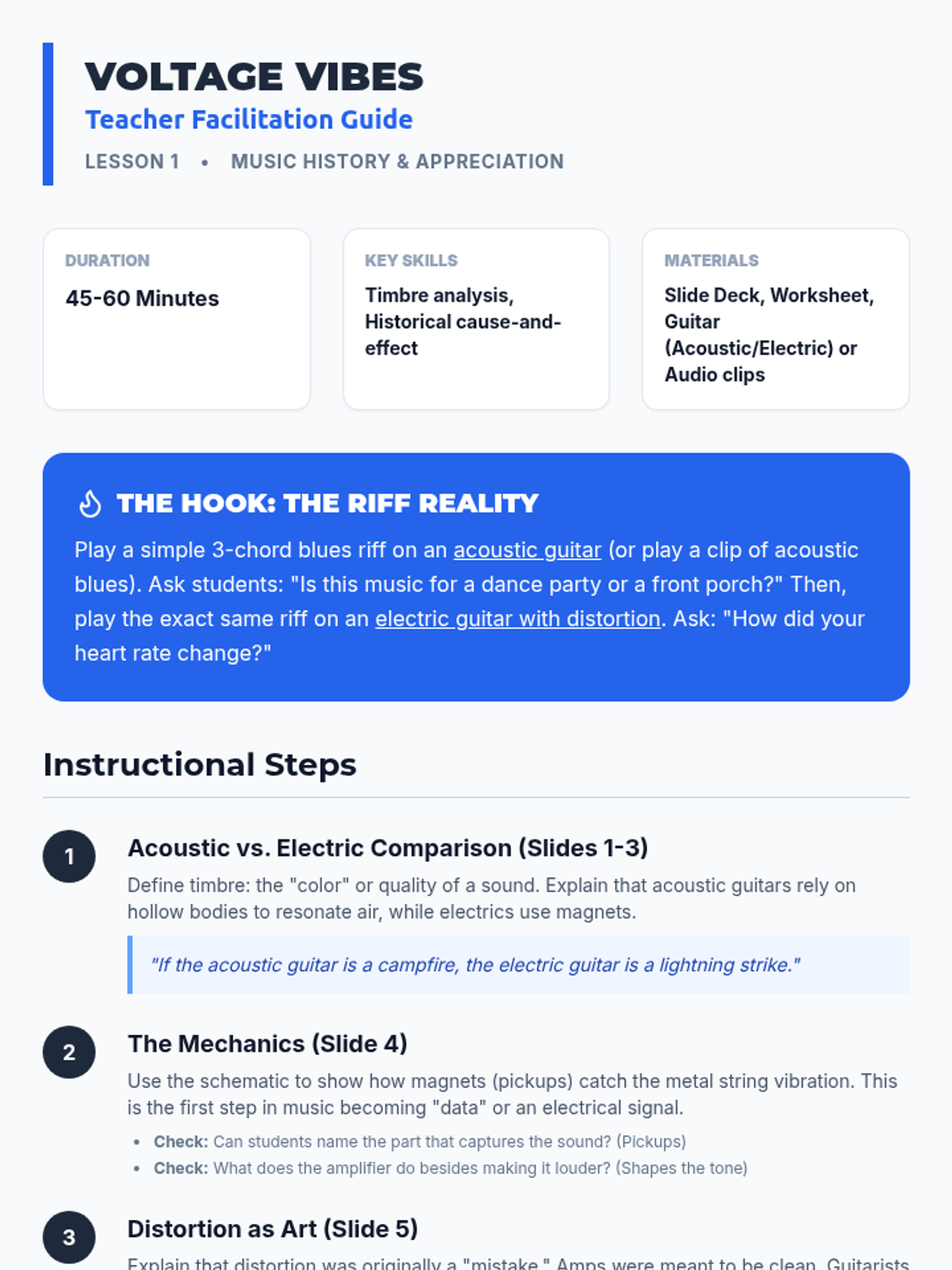
Students analyze the transition from acoustic to electric instruments in the 1950s, exploring how amplification and the electric guitar changed the sound and energy of music.
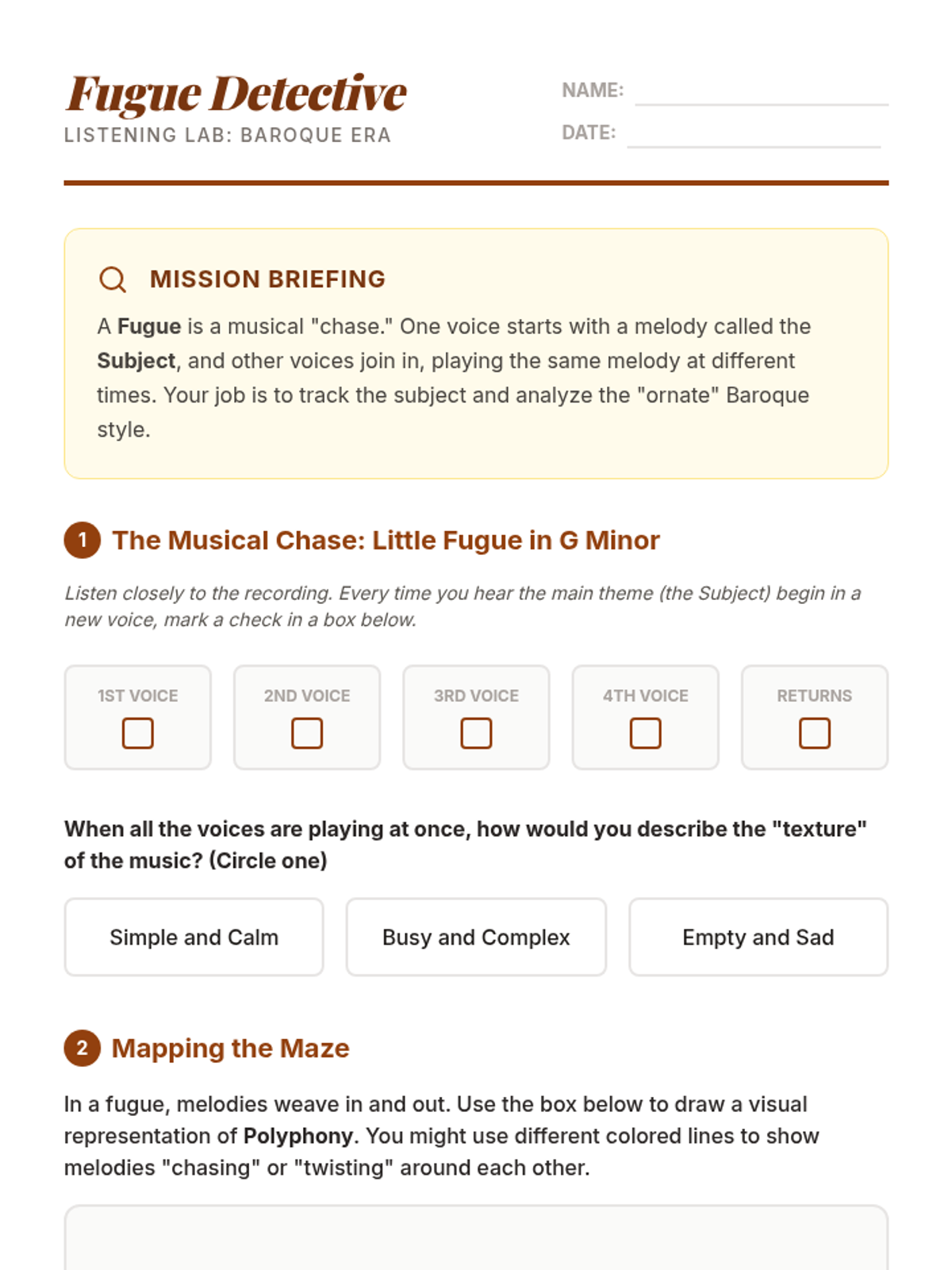
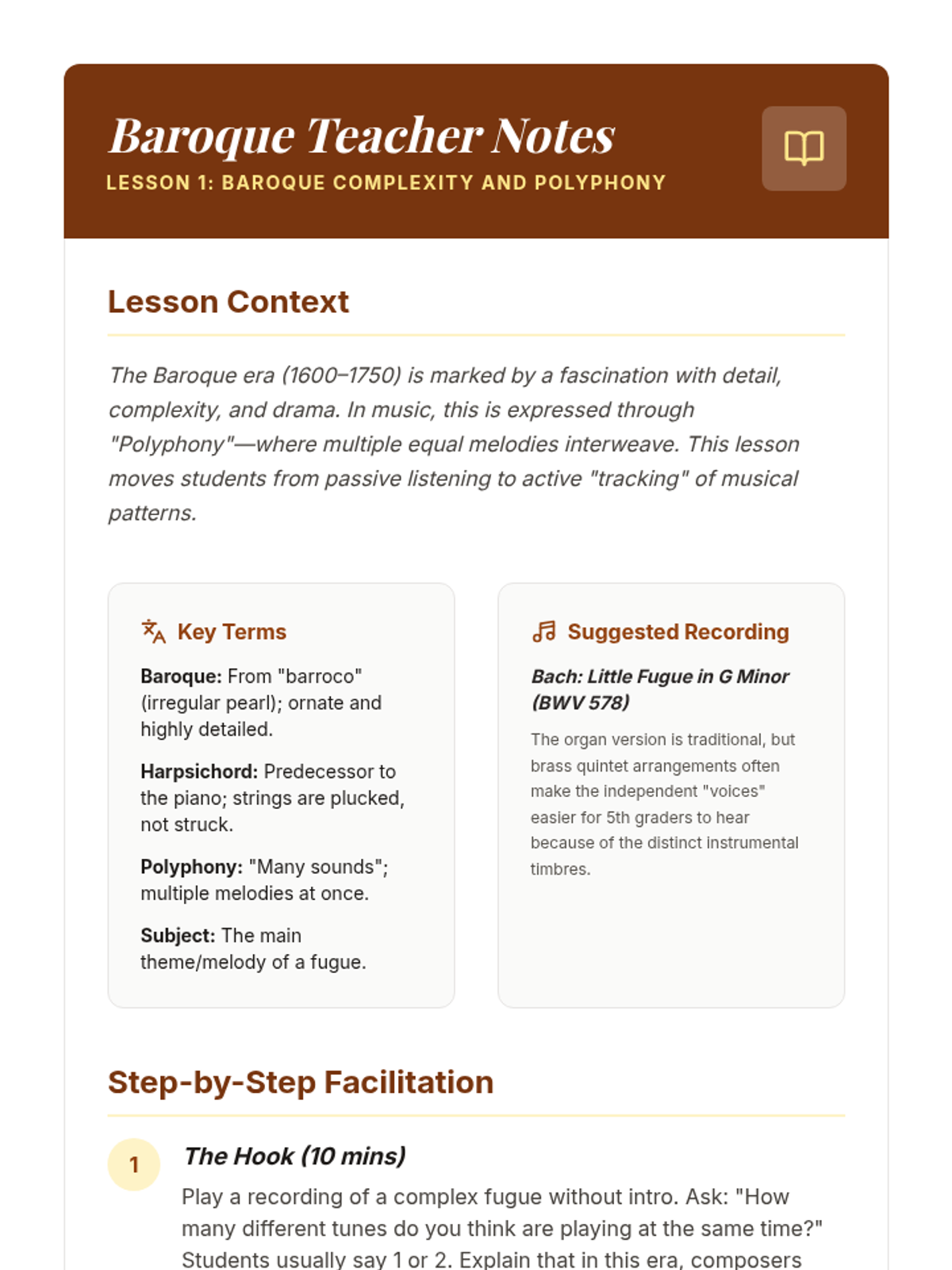
Explore the ornate style of the Baroque era, focusing on polyphonic texture and the harpsichord. Students will learn to track a musical 'subject' through a complex fugue.
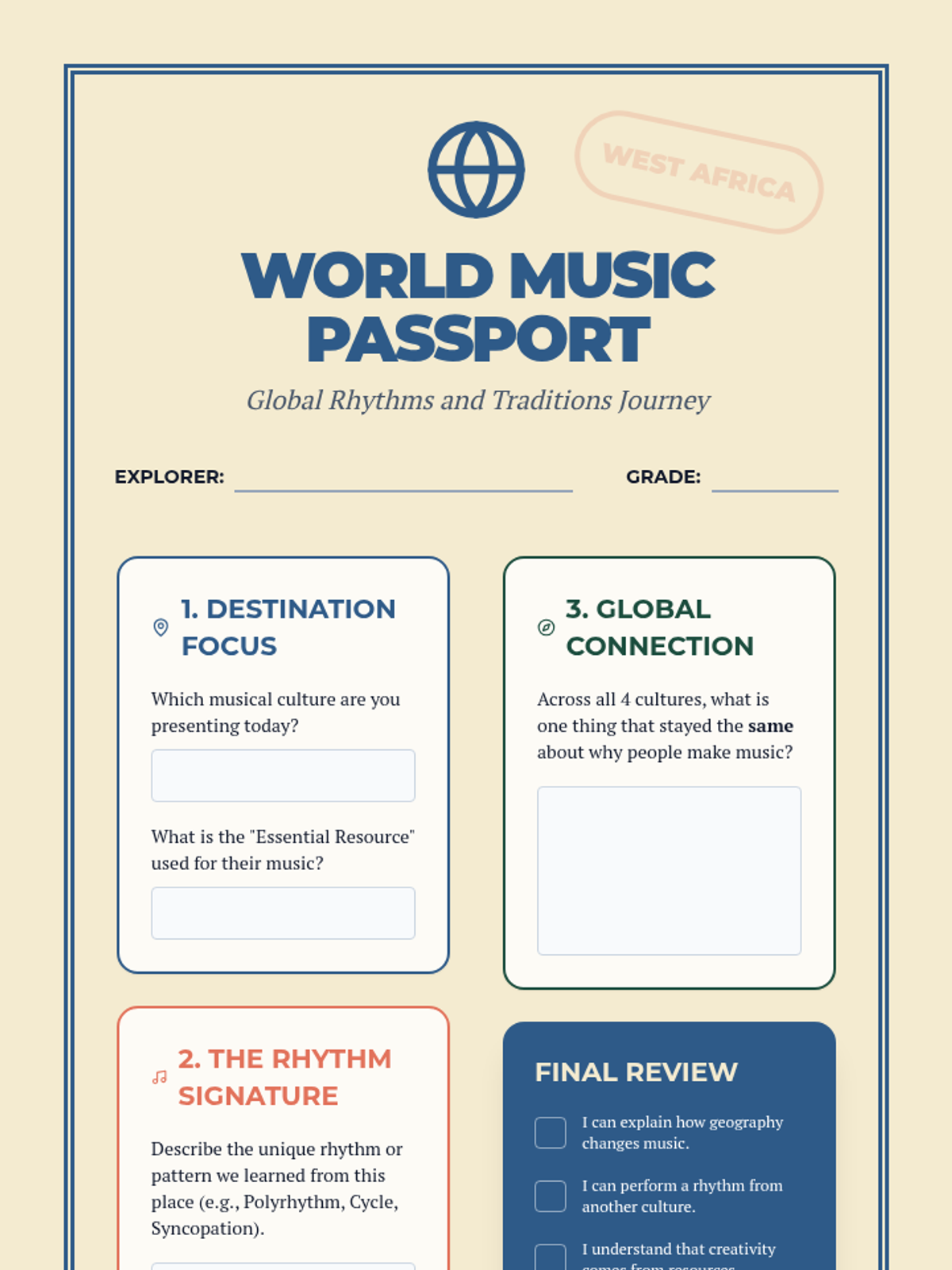
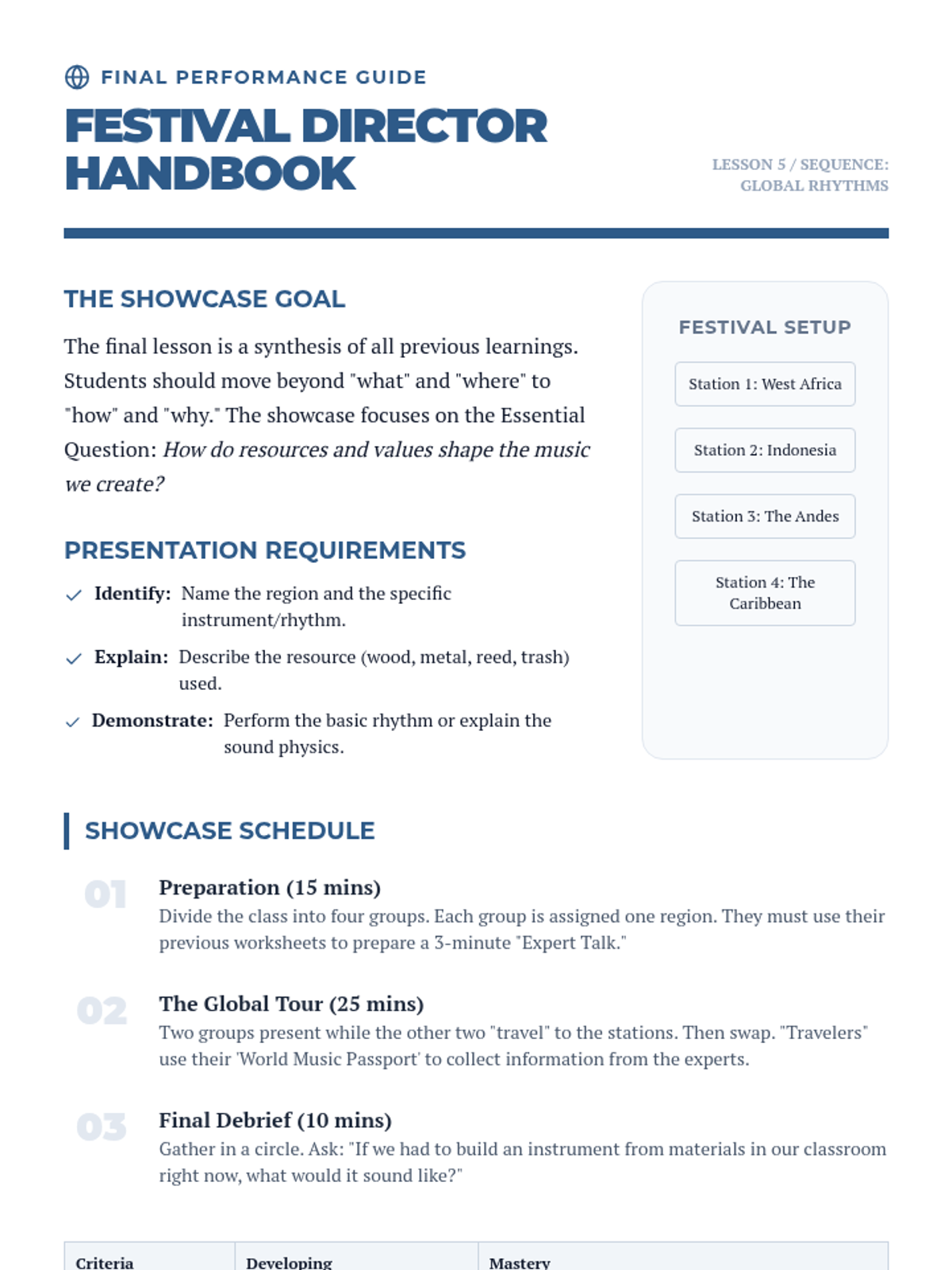
In this final lesson, small groups present on one of the regions studied, demonstrating a characteristic rhythm or explaining an instrument. The class synthesizes their learning by finding commonalities between the different cultures.
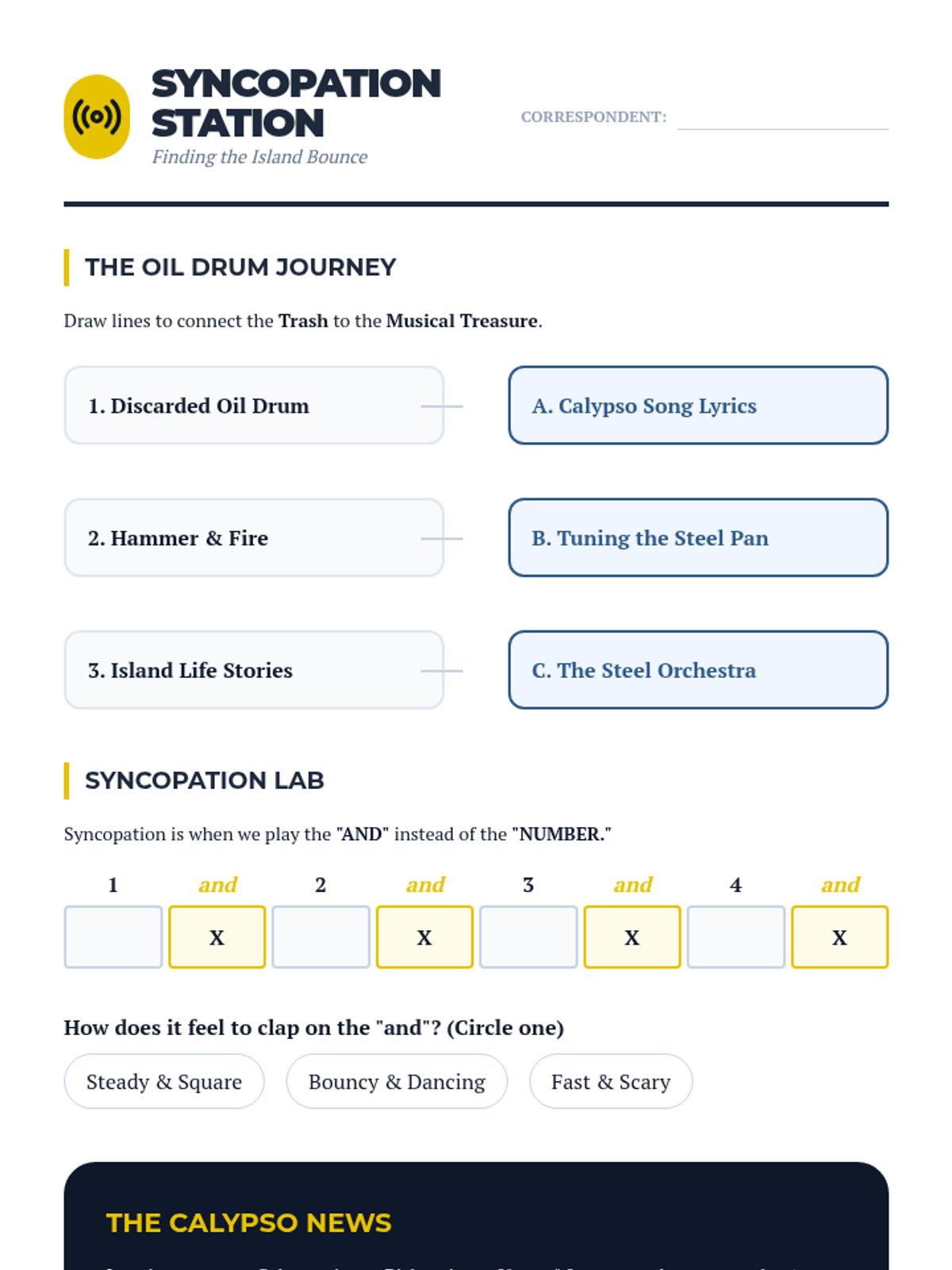
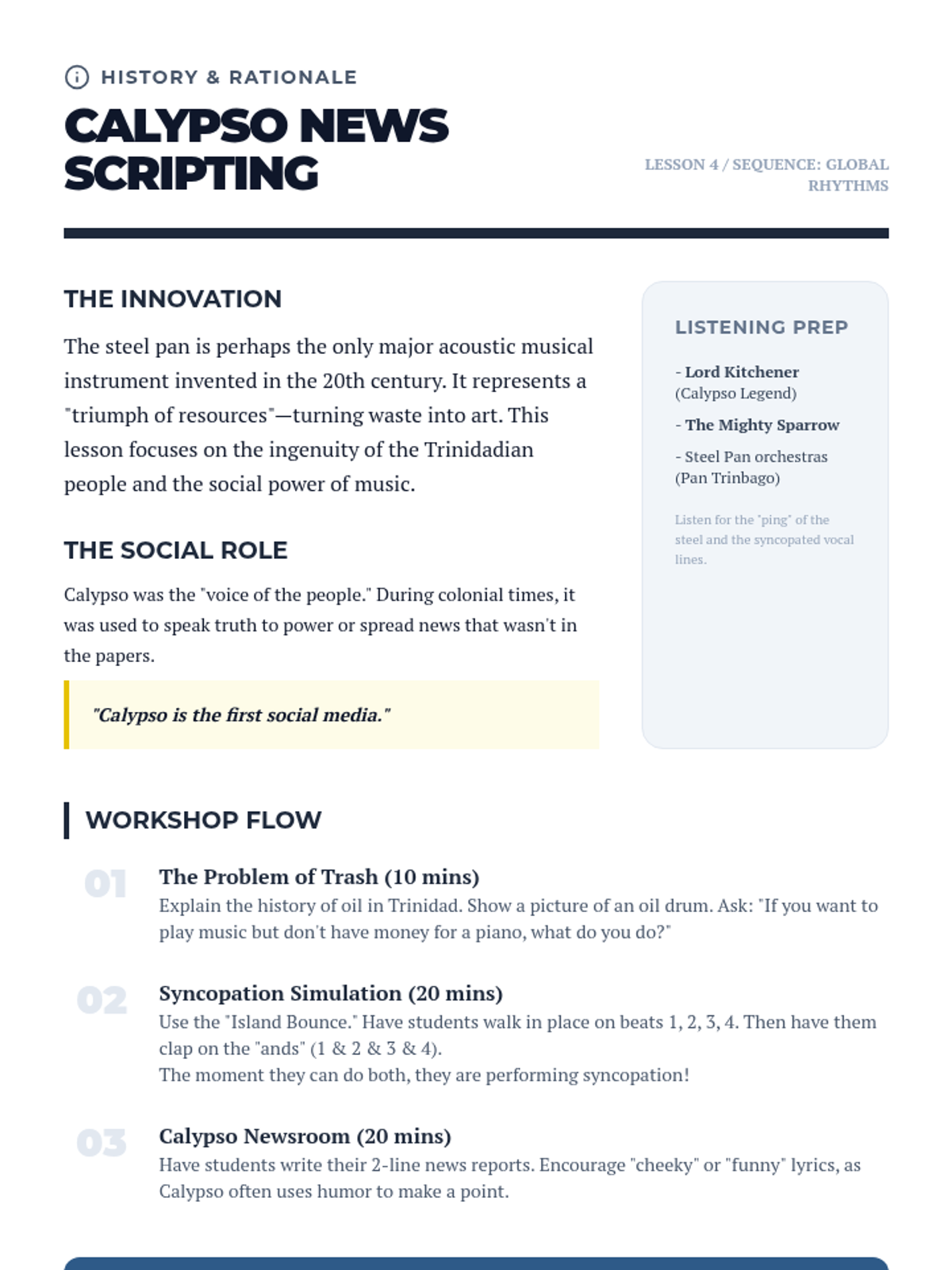
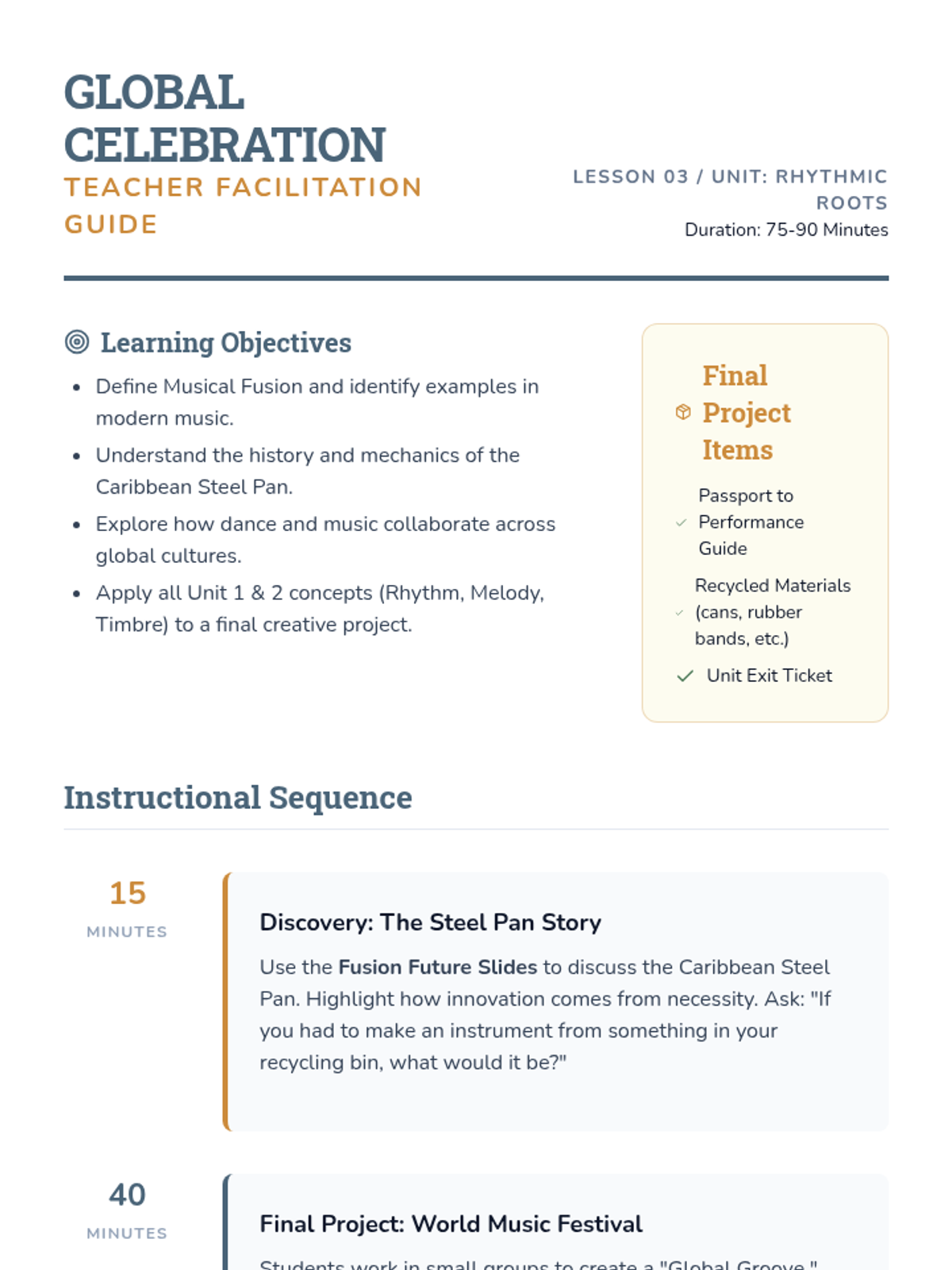
Students examine how discarded oil drums were transformed into the Steel Pan in Trinidad and Tobago, focusing on Calypso rhythms and resourcefulness.
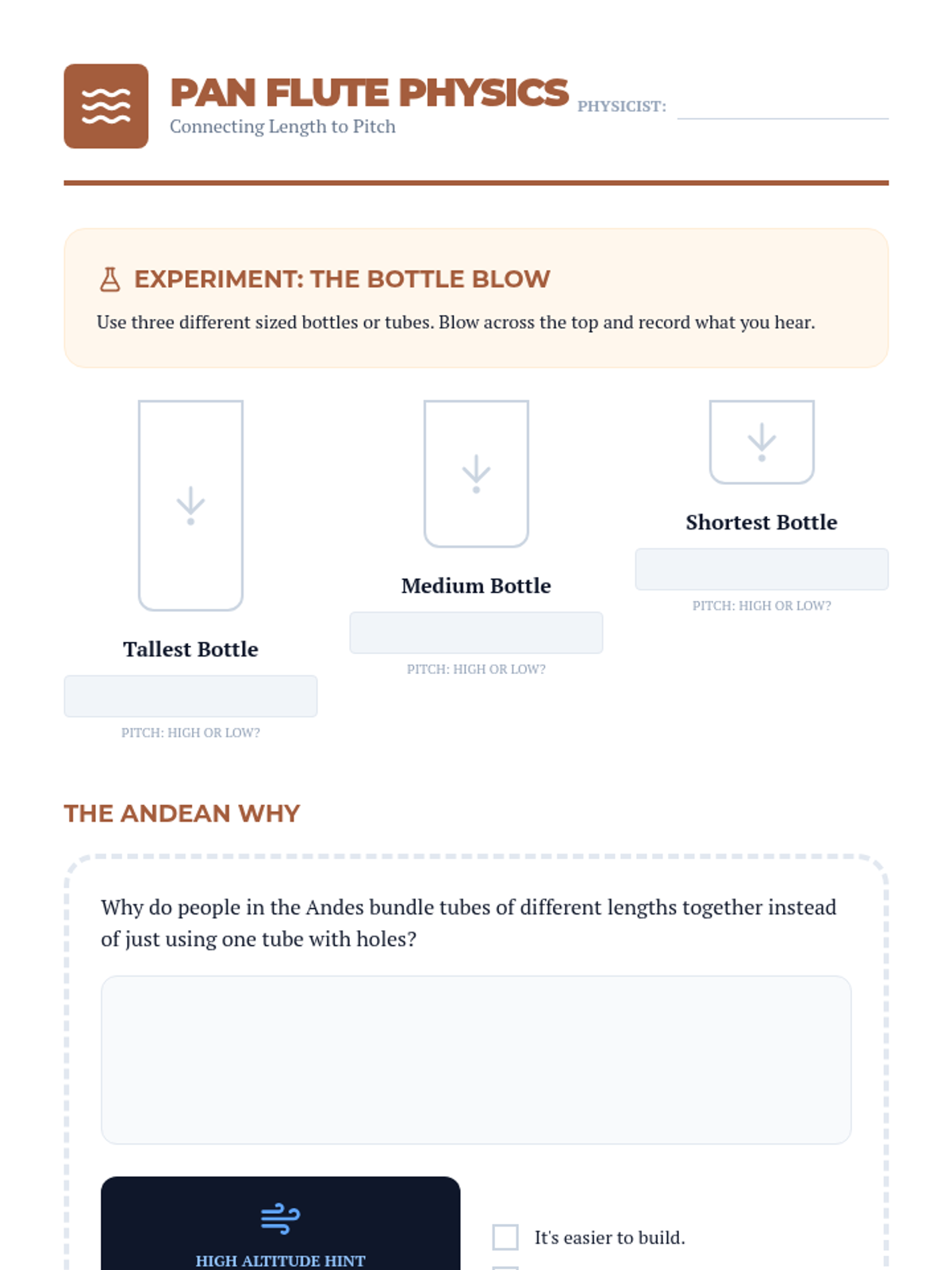
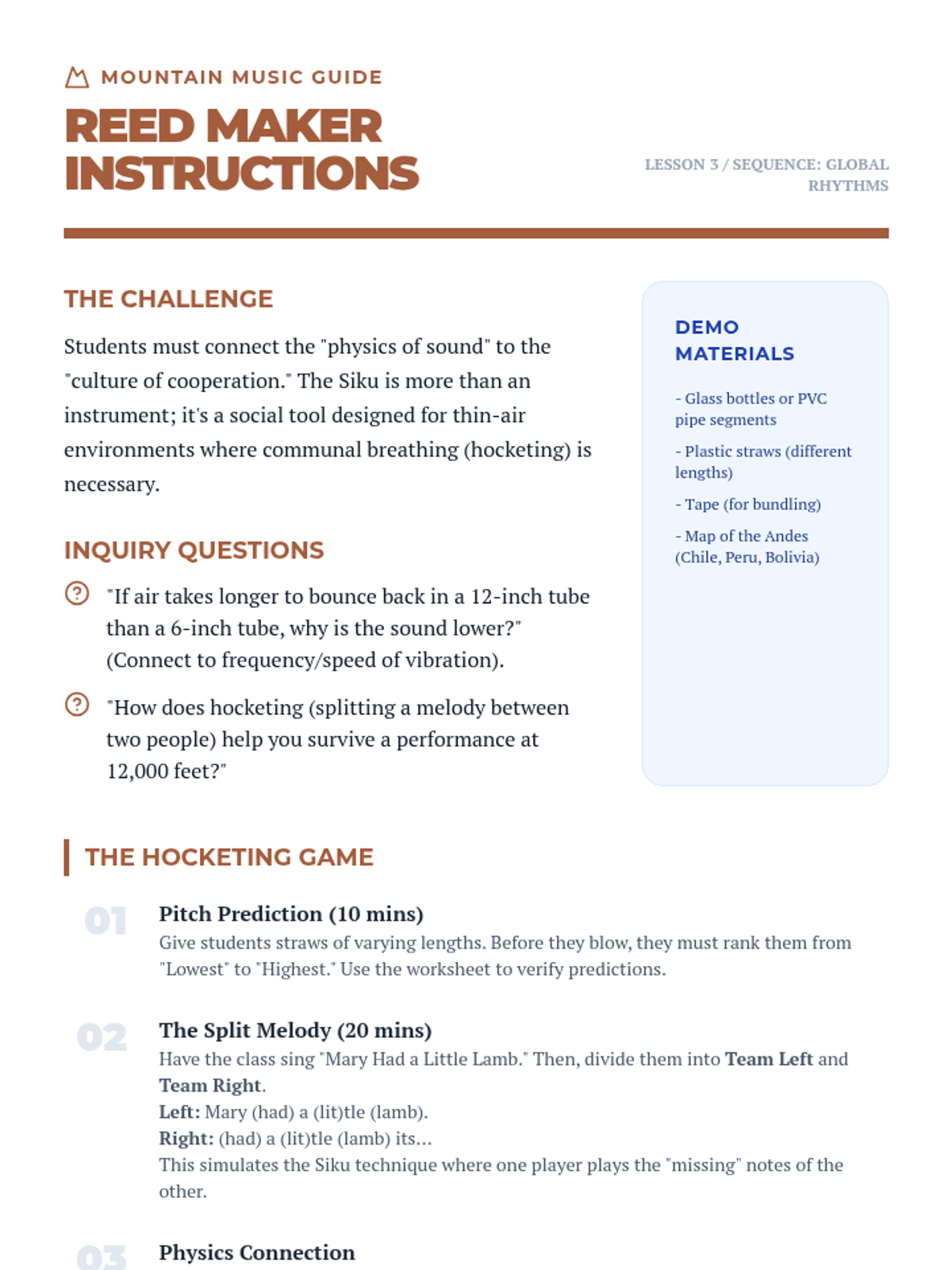
Students investigate Andean wind instruments (pan flutes), connecting the geography of high mountains to instrument materials and the physics of pitch.
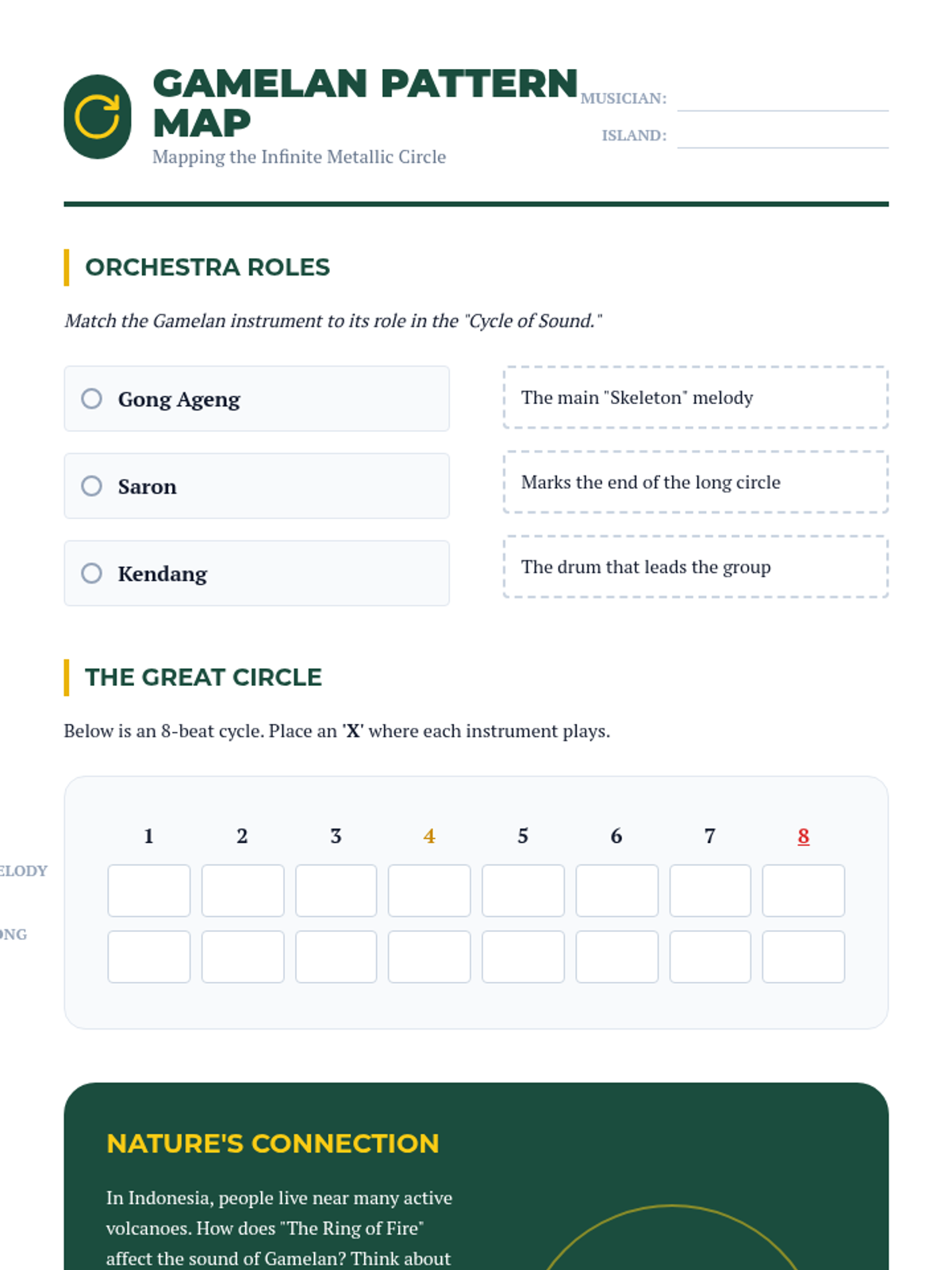
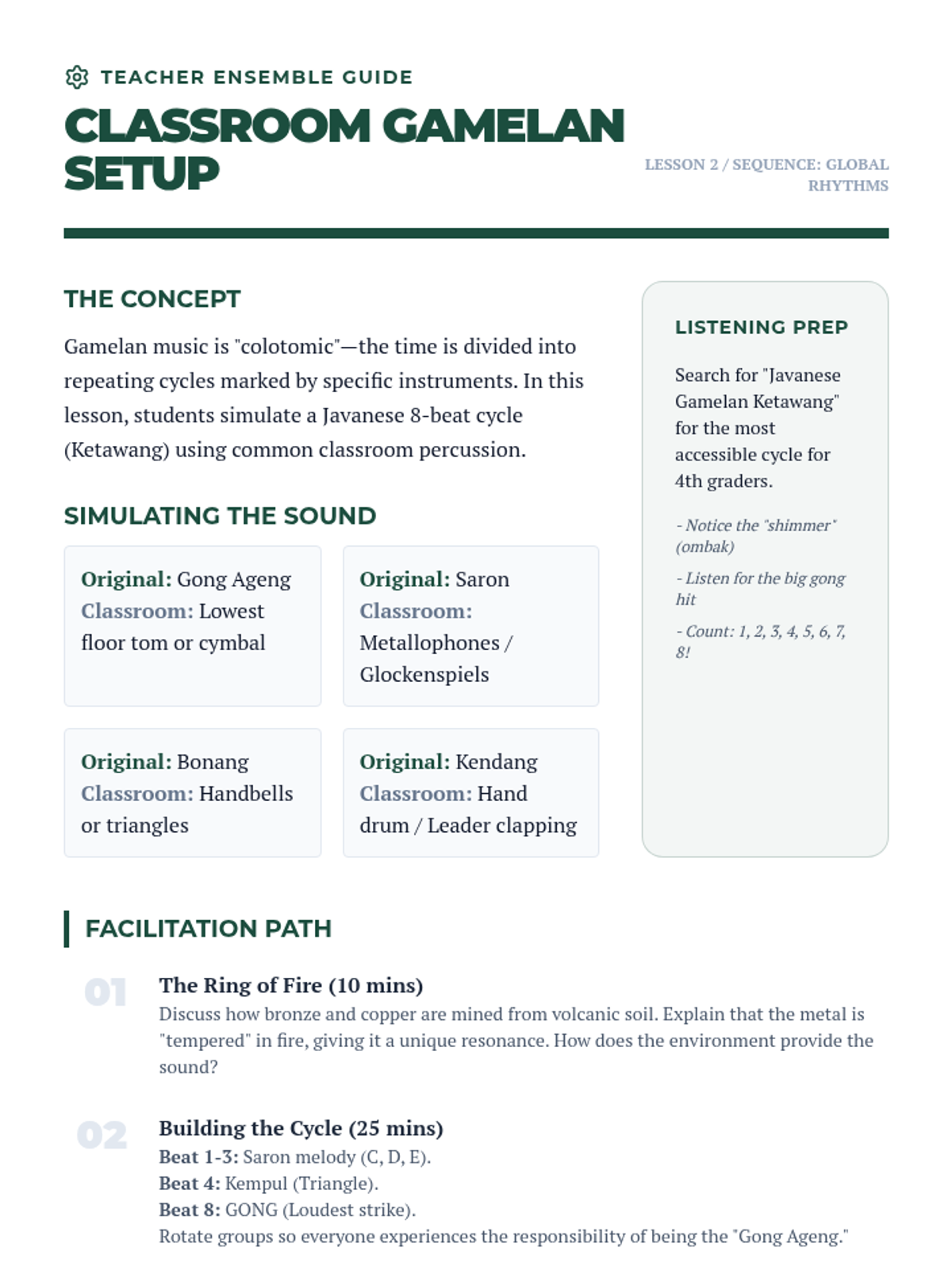
Students are introduced to the metallic percussion orchestras of Indonesia, focusing on cyclic time and simulated structures using classroom instruments.
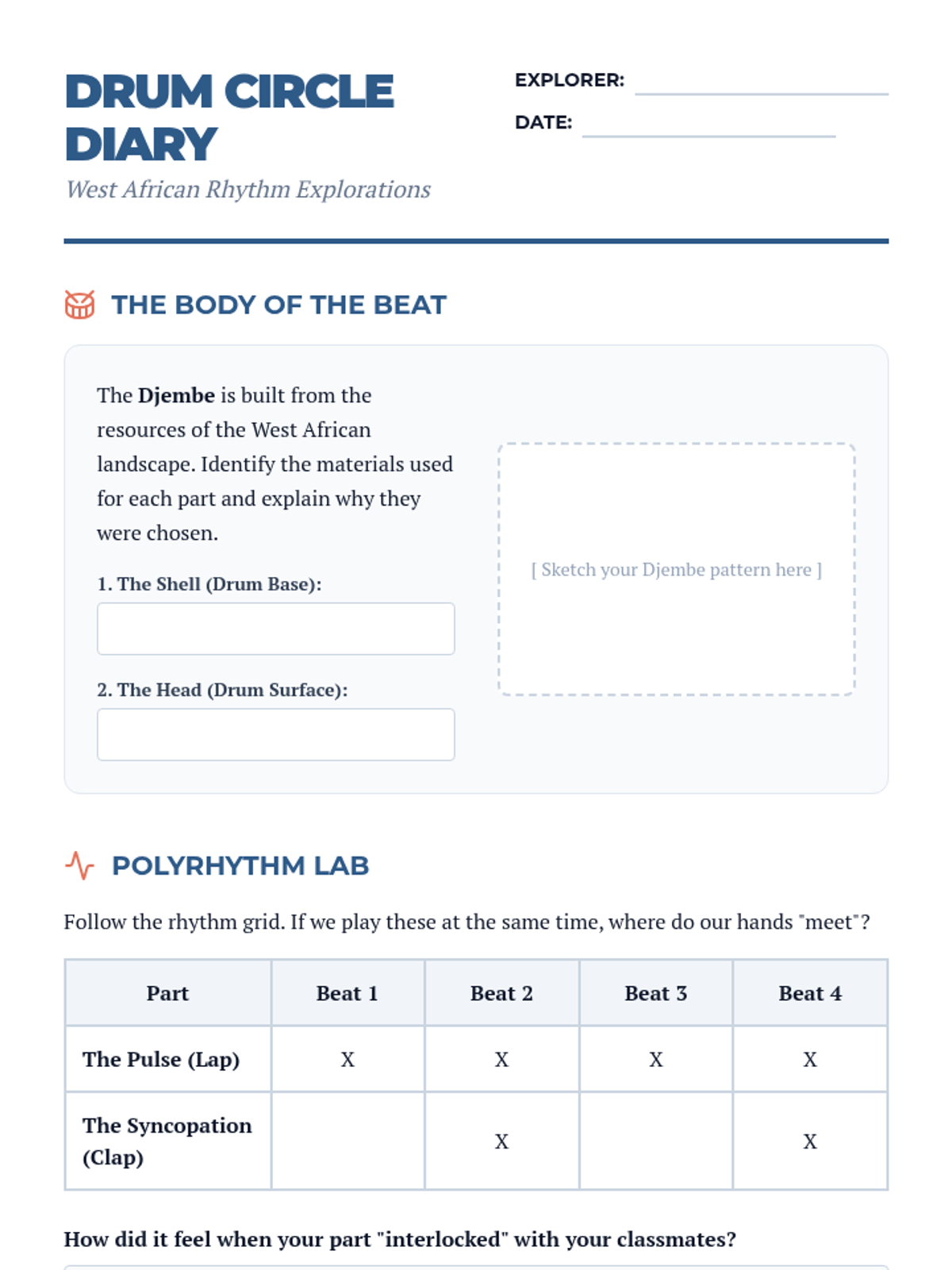
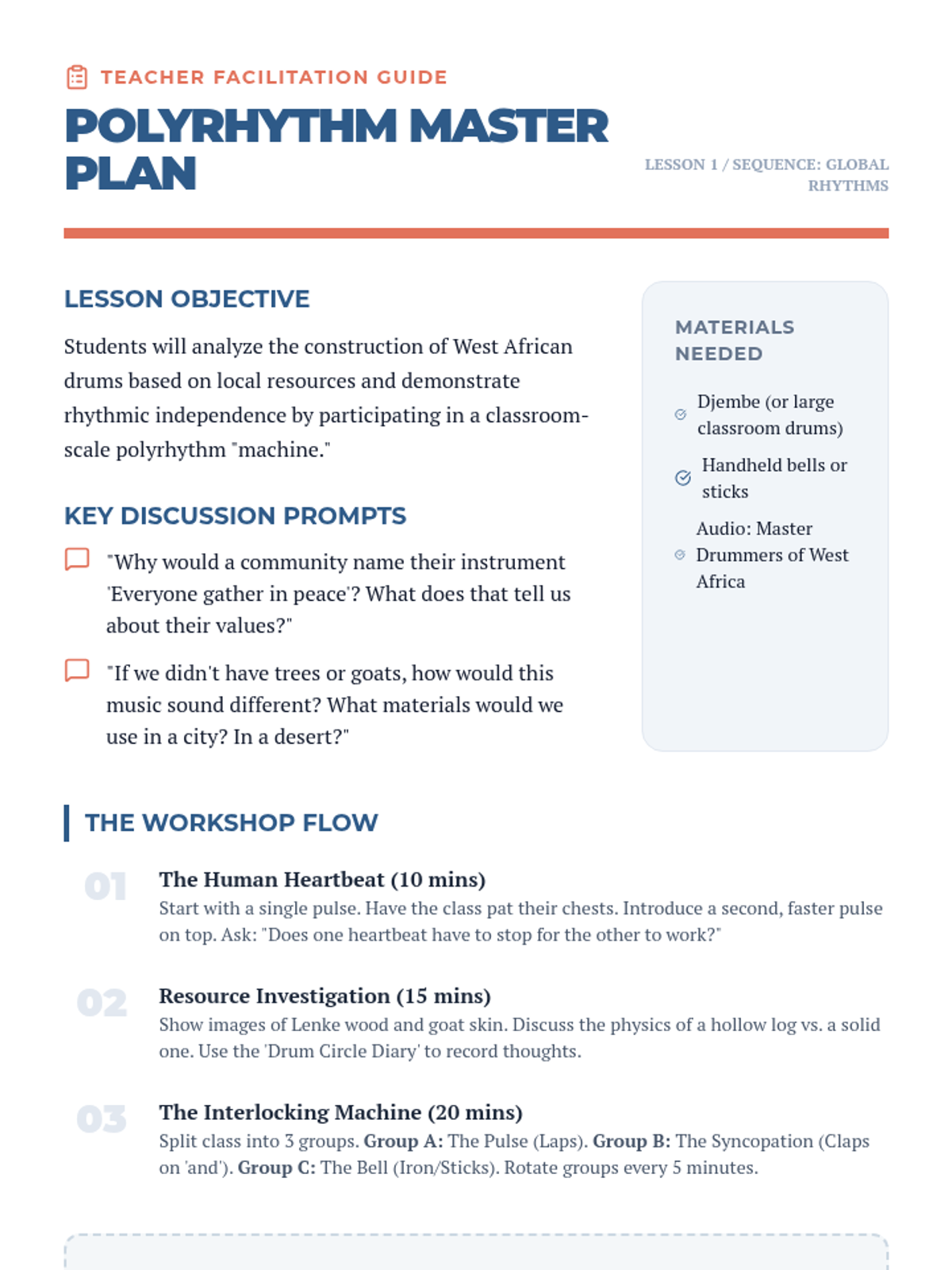
Students explore the concept of polyrhythm through West African drumming traditions, emphasizing communal music-making and interlocking patterns.
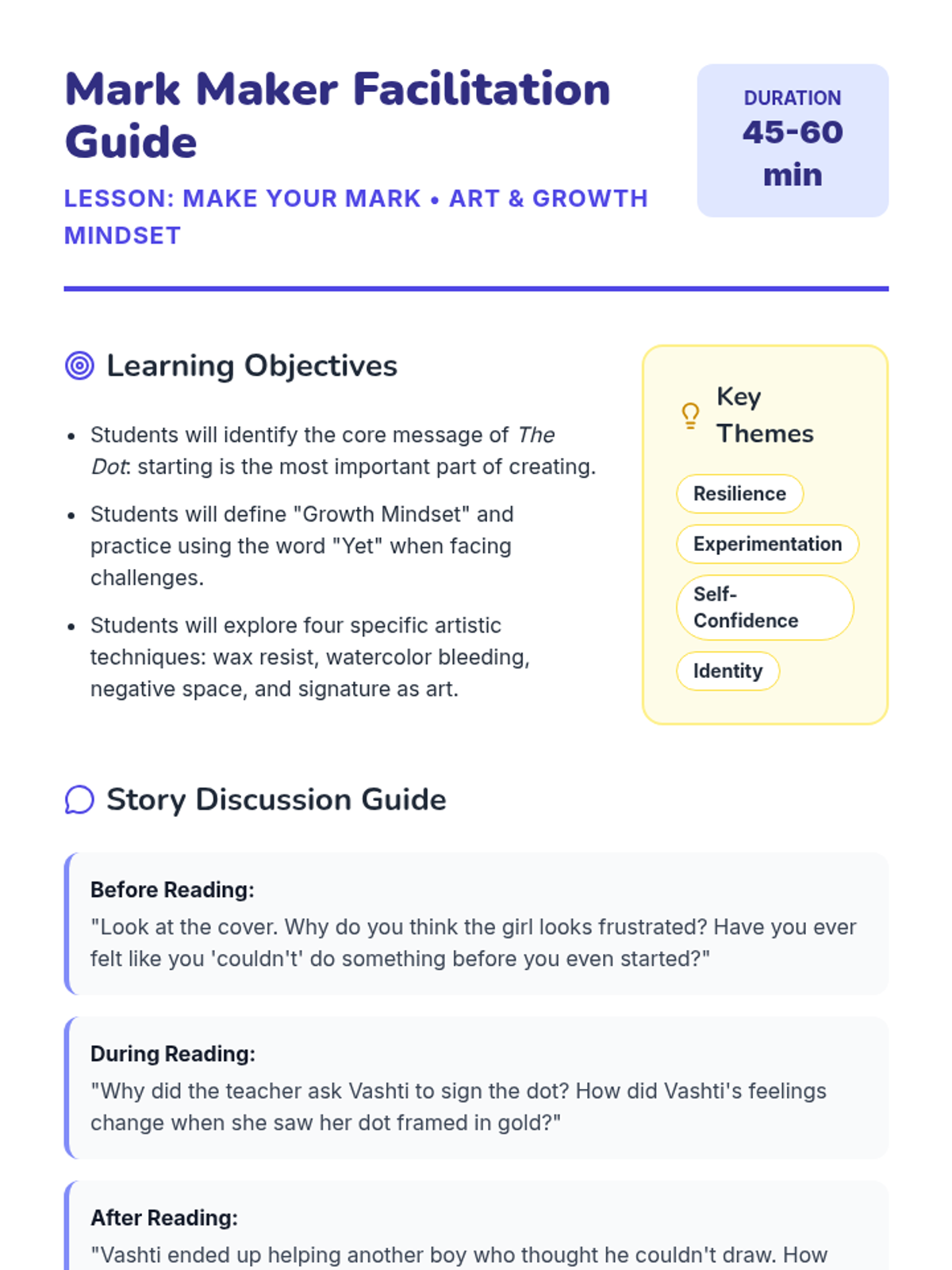
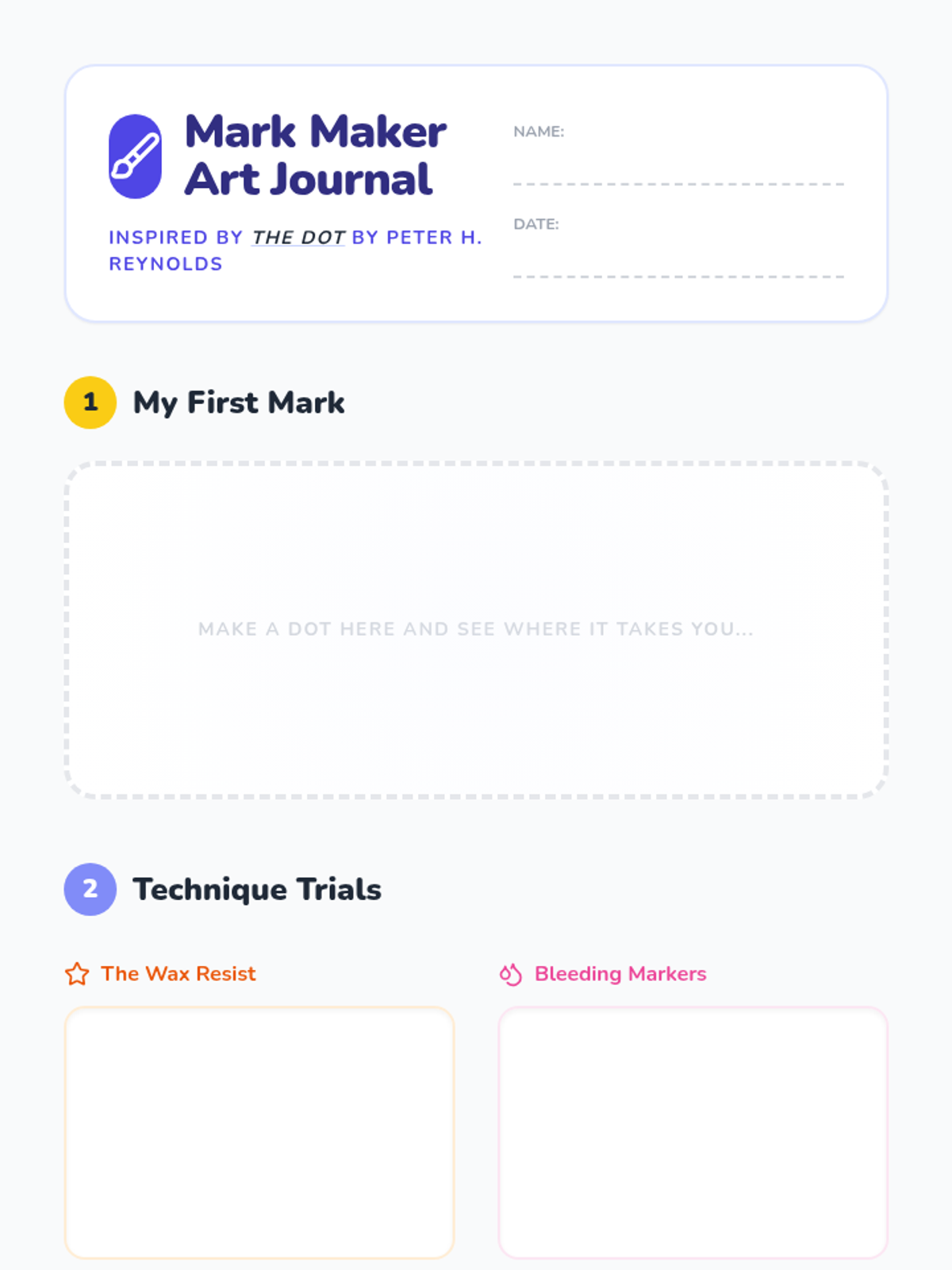
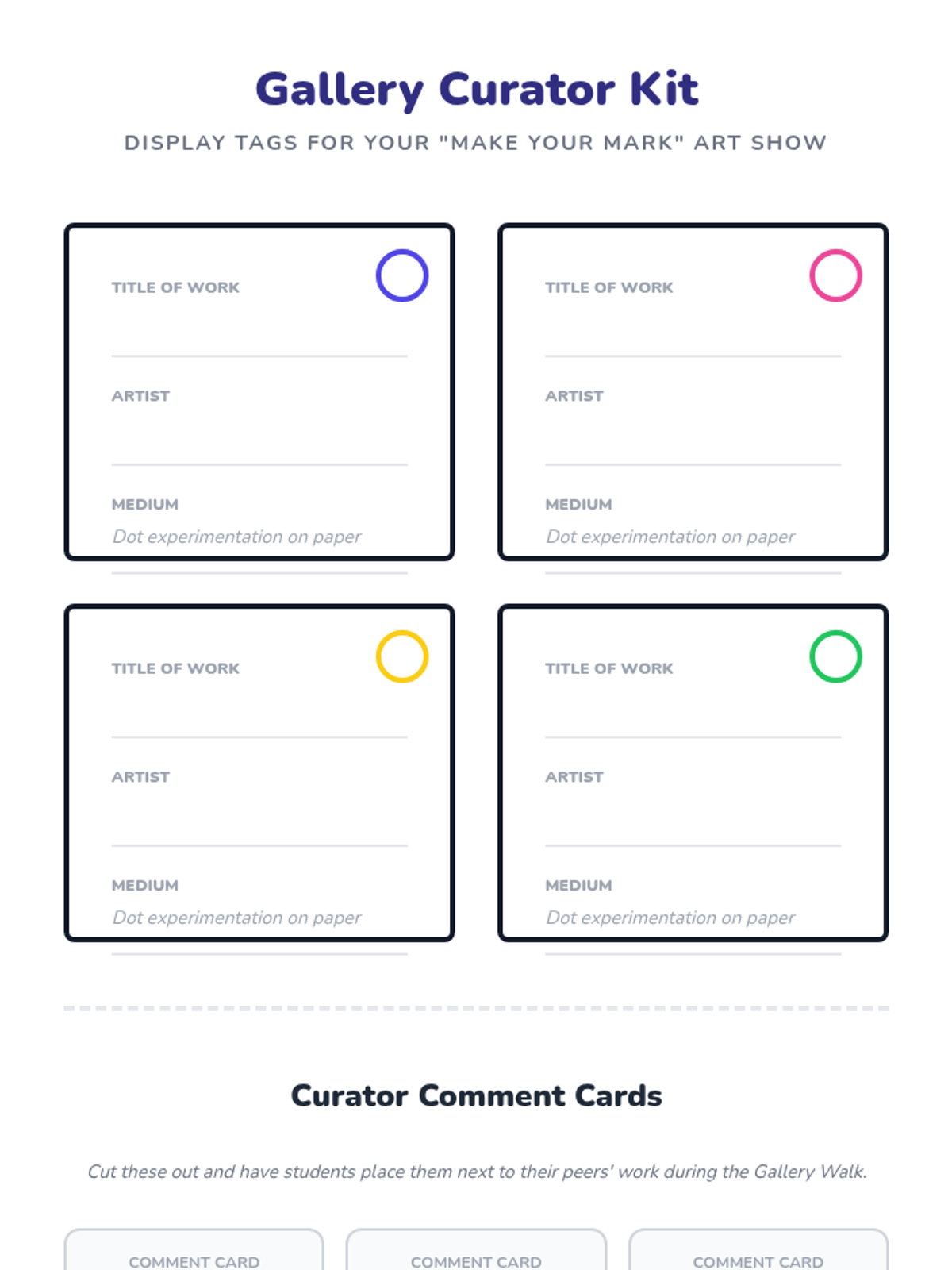
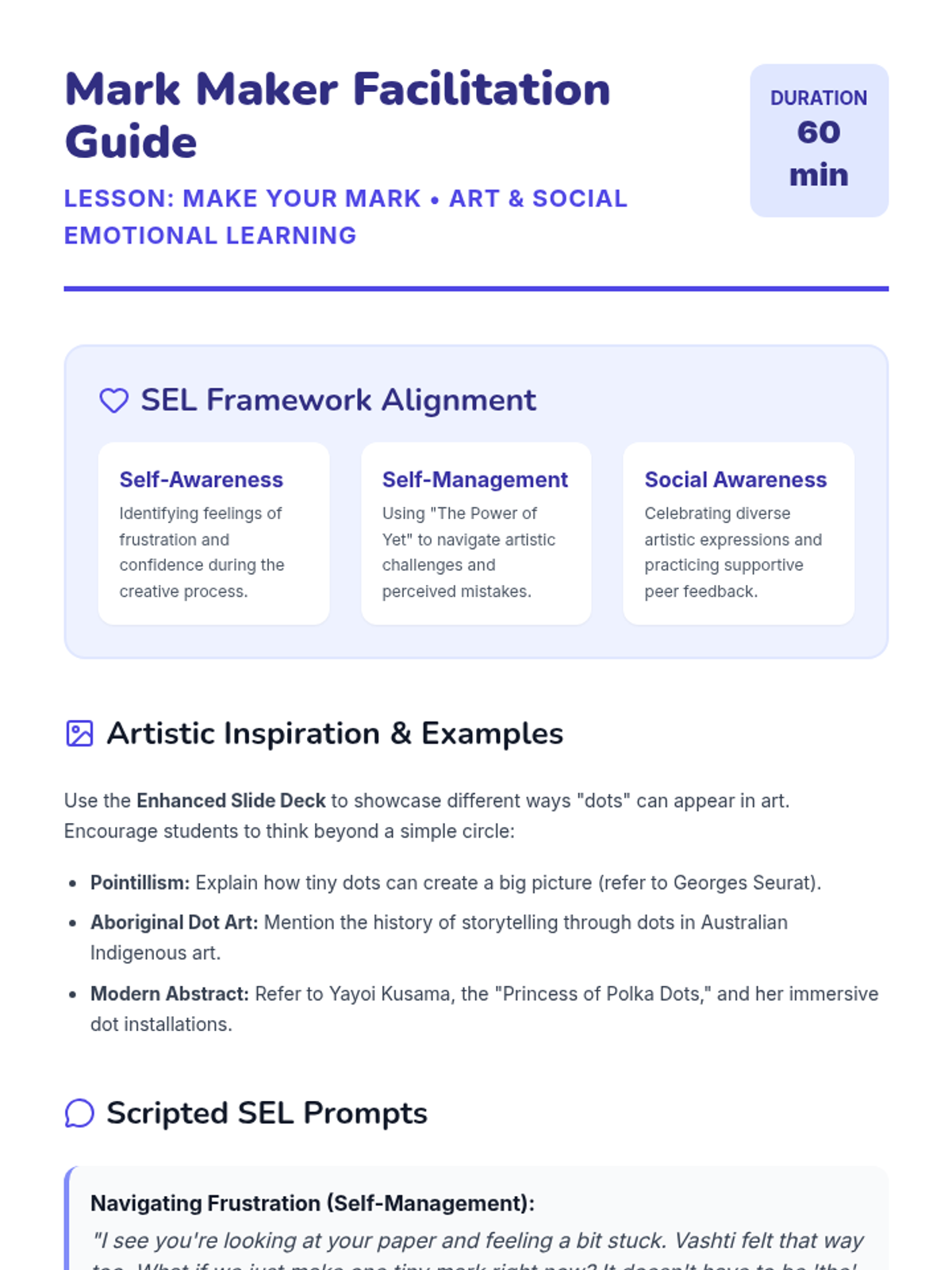
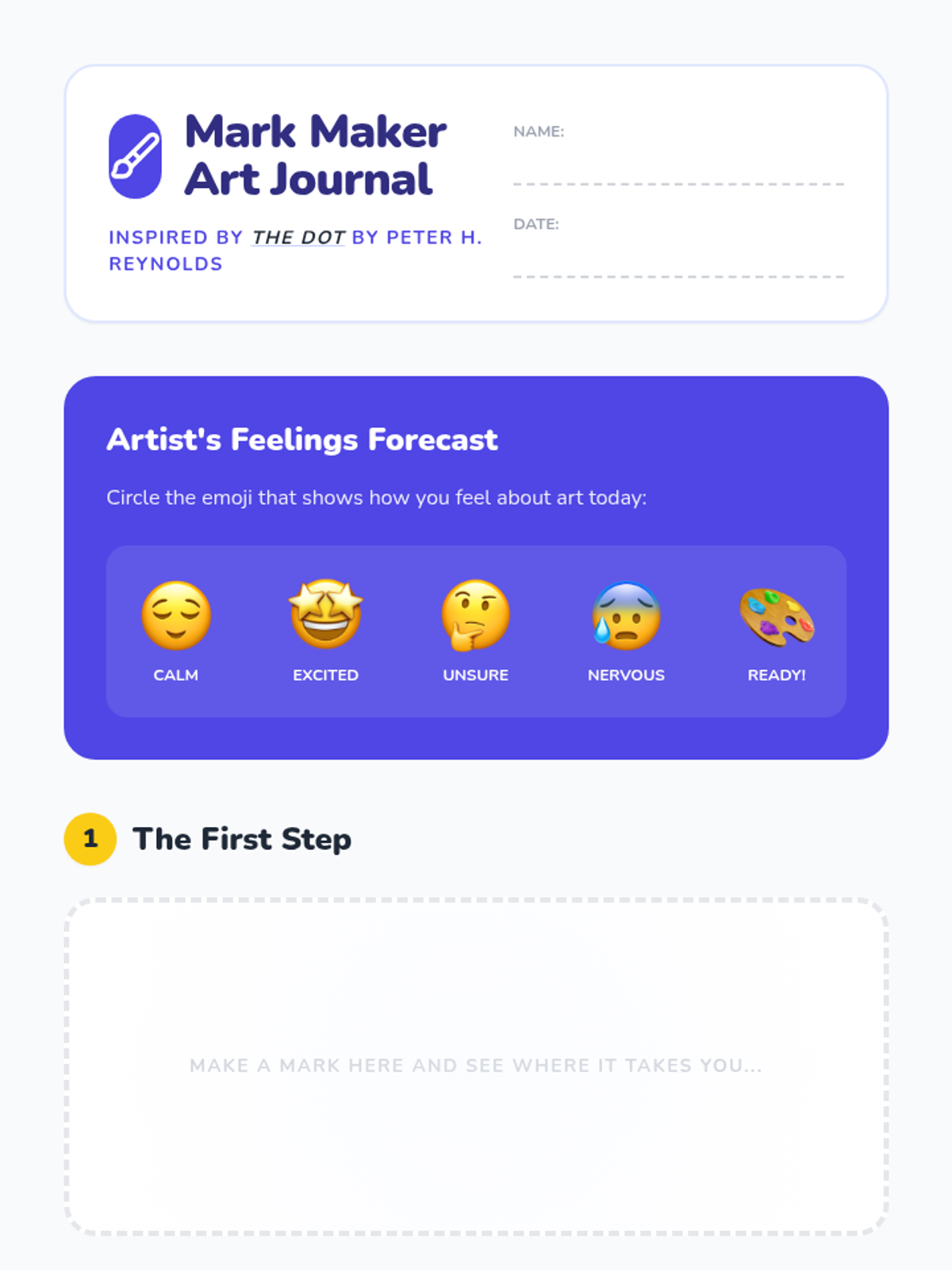
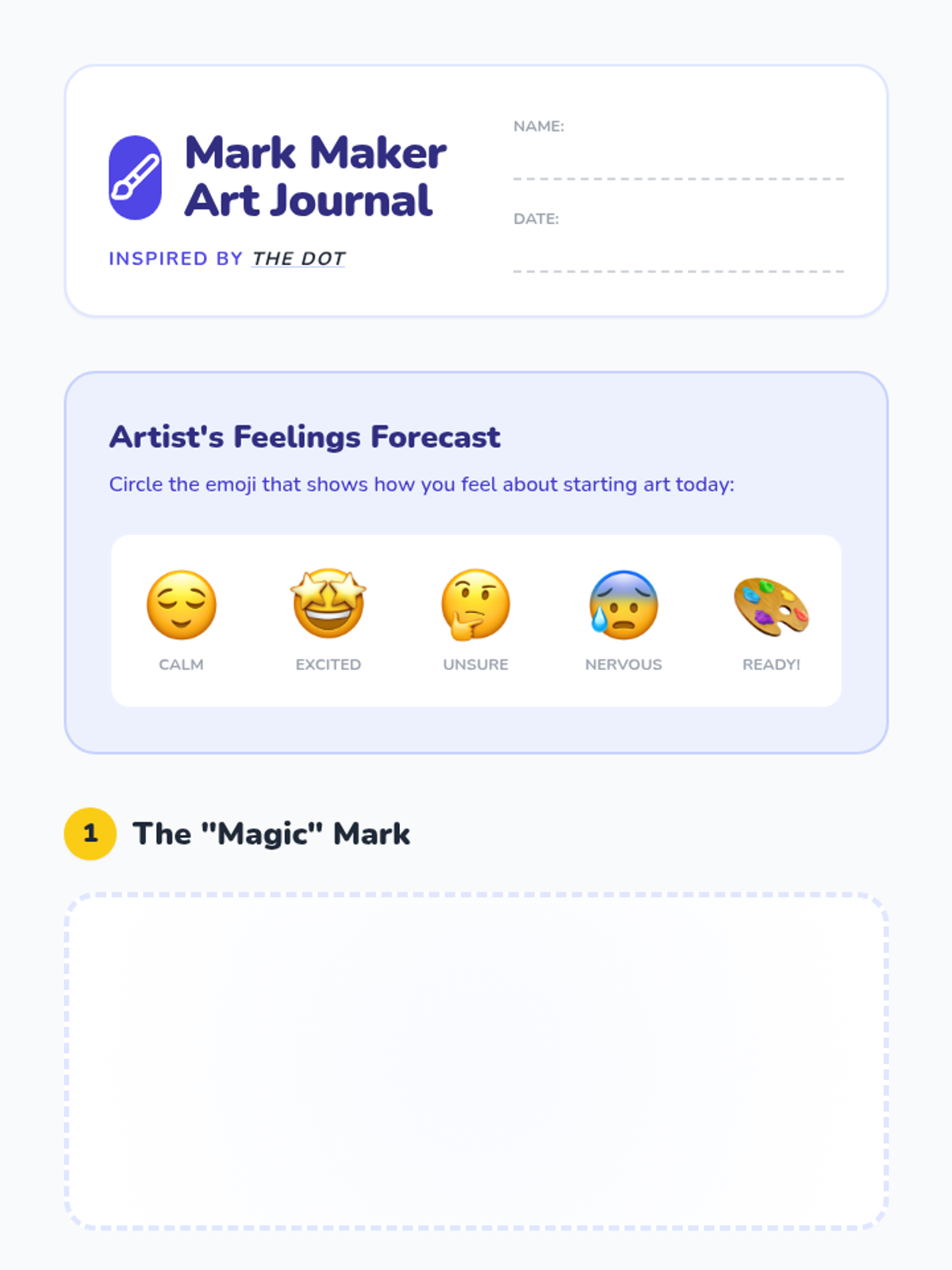
A creative art lesson inspired by 'The Dot' by Peter H. Reynolds, focusing on growth mindset and artistic experimentation. Students will learn that 'making your mark' starts with just one small step.
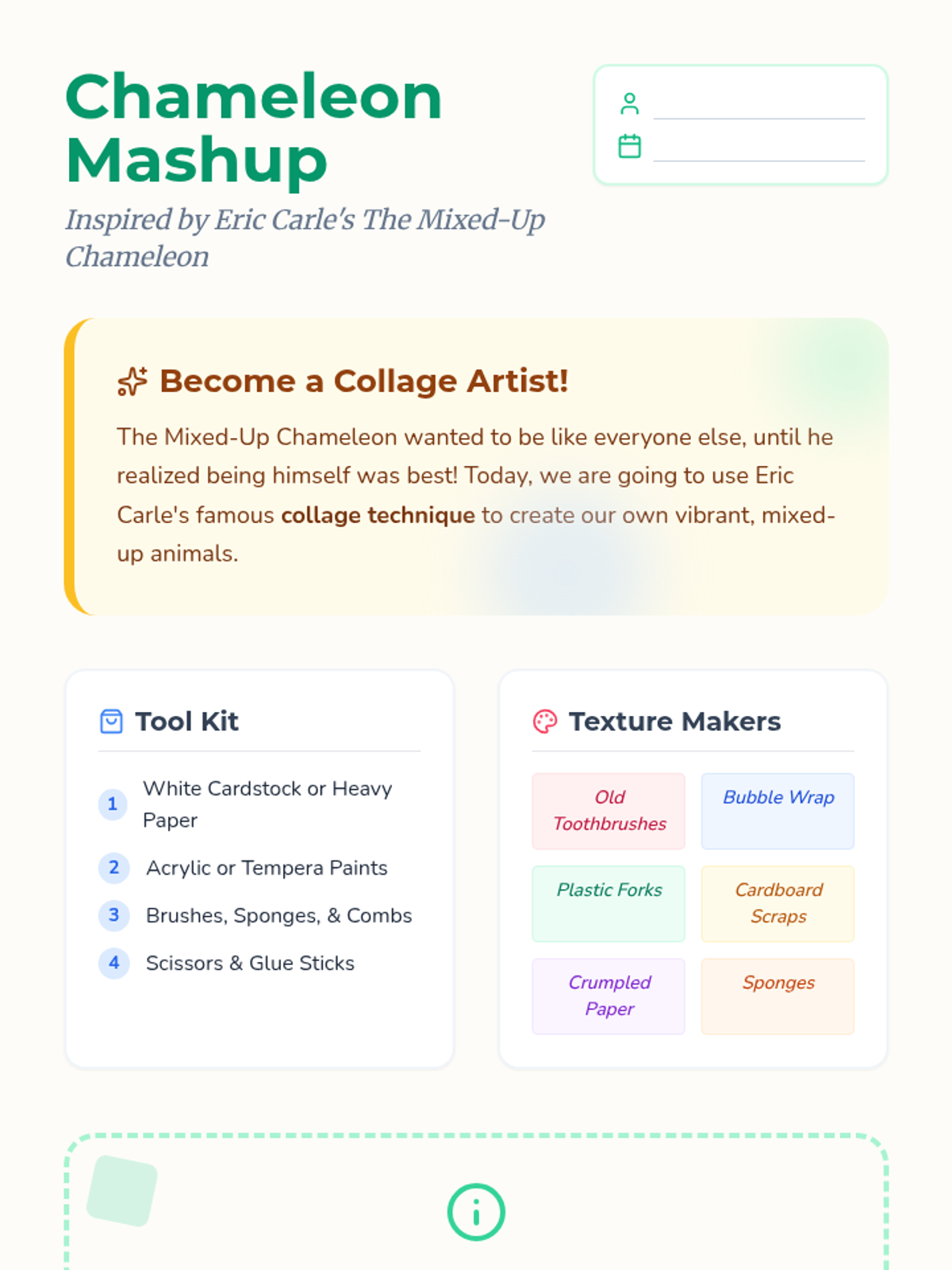
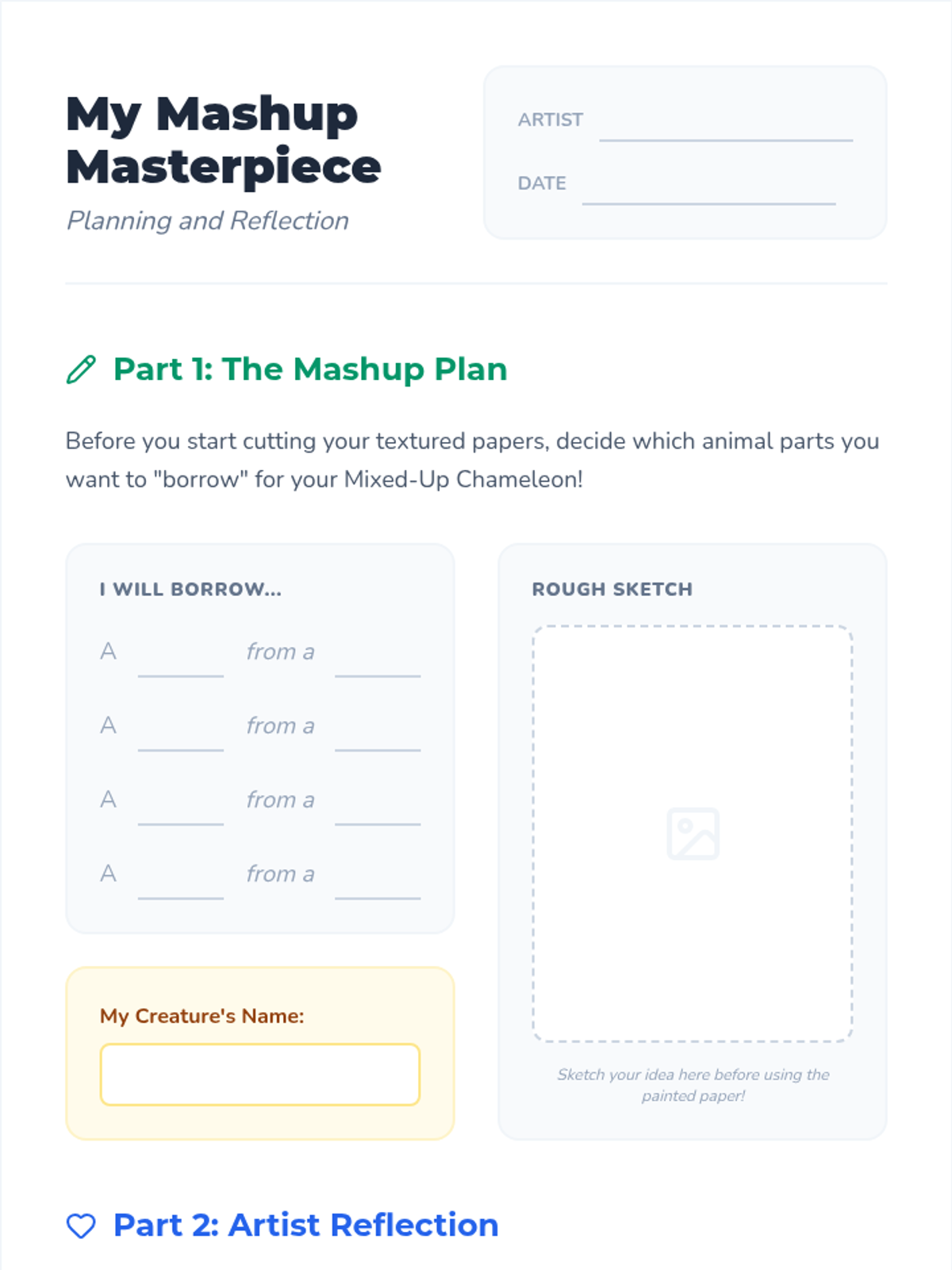
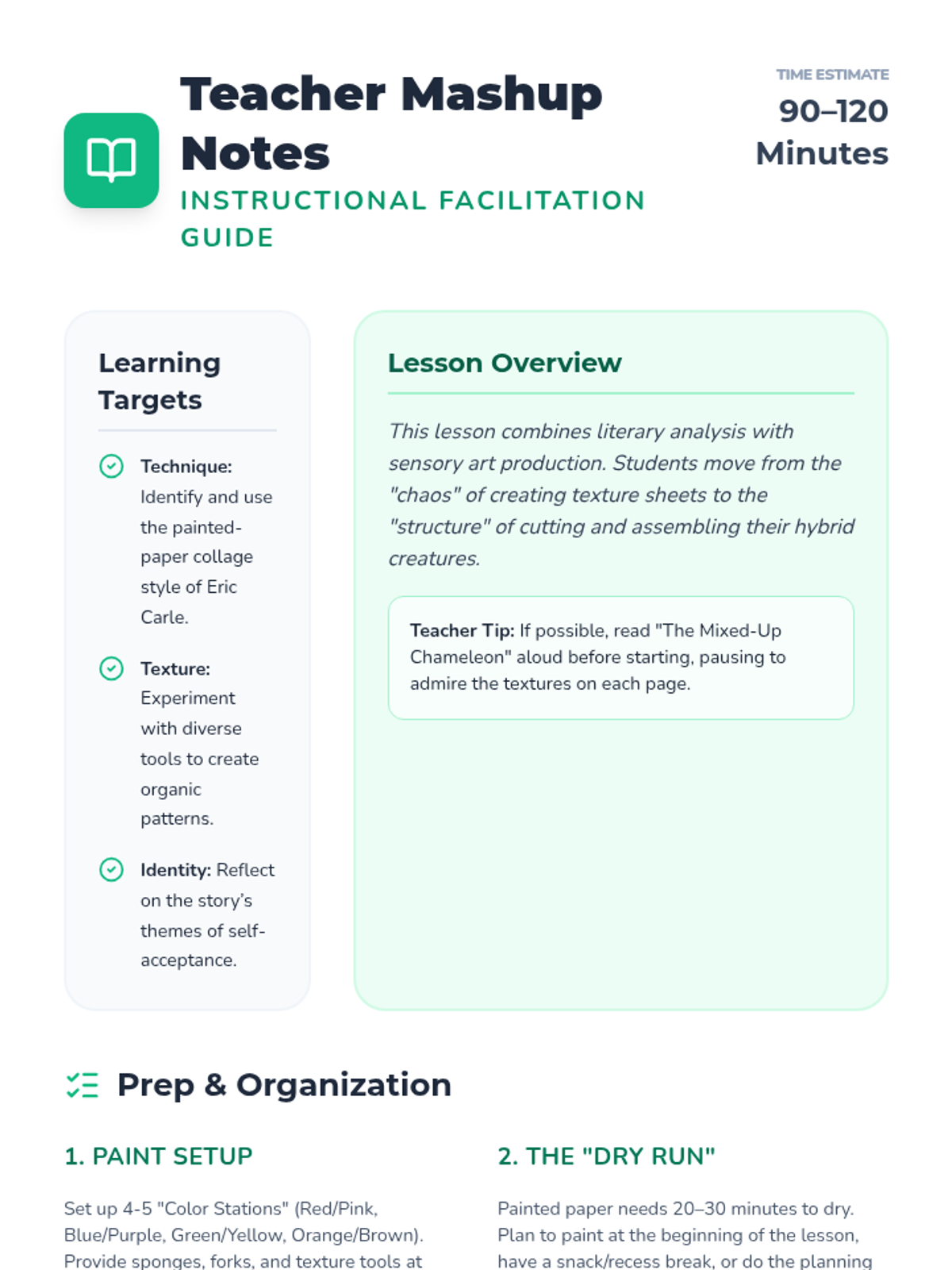
A creative art lesson where students explore identity and diversity by creating their own mixed-up animals inspired by Eric Carle's colorful collage style. Students will learn the 'painted paper' technique to create vibrant textures.
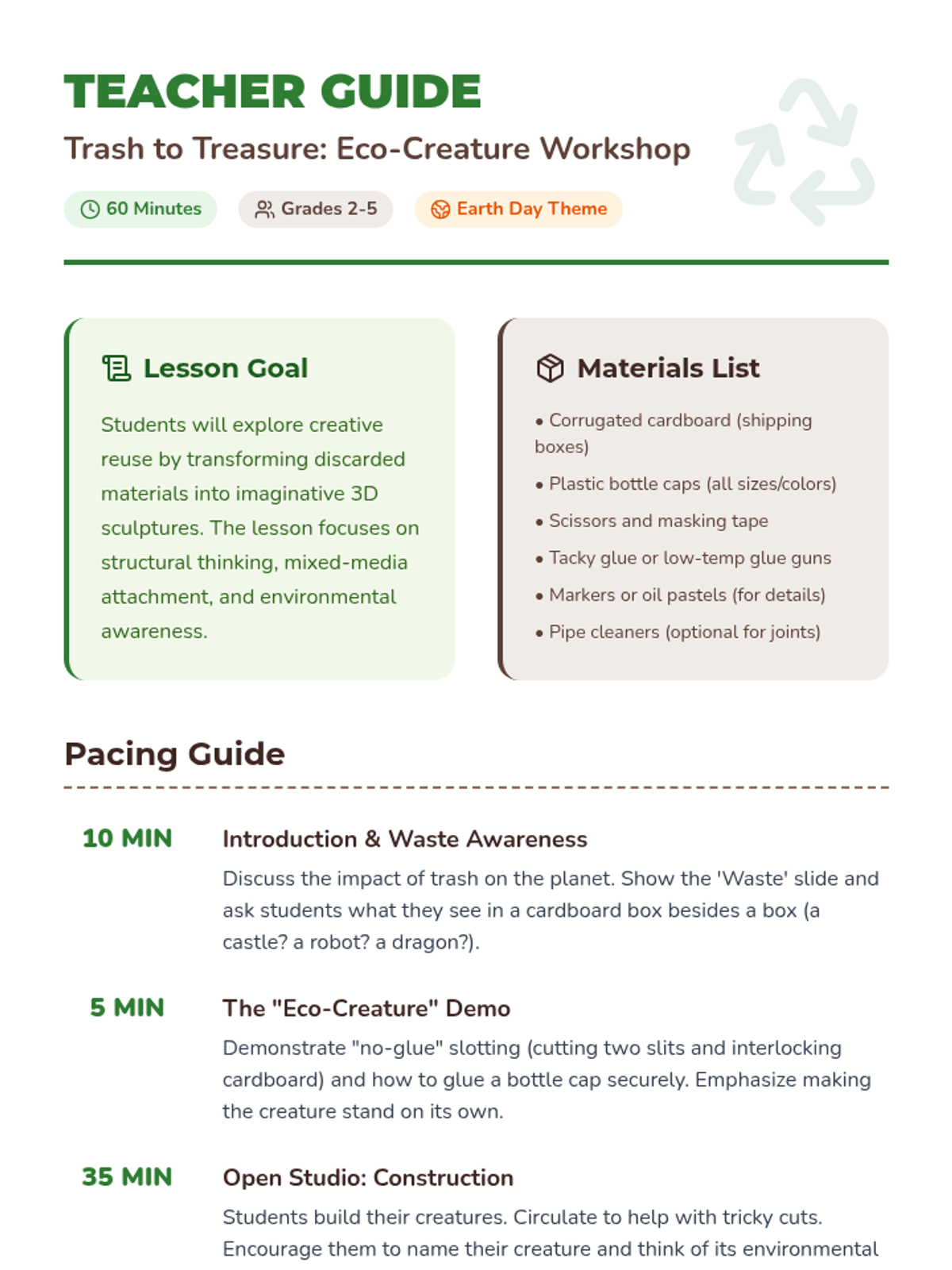
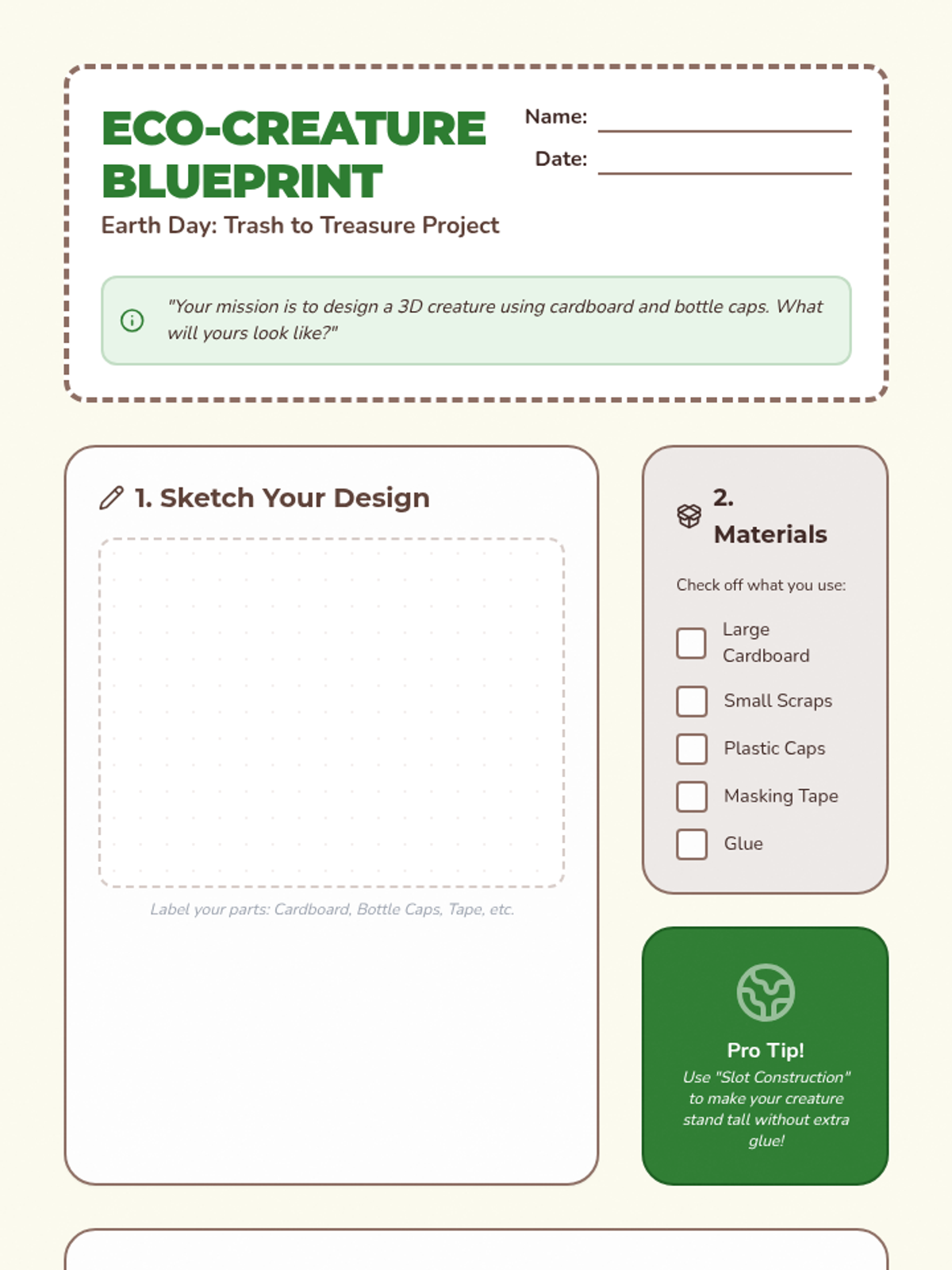
In this 60-minute art lesson, students transform everyday waste—cardboard and bottle caps—into imaginative 'Eco-Creatures,' learning about the importance of recycling and creative reuse for Earth Day.
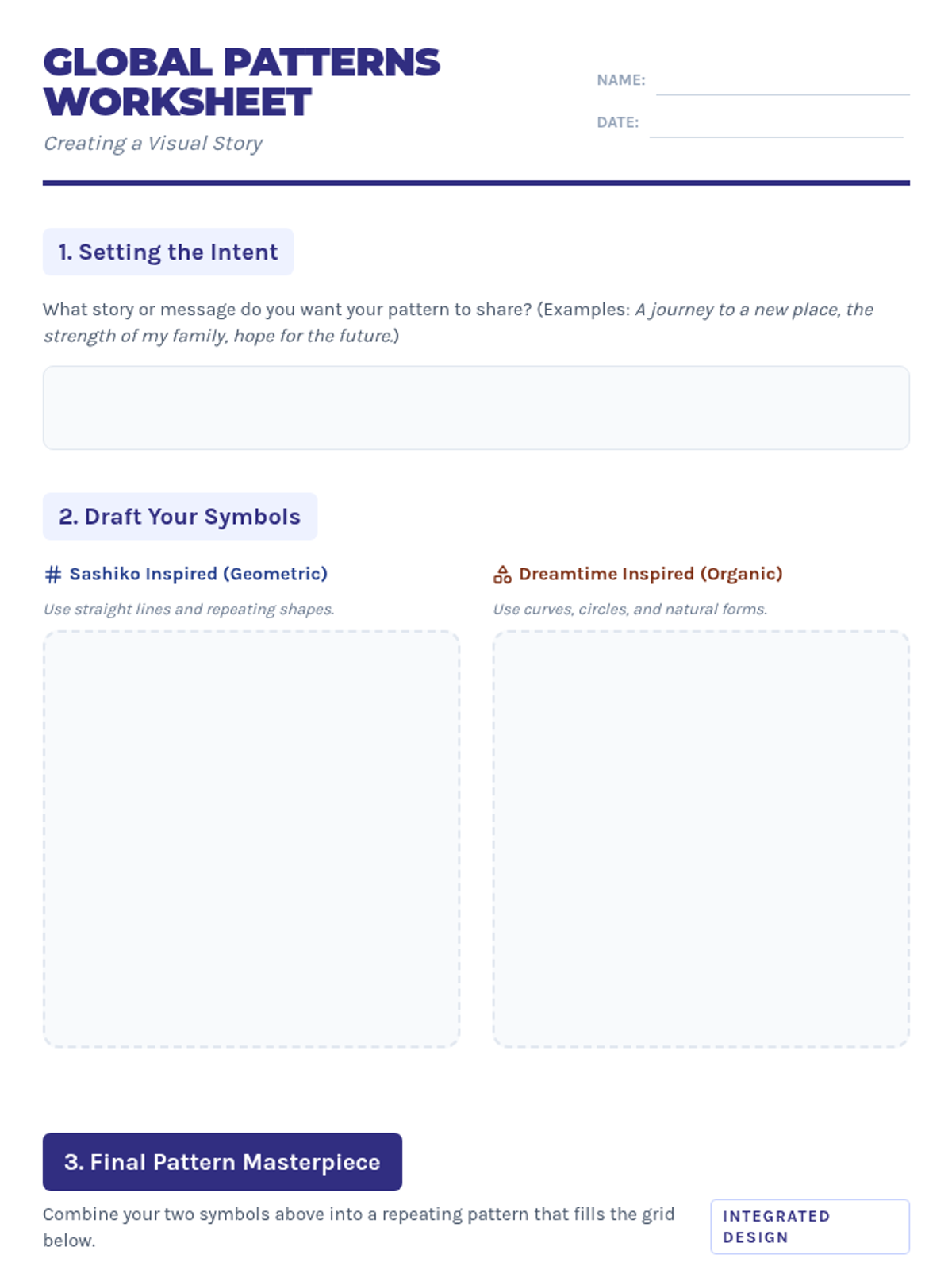
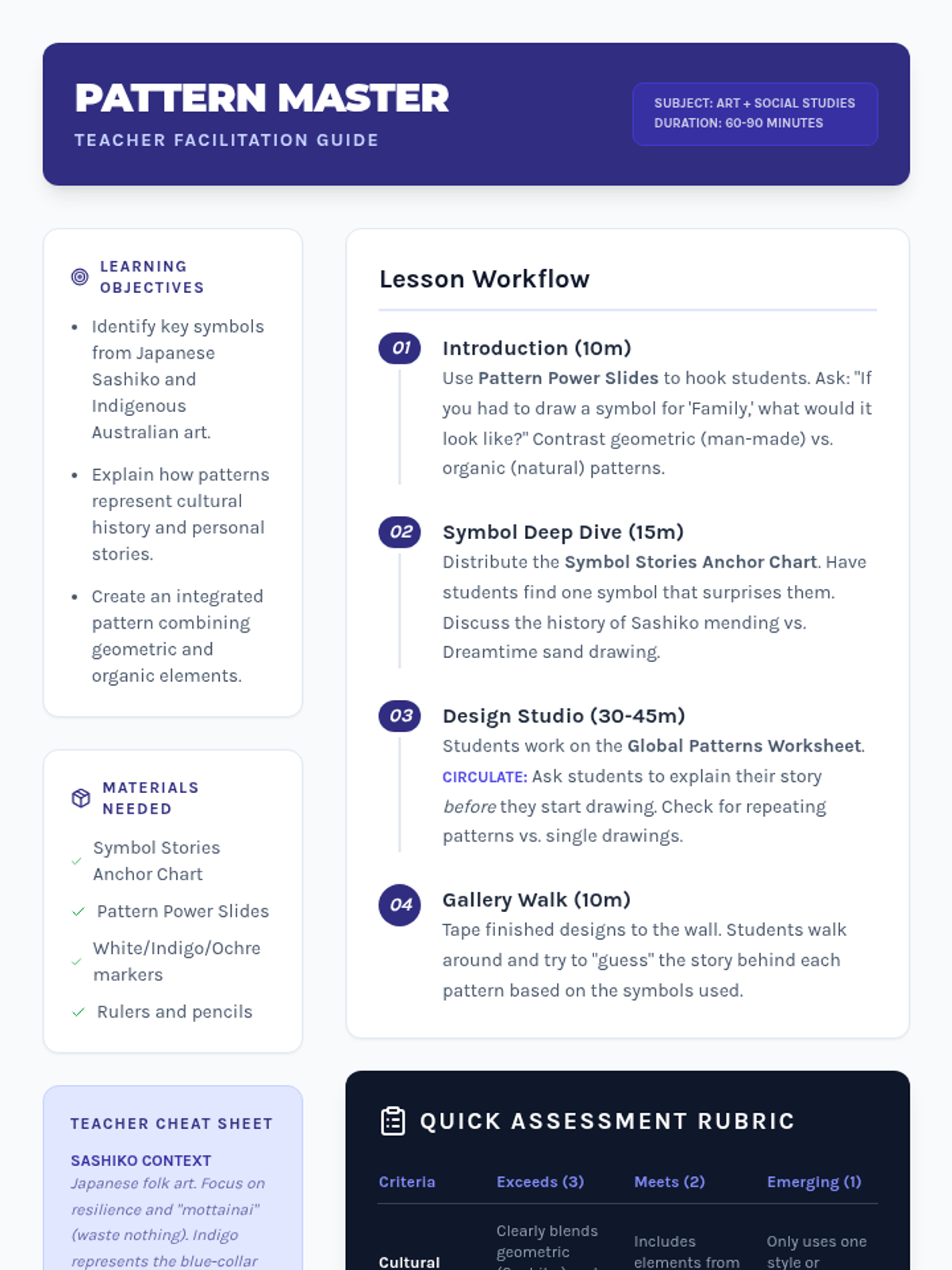
A cross-curricular art and social studies lesson where students explore the history and symbolism of Japanese Sashiko and Indigenous Australian Dreamtime art to create their own meaningful patterns.
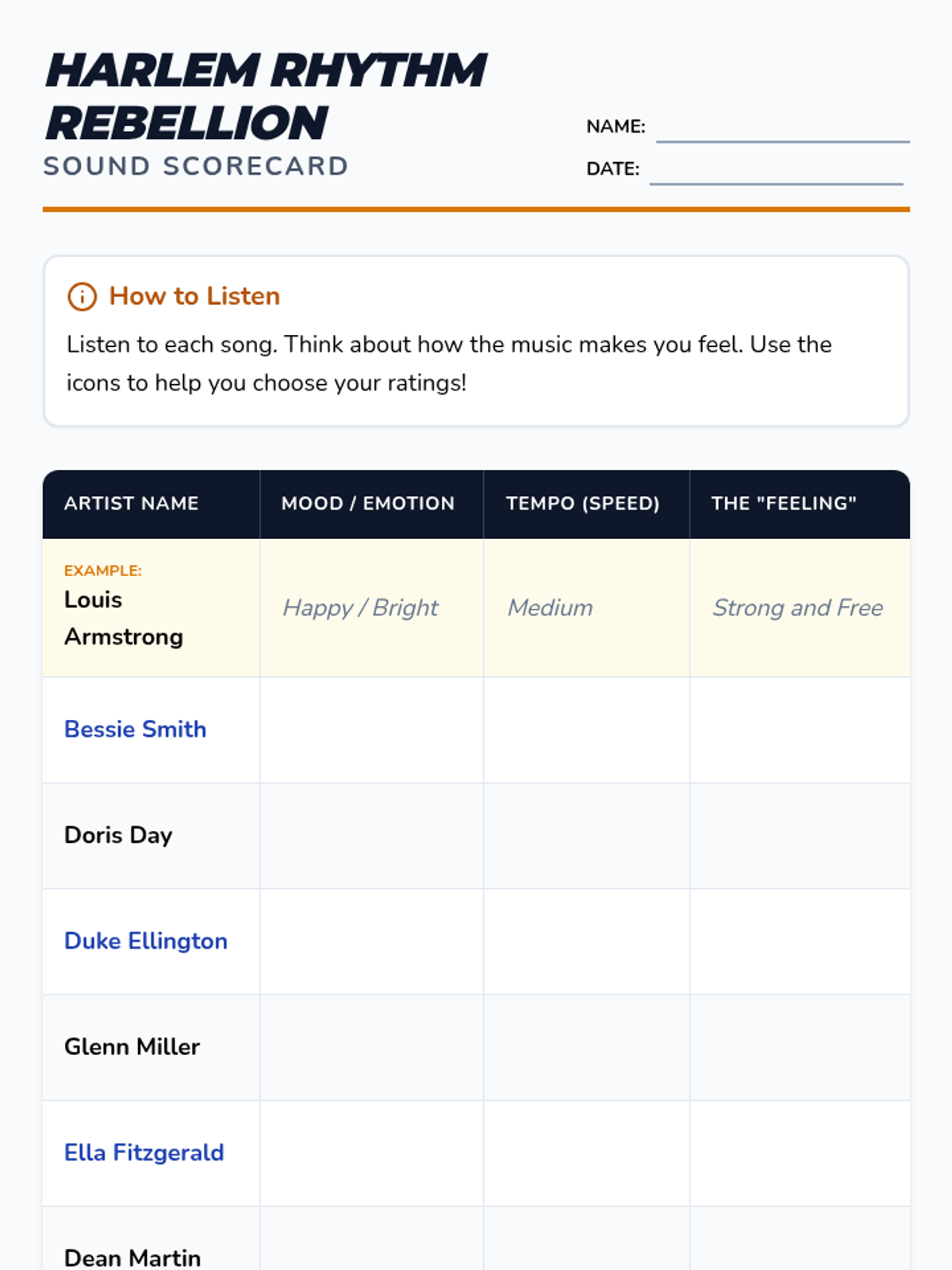
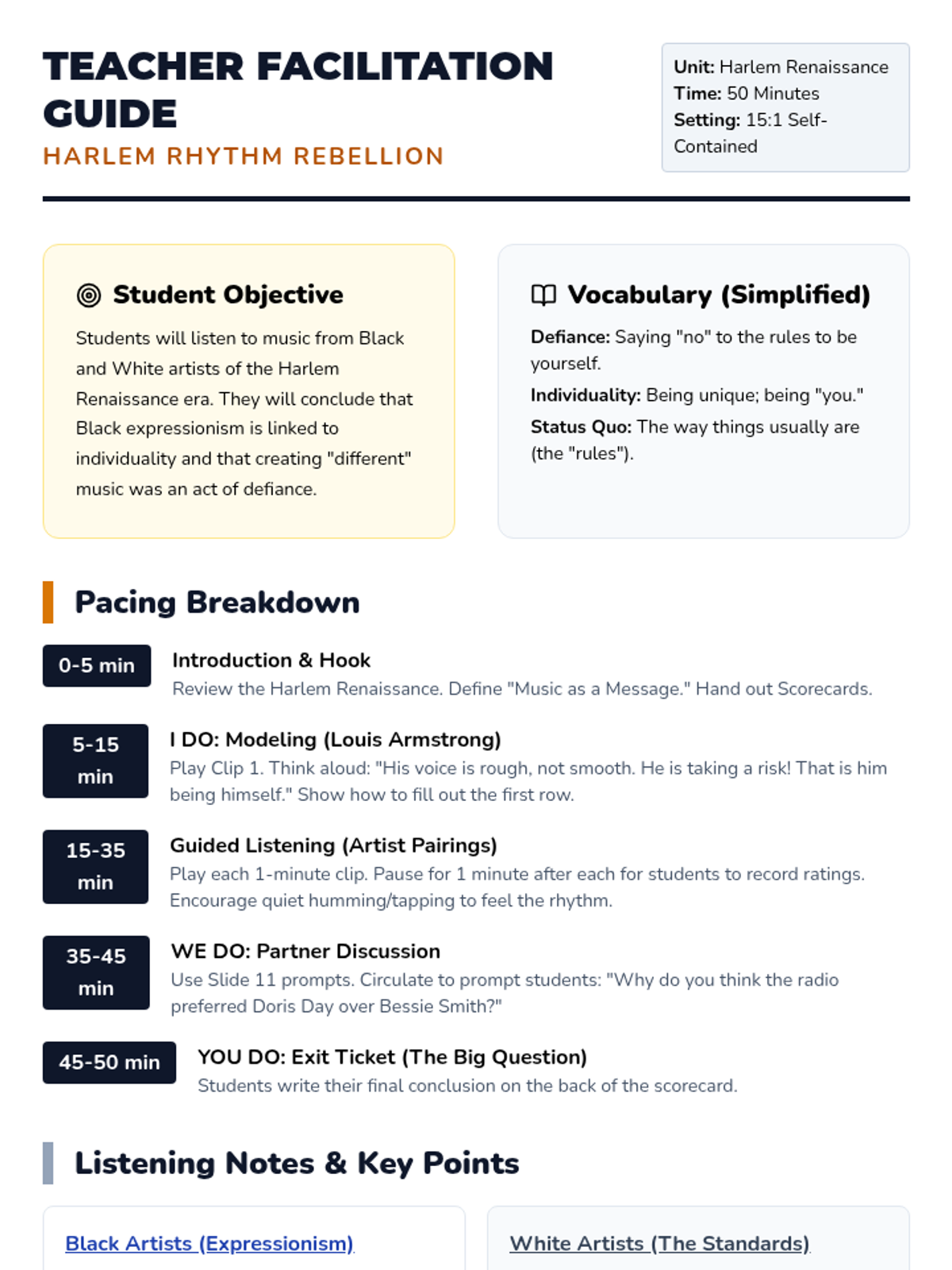
A 50-minute lesson exploring the connection between Jazz music, Black expressionism, and the Harlem Renaissance through music comparison and artist biopics. Students will analyze the differences between Black and White artists of the era to understand music as an act of defiance and cultural identity.
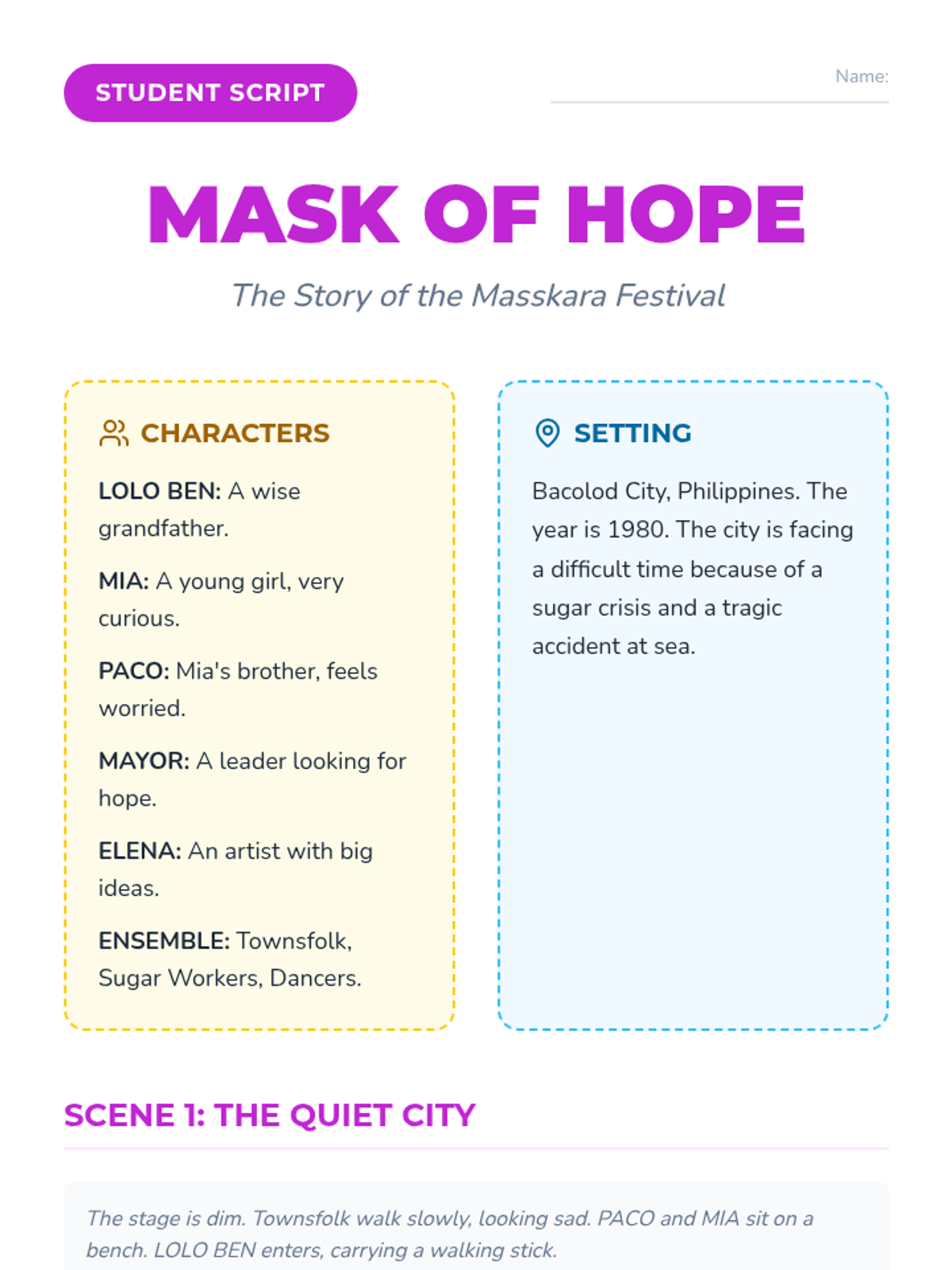
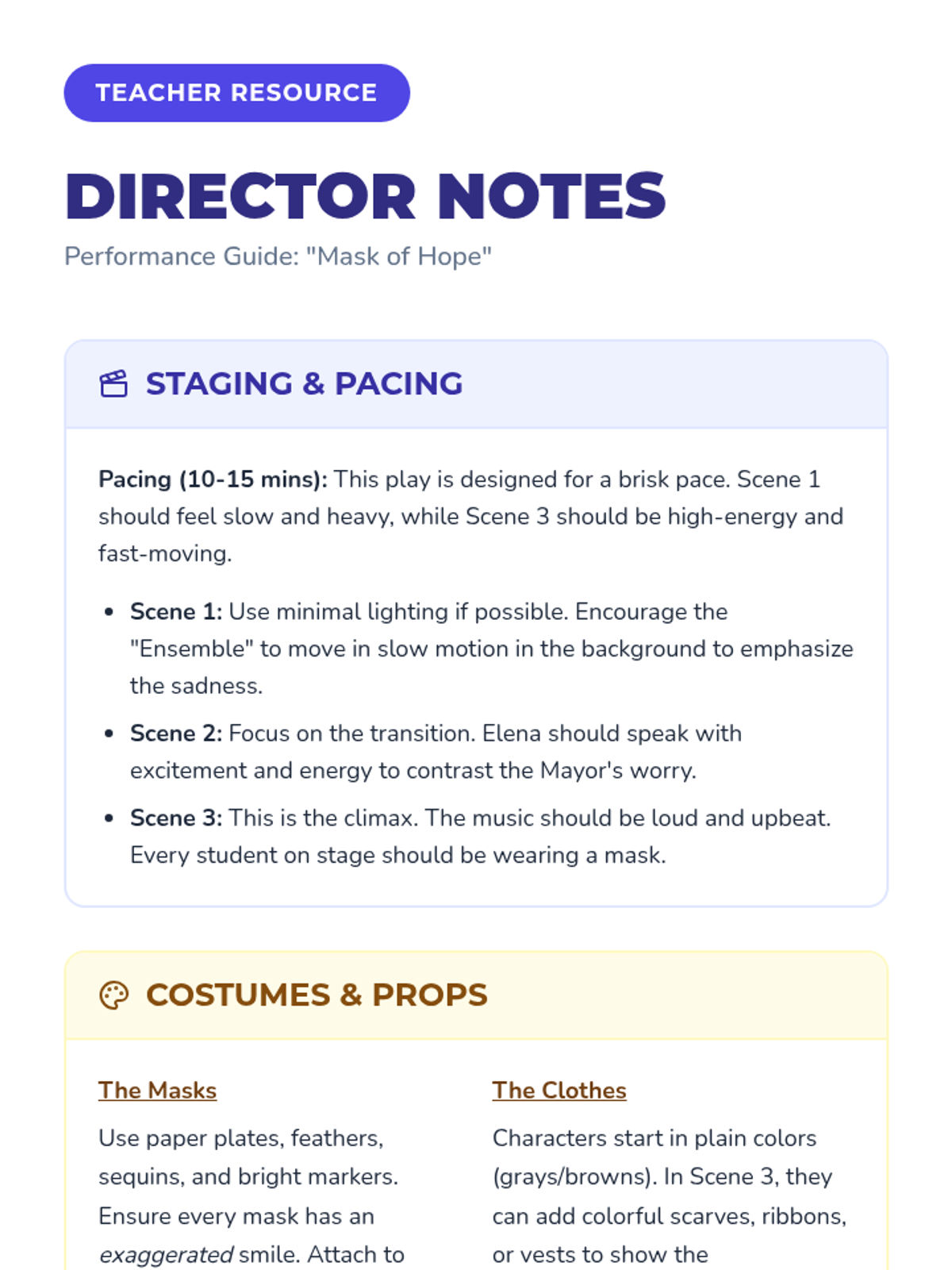
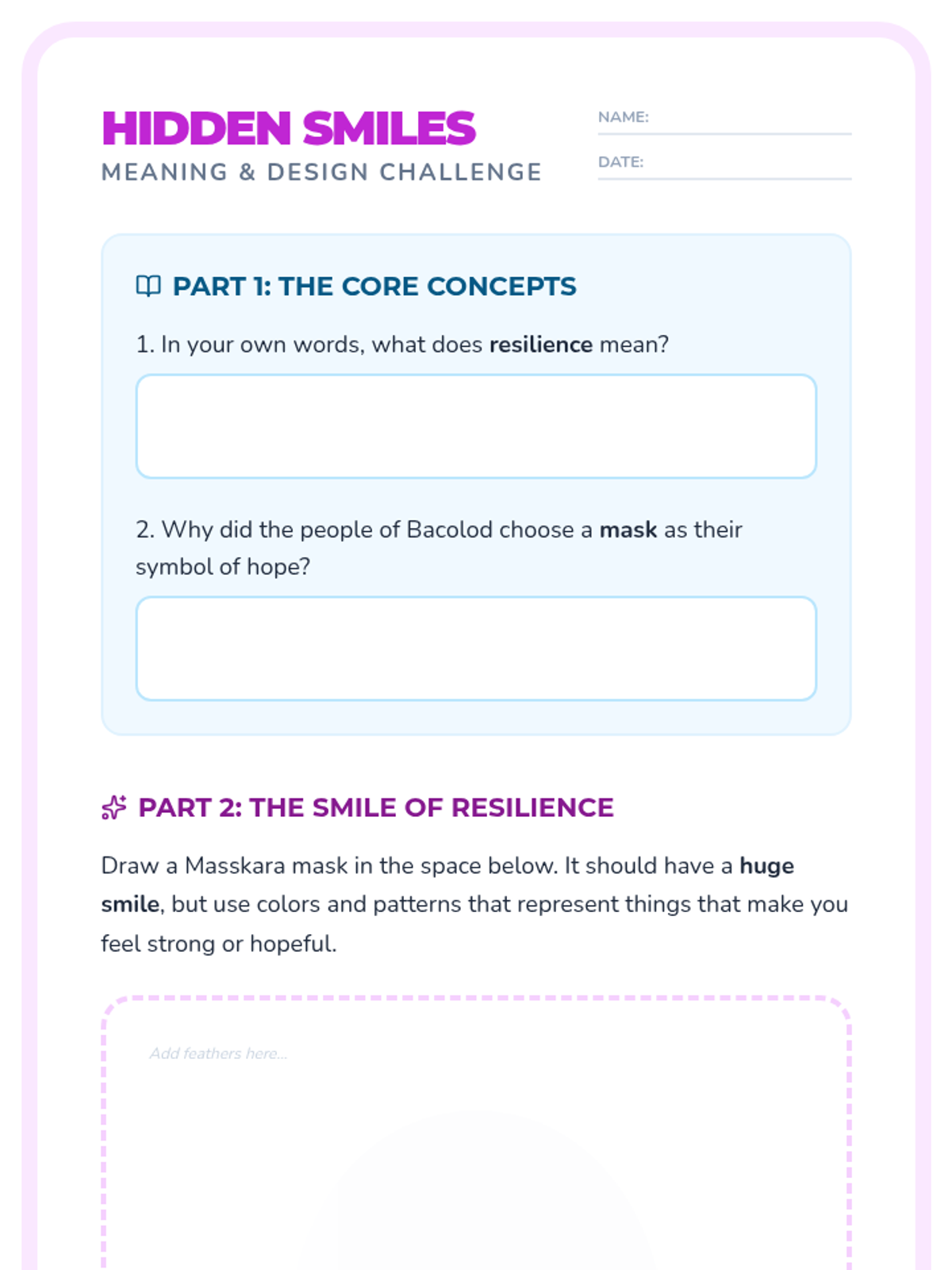
This lesson introduces students to the Masskara Festival of Bacolod City, focusing on its origins as a festival of resilience and hope. Students will perform a 10-15 minute play that dramatizes the historical context and the 'City of Smiles' spirit.
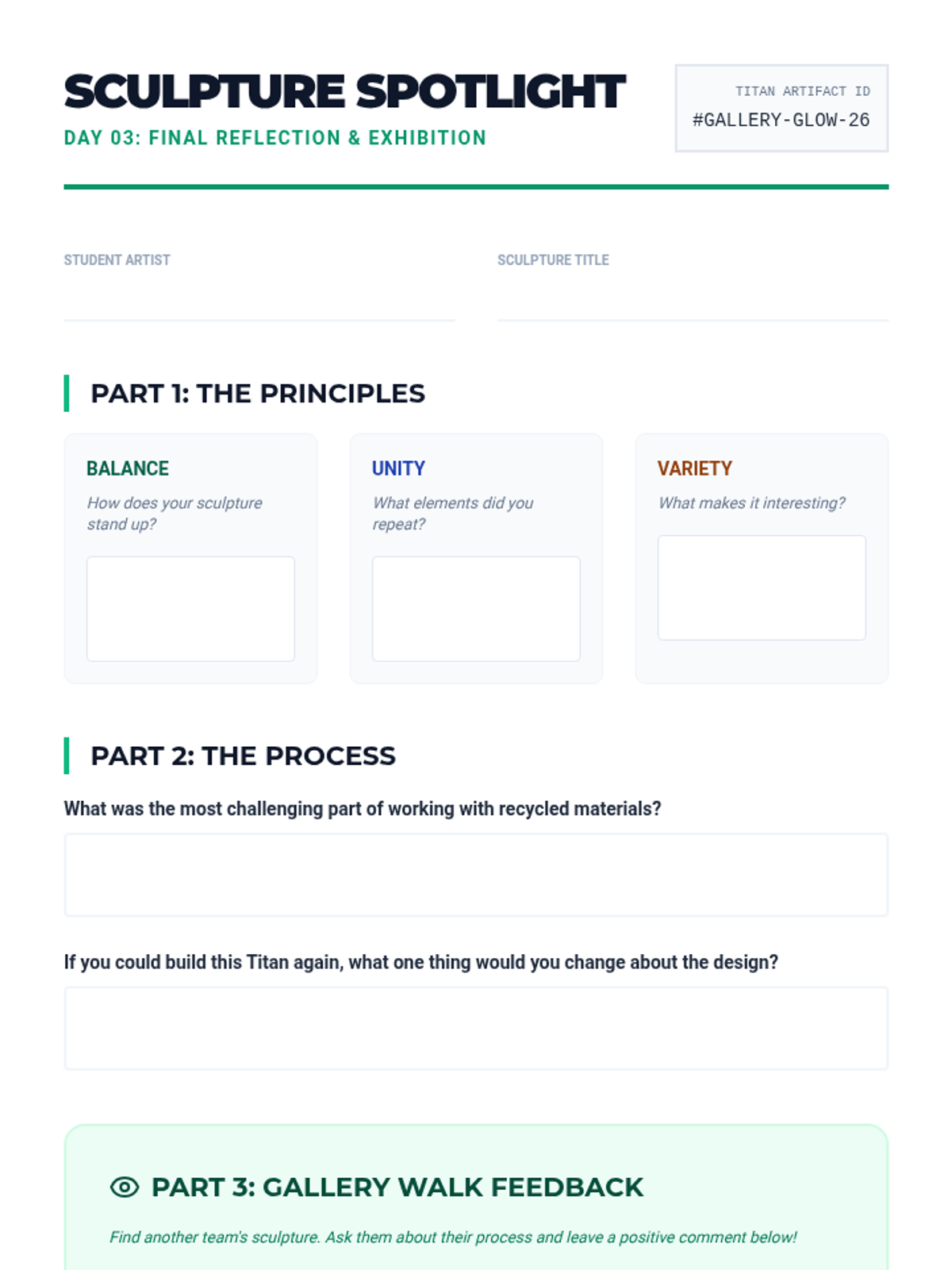
Finalizing sculptures with a focus on unity and variety, followed by a gallery walk and self-reflection.
The construction phase where teams focus on structural balance and collaborative assembly of their recycled sculptures.
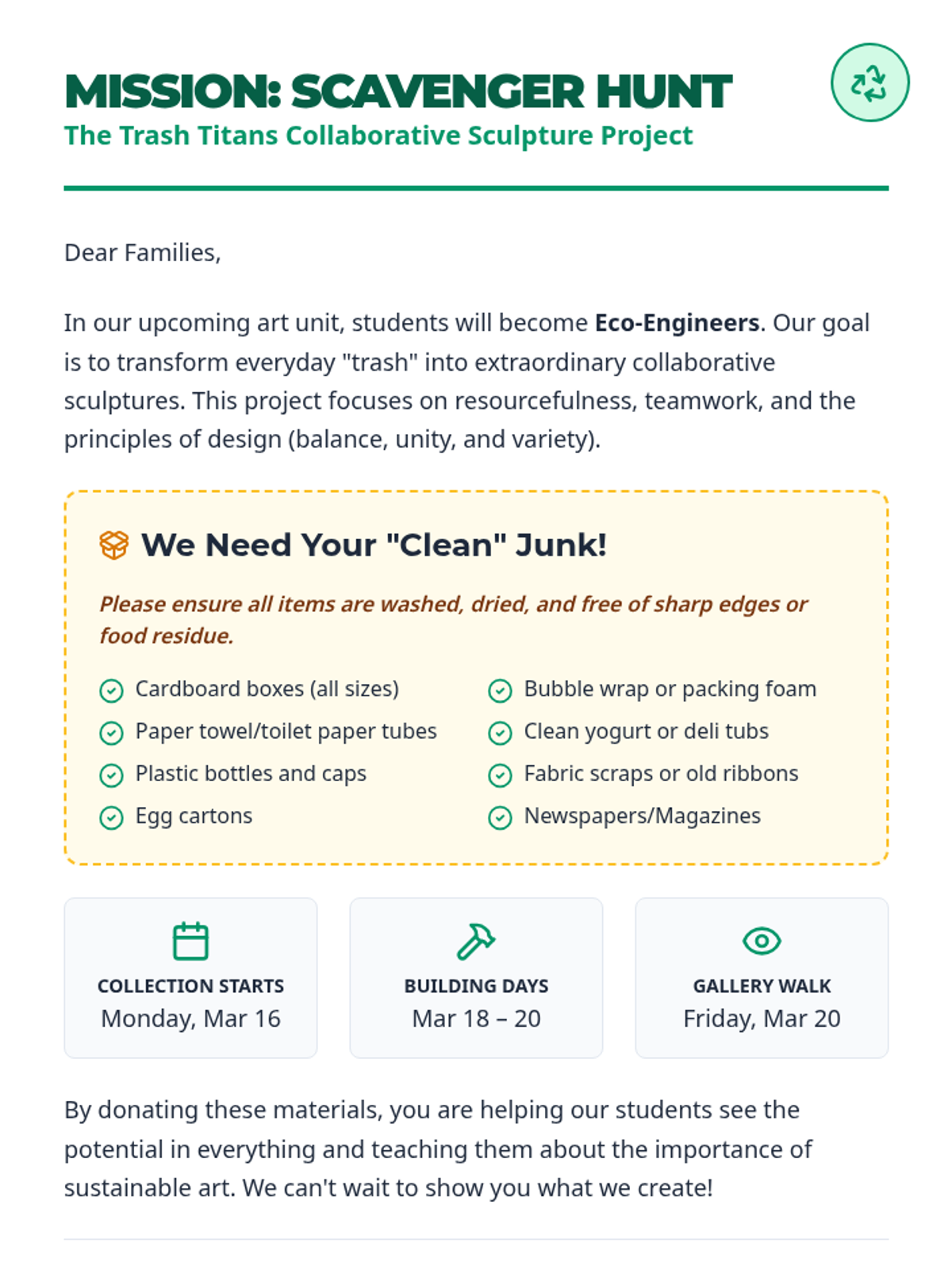
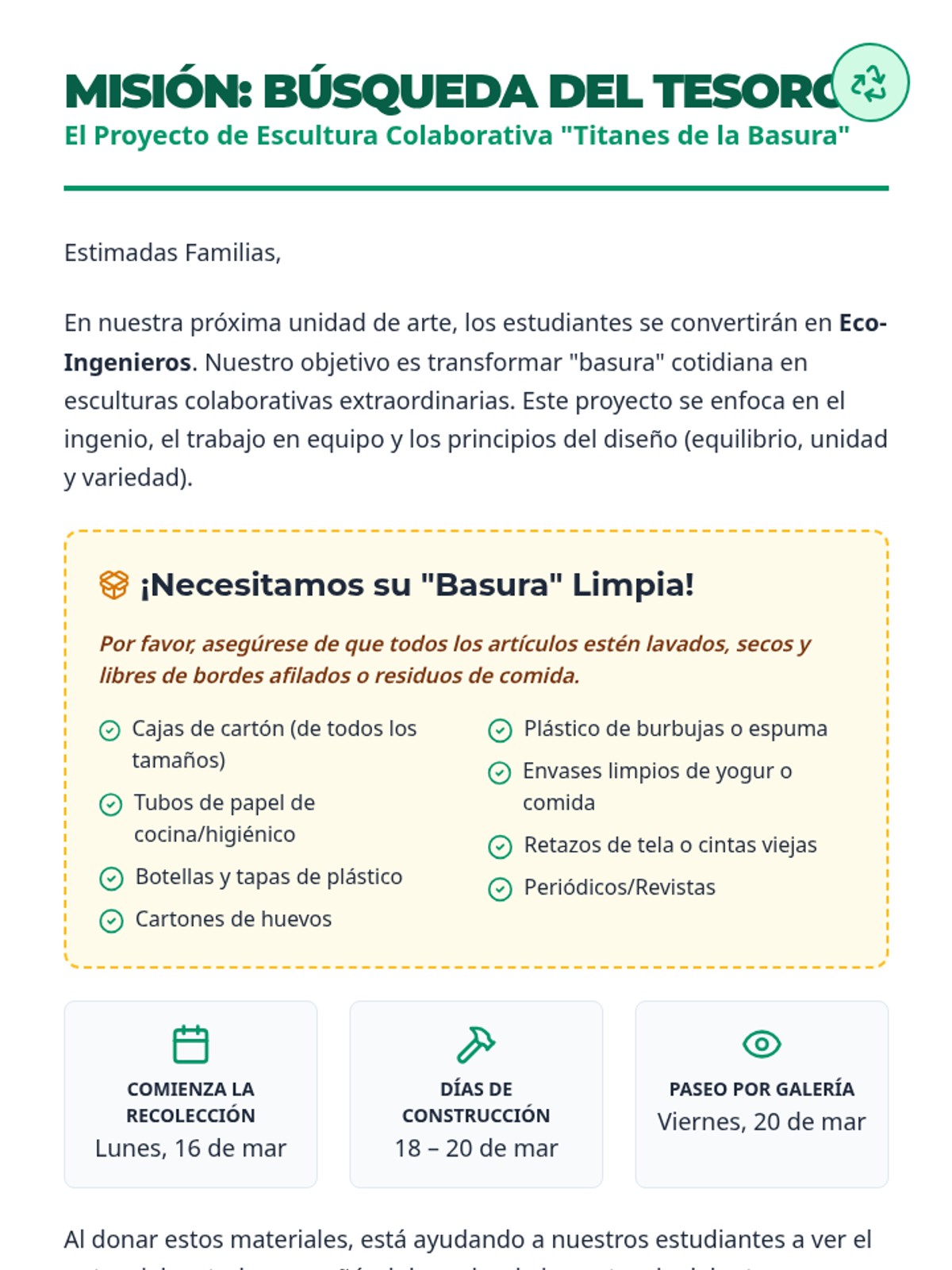
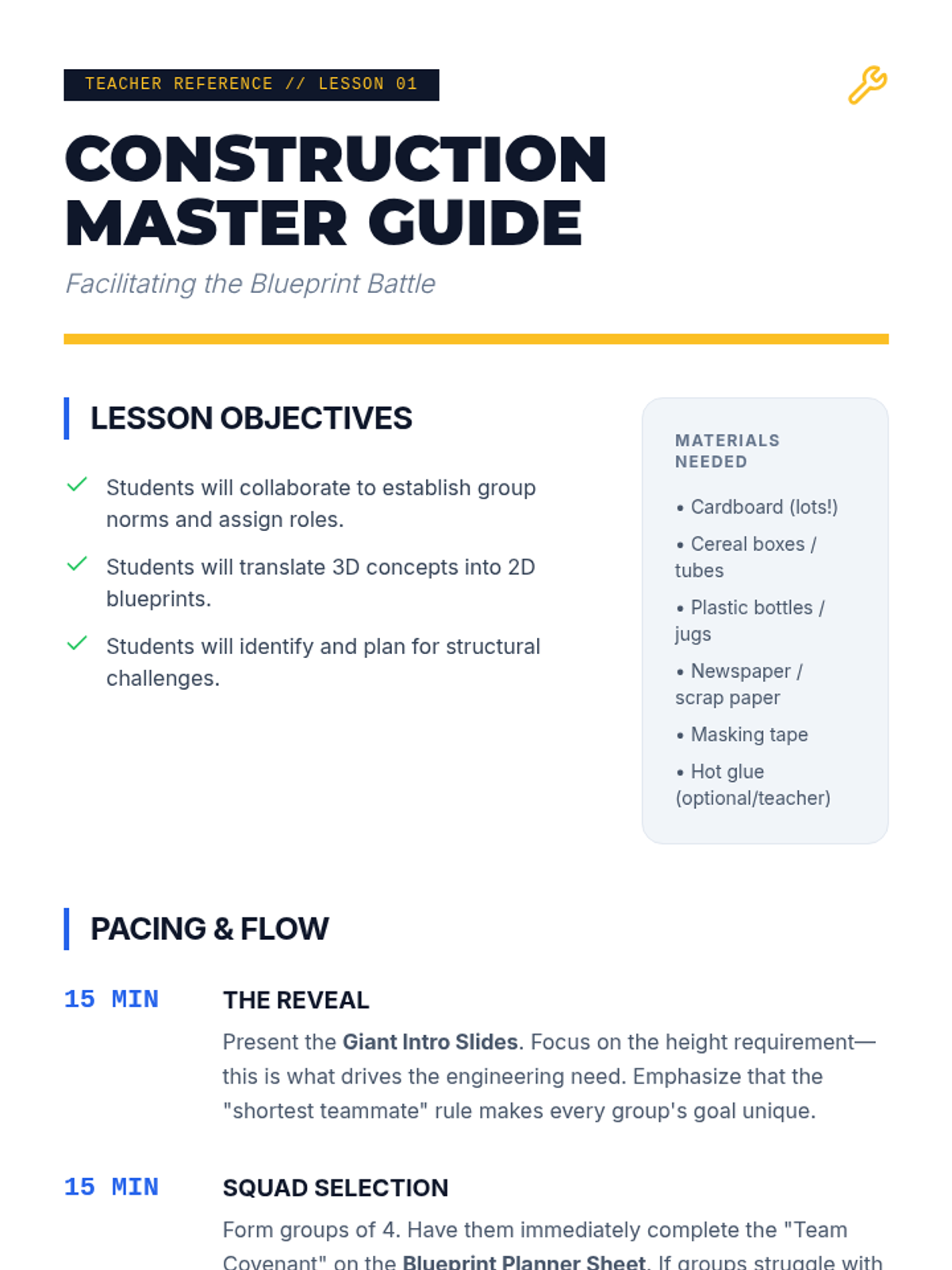
Introduction to the project, material collection via the letter home, and initial collaborative brainstorming and blueprinting.
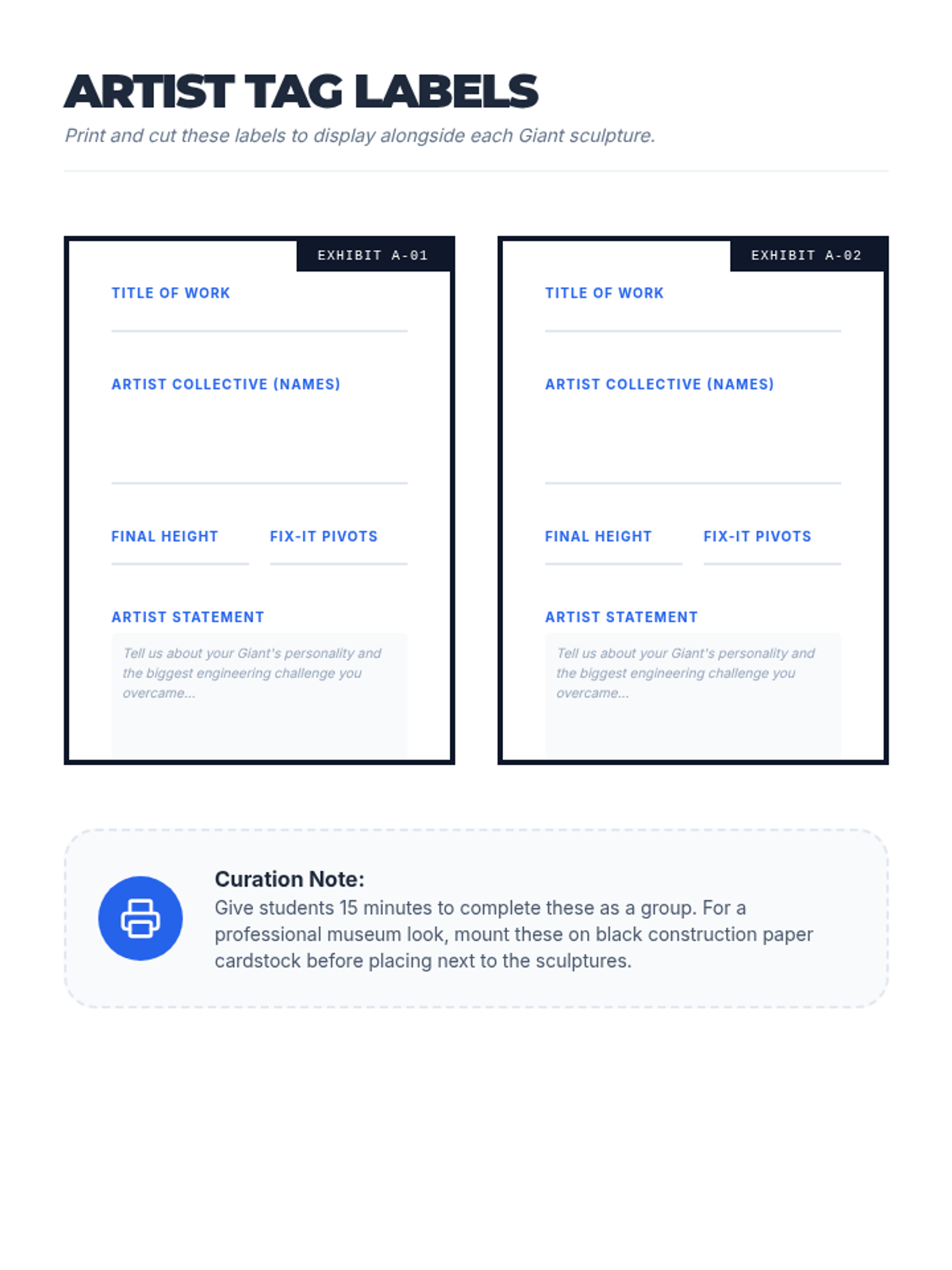
Final touches, naming, and a gallery walk to reflect on the creative process and problem-solving journey.
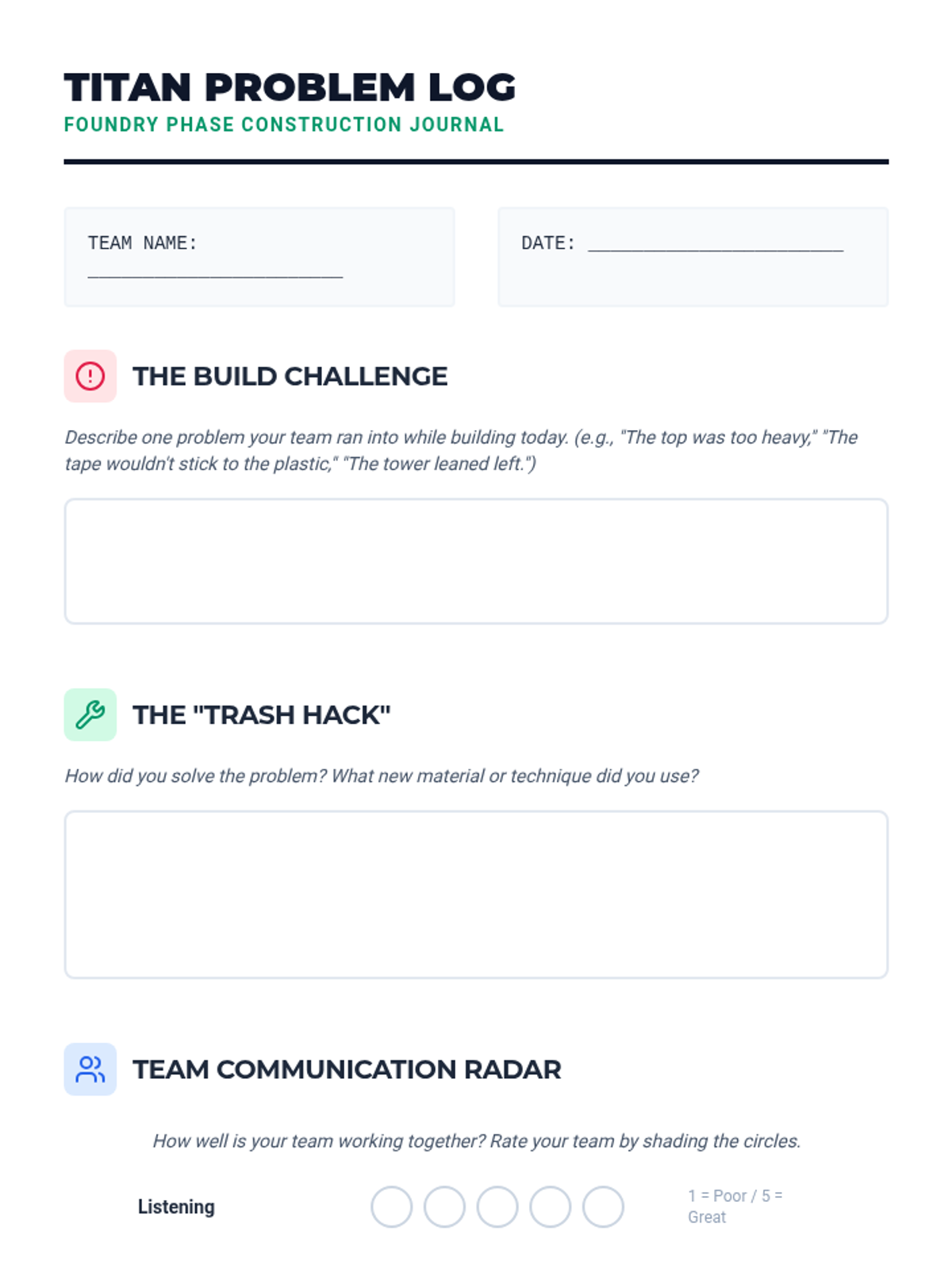
The core construction phase where students face structural failures and collaborate on creative solutions.
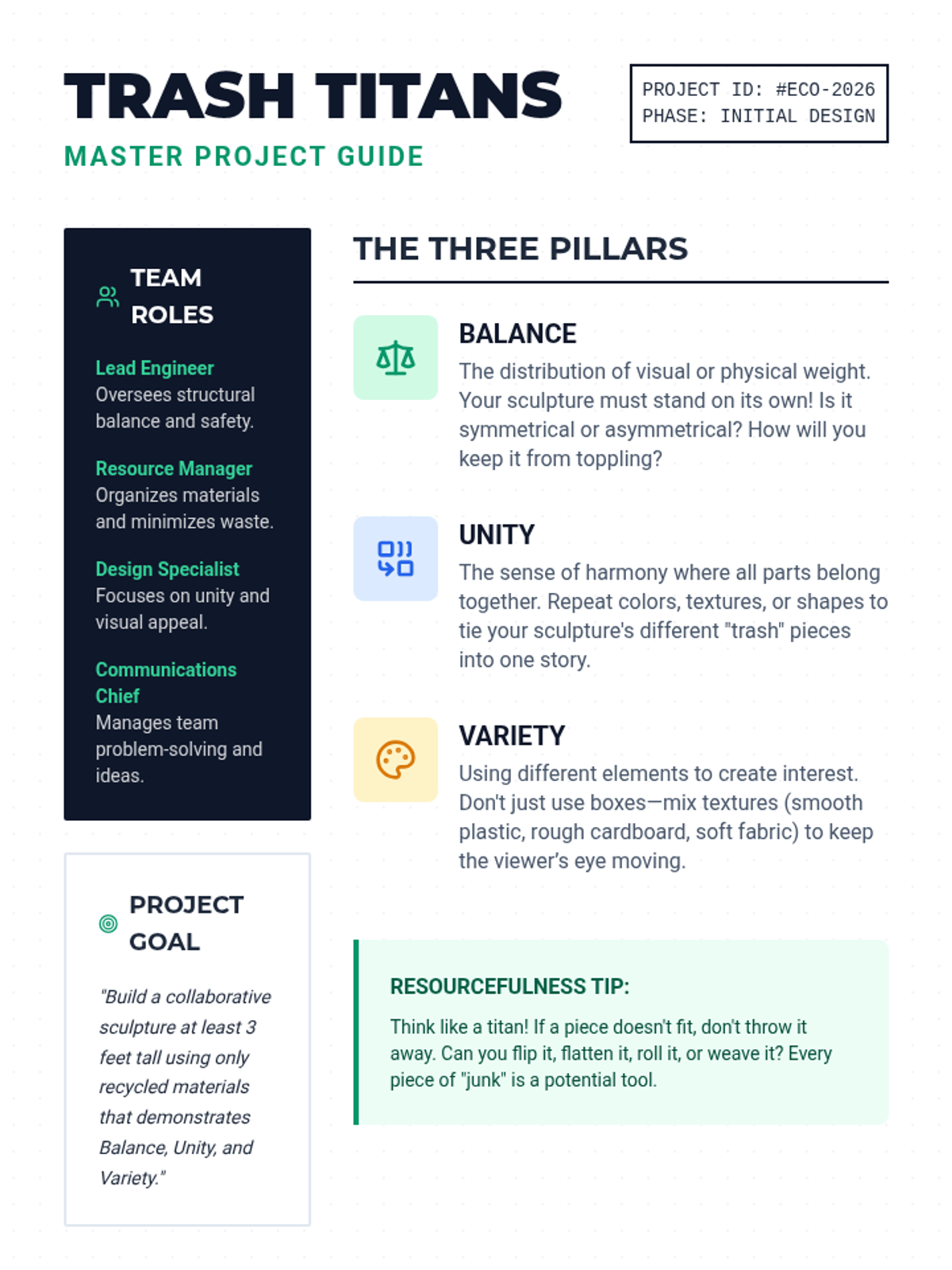
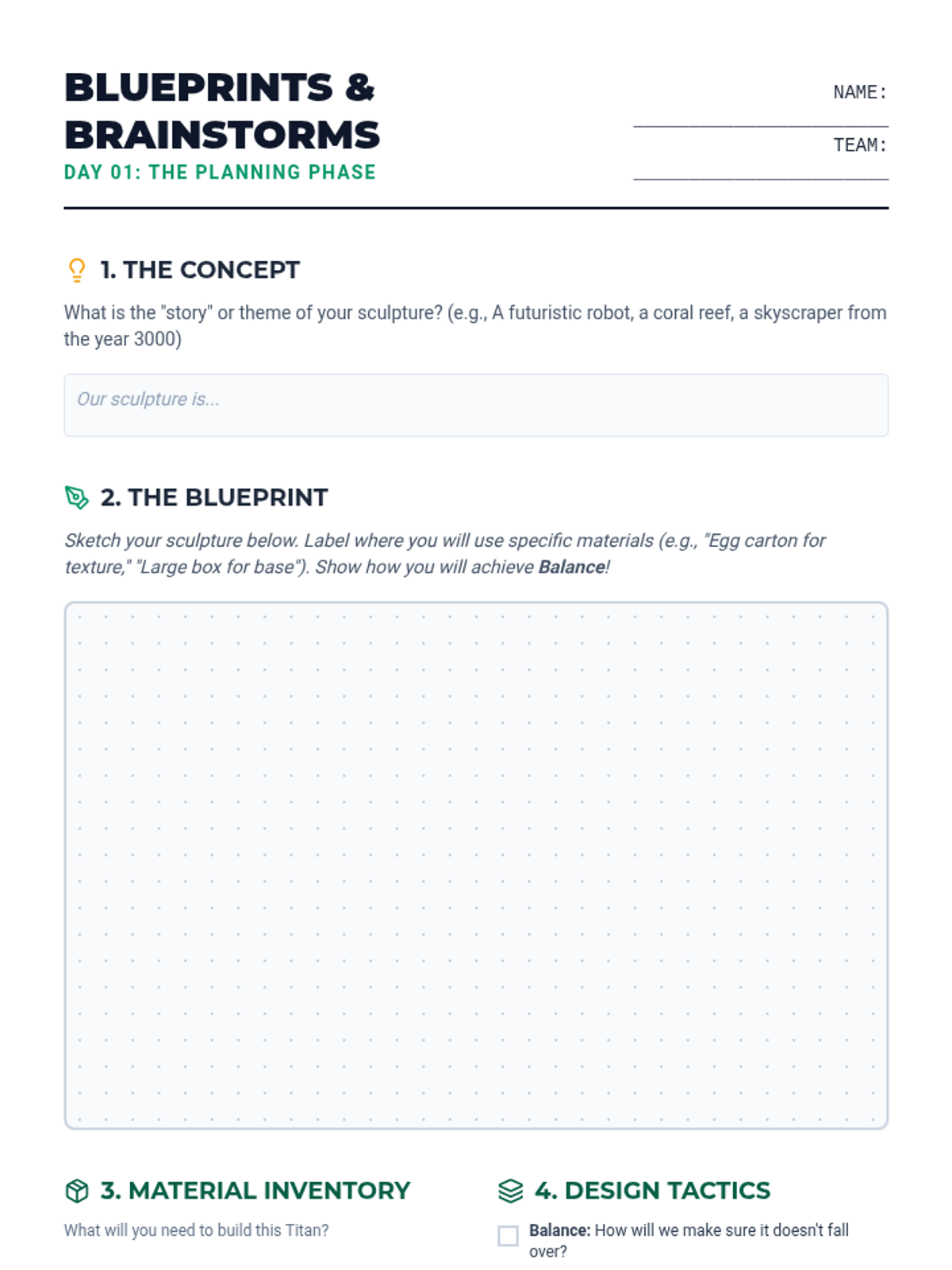
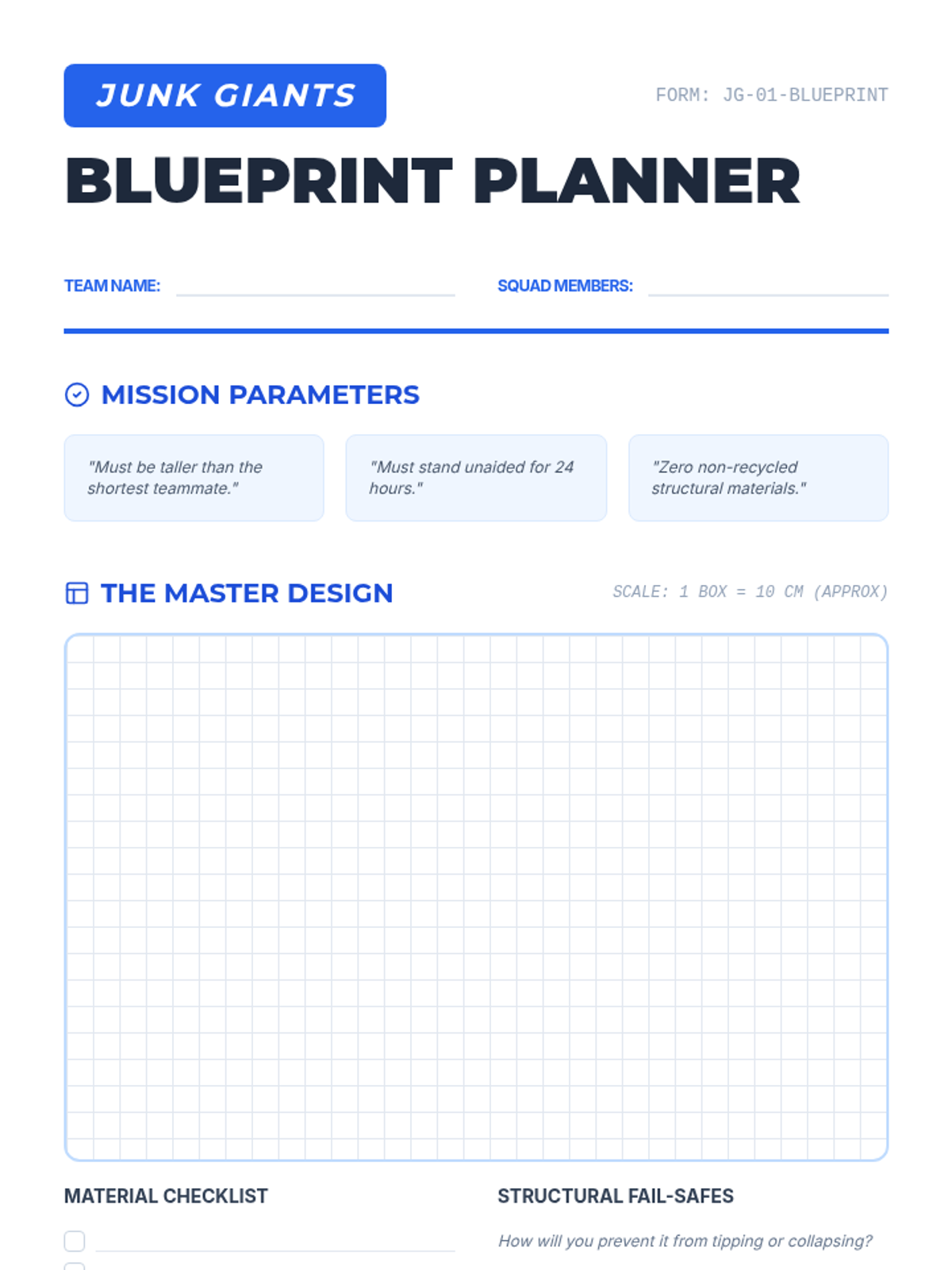
Teams form, explore materials, and create structural blueprints for their recycled sculptures.
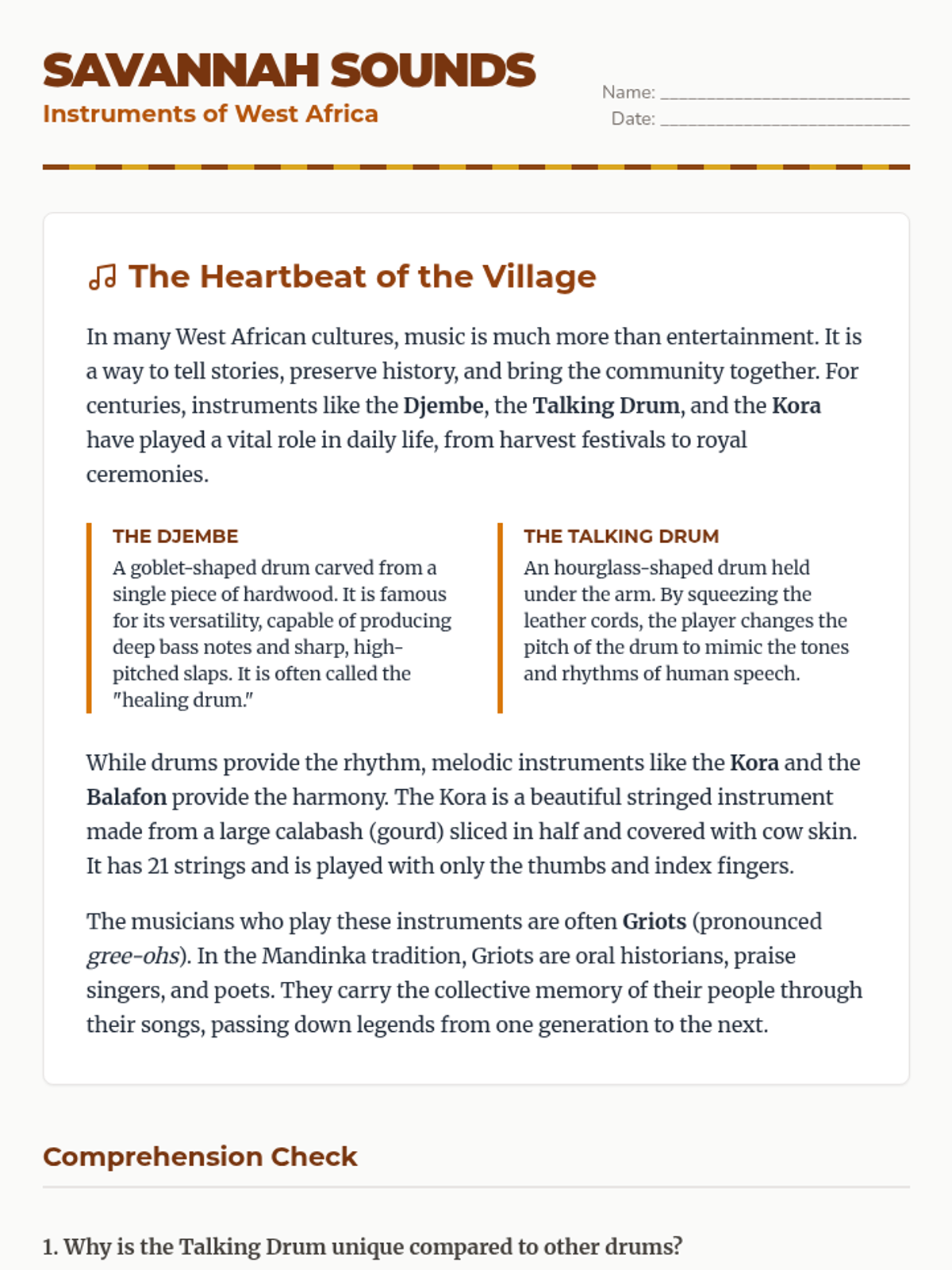
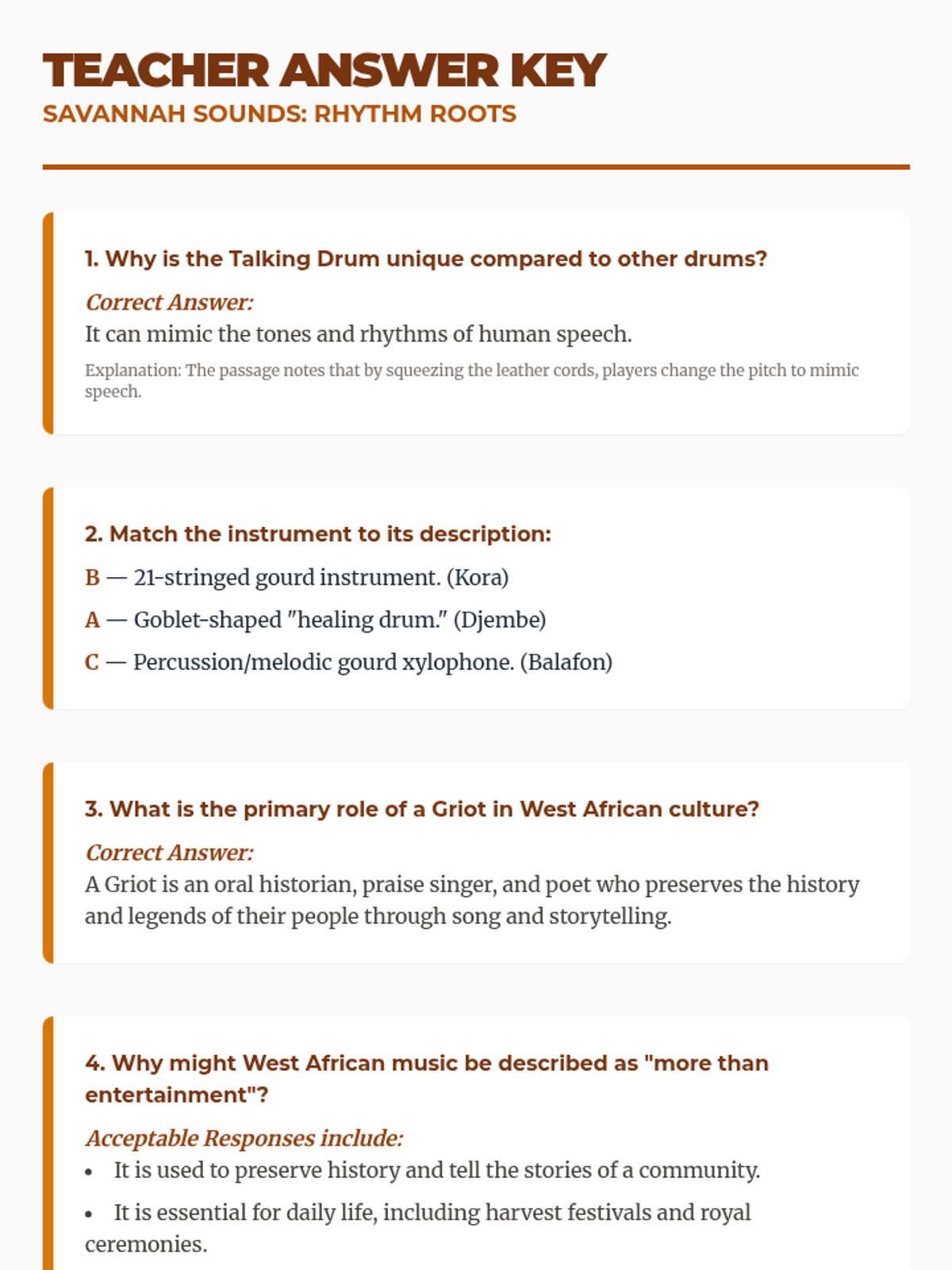
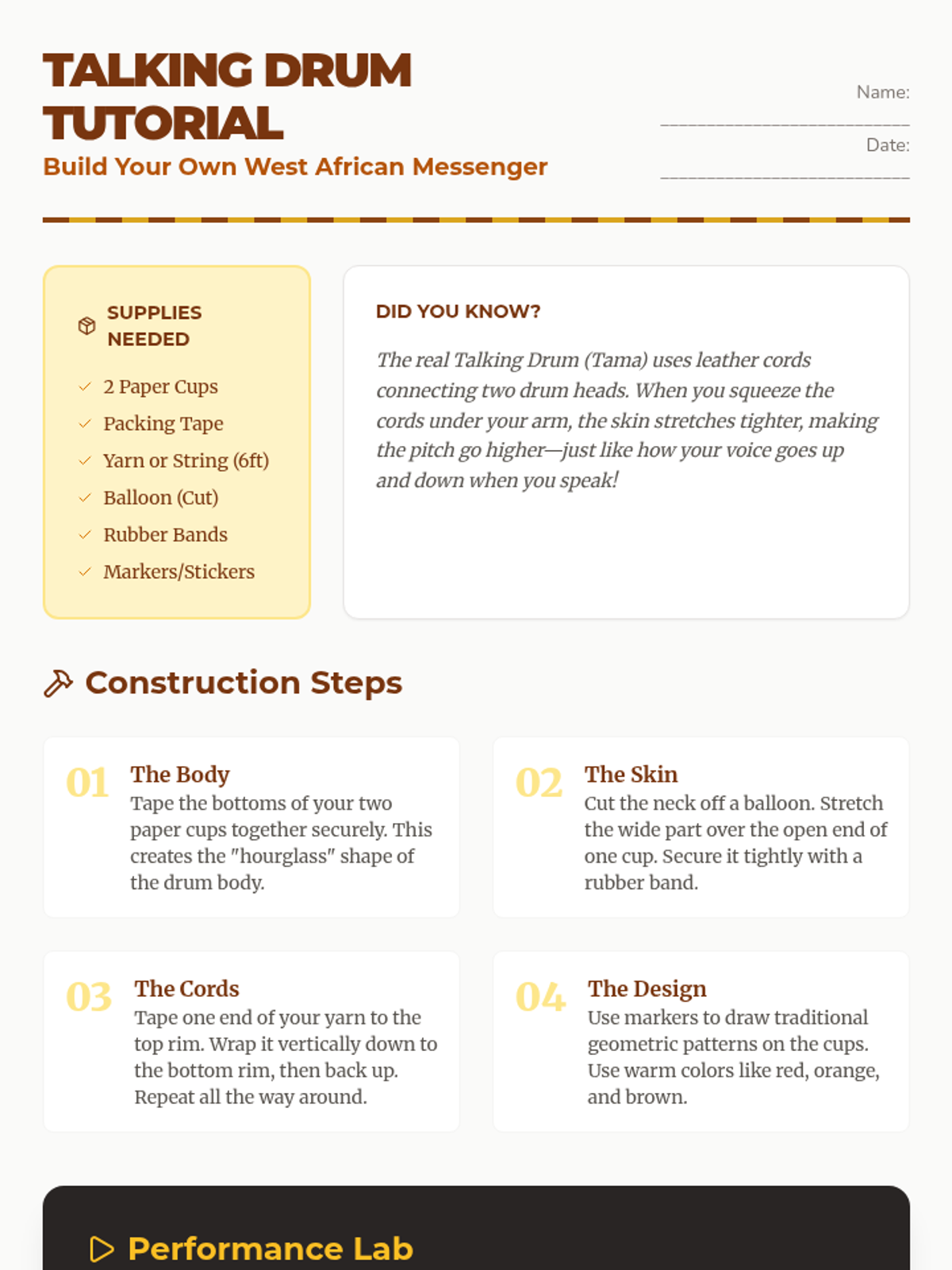
An introduction to the vibrant musical traditions of West Africa, focusing on iconic percussion and melodic instruments like the djembe, kora, and talking drum.
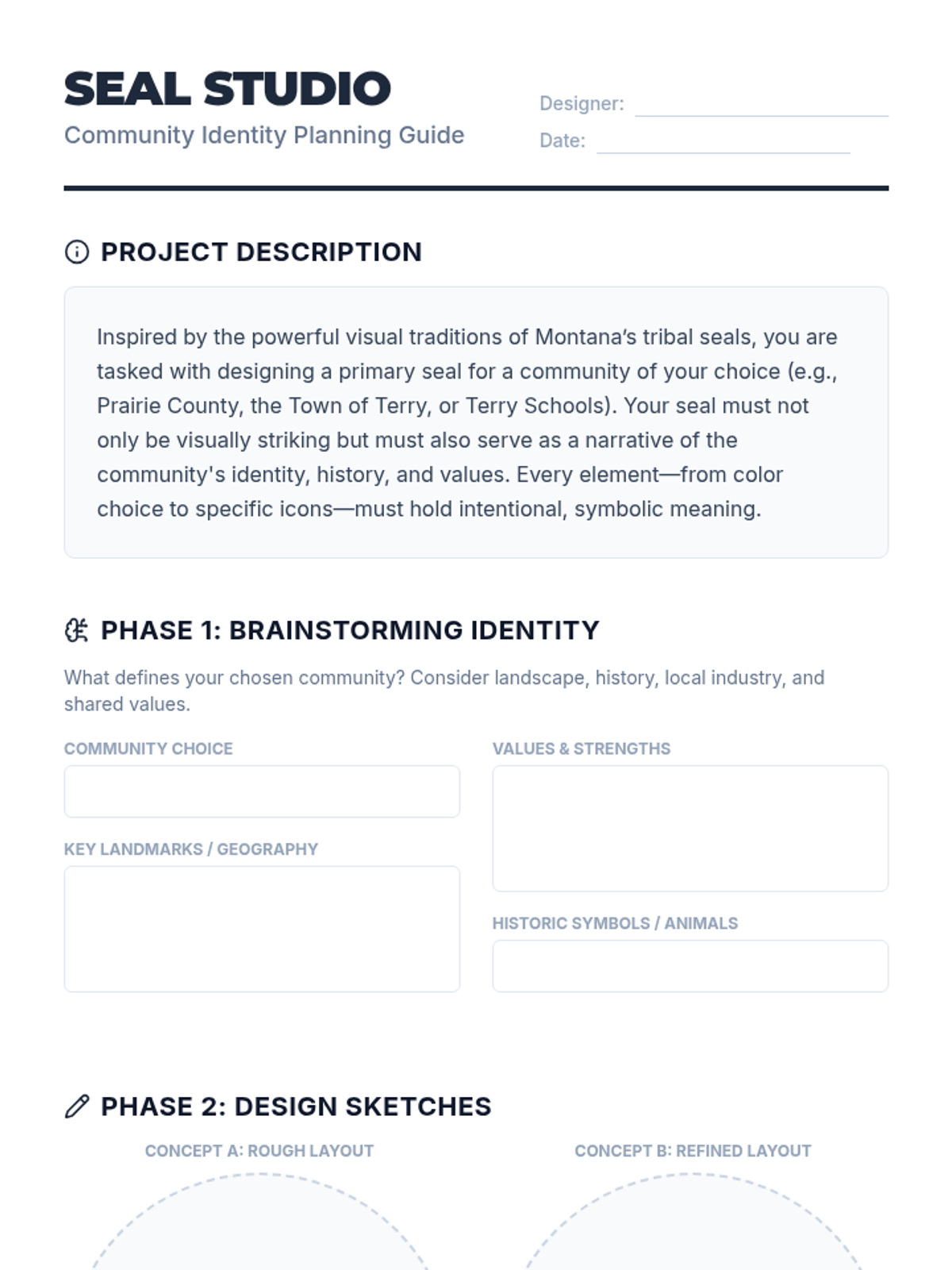
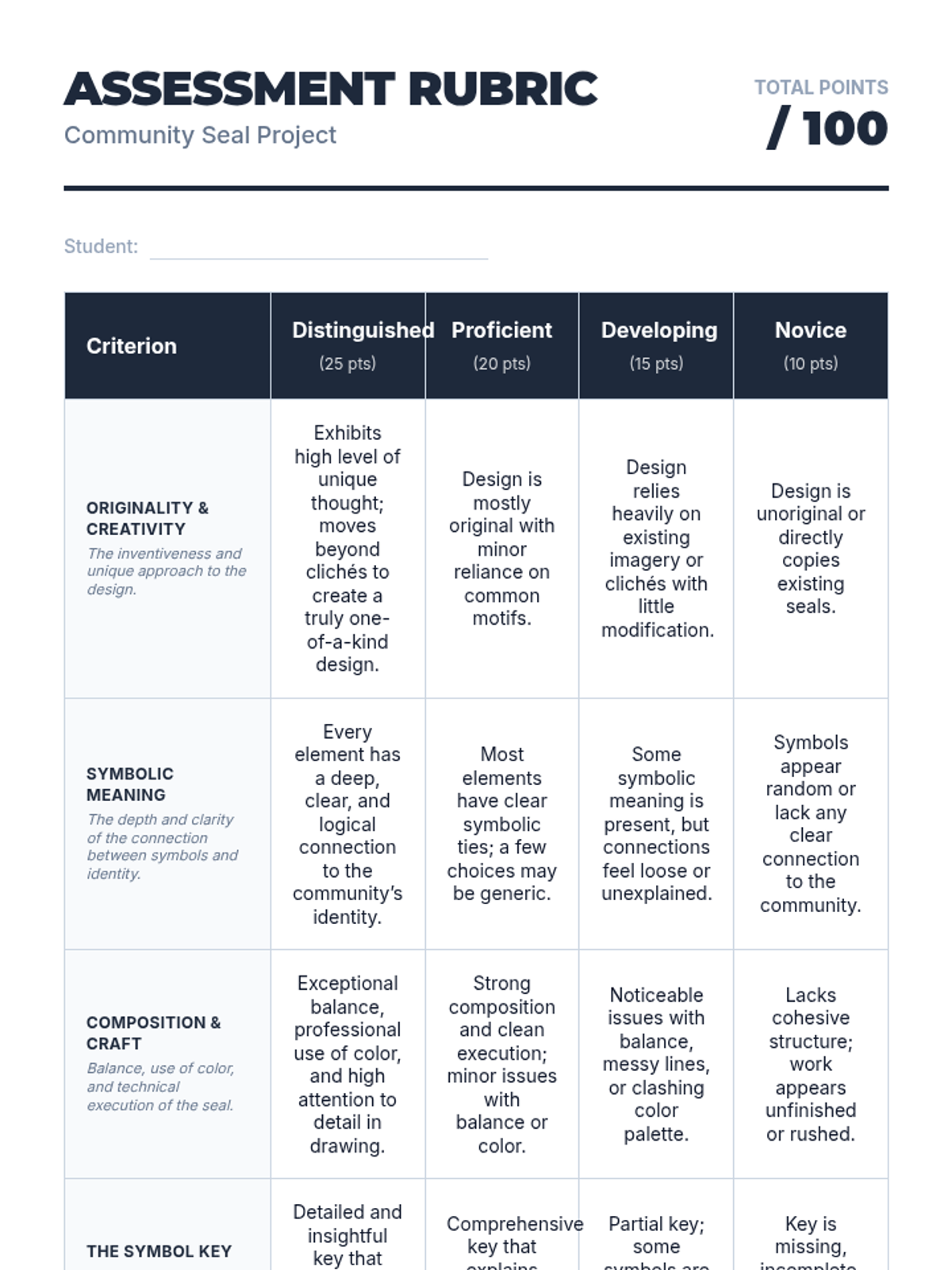
A project-based lesson where students design a community seal inspired by Montana's tribal traditions, focusing on visual identity and symbolic storytelling.
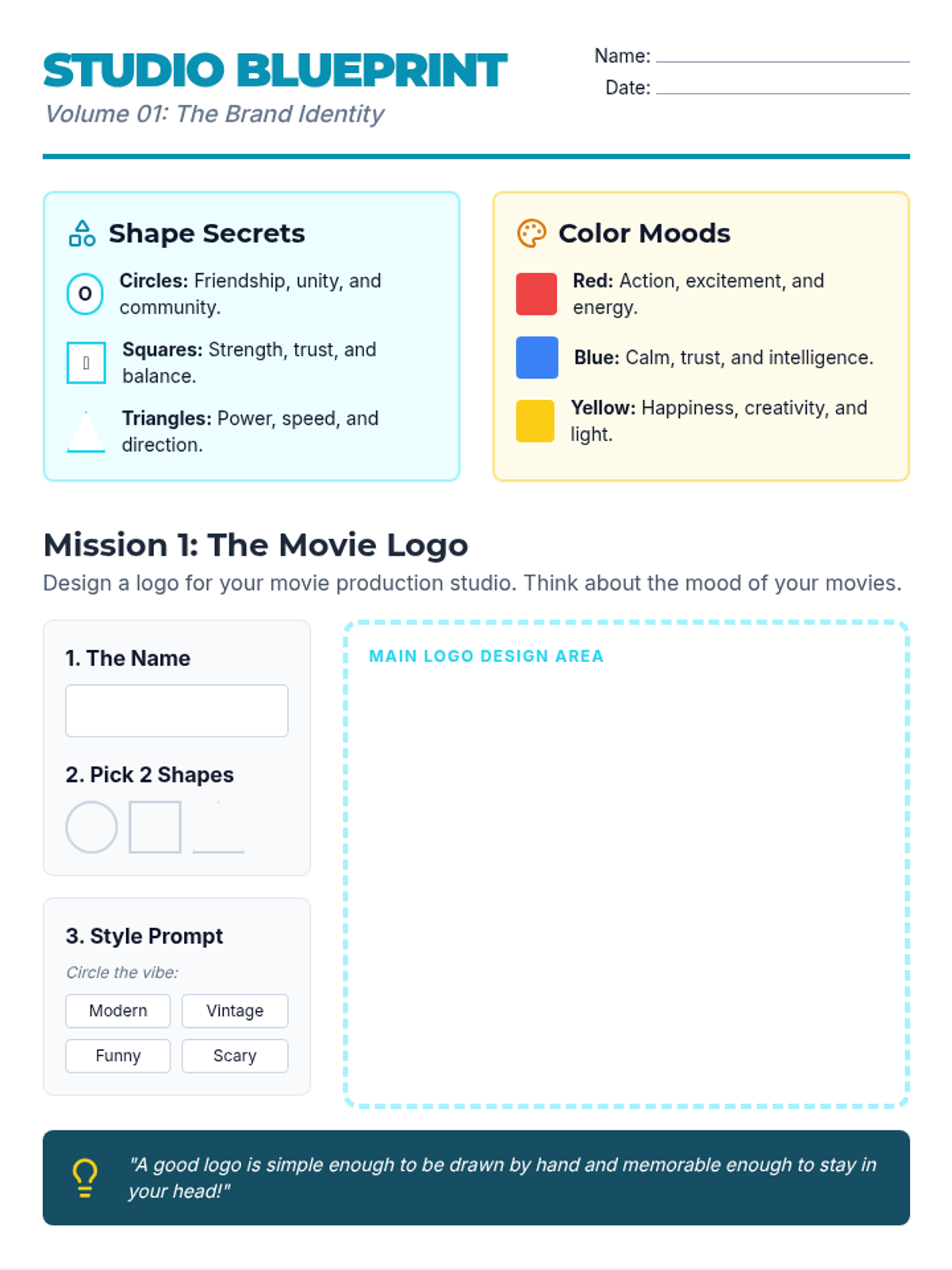
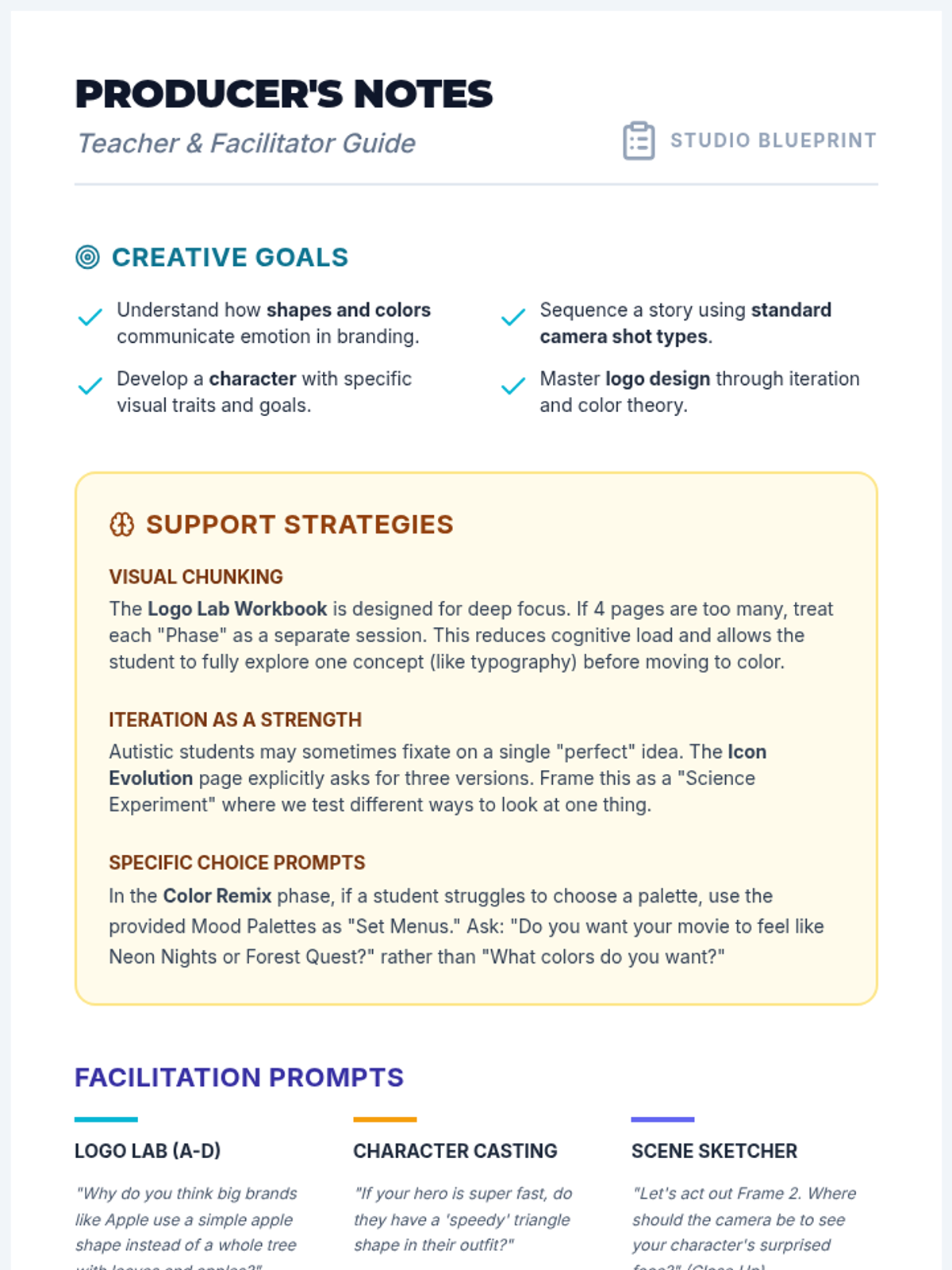
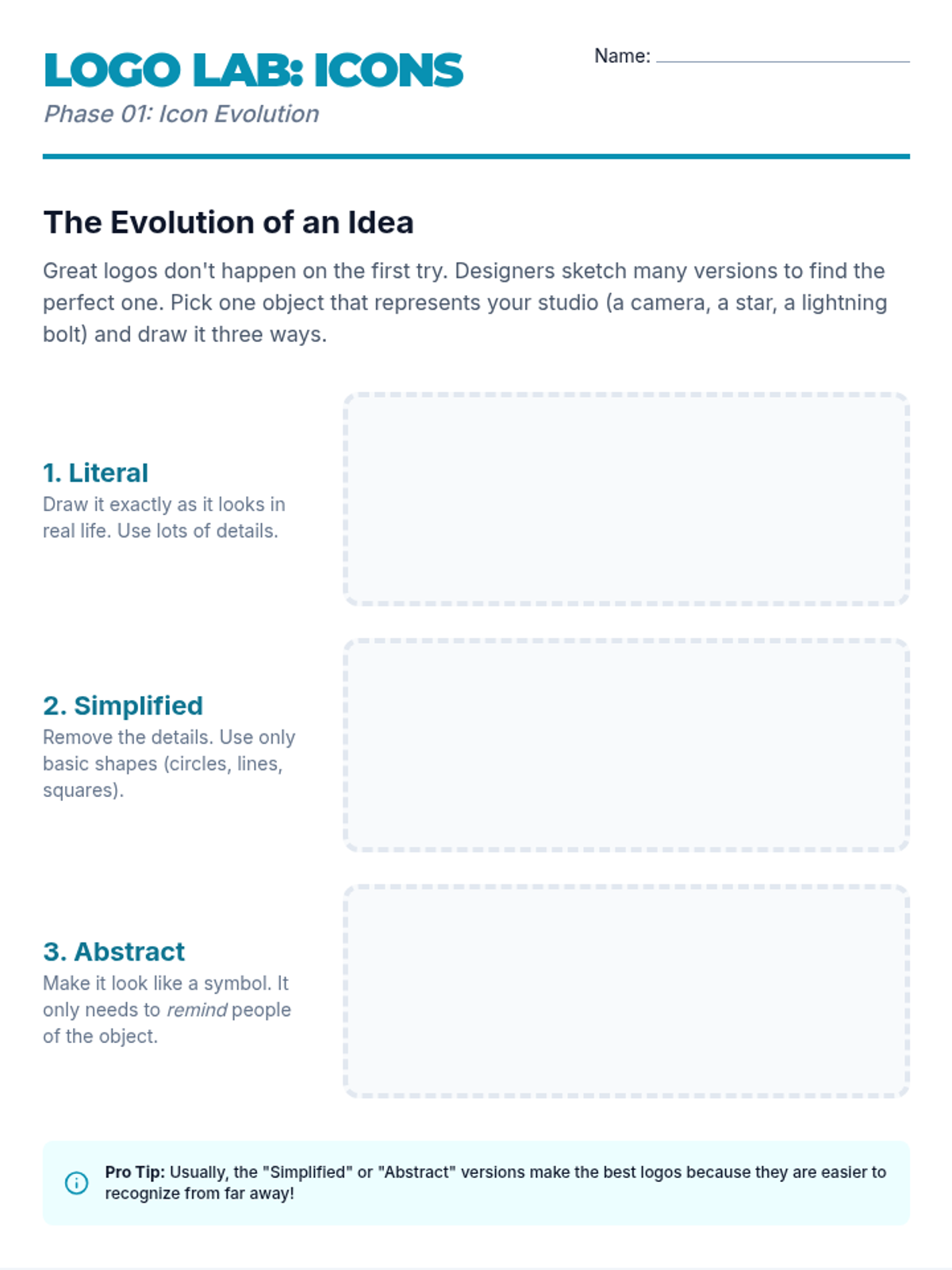
A creative, structured guide for students to explore the intersection of graphic design and filmmaking, focusing on branding, character design, and visual storytelling.
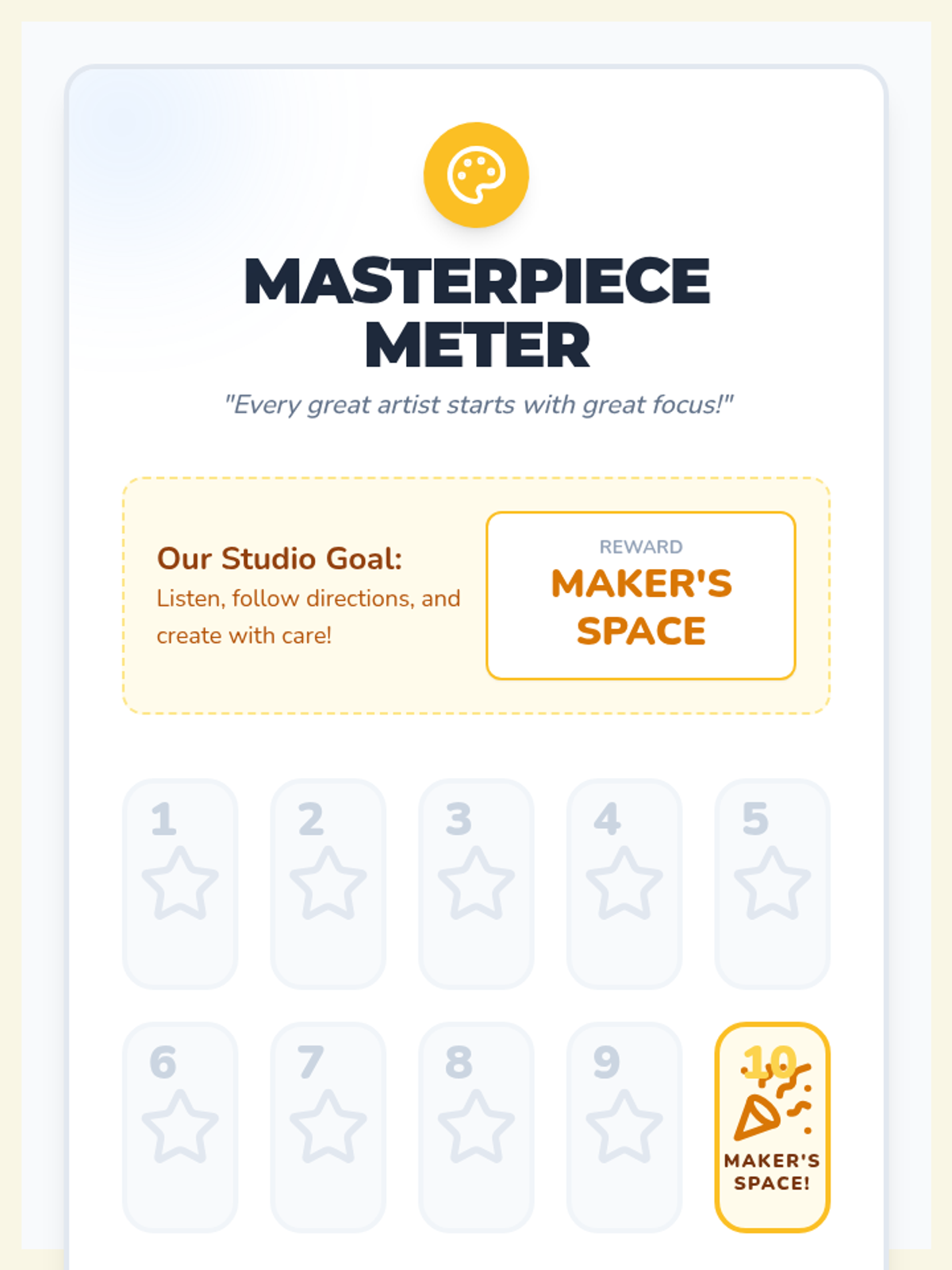
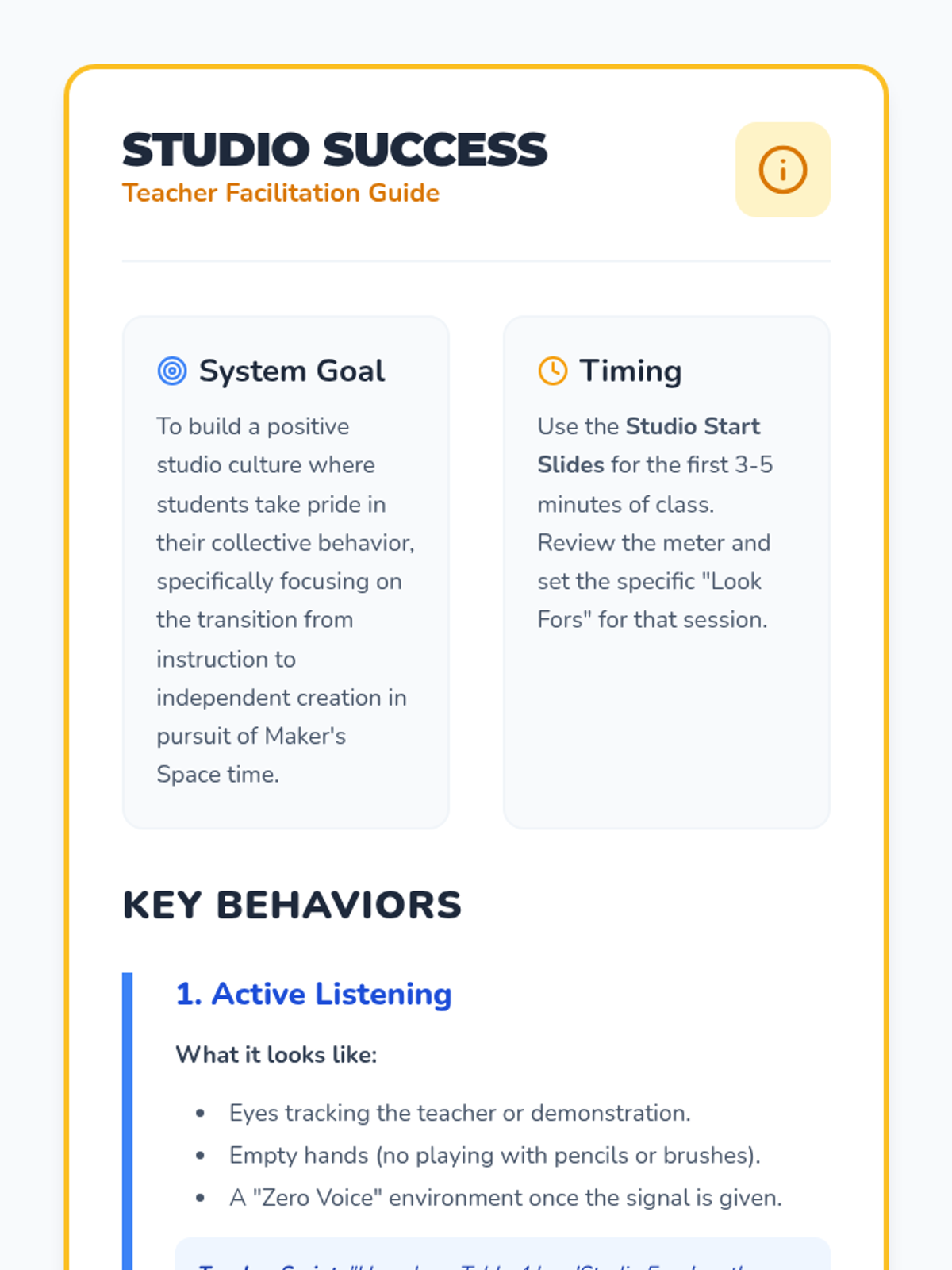
A system for art students to track their progress toward earning Maker's Space time by practicing active listening and following directions. This lesson includes a visual tracking chart, daily warm-up slides, and clear behavioral expectations.
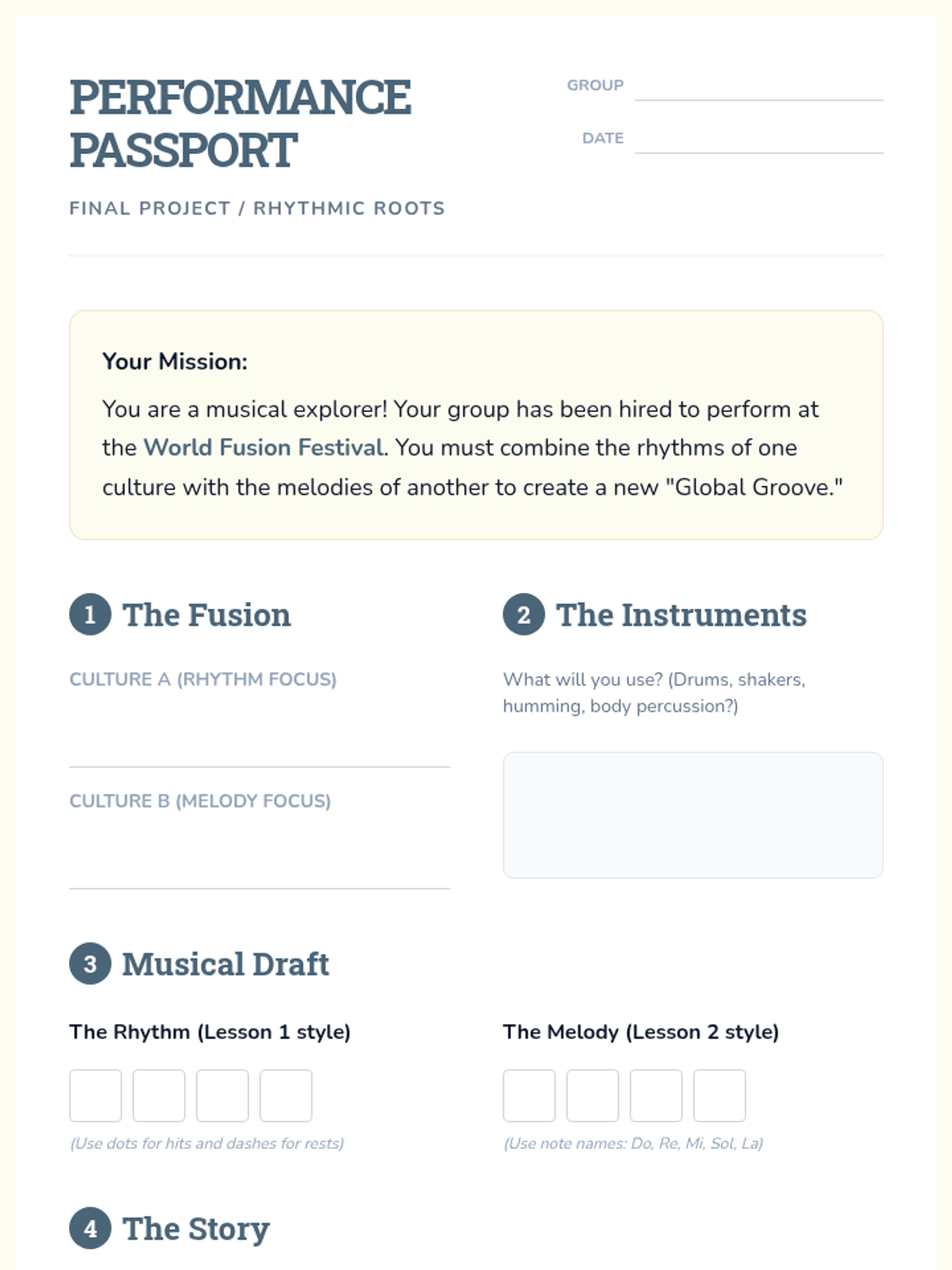
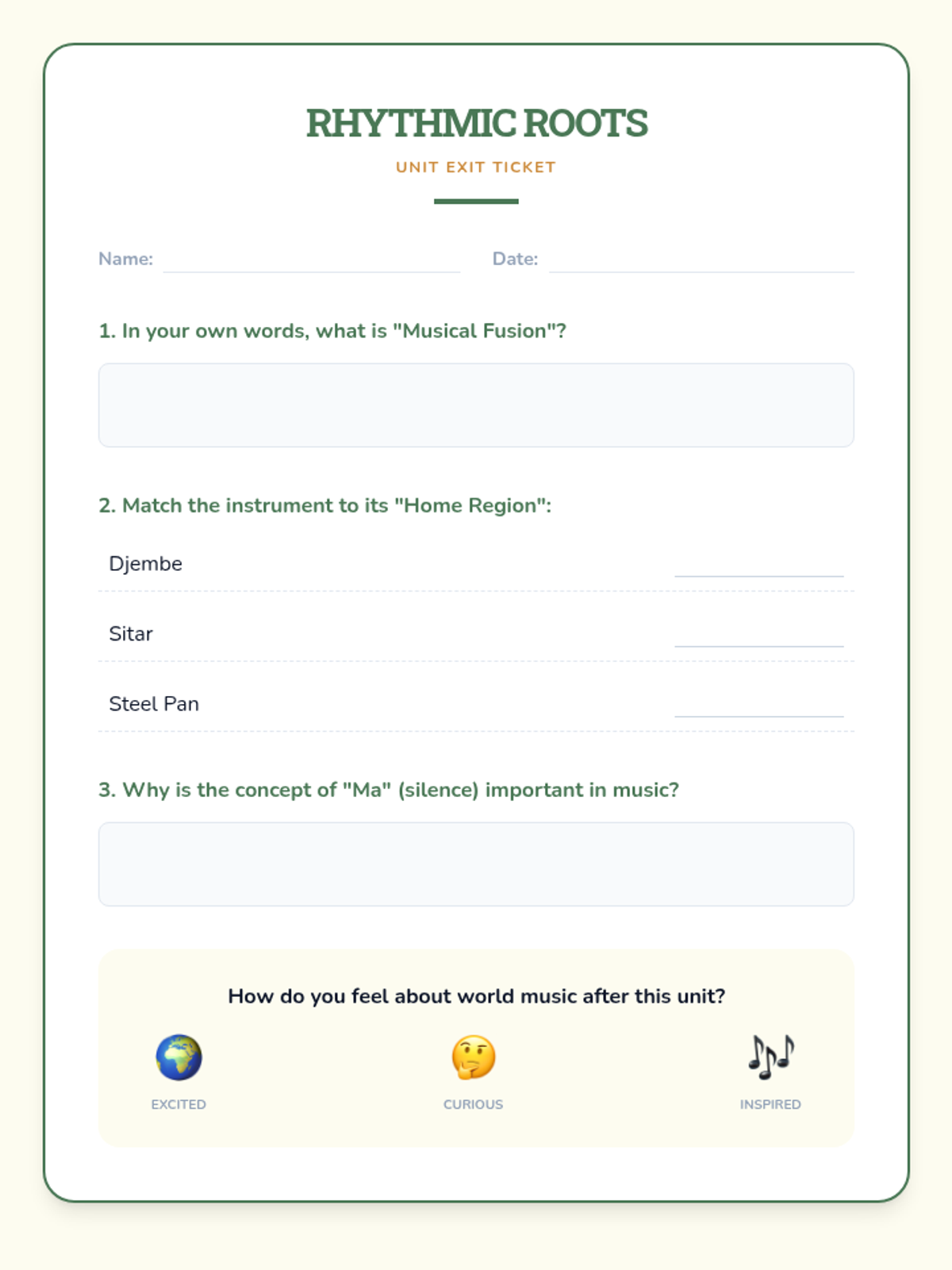
Synthesize learning through the study of global fusion and the creation of a collaborative world music project.
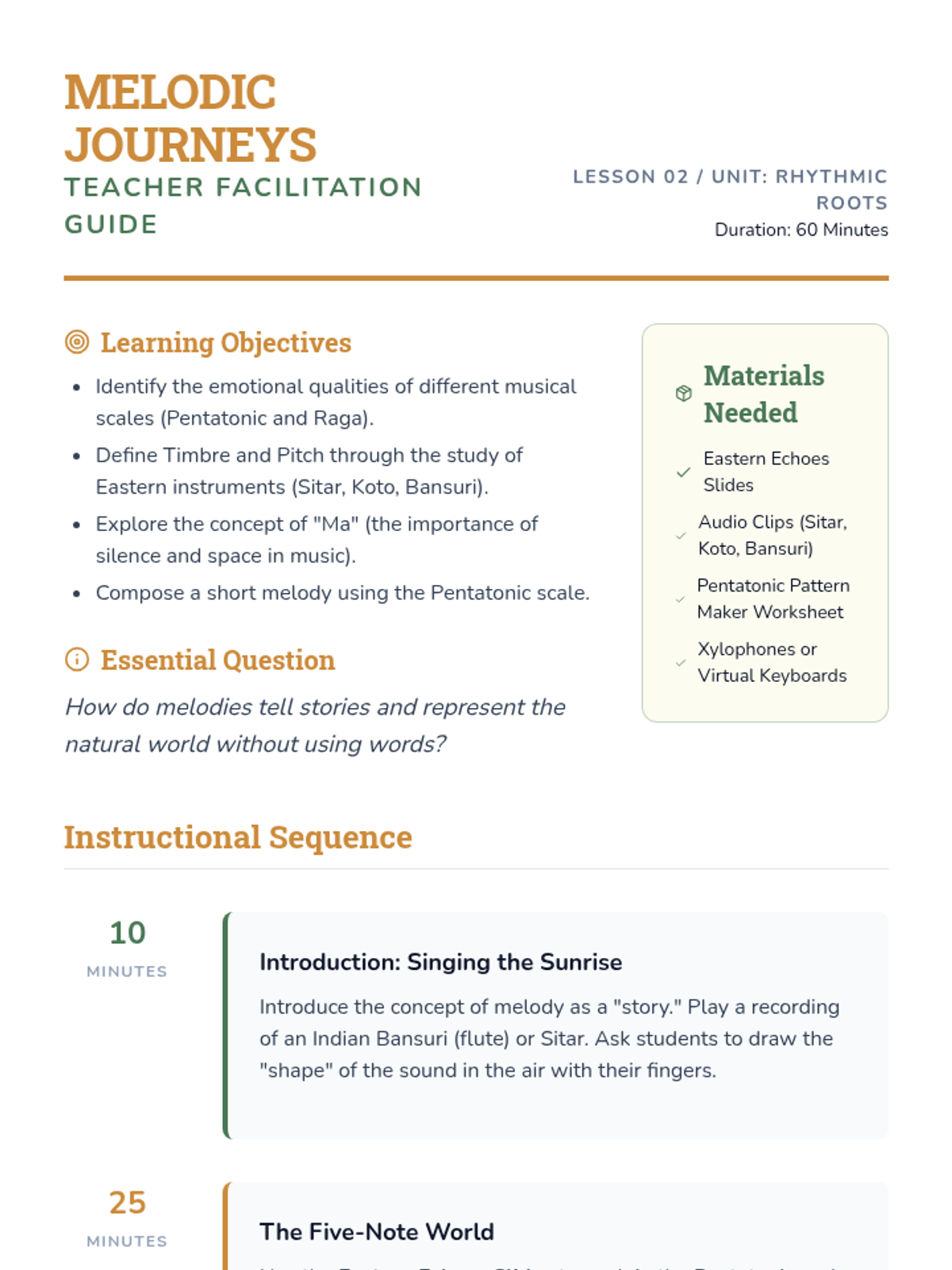
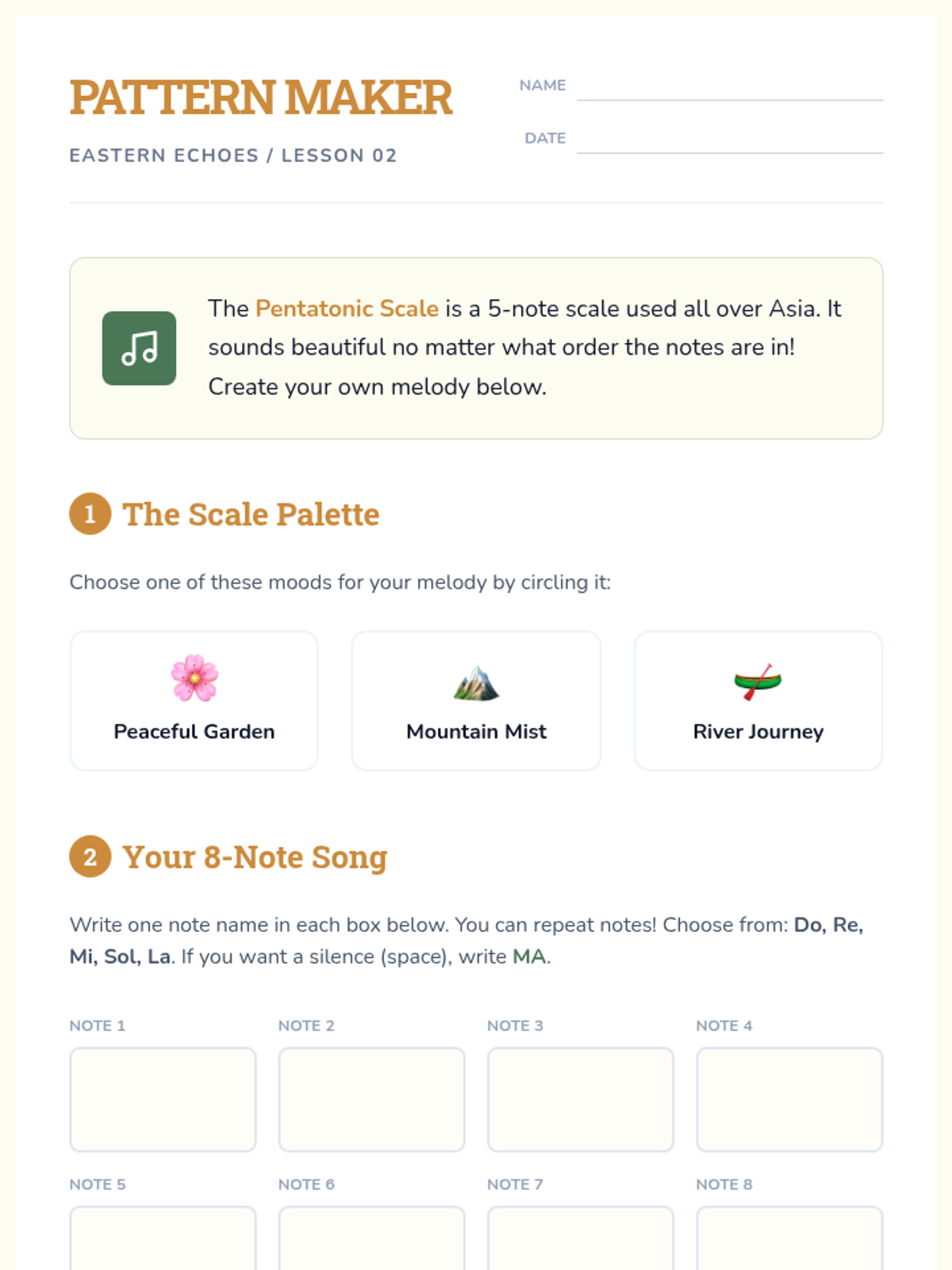
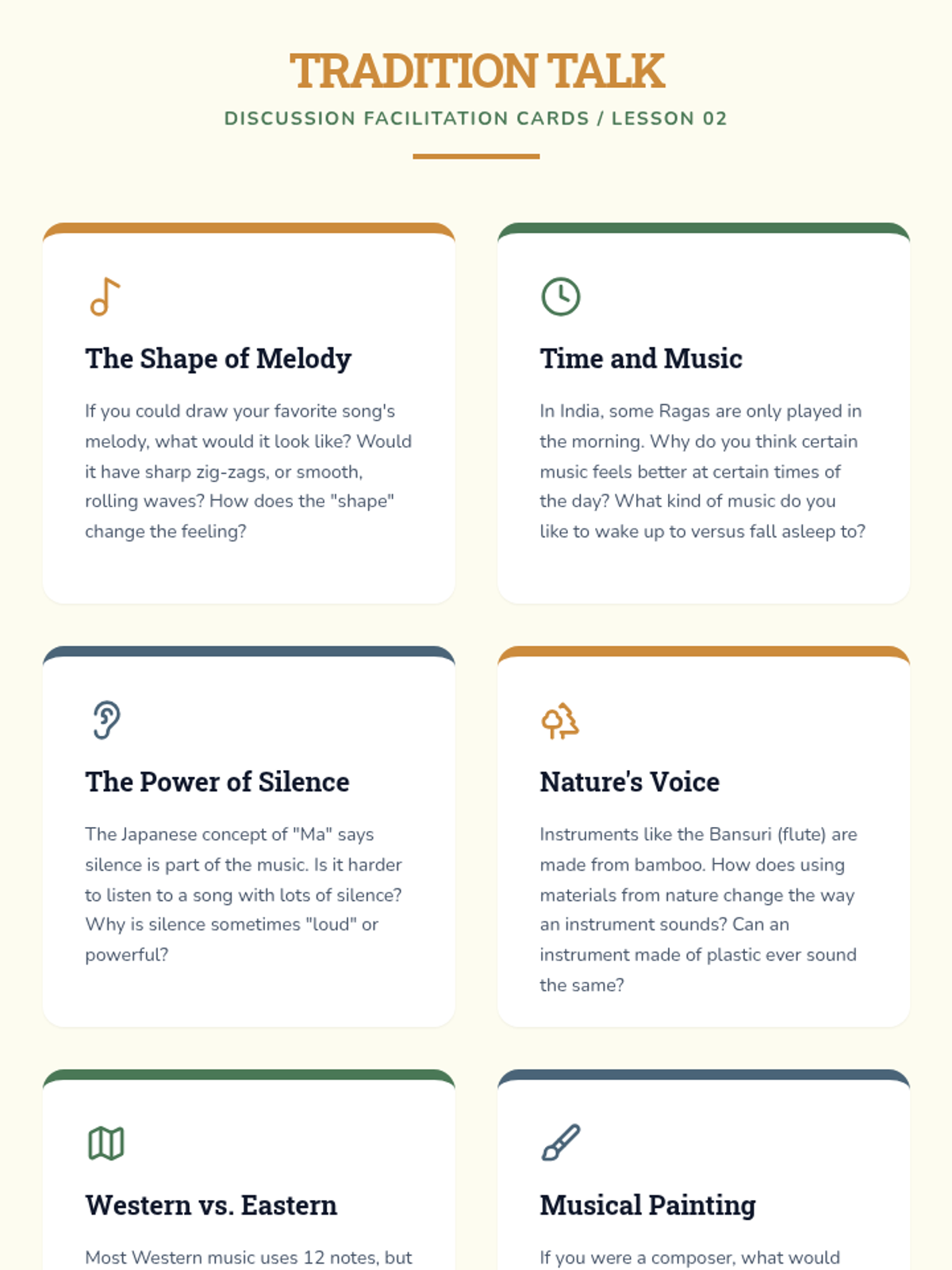
Discover the unique melodic structures, scales, and storytelling traditions of Asian and Middle Eastern music.
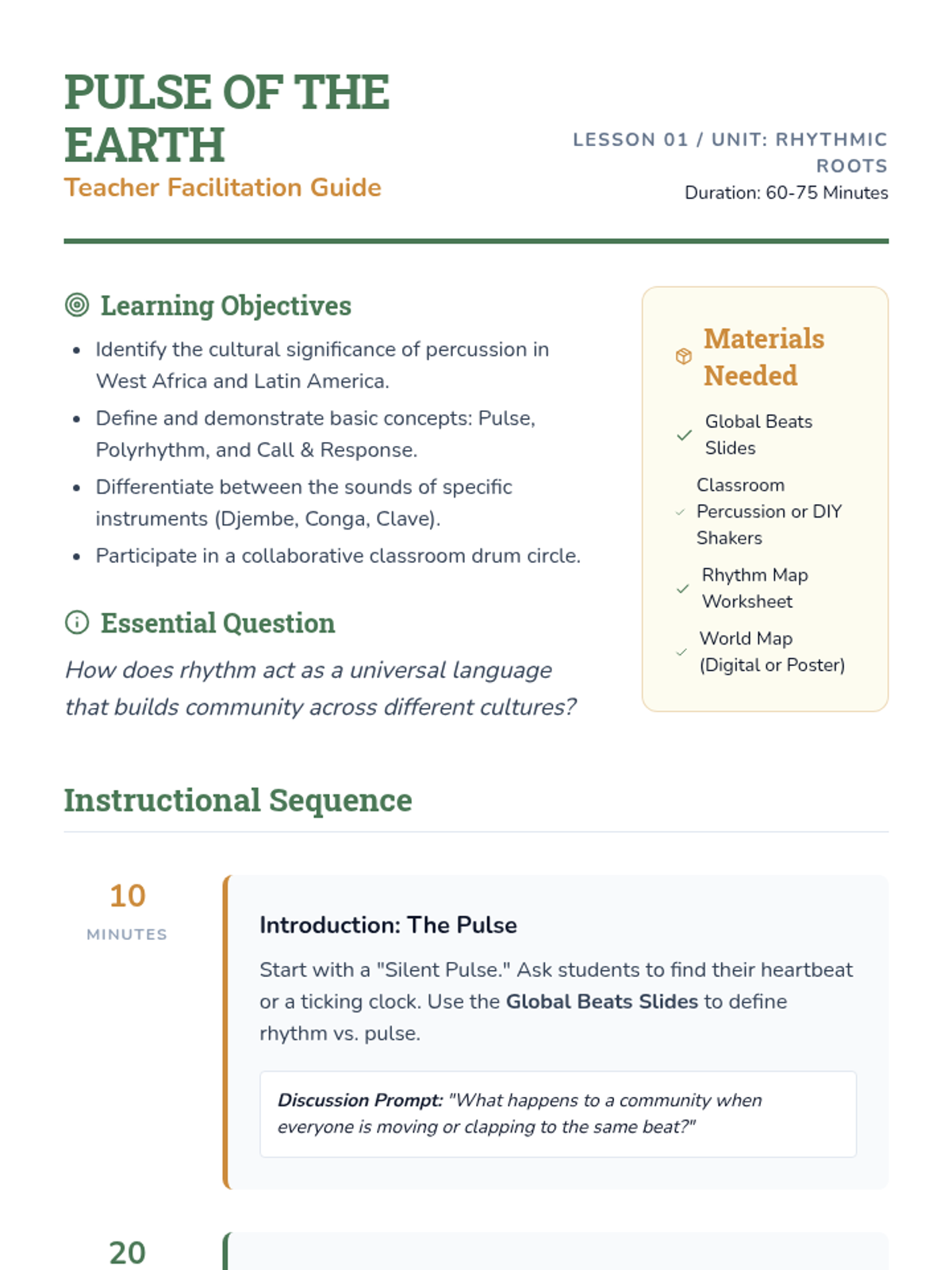
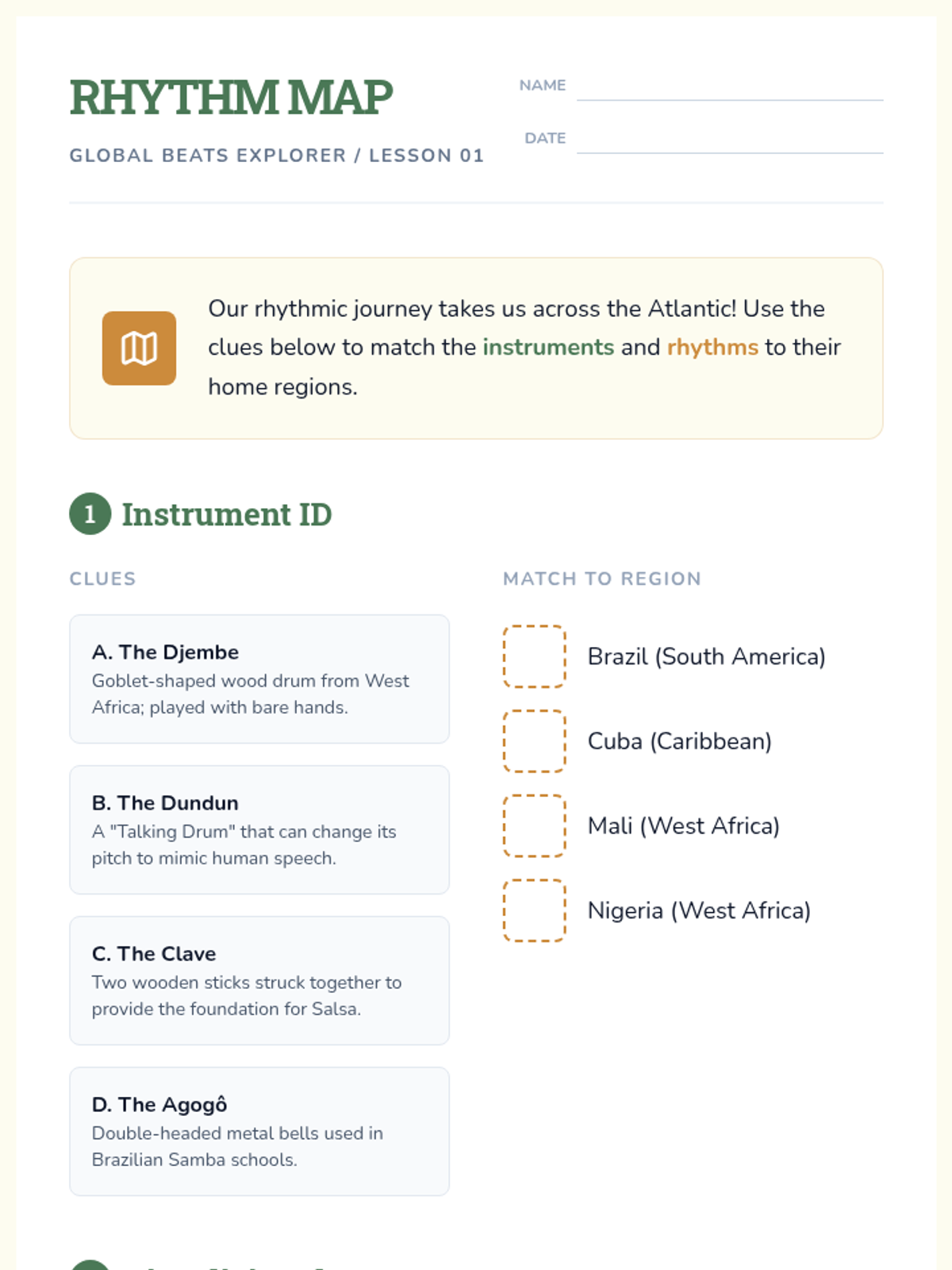
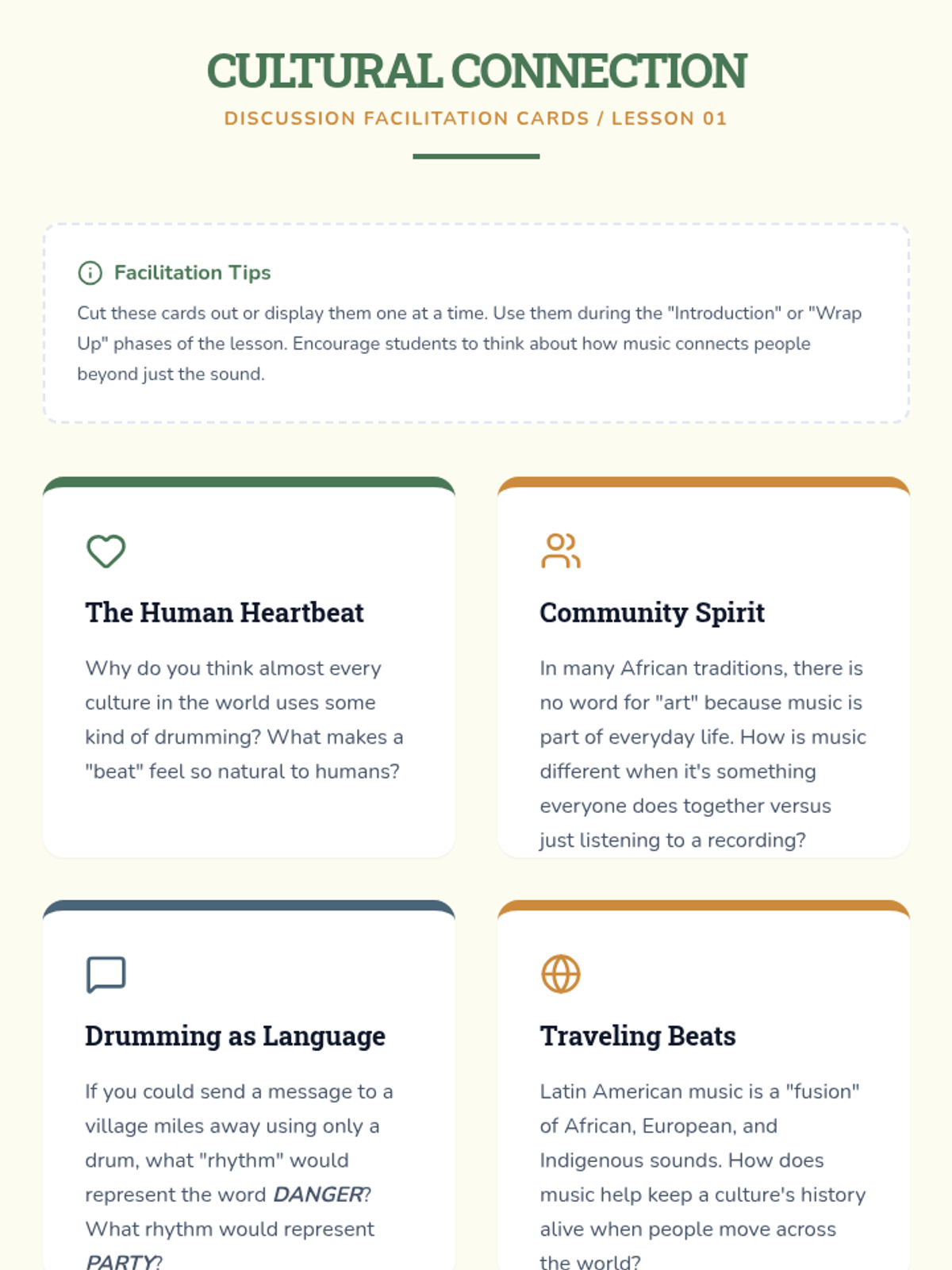
Explore the foundational role of percussion and polyrhythms in West African and Latin American musical traditions.
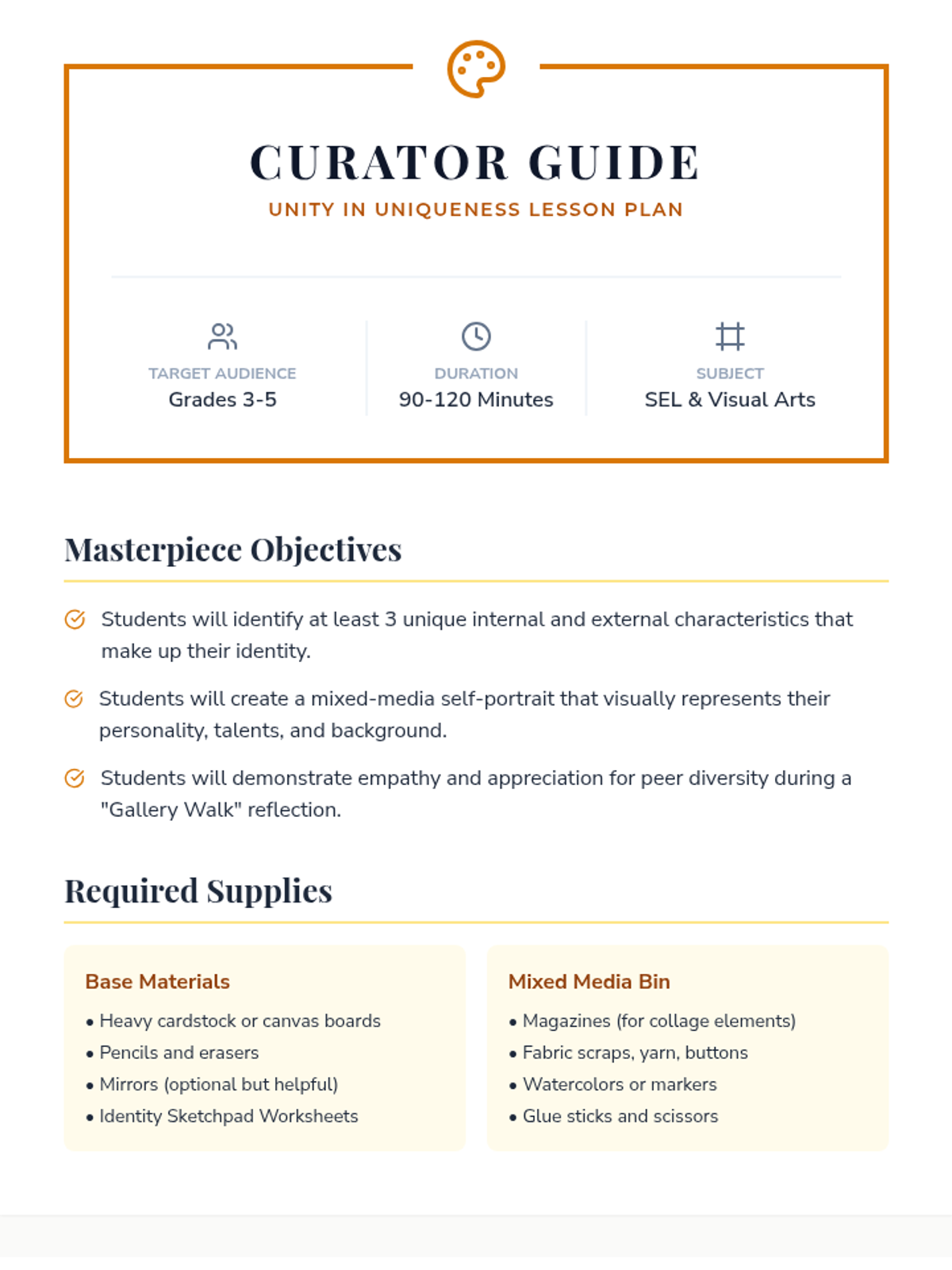
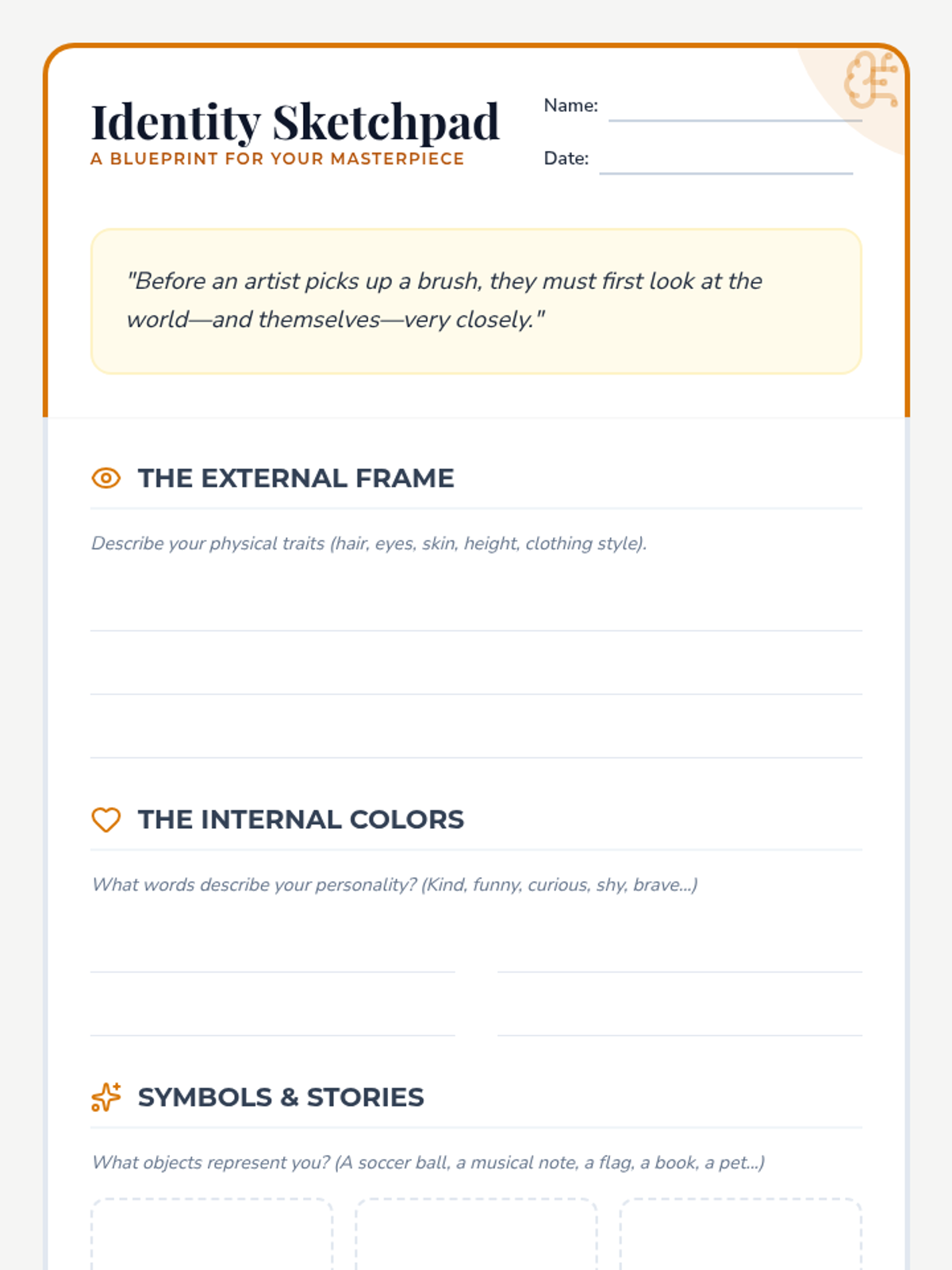
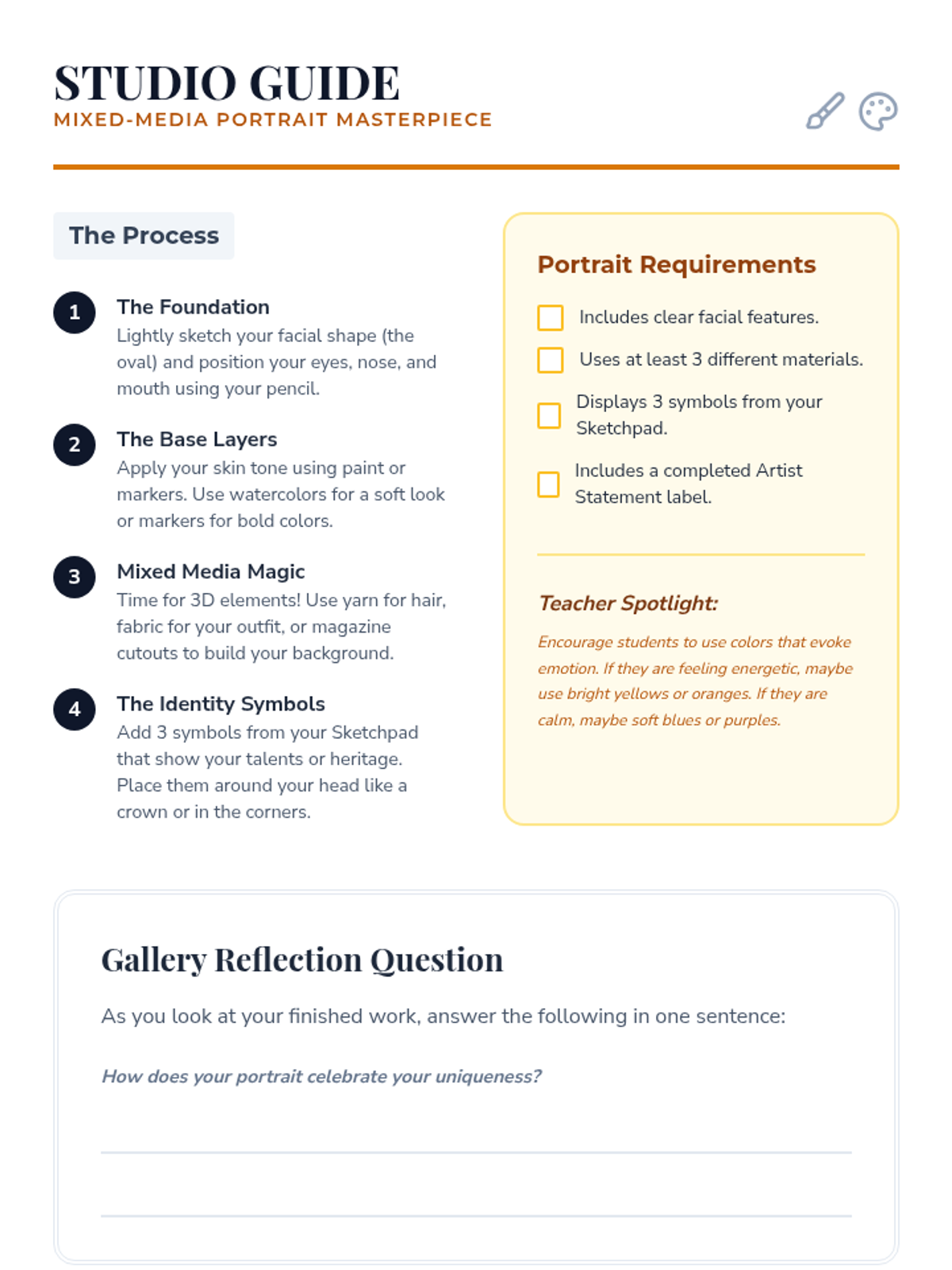
A comprehensive lesson where students explore and celebrate their unique identities through the creation of mixed-media portraits, culminating in a classroom 'Gallery of Uniqueness' that fosters empathy and community.