Cultural identity, community development, and public policy through the lens of creative practice. Addresses arts advocacy strategies and integrates interdisciplinary connections across social and professional sectors.
A final polished version of the student art journal, optimized for printing with high-contrast text and clear student work areas. Features an SEL check-in, technique practice boxes, and reflection questions on growth mindset.
A comprehensive and visually rich slide deck for 'The Dot' art lesson. Includes SEL check-ins, art history examples (Seurat, Kusama, Indigenous Art), and specific guidance for a respectful Gallery Walk.
An updated and comprehensive slide deck for 'The Dot' lesson, featuring SEL check-ins, master artist examples (Seurat, Kusama, Indigenous Art), and specific guidance for a respectful Gallery Walk.
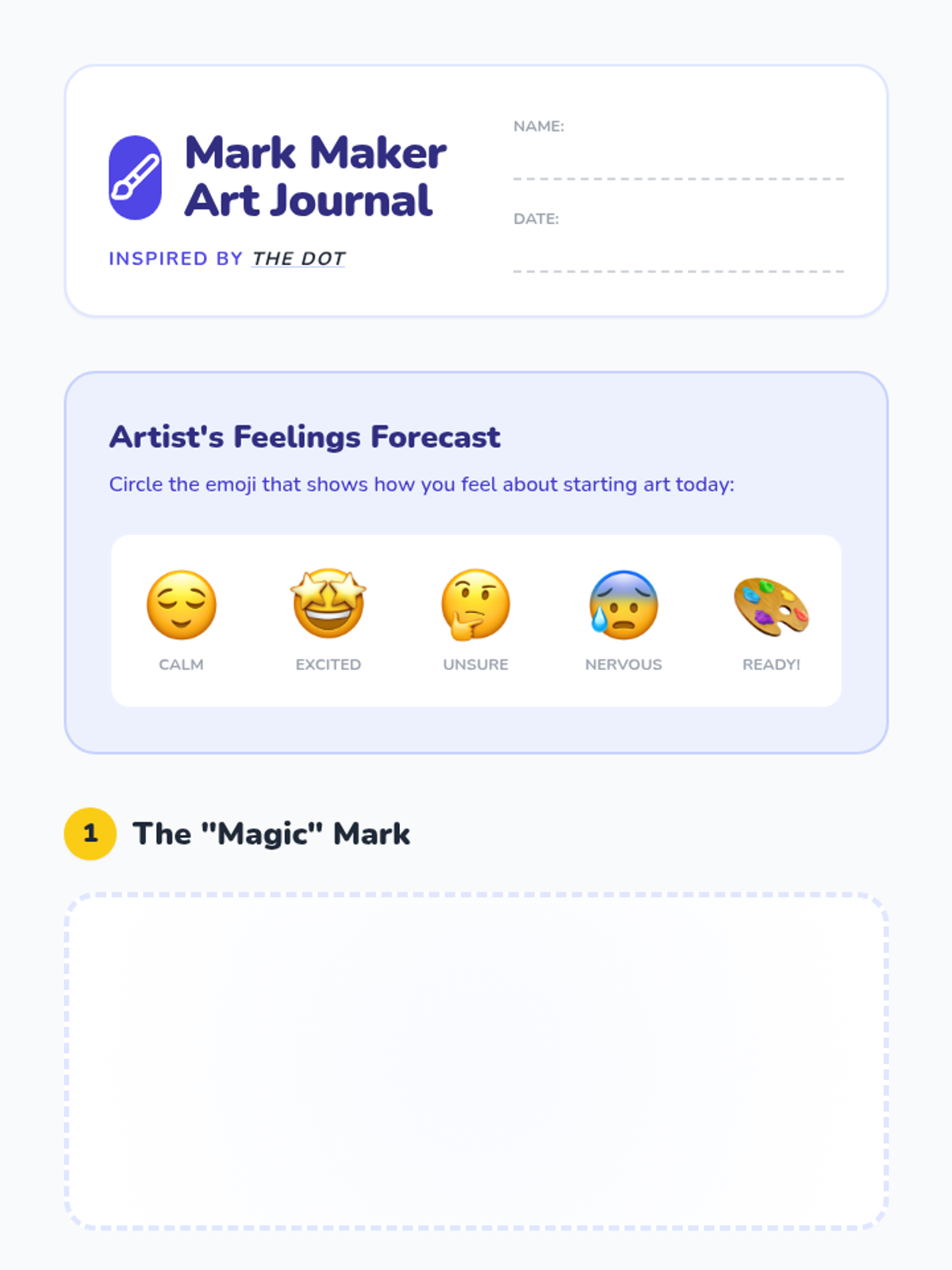
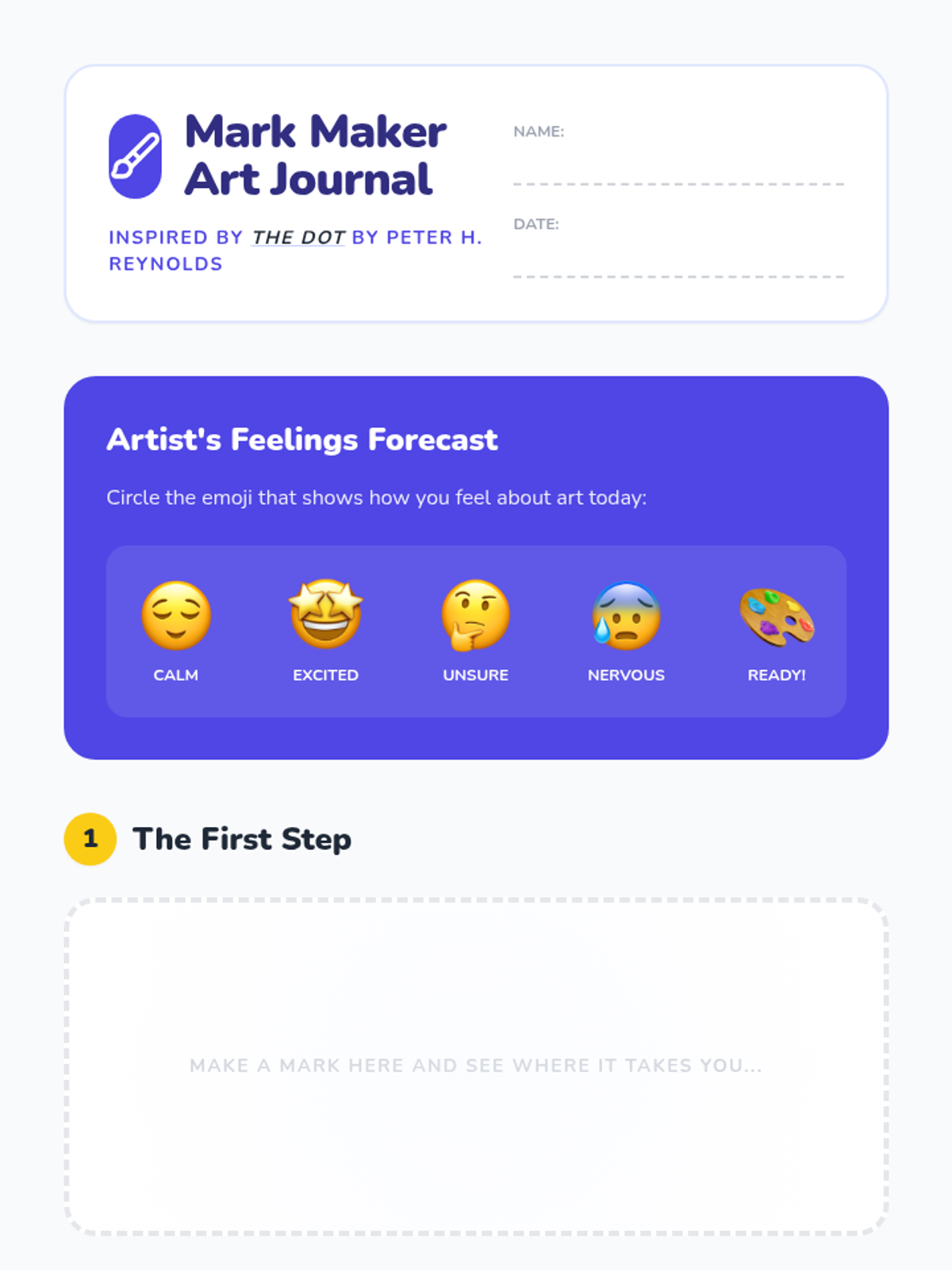
An updated student art journal with a Social-Emotional Learning (SEL) 'Feelings Forecast' emoji check-in, more space for practice, and a reflection section focused on growth mindset and peer encouragement.
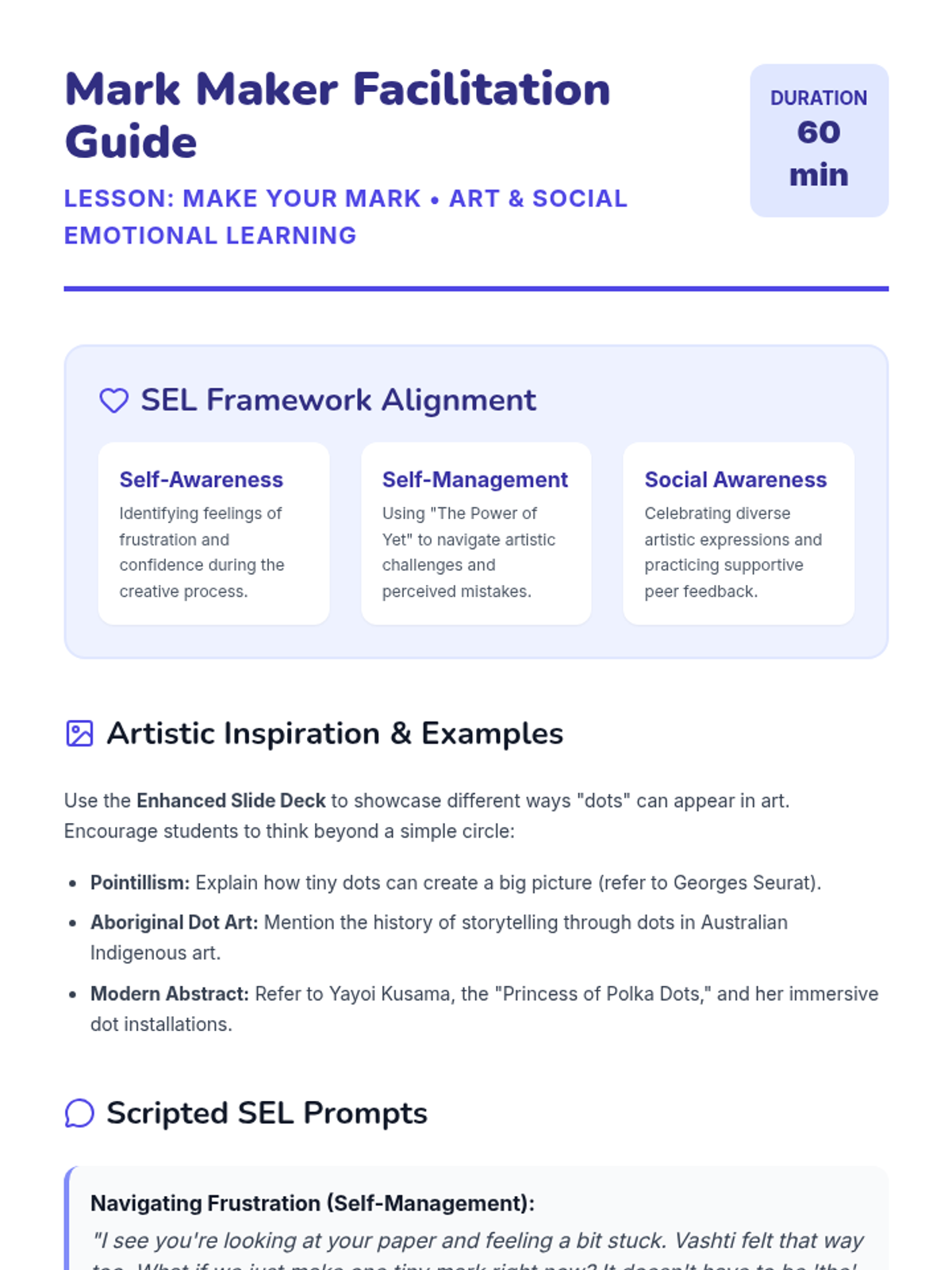
An updated teacher guide integrating SEL framework (self-awareness, resilience, social awareness) and referring to artistic examples and specific slide-by-slide facilitation instructions.
An updated slide deck for 'The Dot' lesson, now including specific Social-Emotional Learning (SEL) slides for self-awareness and resilience, plus visual art examples showing diverse dot styles.
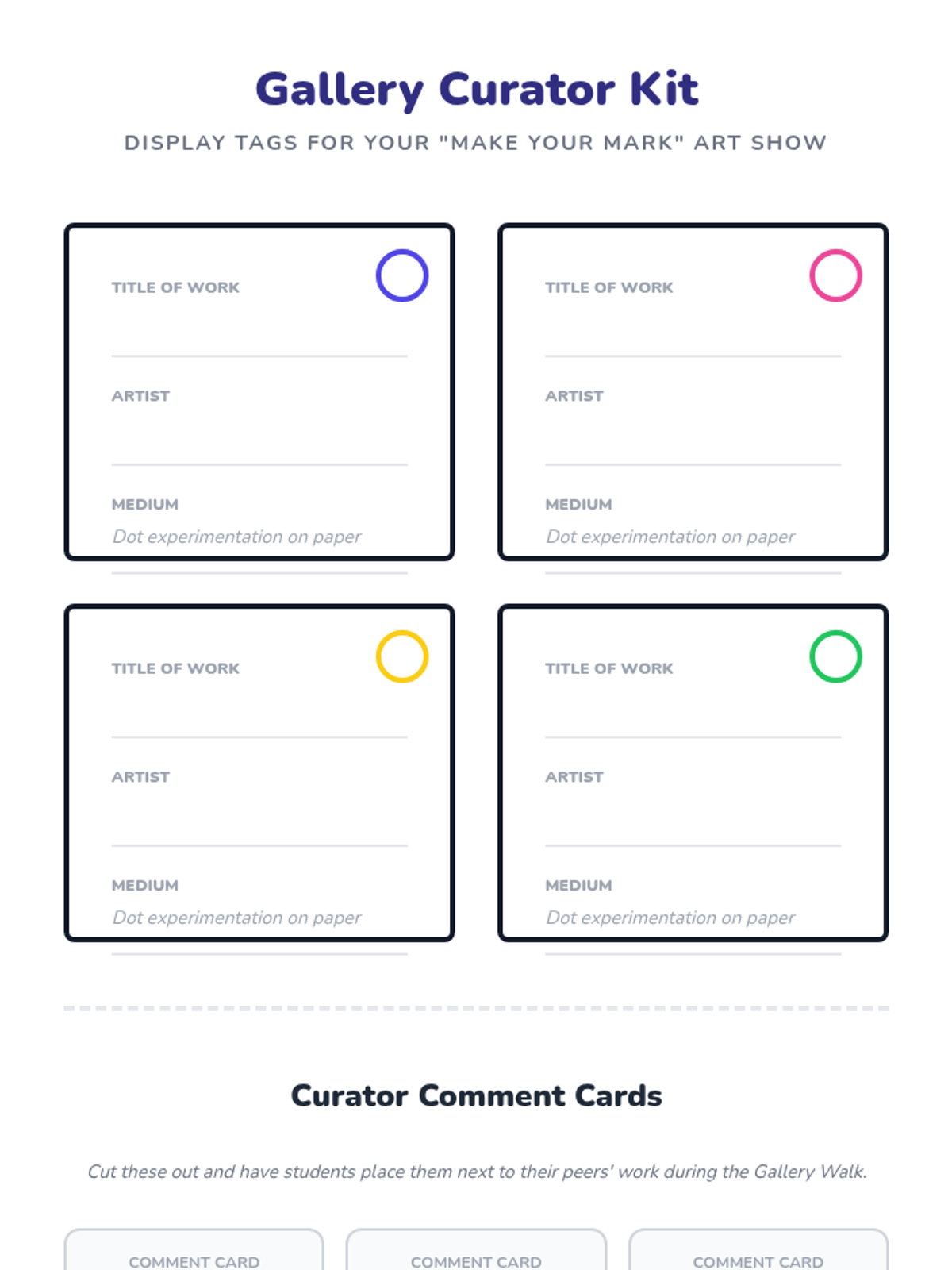
A set of printable gallery tags and curator comment cards for students to use during the final art show. Helps create a professional 'gallery' atmosphere and encourages peer feedback.
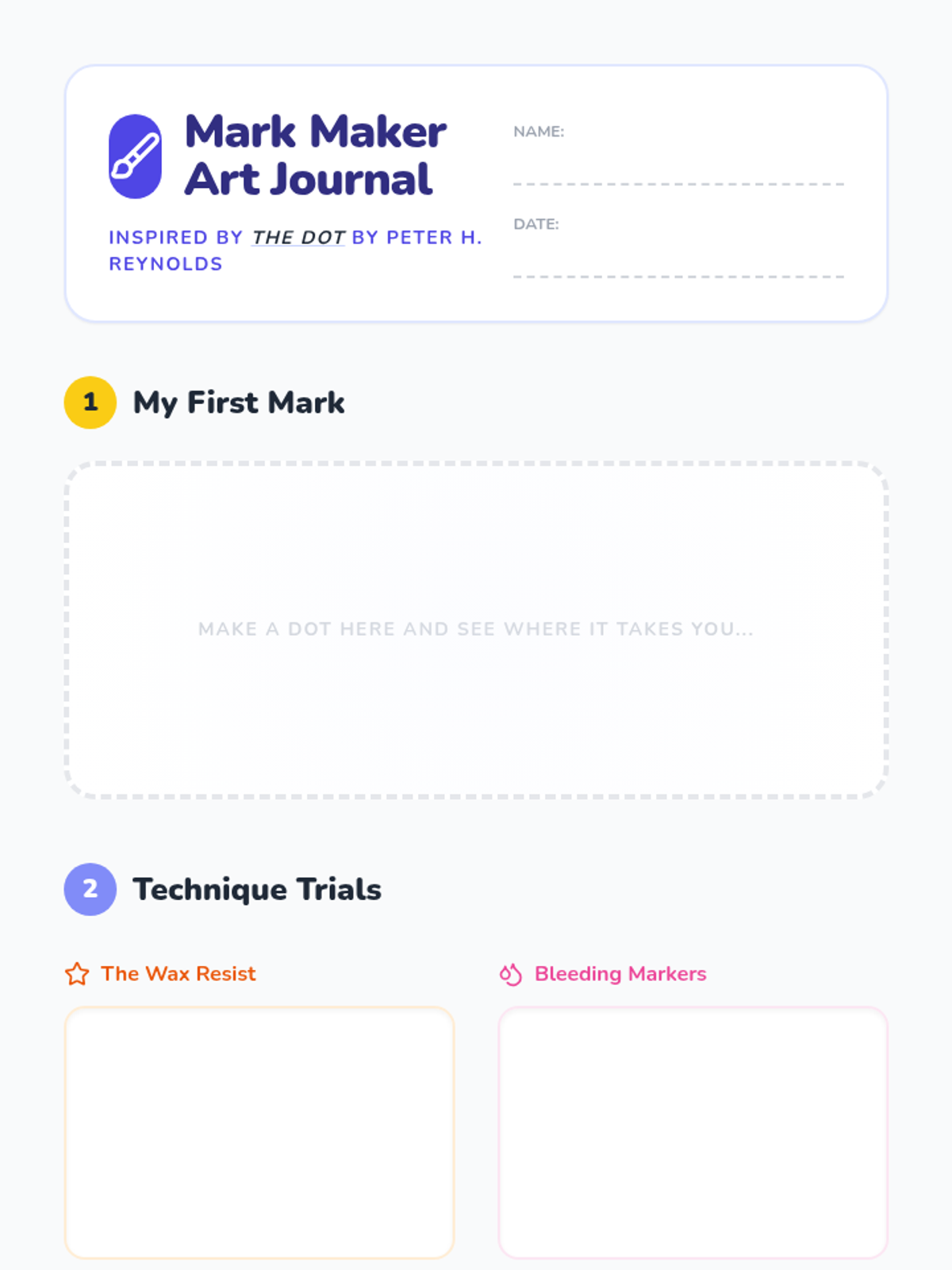
A creative student worksheet for the 'Make Your Mark' lesson. Includes a space for an initial mark, boxes to practice the four art techniques, and a reflection section with growth mindset sentence starters.
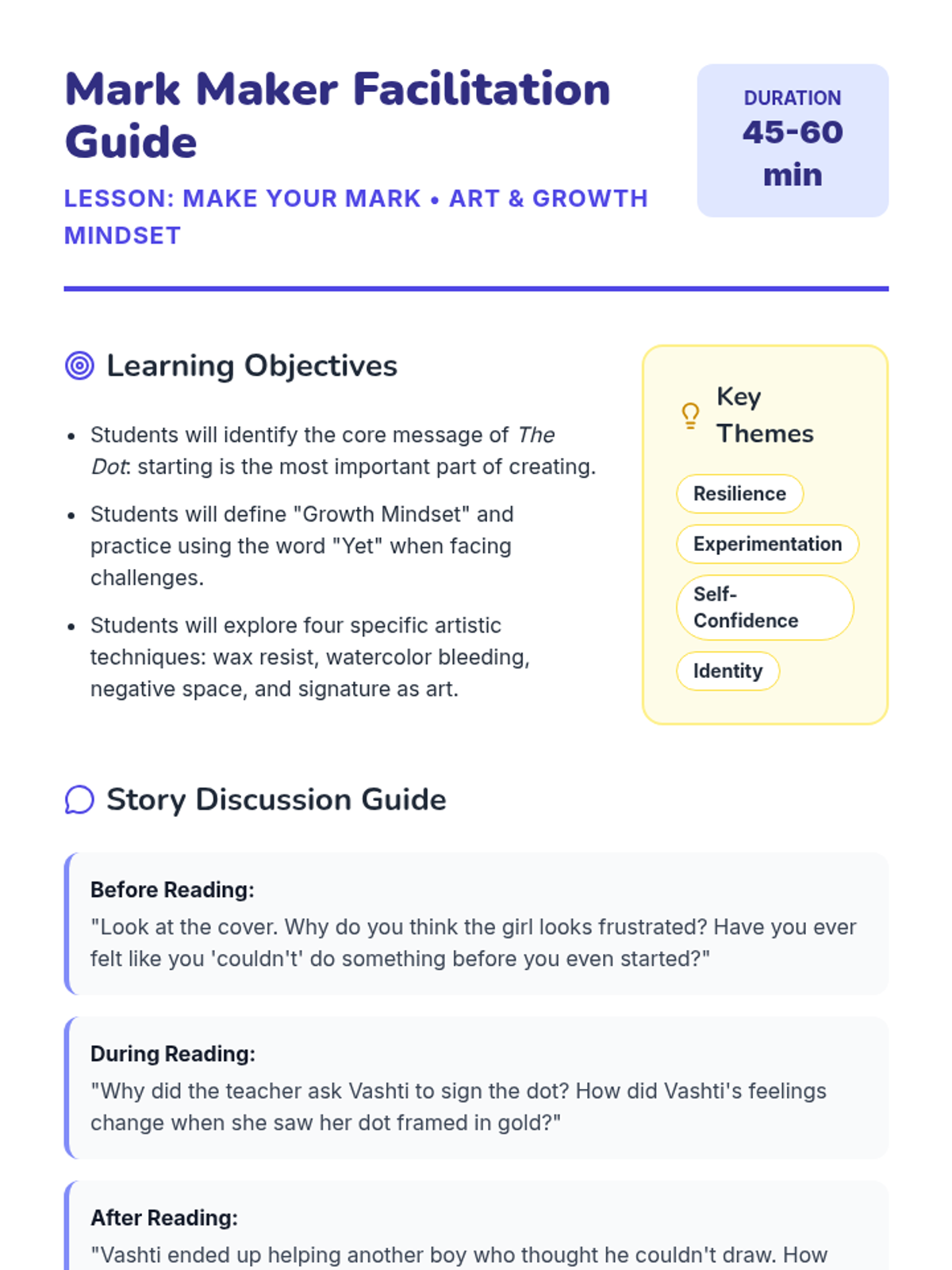
A comprehensive teacher guide for facilitating the 'Make Your Mark' art lesson. Includes learning objectives, discussion prompts for 'The Dot', technique tips, troubleshooting advice, and extension ideas.
A vibrant step-by-step slide presentation for an art project inspired by Peter H. Reynolds' 'The Dot'. Covers the story, growth mindset, and four different artistic techniques for making dots.
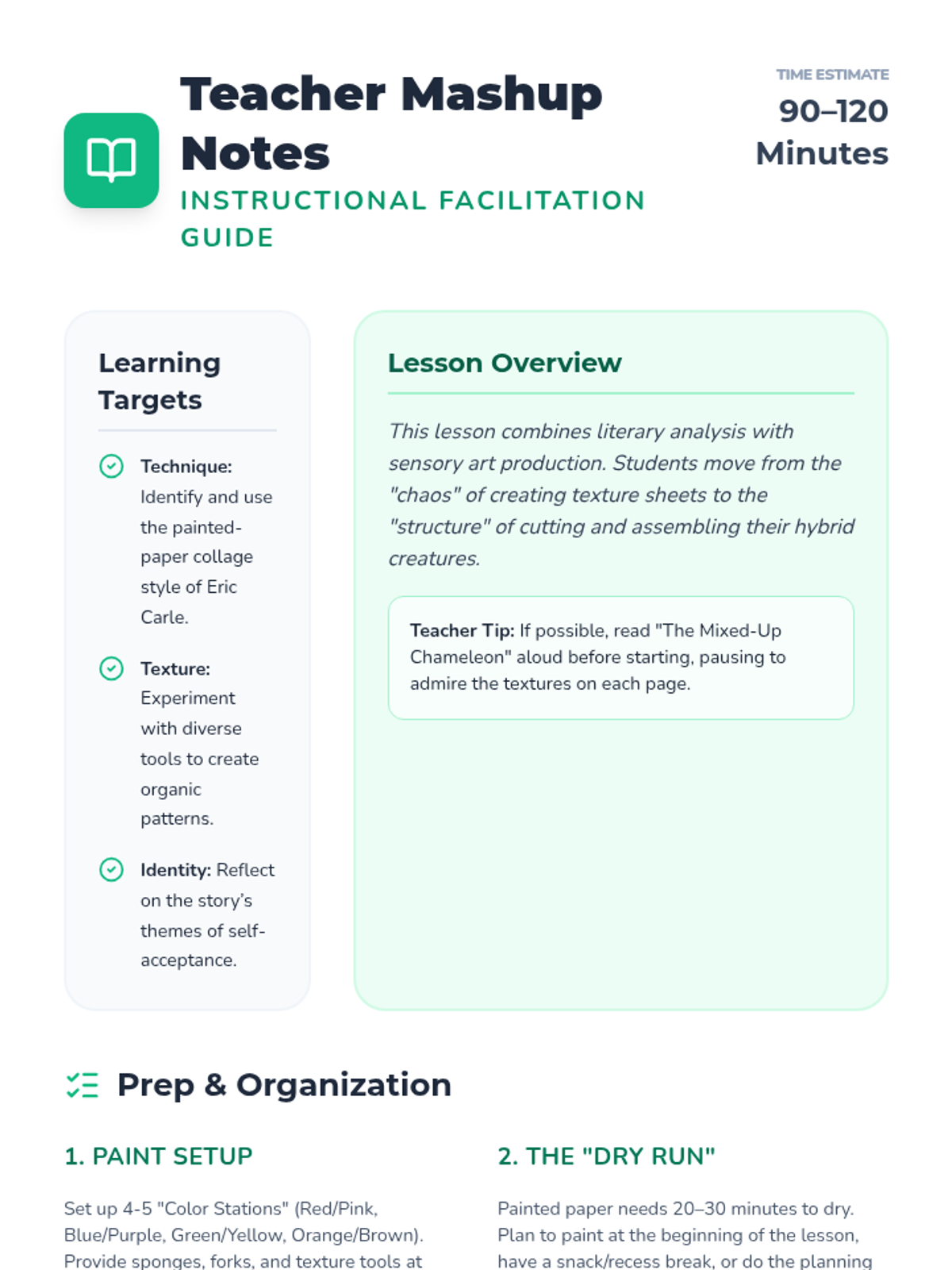
A comprehensive instructional guide for teachers to facilitate the 'Chameleon Mashup' lesson, including prep steps, facilitation phase prompts, and discussion questions on identity.
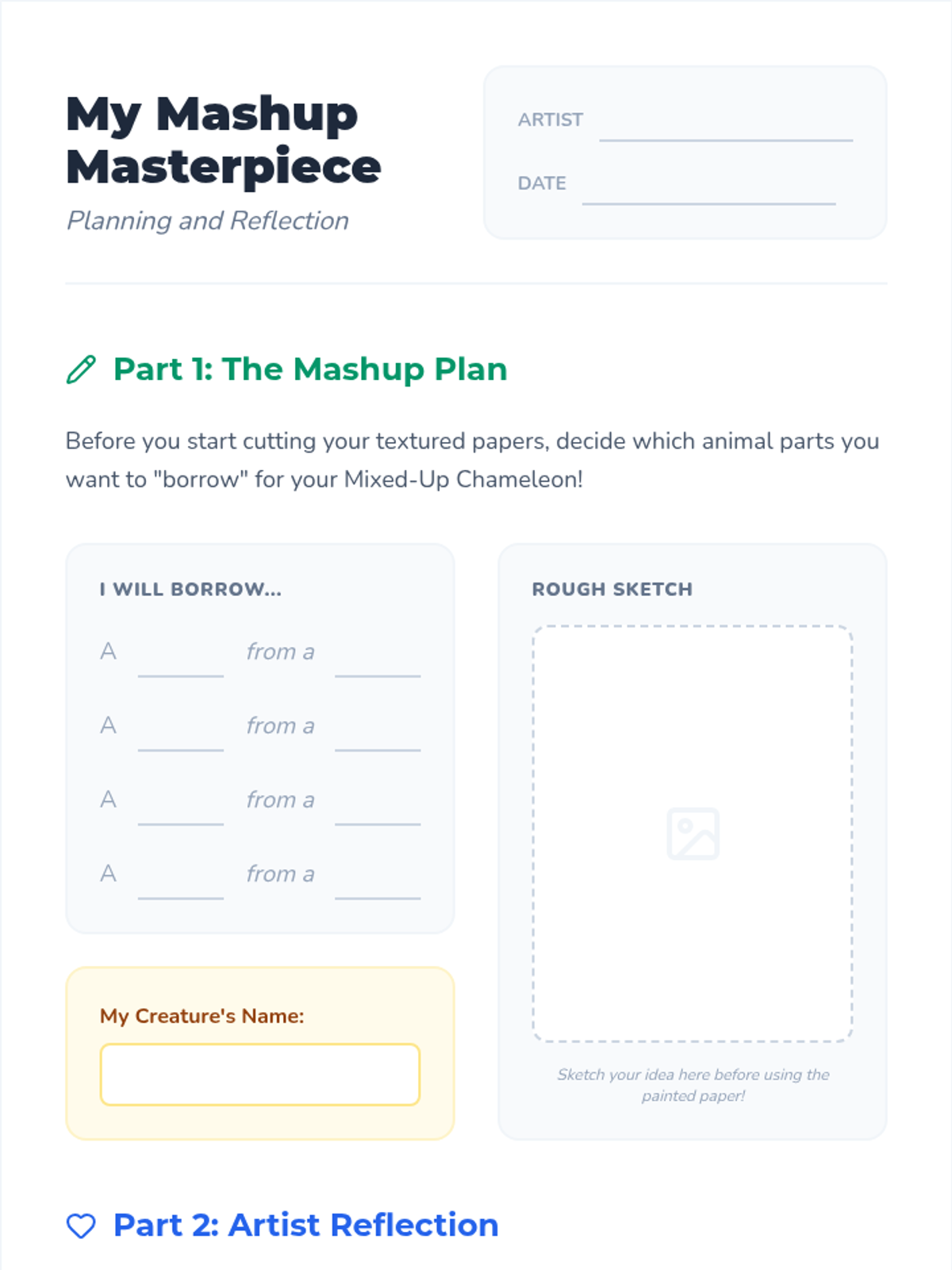
A student worksheet for planning their 'Mixed-Up Chameleon' creation and reflecting on their artistic process and the themes of identity found in the story.
A vibrant slide deck for introducing the 'Chameleon Mashup' art project, featuring Eric Carle's painting techniques, story themes, and step-by-step visual prompts.
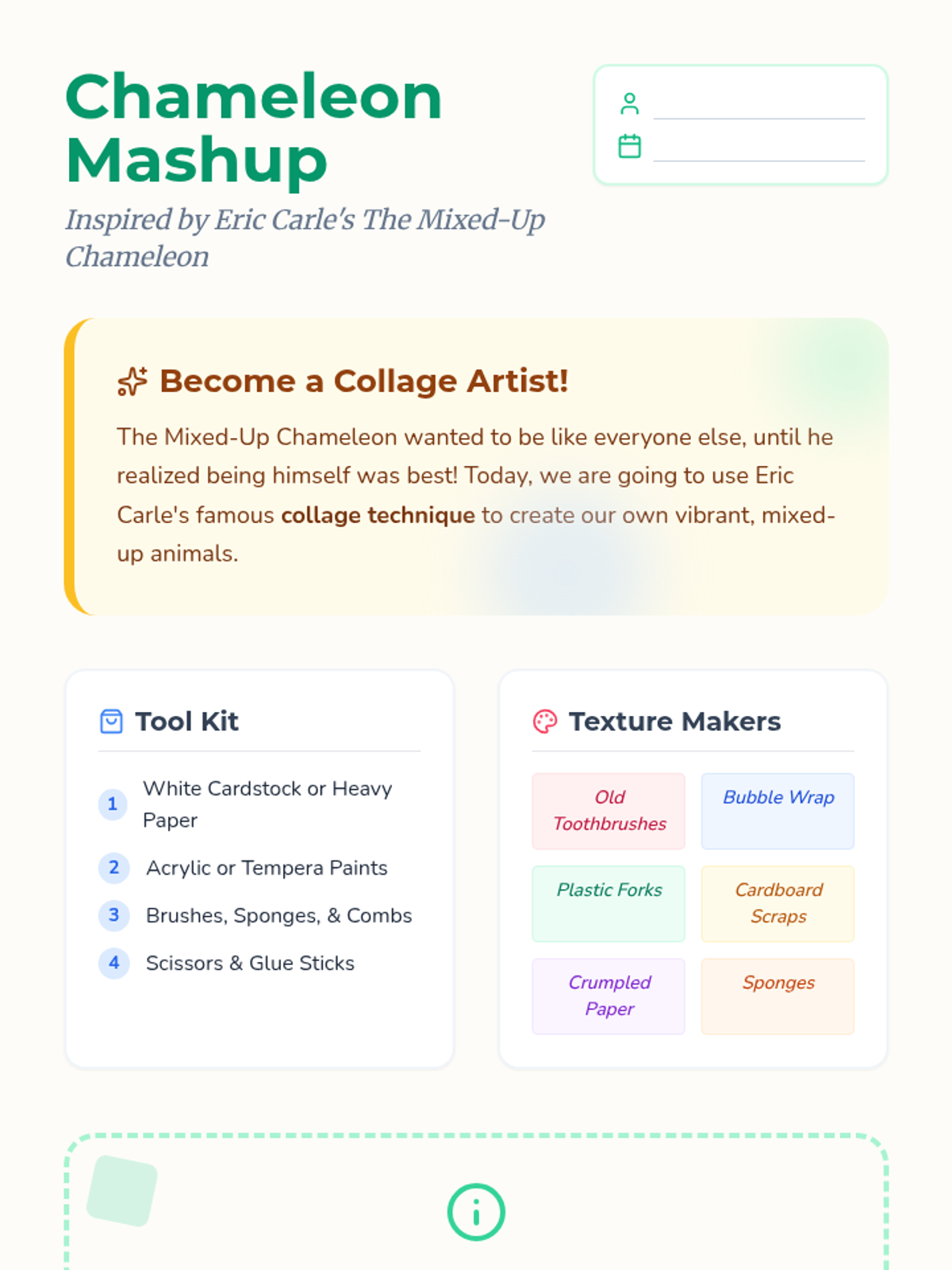
A vibrant, step-by-step printable project guide for students to create a 'Mixed-Up Chameleon' collage using Eric Carle's signature painted tissue paper technique. Includes a materials list and artistic 'pro-tips'.
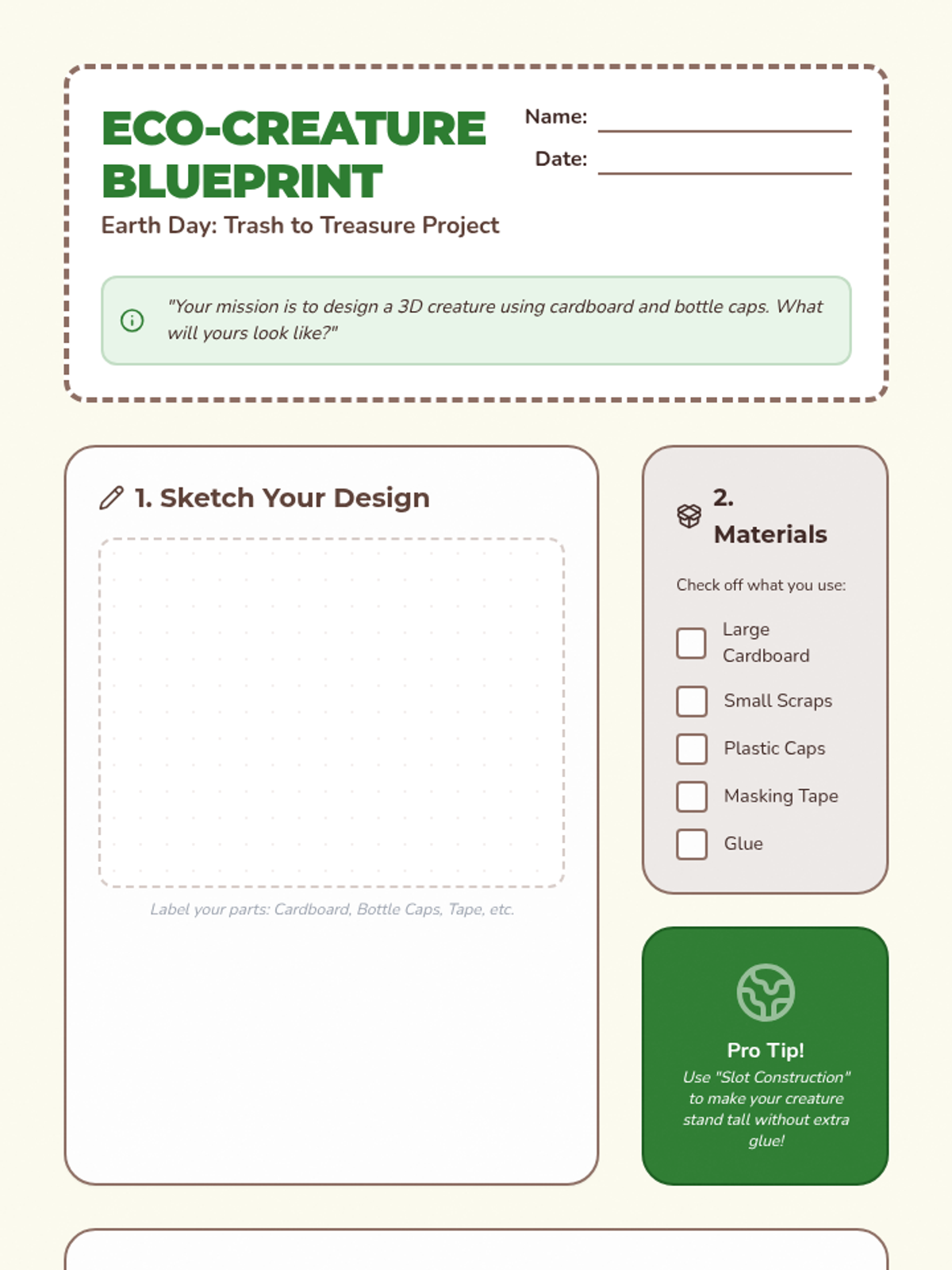
A student worksheet for planning and reflecting on the 'Eco-Creature' sculpture project. Includes a sketching grid, a material checklist, and an 'Artist Statement' section for defining the creature's name and superpower.
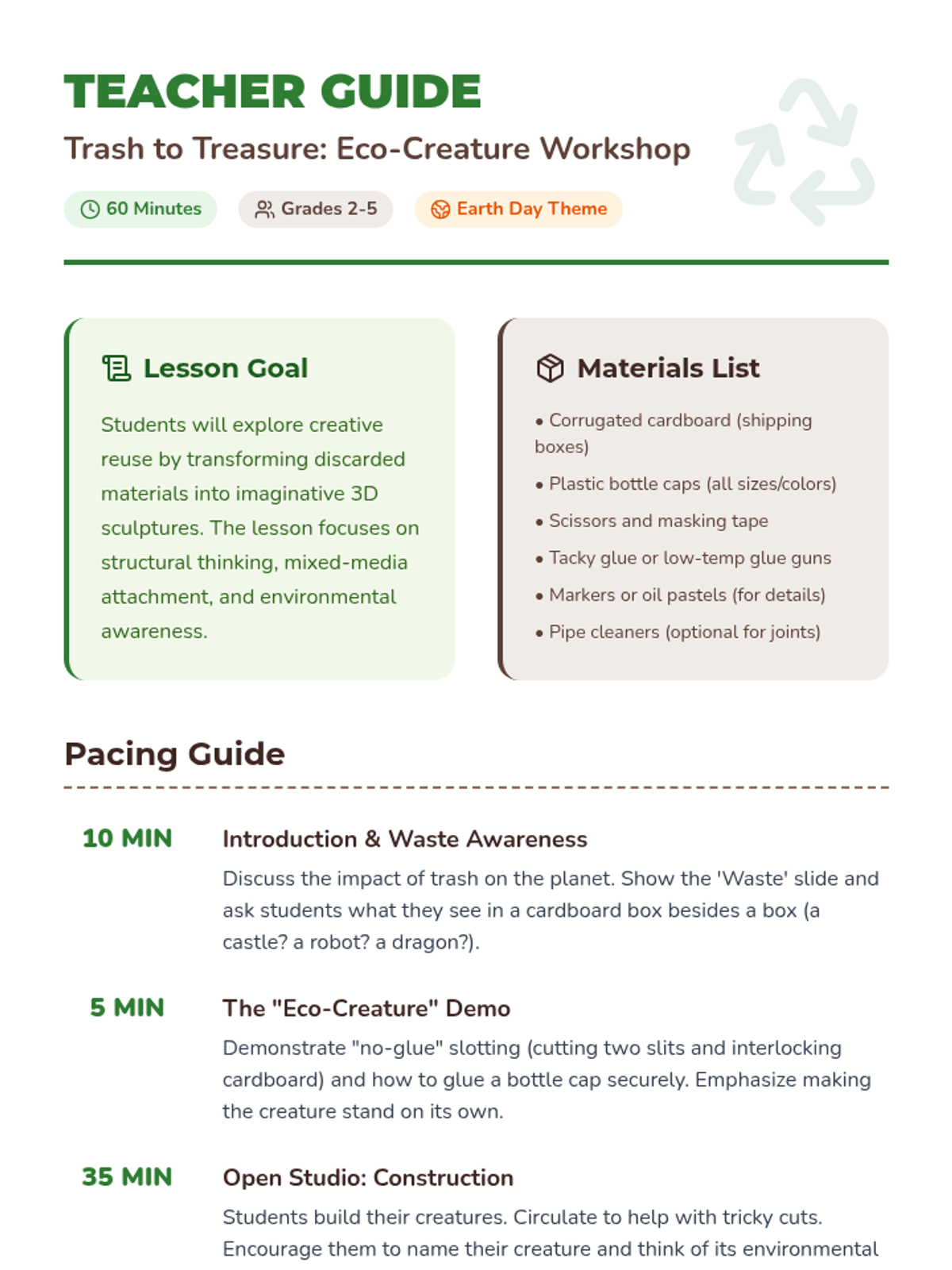
A comprehensive facilitation guide for teachers, including a 60-minute pacing plan, materials checklist, technical demonstration tips, and discussion prompts for the Earth Day art project.
A vibrant 7-slide presentation for Earth Day, guiding students through the process of creating 'Eco-Creatures' from recycled cardboard and bottle caps. Includes background information on waste, artistic inspiration, and a structured construction guide.
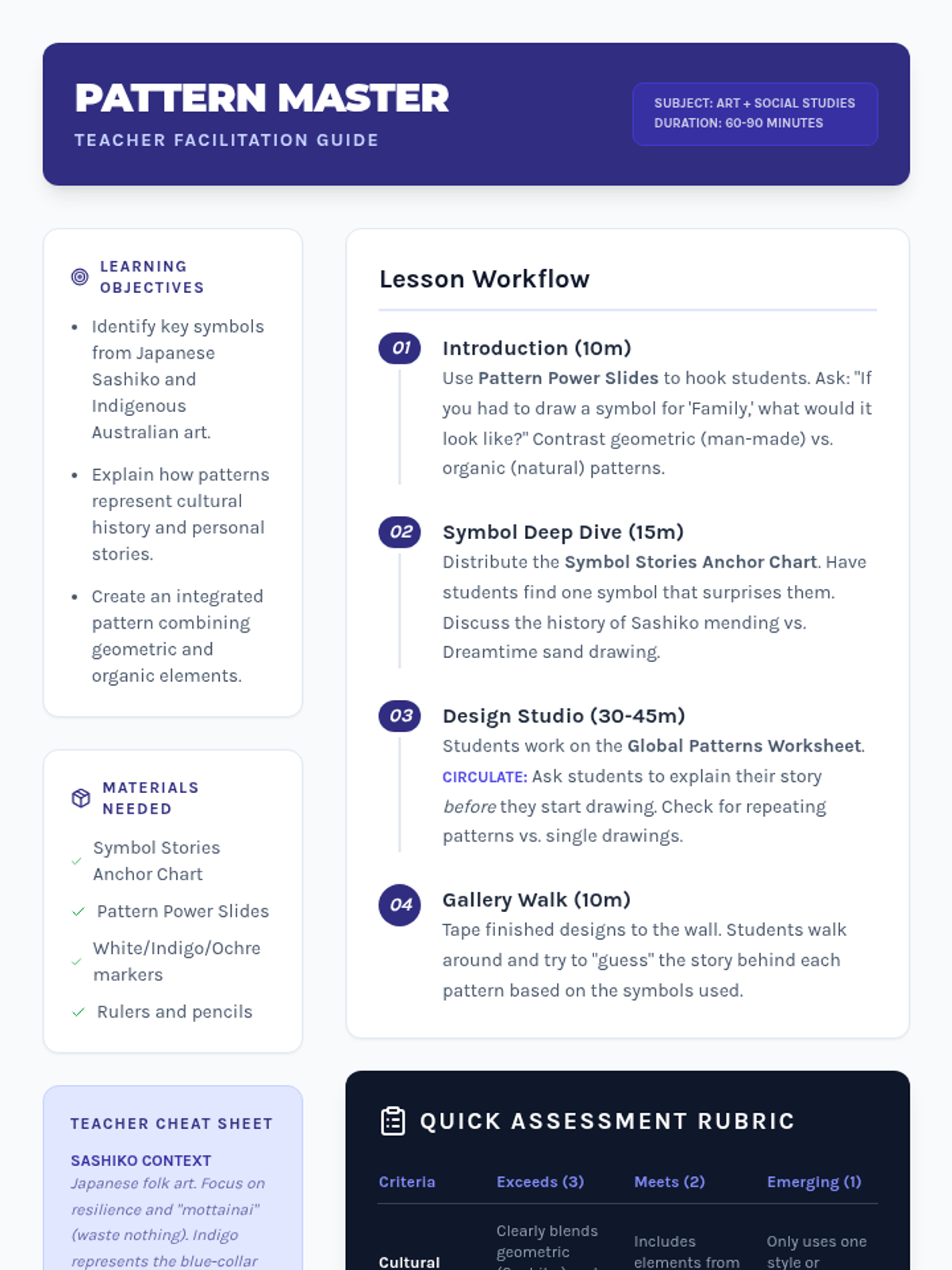
A comprehensive teacher facilitation guide for the Pattern Power lesson. It includes learning objectives, historical background, a step-by-step workflow, and a quick assessment rubric.
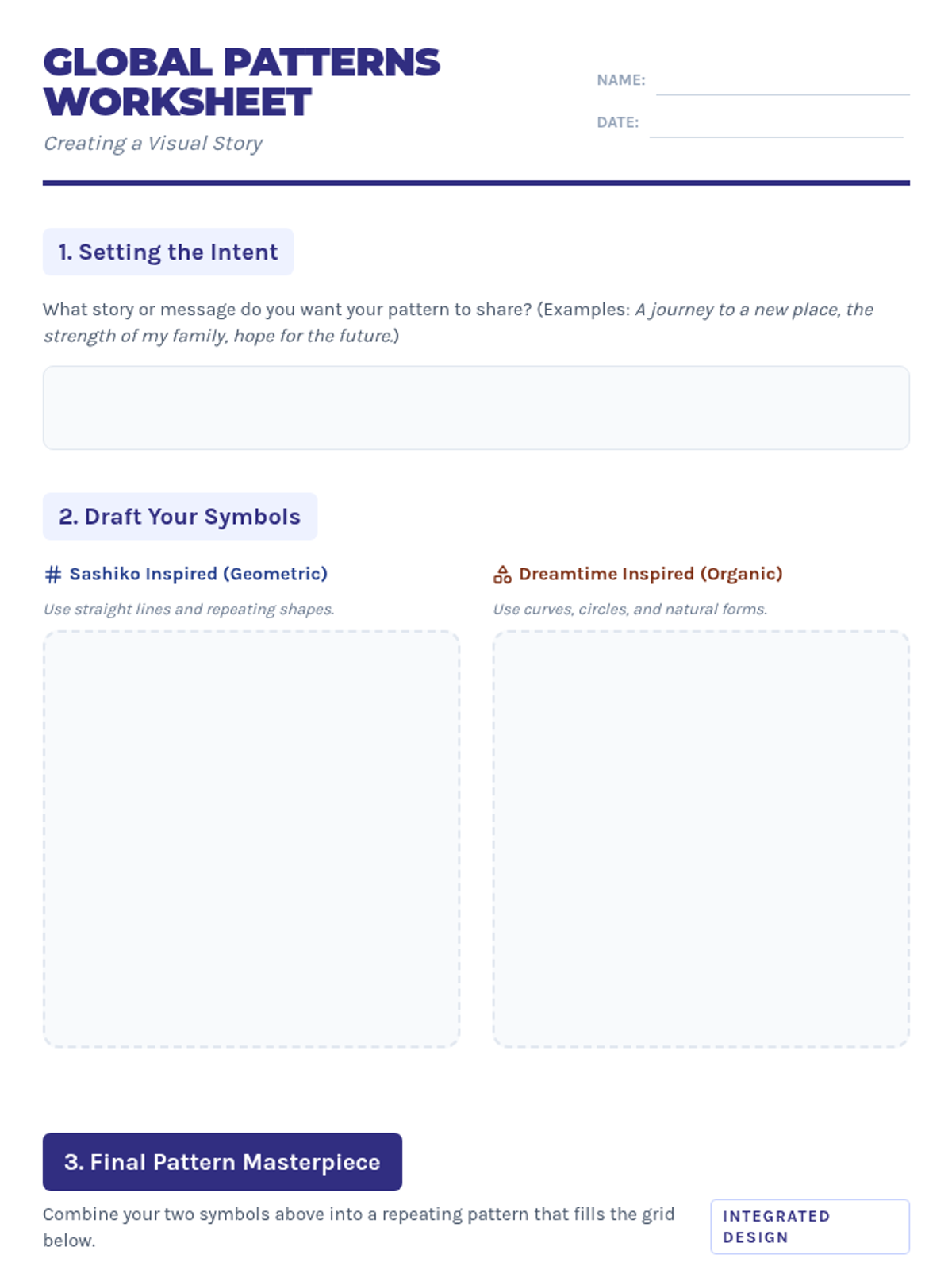
A 2-page student worksheet for grades 4-7 where they plan symbols inspired by Sashiko and Dreamtime art, create a final integrated pattern, and reflect on the storytelling aspect of their design.
Instructional slides for grades 4-7 introducing the history, visual style, and symbolism of Japanese Sashiko and Indigenous Australian Dreamtime art. It includes a design mission for students to create their own patterns.
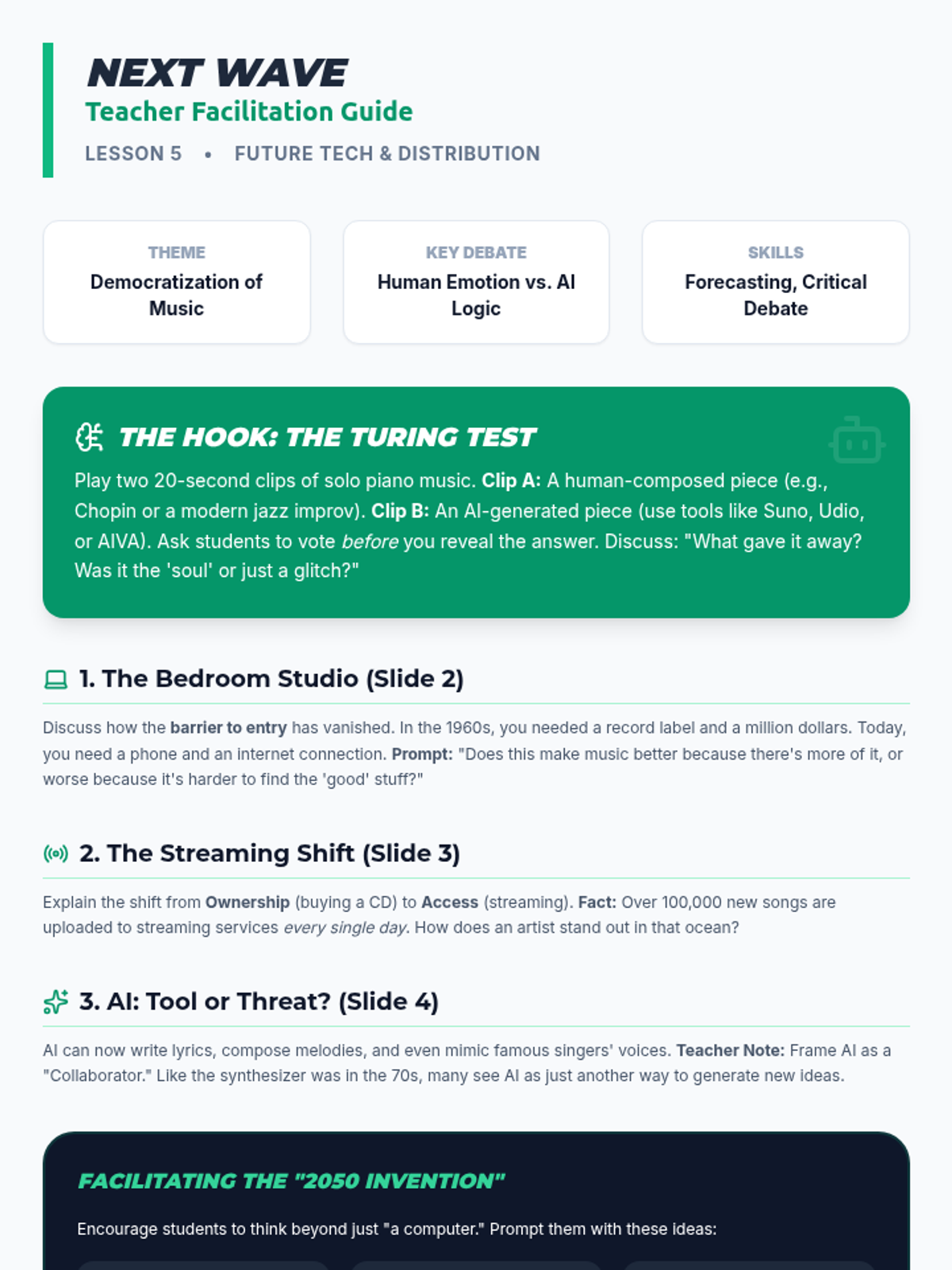
A teacher facilitation guide for Lesson 5, including "Turing Test" clip suggestions, discussion prompts for streaming culture, and ideas for the futuristic instrument design project.
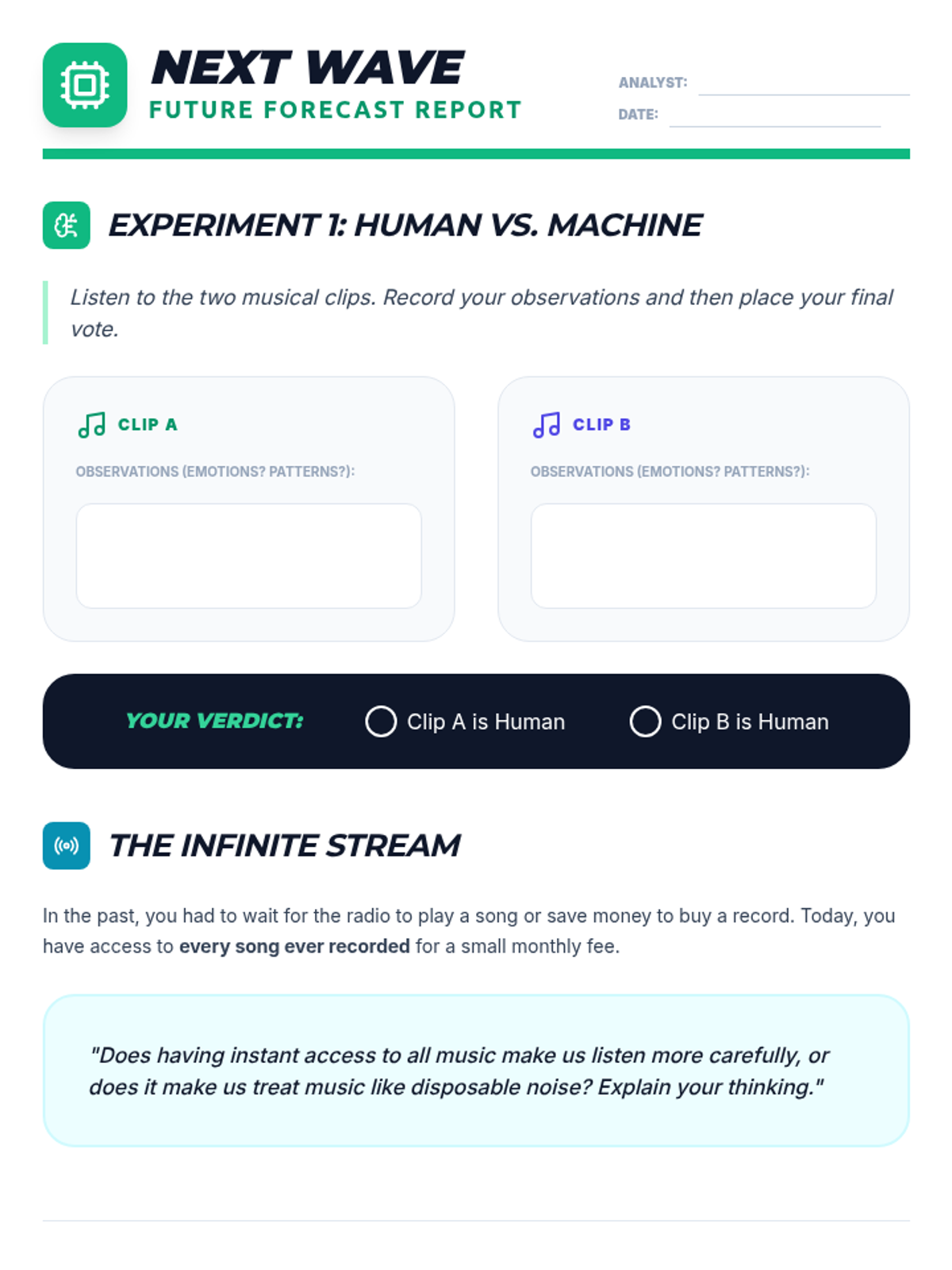
A student worksheet for Lesson 5, featuring a "Turing Test" listening log, a reflection on streaming culture, and a creative project to design a futuristic musical instrument.
A visual presentation for Lesson 5, exploring bedroom production, streaming culture, and the rise of AI in music composition.
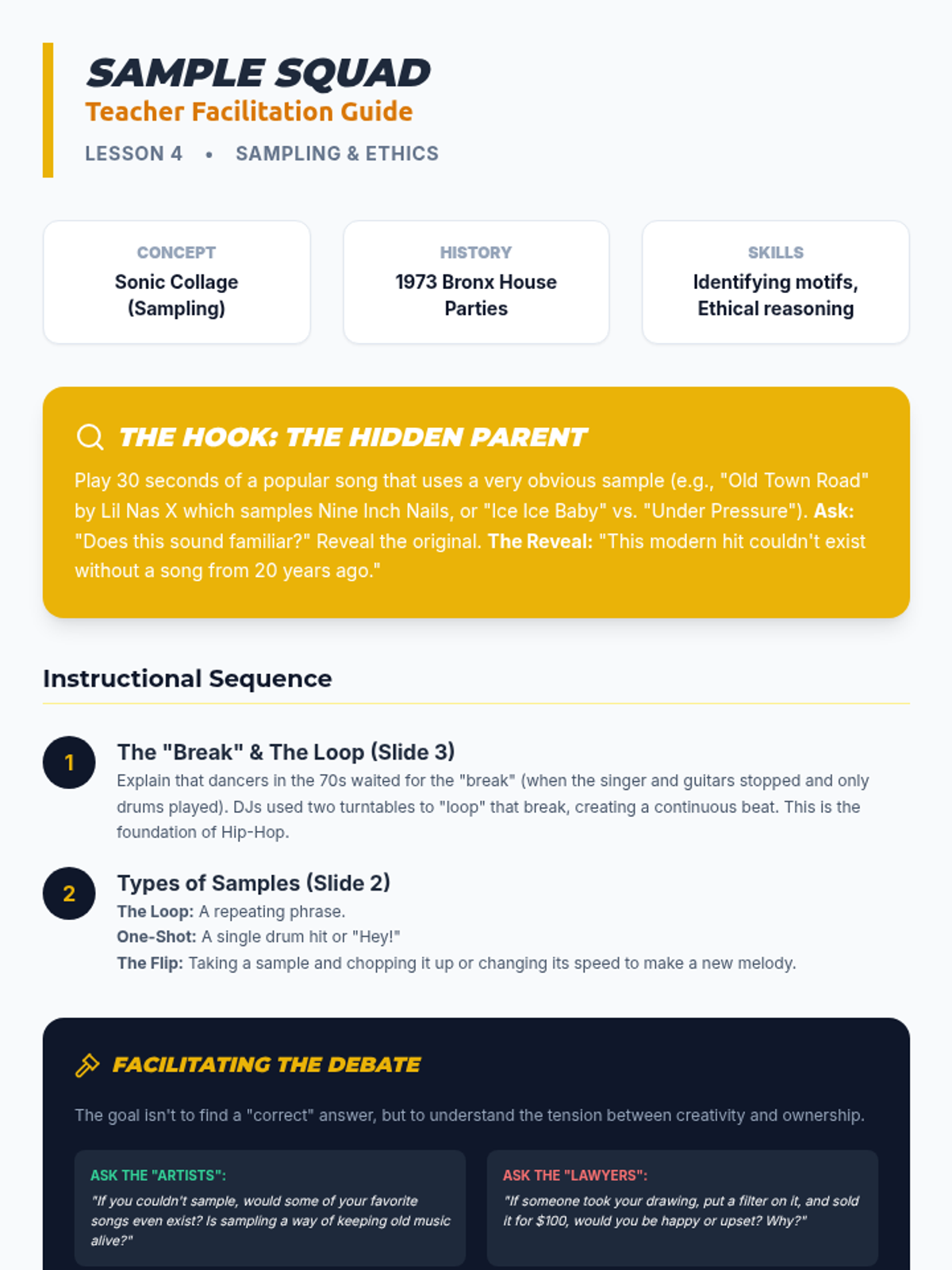
A teacher facilitation guide for Lesson 4, detailing the history of the "break," types of sampling, and a framework for facilitating a classroom debate on the ethics of music ownership.
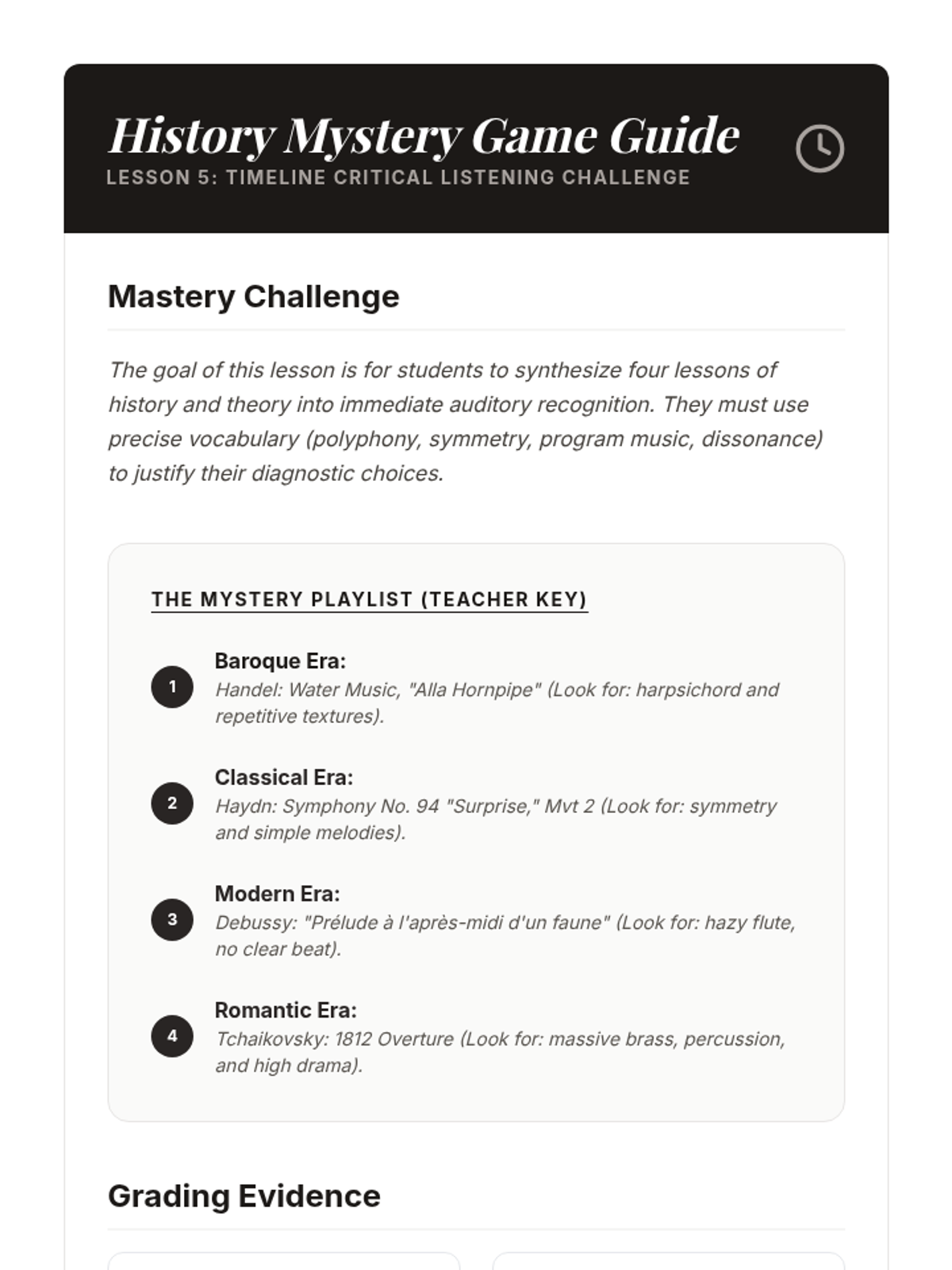
Teacher guide for the final assessment, including a suggested mystery playlist, diagnostic keys, and grading rubrics.
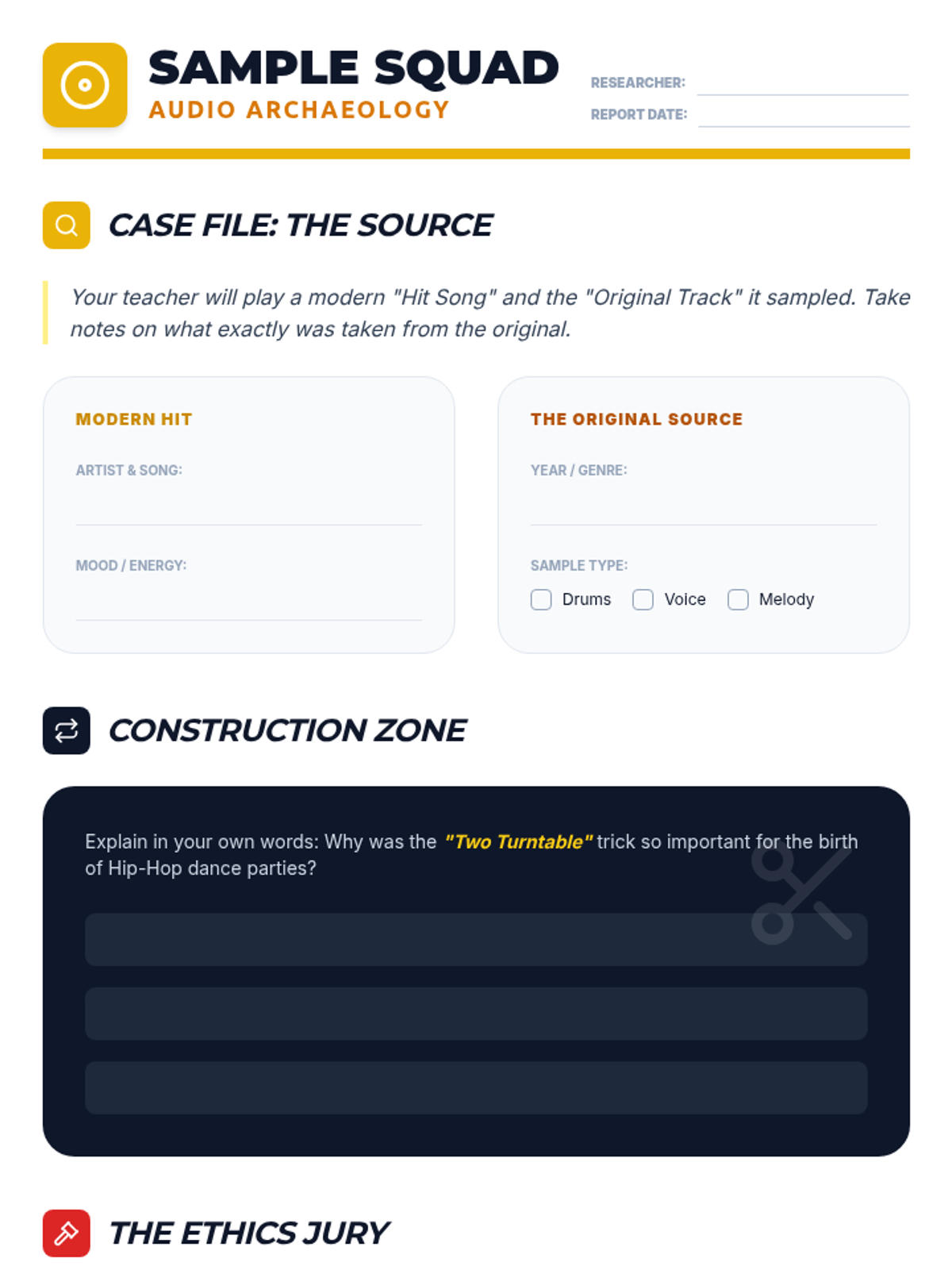
A student worksheet for Lesson 4, including a "Sample Detective" log, a question on the origins of Hip-Hop turntablism, and a mock-trial ethics activity on sampling.
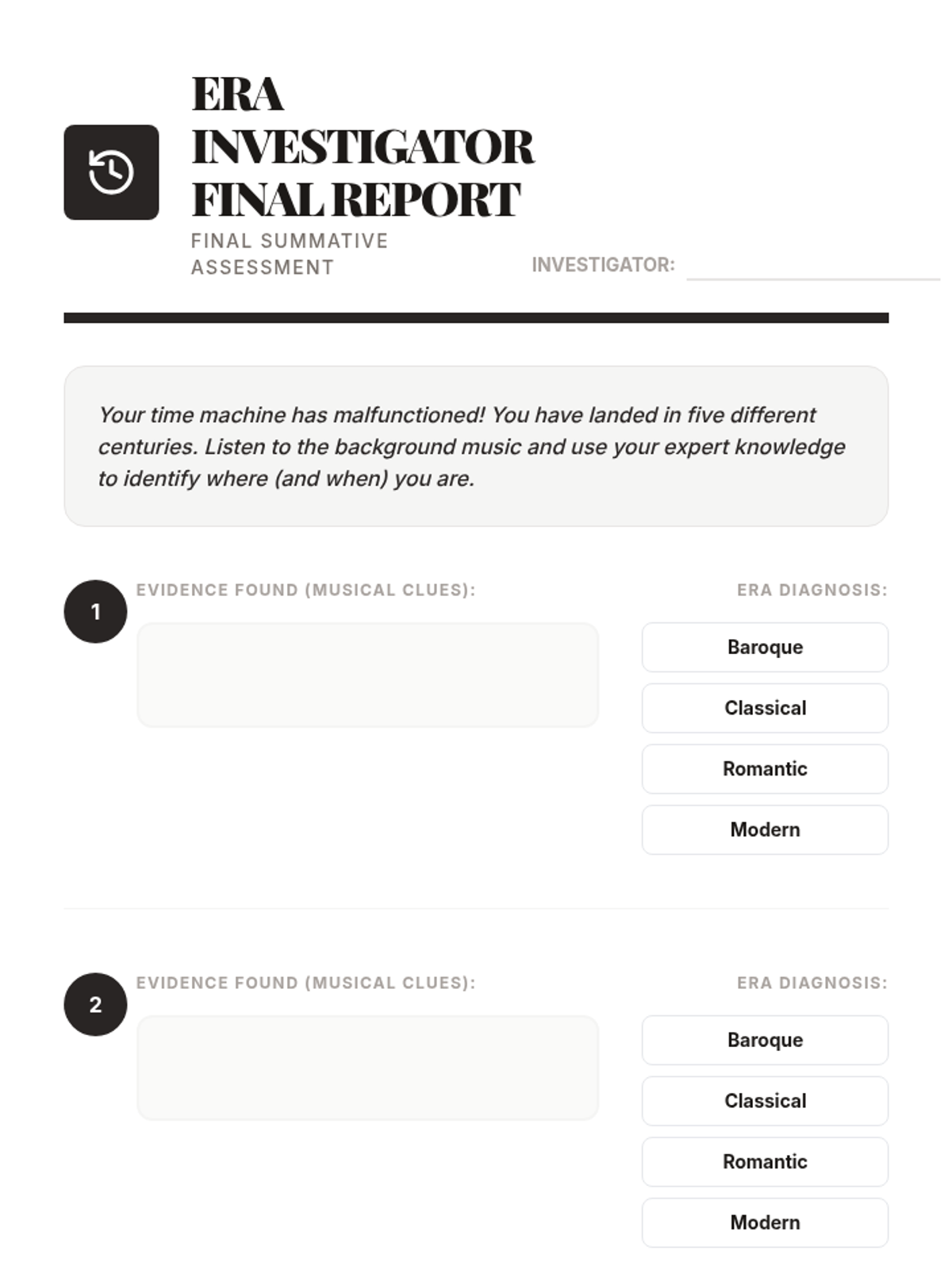
Final assessment sheet for students to identify musical eras from mystery clips using learned vocabulary and evidence.
A visual presentation for Lesson 4, covering the origins of Hip-Hop, the definition of sampling, and the ethical/legal debates surrounding repurposed audio.
Final slide deck for the synthesis lesson, providing a visual review of all musical eras to prepare for the listening challenge.
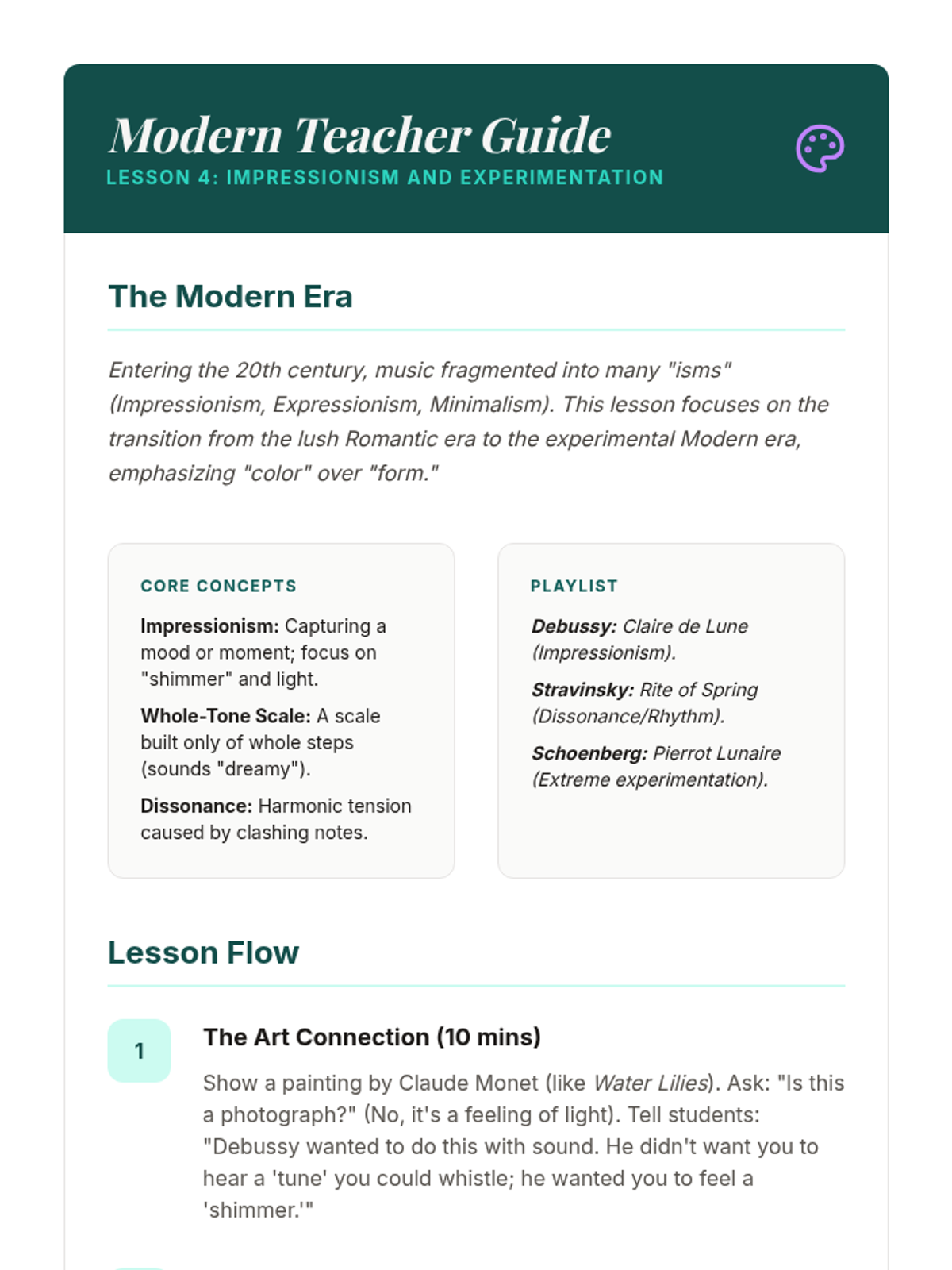
Teacher guide for Lesson 4, detailing Impressionism and the shift towards experimental music and dissonance.
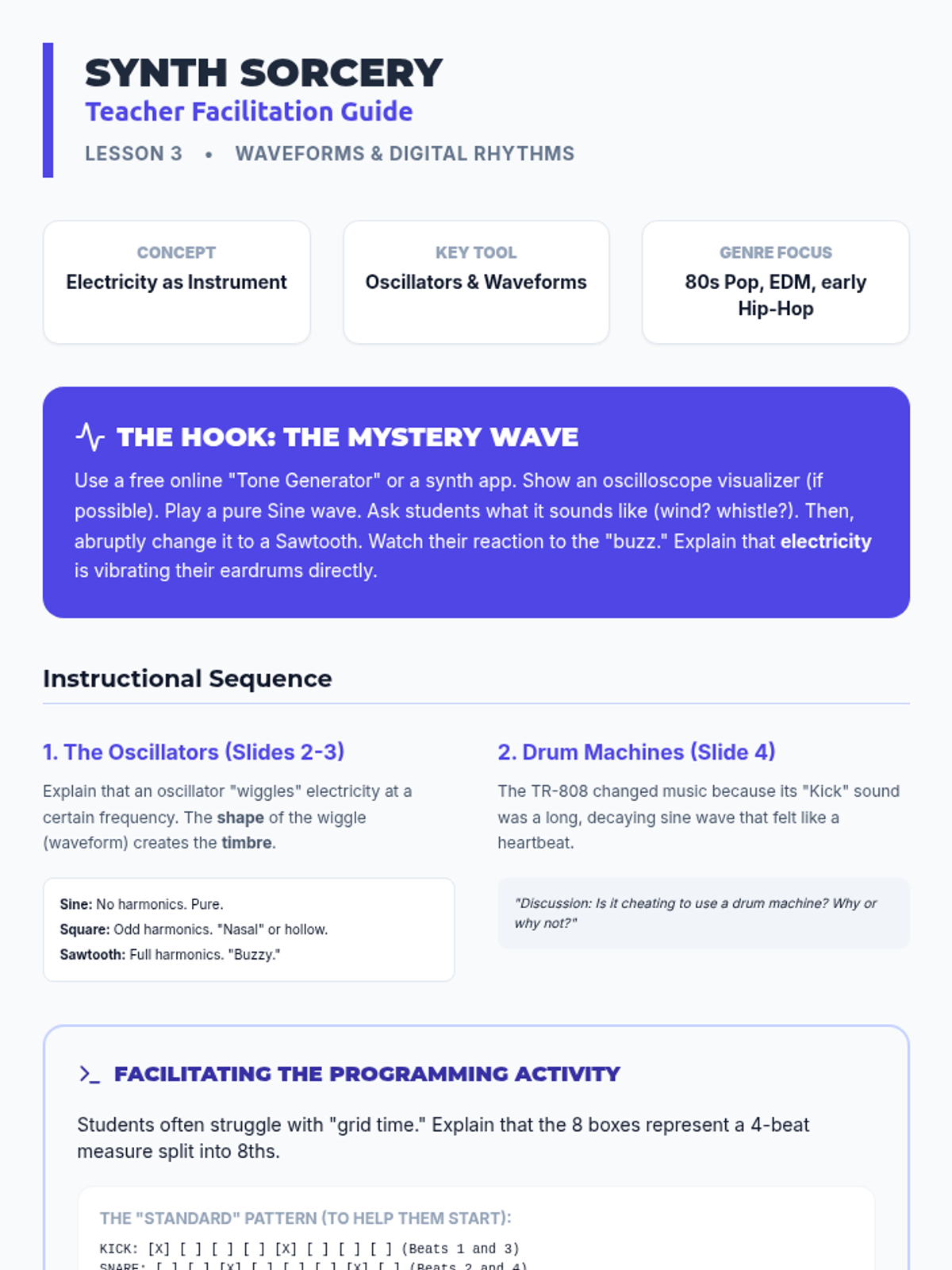
A teacher facilitation guide for Lesson 3, covering waveform physics, drum machine programming, and suggestions for online synth tools to use with 5th-grade students.
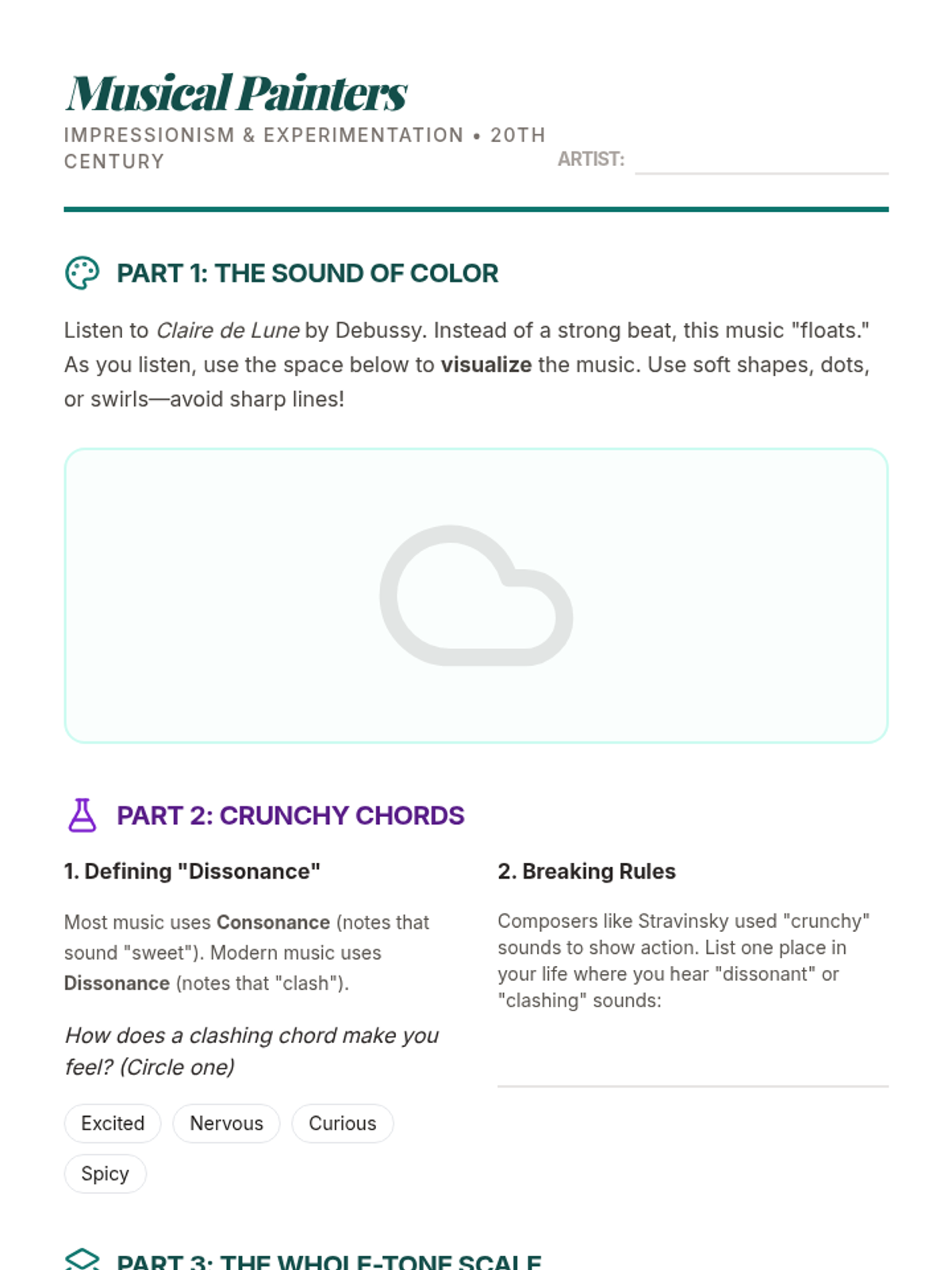
Student worksheet for exploring Impressionism through drawing and analyzing dissonance and whole-tone scales.
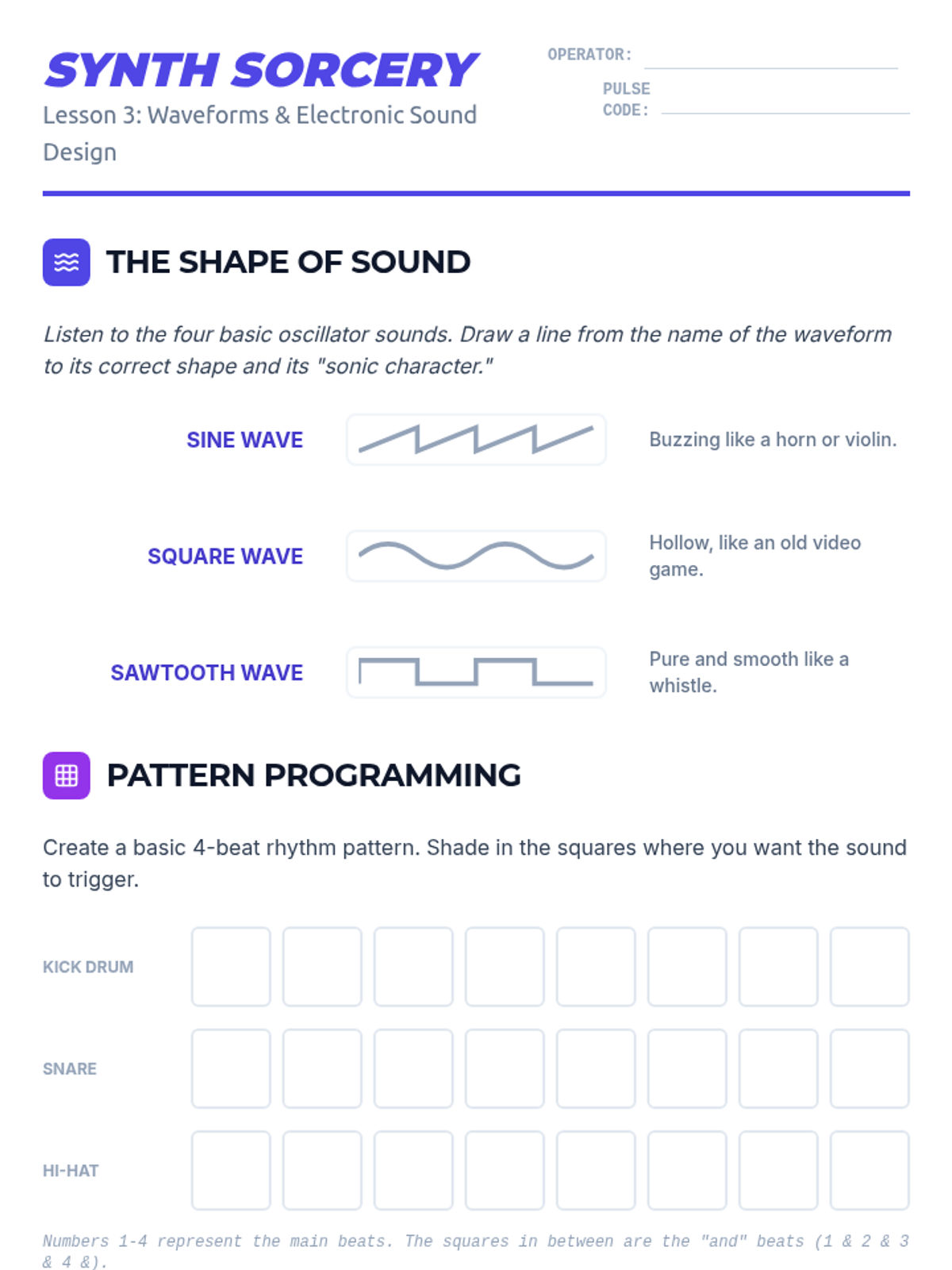
A student worksheet for Lesson 3, featuring waveform matching, a drum machine pattern grid, and a creative sound design reflection prompt.
Educational slides for 20th-century music, focusing on Impressionism, whole-tone scales, dissonance, and experimentation.
A visual presentation for Lesson 3, exploring synthesizers, drum machines, and the basic physics of sound waves (waveforms) as used in electronic music.
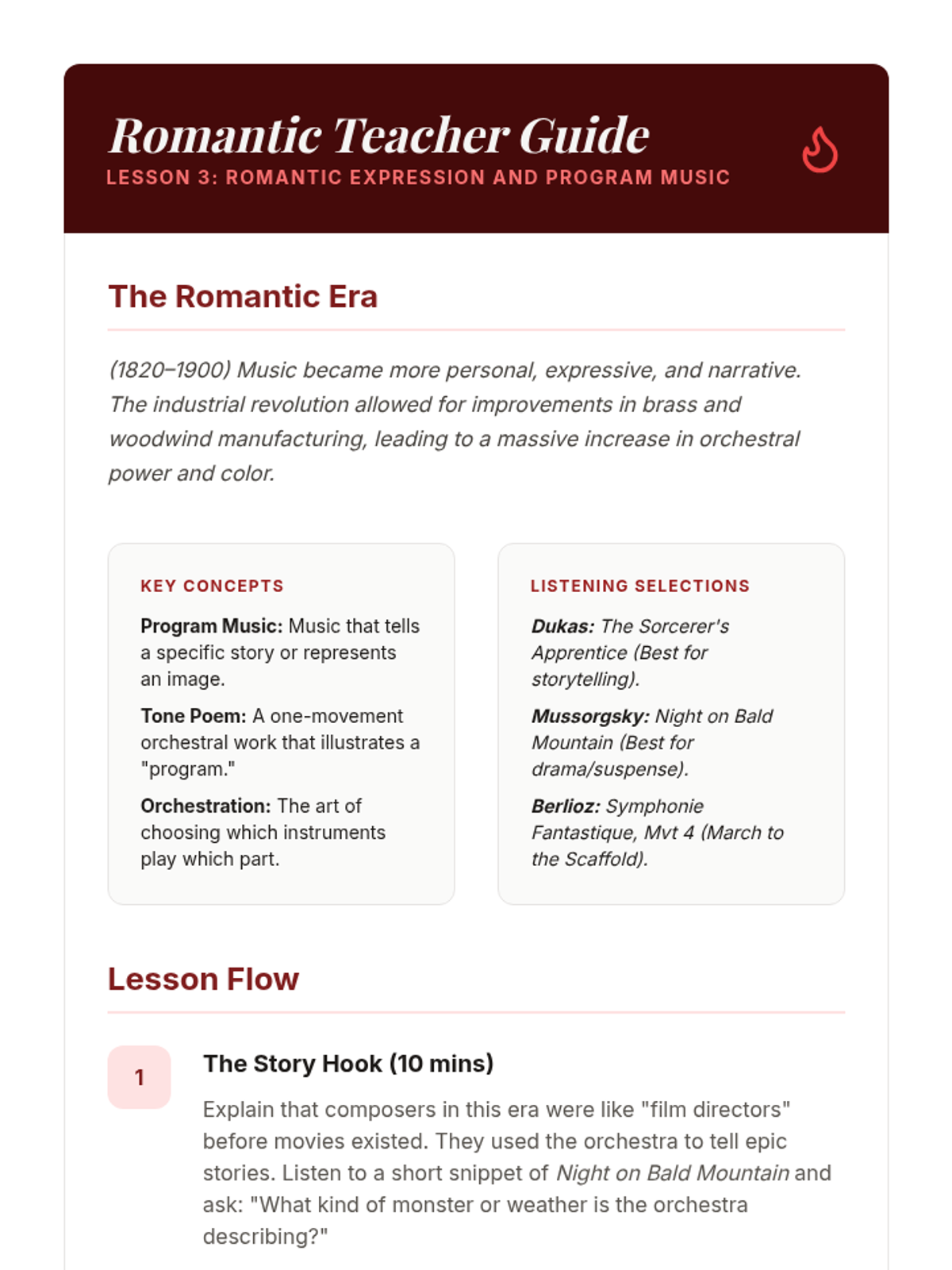
Teacher guide for Lesson 3, focusing on program music, storytelling through instrumentation, and the transition into the Romantic era.
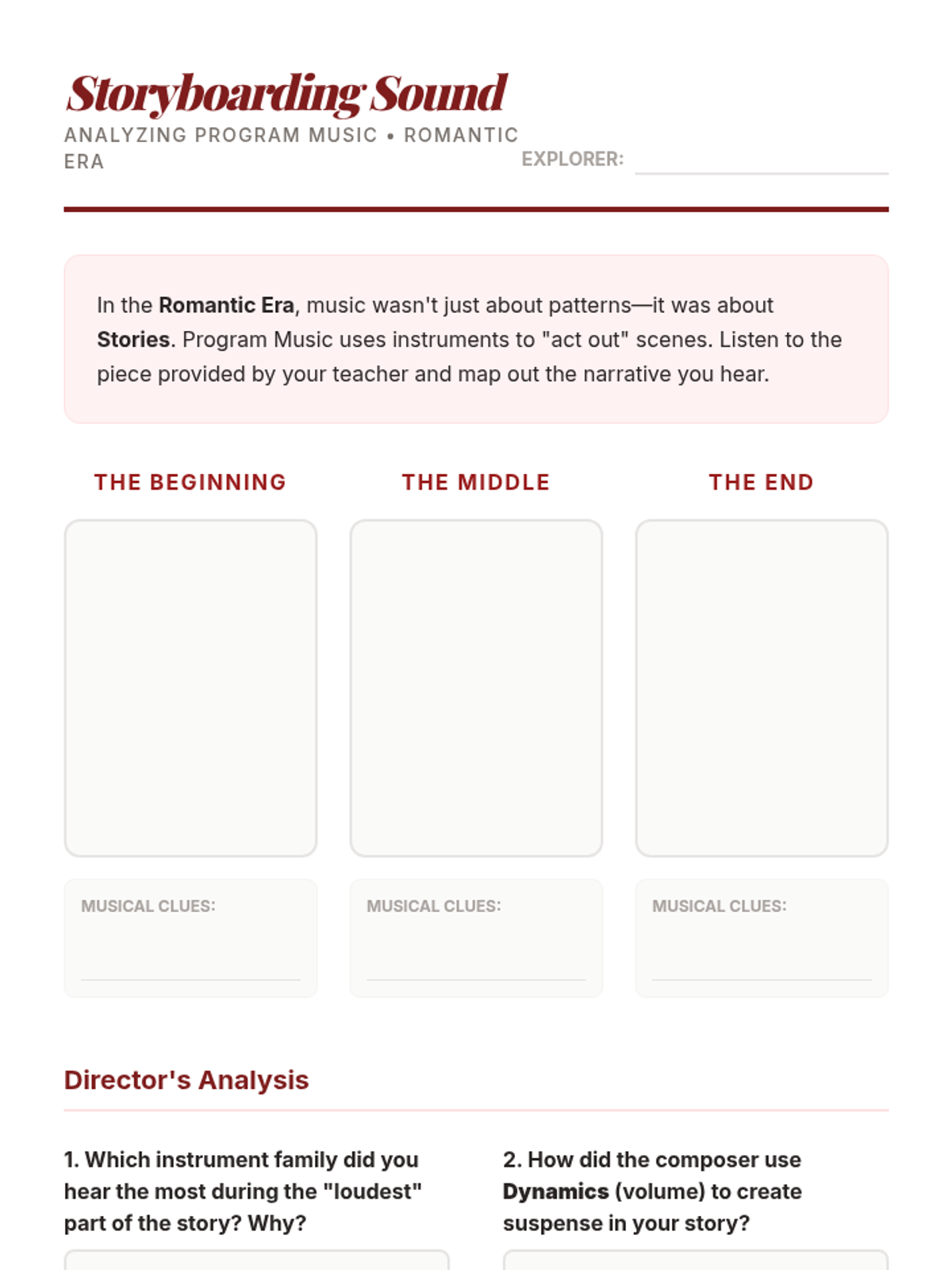
Worksheet for storyboarding program music and analyzing orchestral expression in the Romantic era.
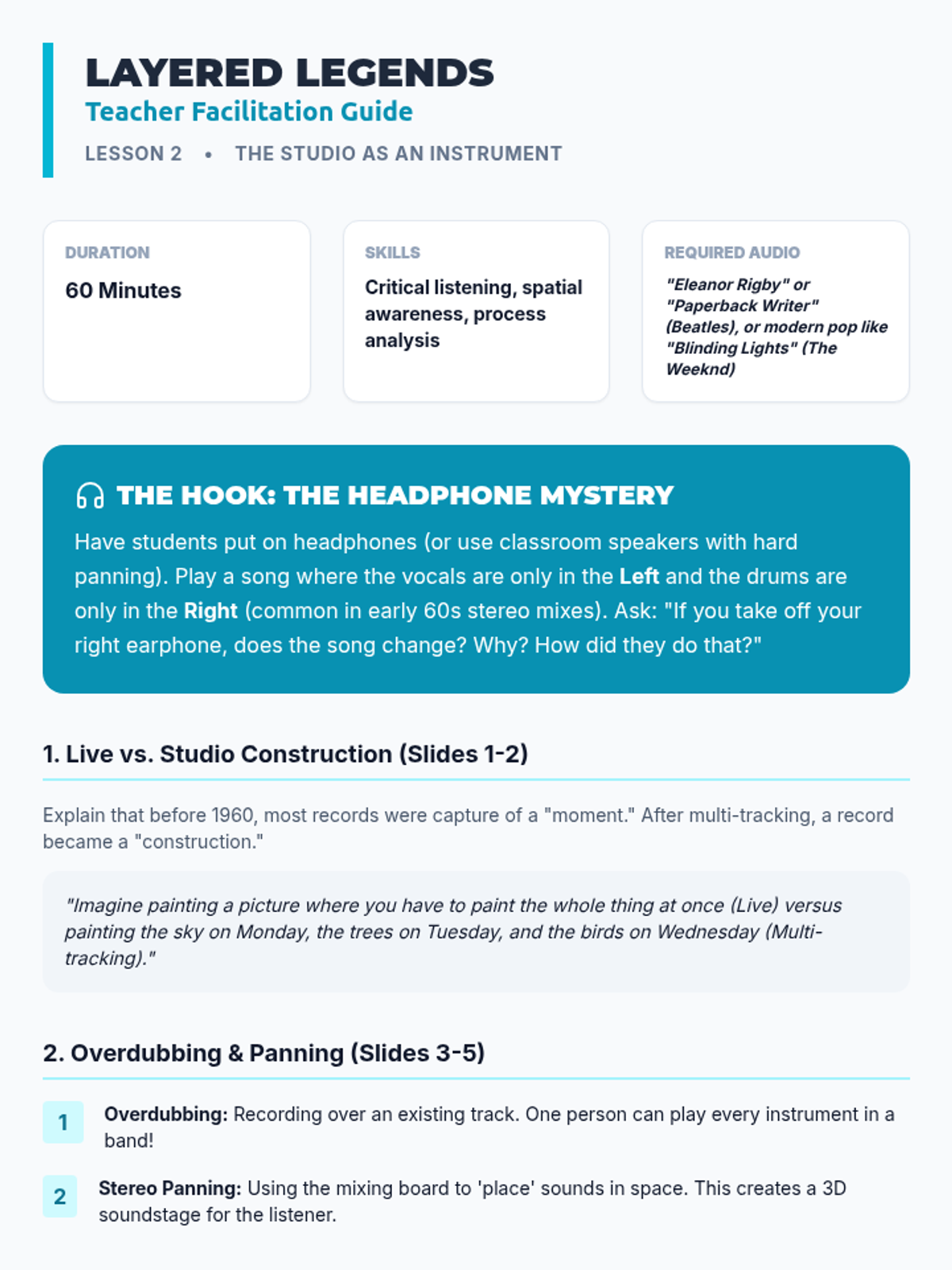
A teacher facilitation guide for Lesson 2, including the "Headphone Mystery" hook, key concepts of overdubbing and panning, and a guided listening plan for the "Layer Detective" activity.
Slide deck for the Romantic era, exploring program music, orchestral growth, and emotional expression.
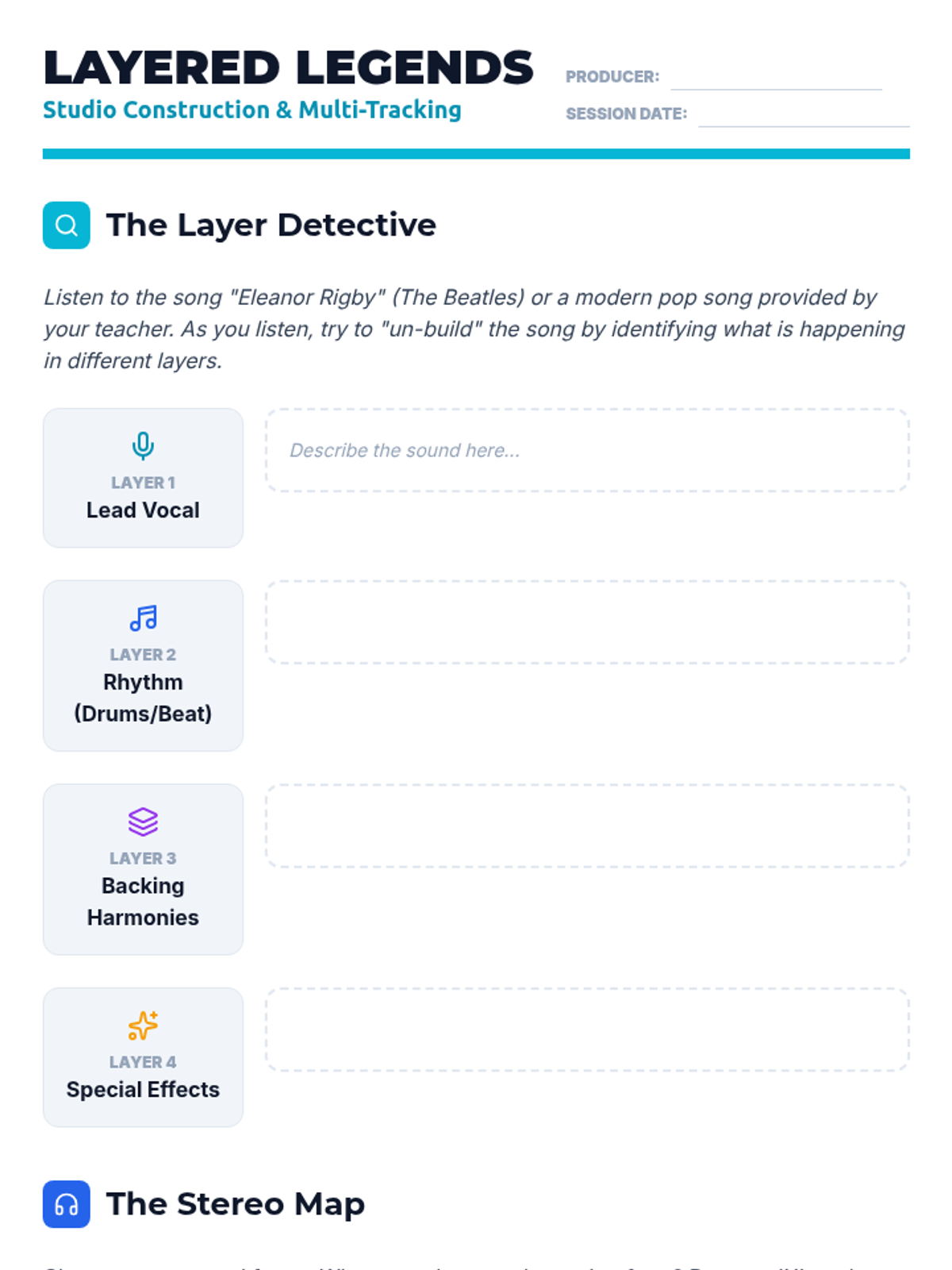
A student activity sheet for Lesson 2 where students act as "Layer Detectives," identifying multi-track elements and mapping stereo panning in a recorded song.