Fundamental techniques for drawing, painting, sculpture, and photography alongside modern digital design principles. Analyzes historical artistic movements while building skills in printmaking and graphic media.
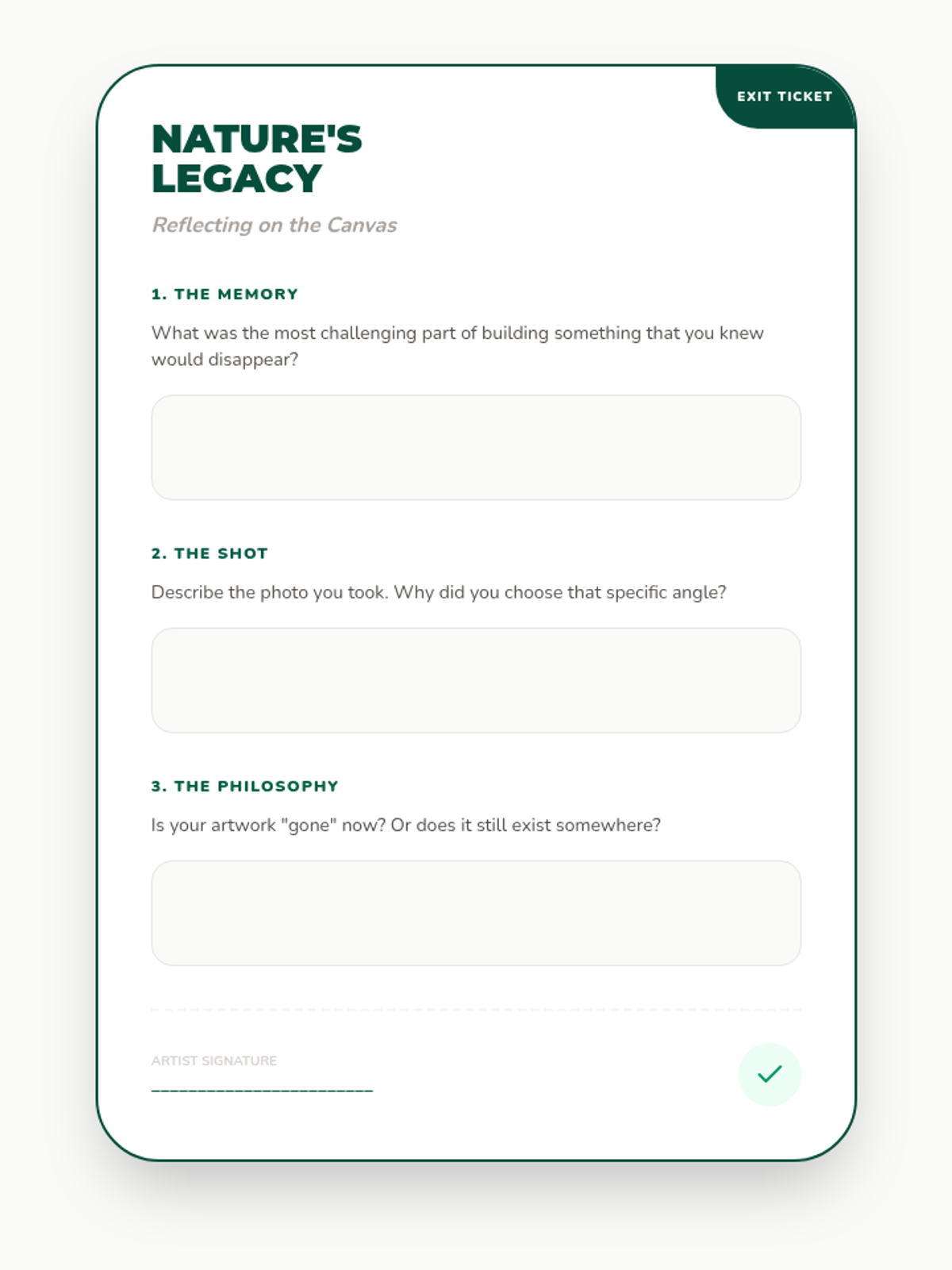
A final reflection exit ticket for students to process the experience of creating ephemeral art and documenting it through photography.
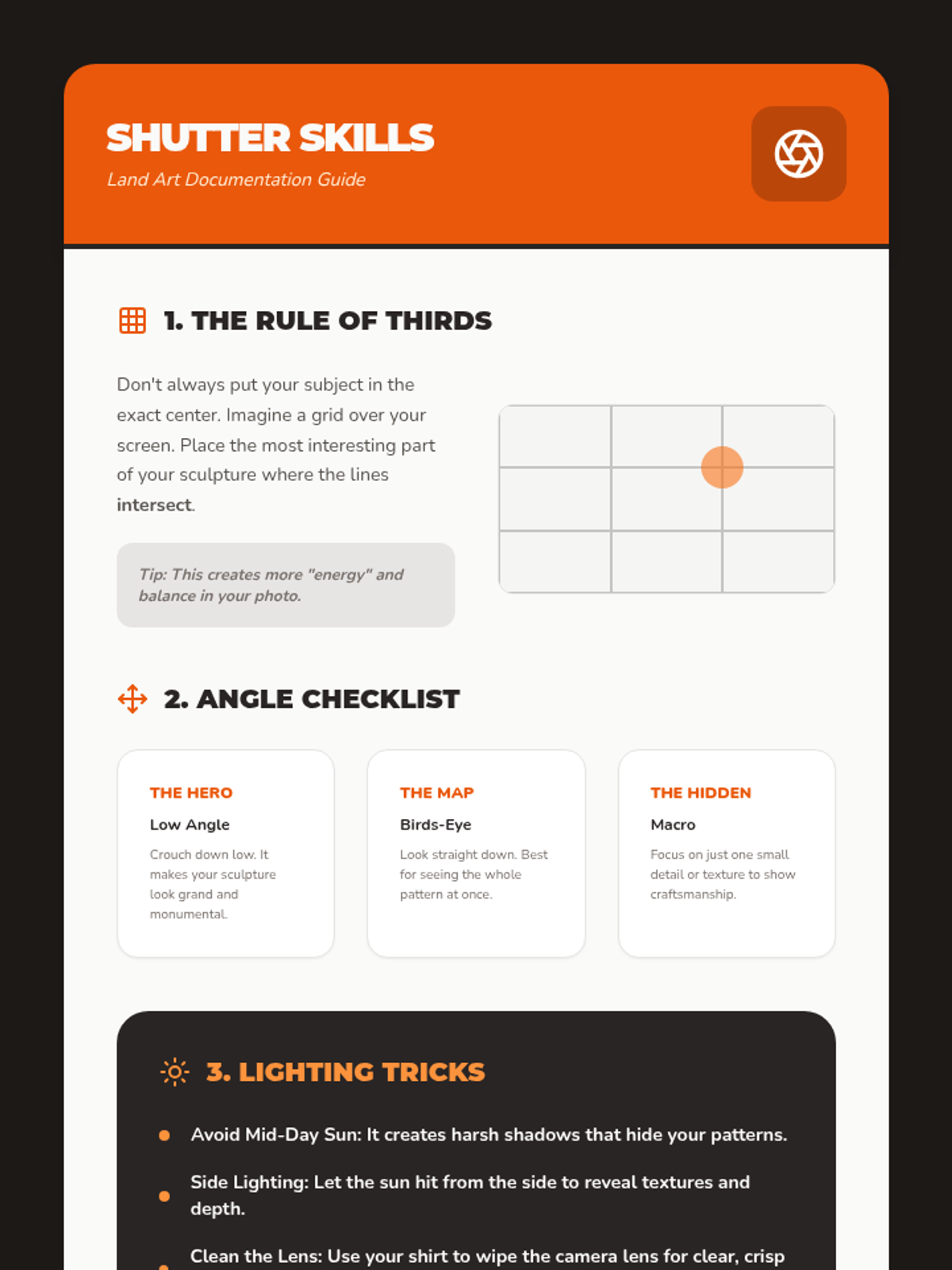
A photography cheat sheet for students, providing tips on the rule of thirds, different camera angles, and using natural light to document their Land Art.
Slides introducing students to photography basics specifically for documenting temporary Land Art, focusing on framing, lighting, and angles.
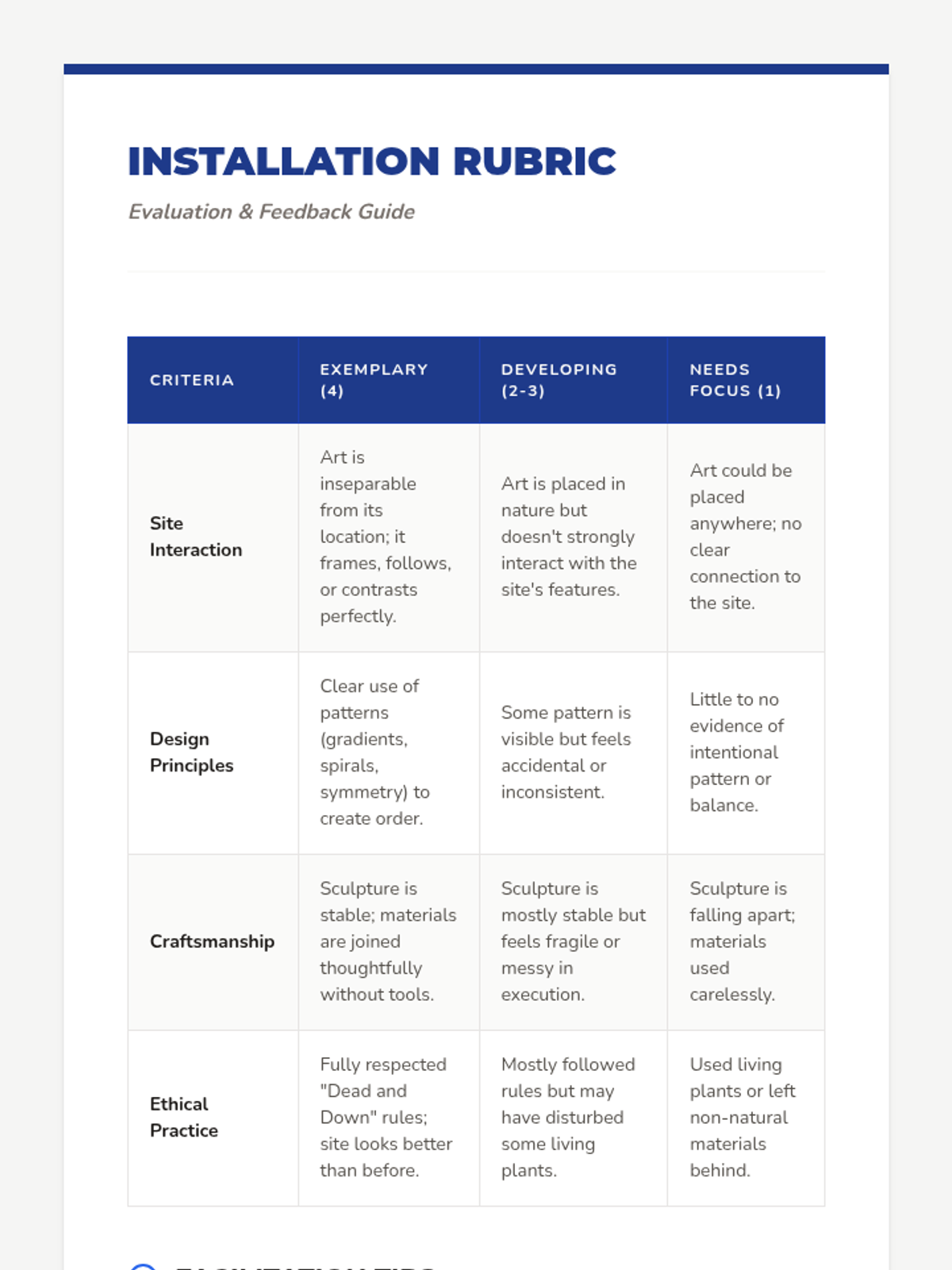
A rubric and facilitation guide for teachers to evaluate the site-specific installation project based on interaction, design, craftsmanship, and ethics.
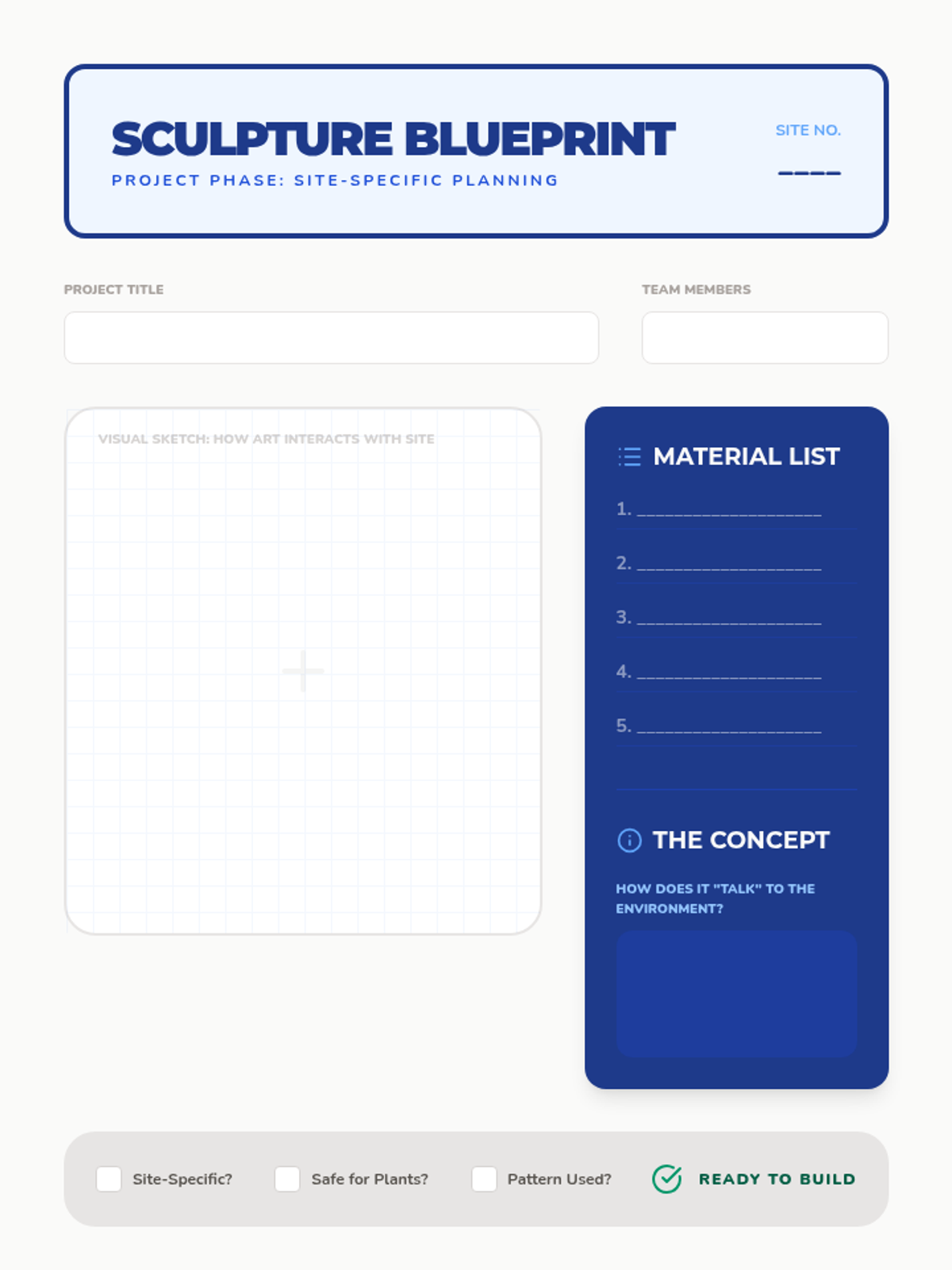
A planning sheet for students to map out their site-specific installation, including a sketch area, material list, and conceptual reasoning.
Slides introducing students to site-specific art and how to create sculptures that interact with the natural environment.
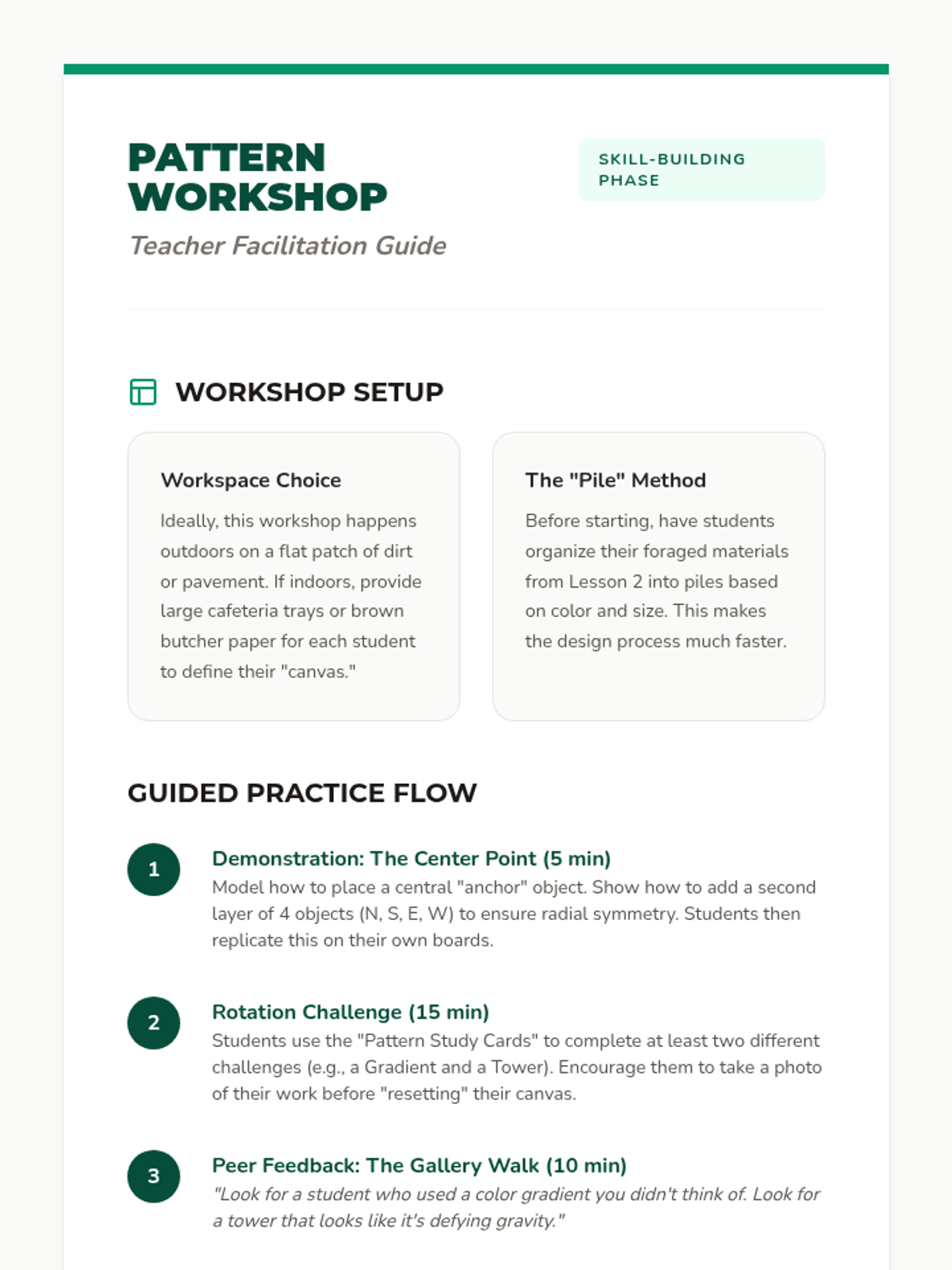
A guide for teachers to lead a skill-building workshop focused on pattern, symmetry, and balance using natural materials.
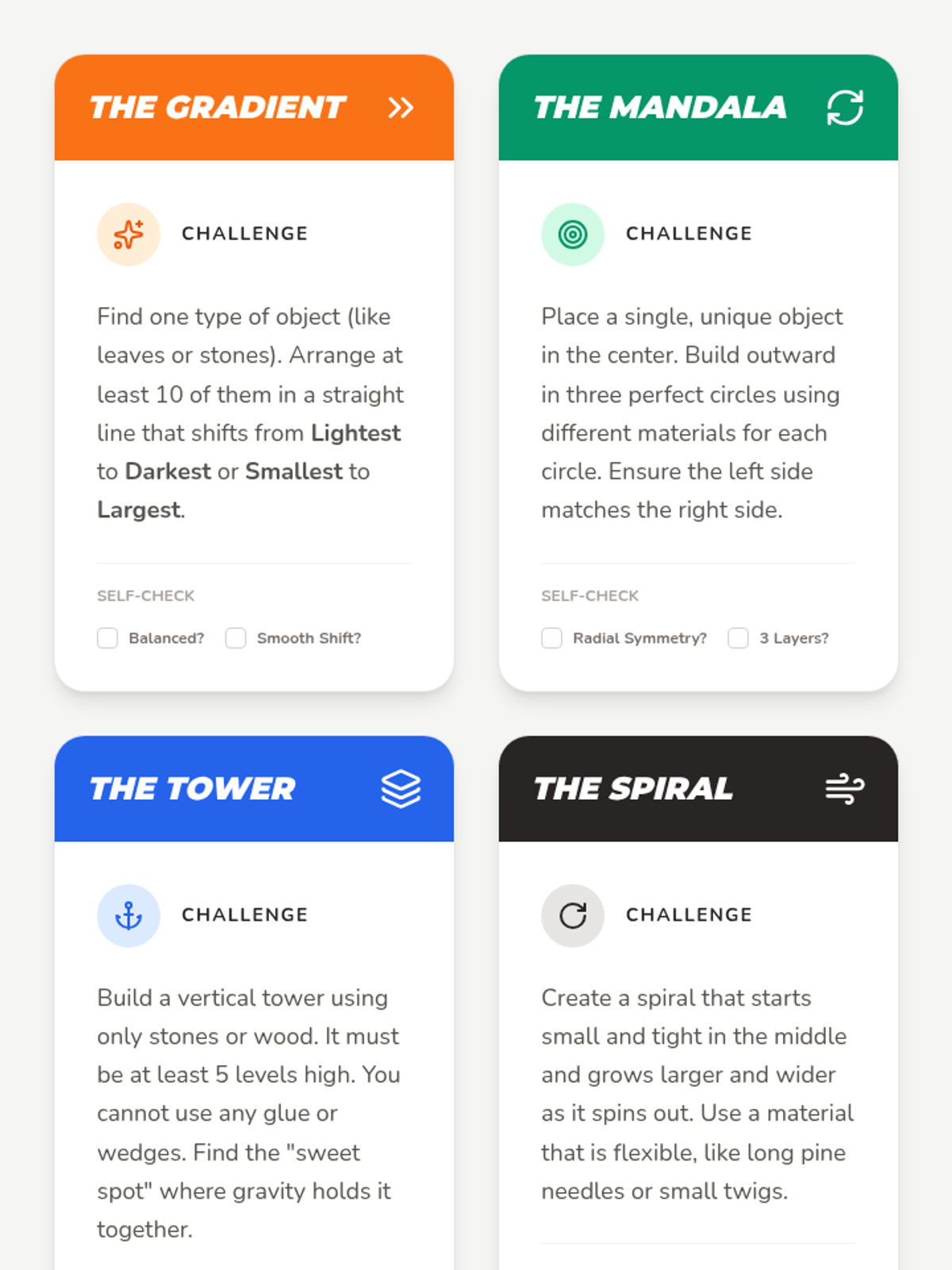
Challenge cards for students to practice specific land art techniques like gradients, radial symmetry, towers, and spirals in small-scale studies.
Slides explaining visual principles like gradients and radial symmetry in the context of Land Art.
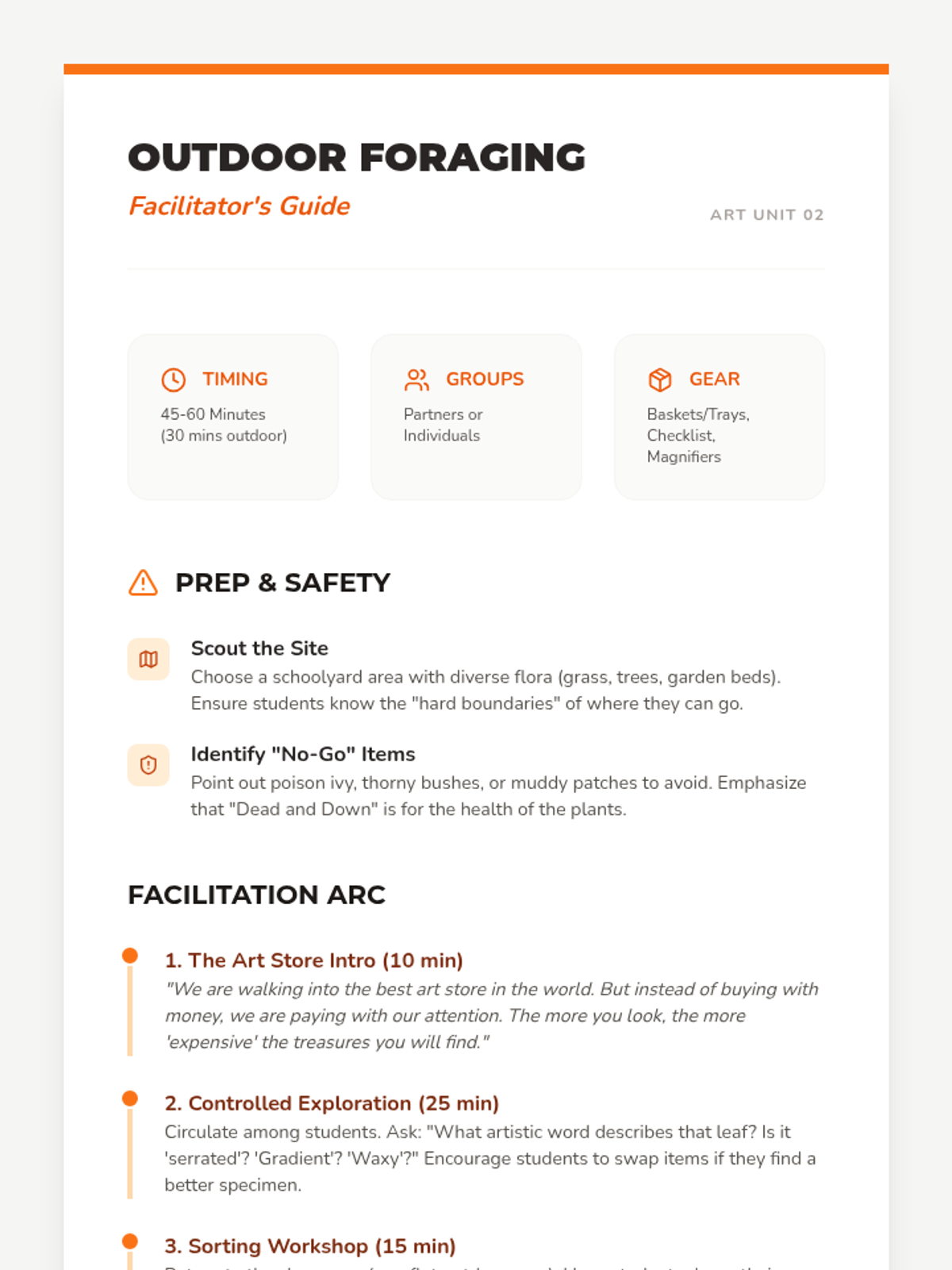
A guide for teachers to manage the outdoor foraging session, including safety tips, scout location advice, and inquiry questions to prompt student observation.
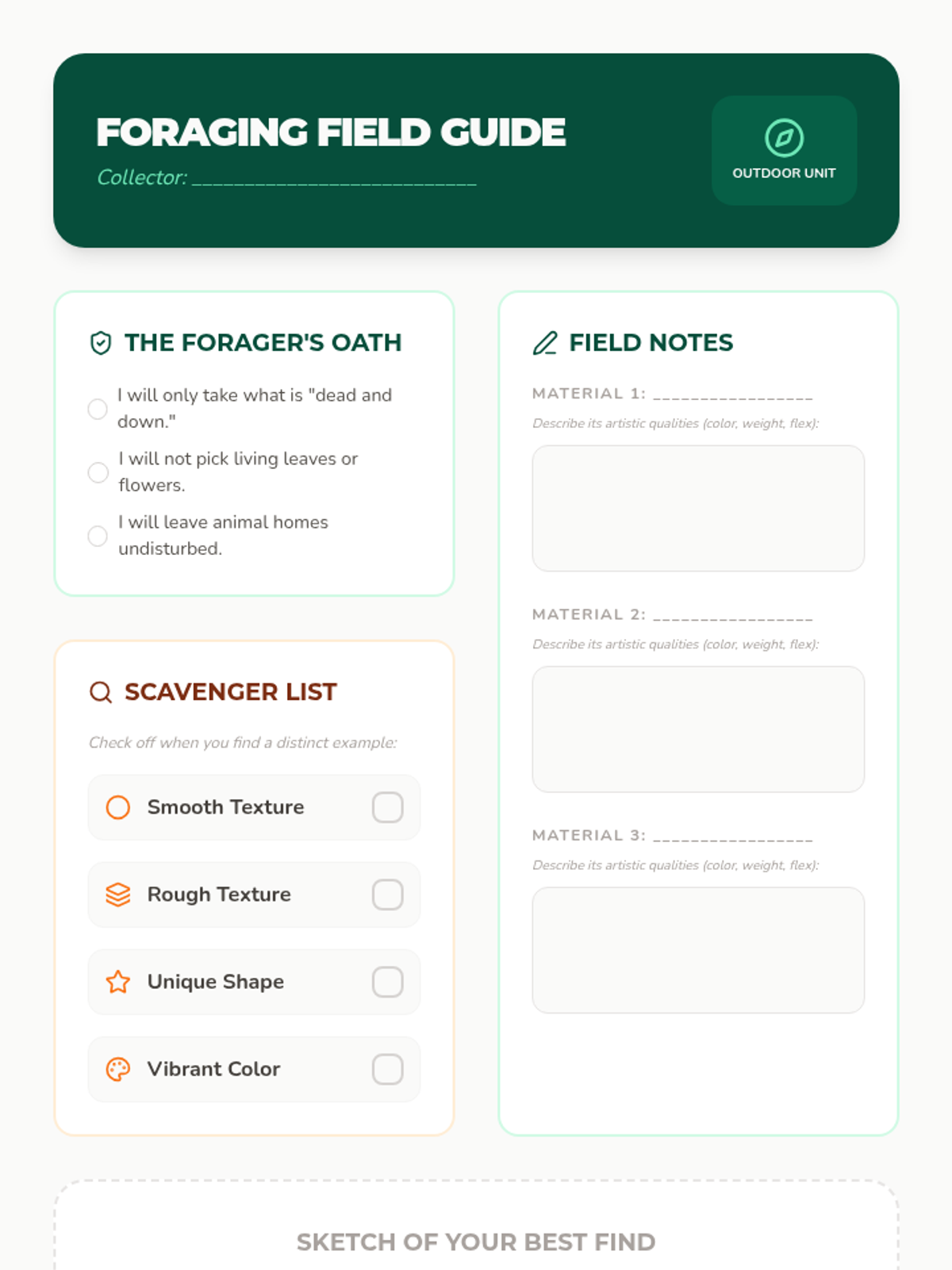
A field checklist for students to use while foraging, helping them classify materials by color, texture, and shape while following ethical guidelines.
Slides introducing students to the types of natural materials available for Land Art and the ethical code of foraging.
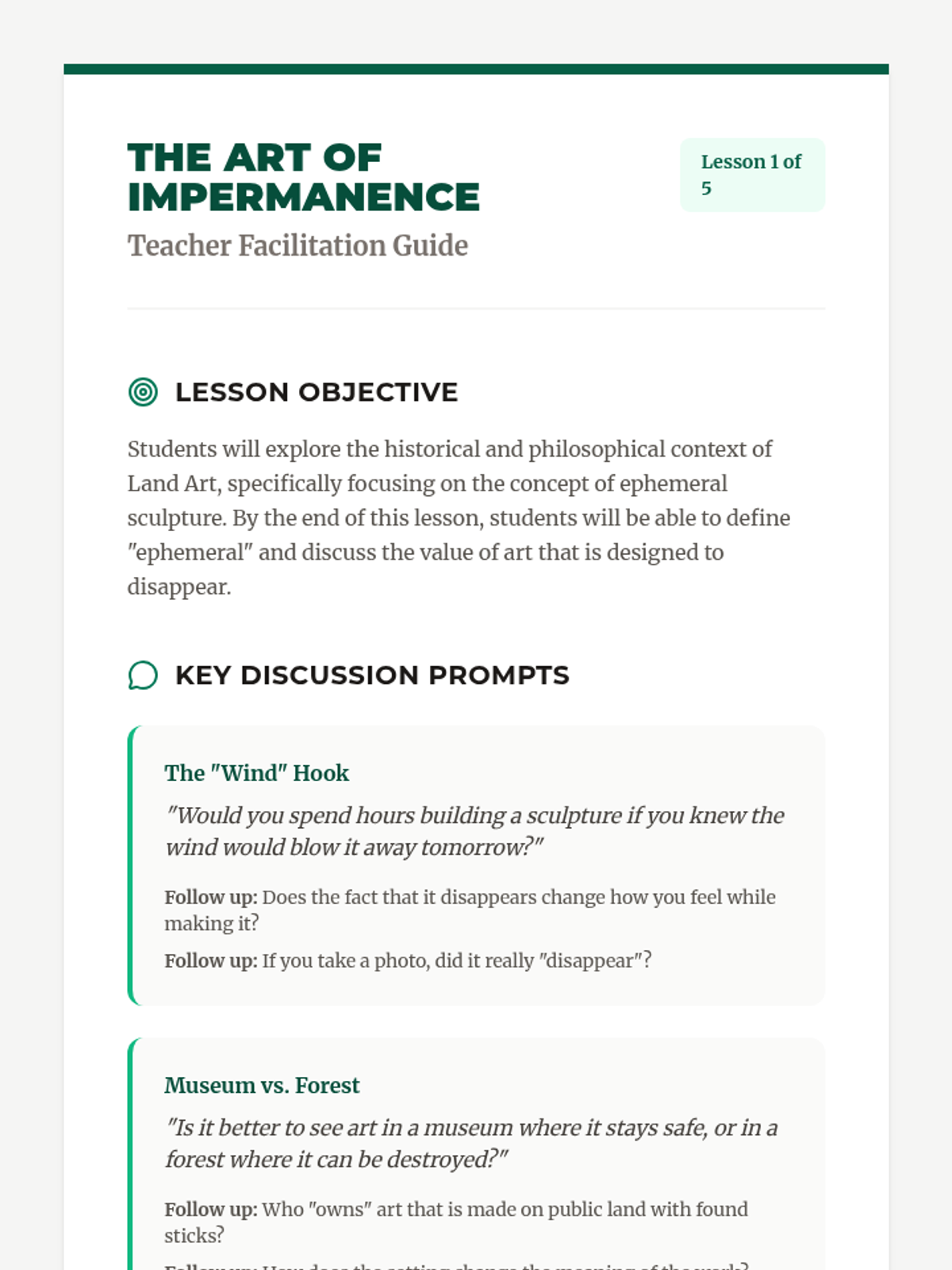
A comprehensive guide for teachers to facilitate Lesson 1, including discussion prompts, key vocabulary, and instructional strategies for teaching about Land Art.
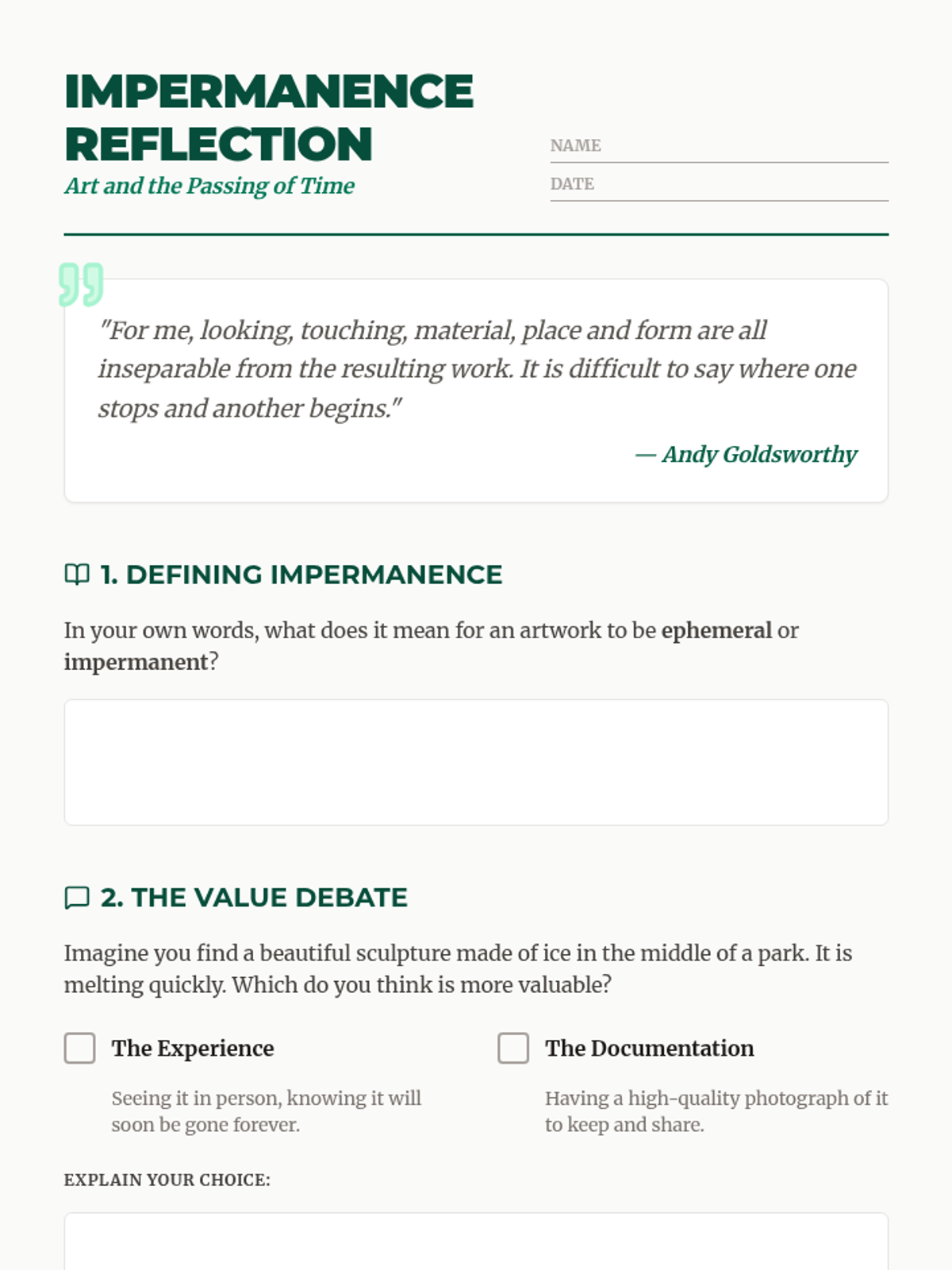
A reflection worksheet for students to process the concept of ephemeral art, the value of experience vs. ownership, and the visual changes in natural materials over time.
A visual introduction to Land Art and the concept of impermanence, featuring Andy Goldsworthy and the philosophy of temporary sculpture.
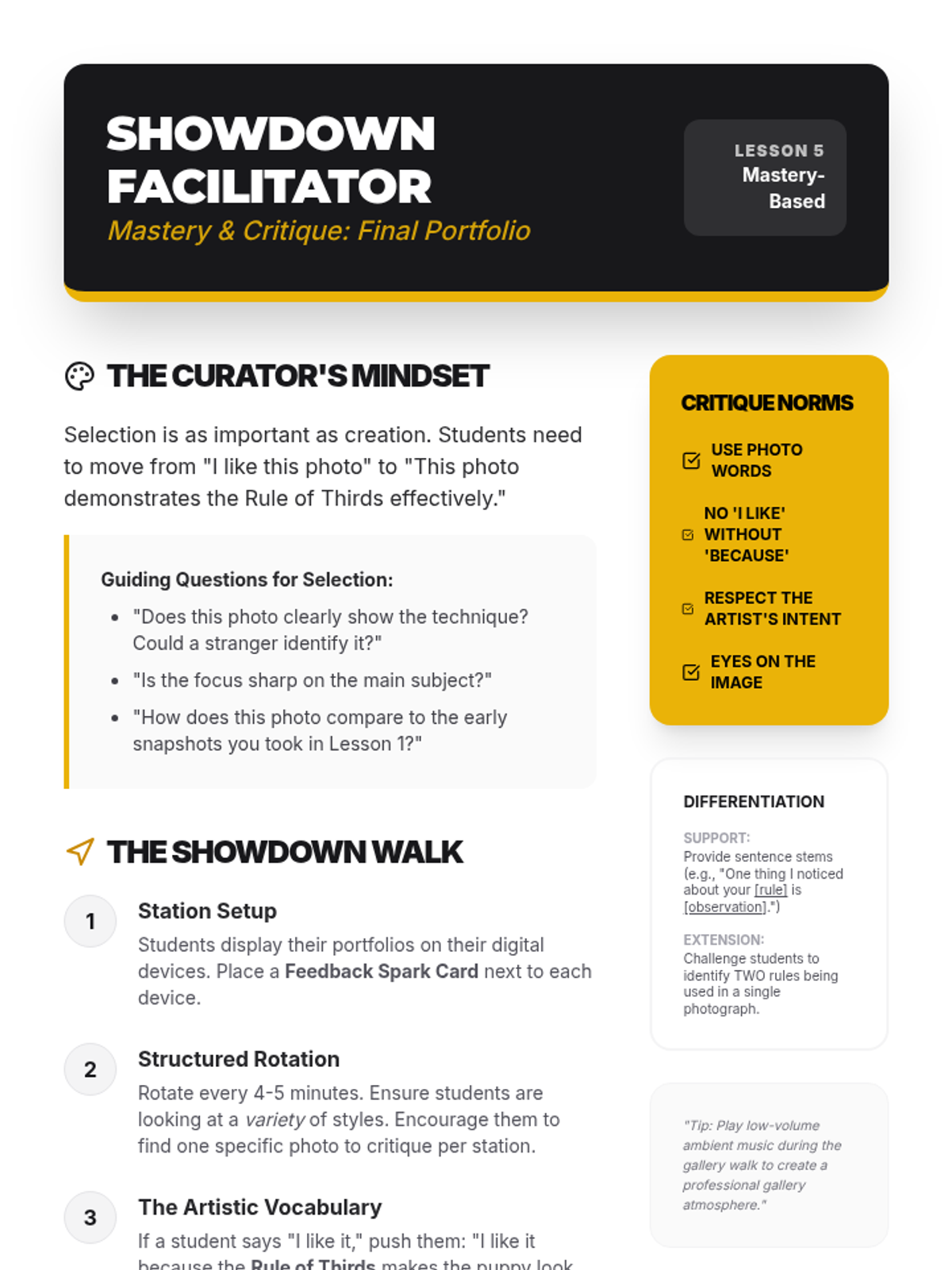
Teacher facilitation guide for the final portfolio critique, including setup instructions, discussion prompts, and strategies for managing constructive peer feedback.
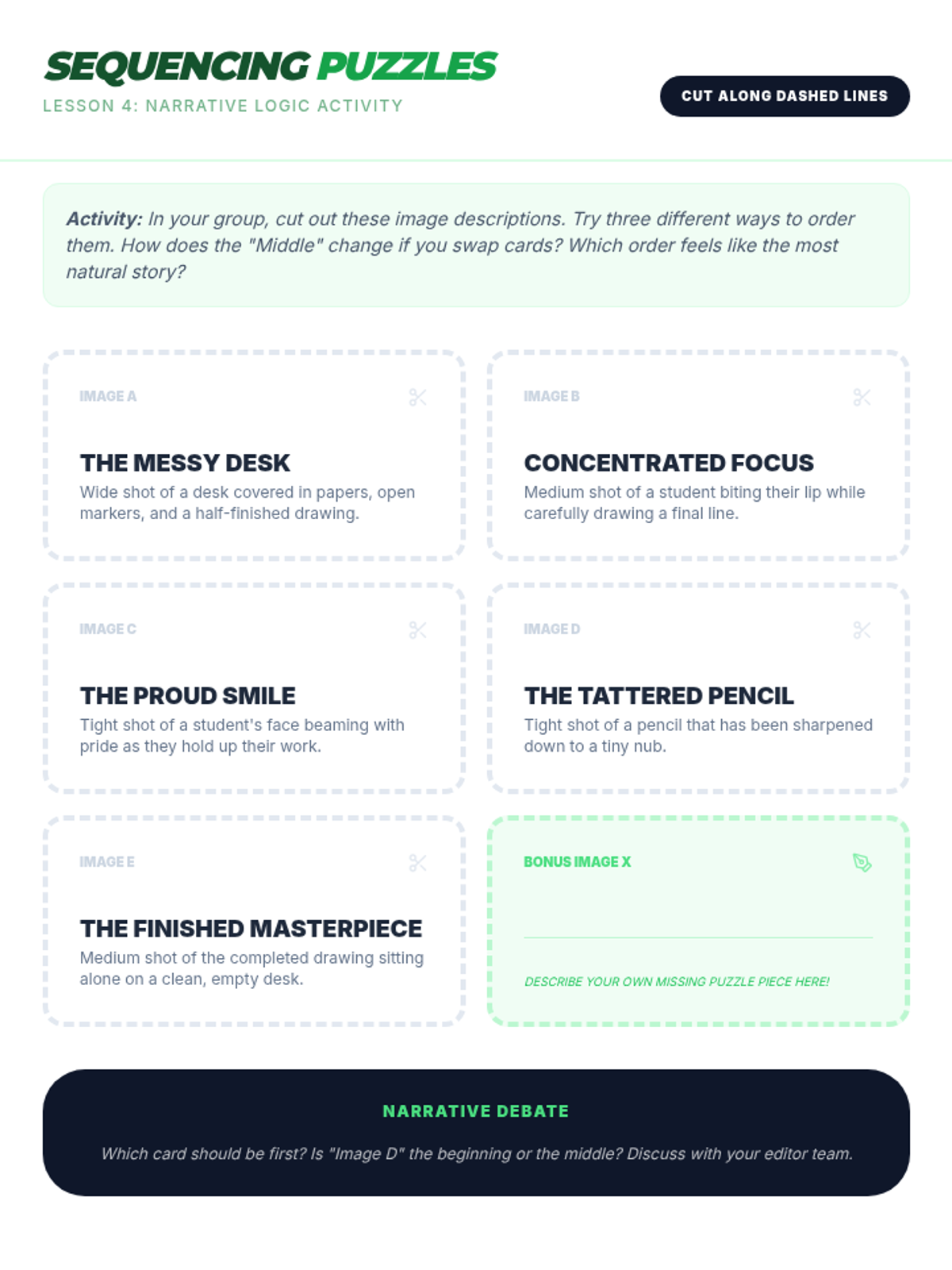
An activity sheet with "puzzle cards" representing different photos. Students cut them out and experiment with sequencing to understand how order changes the story.
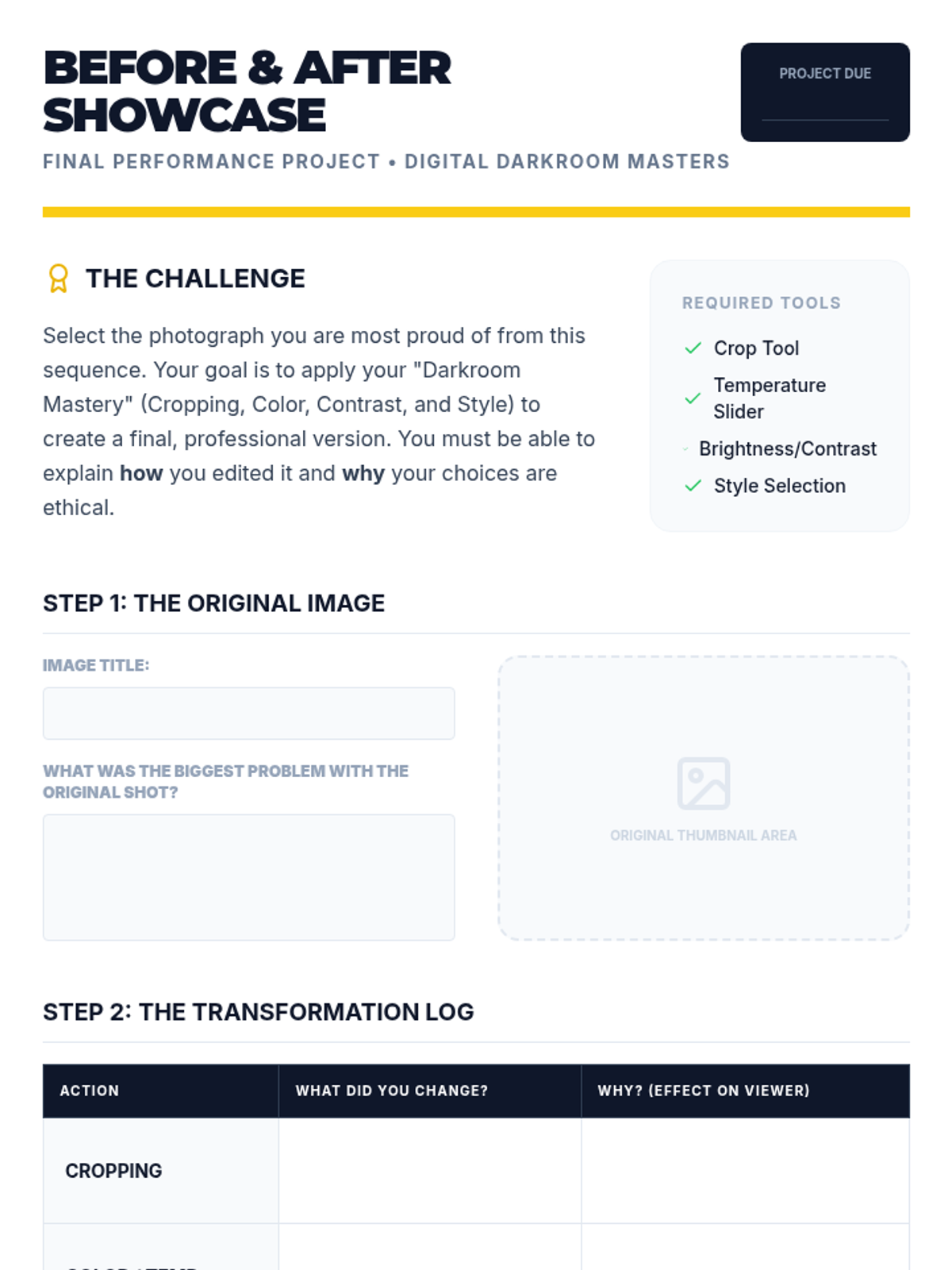
Final project planning and reflection sheet for Lesson 5. Students document their editing process for a single 'Showcase' image and provide an ethical justification for their changes.
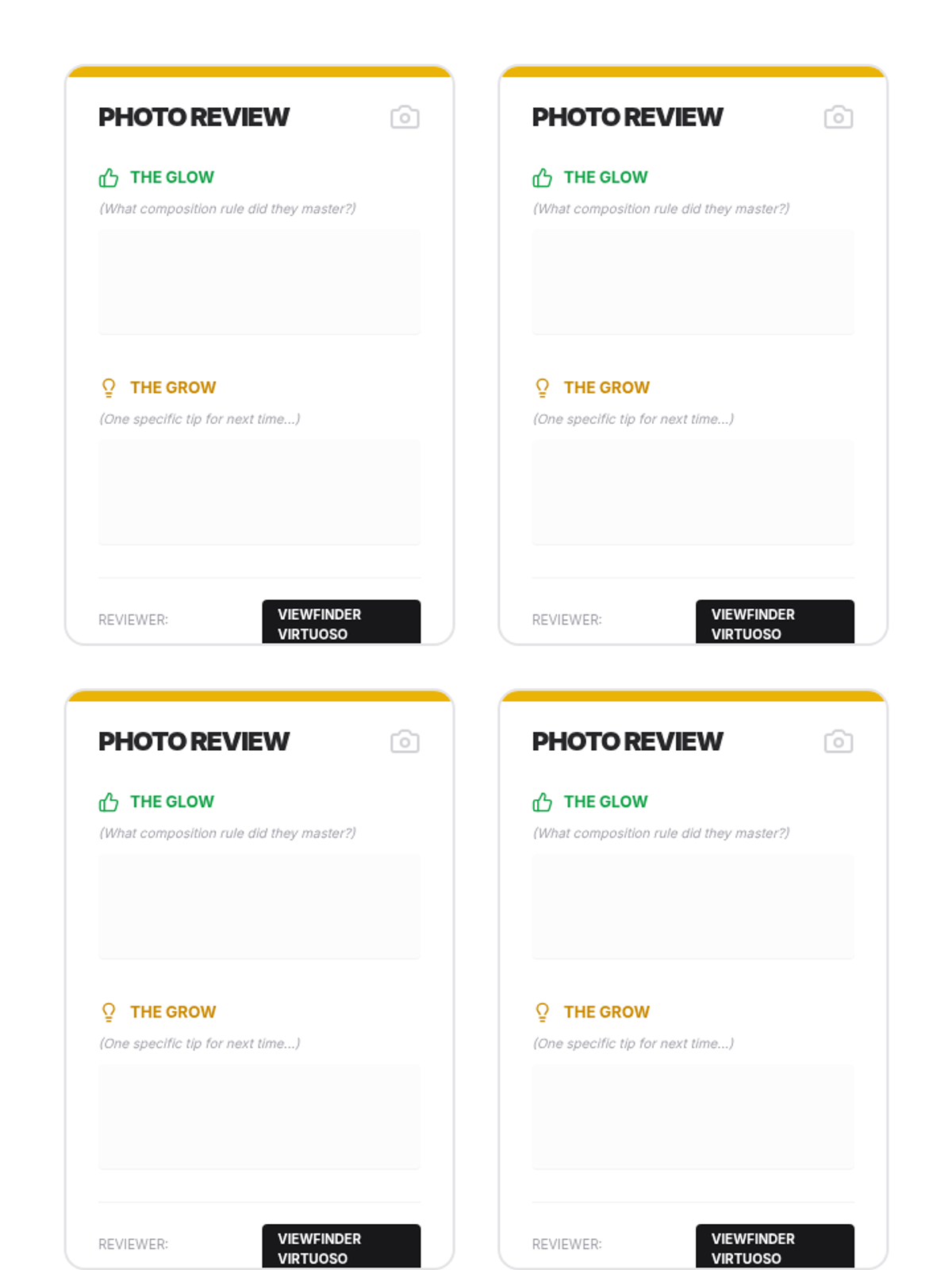
Printable feedback cards for students to use during the gallery walk, providing space for "Glows" (strengths) and "Grows" (areas for improvement) for peer portfolios.
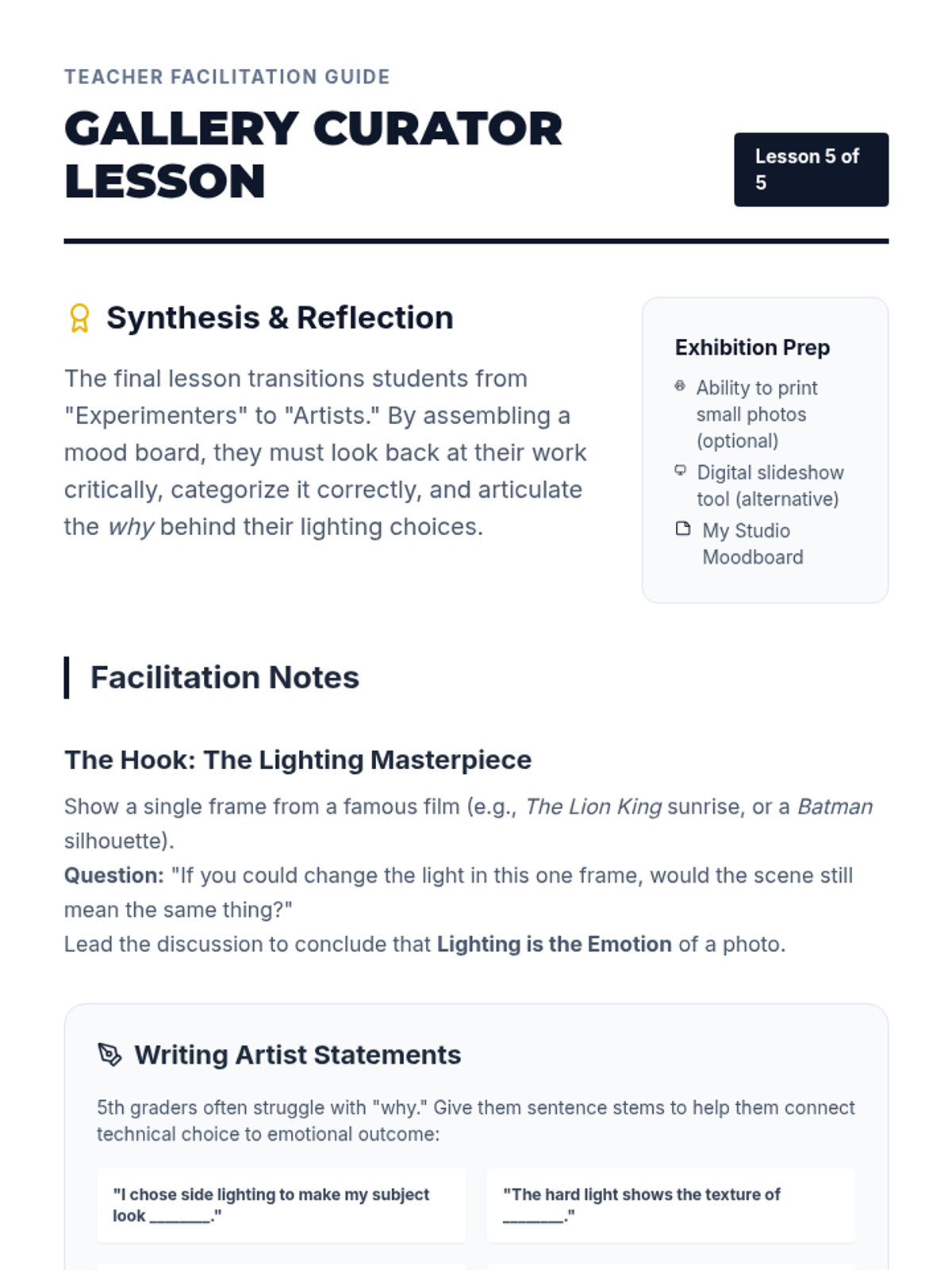
Teacher facilitation guide for Lesson 5, focusing on assessing student mood boards, guiding artist statement writing, and organizing a gallery walk.
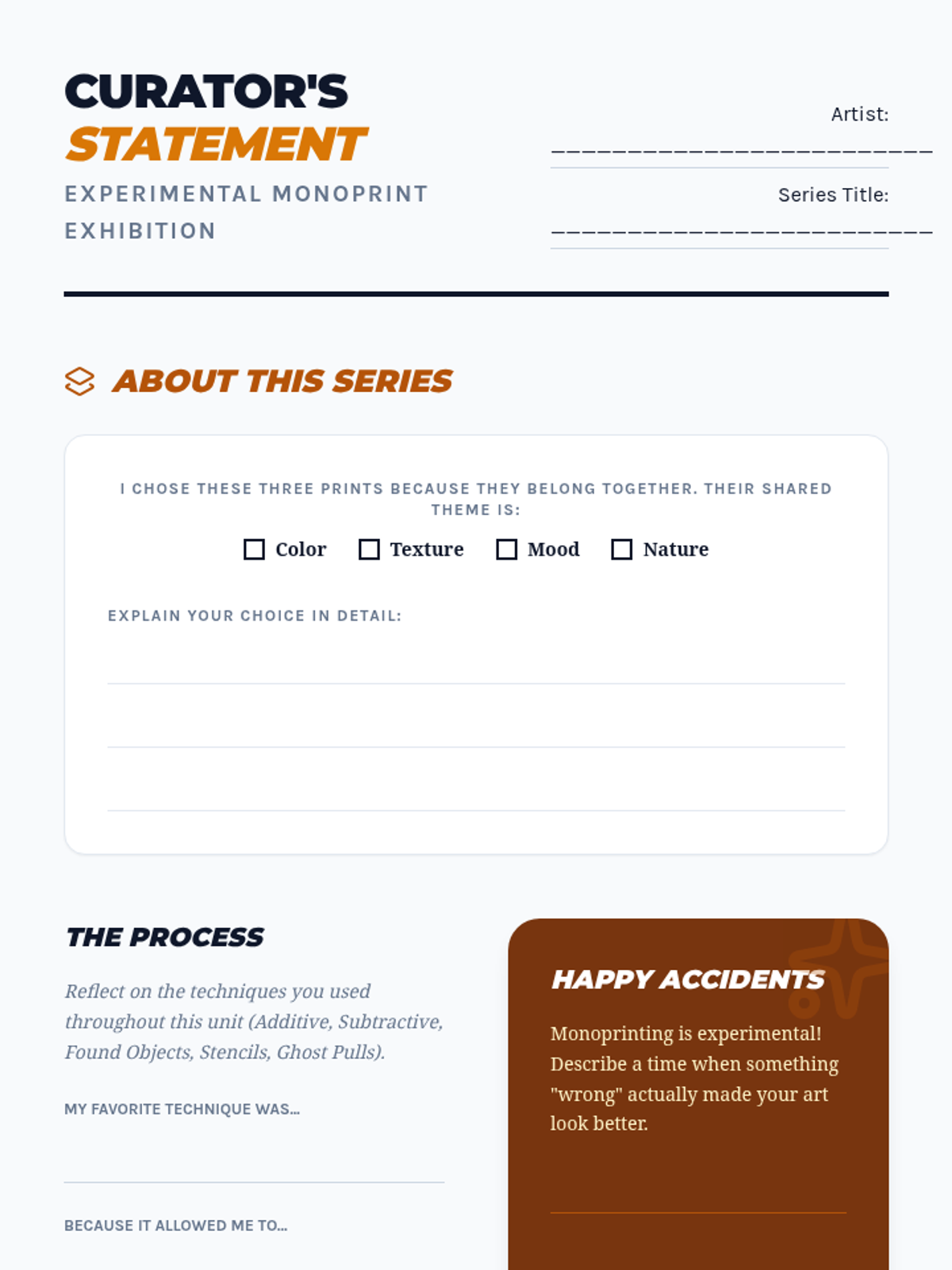
A student activity sheet for the final lesson. Guides students through selecting their best work, writing a curator's statement, and reflecting on their experimental process and 'happy accidents'.
Visual presentation for students on the final stage of the sequence: curation and exhibition. Explains how to group work by theme, add finishing touches like trimming and mounting, and write an artist statement.
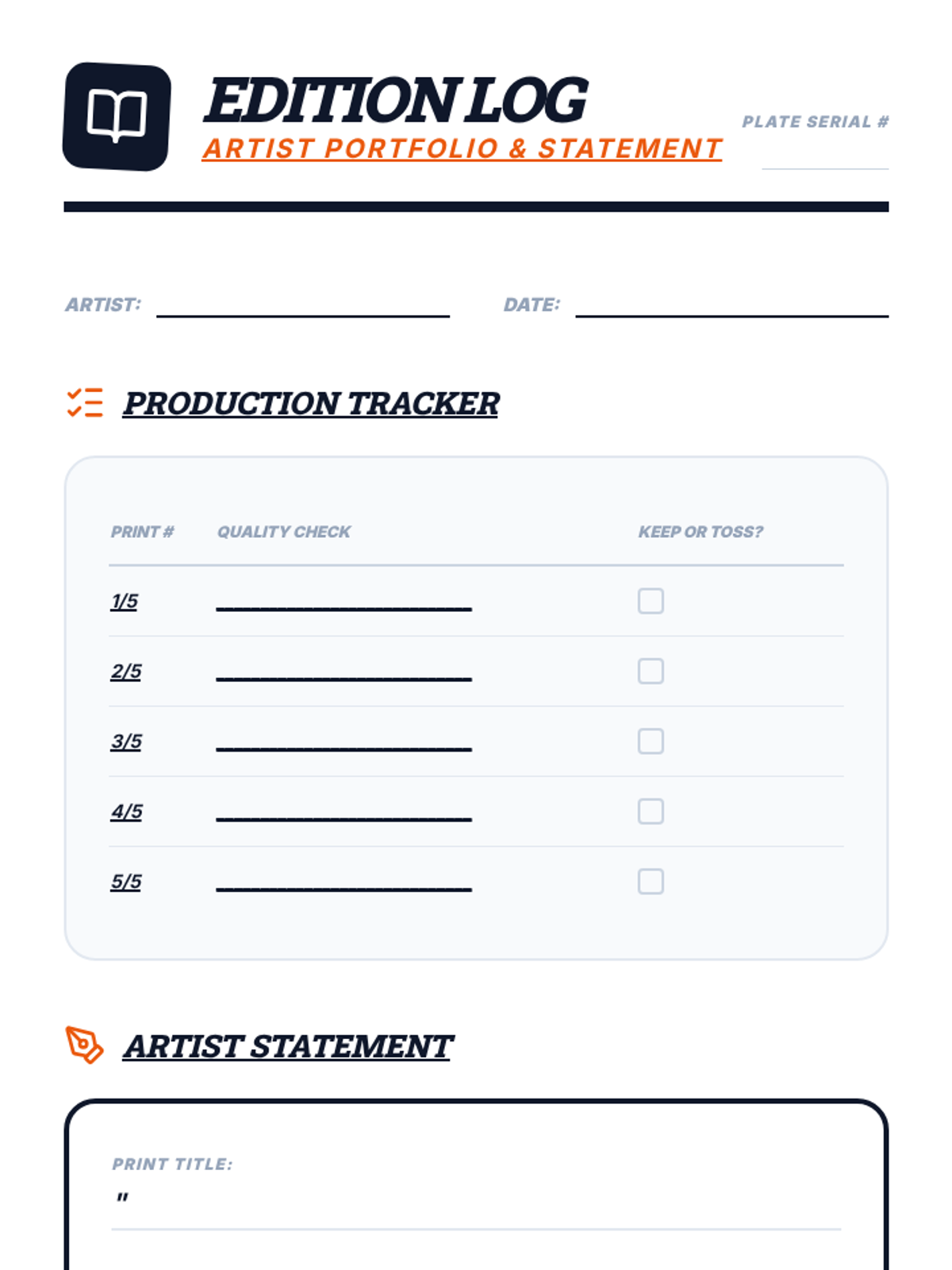
A final project log and artist statement sheet for Lesson 5, helping students track their edition production and reflect on their creative process.
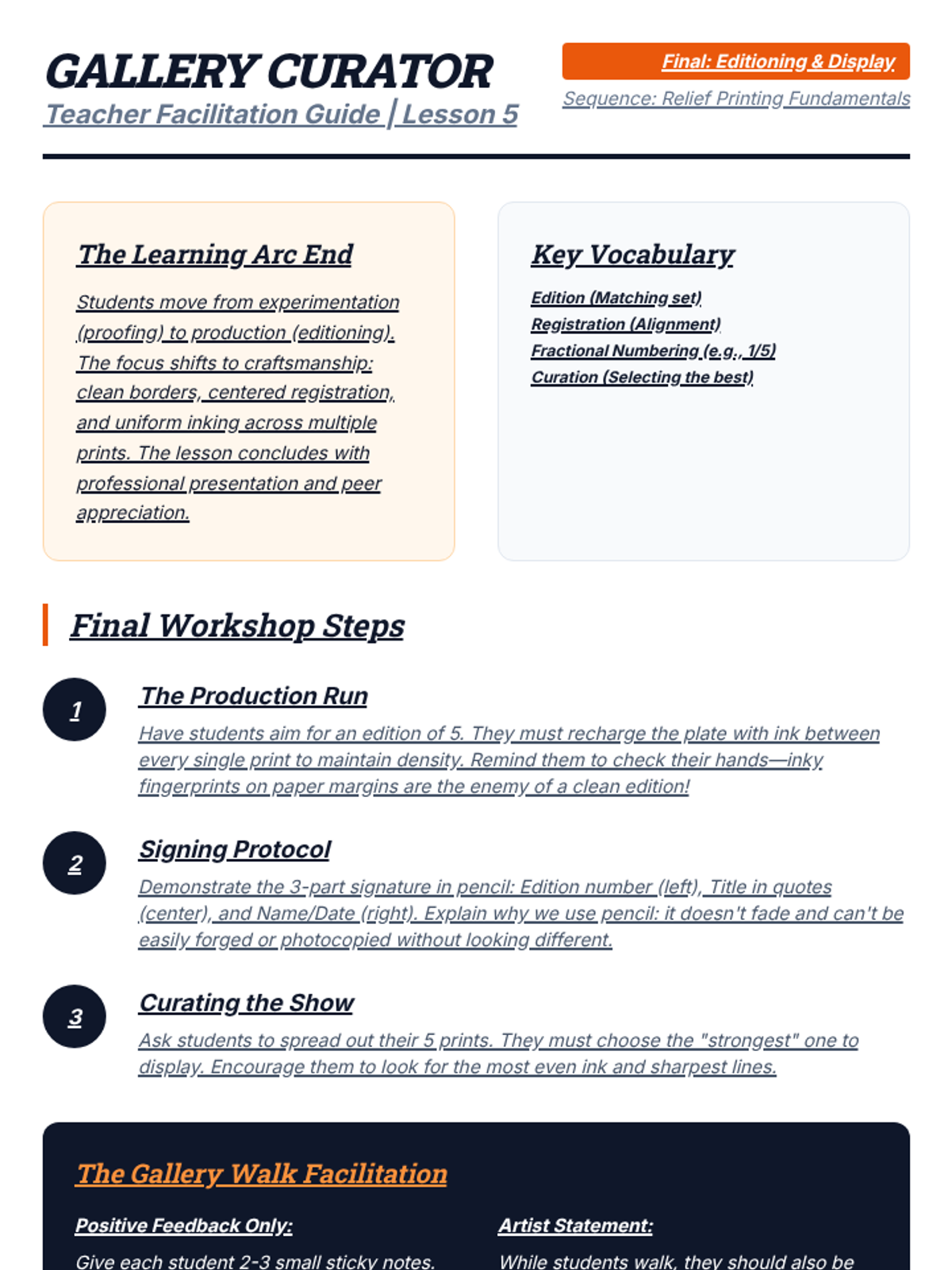
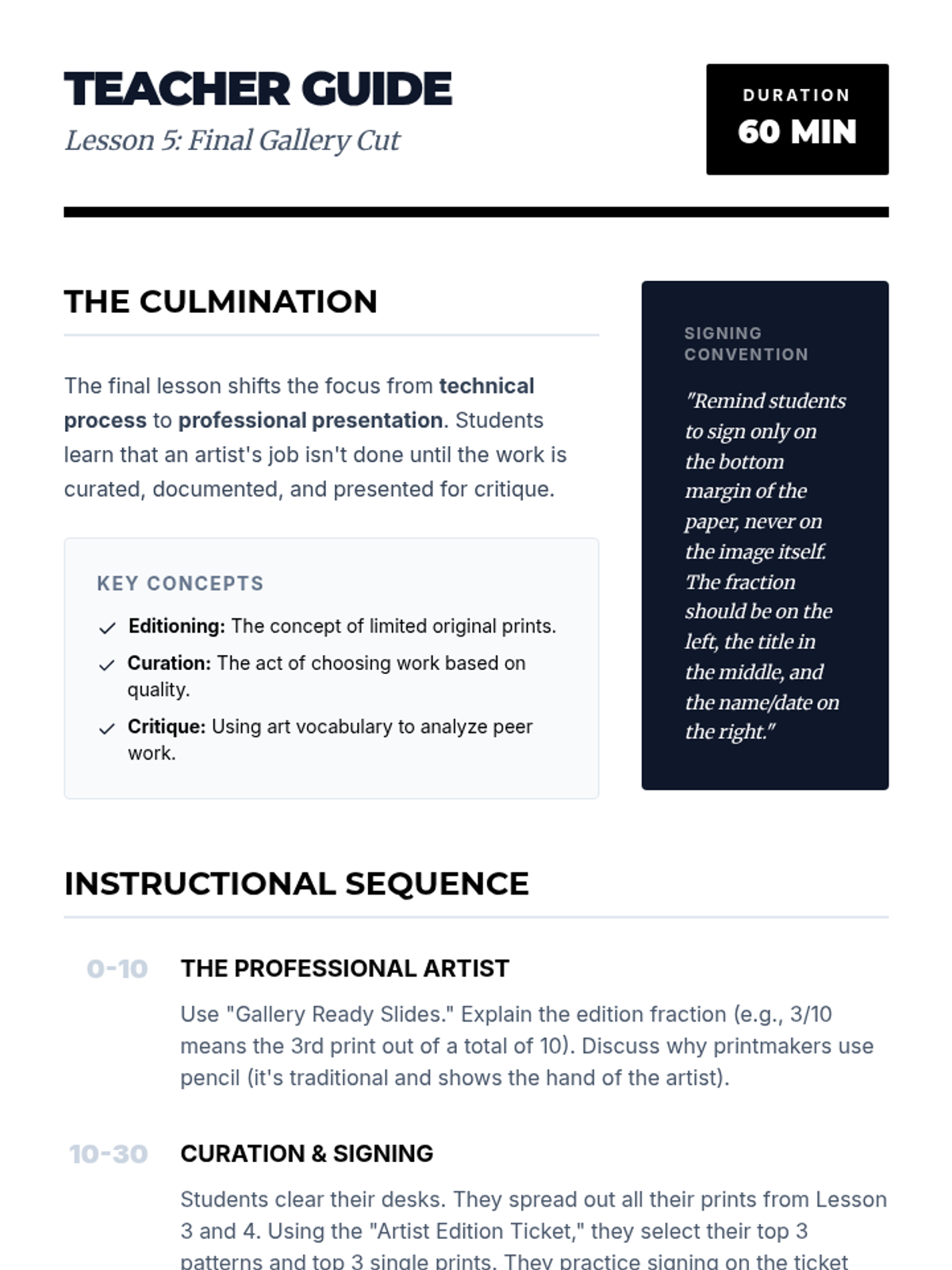
Teacher guide for Lesson 5, focusing on managing the final printing run, professional signing conventions, and facilitating a successful gallery walk.
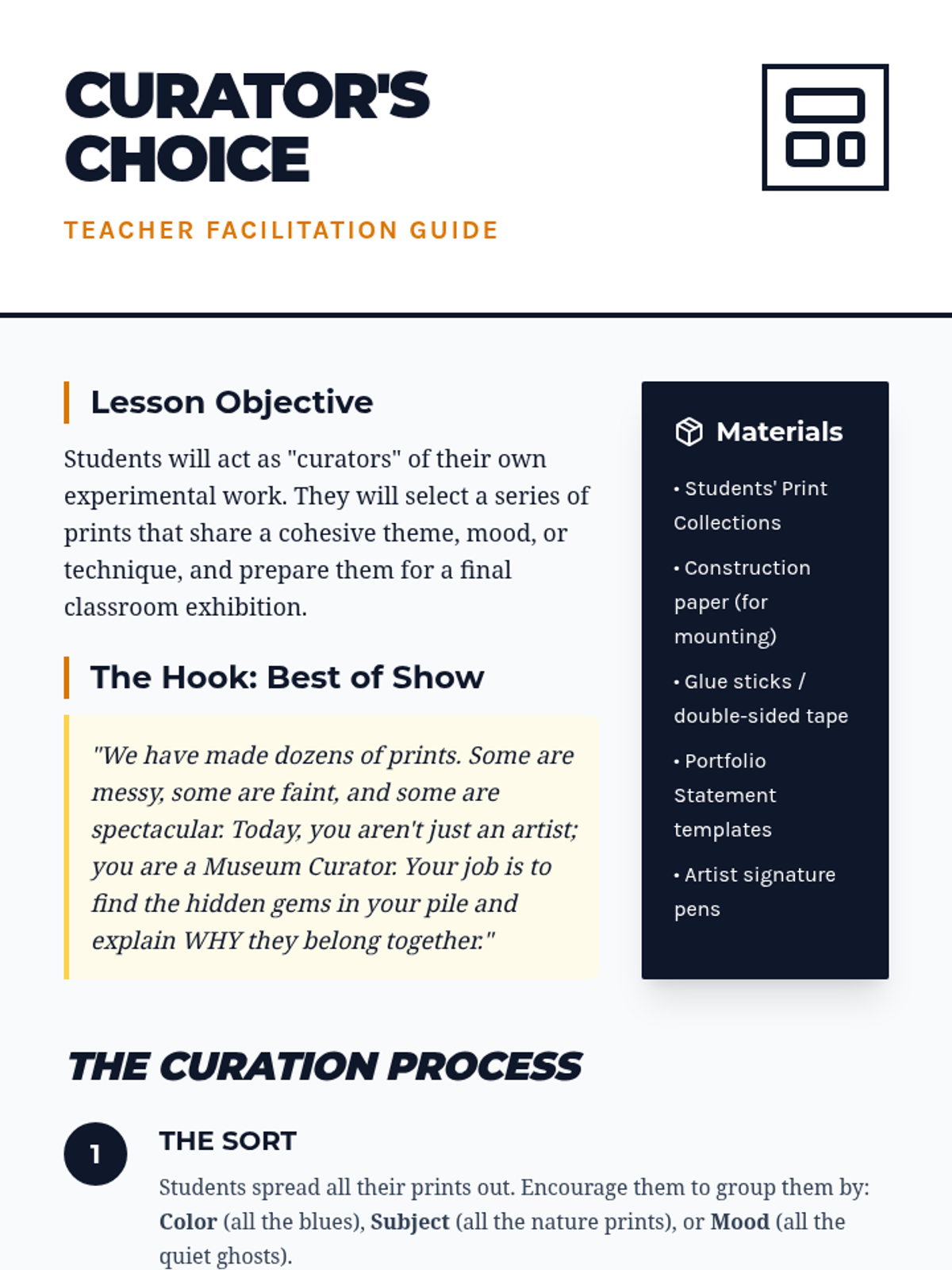
Teacher guide for the final lesson on composition and portfolio selection. Focuses on the curation process, writing artist statements, and facilitating a classroom gallery walk.
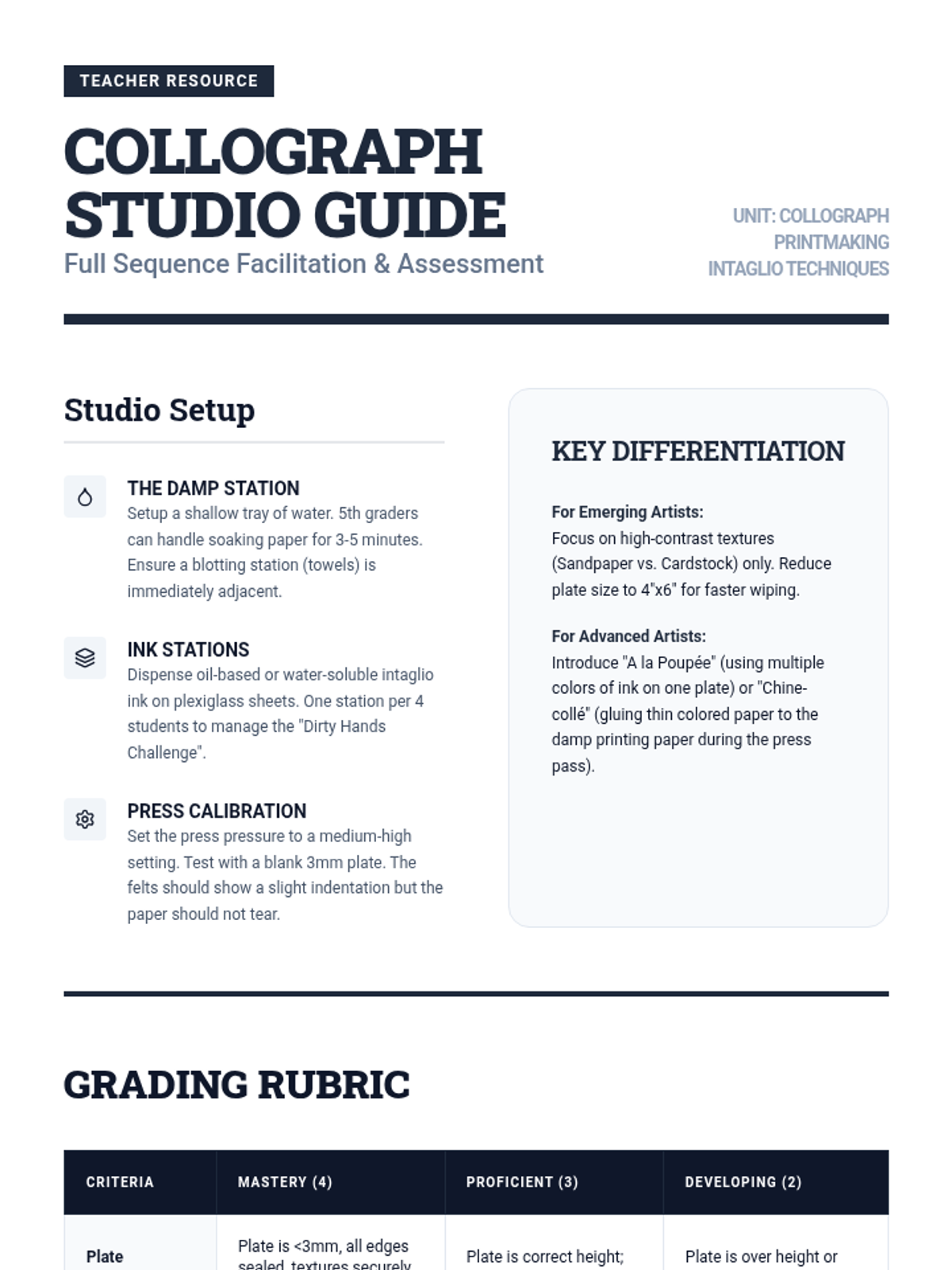
Comprehensive teacher facilitation guide for the Collograph unit, including studio setup instructions, differentiation strategies, and a final assessment rubric.
Lesson 5 slides teaching the concept of print editions, consistent registration, and the professional conventions for signing and numbering artwork.
Teacher guide for Lesson 5, providing instructions for the curation process, print signing conventions, and facilitating a peer gallery walk.
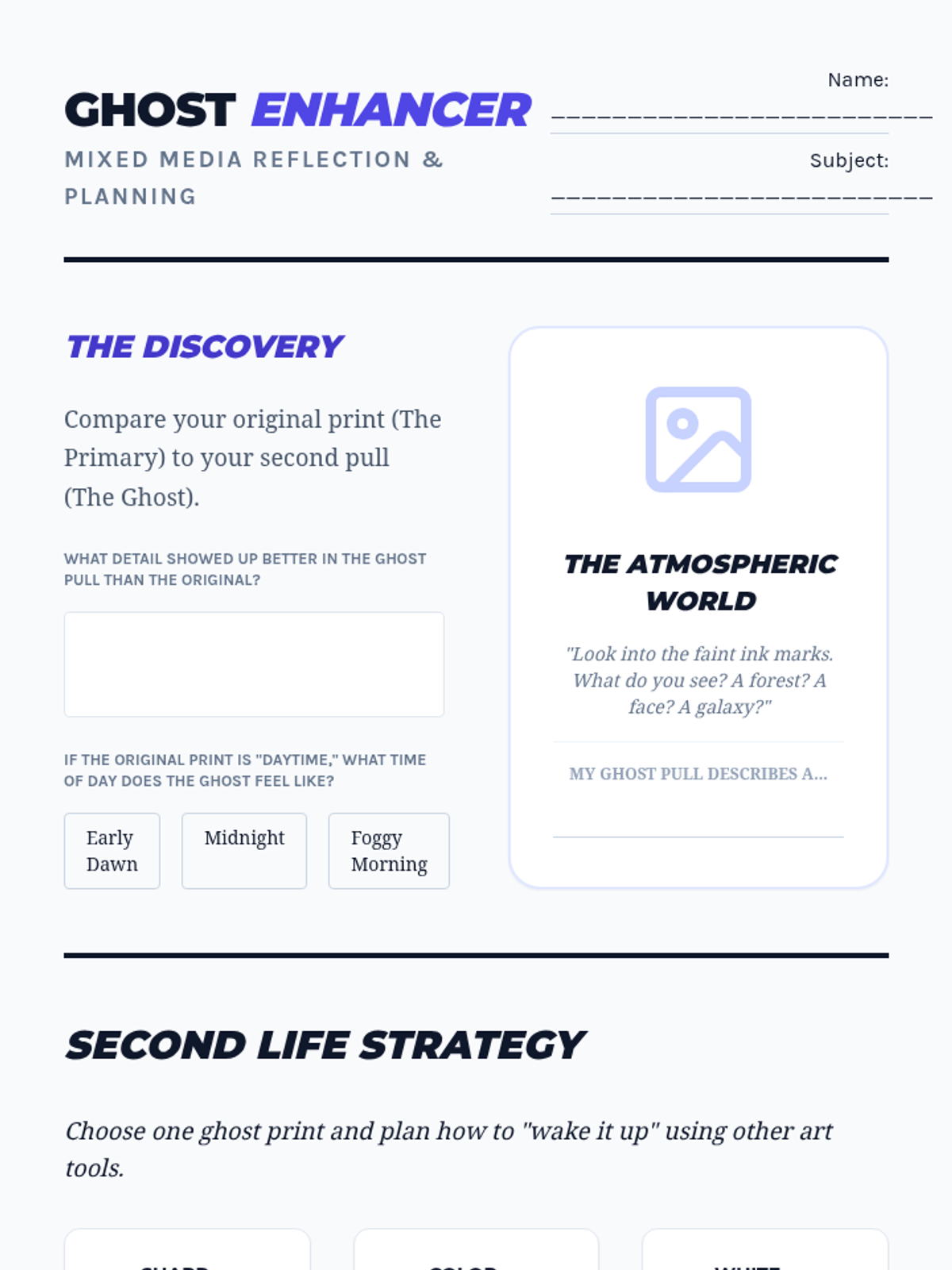
A student reflection and planning sheet for Lesson 4. Helps students analyze ghost prints and strategize mixed-media additions to enhance atmospheric images.
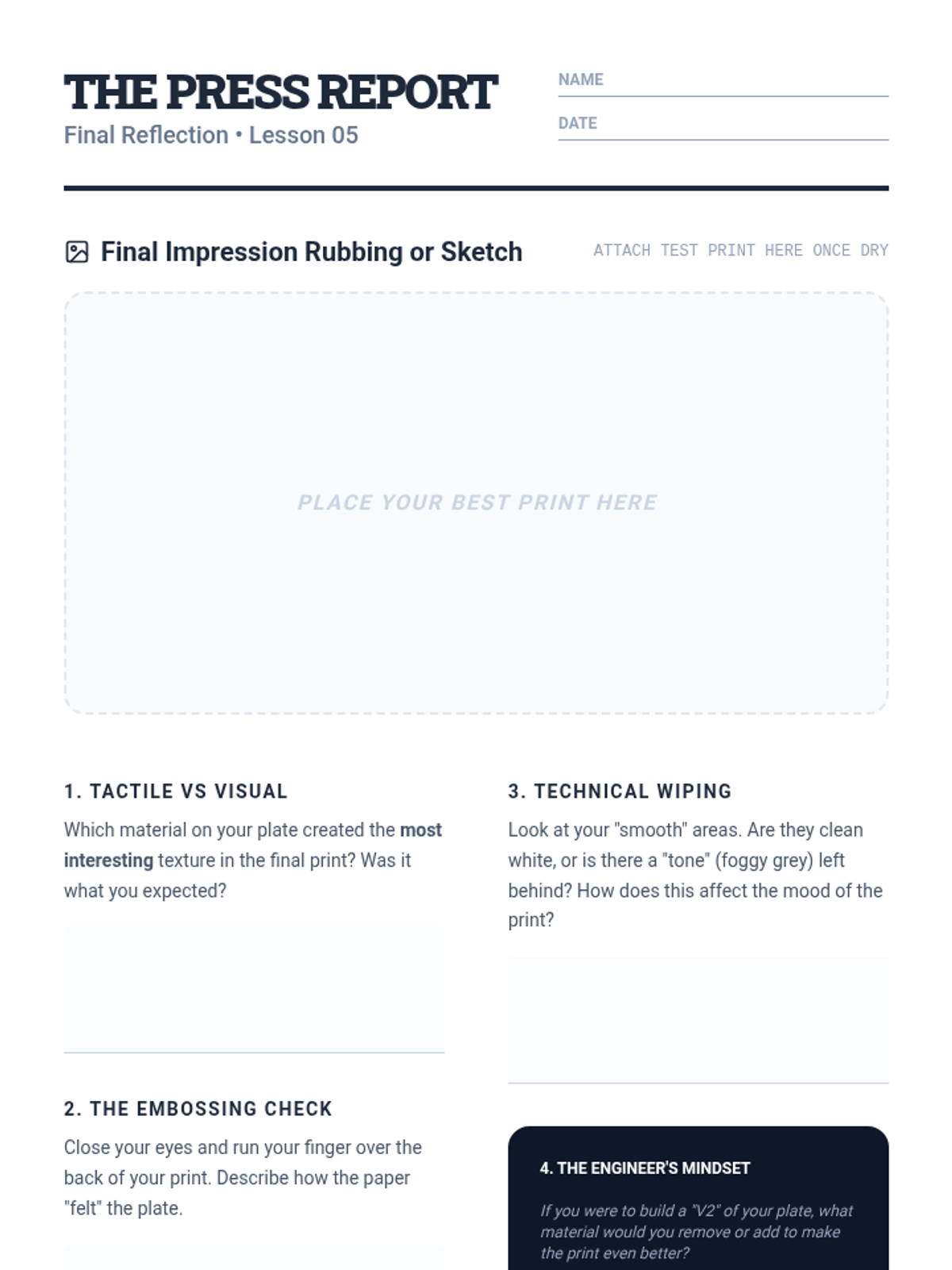
A student reflection and evaluation sheet for the final Collograph print, focusing on texture analysis, embossing quality, and technical improvement.
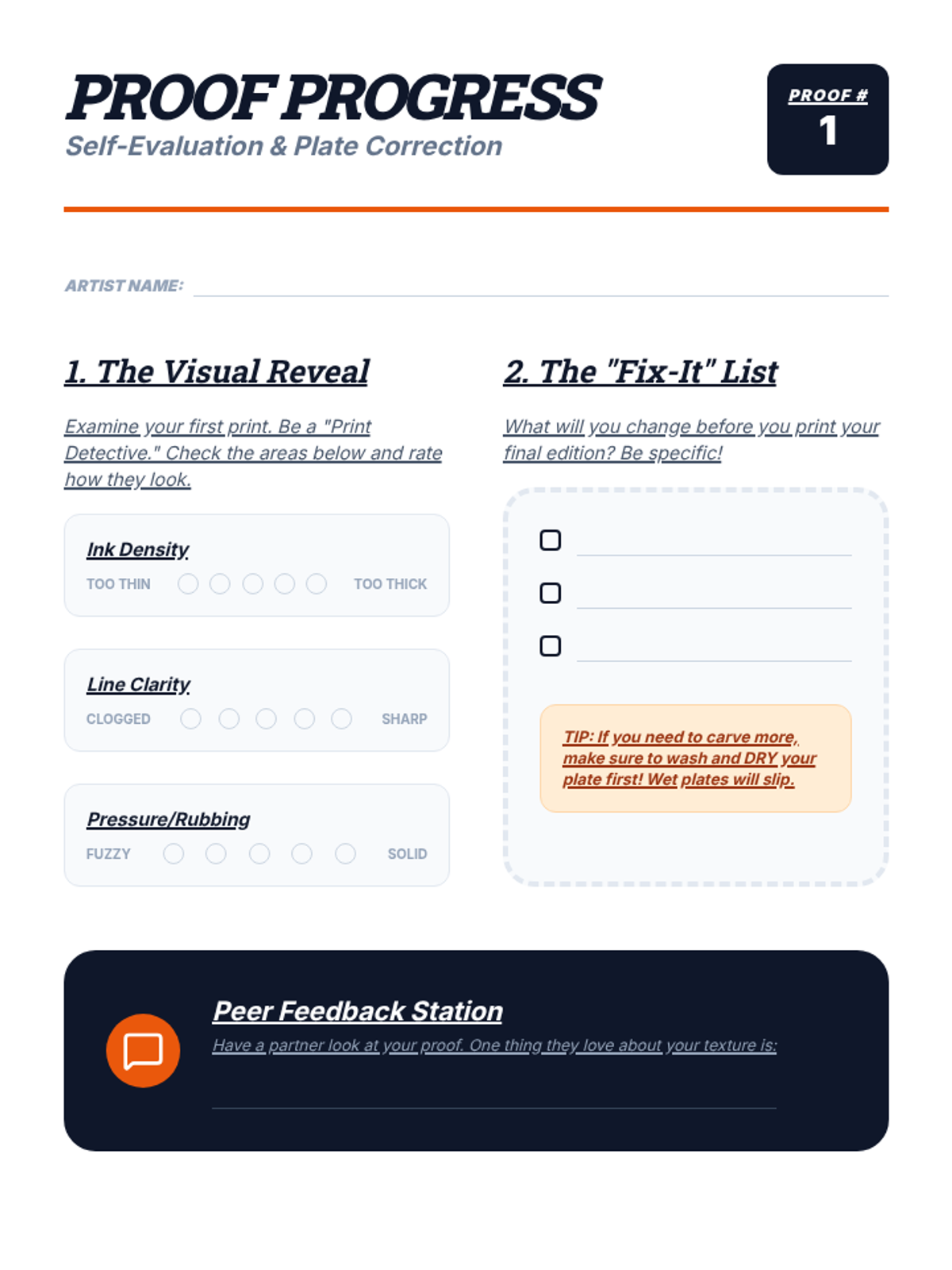
A student self-evaluation checklist for Lesson 4, designed to help students analyze their first proof print and plan necessary plate adjustments.
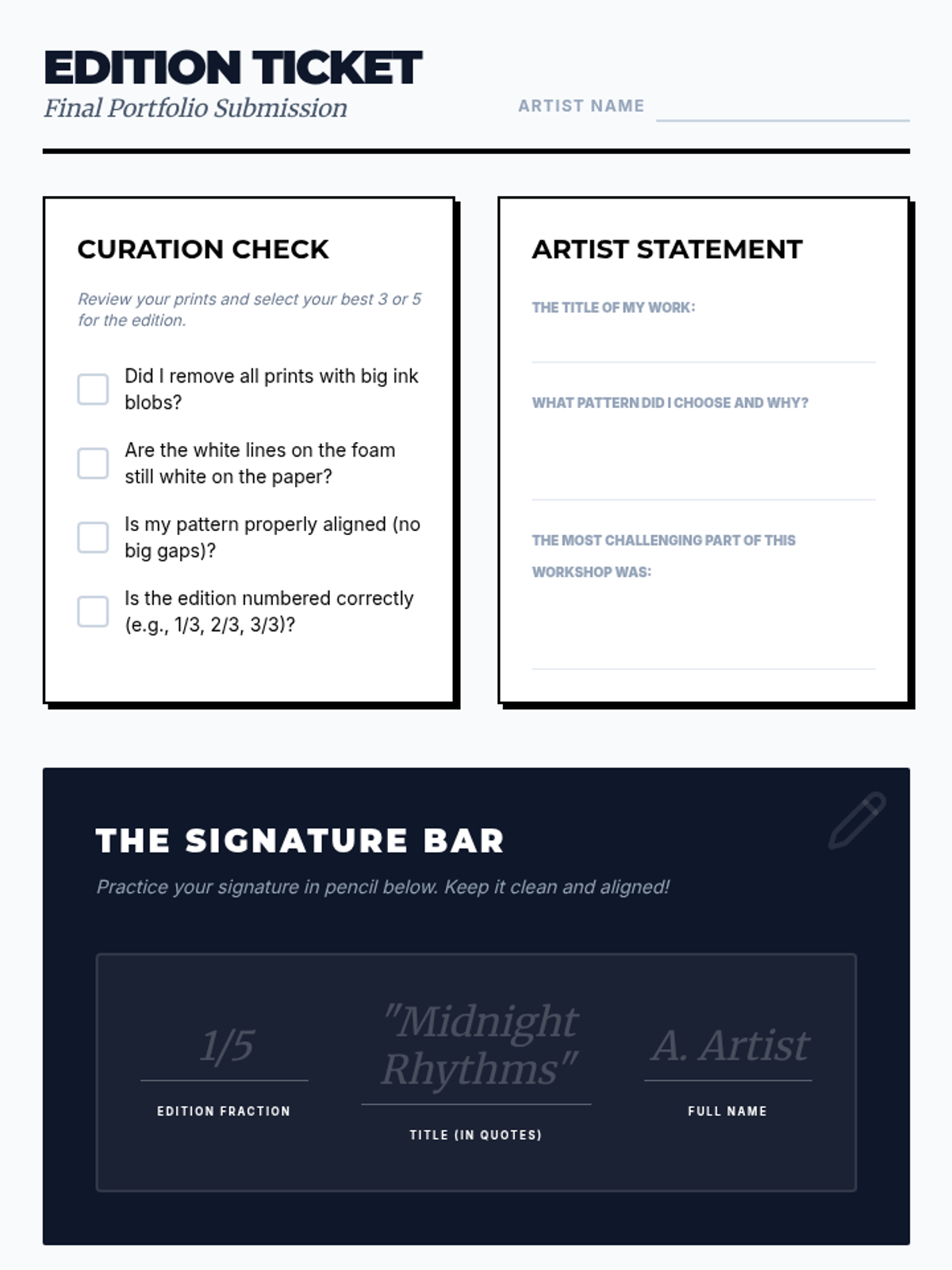
A student reflection and signing guide for the final lesson. Includes a curation checklist, artist statement prompts, and practice signing area.
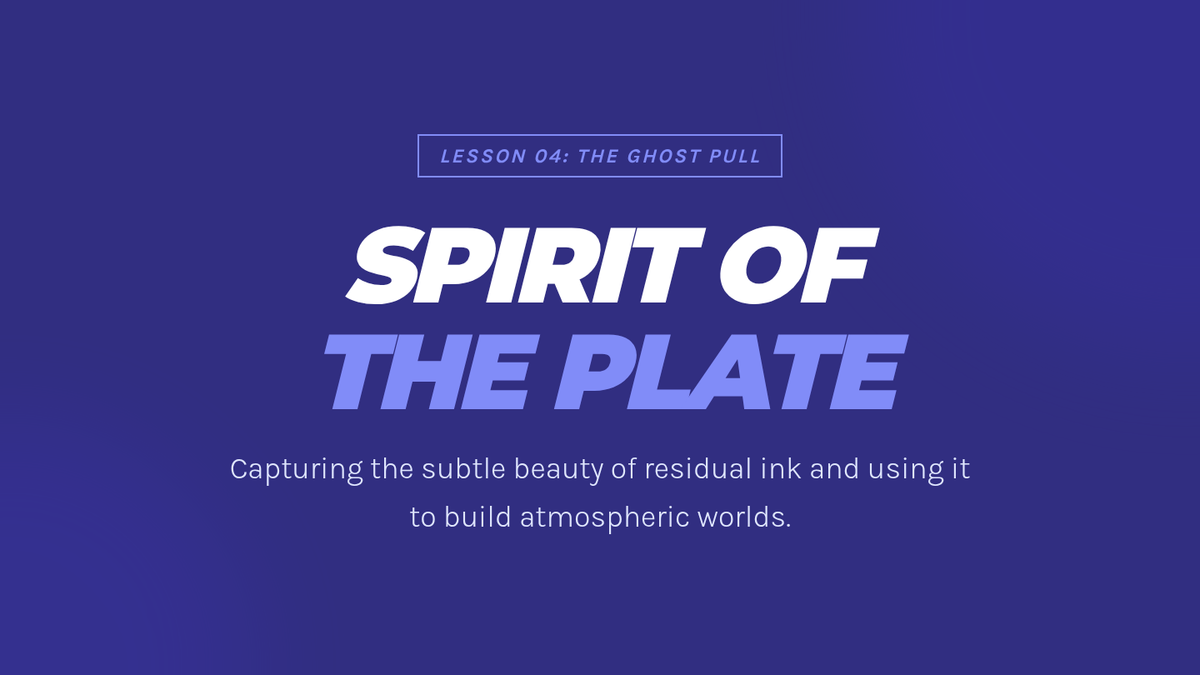
Visual presentation for students on ghost printing. Explains the concept of residual ink, pressure techniques for second pulls, and how to use faint images as mixed-media backgrounds.
Visual guide for Lesson 5 on the printing process, mechanics of the press, and the unique 3D embossing quality of collograph prints.
Slides for Lesson 5 covering signing prints, numbering editions, and conducting a peer critique.
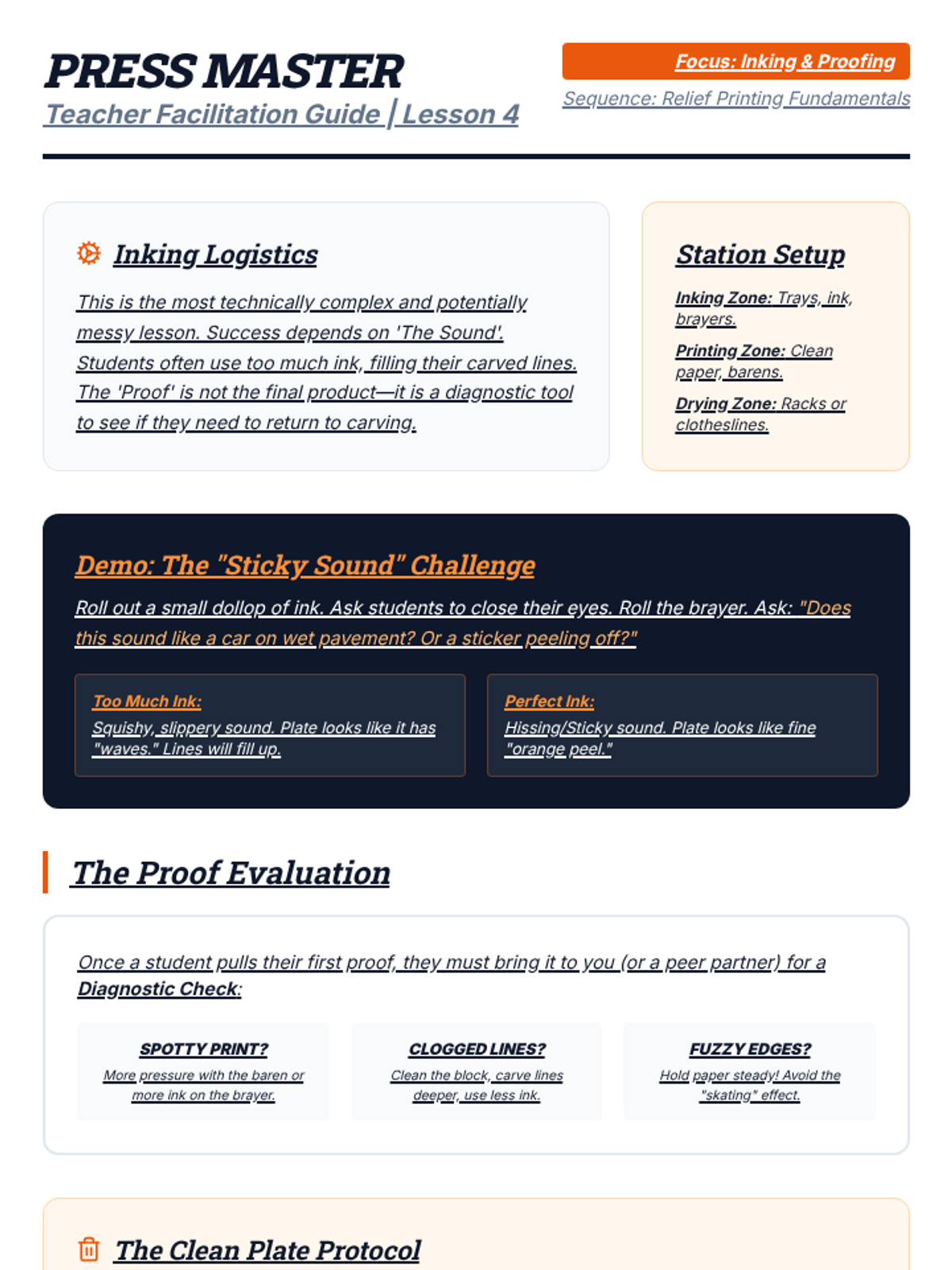
Teacher guide for Lesson 4 focusing on inking management, diagnosing proof prints, and maintaining a clean printing environment.
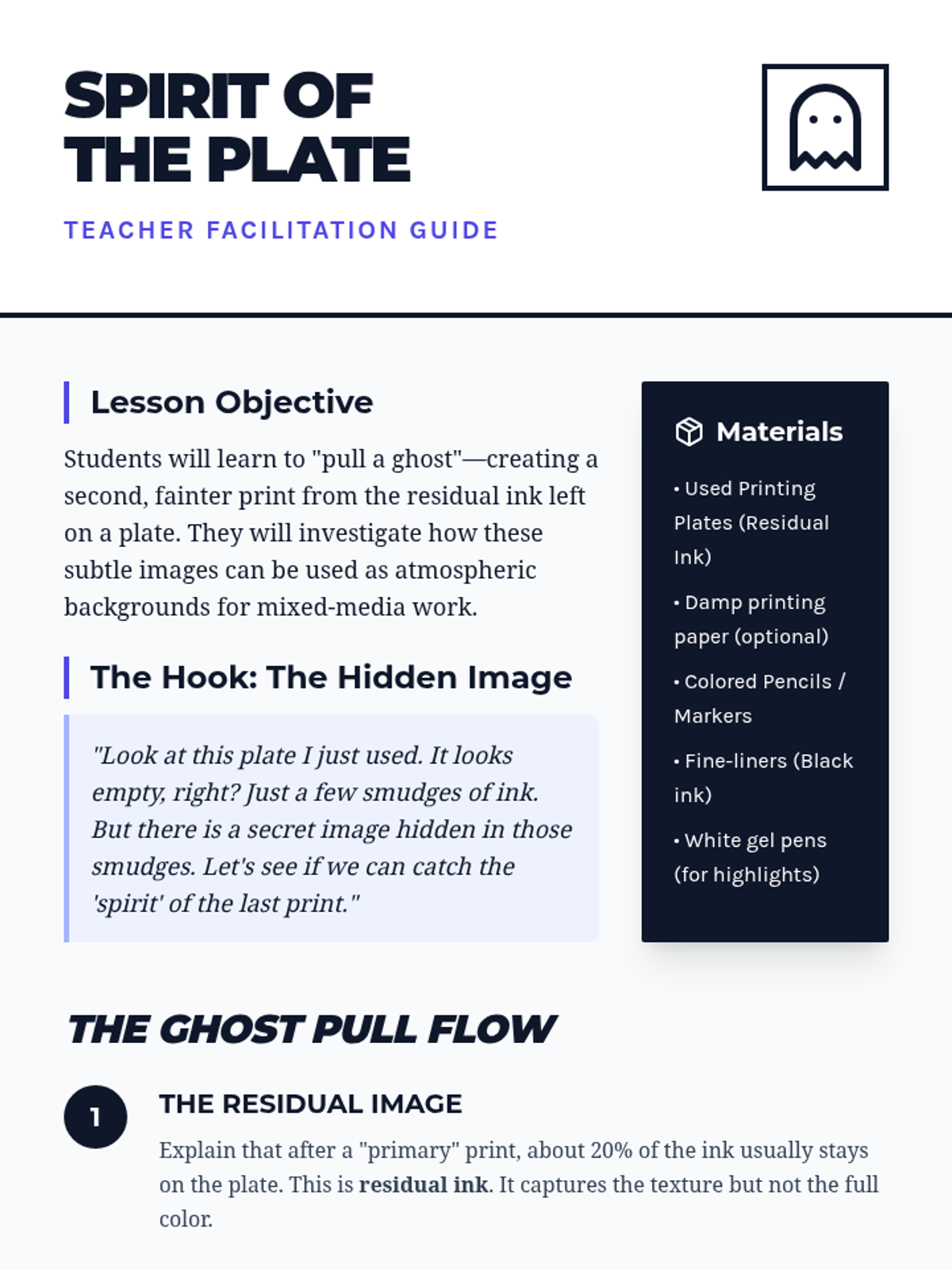
Teacher guide for Lesson 4 on ghost prints and residual ink. Includes techniques for pulling second prints and strategies for mixed-media enhancement of faint images.
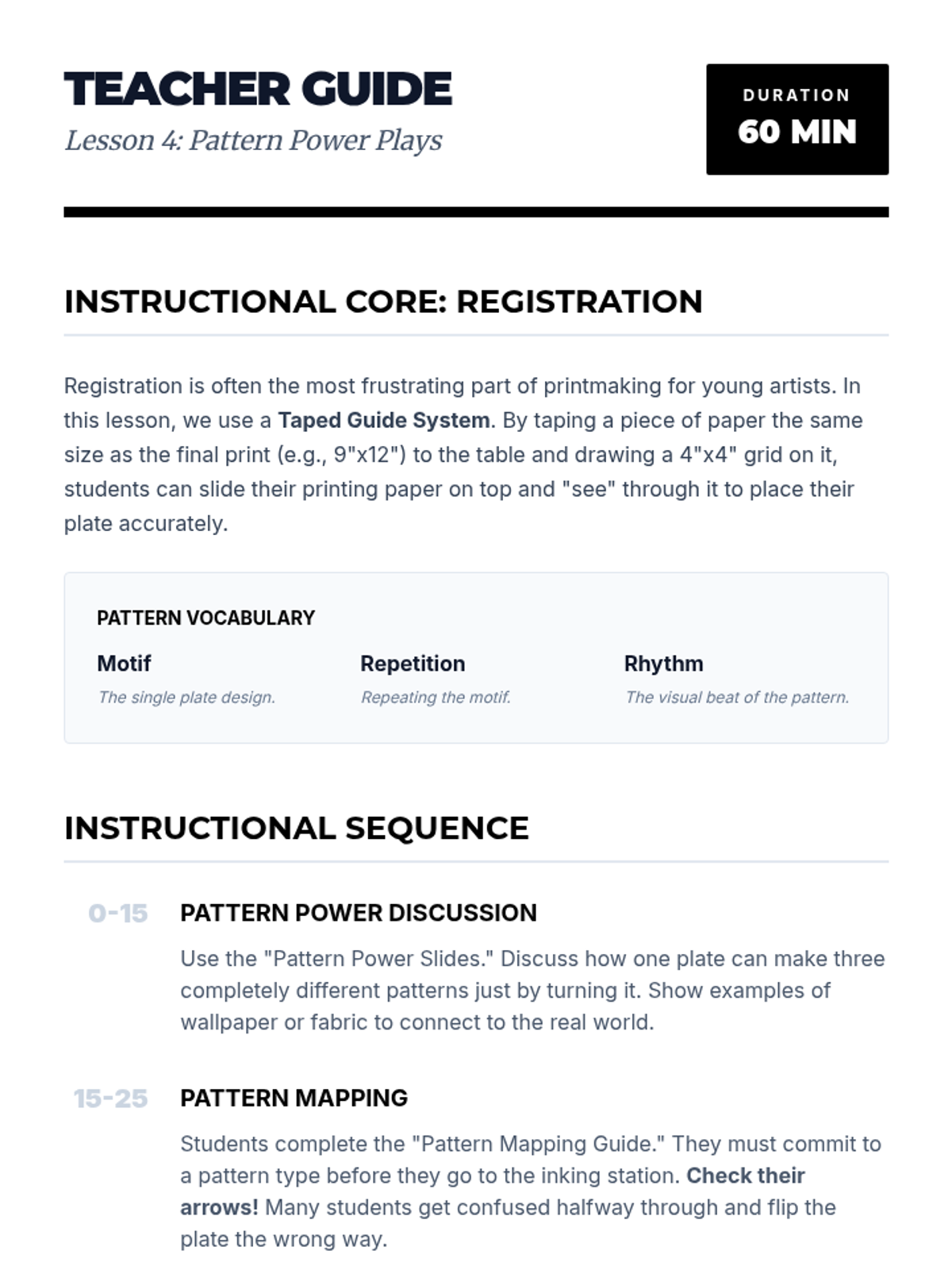
Teacher guide for Lesson 4, providing registration techniques, pattern vocabulary, and instructional pacing.
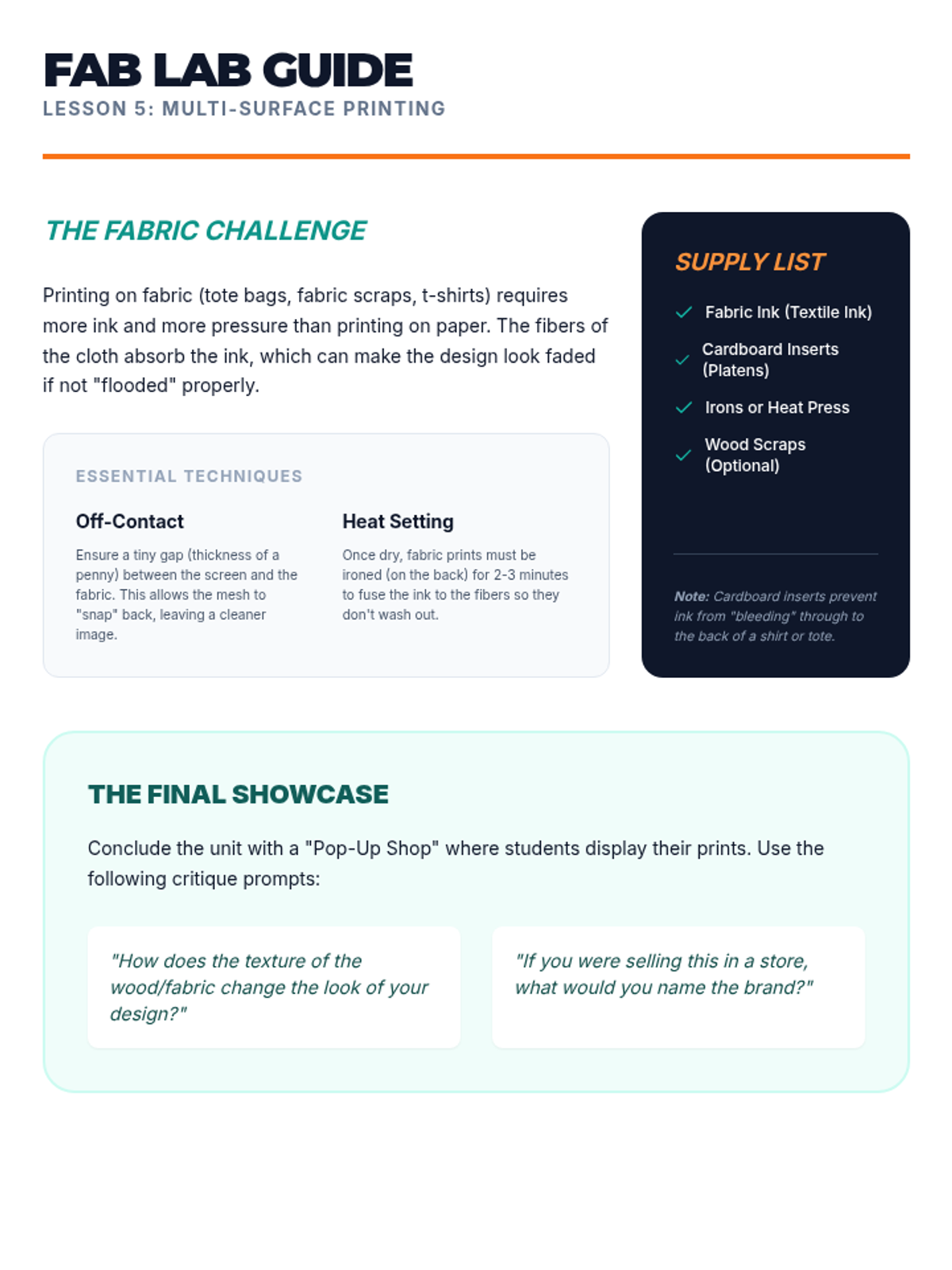
Student planner for Lesson 5, used to plan a final multi-surface print project, including substrate analysis and branding concepts.
Lesson 4 slides covering the technical process of inking with a brayer, identifying proper ink consistency, and pulling a proof print.
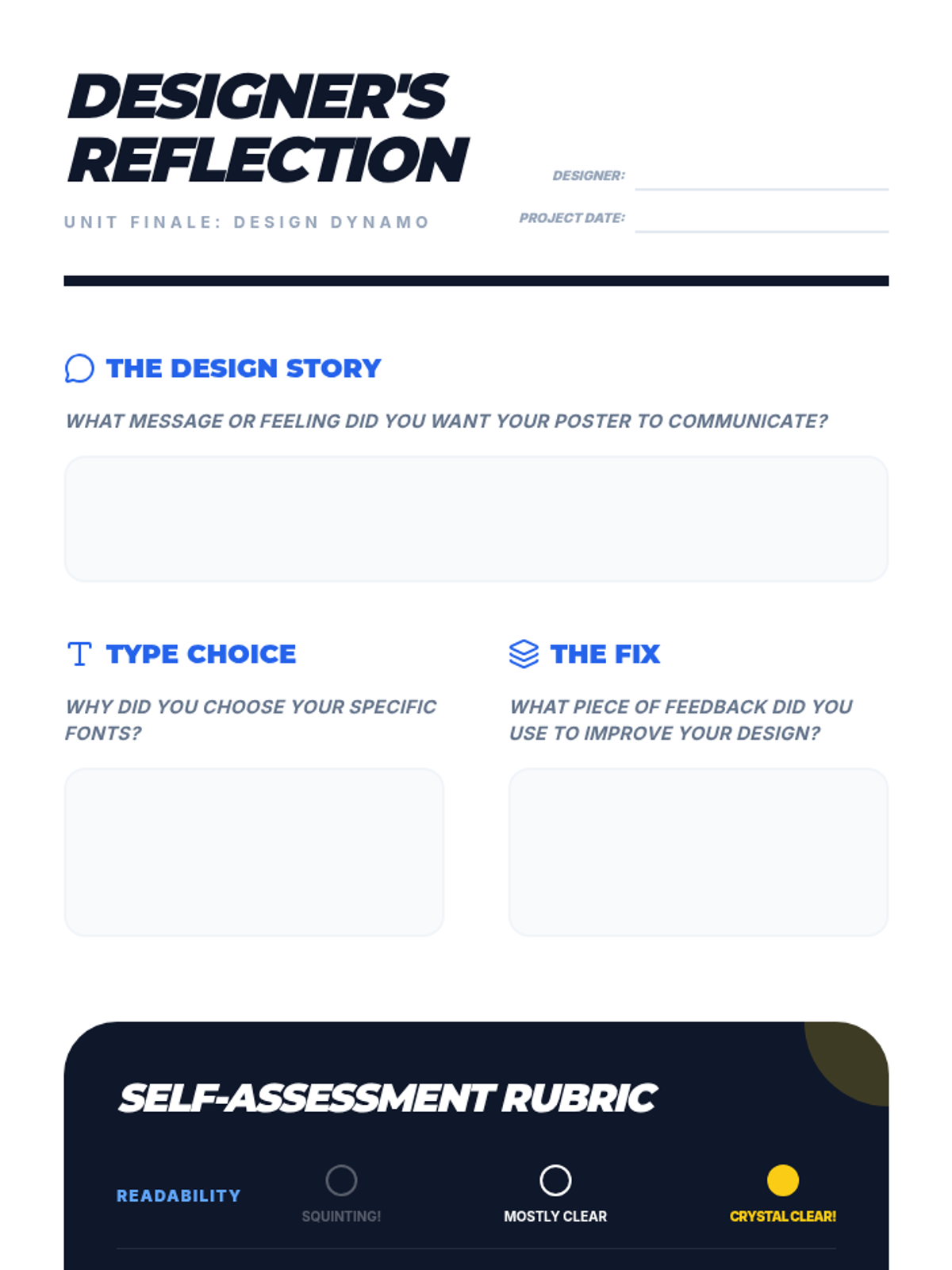
Student reflection sheet and rubric for Lesson 5, allowing students to self-assess their final poster and reflect on the design process.
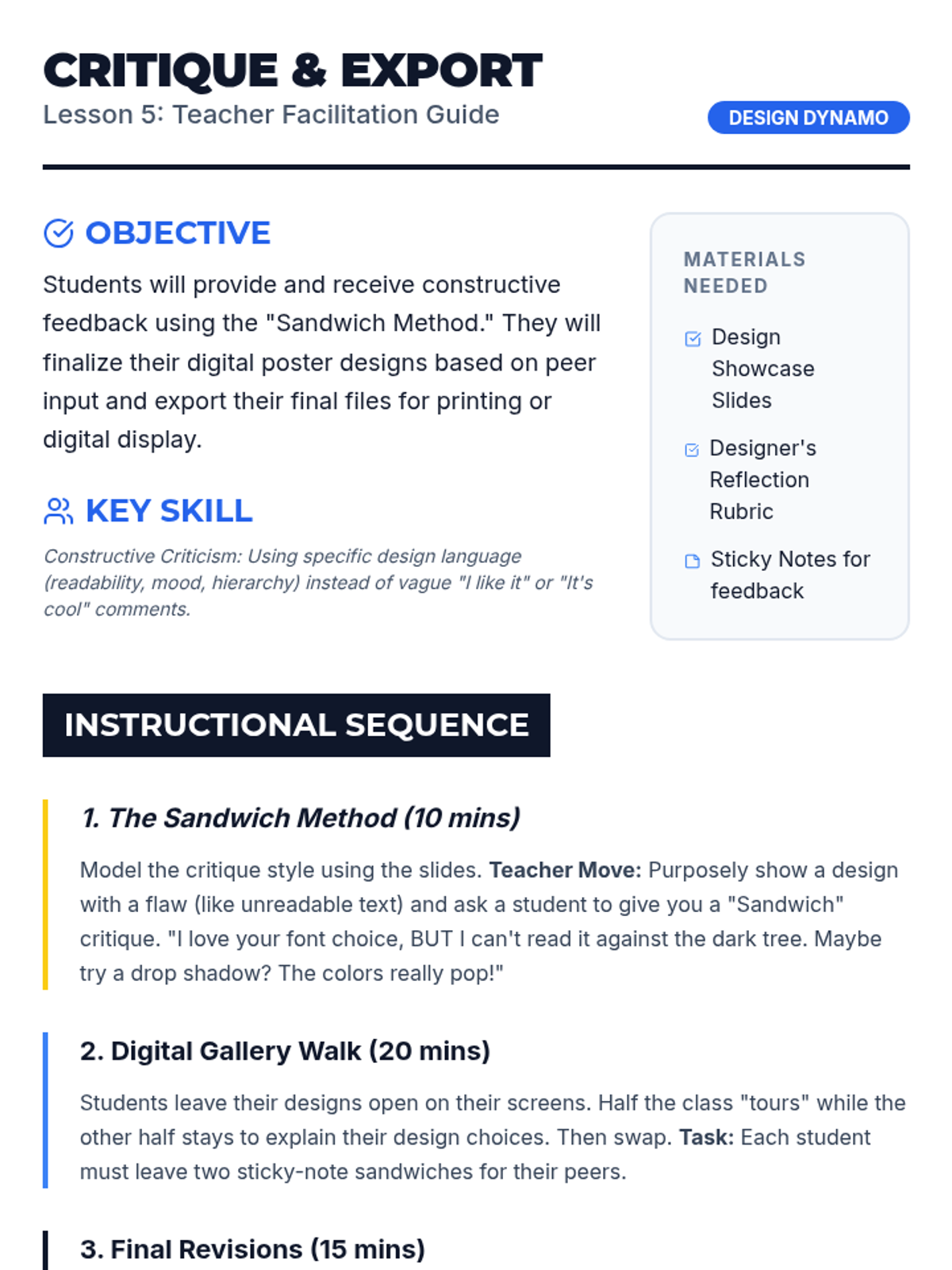
Teacher facilitation guide for Lesson 5, including instructions for the peer critique session, final revision steps, and file export procedures.
Visual presentation for Lesson 5, covering peer critique etiquette (the Sandwich Method), final design polish, and export instructions.
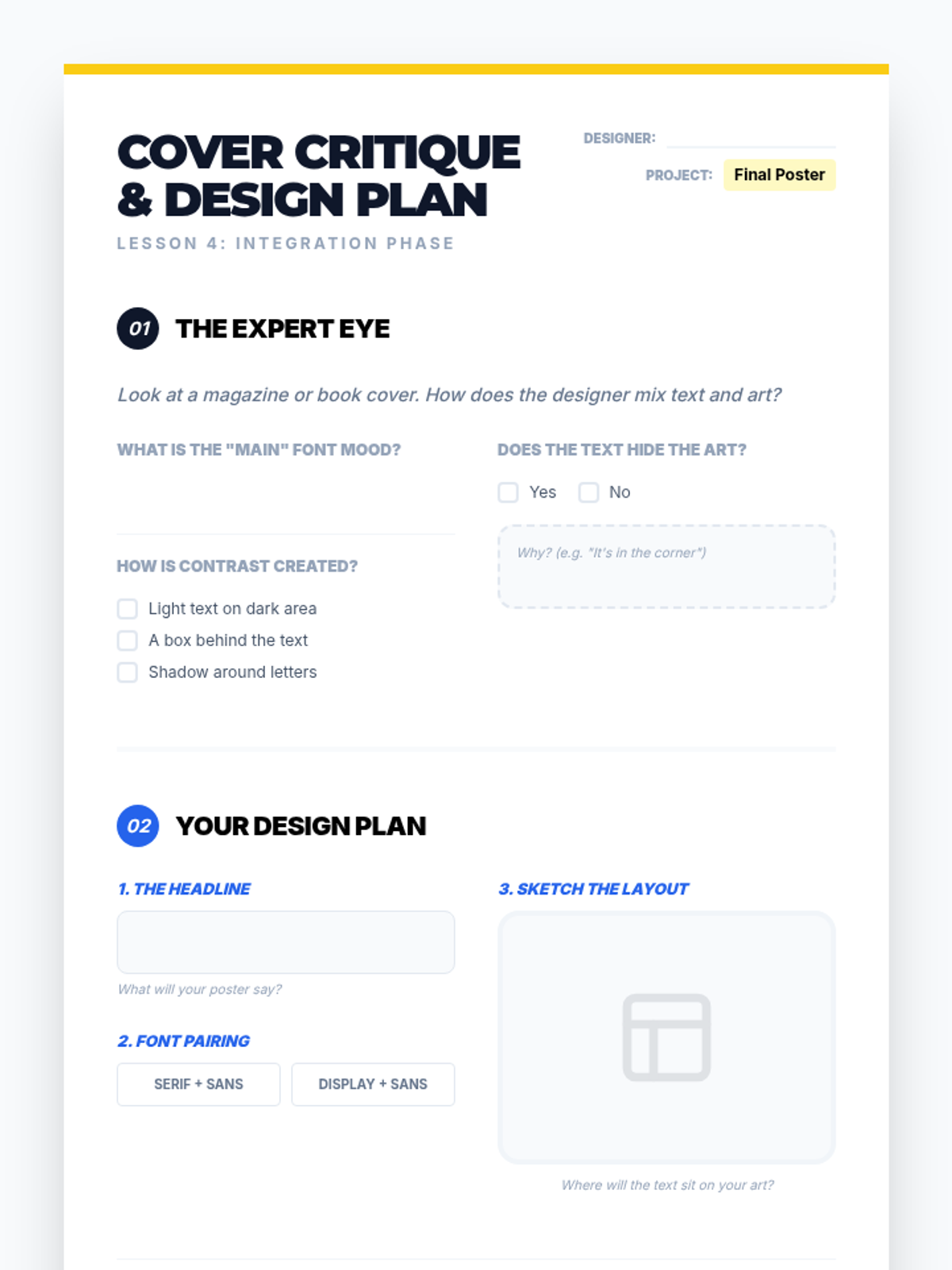
Student planning worksheet for Lesson 4, guiding them through the analysis of a magazine cover and the layout plan for their own final poster.
Teacher guide for Lesson 5, focusing on printing on fabric and other substrates, heat-setting techniques, and facilitating final critiques.
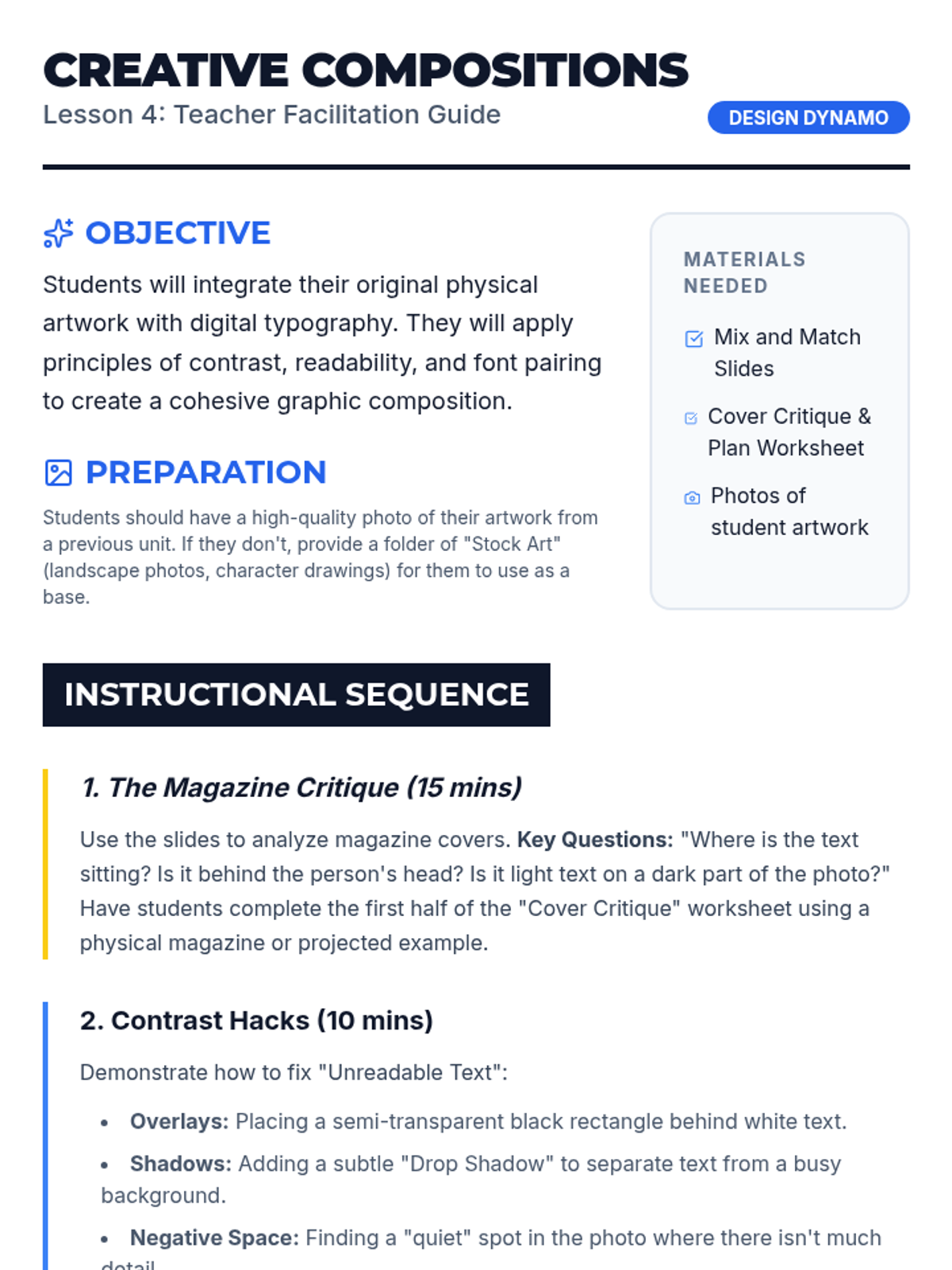
Teacher facilitation guide for Lesson 4, focusing on integrating student artwork with digital text and troubleshooting readability.
Visual presentation for Lesson 5, discussing substrates (fabric, wood, metal), absorbent vs non-absorbent surfaces, and the concept of 'merchandise'.
Visual presentation for Lesson 4, covering magazine cover analysis, contrast, readability, and font pairing principles.
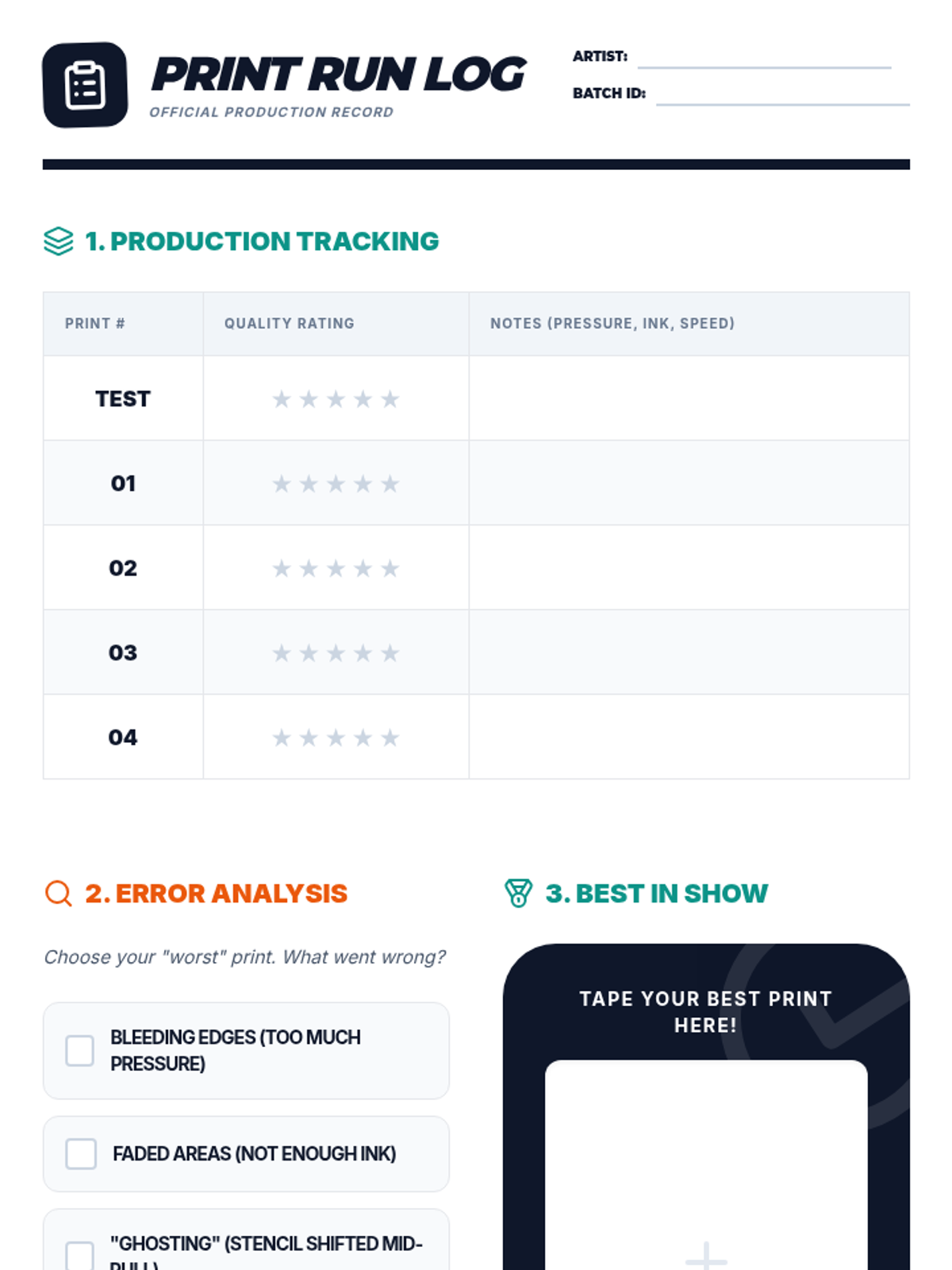
Student production log for Lesson 4, used to track print quality, identify technical errors, and document the successful completion of a print run.
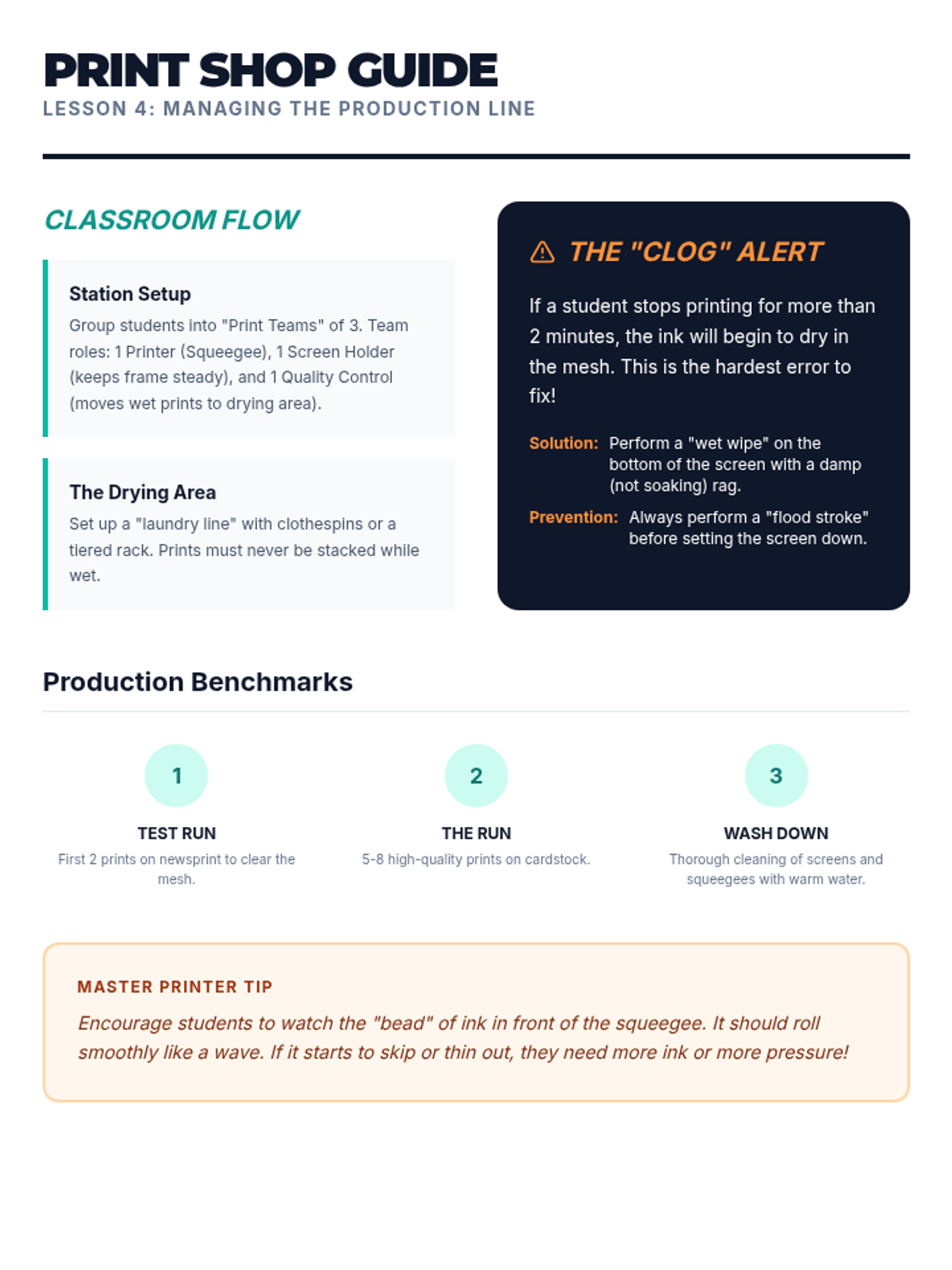
Teacher guide for Lesson 4, focusing on managing a print production line, maintaining drying areas, and troubleshooting ink clogs.
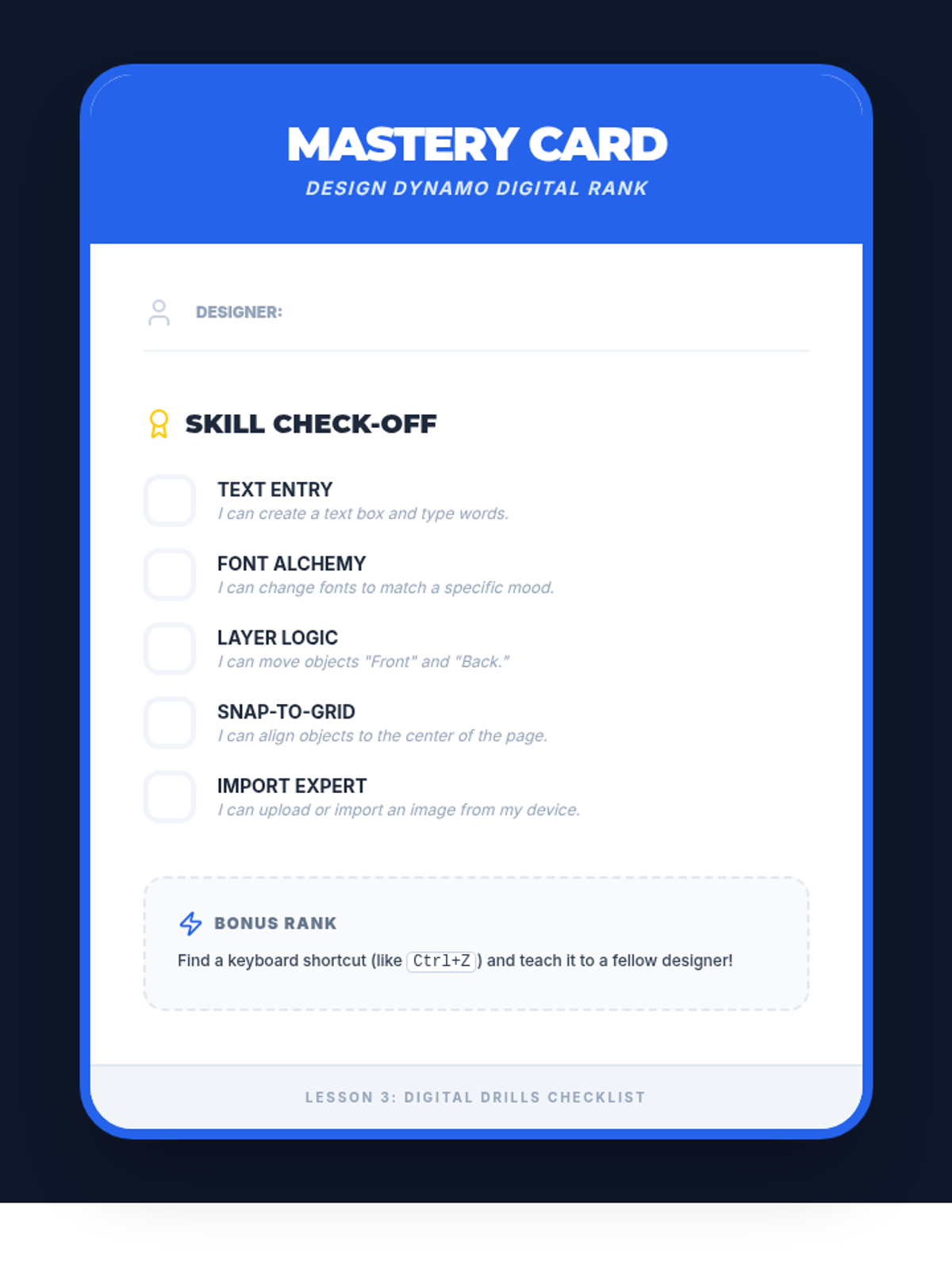
Student skill-tracking card for Lesson 3, allowing students to check off digital design competencies as they master them.
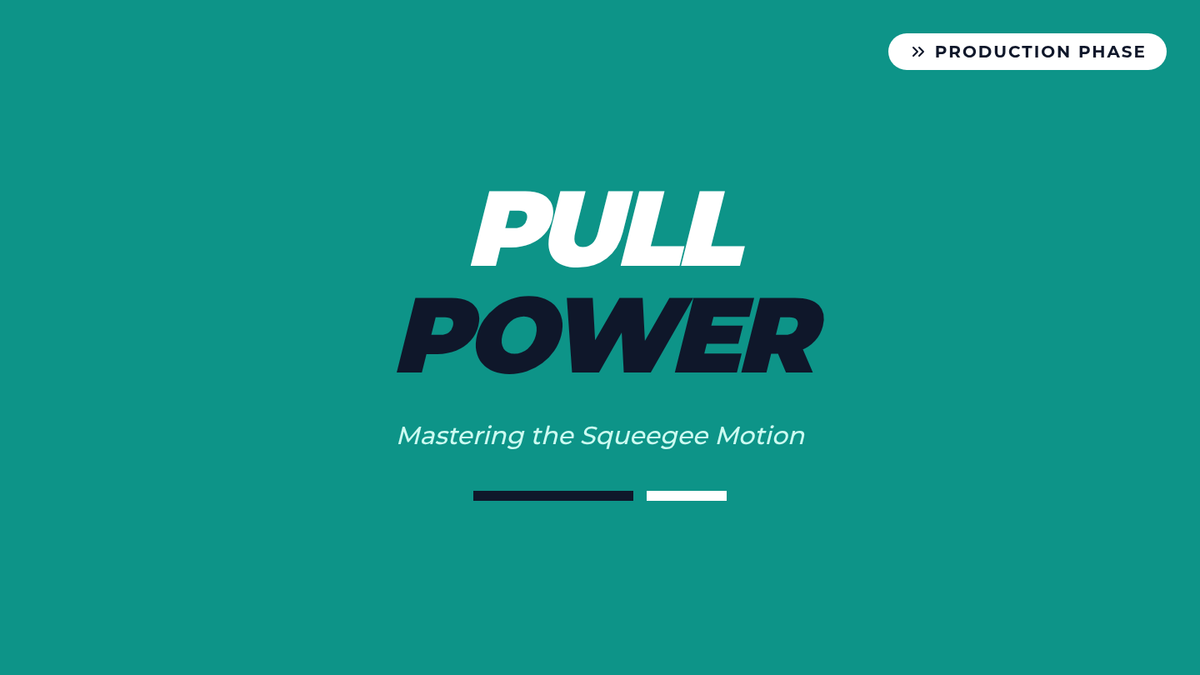
Visual presentation for Lesson 4, teaching the mechanics of the squeegee pull, including angle, pressure, and speed for high-quality prints.
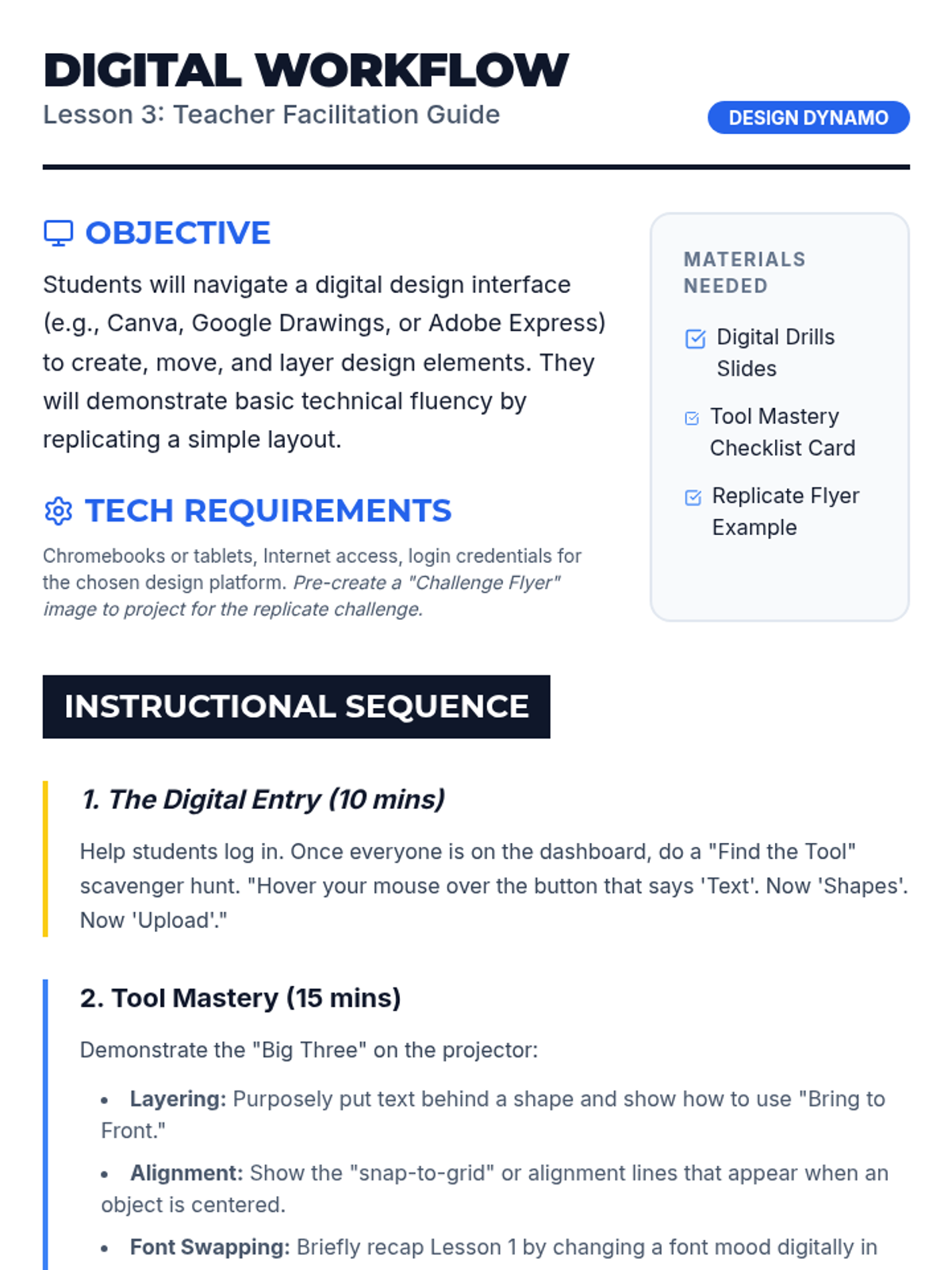
Teacher facilitation guide for Lesson 3, including objectives, digital tool demonstration steps, and the speed design challenge.
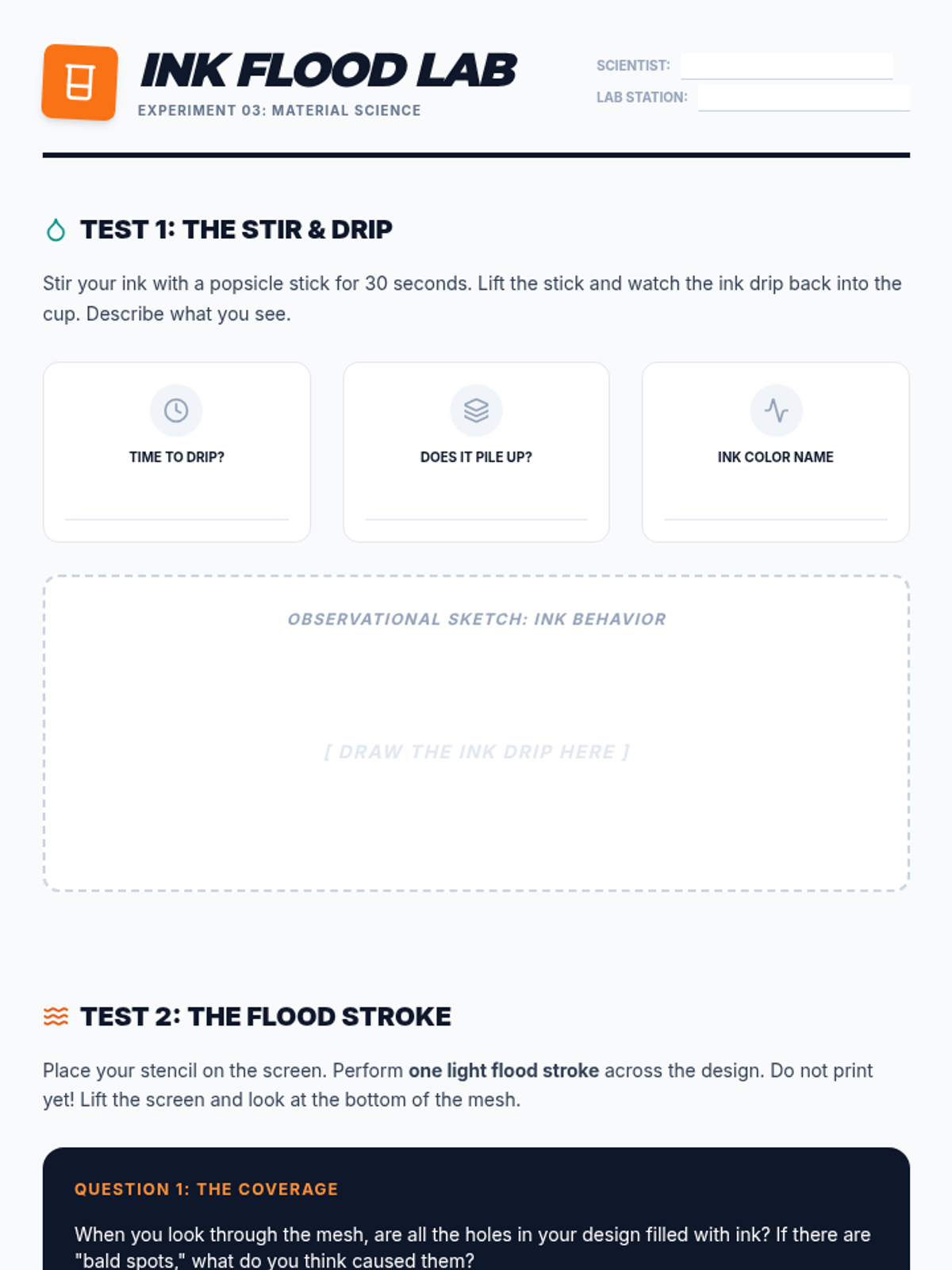
Student lab worksheet for Lesson 3, where students experiment with ink viscosity and observe the 'flood' stroke behavior on their screen.
Visual presentation for Lesson 3, covering digital design tools like text boxes, layering, alignment, and basic navigation.
Visual presentation for Lesson 3, explaining screen mesh structure, stencil attachment, and ink viscosity (thickness) for optimal printing.
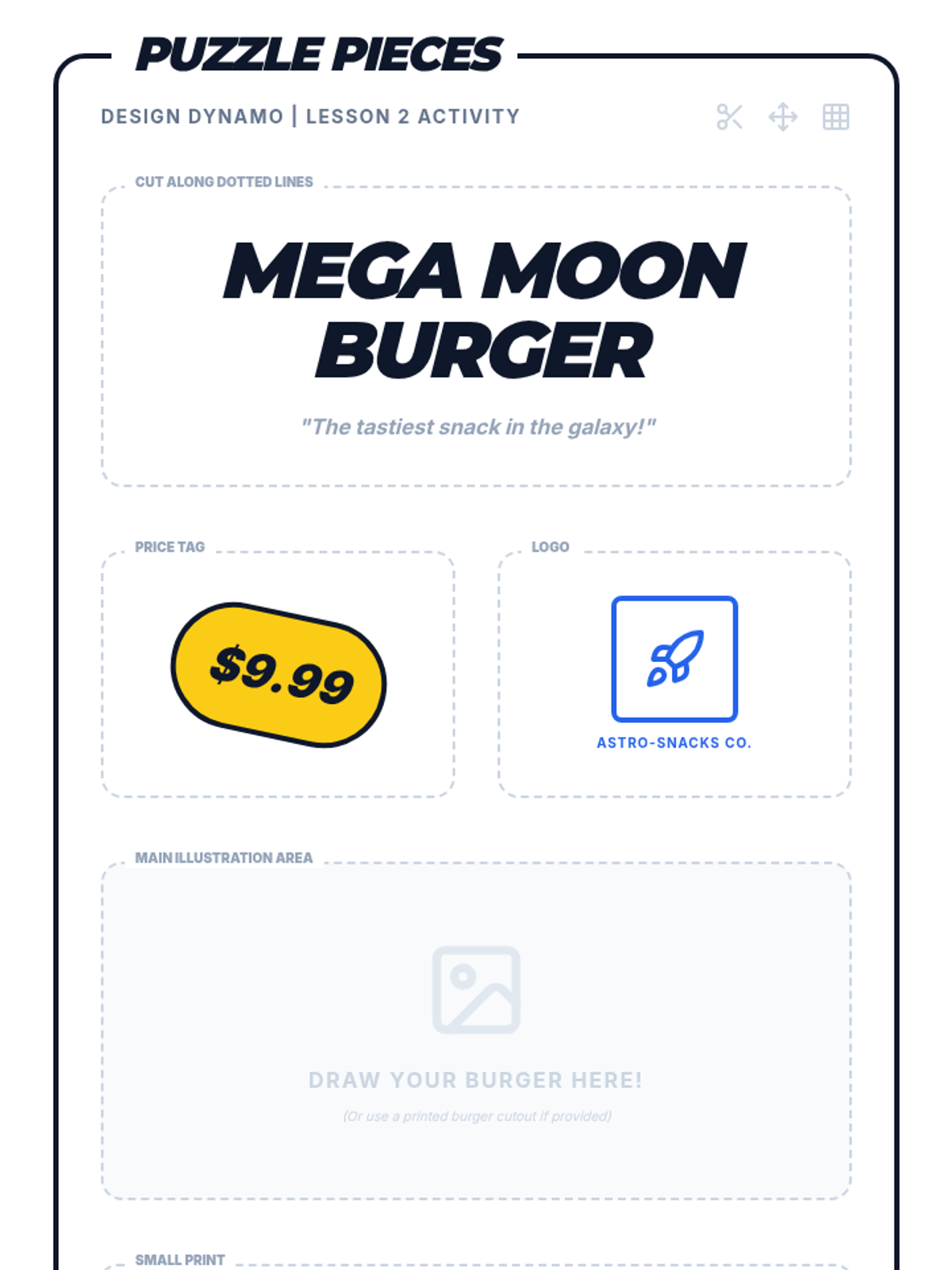
Printable activity sheet with cut-out shapes and text blocks for students to manually arrange an advertisement, practicing focal points and hierarchy.
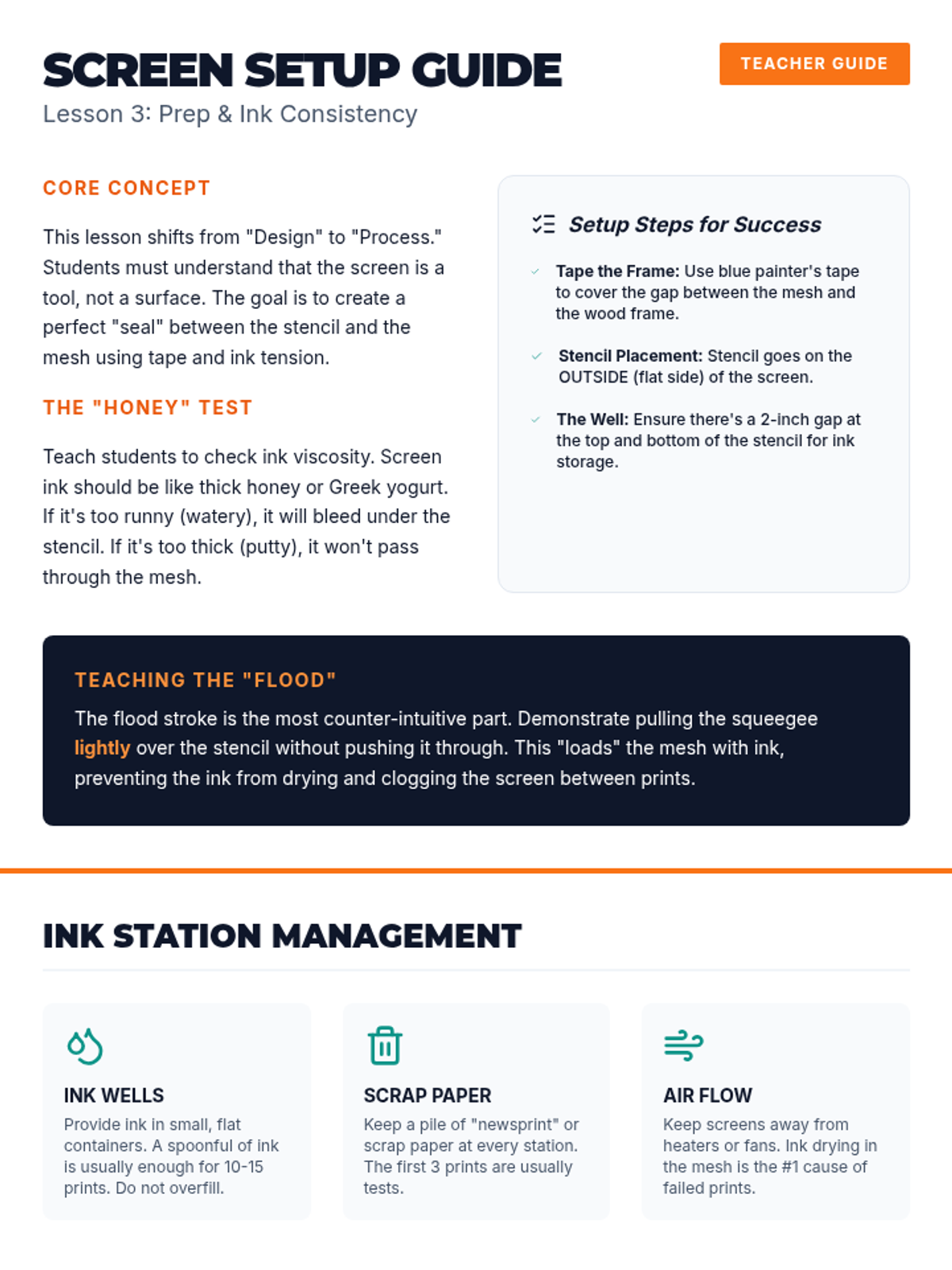
Teacher guide for Lesson 3, focusing on screen setup, stencil attachment, and ink management for effective screen printing.
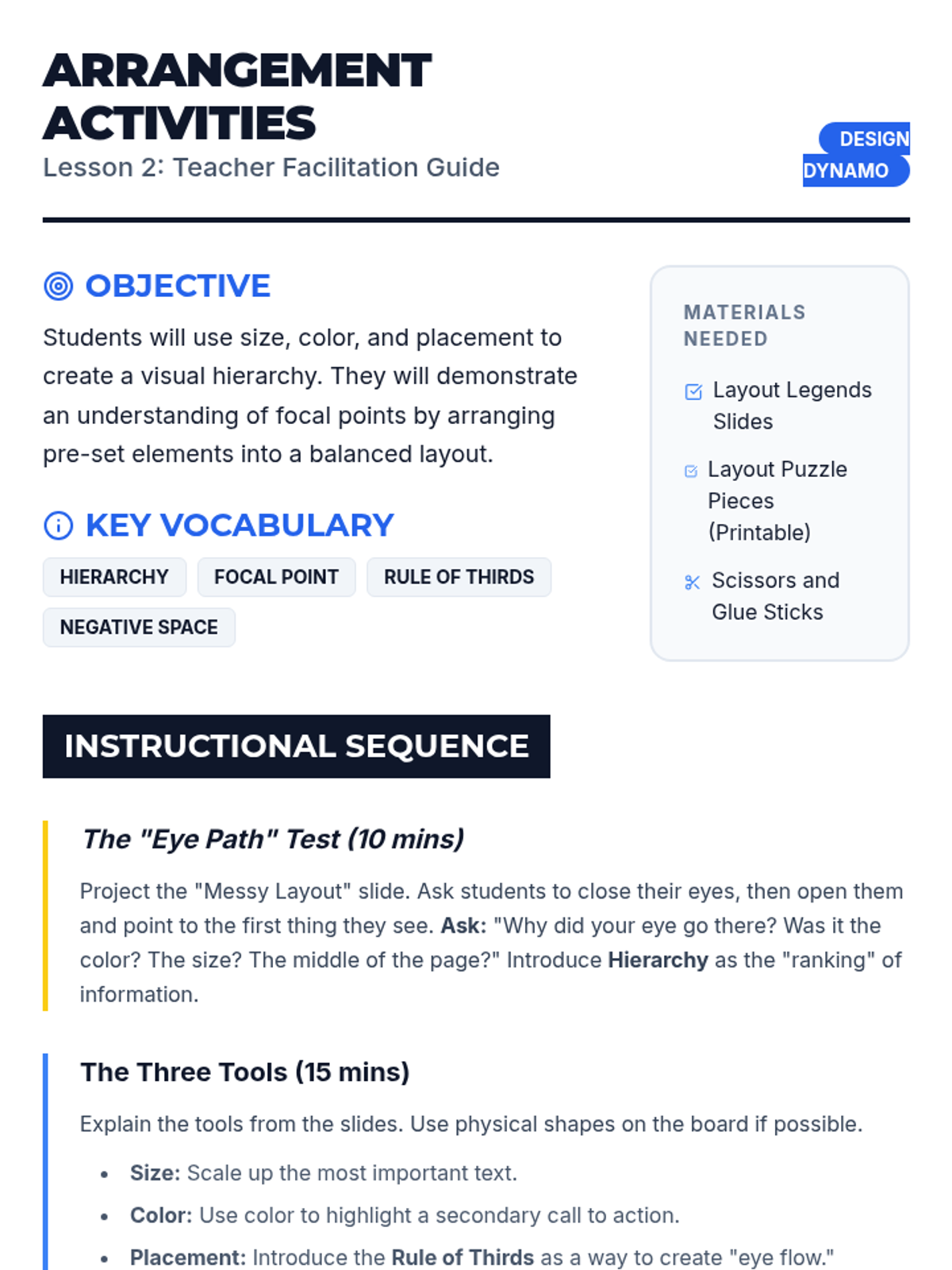
Teacher facilitation guide for Lesson 2, including objectives, discussion prompts, and instructional steps for the manual layout puzzle activity.
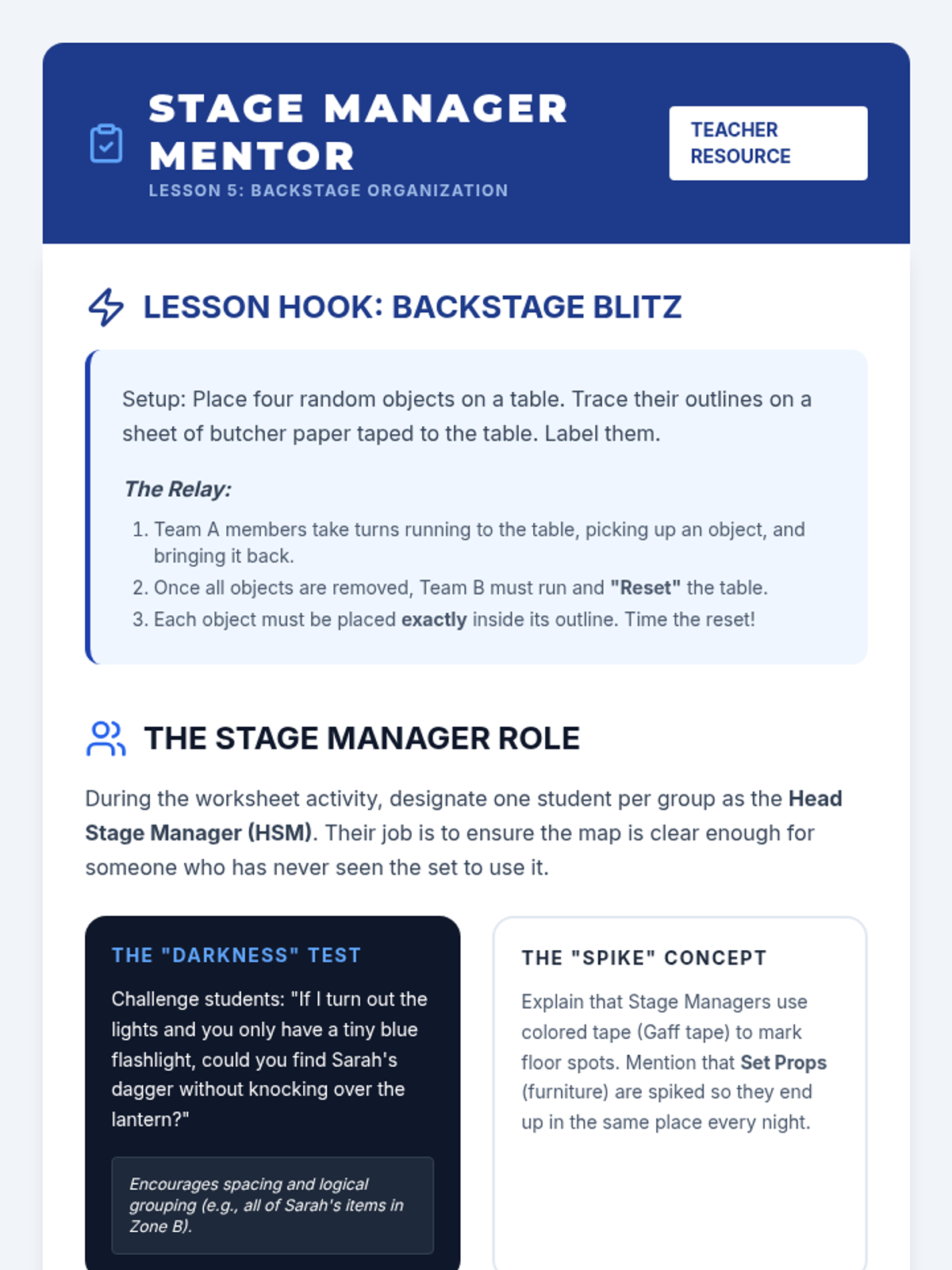
Teacher guide for Lesson 5: Backstage Organization and Prop Tables. Includes relay race hook instructions, "darkness test" simulation tips, and a unit reflection guide.
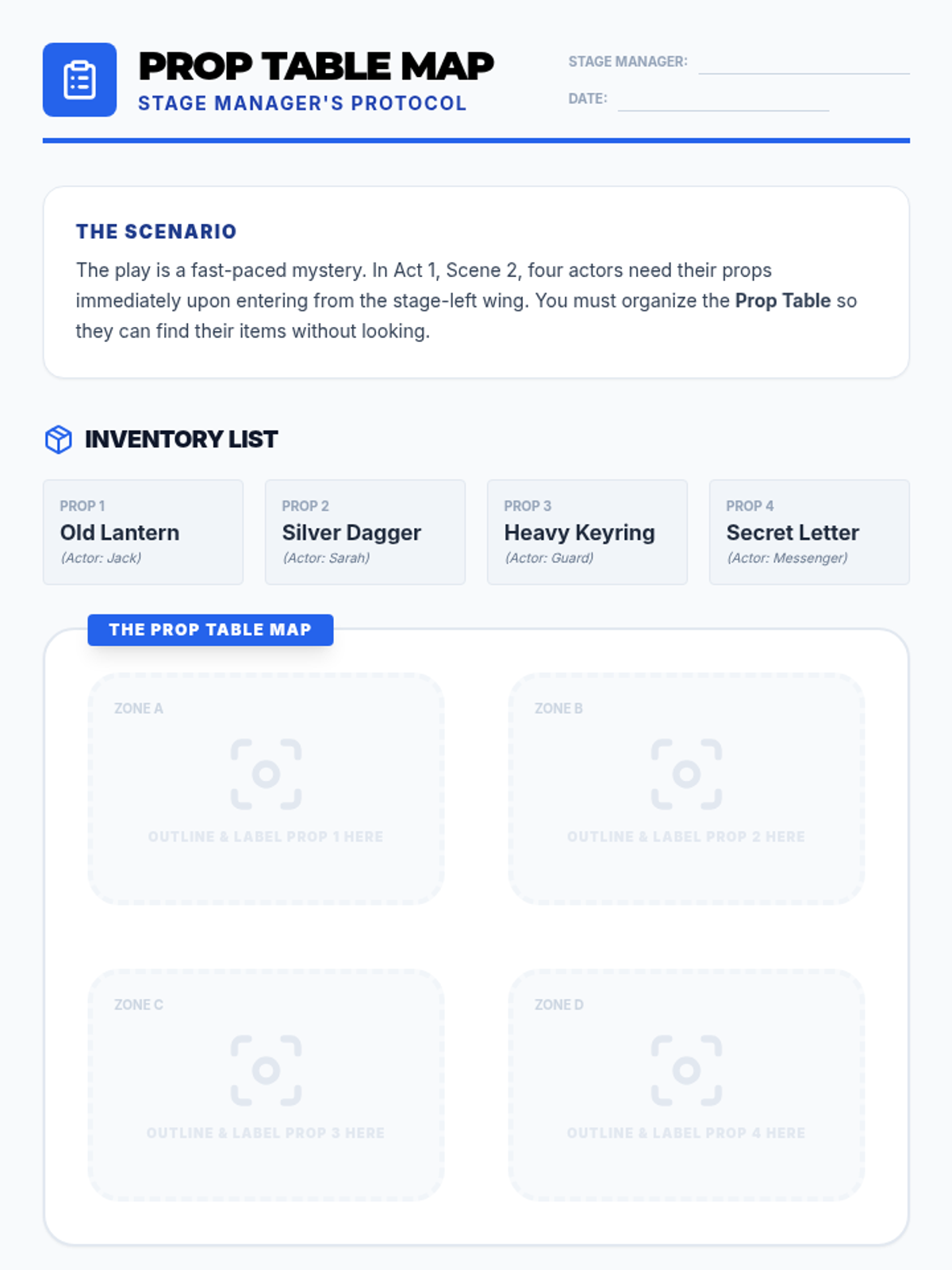
Student worksheet for Lesson 5: Stage Management organization. Features a prop table mapping activity for a specific scene.
Educational slide deck for Lesson 5: Backstage Organization and Prop Tables. Covers the importance of organization, prop table setup, and the concept of "spiking" furniture.
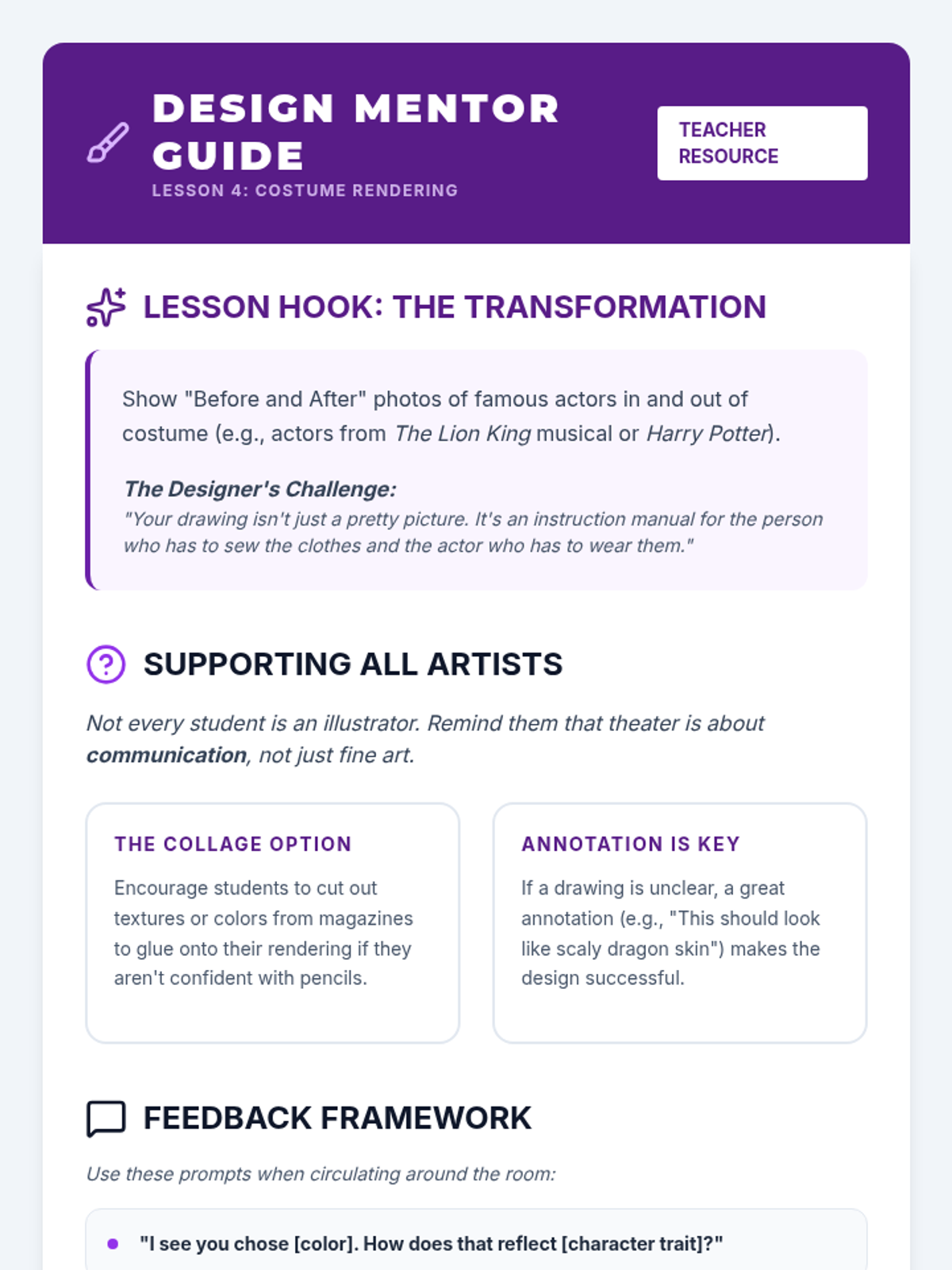
Teacher guide for Lesson 4: Costume Rendering and Collage. Includes instructions for the "Transformation" hook, artistic support strategies for varied skill levels, and feedback prompts for student designs.
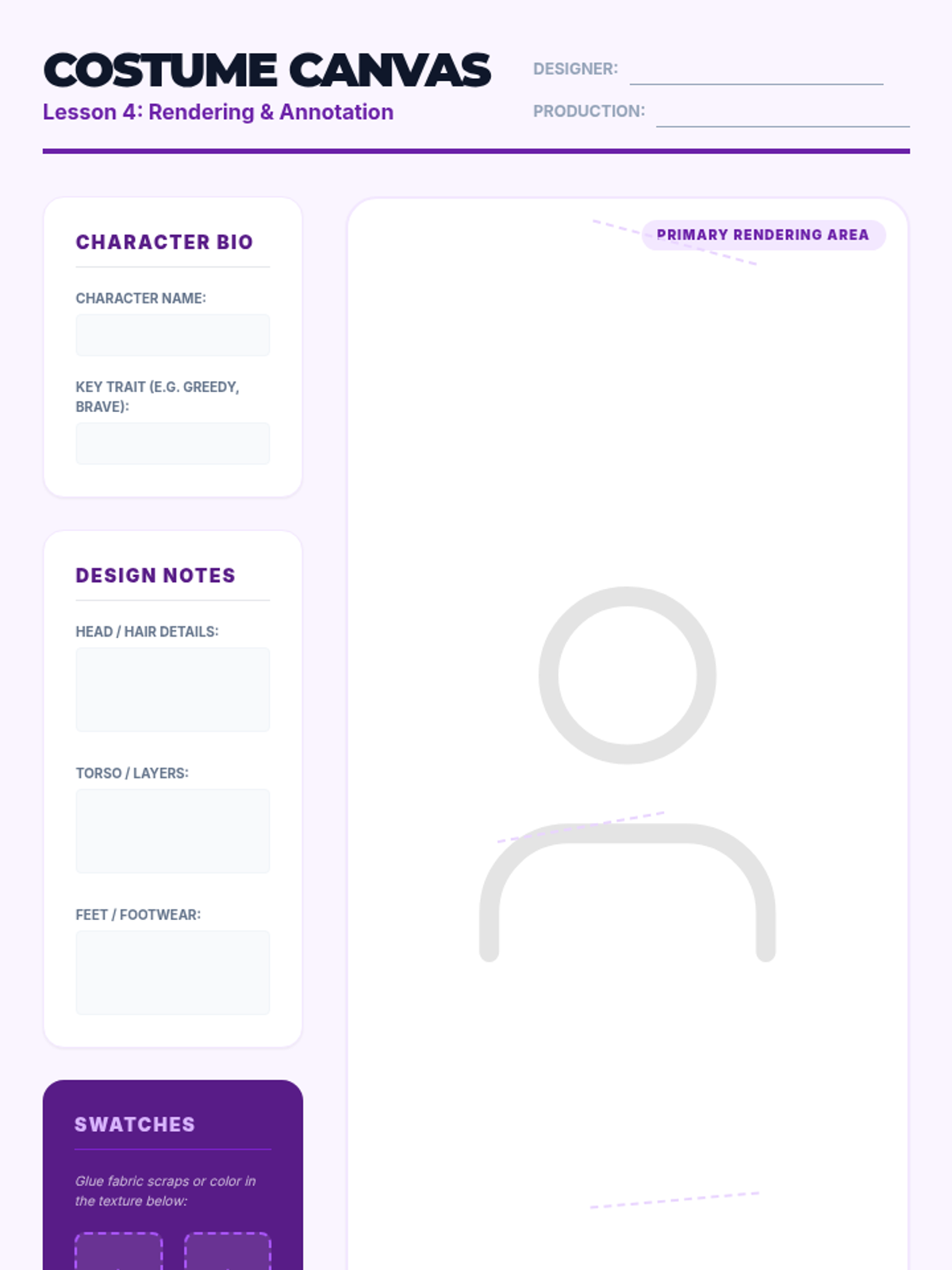
Student worksheet for Lesson 4: Creating a costume rendering. Includes space for character bio, design notes, swatches, and a large drawing area.
Educational slide deck for Lesson 4: Costume Rendering and Collage. Covers the components of a professional rendering (sketch, swatches, annotations) and the importance of visual storytelling.
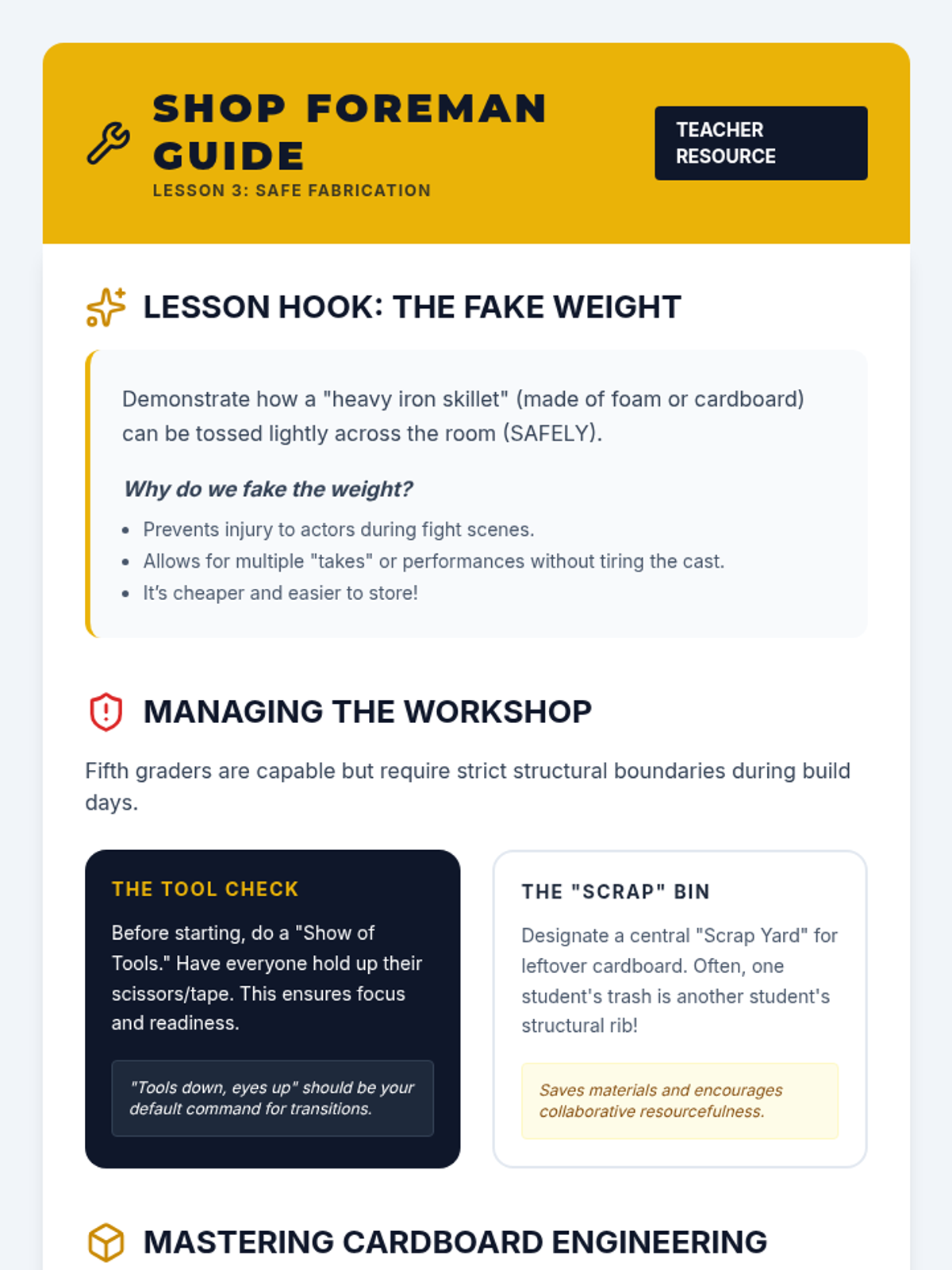
Teacher guide for Lesson 3: Safe Prop Fabrication. Includes fabrication tips, workshop safety protocols, and supply list suggestions.
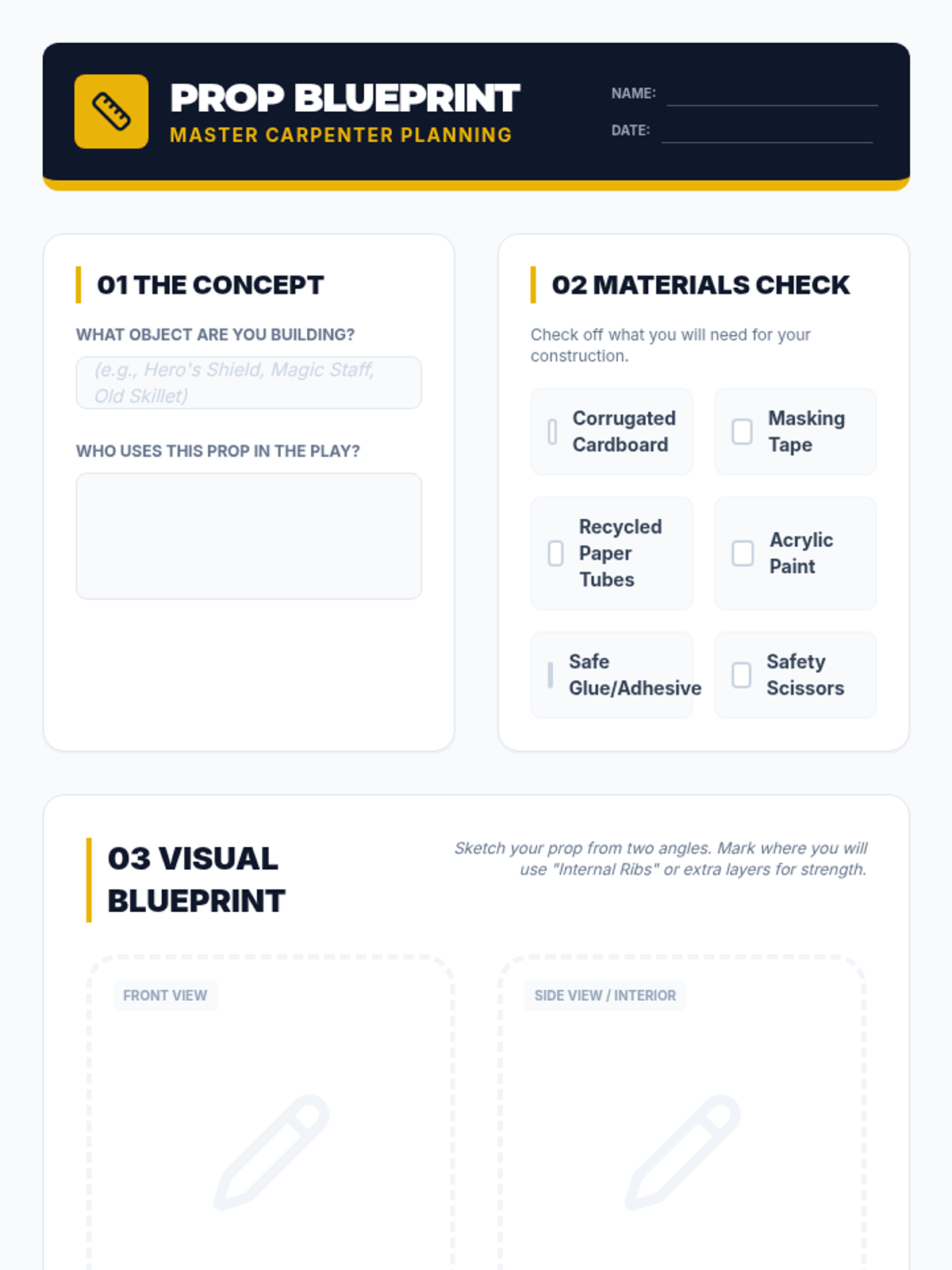
Student worksheet for Lesson 3: Planning the fabrication of a safe hand prop using cardboard and recycled materials. Includes a sketch area and materials checklist.
Educational slide deck for Lesson 3: Safe Prop Fabrication. Covers lightweight material benefits, workshop safety rules, and cardboard engineering techniques.
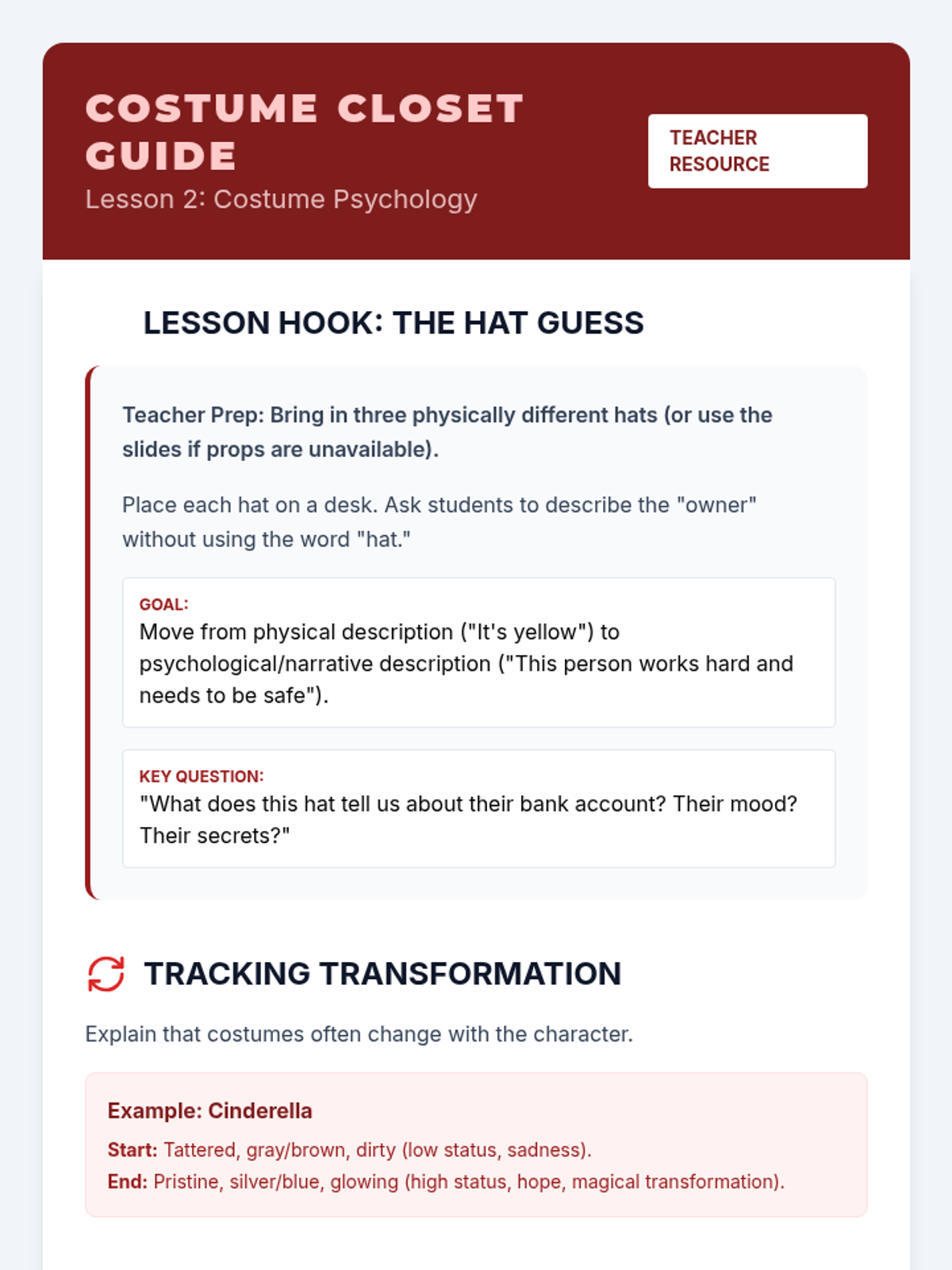
Teacher guide for Lesson 2: Costume Psychology. Includes instructions for the hat hook activity, examples of character costume transformations, and discussion points for the student worksheet.
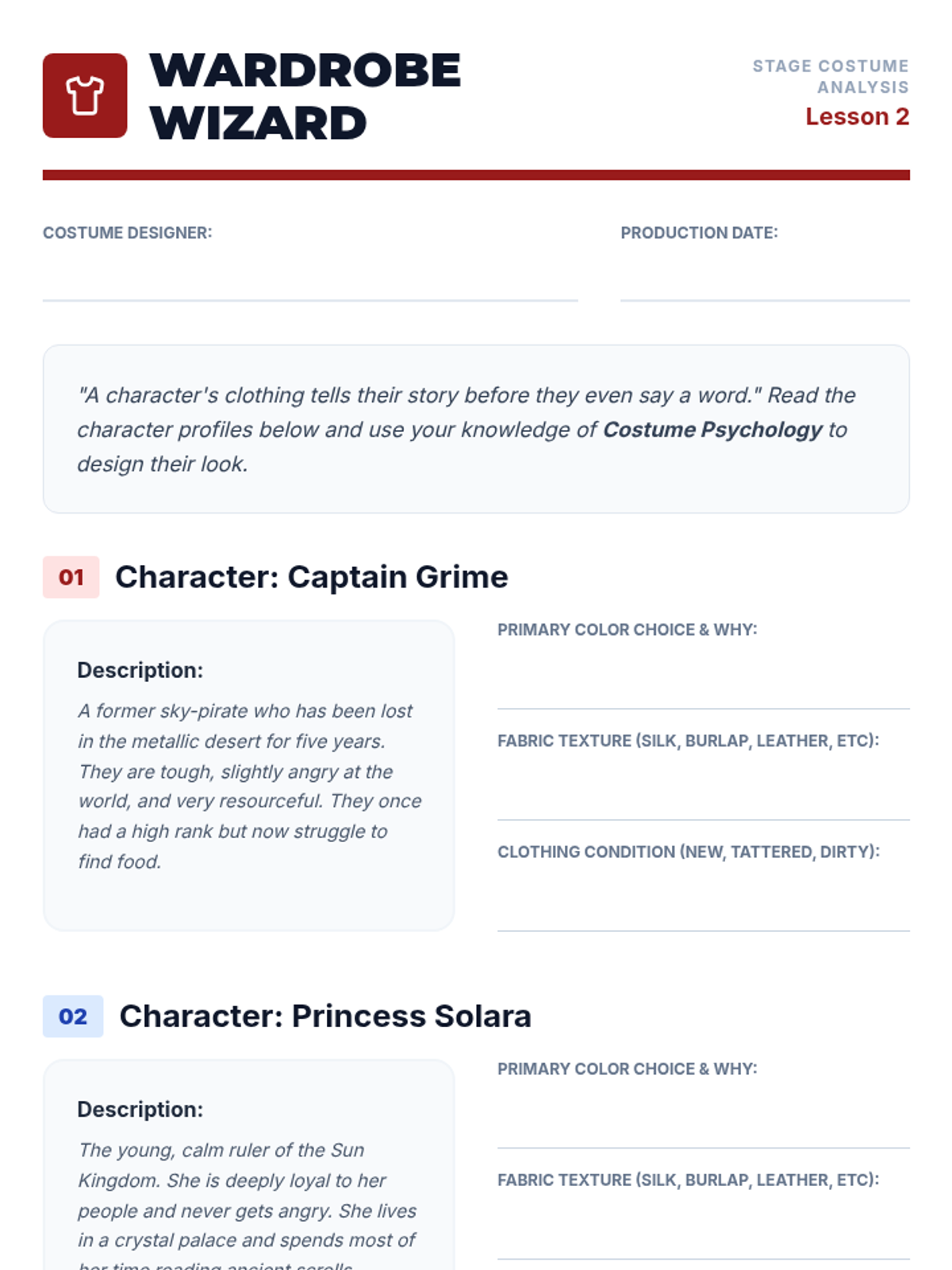
Student worksheet for Lesson 2: Analyzing character traits and selecting appropriate costume elements (color, texture, condition) based on psychology.
Educational slide deck for Lesson 2: Costume Psychology. Covers the emotional impact of color, texture, and clothing condition on character interpretation.
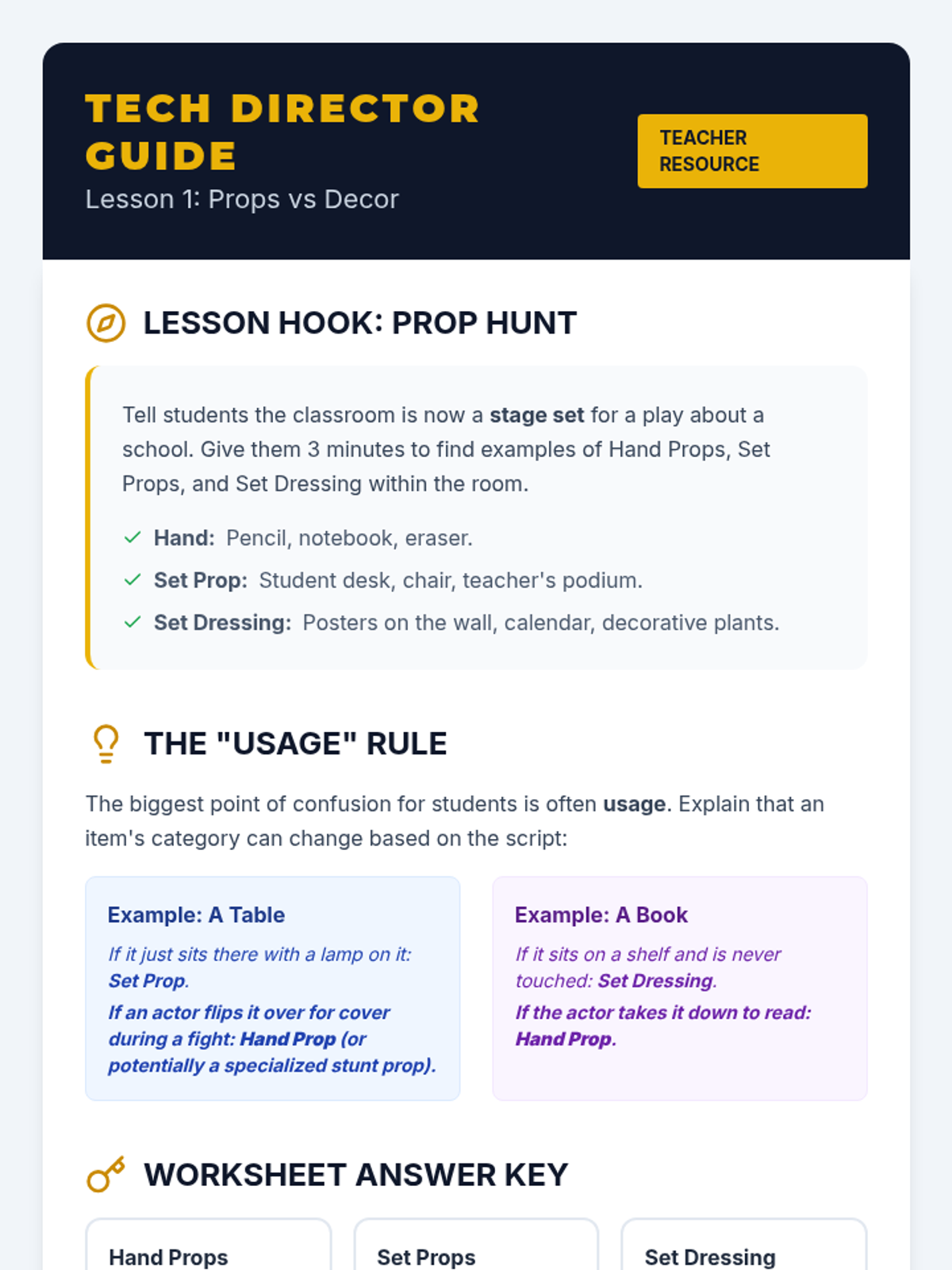
Teacher guide for Lesson 1: Props vs Decor. Includes activity instructions for the Prop Hunt hook, key concept explanations, and a worksheet answer key.
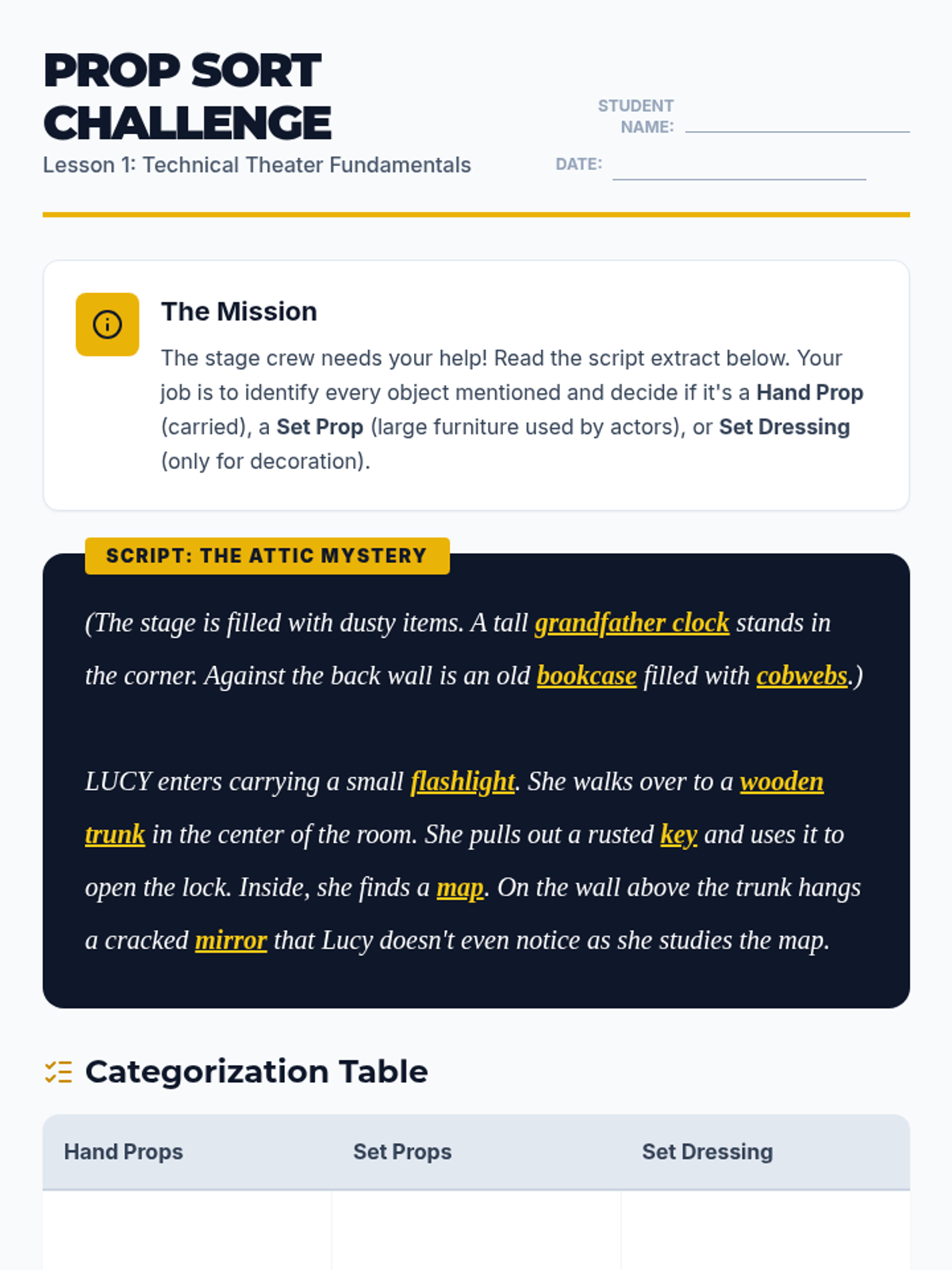
Student worksheet for Lesson 1: Identifying and categorizing props and set dressing from a script. Features a script analysis and a categorization table.
Educational slide deck for Lesson 1: Distinguishing Props and Set Dressing. Includes definitions of Hand Props, Set Props, and Set Dressing with visual examples and a script analysis exercise.
Visual presentation for Lesson 2, covering visual hierarchy concepts like size, color, placement, and the rule of thirds.
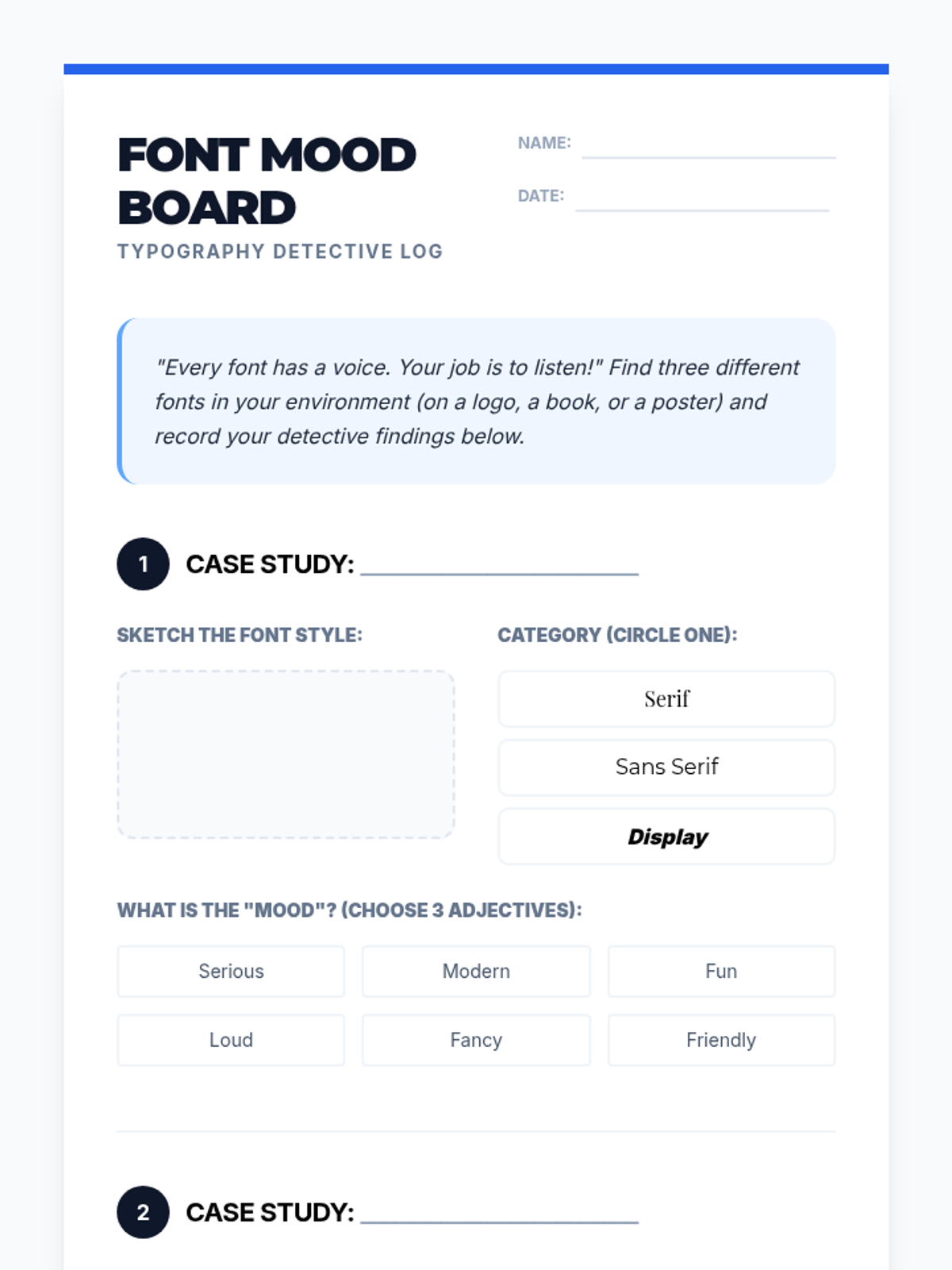
Student worksheet for Lesson 1 where students analyze and sketch typography examples to identify category and mood.
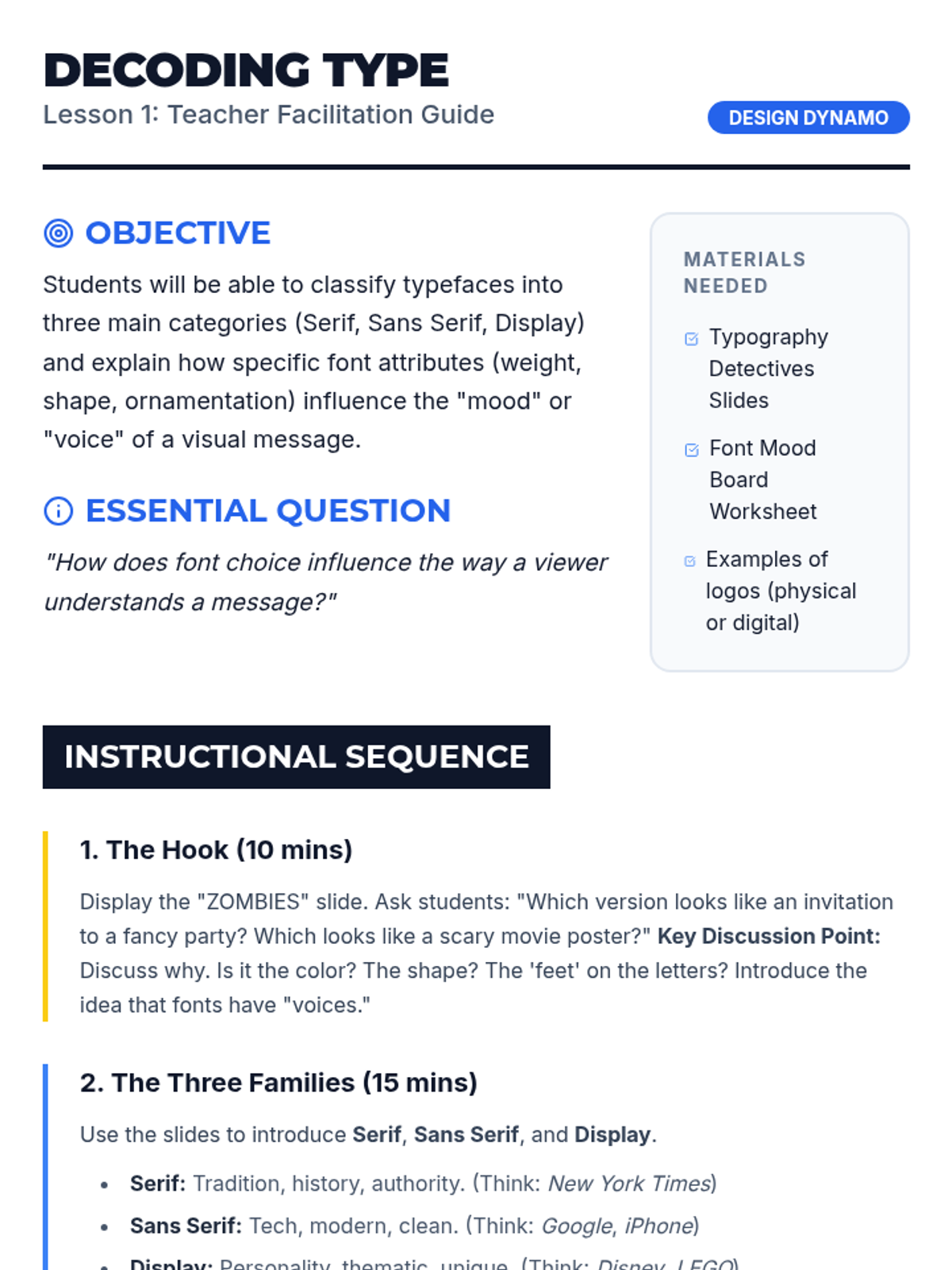
Teacher facilitation guide for Lesson 1, including objectives, discussion prompts, and instructional steps for teaching font psychology.
Visual presentation for Lesson 1, introducing font categories (serif, sans-serif, display) and the psychology behind typeface choices.
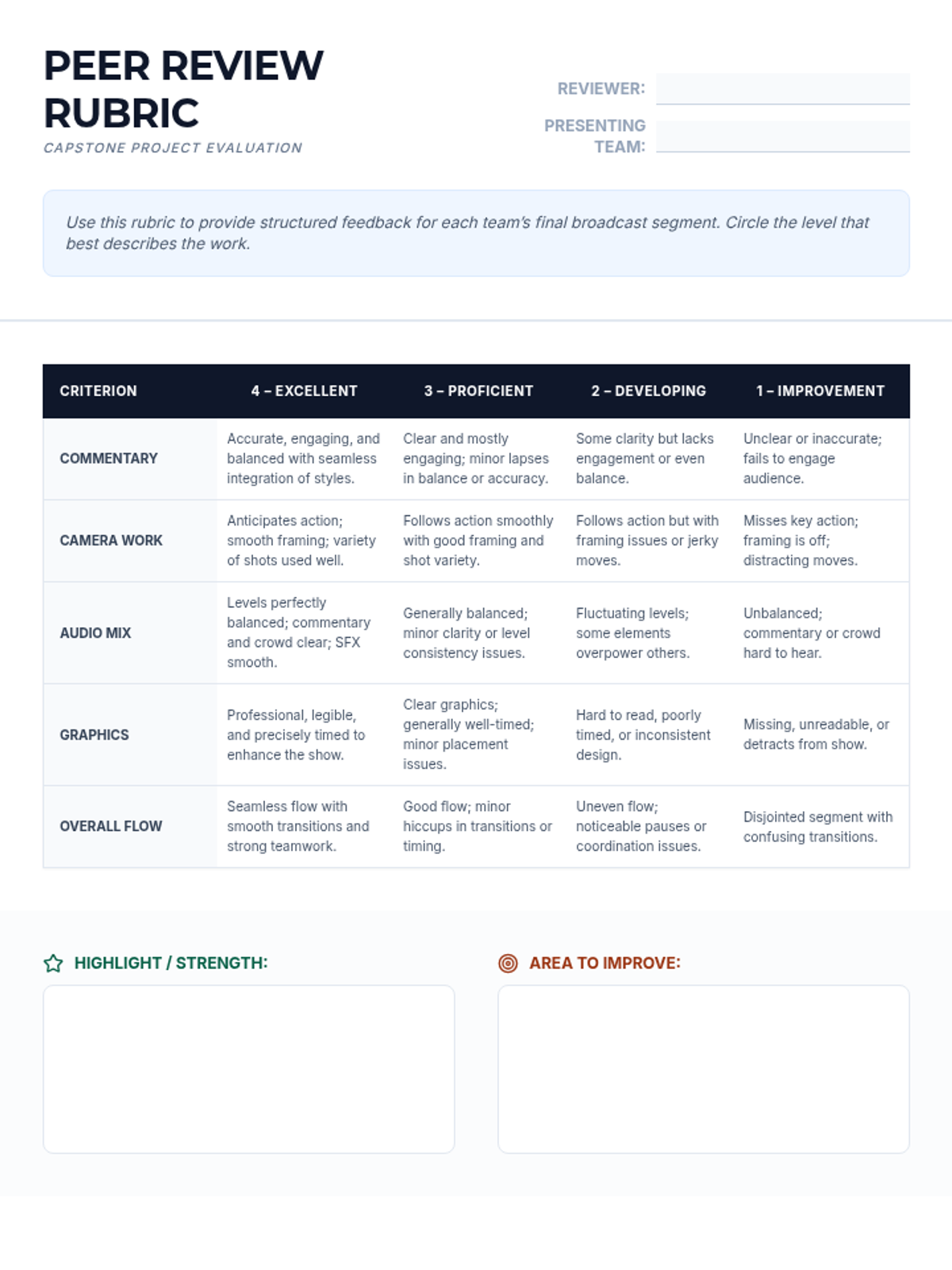
A peer review rubric for students to provide structured feedback on final sports broadcast segments across commentary, camera work, audio, and graphics.
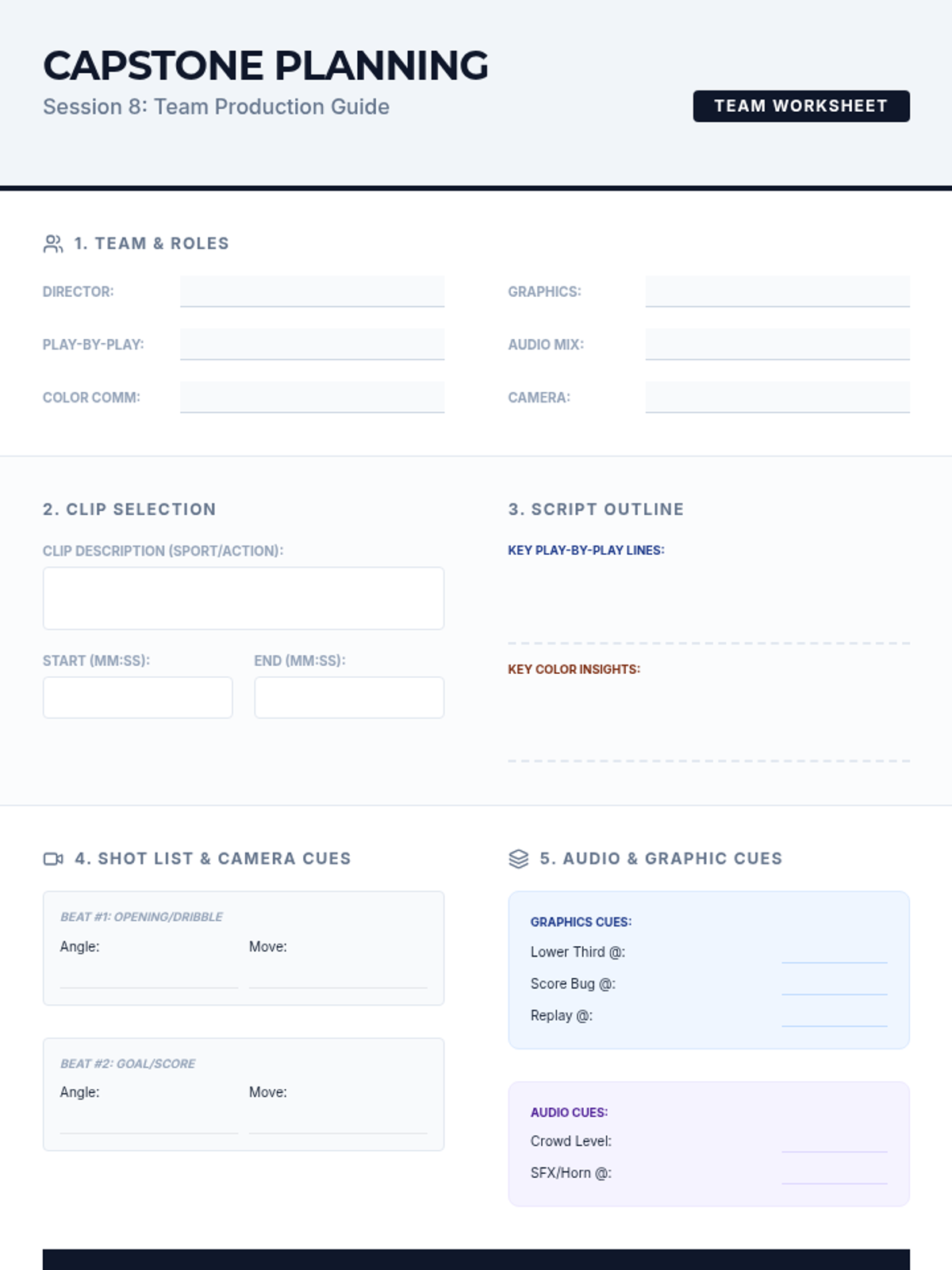
A worksheet for Session 8, helping student teams plan their 2–3 minute broadcast segment including roles, script beats, camera shots, and tech cues.
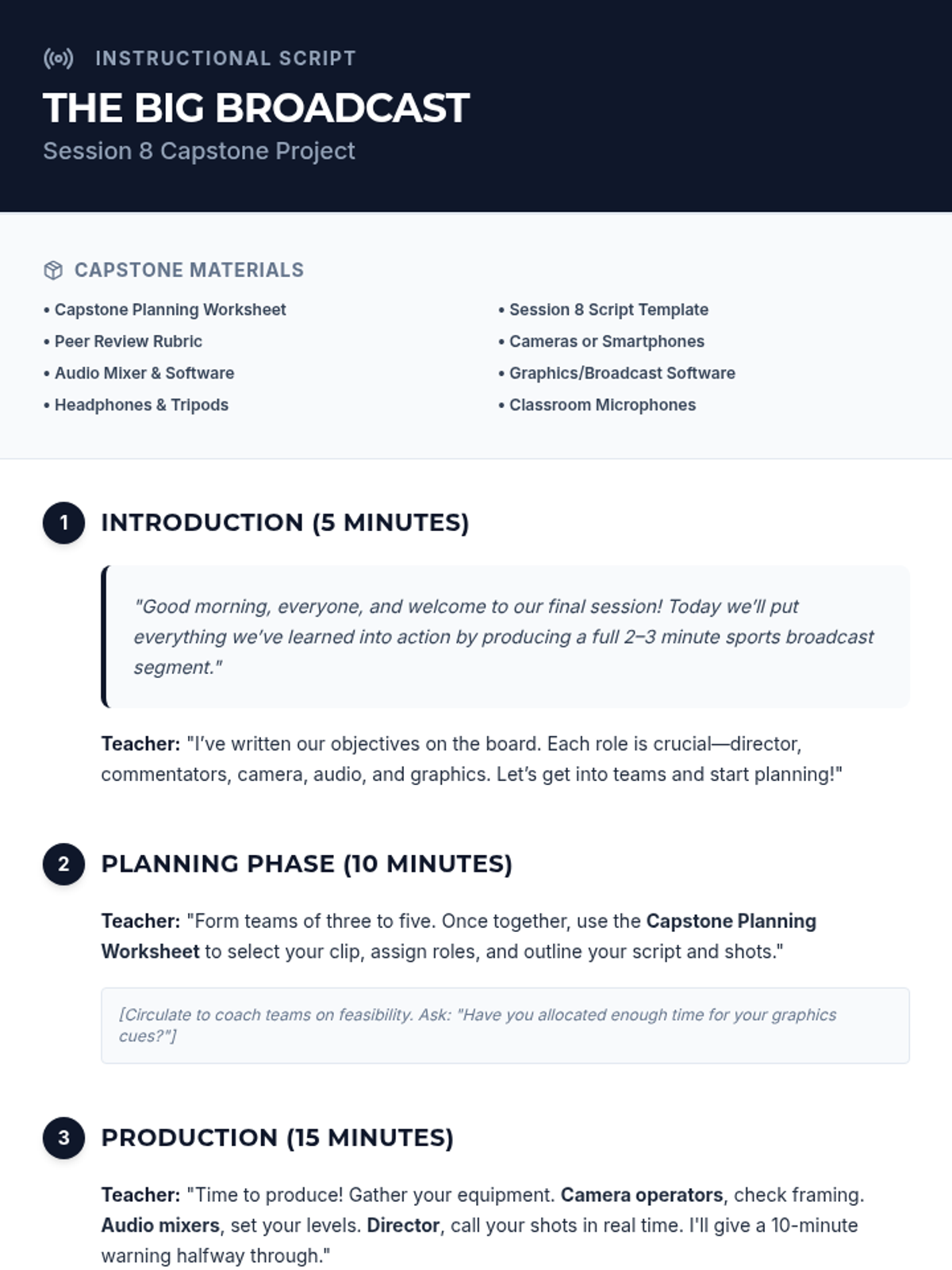
A script for Session 8, providing teacher prompts and activity transitions focused on the final capstone project.
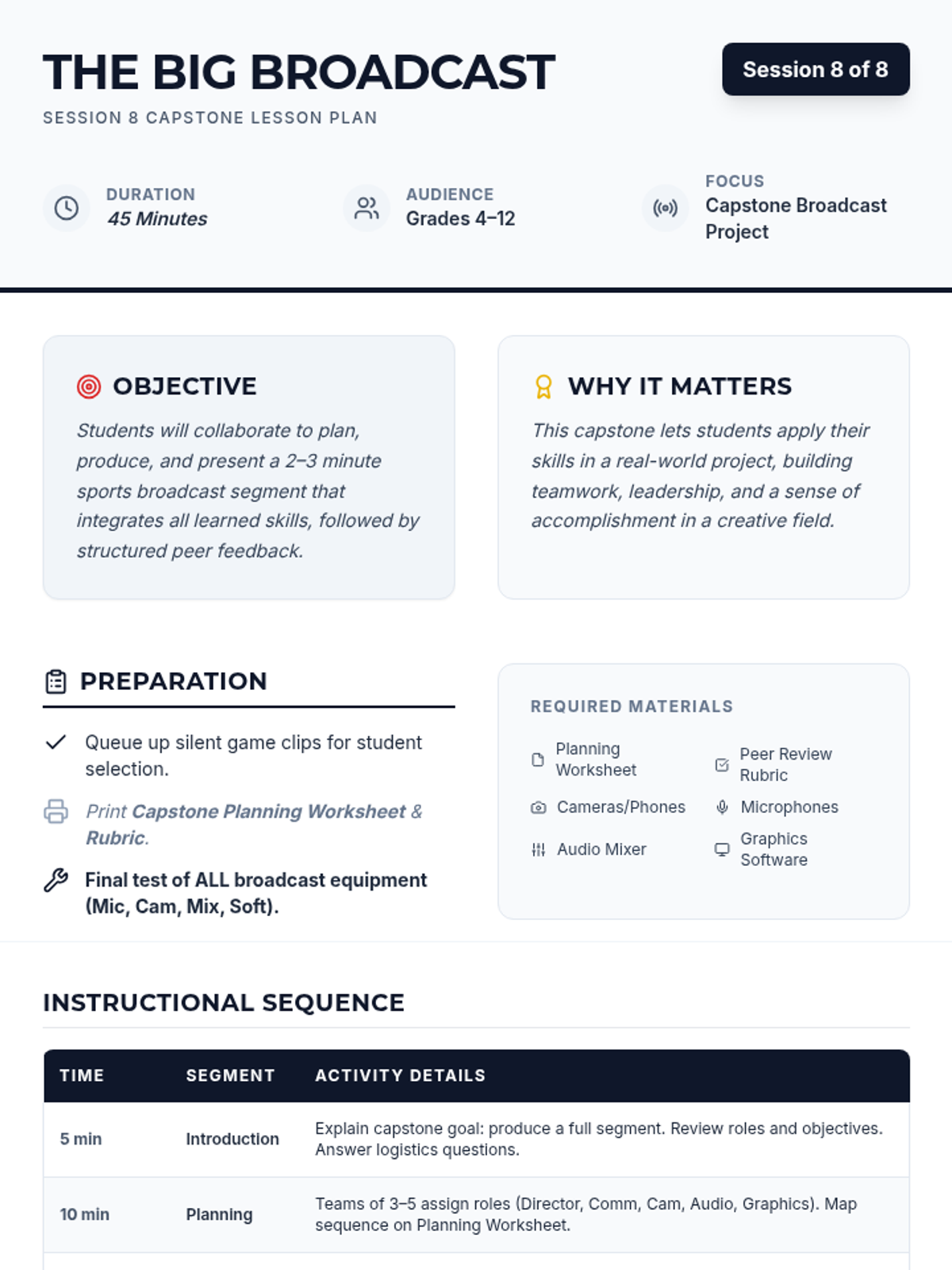
A comprehensive lesson plan for Session 8, the capstone project where teams produce a full sports broadcast.
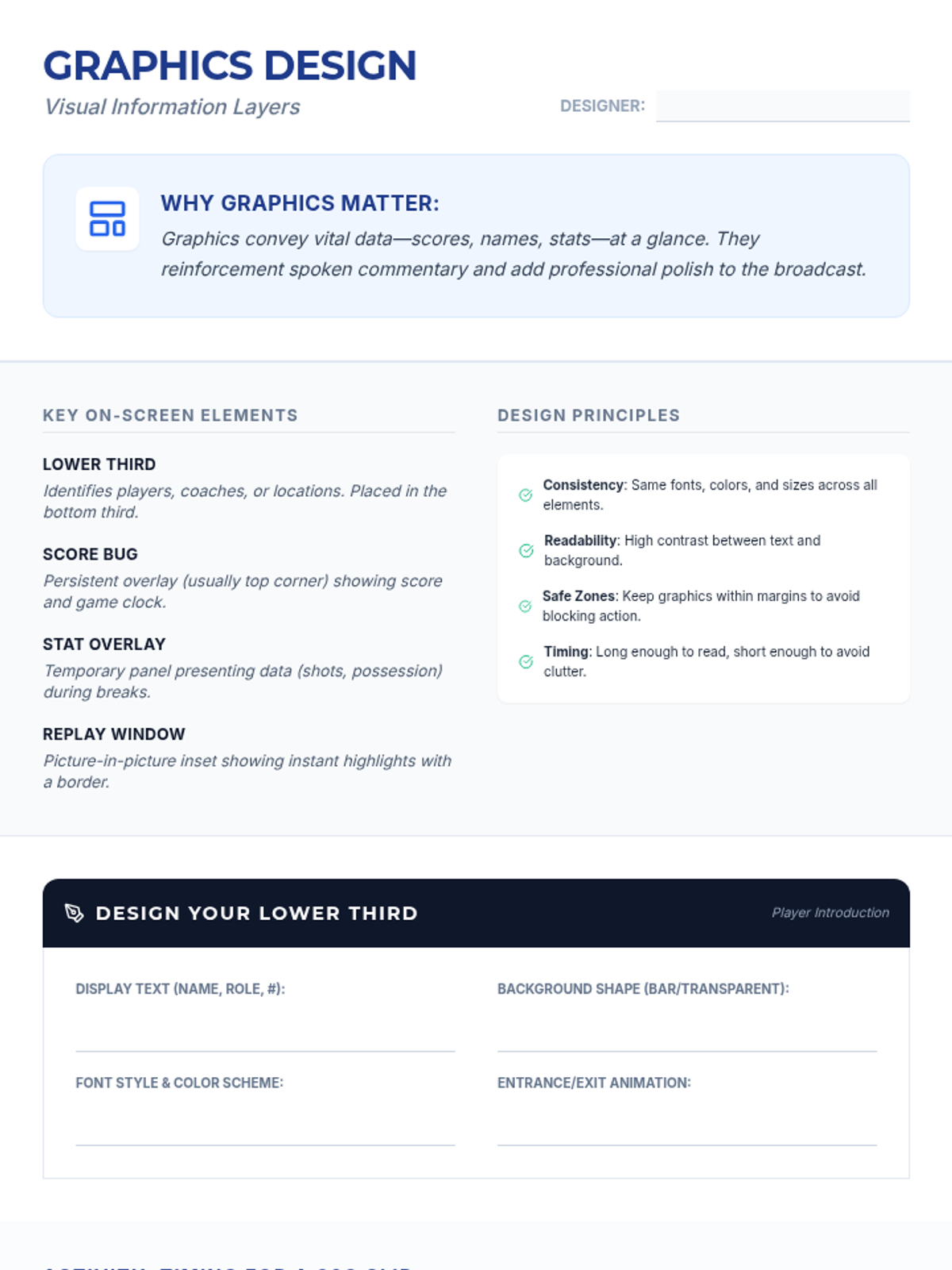
A handout for Session 7 detailing graphics design with key elements, best practices, and practice activities for lower thirds and timing.
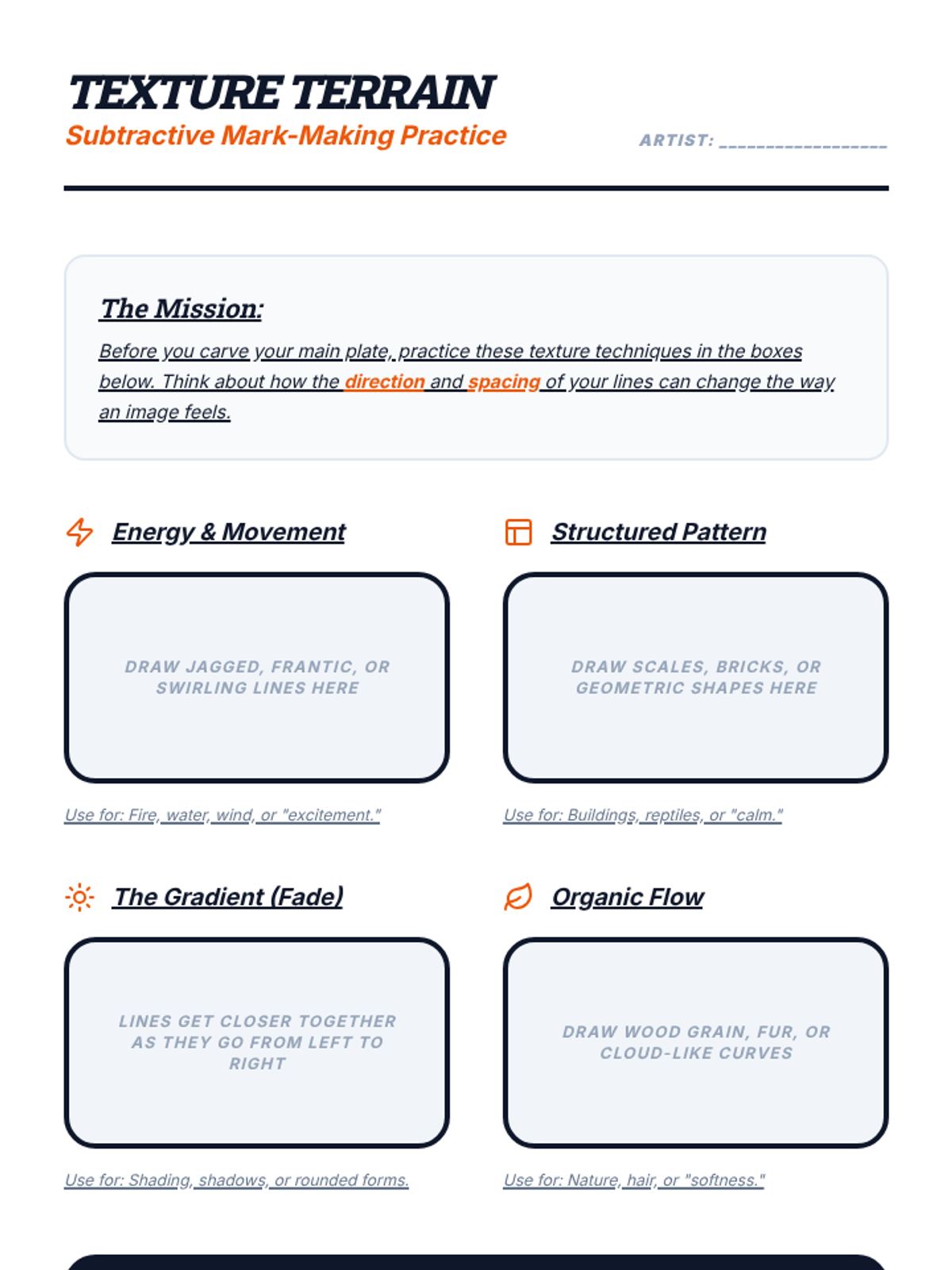
A student practice sheet for Lesson 3 focused on exploring different carved textures and line qualities.
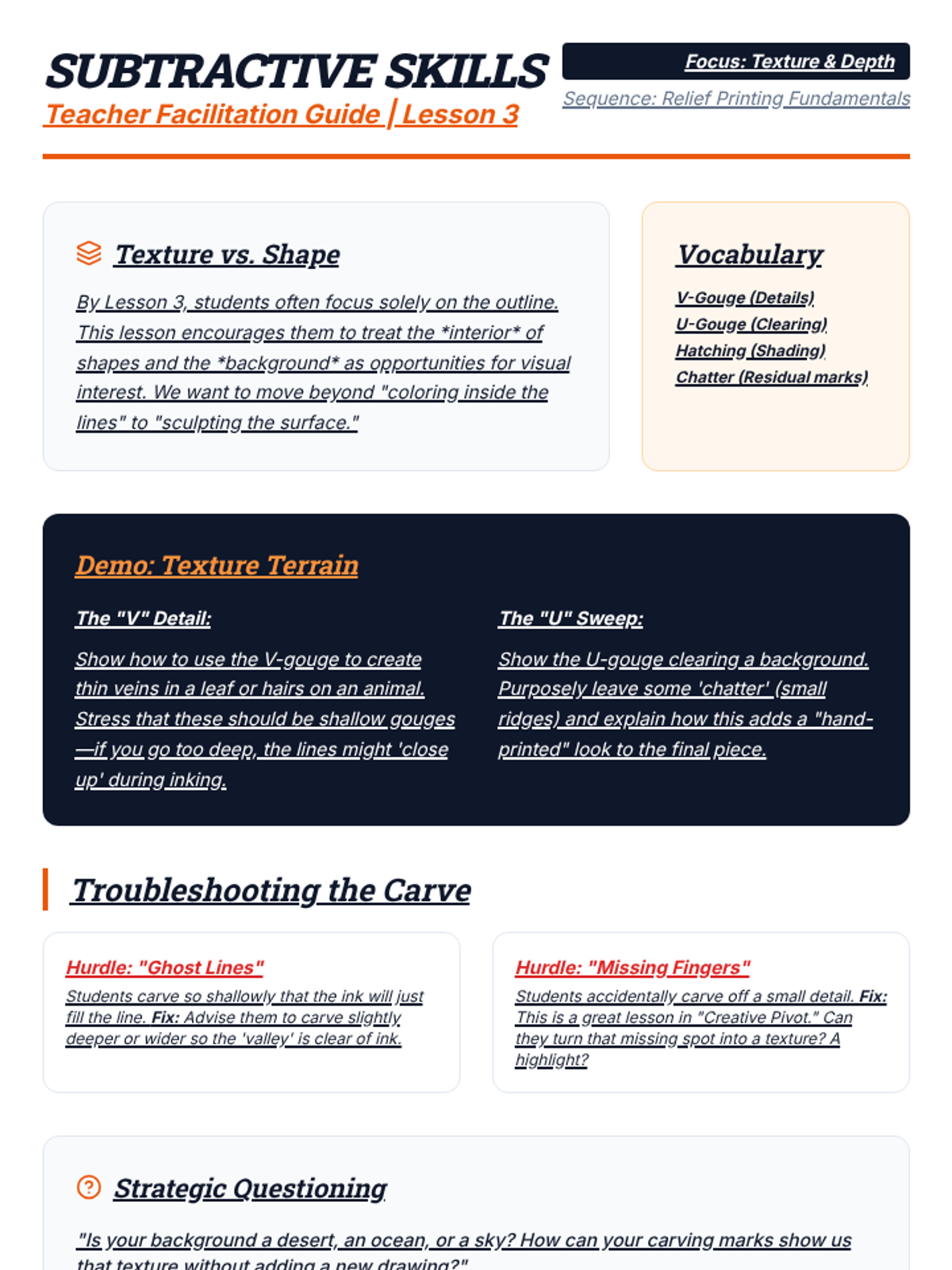
Teacher guide for Lesson 3 focusing on advanced carving techniques, texture creation, and managing common carving hurdles.
Lesson 3 slides focusing on the use of texture, line quality, and the subtractive process in relief printing.
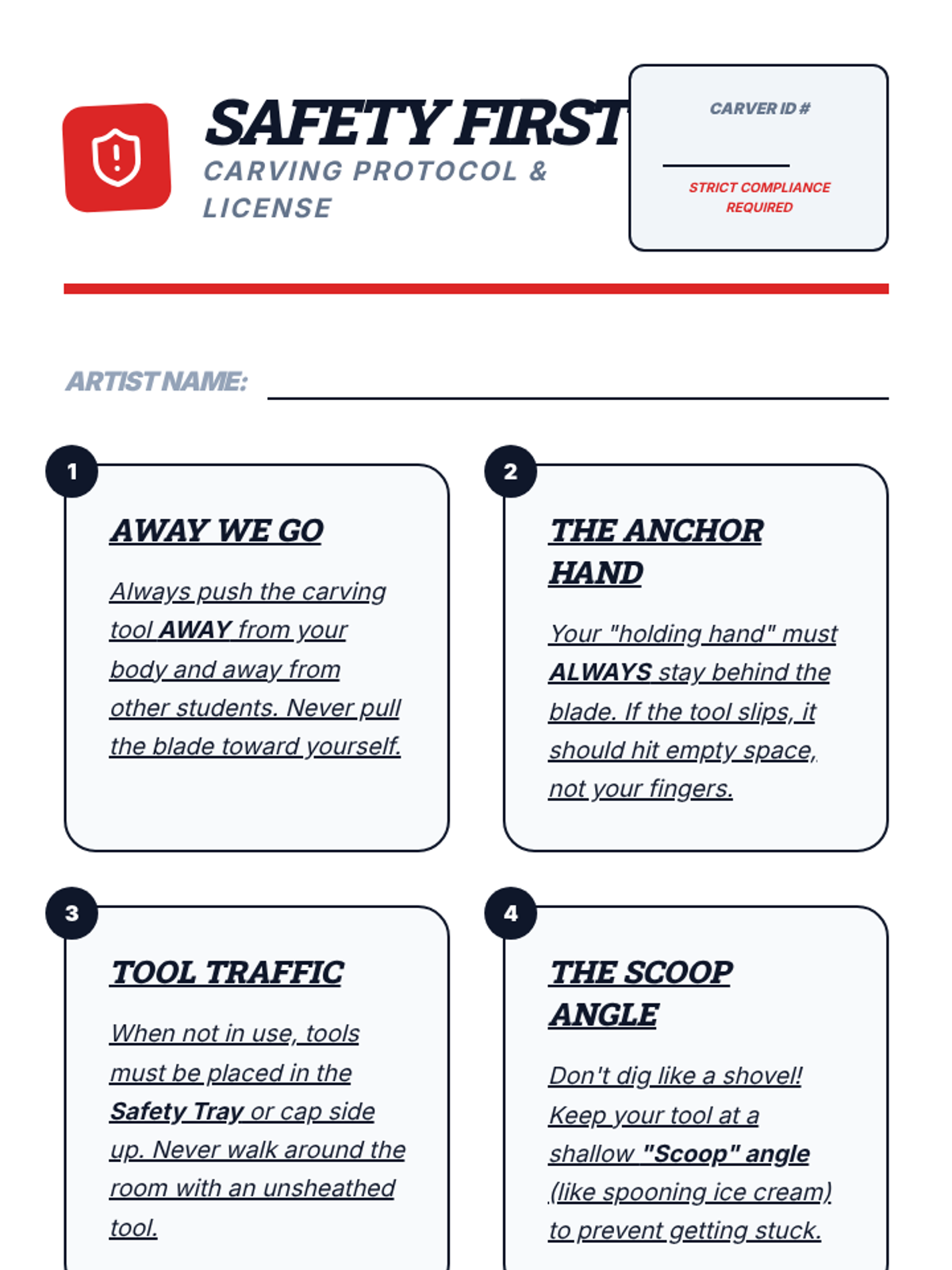
A student-facing safety checklist and contract for Lesson 2, outlining the essential rules for using carving tools safely.
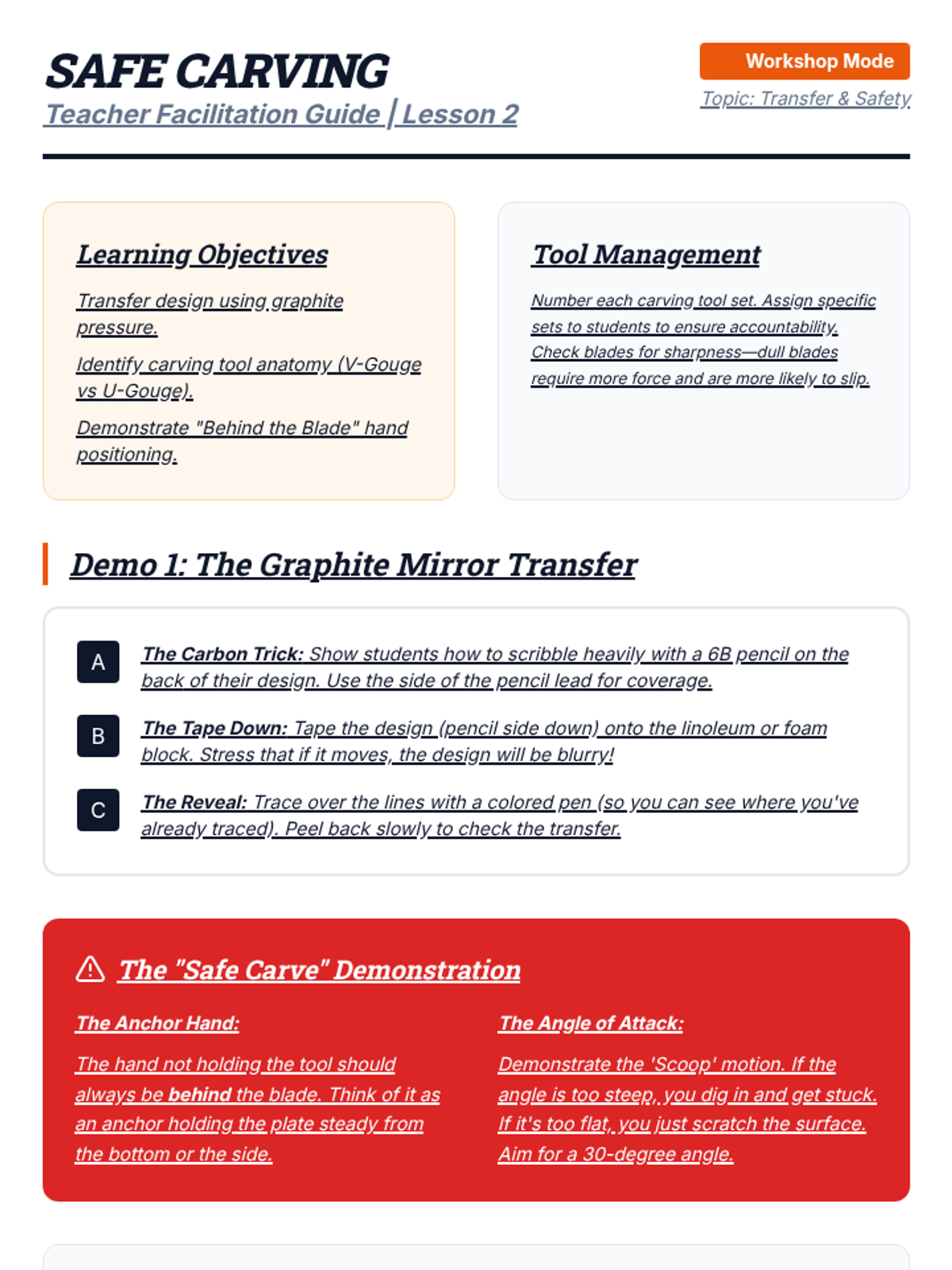
Teacher guide for Lesson 2 focusing on the graphite transfer method and managing a safe carving environment.
Lesson 2 slides covering graphite transfer techniques, linocut tool anatomy, and essential carving safety rules.
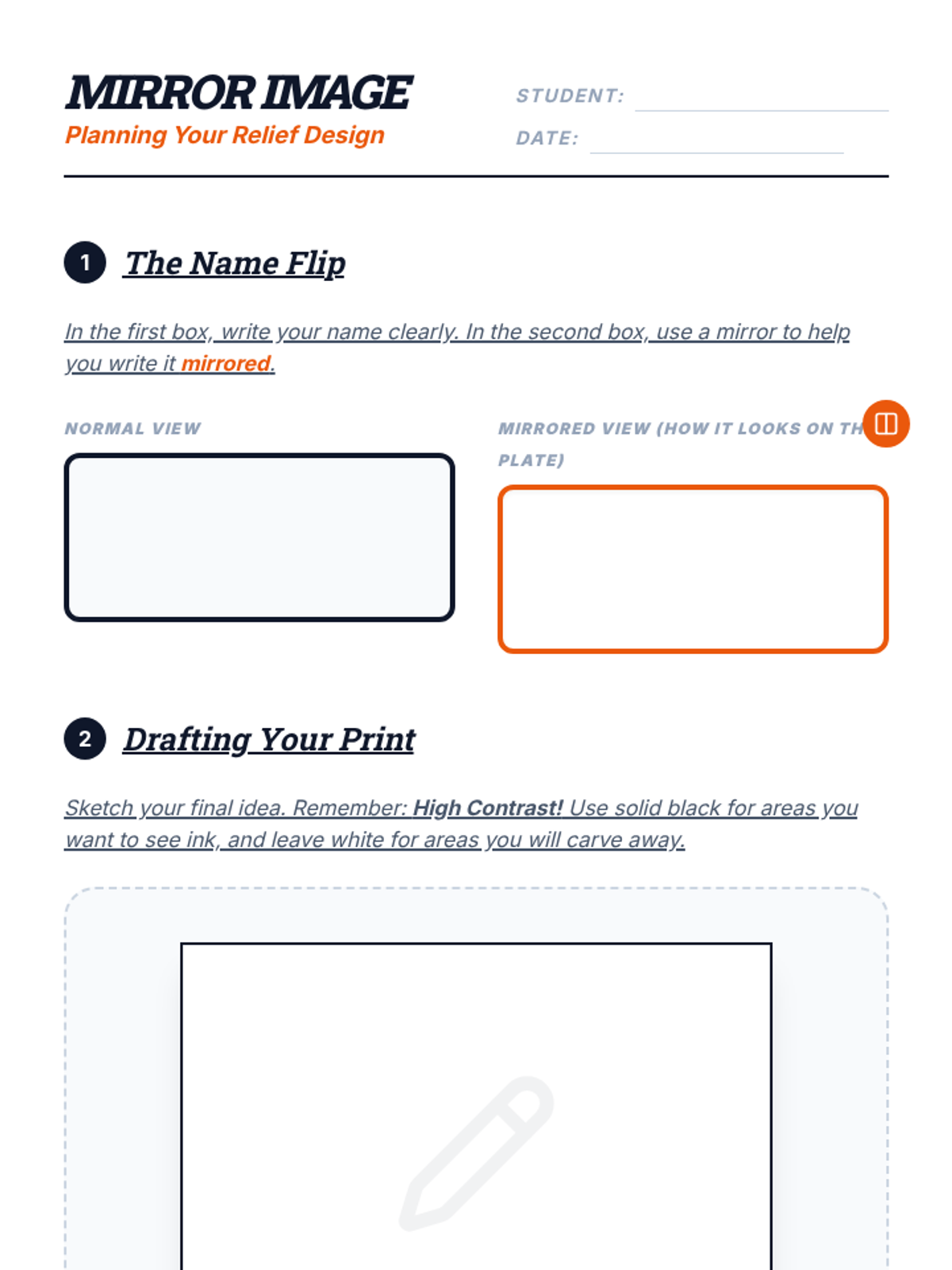
A student worksheet for Lesson 1 focused on practice mirroring their name and sketching a high-contrast design for their relief print.
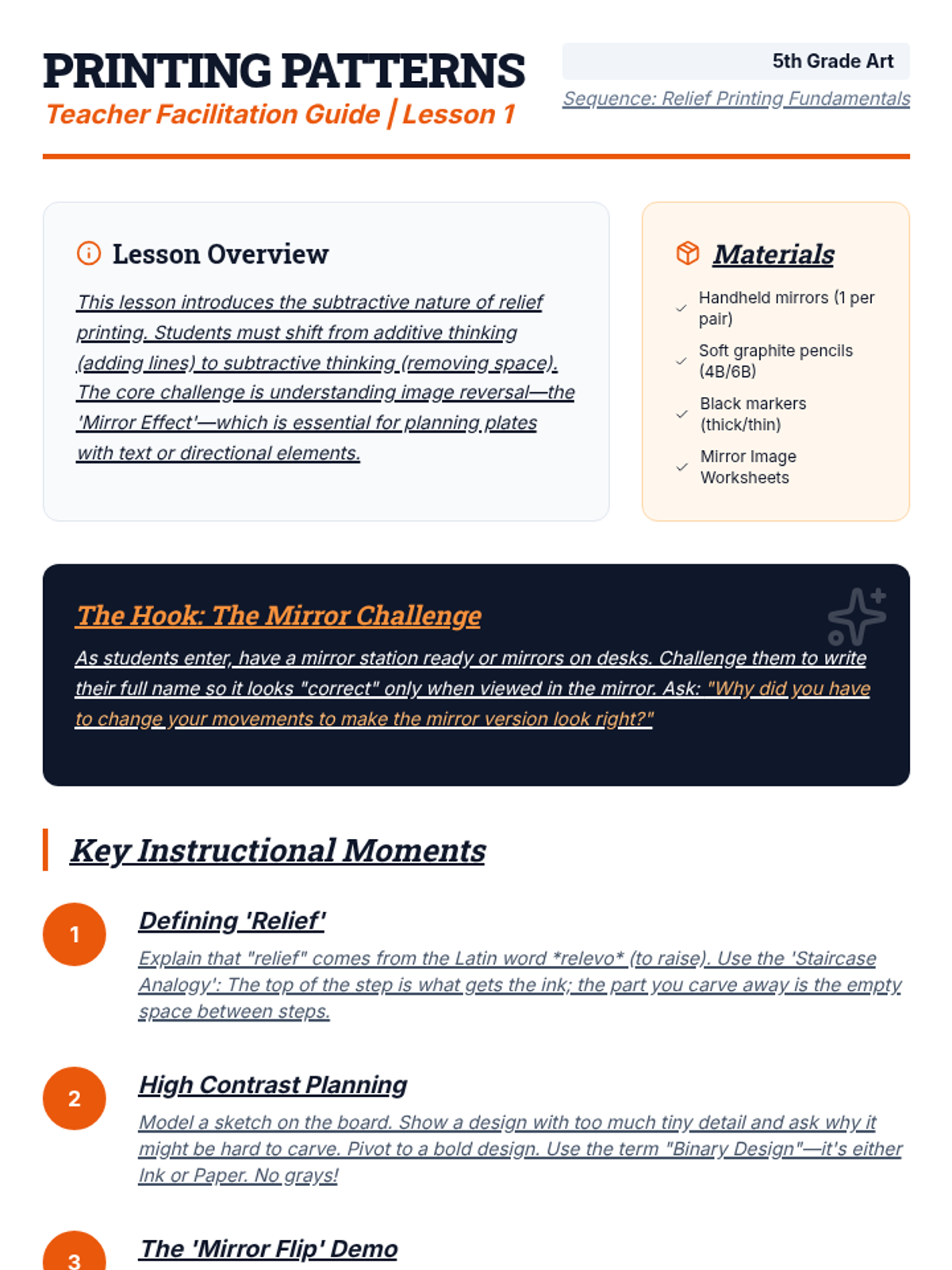
Teacher guide for Lesson 1, providing instructional strategies, discussion prompts, and the 'Mirror Challenge' hook to introduce image reversal.
Introductory slides for Lesson 1, covering the concept of relief printing, image reversal, and the importance of high contrast in planning designs.
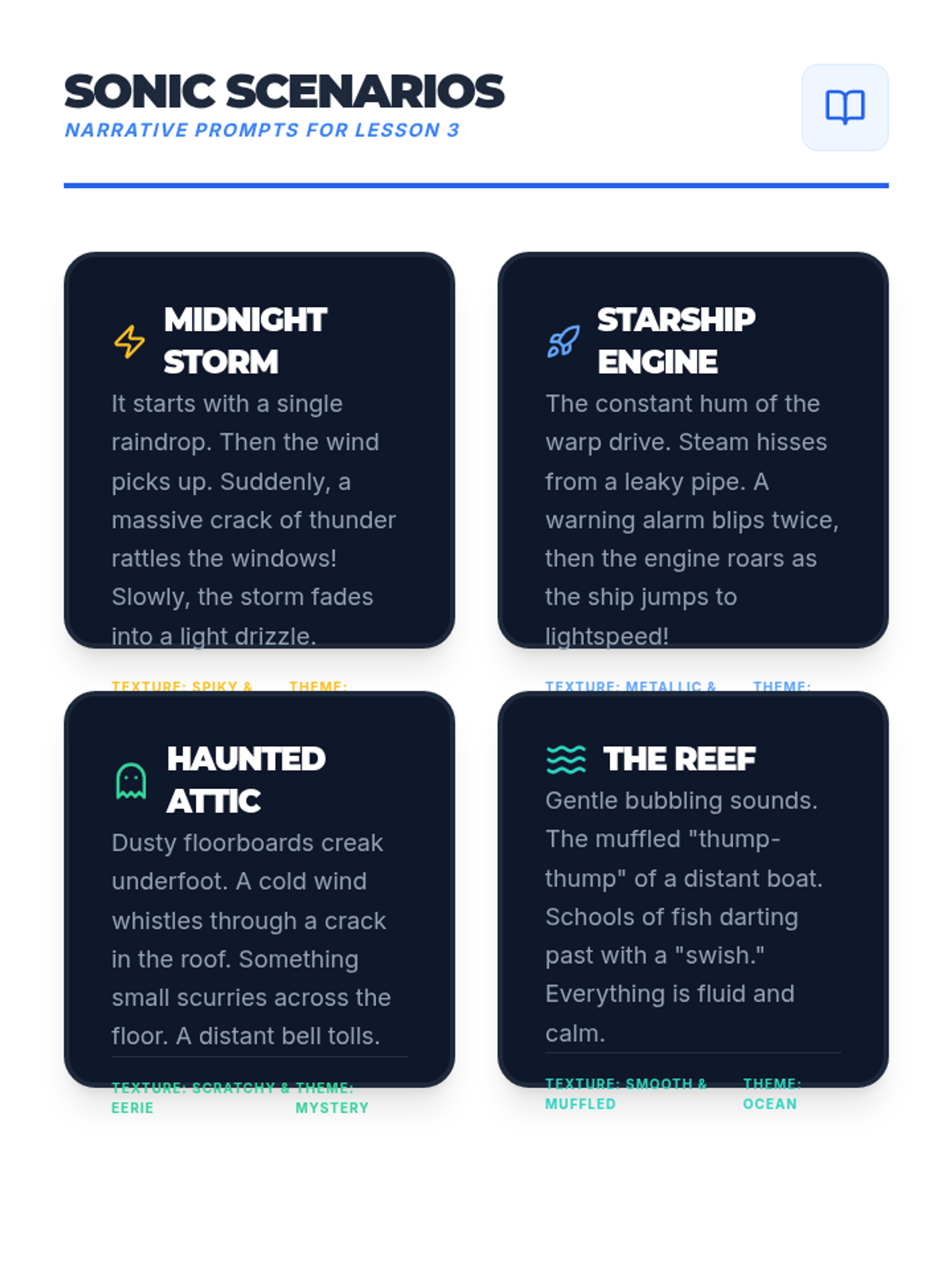
Narrative scenario cards for Lesson 3. Students choose one of these environmental prompts to inspire their graphic score composition.
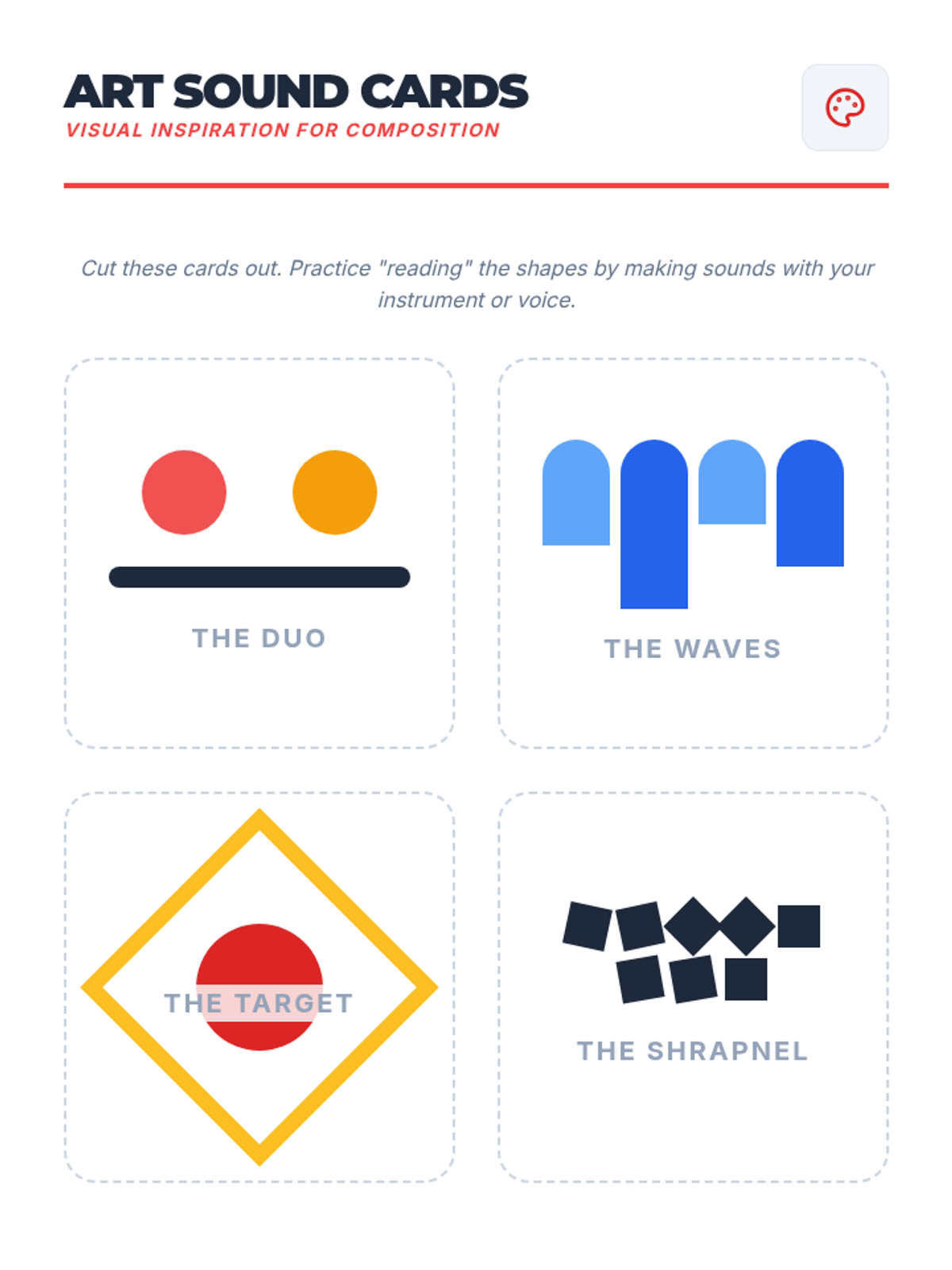
Set of visual inspiration cards for Lesson 2. Students use these to practice translating abstract shapes and patterns into sound before creating their own legend.
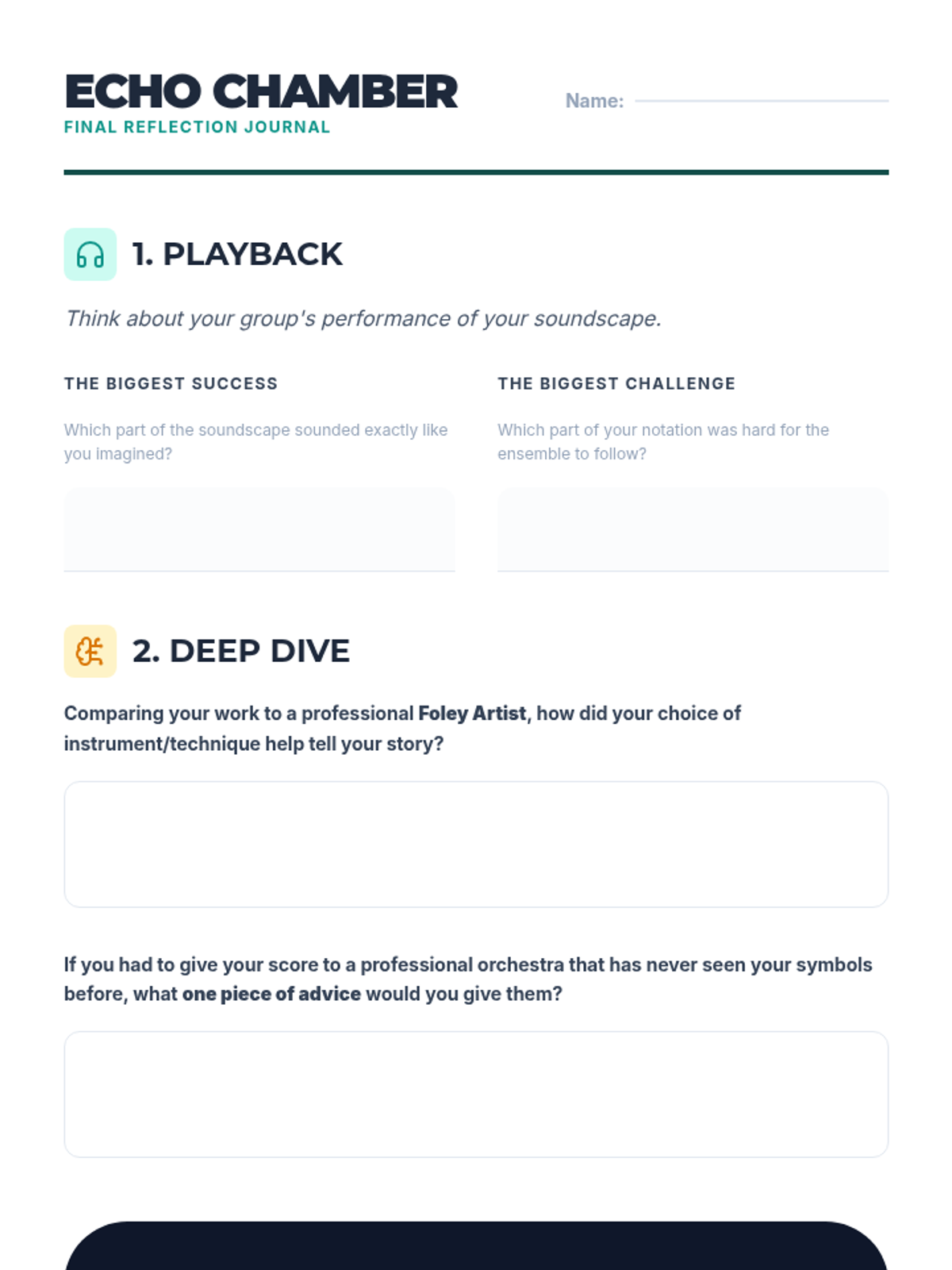
Final reflection worksheet for Lesson 5. Students analyze their performance, compare their work to professional Foley artistry, and answer the sequence's essential question.
Slide deck for Lesson 5: Echo Chamber. Covers the final reflection on graphic notation, comparison to professional Foley artistry, and a debrief on the advantages/limitations of this notation style.
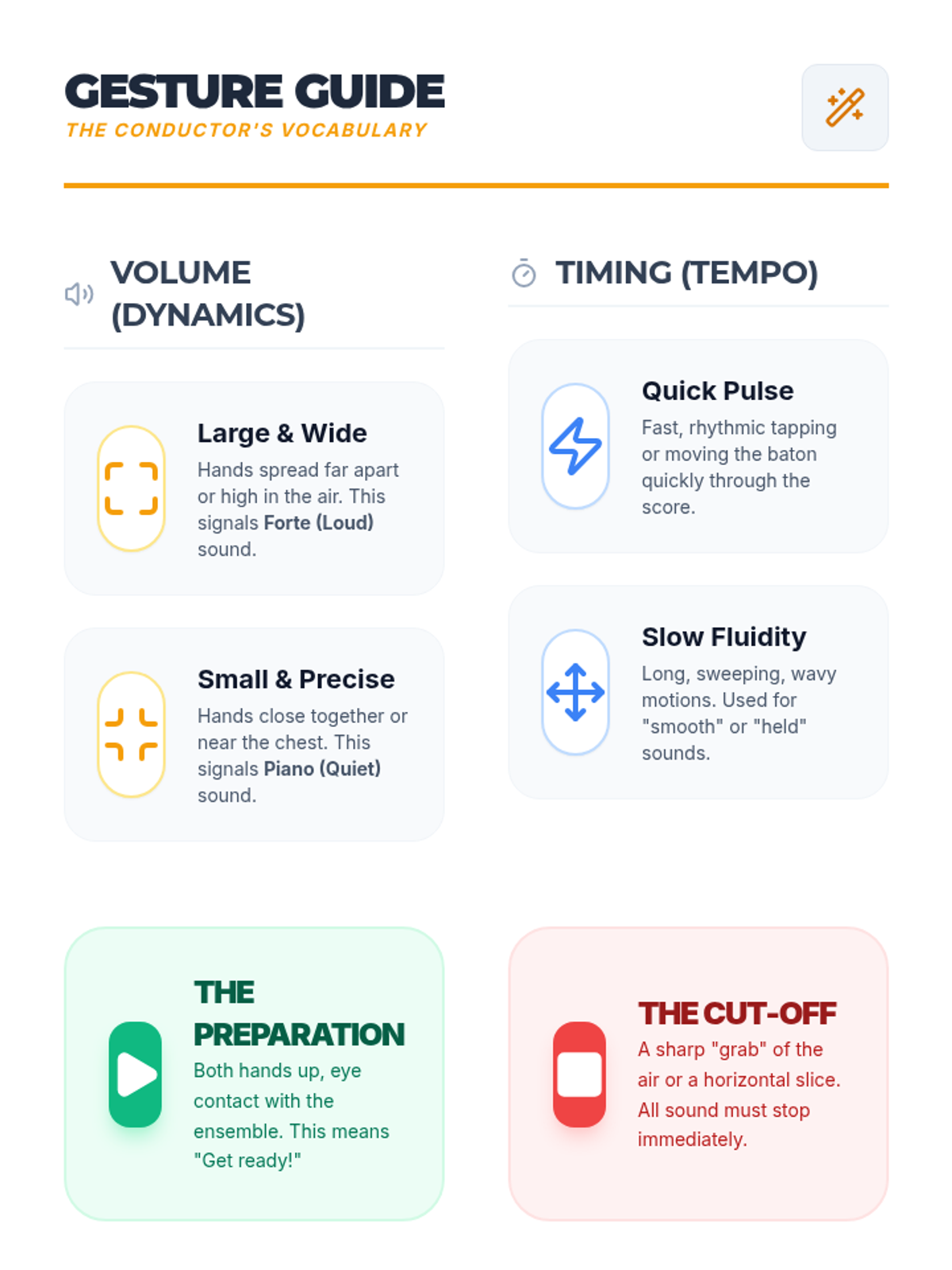
Visual reference guide for students illustrating essential conducting gestures for volume, tempo, and cues. Great for use during Lesson 4 rehearsals.