Historical evolution of performance, technical stagecraft, and core acting techniques. Develops playwriting skills and fosters imaginative expression through script development and production management.
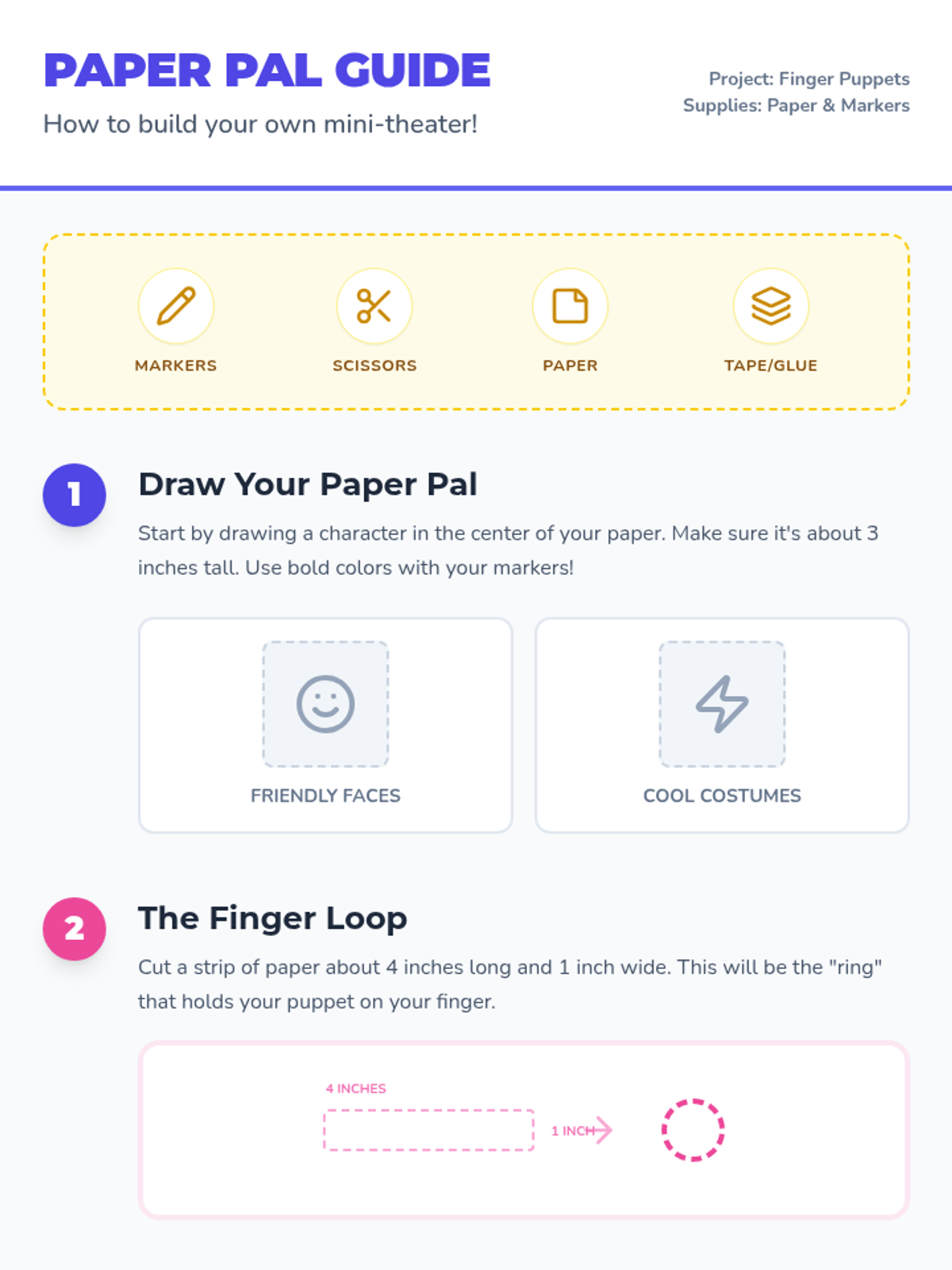
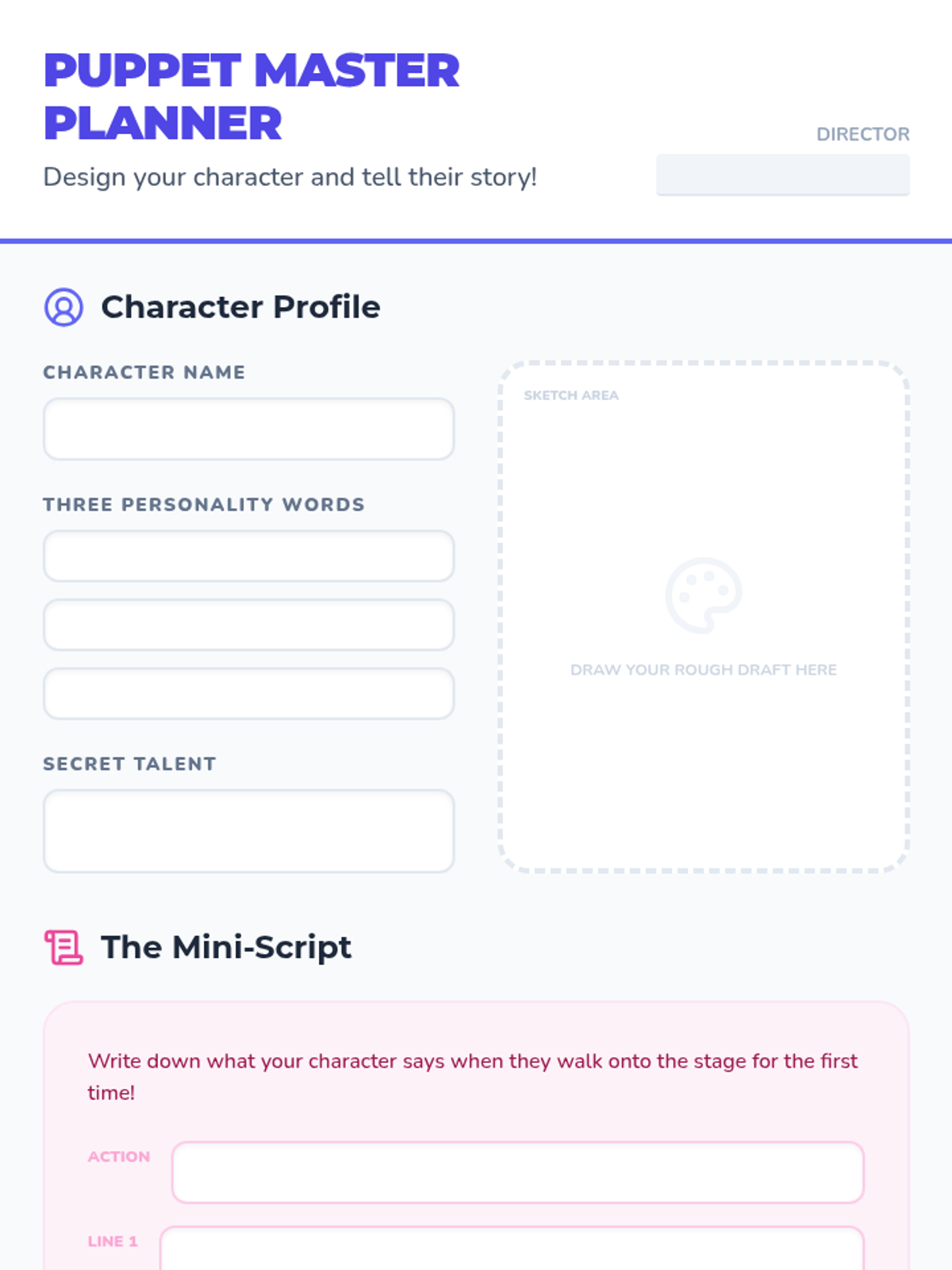
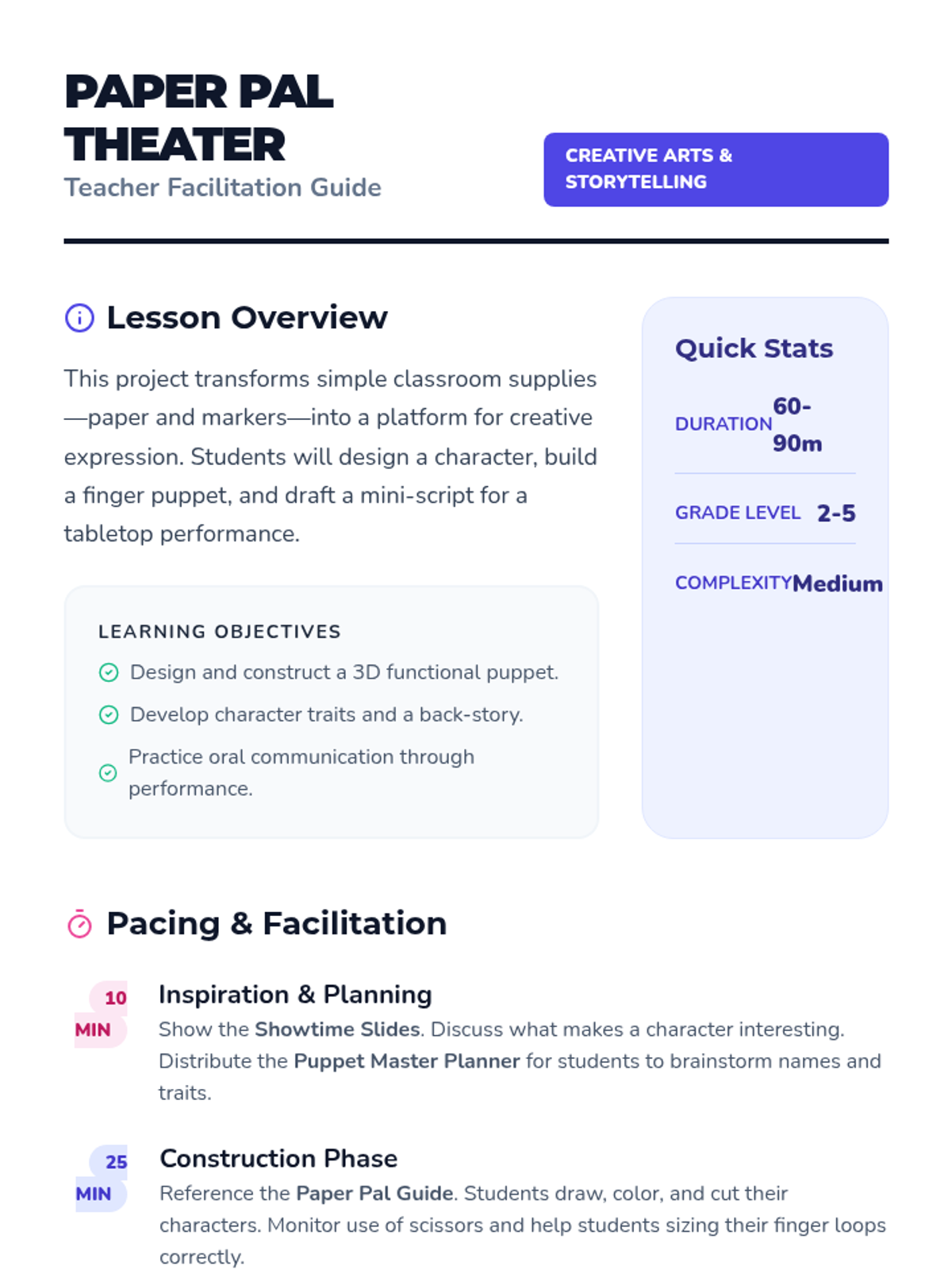
Students design and build their own paper finger puppets and a tabletop stage using markers and paper. This project combines visual arts with storytelling and performance.
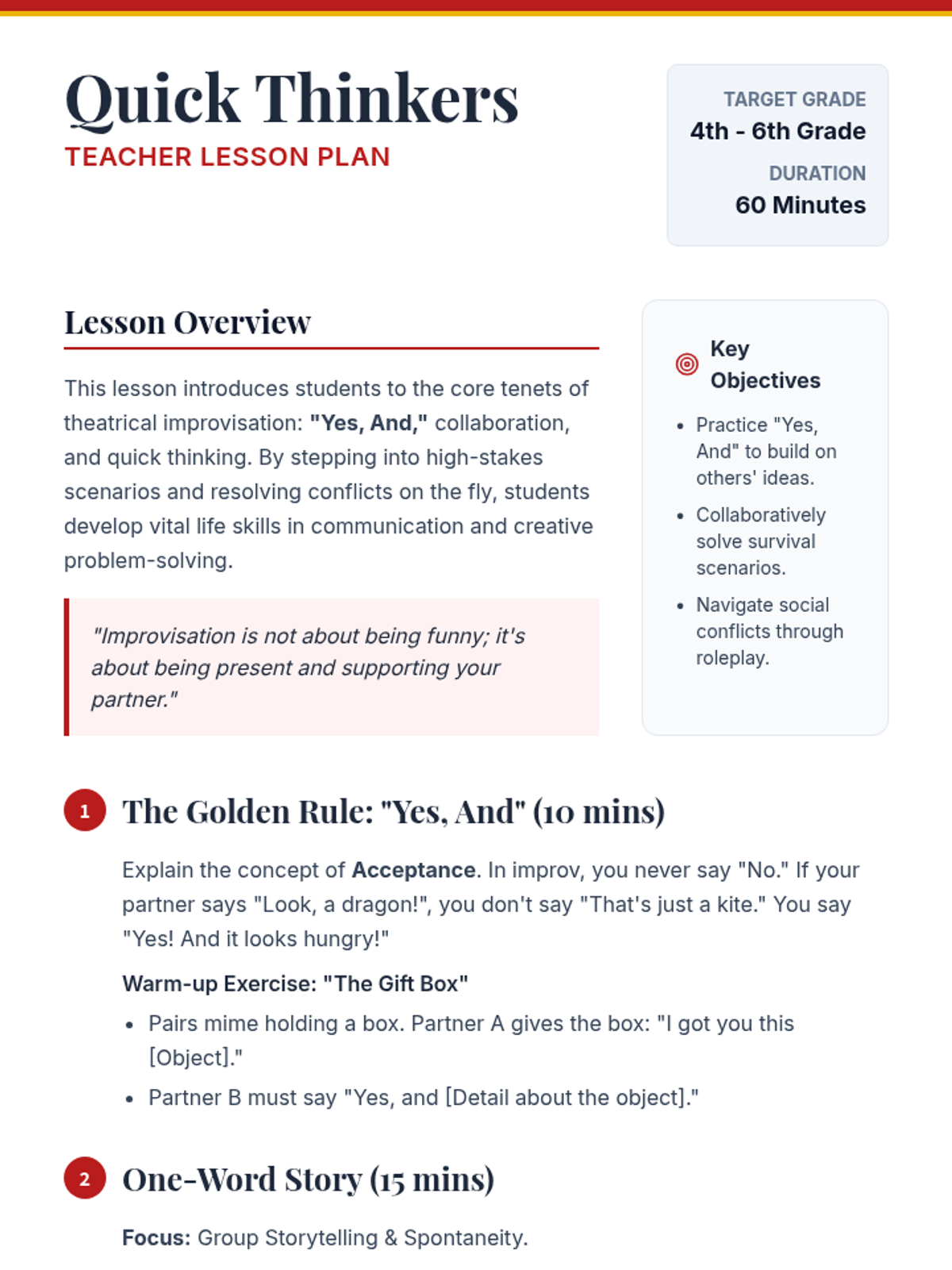
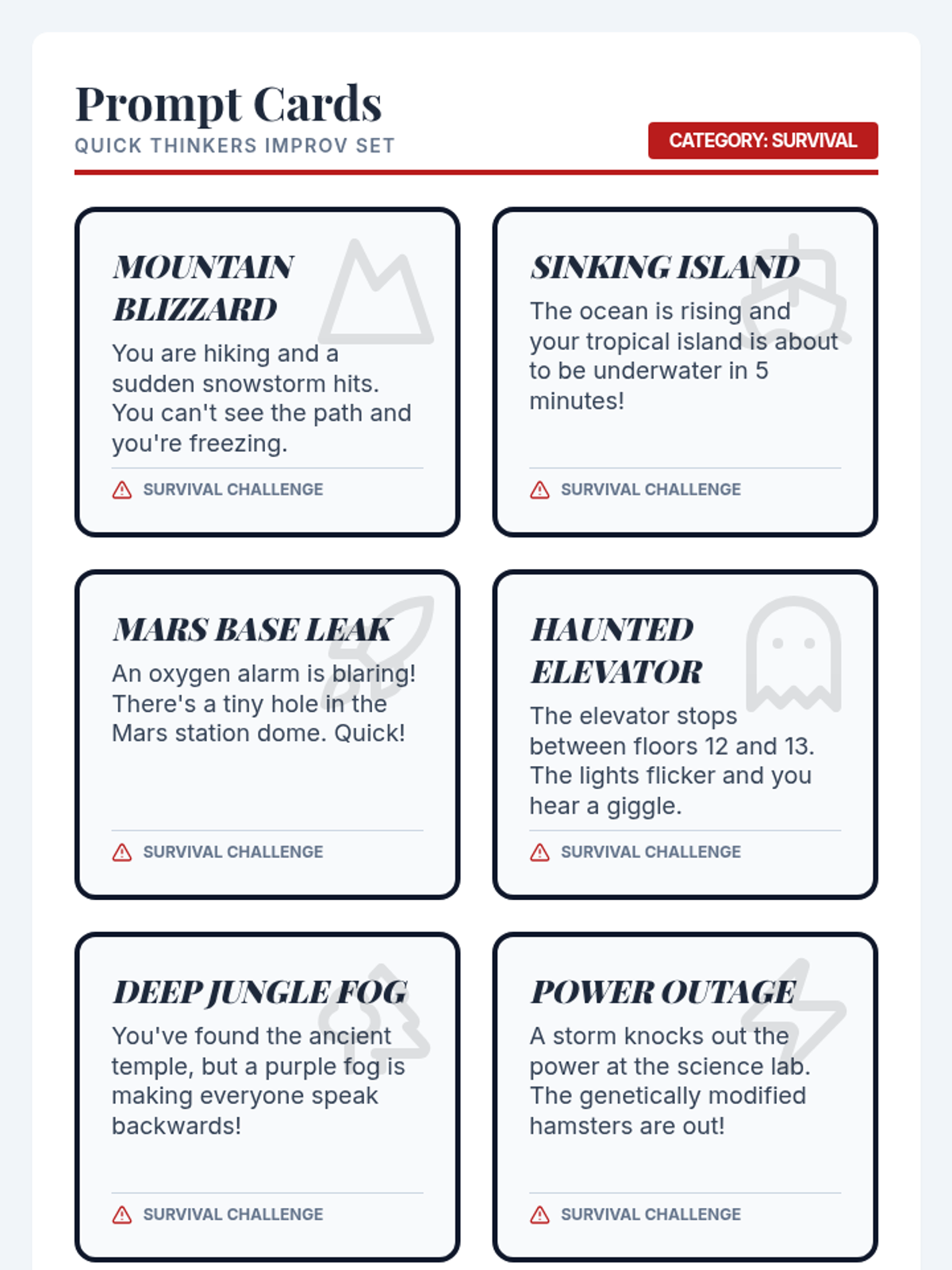
A high-energy theatre lesson for grades 4-6 that uses improvisation games to build spontaneity, teamwork, and creative problem-solving skills through storytelling and survival scenarios.
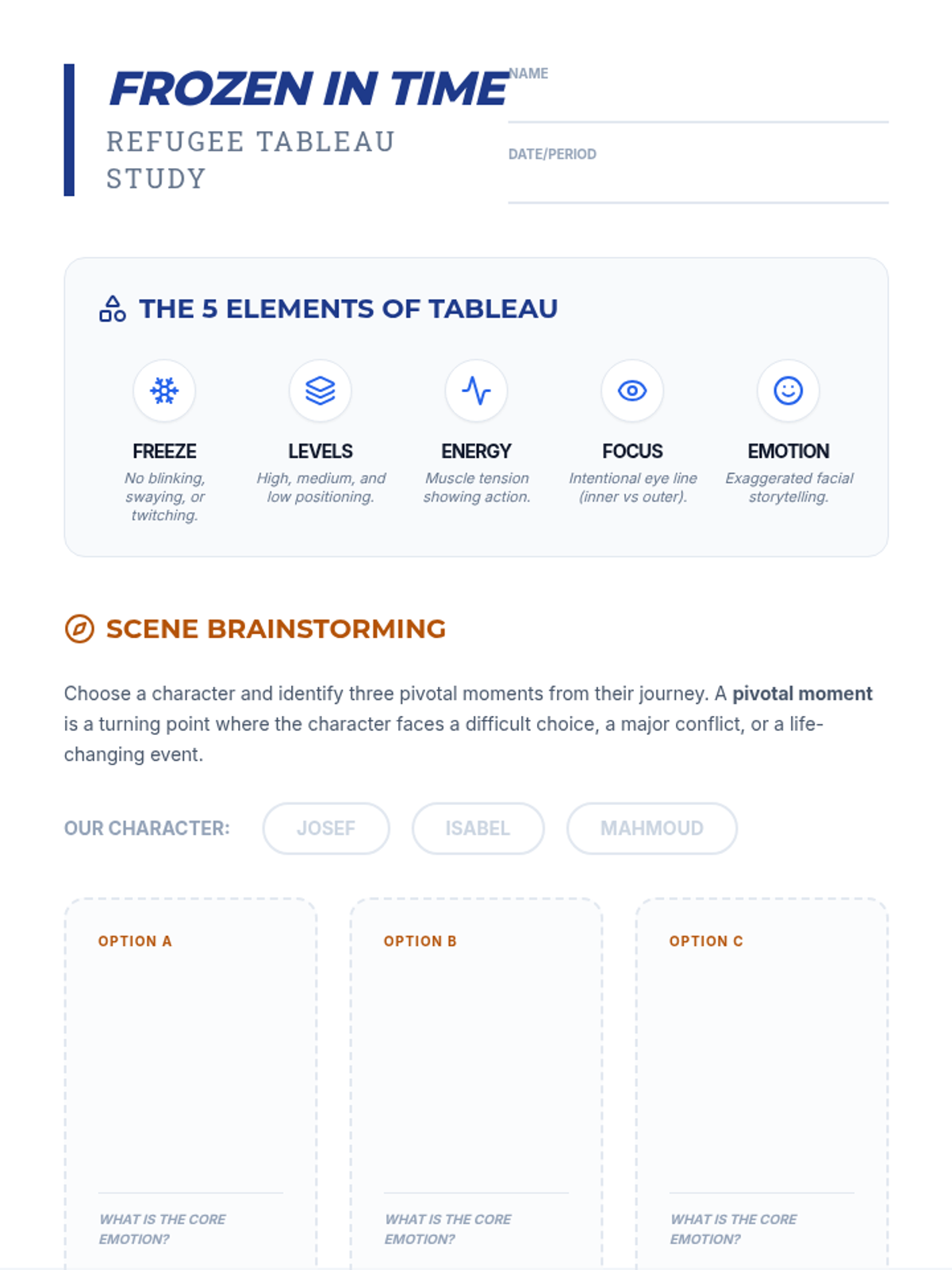
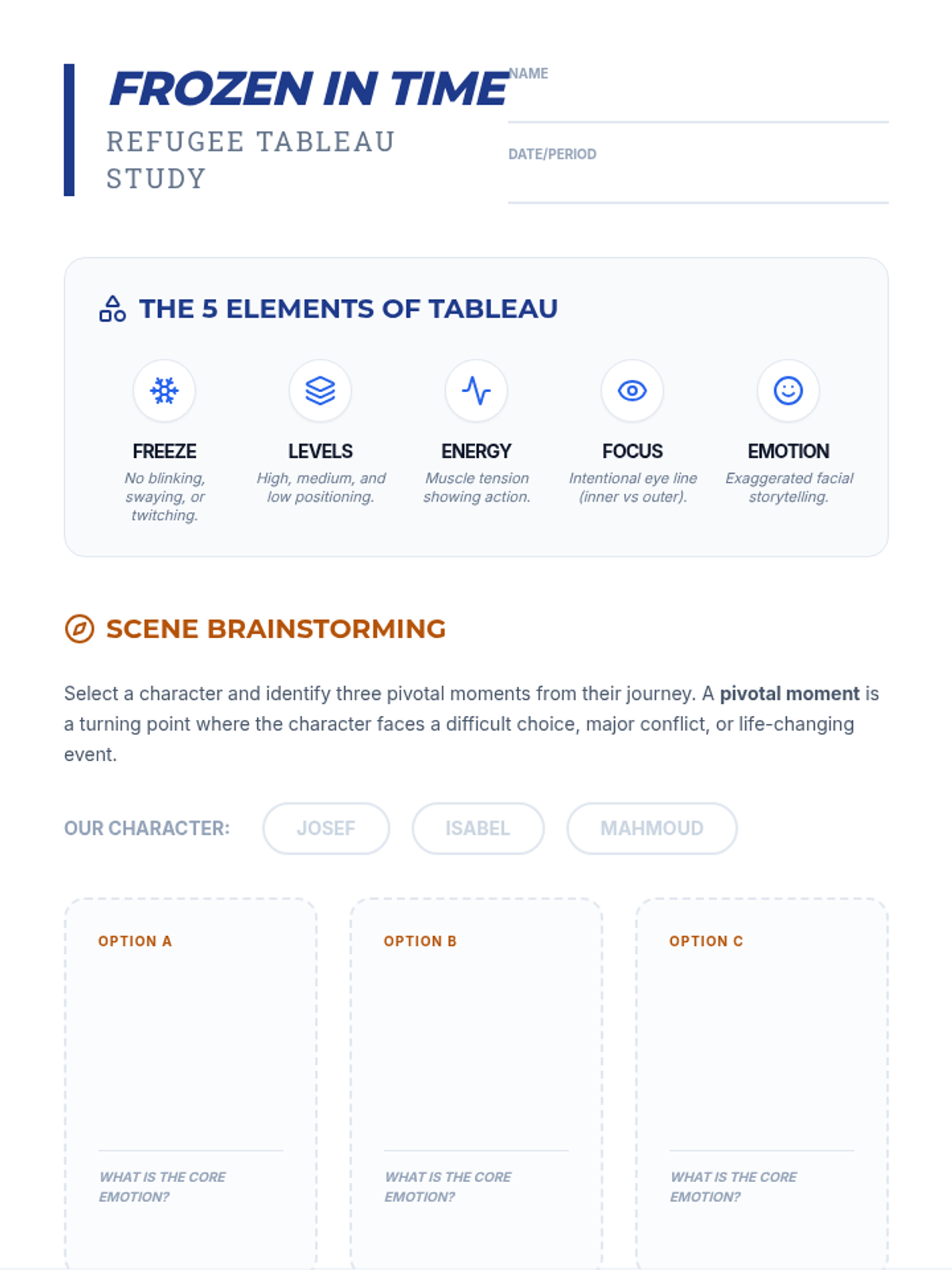
A lesson focused on using the dramatic technique of tableau to explore pivotal moments and emotional themes in Alan Gratz's 'Refugee'. Students will learn the five elements of tableau and work in groups to create living pictures of the three main characters' journeys.
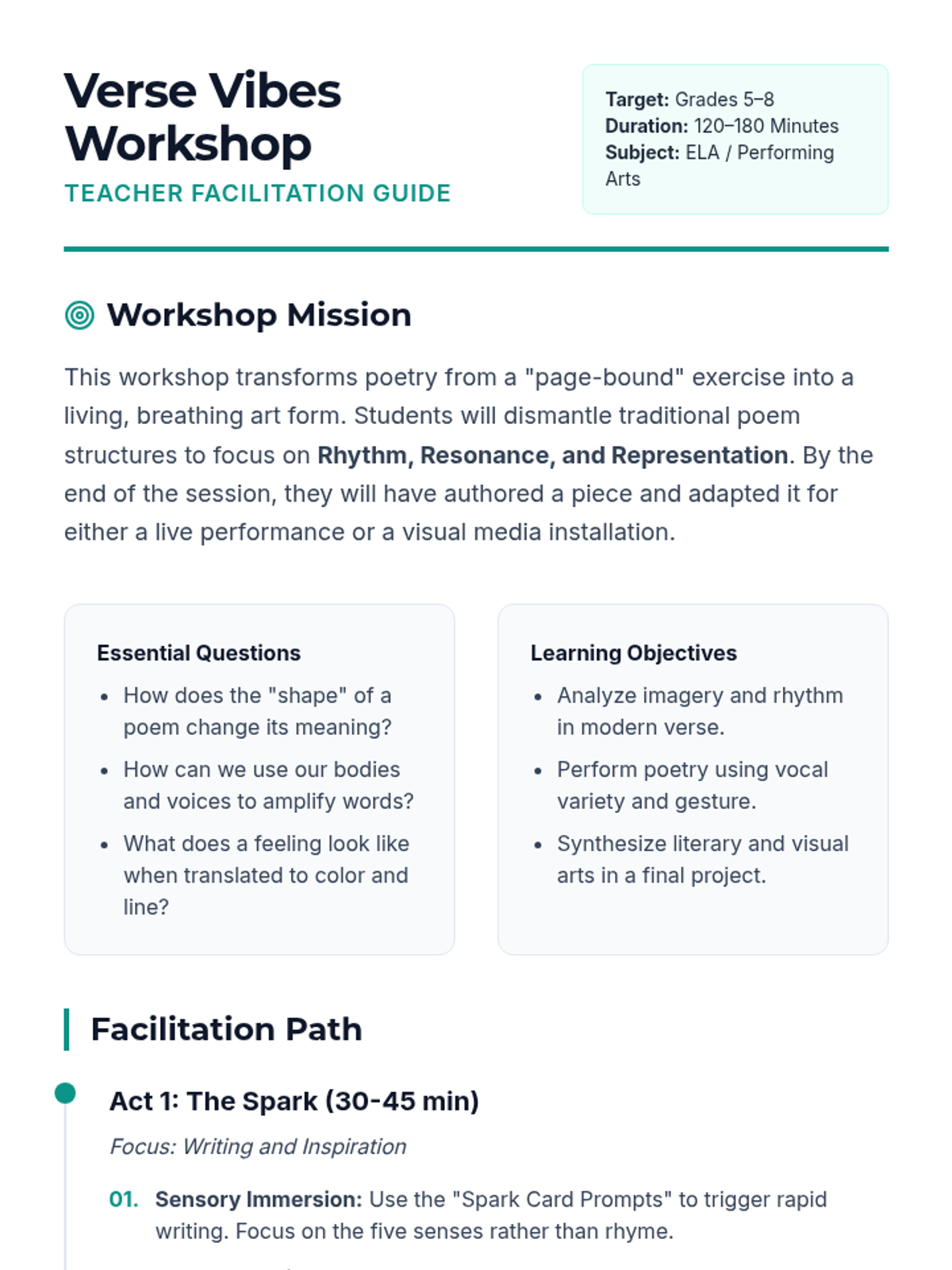
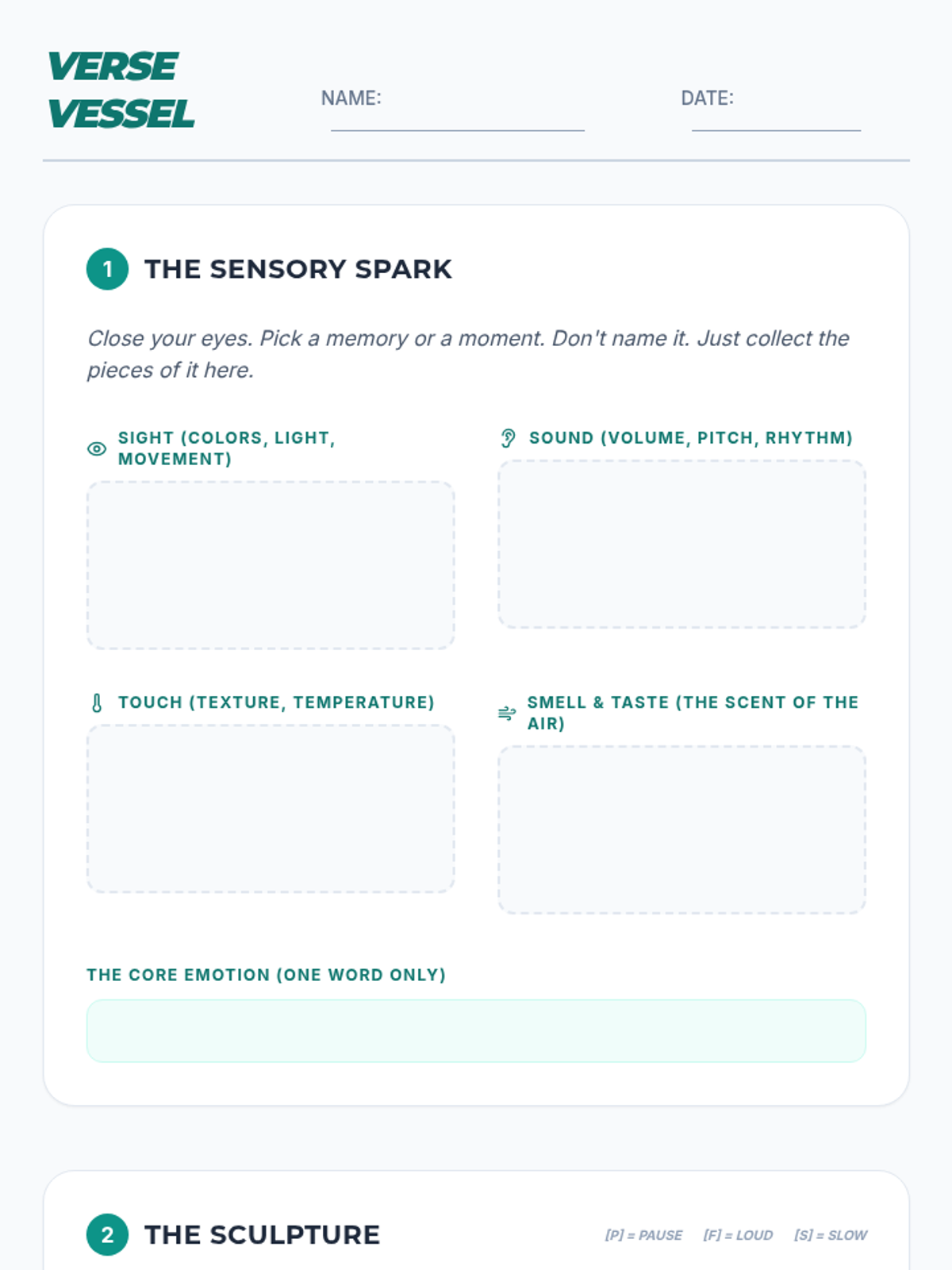
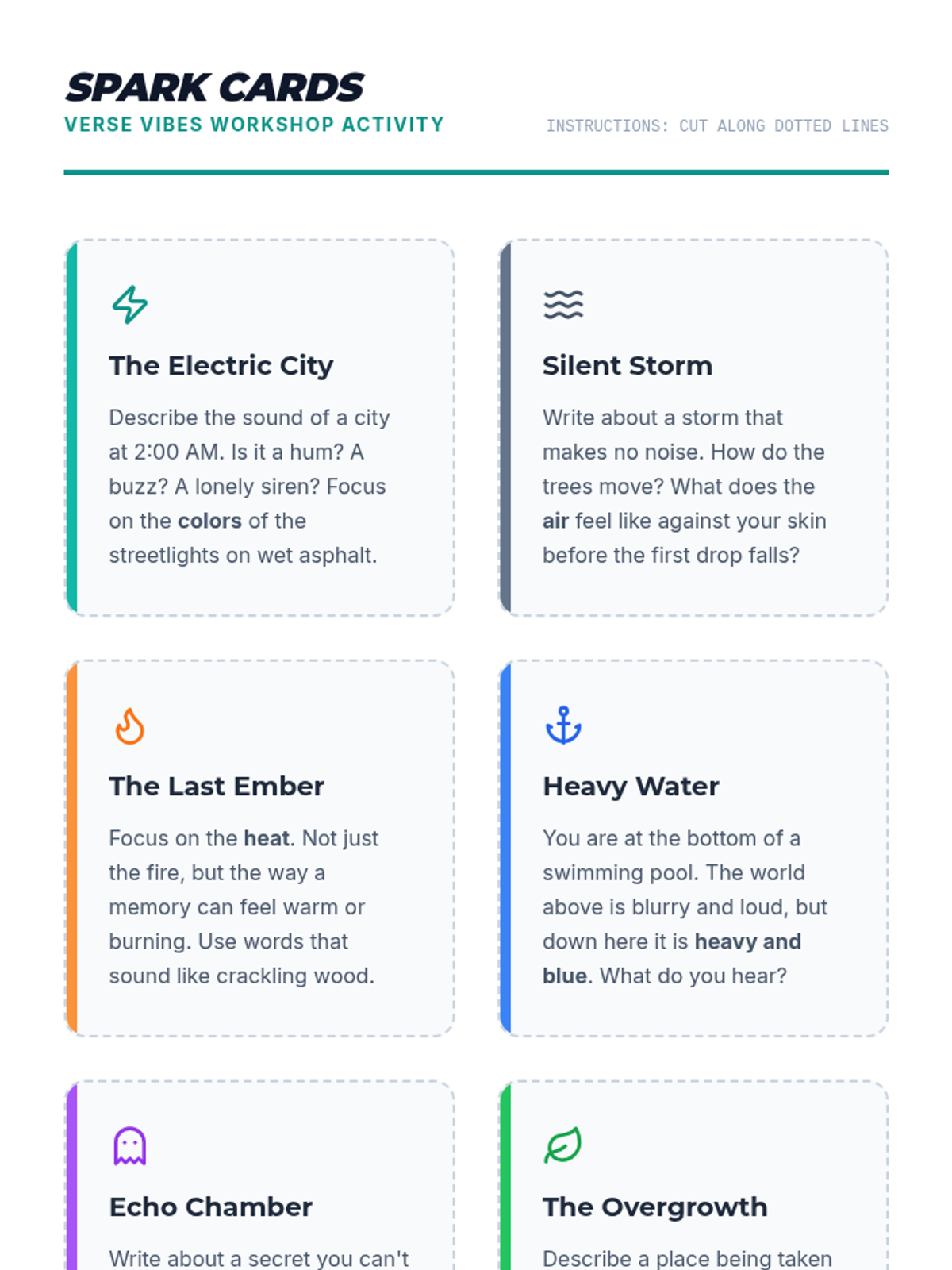
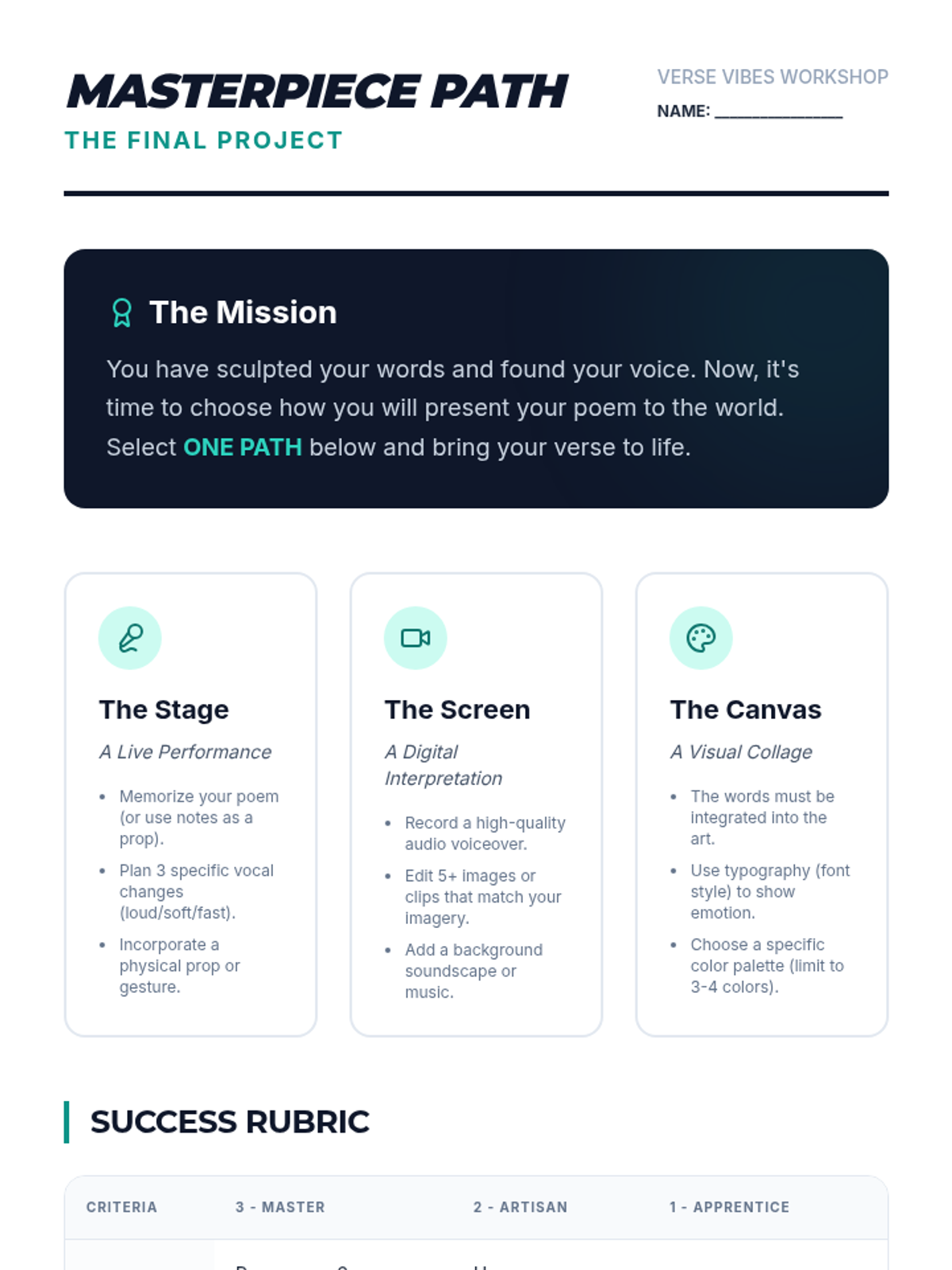
An immersive workshop for upper elementary and middle school students to explore poetry through writing, performance, and visual arts, fostering creative self-expression.
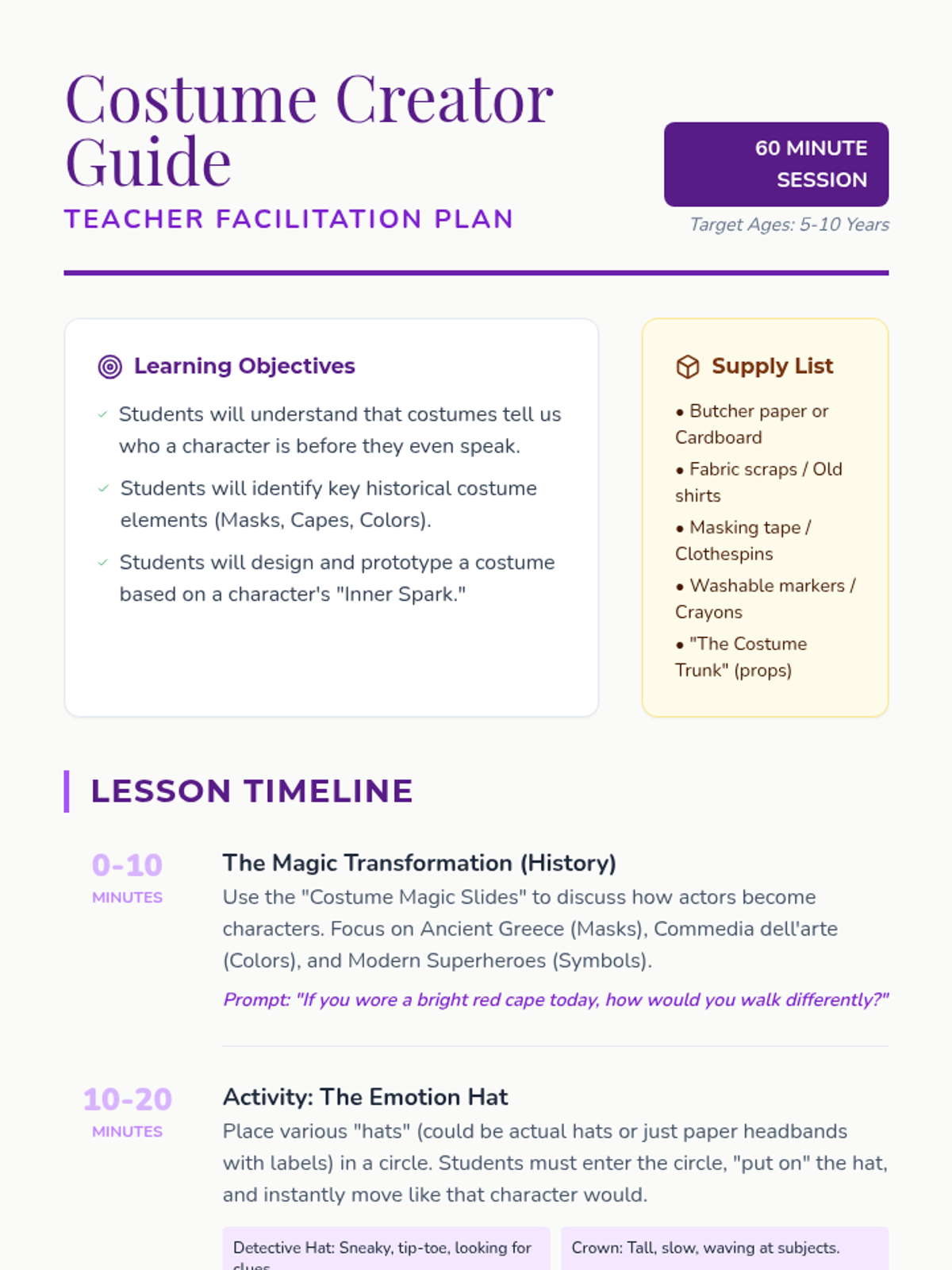
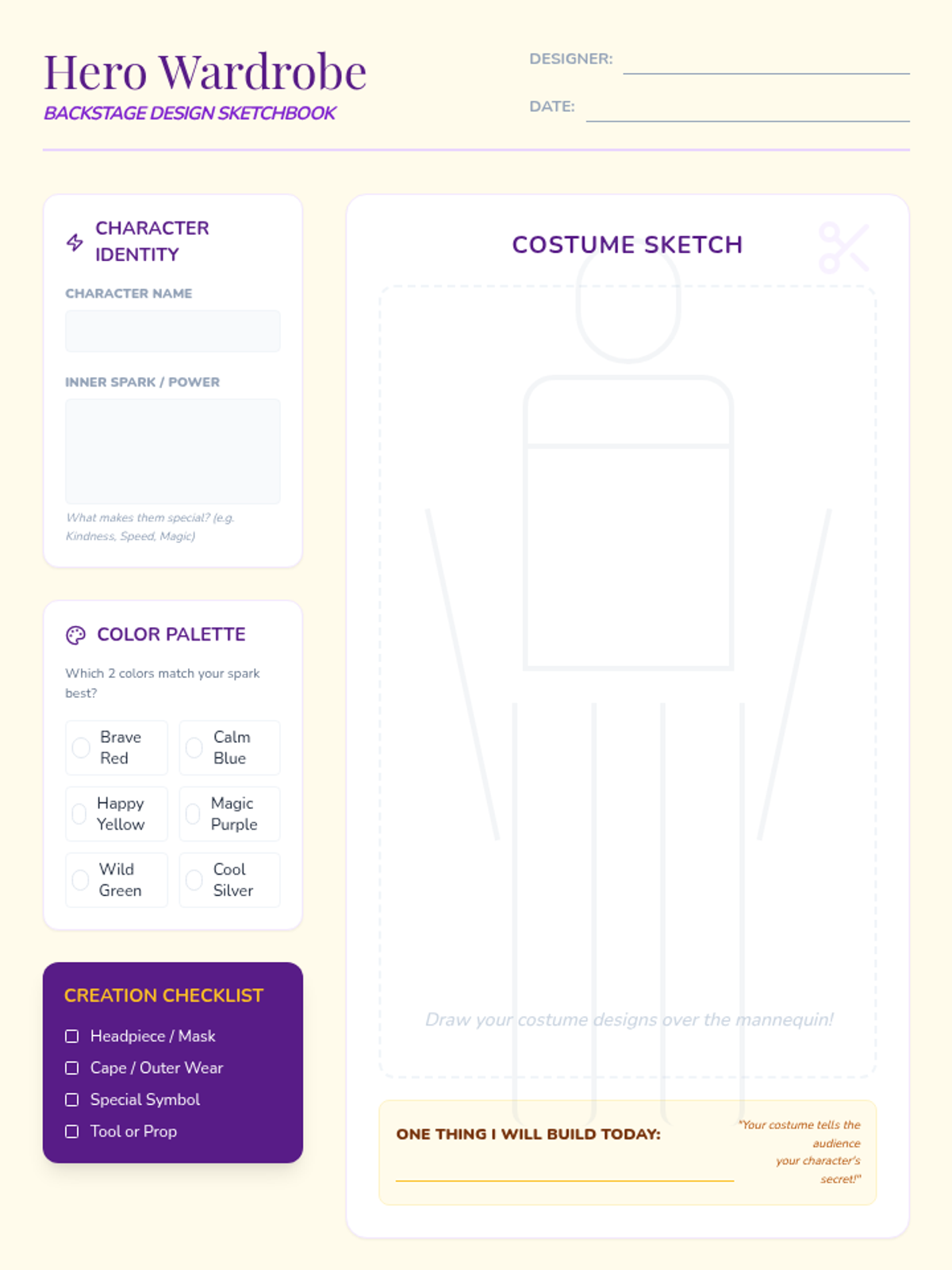
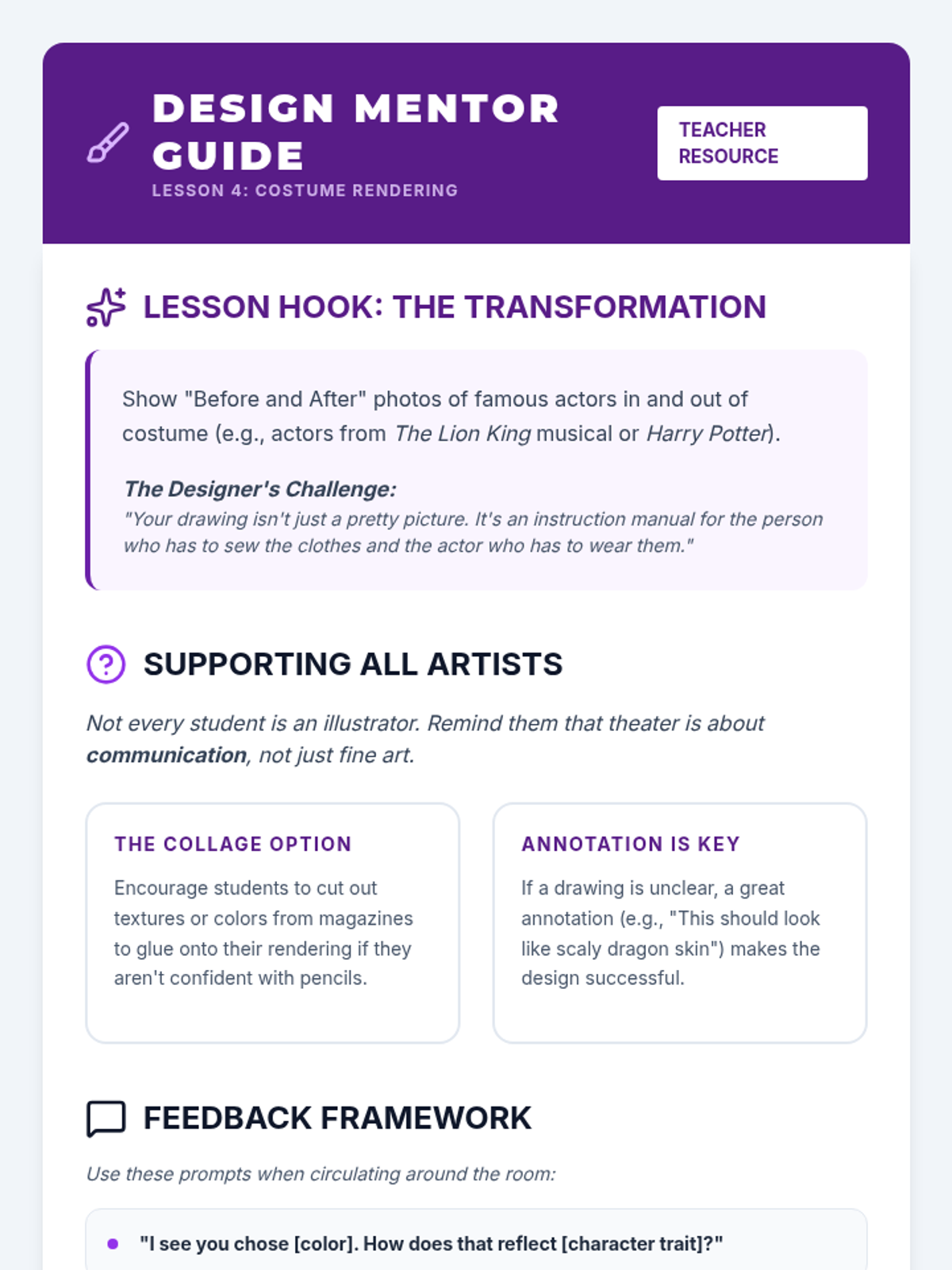
A 60-minute exploration into the world of theatrical costume design, featuring a simplified history of stage attire, interactive character-building games, and a hands-on design workshop for young creators.
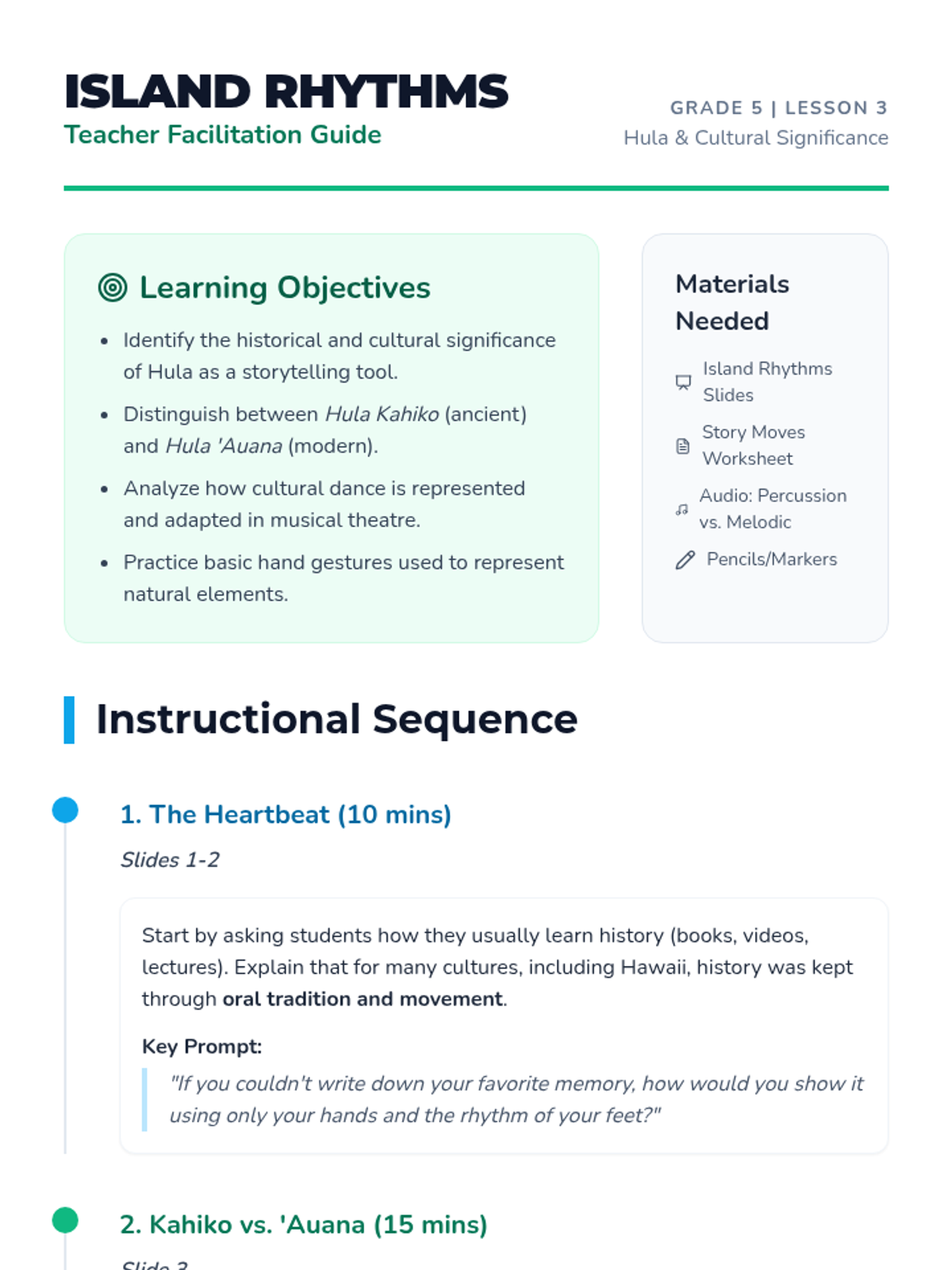
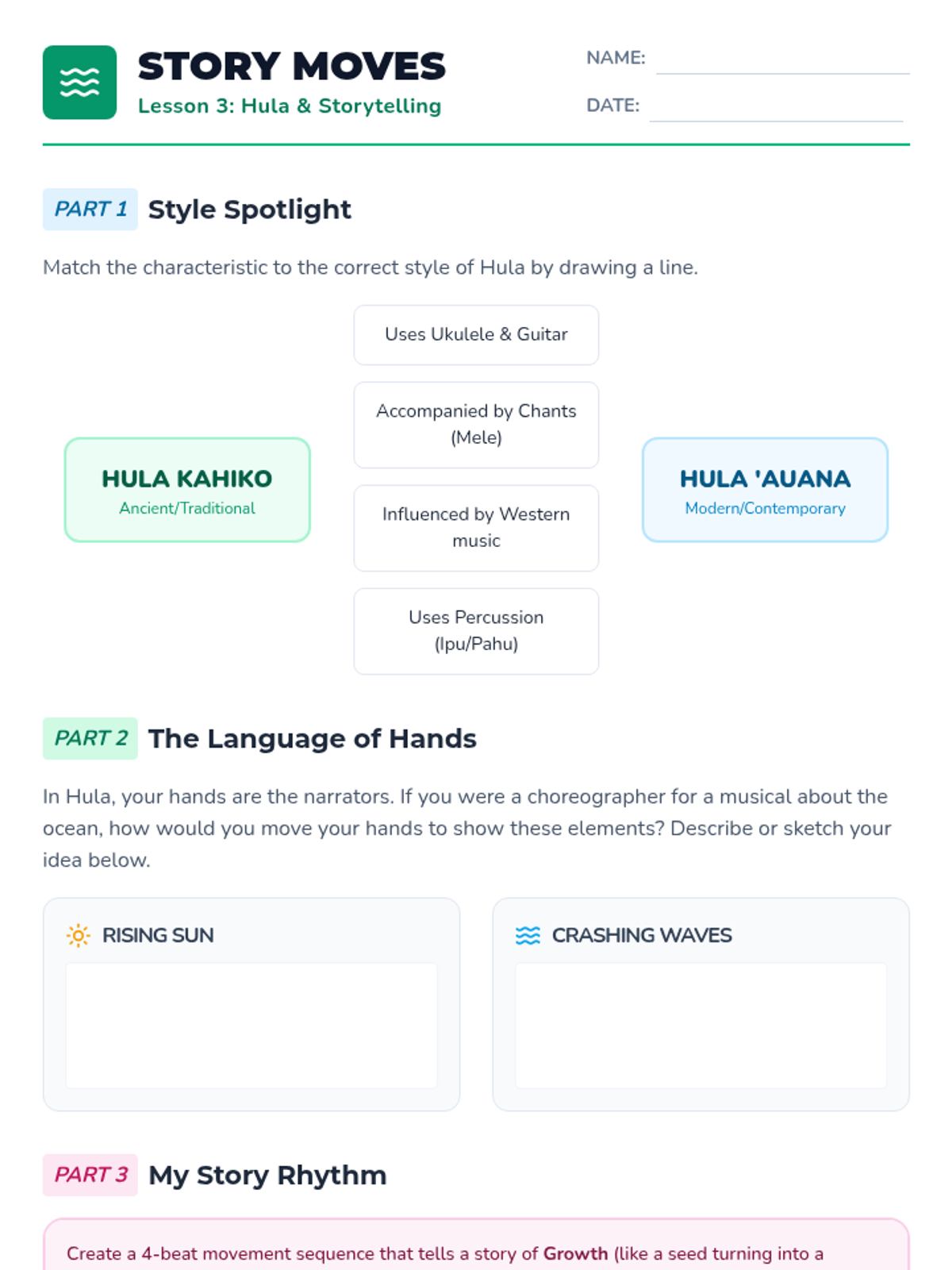
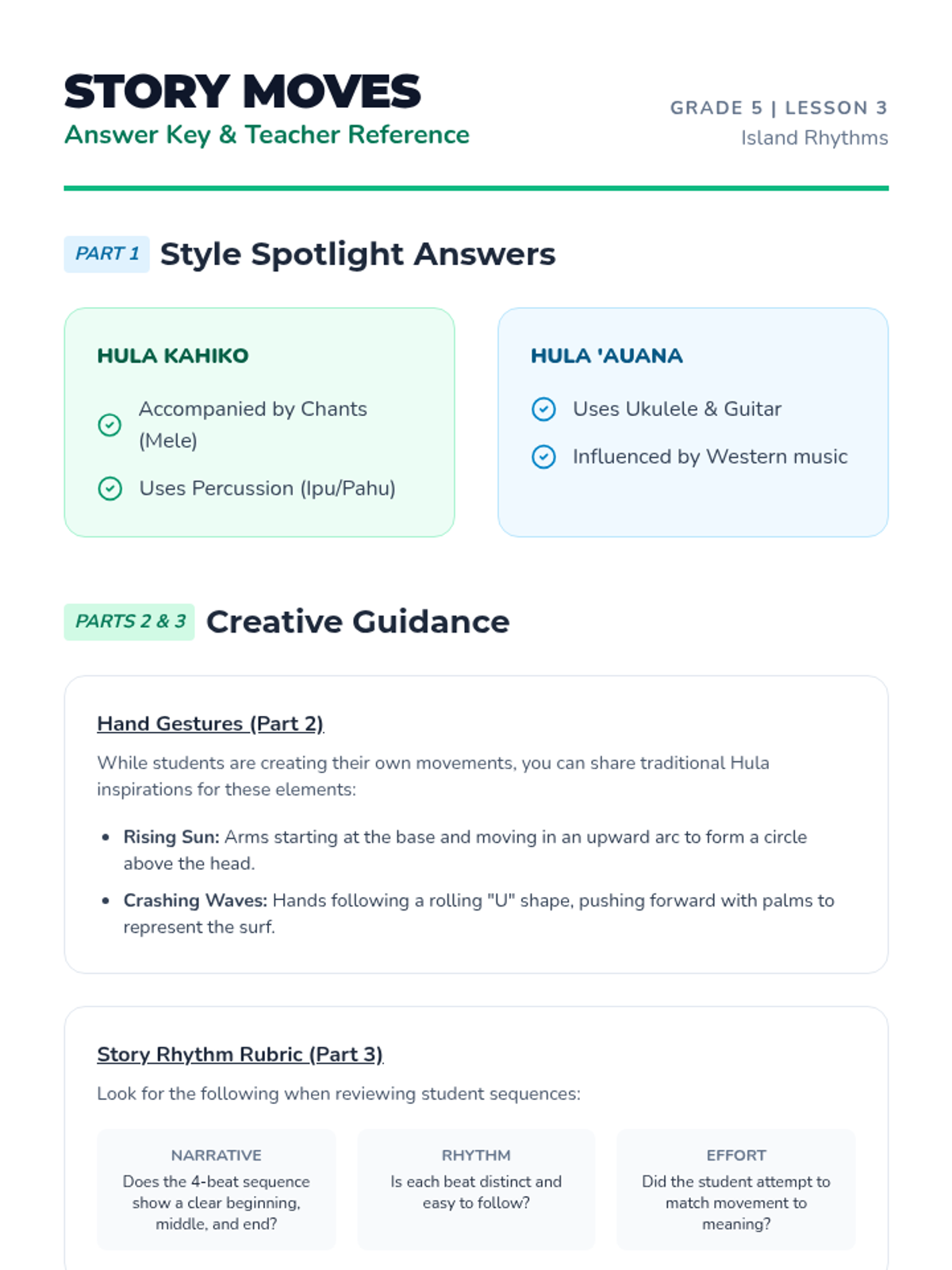
Students explore the cultural significance of Hula in Hawaii, learning about its storytelling power through rhythm and movement, and analyzing its influence and representation in musical theatre productions.
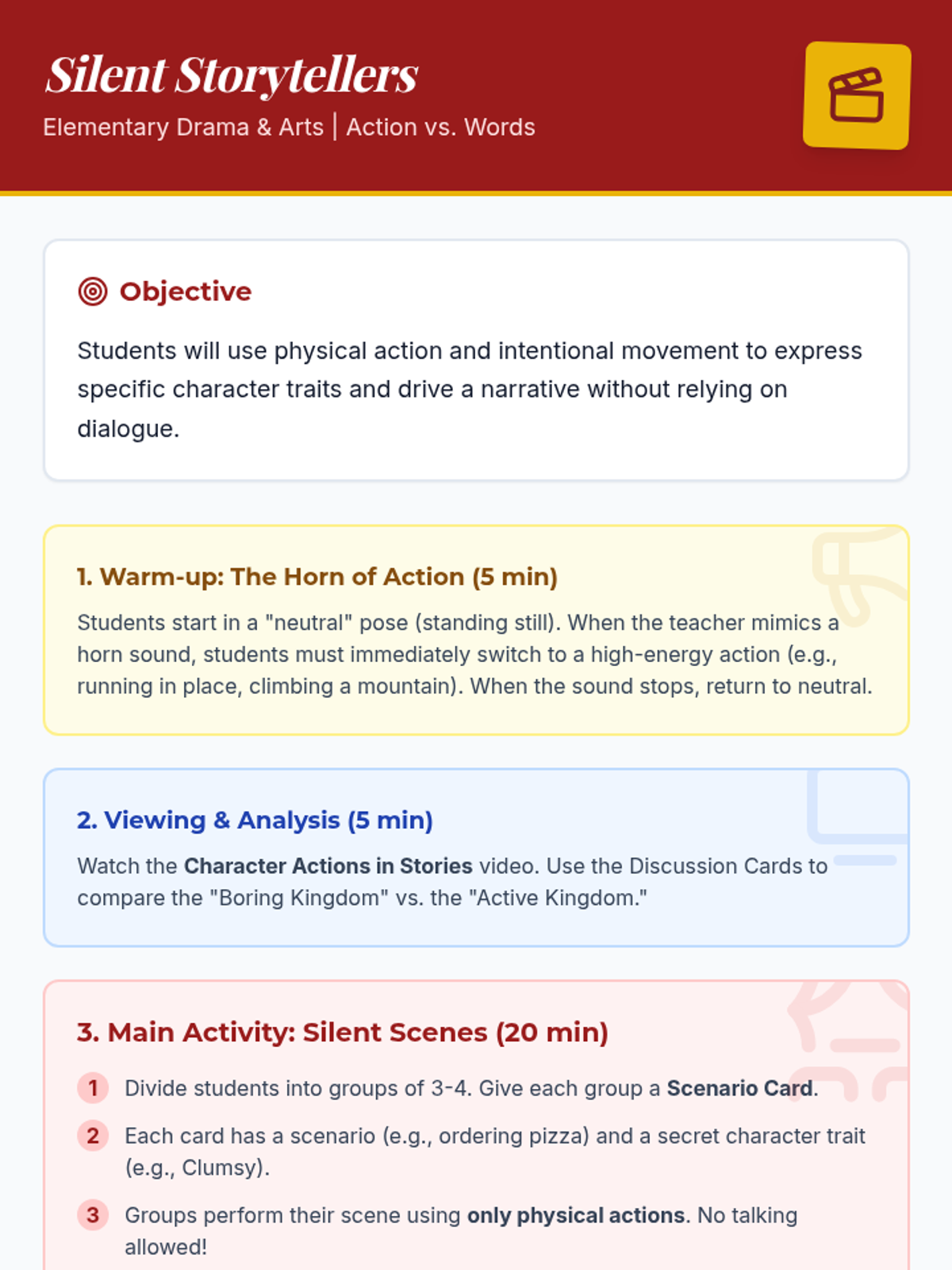
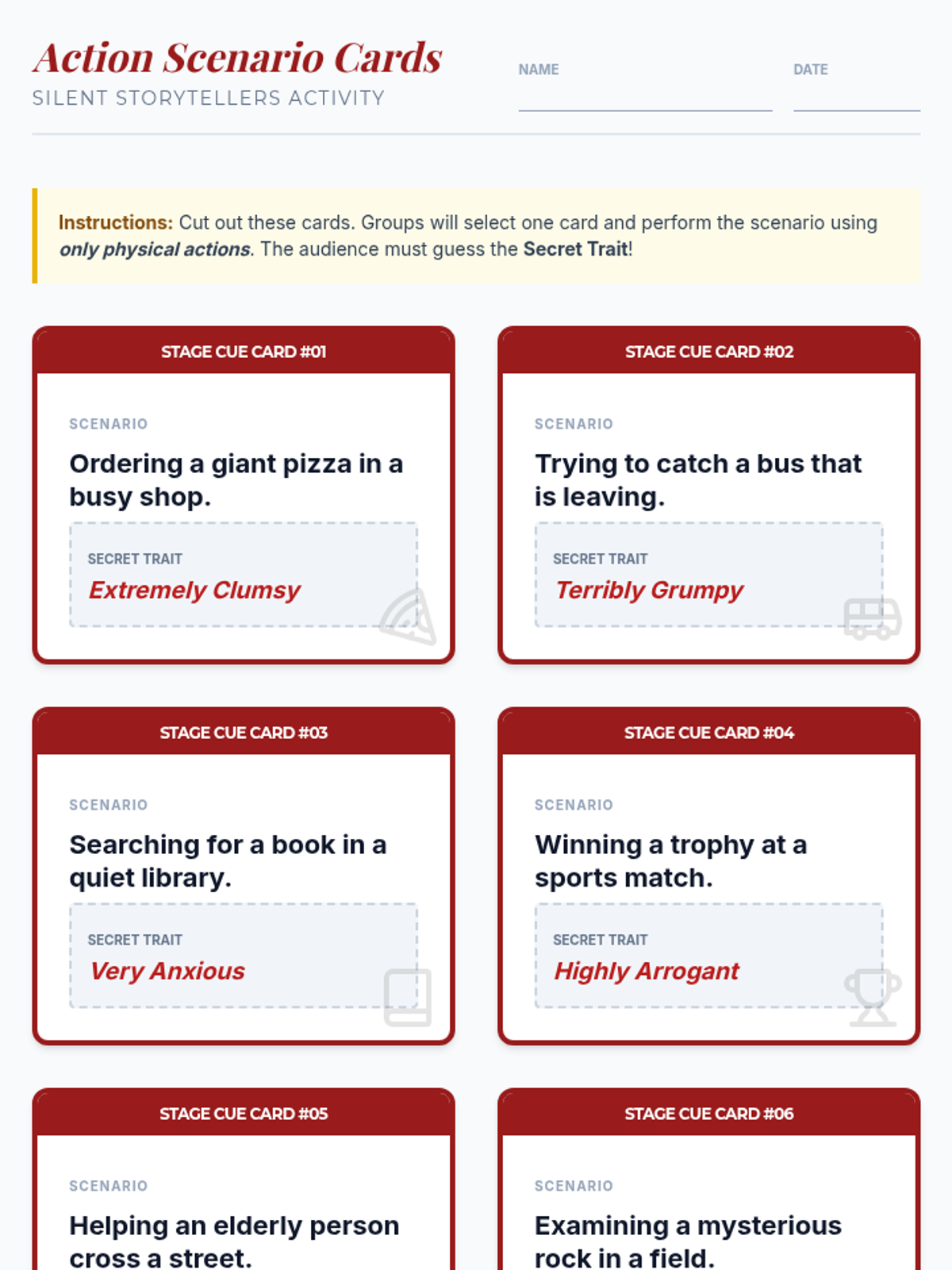
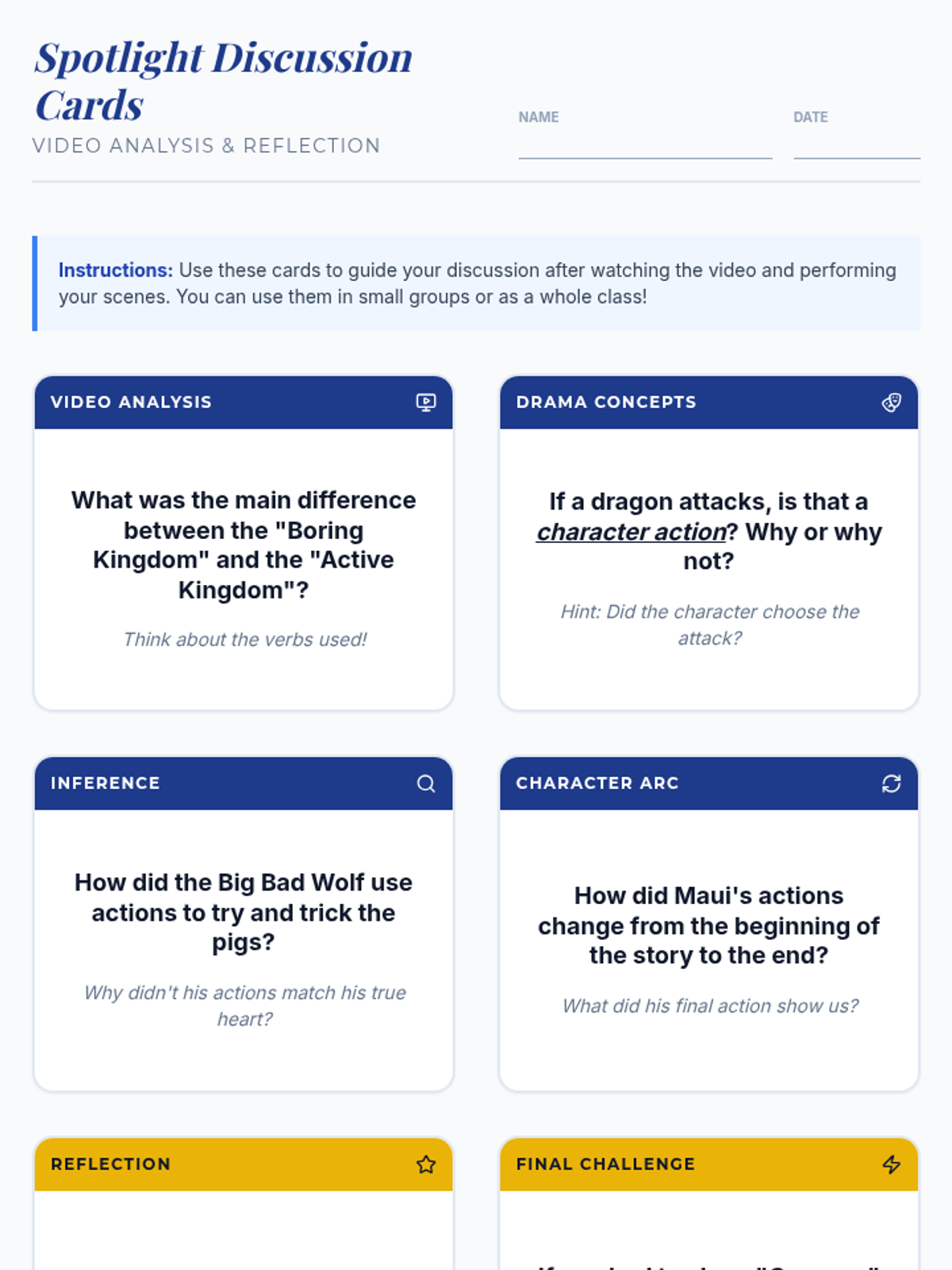
Students explore how physical action and decisions drive story and reveal character traits without using words, featuring a 'Silent Scenes' activity and a video analysis.
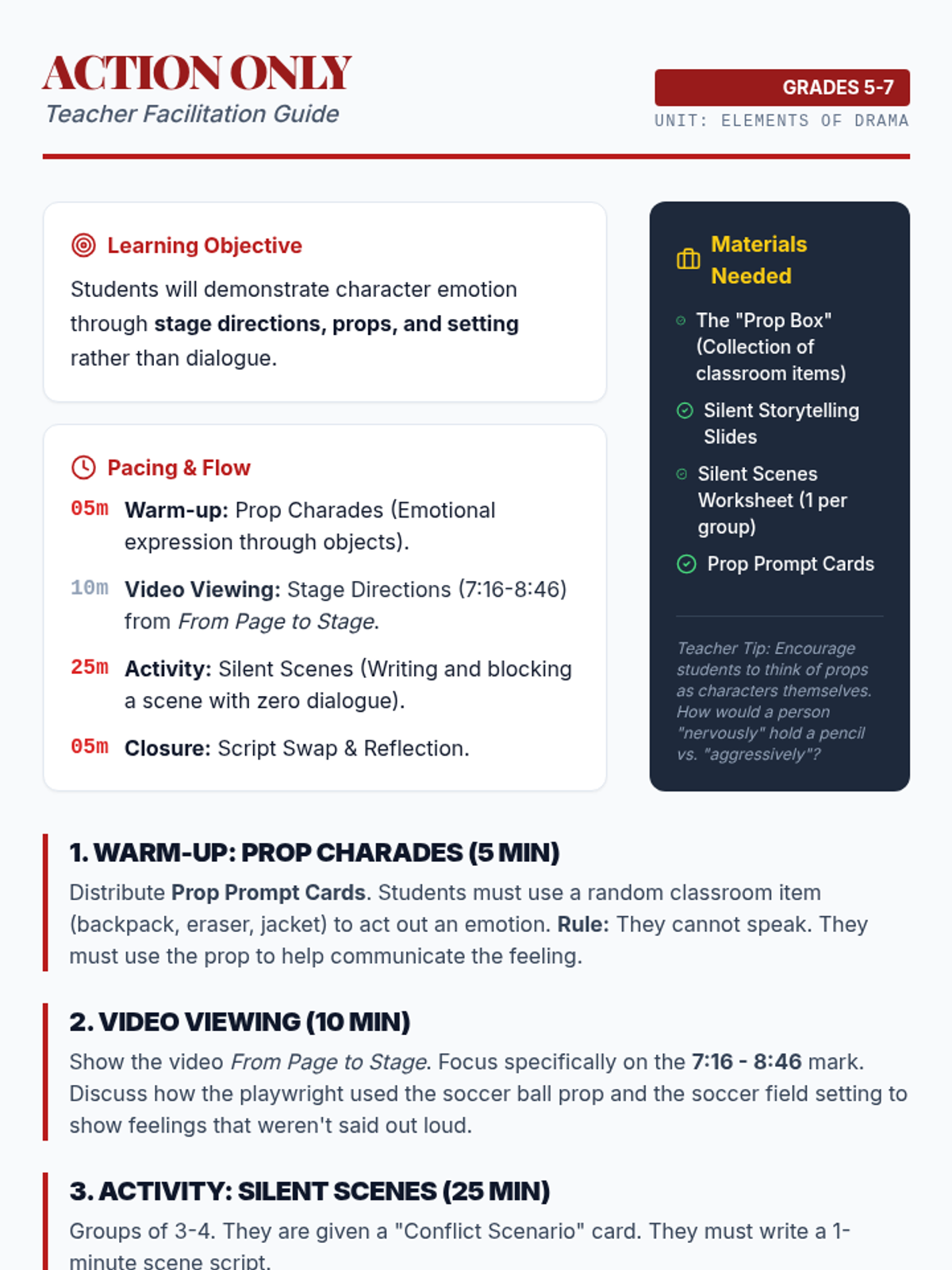
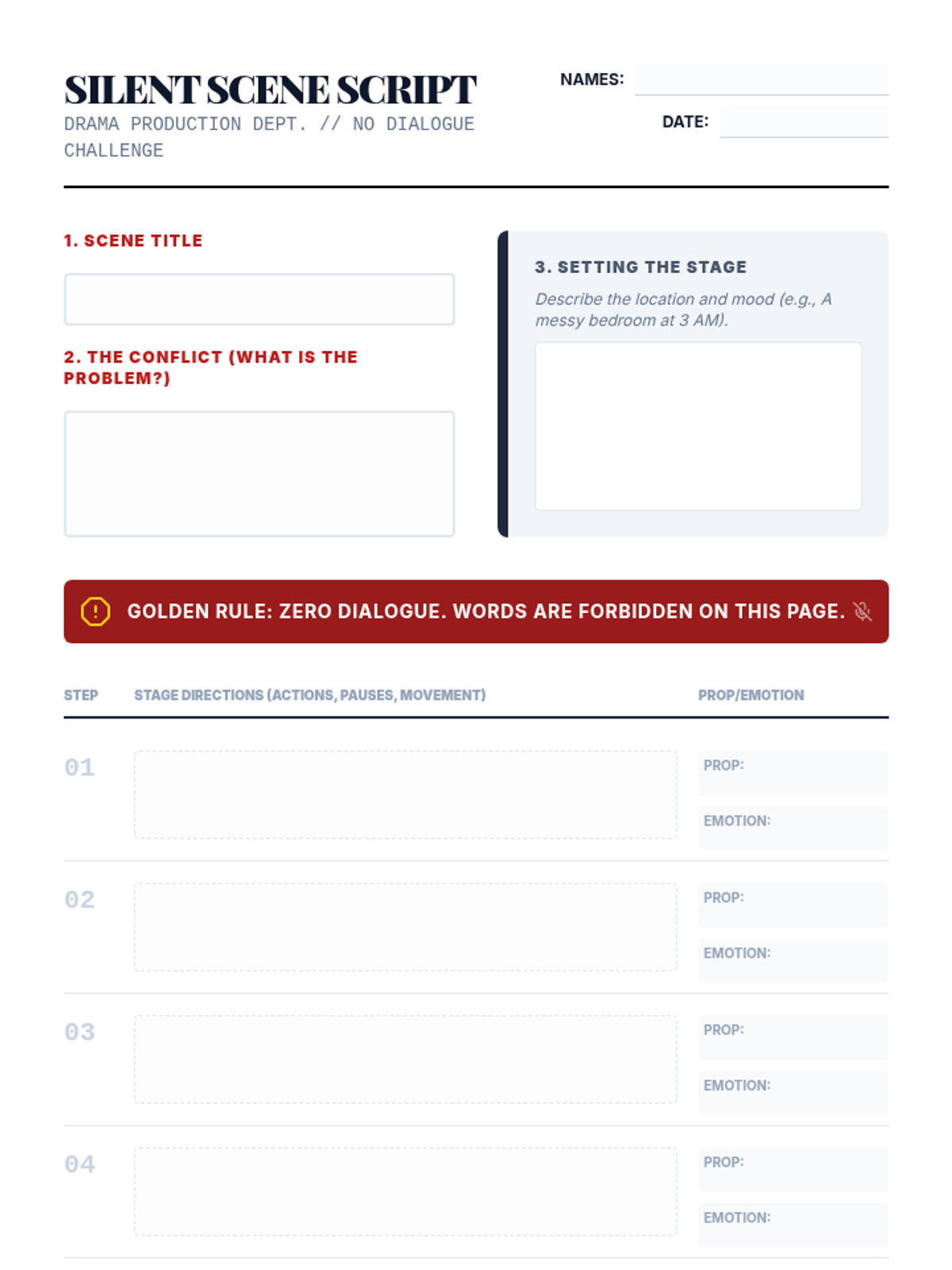
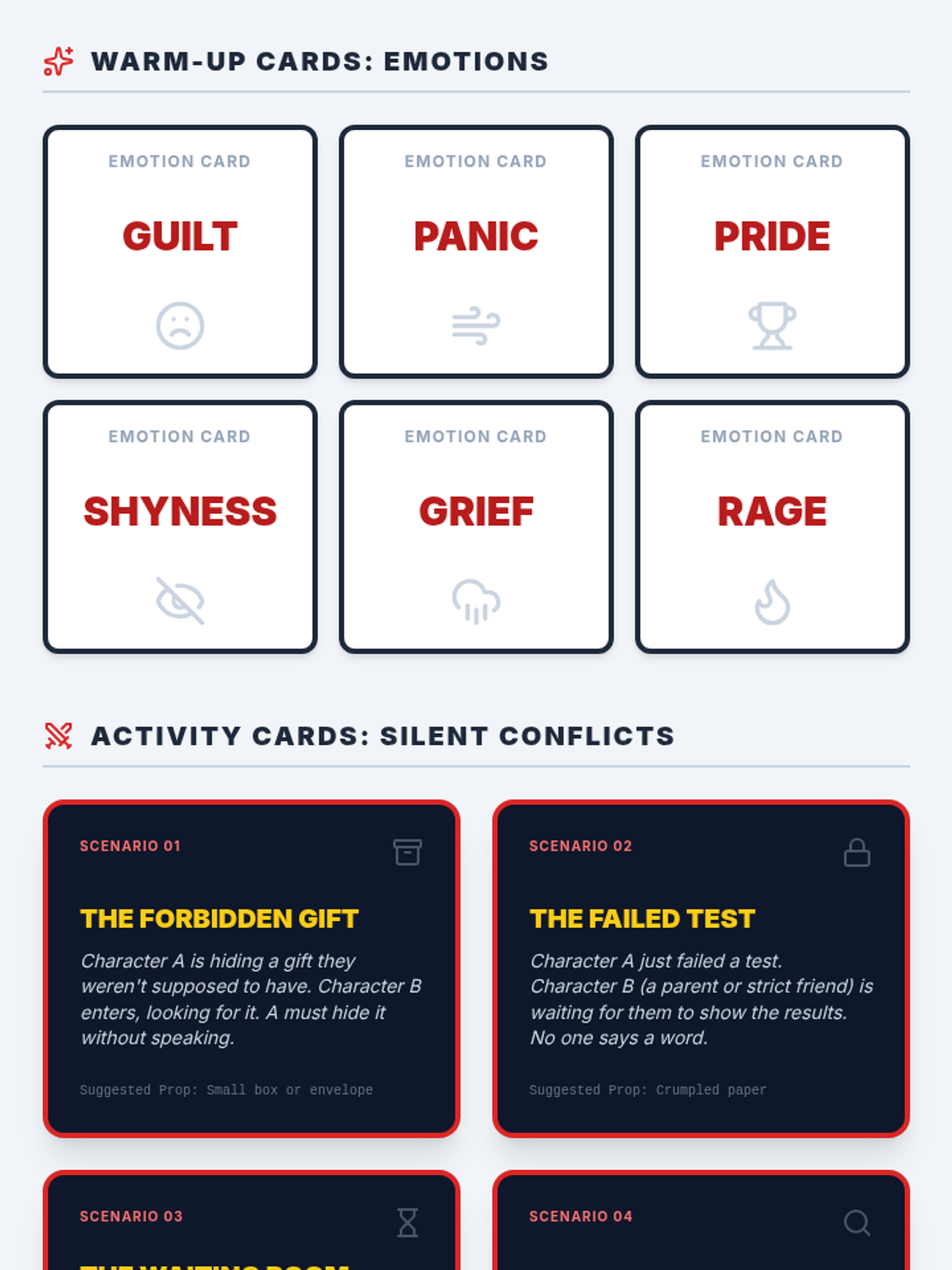
Students learn to convey character emotion and conflict using only stage directions, props, and setting. This hands-on drama lesson focuses on visual storytelling and the technical elements of playwriting without relying on dialogue.
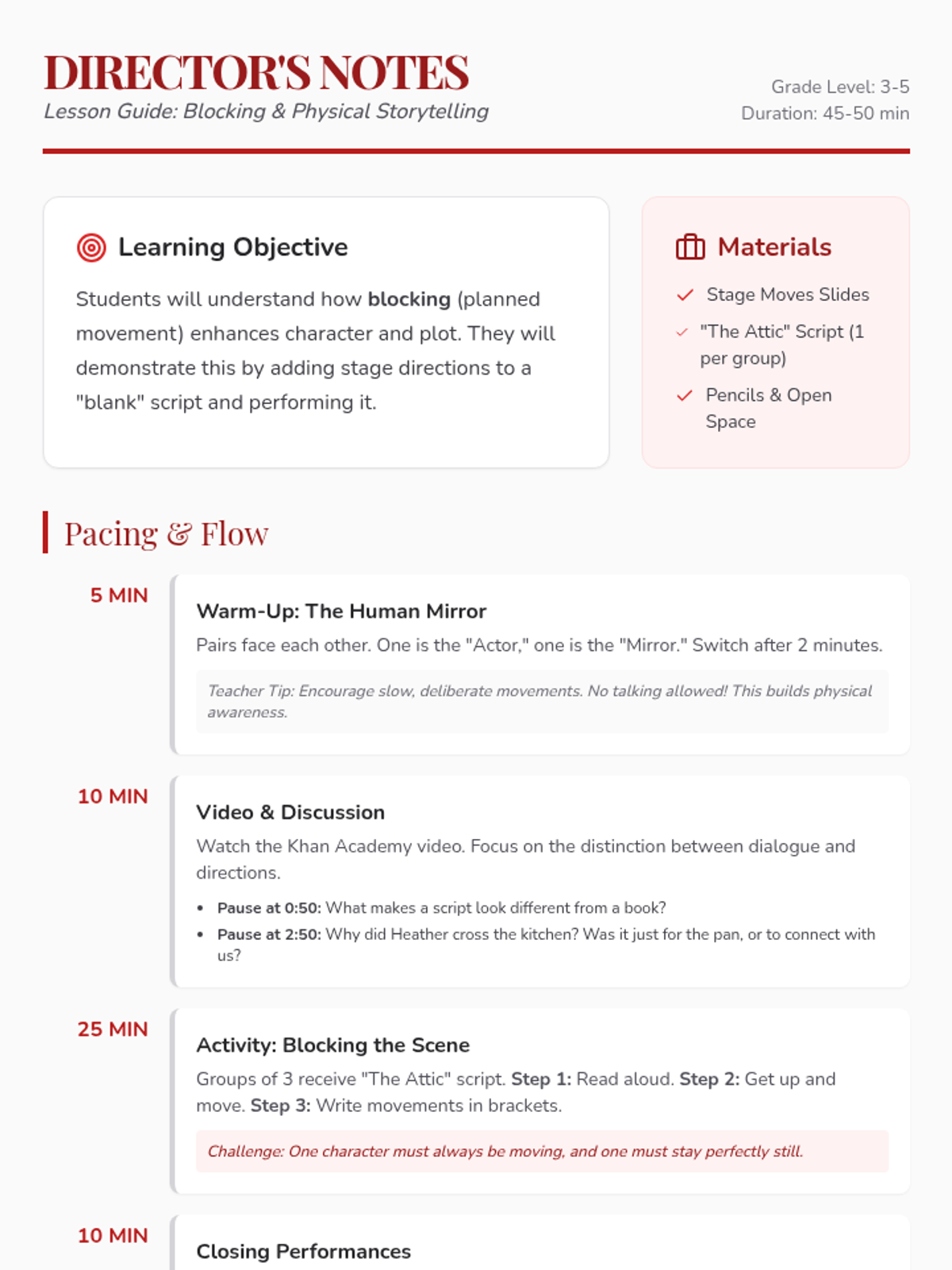
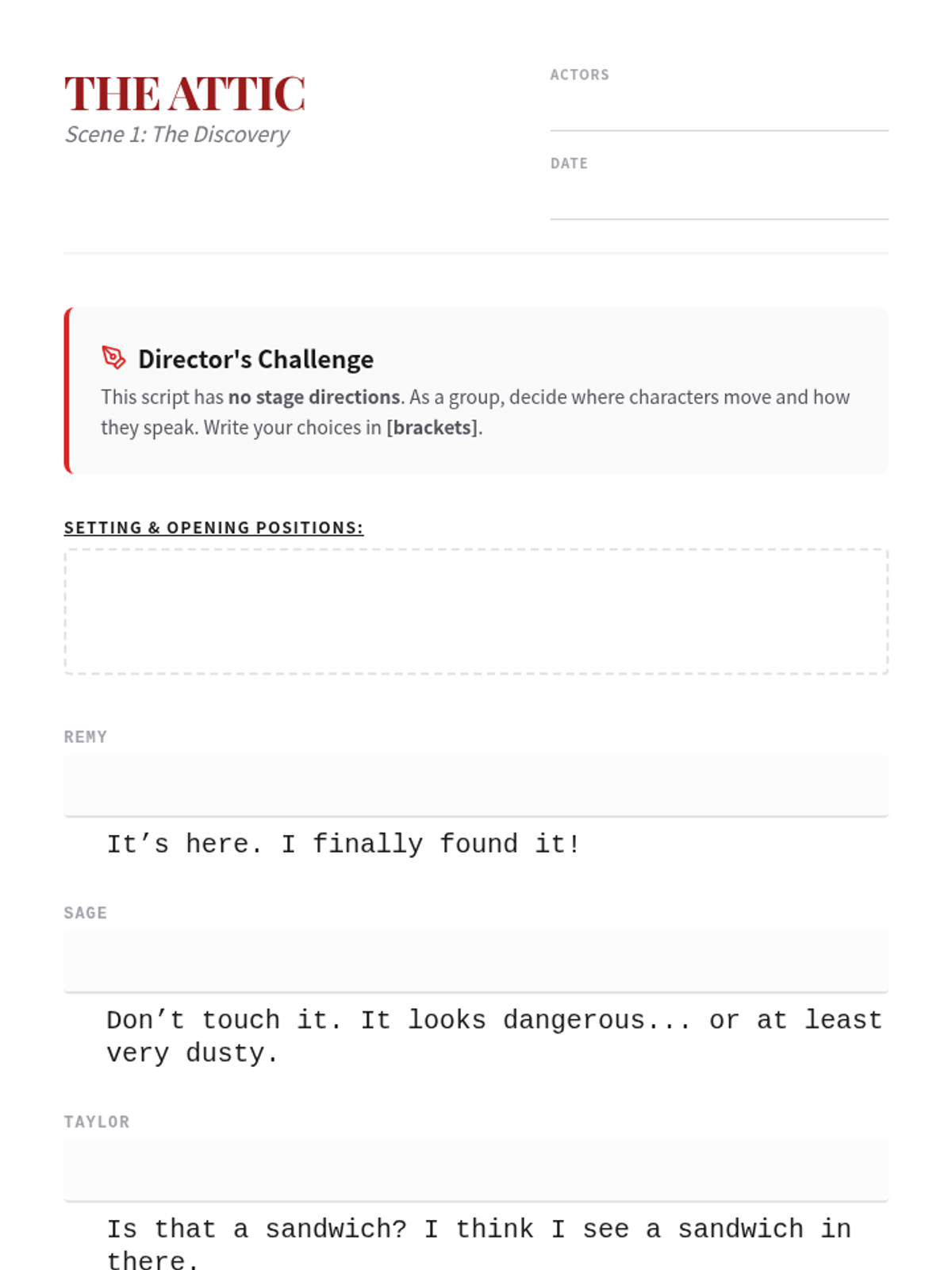
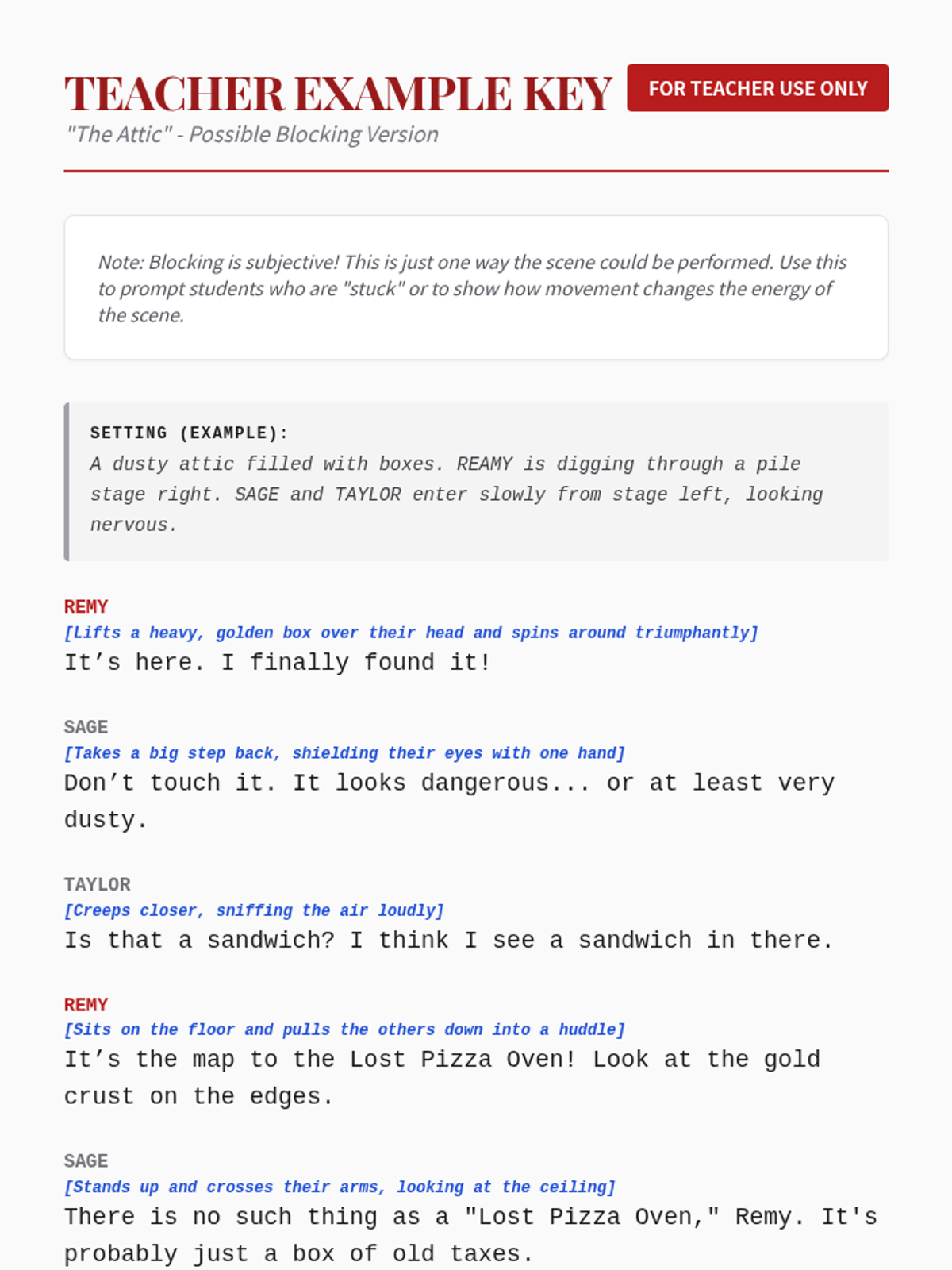
A drama lesson for upper elementary students focused on blocking and physical storytelling, featuring a Khan Academy video and a collaborative script-writing activity.
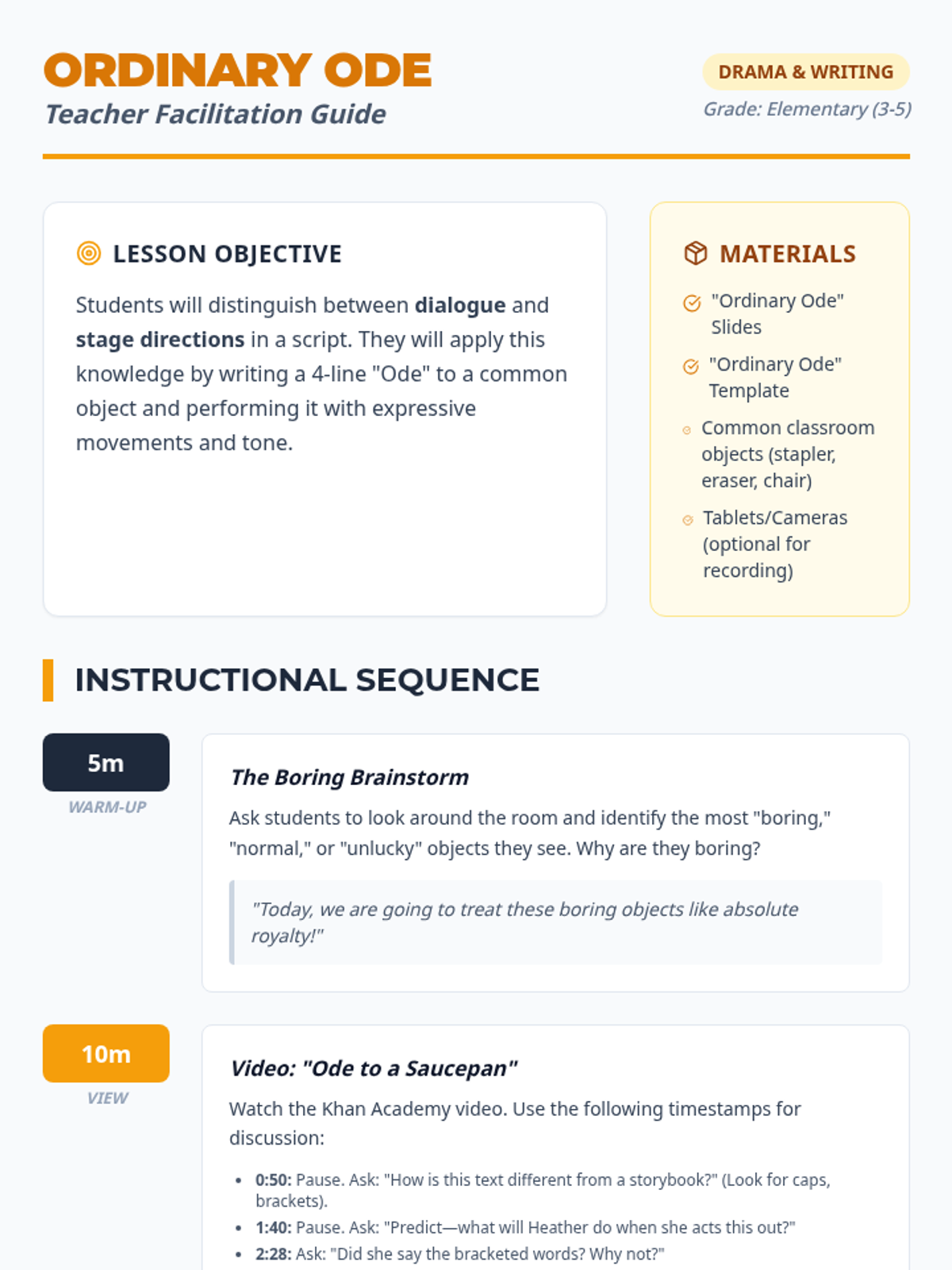
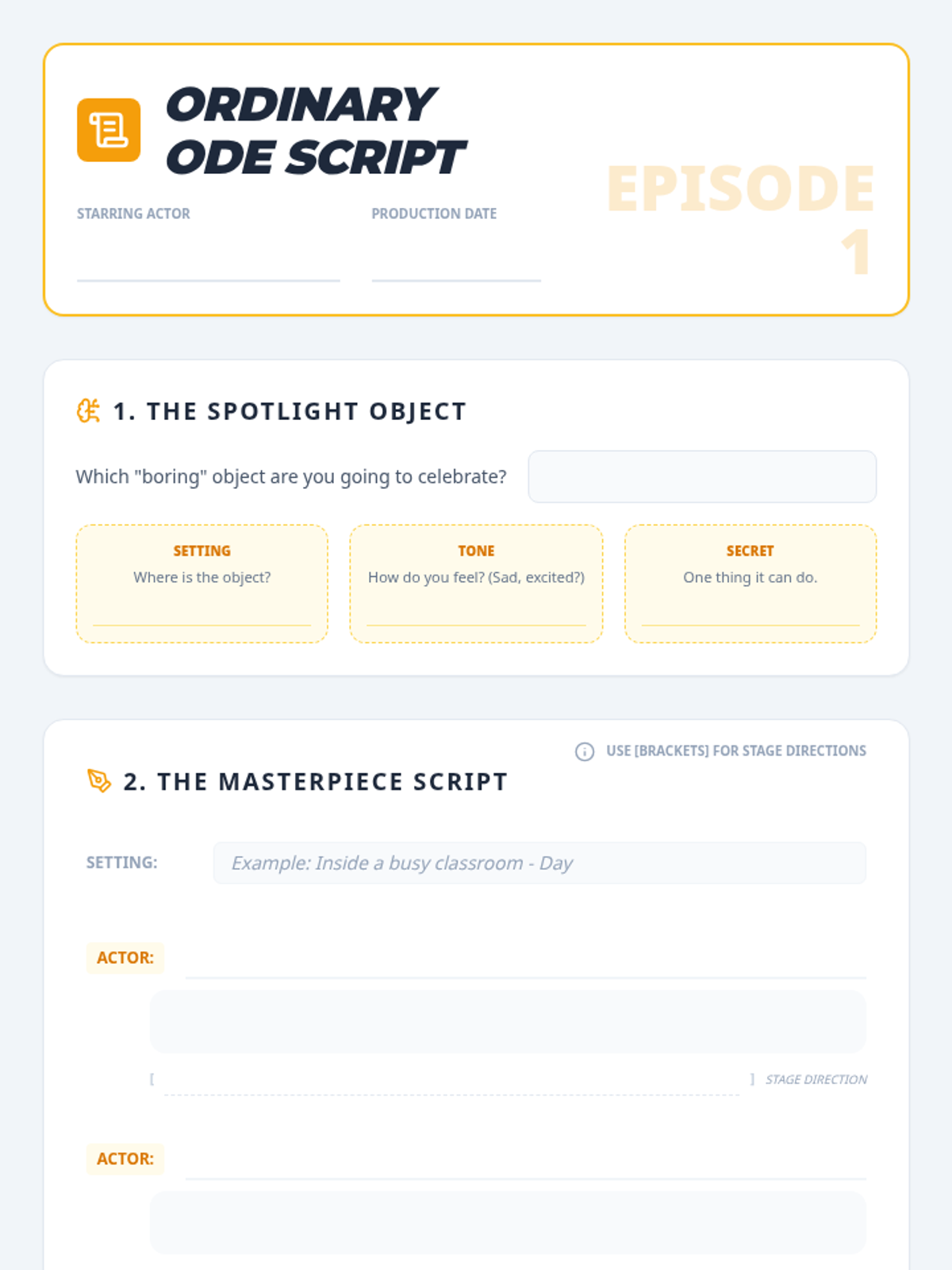
Students will learn to distinguish between dialogue and stage directions by watching a humorous 'Ode to a Saucepan' and then writing and performing their own multimedia 'Ode' to a common classroom object.
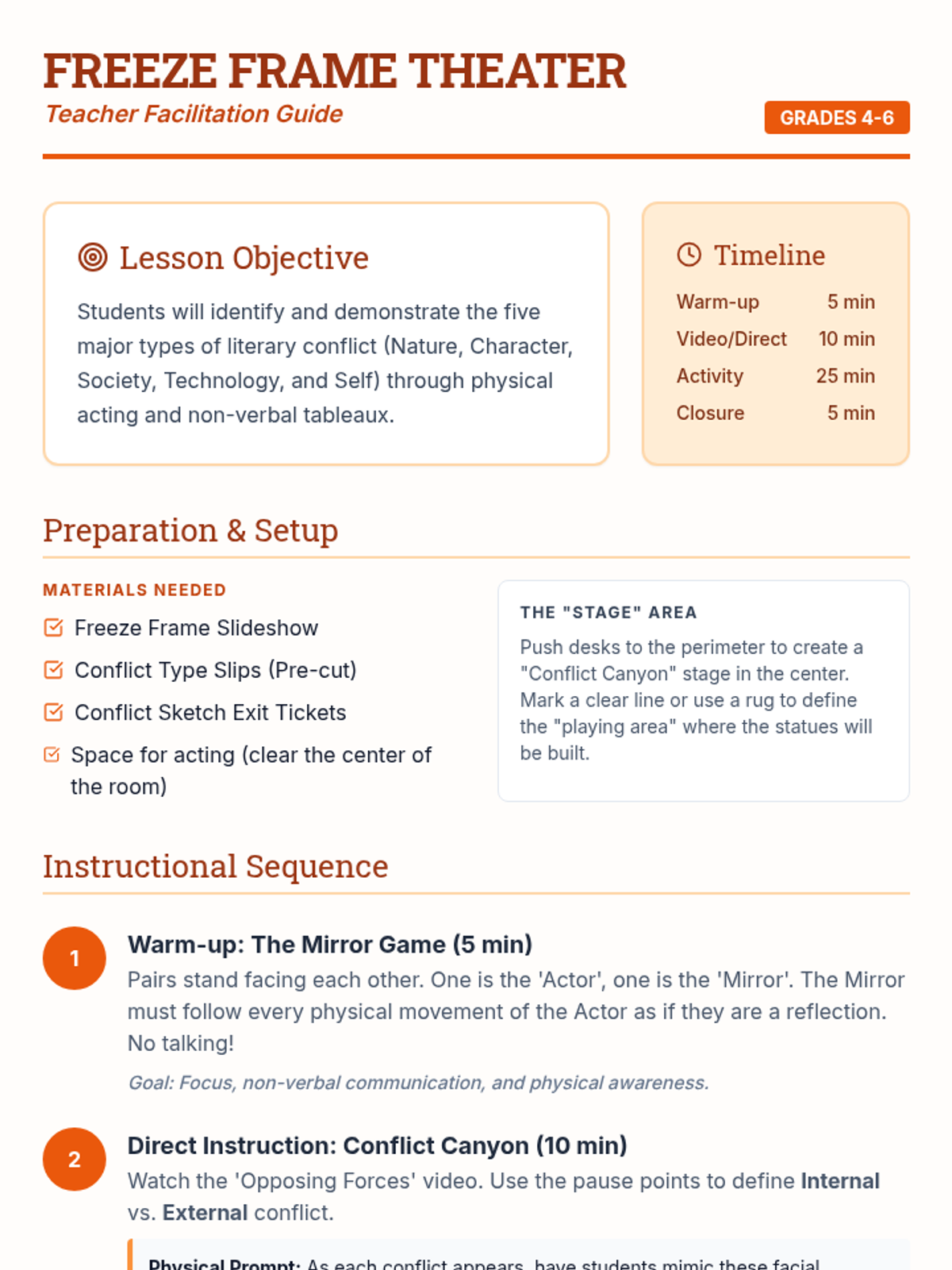
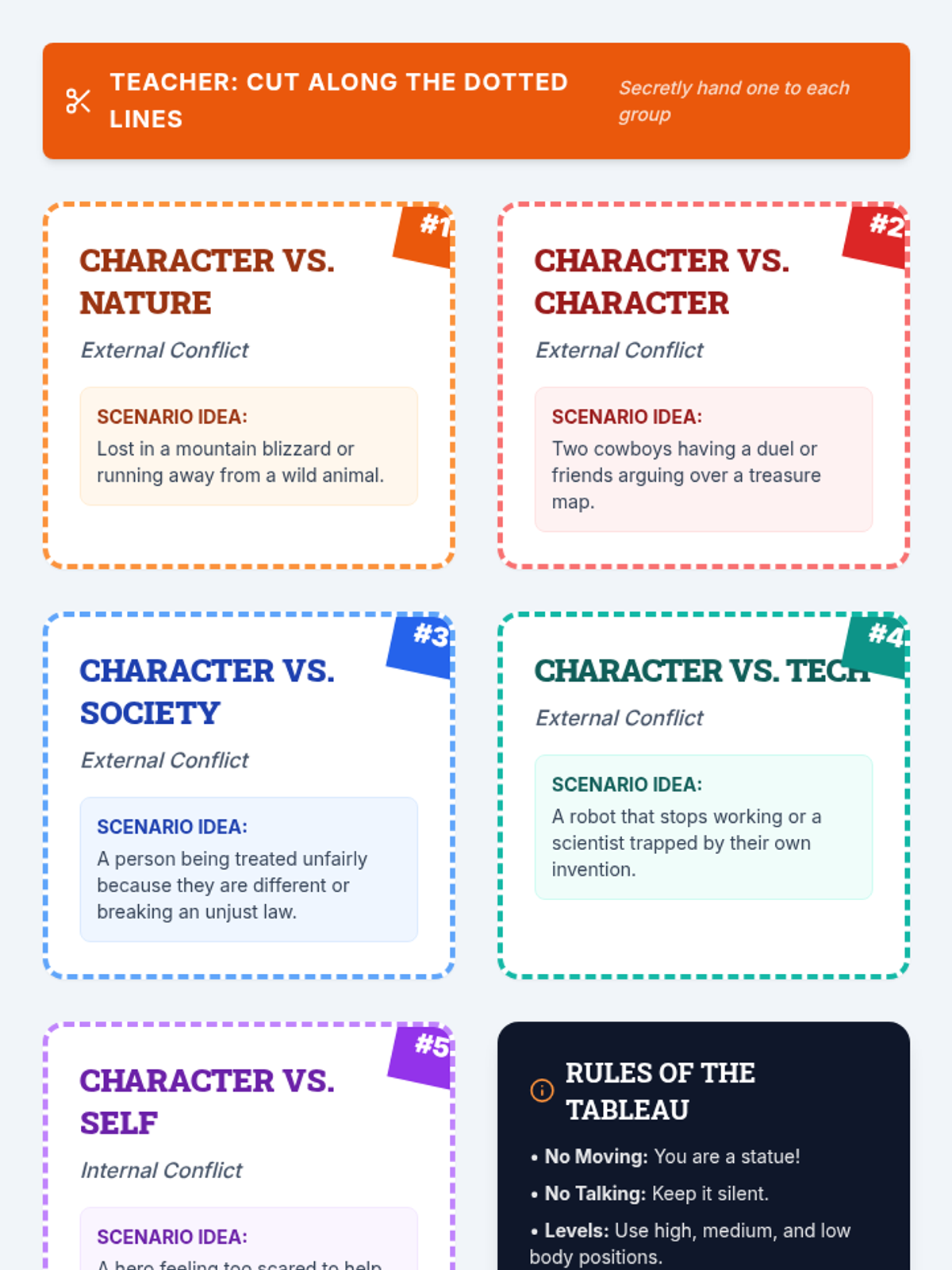
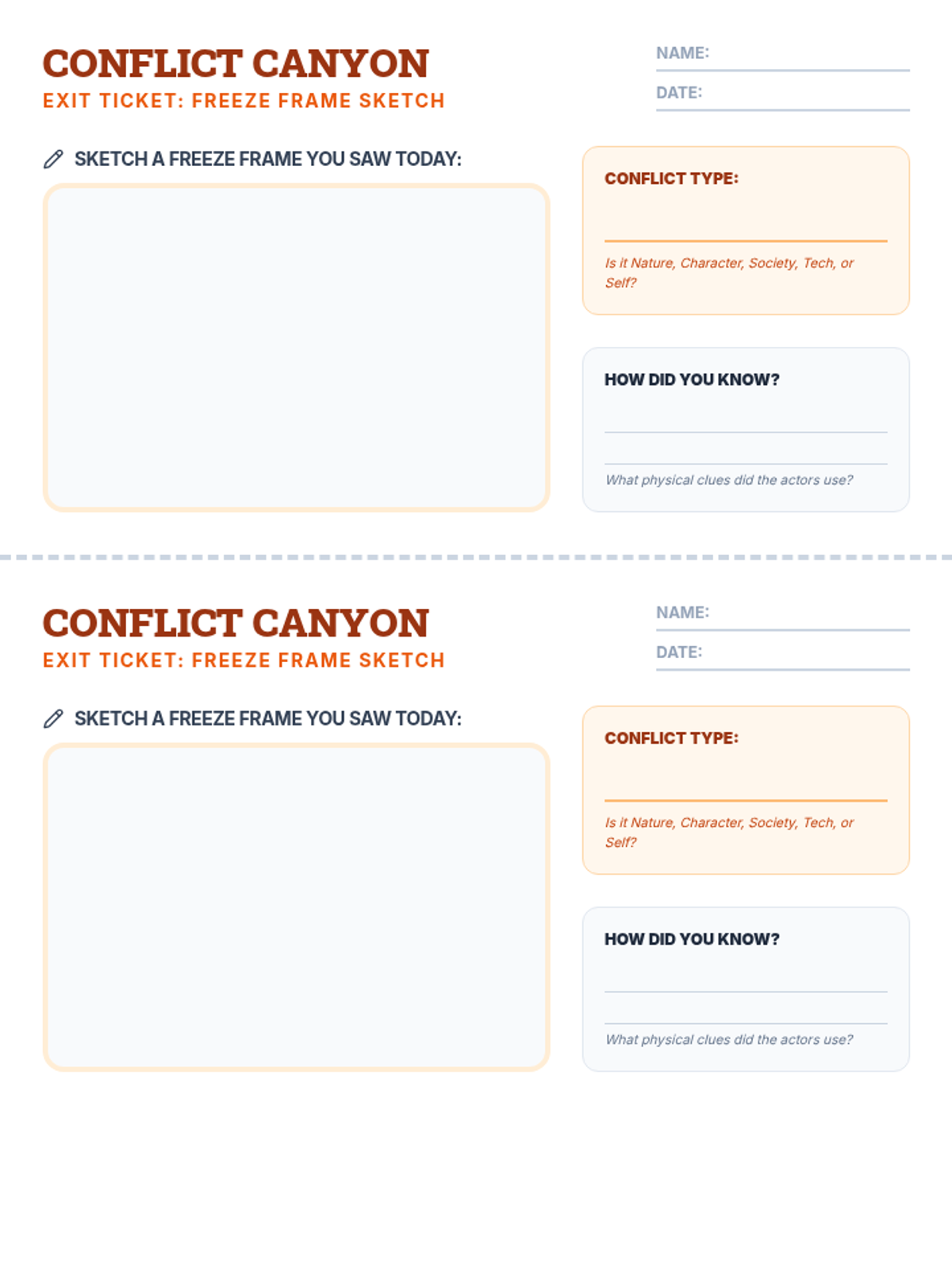
Students explore the five types of literary conflict through physical acting and 'Freeze Frame' tableaux, using a Western-themed video guide to identify Character vs. Nature, Character, Society, Technology, and Self.
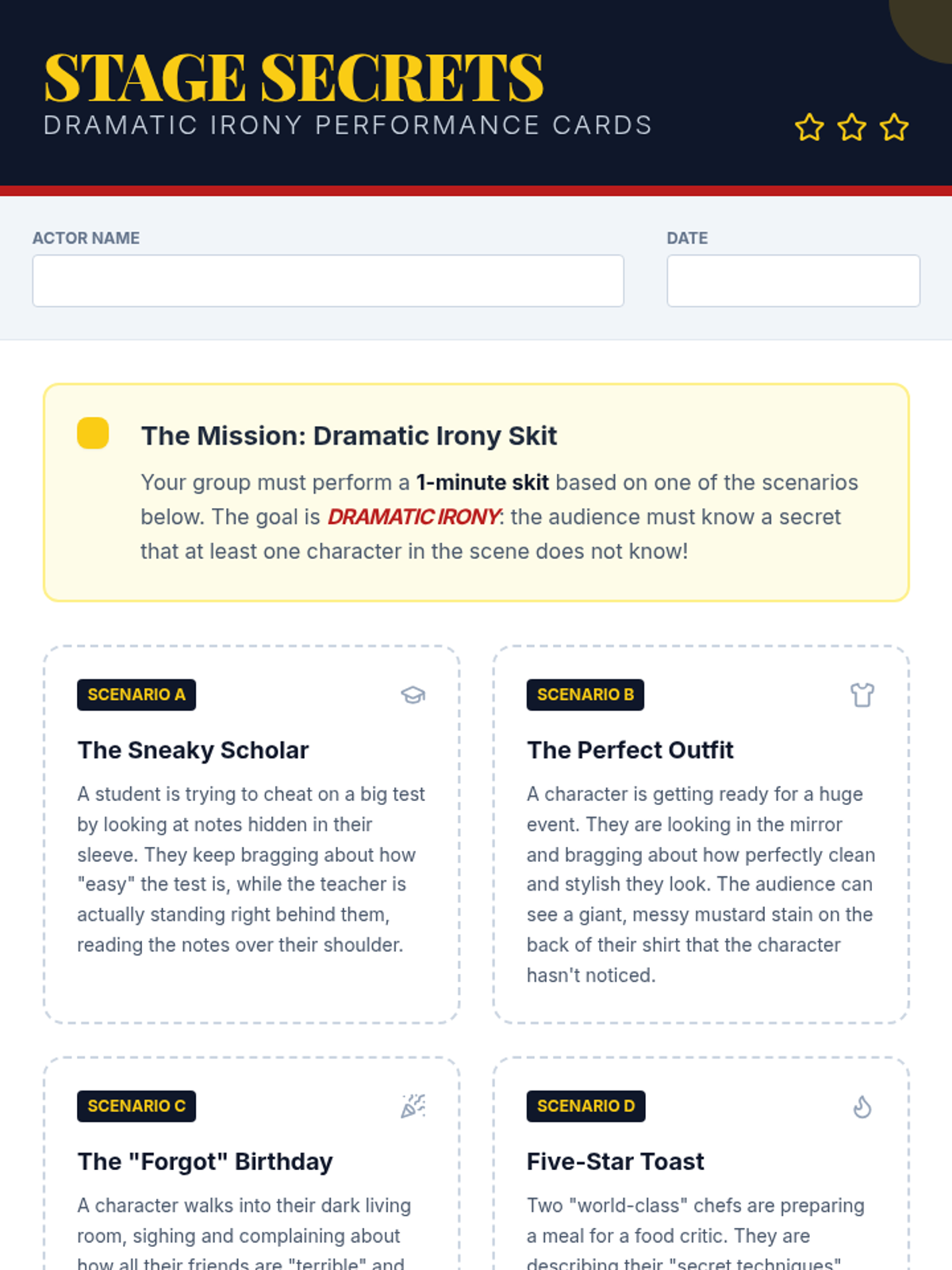
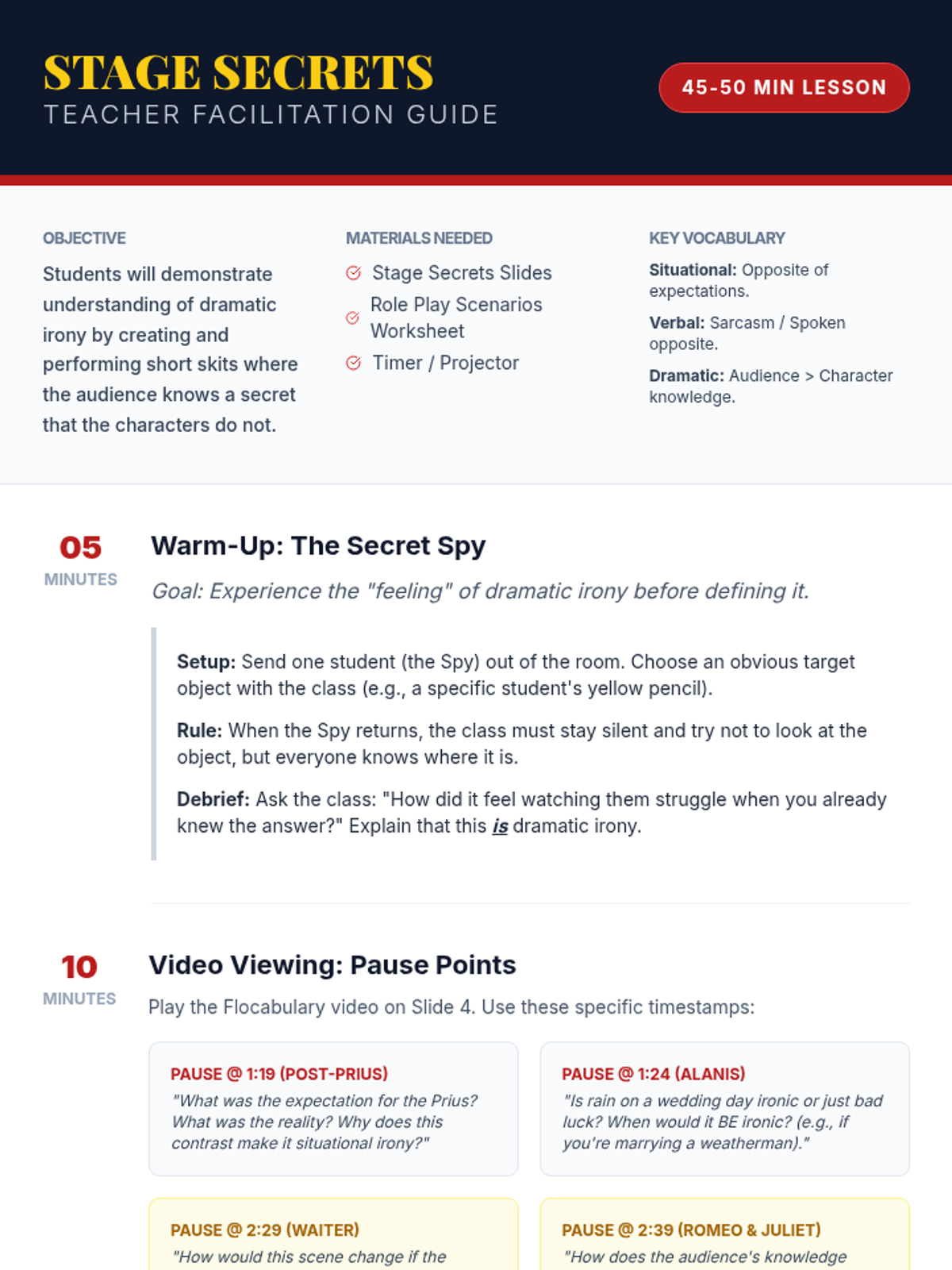
Students explore the concept of dramatic irony through a theater-themed lesson featuring a video analysis, a participatory 'Secret Spy' warm-up, and the creation of original short skits where the audience knows a secret that the characters do not.
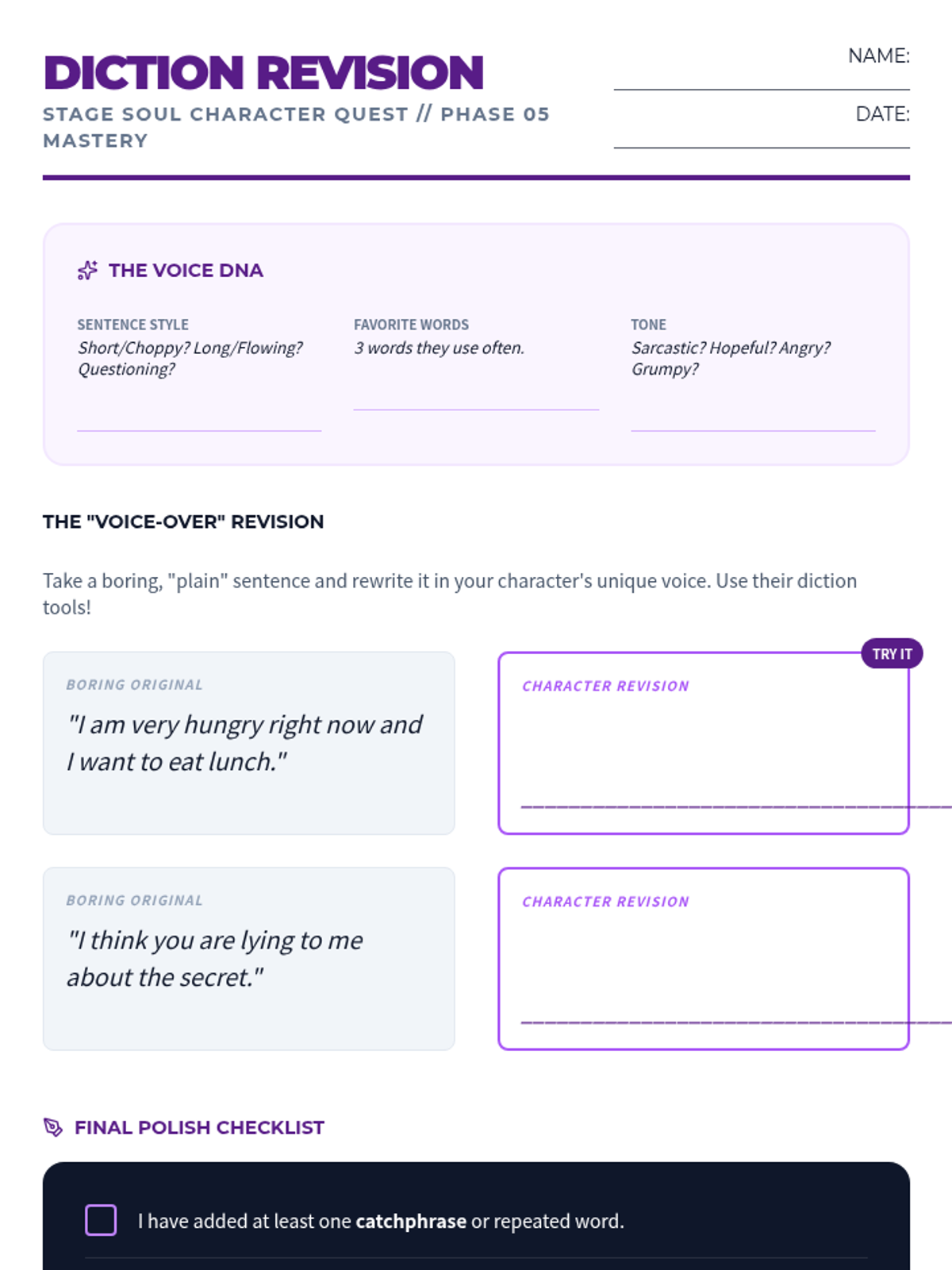
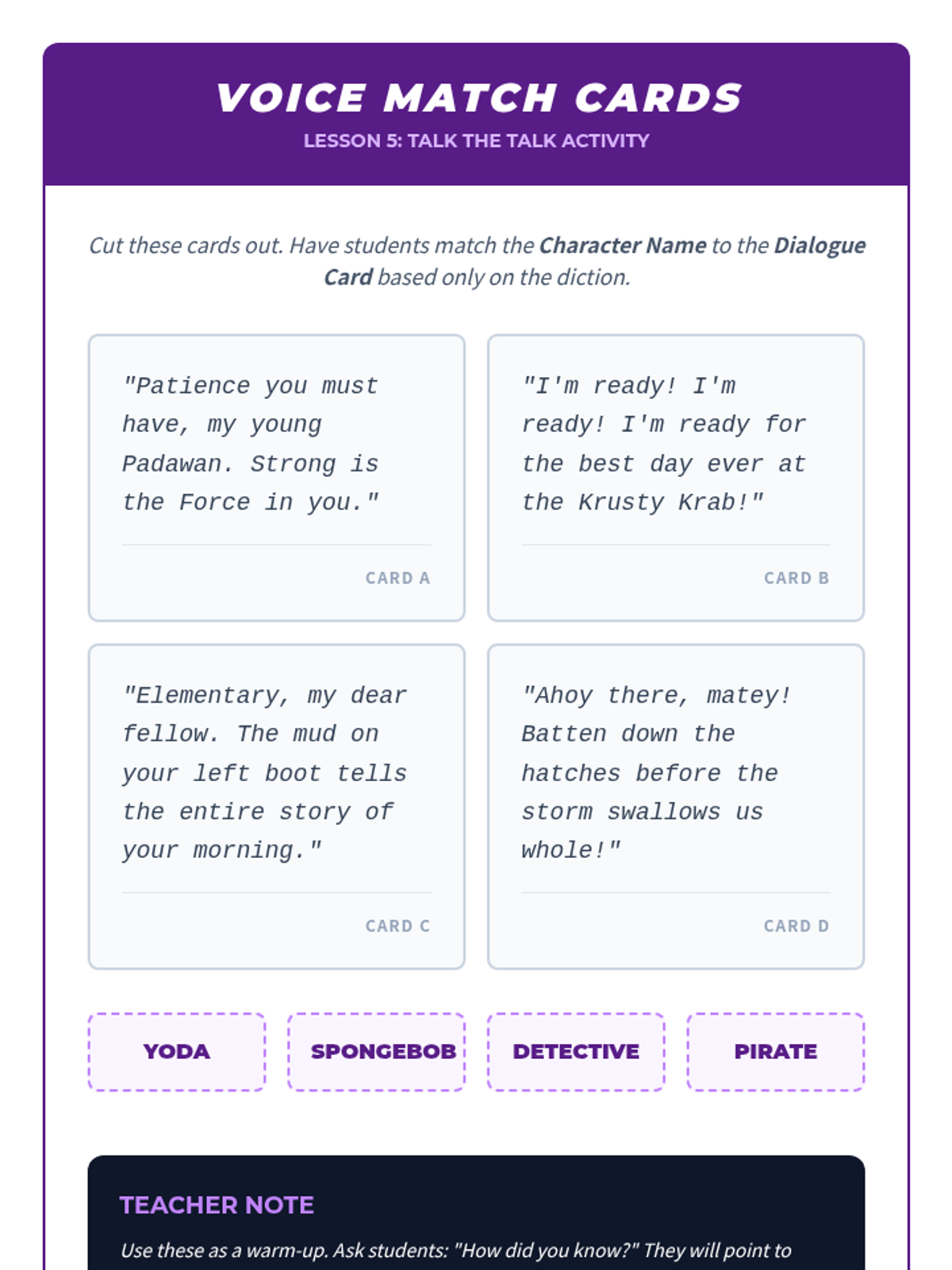
Students refine dialogue through specific word choices and sentence structures to ensure characters are identifiable by speech alone.
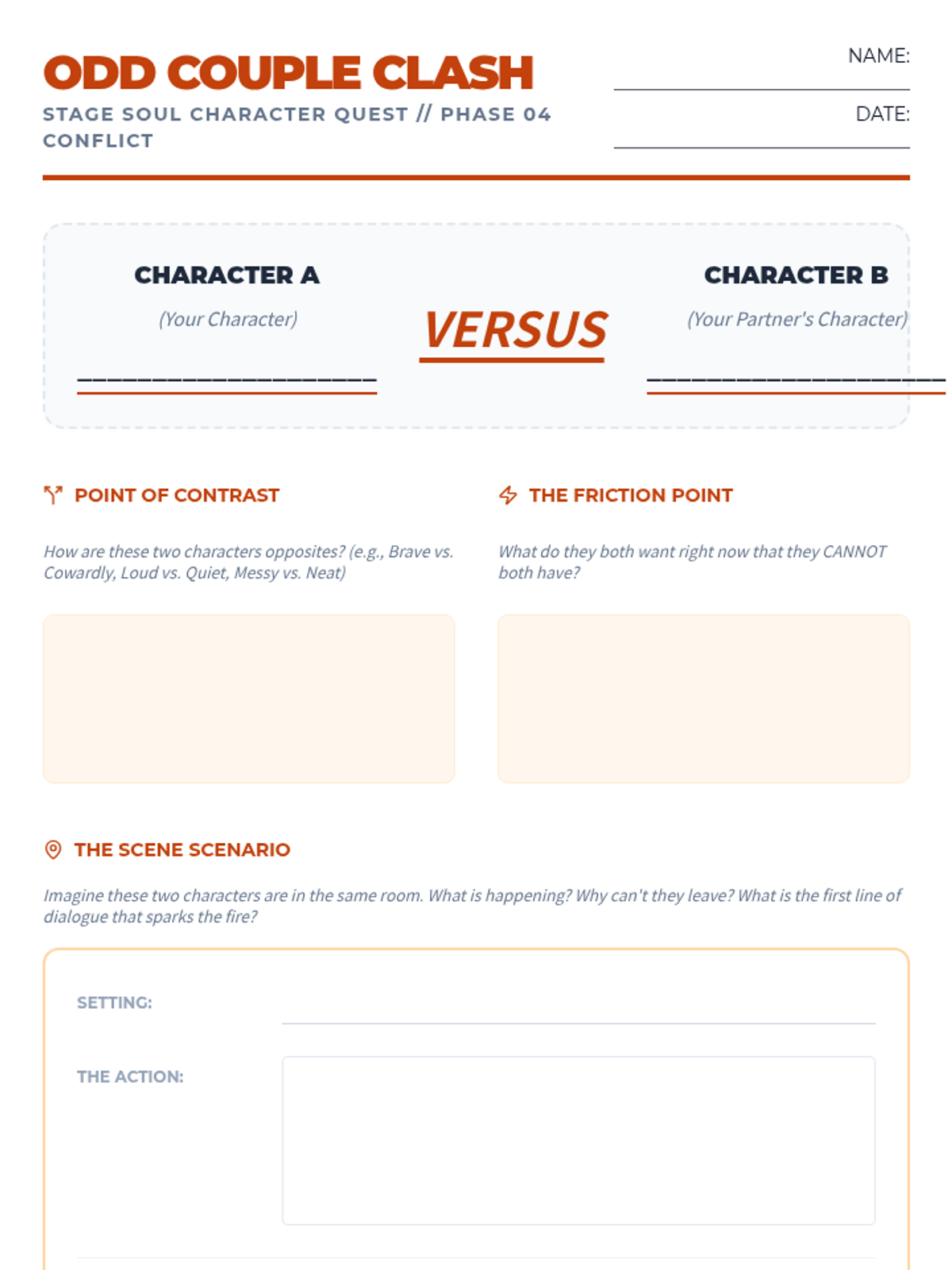
Students pair characters with opposing traits to brainstorm conflict scenarios, analyzing how contrasting personalities create natural drama.
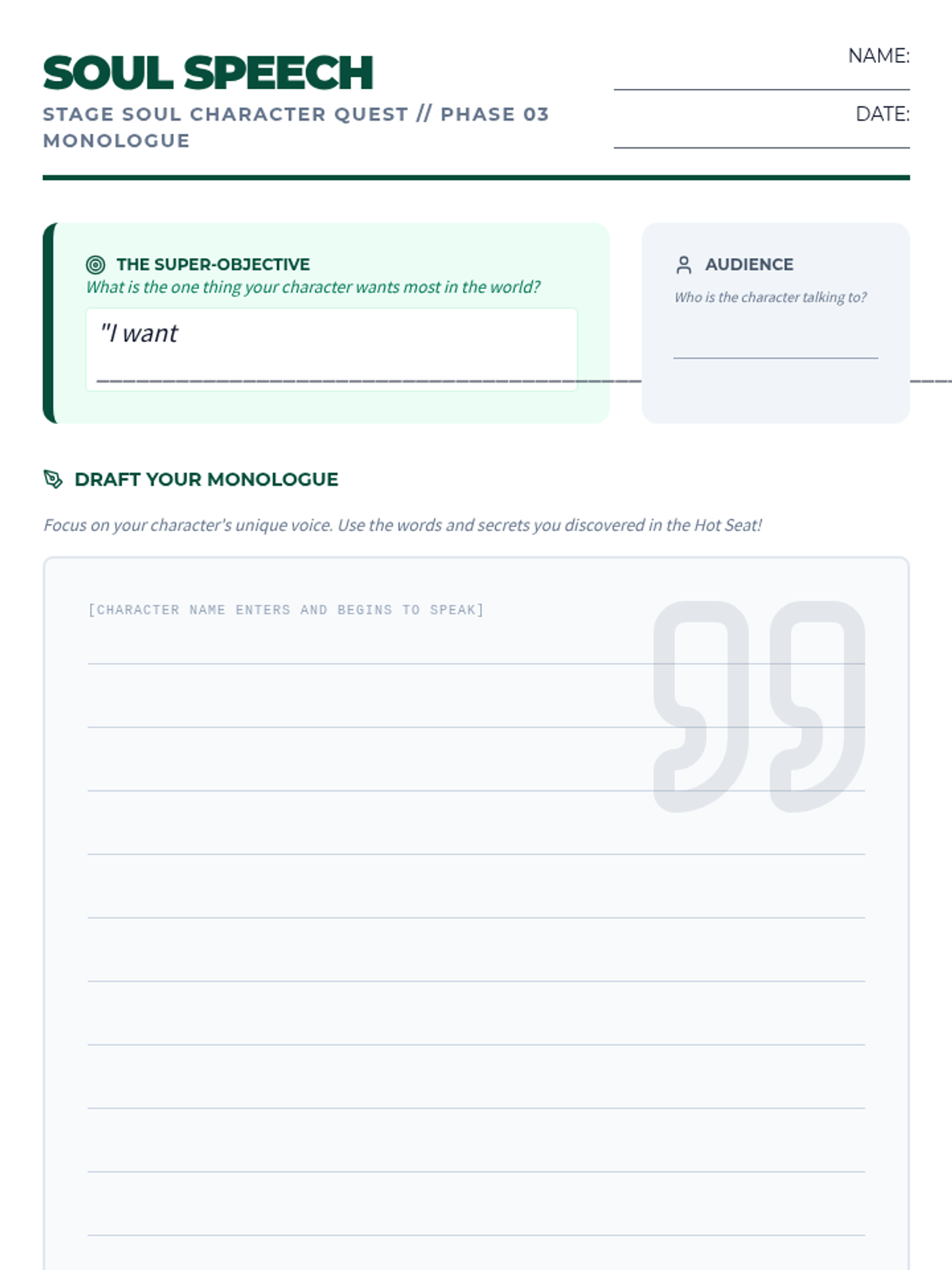
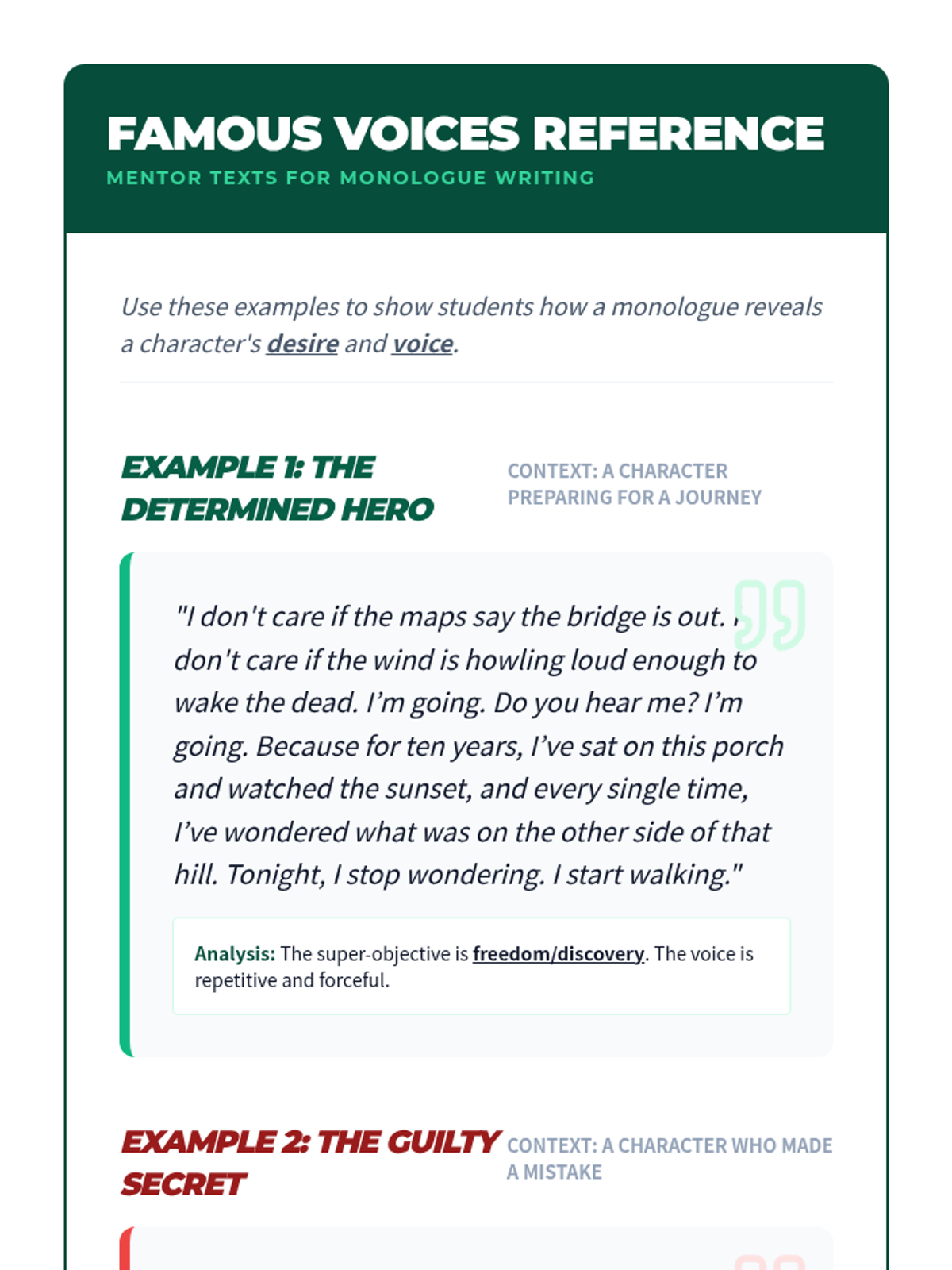
Students write a monologue where their character expresses a strong emotion or 'super-objective', focusing on maintaining a consistent voice.
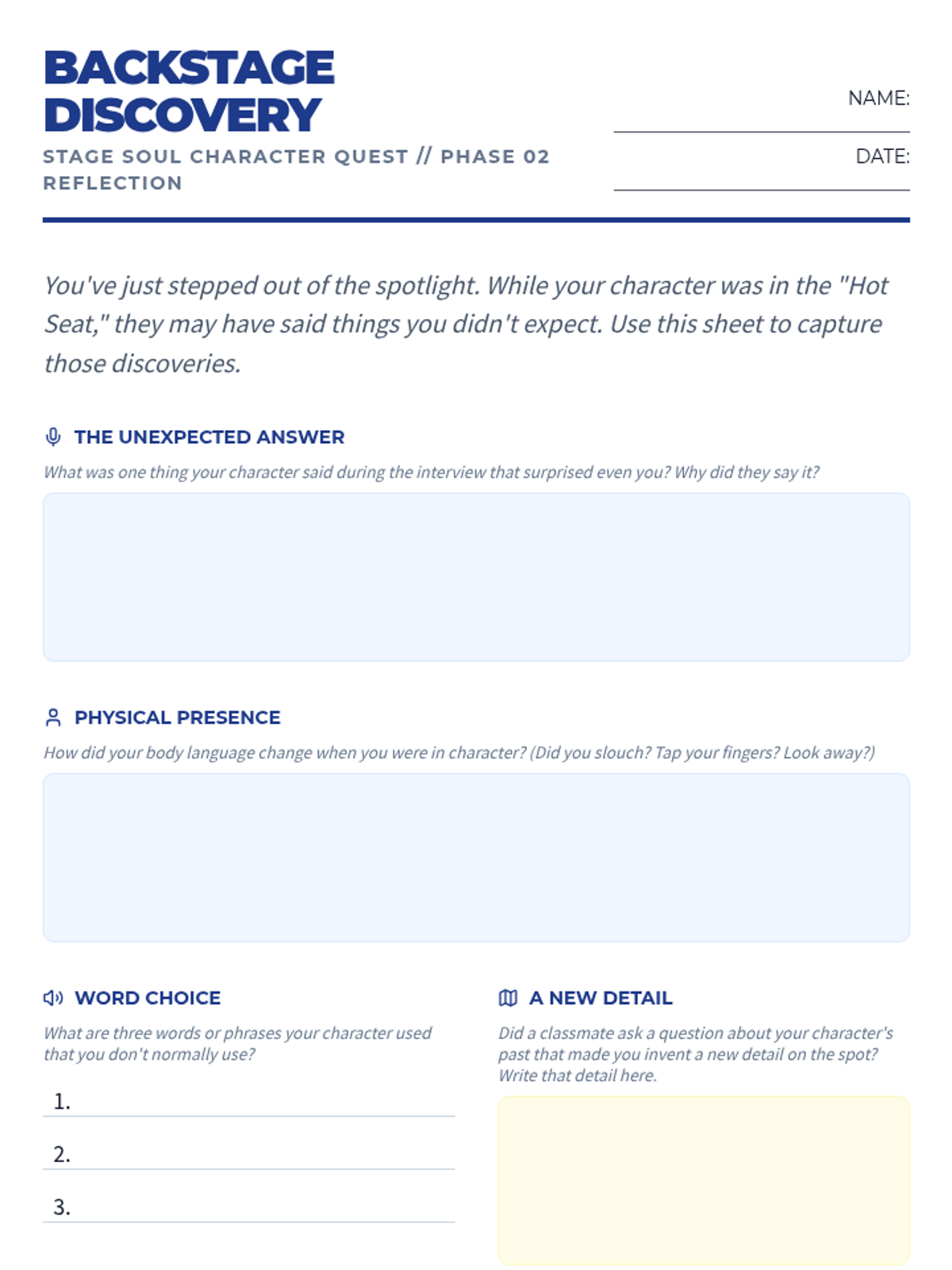
Students adopt the persona of their created character and answer questions from the class in a 'hot seat' activity to discover unique voices and histories.
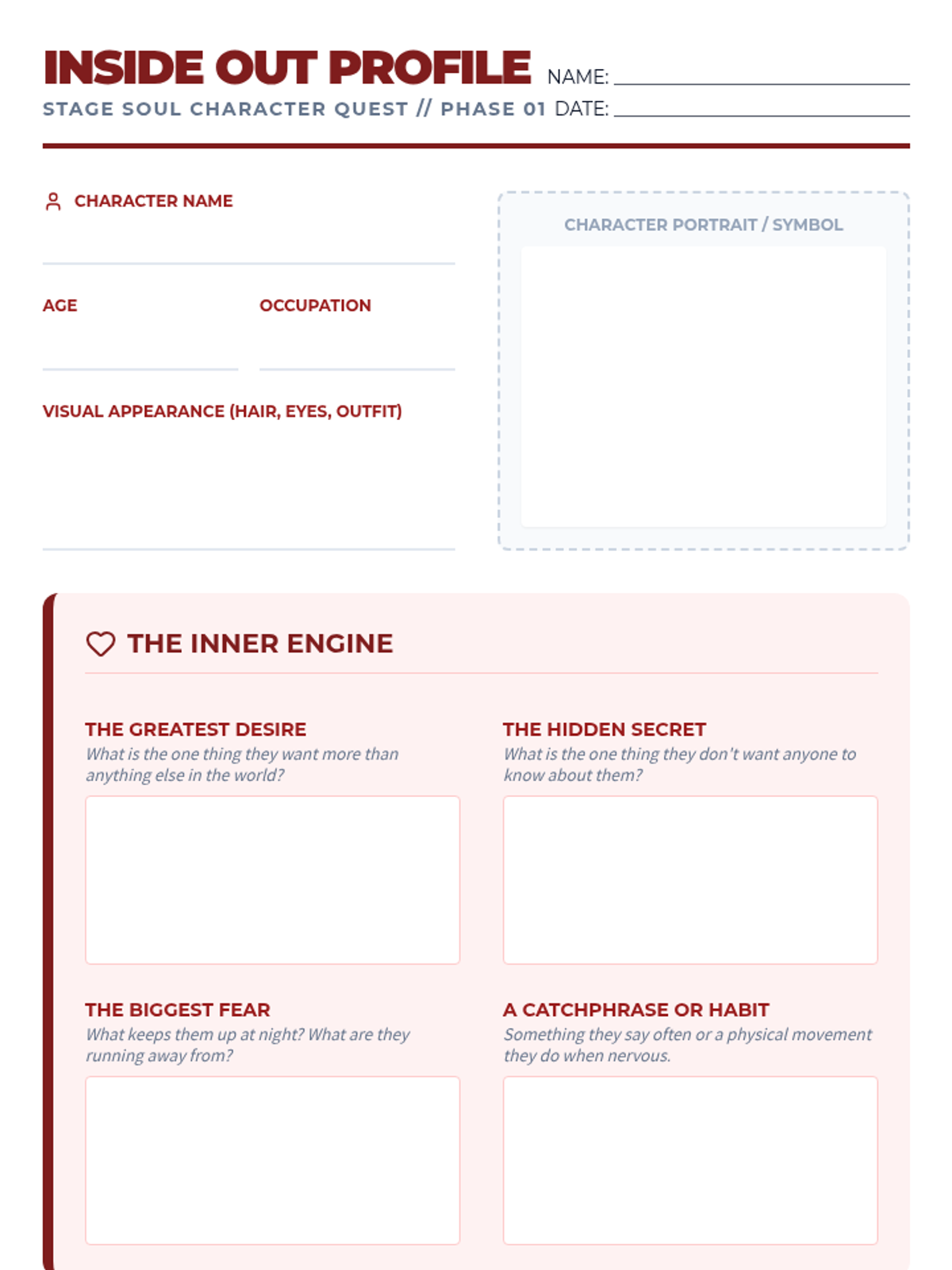
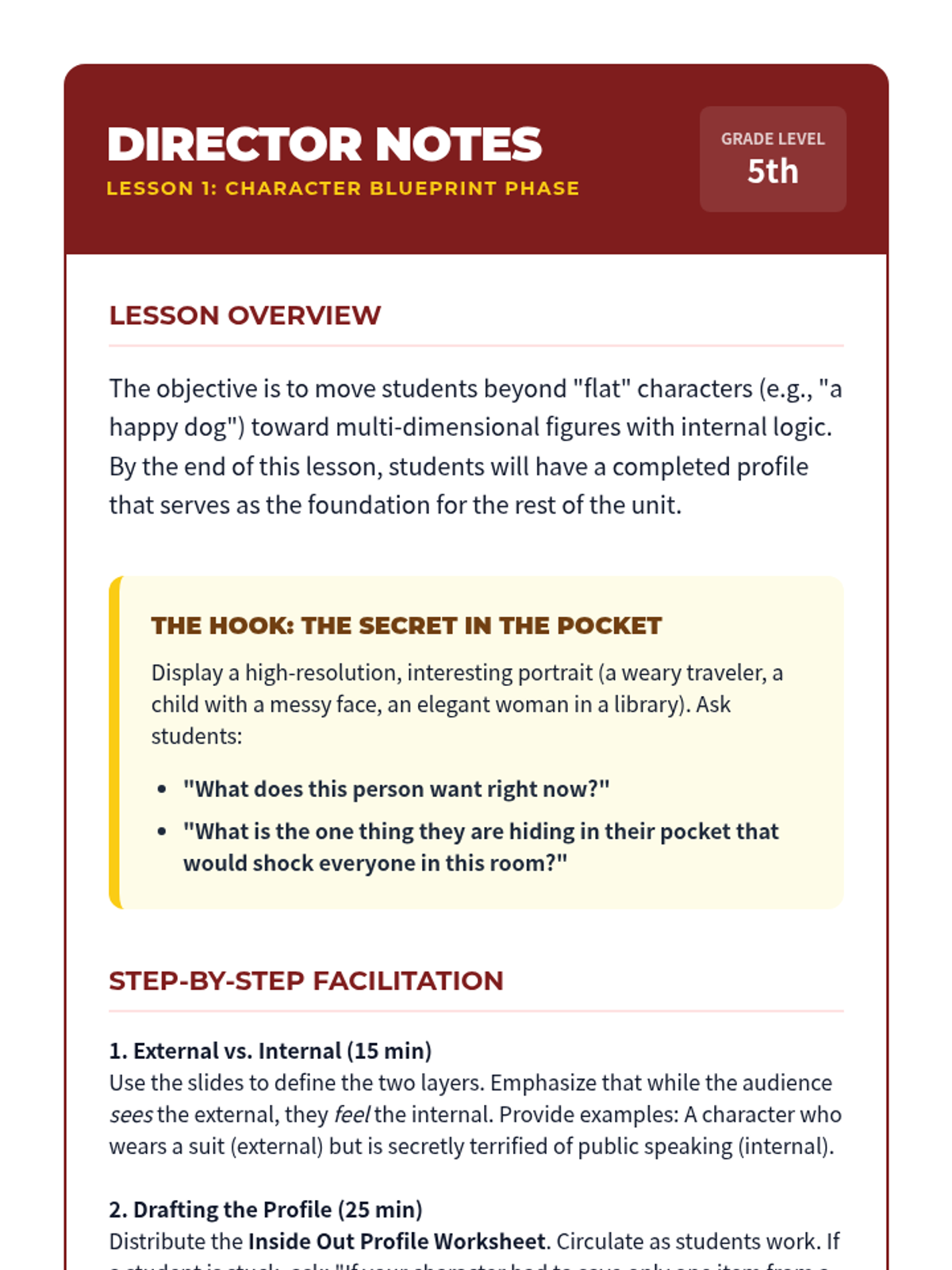
Students create detailed character sheets that go beyond appearance to include fears, desires, and secrets. They use visual organizers to map out internal vs. external traits.
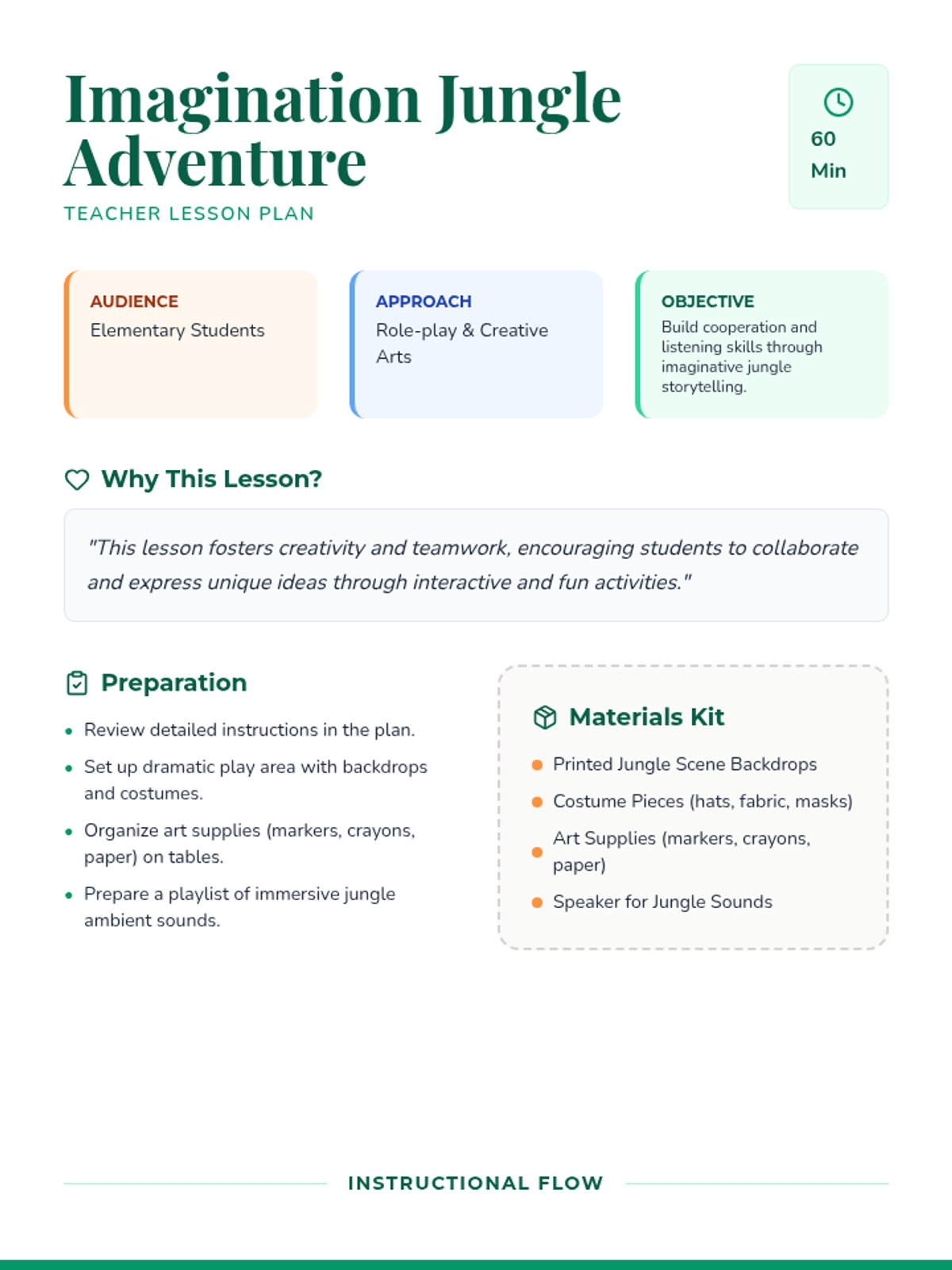
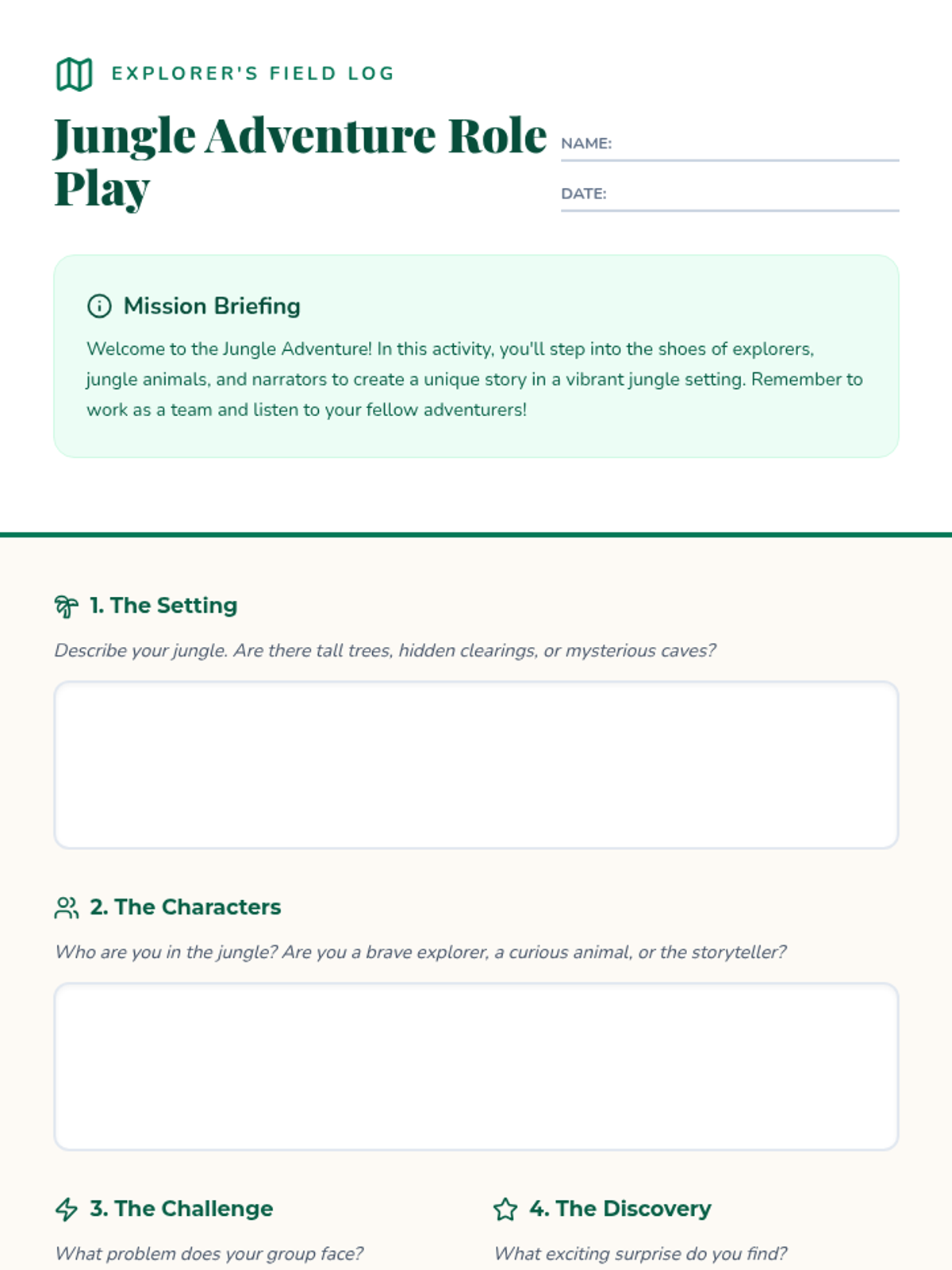
An interactive elementary lesson where students explore a vibrant jungle through dramatic play and creative arts, fostering teamwork and imaginative storytelling.
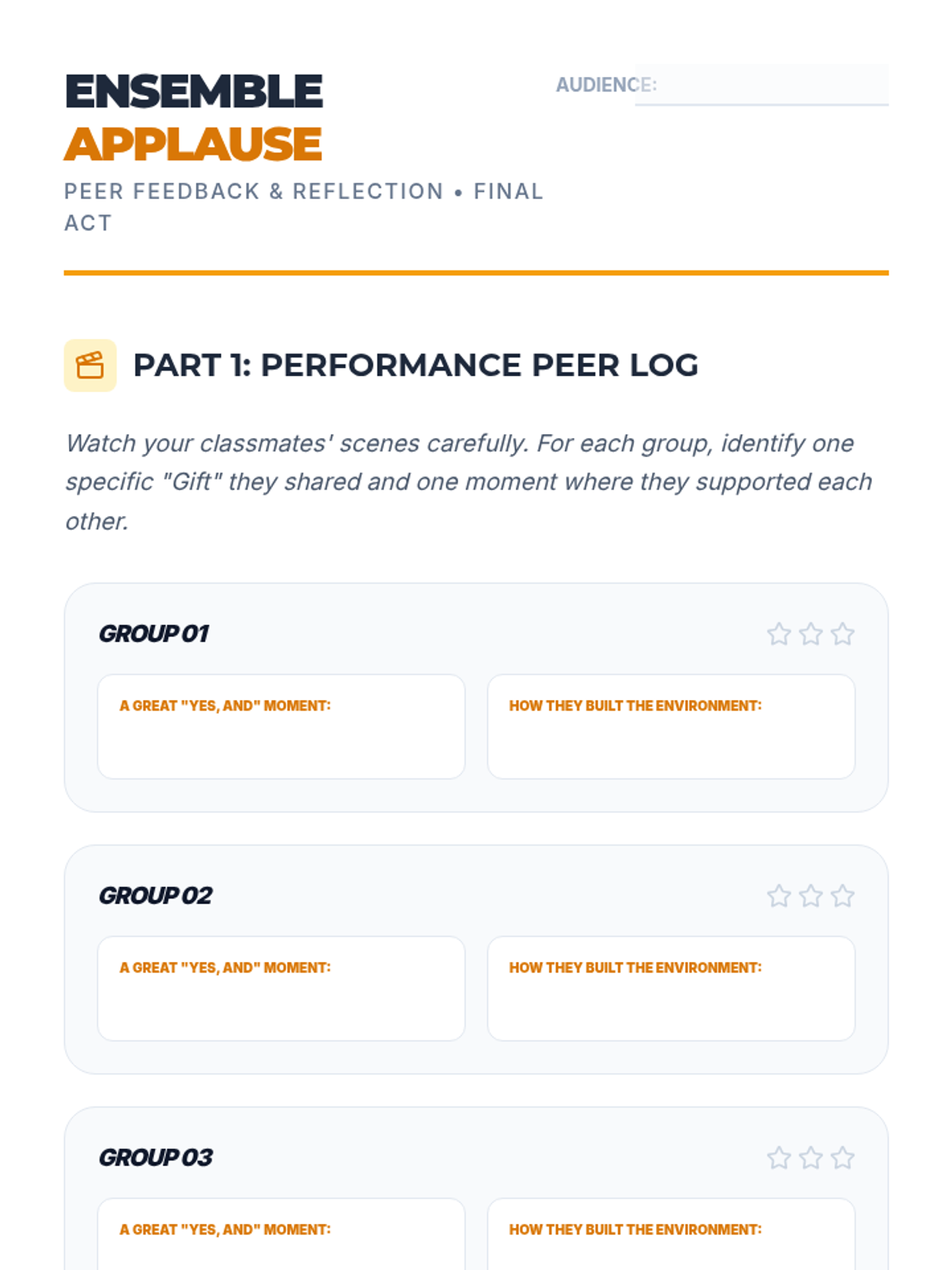
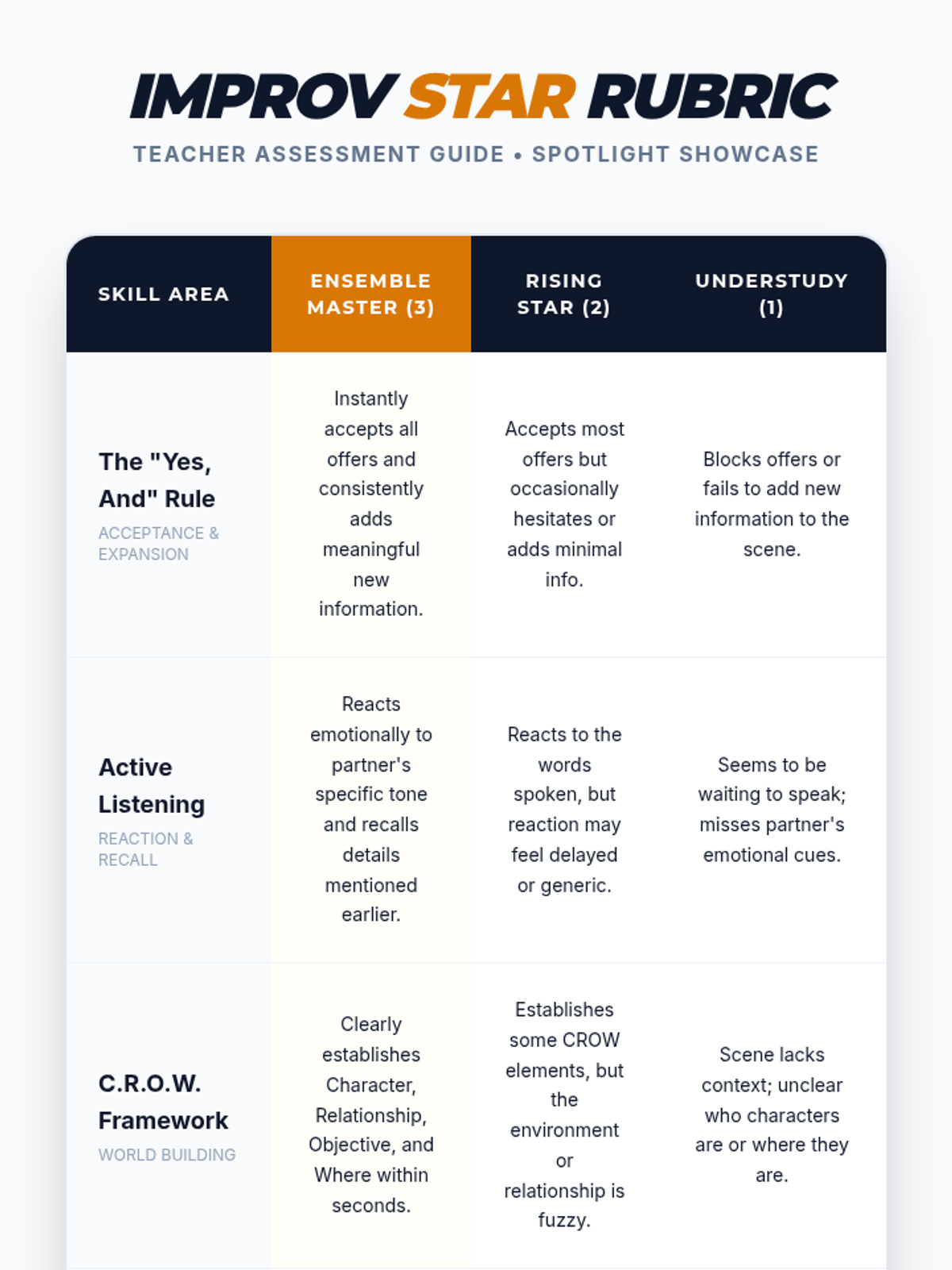
Students work in small groups to perform short improvised scenes based on audience suggestions. The focus is on ensemble support—making your partner look good—rather than individual jokes.
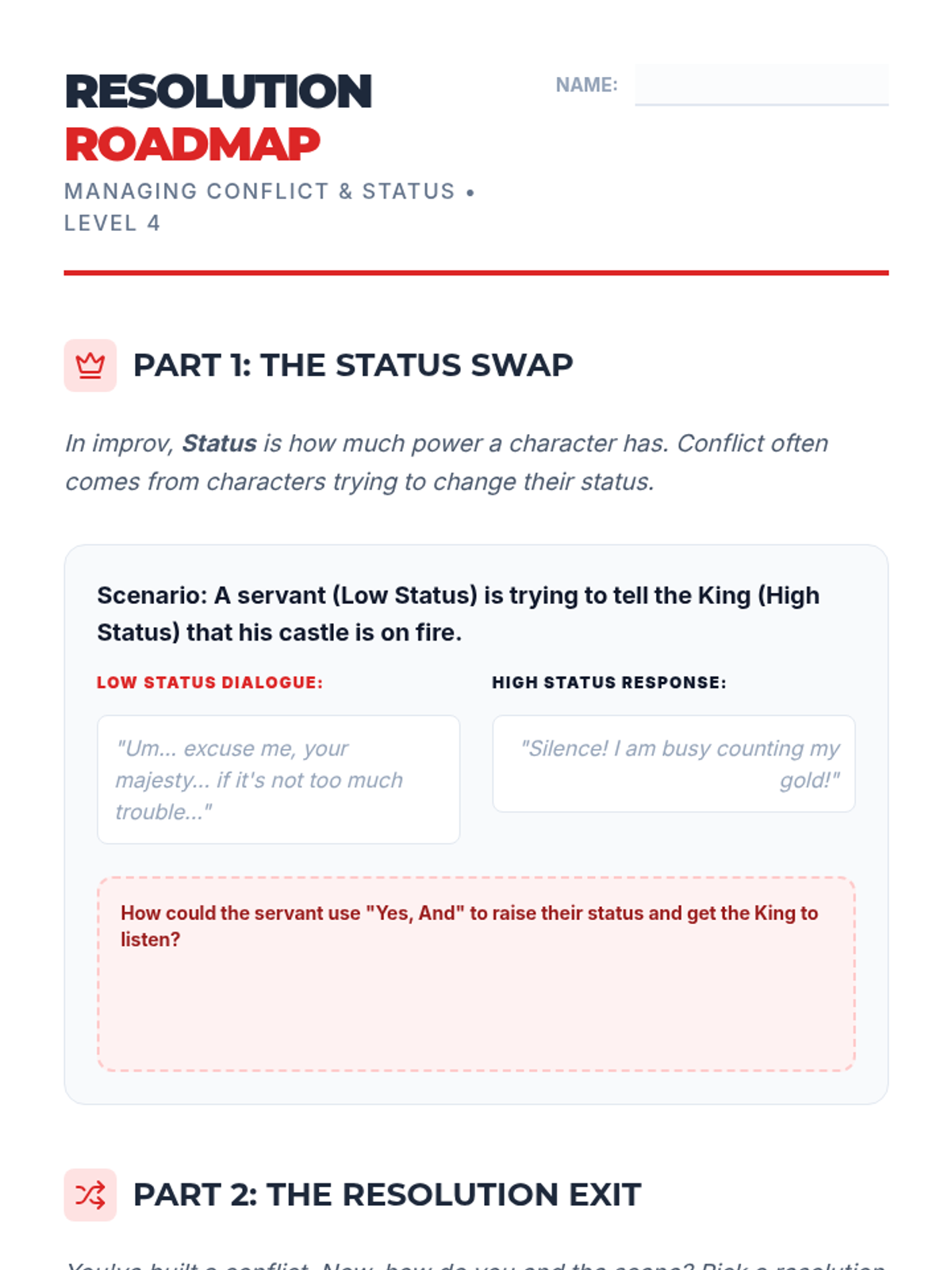
Students explore how to introduce and resolve conflict in improvised scenes without it turning into a chaotic argument. They learn to negotiate status and find satisfying endings to narrative arcs.
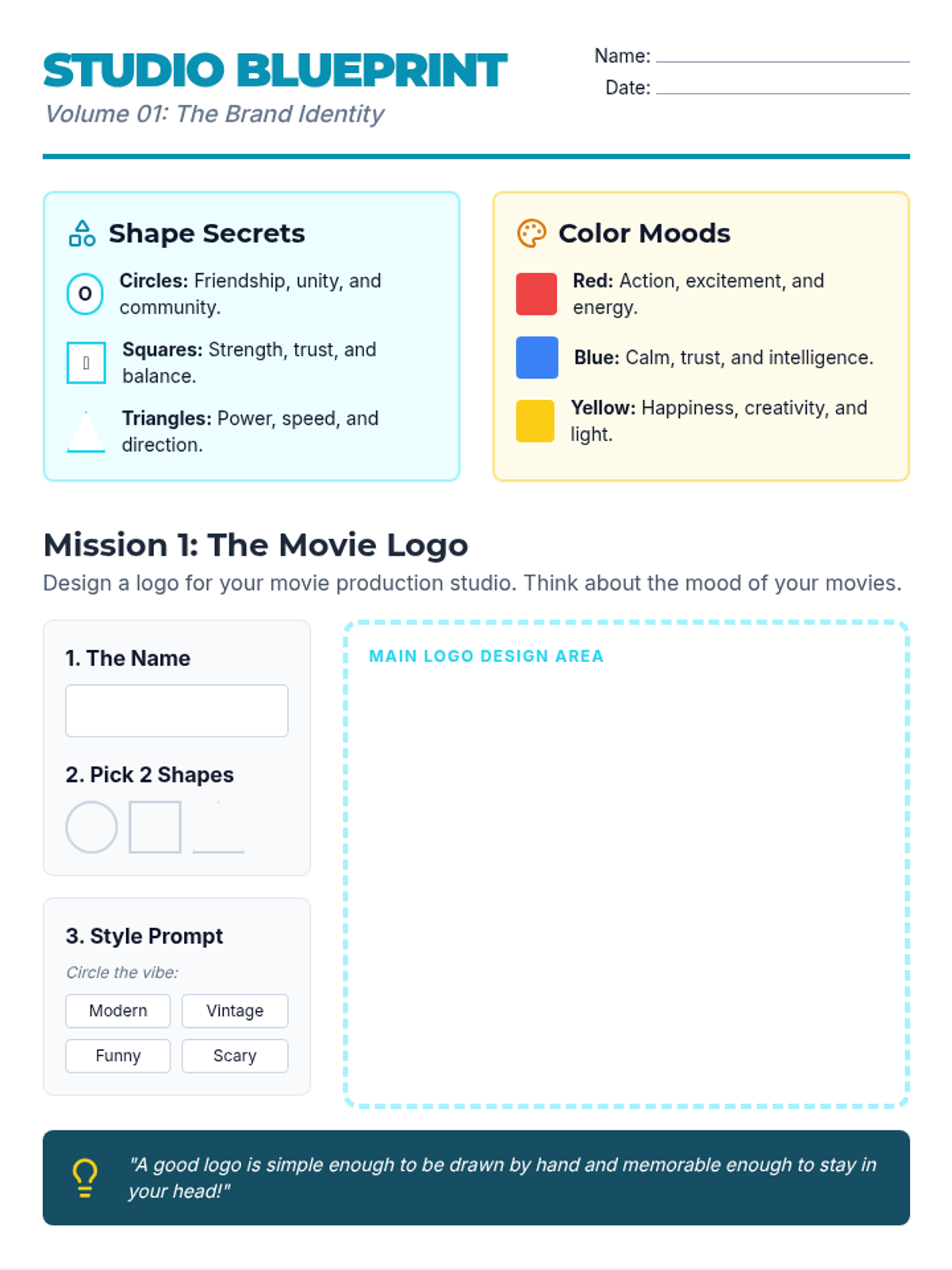
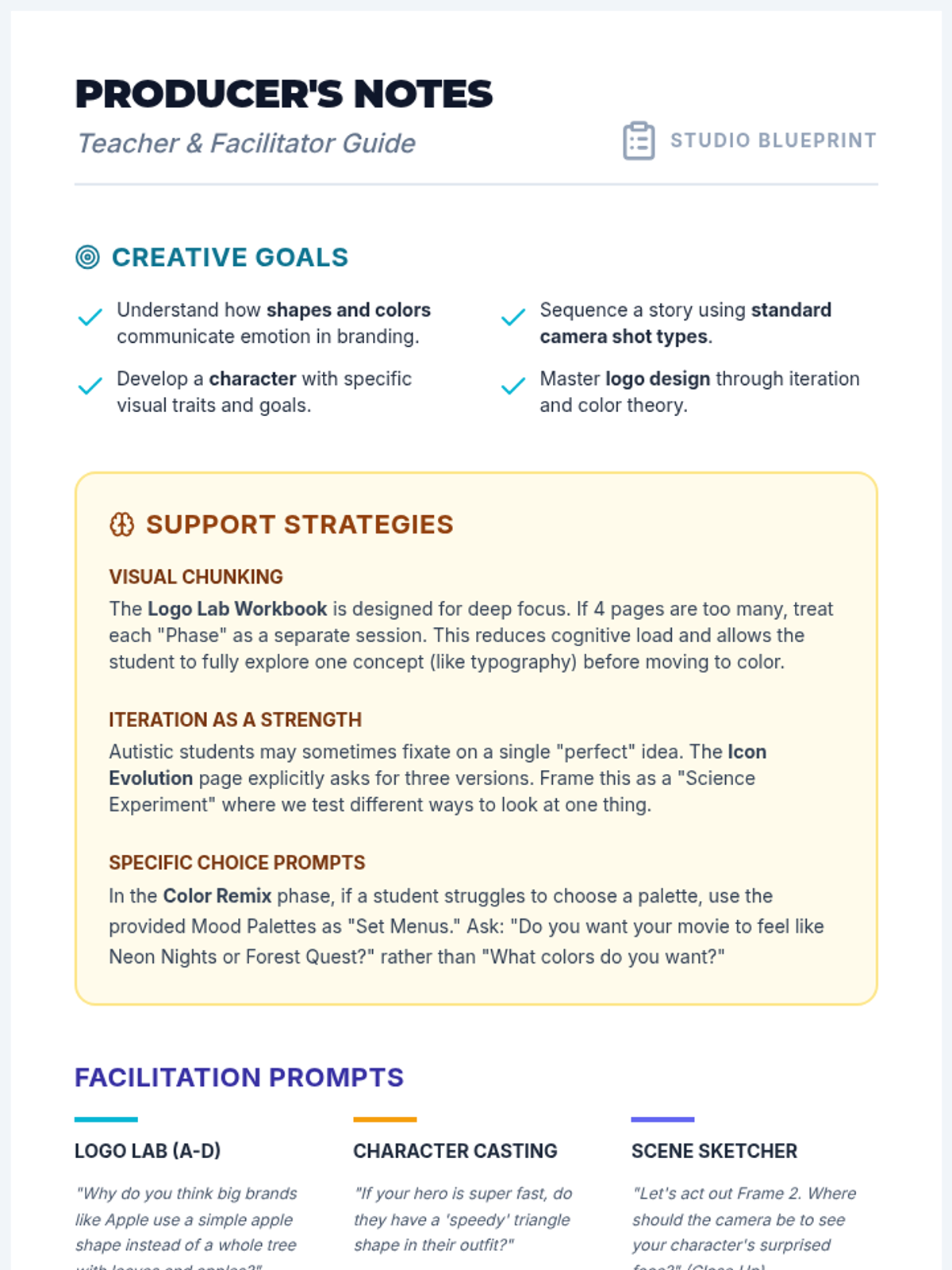
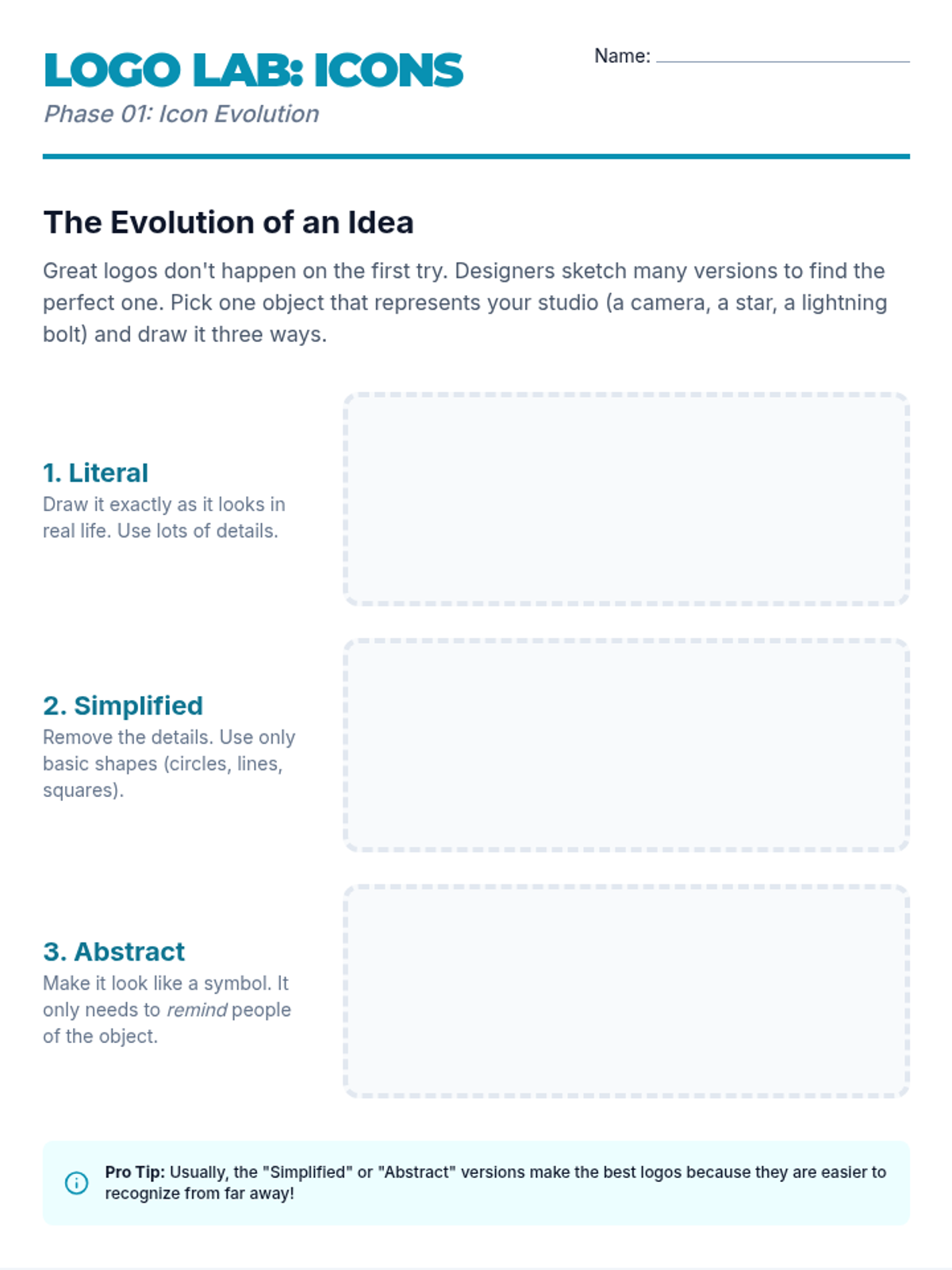
A creative, structured guide for students to explore the intersection of graphic design and filmmaking, focusing on branding, character design, and visual storytelling.
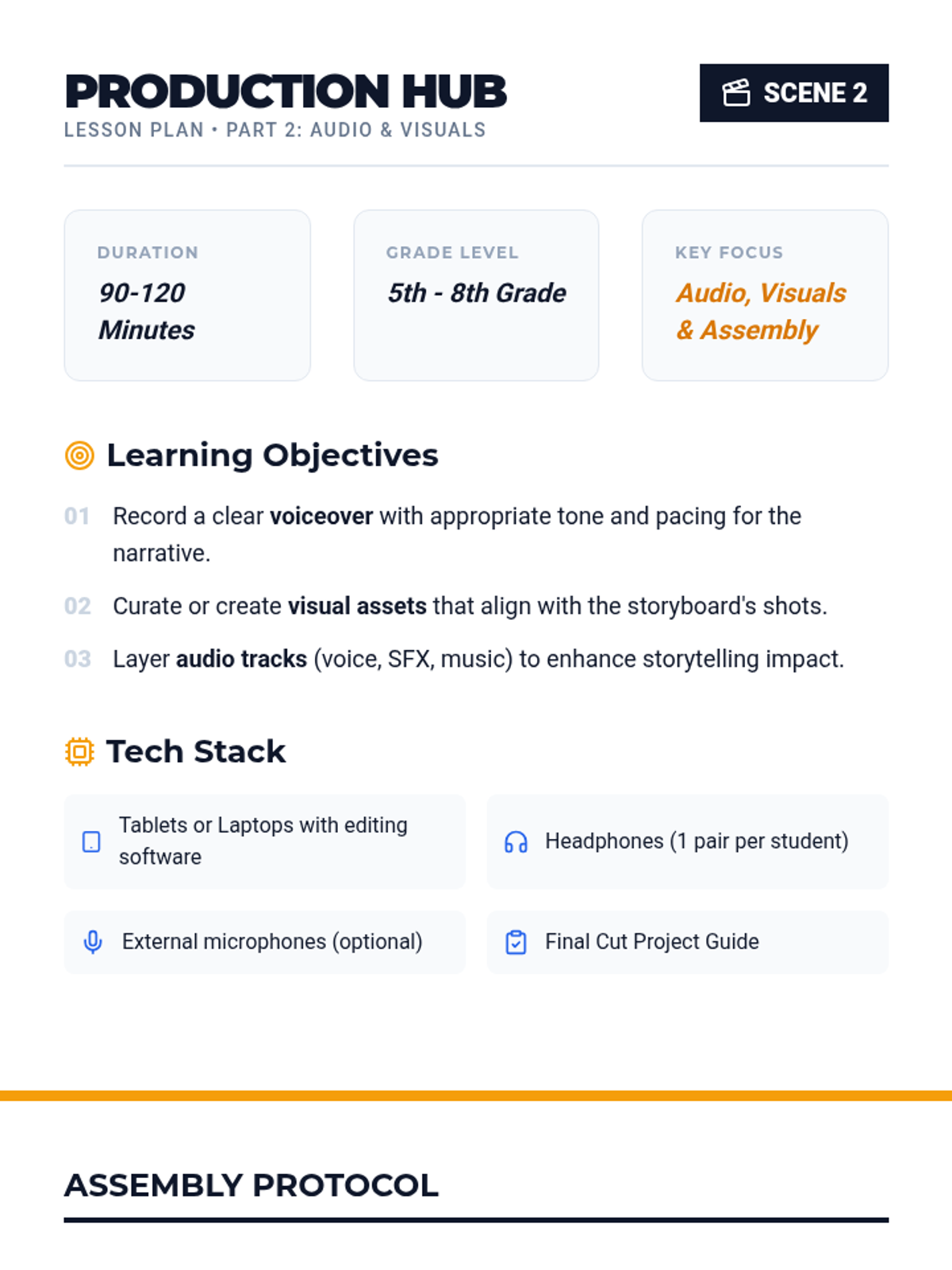
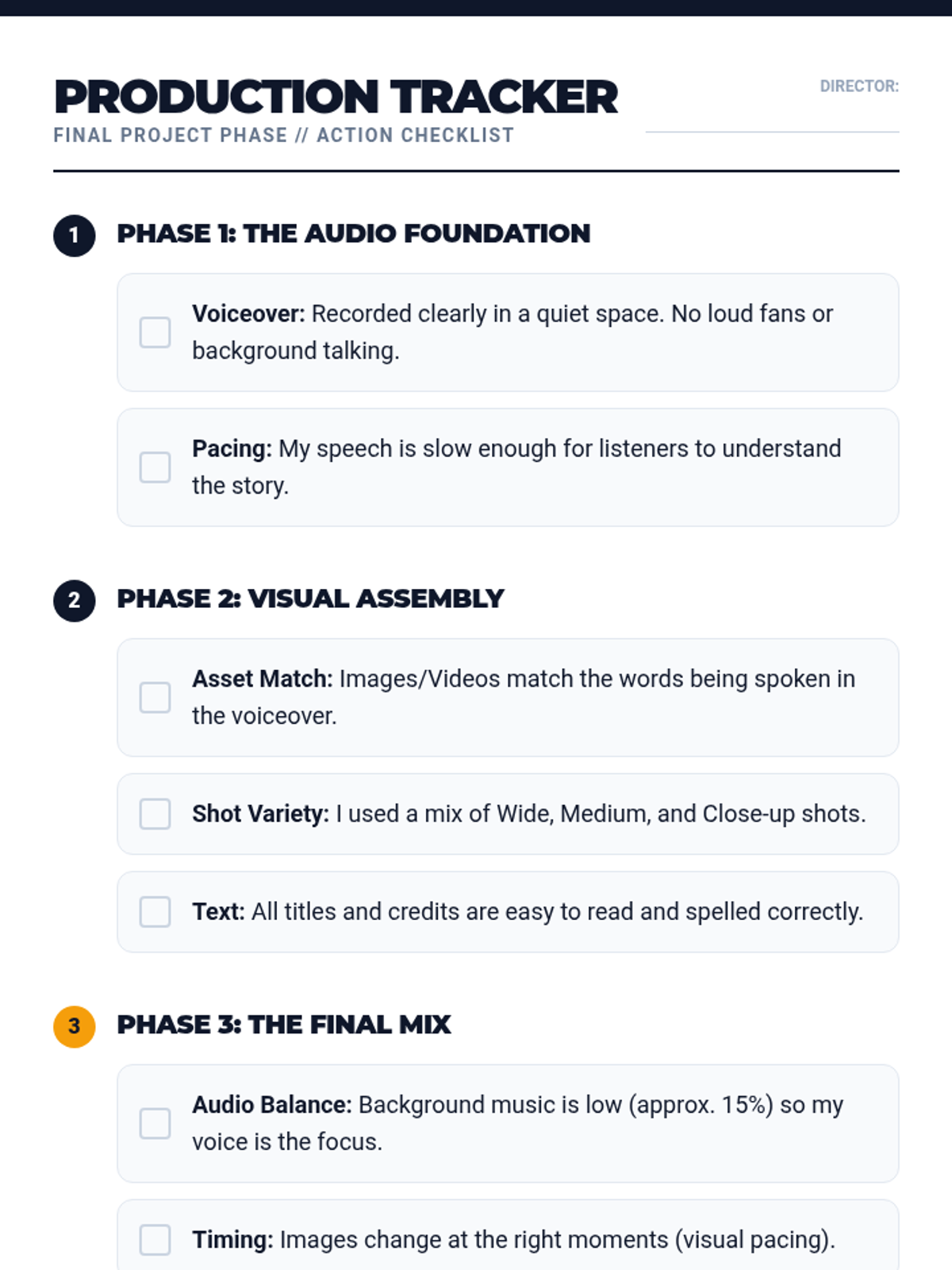
Students explore the power of audio and visuals, culminating in the creation and assembly of their digital story.
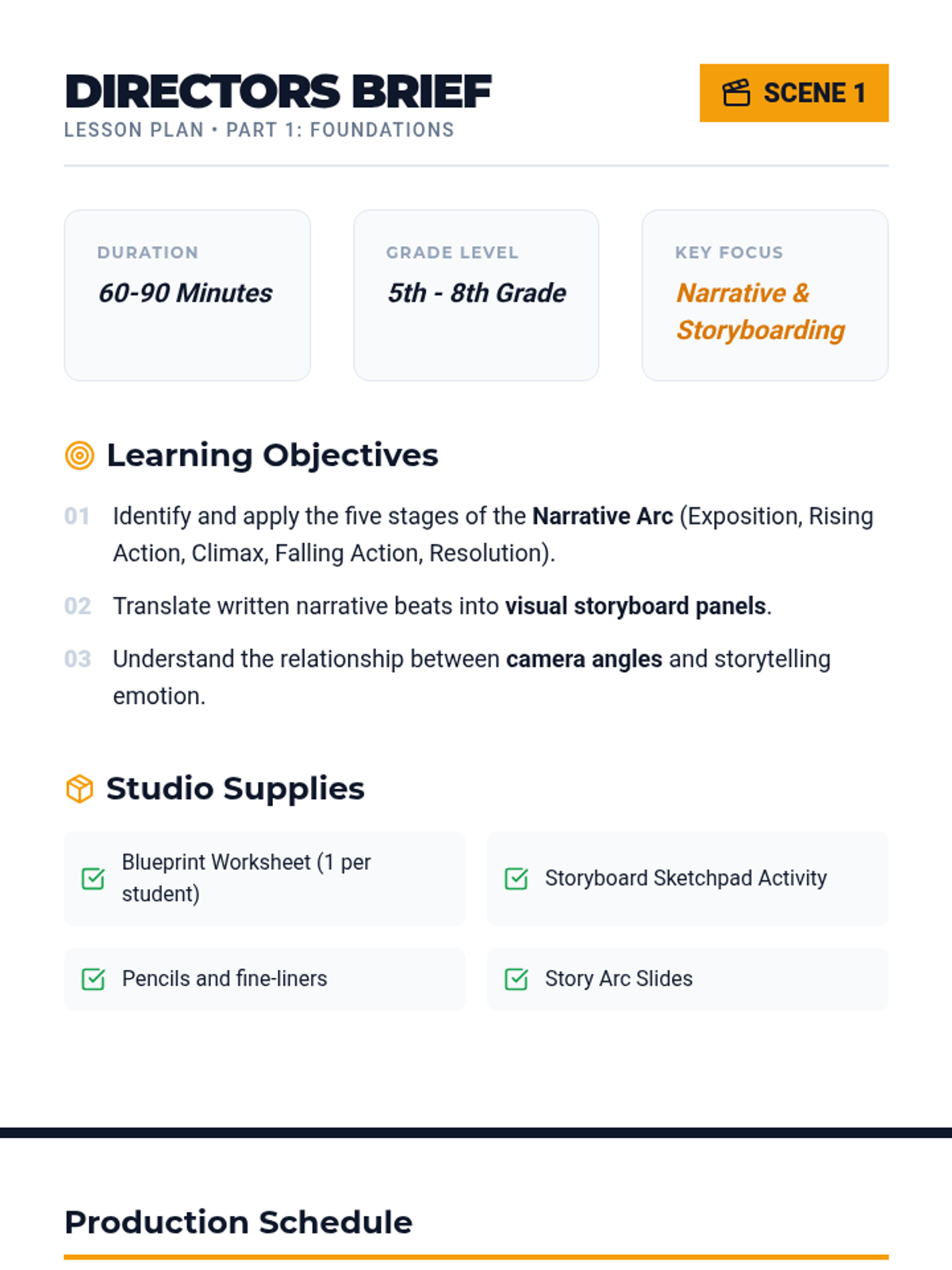
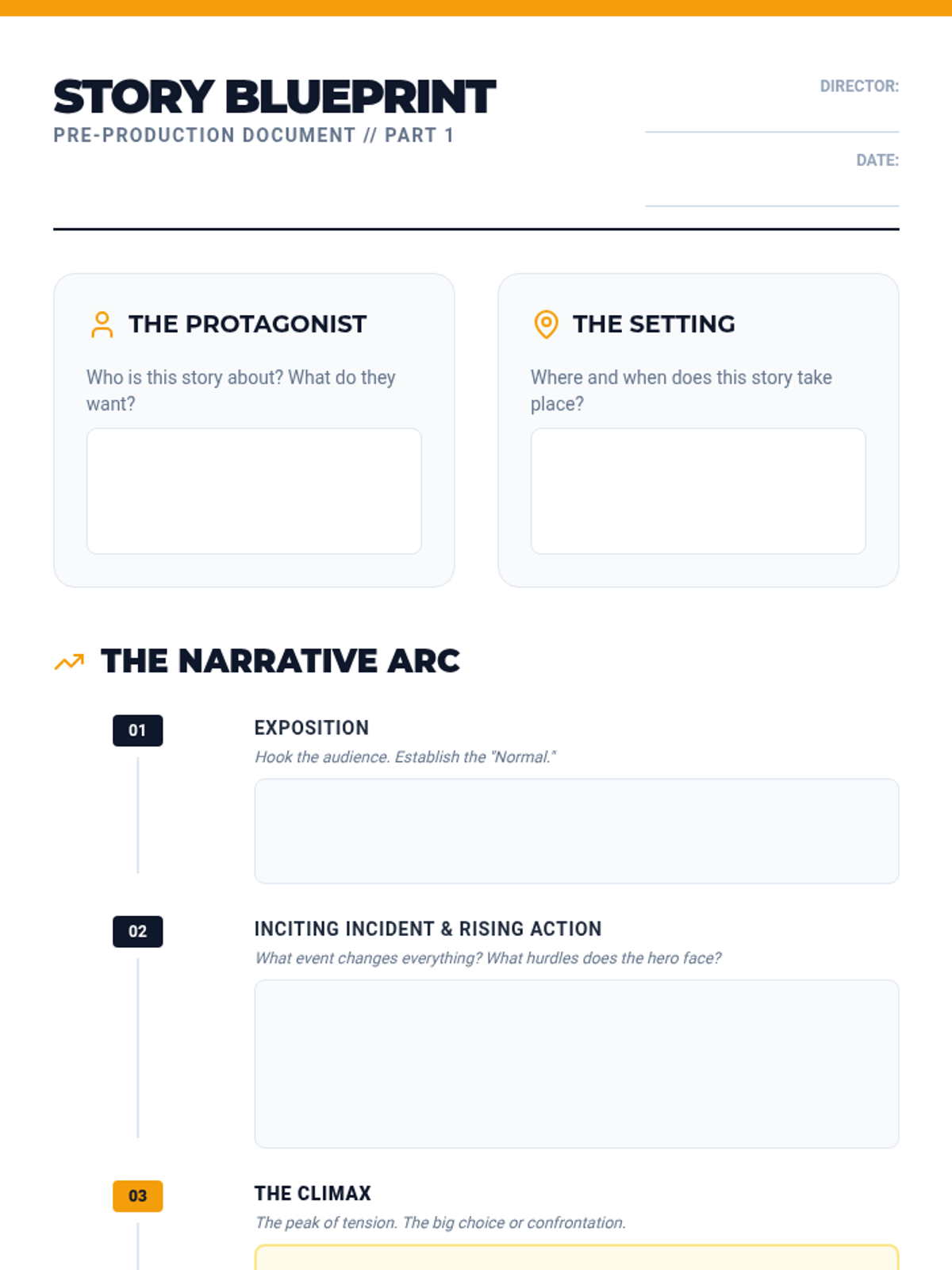
Students learn the core principles of narrative structure and translate their ideas into visual storyboards.
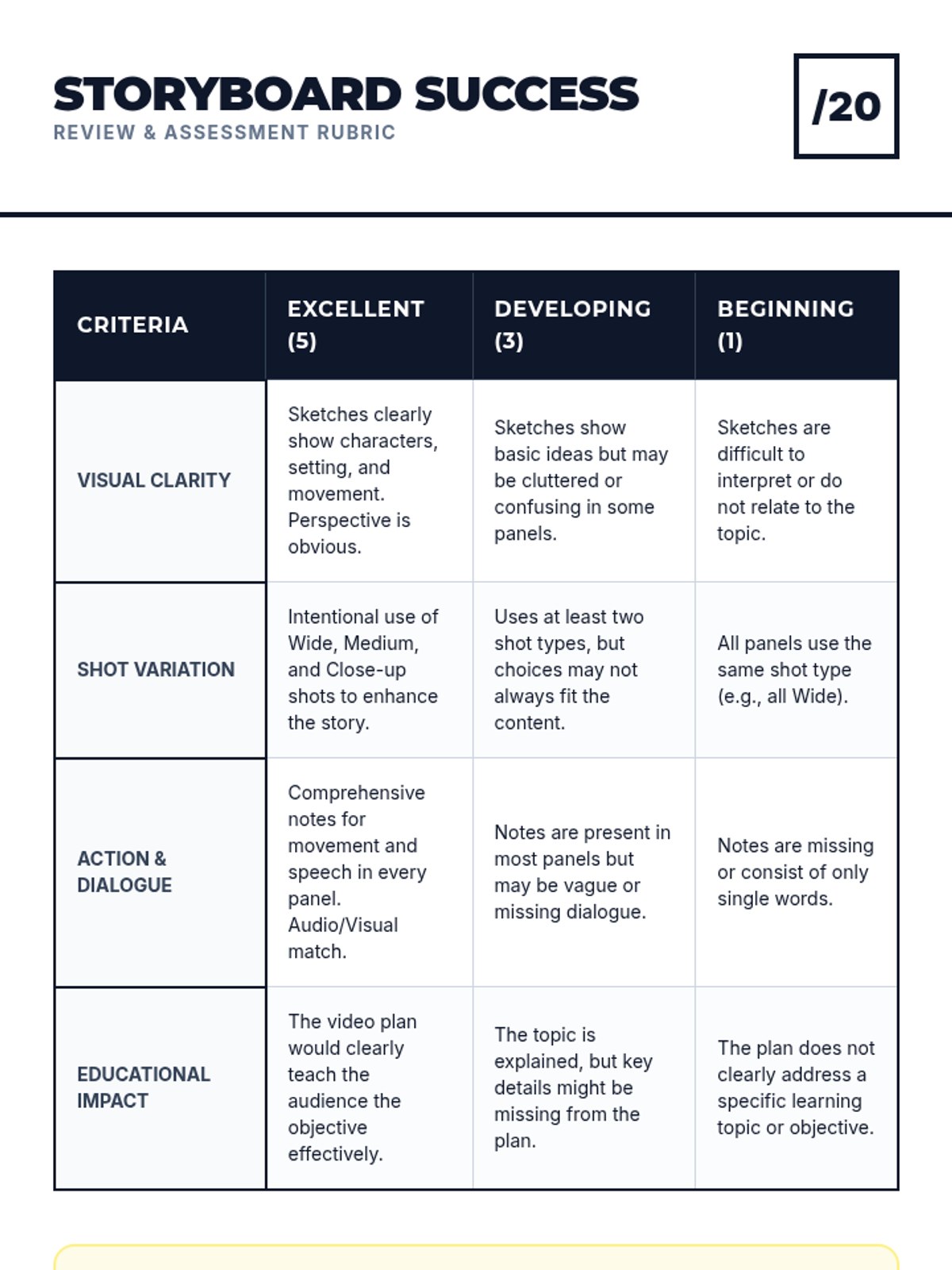
A comprehensive lesson on the art of storyboarding for short videos, teaching students how to translate their creative visions into structured visual plans. Students will learn the key elements of a storyboard and practice planning their own video production.
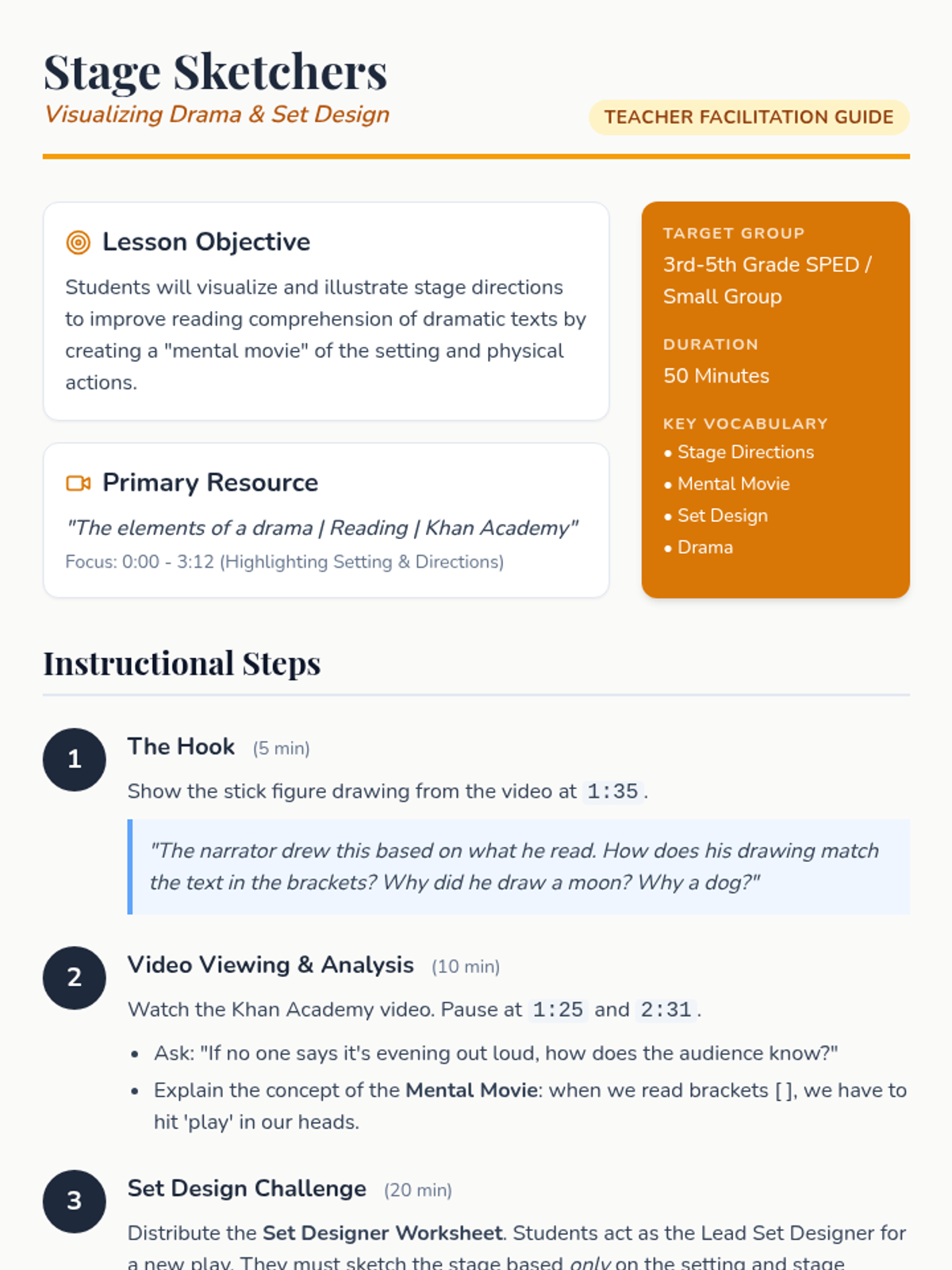
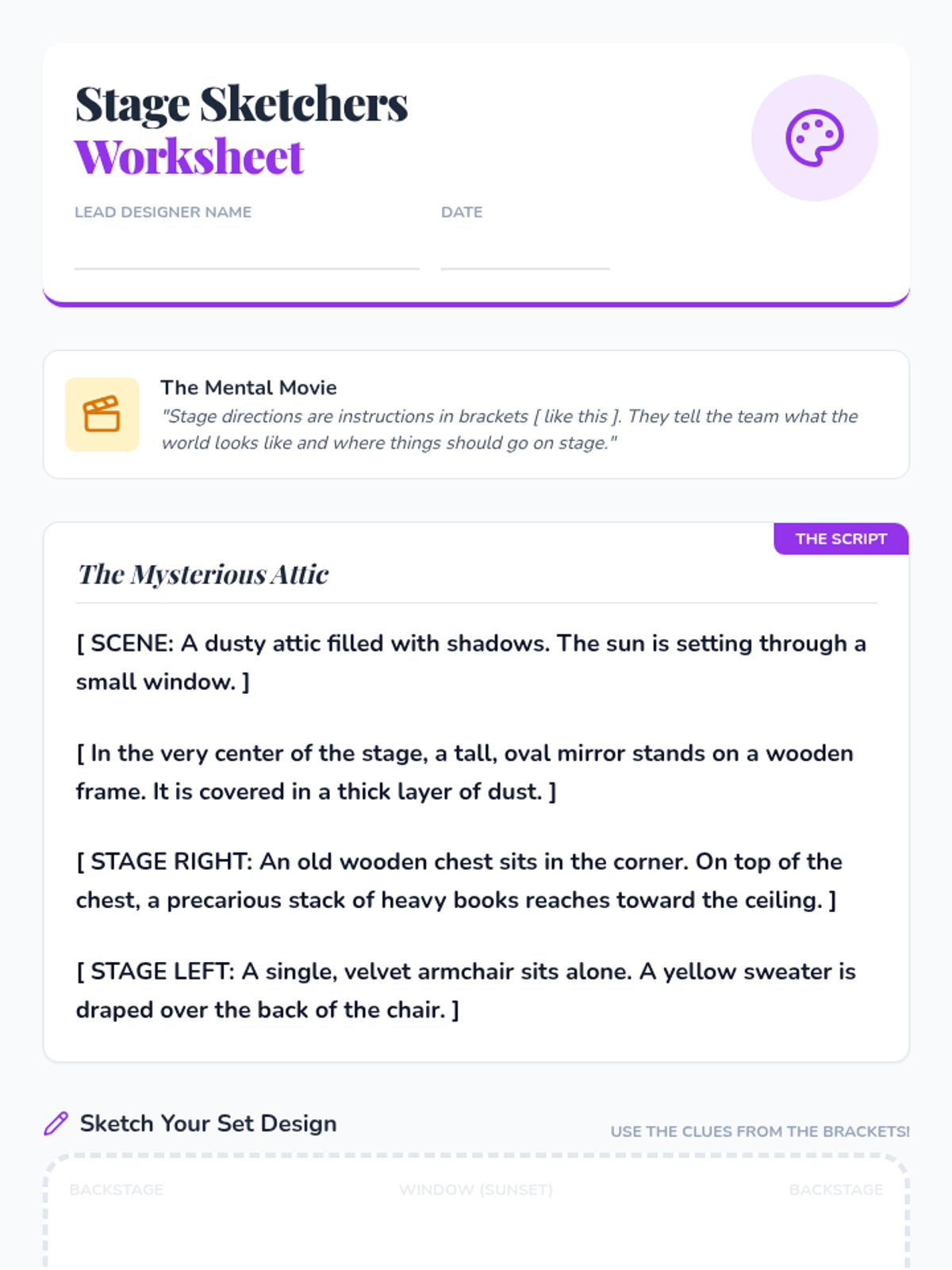
A lesson designed for small group instruction focused on helping students visualize stage directions to build a 'mental movie' of the setting and action. Includes a video-based hook and a hands-on set design activity.
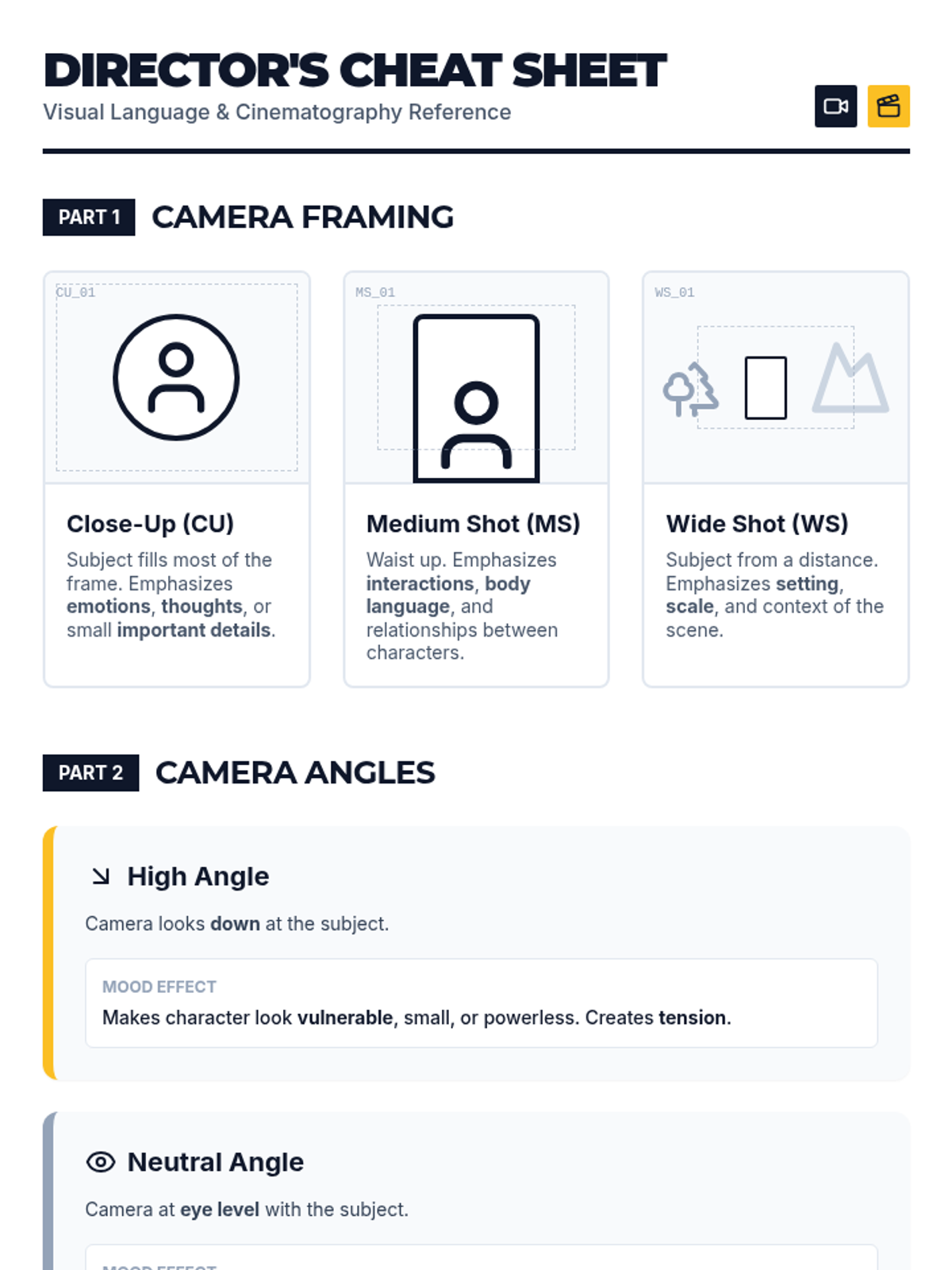
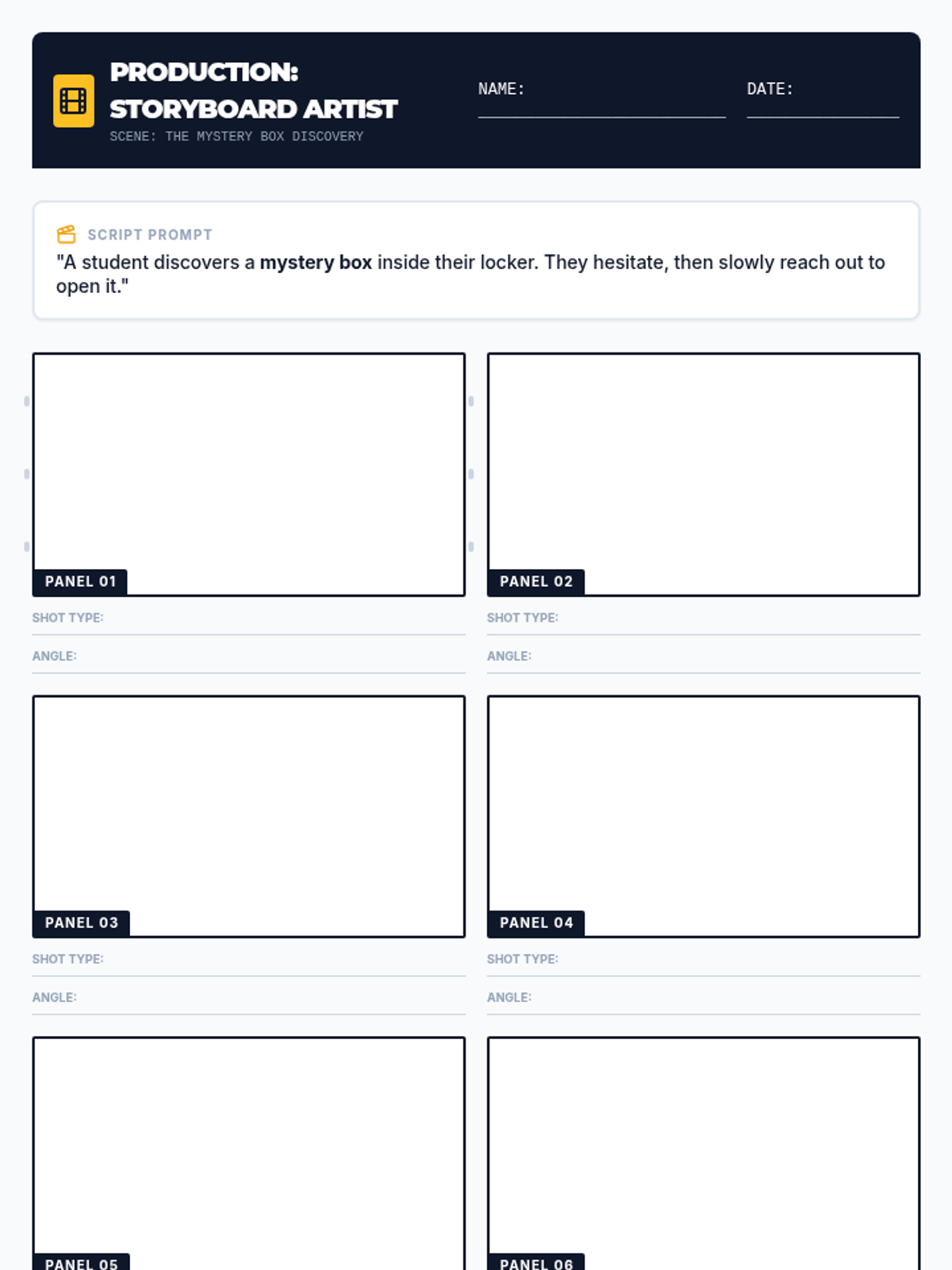
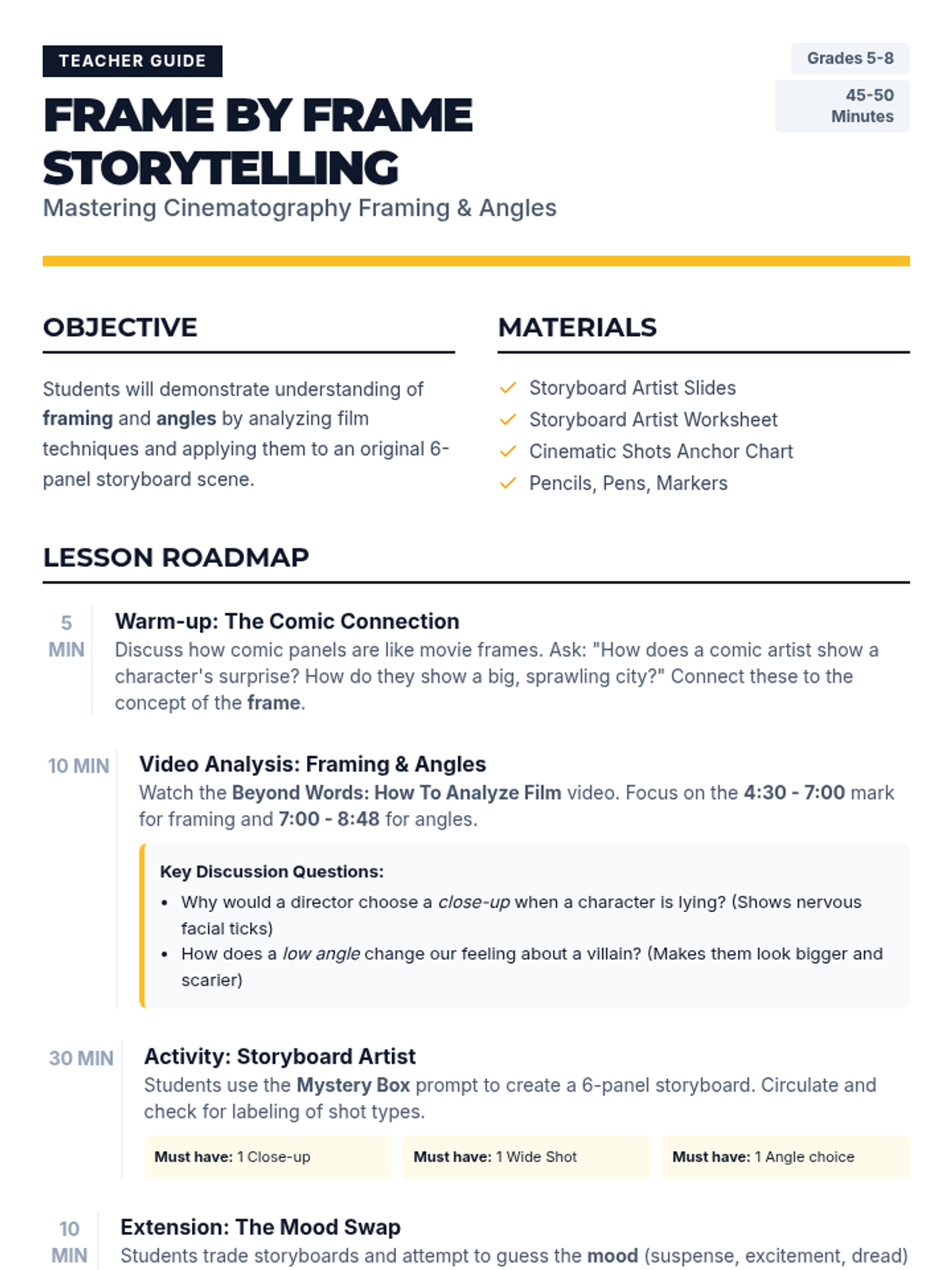
Students will learn the language of cinematography by exploring how framing and angles impact storytelling. They will analyze film clips and create a 6-panel storyboard for a mystery scene, demonstrating their mastery of close-ups, wide shots, and specific camera angles.
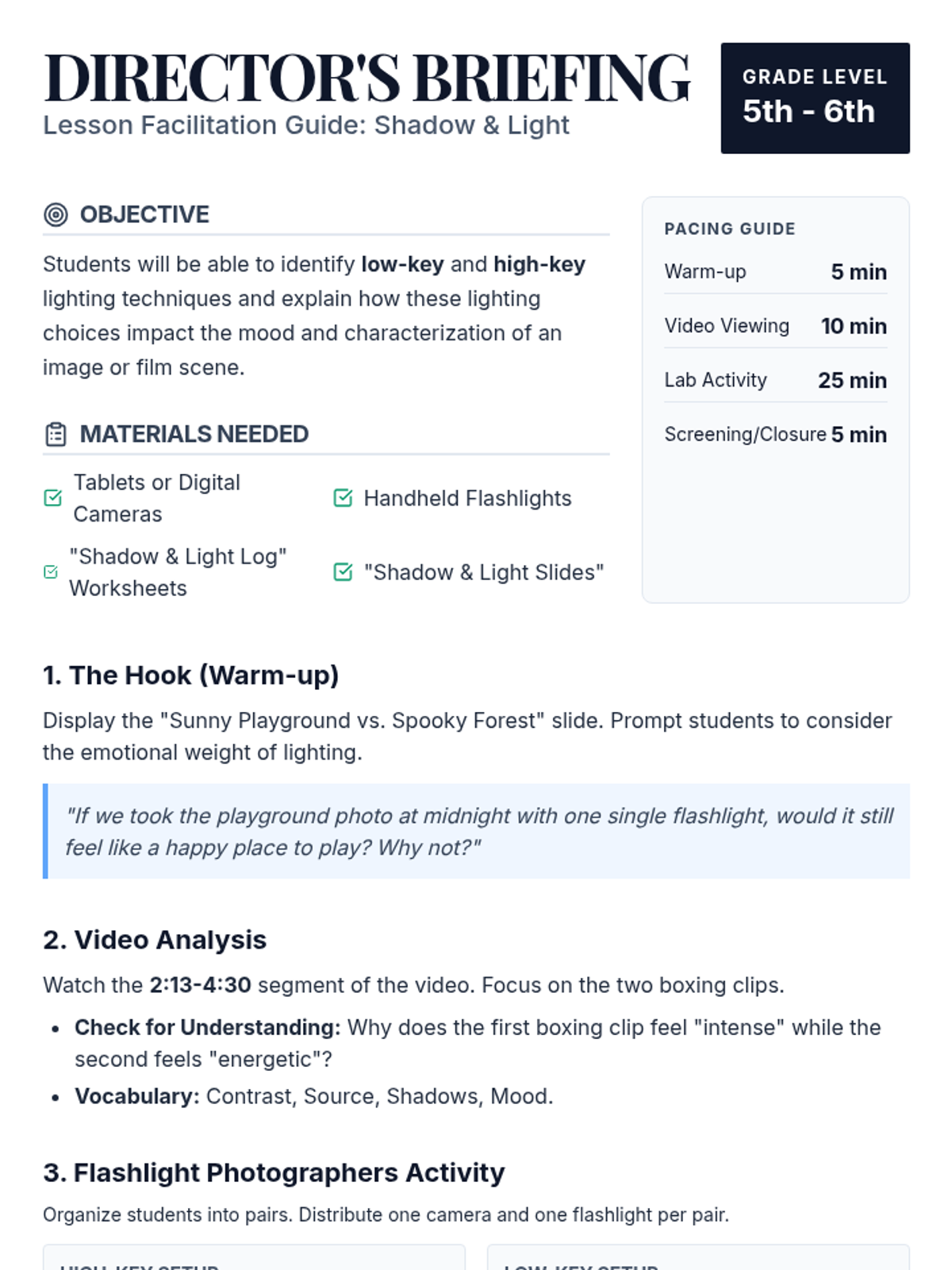
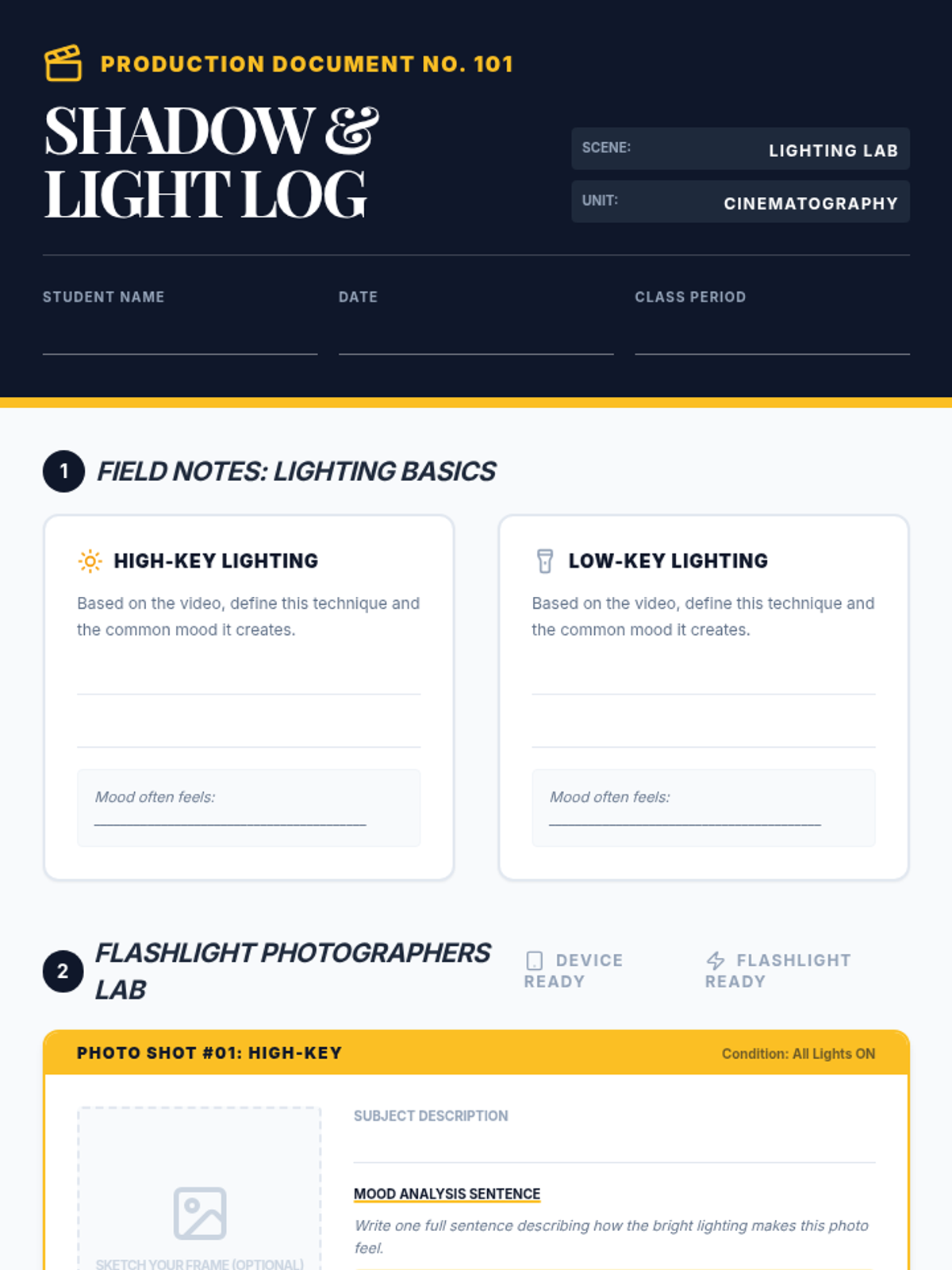
Students explore how cinematography impacts storytelling by experimenting with low-key and high-key lighting using cameras and flashlights.
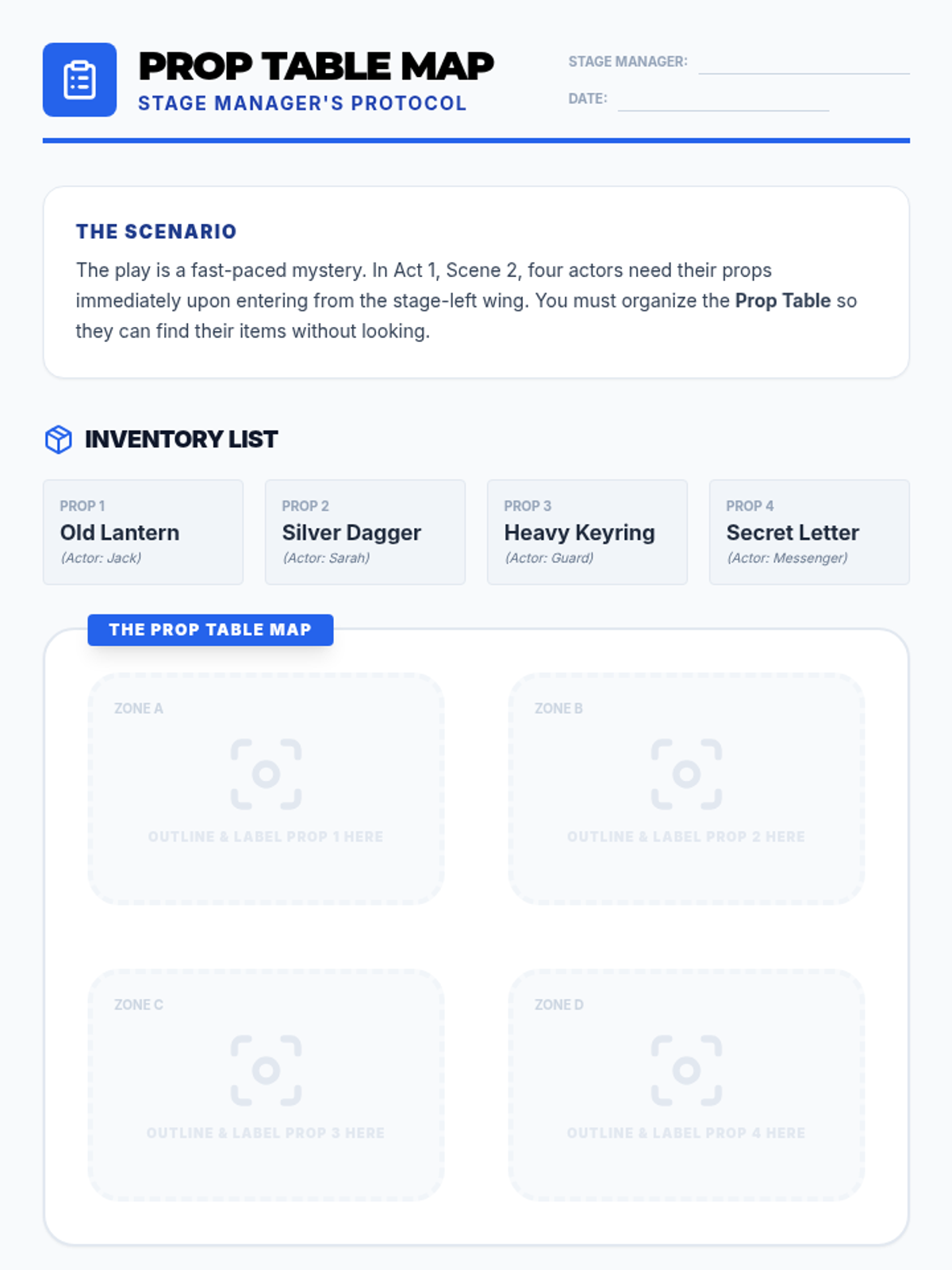
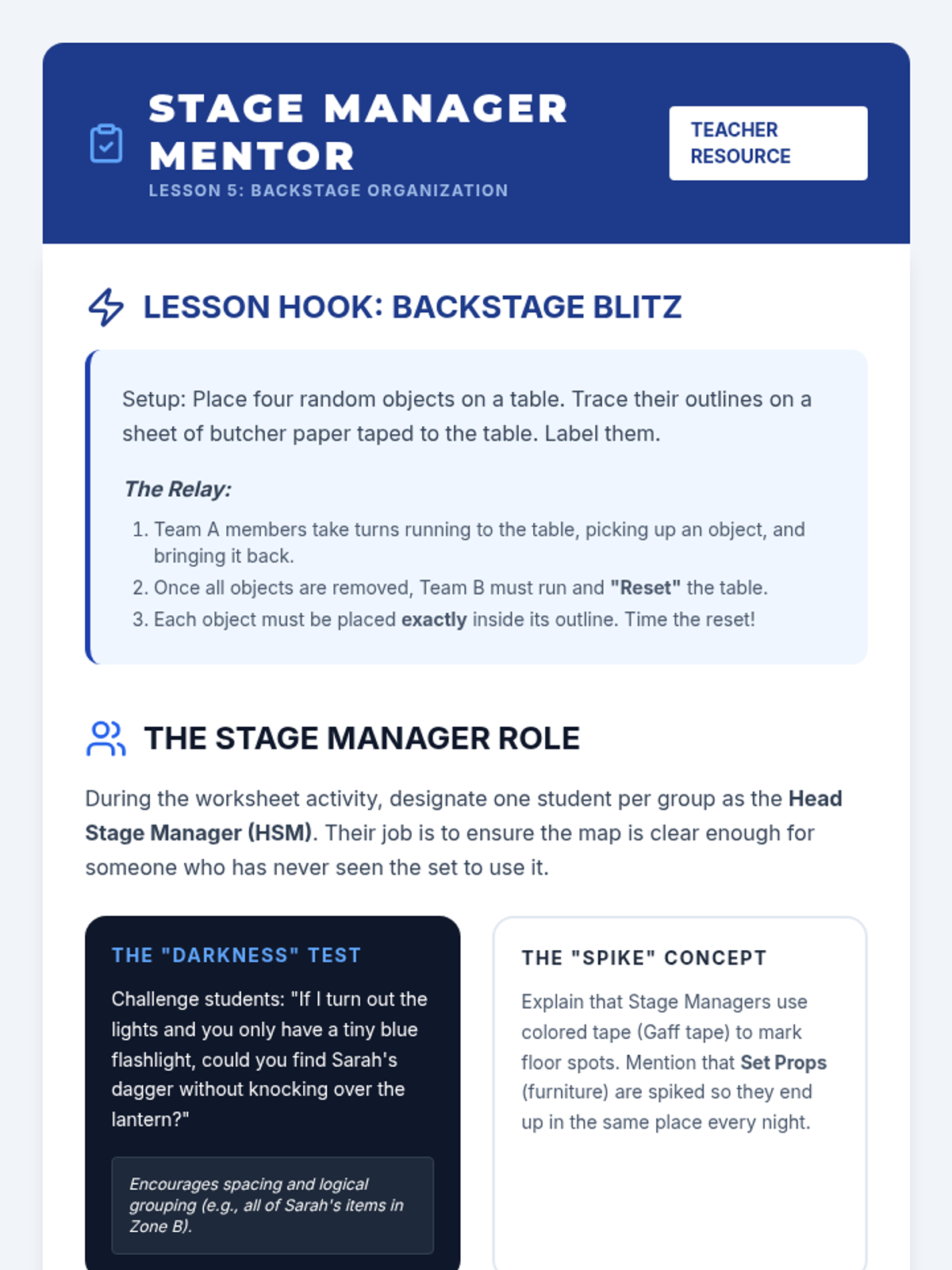
Students step into the role of Stage Managers to learn about organization. They create a 'prop table' map, outlining where items go ensuring actors can find them in the dark, and practice resetting a scene quickly.
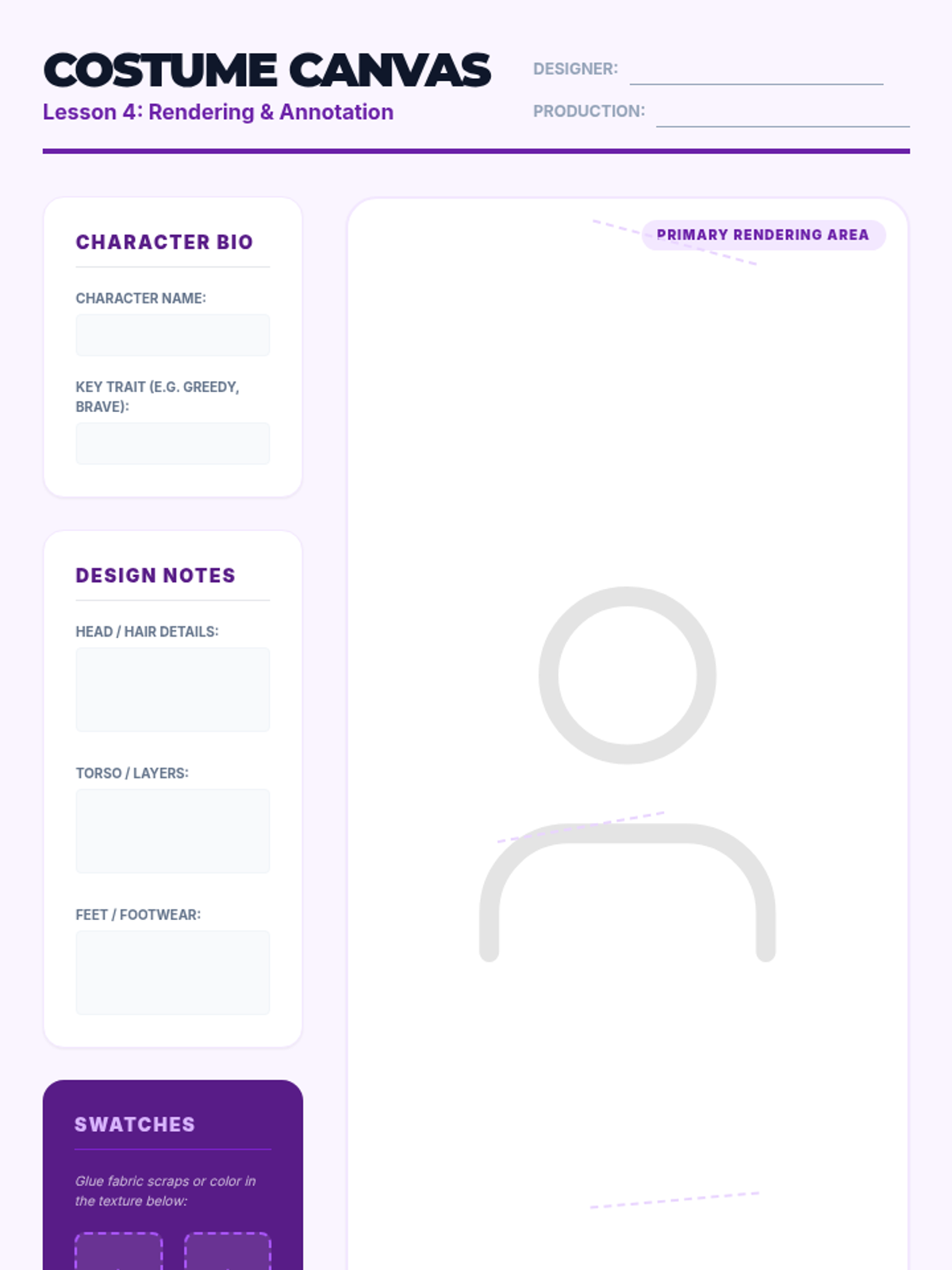
Students create a costume rendering for a specific character using drawing or collage techniques. They must annotate their design to explain how their choices relate to the character's age, job, and personality.
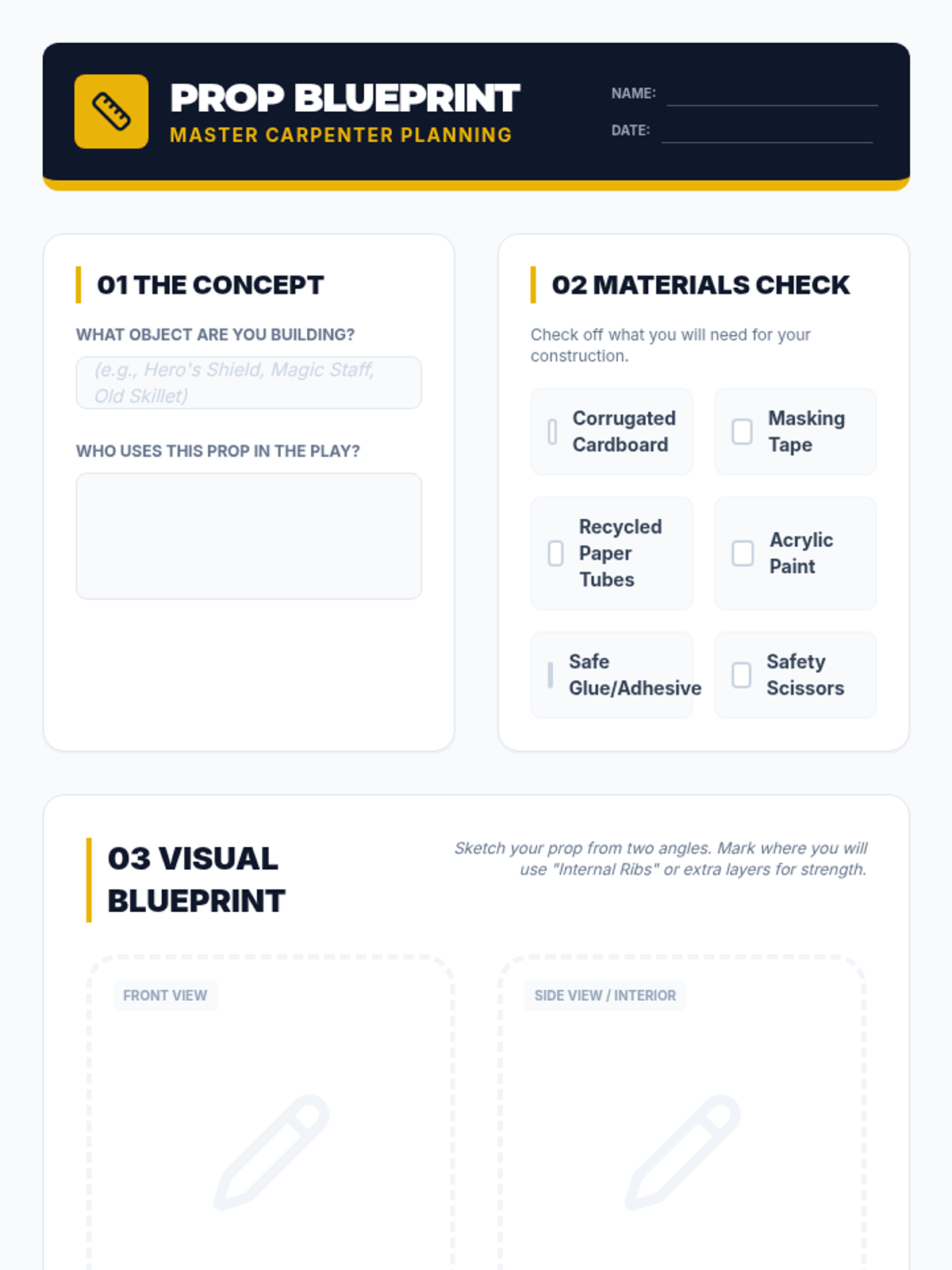
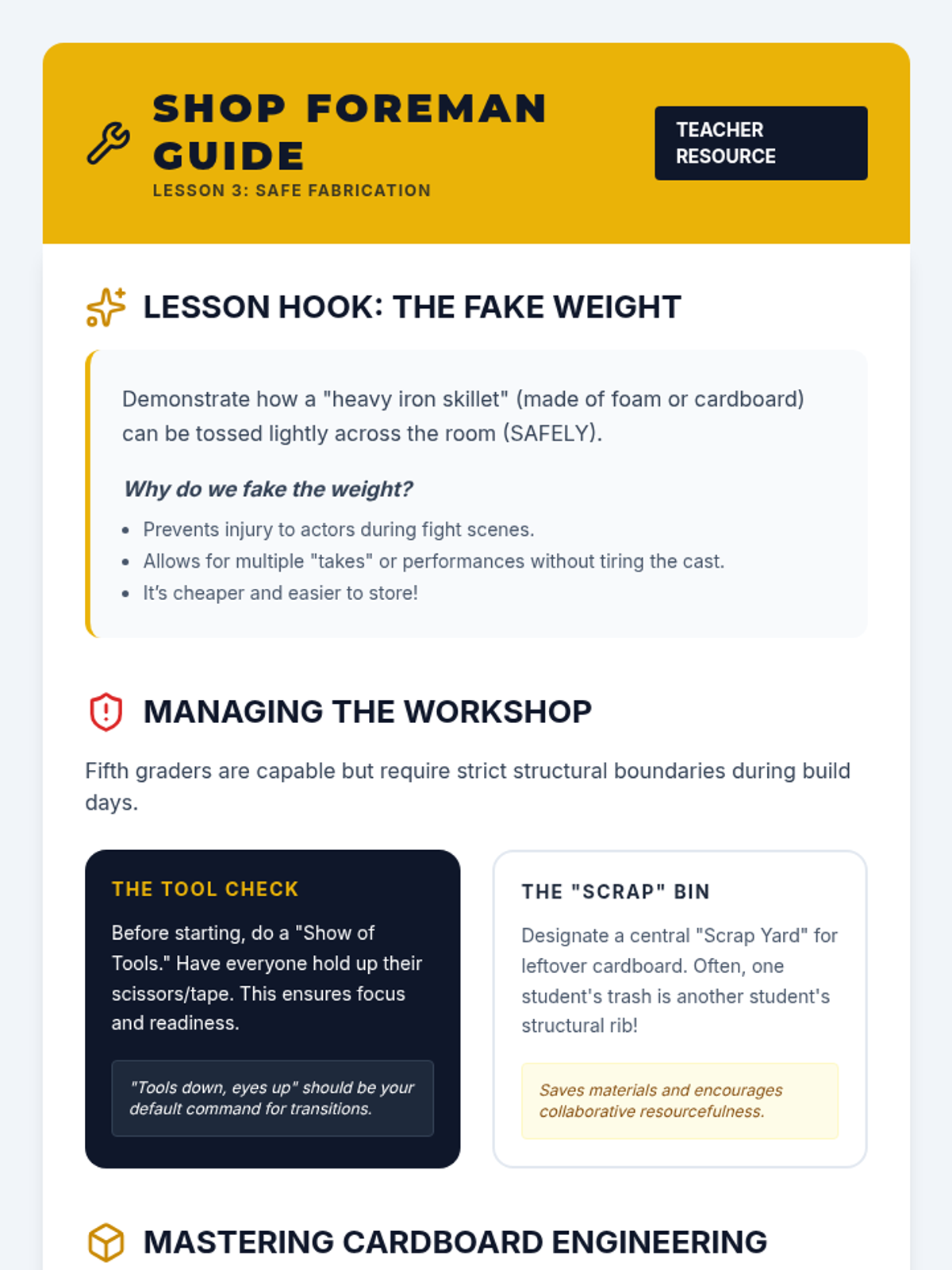
Focusing on safety and resourcefulness, students learn to build a specific hand prop using cardboard, tape, and safe adhesives. The lesson covers structural integrity and how to make lightweight objects look heavy or metallic.
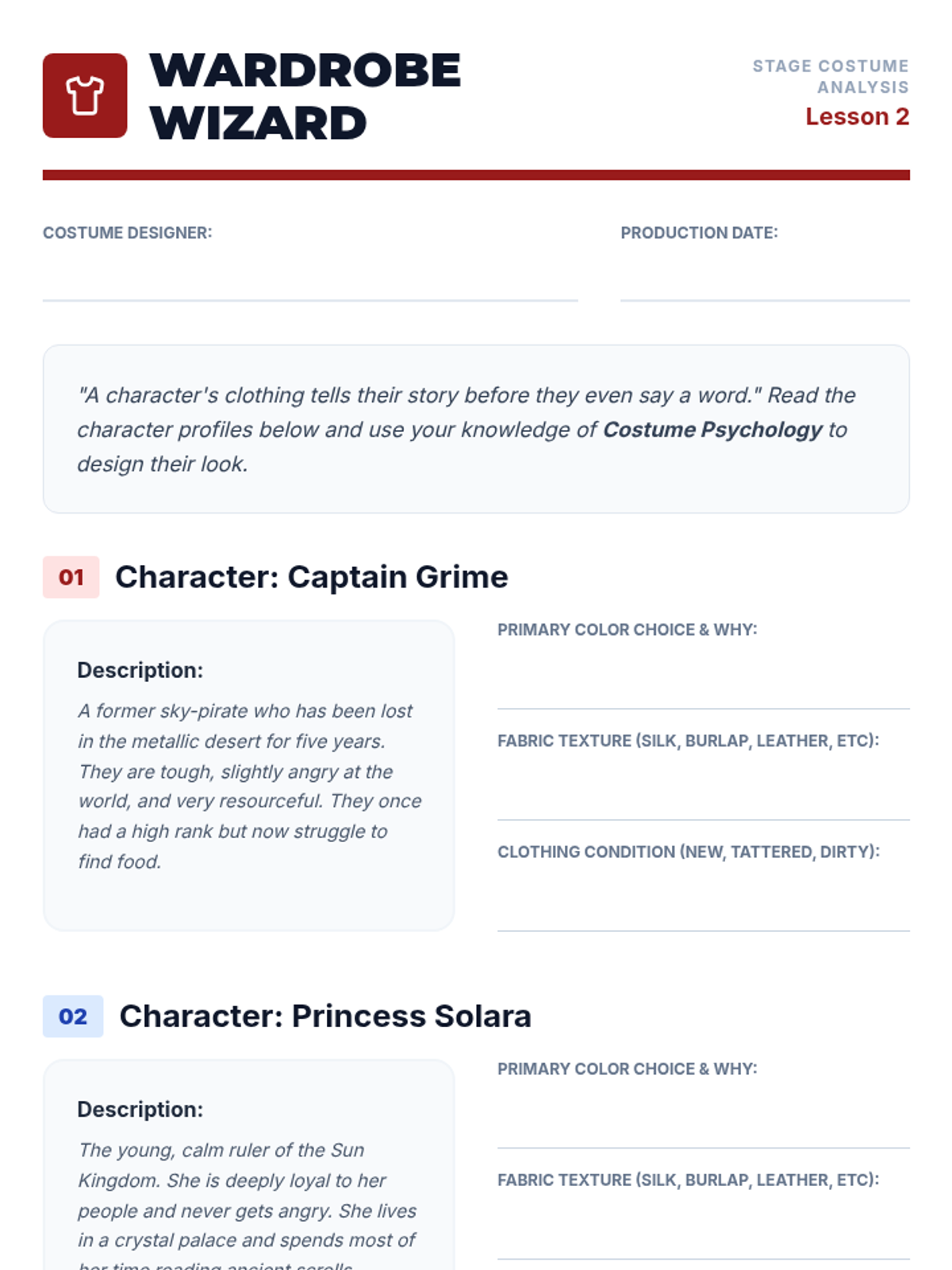
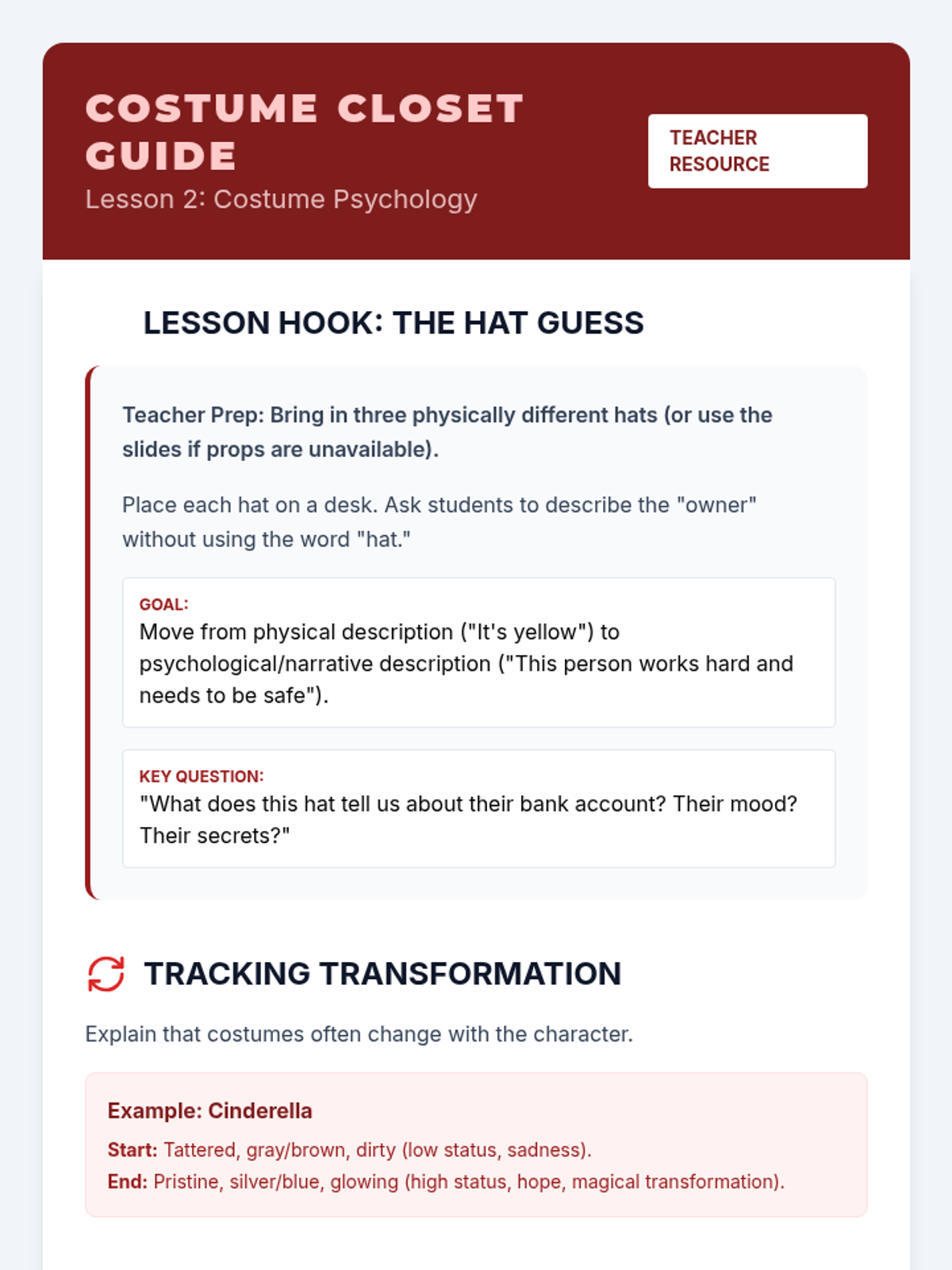
Students explore how color, condition, and fit of clothing communicate character traits. They analyze character descriptions and select fabric swatches or colors that represent the character's personality and status.
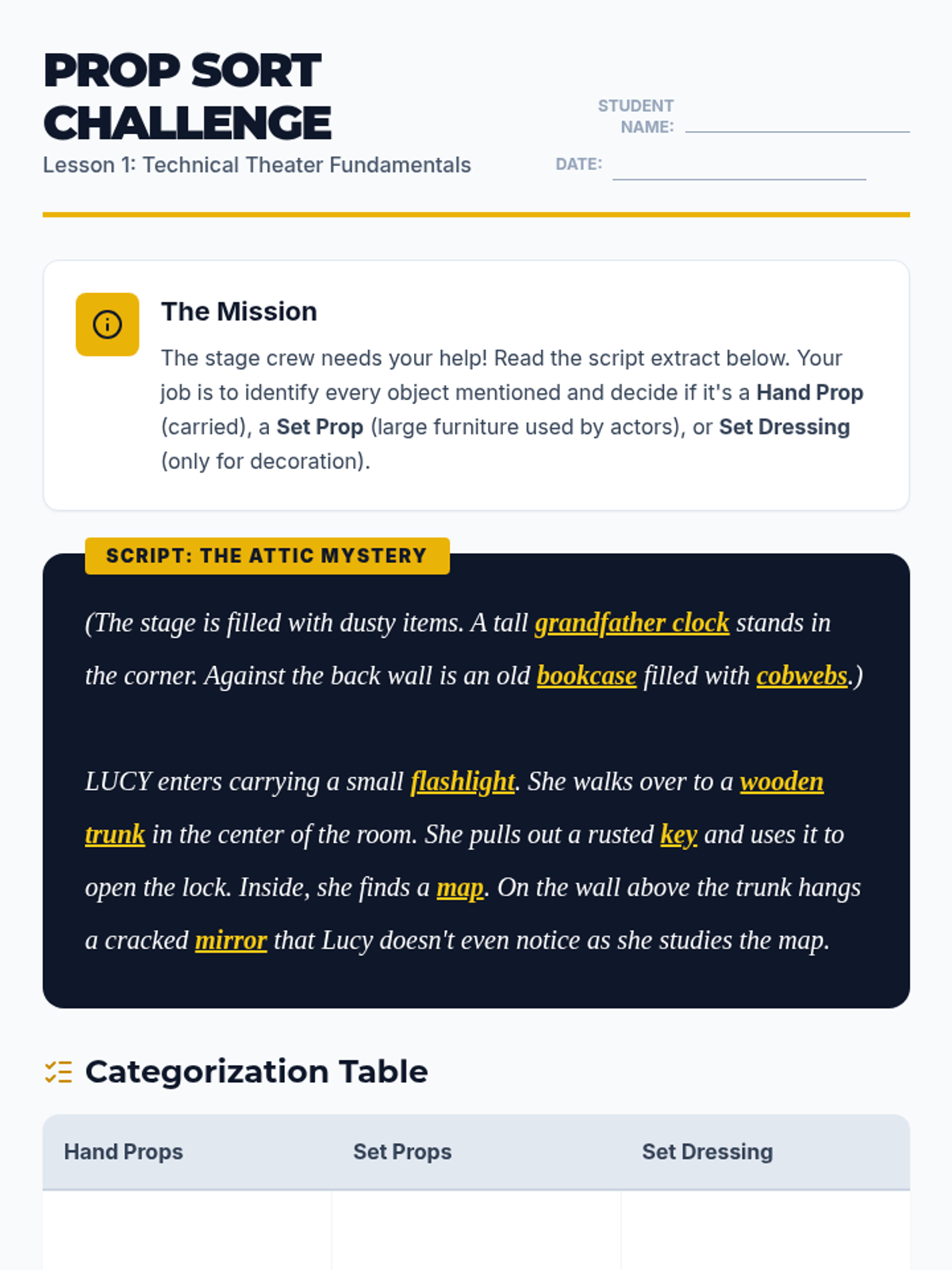
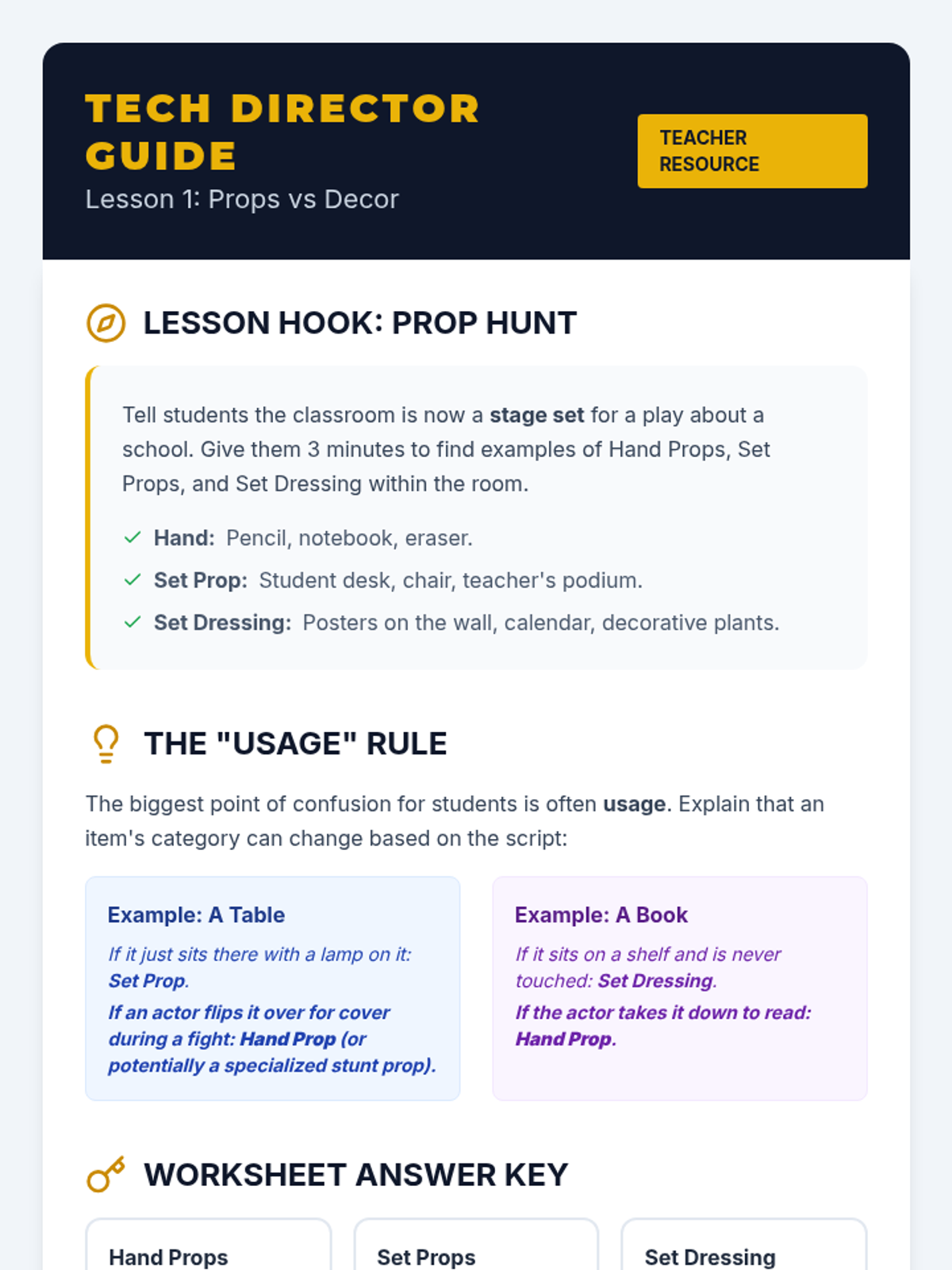
Students learn to categorize items as Hand Props, Set Props, or Set Dressing through sorting activities. They analyze a scene to determine which items are handled by actors versus which items just set the scene.
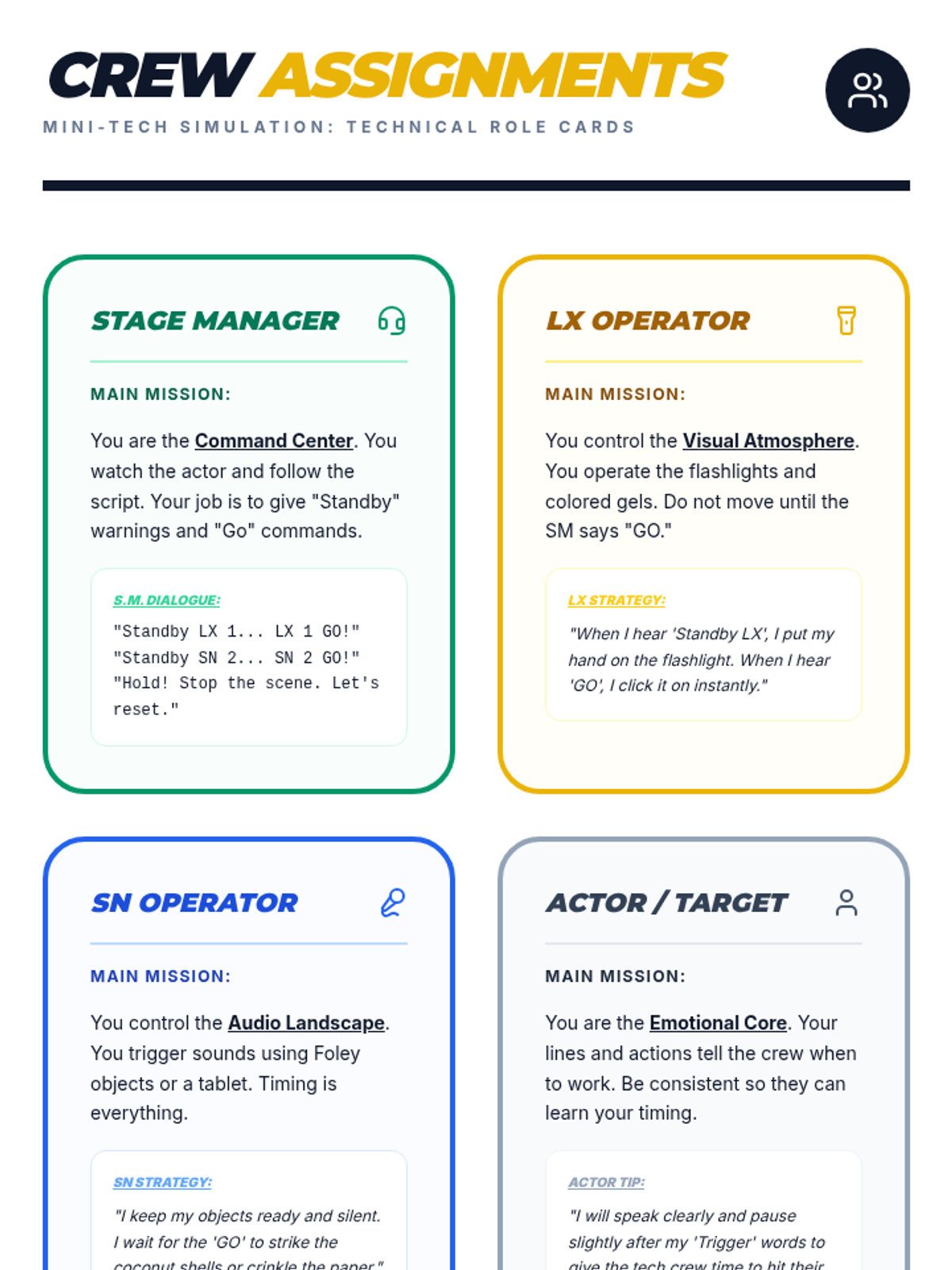
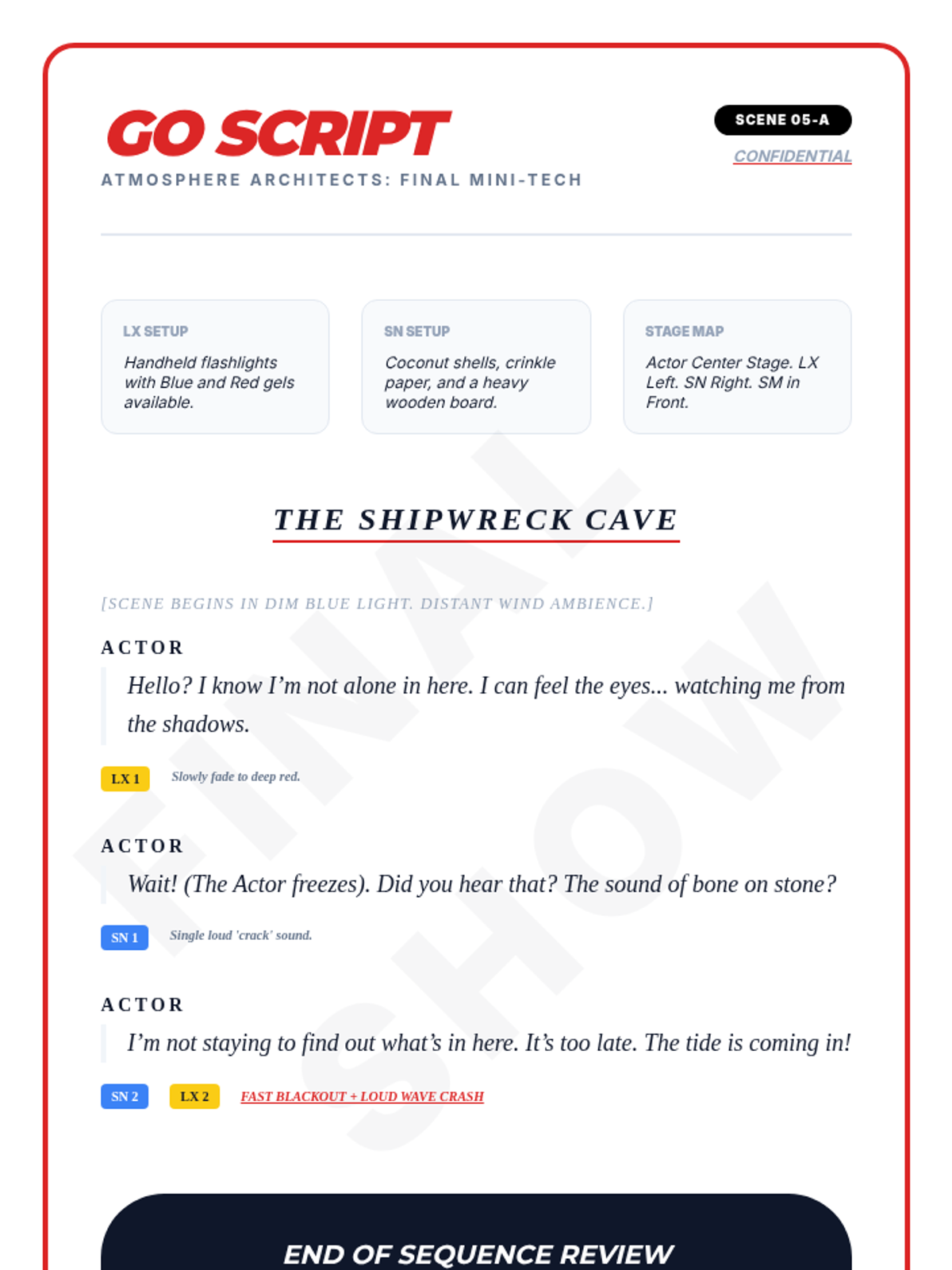
A hands-on simulation where student teams execute a 'Mini Tech' rehearsal, coordinating live lighting and sound cues with a performance.
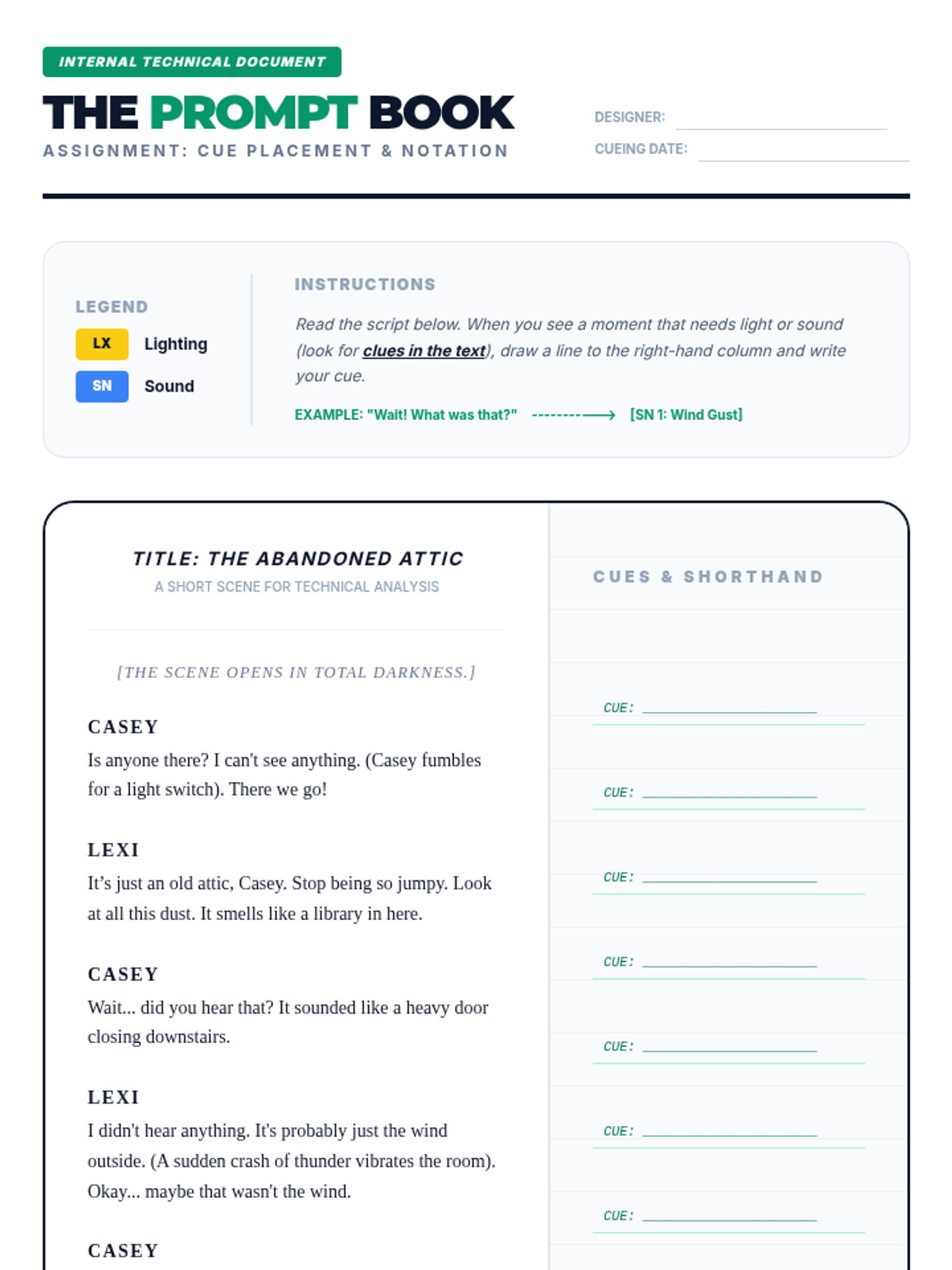
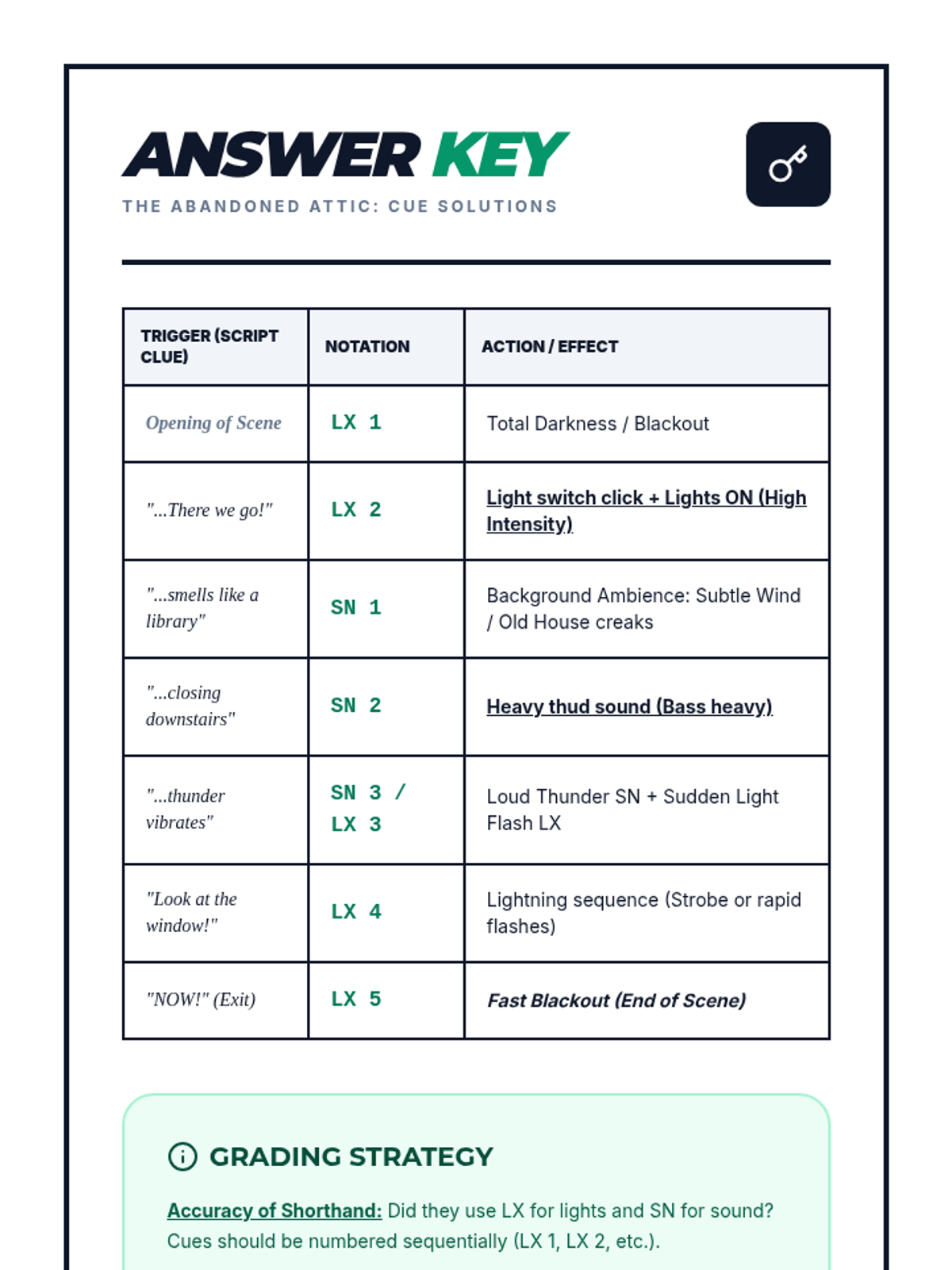
Students learn to read scripts from a technical perspective, marking cues for lighting and sound and learning standard industry notation.
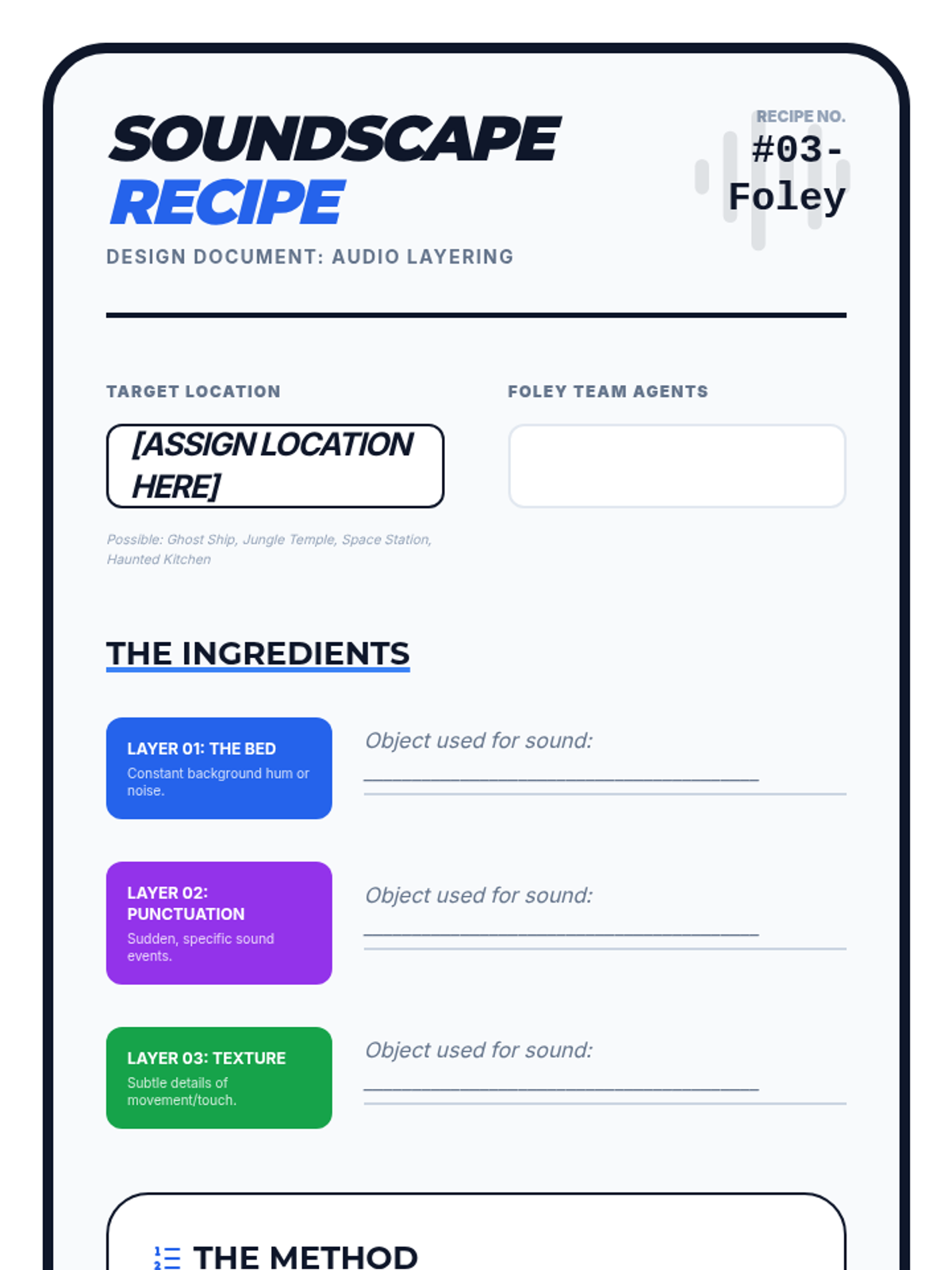
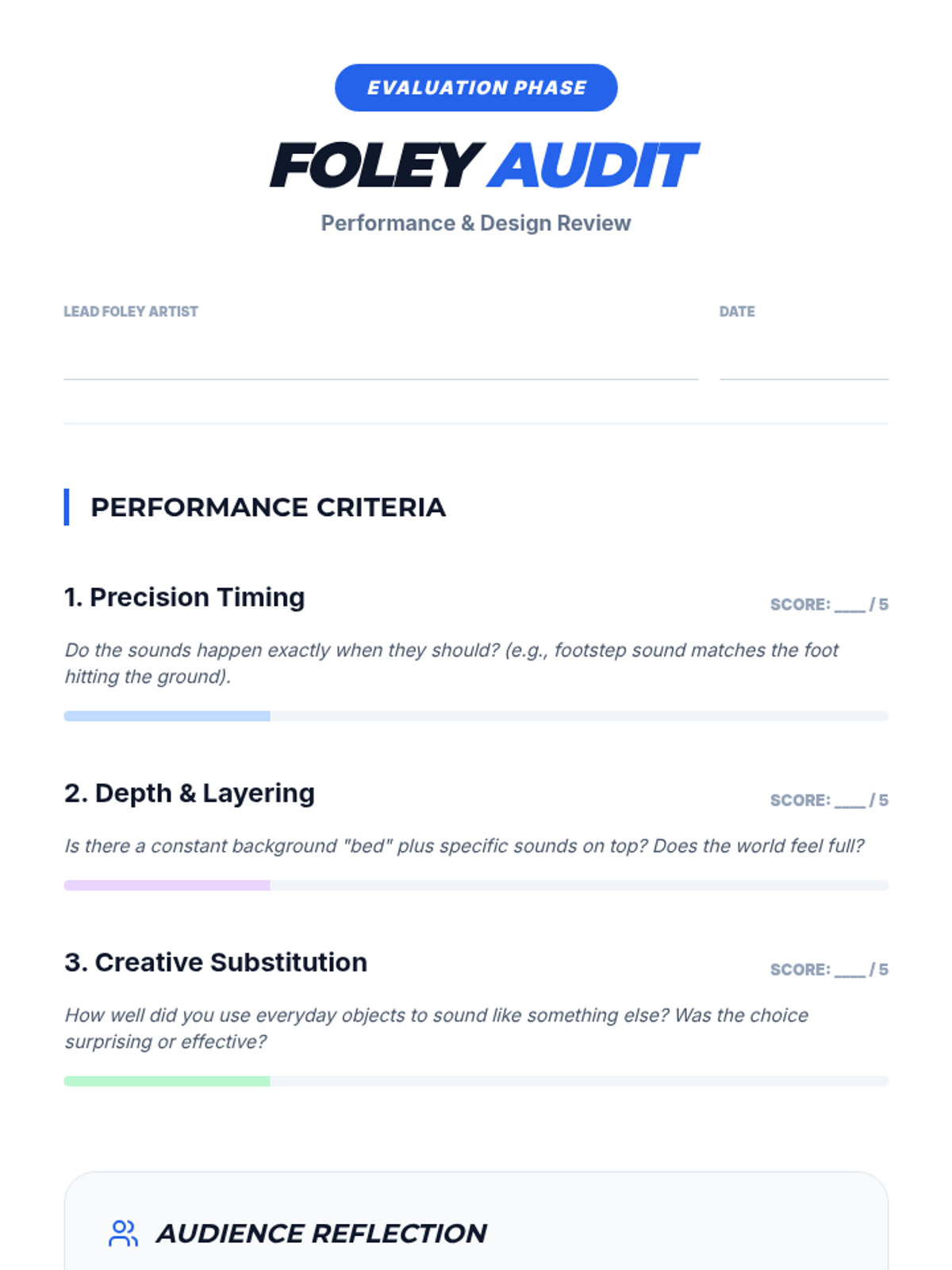
Students learn the art of Foley sound effects, using everyday objects to create live audio for theater and film, culminating in the creation of a layered soundscape.
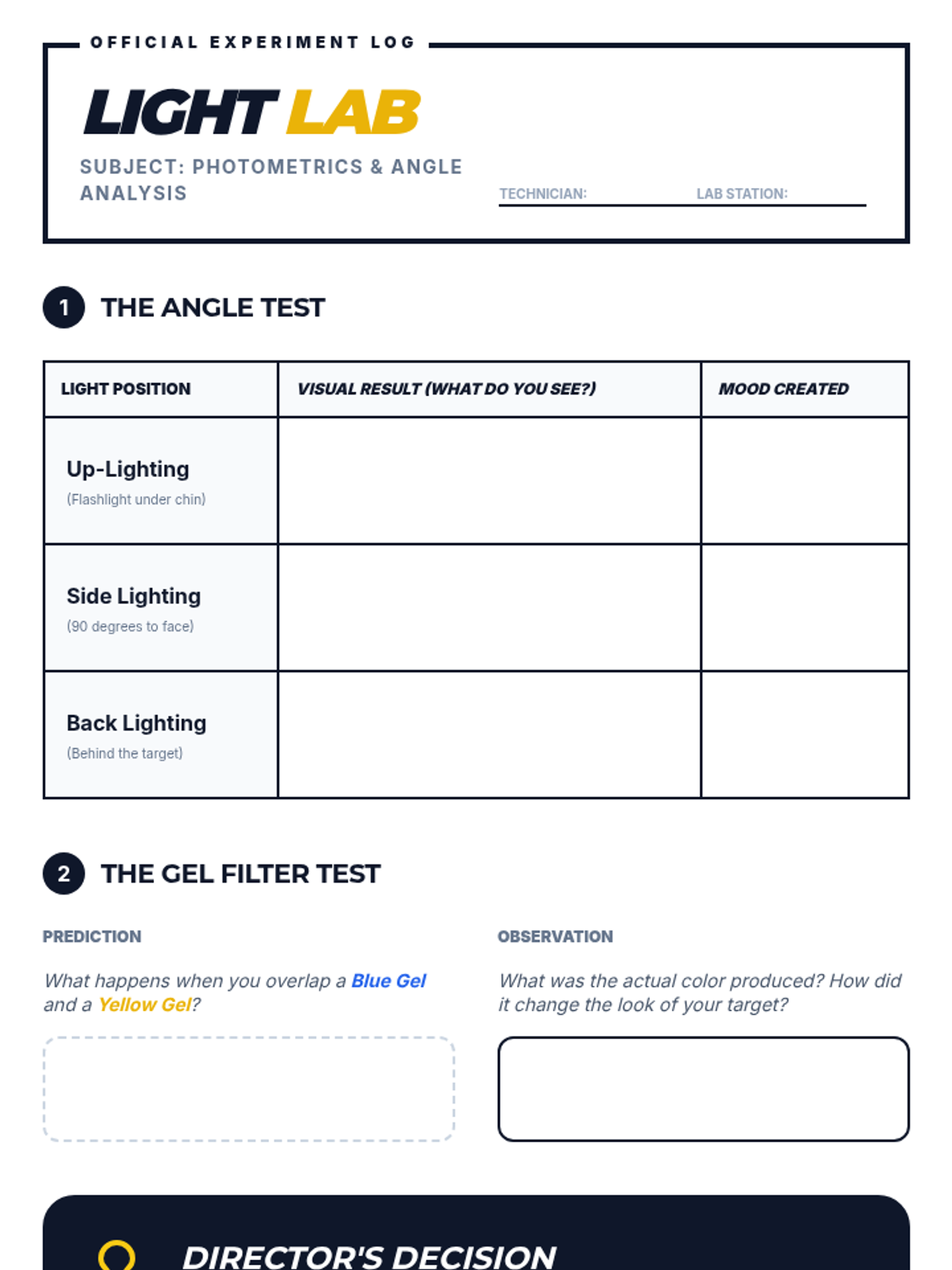
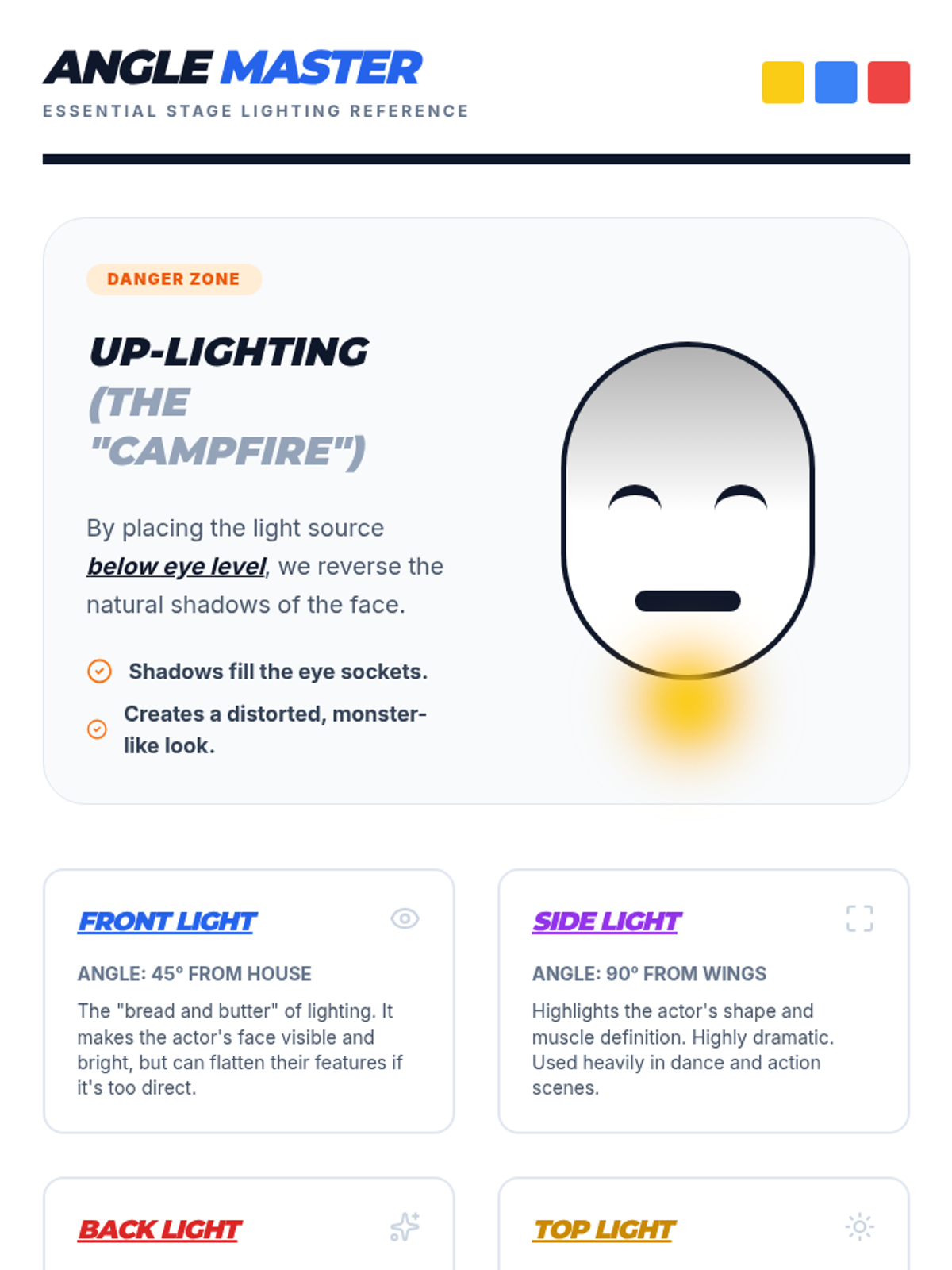
Students explore the science of stage lighting, experimenting with angles and colored gels to see how lighting direction changes visual perception.
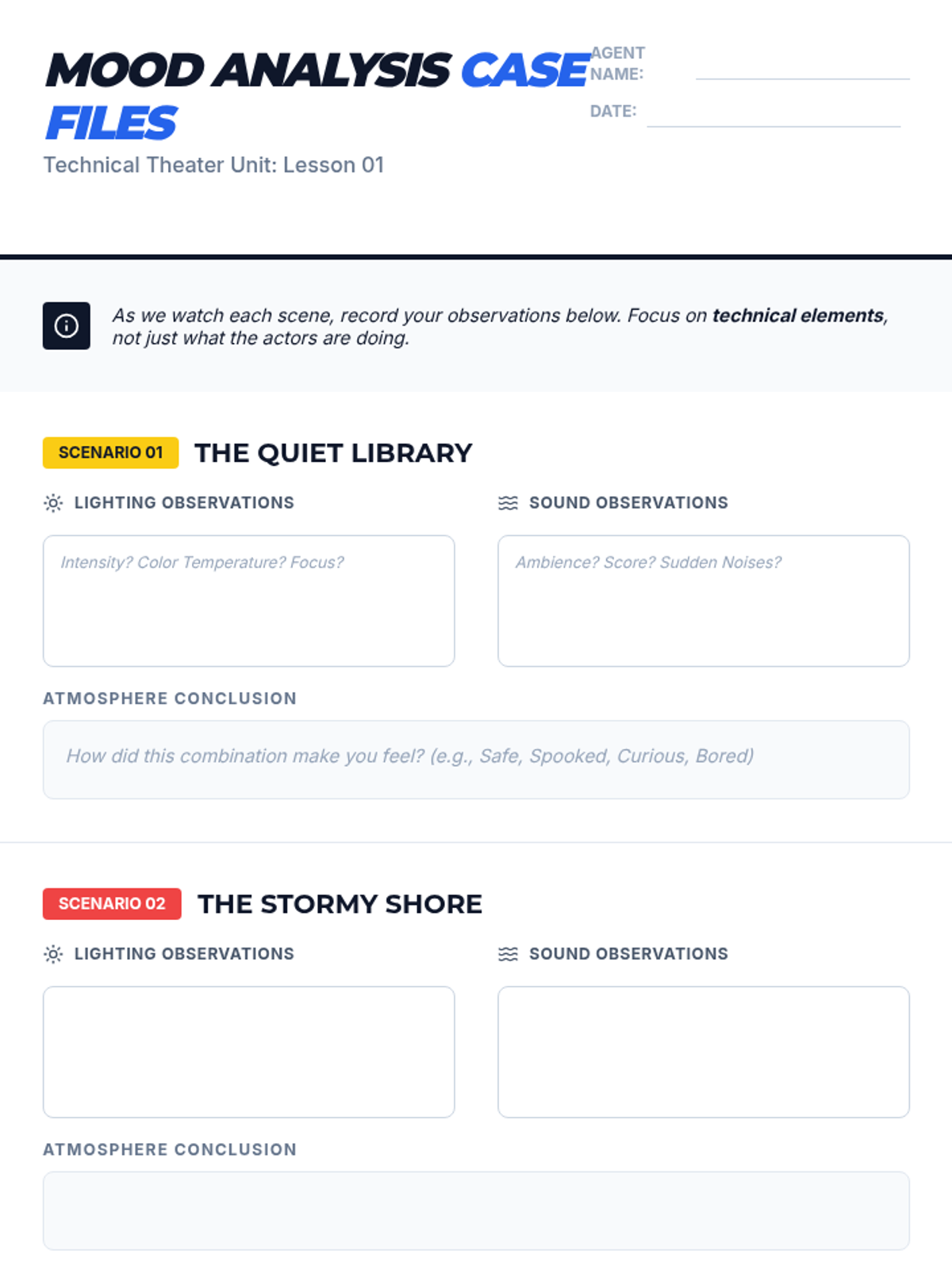
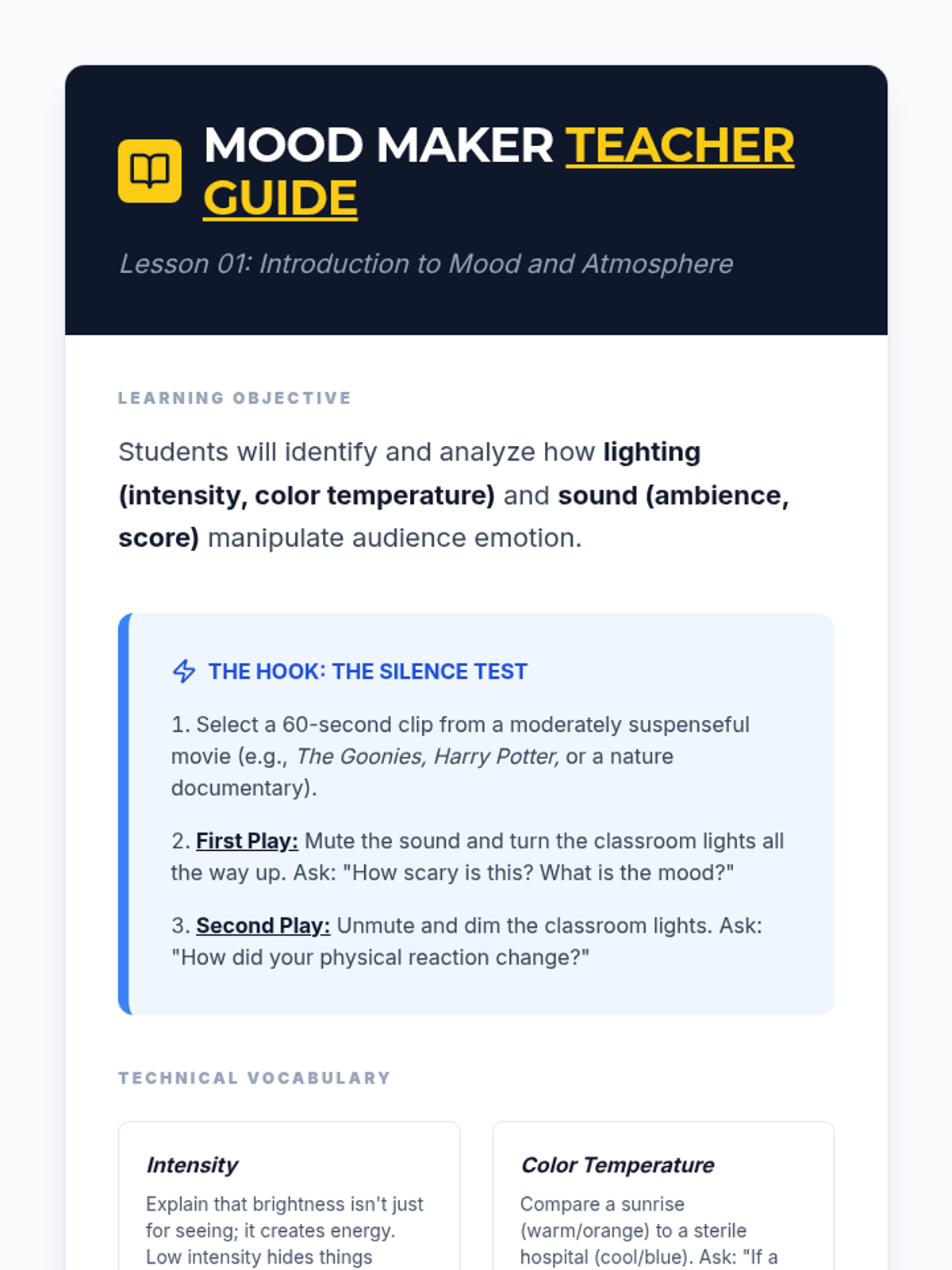
Students analyze how lighting and sound influence mood and atmosphere by comparing scenes with and without technical elements. They build a vocabulary for intensity, color temperature, and ambience.
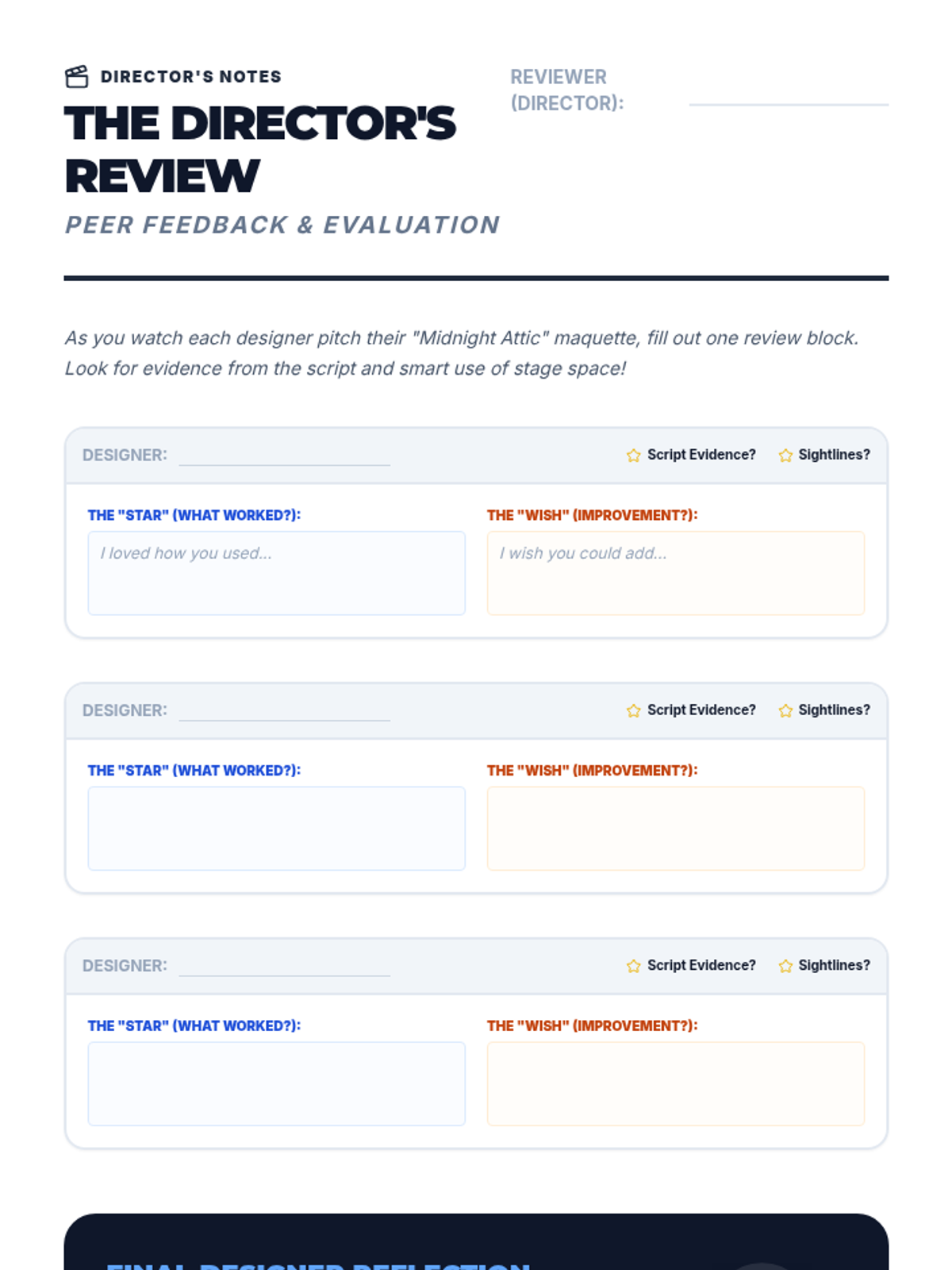
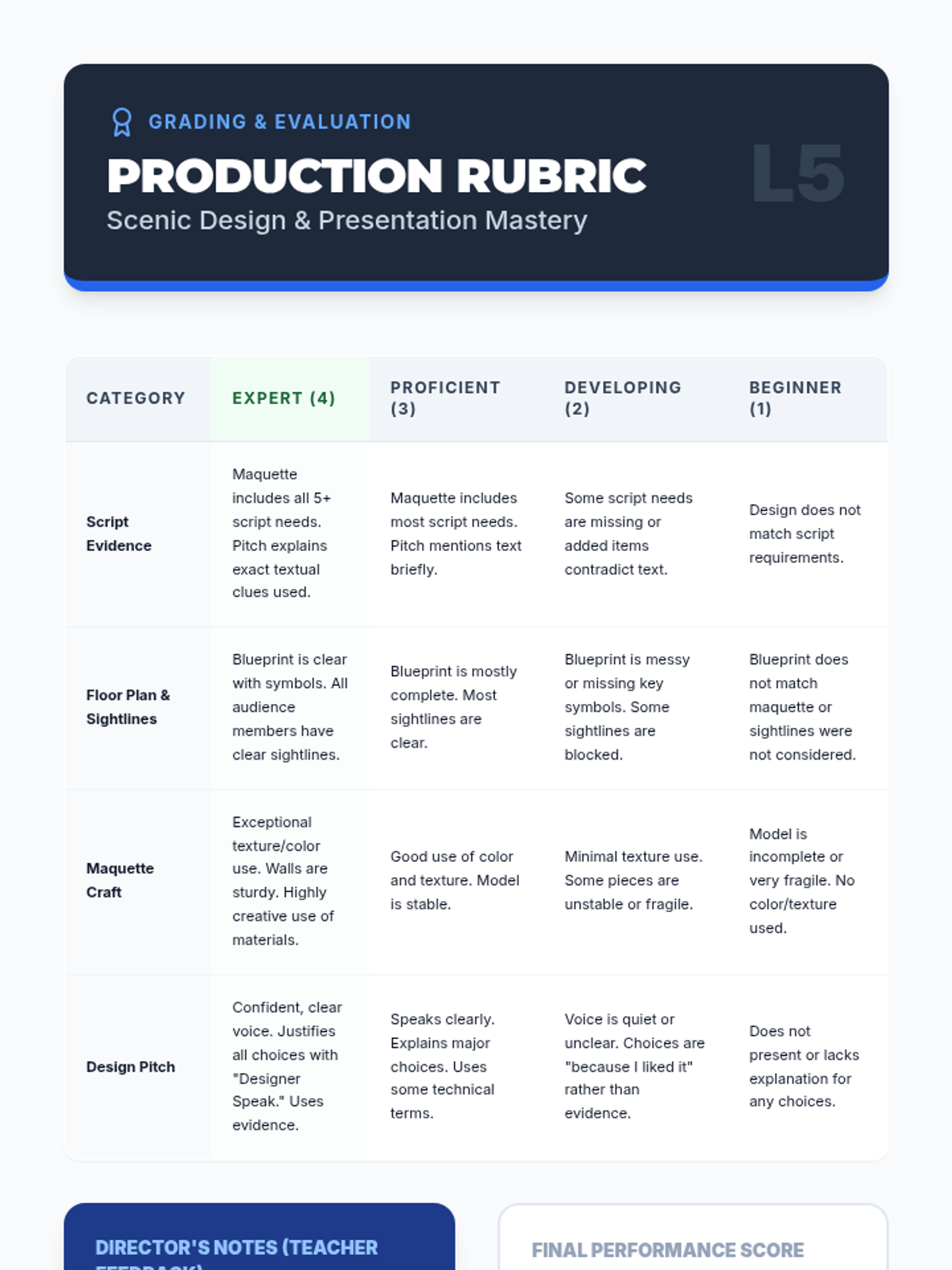
Students pitch their final designs to a 'Director,' justifying their creative choices based on textual evidence and practical stagecraft needs while providing peer feedback.
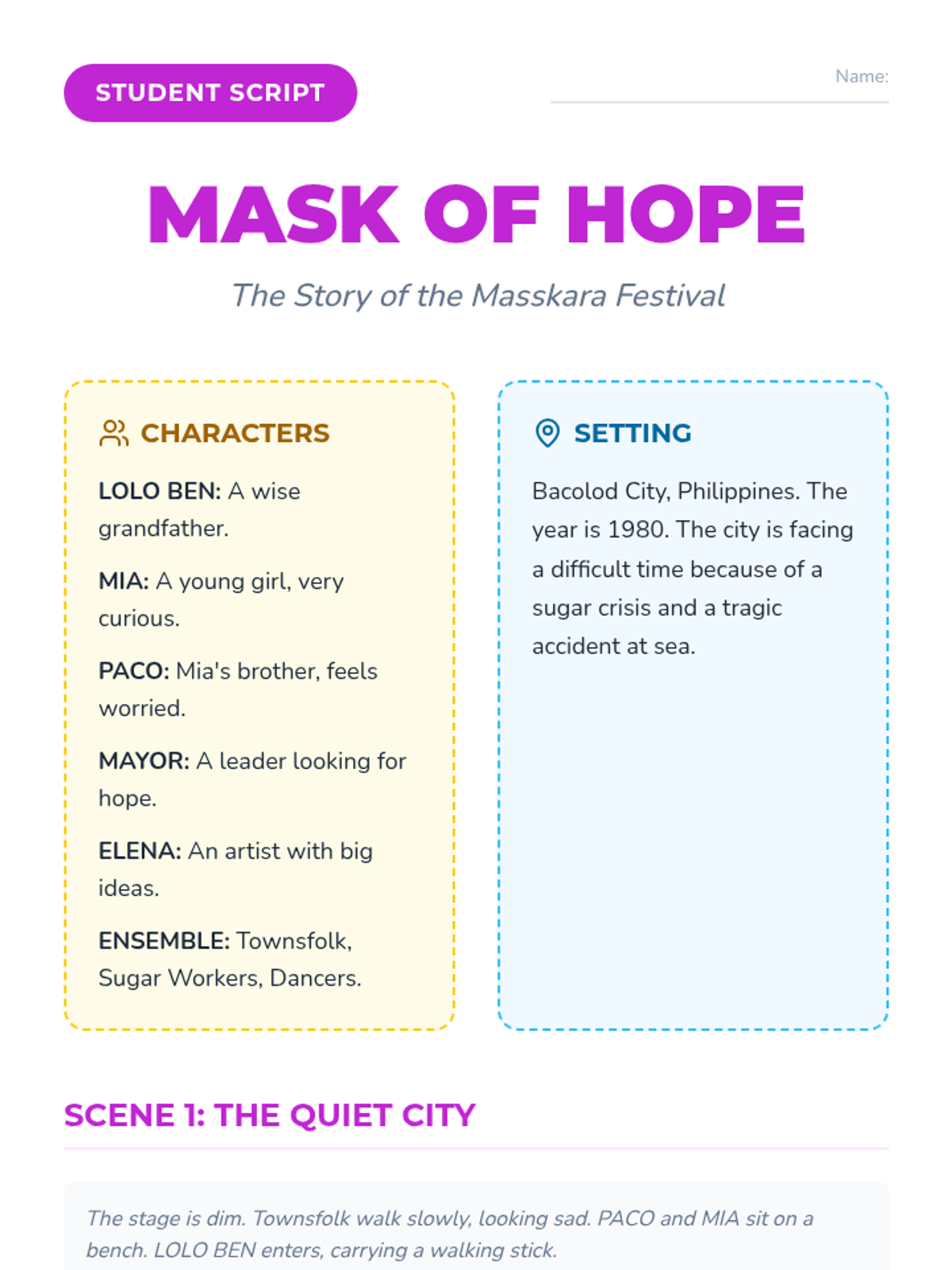
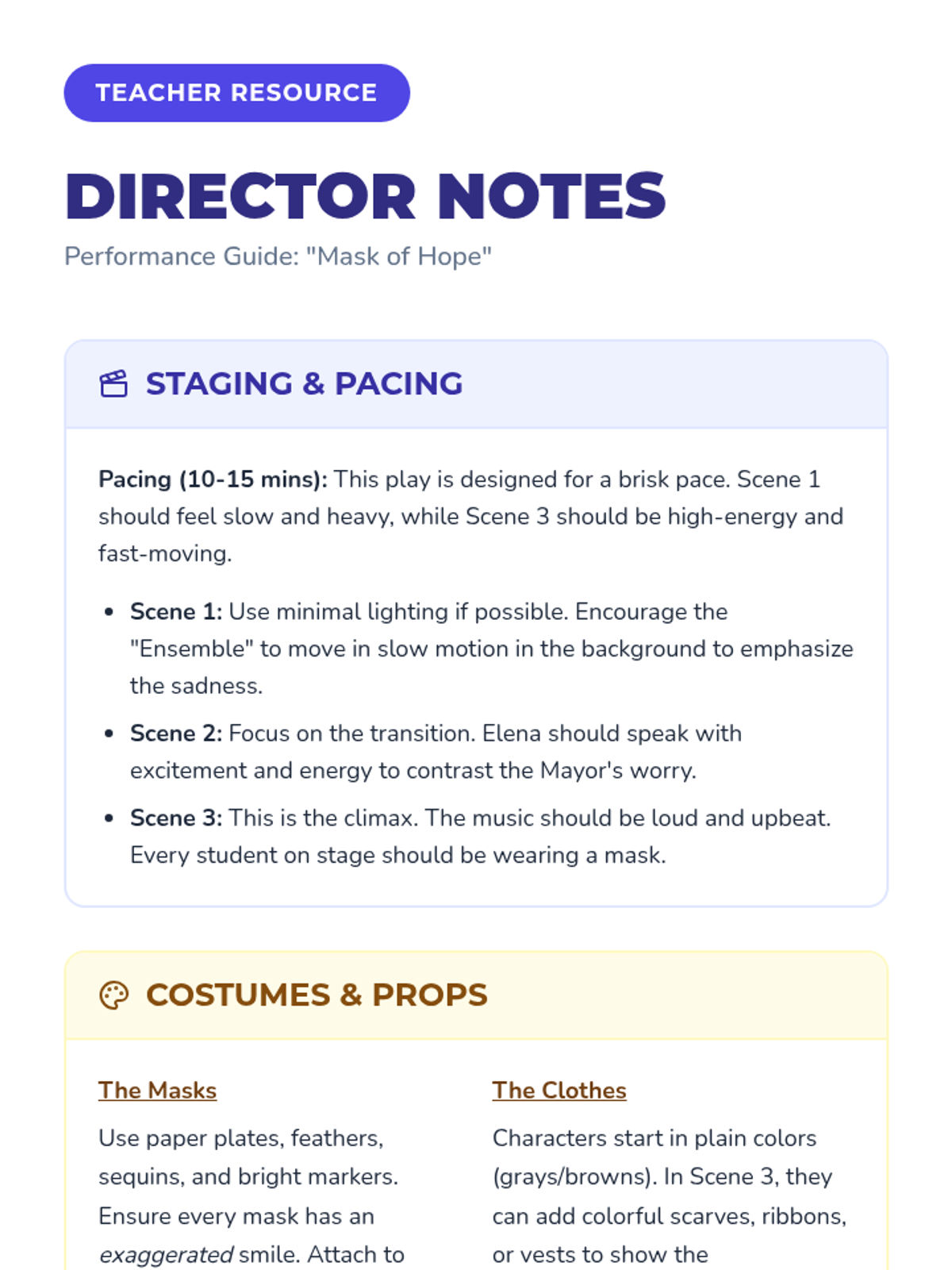
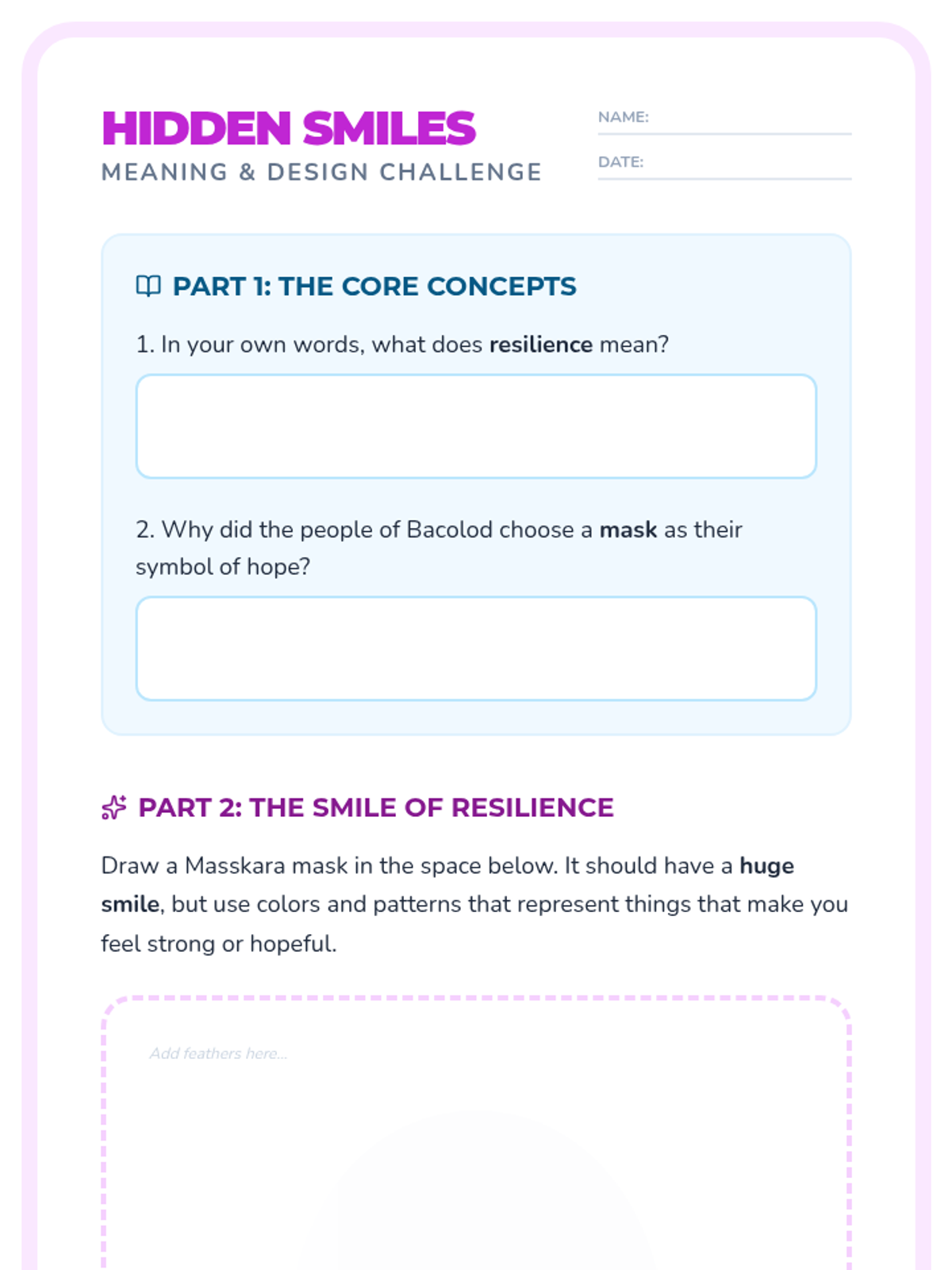
This lesson introduces students to the Masskara Festival of Bacolod City, focusing on its origins as a festival of resilience and hope. Students will perform a 10-15 minute play that dramatizes the historical context and the 'City of Smiles' spirit.
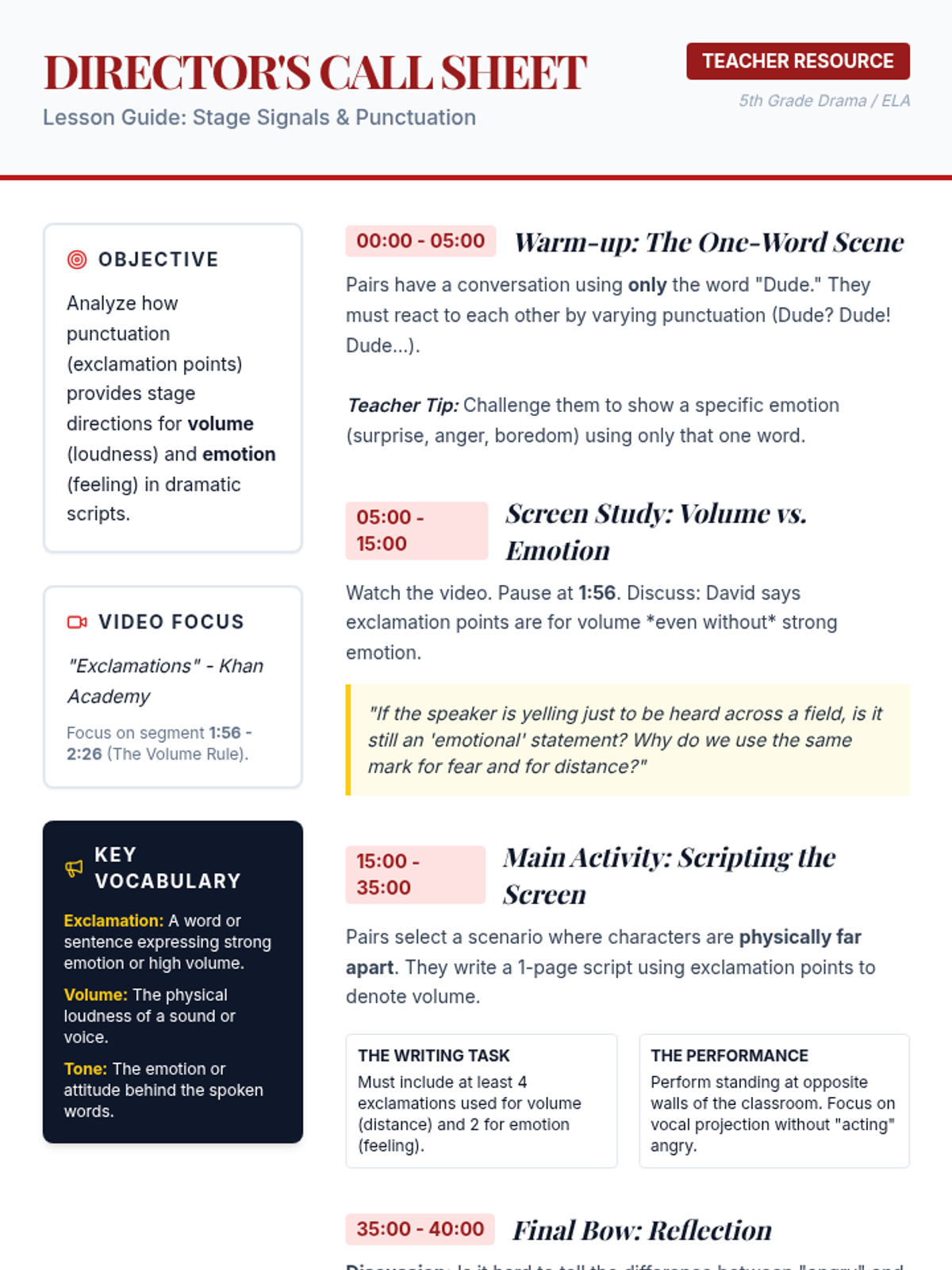
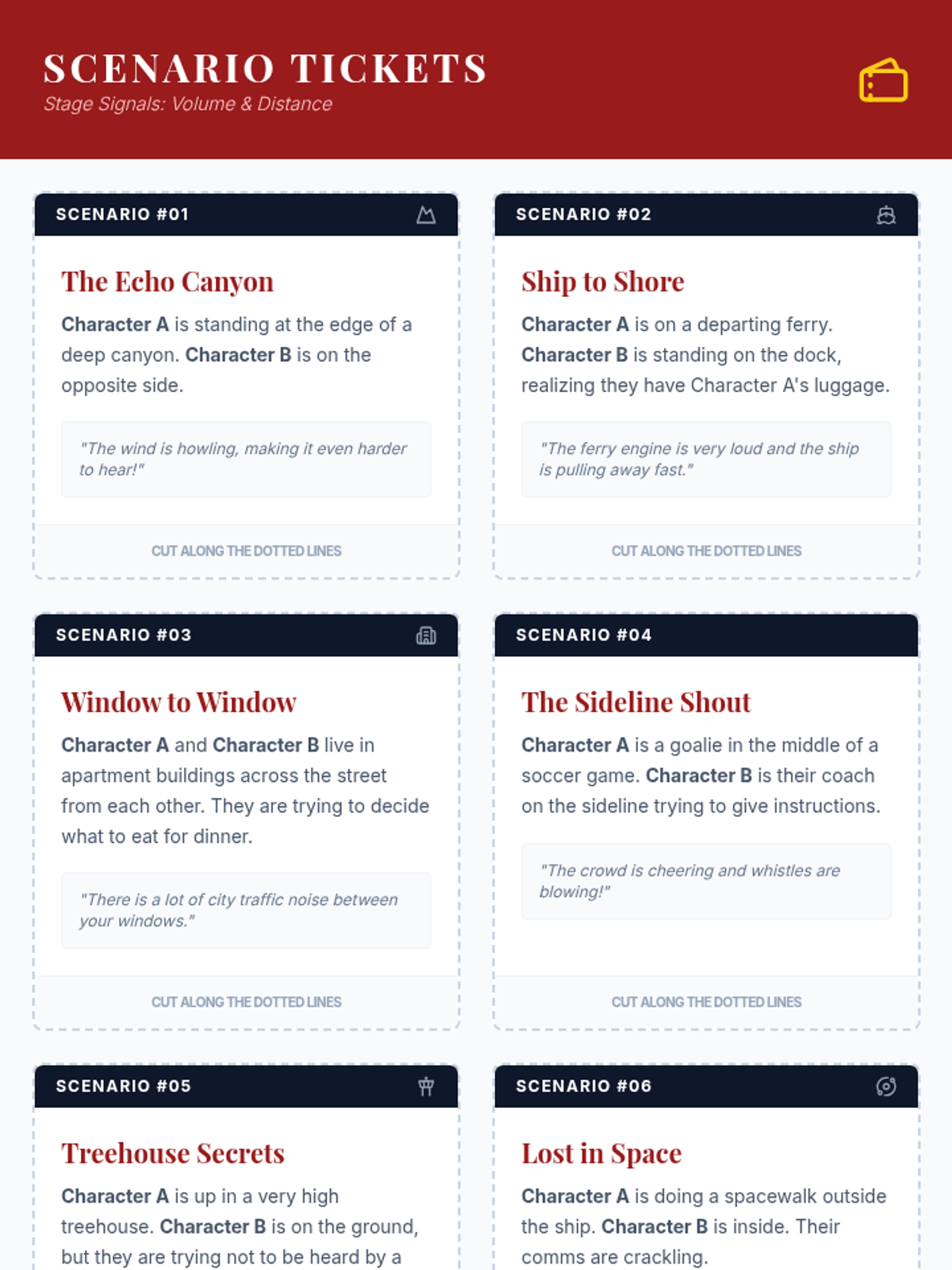
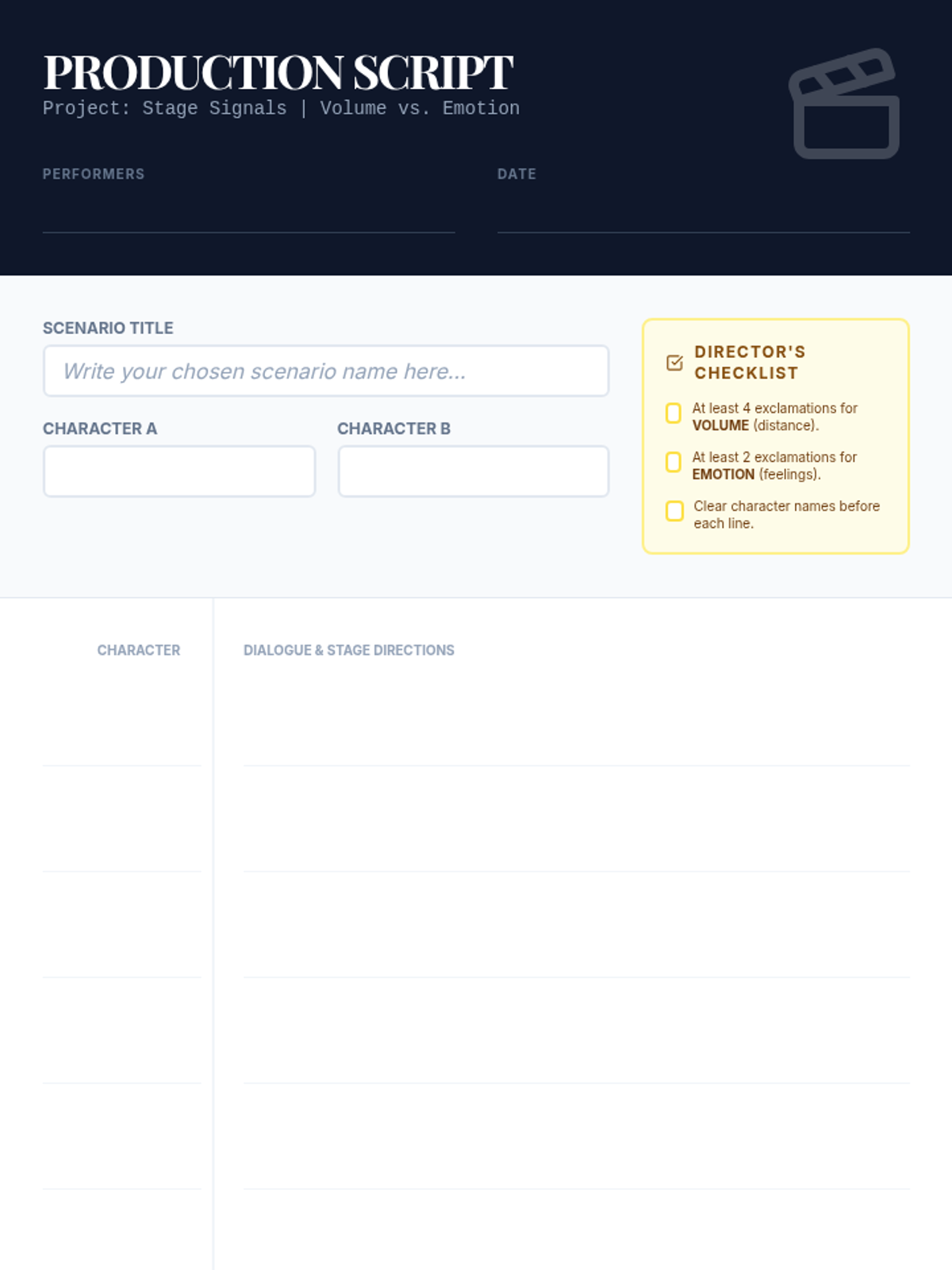
A drama-focused ELA lesson exploring how exclamation points function as stage directions for volume and emotion, featuring a scripting activity where students perform across distances.
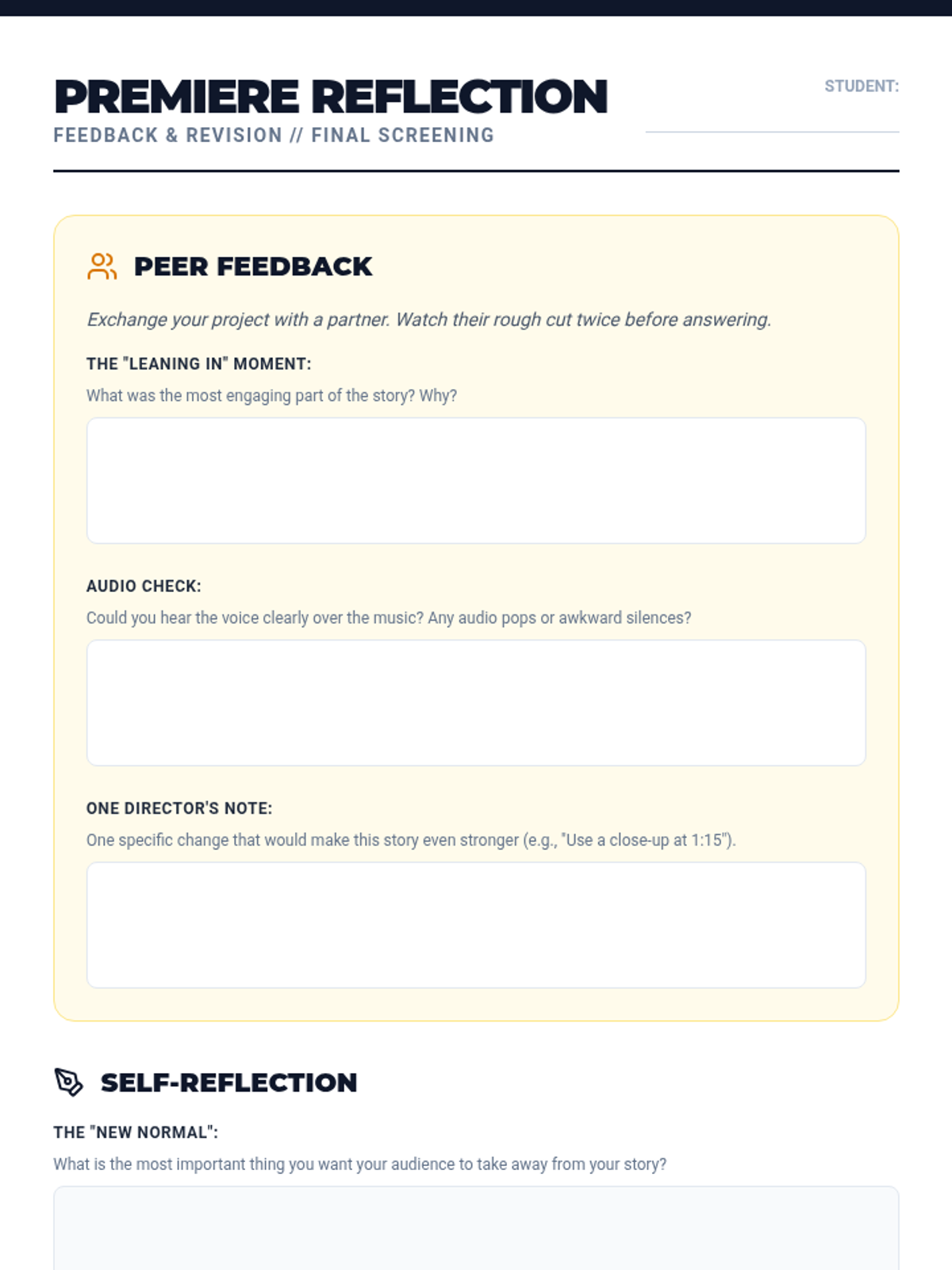
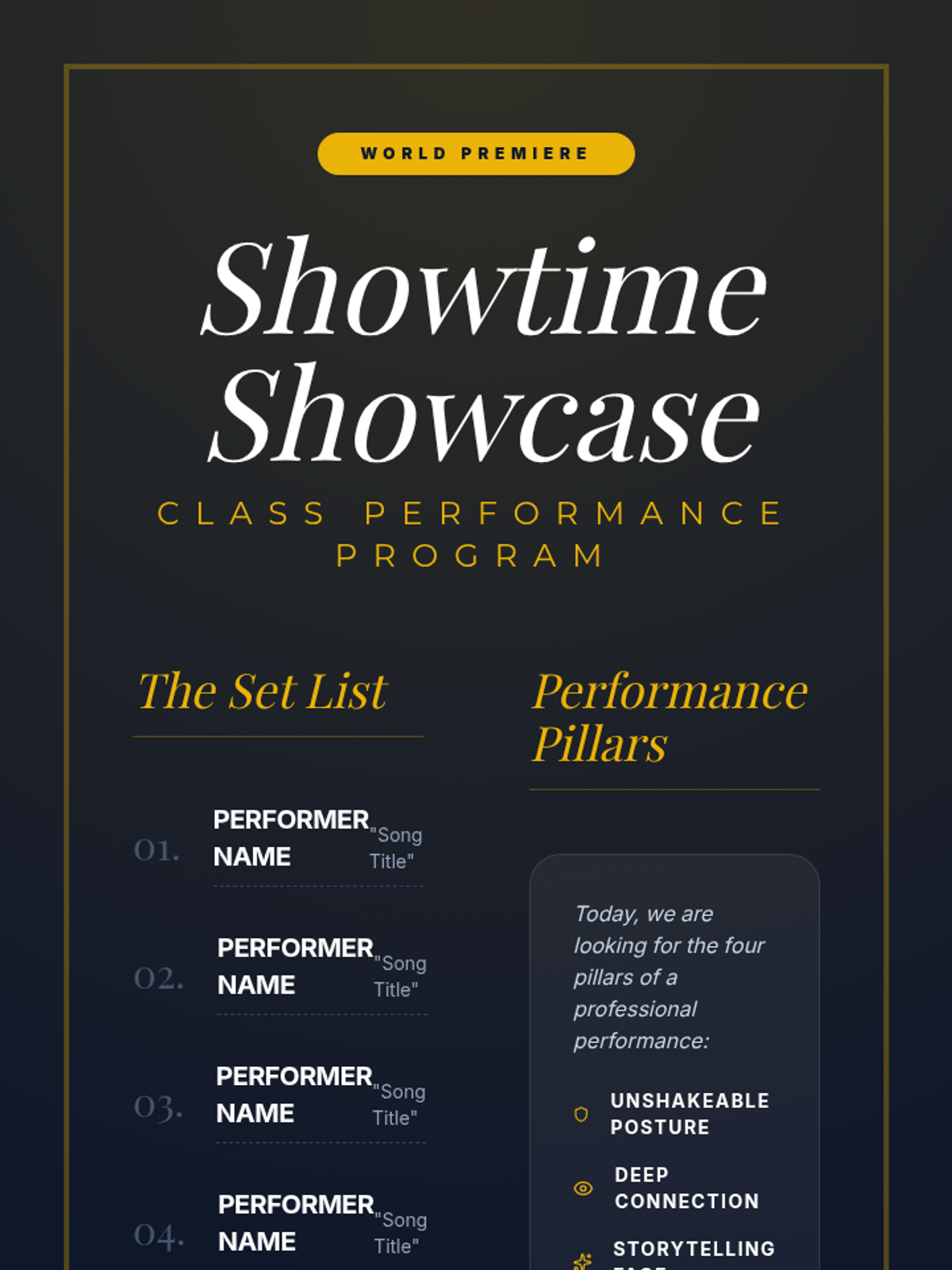
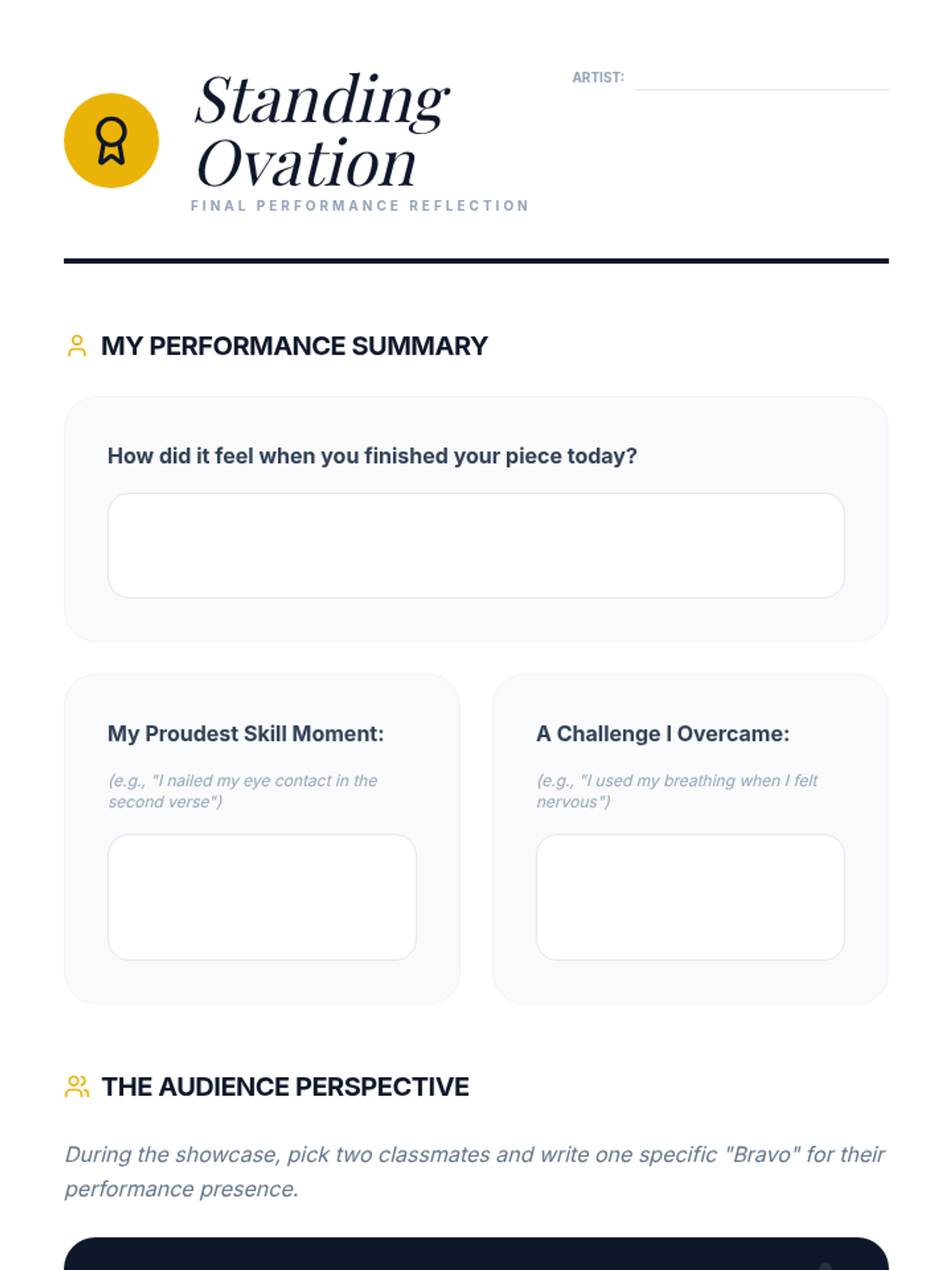
The capstone performance where students synthesize all skills learned to perform for their peers and provide structured feedback.
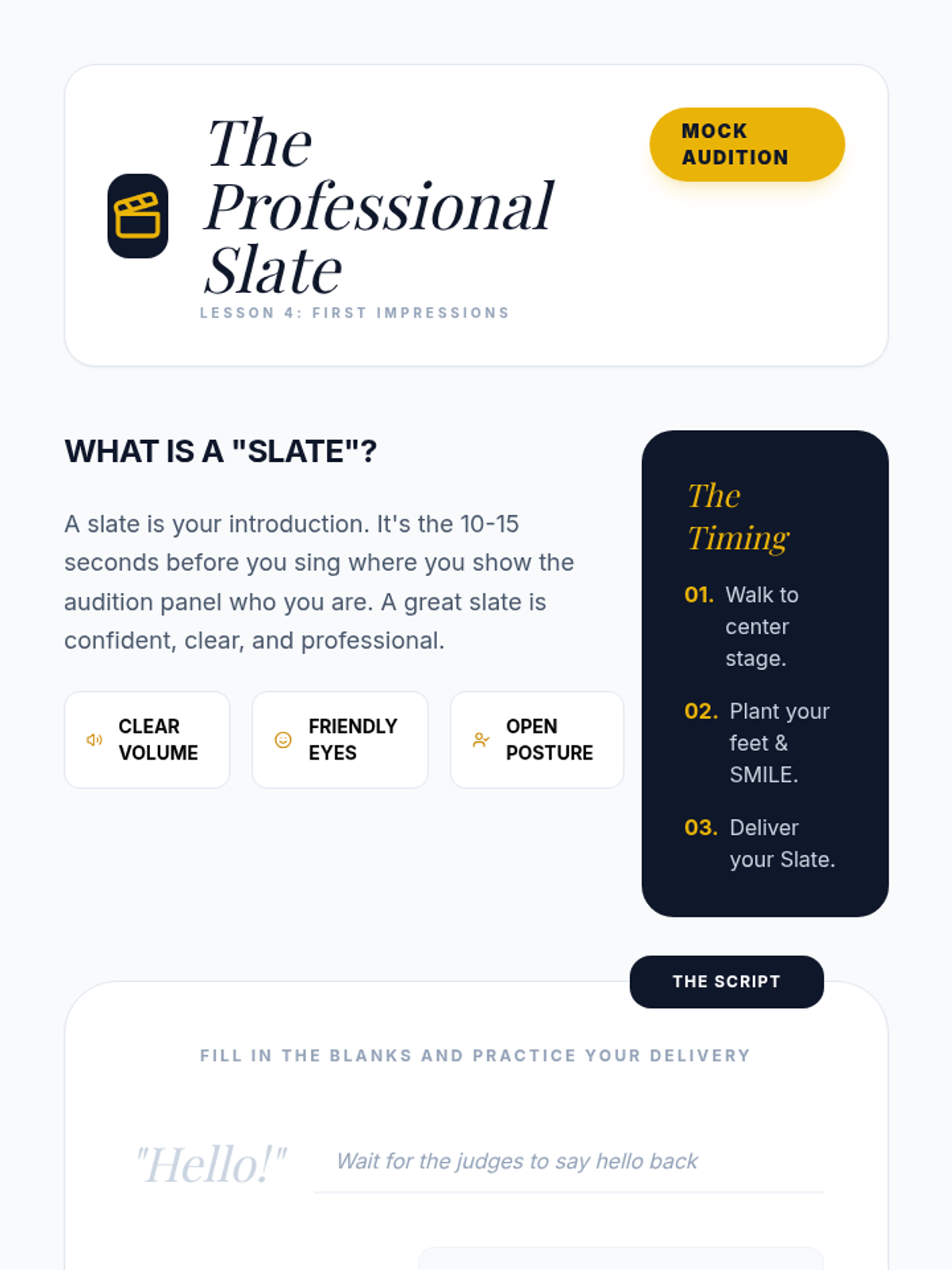
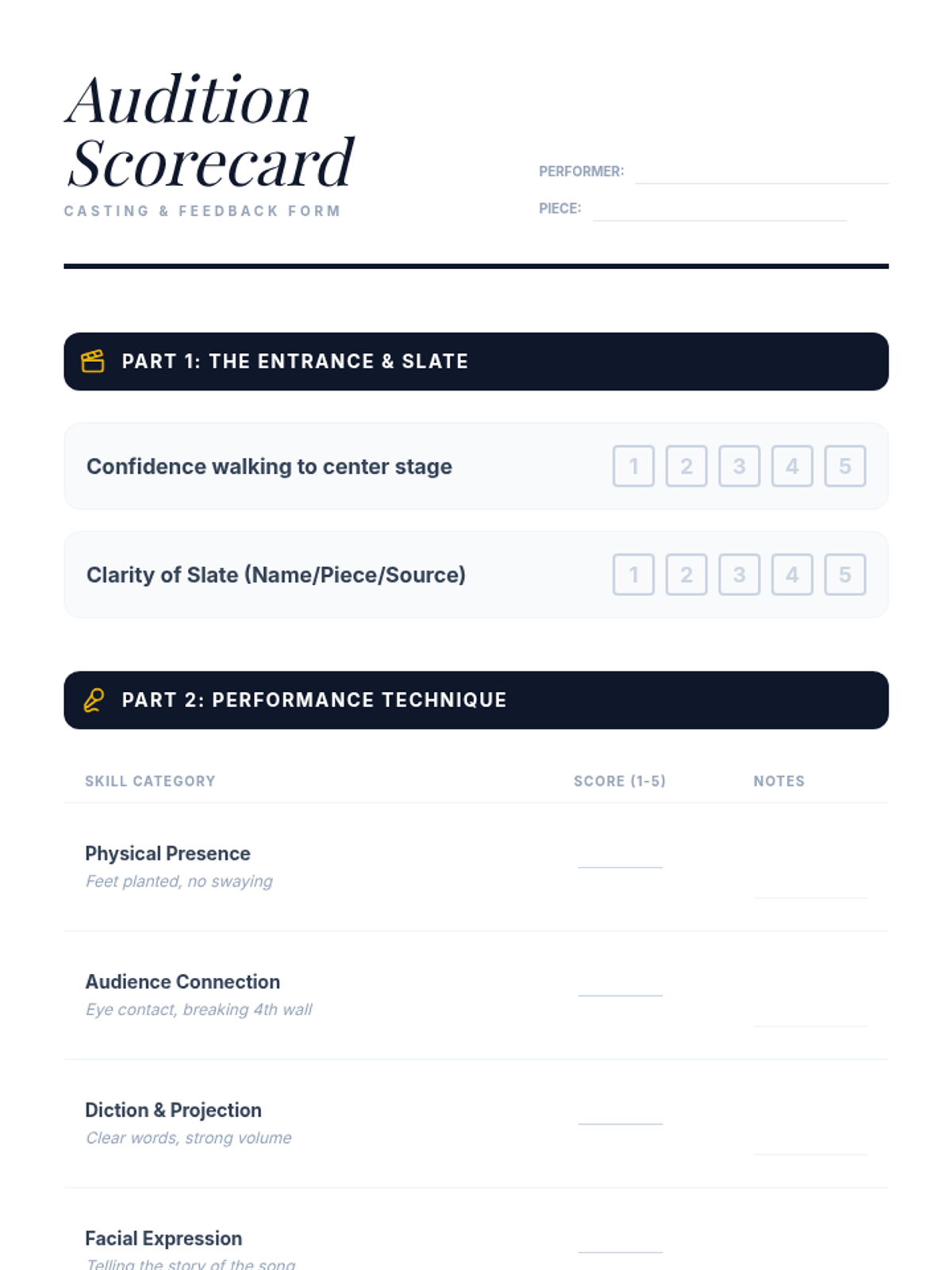
A simulation of a professional audition environment, focusing on professional etiquette, slating, and resilience.
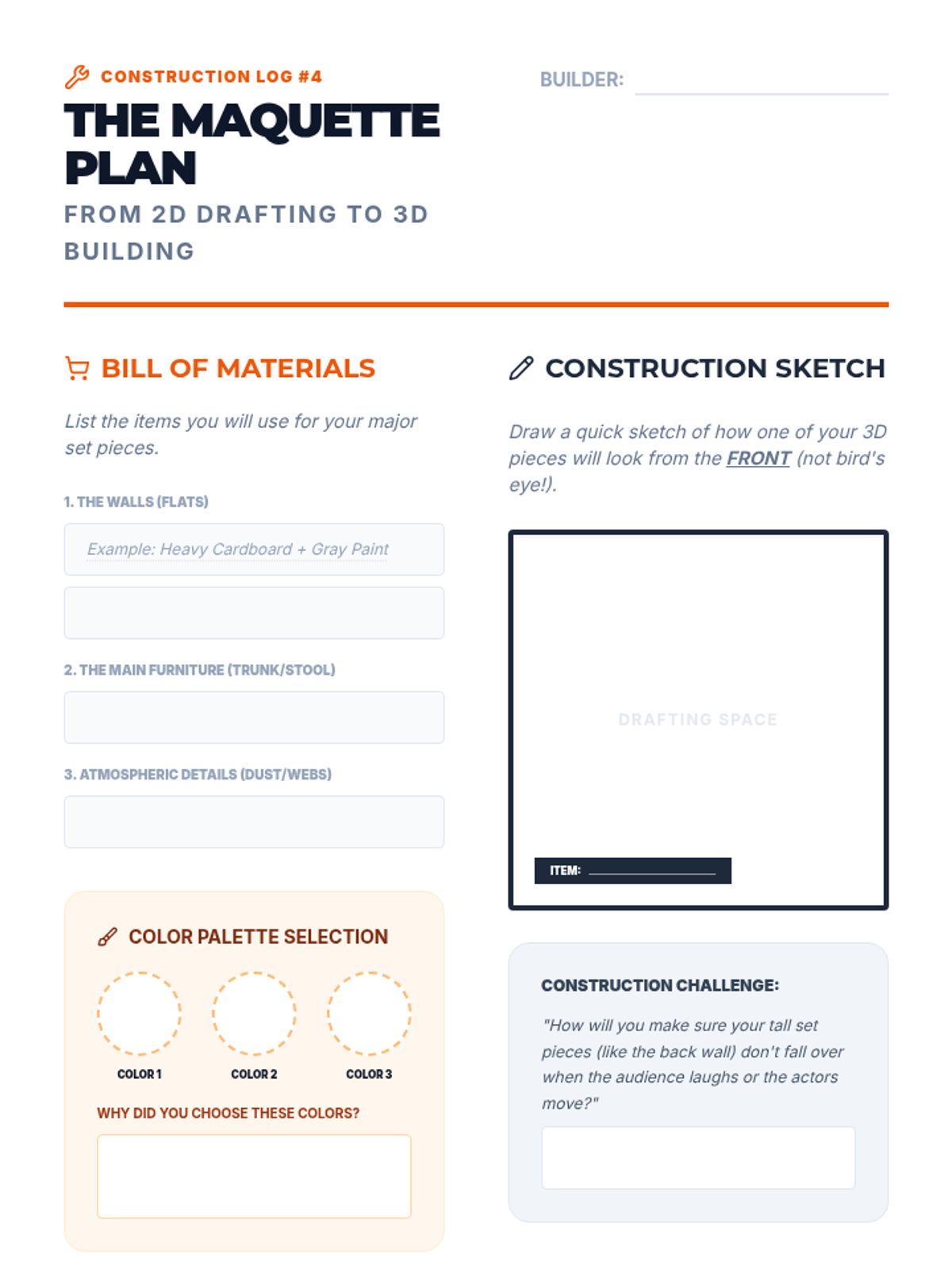
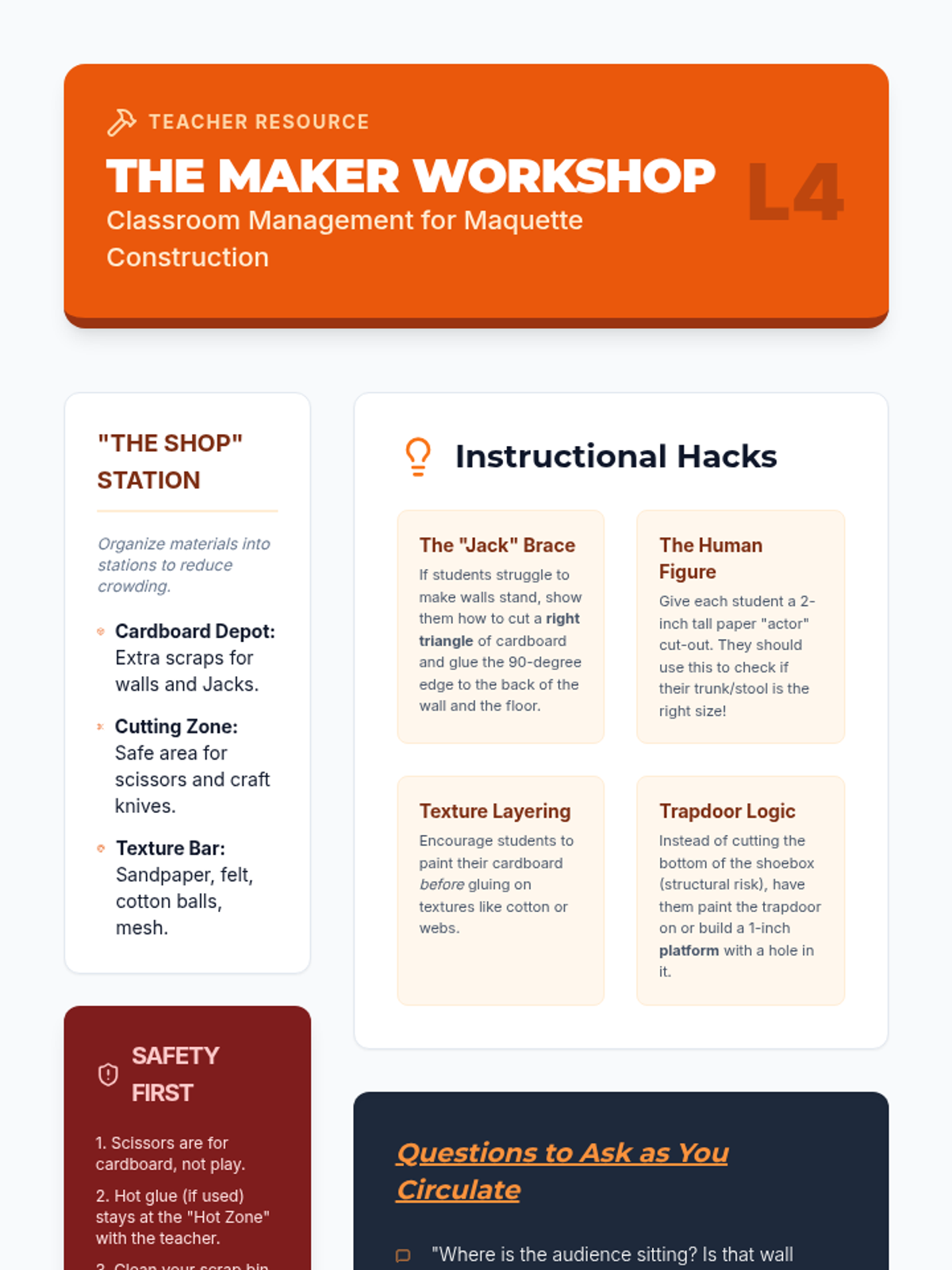
Students apply their floor plans to create a 3D scale model (maquette) using shoeboxes and craft materials, focusing on texture, color, and spatial relationships.
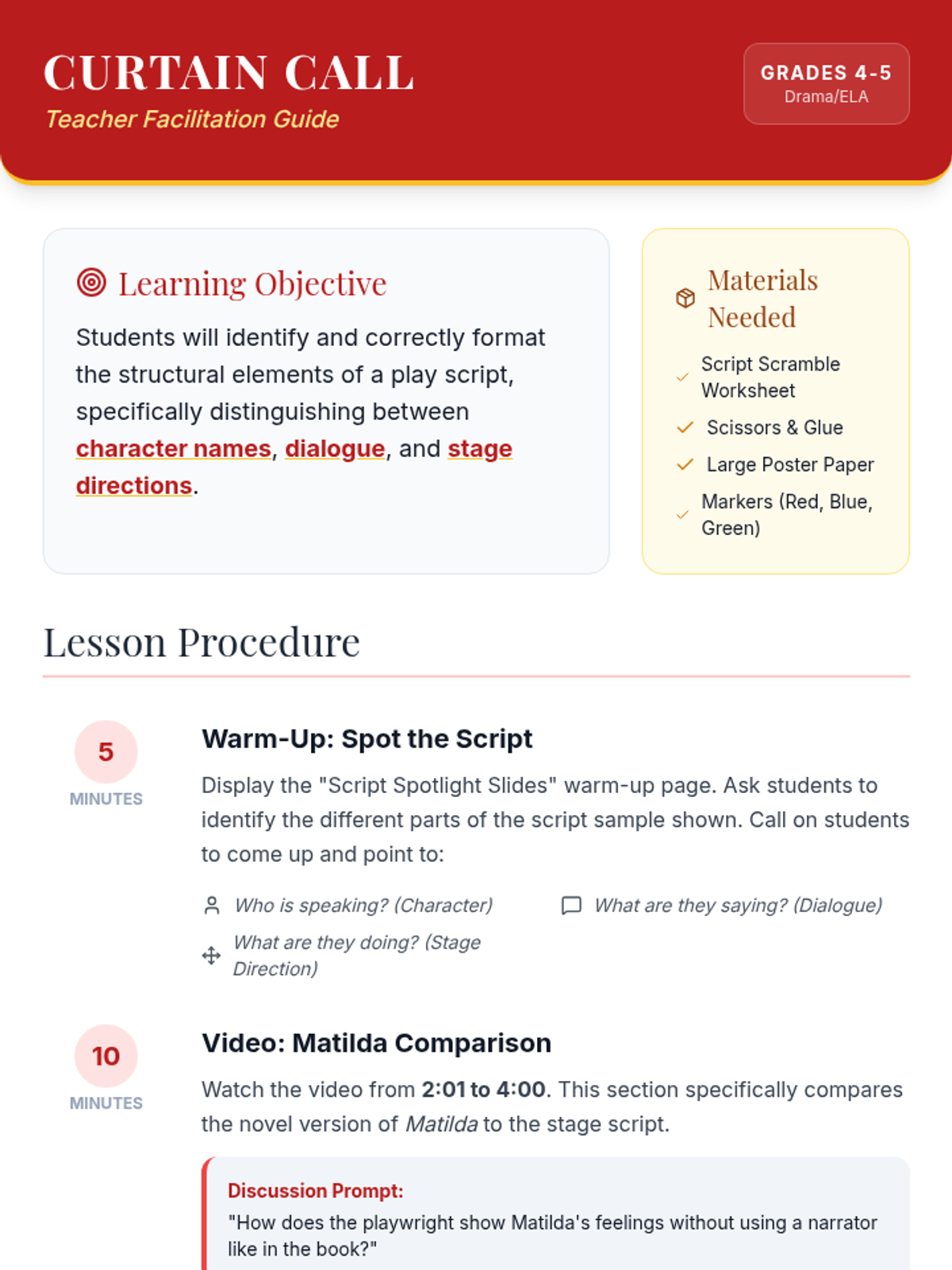
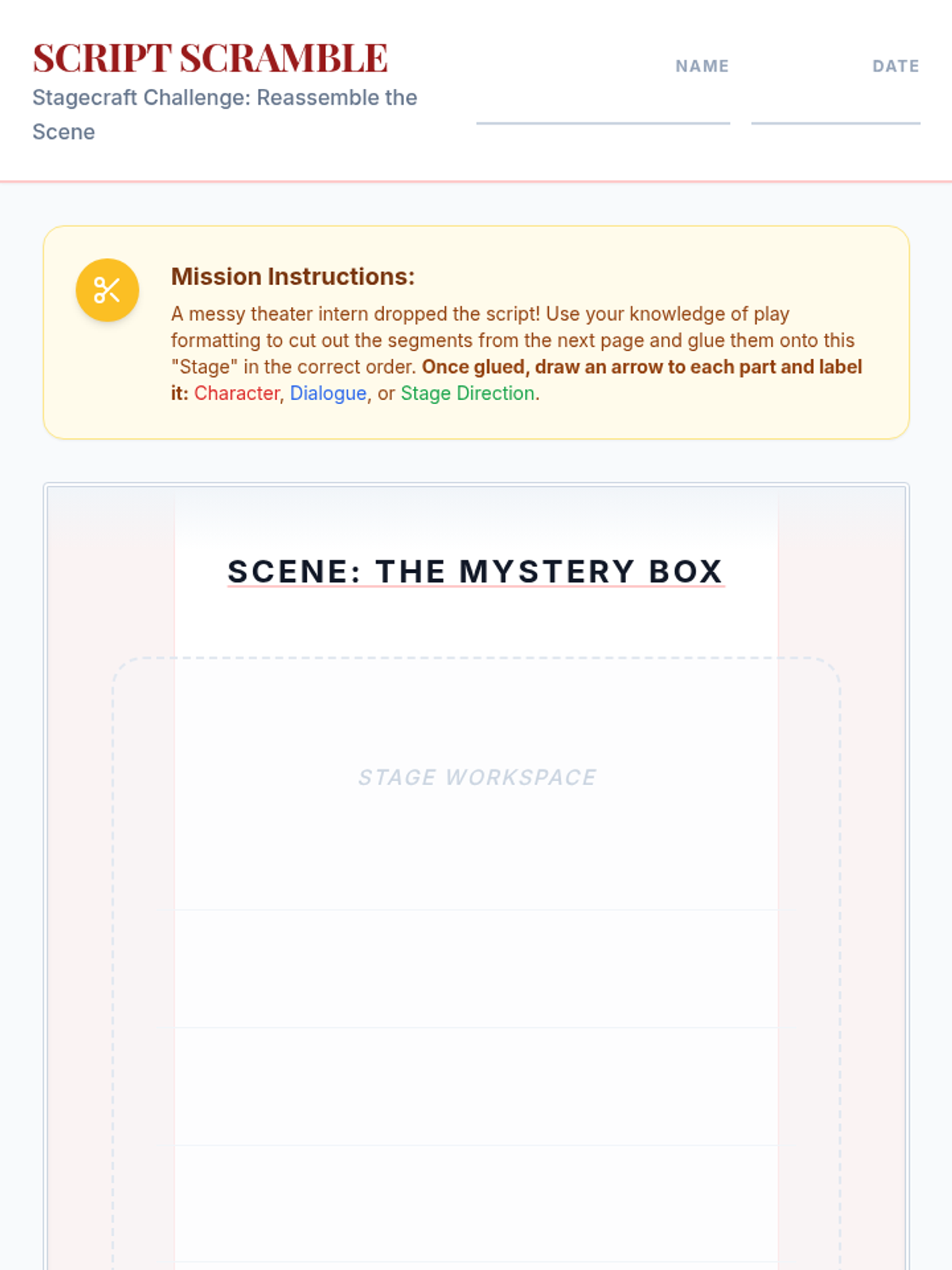
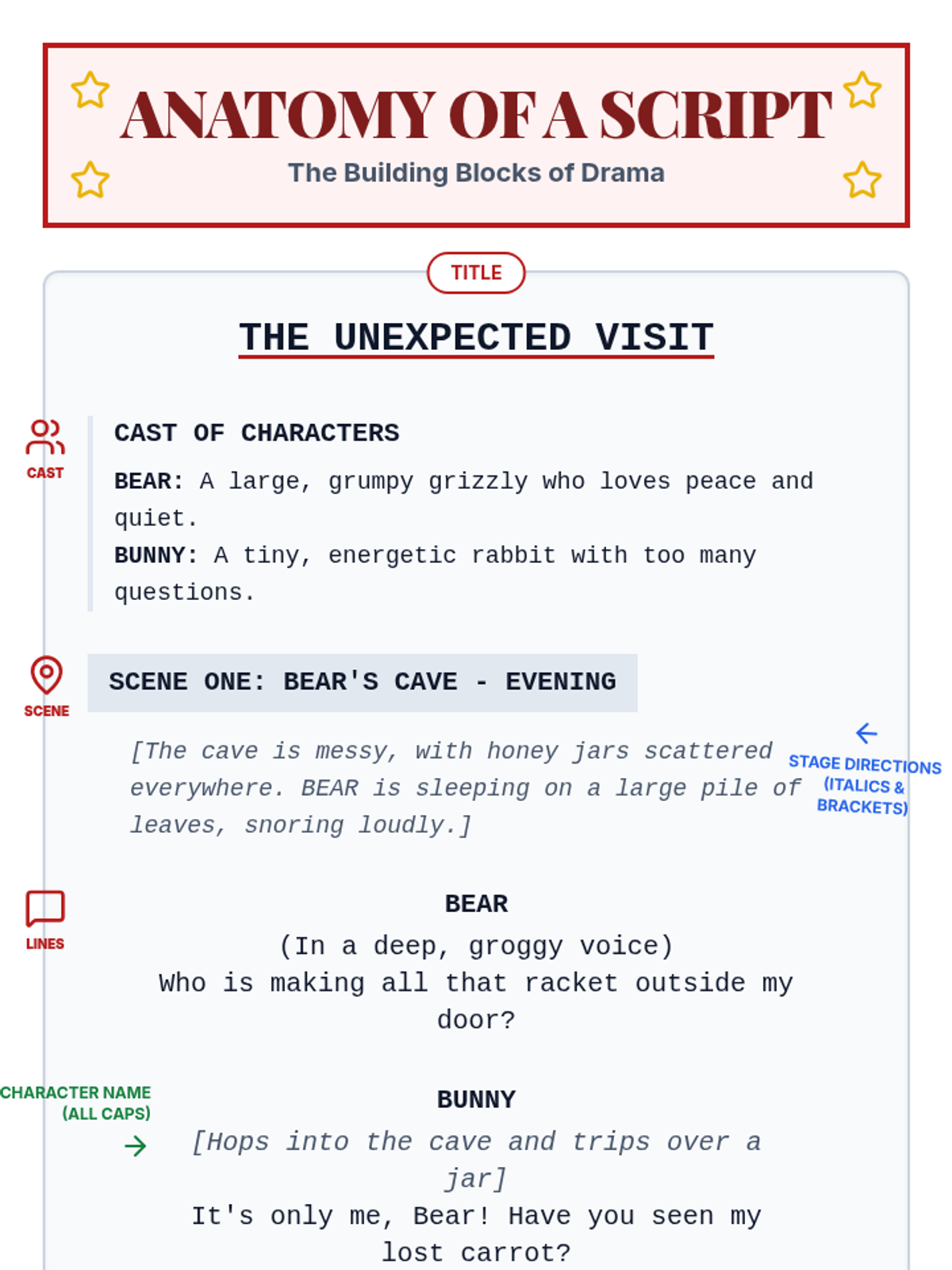
Students will dive into the world of theater by identifying the key structural elements of a play script, including character names, dialogue, and stage directions, through a hands-on 'Script Scramble' activity and a video comparison of 'Matilda'.
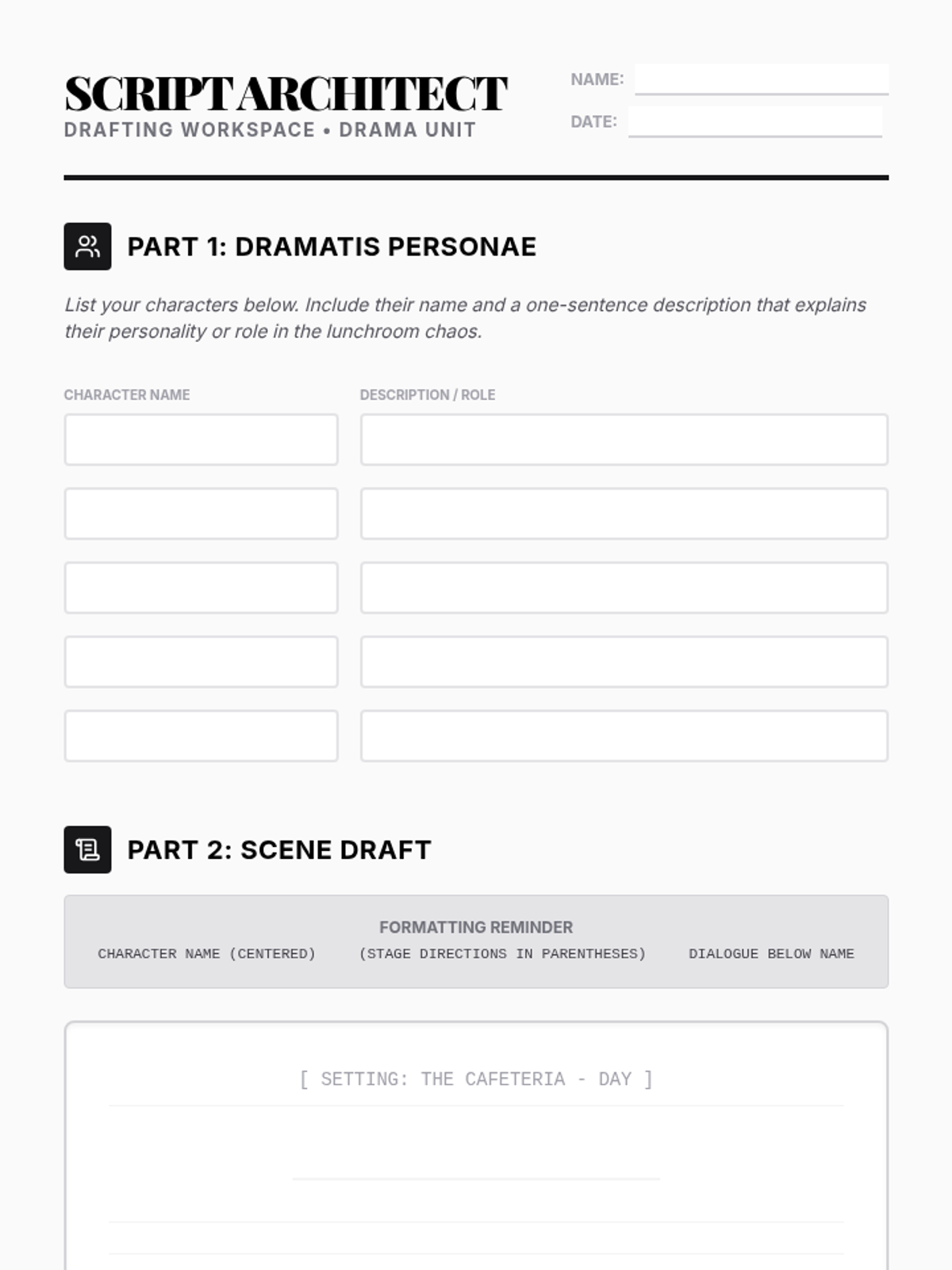
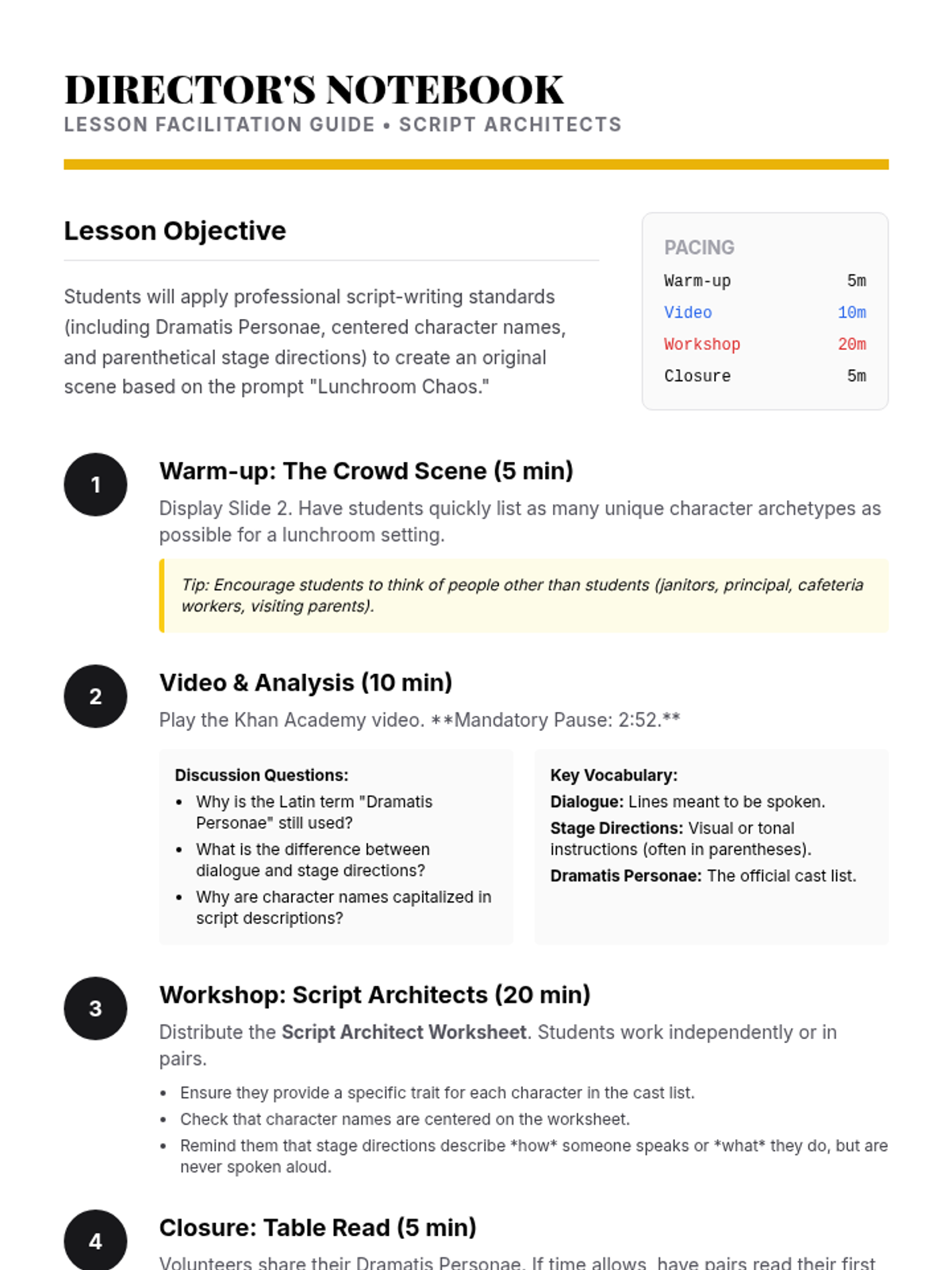
A hands-on introduction to script formatting and character development. Students brainstorm a chaotic lunchroom scene, learn theatrical terminology from a Khan Academy video, and draft their own 'Dramatis Personae' and initial script lines.
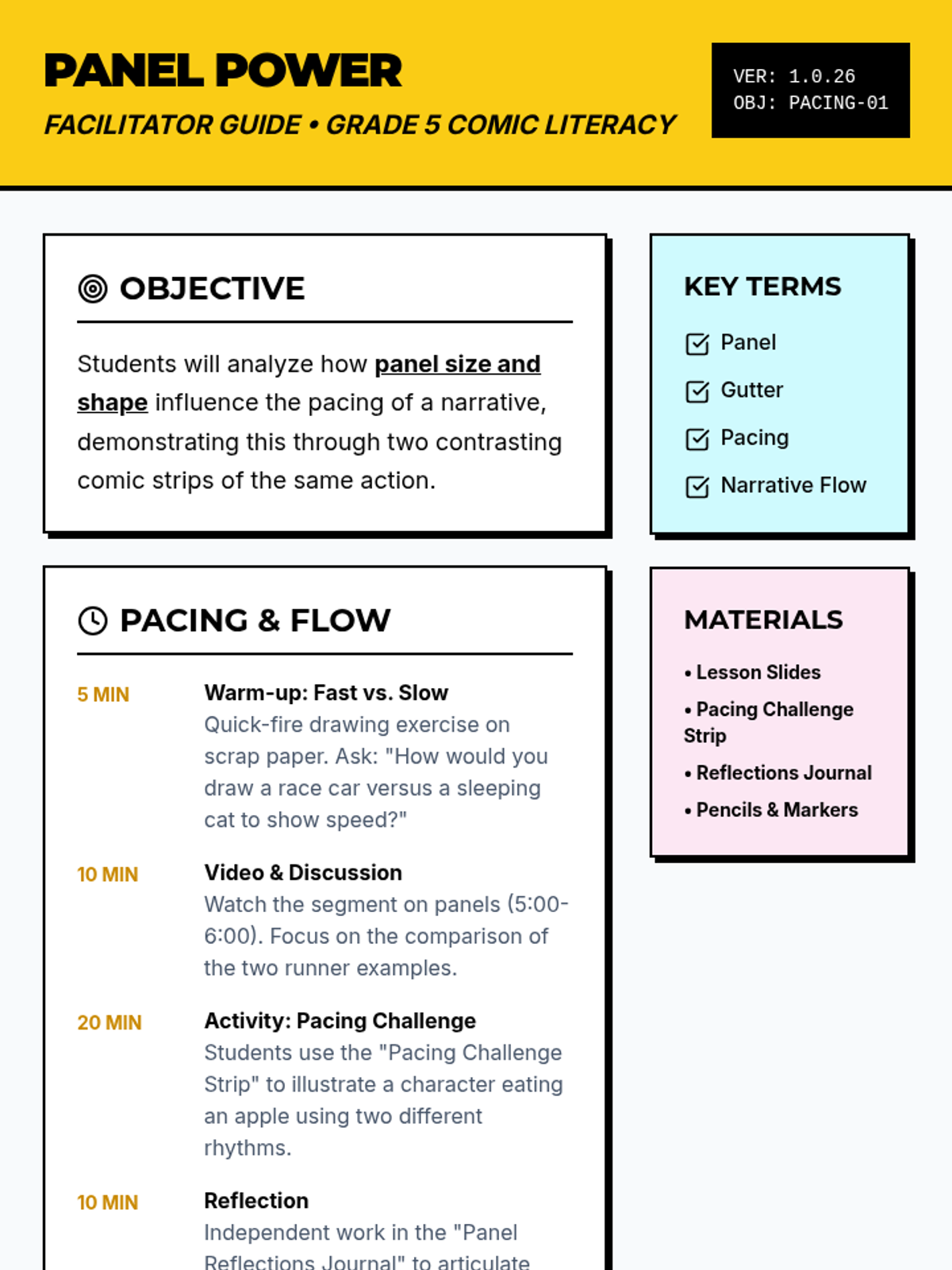
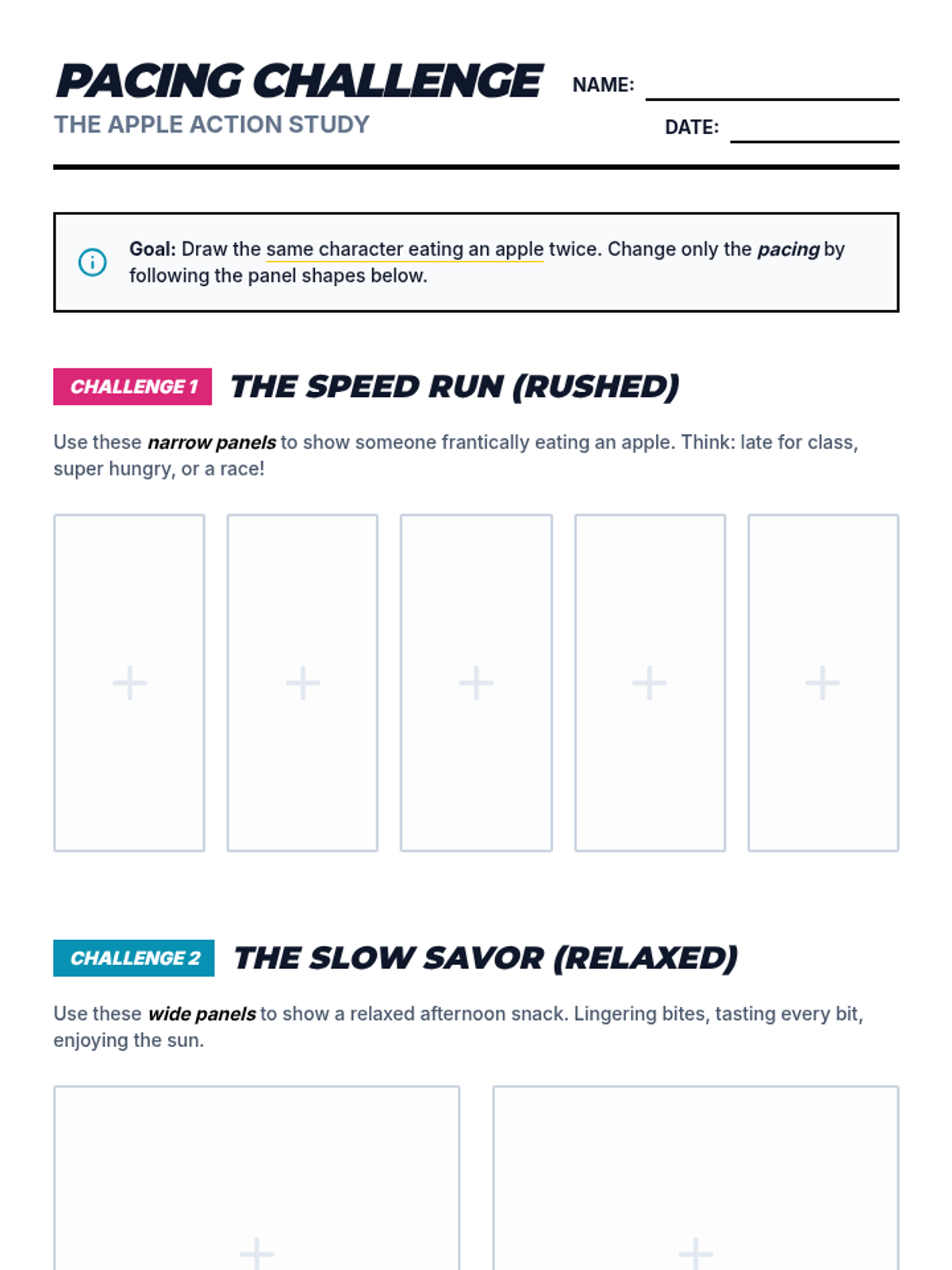
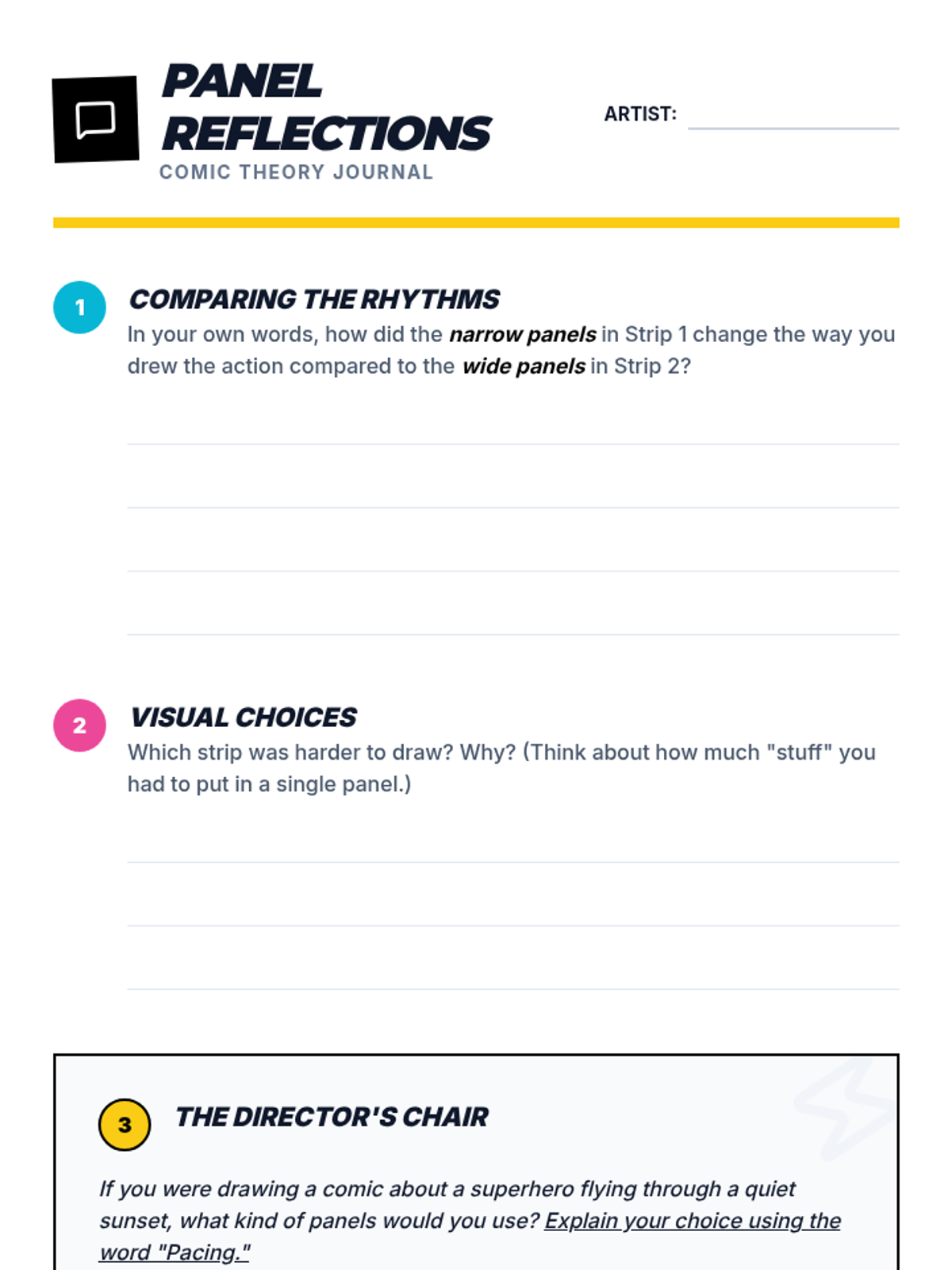
Students explore the visual language of comics, focusing on how the size and shape of panels act as a 'clock' for the reader, controlling the speed and rhythm of a story.
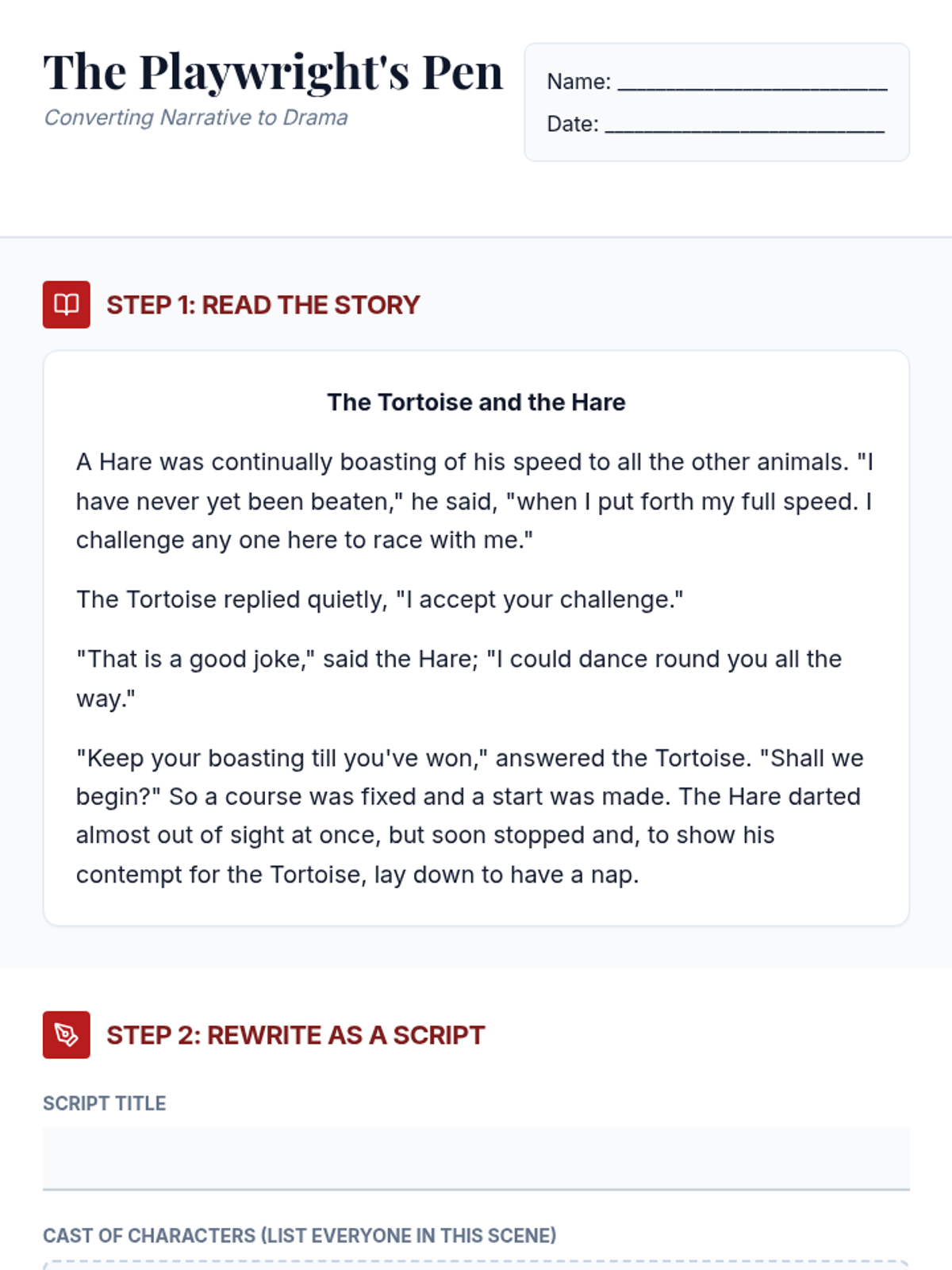
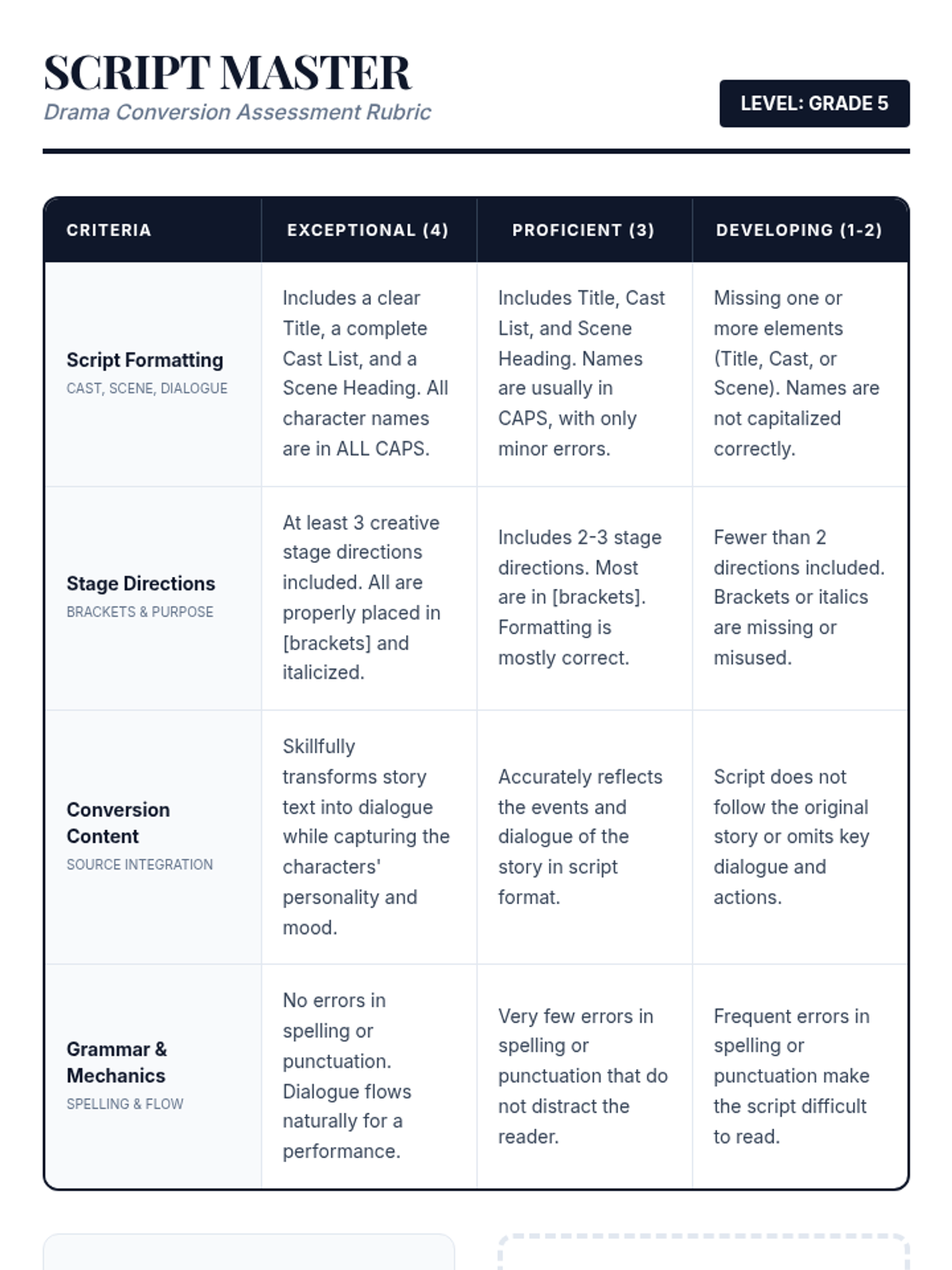
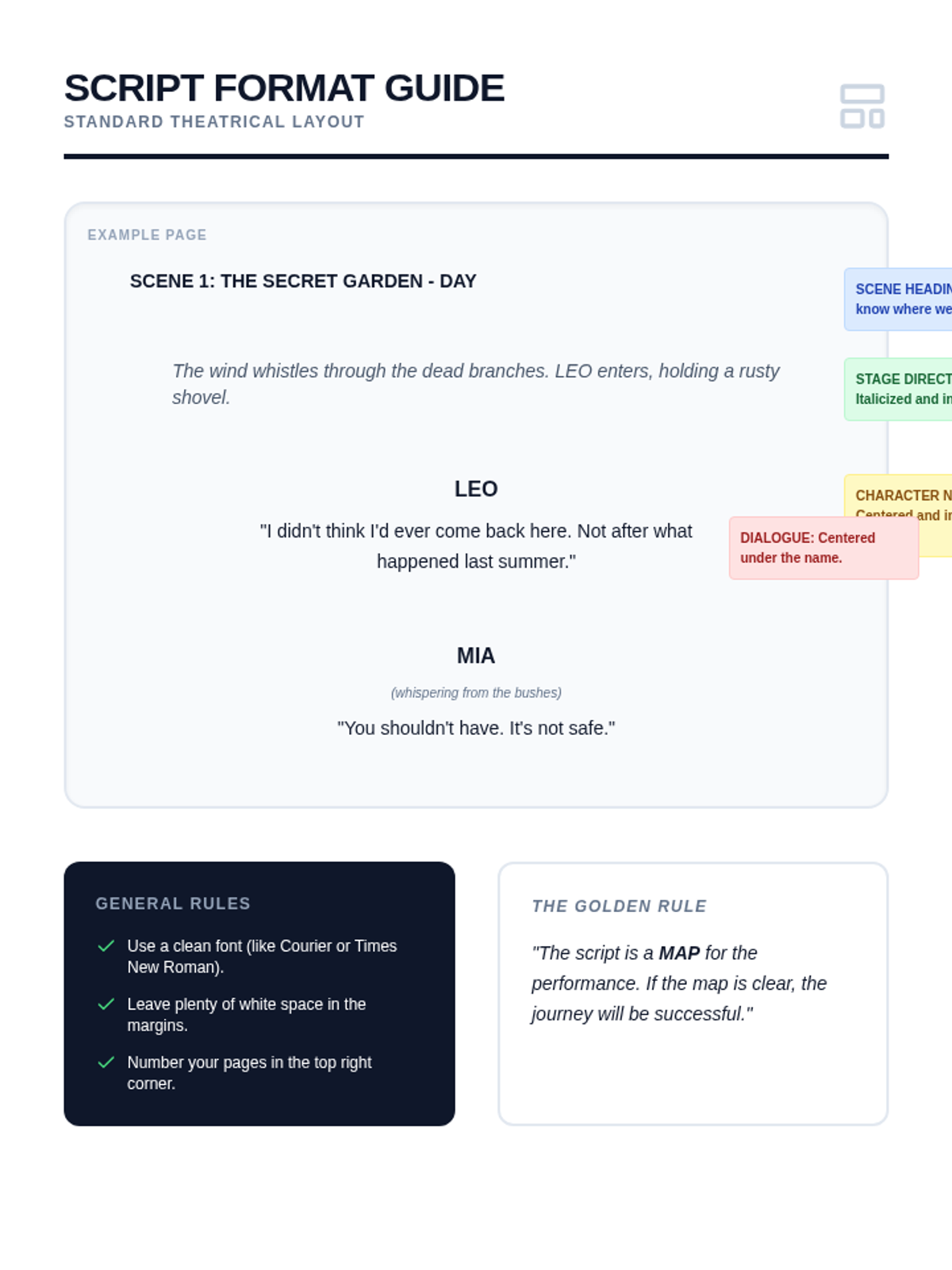
A 5th-grade lesson on converting narrative text into drama scripts, focusing on the visual conventions of playwriting including cast lists, scene headings, and stage directions.
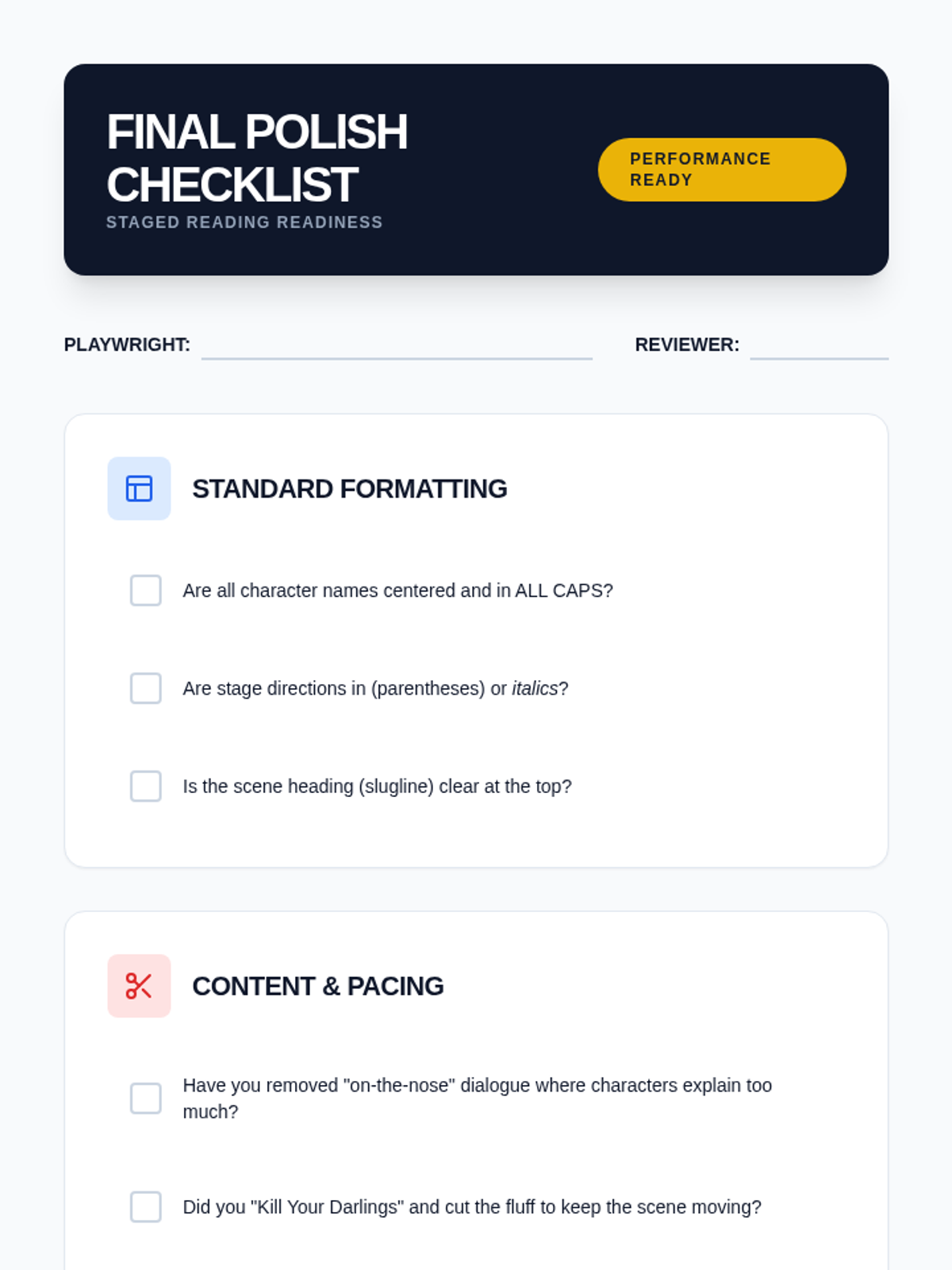
Students perform a final polish of their scripts, focusing on professional formatting and clarity before a final staged reading.
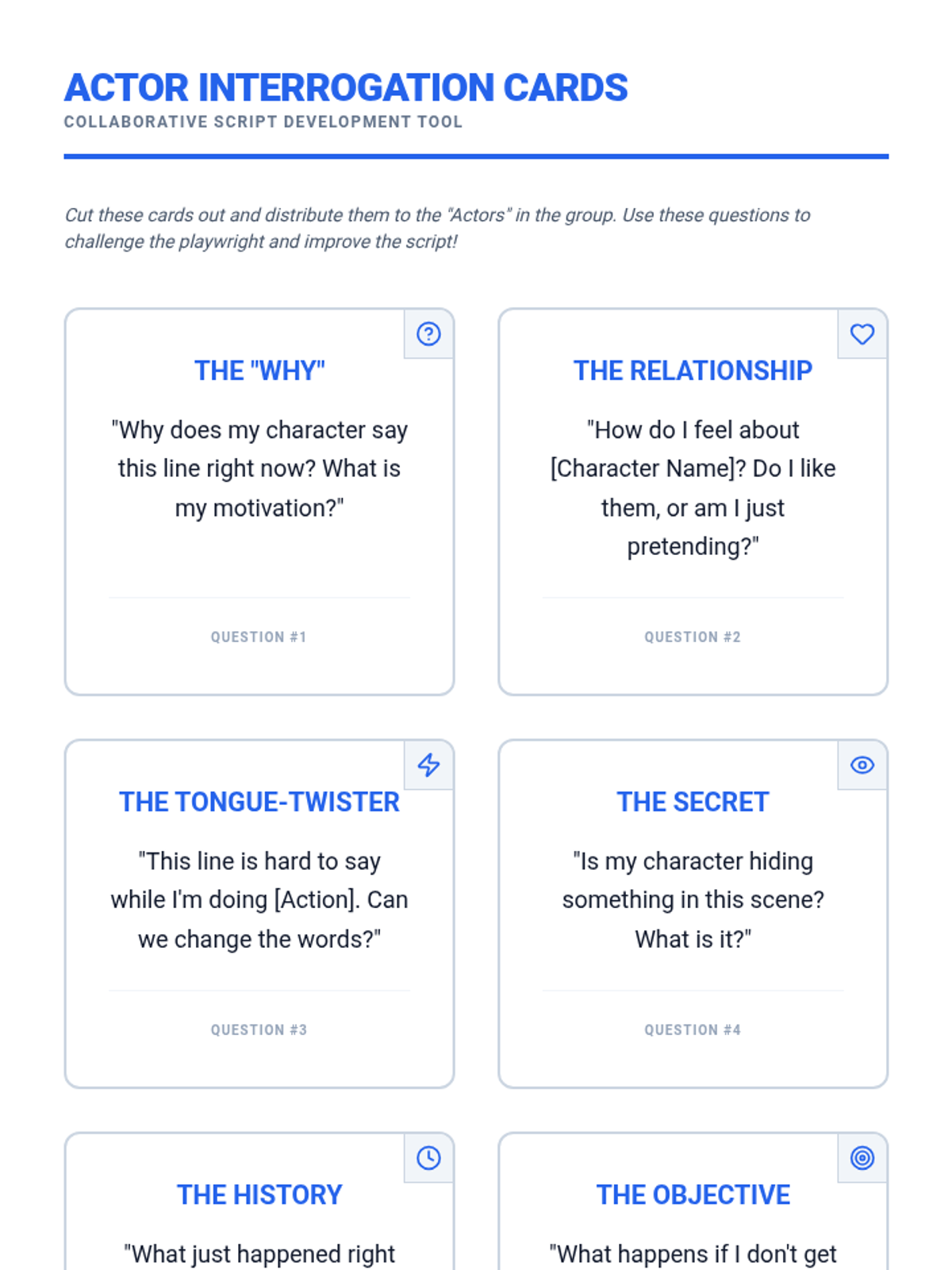
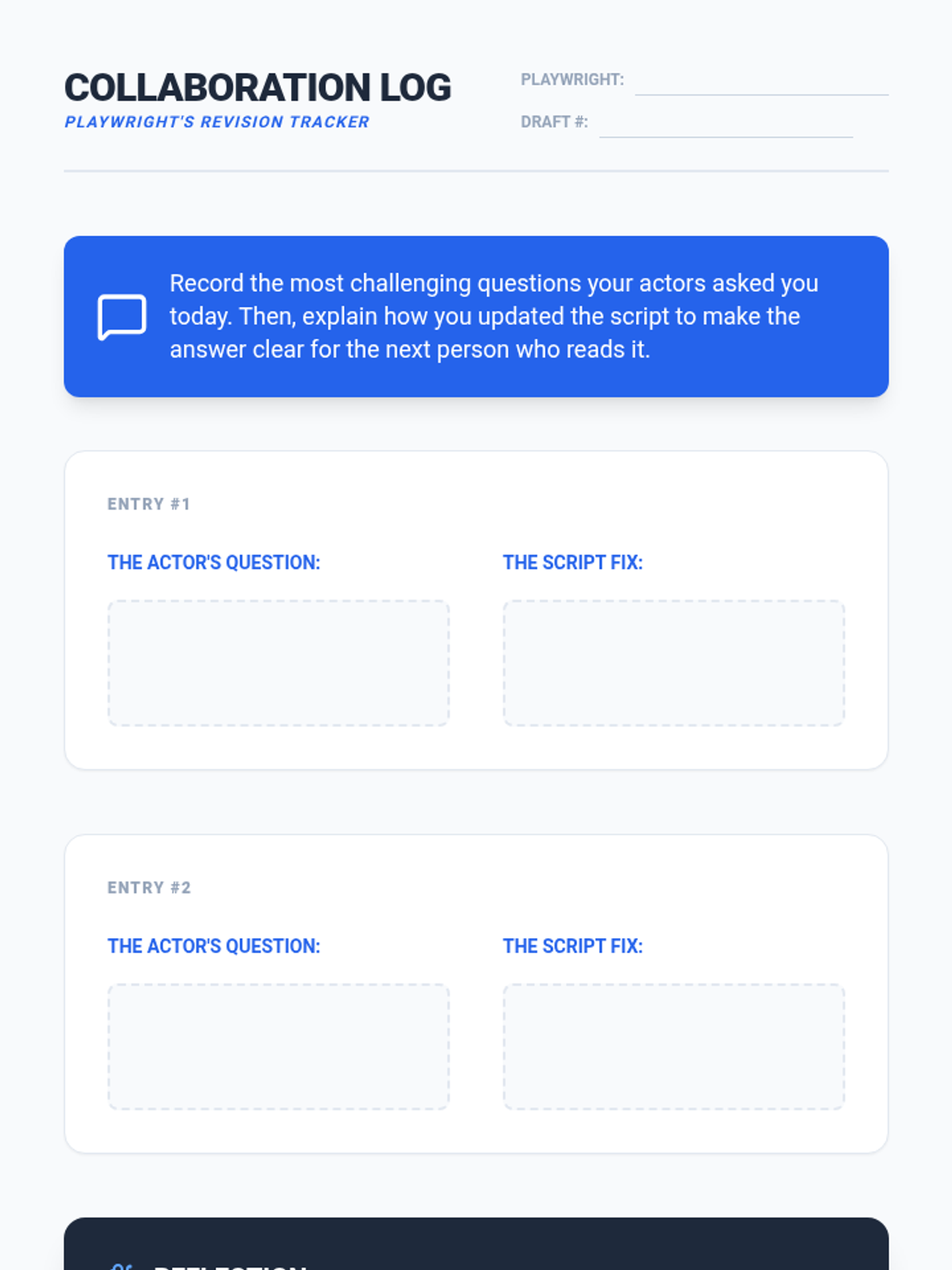
Students simulate the collaborative rehearsal process by incorporating feedback from actors into their script revisions.
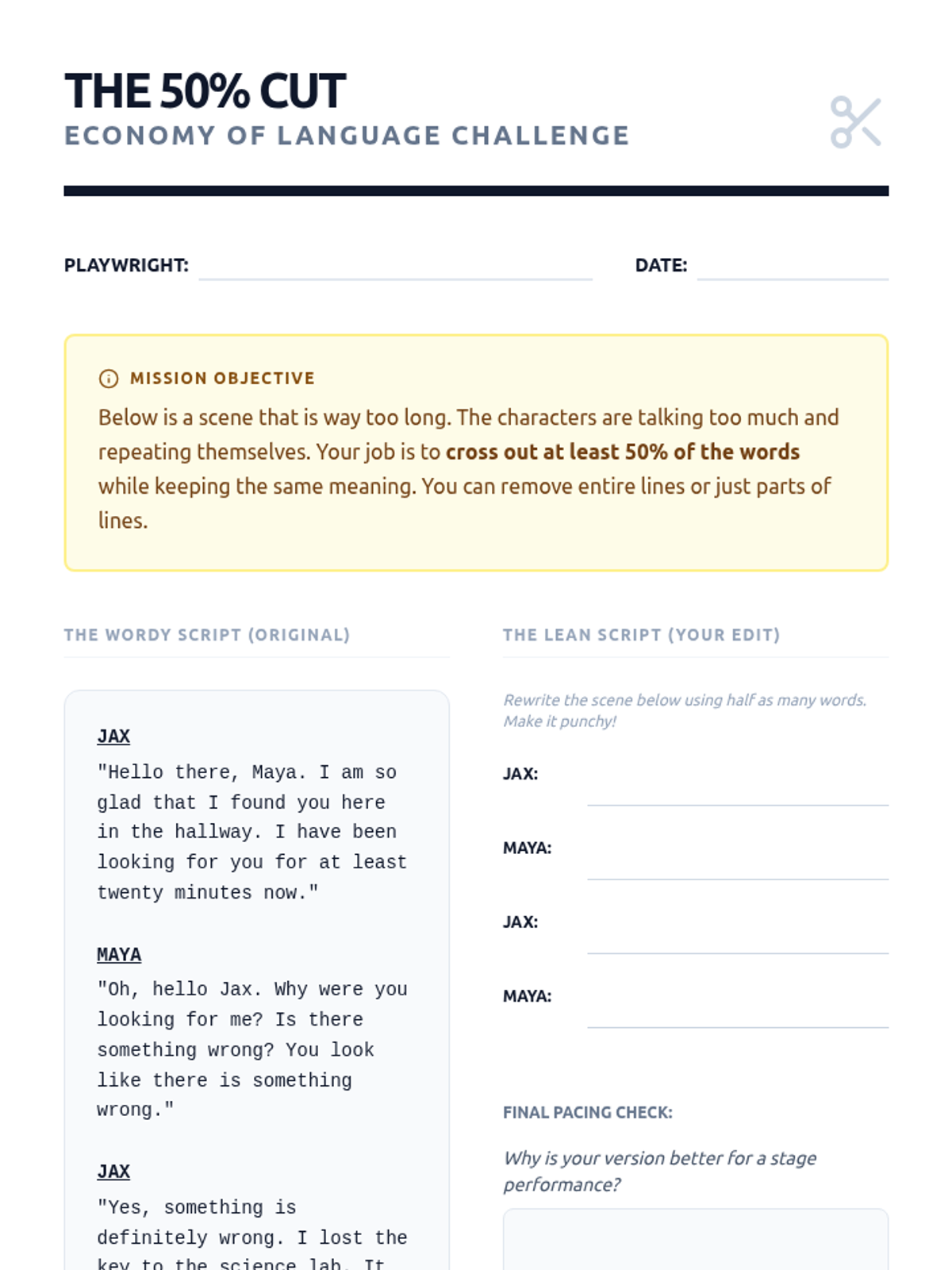
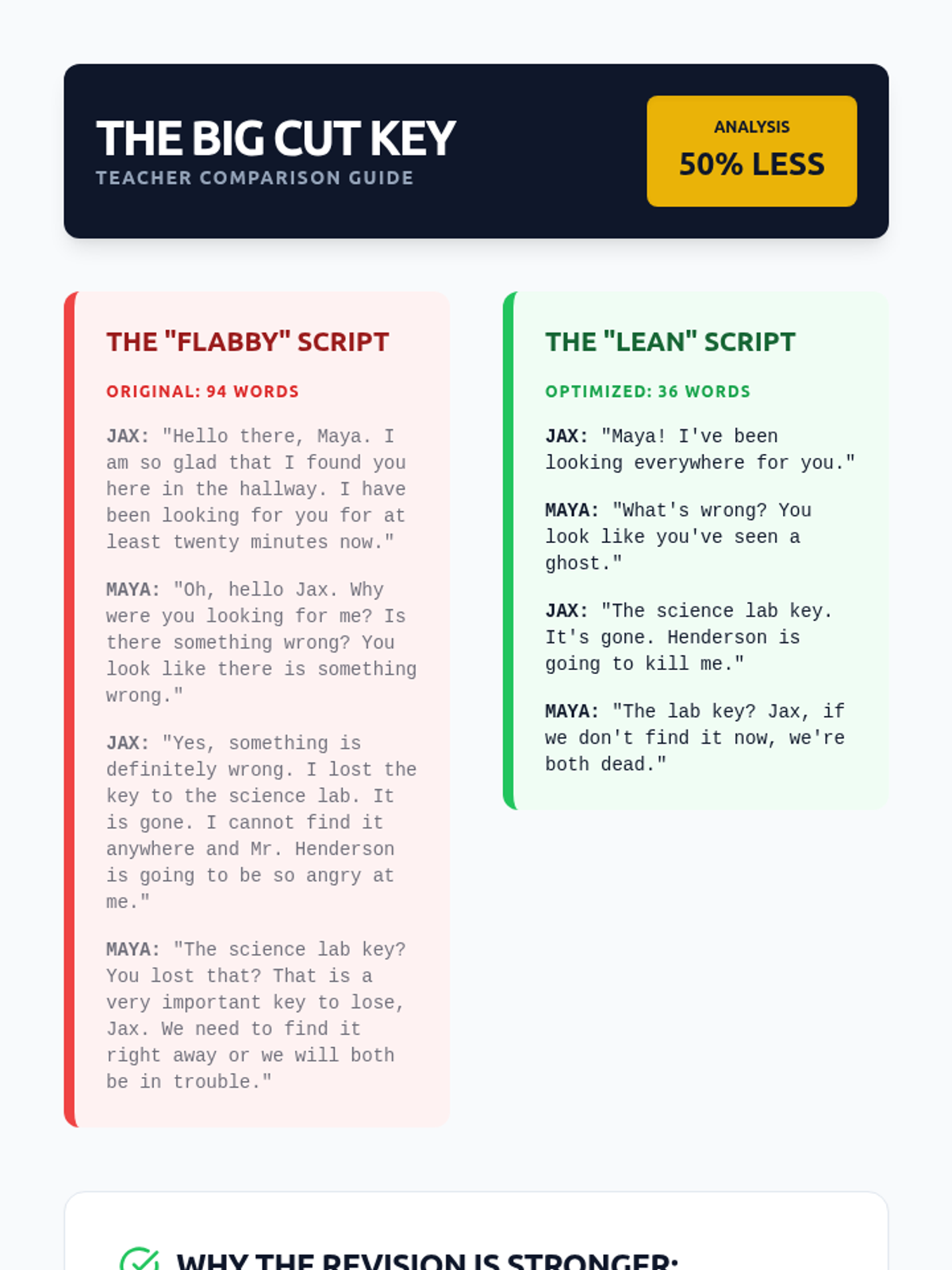
Students practice economy of language by reducing wordy scenes by 50% to improve pacing without losing meaning.
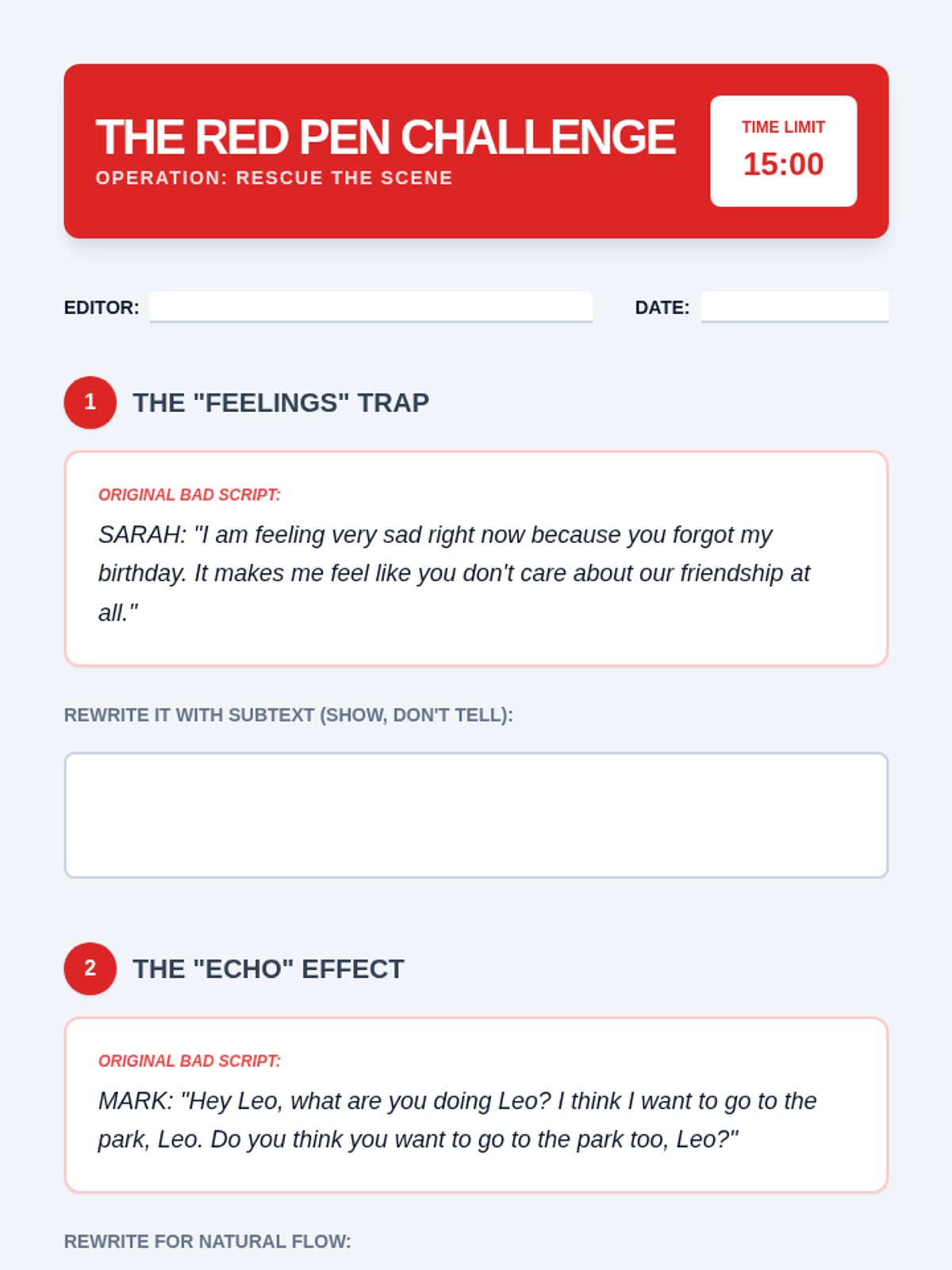
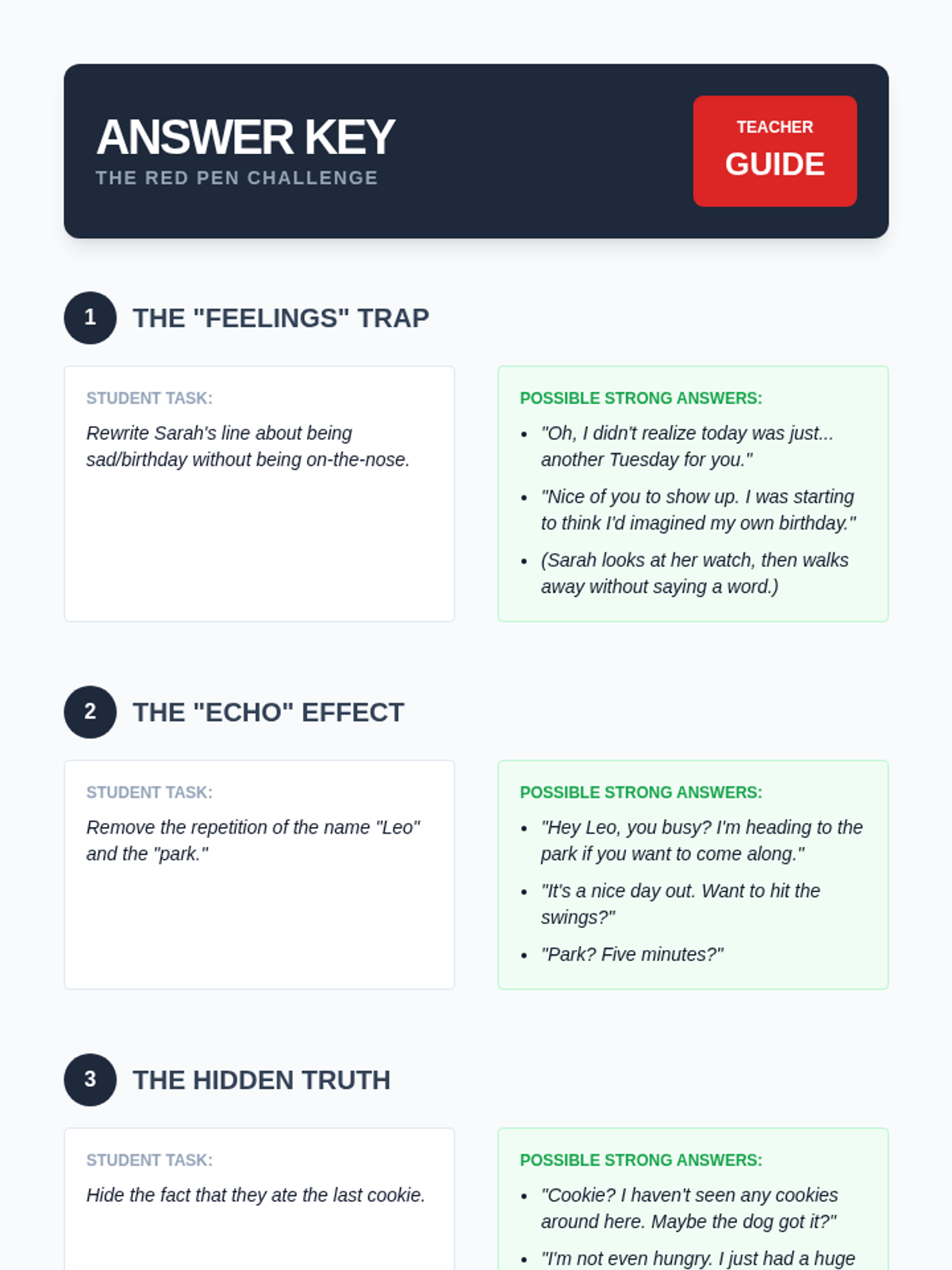
Students identify and fix common dialogue issues like 'on-the-nose' writing and repetitive phrasing through a gamified editing challenge.
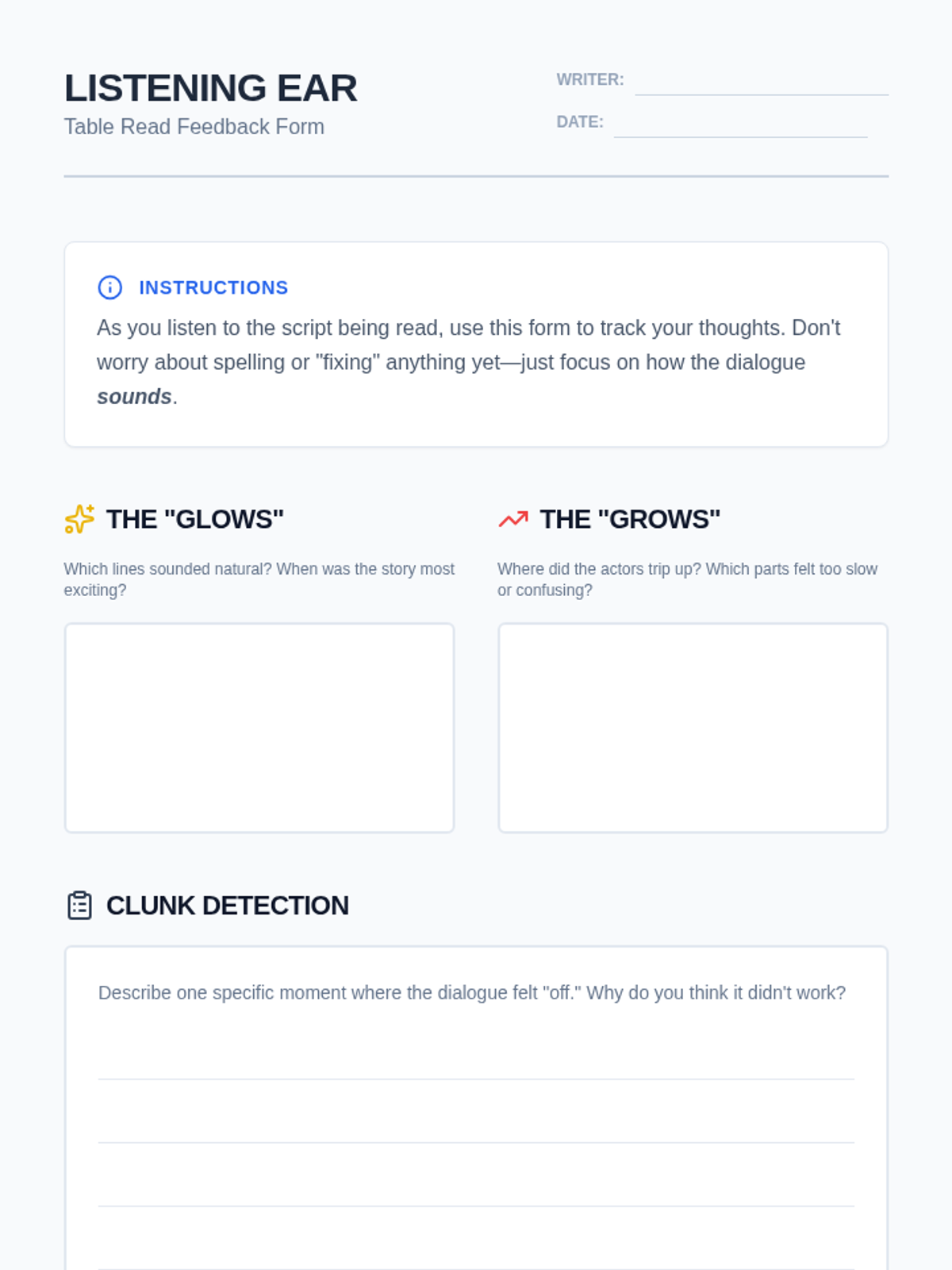
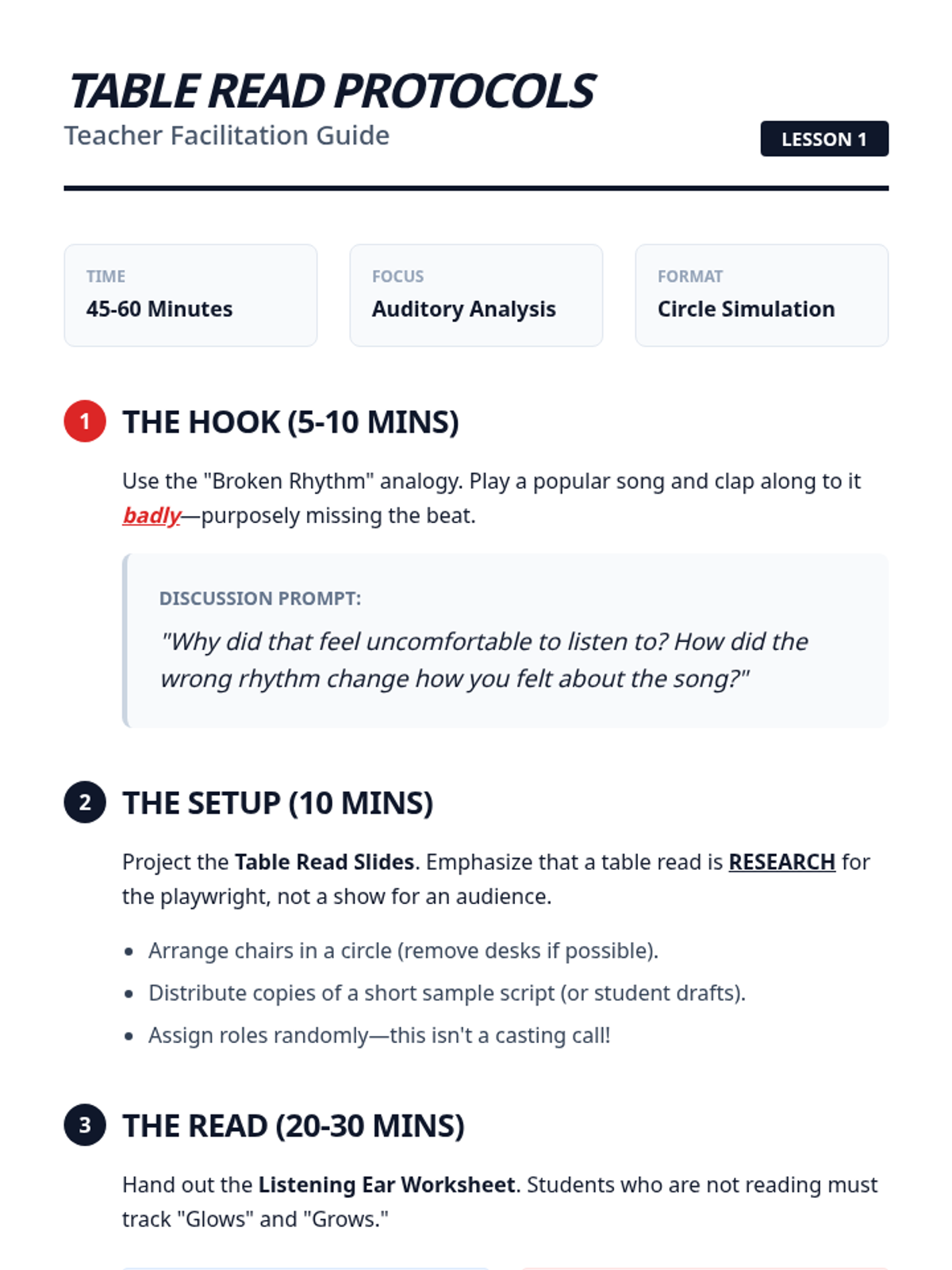
Students learn the protocol of a professional table read, practicing listening for rhythm and pacing while hearing scripts read aloud.