Historical evolution of performance, technical stagecraft, and core acting techniques. Develops playwriting skills and fosters imaginative expression through script development and production management.
A comprehensive workshop where students in grades 5-8 master the art of digital storytelling by blending narrative structure, audio production, and visual composition into a final multimedia project.
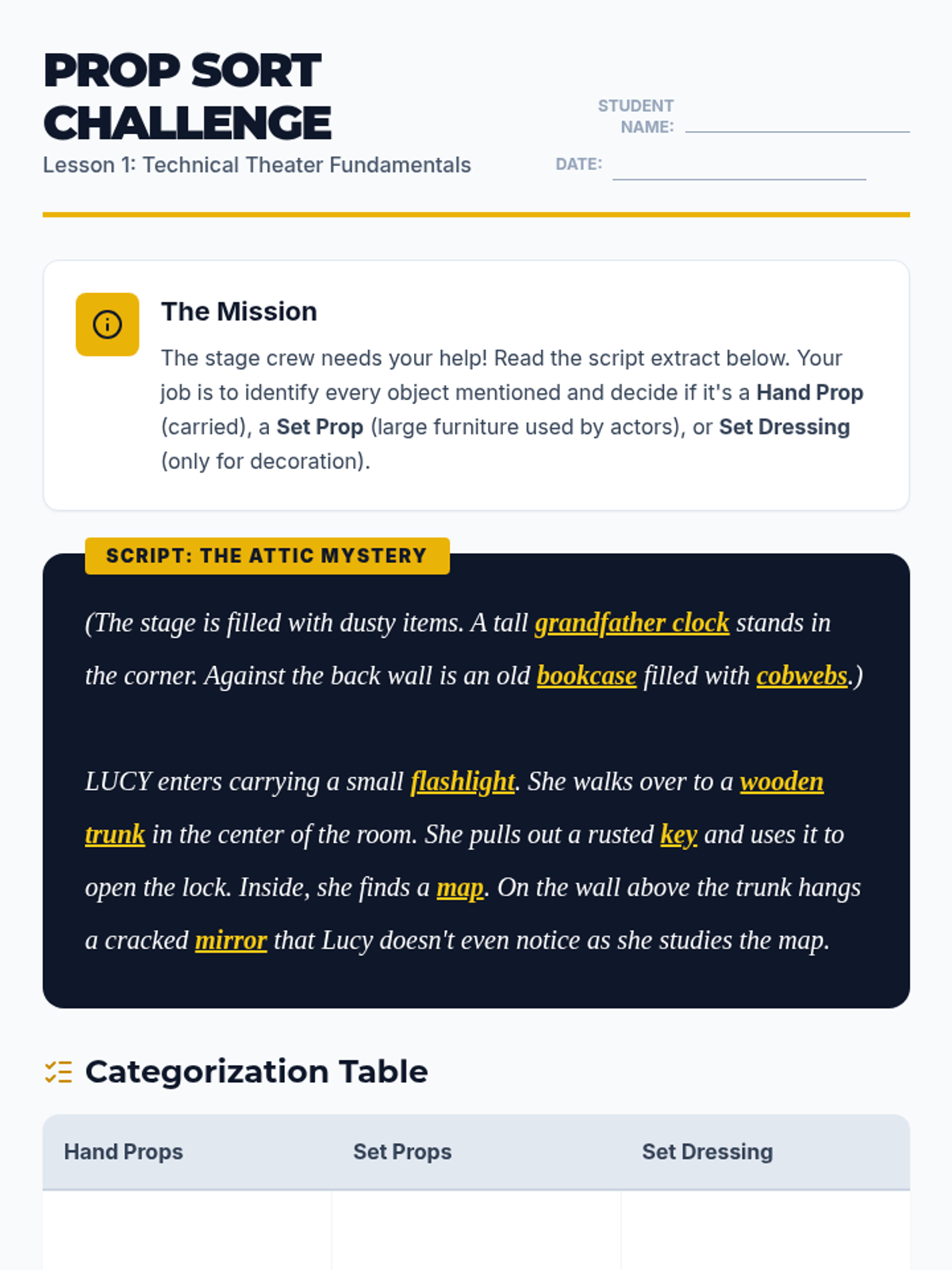
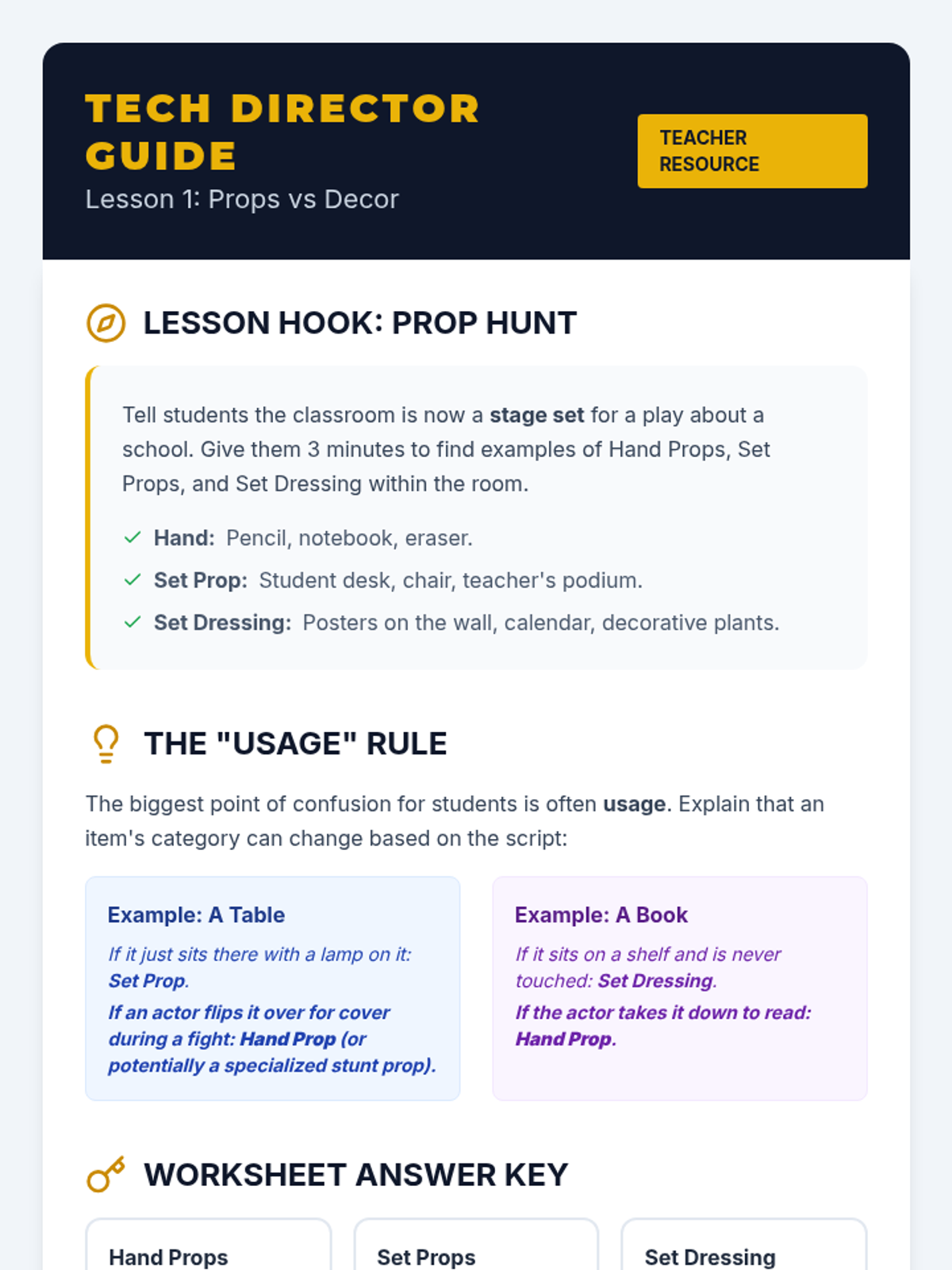
Students investigate how costumes and properties (props) function as tools for character development and storytelling. The sequence guides students through the process of distinguishing between prop types, exploring costume psychology, fabricating safe props, and mastering backstage organization.
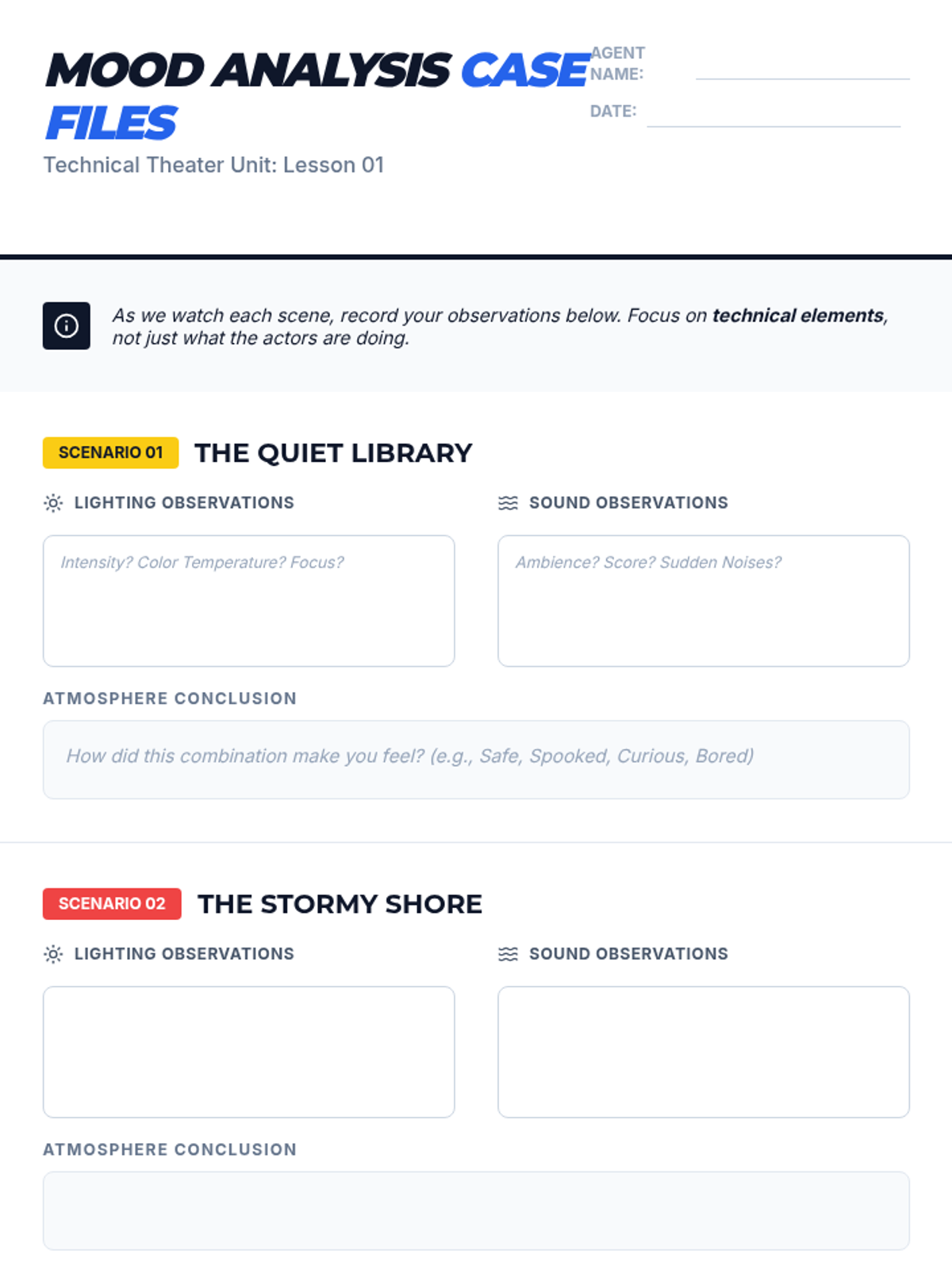
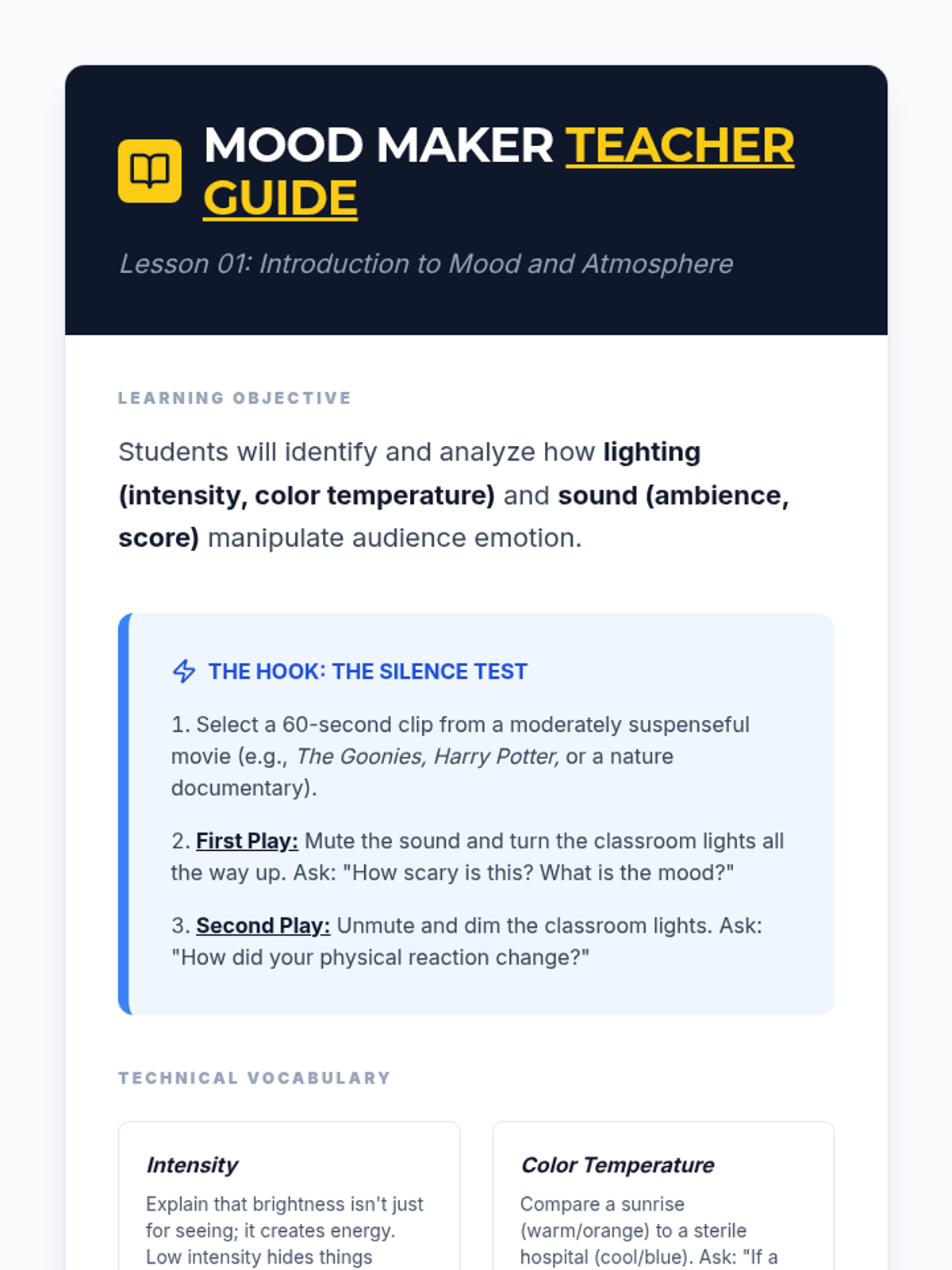
A 5-lesson sequence for 5th graders exploring technical theater through lighting and sound engineering. Students learn how to manipulate mood and focus using physical properties of light and creative sound design, culminating in a technical rehearsal simulation.
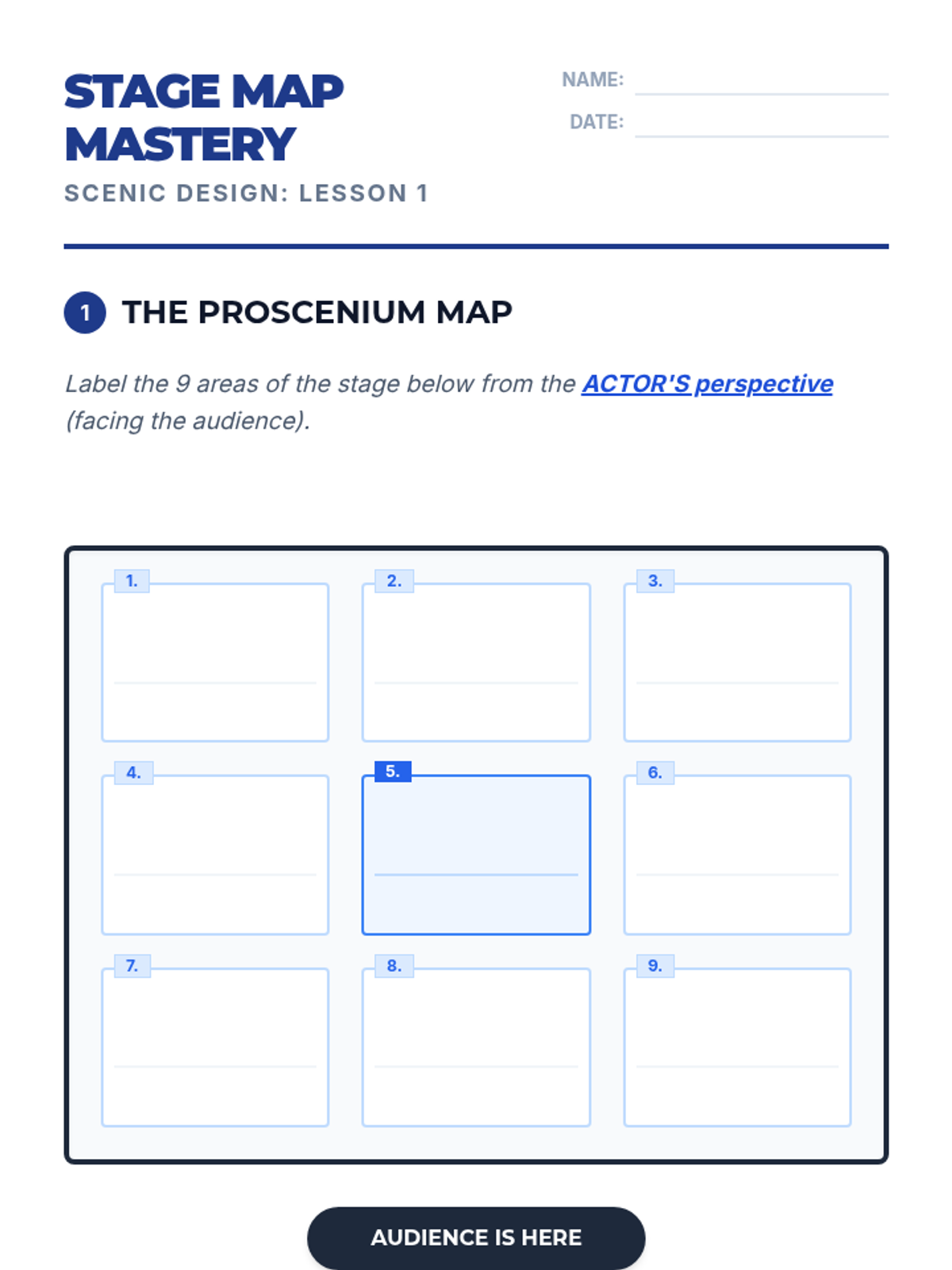
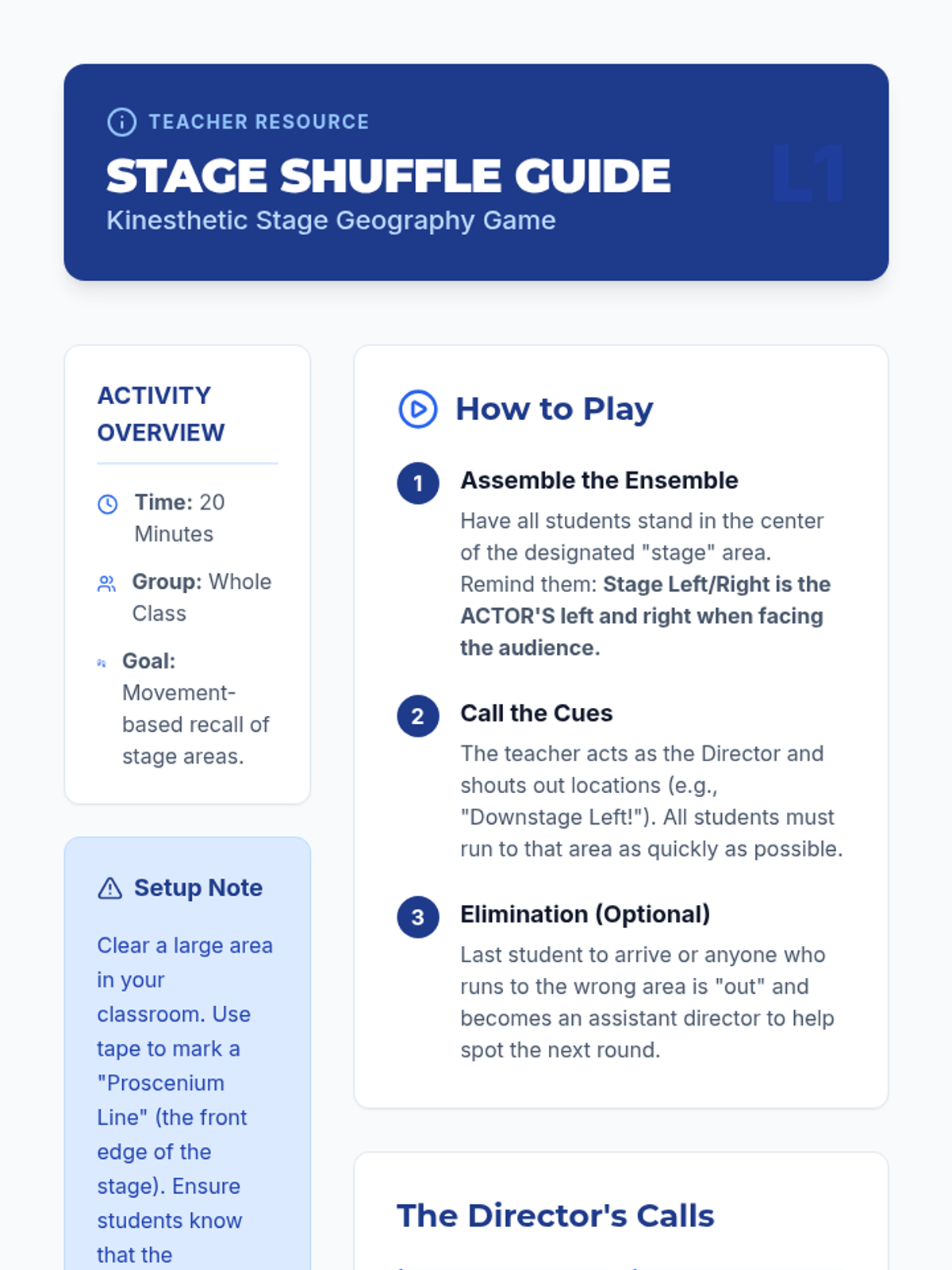
This sequence introduces 5th-grade students to the world of technical theater through the lens of scenic design. Students progress from learning stage geography to analyzing scripts, drafting floor plans, and ultimately building a 3D scale model (maquette) of their own set design.
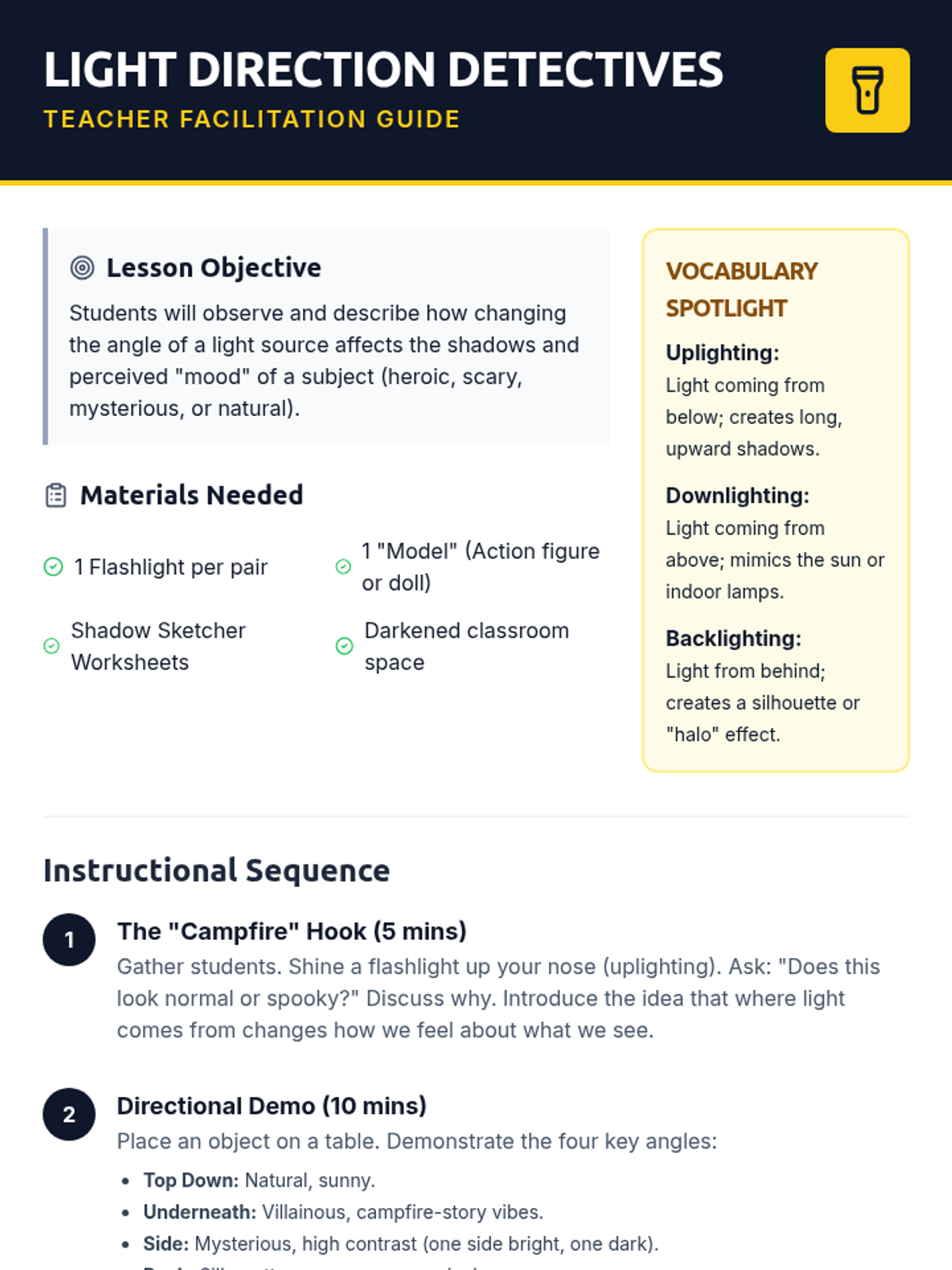
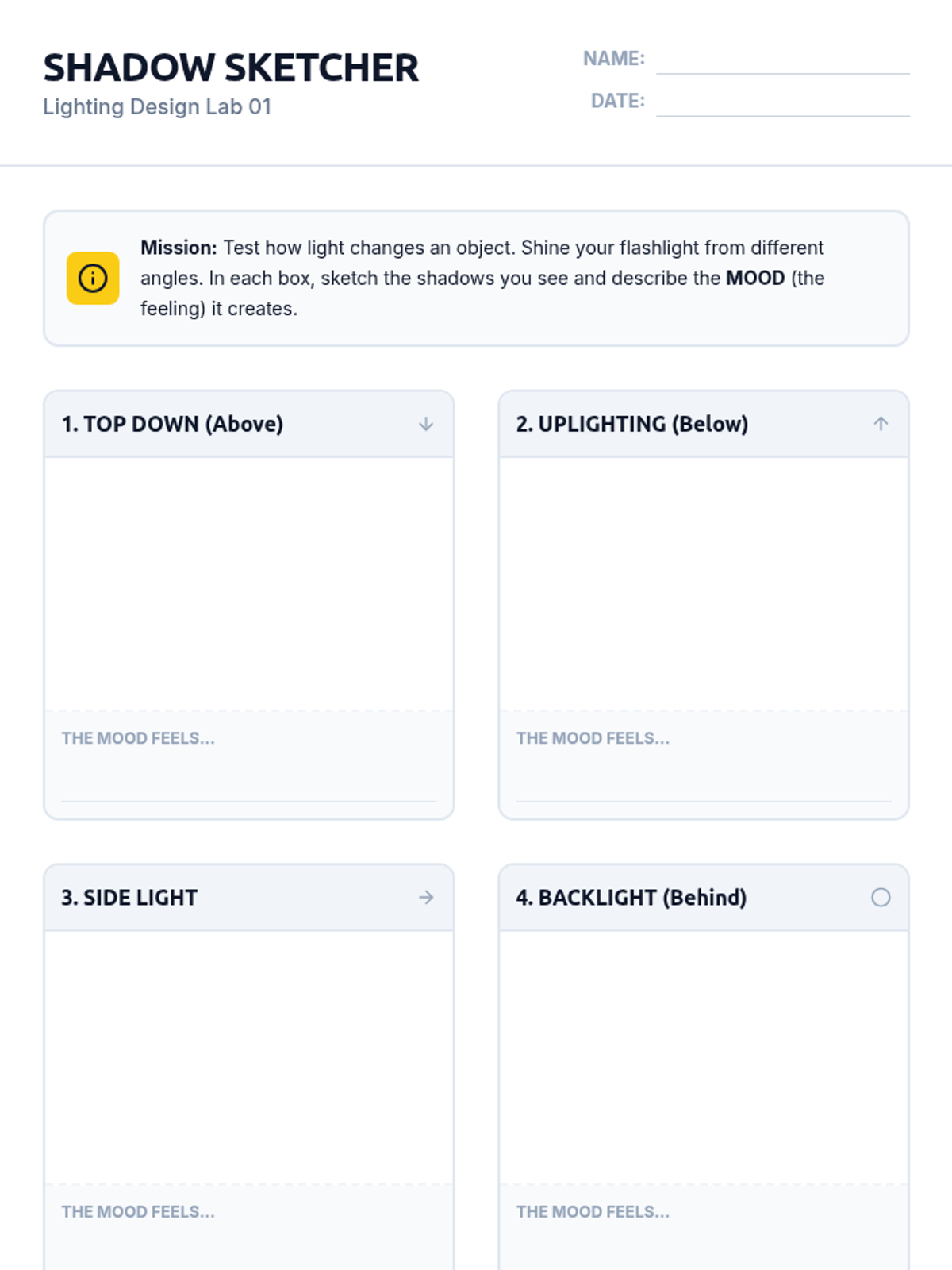
Students explore the basics of stage lighting, including direction, shadow, and color, to understand how lighting design creates mood and tells stories in theater.
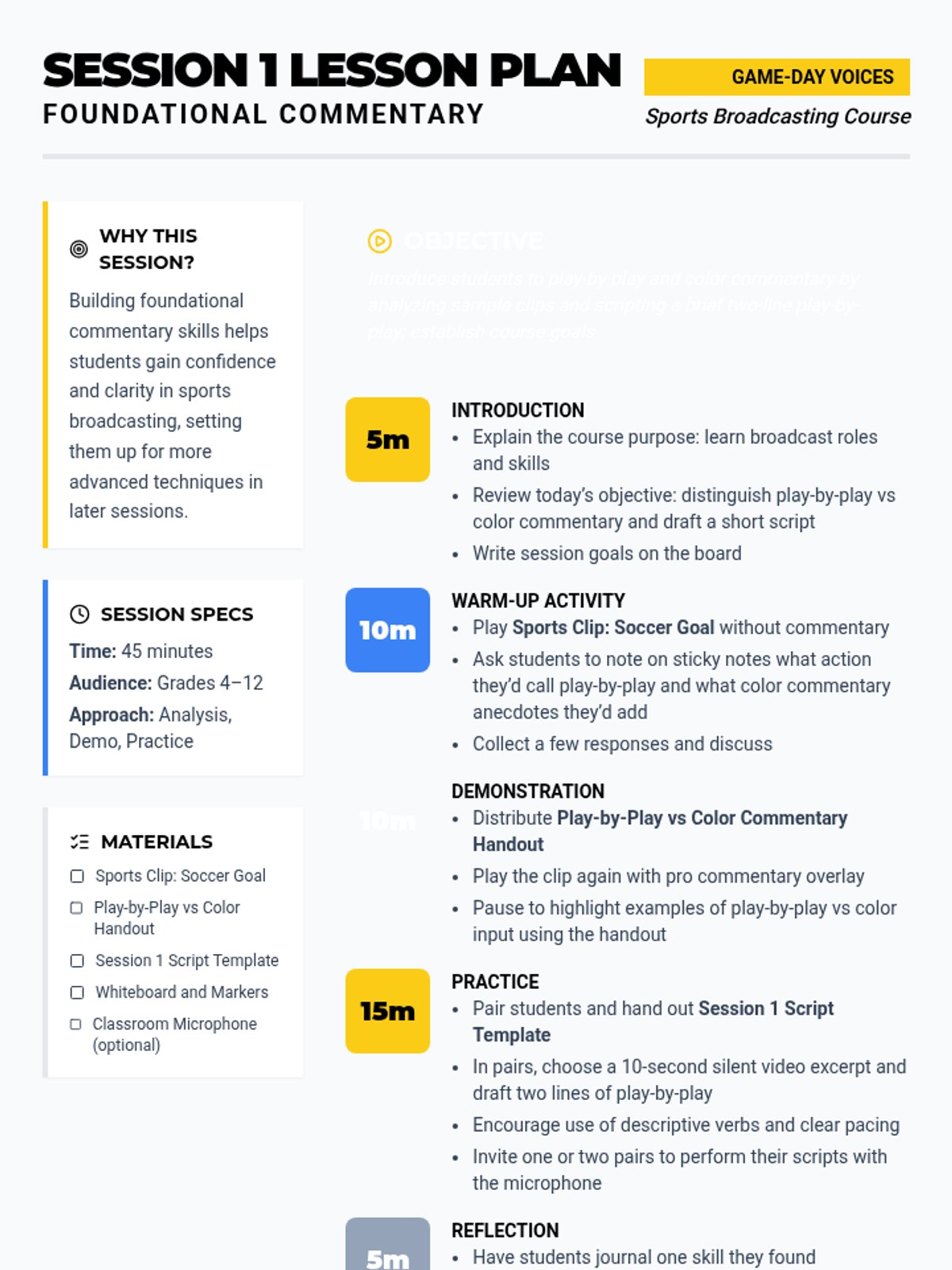
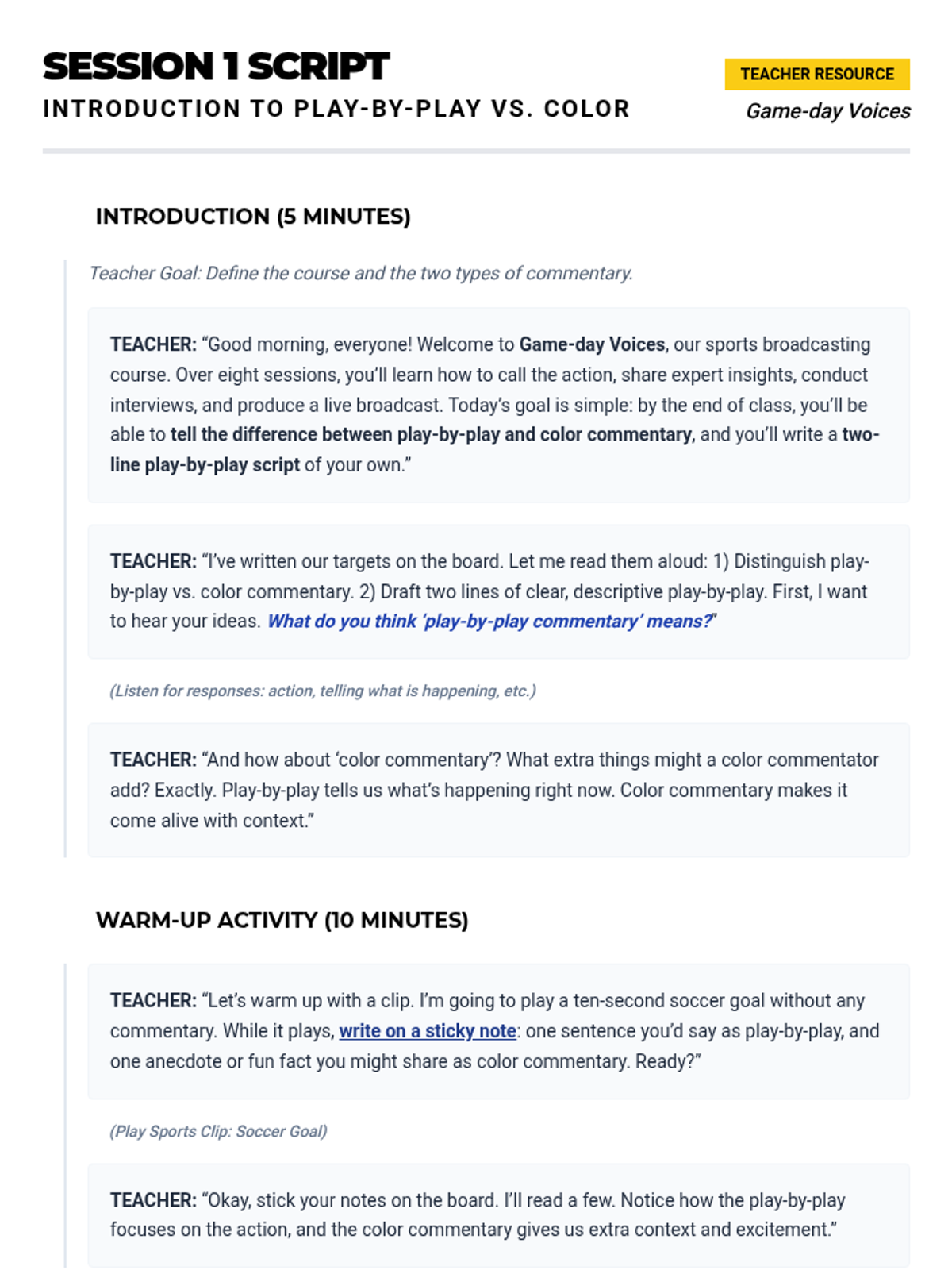
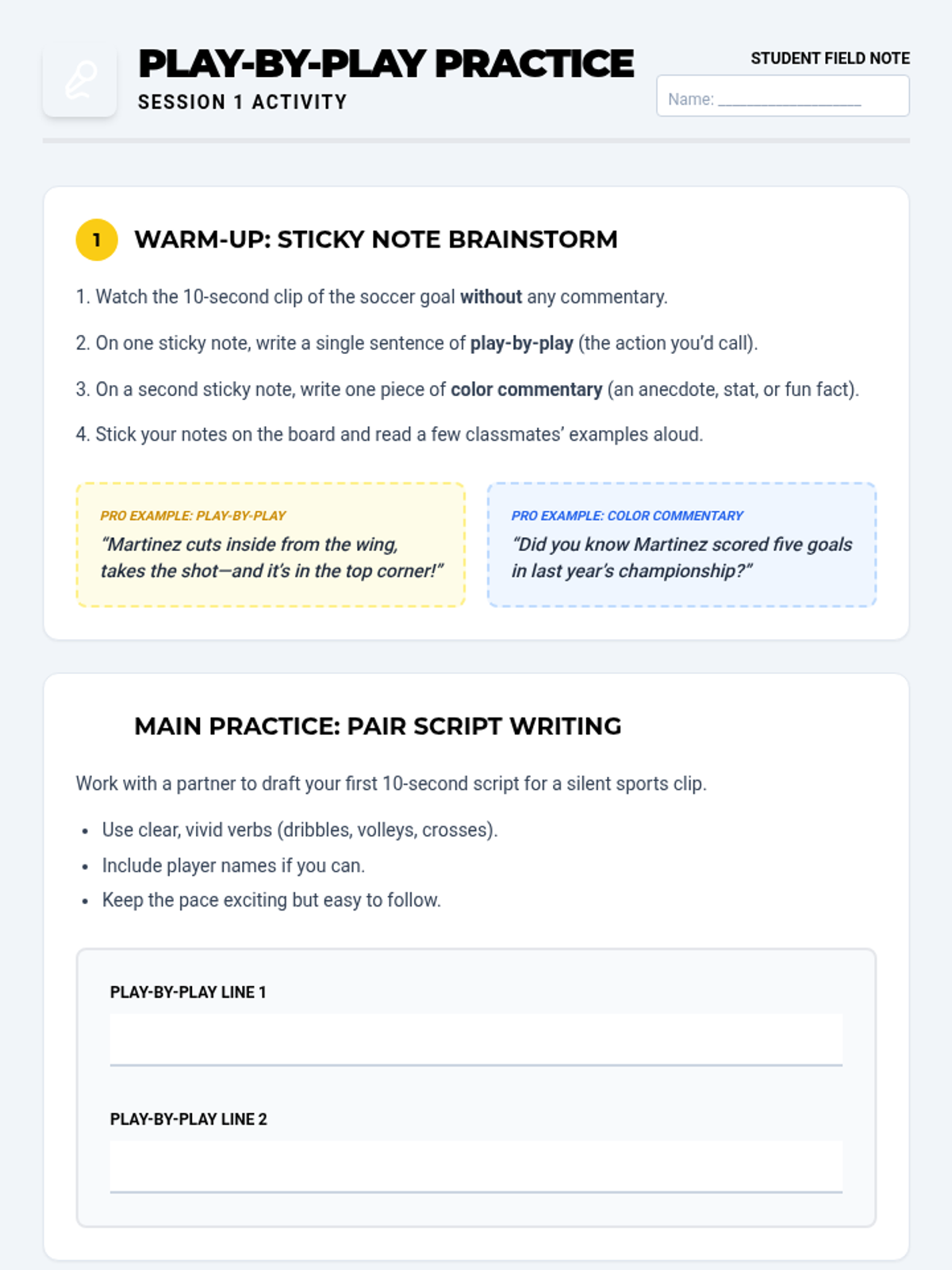
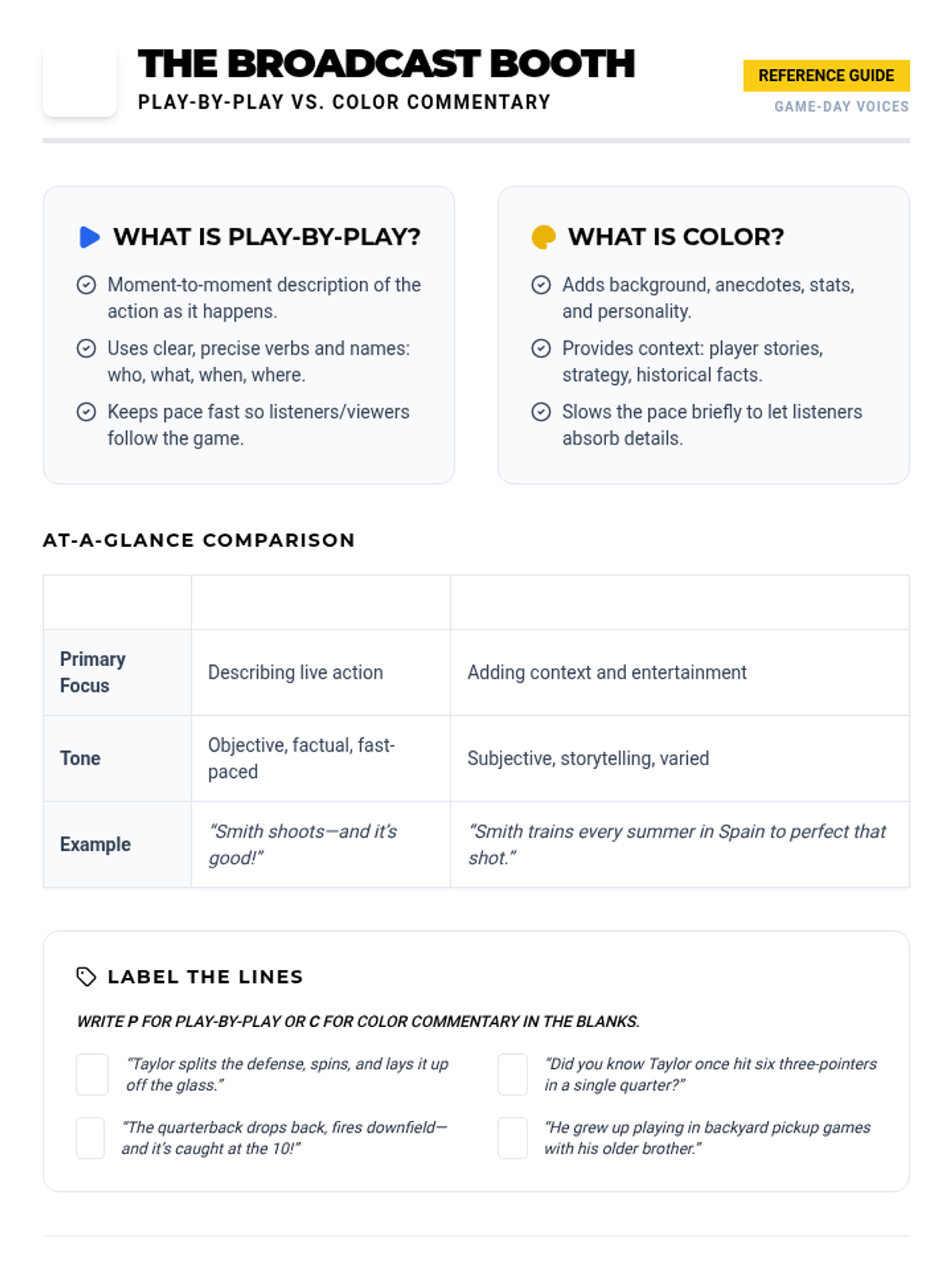
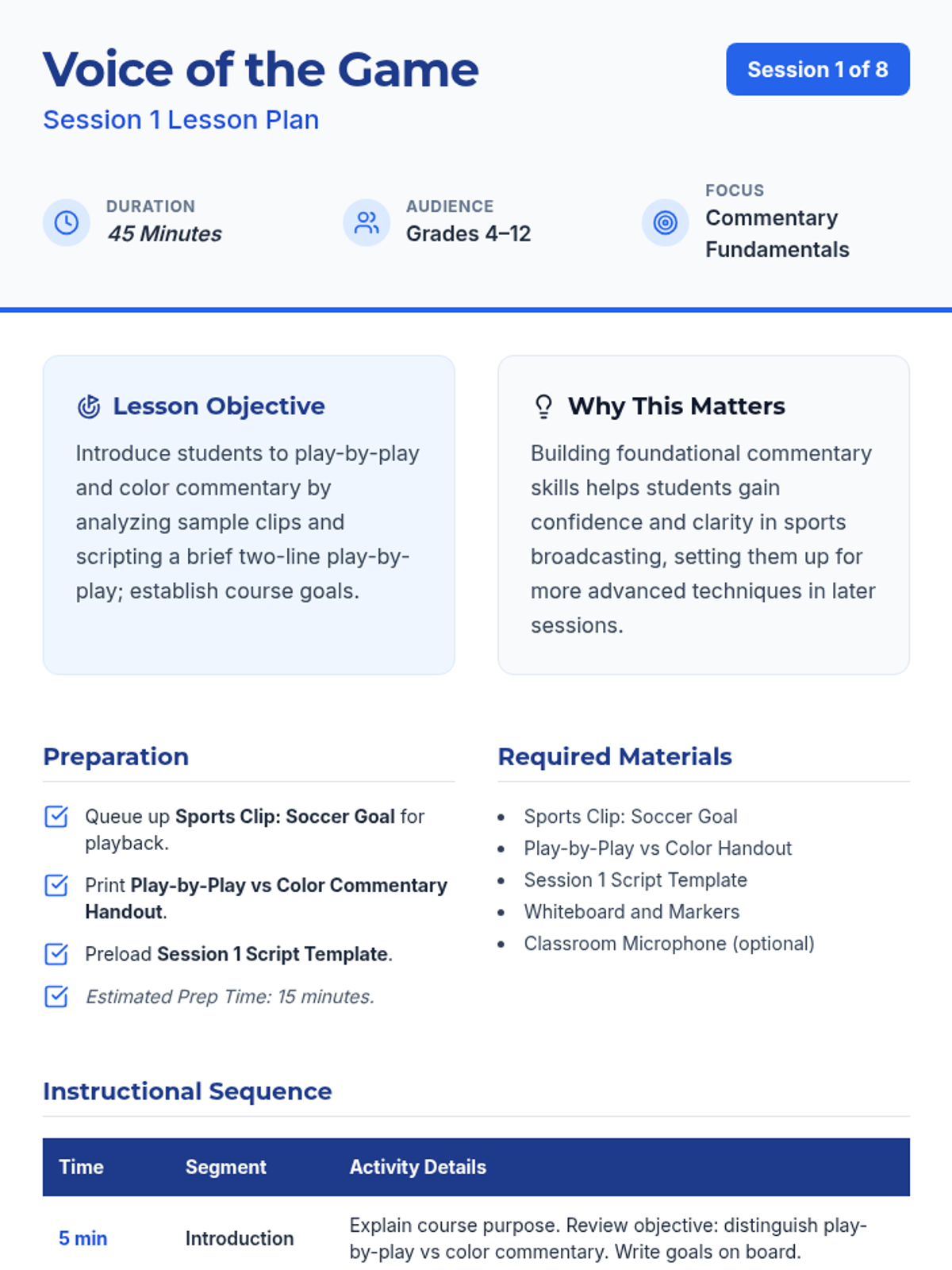
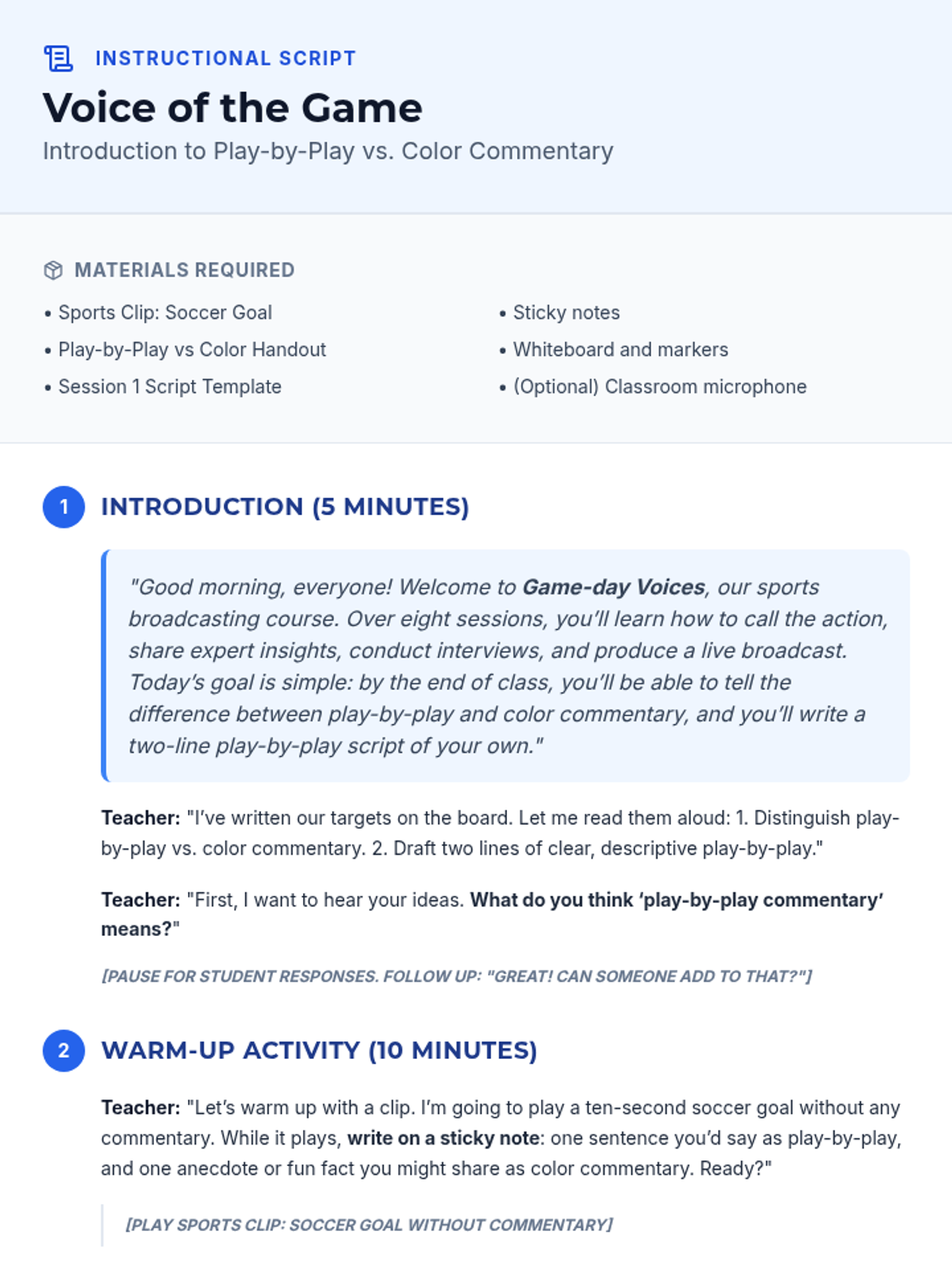
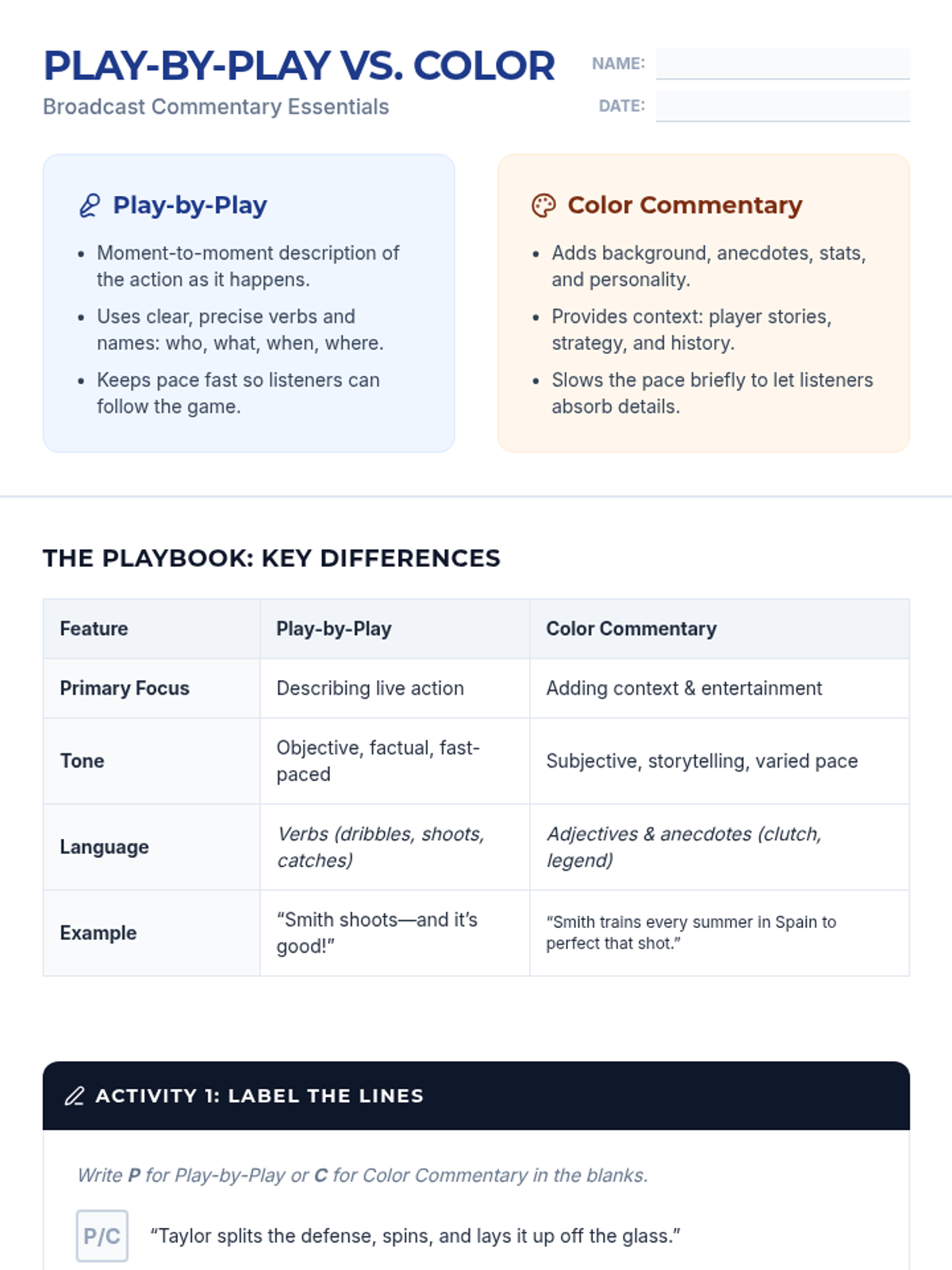
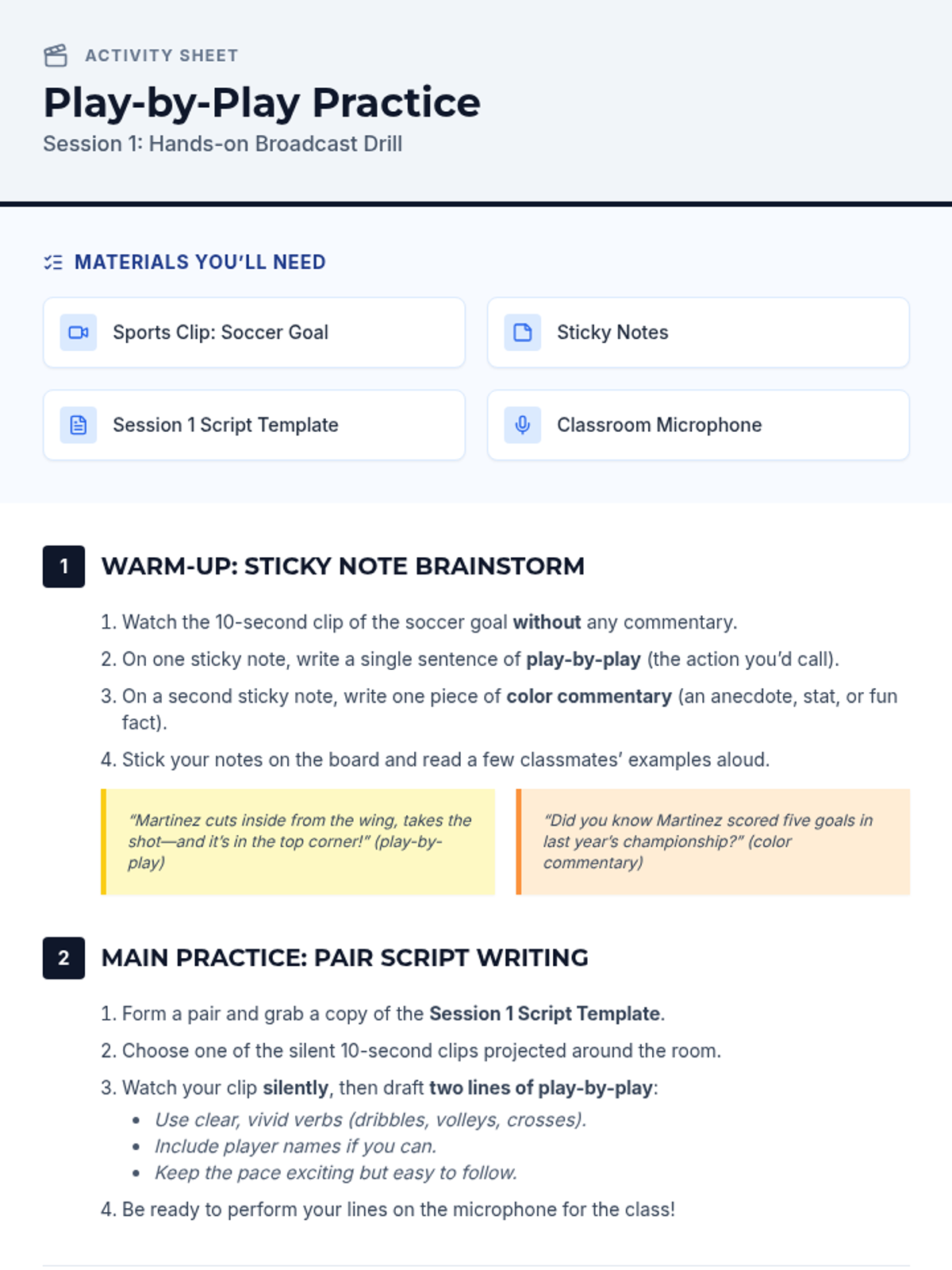
An 8-session sports broadcasting course for grades 4–12, covering play-by-play, color analysis, interviewing, and technical production. Students move from foundational commentary to producing a full capstone broadcast segment.
An 8-session sports broadcasting course for grades 4–12, covering play-by-play, color commentary, interviewing, camera work, audio mixing, and live production directing. Students progress from foundational vocal skills to a complete capstone broadcast project.
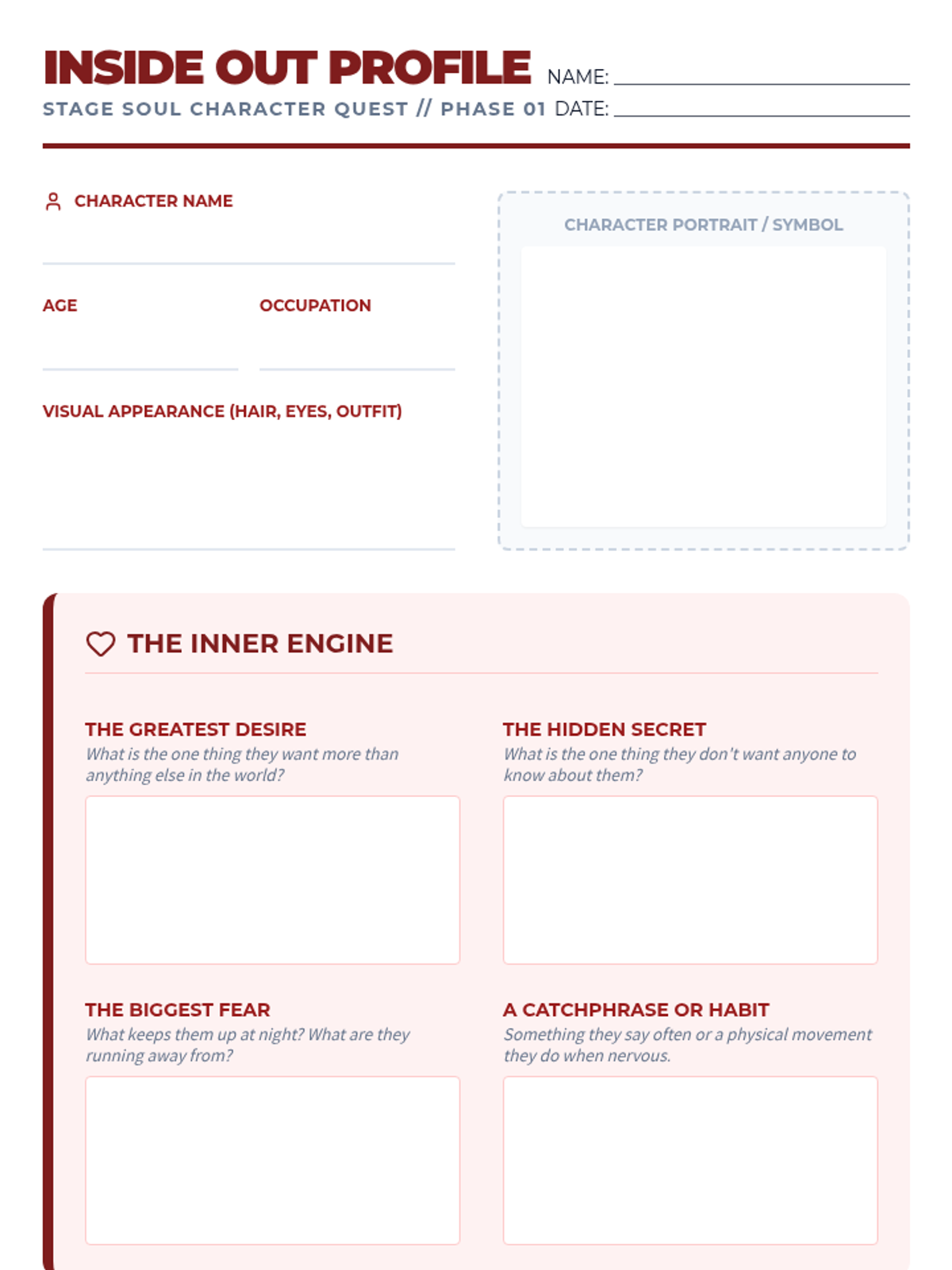
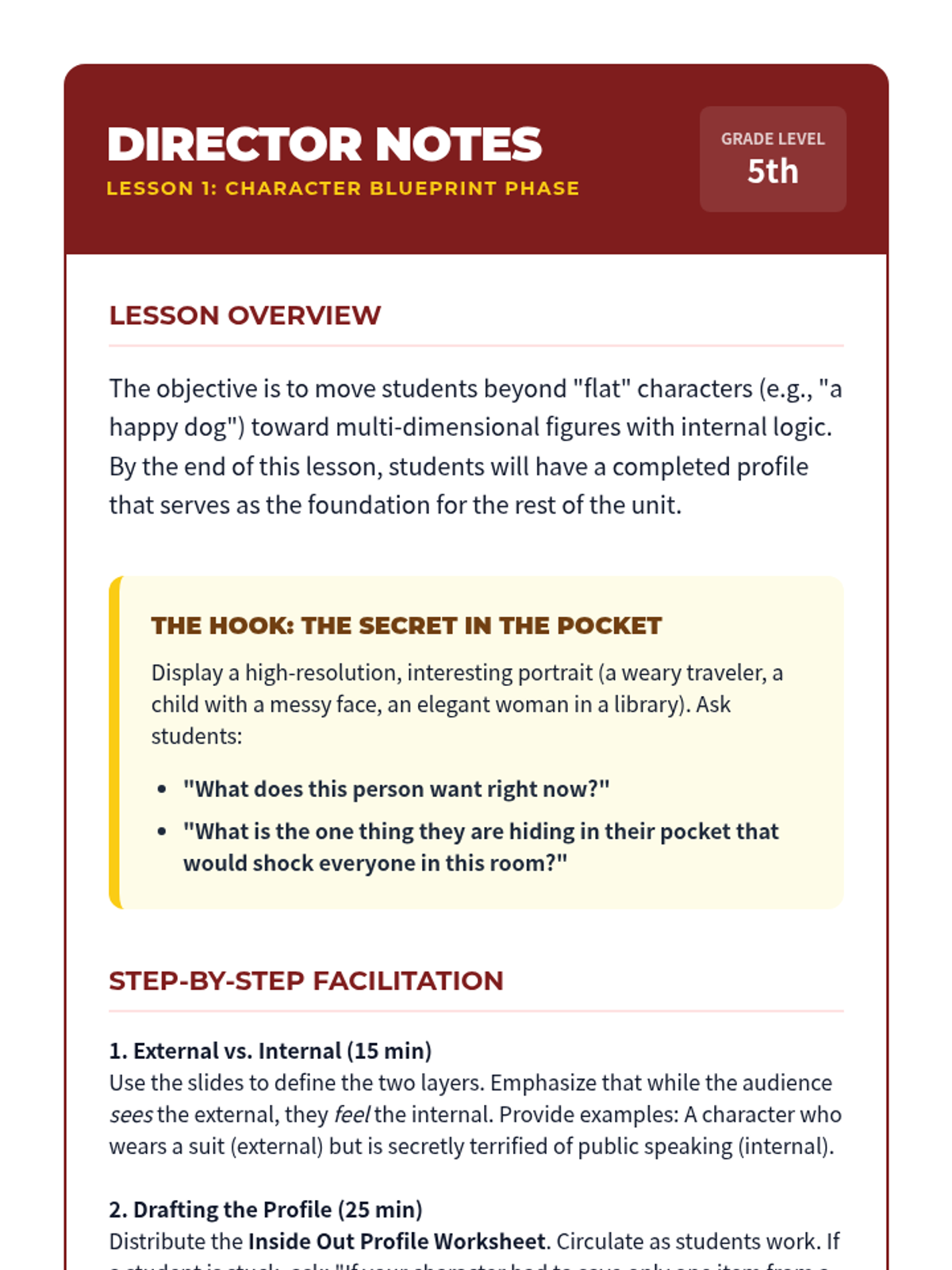
A 5-lesson theater arts sequence for 5th graders focused on creating multi-dimensional stage characters through profile building, improvisation, monologue writing, and dialogue refinement. Students move from external traits to internal motivations, learning how to create friction and unique voices for the stage.
A comprehensive 5th-grade music sequence focused on stage presence, performance anxiety management, and audience connection. Students build professional performance habits through simulations and workshops, culminating in a final showcase.
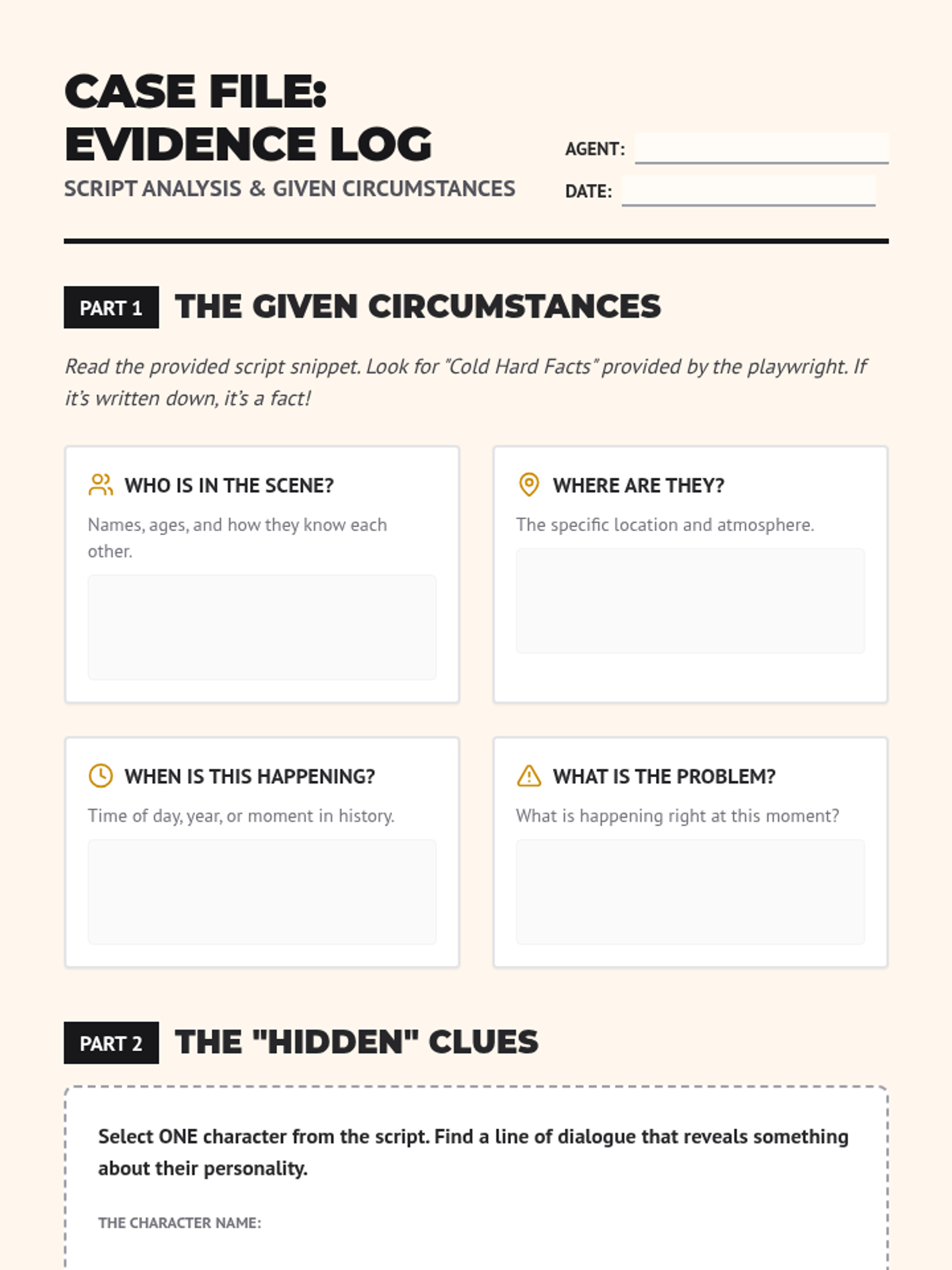
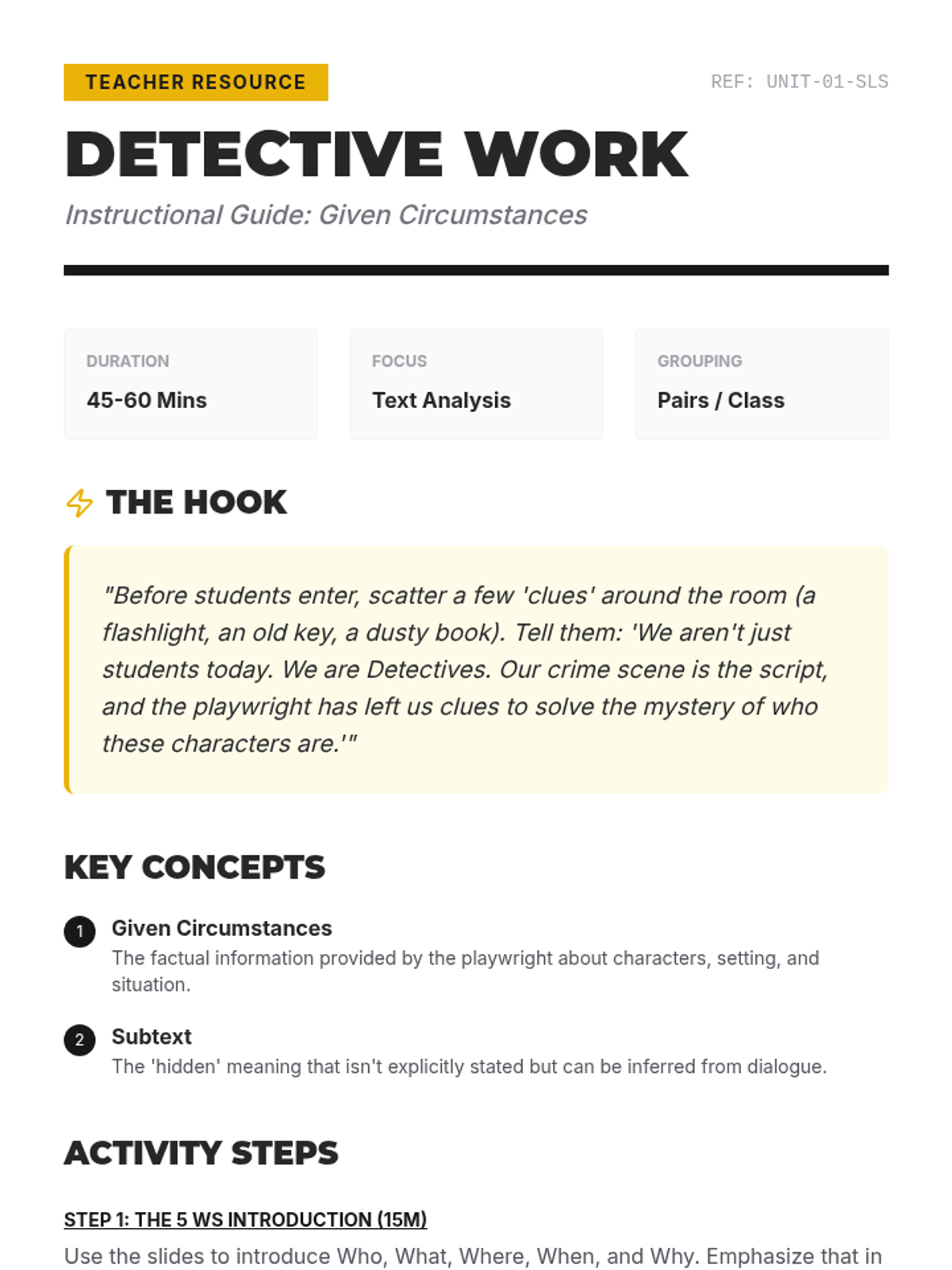
This sequence moves students into the analytical side of acting, teaching them how to interpret a script to build a believable character. Students learn to be 'text detectives,' identifying given circumstances and objectives within a scene to bring a script to life.
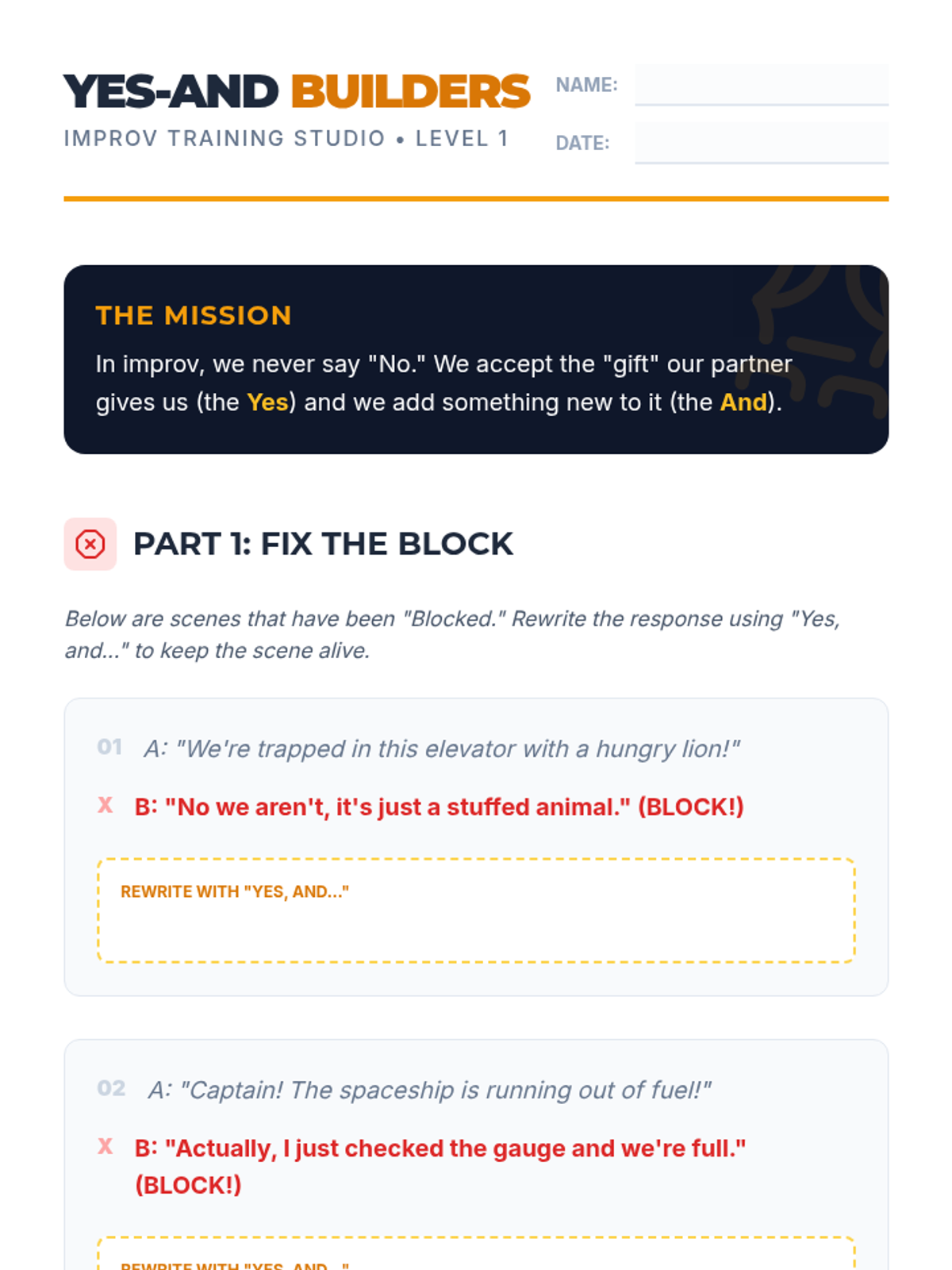
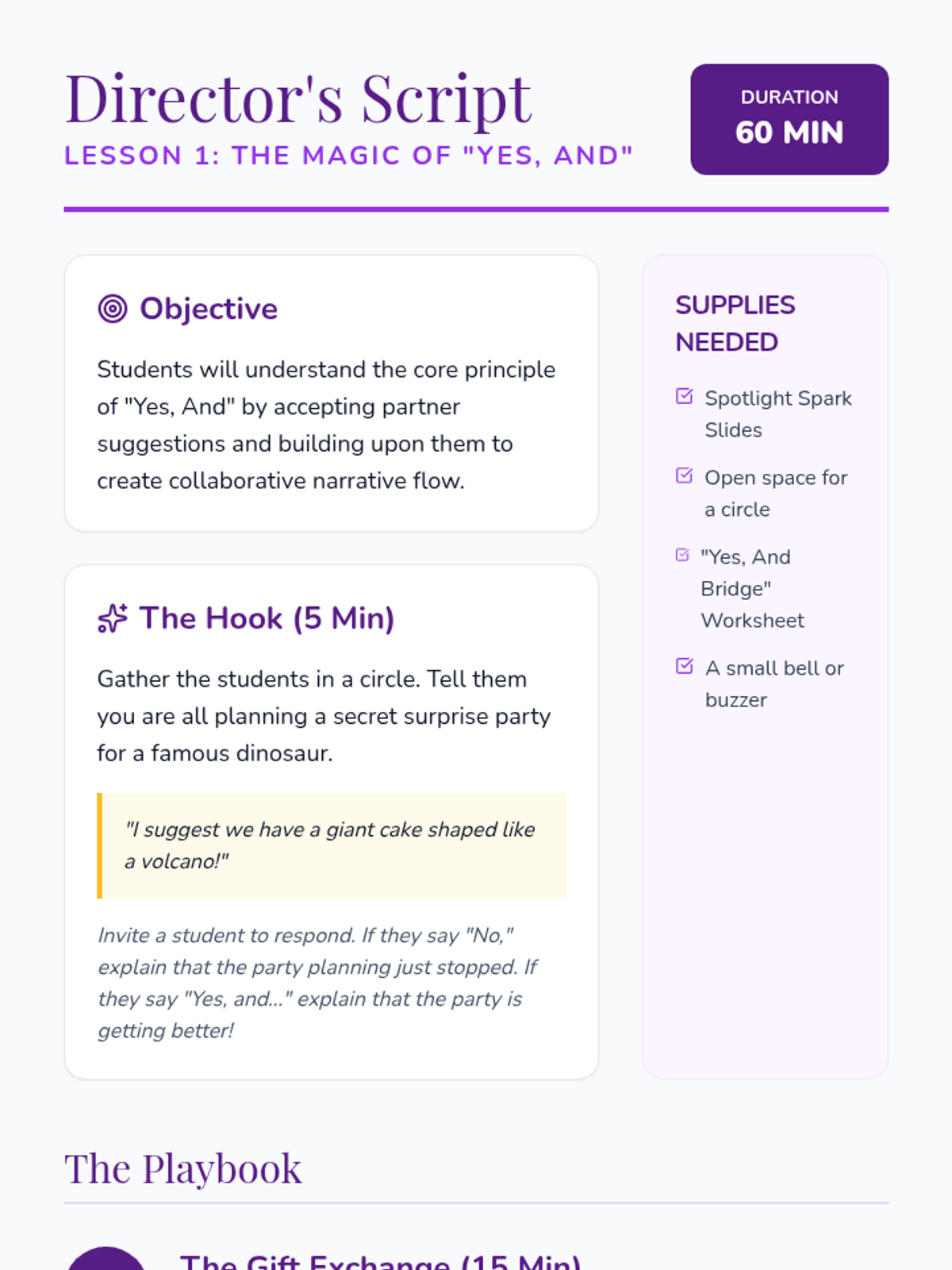
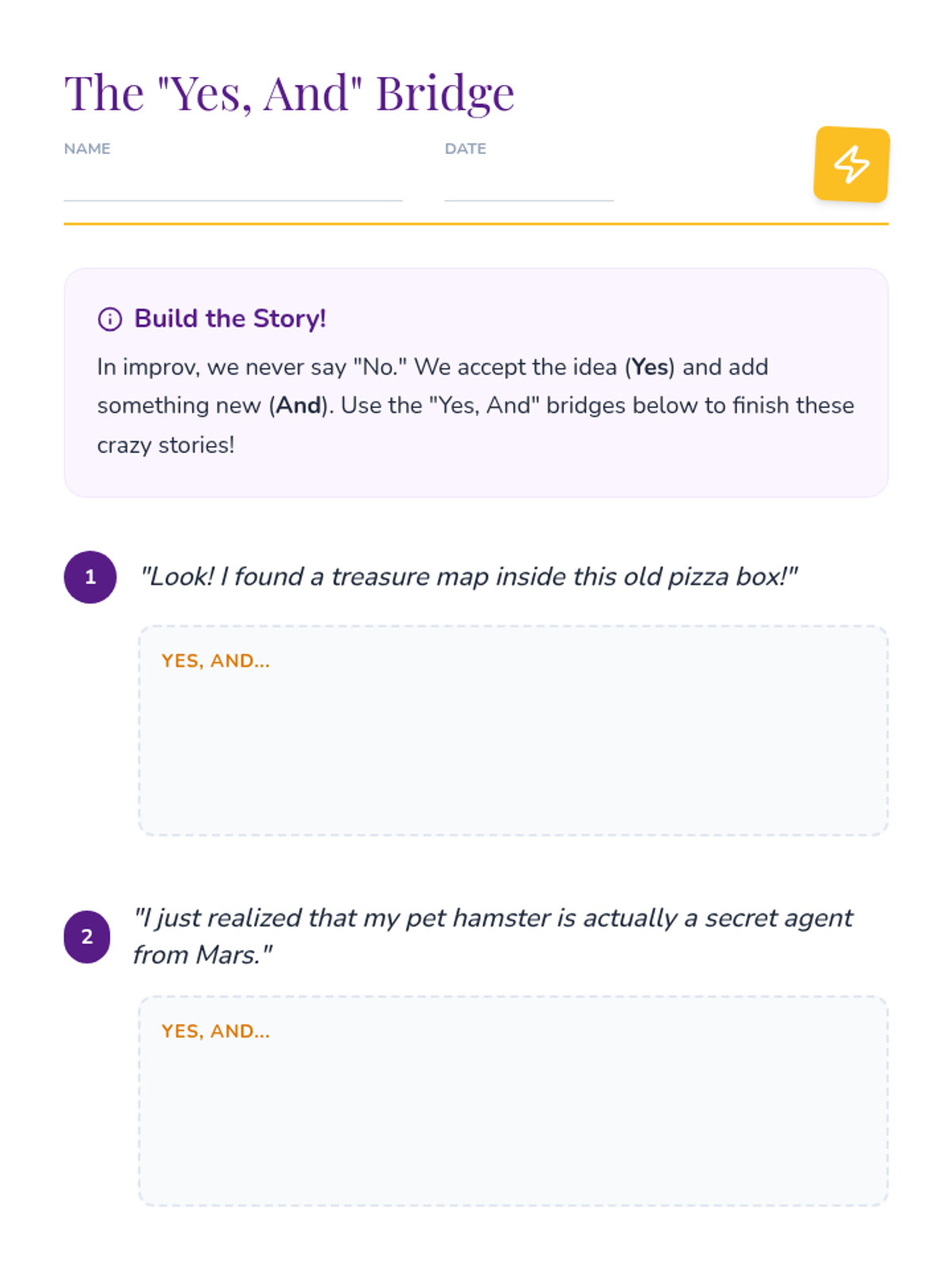
This sequence focuses on improvisation and ensemble building, teaching students to think quickly and collaborate creatively. The arc moves from basic rule-setting (Yes, And) to active listening and reacting in the moment. Students learn to build scenes cooperatively without a script, focusing on maintaining character and narrative logic.
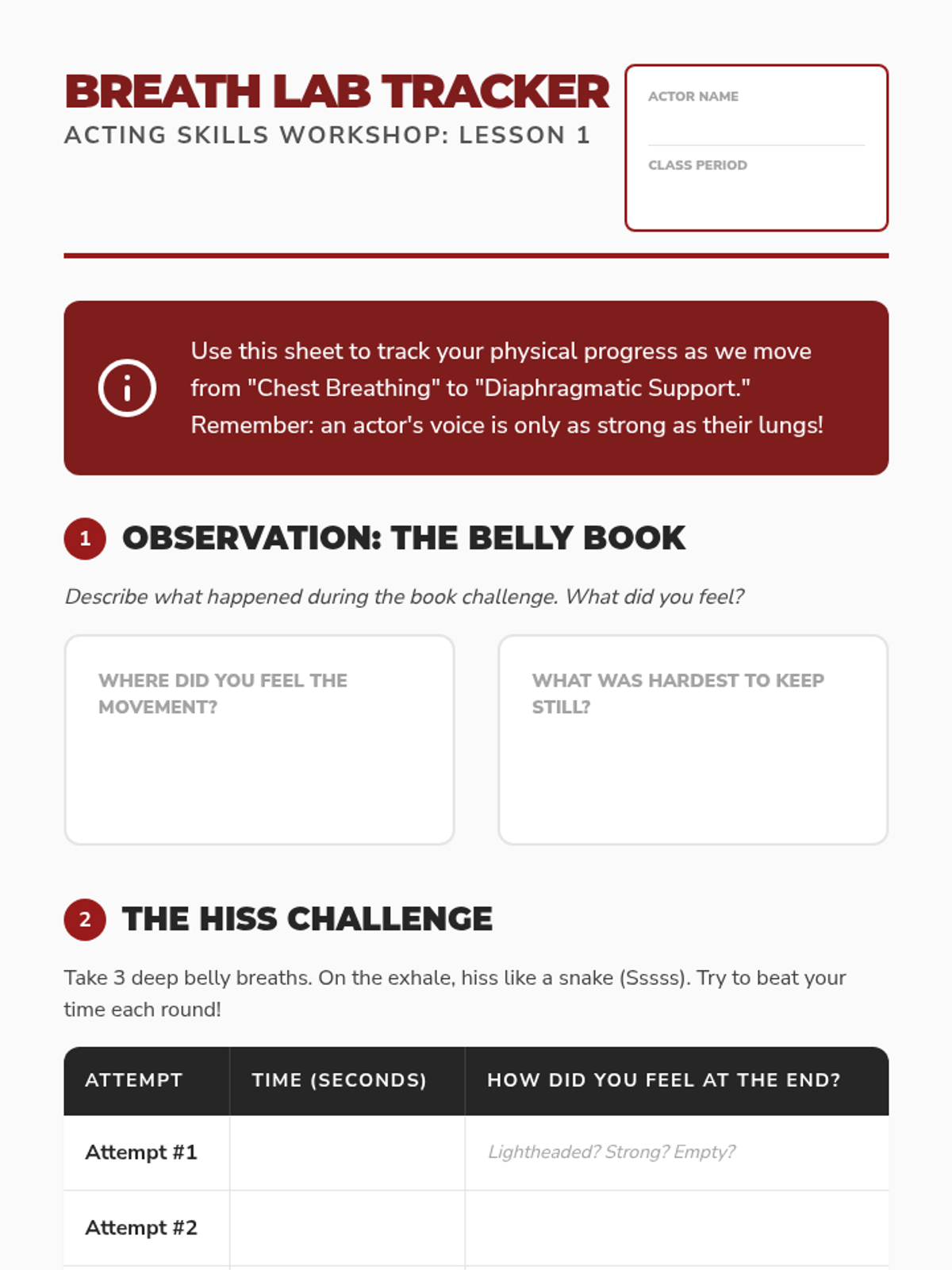
A 5th-grade theater sequence focusing on vocal mechanics, projection, and expressive delivery through workshop-style activities and a culminating Reader's Theater performance.
This inquiry-based theater sequence teaches 5th-grade students how to analyze scripts to create deep character backstories. Students progress from identifying factual given circumstances to exploring motivations, tactics, and subtext, culminating in a character biography and monologue performance.
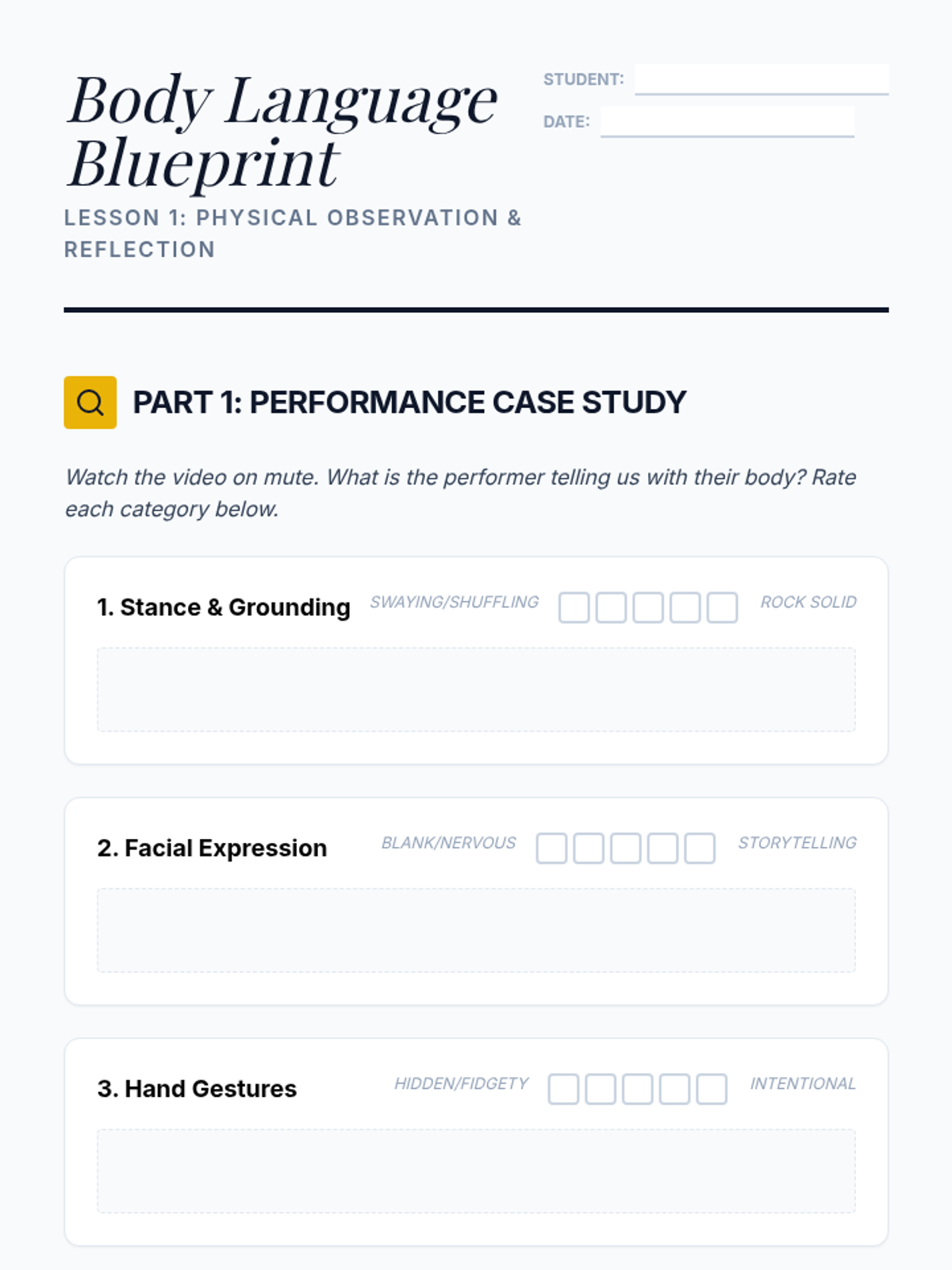
A comprehensive 5th-grade theater sequence focusing on non-verbal communication, physical alignment, character walks, facial expressions, and pantomime techniques, culminating in a silent scene performance.
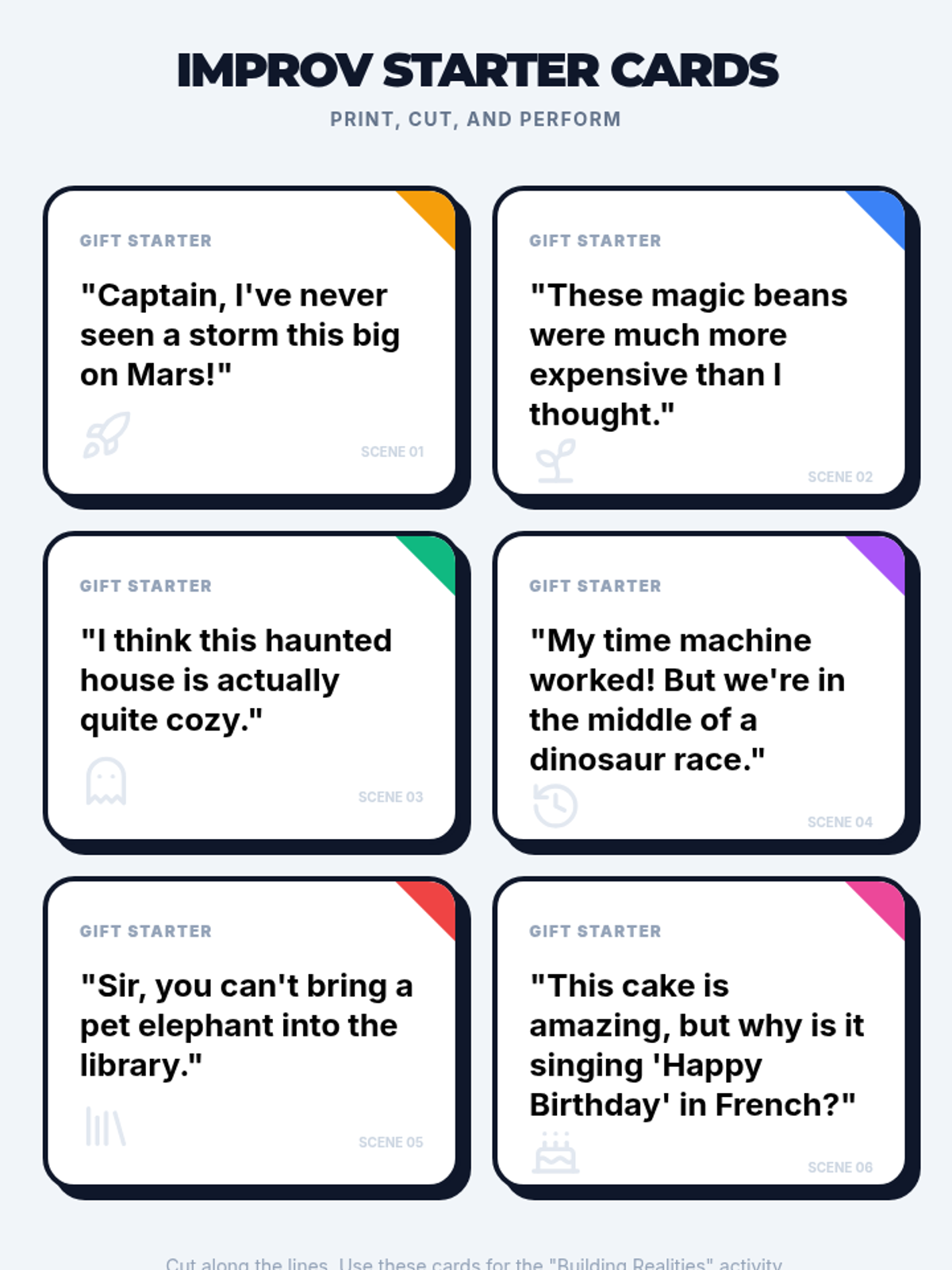
This sequence develops improvisation skills and ensemble collaboration, teaching students to react authentically in the moment. Students build trust and creative confidence by practicing 'Yes, And,' establishing environments, and solving narrative problems as a team.
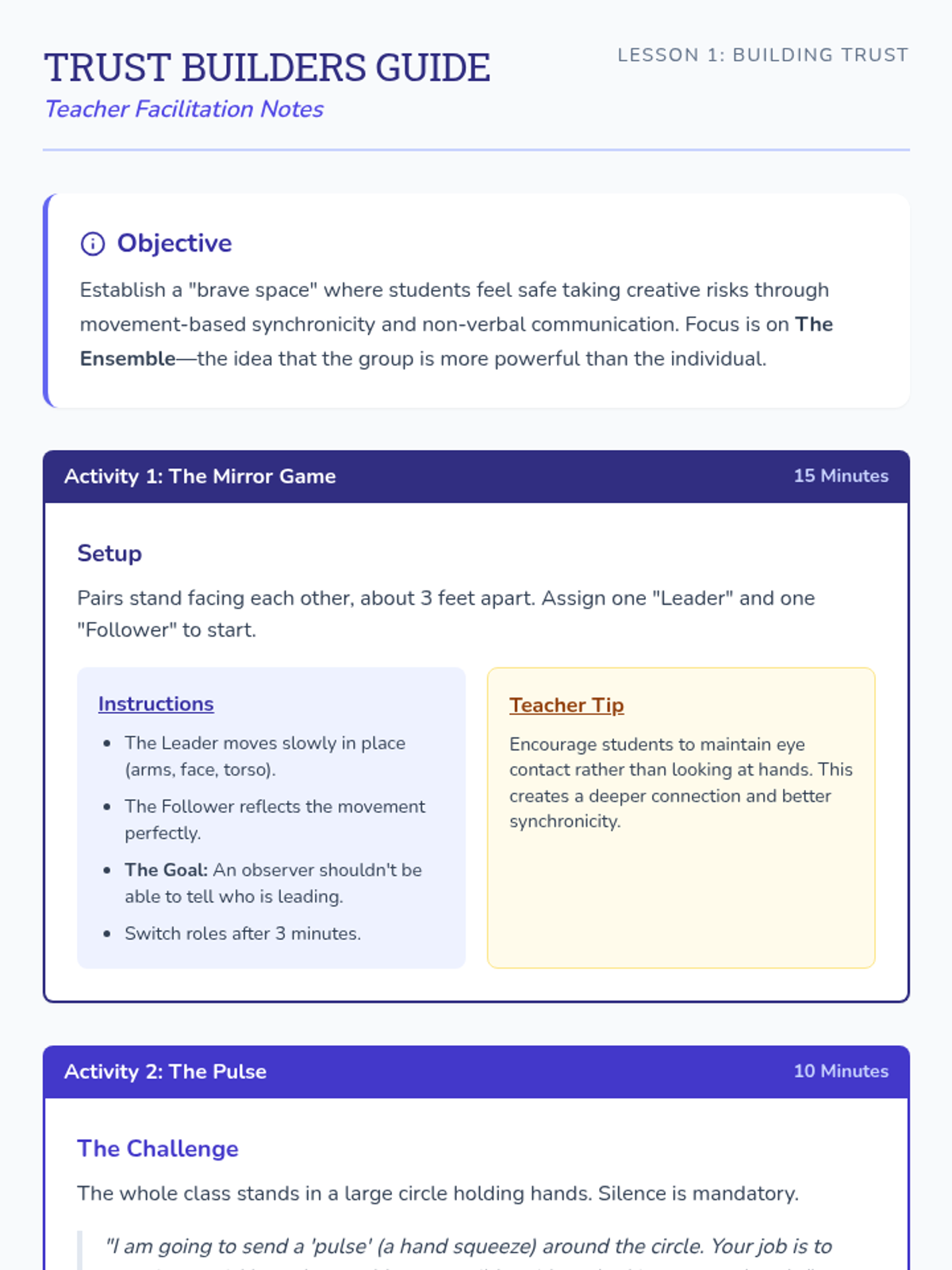
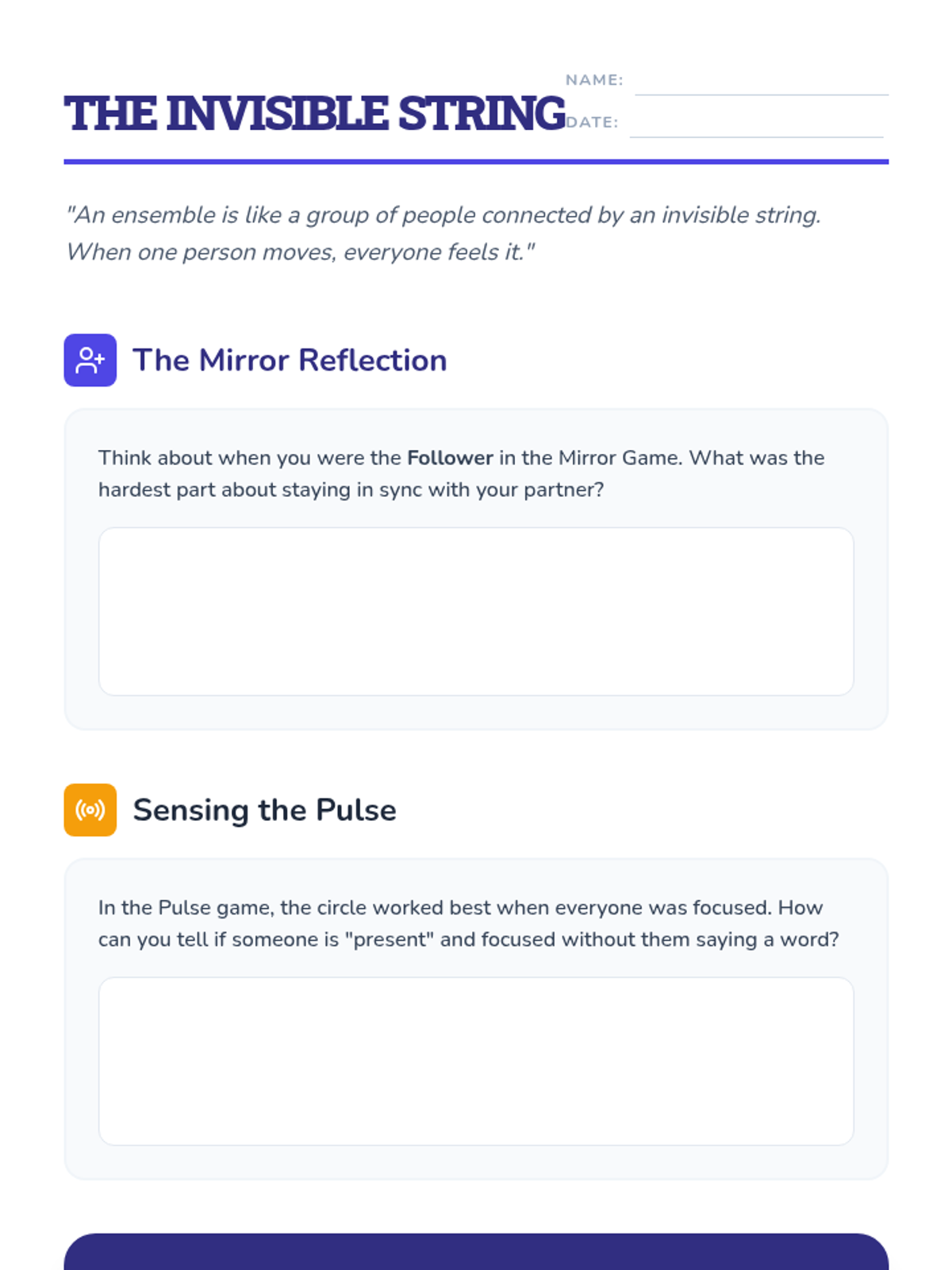
A 5th-grade performing arts sequence focusing on ensemble building, trust, and the 'Yes, And' philosophy of improvisation. Students progress from movement-based synchronicity to collaborative storytelling and group performance.
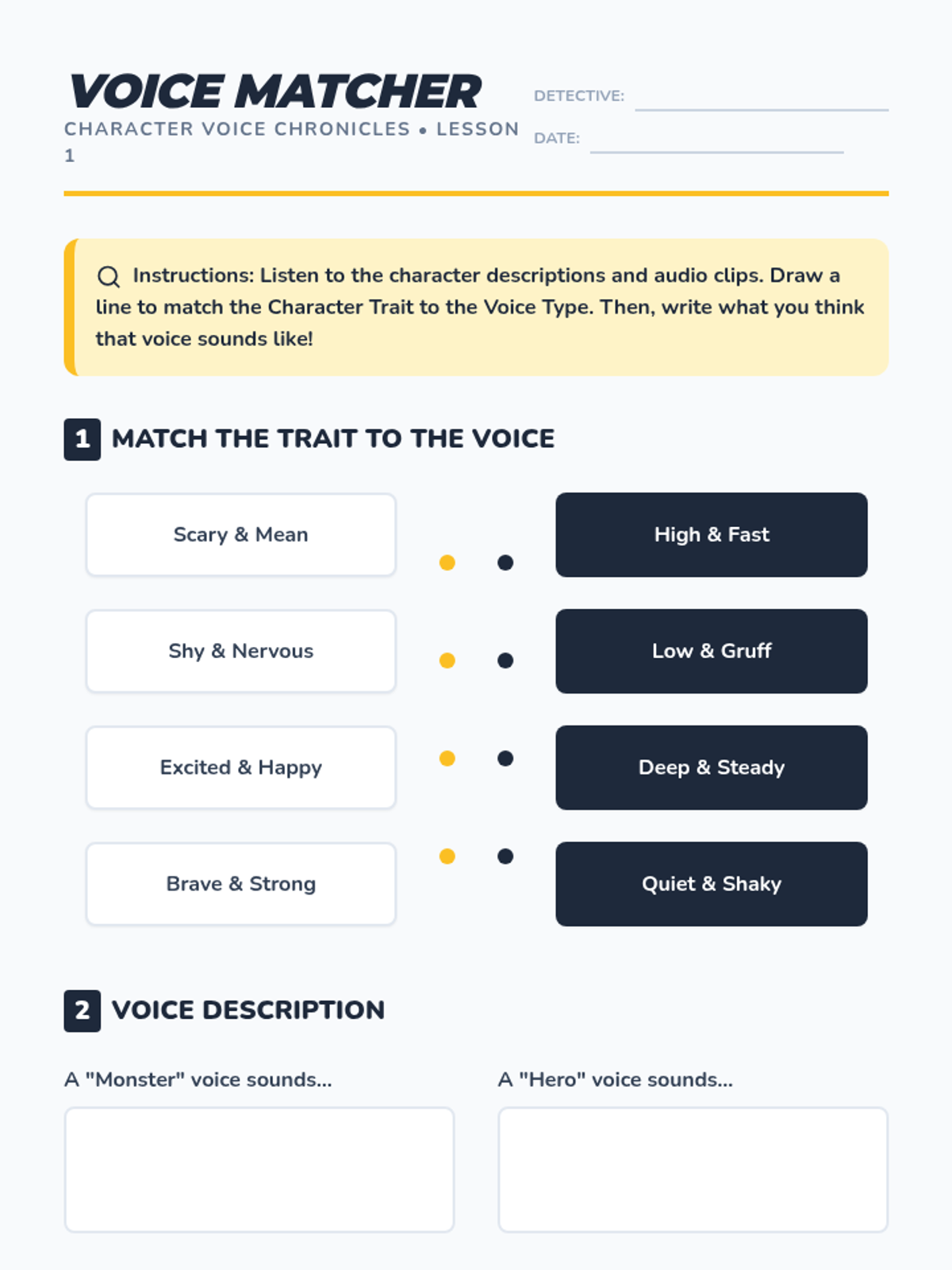
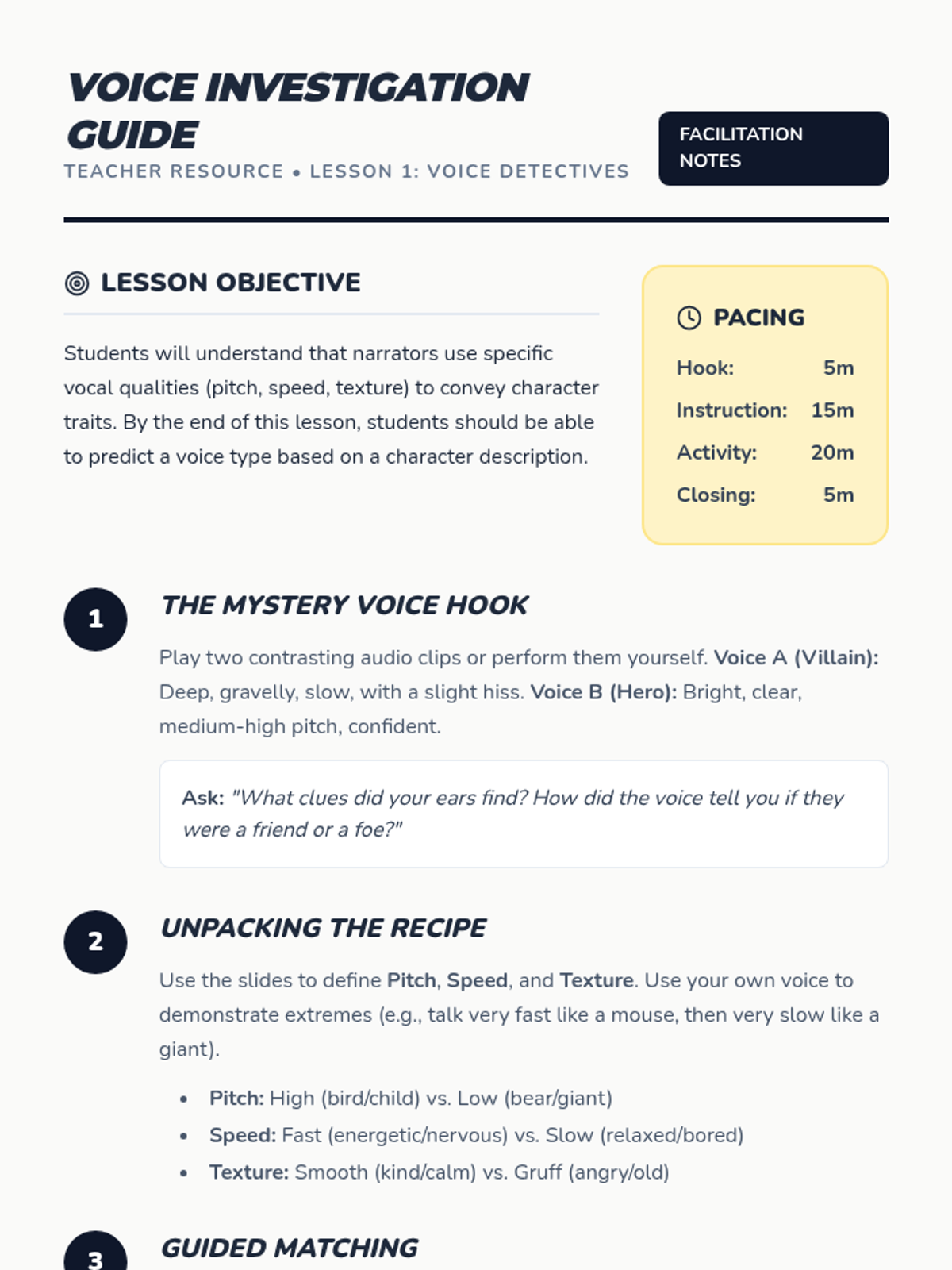
Students analyze how narrators use distinct voices to differentiate characters, map character traits to vocal qualities, and practice performing dialogue for a final Reader's Theater performance.
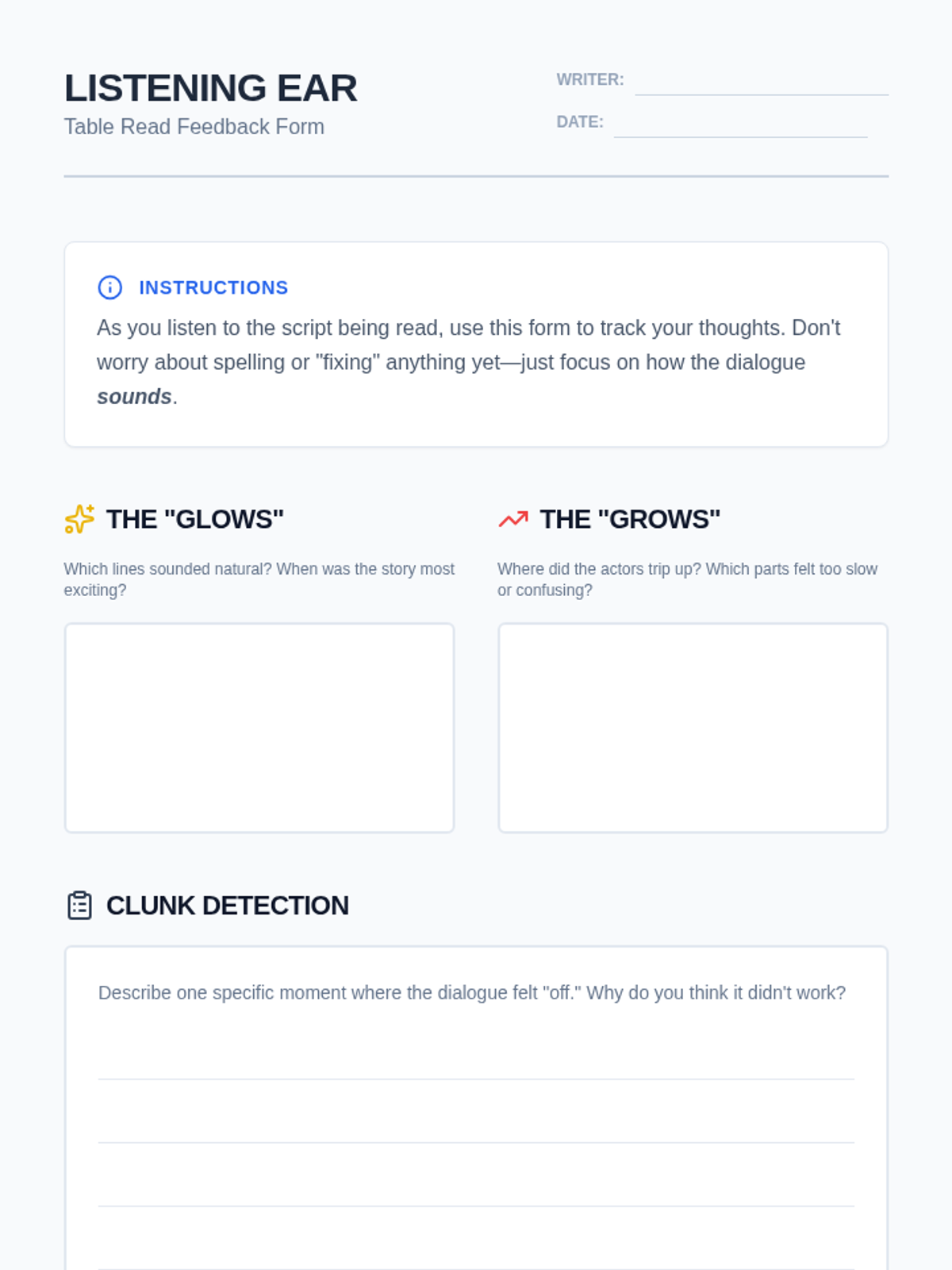
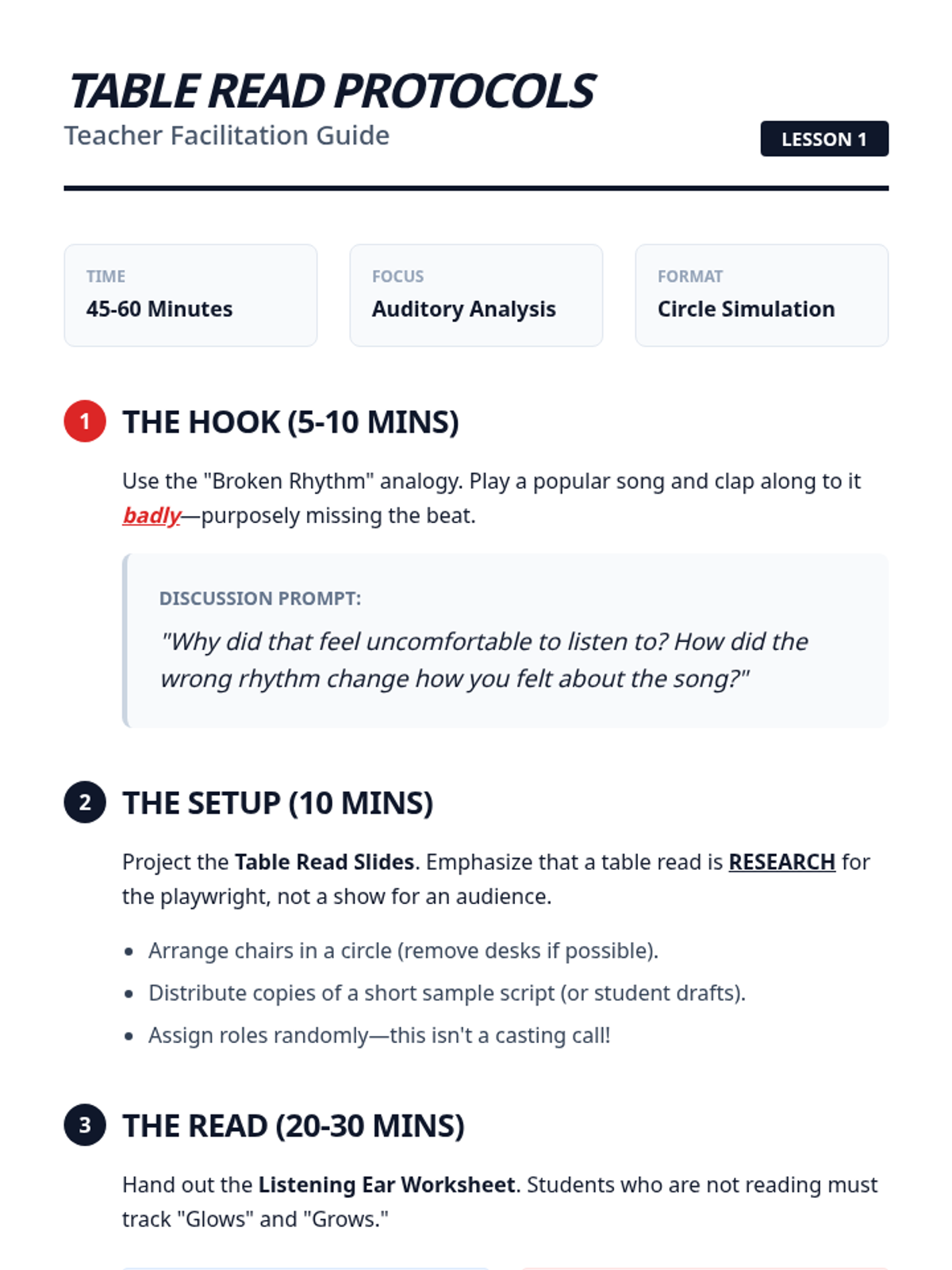
A 5-lesson sequence for 5th-grade students focusing on the iterative process of playwriting, from the first table read to a final, polished performance-ready script. Students develop skills in auditory analysis, dialogue refinement, conciseness, and collaboration.
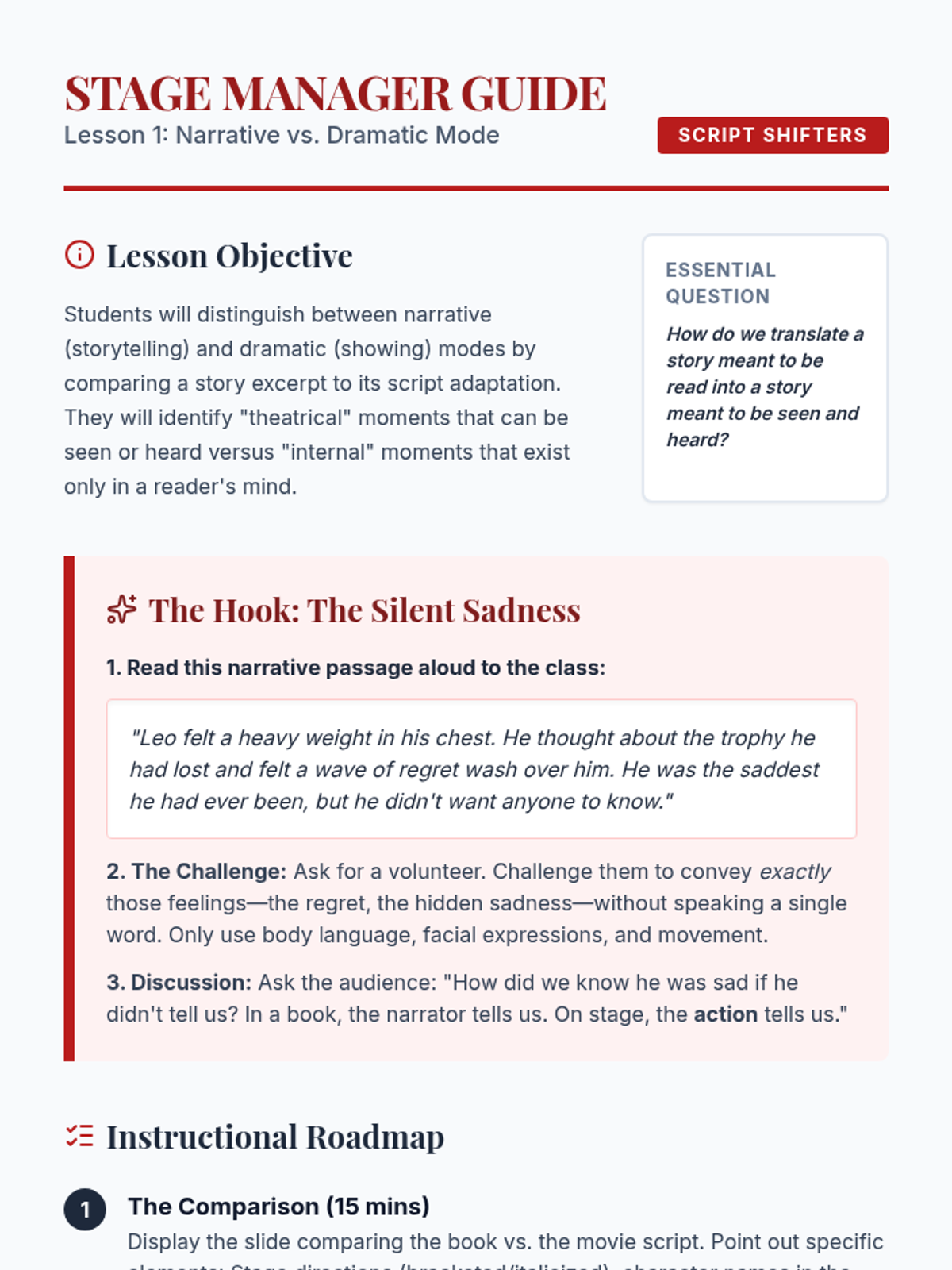
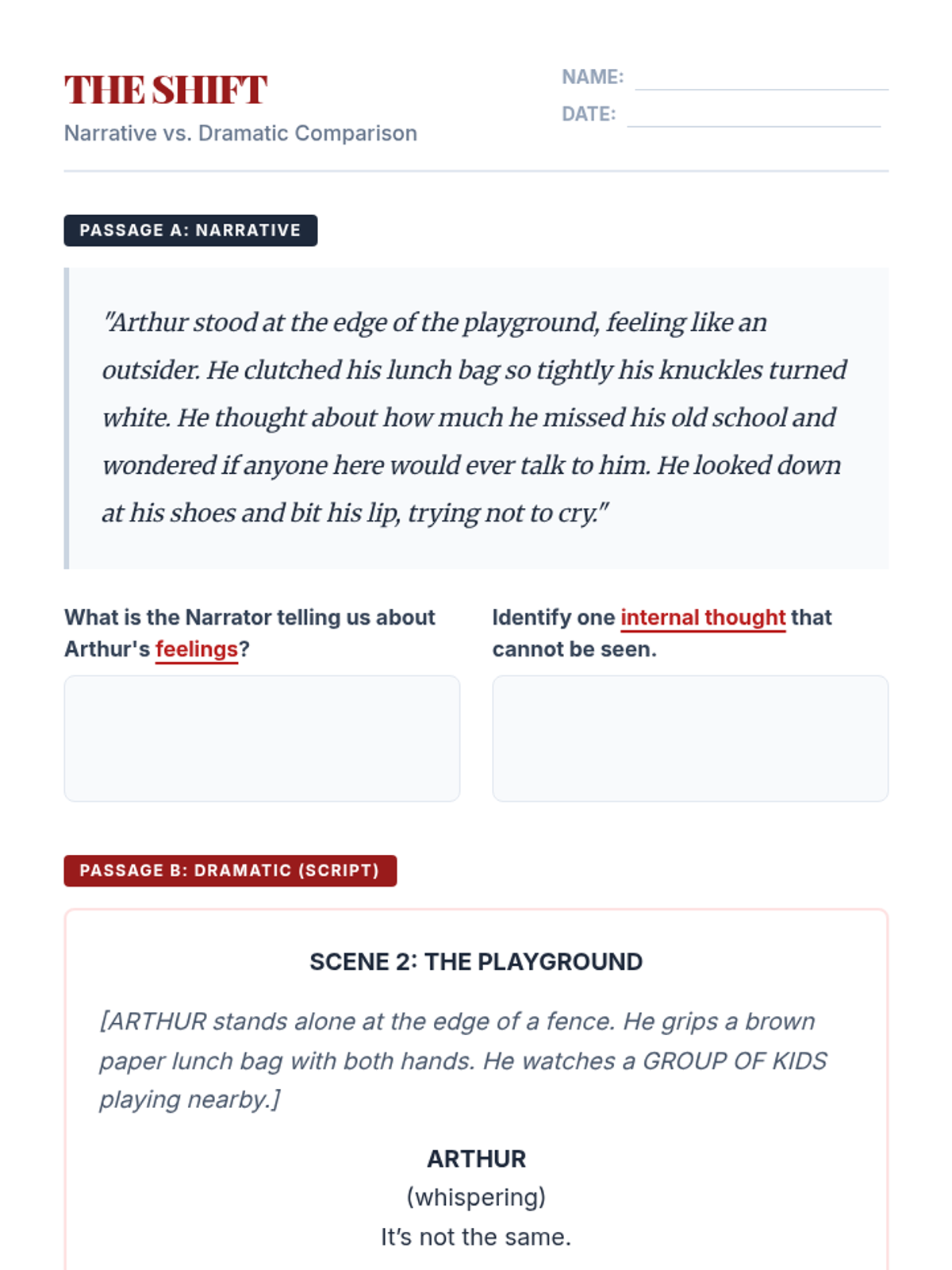
Students learn to translate narrative fiction into dramatic scripts by analyzing storytelling modes, converting internal thoughts to external actions, and drafting their own theatrical adaptations of fables.
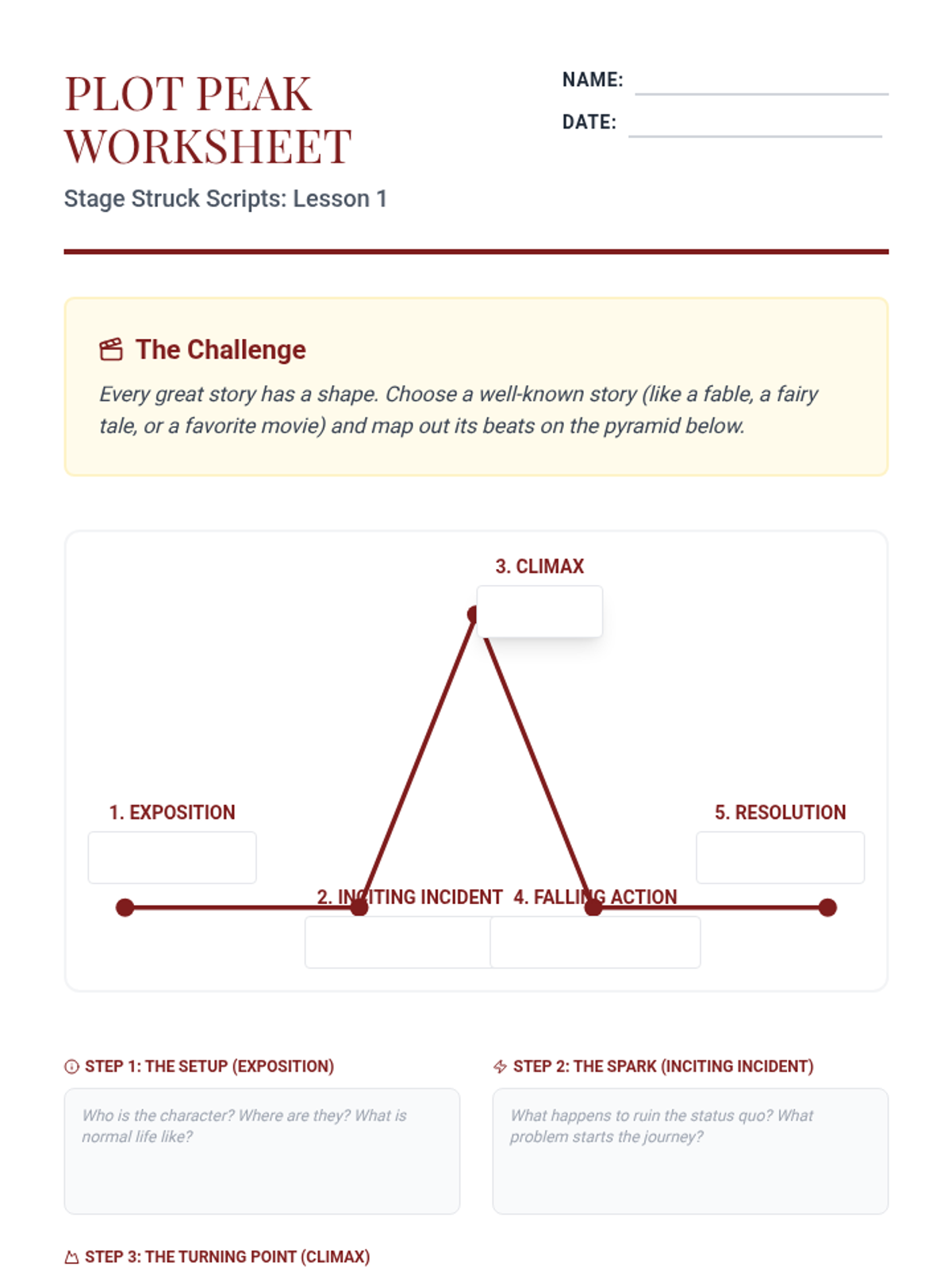
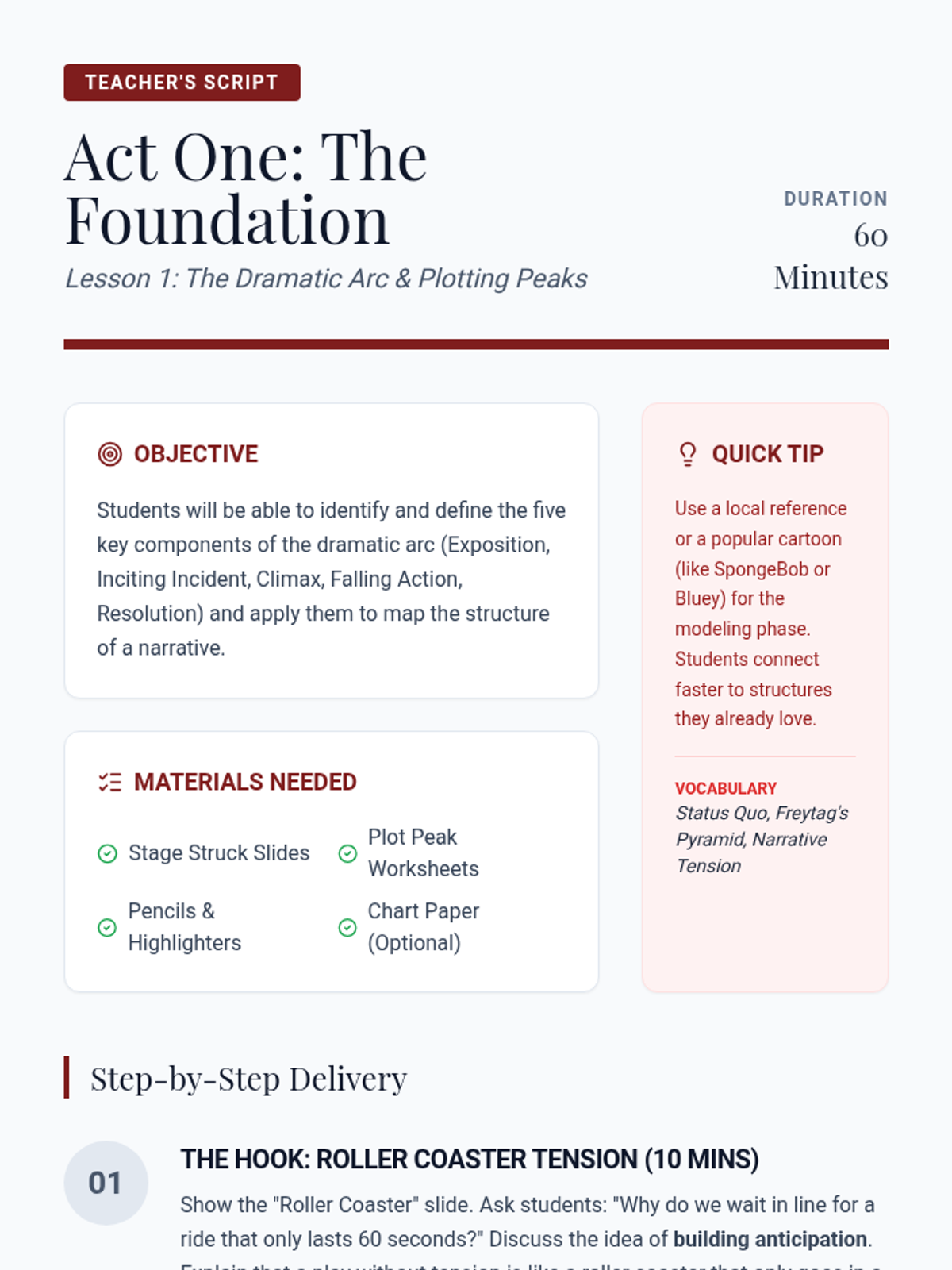
A project-based sequence for 5th-grade students to master the dramatic arc and write a short one-act play focusing on conflict and resolution.
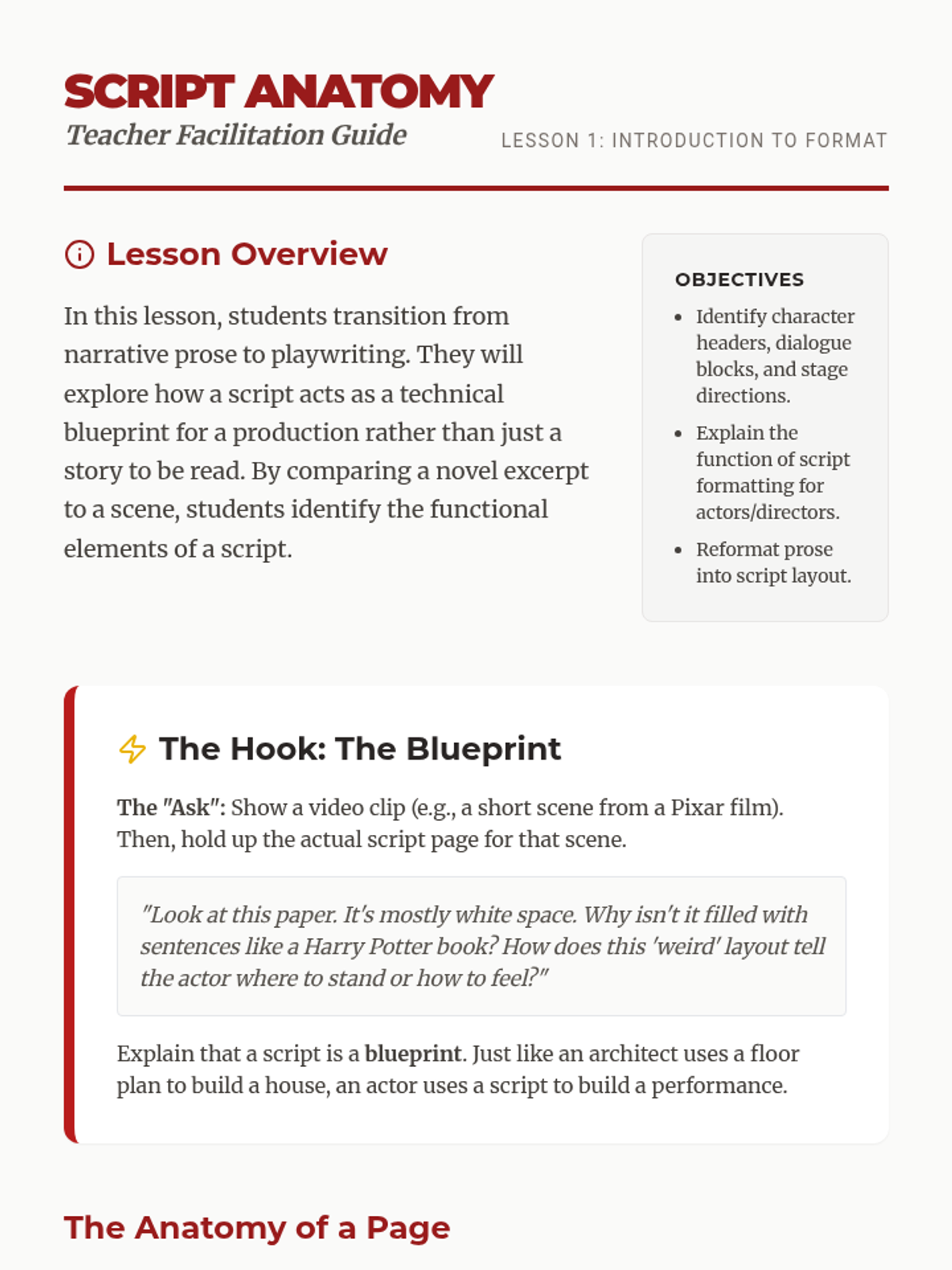
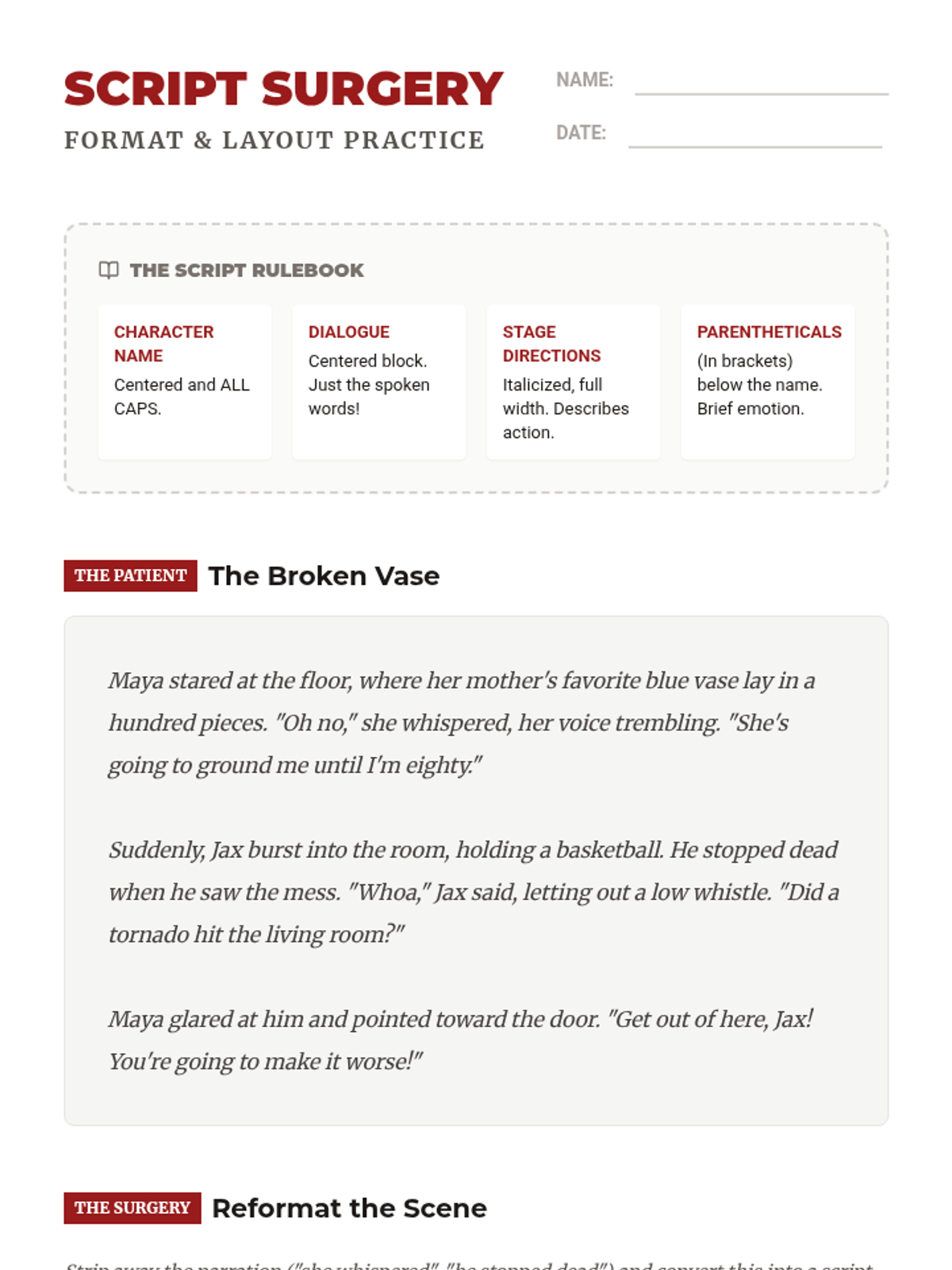
A foundational sequence for 5th-grade students to master the mechanics of playwriting, including script formatting, natural dialogue, and stage directions, culminating in a two-page original scene.