Fundamental notation, instrumental proficiency, and vocal techniques across various genres. Connects historical analysis with original composition and creative performance skills.
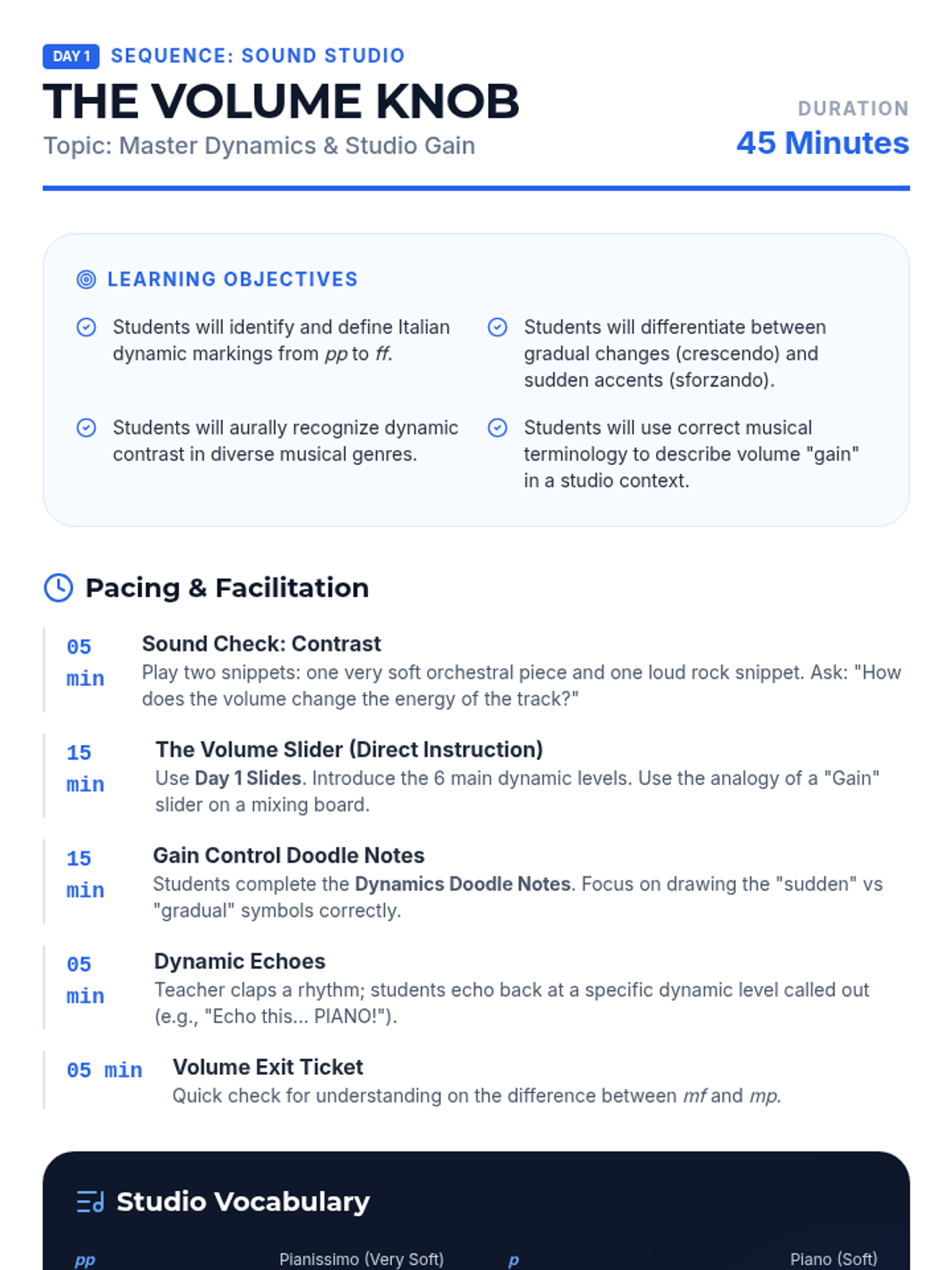
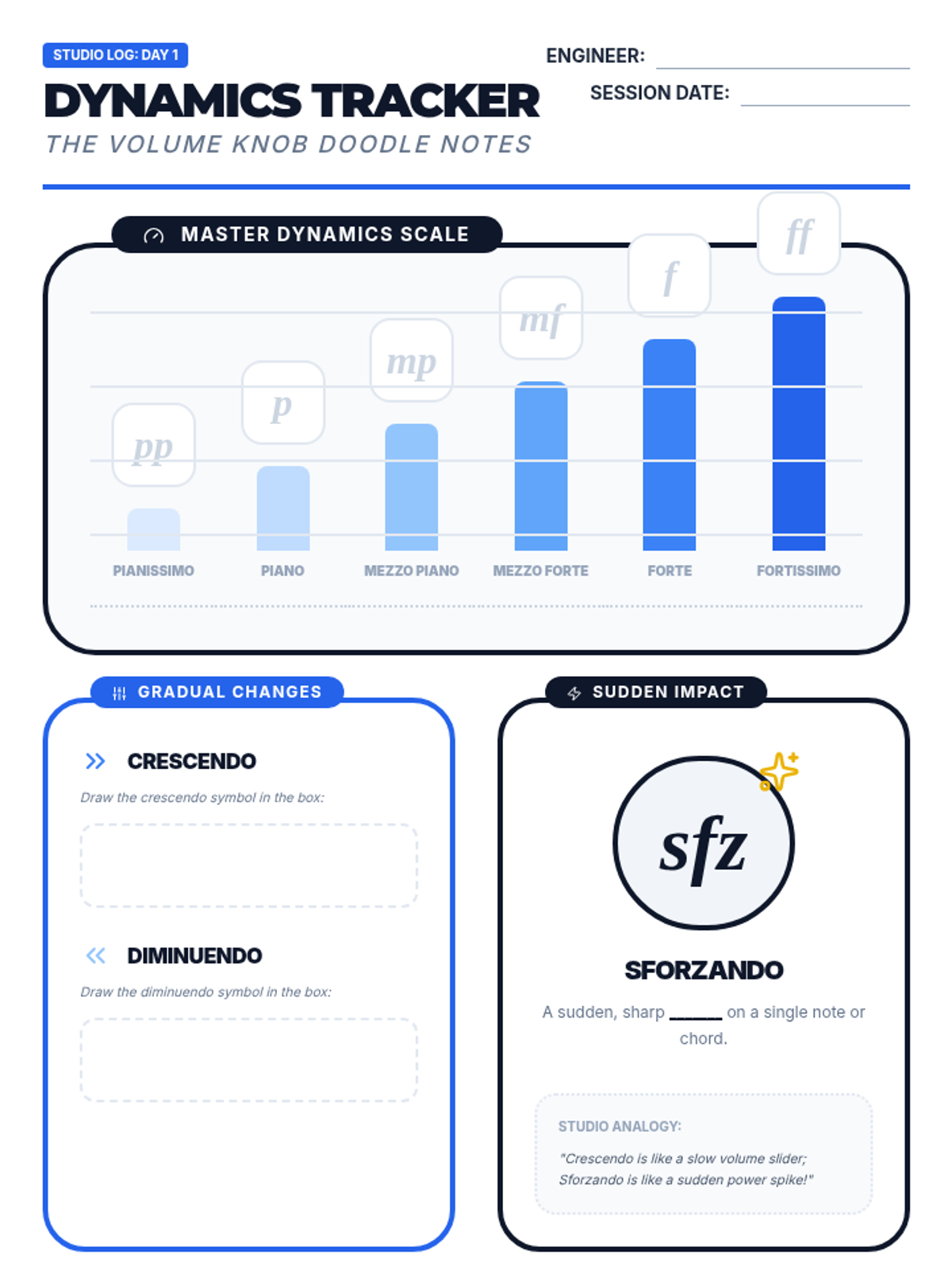
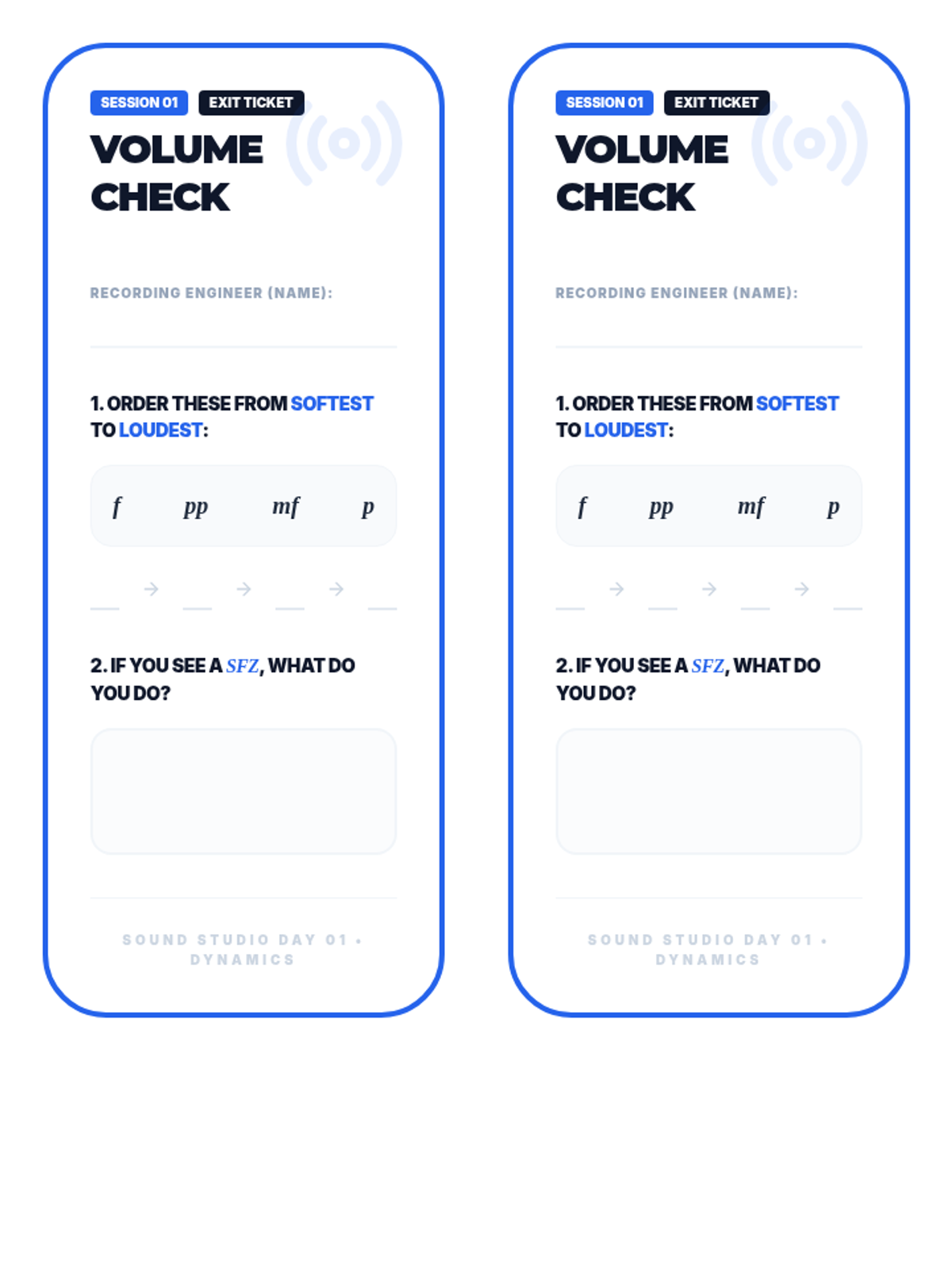
A 3-day intensive exploration of the fundamental building blocks of music theory—Dynamics, Tempo, and Intervals—designed through a modern sound studio lens.
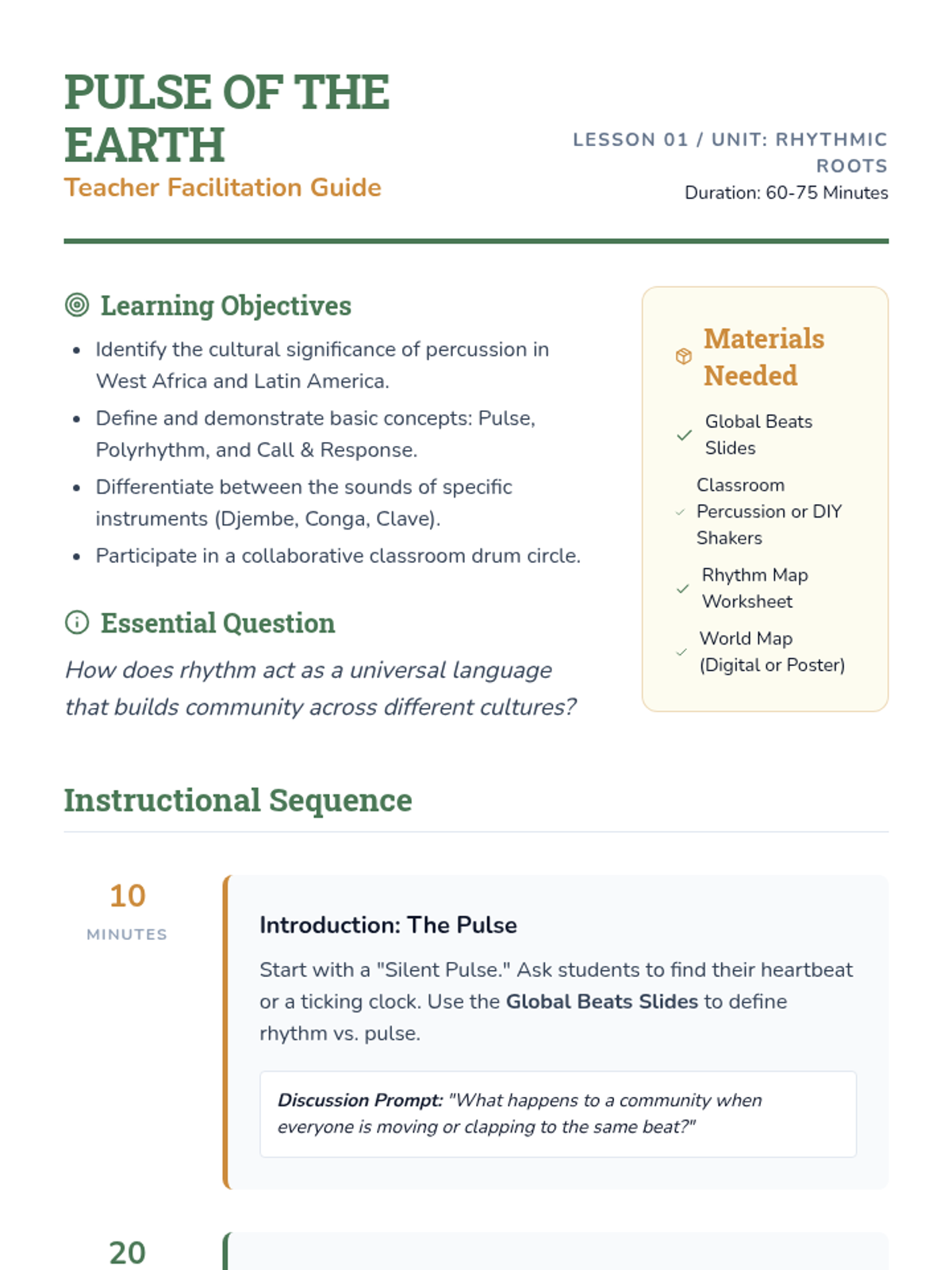
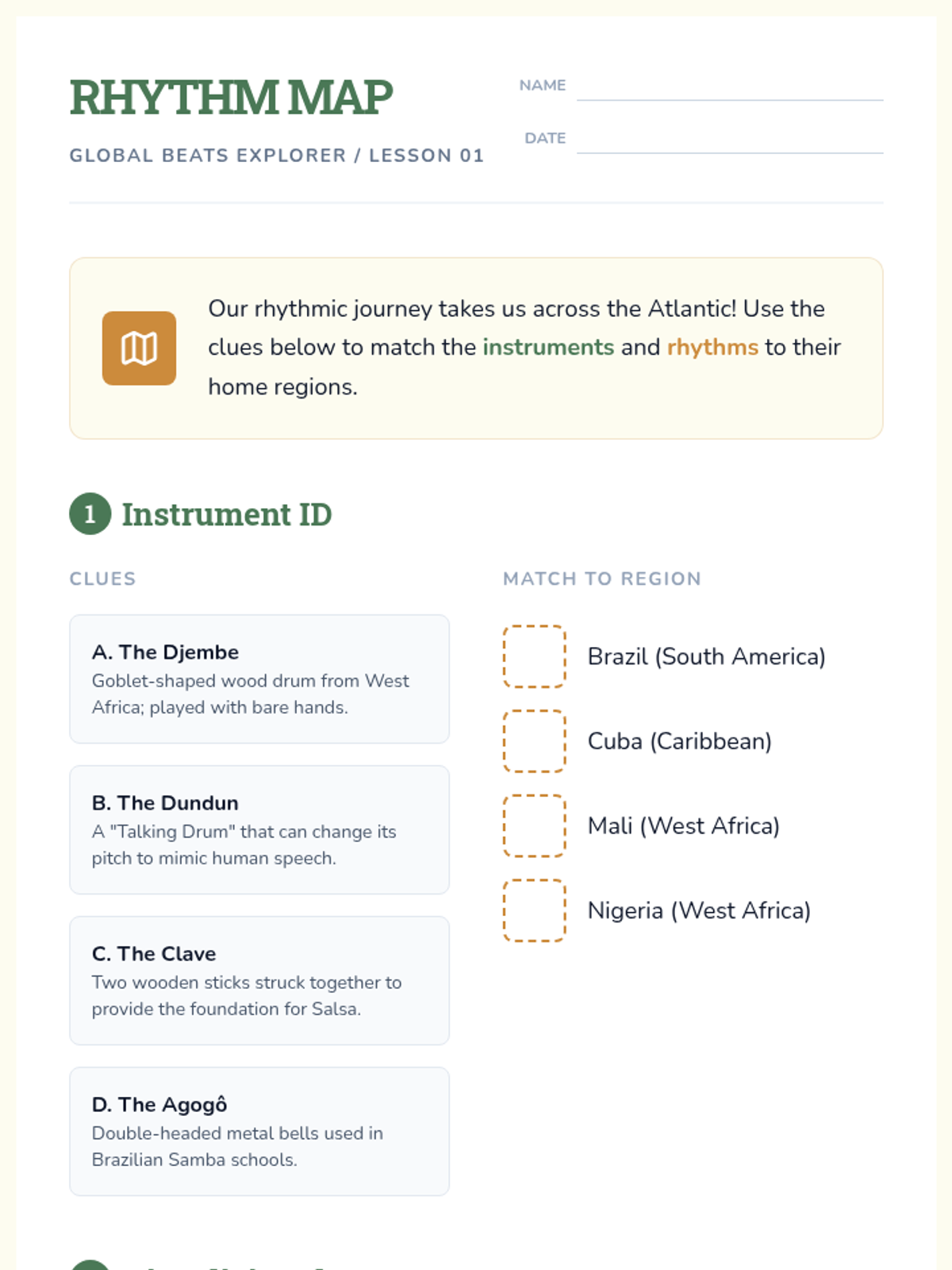
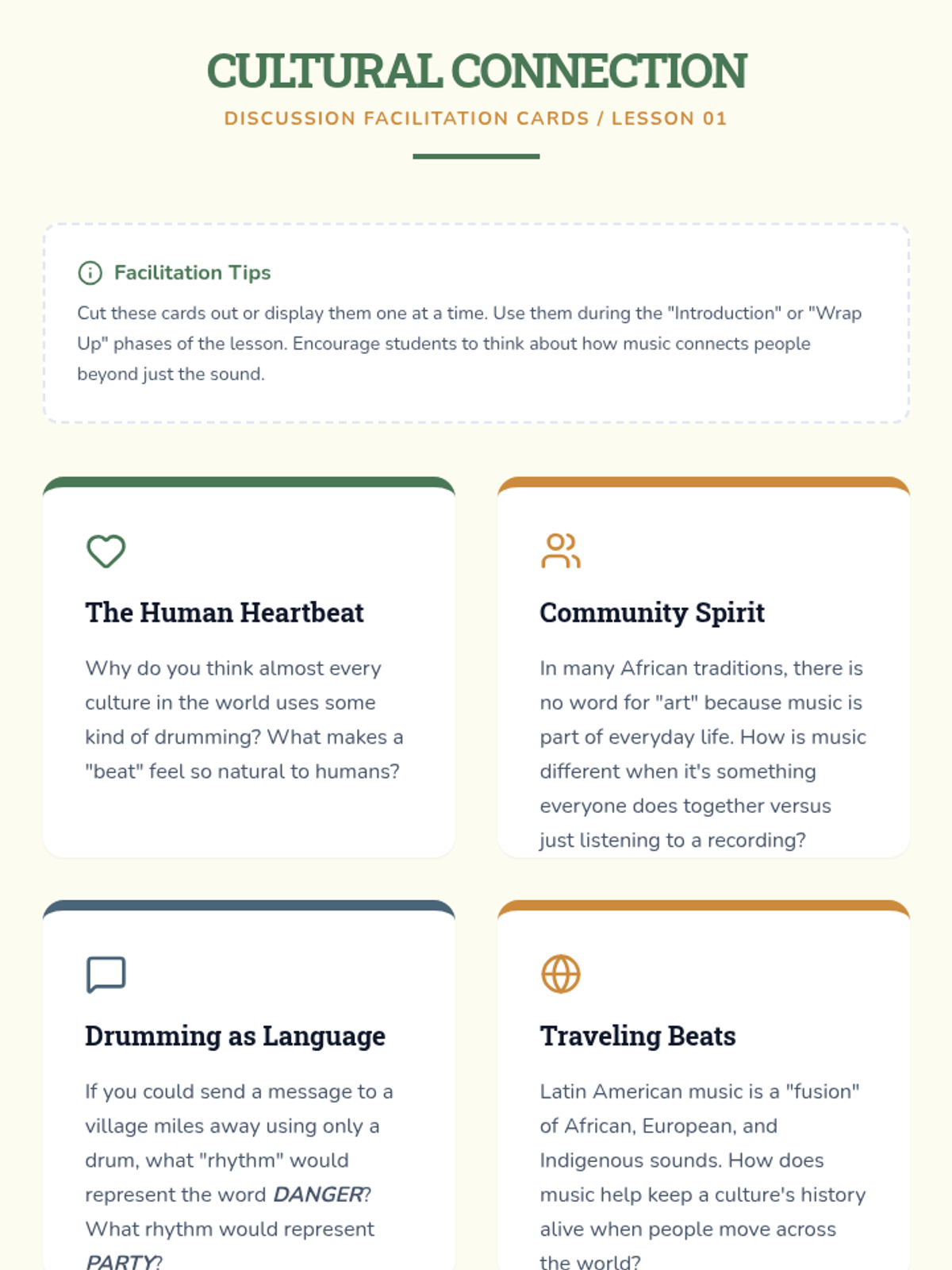
A comprehensive exploration of world music and dance, focusing on cultural heritage, musical elements, and creative expression through drumming, melody, and global fusion.
A foundational music education series designed for early elementary students, covering rhythm, movement, note reading, dynamics, and music history.
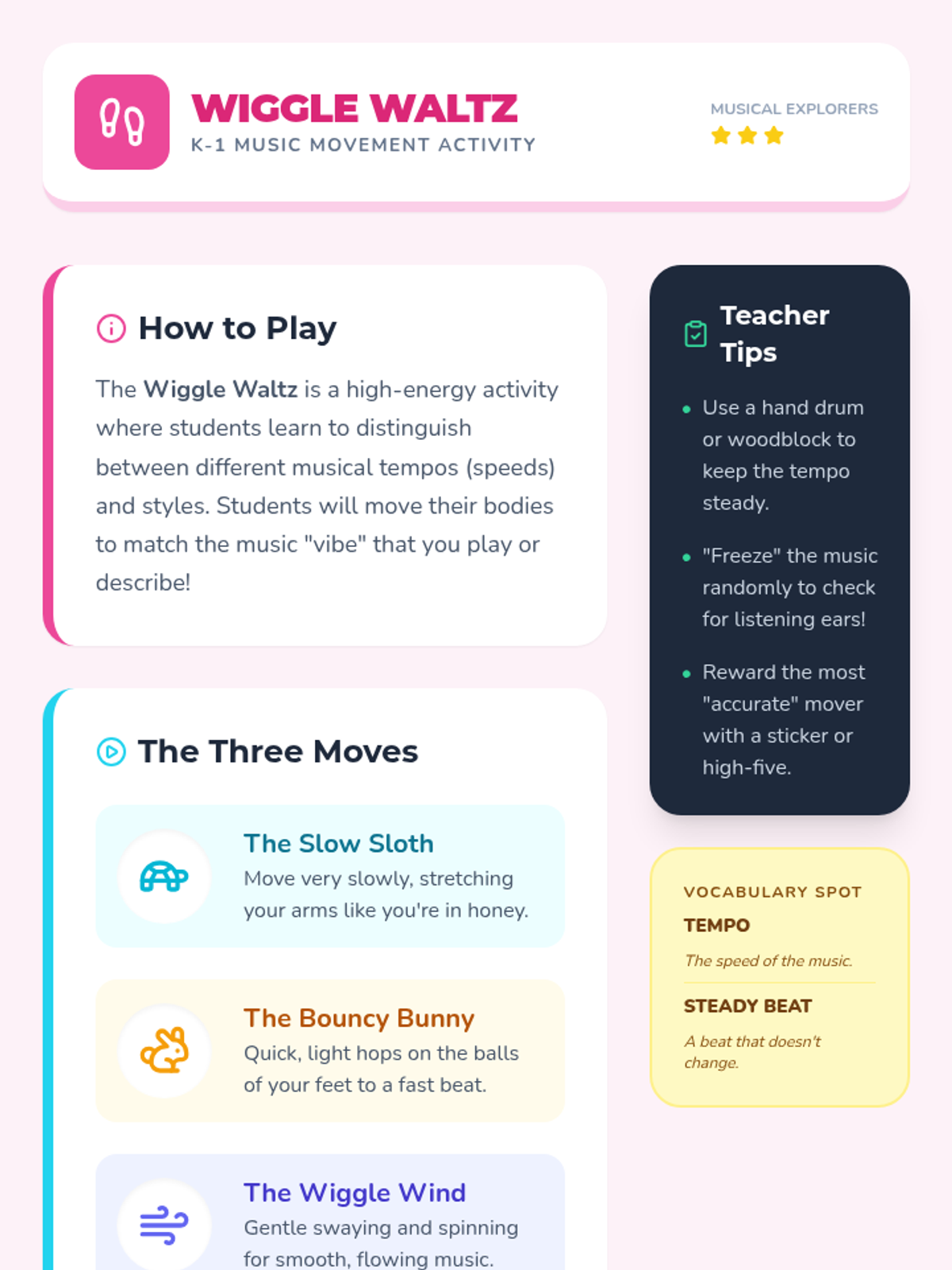
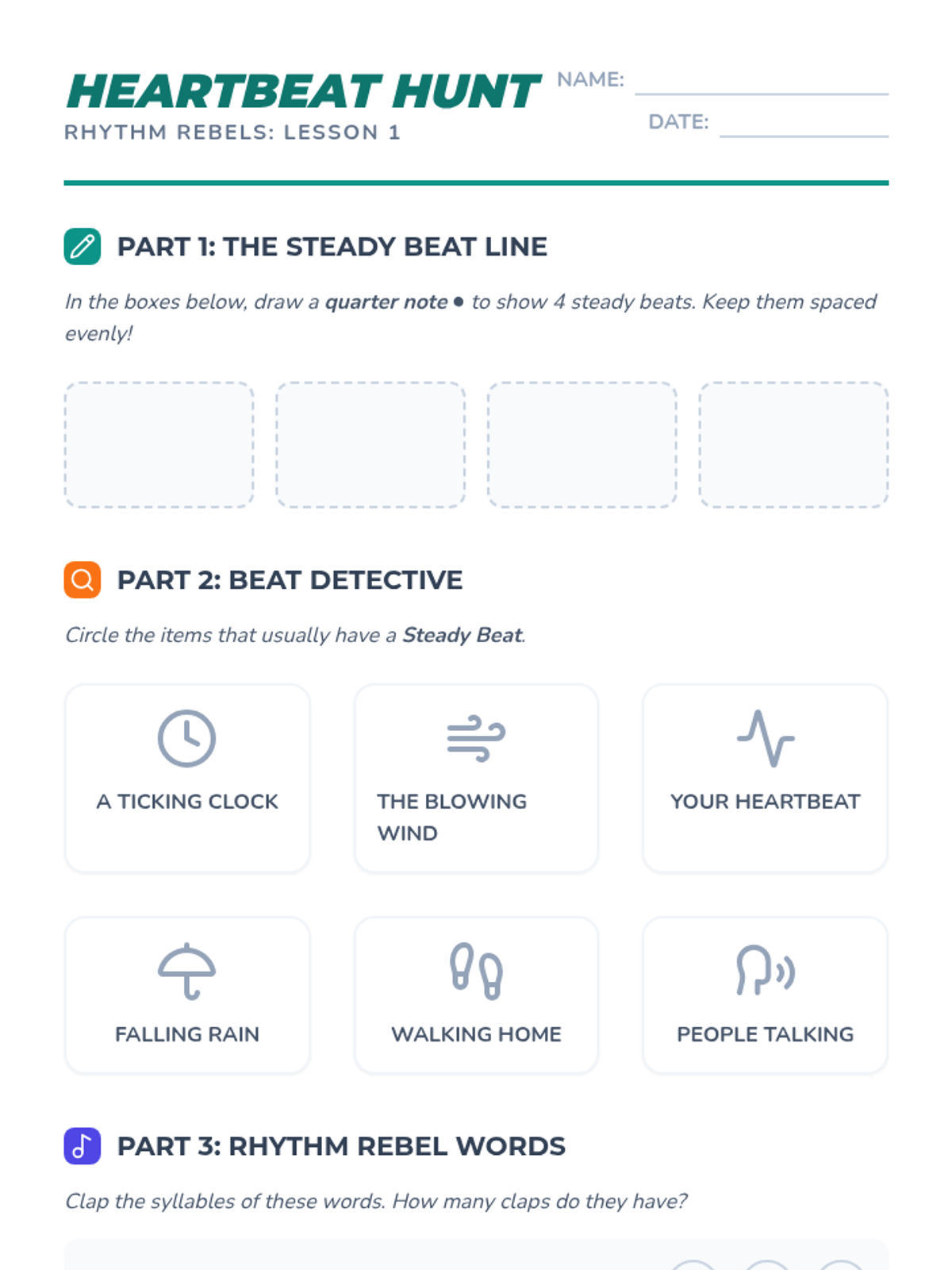
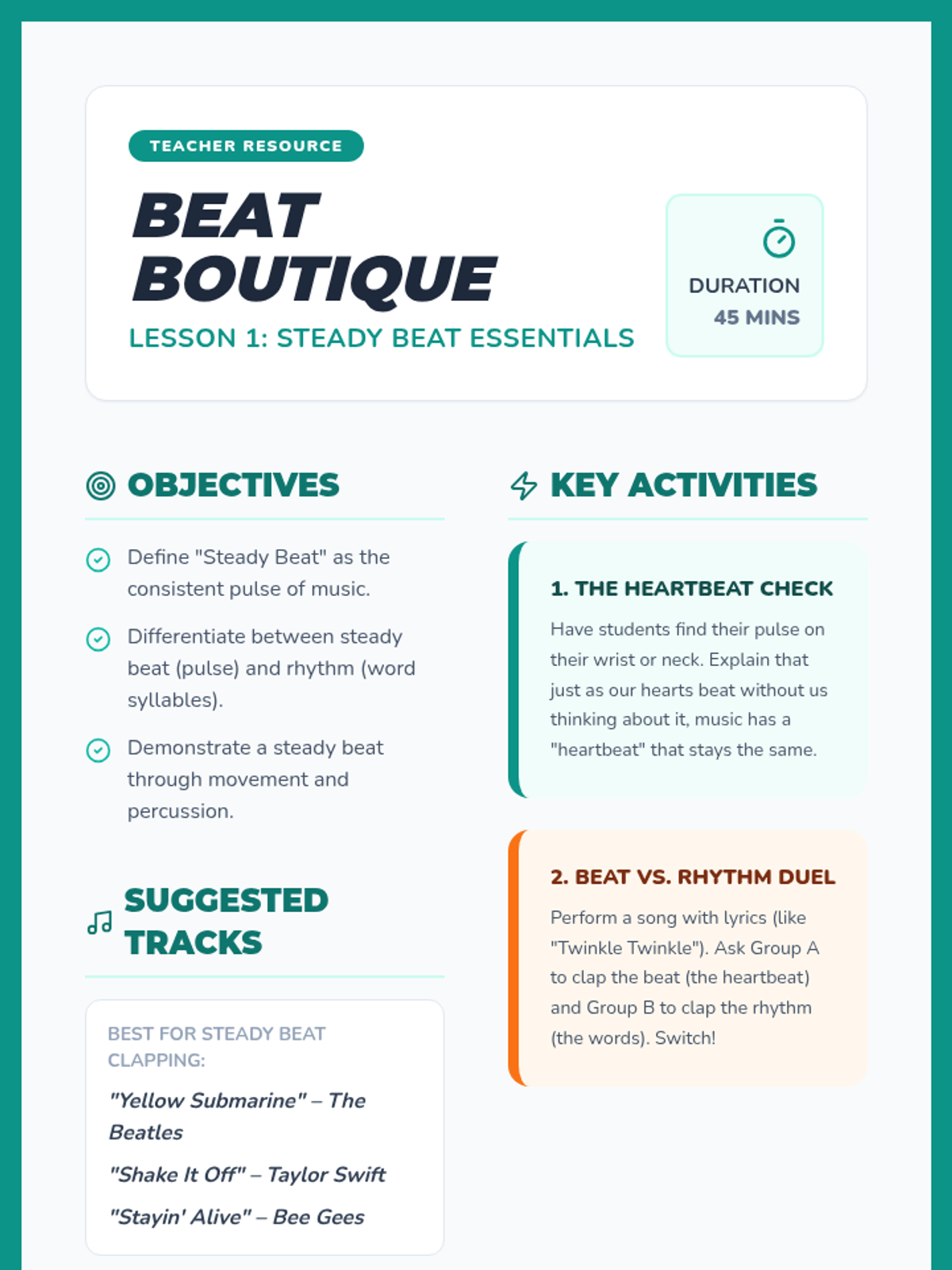
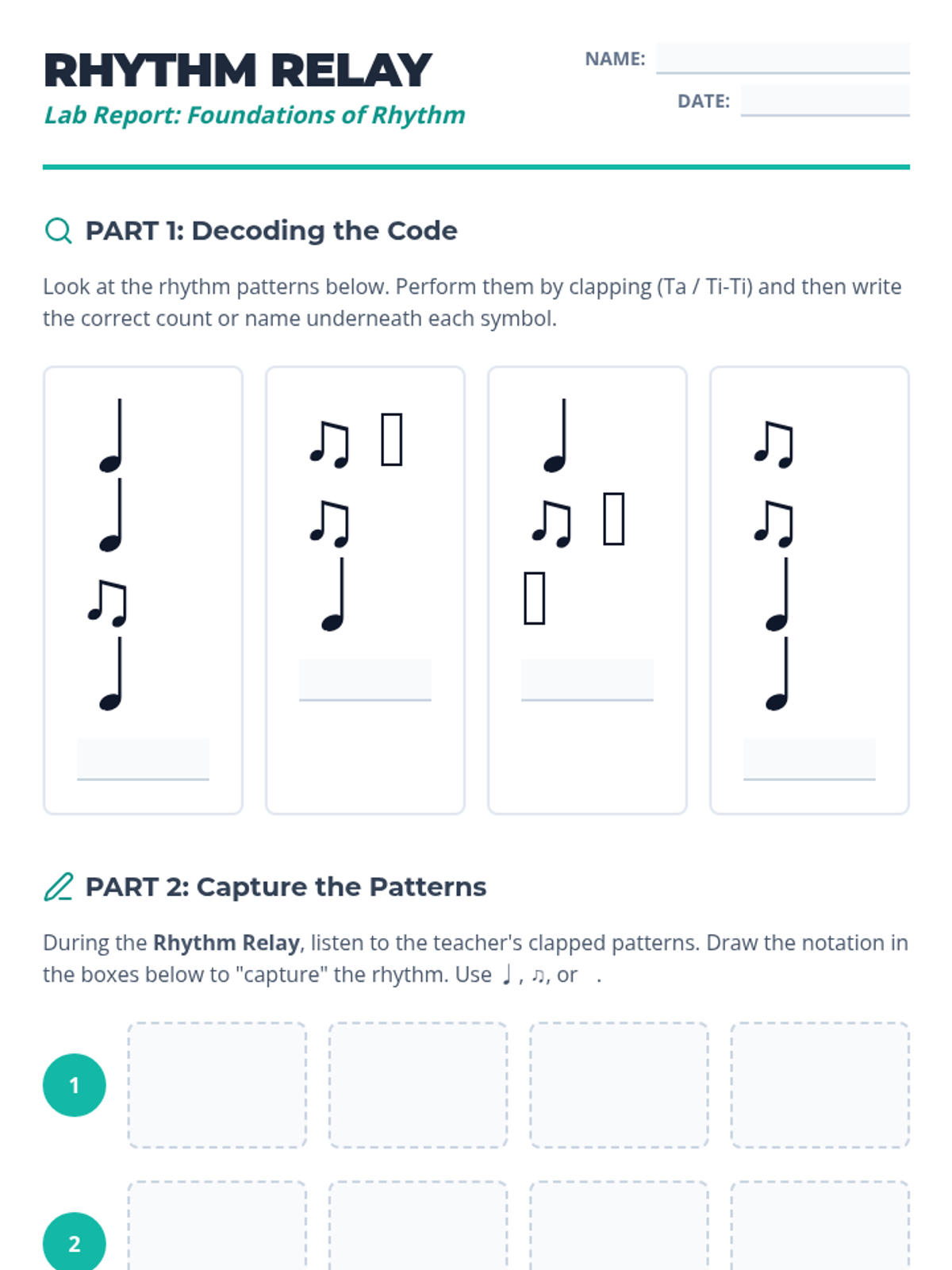
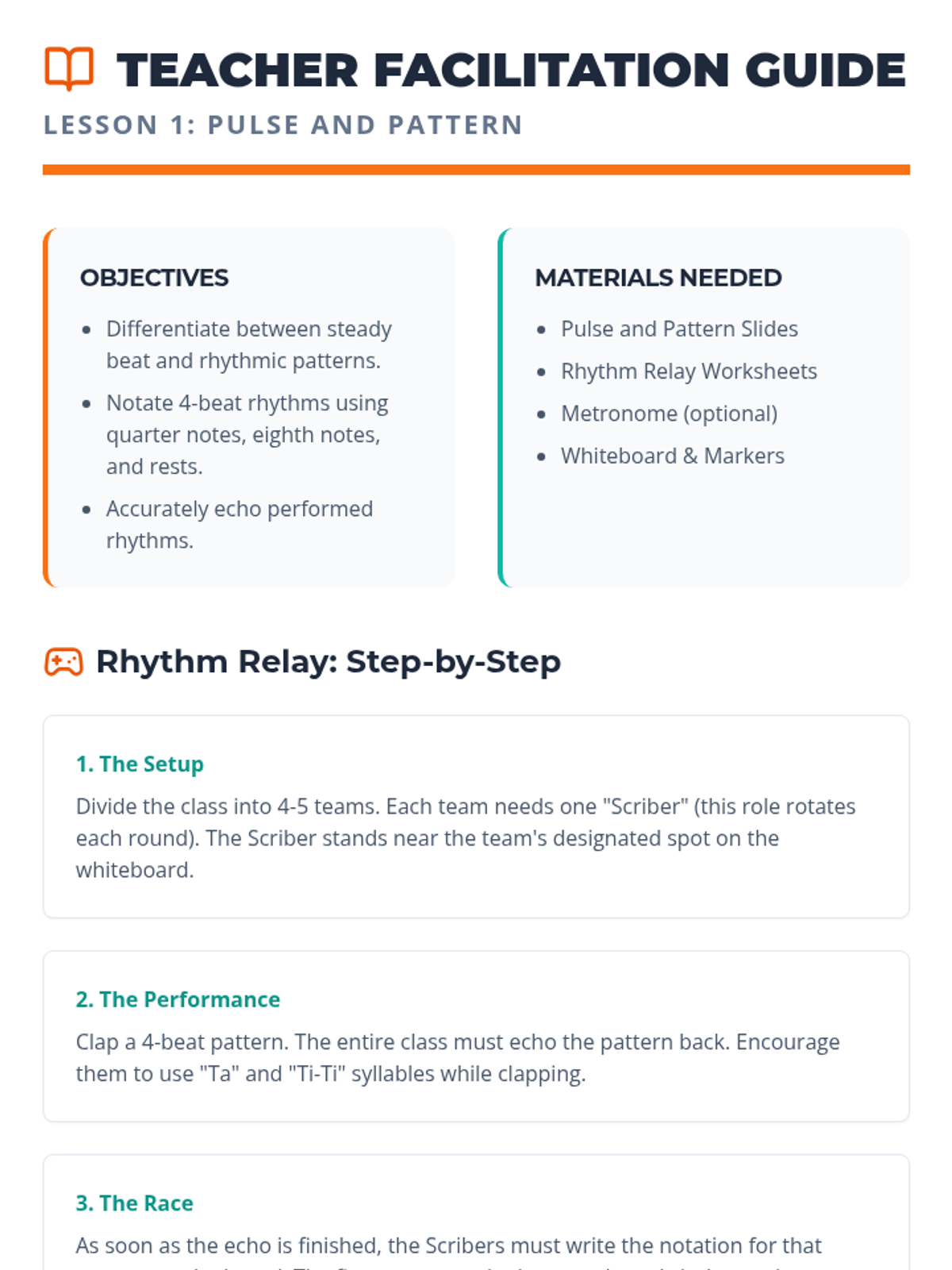
A high-energy elementary music unit focusing on the fundamentals of steady beat, tempo variations, and rhythmic patterns through interactive play-alongs and movement.
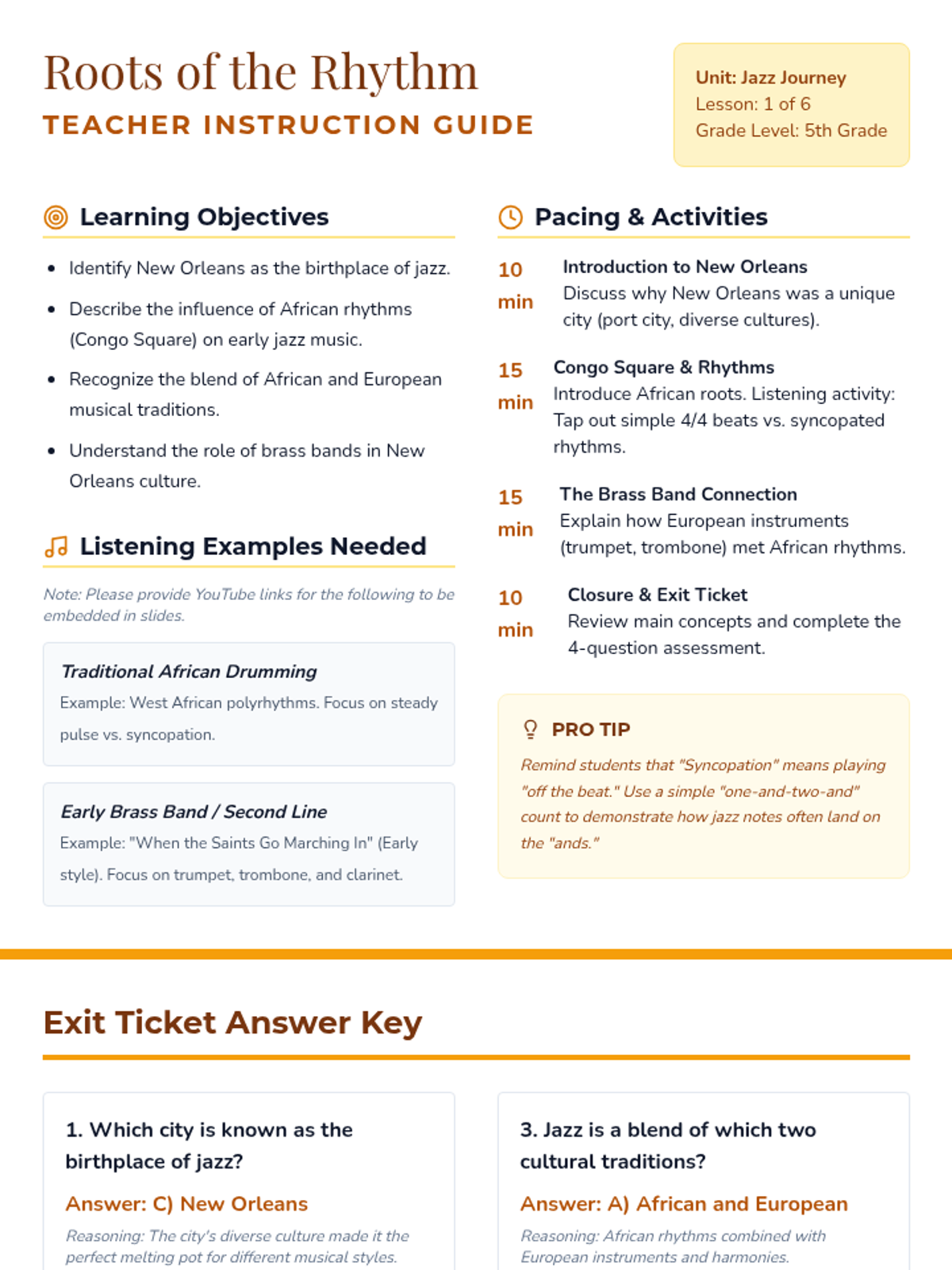
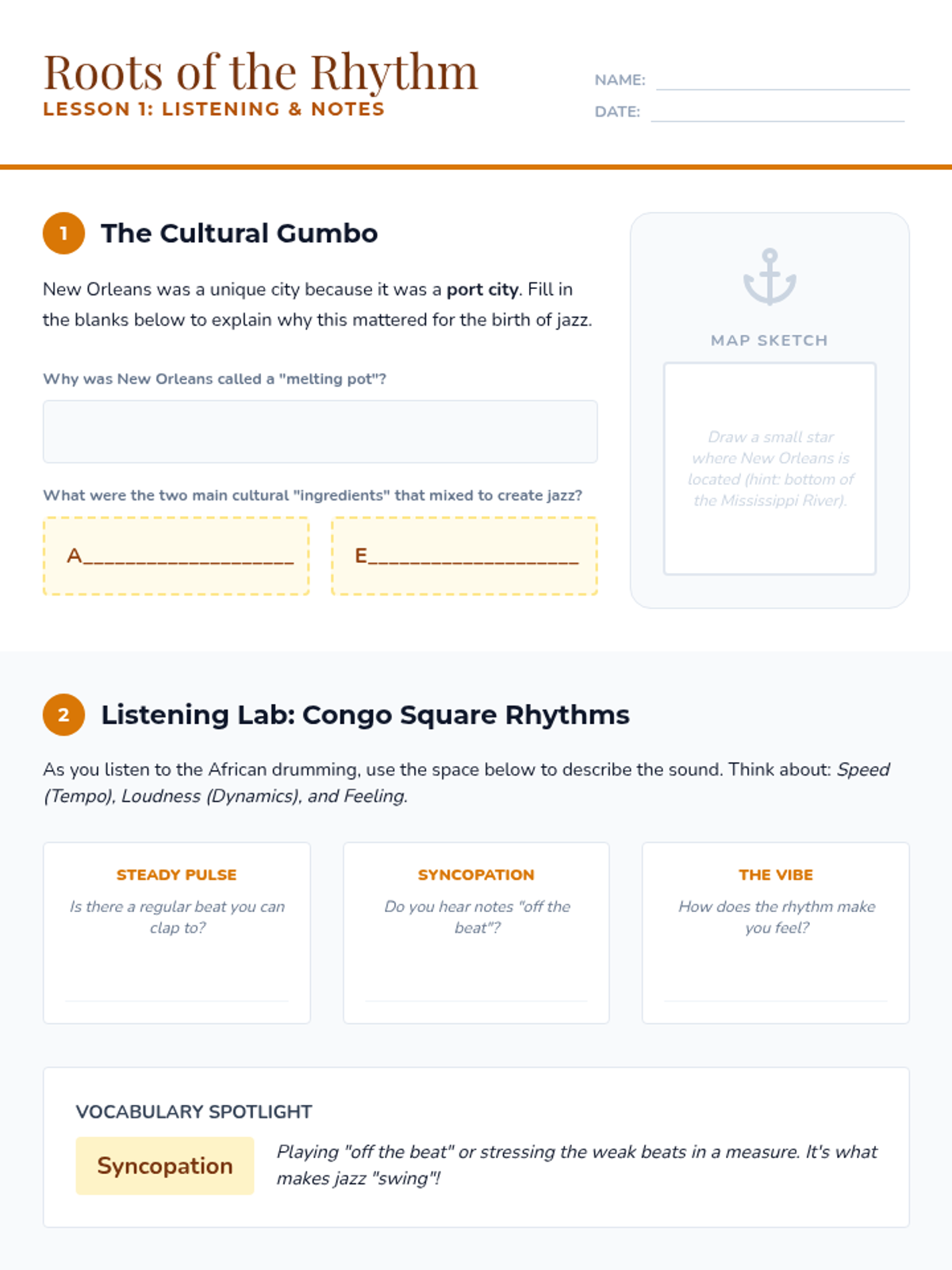
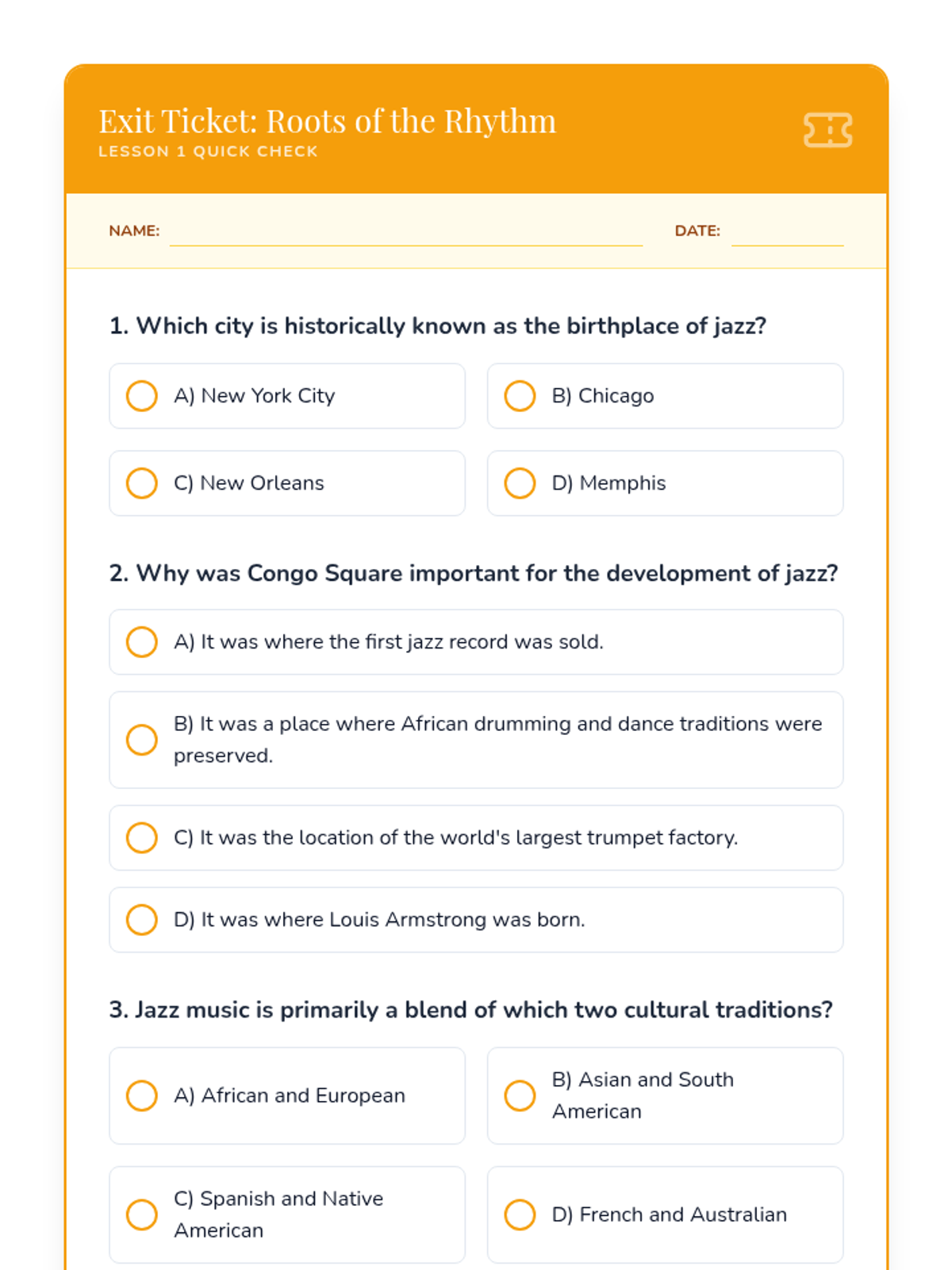
A comprehensive 6-lesson unit for 5th graders exploring the history, evolution, and legendary figures of American Jazz, from its New Orleans roots to its global legacy today.
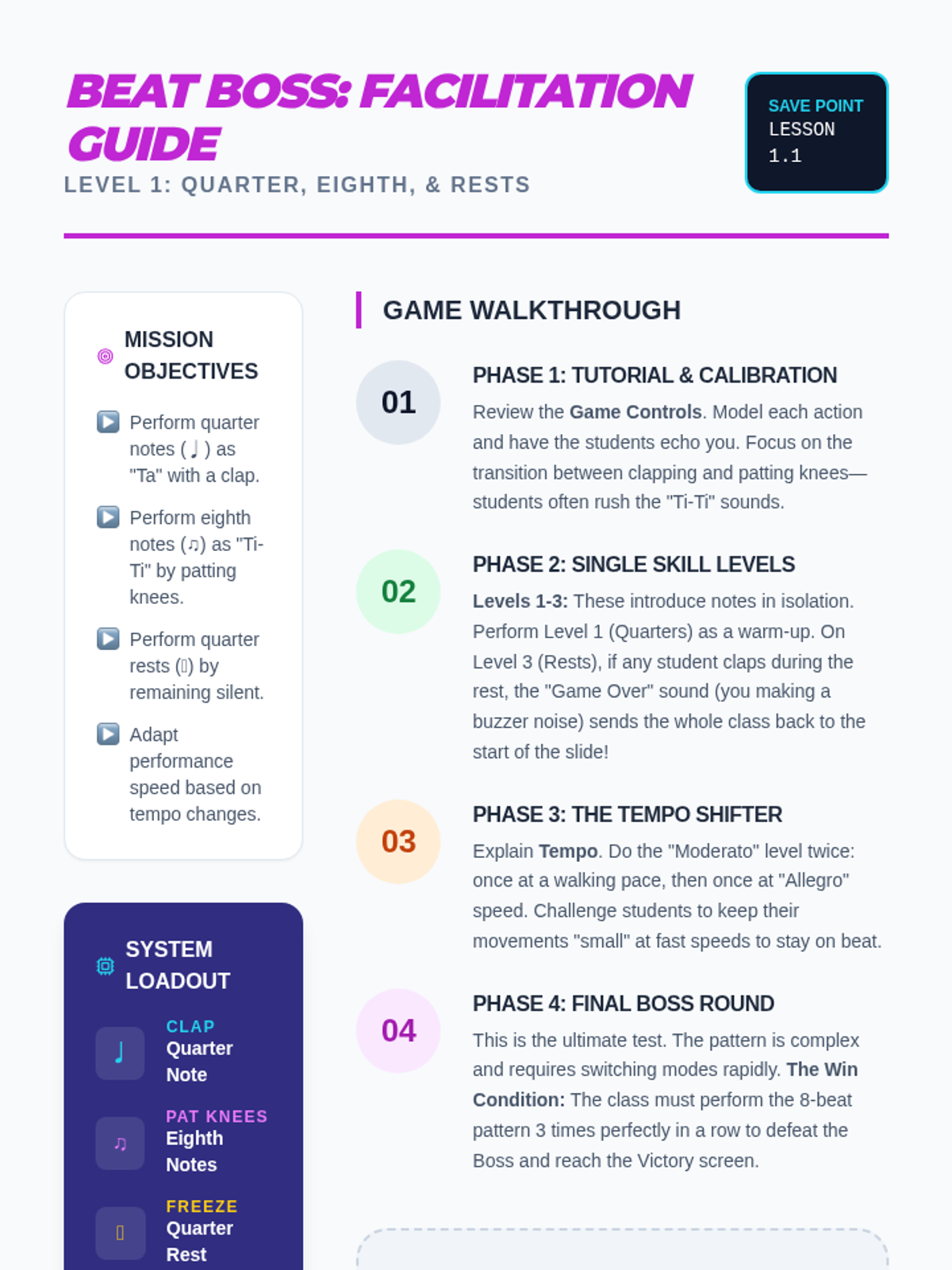
A high-energy, interactive unit focused on mastering rhythm and tempo through digital gameplay and body percussion, designed specifically for paperless classrooms.
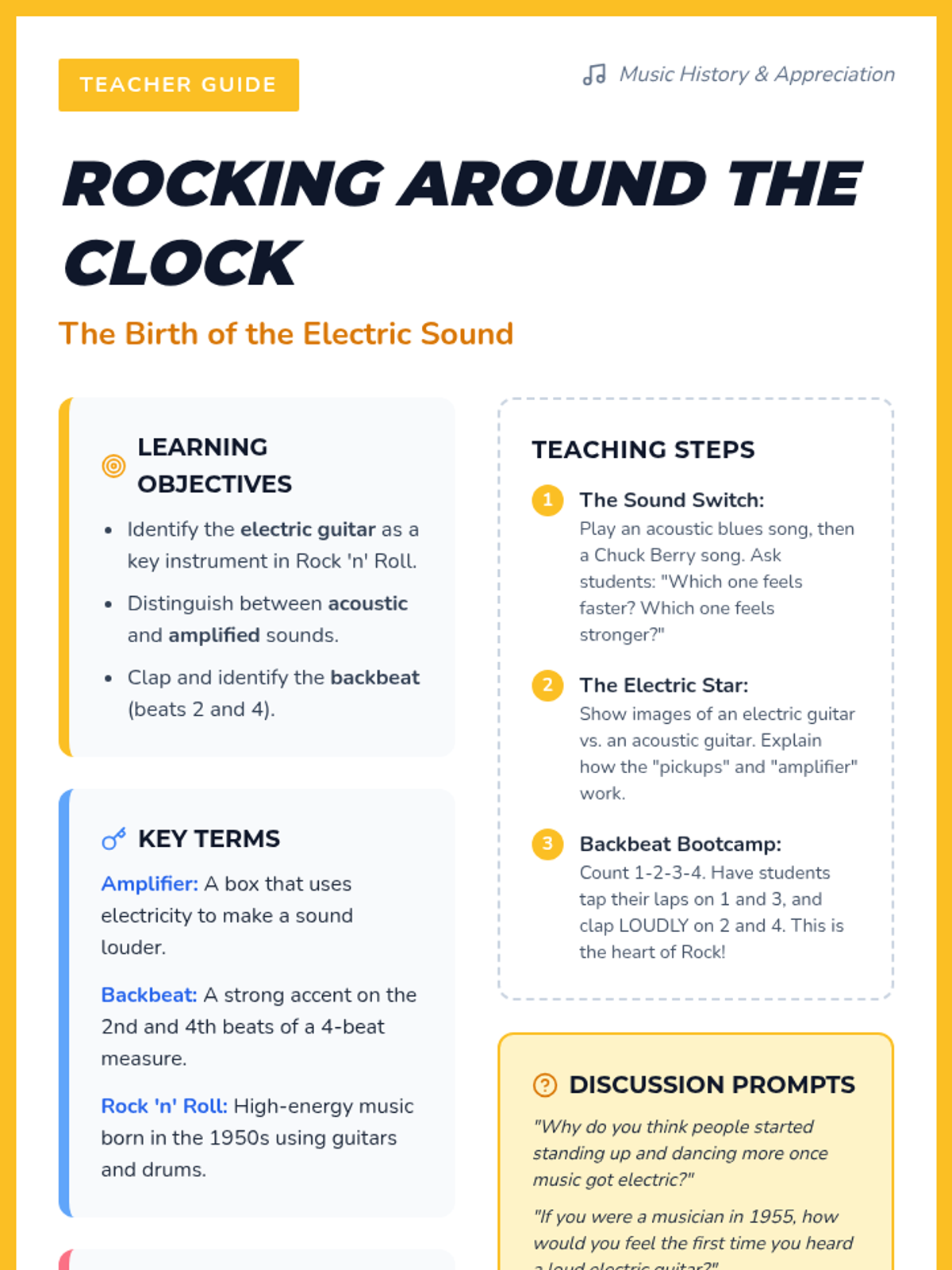
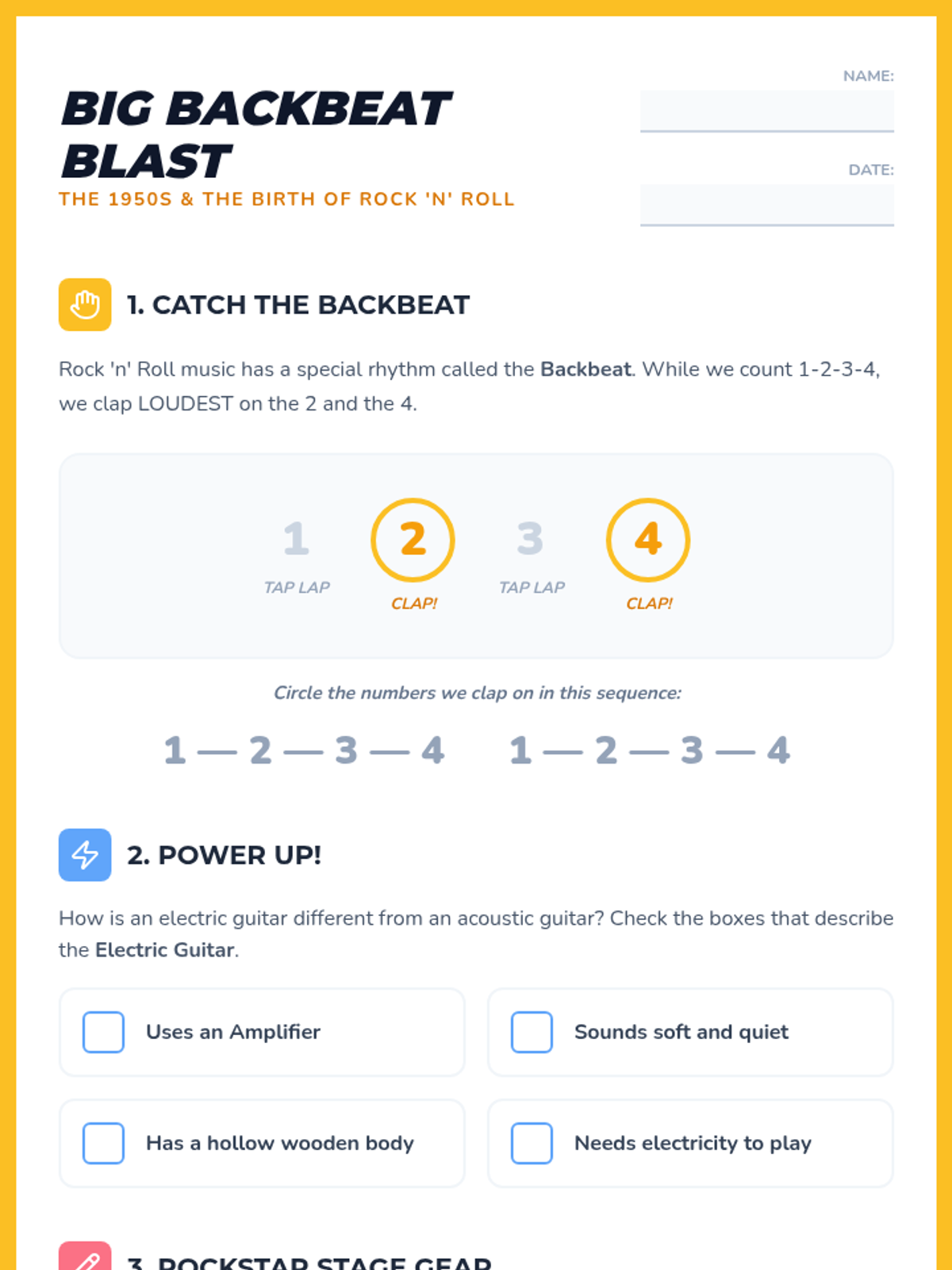
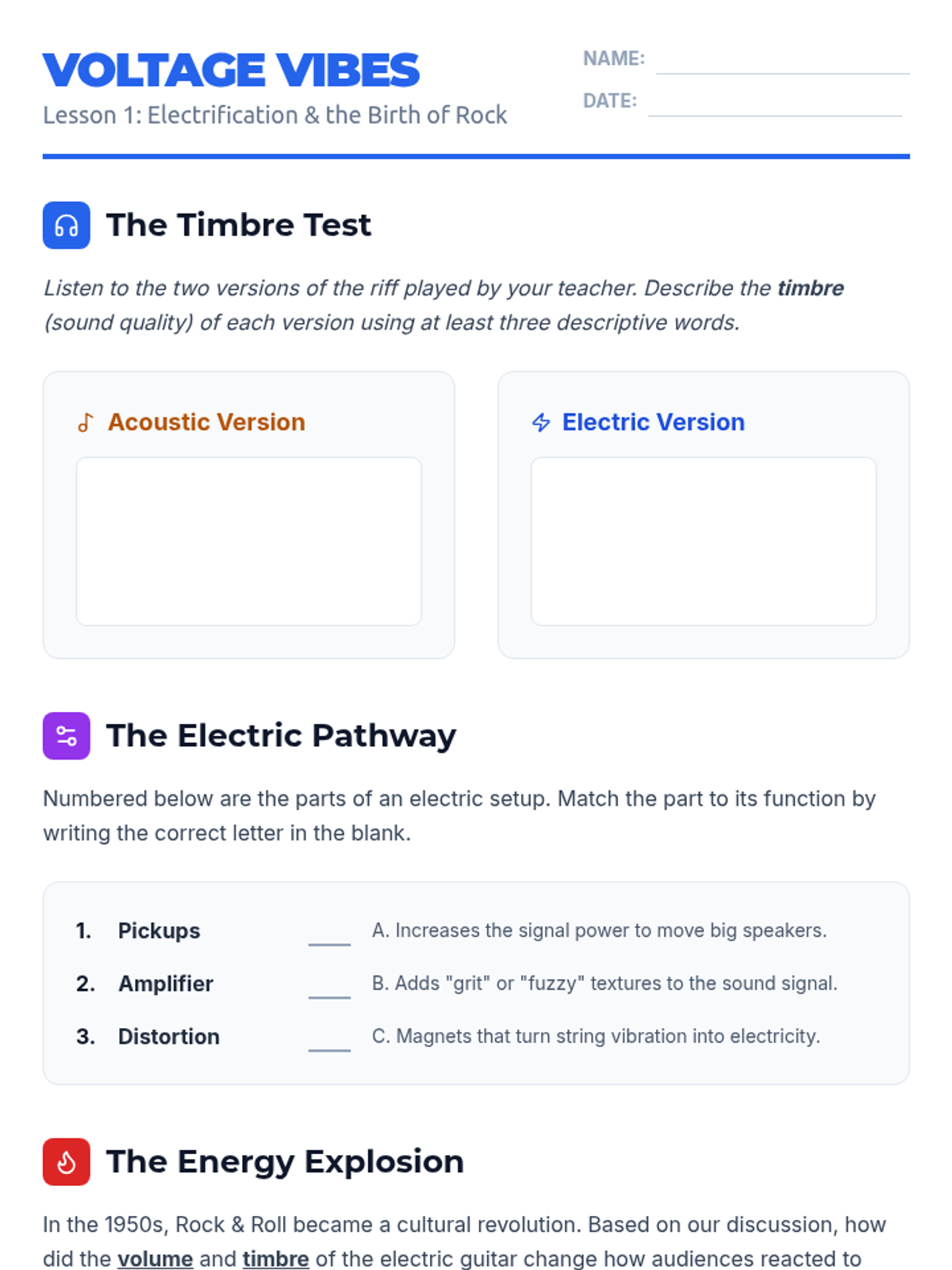
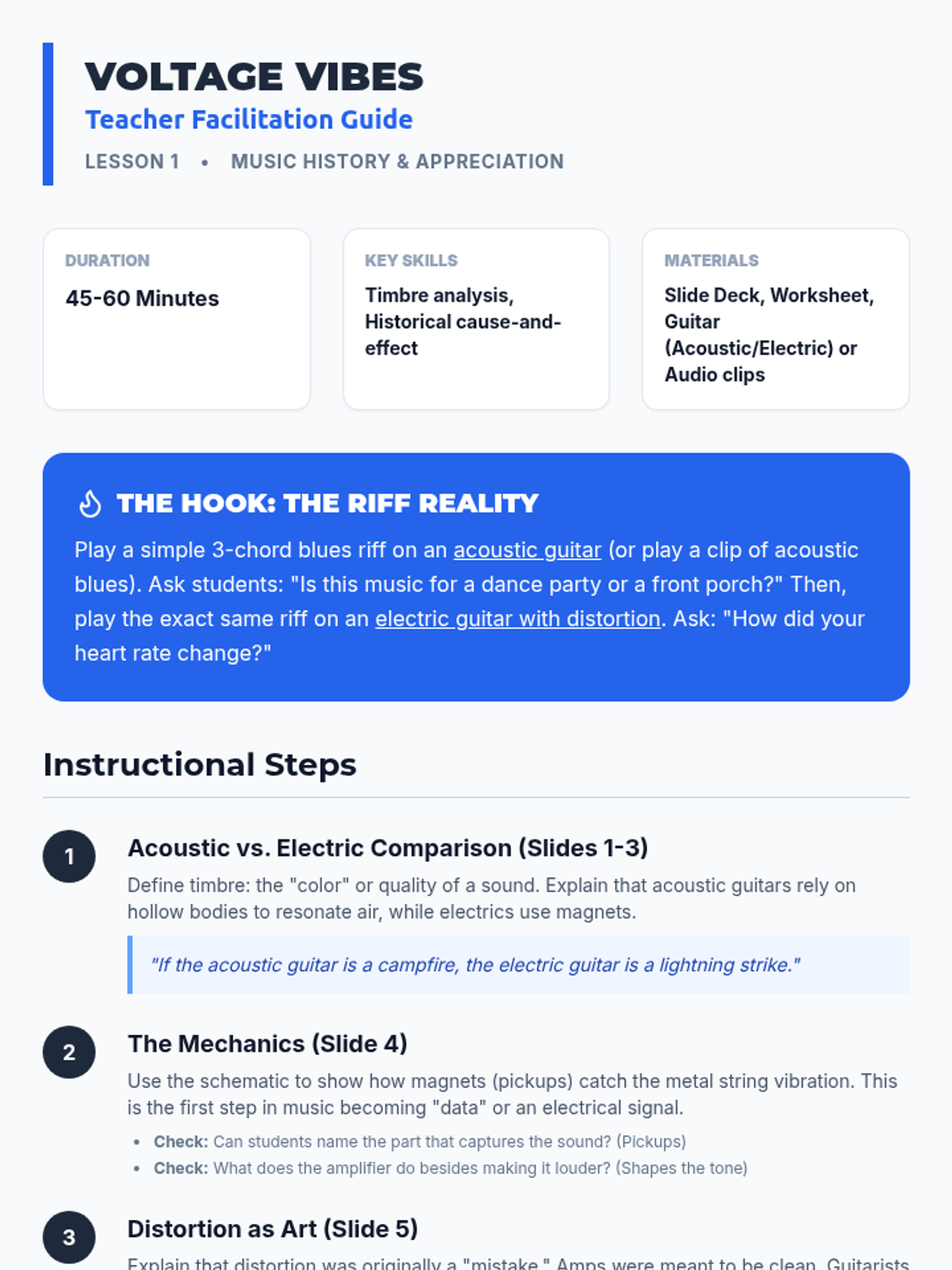
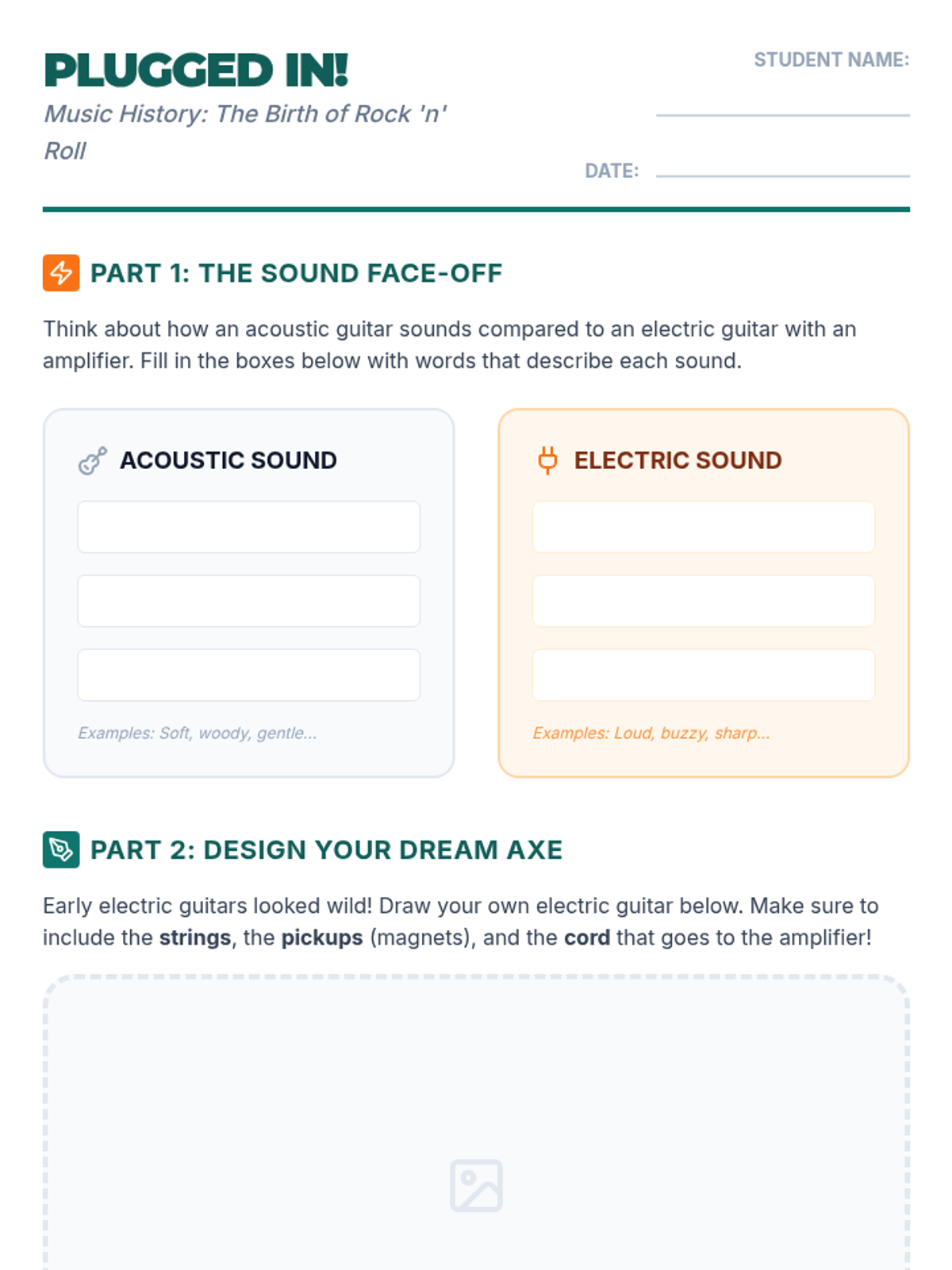
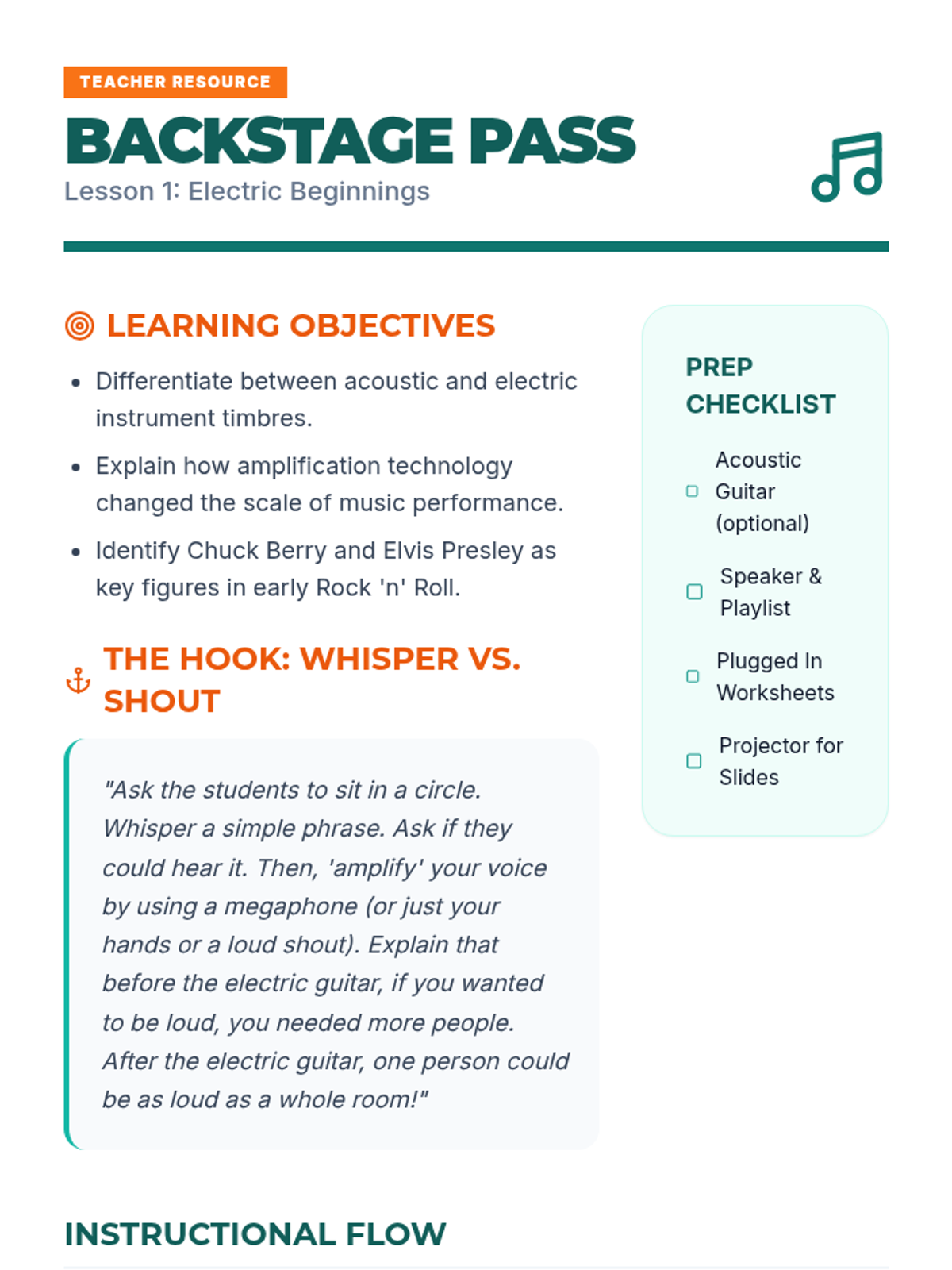
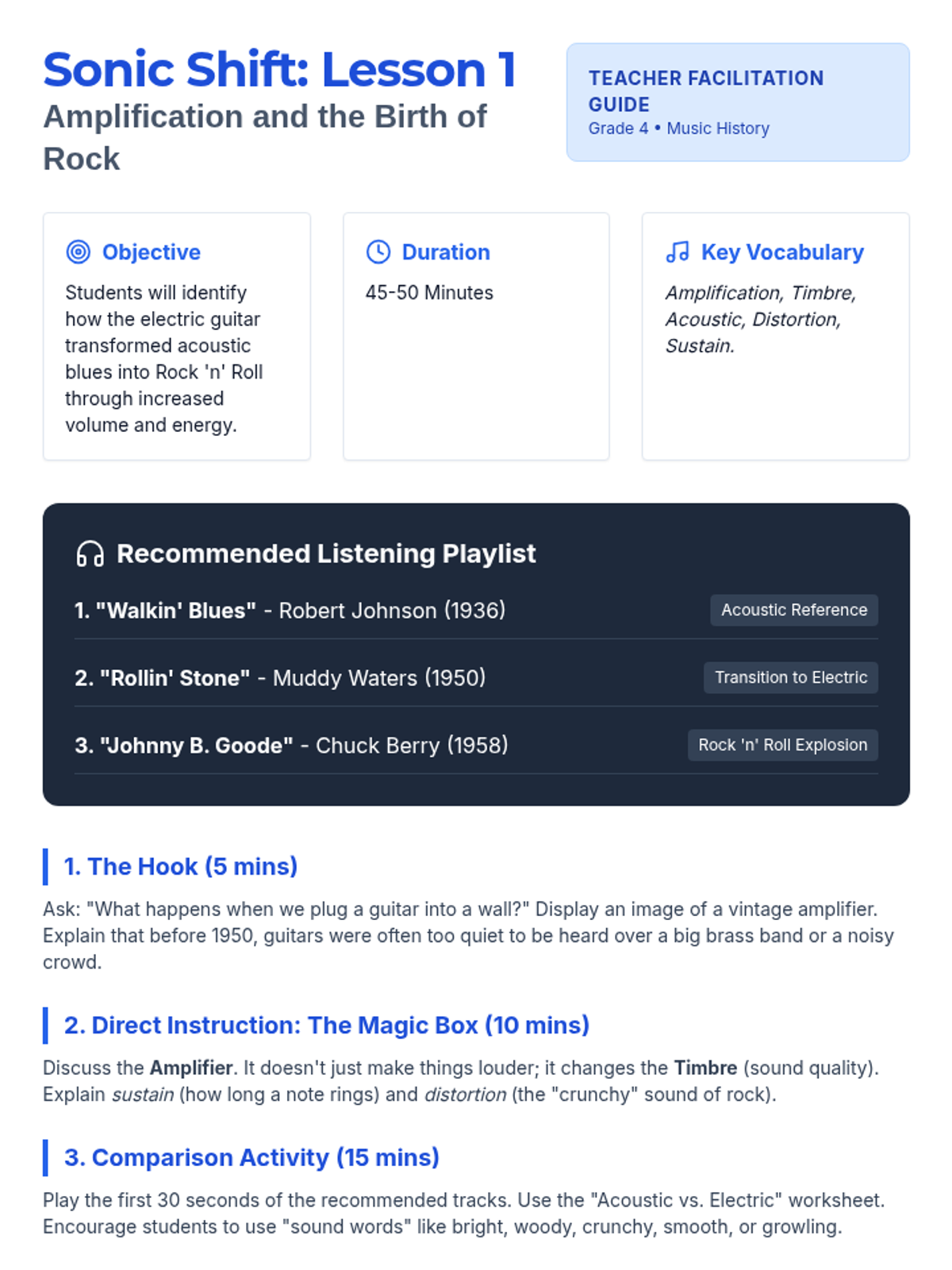
A journey through the 20th and 21st centuries, exploring how technology like electric guitars and synthesizers shaped genres from Rock 'n' Roll to Pop. Students analyze rhythm, structure, and sound to build a chronological timeline of musical evolution.
This sequence investigates how the technological explosion of the 20th and 21st centuries, from the electric guitar to AI, redefined music genres and creation. Students analyze production techniques, listen for layers, and explore the concept of technology as a musical instrument.
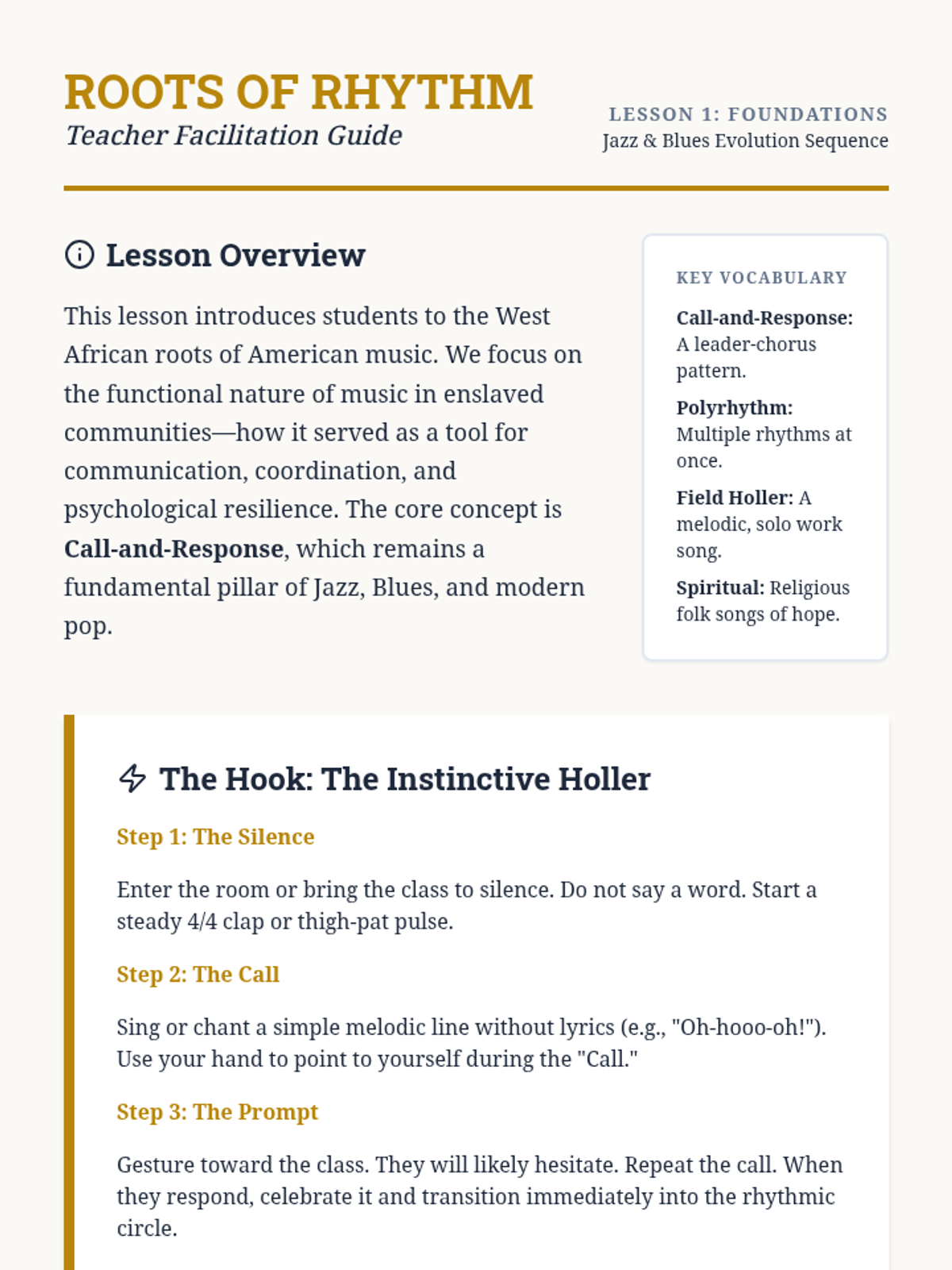
A 5th-grade music history sequence exploring the development of Jazz and Blues, from African call-and-response roots to the birth of Rock n' Roll. Students investigate structural forms like the 12-bar blues, concepts like syncopation and improvisation, and the cultural resilience behind the music.
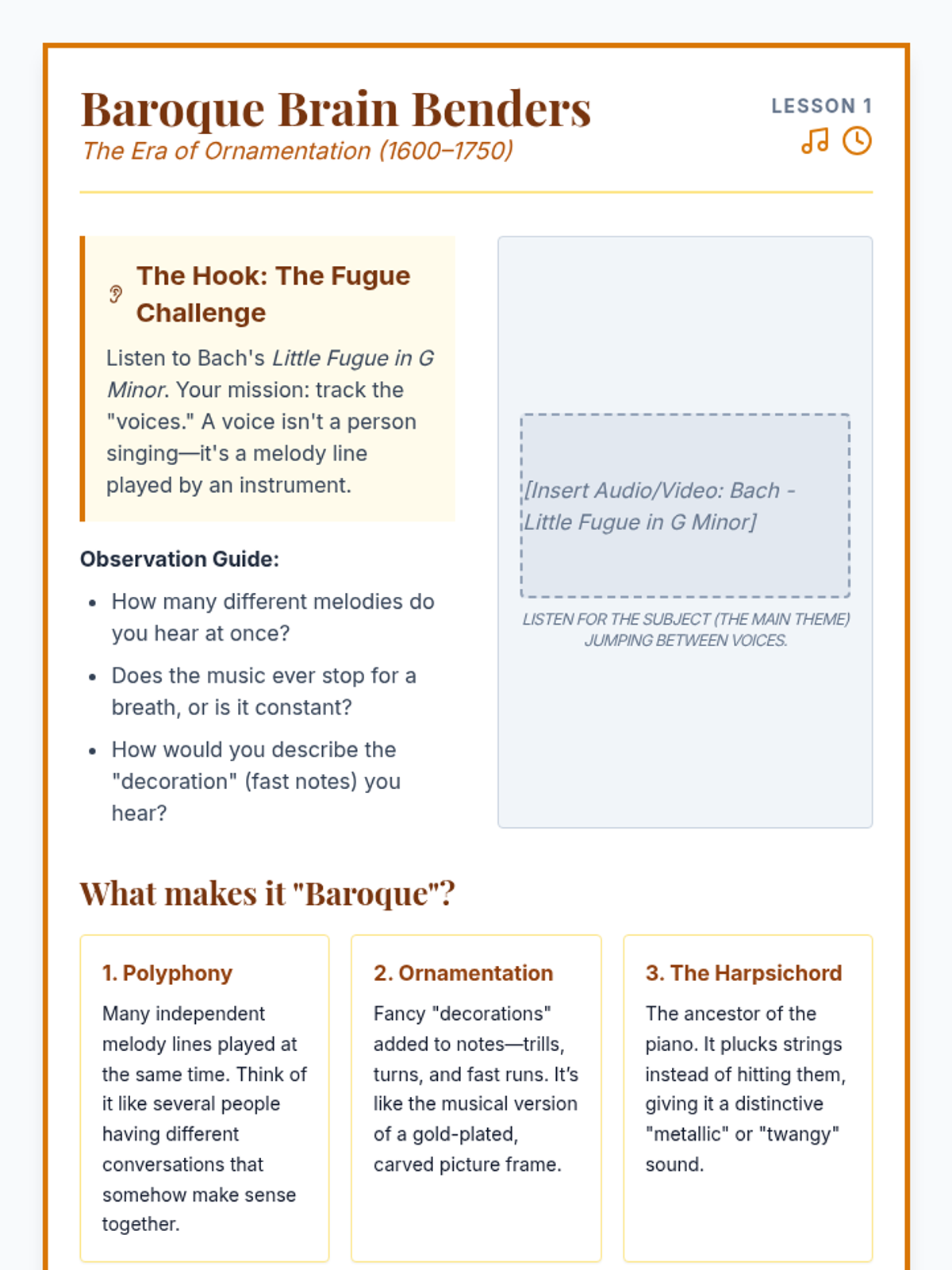
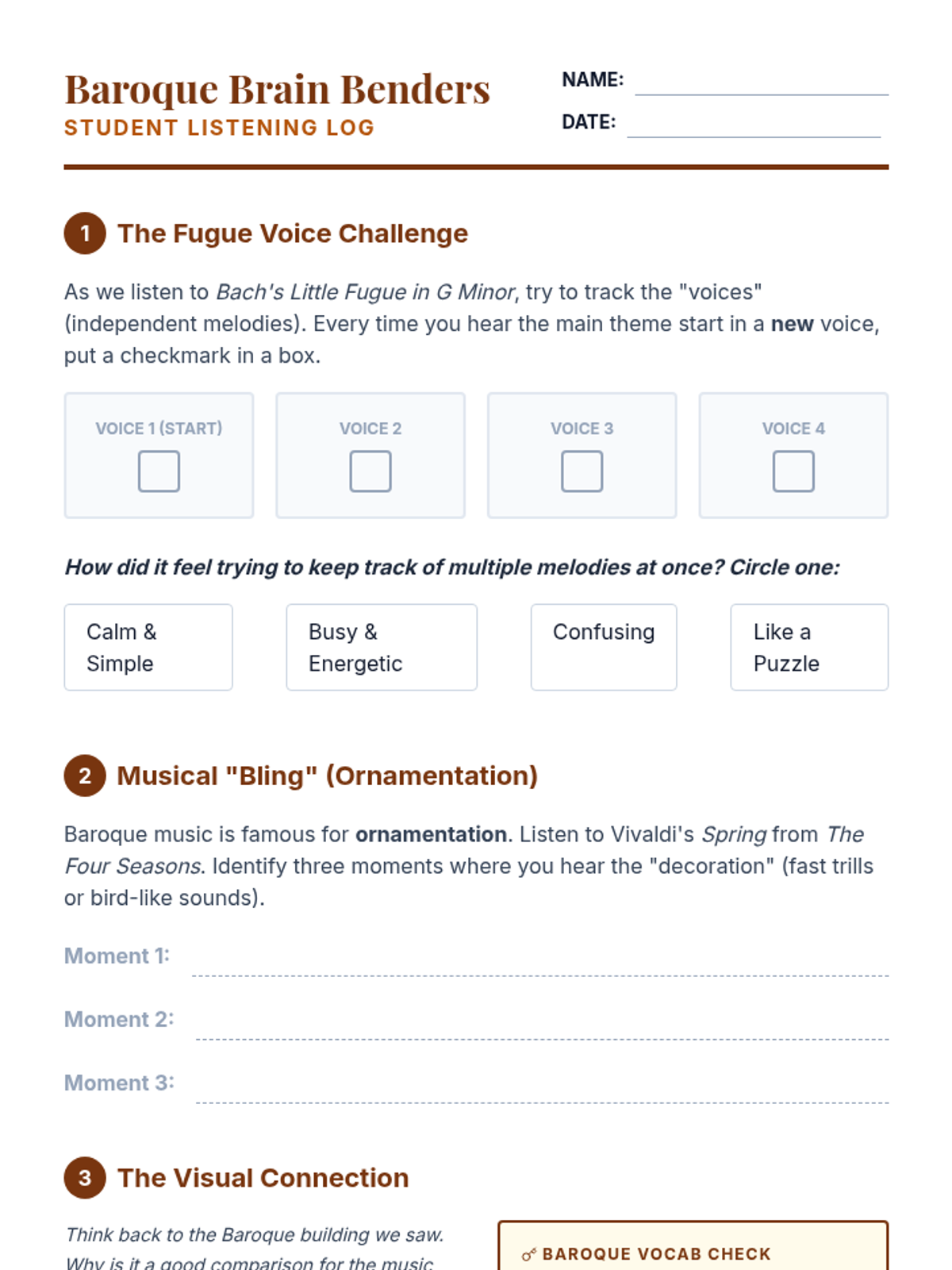
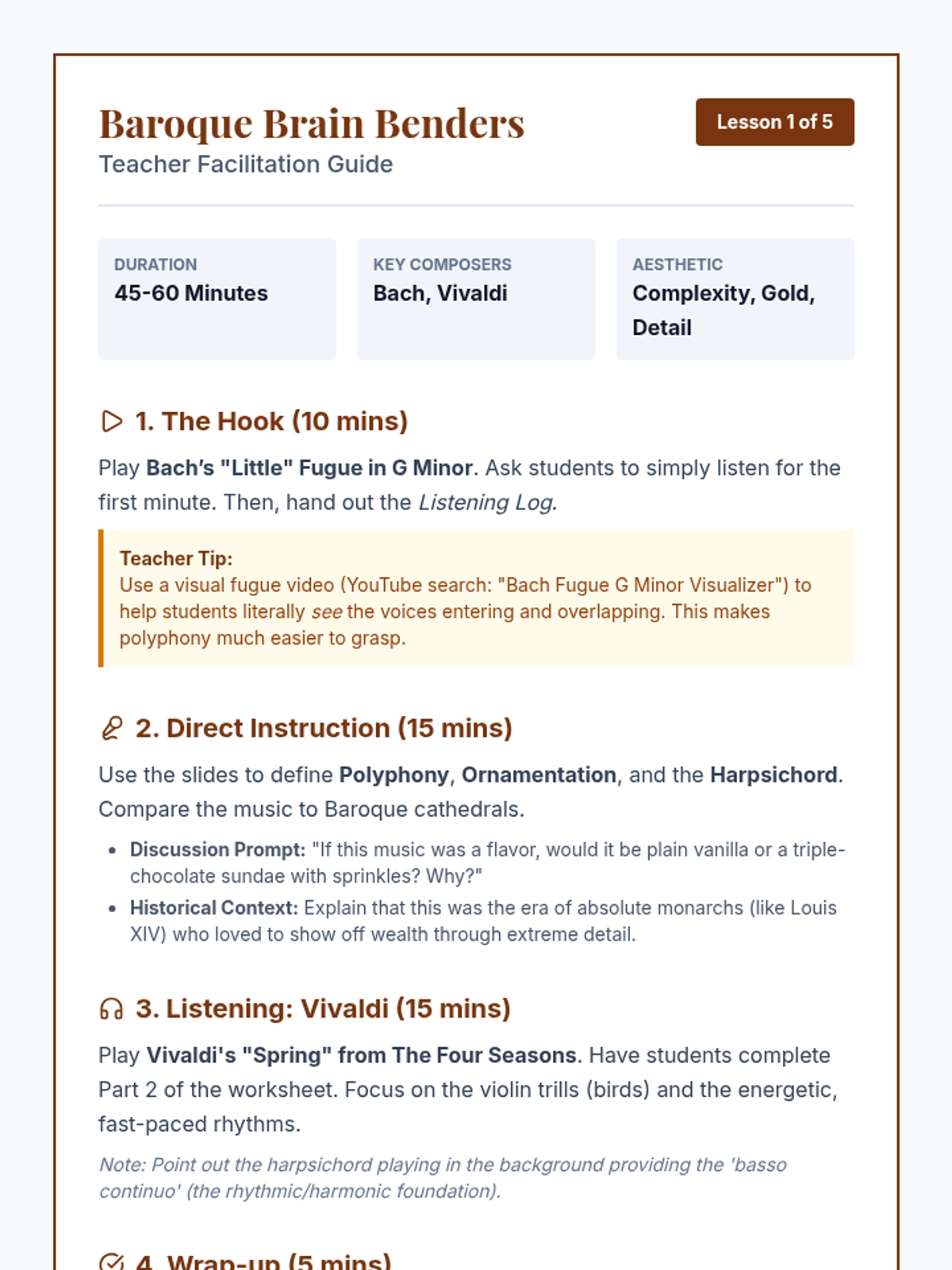
This sequence guides 5th-grade students through the evolution of Western Classical music from the Baroque period to the 20th century. Students will explore how societal shifts influenced orchestral size, musical texture, and form through active listening and analytical activities.
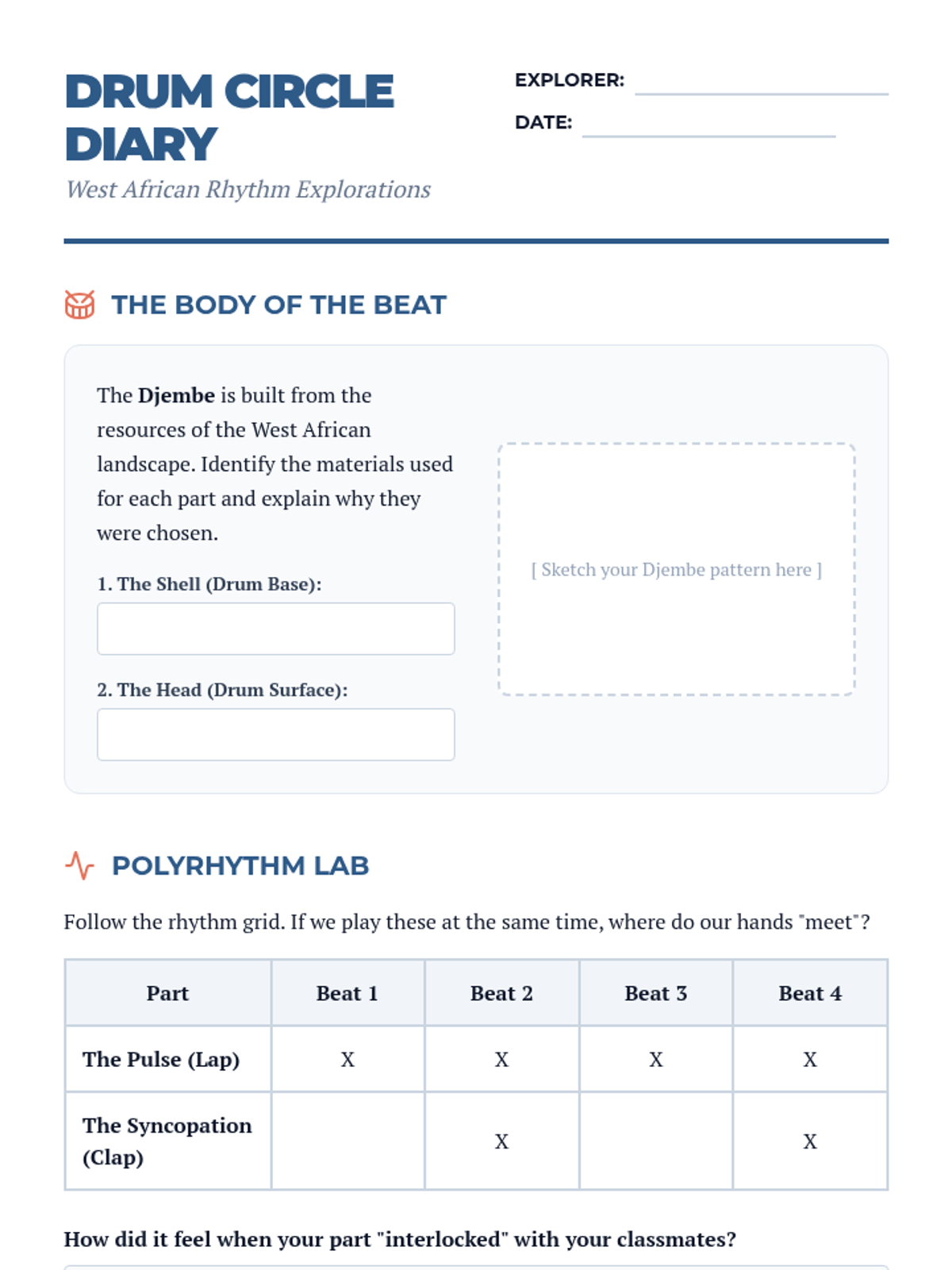
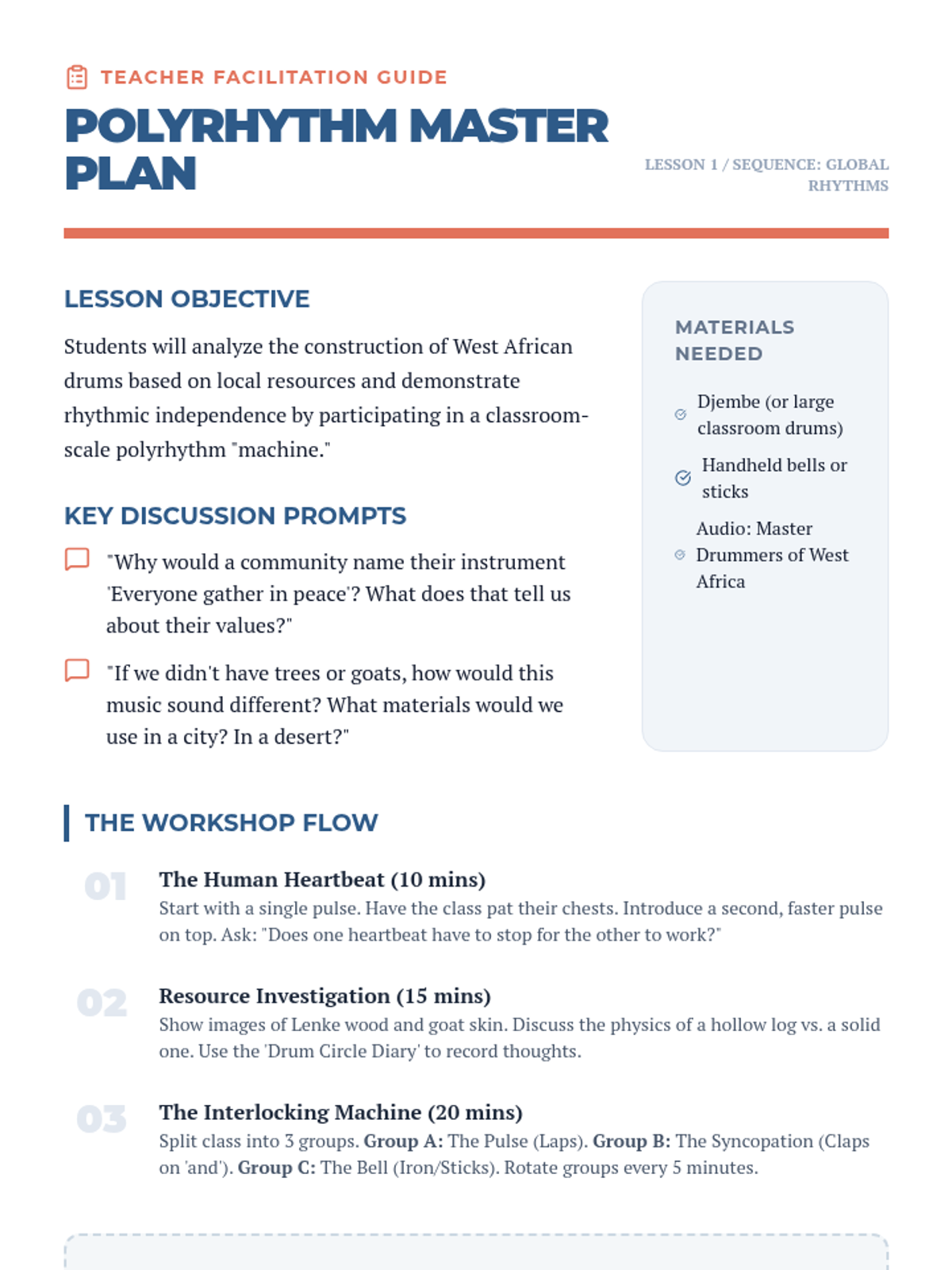
A 4th-grade music appreciation sequence exploring the connection between geography, natural resources, and musical traditions across West Africa, Indonesia, the Andes, and the Caribbean. Students develop rhythmic skills and cultural understanding through active workshops and comparative analysis.
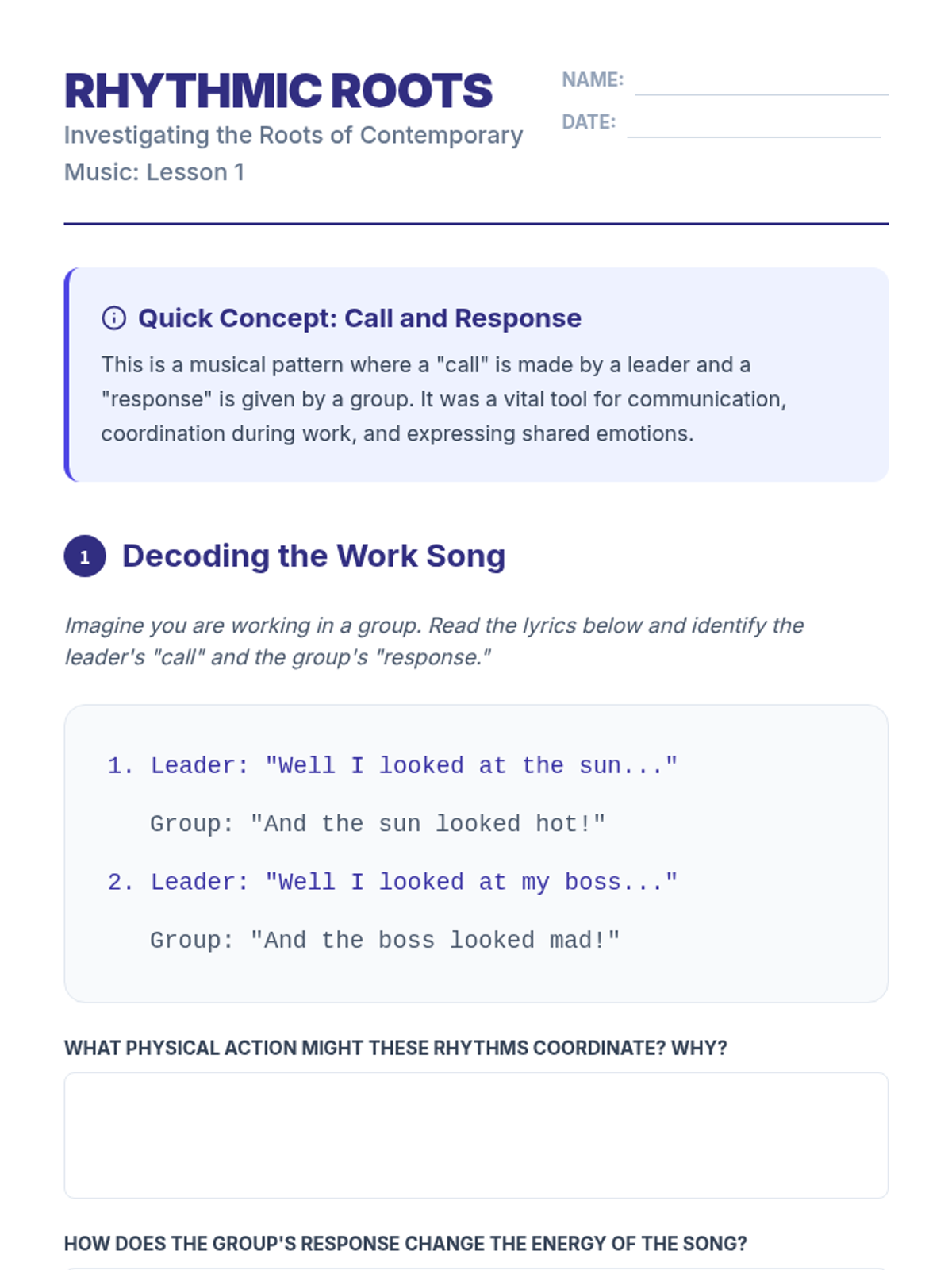
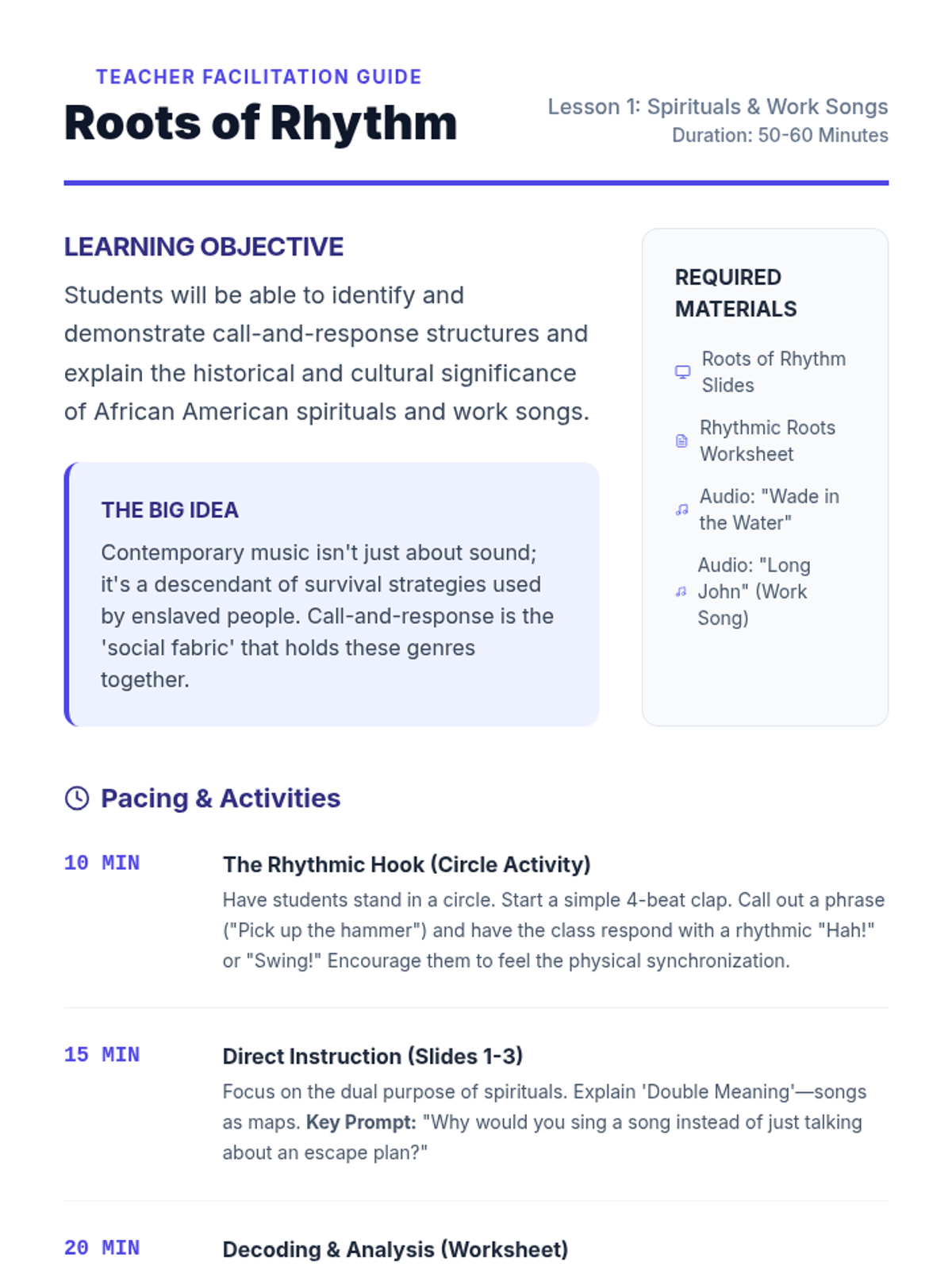
This sequence traces the evolution of contemporary music from 19th-century African American spirituals through the development of the Blues, Jazz, and Rock & Roll. Students investigate how cultural exchange, technology, and social struggles shaped the sounds we listen to today, culminating in a musical genealogy project.
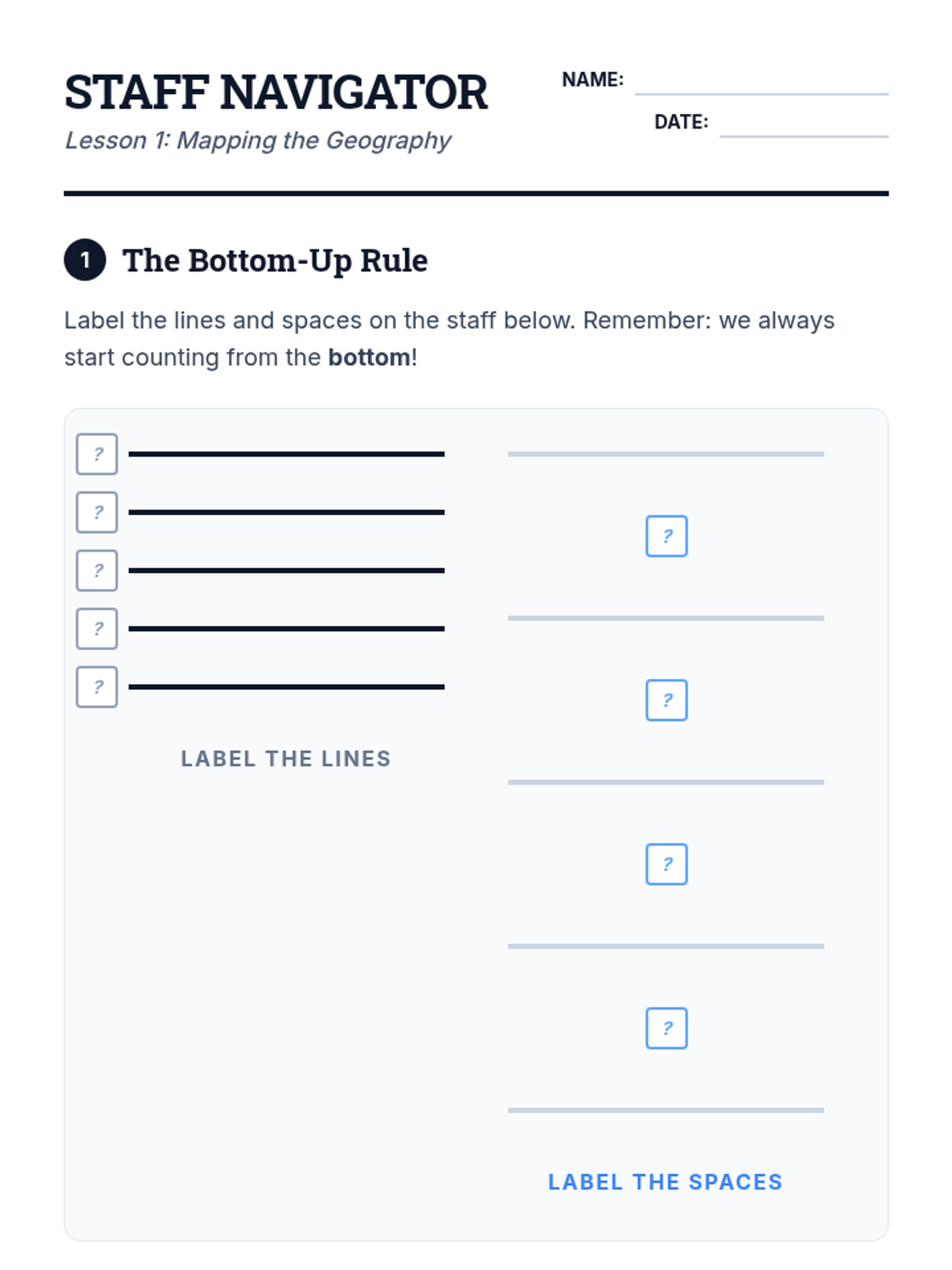
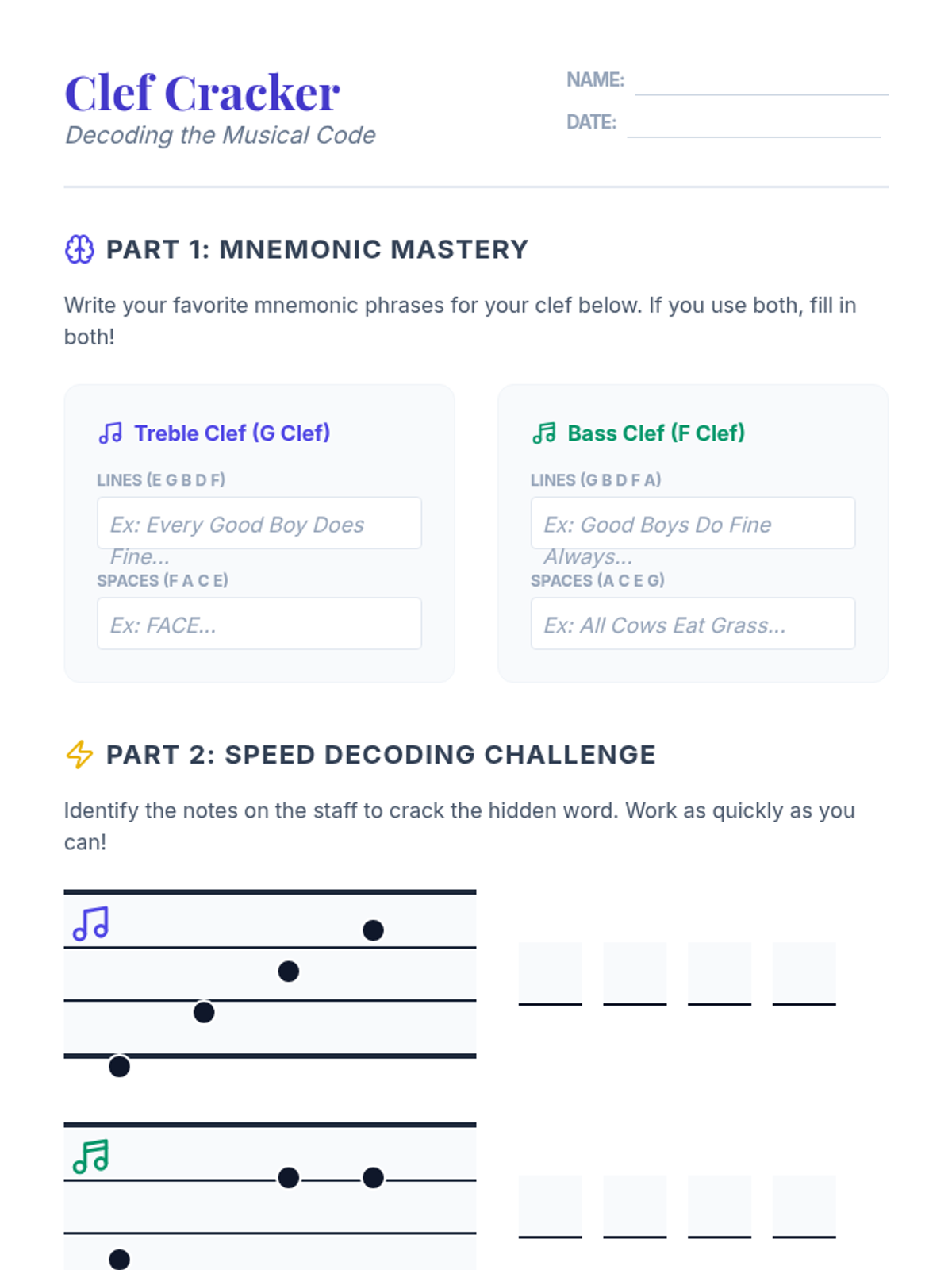
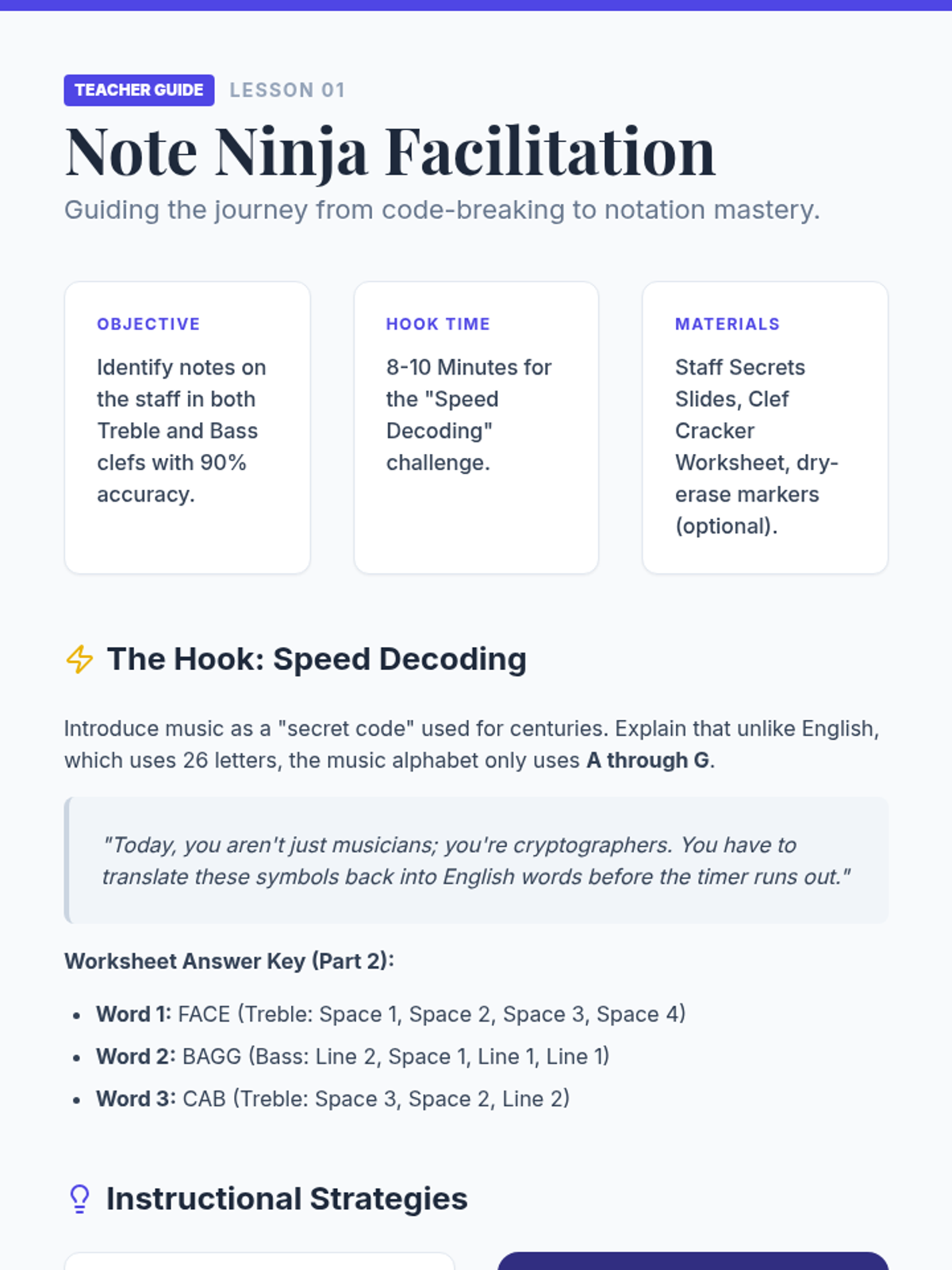
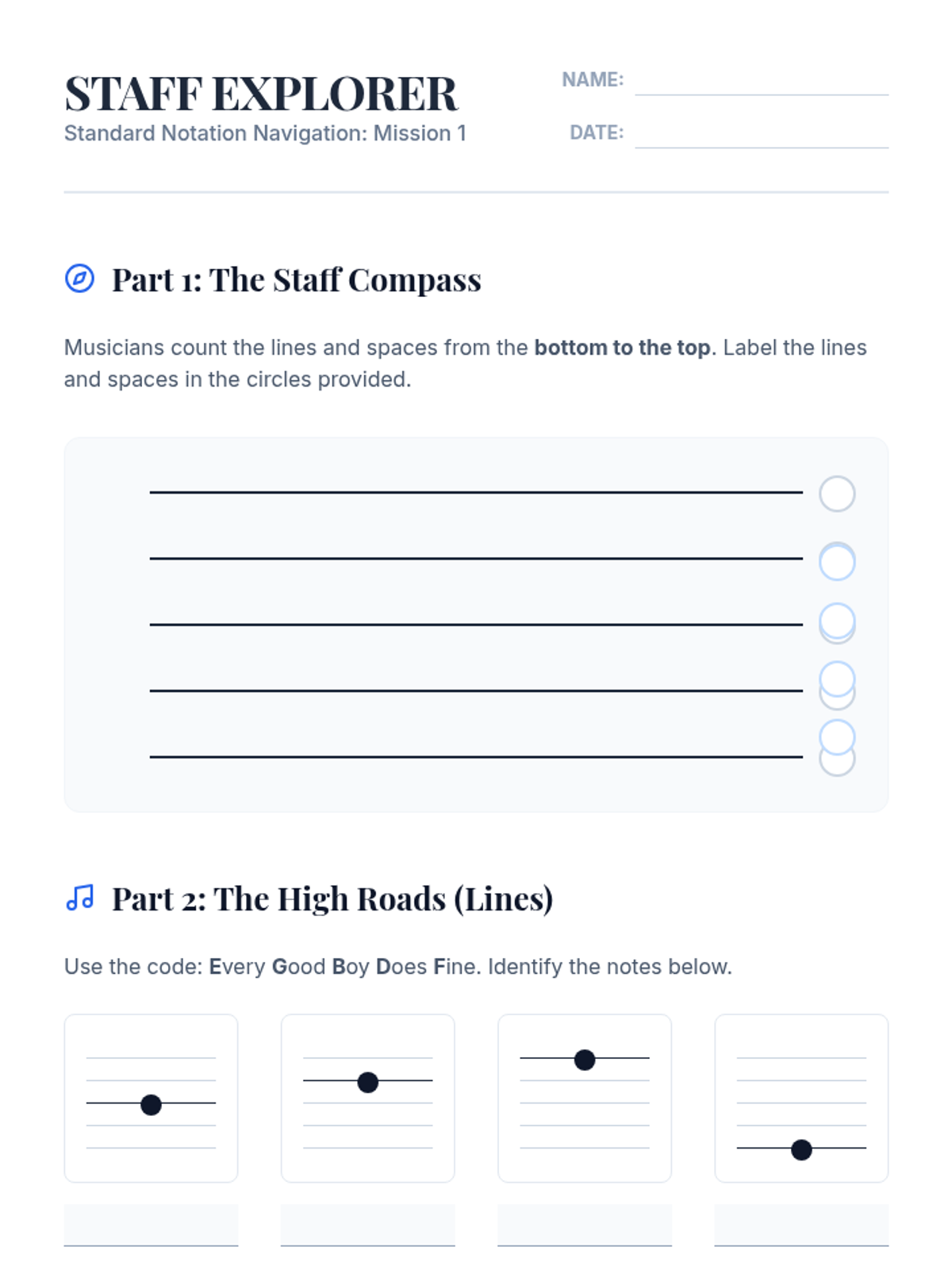
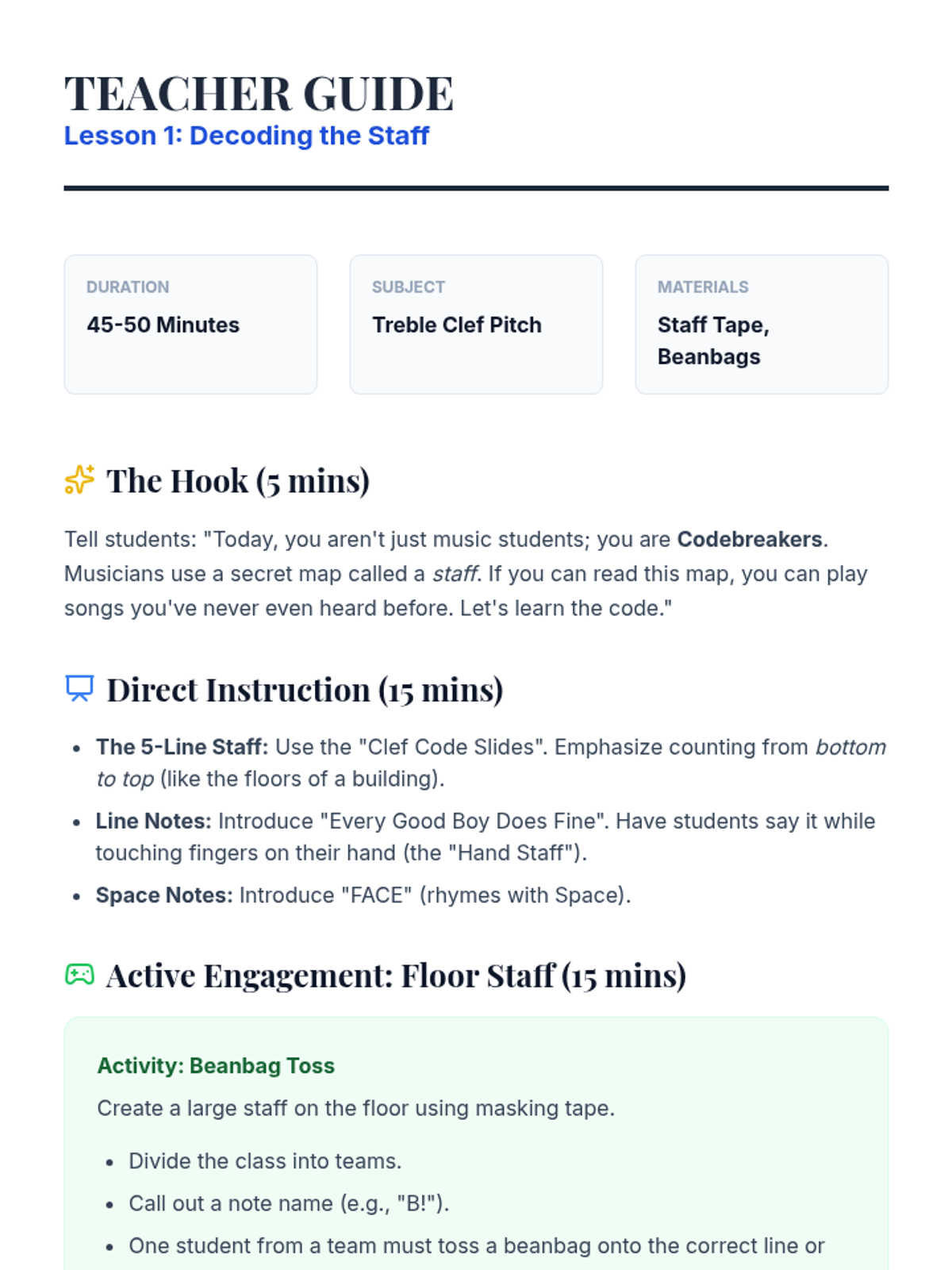
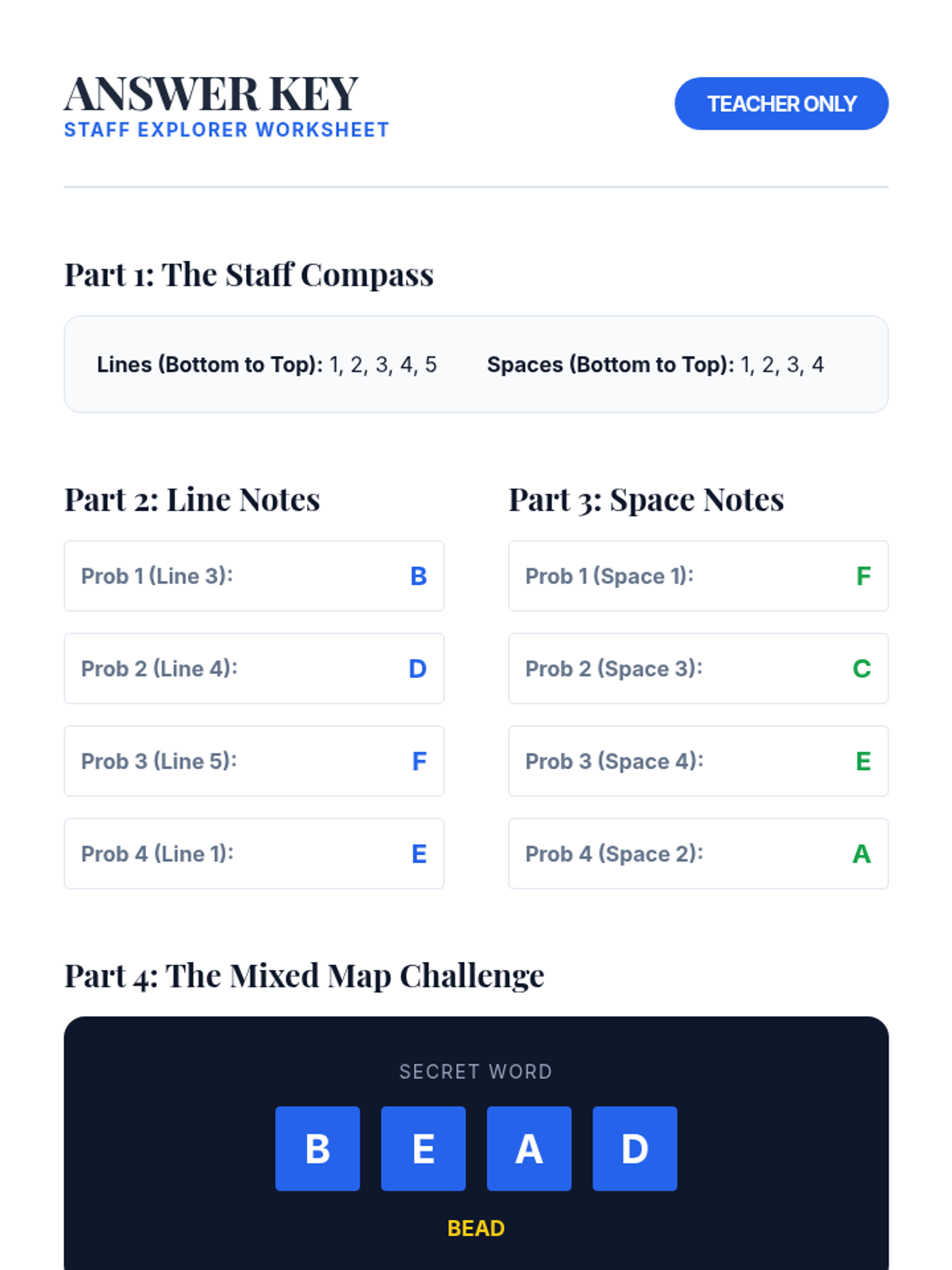
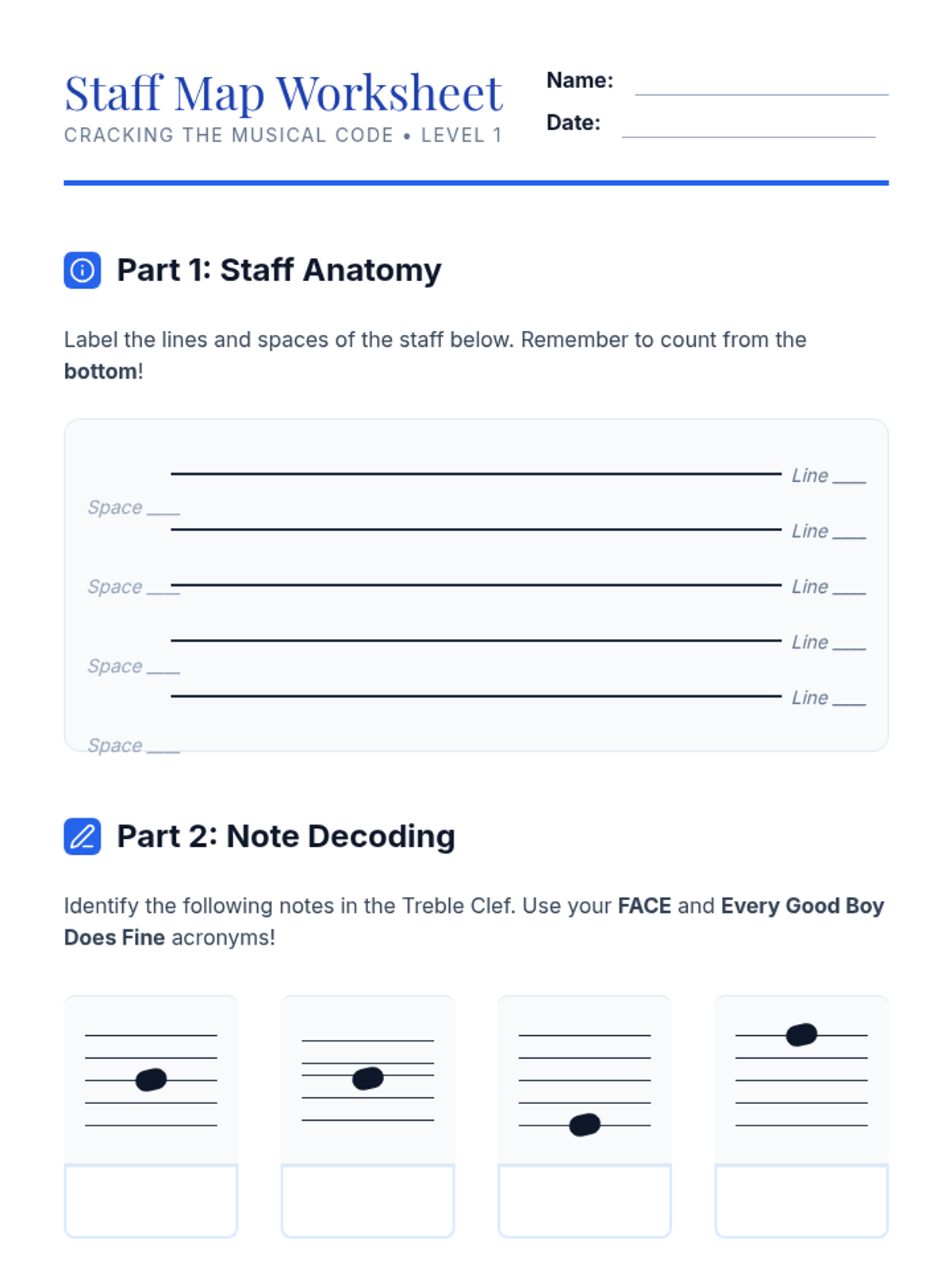
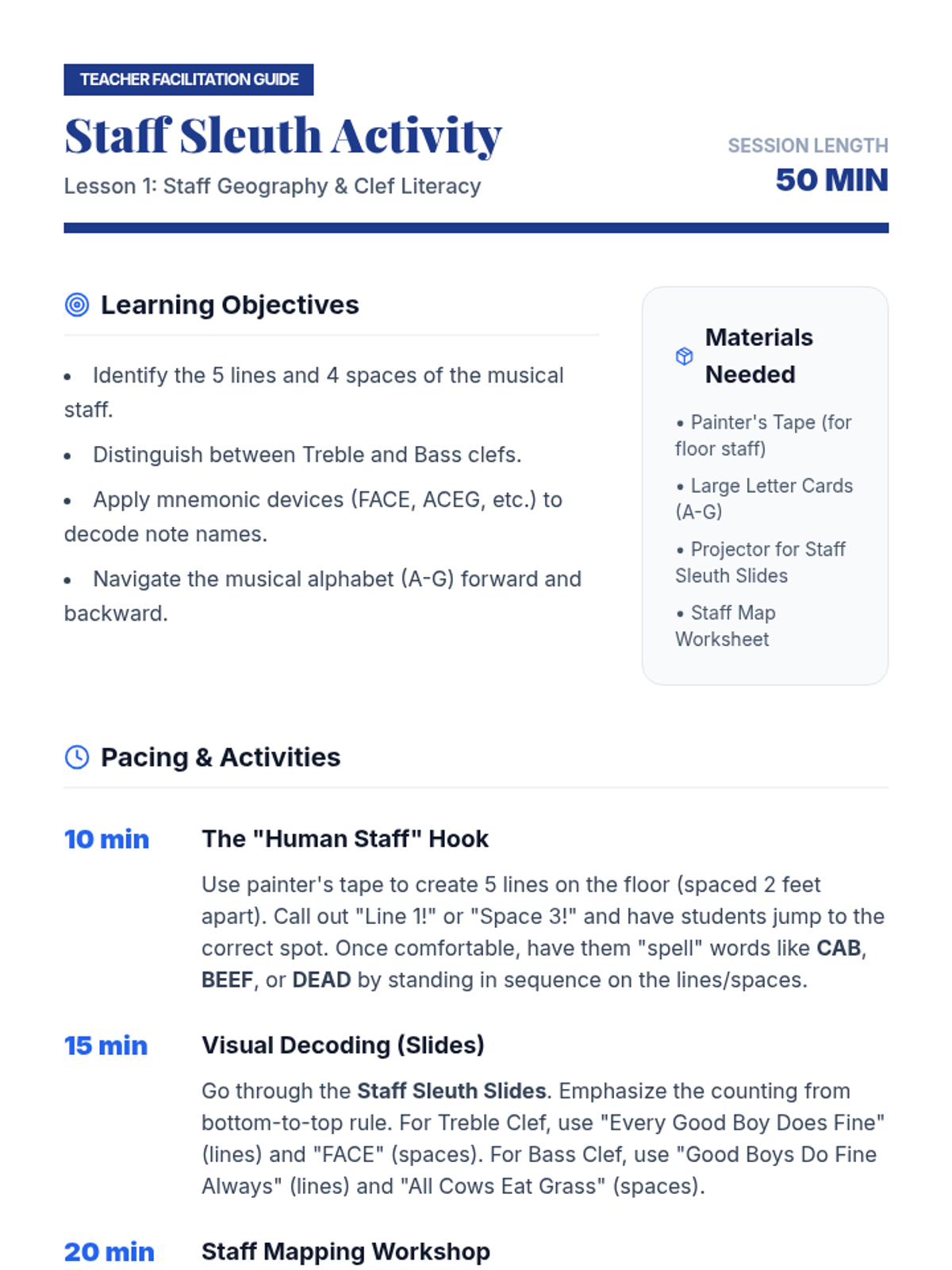
A comprehensive sequence for 4th-grade music students to master reading pitch on the treble clef staff. Students progress from basic staff geography to identifying notes, recognizing intervals, and finally sight-reading simple melodies on instruments.
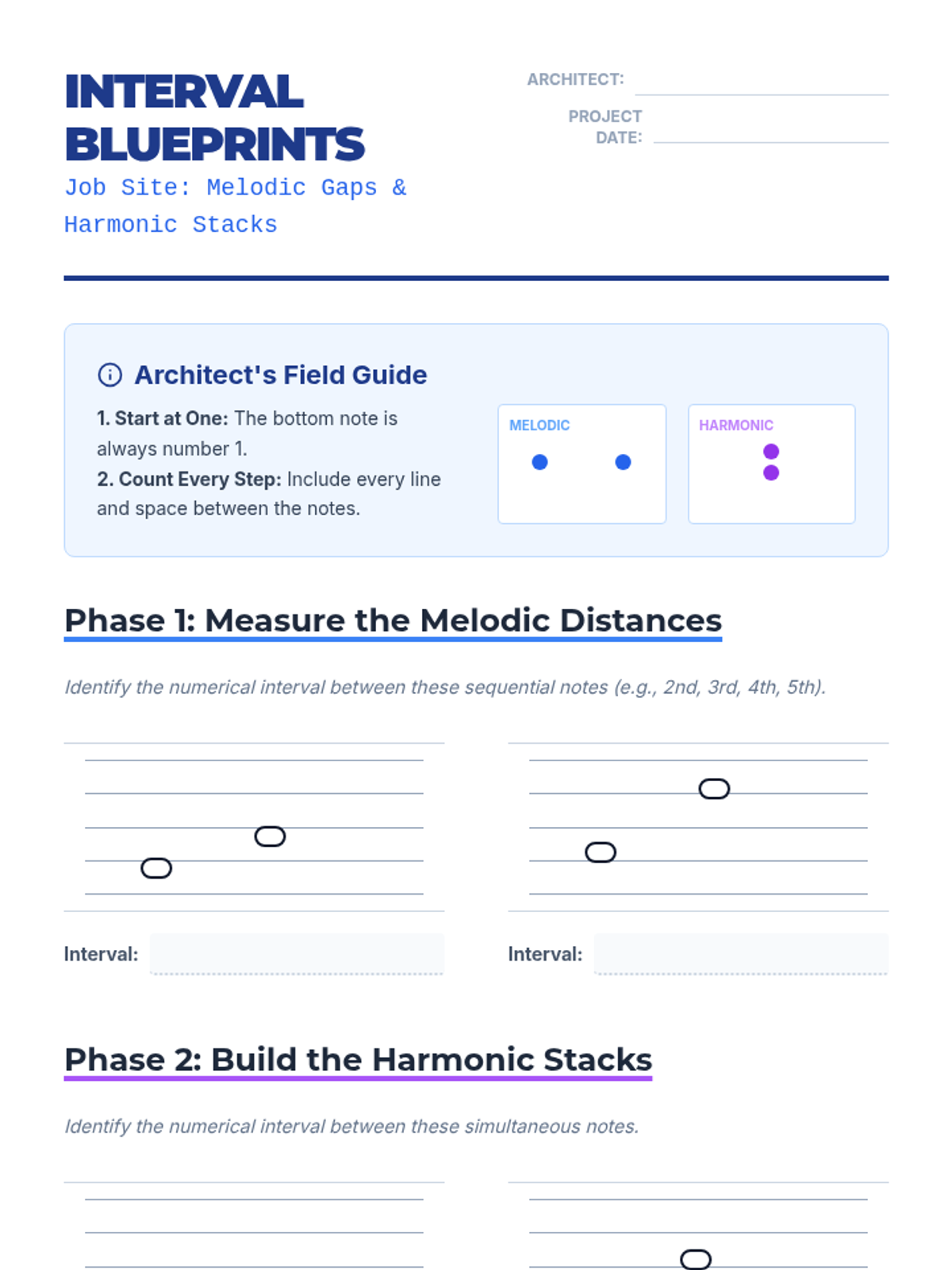
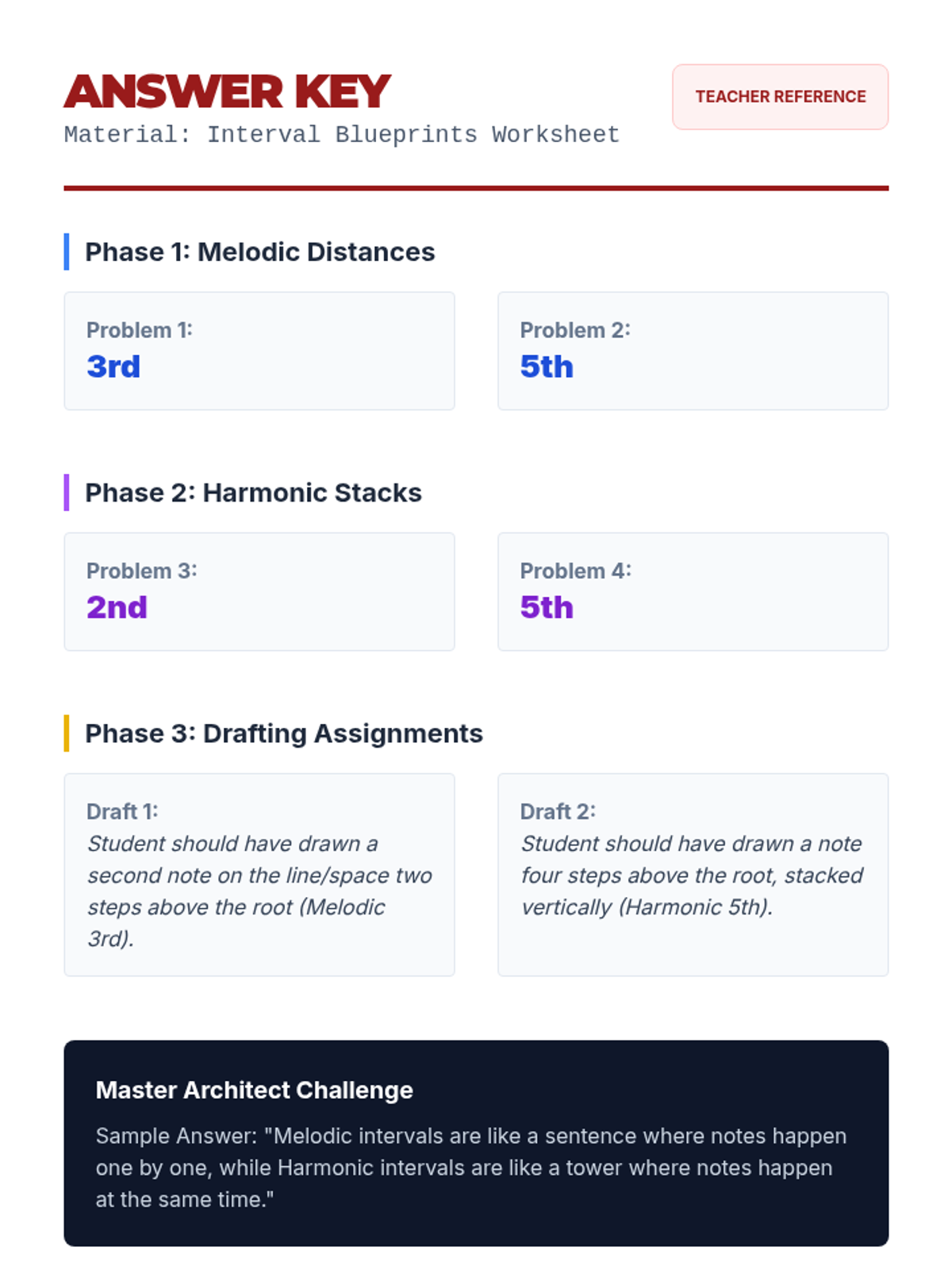
A music theory unit for 5th graders focused on intervals and triads. Students transition from melodic thinking to harmonic construction through 'blueprint' themed activities, building from simple distance measurement to complex chord progressions.
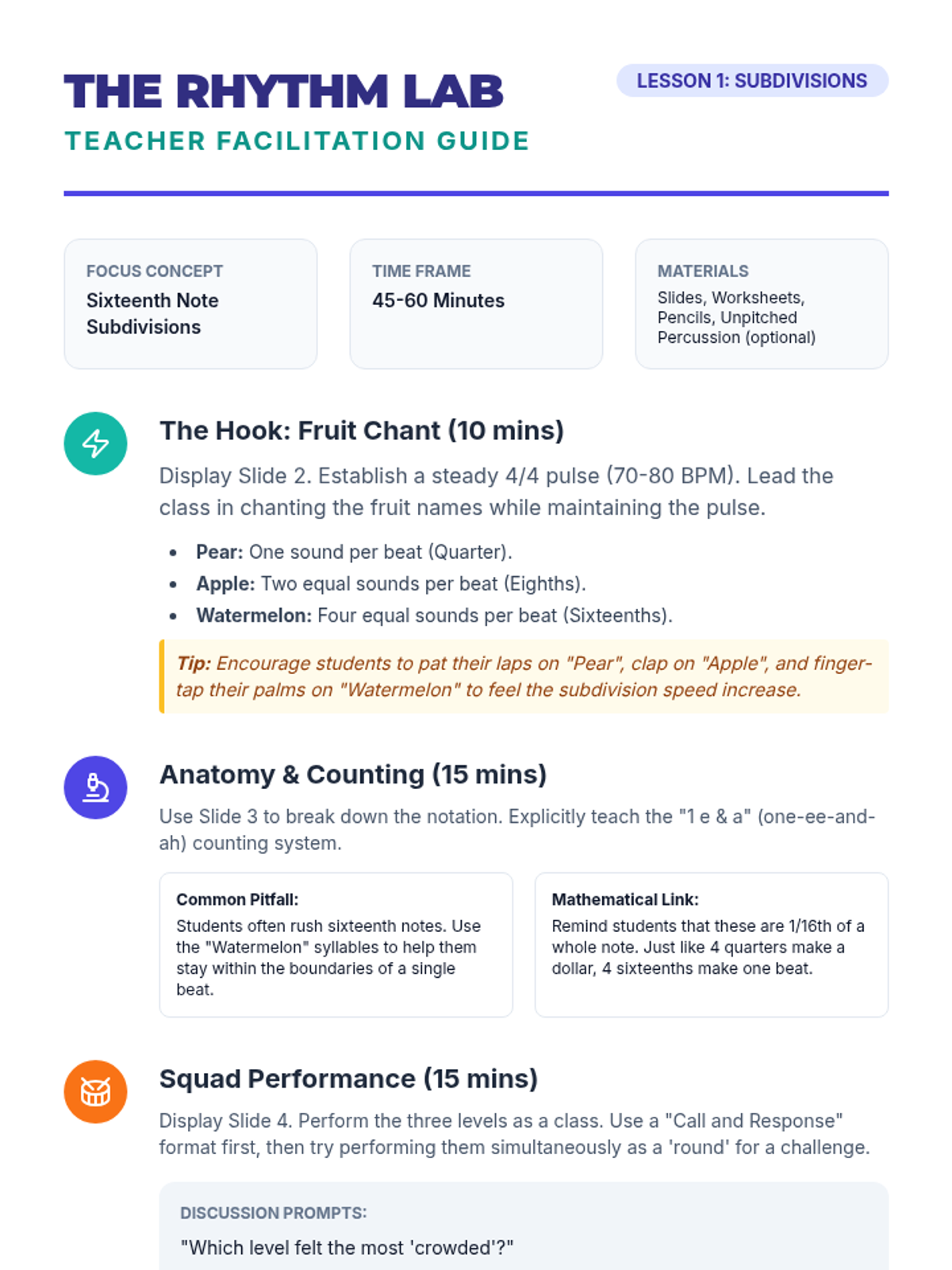
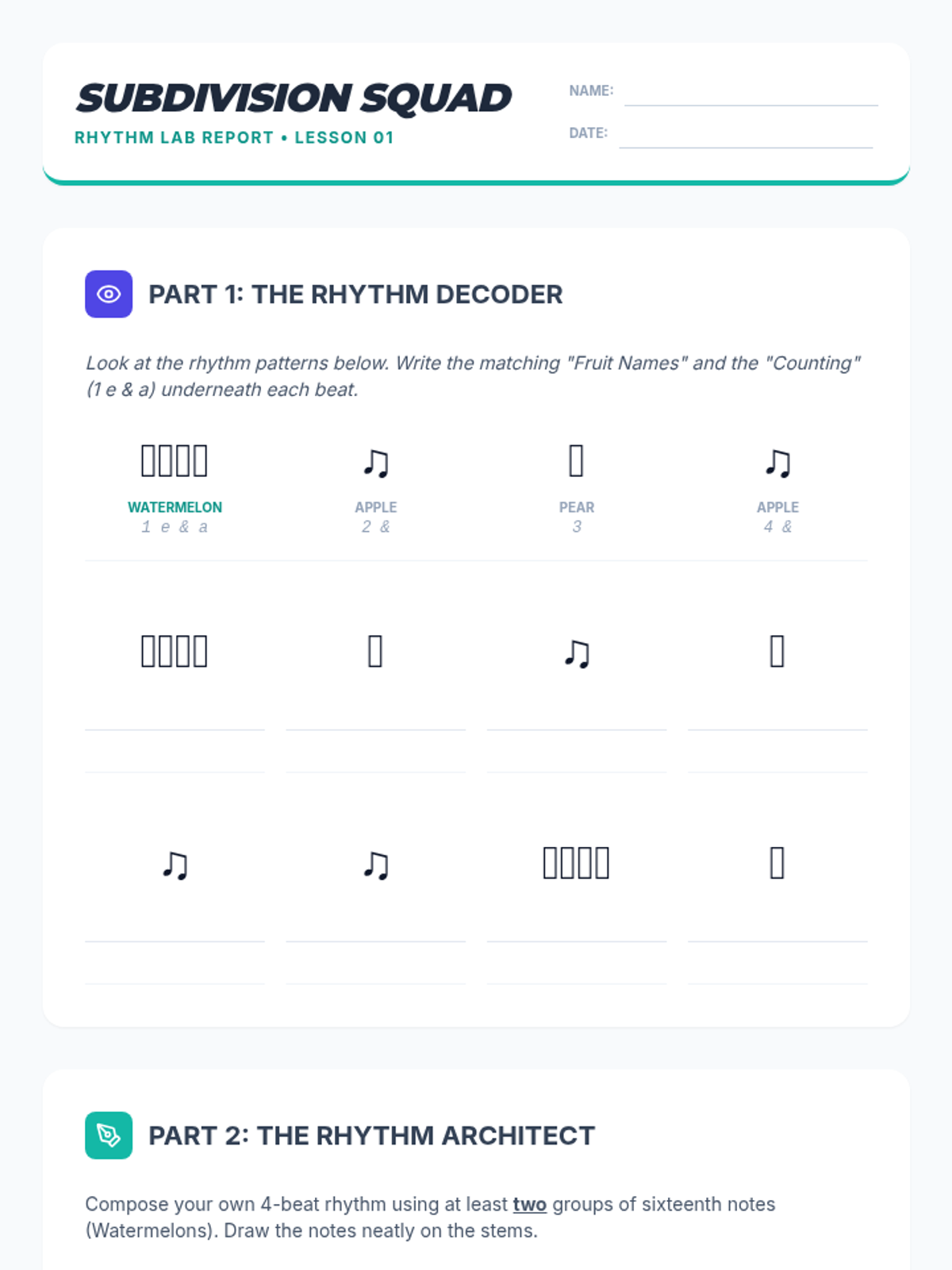
This sequence guides 5th-grade students through the intricacies of advanced rhythmic notation, moving from sixteenth note subdivisions and dotted rhythms to the complexities of syncopation and compound meter. Through a blend of auditory analysis, physical performance, and formal notation, students develop the skills to decode and compose sophisticated musical patterns.
A 5th-grade music synthesis sequence where students apply knowledge of rhythm, pitch, and harmony to compose and notate original music. Students progress from analyzing melodic contours to creating and harmonizing motives, culminating in a professional-grade composition showcase.
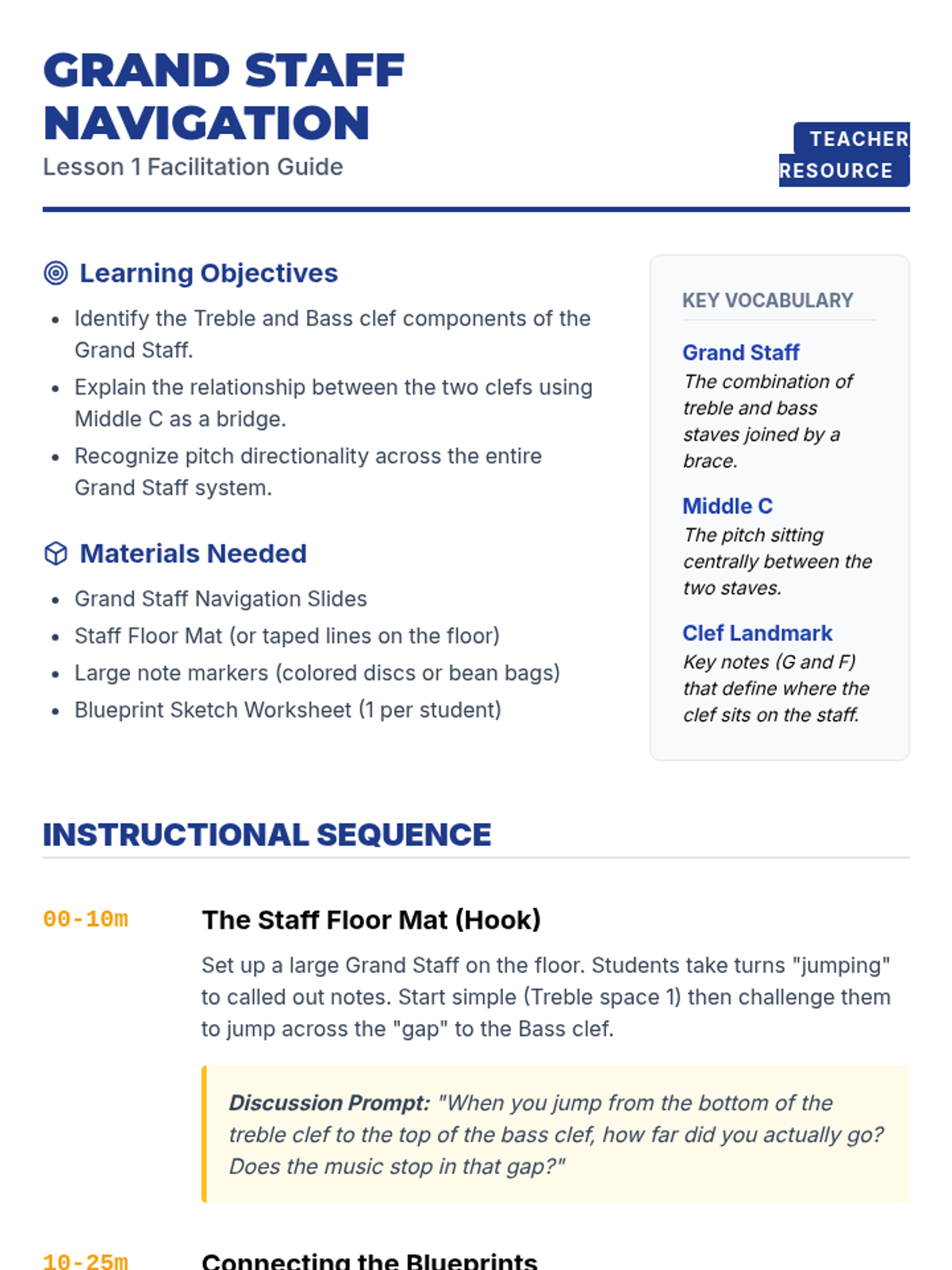
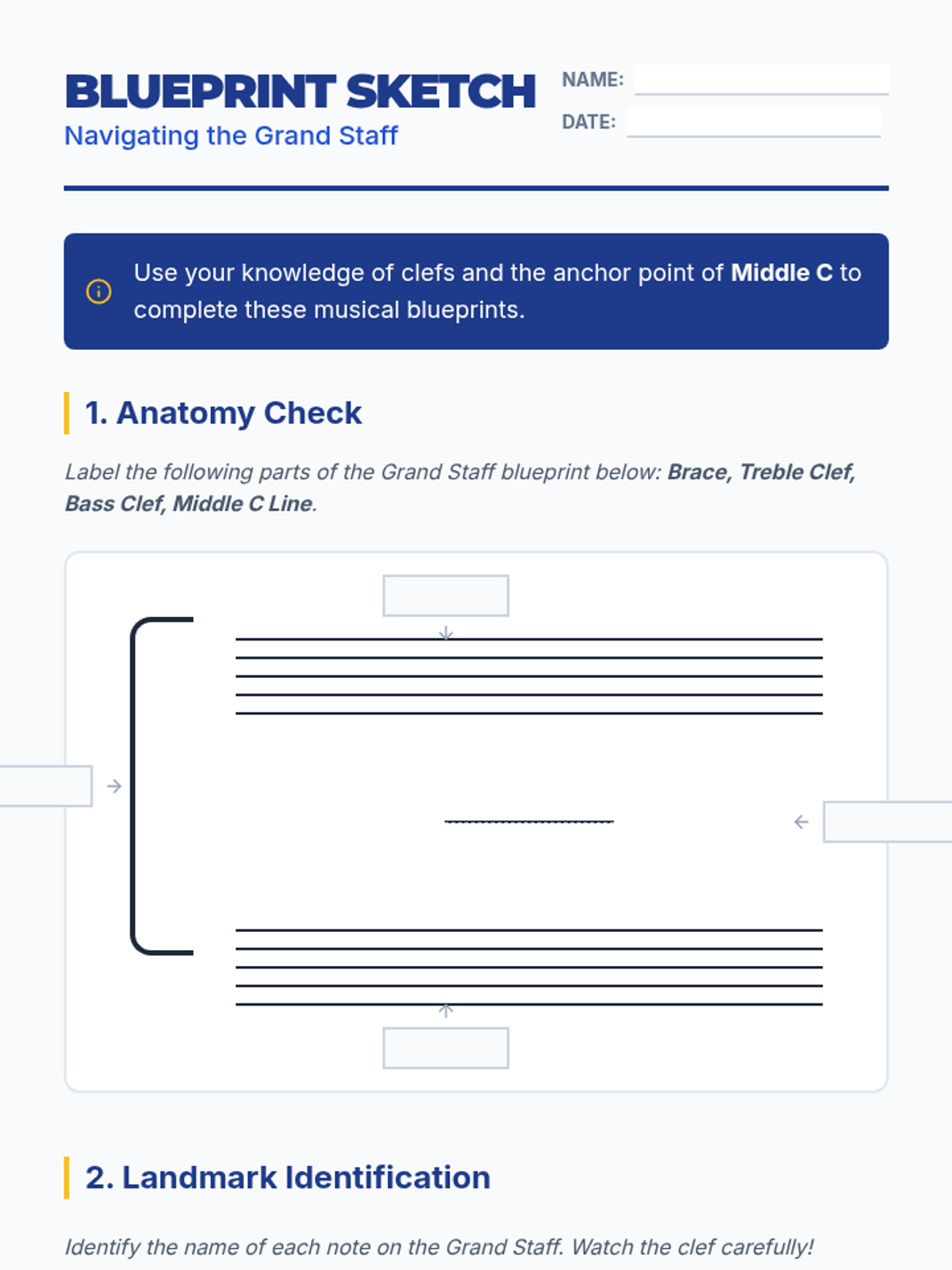
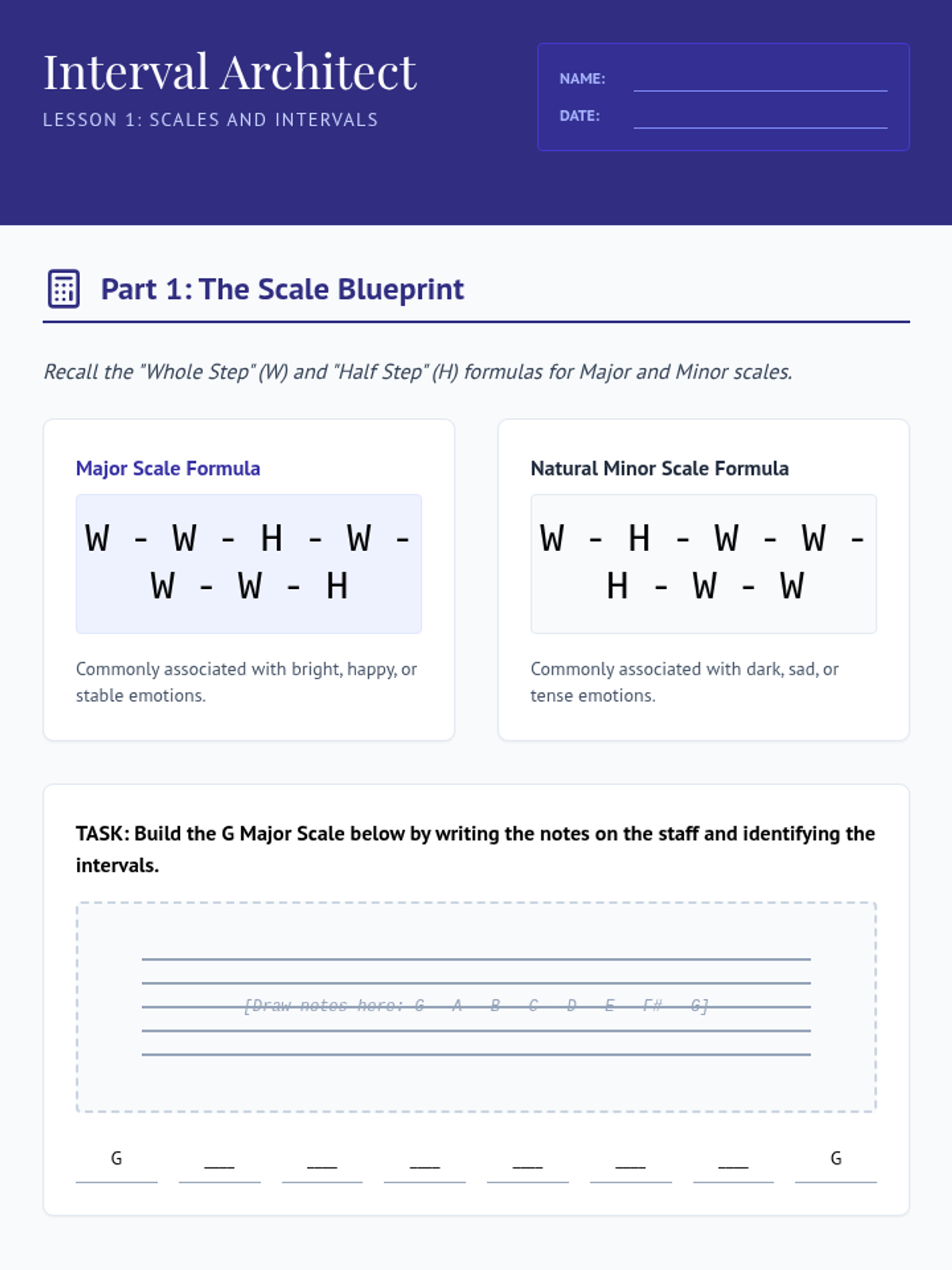
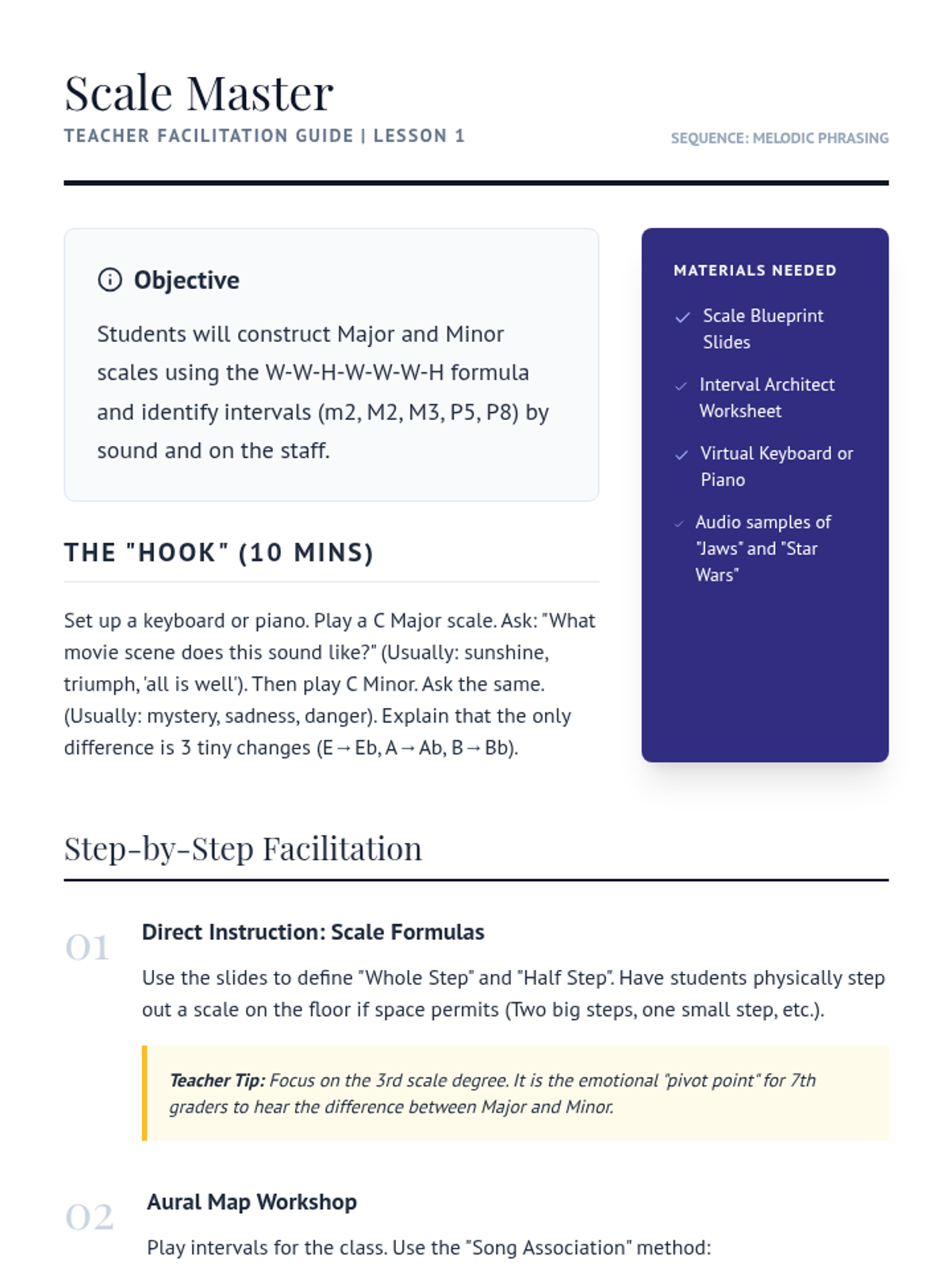
A comprehensive unit for 5th-grade musicians covering the mechanics of pitch organization, from the Grand Staff and ledger lines to the mathematical construction of major scales and key signatures.
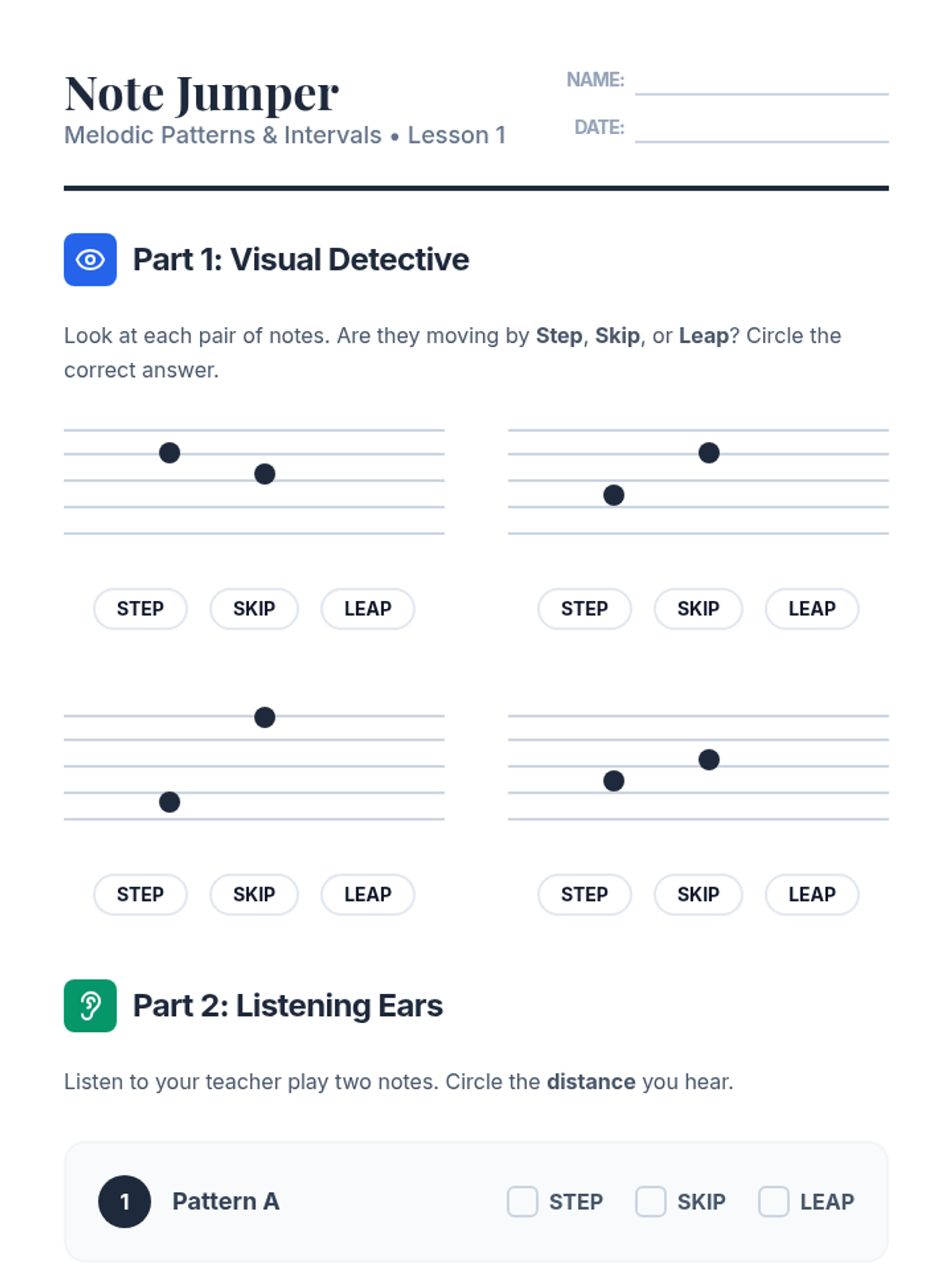
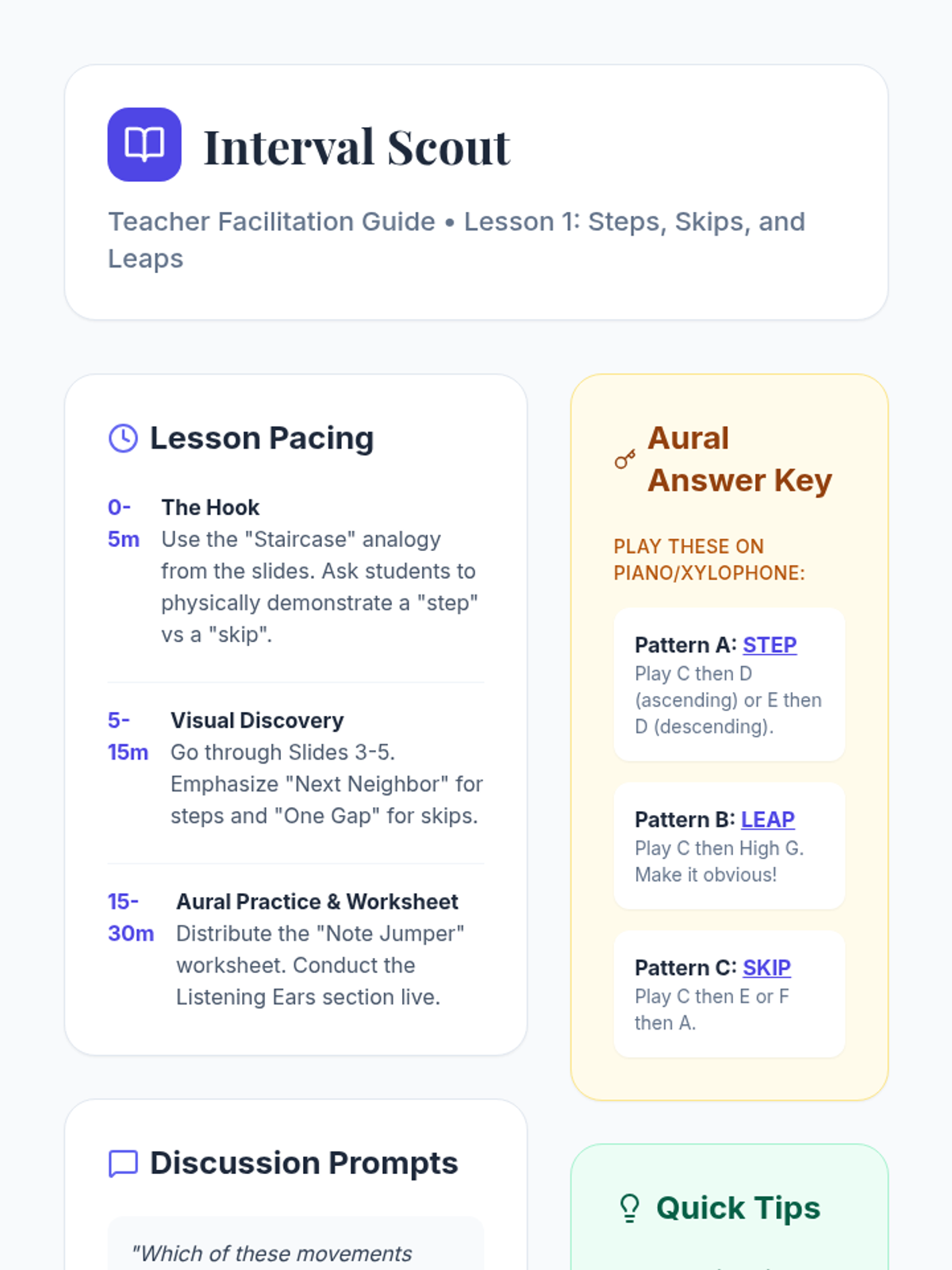
Students explore the relationships between notes, focusing on intervals (steps, skips, leaps) and the construction of the C Major scale. Using solfege, hand signs, and aural analysis, students learn to identify and dictate melodic patterns in simple folk music.
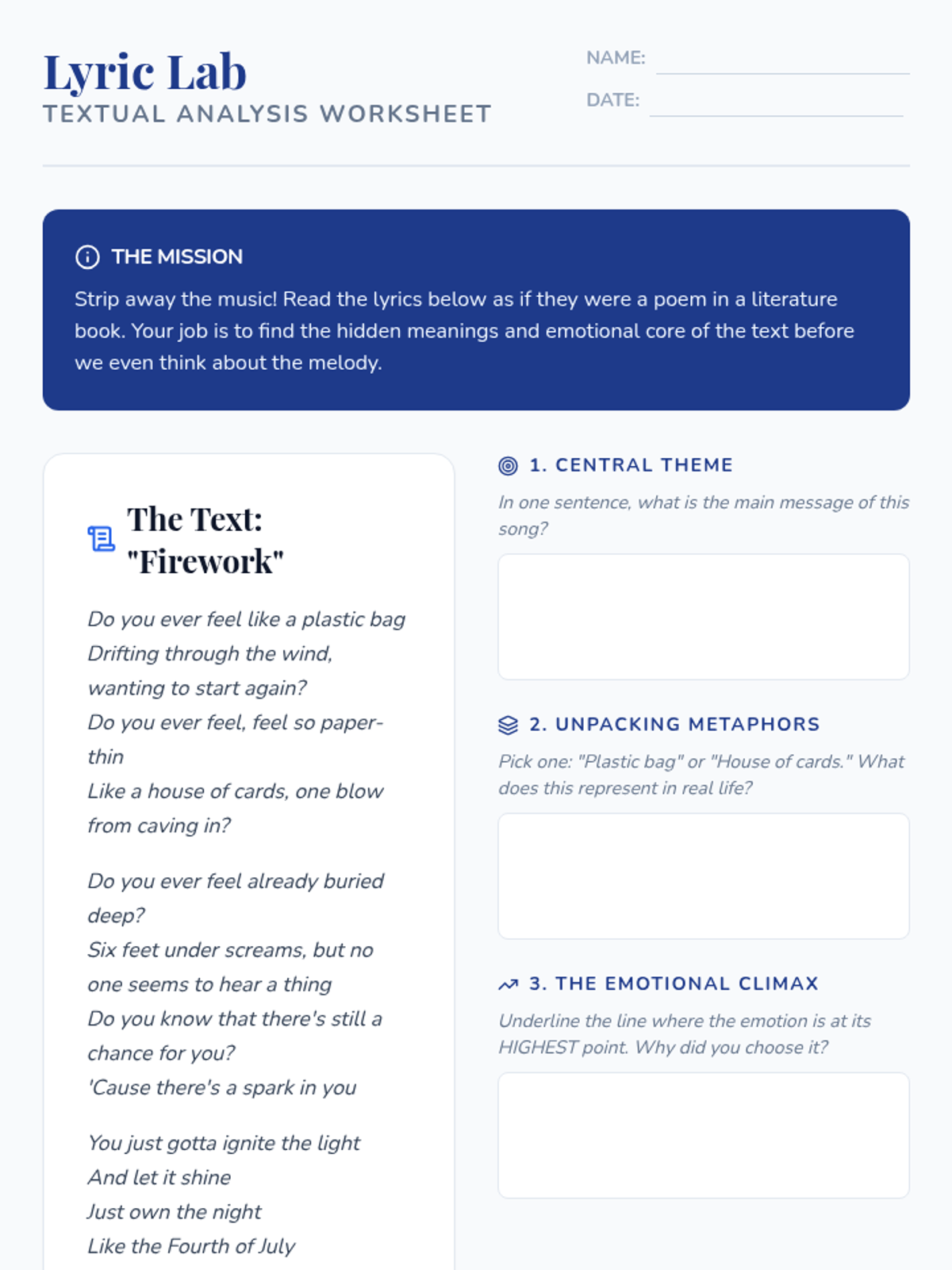
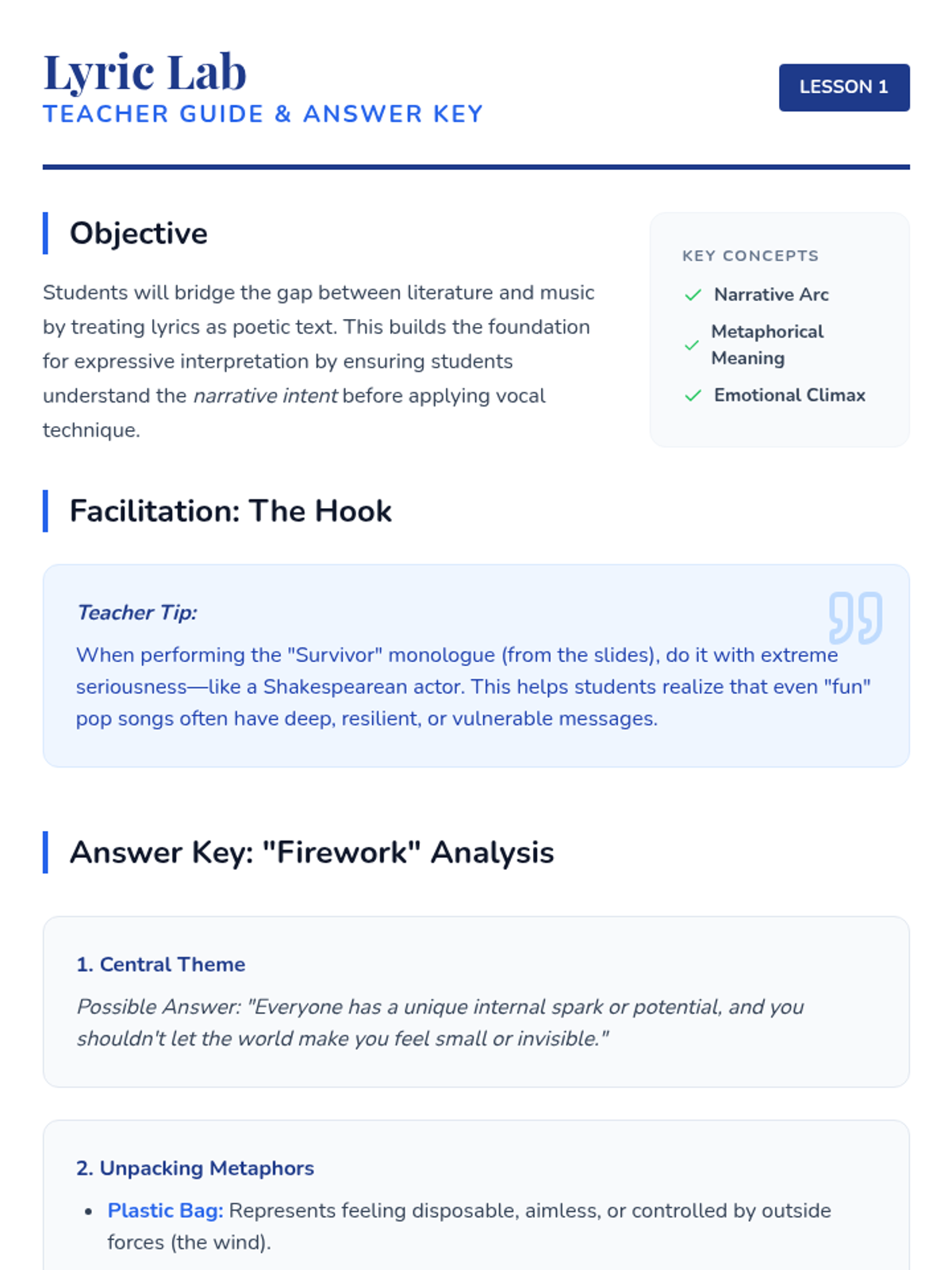
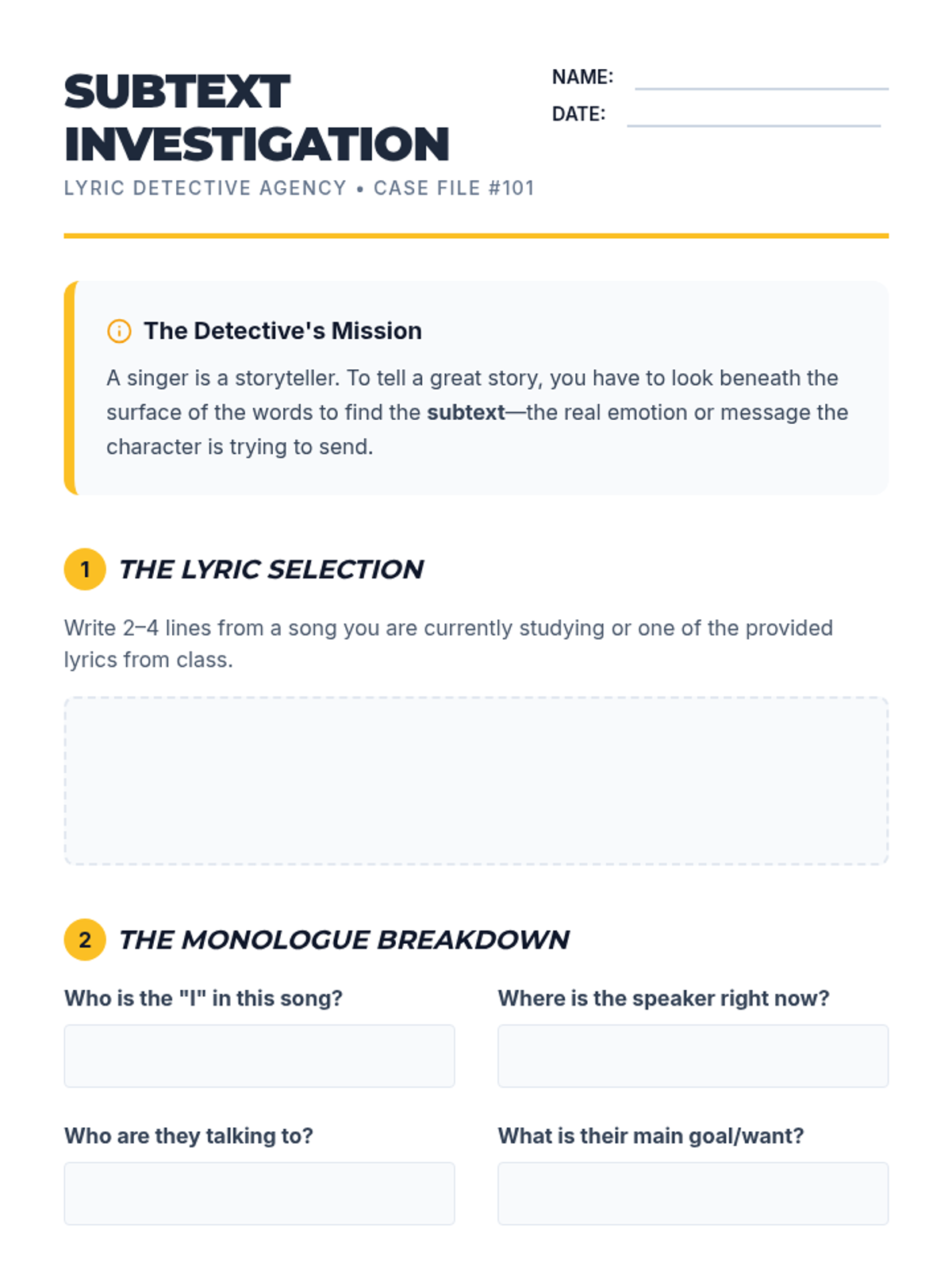
A 5-lesson unit for 6th-grade singers focusing on the intersection of technical performance and artistic storytelling. Students explore lyrics as poetry, master the mechanics of phrasing and breath management, manipulate dynamics and tempo for emotional impact, and analyze interpretive choices in cover songs.
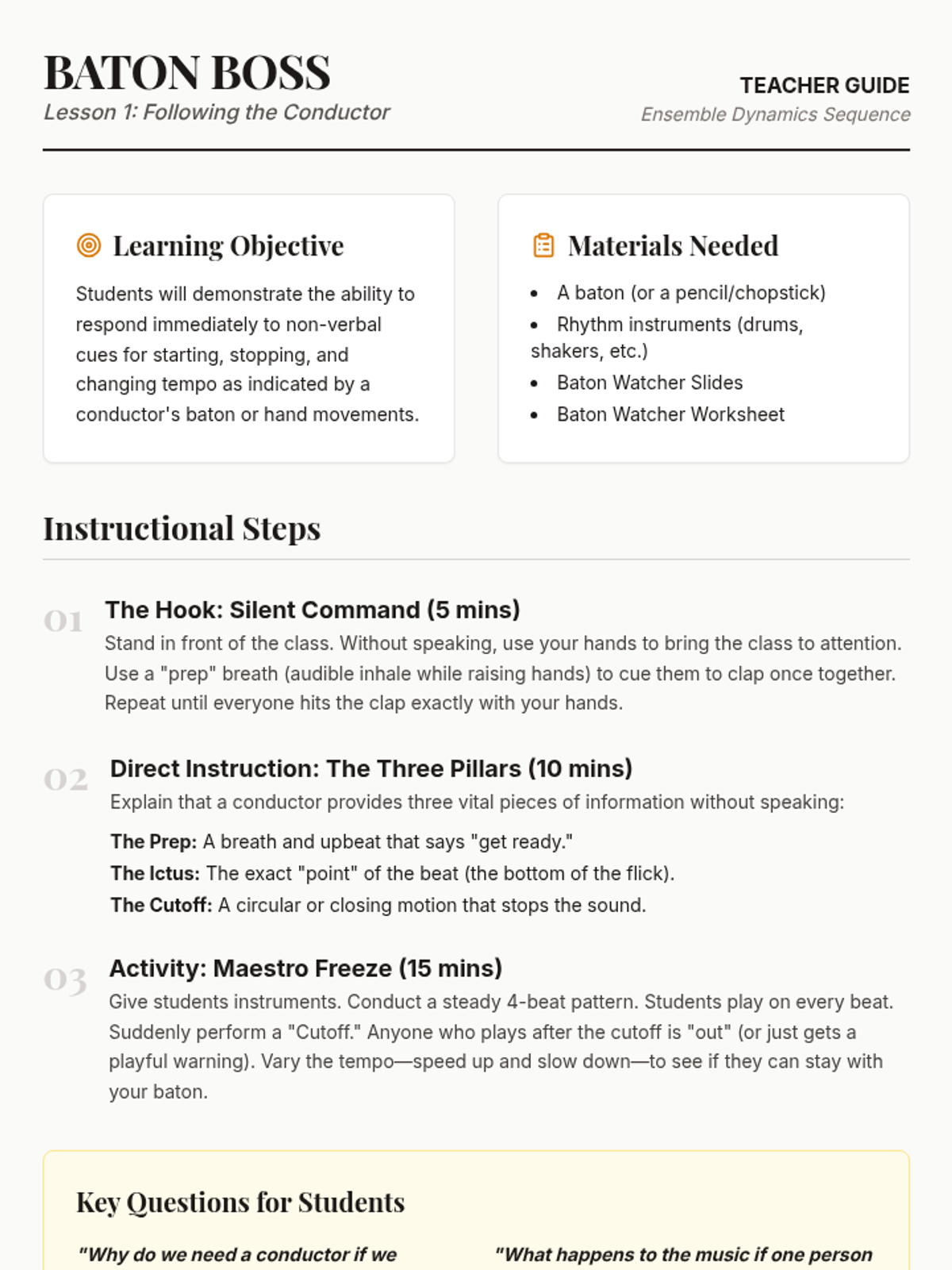
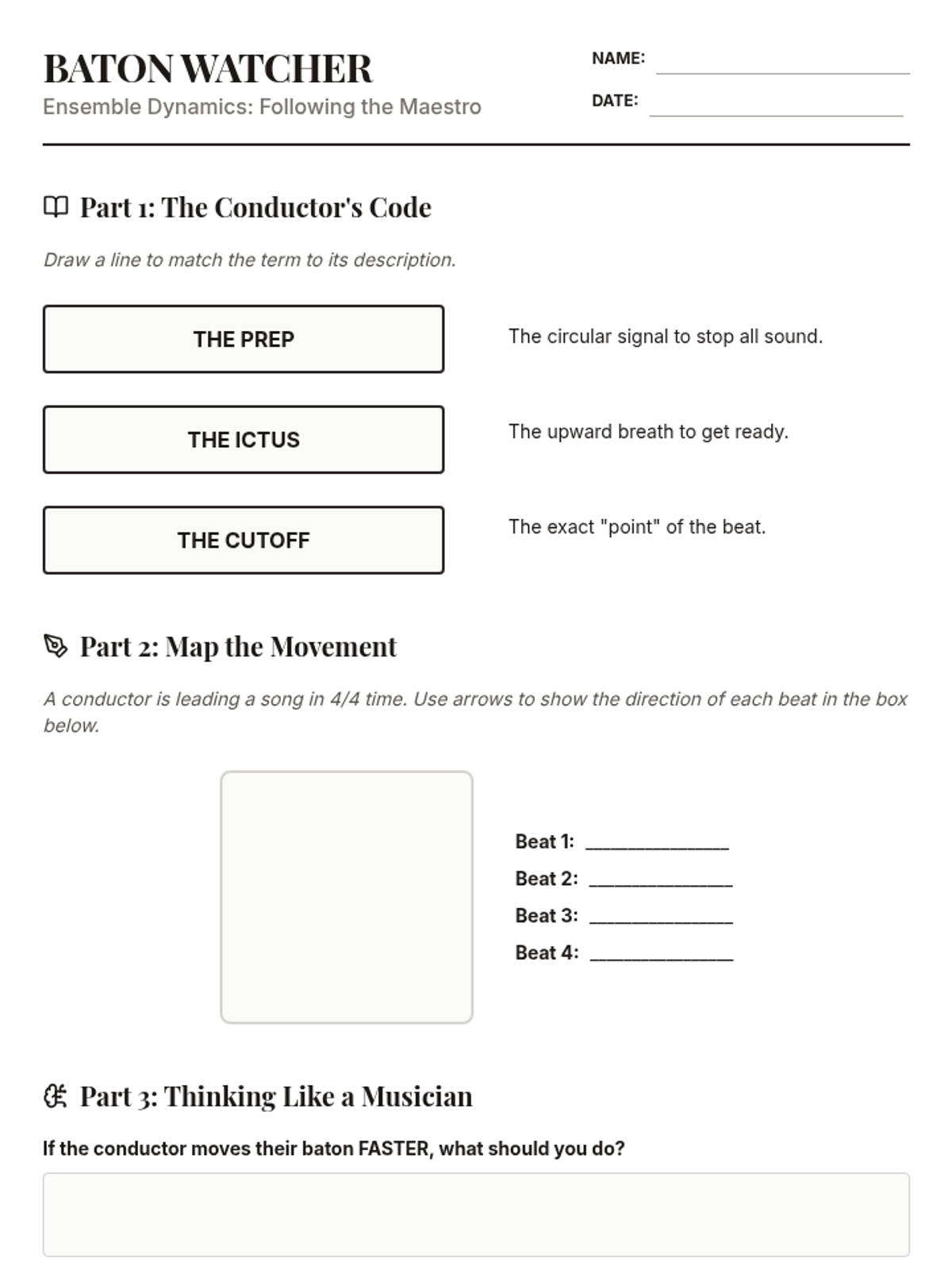
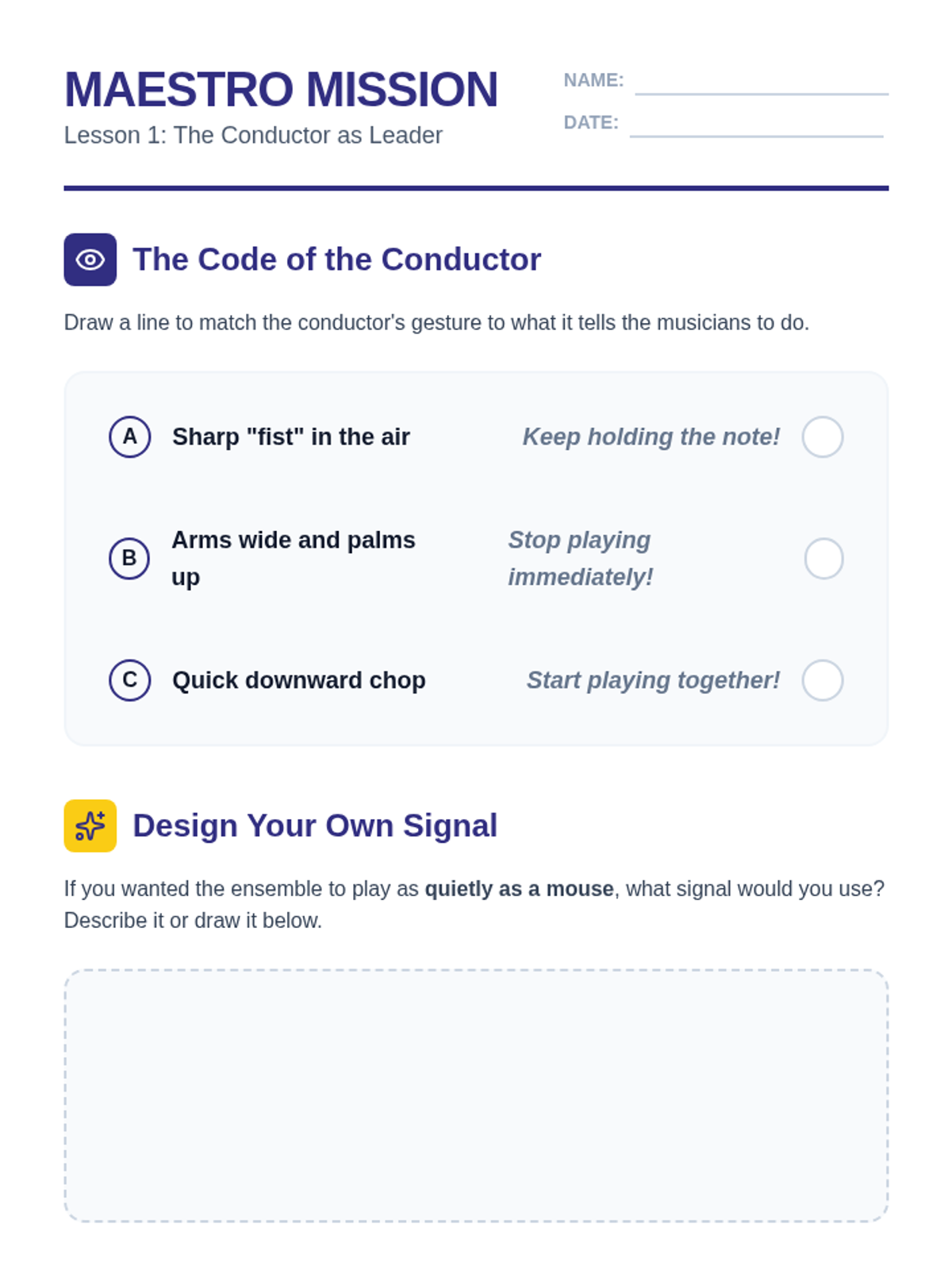
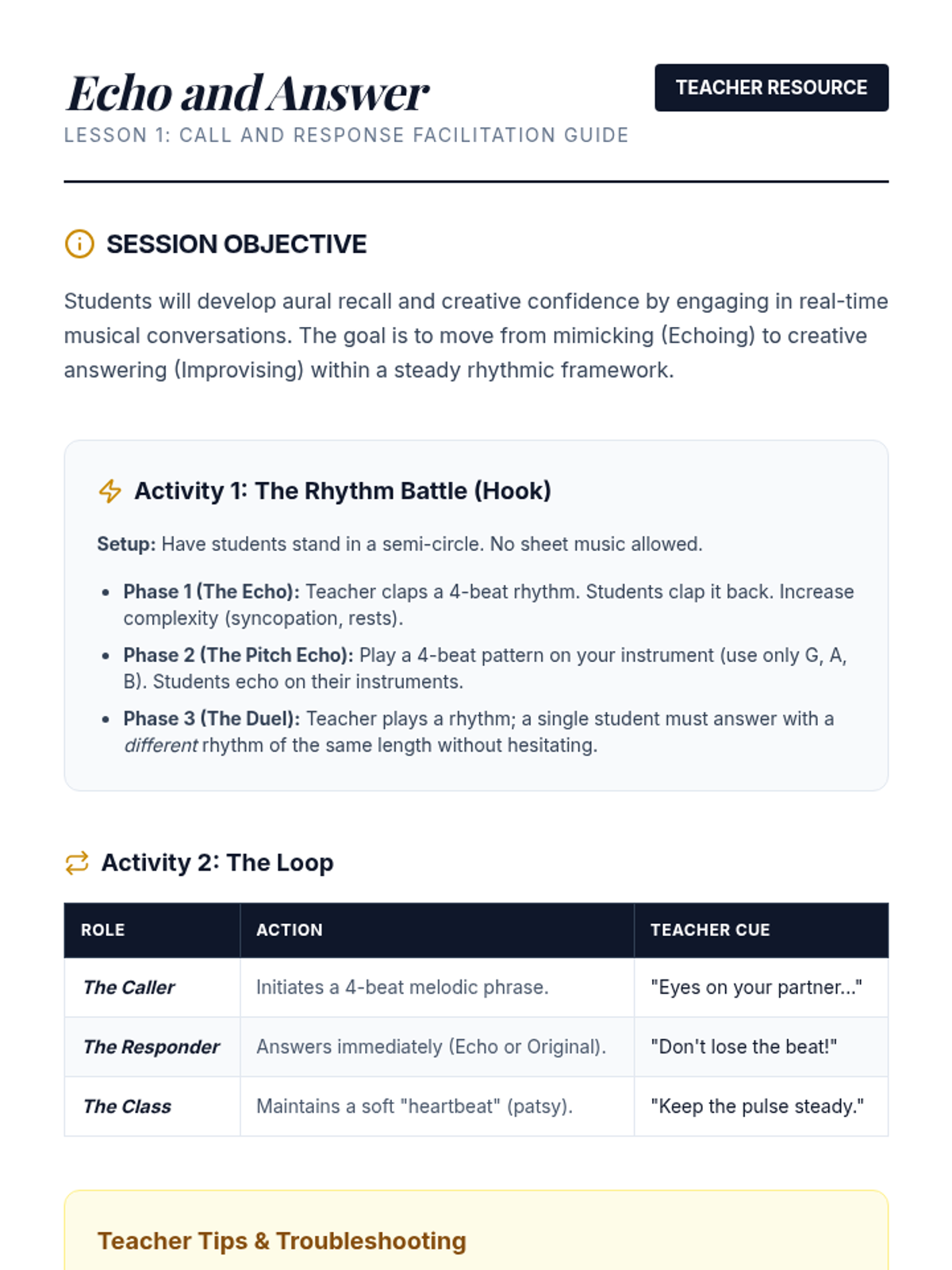
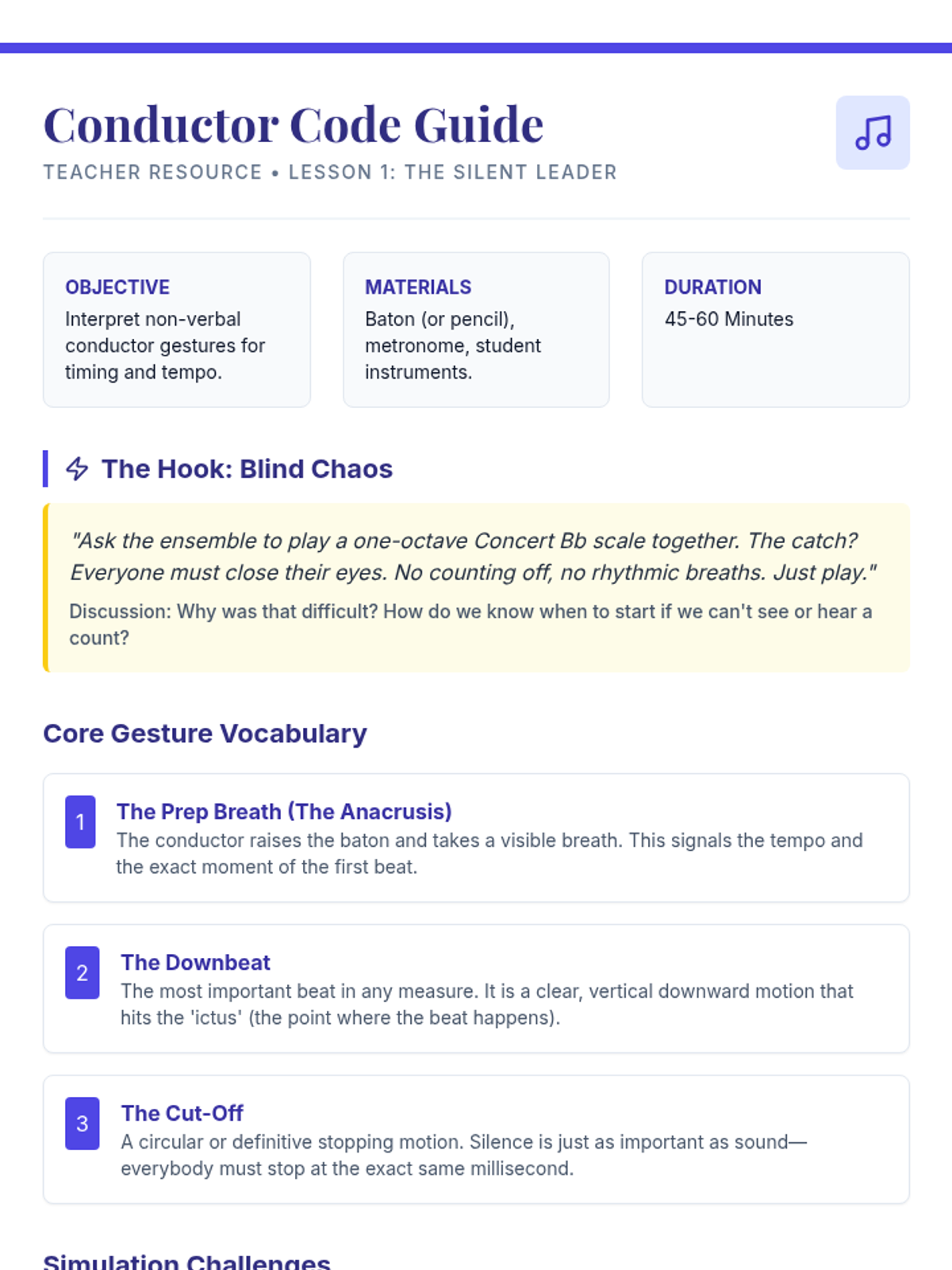
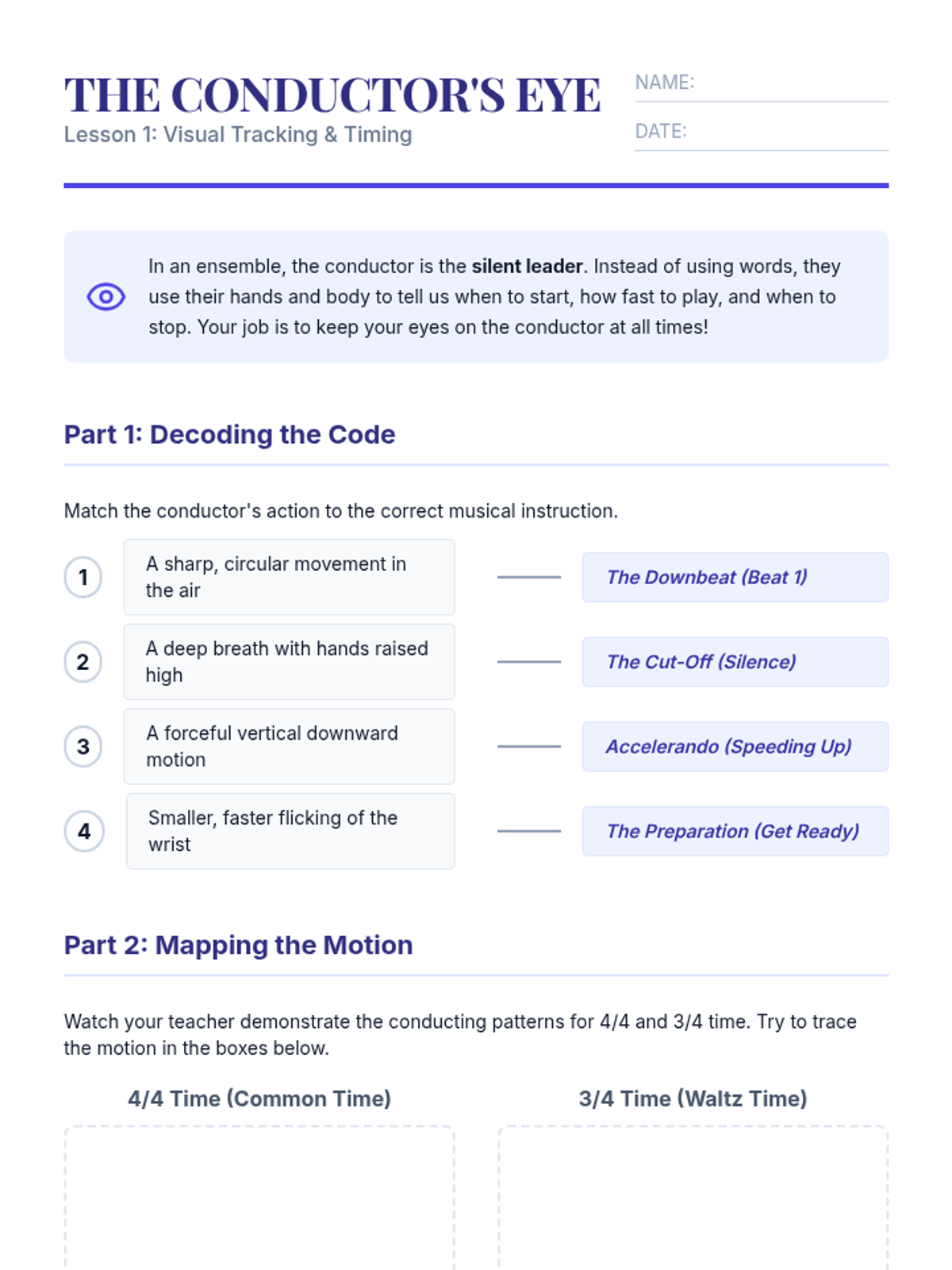
This sequence explores how musicians work together as an ensemble, focusing on conducting cues, dynamic control, balance, and tempo maintenance. Students transition from following a leader to collaborating in small independent groups.
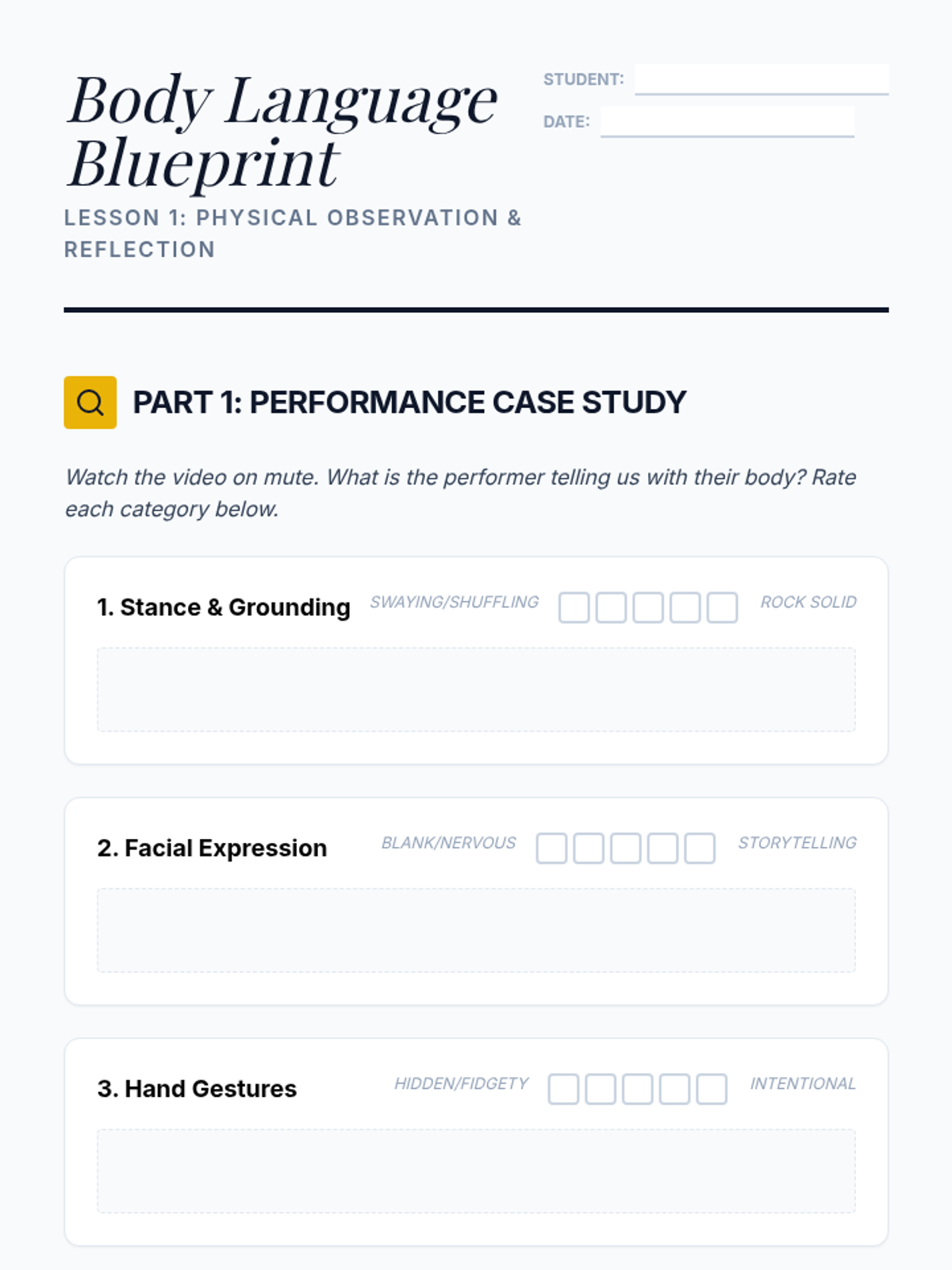
A comprehensive 5th-grade music sequence focused on stage presence, performance anxiety management, and audience connection. Students build professional performance habits through simulations and workshops, culminating in a final showcase.
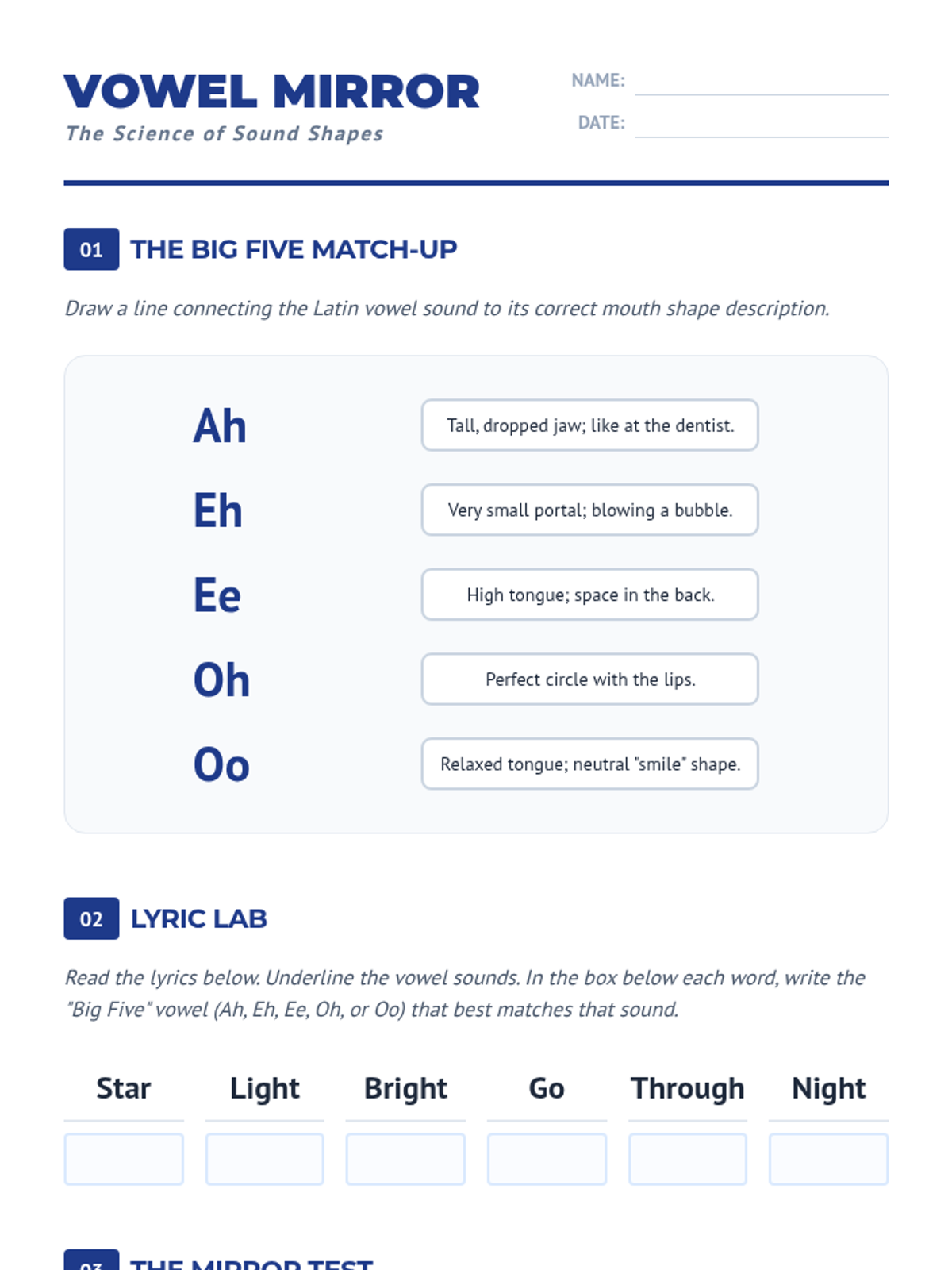
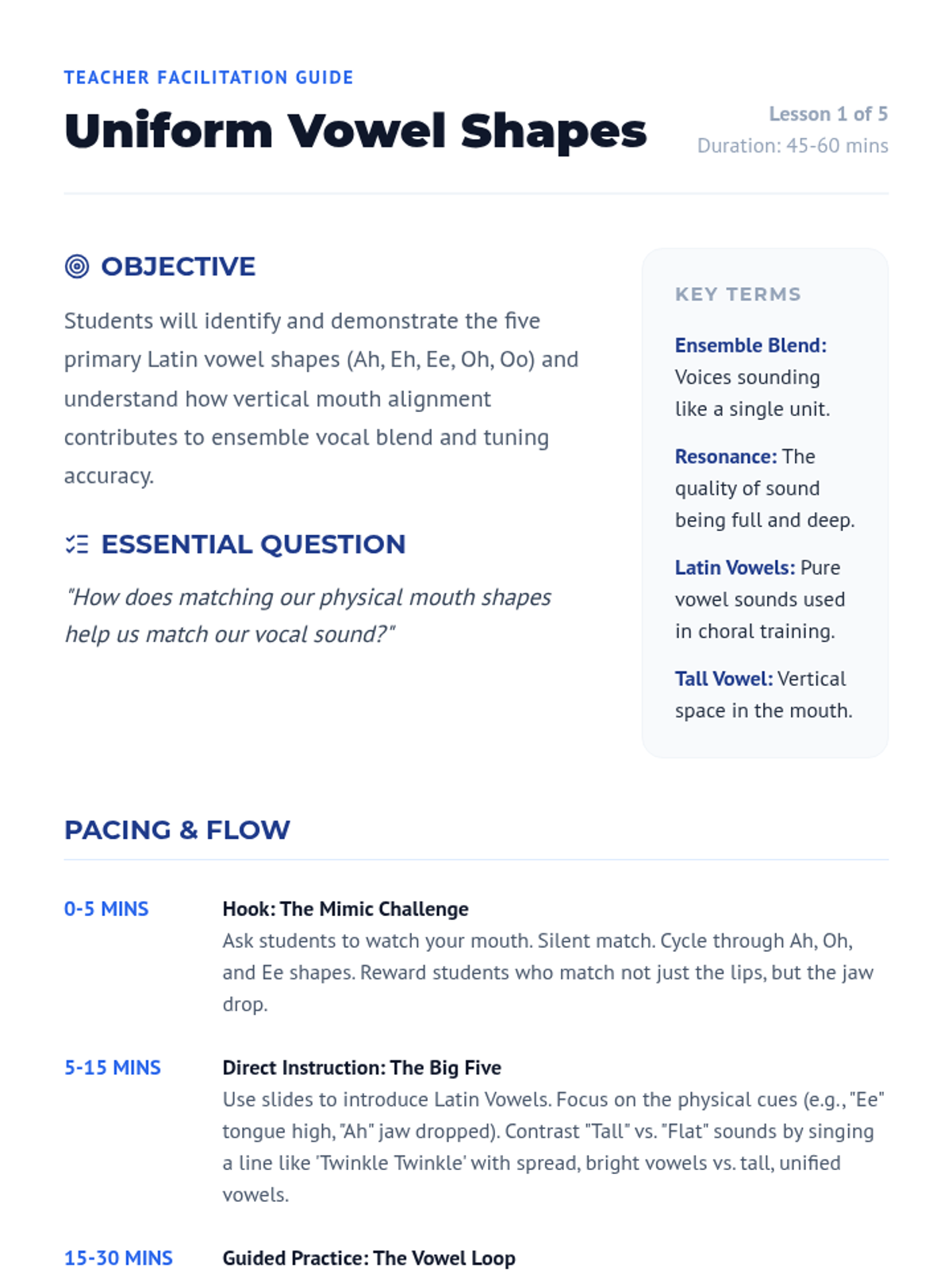
This sequence guides 5th-grade students through the technical aspects of vocal diction, focusing on vowel uniformity, consonant precision, diphthong management, and vocal agility. Students will learn how to improve their singing clarity and ensemble blend through practical exercises and performance application.
A 5-lesson sequence for 5th-grade students focused on expressive singing, lyric interpretation, and vocal phrasing. Students learn to use dynamics, breath control, and stylistic choices to transform songs into compelling stories.
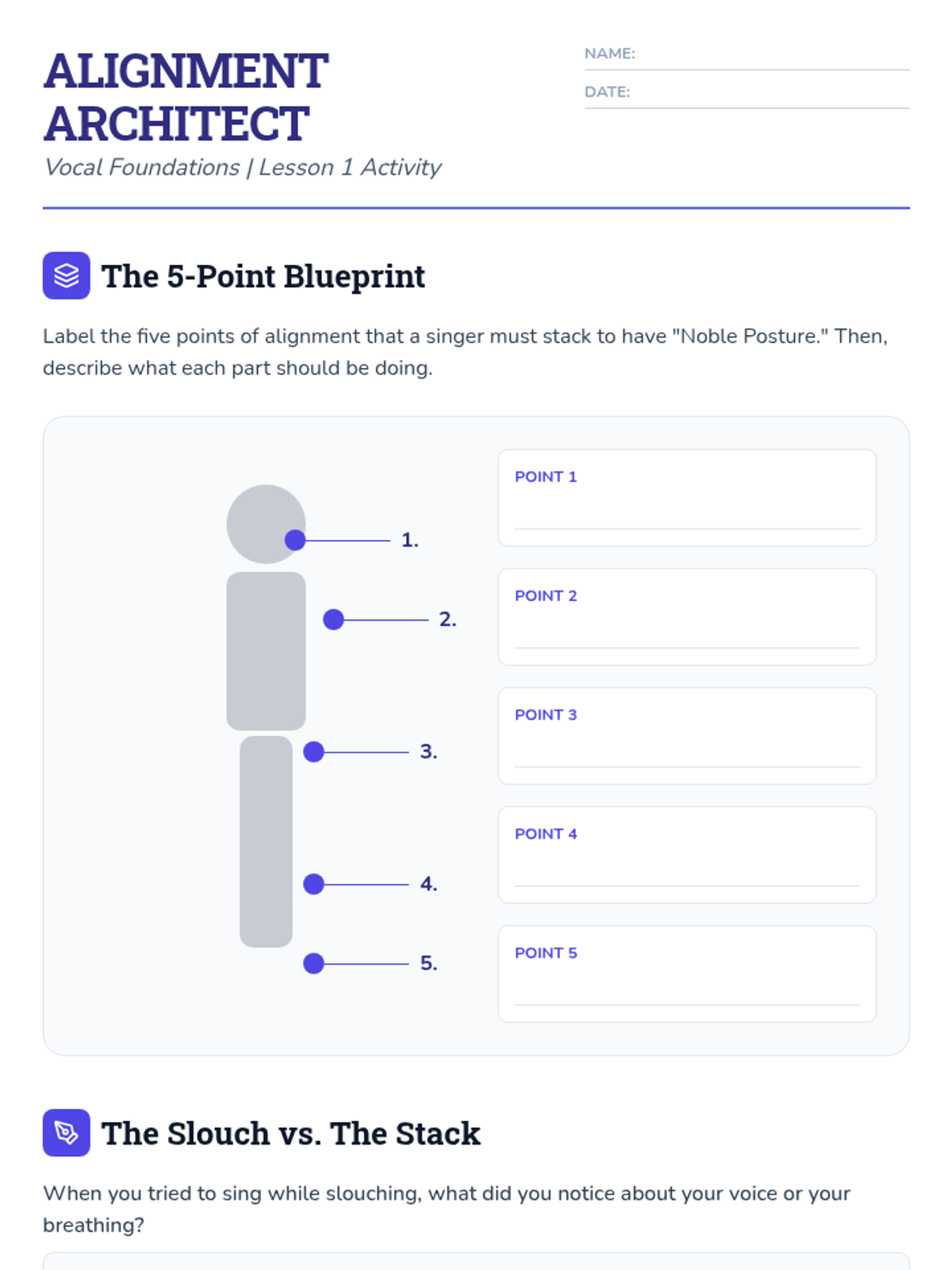
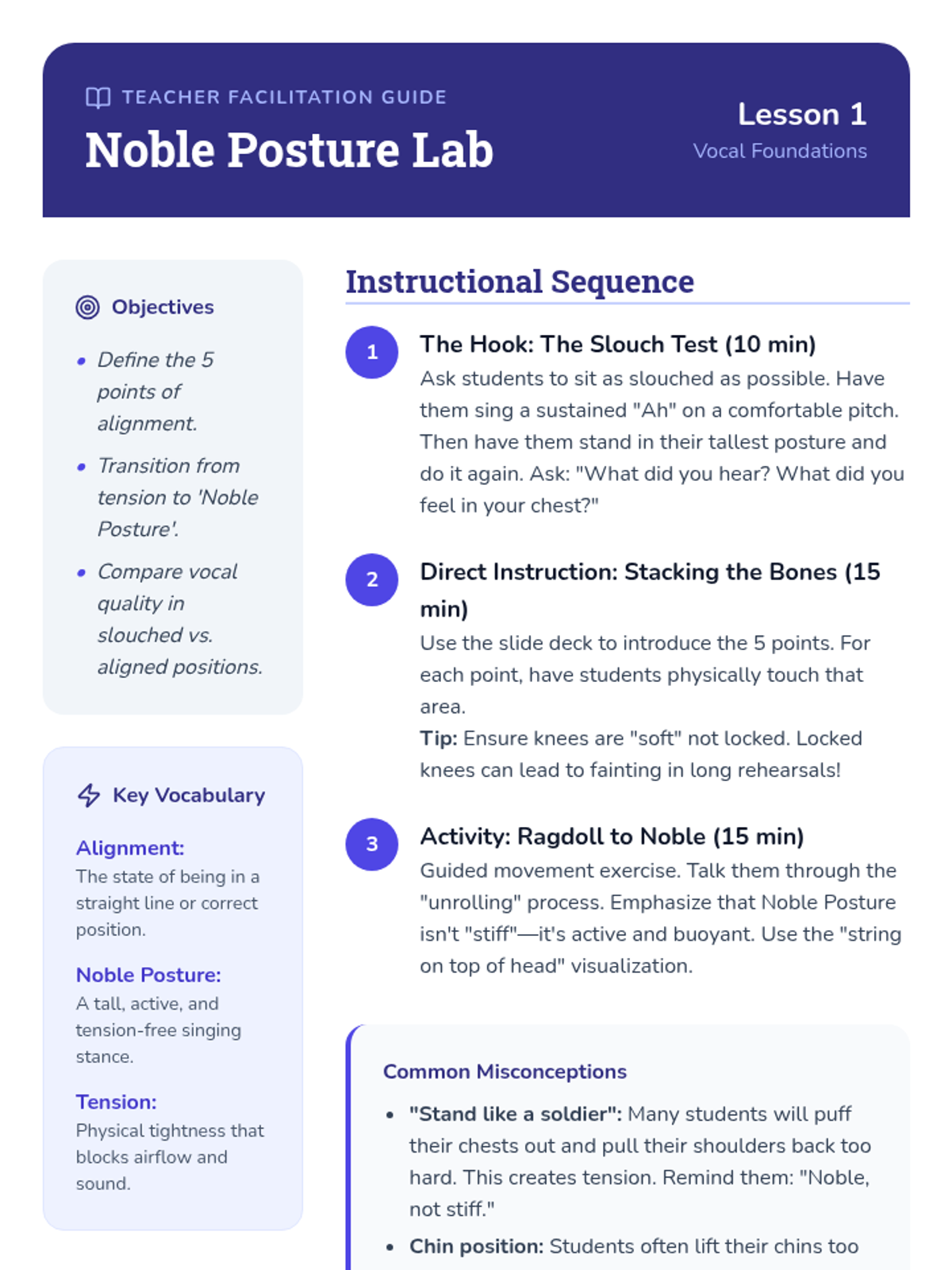
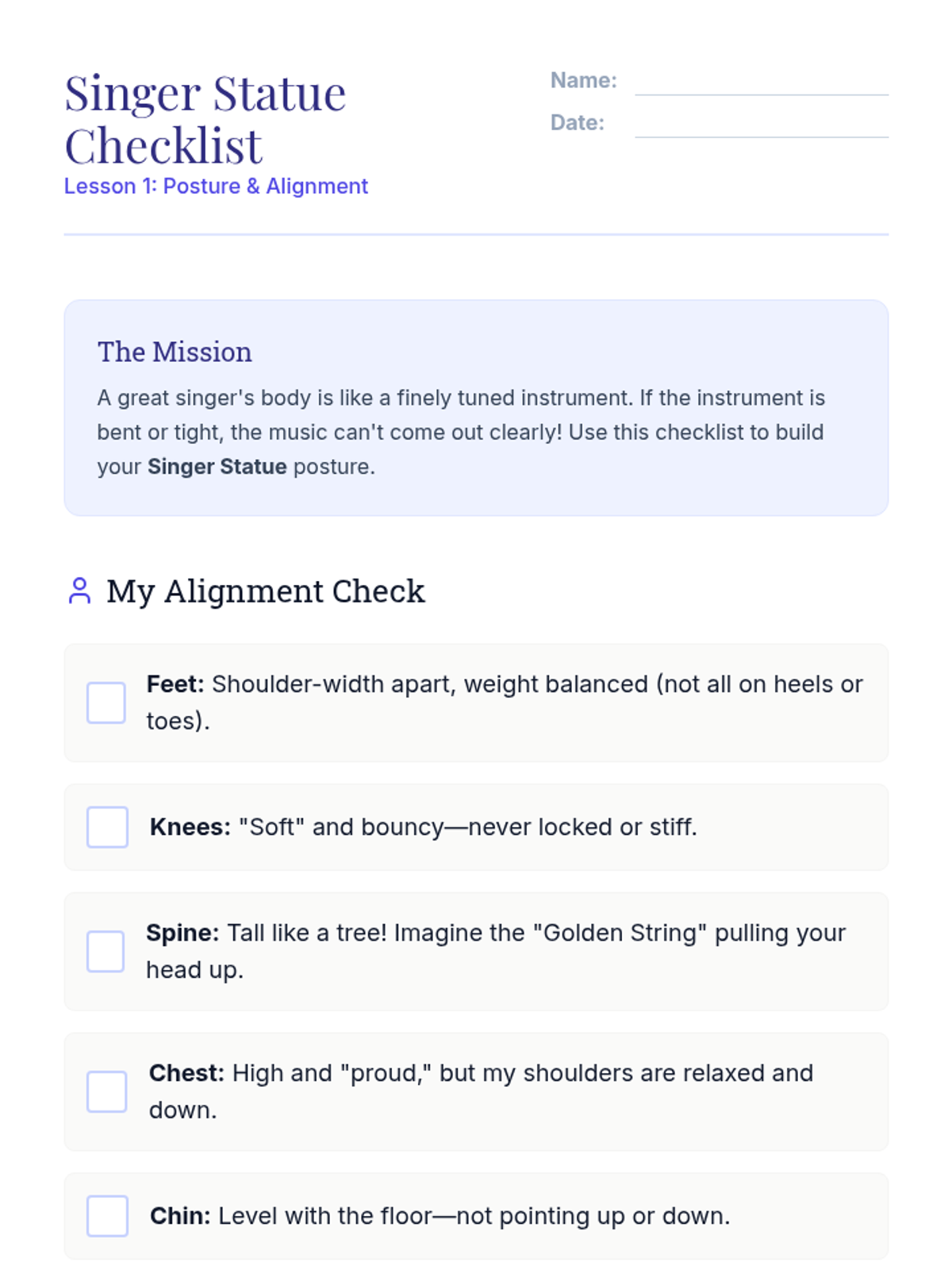
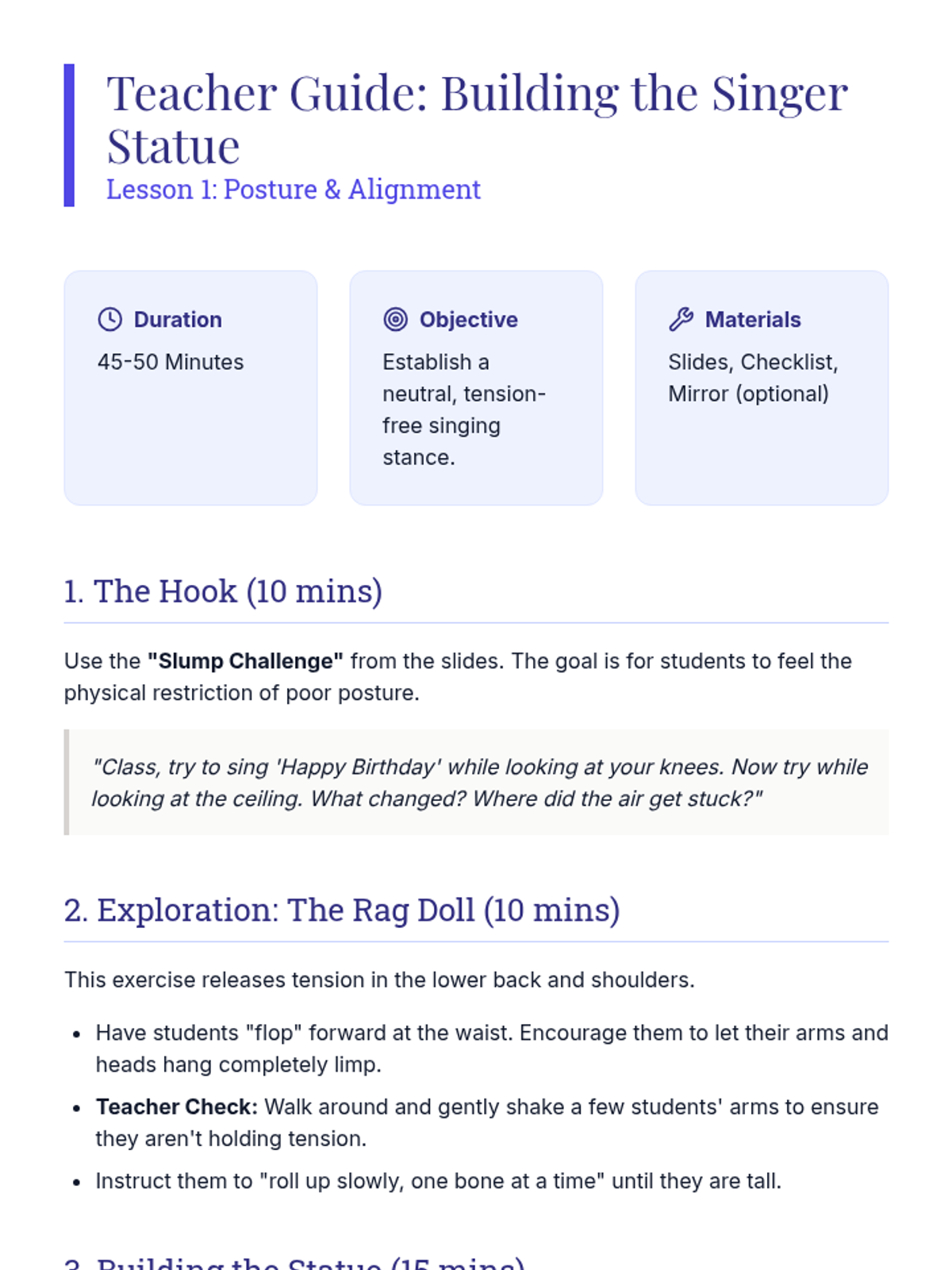
A 5th-grade music sequence focused on the physical foundations of singing, covering posture, diaphragmatic breathing, breath management, resonance, and vocal health. Students will treat their bodies as musical instruments to develop healthy, sustainable vocal habits.
This sequence explores the physical mechanics of singing, treating the body as a primary instrument. Students learn anatomy, posture, diaphragmatic breathing, resonance, and articulation to produce clear, controlled vocal tones.
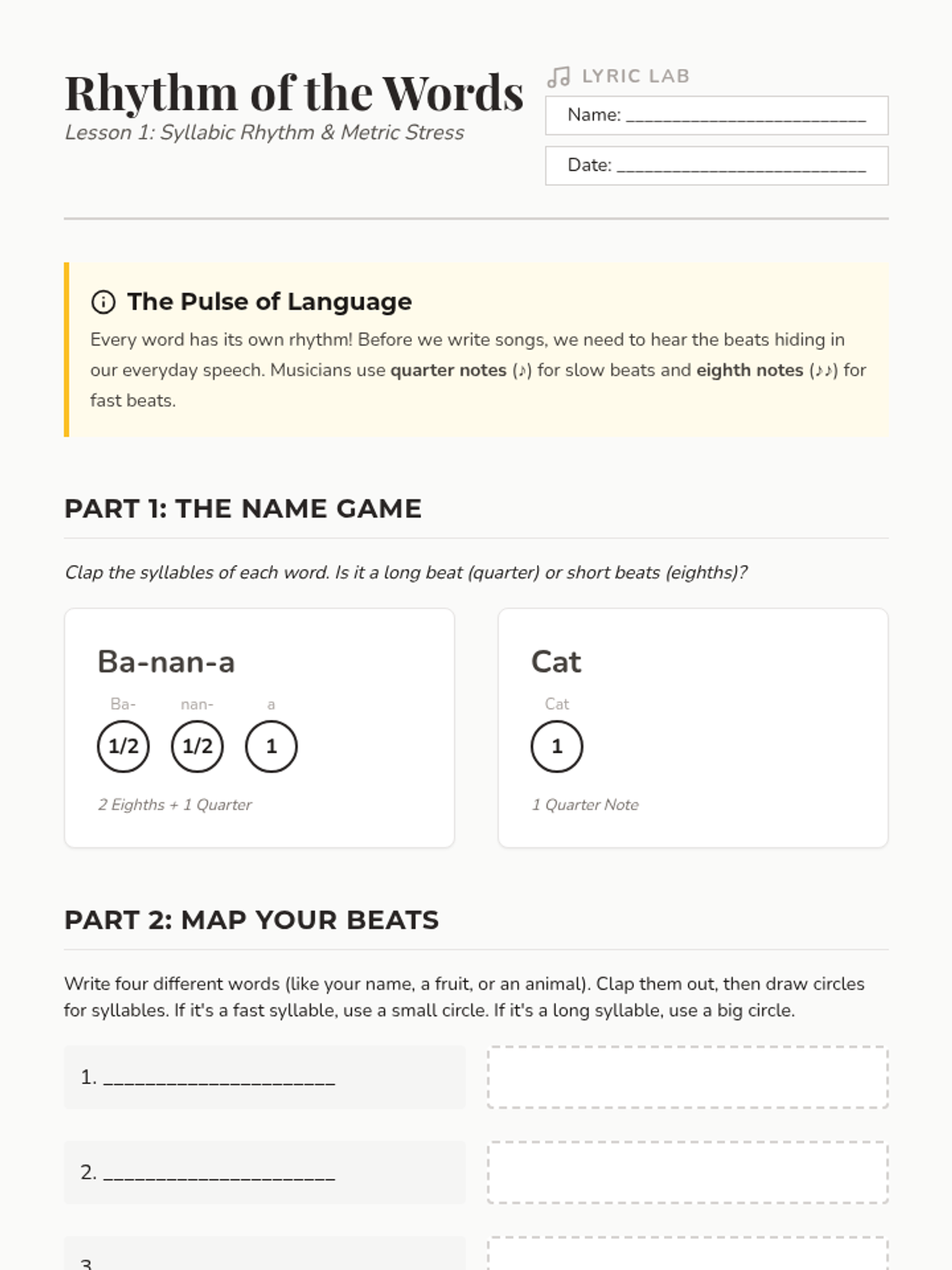
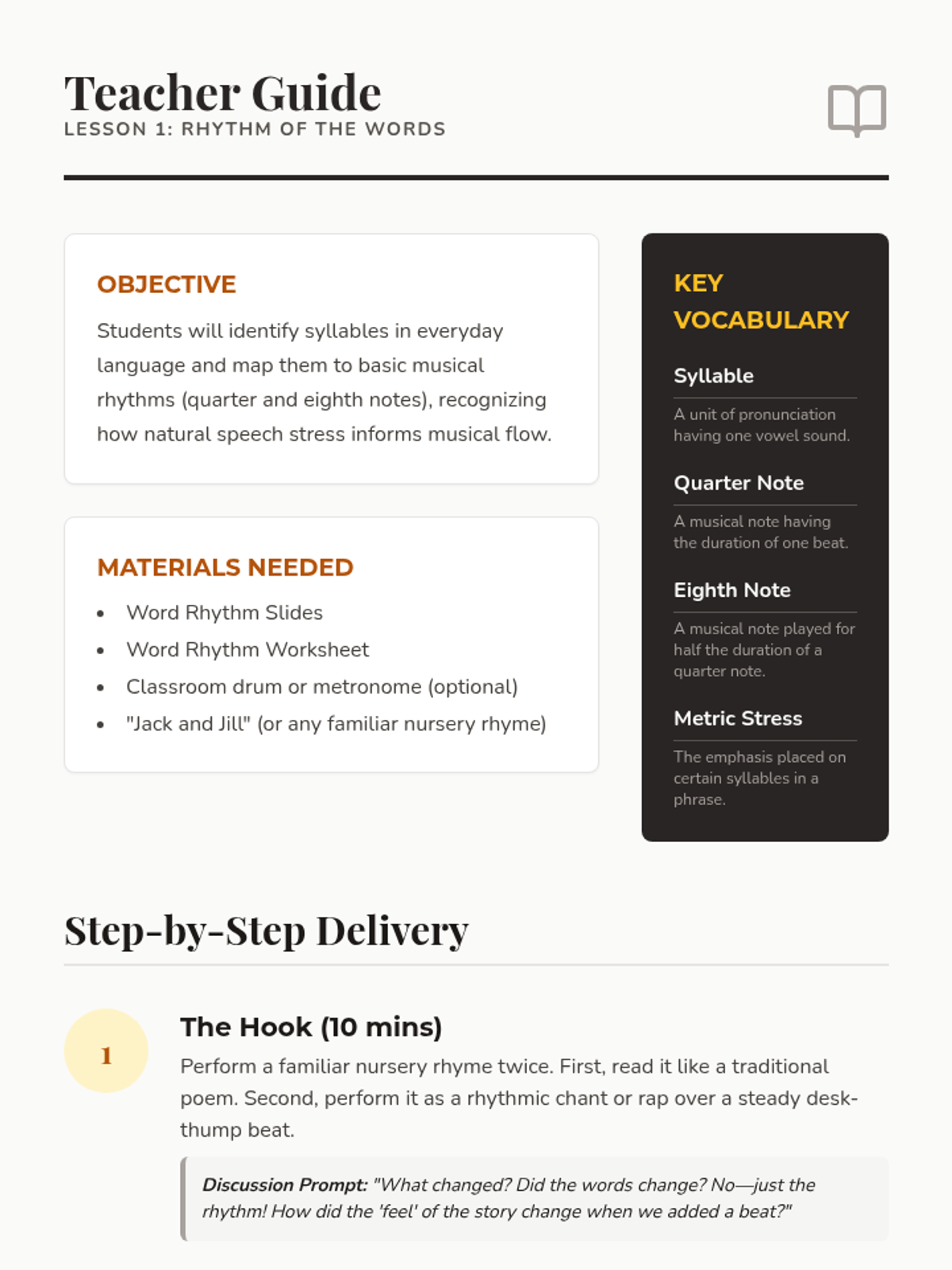
This sequence explores the intersection of language and music, teaching 5th graders how to craft lyrics, understand song structures like verse and chorus, and set their words to rhythmic and melodic patterns. Students will progress from rhythm basics to performing their own original compositions.
This sequence explores how technology—from the electric guitar to digital software—transformed music from the mid-20th century to today, focusing on genre evolution, song structure, and production.
This sequence analyzes how technology in the 20th and 21st centuries revolutionized music production and consumption. Students trace the evolution from early Rock 'n' Roll amplification to electronic synthesis and digital sampling, culminating in a creative project where they design music for the future.
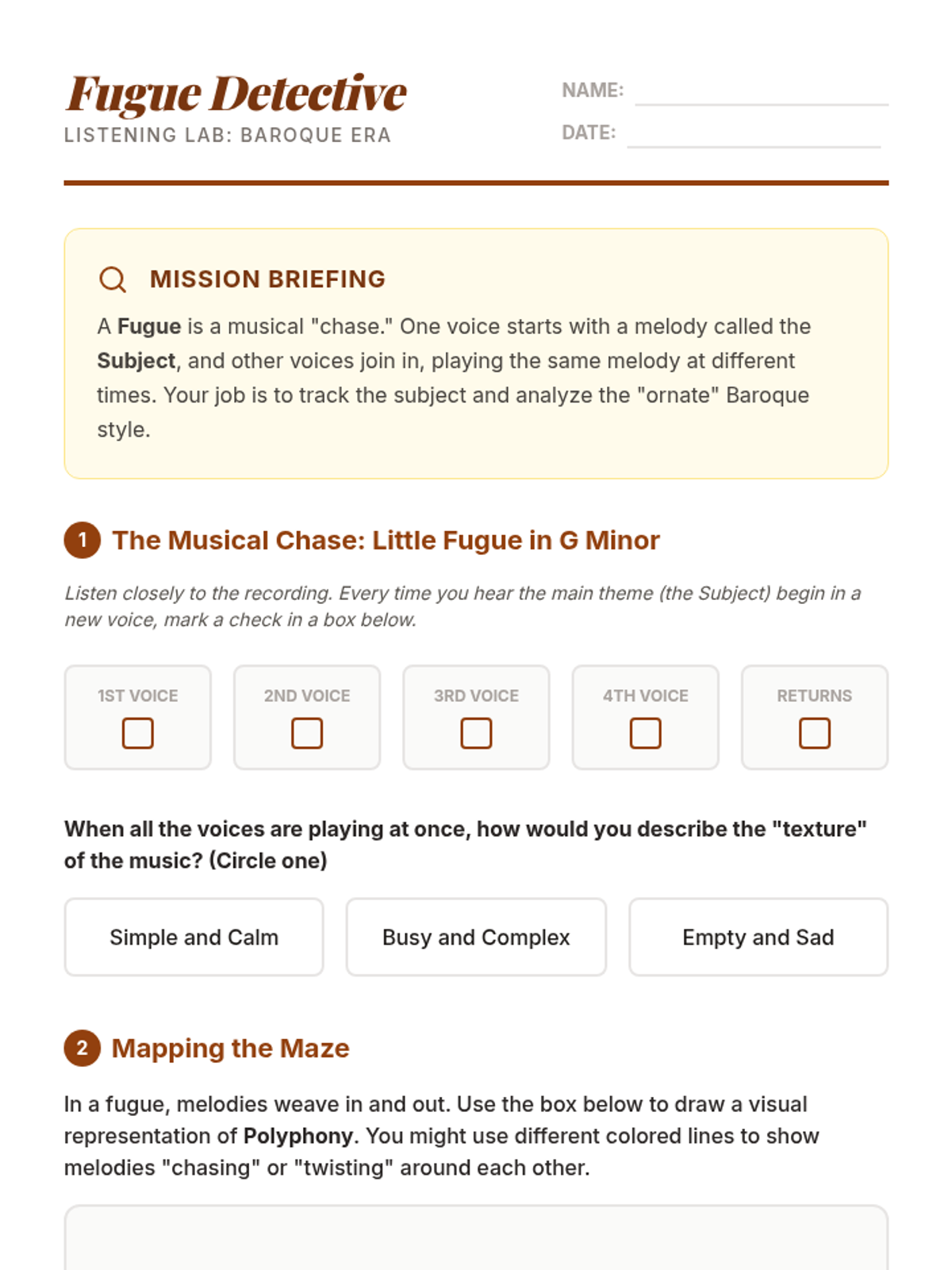
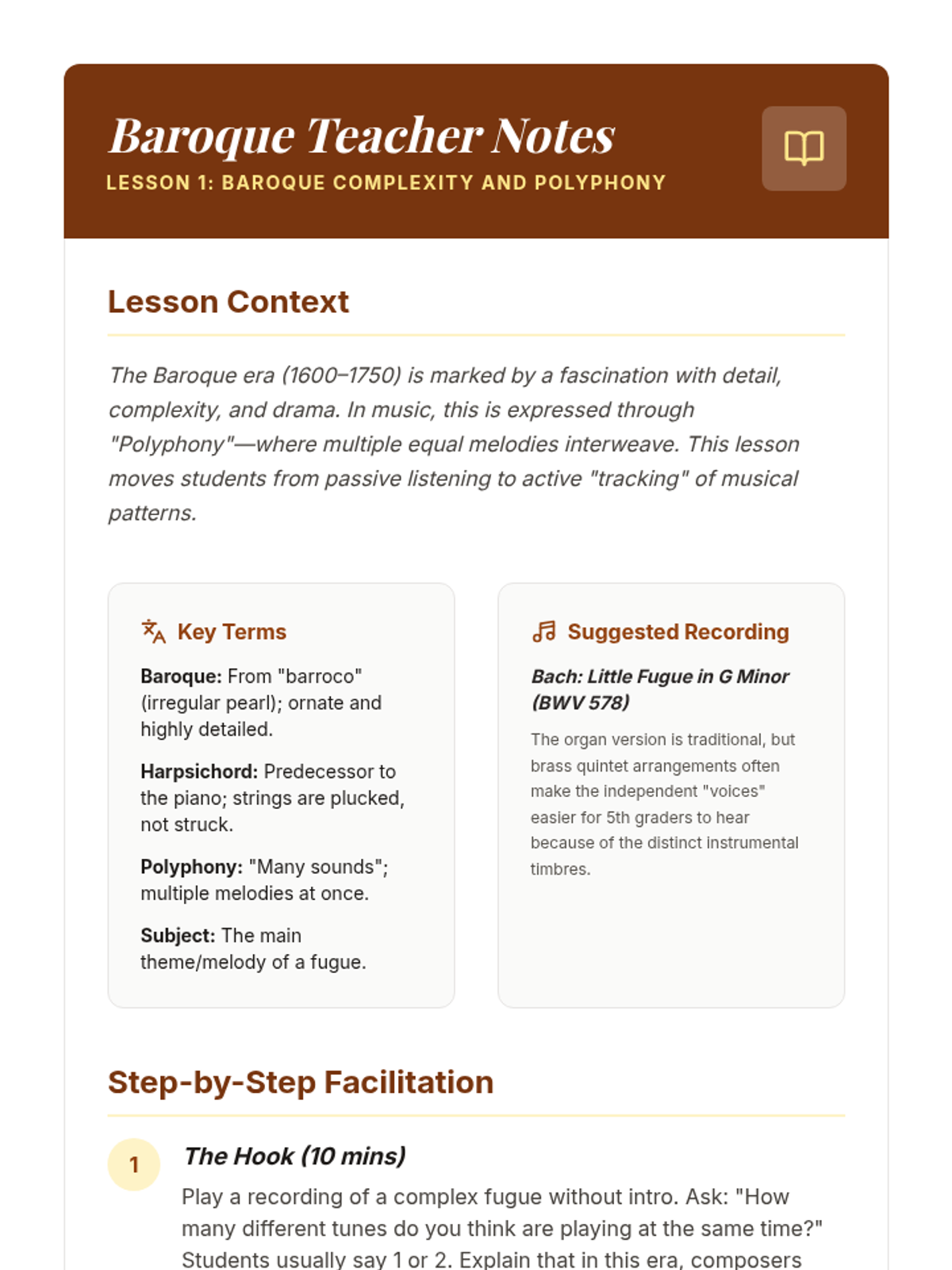
A chronological journey through the Baroque, Classical, Romantic, and Modern eras of Western Art Music, focusing on critical listening and historical context.
A 5-lesson journey into ensemble techniques, focusing on non-verbal communication, dynamic control, layering parts with ostinatos, and collaborative performance. Students develop the skills needed to listen, adjust, and play as a unified musical group.
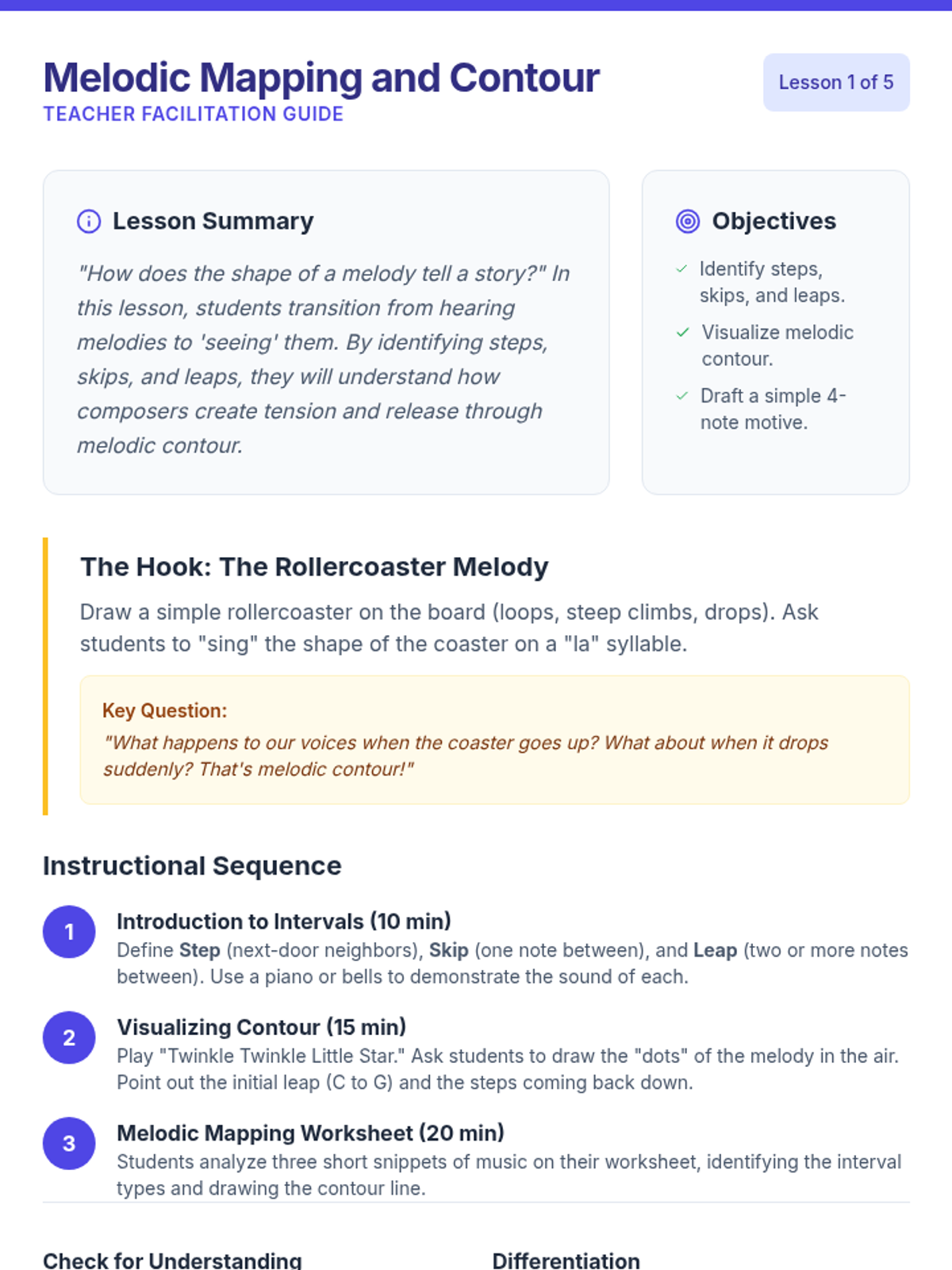
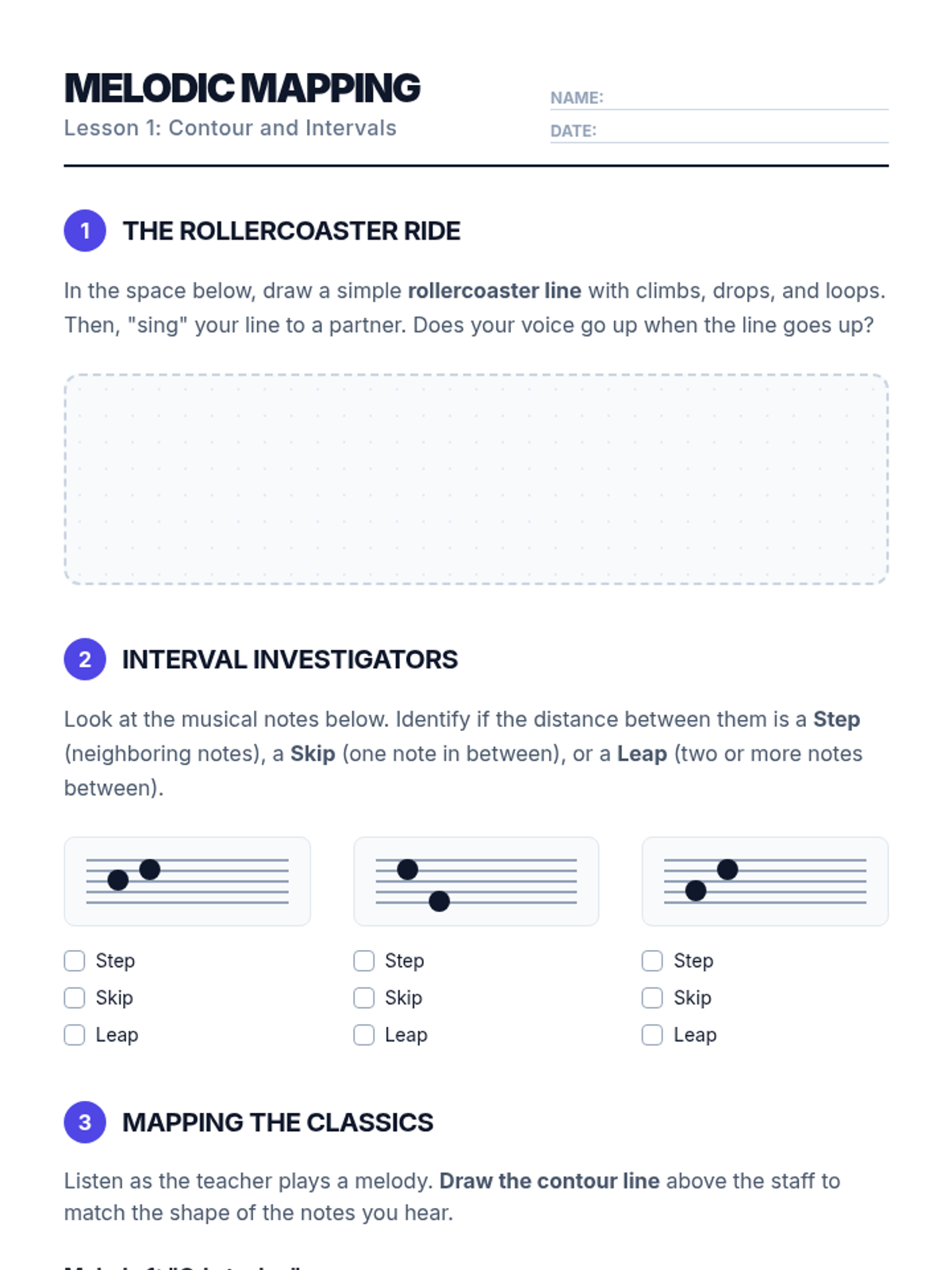
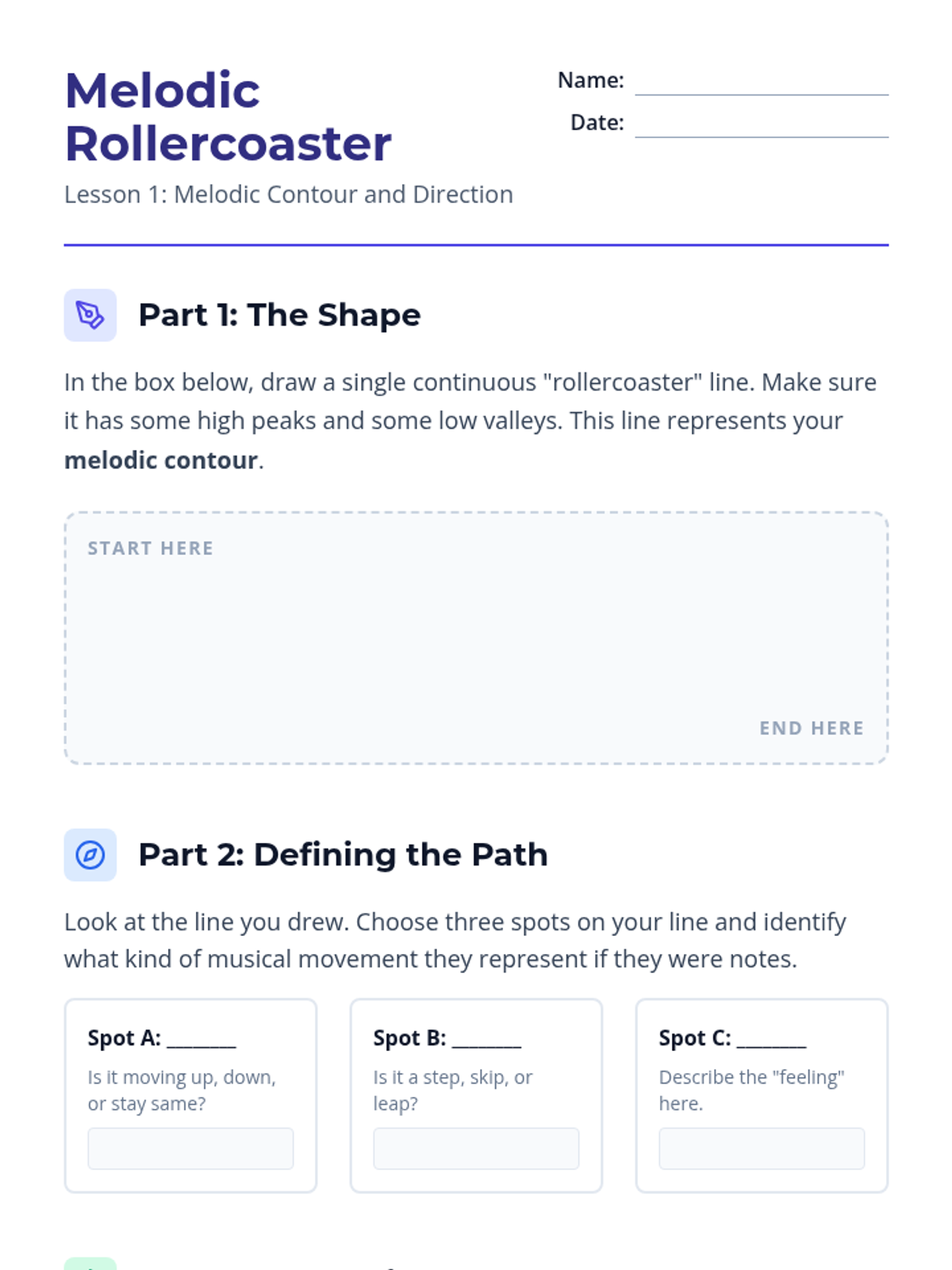
A comprehensive unit on melodic construction, focusing on scales, contour, motif development, and phrasing. Students progress from basic pitch relationships to composing their own melodic etudes with emotional intent.
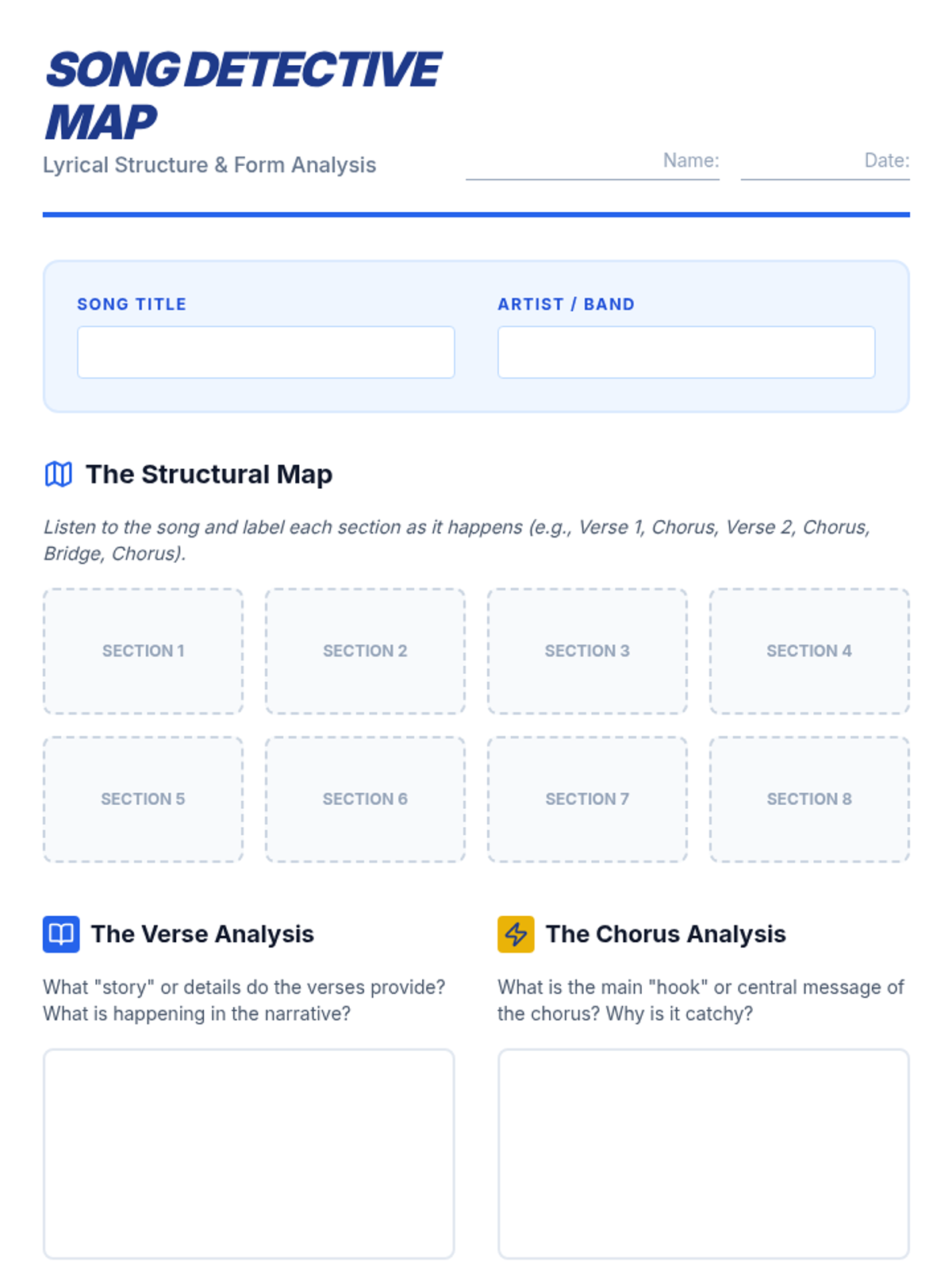
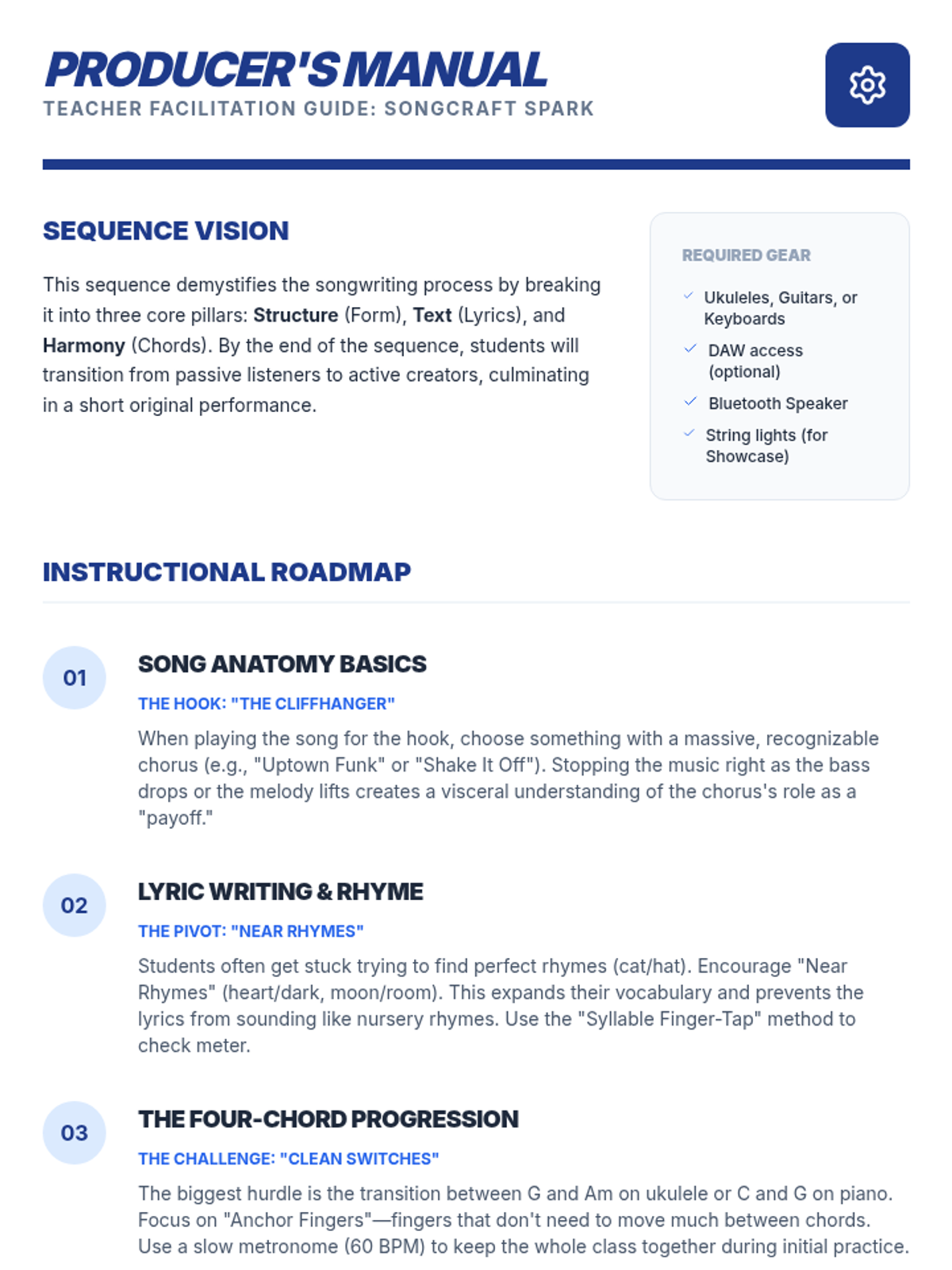
Students journey through the process of songwriting, from deconstructing popular forms to composing original lyrics and harmonic progressions. The sequence culminates in a live or recorded showcase of original student work, emphasizing the synergy between words and music.
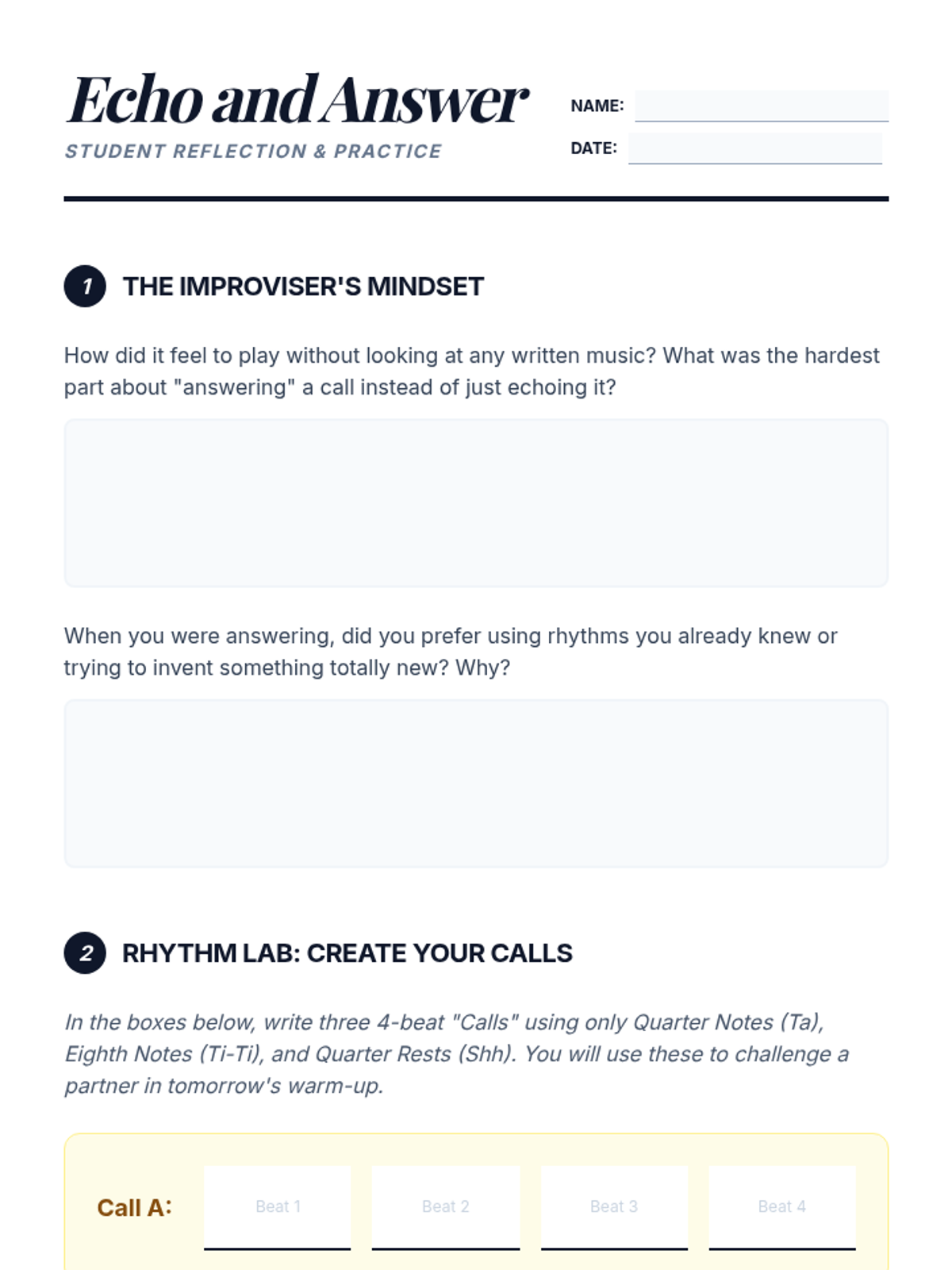
A 5th-grade music sequence where students transition from improvisation to full melodic composition. They explore motifs, notation, and phrasing, culminating in a class recital of original works.
This sequence establishes foundational literacy skills for instrumental music, moving from basic note identification on the staff to complex rhythmic syncopation and original composition. Students learn to decode symbols, apply rhythm math, and develop sight-reading strategies for 6th-grade repertoire.
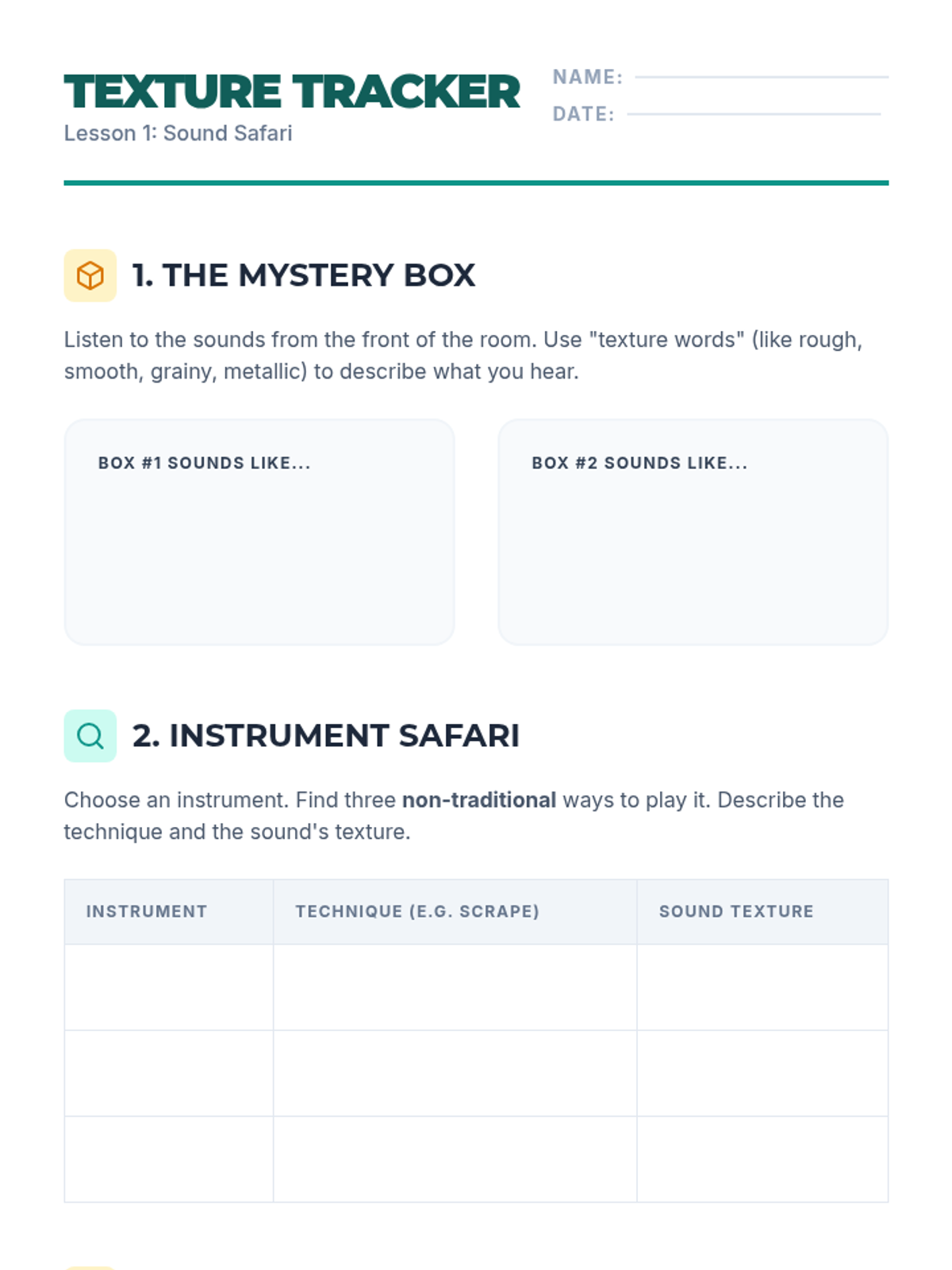
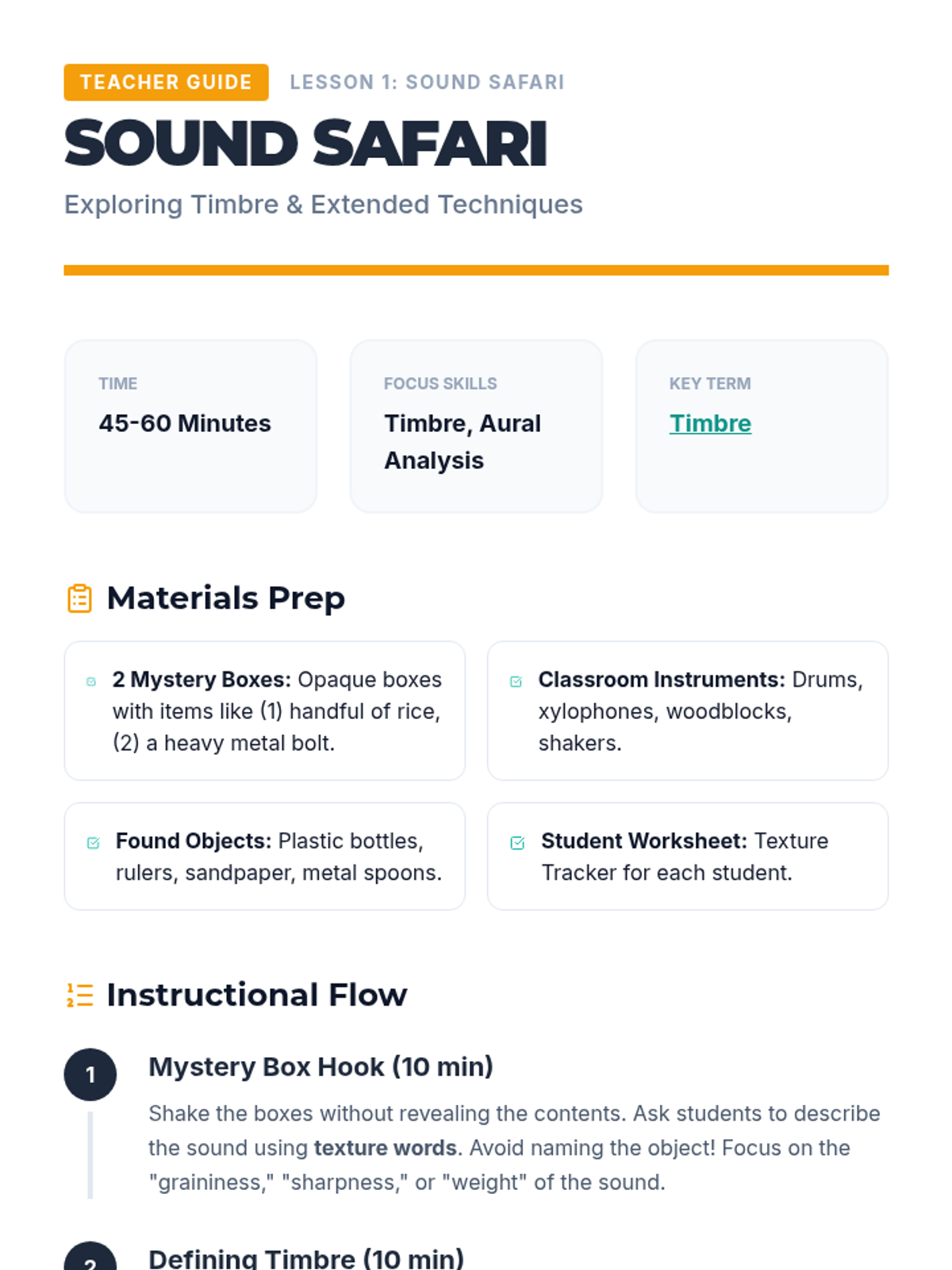
A 5-lesson journey into music composition using graphic notation. Students explore sound textures, invent visual symbols for audio, compose narrative soundscapes, and lead ensembles as conductors.
A comprehensive 5-lesson sequence for 5th-grade students to master melodic composition using standard treble clef notation, covering contour, staff literacy, phrasing, and the revision process.
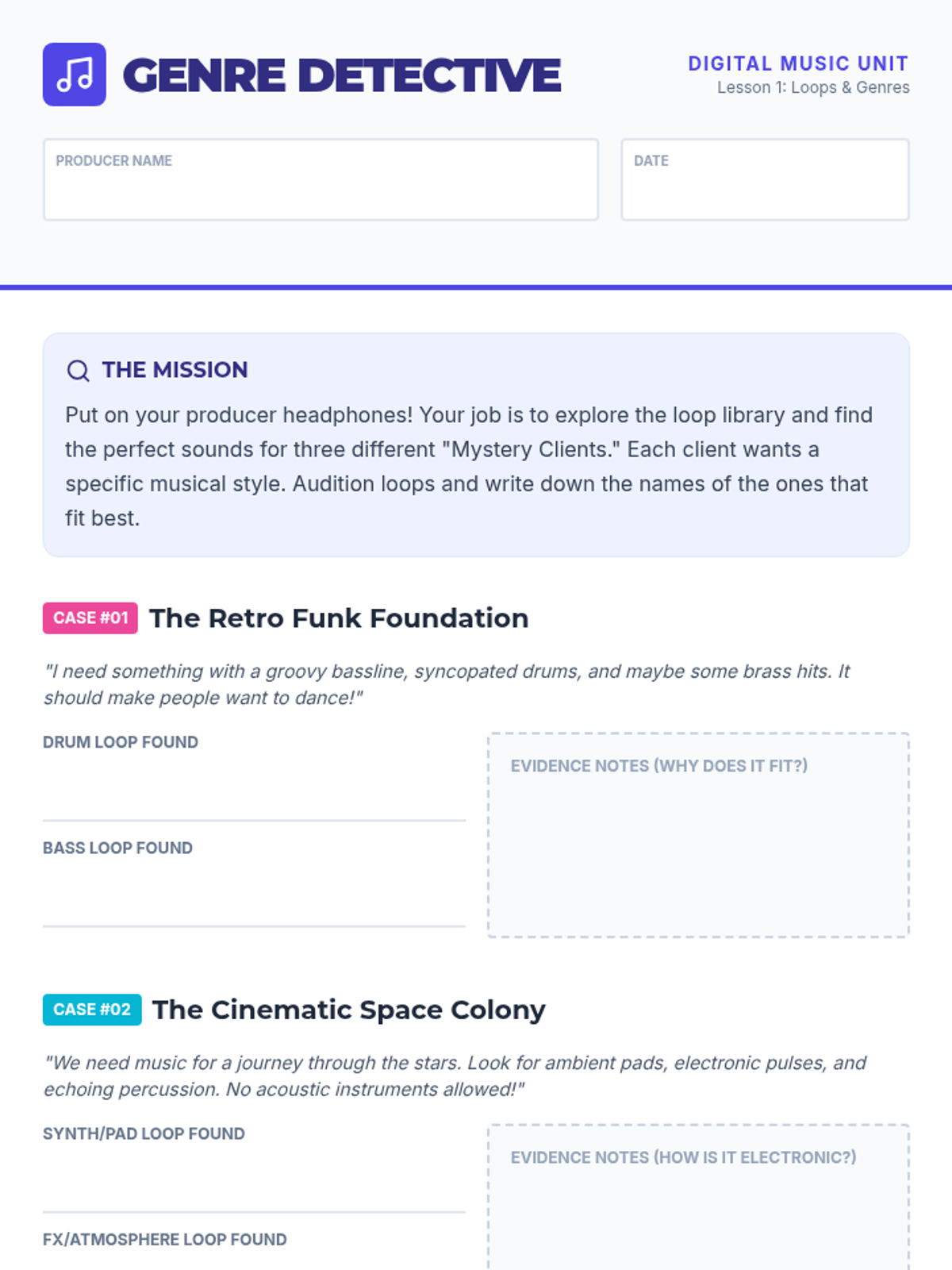
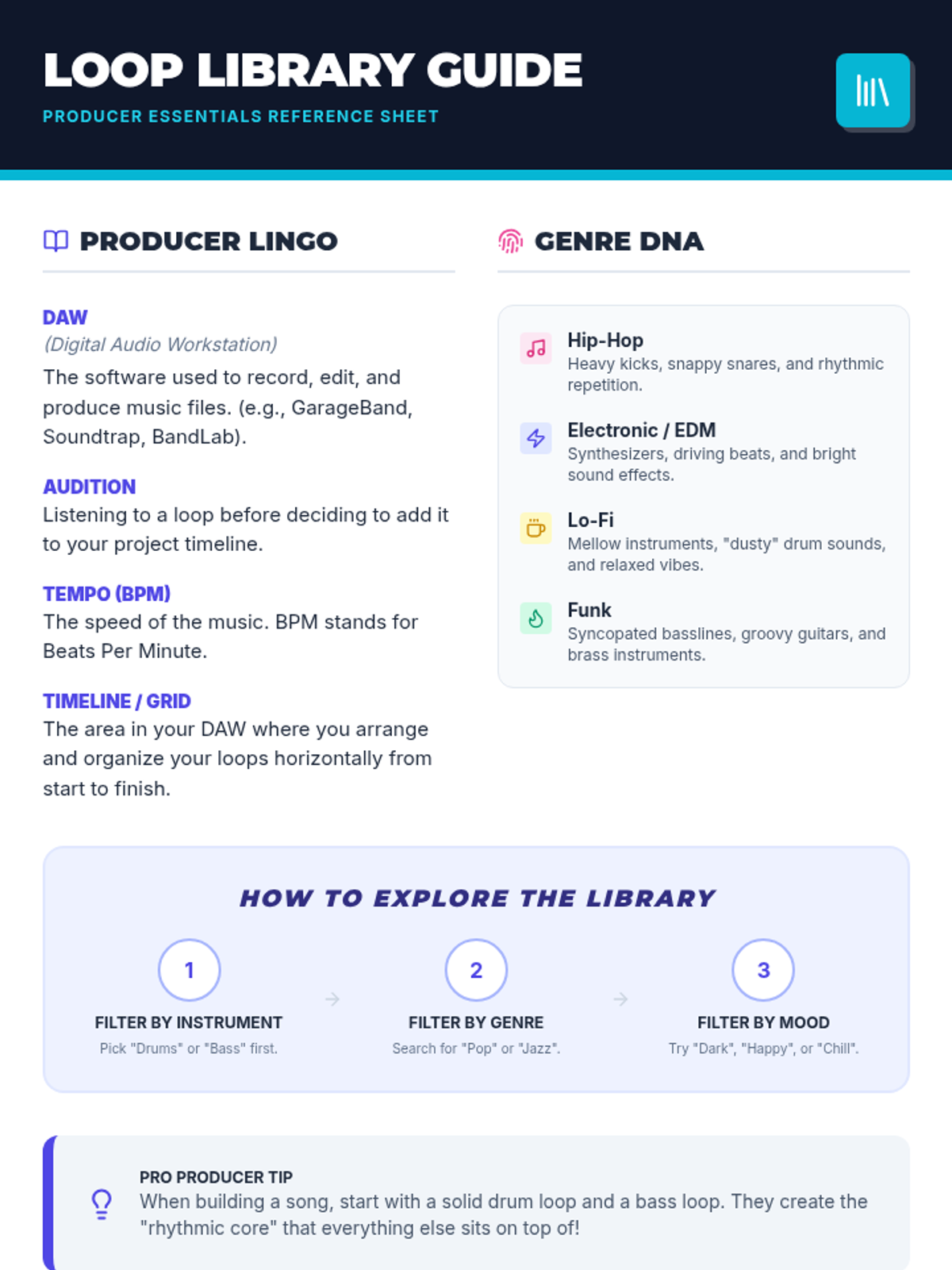
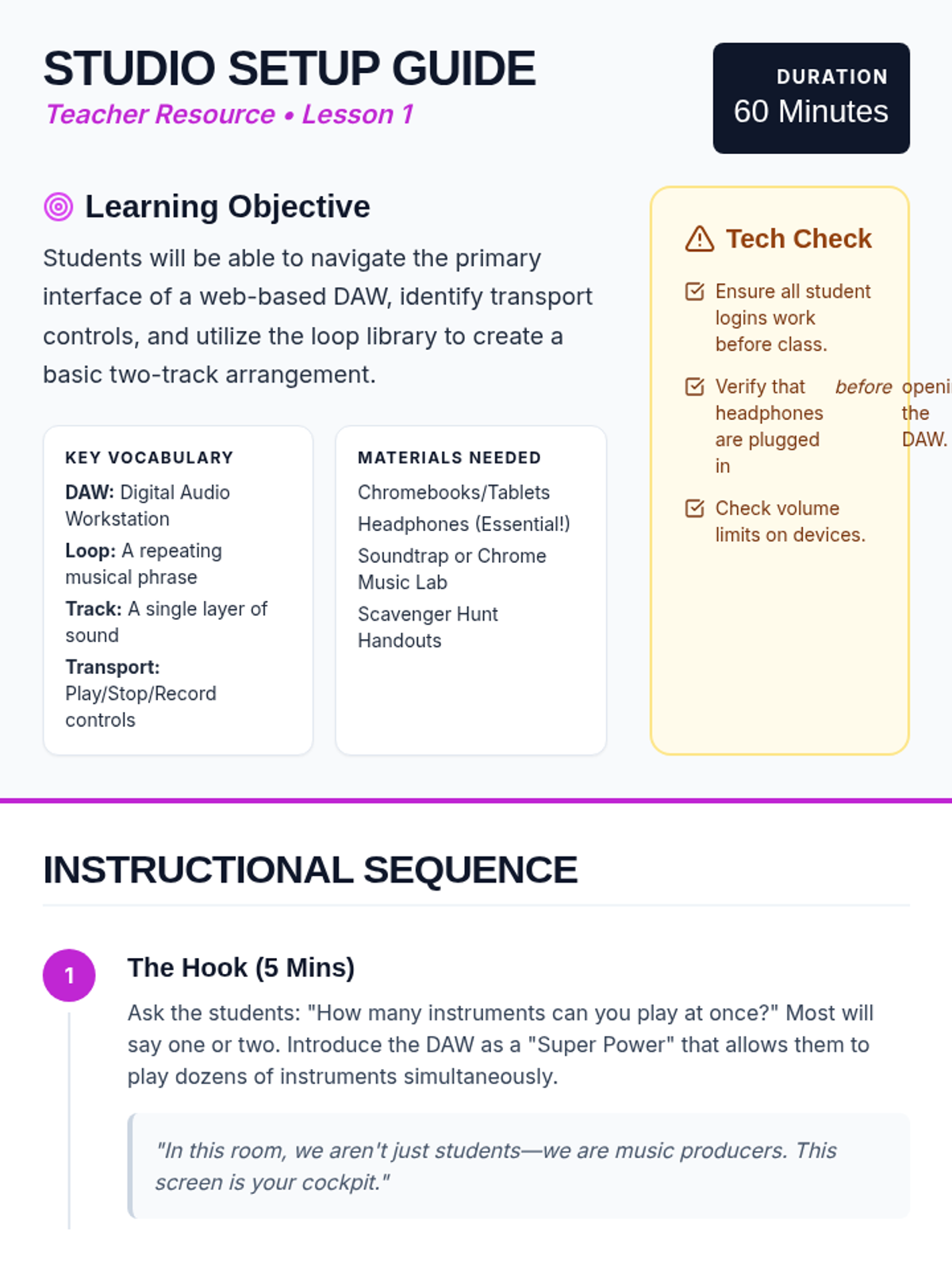
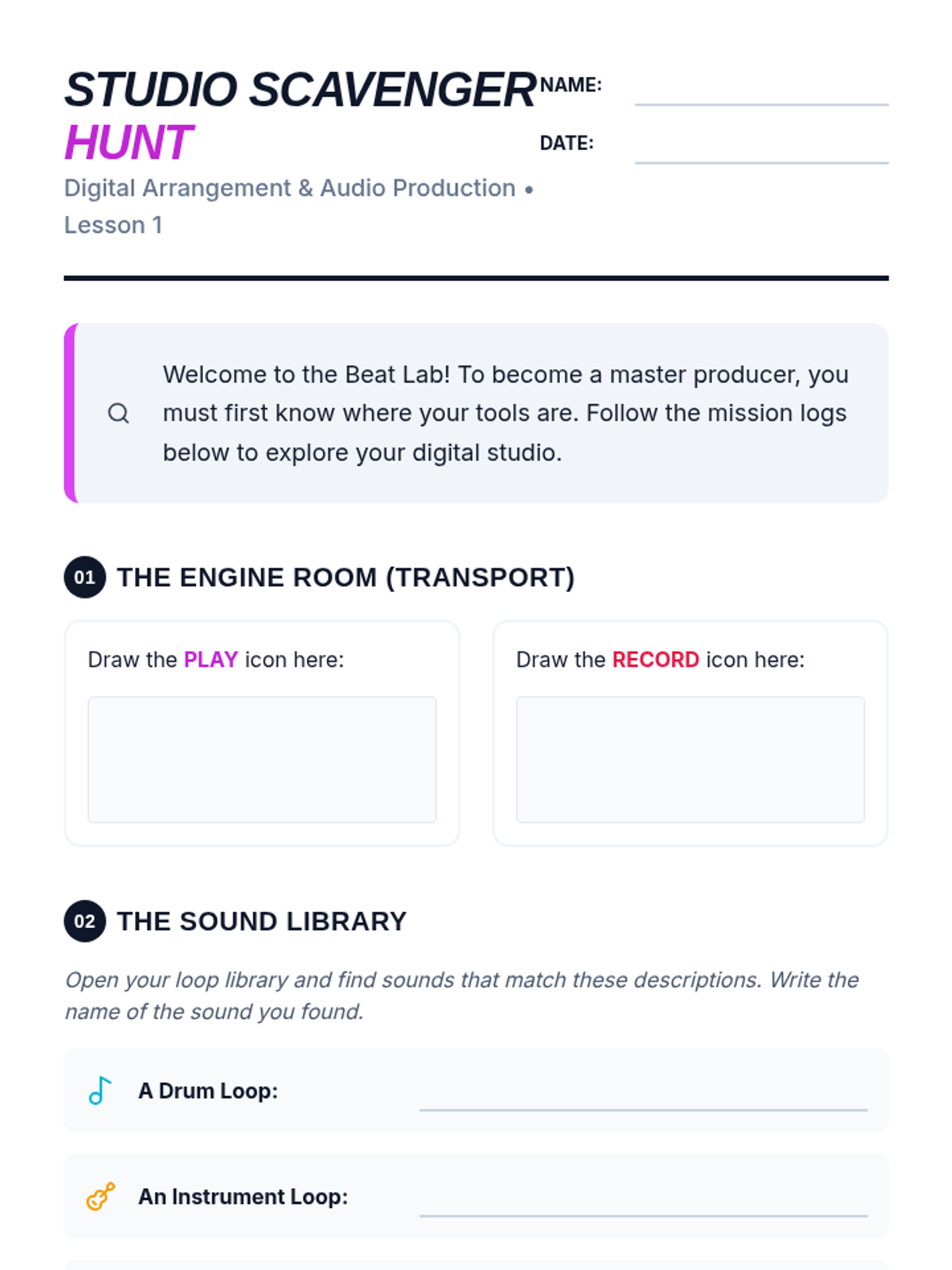
A 5th-grade music composition sequence focusing on digital music production, loops, arrangement, and mixing using DAWs. Students learn to navigate digital tools to create a coherent musical track in ABA form.
A 5th-grade music unit exploring rhythmic composition through the lens of ostinatos and ensembles. Students progress from basic notation to creating complex, layered polyrhythmic pieces.
A 4th-grade music production unit where students use digital audio workstations (DAWs) to compose, arrange, and mix original music. Students learn about timbre, texture, song structure, and digital literacy through the lens of a modern music producer.
This sequence introduces students to reading standard music notation on melodic instruments. Students learn to identify pitch on the treble clef staff and map it to their instrument, building from finding notes to playing stepwise melodies and managing leaps.
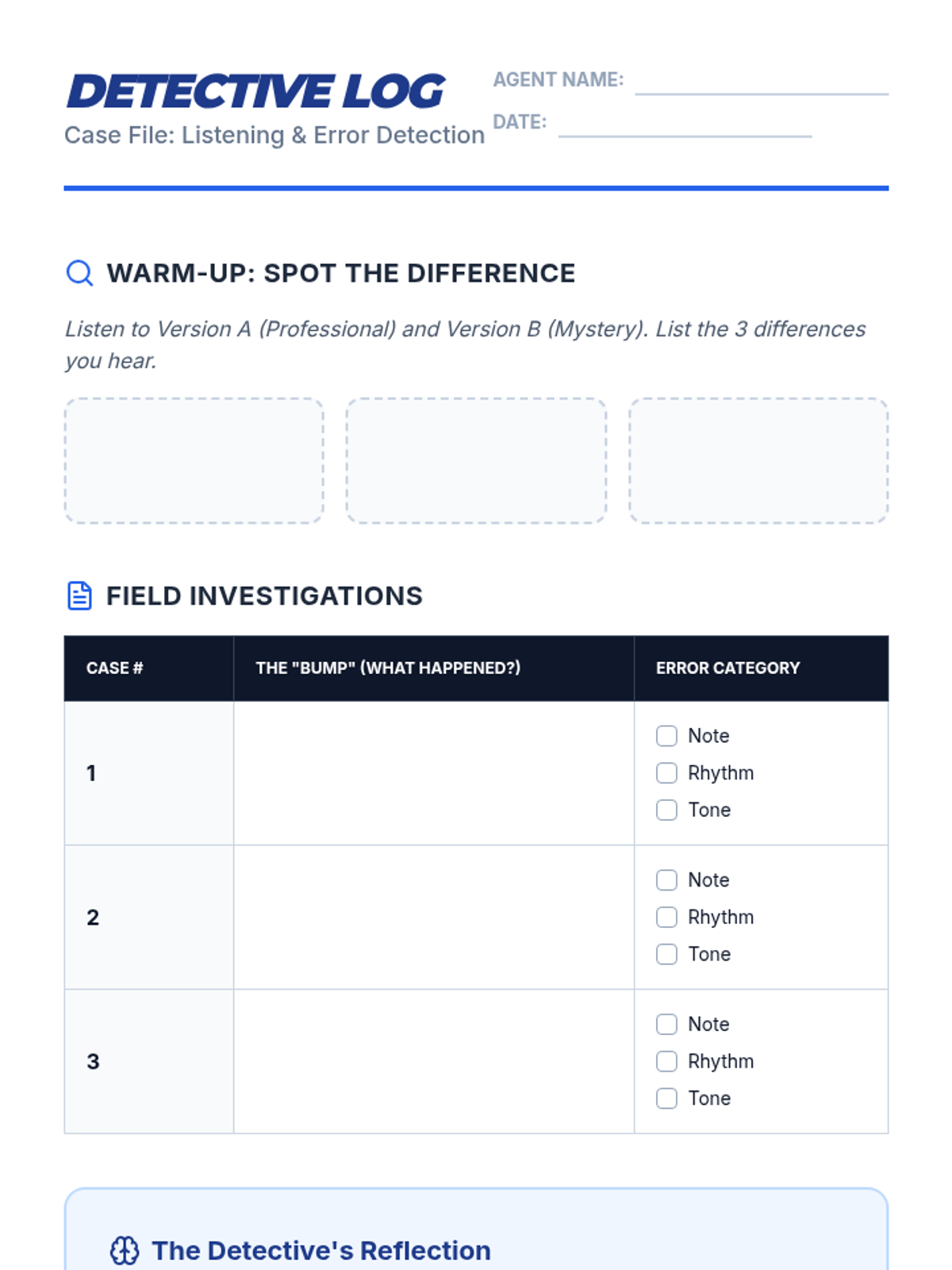
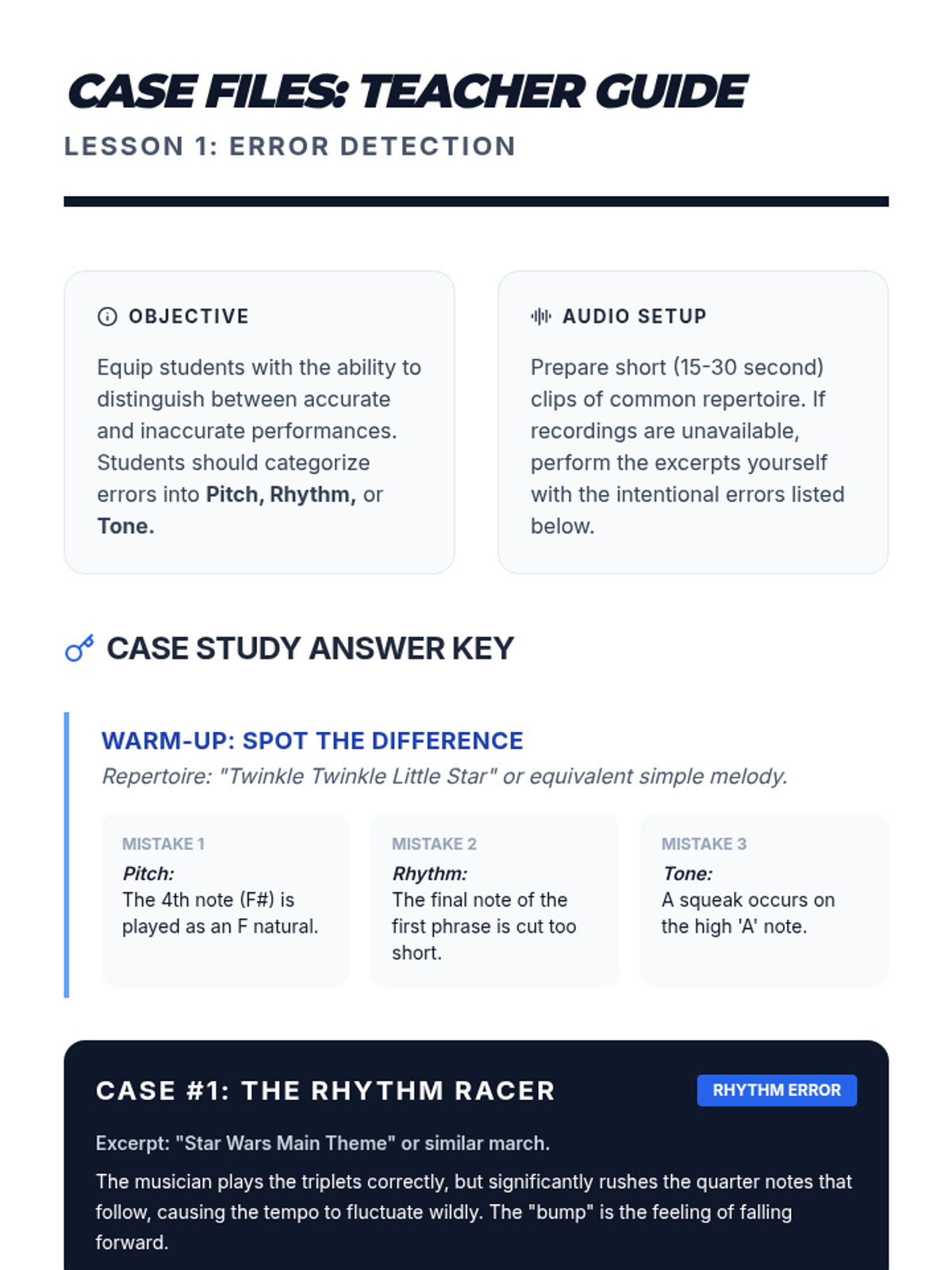
This sequence empowers 5th-grade musicians to become independent learners by mastering critical listening, error detection, and strategic practice techniques. Students transition from identifying performance mistakes in others to self-diagnosing and creating personalized practice blueprints for technical growth.
A comprehensive sequence for 5th-grade instrumental music students to master reading and playing music notation. Students progress from staff geography to rhythmic math, eventually sight-reading and transcribing melodies, treating notation as a code for performance.
A comprehensive 5th-grade music sequence focusing on ensemble skills, conductor interpretation, dynamics, and balanced listening, culminating in a mock concert performance.
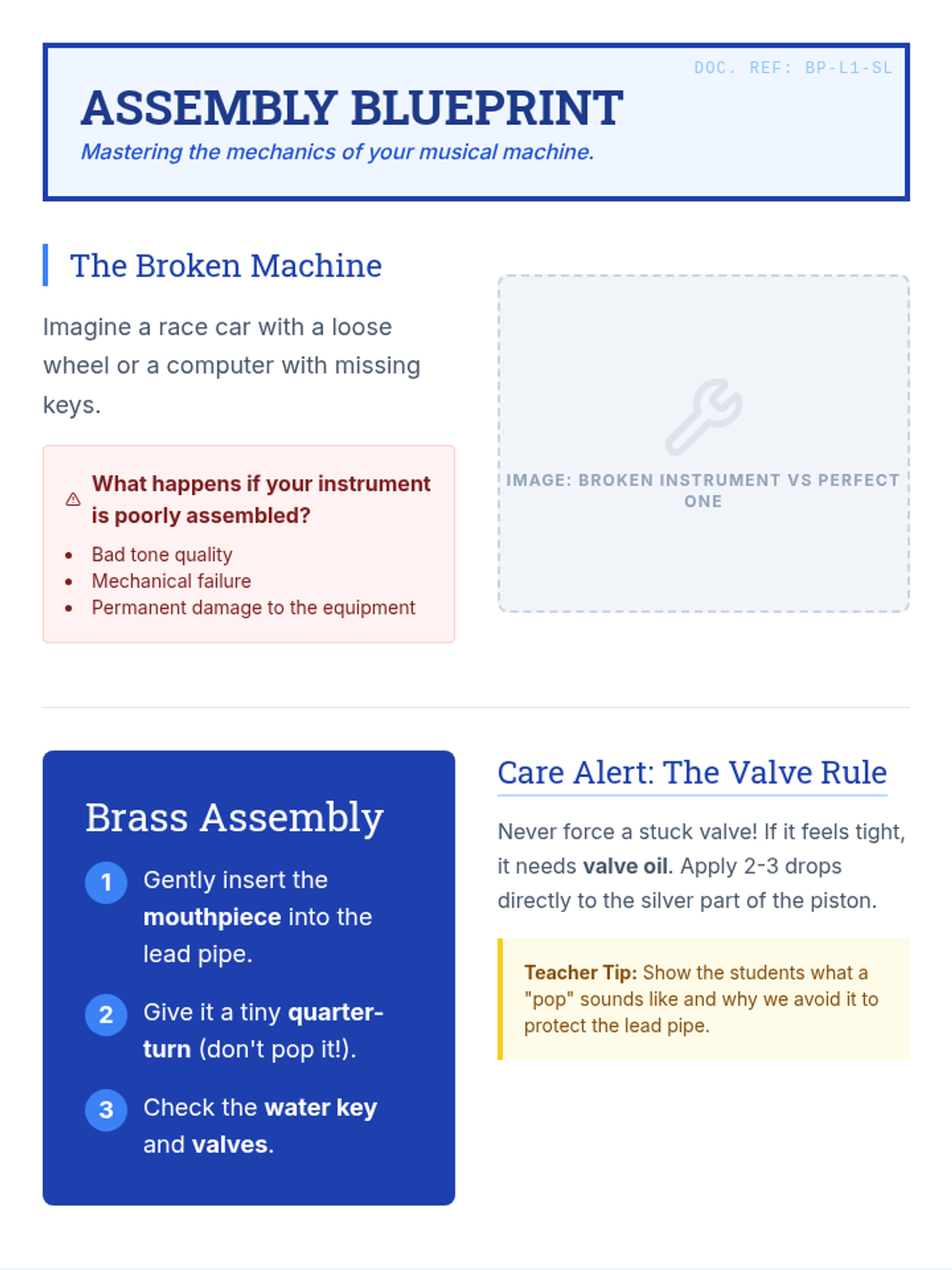
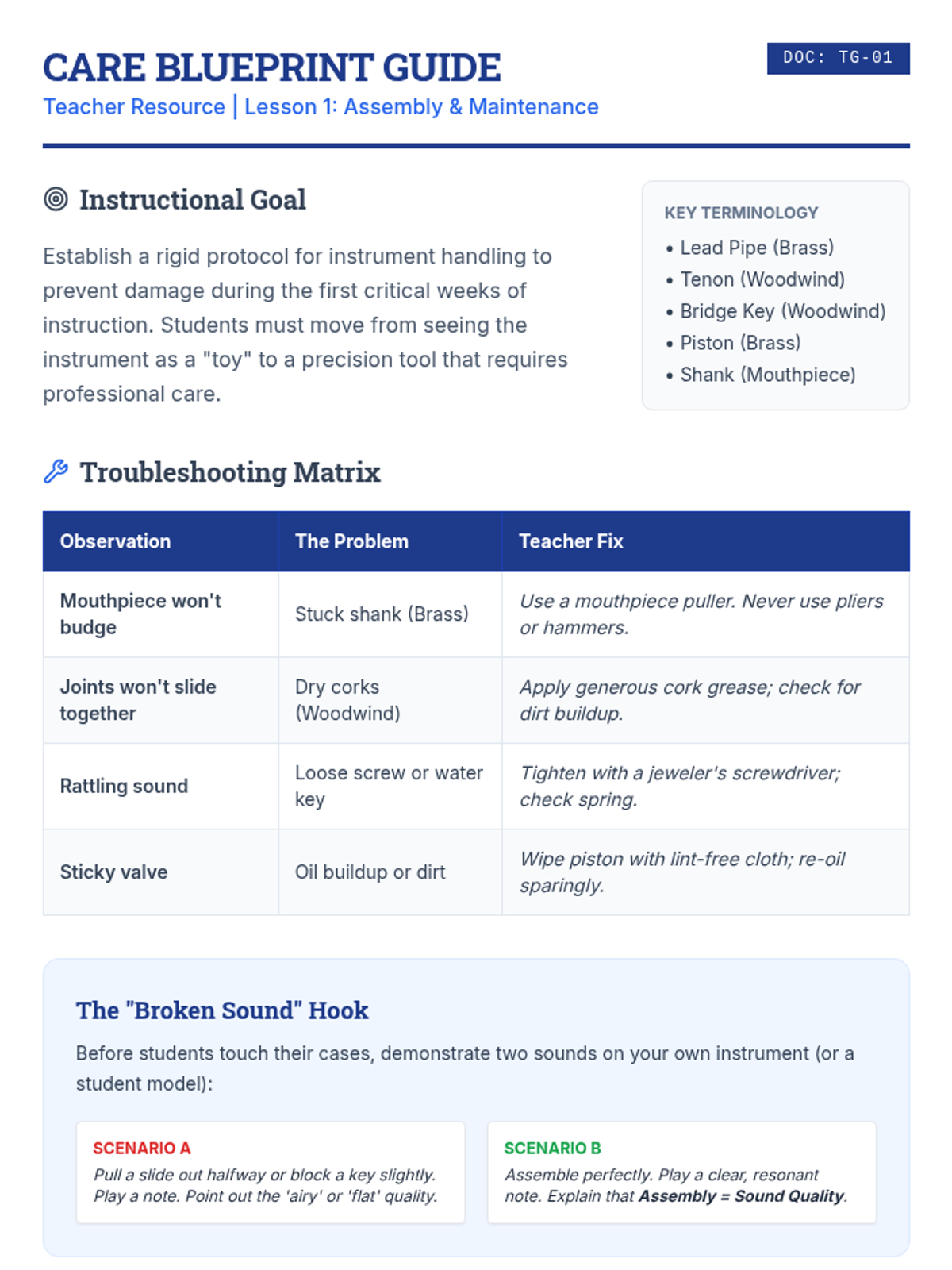
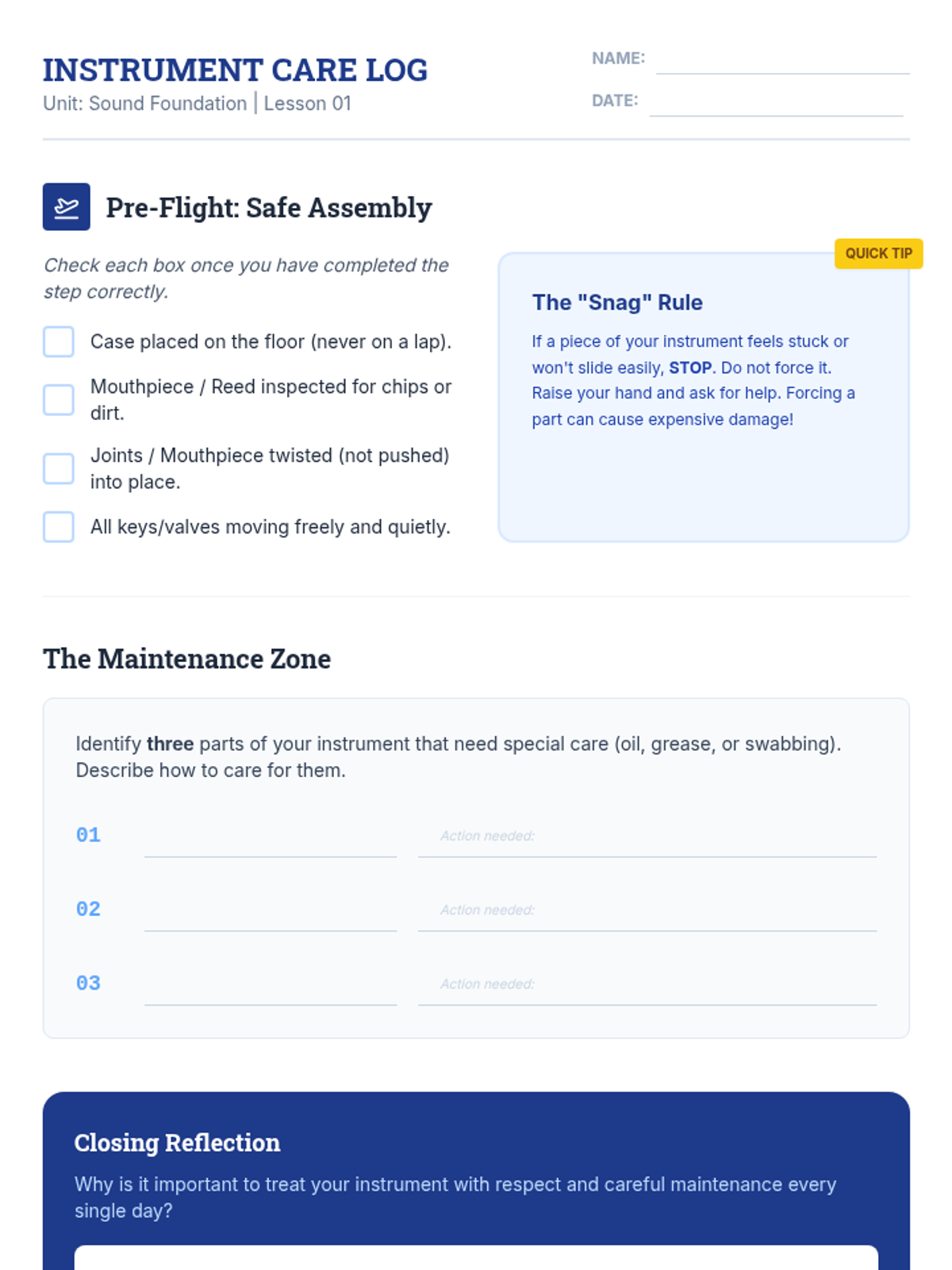
This foundational workshop for beginning instrumentalists focuses on the physical mechanics of playing, from assembly to tone production. Students master the physical techniques required to produce a characteristic sound on their specific instrument through hands-on practice and technical drills.