Techniques for brainstorming, collaborative project management, and individual artistic expression. Guides students through the iterative creative process from initial concept to final execution.
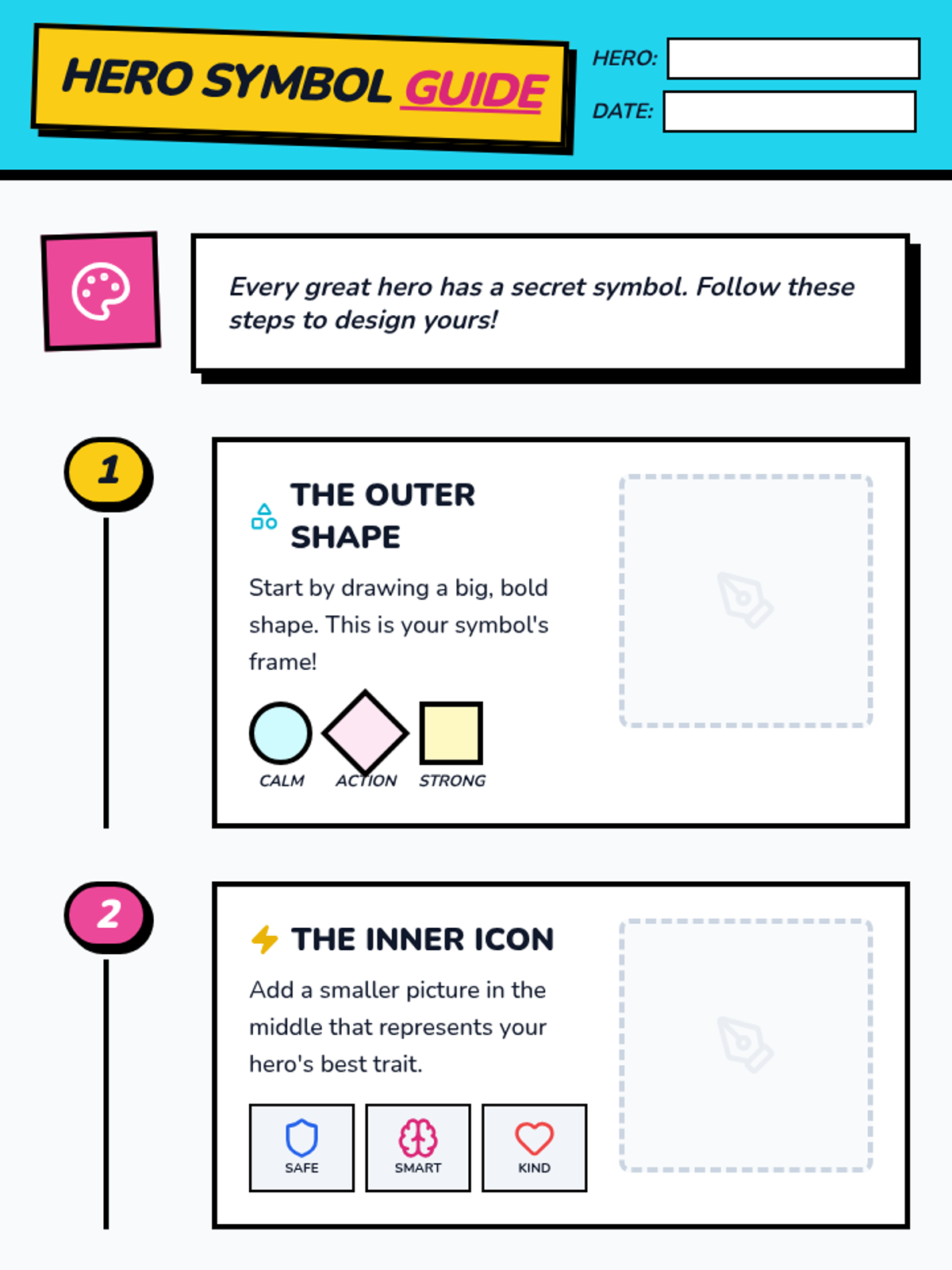
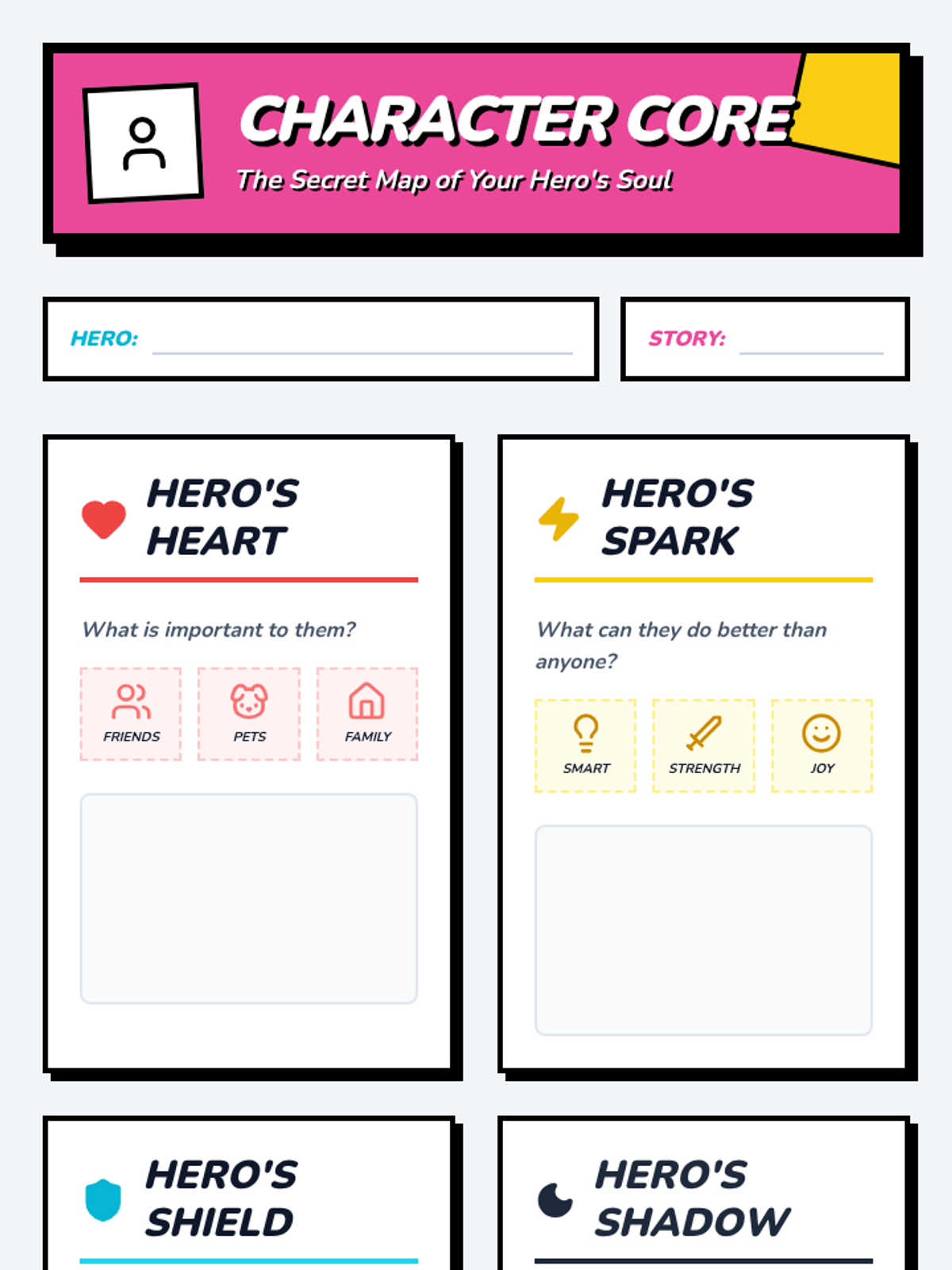
A creative exploration of graphic novel elements, focusing on visual storytelling, character depth, and symbolic representation.
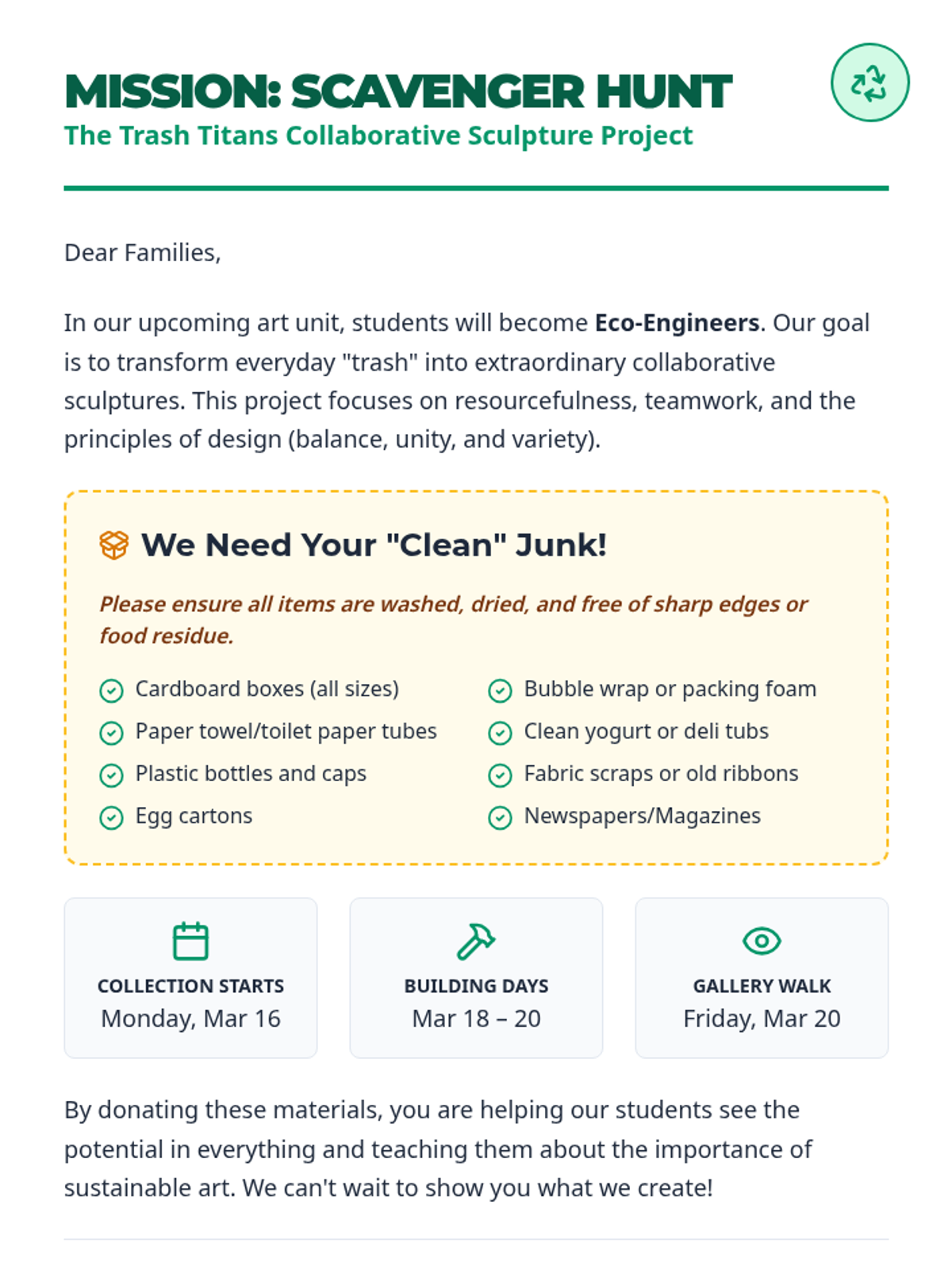
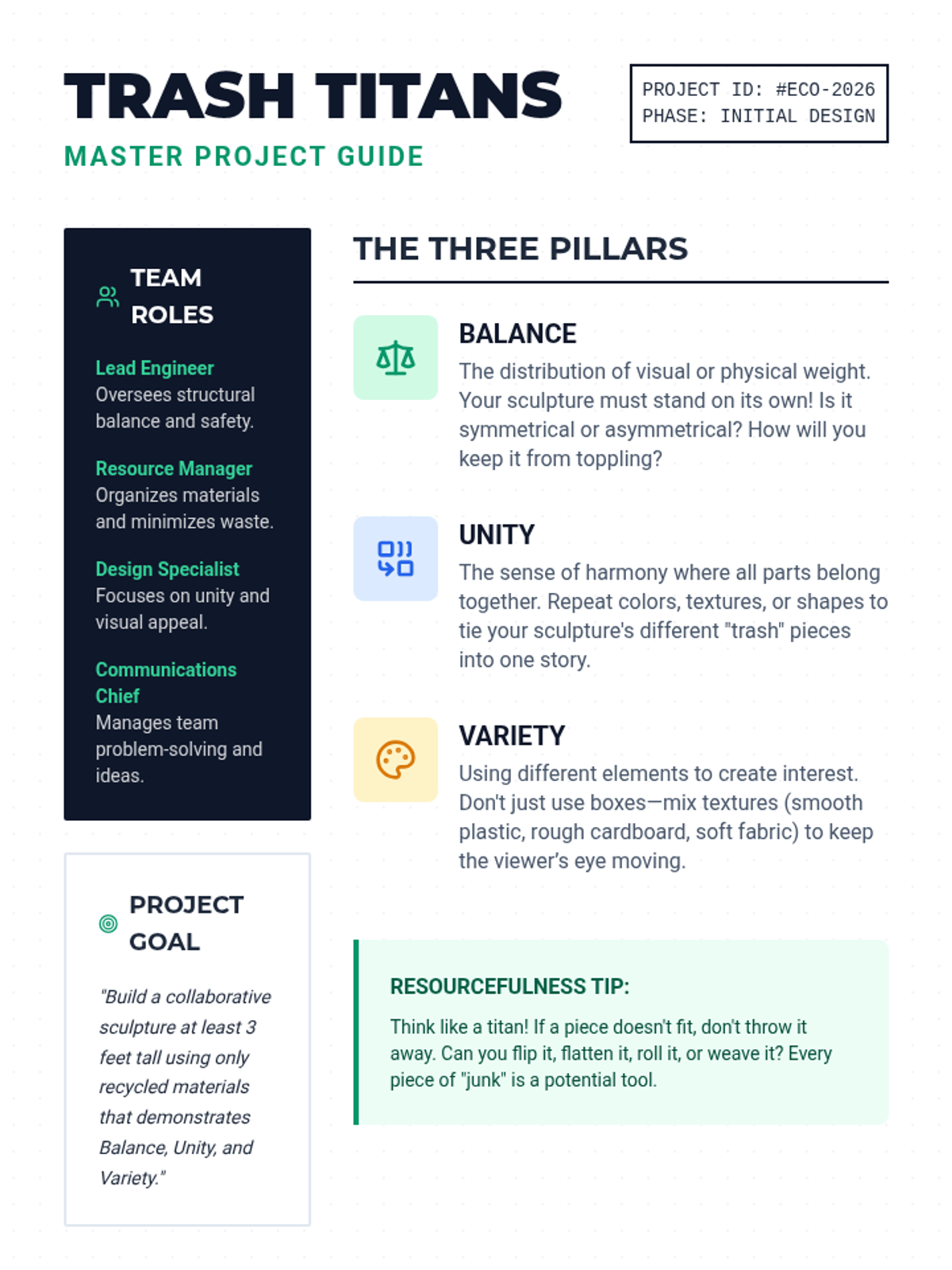
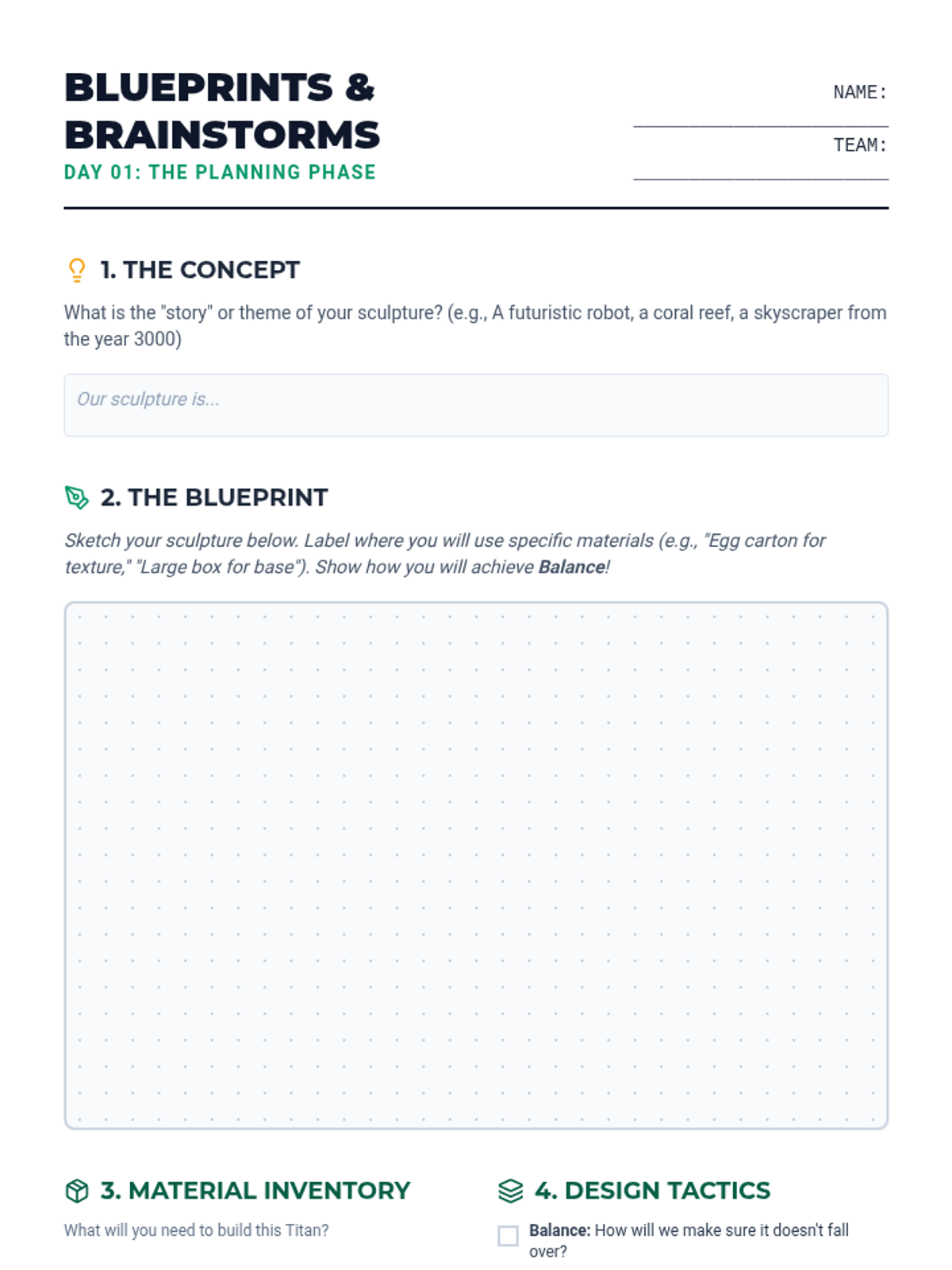
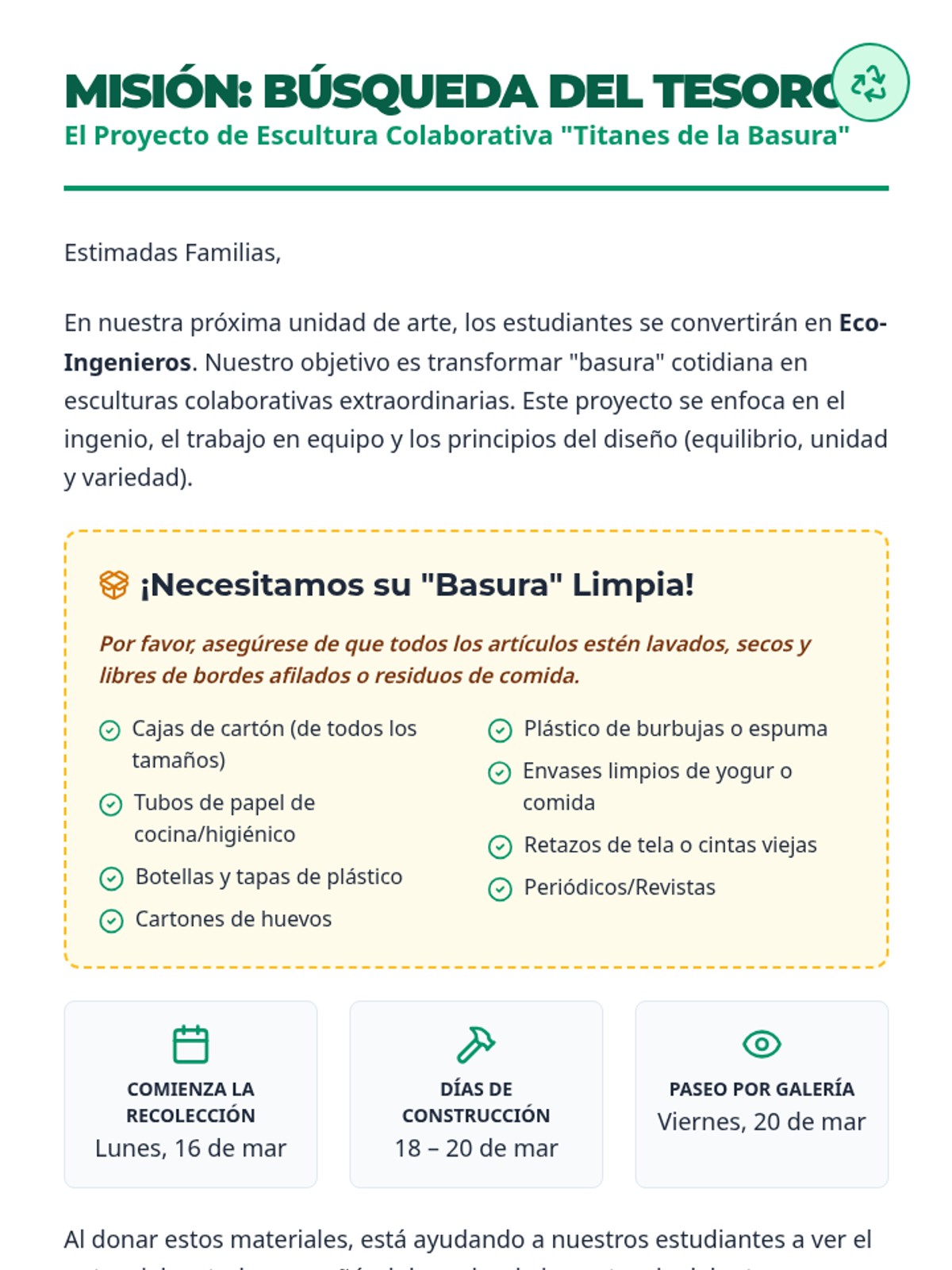
A 3-day collaborative art project where students transform recycled materials into large-scale sculptures while applying principles of design and creative problem-solving.
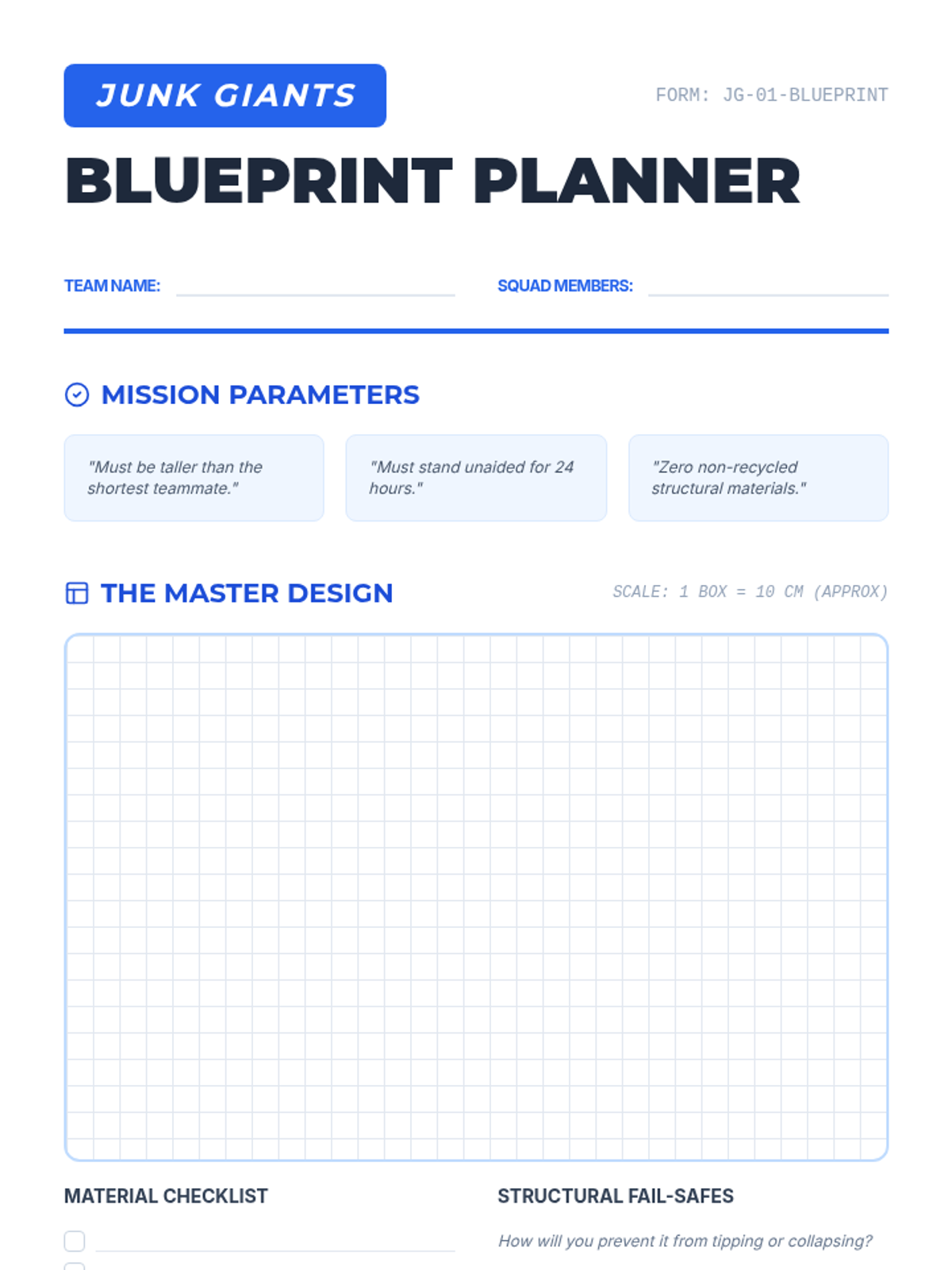
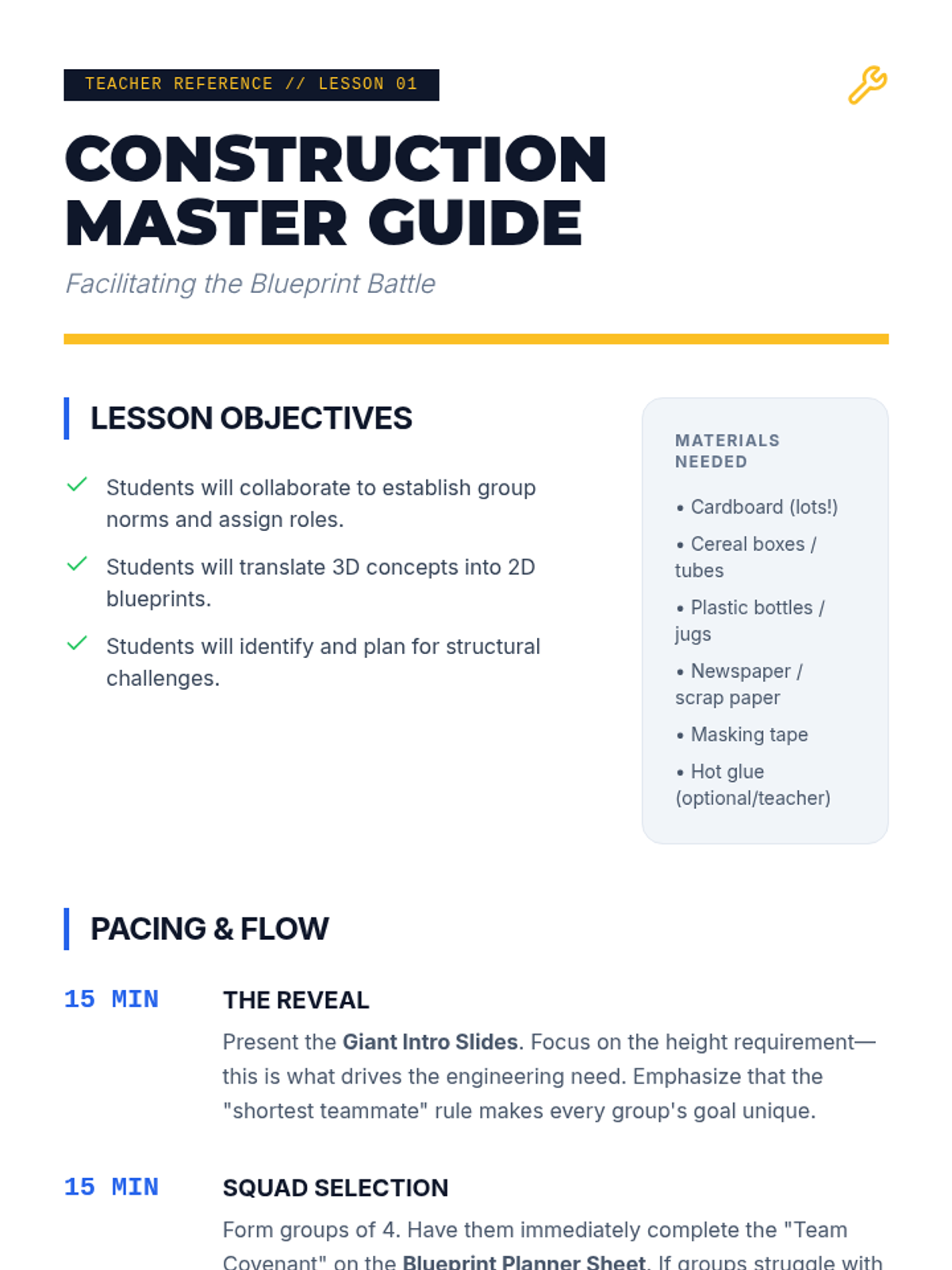
A 3-day collaborative sculpture project where students transform recycled materials into massive structures while overcoming engineering challenges.
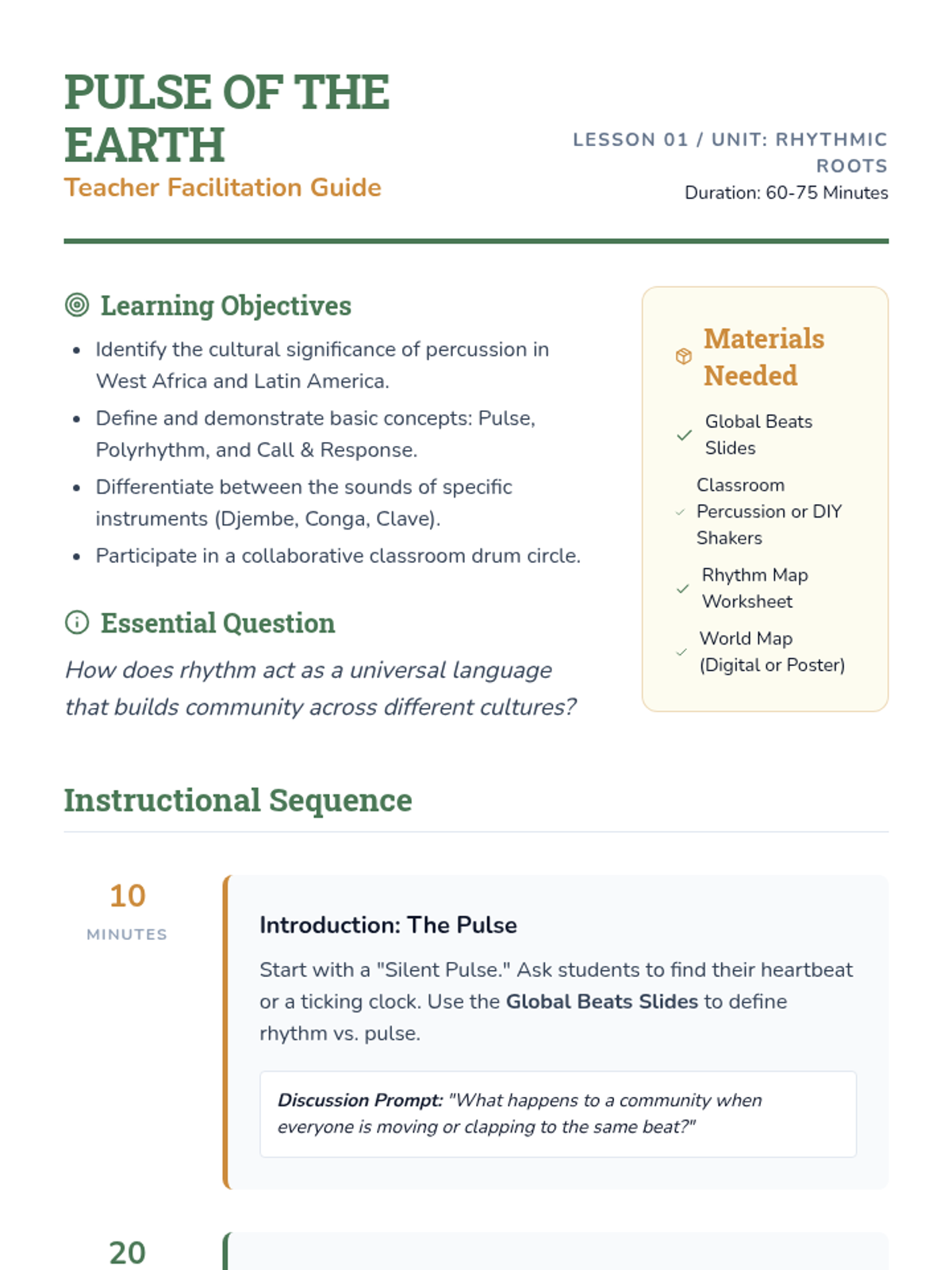
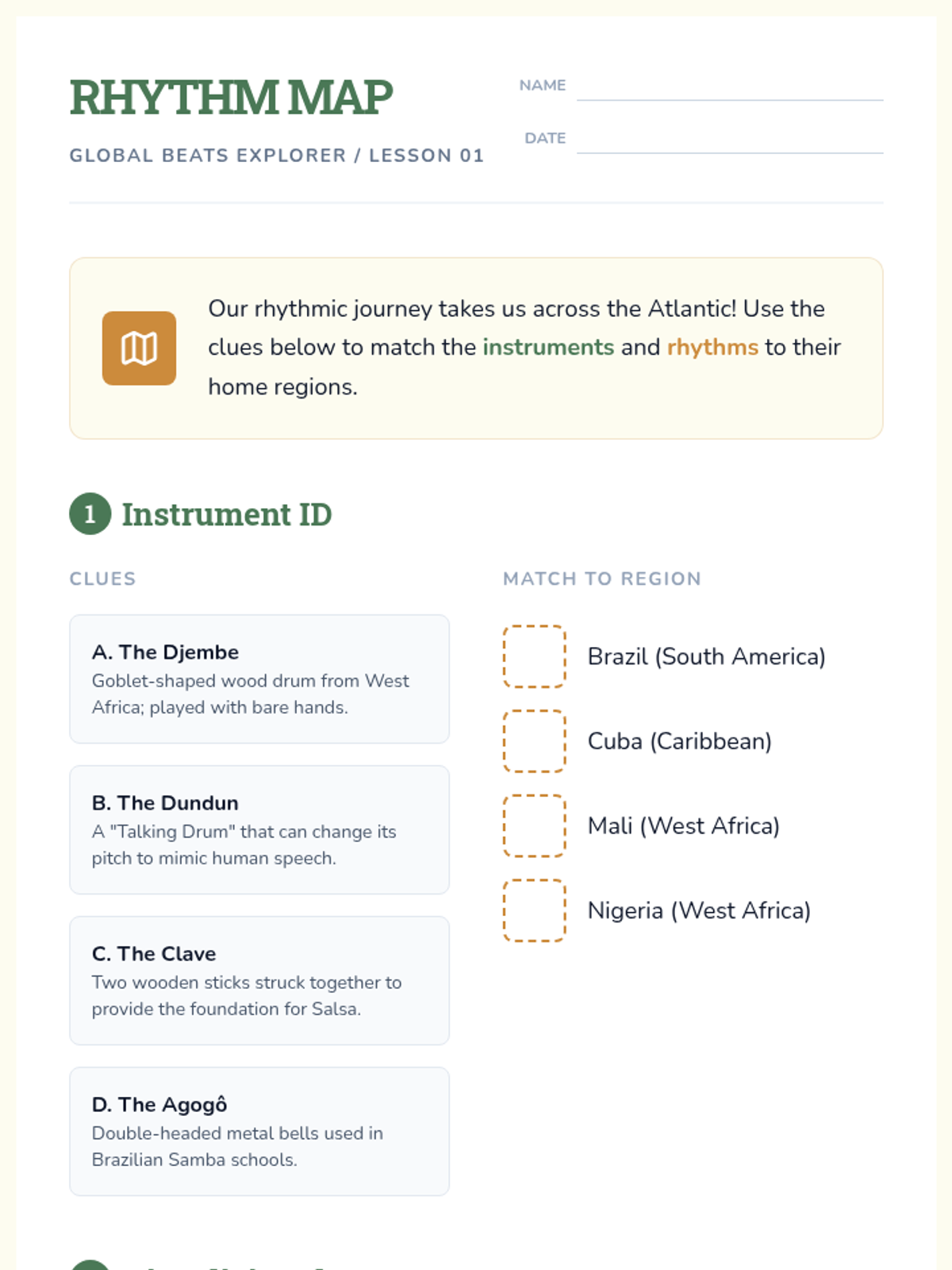
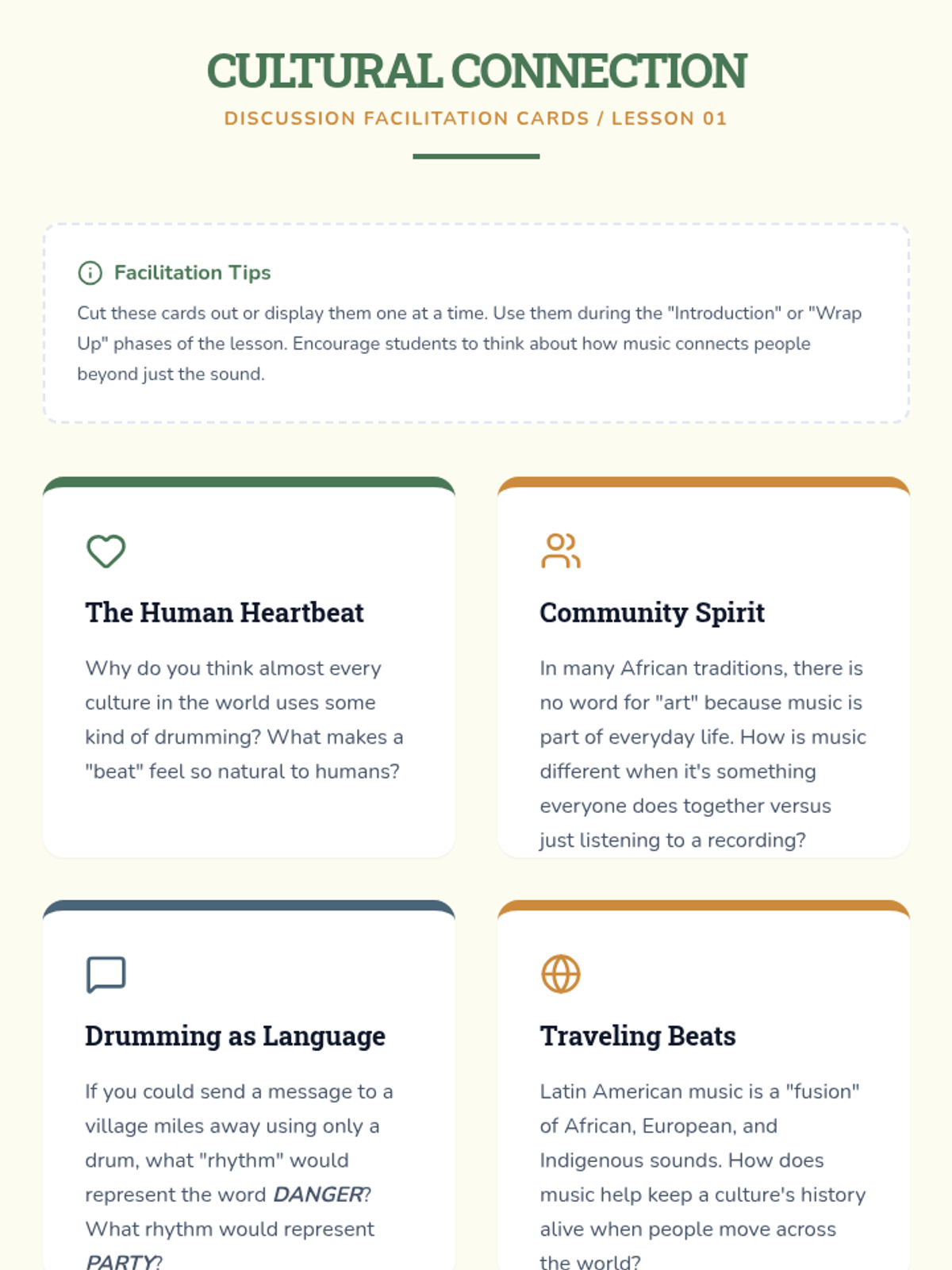
A comprehensive exploration of world music and dance, focusing on cultural heritage, musical elements, and creative expression through drumming, melody, and global fusion.
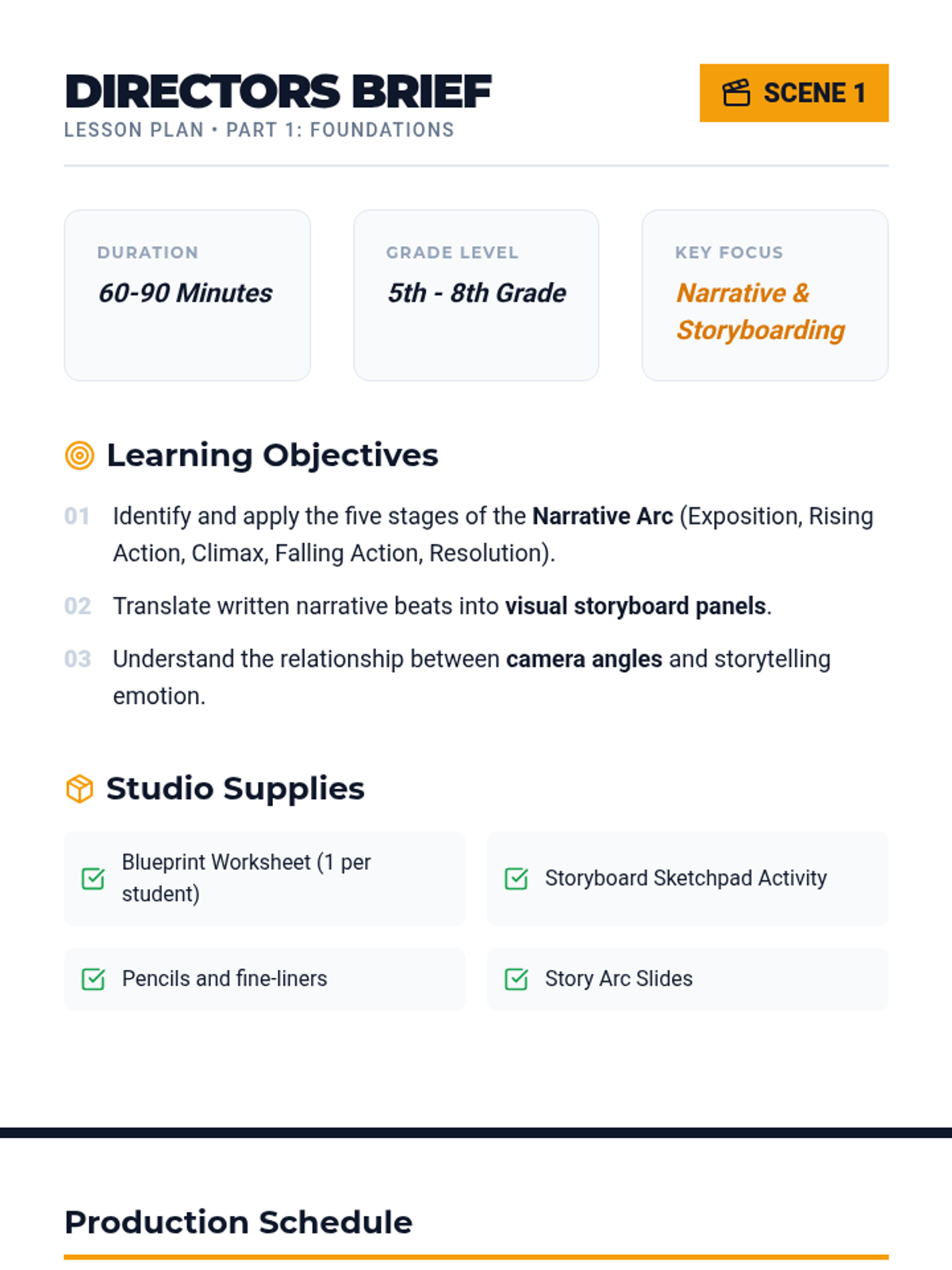
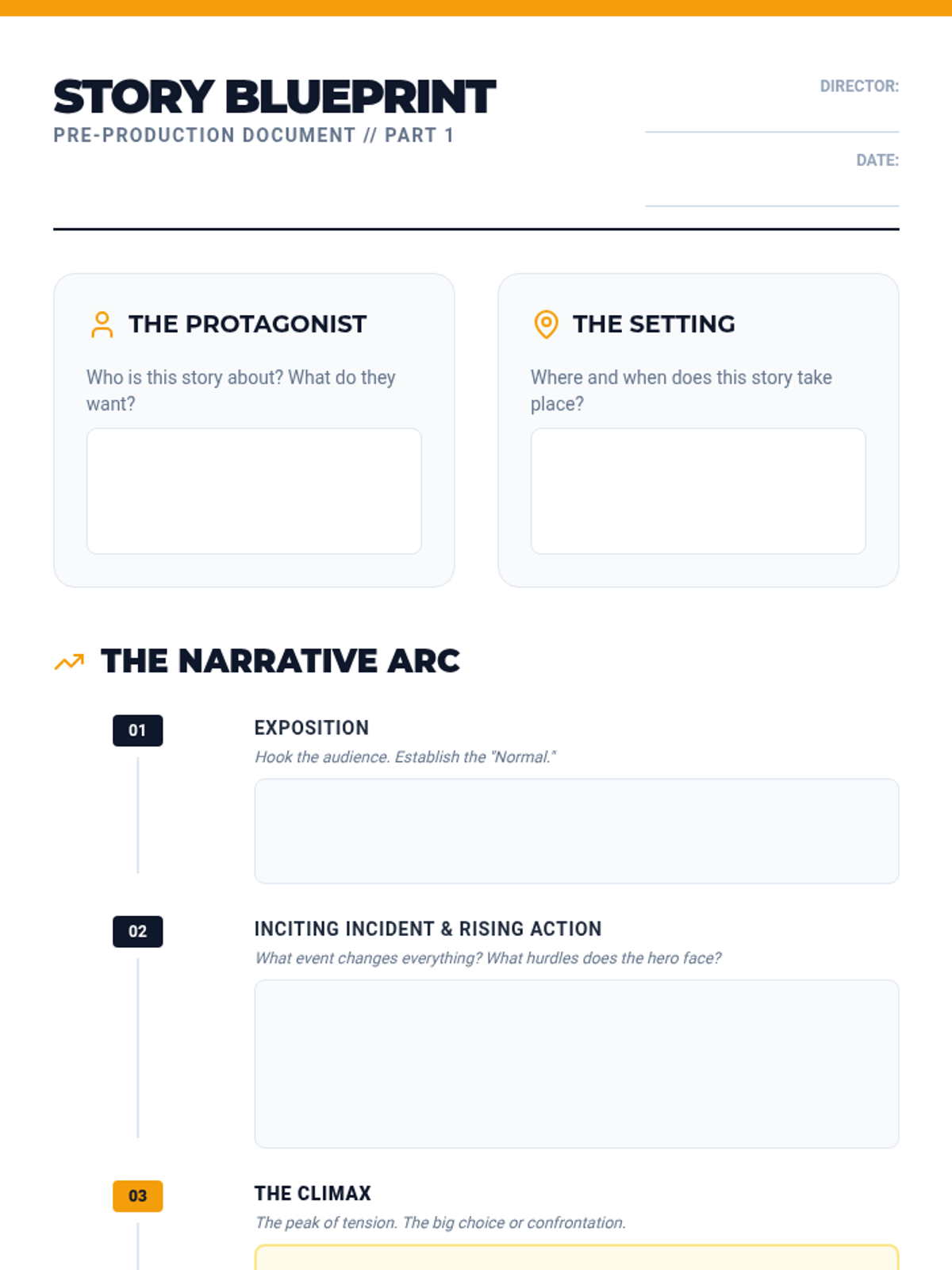
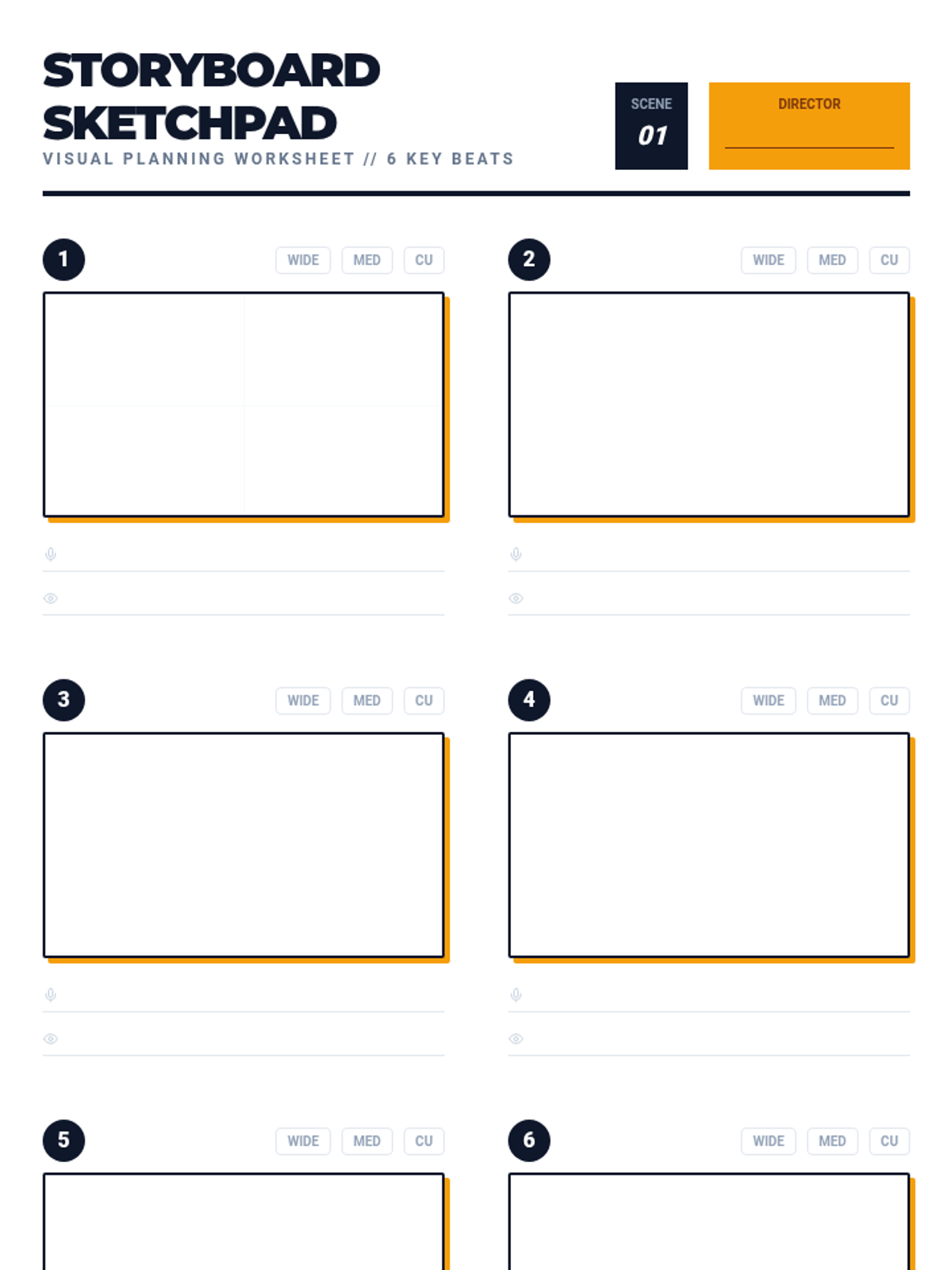
A comprehensive workshop where students in grades 5-8 master the art of digital storytelling by blending narrative structure, audio production, and visual composition into a final multimedia project.
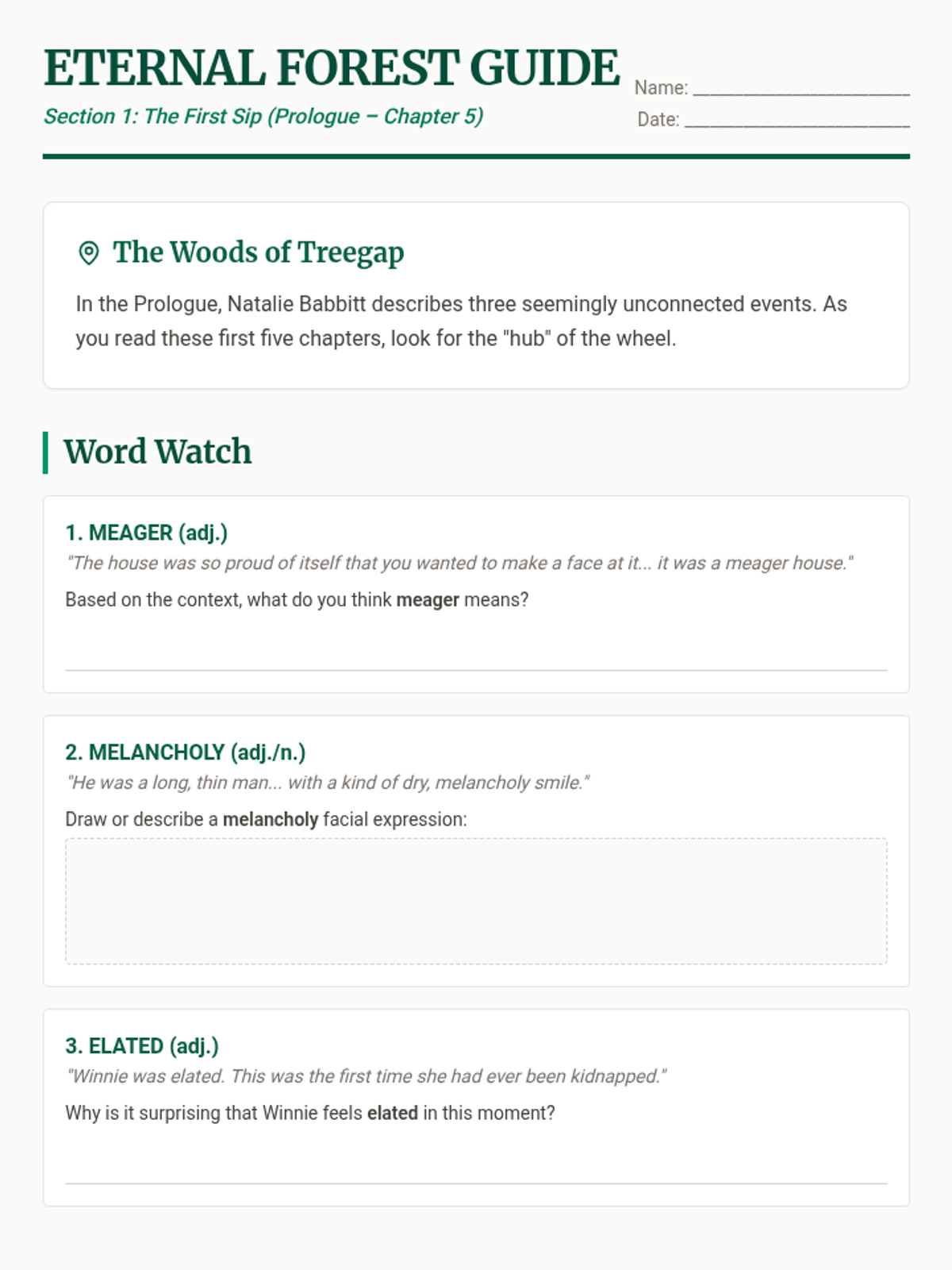
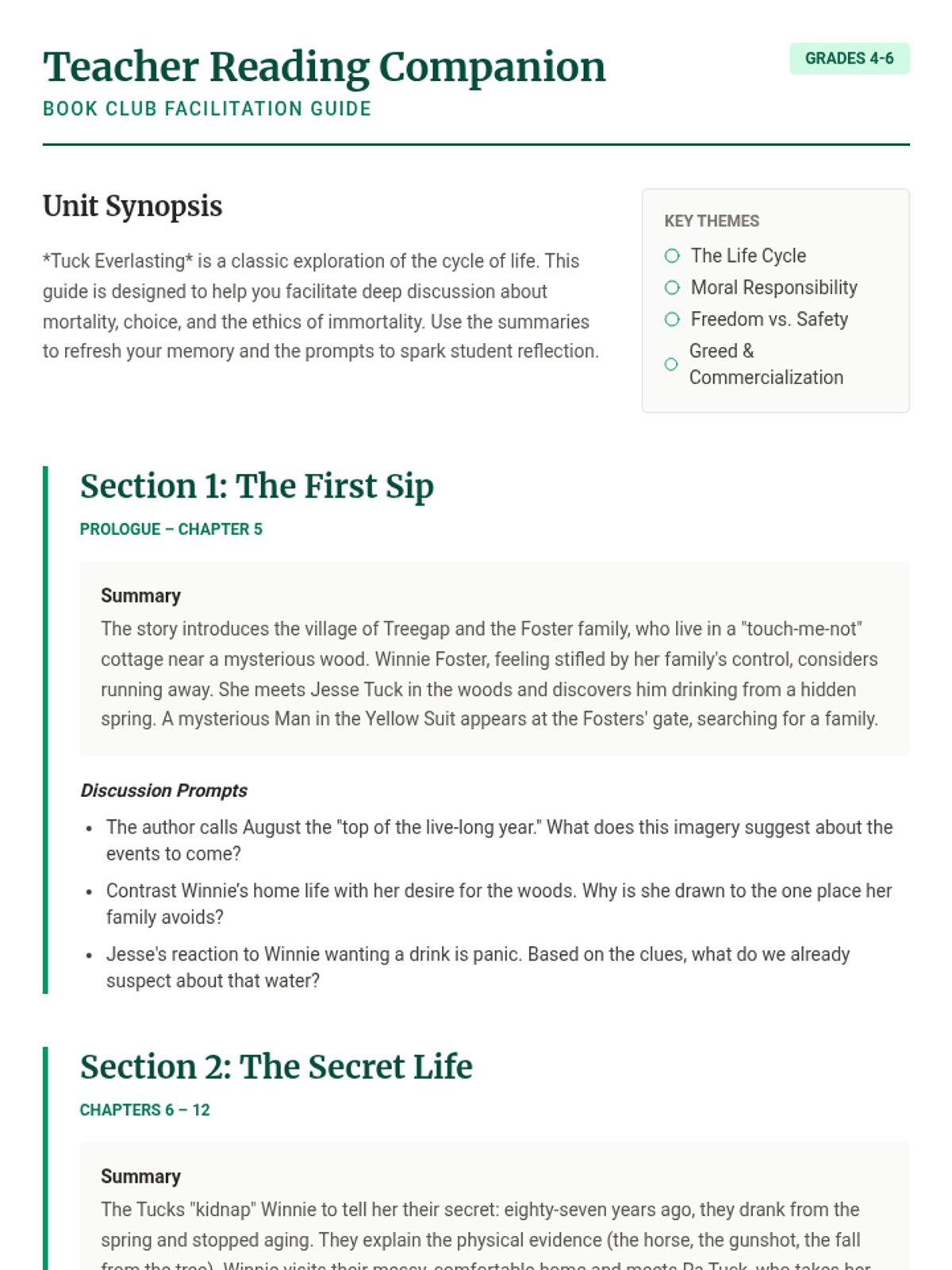
A comprehensive book club unit for Natalie Babbitt's *Tuck Everlasting*, exploring themes of immortality, nature's cycles, and moral choices through guided discussion, vocabulary expansion, and project-based learning.
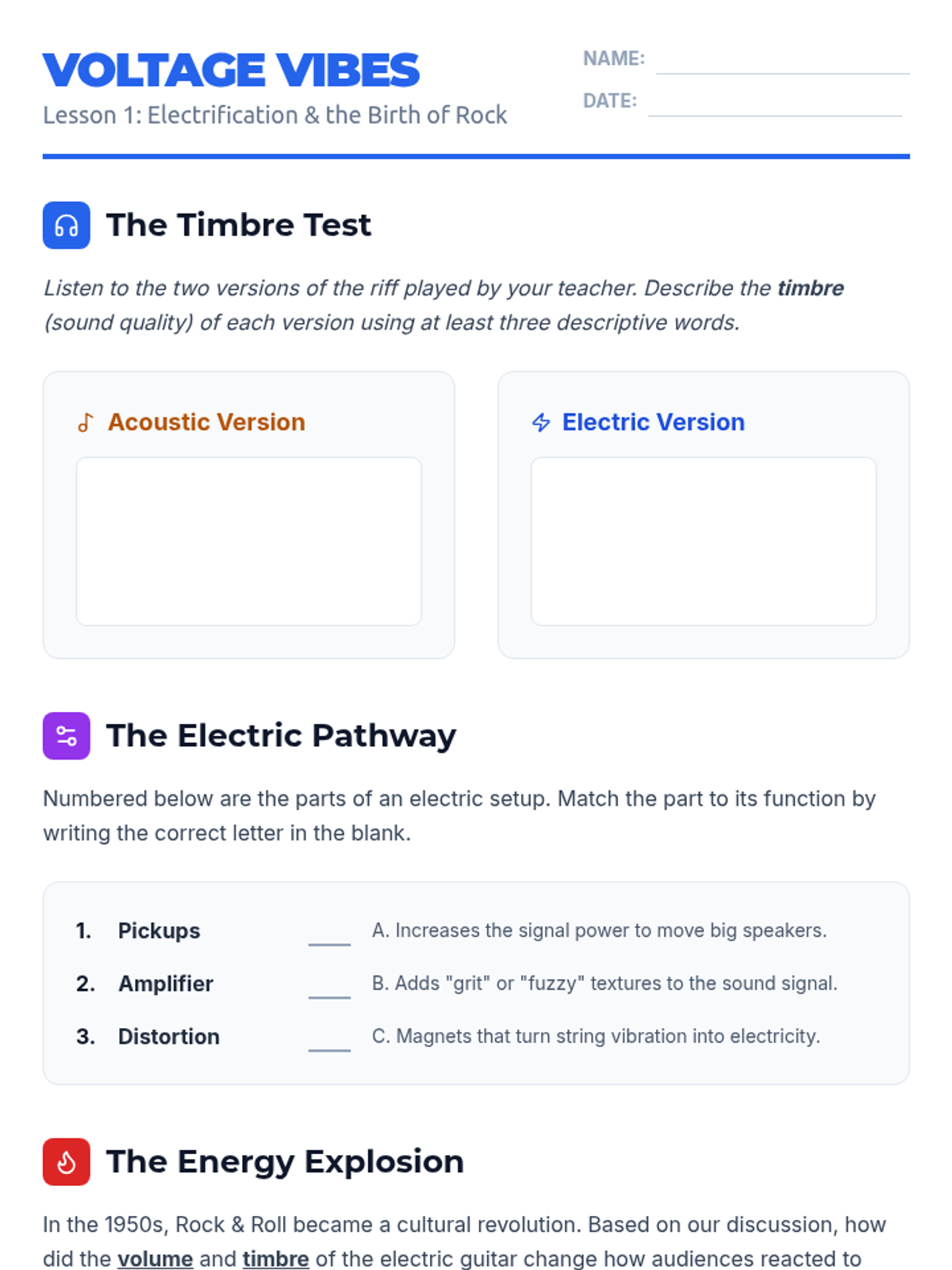
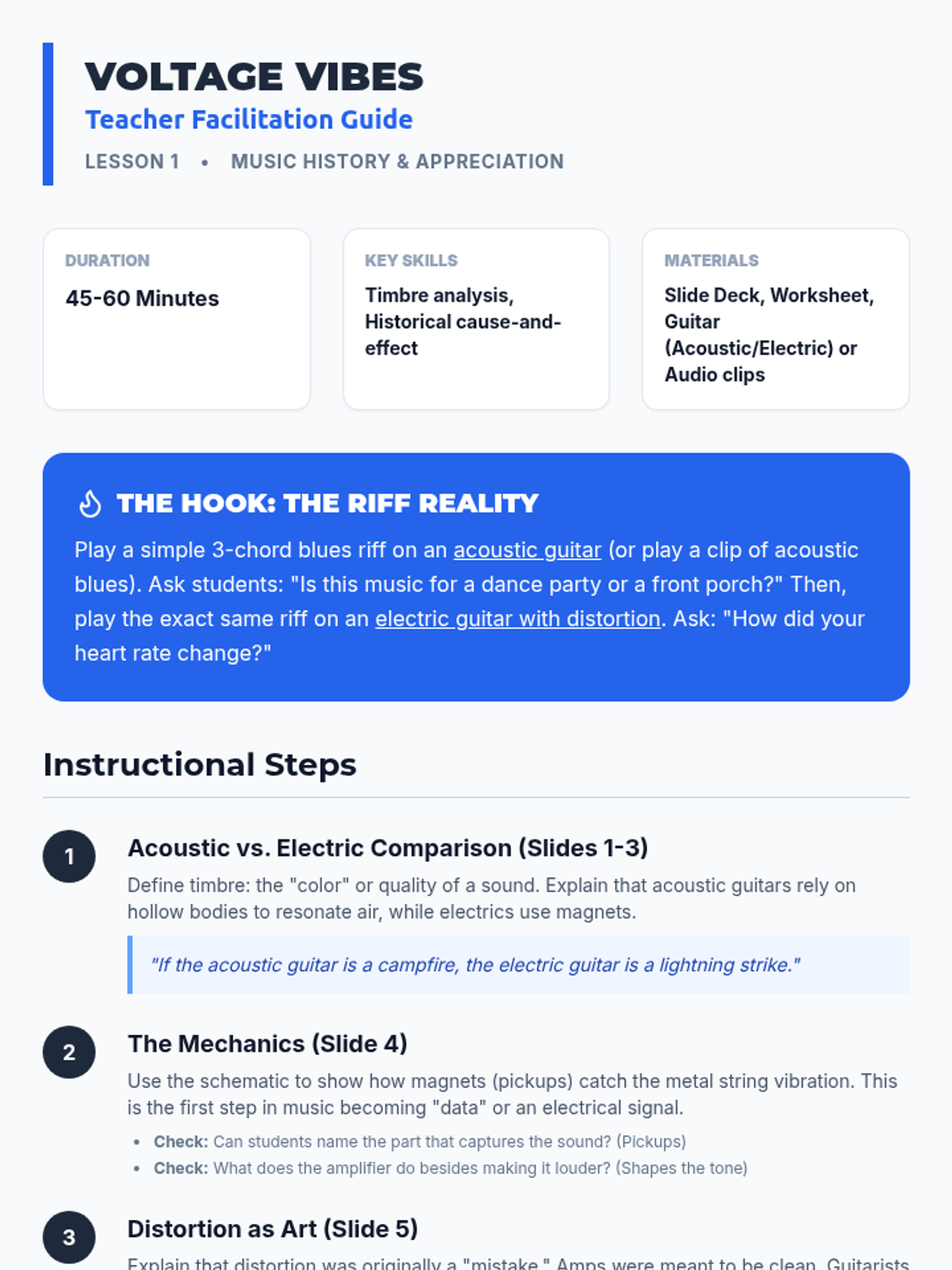
This sequence investigates how the technological explosion of the 20th and 21st centuries, from the electric guitar to AI, redefined music genres and creation. Students analyze production techniques, listen for layers, and explore the concept of technology as a musical instrument.
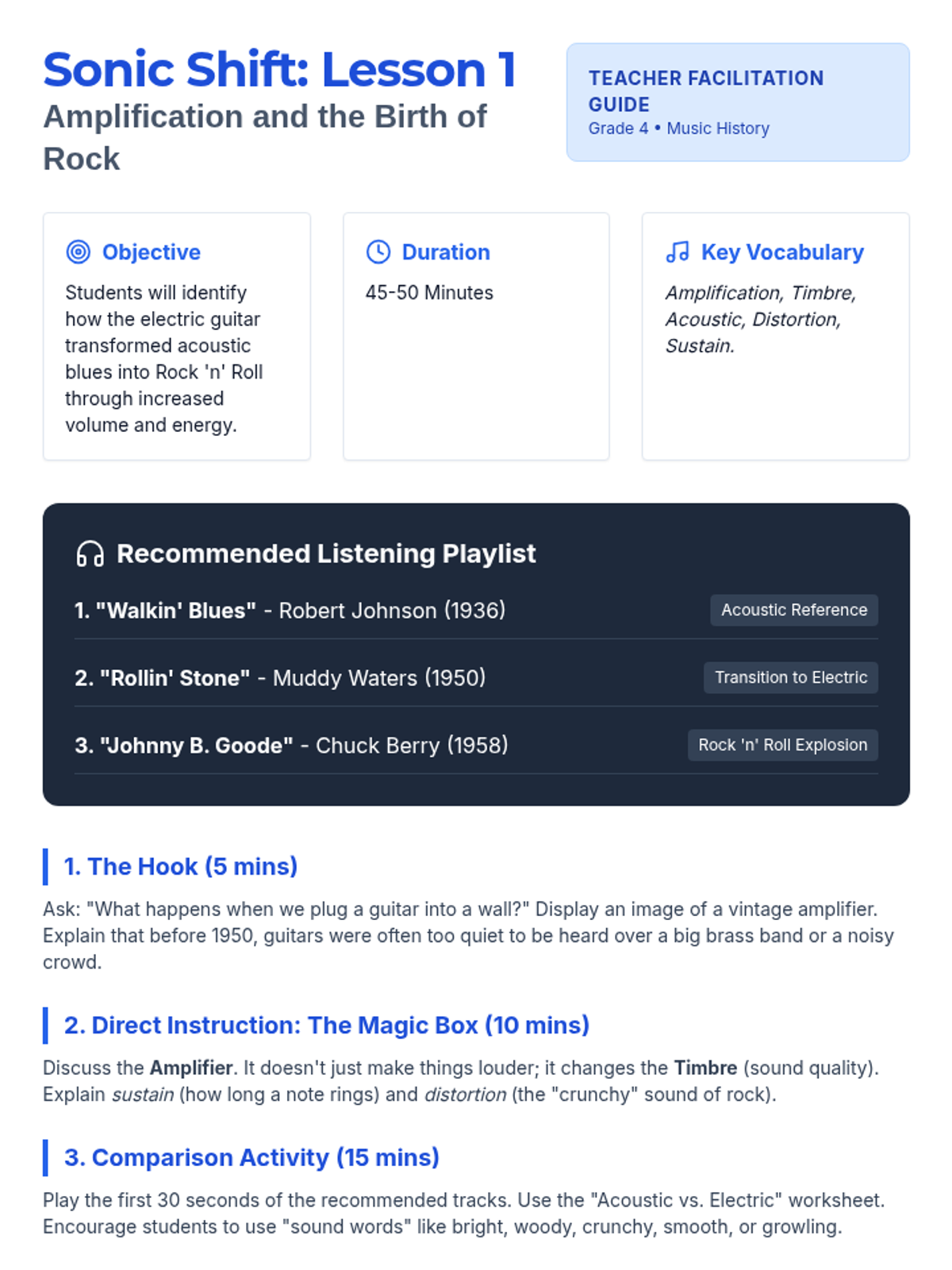
This sequence analyzes how technology in the 20th and 21st centuries revolutionized music production and consumption. Students trace the evolution from early Rock 'n' Roll amplification to electronic synthesis and digital sampling, culminating in a creative project where they design music for the future.
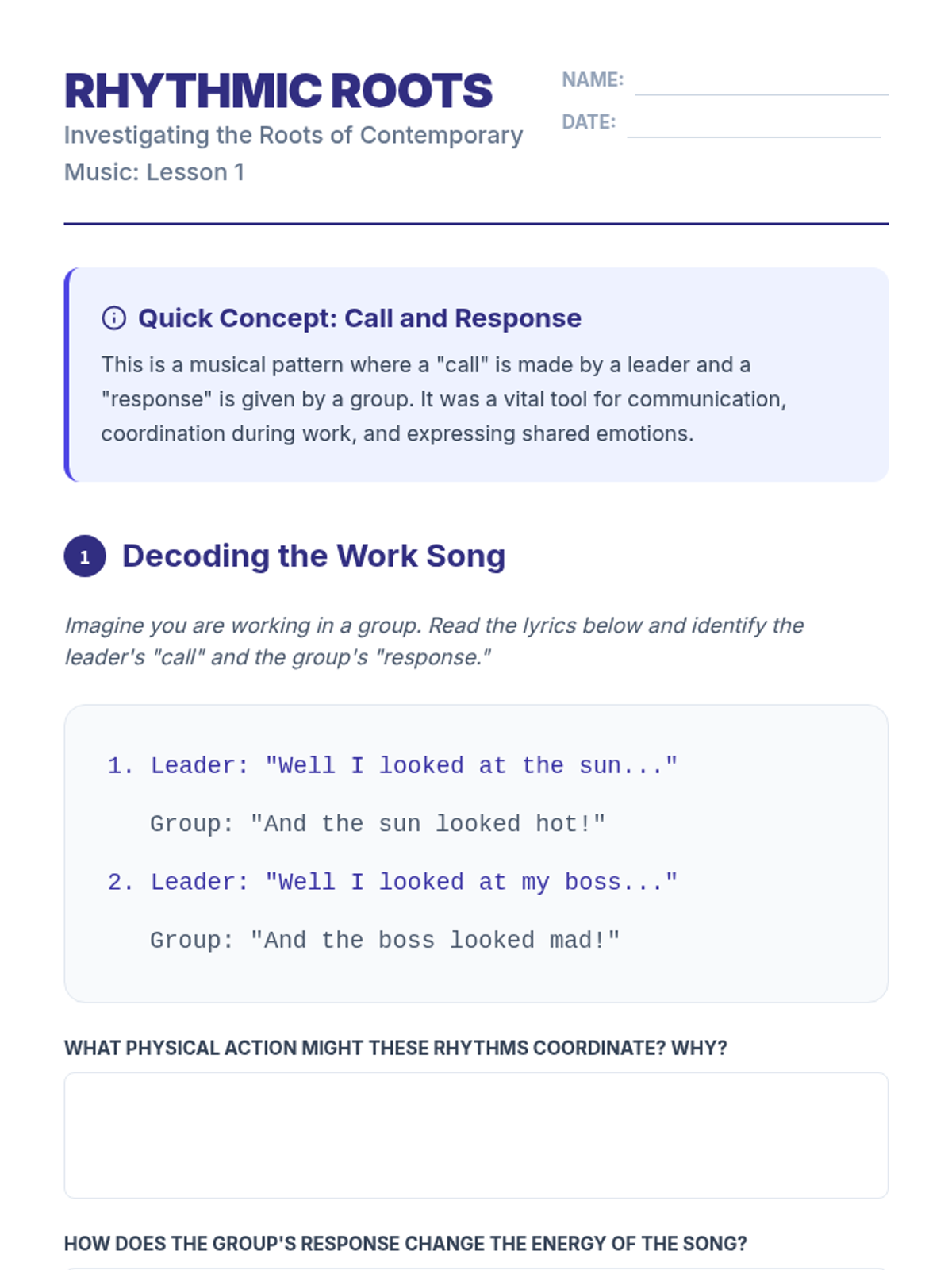
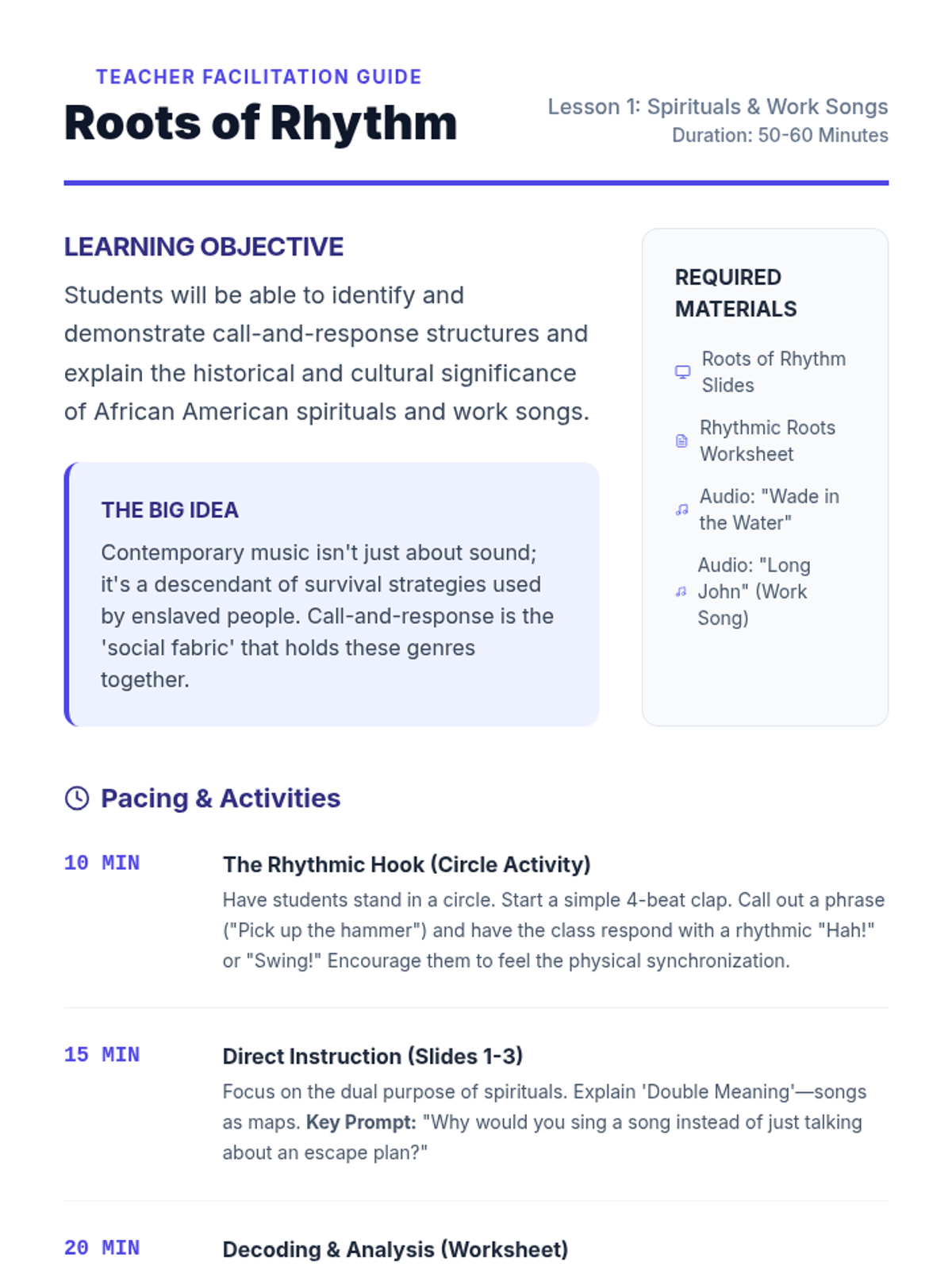
This sequence traces the evolution of contemporary music from 19th-century African American spirituals through the development of the Blues, Jazz, and Rock & Roll. Students investigate how cultural exchange, technology, and social struggles shaped the sounds we listen to today, culminating in a musical genealogy project.
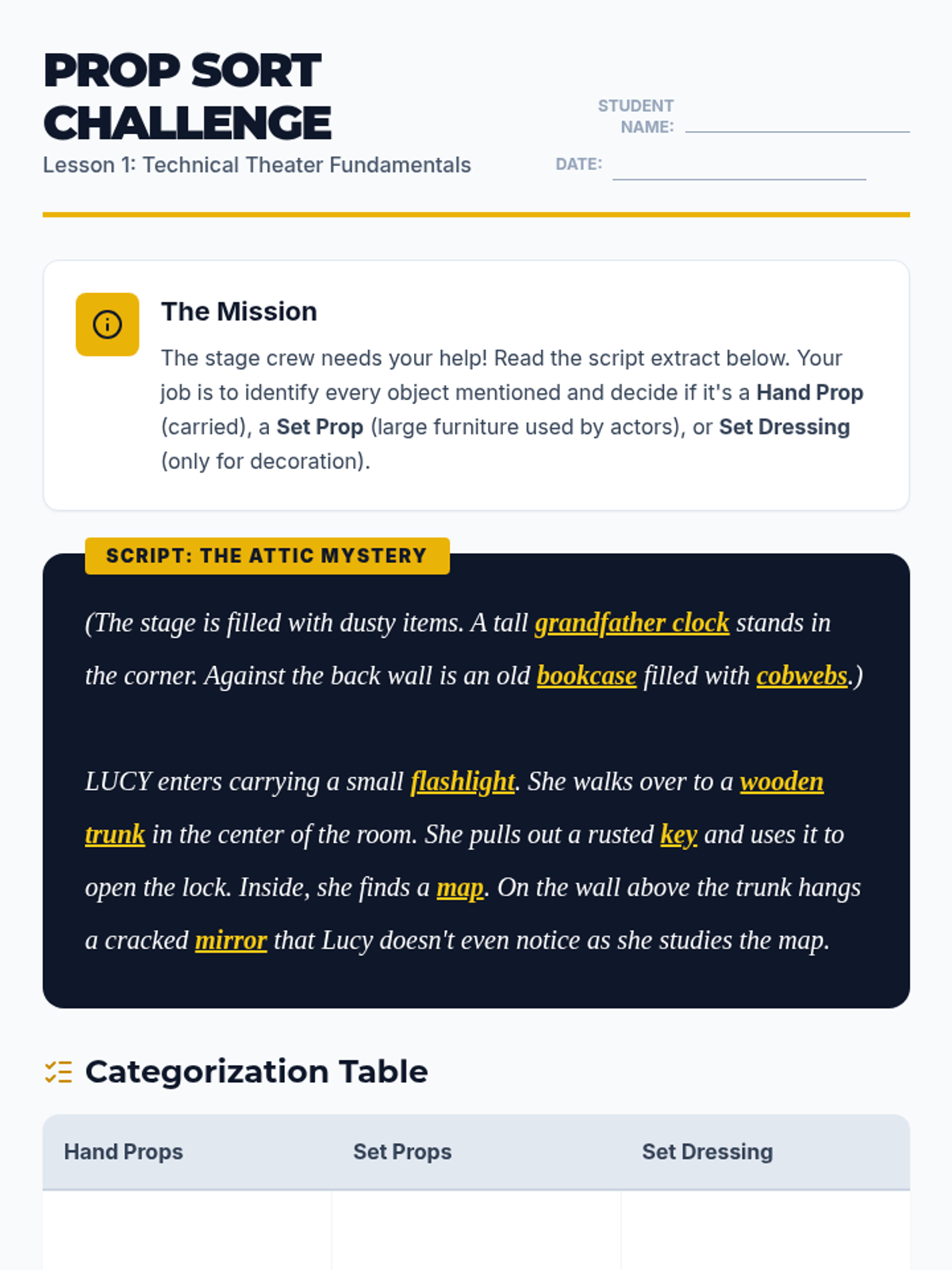
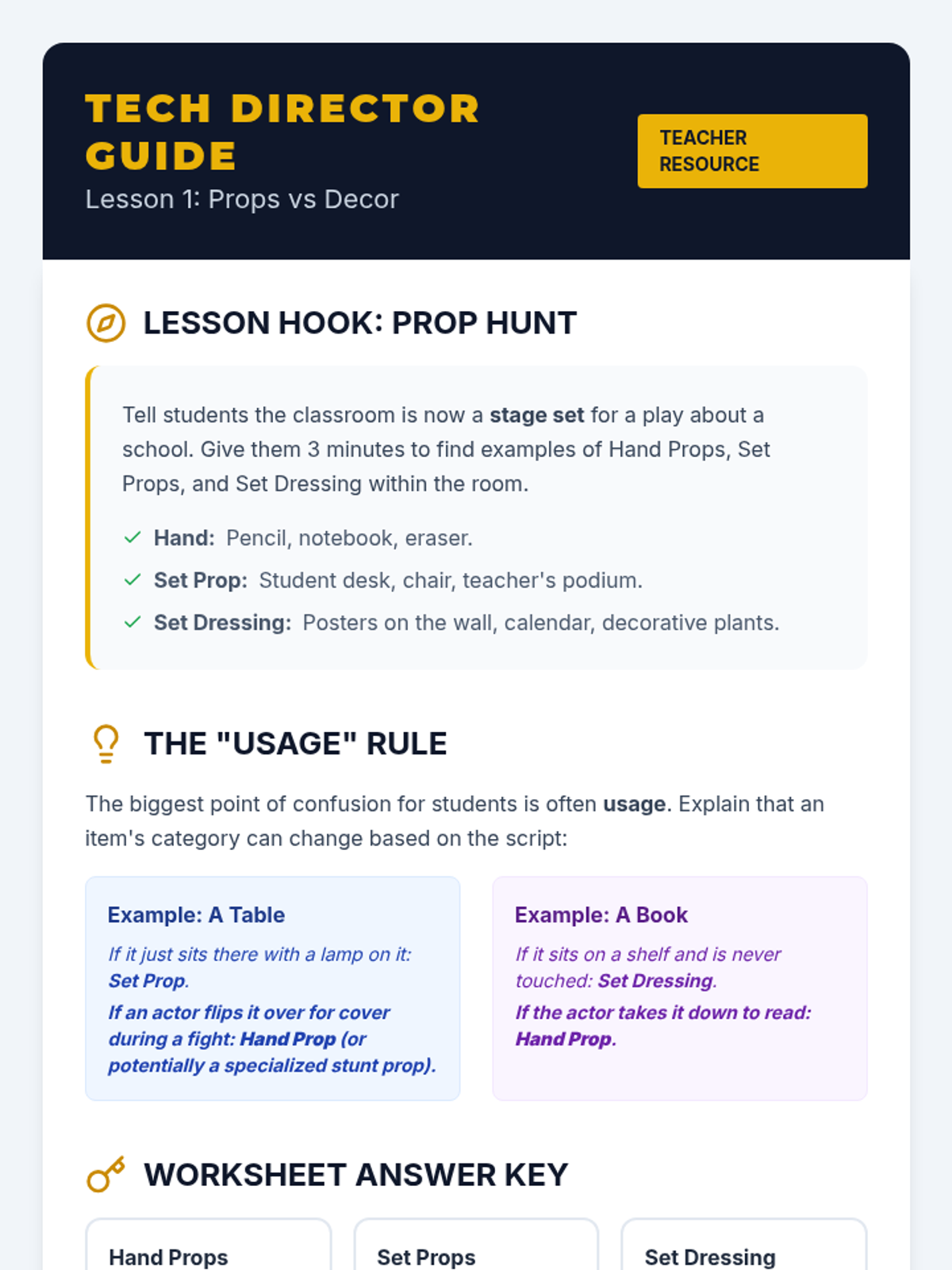
Students investigate how costumes and properties (props) function as tools for character development and storytelling. The sequence guides students through the process of distinguishing between prop types, exploring costume psychology, fabricating safe props, and mastering backstage organization.
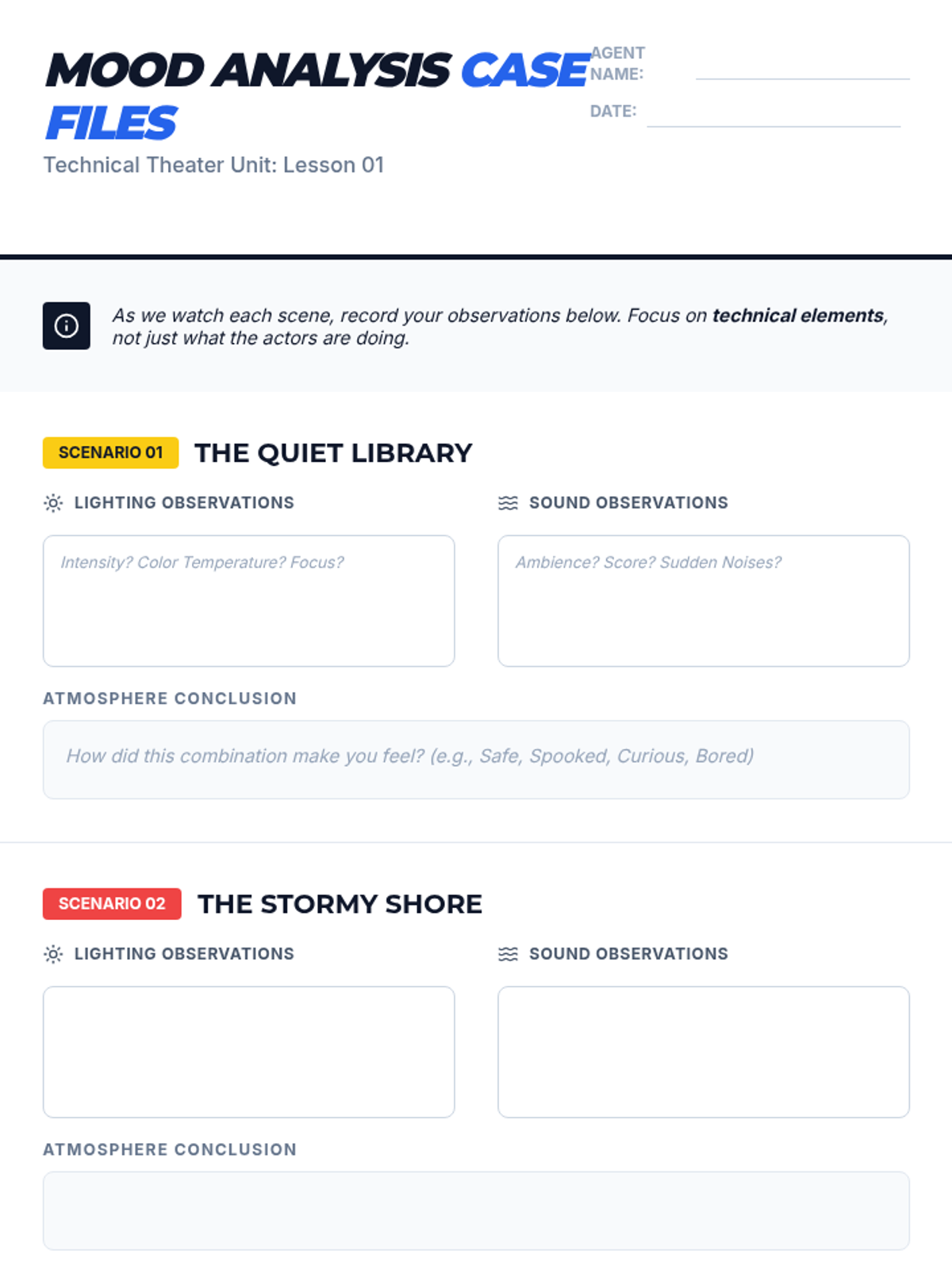
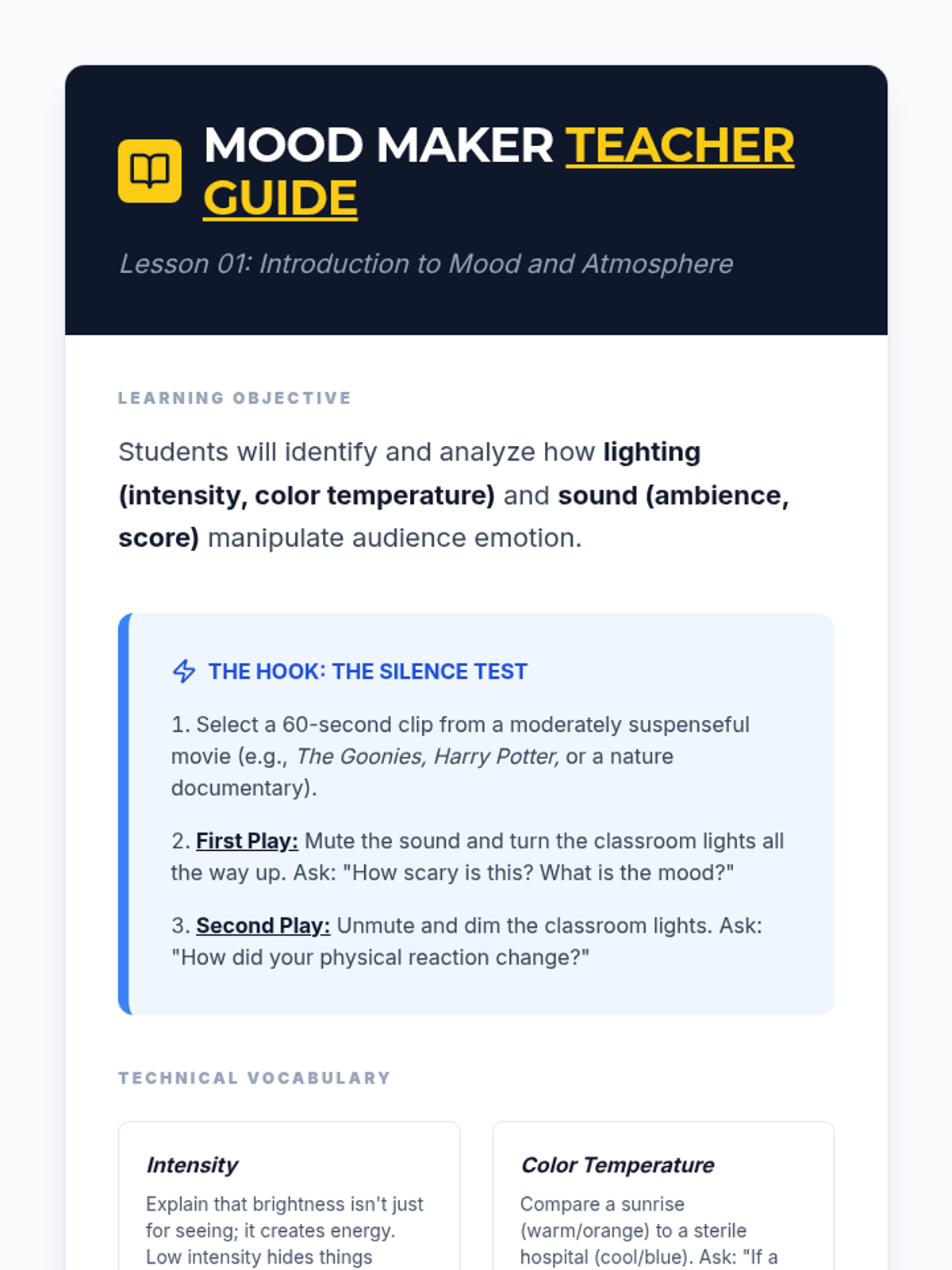
A 5-lesson sequence for 5th graders exploring technical theater through lighting and sound engineering. Students learn how to manipulate mood and focus using physical properties of light and creative sound design, culminating in a technical rehearsal simulation.
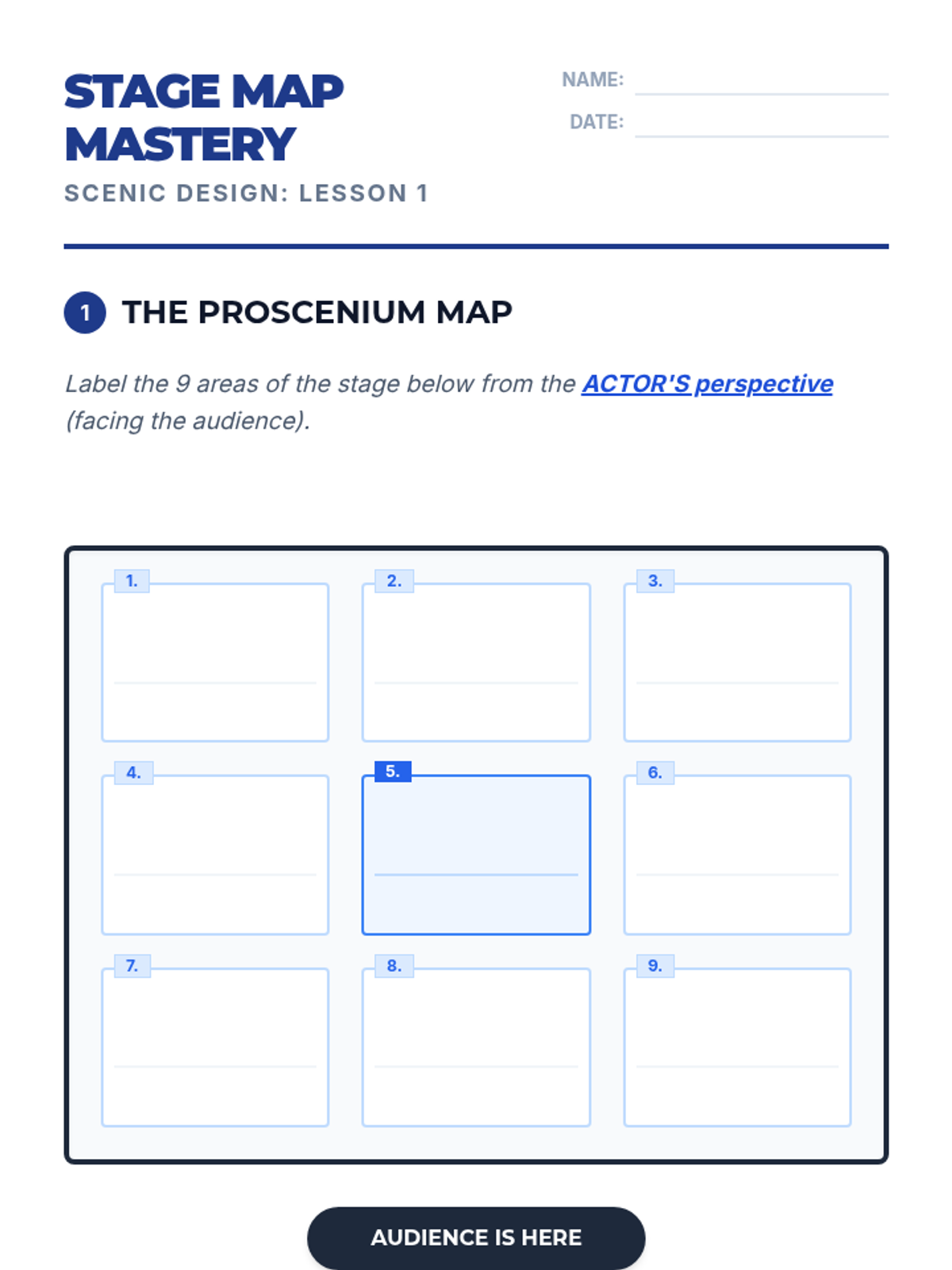
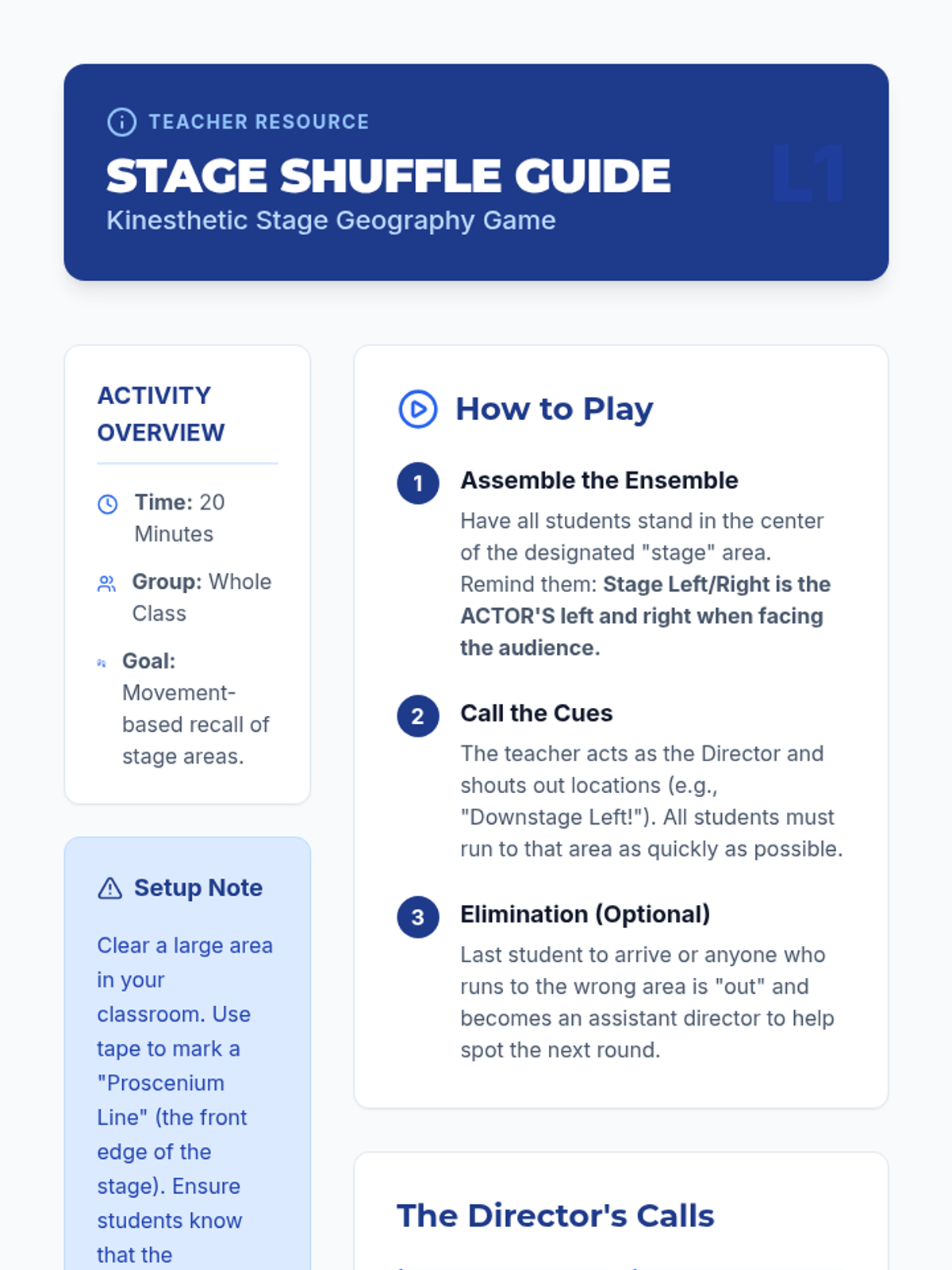
This sequence introduces 5th-grade students to the world of technical theater through the lens of scenic design. Students progress from learning stage geography to analyzing scripts, drafting floor plans, and ultimately building a 3D scale model (maquette) of their own set design.
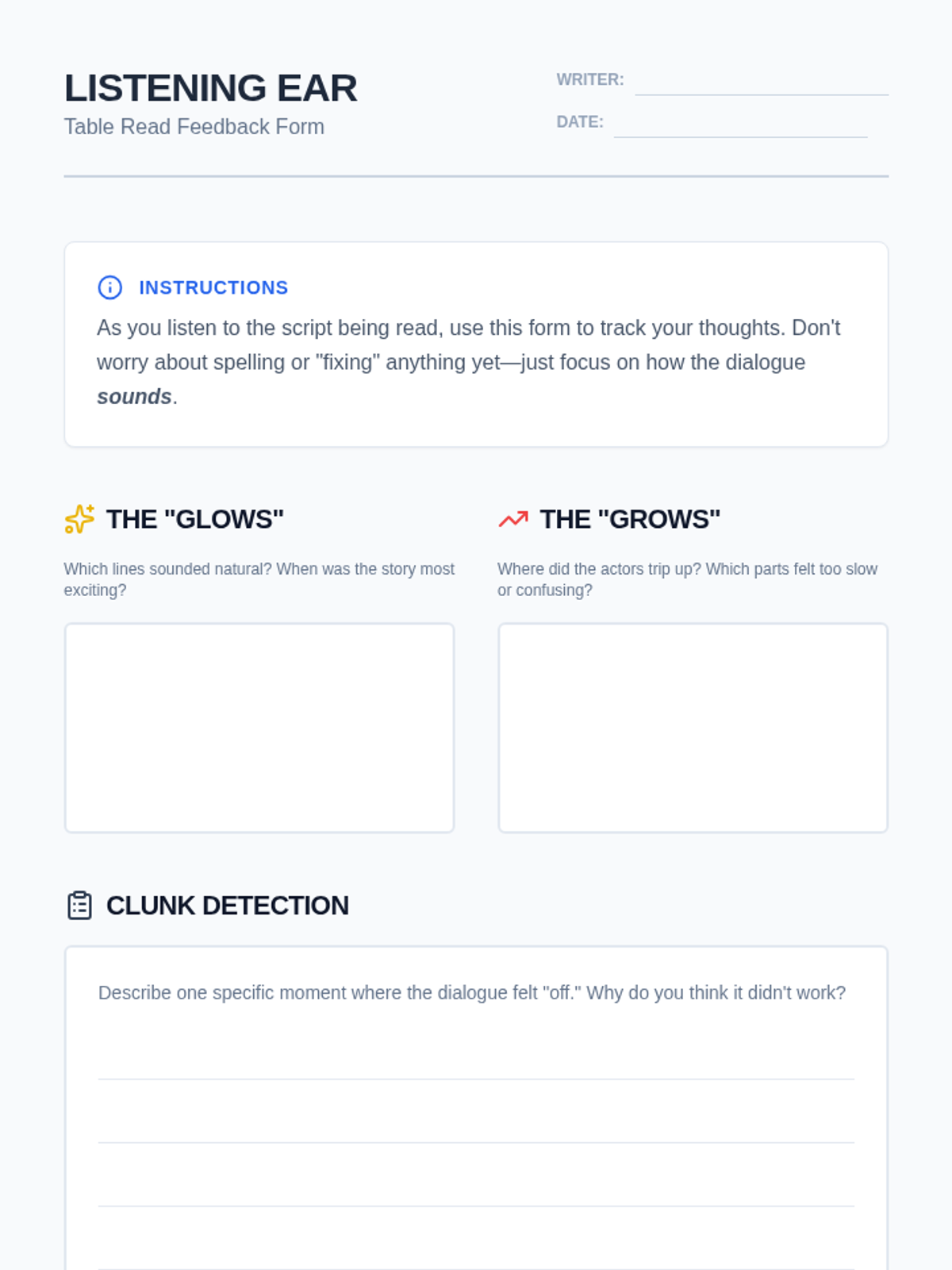
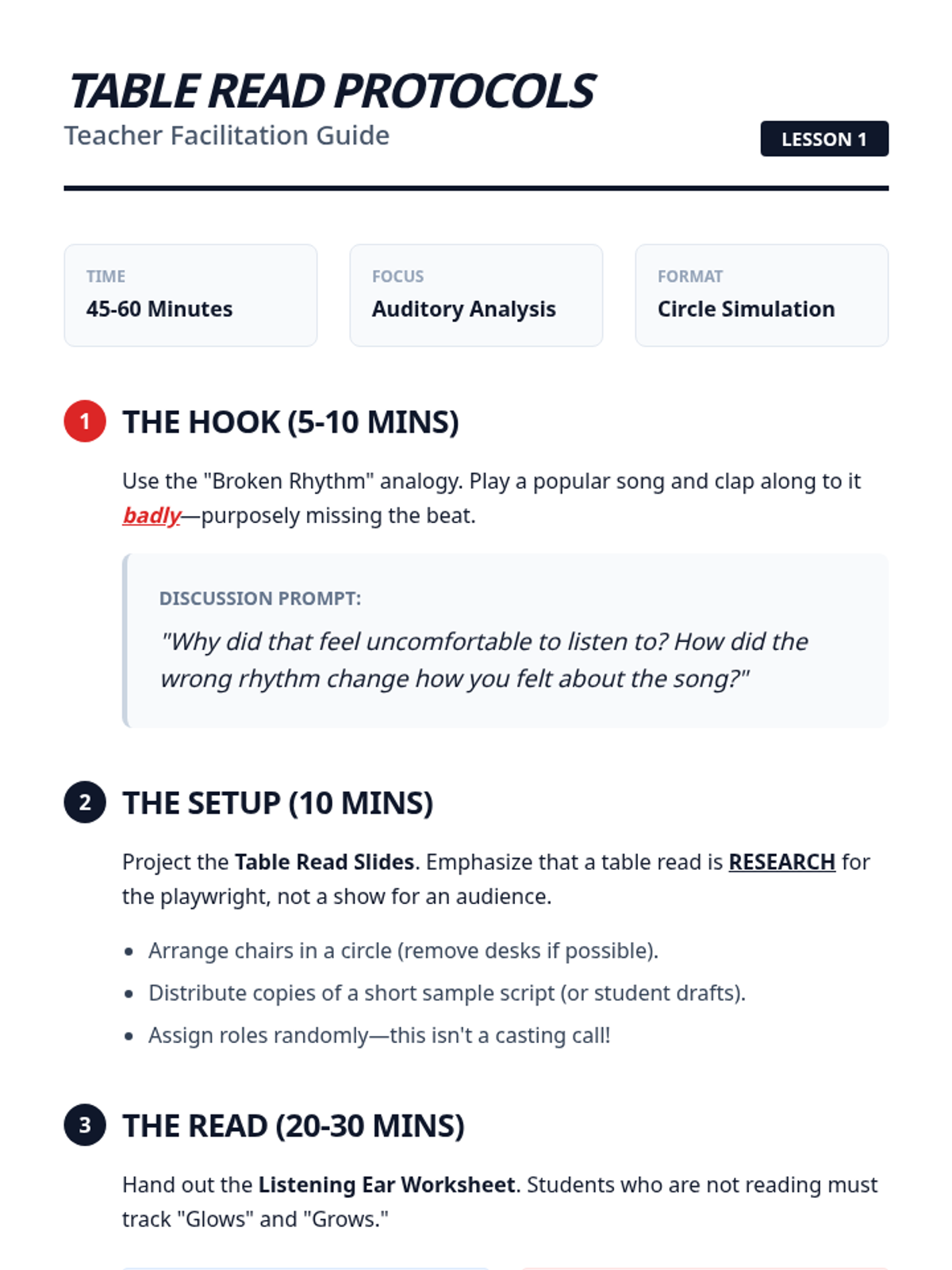
A 5-lesson sequence for 5th-grade students focusing on the iterative process of playwriting, from the first table read to a final, polished performance-ready script. Students develop skills in auditory analysis, dialogue refinement, conciseness, and collaboration.
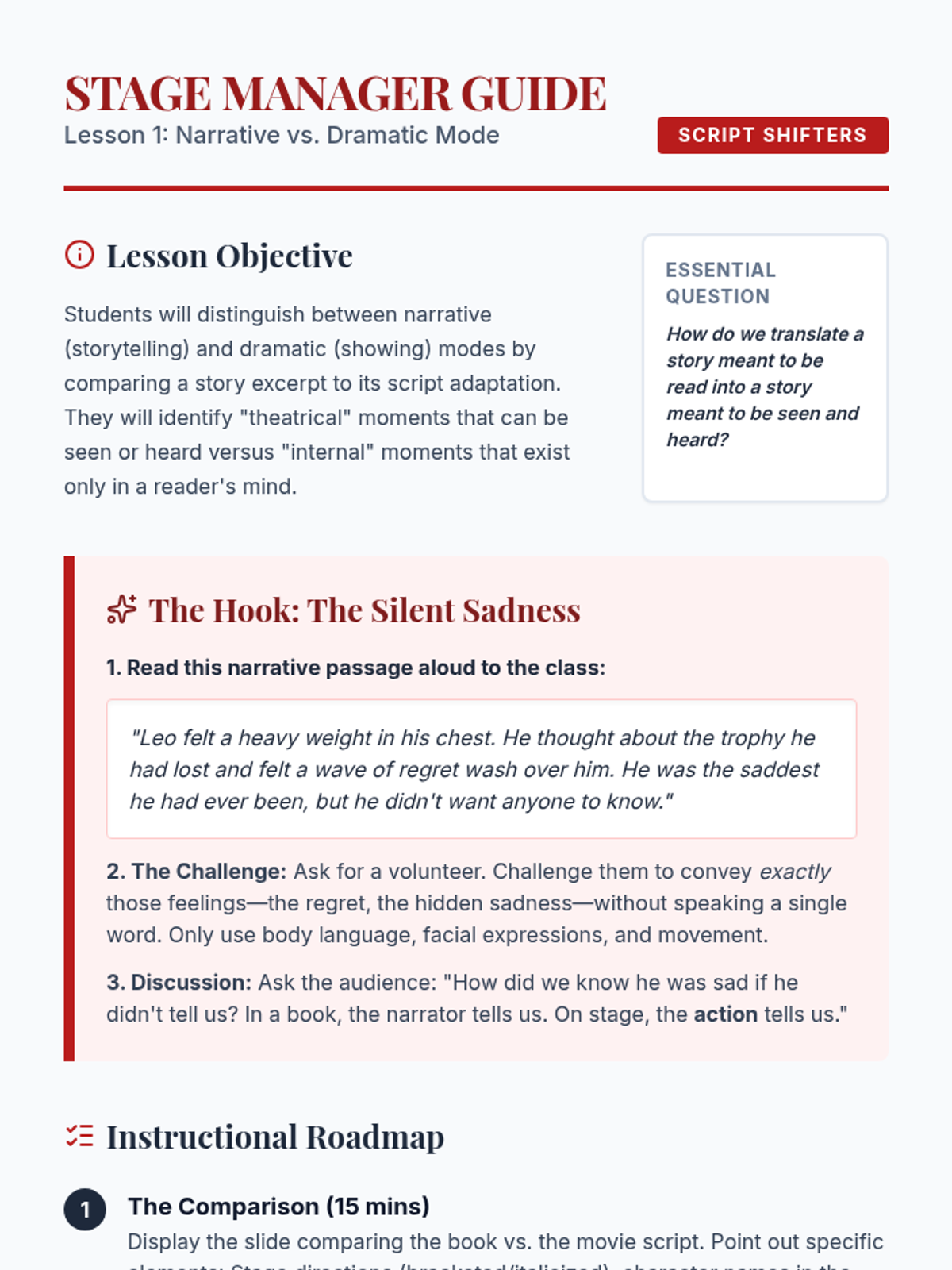
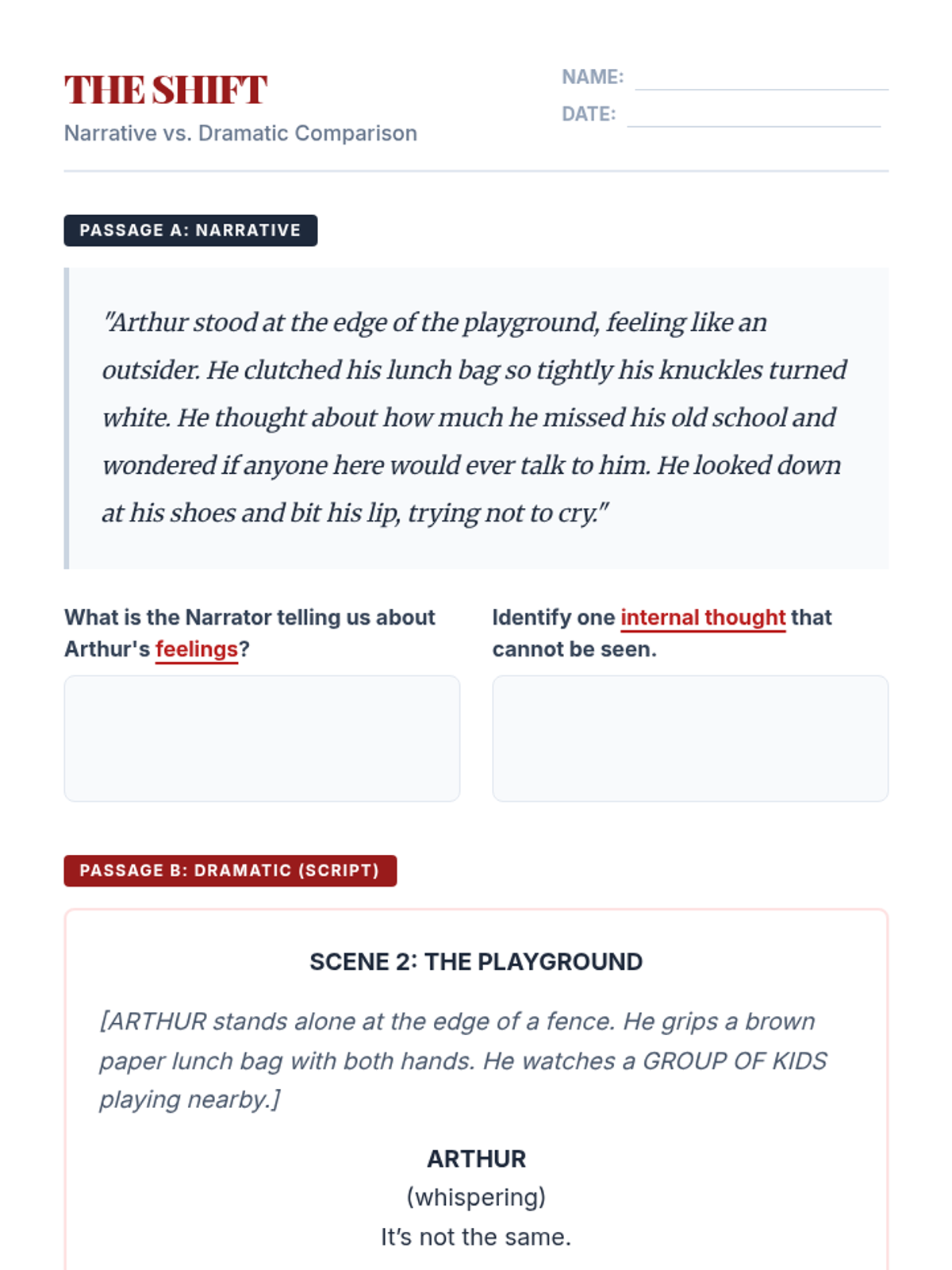
Students learn to translate narrative fiction into dramatic scripts by analyzing storytelling modes, converting internal thoughts to external actions, and drafting their own theatrical adaptations of fables.
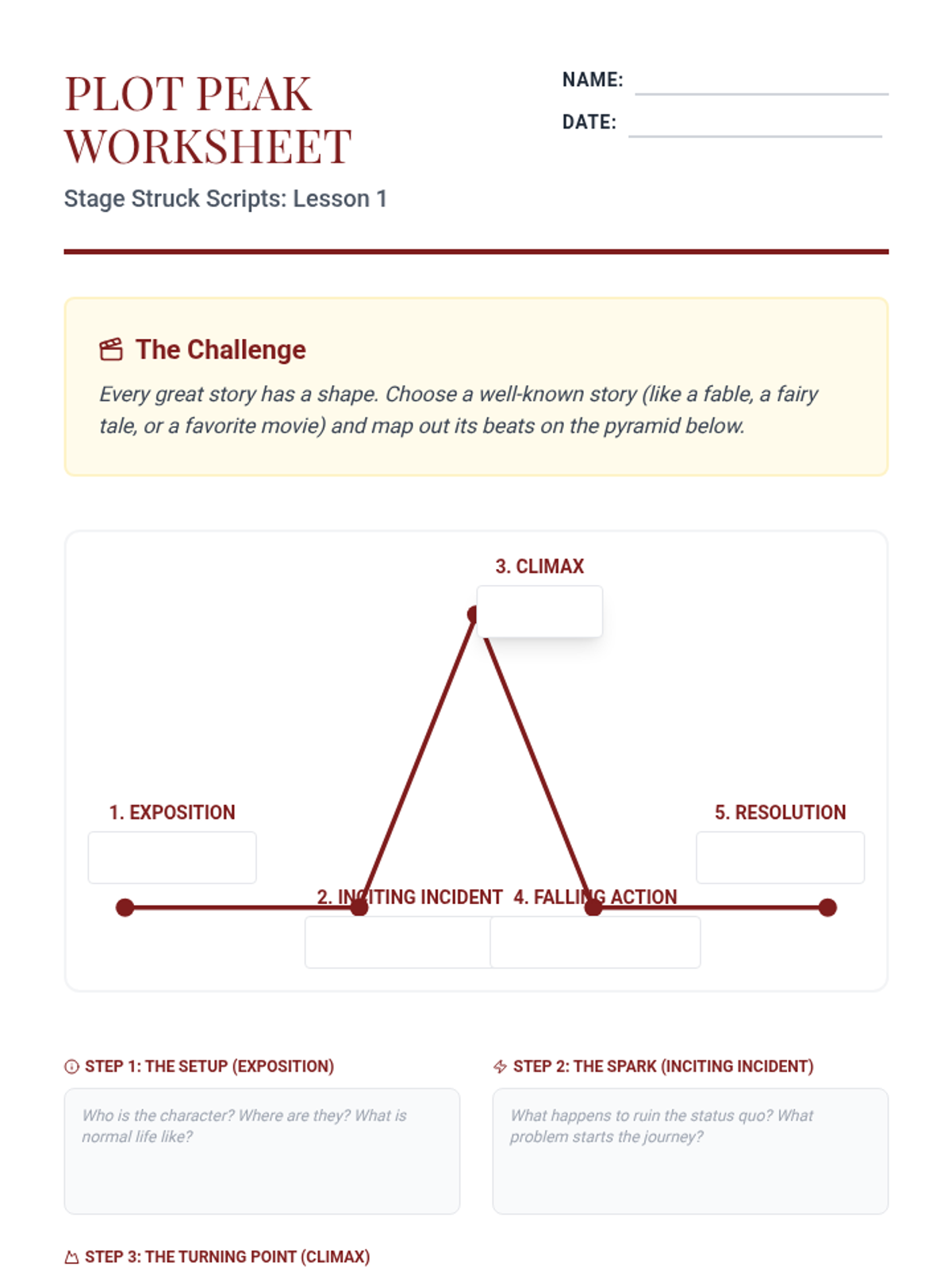
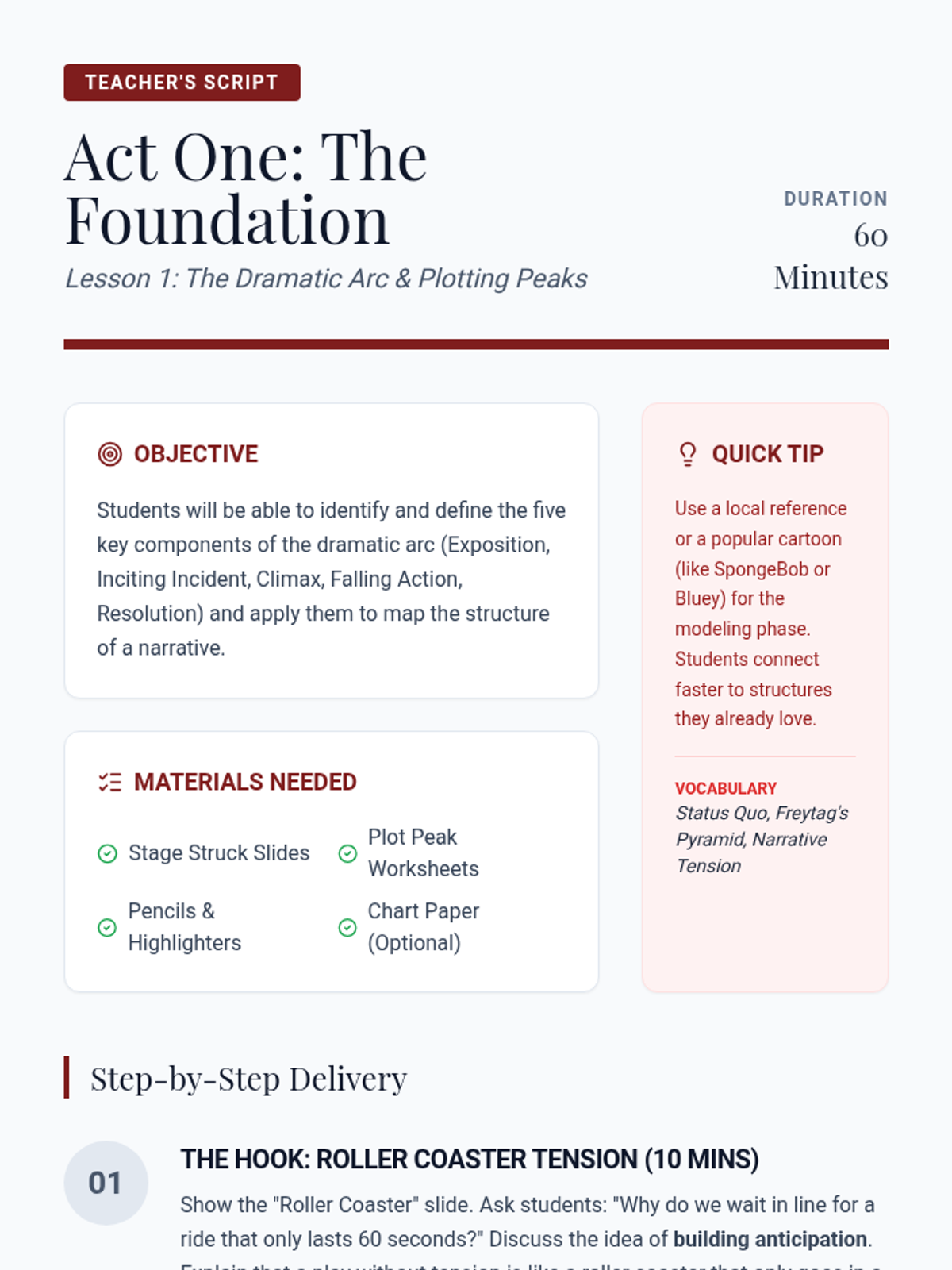
A project-based sequence for 5th-grade students to master the dramatic arc and write a short one-act play focusing on conflict and resolution.
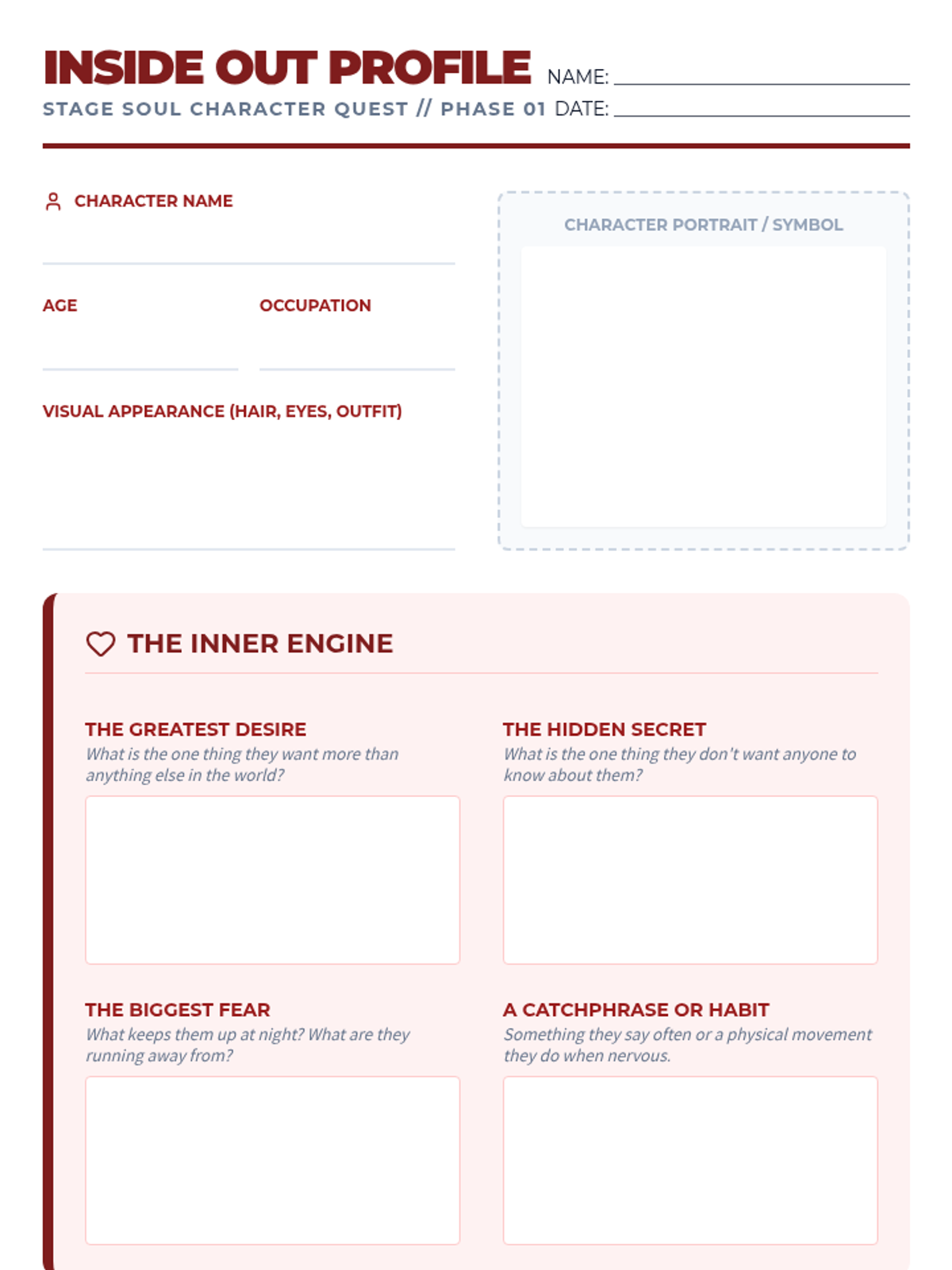
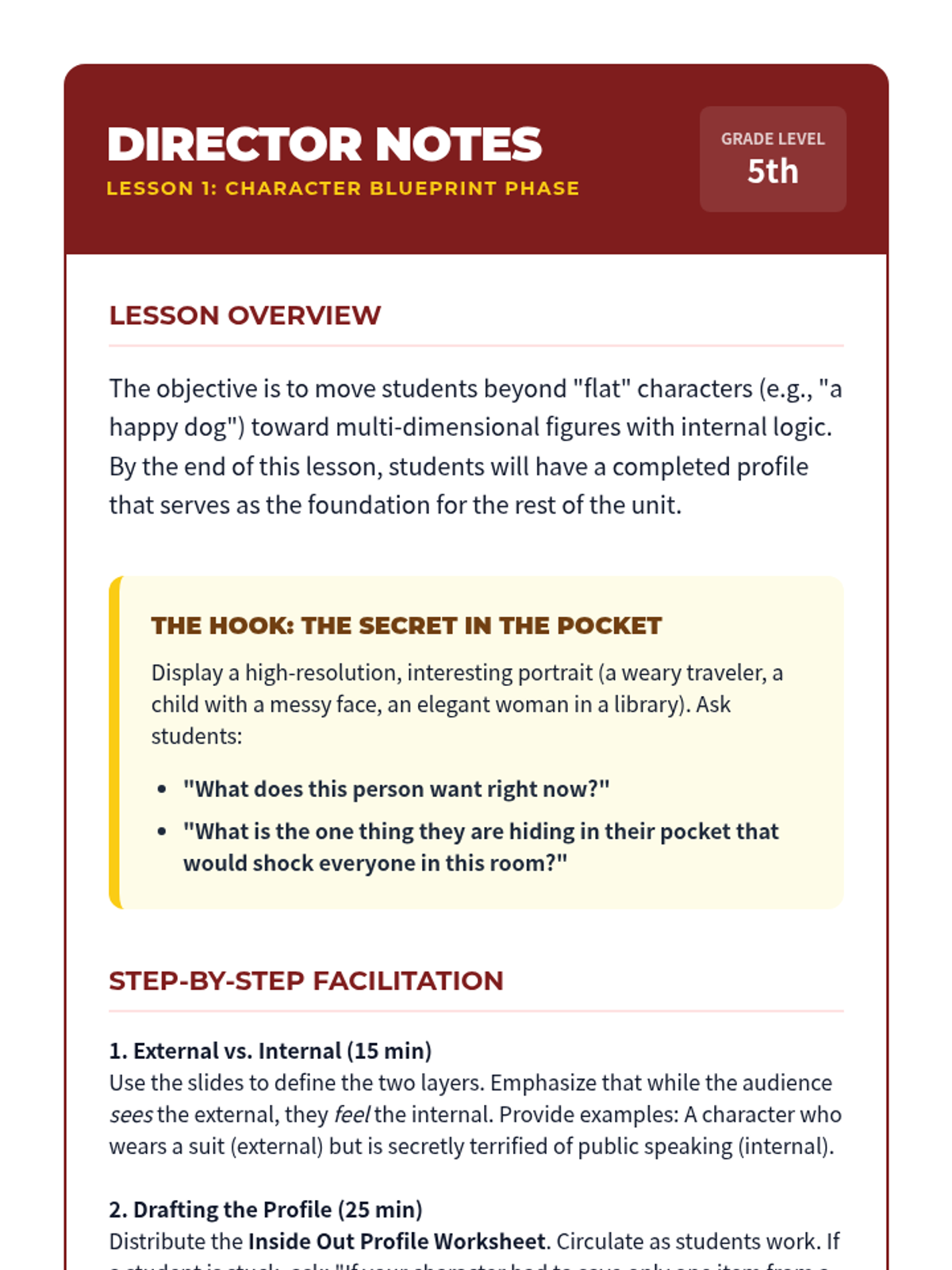
A 5-lesson theater arts sequence for 5th graders focused on creating multi-dimensional stage characters through profile building, improvisation, monologue writing, and dialogue refinement. Students move from external traits to internal motivations, learning how to create friction and unique voices for the stage.
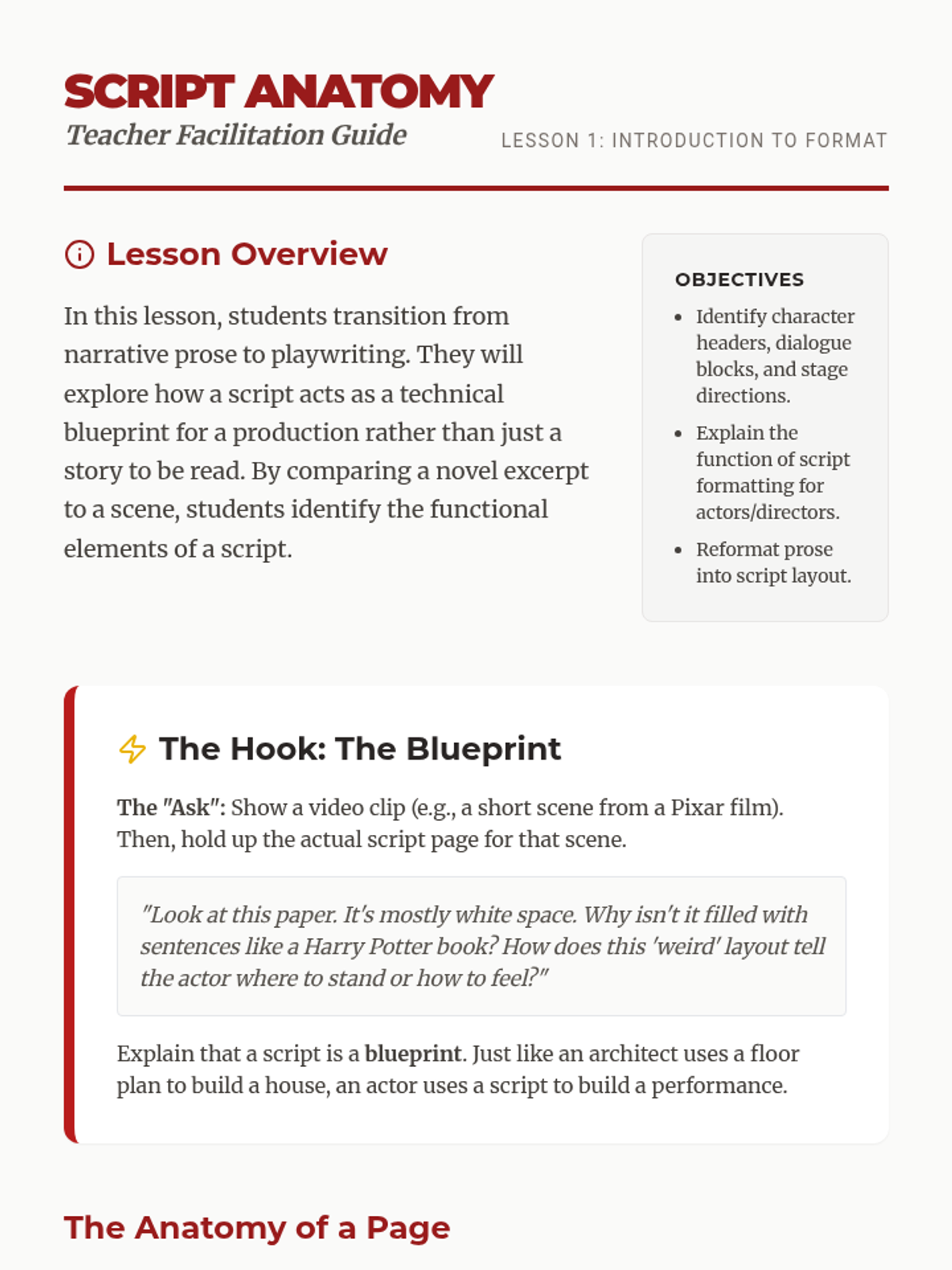
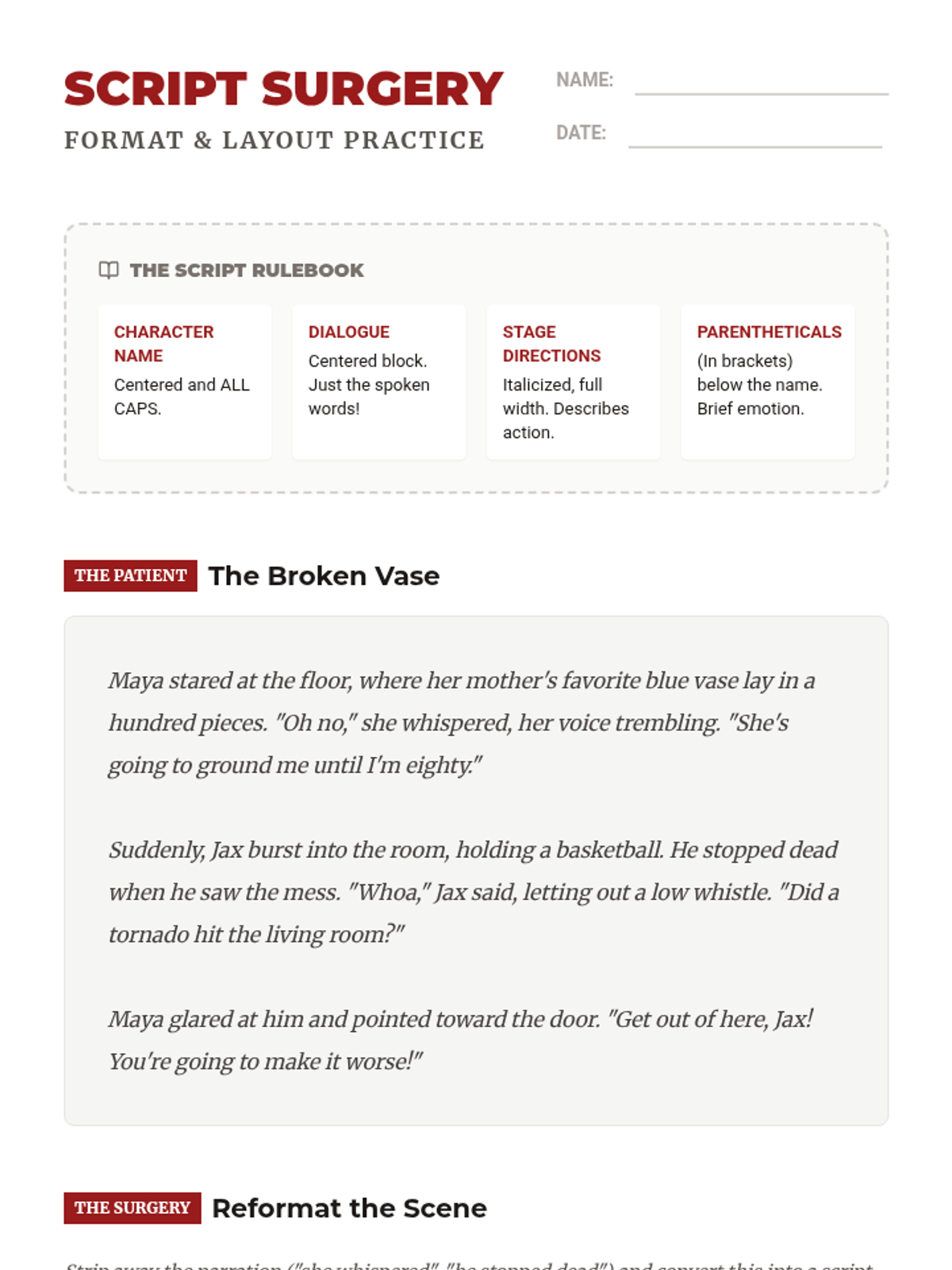
A foundational sequence for 5th-grade students to master the mechanics of playwriting, including script formatting, natural dialogue, and stage directions, culminating in a two-page original scene.
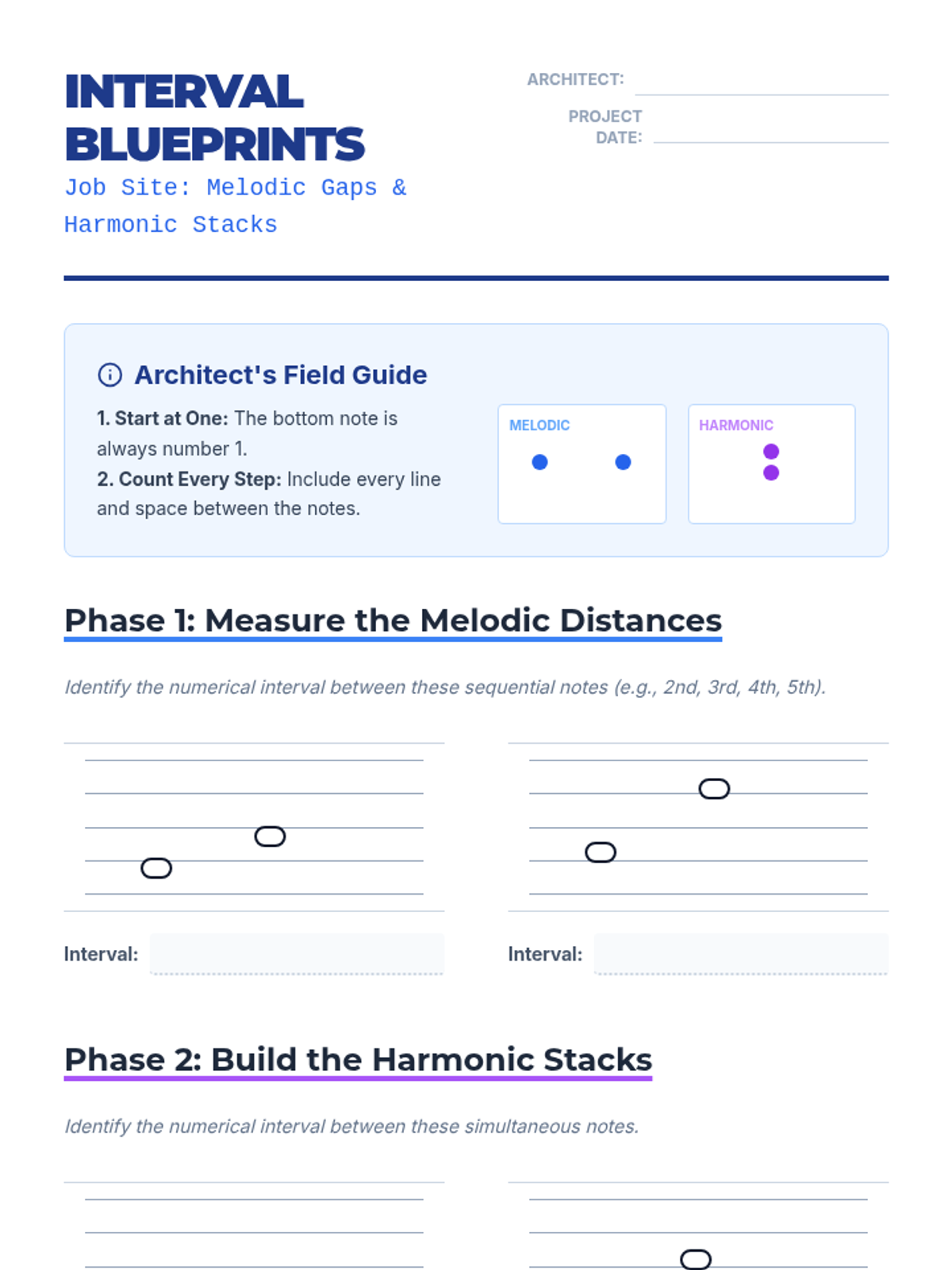
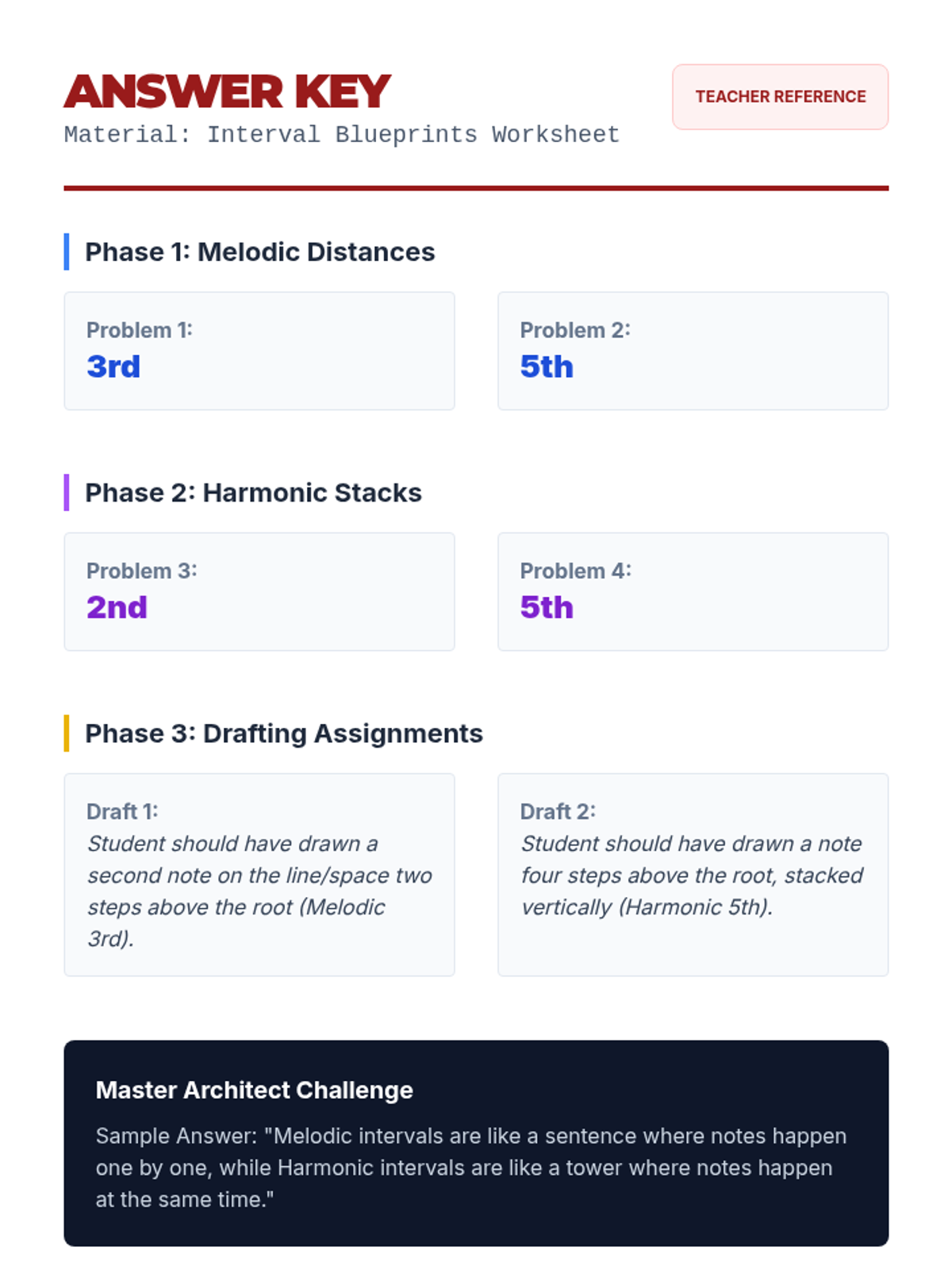
A music theory unit for 5th graders focused on intervals and triads. Students transition from melodic thinking to harmonic construction through 'blueprint' themed activities, building from simple distance measurement to complex chord progressions.
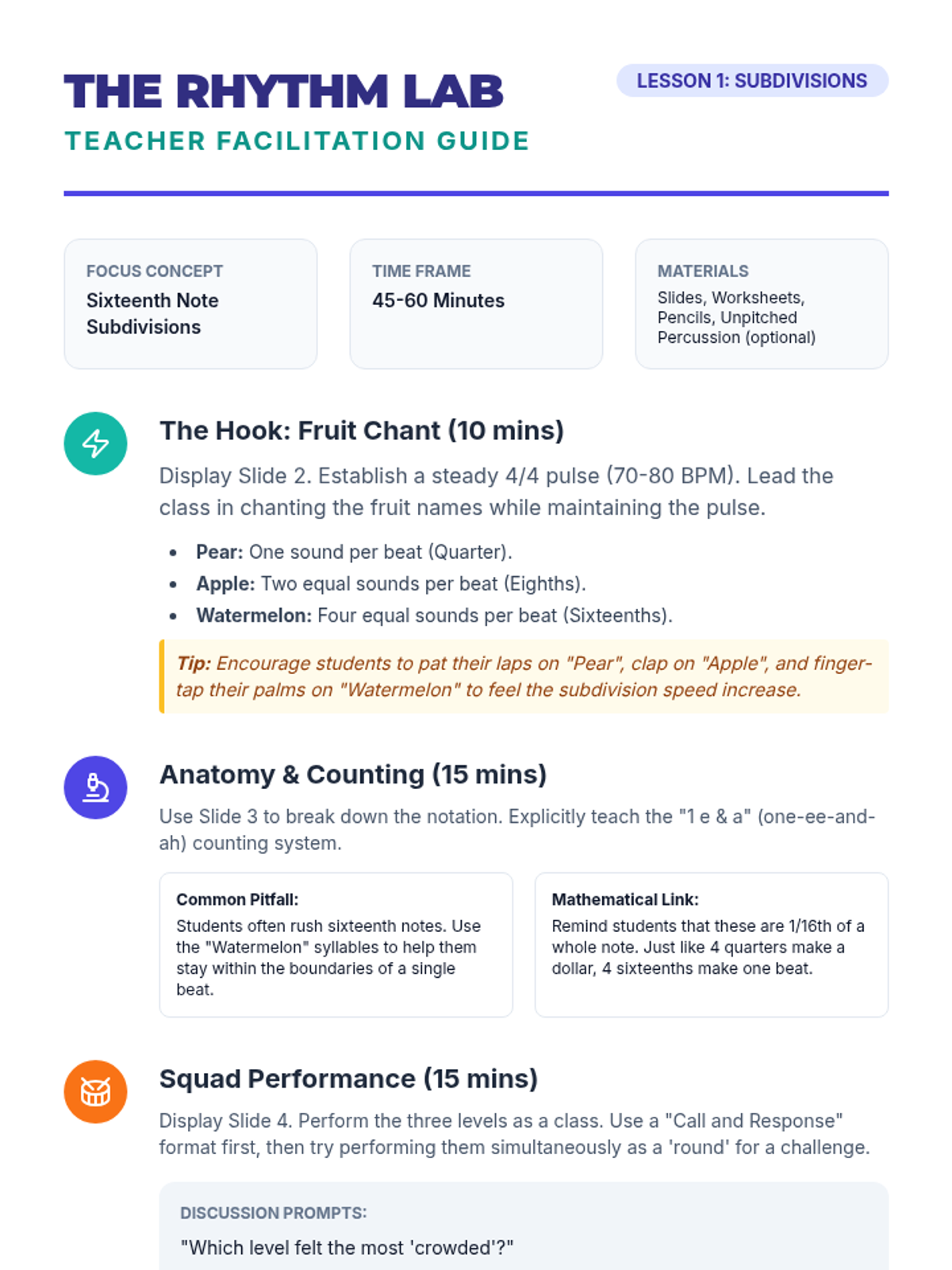
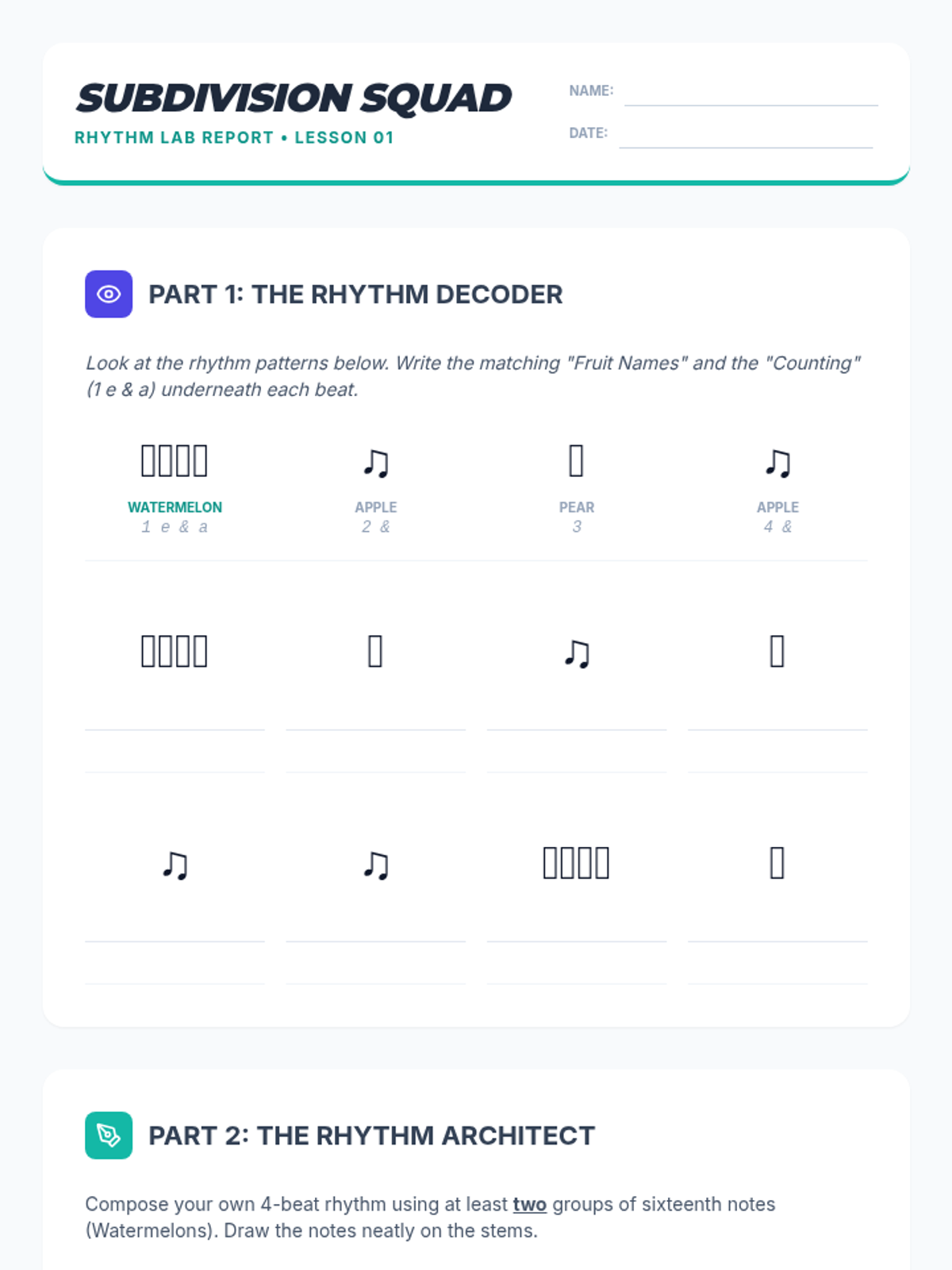
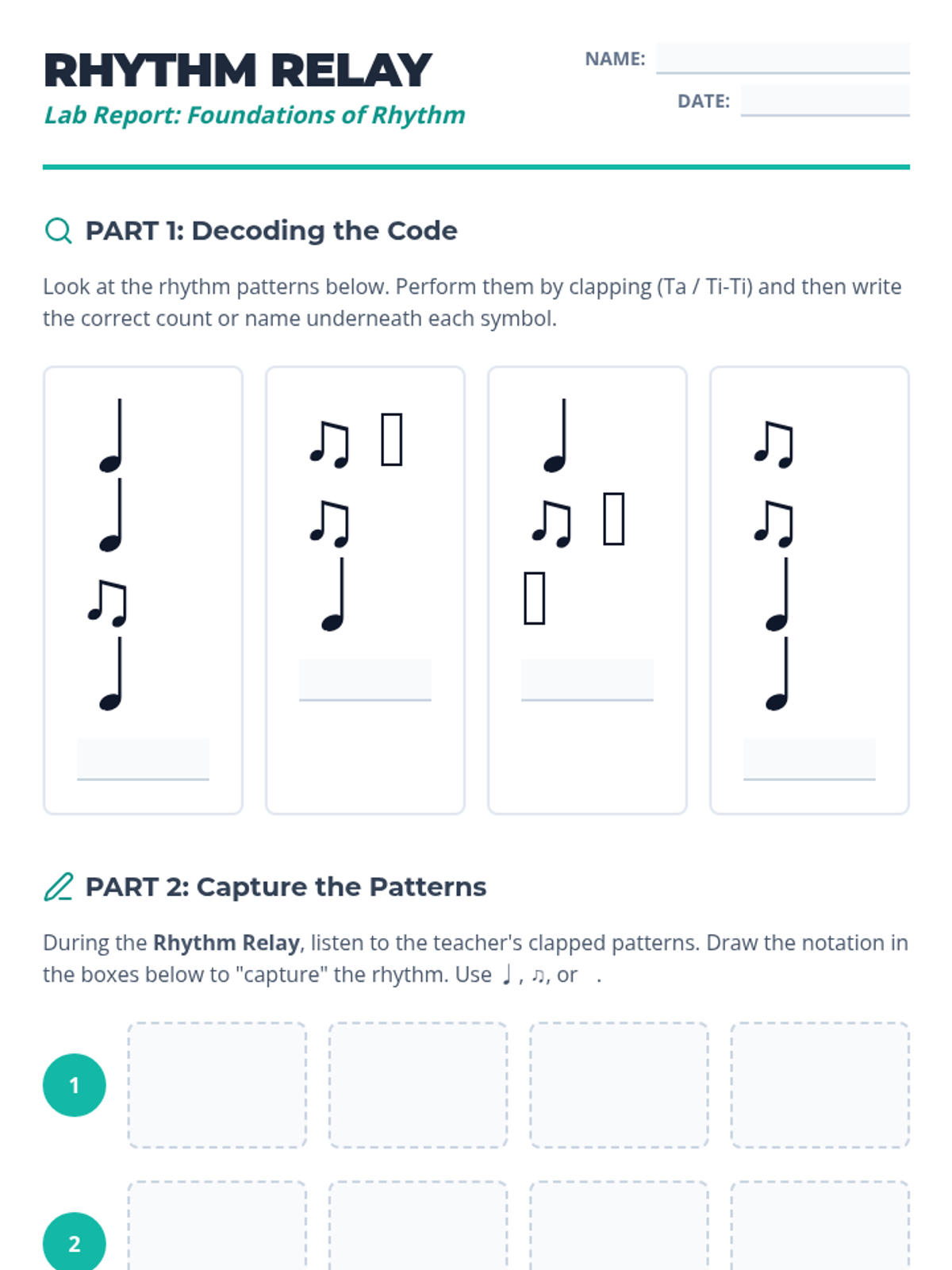
This sequence guides 5th-grade students through the intricacies of advanced rhythmic notation, moving from sixteenth note subdivisions and dotted rhythms to the complexities of syncopation and compound meter. Through a blend of auditory analysis, physical performance, and formal notation, students develop the skills to decode and compose sophisticated musical patterns.
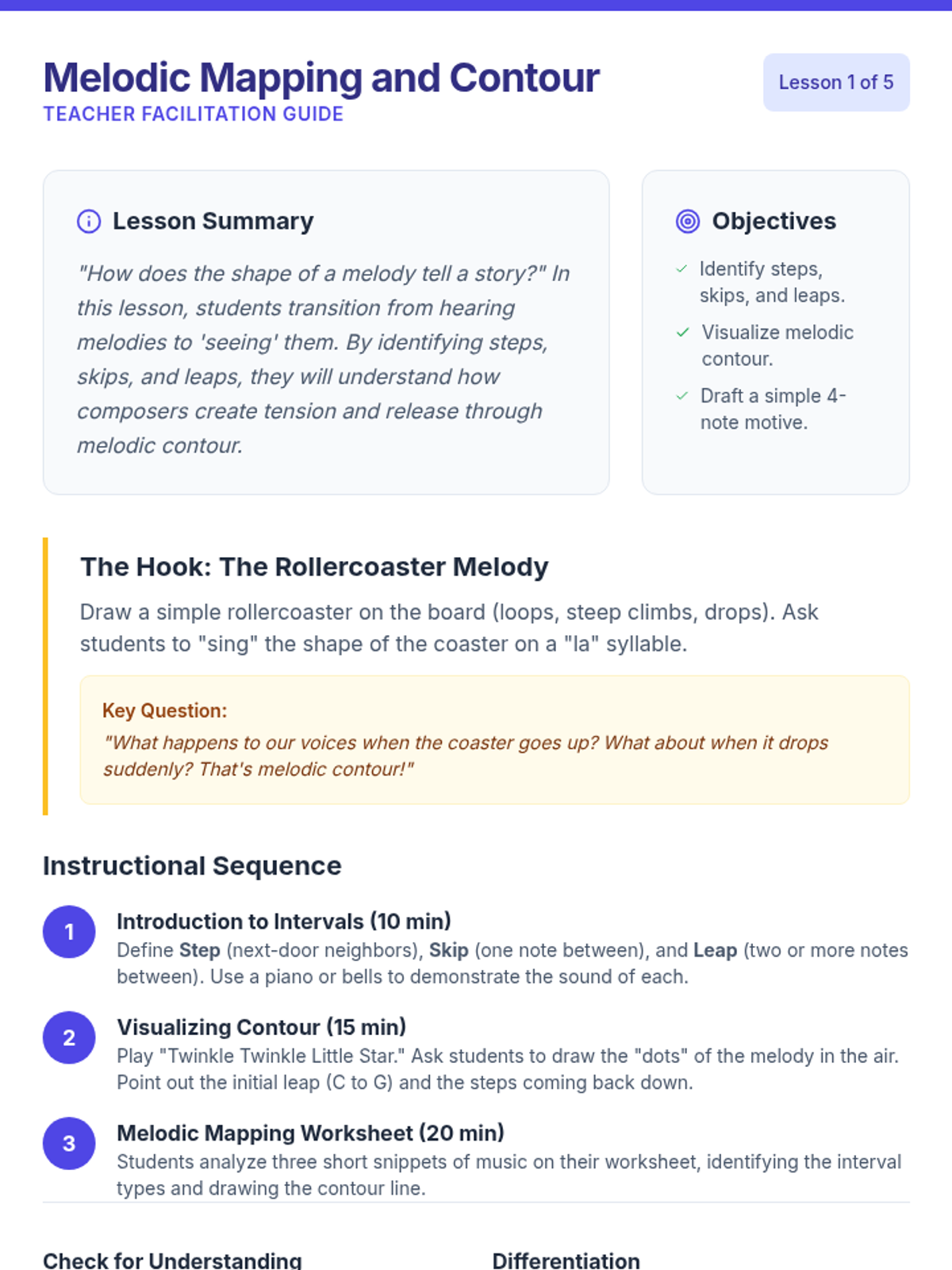
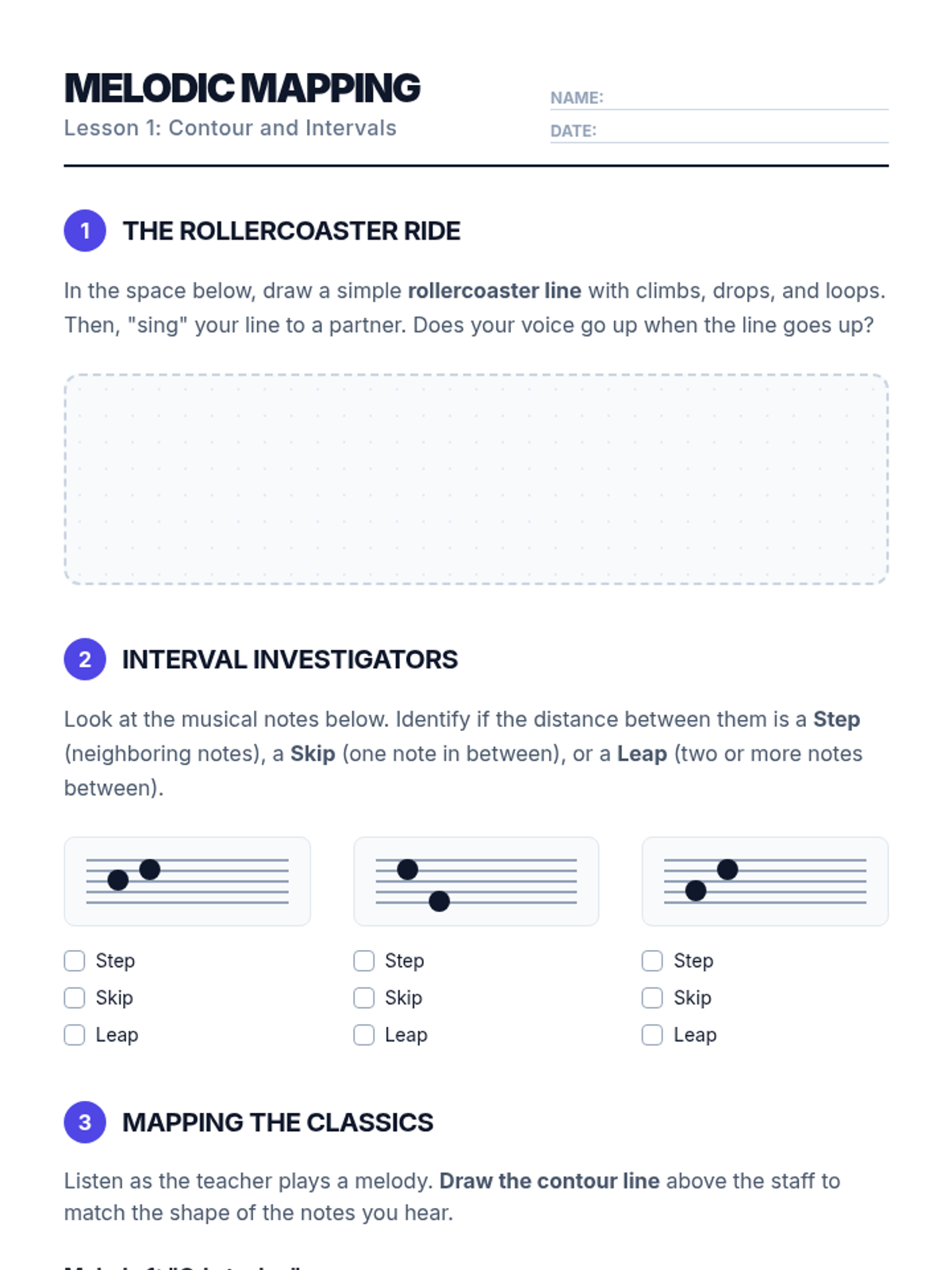
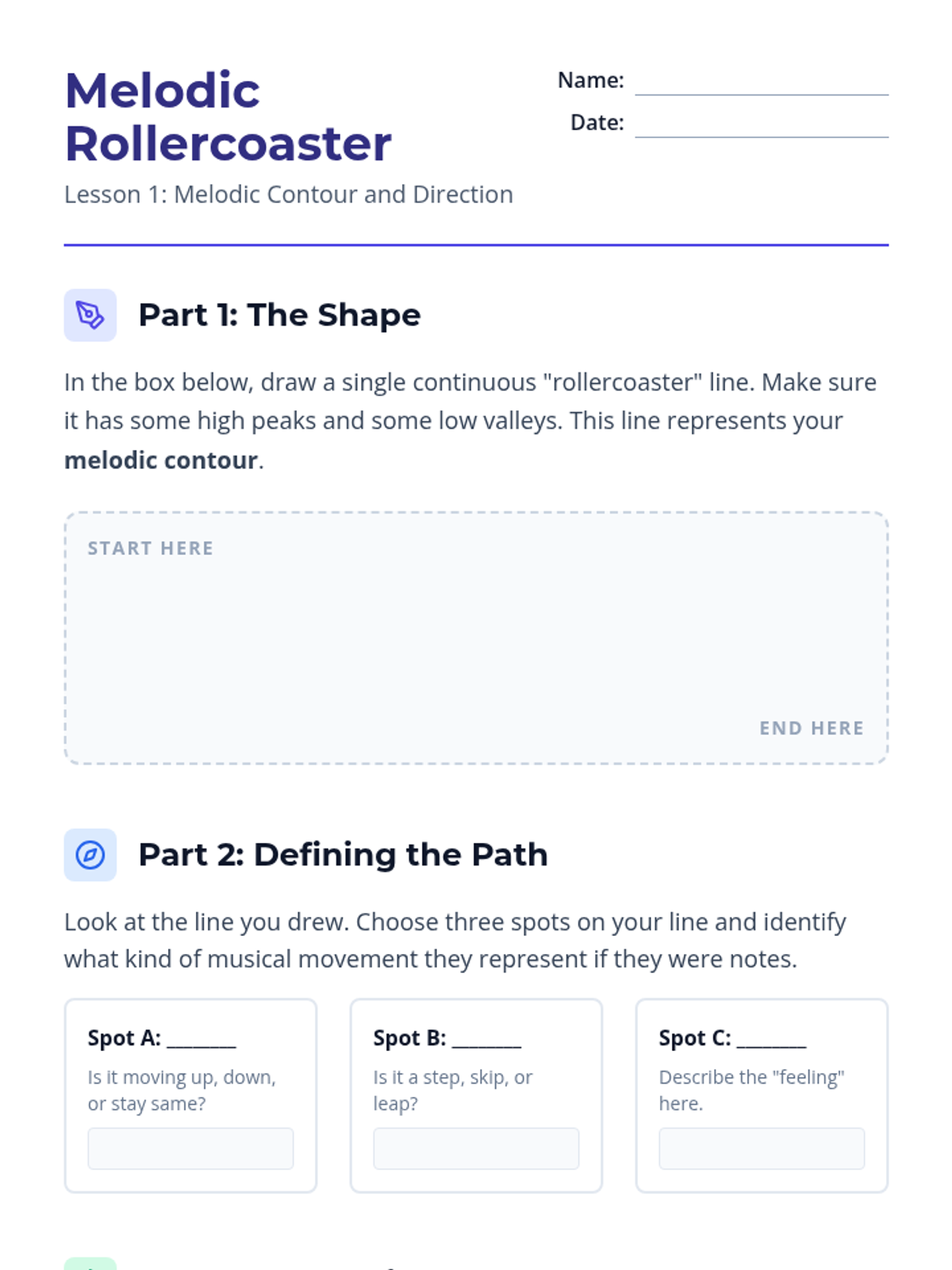
A 5th-grade music synthesis sequence where students apply knowledge of rhythm, pitch, and harmony to compose and notate original music. Students progress from analyzing melodic contours to creating and harmonizing motives, culminating in a professional-grade composition showcase.
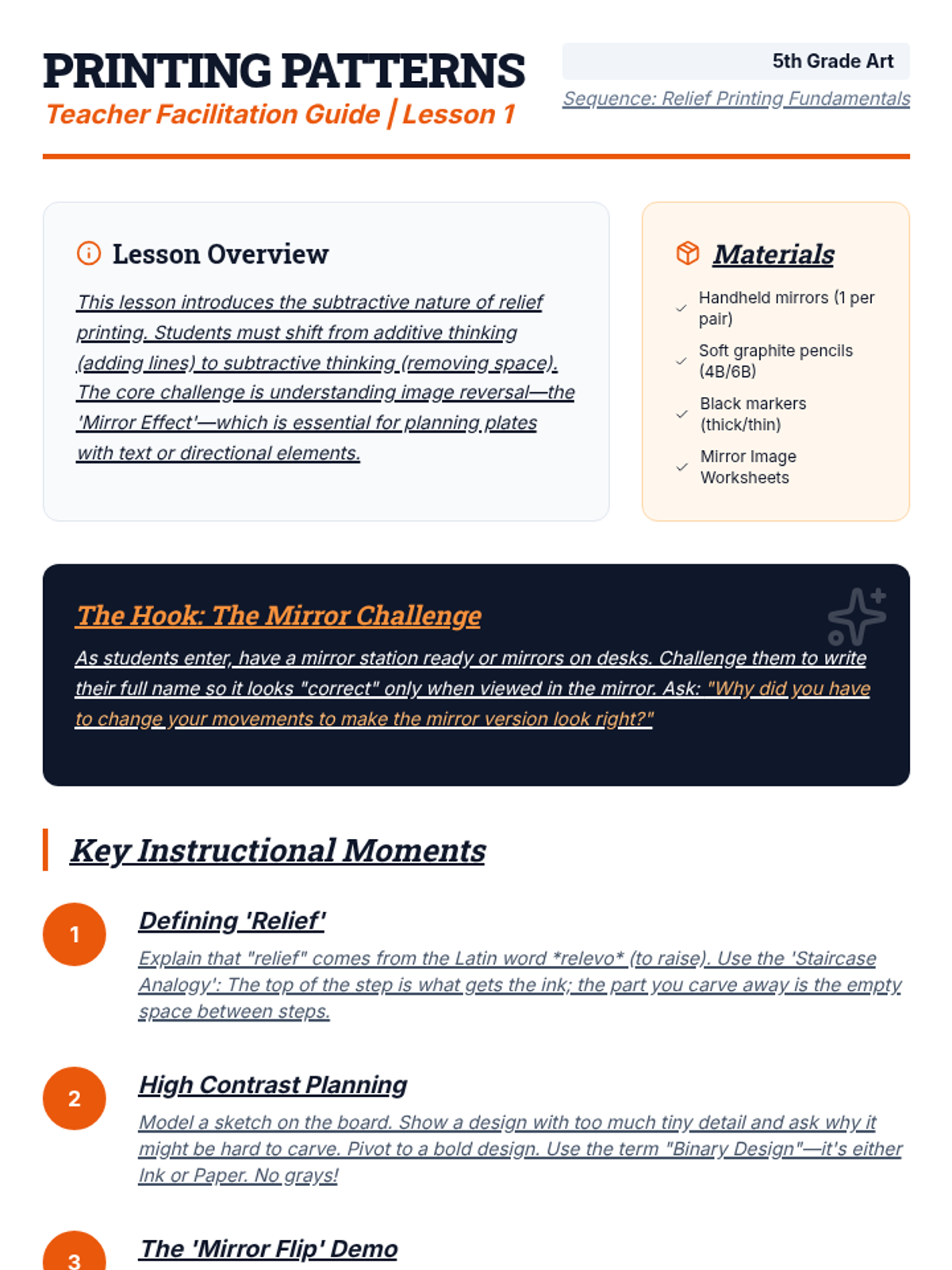
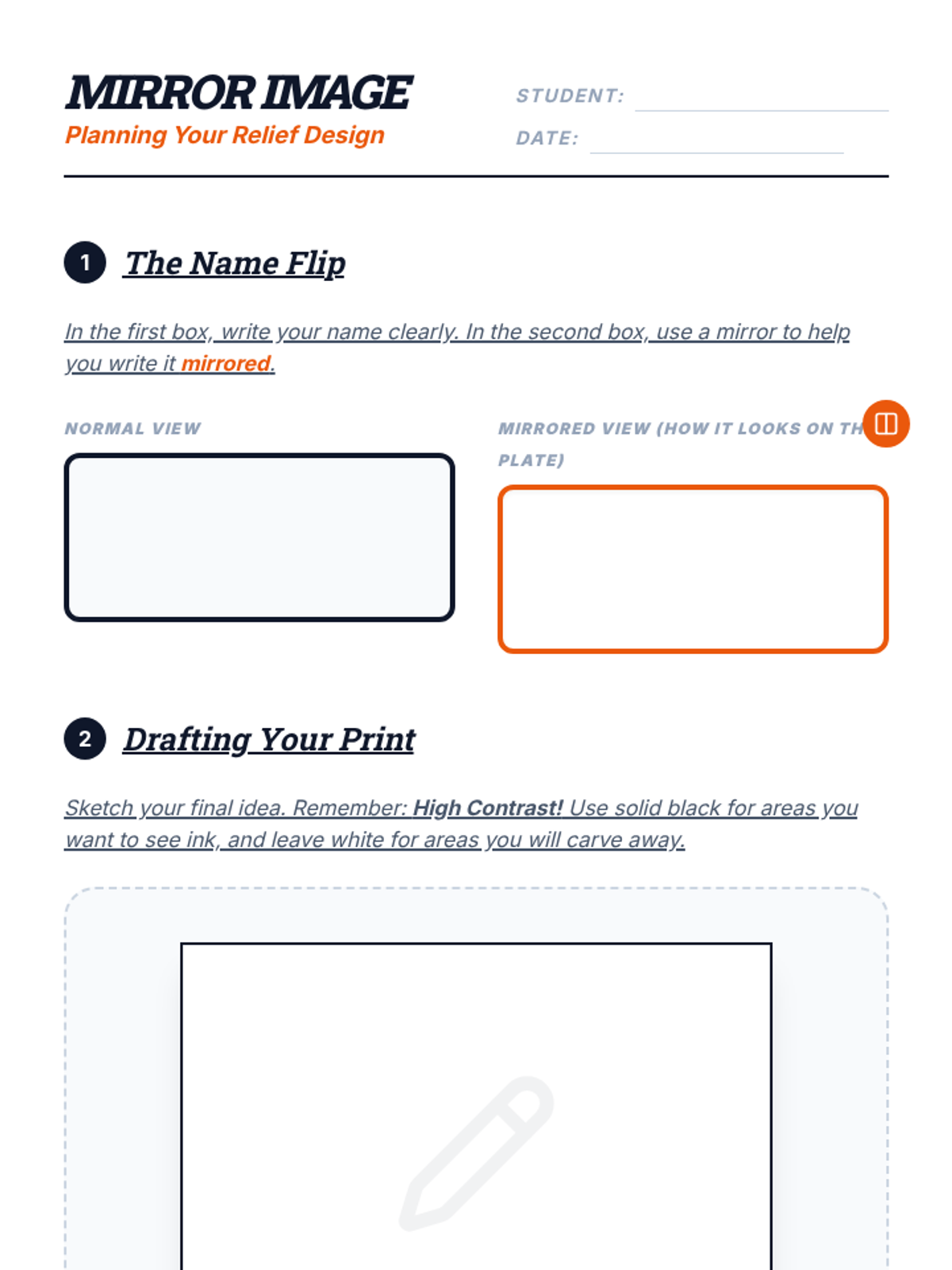
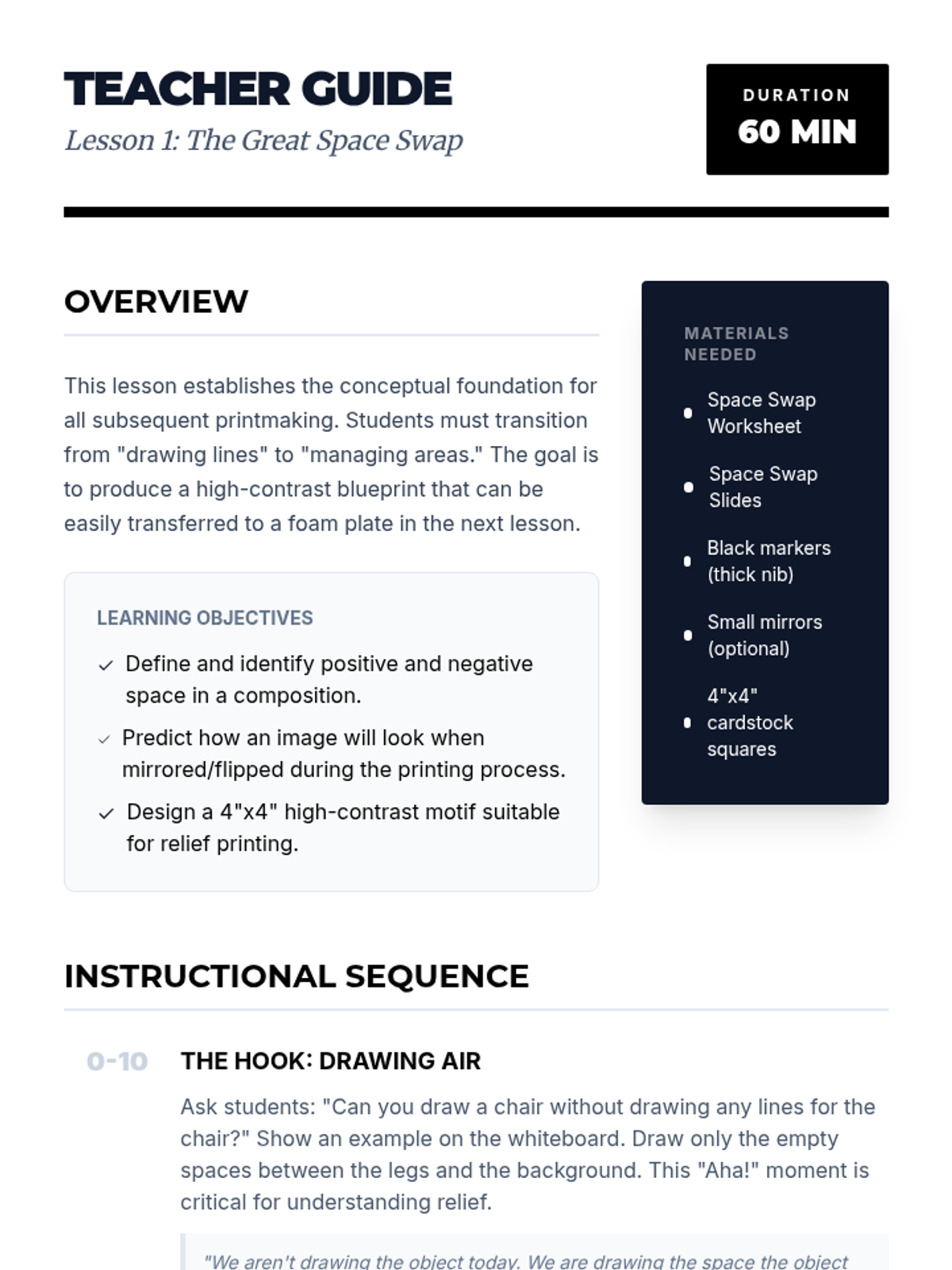
A comprehensive 5th-grade art sequence introducing the subtractive process of relief printing. Students progress from conceptualizing mirrored imagery and carving soft blocks to mastering ink application and producing a numbered edition of prints.
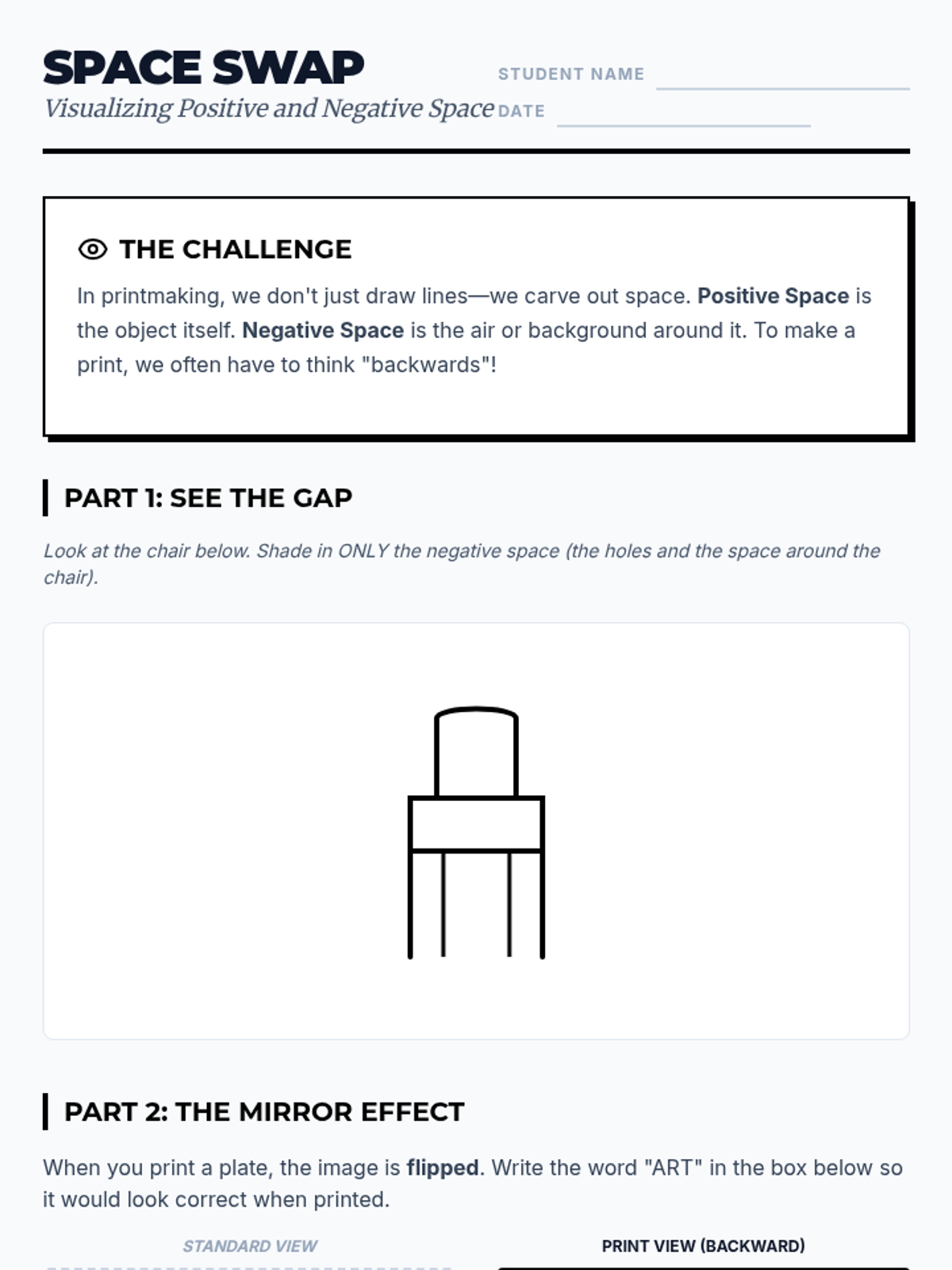
Students explore relief printing using soft foam plates, focusing on positive and negative space, inking techniques, and pattern creation. The sequence culminates in a professional-style edition of prints and a gallery walk critique.
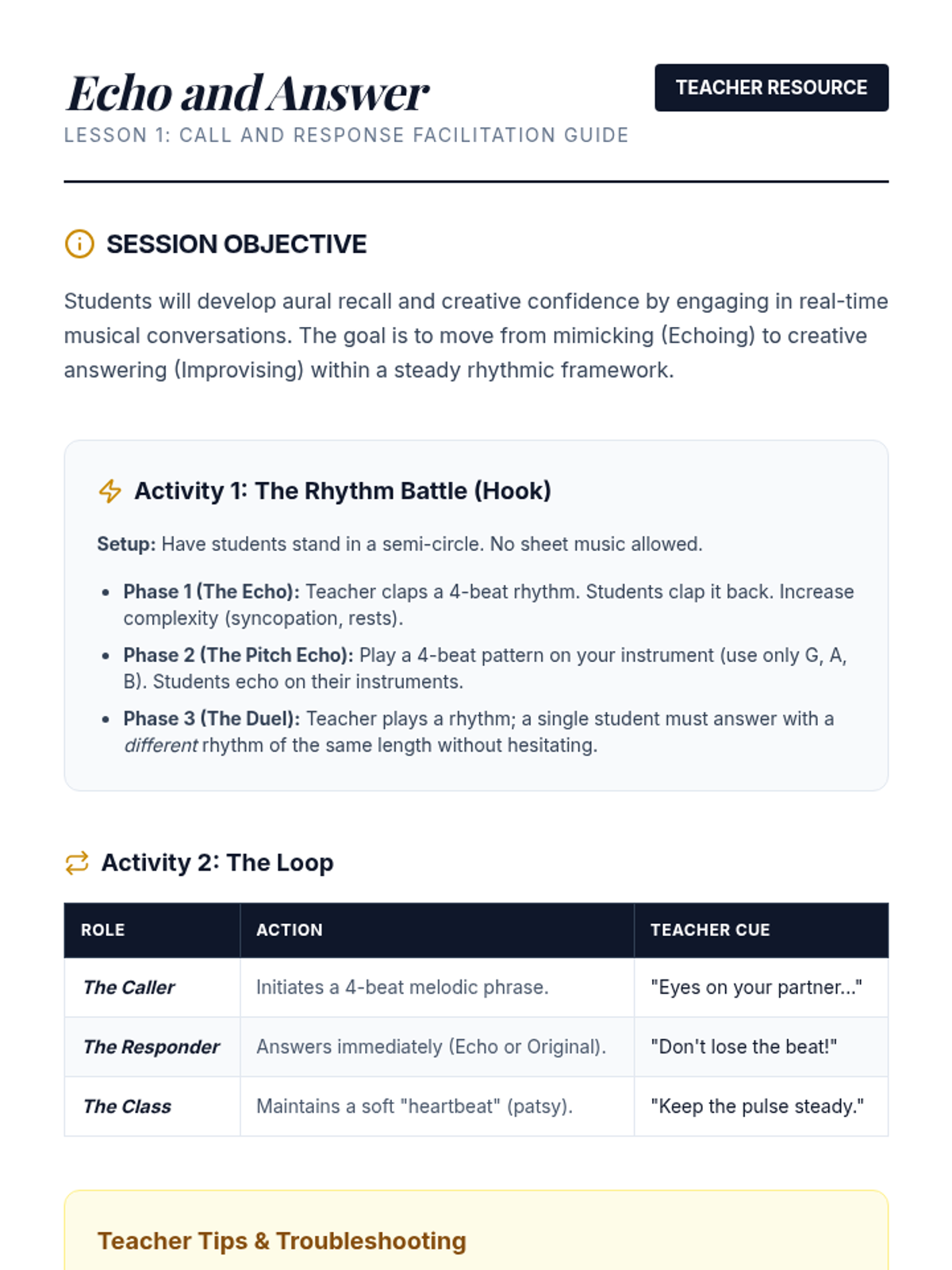
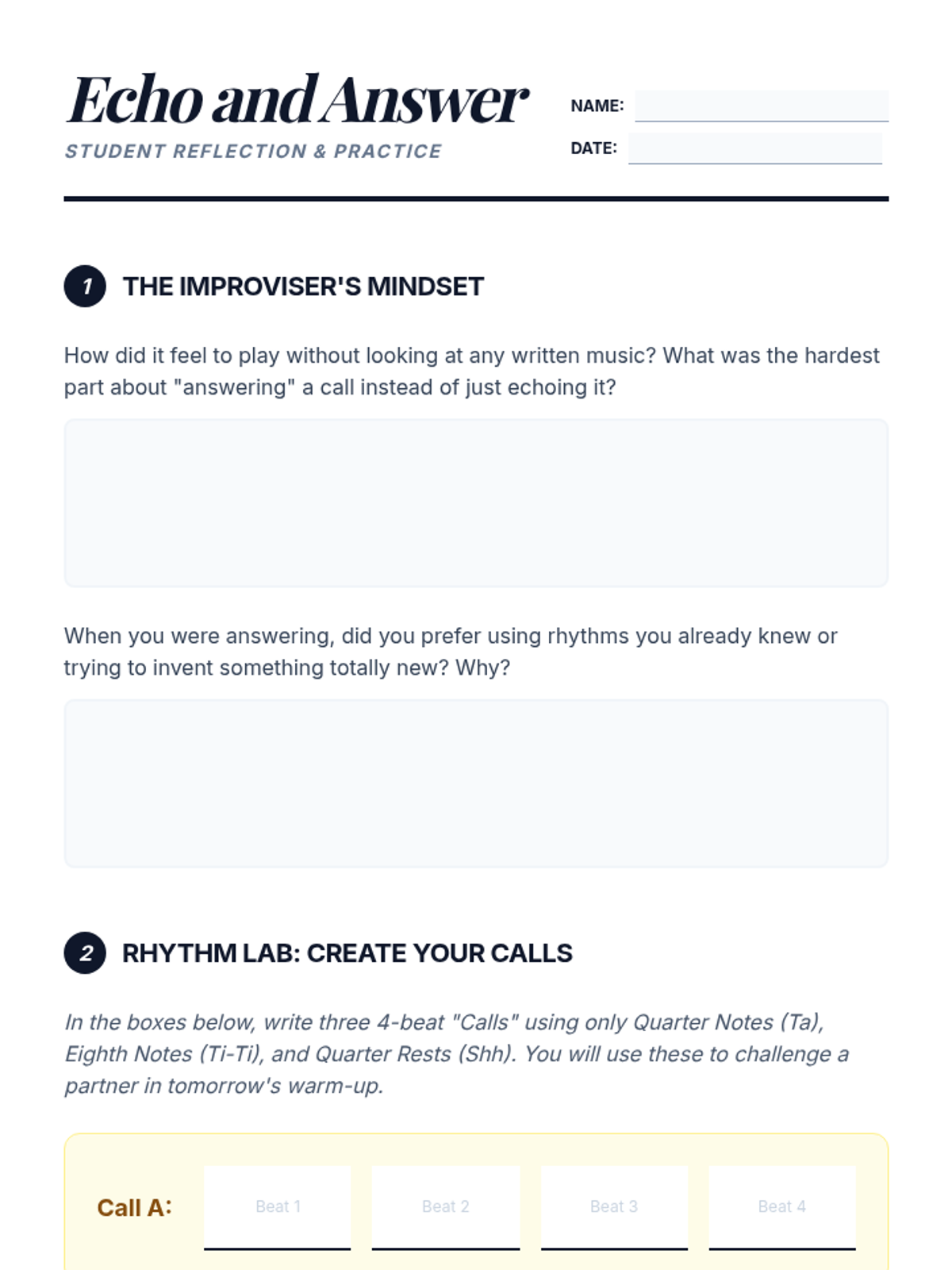
A 5th-grade music sequence where students transition from improvisation to full melodic composition. They explore motifs, notation, and phrasing, culminating in a class recital of original works.
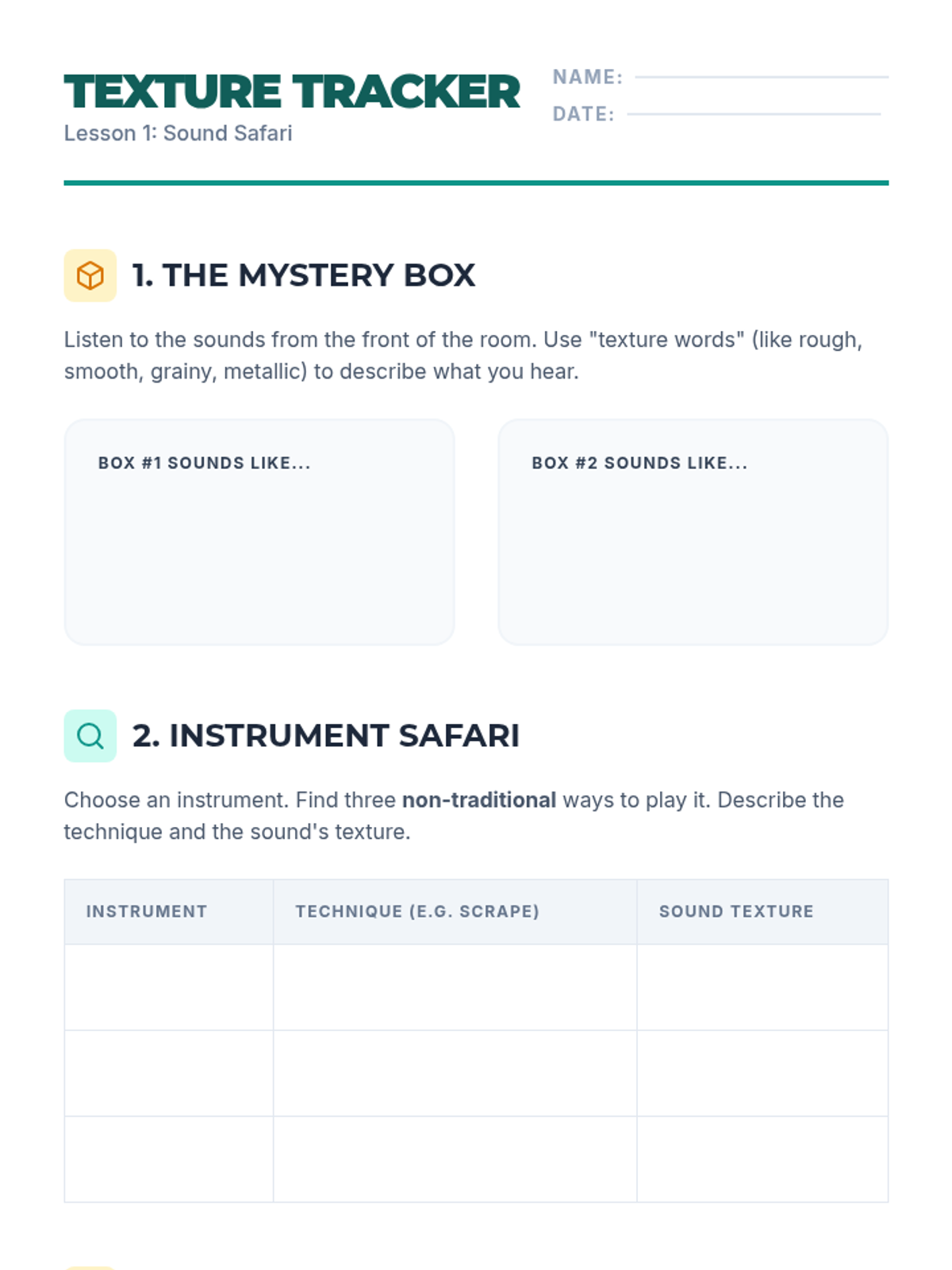
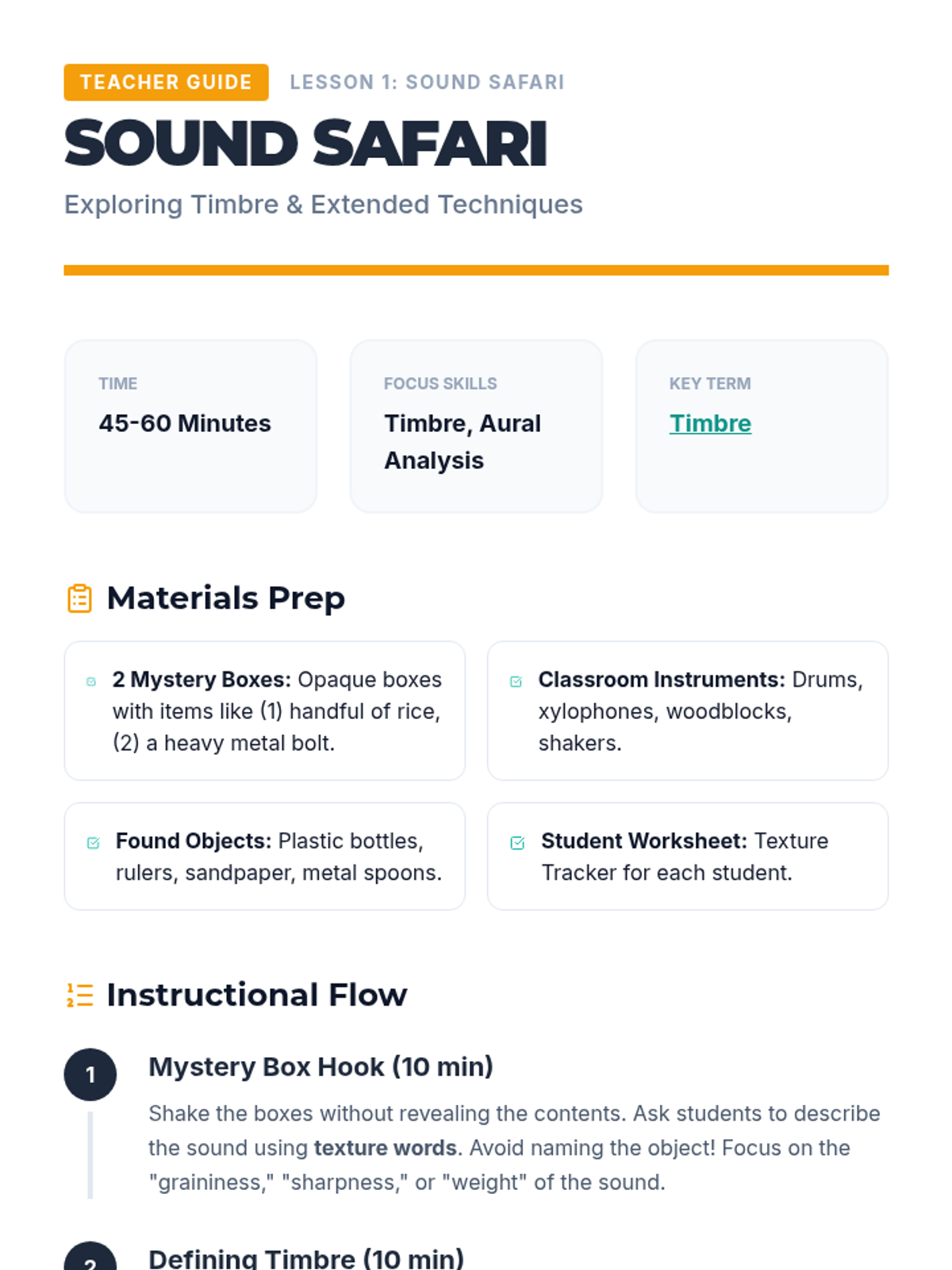
A 5-lesson journey into music composition using graphic notation. Students explore sound textures, invent visual symbols for audio, compose narrative soundscapes, and lead ensembles as conductors.
A comprehensive 5-lesson sequence for 5th-grade students to master melodic composition using standard treble clef notation, covering contour, staff literacy, phrasing, and the revision process.
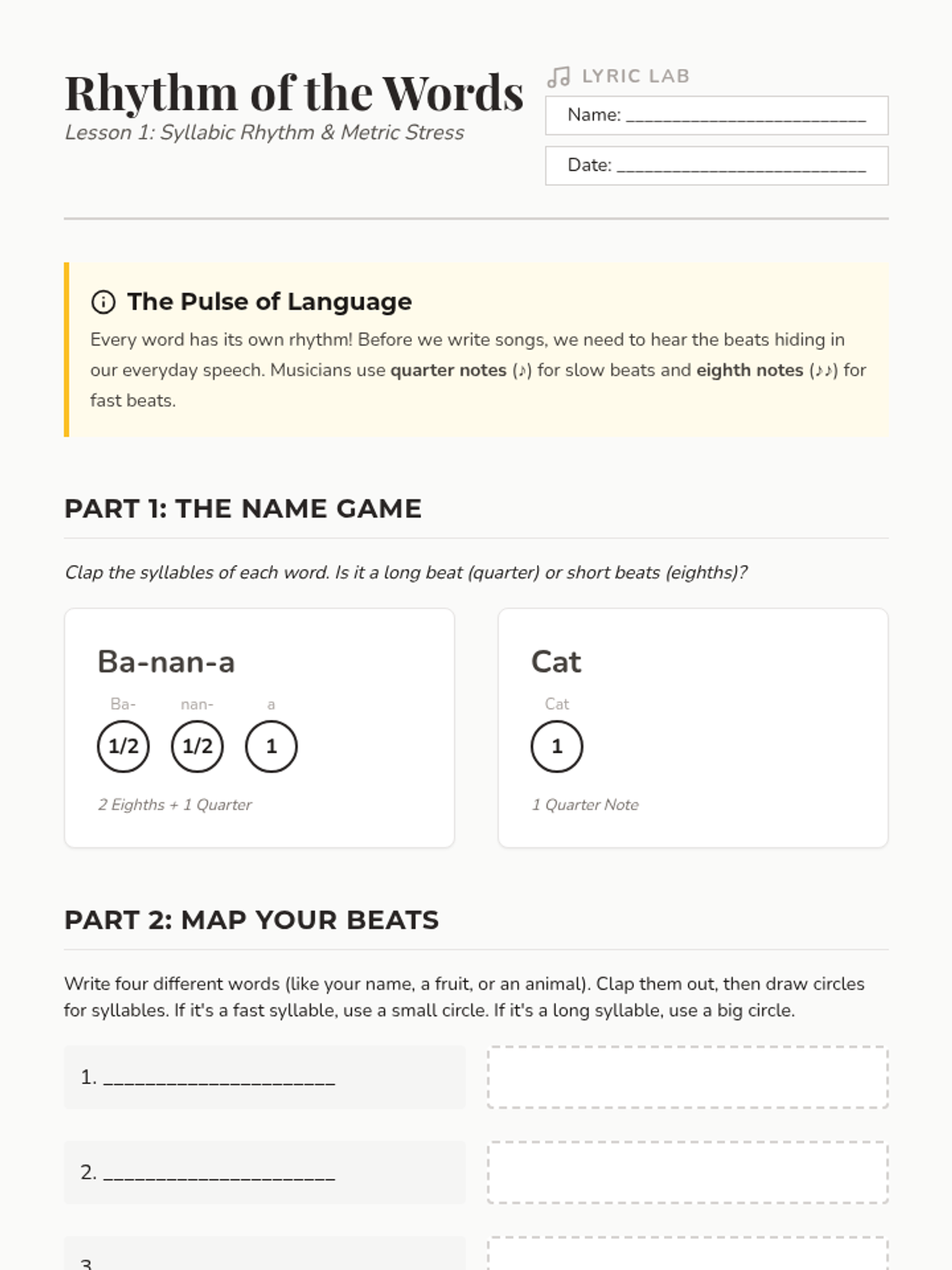
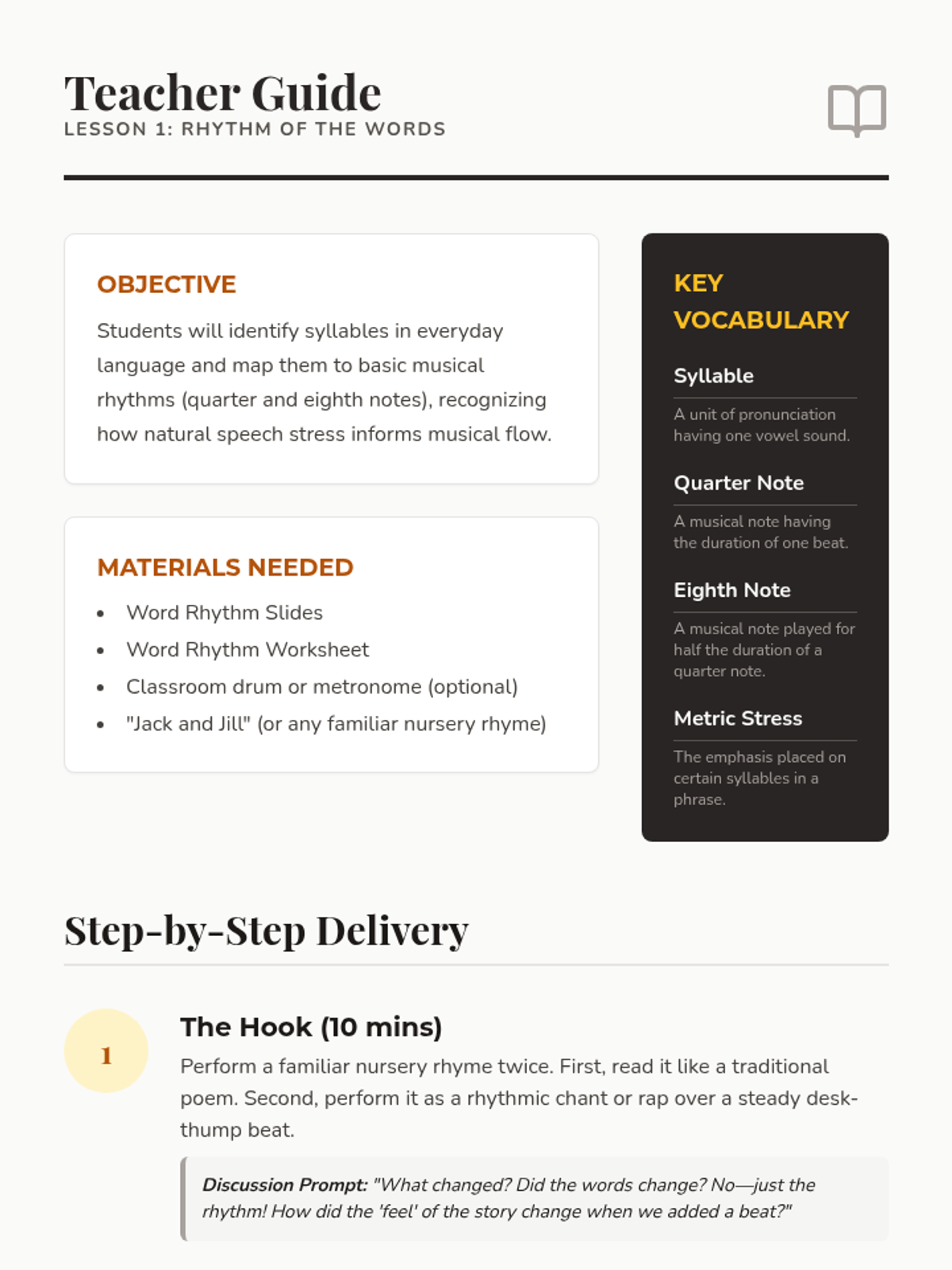
This sequence explores the intersection of language and music, teaching 5th graders how to craft lyrics, understand song structures like verse and chorus, and set their words to rhythmic and melodic patterns. Students will progress from rhythm basics to performing their own original compositions.
A 5th-grade music unit exploring rhythmic composition through the lens of ostinatos and ensembles. Students progress from basic notation to creating complex, layered polyrhythmic pieces.
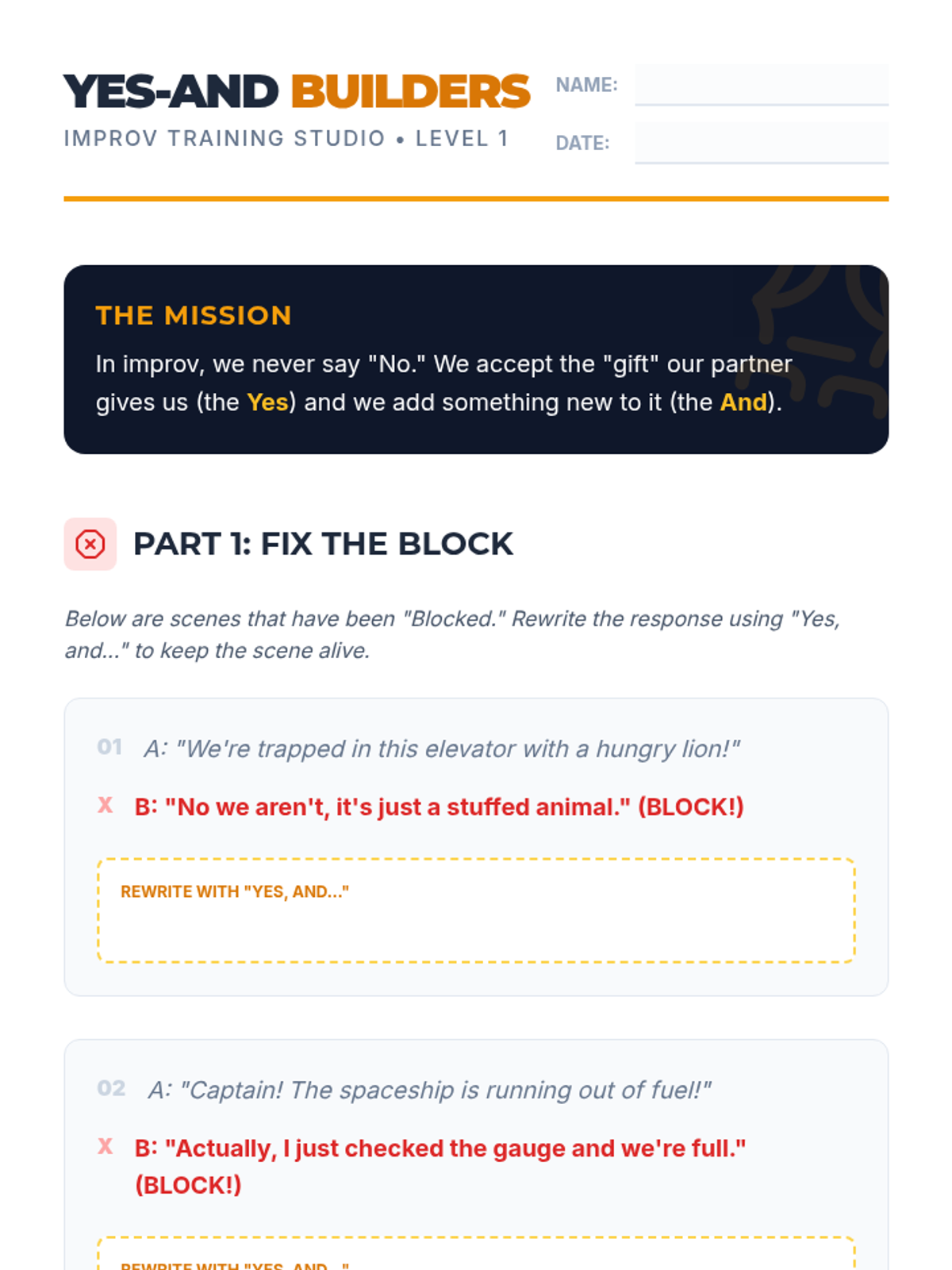
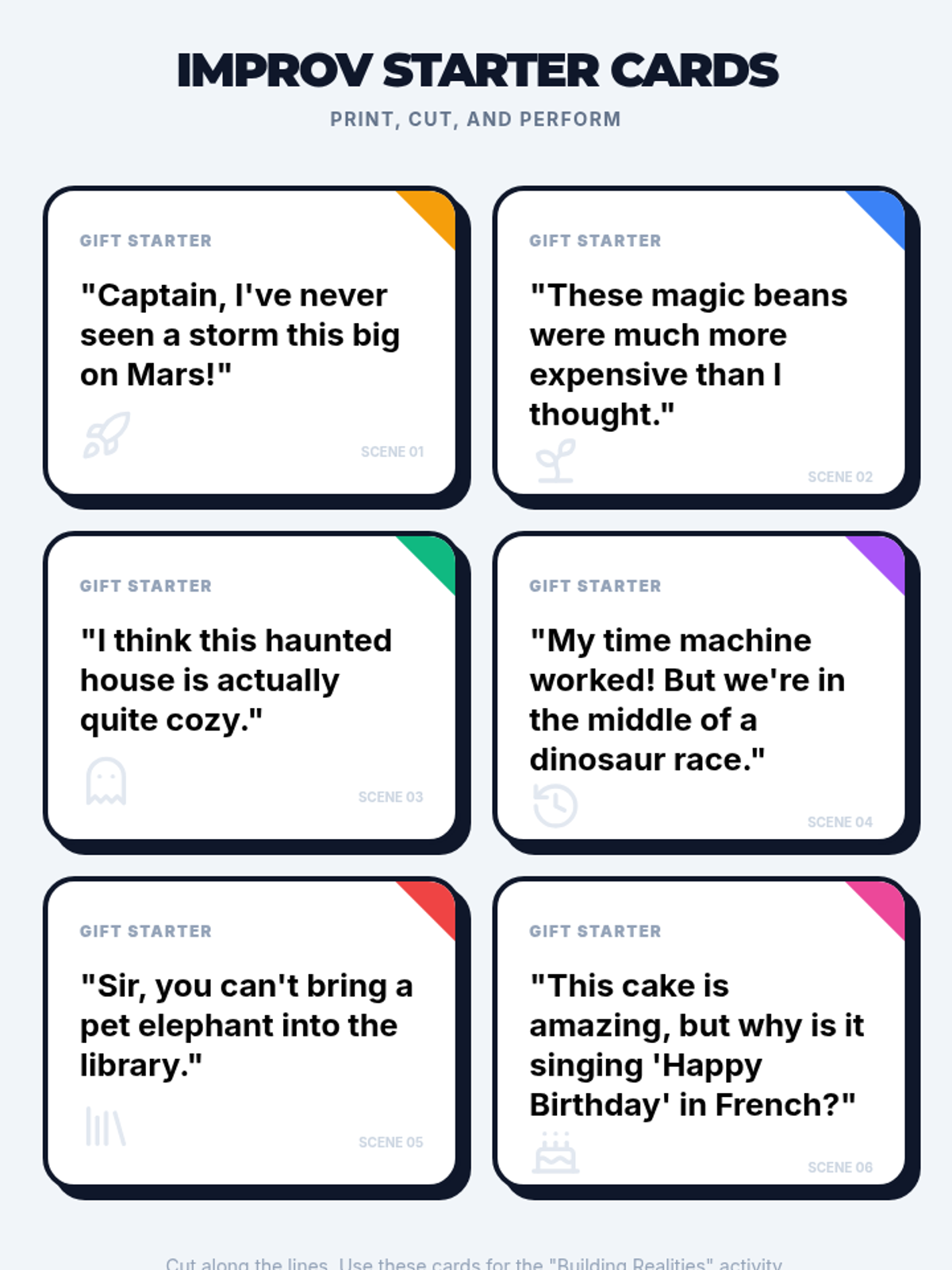
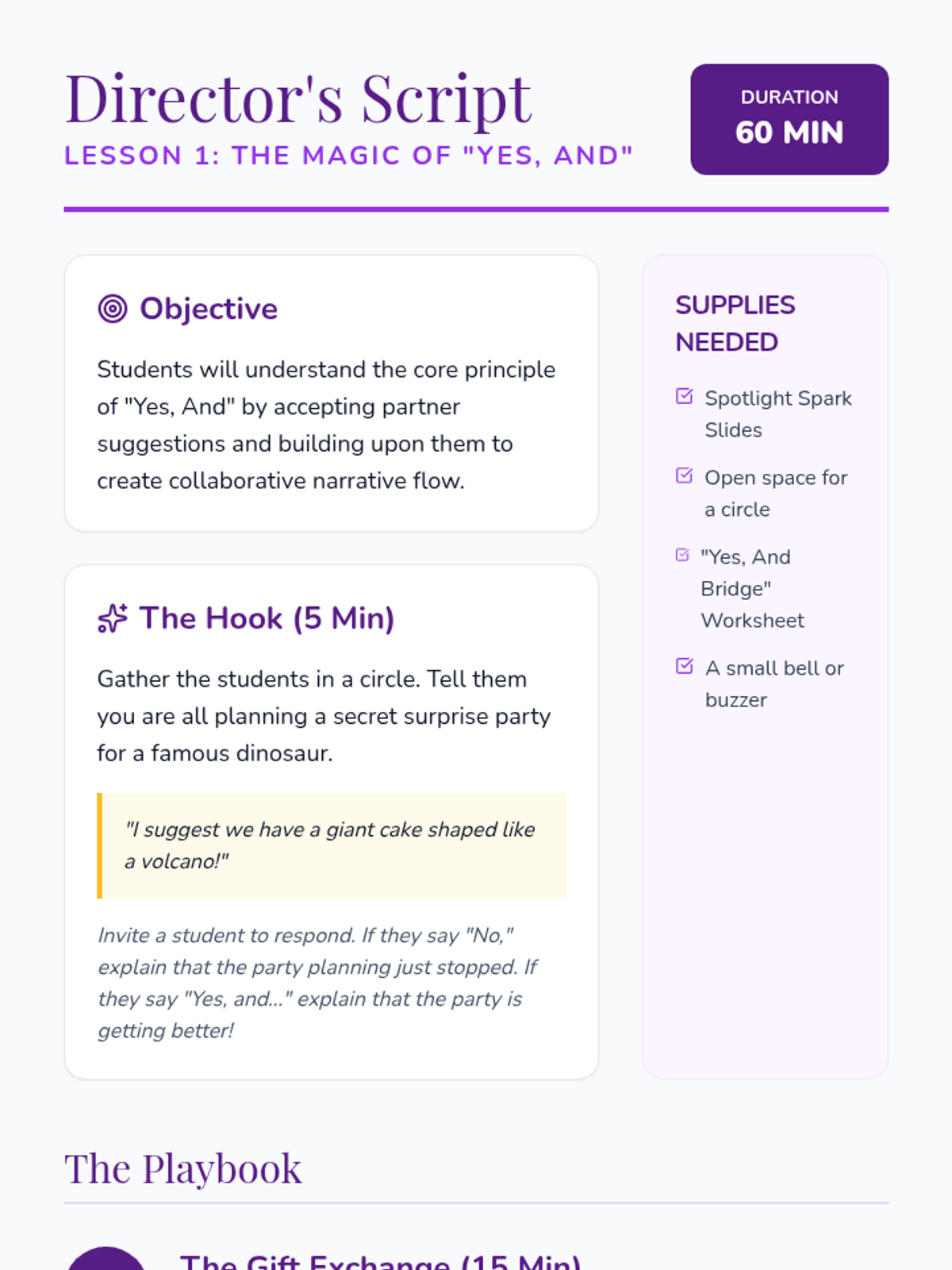
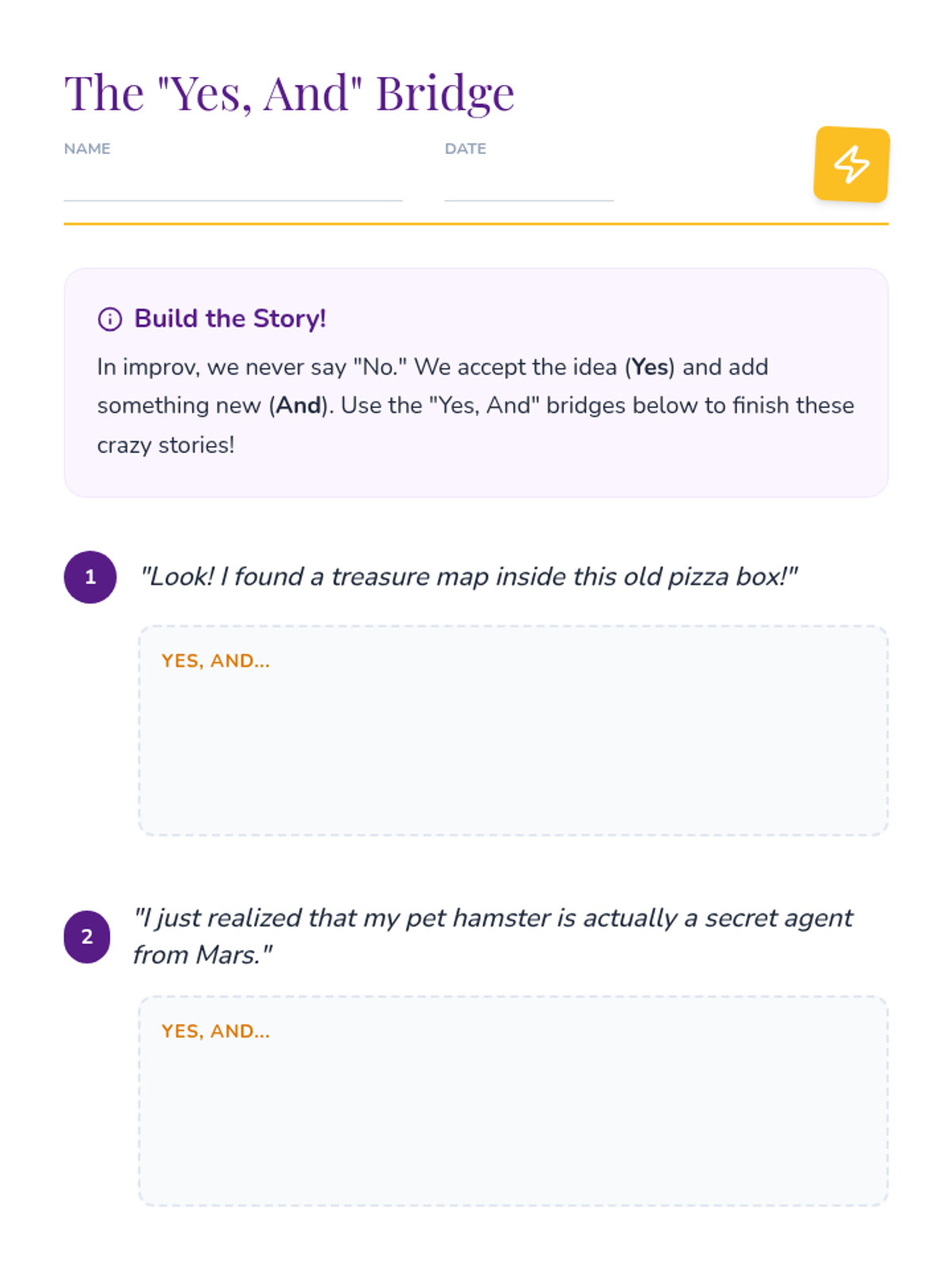
This sequence focuses on improvisation and ensemble building, teaching students to think quickly and collaborate creatively. The arc moves from basic rule-setting (Yes, And) to active listening and reacting in the moment. Students learn to build scenes cooperatively without a script, focusing on maintaining character and narrative logic.
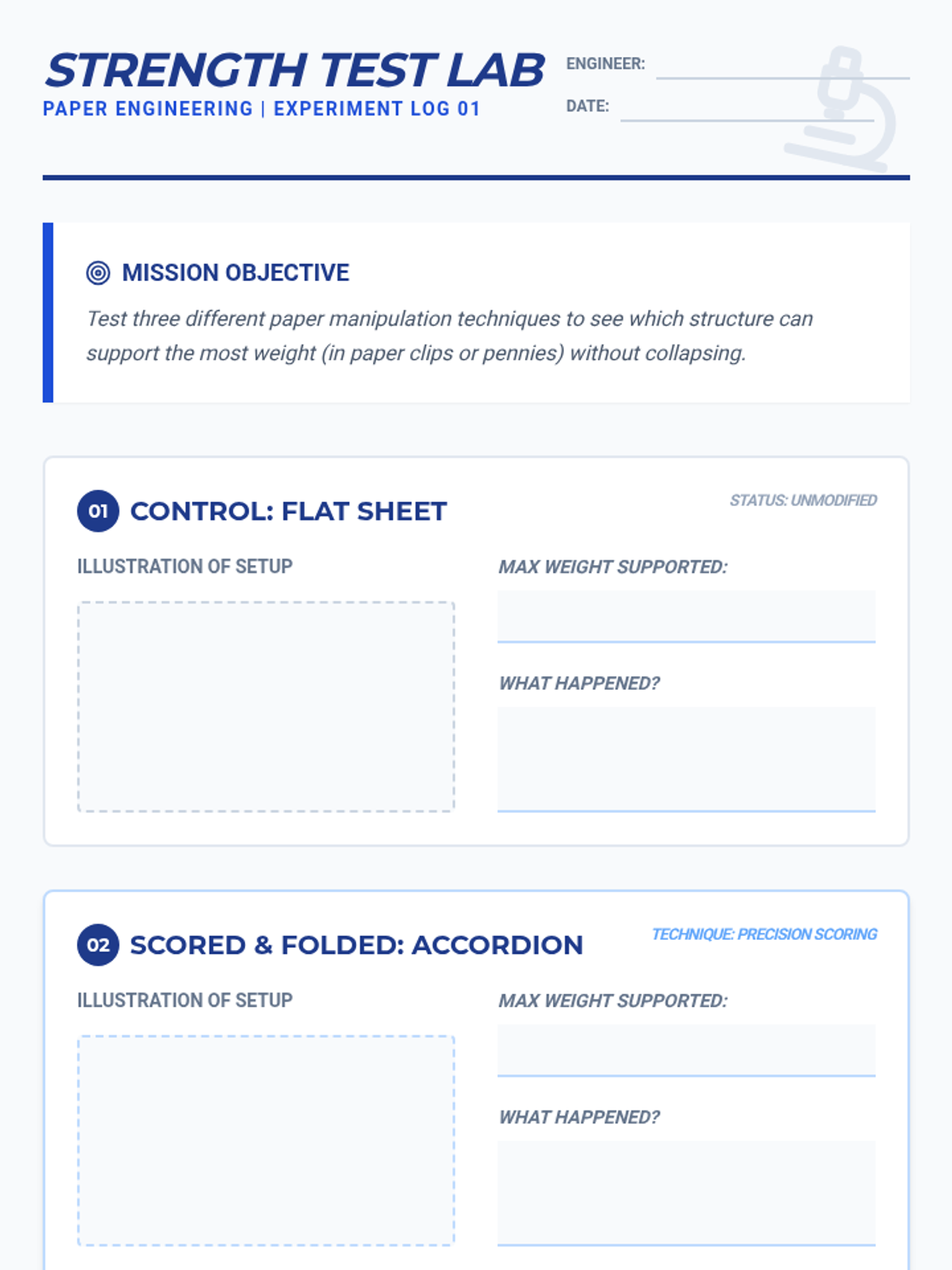
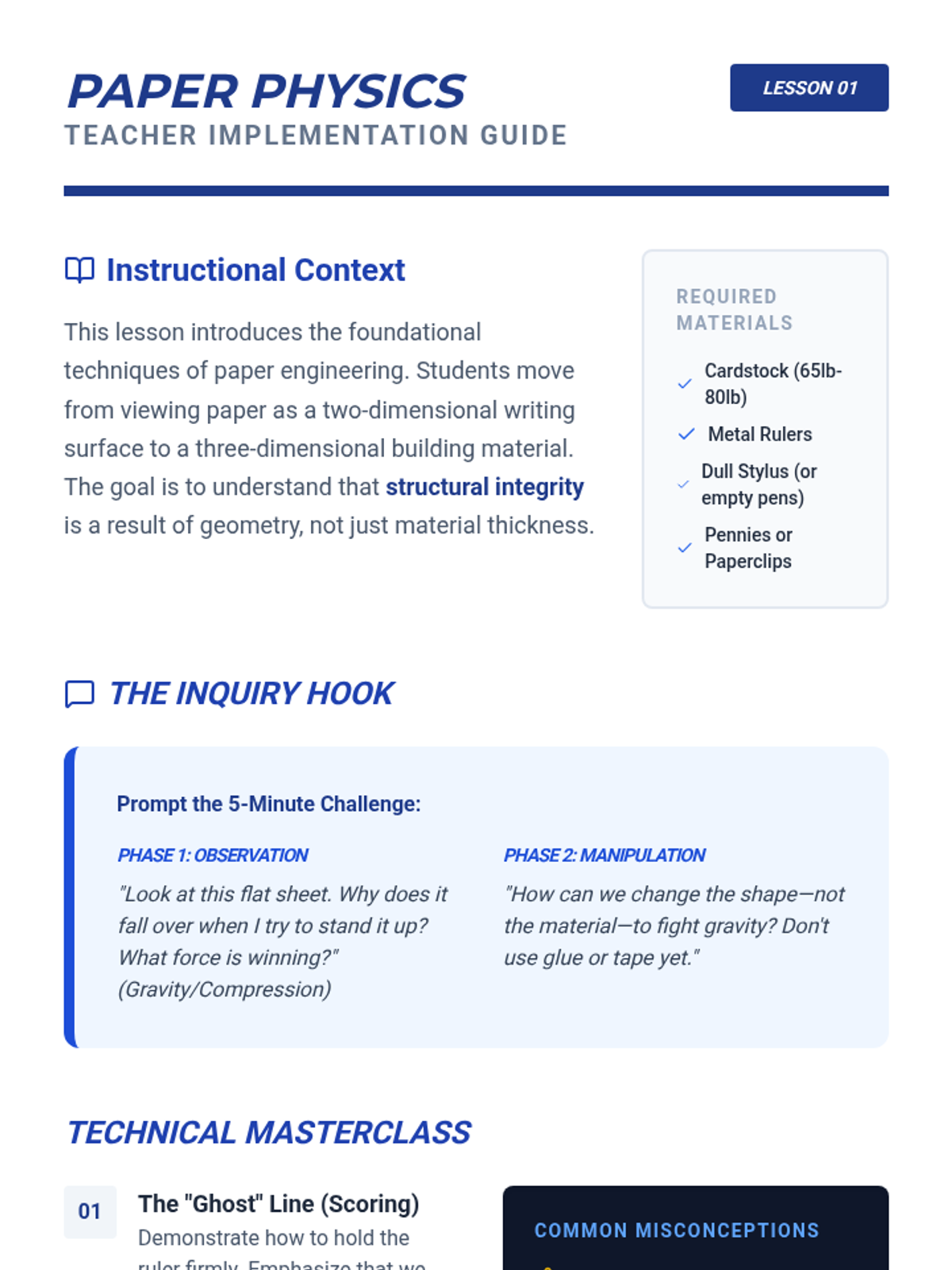
This sequence explores the intersection of engineering and art through paper sculpture. Students investigate how a flimsy, flat material can be manipulated through folding, scoring, and slotting to become rigid and self-supporting, moving from basic relief to free-standing geometric construction.
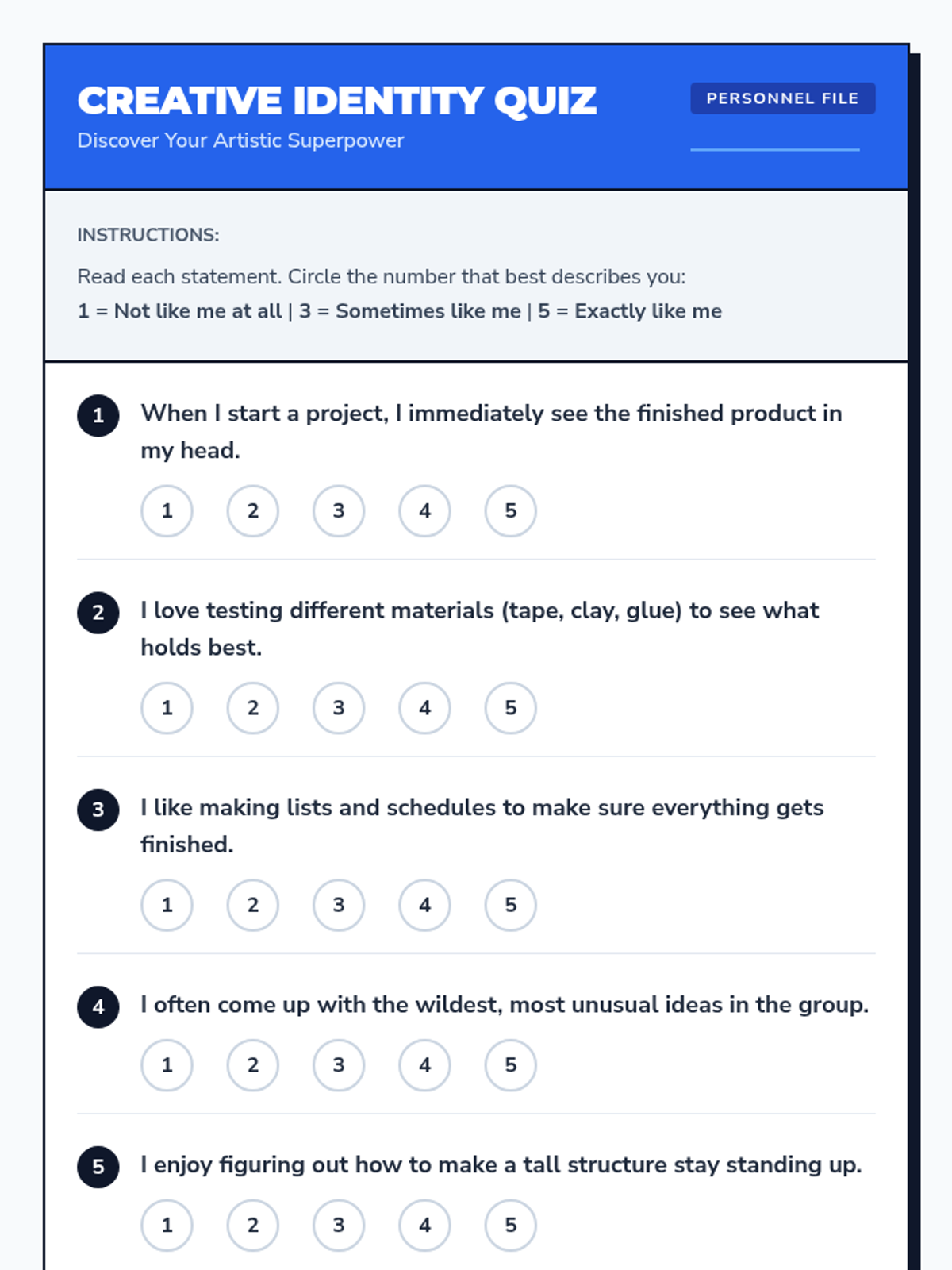
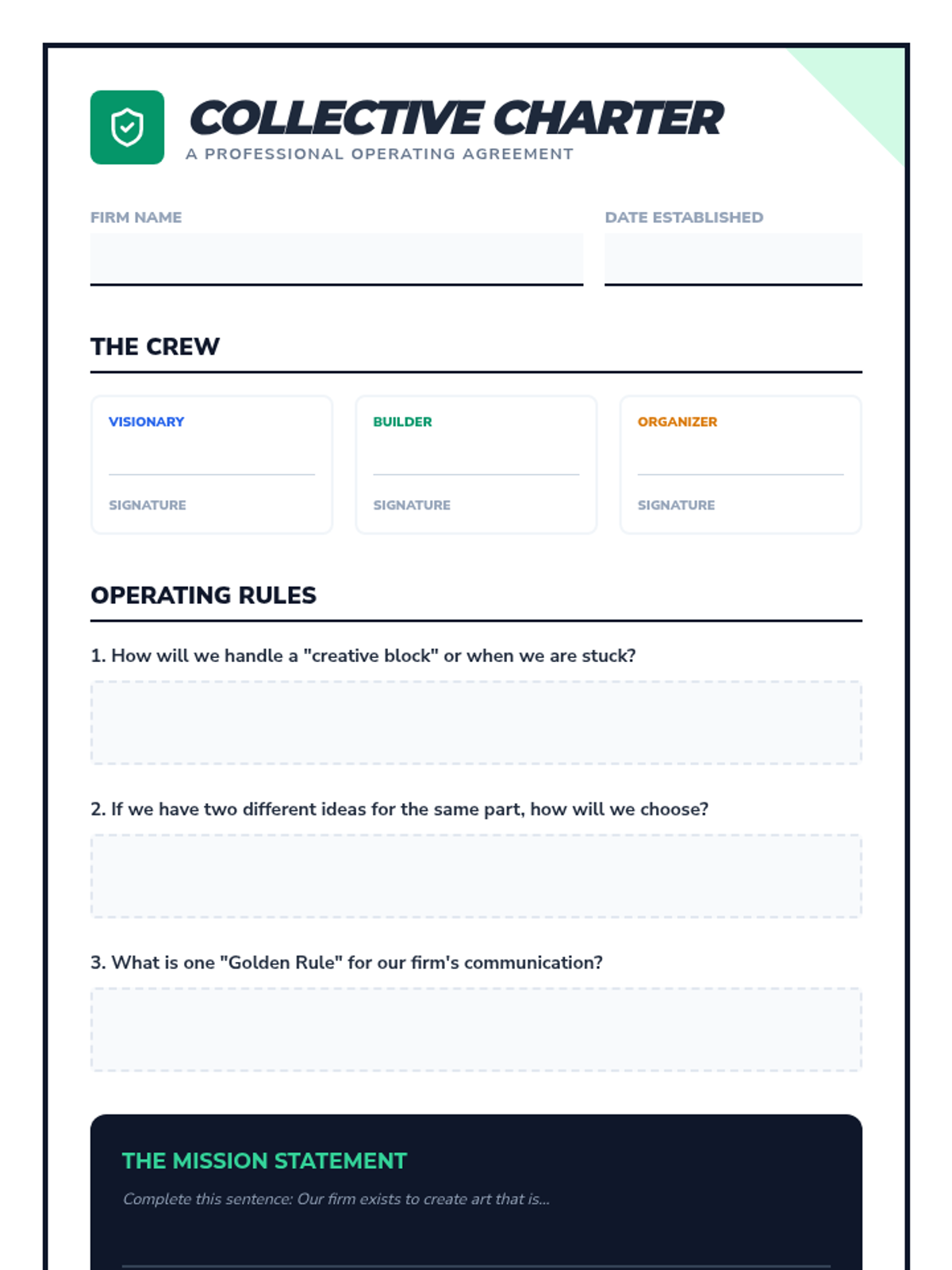
A 5th-grade arts sequence where students form design firms to solve a client-based mixed-media challenge. Students navigate roles, client twists, and collaborative prototyping to learn the value of diverse perspectives in the creative process.
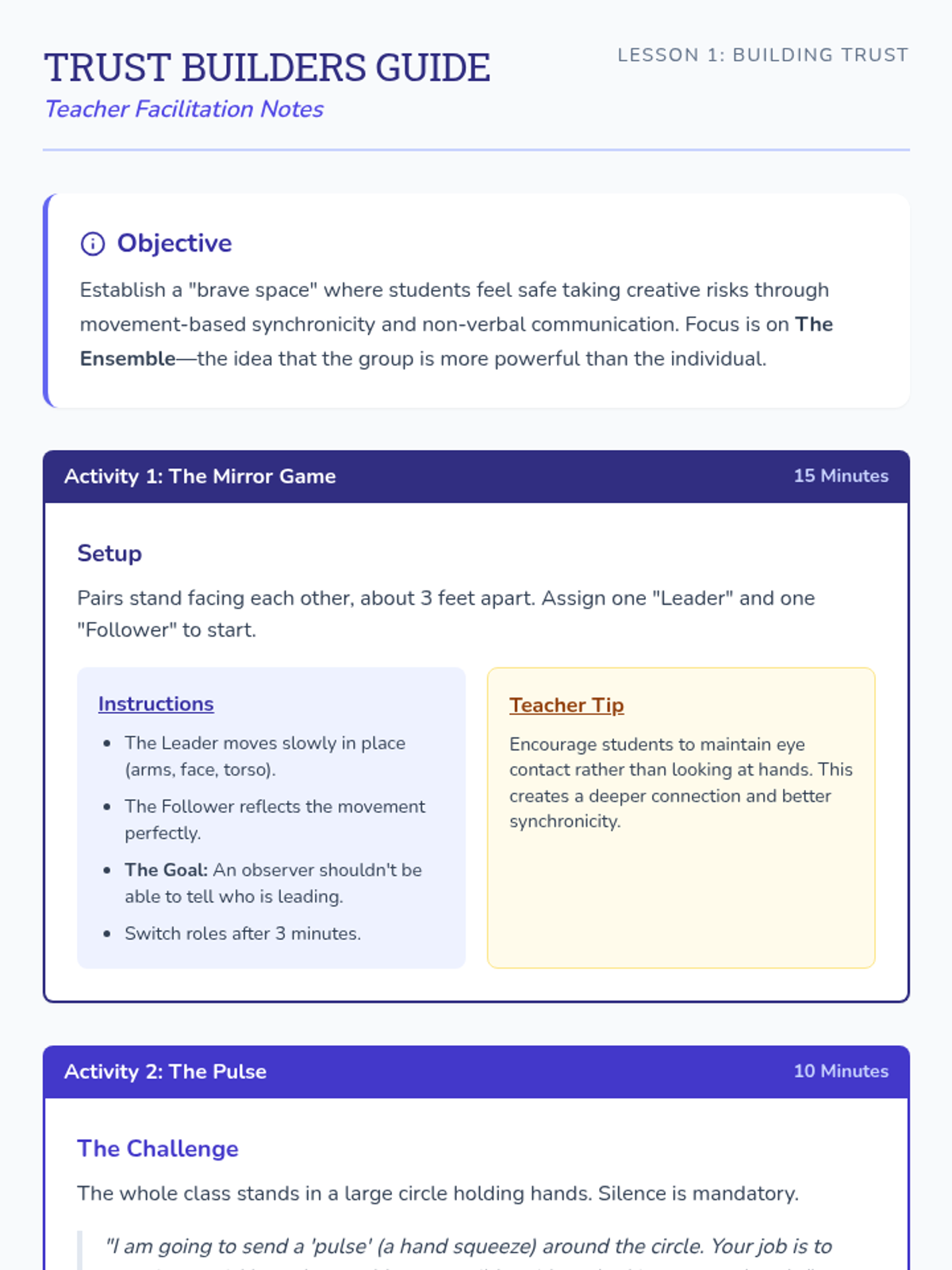
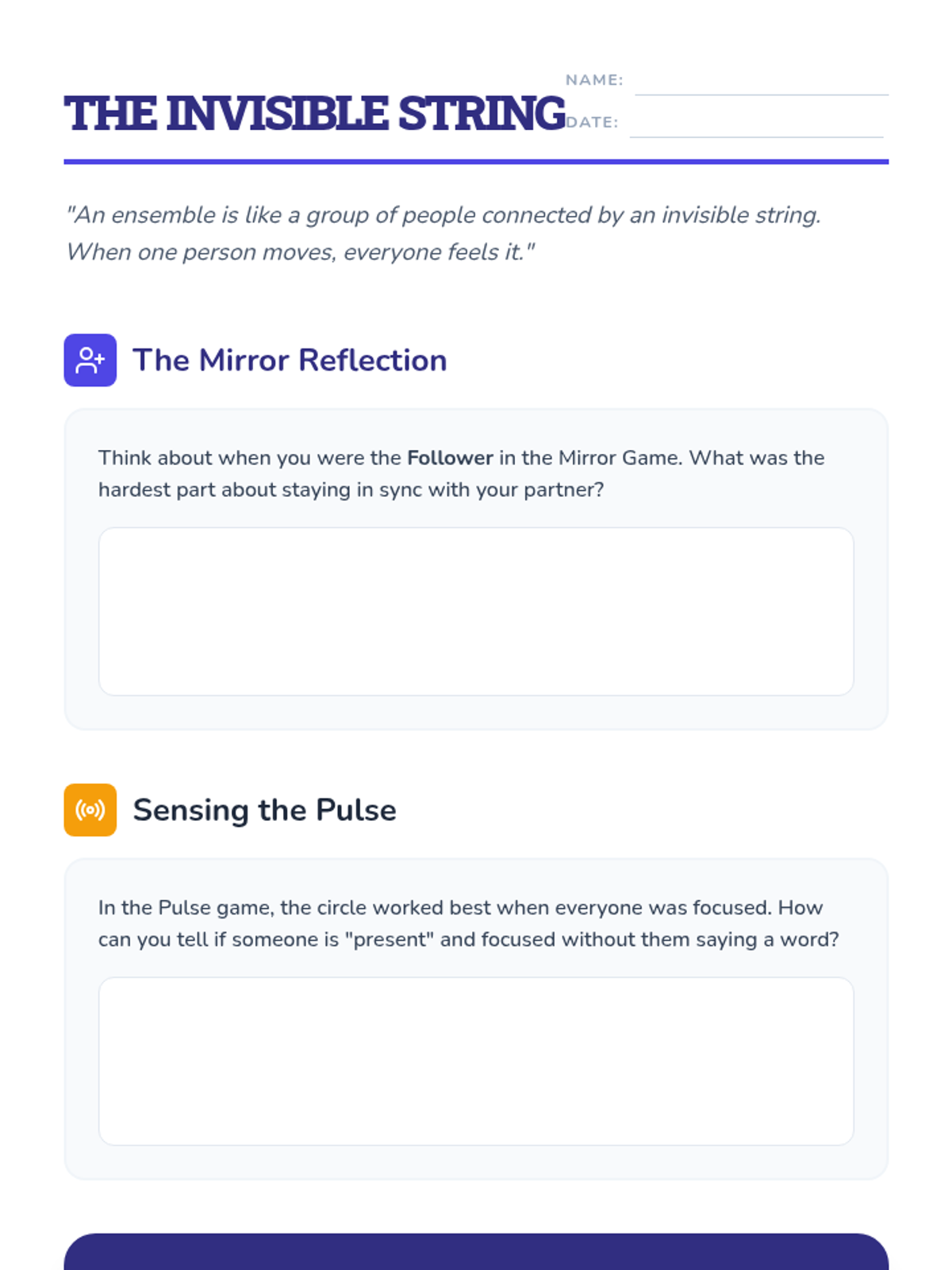
A 5th-grade performing arts sequence focusing on ensemble building, trust, and the 'Yes, And' philosophy of improvisation. Students progress from movement-based synchronicity to collaborative storytelling and group performance.
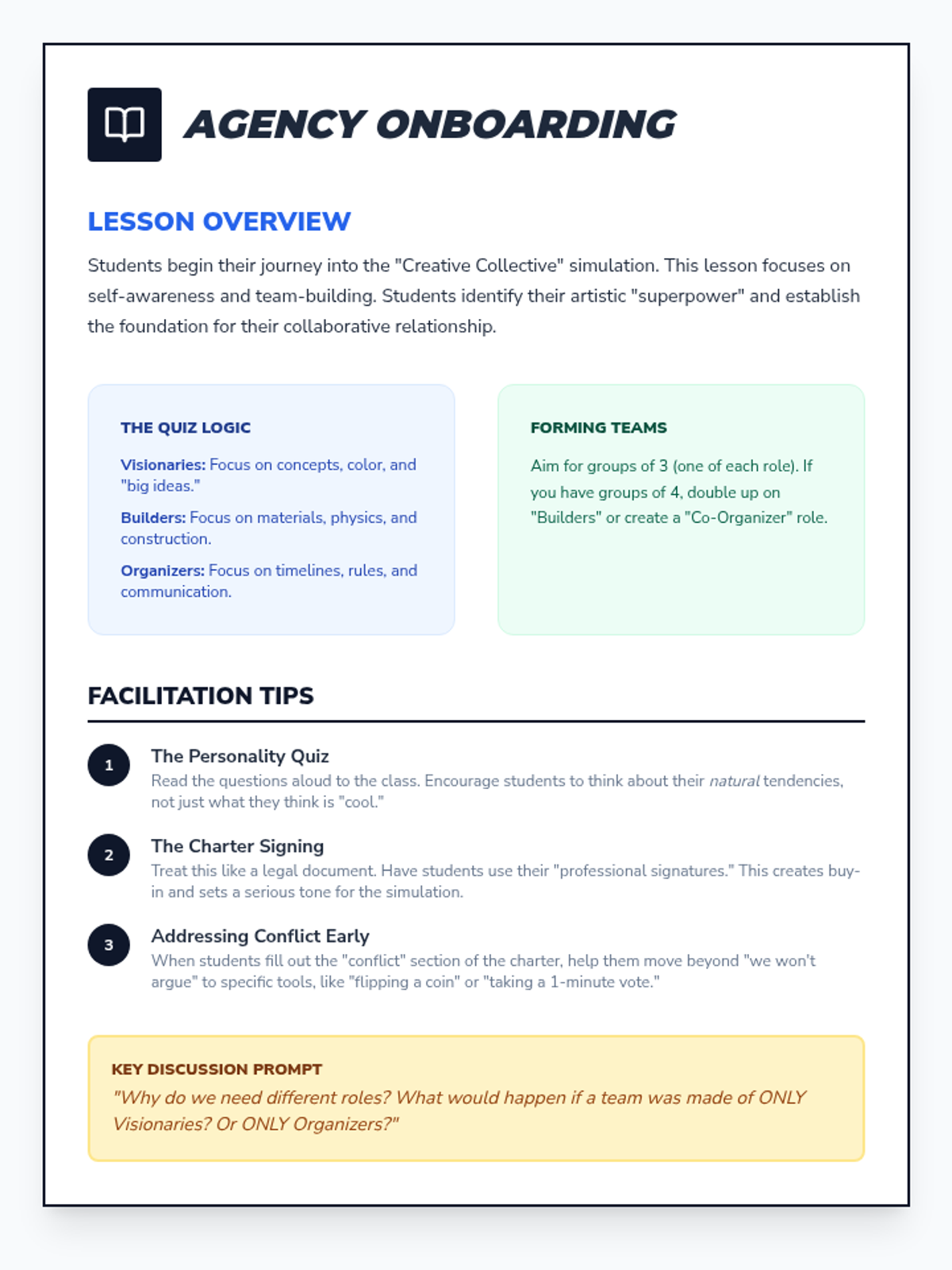
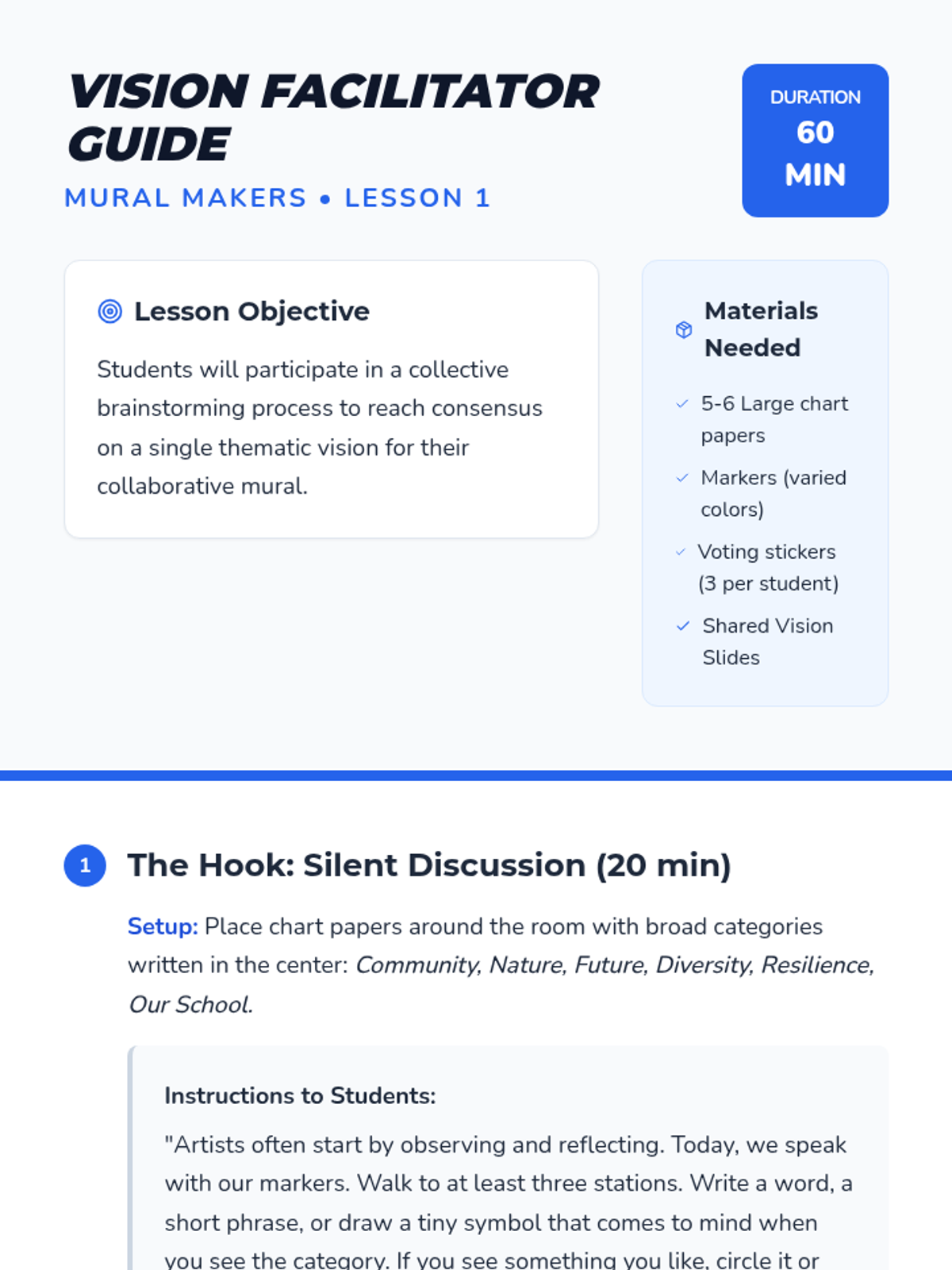
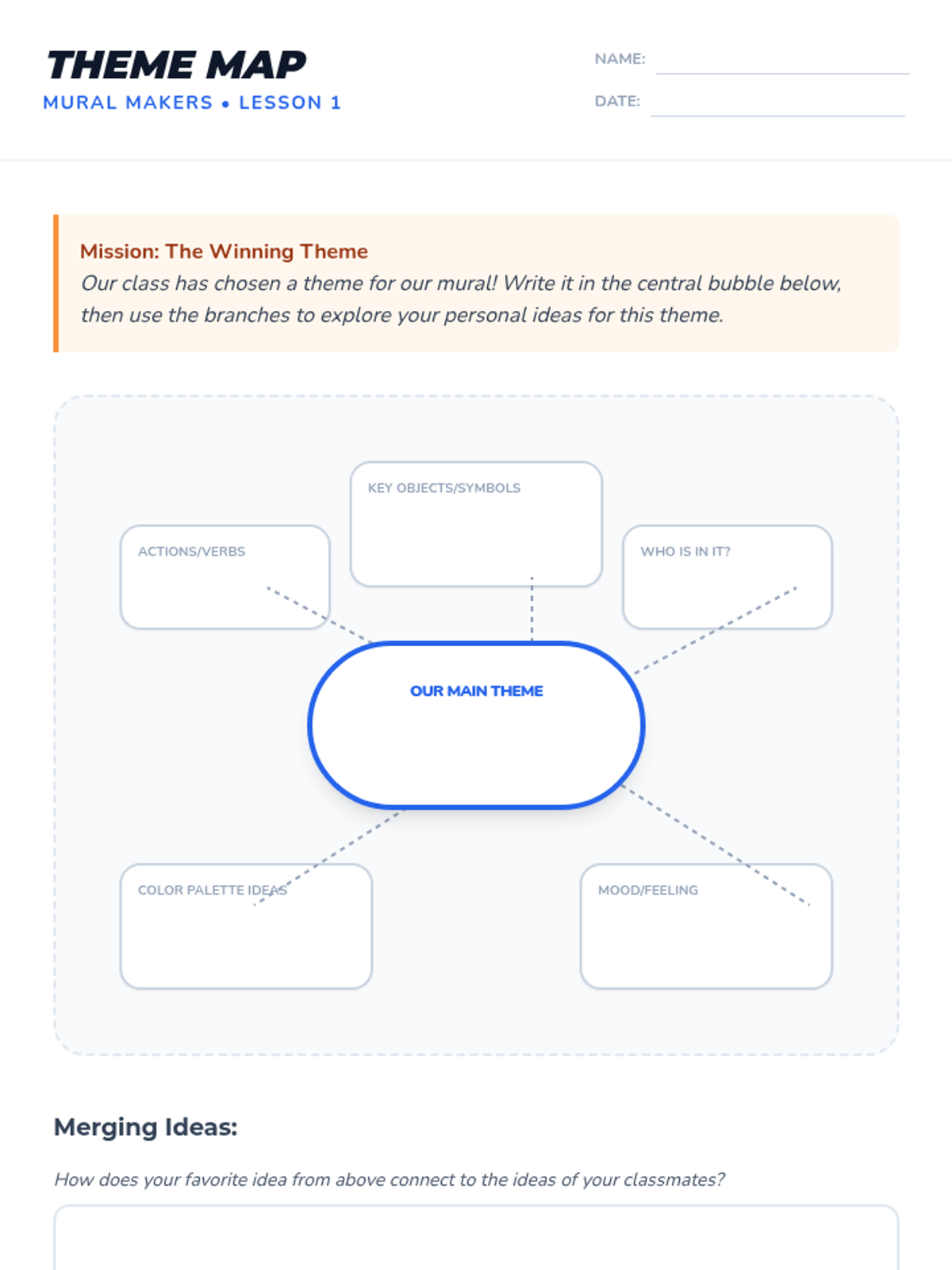
A 5-lesson sequence where students learn the art of collaboration by designing and executing a large-scale mural, moving from individual brainstorming to collective creation.
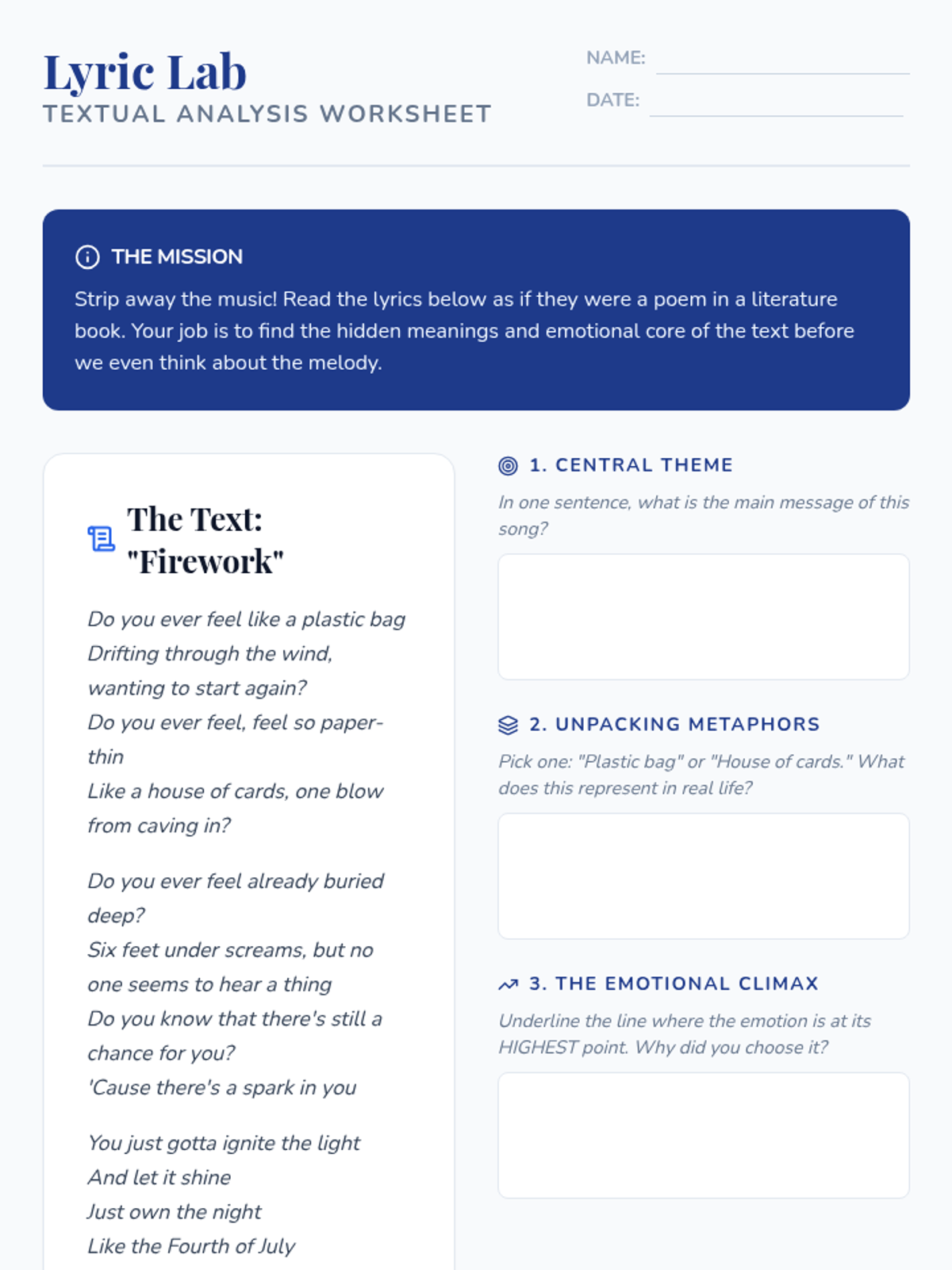
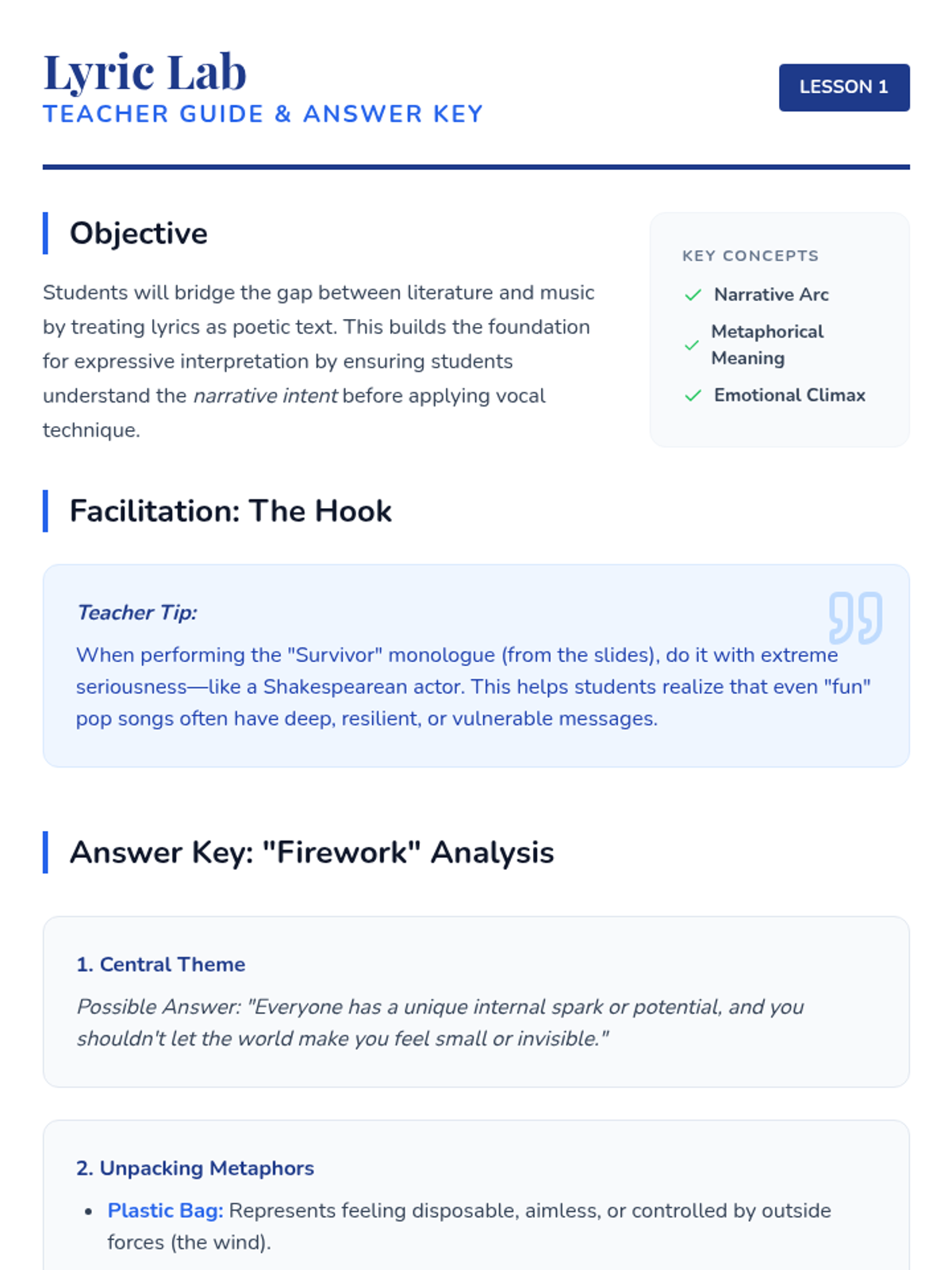
A 5-lesson unit for 6th-grade singers focusing on the intersection of technical performance and artistic storytelling. Students explore lyrics as poetry, master the mechanics of phrasing and breath management, manipulate dynamics and tempo for emotional impact, and analyze interpretive choices in cover songs.
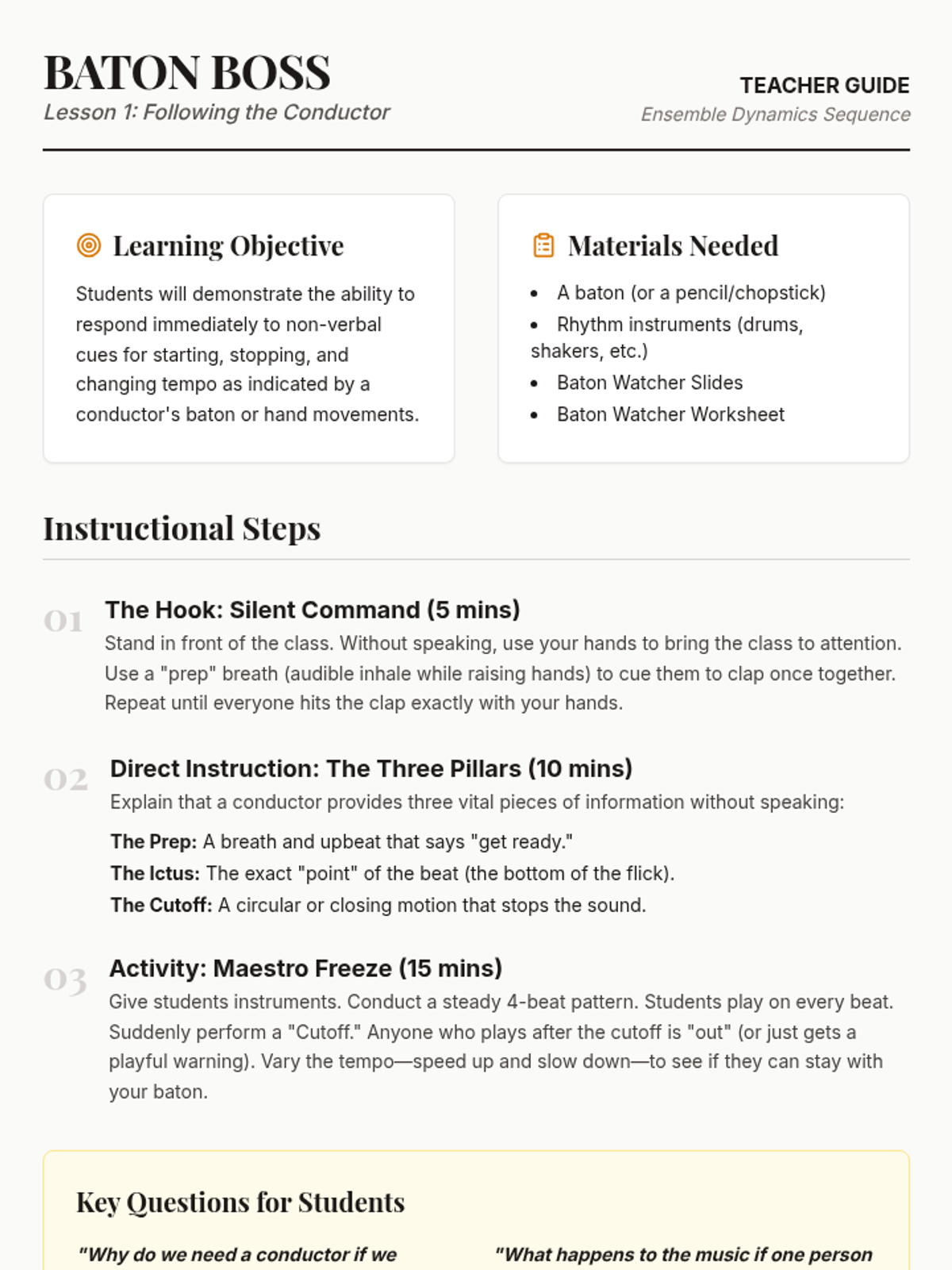
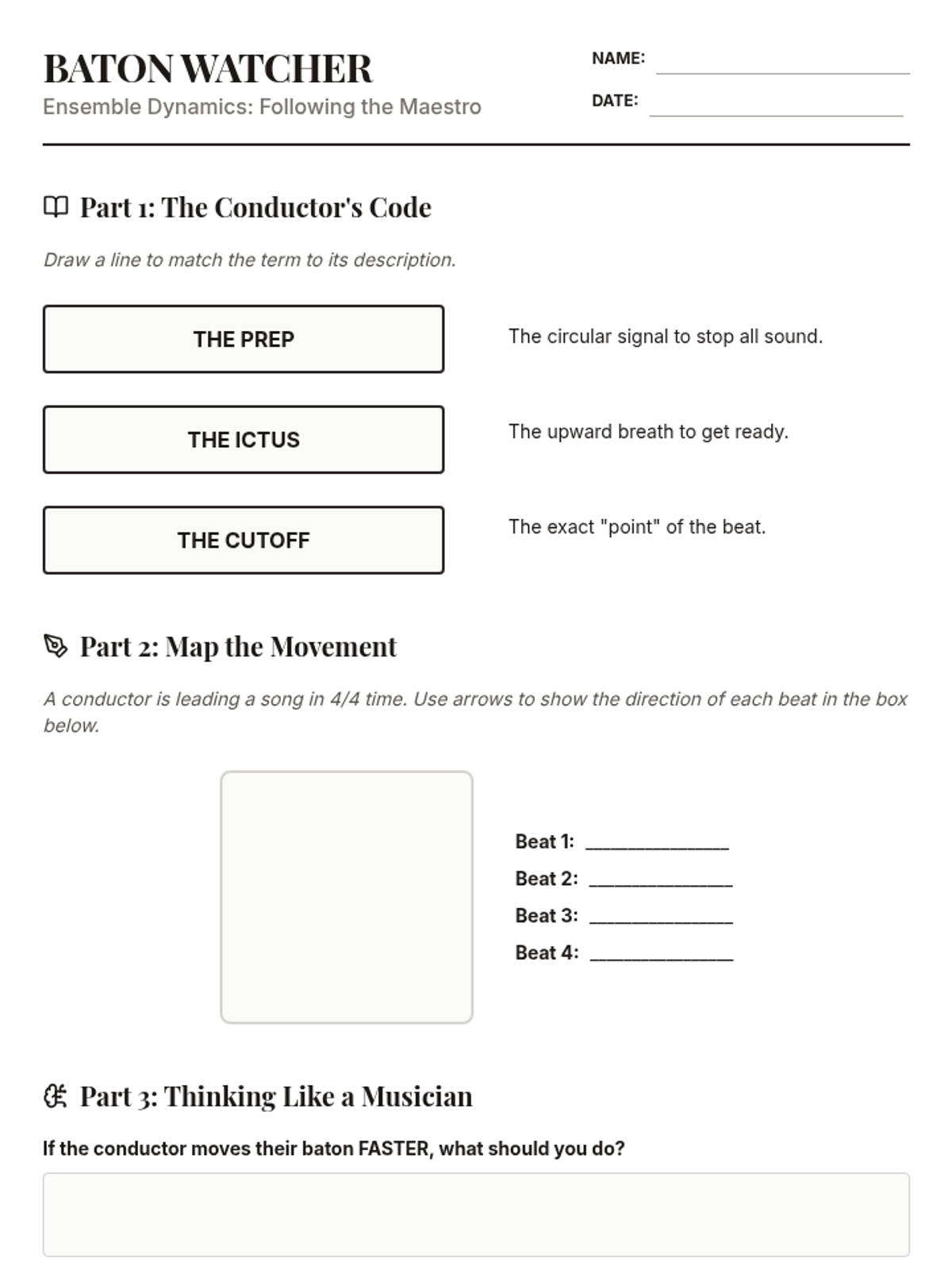
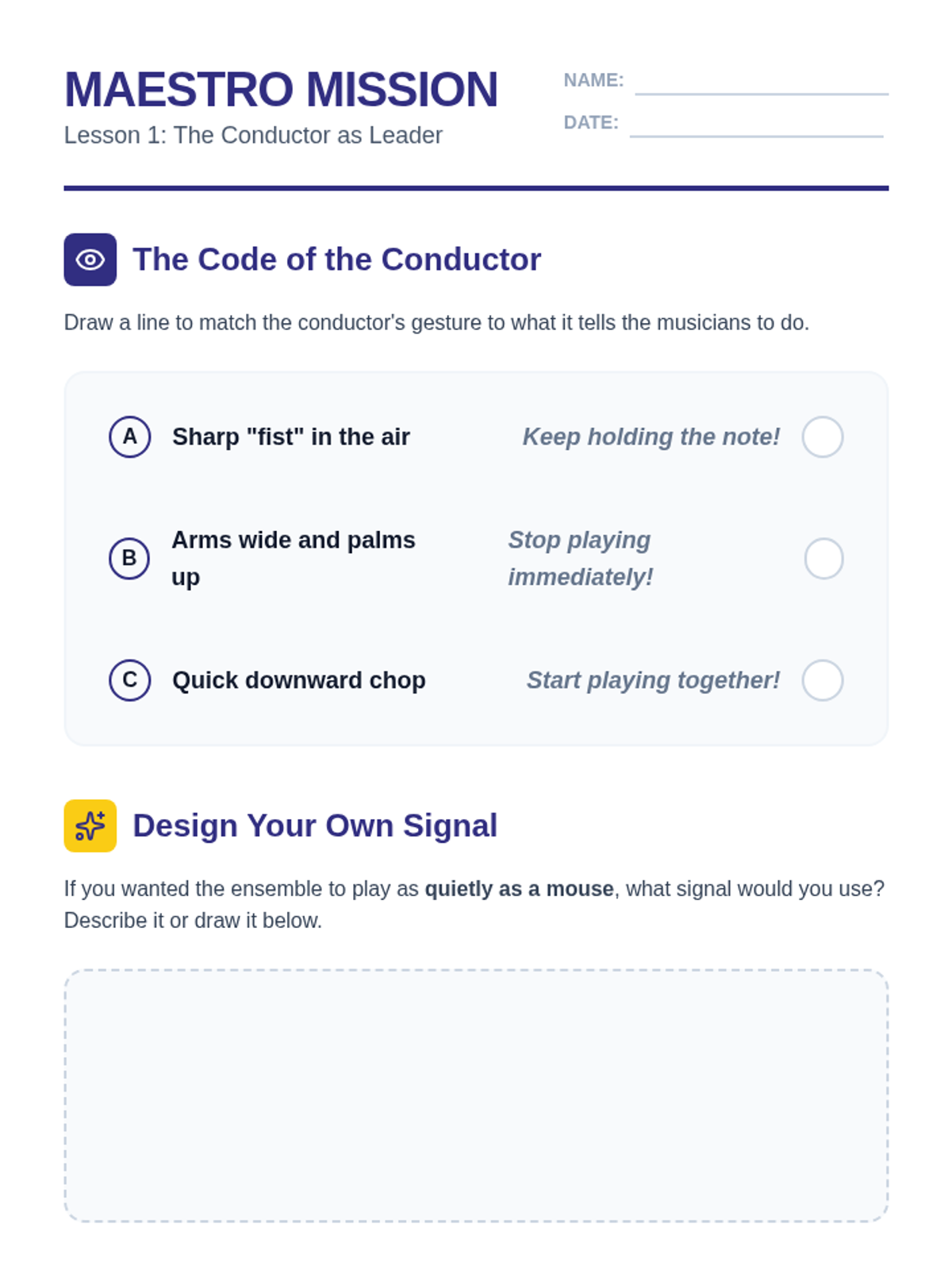
This sequence explores how musicians work together as an ensemble, focusing on conducting cues, dynamic control, balance, and tempo maintenance. Students transition from following a leader to collaborating in small independent groups.
A 5-lesson journey into ensemble techniques, focusing on non-verbal communication, dynamic control, layering parts with ostinatos, and collaborative performance. Students develop the skills needed to listen, adjust, and play as a unified musical group.
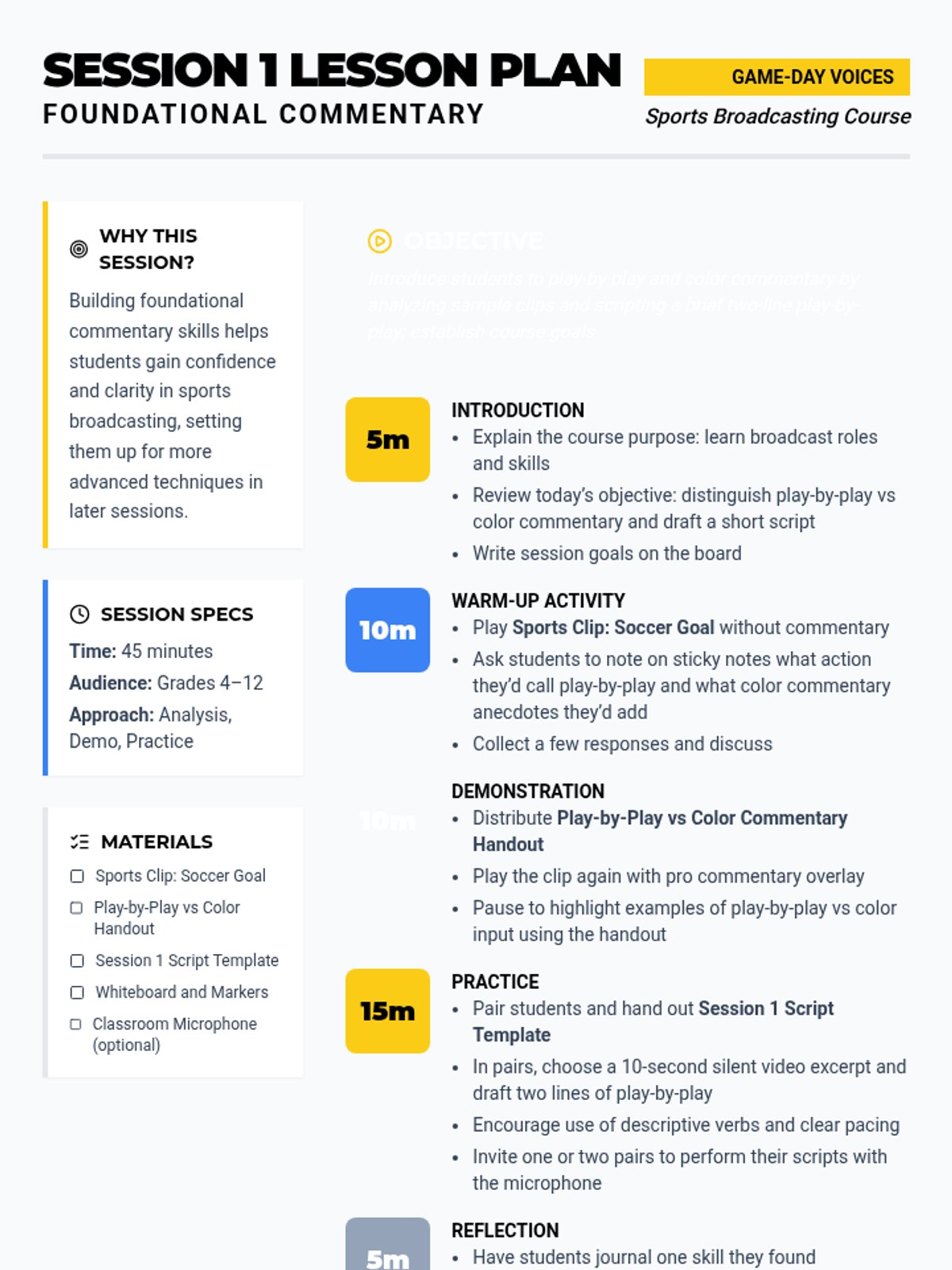
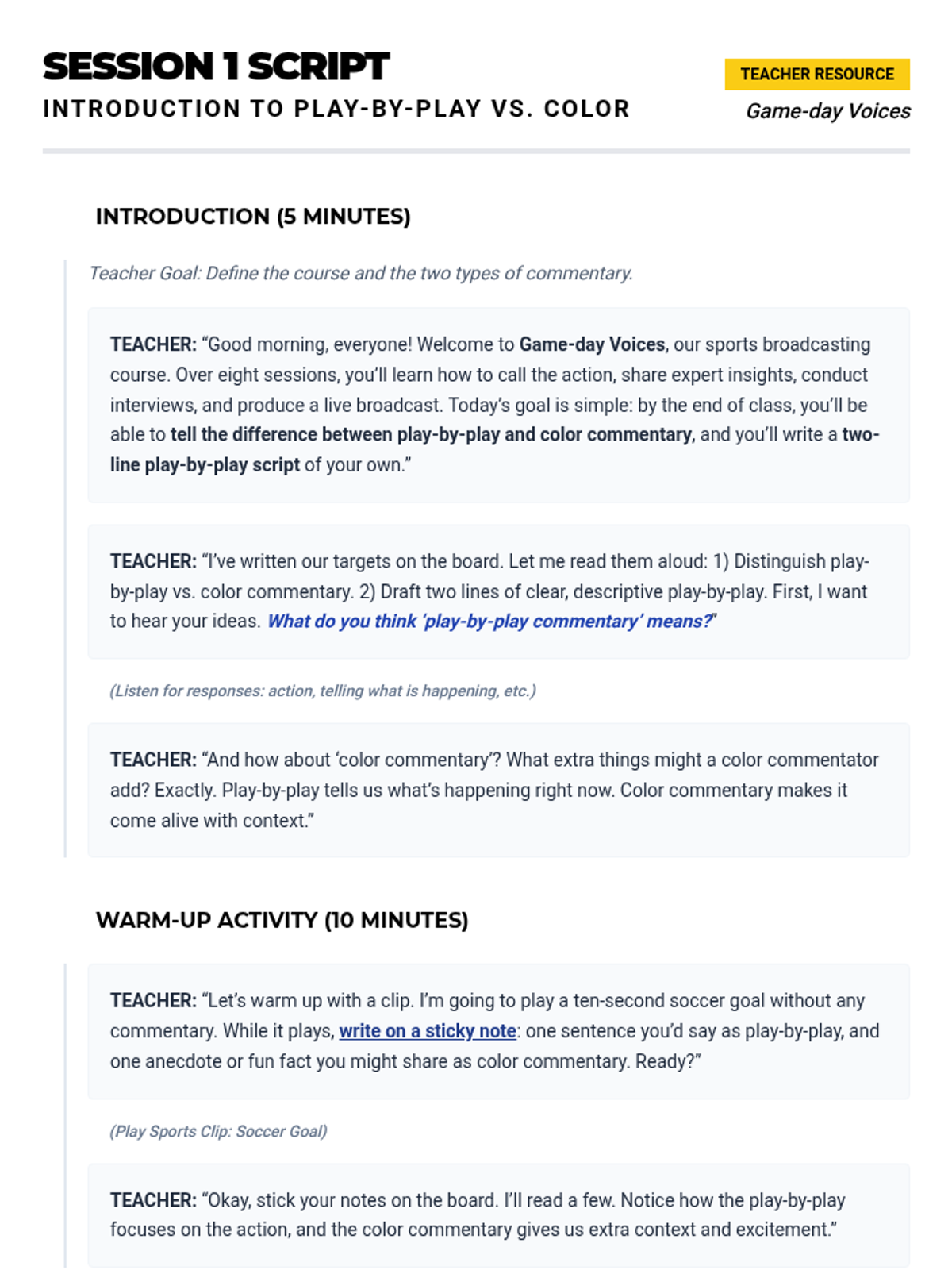
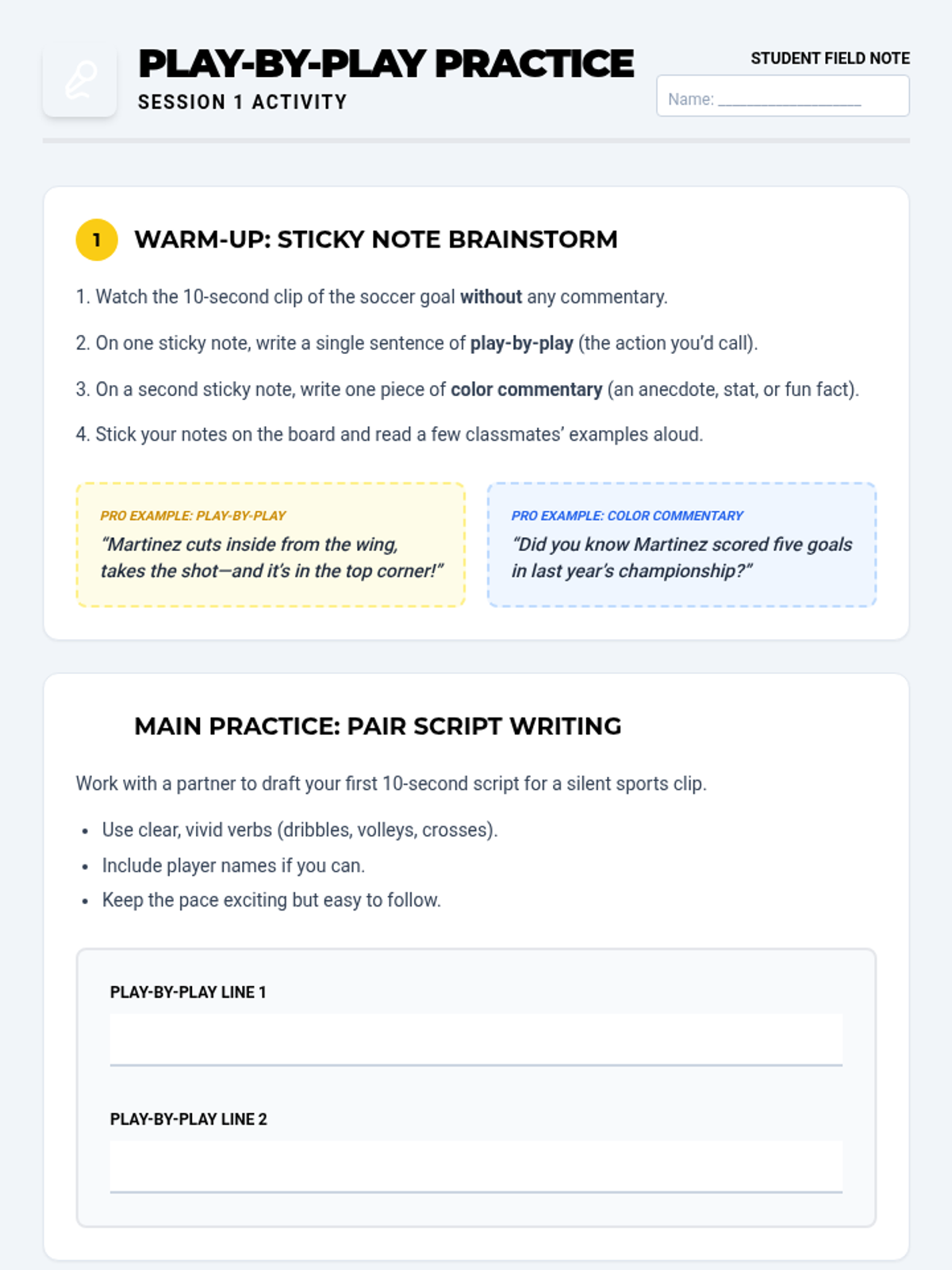
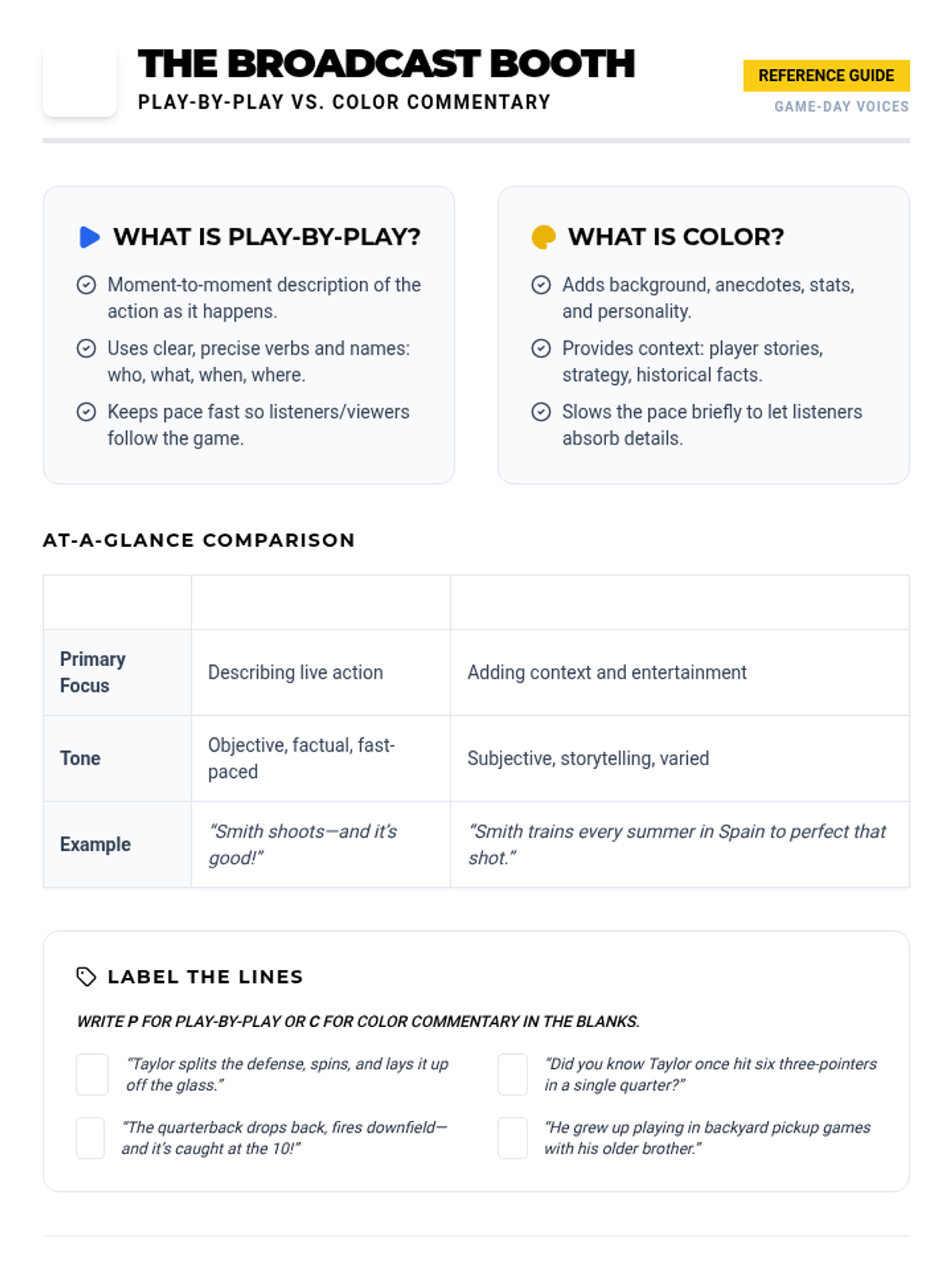
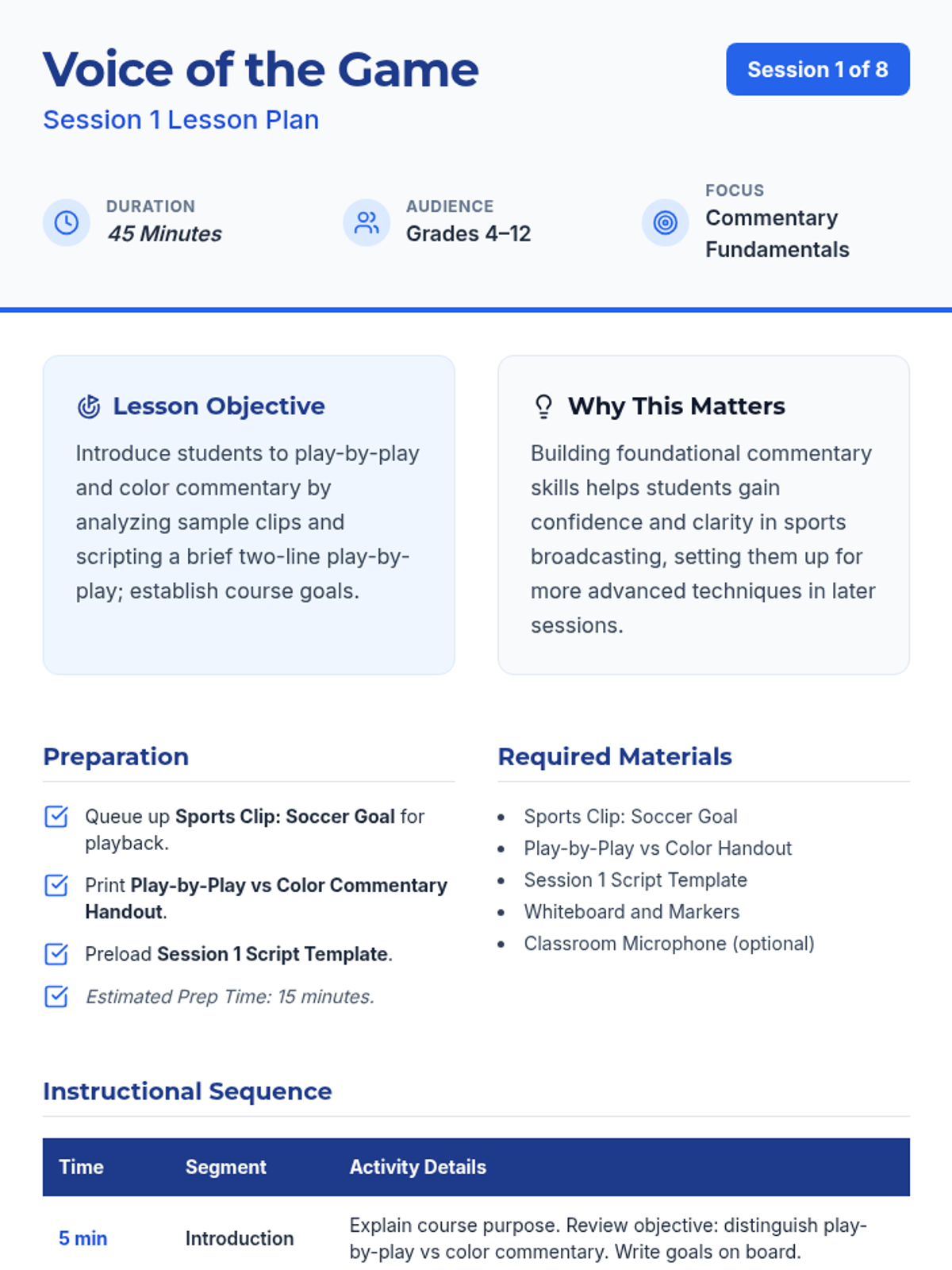
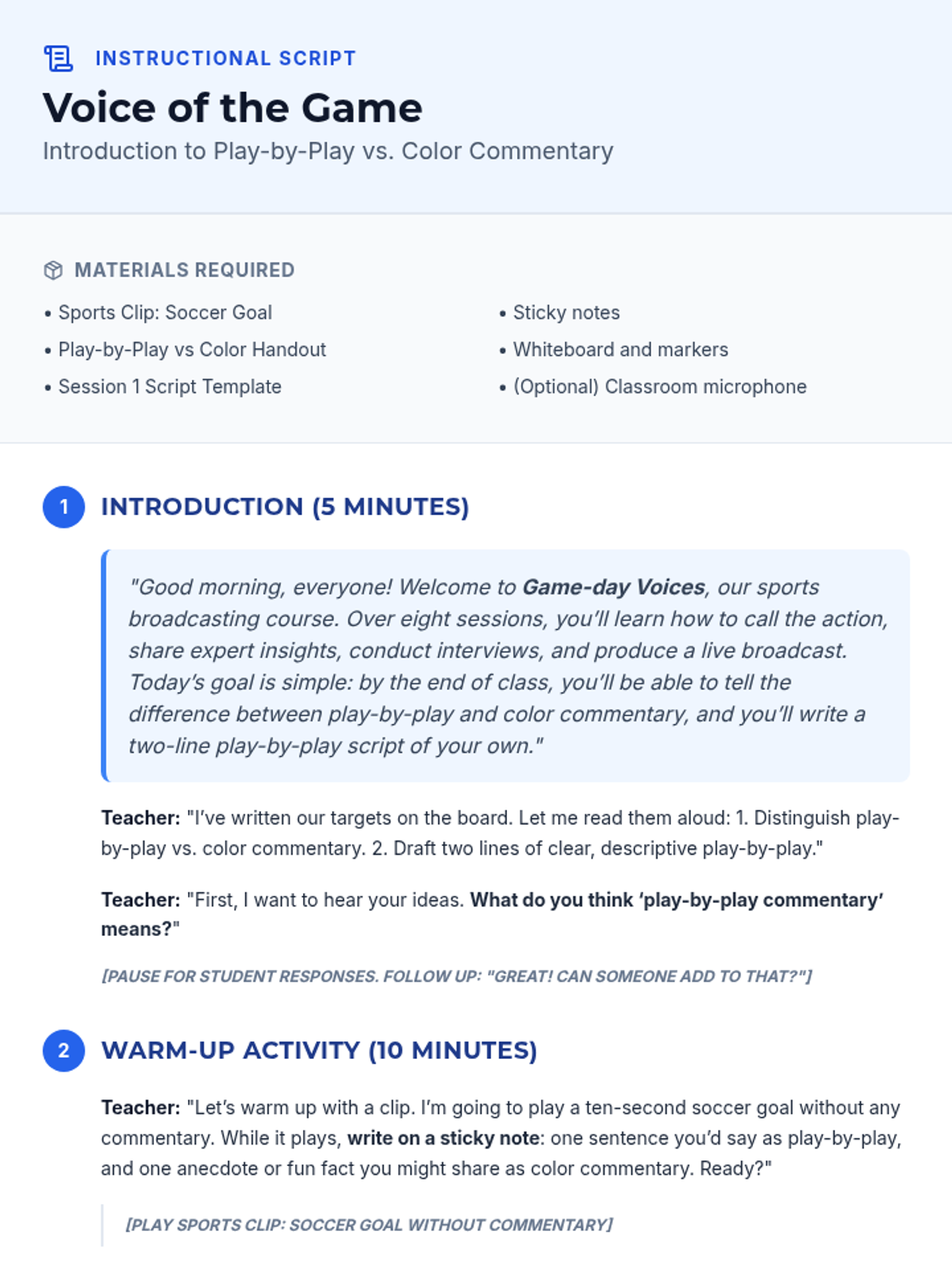
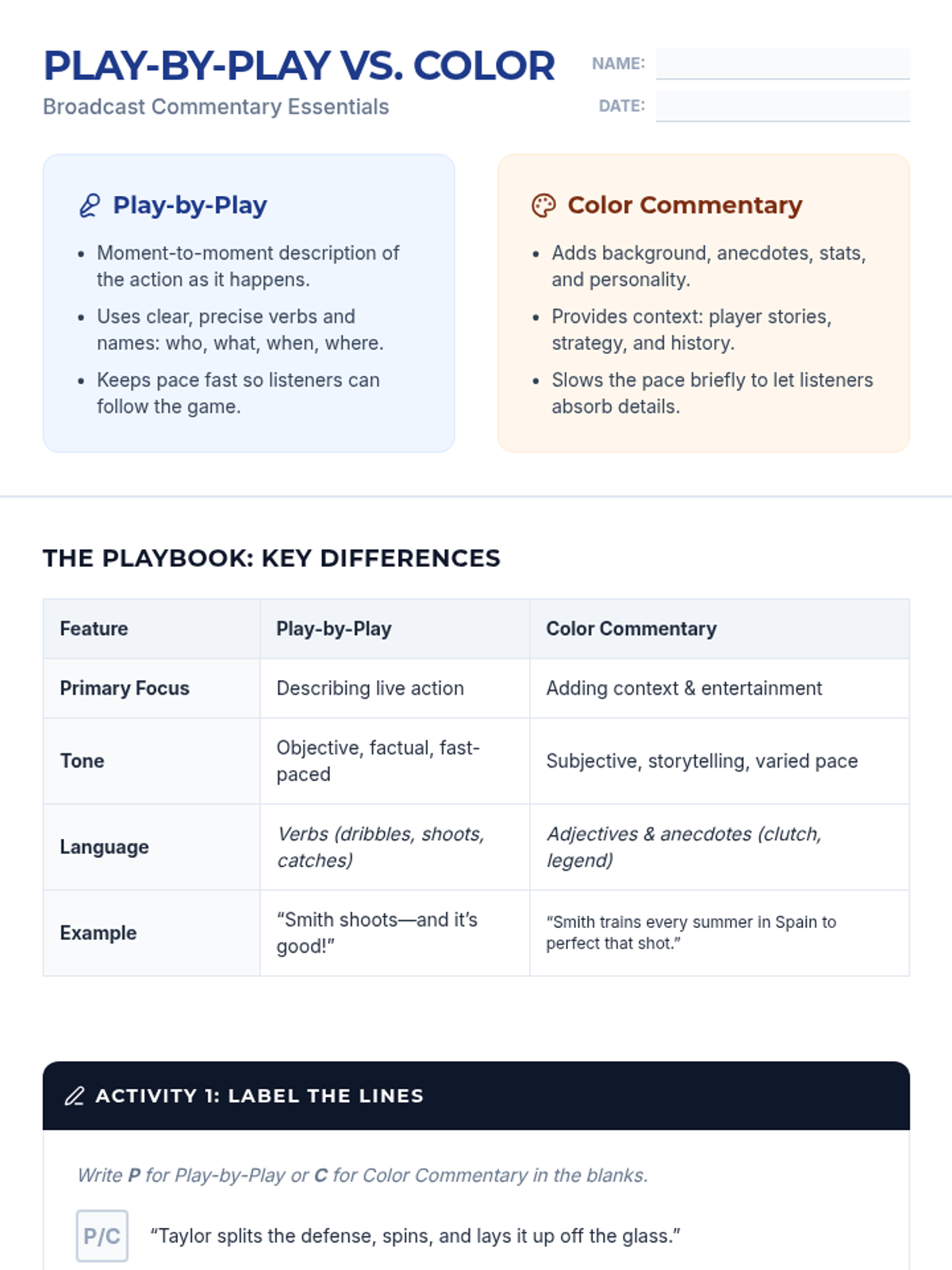
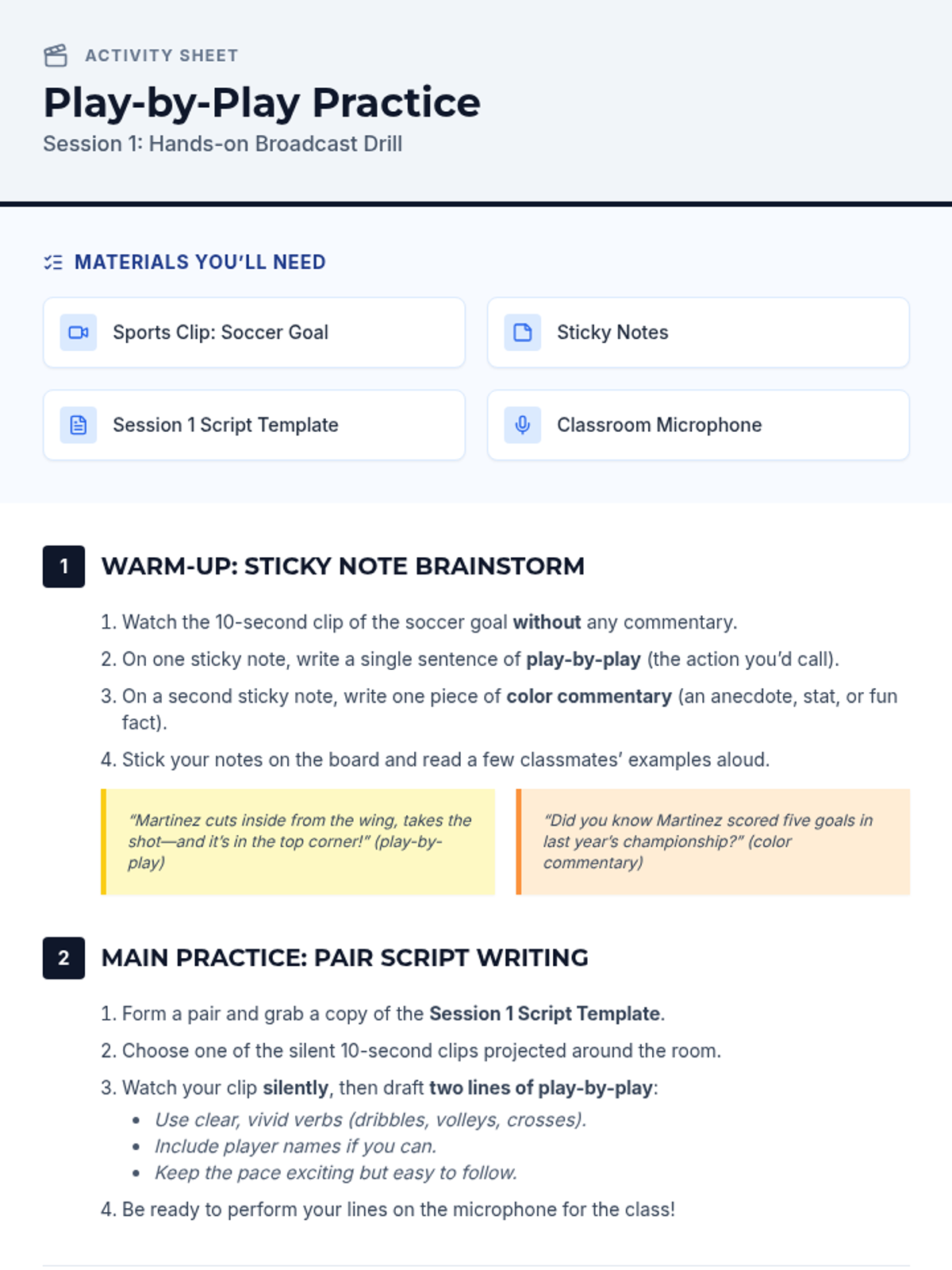
An 8-session sports broadcasting course for grades 4–12, covering play-by-play, color analysis, interviewing, and technical production. Students move from foundational commentary to producing a full capstone broadcast segment.
An 8-session sports broadcasting course for grades 4–12, covering play-by-play, color commentary, interviewing, camera work, audio mixing, and live production directing. Students progress from foundational vocal skills to a complete capstone broadcast project.
This sequence develops improvisation skills and ensemble collaboration, teaching students to react authentically in the moment. Students build trust and creative confidence by practicing 'Yes, And,' establishing environments, and solving narrative problems as a team.
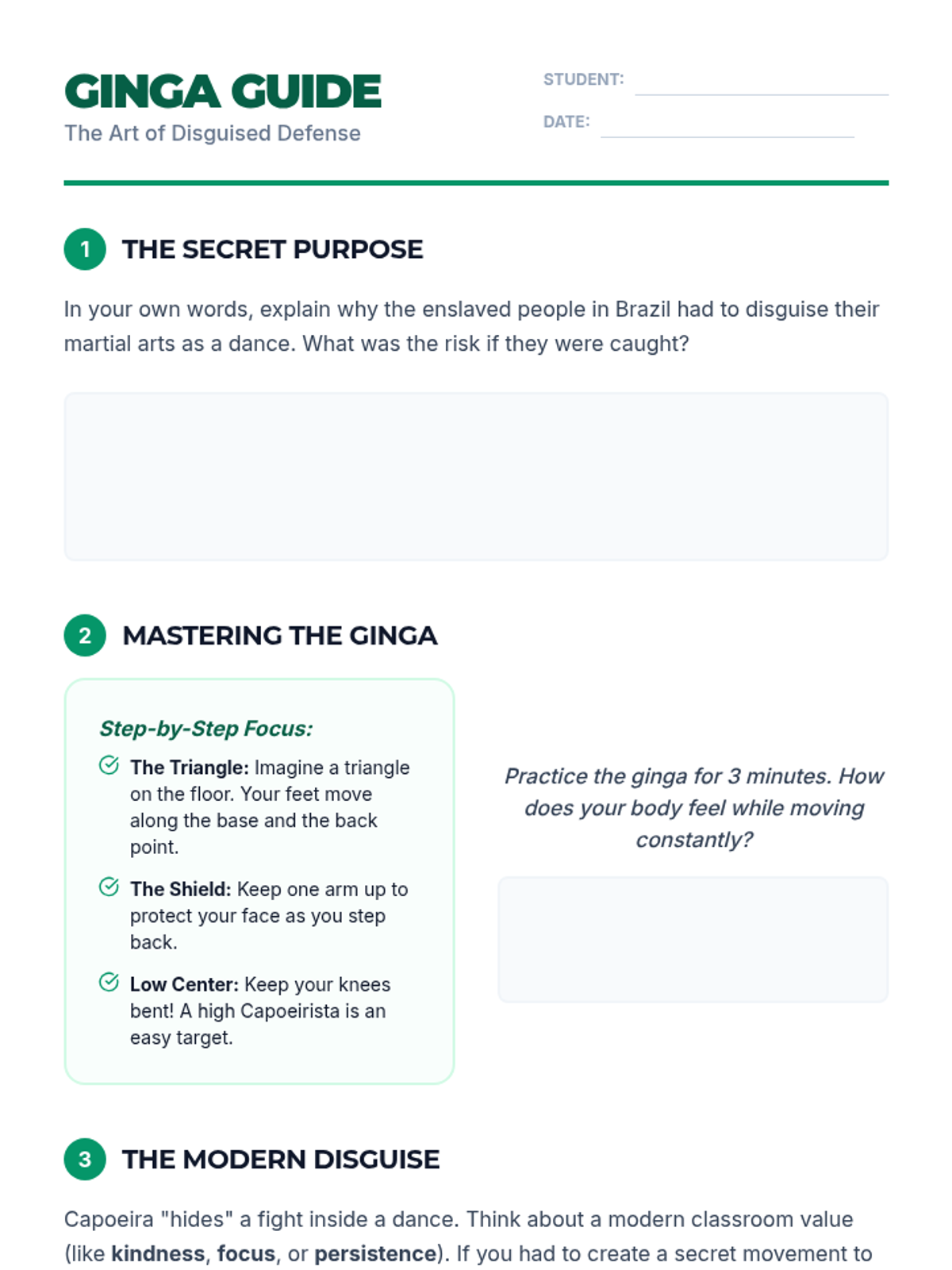
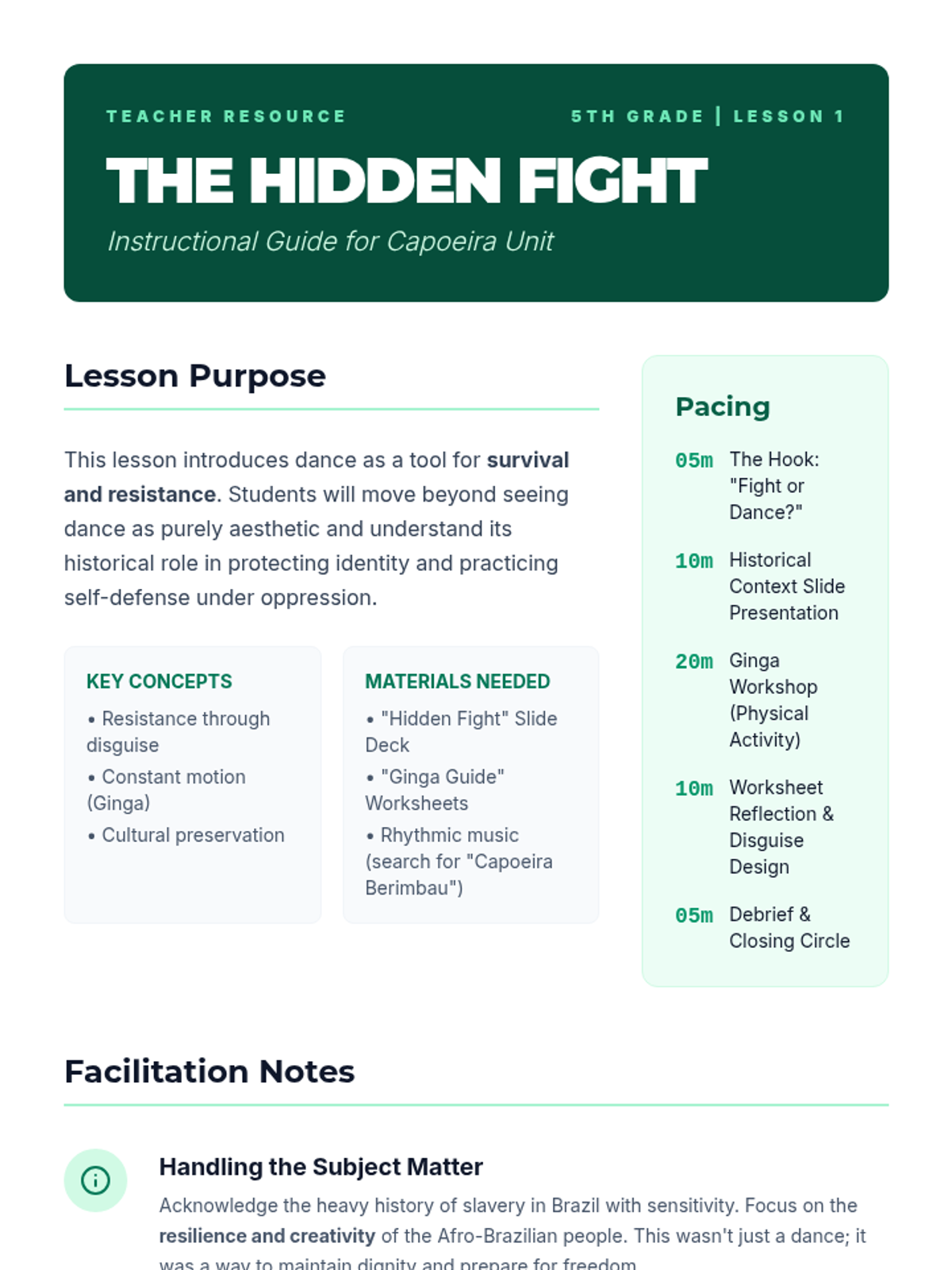
A 5th-grade dance history sequence exploring how movement serves as a tool for resistance, communication, and identity across global cultures, including Capoeira, the Haka, Gumboot dancing, and Hip Hop.
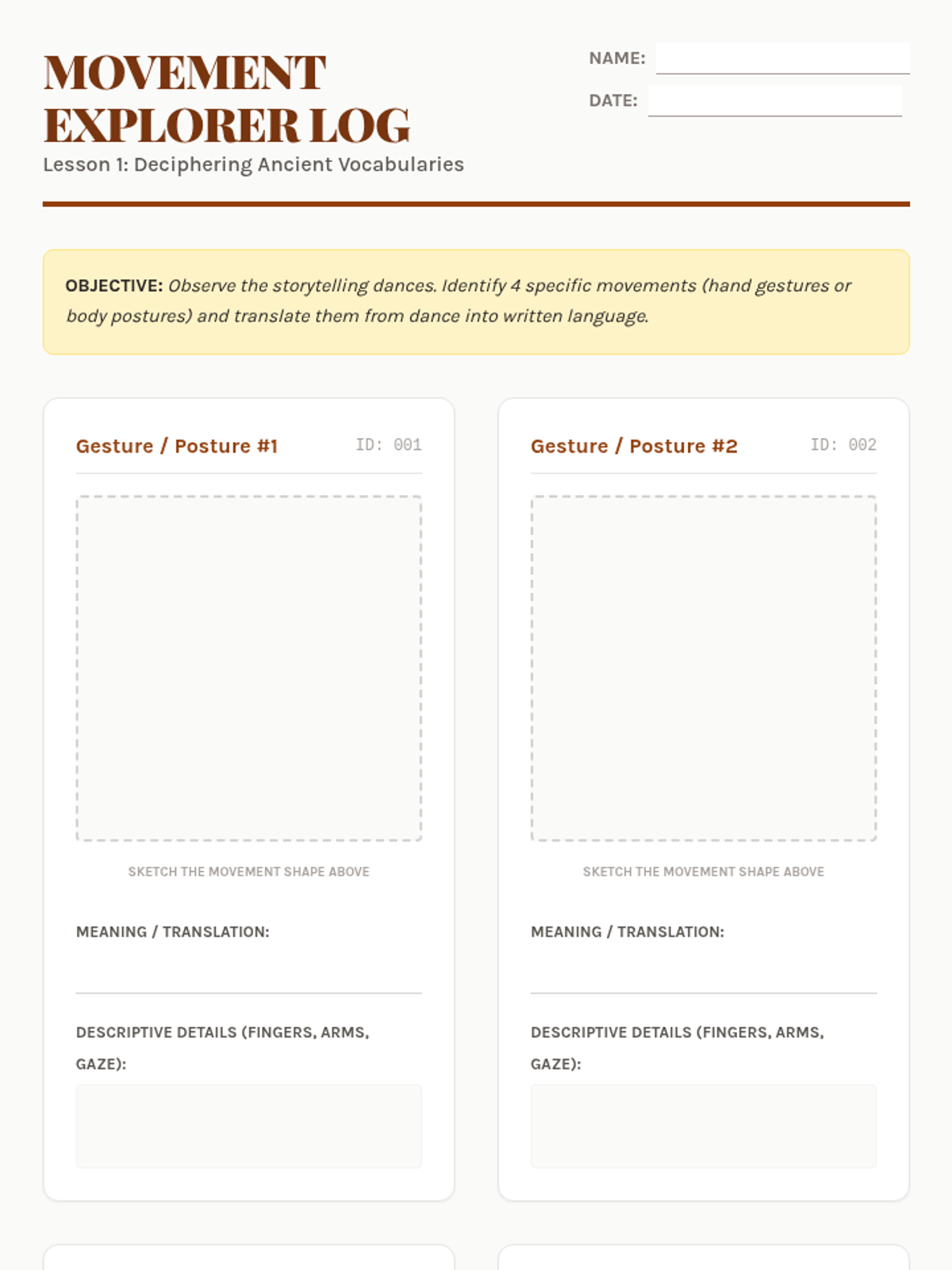
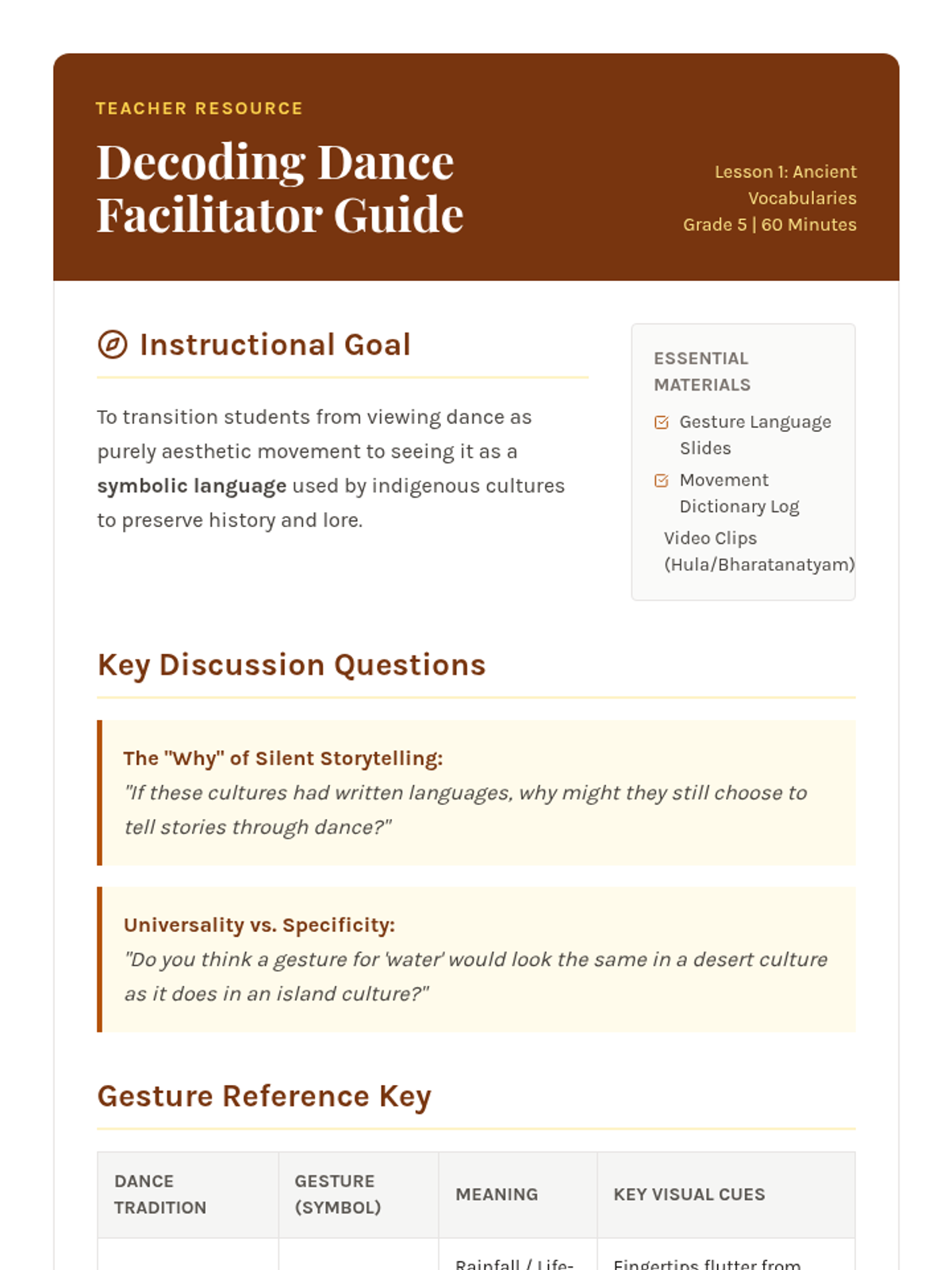
An inquiry-based exploration of dance as a language of storytelling and ritual in indigenous cultures, focusing on gesture, formation, regalia, and rhythm.
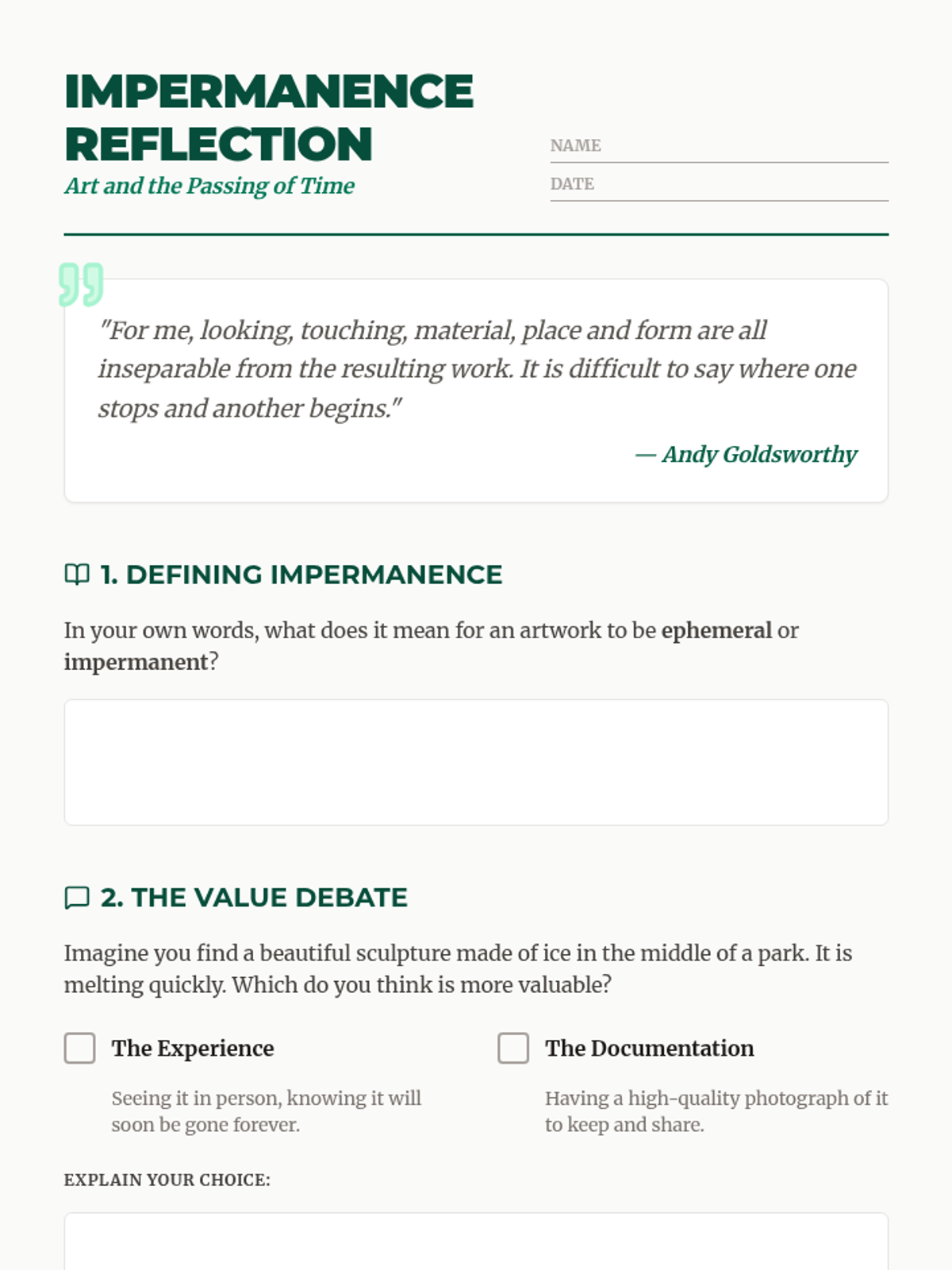
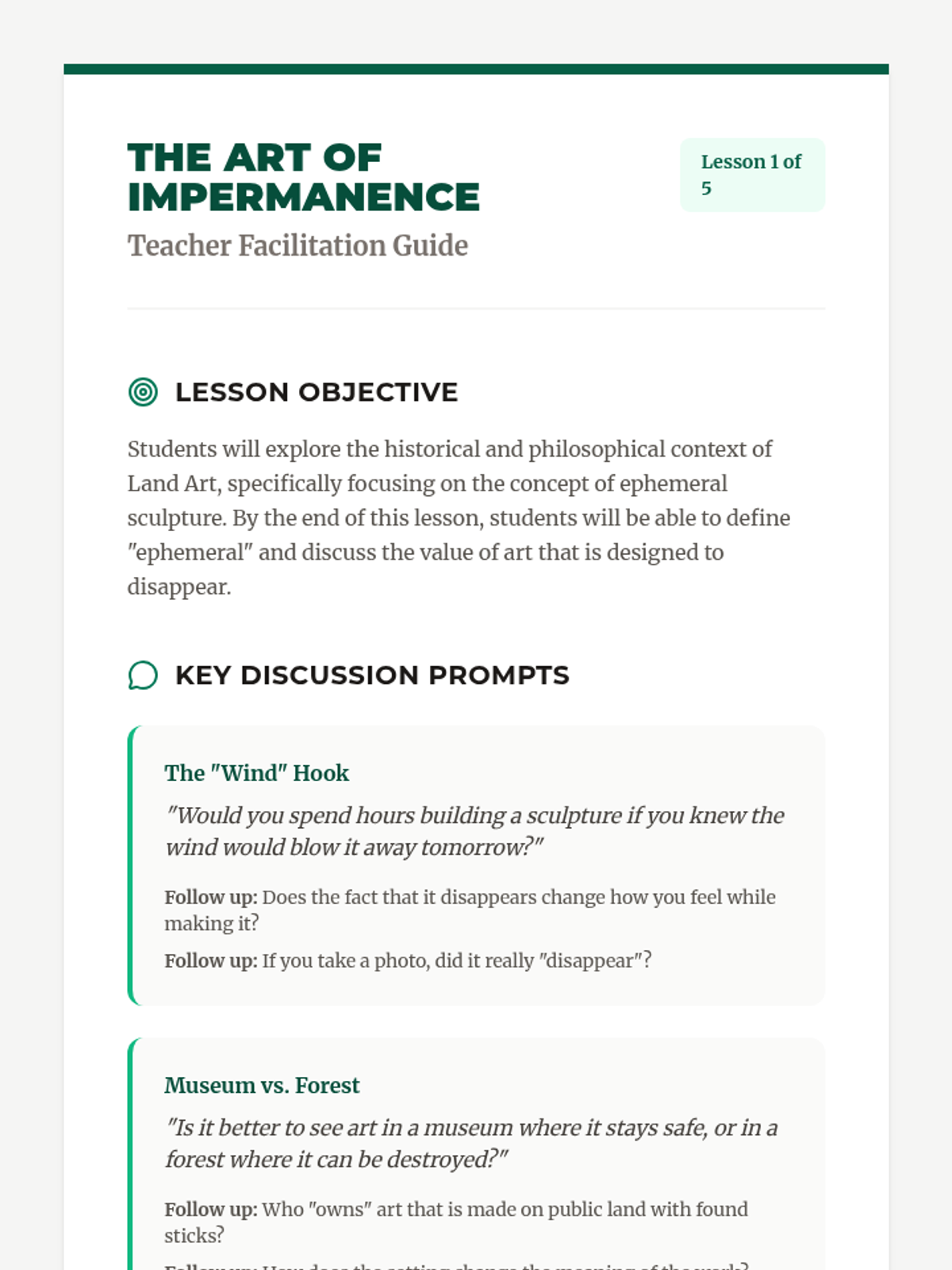
A 5th-grade art sequence exploring Land Art and environmental sculpture. Students learn to collaborate with nature using foraged materials to create ephemeral installations, emphasizing patterns, site-specificity, and documentation through photography.
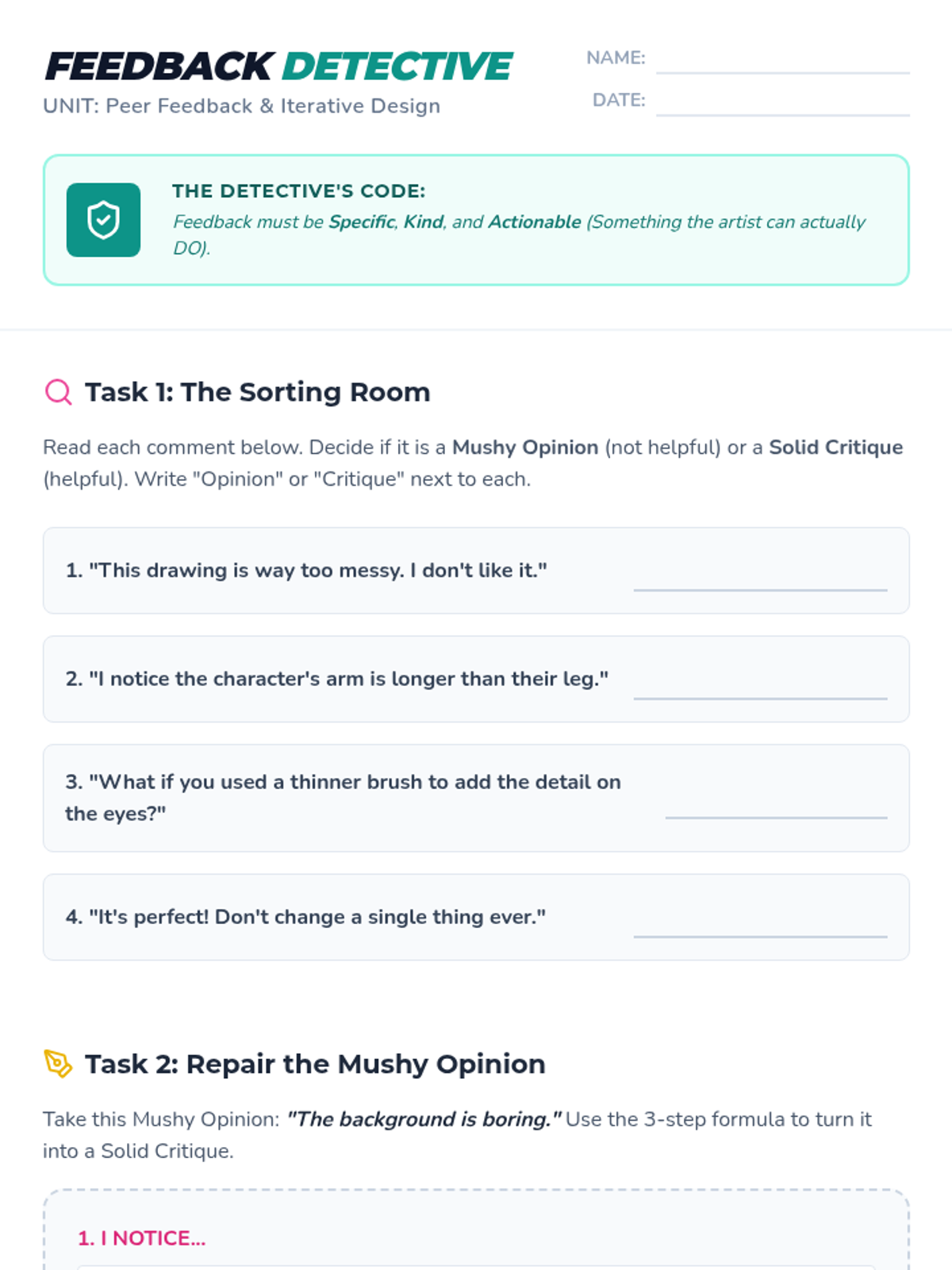
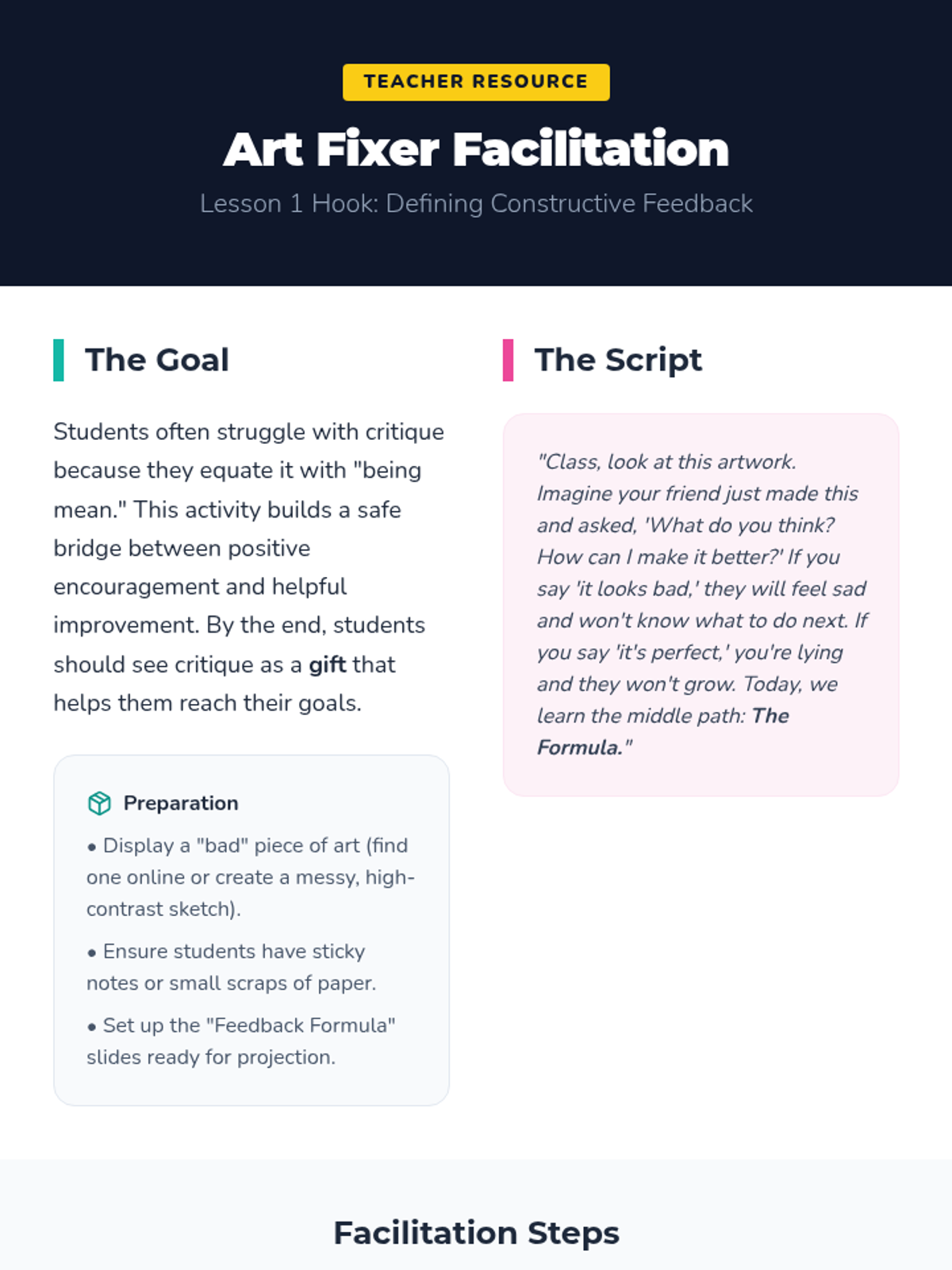
A 5th-grade arts sequence focused on the iterative process of creation through structured peer feedback, moving from initial drafts to final refined artworks using specific critique protocols.