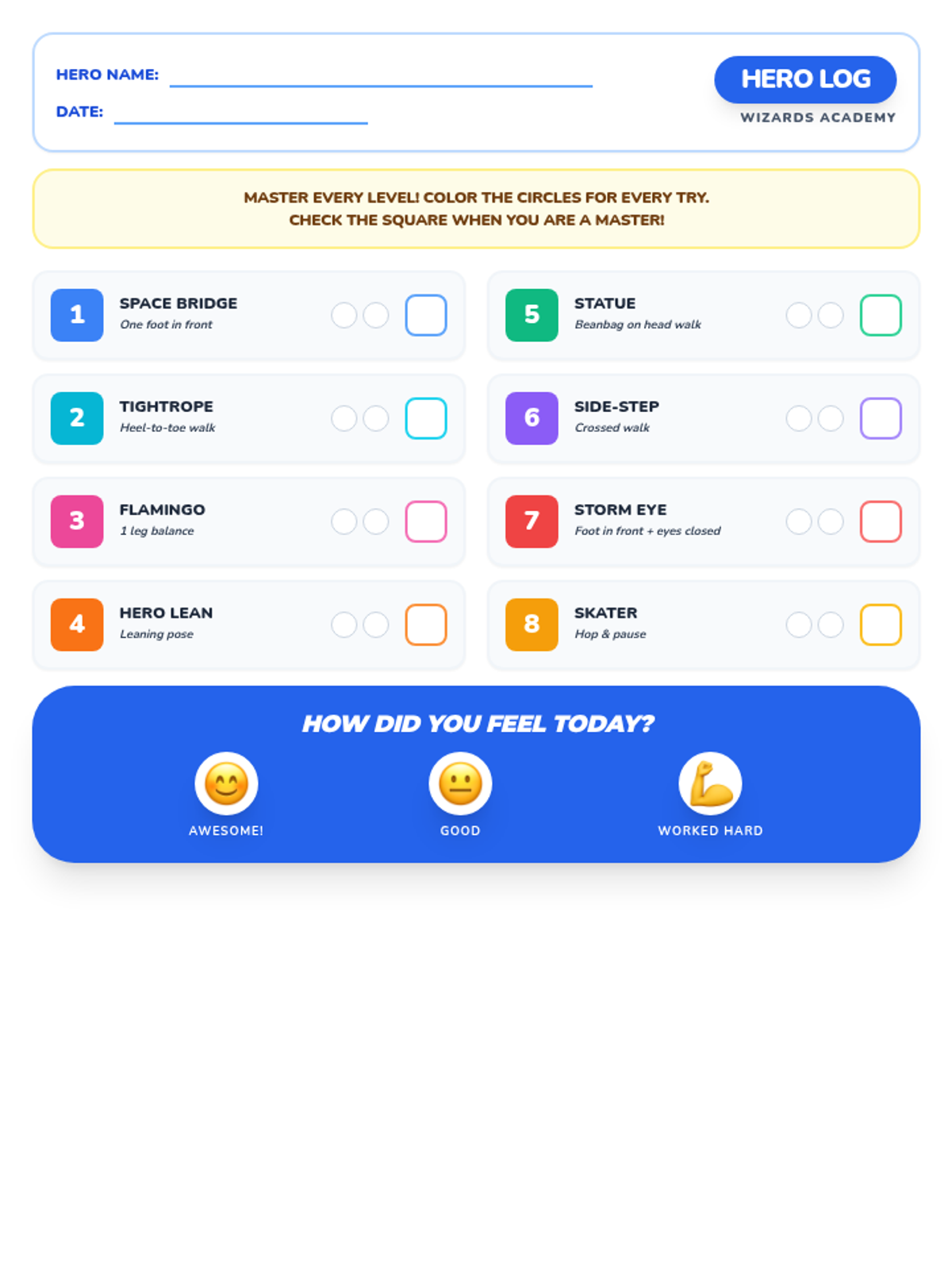
Fundamental movement patterns including locomotor actions, non-locomotor stability, and spatial awareness. Develops body control through fine motor precision and manipulative skills such as throwing and catching.
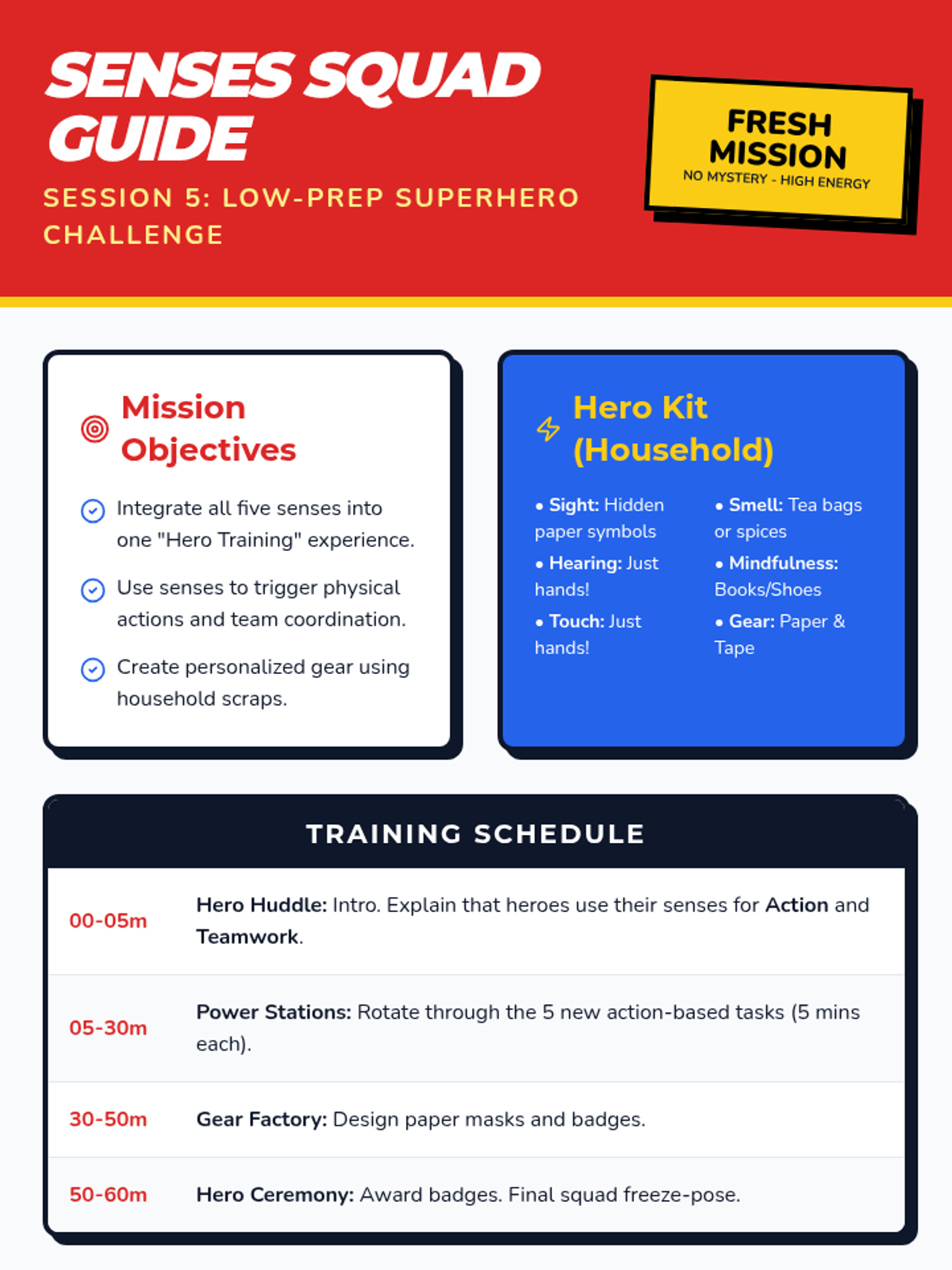
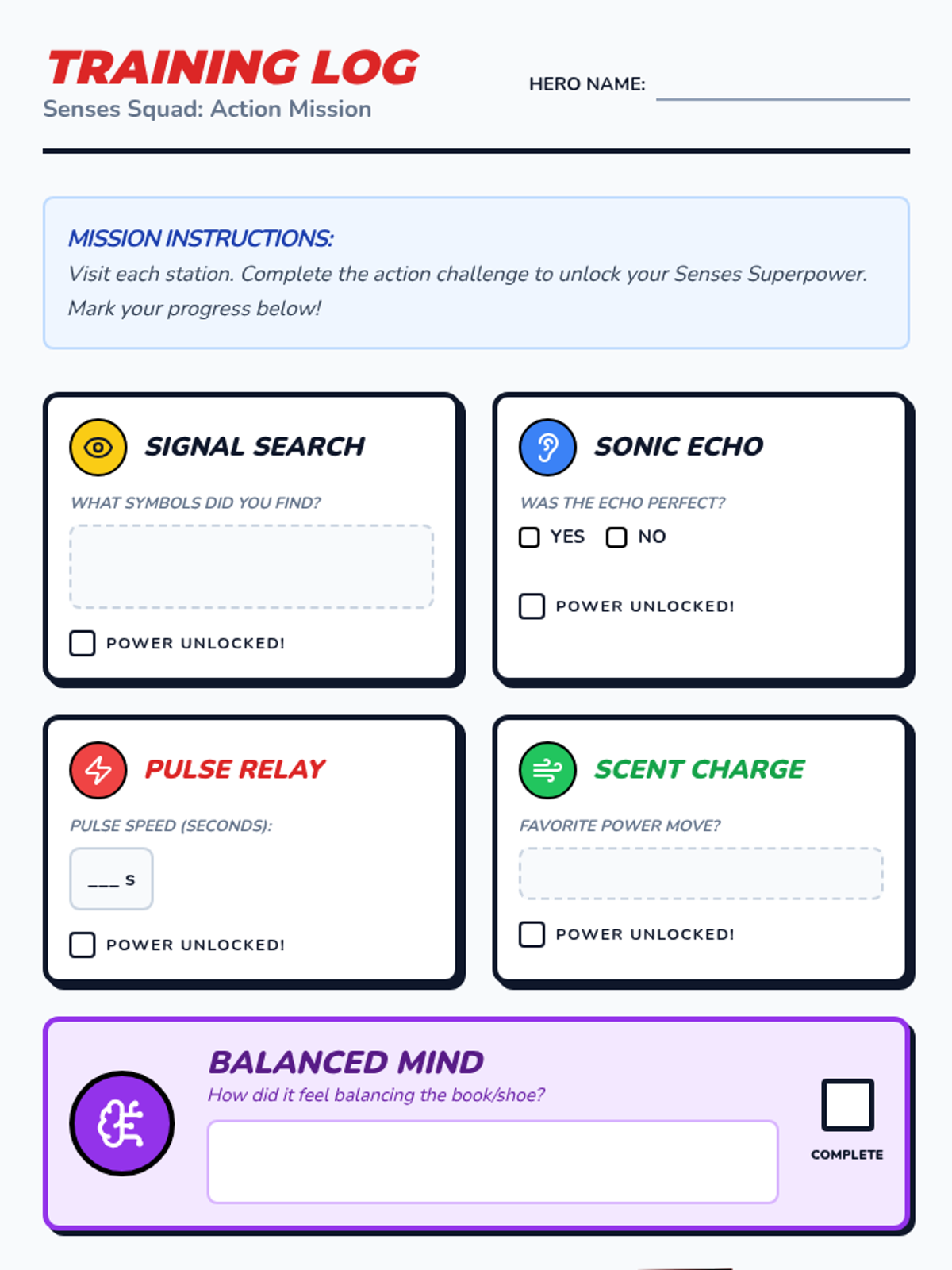
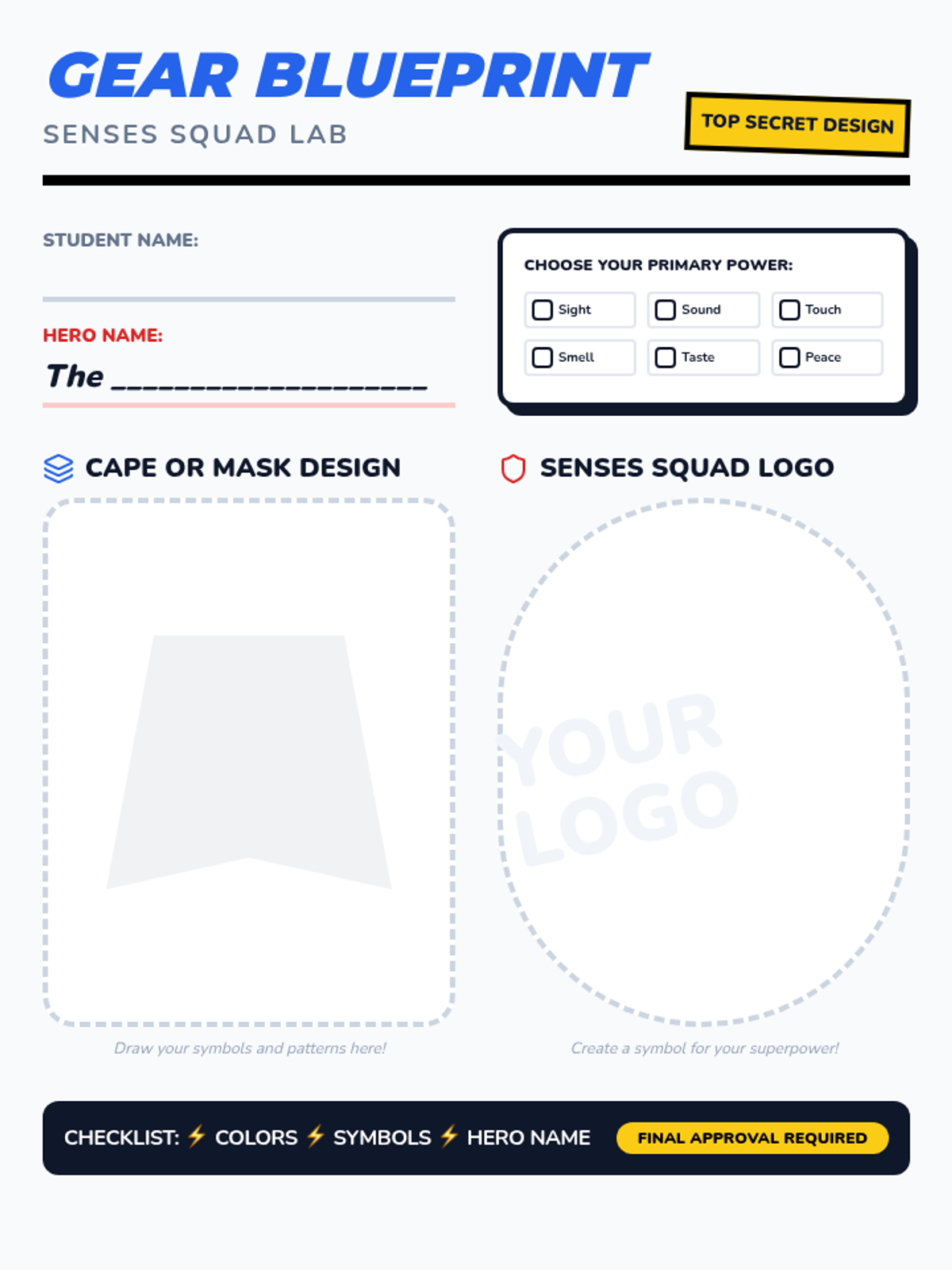
A high-energy wrap-up session for K-2 students to integrate their knowledge of the five senses and mindfulness through a superhero-themed training challenge. Students rotate through sensory stations and create their own superhero gear to represent their 'Senses Superpowers'.
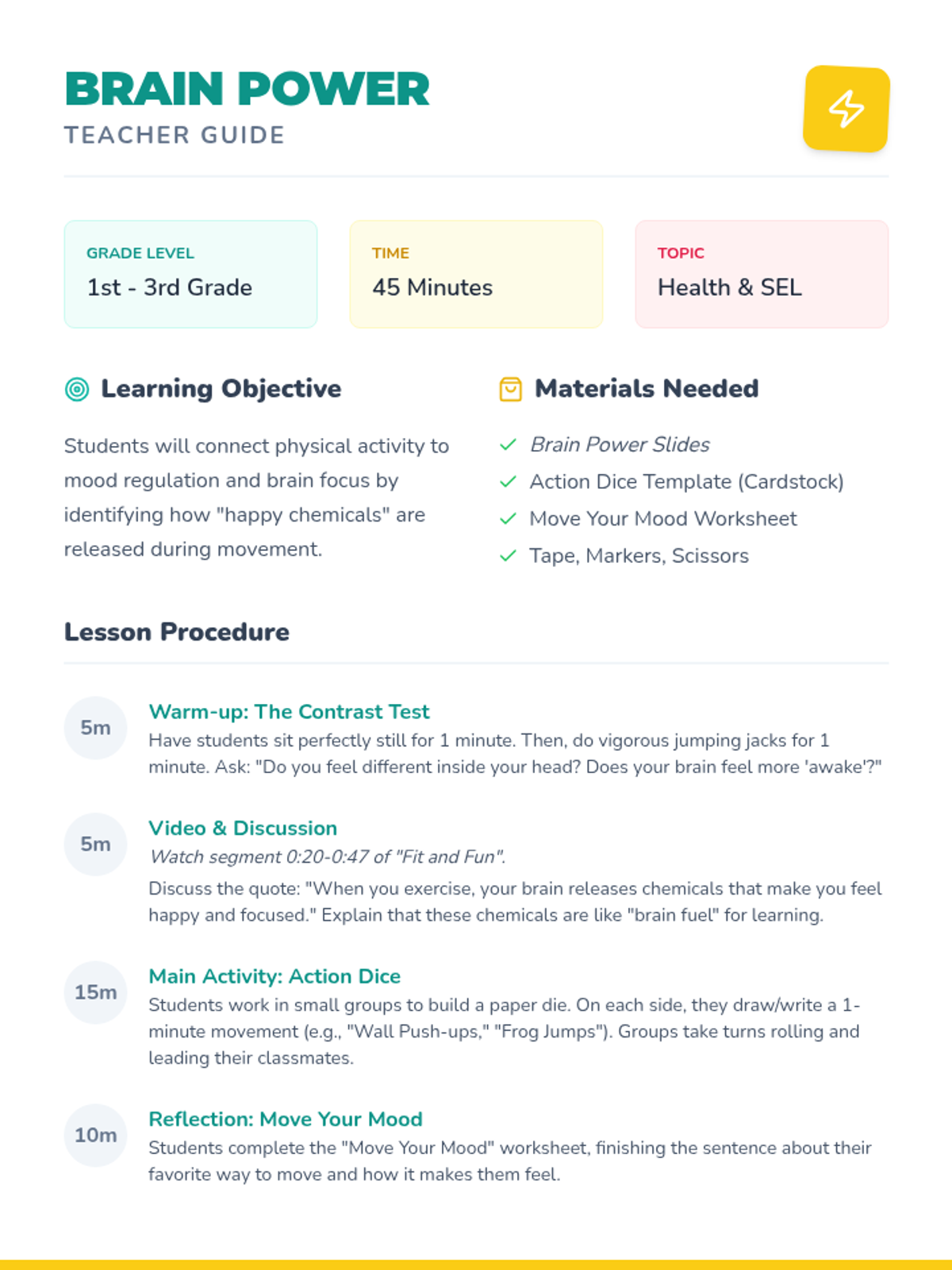
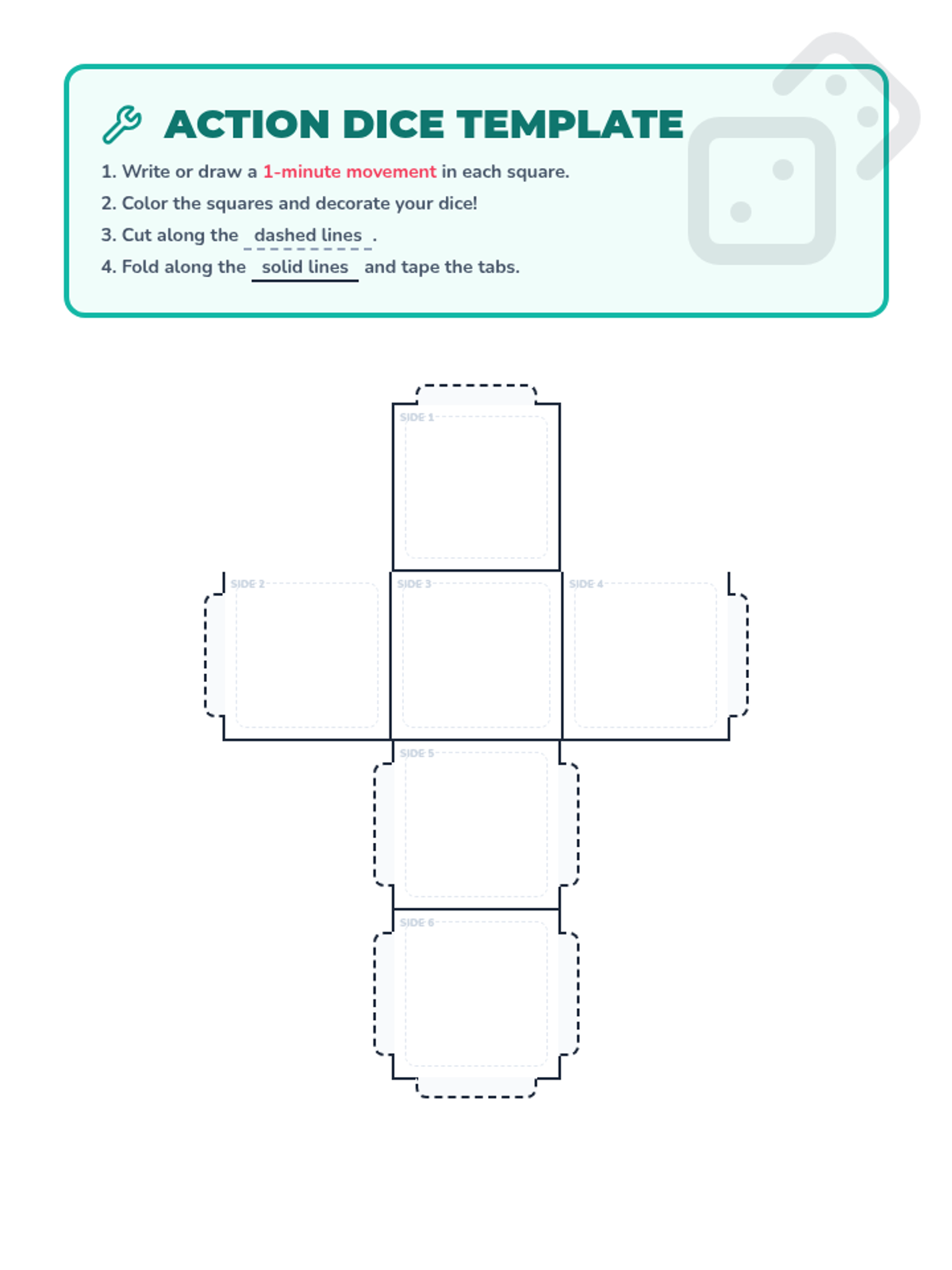
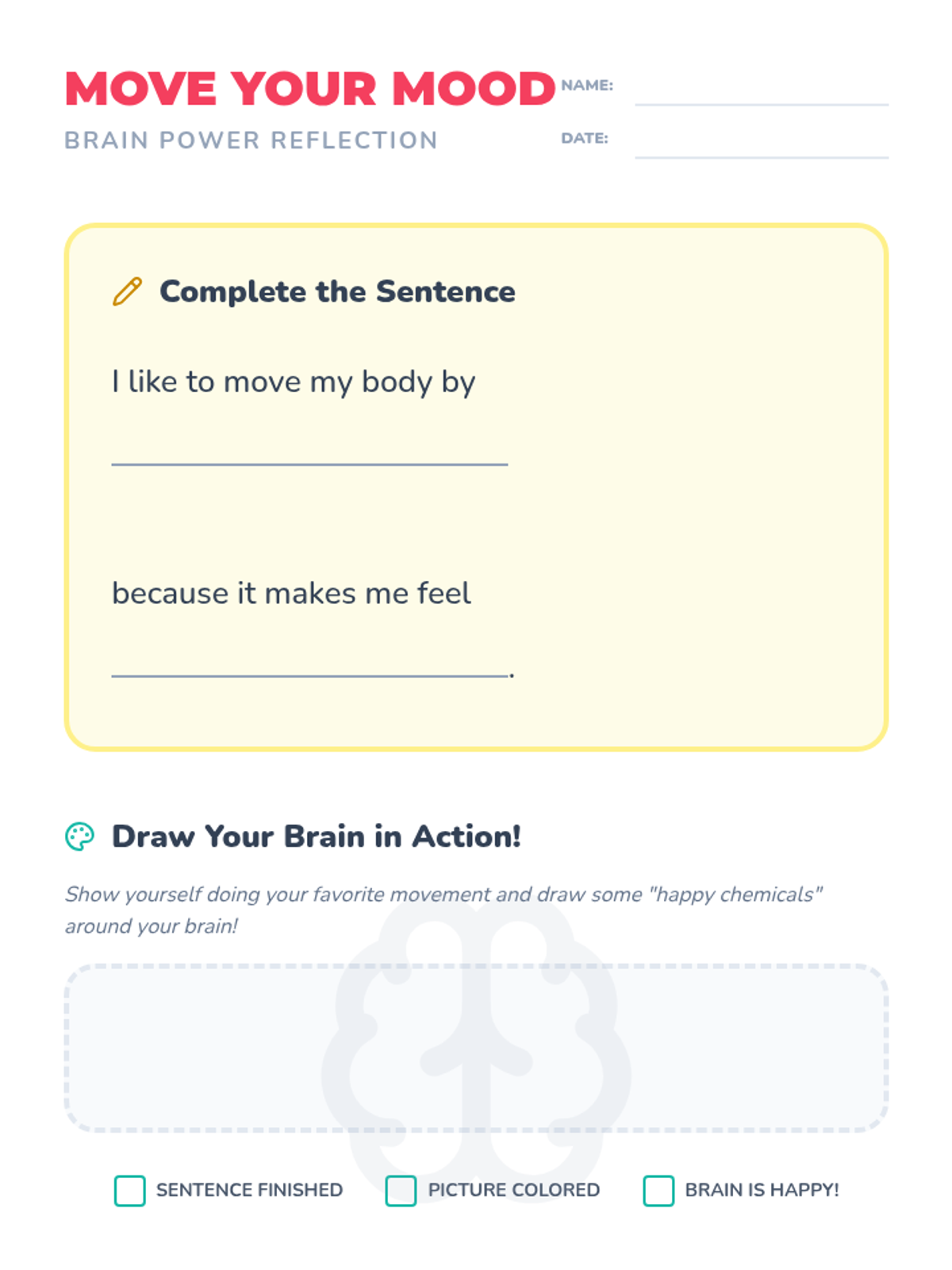
A high-energy lesson for 1st-3rd graders that explores the science of 'happy chemicals' released during exercise. Students create their own movement dice to lead brain breaks and reflect on how physical activity helps them stay focused.
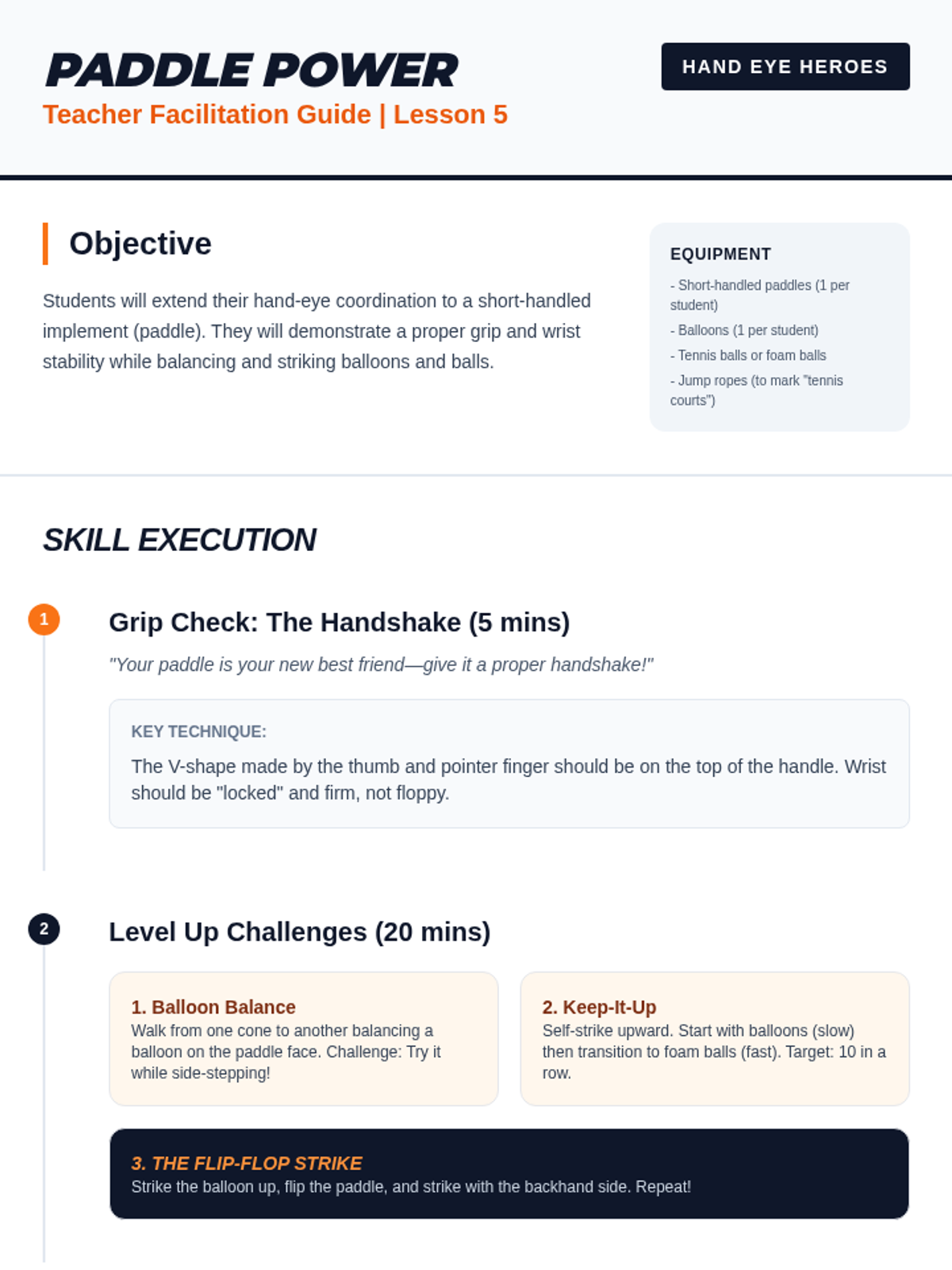
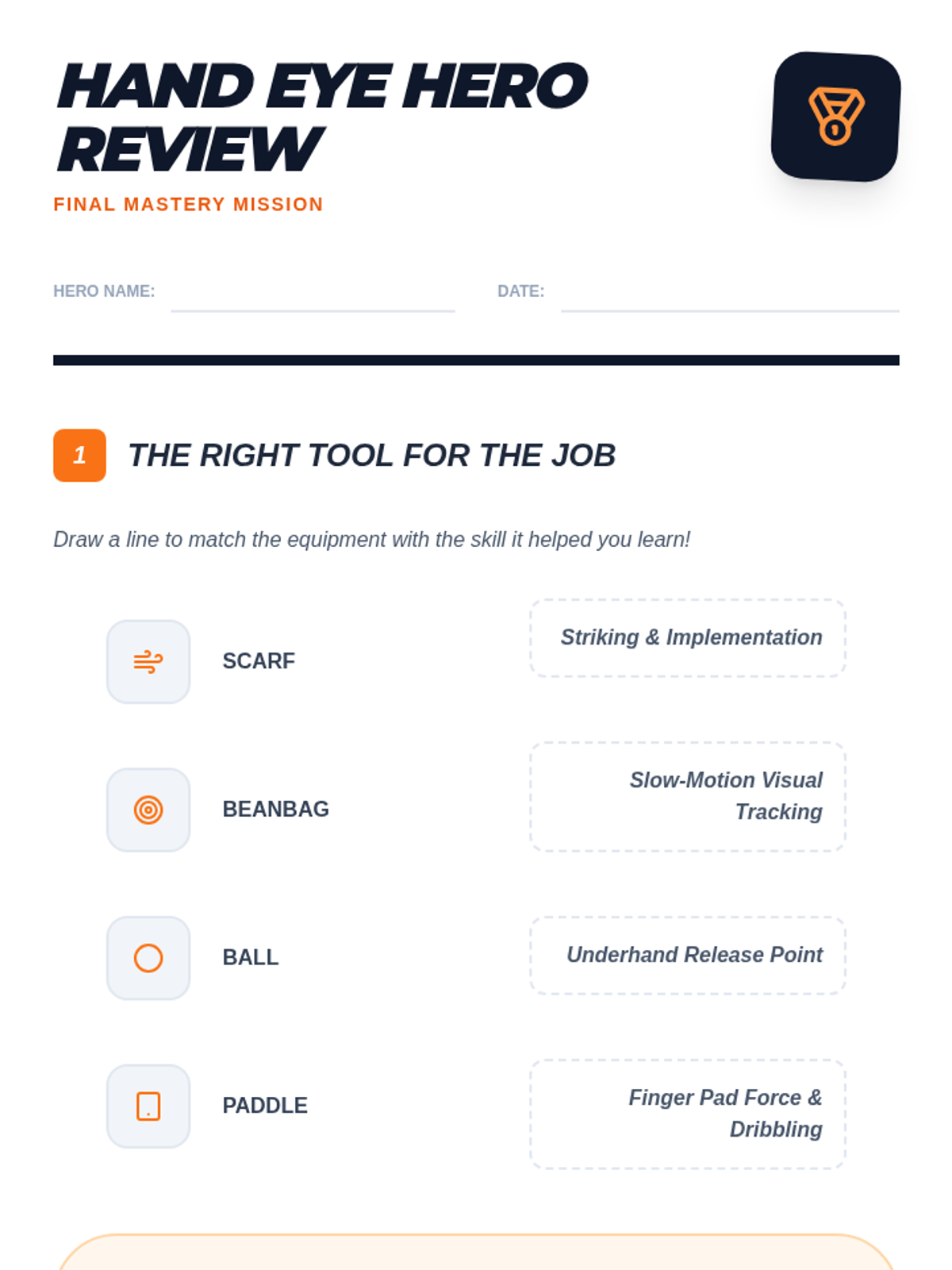
Students extend their fine motor control through short-handled implements, learning to balance and strike balloons or balls with precision.
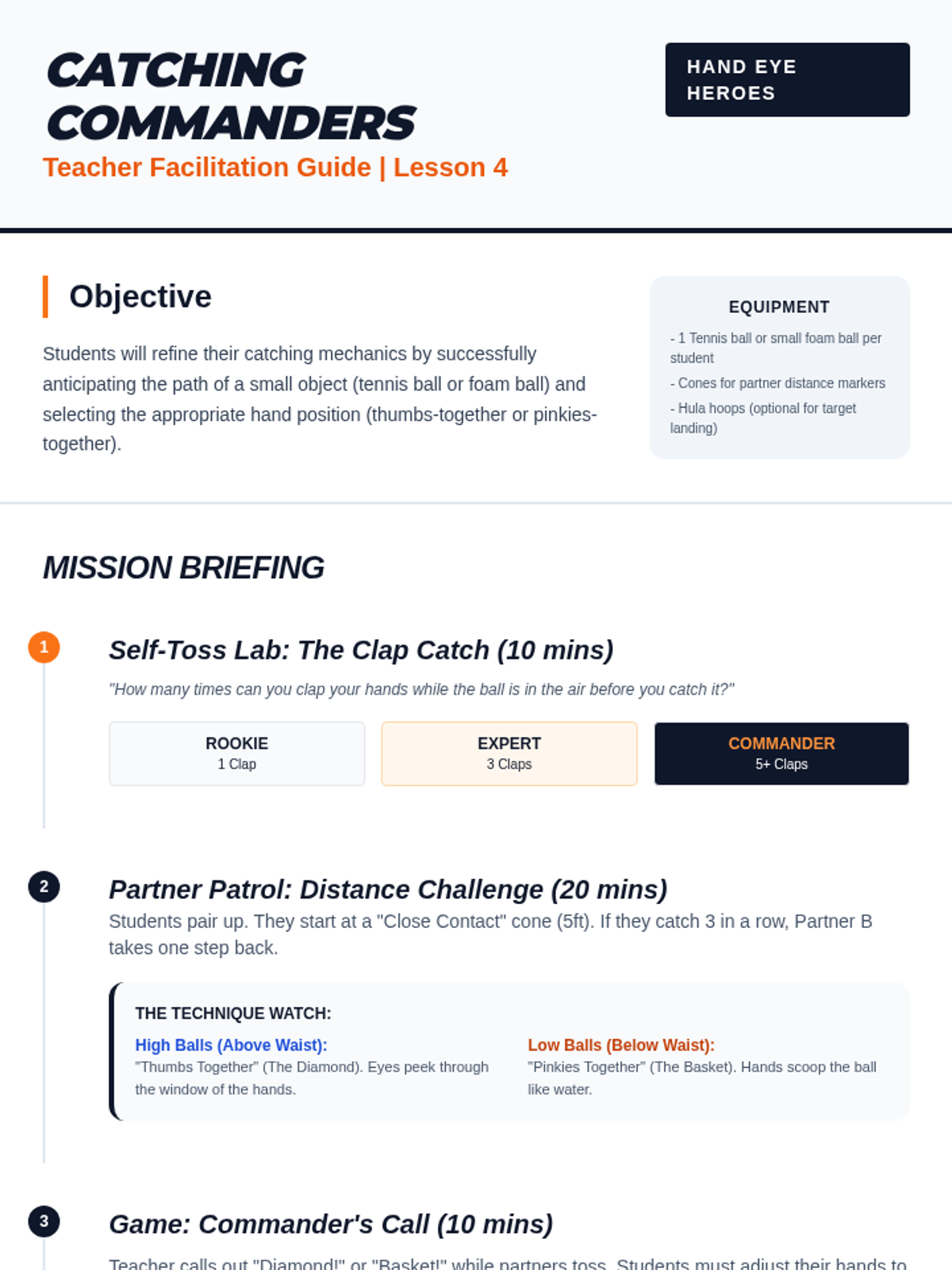
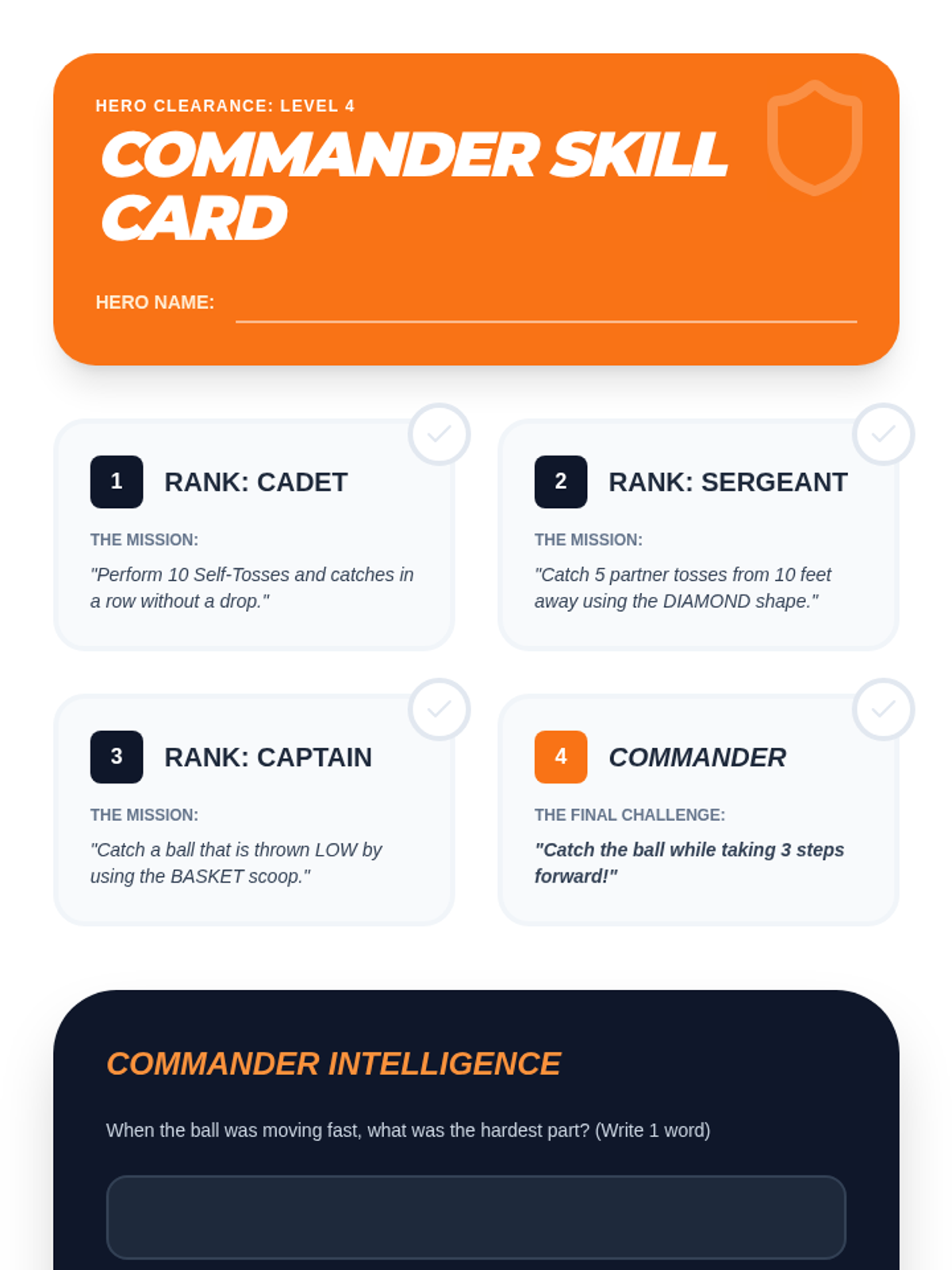
Students transition to smaller objects, refining their grasp reflex and anticipation skills through self-toss and partner catching challenges.
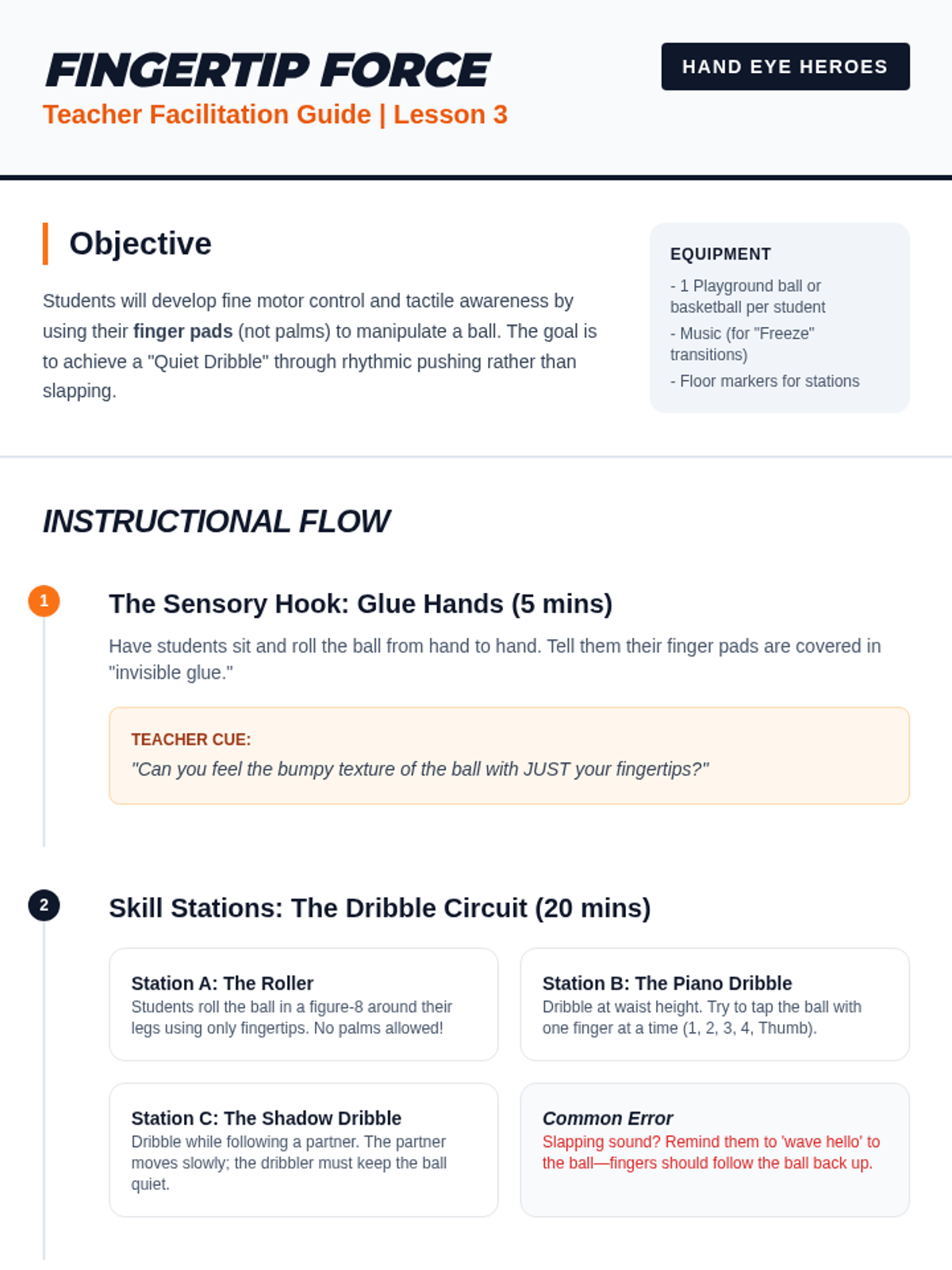
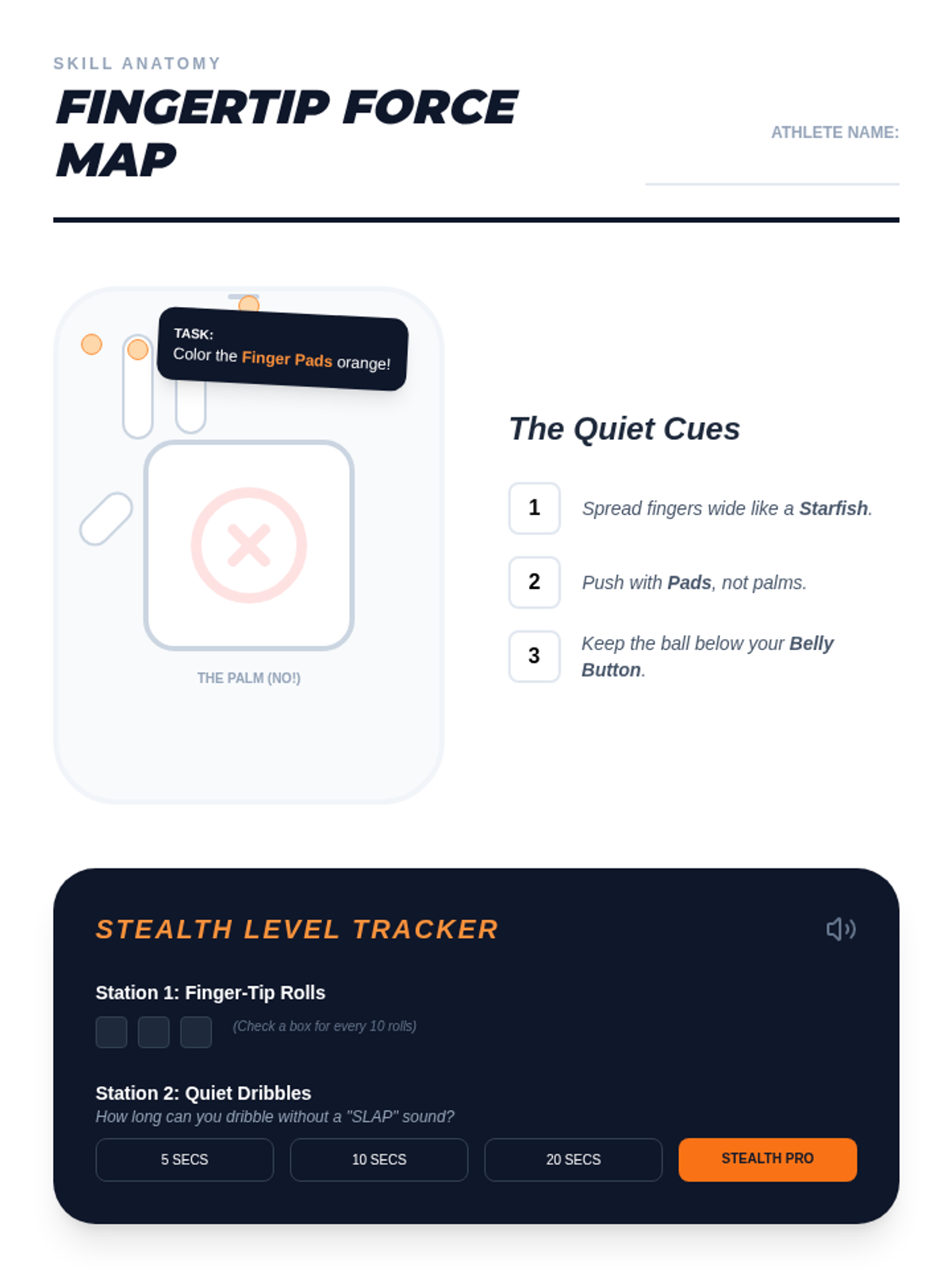
Students develop fingertip sensitivity and rhythm by manipulating balls using their finger pads for controlled rolling and quiet dribbling.
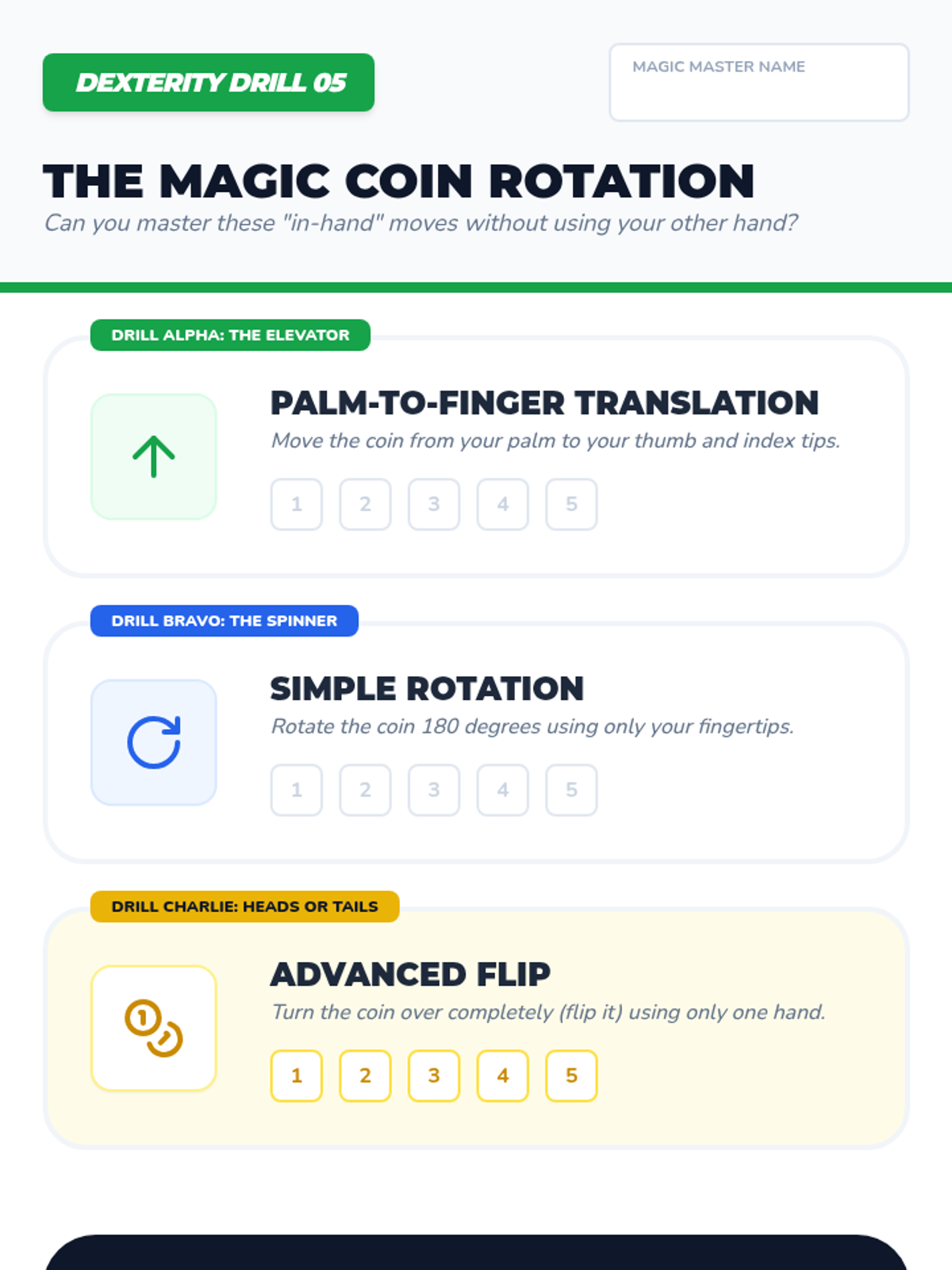
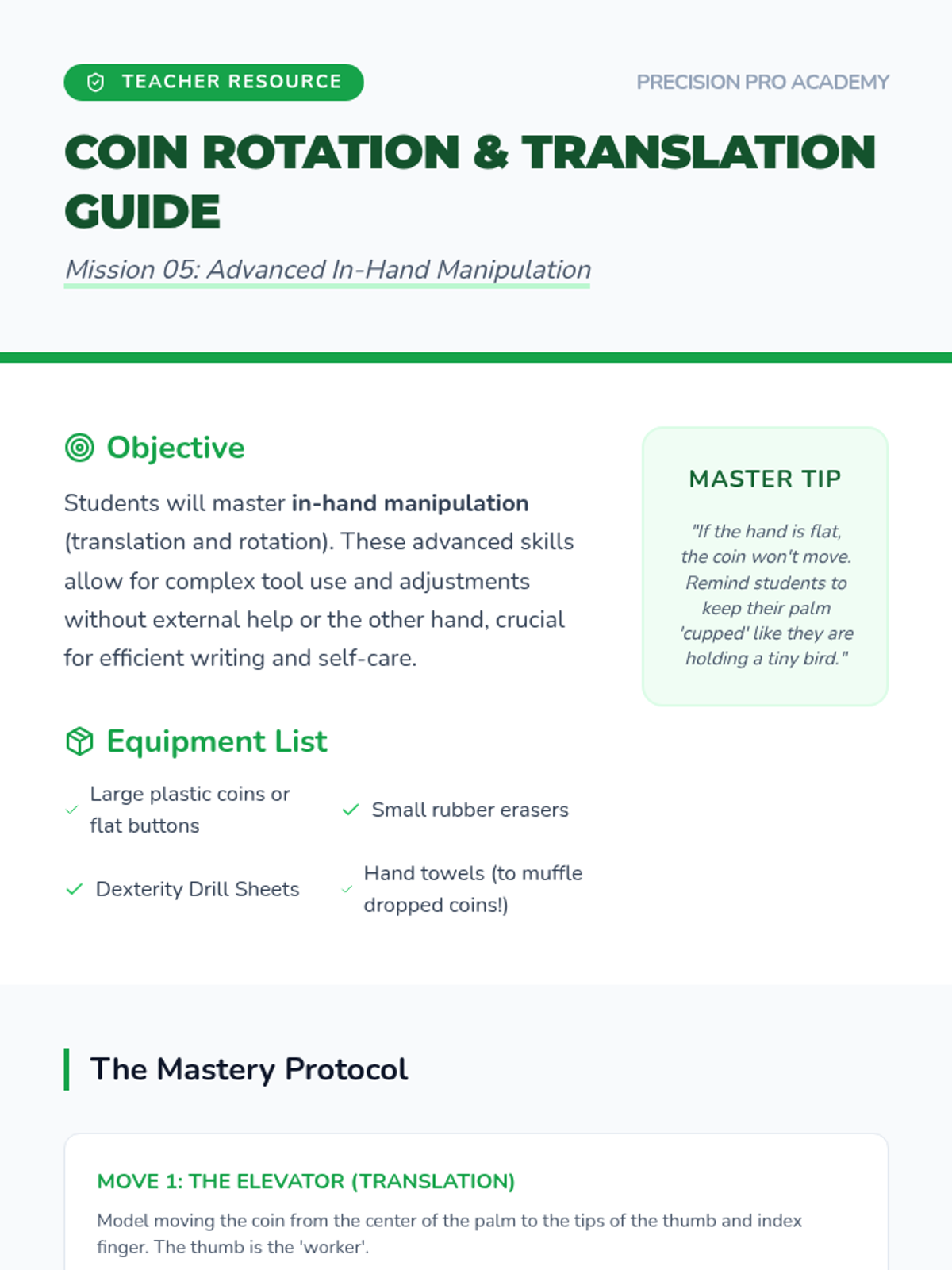
Advanced finger dexterity drills involving rotating coins or buttons within one hand to master palm-to-finger translation.
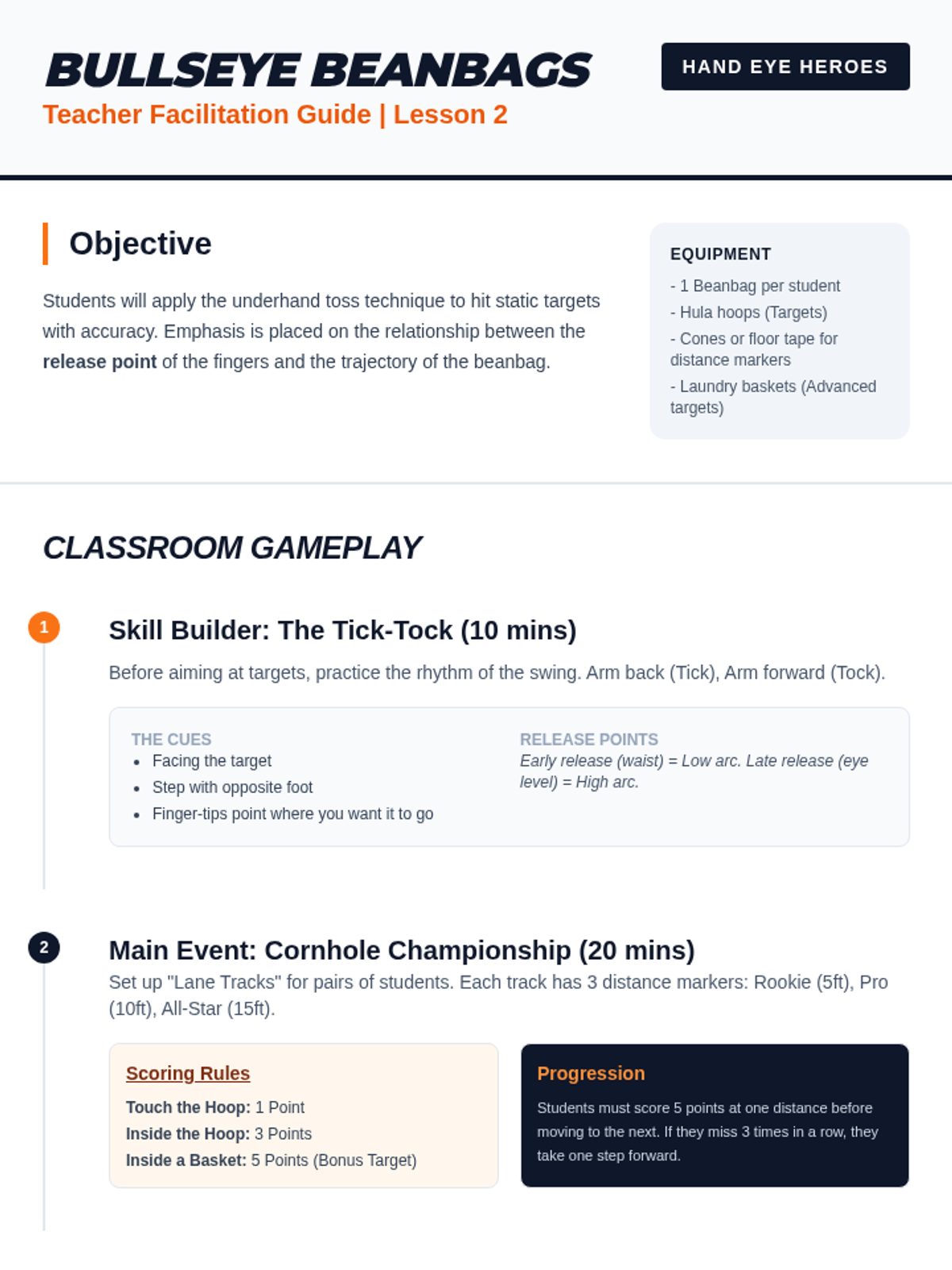
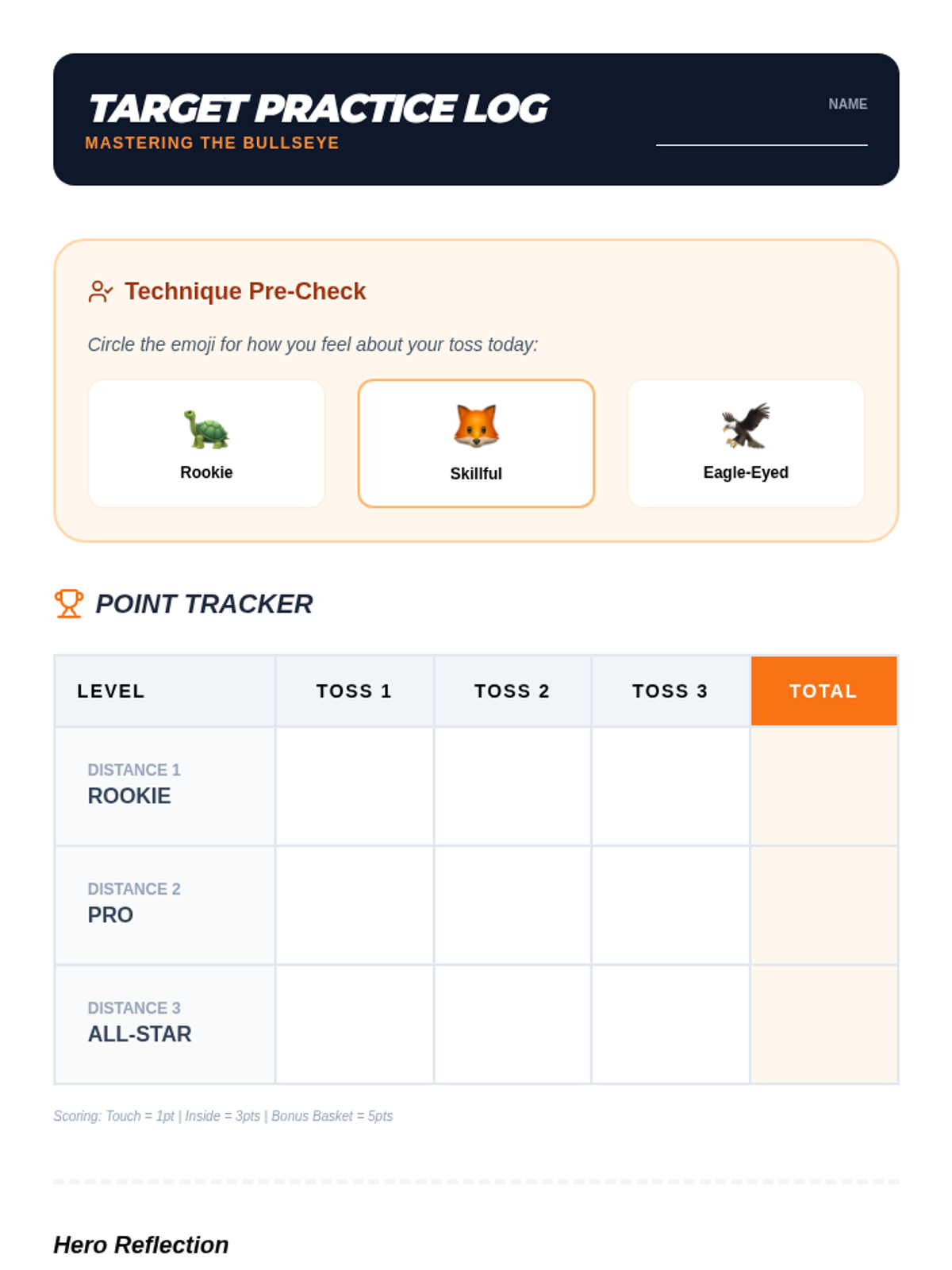
Students focus on release point control and force estimation by tossing beanbags into targets, improving underhand accuracy.
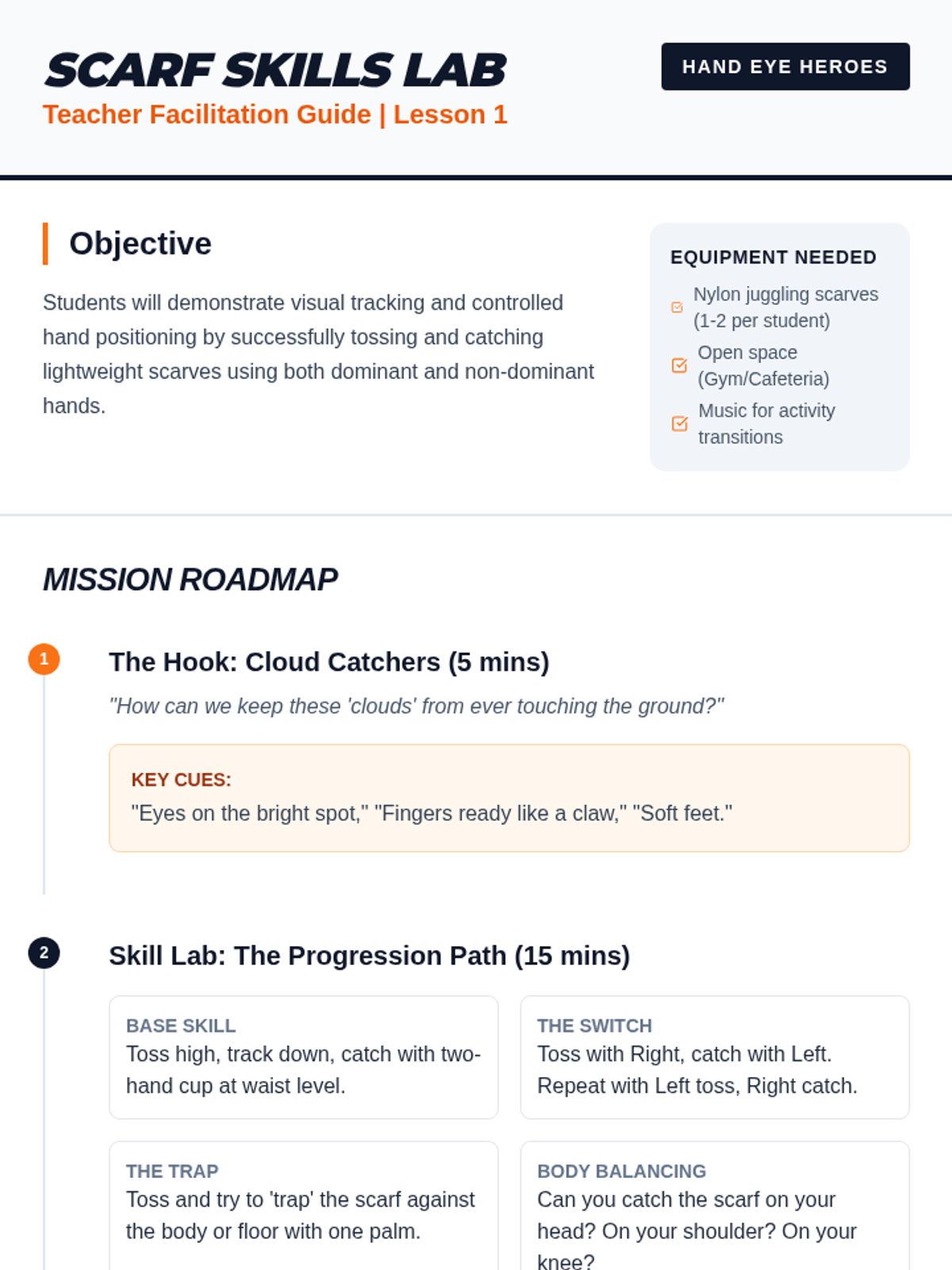
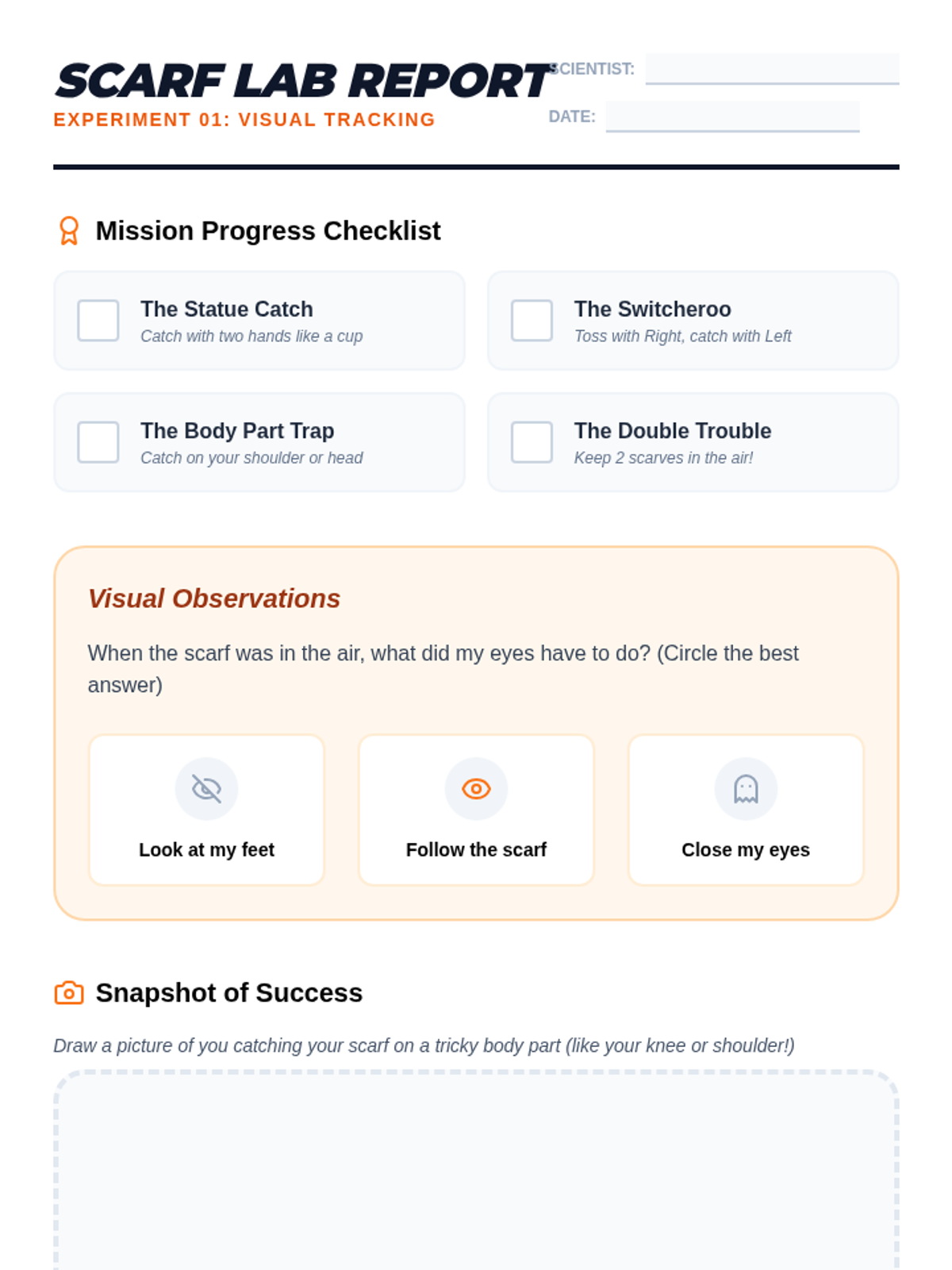
Students practice visual tracking and hand positioning by tossing and catching lightweight scarves, allowing for slow-motion mastery of movement concepts.
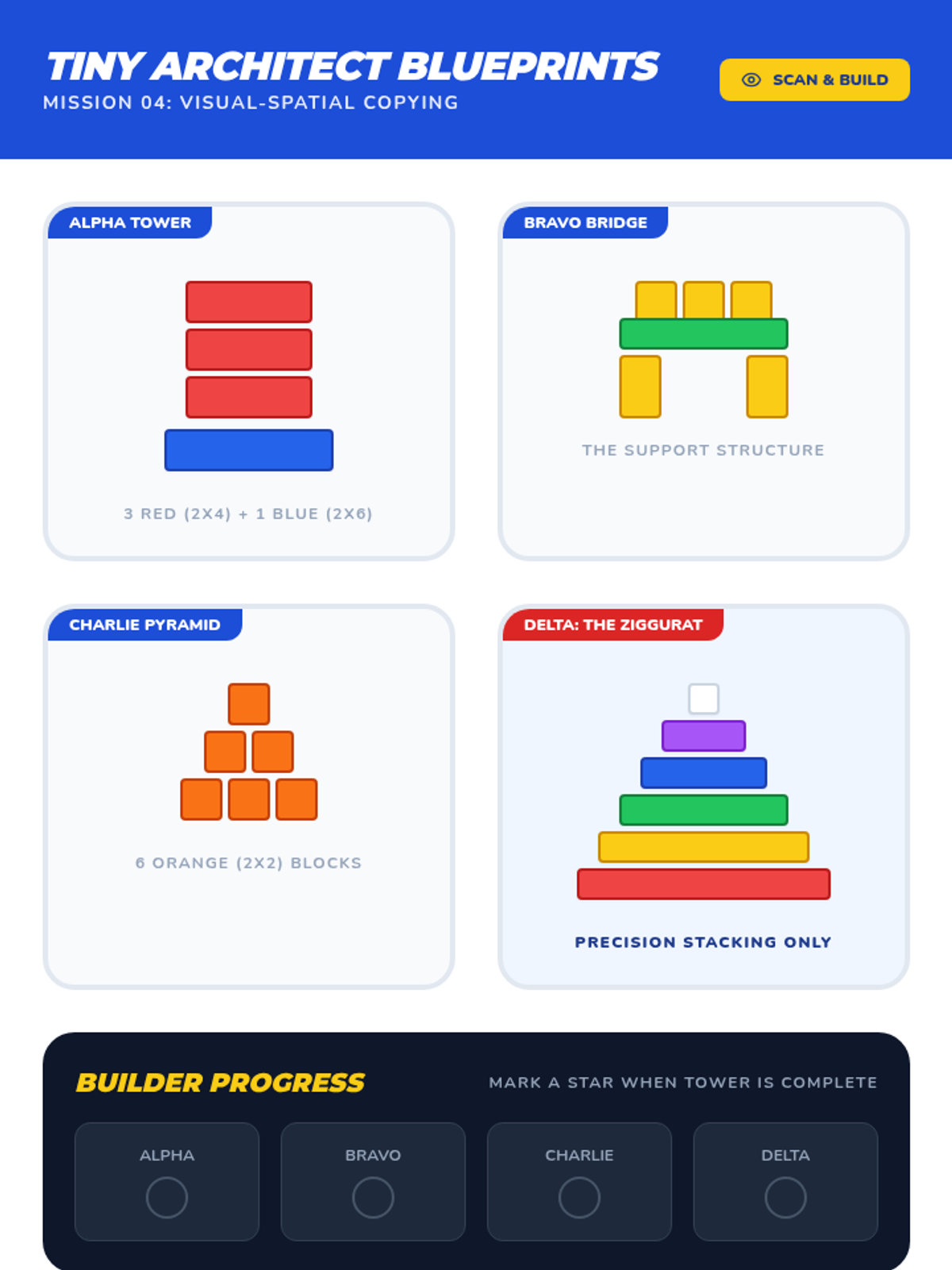
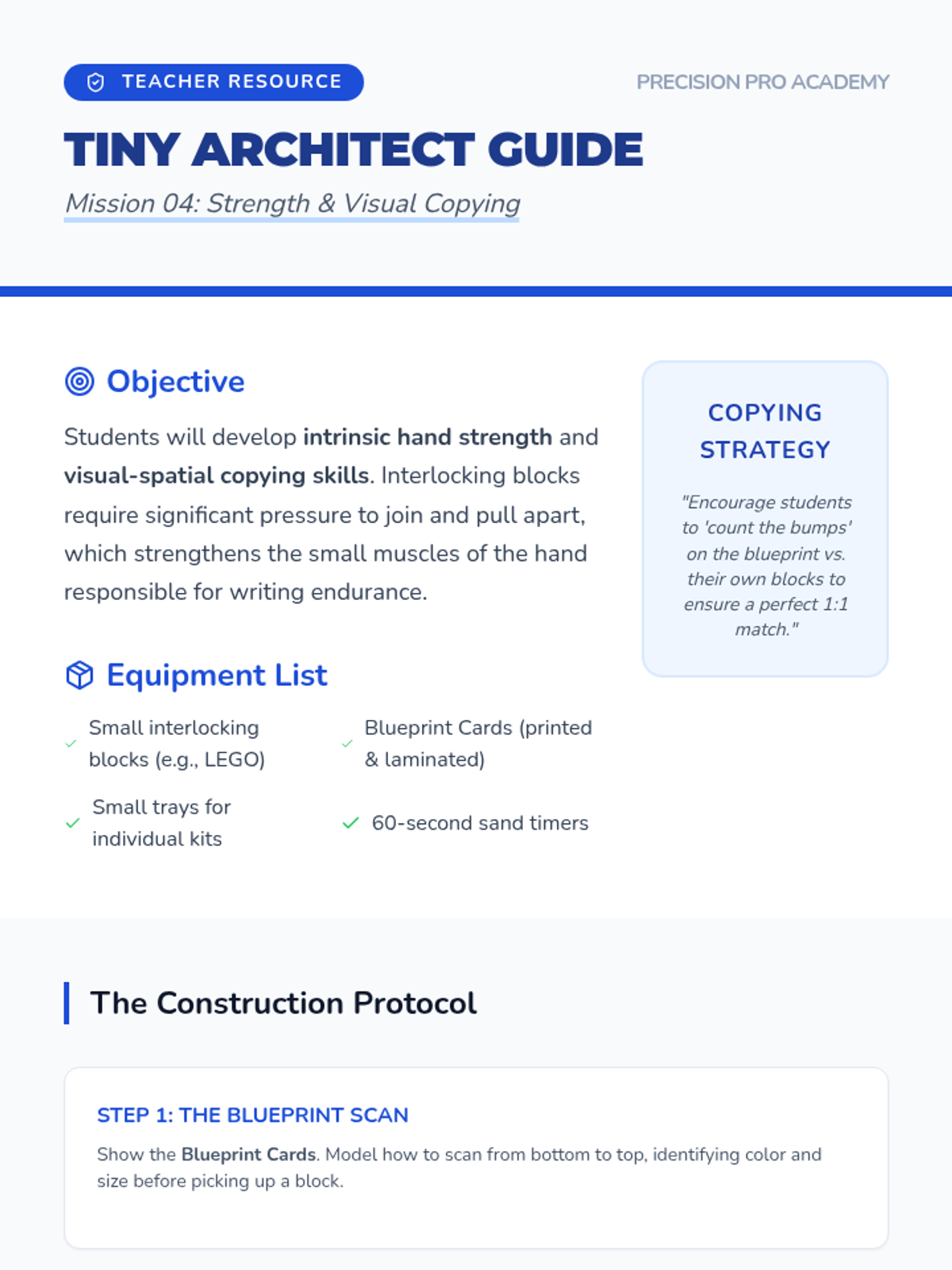
Using small interlocking blocks, students build models from blueprints to strengthen fingers and improve visual-spatial copying.
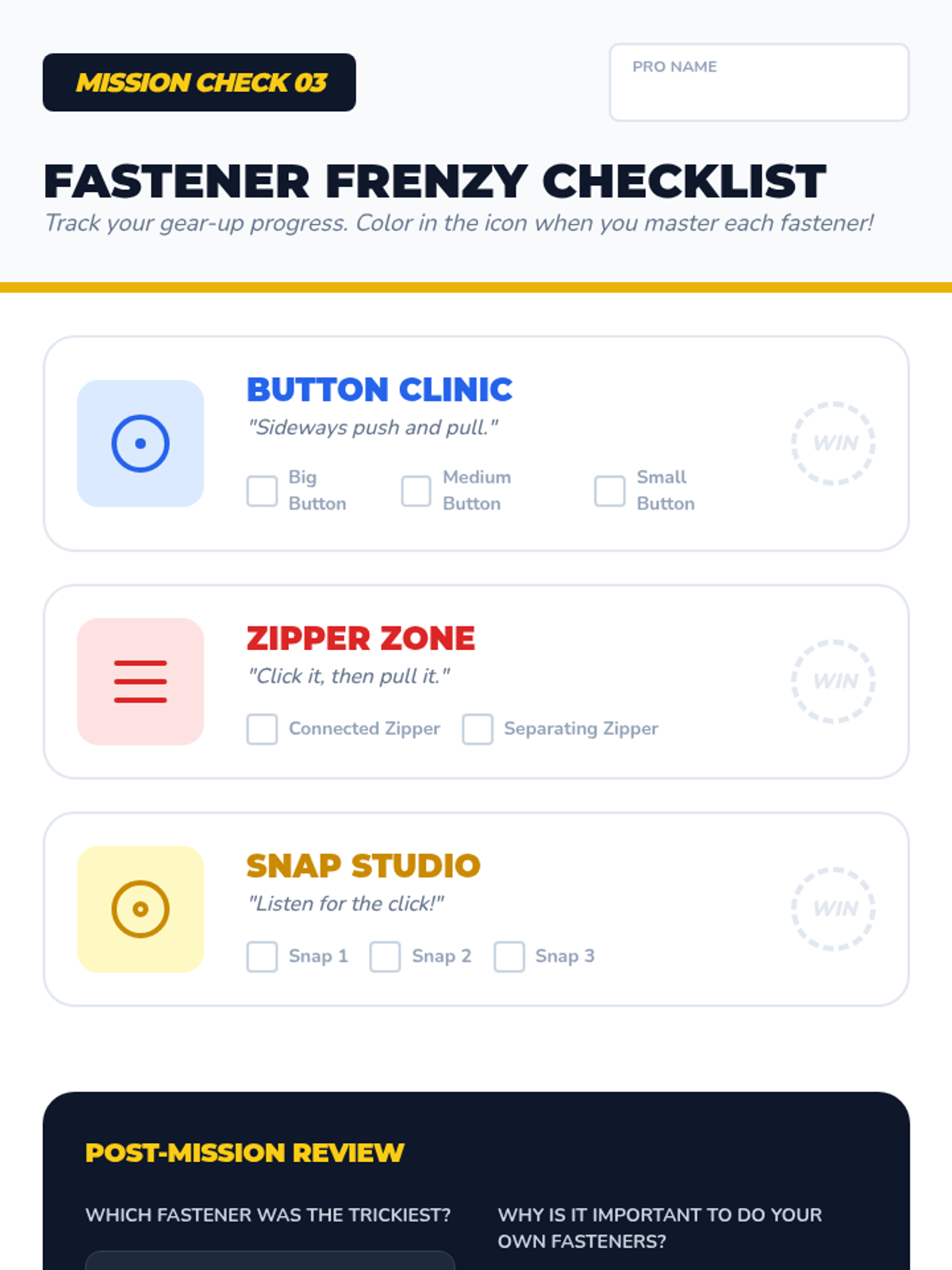
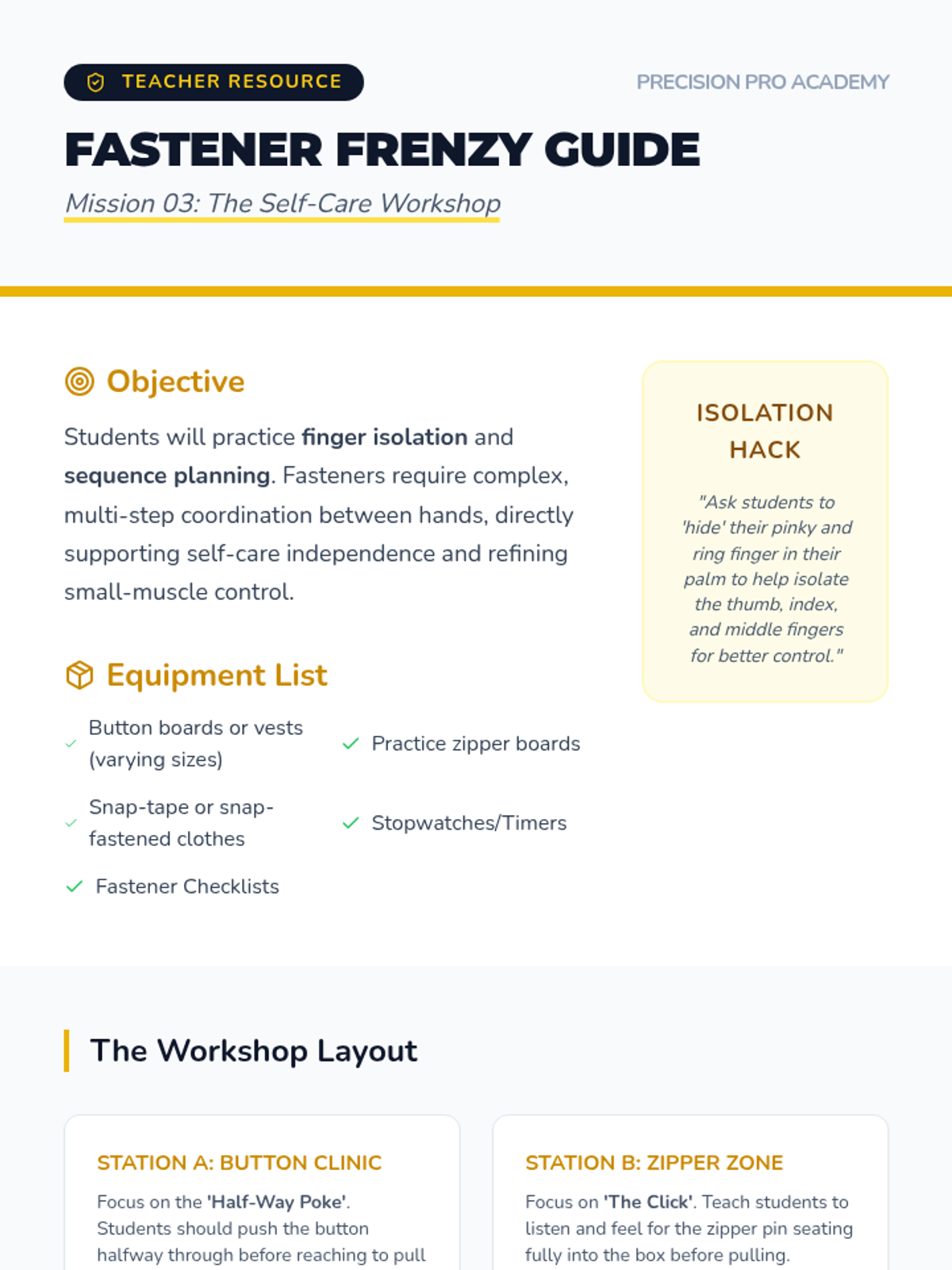
A workshop-style lesson where students practice buttons, zippers, and snaps to build self-care independence and finger isolation.
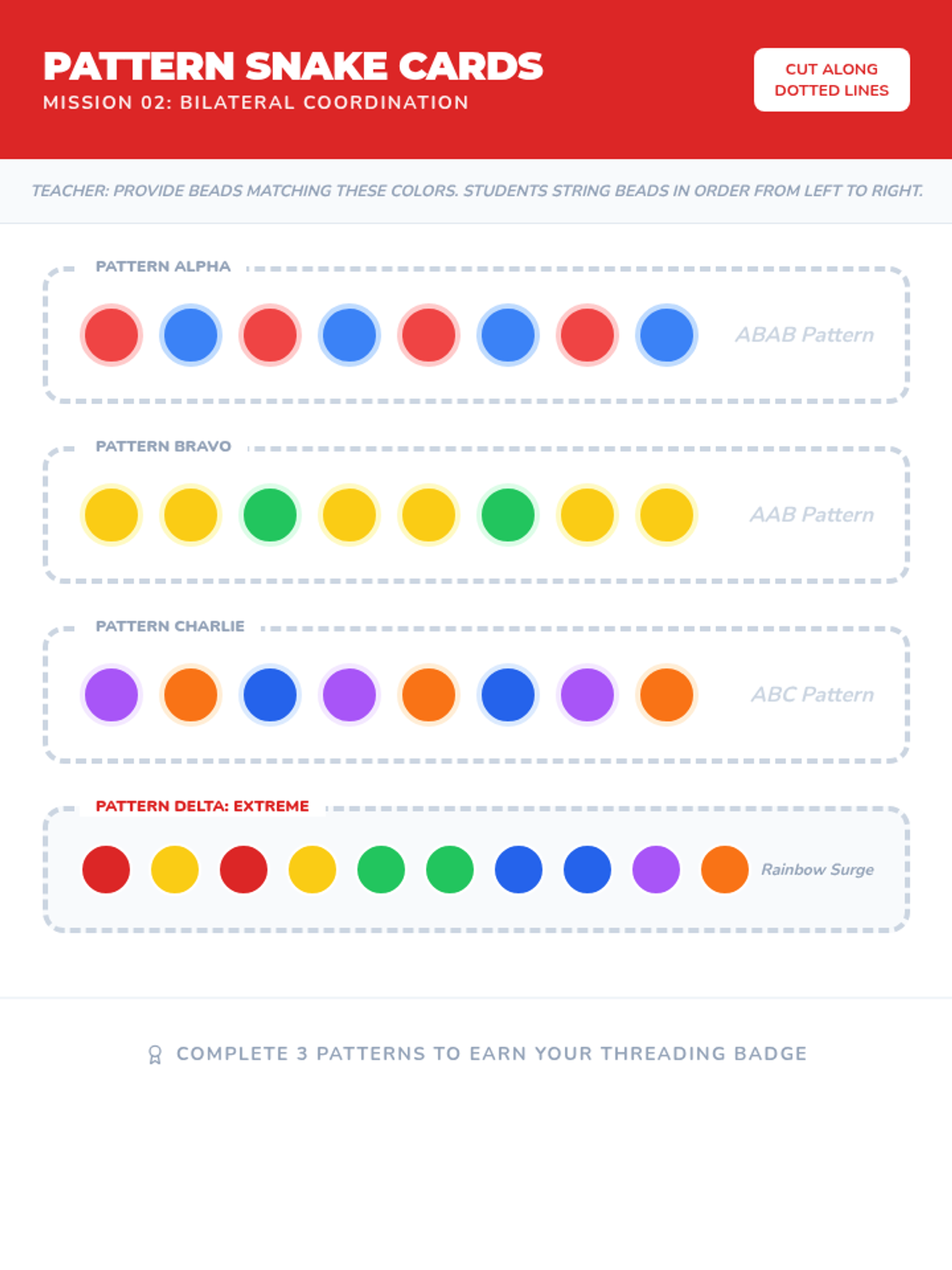
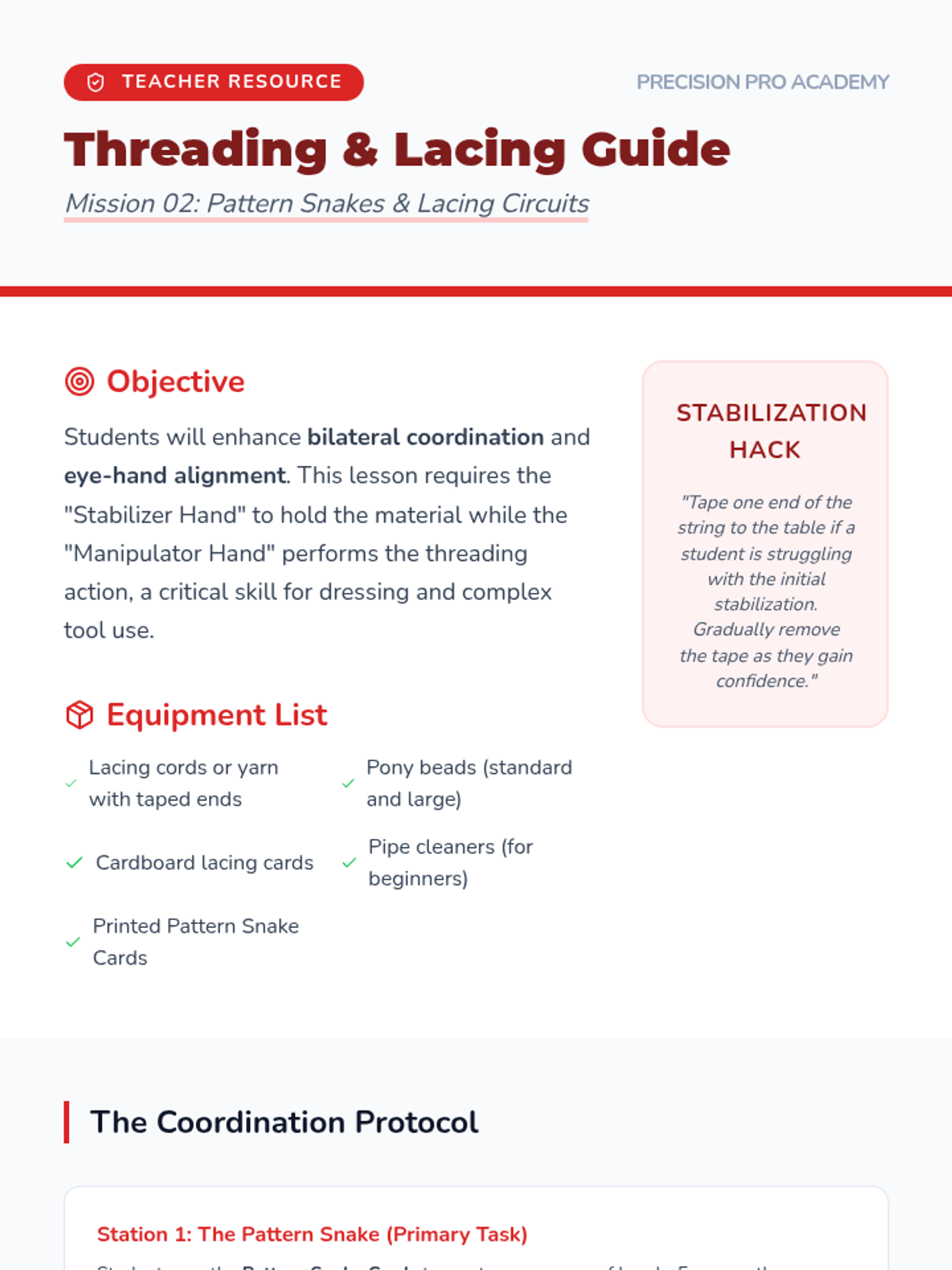
Learners practice threading beads and lacing cards to enhance eye-hand coordination and bilateral stabilization skills.
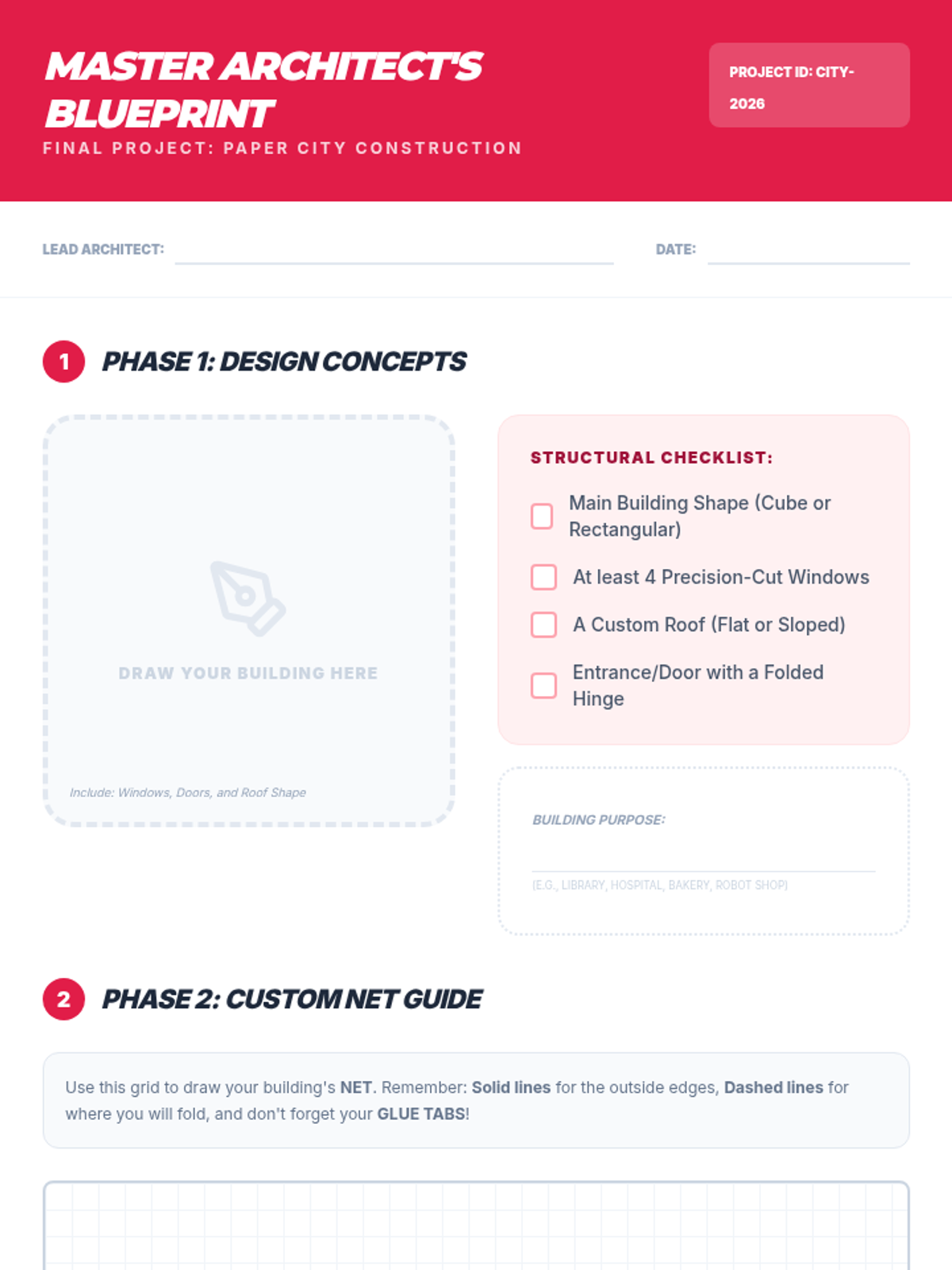
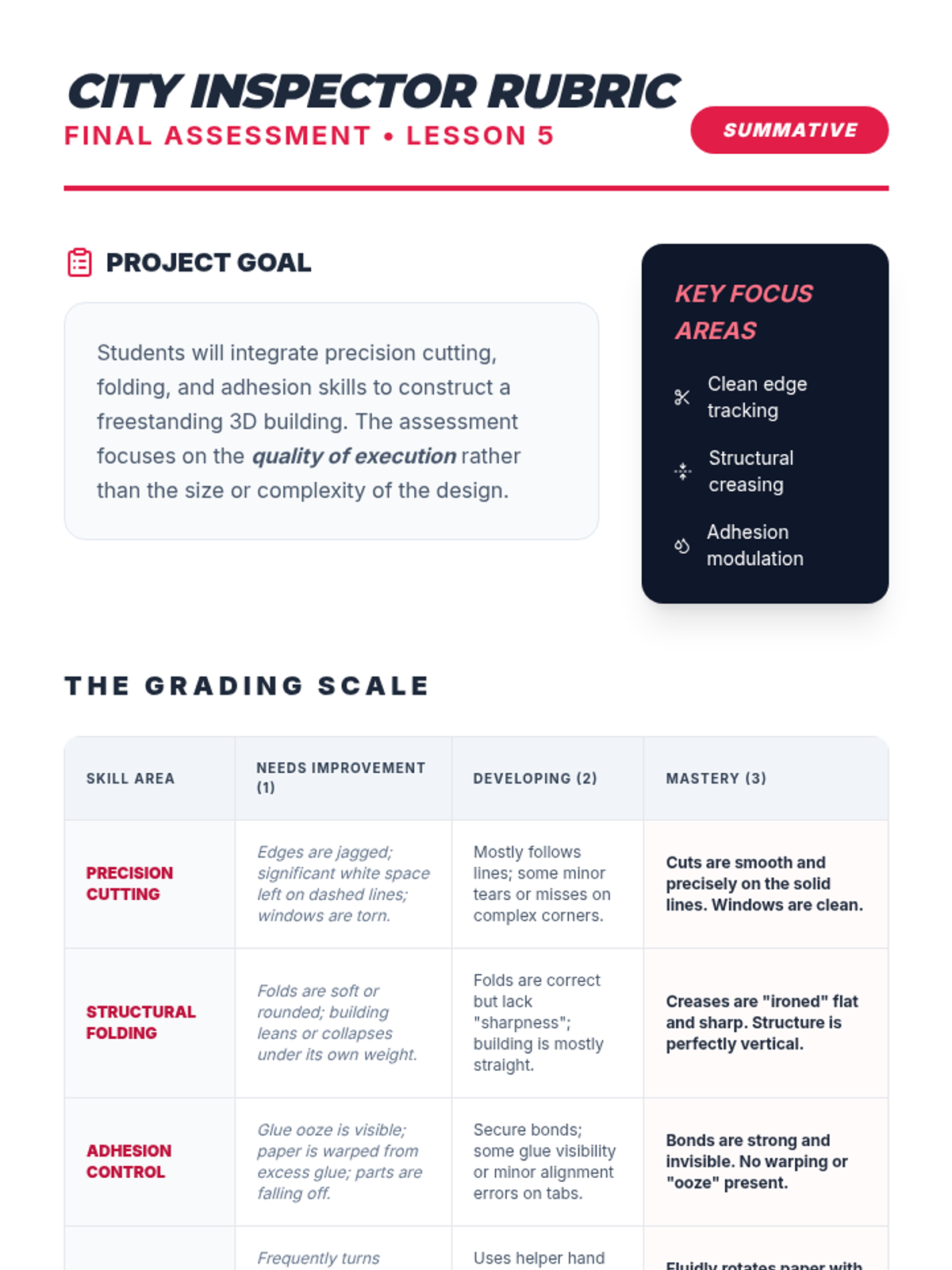
In this culminating lesson, students apply all practiced skills to design and build a miniature paper building for a class city model.
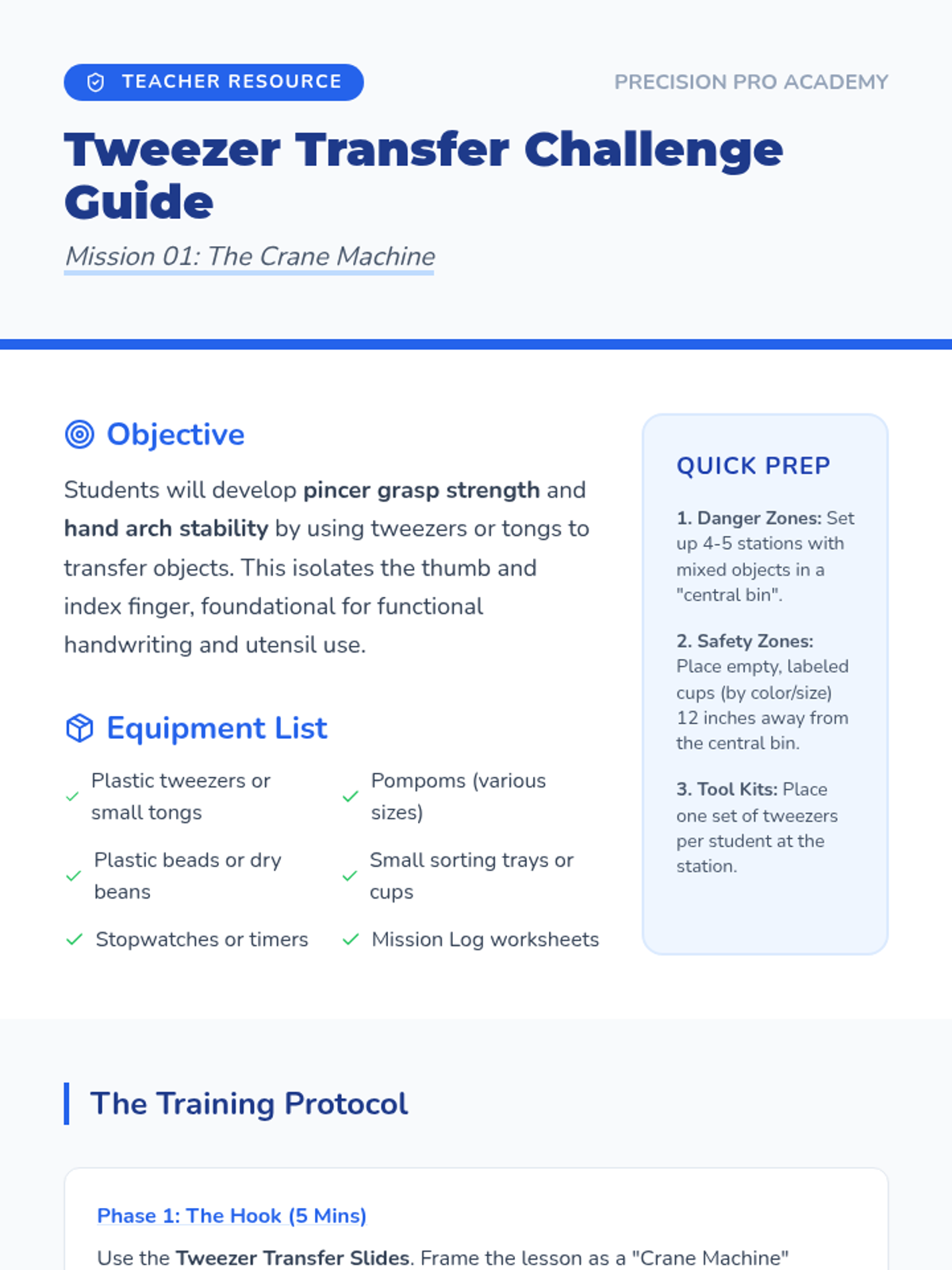
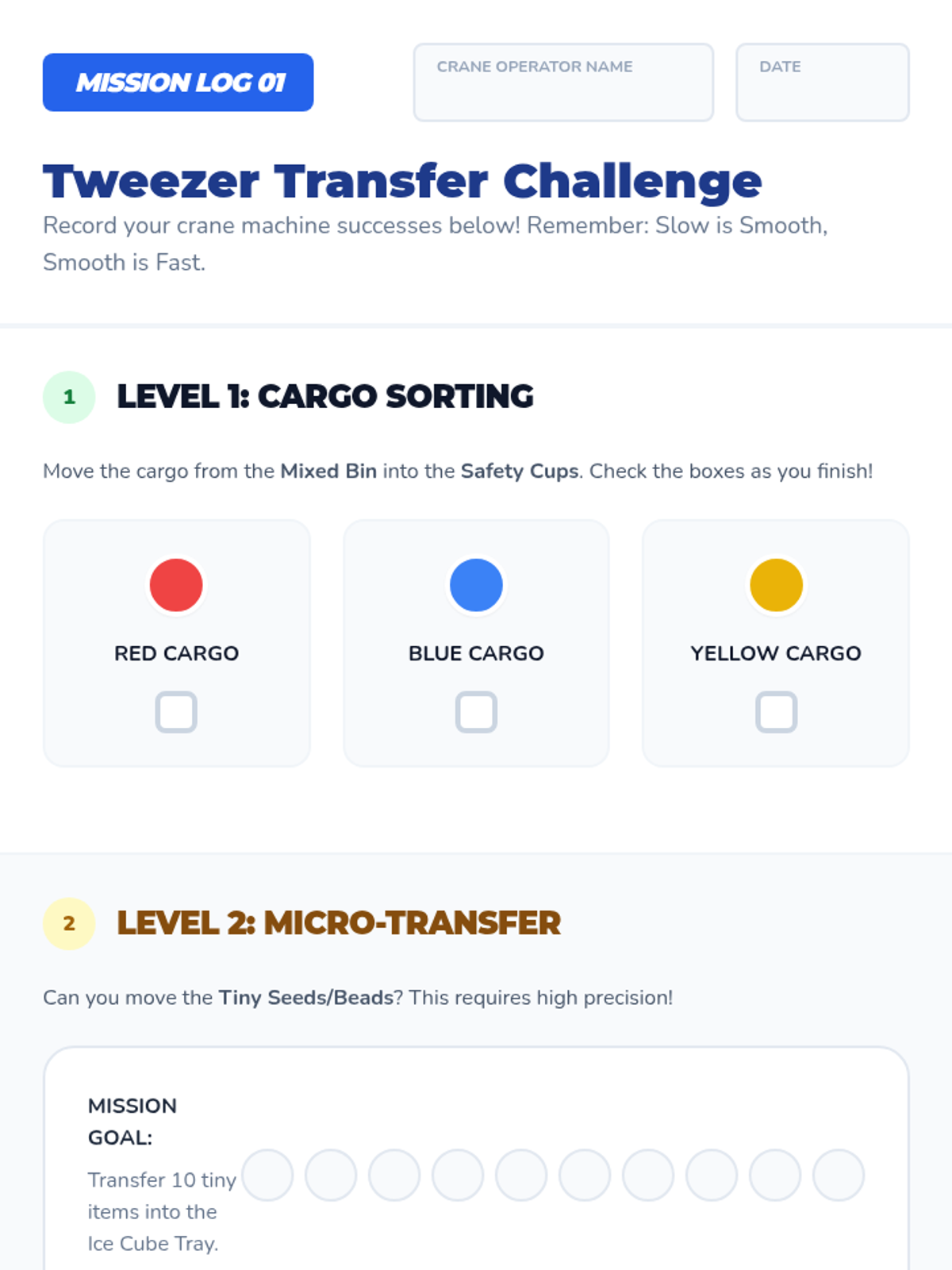
Students use tweezers or tongs to move small objects, simulating a crane operation to develop pincer grasp strength and hand arch stability.
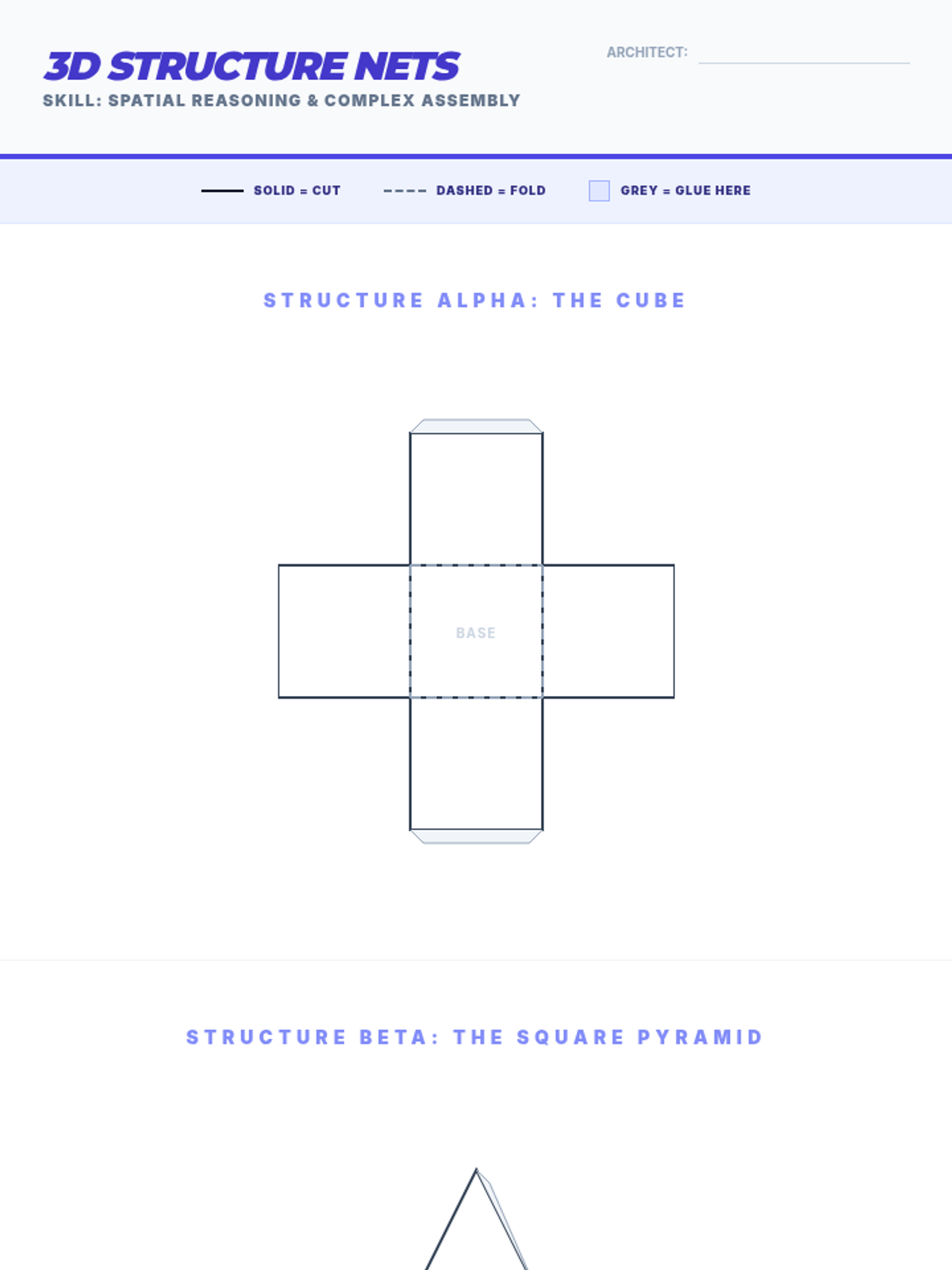
Combining cutting and folding, students construct simple 3D geometric forms like cubes and pyramids from 2D templates.
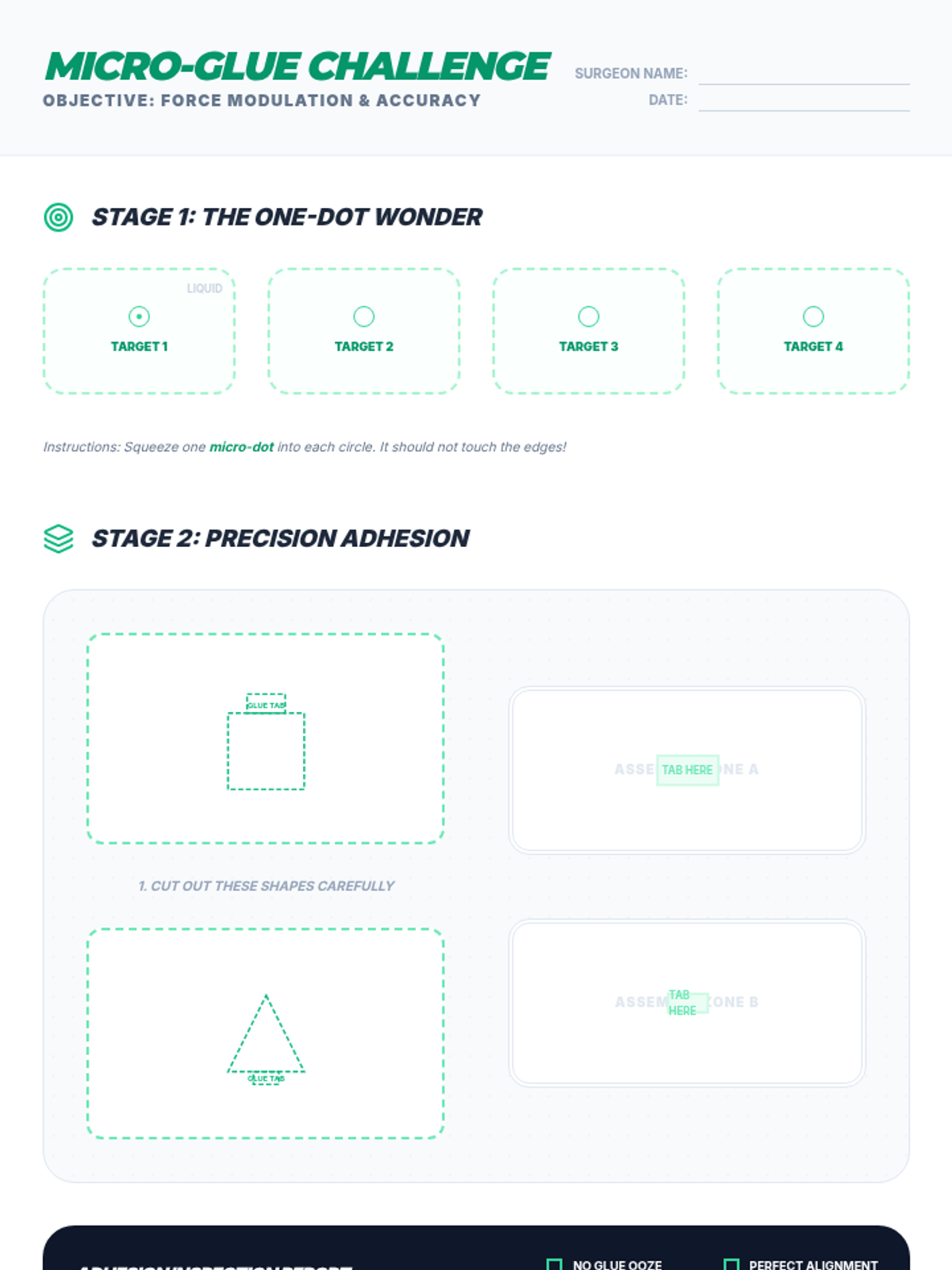
Students practice using liquid glue and glue sticks with meaningful moderation to assemble small parts, focusing on handling small paper tabs and force modulation.
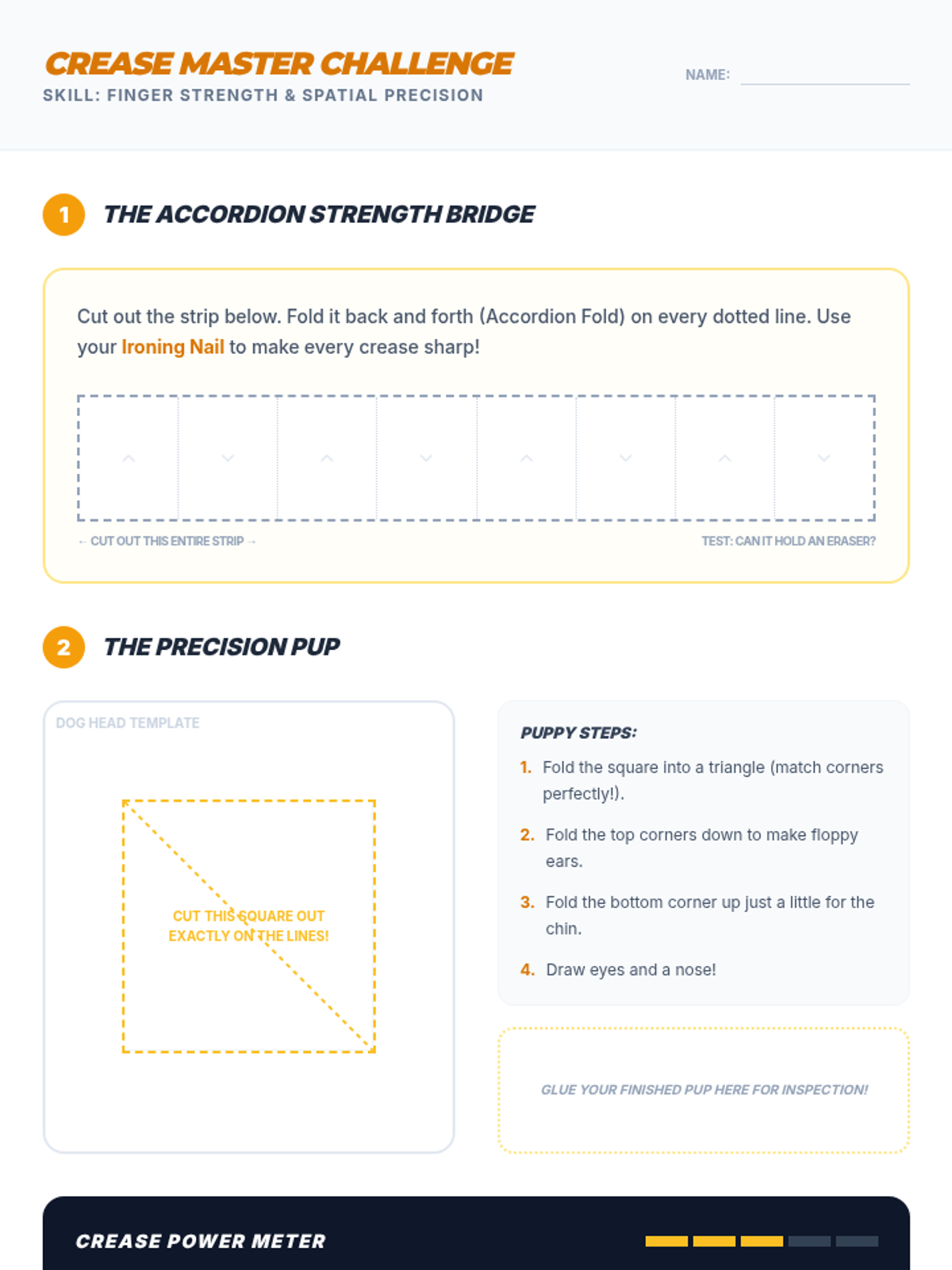
Learners explore origami-style folding to develop finger strength and fingertip sensitivity by creating precise geometric folds and sharp creases.
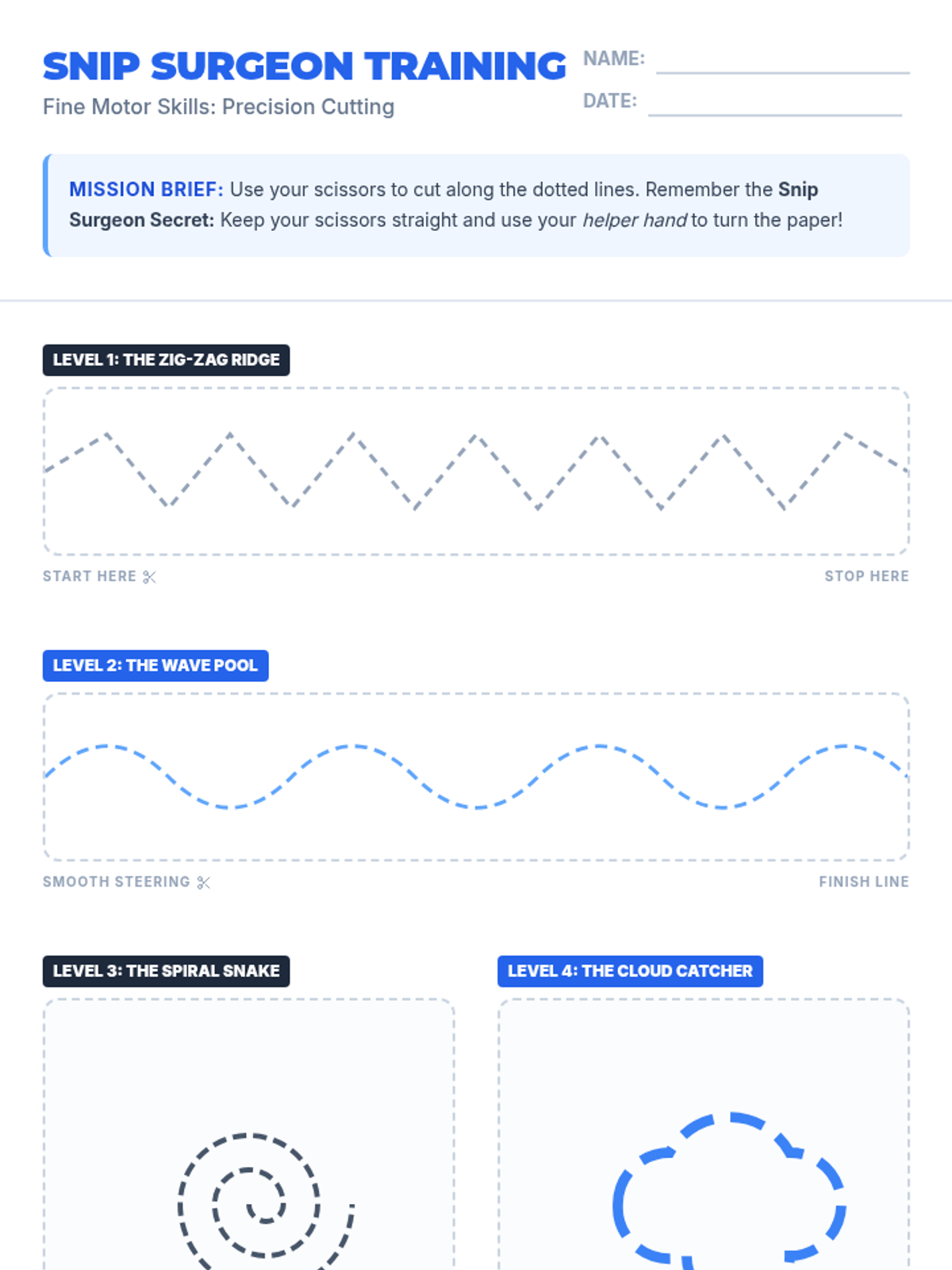
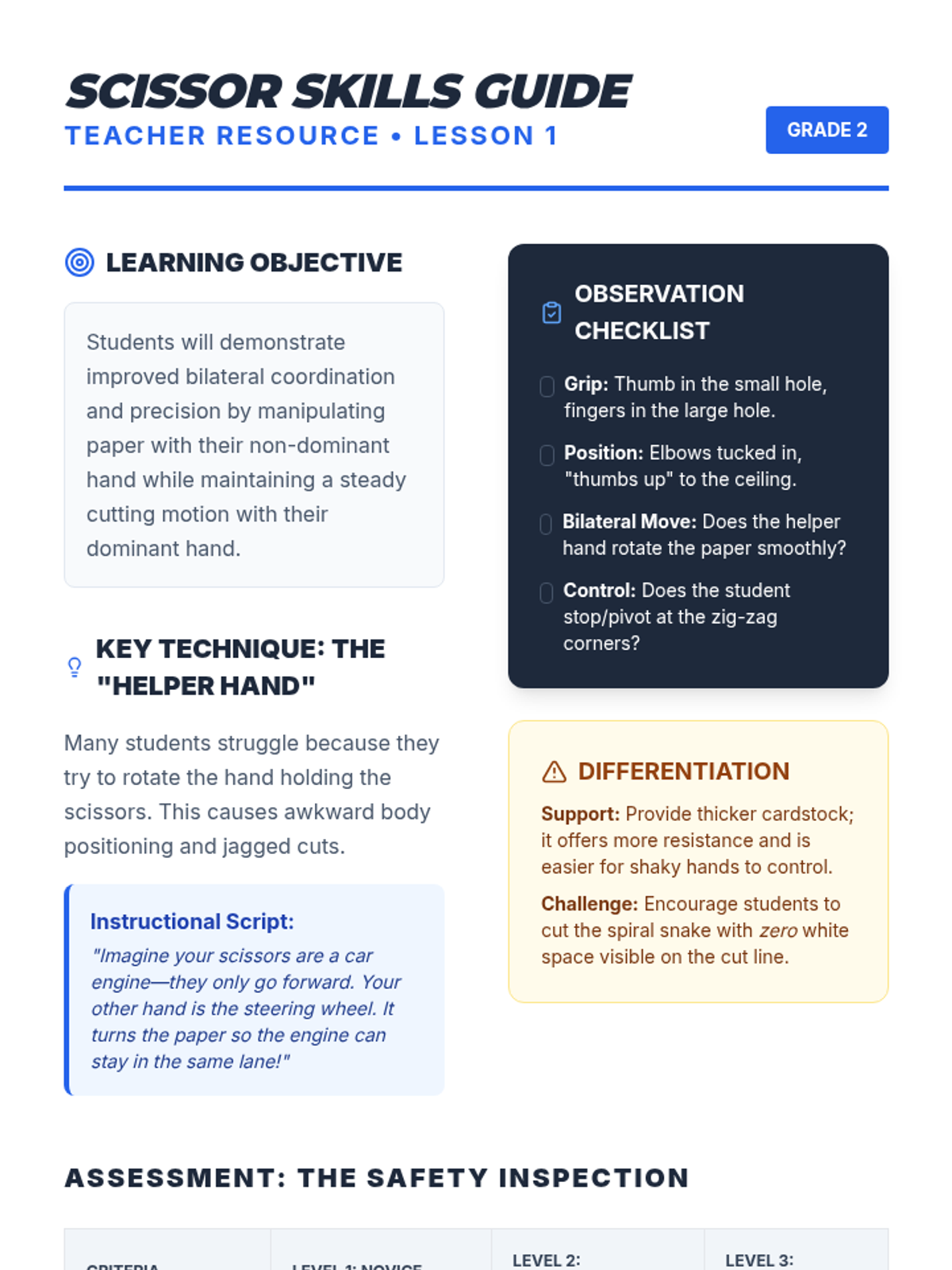
Students practice cutting along complex lines including tight spirals, zig-zags, and waves to refine scissor control, focusing on the technique of turning the paper rather than the scissors.
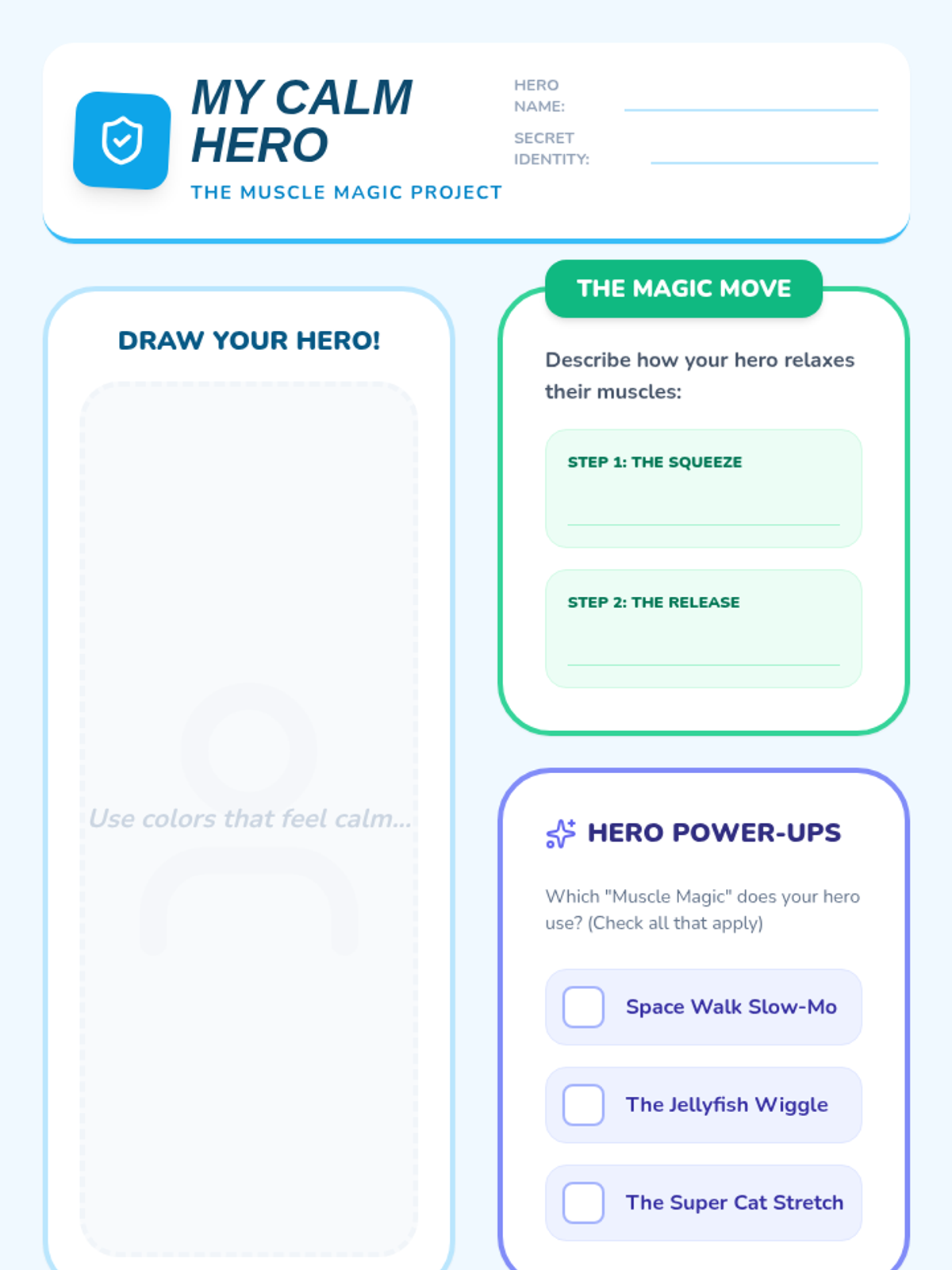
Students design their own "Relaxation Hero" and invent a unique muscle-relaxing move. They teach their moves to peers, reinforcing their understanding through creative expression.
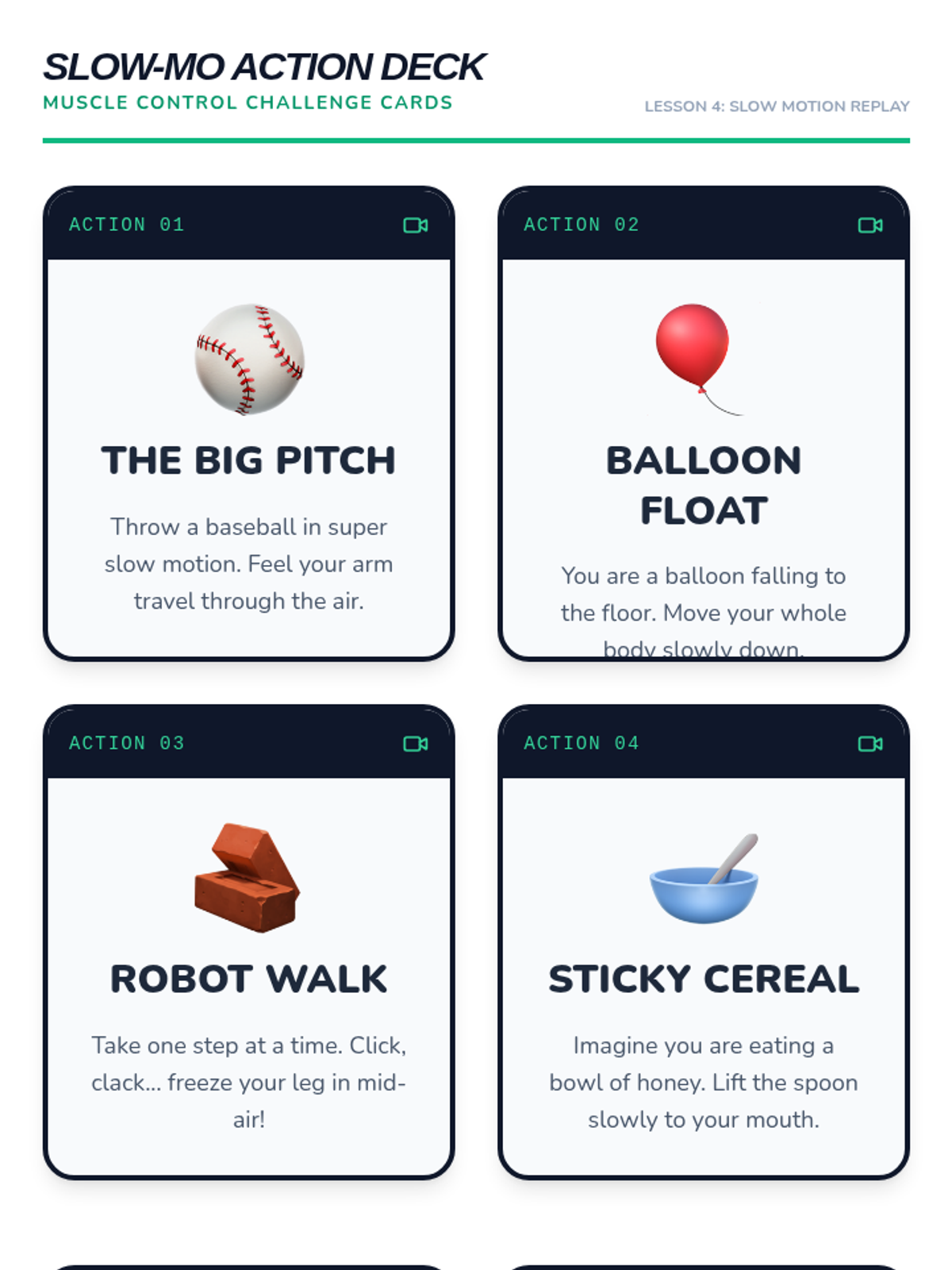
Students perform everyday actions in extreme slow motion, requiring intense muscle control and awareness. This builds focus and allows for a deeper exploration of muscle engagement.
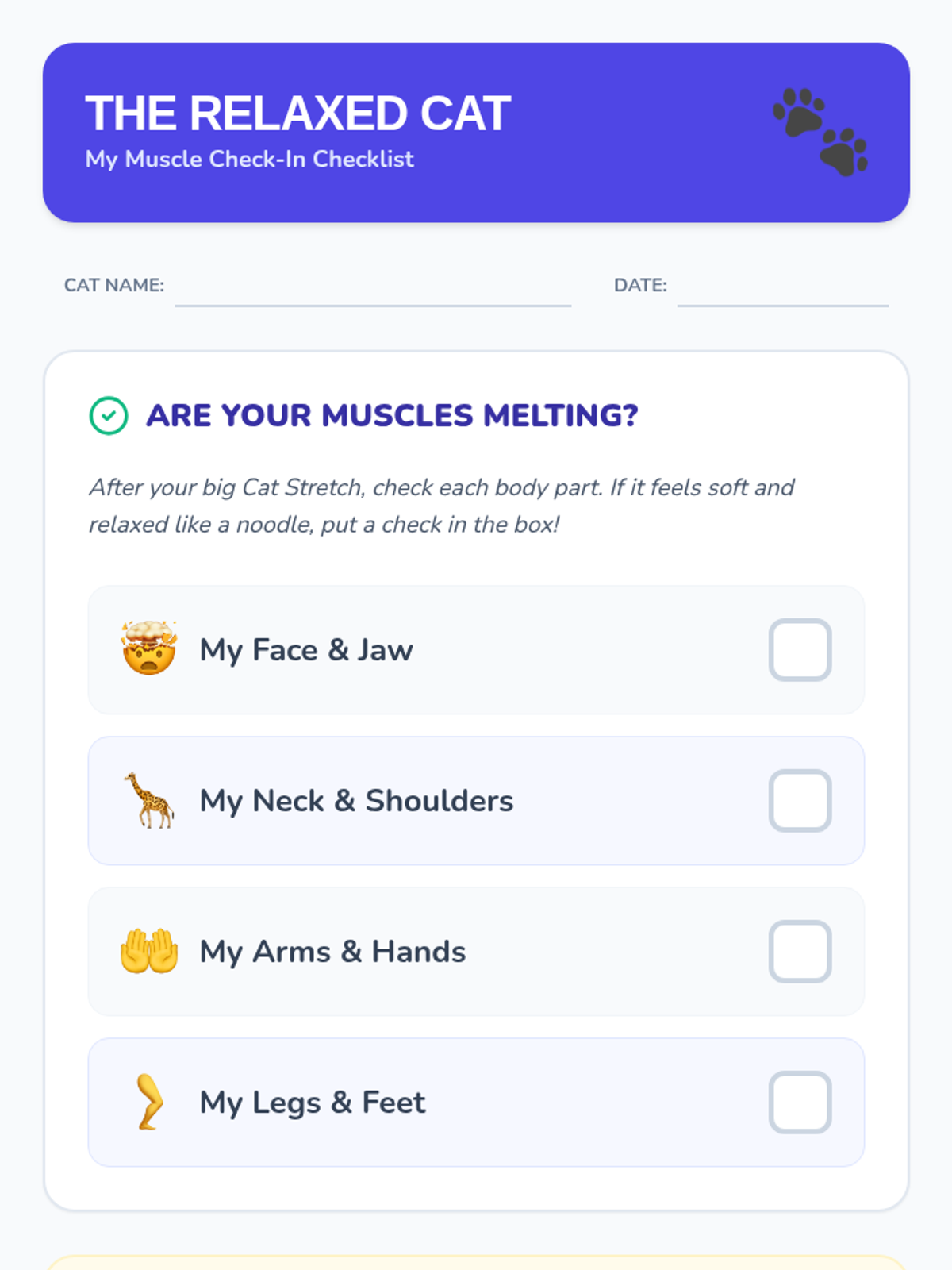
Inspired by a cat's wake-up routine, students practice long, tensed stretches followed by total muscle collapse. This lesson highlights the physical relief that follows the release of tension.
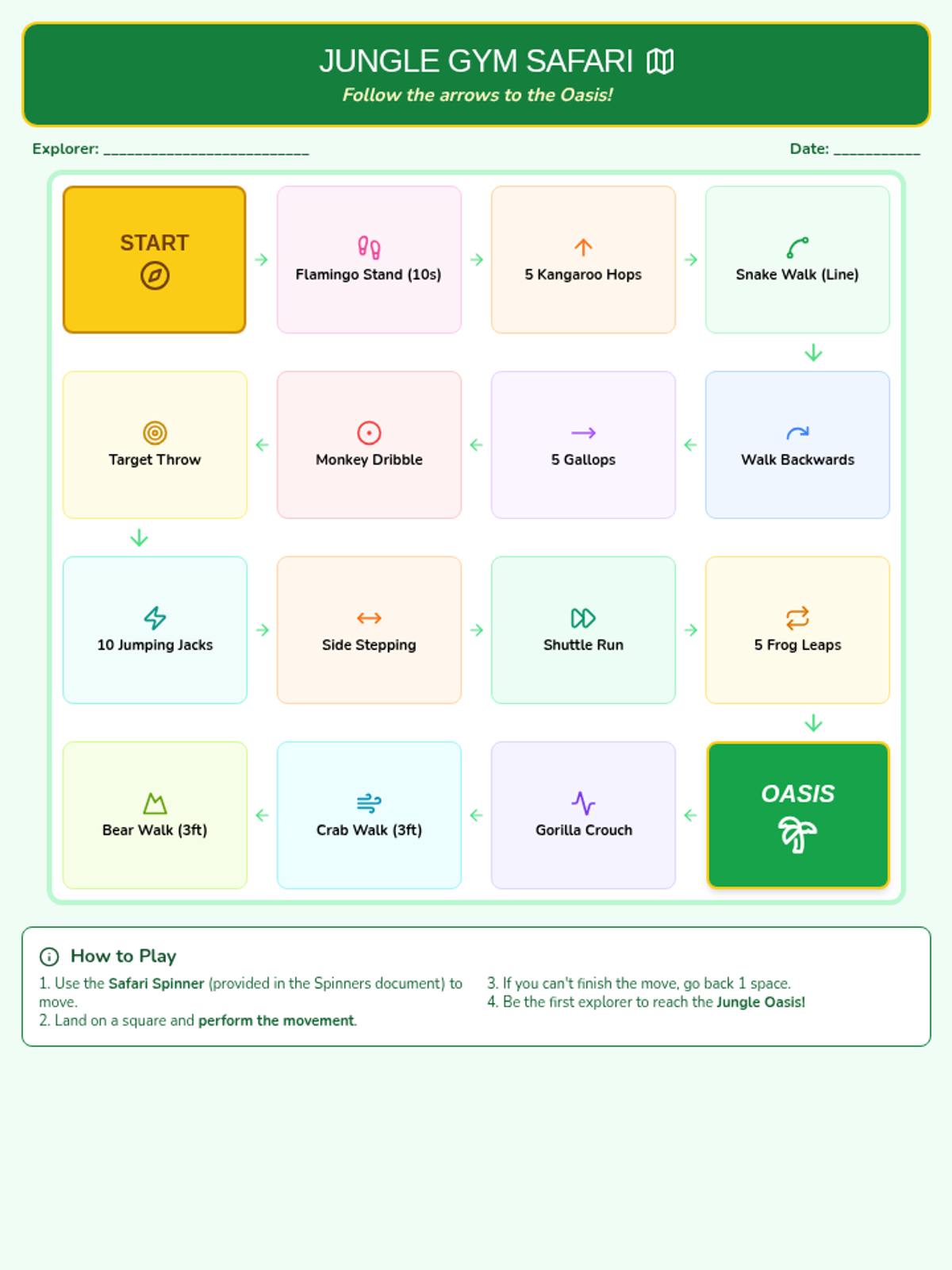
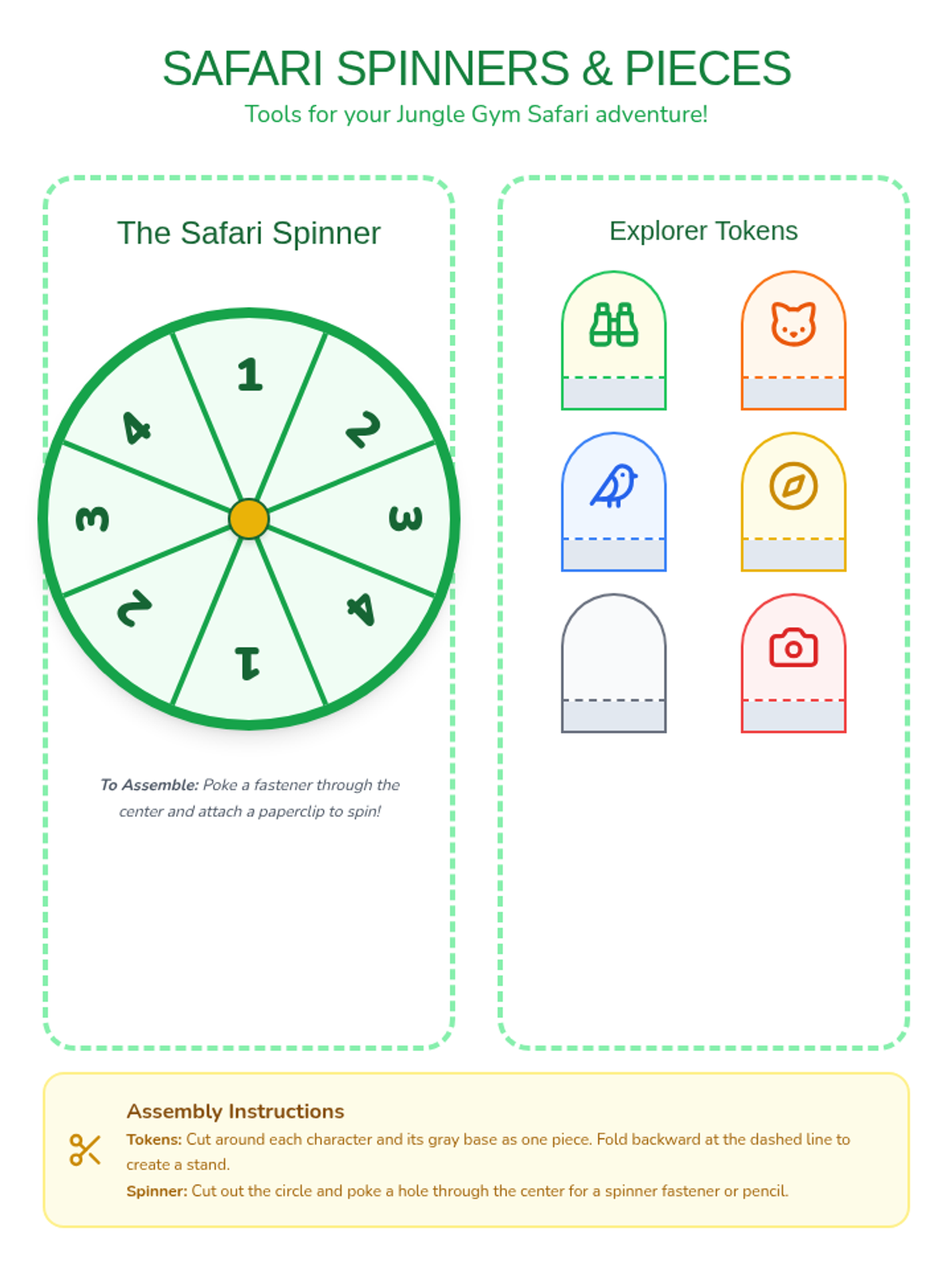
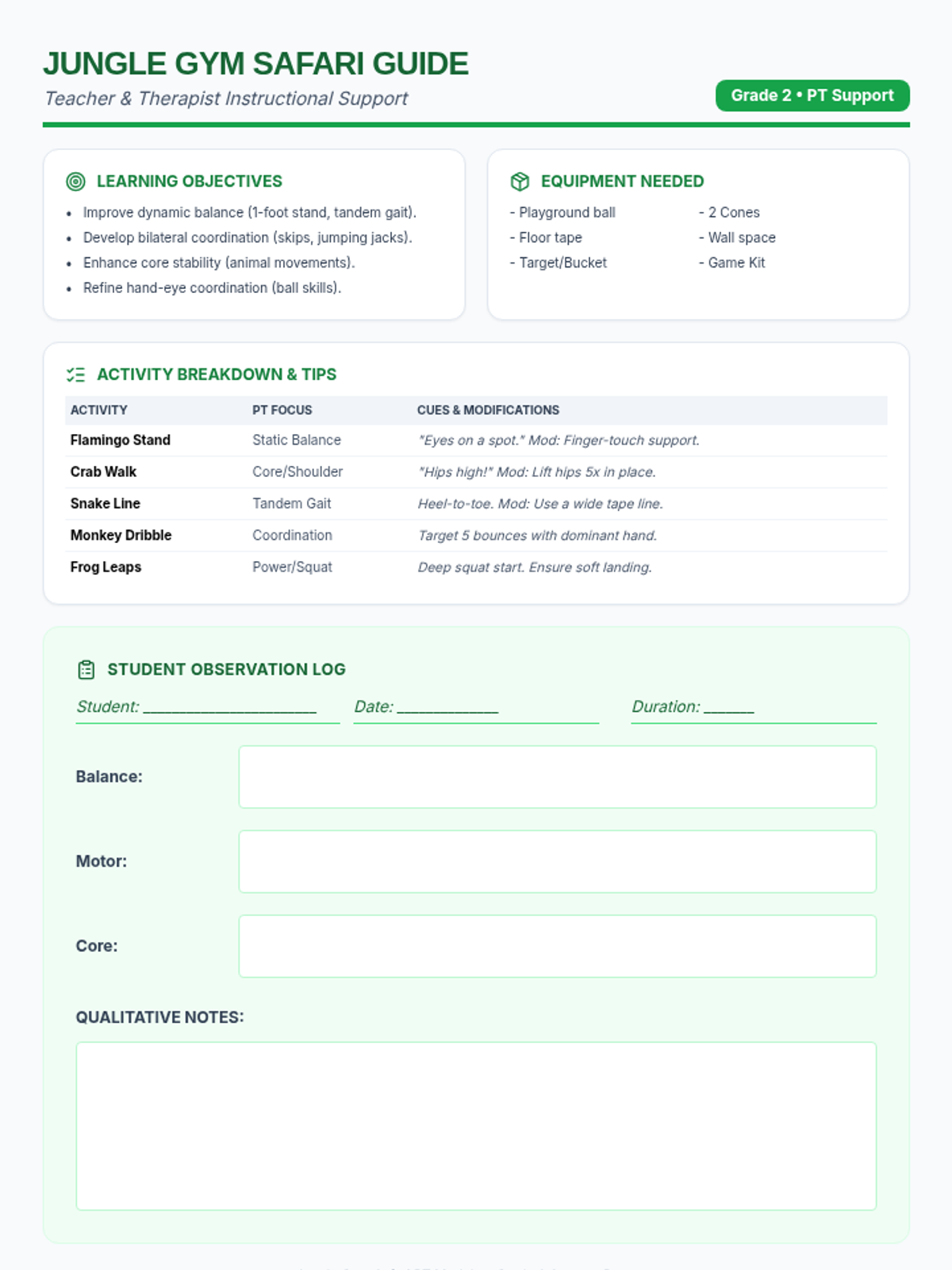
A physical therapy board game set for 2nd graders focusing on gross motor skills, balance, and core strength through a jungle-themed adventure.
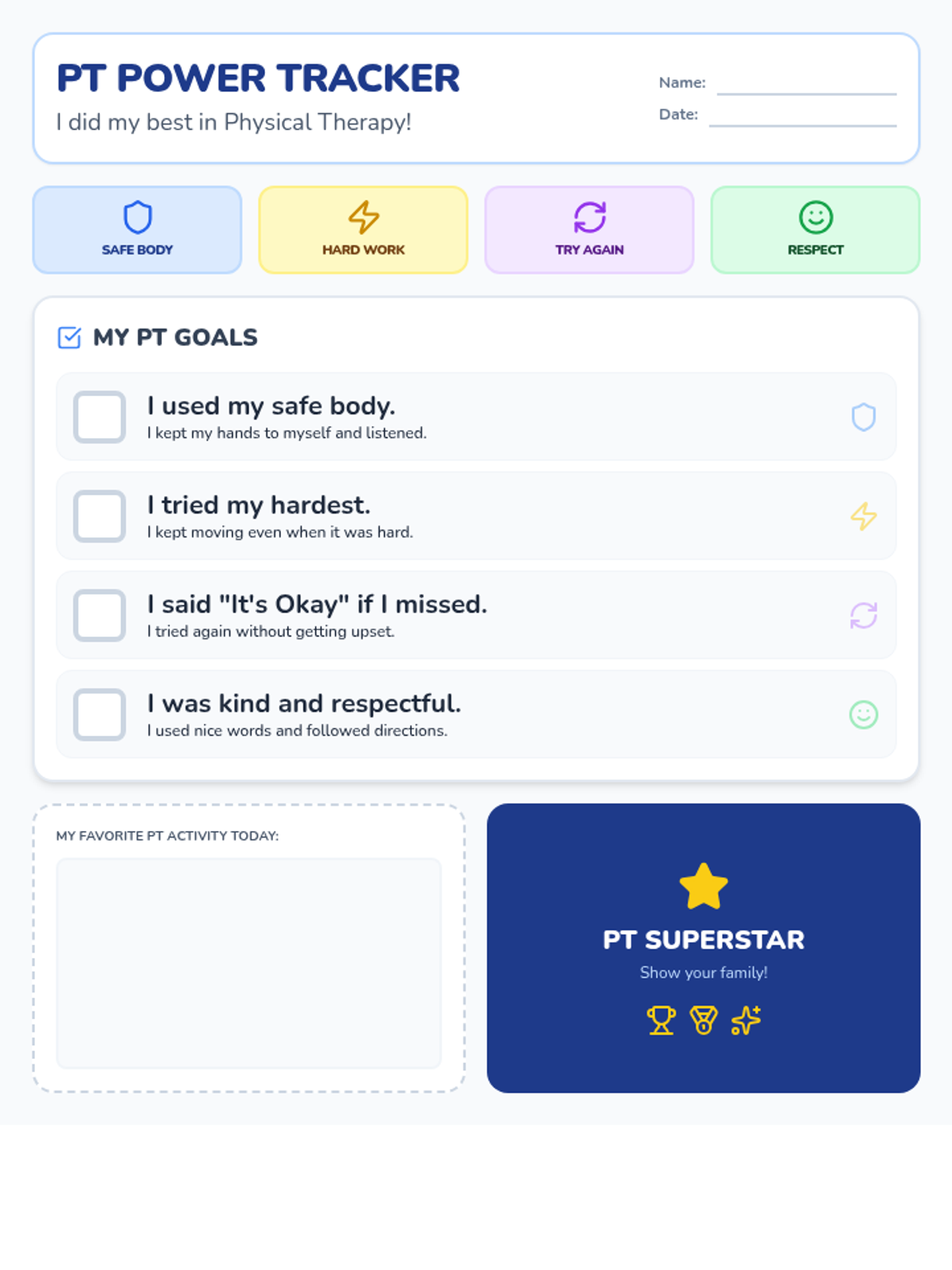
A series of visual-heavy slides and a supporting visual guide to help students understand and practice positive behaviors during physical therapy sessions.
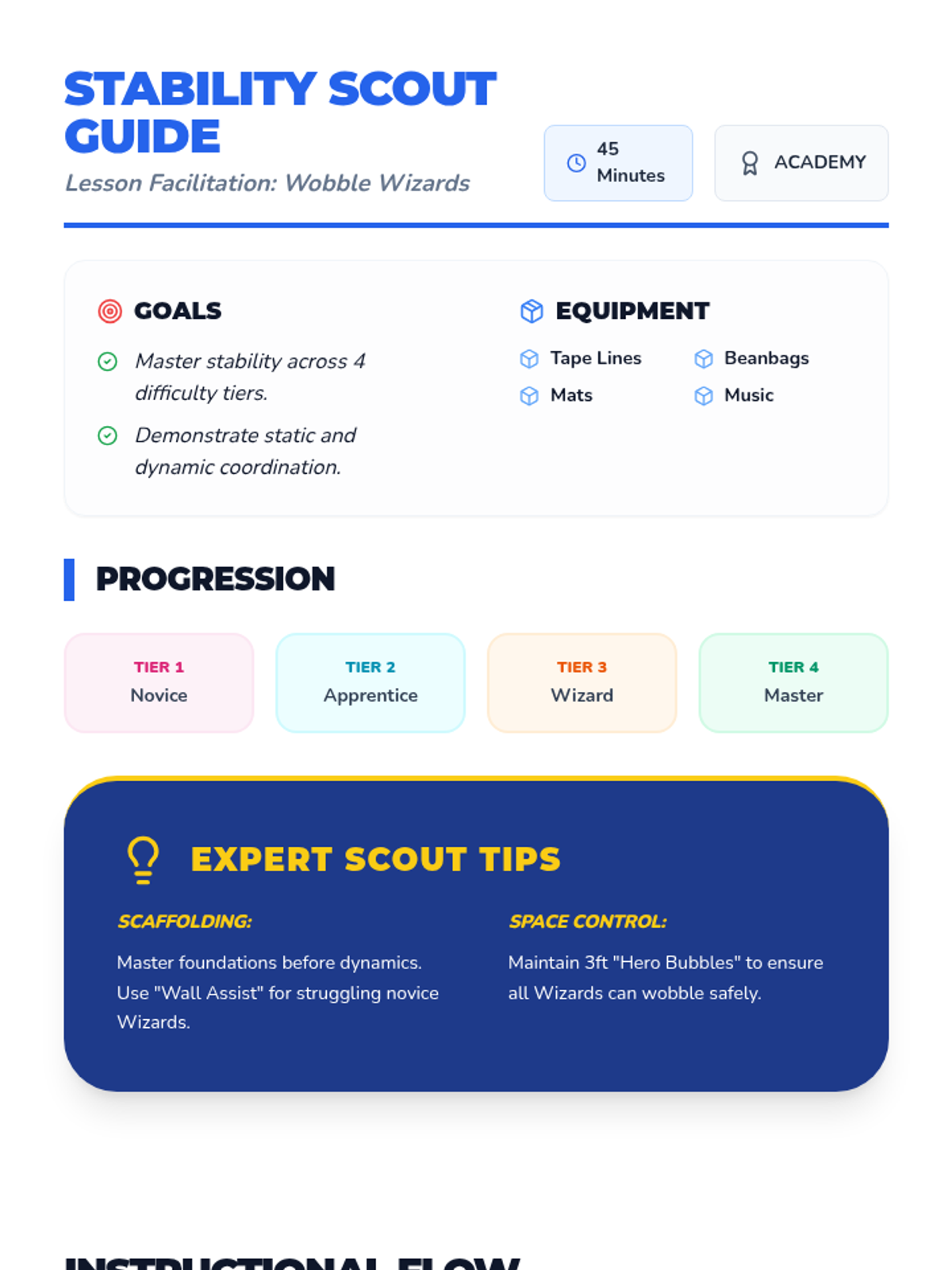
A high-energy physical education lesson focused on developing gross motor skills through engaging balance challenges. Students explore static and dynamic balance using playful imagery and structured task cards.
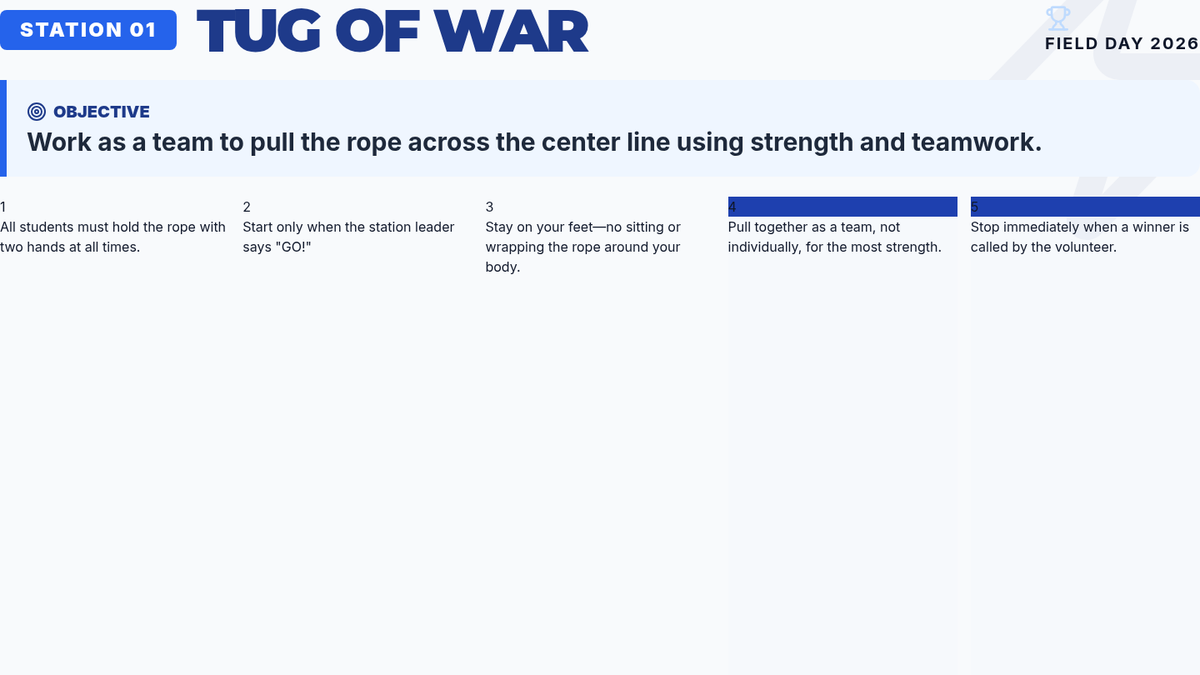
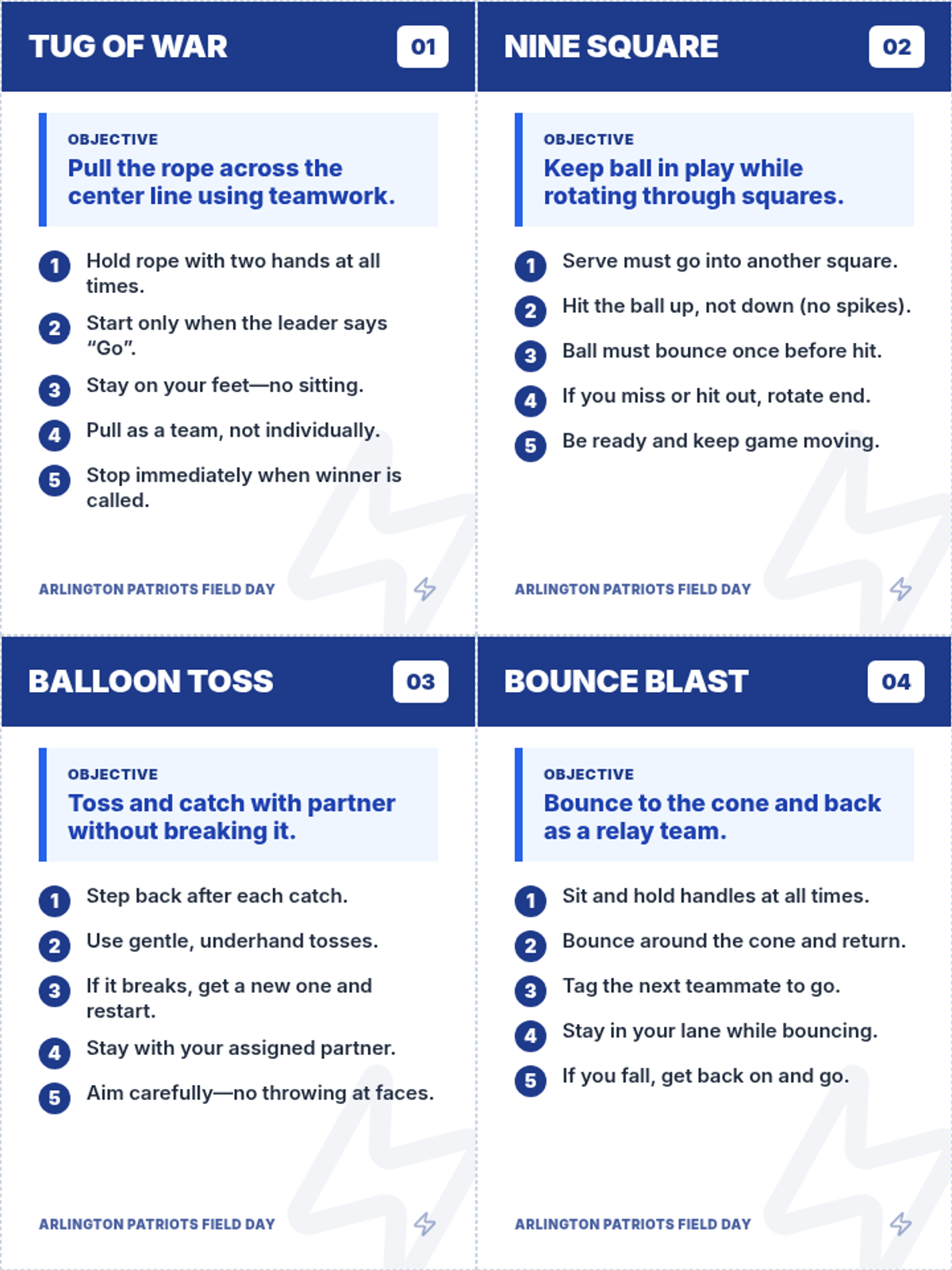
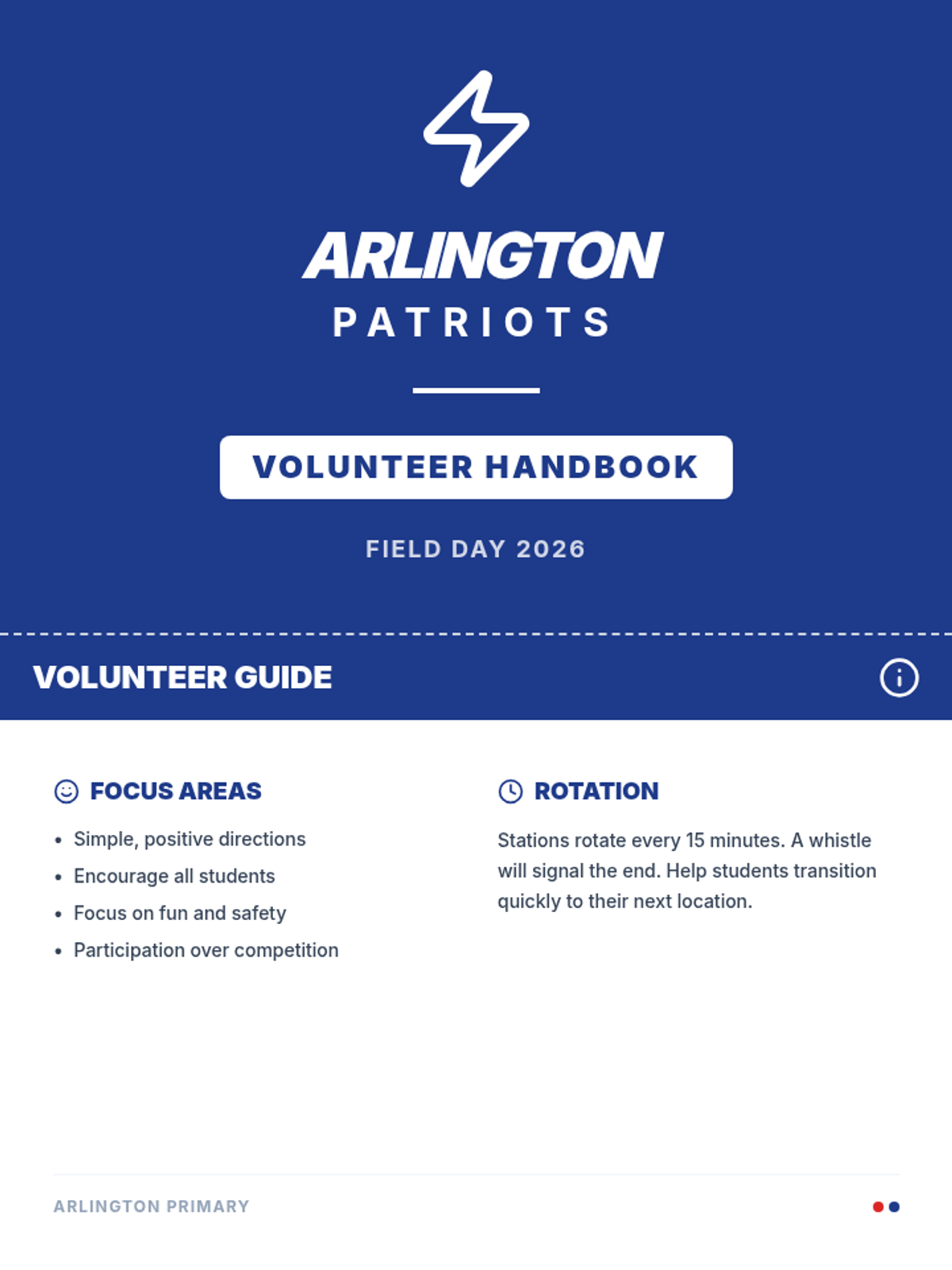
A comprehensive set of resources for the Arlington Patriots Field Day event, including presentation slides for instruction and printable station cards for volunteers.
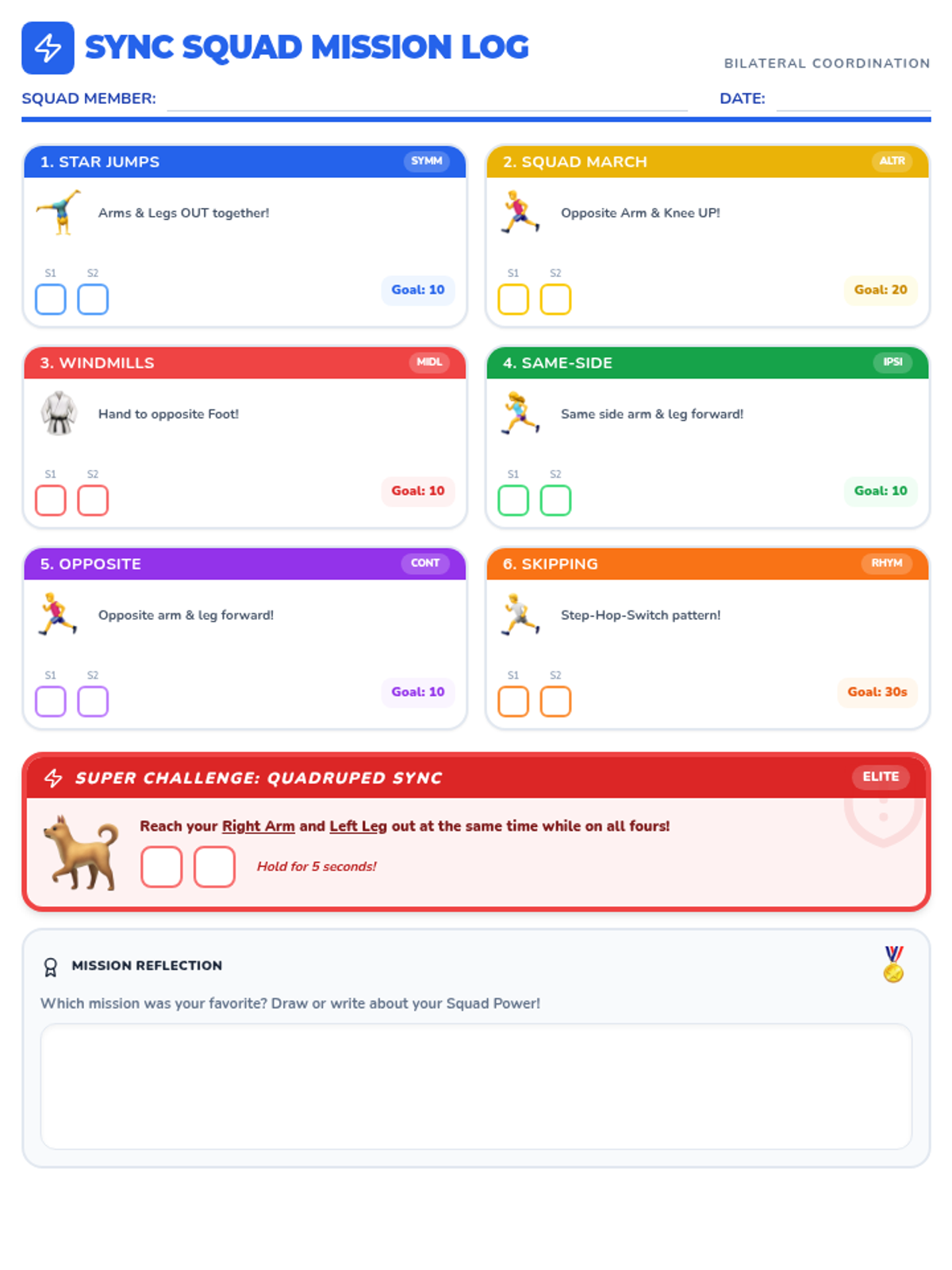
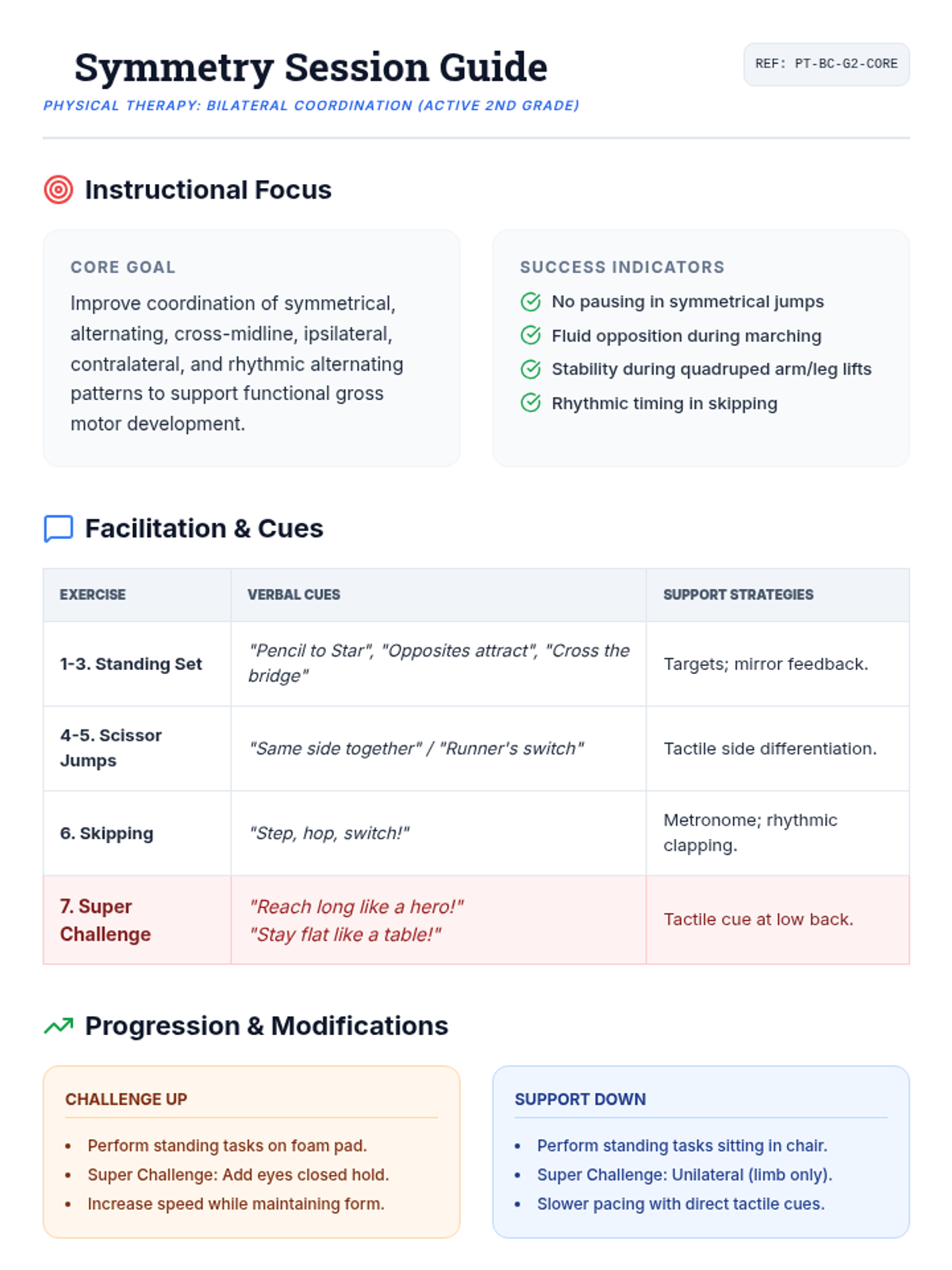
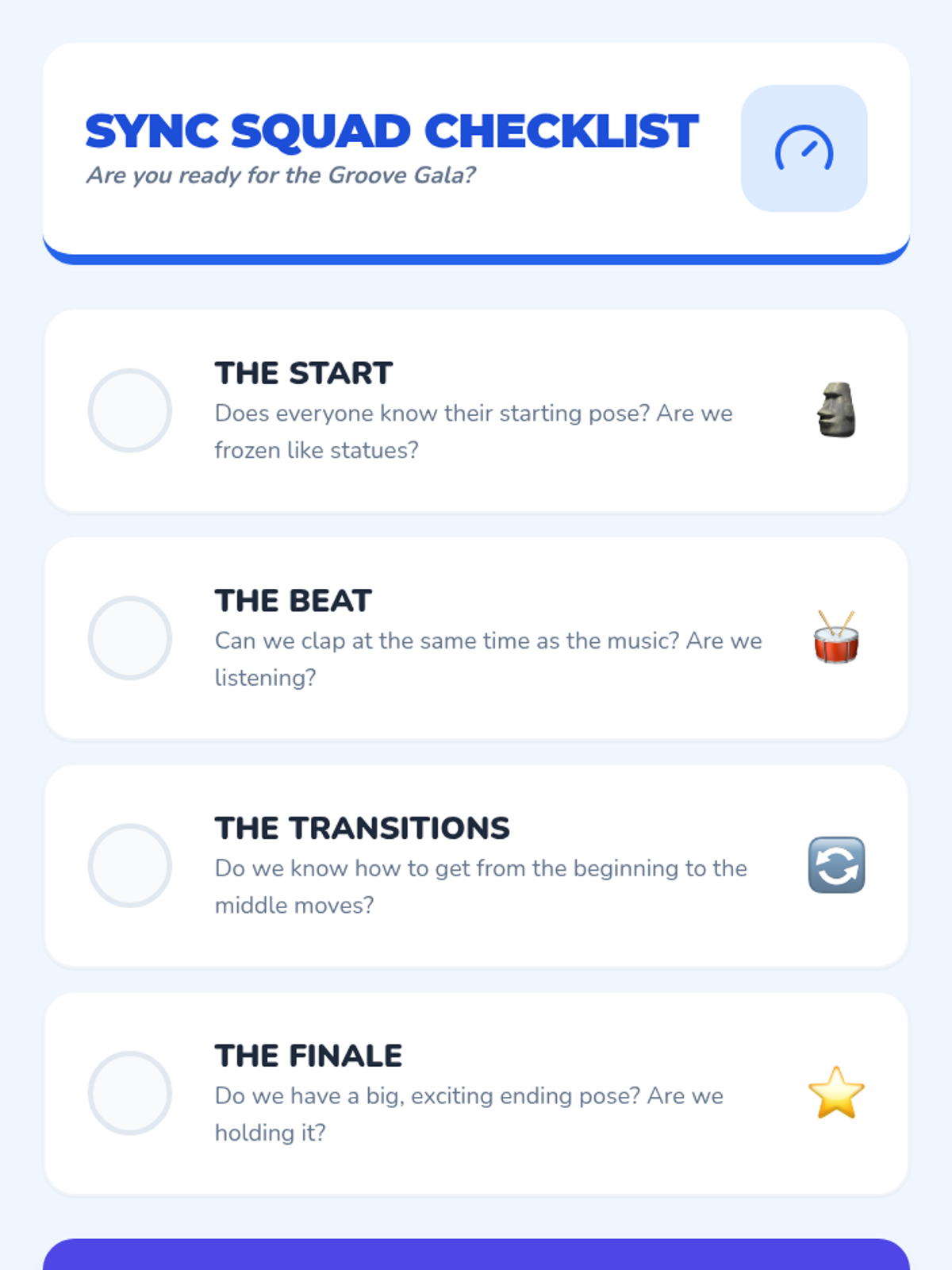
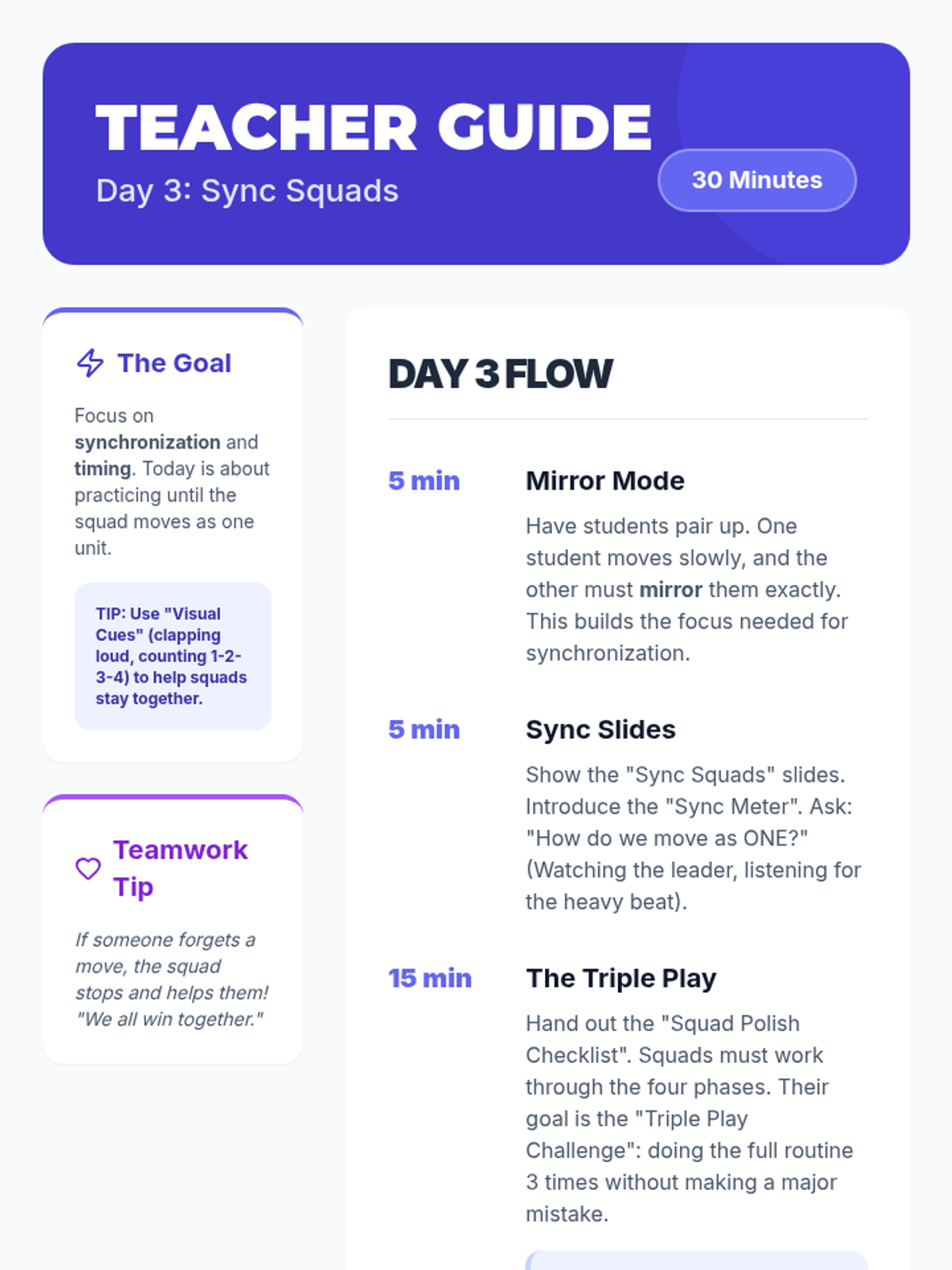
A physical therapy lesson focused on bilateral coordination for active 2nd graders, featuring the 'Sync Squad' theme to make symmetrical and alternating movements engaging and fun.
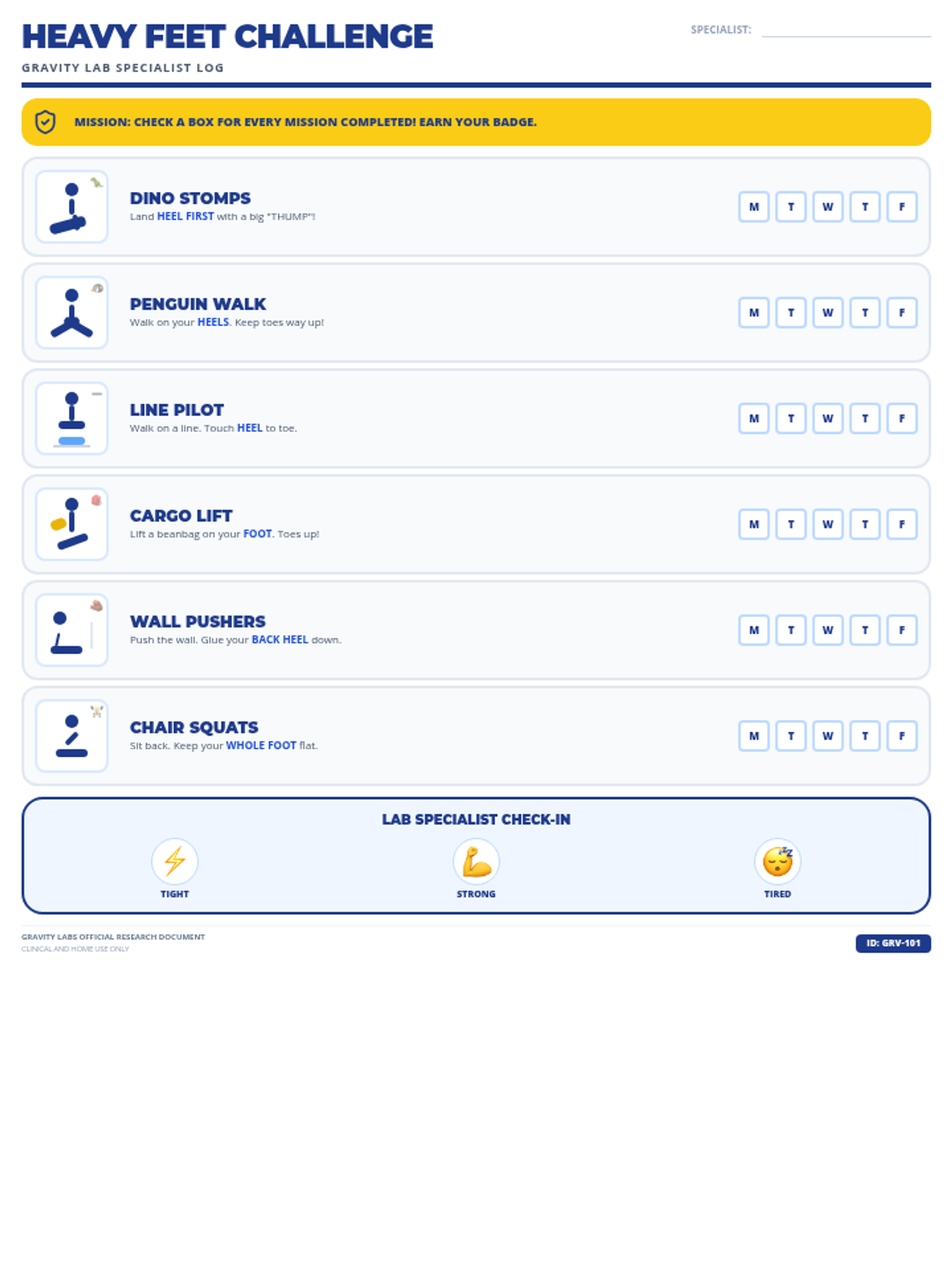
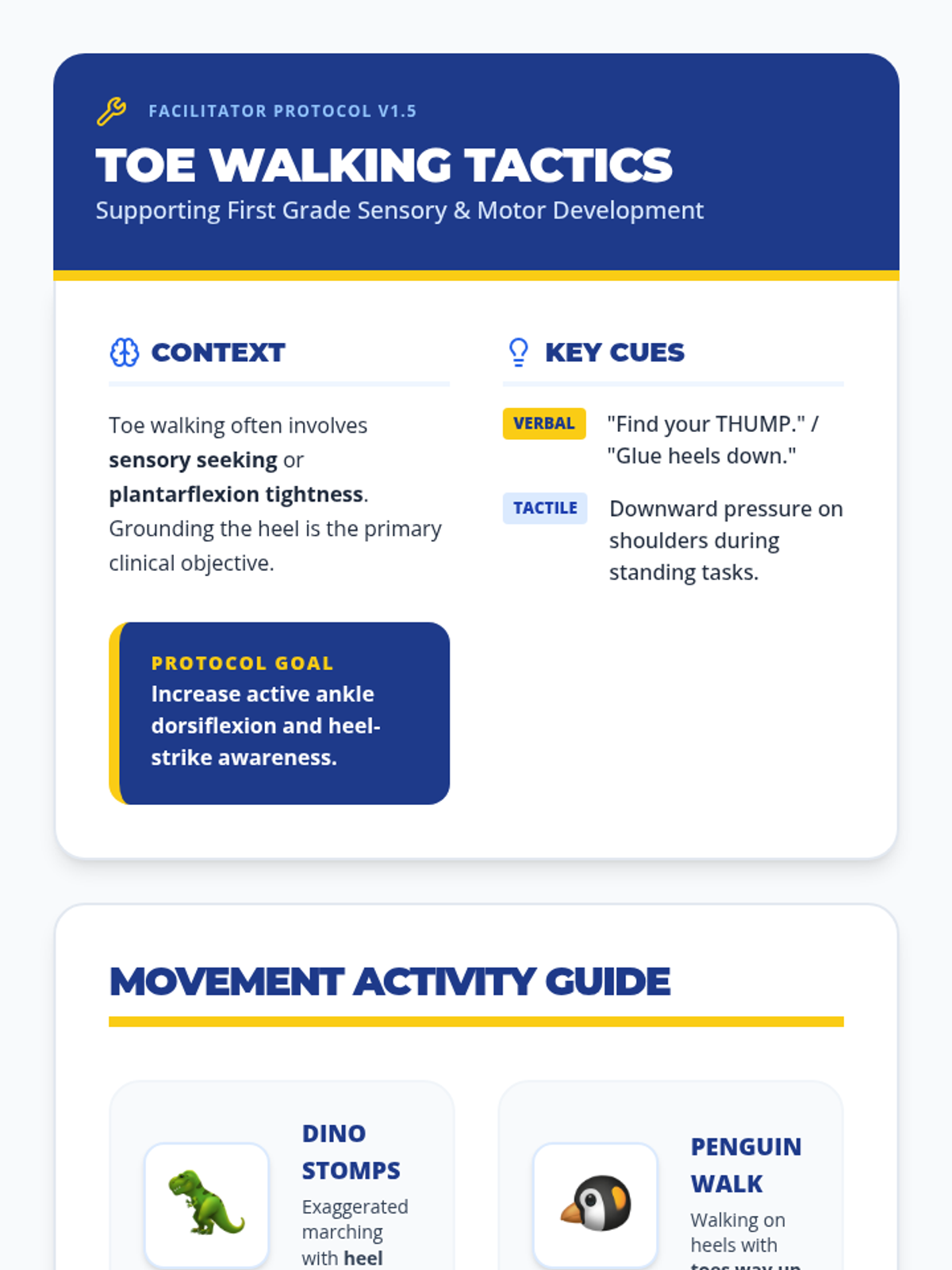
A specialized physical therapy lesson designed for first graders to address toe walking through engaging, gravity-themed exercises that improve ankle mobility and heel-strike awareness.
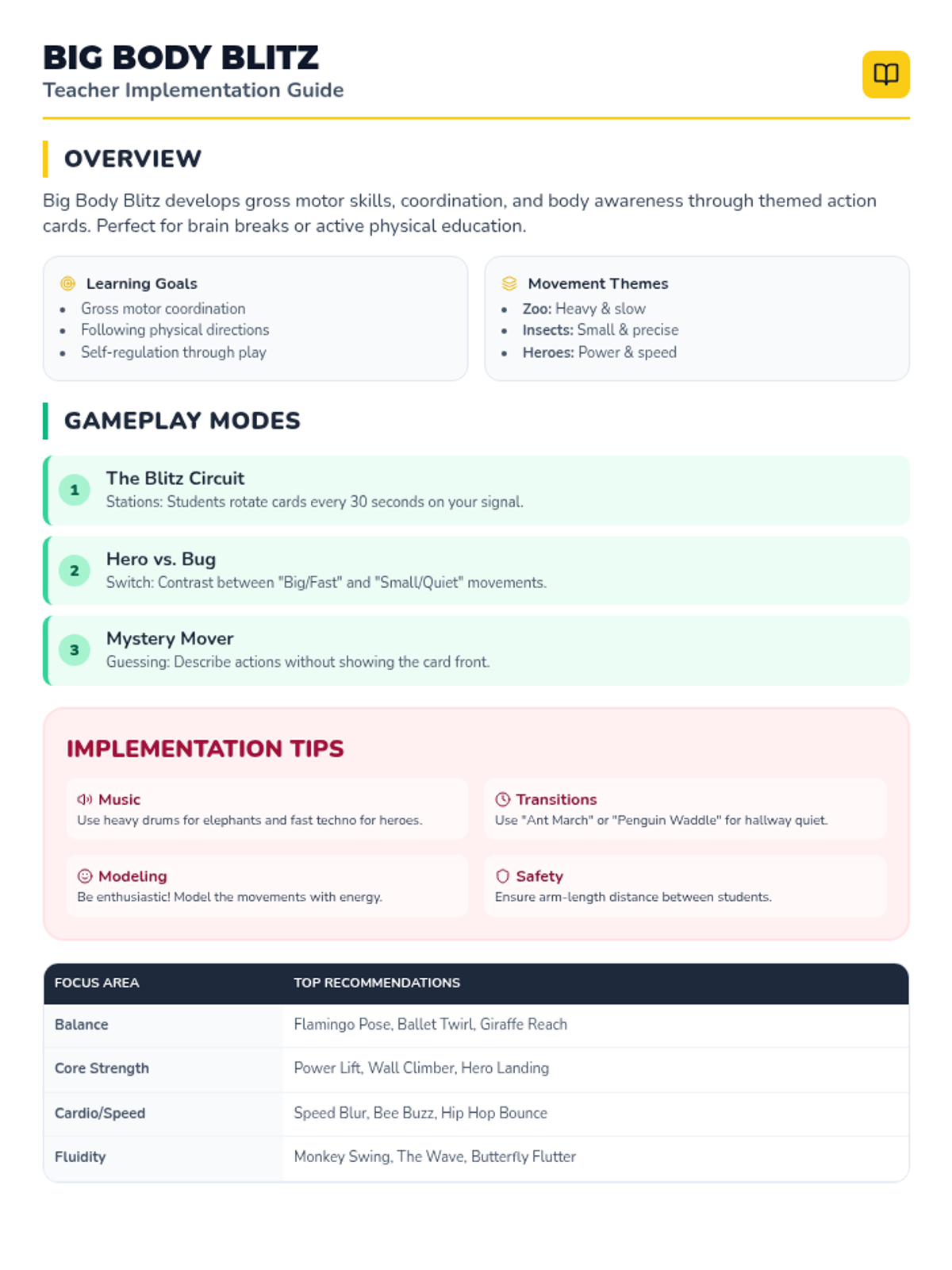
A high-energy lesson focused on gross motor skills through themed movement cards. Students mimic zoo animals and superheroes to develop coordination and body awareness.
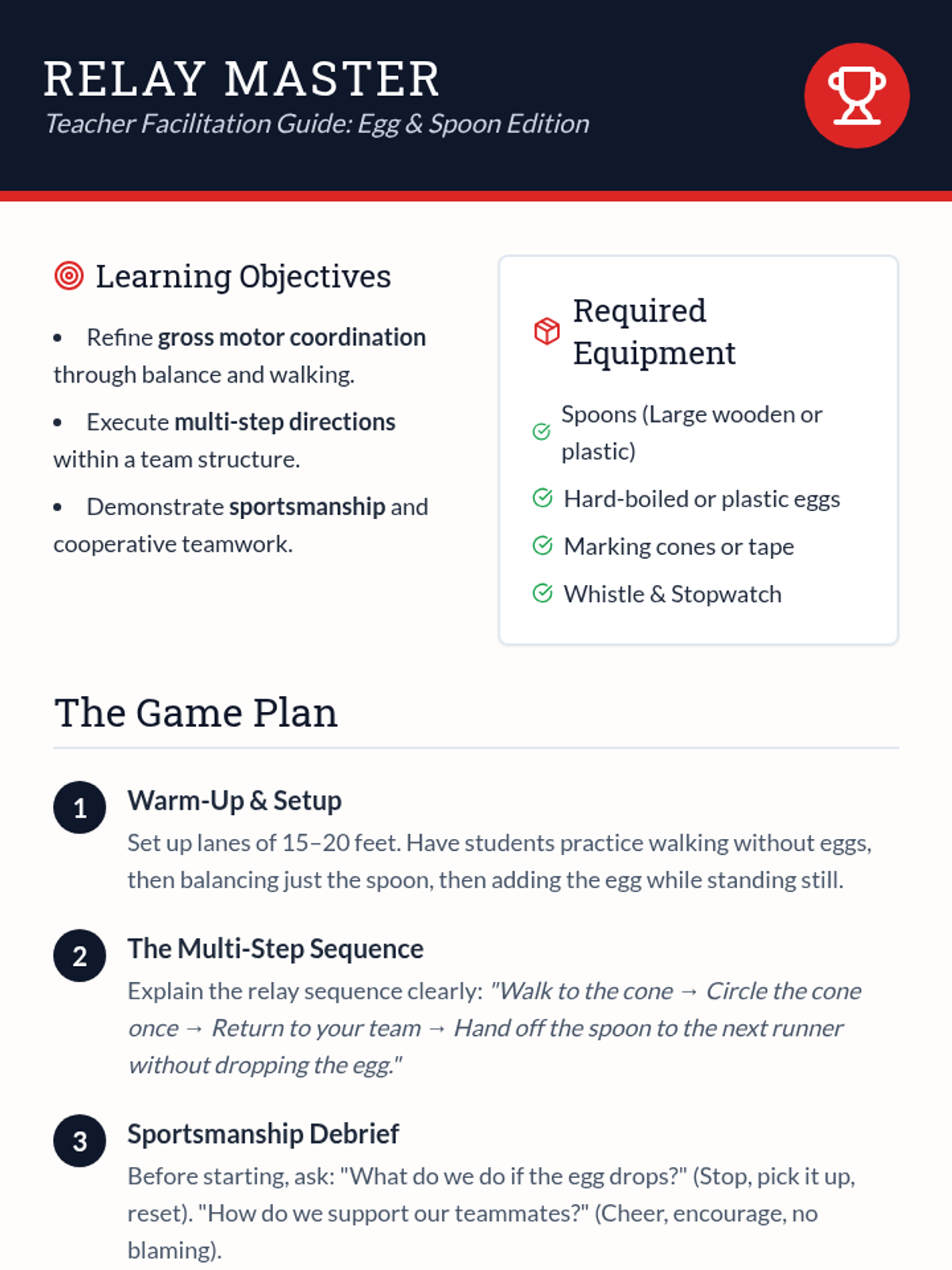
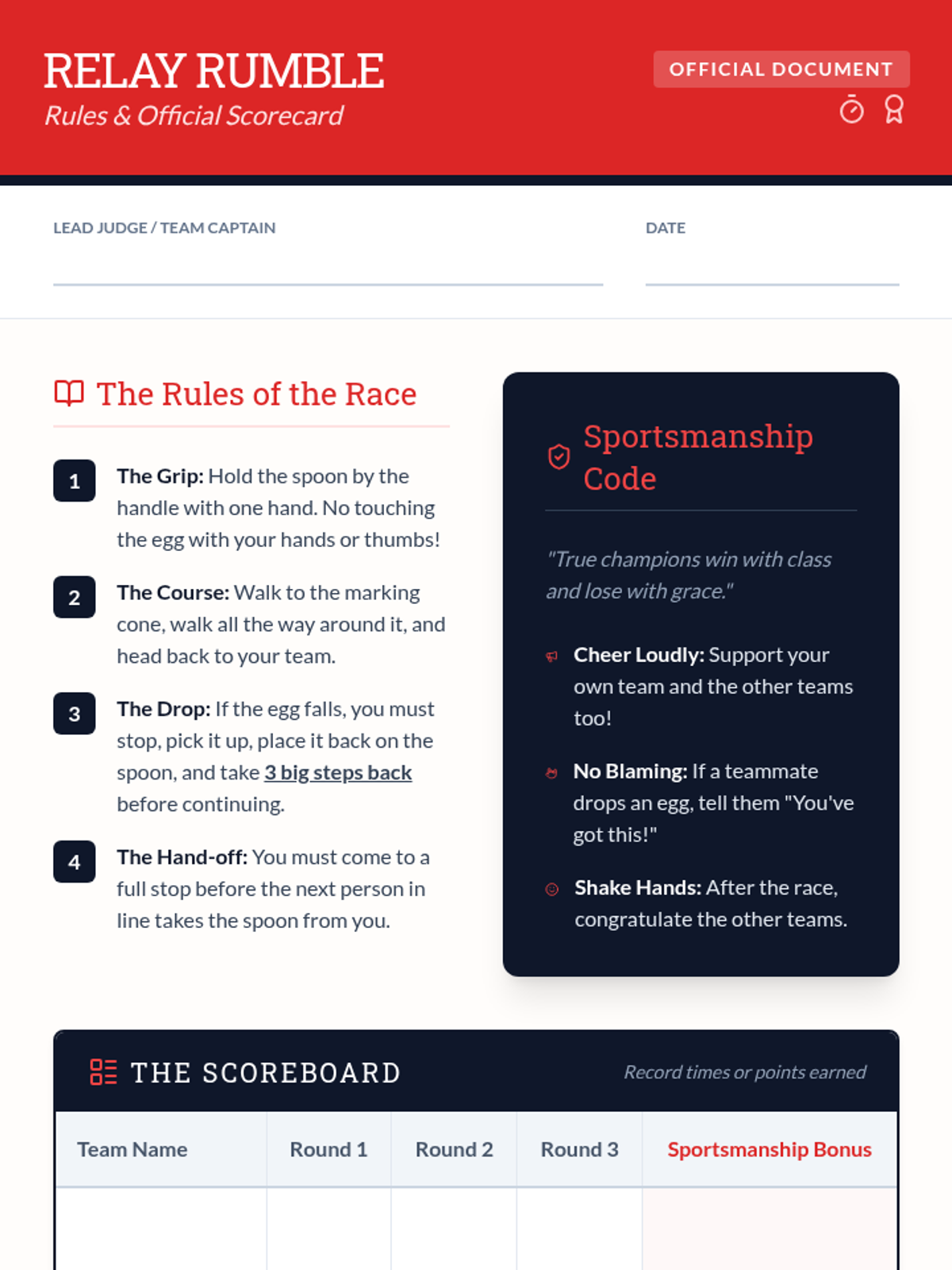
A high-energy lesson focused on gross motor skills, following complex directions, and practicing good sportsmanship through an egg and spoon relay race.
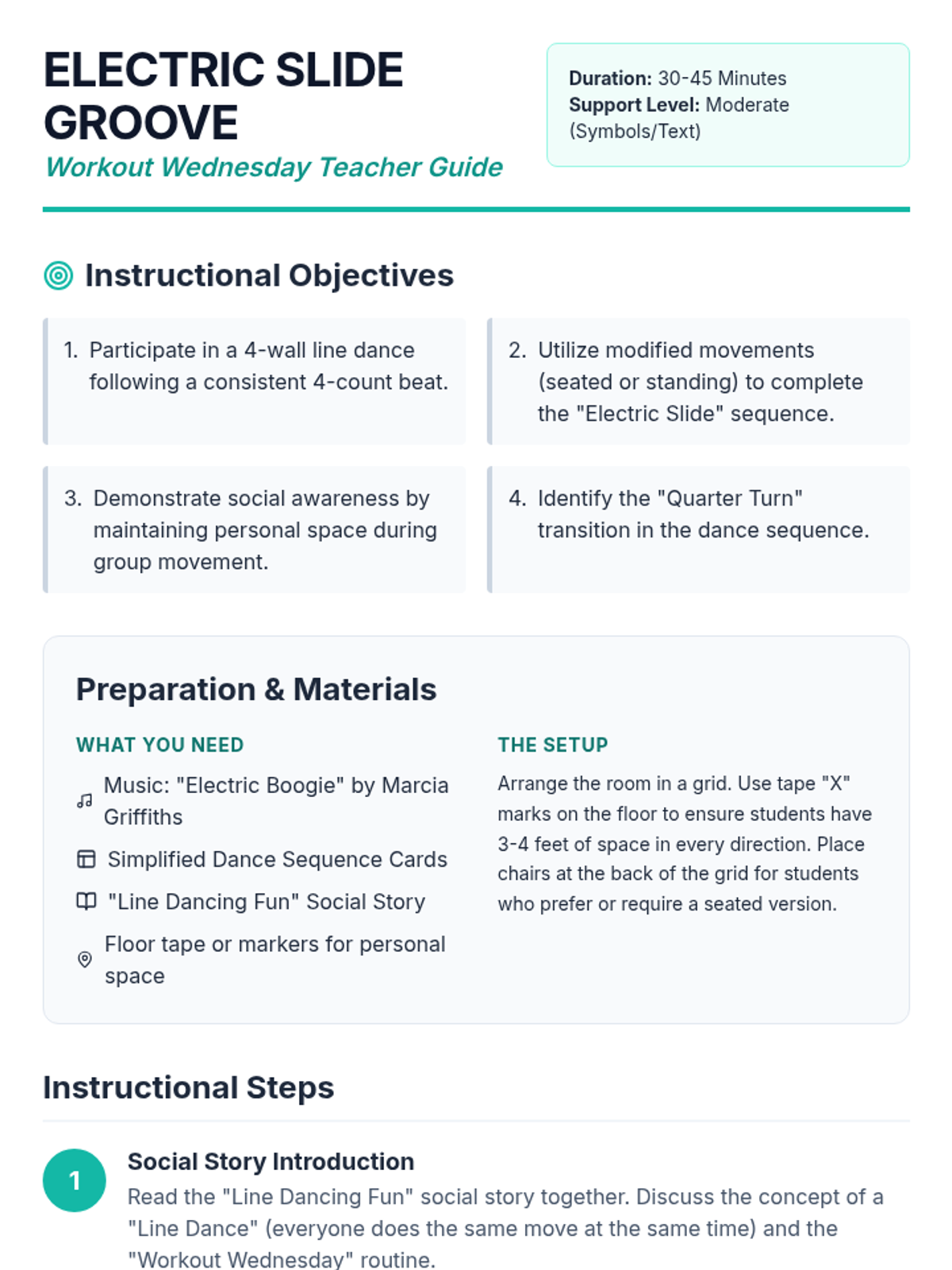
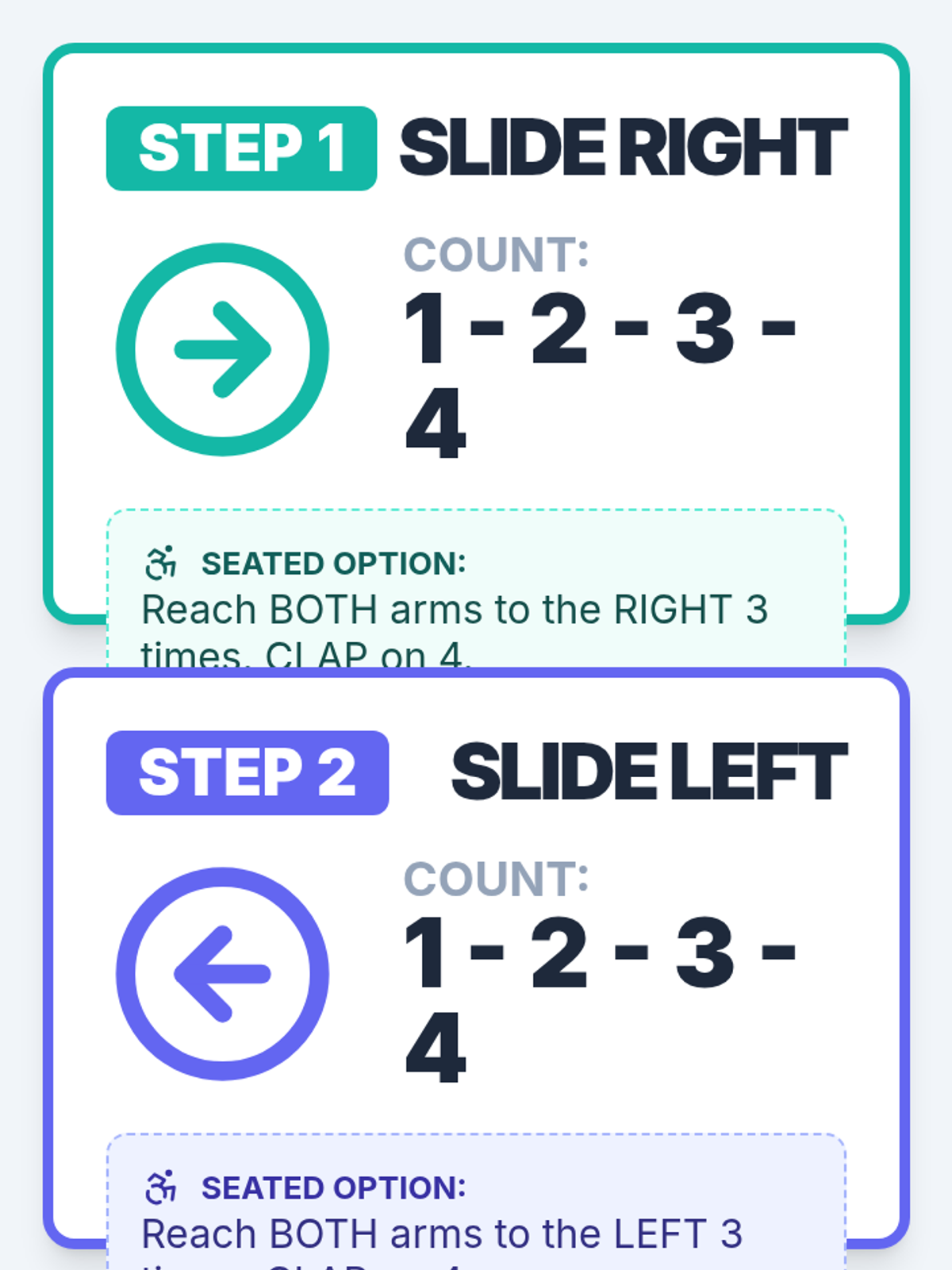
A guided introduction to the Electric Slide, featuring simplified steps and modifications for students with limited mobility or wheelchair users.
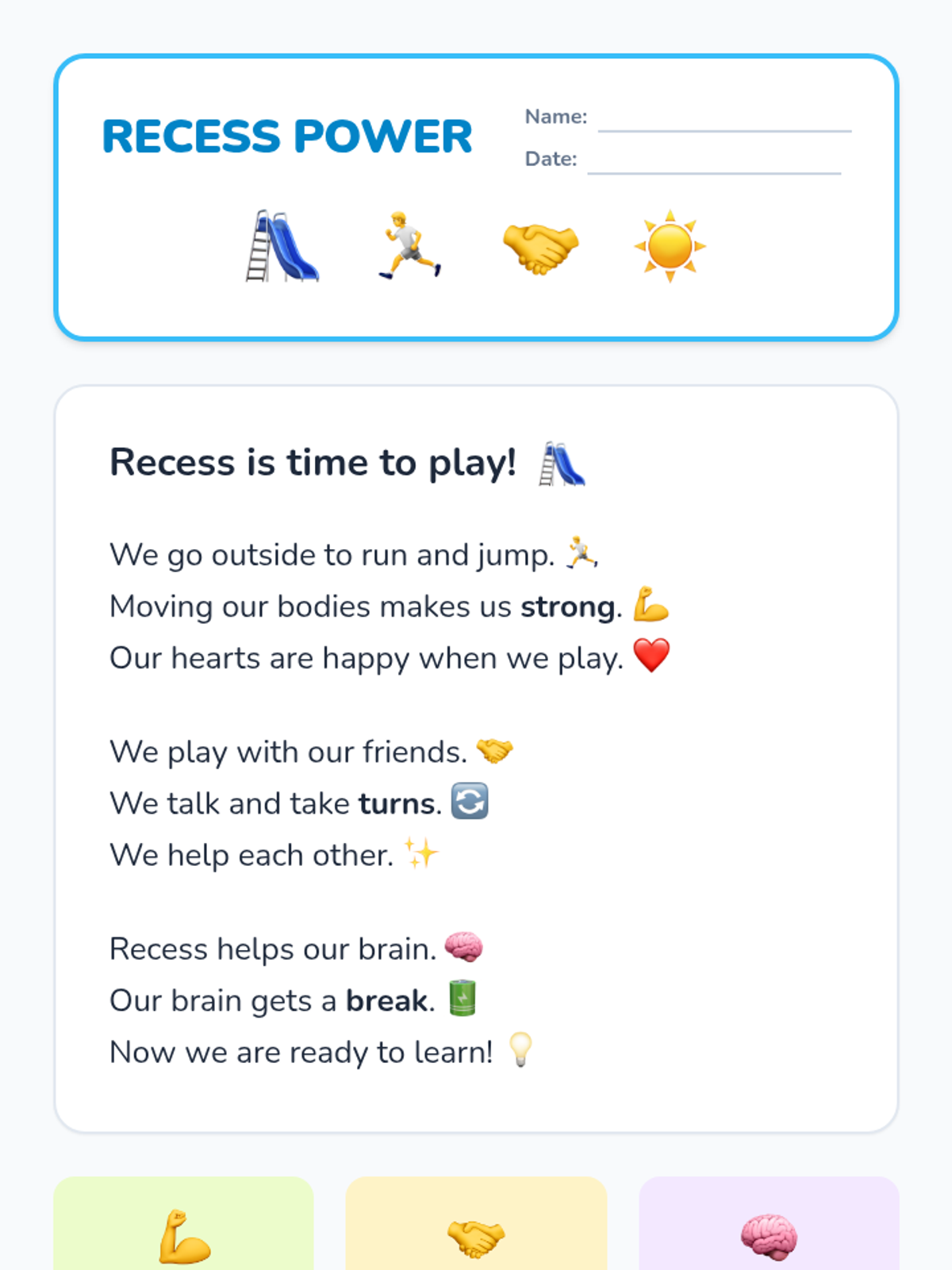
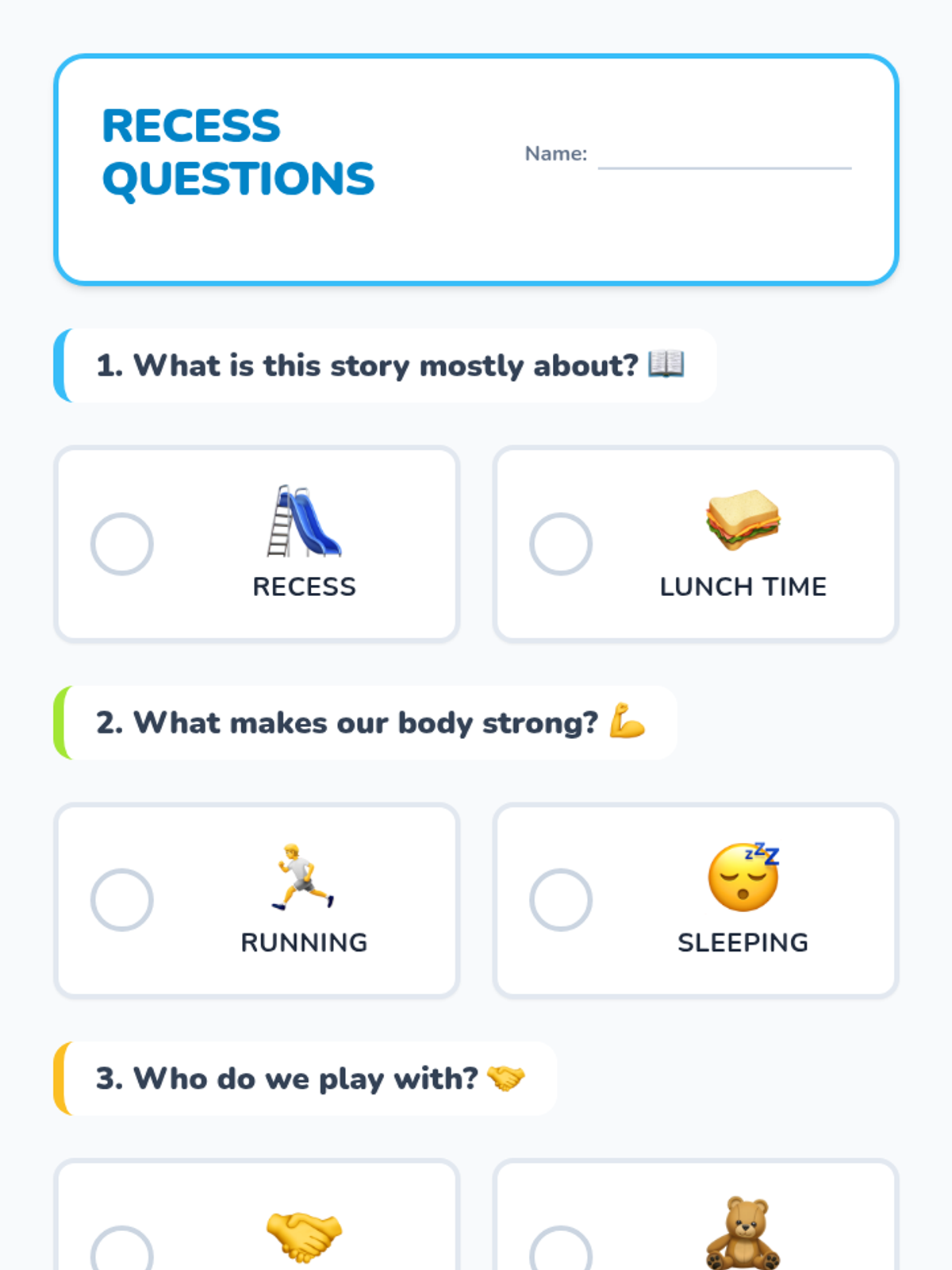
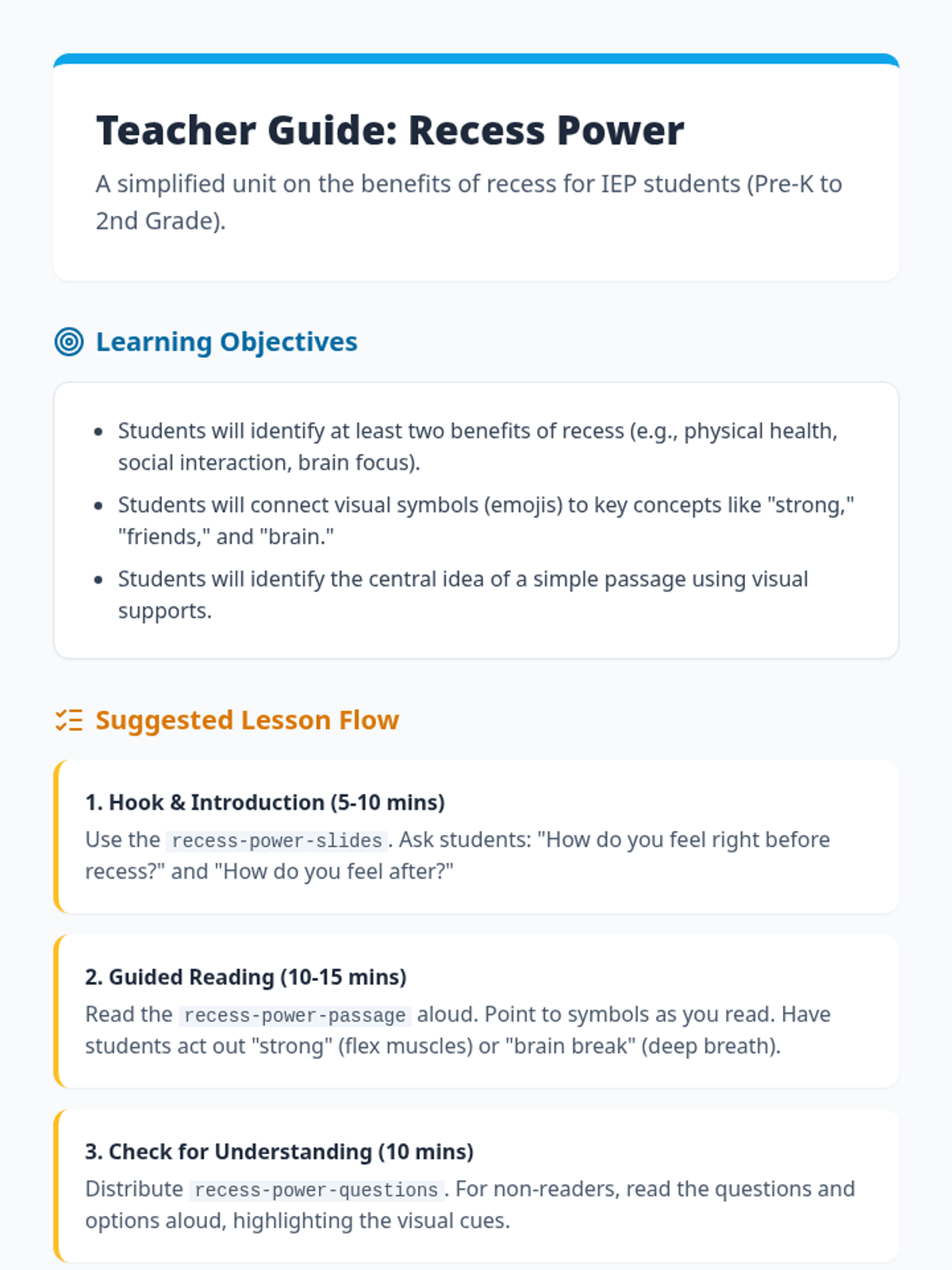
A lesson exploring the physical, social, and emotional benefits of recess for young learners, designed with accessibility and visual supports for IEP students.
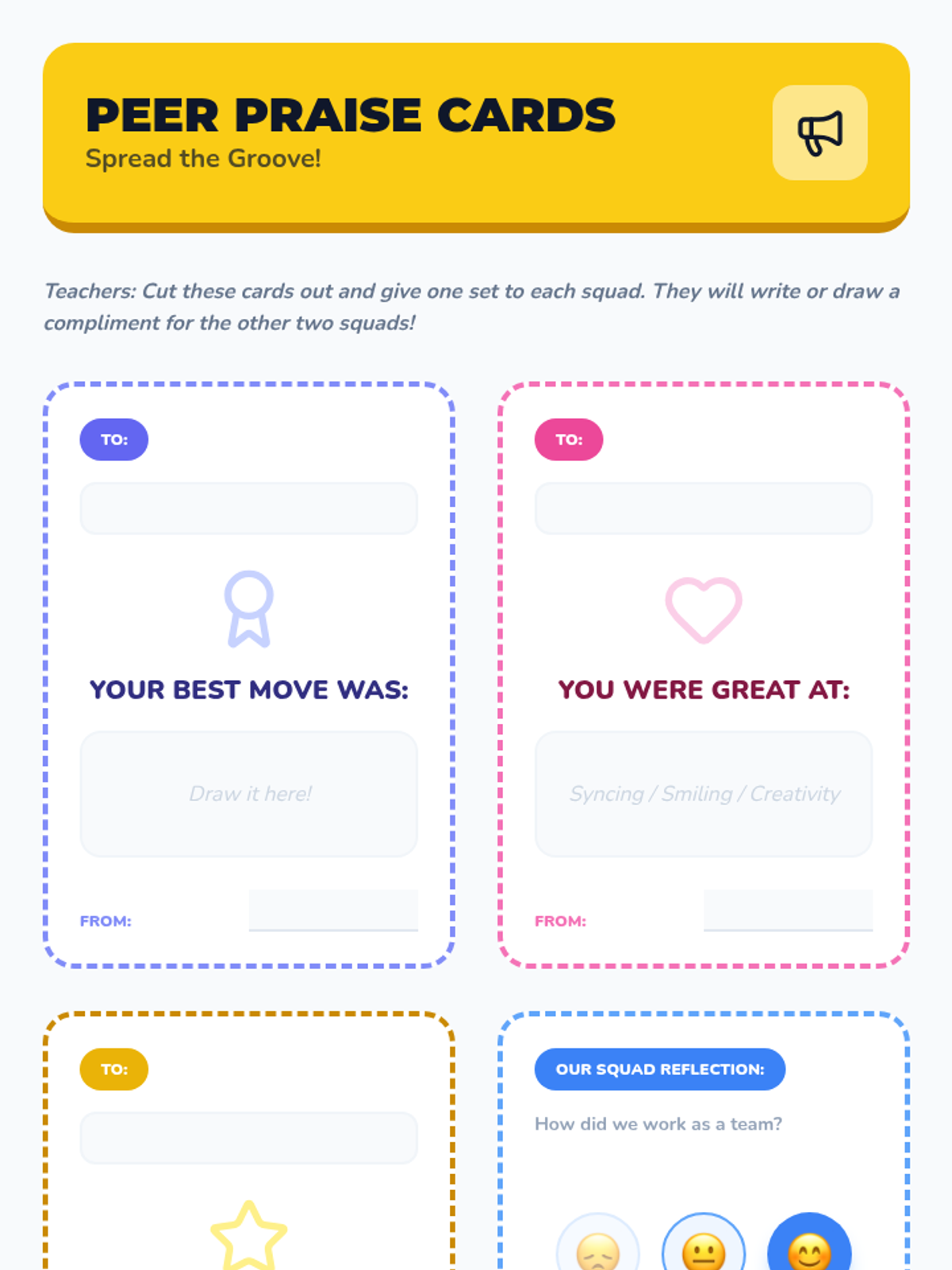
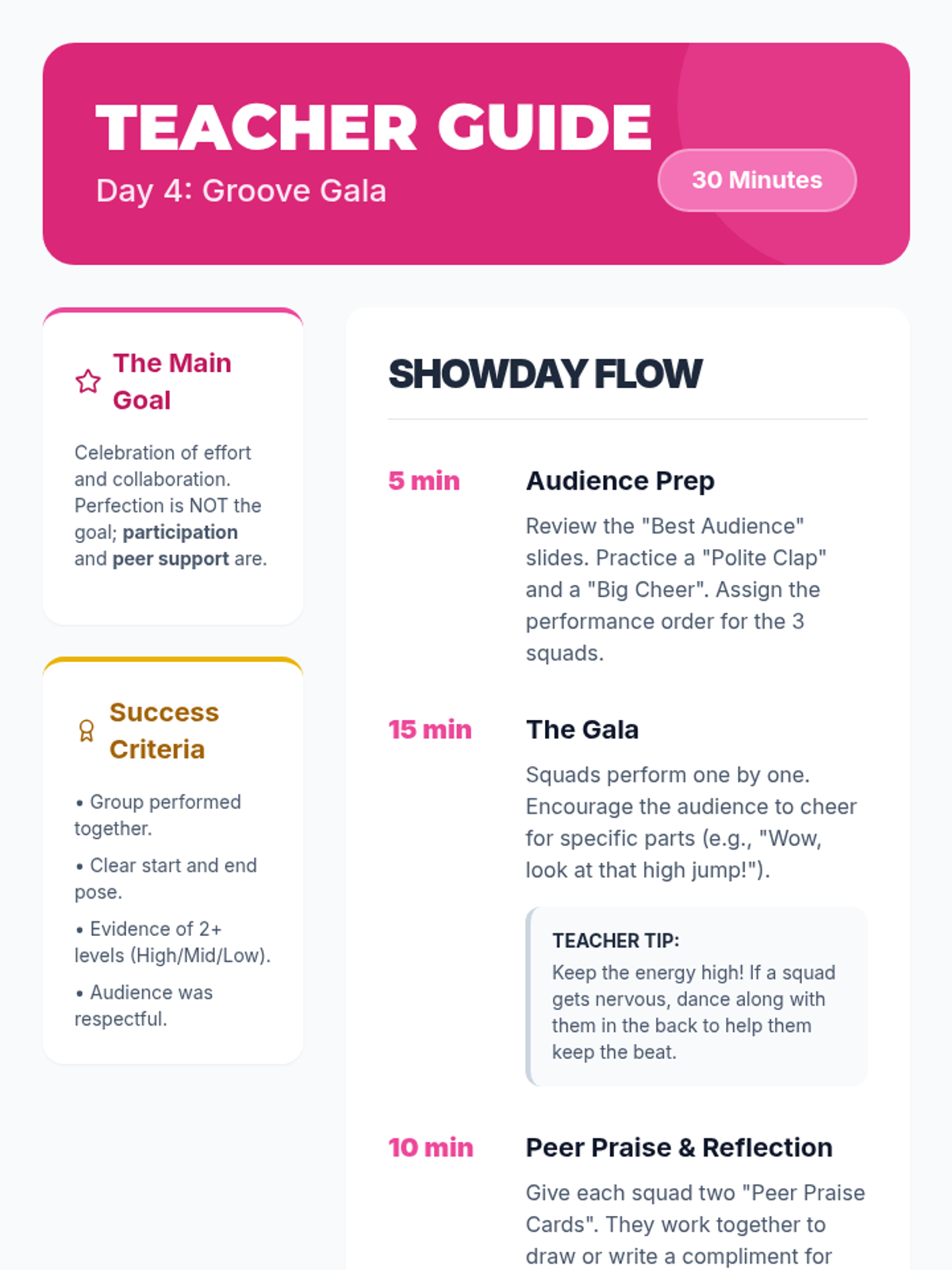
The final performance day where groups showcase their choreography and celebrate each other's creativity.
Squads practice their full routine, adding transitions and ensuring every member is in sync.
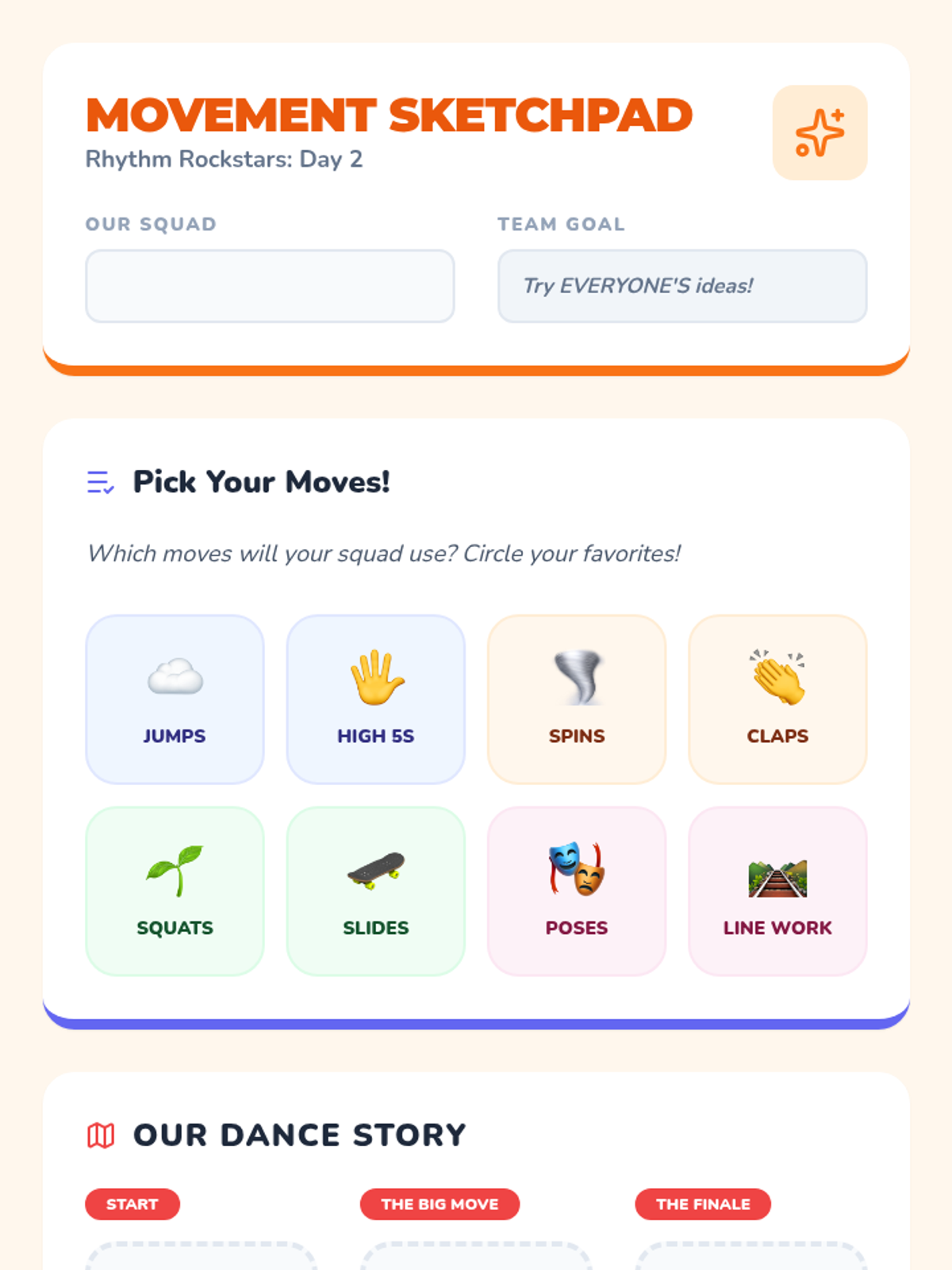
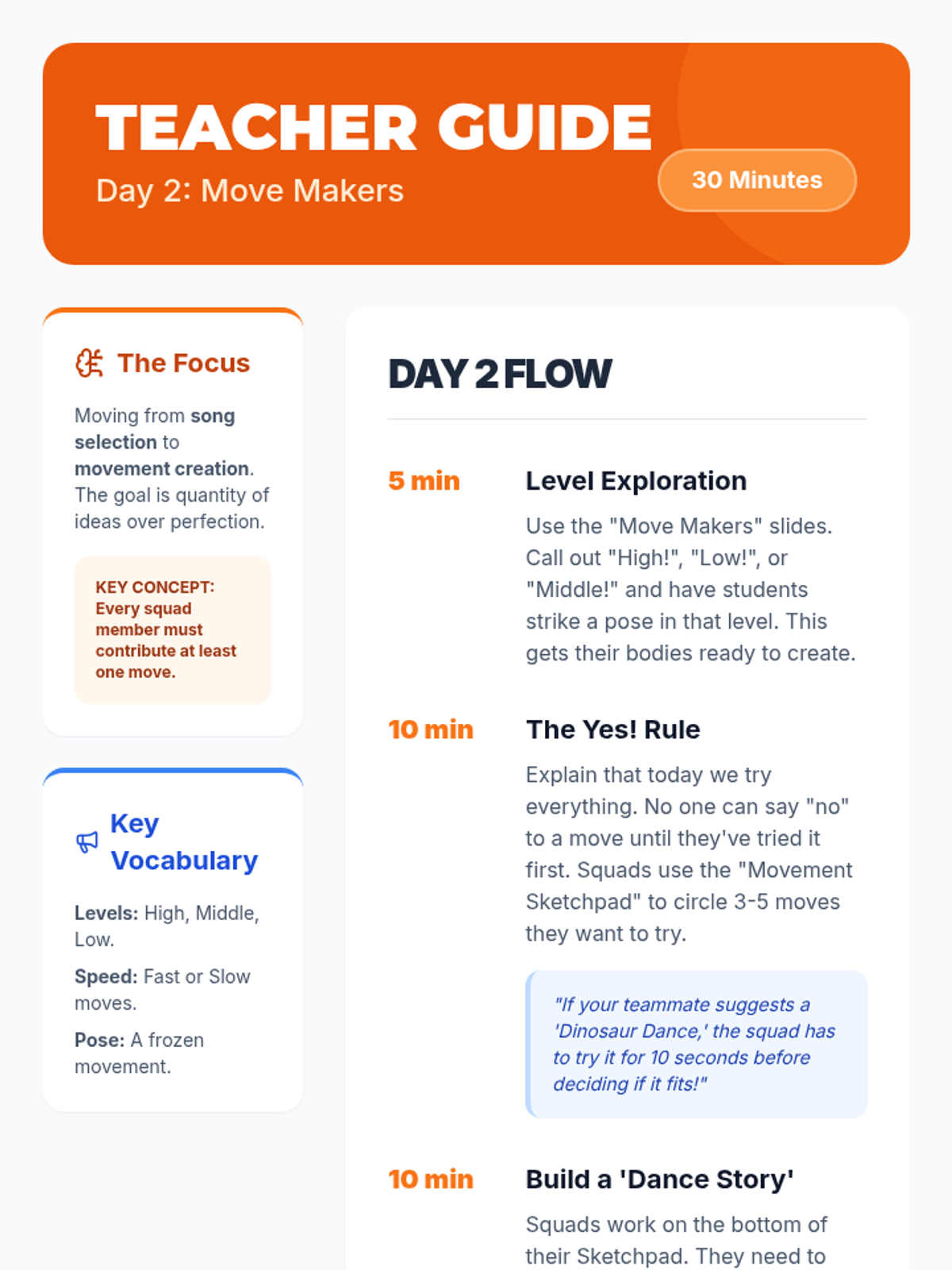
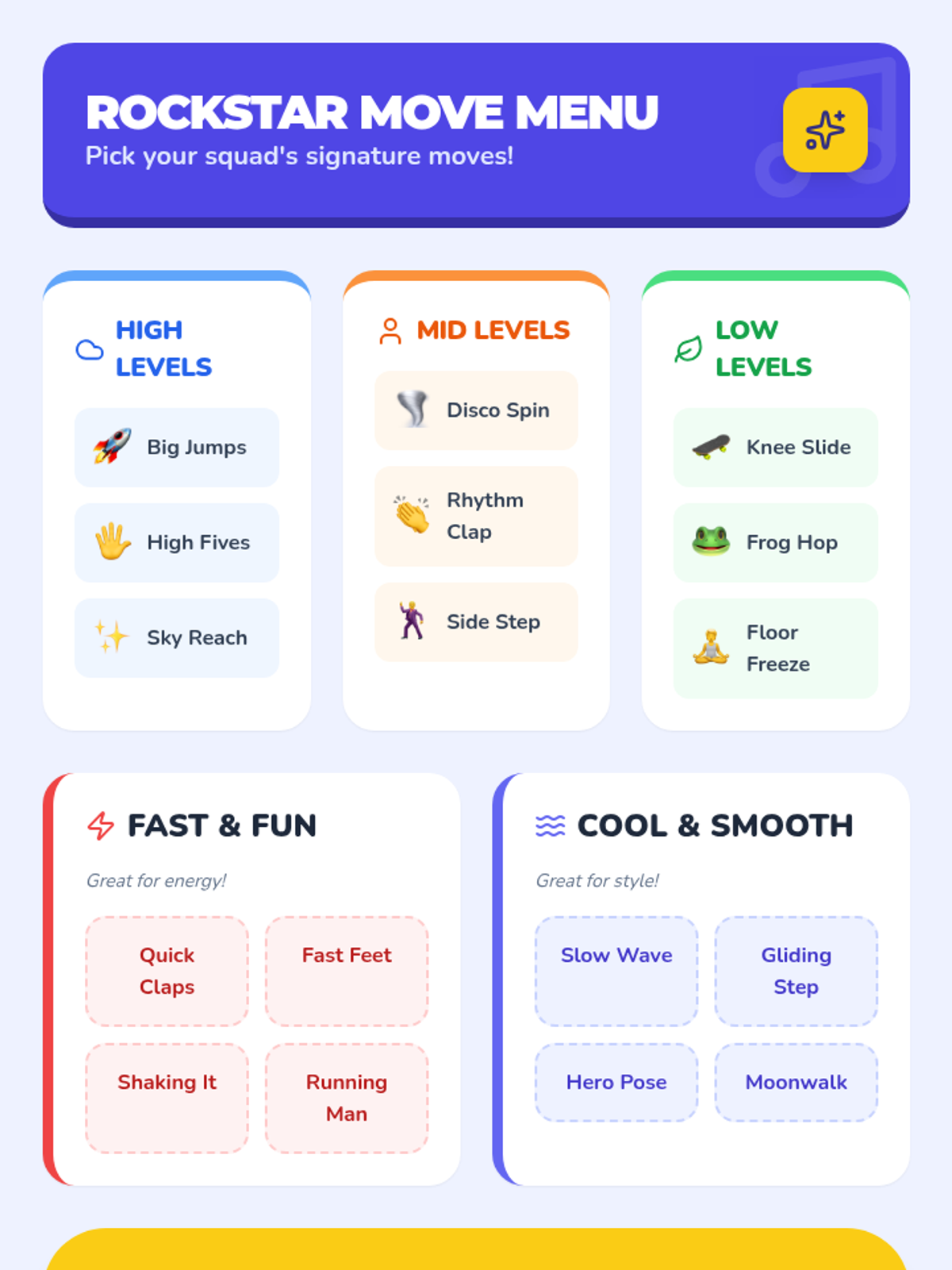
Groups brainstorm dance moves using different levels and speeds, focusing on including everyone's ideas.
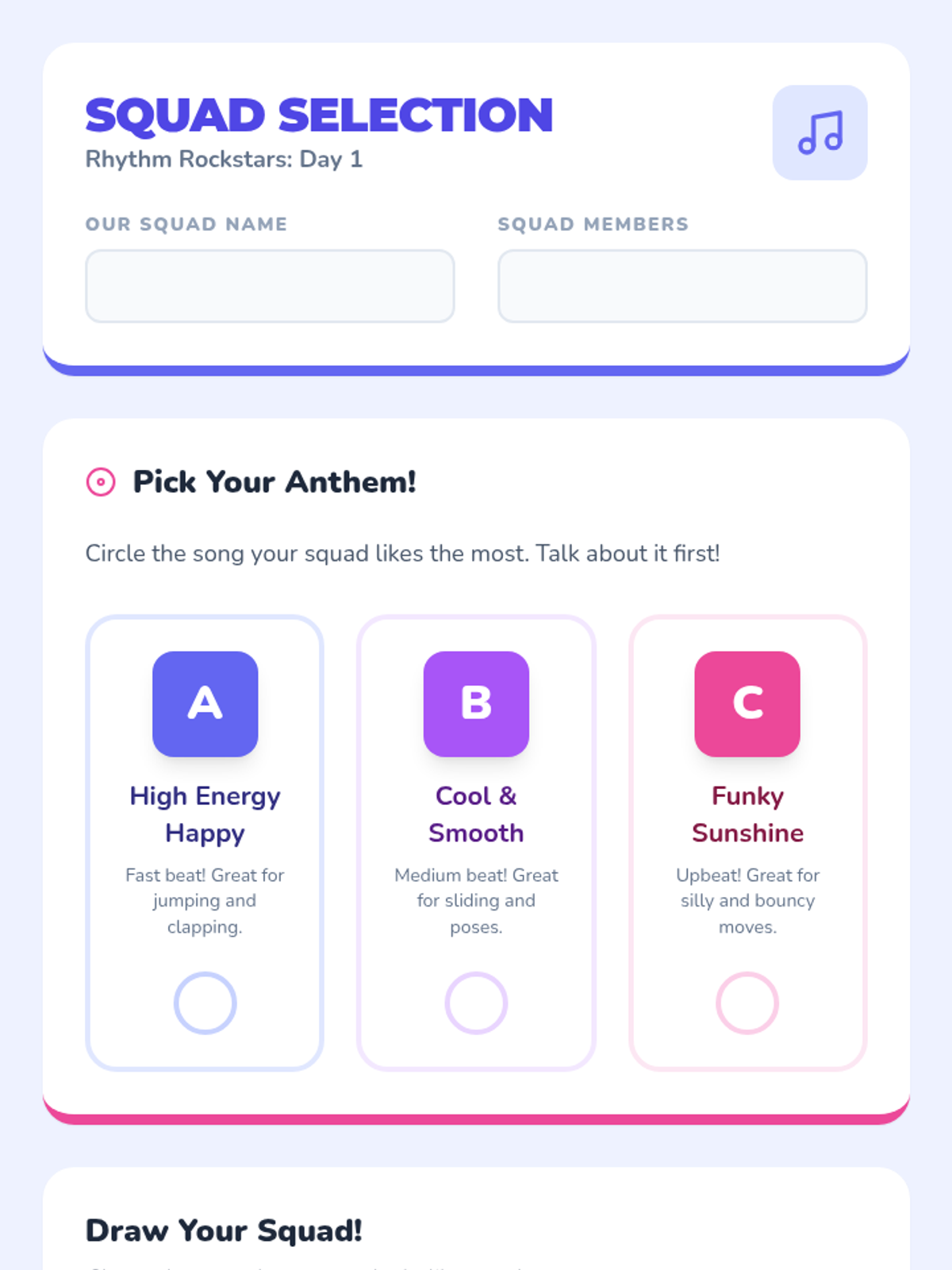
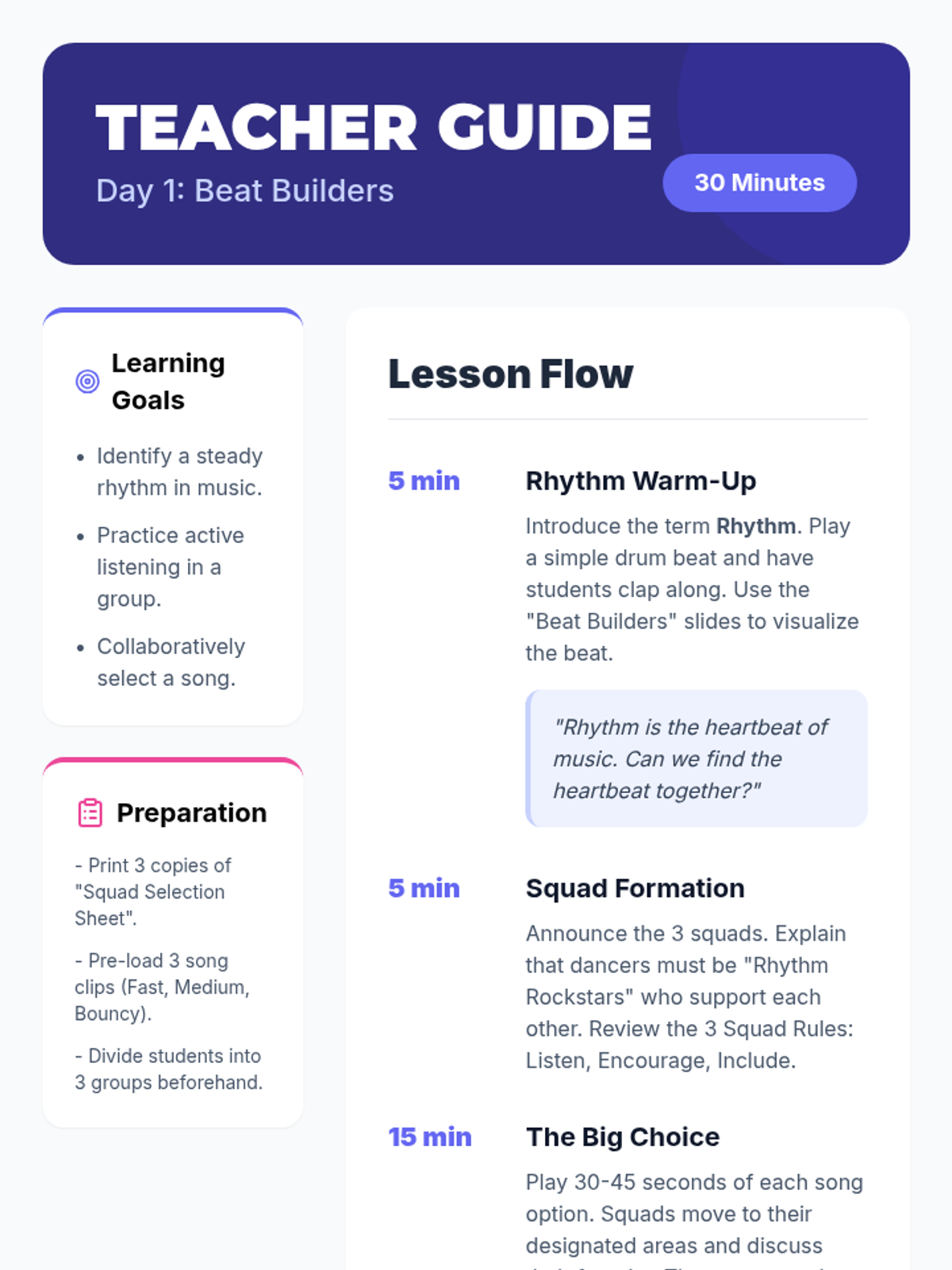
Students explore rhythm and tempo, form their dance squads, and select their group's performance song.
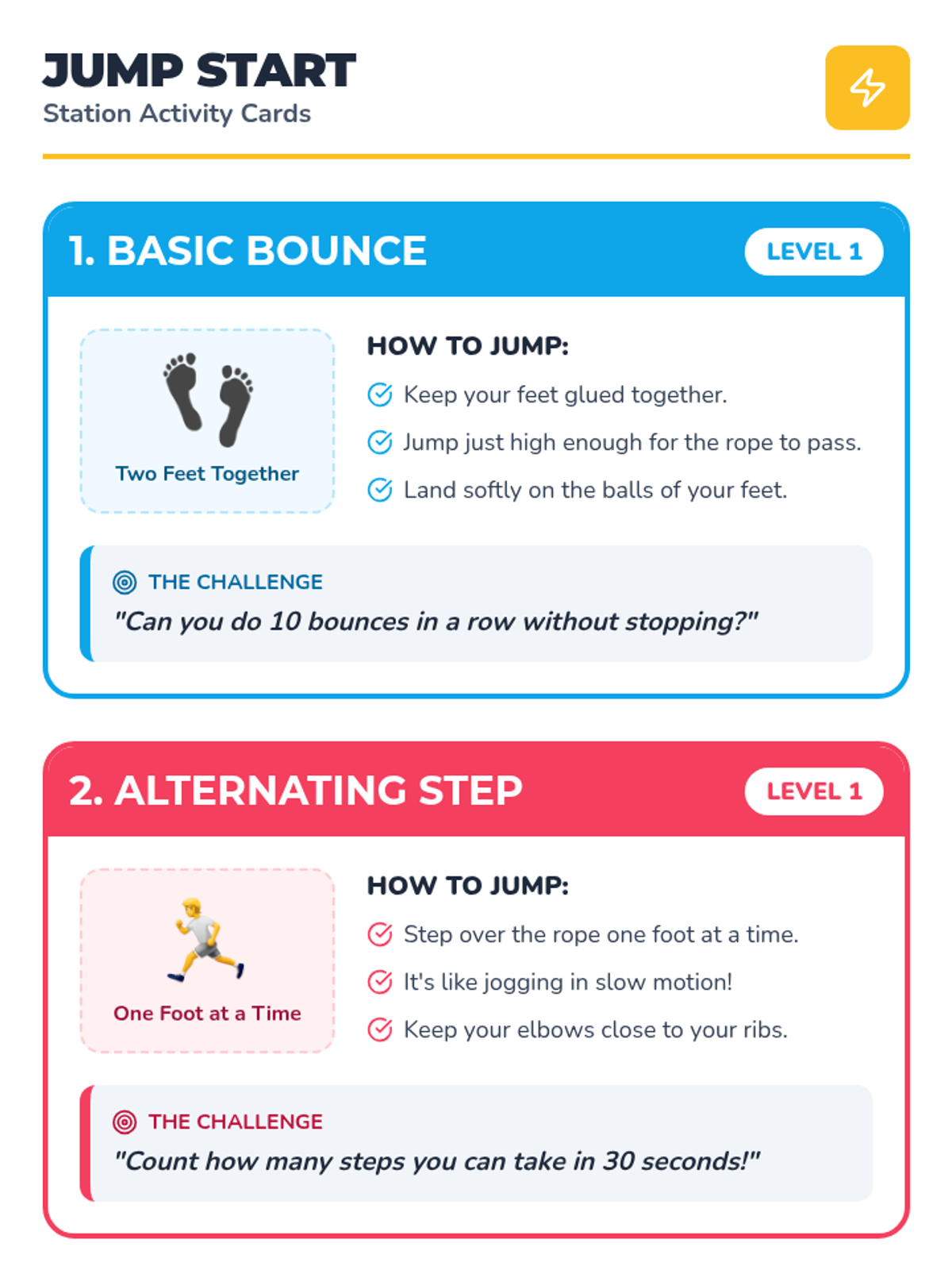
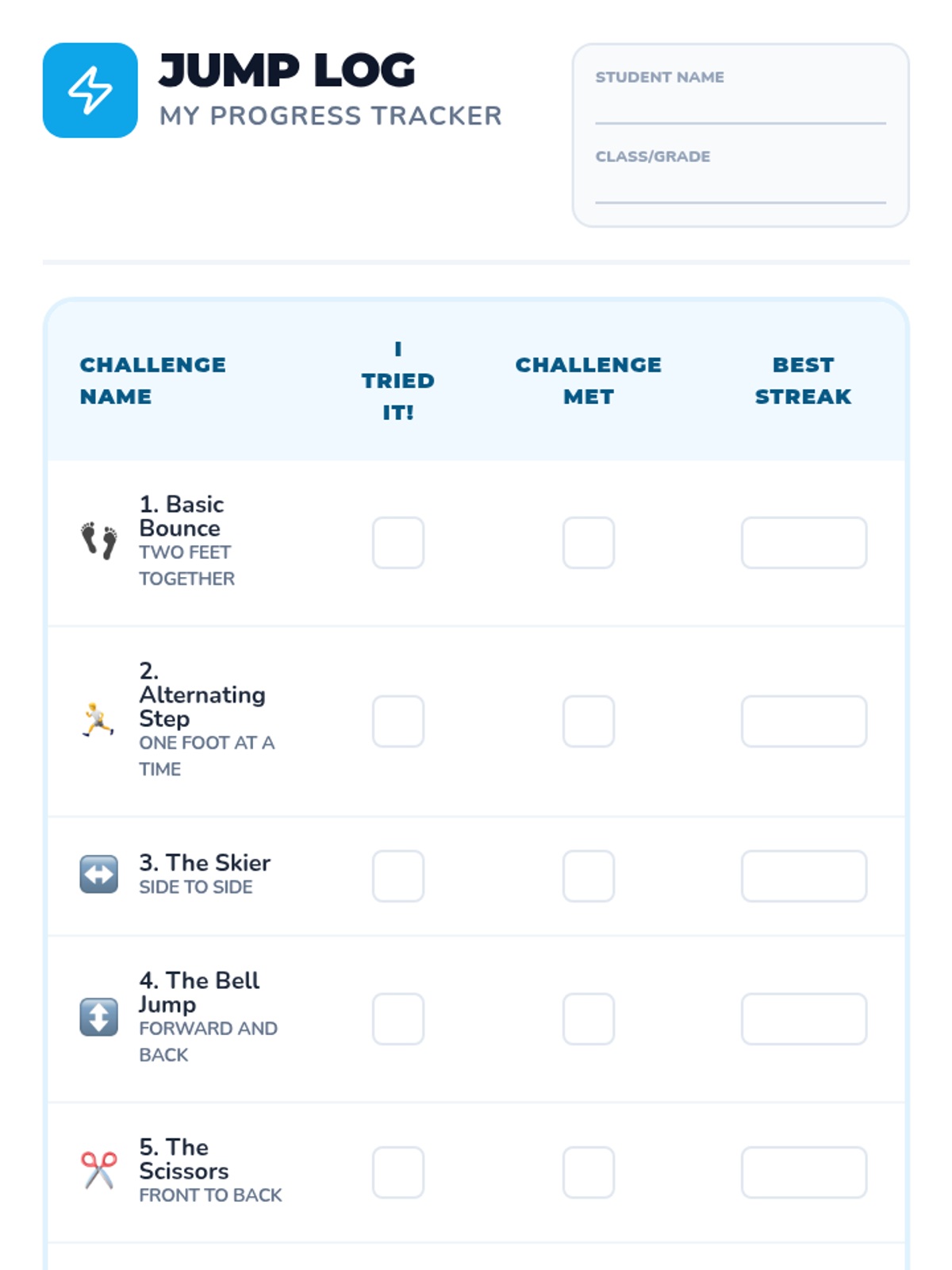
An energetic introduction to jump rope basics for elementary students, featuring colorful station cards, progress tracking, and teacher-led activities.
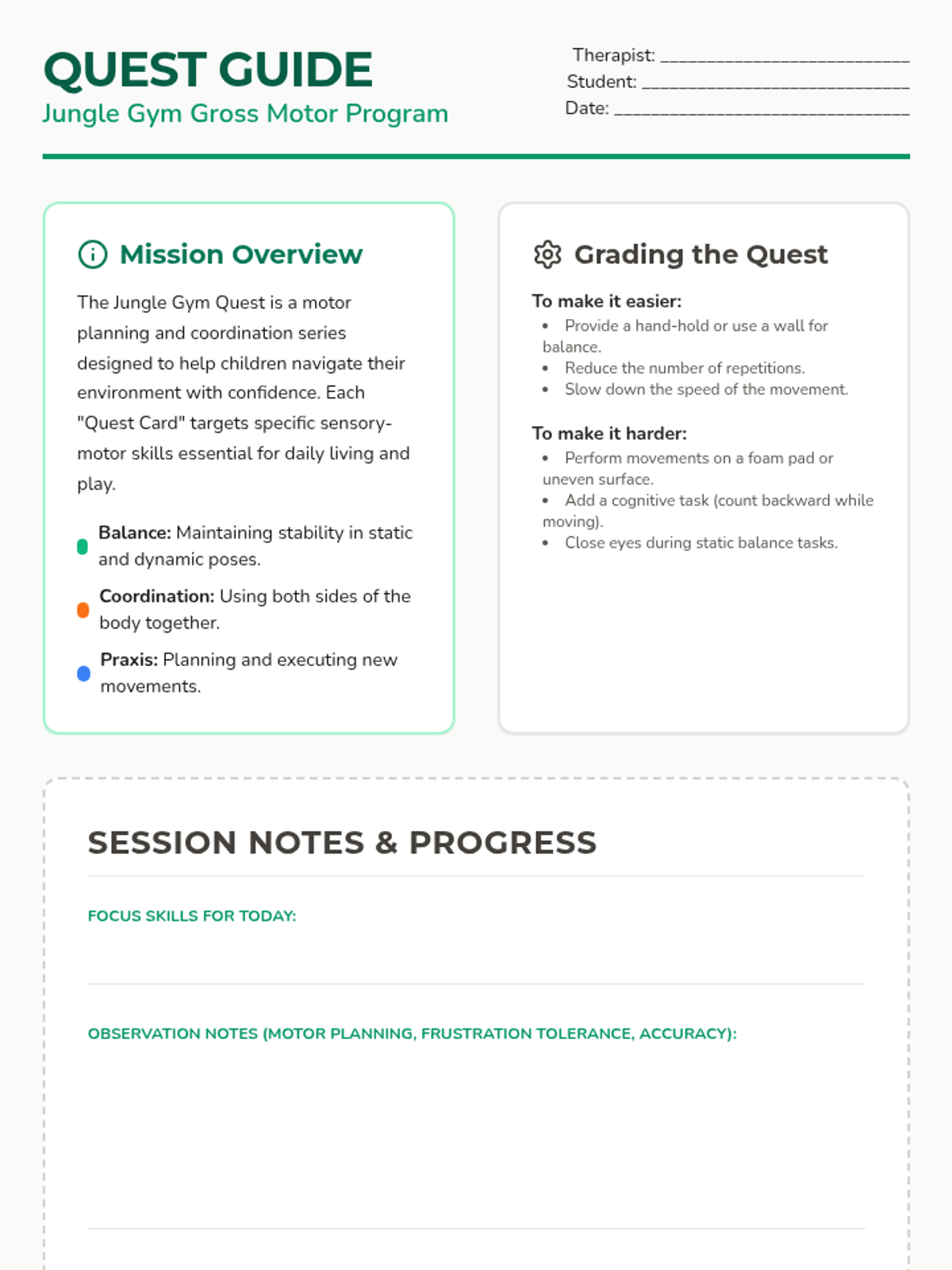
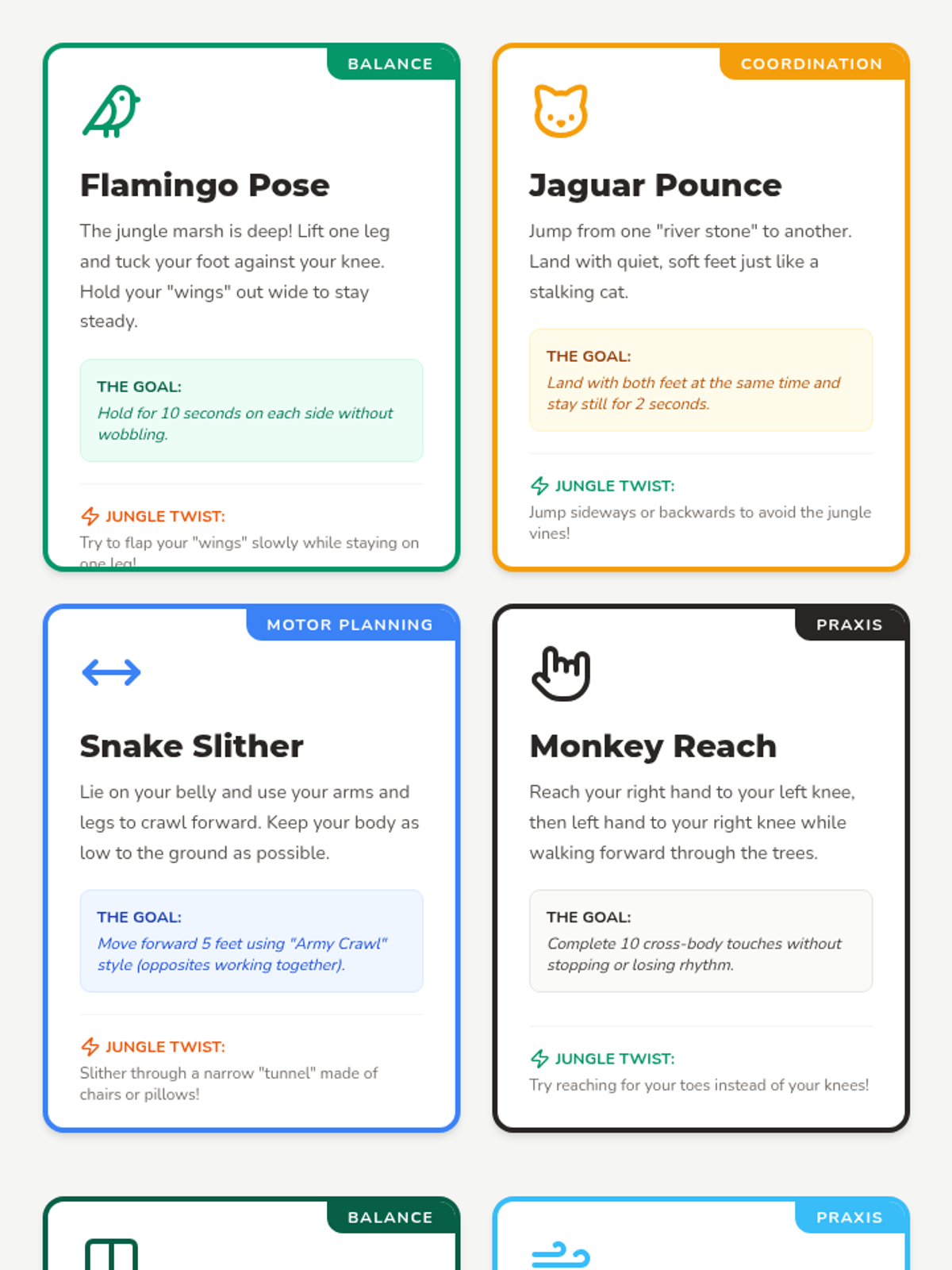
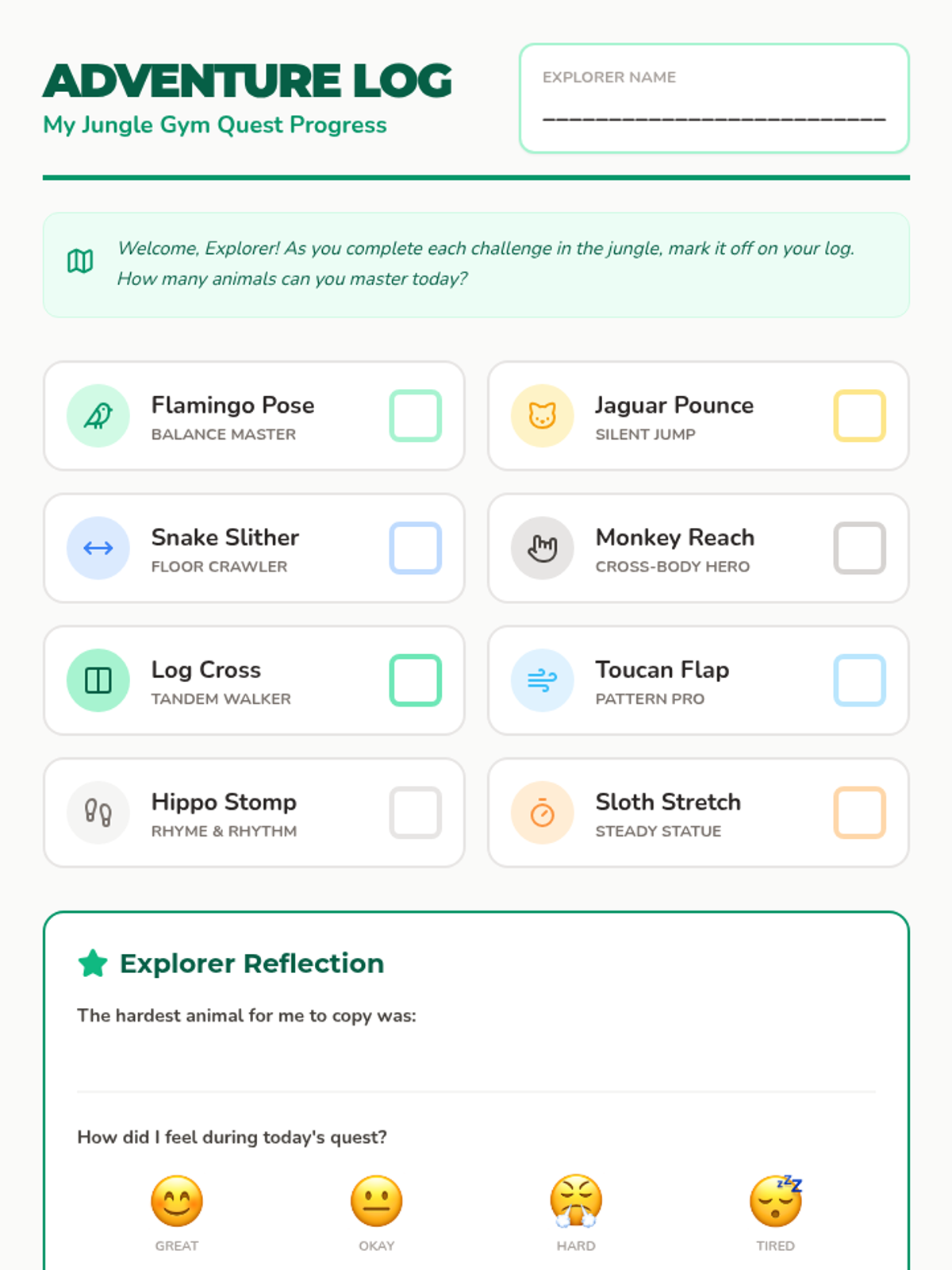
A series of engaging, jungle-themed gross motor activities designed to improve balance, coordination, and motor planning for pediatric occupational therapy.
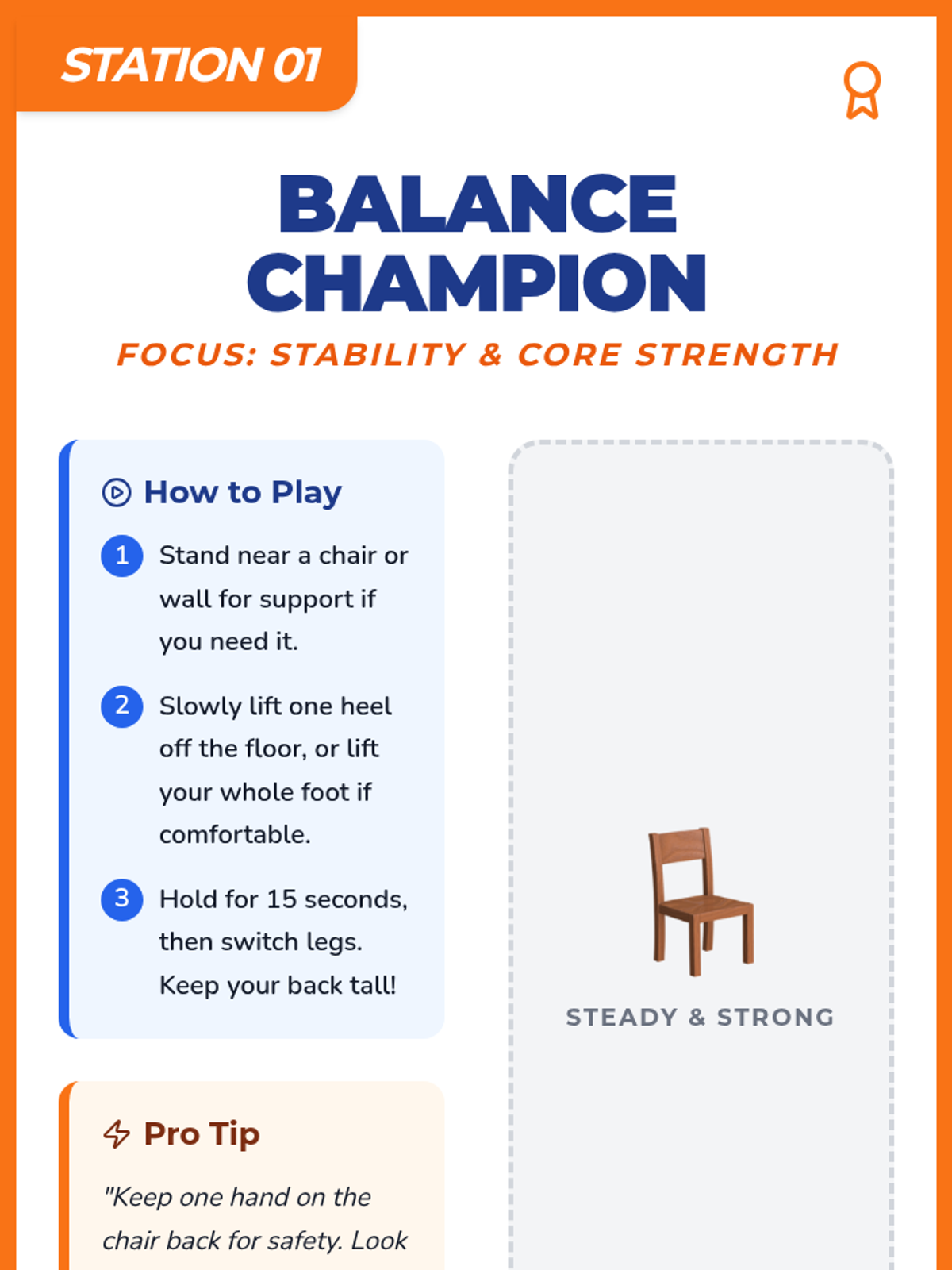
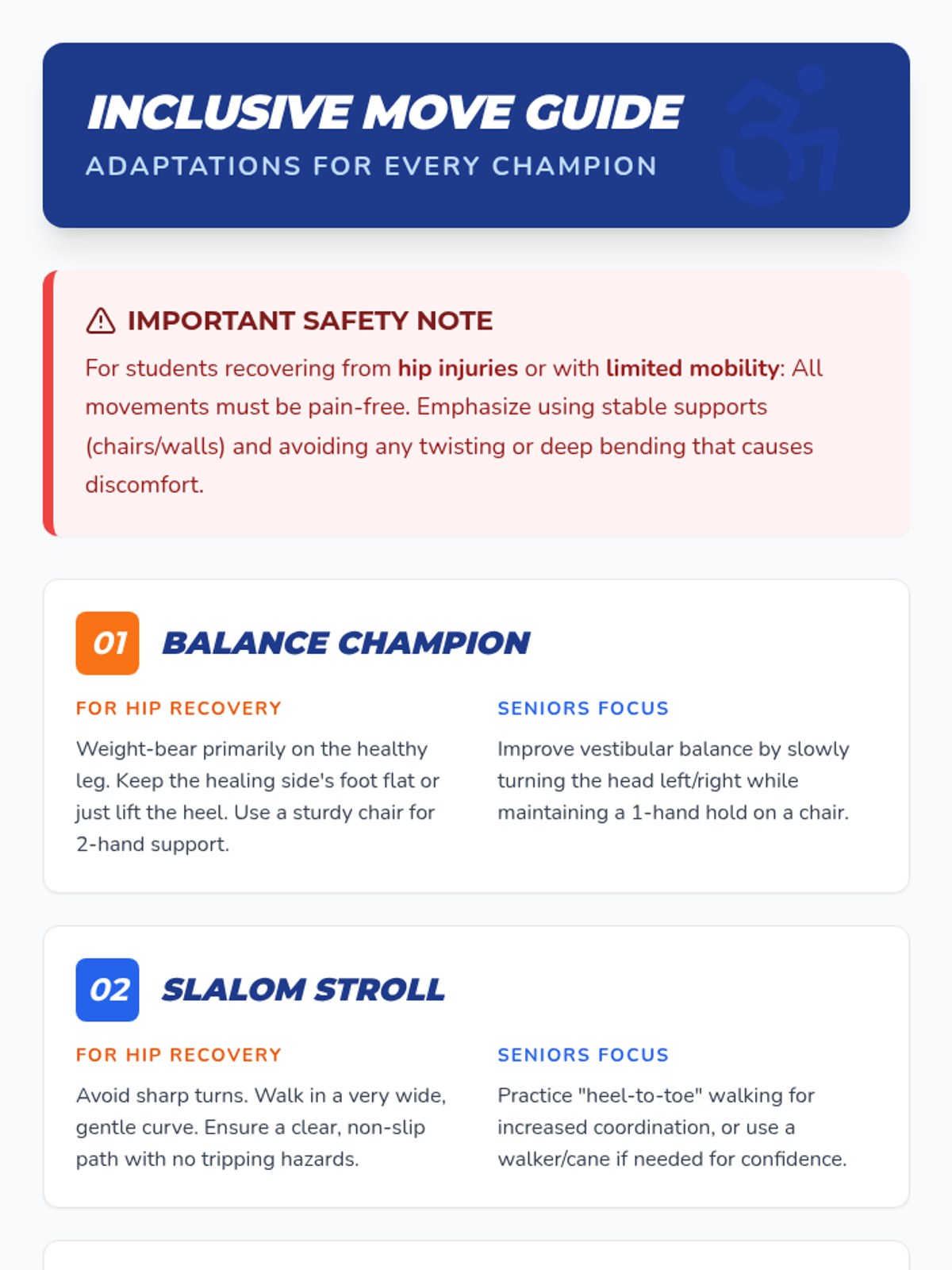
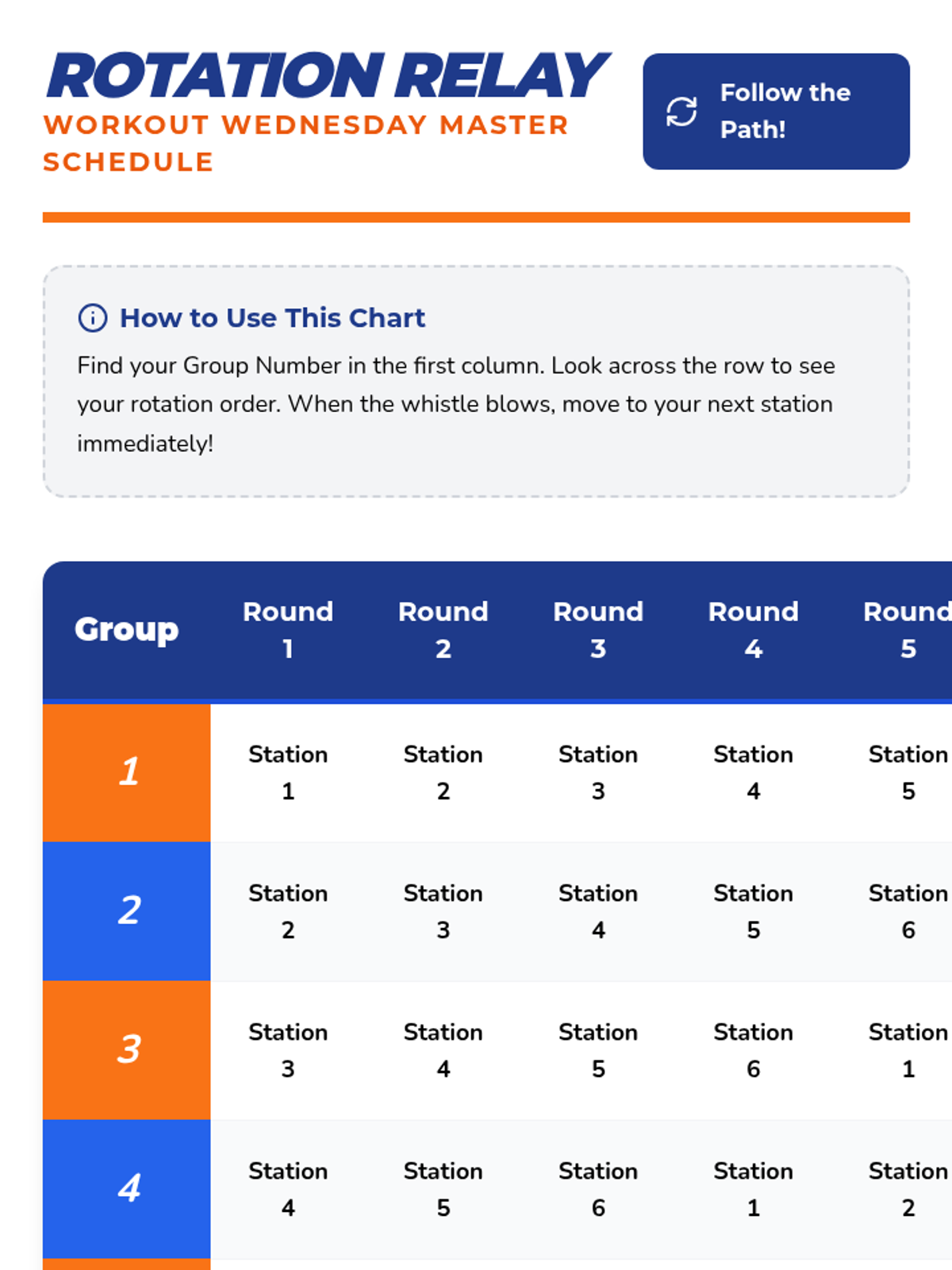
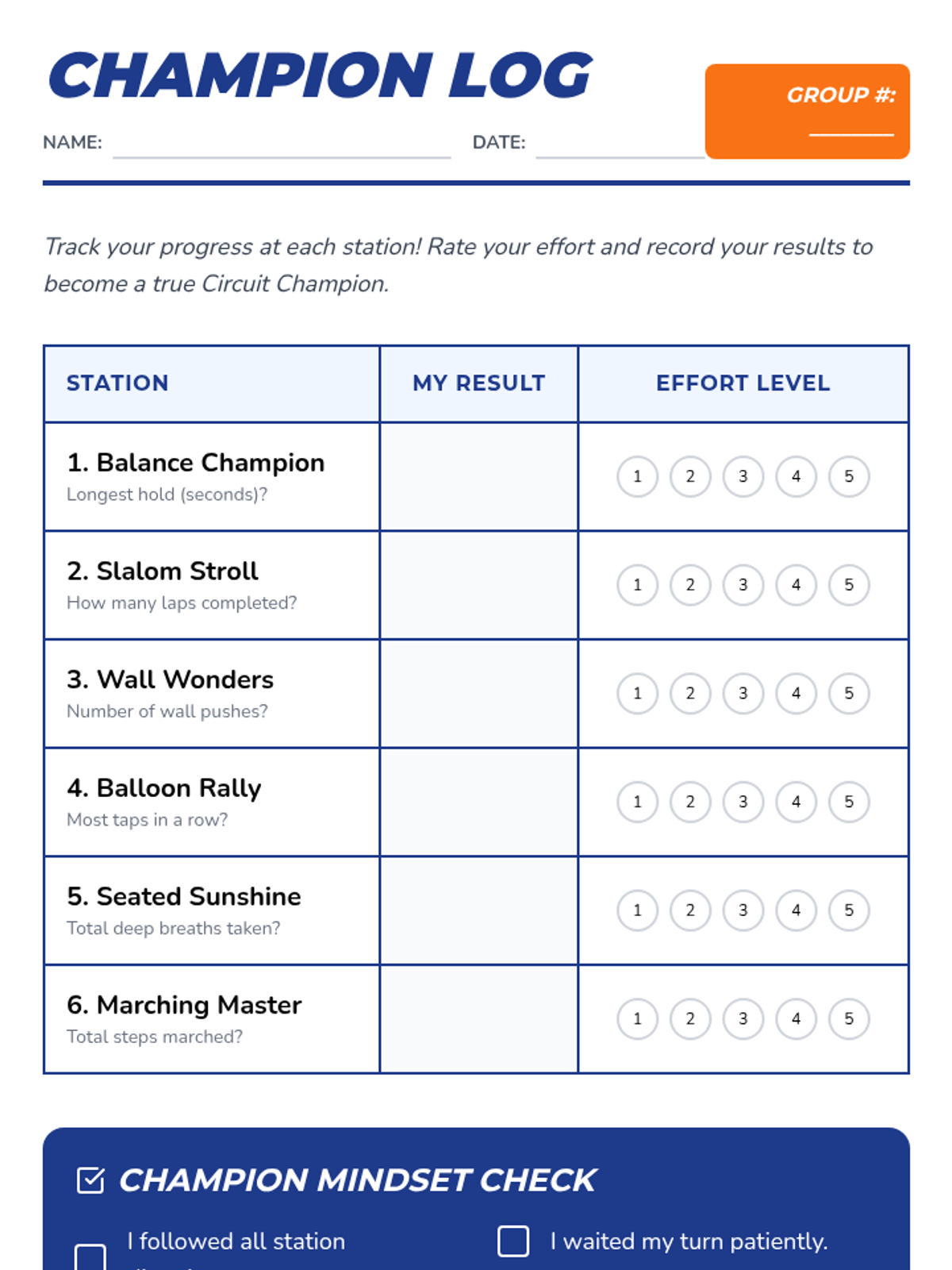
A high-energy station rotation circuit designed to build gross motor skills, balance, and social teamwork through 'Workout Wednesday' routines. Students rotate through six physical challenges while tracking their personal progress.
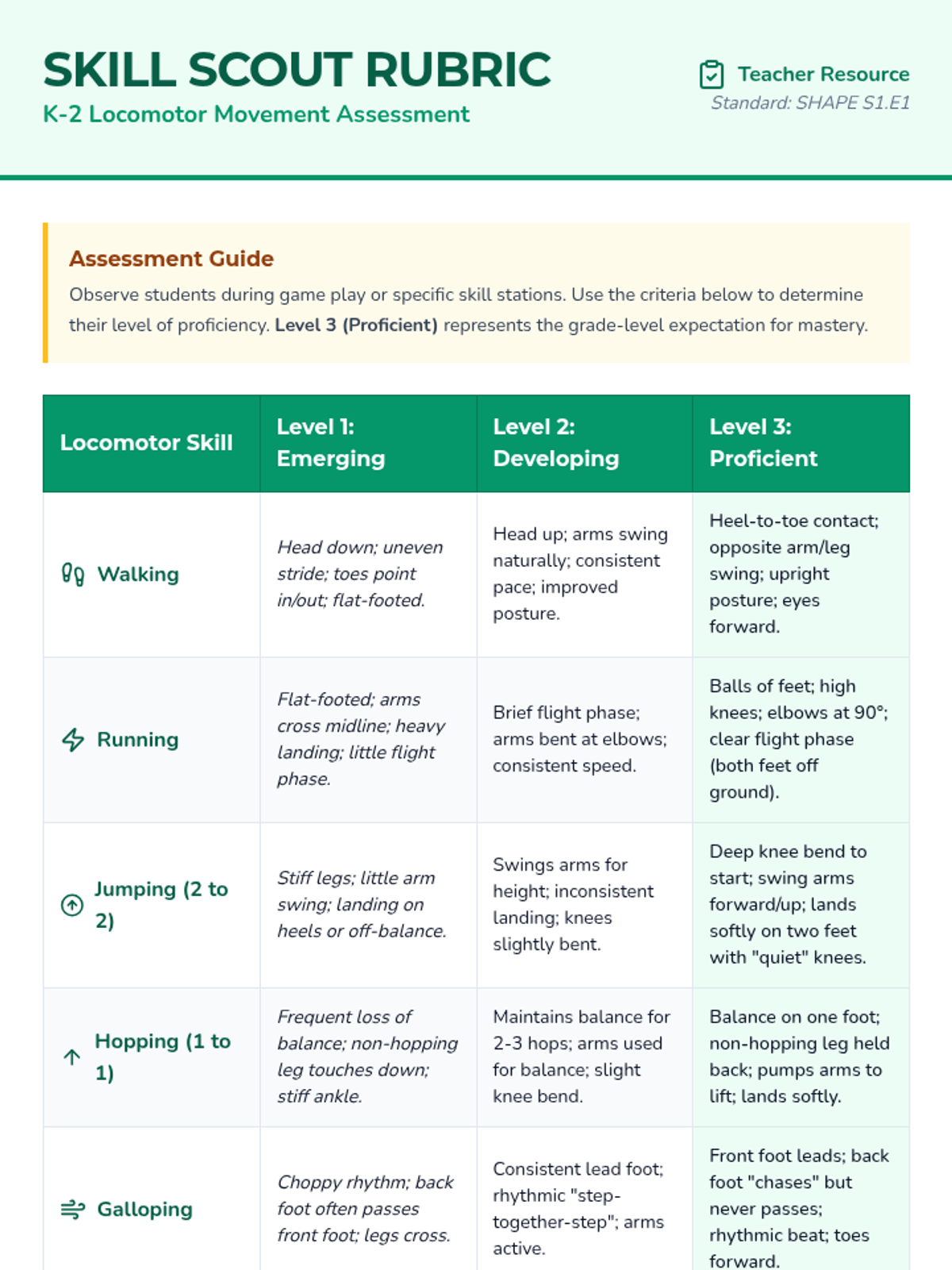
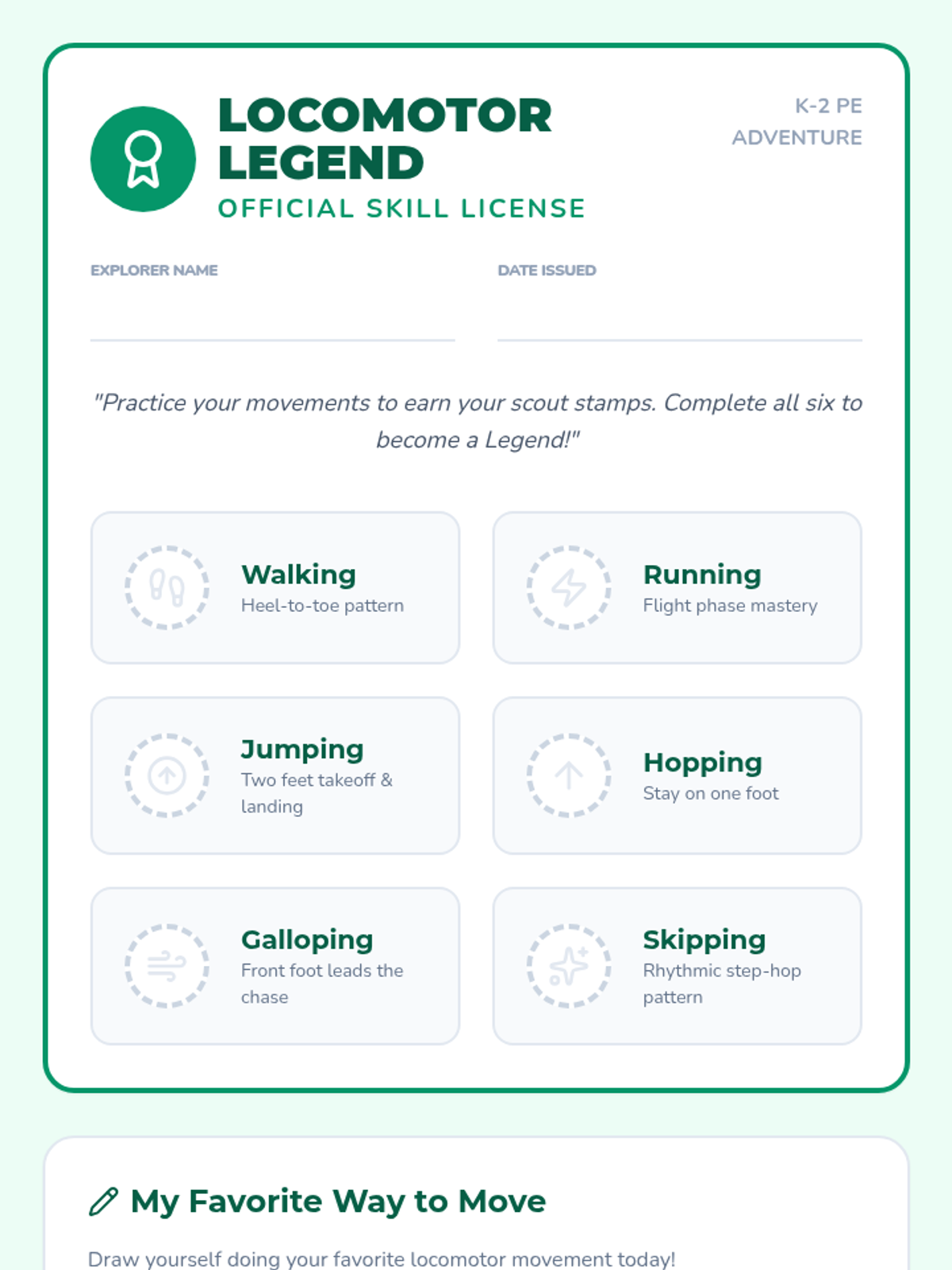
A physical education lesson for K-2 students focusing on mastering the fundamental locomotor movements through practice and assessment.
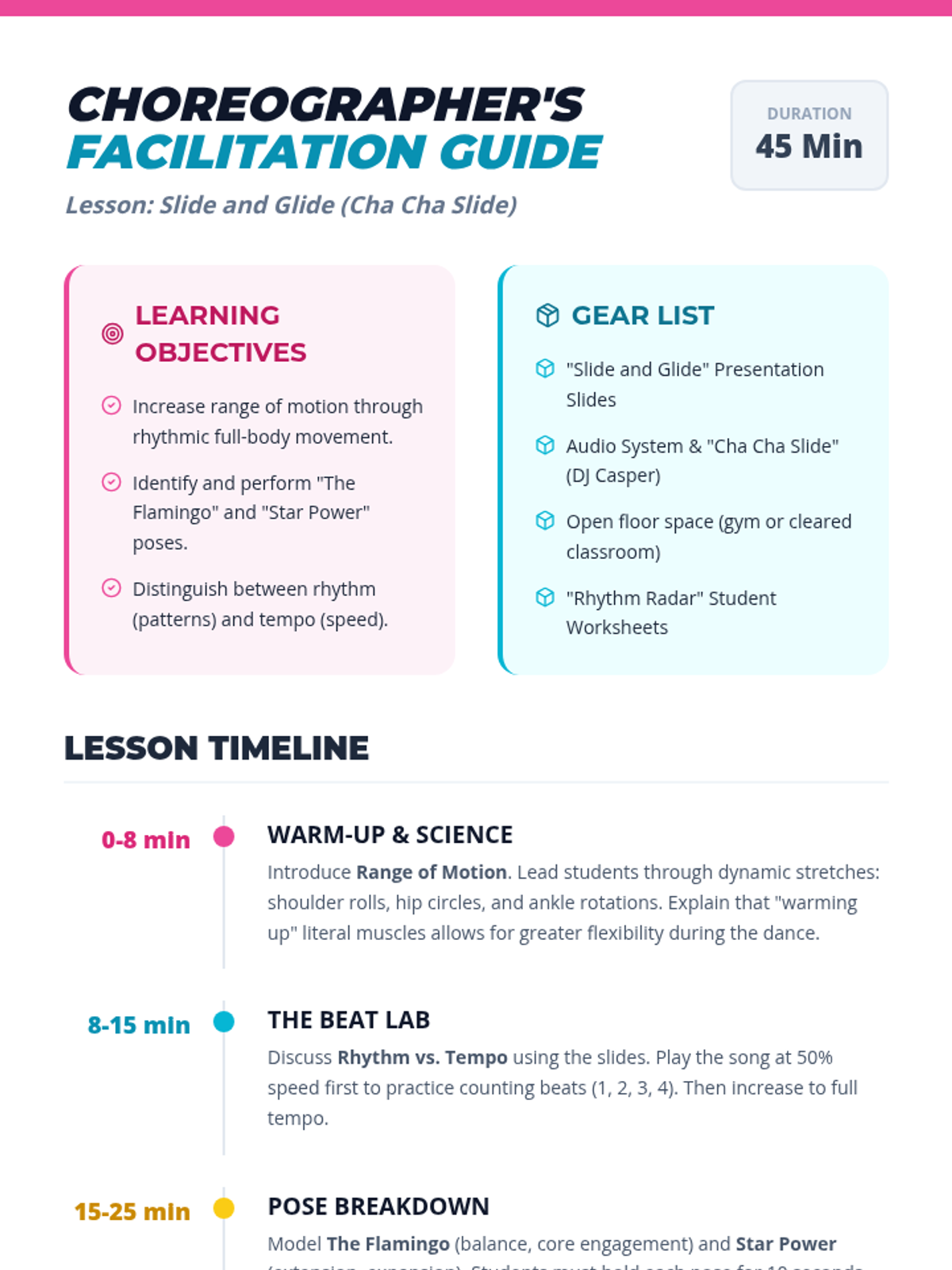
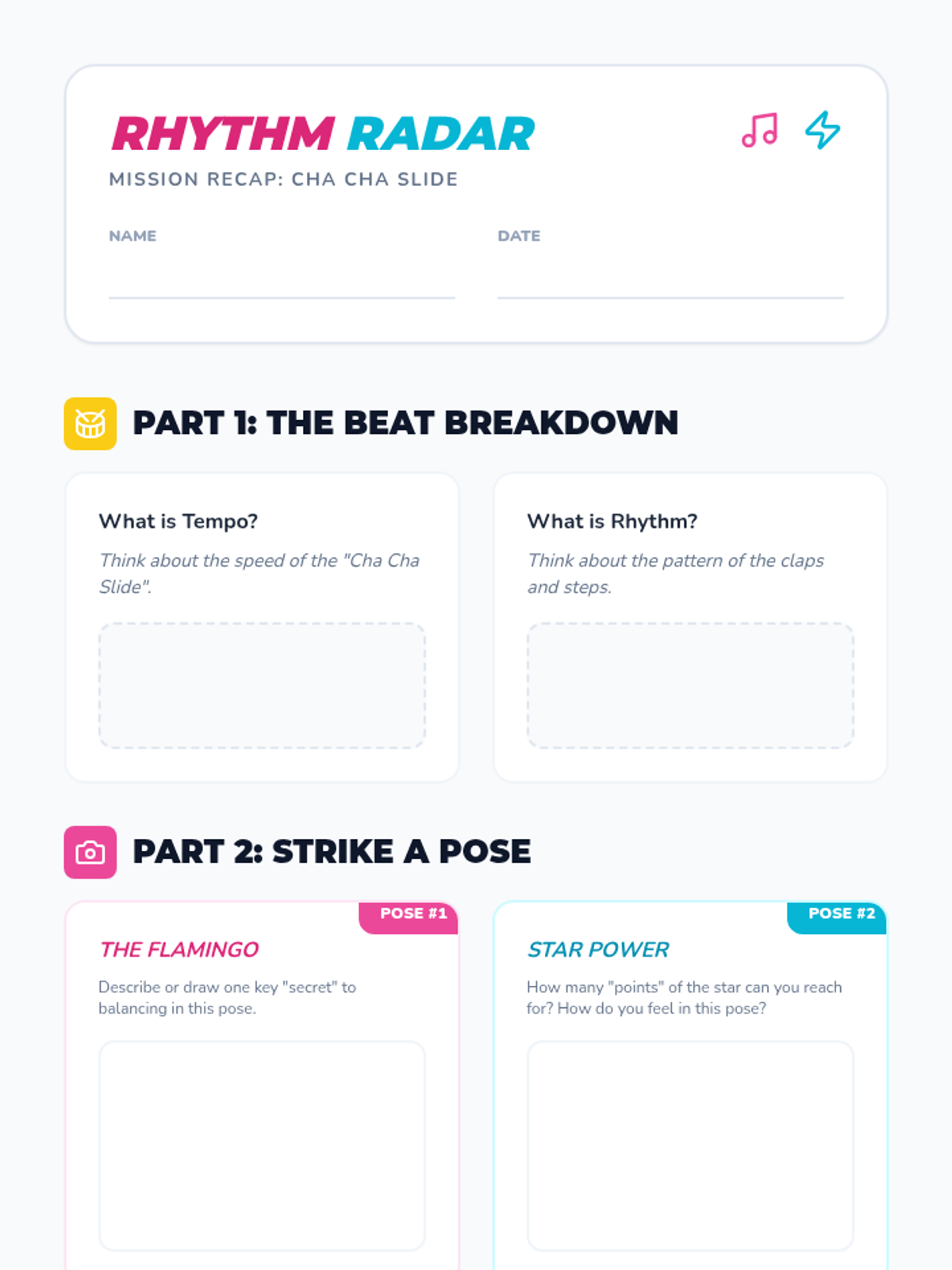
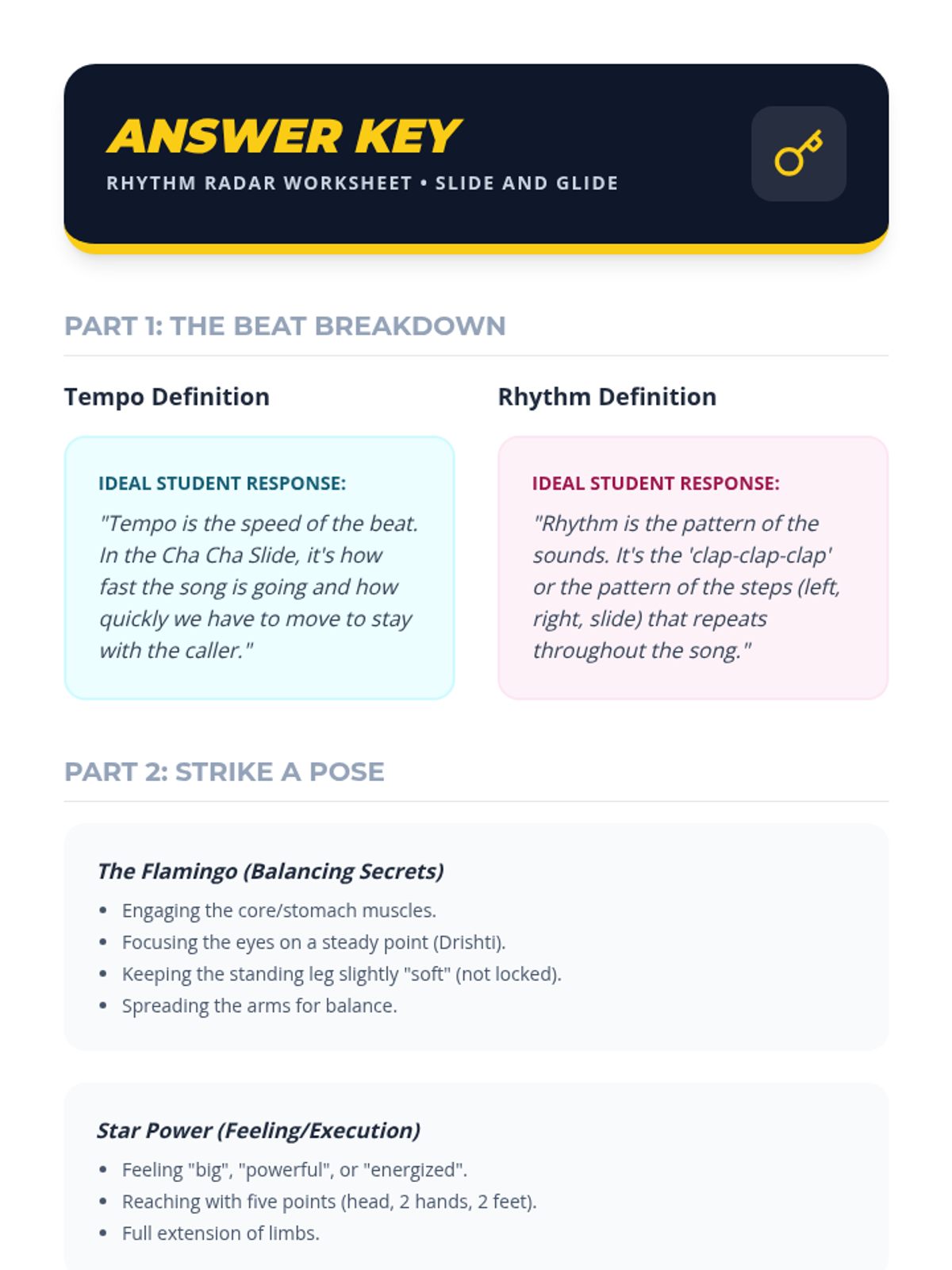
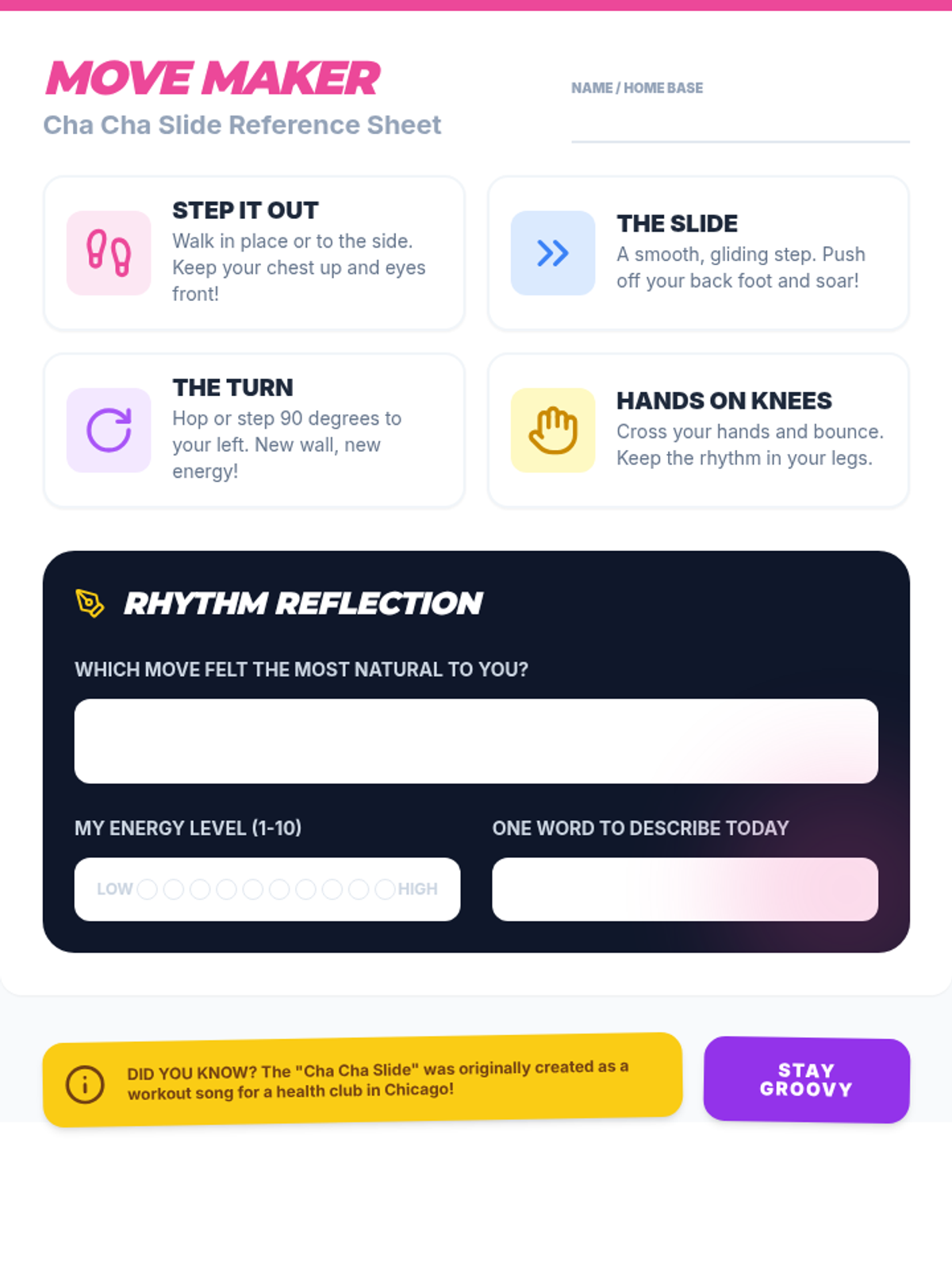
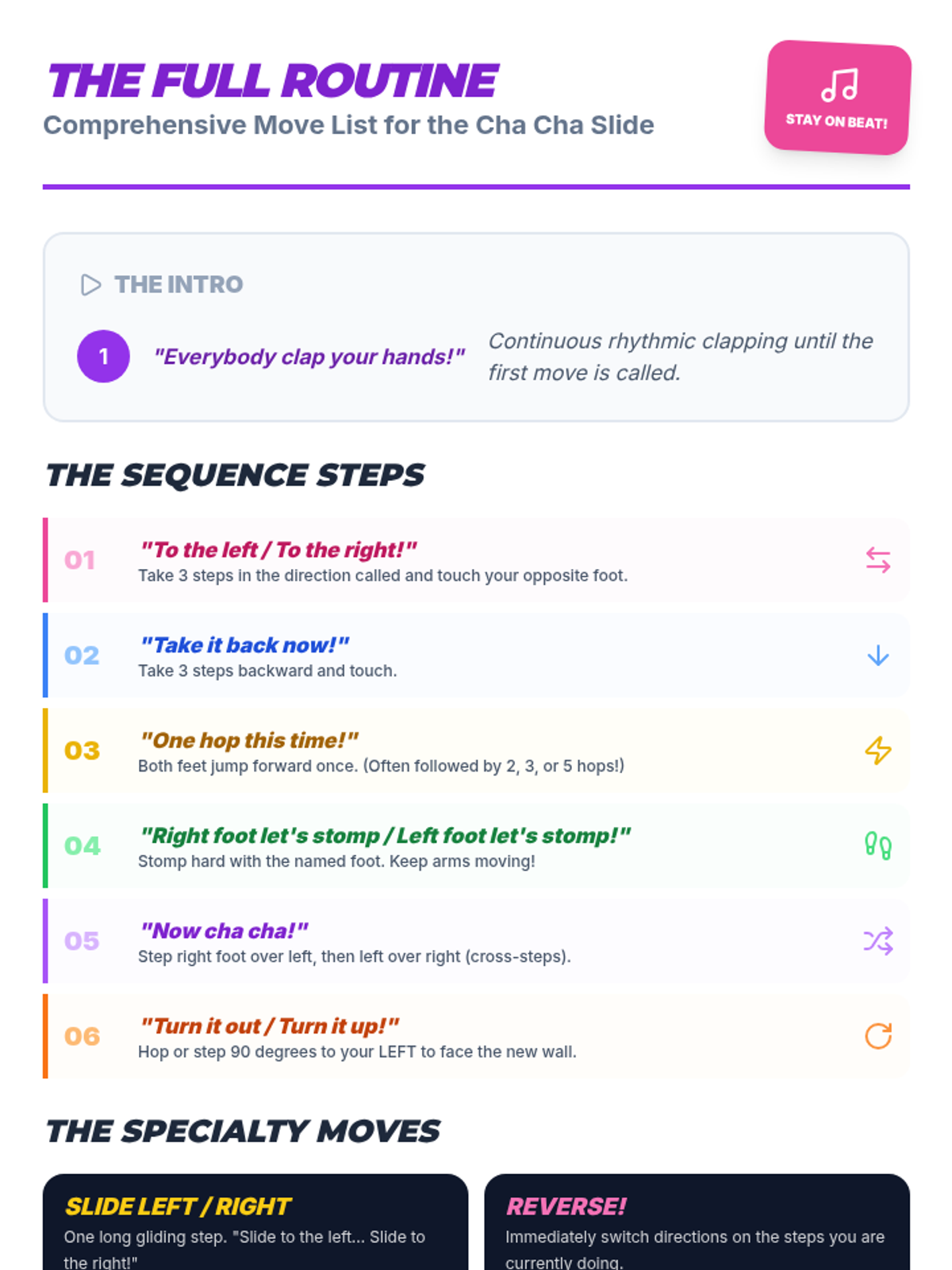
A high-energy dance lesson focused on the Cha Cha Slide to improve flexibility, master rhythm, and explore creative dance poses. Students will learn the signature moves while understanding the musical elements that drive the beat.
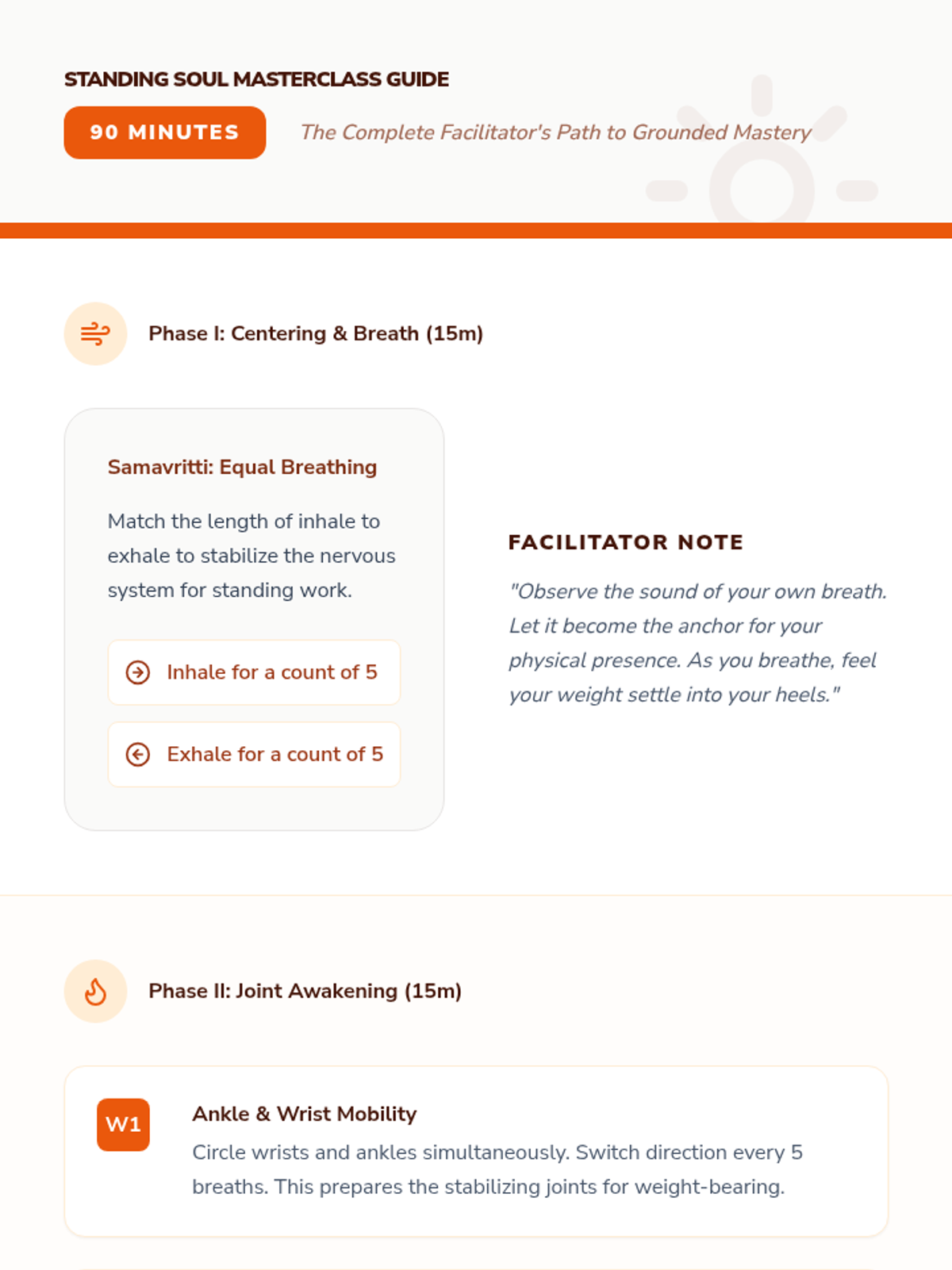
A beginner-friendly 90-minute standing yoga session focused on grounding, balance, and fundamental postures to transition from seated to standing practice.
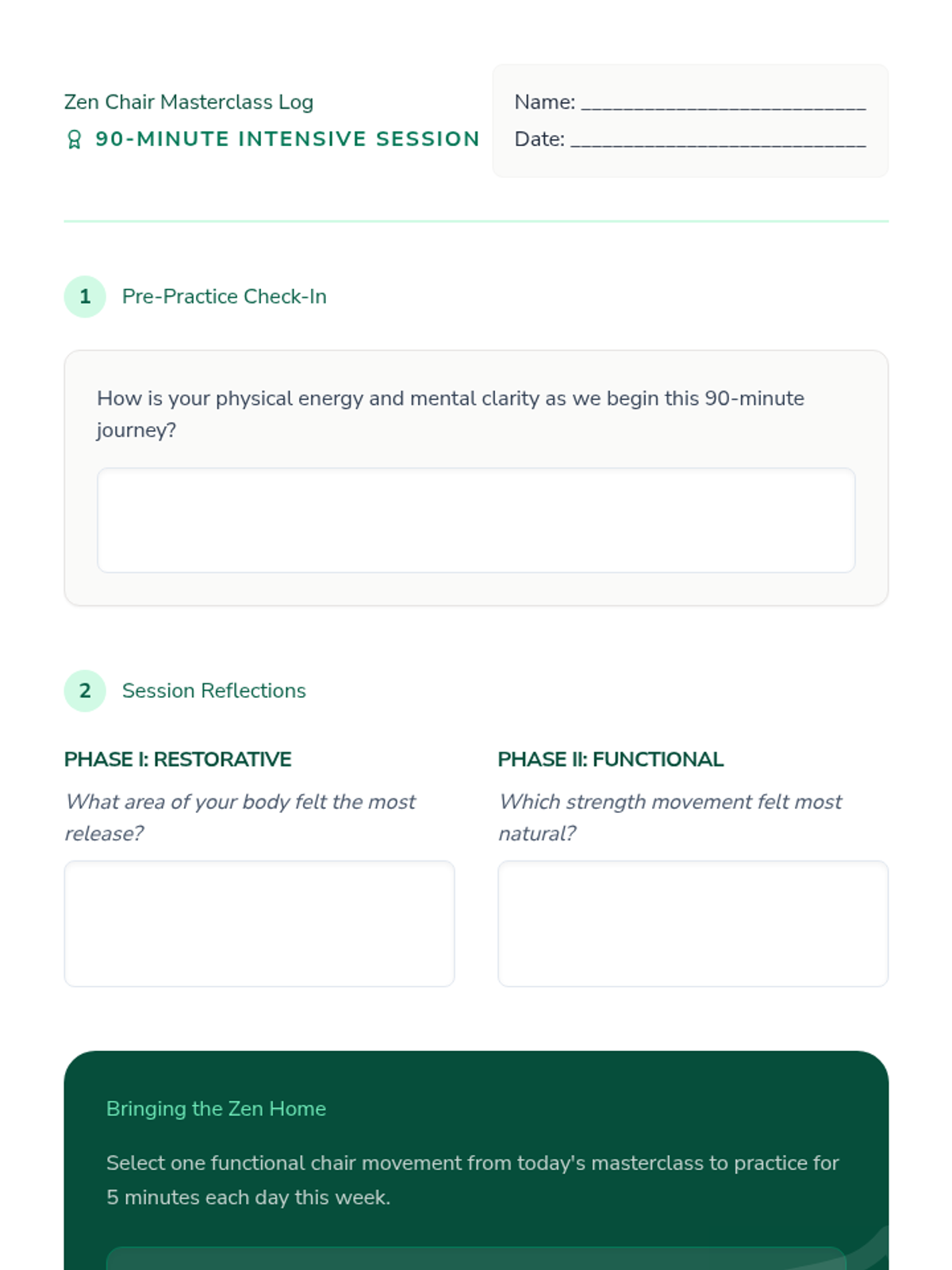
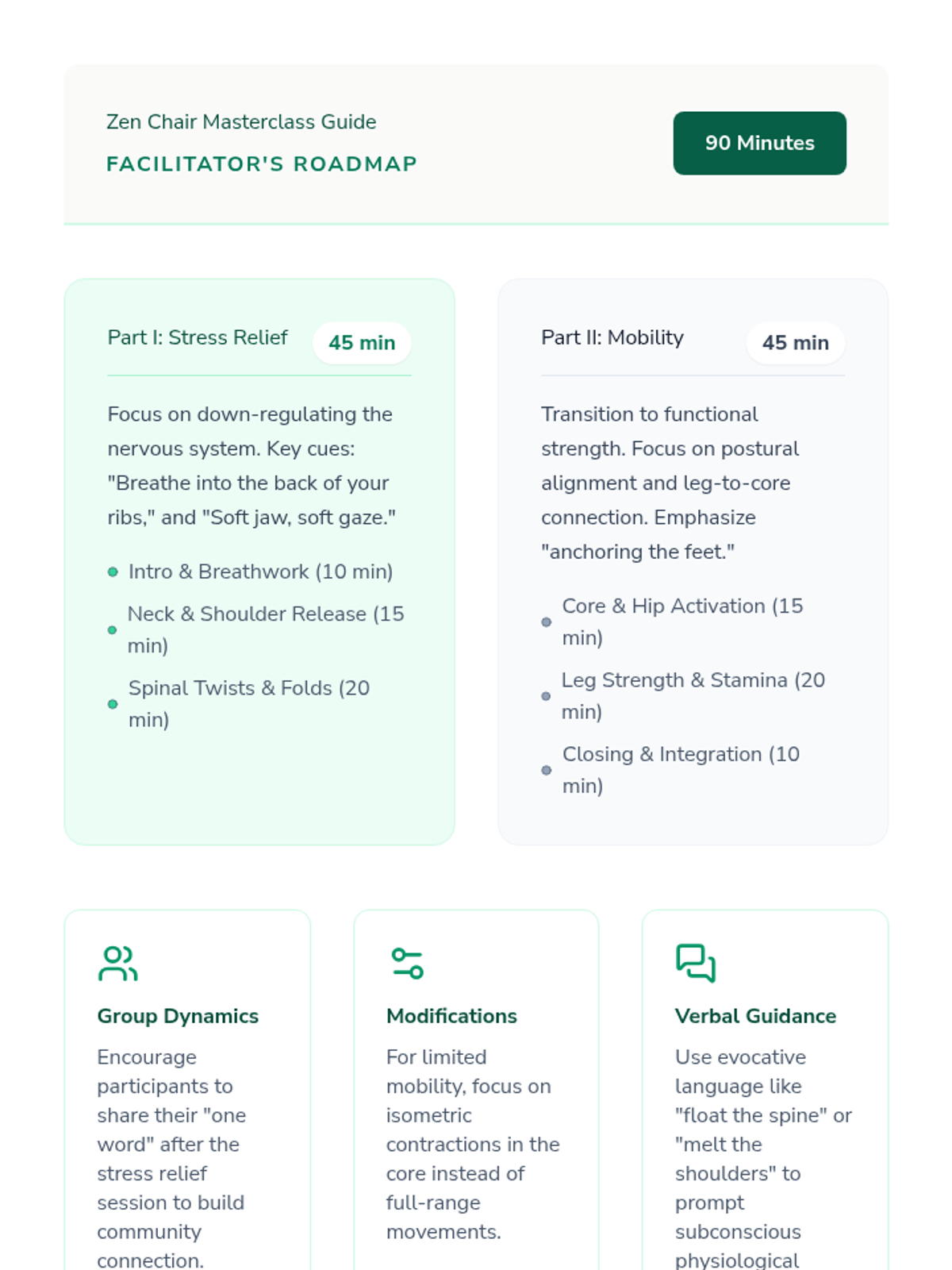
A deep-dive chair yoga experience combining stress relief and functional mobility, featuring two full-length guided practice videos. This 90-minute masterclass is designed to build both mental calm and physical strength.
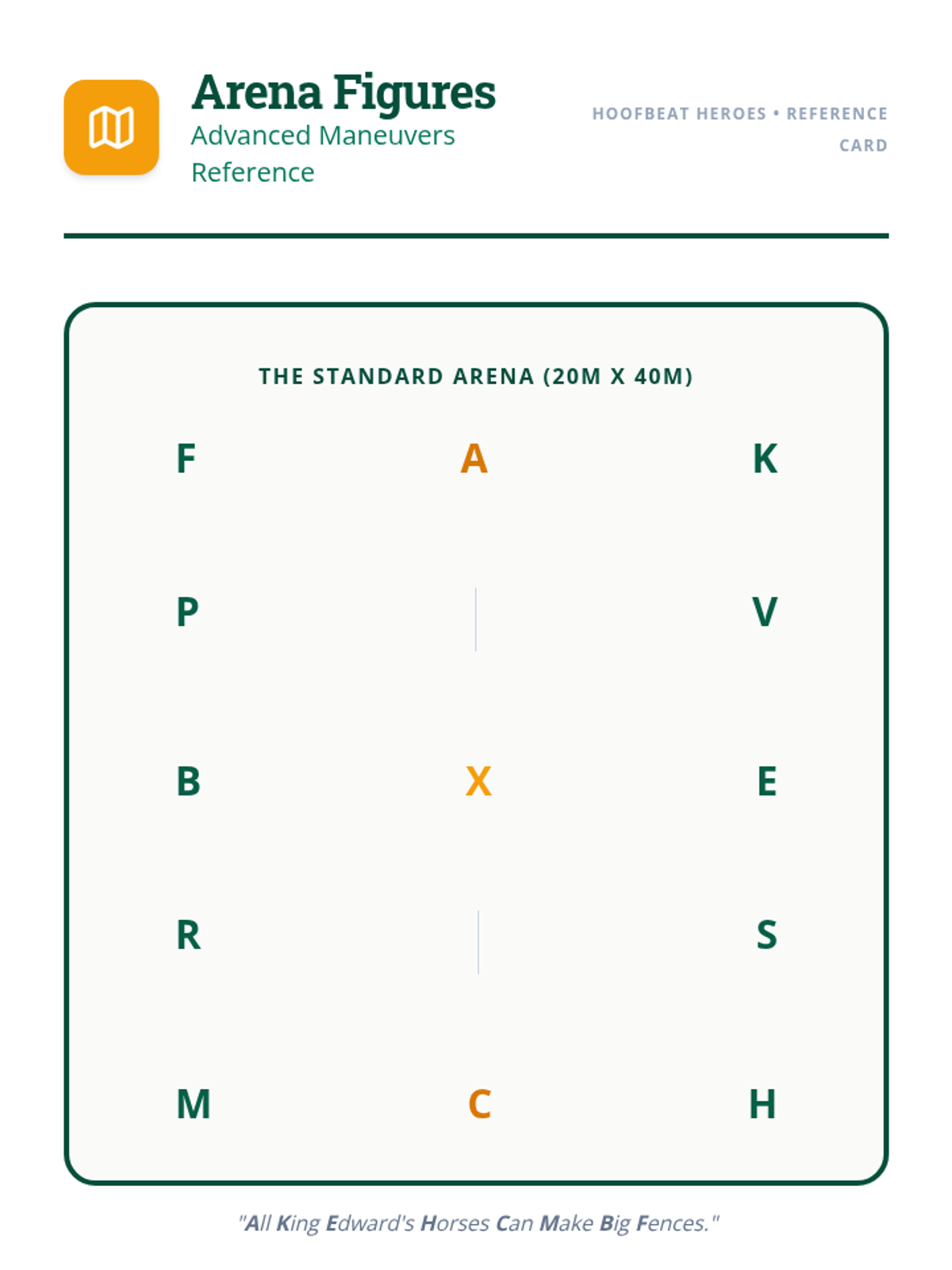
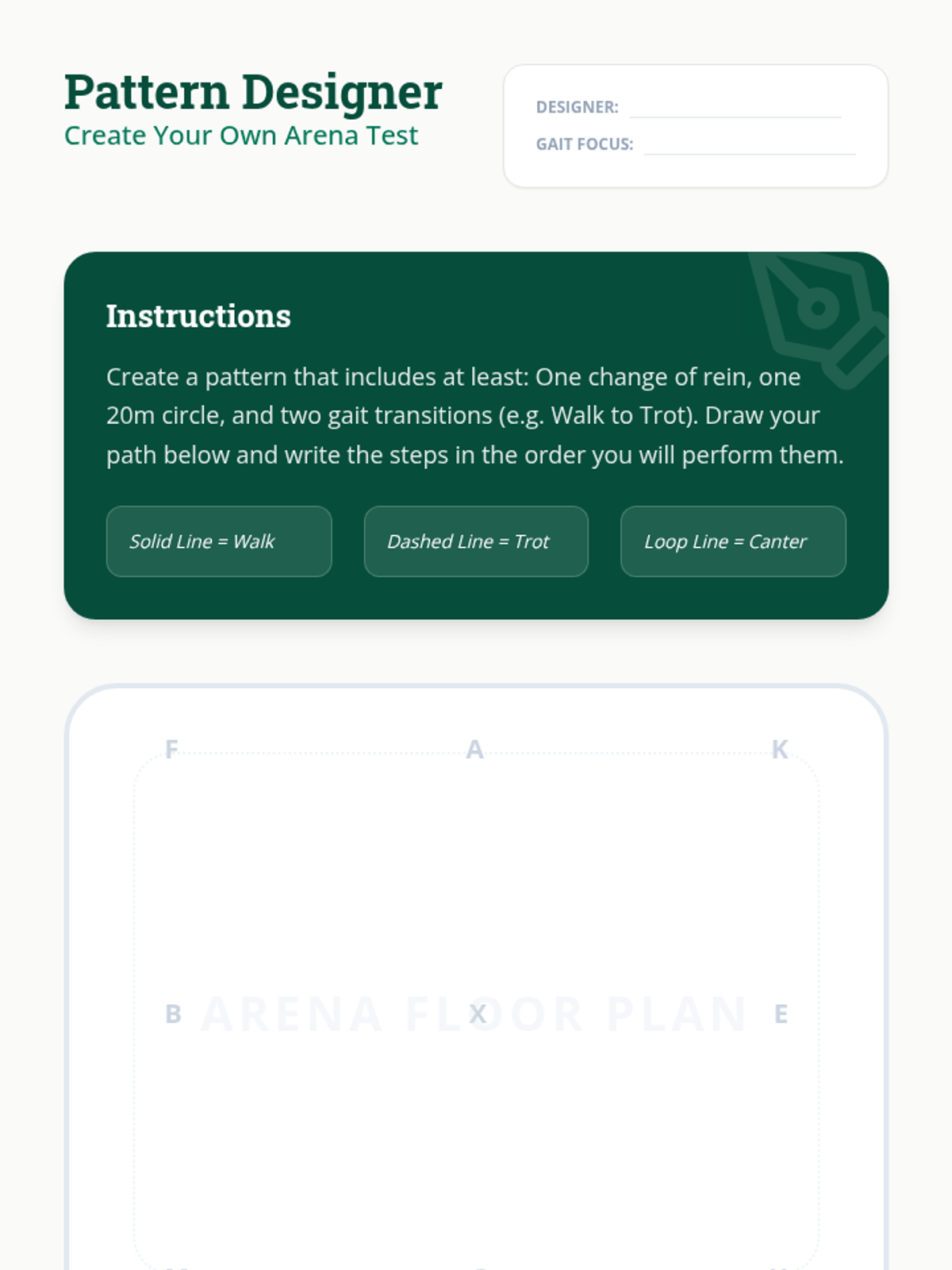
Advances to more complex maneuvers including the canter, arena figures, and introducing the basics of jumping or advanced equitation patterns.
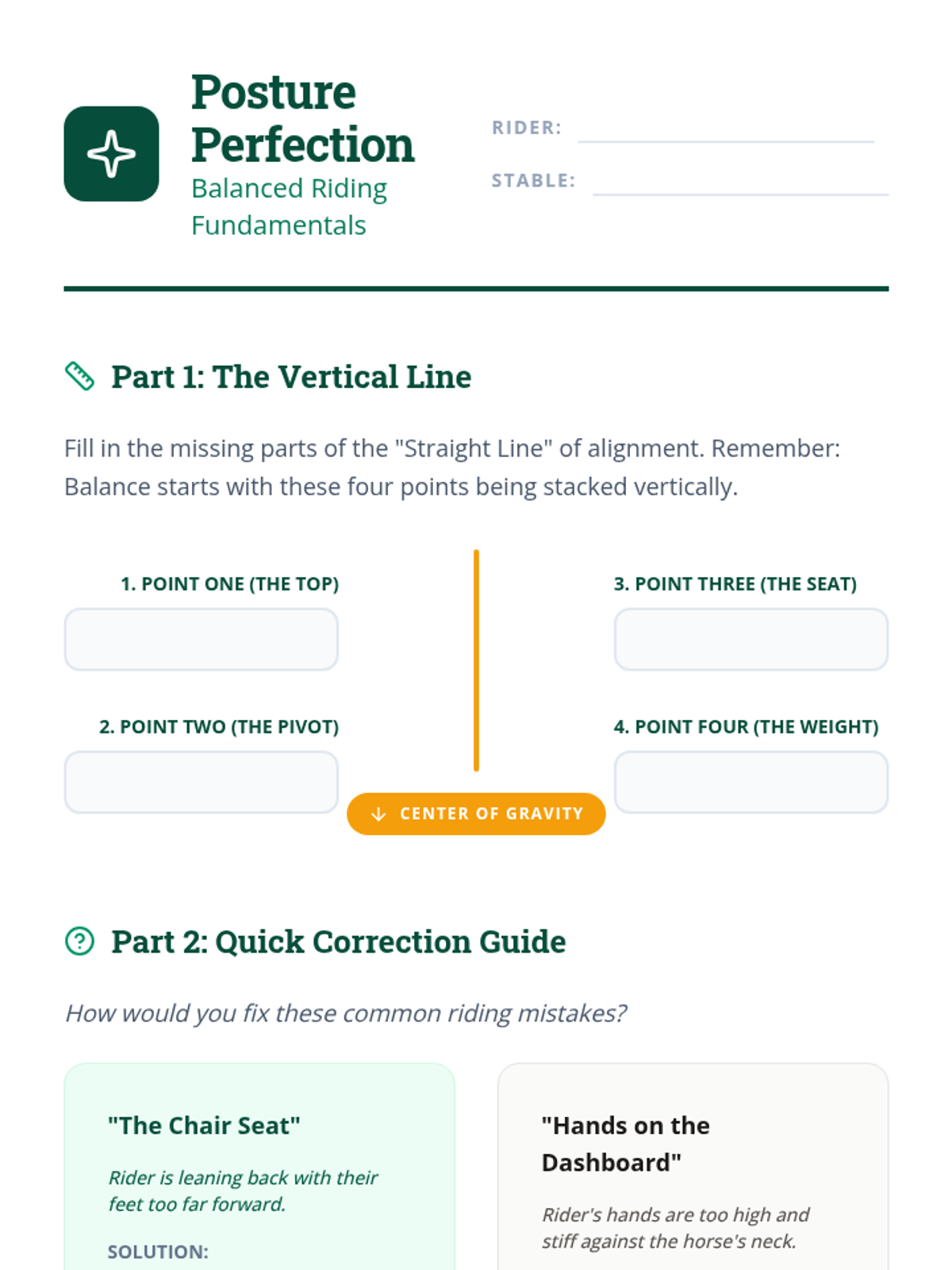
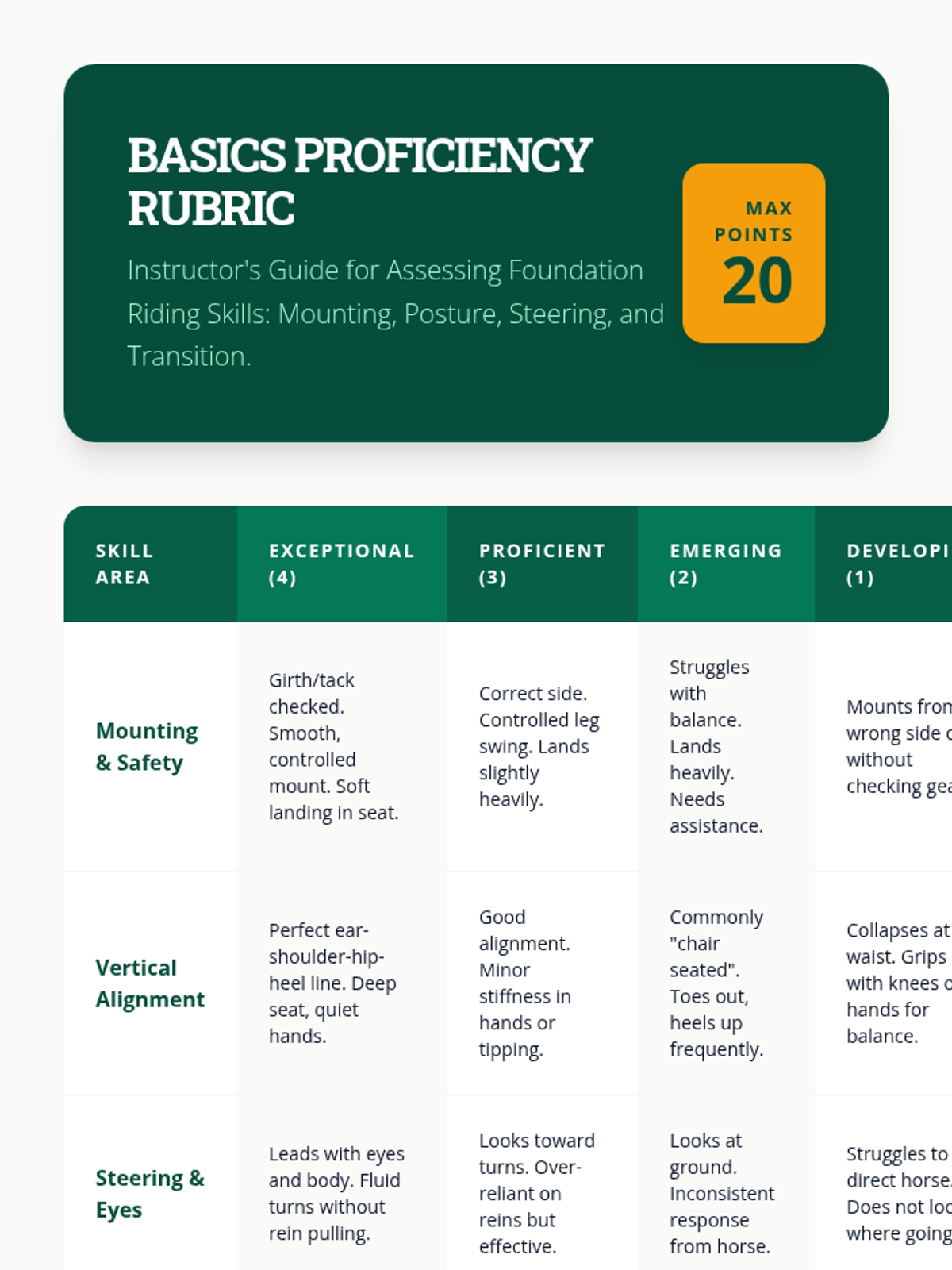
Introduces the foundational elements of riding, including mounting, correct posture, steering, and mastering the walk and trot gaits.
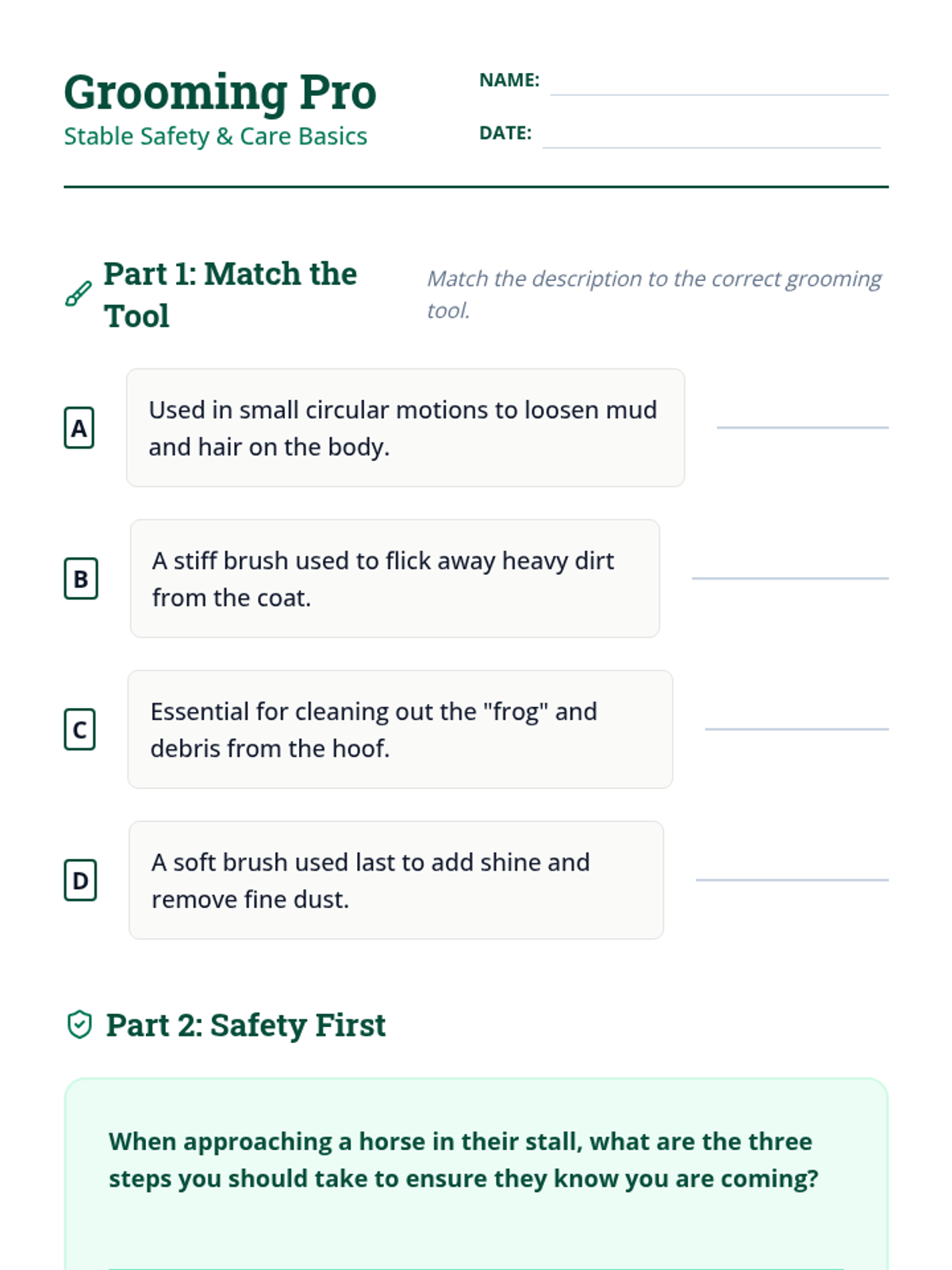
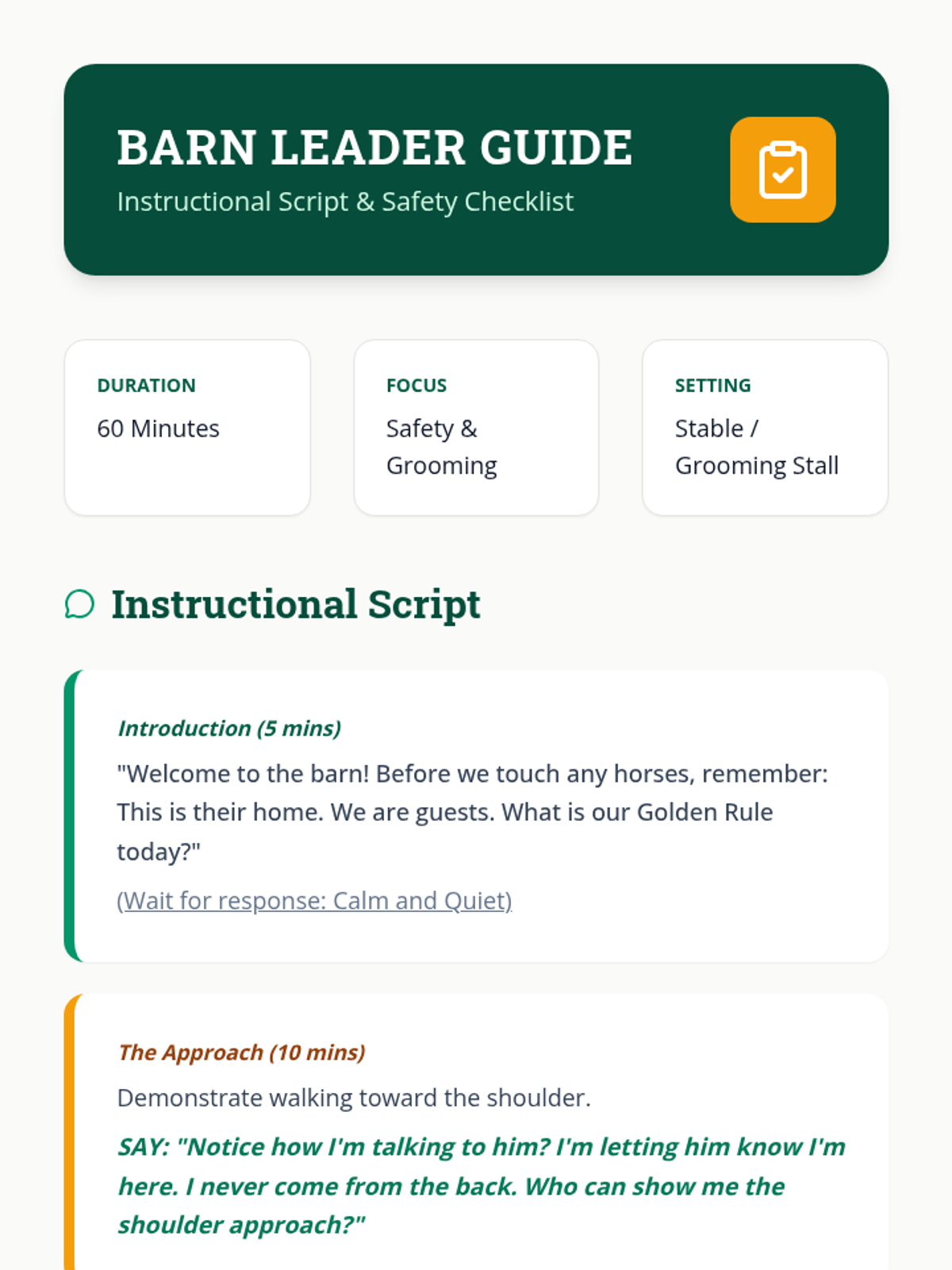
Focuses on the essential first steps of equestrianism: understanding horse behavior, safe handling, grooming techniques, and the names and uses of various tack components.
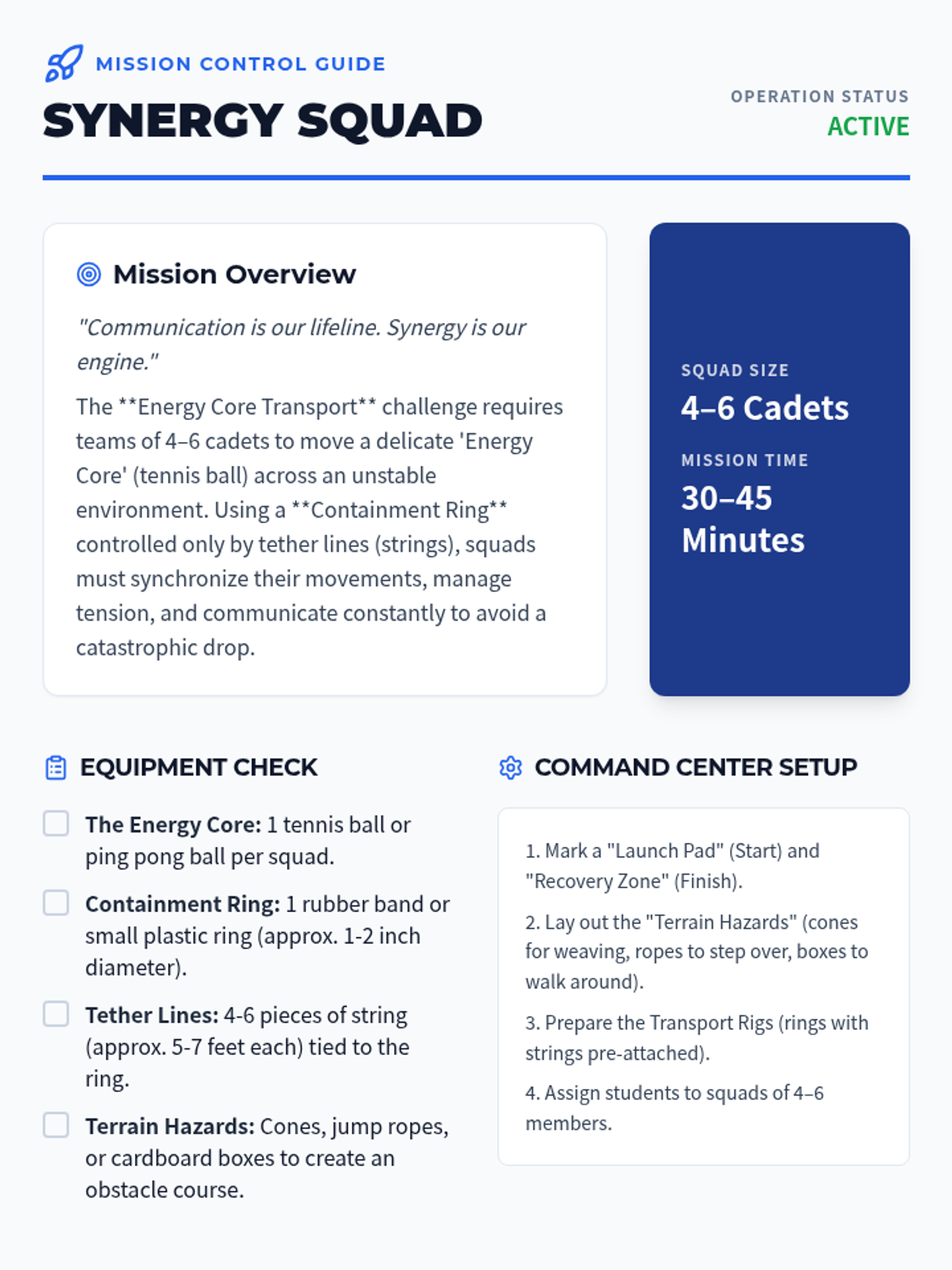
Students develop essential teamwork skills through a high-stakes physical challenge. By transporting a delicate 'energy core' using only a multi-stringed ring, teams must synchronize their movements and communicate clearly to succeed.
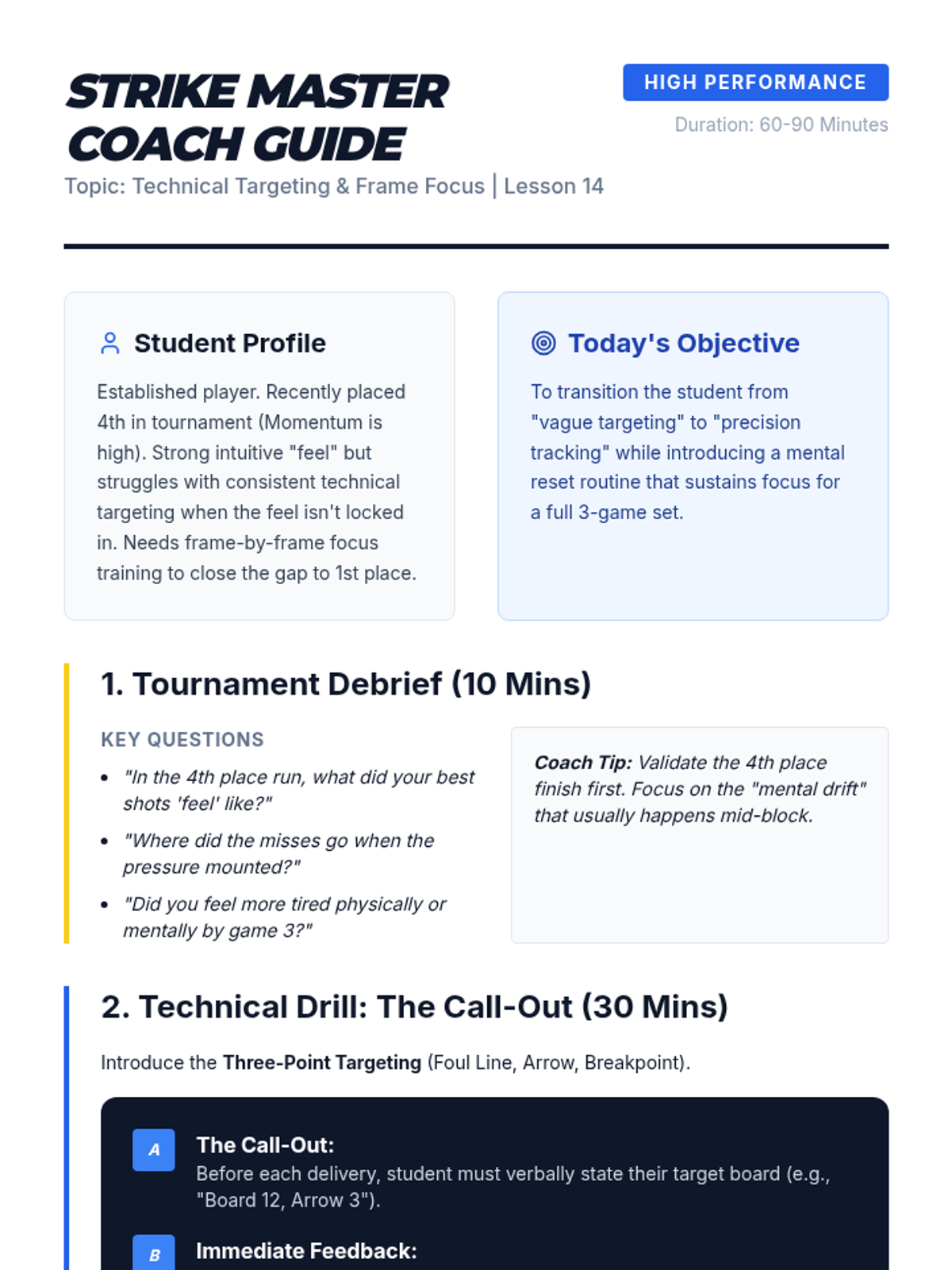
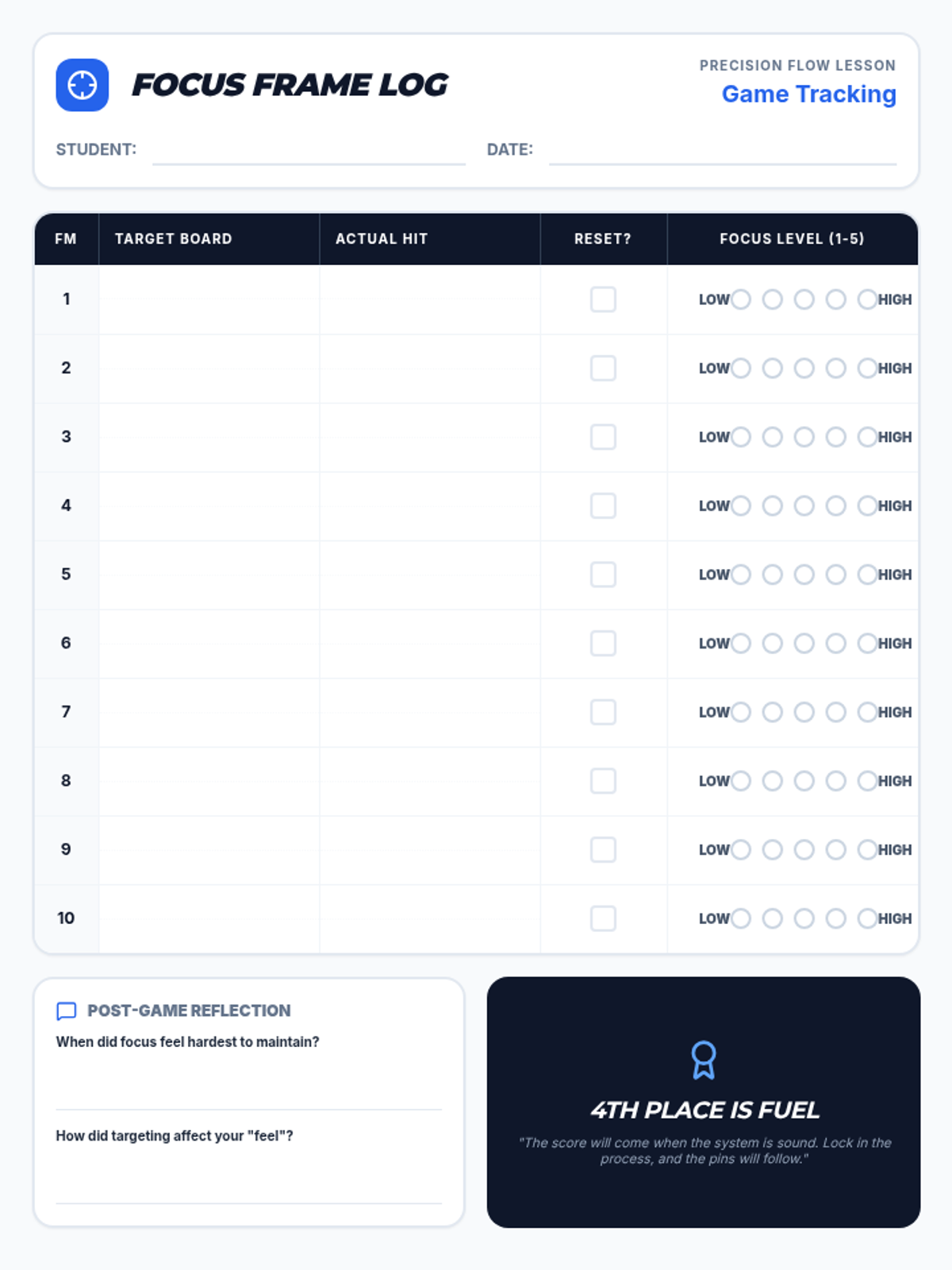
A high-performance bowling lesson designed to bridge the gap between intuitive 'feel' and technical precision targeting. Focused on maintaining mental stamina and frame-by-frame consistency for competitive athletes.
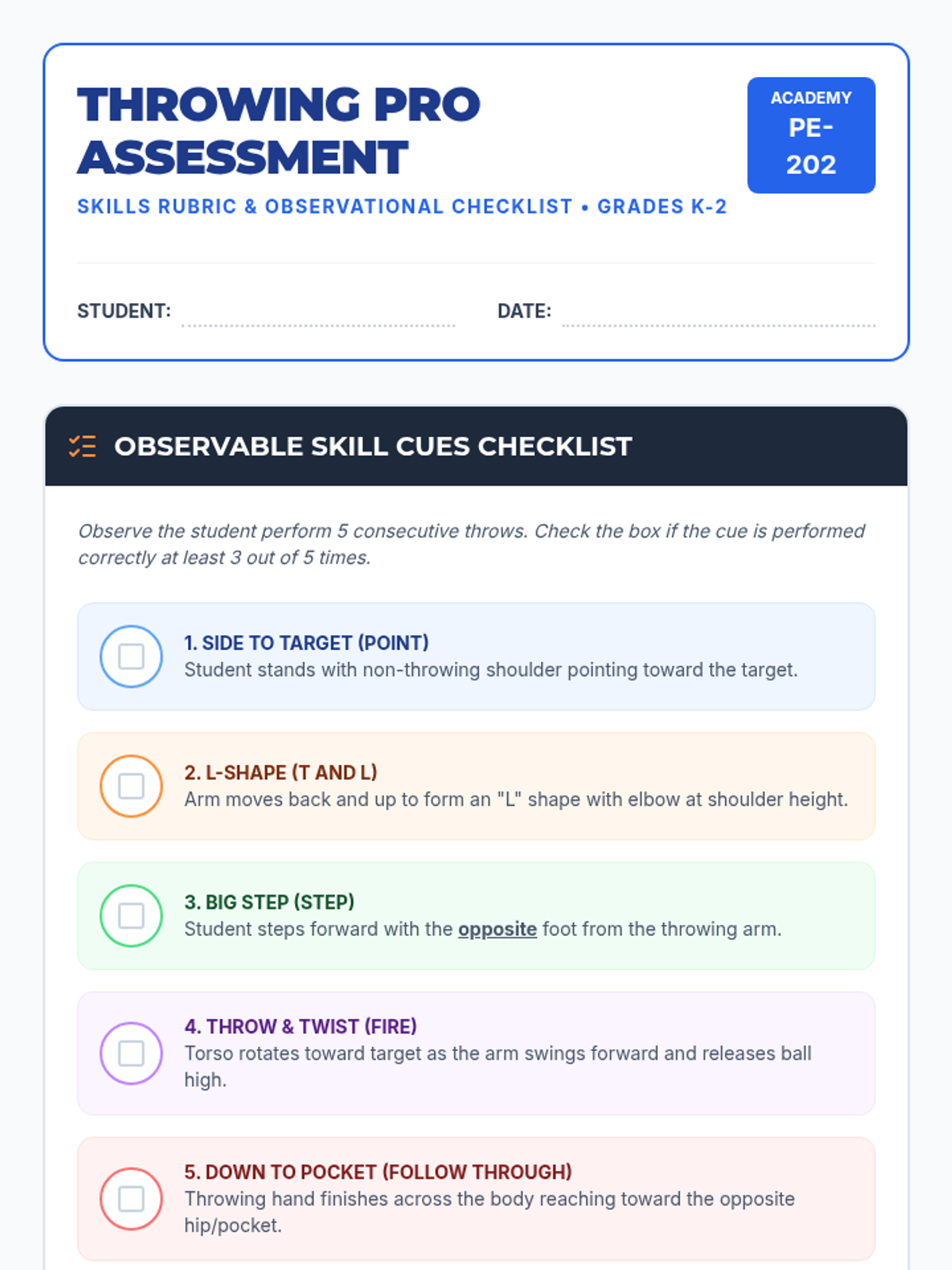
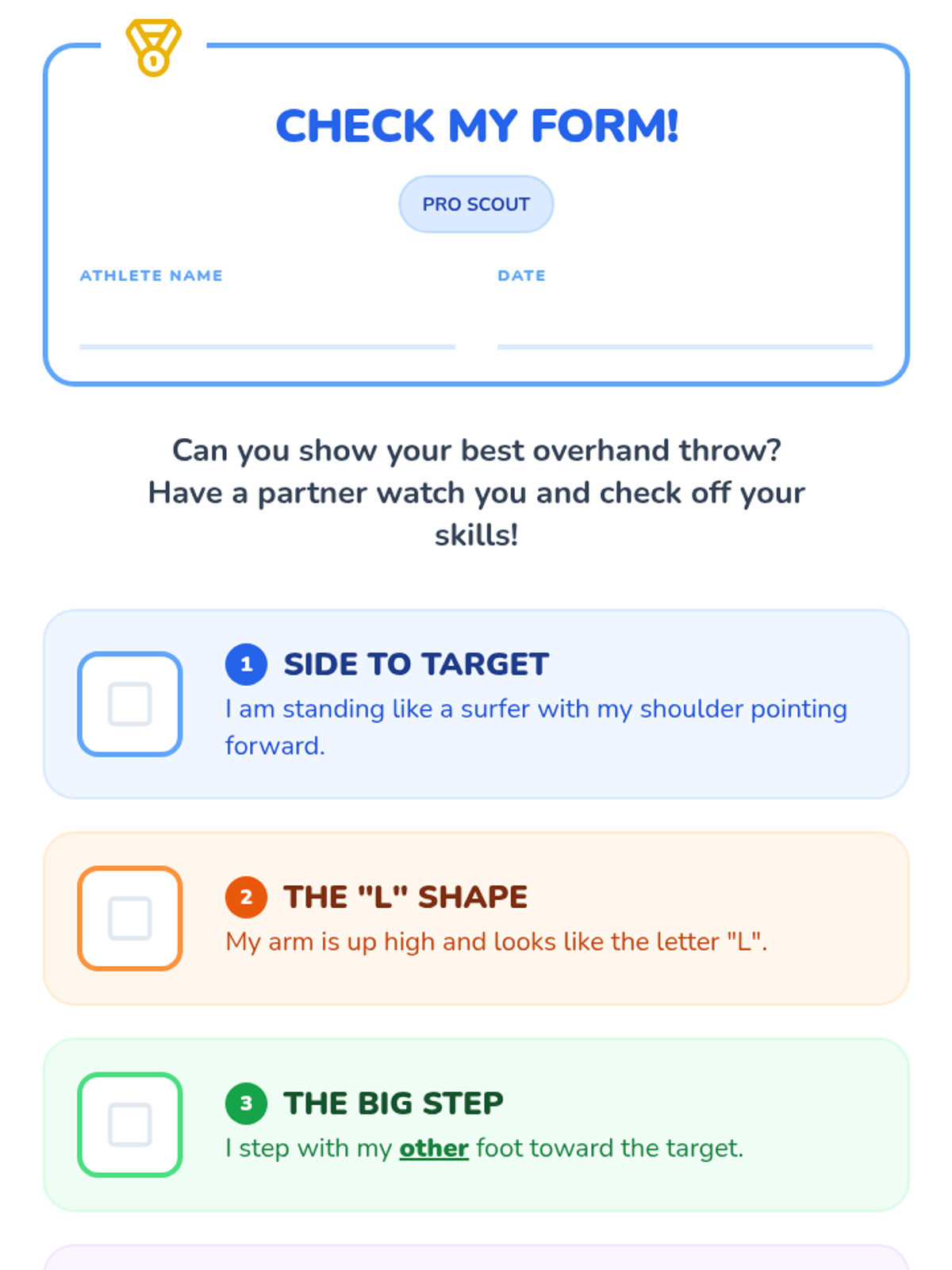
A comprehensive assessment suite for teaching and evaluating overhand throwing skills in grades K-2, focusing on form, cues, and consistency.
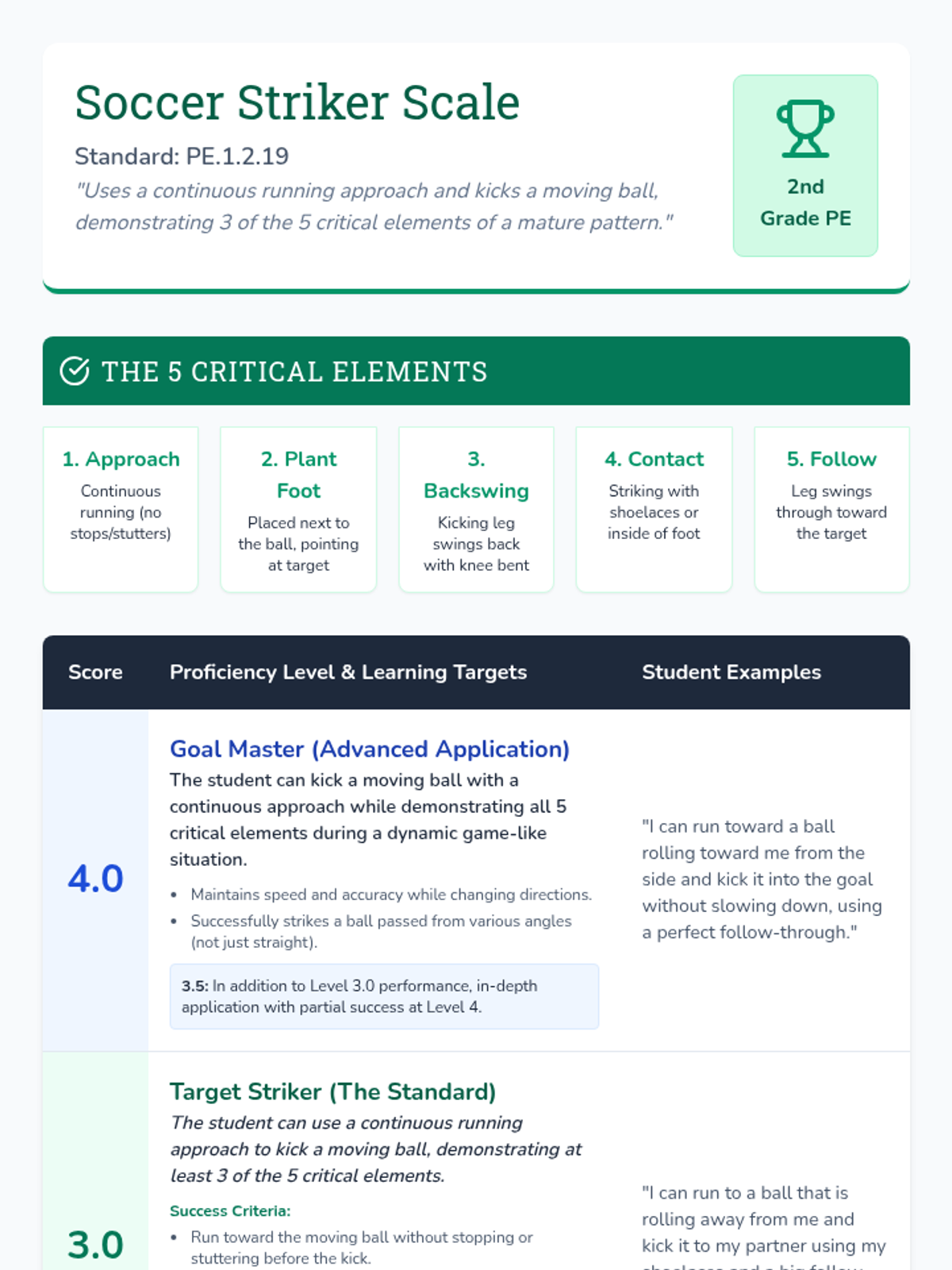
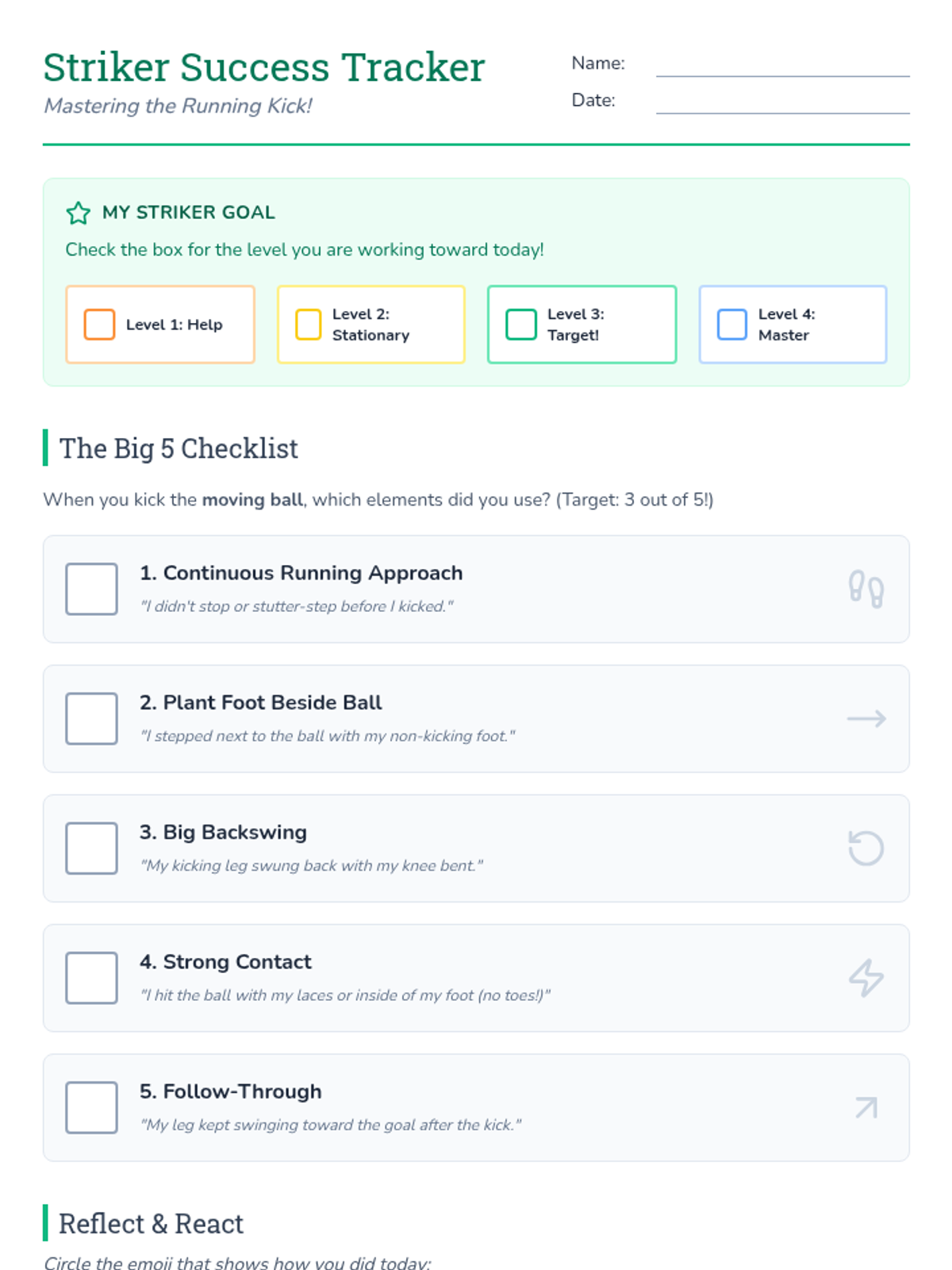
This lesson focuses on mastering the skill of kicking a moving ball while running, specifically targeting the 2nd Grade PE standard PE.1.2.19 through clear proficiency scales and student tracking.
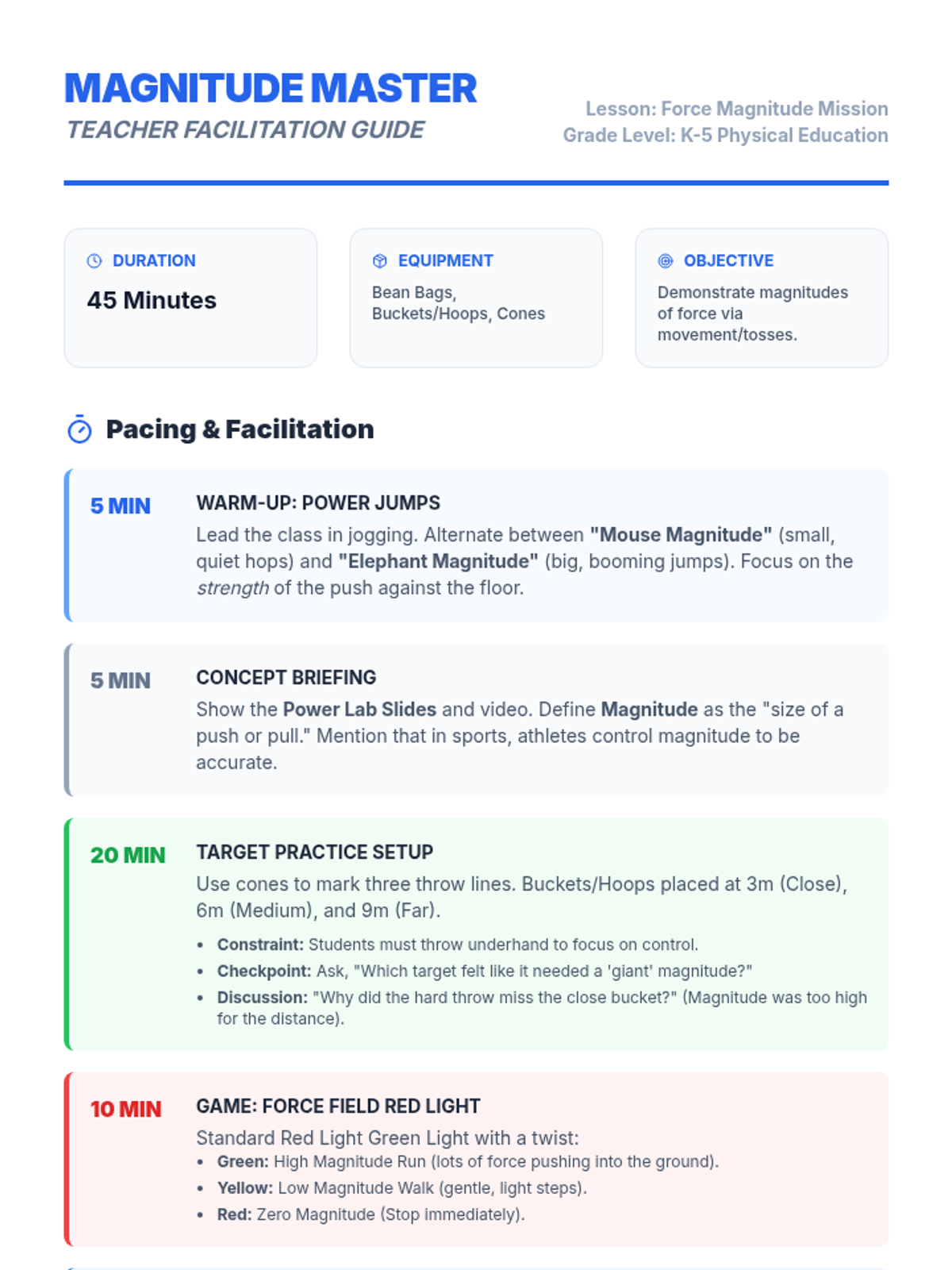
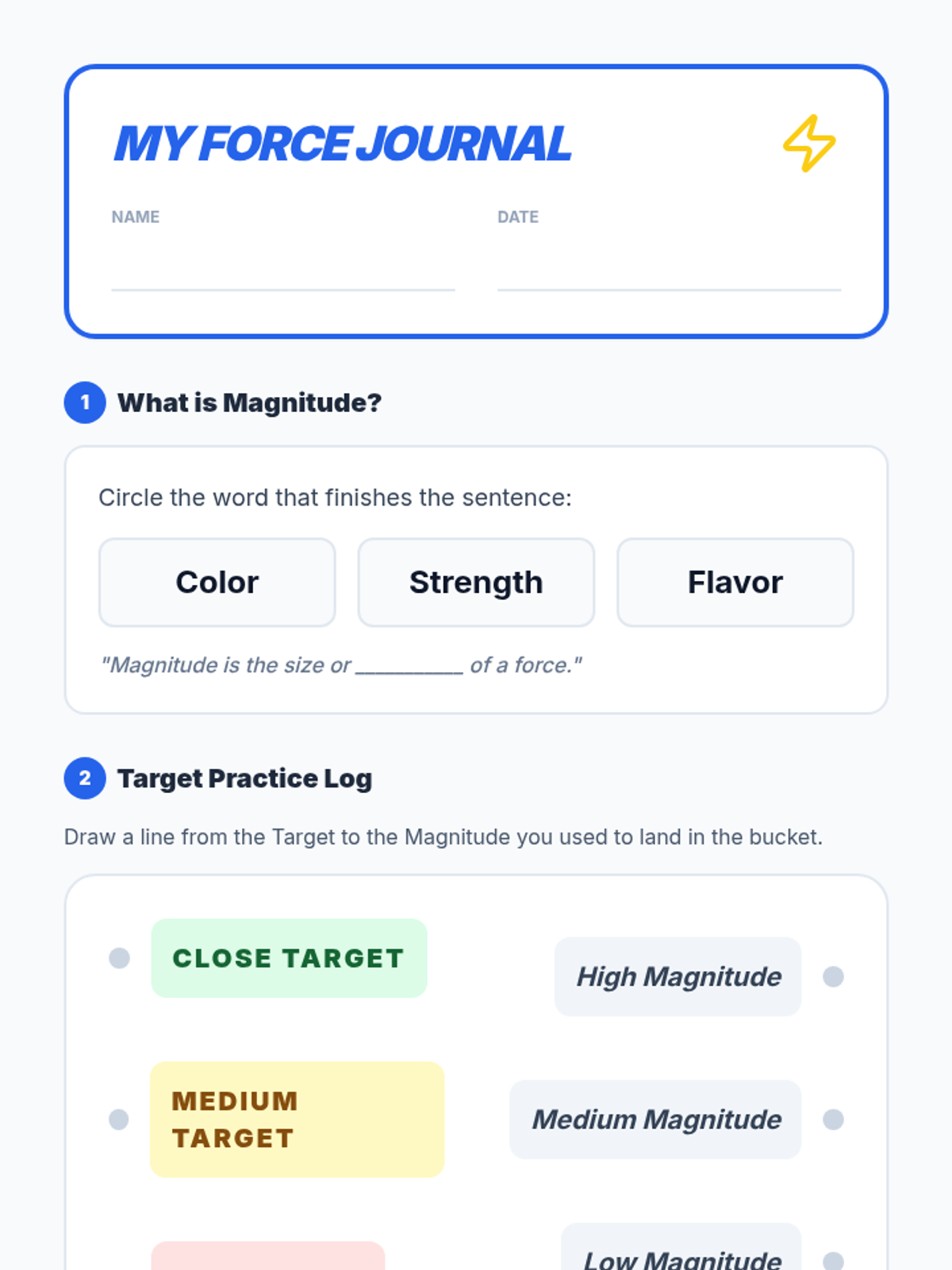
Students will explore the concept of magnitude in physical education through a series of active challenges, comparing high-strength and low-strength movements using beanbags, buckets, and running games.
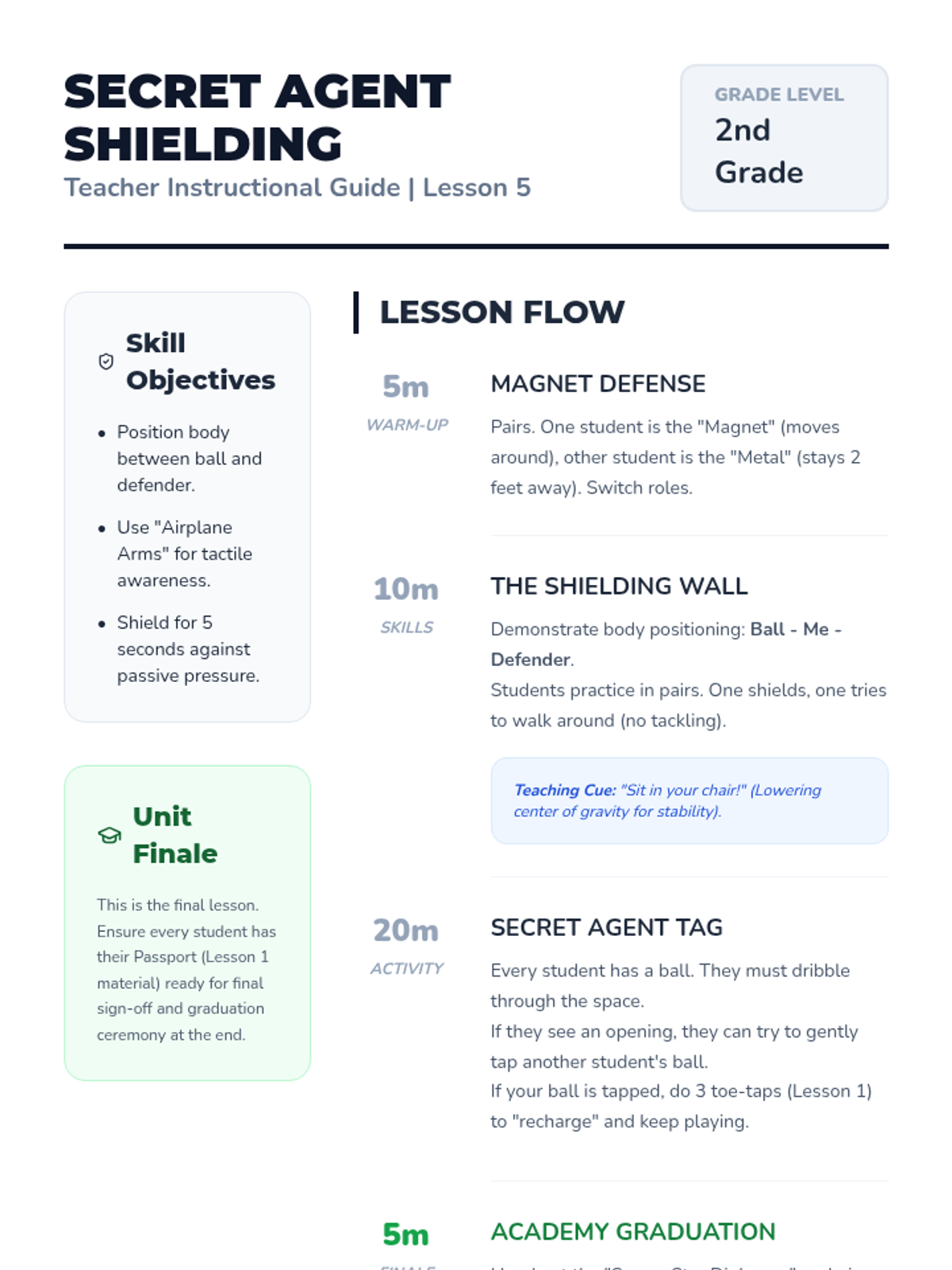
Students learn how to position their body between the ball and a defender to protect possession, concluding with a dribbling tag game.
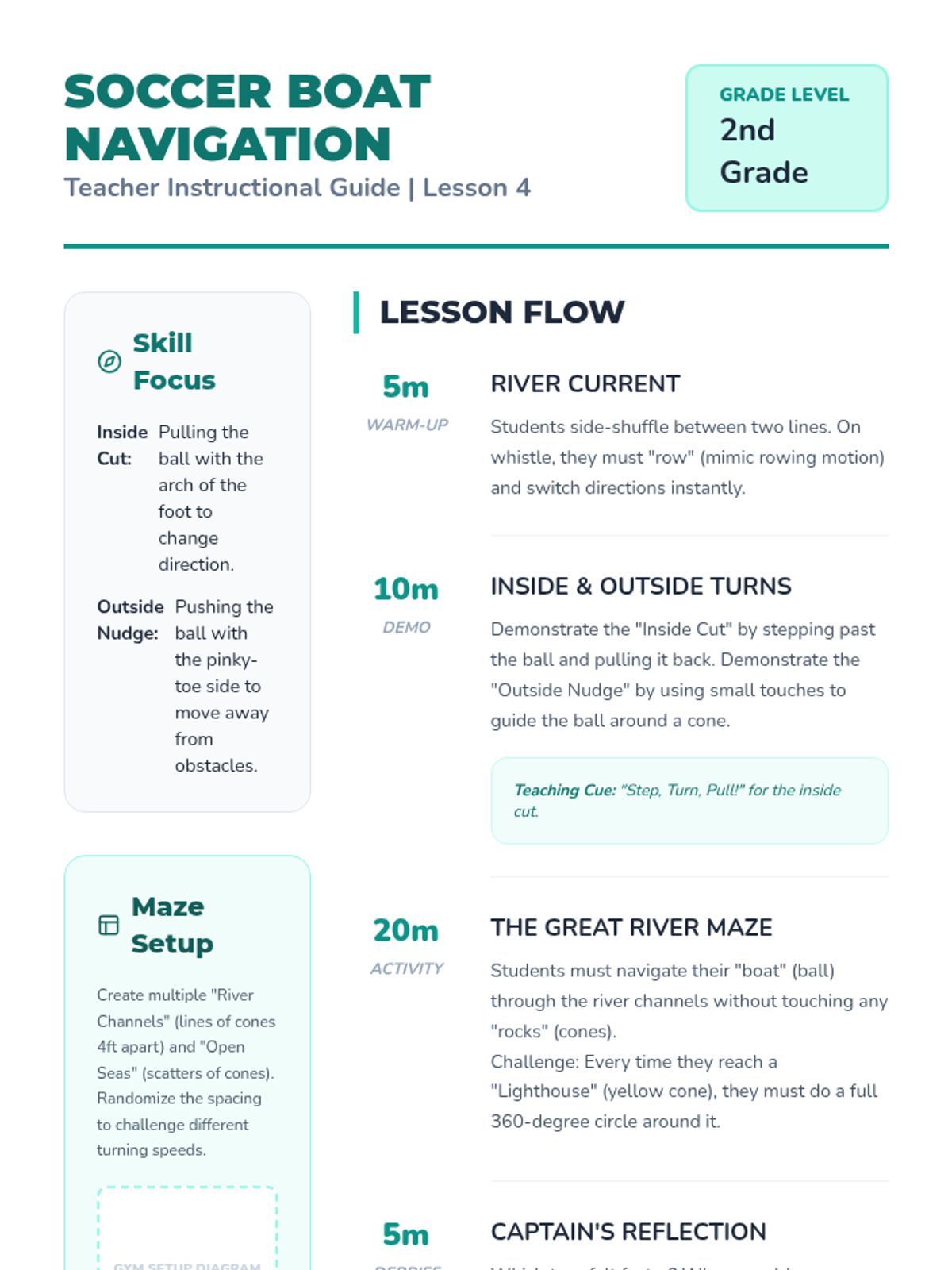
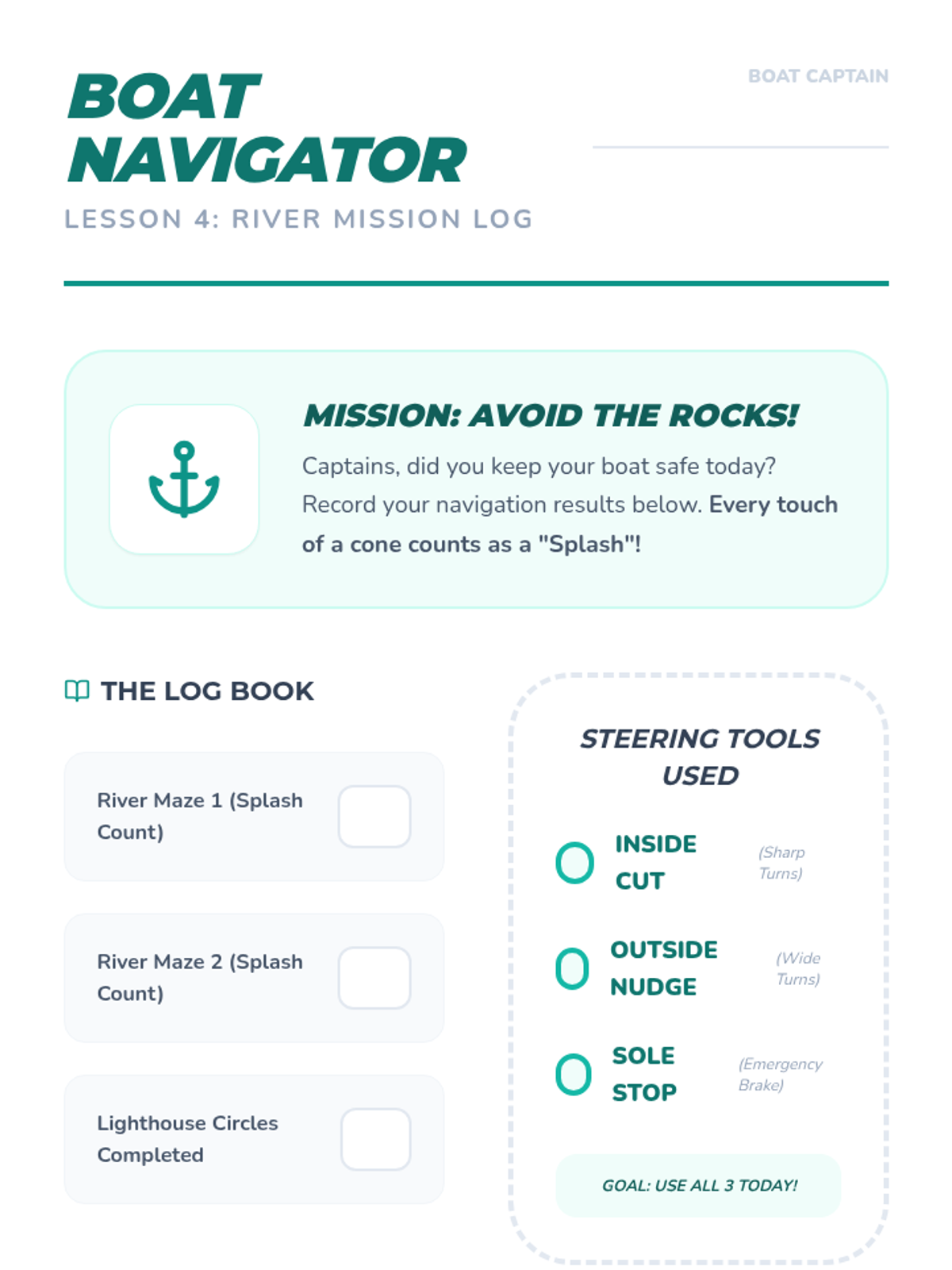
Students apply their dribbling skills to navigate through cone mazes, requiring them to turn and change direction intentionally using different surfaces of the foot.
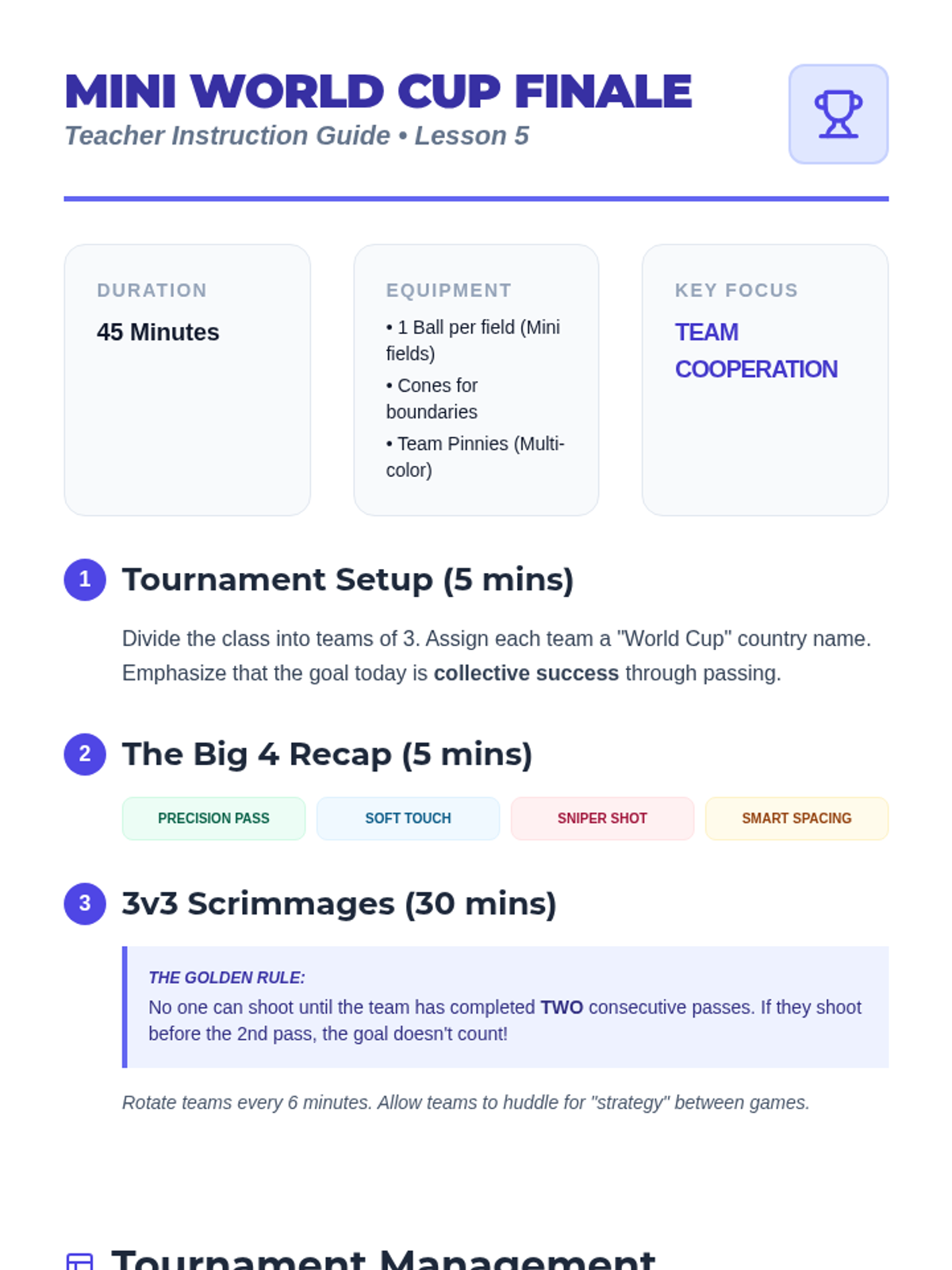
Culminating 3v3 small-sided games where students must complete two passes before shooting, applying all learned skills in a modified scrimmage.
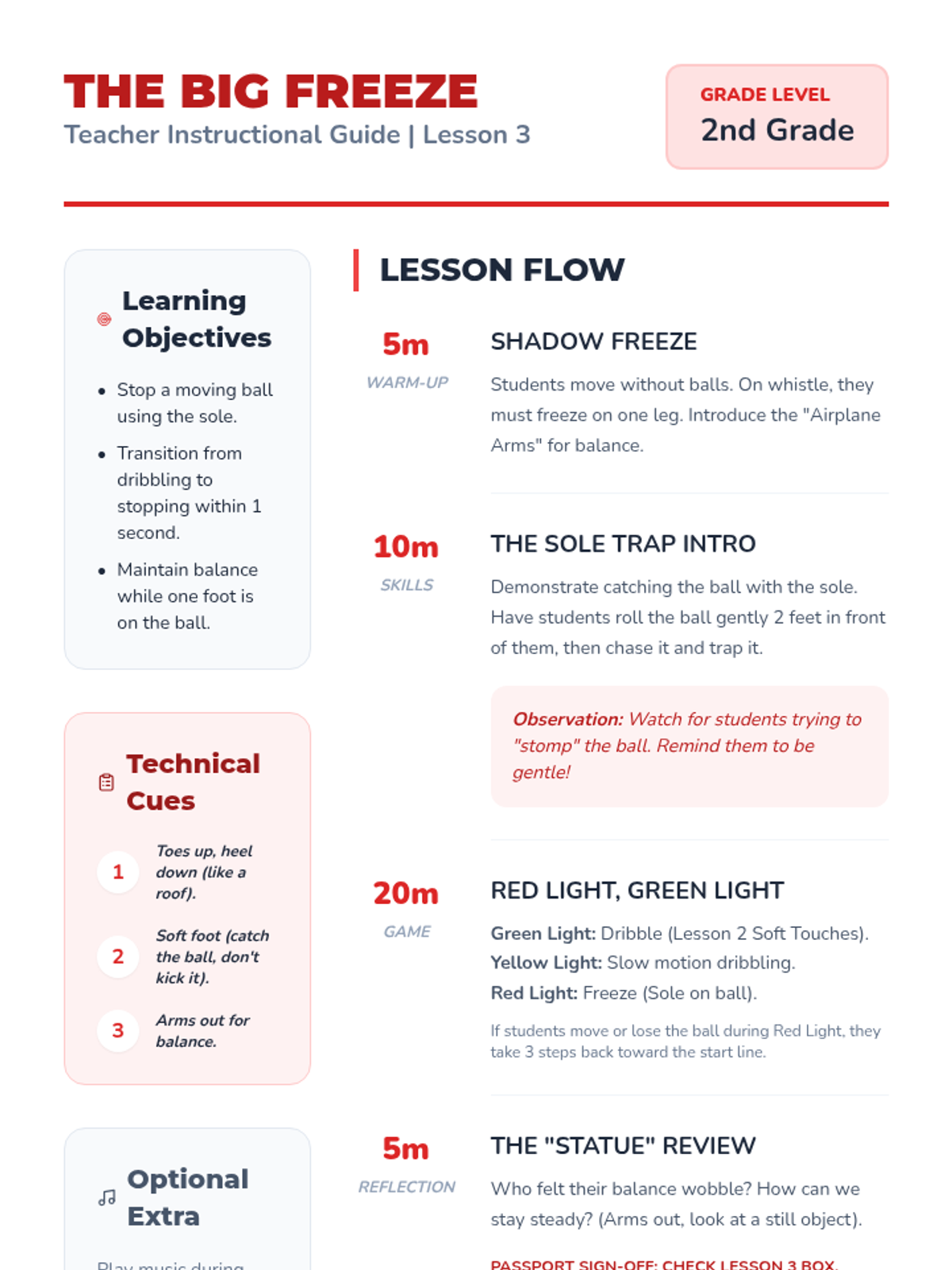
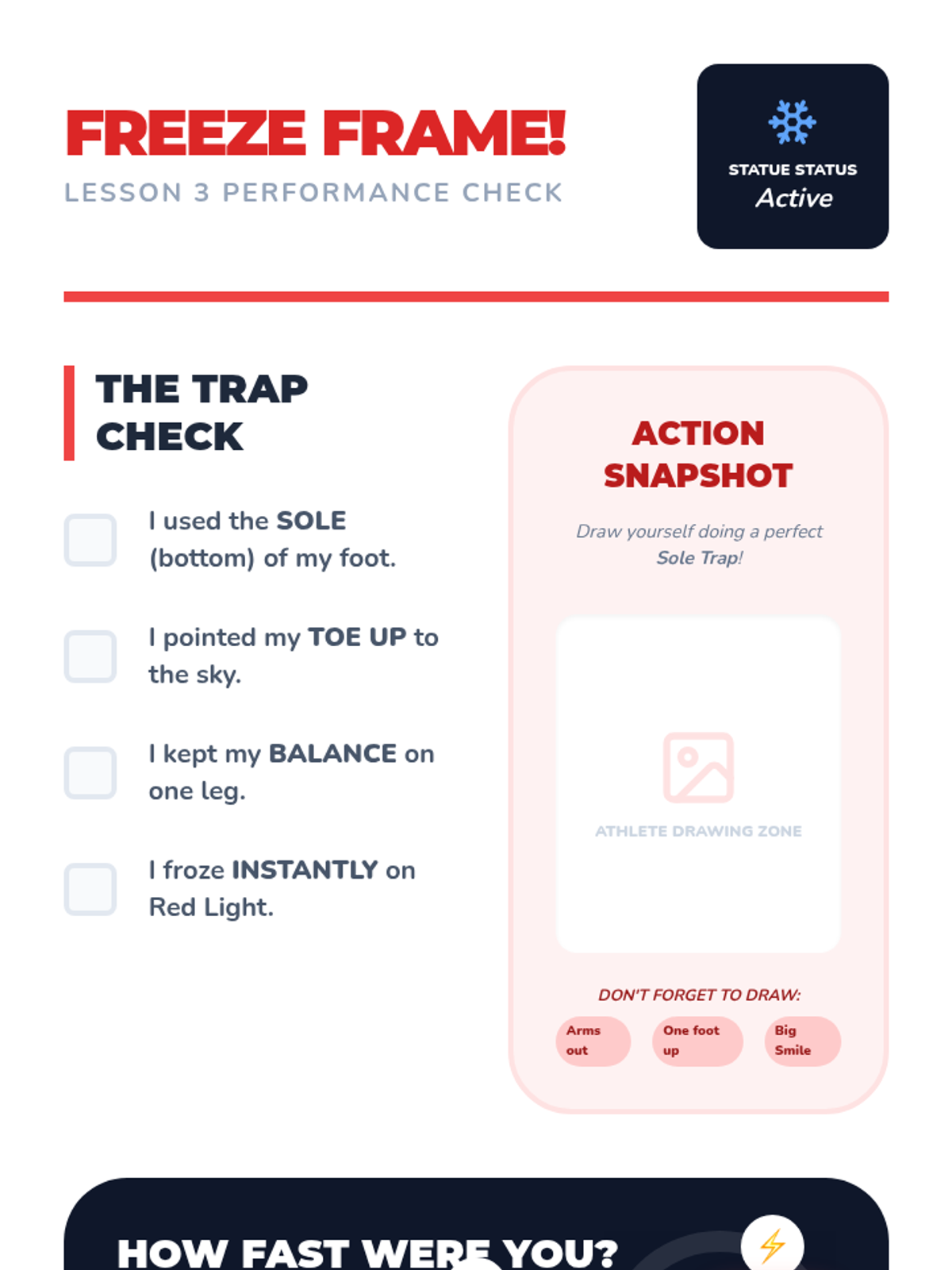
This lesson introduces specific techniques for stopping a moving ball instantly using the sole of the foot, practicing transitions from movement to a complete stop.
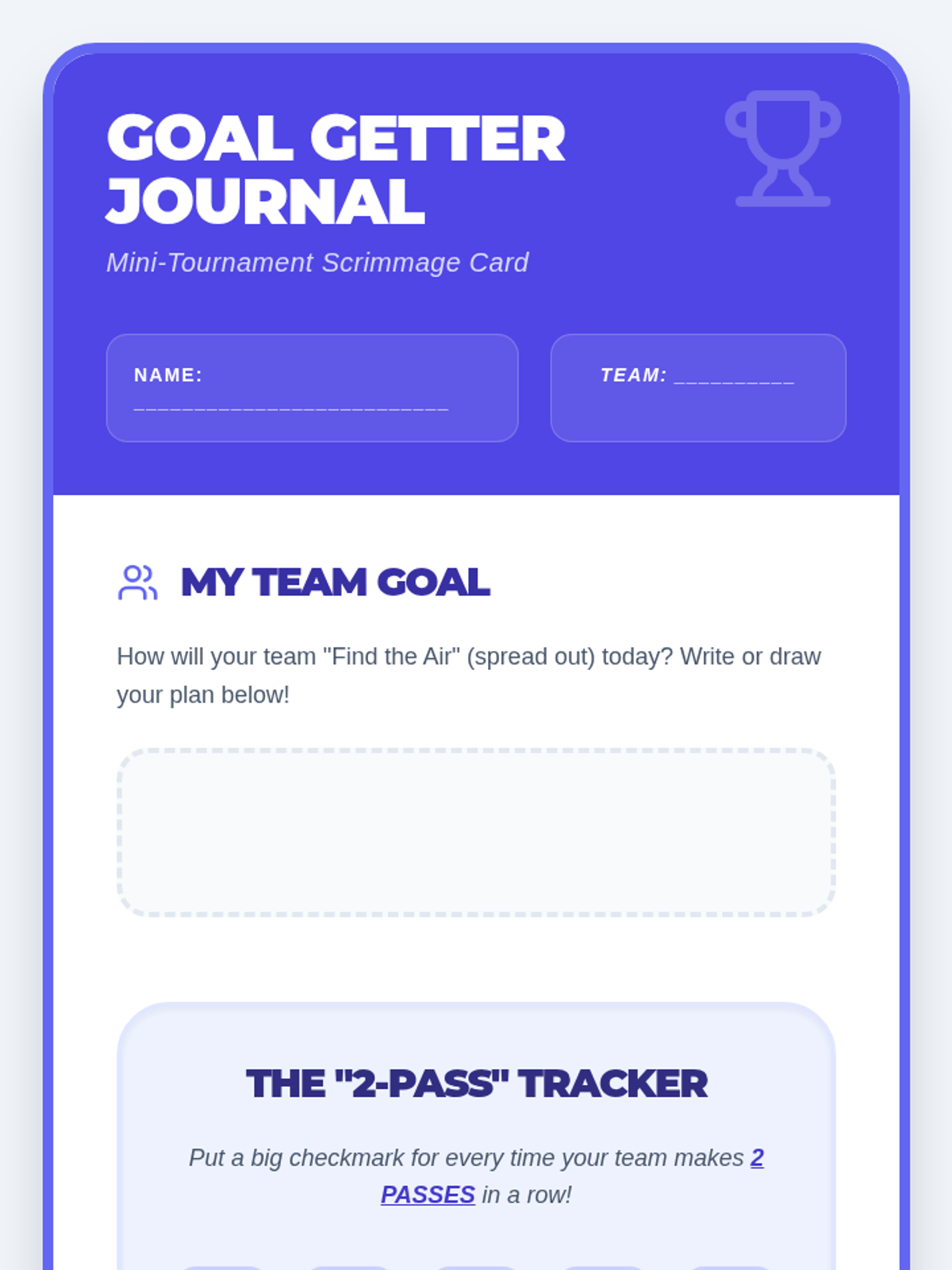
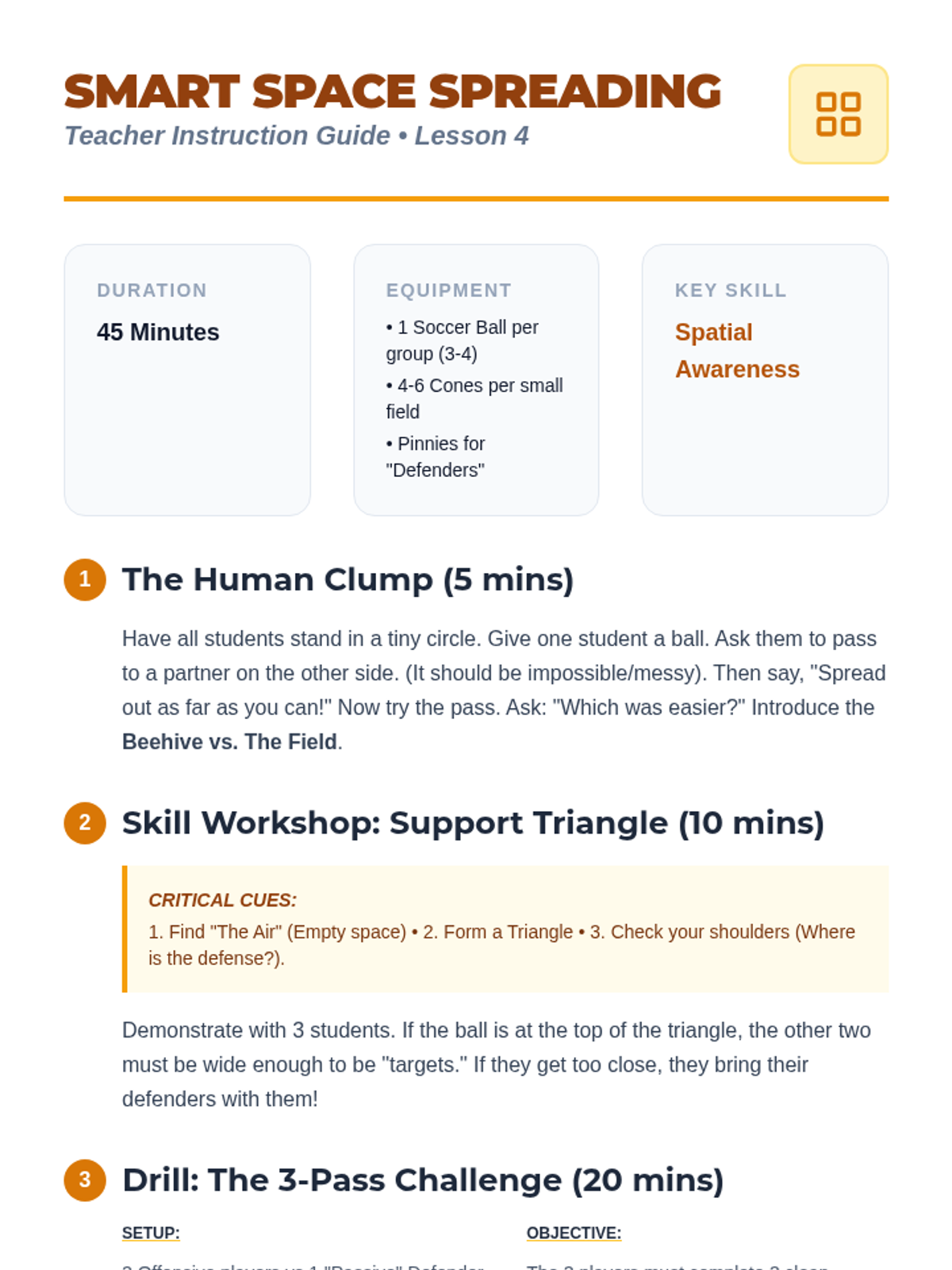
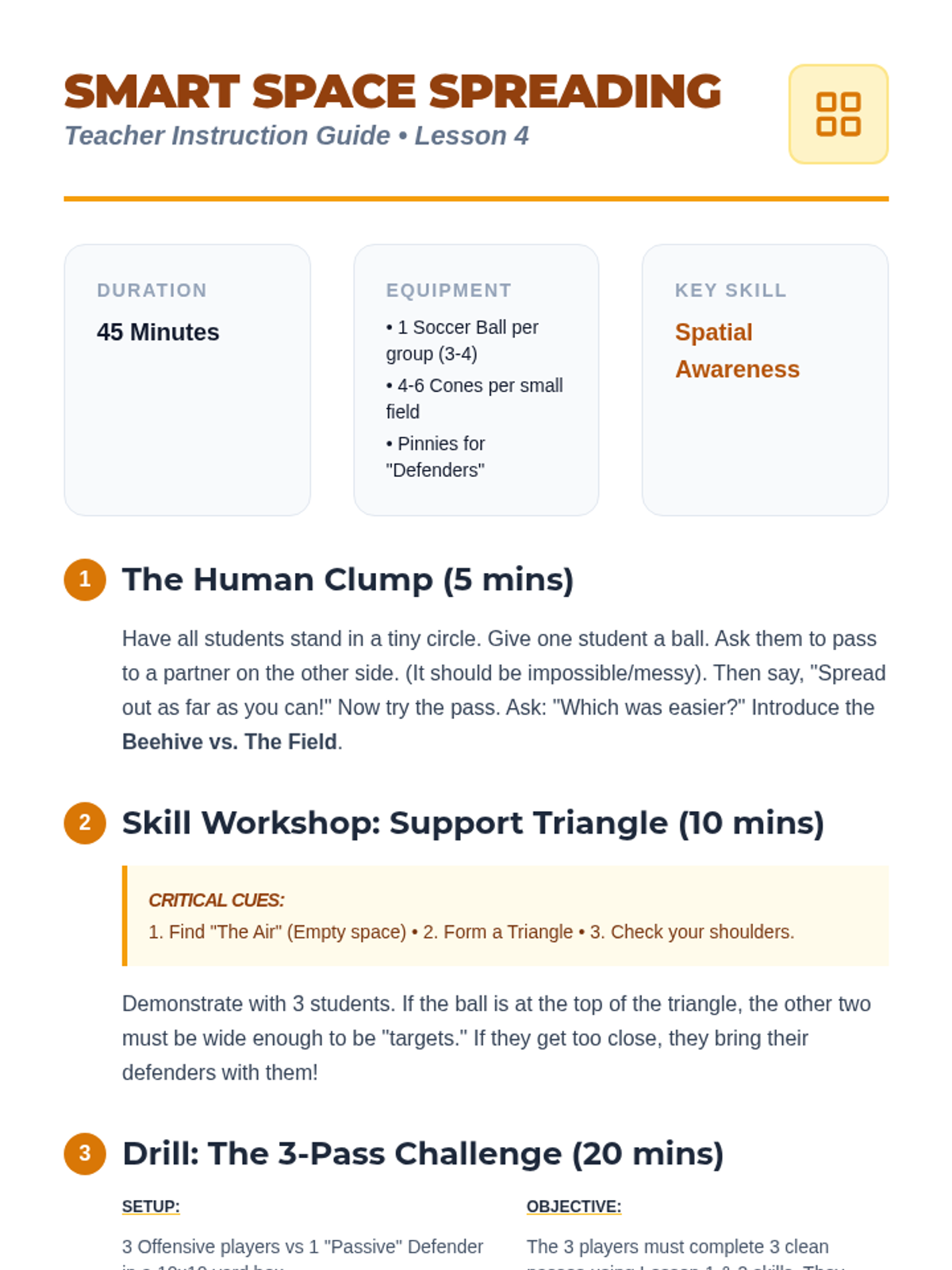
Teaches spatial awareness and the value of spreading out on the field to support teammates, avoiding the 'beehive' cluster around the ball.
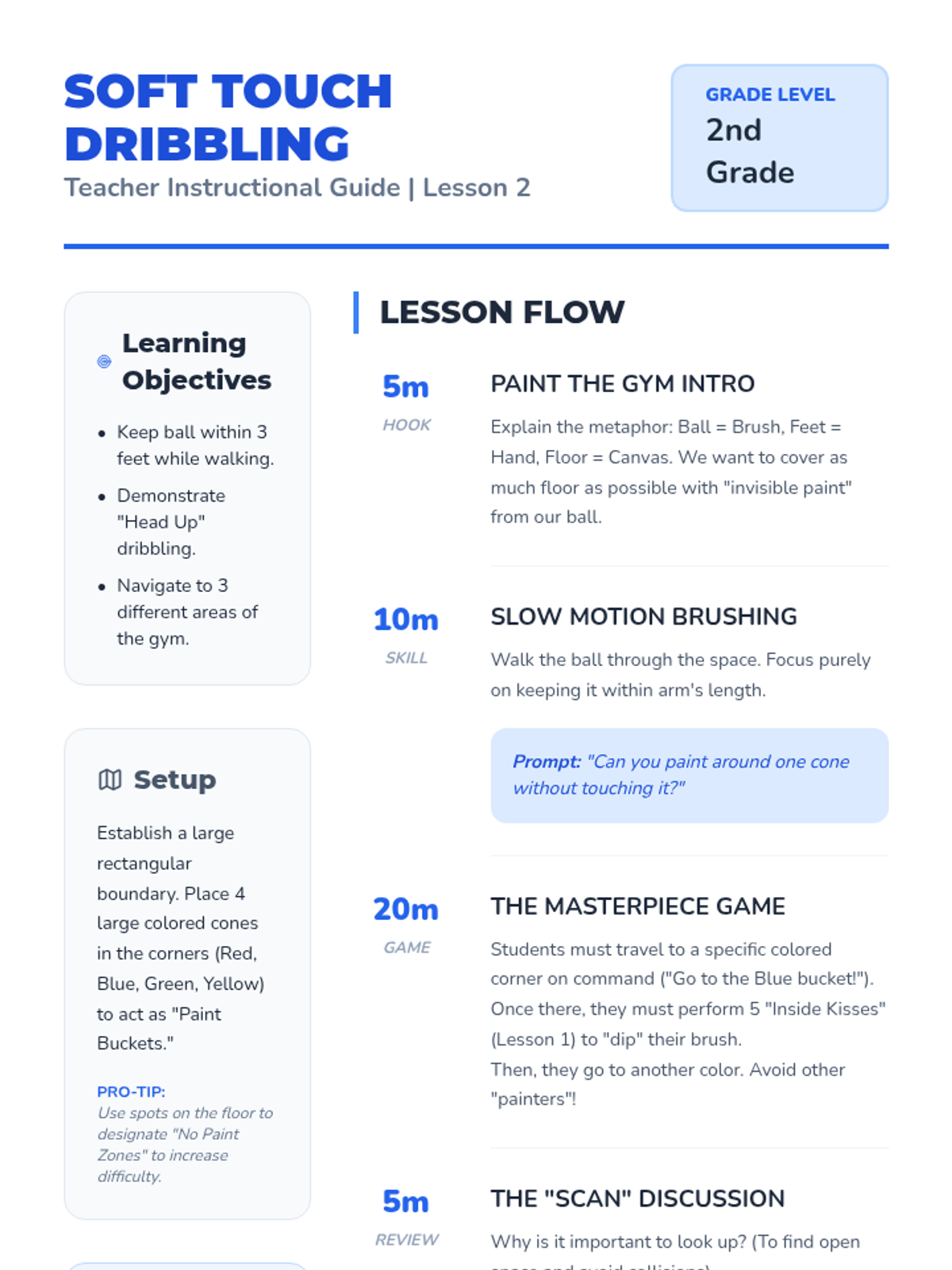
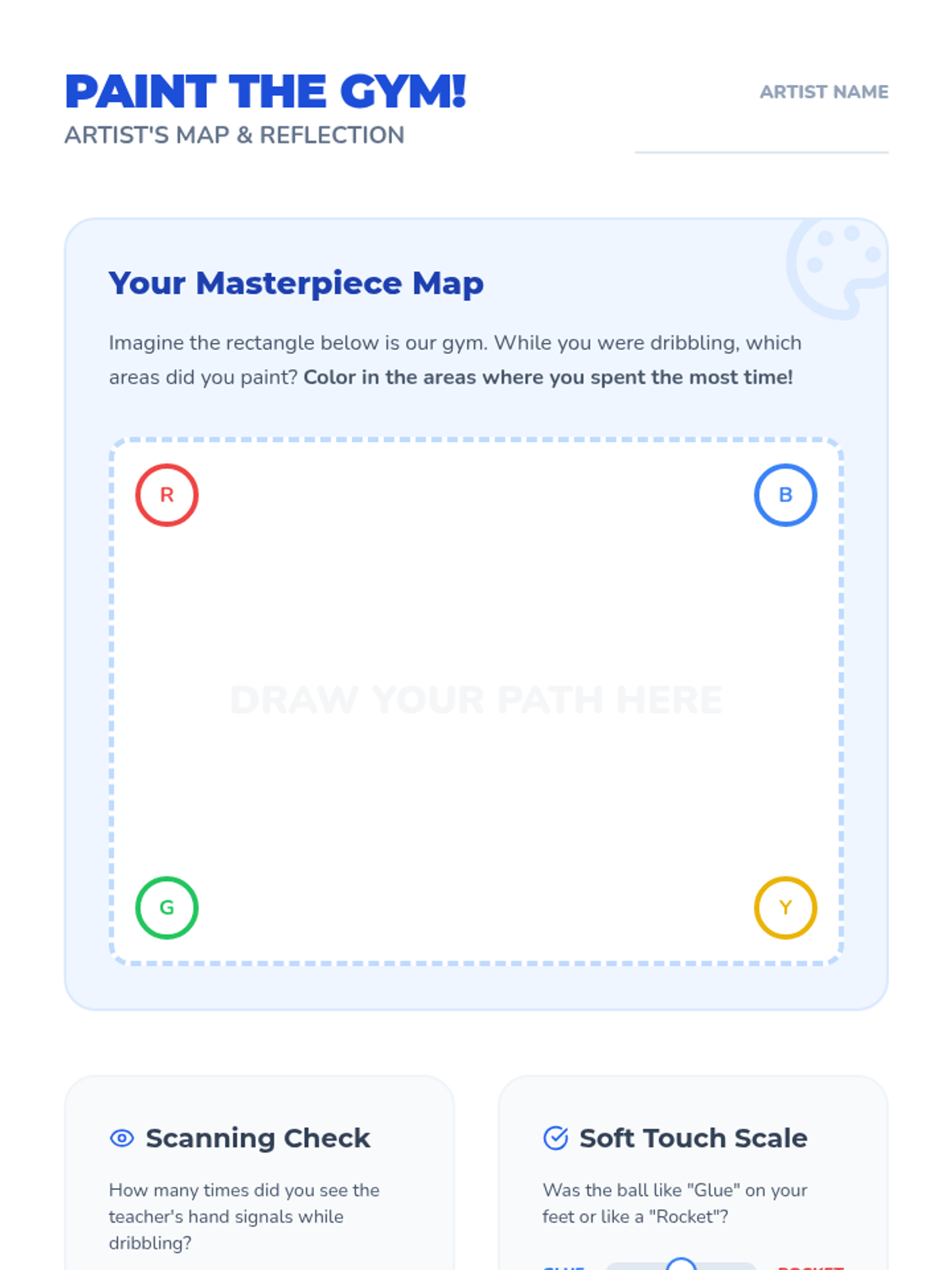
Students learn the 'soft touch' concept to keep the ball near their feet while moving around the gym, focusing on keeping their heads up to maintain spatial awareness.
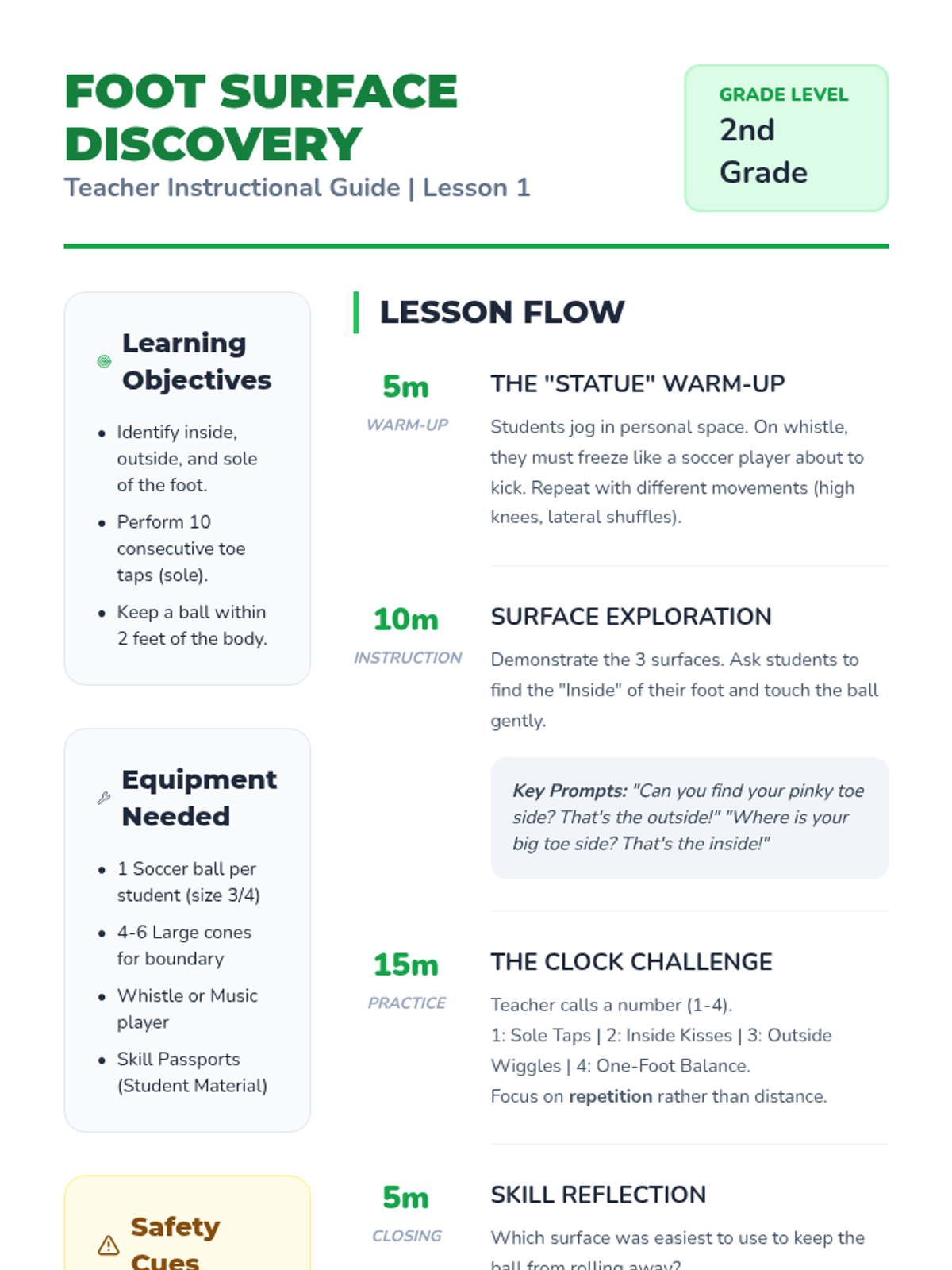
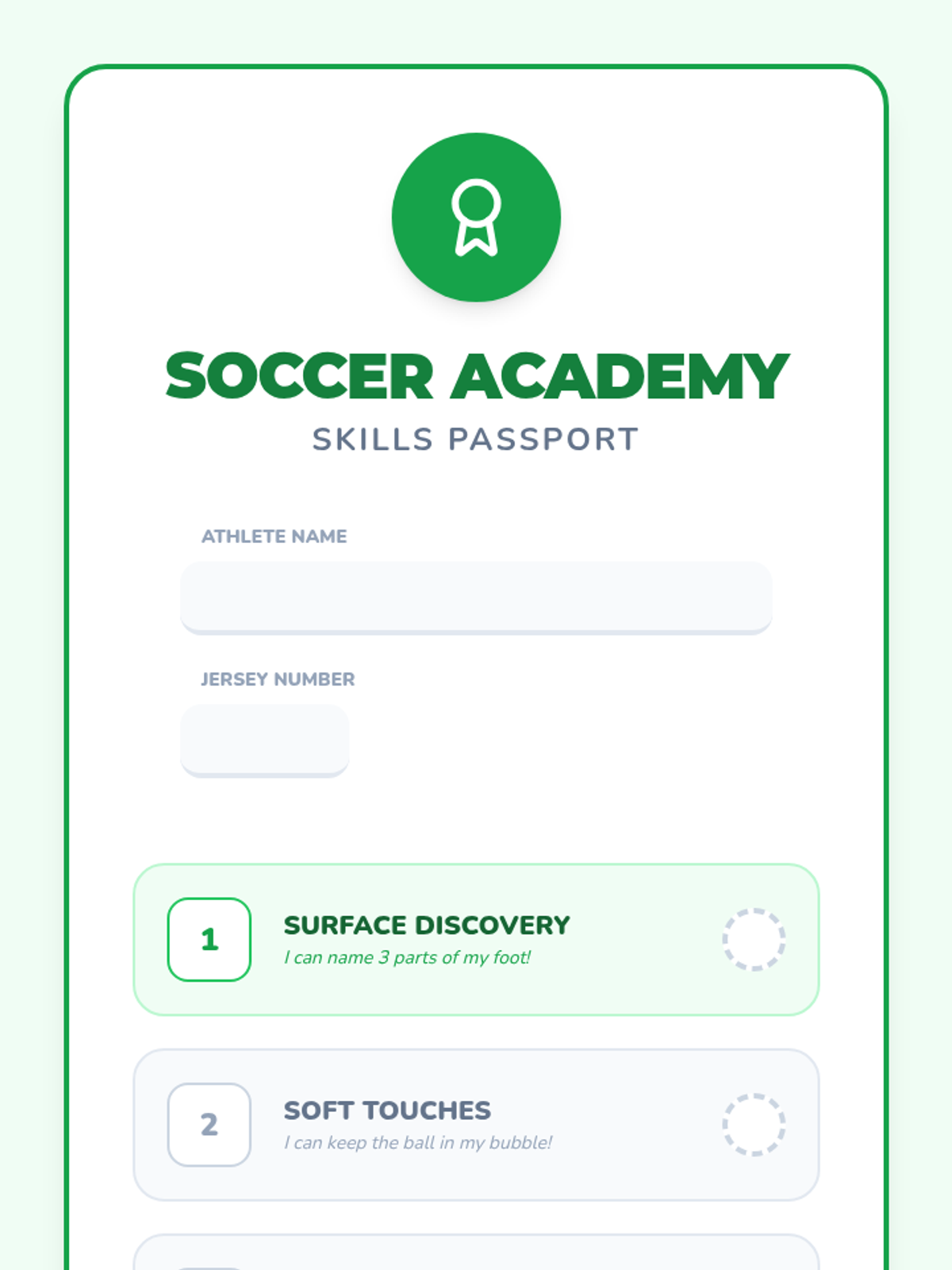
Students experiment with using the inside, outside, and sole of the foot to touch and move the ball while remaining in a small personal space, emphasizing balance and coordination without hands.
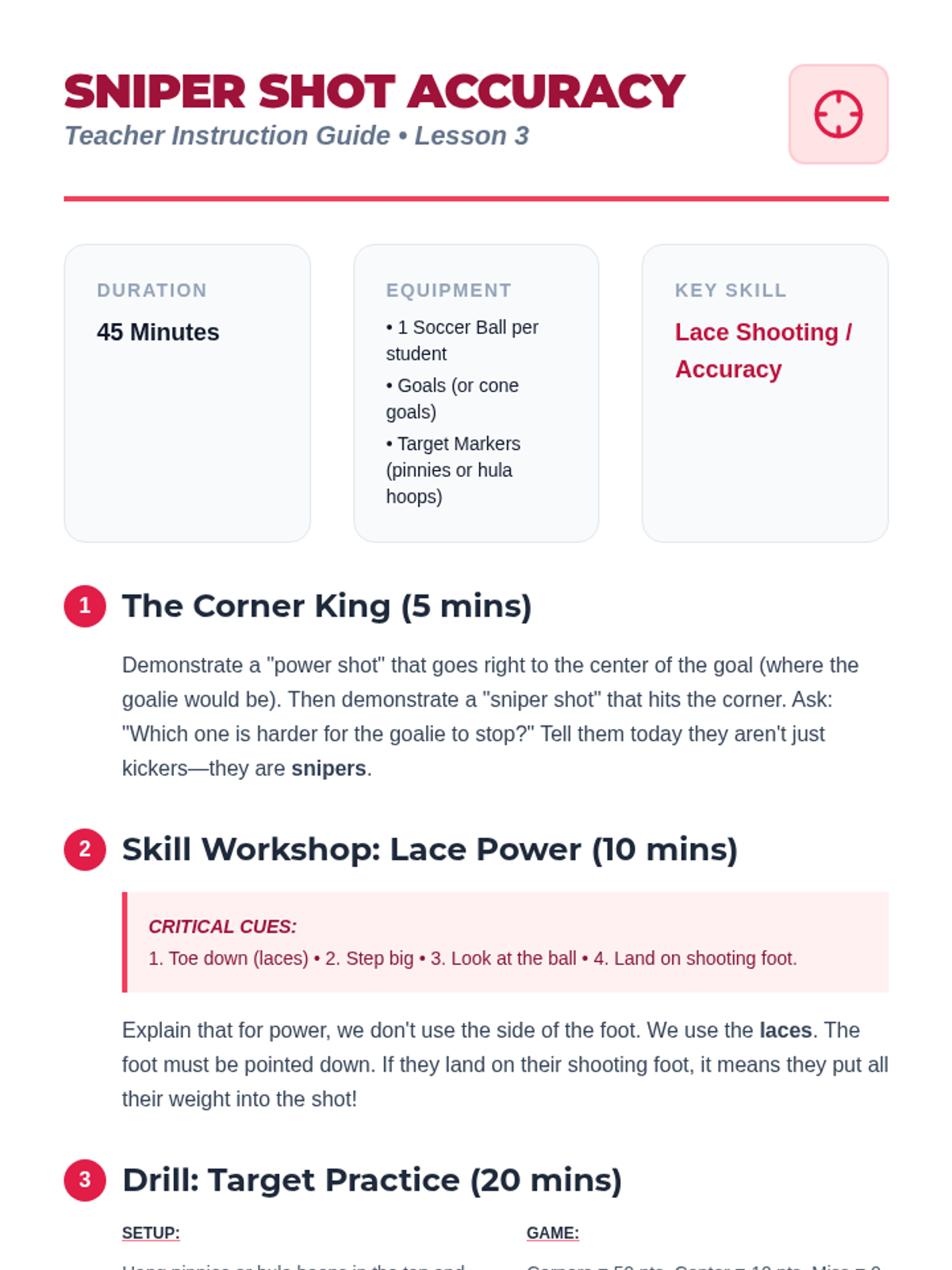
Introduces shooting techniques using the laces for power and the inside of the foot for placement, with drills targeting specific areas of the goal.
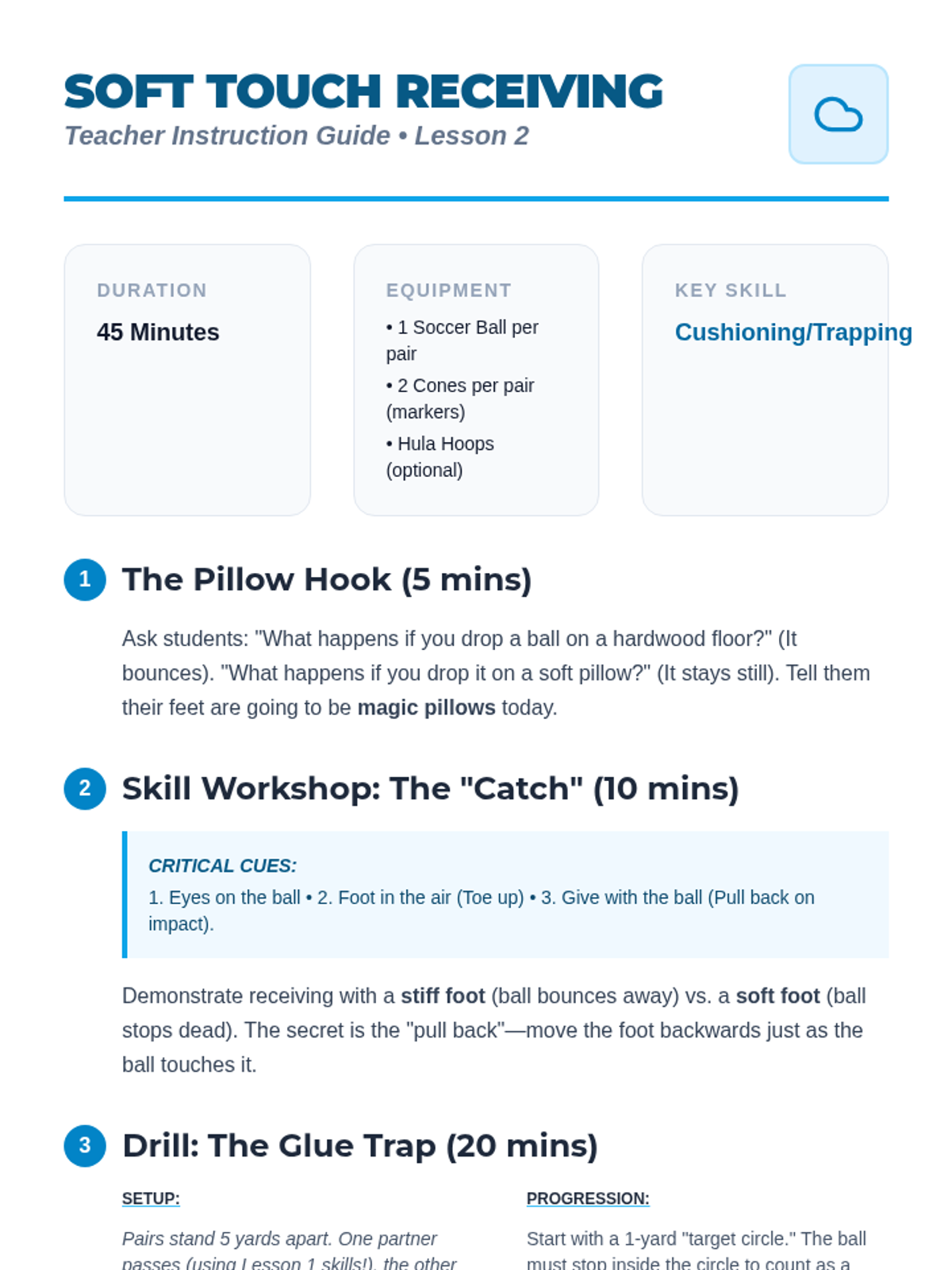
Focuses on receiving a pass by 'cushioning' the ball with a soft foot to maintain control, rotating partners to practice with different speeds.
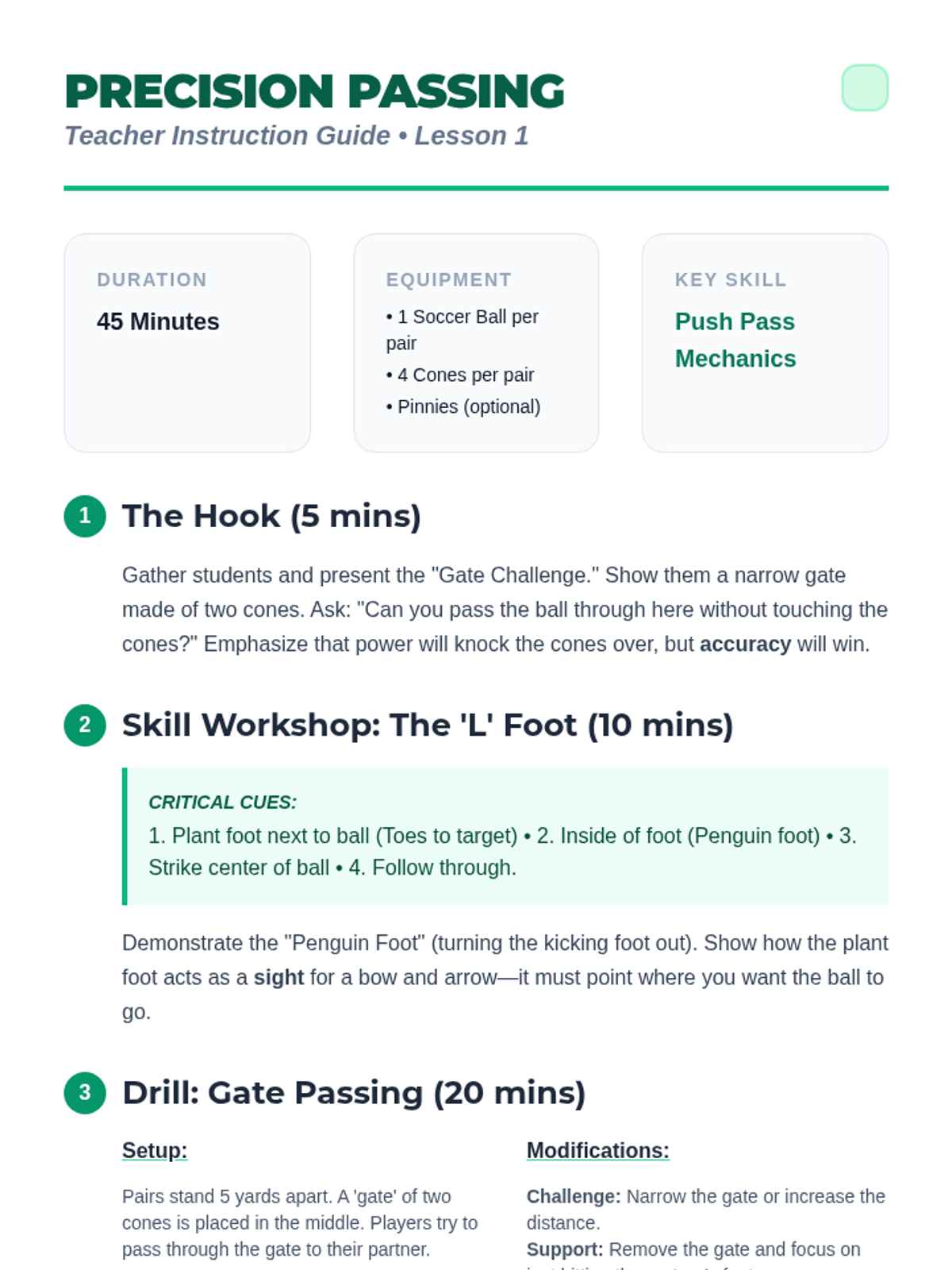
Students learn proper form for the inside-of-the-foot push pass, focusing on non-kicking foot placement and accuracy through 'gate' drills.
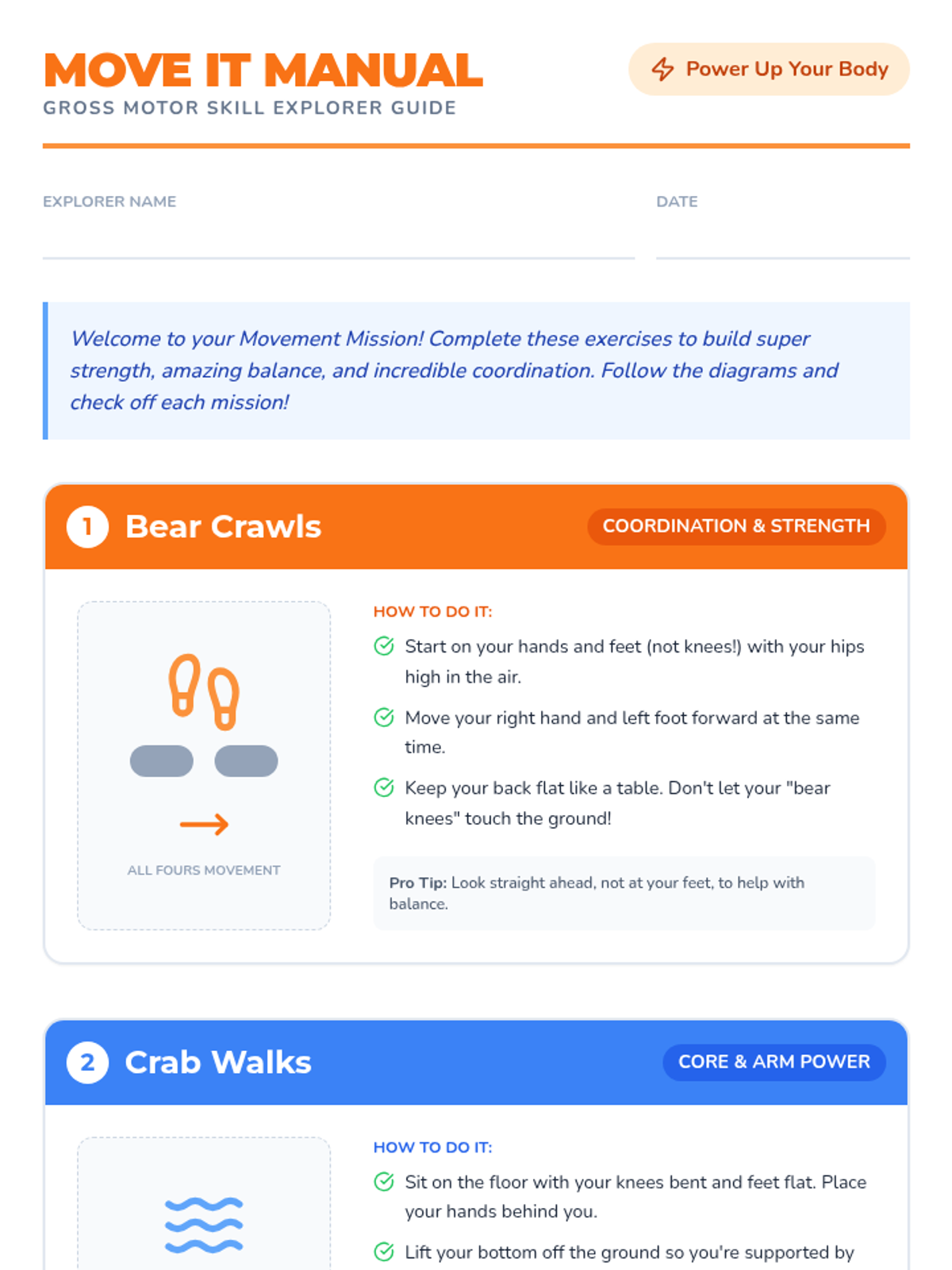
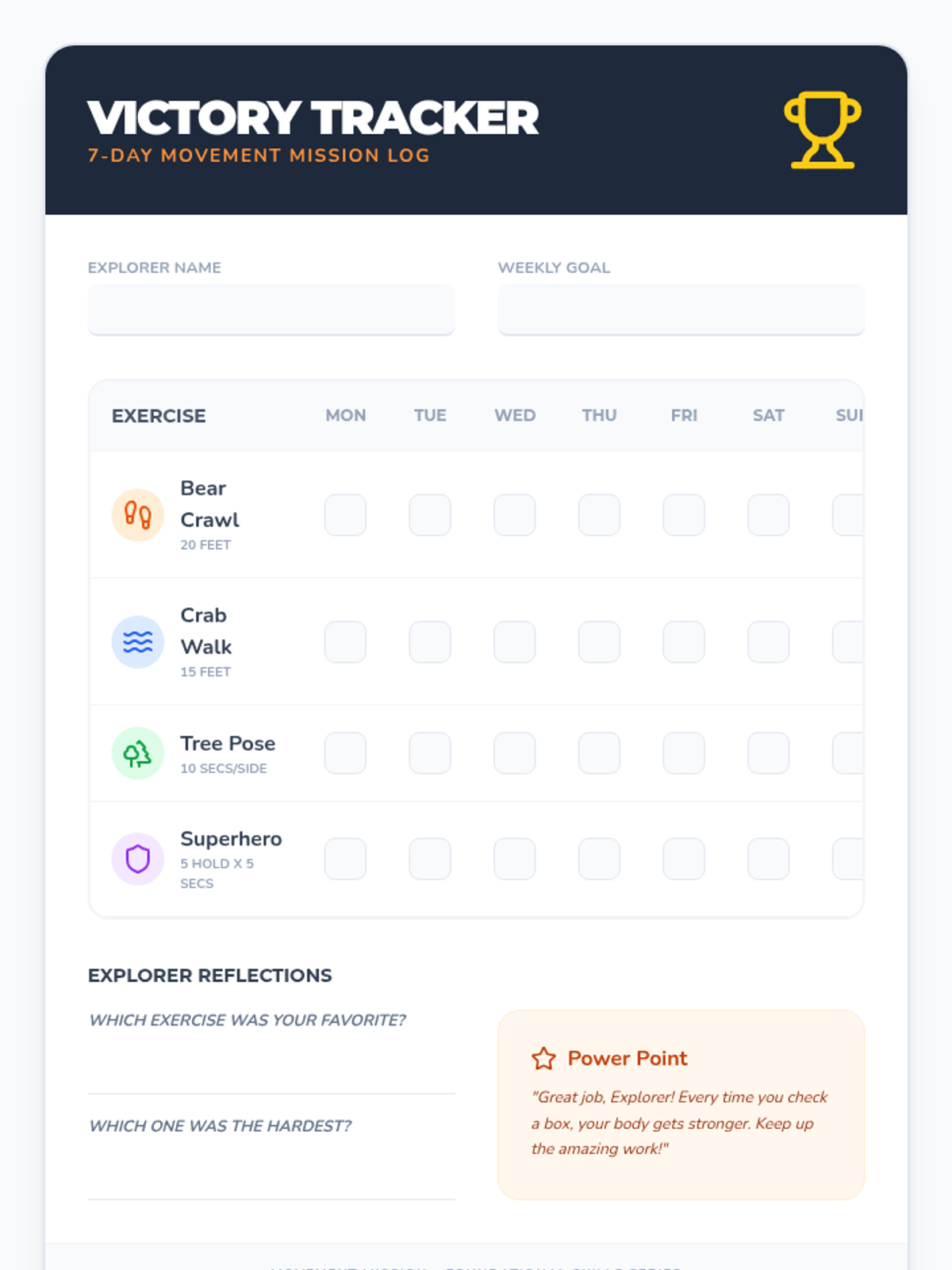
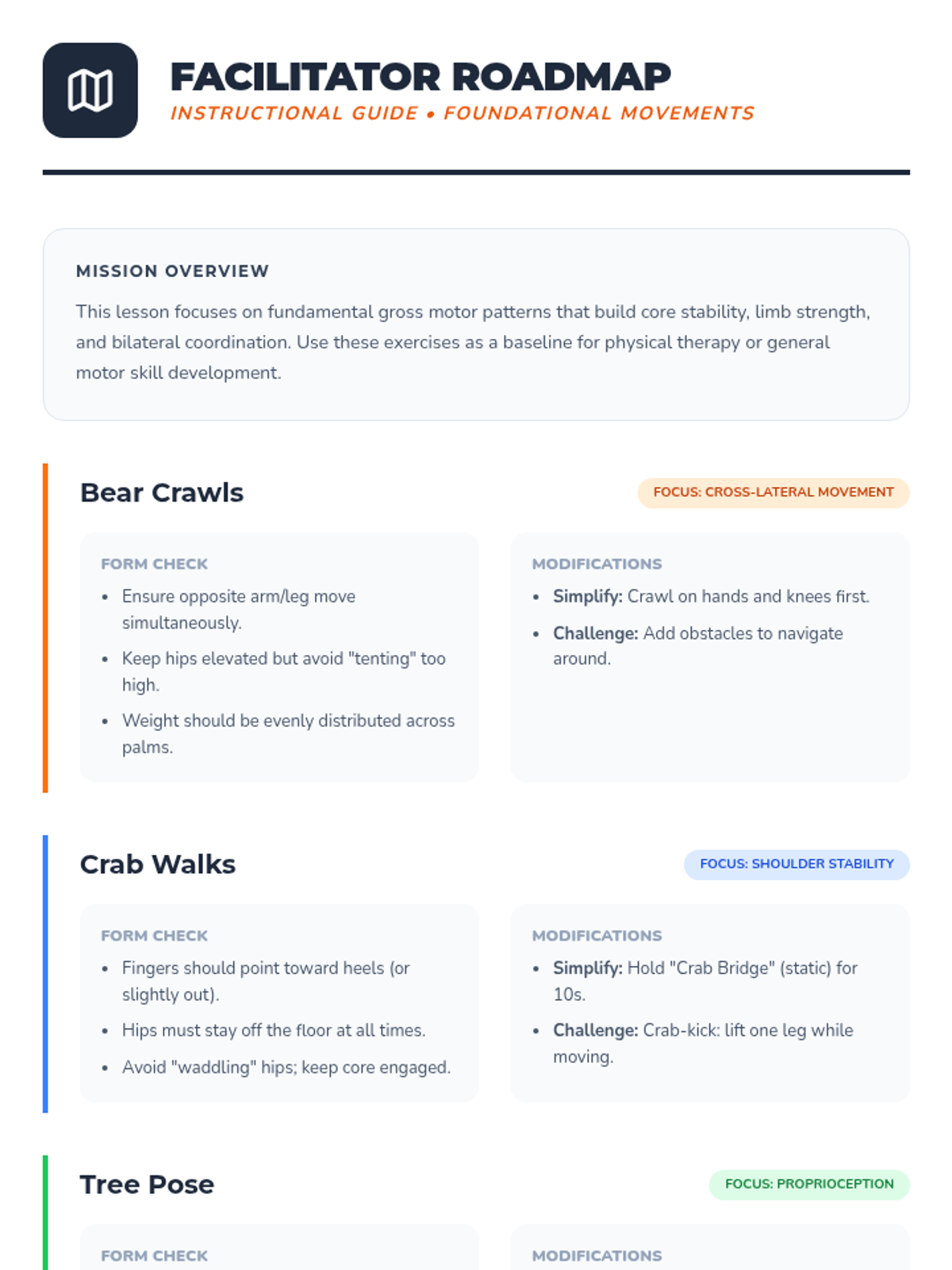
This lesson introduces four foundational gross motor exercises: Bear Crawls, Crab Walks, Tree Pose, and Superhero Flights. It focuses on strength, balance, and bilateral coordination.
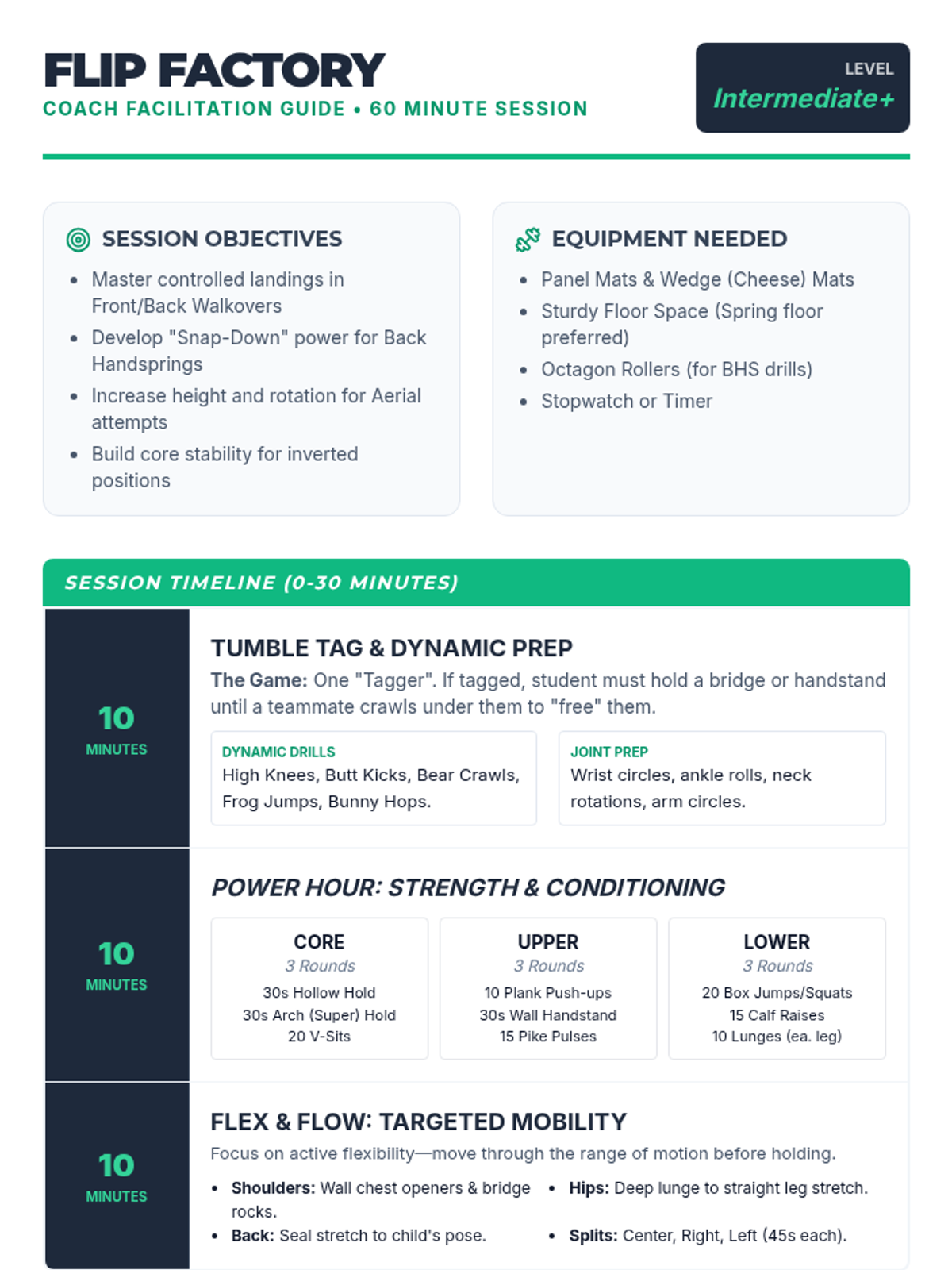
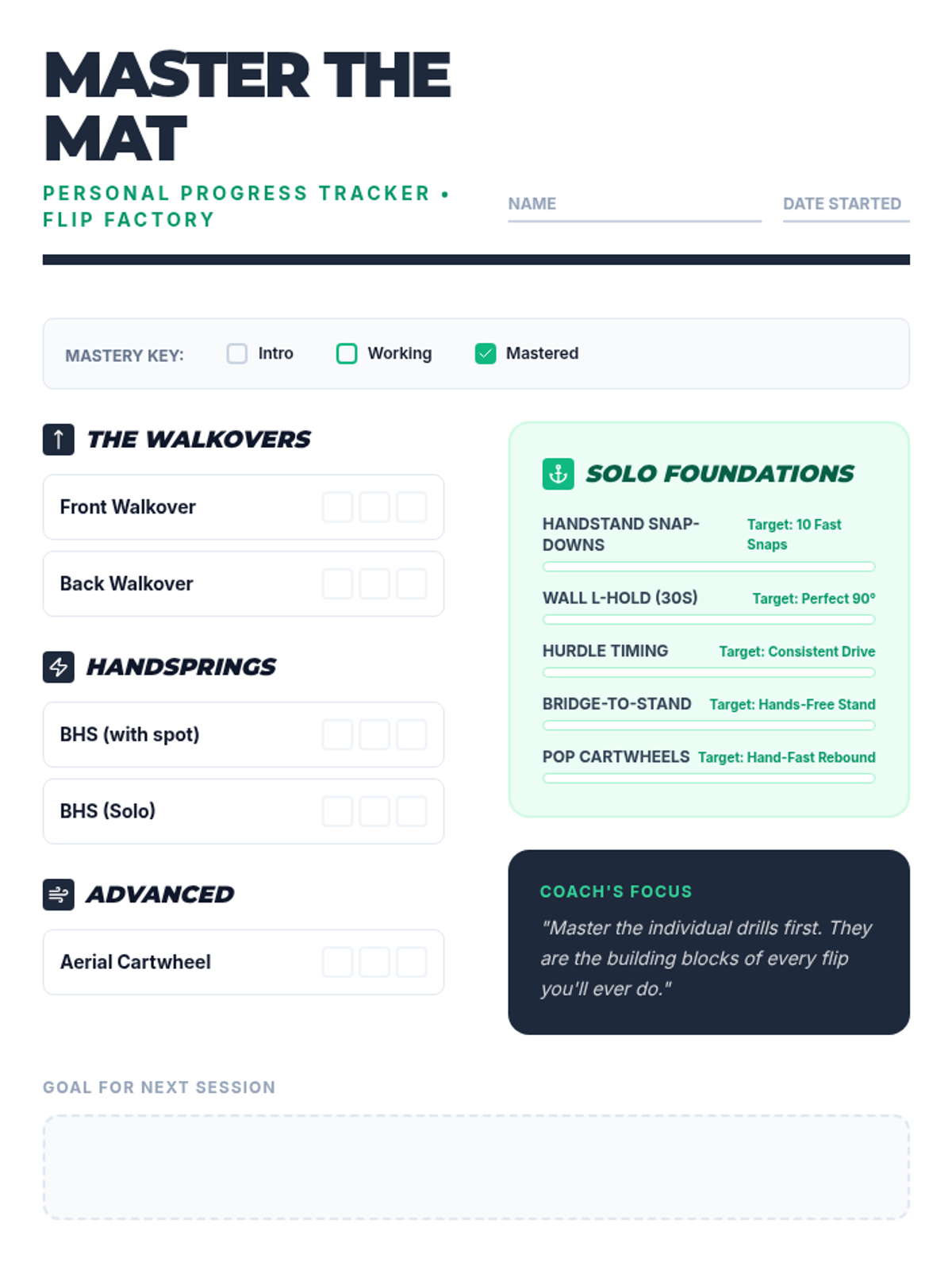
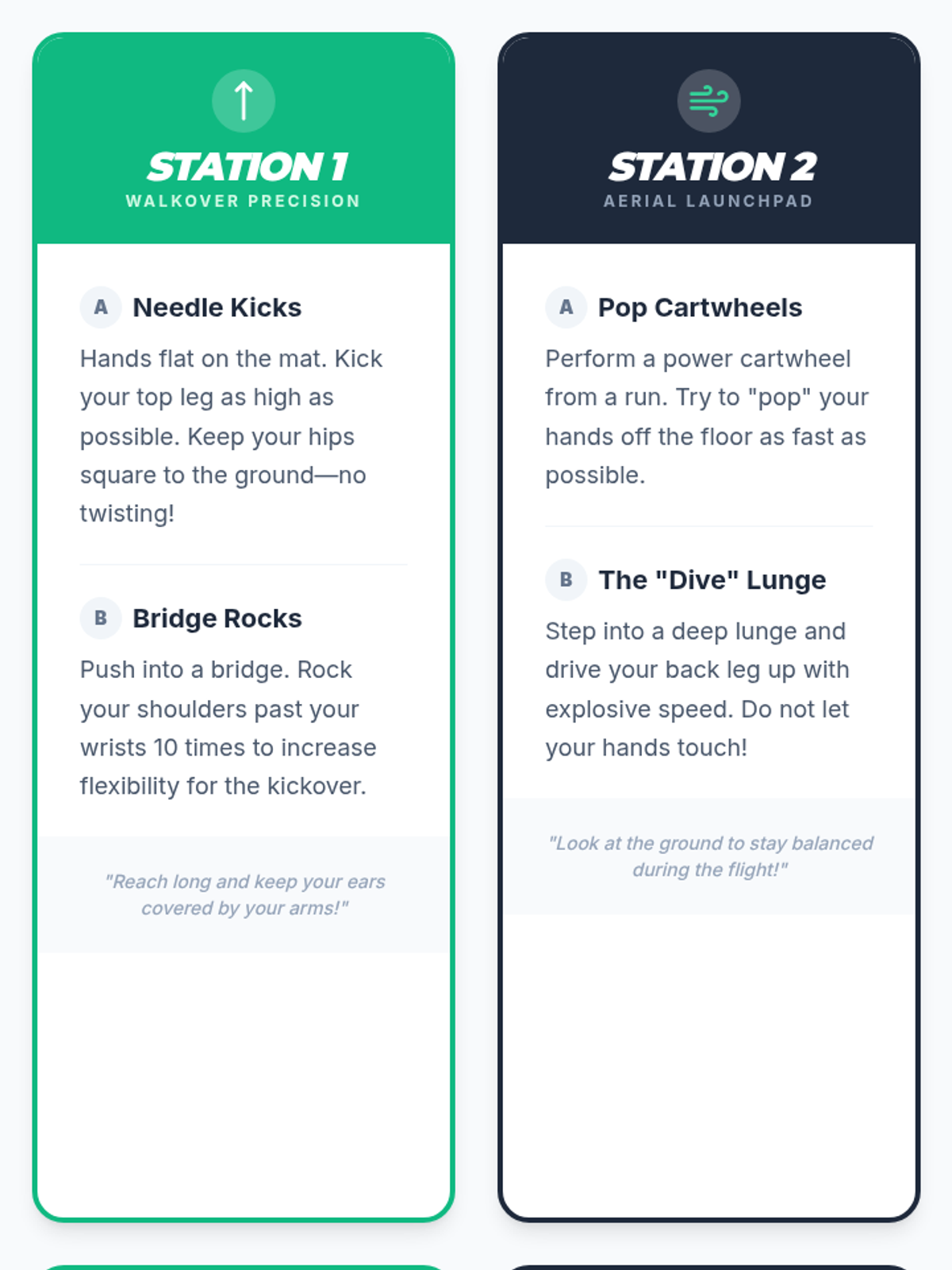
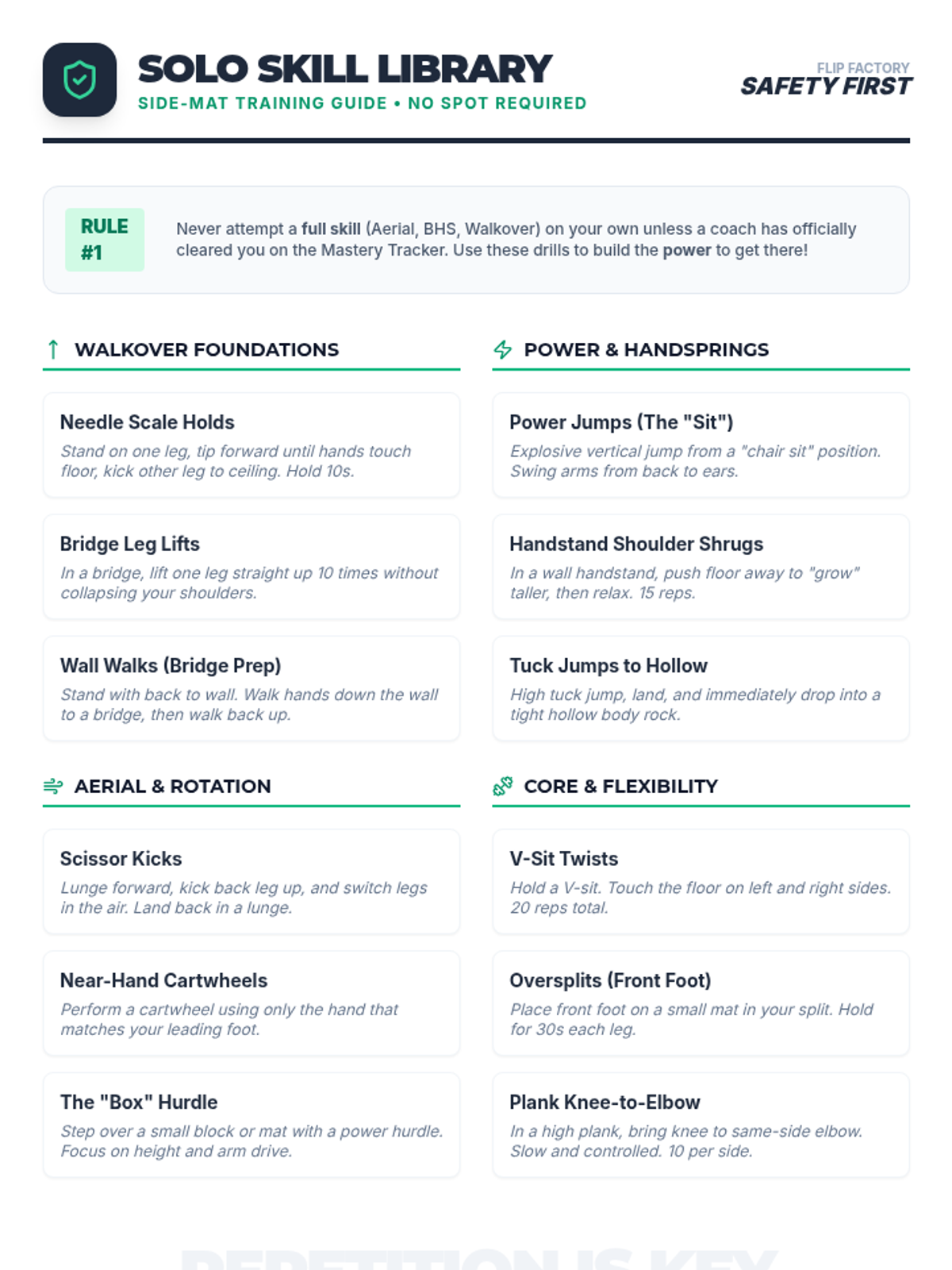
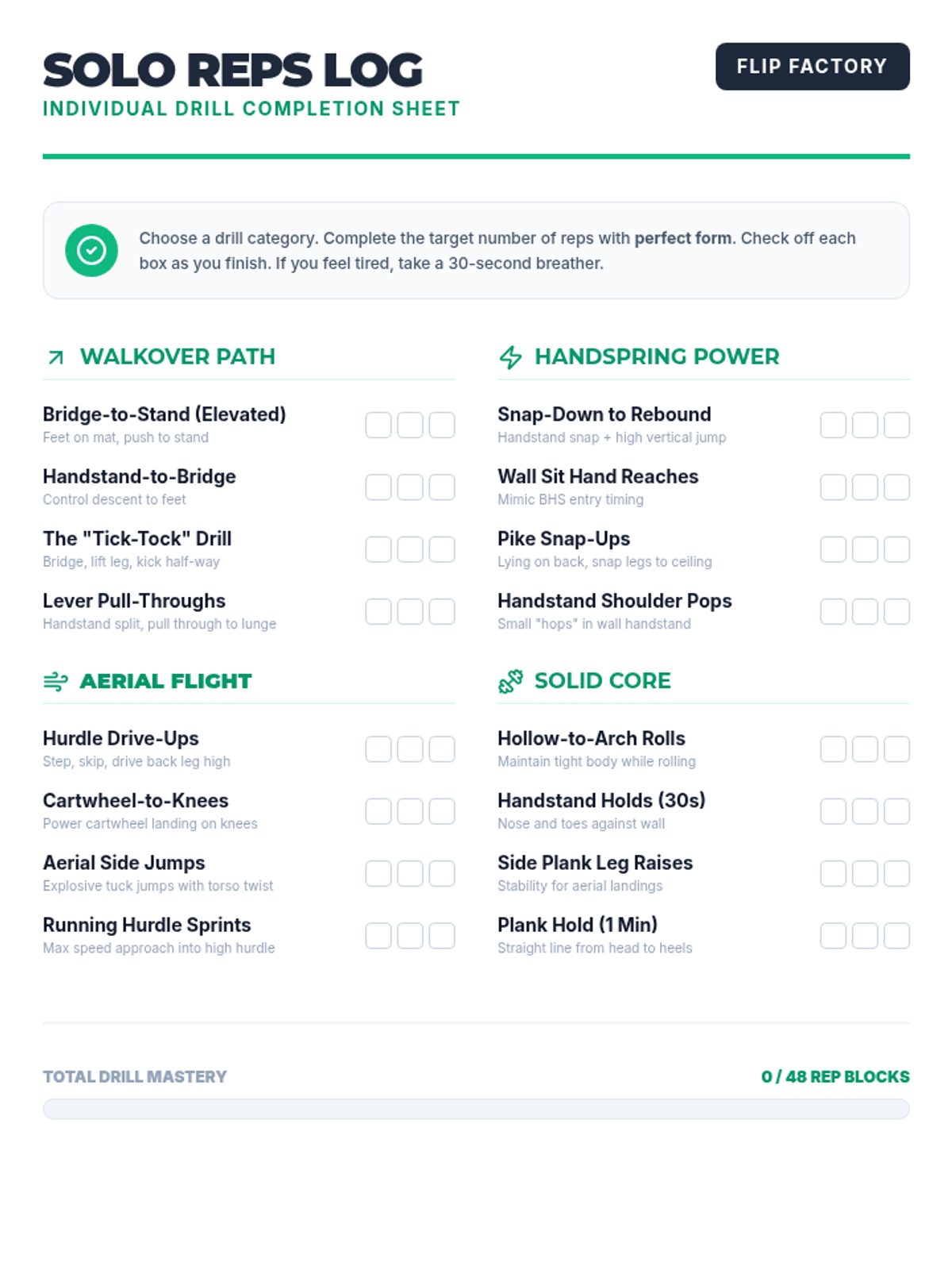
A high-energy 60-minute tumbling lesson focused on intermediate to advanced floor skills including walkovers, handsprings, and aerials. Includes a comprehensive coach guide, visual drills, and a student progress tracker.
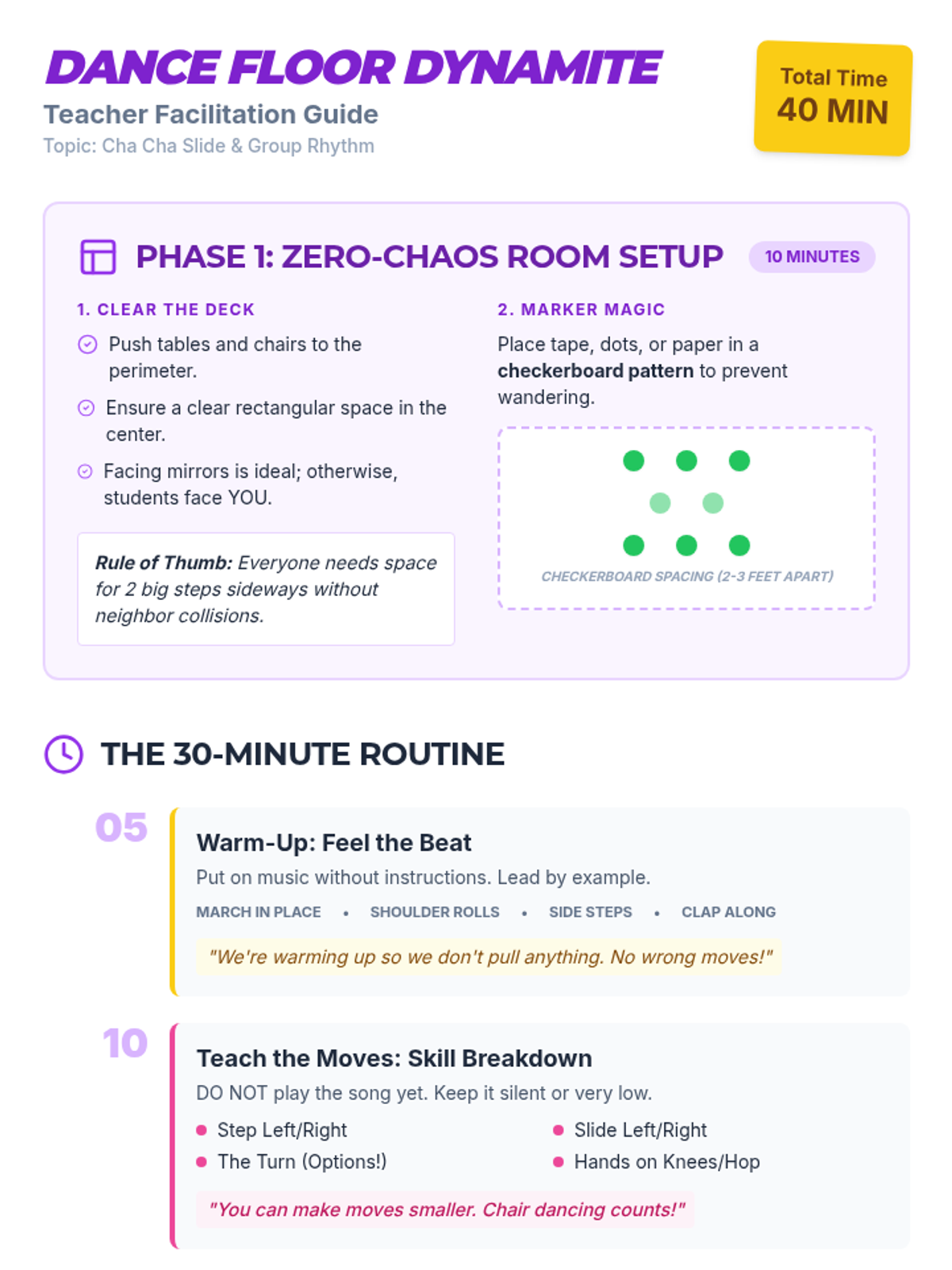
A high-energy introduction to line dancing focused on the Cha Cha Slide. This lesson covers room configuration, basic movement patterns, and group synchronization while prioritizing accessibility and confidence.