Fundamental techniques for soccer, volleyball, football, and basketball alongside strategic gameplay and communication skills. Emphasizes sportsmanship and collaborative tactics within a competitive team environment.
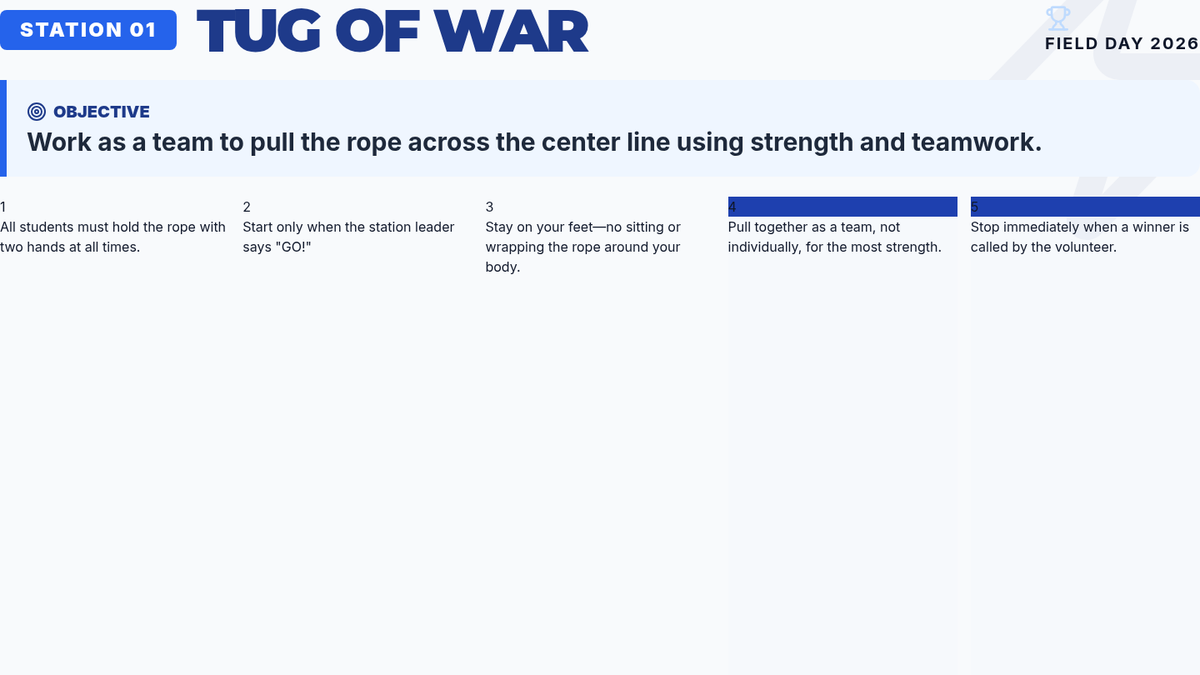
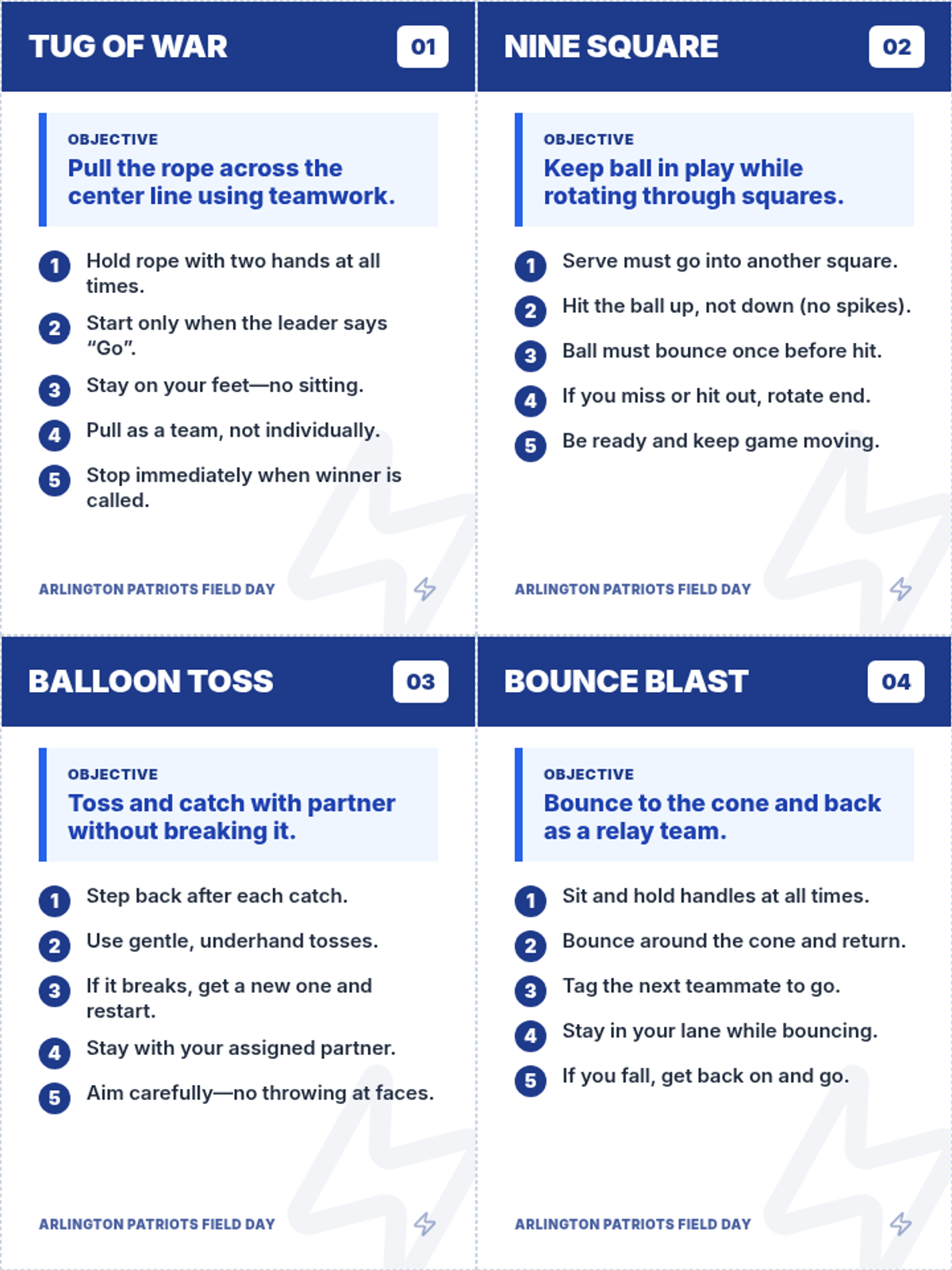
A comprehensive set of resources for the Arlington Patriots Field Day event, including presentation slides for instruction and printable station cards for volunteers.
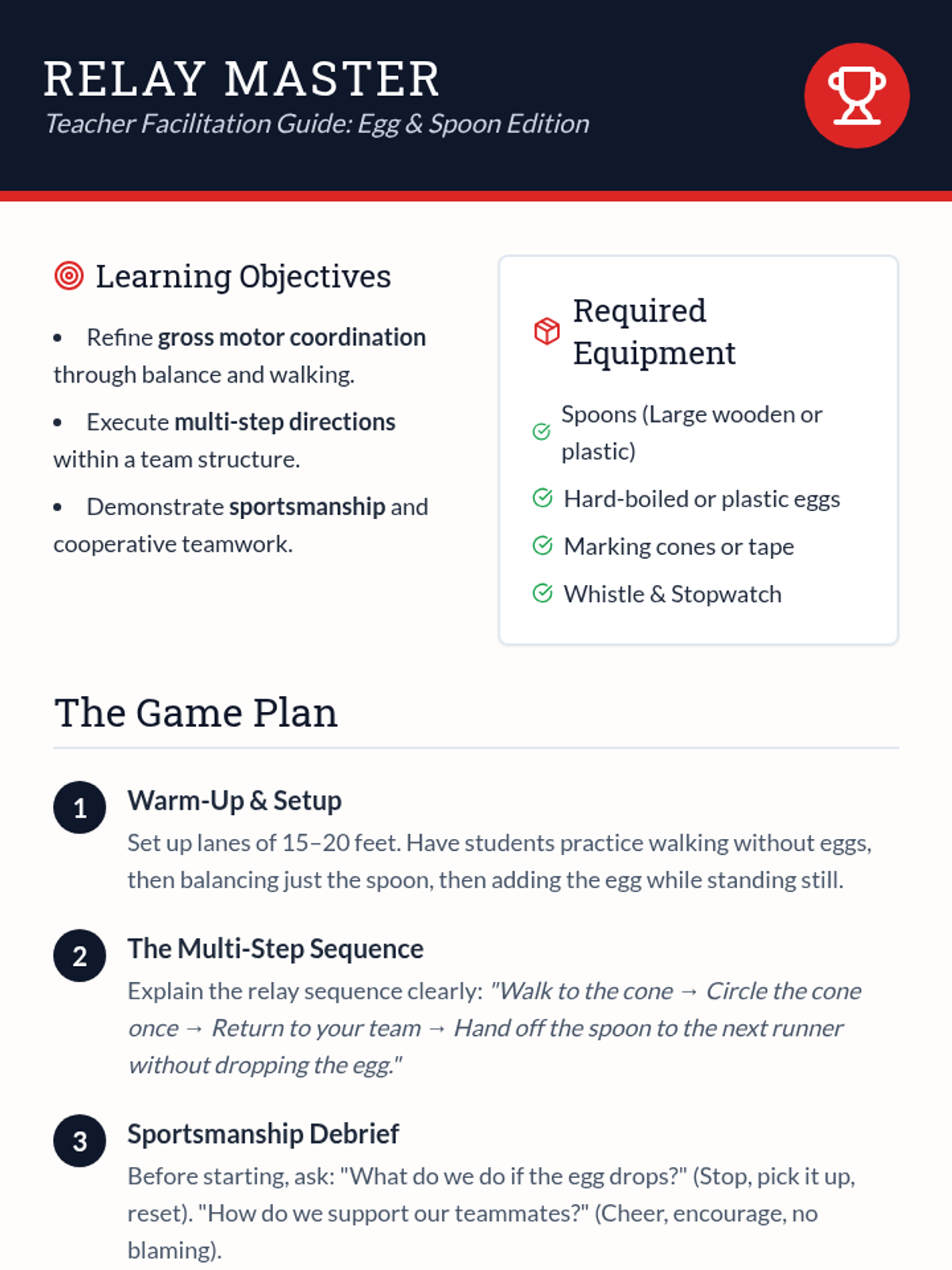
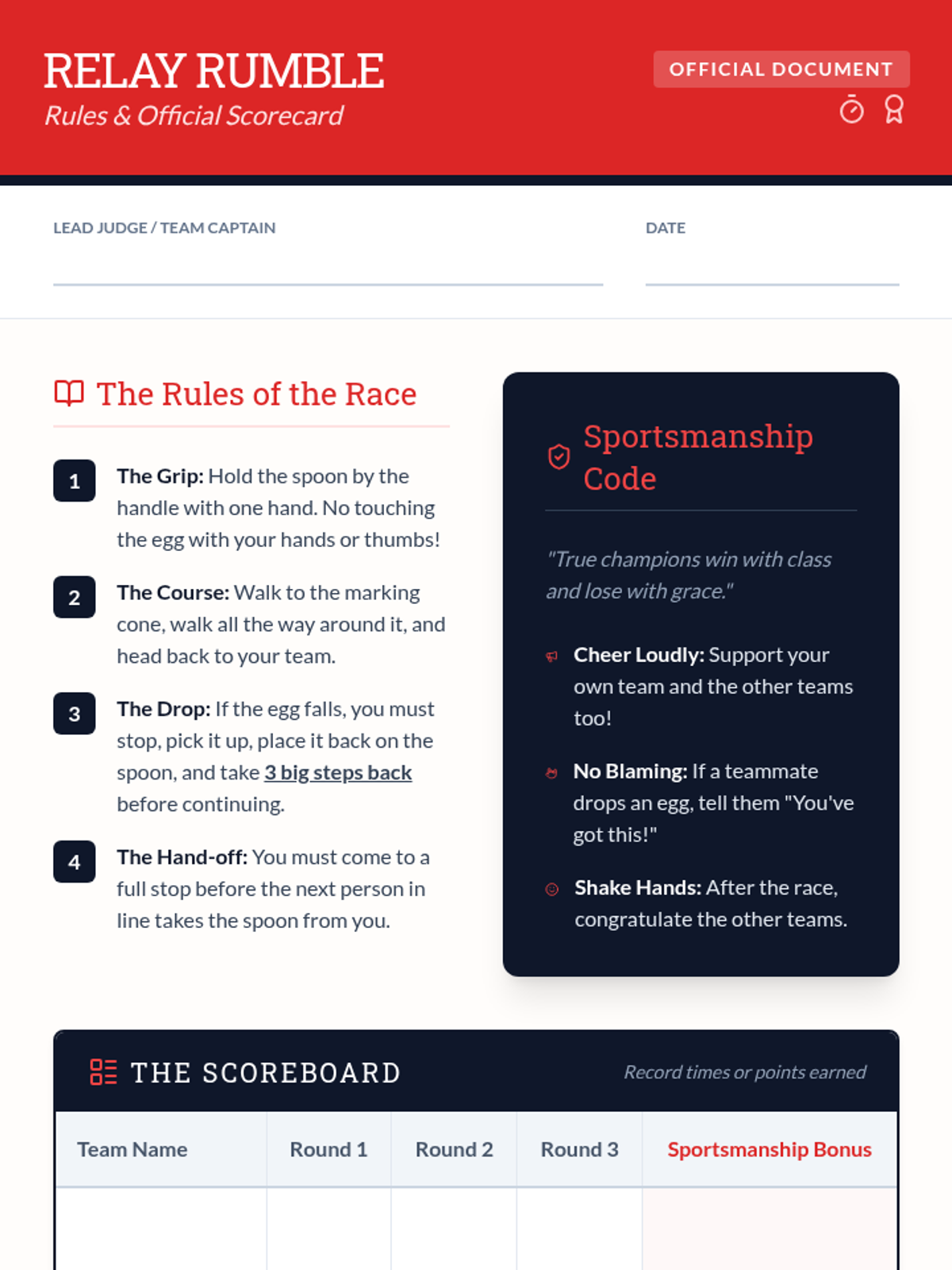
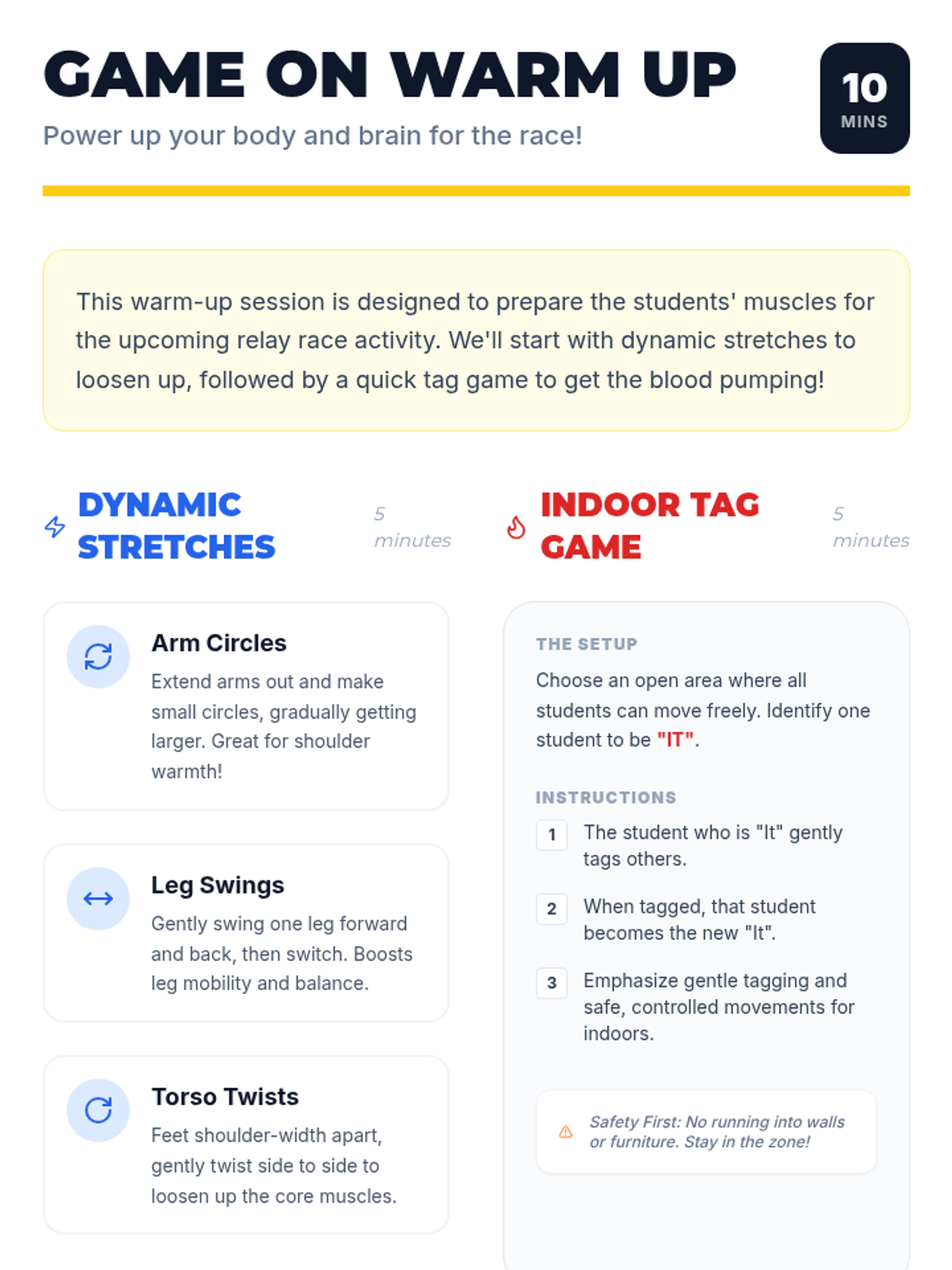
A high-energy lesson focused on gross motor skills, following complex directions, and practicing good sportsmanship through an egg and spoon relay race.
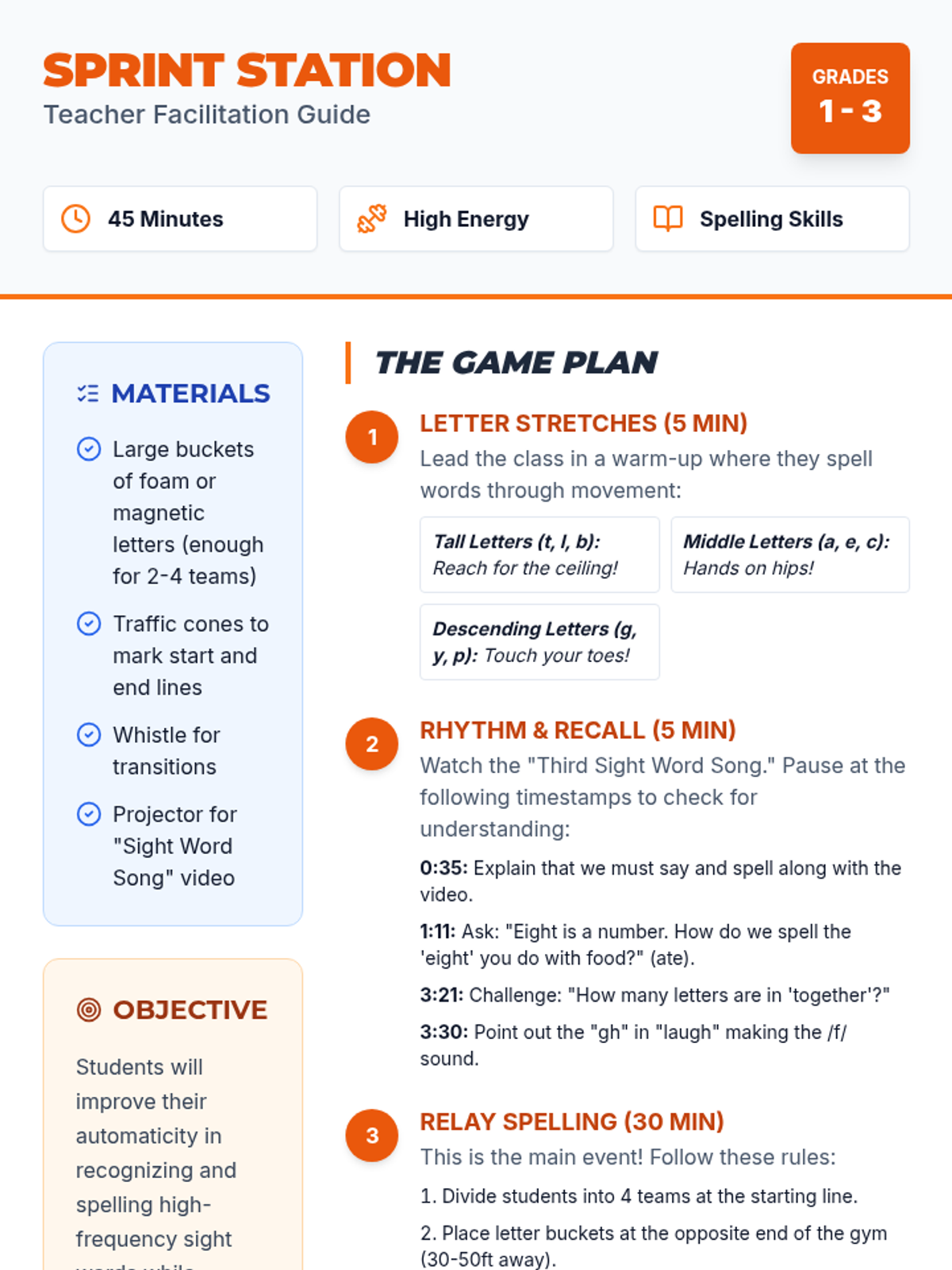
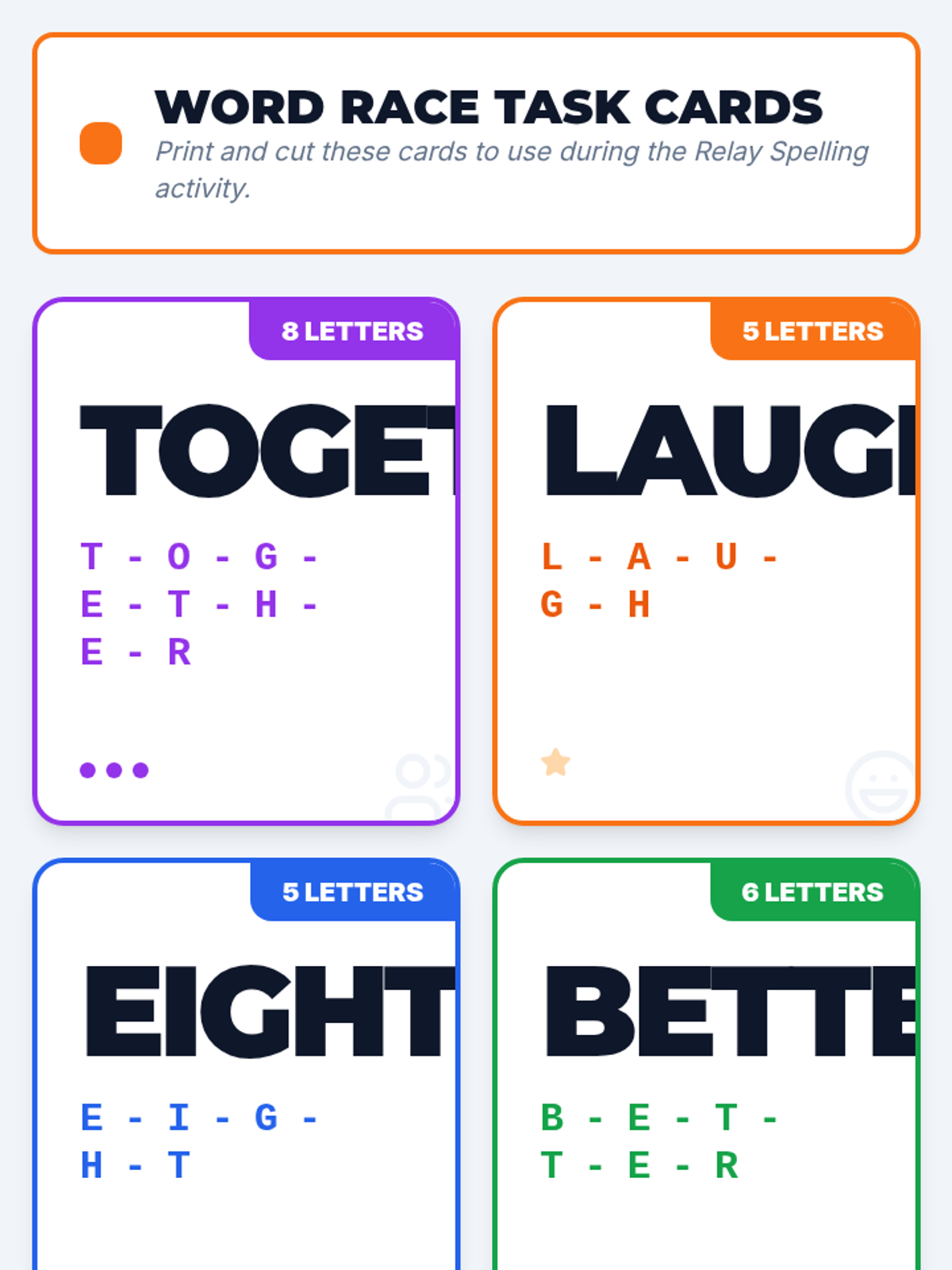
An energetic PE lesson that combines high-intensity relay races with sight word reinforcement for grades 1-3. Students stretch to spell, watch a rhythmic spelling video, and compete in team relays to build words from a bucket of letters.
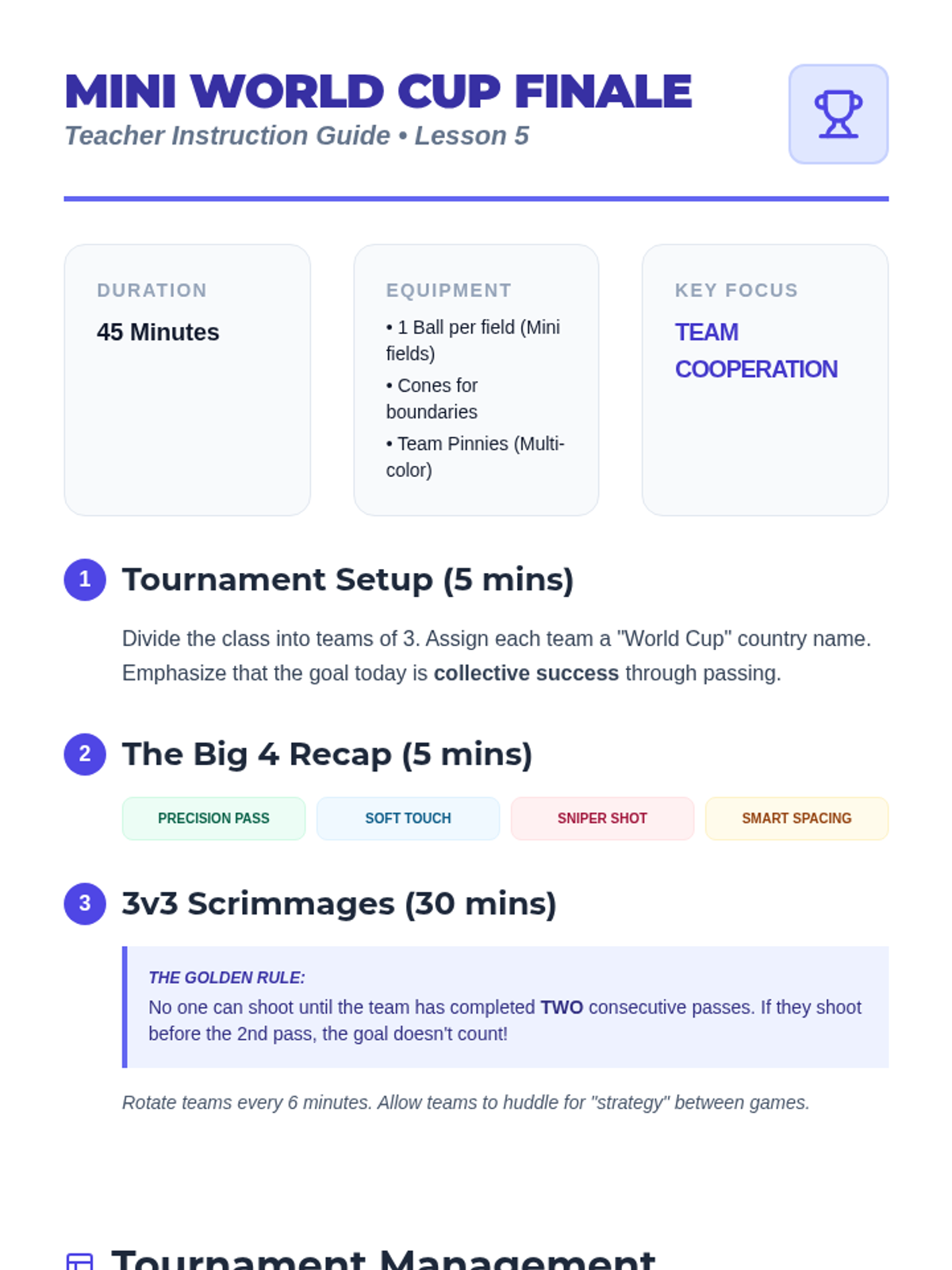
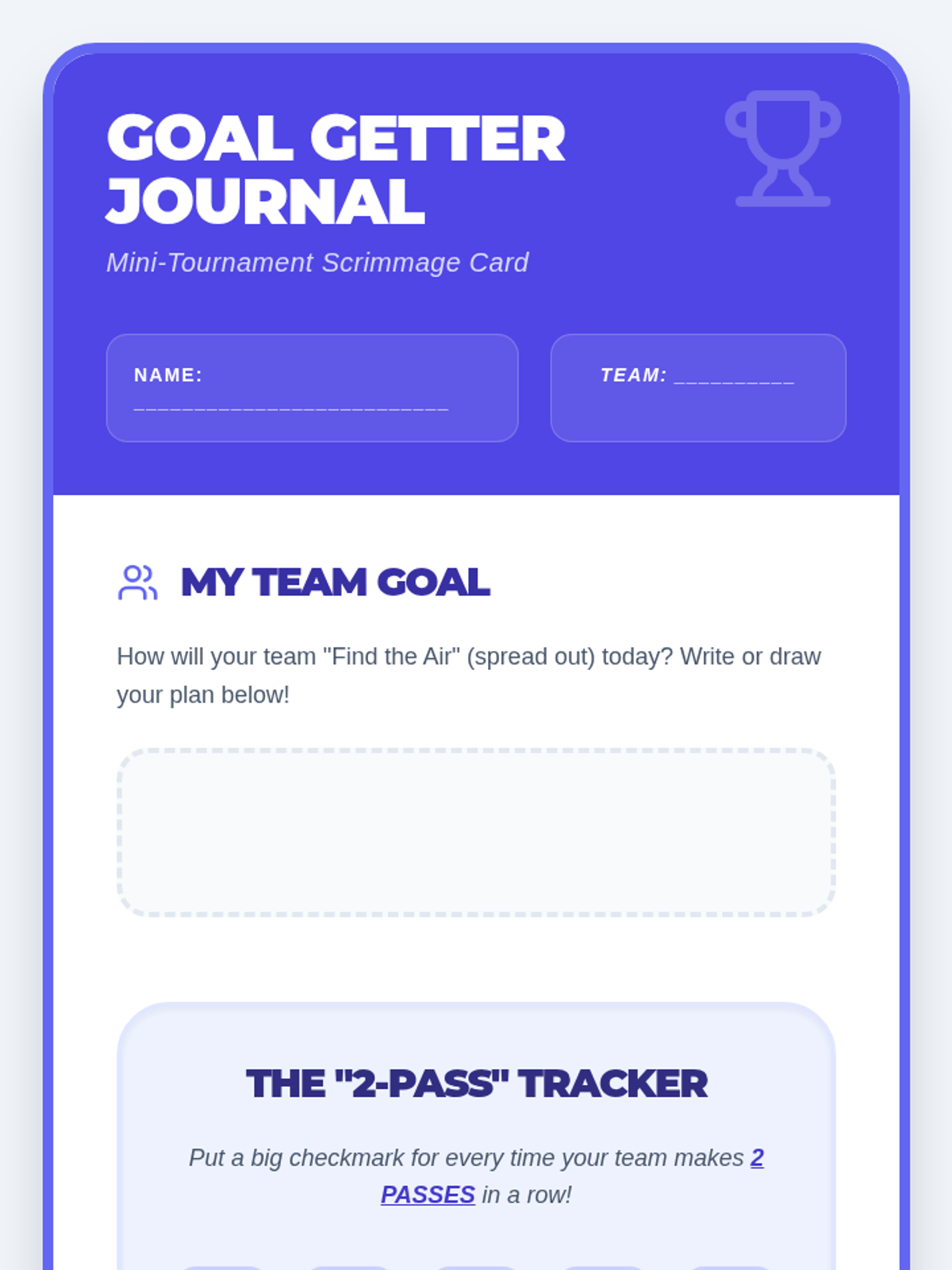
Culminating 3v3 small-sided games where students must complete two passes before shooting, applying all learned skills in a modified scrimmage.
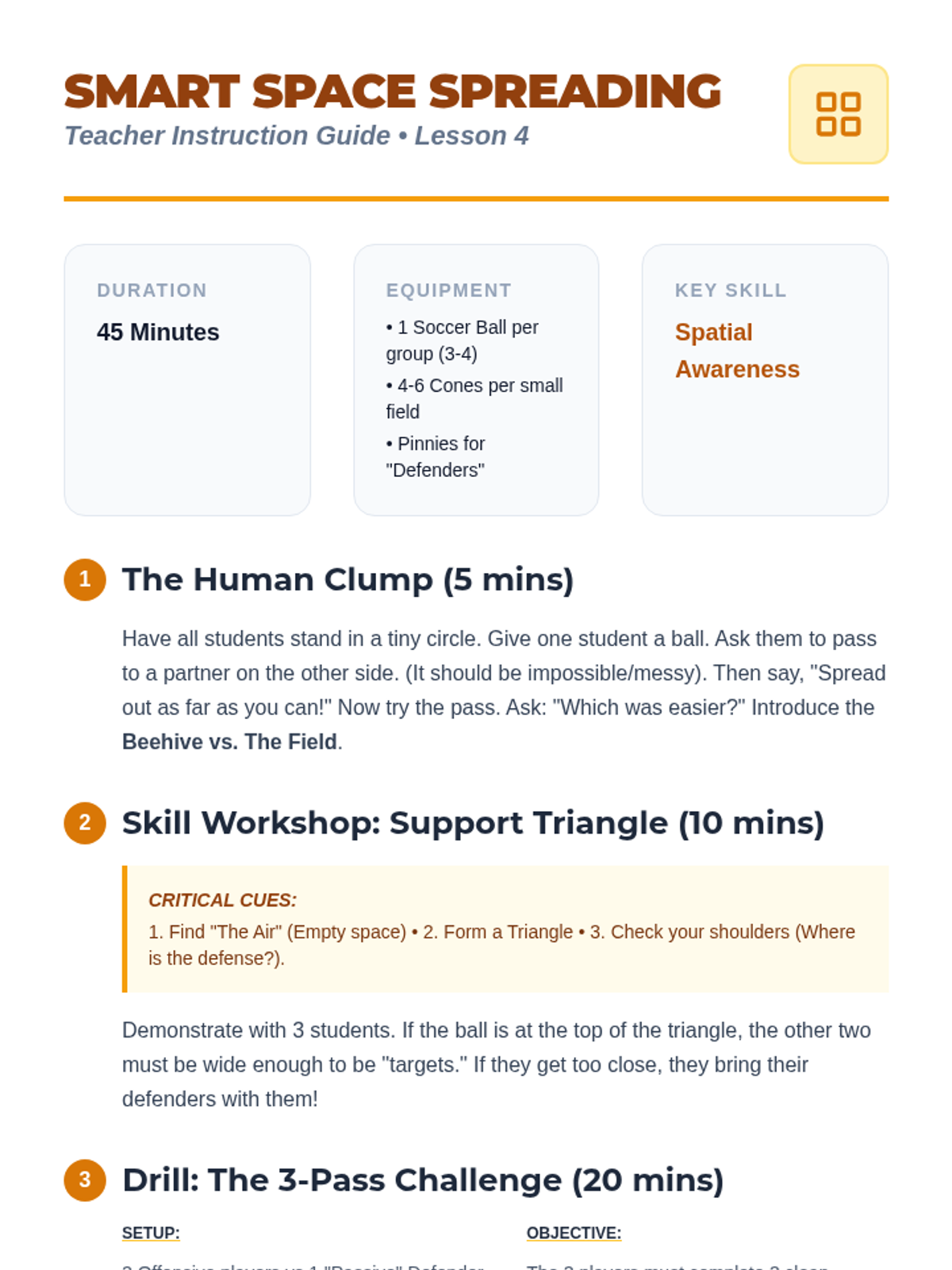
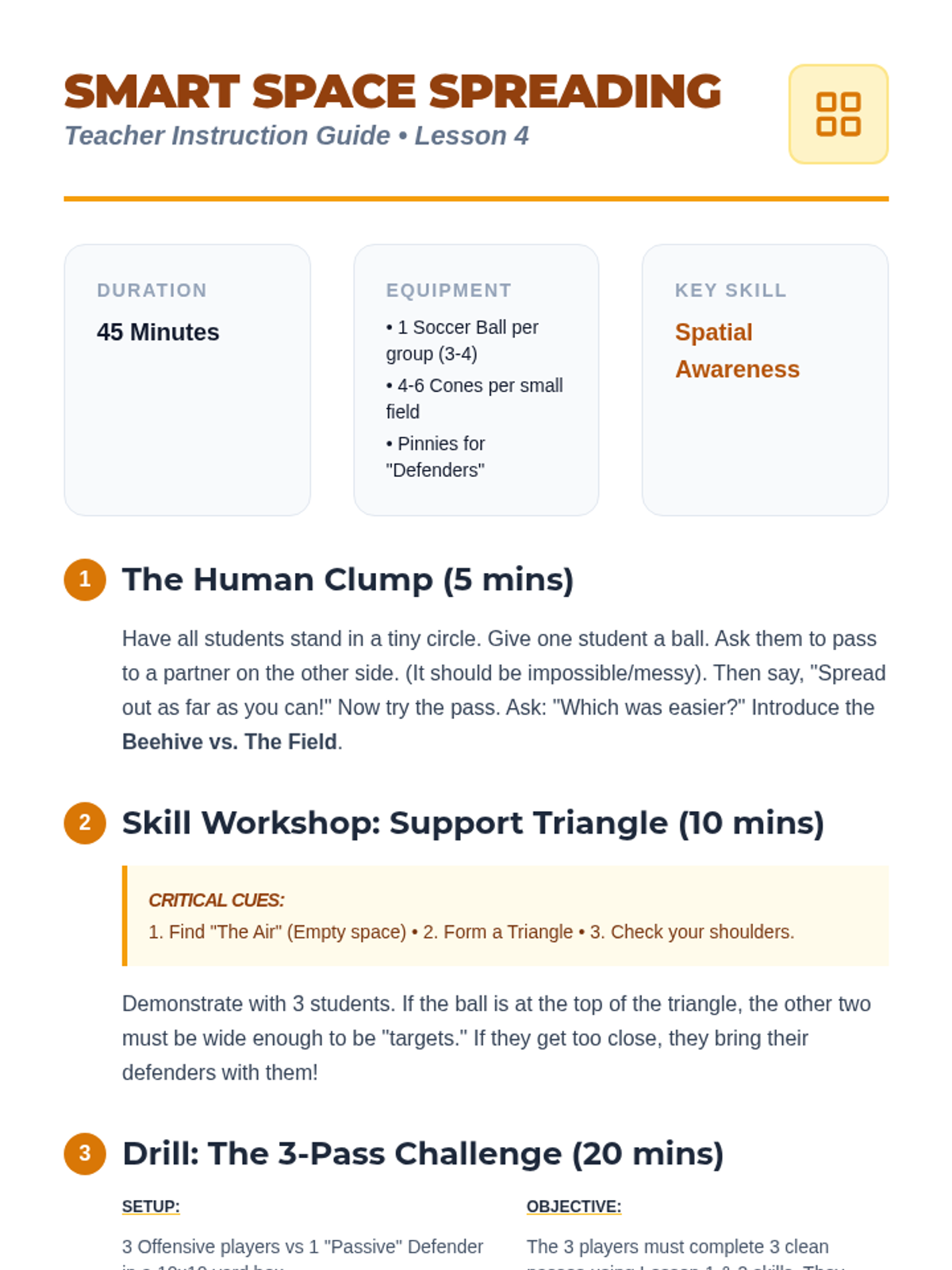
Teaches spatial awareness and the value of spreading out on the field to support teammates, avoiding the 'beehive' cluster around the ball.
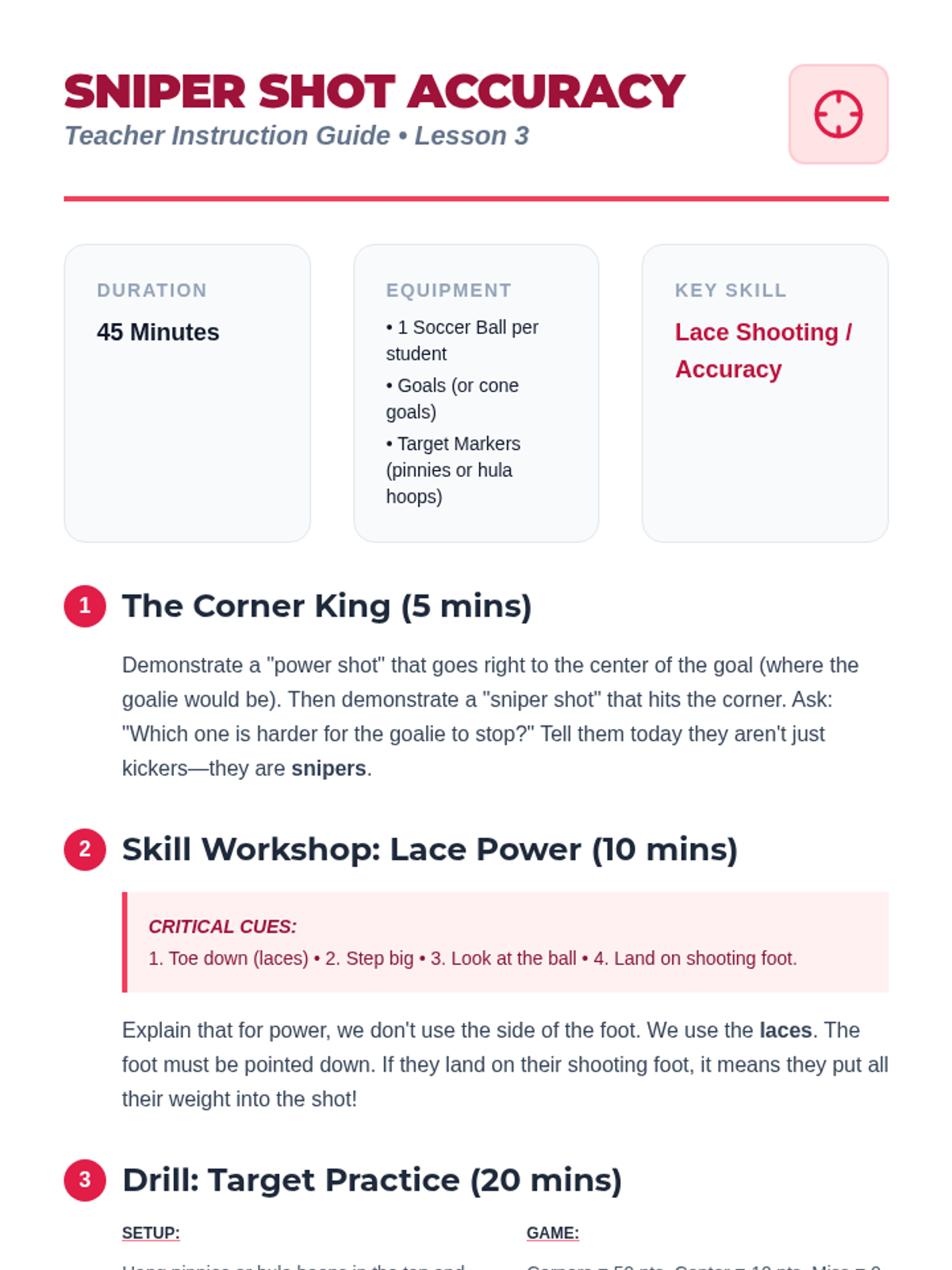
Introduces shooting techniques using the laces for power and the inside of the foot for placement, with drills targeting specific areas of the goal.
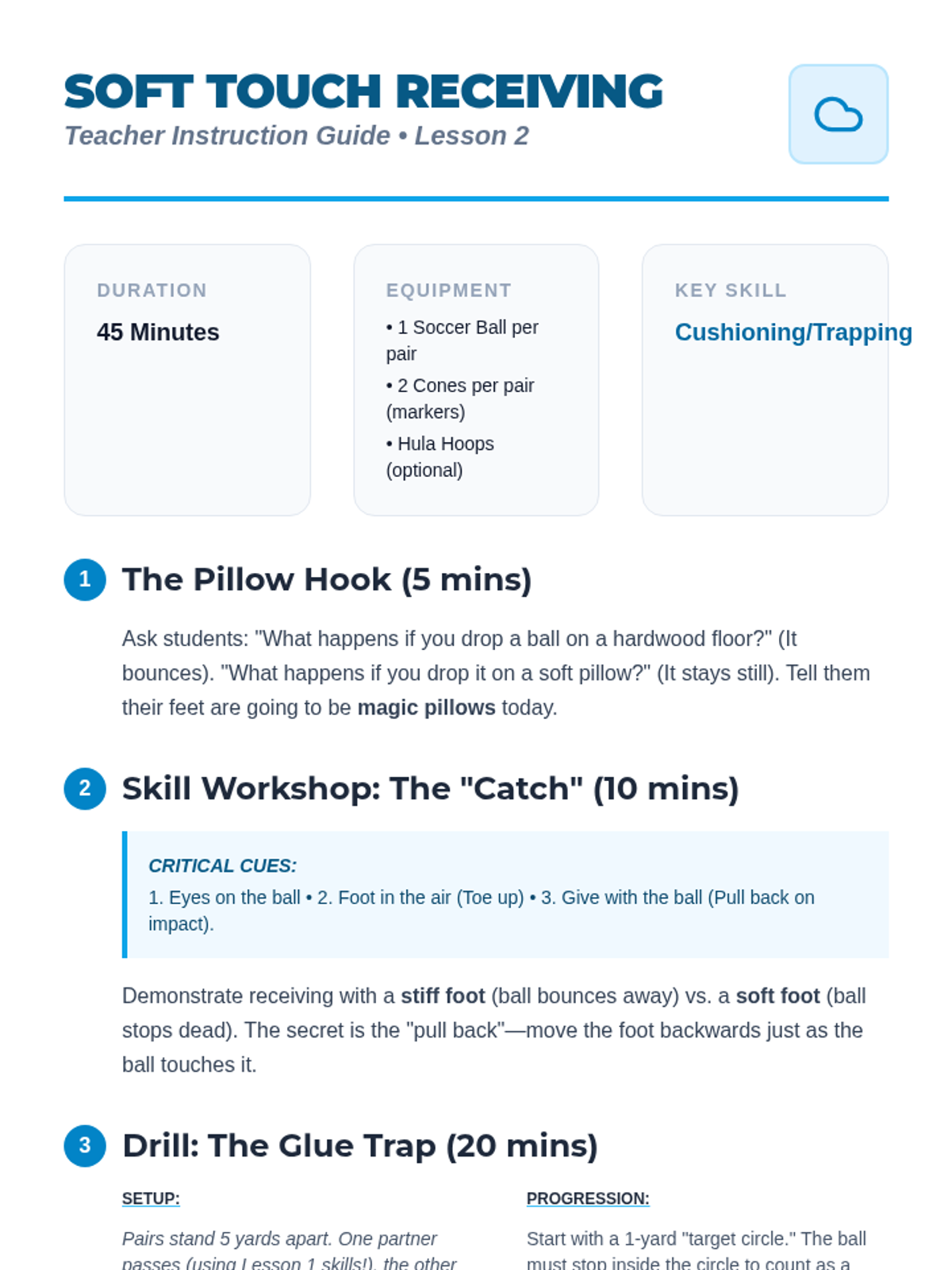
Focuses on receiving a pass by 'cushioning' the ball with a soft foot to maintain control, rotating partners to practice with different speeds.
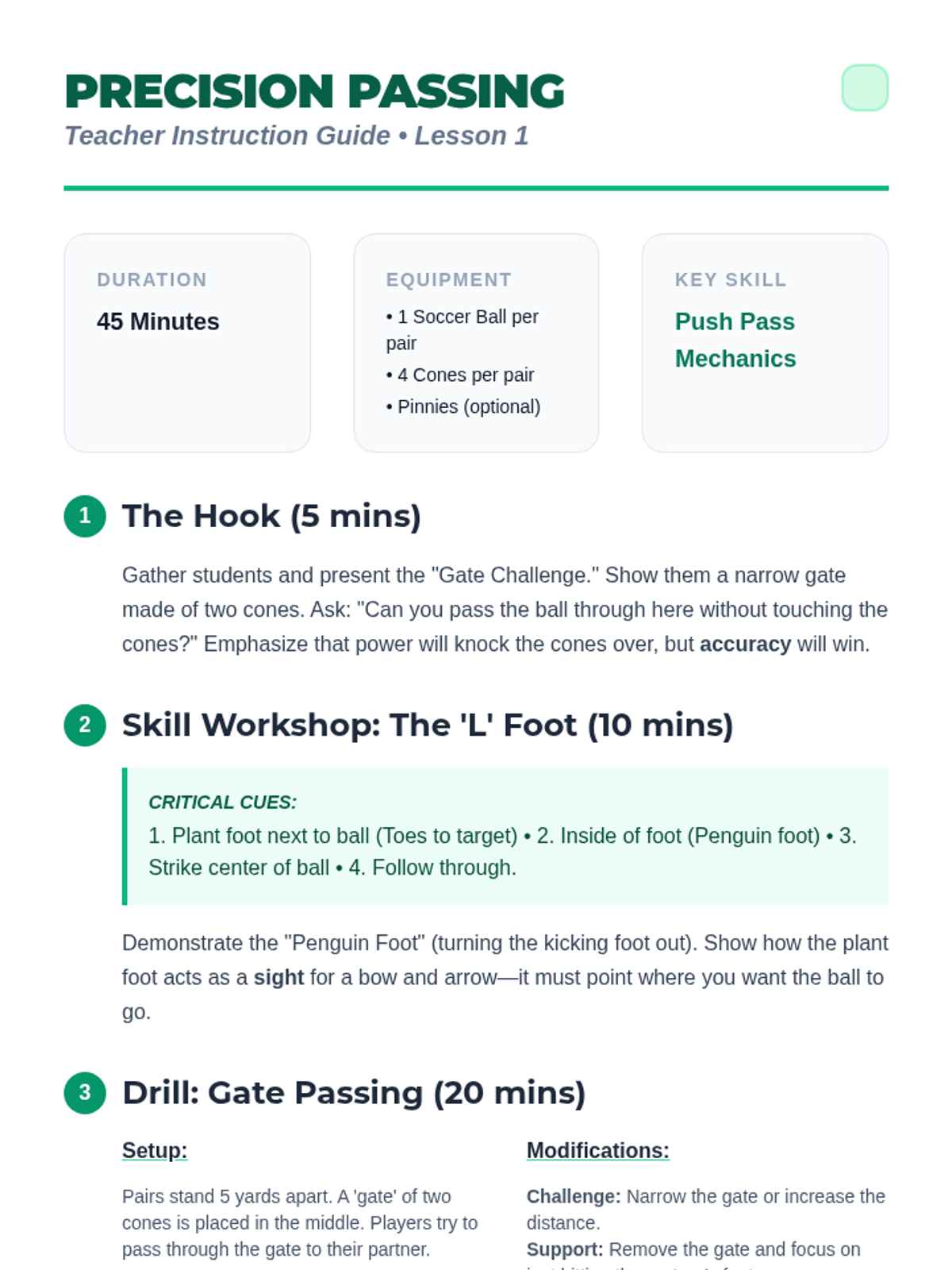
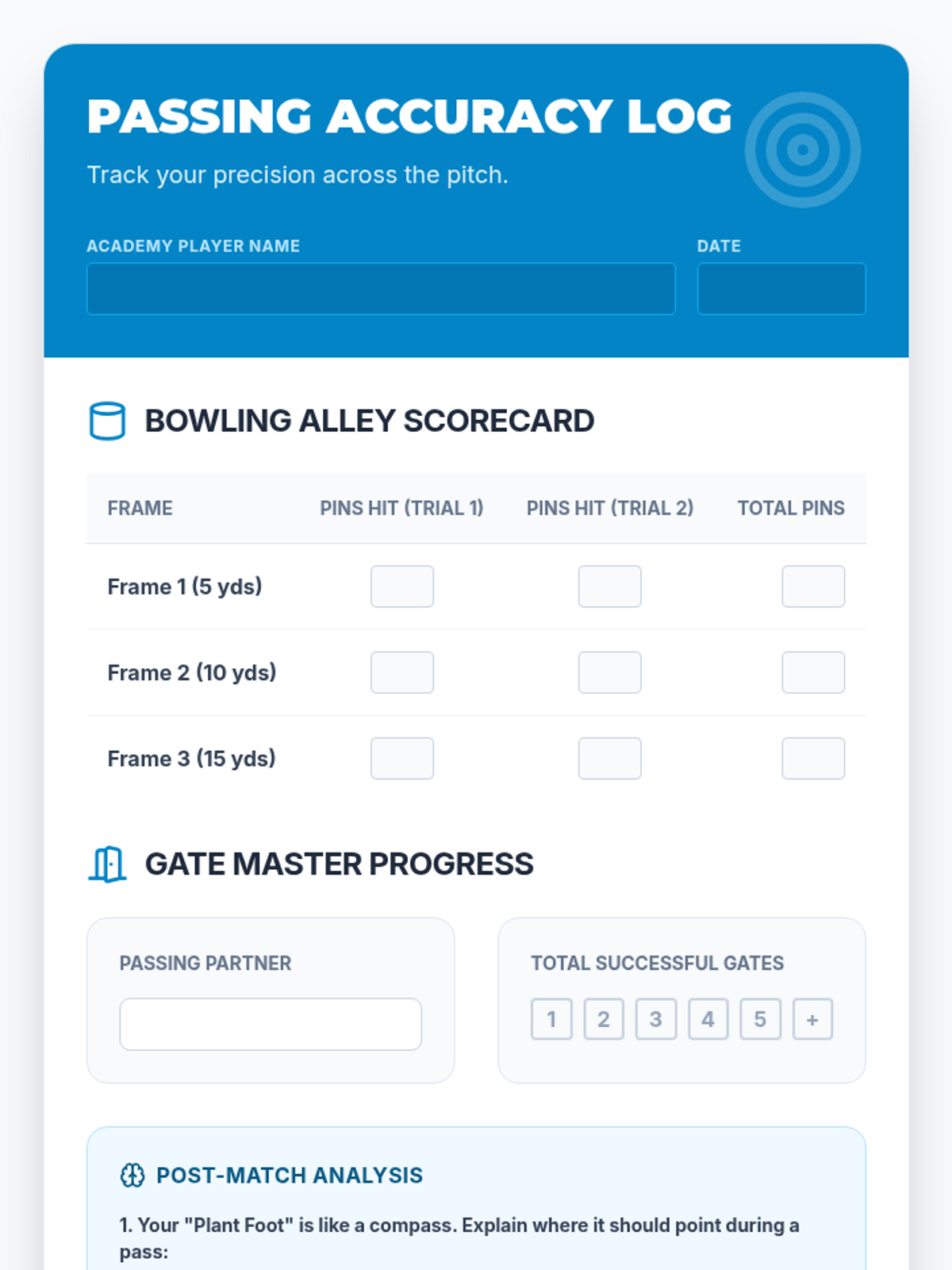
Students learn proper form for the inside-of-the-foot push pass, focusing on non-kicking foot placement and accuracy through 'gate' drills.
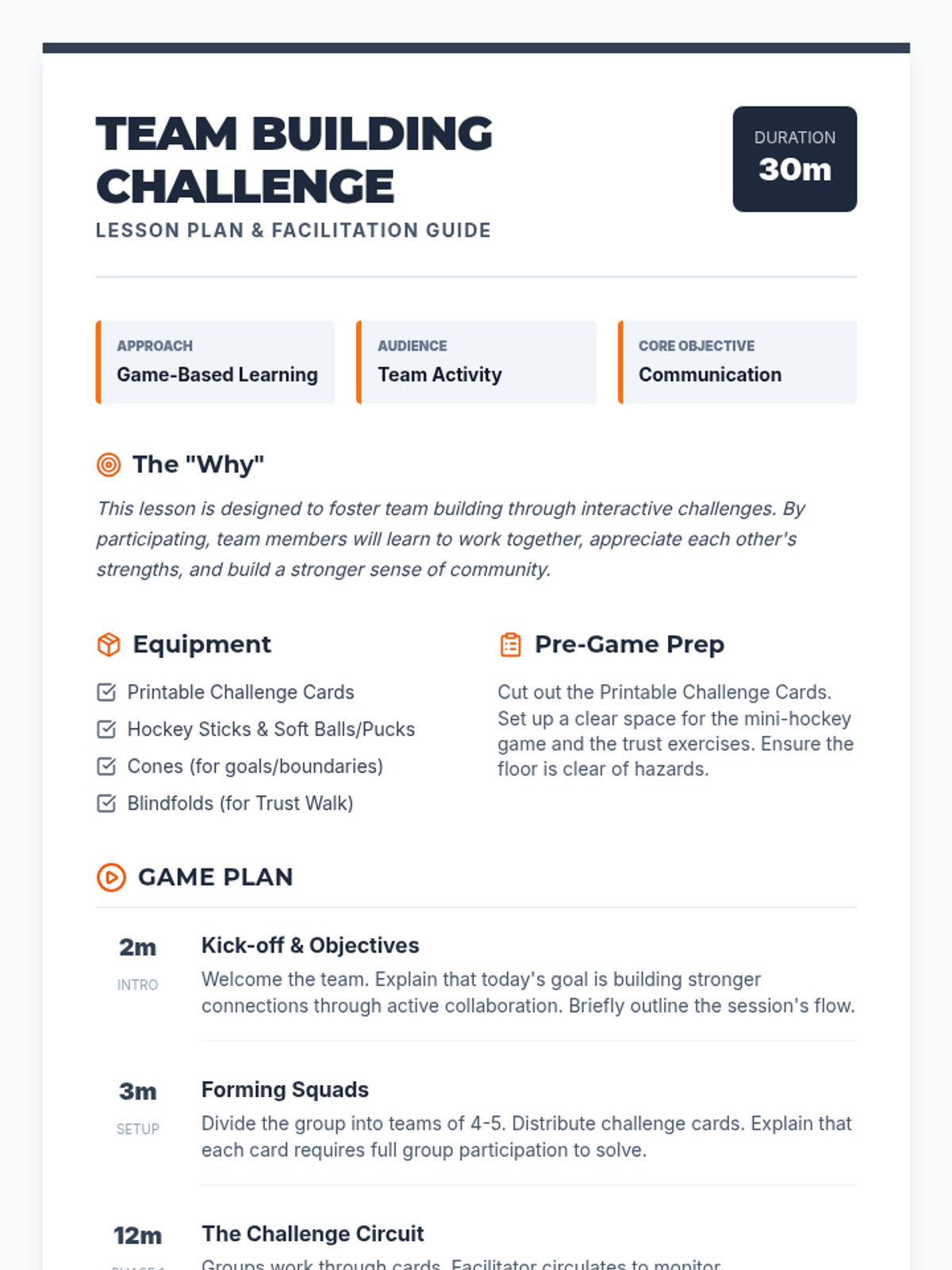
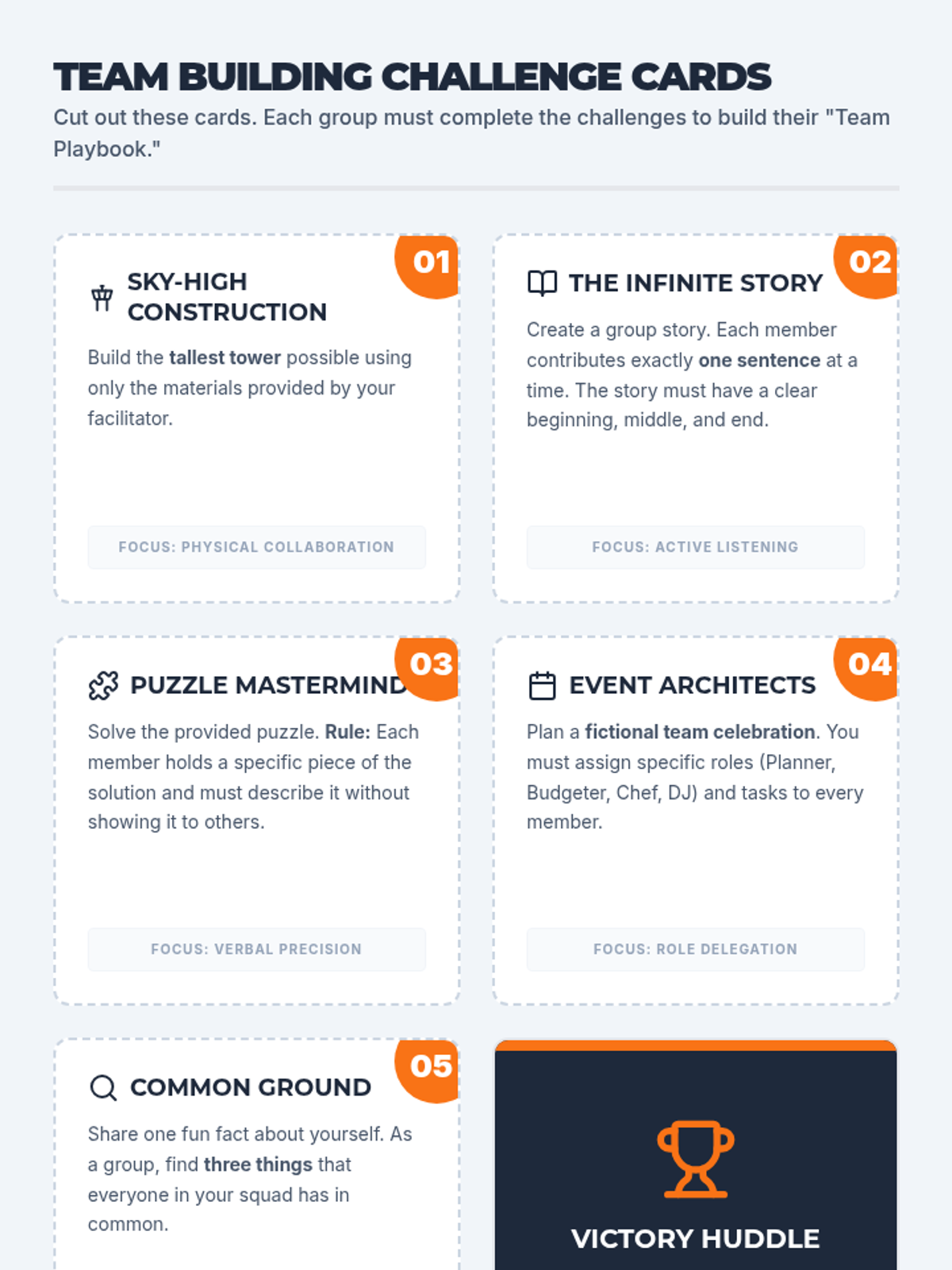
A high-energy team-building lesson focused on communication, trust, and collaboration through interactive challenges and a hockey-themed strategy game.
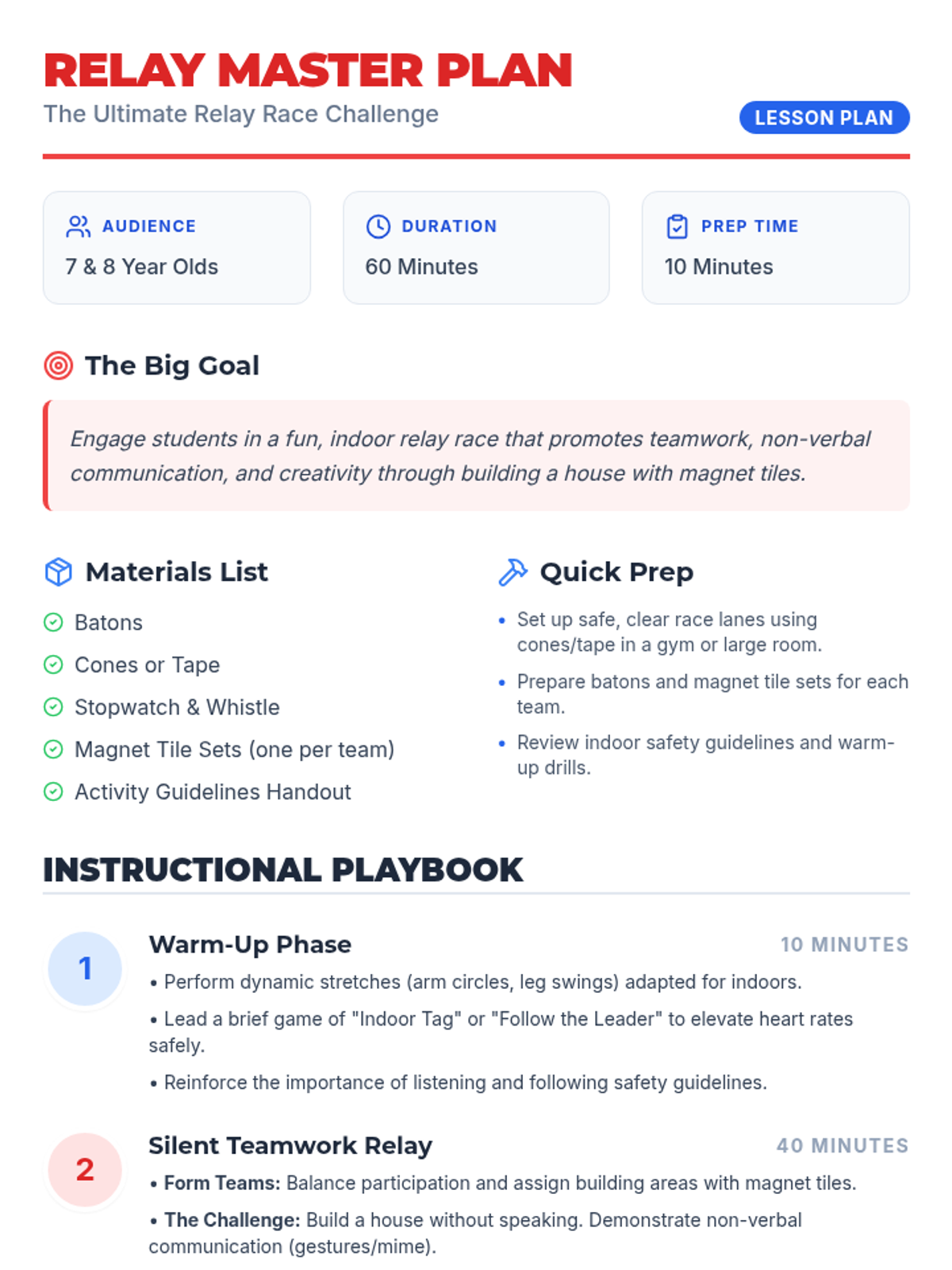
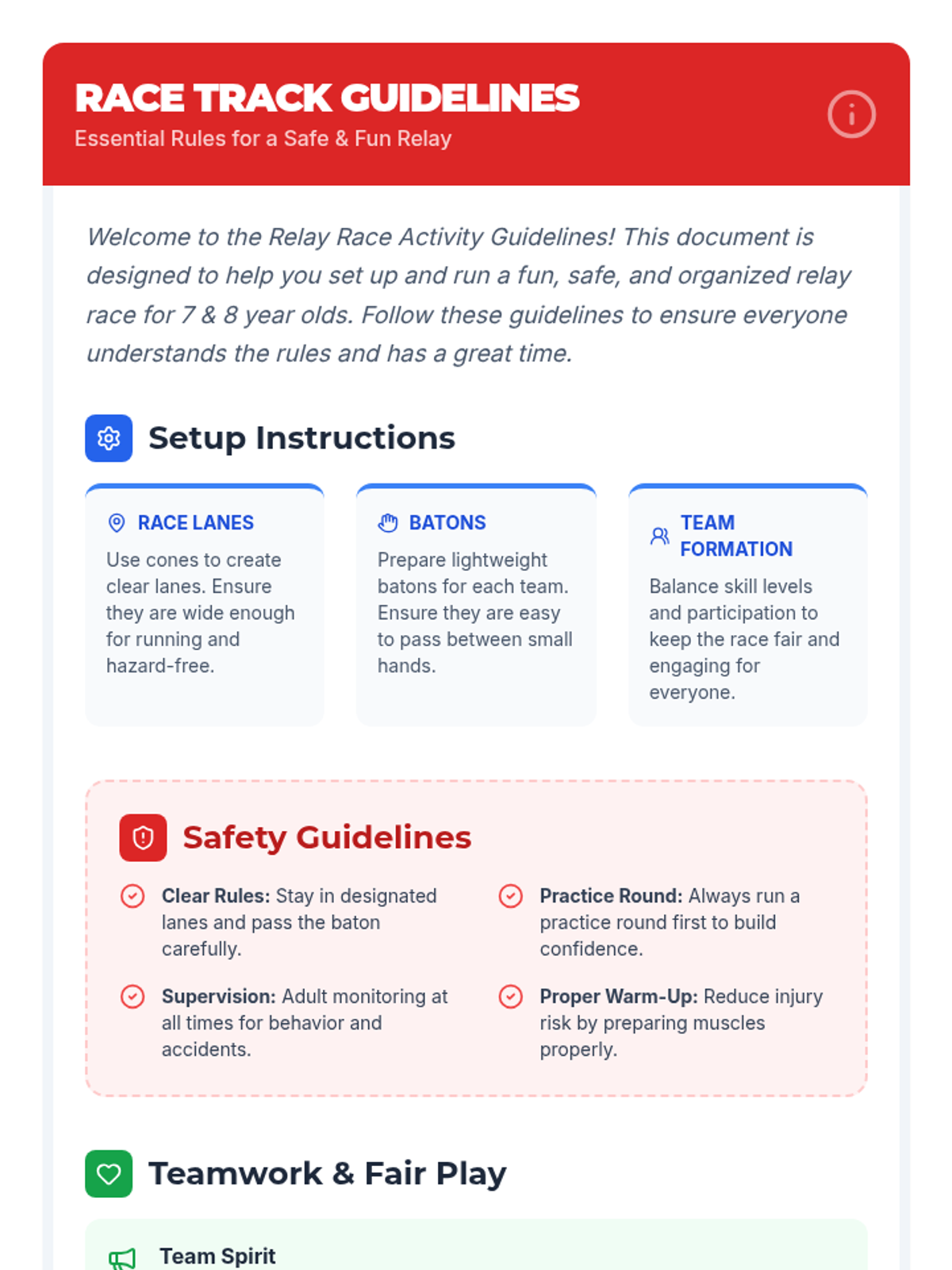
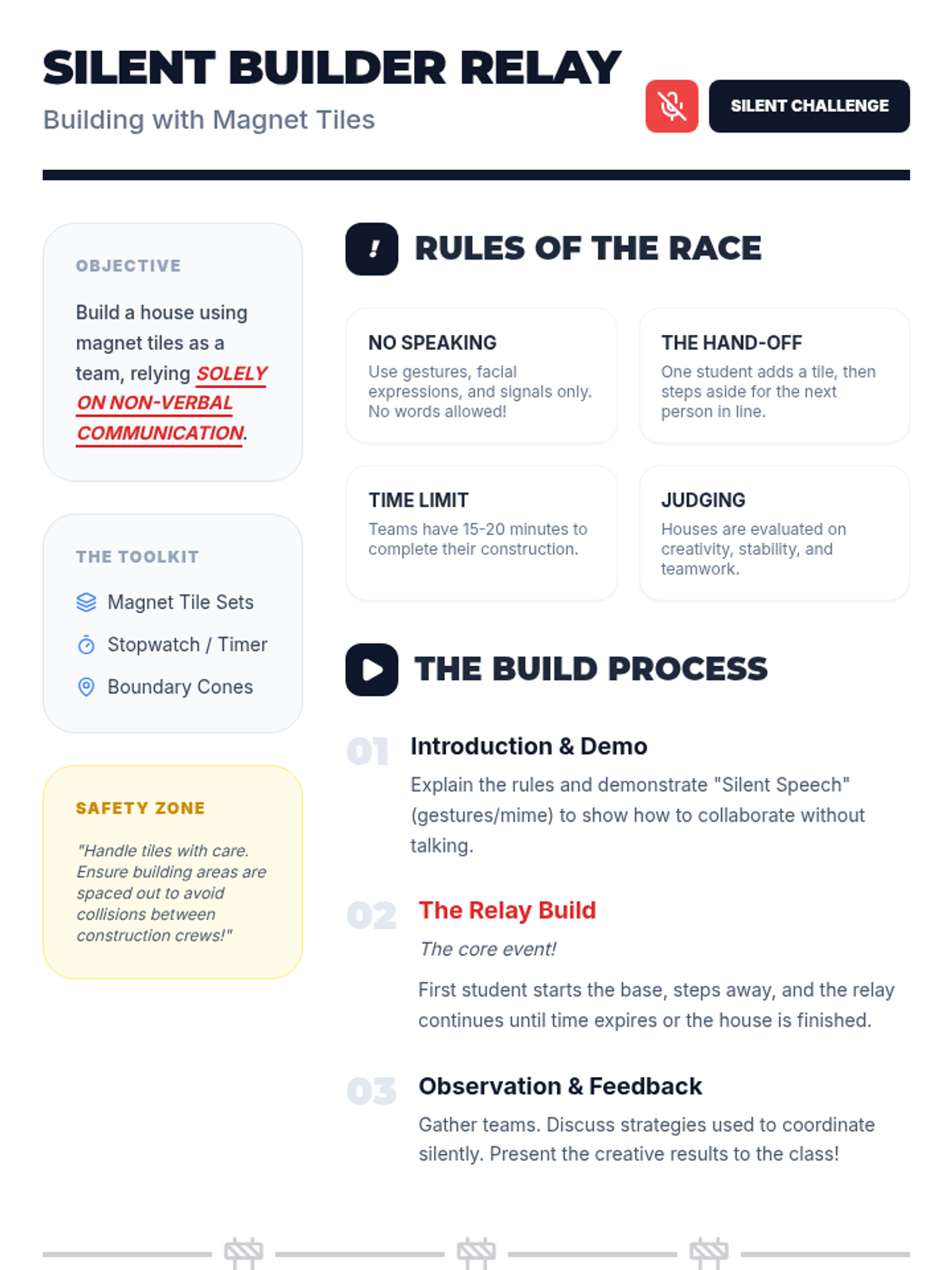
An energetic 1-hour physical education lesson for 7-8 year olds focusing on teamwork and non-verbal communication through a creative relay race using magnet tiles.
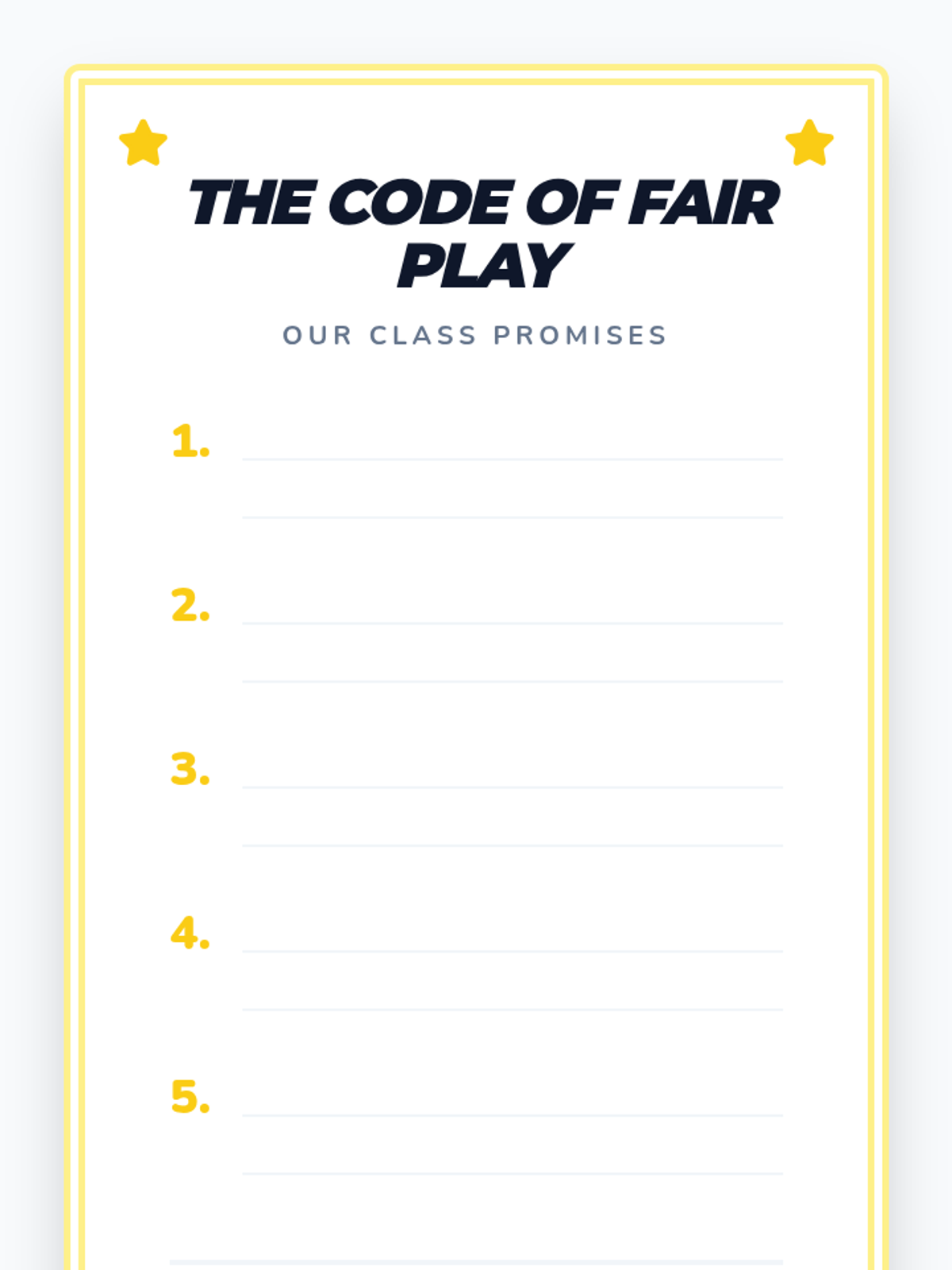
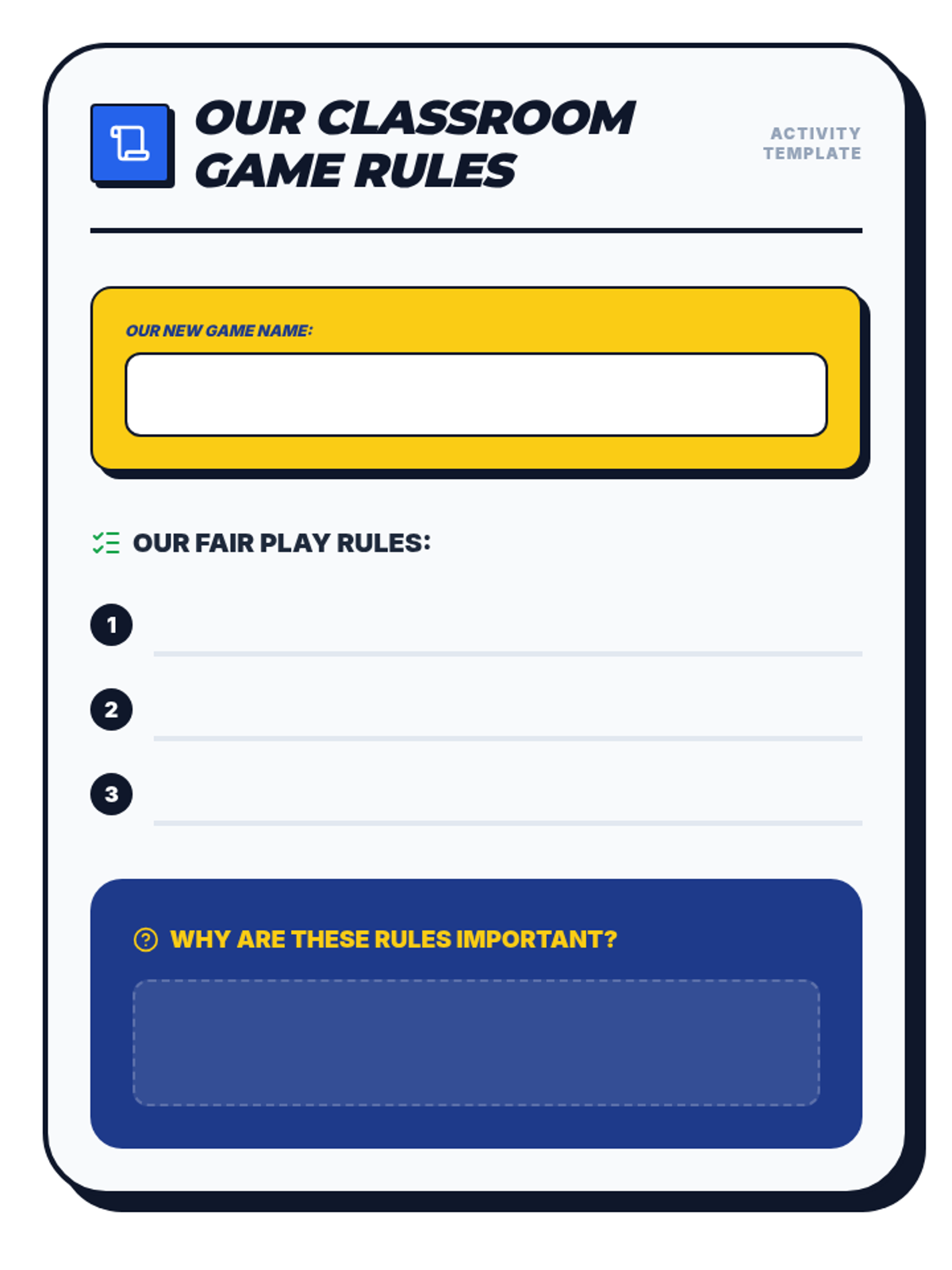
Students synthesize their learning by creating a collective 'Code of Fair Play' and participating in a self-refereed game to demonstrate their sportsmanship.
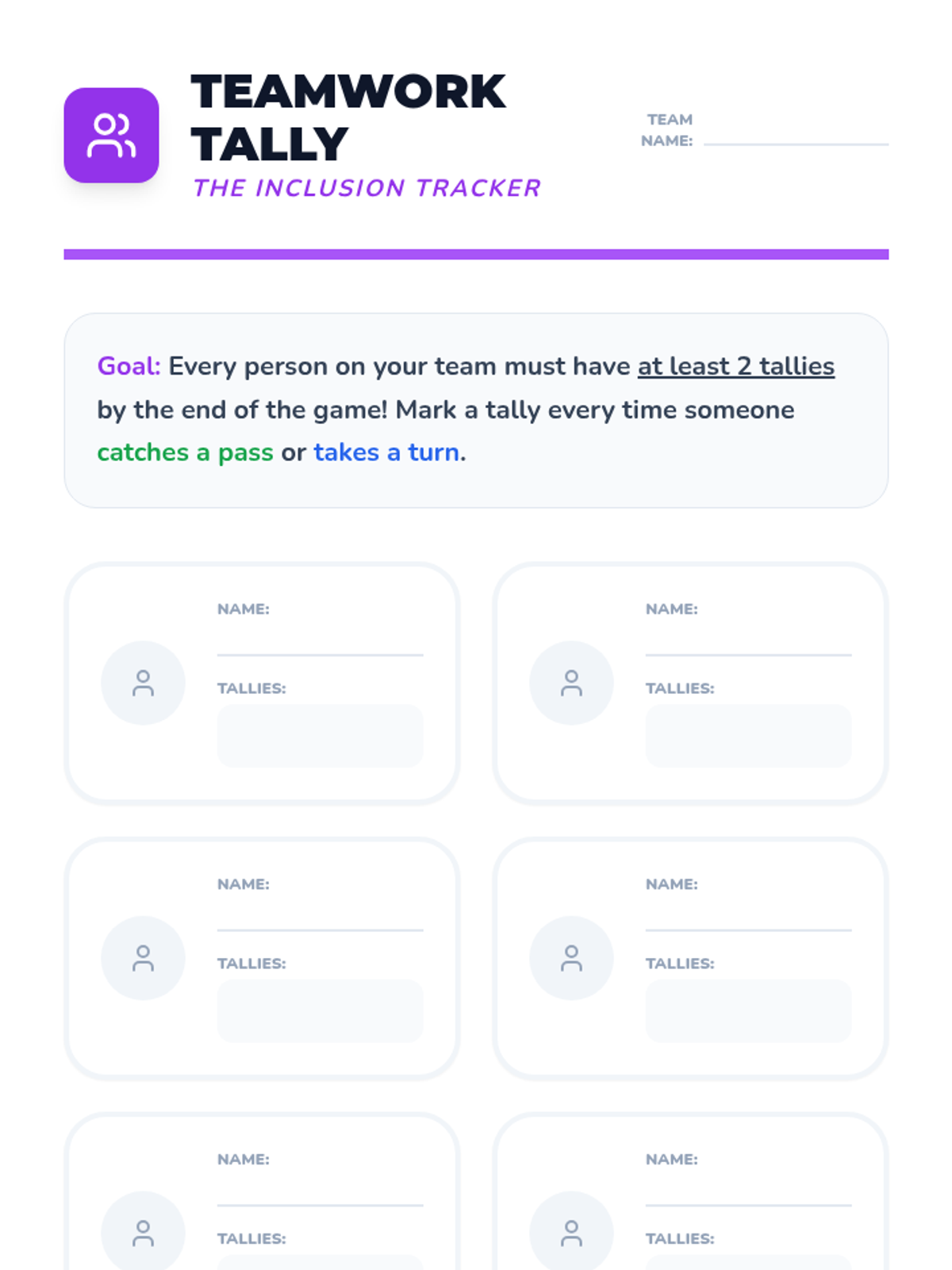
Focusing on inclusion, students play games that require everyone's participation to succeed, emphasizing that fairness means everyone gets a chance to play.
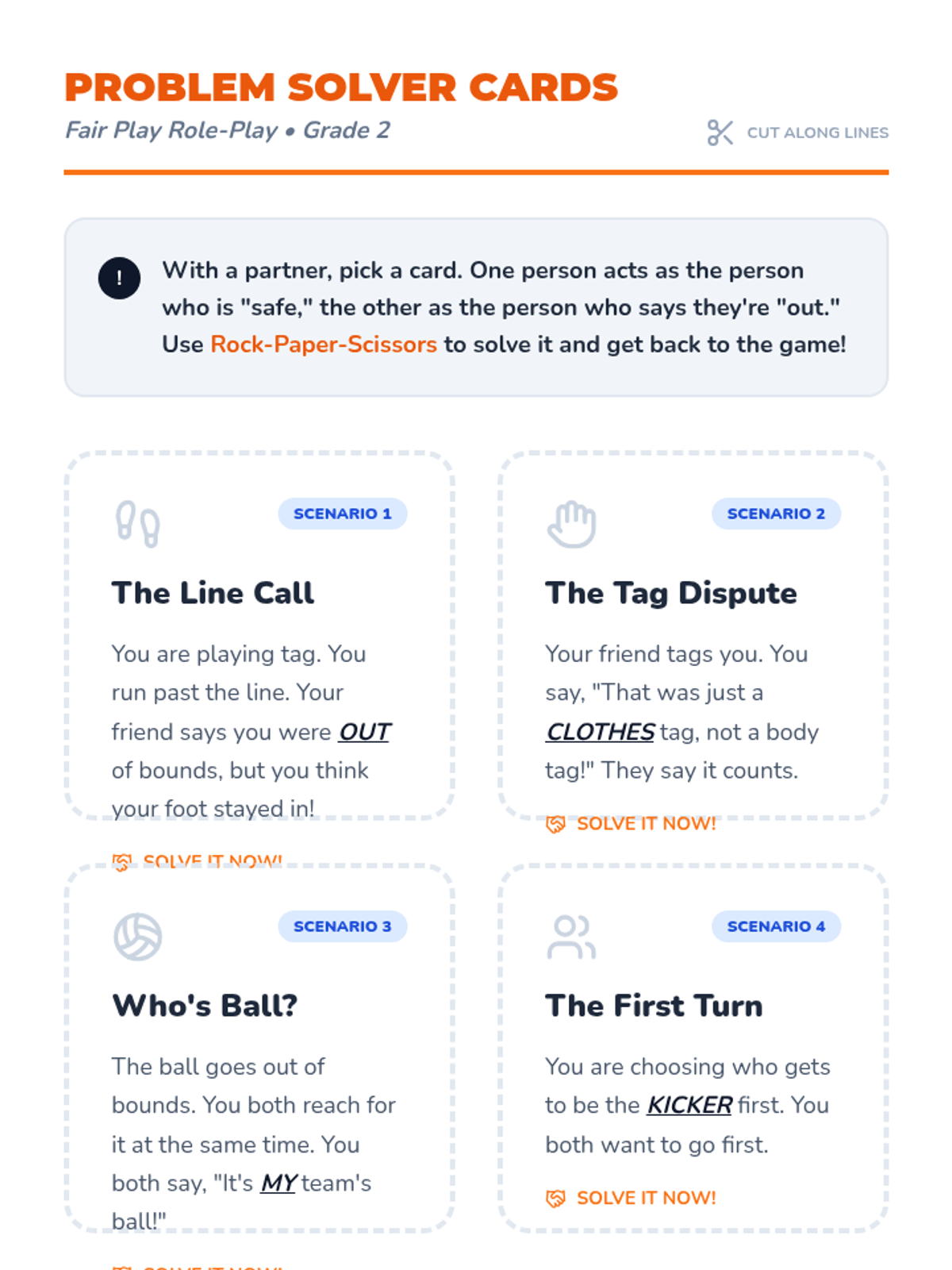
Students learn practical conflict resolution tools, like 'Rock, Paper, Scissors,' and role-play settling common playground disagreements fairly and quickly.
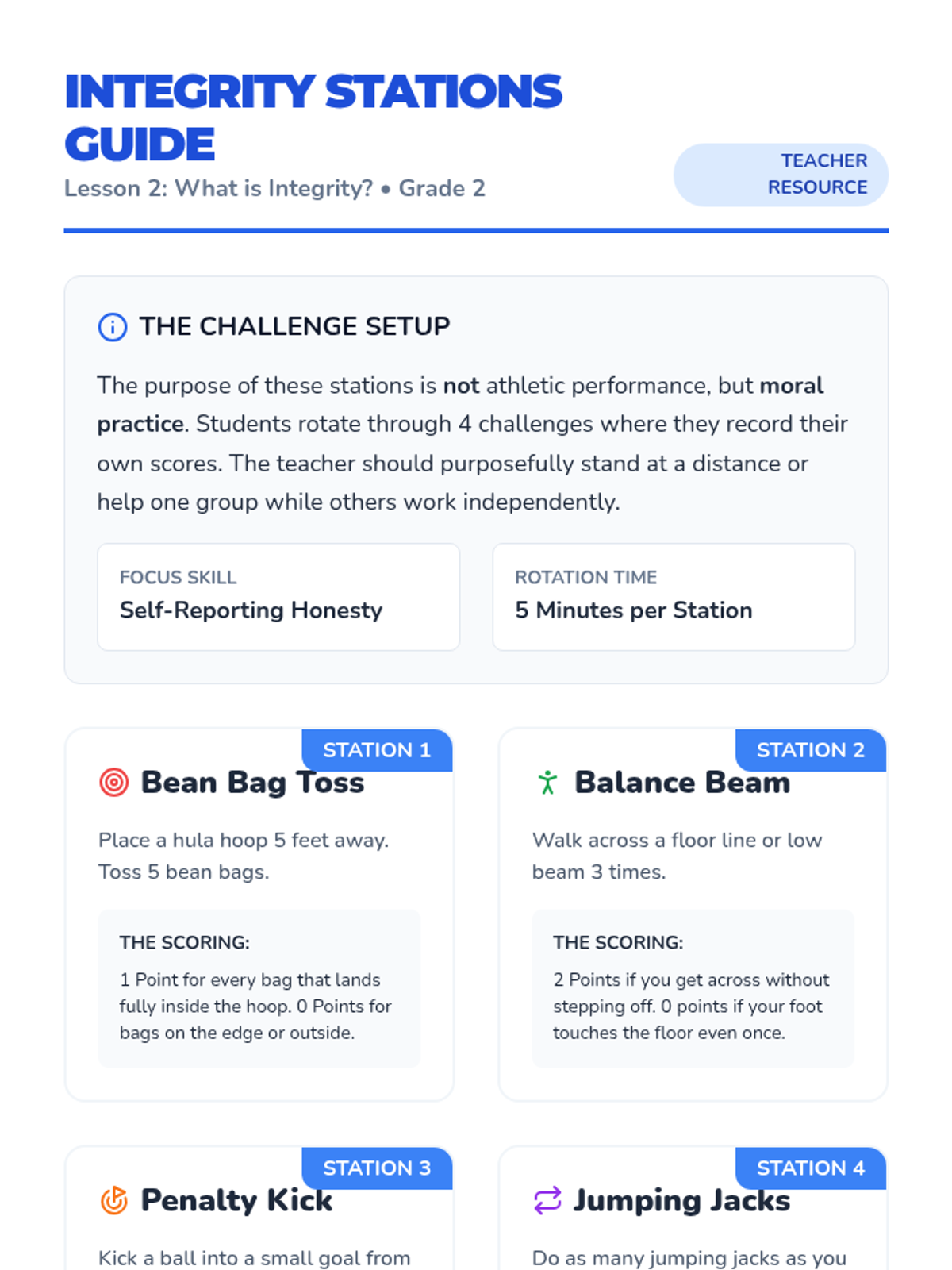
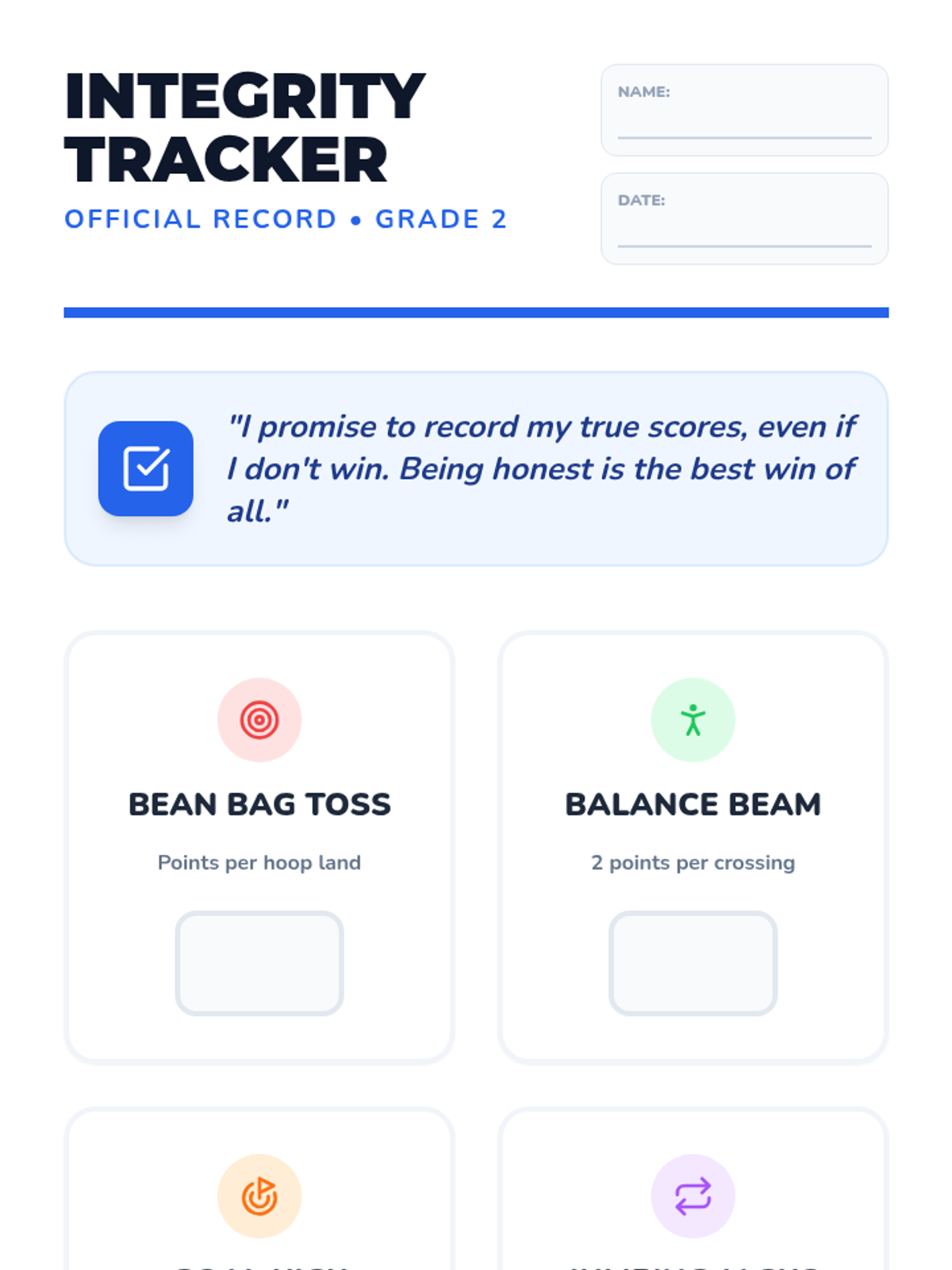
Students define integrity and practice honesty through self-scored skill challenges, learning that doing the right thing matters even when no one is watching.
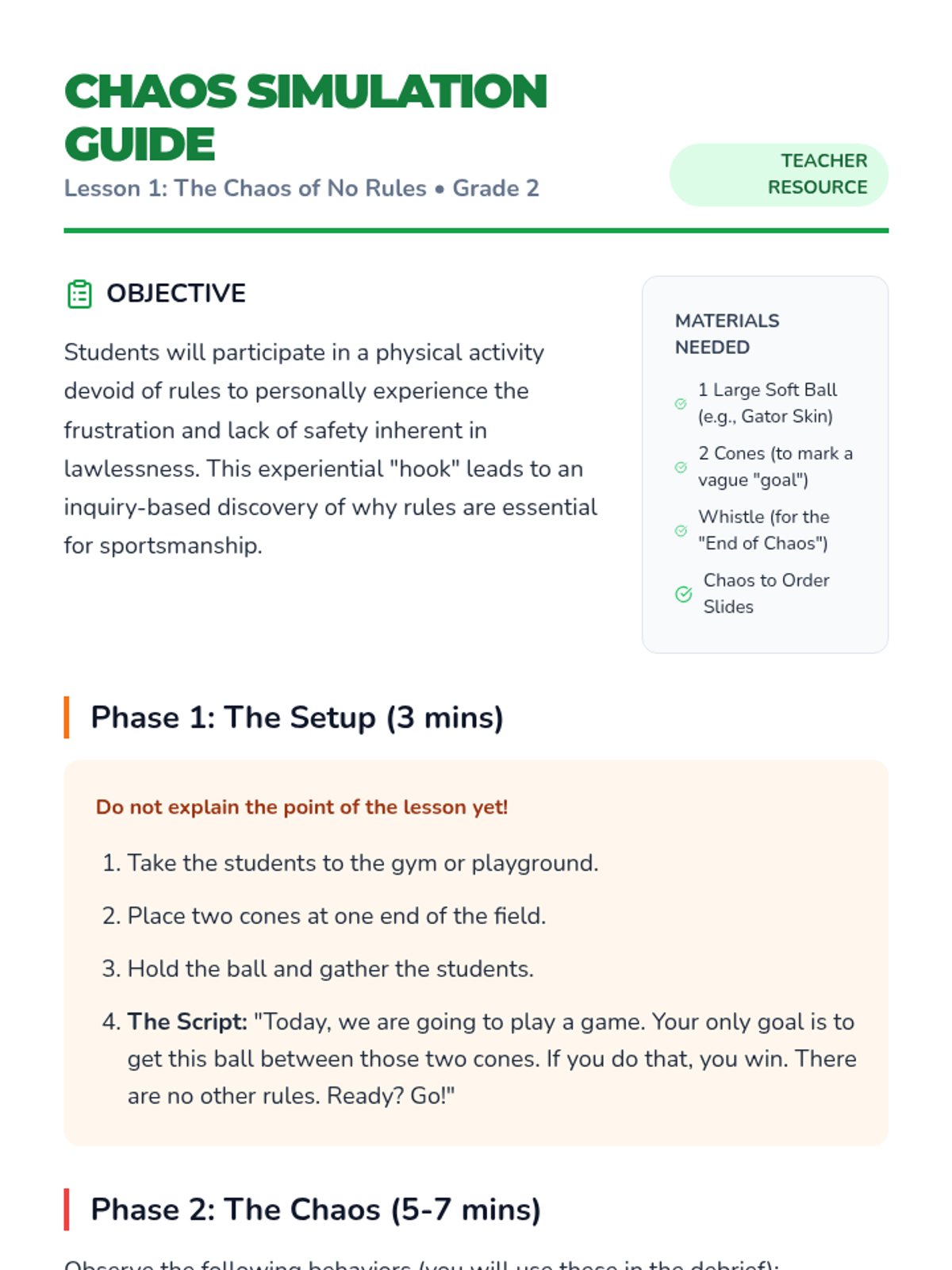
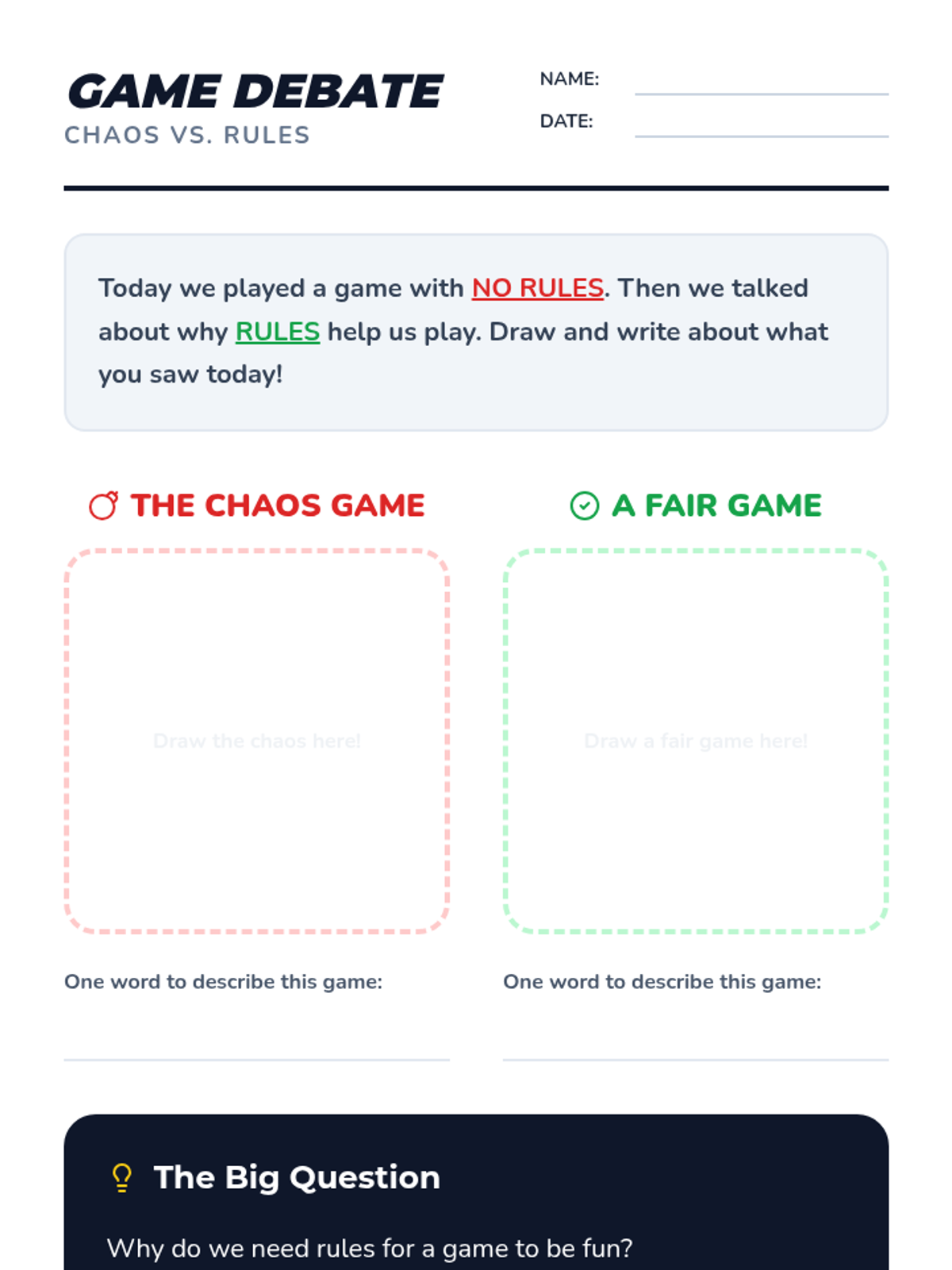
Students experience a game without rules to understand the necessity of structure, boundaries, and fair play for fun and safety.
A culminating parachute activity that requires synchronized movement and clear, positive communication to succeed.
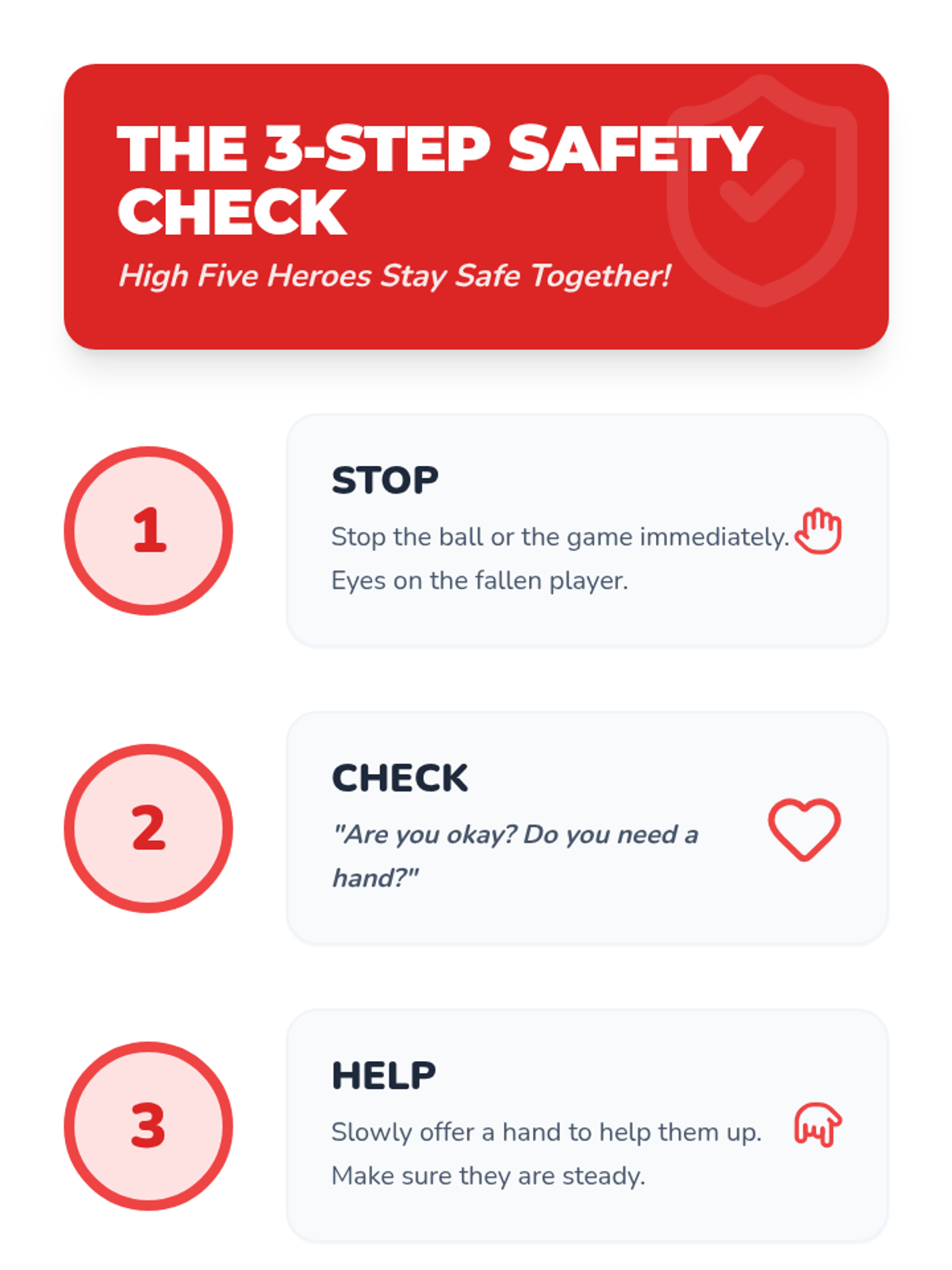
Students learn and practice protocols for helping fallen teammates and ensuring physical safety during games.
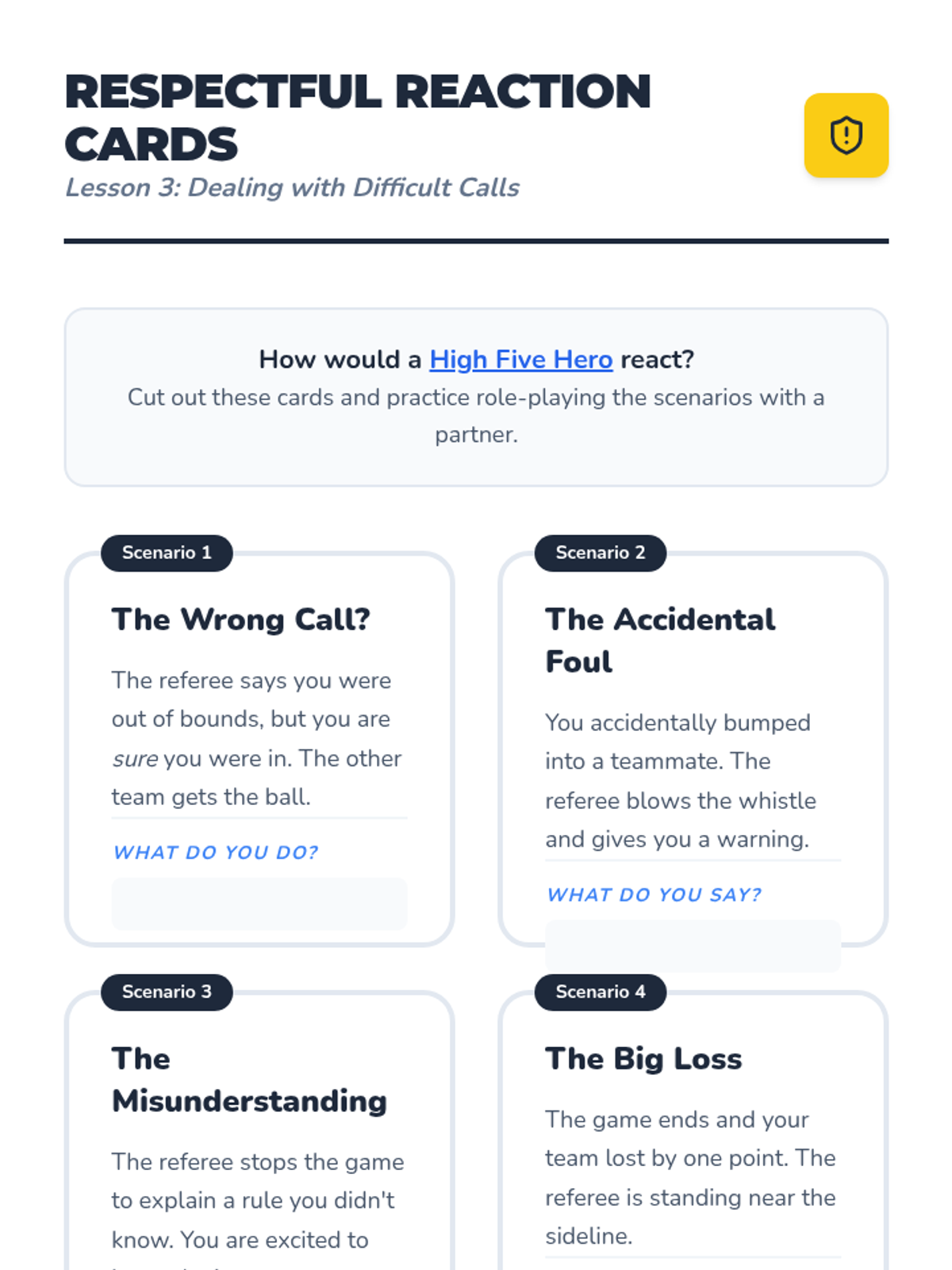
Students build empathy for game officials by taking on the role of a referee and learning to accept calls respectfully.
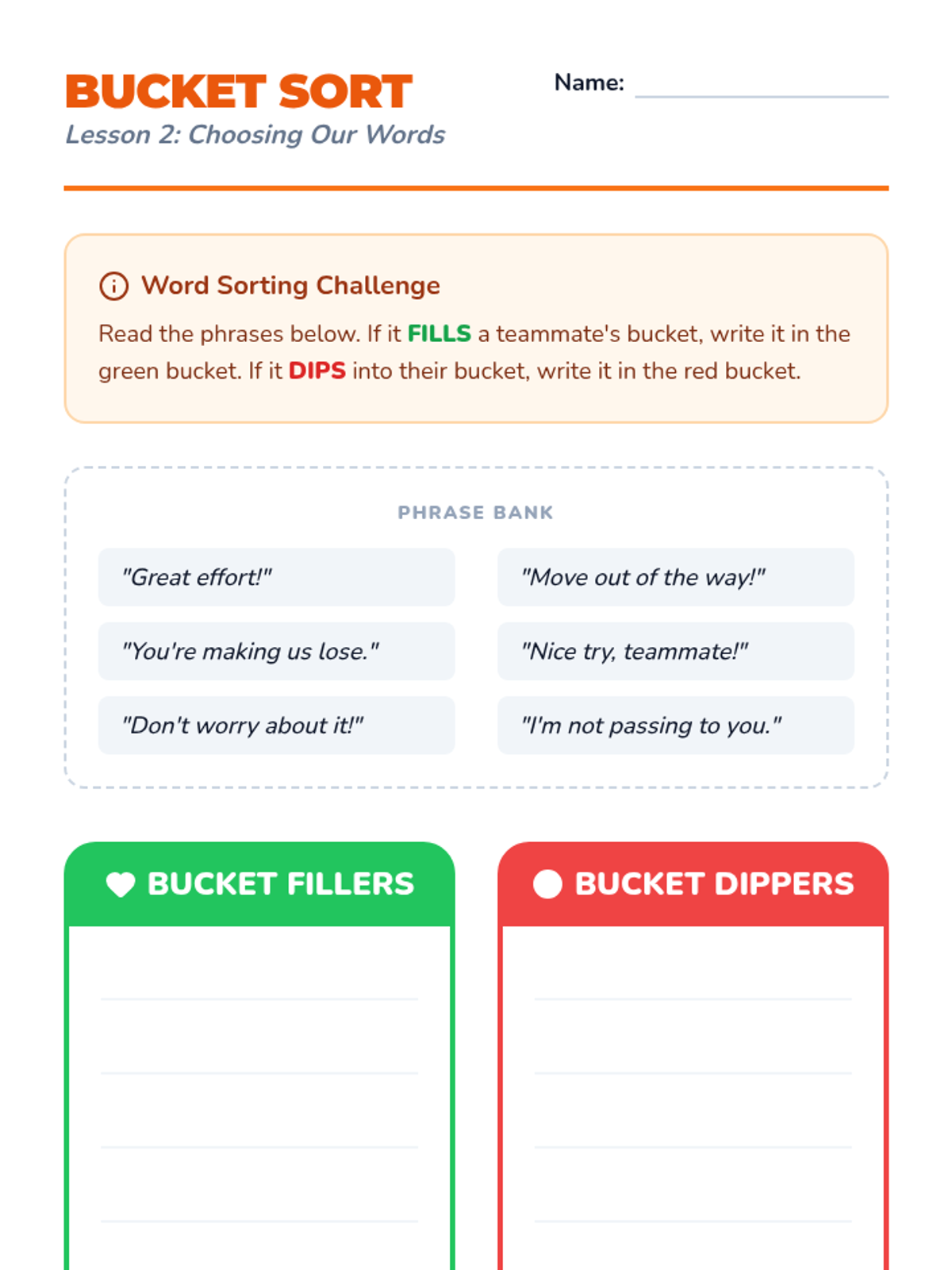
Students differentiate between encouraging and discouraging words through a T-chart activity and a passing drill.
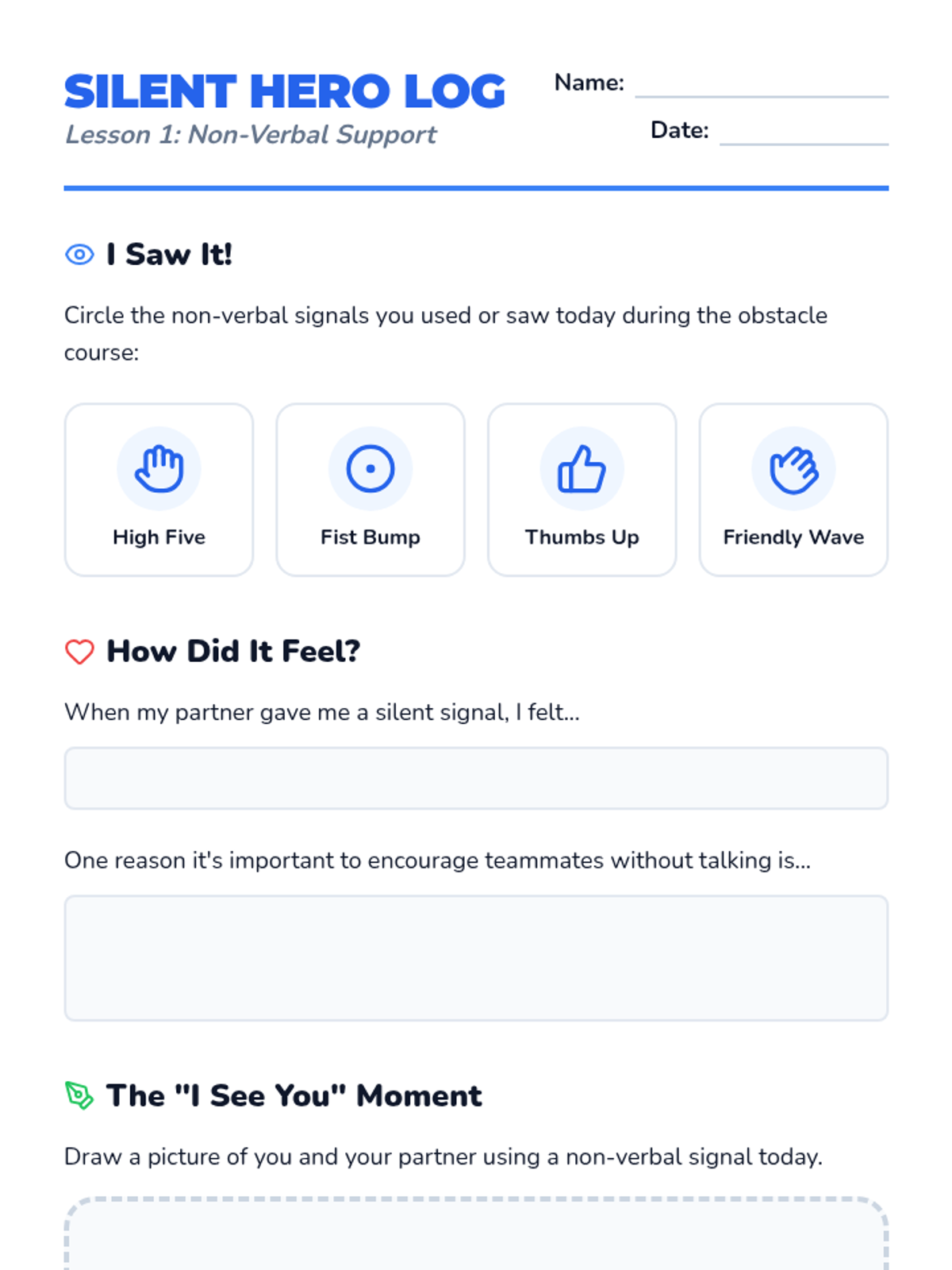
Students explore non-verbal encouragement by practicing high-fives and signals during a partner obstacle course.
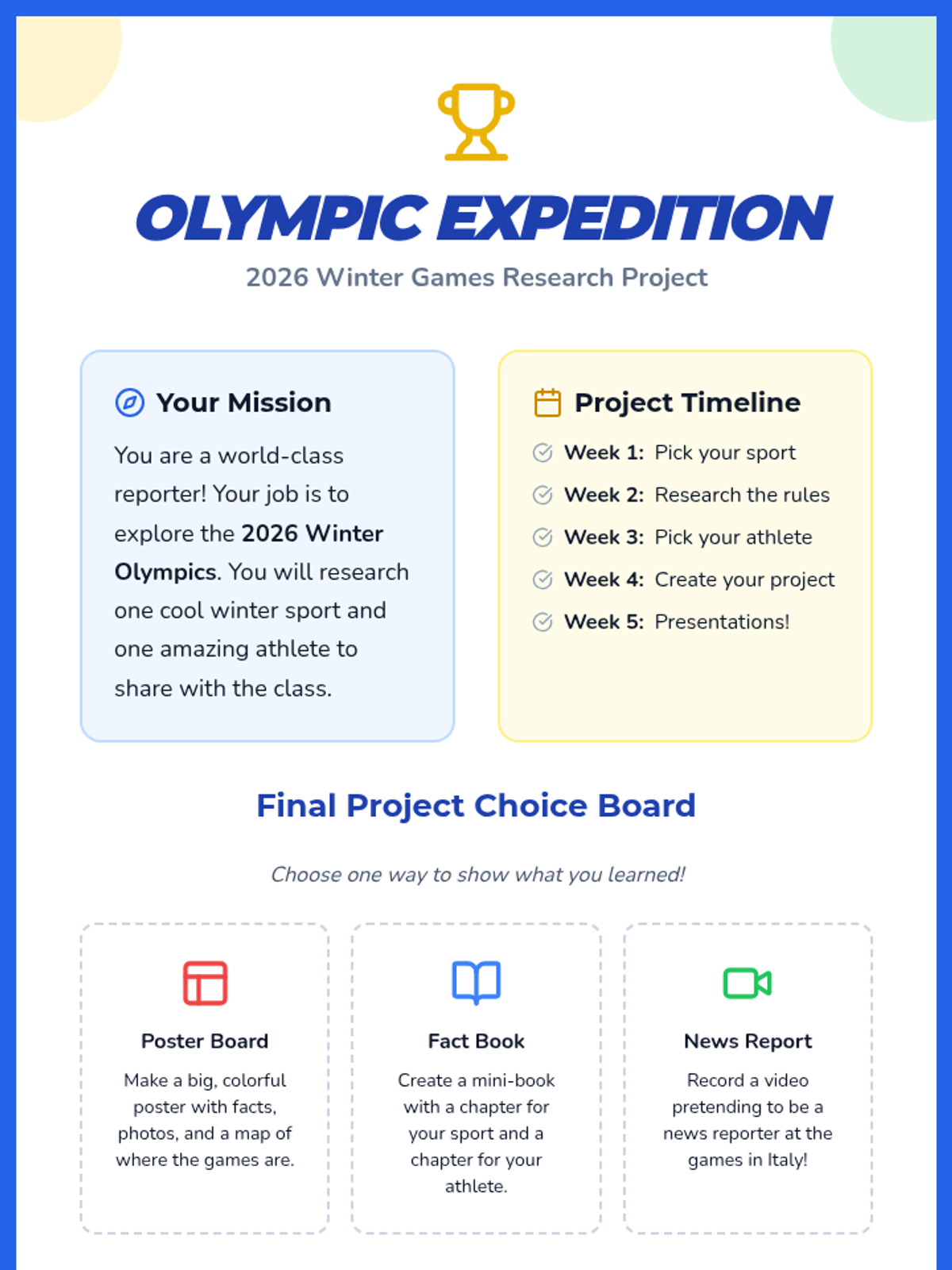
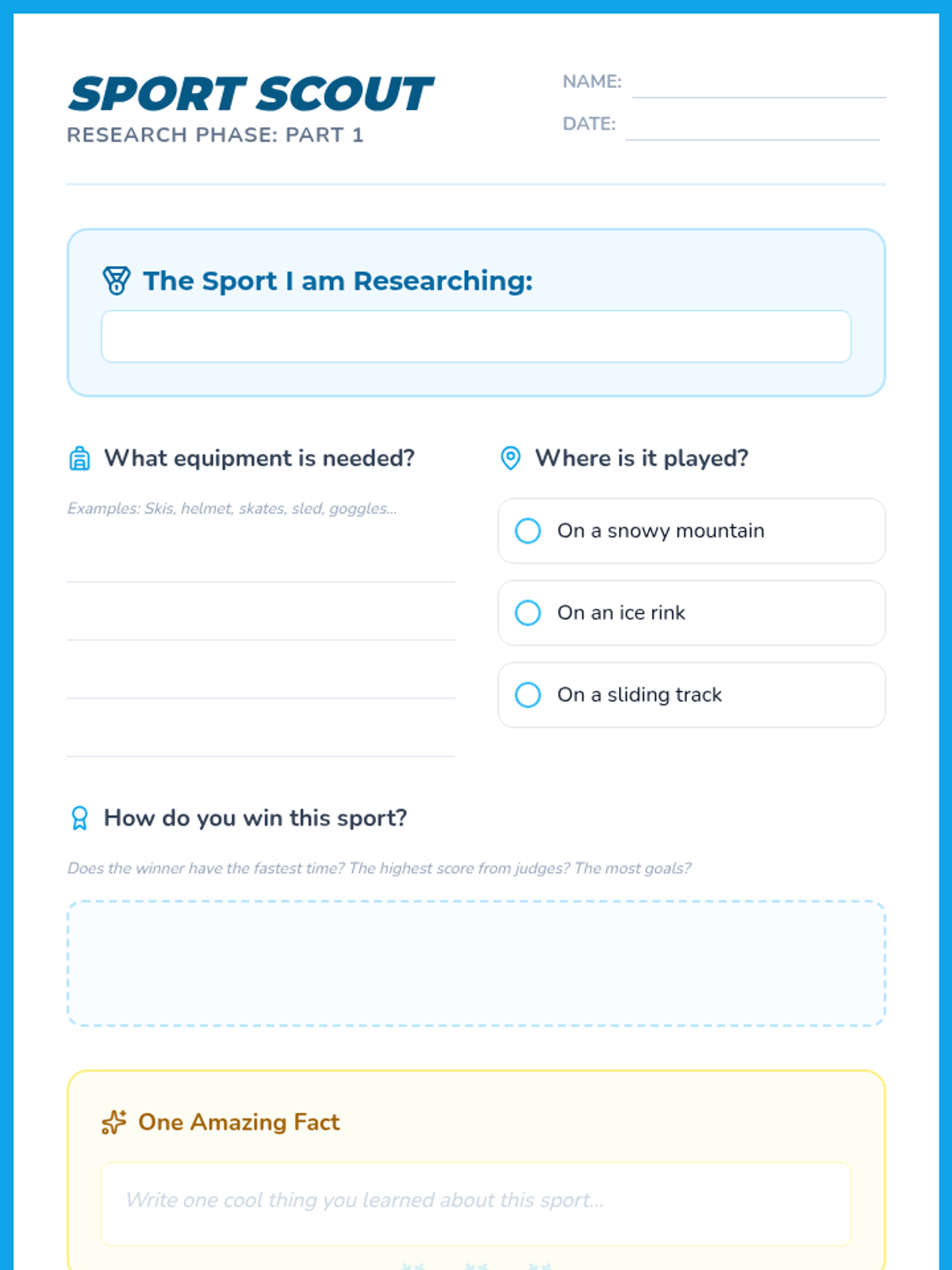
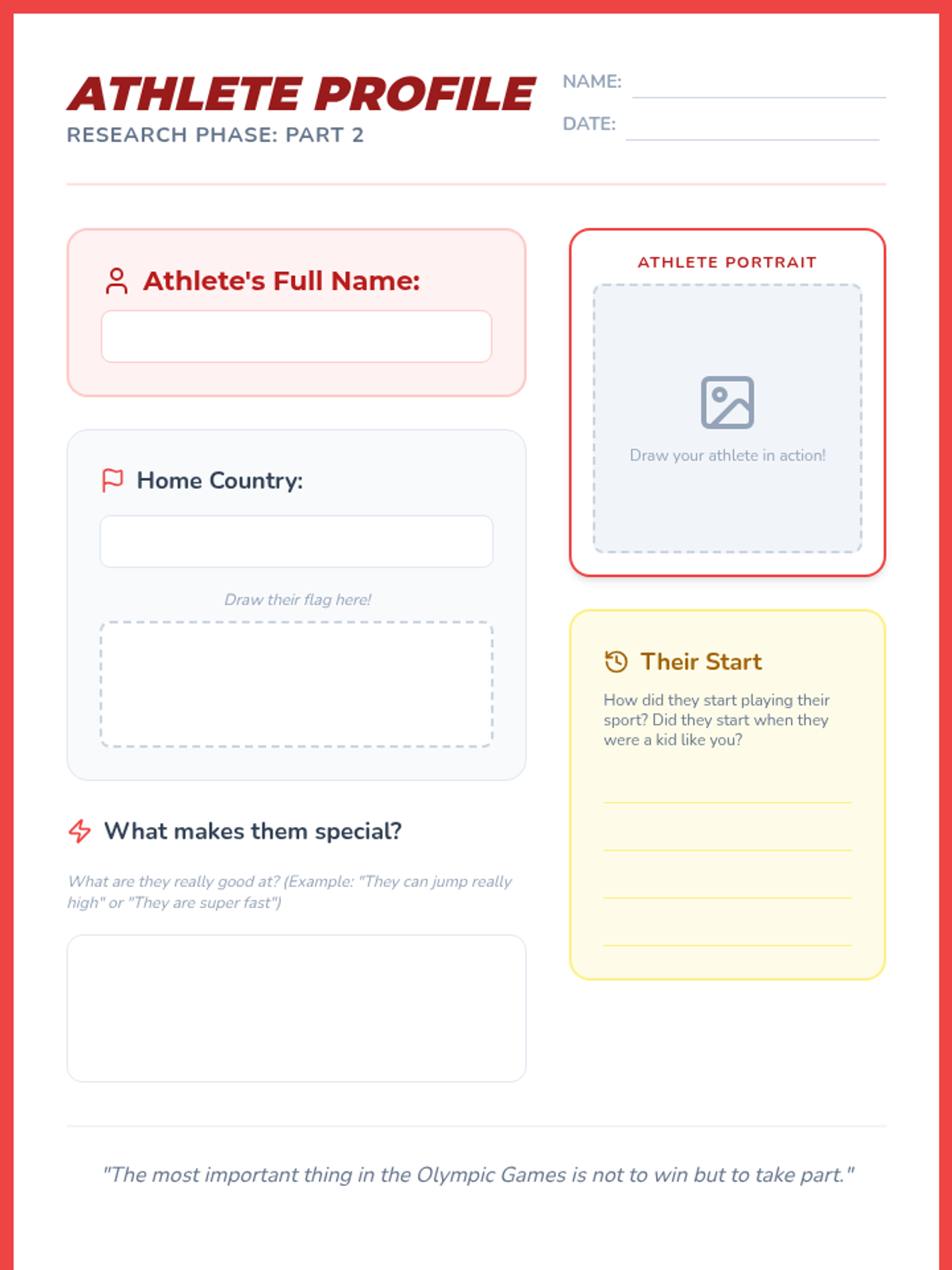
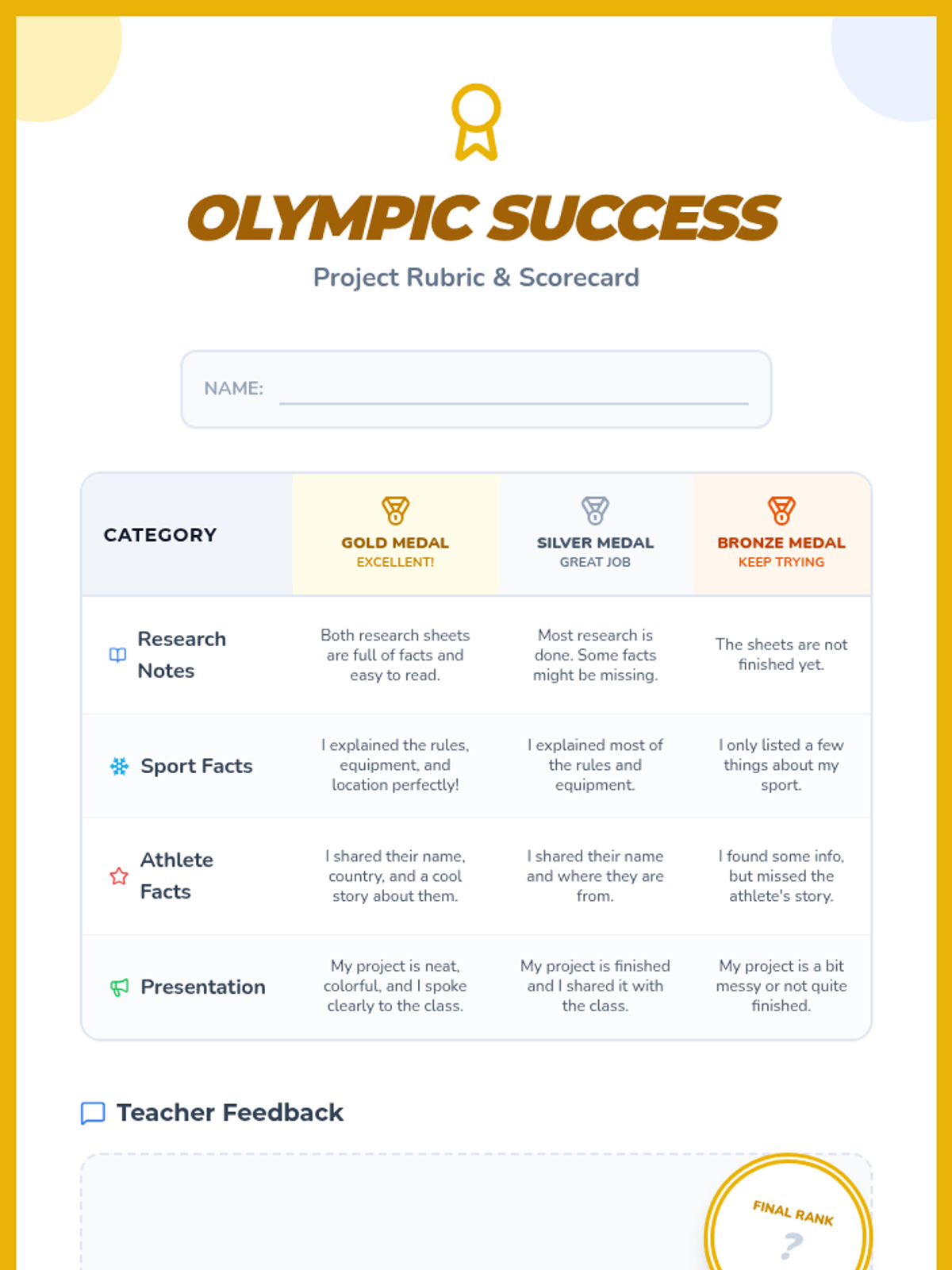
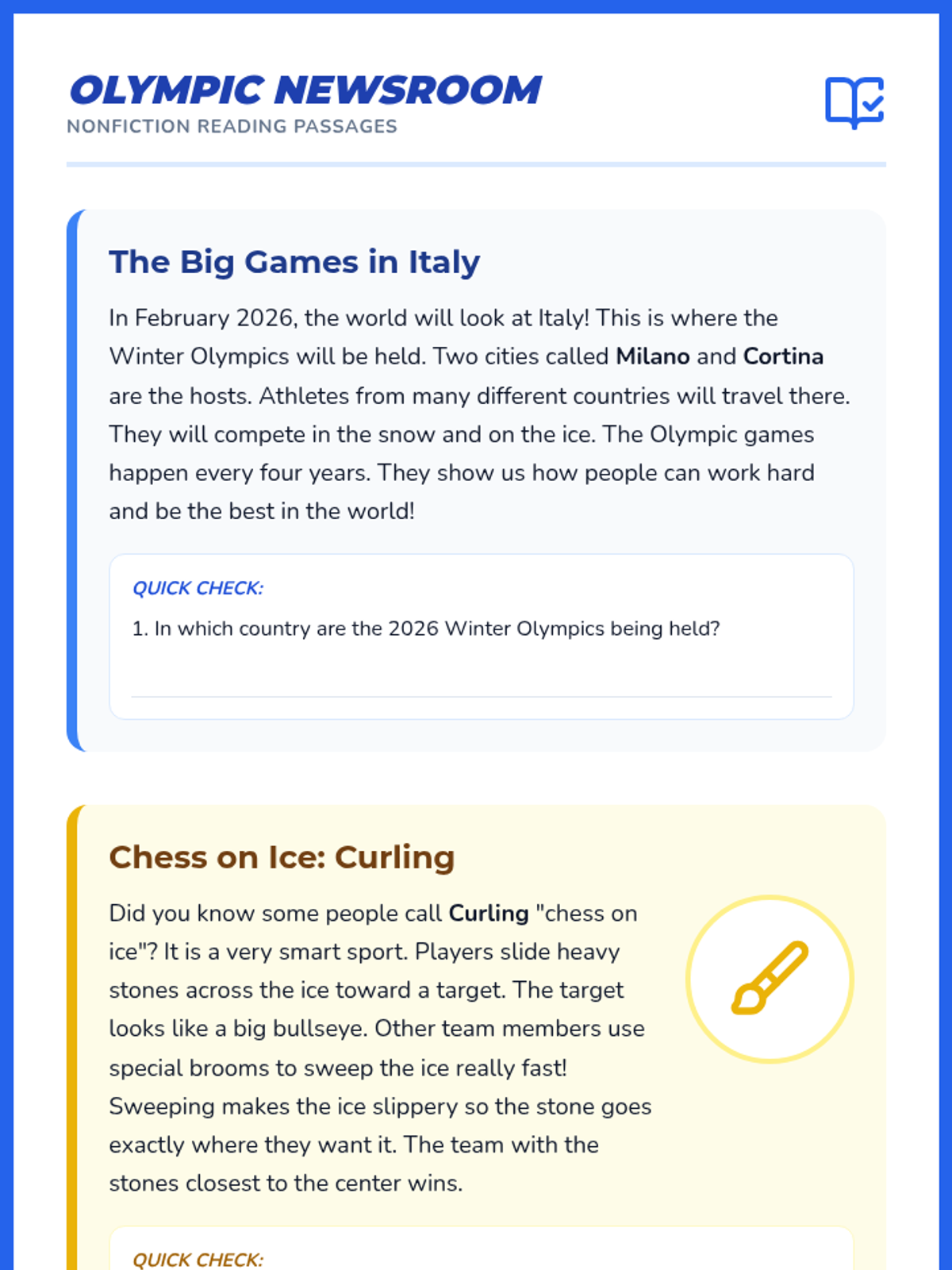
A comprehensive 5-week independent research project for 2nd graders focusing on the 2026 Winter Olympics, athletes, and sports.
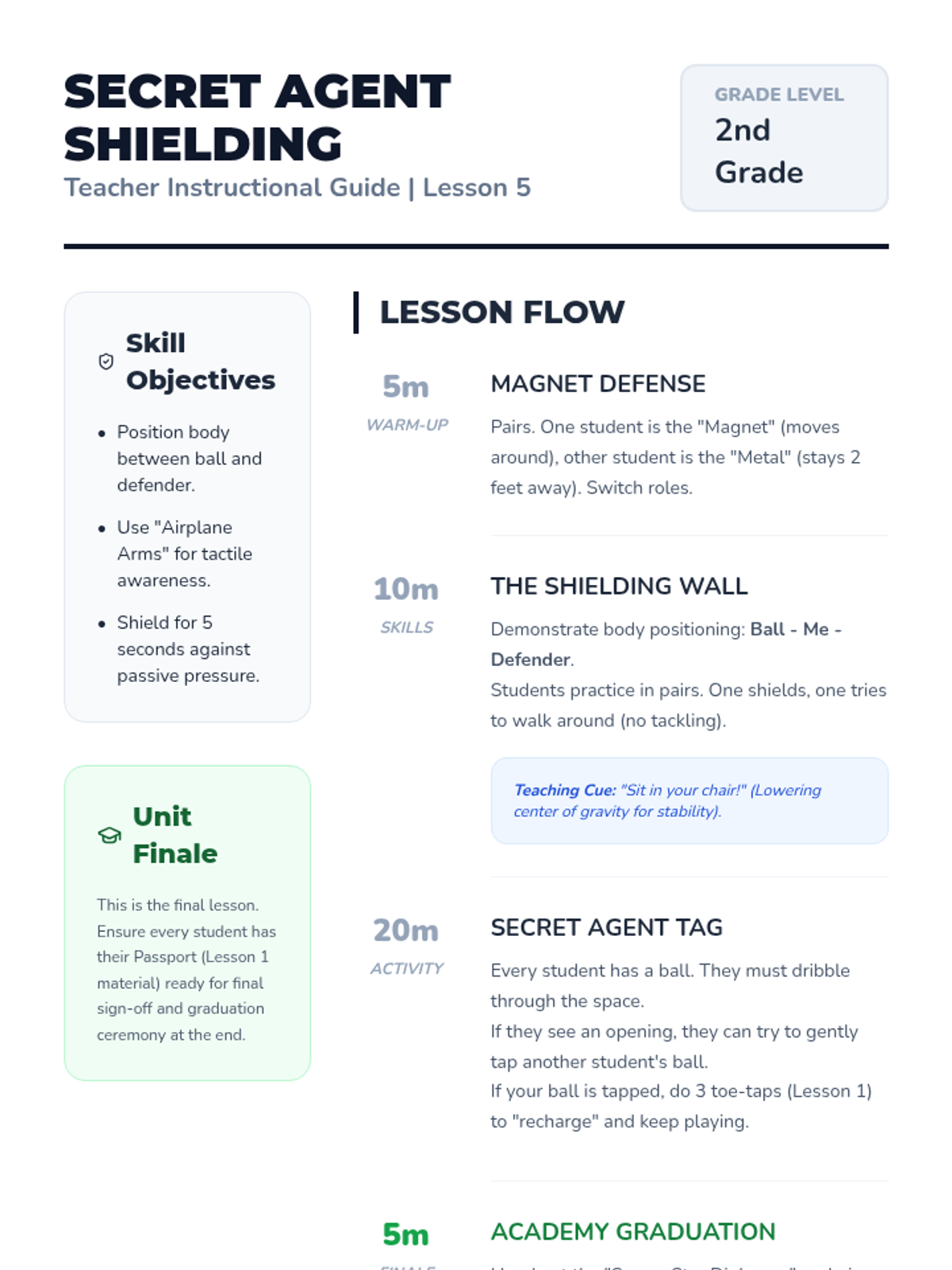
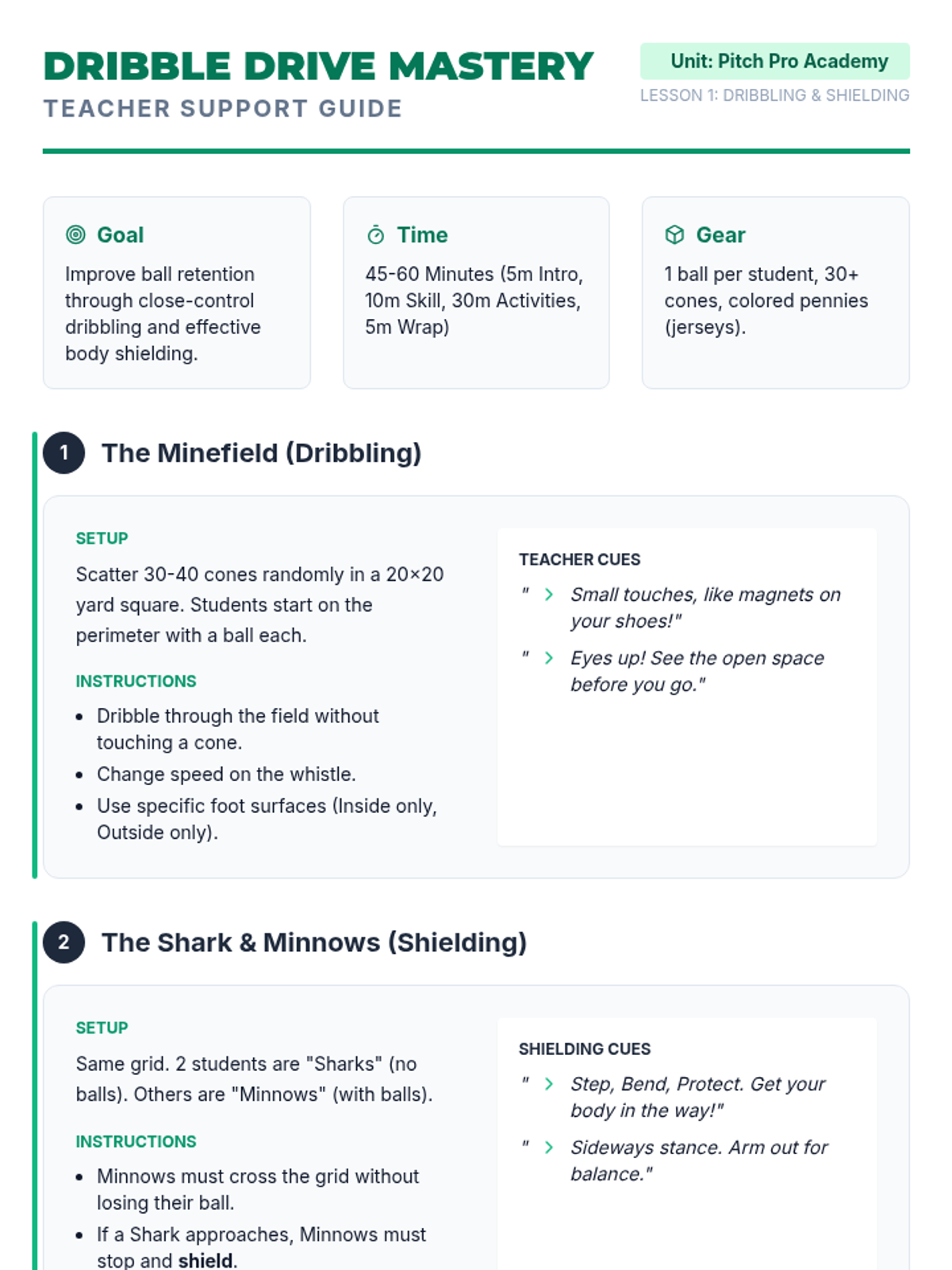
Students learn how to position their body between the ball and a defender to protect possession, concluding with a dribbling tag game.
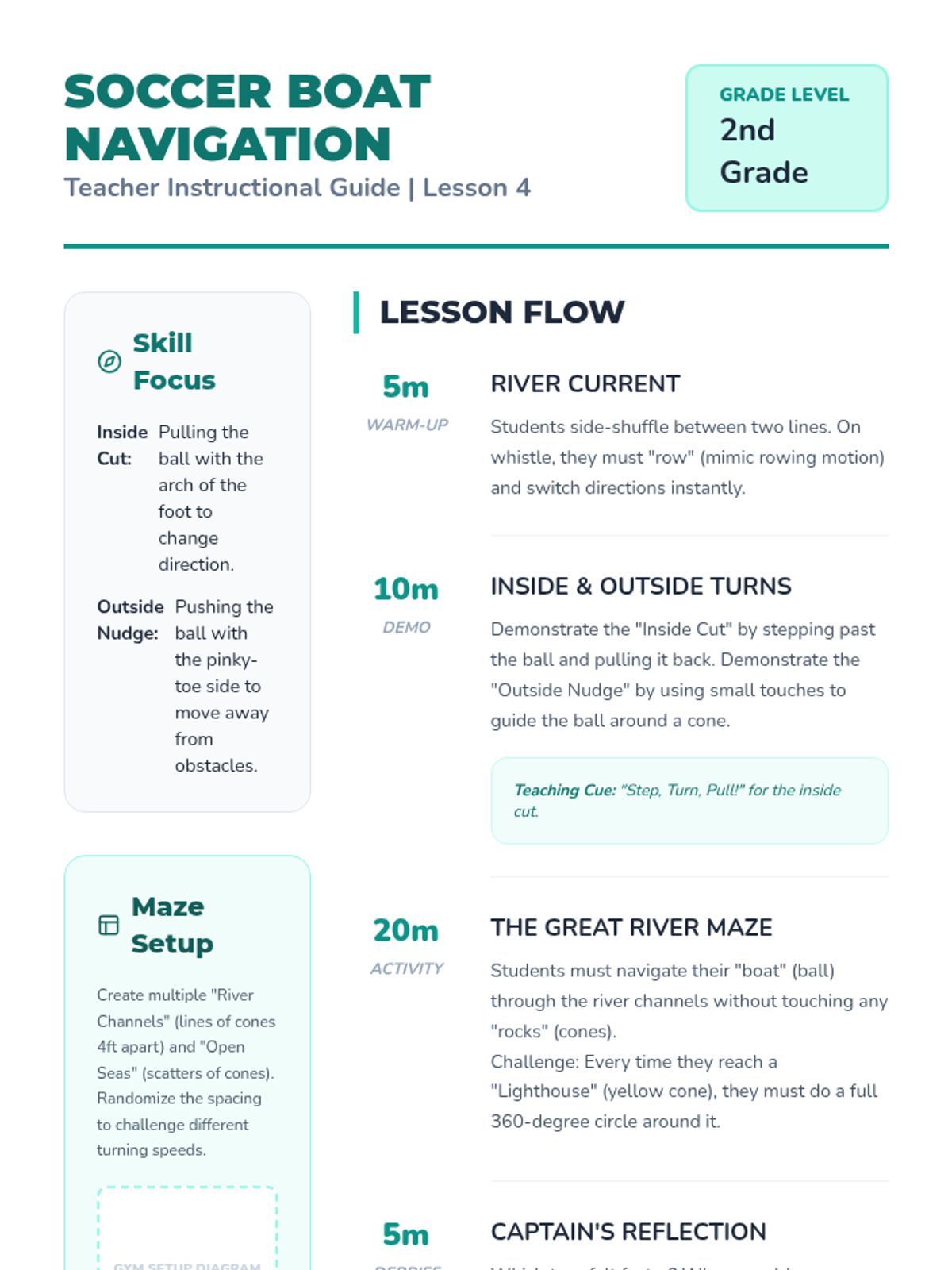
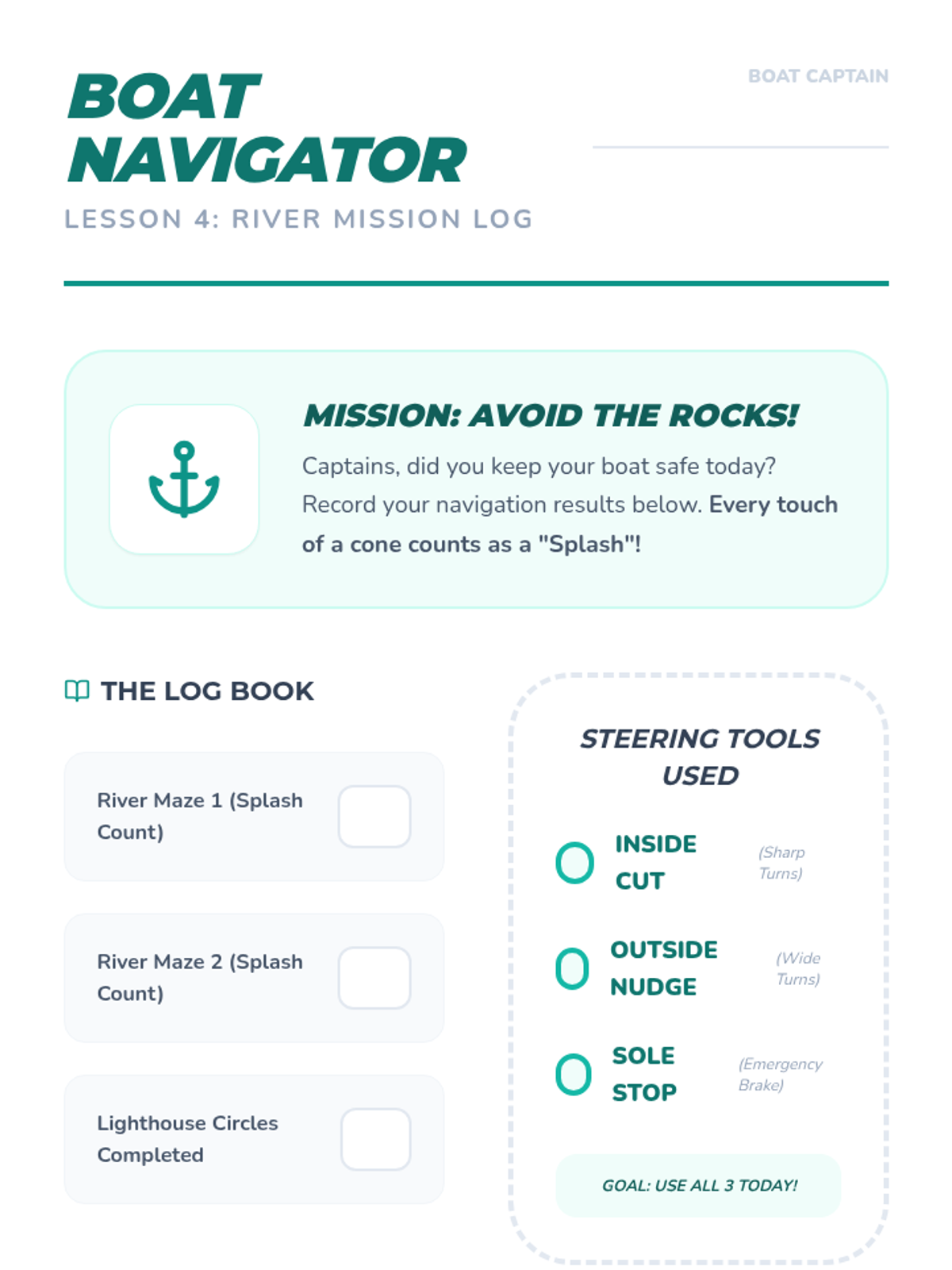
Students apply their dribbling skills to navigate through cone mazes, requiring them to turn and change direction intentionally using different surfaces of the foot.
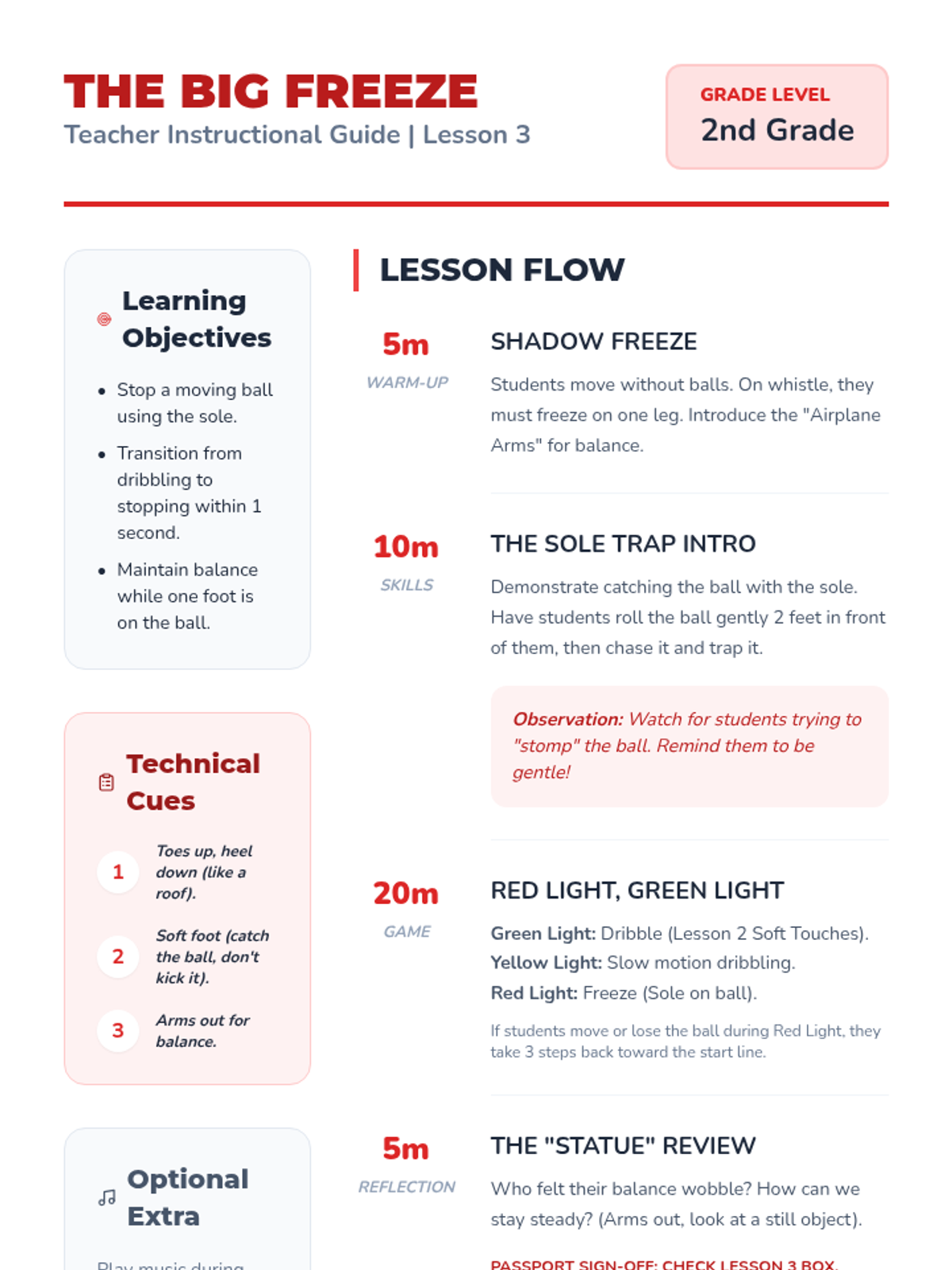
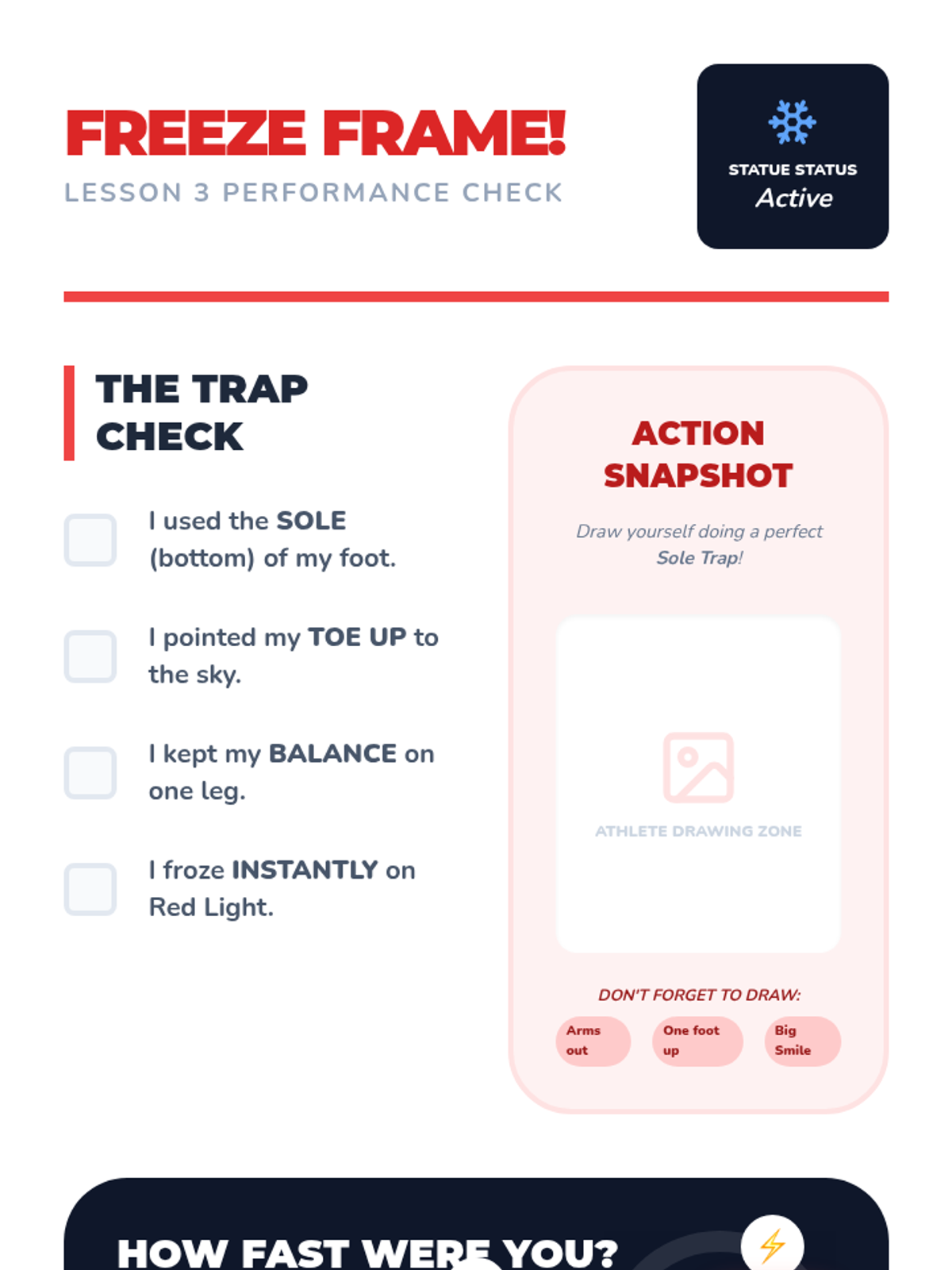
This lesson introduces specific techniques for stopping a moving ball instantly using the sole of the foot, practicing transitions from movement to a complete stop.
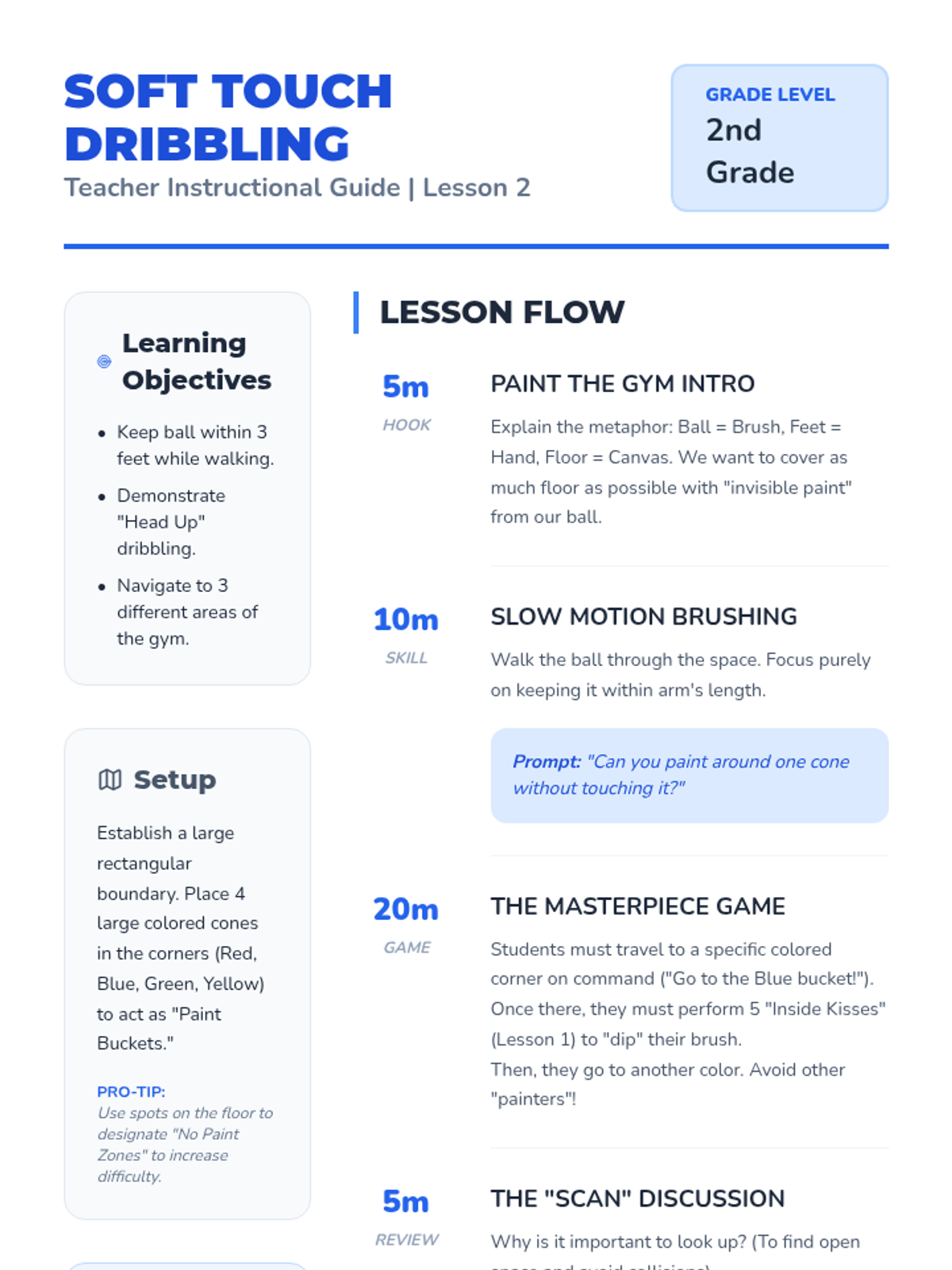
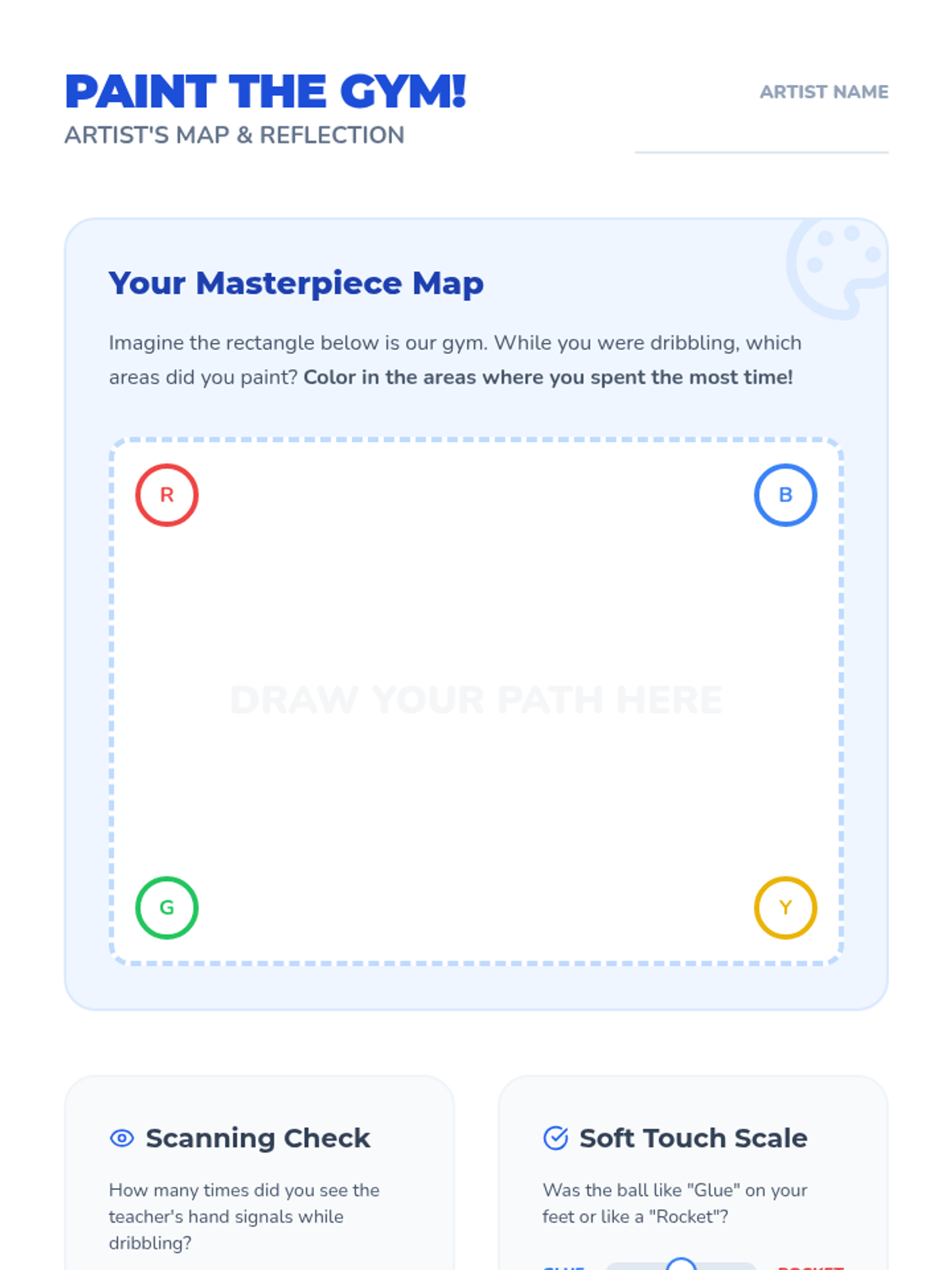
Students learn the 'soft touch' concept to keep the ball near their feet while moving around the gym, focusing on keeping their heads up to maintain spatial awareness.
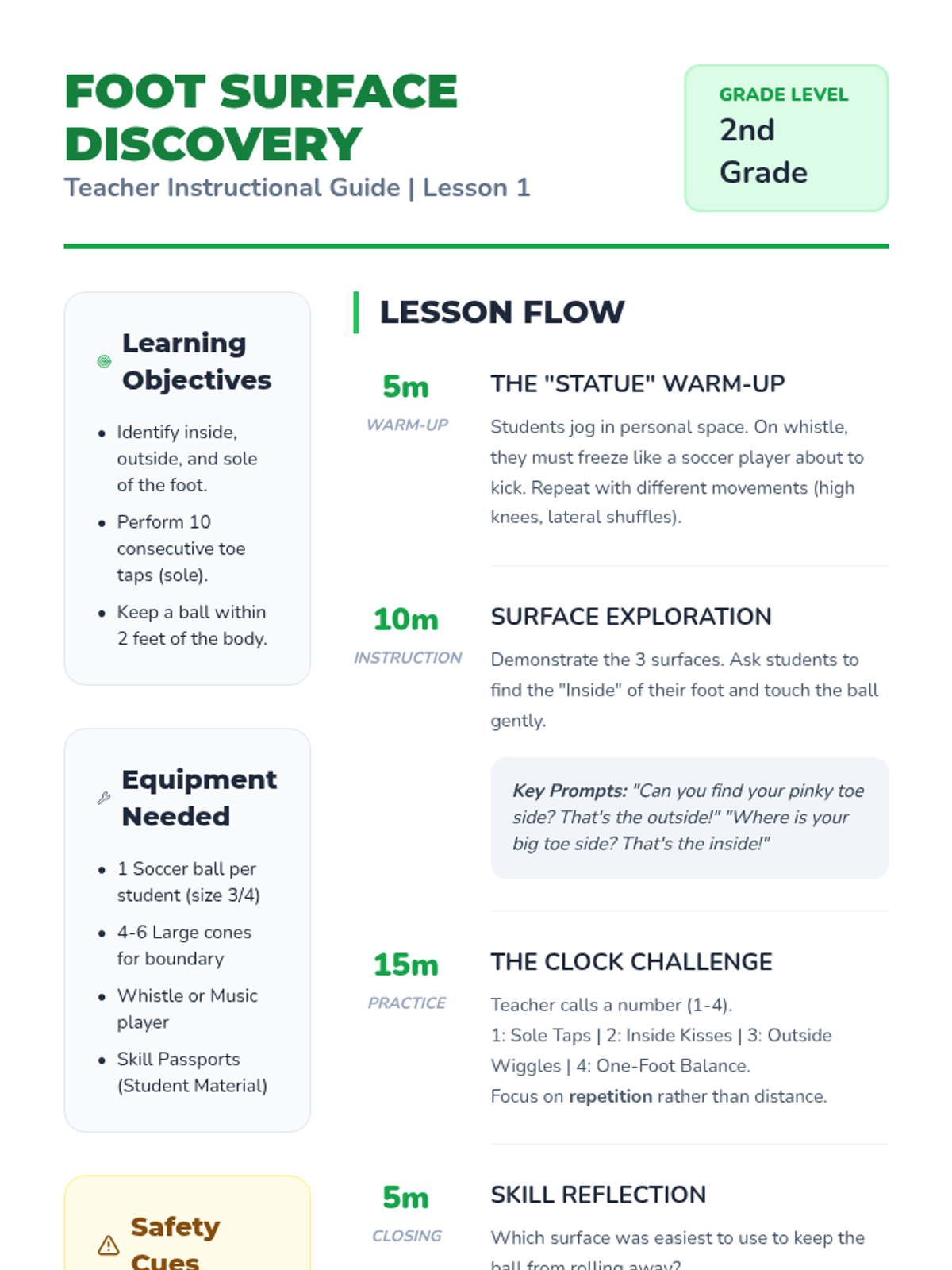
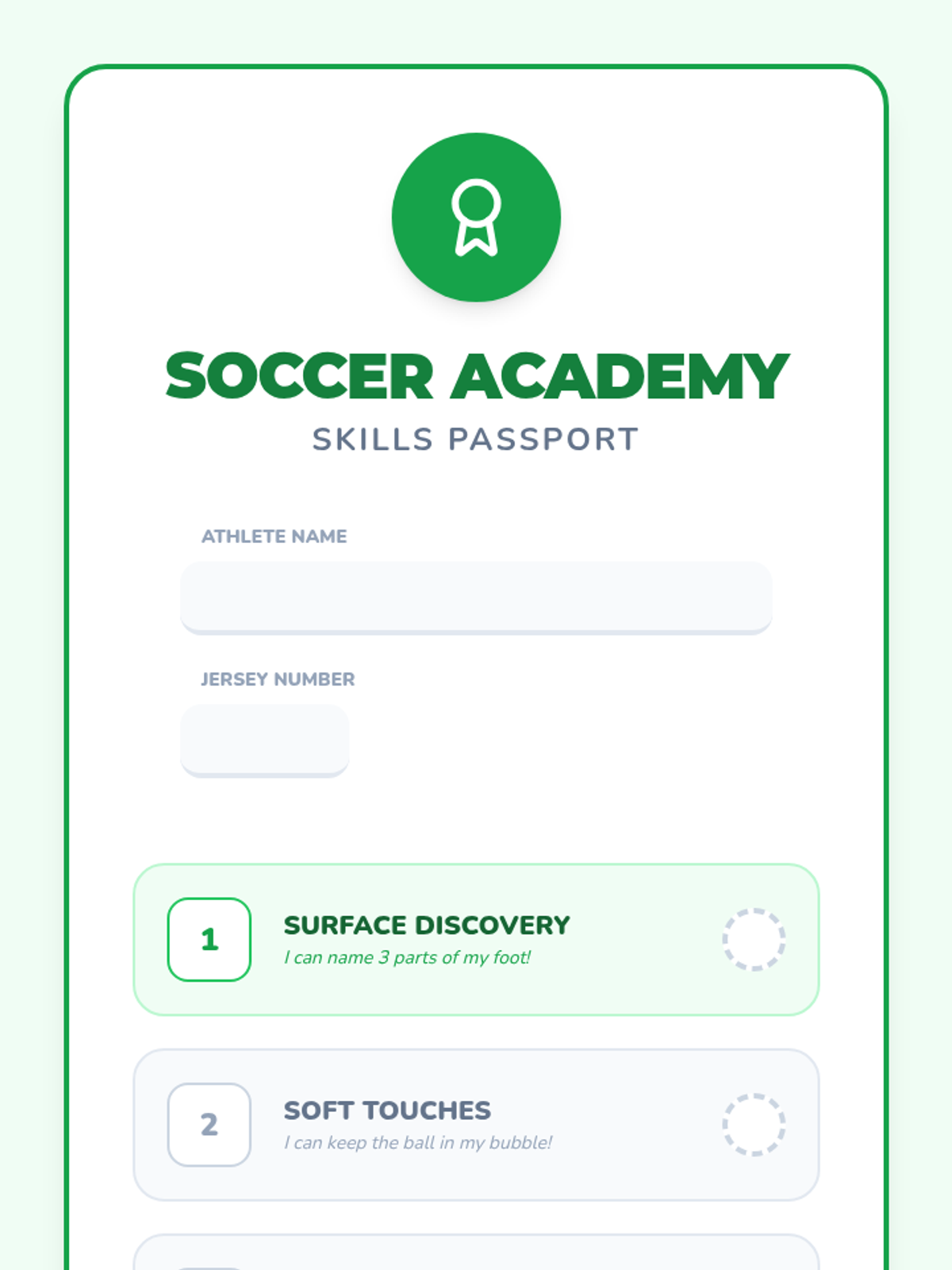
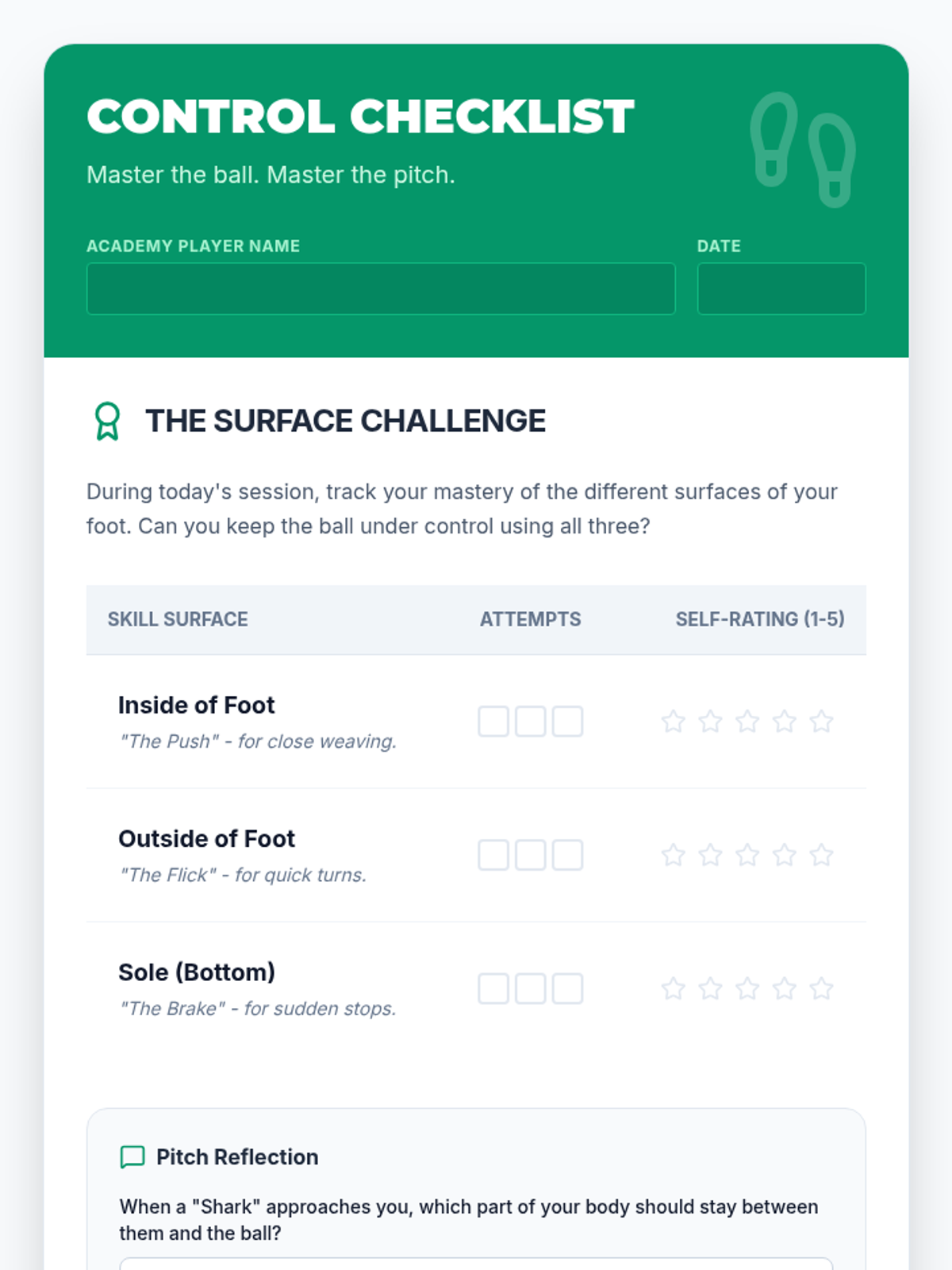
Students experiment with using the inside, outside, and sole of the foot to touch and move the ball while remaining in a small personal space, emphasizing balance and coordination without hands.
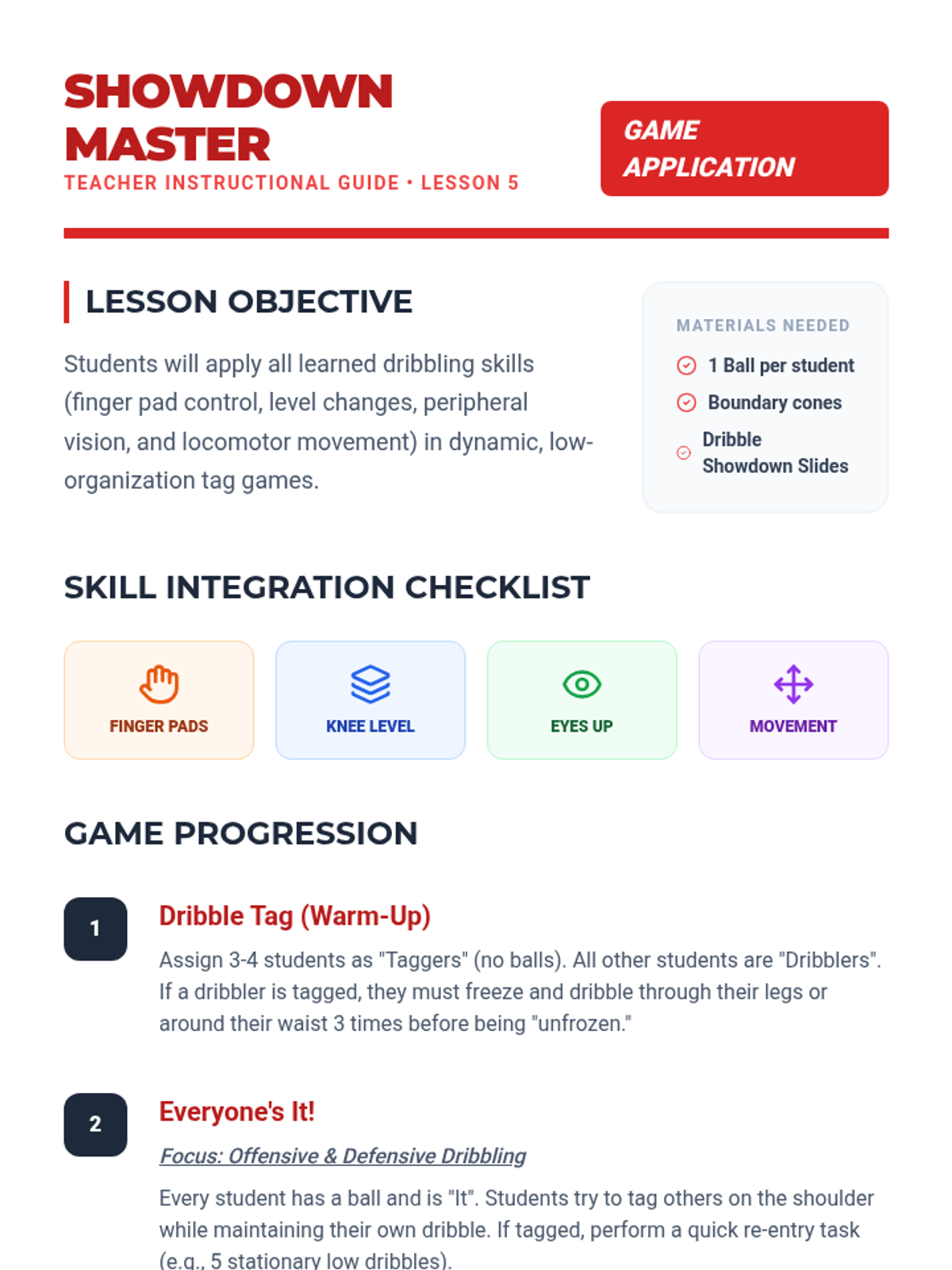
Applies all learned skills in a dynamic game environment through low-organization dribble tag.
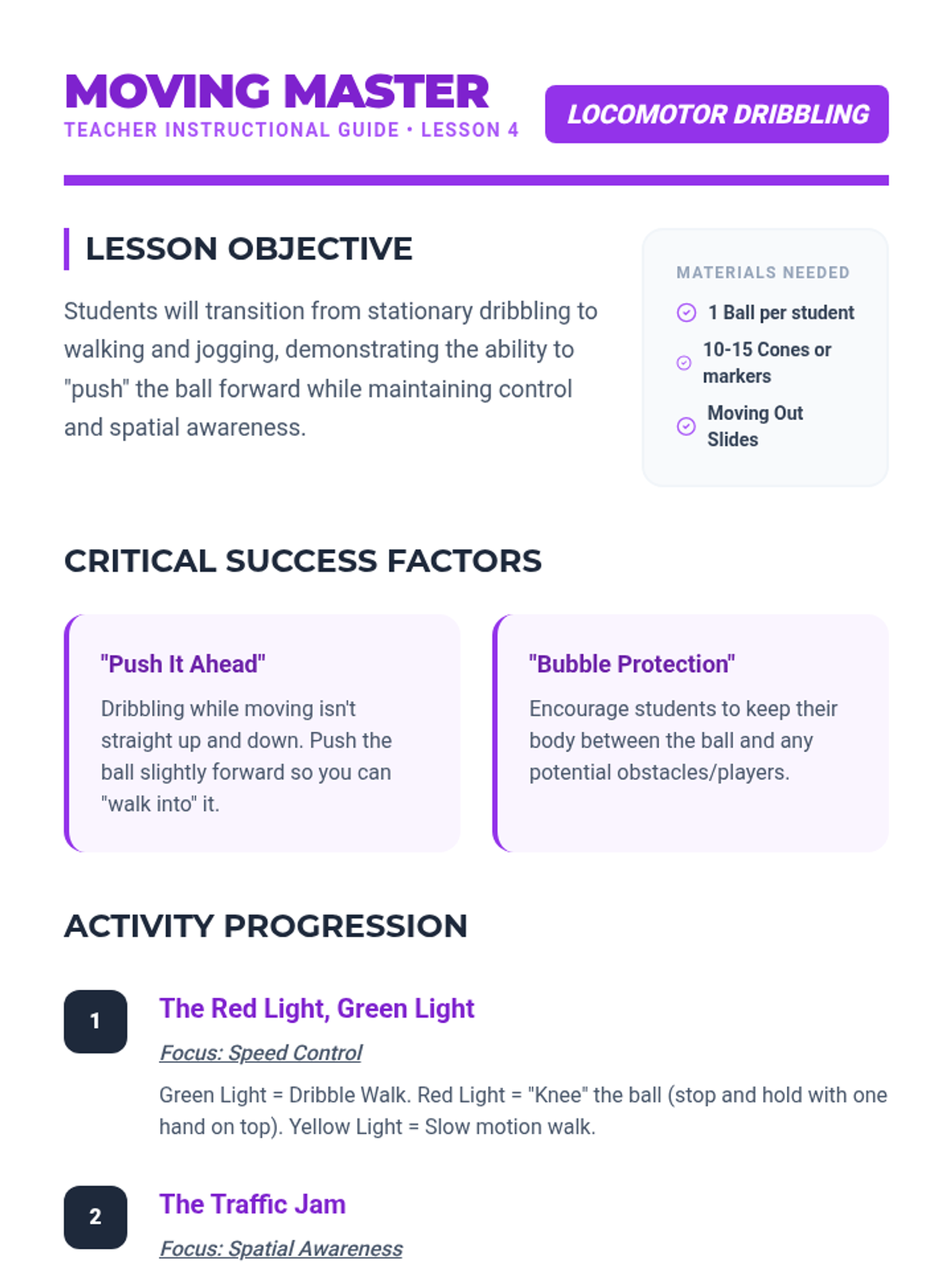
Transitions students from stationary dribbling to walking and jogging while protecting the ball.
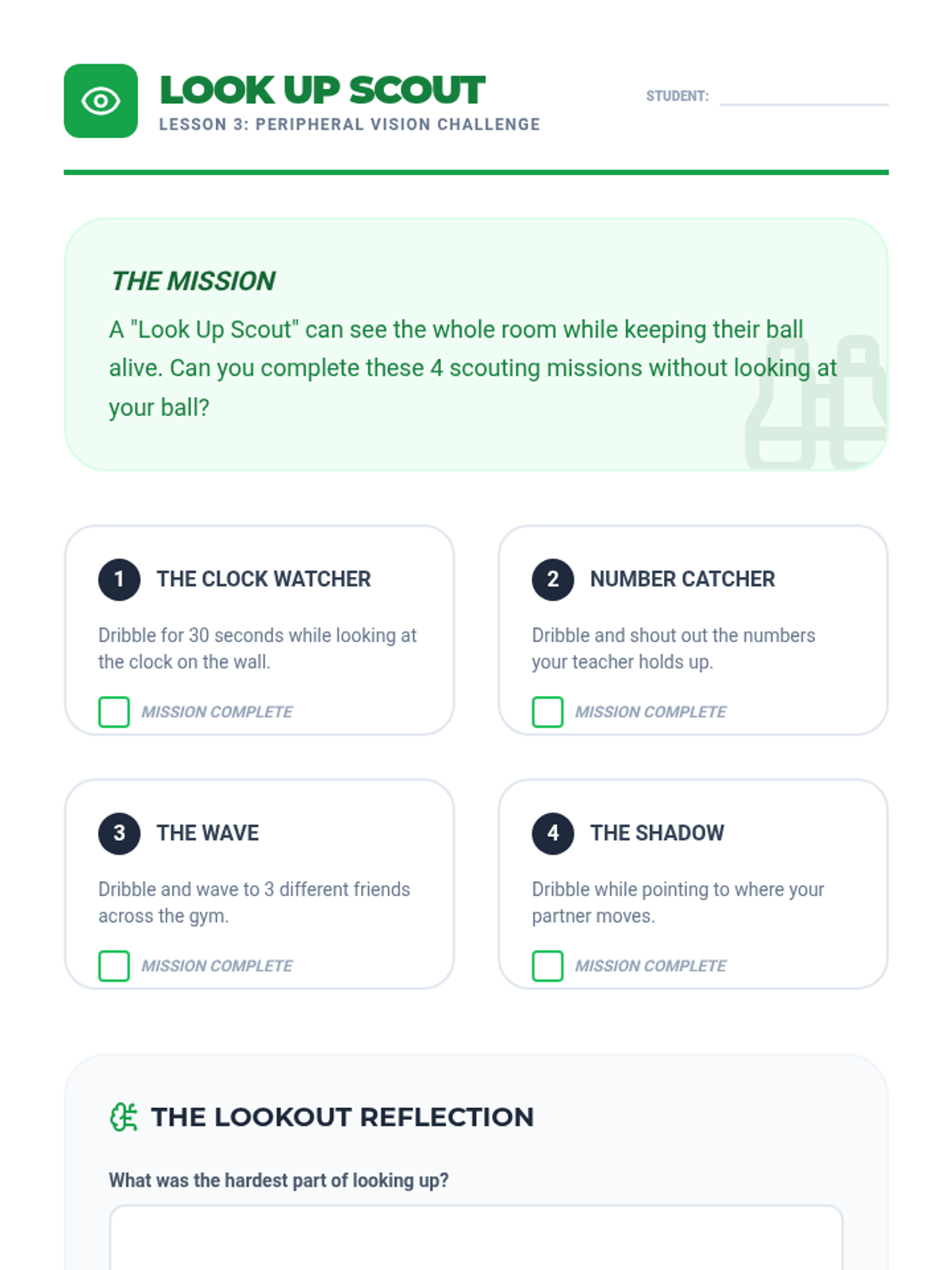
Challenges students to dribble without looking at the ball, developing peripheral vision and spatial awareness.
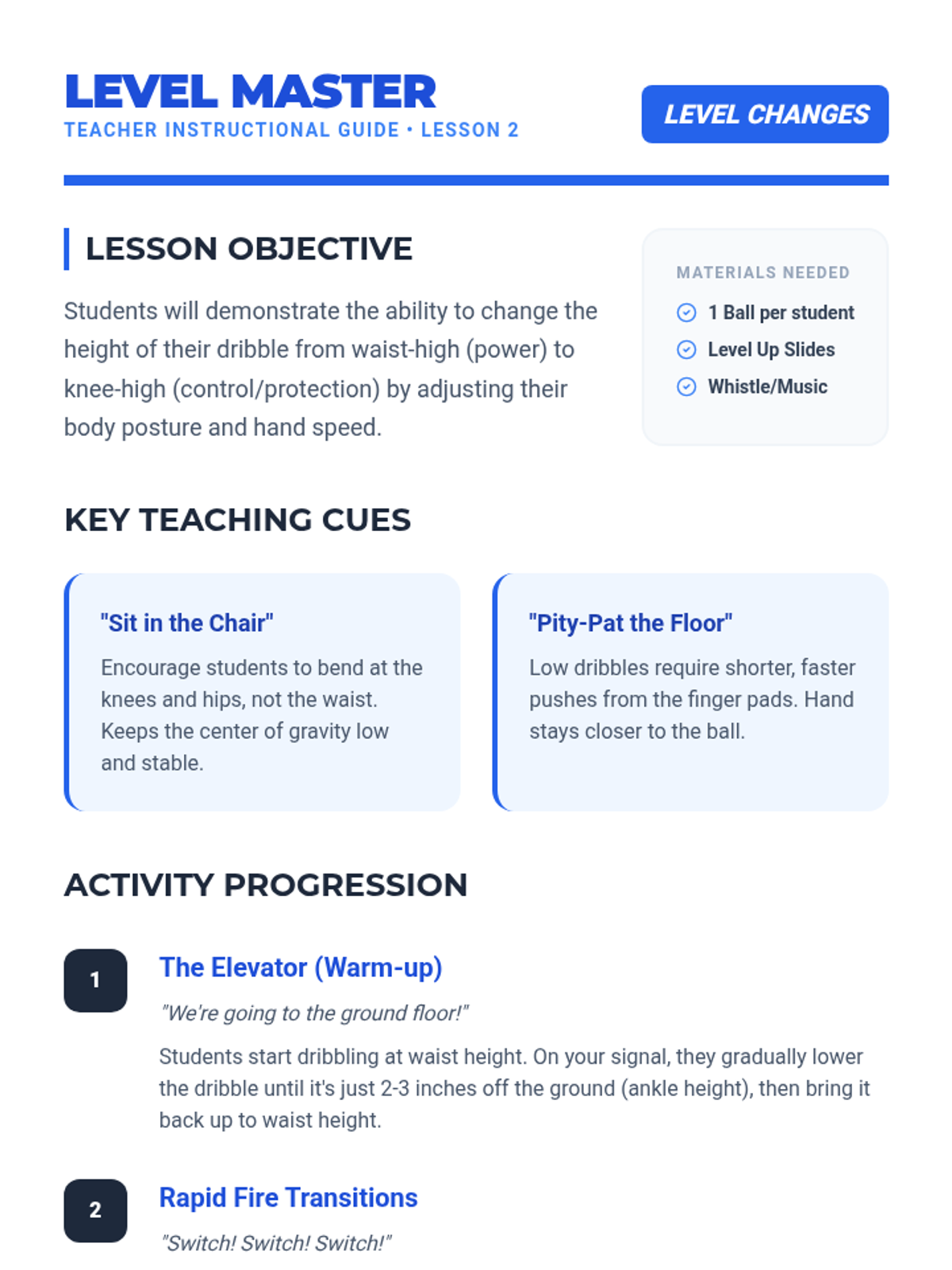
Explores changing dribble heights from knee to waist level while maintaining body posture and control.
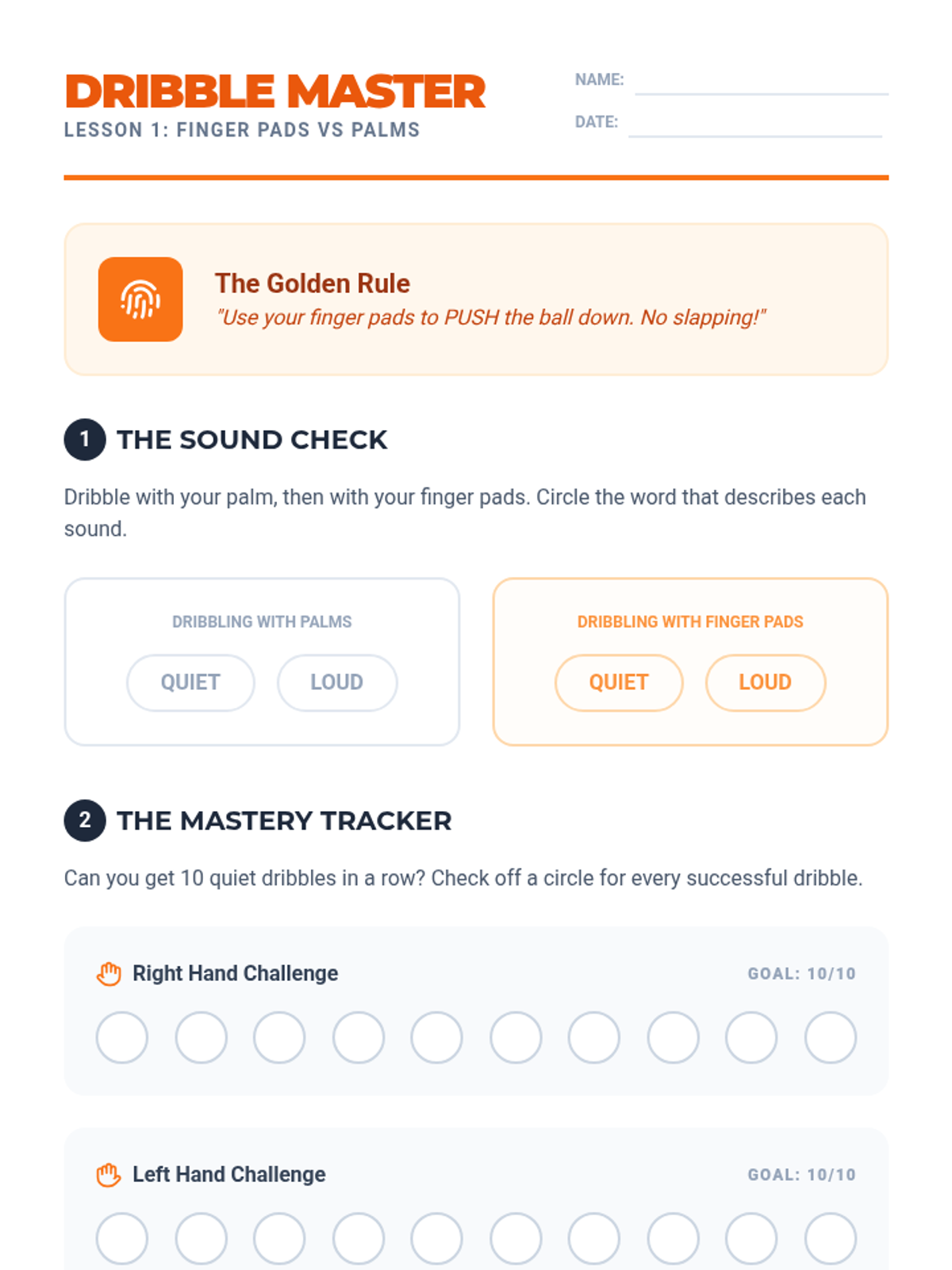
Focuses on hand placement and the 'push' vs 'slap' technique using finger pads for control and rhythm.
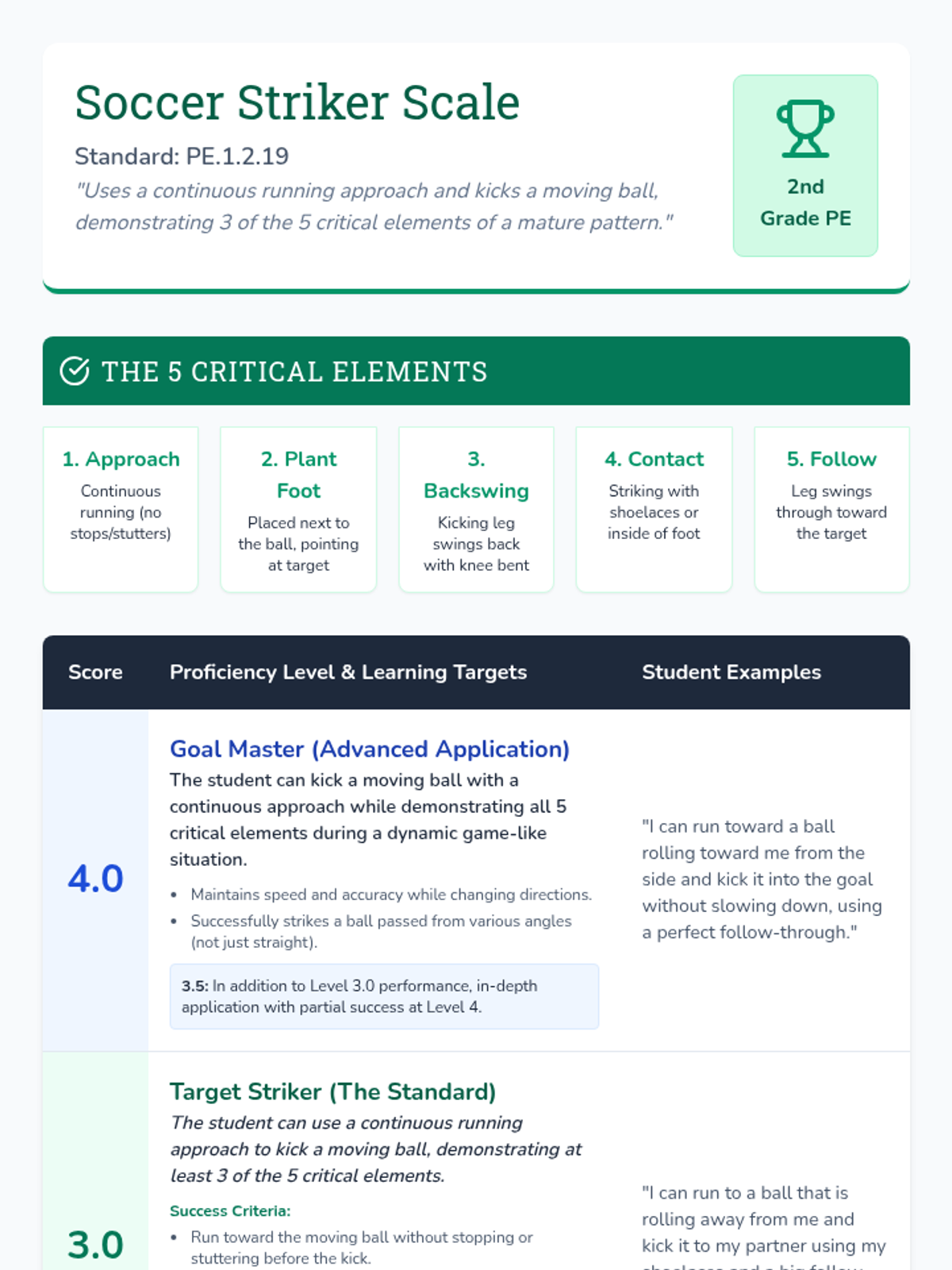
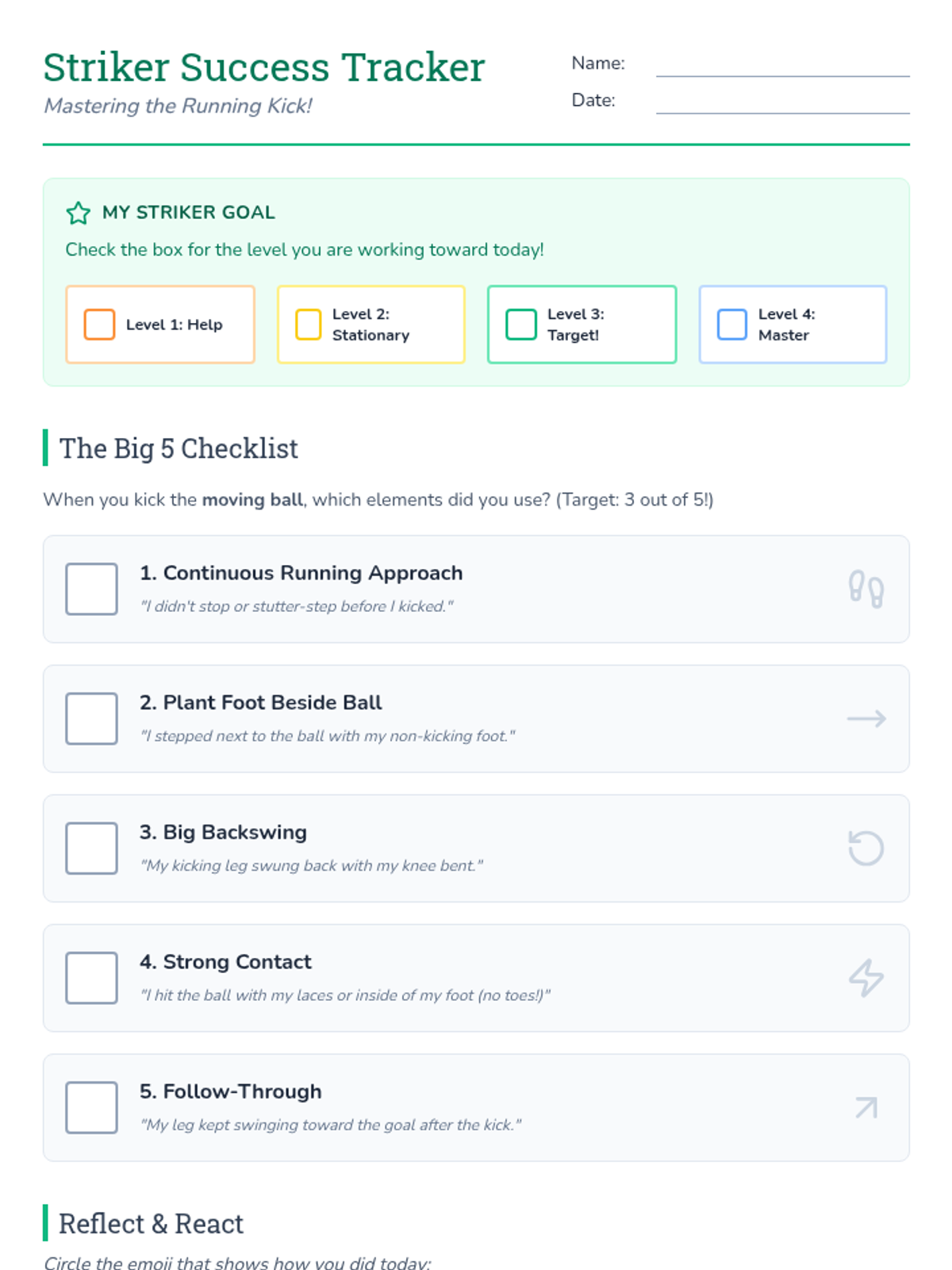
This lesson focuses on mastering the skill of kicking a moving ball while running, specifically targeting the 2nd Grade PE standard PE.1.2.19 through clear proficiency scales and student tracking.
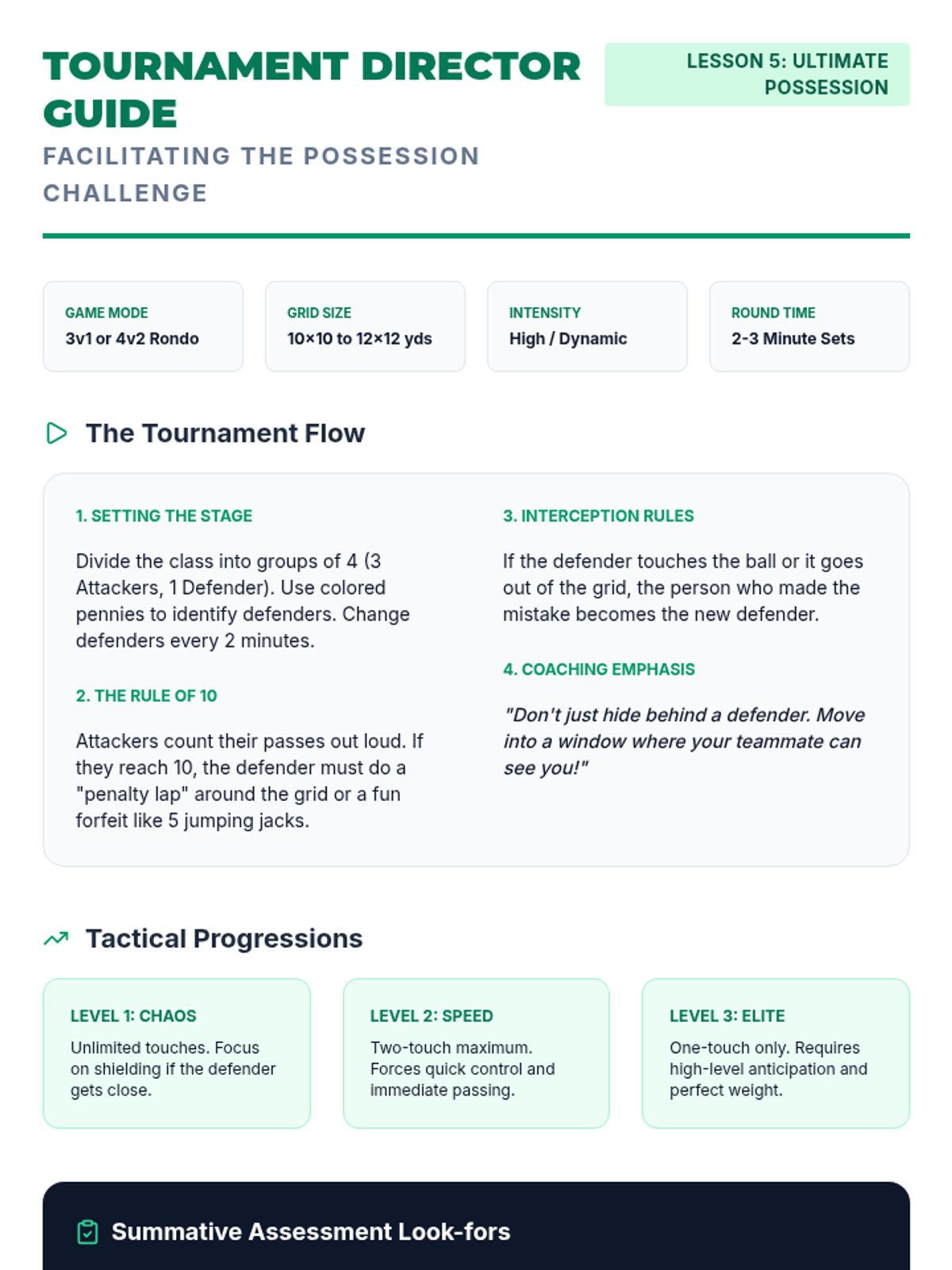
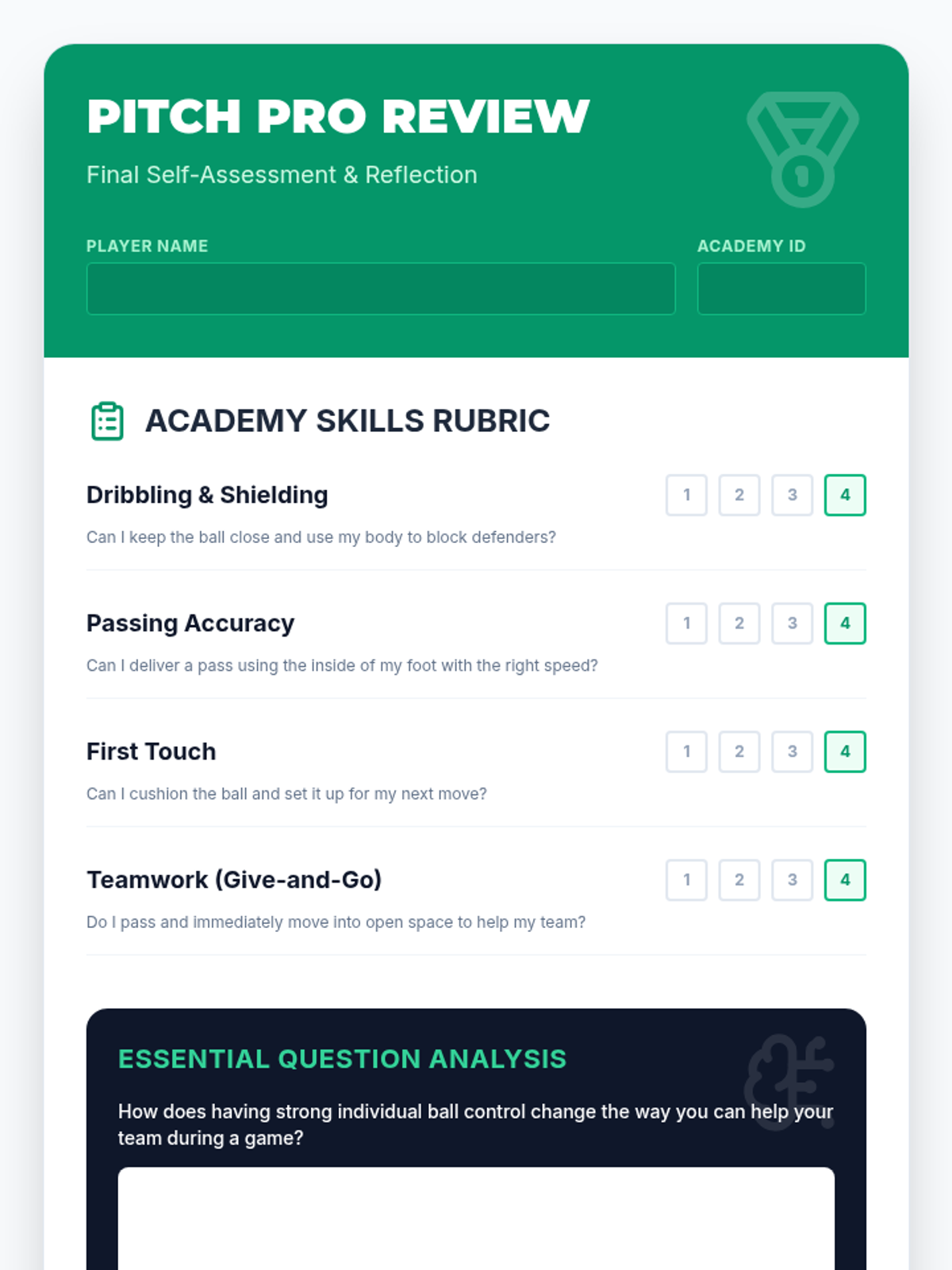
A culmination of skills applied in small-sided possession games focusing on decision-making.
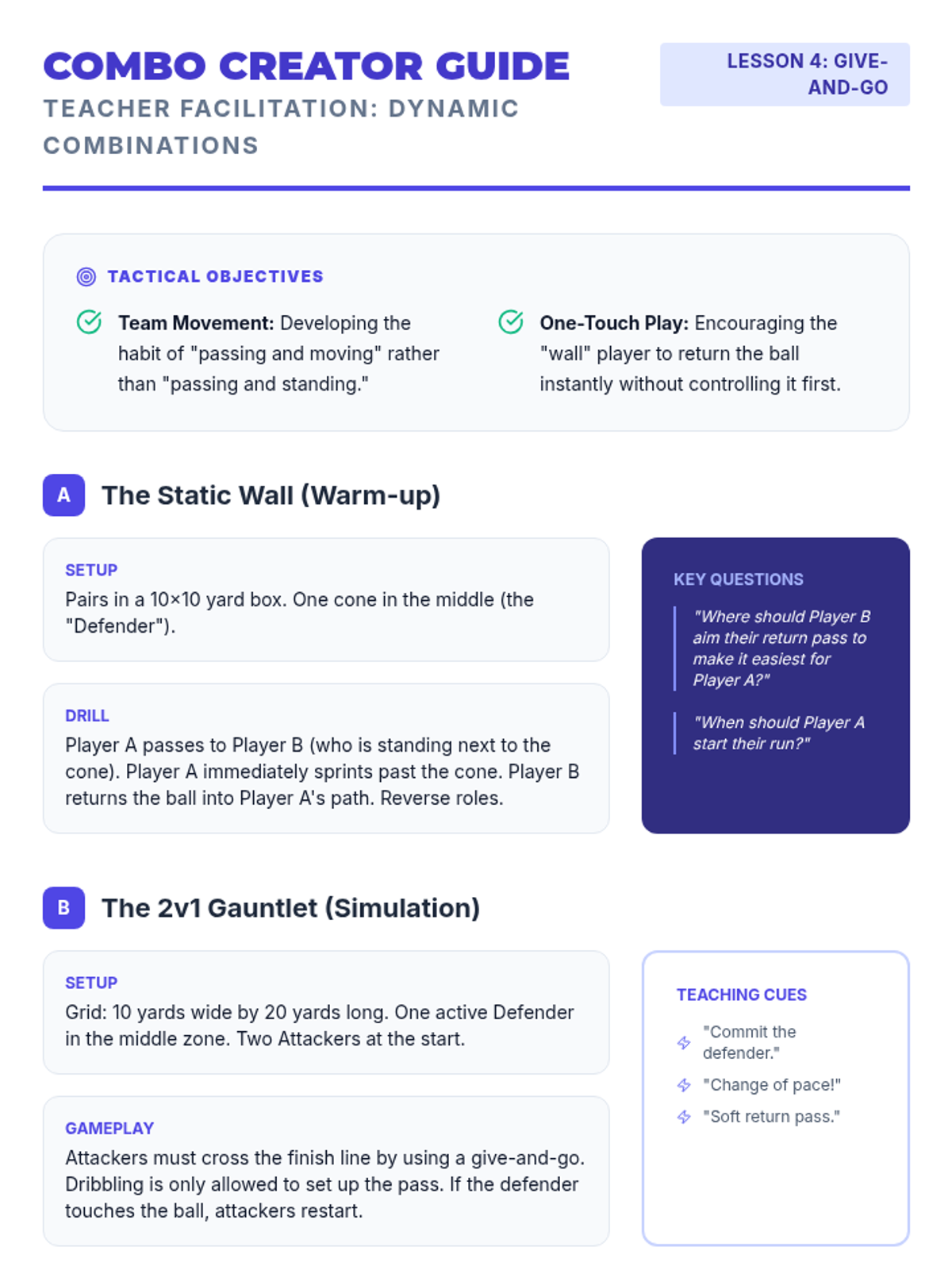
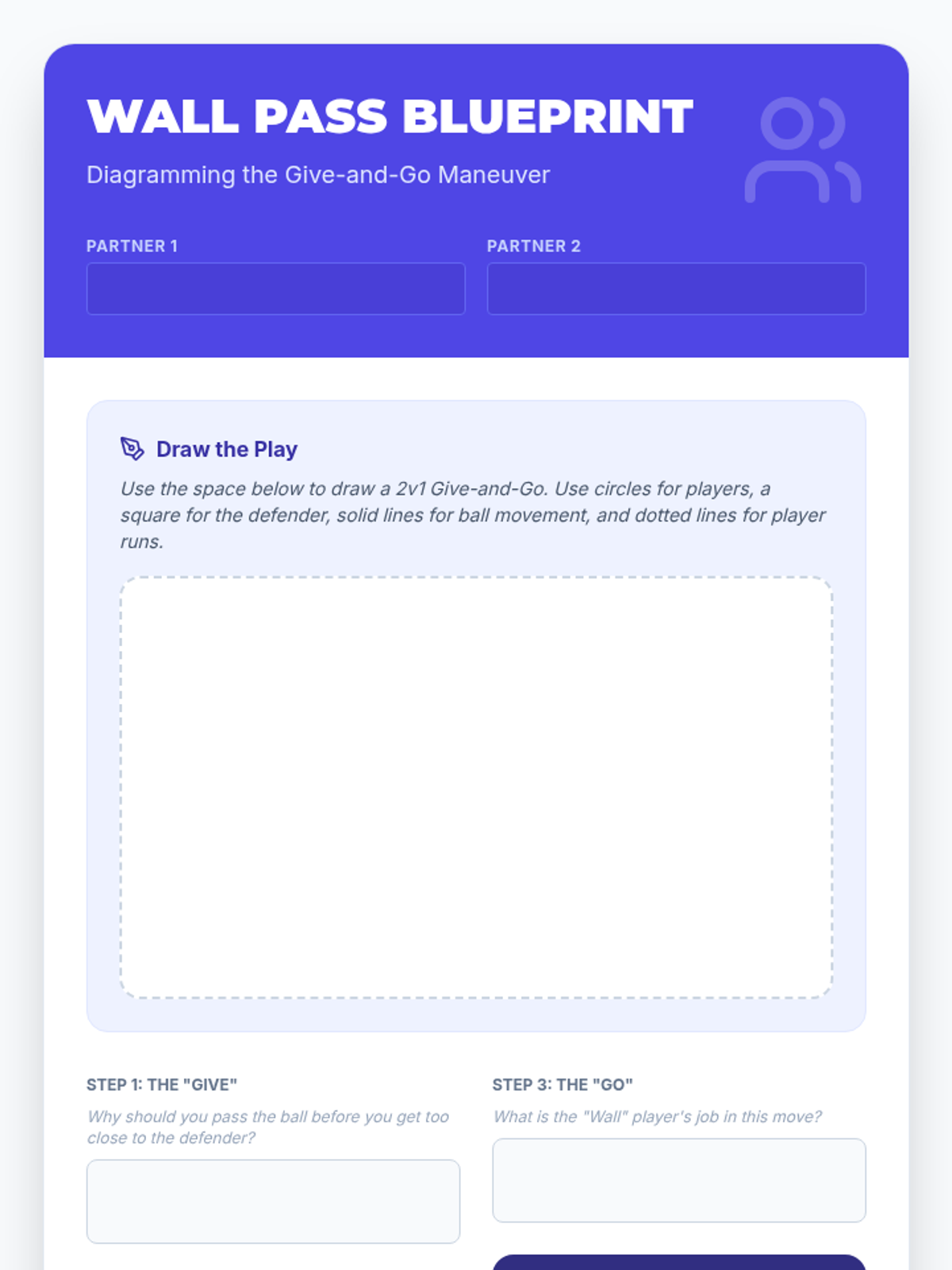
Introduces the wall pass or give-and-go as a way to bypass defenders through teamwork.
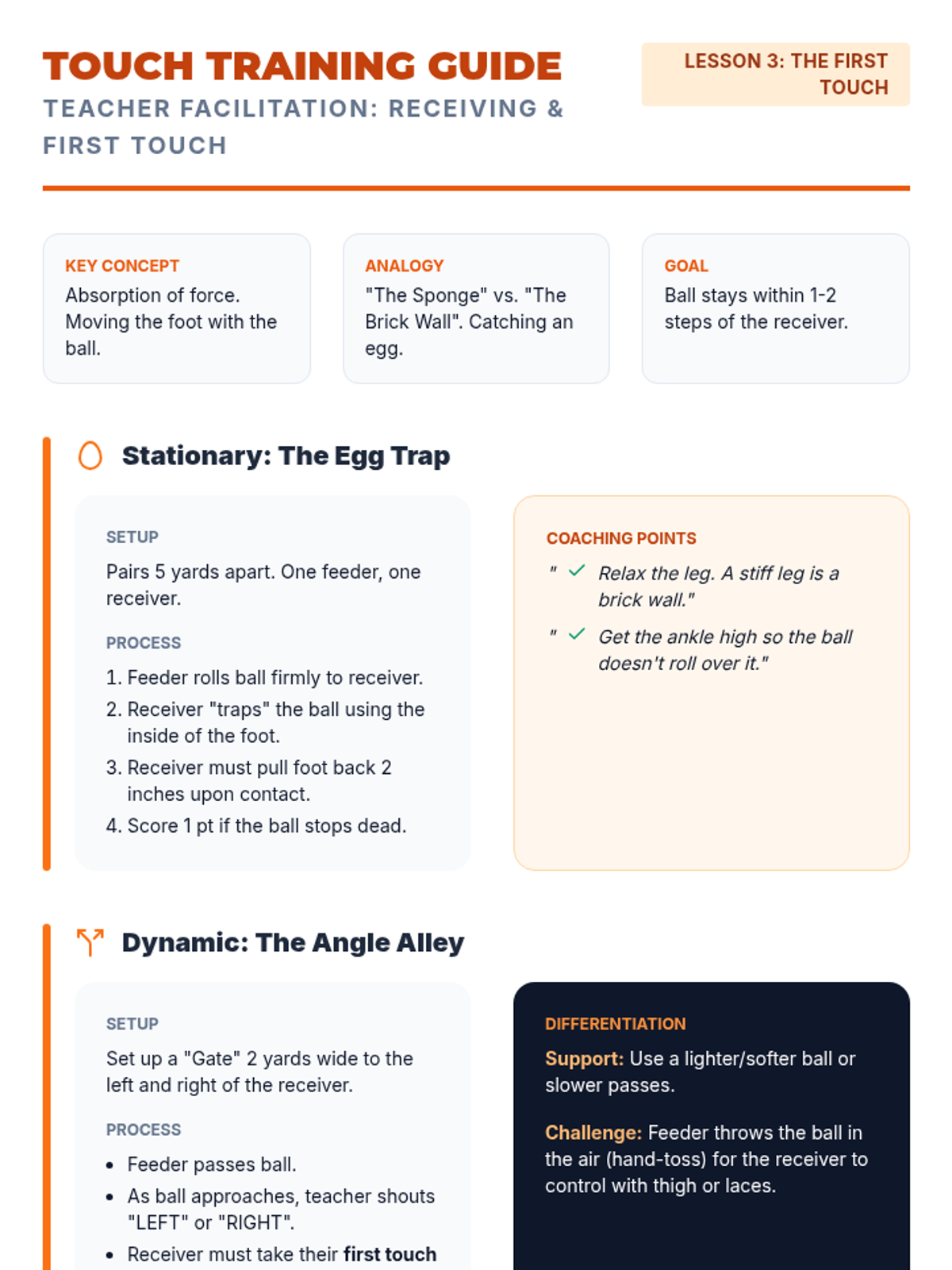
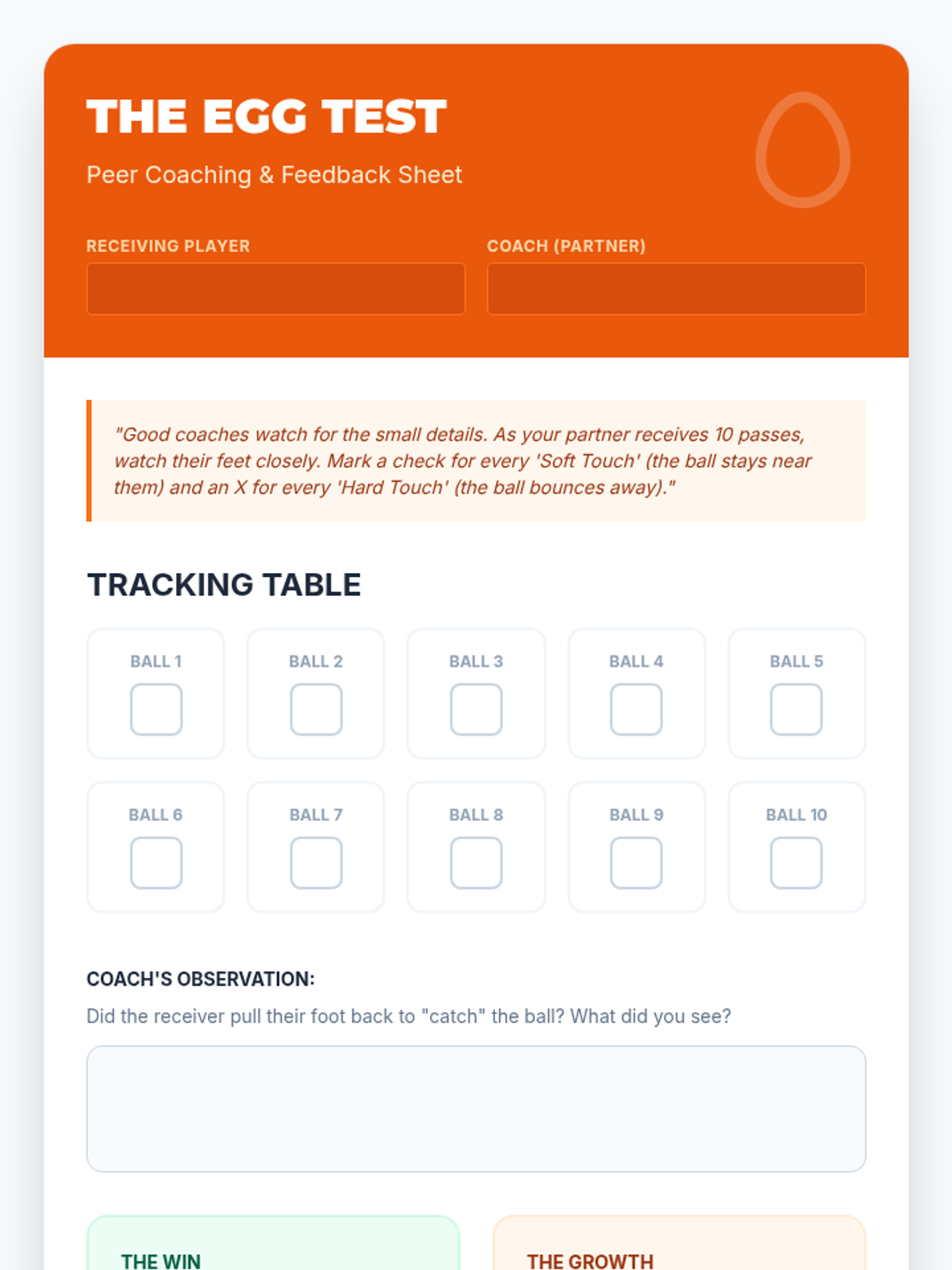
Teaches students how to cushion the ball's impact to maintain control during the first touch.
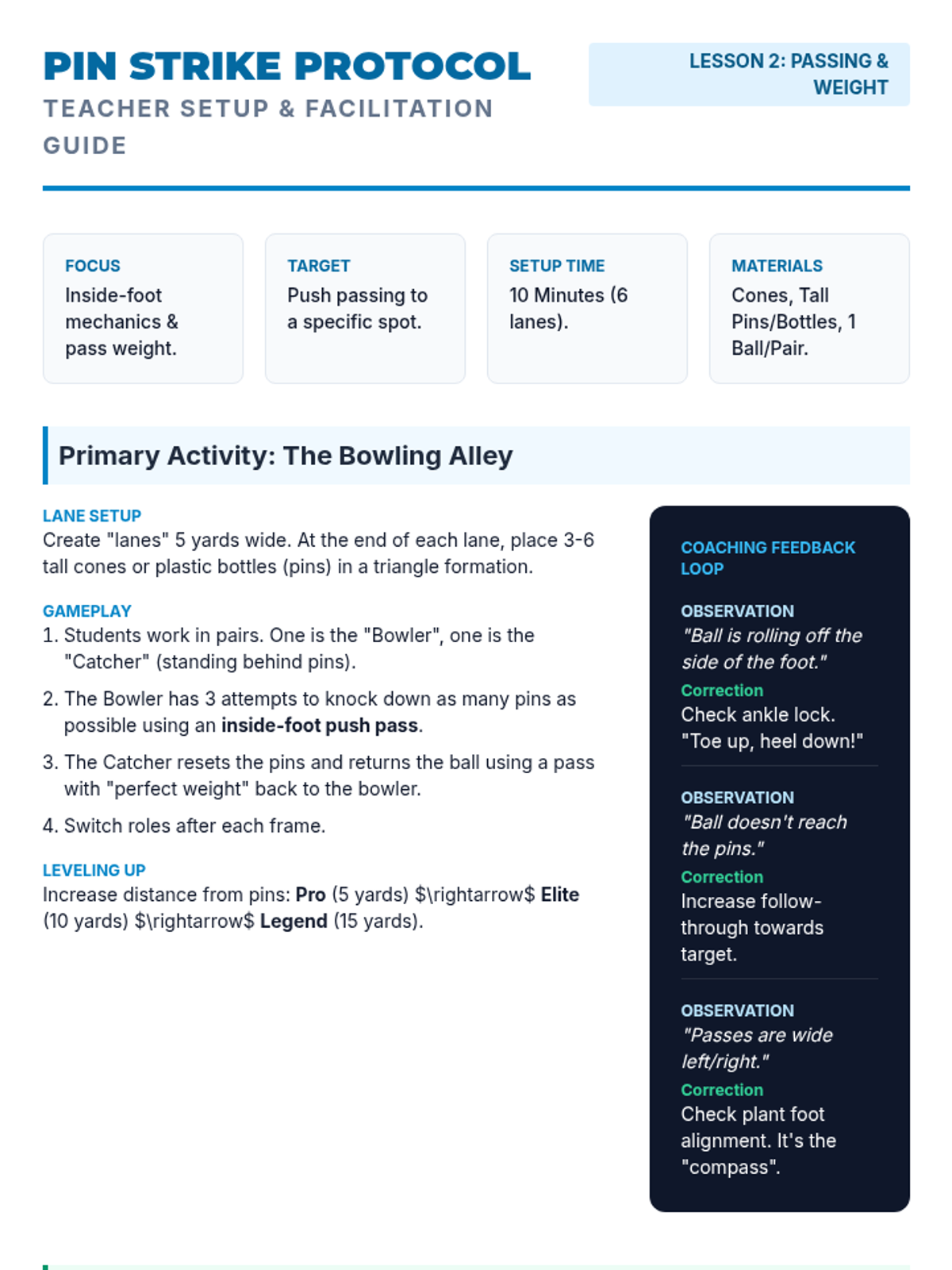
Focuses on the mechanics of the push pass for accuracy and the concept of 'weight' in passing.
Students focus on keeping the ball close while moving and using their body to protect the ball from opponents.
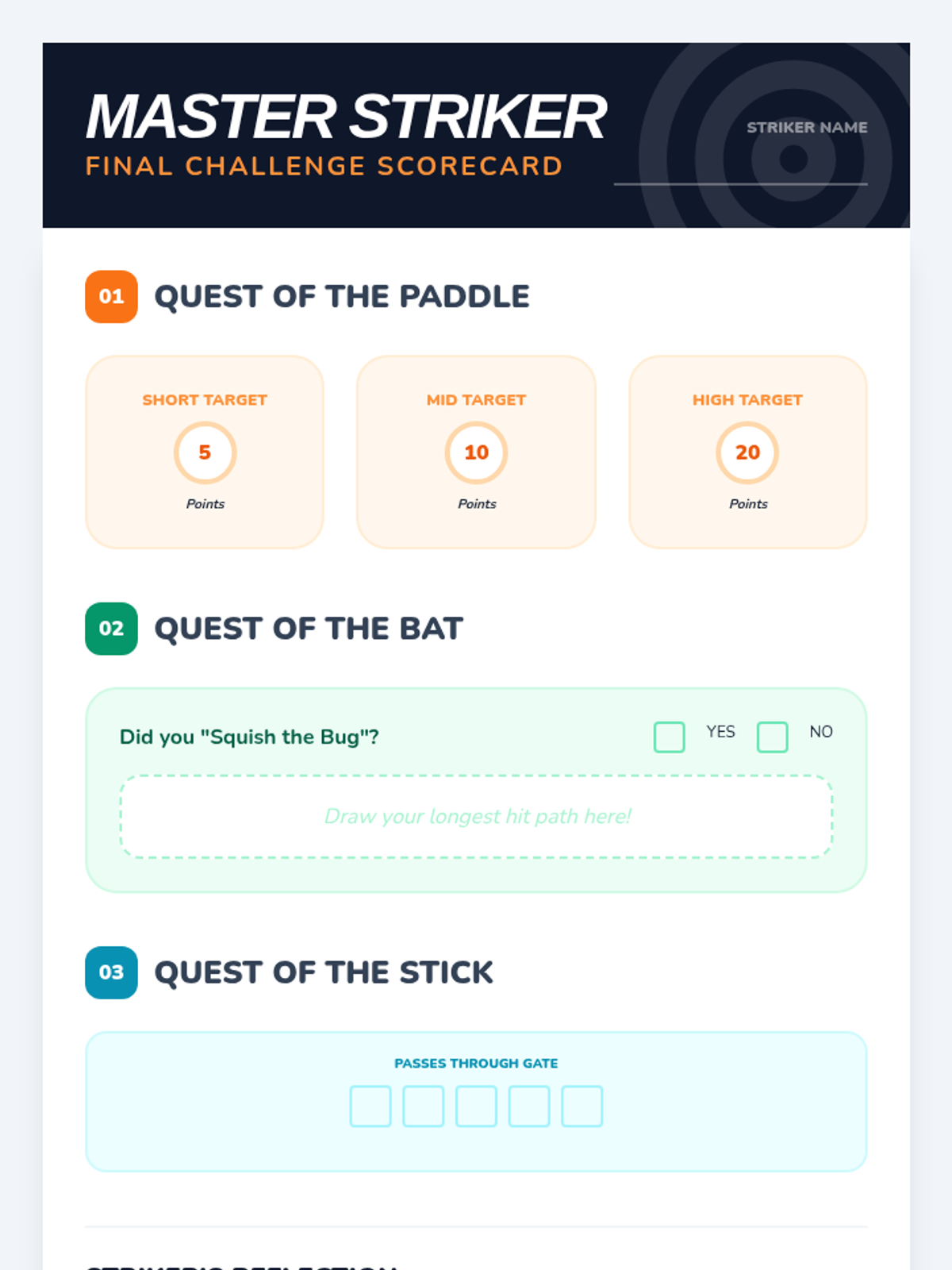
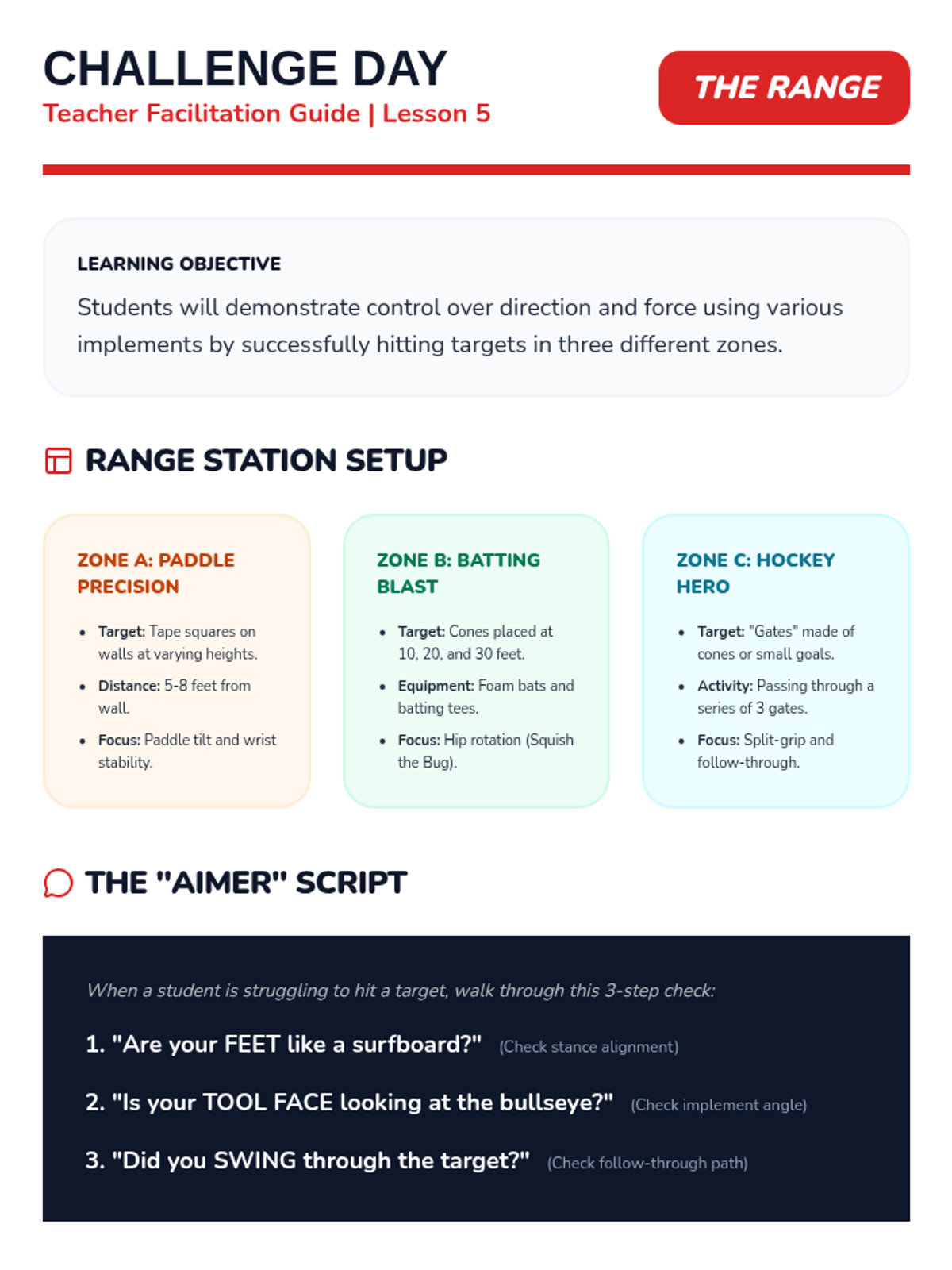
Students choose their preferred implement (bat or stick) to strike objects toward varied targets for points. This lesson reinforces the connection between stance alignment and target direction.
Students navigate a course that requires them to switch between dribbling through cones, trapping the ball, and kicking toward a goal. This culminates the unit by combining all foot skills.
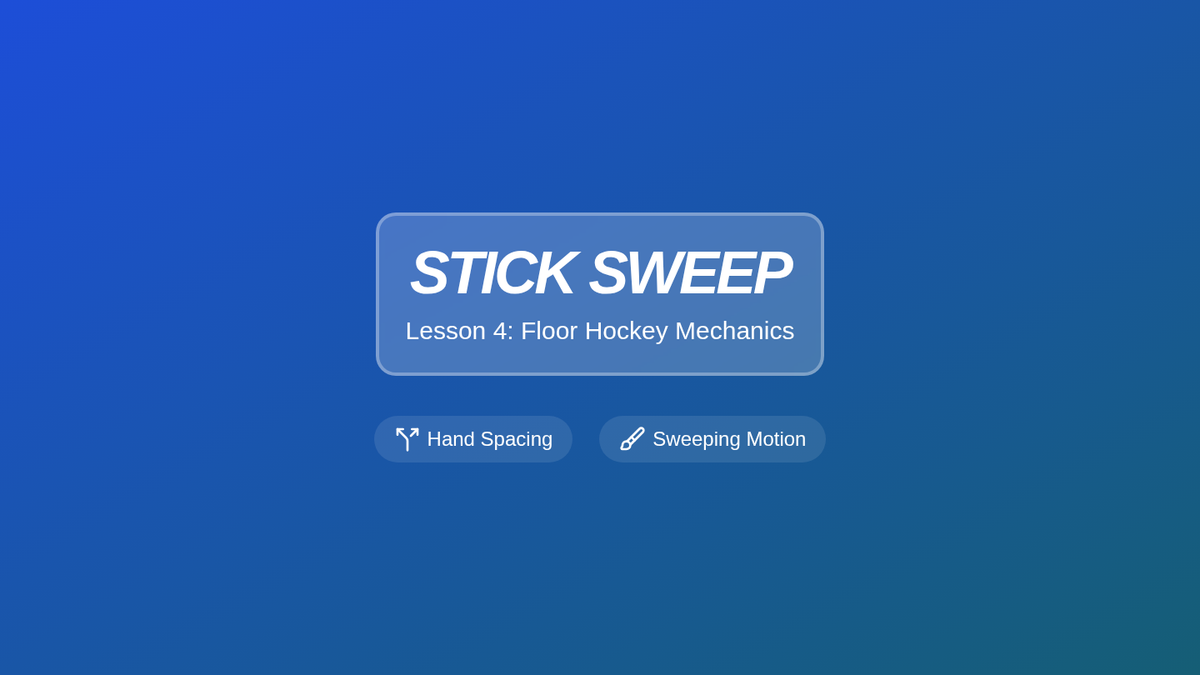
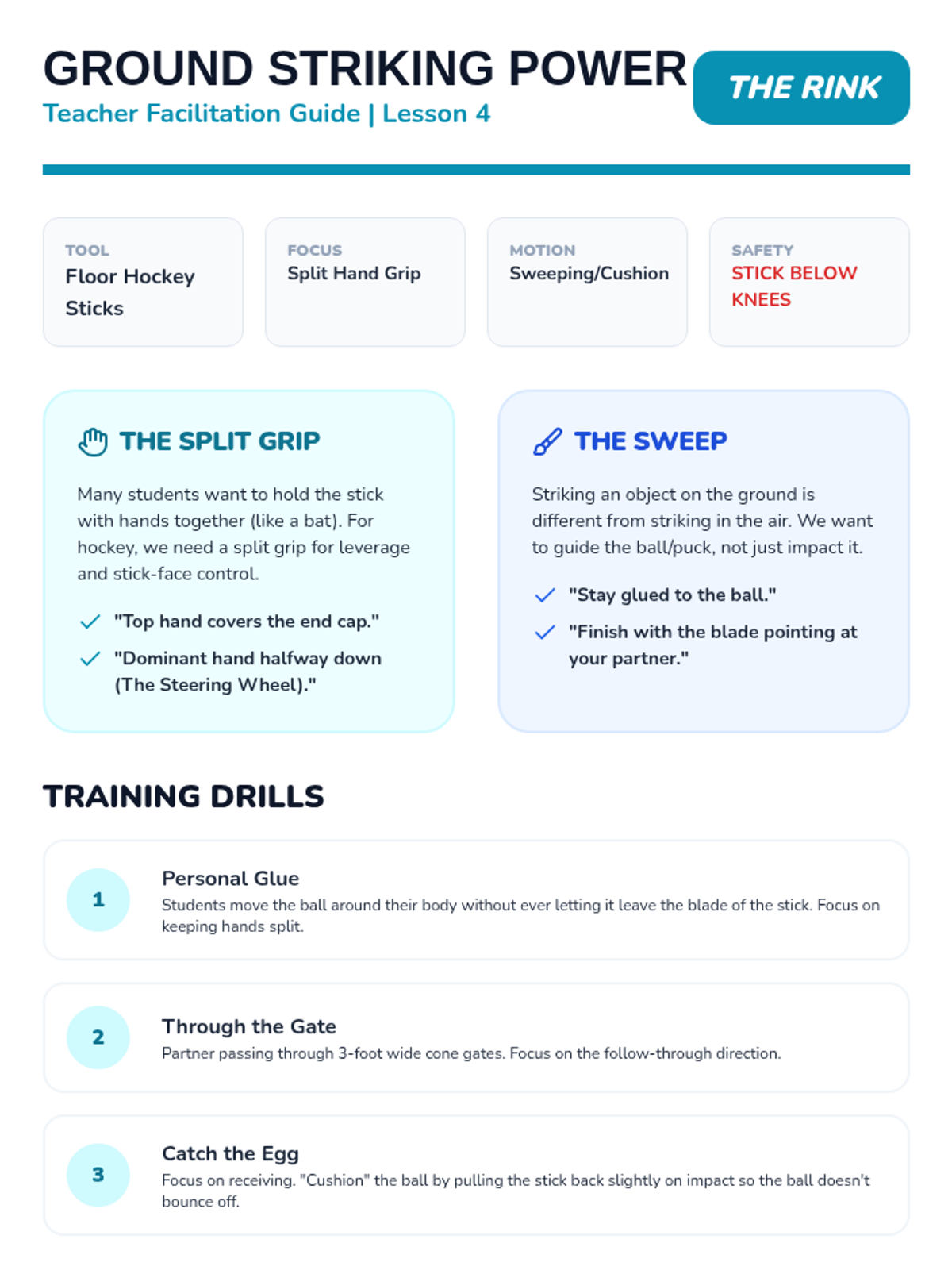
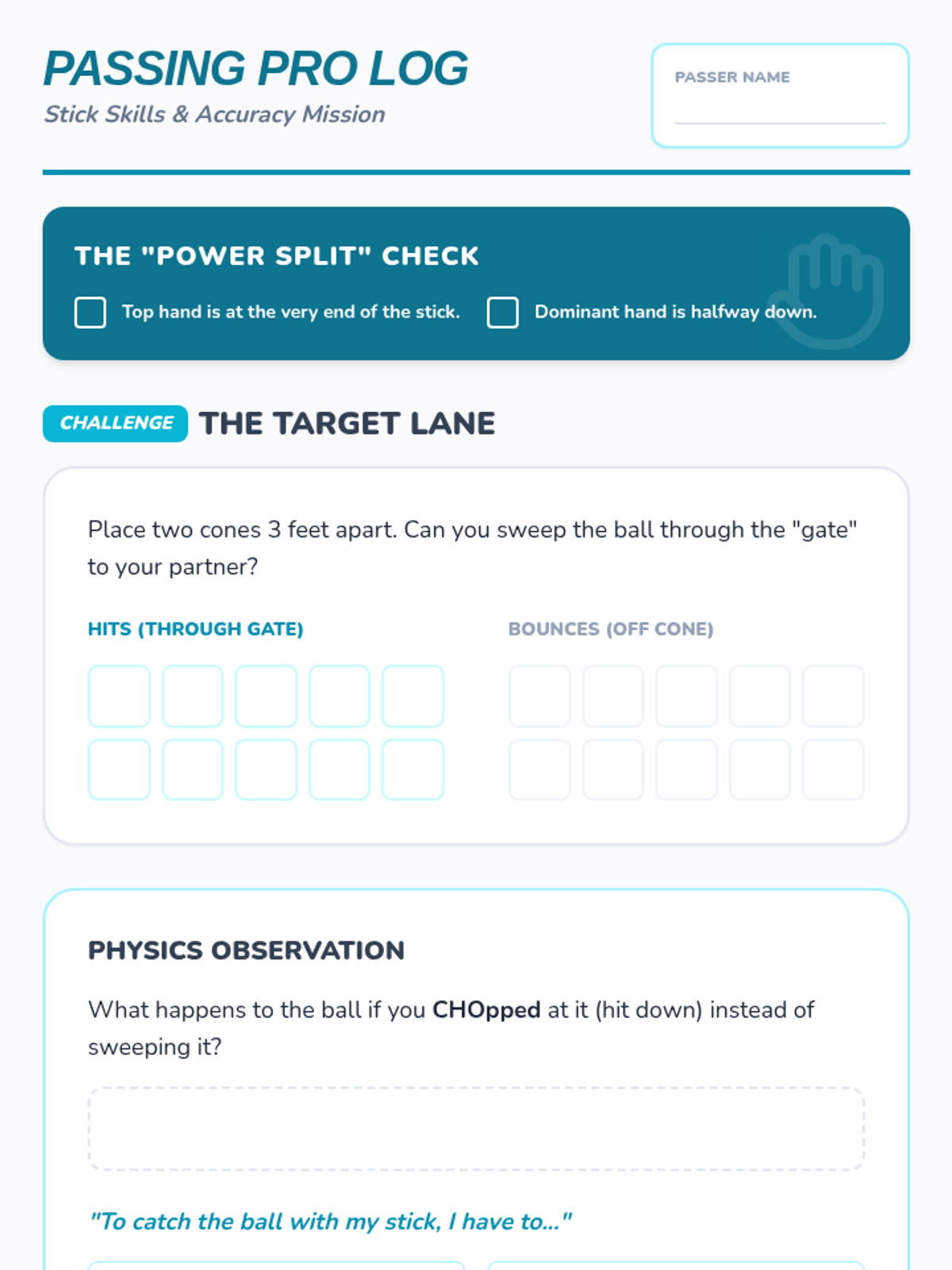
Students switch to floor hockey sticks to practice striking a puck/ball on the ground. Focus is on hand spacing (dominant hand low) and 'sweeping' the object rather than chopping at it.
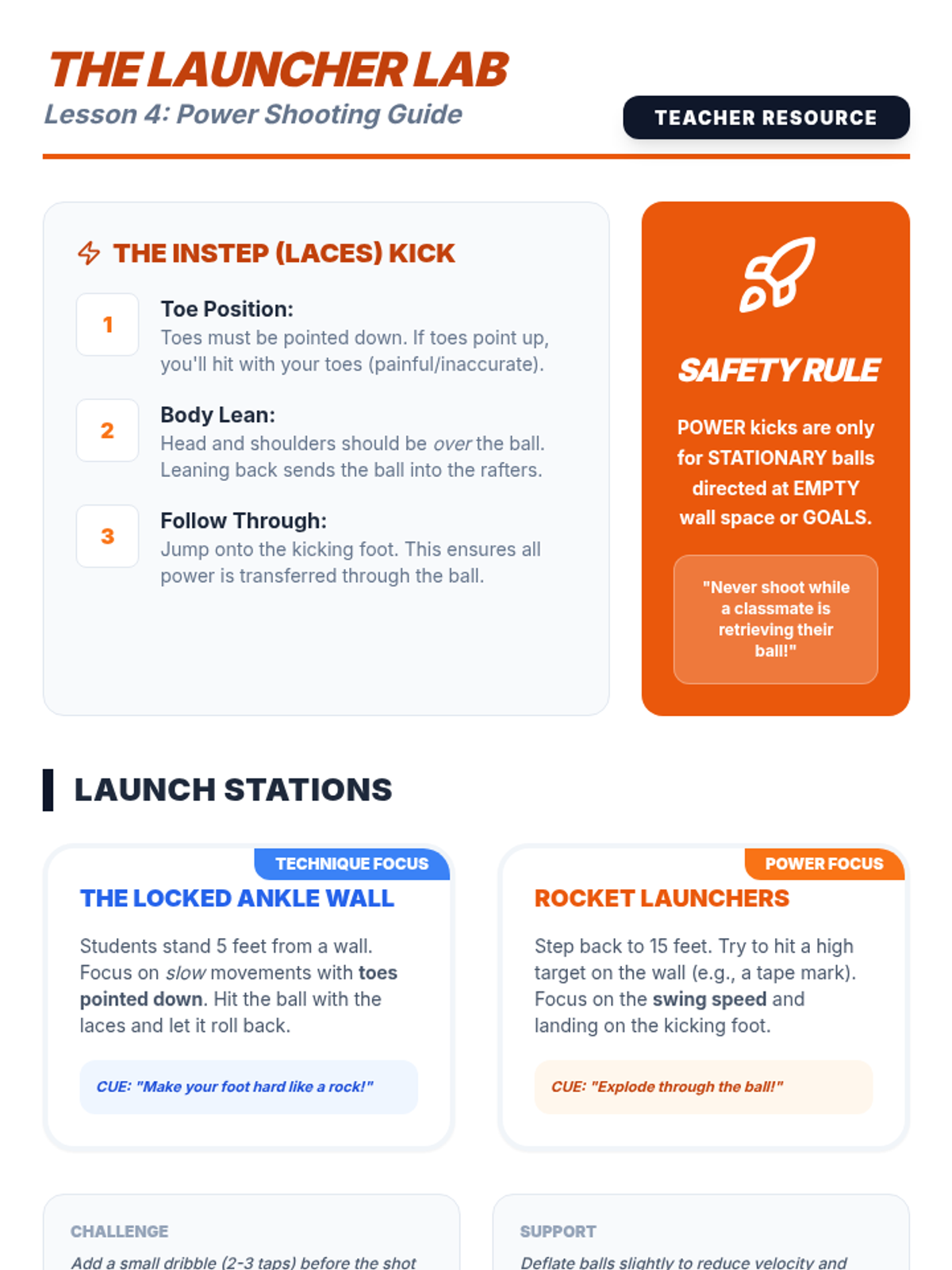
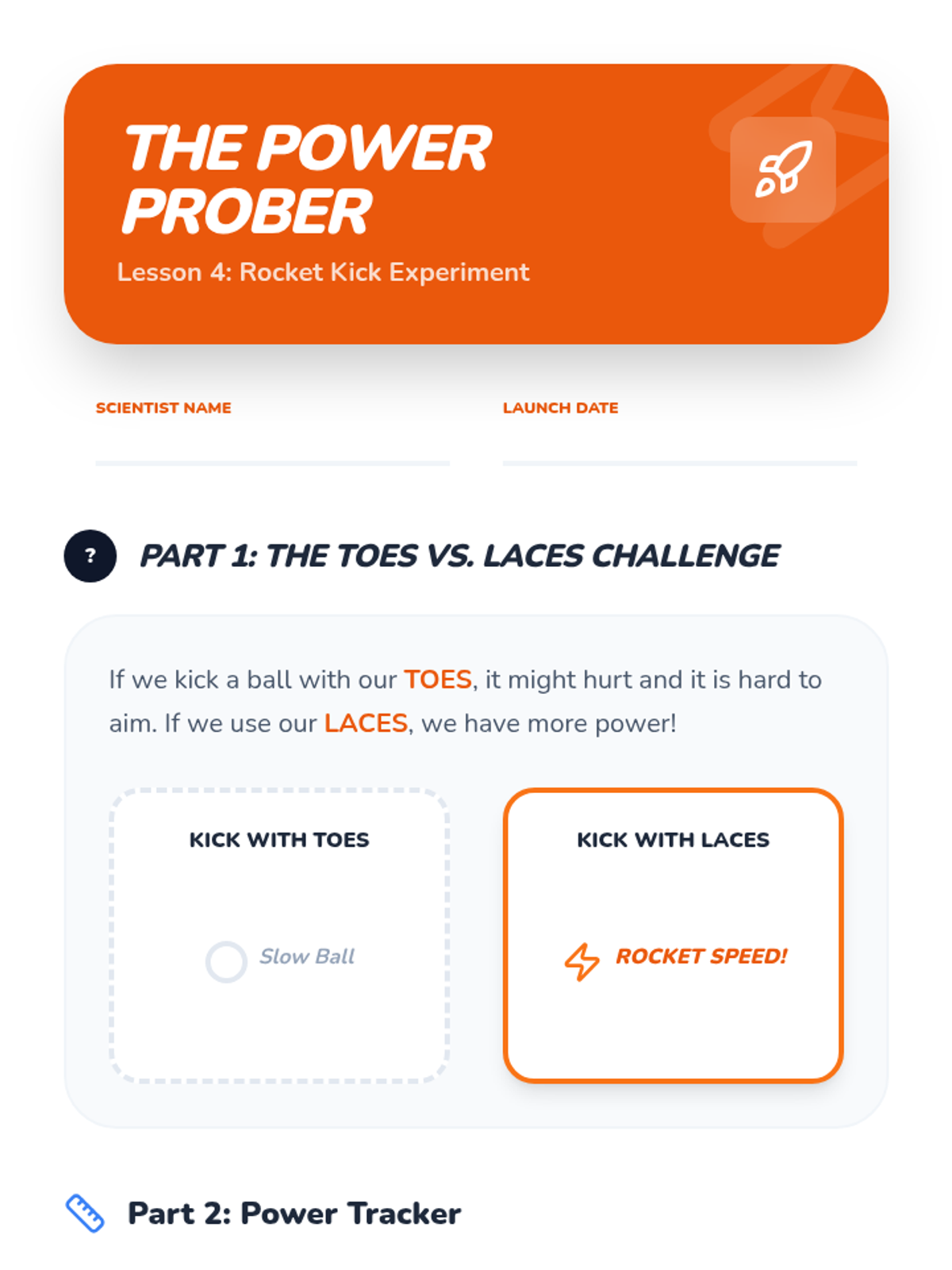
Students learn to use their shoelaces (instep) to kick for power and distance. The lesson distinguishes between the controlled pass and the power kick using wall targets.
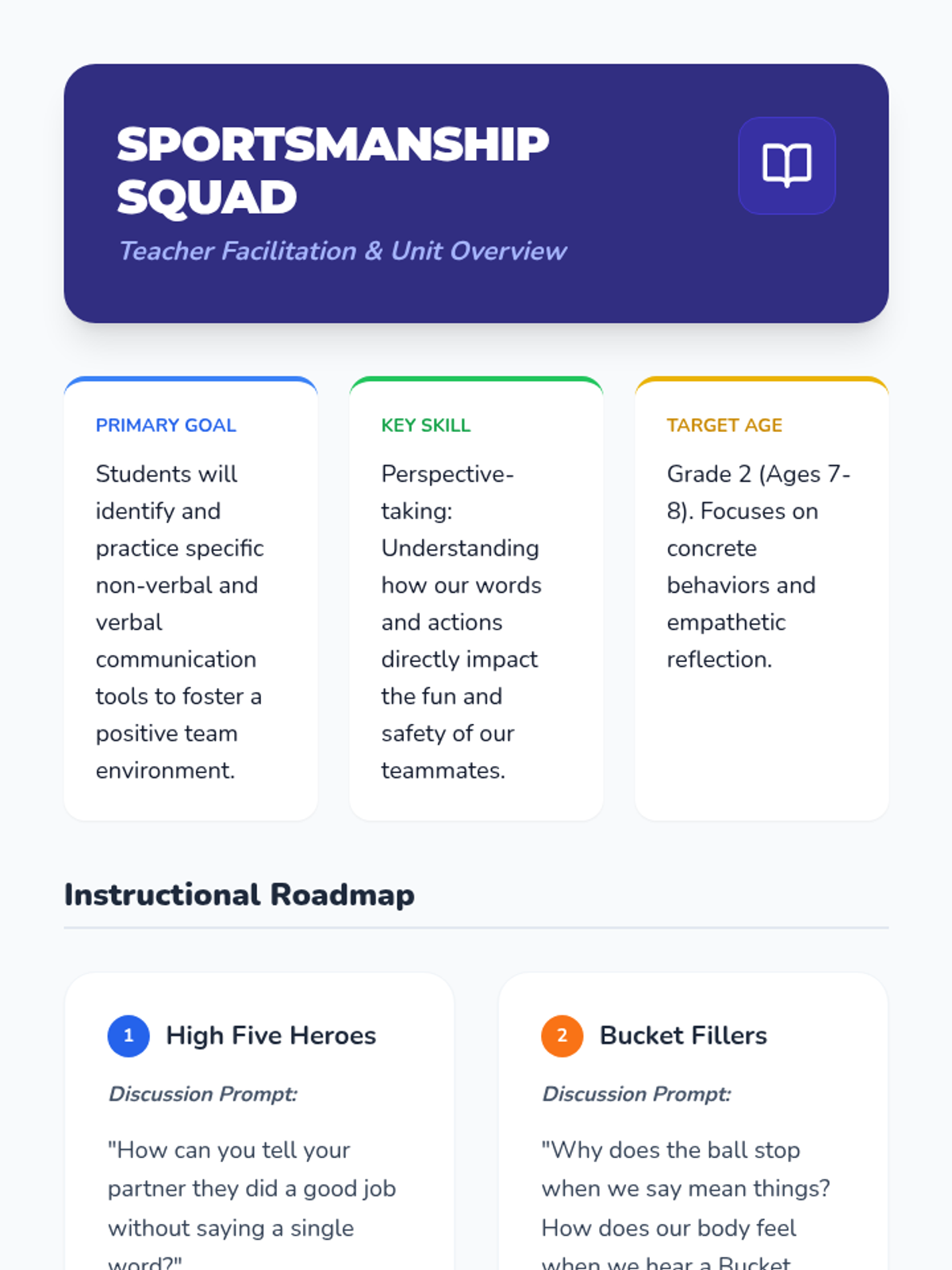
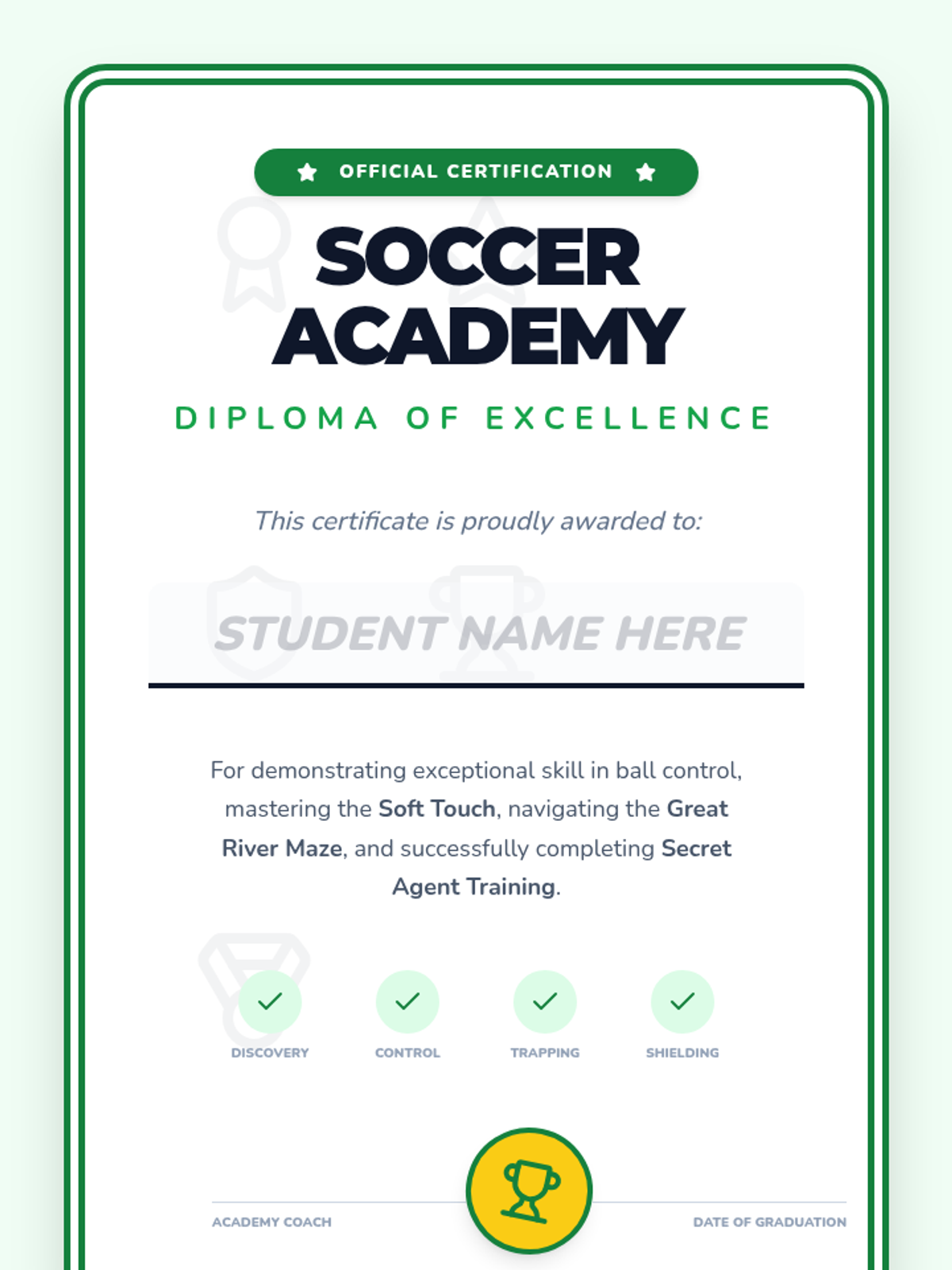
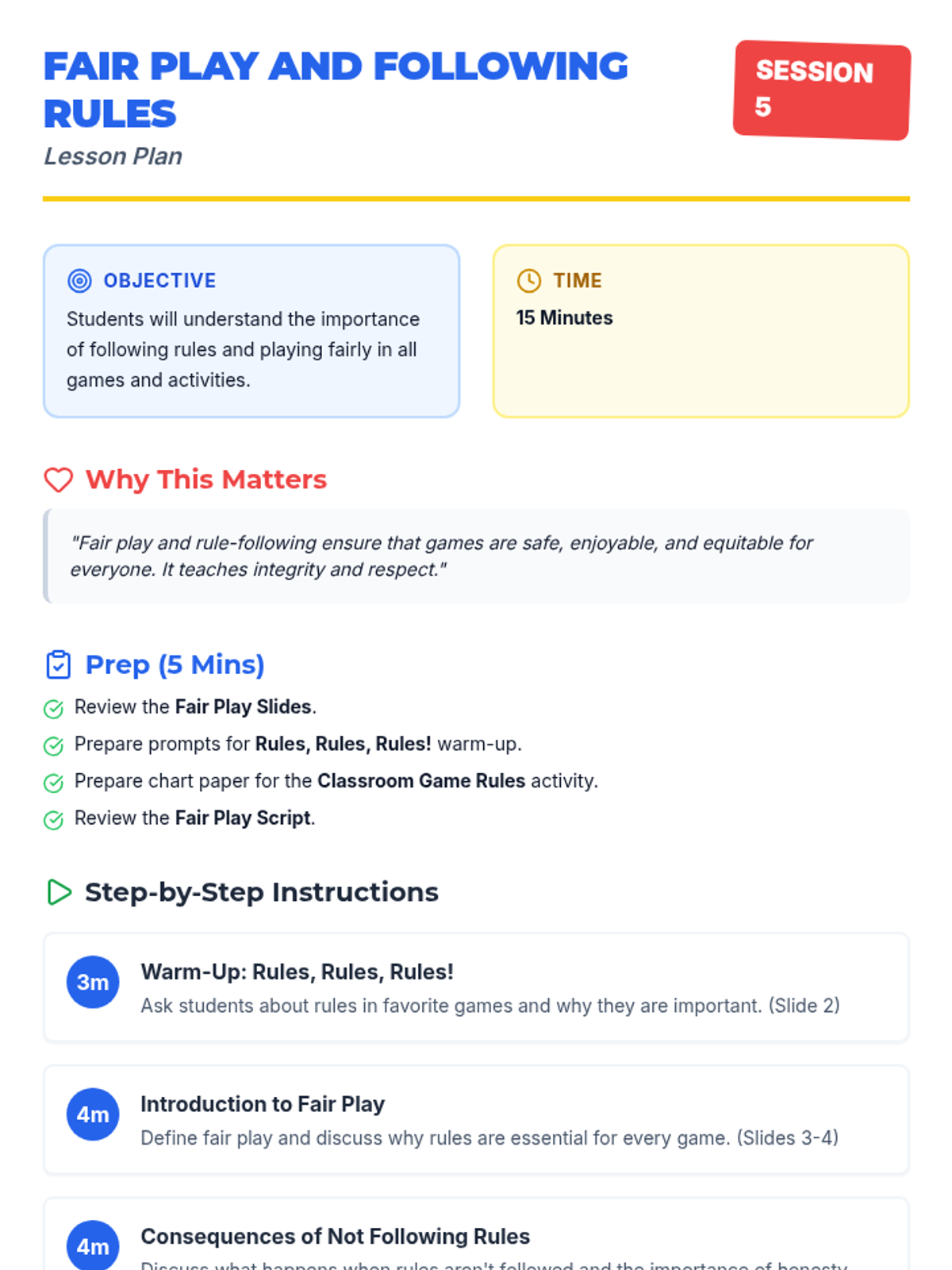
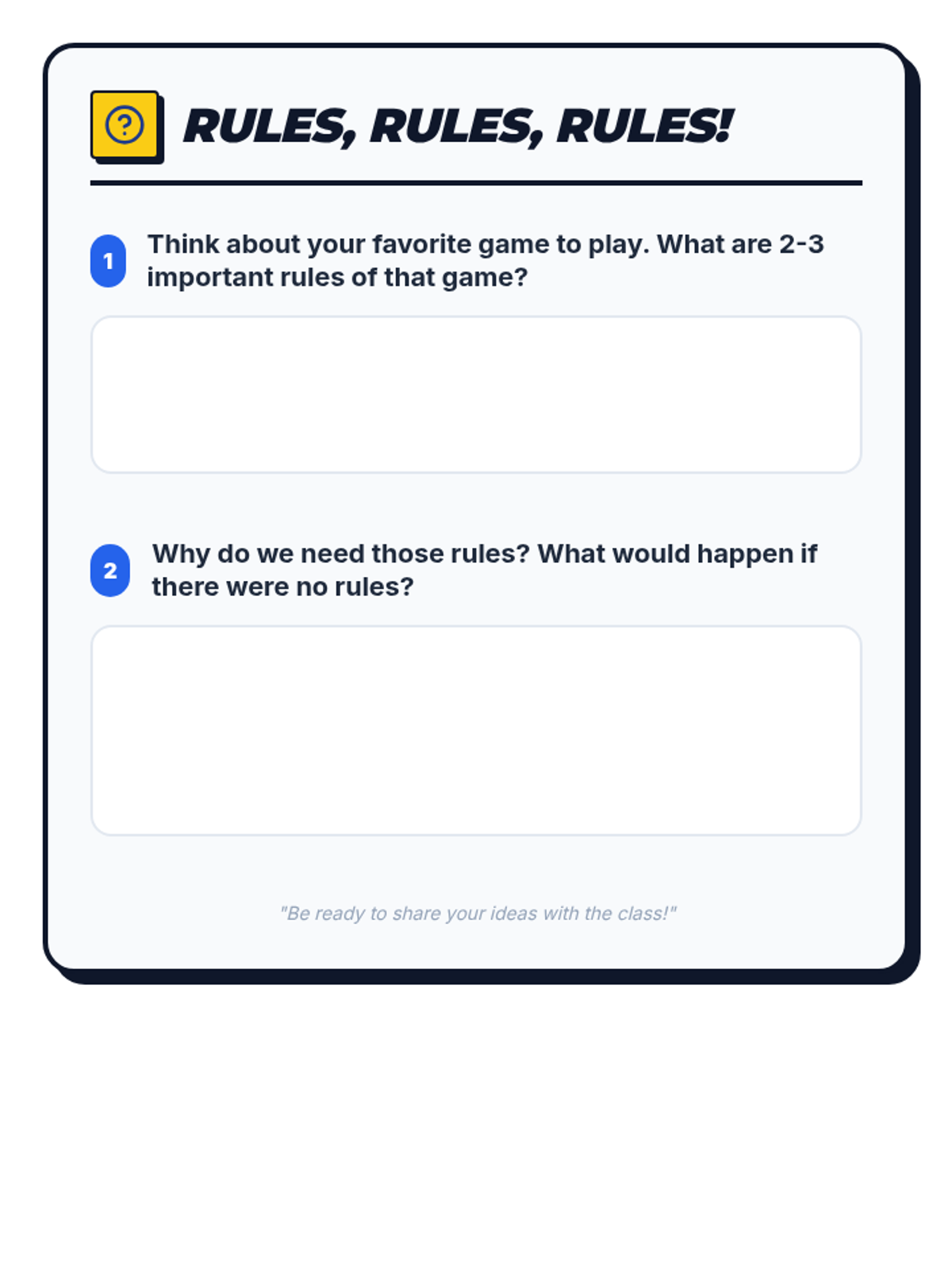
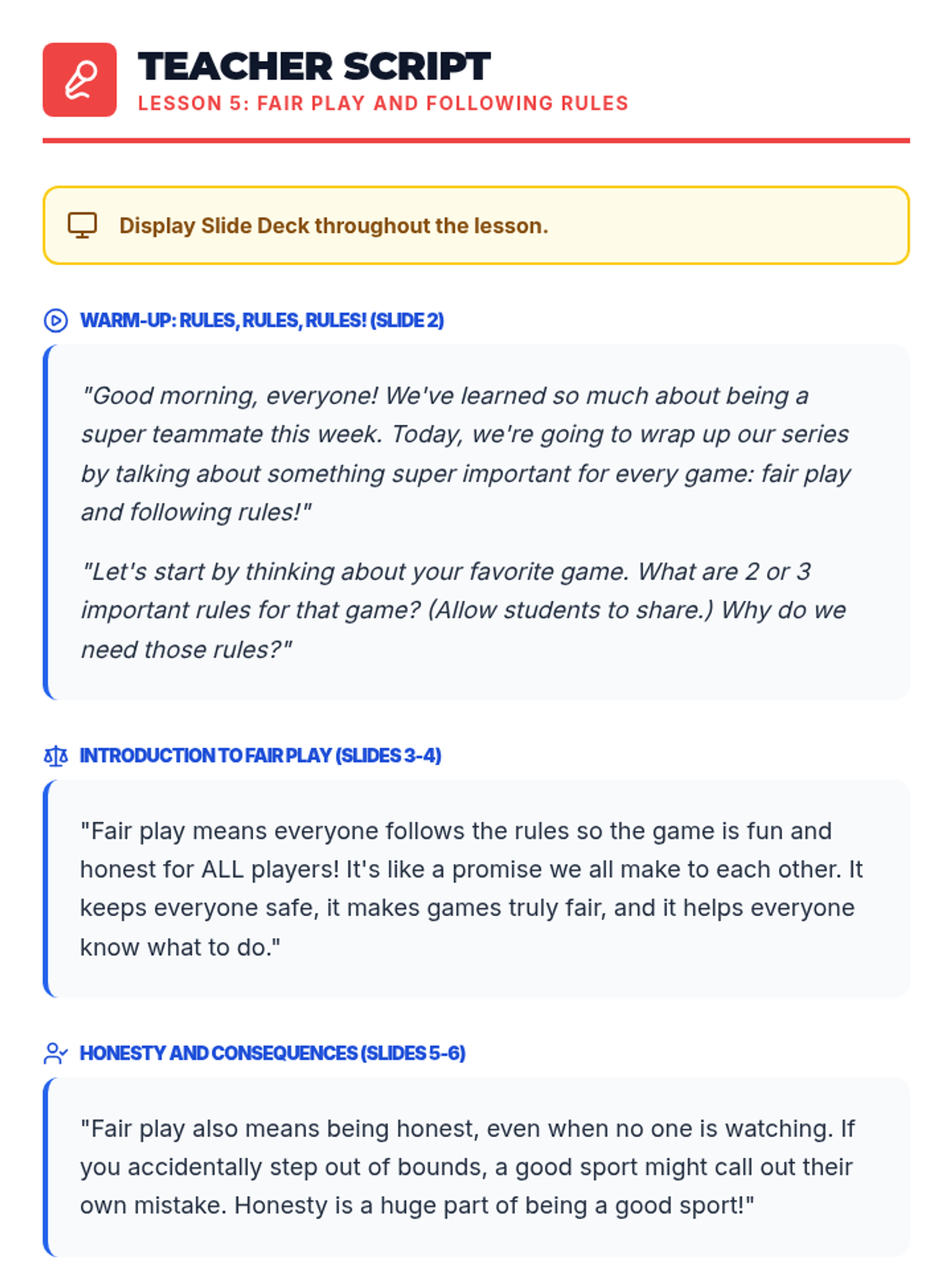
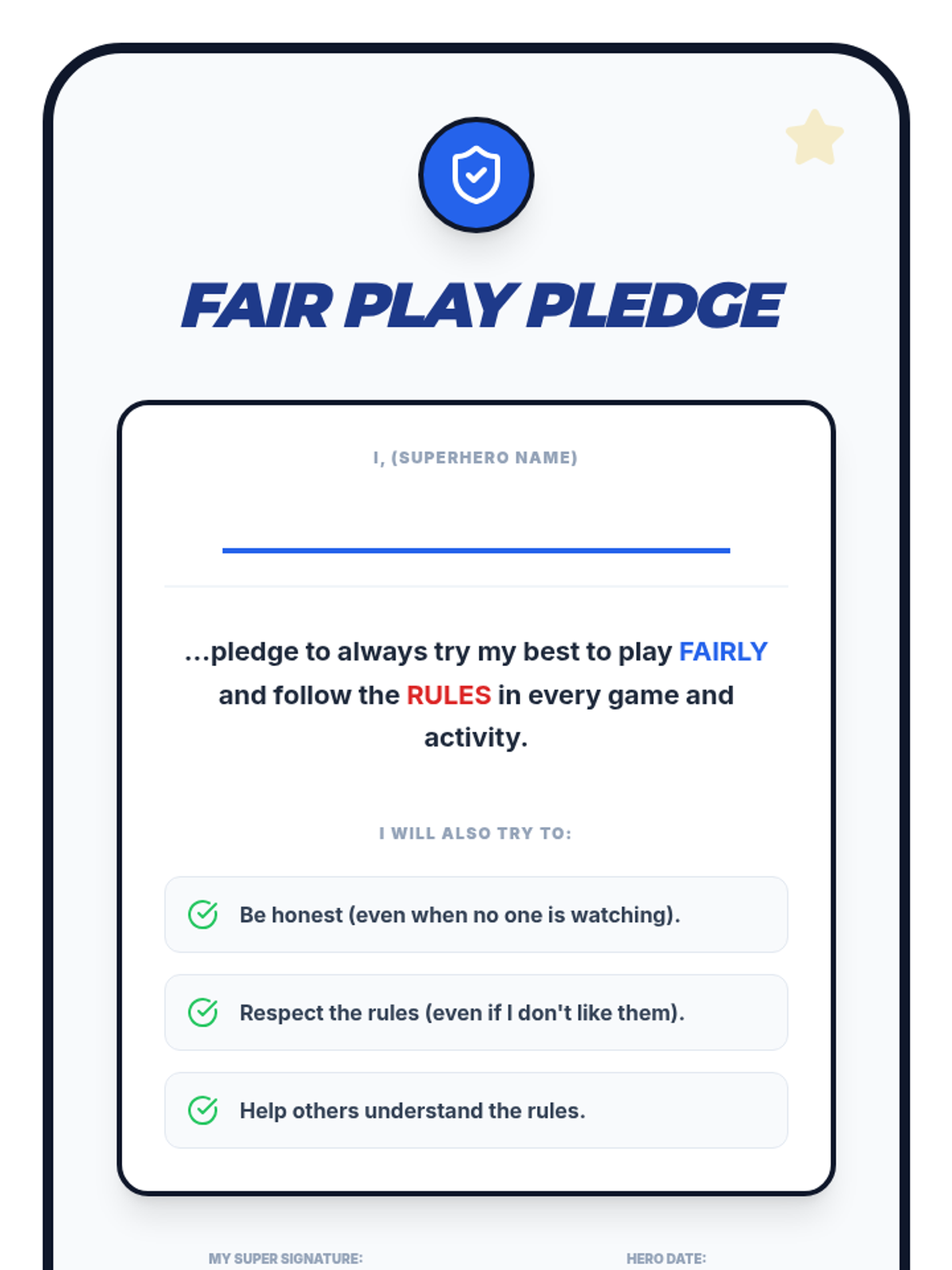
The final lesson focuses on the importance of fairness, integrity, and following the rules to ensure games are safe and fun for everyone.
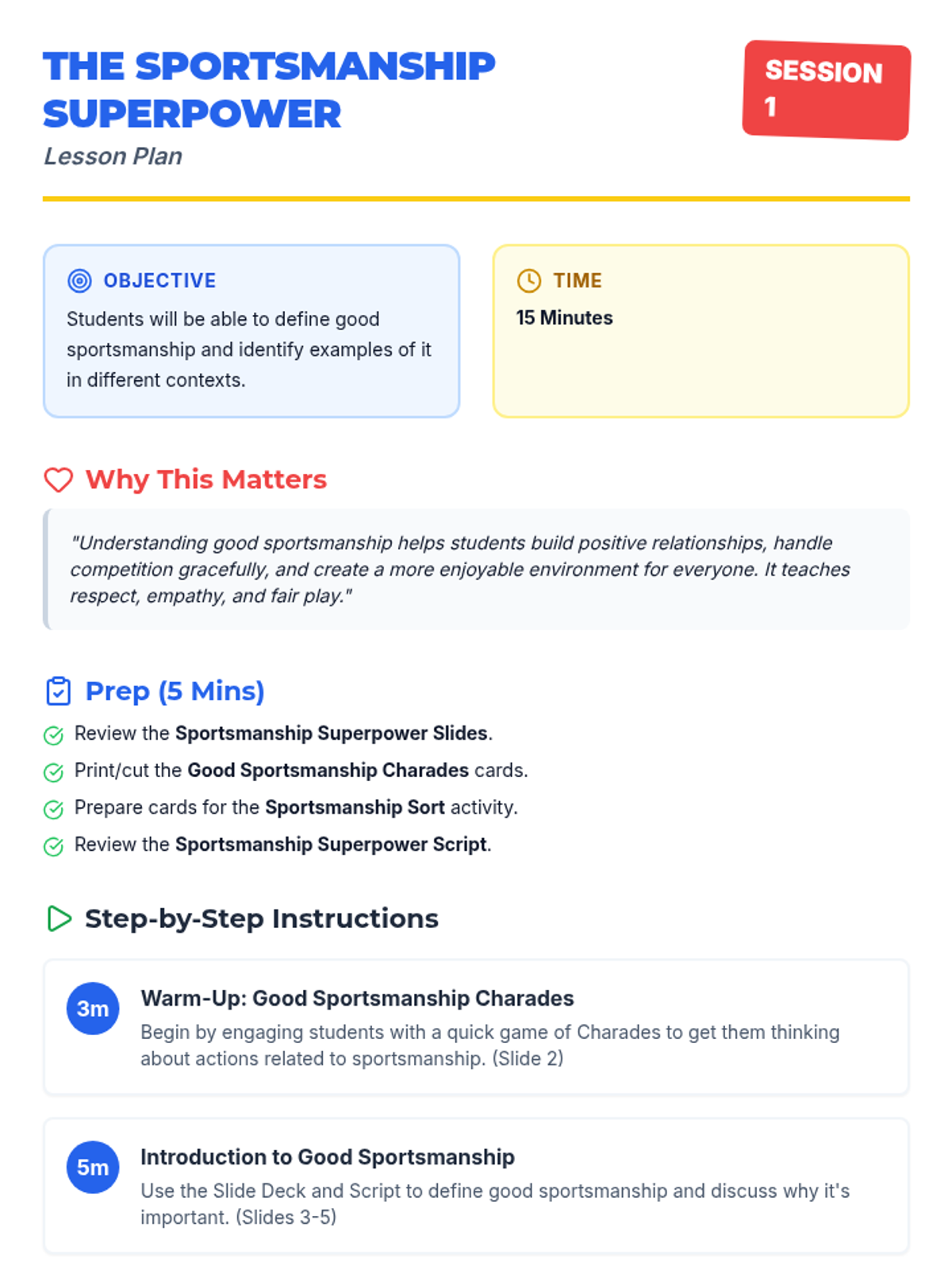
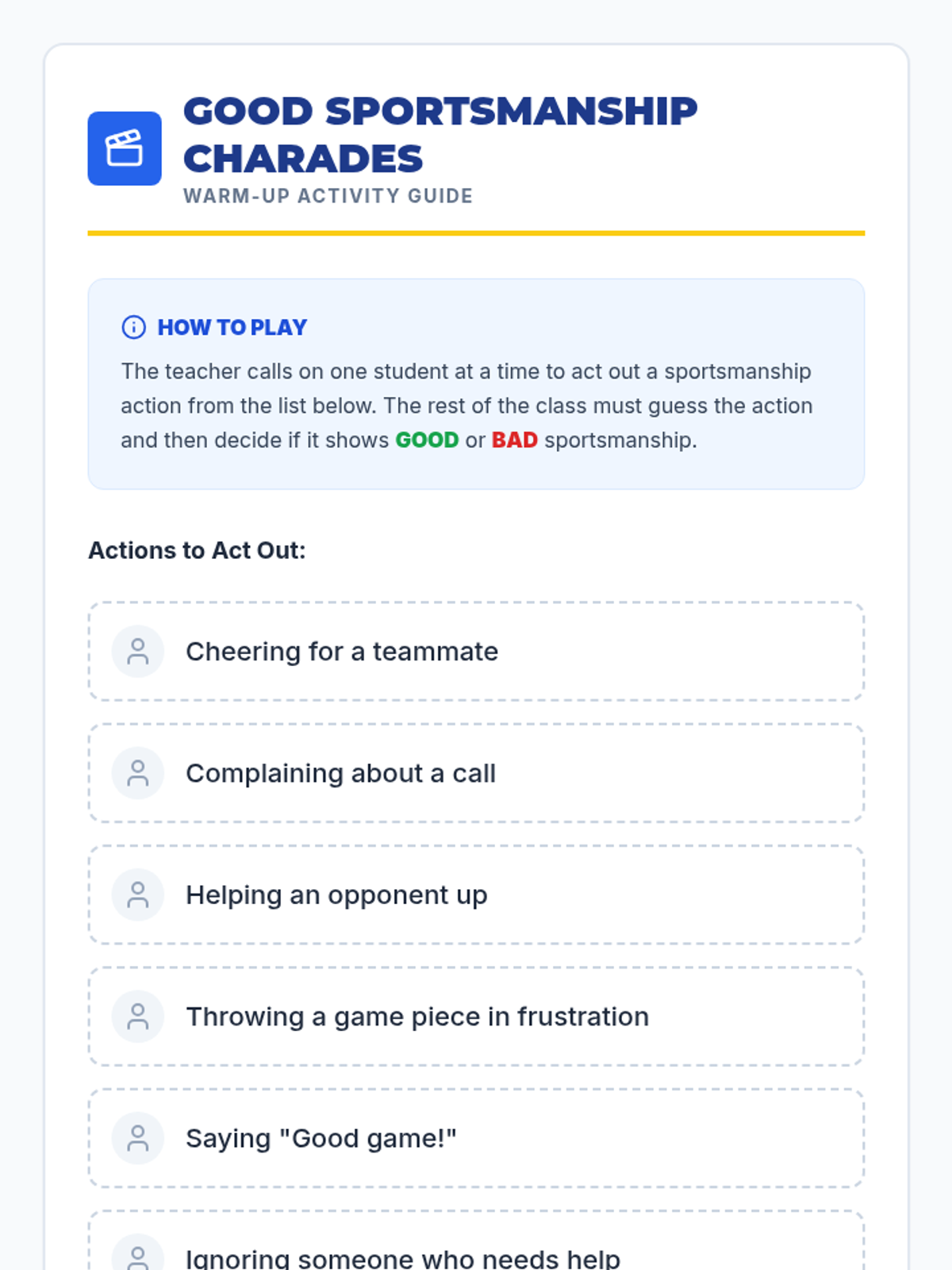
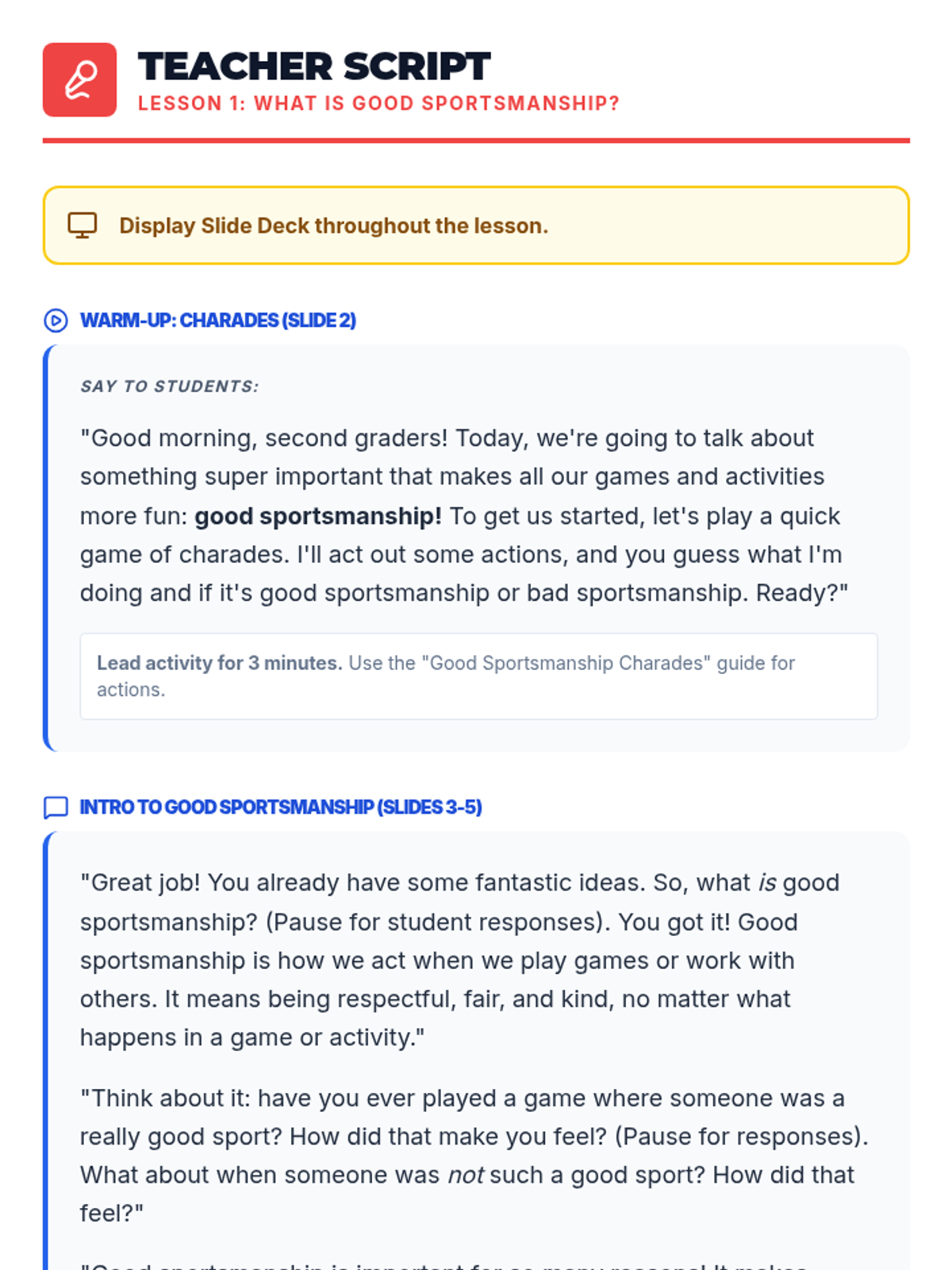
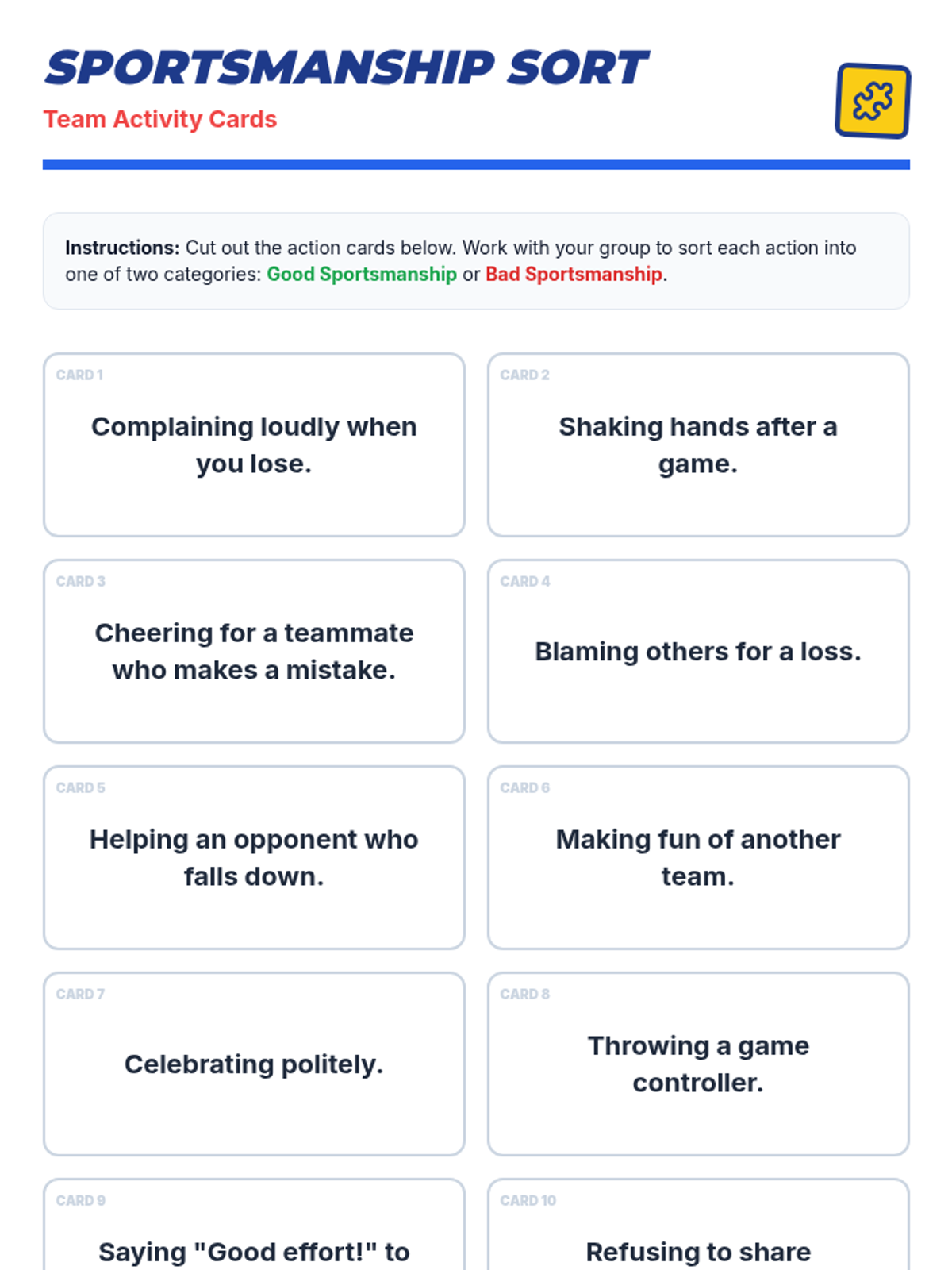
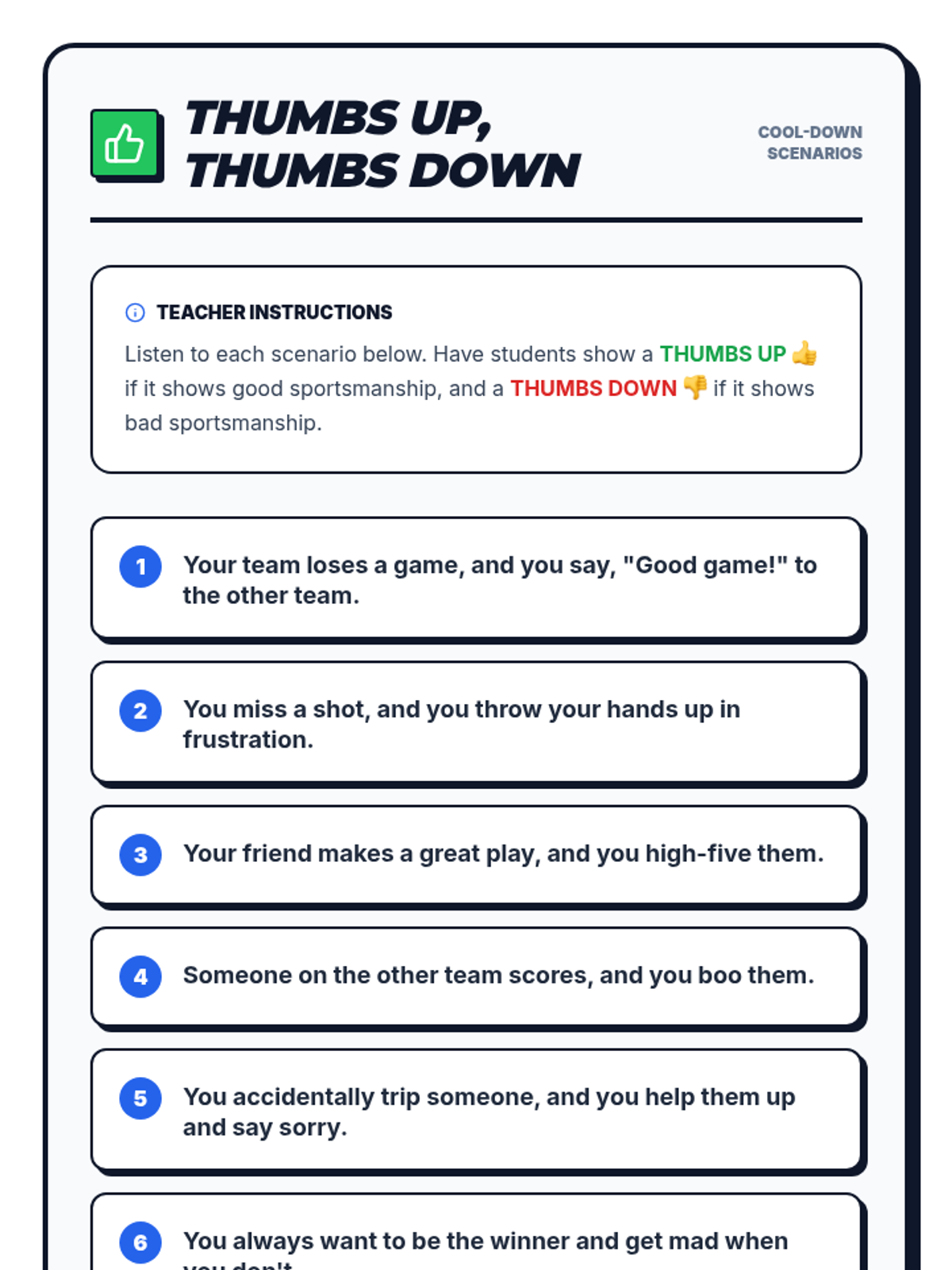
Students define good sportsmanship and identify positive and negative examples of behavior in games and activities.