This 30-minute lesson empowers 6th-grade students to build confidence in speaking English by identifying common fears and developing a personal 'Confidence Toolbox' of actionable strategies.
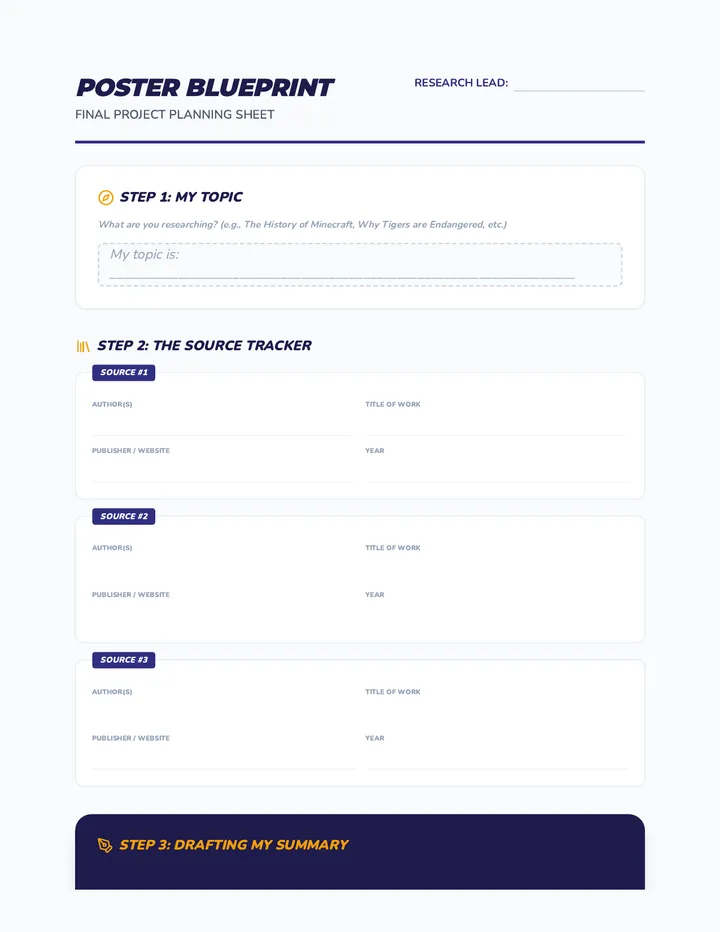
In this final project-based lesson, students synthesize their learning by creating a "Research Credits" poster. They select a topic of interest, find three sources, summarize key information, and produce a perfectly formatted Works Cited section.
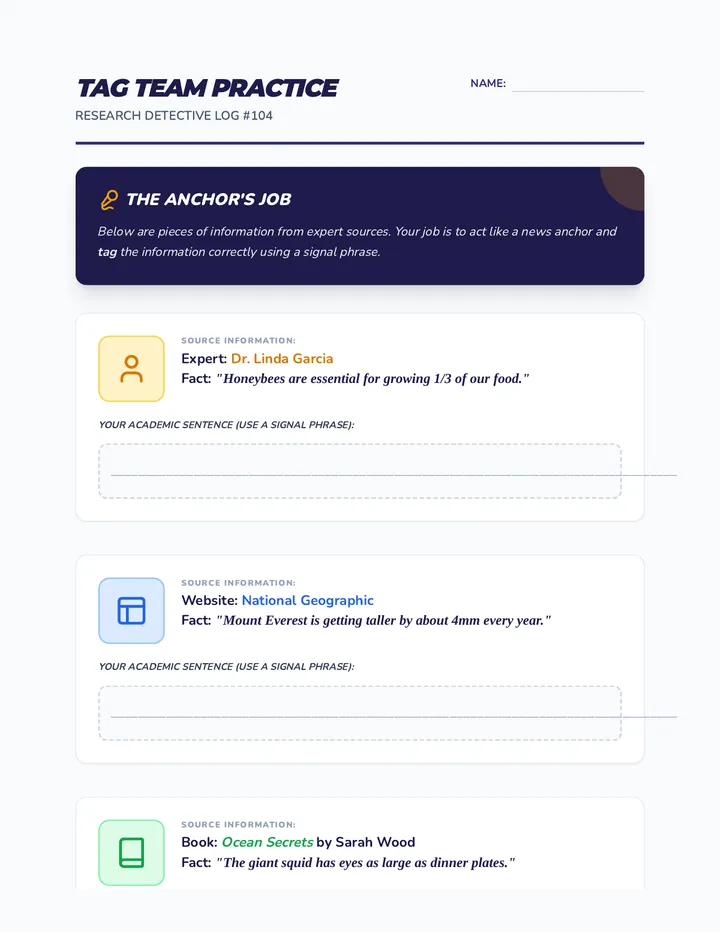
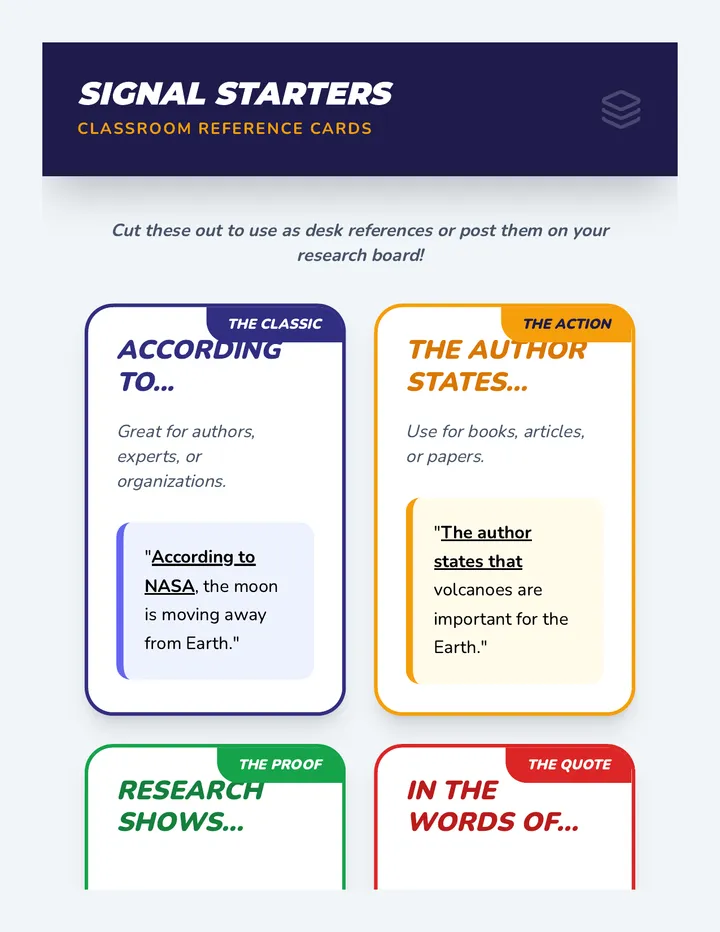
Students learn the mechanics of in-text attribution, practicing how to introduce sources using "signal phrases" (e.g., 'According to...'). They understand how to bridge the gap between their own ideas and those of external experts.
Students learn the benefits and risks of using digital citation tools. This lesson focuses on identifying common machine errors, such as capitalization issues and missing data, and emphasizes student accountability for final accuracy.
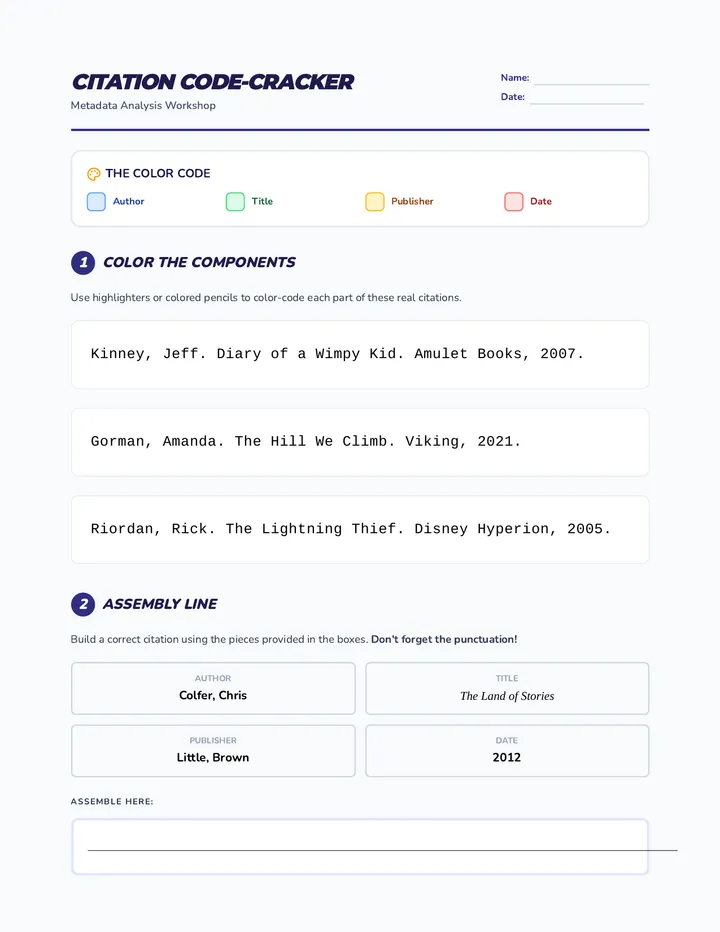
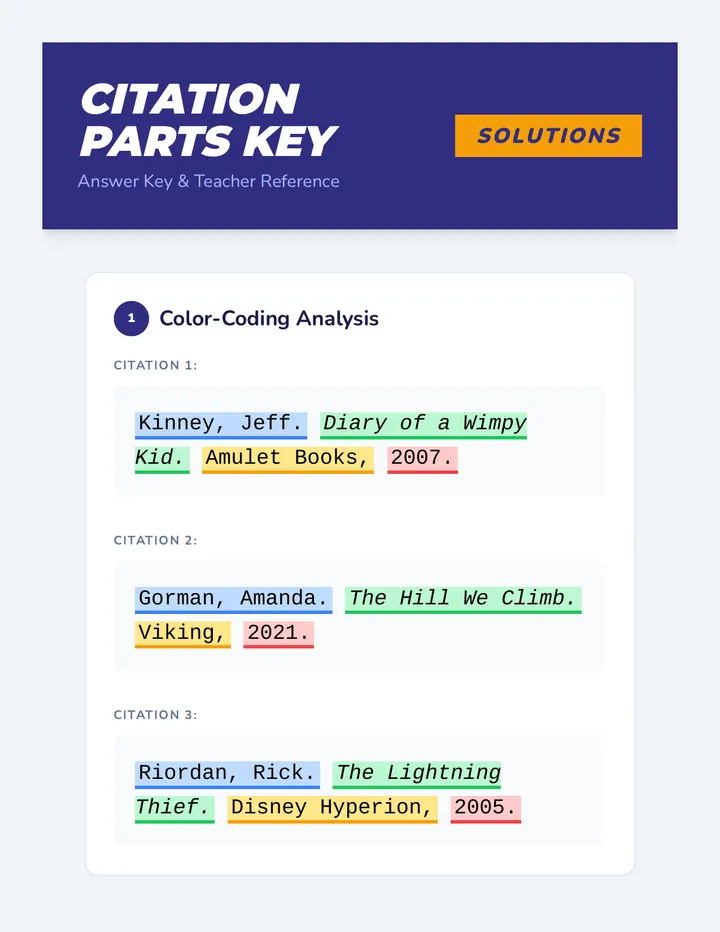
Students learn to identify and format the four core elements of an MLA citation: Author, Title, Publisher, and Date. They use color-coding to demystify the punctuation and structure of citations.
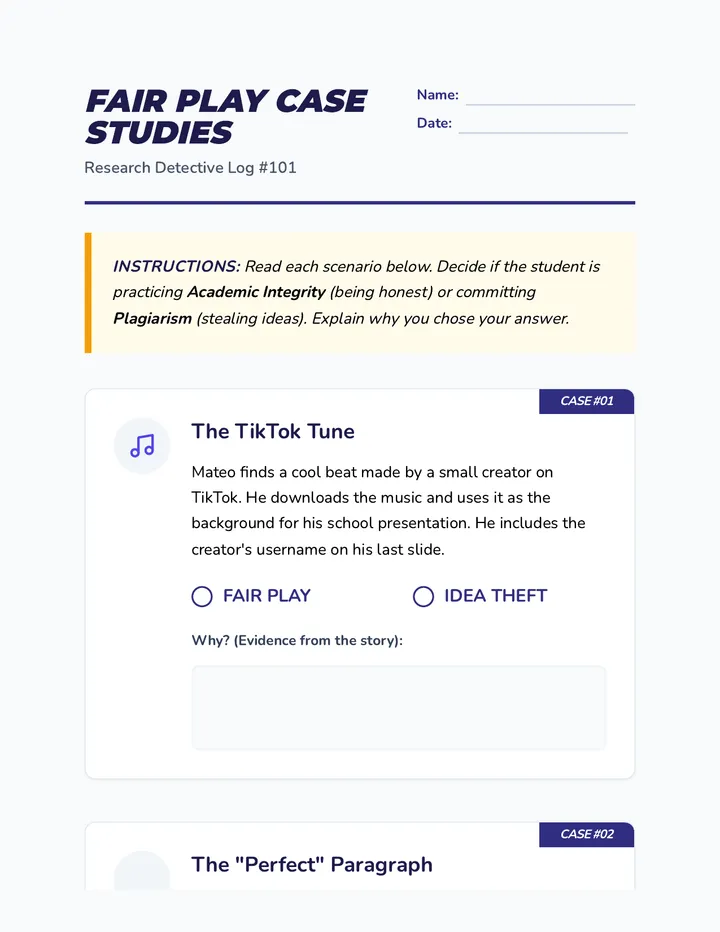
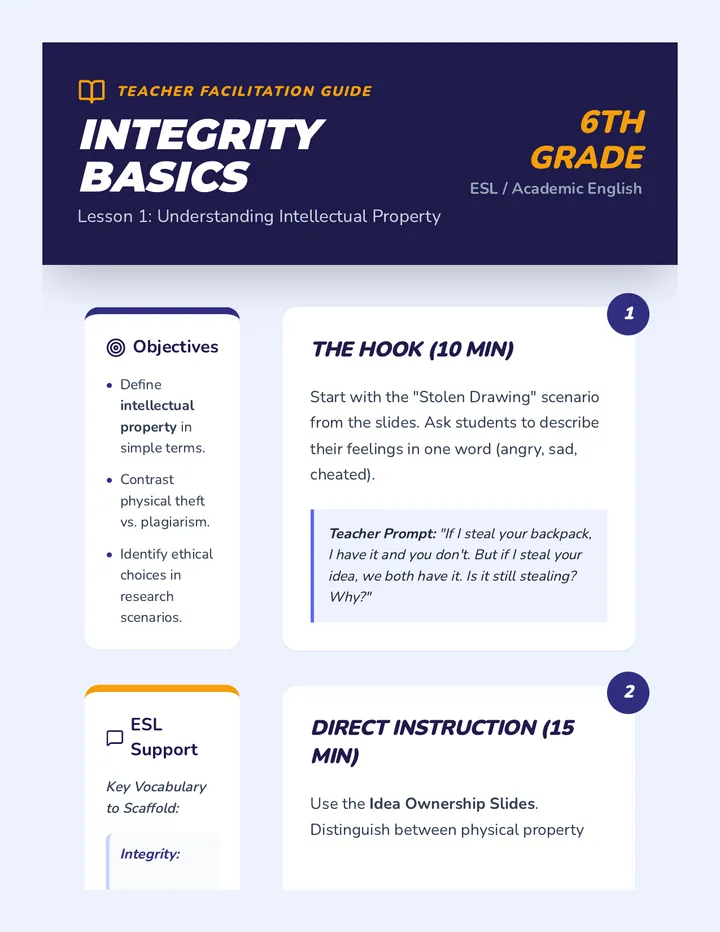
Students explore the concept of intellectual property and ownership of ideas. They discuss why creators deserve credit and how stealing ideas differs from stealing physical objects.
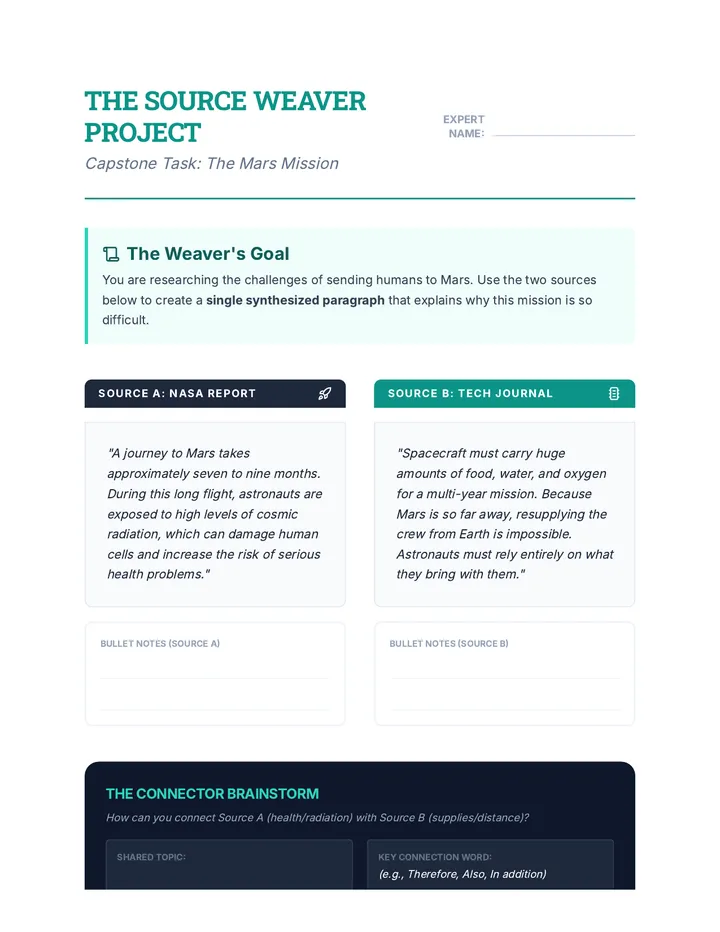
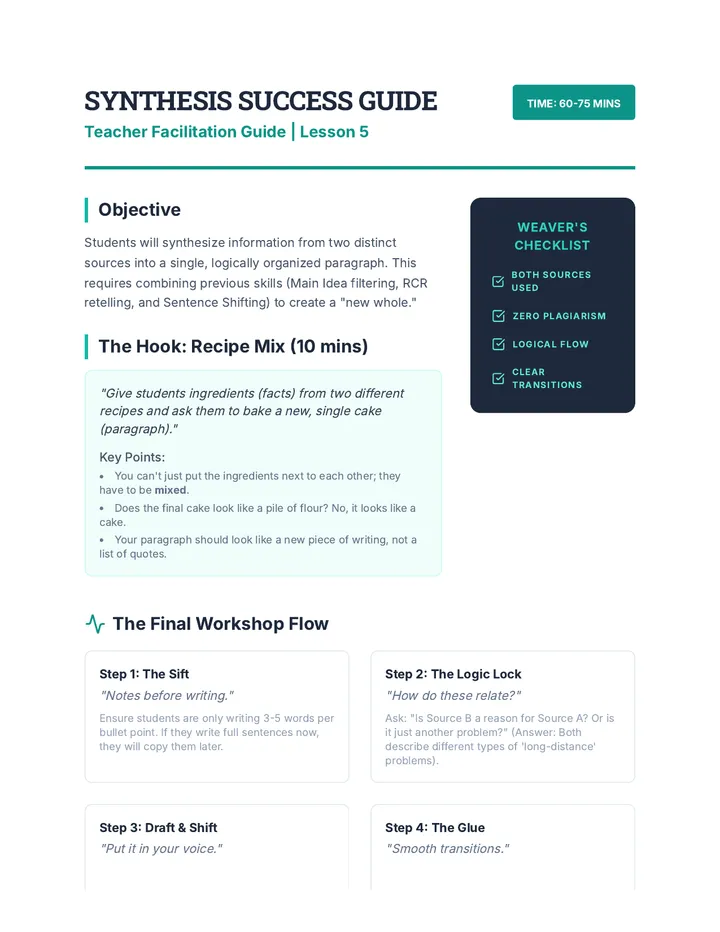
The capstone activity where students combine information from two different sources into a single, logically organized paragraph.
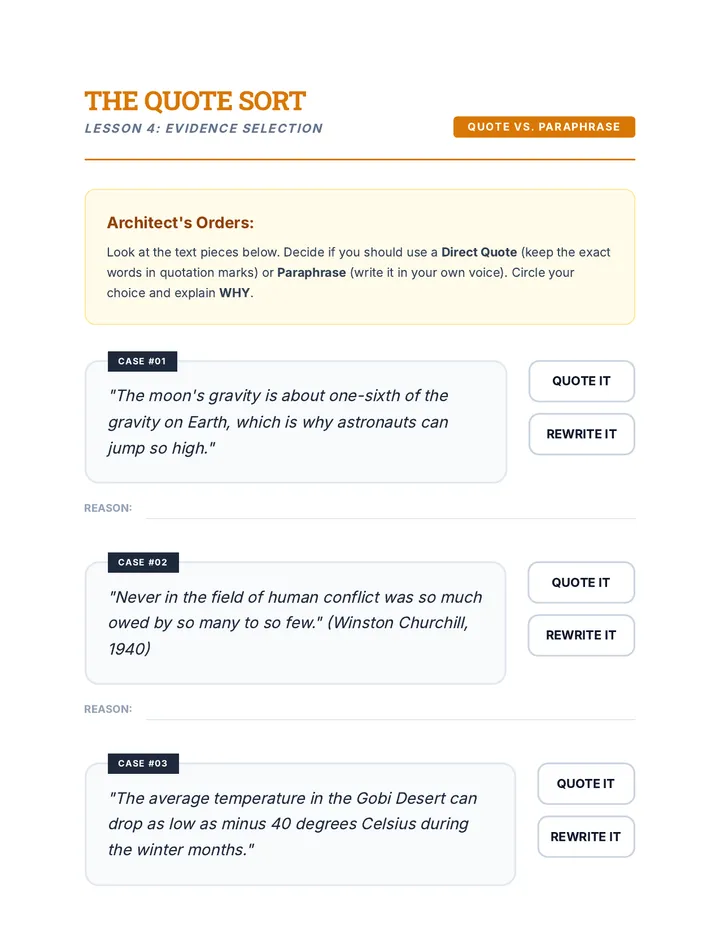
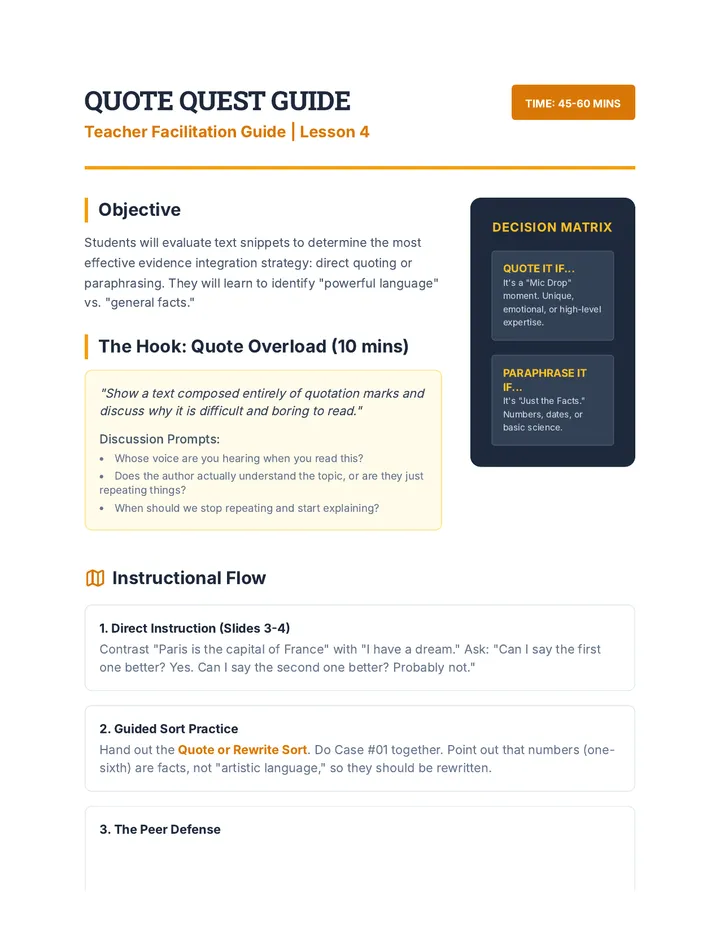
Distinguishes between when to use direct quotes for impact and when to paraphrase for factual clarity.
Guided practice in rewriting sentences using synonyms and grammatical shifts, such as changing active to passive voice, while maintaining original meaning.
Focuses on the 'Read, Cover, Recite' method to separate conceptual understanding from the original text's linguistic structure through oral retelling.
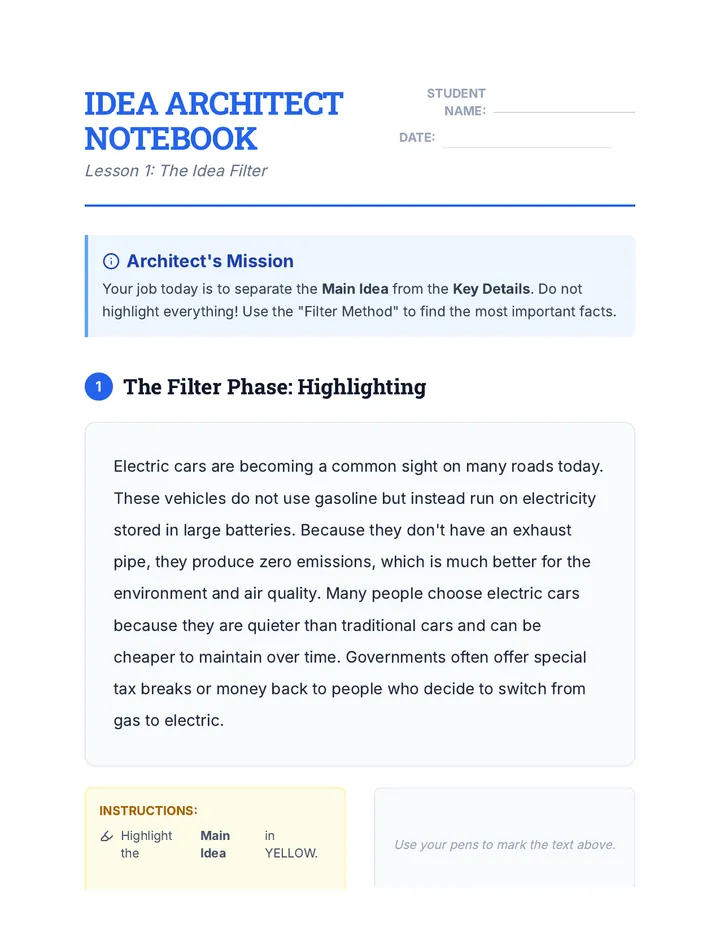
Students learn to separate core concepts from 'fluff' using effective highlighting and note-taking strategies, moving away from copying full sentences.
A culminating scavenger hunt challenge where students apply all previous skills to find obscure information and document their search paths.
Focuses on the skill of rapid appraisal by teaching students how to read and interpret search result snippets, titles, and bolded terms before clicking.
Students explore the specific features of academic databases, including filters, metadata, and specialized search bars, comparing them to general search engines.
Introduces Boolean operators (AND, OR, NOT) through visual and physical activities to help students understand how to narrow or expand their search results.
Students learn to deconstruct complex questions into core keywords and brainstorm synonyms to expand their search potential, moving away from typing full sentences into search engines.
A culminating simulation where students apply an evaluation framework to judge the credibility of sources for a hypothetical research project.
Students identify bias through word choice and perspective, practicing how to transform biased language into neutral academic tone.
Students explore how information changes over time and why the 'freshness' of a source matters in academic research, especially in STEM fields.
Learners investigate URL extensions and authorship to determine the authority and intent behind digital information sources.
Students learn to identify signal words and categorize statements as verifiable facts or subjective opinions, a foundational skill for academic reading in English.
Students take notes from two different short texts and combine them into one cohesive paragraph, demonstrating their ability to integrate information.
Students learn to condense longer sections of text into concise summary statements by identifying the 'who, what, and so what'.
Students learn what plagiarism is and how to avoid it by rewriting sentences in their own voice using the 'read, hide, write' technique.
Introduces structured methods for recording facts, such as concept maps or T-charts, to keep research organized. Students practice extracting bullet points rather than writing full sentences.
Students learn to use headings, bold words, and captions to locate information quickly within a text. They practice scanning for specific answers and skimming to get the gist of an article.
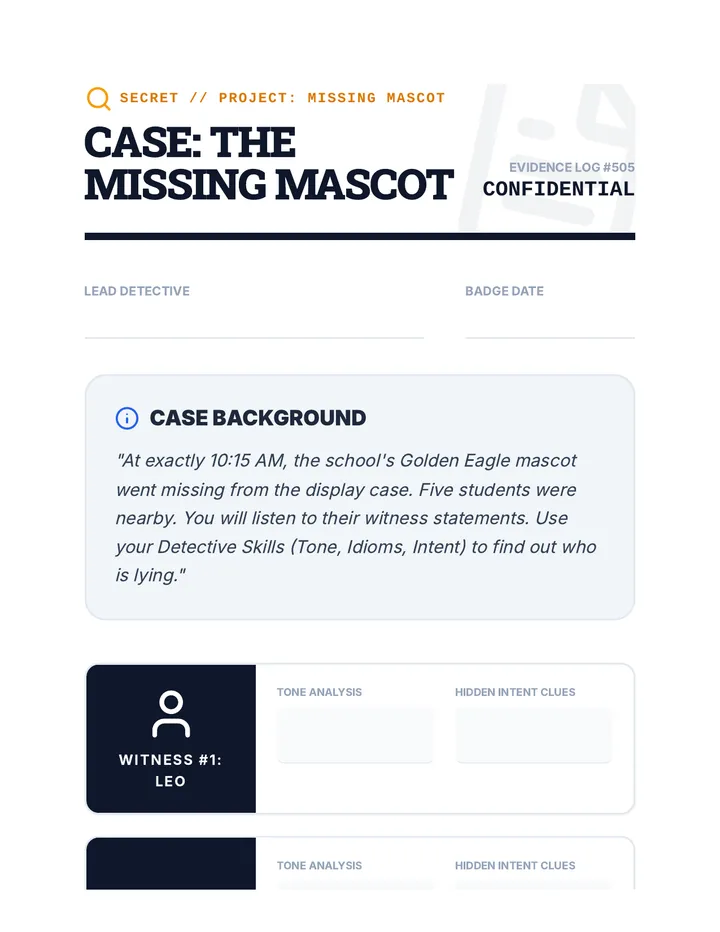
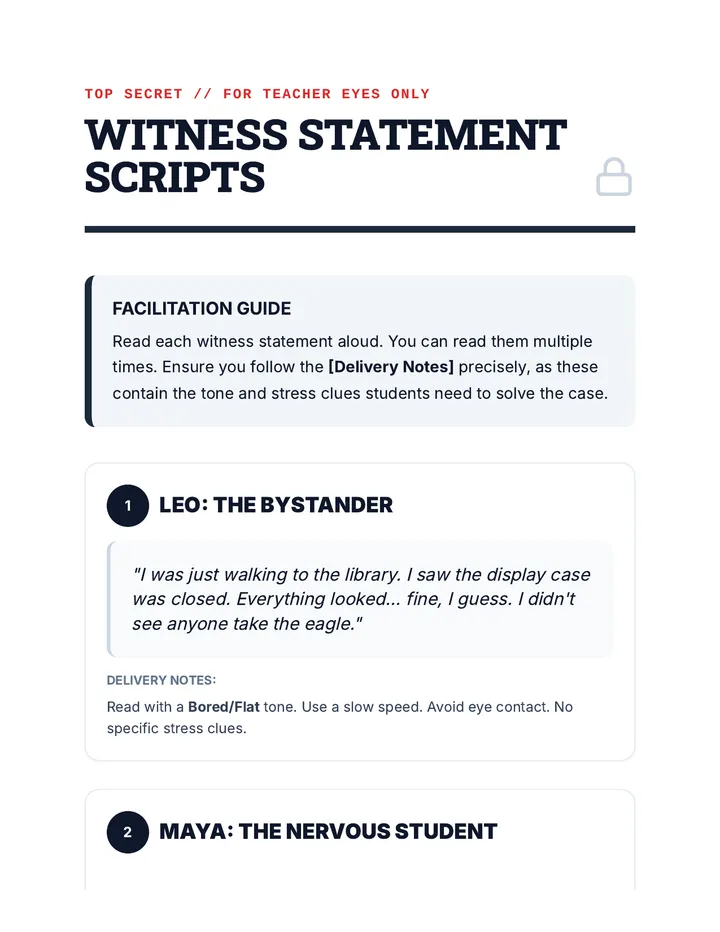
In this final simulation, students listen to witness statements regarding a missing mascot. They must apply all previously learned skills—tone, idioms, and fact-checking—to identify the culprit.
Learners analyze speaker motivation and intent by focusing on word stress and hidden messages. They practice identifying if a speaker is complaining, persuading, or apologizing without using those specific words.
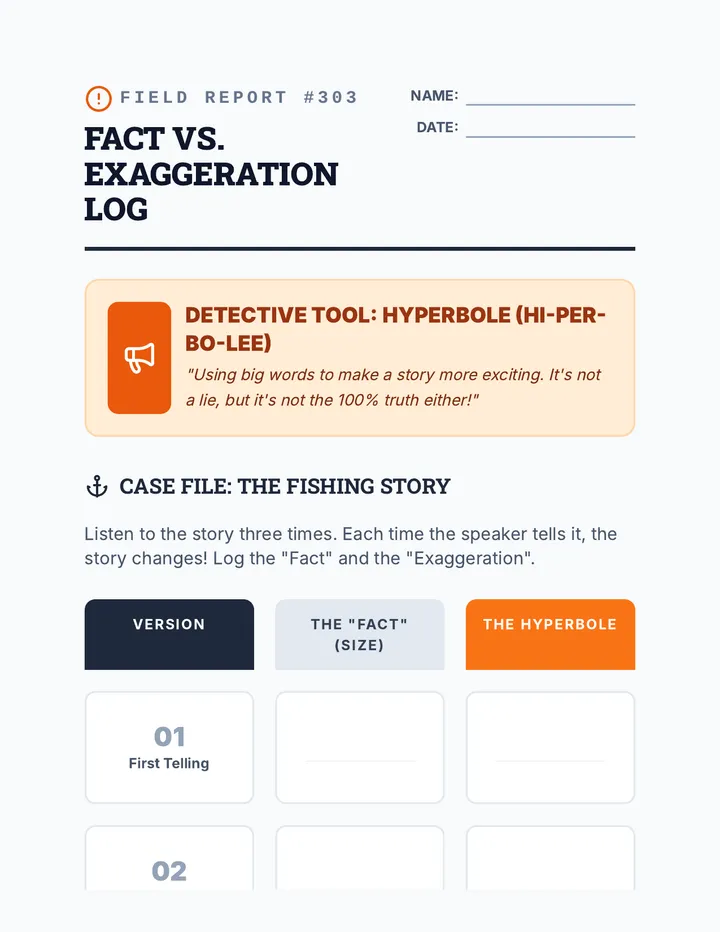
Students practice identifying hyperbole and distinguishing factual information from emotional exaggeration in storytelling. They learn to recognize the 'fishing story' effect in casual conversation.
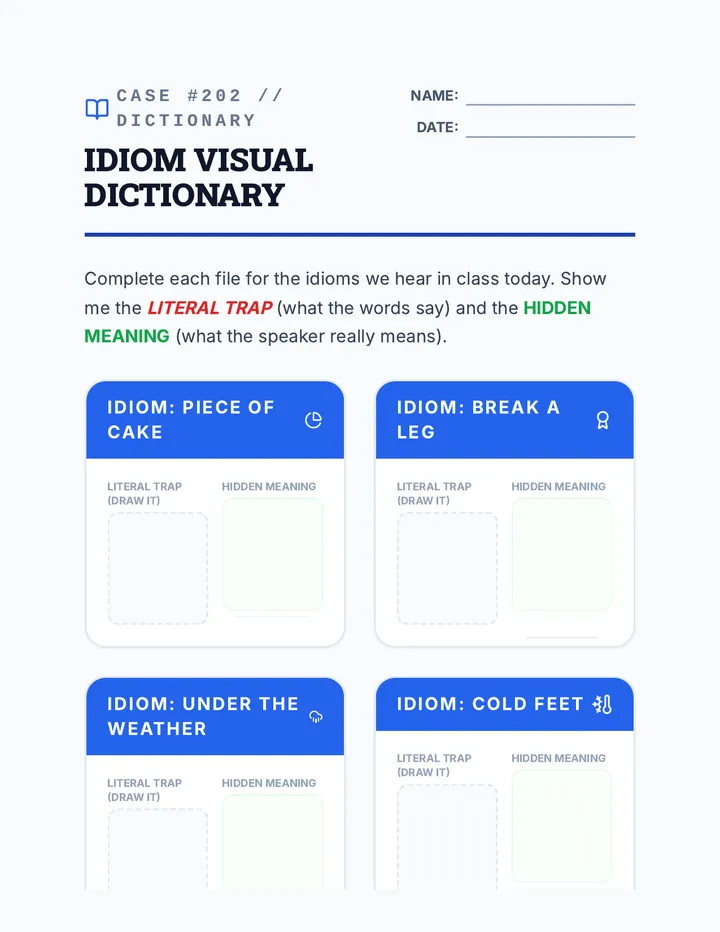
Students decode common American idioms by listening to them in context. They distinguish between literal and figurative meanings and create a visual dictionary of non-literal language.
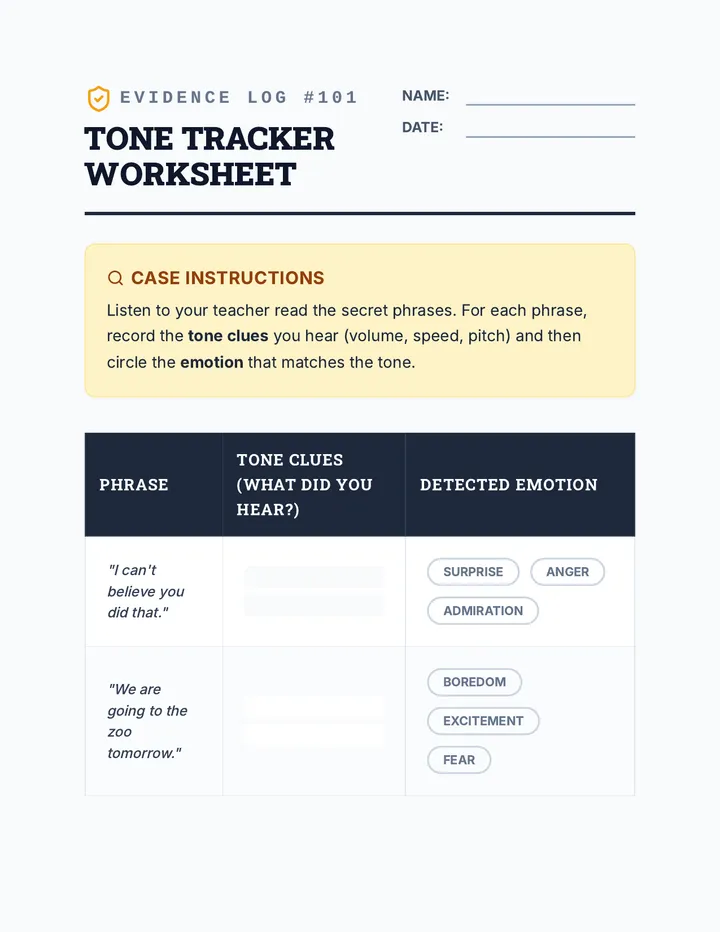
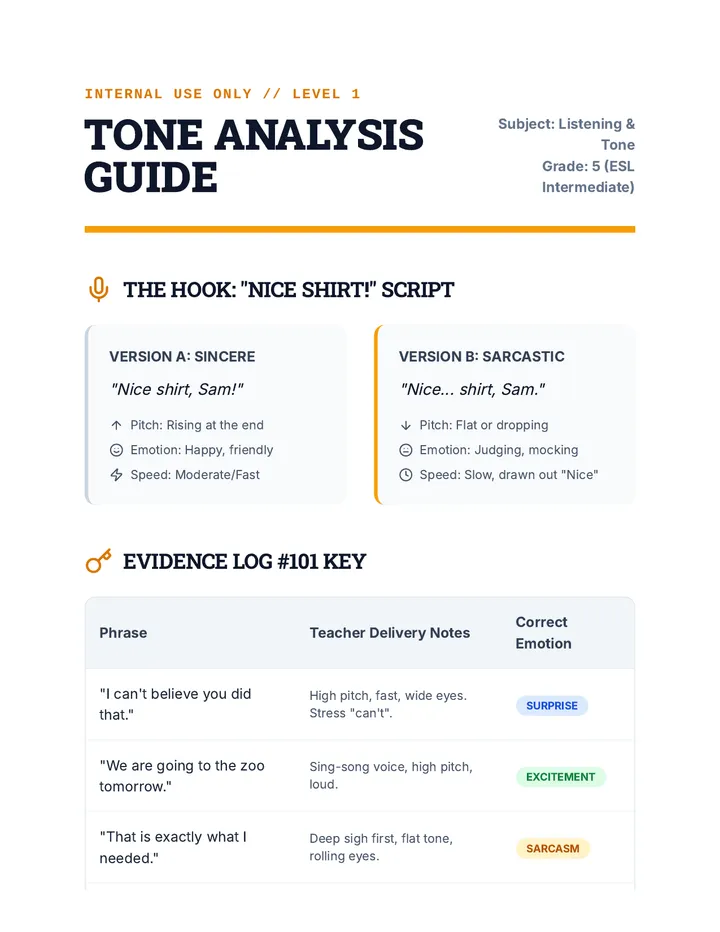
Students explore how pitch, volume, and intonation change the meaning of a sentence. They learn to identify emotional cues in spoken English, such as sarcasm, surprise, and anger.
Students take a shortened, timed practice test where they are graded on their adherence to pacing strategies (triaging, batch bubbling, and using checkpoints) followed by a detailed self-reflection.
Students learn how to calculate time per question, set time-check goals, and use checkpoints to monitor their progress during a test without becoming distracted by the clock.
A culminating timed challenge where students apply all strategies to solve information retrieval tasks accurately and quickly.
Students learn to predict where an answer is located based on the question type and structure of the text.
Students analyze how text features like captions, graphs, and bold words serve as navigation tools to find information rapidly.
Students practice scanning—moving eyes quickly over text to find specific words, names, or numbers using visual search techniques.
Students learn the technique of skimming to understand the main idea of a text quickly by focusing on titles, headings, and first sentences.
Students practice the physical mechanics of using a bubble sheet accurately and efficiently, learning the 'Batch Bubbling' method to save time and prevent alignment errors.
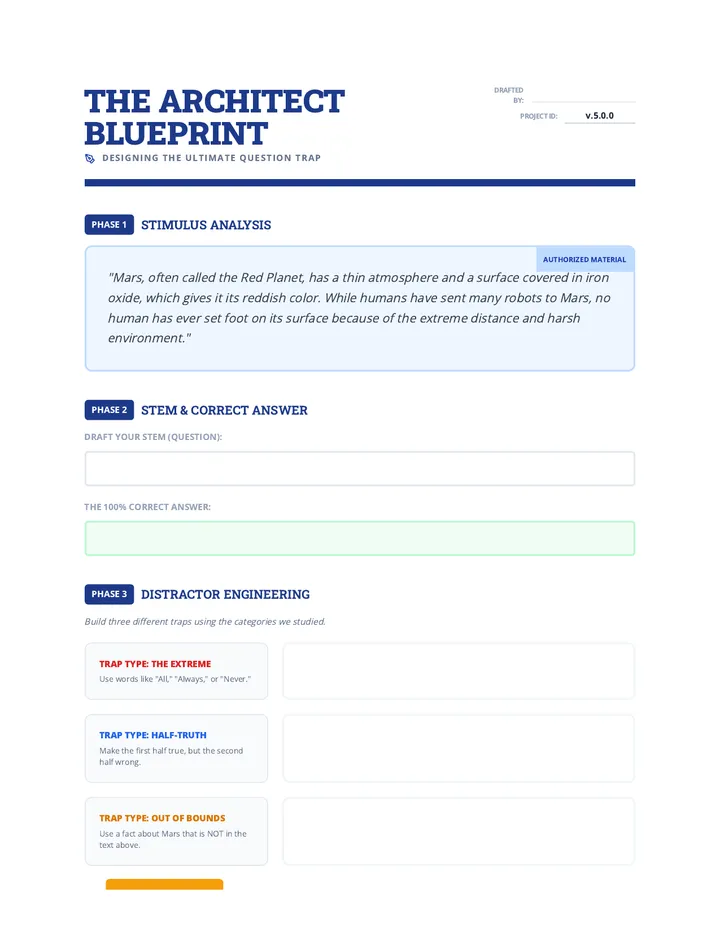
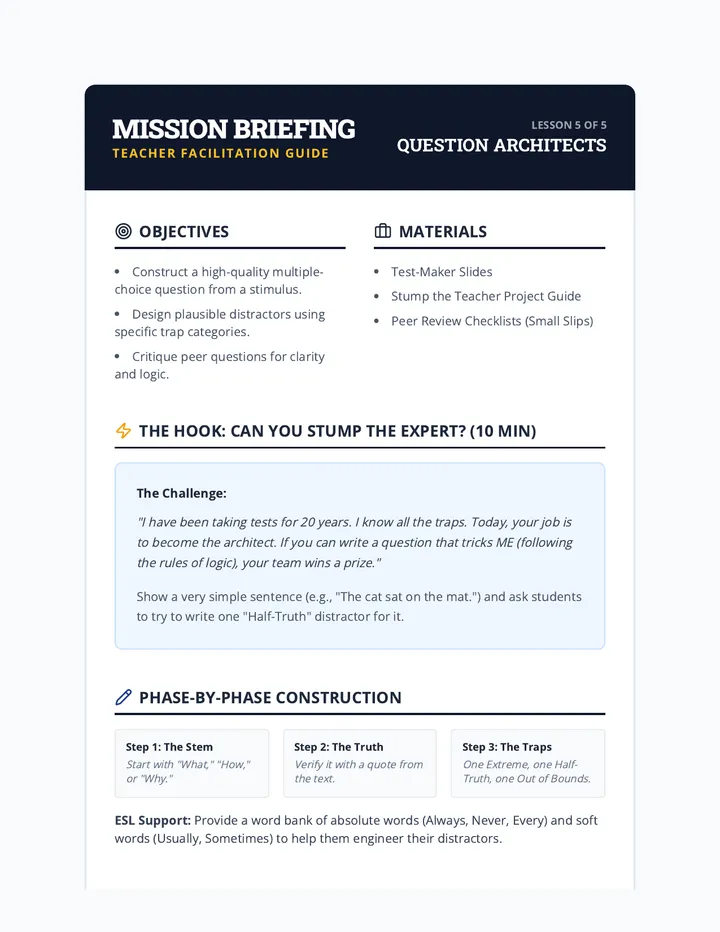
Students switch roles and become the test-makers. They write their own multiple-choice questions based on a shared text, intentionally creating plausible distractors.
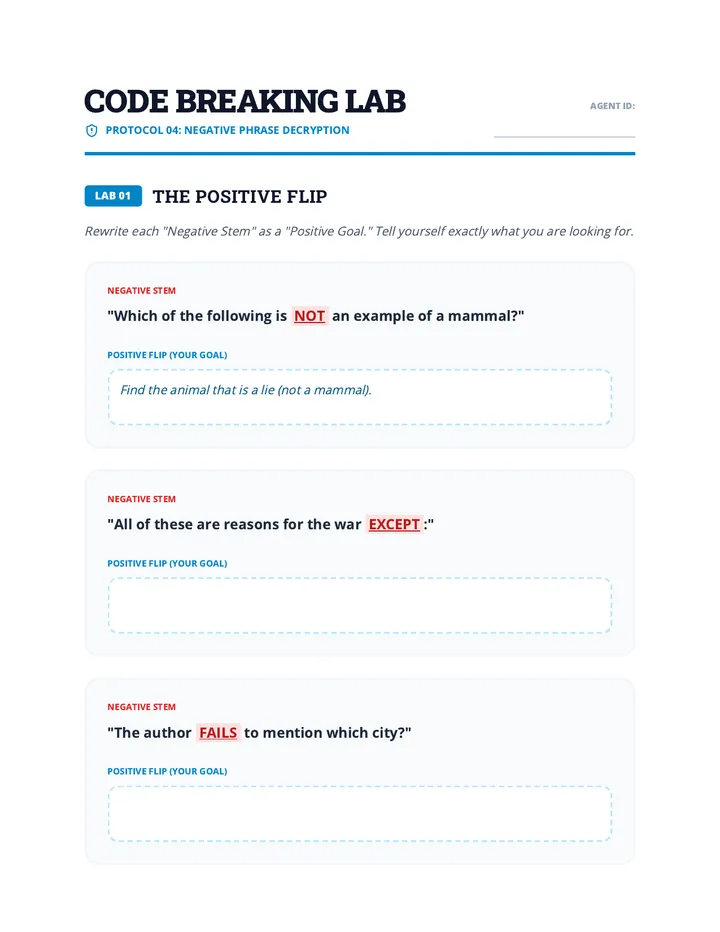
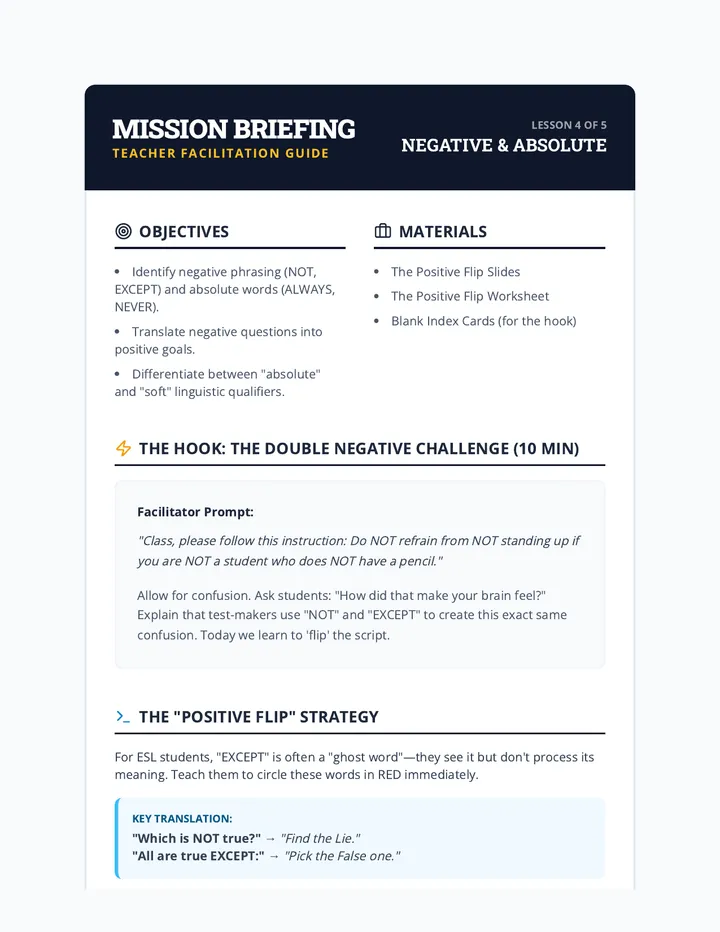
Students specifically target questions using words like 'NOT,' 'EXCEPT,' 'ALWAYS,' or 'NEVER.' They rewrite these questions in positive terms to clarify meaning.