Students discover the power of non-verbal communication through American Sign Language (ASL) basics. This lesson covers the manual alphabet, essential greetings, and etiquette through interactive practice and video instruction.
A dual-language exploration of the iconic Mexican market bag (bolsa de mandado), focusing on its history, utility, and cultural significance in Mexican traditions.
A research-based project where students explore Spanish vocabulary for produce and investigate real-world pricing from Spanish-speaking regions.
A foundational exploration of the first three chapters of Harry Potter and the Sorcerer's Stone, focusing on bilingual comprehension and key vocabulary.
A beginner Spanish lesson exploring traditional Mexican fruit snacks, focusing on common fruit vocabulary and popular toppings like chamoy and tajín.
Synthesizes the week's learning by having students classify simple sentences based on time markers like 'hoy', 'ayer', 'mañana', and 'ahora'.
Explores the Future tense (Futuro) in Spanish, teaching students how to talk about upcoming events using 20 common verbs.
Introduces the Gerund (Gerundio) for ongoing actions, teaching the 'estar + -ndo' structure with intensive practice across all subject pronouns.
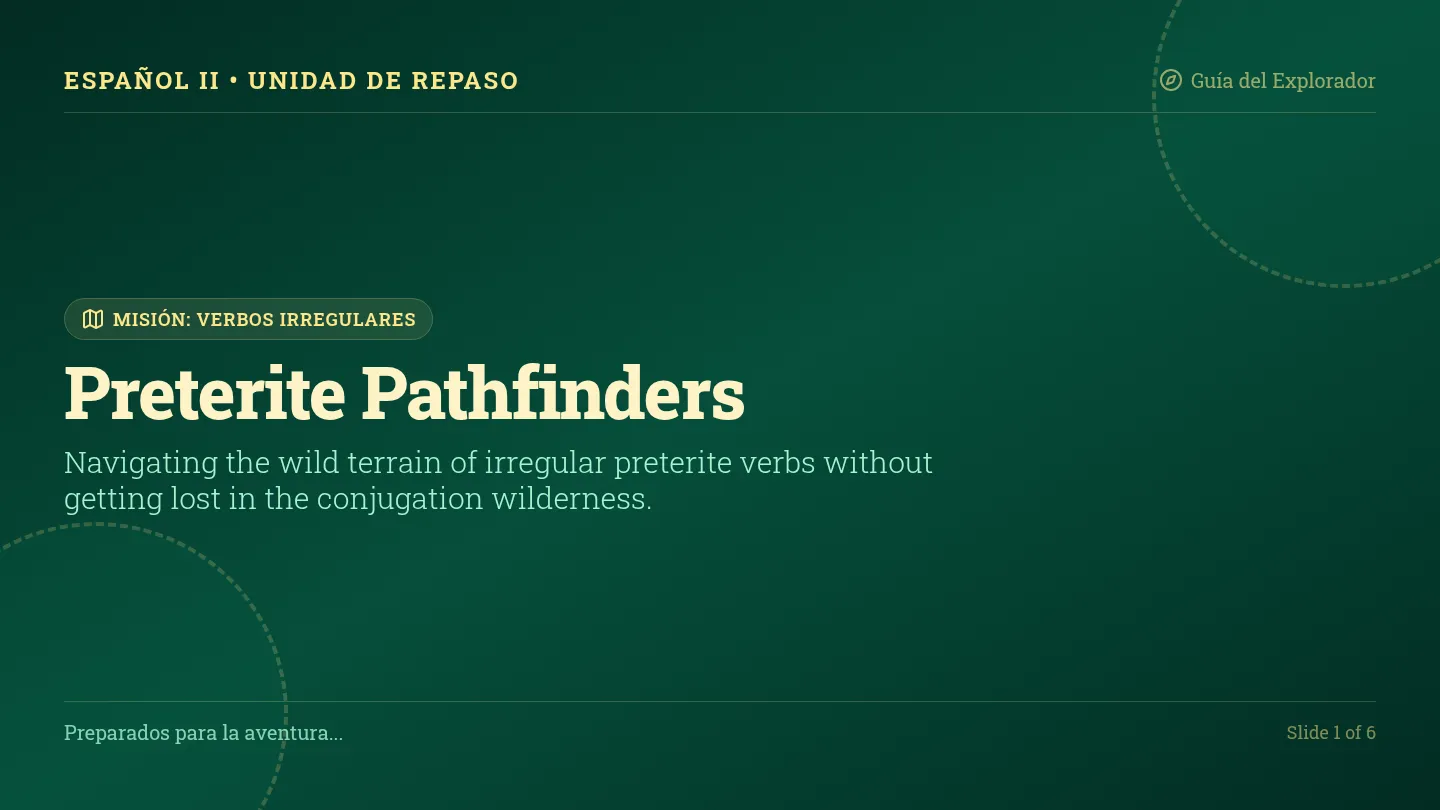
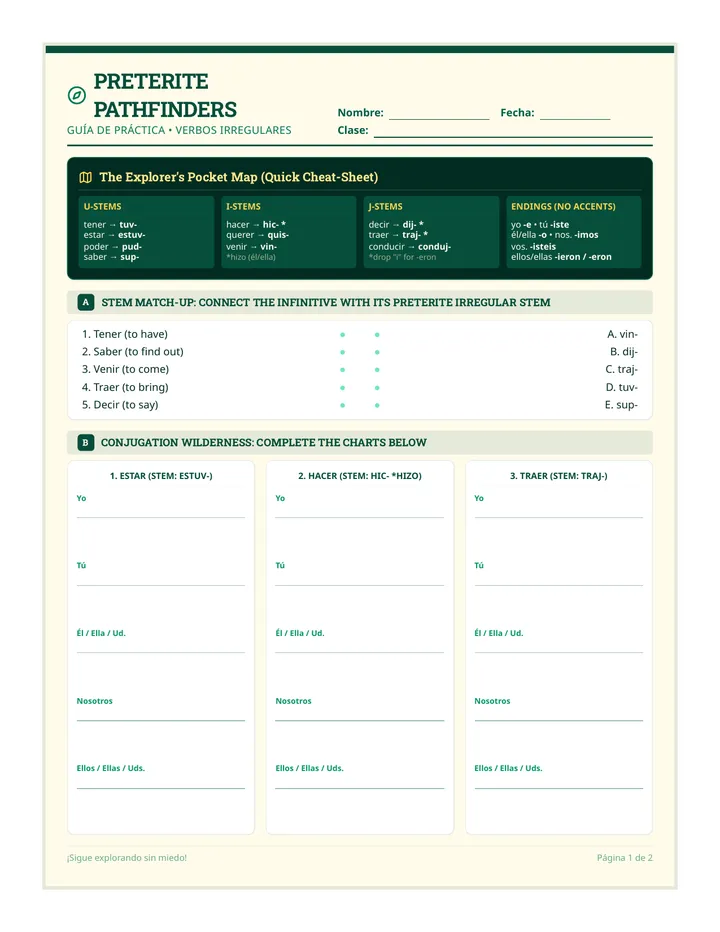
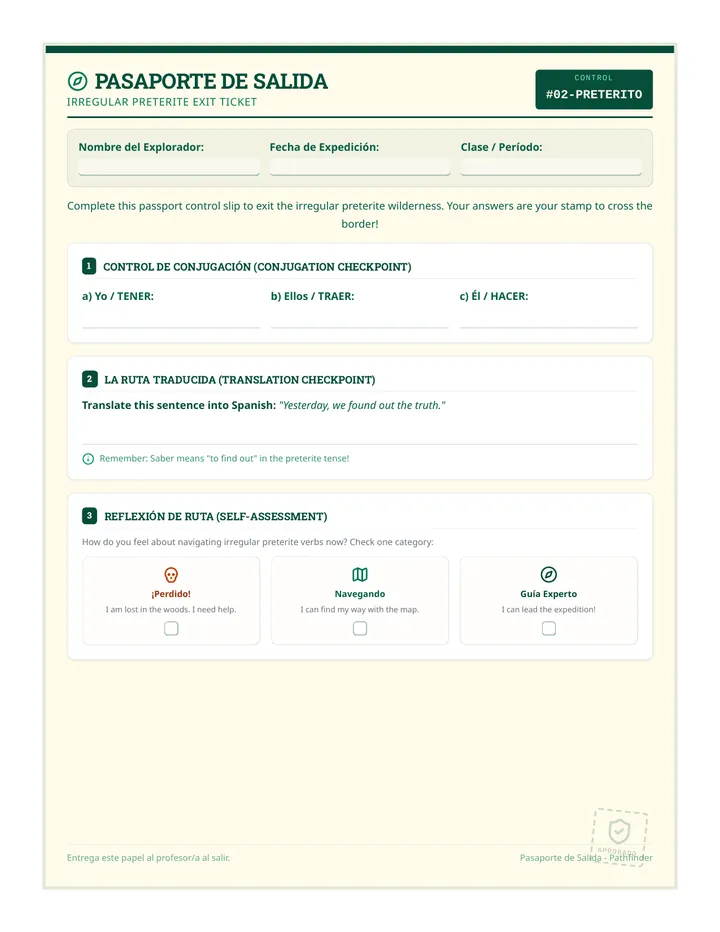
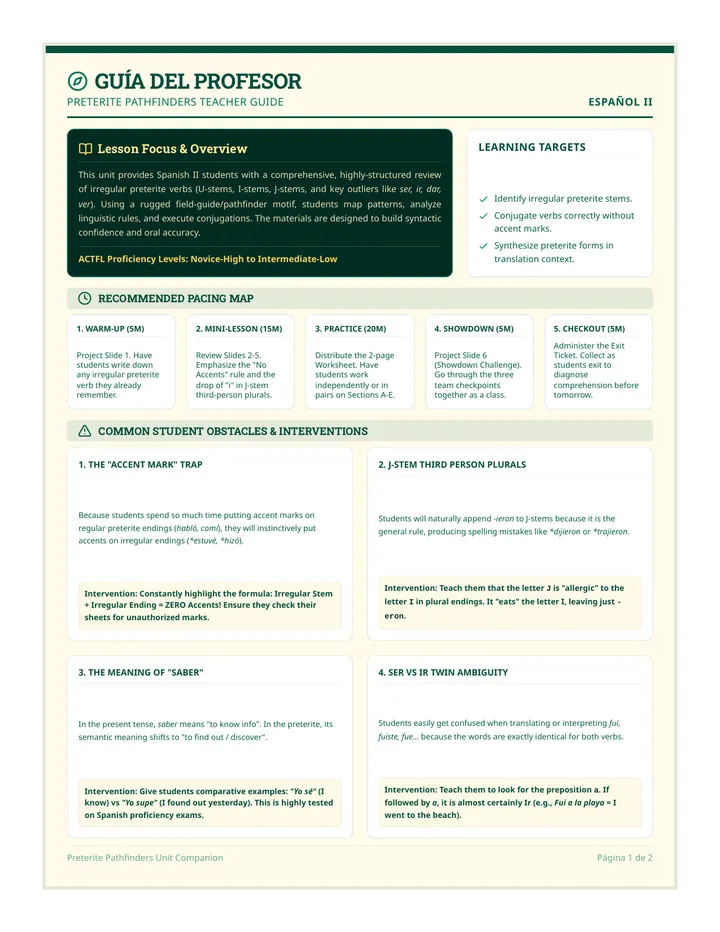
Covers the Preterite tense (Pretérito) for past actions, including an explanation of endings and a 20-sentence unscrambling activity using common verbs.
Focuses on the Present tense (Presente) in Spanish, introducing regular verb endings and practice unscrambling sentences with 20 common verbs and all subject pronouns.
A lesson focused on the suffixes -en, -ize, and -ify. Students investigate how these suffixes transform base words into verbs representing actions or states.
A lesson focused on the suffixes -ful, -ous, and -ious. Students analyze how these suffixes form adjectives from nouns, representing full of or having qualities of.
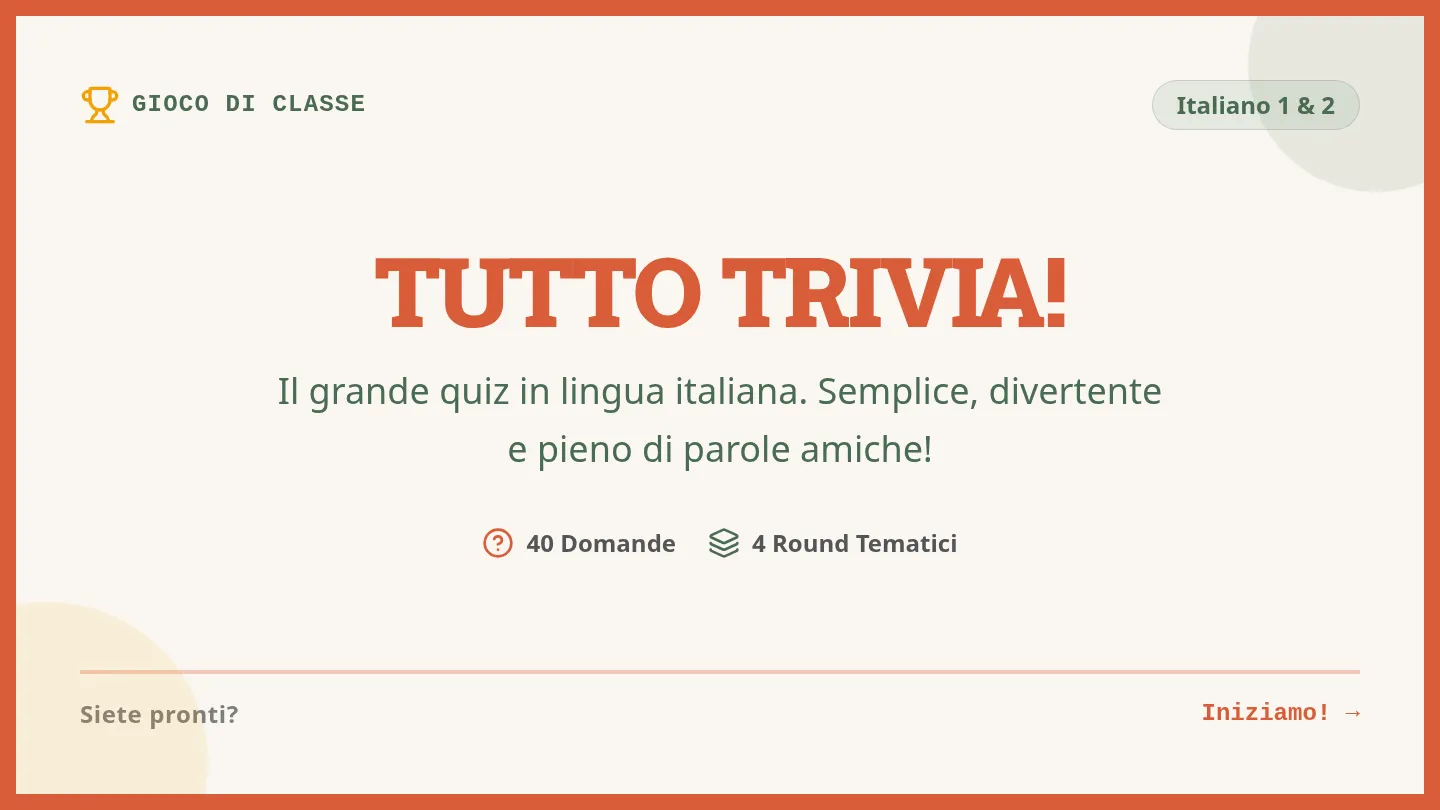
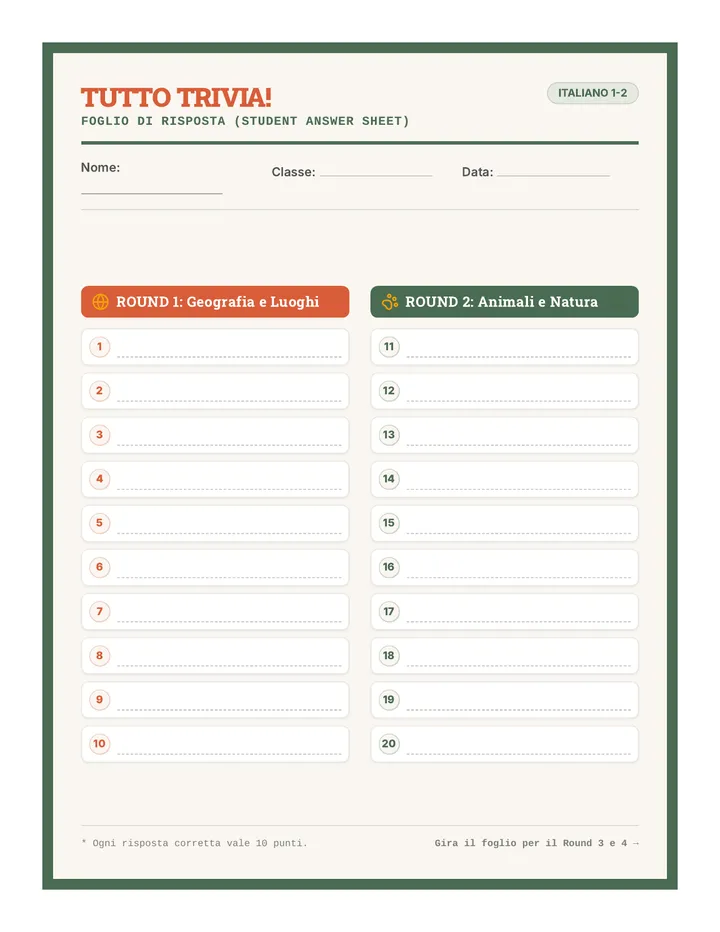
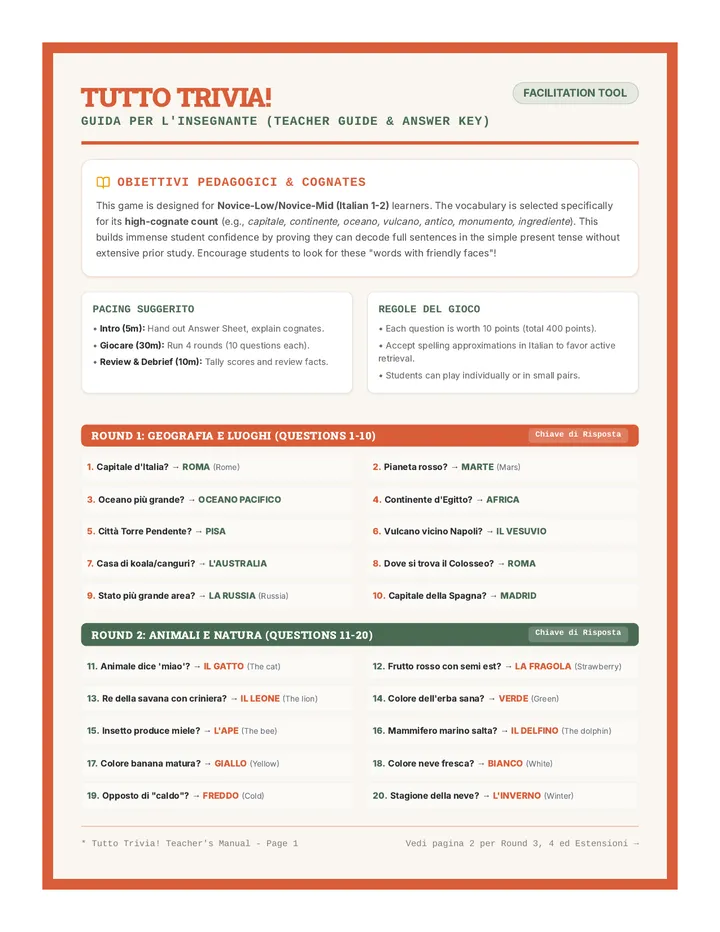
A fast-paced Italian vocabulary game for A1/A2 students covering food, travel, daily life, and general topics. Includes a presentation for class gameplay, printable game boards, and a teacher facilitation guide.
A high-energy vocabulary game designed for intermediate Italian learners to practice specific lexicon across four key themes: Food, Travel, Verbs, and Fashion. Students compete to find unique words for specific categories within a time limit.
A lesson focused on the suffixes -al, -ial, and -ic. Students analyze how these suffixes form adjectives from nouns, representing relating to or having qualities of.
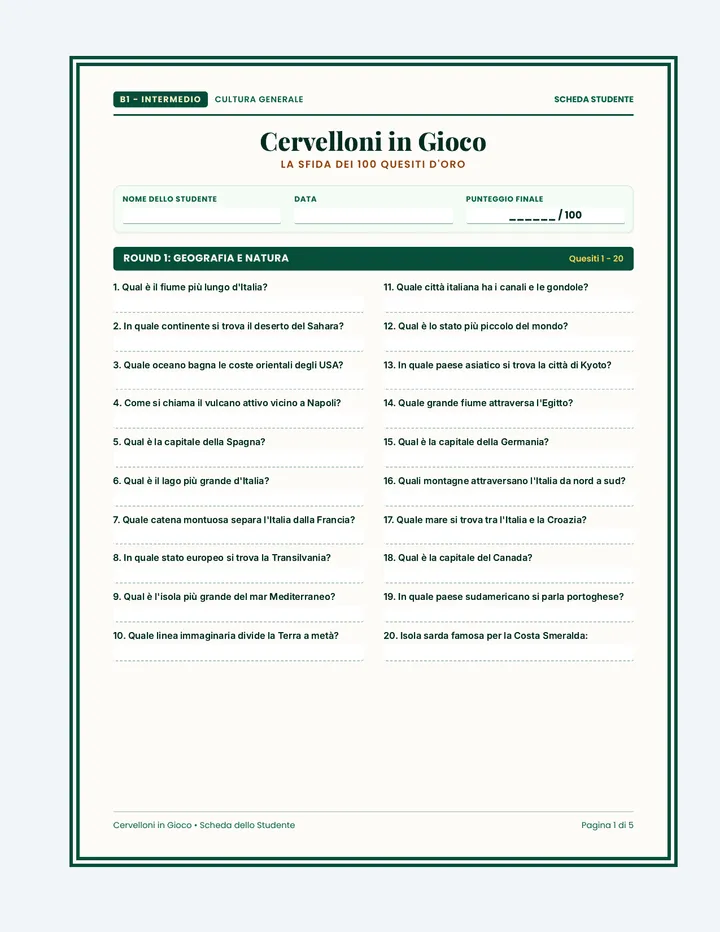
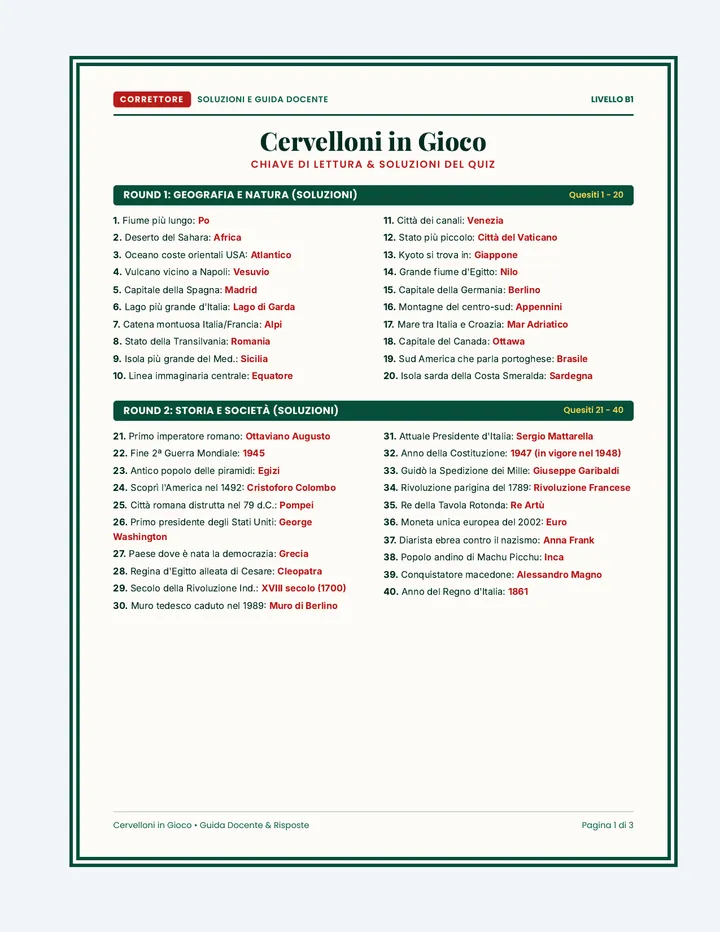
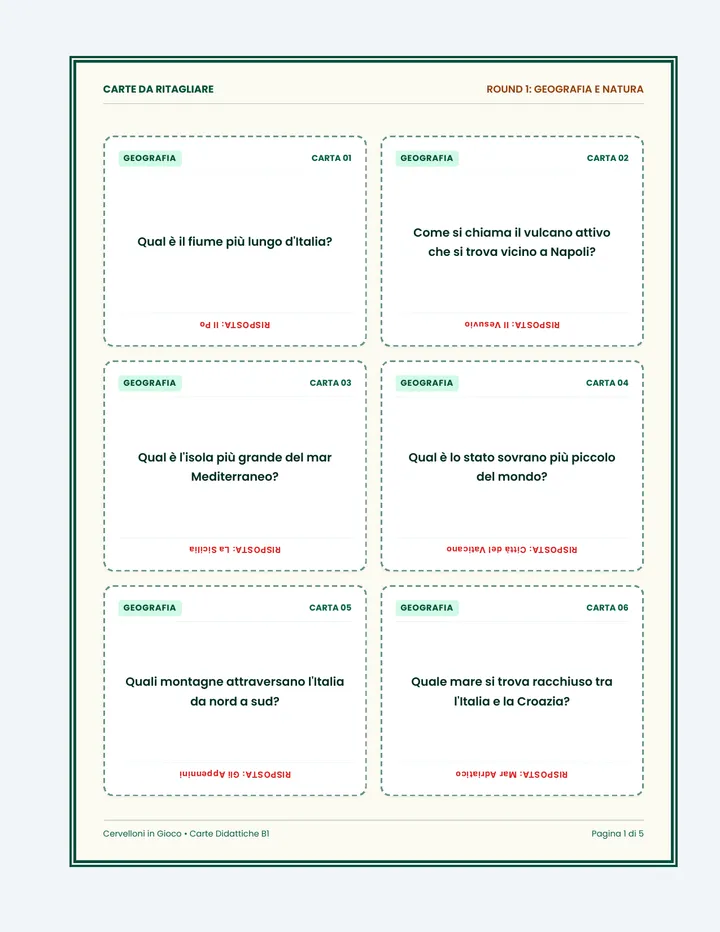
A high-energy vocabulary game for B1 Italian students designed to boost word retrieval and cultural knowledge through the classic Scattergories format.
A lesson focused on the suffixes -ty and -ity. Students analyze how these suffixes form nouns from adjectives, representing states or qualities.
A fast-paced Italian vocabulary game based on Scattergories, designed for A1-A2 beginner learners to practice common nouns, verbs, and adjectives.
A lesson focused on location and category suffixes (-ary, -ery, -ory). Students analyze how these suffixes form nouns and adjectives related to places, groups, and qualities.
A lesson focused on abstract suffixes (-ment, -less, -ness). Students explore how these suffixes form nouns and adjectives related to states, qualities, and actions.
A lesson focused on agentive suffixes (-er, -or, -ian, -ist). Students analyze how these suffixes identify people who perform specific actions or hold certain roles.
A lesson focused on comparative and superlative suffixes (-er, -est, -ier, -iest). Students explore how these suffixes change adjectives to compare two or more things.
A lesson focused on the suffixes -y, -ly, and -ily. Students analyze how these suffixes change word meanings and usage through contextual application.
A beginner-friendly Spanish lesson centered on visual comprehension using the classic 'Destinos' series and the catchy 'Sr. Wooly' music videos. Students practice identifying basic vocabulary and plot points while viewing.
A lesson focused on the prefixes sub-, com-, pro-, and en-. Students apply their knowledge of these prefixes to identify and use words in various contexts.
A lesson focused on the prefixes re-, ex-, in-, and de-. Students explore meanings like "again," "out," "in," and "down" through application.
A lesson focused on the prefixes pre-, fore-, post-, and after-. Students practice using these temporal and directional prefixes in context.
A lesson focused on the prefixes in-, un-, dis-, and mis-. Students analyze meanings and usage through contextual sentences and word puzzles.
A comprehensive vocabulary unit focusing on advanced roots, suffixes, and prefix assimilation from Sorts 42-50. This lesson includes practice sentences for all 200+ words, word scrambles, and a crossword puzzle to reinforce derivational relations.
A comprehensive guide to English phrasal verbs, covering both everyday conversational use and formal academic contexts, with translations in Spanish.
Explore the origins, legends, and cultural significance of Mexican mole. This lesson covers the indigenous roots of 'mulli', the colonial legends of Puebla, and the modern recognition of mole as a global cultural heritage through a reading passage and assessment.
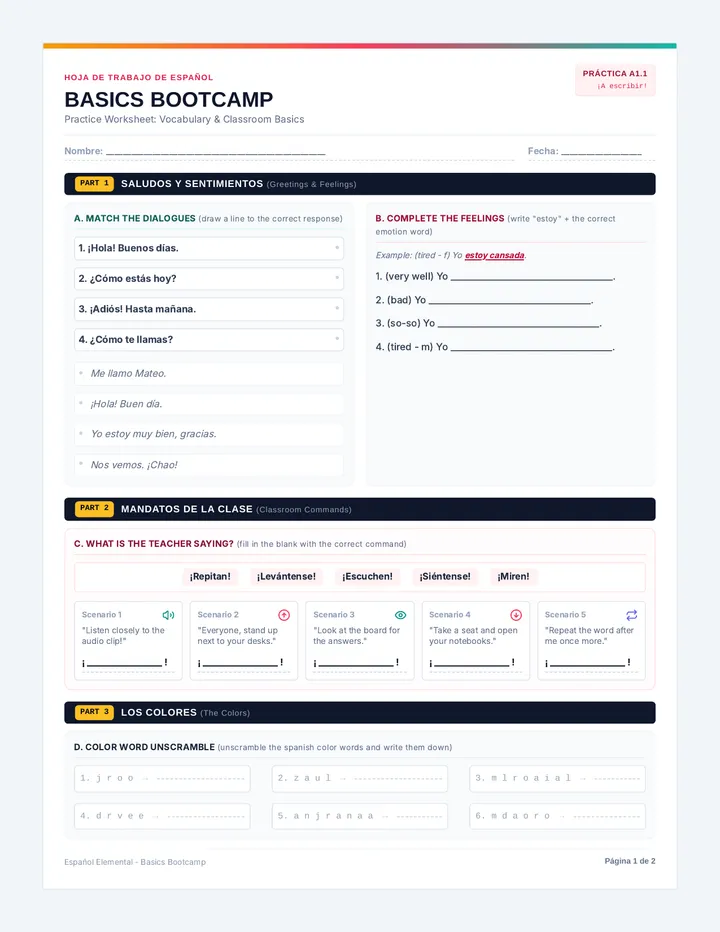
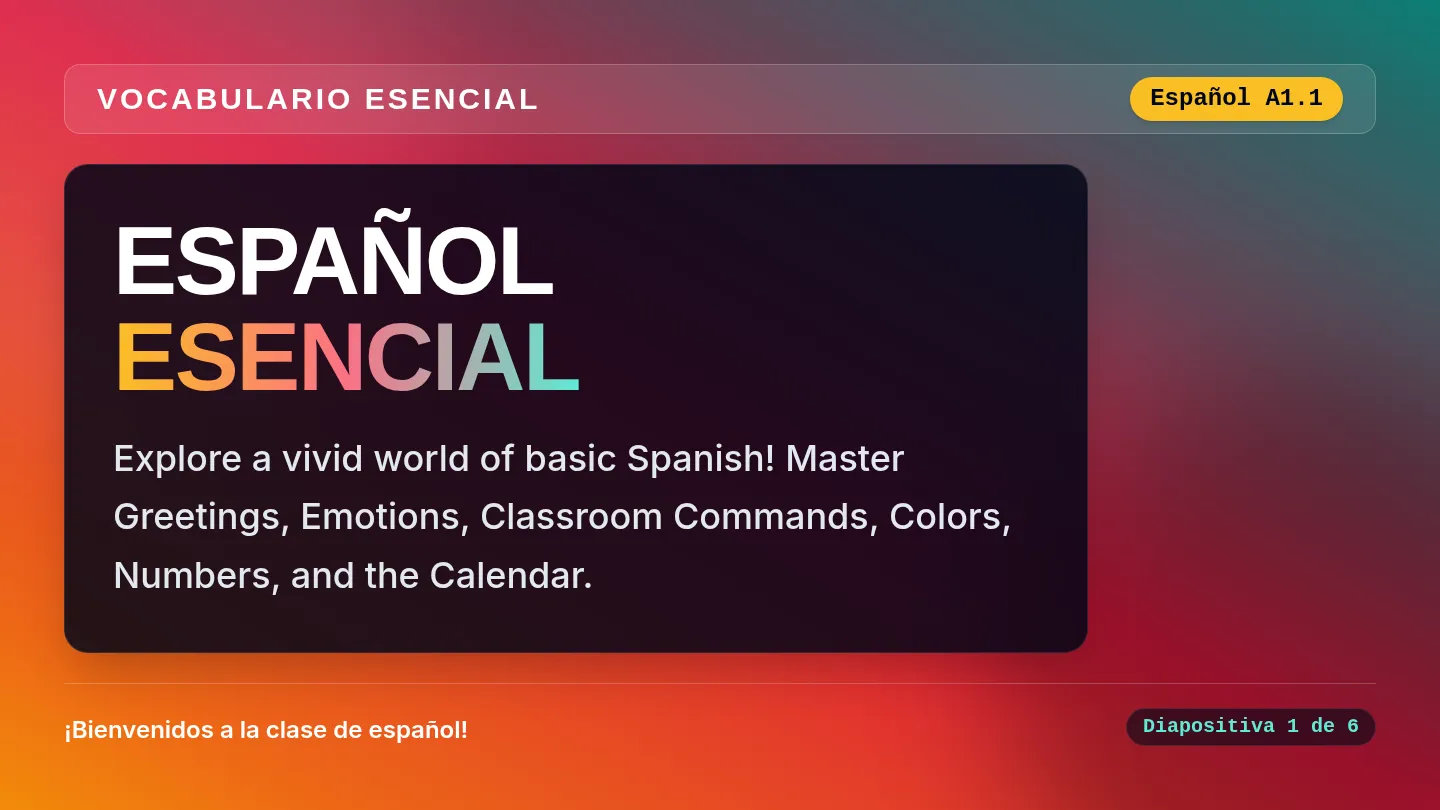
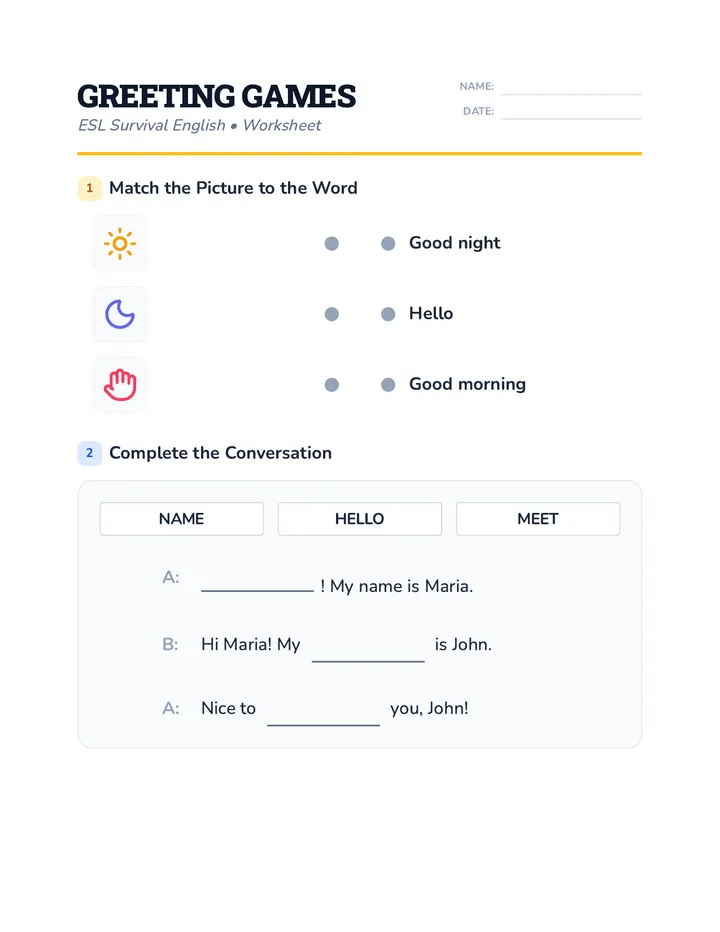
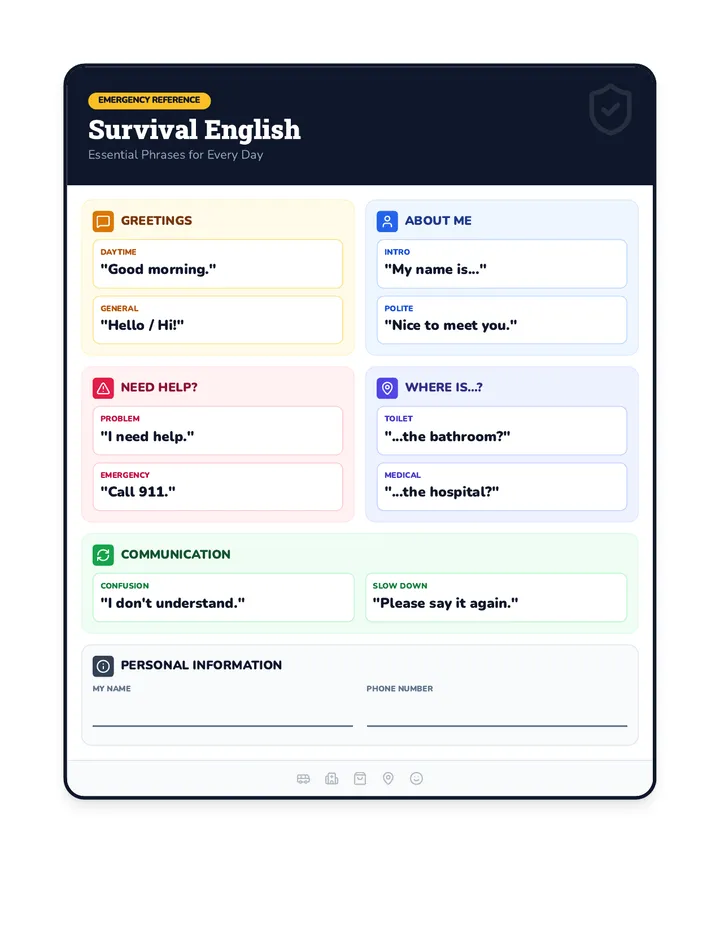
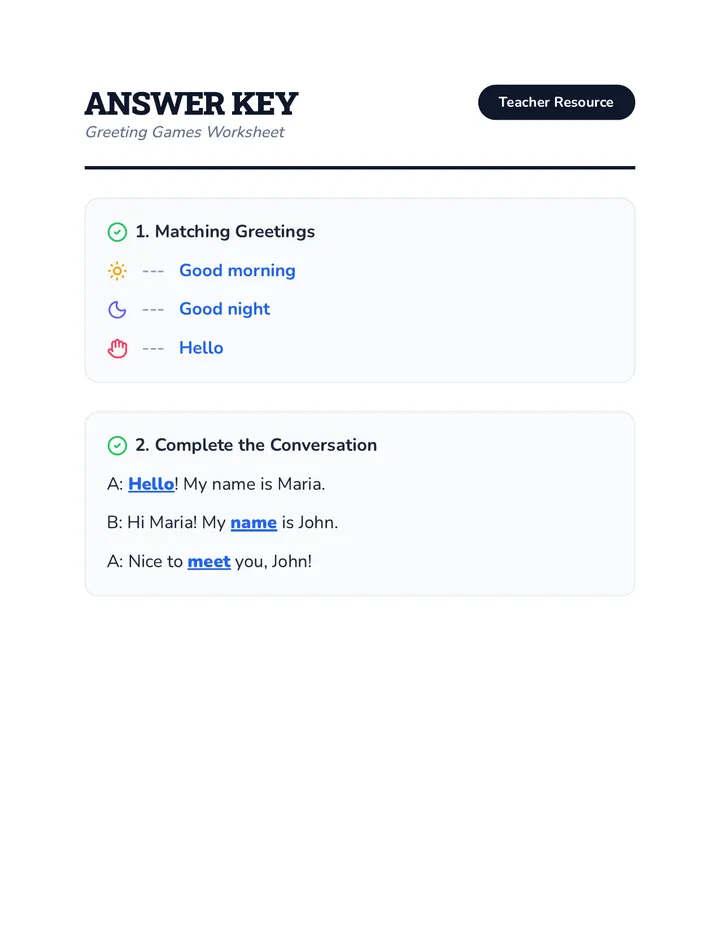
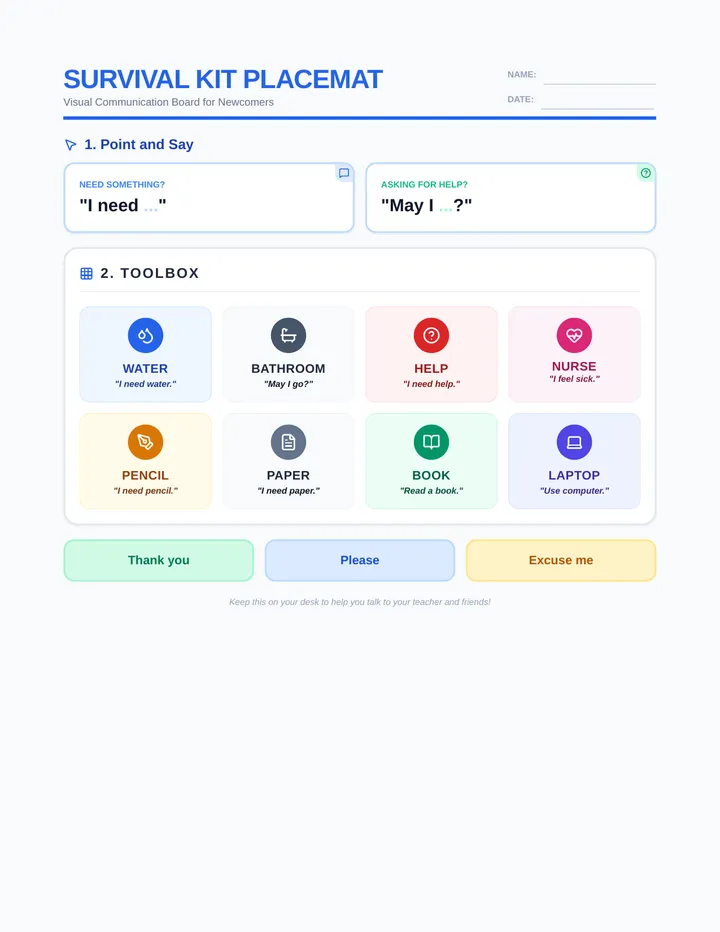
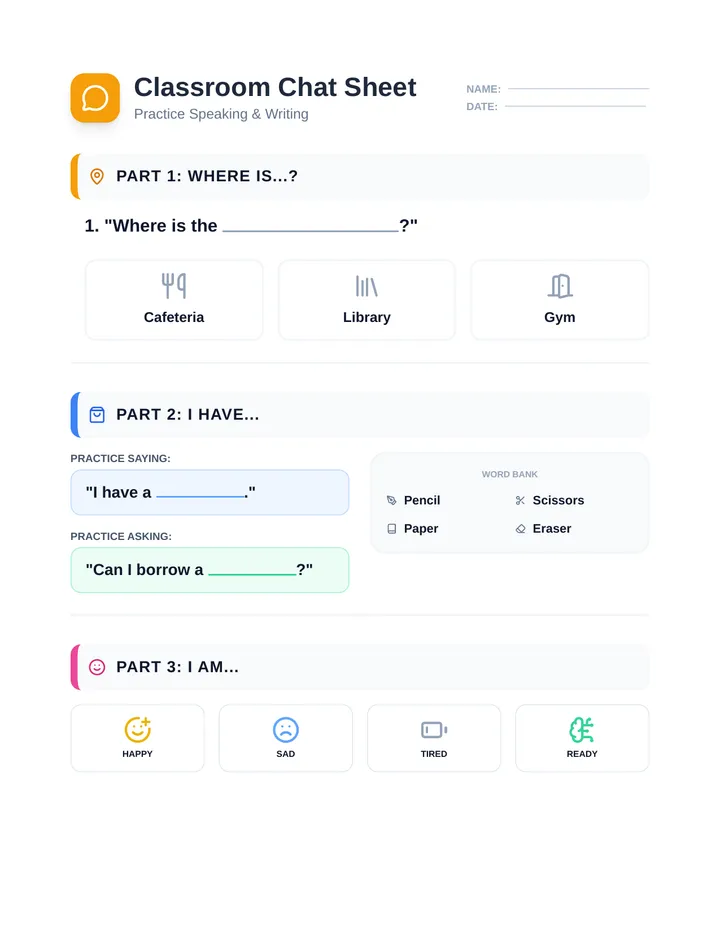
A comprehensive lesson for Spanish-speaking students to master common English greetings, idiomatic expressions, and essential classroom phrases. Includes visual aids, practice activities, and reference materials.
Una lección vibrante sobre modismos y expresiones comunes en español y sus equivalentes en inglés, explorando significados literales y figurados.
An introductory lesson on Japanese numbers 1-20 using Picture Talk and visual aids to build immediate comprehension through counting familiar objects.
An 8th grade introductory German lesson teaching numbers 1-20 through a Comprehensible Input (CI) story about classroom object overload. Students count, listen, and play bingo to solidify their vocabulary.
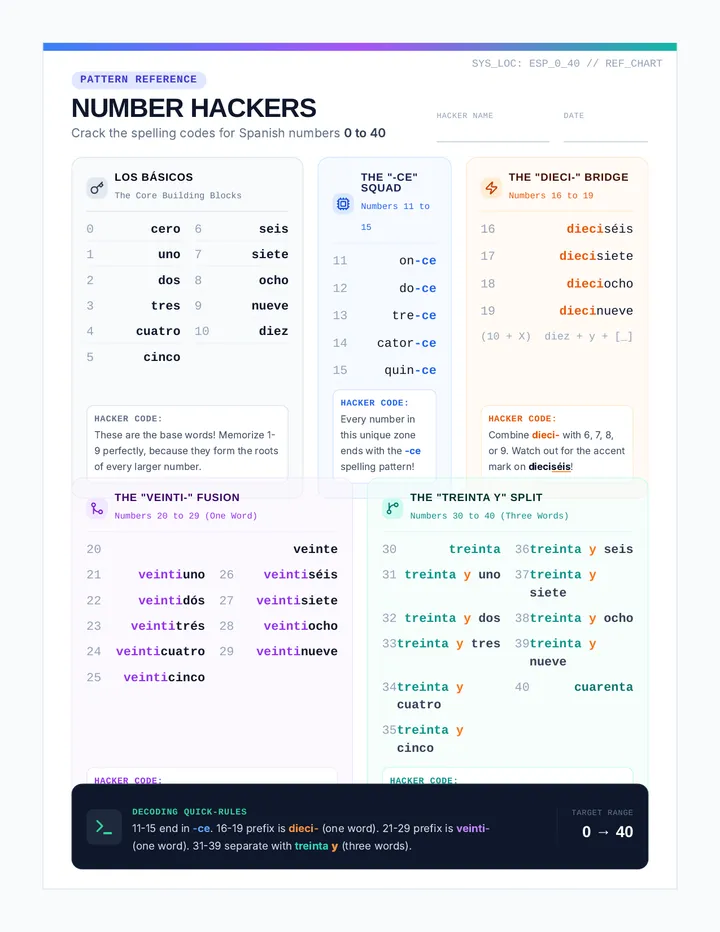
An introductory lesson on Spanish numbers 1-20 using the Picture Talk strategy within a 'Magic Market' theme. Students will count magical items, interact with visual prompts, and complete a market inventory worksheet.
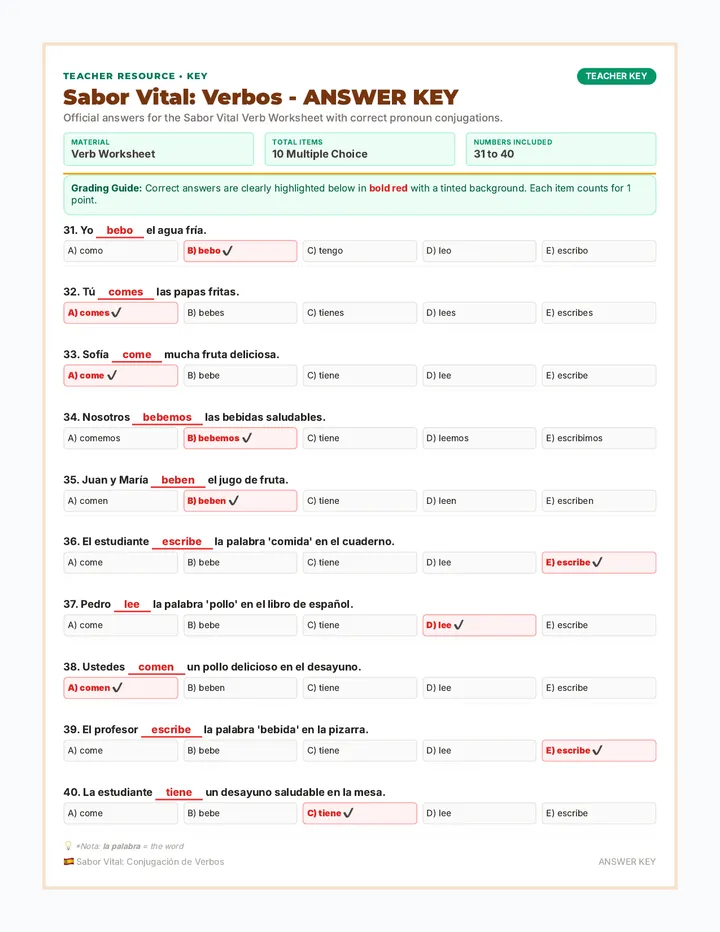
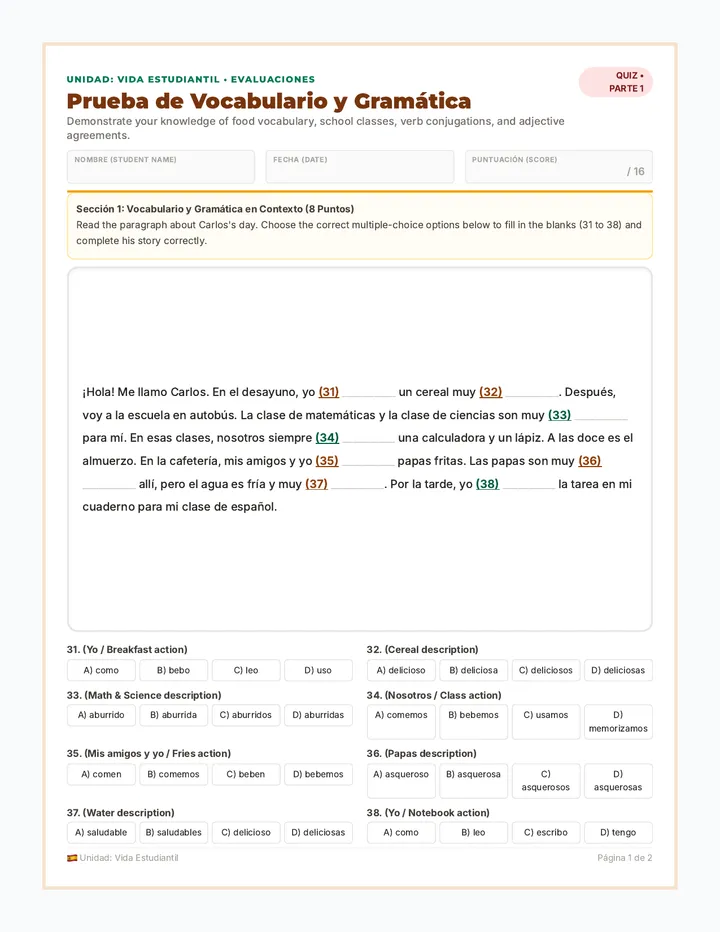
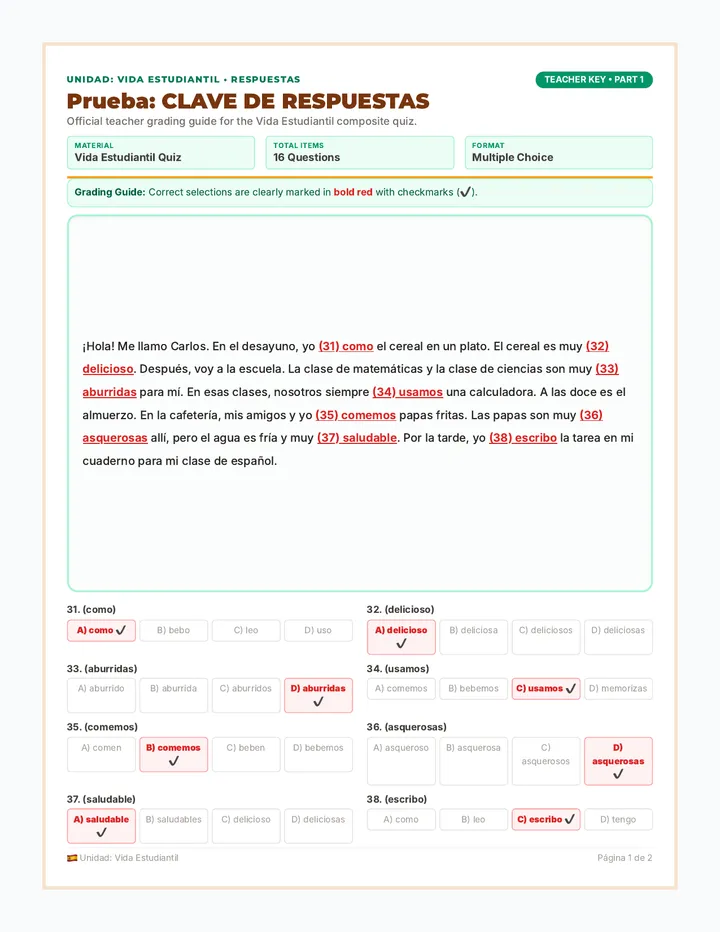
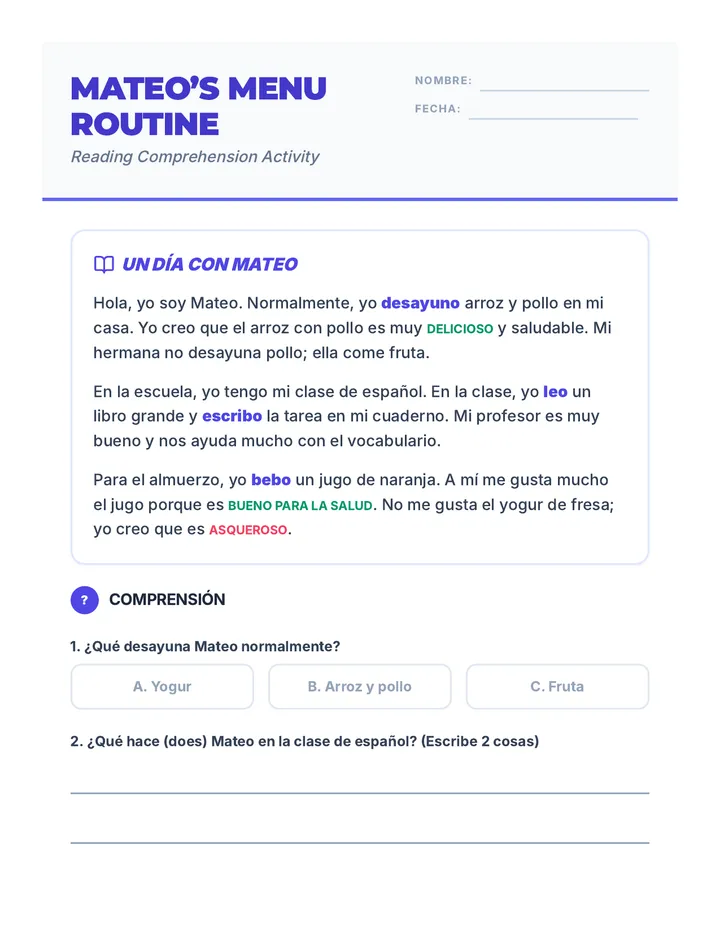
Students act as language detectives to uncover the meaning and patterns of the verb 'tener' in Spanish, focusing on age, physical states, and possessions.
An introductory lesson where students use visual clues and context sentences to deduce the various meanings of the Spanish verb 'tener', covering possession, age, hunger, and thirst.
Introduction aux salutations de base et aux règles de politesse en milieu bamanan, combinant lecture et expression orale.
Apprentissage des premières consonnes et formation des syllabes simples pour commencer à lire des mots de deux lettres.
Introduction aux voyelles du Bamanankan (a, e, ɛ, i, o, ɔ, u) et à la nasalisation, avec des exercices de tracé et de reconnaissance auditive.
A 45-minute introductory lesson comparing Japanese and American middle school life, focusing on commuting, schedules, and school clubs using CI techniques.
An introductory Japanese lesson for 8th graders focusing on weather vocabulary and related cultural activities in Japan using Comprehensible Input (CI) strategies. Students will learn to describe the weather and match it with common hobbies like skiing, hiking, and flower viewing.
A 45-minute introductory lesson focusing on Japanese school subjects and time-telling using Comprehensible Input. Students compare their daily routines with a typical Japanese middle school student's schedule.
Students expand their vocabulary to full meals and essential restaurant etiquette phrases like 'Irasshaimase' and 'Itadakimasu' through a simulated restaurant experience.
Students learn common cafe drinks and snacks, practicing the basic ordering phrase 'o kudasai' through visual cues and guided listening.
An introductory lesson for 8th-grade Japanese students exploring the three main writing systems (Hiragana, Katakana, and Kanji) using the Picture Word Inductive Model (PWIM) and Comprehensible Input strategies.
An exploration of Japanese numbers 1-10 and how to state one's age and grade level, focusing on visual recognition of Hiragana digits and counting through CI games.
An introductory lesson focusing on basic Japanese greetings, bowing etiquette, and simple self-introductions using Romaji and Hiragana through Comprehensible Input (CI) methods.
A 45-minute introductory Spanish lesson comparing the daily lives of 8th graders in Puerto Rico and the United States using Comprehensible Input strategies like TPRS and PQA.
A 45-minute introductory lesson for 8th grade Spanish students exploring the vibrant world of Mexican music, dance, and art through Comprehensible Input.