A project-based finale where students apply their knowledge by reverse-engineering test items, creating their own distractors to challenge their peers.
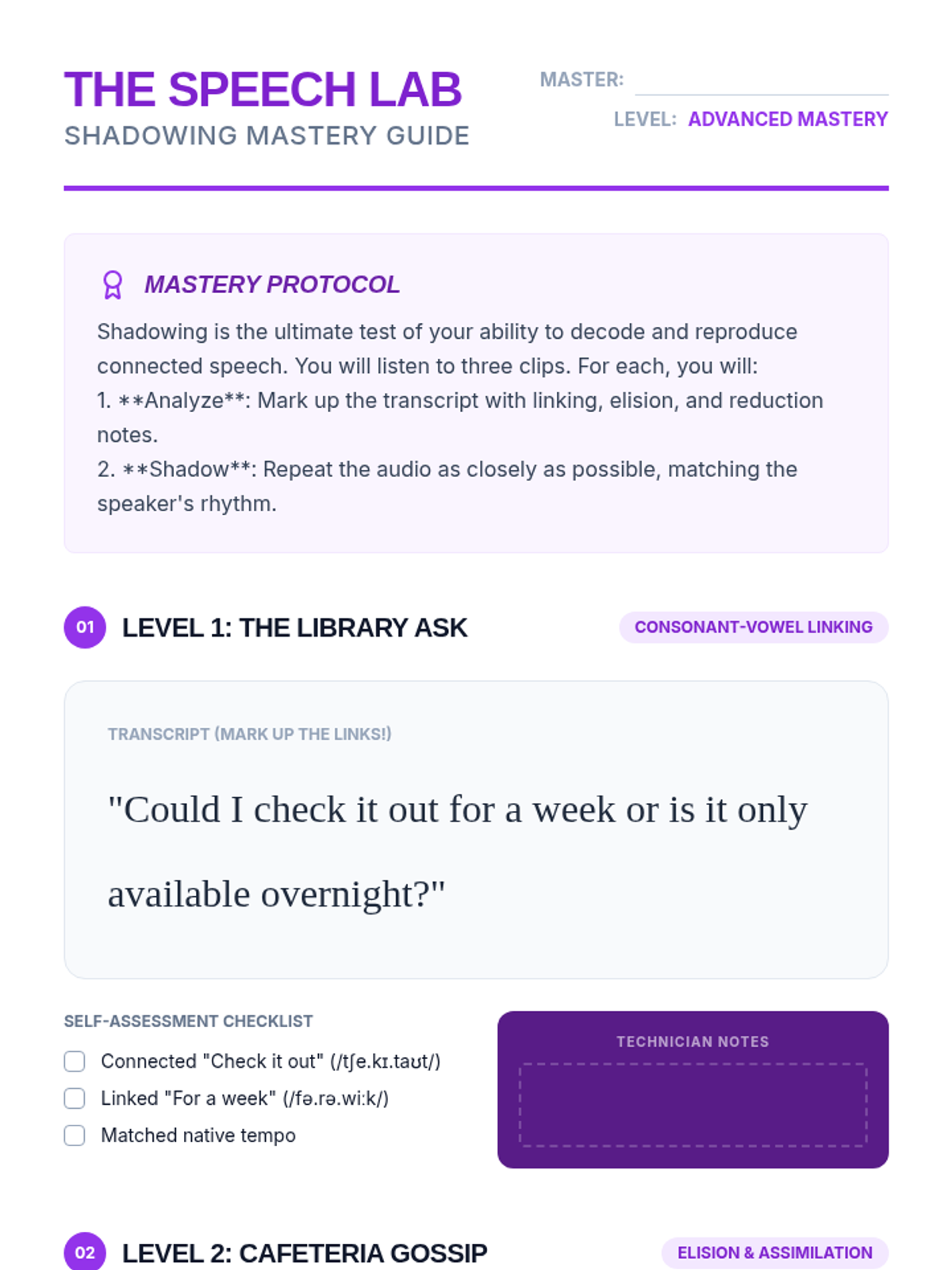
Students engage in a 'shadowing' technique, repeating audio immediately after hearing it to internalize the rhythm and flow of connected speech. This active processing reinforces their ability to predict and process sound streams.
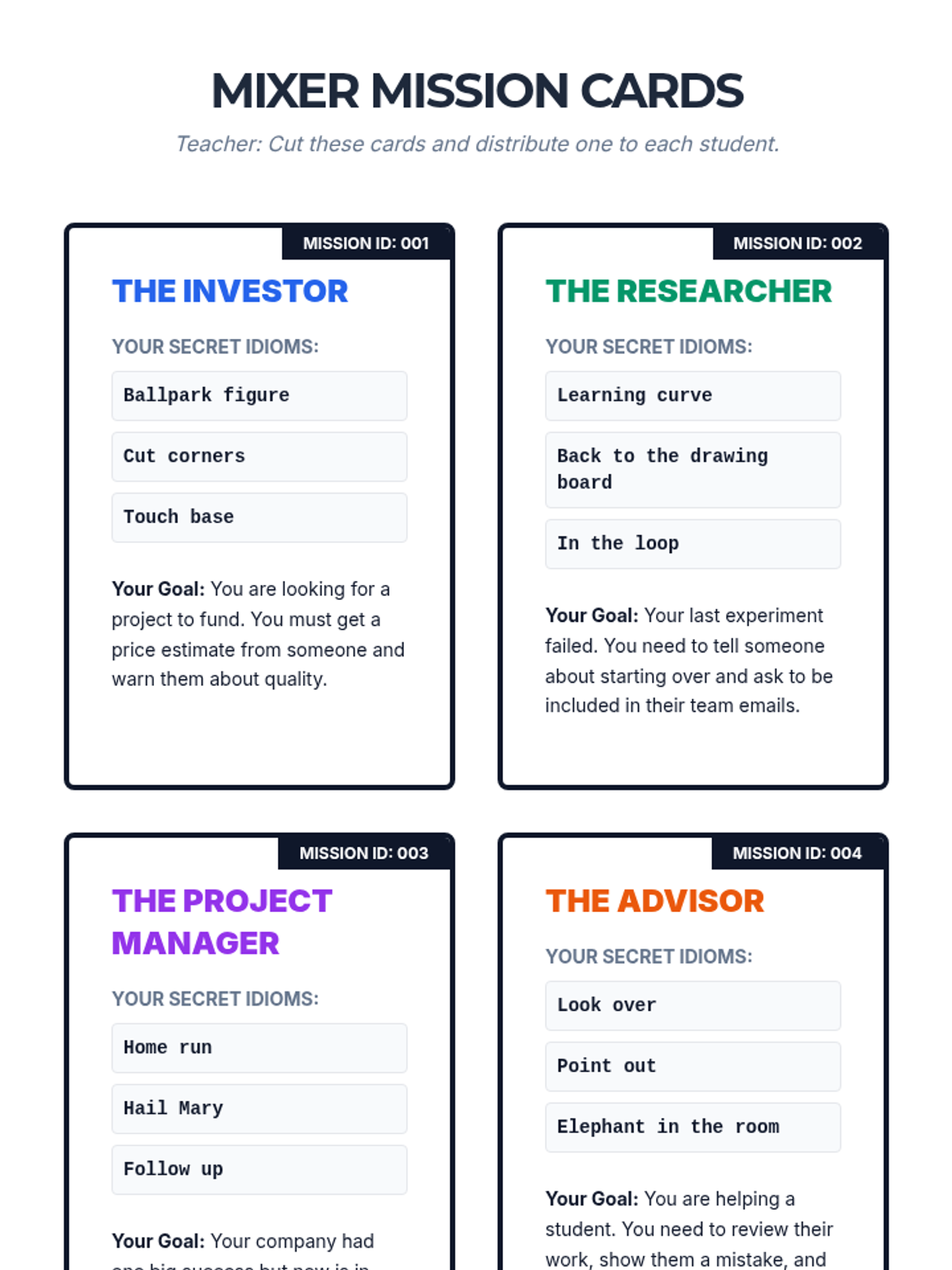
A high-stakes simulated networking mixer where students must apply their knowledge of idioms, phrasal verbs, and social listening to complete specific "missions."
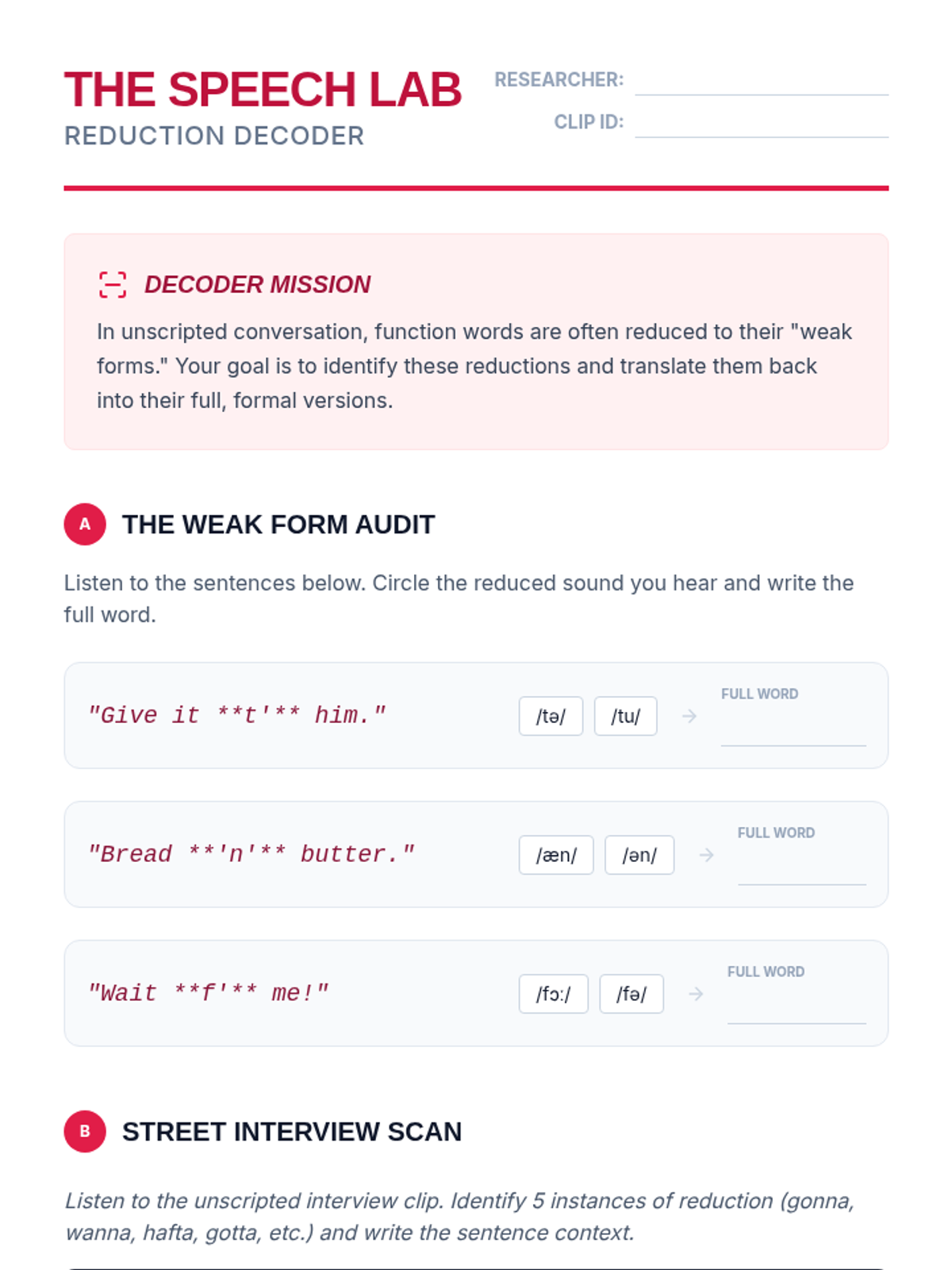
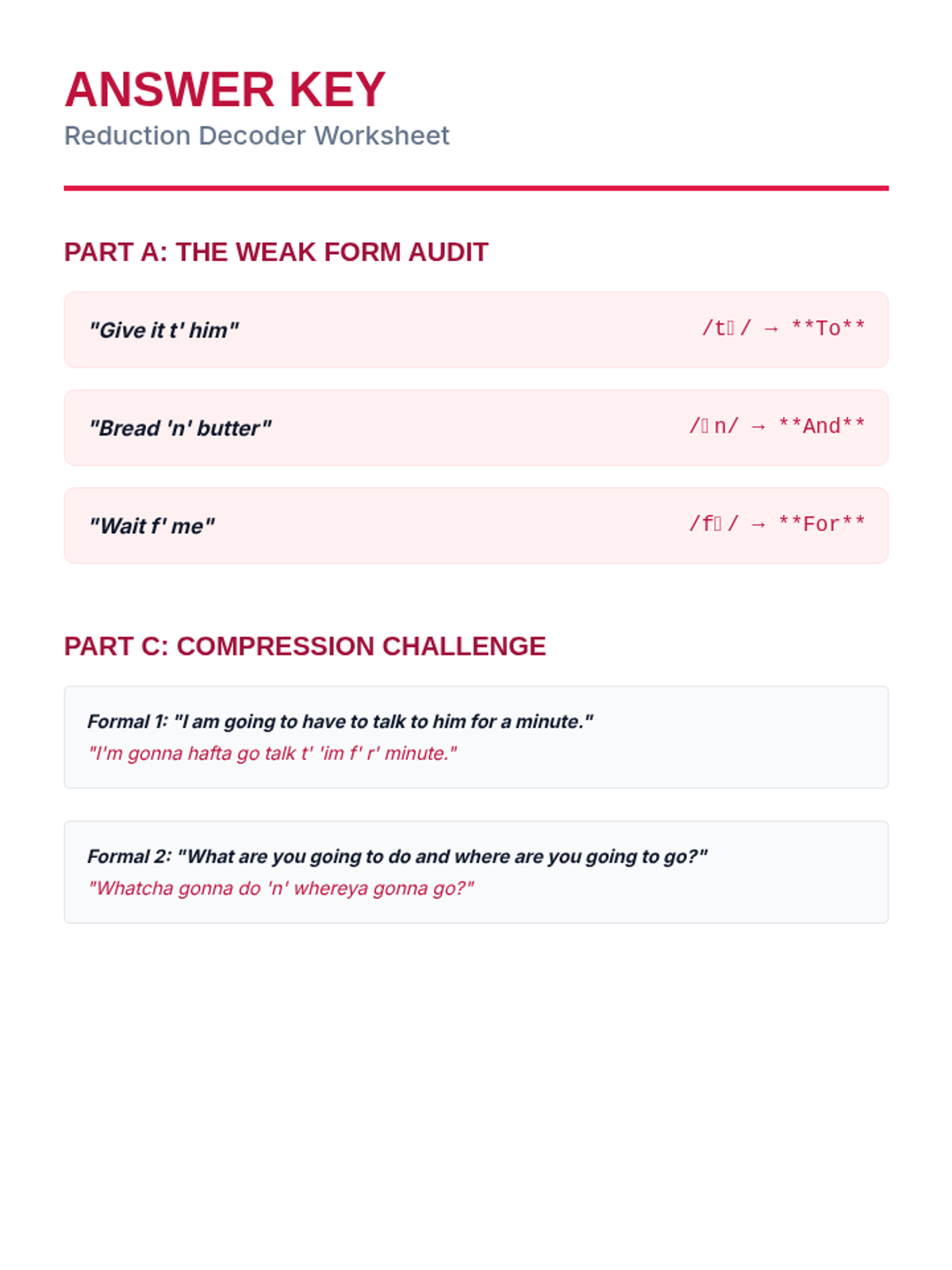
Focusing on function words, this lesson tackles common reductions like 'gonna,' 'wanna,' and weak forms of auxiliary verbs. Students analyze unscripted interviews to catch these reductions in context.
Focuses on the structural and social aspects of casual professional conversations, emphasizing the role of fillers, backchanneling, and small talk in building rapport.
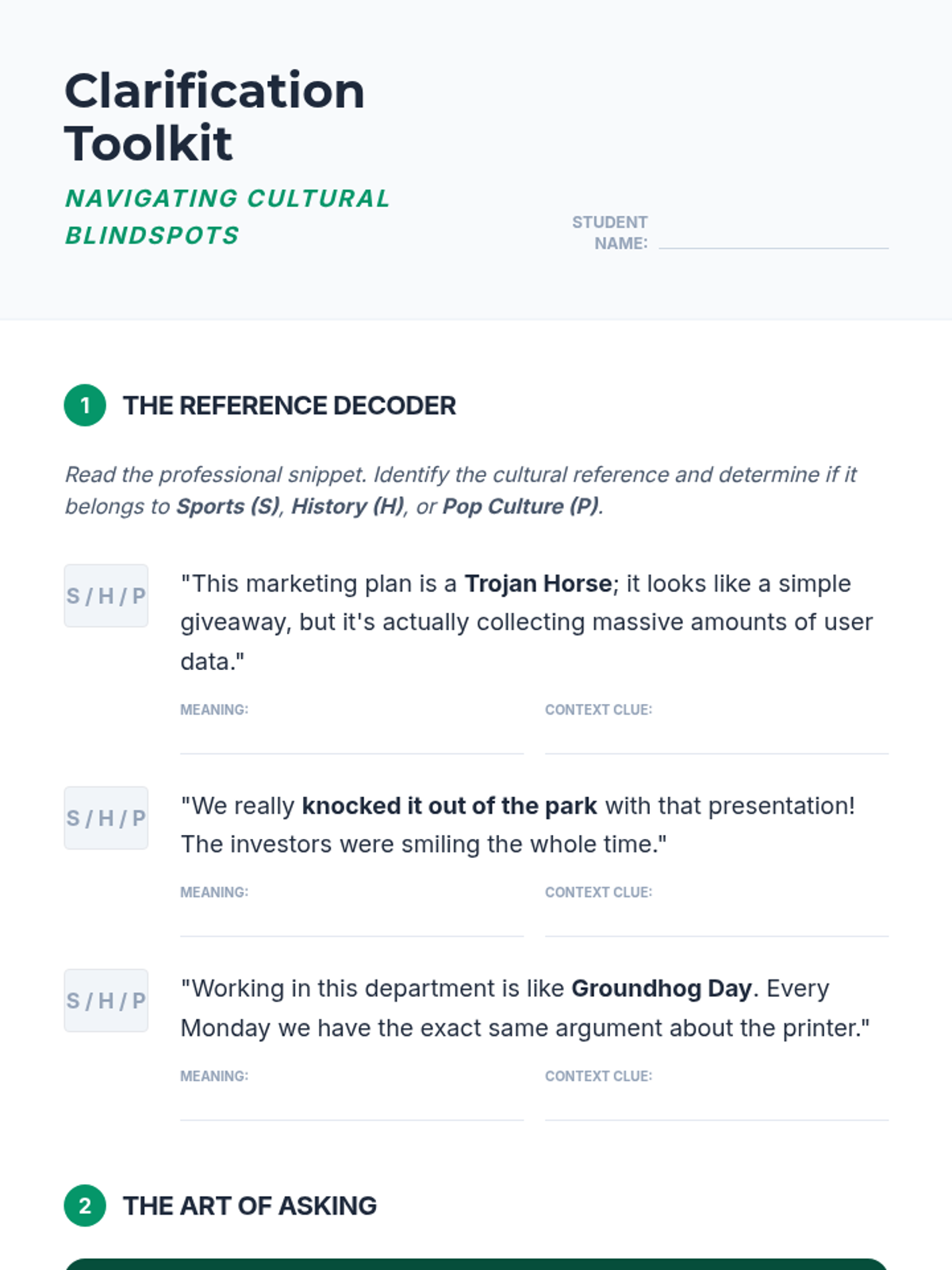
Students analyze how speakers use shorthand references to history, pop culture, and sports to convey complex ideas, and develop strategies for asking for clarification when references are missed.
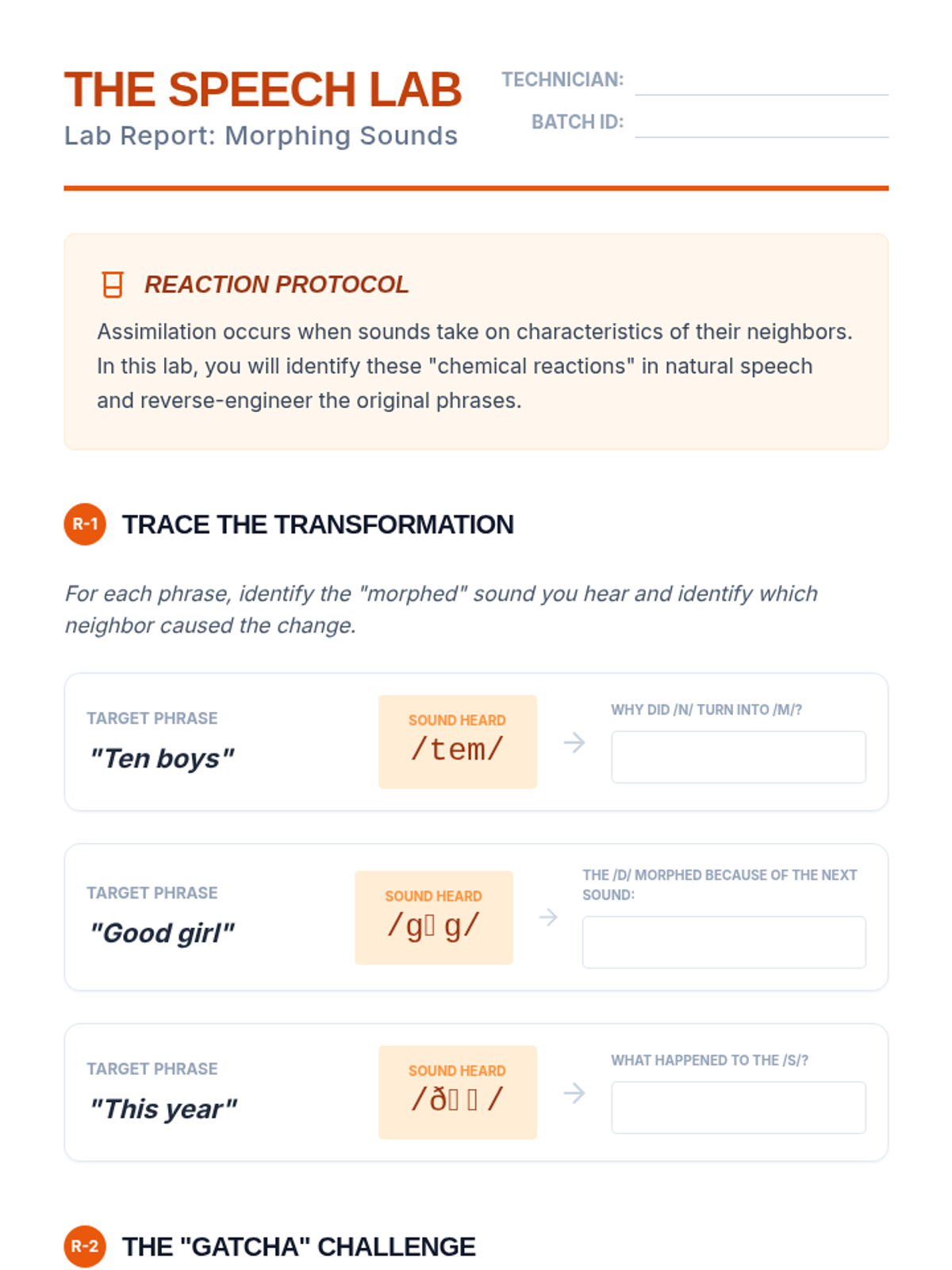
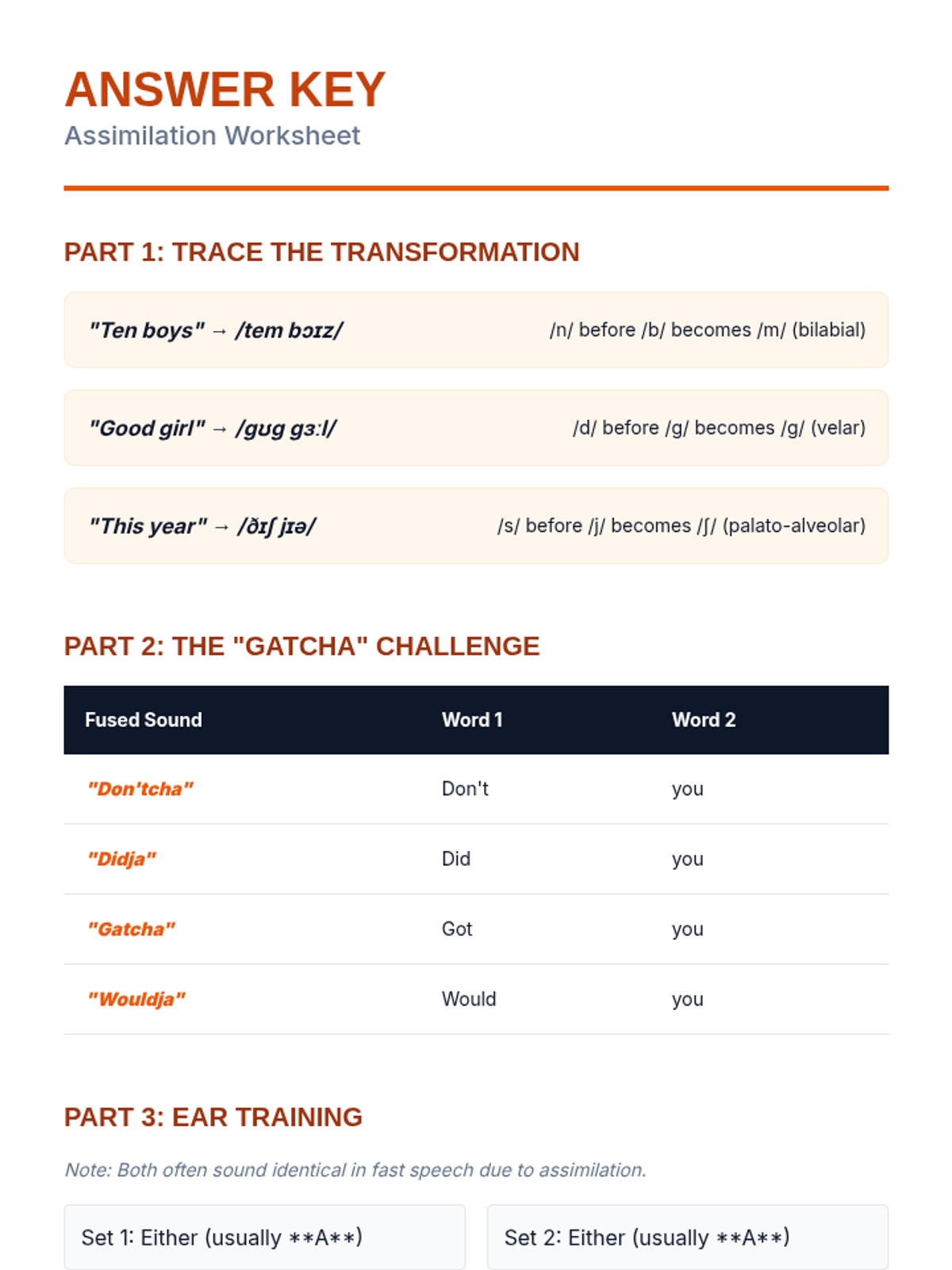
Students learn how sounds influence their neighbors (e.g., 'hand bag' becoming 'hambag'). The lesson uses minimal pair discrimination and dictation exercises to train ears to recognize words despite phonological changes.
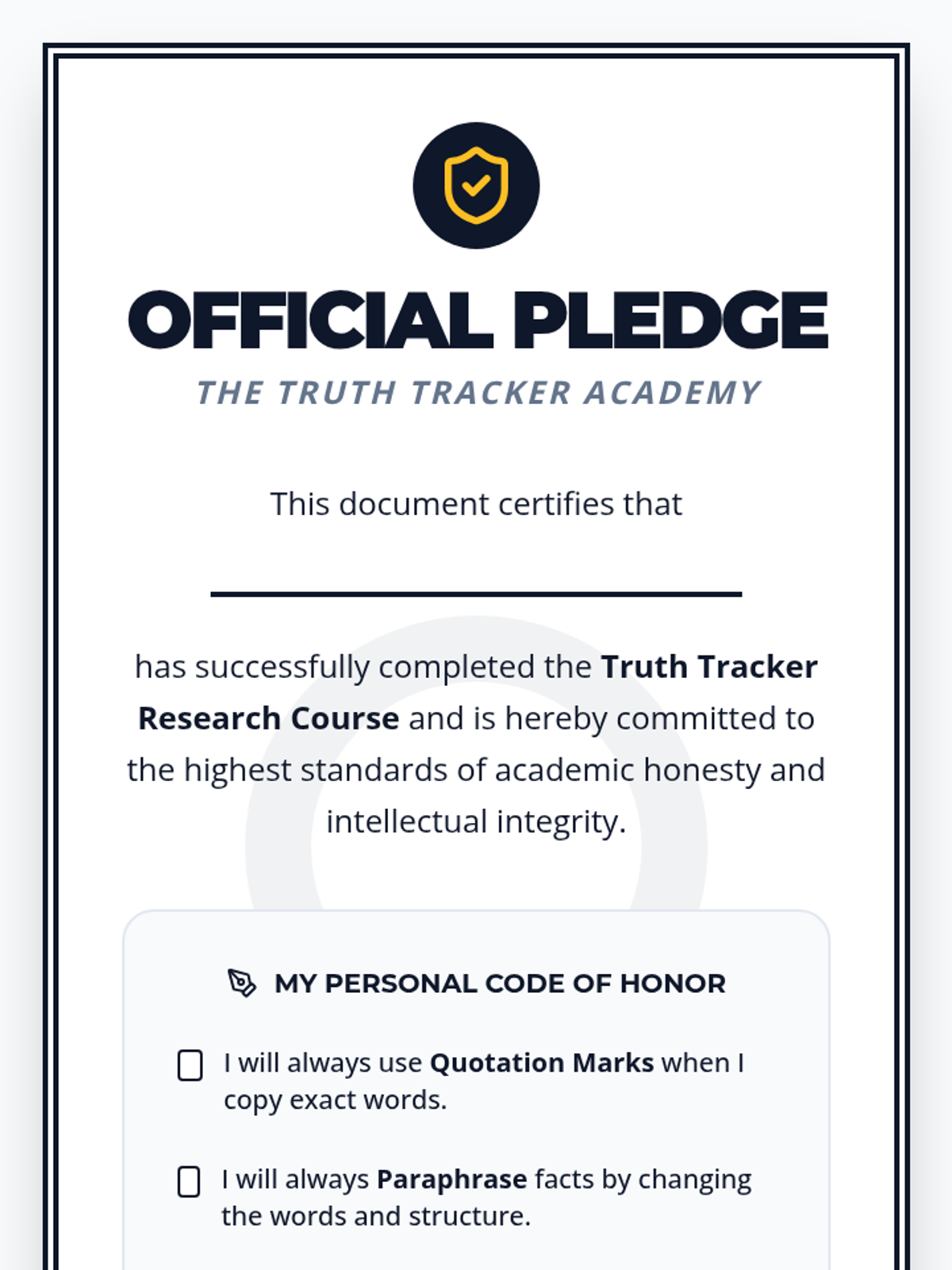
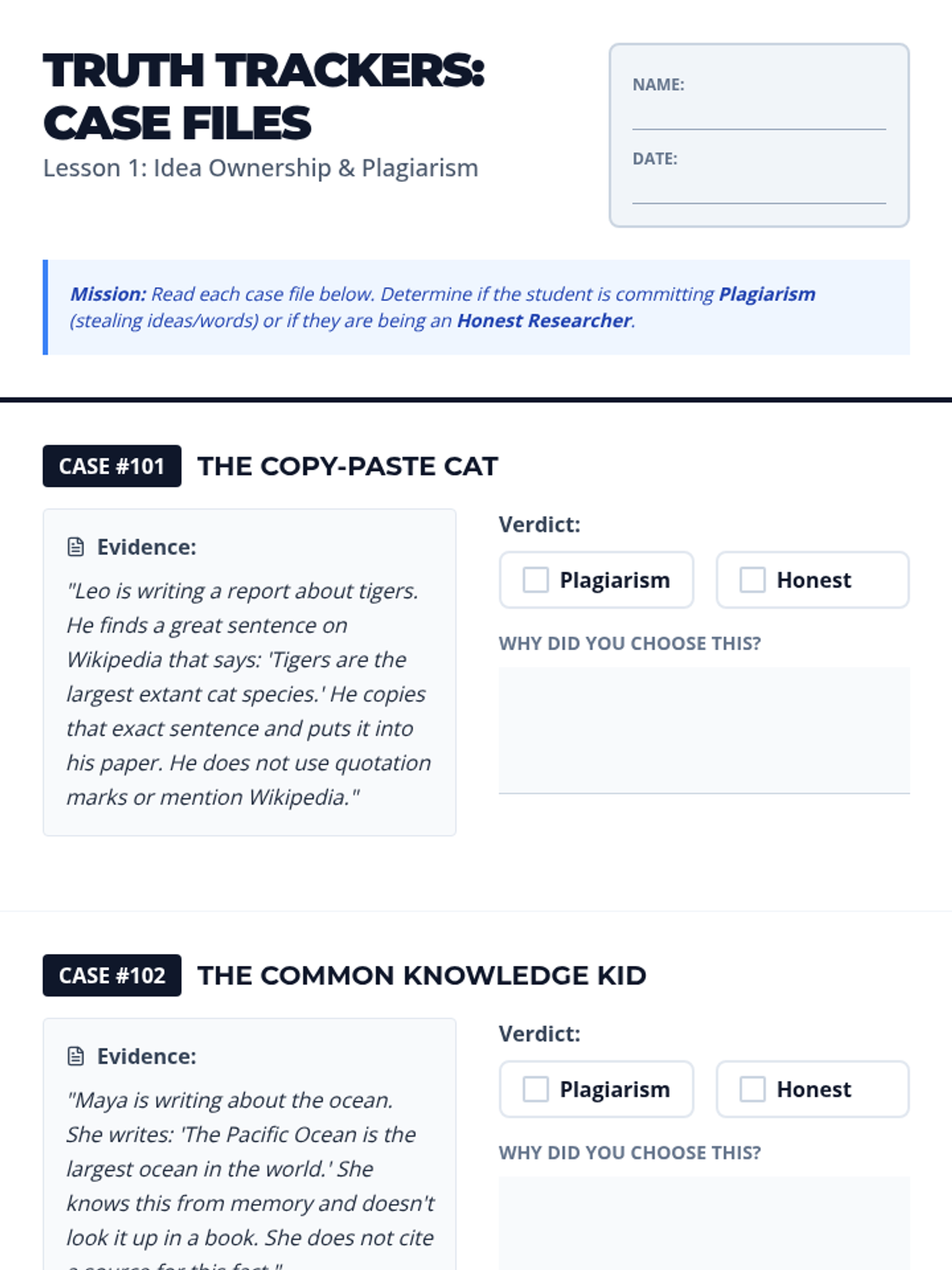
Synthesizes learning through case studies of intentional vs. accidental plagiarism and concludes with an academic integrity pledge.
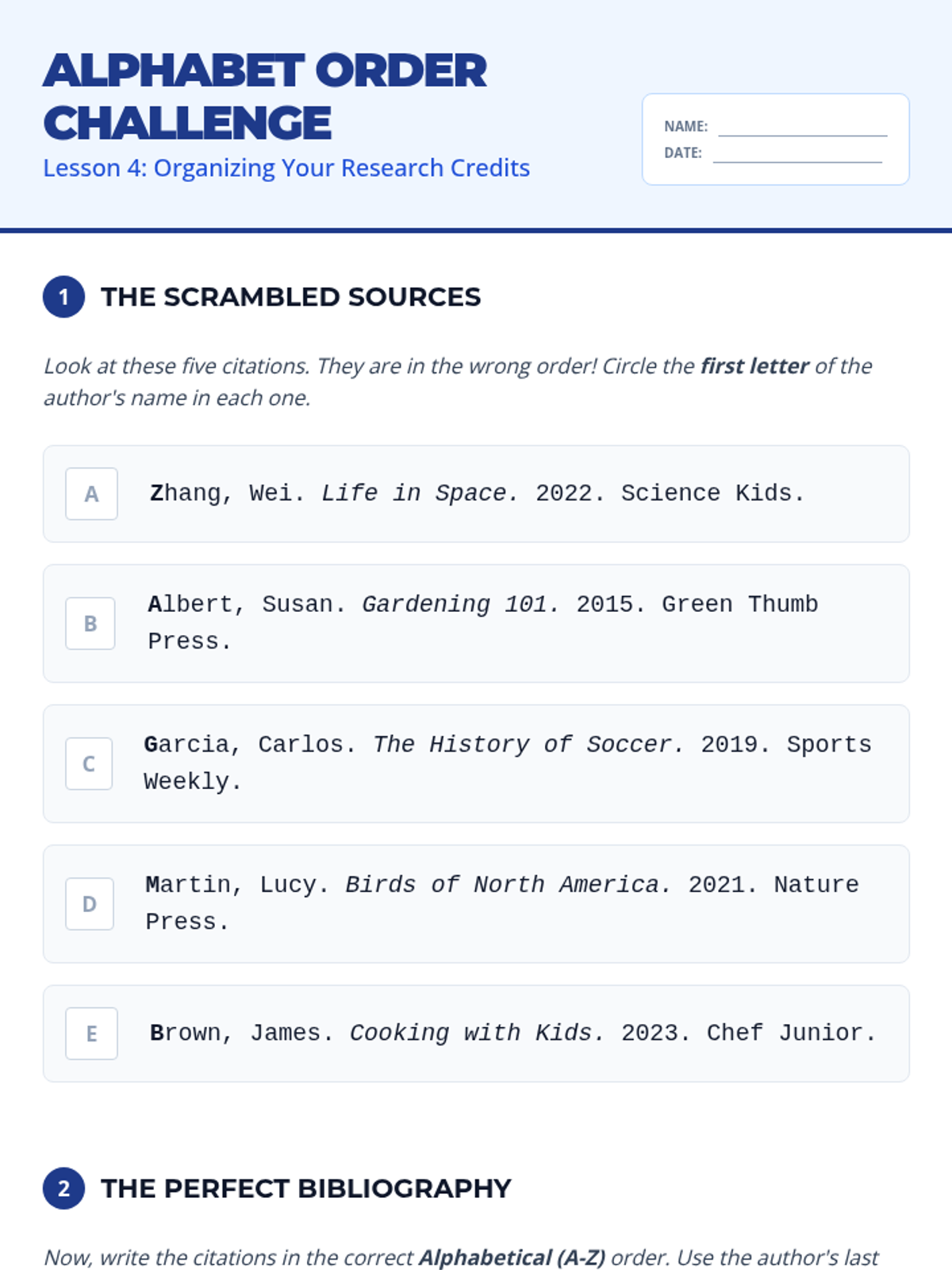
Teaches students how to compile individual citations into a cohesive, alphabetized reference list.
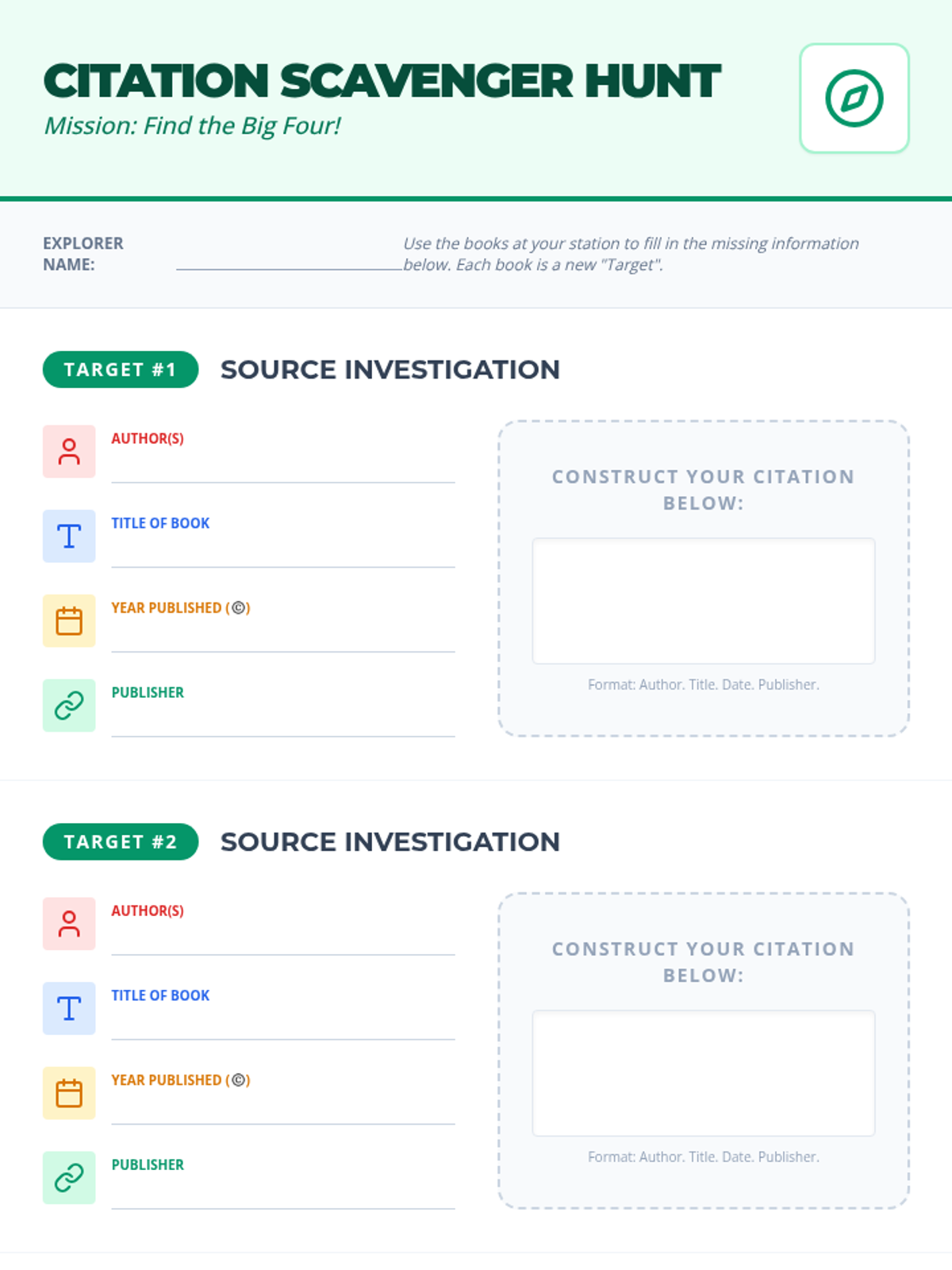
Introduces the four core elements of a basic citation (Author, Title, Date, Source) and provides practice in locating this information.
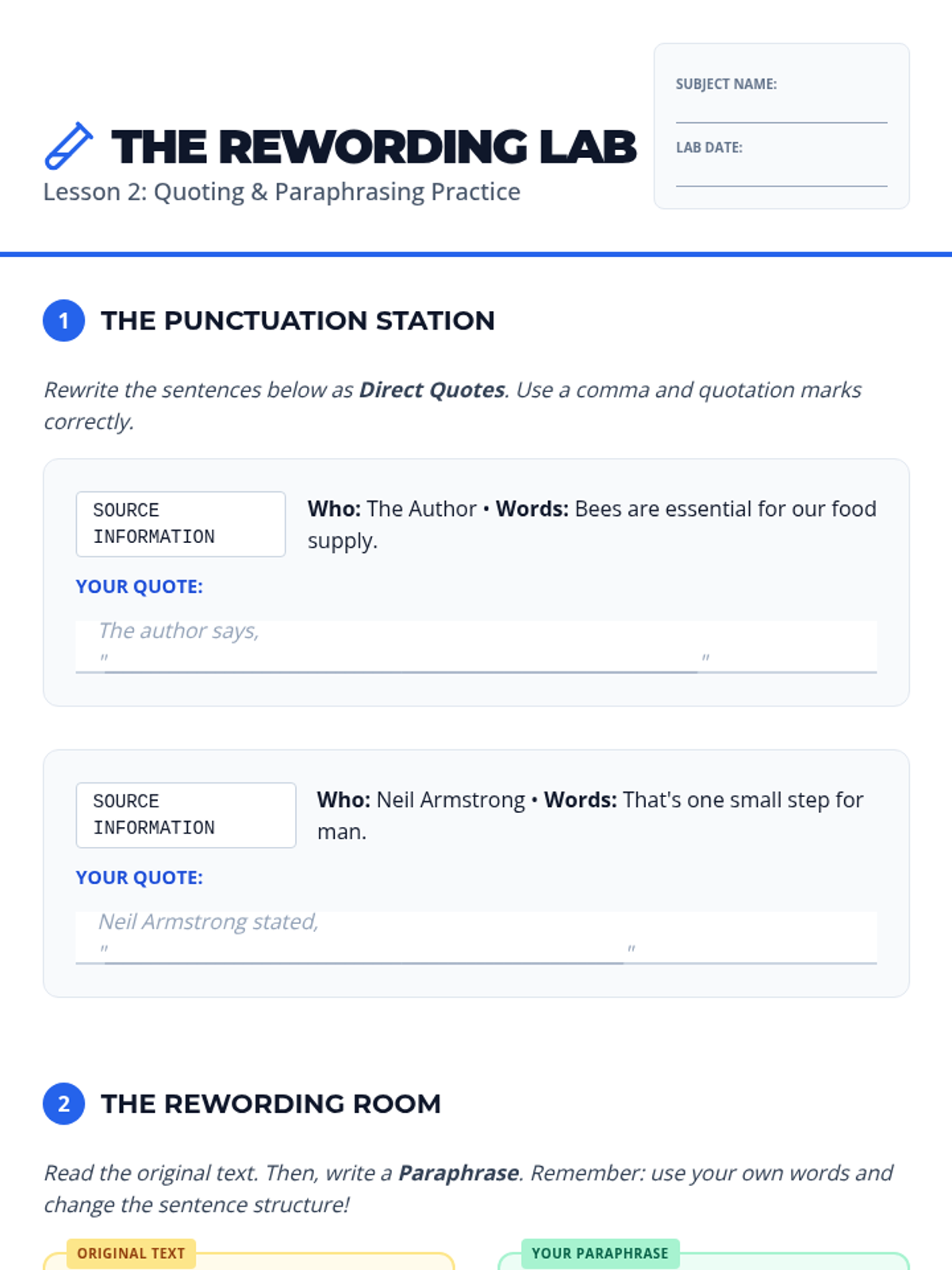
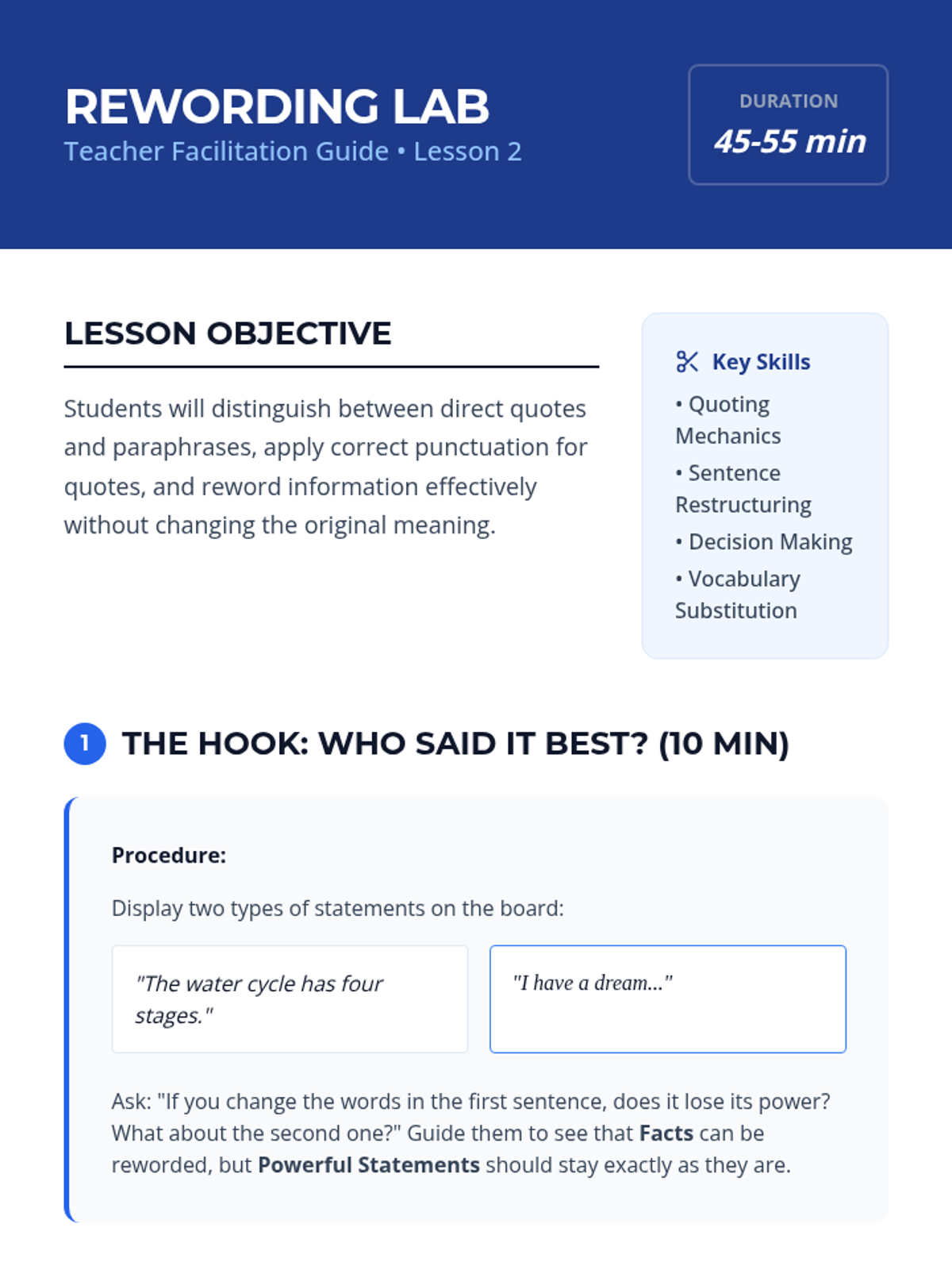
Students learn the mechanical and logical differences between direct quotes and paraphrasing, focusing on when to use each.
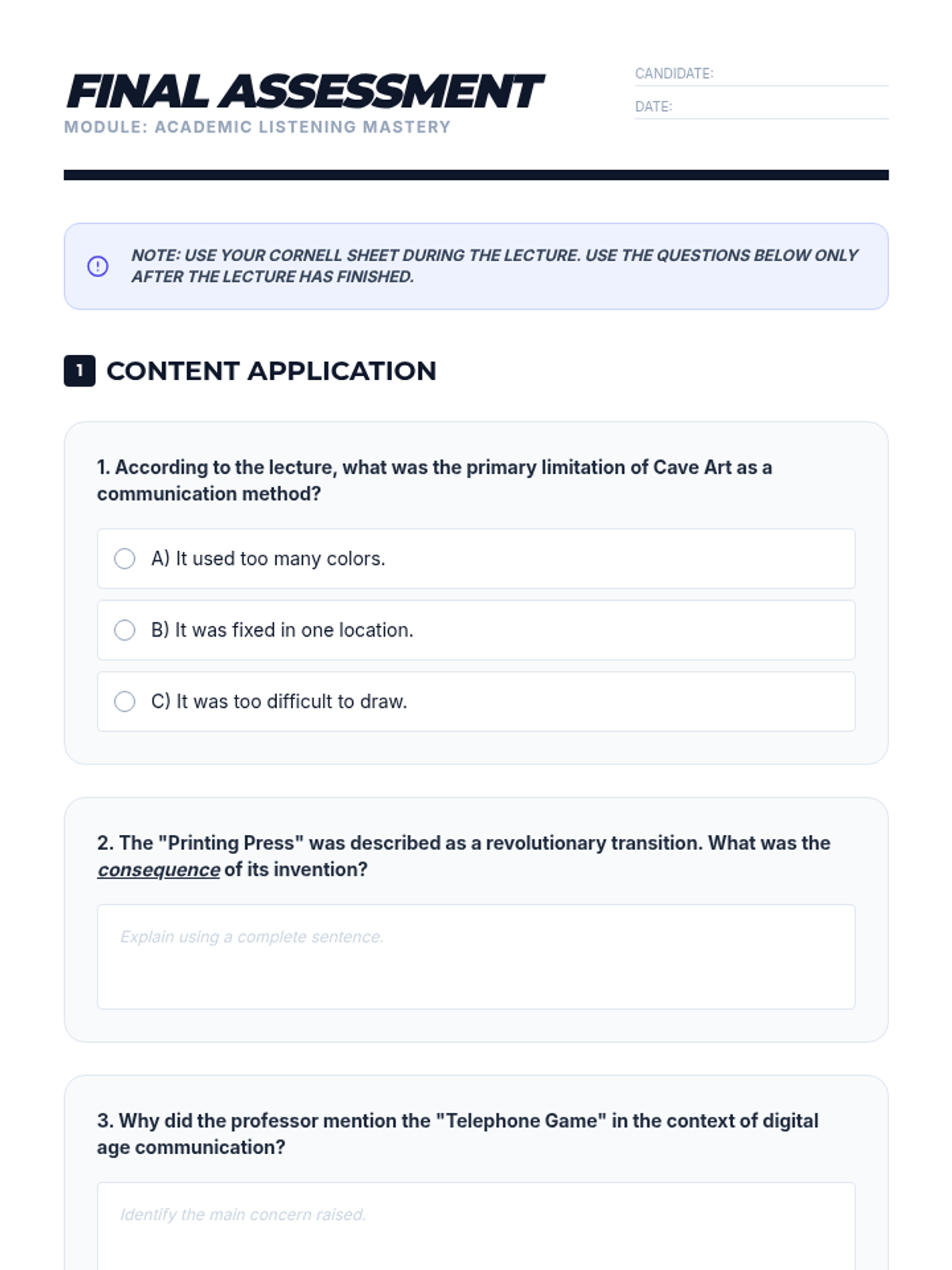
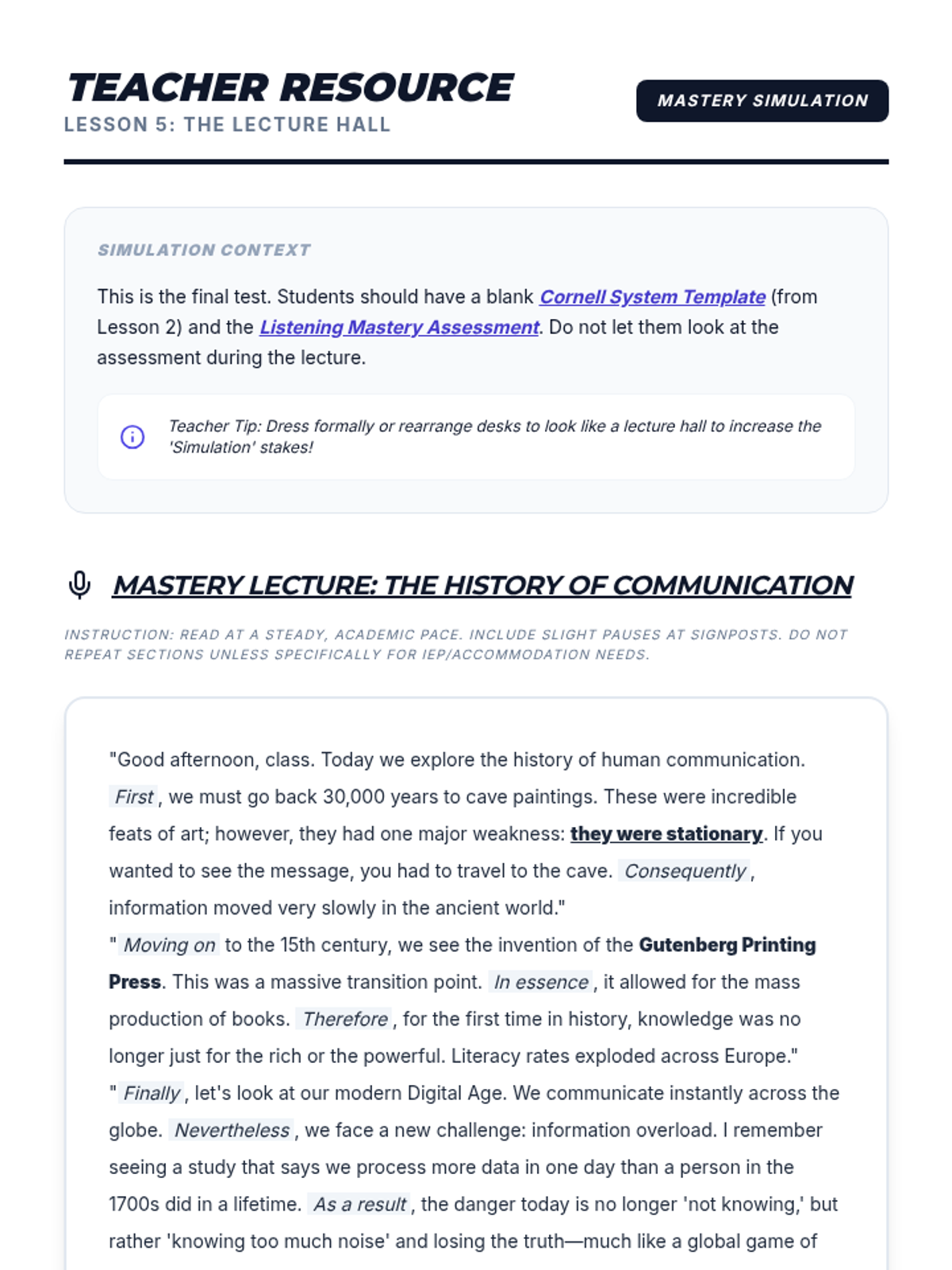
Students participate in a university-style mini-lecture simulation. They apply all learned strategies—signpost identification, Cornell note-taking, and synthesis—to capture information and complete a formal assessment.
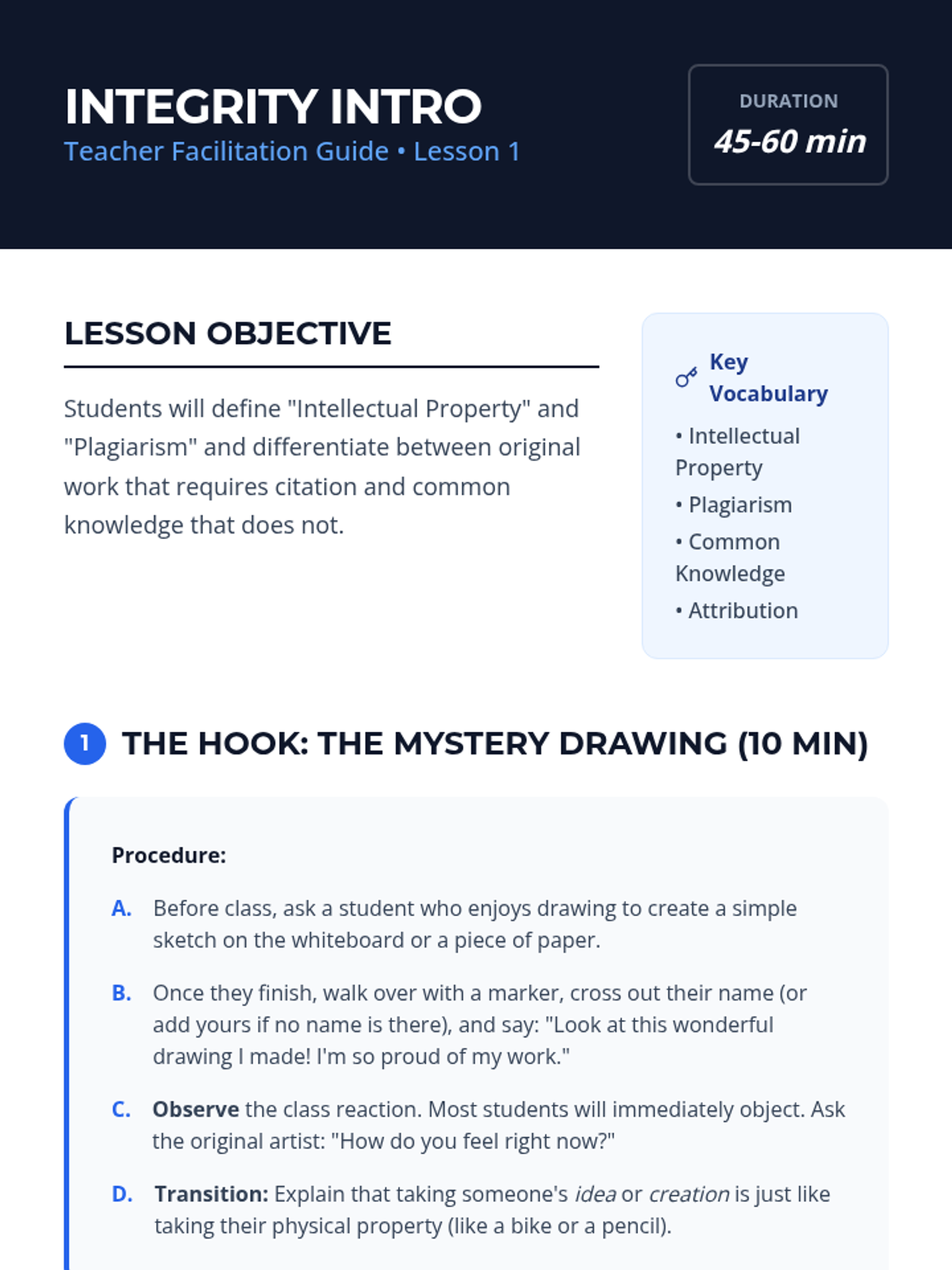
Students explore the concept of intellectual property through physical analogies and define plagiarism in an academic context.
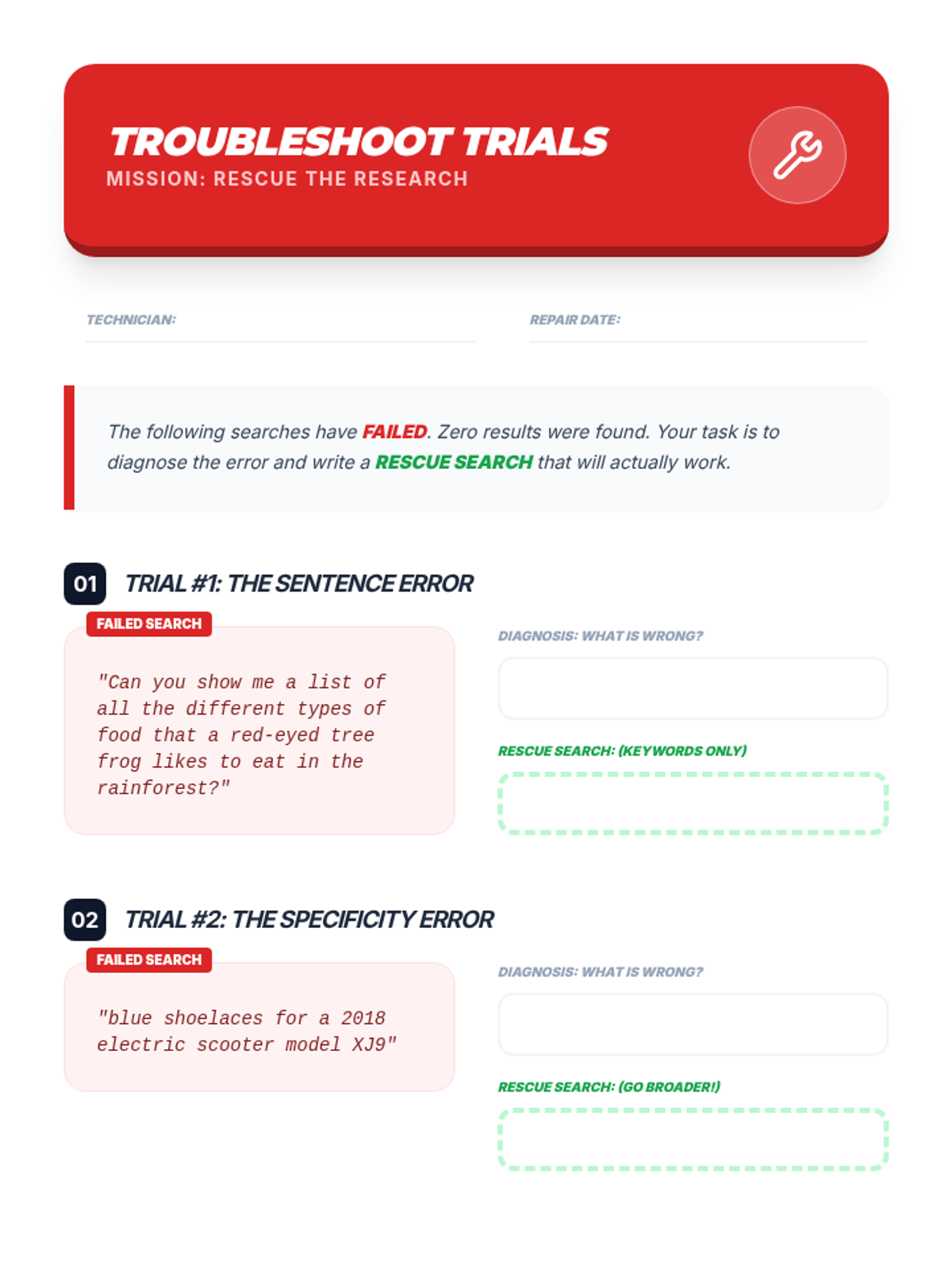
Students analyze search failures and practice iterative strategies to refine their inquiries when initial attempts don't yield the desired results.
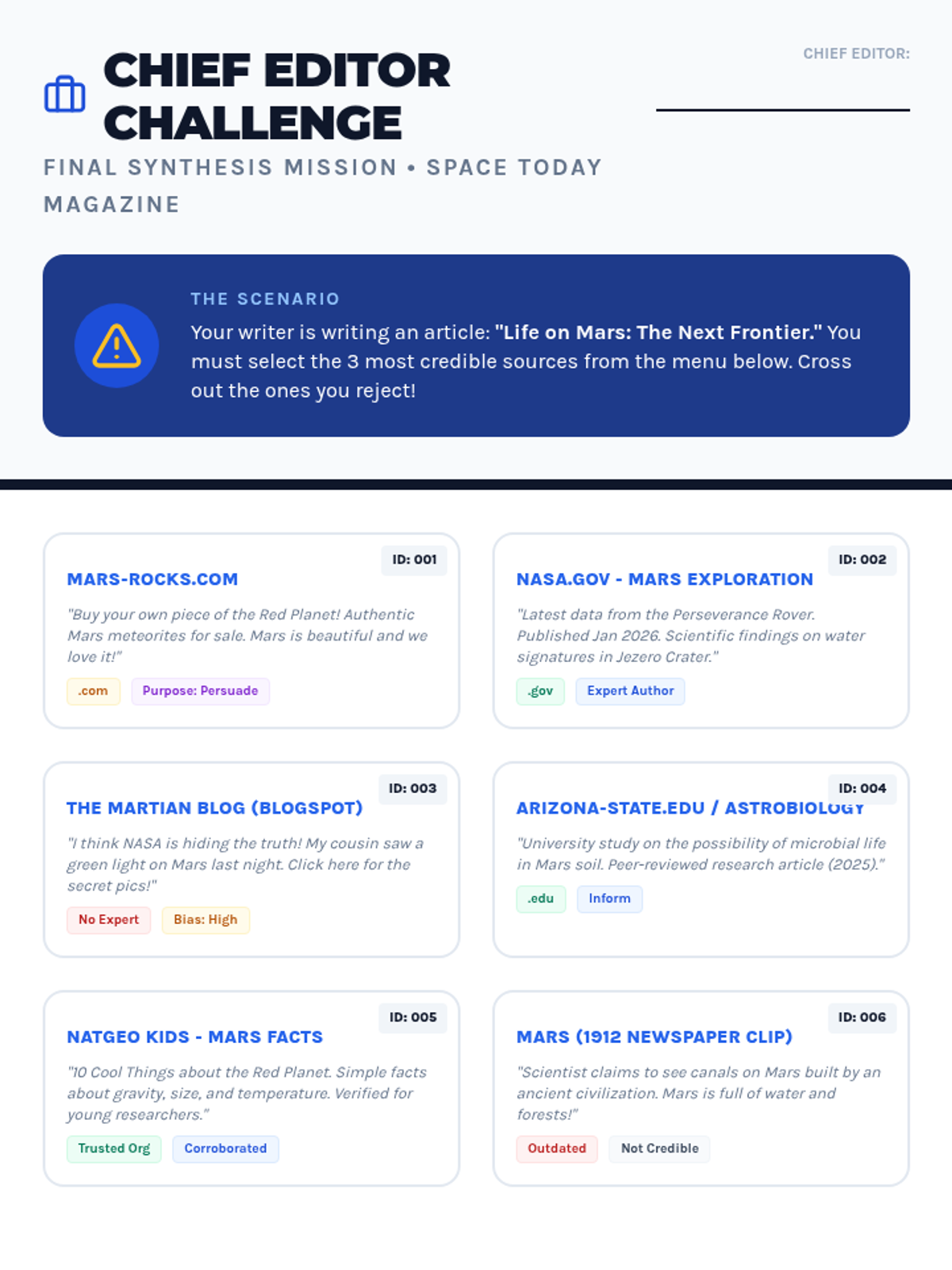
Students synthesize their evaluation skills to select the best resources for a hypothetical research scenario. They curate a small bibliography of trusted sources and justify their choices.
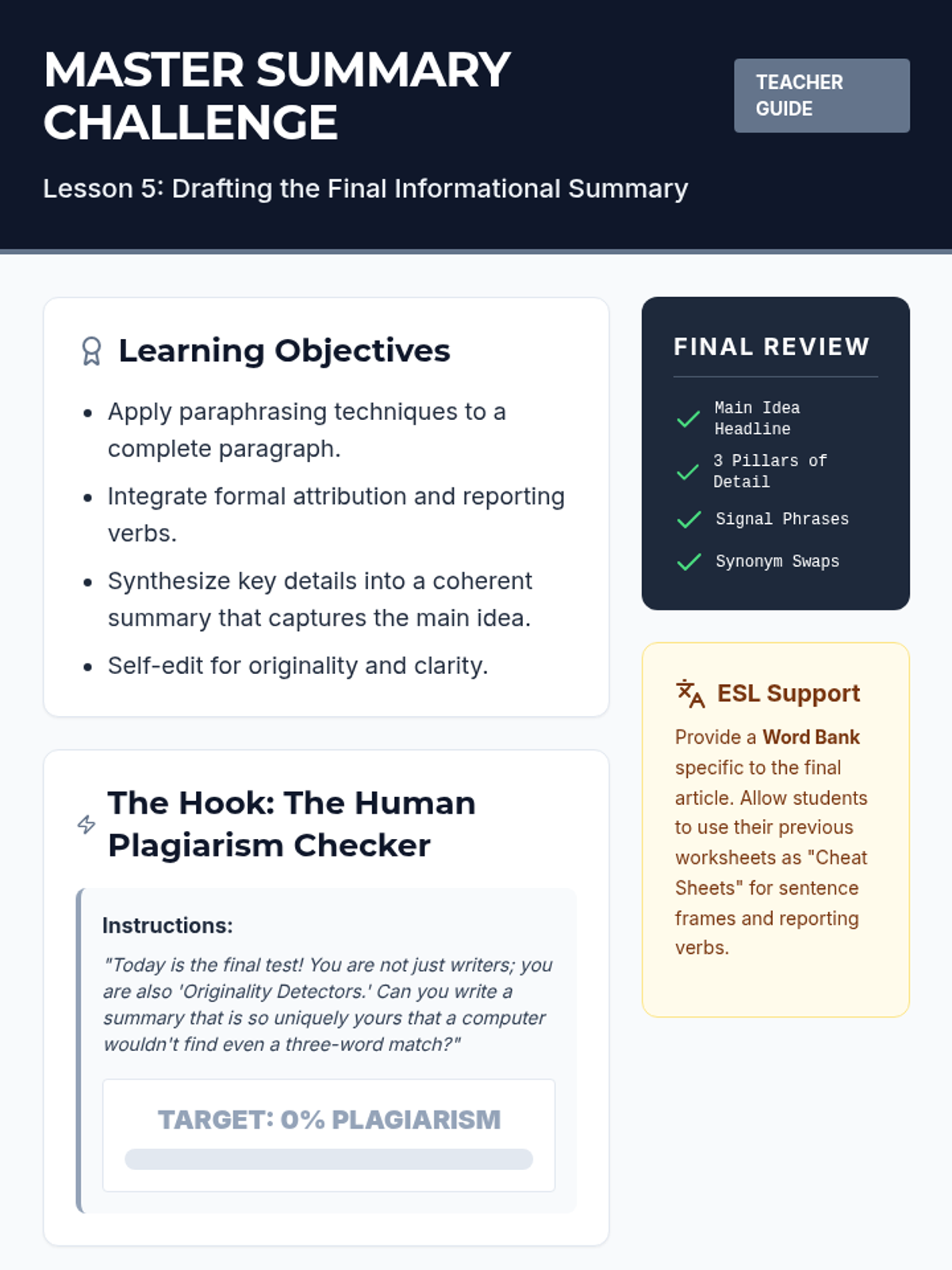
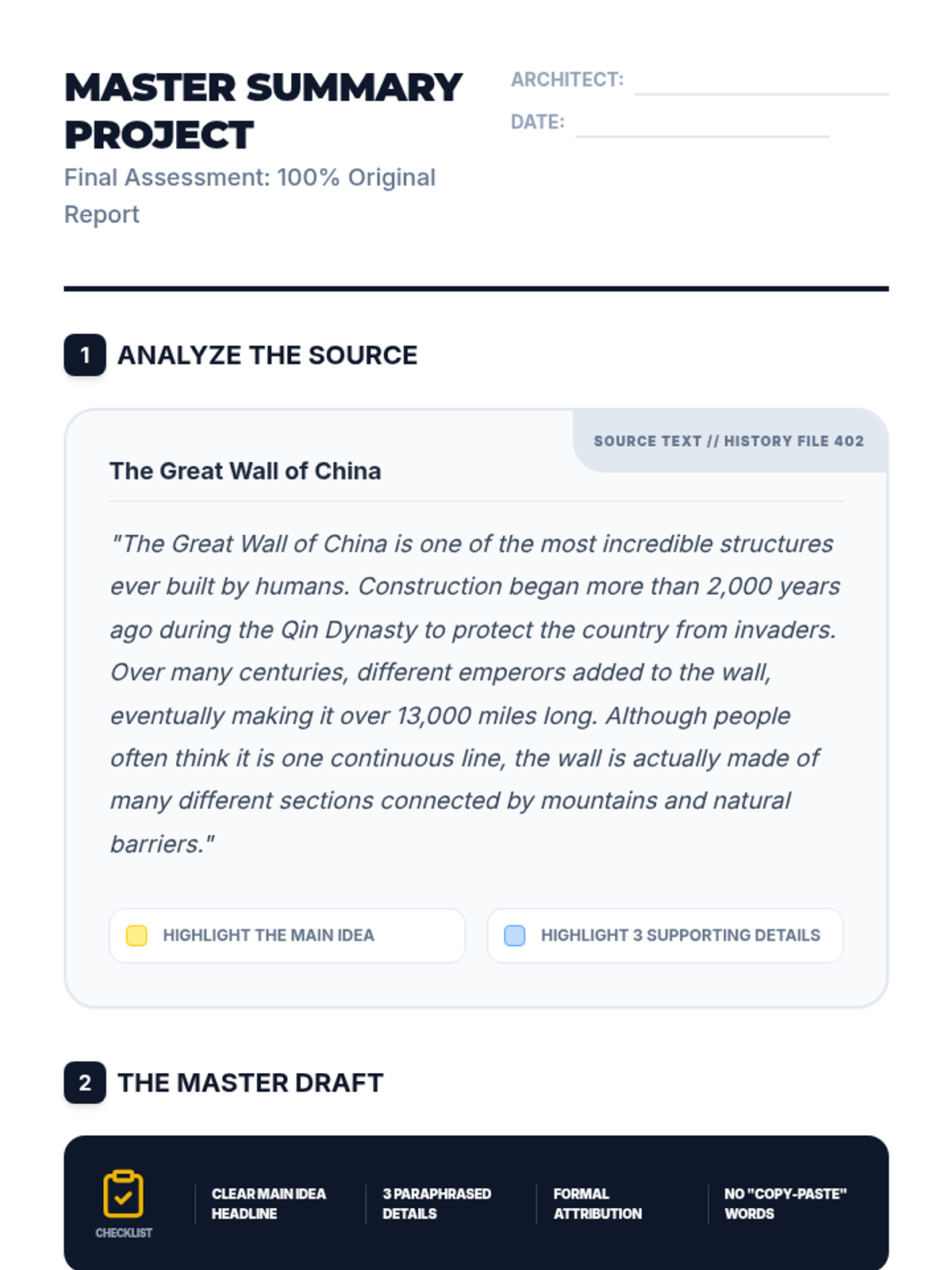
The culminating lesson where students apply all previous skills to write an original summary report based on an informational article.
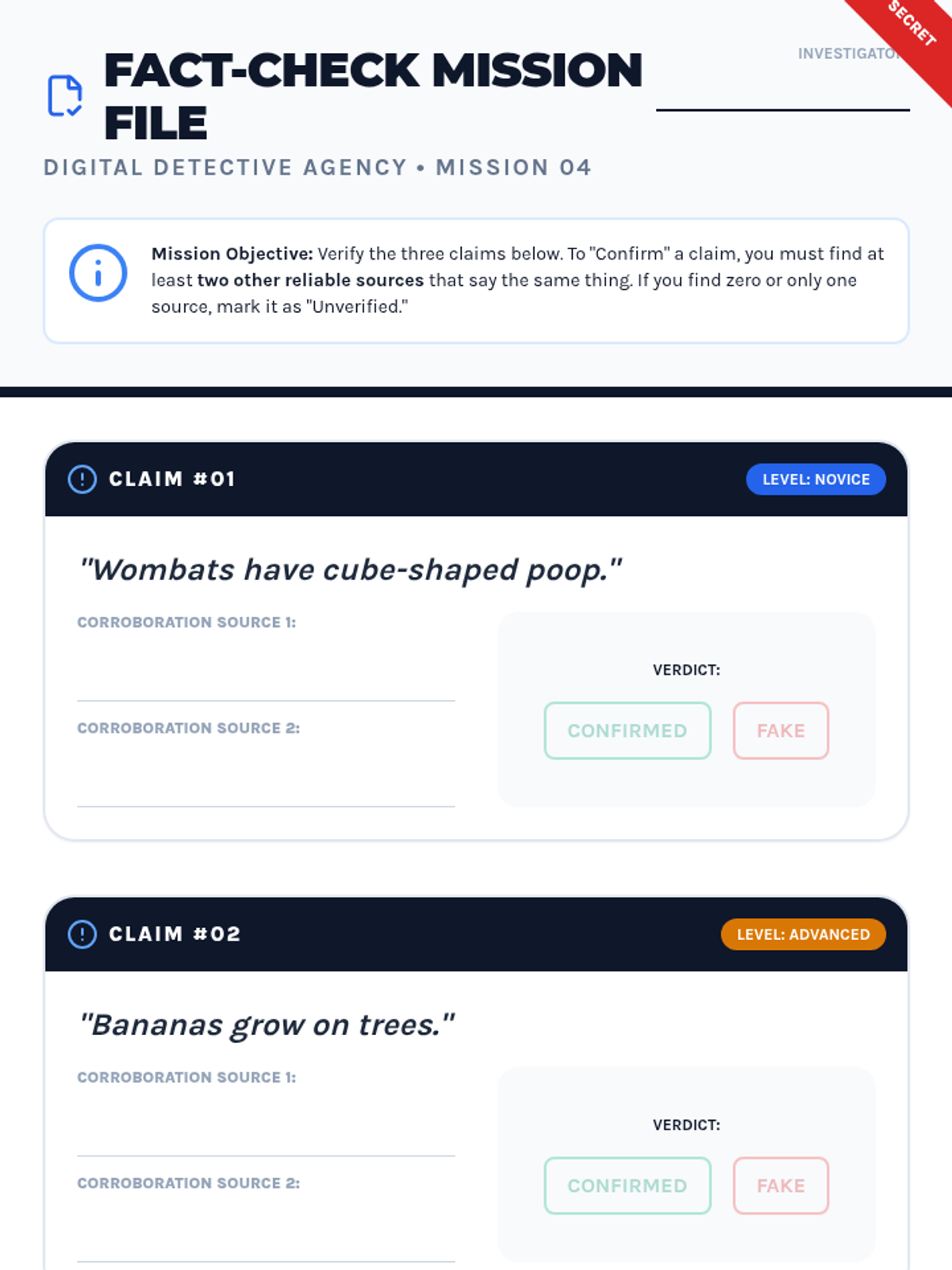
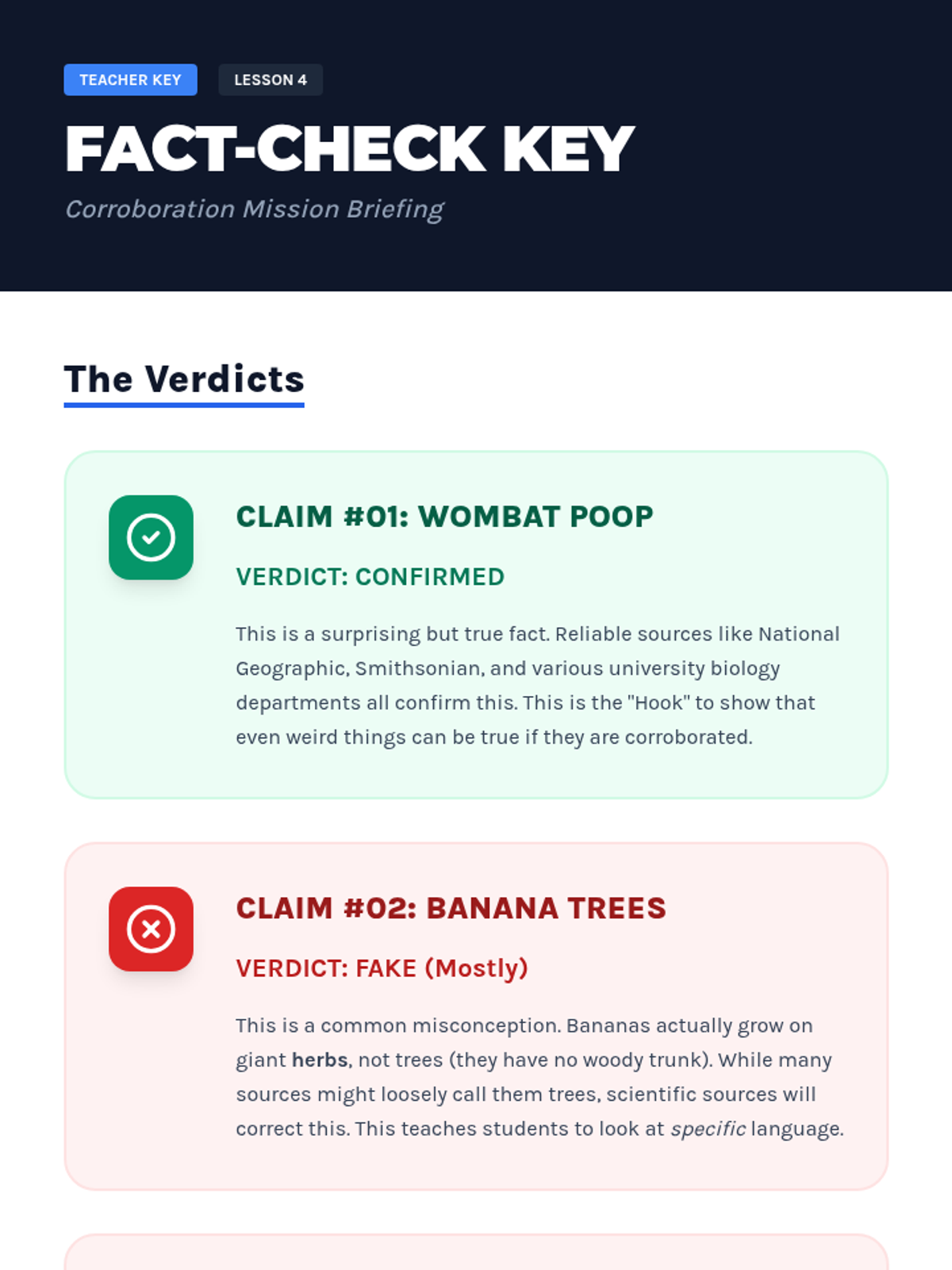
This lesson teaches the strategy of verifying information by finding it in multiple reliable sources. Students engage in a 'Fact-Check Challenge' to confirm or debunk specific claims.
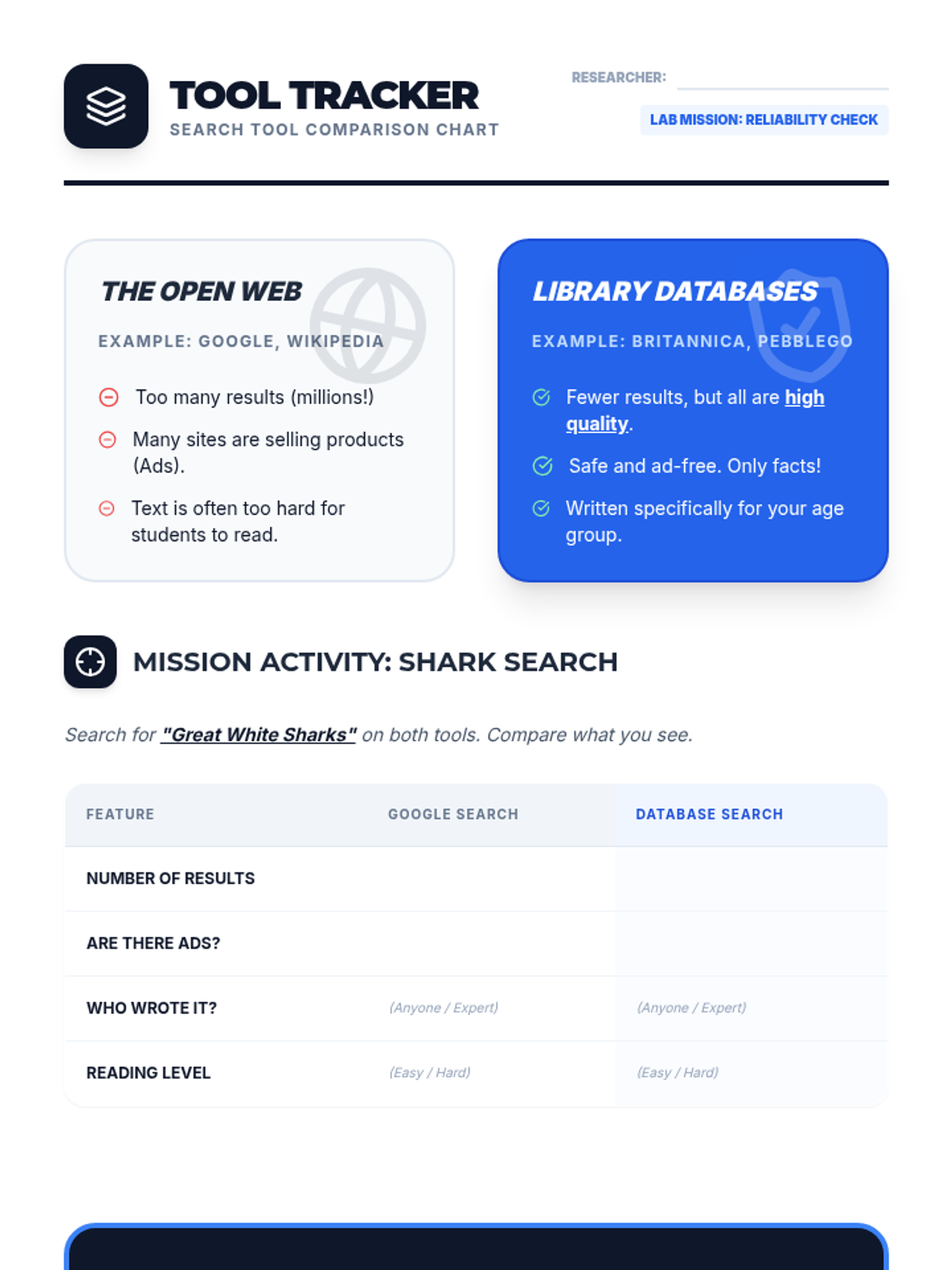
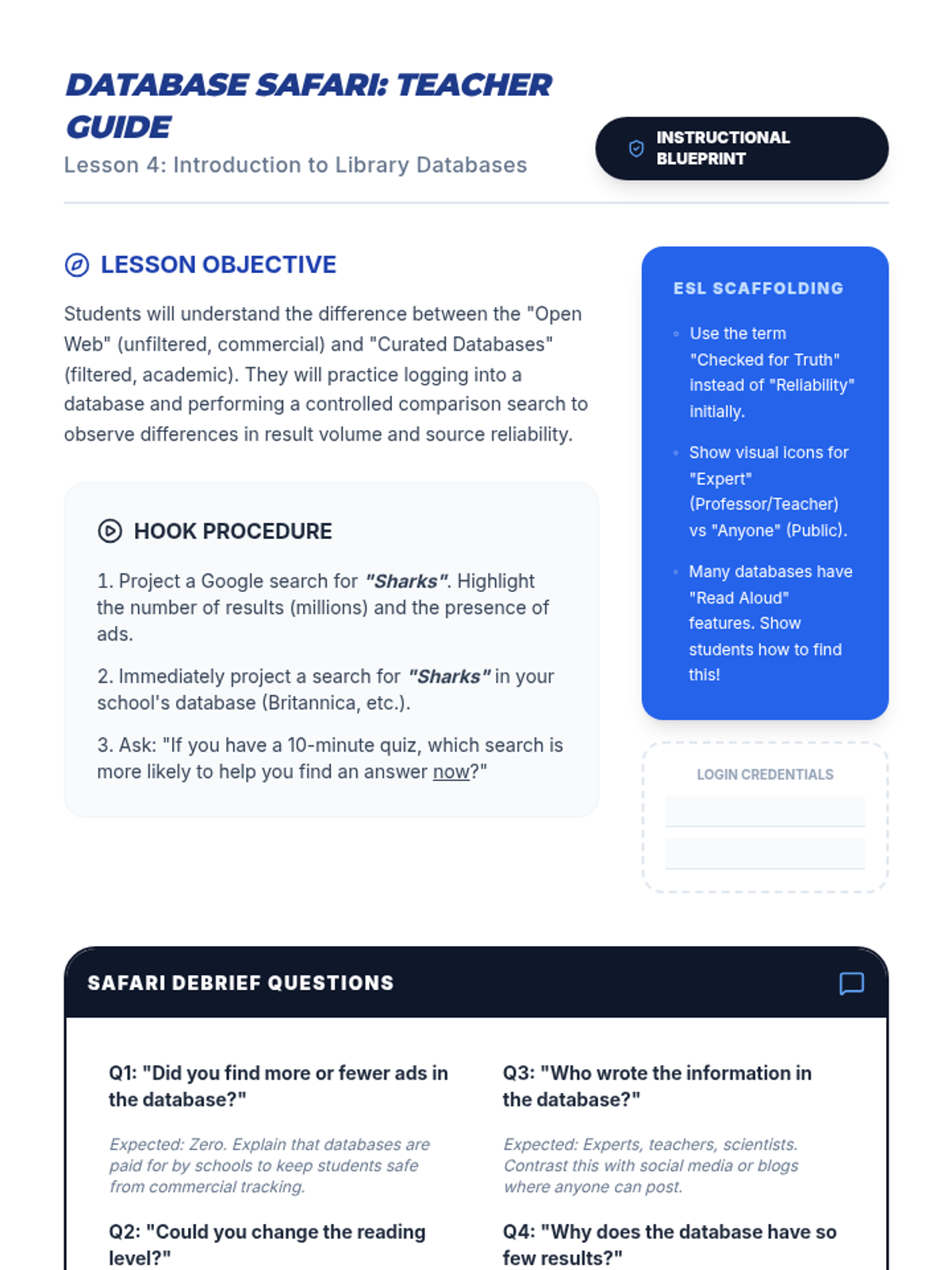
Students transition from open web searches to curated databases, comparing the reliability and organization of professional search tools.
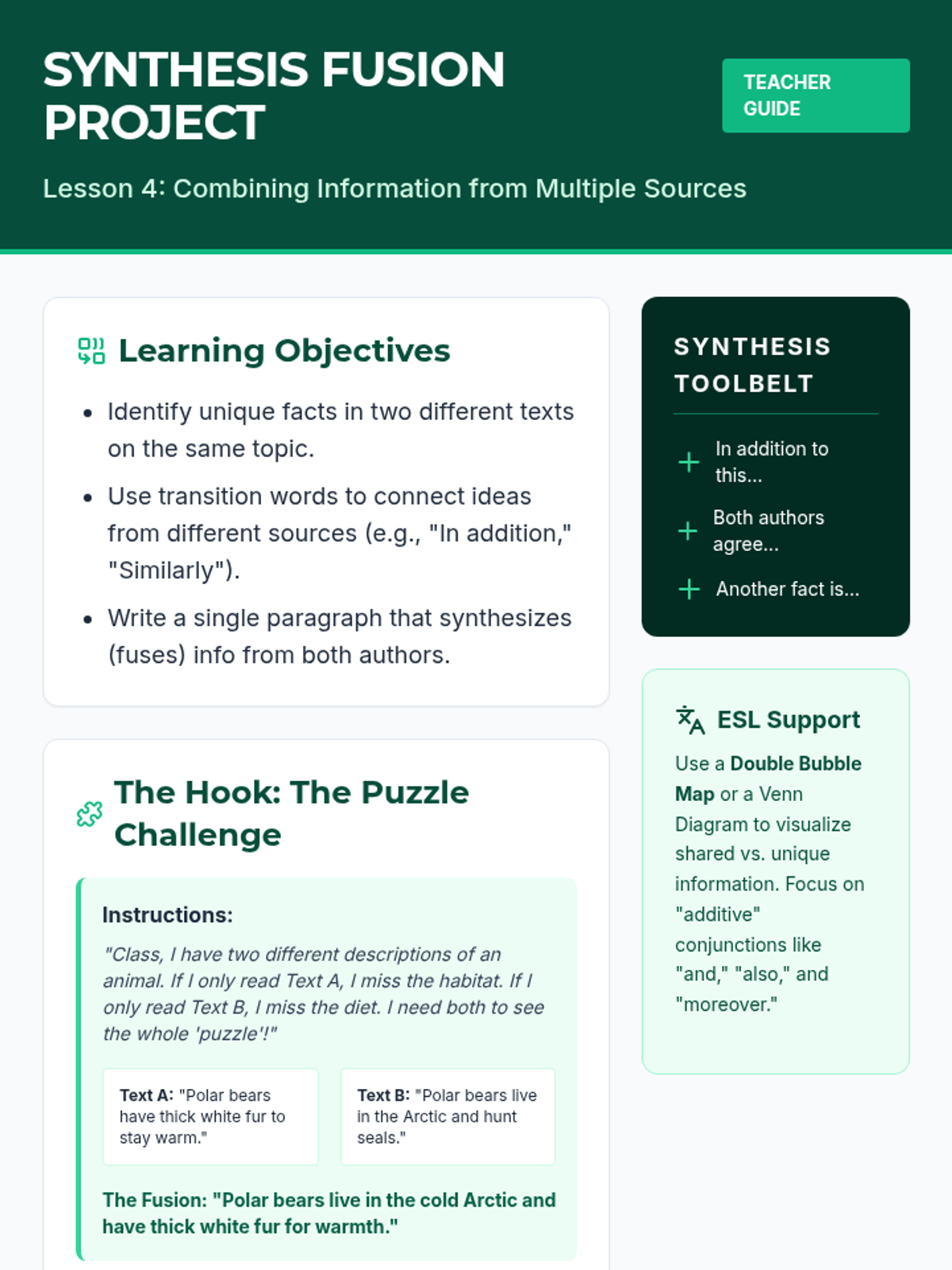
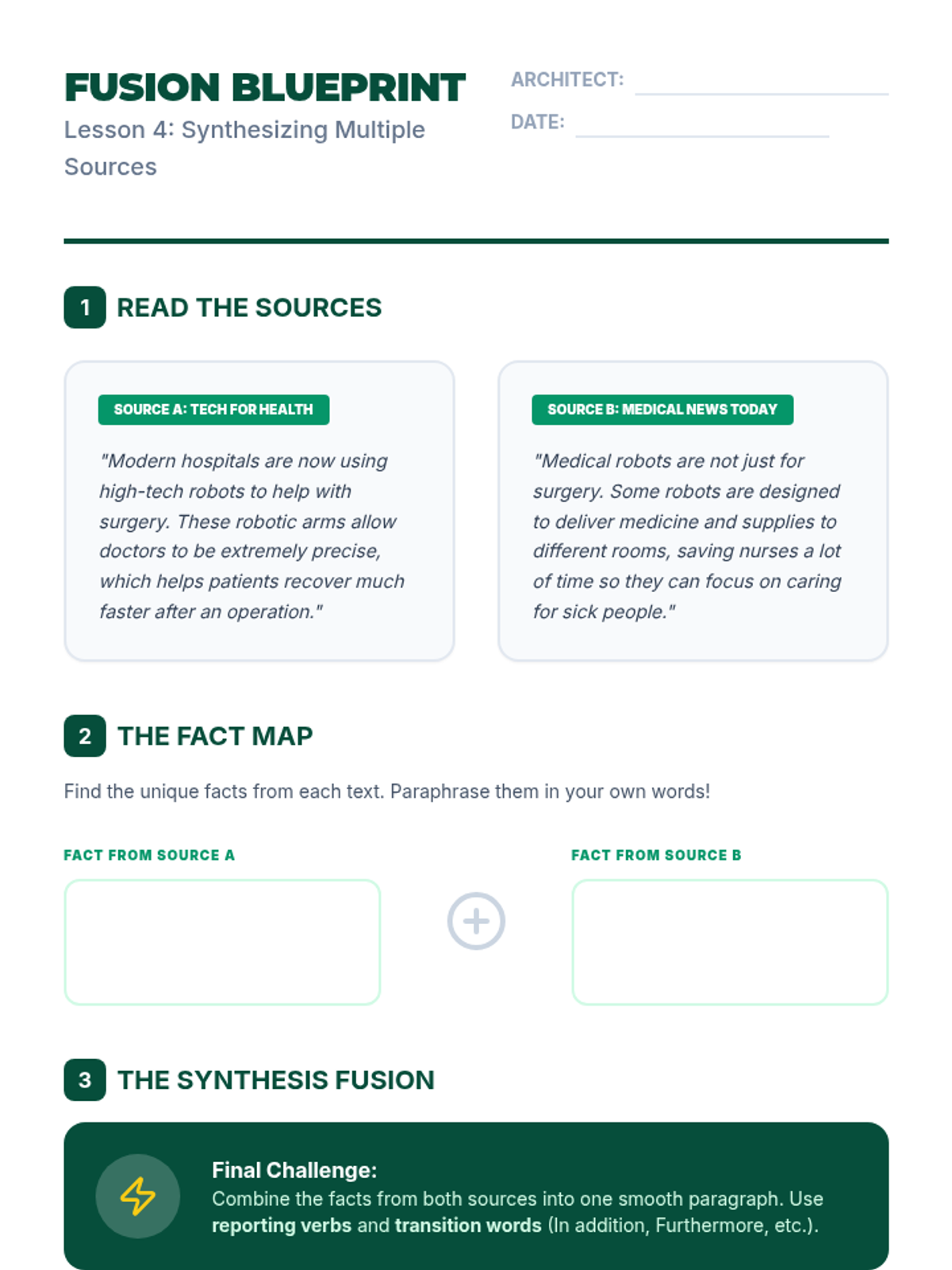
Students read and combine facts from two different texts on the same topic into a single, coherent paragraph.