A two-session sequence for 6th graders to master the Ask and Answer Questions comprehension strategy through narrative analysis, collaborative stations, and reflective writing.
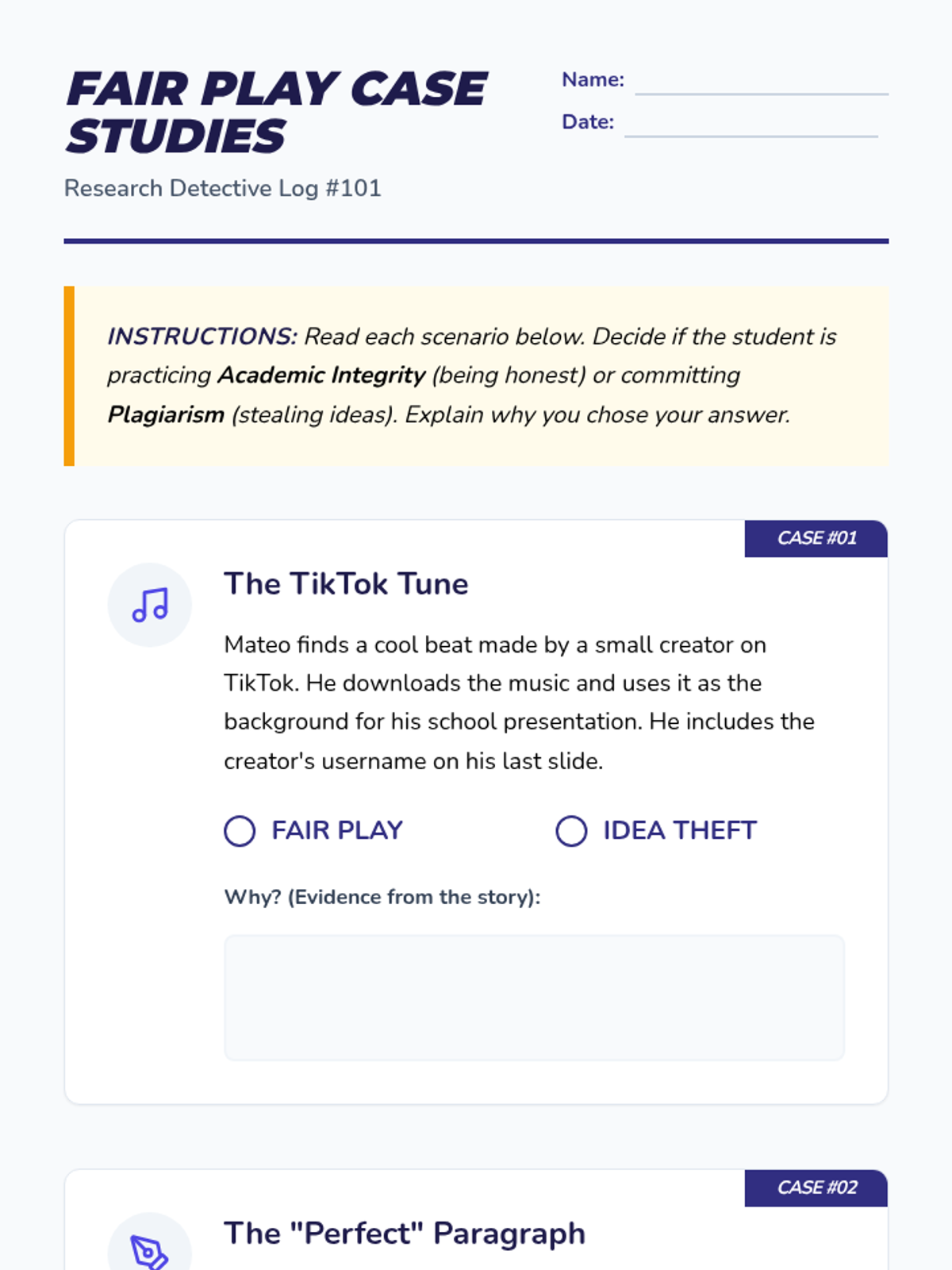
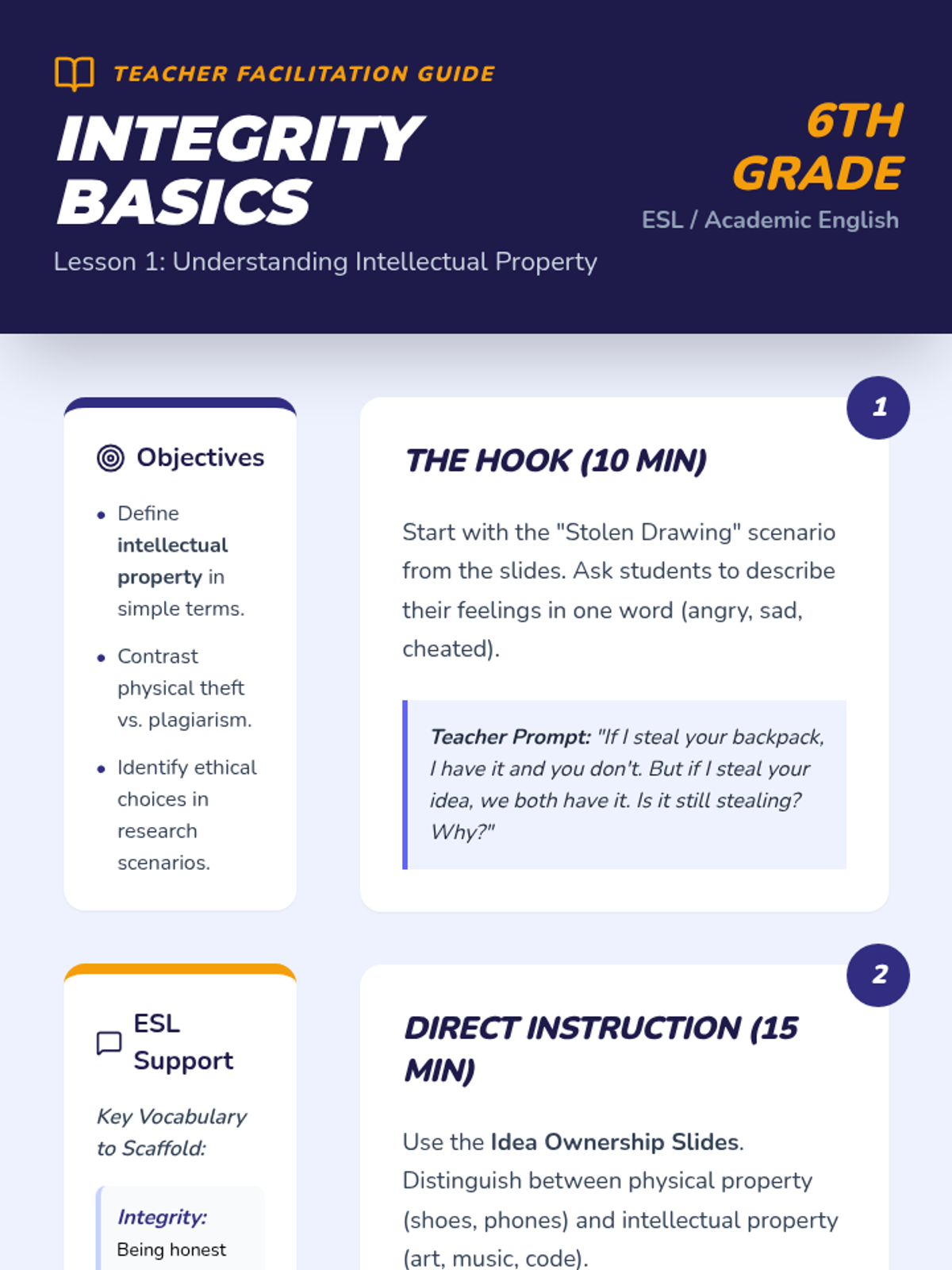
This 5-lesson sequence for 6th-grade ESL students covers the ethical use of information, focusing on intellectual property, MLA citation components, digital tools, and in-text attribution. Students progress from conceptual understanding to creating a mini-bibliography for a personal project.
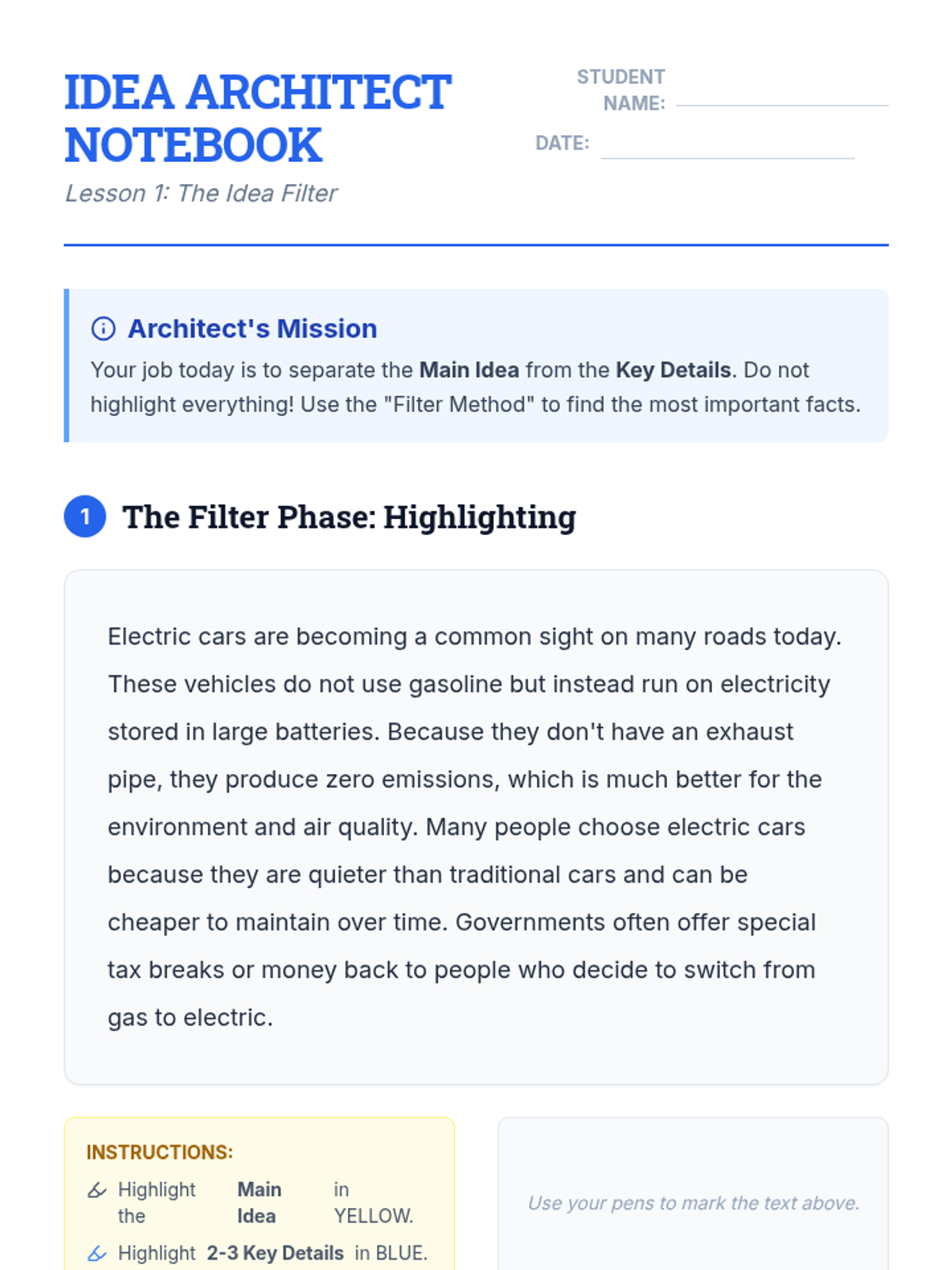
A comprehensive workshop-style unit for 6th Grade ESL students focused on the linguistic mechanics of paraphrasing and synthesizing information. Students move from identifying core concepts to orally retelling information, transforming individual sentences, and finally weaving multiple sources into a single coherent paragraph without plagiarizing.
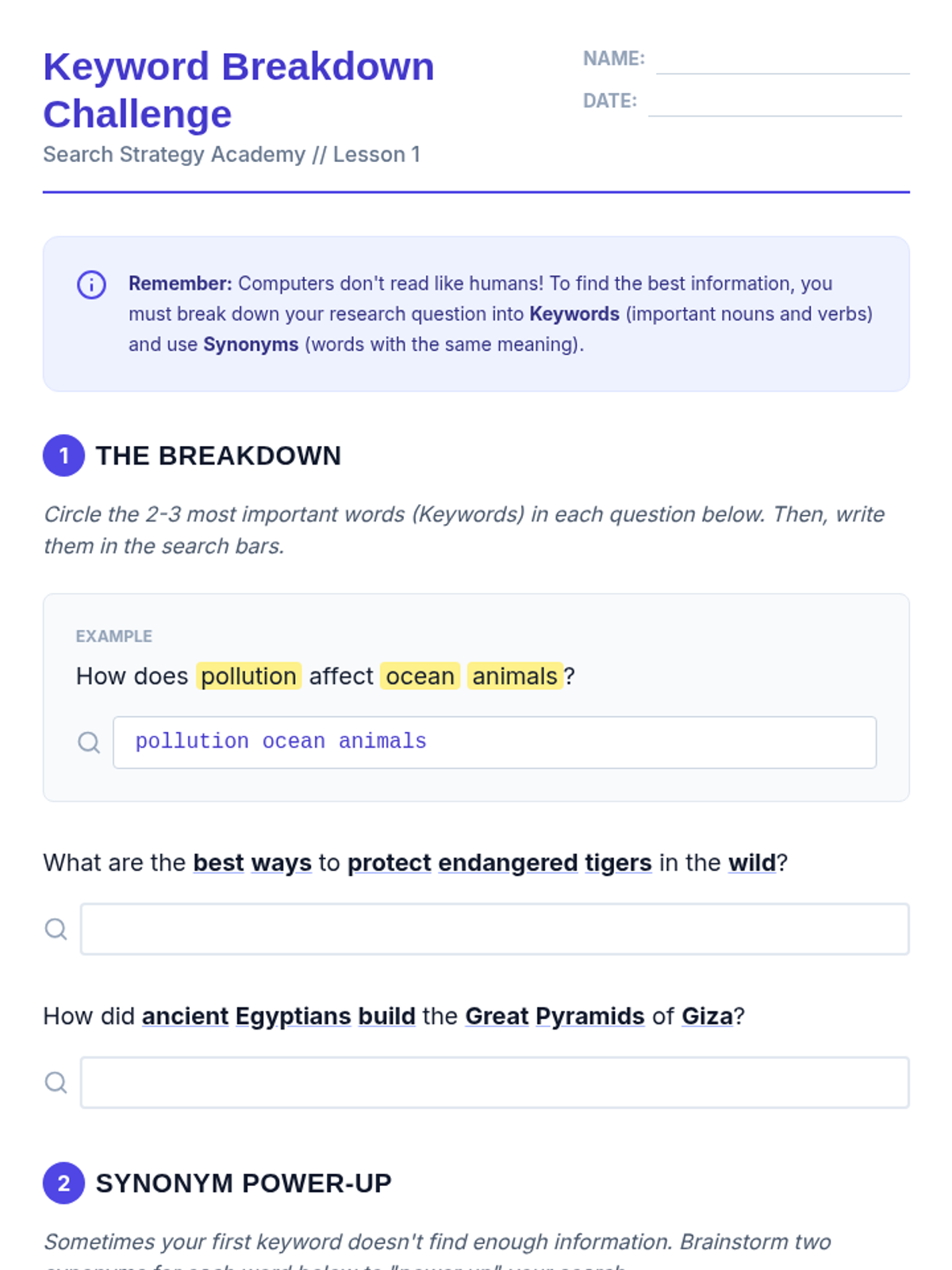
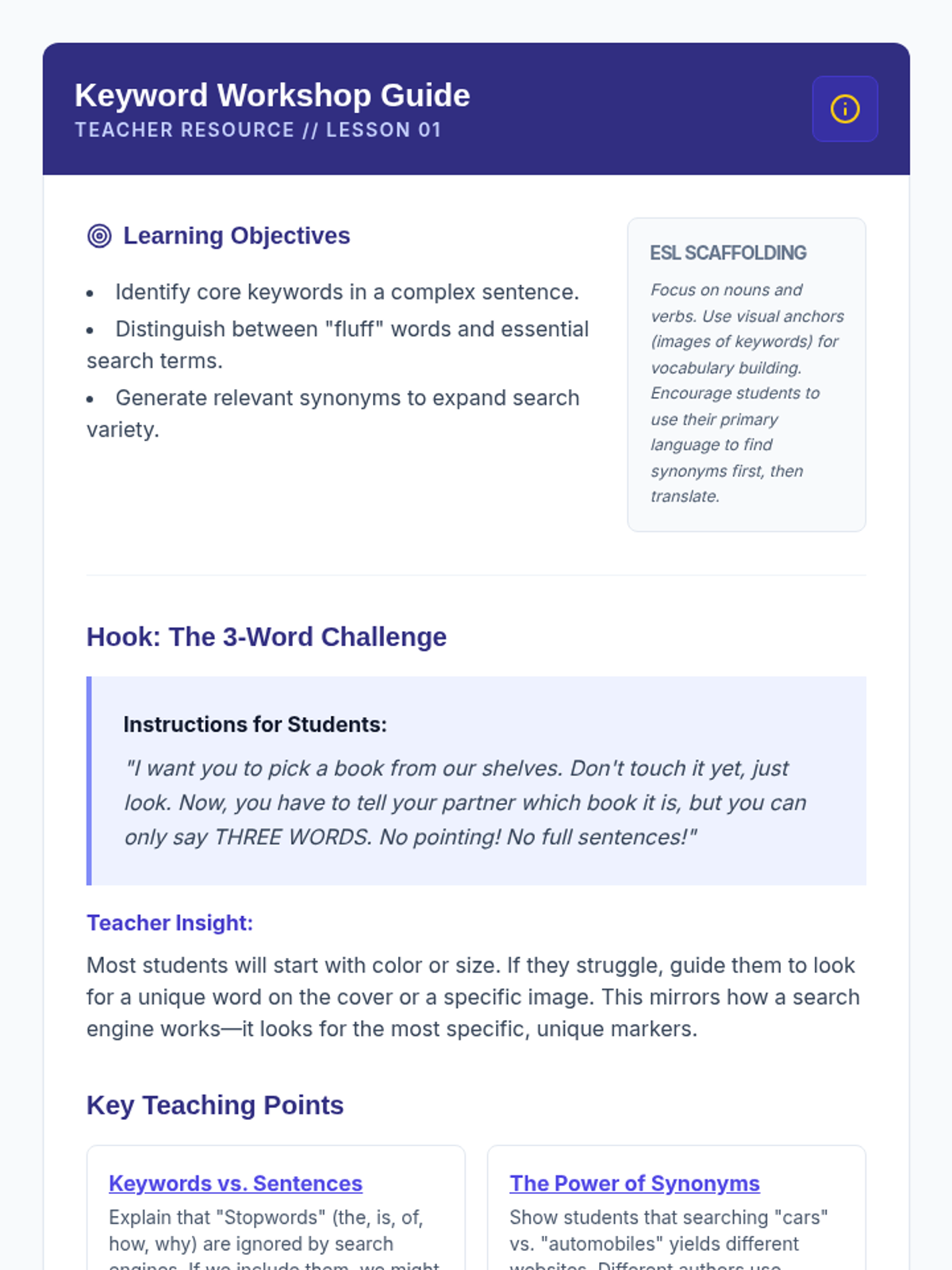
A 5-lesson unit for 6th-grade ESL students focused on transforming search habits from natural language questions to strategic keyword and Boolean operator techniques. Students move from basic vocabulary brainstorming to navigating academic databases and skimming snippets for relevance.
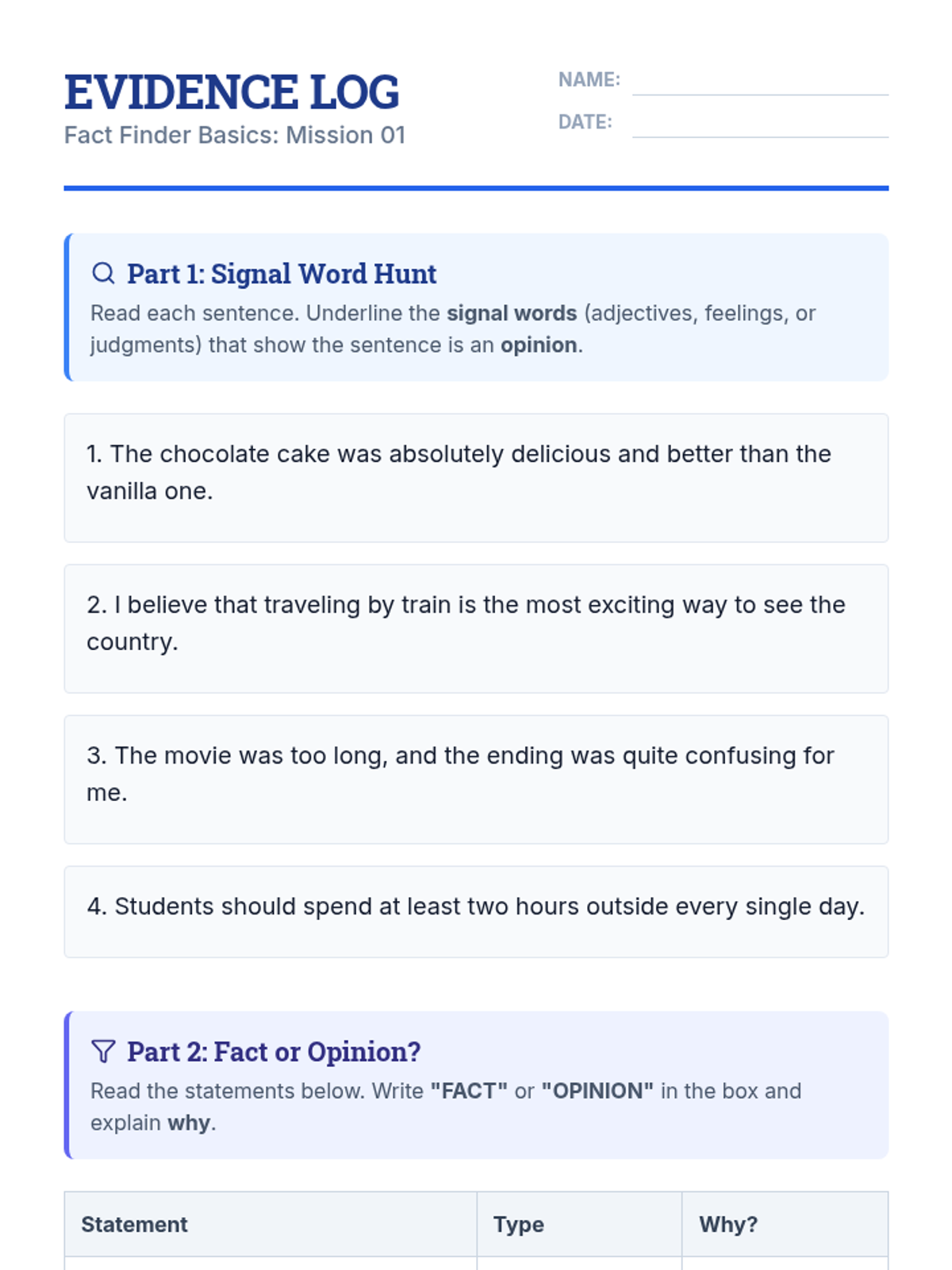
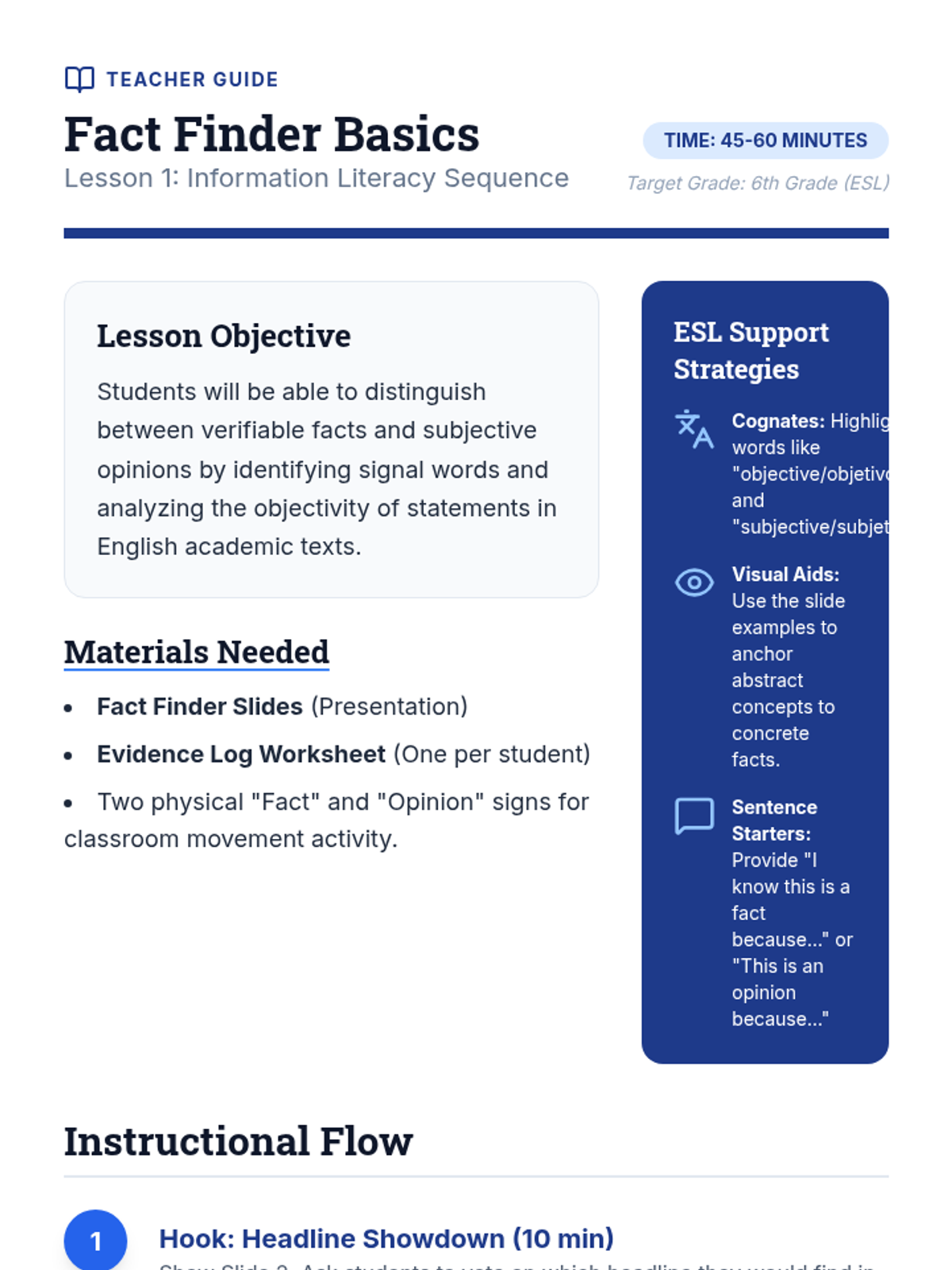
A comprehensive sequence for 6th Grade ESL students to develop critical research and information literacy skills. Students progress from distinguishing basic facts and opinions to applying professional evaluation frameworks like the CRAAP test to determine source credibility.
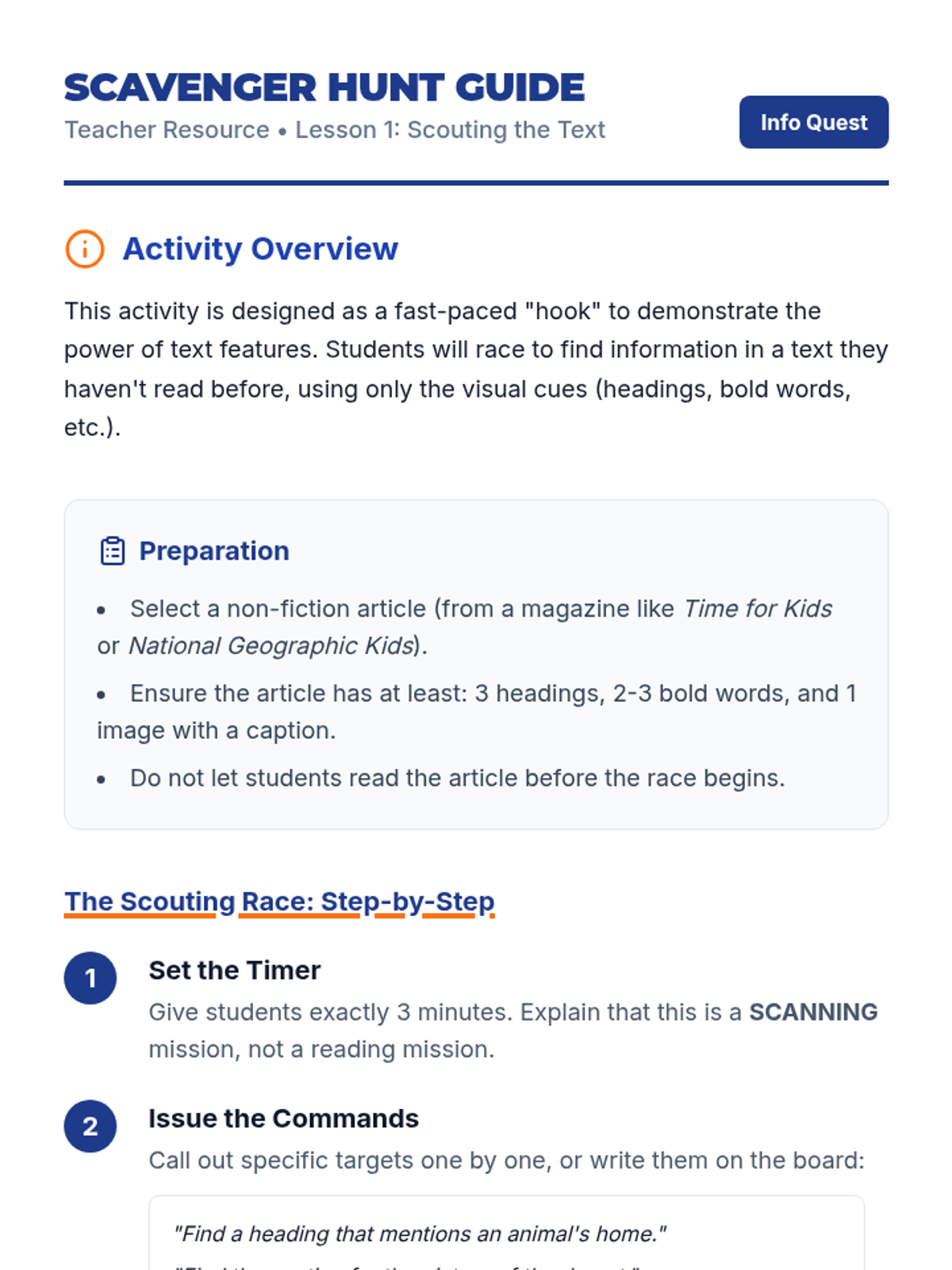
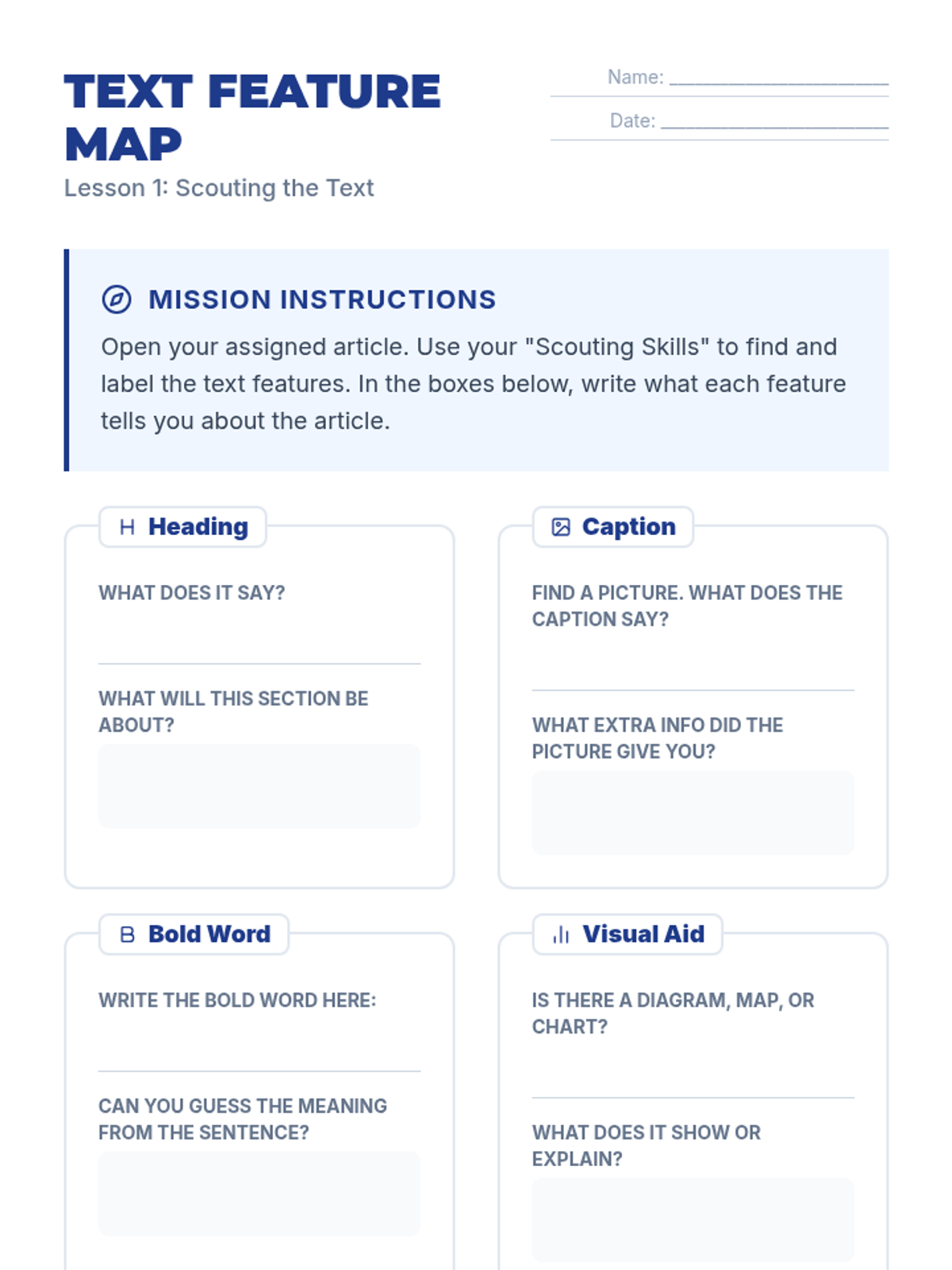
A comprehensive workshop-style sequence for 4th Grade ESL students to master academic research skills. Students progress from navigating text features to note-taking, paraphrasing, summarizing, and ultimately synthesizing information from multiple sources while avoiding plagiarism.
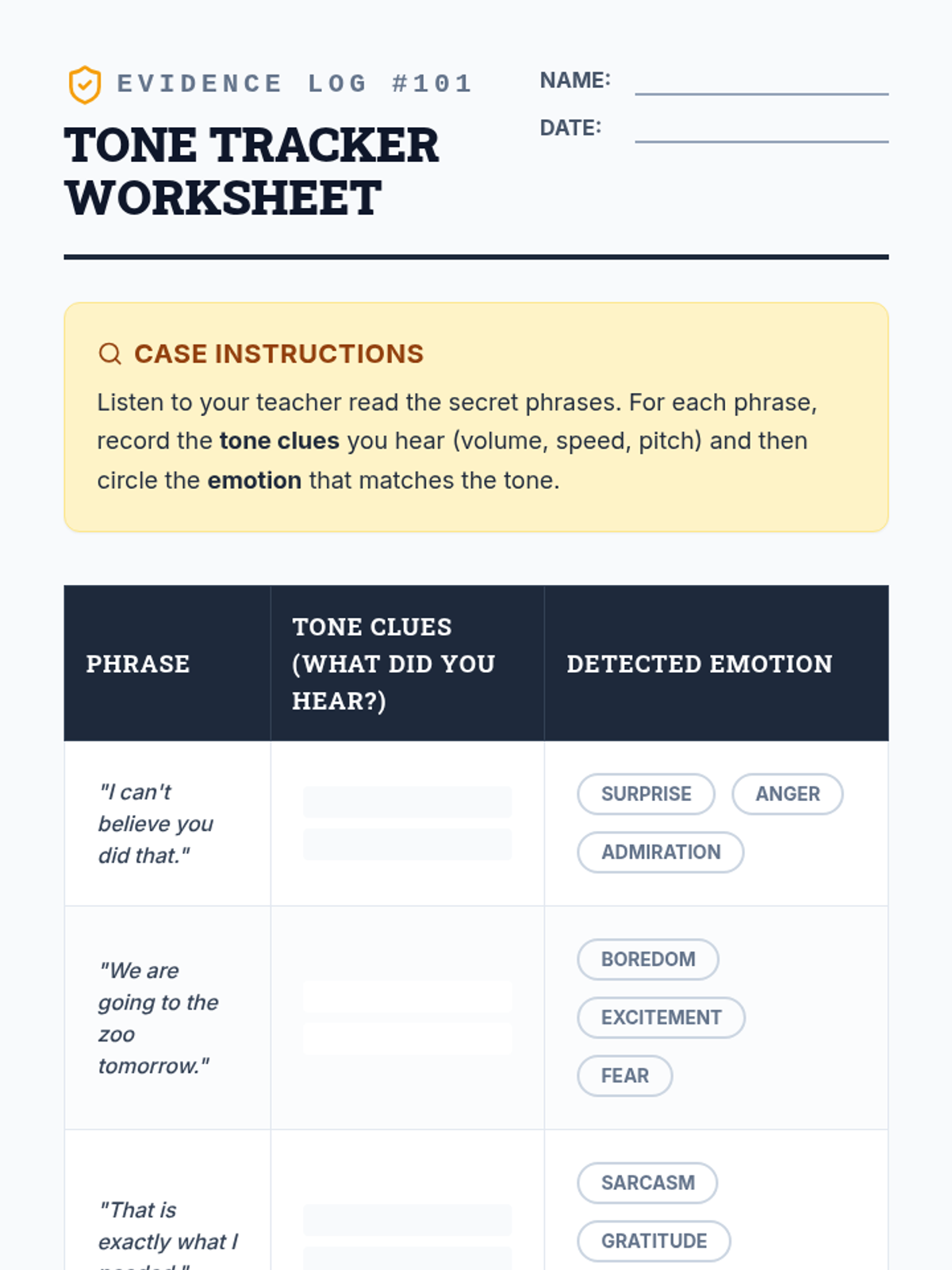
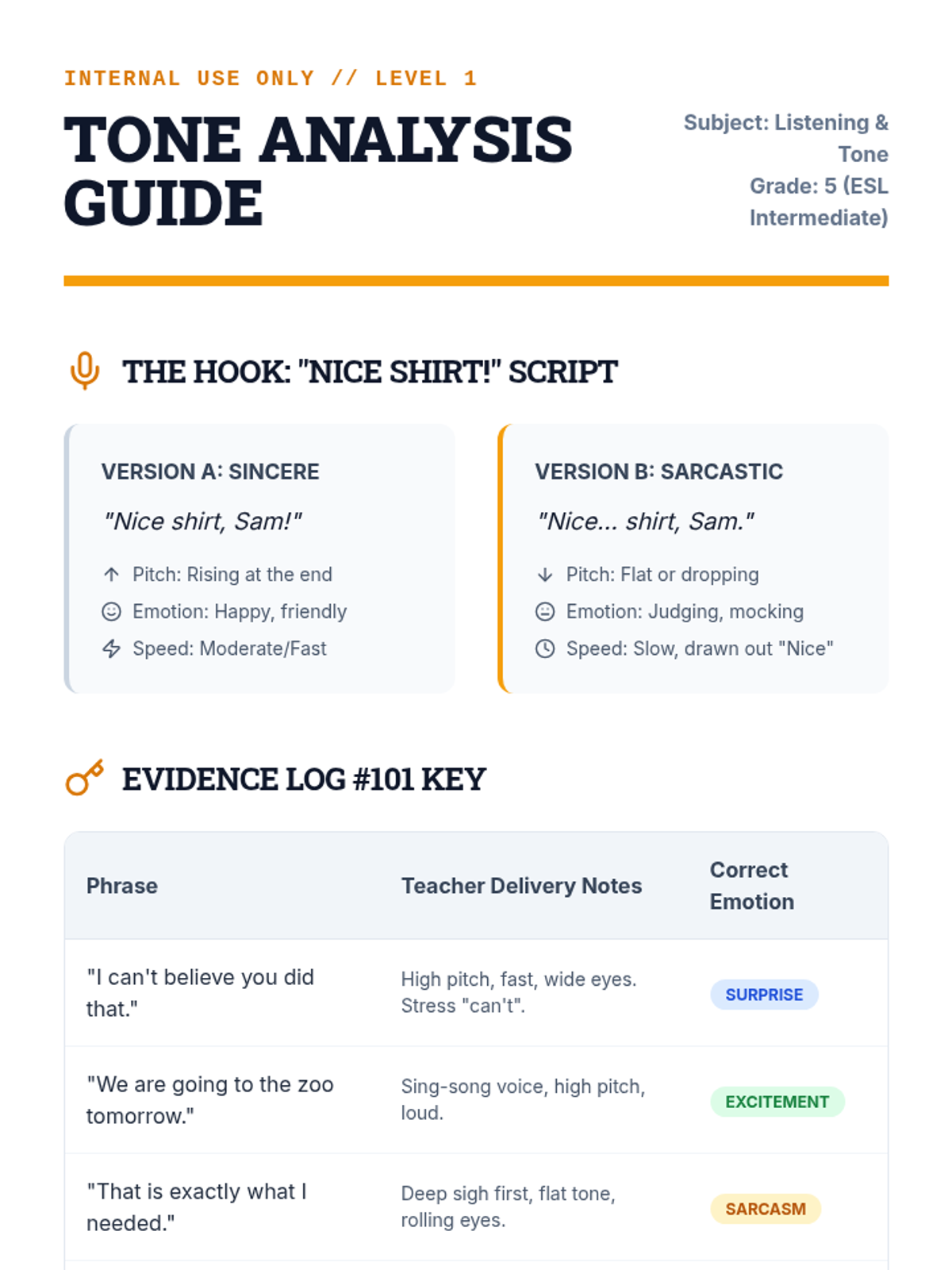
An intermediate ESL sequence where students act as 'communication detectives' to analyze tone, idioms, exaggeration, and speaker intent in spoken English. The sequence culminates in a mystery simulation requiring students to synthesize all listening skills to solve a case.
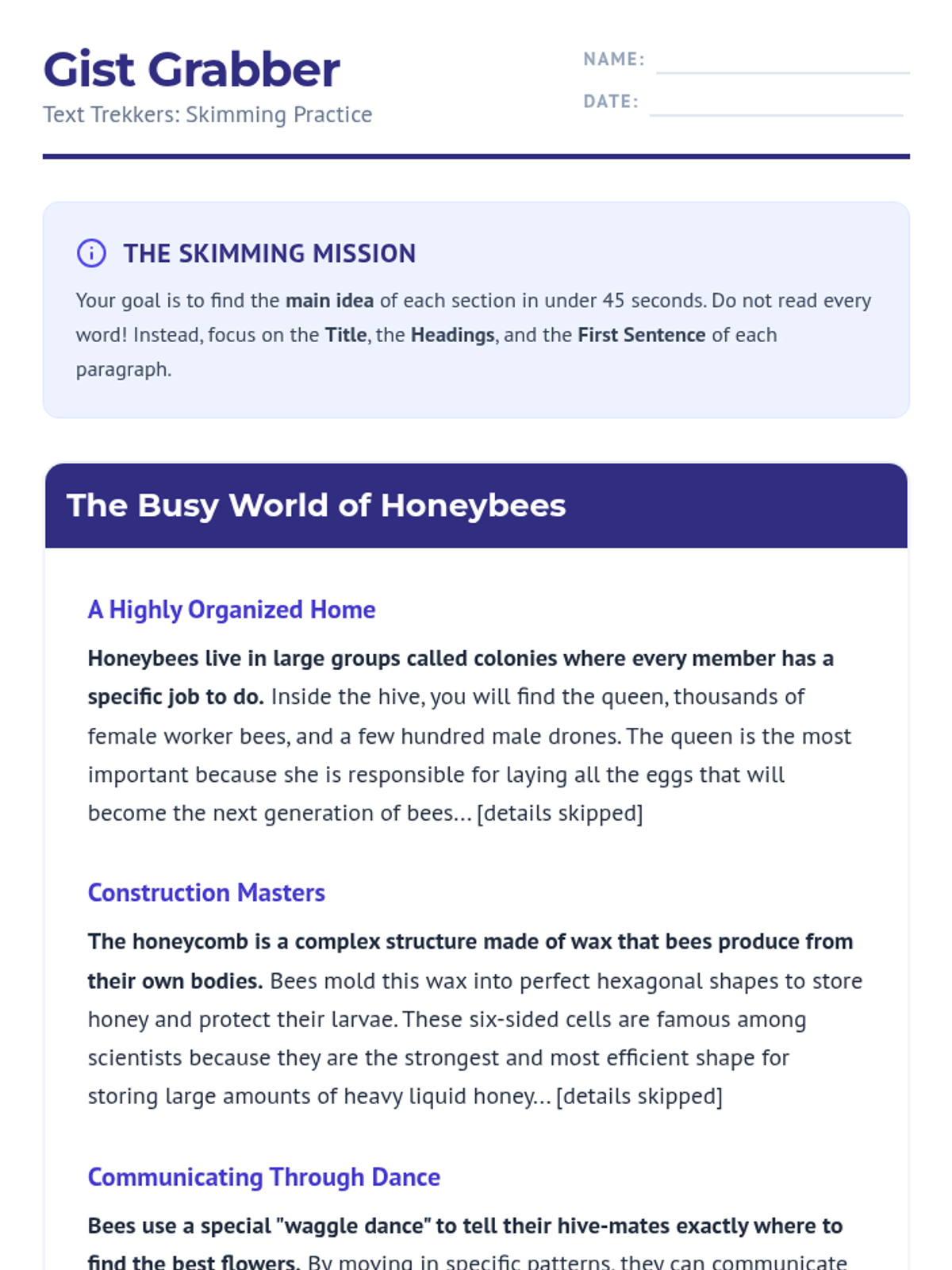
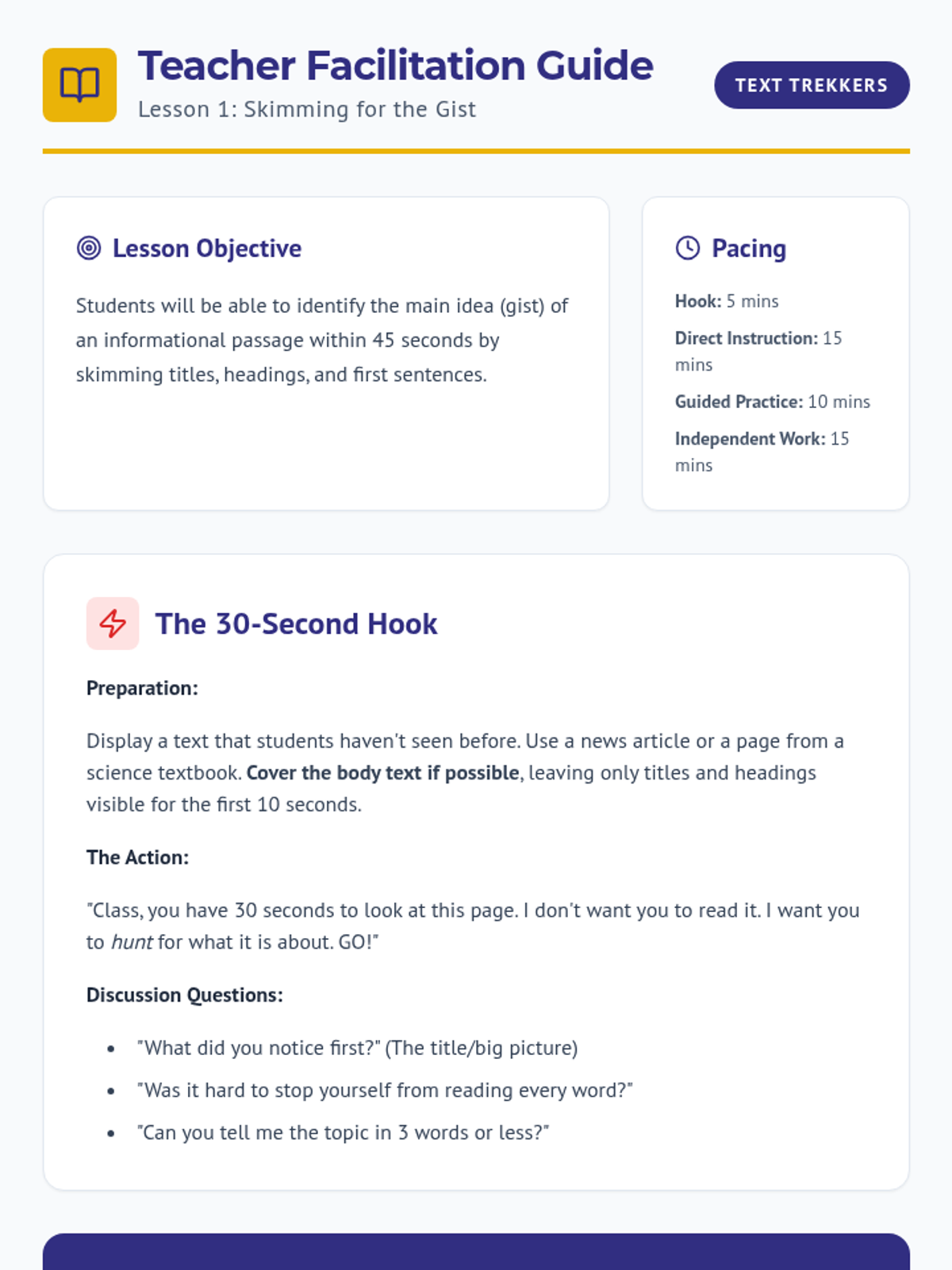
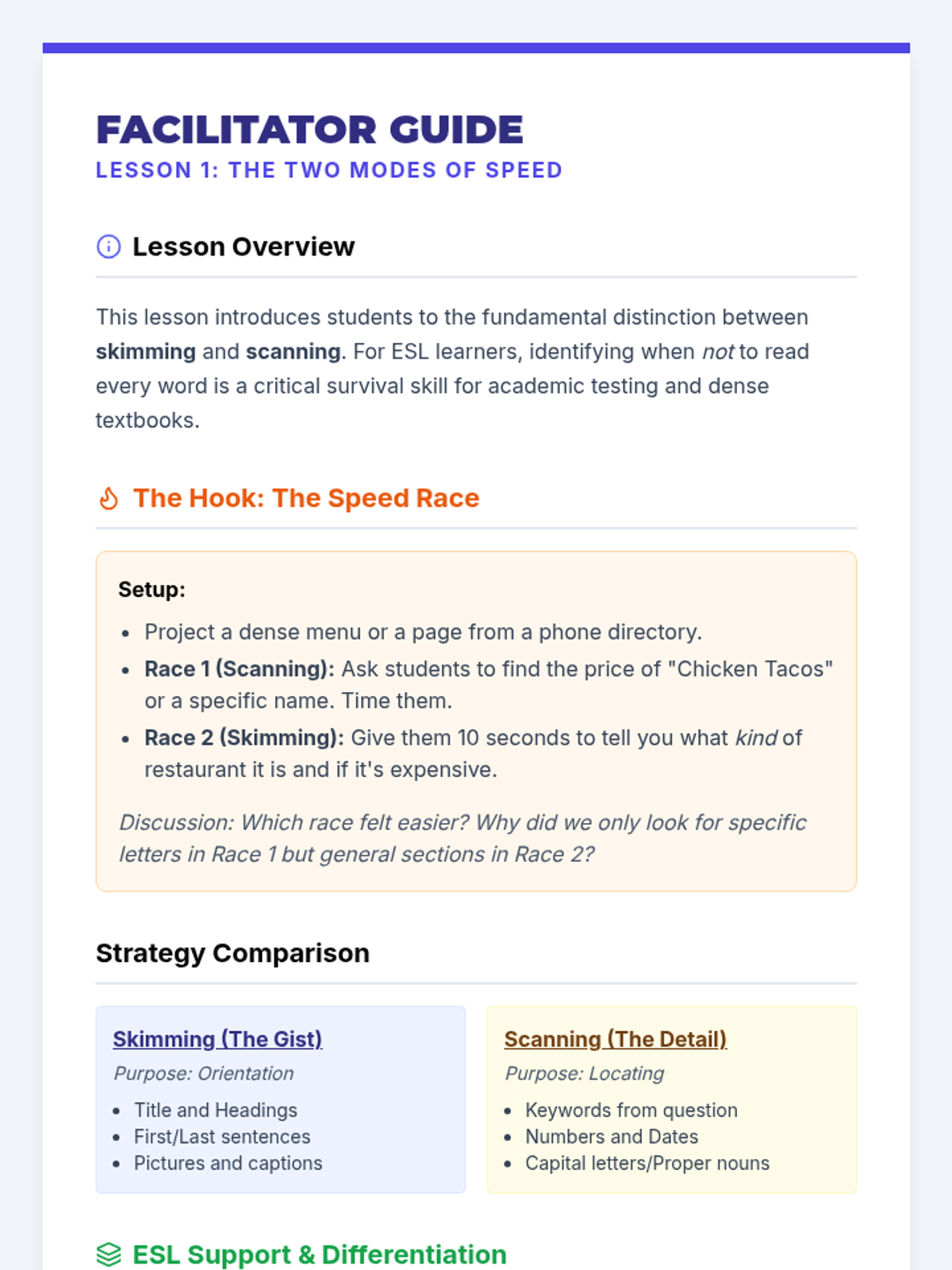
This sequence teaches 5th-grade ESL students how to navigate informational texts efficiently using skimming and scanning strategies. Students will move from understanding the big picture to locating specific keywords and using text features to answer test-style questions under time pressure.
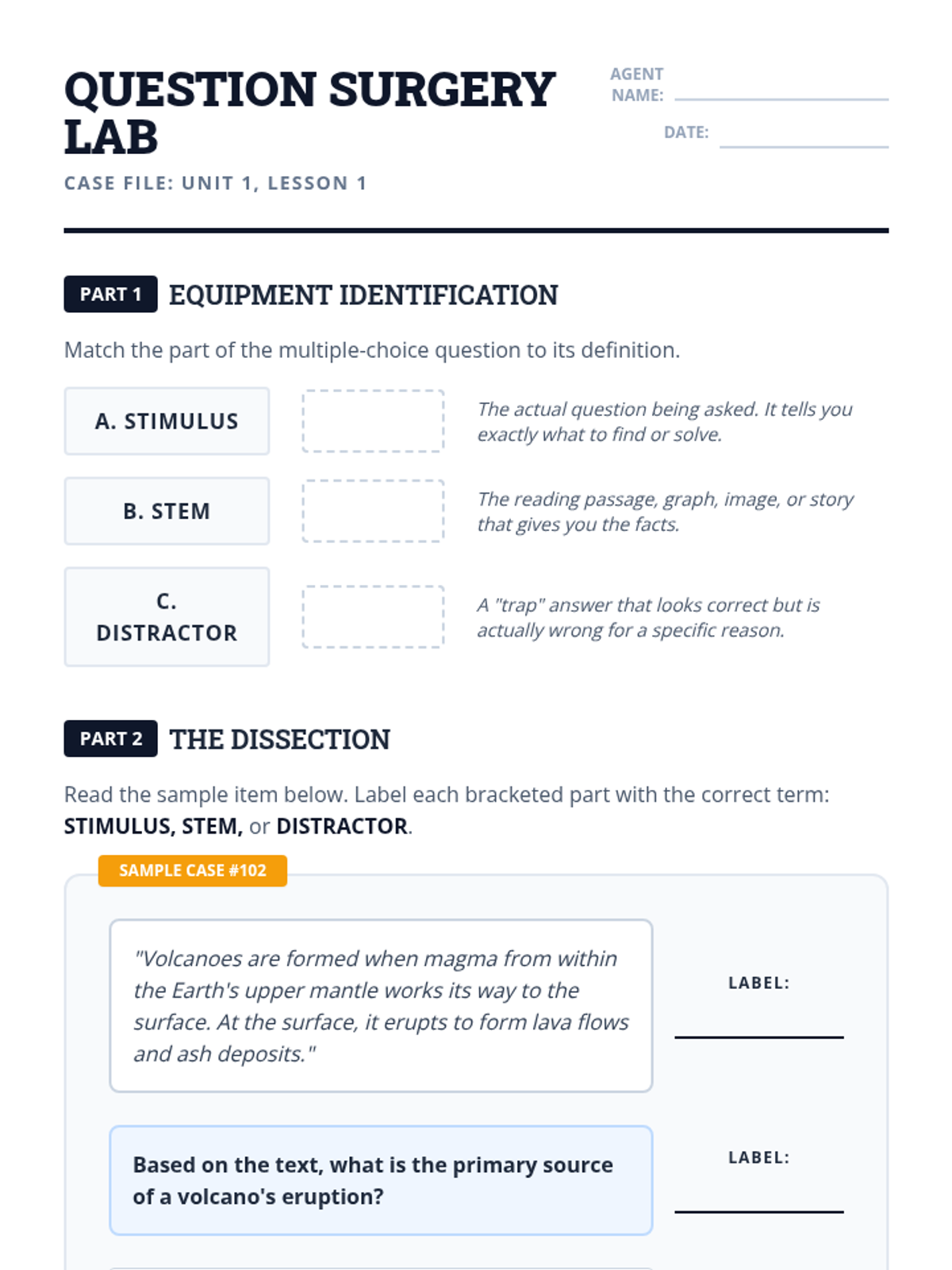
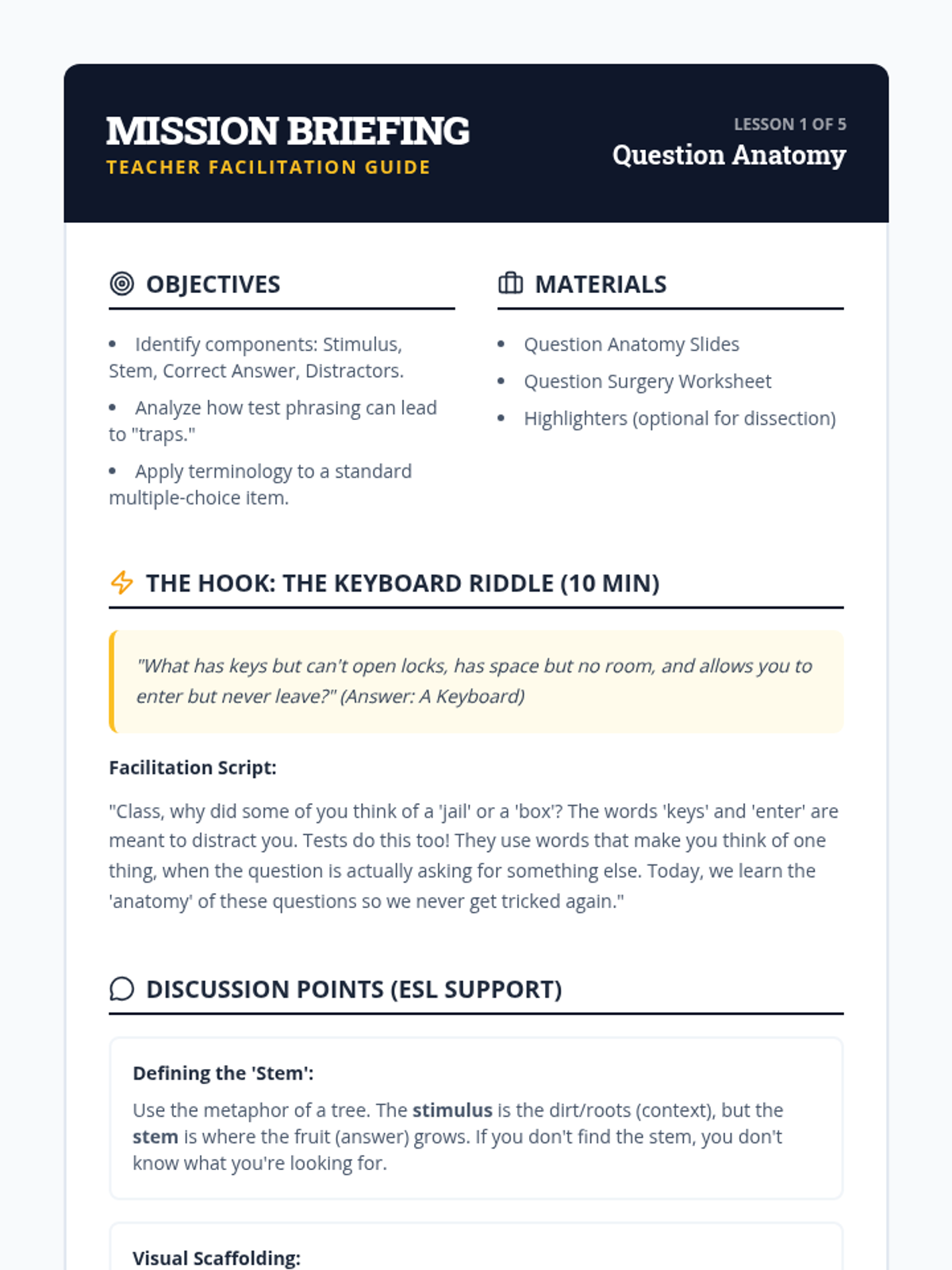
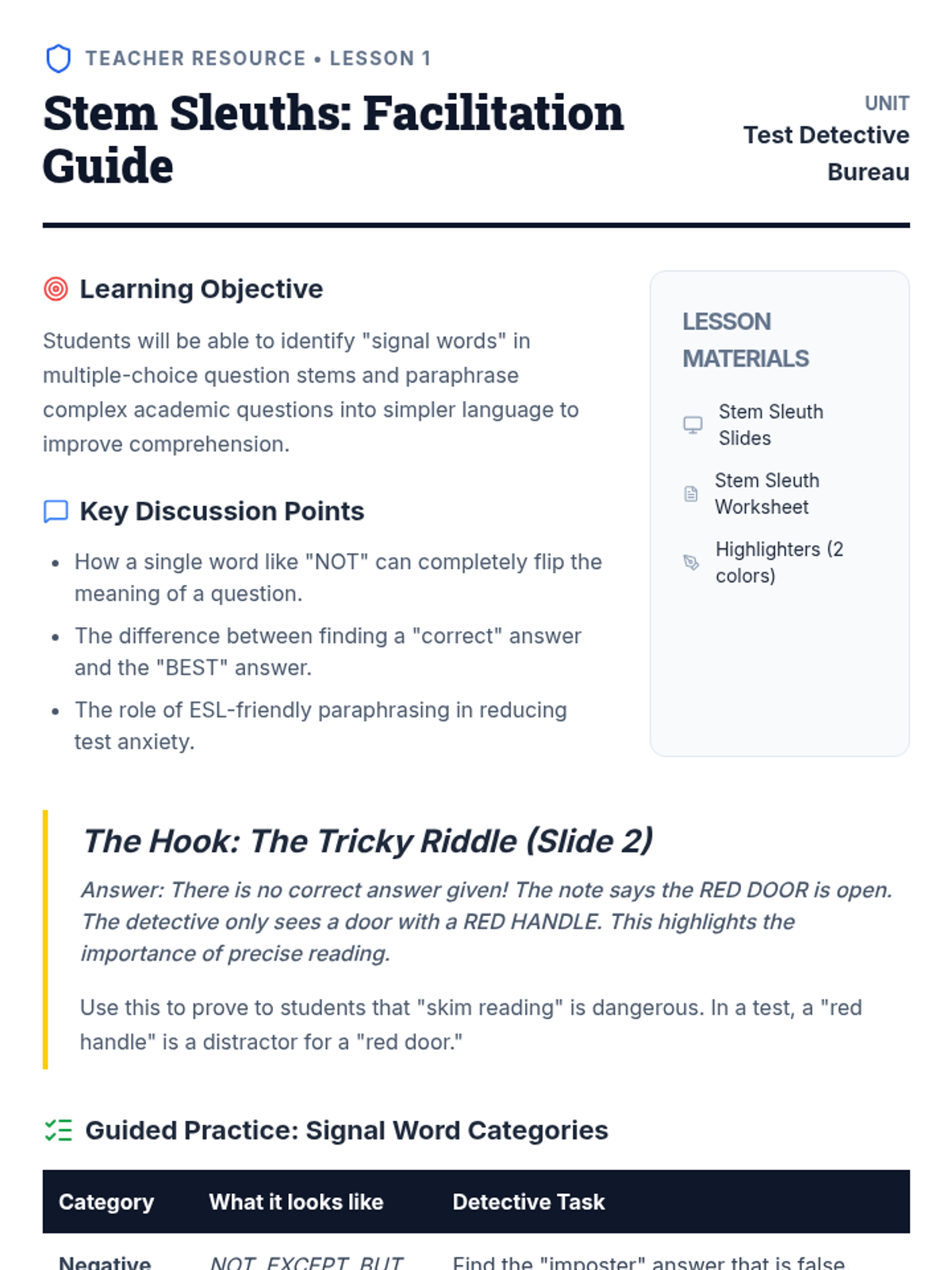
This sequence targets the analytical skills required to dismantle multiple-choice questions for 7th Grade ESL learners. Students move from understanding the anatomy of a question to identifying common logical fallacies and 'trap' answers, utilizing game-based learning and deductive reasoning.
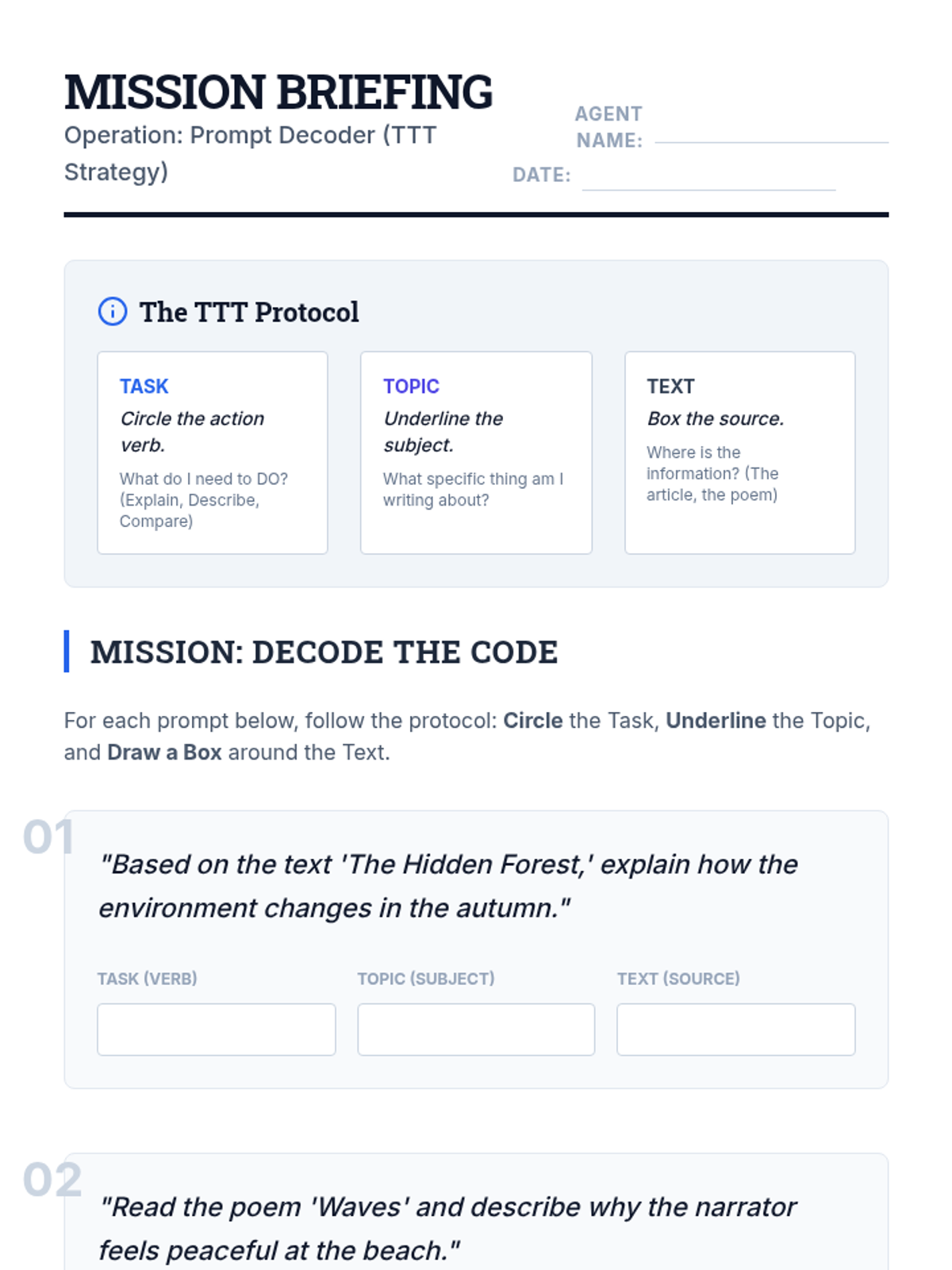
A comprehensive sequence for 6th Grade ESL students to master Short Constructed Responses (SCR) using the R.A.C.E. strategy under time constraints. Students learn to decode prompts, craft strong topic sentences, integrate evidence, and rapidly edit their work.
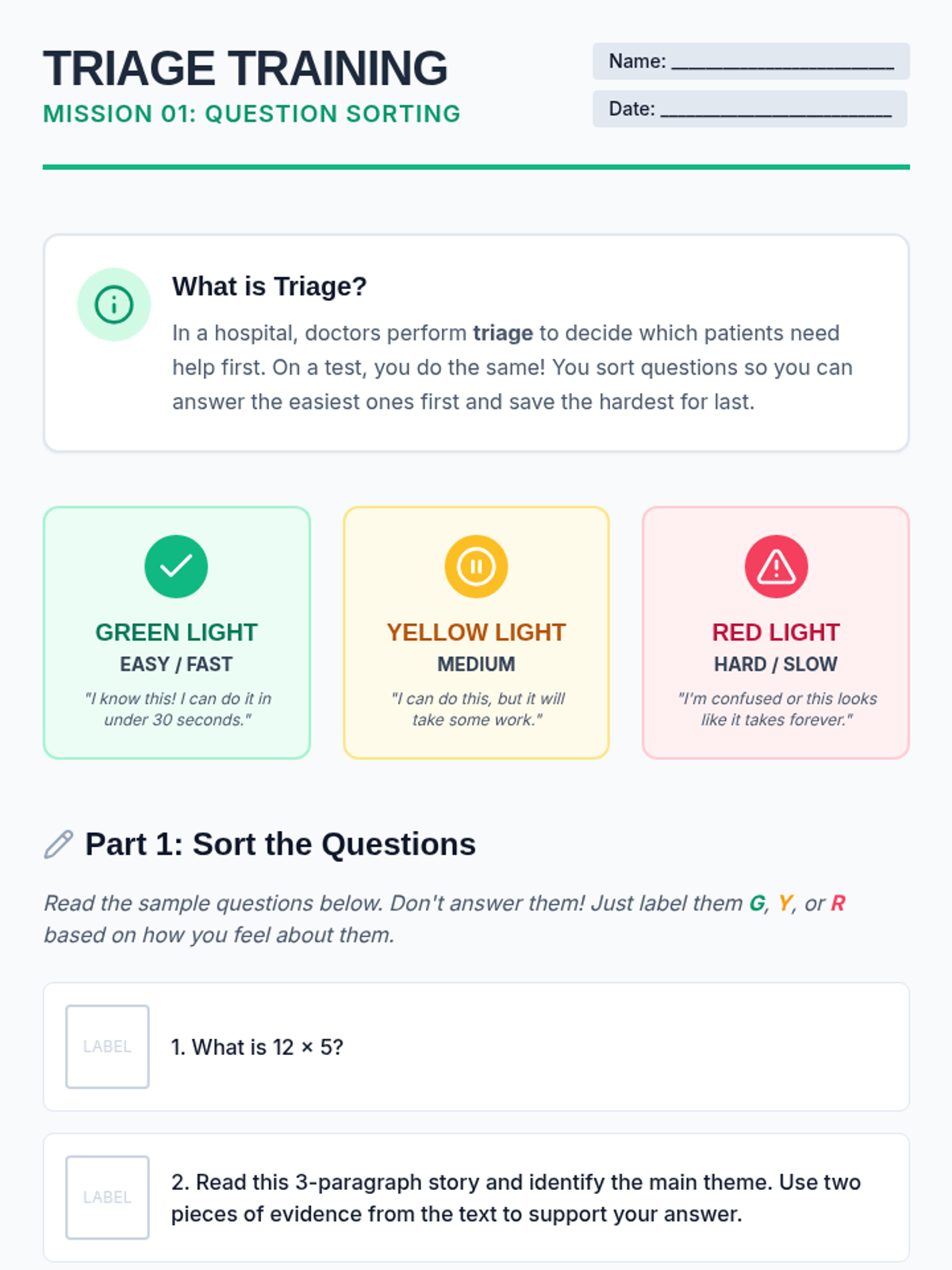
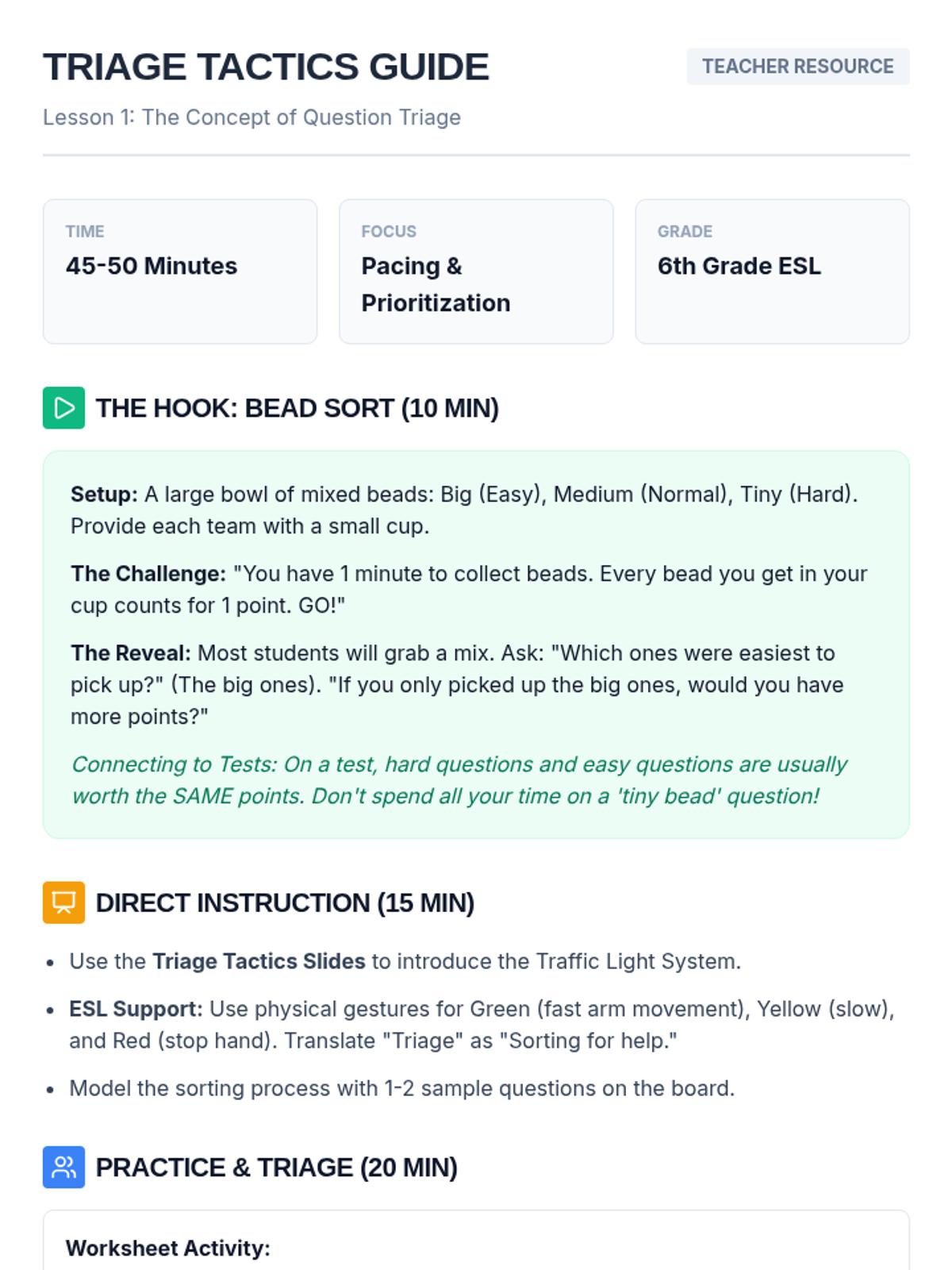
A comprehensive sequence for 6th-grade ESL students focusing on time management and pacing strategies for standardized testing. Students learn to triage questions, manage anxiety when stuck, master bubble sheet mechanics, and monitor their progress against the clock.
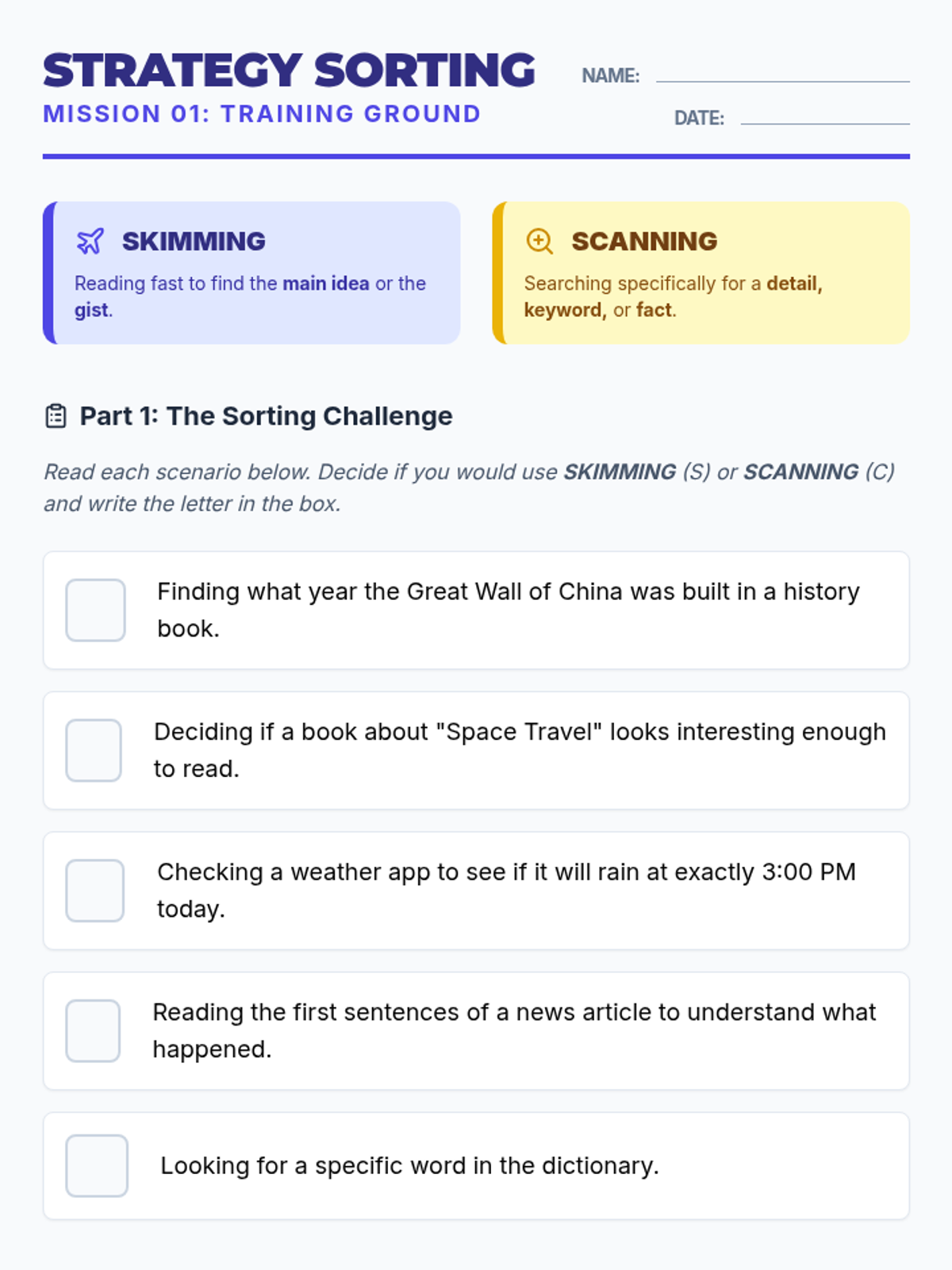
This sequence teaches 6th-grade ESL students the essential test-taking strategies of skimming and scanning. Through a 'Speed Scout' academy theme, students learn to navigate academic texts efficiently, identifying when to look for the 'gist' versus specific details to save time and improve accuracy on standardized tests.
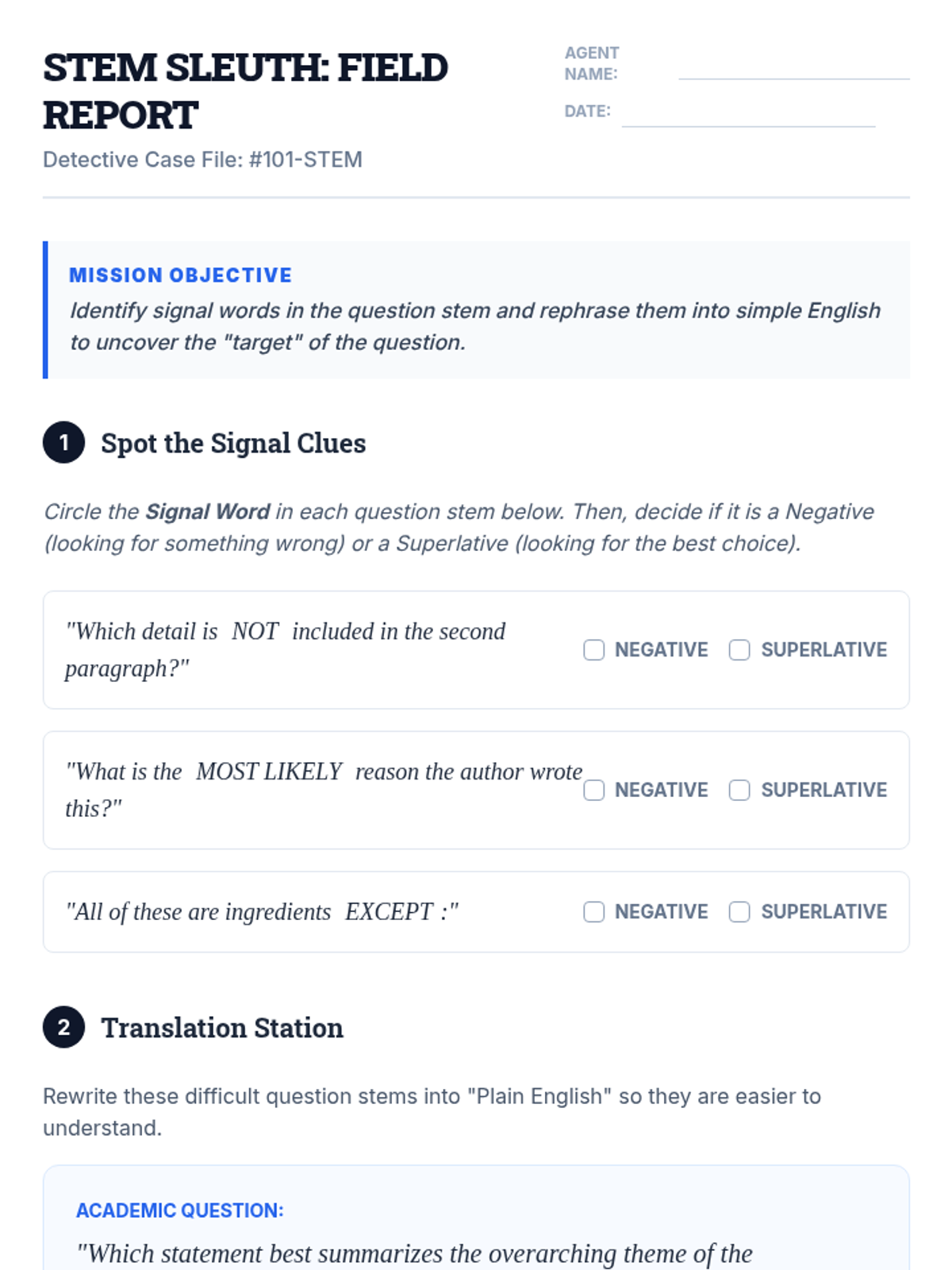
A sequence for 6th-grade ESL students to master academic test-taking through logic and deduction, using a detective-themed approach to analyze question stems and eliminate distractor answers.