Students identify common school supplies and furniture, focusing on gender (el/la) through physical labeling and a mystery bag activity.
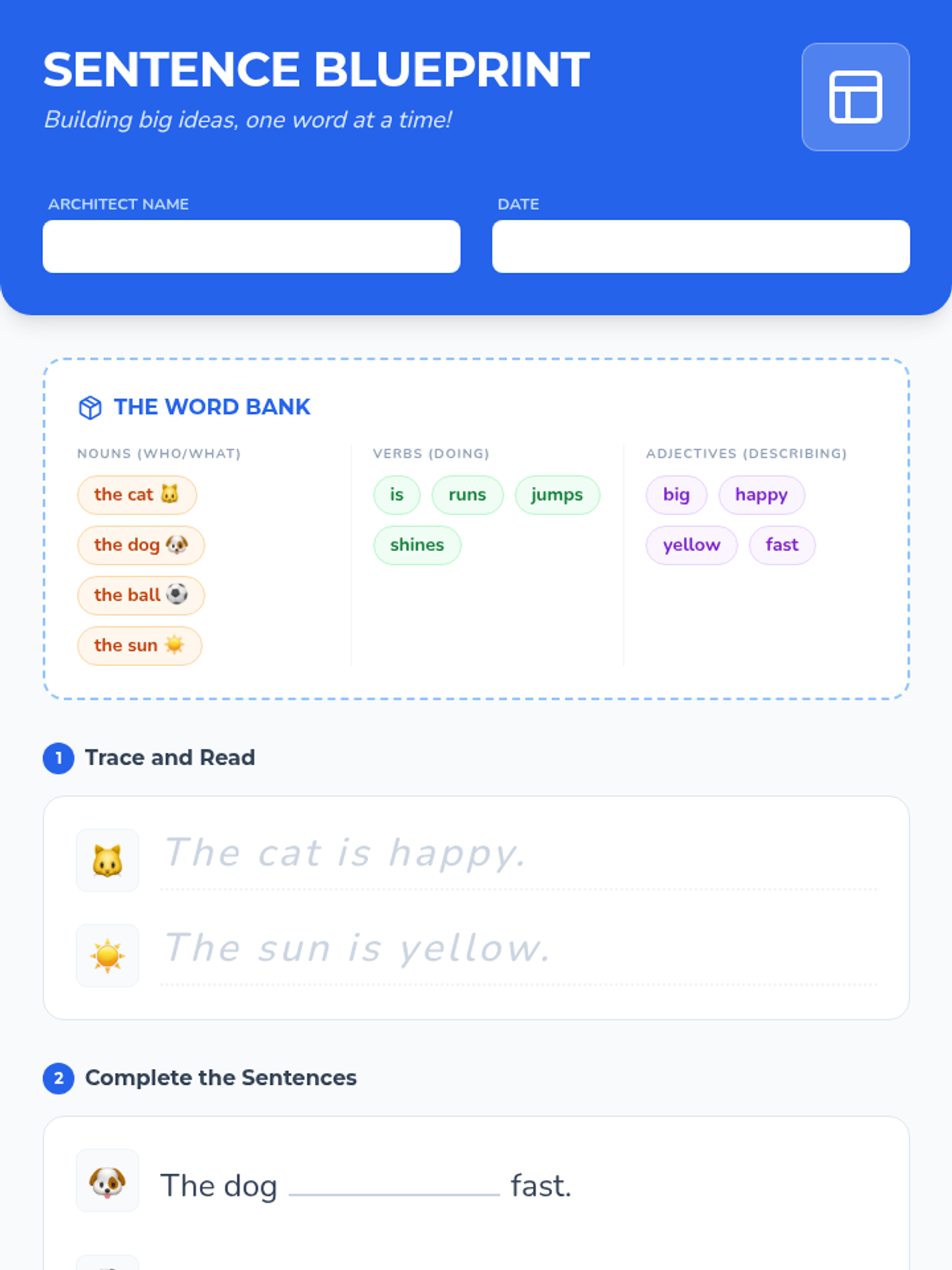
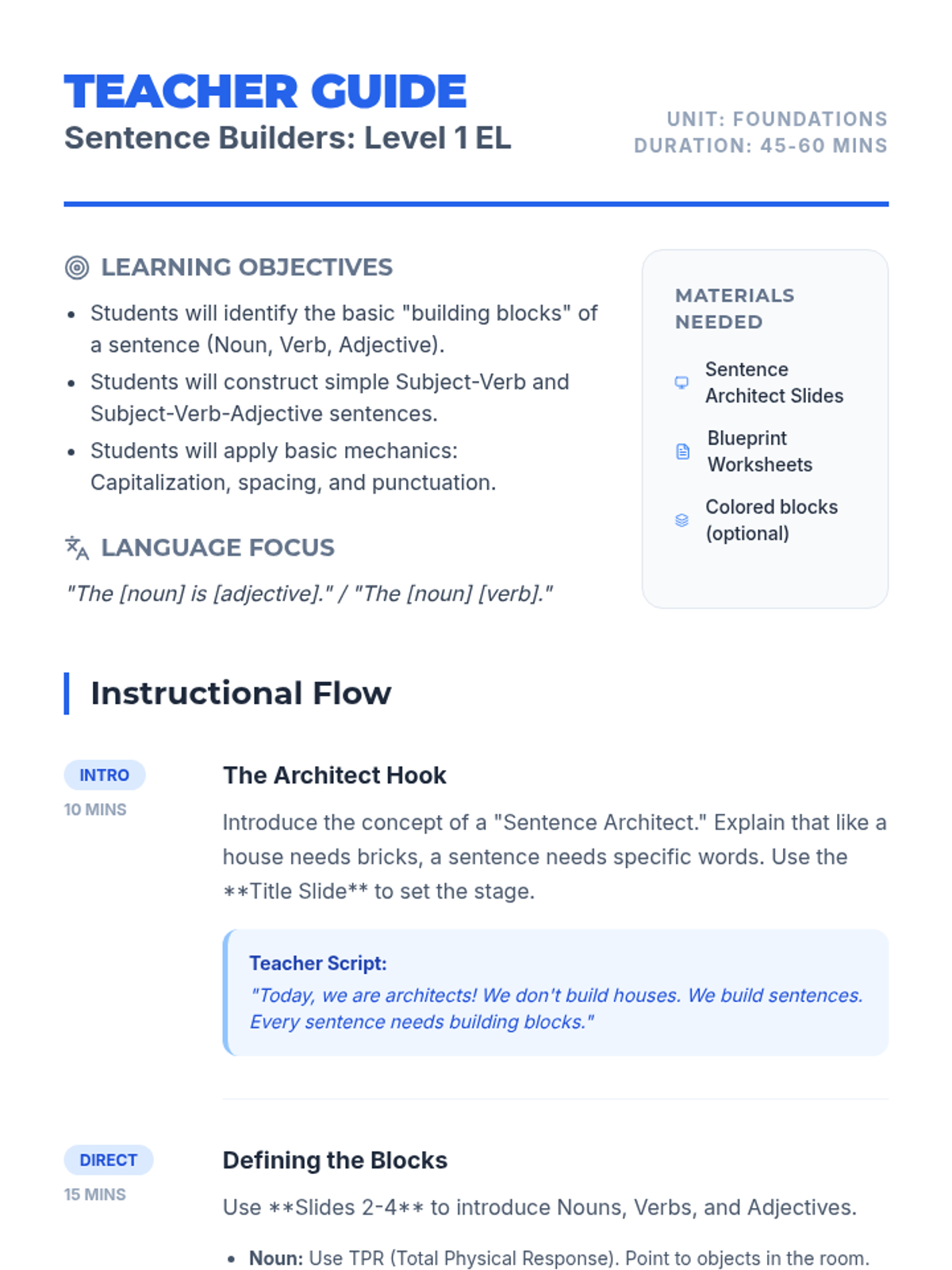
A foundational lesson for Level 1 English Learners to practice constructing simple Subject-Verb and Subject-Verb-Adjective sentences using visual scaffolds and word banks.
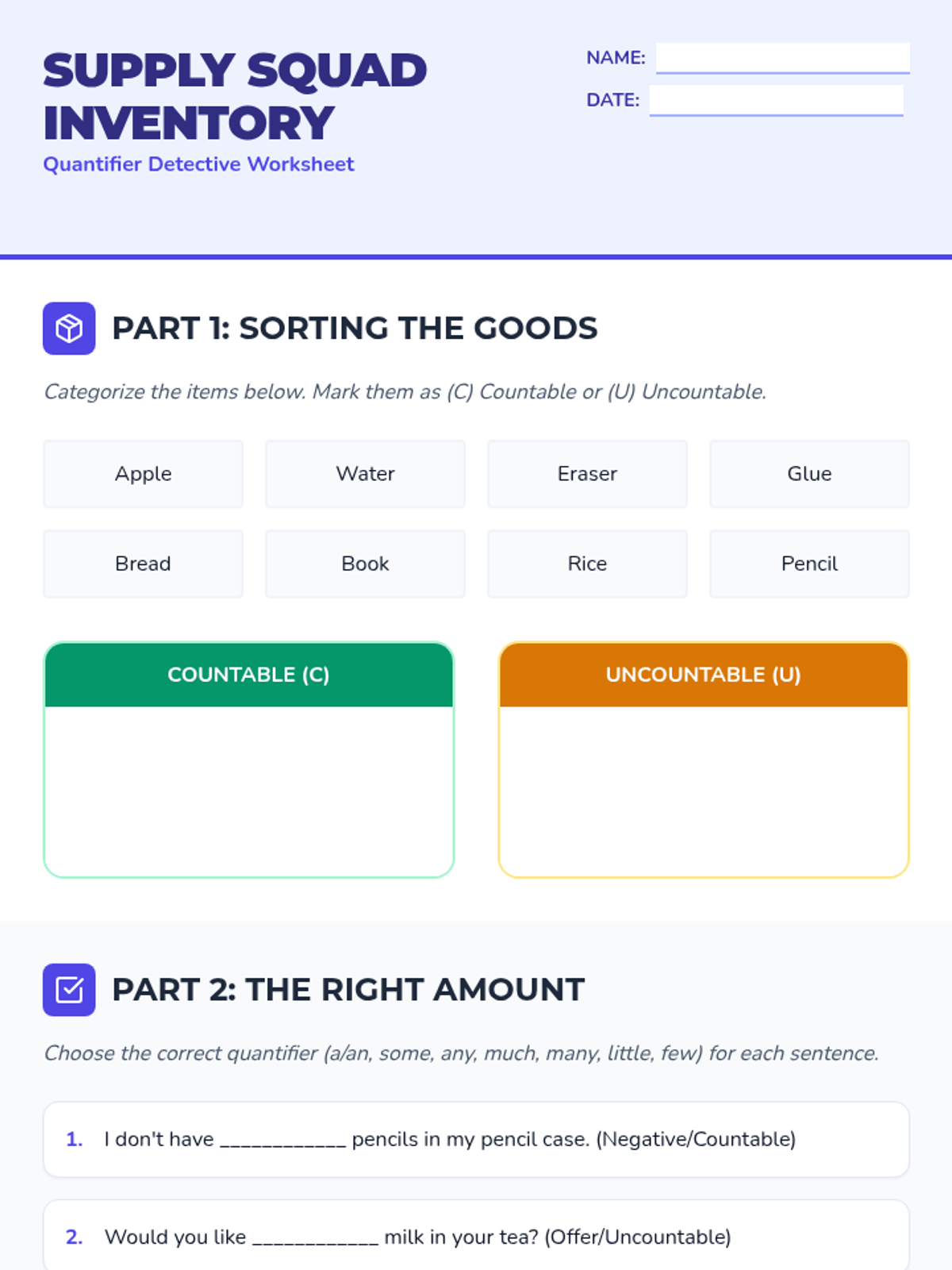
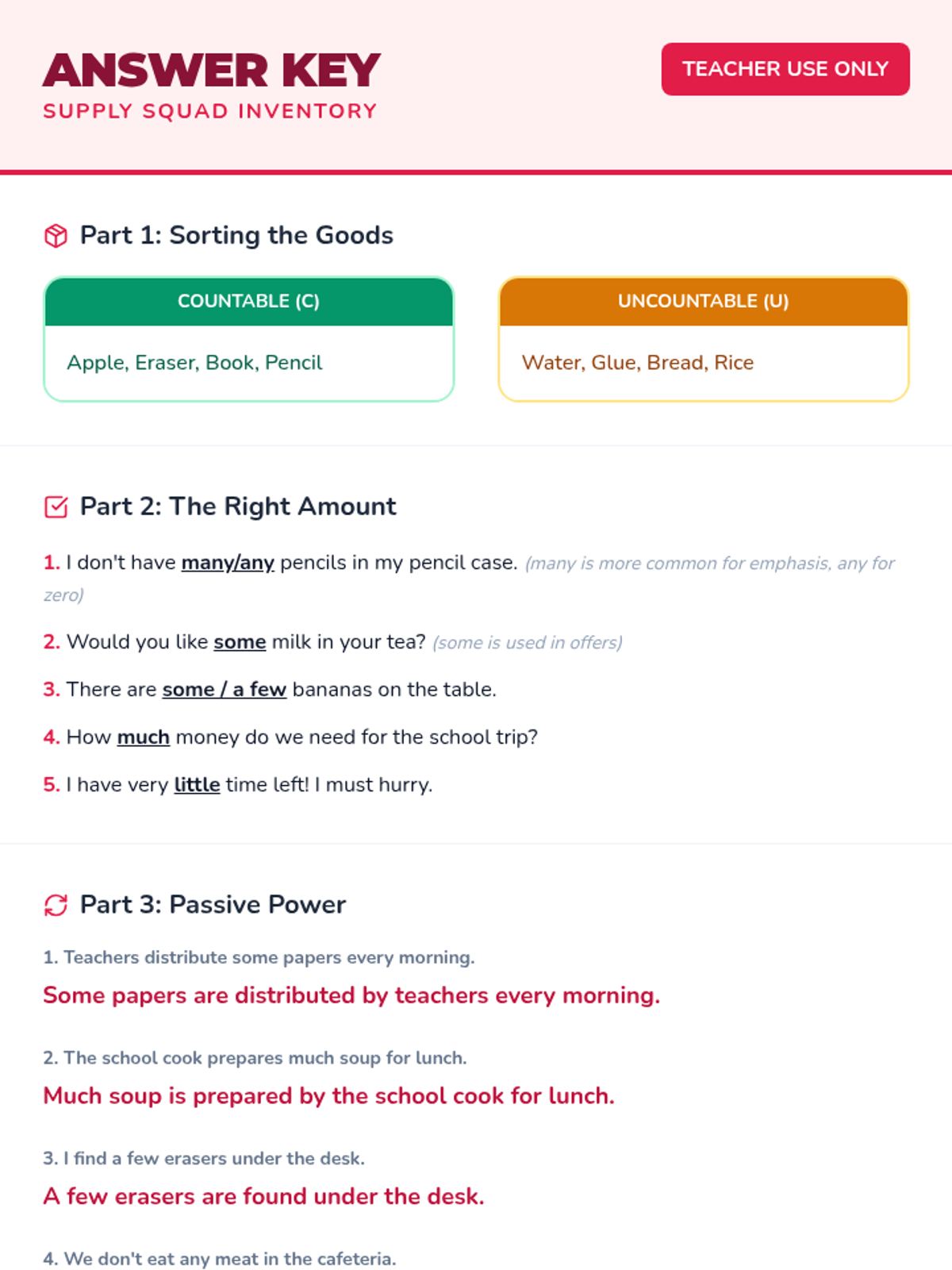
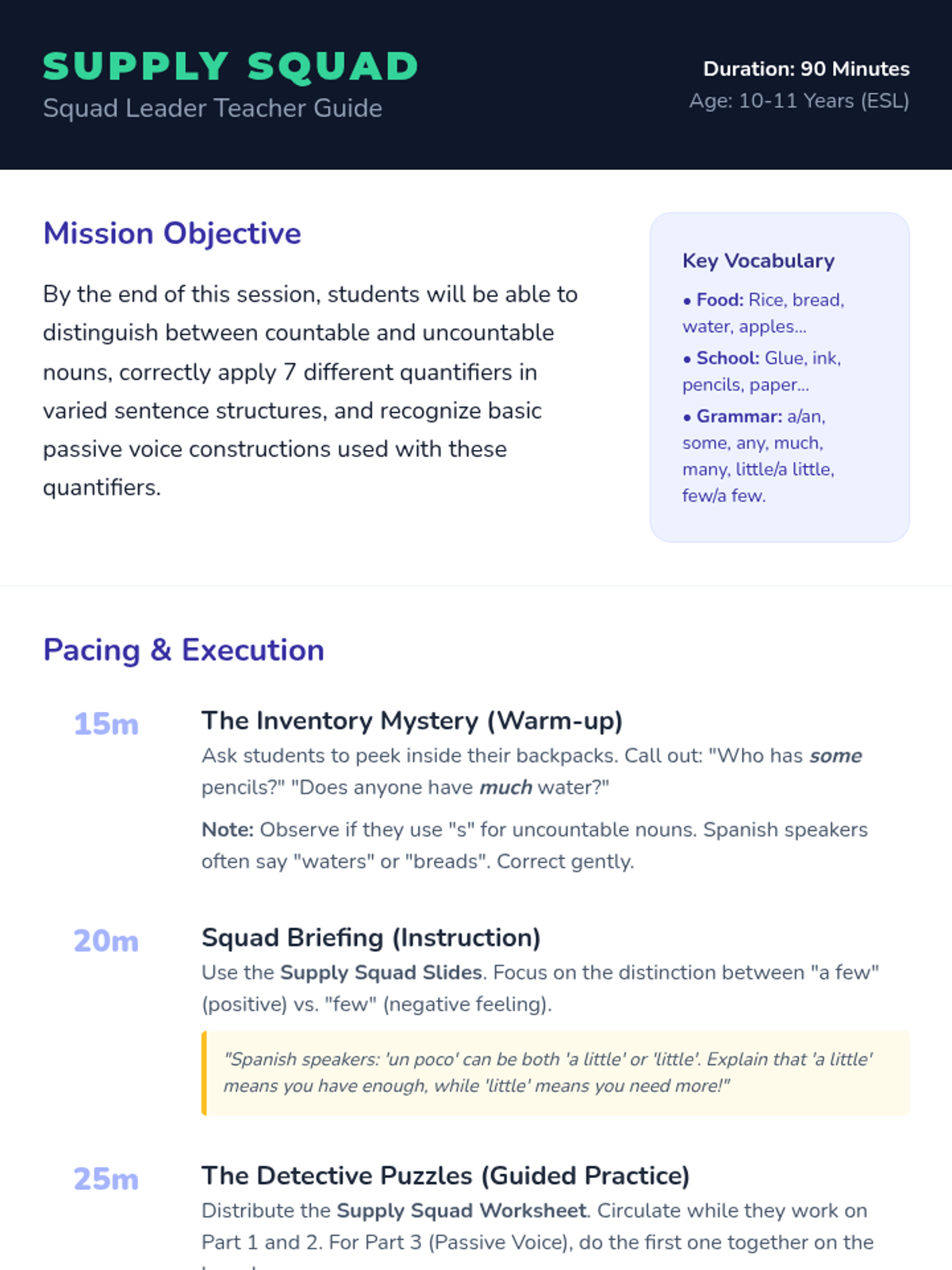
A comprehensive 90-minute ESL lesson for 10-11 year olds focusing on quantifiers (a/an, some, any, much, many, little/a little, few/a few) using food and school vocabulary, incorporating passive voice structures.
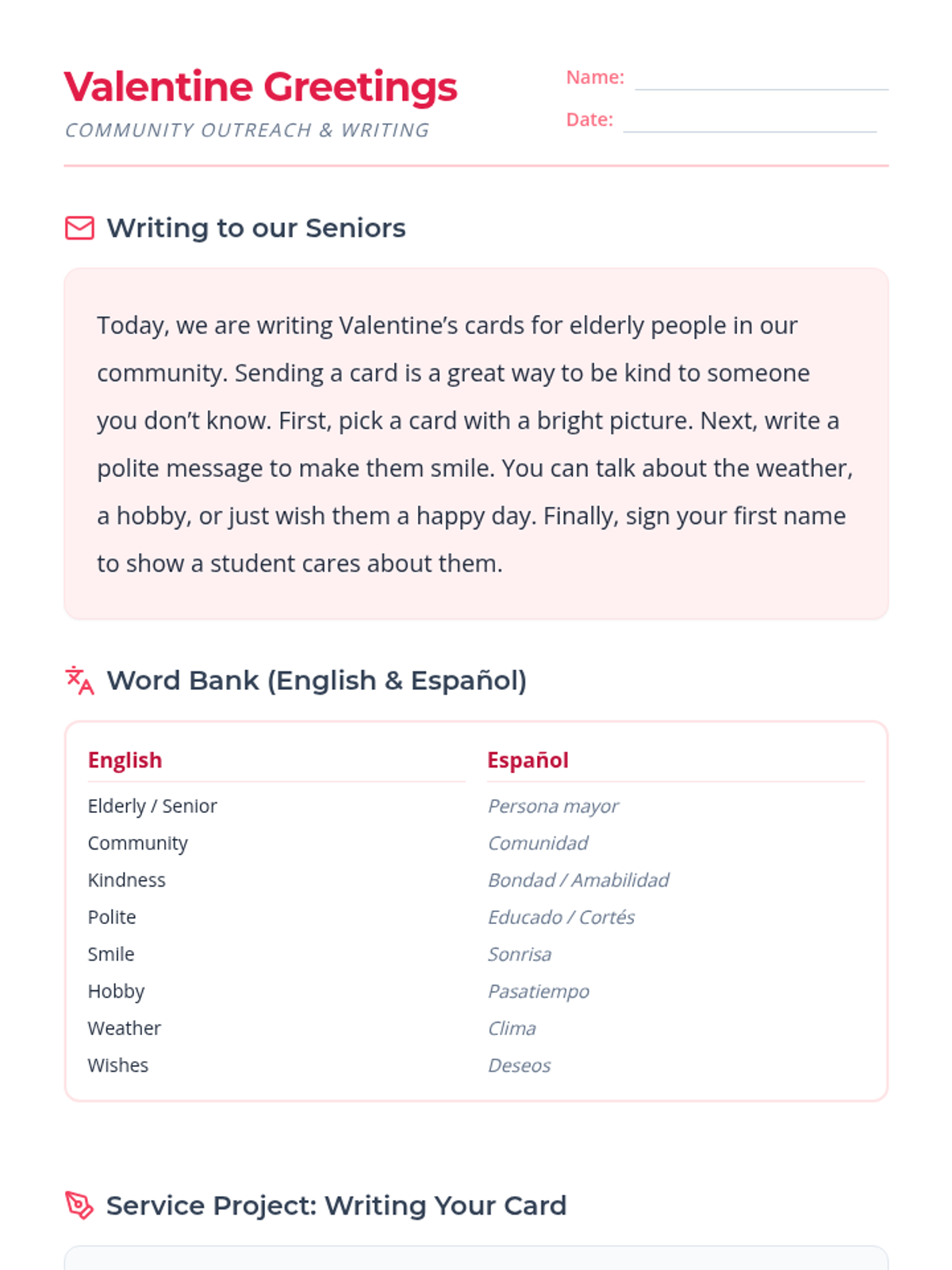
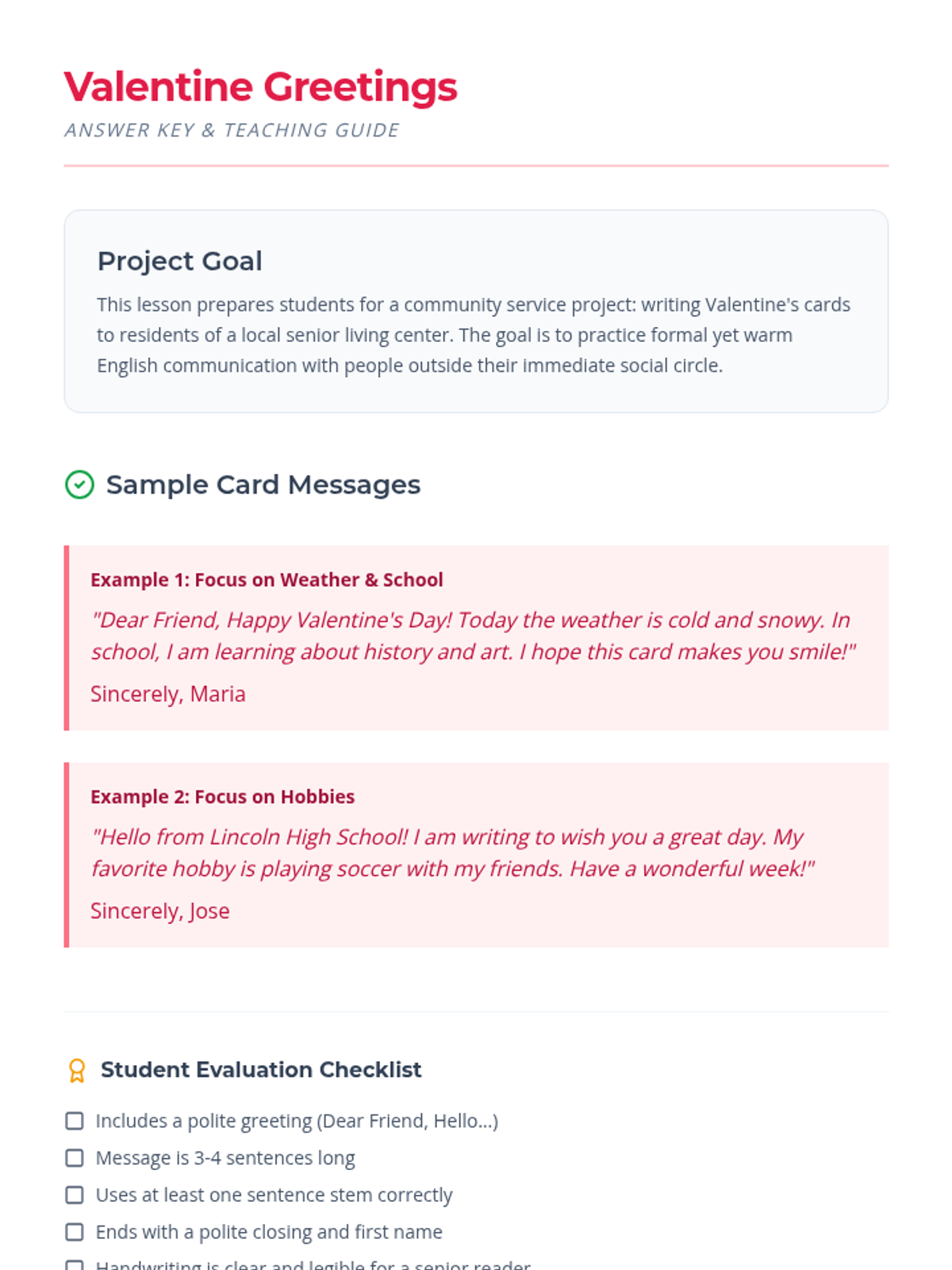
A lesson focused on the cultural tradition of sending Valentine's Day cards, designed for ESL students to practice functional reading and writing skills.
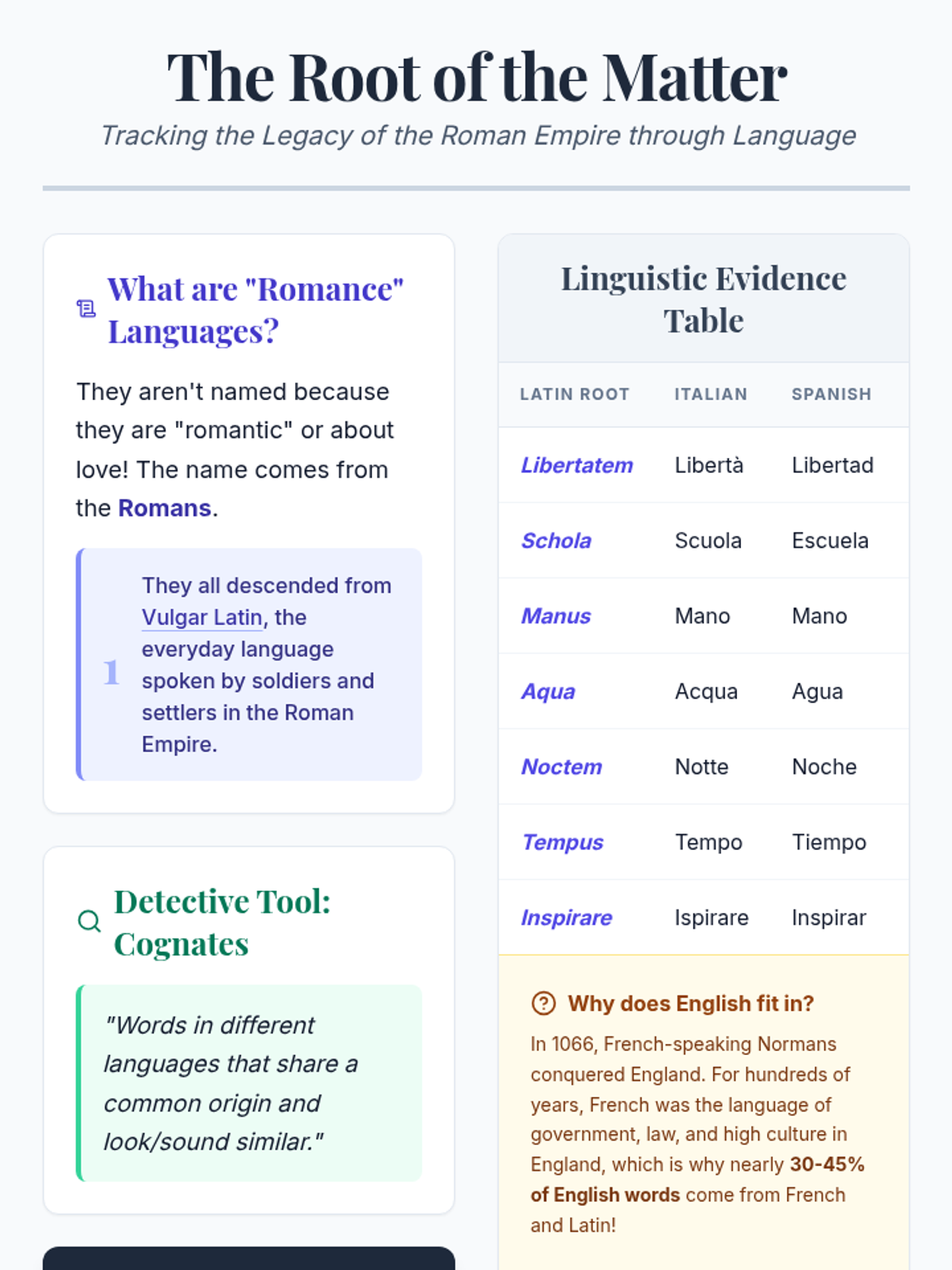
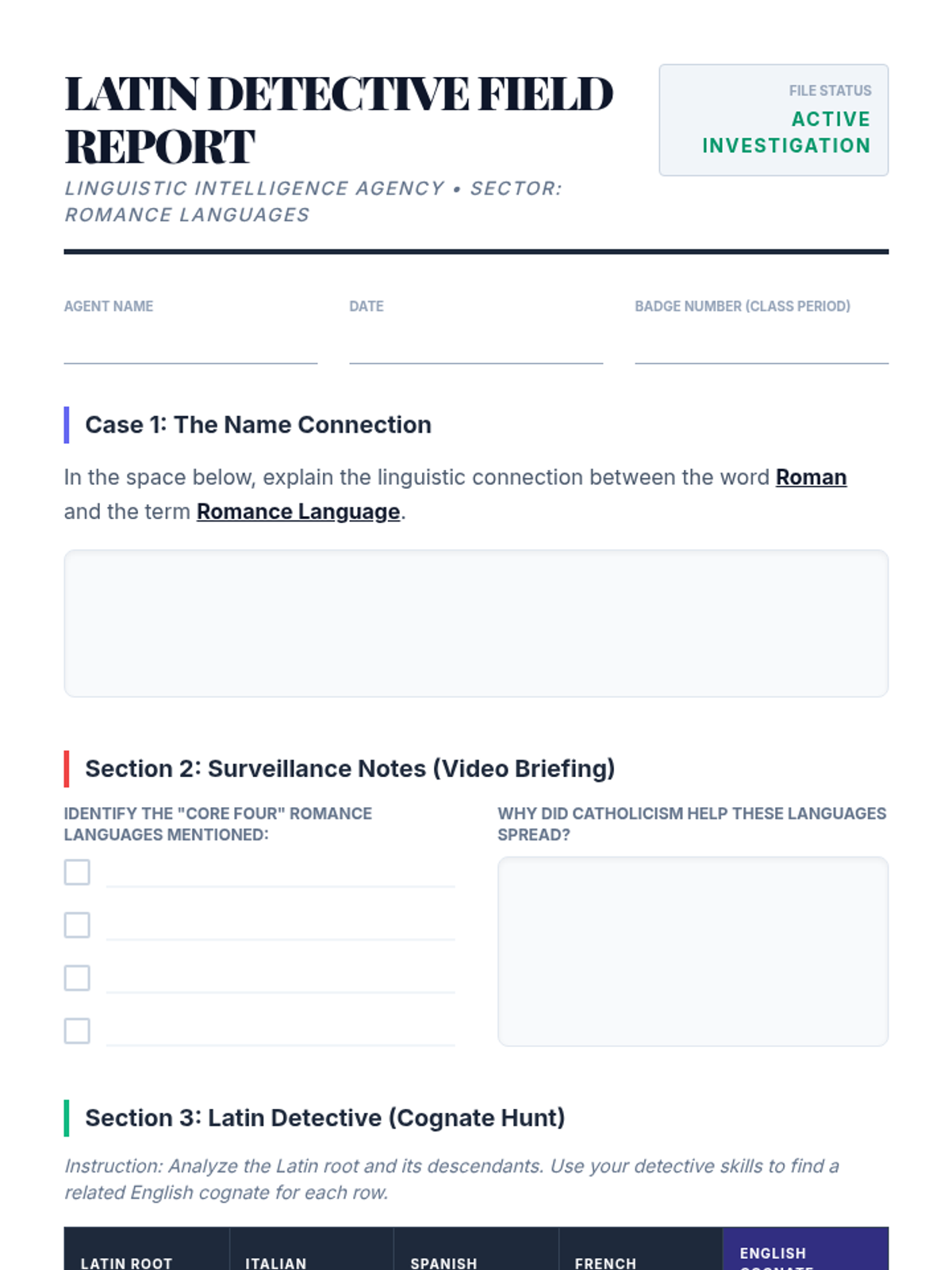
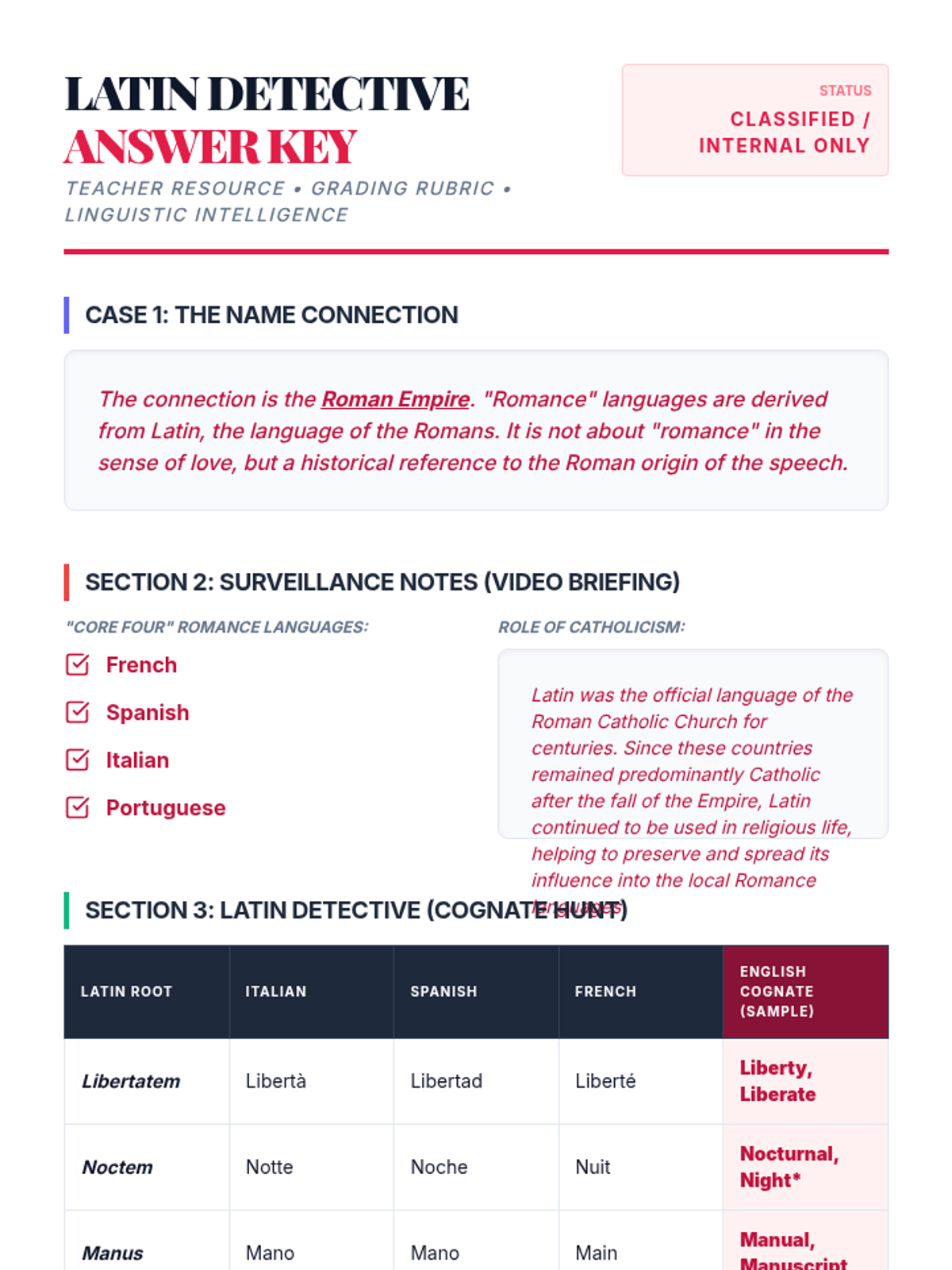
A lesson exploring the linguistic connections between Latin, Romance languages, and English through the lens of 'linguistic detective work.' Students identify cognates and understand the historical influence of the Roman Empire on modern speech.
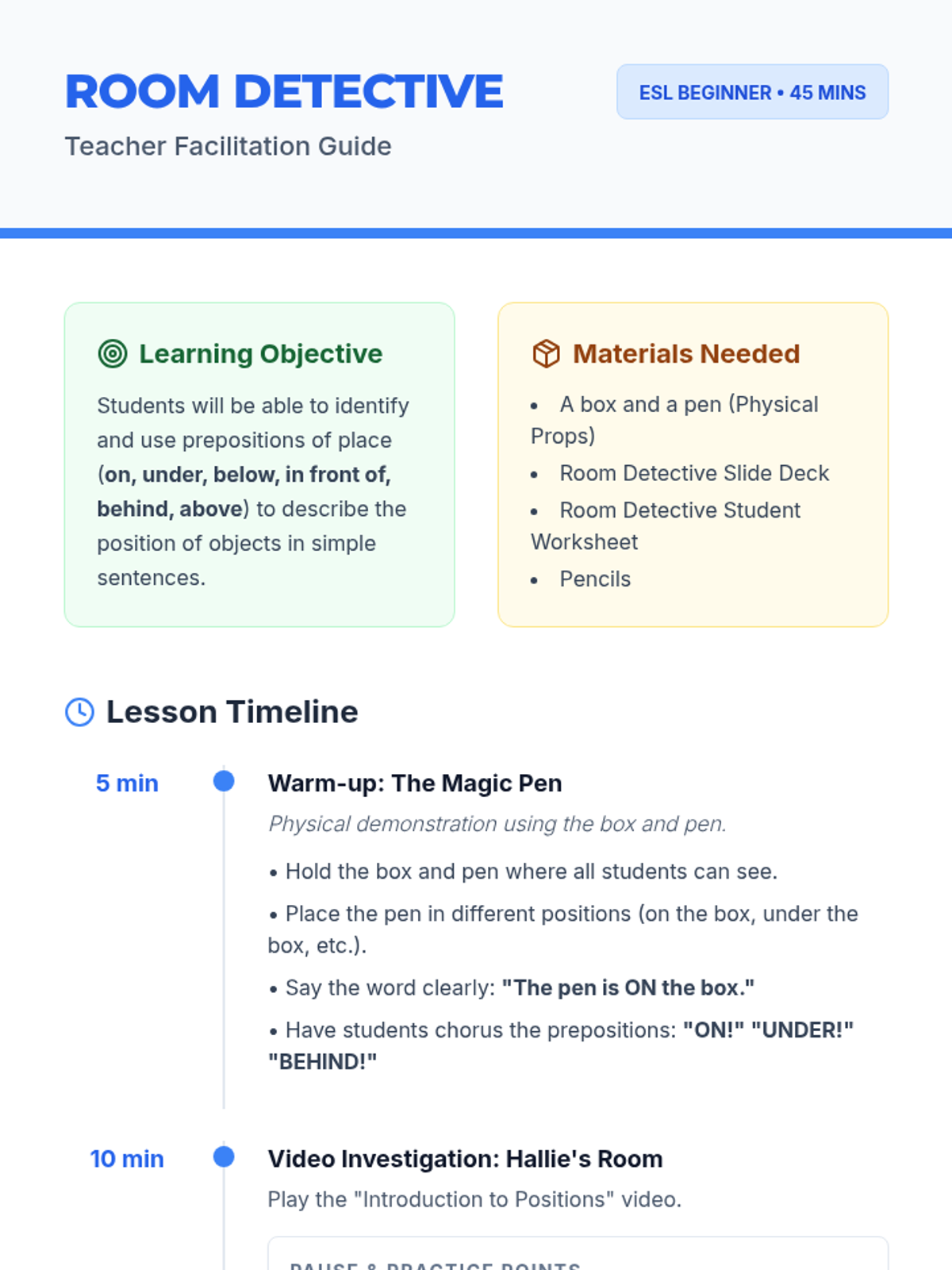
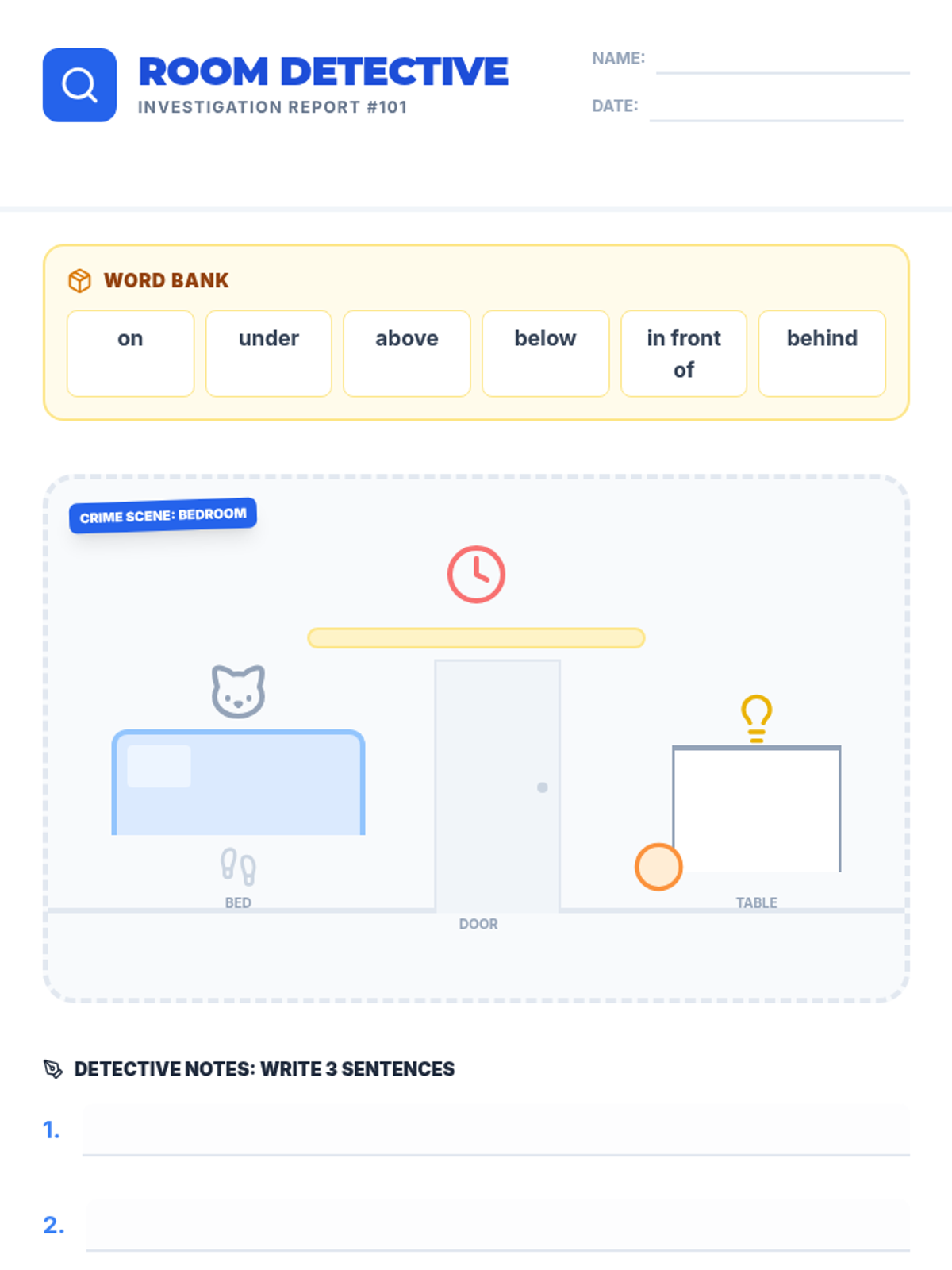
A beginner ESL lesson focused on identifying and using prepositions of place (on, under, below, in front of, behind, above) through a fun bedroom investigation theme.
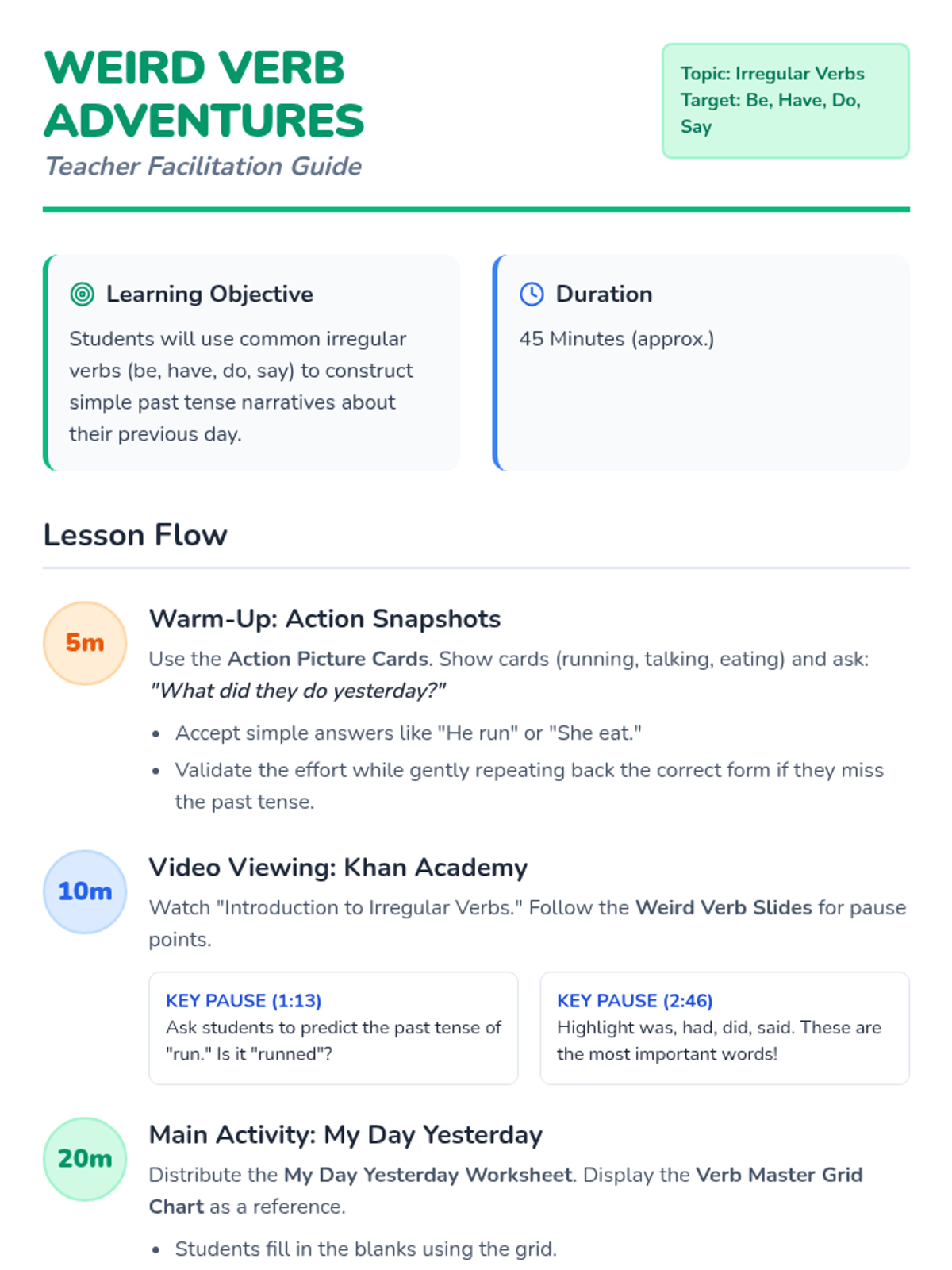
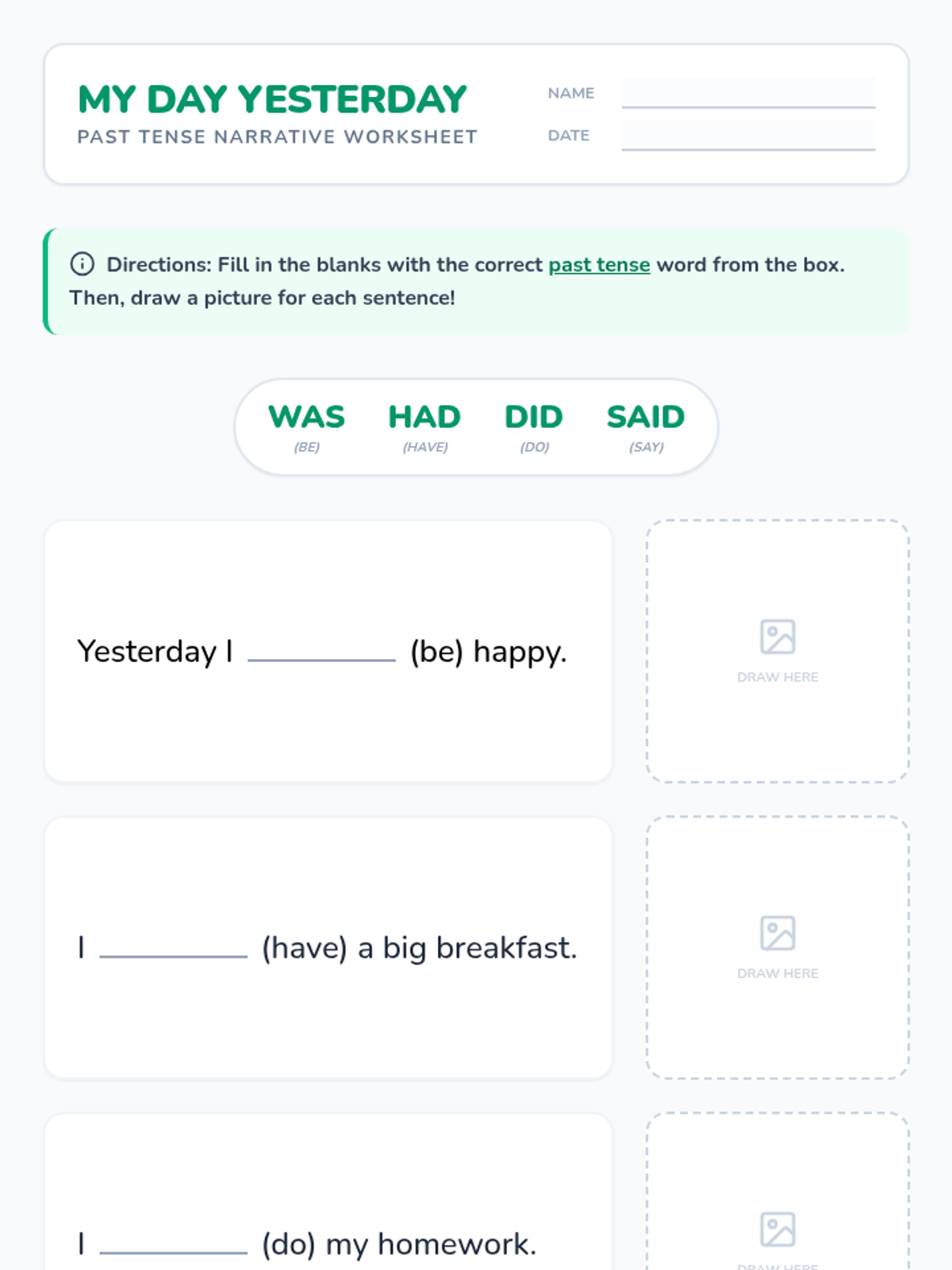
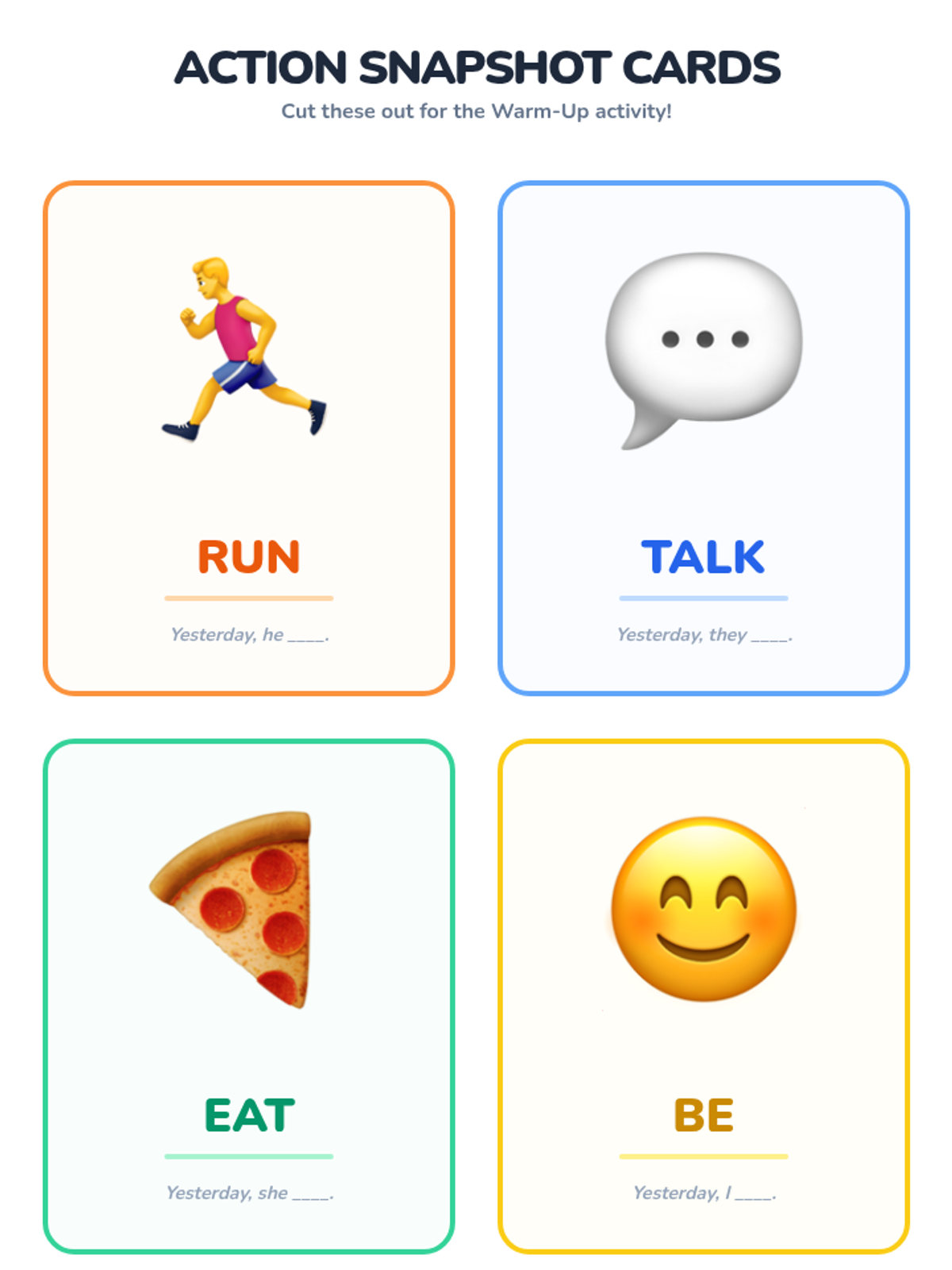
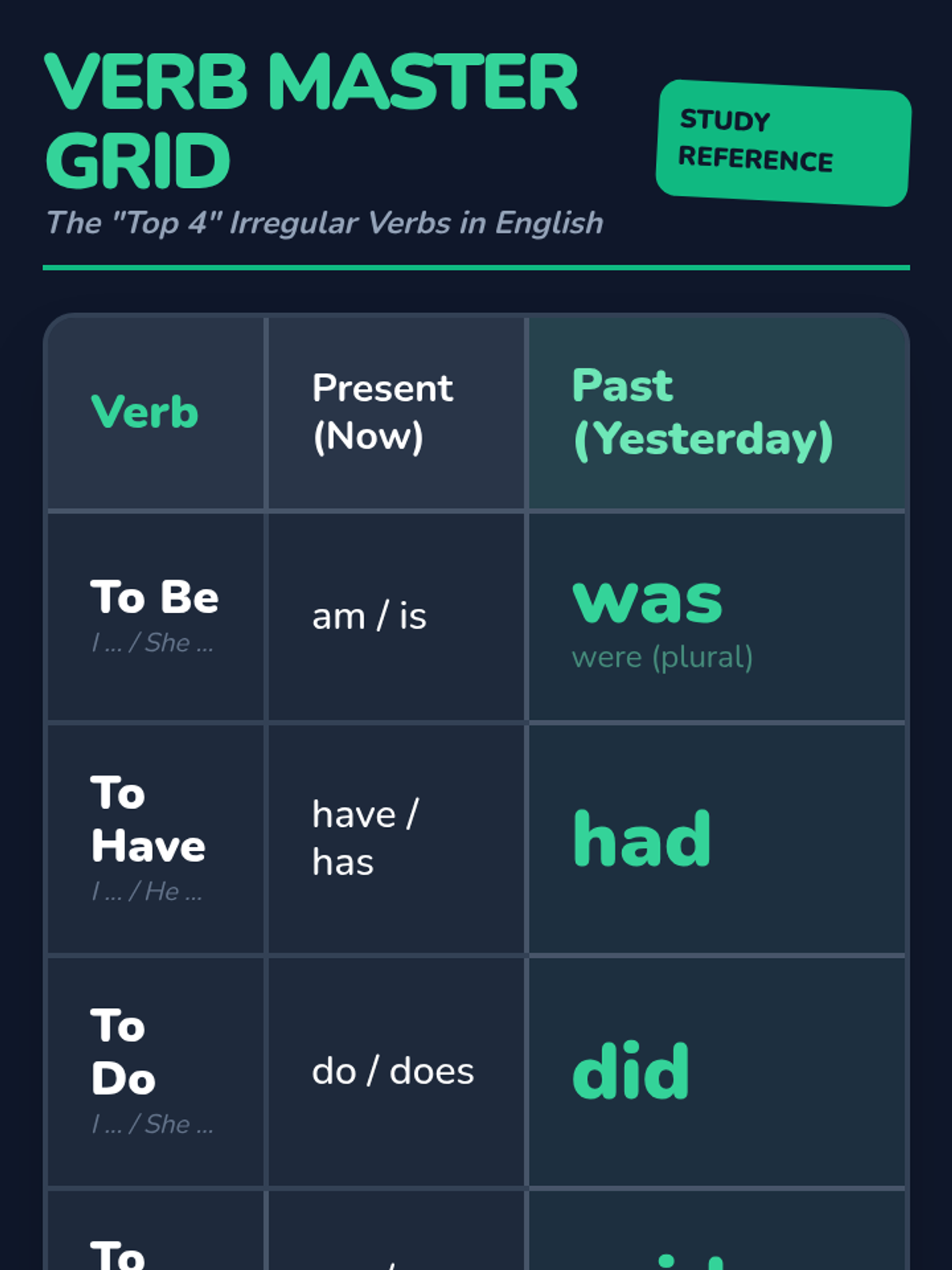
A foundational grammar lesson for ESL/ELL students focusing on the four most common irregular verbs (be, have, do, say) and their past tense forms through video analysis and scaffolded storytelling.
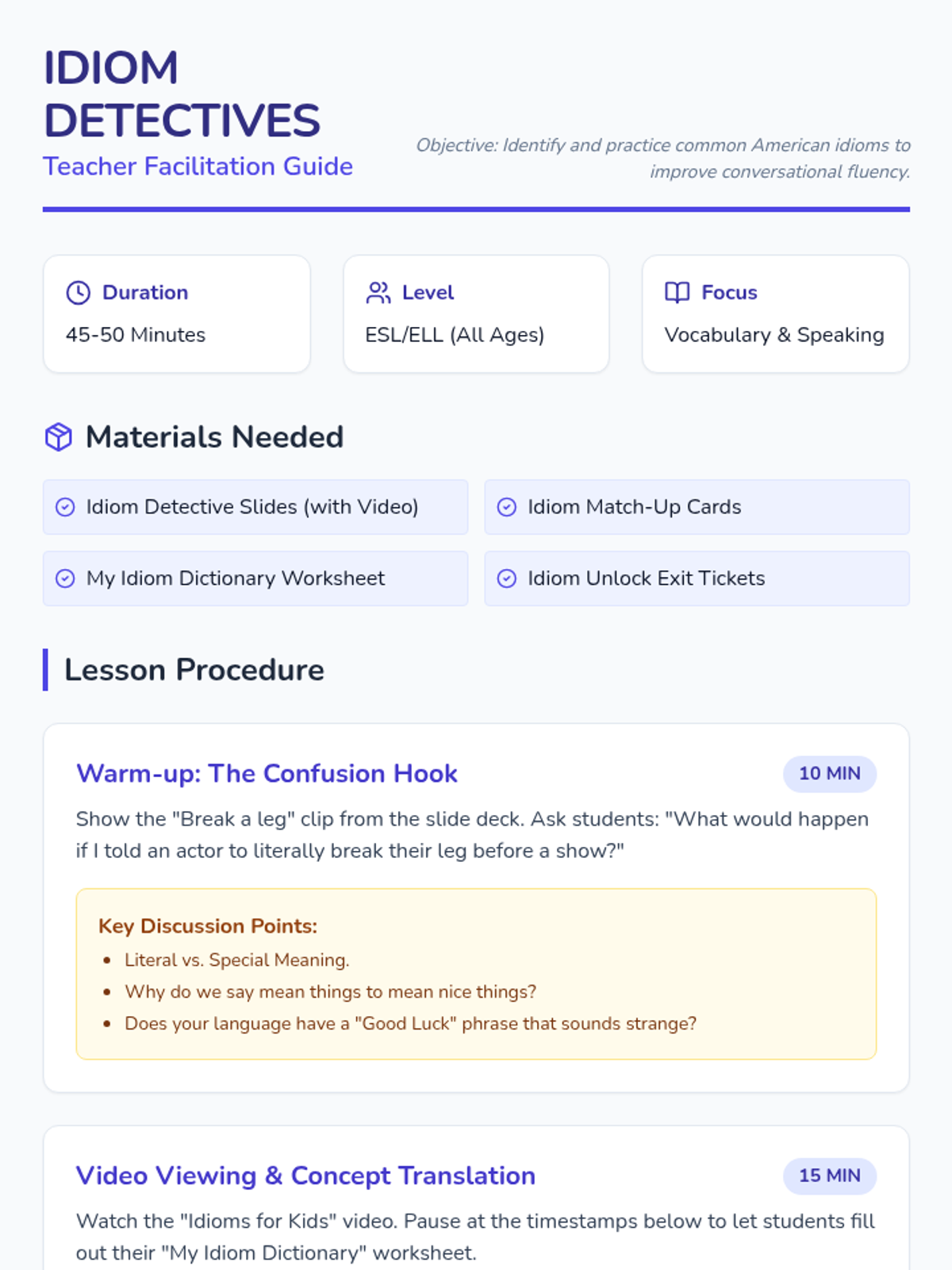
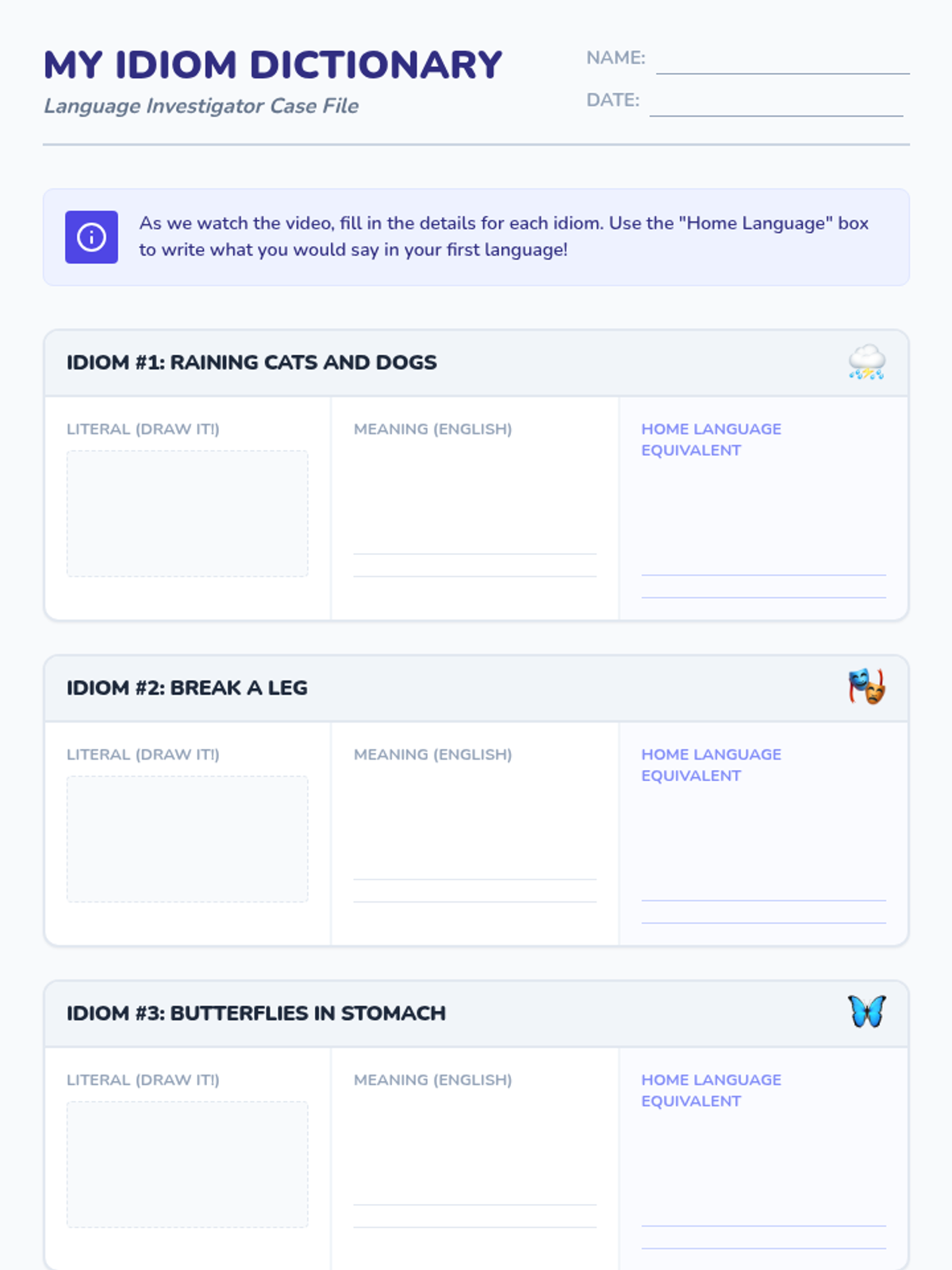
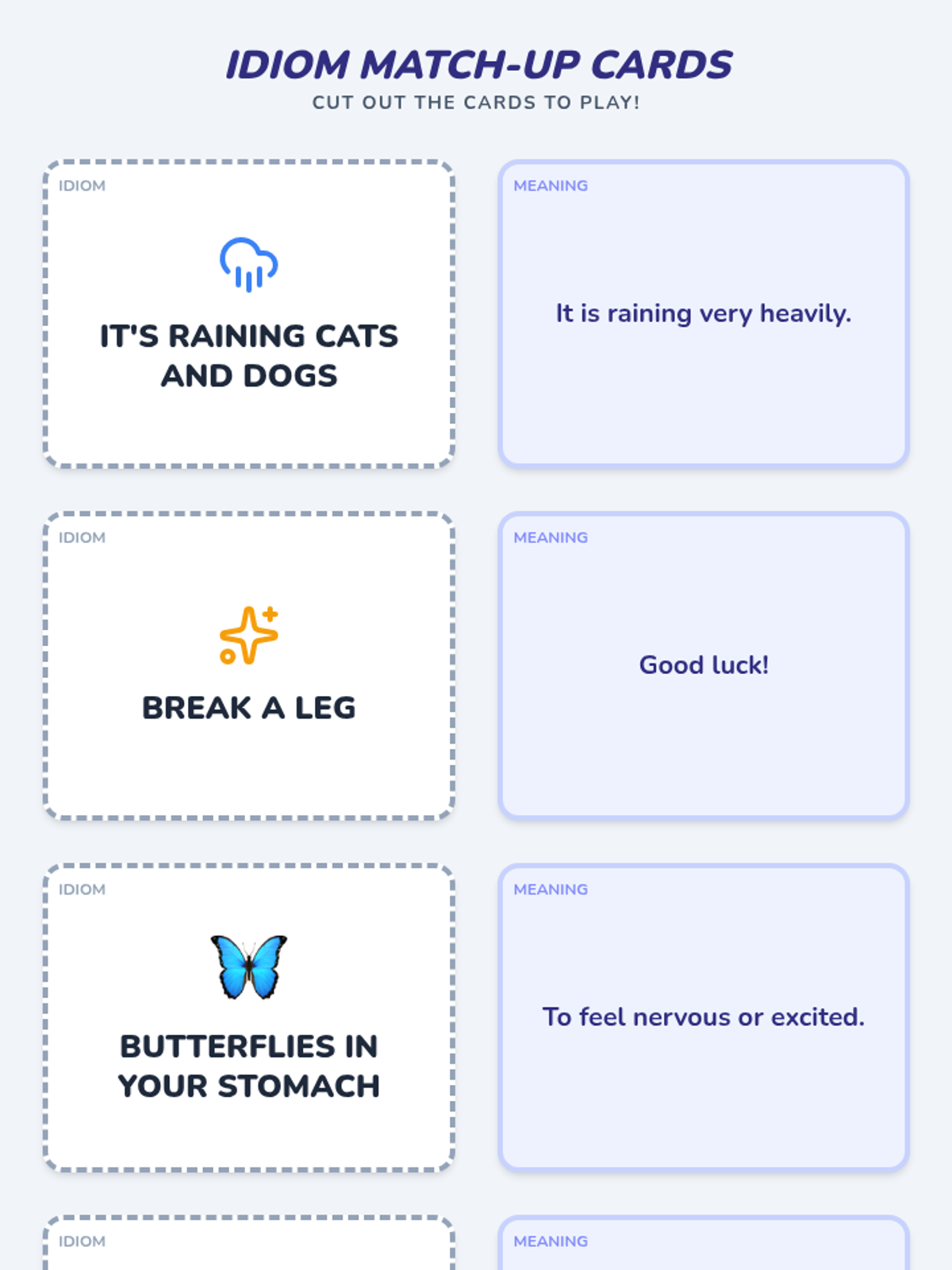
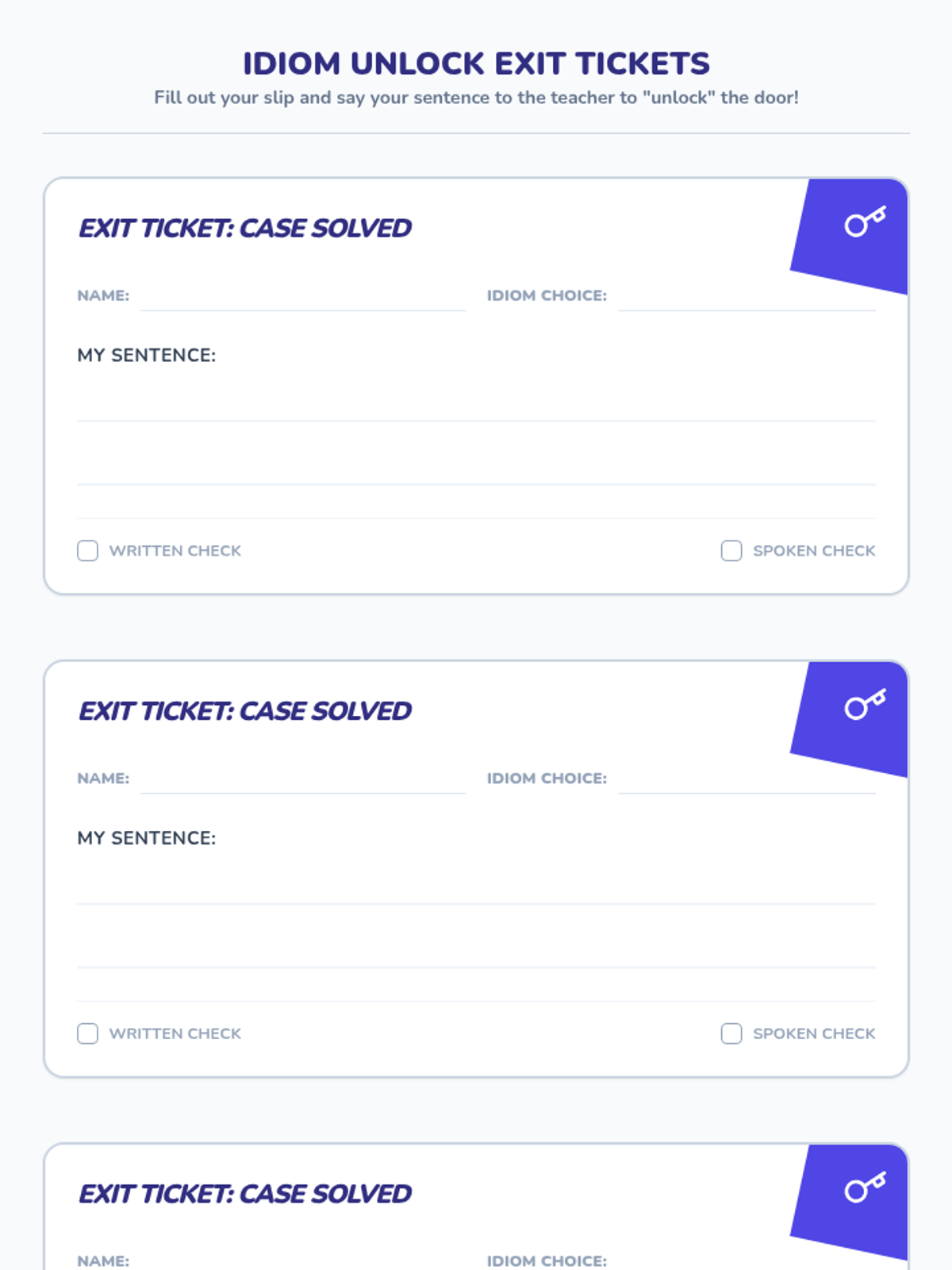
A lesson for English Language Learners to identify and practice common American idioms using visual aids and video-based instruction. Students will explore literal vs. figurative meanings and practice using idioms in spoken sentences.
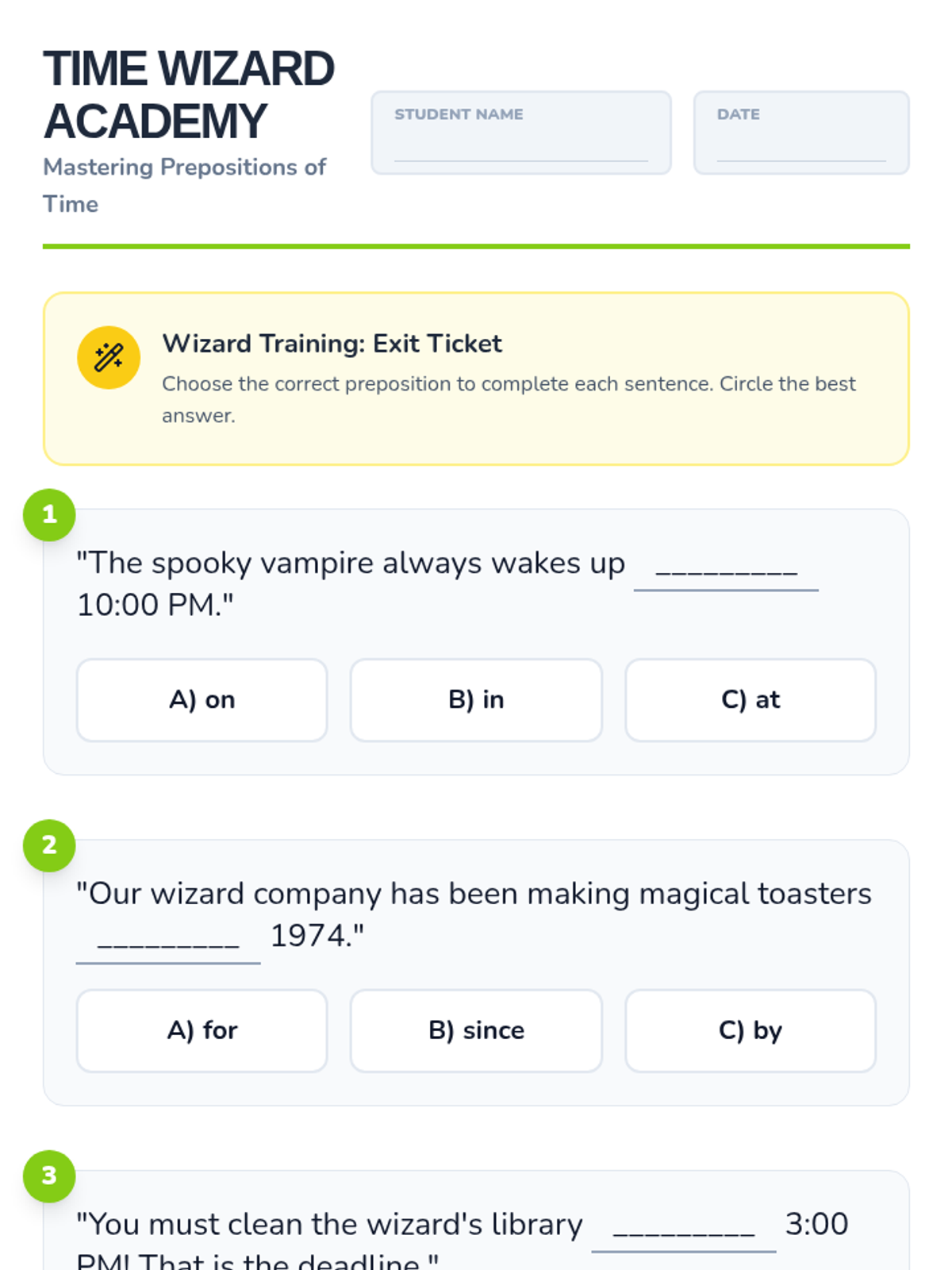
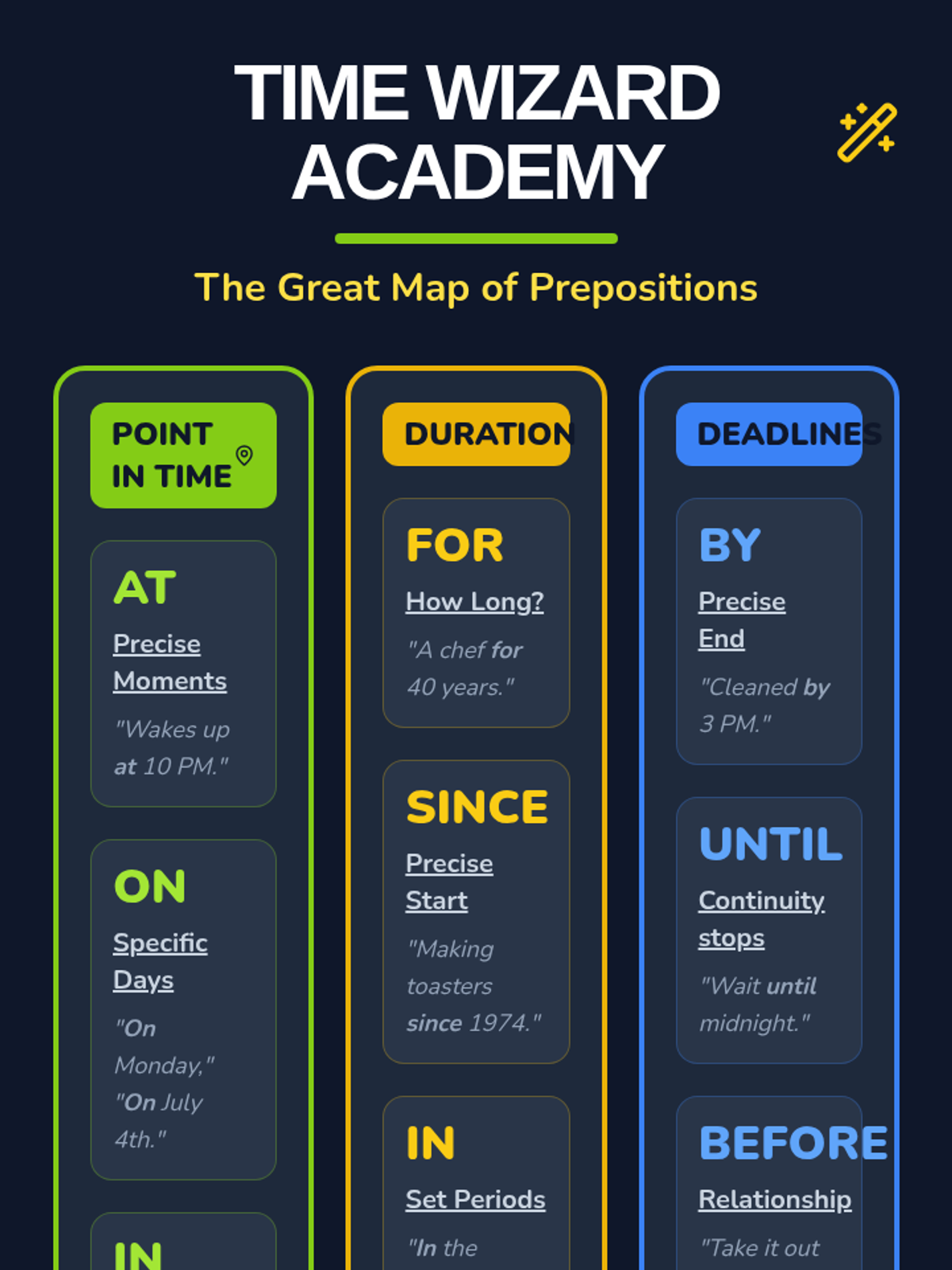
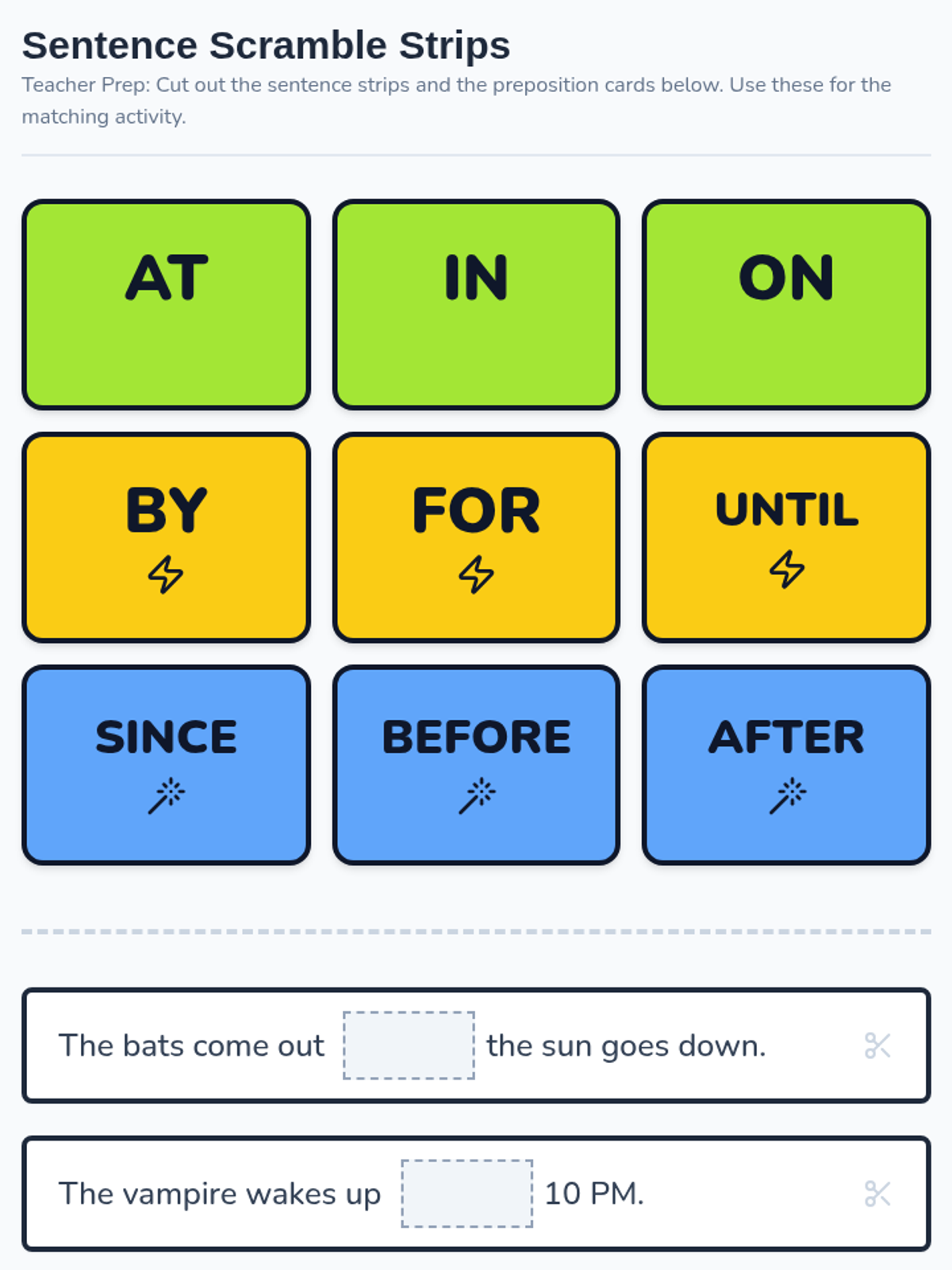
A whimsical, 'Time Wizard' themed lesson where ESL students master prepositions of time through categorization, a guided video analysis, and a sentence scramble activity. Students will learn to distinguish between point-in-time, duration, and deadline prepositions.
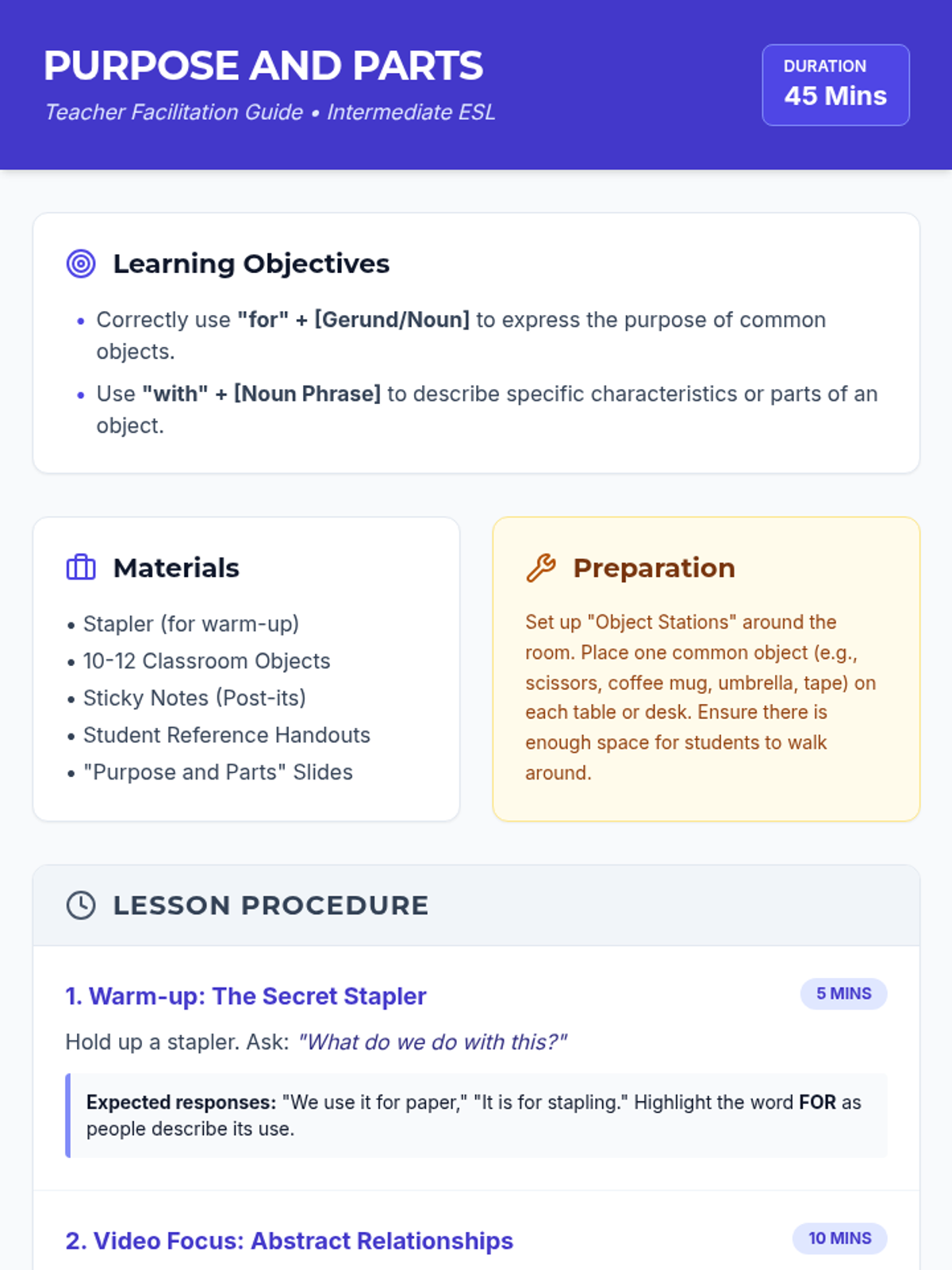
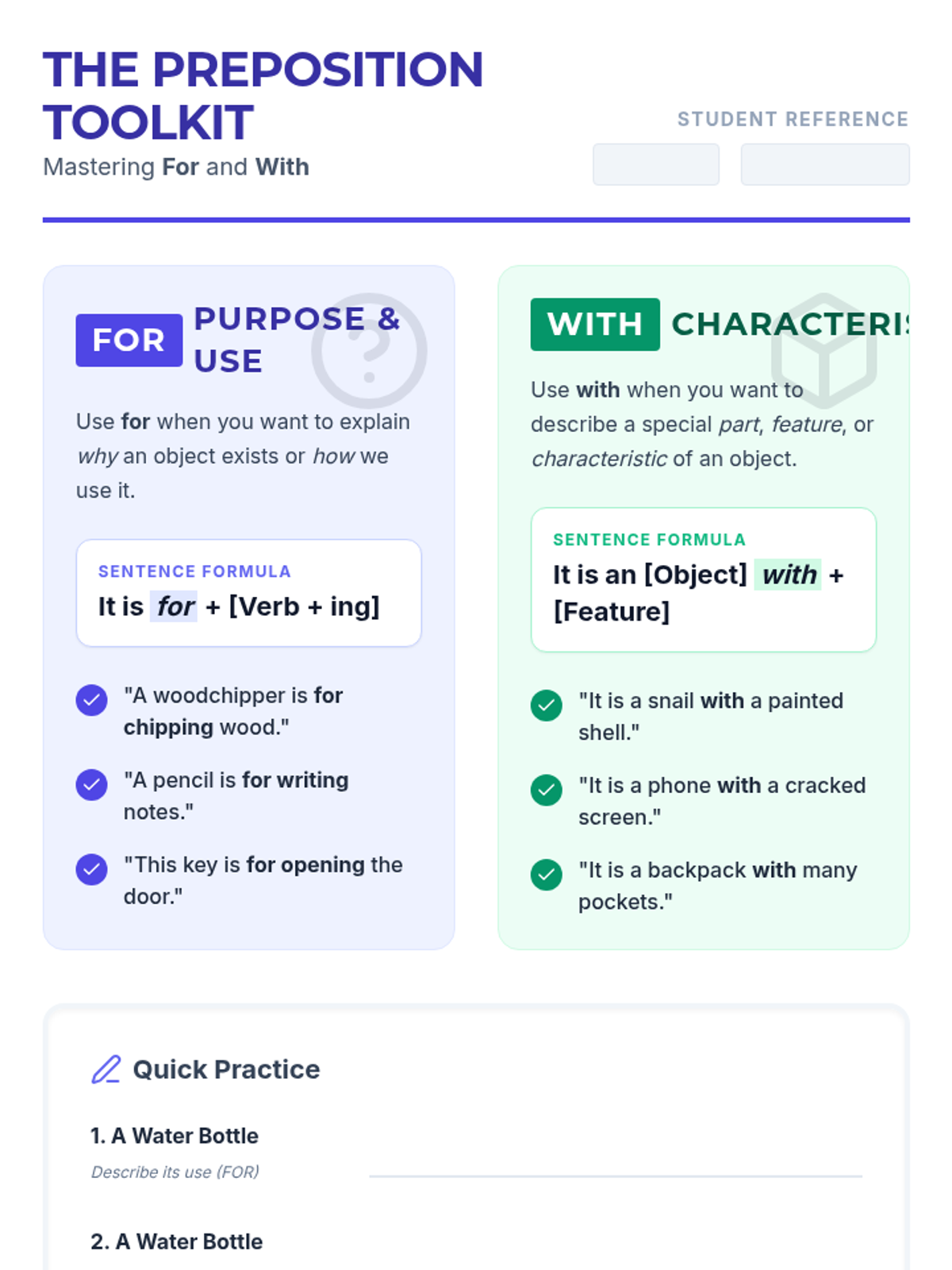
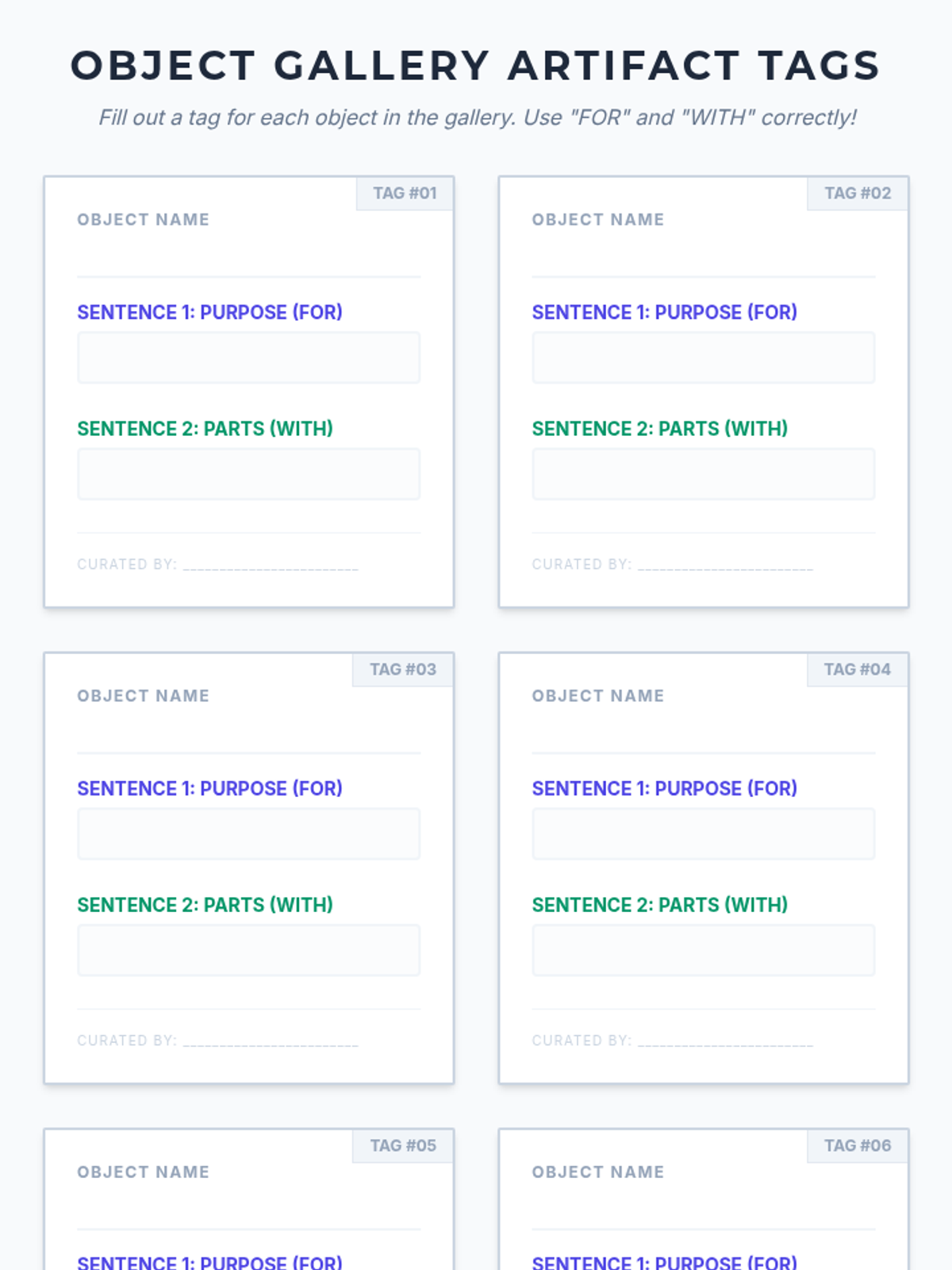
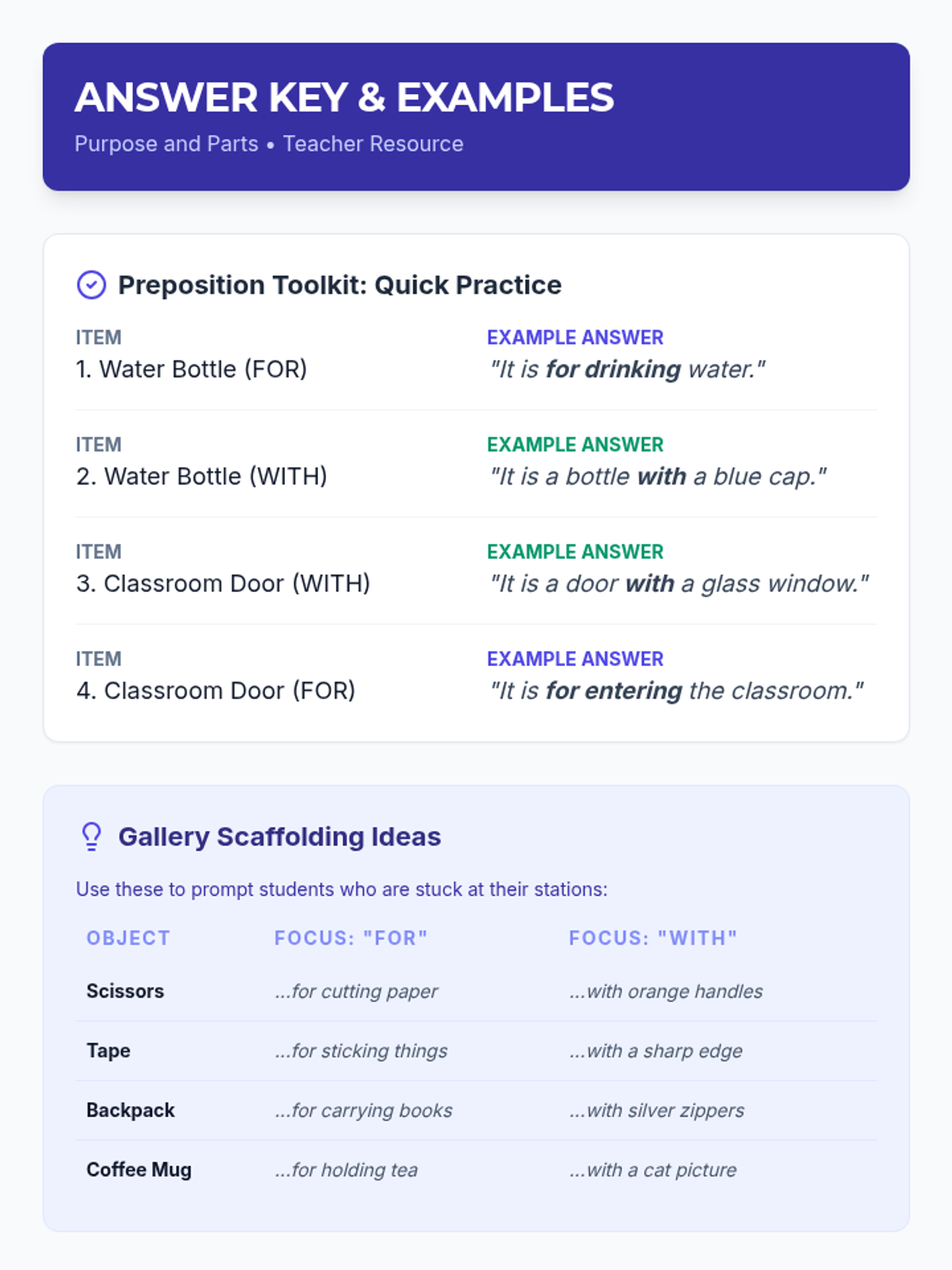
An intermediate ESL lesson focusing on prepositions of purpose ('for') and characteristics ('with') through a hands-on classroom object gallery activity.
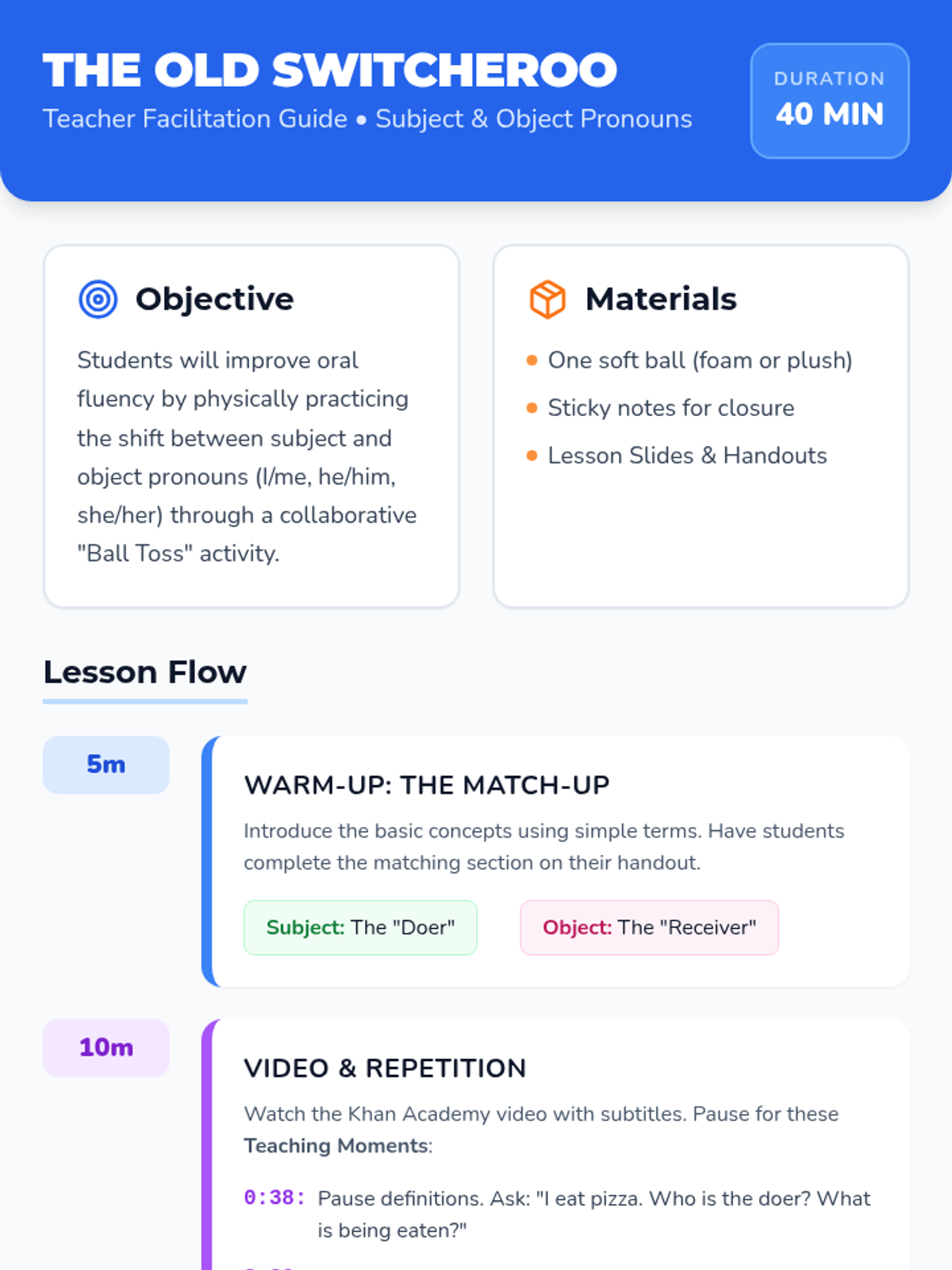
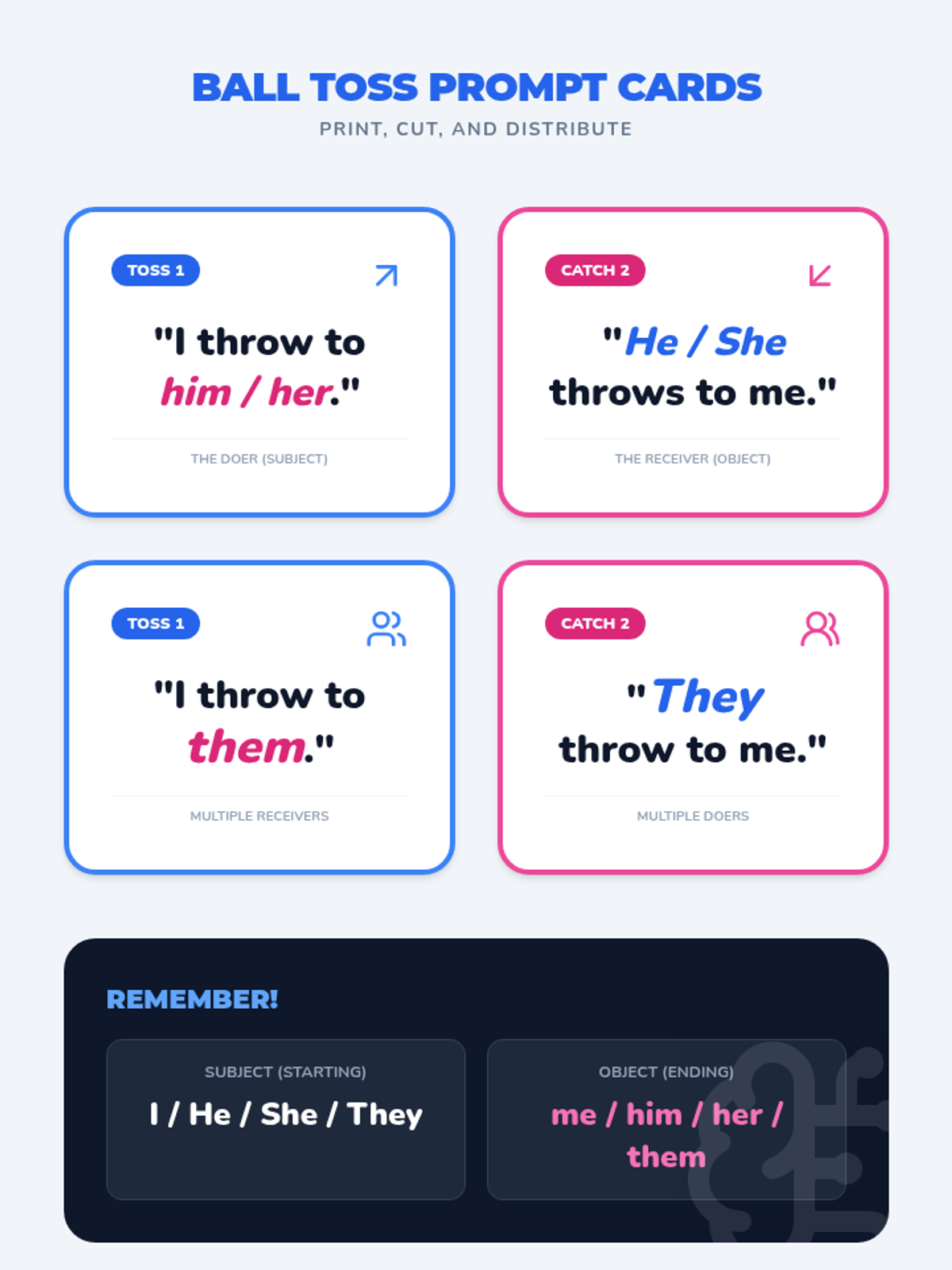
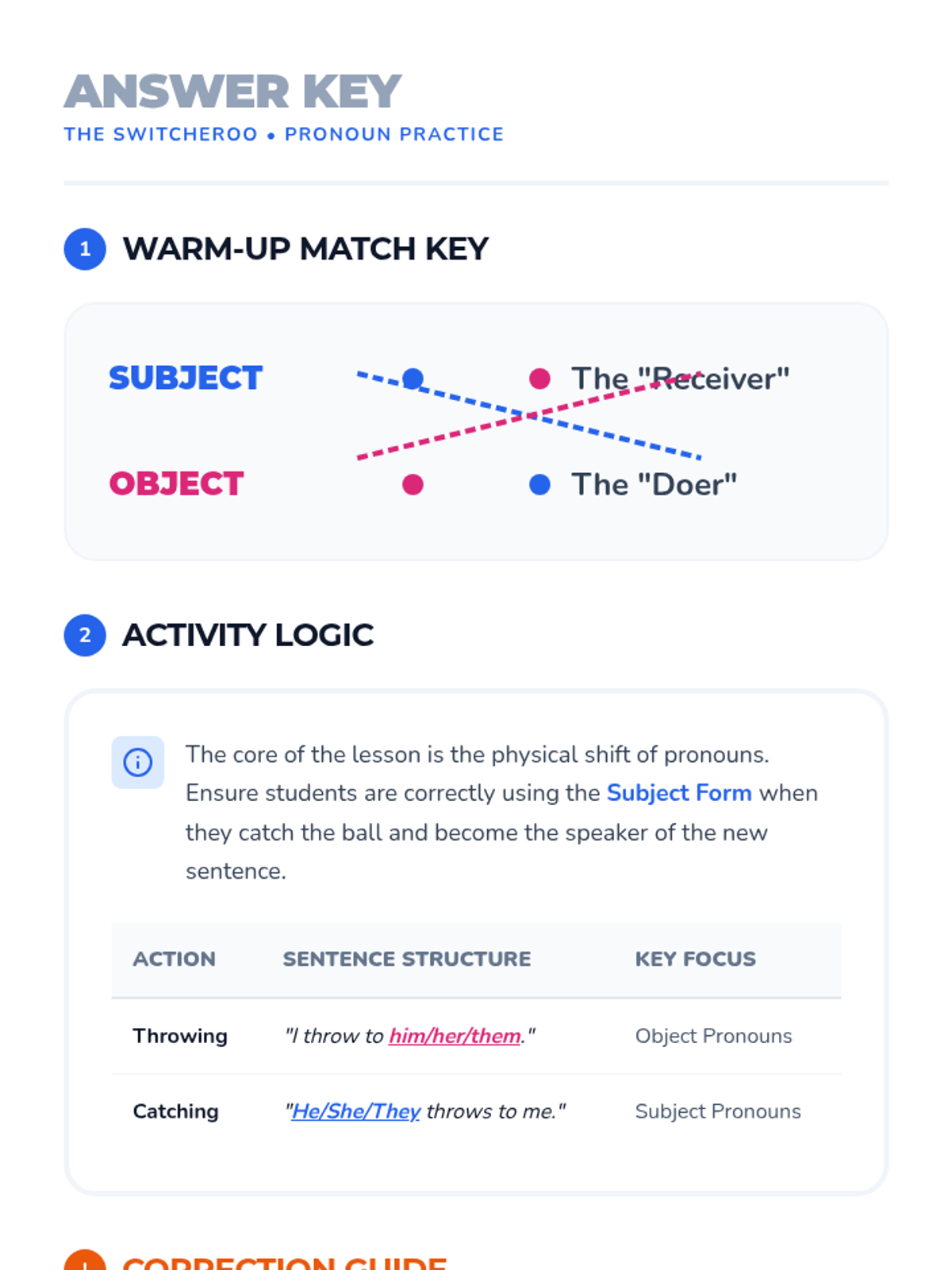
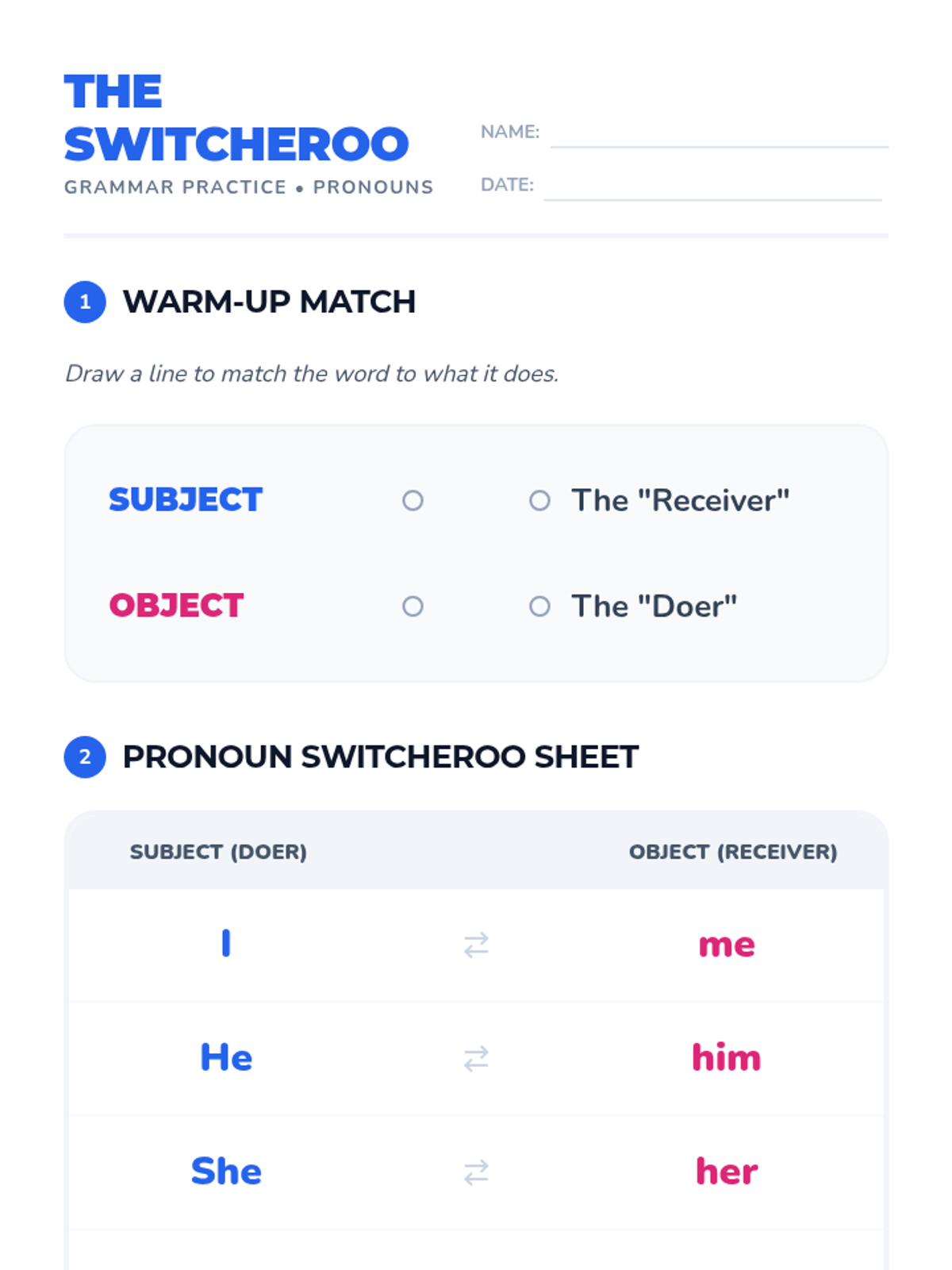
A dynamic lesson for ESL/ELL students to master subject and object pronouns through physical movement and visual examples from Khan Academy. Students practice the 'switcheroo' by tossing a ball and transforming sentences in real-time.
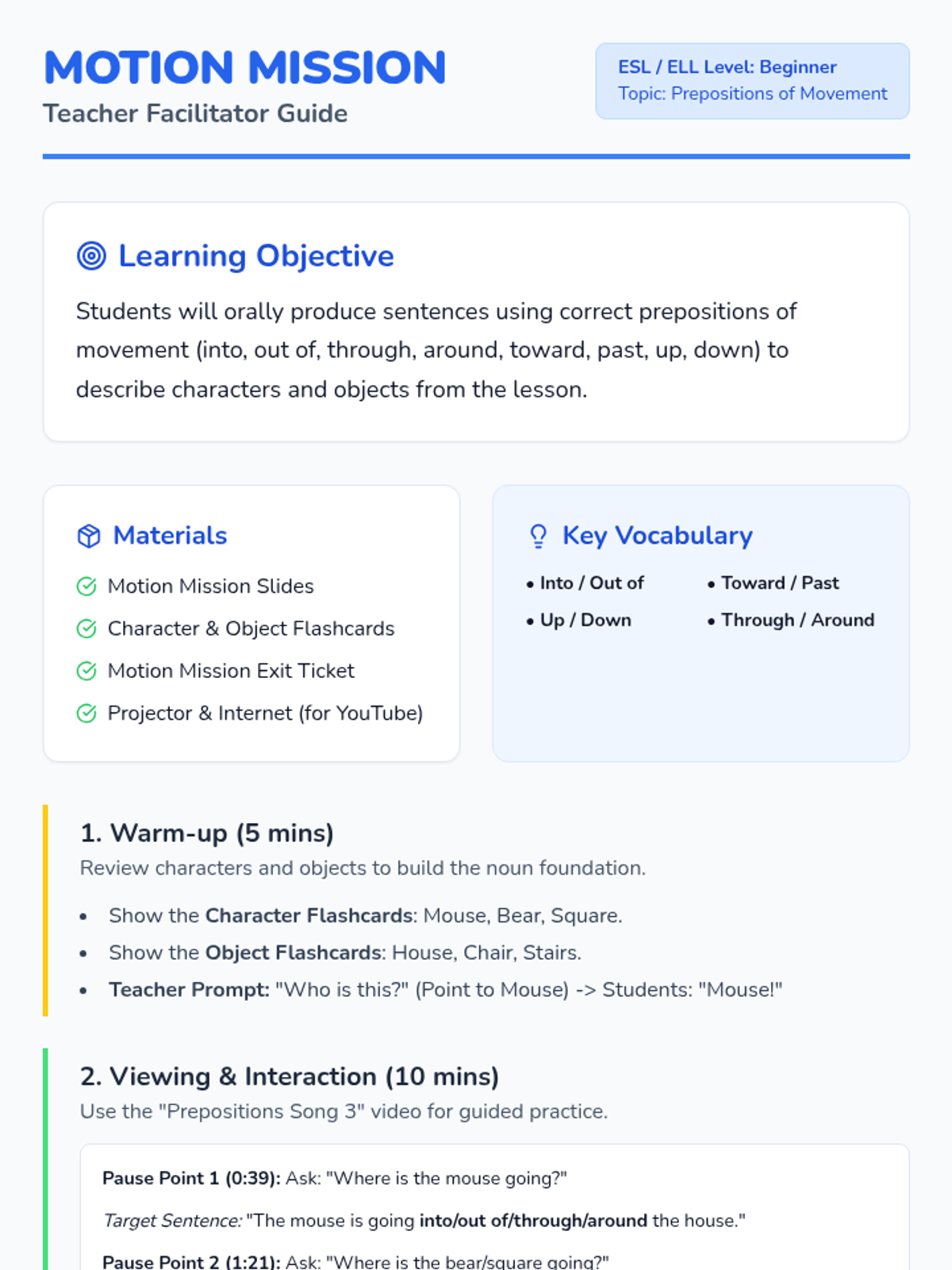
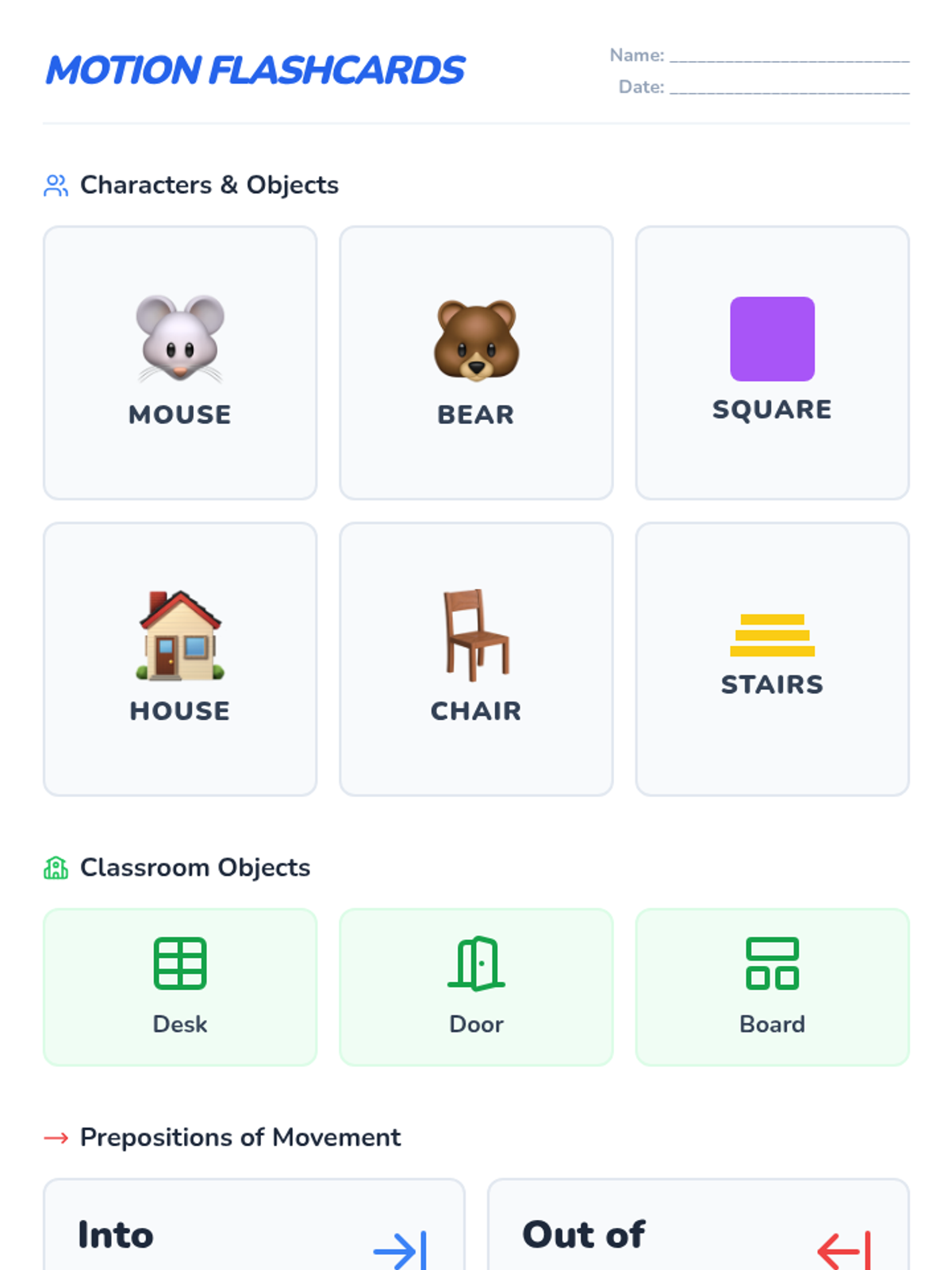
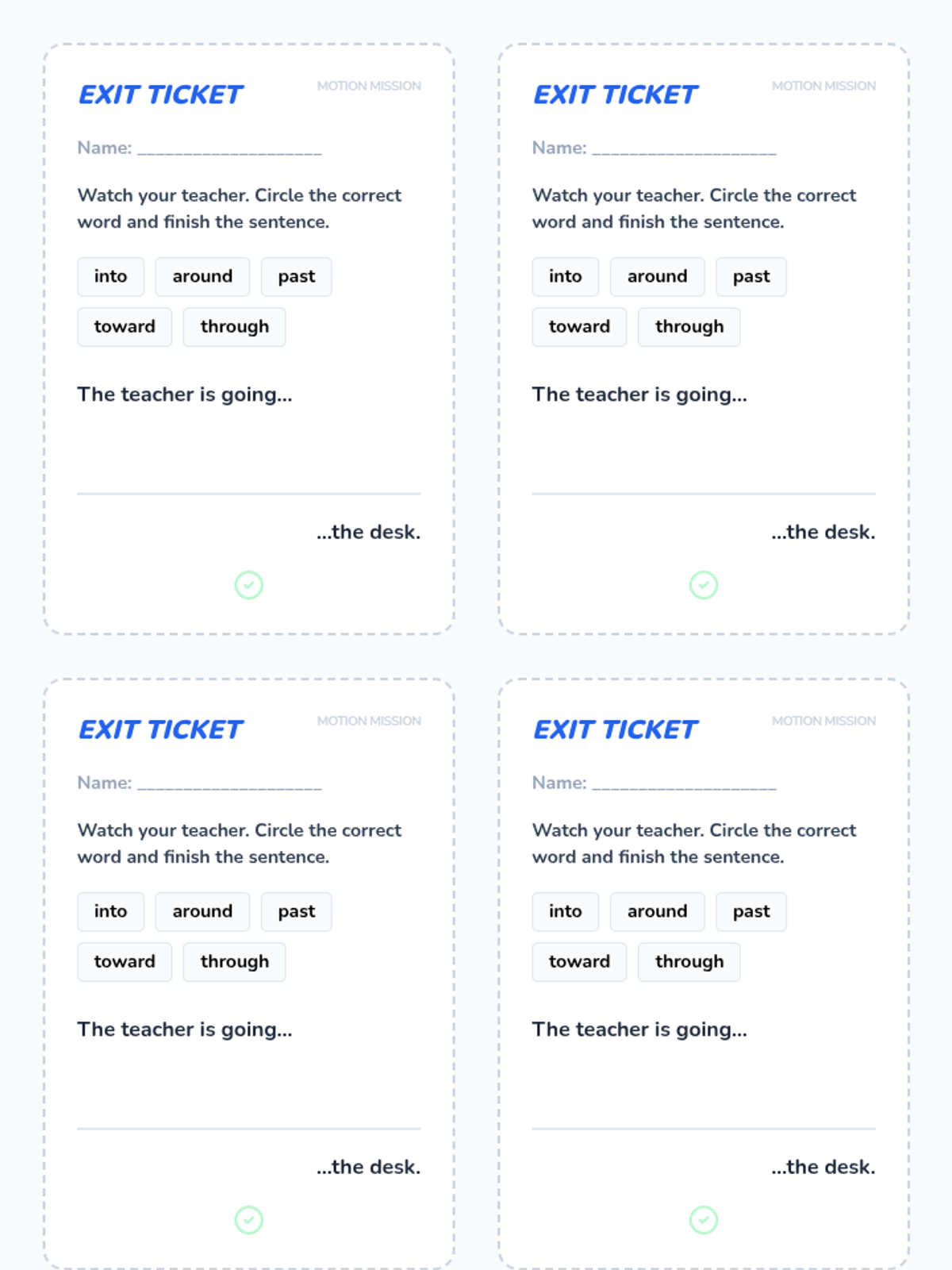
A beginner ESL lesson focused on prepositions of movement through song, character interaction, and physical role play. Students will learn to describe direction using words like into, out of, through, around, toward, past, up, and down.
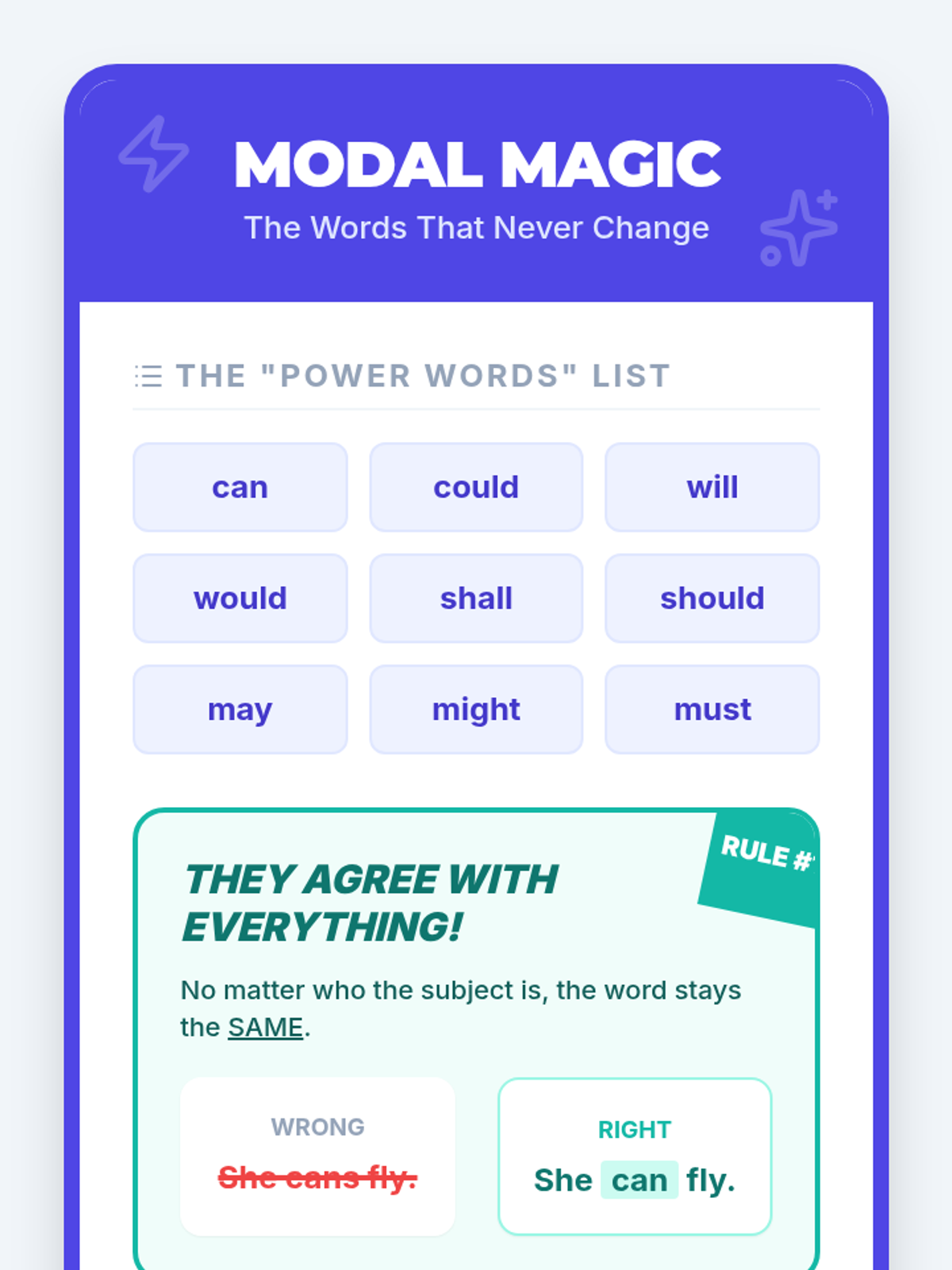
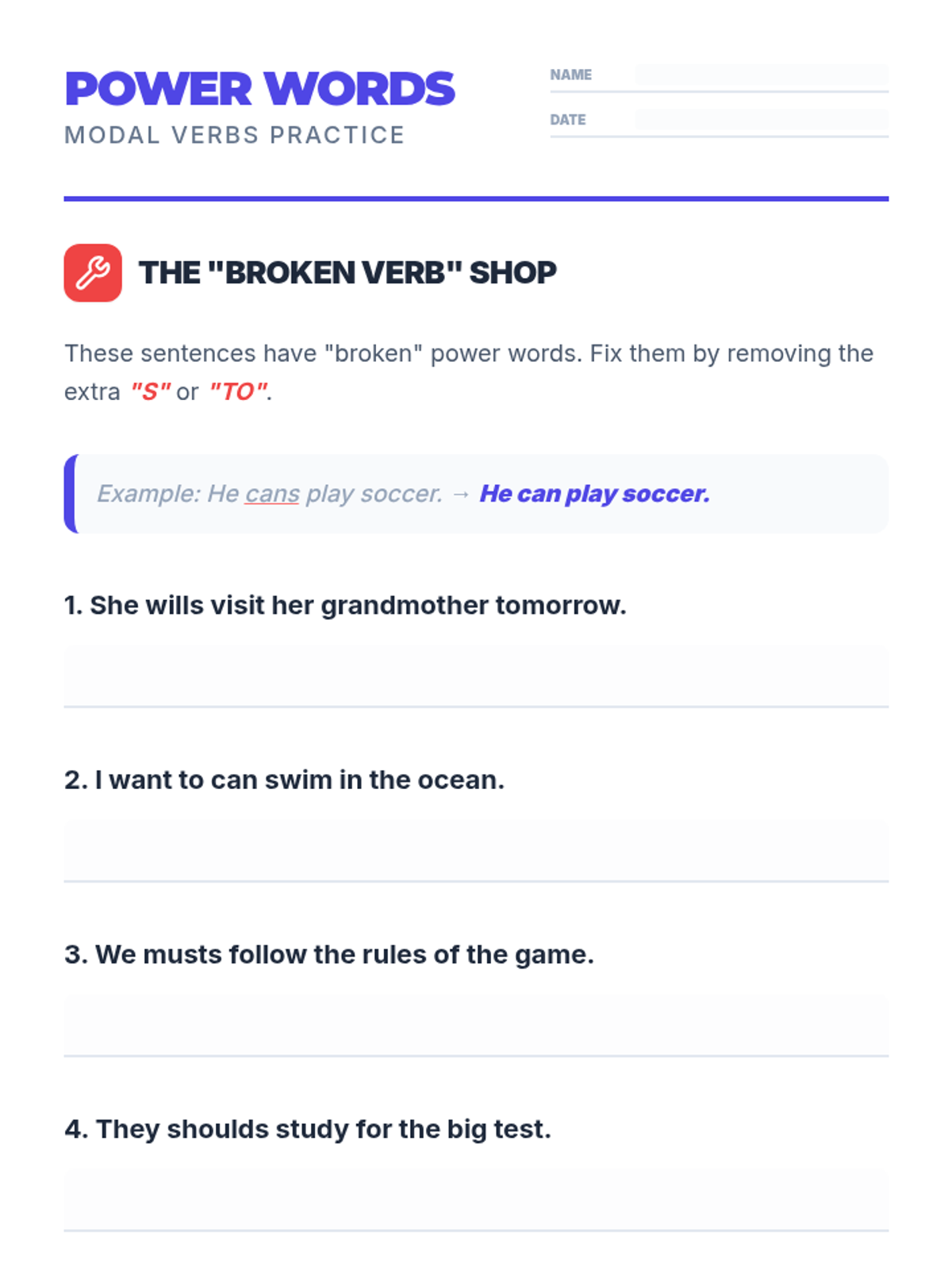
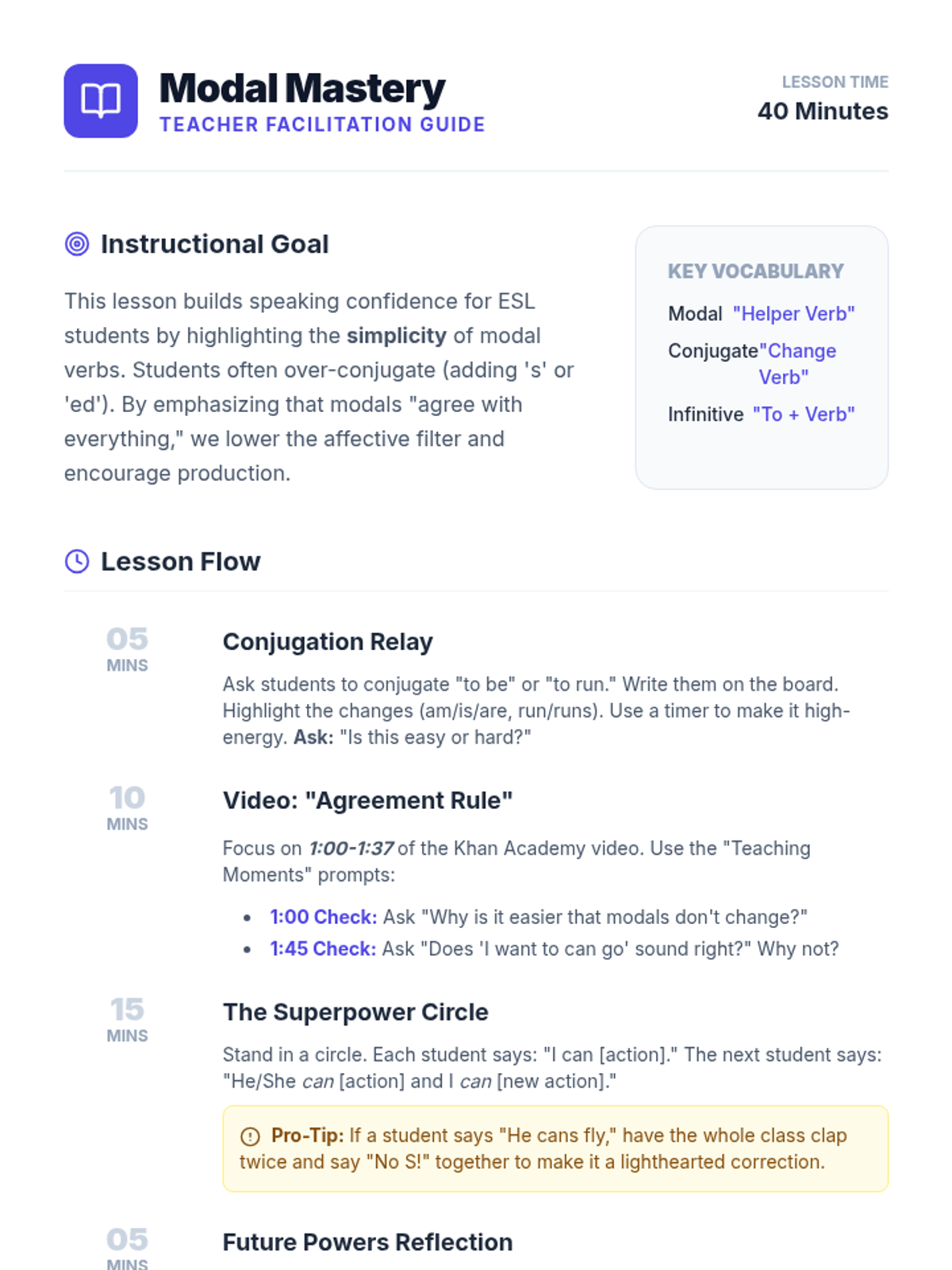
A beginner-friendly ESL lesson focusing on the simplicity of modal verbs, emphasizing that they never change form (no conjugation). Students explore 'can' and 'will' through a collaborative 'Superpower Circle' activity and reflective writing.
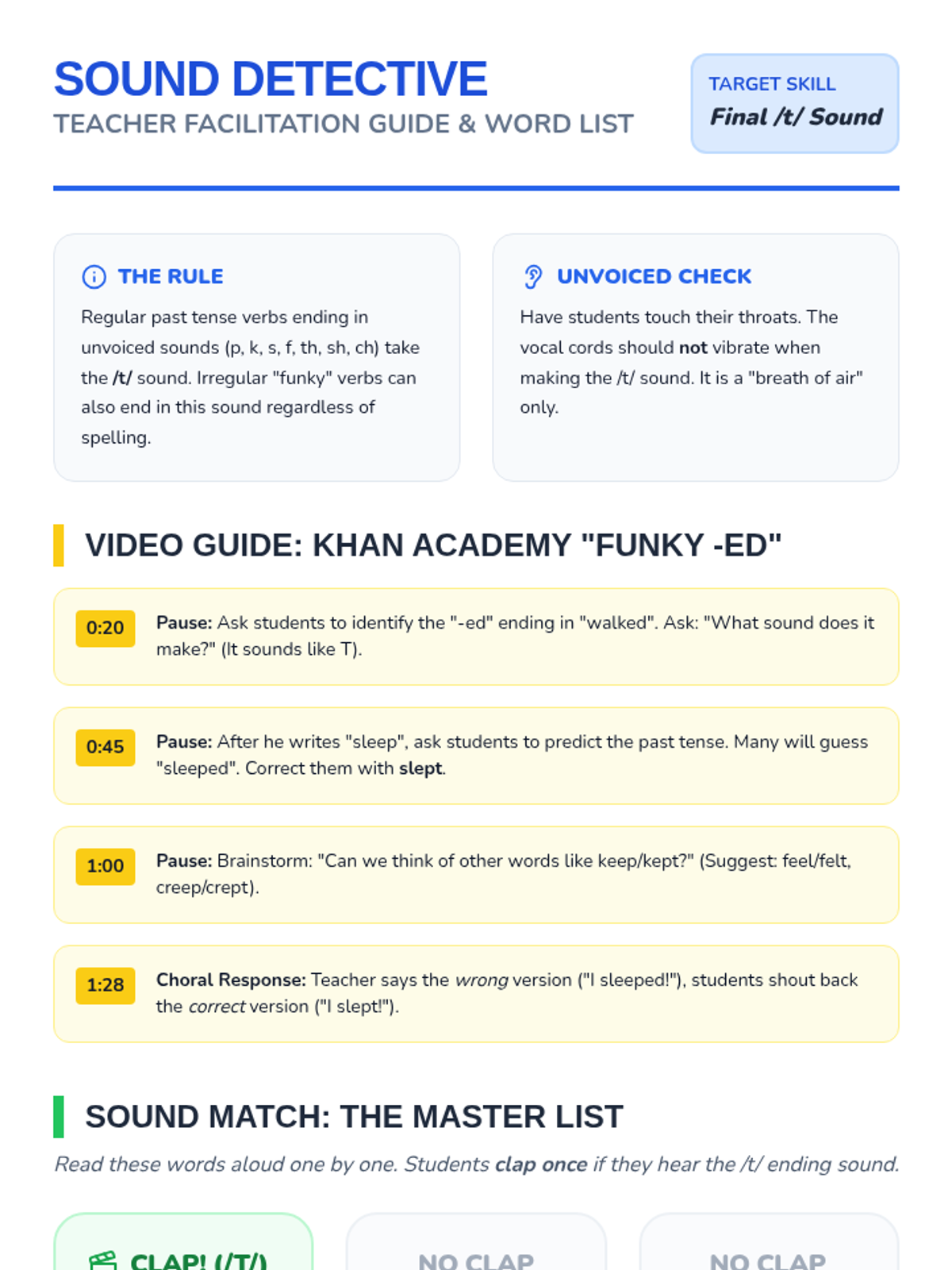
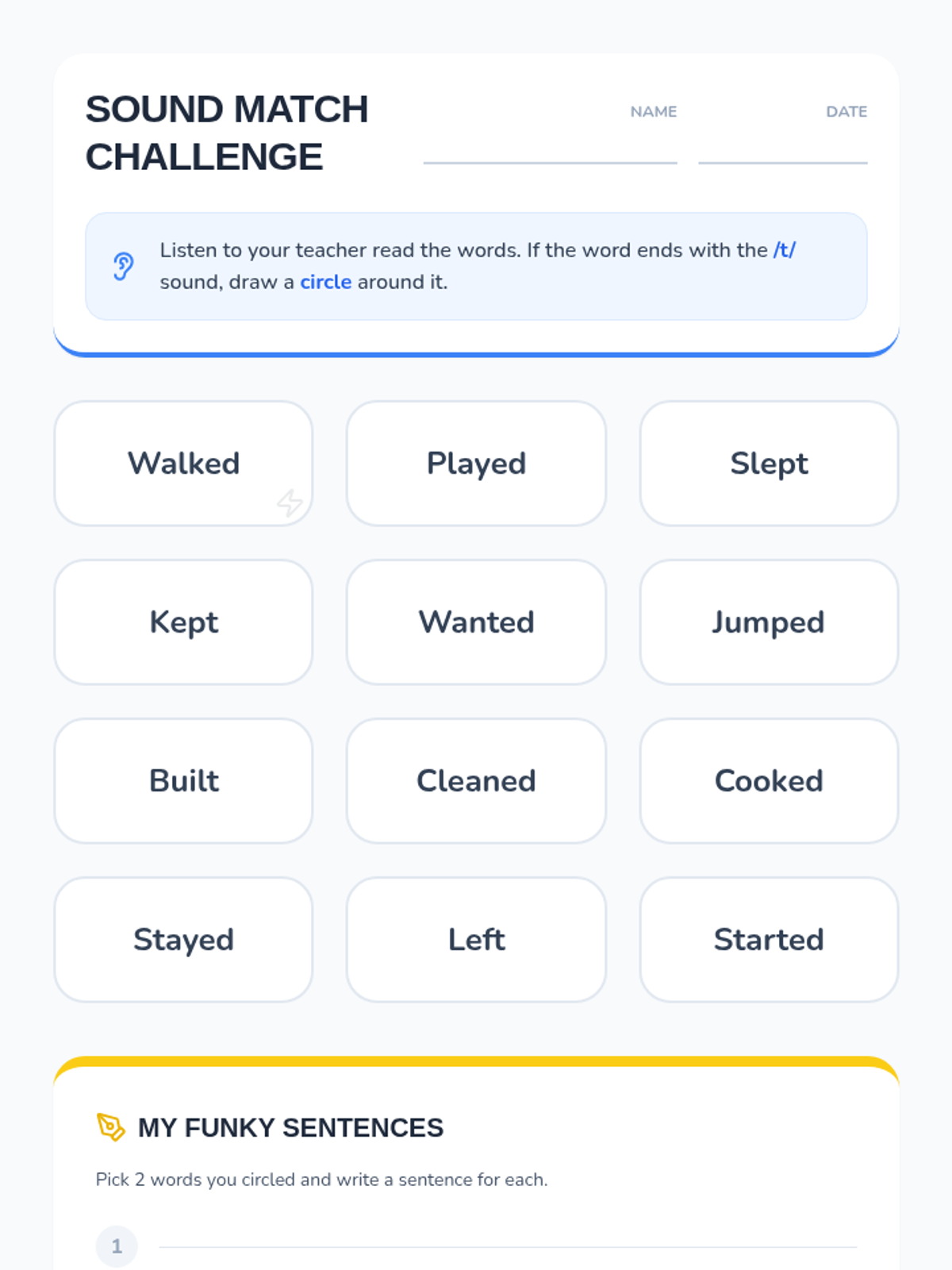
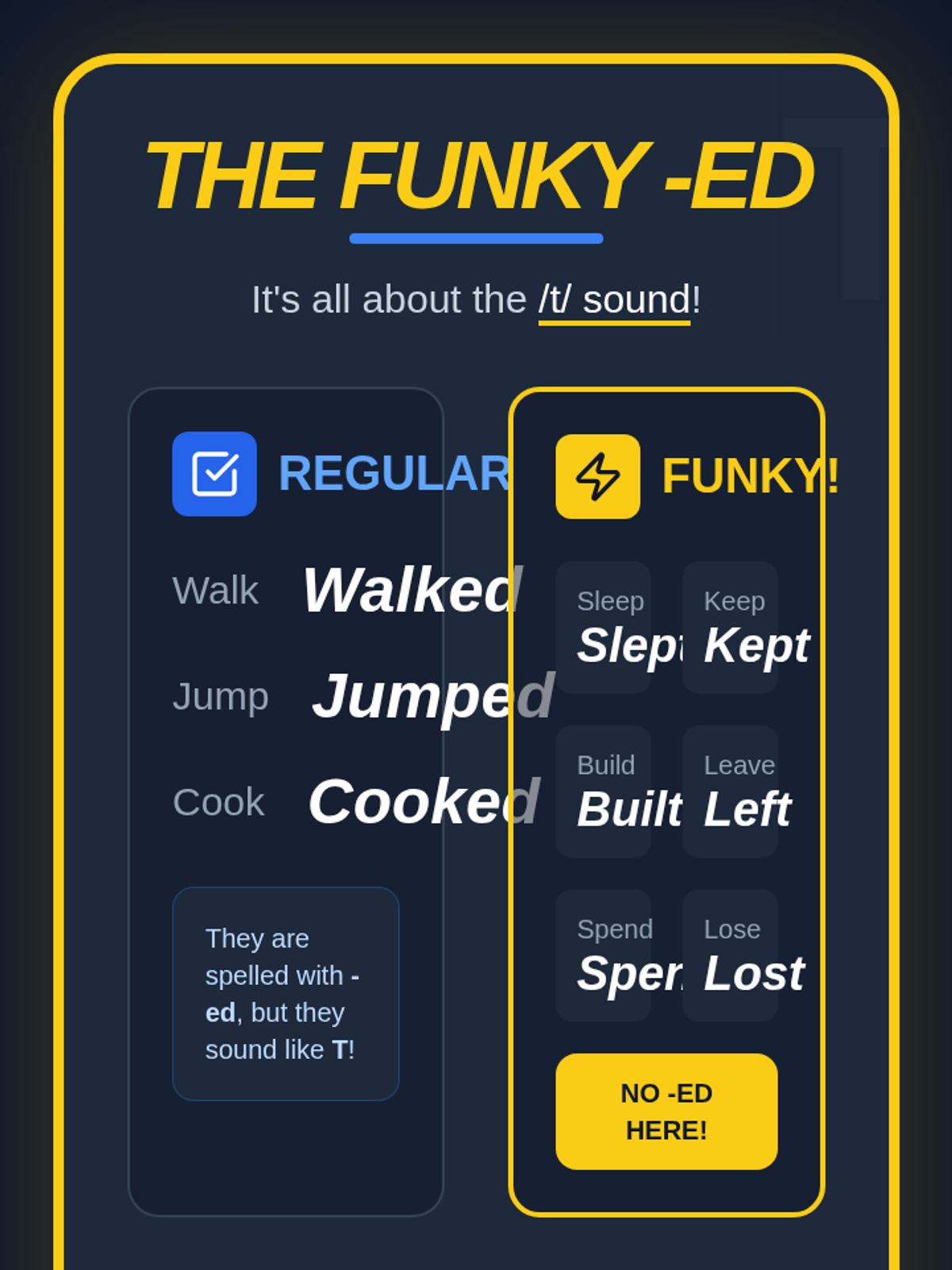
A phonics-focused ESL lesson for 2nd-5th graders practicing the /t/ ending sound in past tense verbs using a Khan Academy video and interactive clapping games.
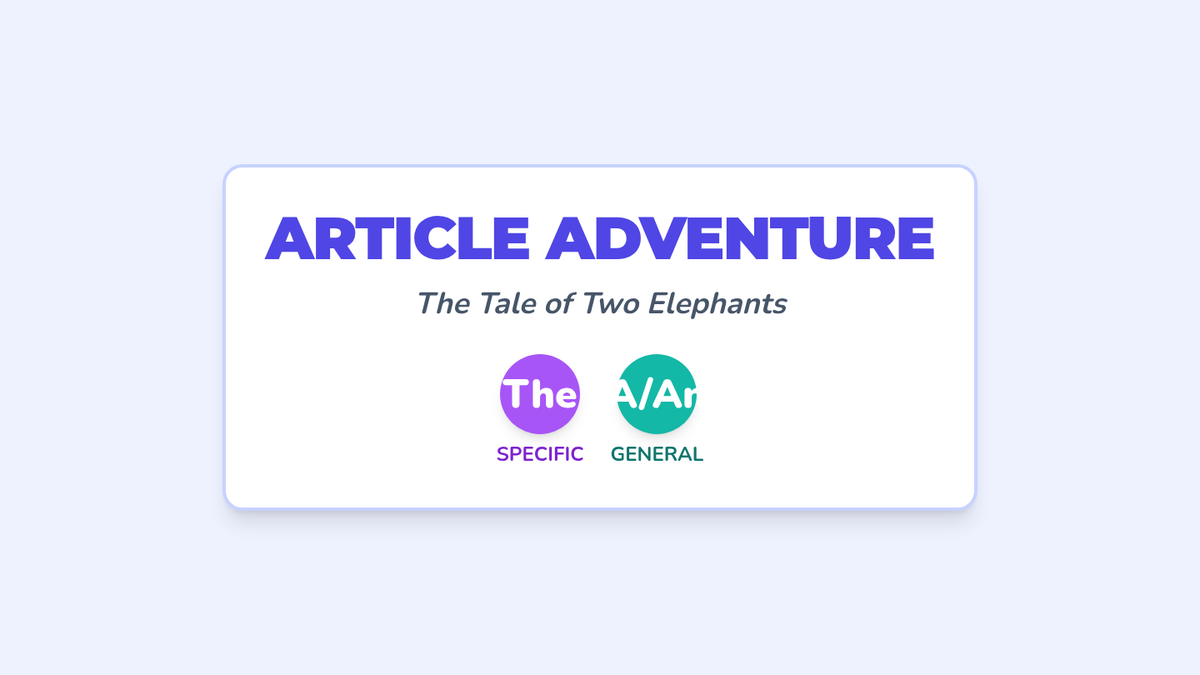
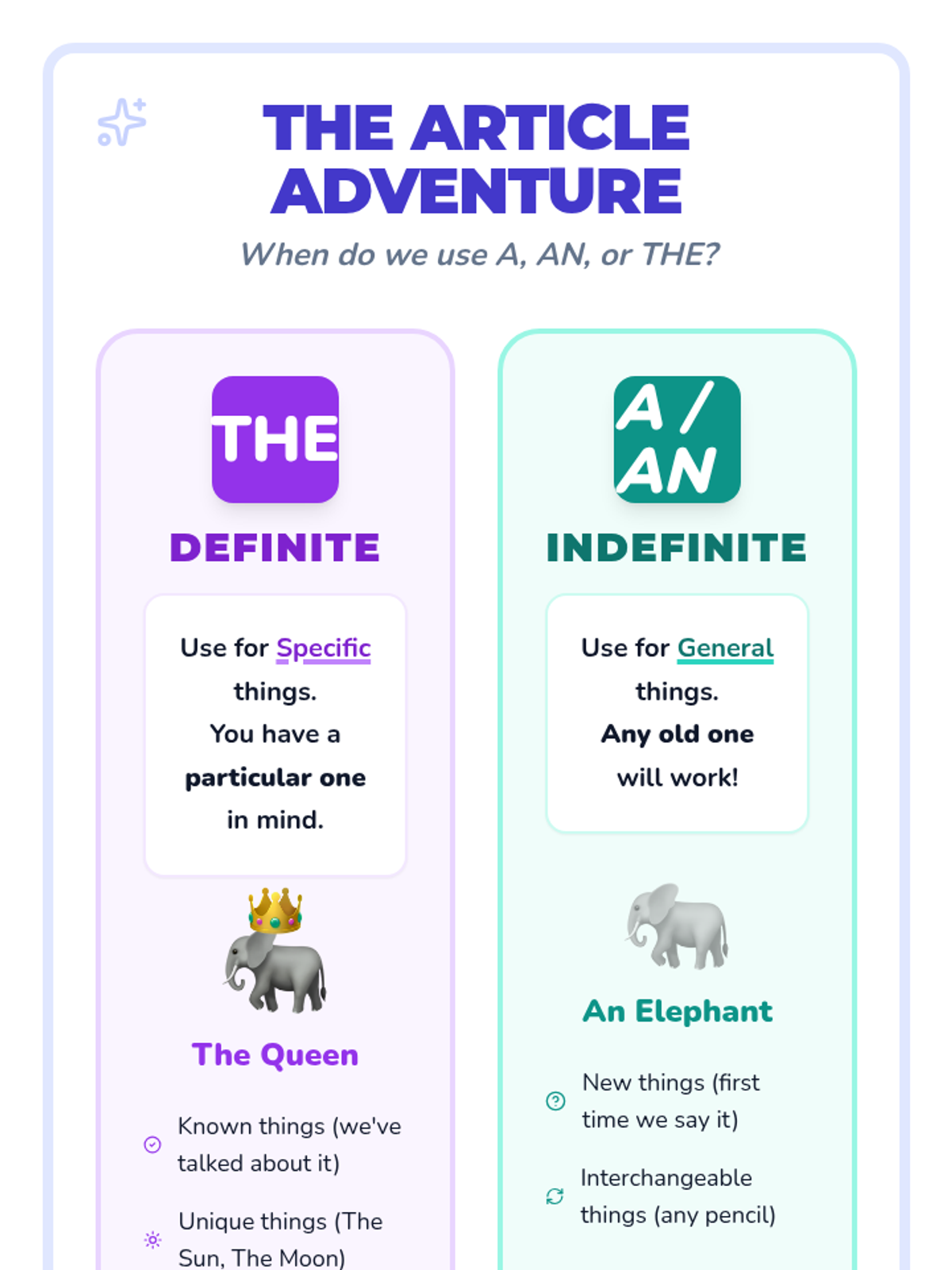
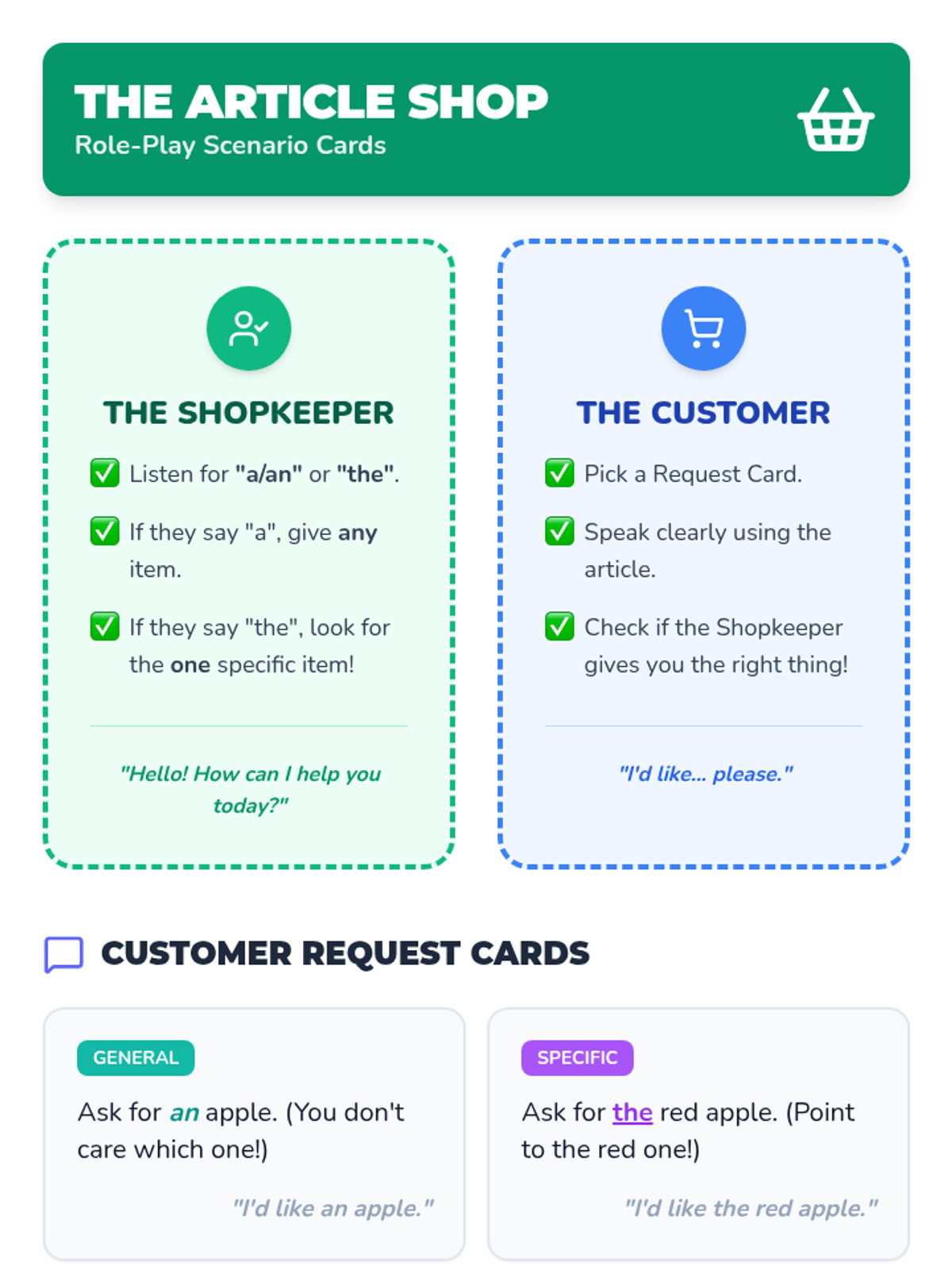
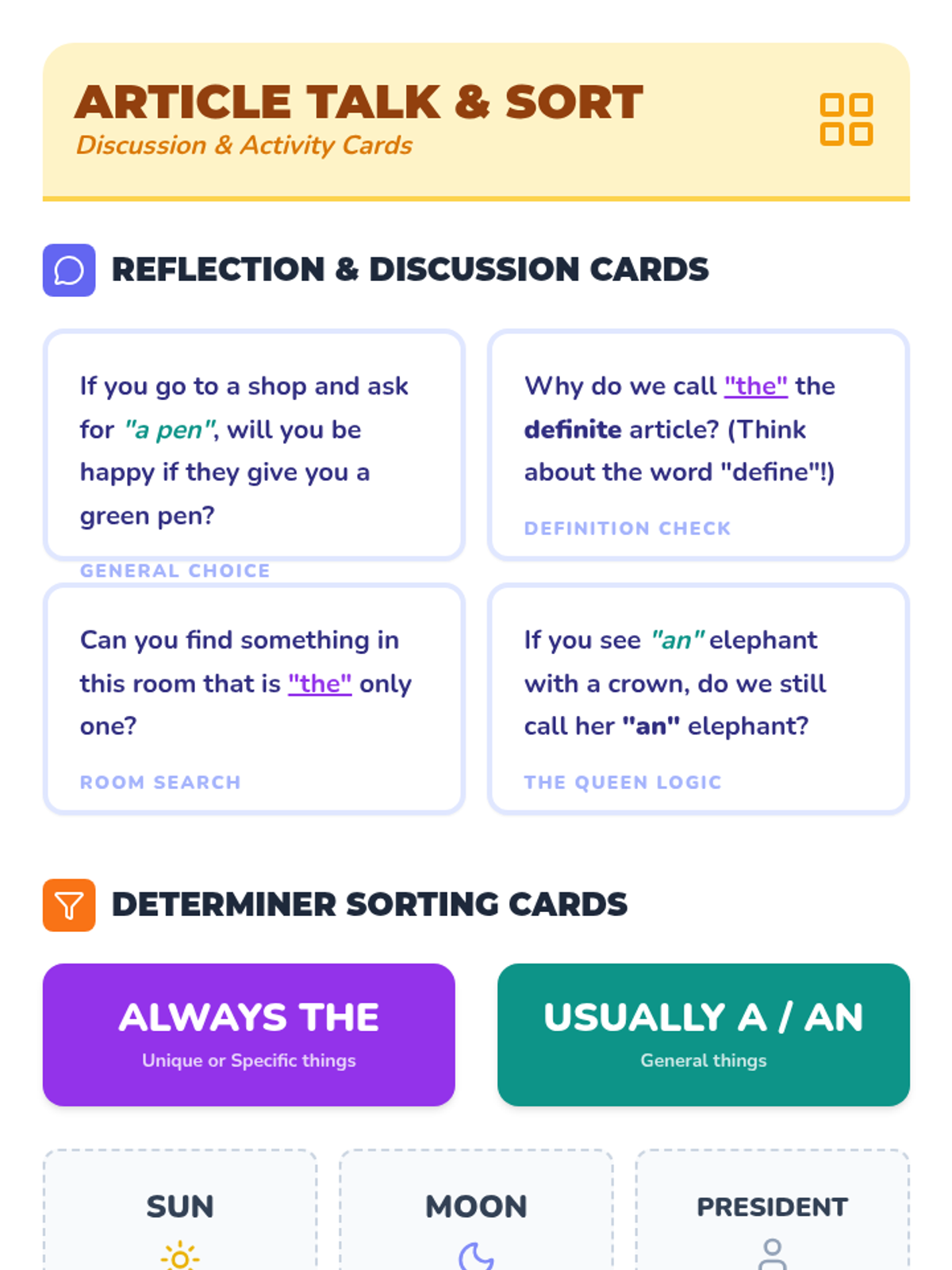
An introductory lesson using a visual 'tale of two elephants' to distinguish between specific (the) and general (a/an) nouns.
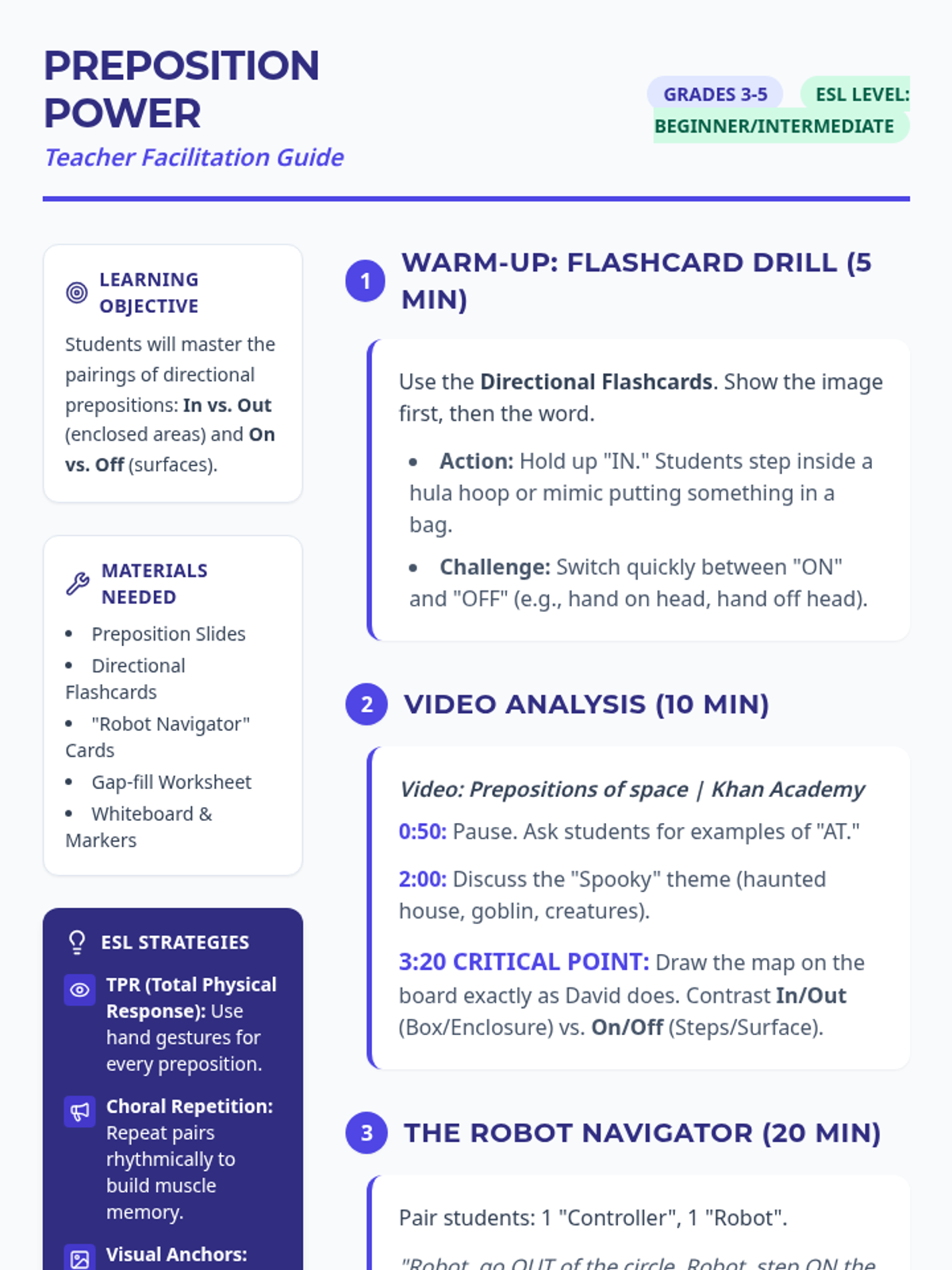
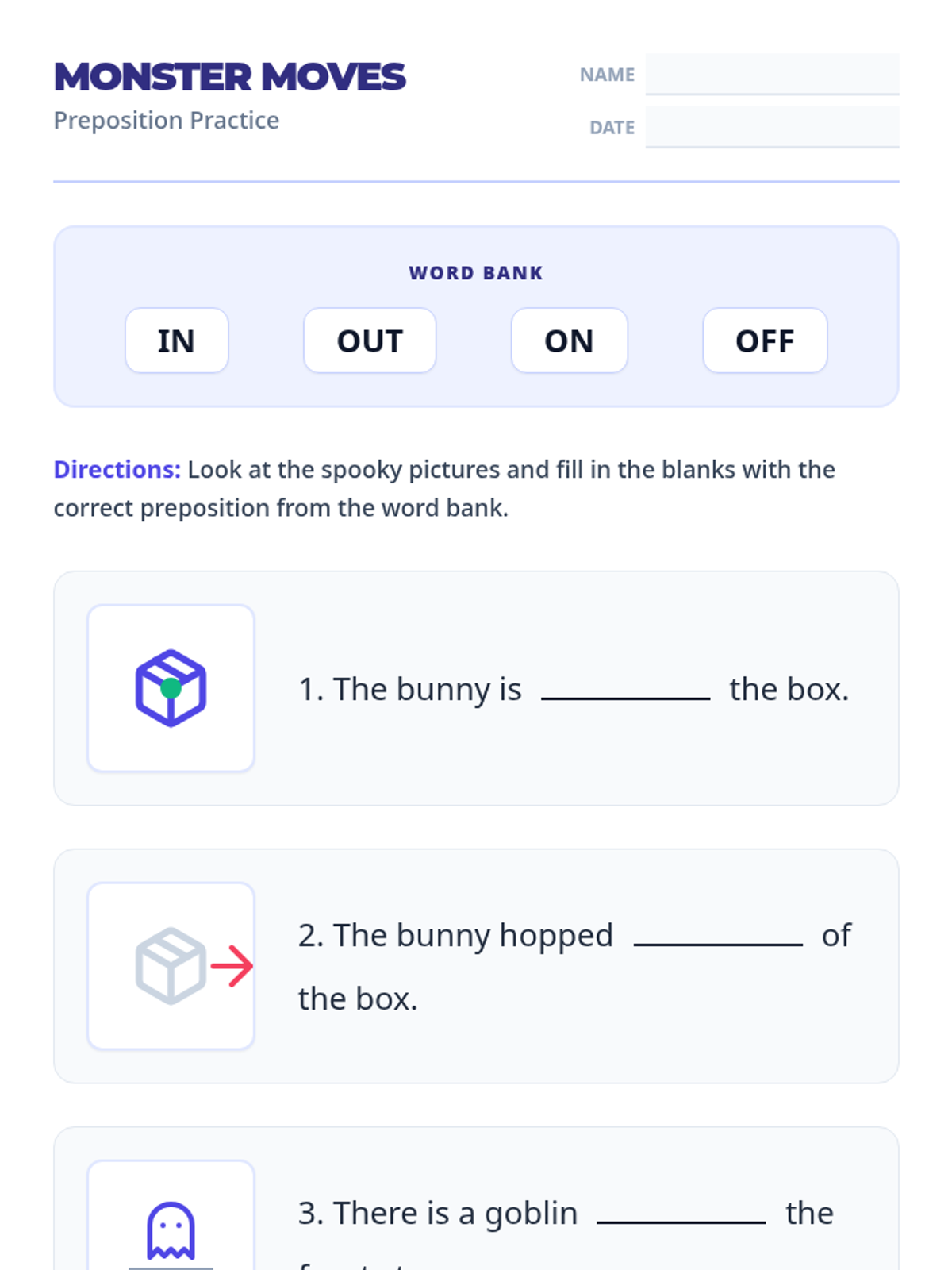
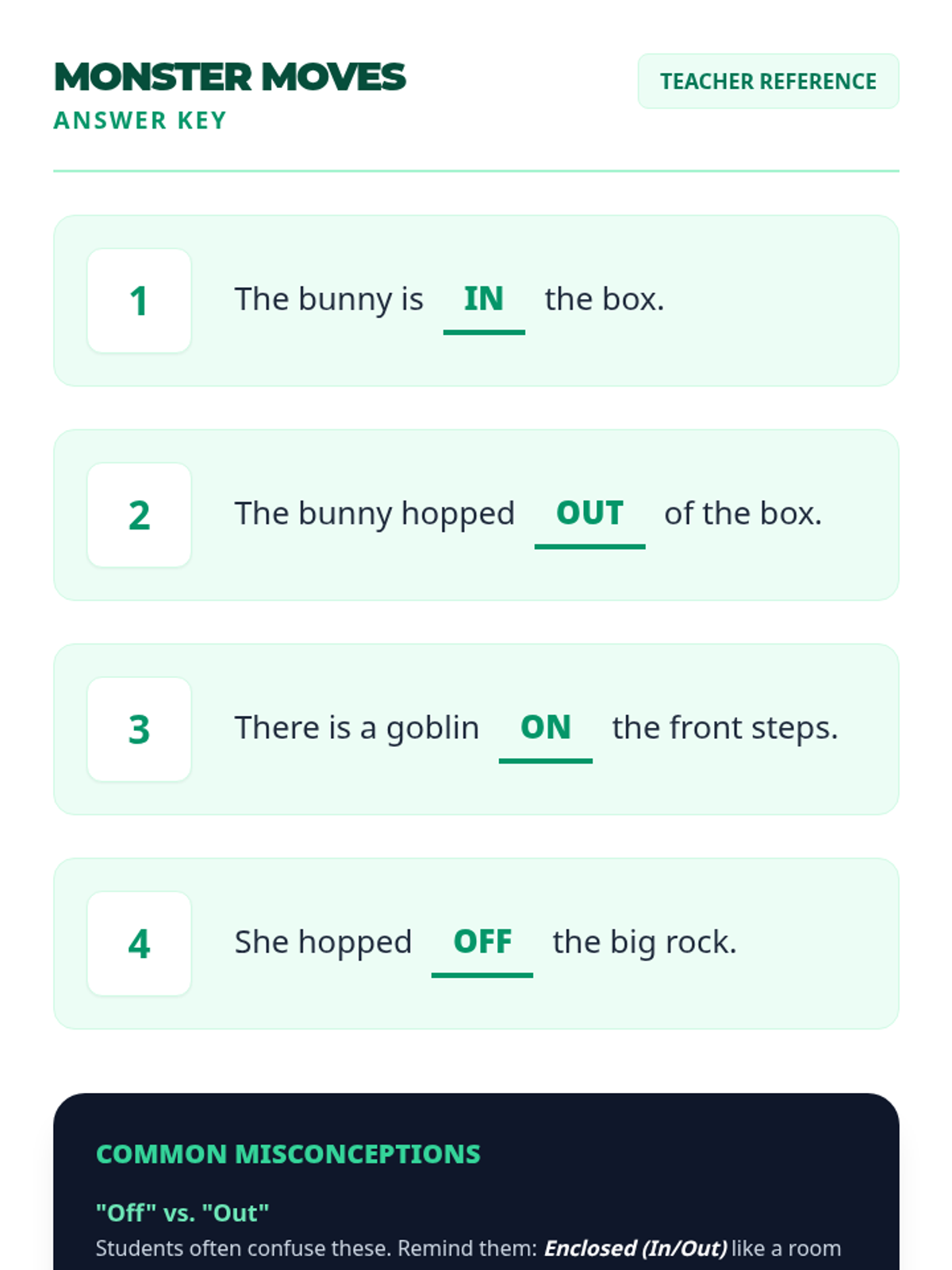
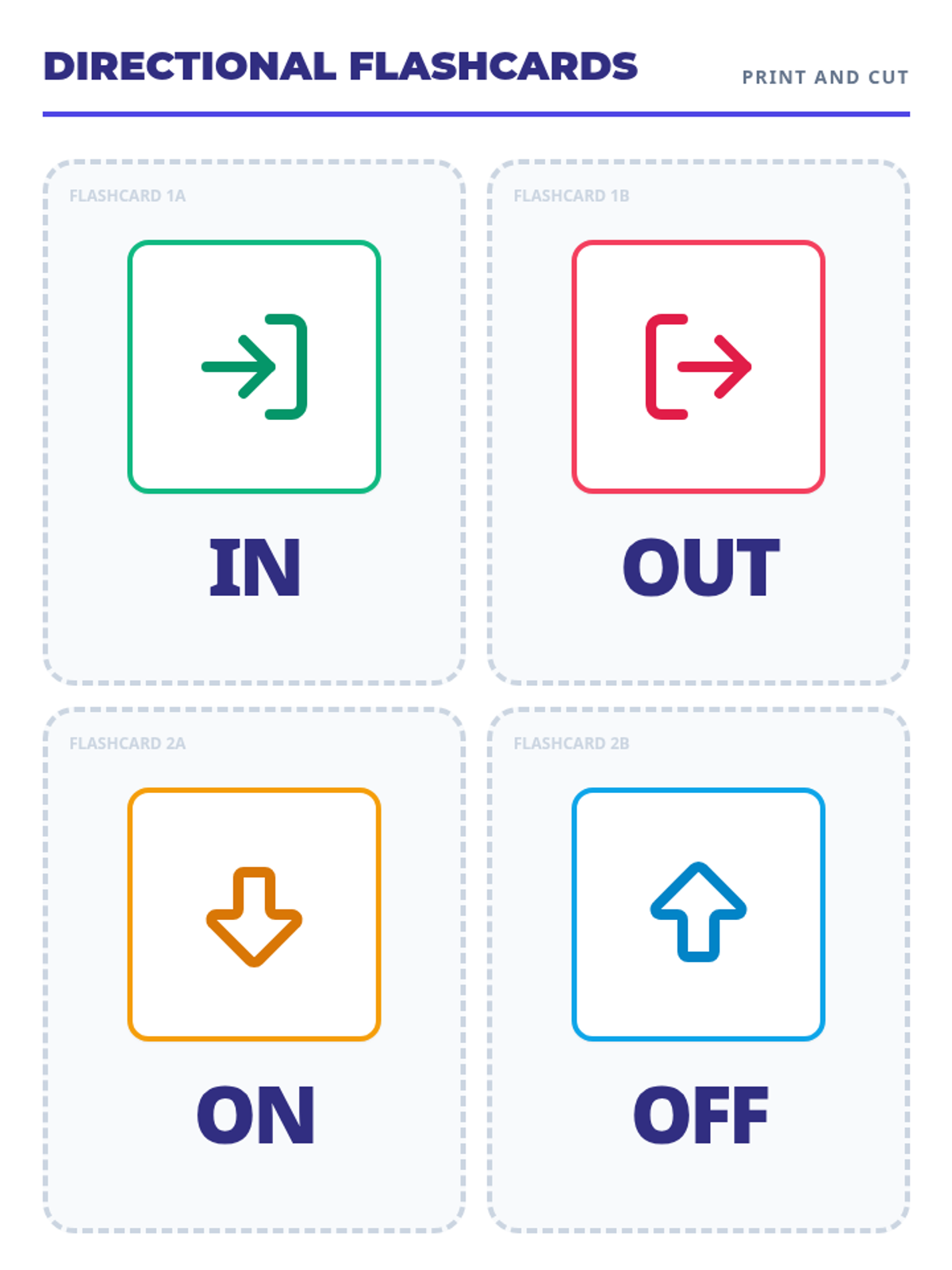
A spooky-themed lesson for 3rd-5th grade ESL students focusing on directional preposition pairs: In/Out and On/Off. Through video analysis, role-play, and visual aids, students master spatial relationships.
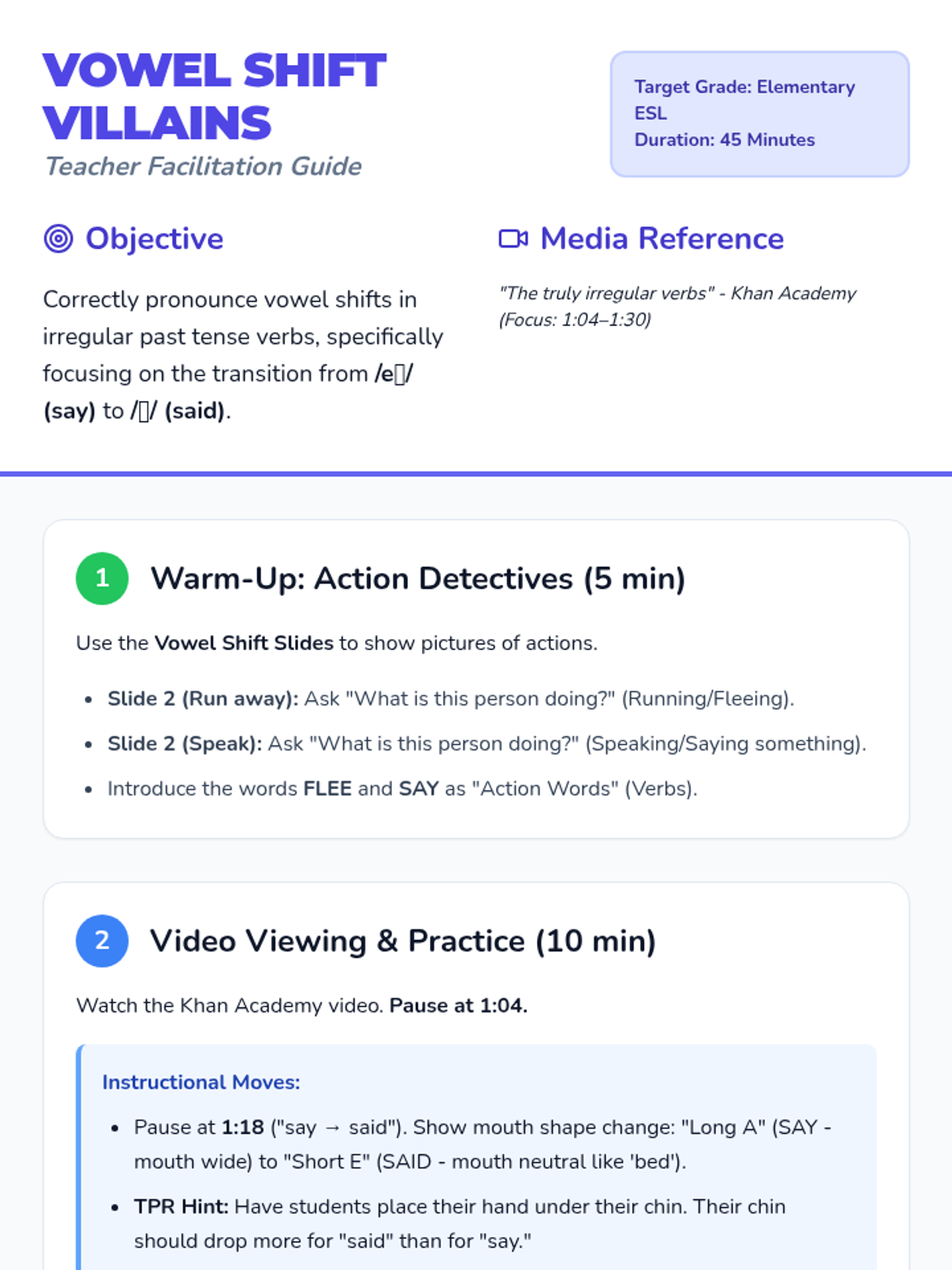
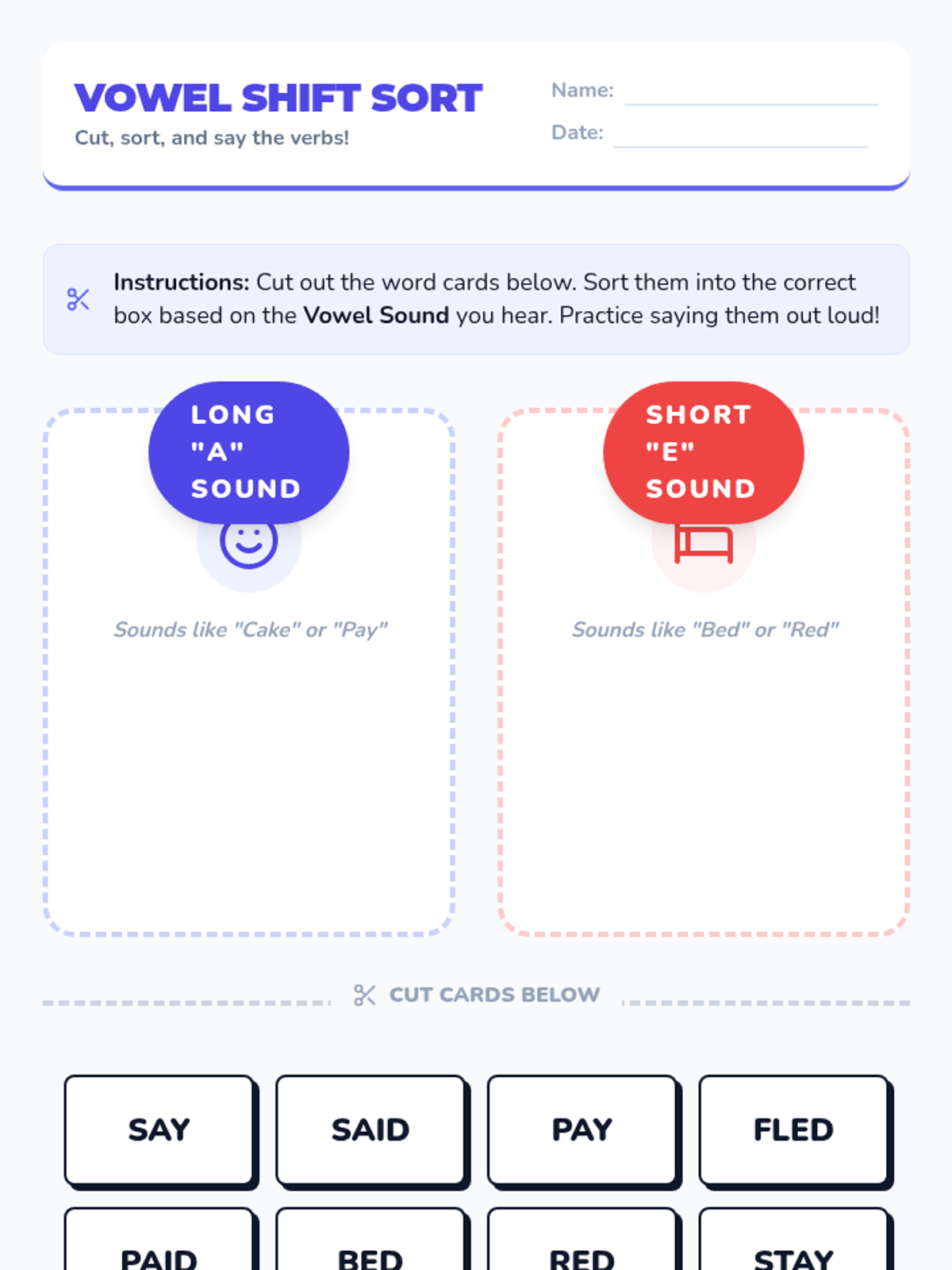
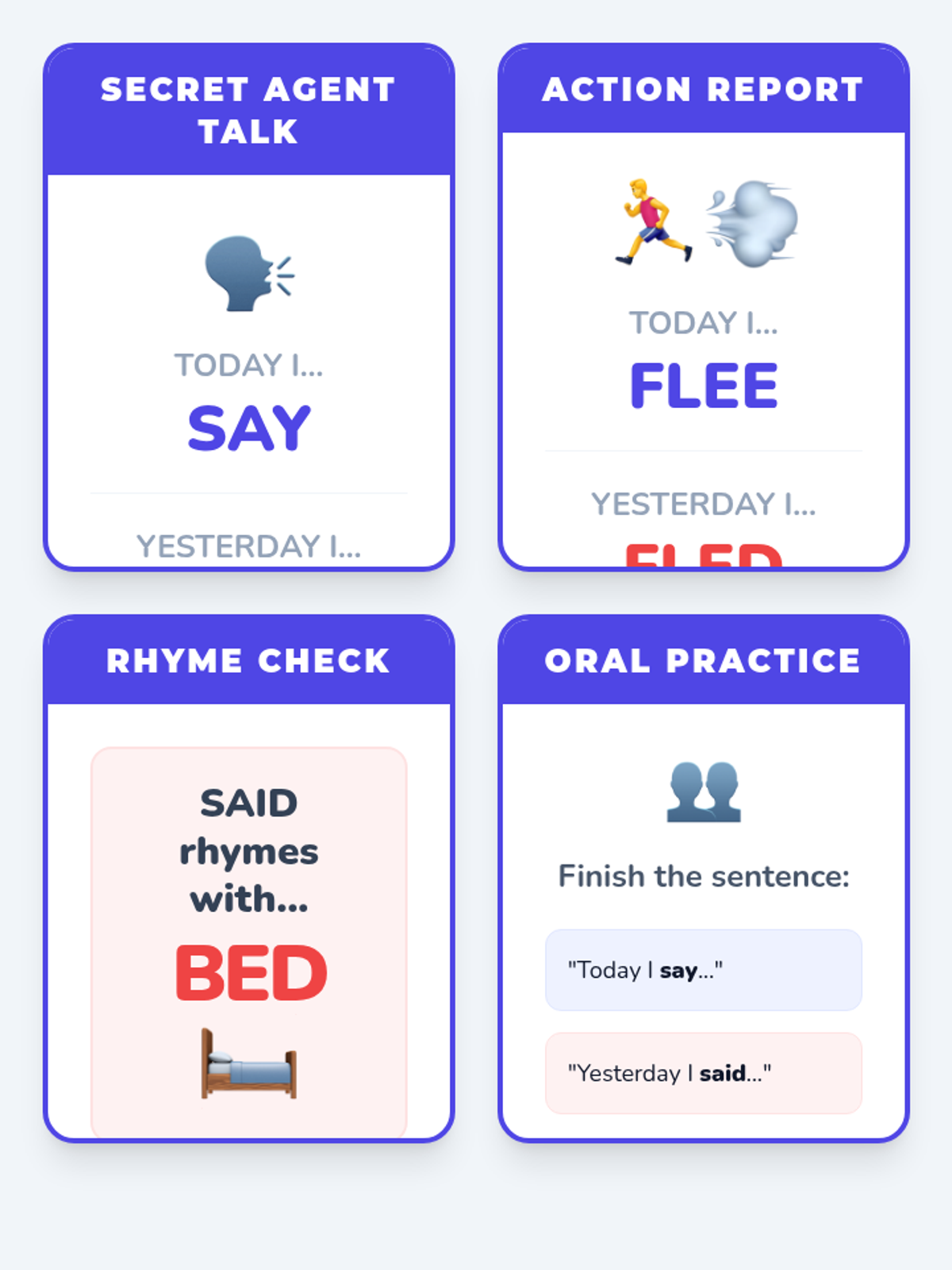
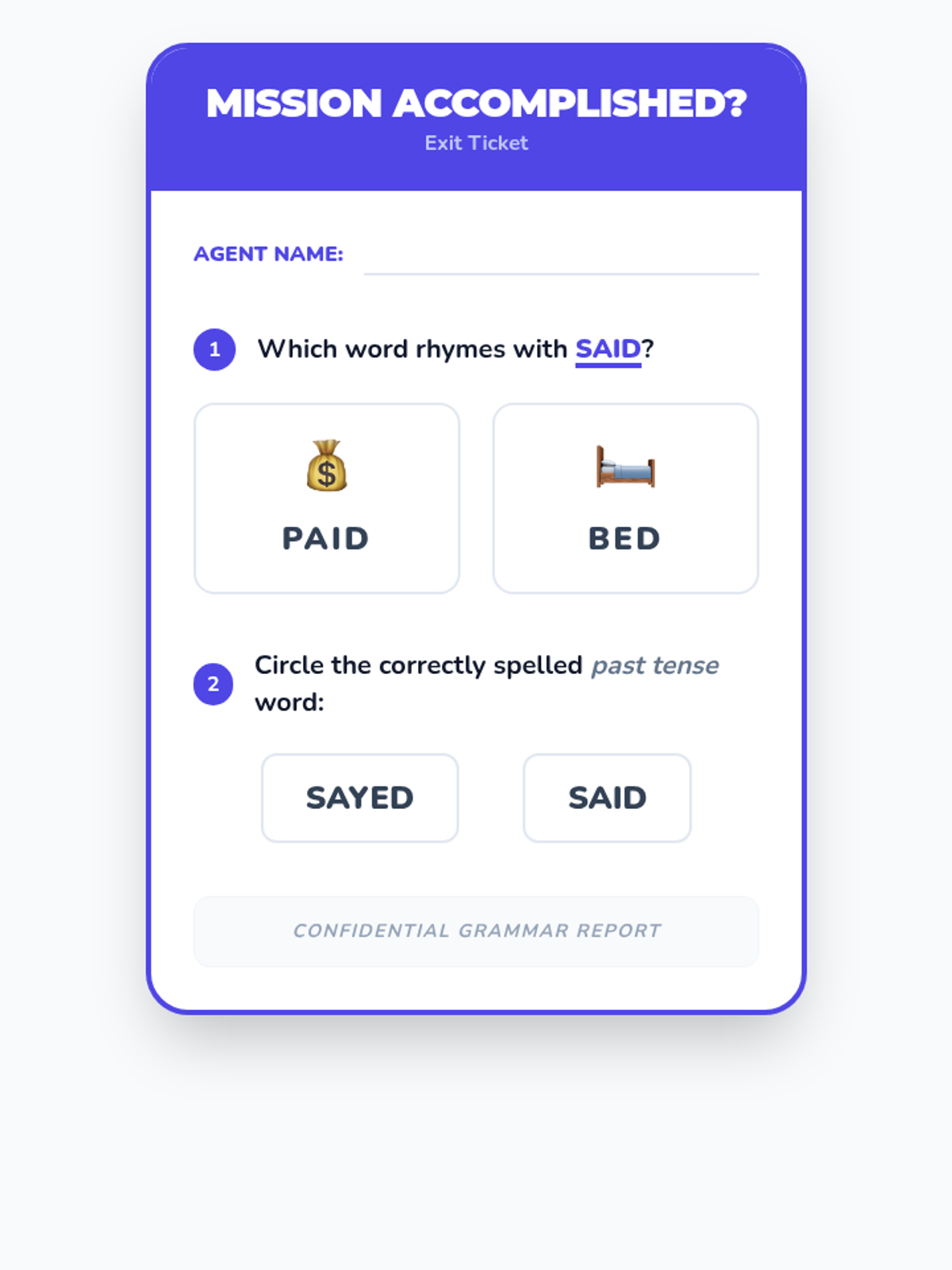
This lesson focuses on vowel shifts in irregular past tense verbs, specifically the 'say' to 'said' and 'flee' to 'fled' transitions, helping Elementary ESL students master tricky pronunciations through visual aids, sorting, and partner practice.
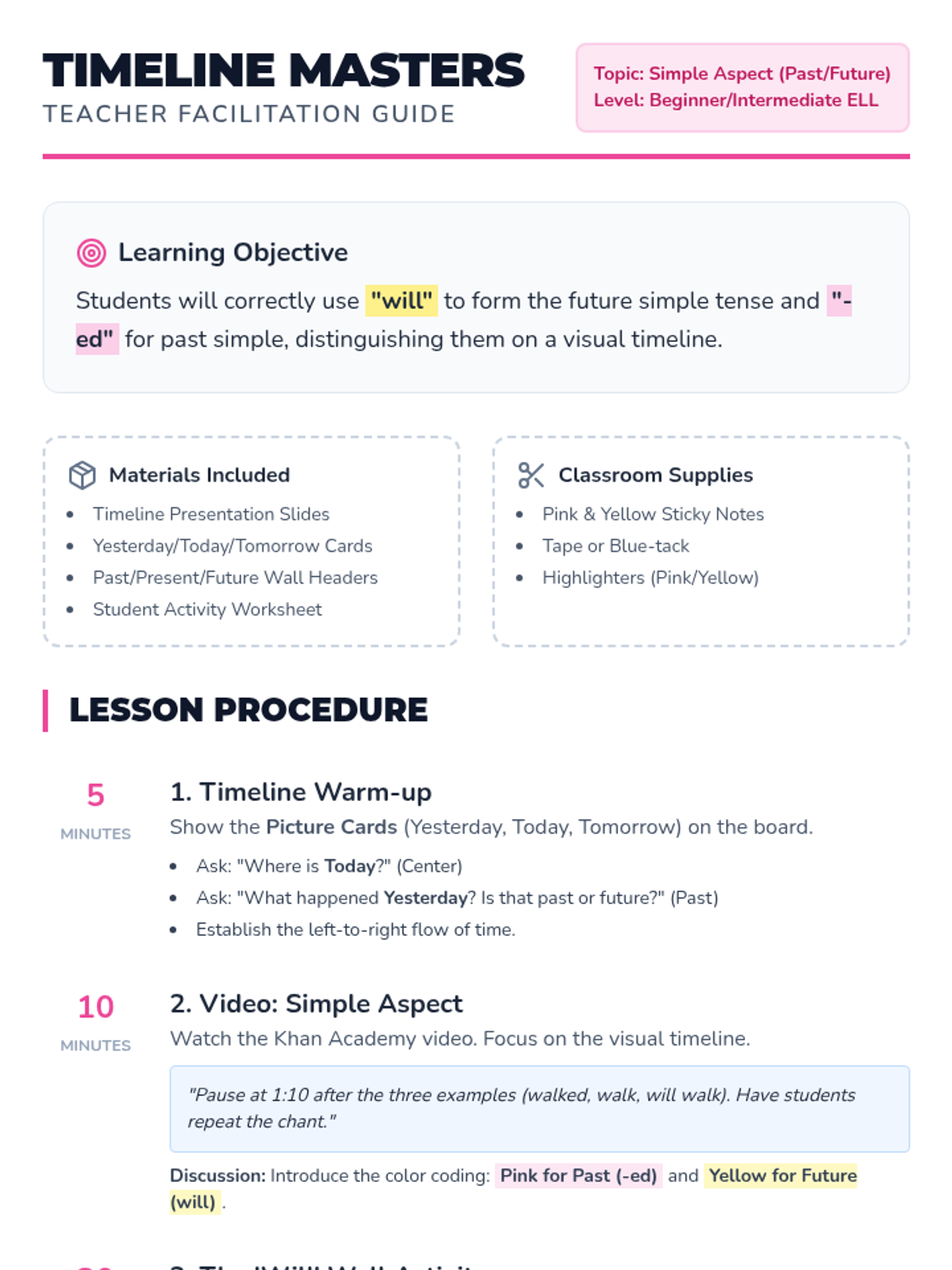
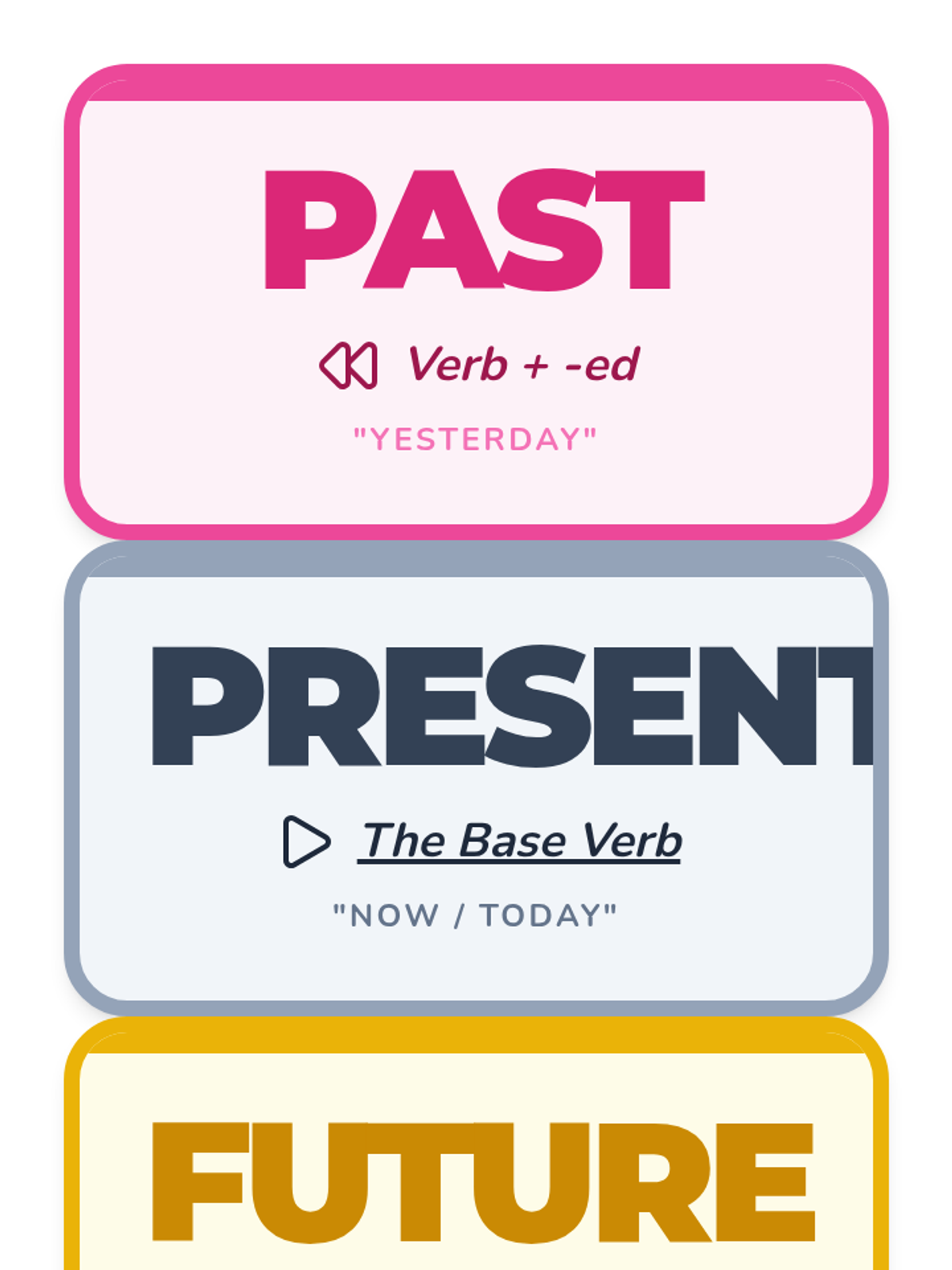
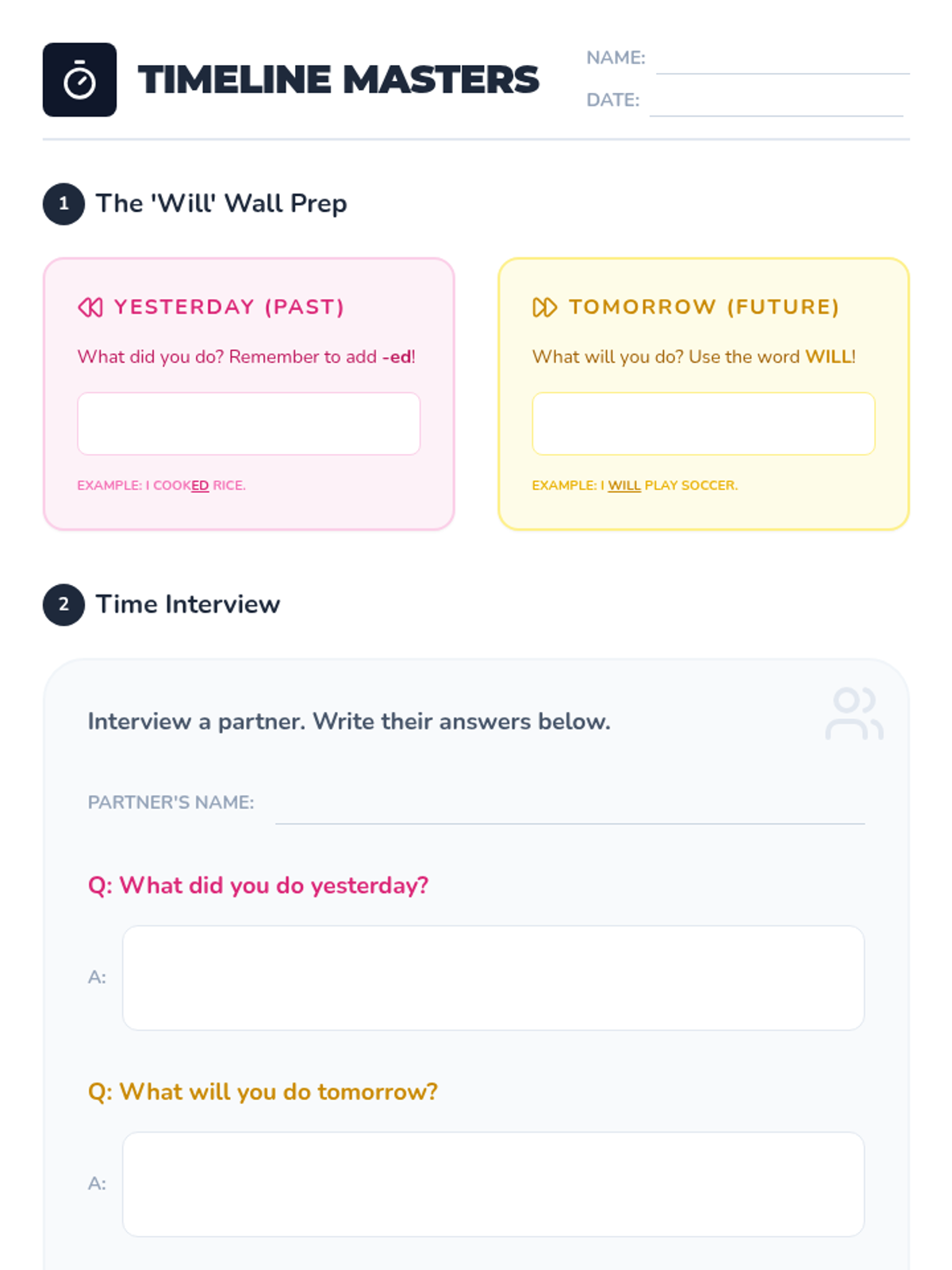
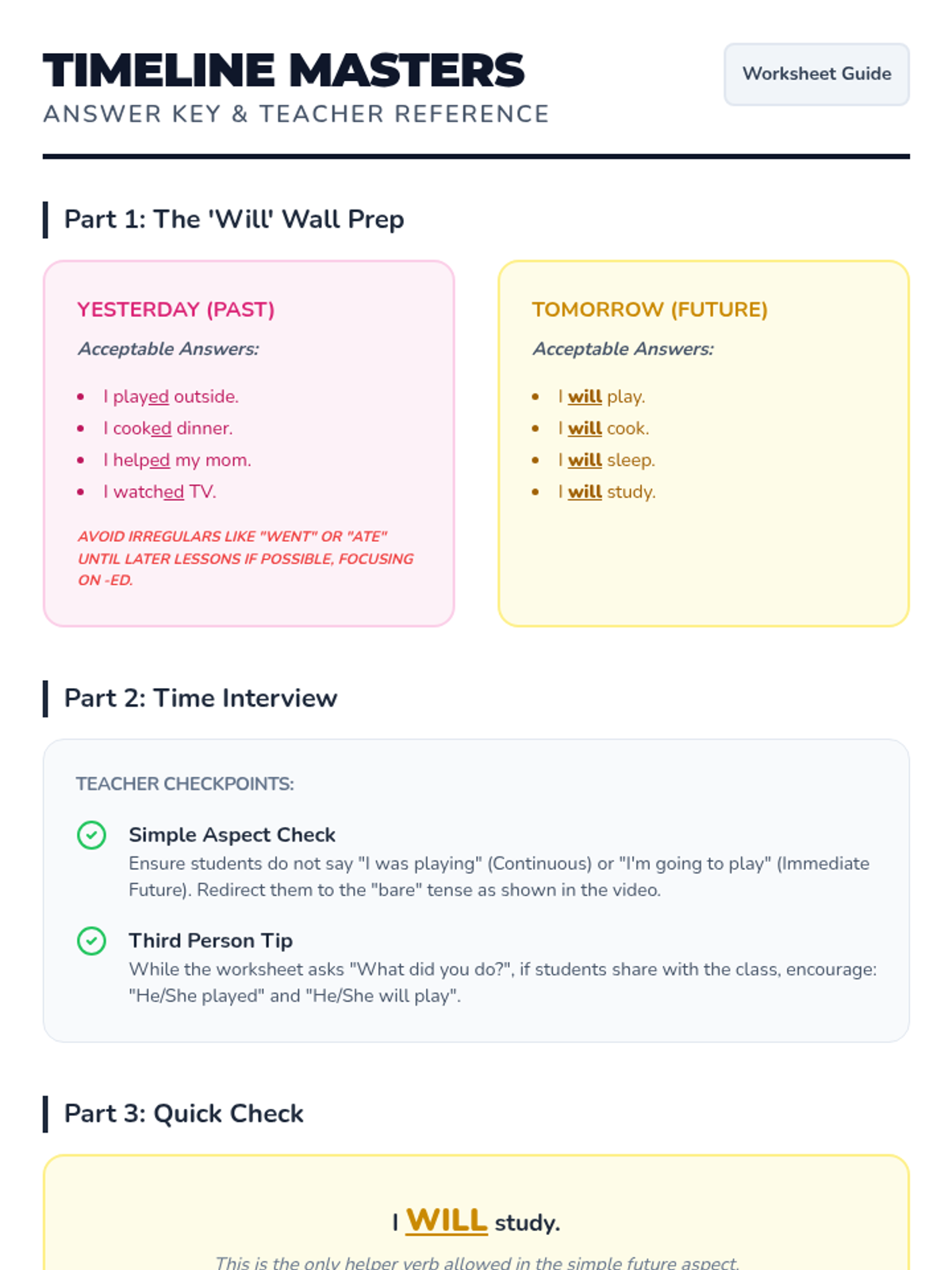
A comprehensive lesson for Beginner/Intermediate ELLs focusing on the Simple Aspect (Past and Future). Students will explore the timeline of language through visual aids, a Khan Academy video, and interactive "Will Wall" activities.
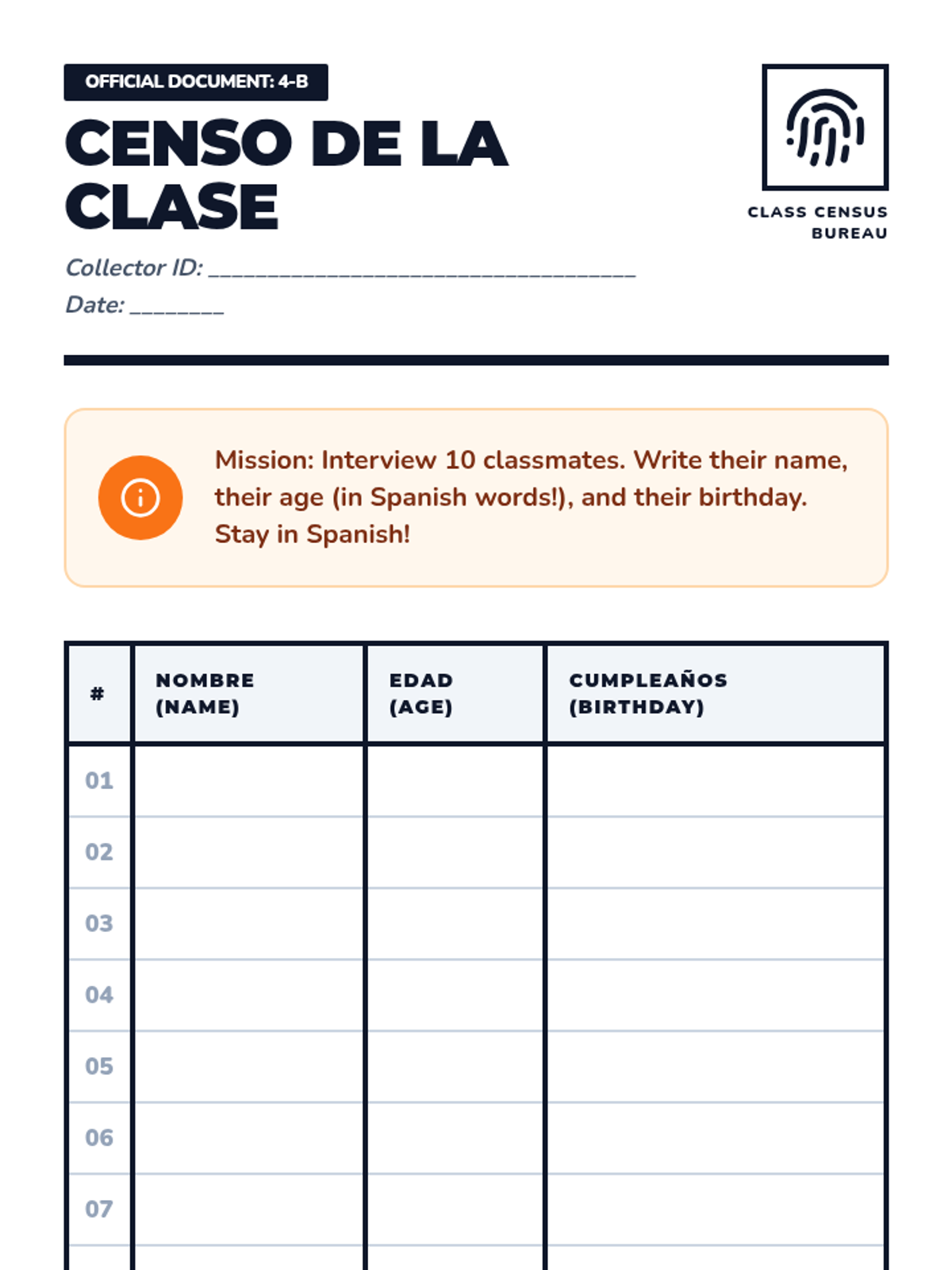
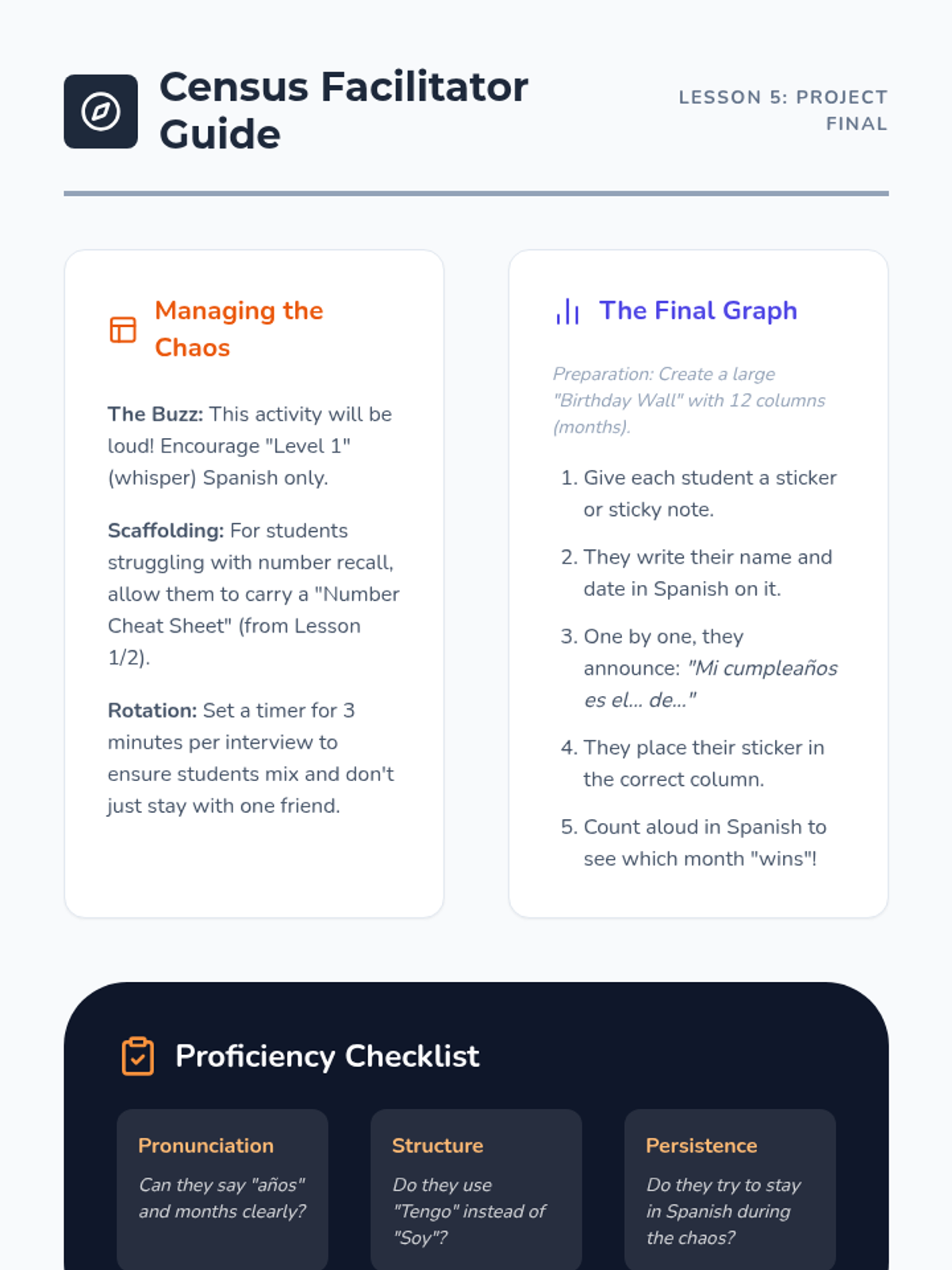
In this culminating project, students act as official 'Census Collectors,' interviewing their classmates in Spanish to gather data on ages and birthdays. They synthesize this information into a collaborative classroom data graph.
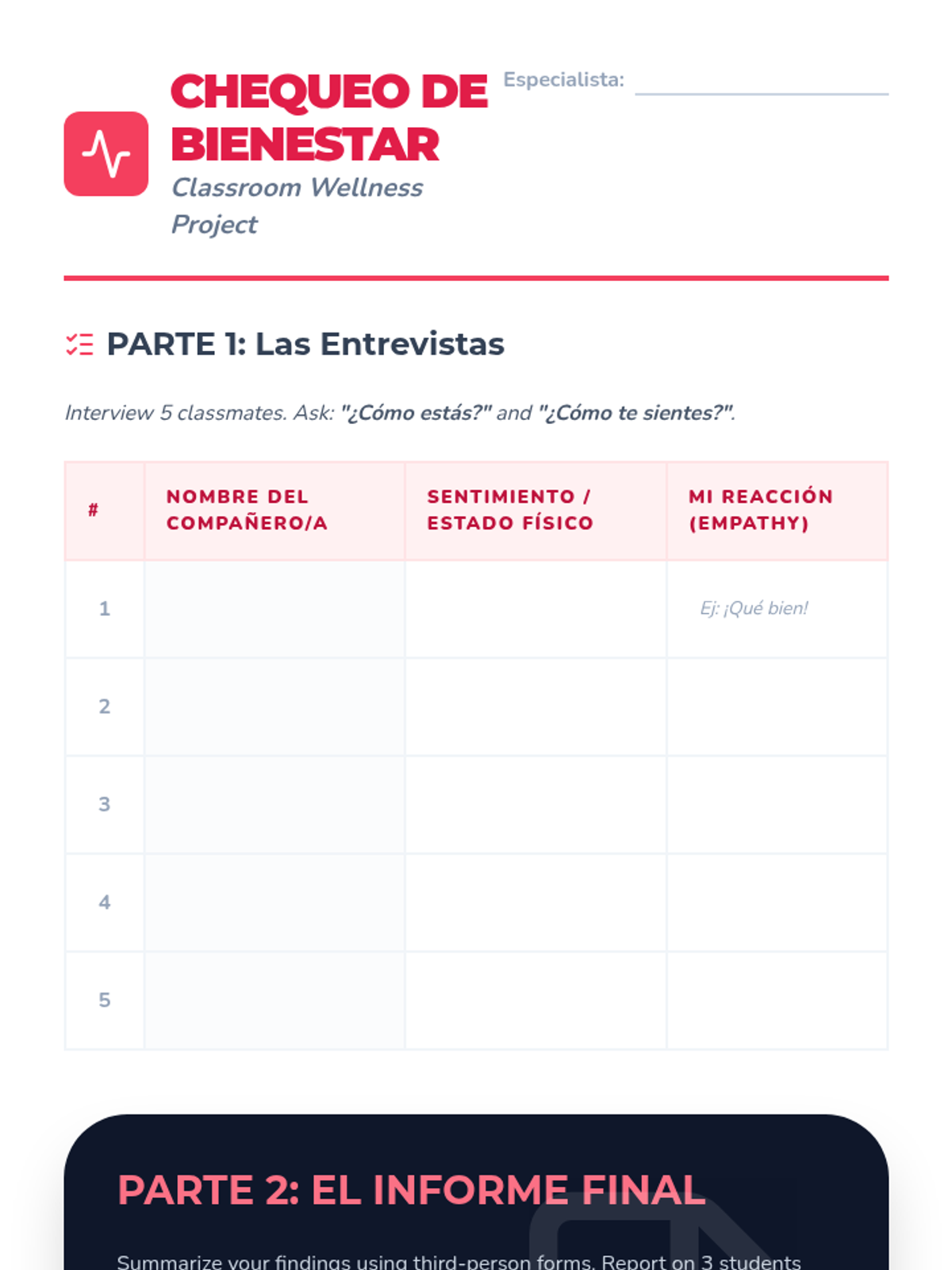
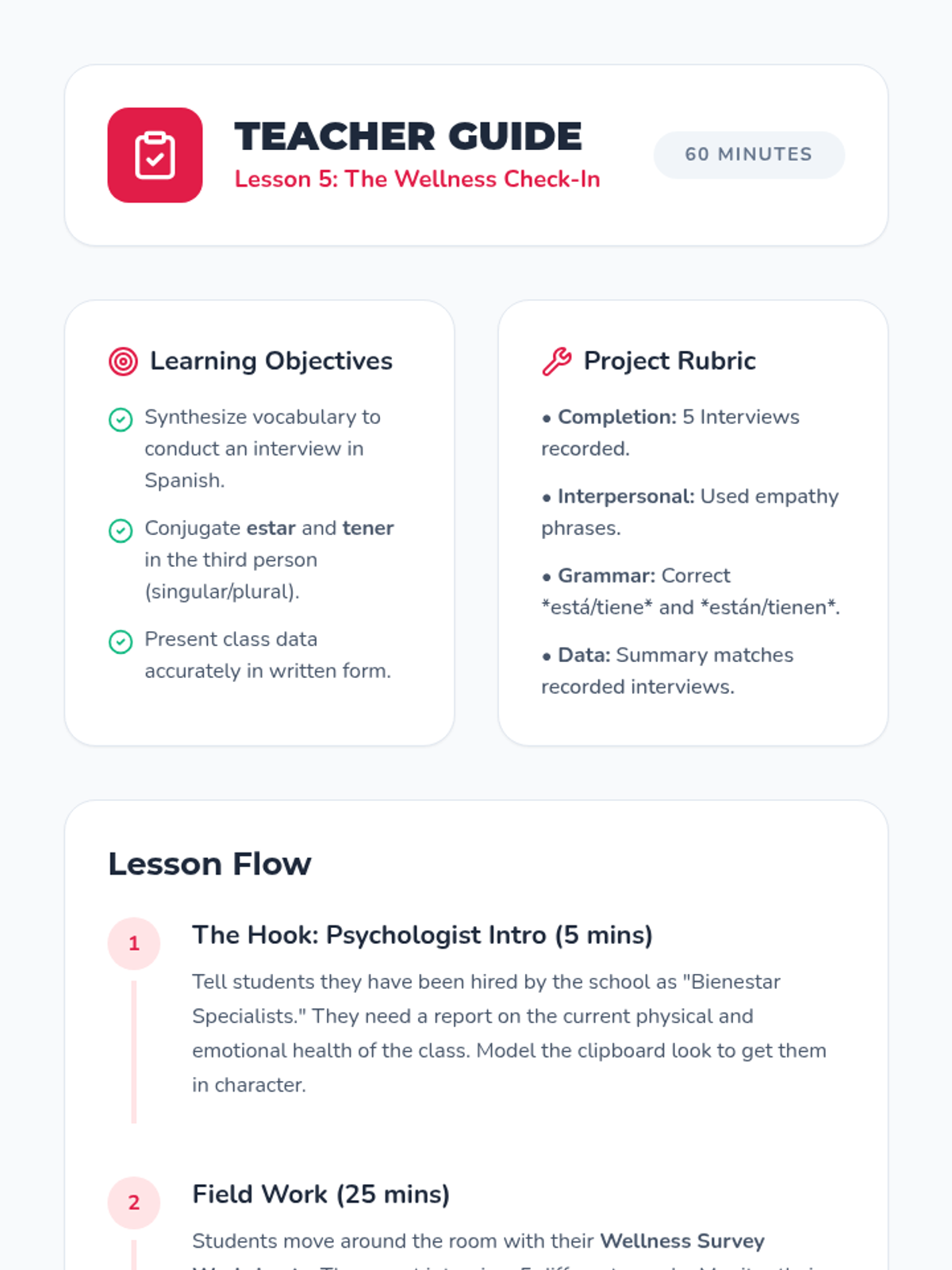
A synthesis project where students conduct a class wellness survey, collect data, and report findings using third-person conjugations.
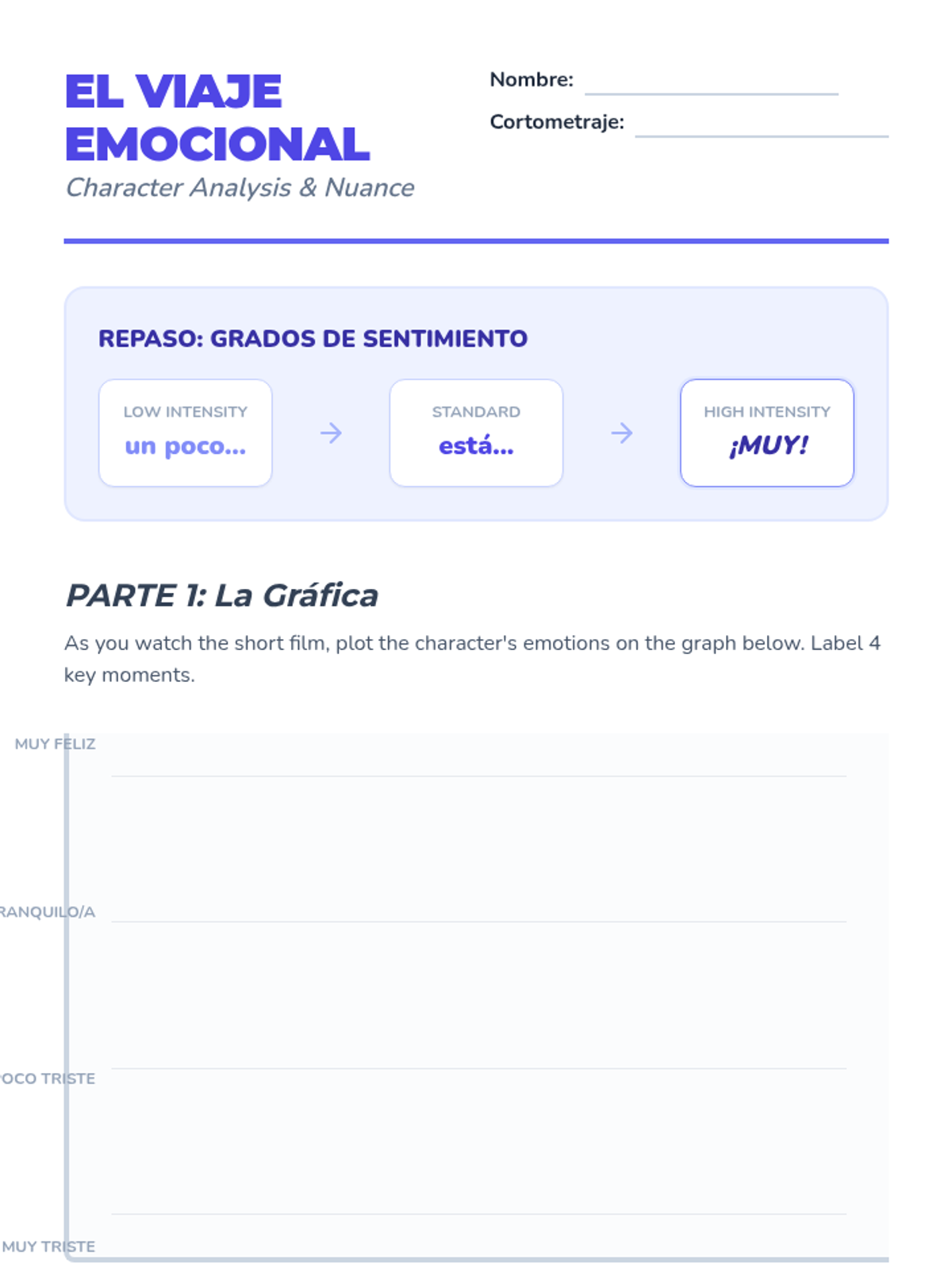
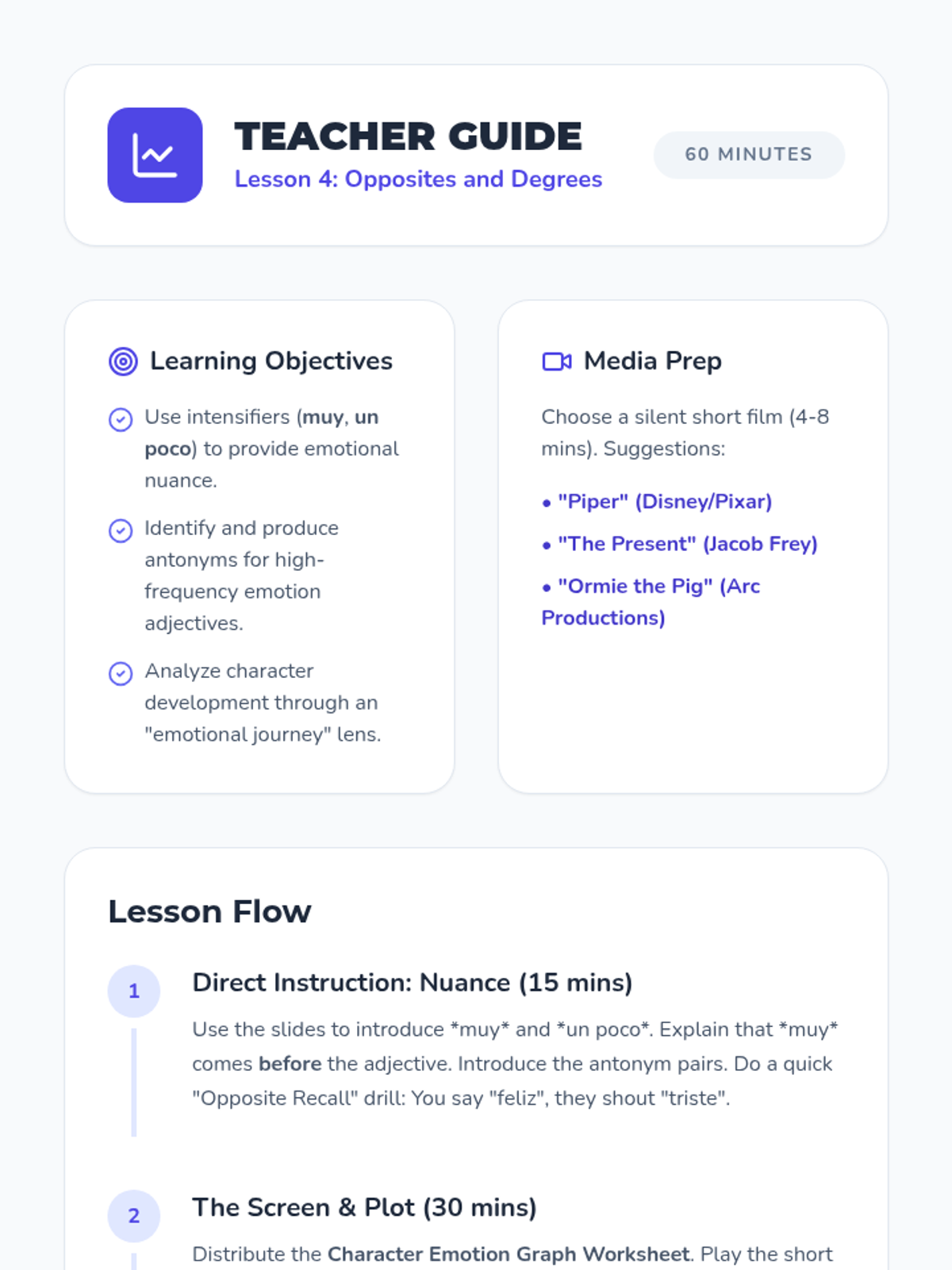
Expanding vocabulary with antonyms and intensifiers (muy, un poco). Students analyze character emotions in stories and media.
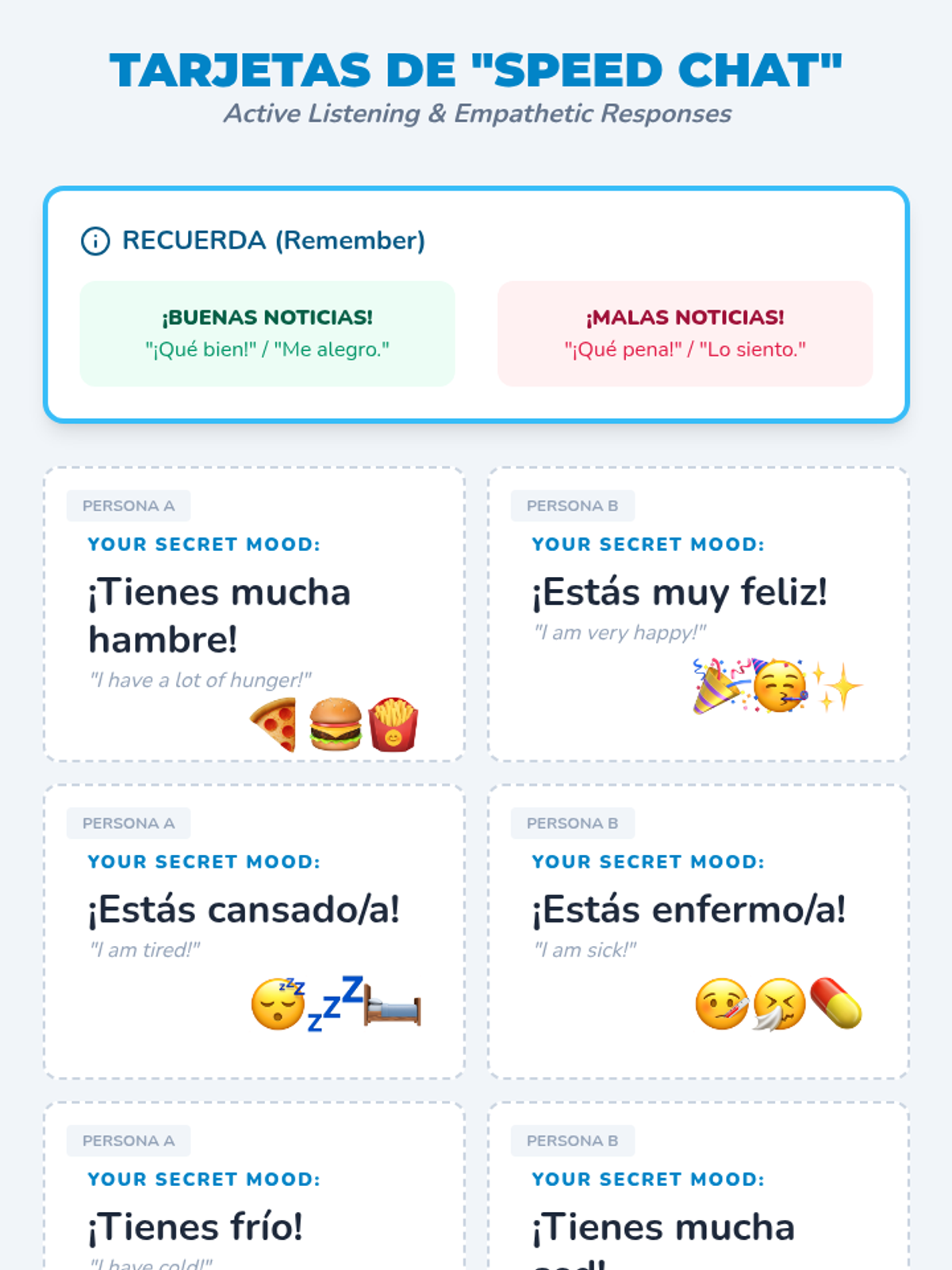
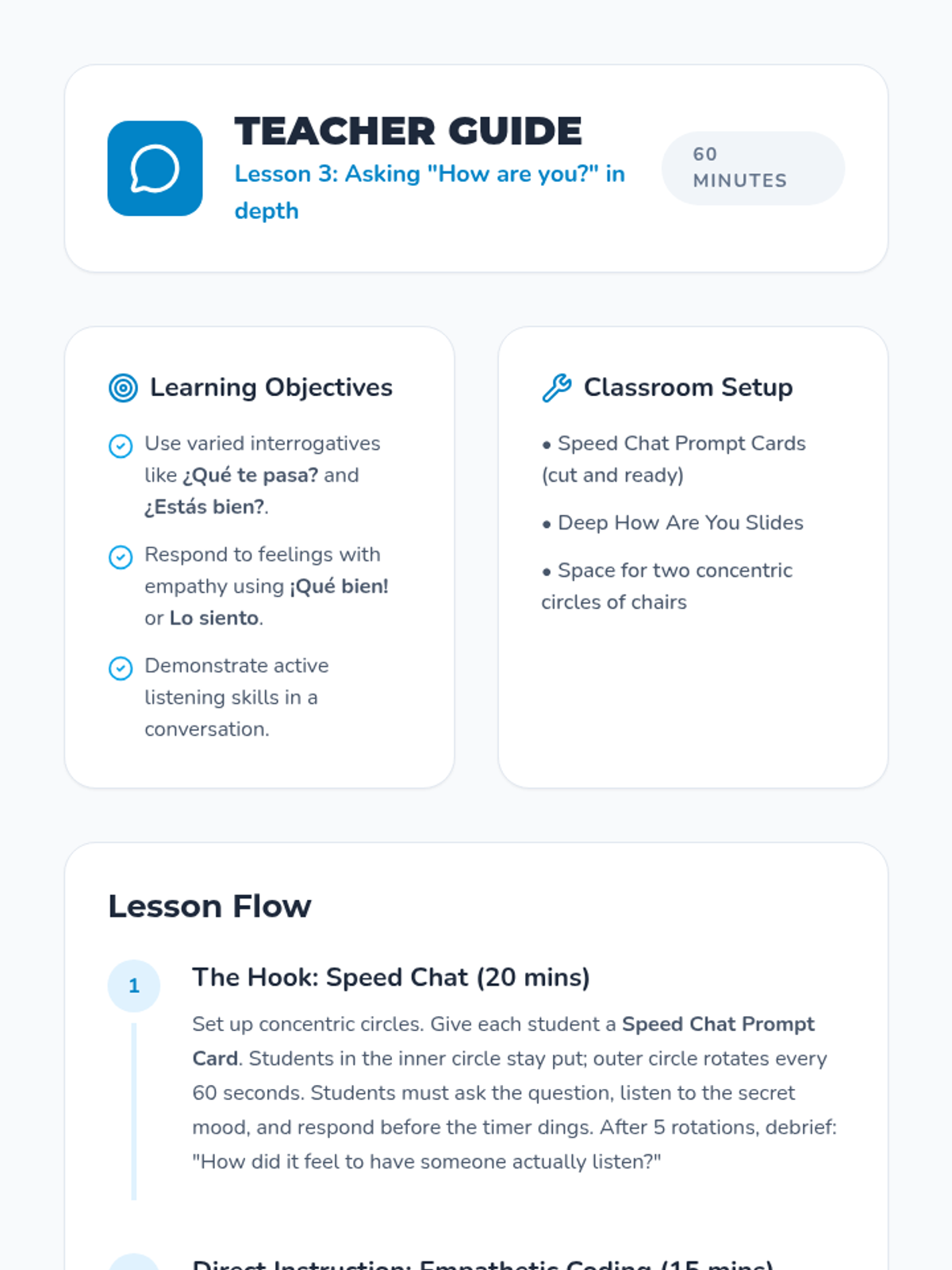
Moving beyond basic greetings to deep follow-up questions and empathetic responses. Students practice active listening in a 'Speed Chat' format.
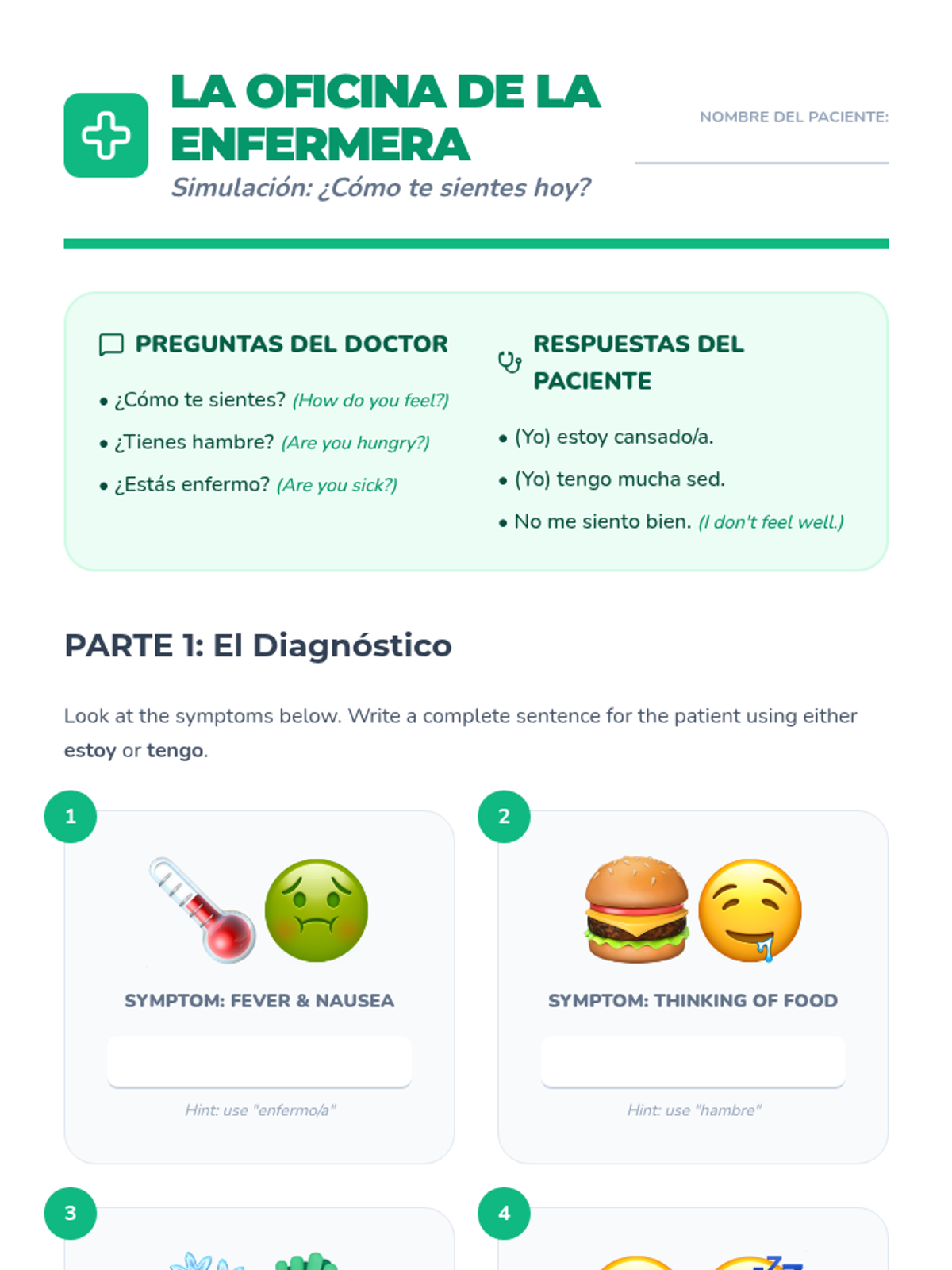
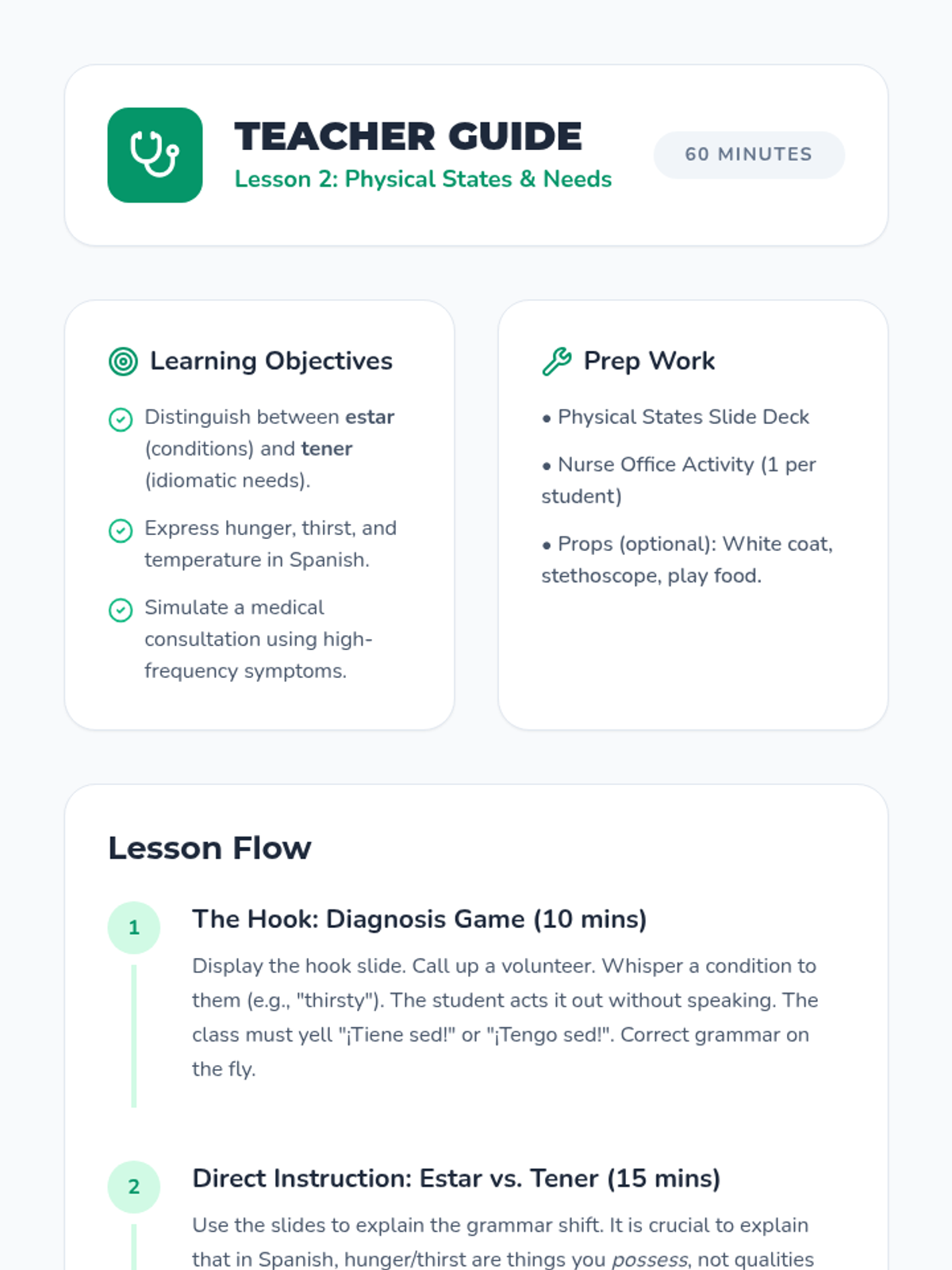
Focus on physical sensations using 'tener' idioms (hunger, thirst) and 'estar' conditions (tired, sick). Students simulate a visit to the school nurse.