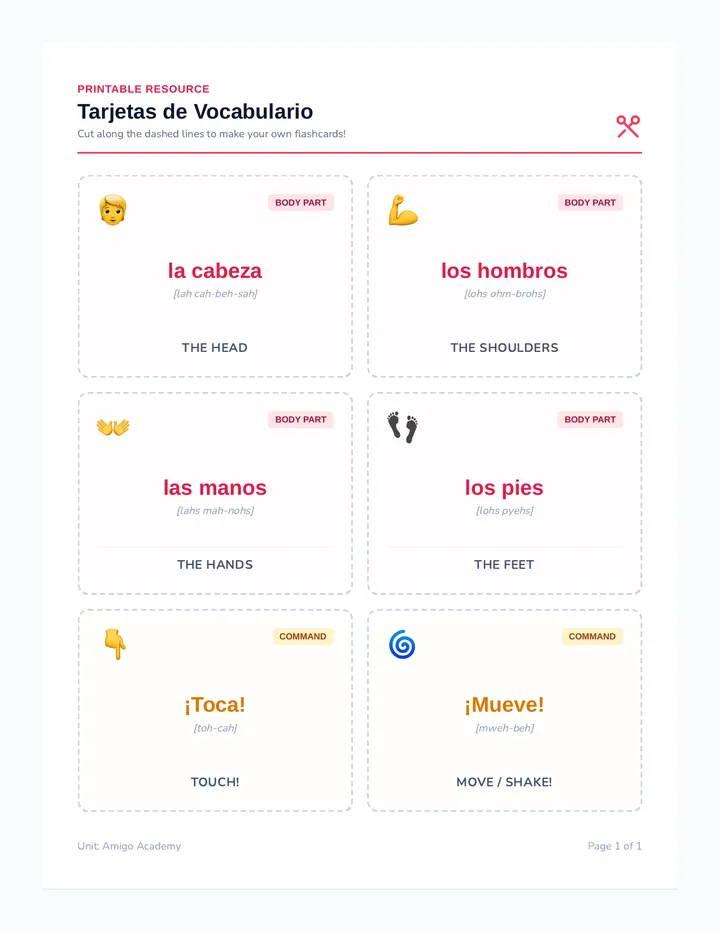
Students distinguish between 'Tengo hambre' and 'Tengo sed' through a sorting game involving plastic food and water bottles. They learn the gesture of rubbing their tummy or holding their throat to reinforce the vocabulary.
A high-energy, visual-heavy lesson for ESL kindergarteners to learn and practice family activity vocabulary through movement, games, and play. Students will use Total Physical Response (TPR) and collaborative games to internalize key verbs.
A 45-minute exploratory Japanese lesson using storytelling and Comprehensible Input to introduce Oshogatsu, Hinamatsuri, and Kodomo no Hi. Students will engage with the cultural significance and specific traditions of each holiday through narrative and visual representation.
The final challenge of the workbook, synthesizing all phonetic knowledge for comprehensive word mastery.
Mastering complex clusters where two sounds slide together, focusing on s-blends, l-blends, and r-blends.
Investigations into special two-letter combinations that create unique single sounds, featuring sh, ch, th, and wh.
Detecting patterns in word endings, students explore common word families to build rhyme and reading fluency.
The first stage of the Sound Detective journey, focusing on the discovery of initial consonant sounds through interactive sentence puzzles.
Une leçon courte pour évaluer la capacité des élèves de Grande Section à identifier le son d'attaque d'un mot, se concentrant sur les voyelles de base et les consonnes occlusives.
A comprehensive introductory English presentation for beginning learners, covering the alphabet, everyday objects, colors, shapes, actions, and basic stories.
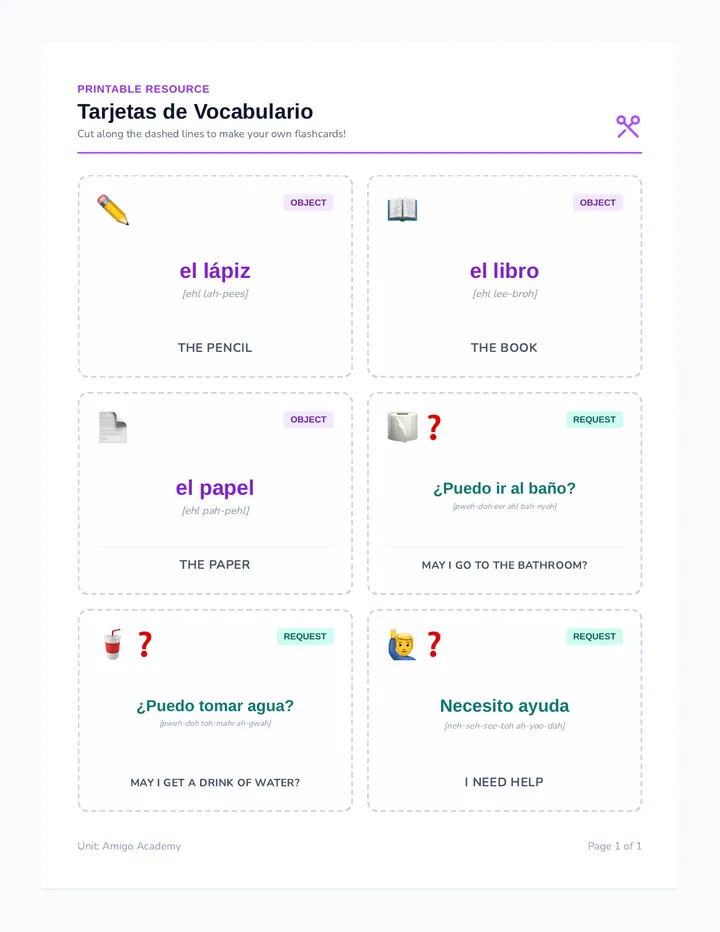
Learn the signs for common classroom objects and a vibrant spectrum of colors to describe the world around you.
Explore signs for the people in our lives and learn how to use facial expressions to show feelings.
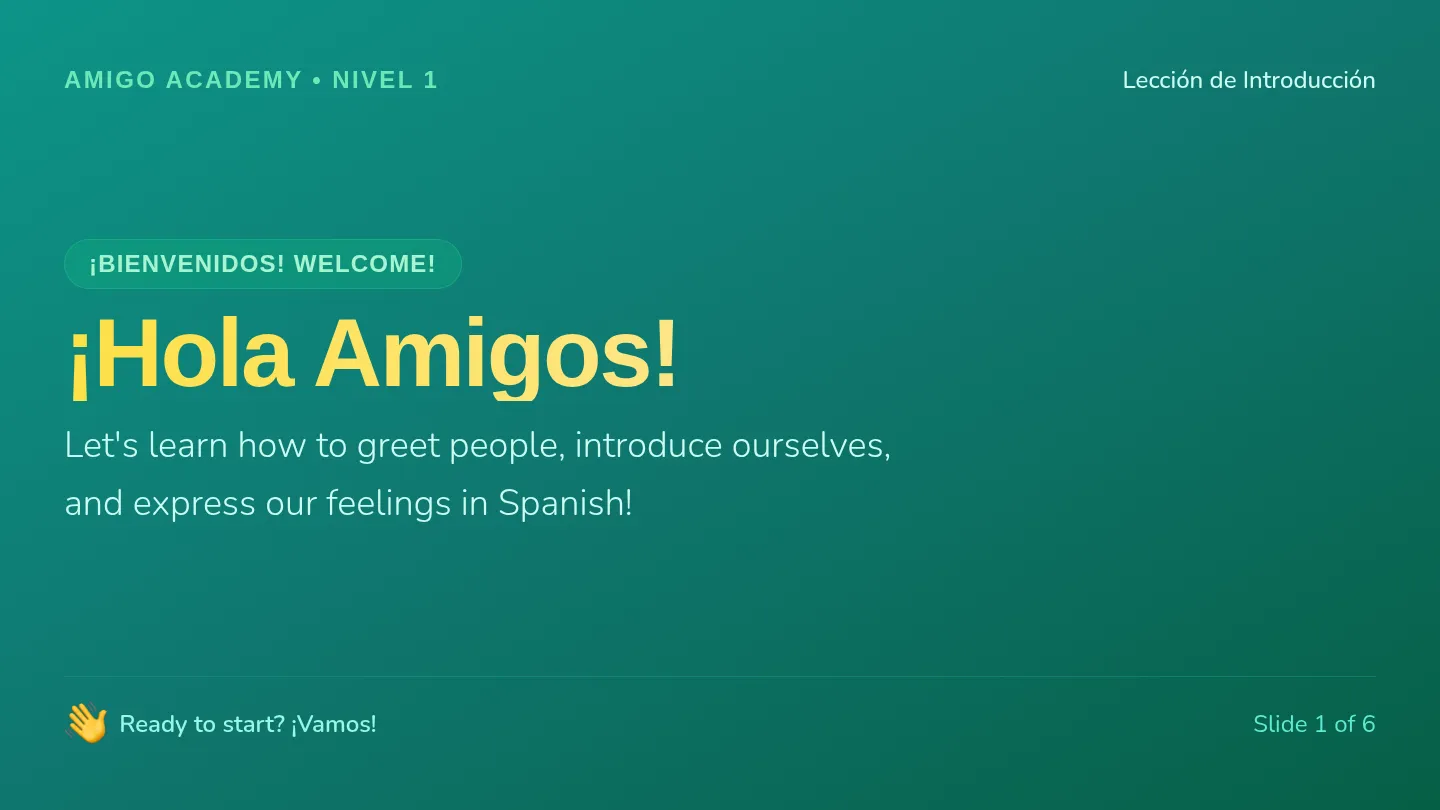
Jump into the basics of ASL with a focus on the manual alphabet and essential polite signs like hello, please, and thank you.
A beginner-friendly lesson introducing common farm animals, their sounds, and basic characteristics for ESL newcomers. Includes a visual slide deck, a reading comprehension worksheet, and an answer key.
A comprehensive review of the beginning sounds for the letters b, c, f, t, m, and n using a 'Sound Lab' theme. Includes visual articulation supports and hands-on sorting activities.
A comprehensive one-hour Spanish review session focusing on tricky syllables, basic grammar (subject, verb, adjectives), and market-themed vocabulary through interactive slides.
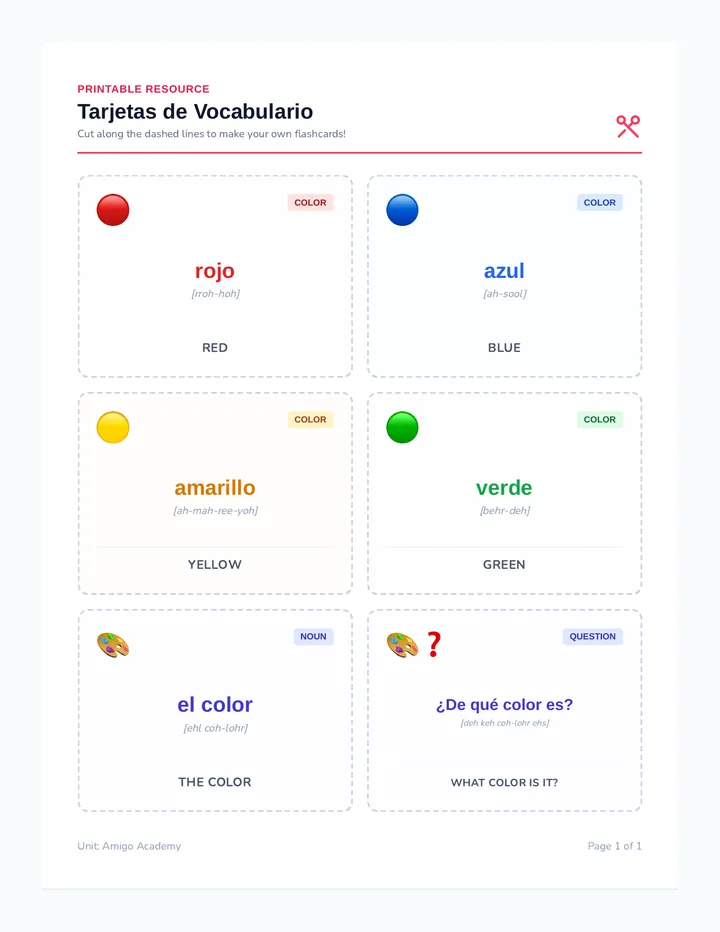
A vibrant introduction to Spanish for early learners (0-5) centered around a rainbow theme. This lesson plan provides 15 interactive play station ideas, a circle time presentation with songs and science, and bilingual support materials.
A lesson focused on animal characteristics and habitats, helping students build descriptive vocabulary.
An introductory Irish Gaelic (Gaeilge) lesson covering greetings, animals, colors, and basic conversational questions with a focus on pronunciation.
Una mini-lección de 10 minutos diseñada para enseñar el sonido inicial de la letra 'p' y la formación de sílabas (pa, pe, pi, po, pu) a través de actividades visuales, juegos de emparejamiento y práctica individual.
An introductory lesson to common modes of transportation using a bilingual story and visual vocabulary support.
A high-energy 10-minute mini-lesson focused on blending initial consonant sounds with vowels to form syllables (ma, me, mi, mo, mu and pa, pe, pi, po, pu). Includes teacher instructions, visual blending slides, and a hands-on practice worksheet.
A quick, engaging 10-minute Spanish mini-lesson introducing the letter P and its sound /p/ through a fun duck theme. Includes a teacher guide, interactive slides, and a practice worksheet.
A beginner-level ESL lesson introducing 12 common animals and their characteristic movements through reading, writing, and movement-based games.
An interactive role-playing lesson where students practice food vocabulary and social skills by simulating a grocery shopping experience. Students take on roles as shopkeepers and customers to use target language in a functional context.